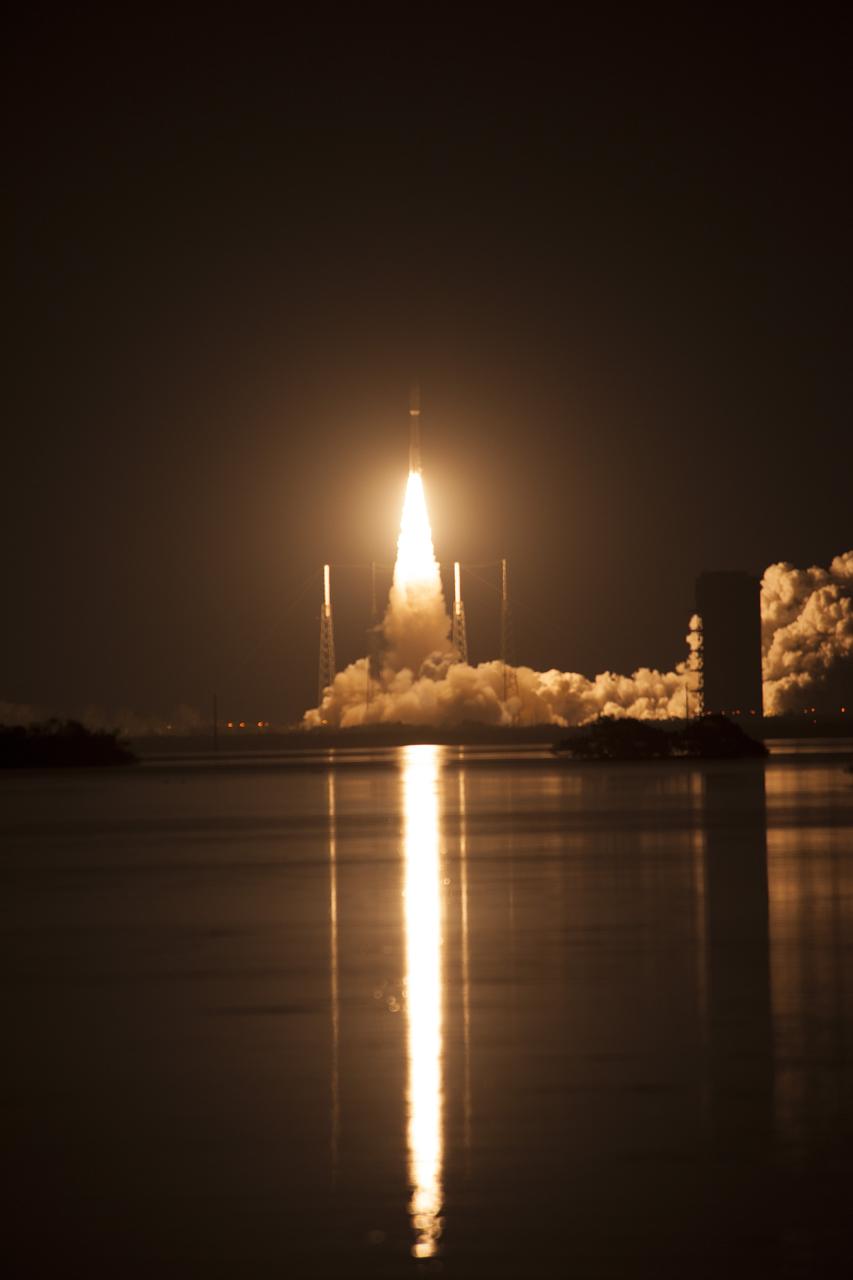
At Cape Canaveral Air Force Station's Space Launch Complex 41, an Atlas V rocket with NOAA's Geostationary Operational Environmental Satellite, or GOES-R, lifts off at 6:42 p.m. EST. GOES-R is the first satellite in a series of next-generation GOES satellites for NOAA, the National Oceanographic and Atmospheric Administration. It will launch to a geostationary orbit over the western hemisphere to provide images of storms and help meteorologists predict severe weather conditionals and develop long-range forecasts.
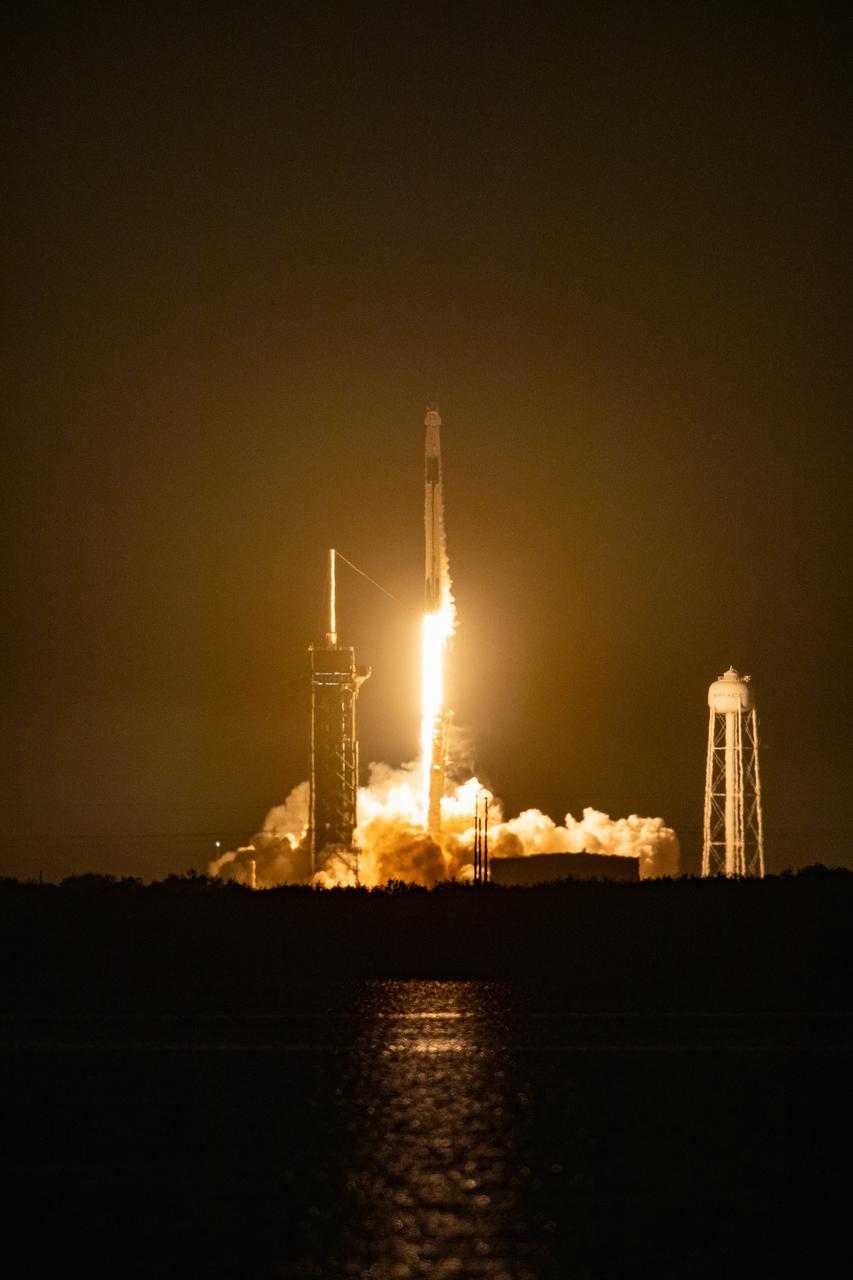
A SpaceX Falcon 9 rocket soars upward after liftoff from the pad at Launch Complex 39A at 12:34 a.m. EST on March 2, 2023 carrying the Dragon spacecraft Endeavour for NASA’s Crew-6 mission to the International Space Station. Aboard Dragon are NASA astronauts Stephen Bowen, spacecraft commander, and Warren Hoburg, pilot, along with mission specialists Sultan Alneyadi, UAE (United Arab Emirates) astronaut, and Andrey Fedyaev, Roscosmos cosmonaut. Crew-6 is the sixth crew rotation mission with SpaceX to the station, and the seventh flight of Dragon with people as part of the agency’s Commercial Crew Program.
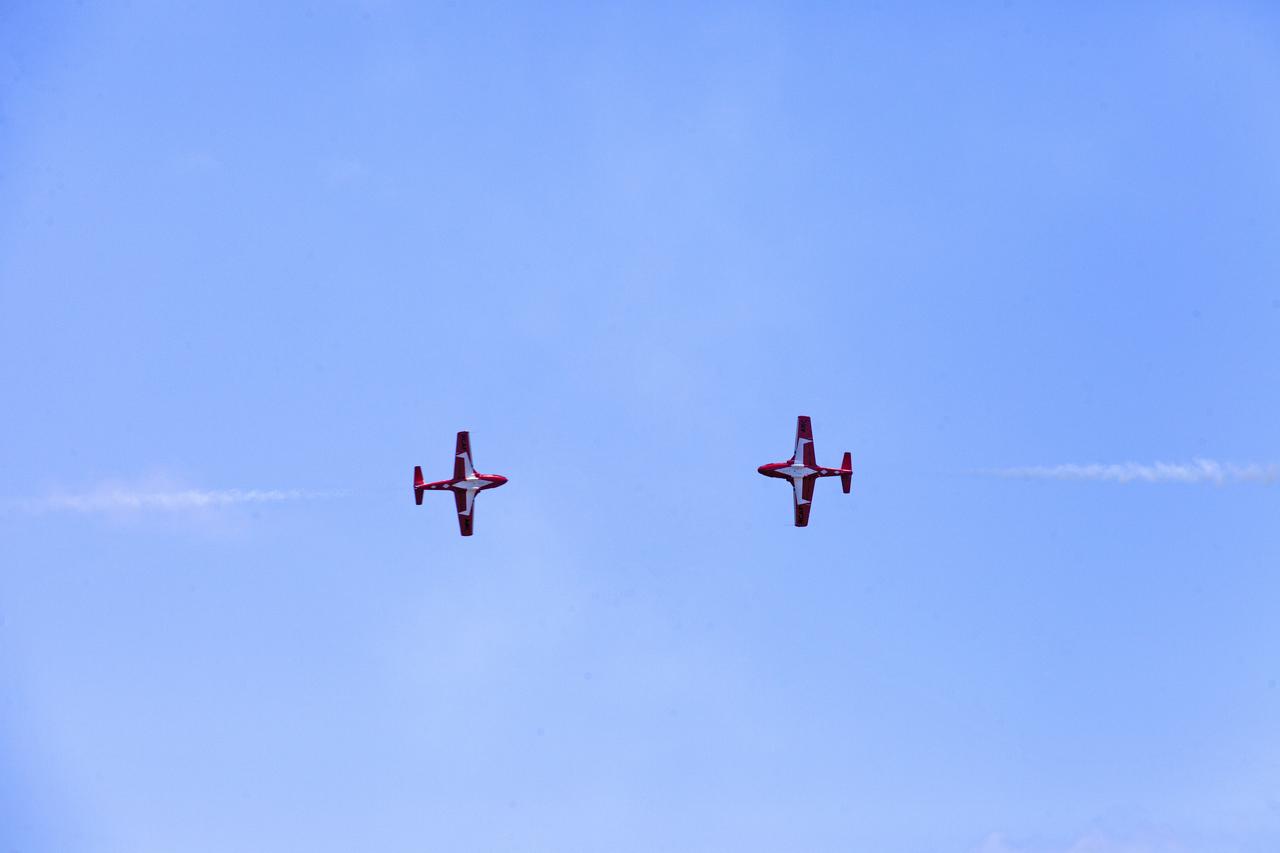
Two Canadian Forces Snowbirds perform an aerial maneuver over NASA's Kennedy Space Center in Florida during a practice flight on May 9, 2018, between their scheduled U.S. air shows.

A SpaceX Falcon Heavy rocket carrying NASA’s Europa Clipper spacecraft lifts off from Launch Complex 39A at NASA’s Kennedy Space Center in Florida at 12:06 p.m. EDT on Monday, Oct. 14, 2024. After launch, the spacecraft plans to fly by Mars in February 2025, then back by Earth in December 2026, using the gravity of each planet to increase its momentum. With help of these “gravity assists,” Europa Clipper will achieve the velocity needed to reach Jupiter in April 2030.
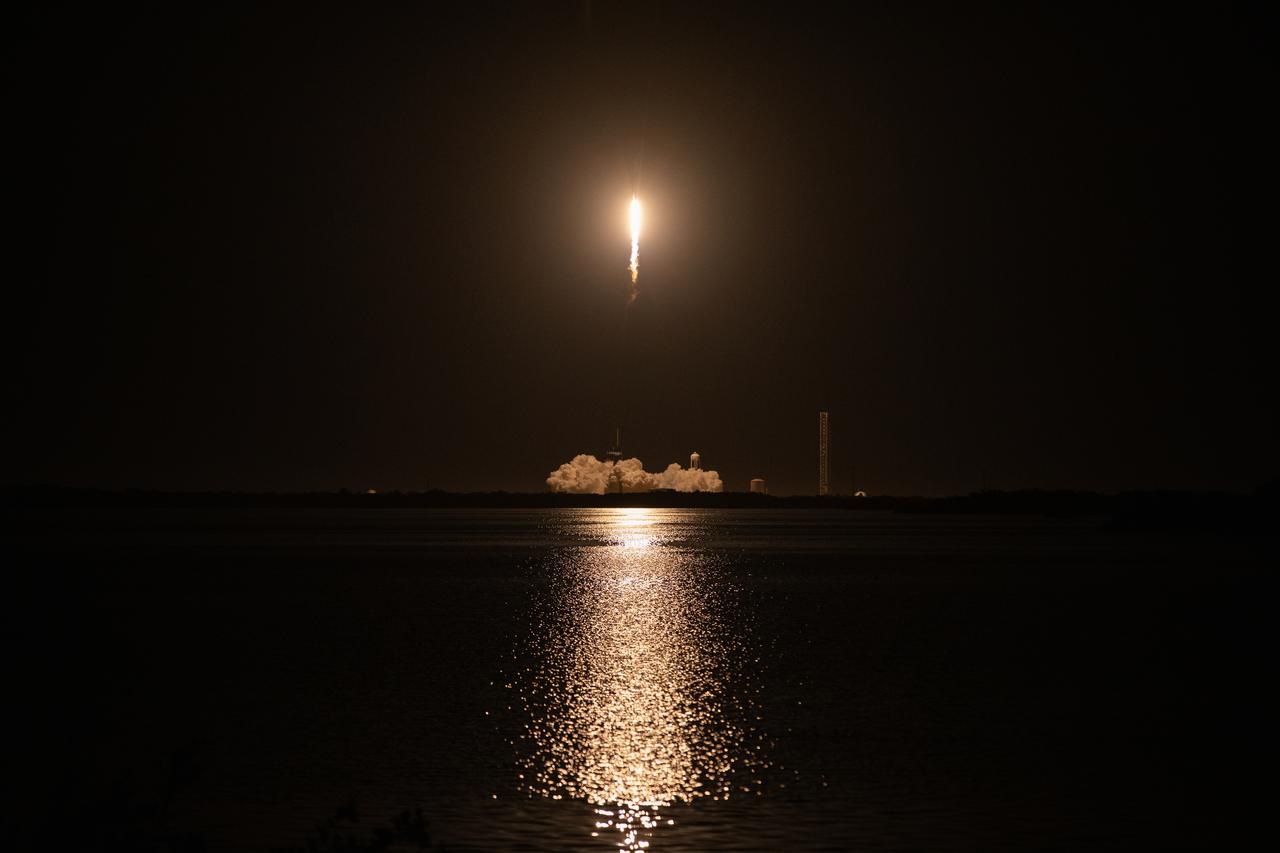
The SpaceX Falcon 9 rocket carrying the Dragon spacecraft lifts off from Launch Complex 39A at NASA’s Kennedy Space Center in Florida on Thursday, Nov. 9, 2023, on the company’s 29th commercial resupply services mission for the agency to the International Space Station. Liftoff was at 8:28 p.m. EST. Dragon will deliver scientific research, technology demonstrations, crew supplies, and hardware to the space station to support its Expedition 70 crew, including NASA’s Integrated Laser Communications Relay Demonstration Low Earth Orbit User Modem and Amplifier Terminal (ILLUMA-T) and Atmospheric Waves Experiment (AWE). The spacecraft is expected to spend about a month attached to the orbiting outpost before it returns to Earth with research and return cargo, splashing down off the coast of Florida.
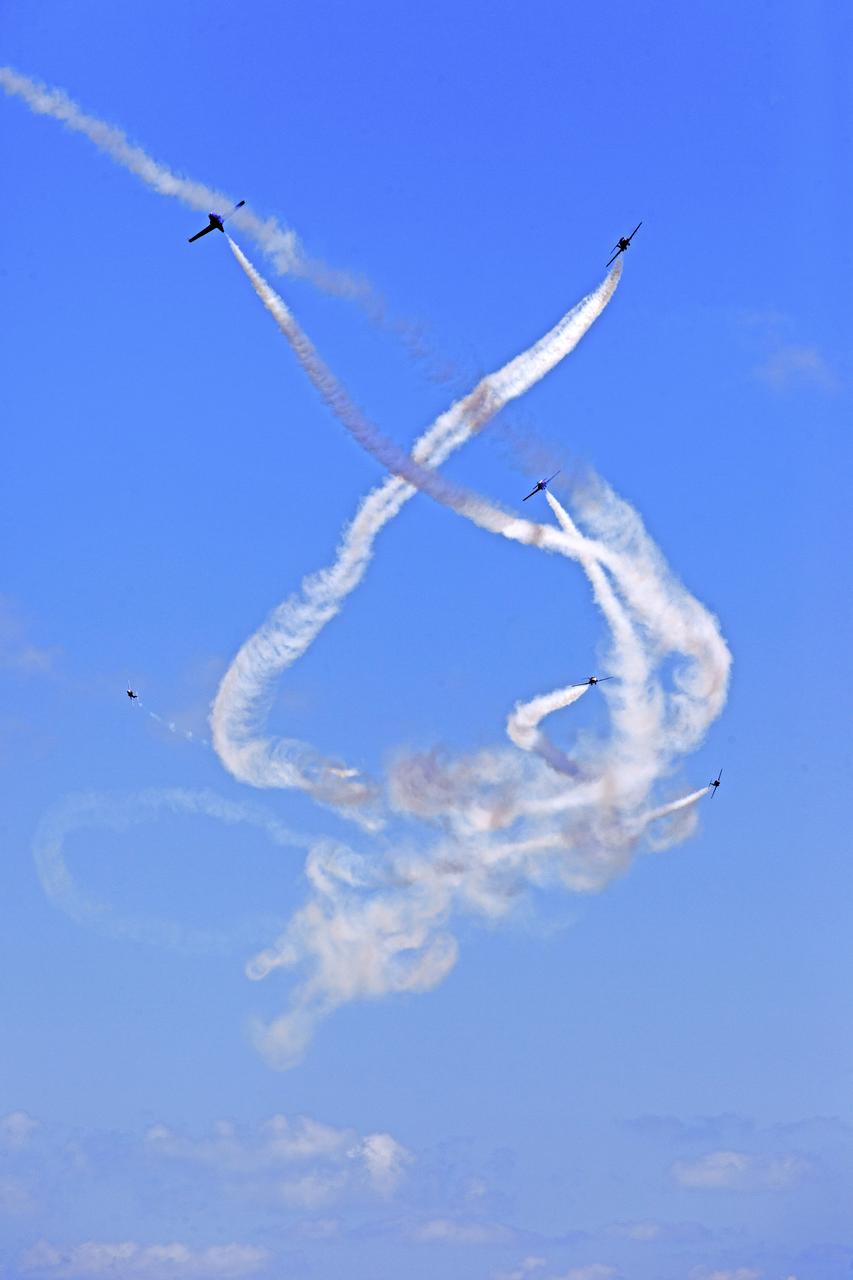
Canadian Forces Snowbirds perform an aerial maneuver over NASA's Kennedy Space Center in Florida during a practice flight on May 9, 2018, between their scheduled U.S. air shows.
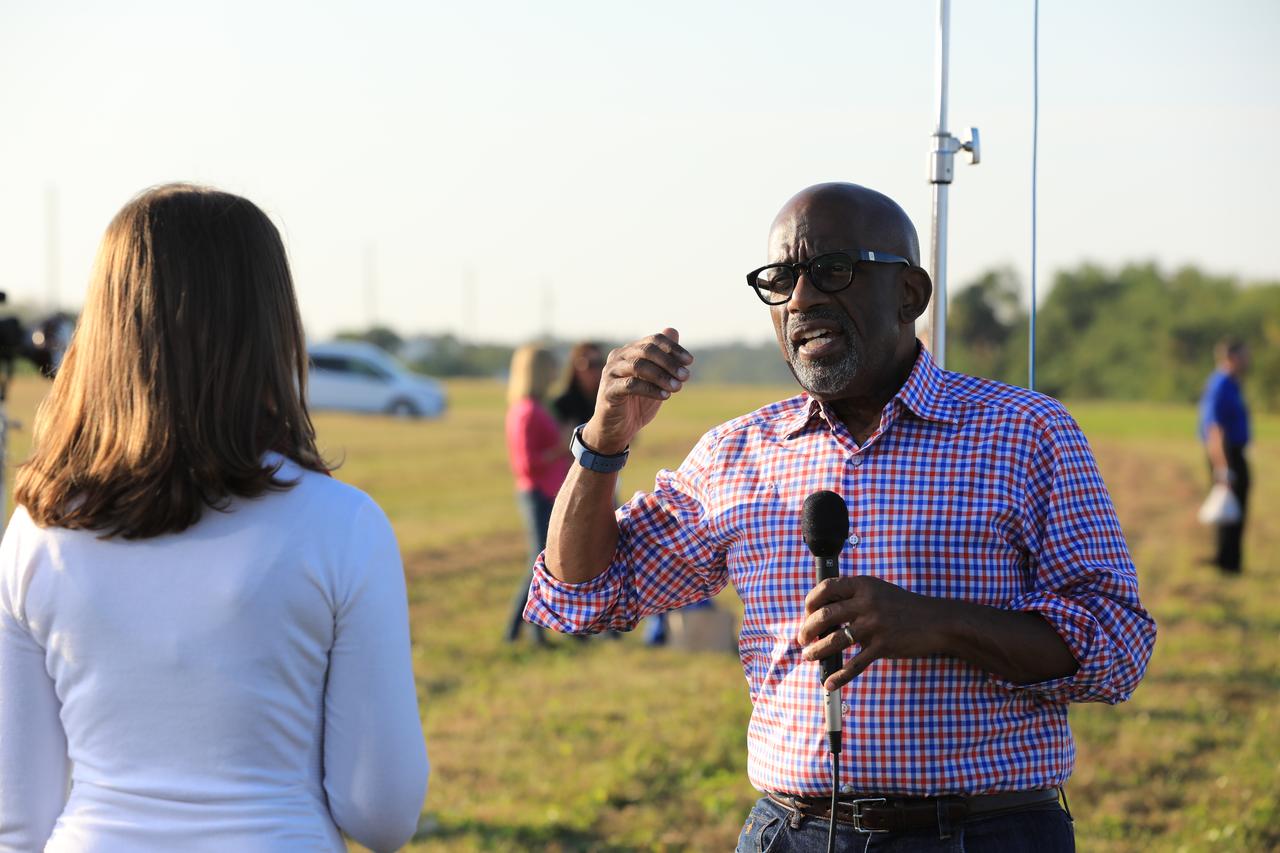
During the countdown for the launch of NOAA's Geostationary Operational Environmental Satellite, or GOES-R, Stephanie Martin of NASA Communications, left, interviews Al Roker, weather forecaster on NBC's "Today Show." GOES-R is the first satellite in a series of next-generation GOES satellites for NOAA, the National Oceanographic and Atmospheric Administration. It will launch to a geostationary orbit over the western hemisphere to provide images of storms and help meteorologists predict severe weather conditionals and develop long-range forecasts.
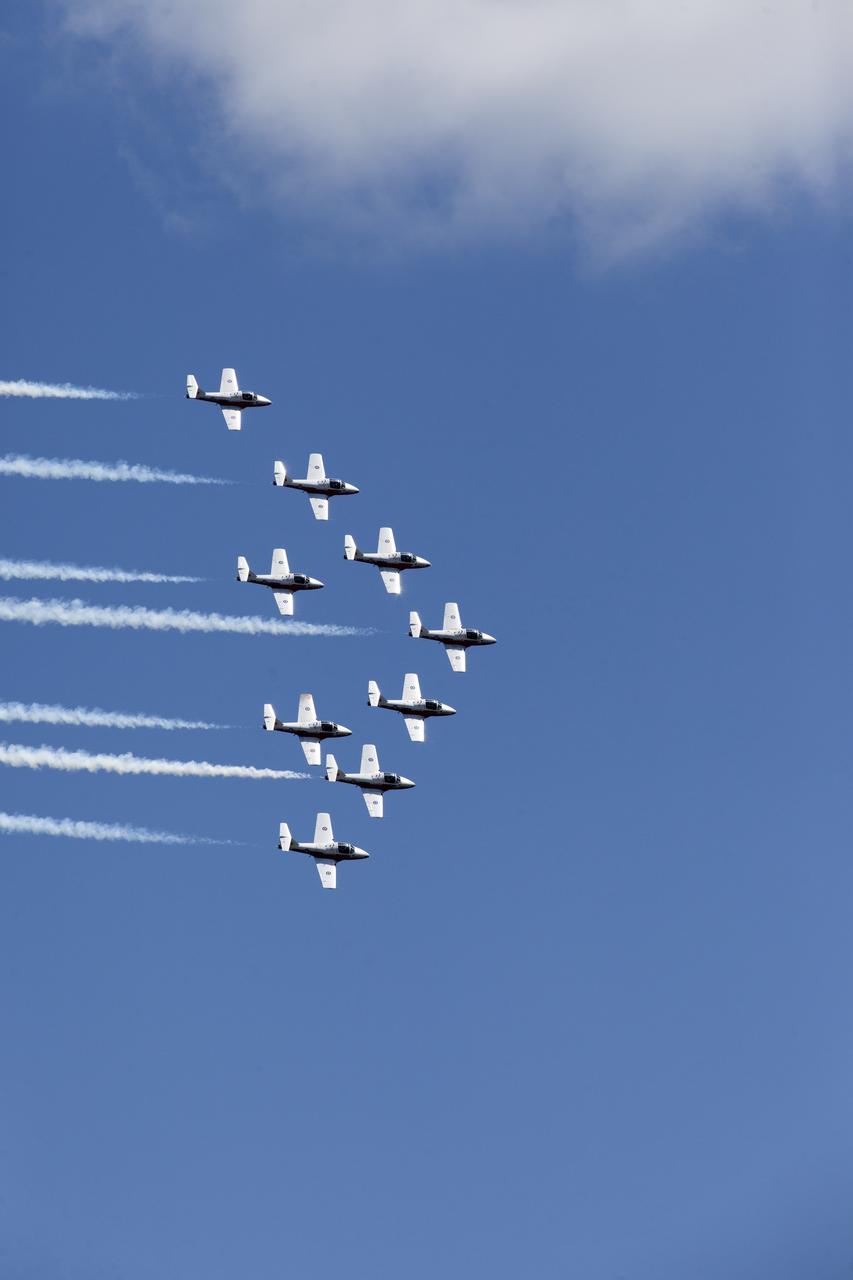
Canadian Forces Snowbirds fly in formation over NASA's Kennedy Space Center in Florida during a practice flight on May 9, 2018, between their scheduled U.S. air shows.
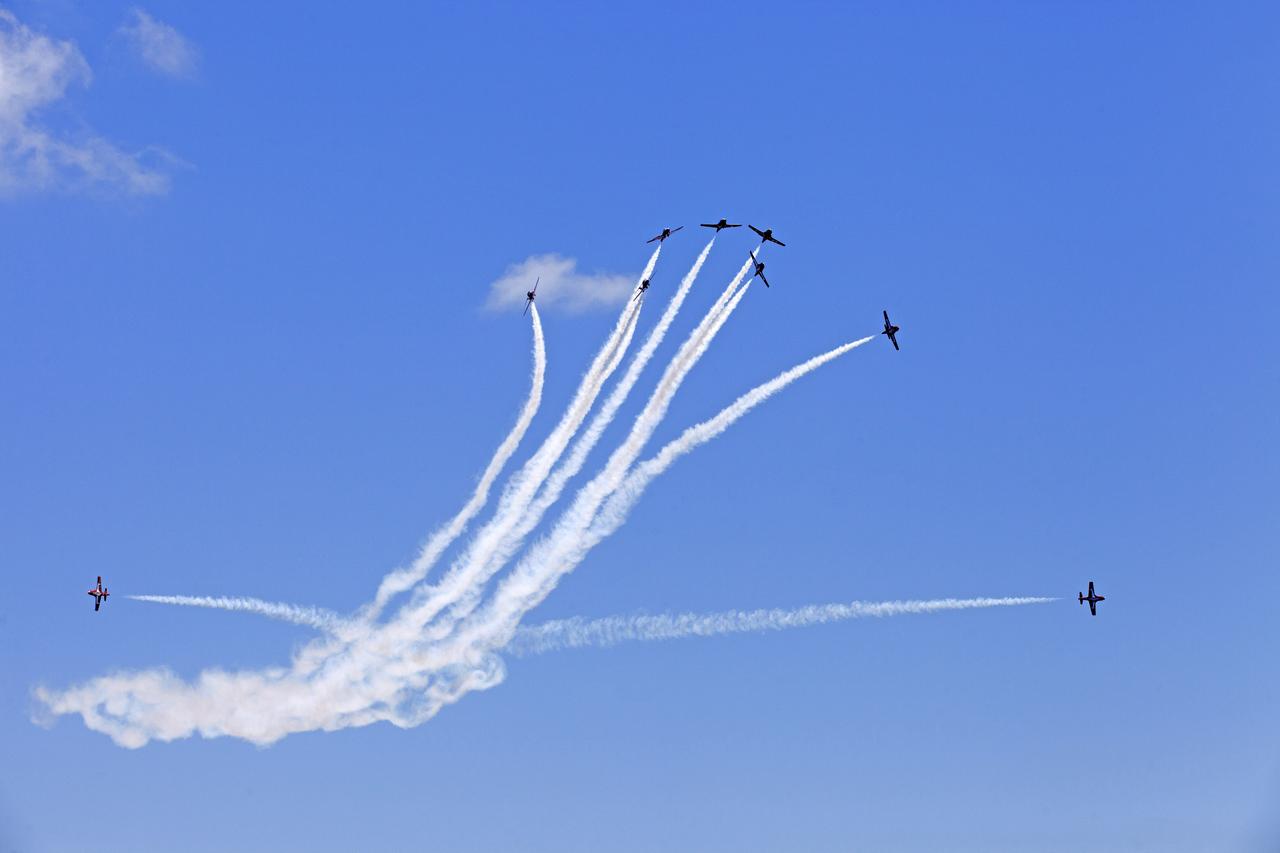
Canadian Forces Snowbirds perform an aerial acrobatic maneuver over NASA's Kennedy Space Center in Florida during a practice flight on May 9, 2018, between their scheduled U.S. air shows.
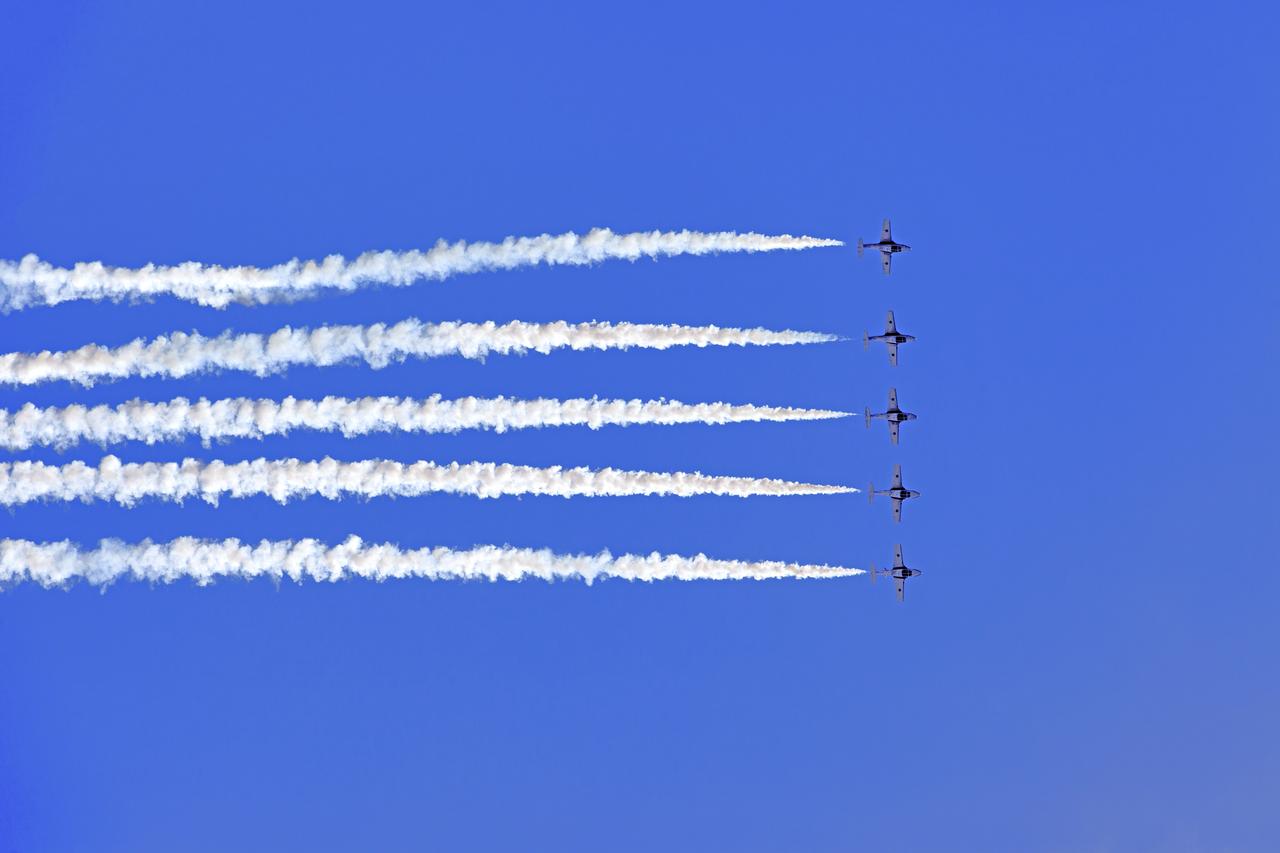
Canadian Forces Snowbirds fly in formation over NASA's Kennedy Space Center in Florida during a practice flight on May 9, 2018, between their scheduled U.S. air shows.
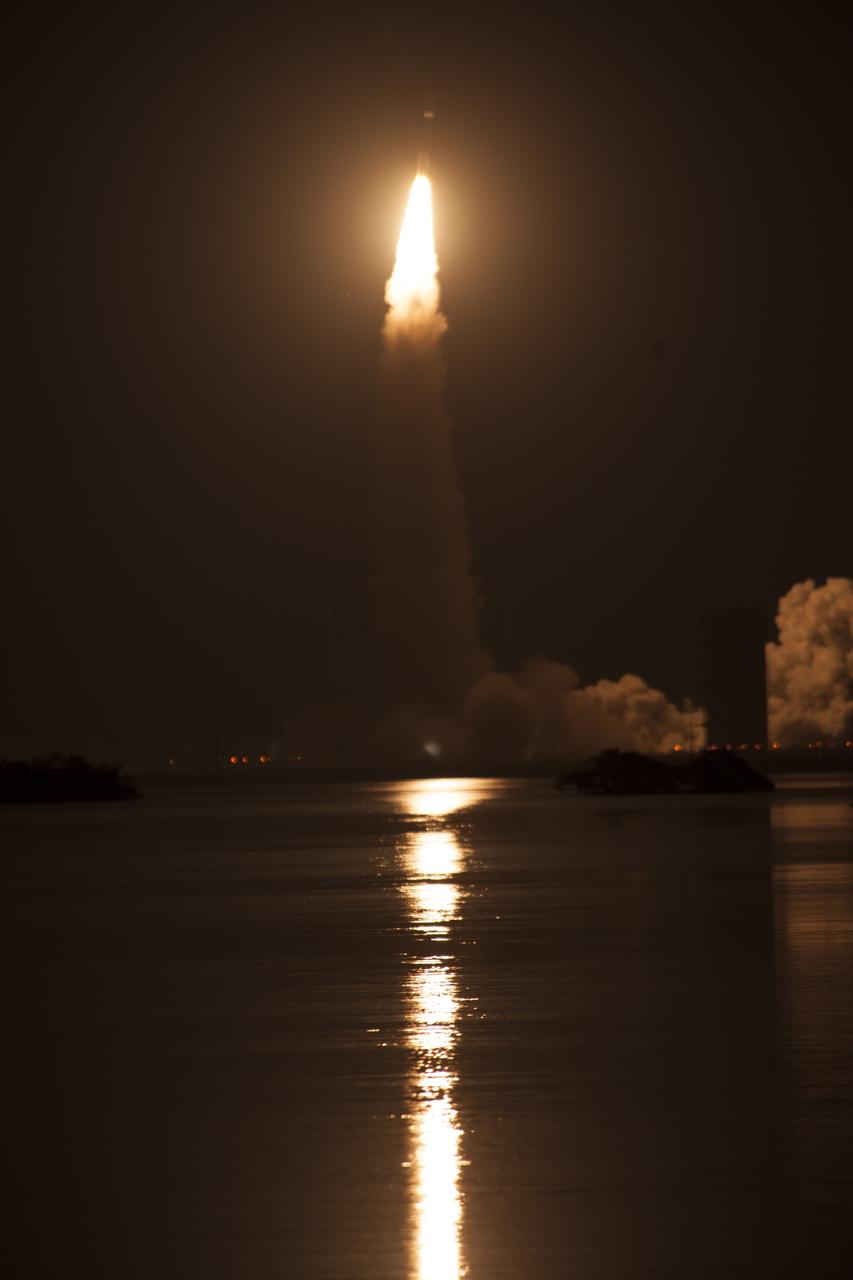
At Cape Canaveral Air Force Station's Space Launch Complex 41, an Atlas V rocket with NOAA's Geostationary Operational Environmental Satellite, or GOES-R, lifts off at 6:42 p.m. EST. GOES-R is the first satellite in a series of next-generation GOES satellites for NOAA, the National Oceanographic and Atmospheric Administration. It will launch to a geostationary orbit over the western hemisphere to provide images of storms and help meteorologists predict severe weather conditionals and develop long-range forecasts.
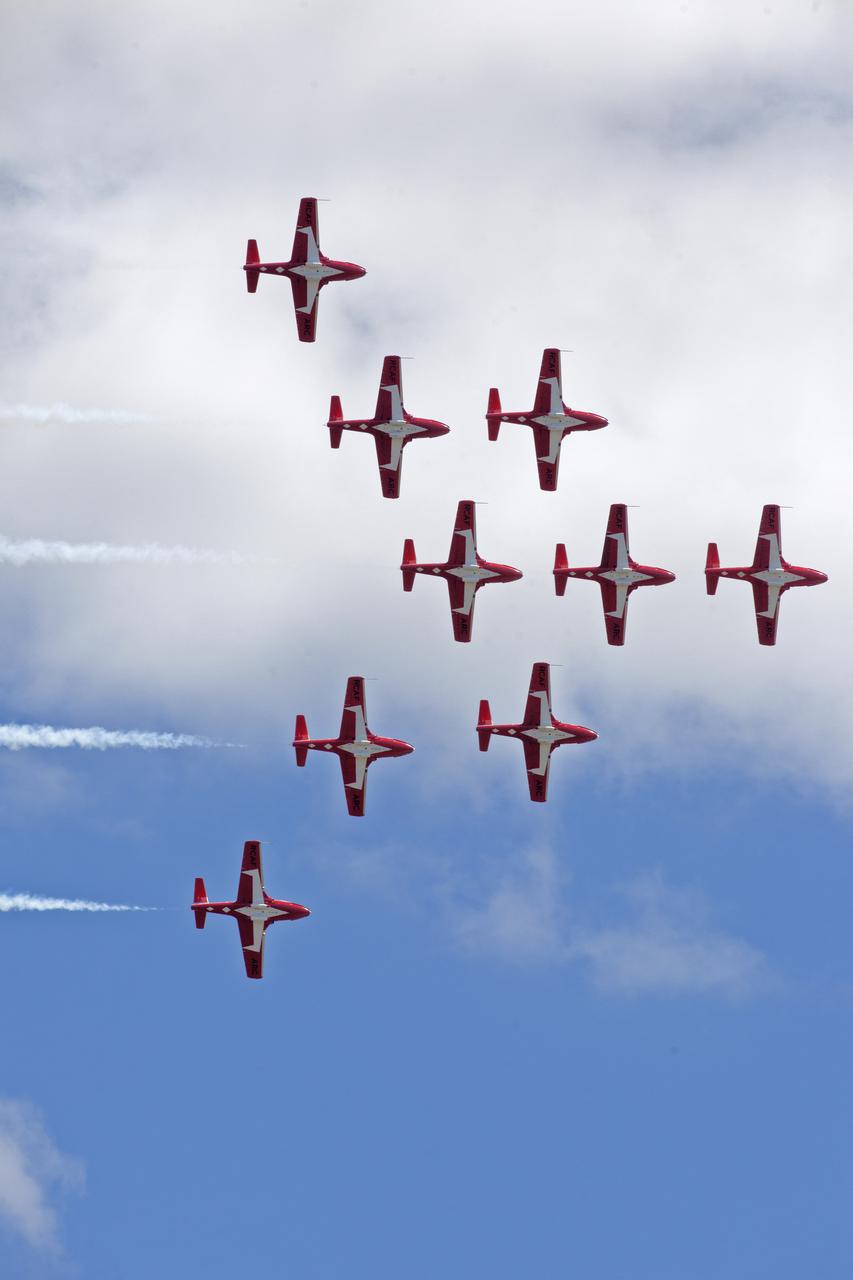
Canadian Forces Snowbirds fly in formation over NASA's Kennedy Space Center in Florida during a practice flight on May 9, 2018, between their scheduled U.S. air shows.
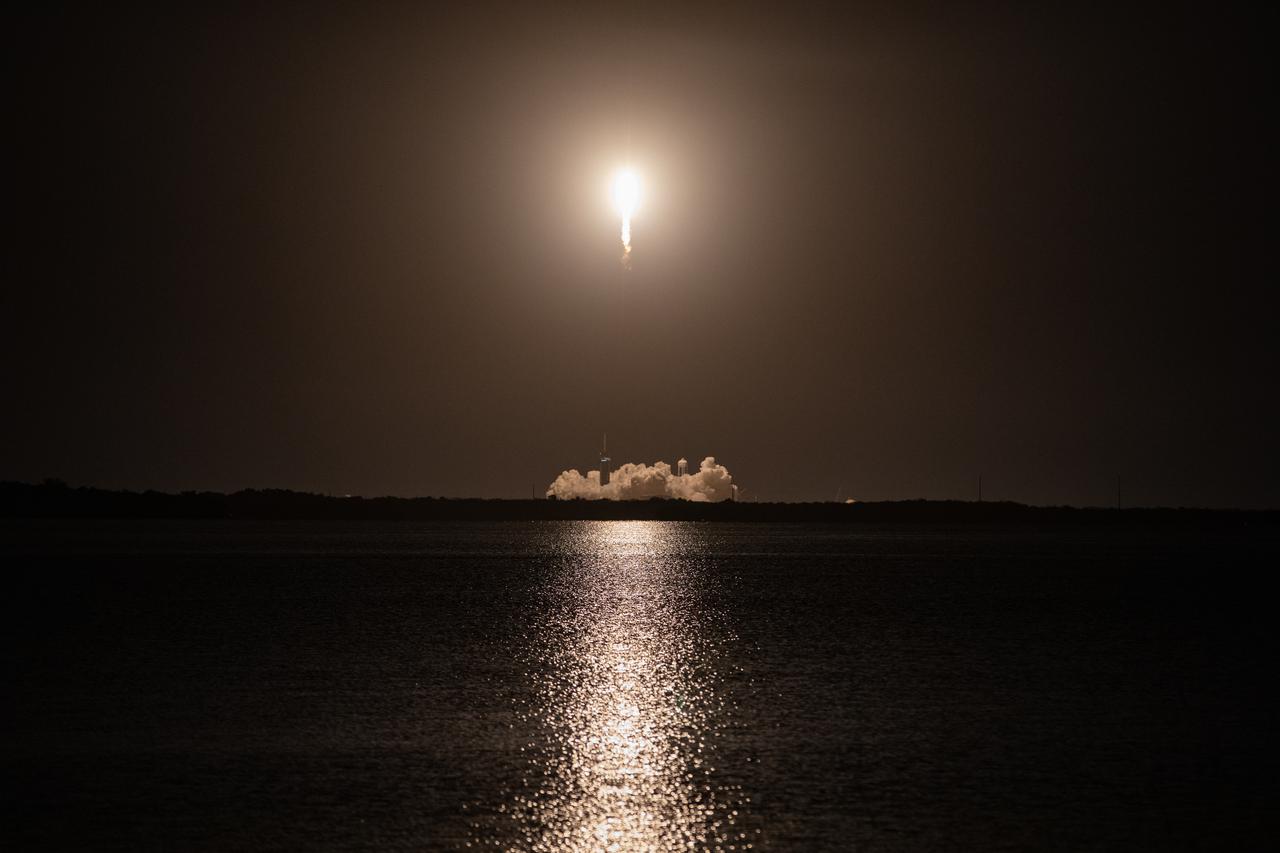
The SpaceX Falcon 9 rocket, with the company’s Crew Dragon atop, soars upward after a 3:52 a.m. EDT liftoff from Launch Complex 39A at Kennedy Space Center in Florida for NASA’s SpaceX Crew-4 mission on April 27, 2022. Aboard the Dragon are NASA astronauts Kjell Lindgren, Bob Hines, and Jessica Watkins, and ESA (European Space Agency) astronaut Samantha Cristoforetti. The spacecraft will carry the Crew-4 astronauts to the International Space Station as part of NASA’s Commercial Crew Program. The Dragon spacecraft, named Freedom by the mission’s crew, is scheduled to dock to the space station today at 8:15 p.m. EDT.
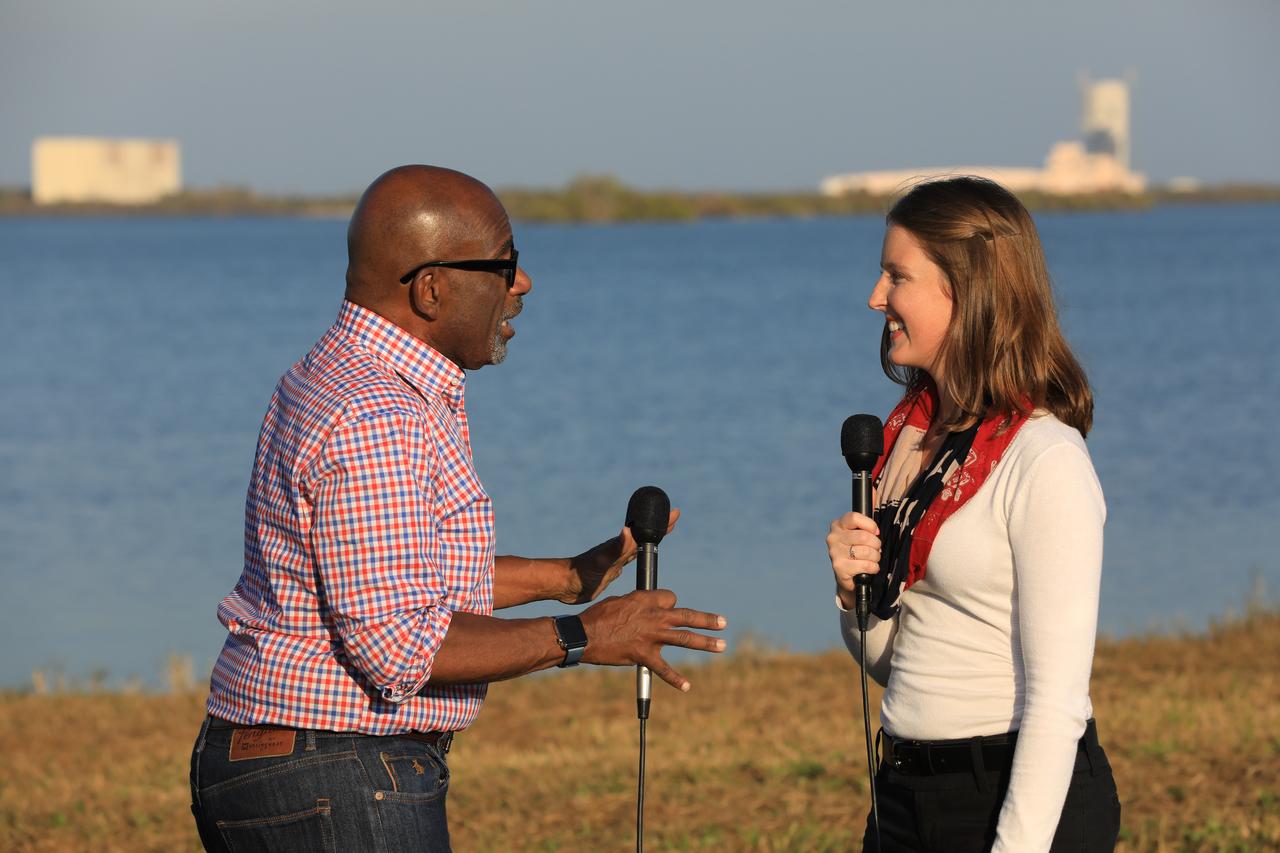
During the countdown for the launch of NOAA's Geostationary Operational Environmental Satellite, or GOES-R, Stephanie Martin of NASA Communications, right, interviews Al Roker, weather forecaster on NBC's "Today Show." GOES-R is the first satellite in a series of next-generation GOES satellites for NOAA, the National Oceanographic and Atmospheric Administration. It will launch to a geostationary orbit over the western hemisphere to provide images of storms and help meteorologists predict severe weather conditionals and develop long-range forecasts.
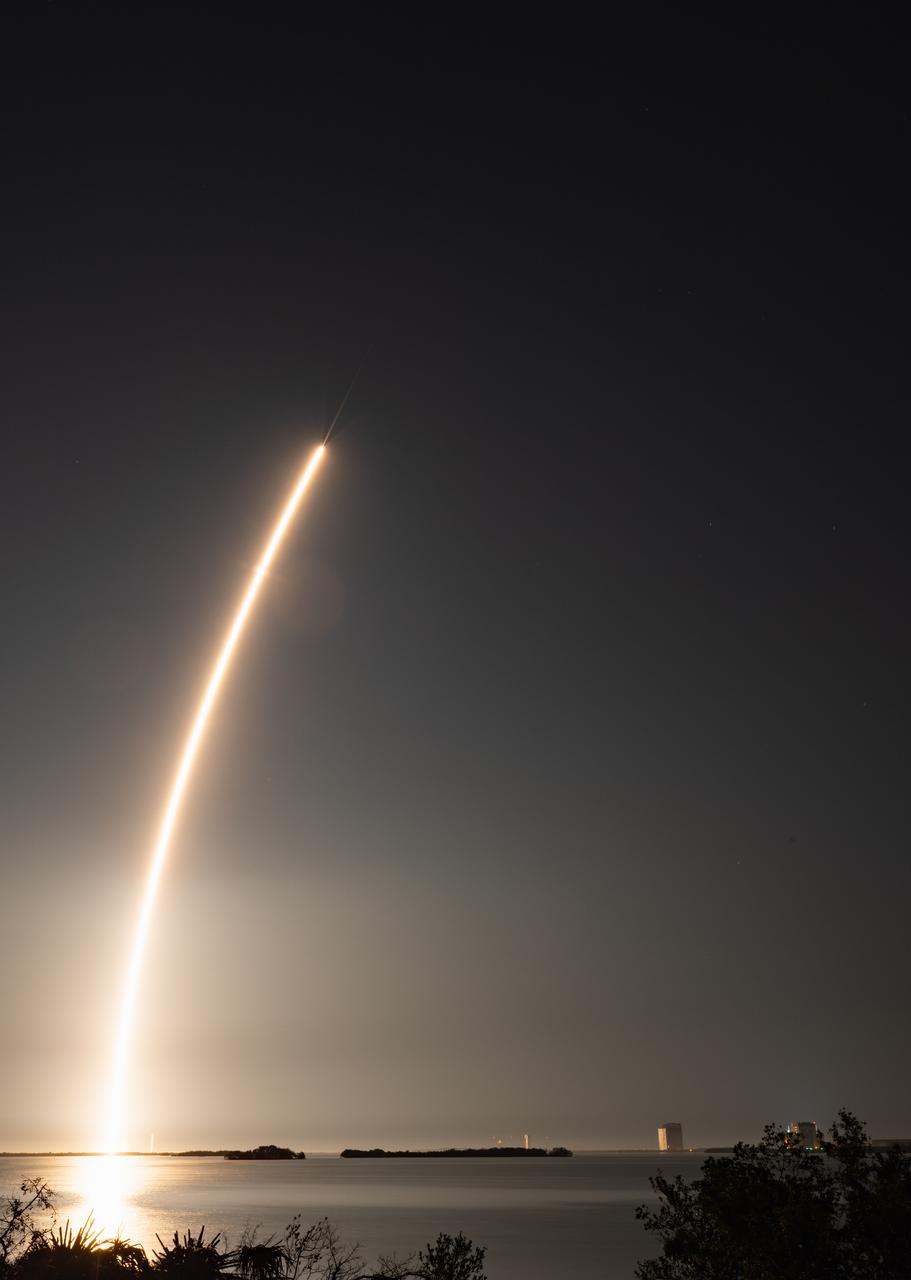
A SpaceX Falcon 9 rocket carrying Intuitive Machines’ Nova-C lunar lander (IM-2) launches at 7:16 p.m. EST on Wednesday, Feb. 26 from Launch Complex 39A at NASA’s Kennedy Space Center in Florida as part of NASA’s CLPS (Commercial Lunar Payload Services) initiative. The IM-2 launch is carrying NASA science, technology demonstrations, and other commercial payloads to Mons Mouton, a lunar plateau to advance our understanding of the Moon and planetary processes, while paving the way for future crewed missions.
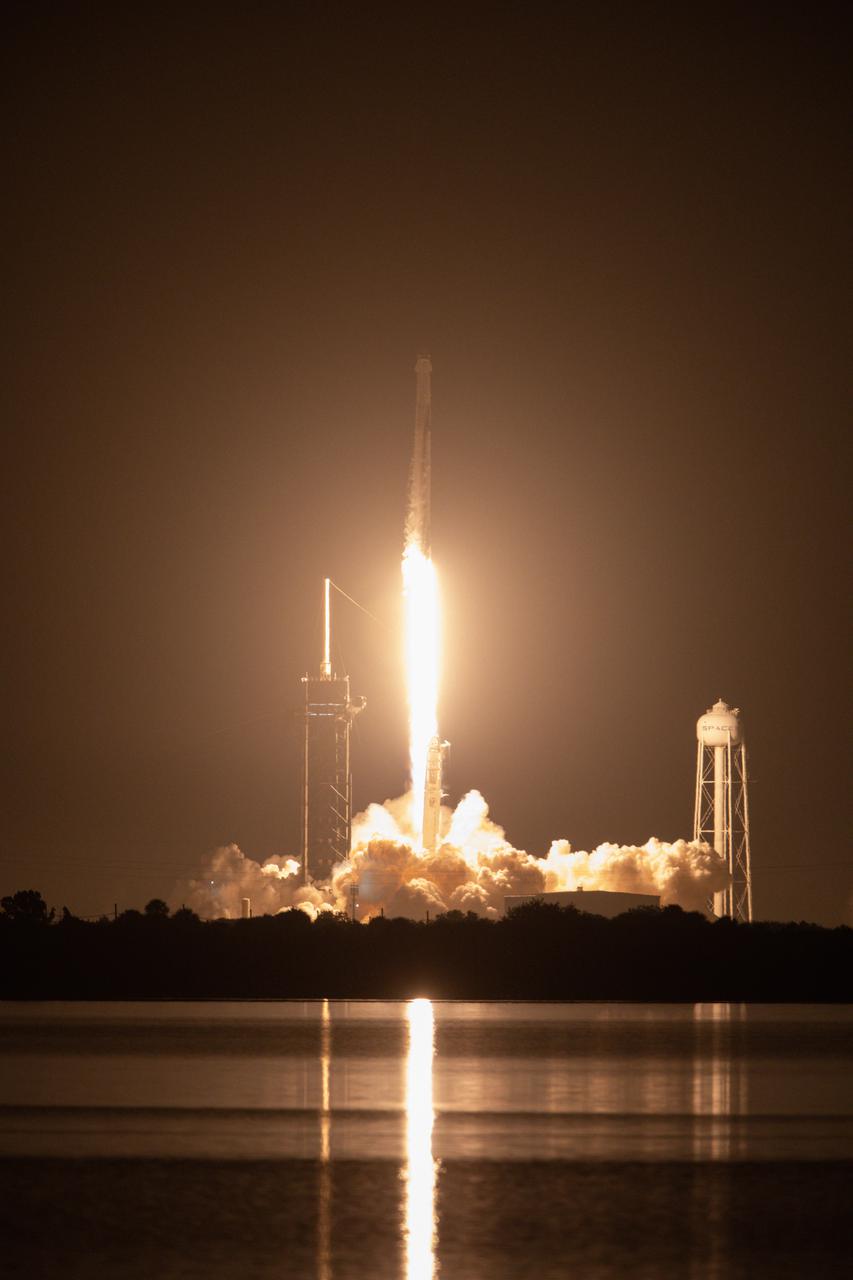
The SpaceX Falcon 9 rocket, with the Crew Dragon atop, soars upward after liftoff from Launch Pad 39A at NASA’s Kennedy Space Center in Florida on Nov. 10, 2021. Aboard the Crew Dragon are the SpaceX Crew-3 astronauts Raja Chari, commander; Tom Marshburn, pilot; and Kayla Barron, mission specialist; along with Matthias Maurer, ESA (European Space Agency) astronaut and mission specialist. Launch time was at 9:03 p.m. EST. The Crew Dragon Endurance will carry the four-person crew to the International Space Station for the agency’s Commercial Crew Program.
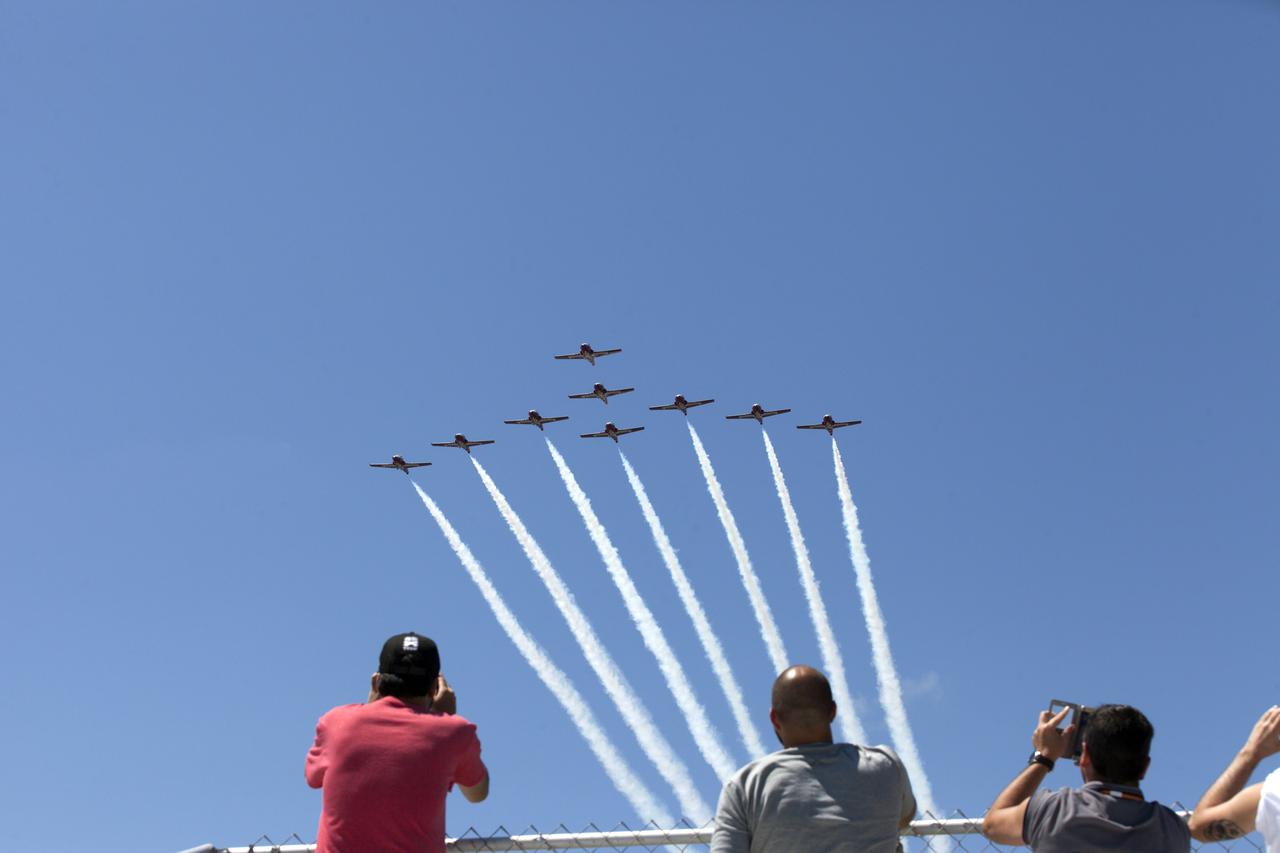
Workers along the NASA Causeway at NASA's Kennedy Space Center in Florida watch a practice flight of the Canadian Forces Snowbirds on May 9, 2018, between their scheduled U.S. air shows.
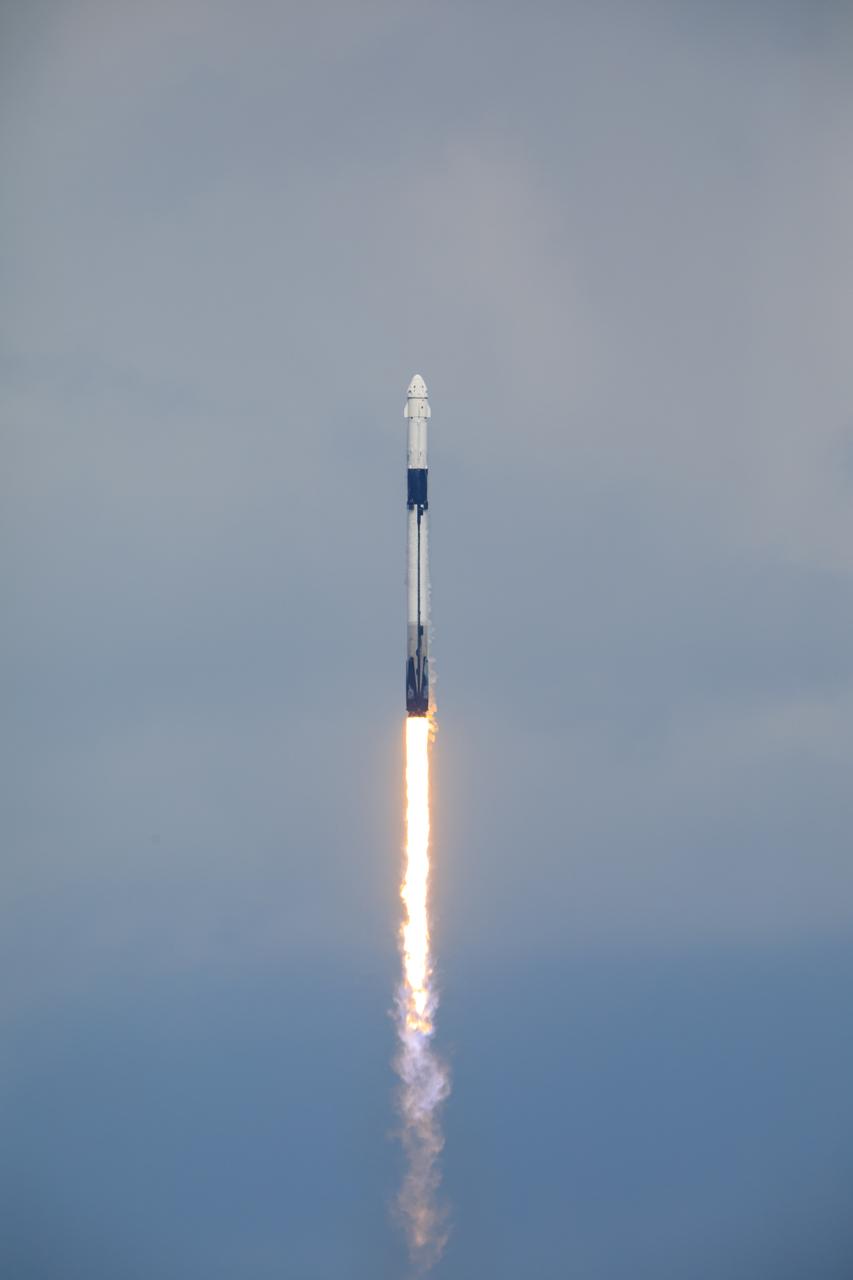
A SpaceX Falcon 9 rocket carrying the company's Dragon spacecraft lifts off on NASA’s SpaceX Crew-9 mission to the International Space Station with NASA astronaut Nick Hague and Roscosmos cosmonaut Aleksandr Gorbunov aboard Saturday, Sept. 28, 2024, from Space Launch Complex-40 at Cape Canaveral Space Force Station in Florida. Crew-9 is the ninth crew rotation mission of the SpaceX Dragon spacecraft and Falcon 9 rocket to the space station as part of the agency’s Commercial Crew Program. Hague and Gorbunov launched at 1:17 p.m. EDT to begin a mission aboard the orbital outpost lasting about five months.
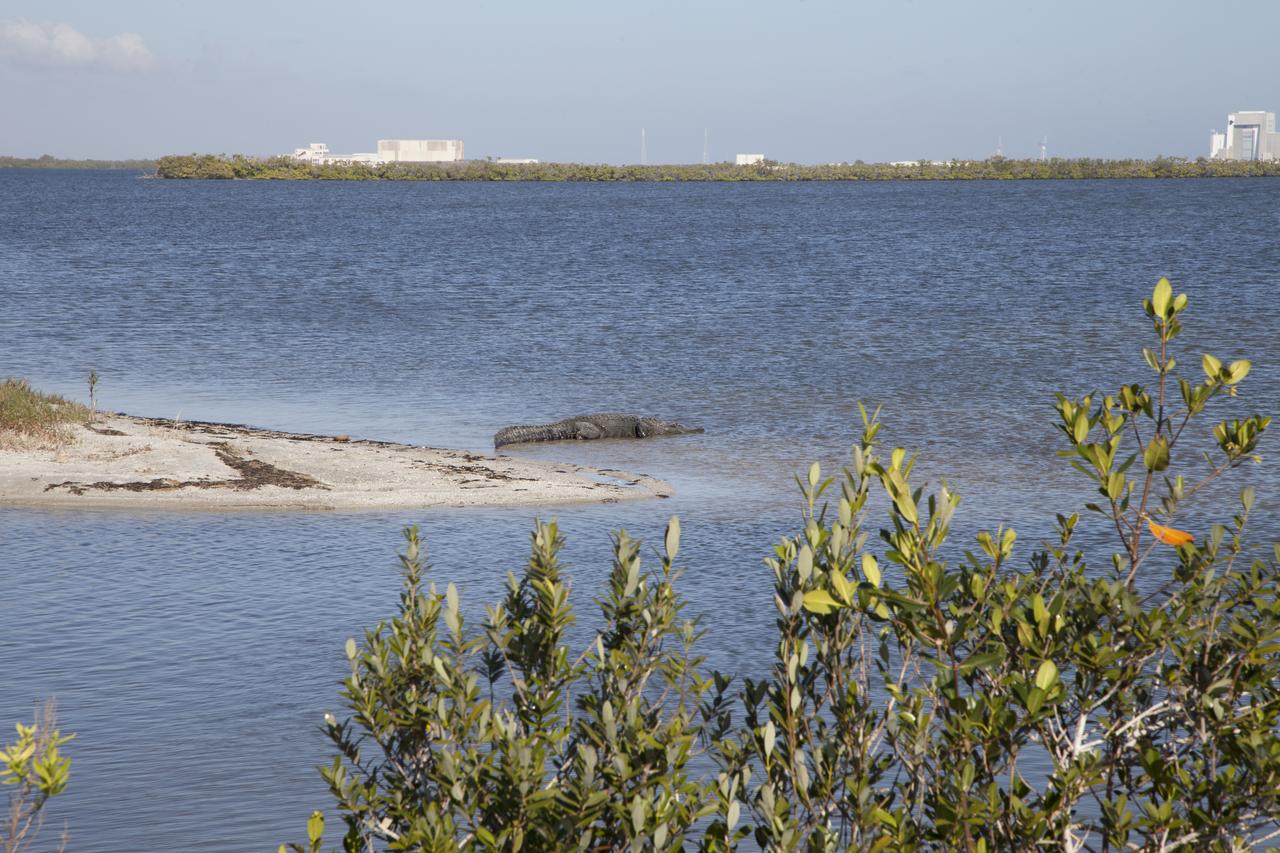
A large alligator basks in the intercoastal waterway near the NASA Causeway at Kennedy Space Center in Florida. The center shares a boundary with the Merritt Island National Wildlife Refuge. The refuge is home to more than 65 amphibian and reptile species, along with 330 native and migratory bird species, 25 mammal and 117 fish species.
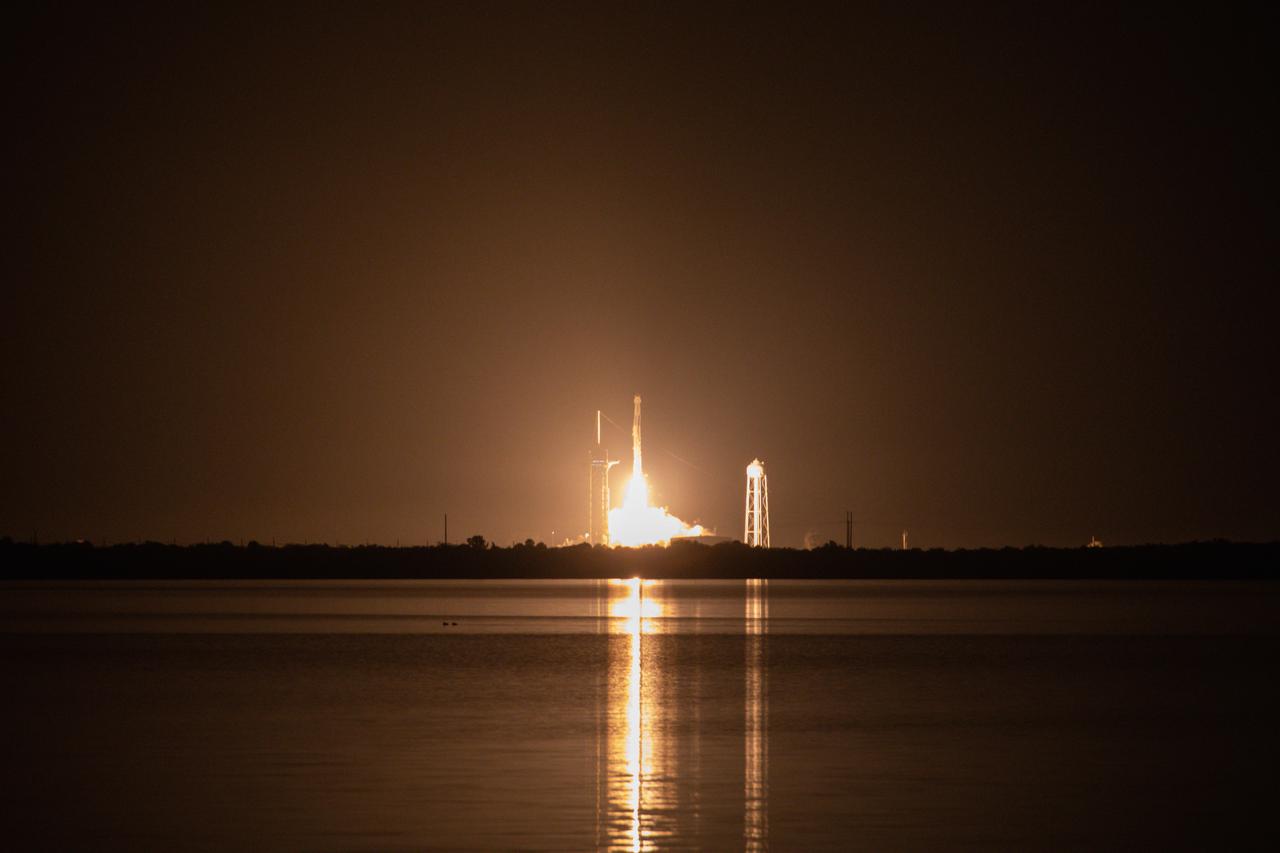
The SpaceX Falcon 9 rocket with the Crew Dragon lifts off from Launch Pad 39A at NASA’s Kennedy Space Center in Florida on Nov. 10, 2021. Aboard the Crew Dragon are the SpaceX Crew-3 astronauts Raja Chari, commander; Tom Marshburn, pilot; and Kayla Barron, mission specialist; along with Matthias Maurer, ESA (European Space Agency) astronaut and mission specialist. Launch time was at 9:03 p.m. EST. The Crew Dragon Endurance will carry the four-person crew to the International Space Station for the agency’s Commercial Crew Program.
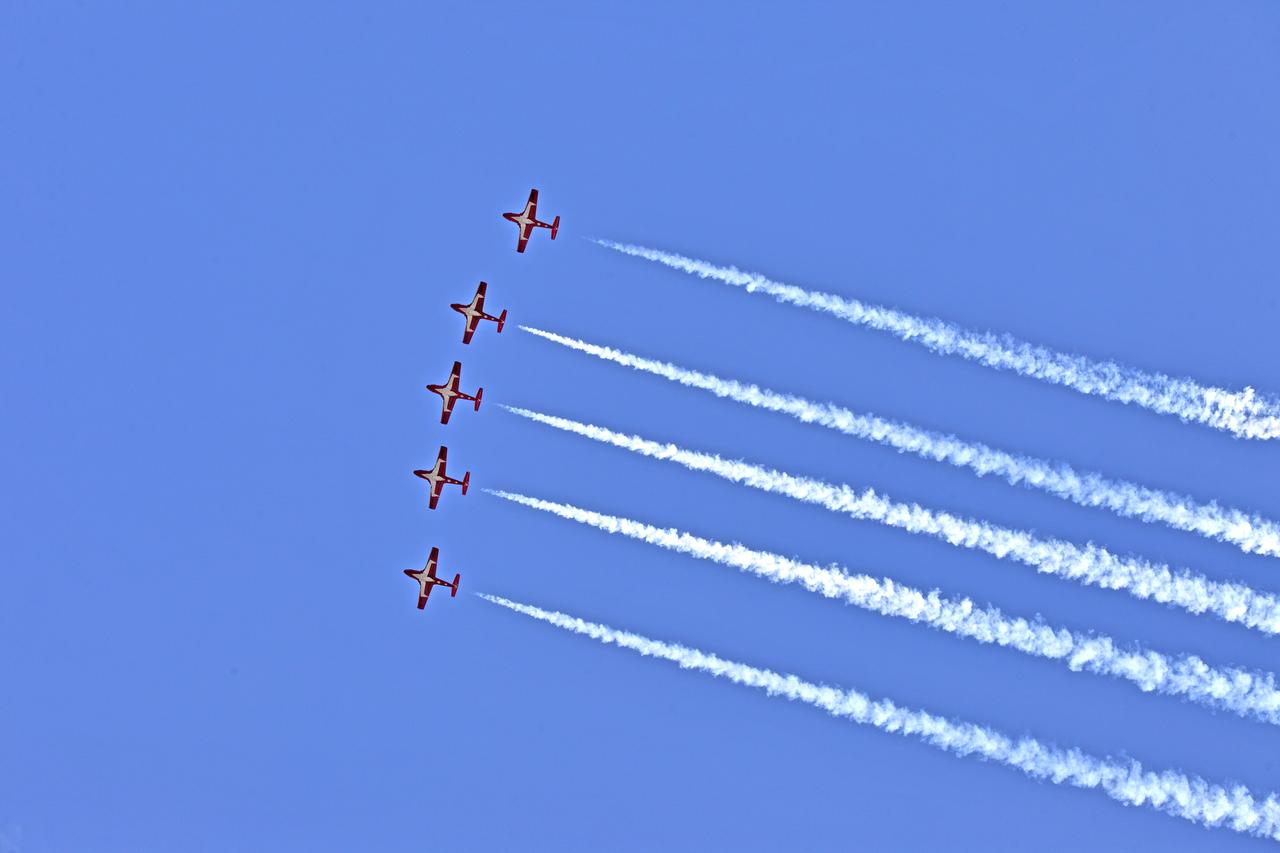
Canadian Forces Snowbirds fly in formation over NASA's Kennedy Space Center in Florida during a practice flight on May 9, 2018, between their scheduled U.S. air shows.
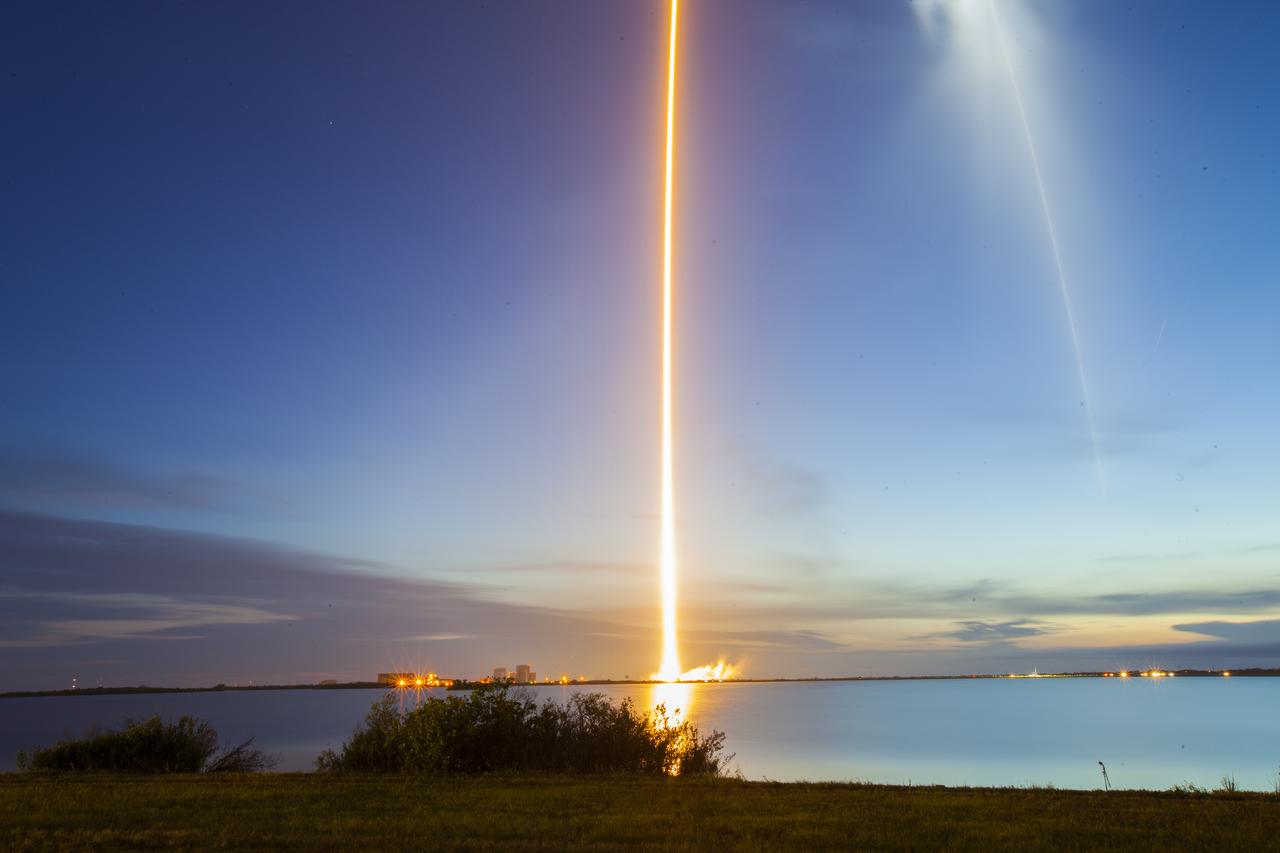
The two-stage SpaceX Falcon 9 launch vehicle lifts off from Space Launch Complex 40 at Cape Canaveral Air Force Station, carrying the SpaceX Dragon resupply spacecraft to the International Space Station. Liftoff was at 5:42 a.m. EDT on Friday, June 29, 2018. On the company’s 15th Commercial Resupply Services mission to the International Space Station, Dragon is filled with supplies and payloads, including critical materials to support several science and research investigations that will occur during Expedition 56. The spacecraft’s unpressurized trunk is carrying a Canadian-built Latching End Effector, or LEE. This new LEE will replace a failed unit astronauts removed during a series of spacewalks in the fall of 2017. Each end of the Canadarm2 robotic arm has an identical LEE, and they are used as the “hands” that grapple payloads and visiting cargo spaceships.
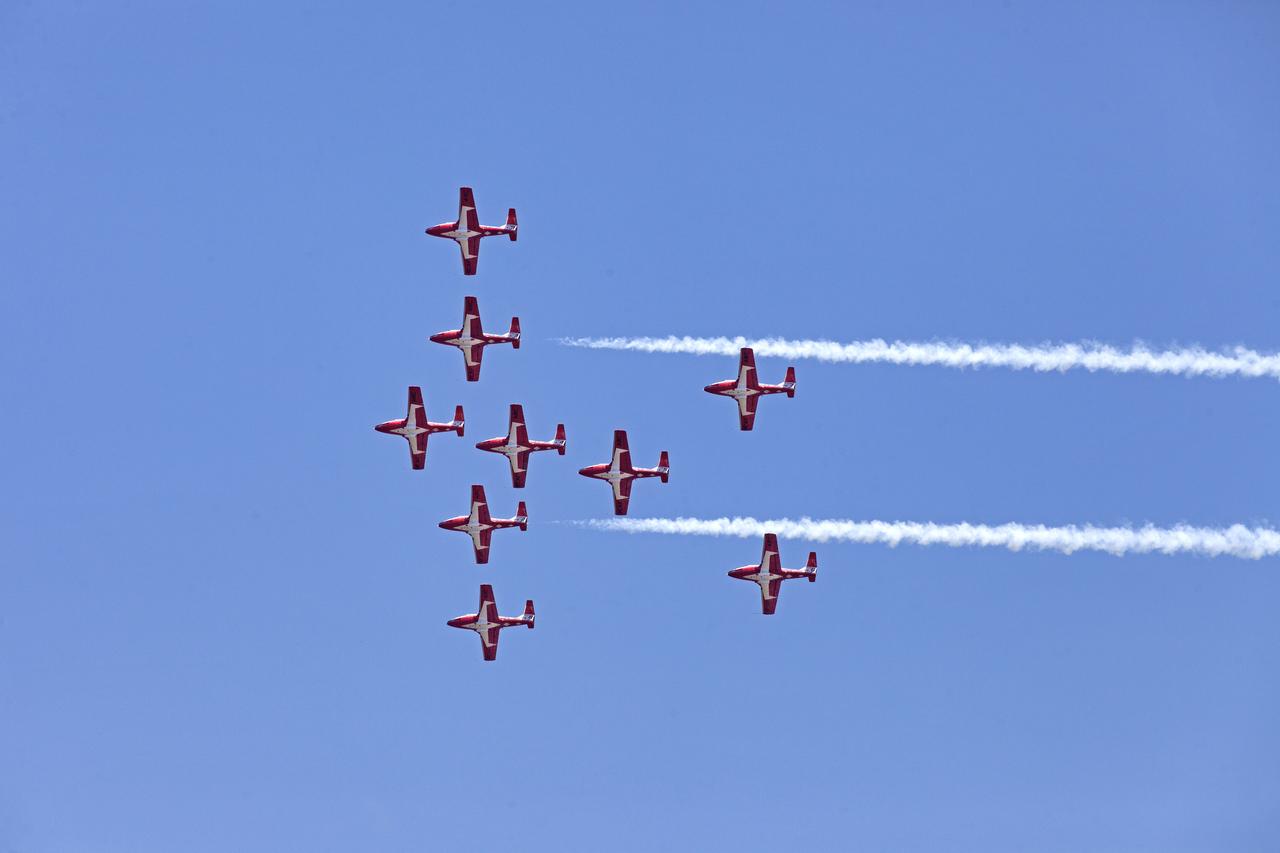
Canadian Forces Snowbirds fly in formation over NASA's Kennedy Space Center in Florida during a practice flight on May 9, 2018, between their scheduled U.S. air shows.
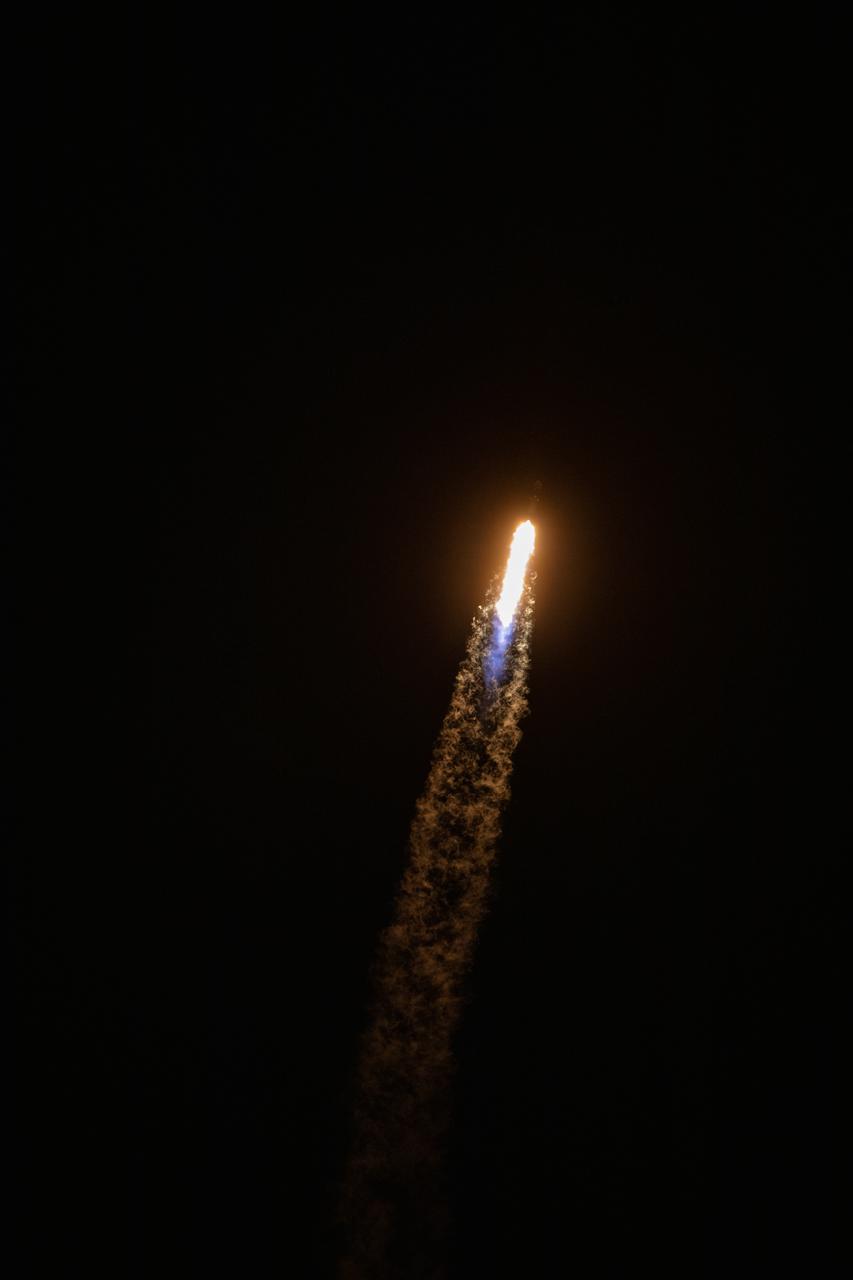
The SpaceX Falcon 9 rocket, with the company’s Crew Dragon atop, soars upward after a 3:52 a.m. EDT liftoff from Launch Complex 39A at Kennedy Space Center in Florida for NASA’s SpaceX Crew-4 mission on April 27, 2022. Aboard the Dragon are NASA astronauts Kjell Lindgren, Bob Hines, and Jessica Watkins, and ESA (European Space Agency) astronaut Samantha Cristoforetti. The spacecraft will carry the Crew-4 astronauts to the International Space Station as part of NASA’s Commercial Crew Program. The Dragon spacecraft, named Freedom by the mission’s crew, is scheduled to dock to the space station today at 8:15 p.m. EDT.
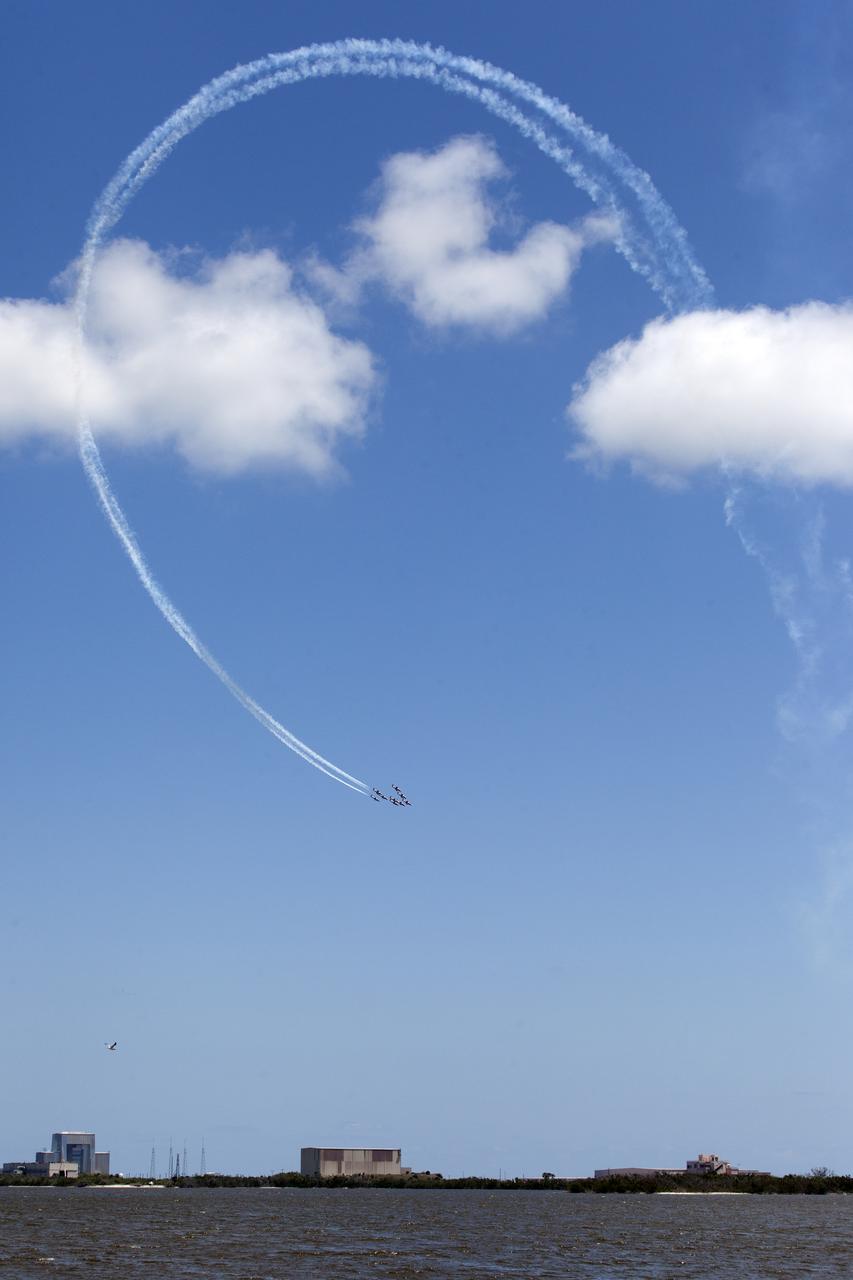
Canadian Forces Snowbirds perform a loop maneuver over Cape Canaveral Air Force Station in Florida during a practice flight between their scheduled U.S. air shows on May 9, 2018.
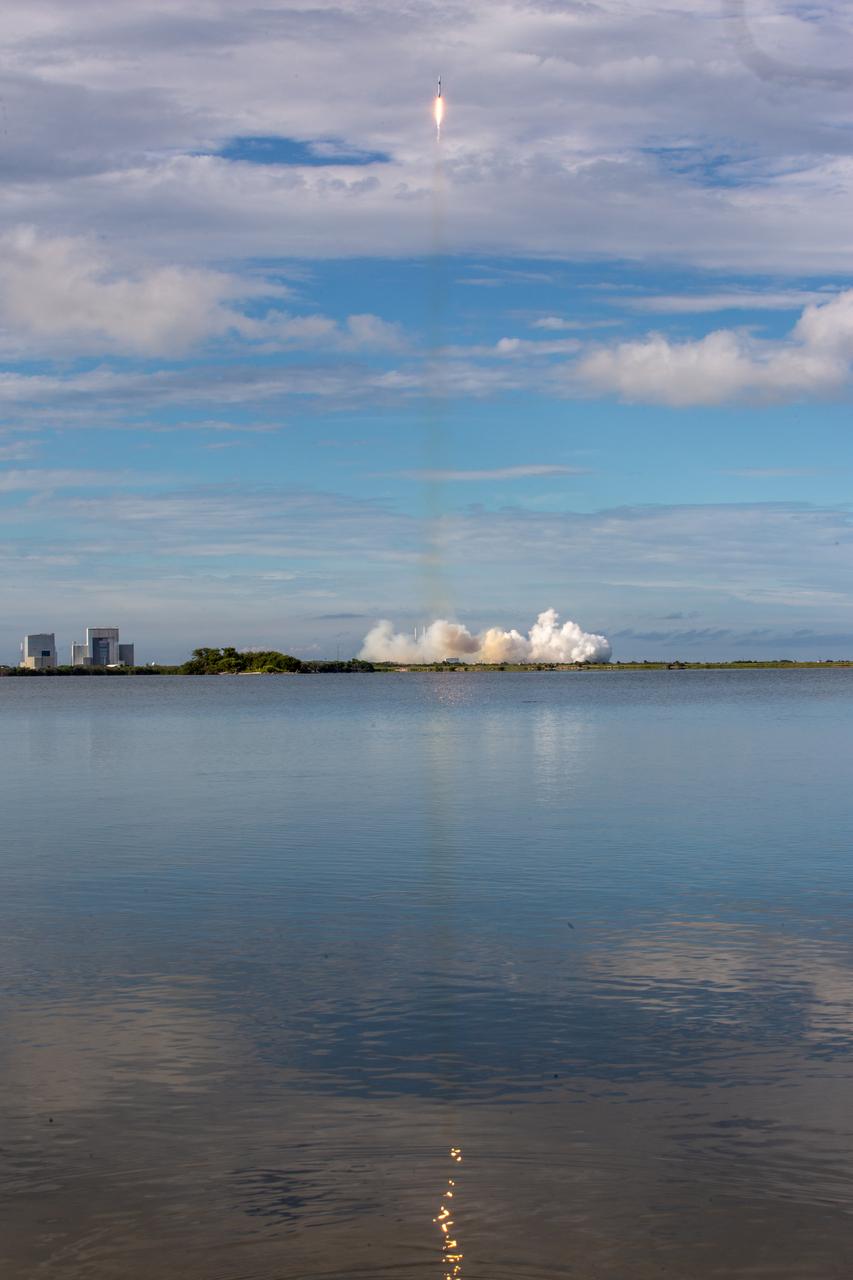
A SpaceX Falcon 9 rocket soars upward after its liftoff from Space Launch Complex 40 at Cape Canaveral Air Force Station in Florida at 6:01 p.m. EDT on July 25, 2019, carrying the Dragon spacecraft on the company's 18th Commercial Resupply Services (CRS-18) mission to the International Space Station. The uncrewed Dragon spacecraft will deliver about 5,000 pounds of science and research, crew supplies and vehicle hardware to the orbiting laboratory.
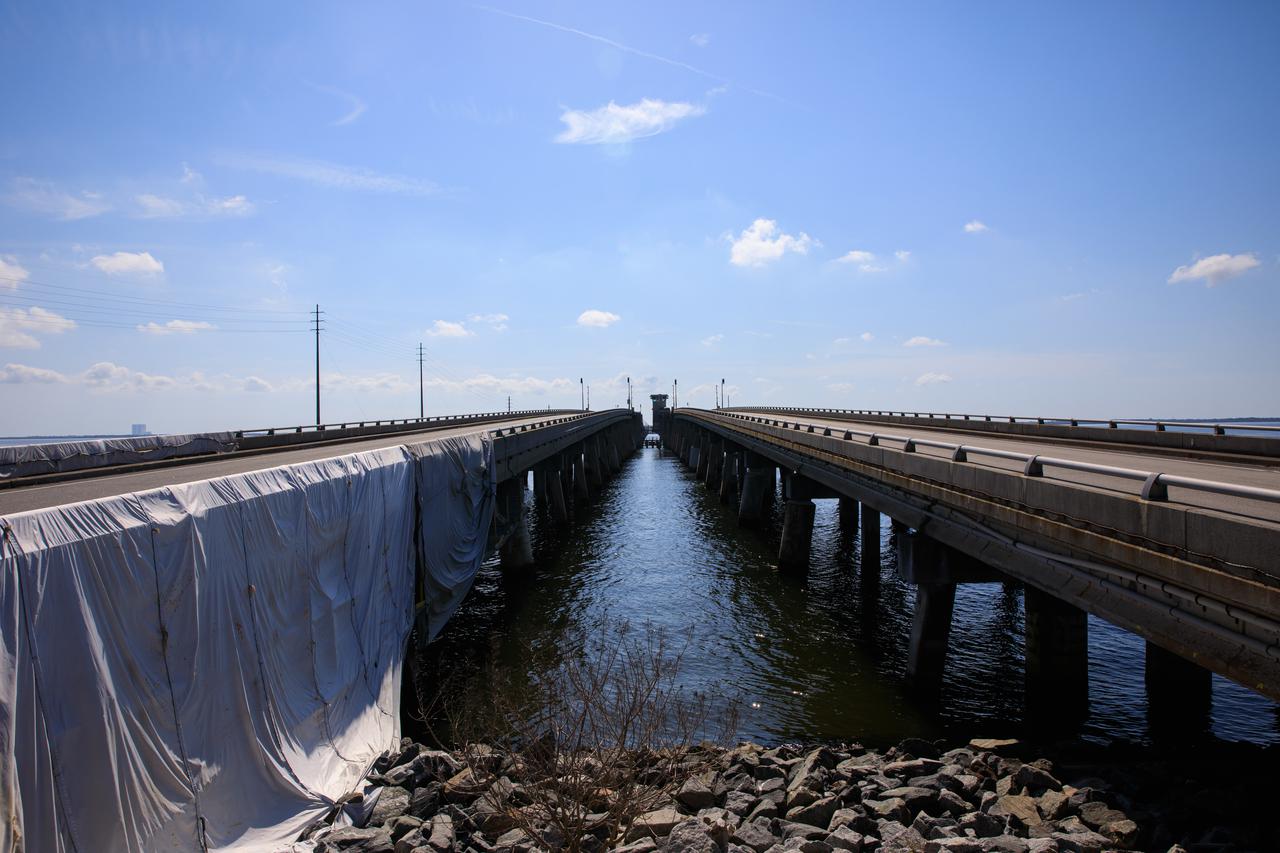
NASA’s bridge engineering team at Kennedy Space Center is managing multiple critical projects on the Indian River Bridge. This includes running new utility lines and safeguarding the existing wires and piping prior to the beginning of construction of the new Brevard County bridge. The much-traveled structure is a key access and evacuation route for the Florida spaceport and Cape Canaveral Space Force Station. Also known as the NASA Causeway Bridge, the Indian River Bridge was built in 1964.
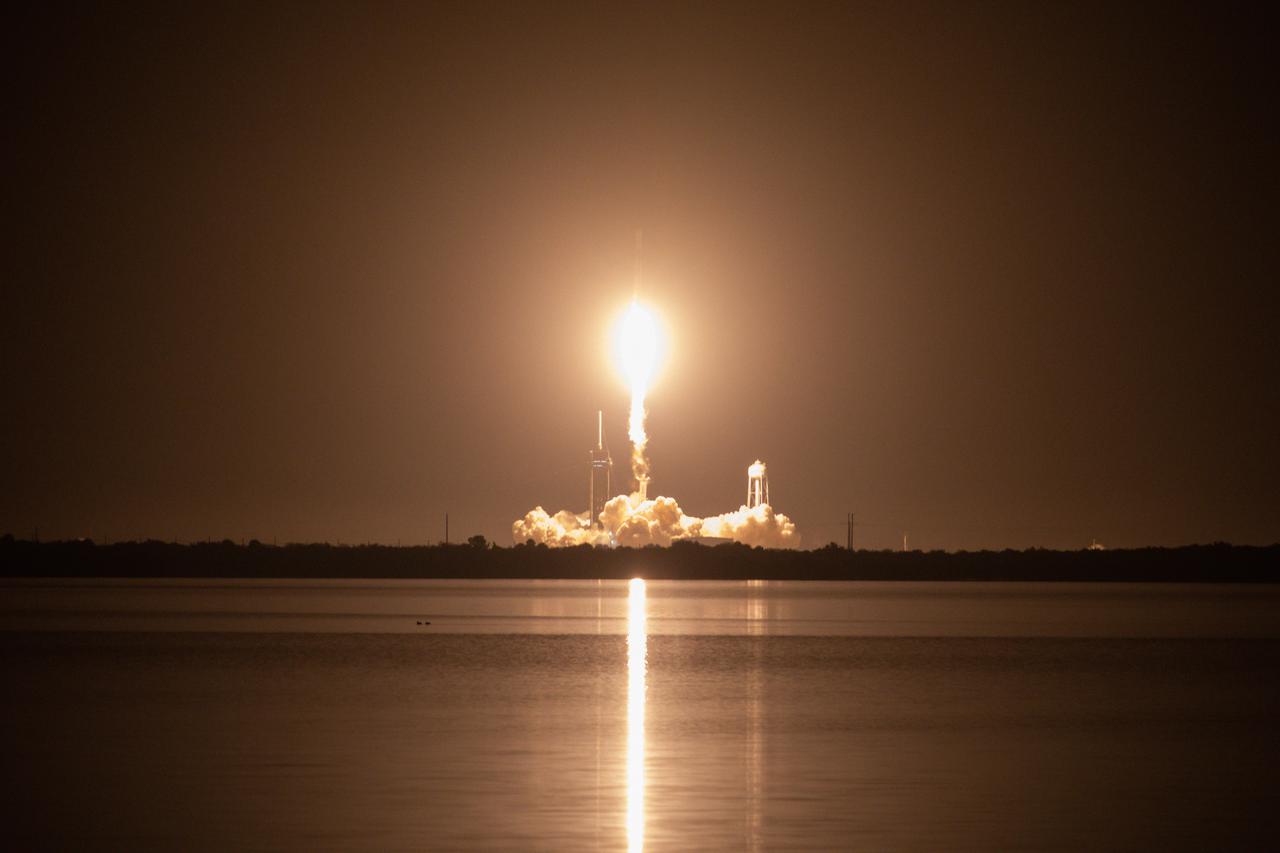
The SpaceX Falcon 9 rocket with the Crew Dragon lifts off from Launch Pad 39A at NASA’s Kennedy Space Center in Florida on Nov. 10, 2021. Aboard the Crew Dragon are the SpaceX Crew-3 astronauts Raja Chari, commander; Tom Marshburn, pilot; and Kayla Barron, mission specialist; along with Matthias Maurer, ESA (European Space Agency) astronaut and mission specialist. Launch time was at 9:03 p.m. EST. The Crew Dragon Endurance will carry the four-person crew to the International Space Station for the agency’s Commercial Crew Program.
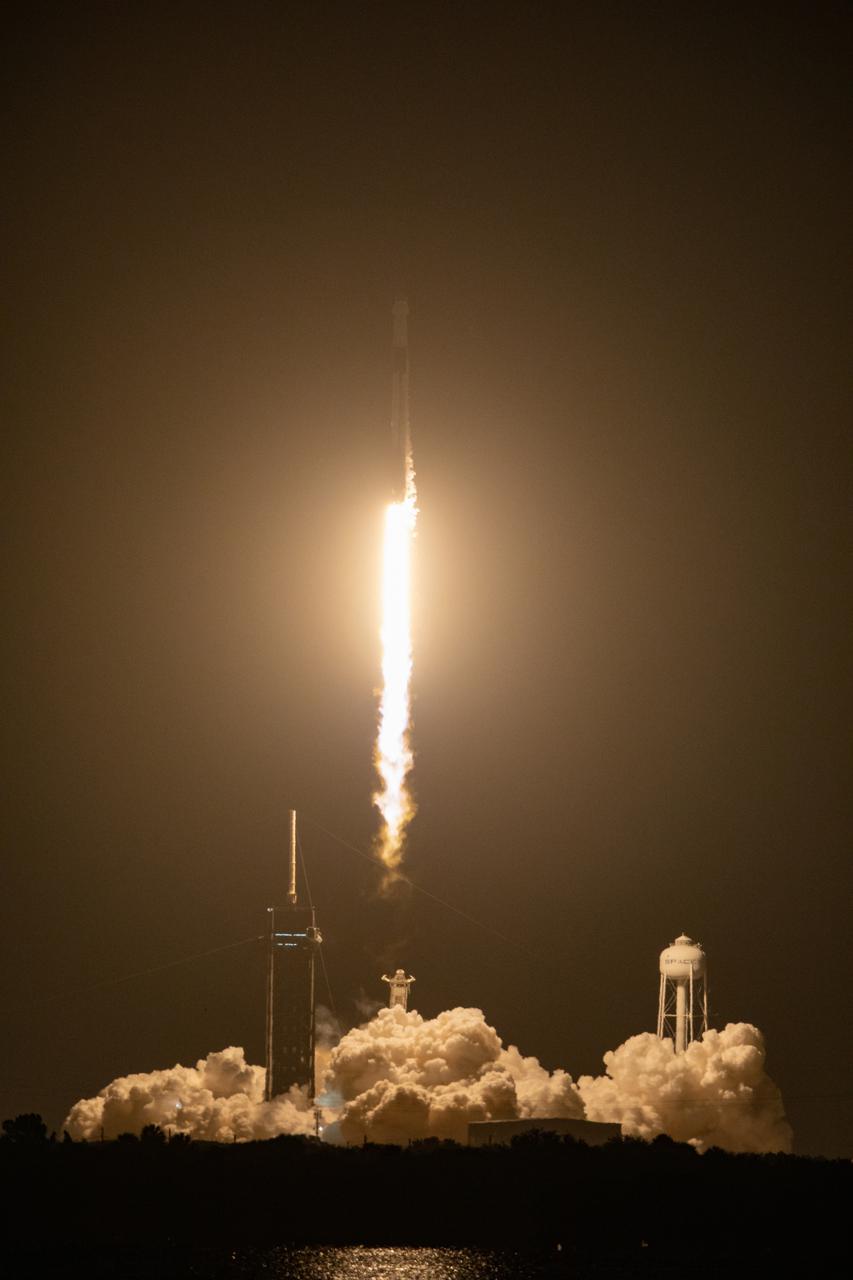
The SpaceX Falcon 9 rocket, with the company’s Crew Dragon atop, lifts off from Launch Pad 39A at Kennedy Space Center in Florida for NASA’s SpaceX Crew-4 mission on April 27, 2022, at 3:52 a.m. EDT. Aboard the Dragon are NASA astronauts Kjell Lindgren, Bob Hines, and Jessica Watkins, and ESA (European Space Agency) astronaut Samantha Cristoforetti. The spacecraft will carry the Crew-4 astronauts to the International Space Station as part of NASA’s Commercial Crew Program. The Dragon spacecraft, named Freedom by the mission’s crew, is scheduled to dock to the space station today at 8:15 p.m. EDT.
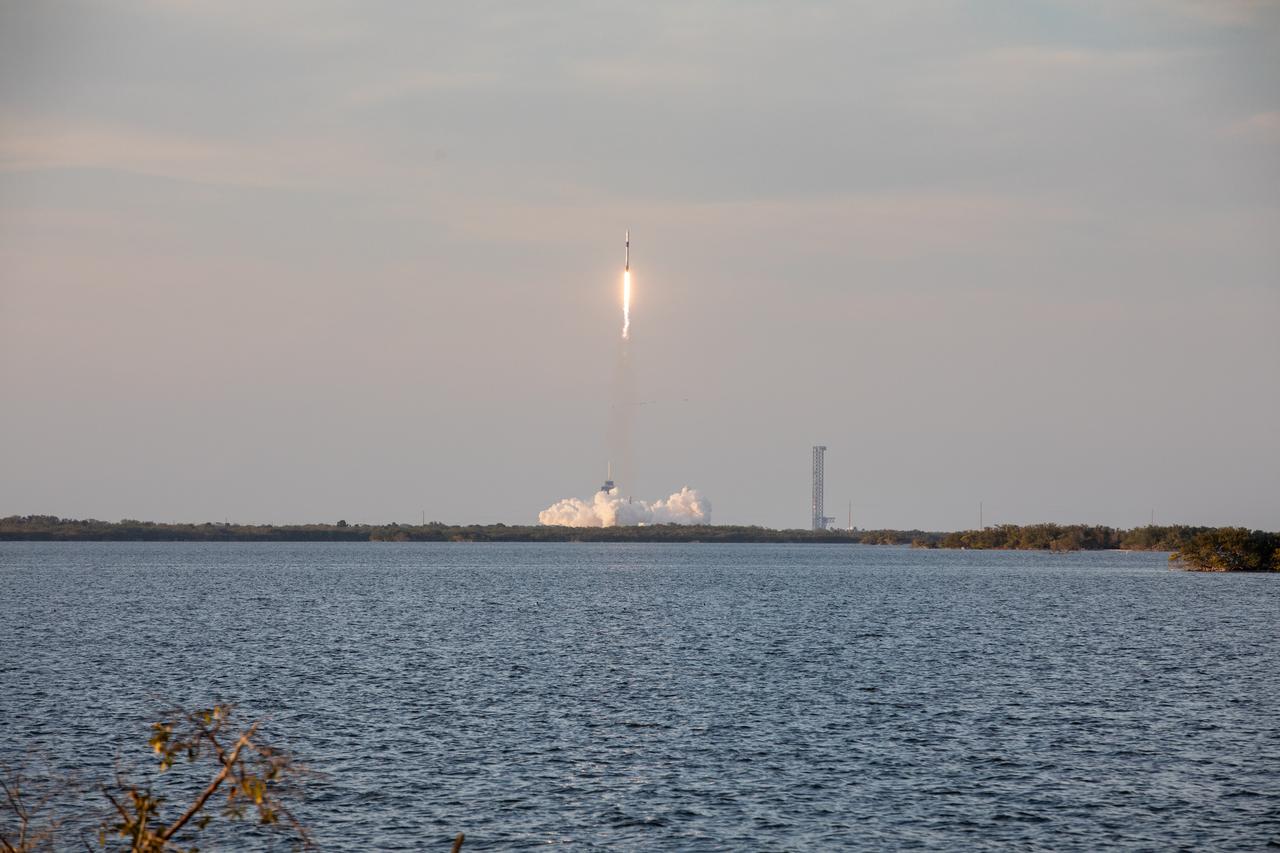
A SpaceX Falcon 9 rocket carrying the company's Dragon spacecraft lifts off on NASA’s SpaceX Crew-10 mission to the International Space Station with NASA astronauts Anne McClain and Nichole Ayers, along with JAXA (Japan Aerospace Exploration Agency) astronaut Takuya Onishi and Roscosmos cosmonaut Kirill Peskov aboard at 7:03 p.m. EDT Friday, March 14, 2025, from Launch Complex 39A at Kennedy Space Center in Florida. Crew-10 is the 10th crew rotation mission of the SpaceX Dragon spacecraft and Falcon 9 rocket to the space station as part of the agency’s Commercial Crew Program.
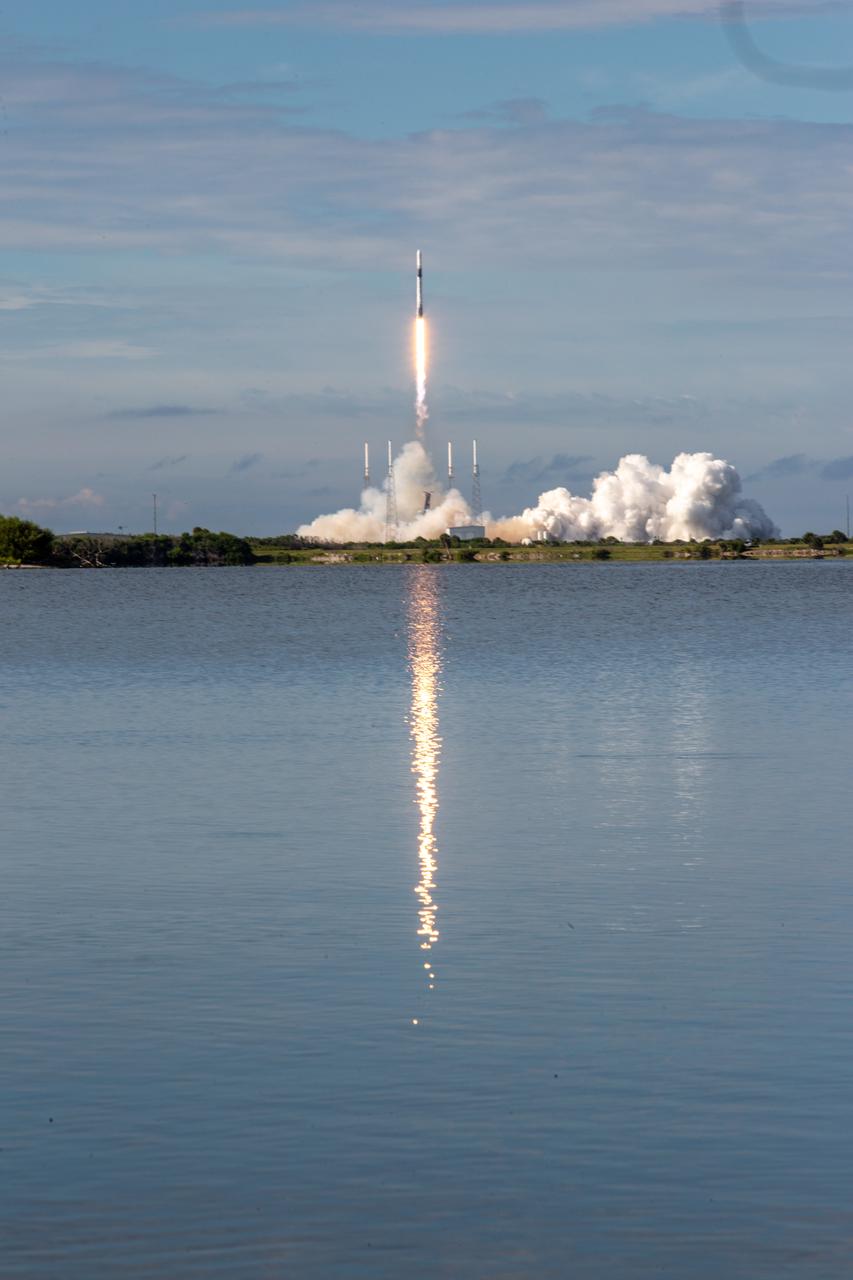
A SpaceX Falcon 9 rocket lifts off from Space Launch Complex 40 at Cape Canaveral Air Force Station in Florida at 6:01 p.m. EDT on July 25, 2019, carrying the Dragon spacecraft on the company's 18th Commercial Resupply Services (CRS-18) mission to the International Space Station. The uncrewed Dragon spacecraft will deliver about 5,000 pounds of science and research, crew supplies and vehicle hardware to the orbiting laboratory.
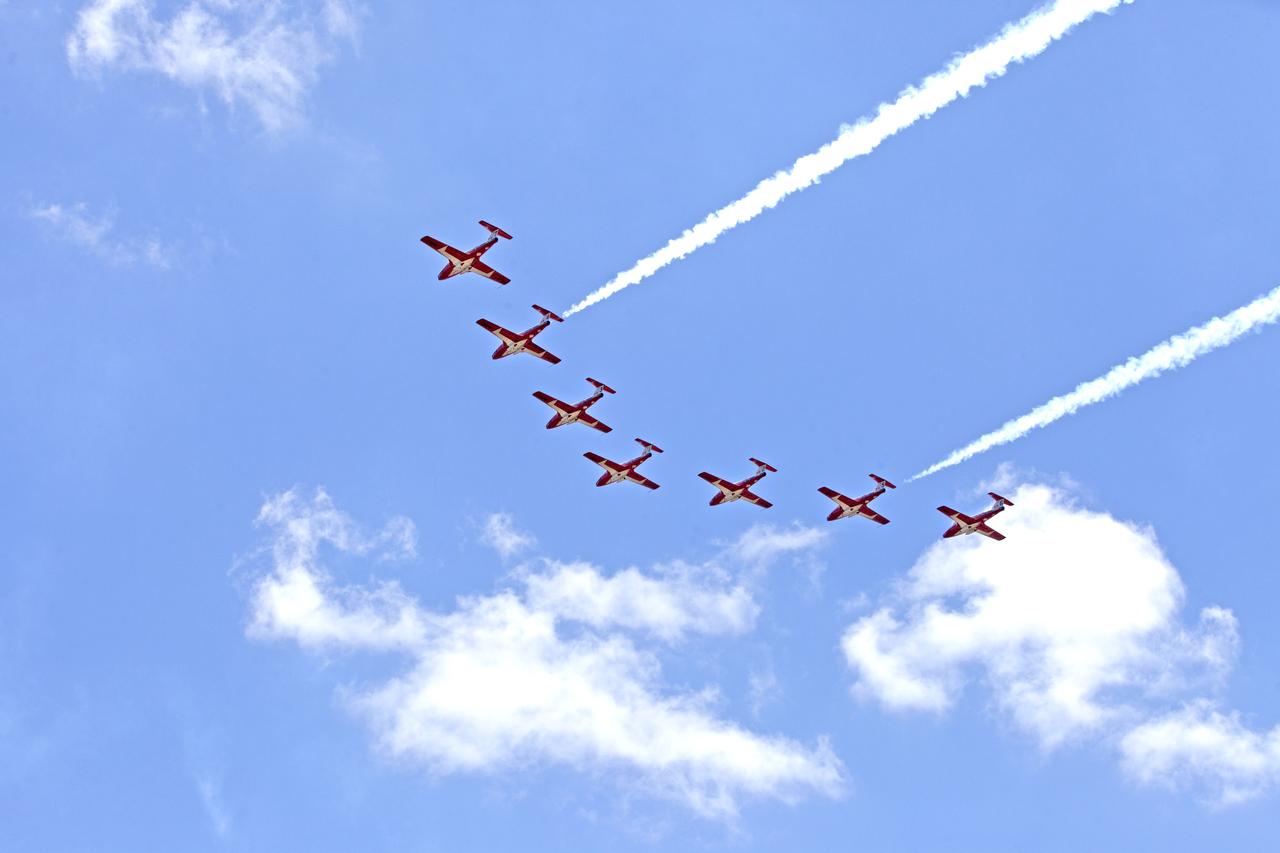
Canadian Forces Snowbirds fly in formation over NASA's Kennedy Space Center in Florida during a practice flight on May 9, 2018, between their scheduled U.S. air shows.
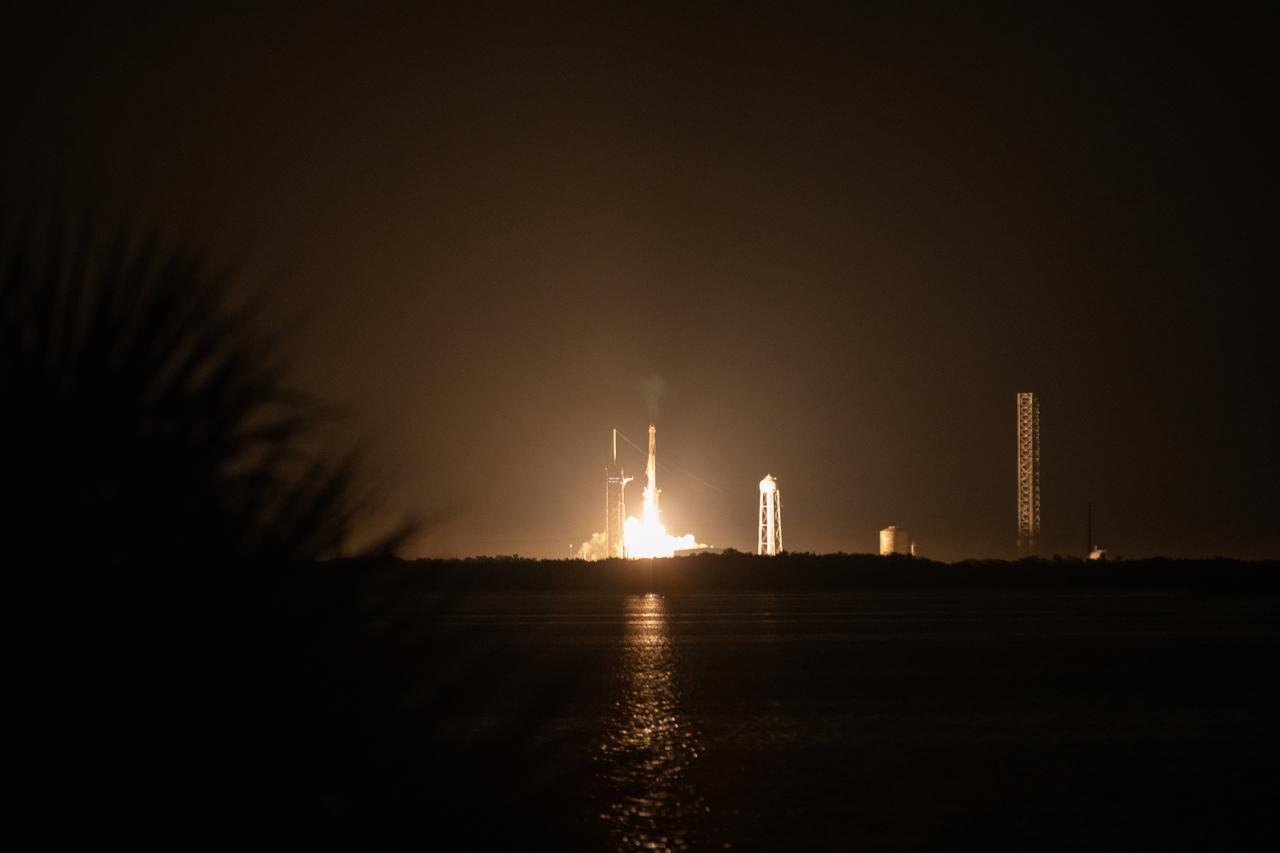
A SpaceX Falcon 9 rocket lifts off at 3:27 a.m. EDT on Saturday, Aug. 26, from Kennedy Space Center’s Launch Complex 39A in Florida, carrying NASA’s SpaceX Crew-7 crew members to the International Space Station. Aboard SpaceX’s Dragon spacecraft are NASA astronaut Jasmin Moghbeli, ESA (European Space Agency) astronaut Andreas Mogensen, JAXA (Japan Aerospace Exploration Agency) astronaut Satoshi Furukawa, and Roscosmos cosmonaut Konstantin Borisov. They will dock to the orbiting laboratory at about 8:40 a.m. EDT Sunday, Aug. 27.
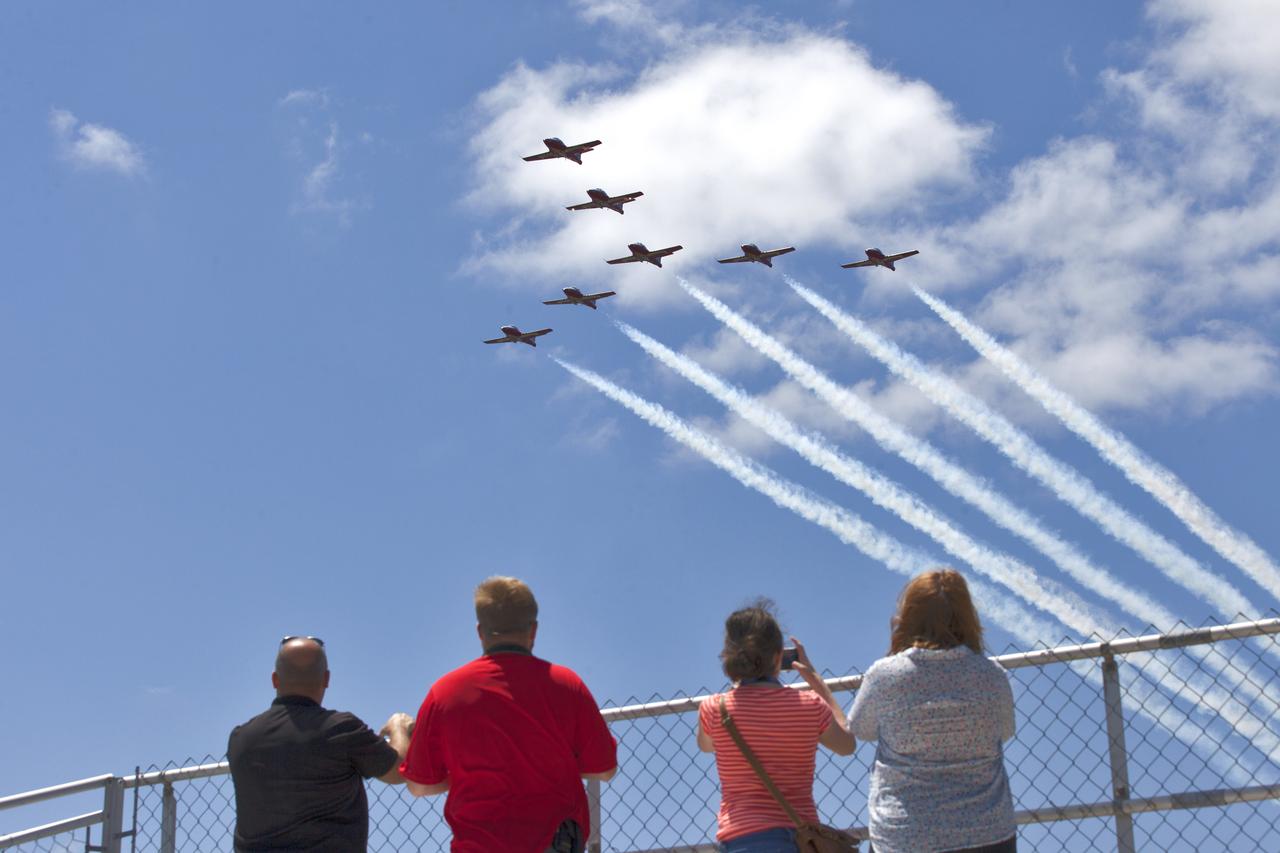
Workers watch as the Canadian Forces Snowbirds fly in formation over the Shuttle Landing Facility at NASA's Kennedy Space Center in Florida, during a practice flight on May 9, 2018, between their scheduled U.S. air shows.
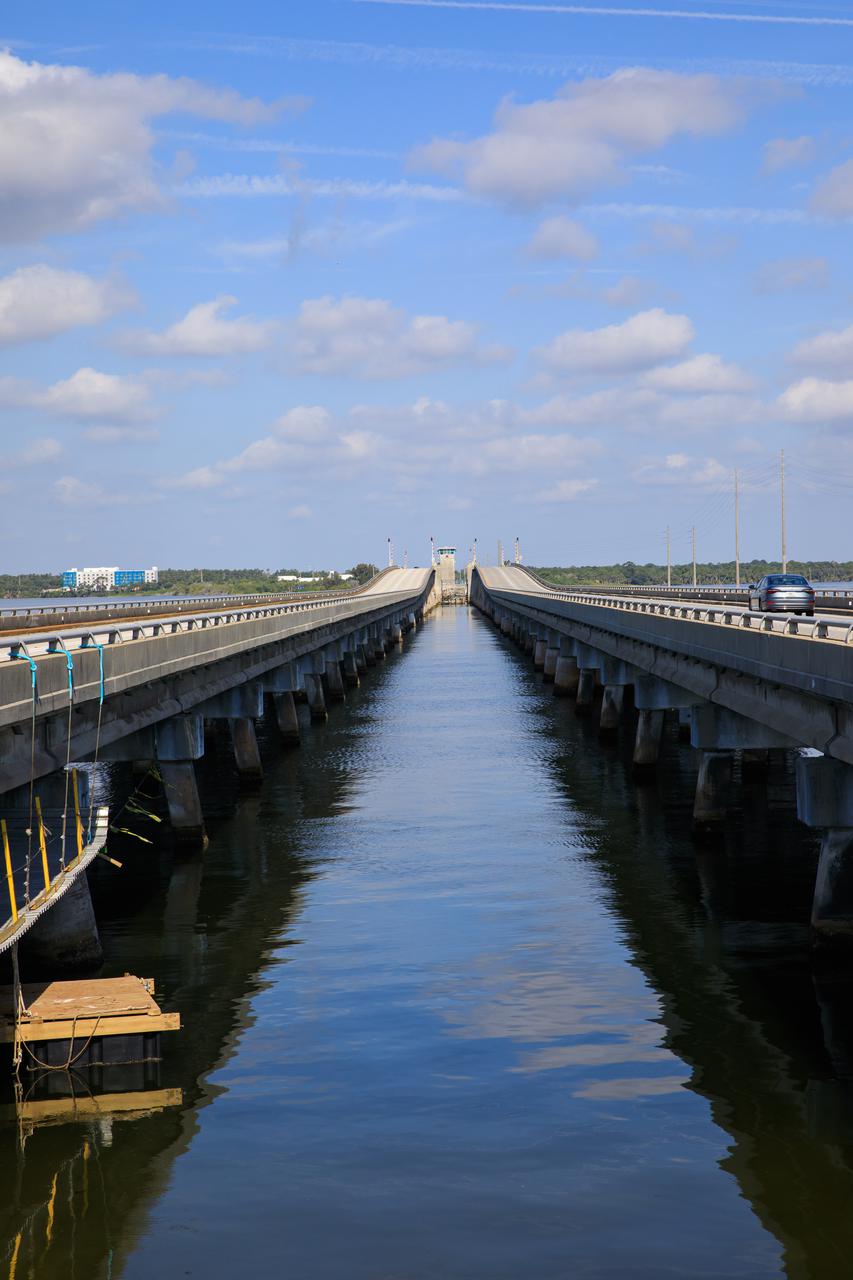
NASA’s bridge engineering team at Kennedy Space Center is managing multiple critical projects on the Indian River Bridge. This includes running new utility lines and safeguarding the existing wires and piping prior to the beginning of construction of the new Brevard County bridge. The much-traveled structure is a key access and evacuation route for the Florida spaceport and Cape Canaveral Space Force Station. Also known as the NASA Causeway Bridge, the Indian River Bridge was built in 1964.
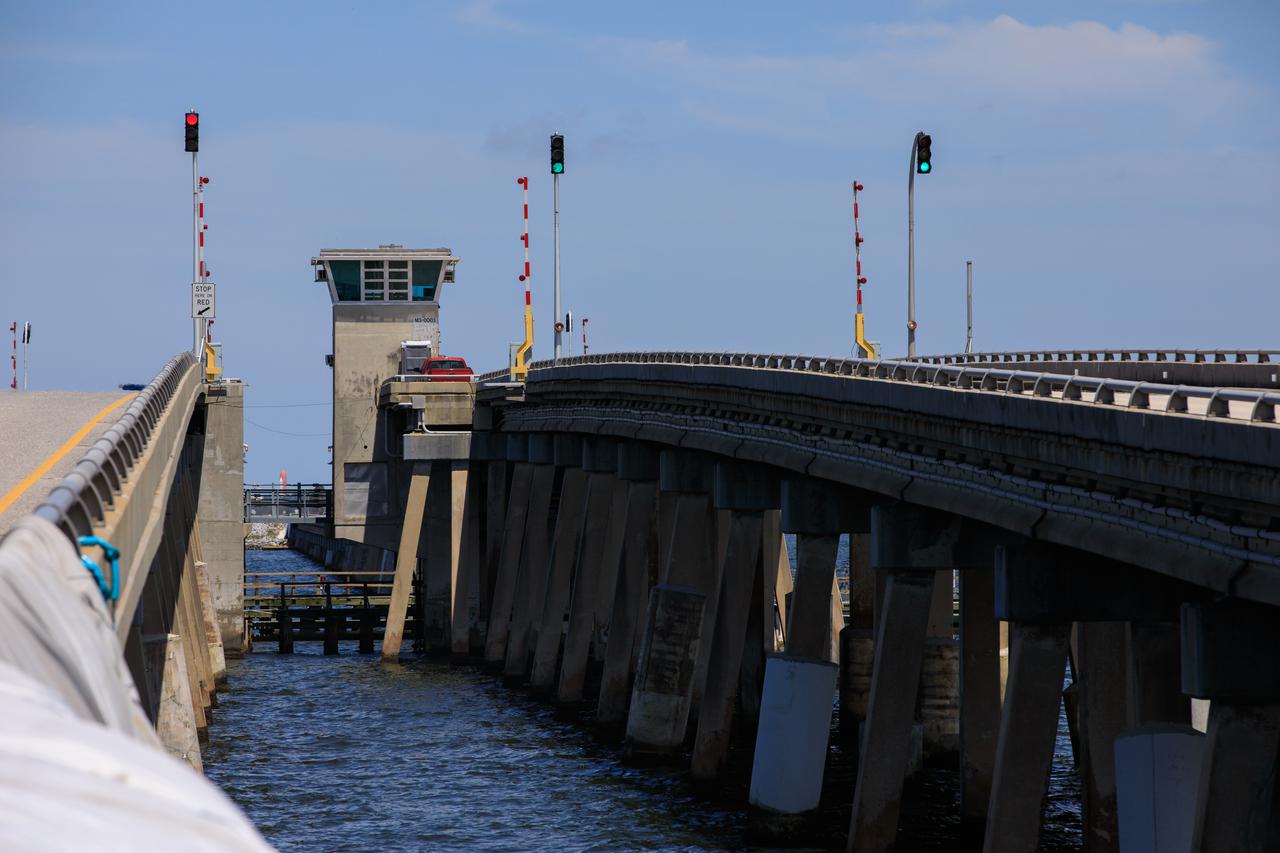
NASA’s bridge engineering team at Kennedy Space Center is managing multiple critical projects on the Indian River Bridge. This includes running new utility lines and safeguarding the existing wires and piping prior to the beginning of construction of the new Brevard County bridge. The much-traveled structure is a key access and evacuation route for the Florida spaceport and Cape Canaveral Space Force Station. Also known as the NASA Causeway Bridge, the Indian River Bridge was built in 1964.
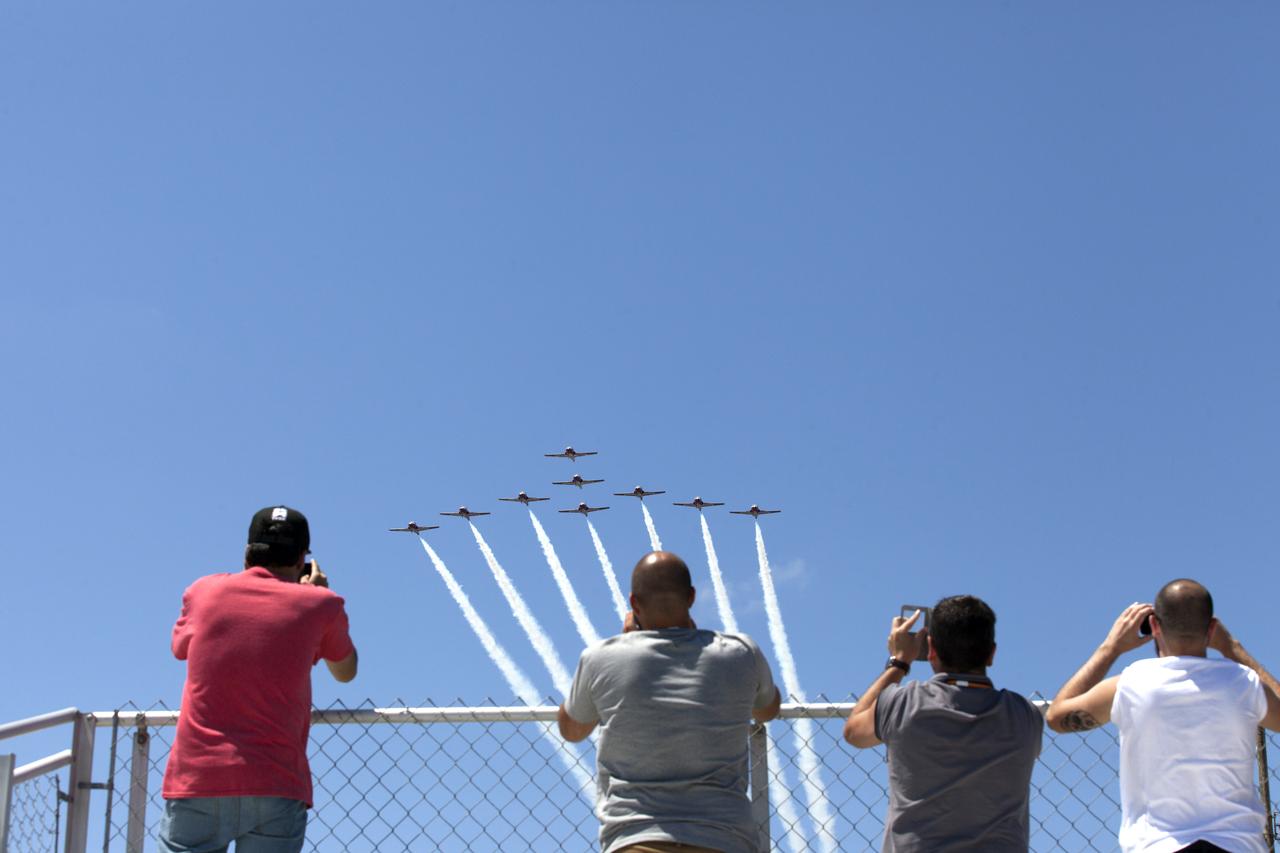
Workers along the NASA Causeway at NASA's Kennedy Space Center in Florida watch a practice flight of the Canadian Forces Snowbirds on May 9, 2018, between their scheduled U.S. air shows.
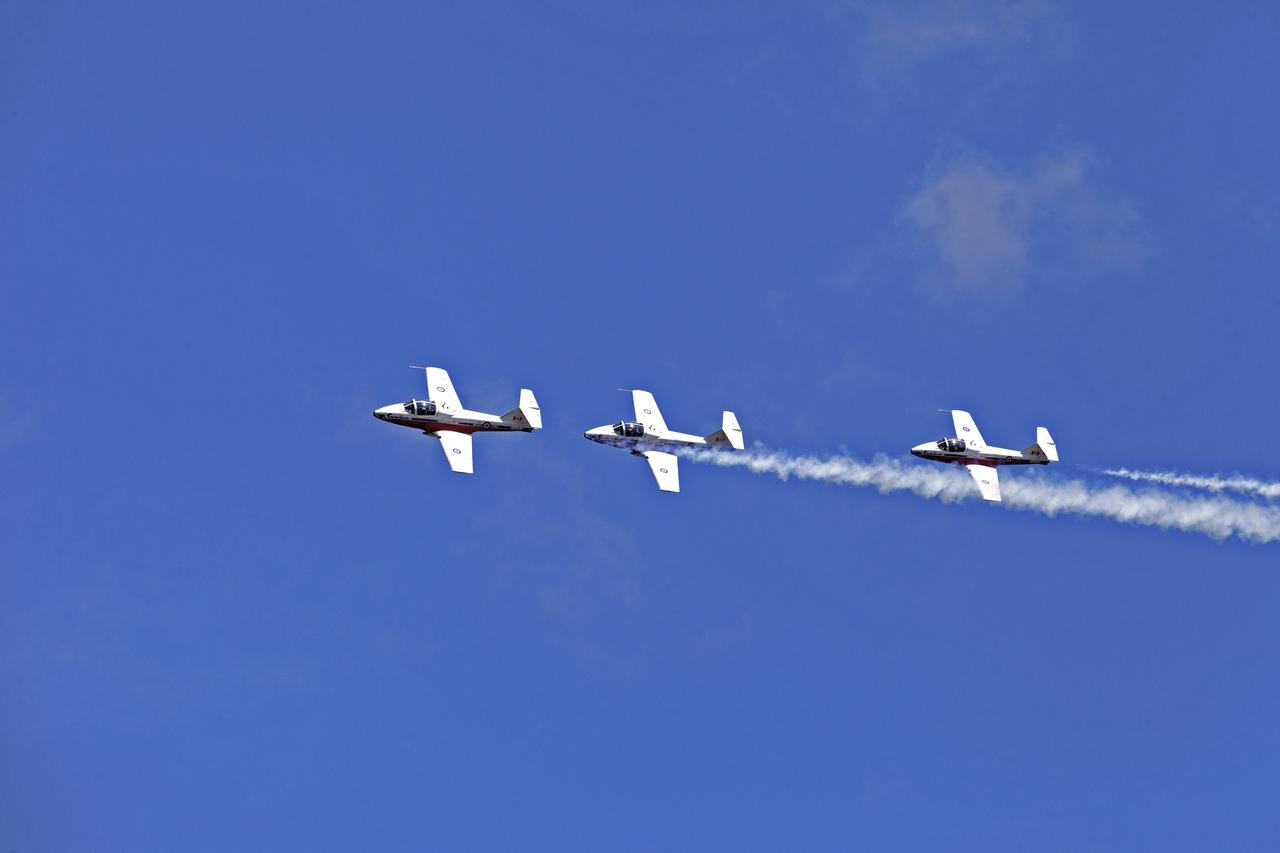
Canadian Forces Snowbirds fly in formation over NASA's Kennedy Space Center in Florida during a practice flight on May 9, 2018, between their scheduled U.S. air shows.
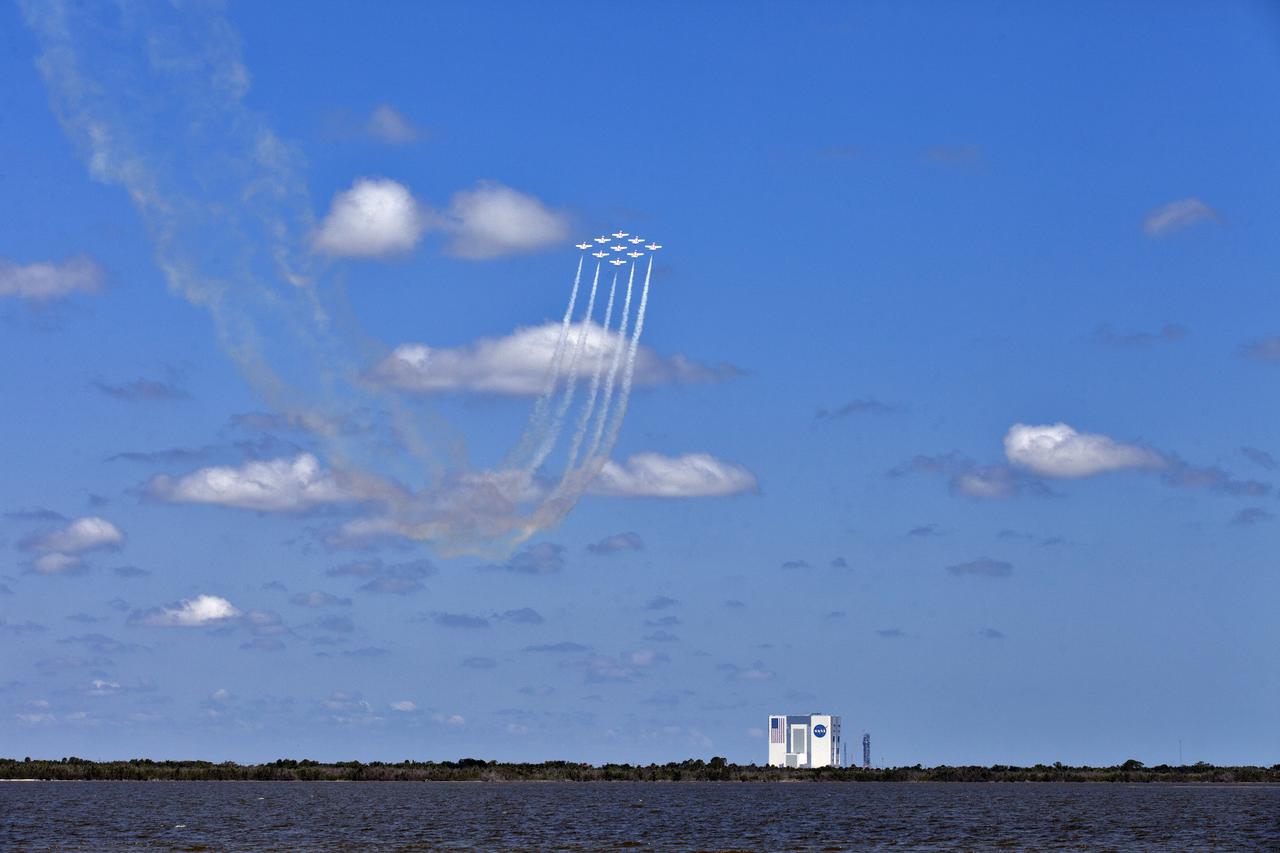
Canadian Forces Snowbirds fly in formation over NASA's Kennedy Space Center in Florida during a practice flight on May 9, 2018, between their scheduled U.S. air shows. The iconic Vehicle Assembly Building and mobile launcher are in view in the background.
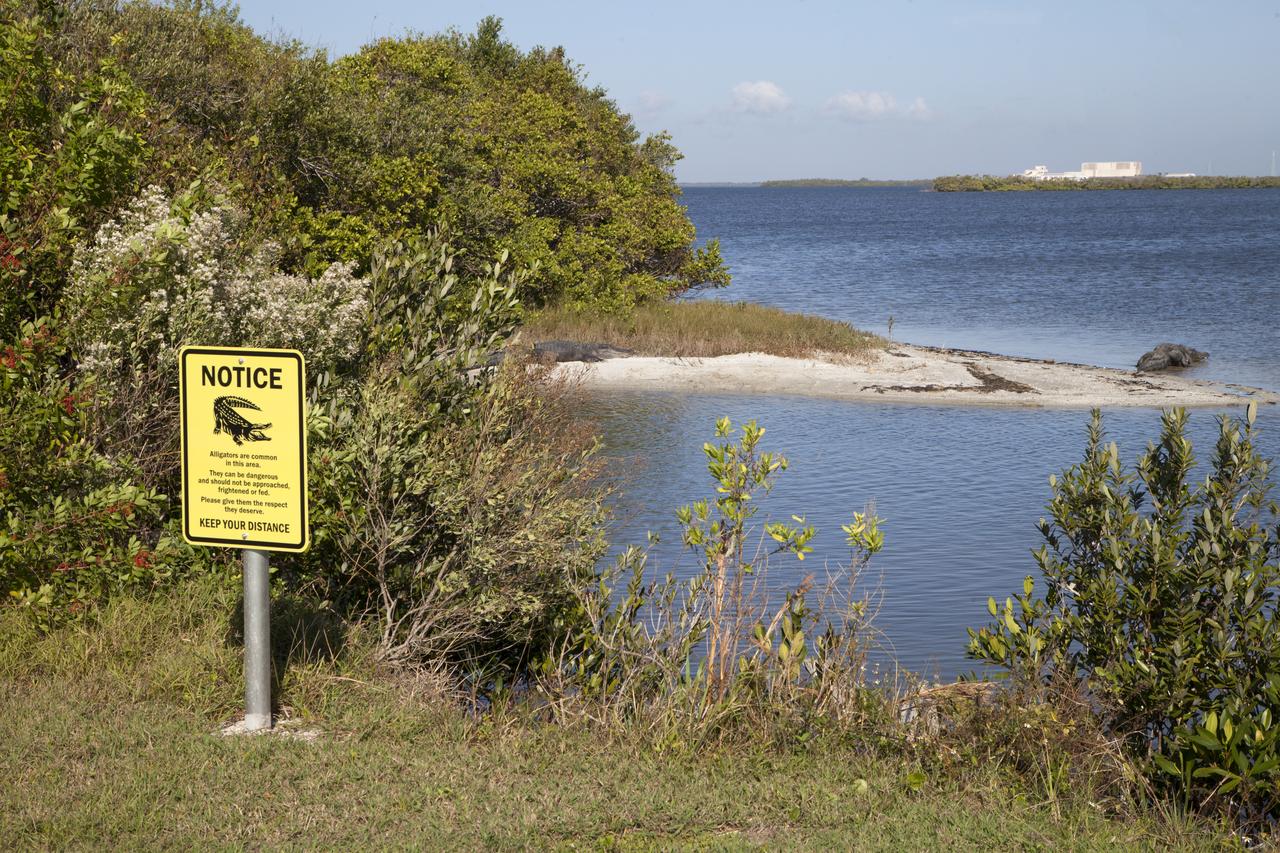
Two large alligators sun themselves on the sand near the NASA Causeway at Kennedy Space Center in Florida. The center shares a boundary with the Merritt Island National Wildlife Refuge. The refuge is home to more than 65 amphibian and reptile species, along with 330 native and migratory bird species, 25 mammal and 117 fish species.
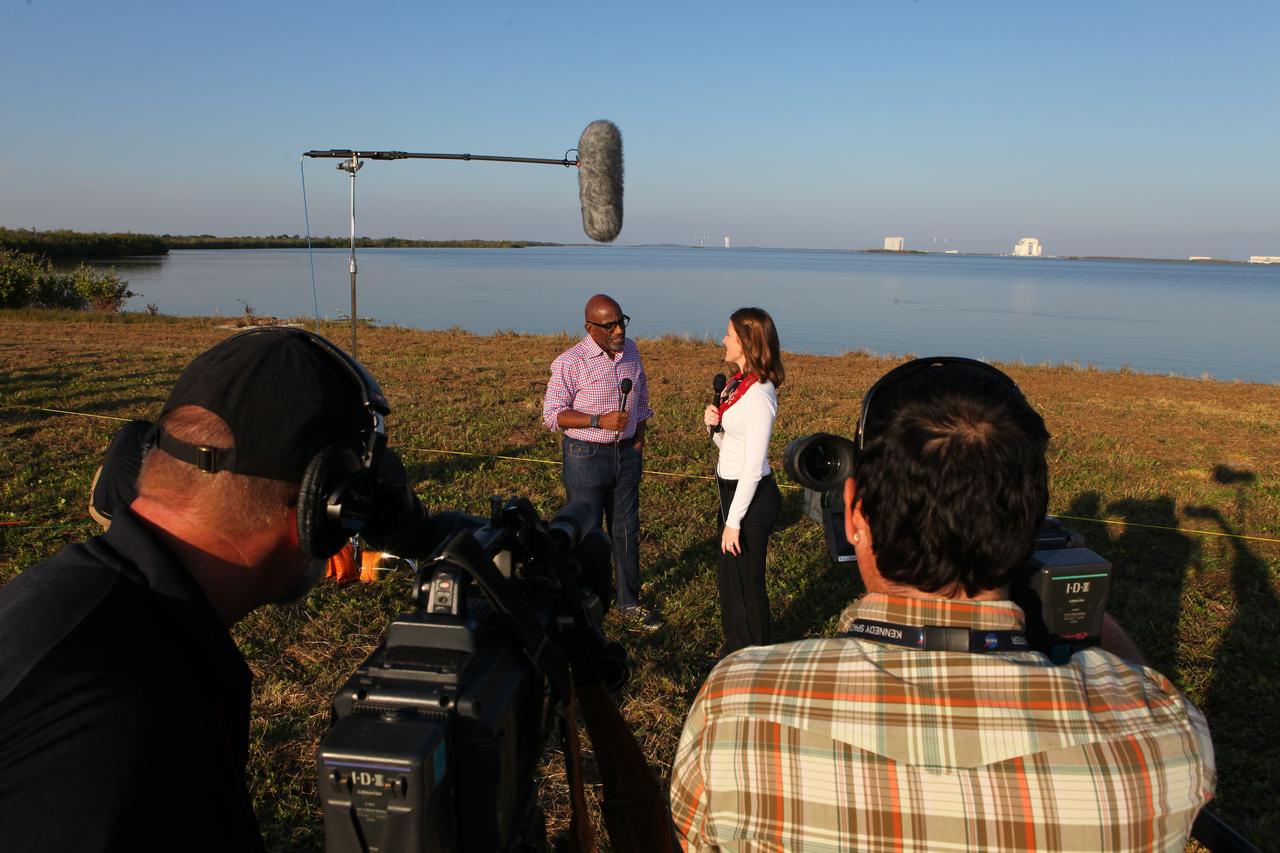
During the countdown for the launch of NOAA's Geostationary Operational Environmental Satellite, or GOES-R, Stephanie Martin of NASA Communications, right, interviews Al Roker, weather forecaster on NBC's "Today Show." GOES-R is the first satellite in a series of next-generation GOES satellites for NOAA, the National Oceanographic and Atmospheric Administration. It will launch to a geostationary orbit over the western hemisphere to provide images of storms and help meteorologists predict severe weather conditionals and develop long-range forecasts.
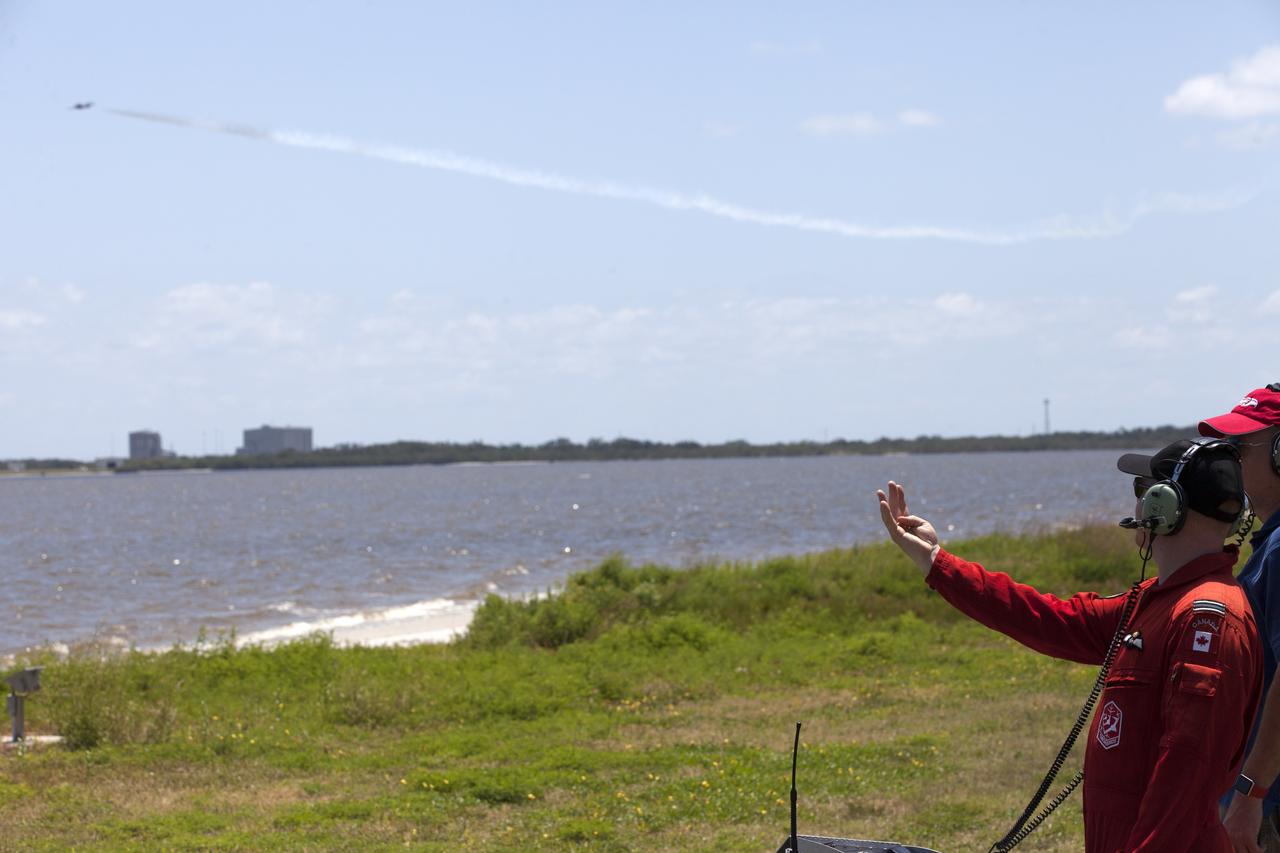
Capt. Blake McNaughton, team coordinator, Advance and Safety Pilot, 431 (Air Demonstration) Squadron Snowbirds Department of National Defence, communicates with the Canadian Forces Snowbird pilots from the NASA Causeway at Kennedy Space Center in Florida during a practice flight on May 9, 2018, between their scheduled U.S. Air Shows.
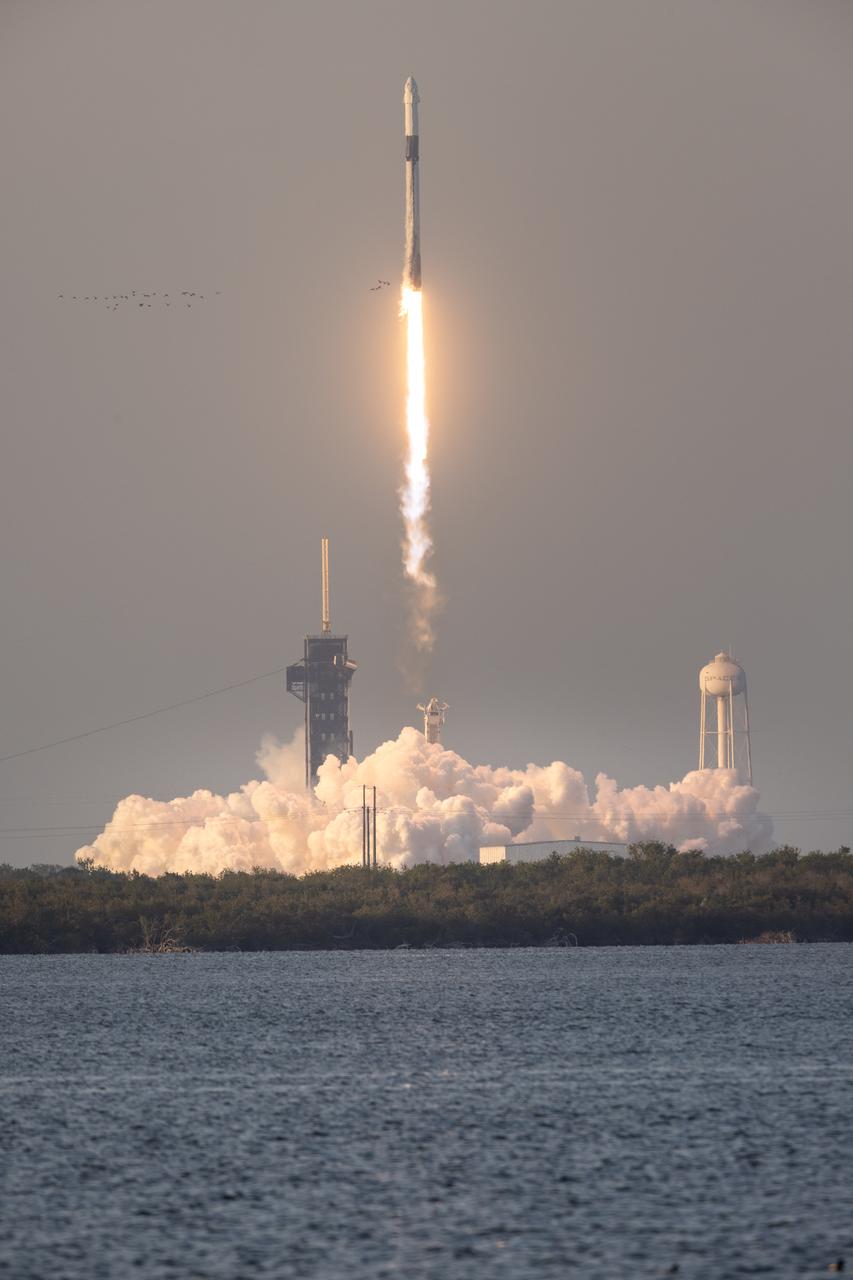
A SpaceX Falcon 9 rocket carrying the company's Dragon spacecraft lifts off on NASA’s SpaceX Crew-10 mission to the International Space Station with NASA astronauts Anne McClain and Nichole Ayers, along with JAXA (Japan Aerospace Exploration Agency) astronaut Takuya Onishi and Roscosmos cosmonaut Kirill Peskov aboard at 7:03 p.m. EDT Friday, March 14, 2025, from Launch Complex 39A at Kennedy Space Center in Florida. Crew-10 is the 10th crew rotation mission of the SpaceX Dragon spacecraft and Falcon 9 rocket to the space station as part of the agency’s Commercial Crew Program.
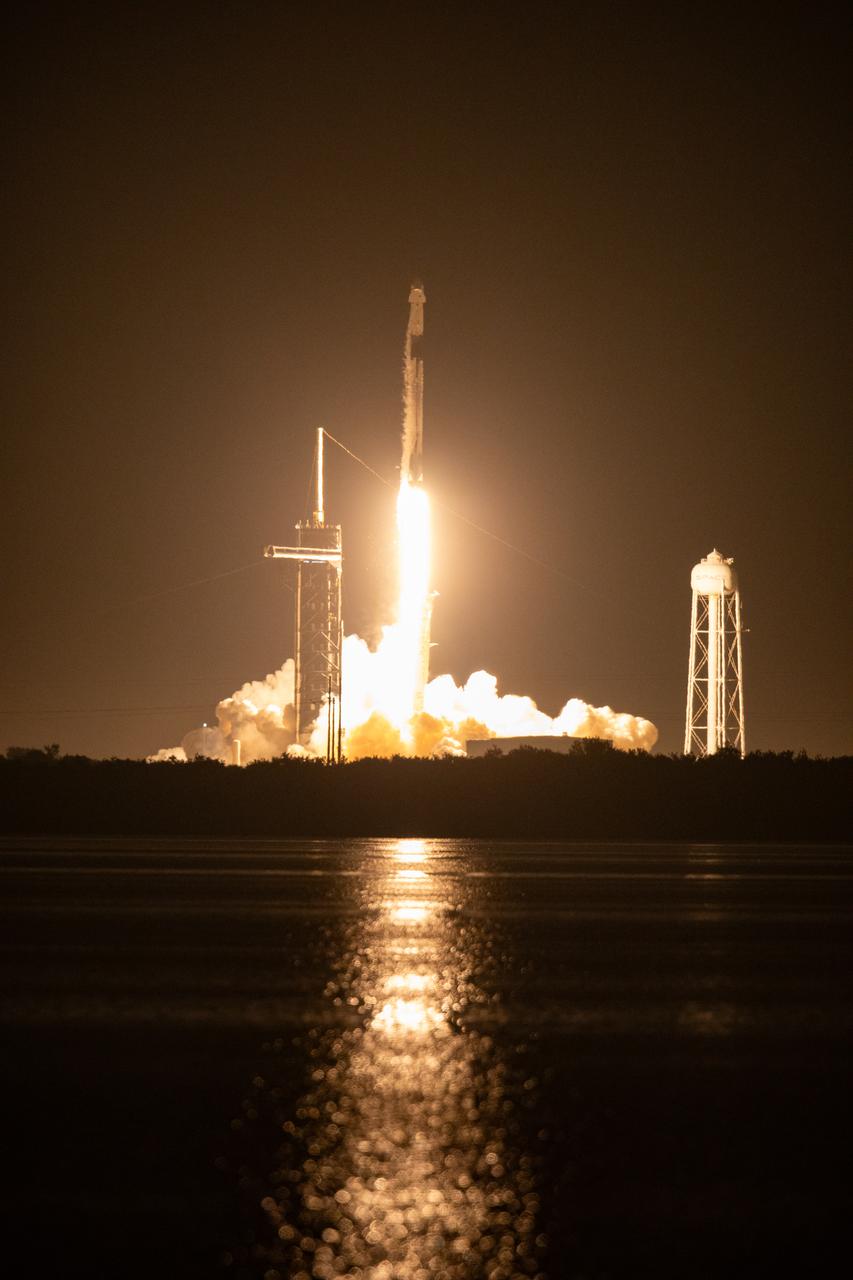
The SpaceX Falcon 9 rocket carrying the Dragon spacecraft lifts off from Launch Complex 39A at NASA’s Kennedy Space Center in Florida on Thursday, Nov. 9, 2023, on the company’s 29th commercial resupply services mission for the agency to the International Space Station. Liftoff was at 8:28 p.m. EST. Dragon will deliver scientific research, technology demonstrations, crew supplies, and hardware to the space station to support its Expedition 70 crew, including NASA’s Integrated Laser Communications Relay Demonstration Low Earth Orbit User Modem and Amplifier Terminal (ILLUMA-T) and Atmospheric Waves Experiment (AWE). The spacecraft is expected to spend about a month attached to the orbiting outpost before it returns to Earth with research and return cargo, splashing down off the coast of Florida.
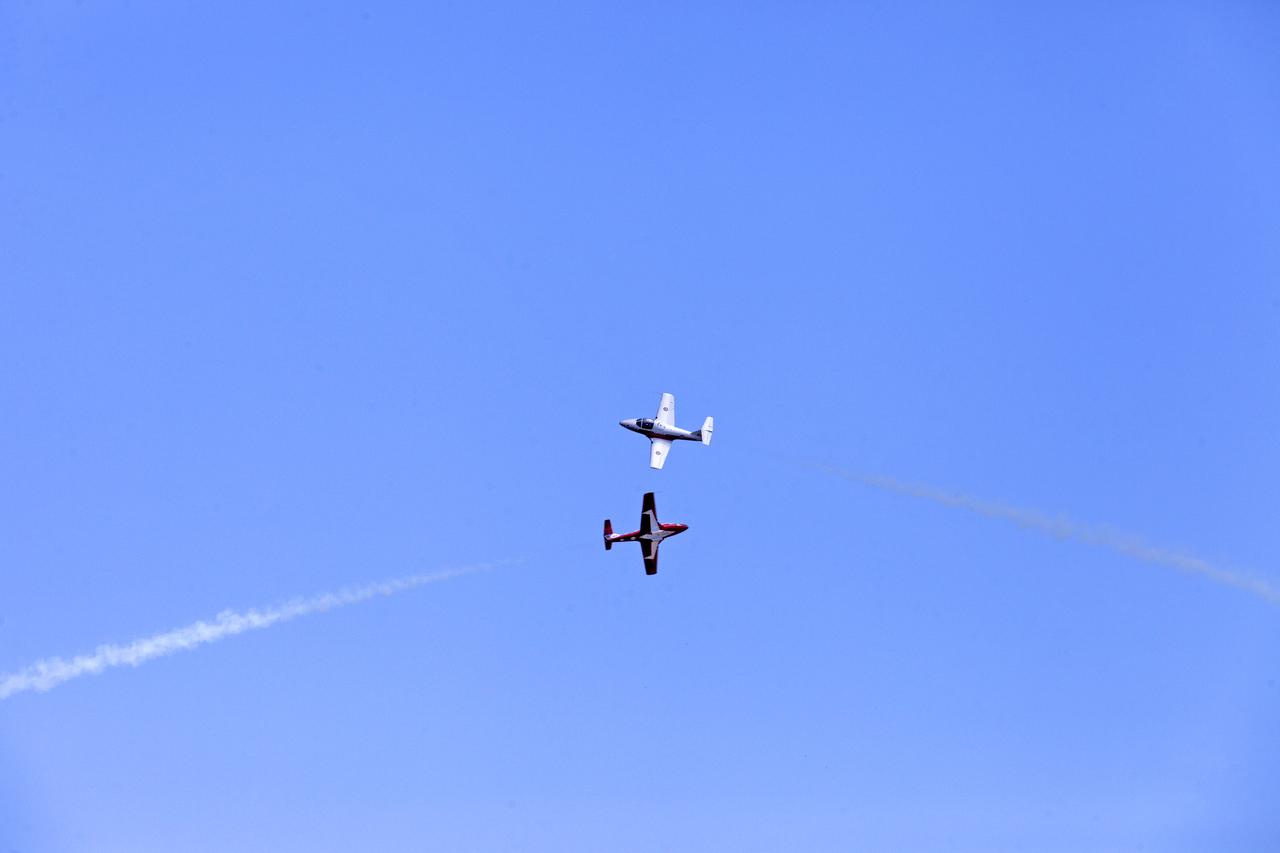
Two Canadian Forces Snowbirds perform a close flyby maneuver over NASA's Kennedy Space Center in Florida during a practice flight on May 9, 2018, between their scheduled U.S. air shows.
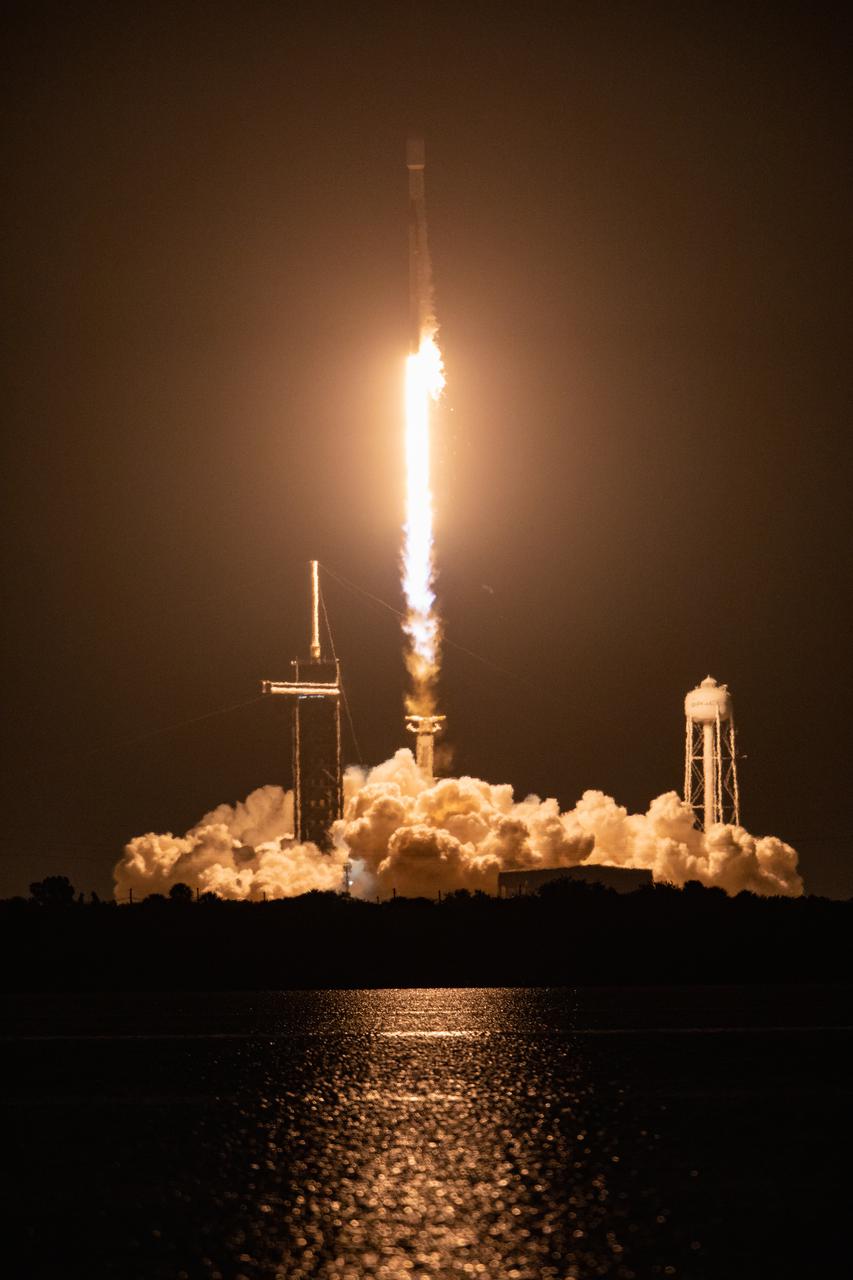
A SpaceX Falcon 9 rocket roars off the launch pad at Launch Complex 39A at NASA’s Kennedy Space Center in Florida at 1 a.m. EST on Thursday, Dec. 9, 2021, carrying NASA’s Imaging X-ray Polarimetry Explorer (IXPE) spacecraft. NASA’s Launch Services Program managed this launch. NASA’s Marshall Space Flight Center in Huntsville, Alabama, manages the IXPE mission. Ball Aerospace, headquartered in Broomfield, Colorado, manages spacecraft operations with support from the University of Colorado at Boulder. NASA’s Goddard Space Flight Center in Greenbelt, Maryland, manages the Explorers Program for the agency’s Science Mission Directorate in Washington. The IXPE spacecraft includes three space telescopes with sensitive detectors capable of measuring the polarization of cosmic X-rays, allowing scientists to answer fundamental questions about extremely complex environments in space where gravitational, electric, and magnetic fields are at their limits. The project is a collaboration between NASA and the Italian Space Agency.
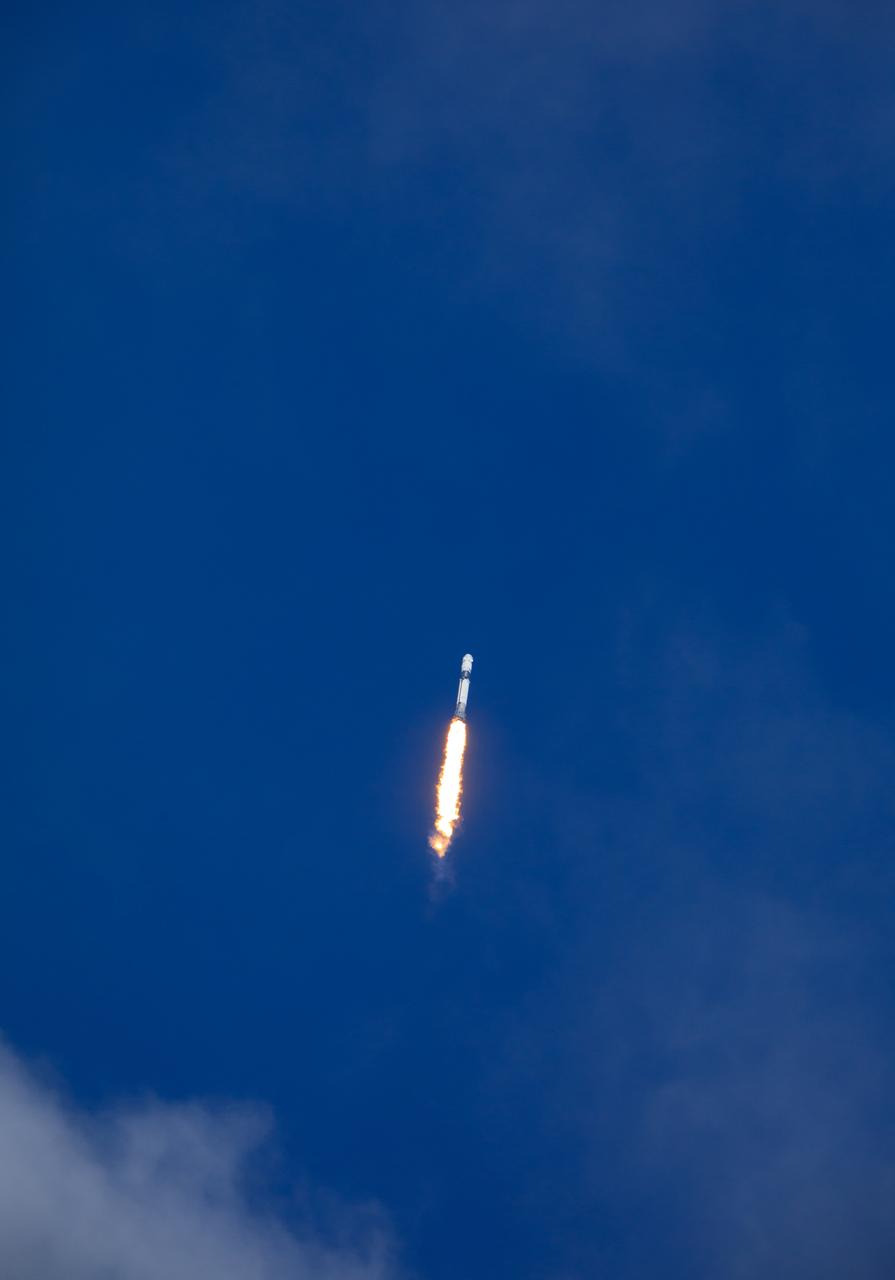
A SpaceX Falcon 9 rocket carrying the company's Dragon spacecraft lifts off on NASA’s SpaceX Crew-9 mission to the International Space Station with NASA astronaut Nick Hague and Roscosmos cosmonaut Aleksandr Gorbunov aboard Saturday, Sept. 28, 2024, from Space Launch Complex-40 at Cape Canaveral Space Force Station in Florida. Crew-9 is the ninth crew rotation mission of the SpaceX Dragon spacecraft and Falcon 9 rocket to the space station as part of the agency’s Commercial Crew Program. Hague and Gorbunov launched at 1:17 p.m. EDT to begin a mission aboard the orbital outpost lasting about five months.
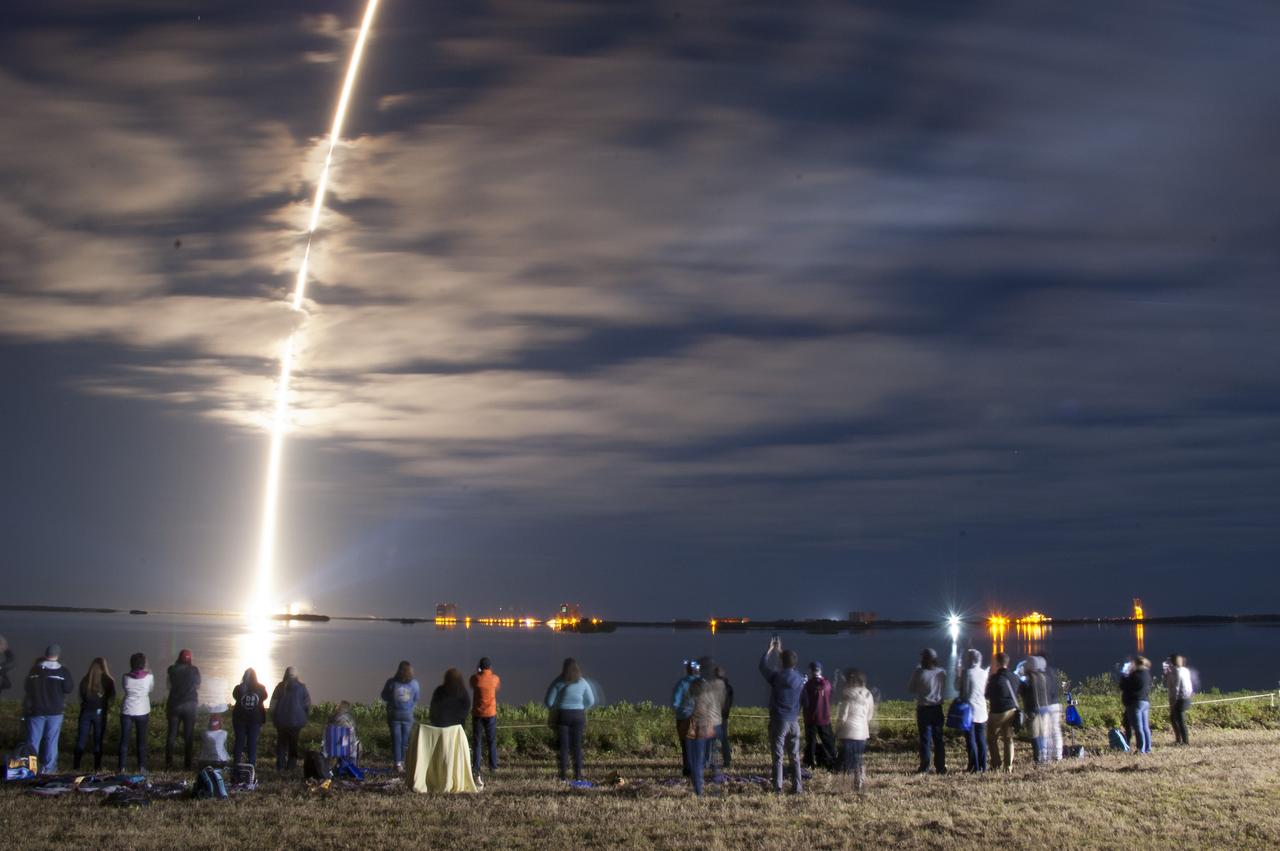
In a time-lapse exposure, a United Launch Alliance Atlas V rocket lifts off from Space Launch Complex 41 at Cape Canaveral Air Force Station carrying an Orbital ATK Cygnus resupply spacecraft on a commercial resupply services mission to the International Space Station. Liftoff was at 11:05 p.m. EDT. Cygnus will deliver the second generation of a portable onboard printer to demonstrate 3-D printing, an instrument for first space-based observations of the chemical composition of meteors entering Earth’s atmosphere and an experiment to study how fires burn in microgravity.
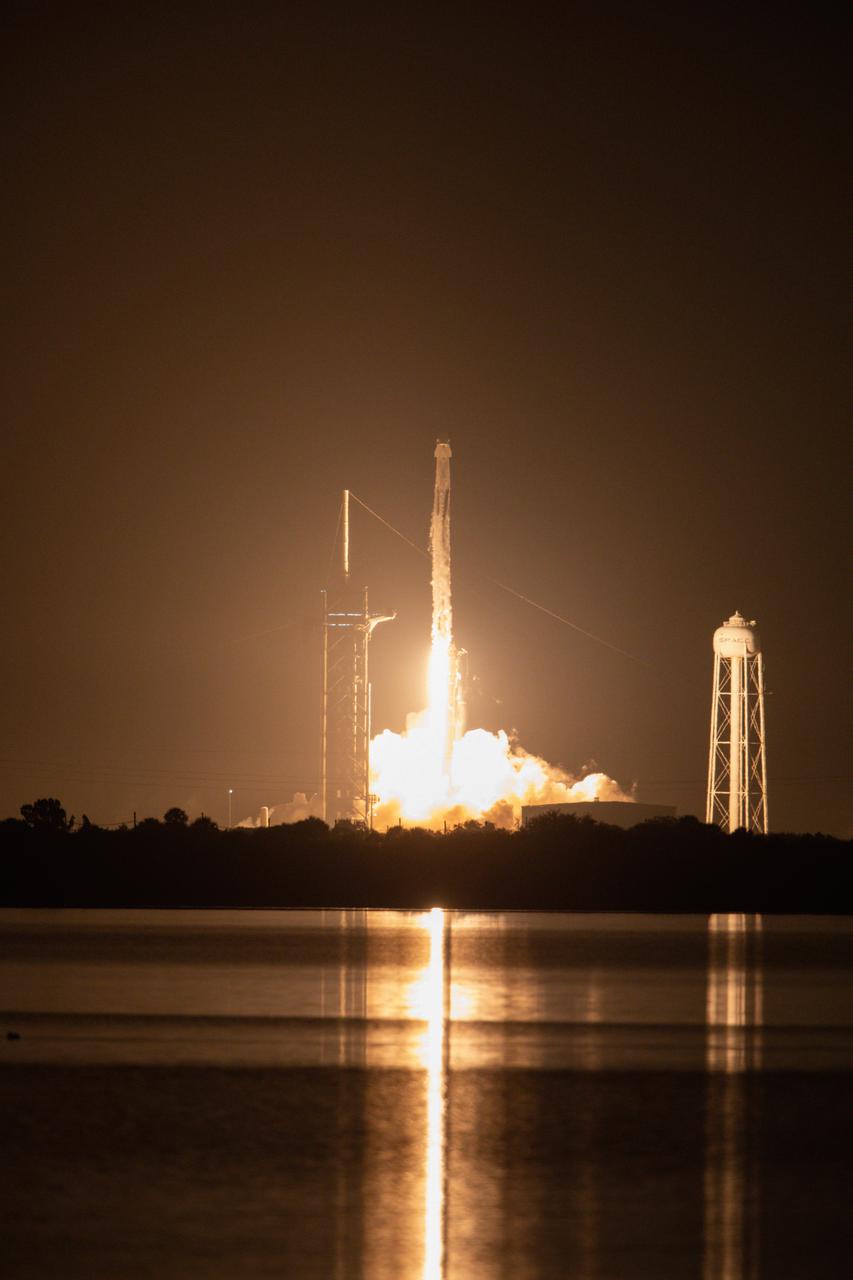
The SpaceX Falcon 9 rocket, with the Crew Dragon atop, soars upward after liftoff from Launch Pad 39A at NASA’s Kennedy Space Center in Florida on Nov. 10, 2021. Aboard the Crew Dragon are the SpaceX Crew-3 astronauts Raja Chari, commander; Tom Marshburn, pilot; and Kayla Barron, mission specialist; along with Matthias Maurer, ESA (European Space Agency) astronaut and mission specialist. Launch time was at 9:03 p.m. EST. The Crew Dragon Endurance will carry the four-person crew to the International Space Station for the agency’s Commercial Crew Program.
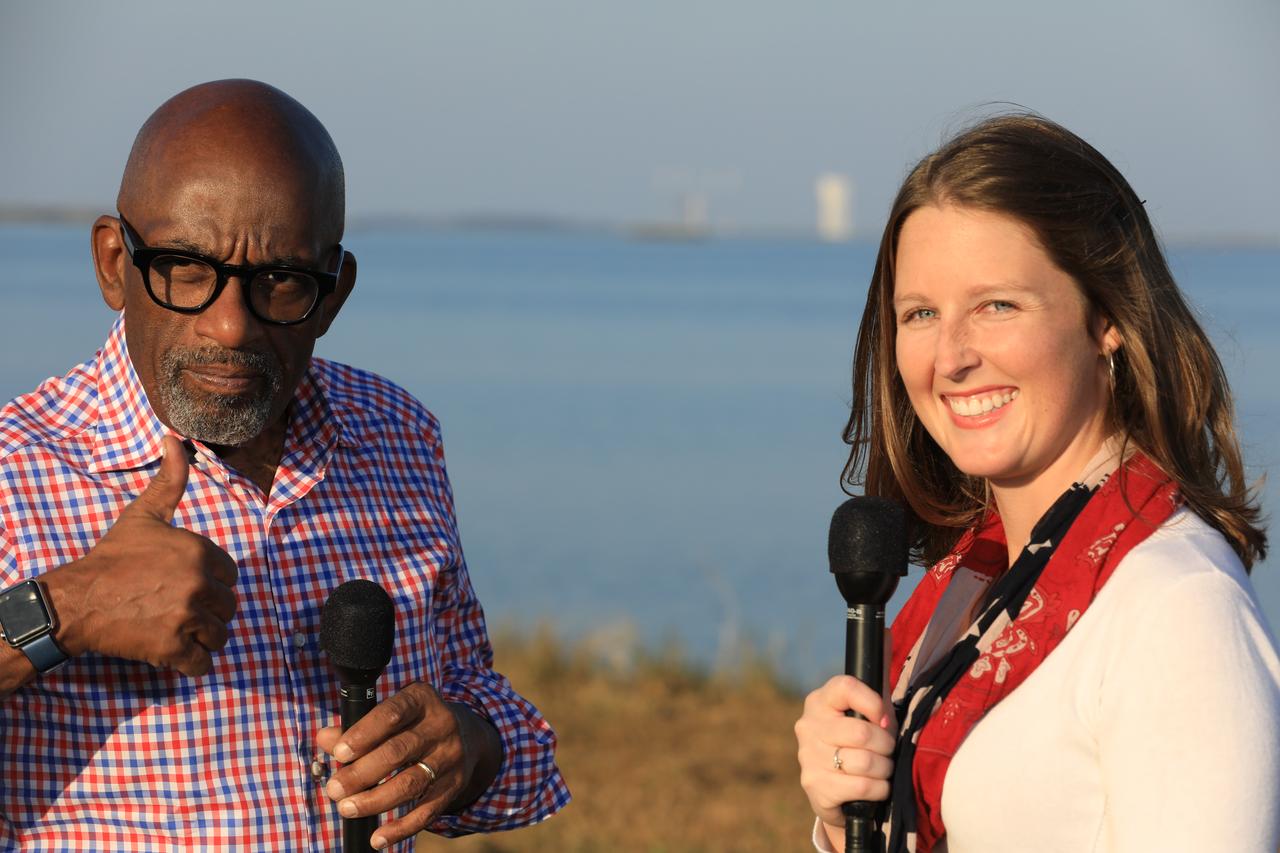
Al Roker Interview with NASA for GOES-R Mission.
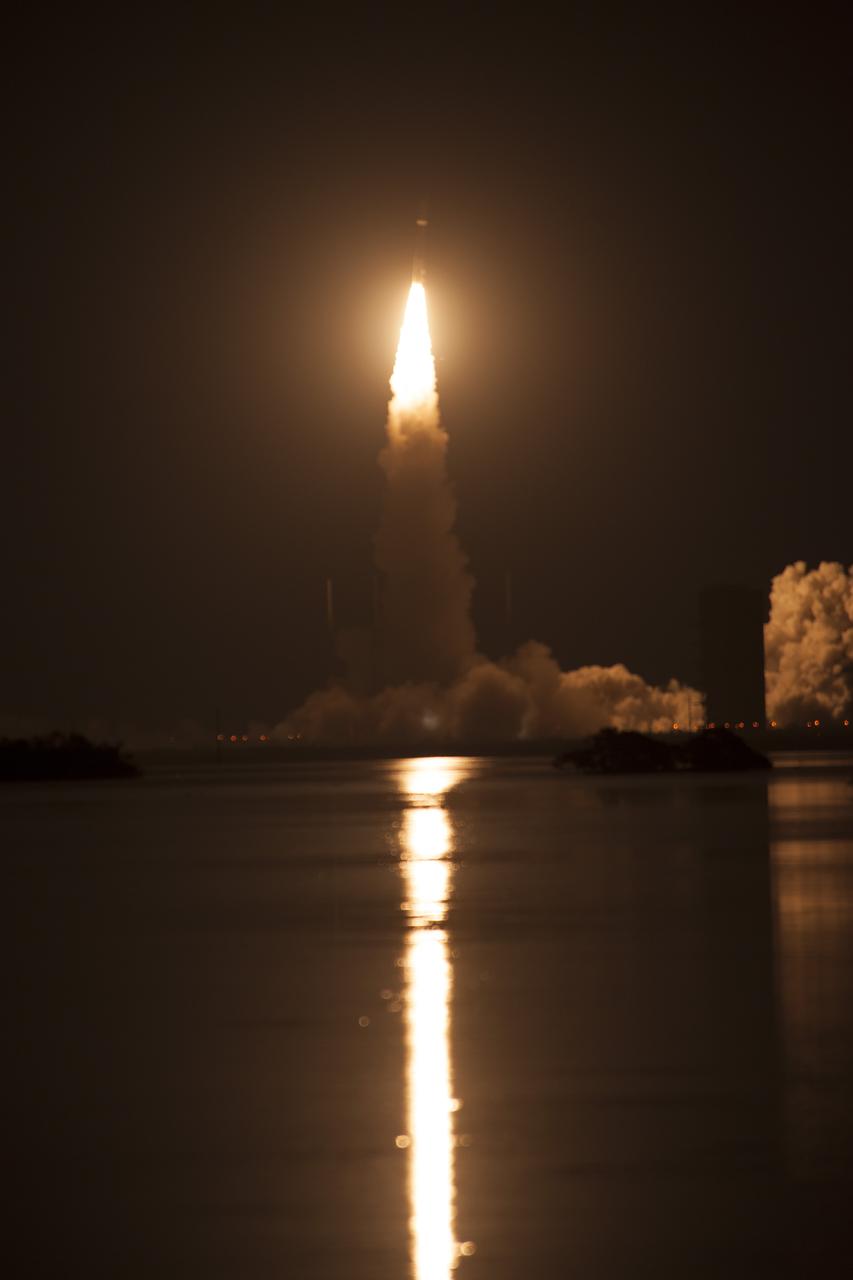
At Cape Canaveral Air Force Station's Space Launch Complex 41, an Atlas V rocket with NOAA's Geostationary Operational Environmental Satellite, or GOES-R, lifts off at 6:42 p.m. EST. GOES-R is the first satellite in a series of next-generation GOES satellites for NOAA, the National Oceanographic and Atmospheric Administration. It will launch to a geostationary orbit over the western hemisphere to provide images of storms and help meteorologists predict severe weather conditionals and develop long-range forecasts.
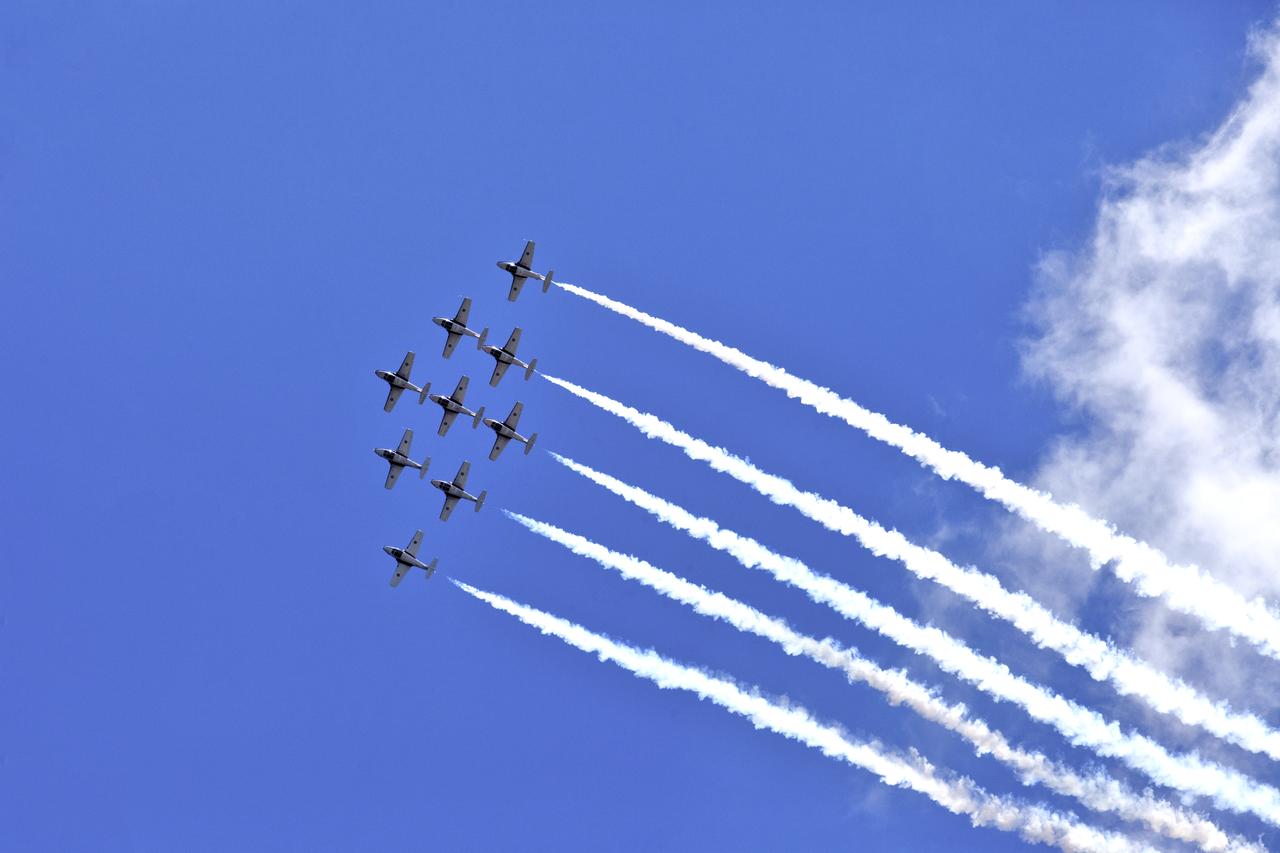
Canadian Forces Snowbirds fly in formation over NASA's Kennedy Space Center in Florida during a practice flight on May 9, 2018, between their scheduled U.S. air shows.
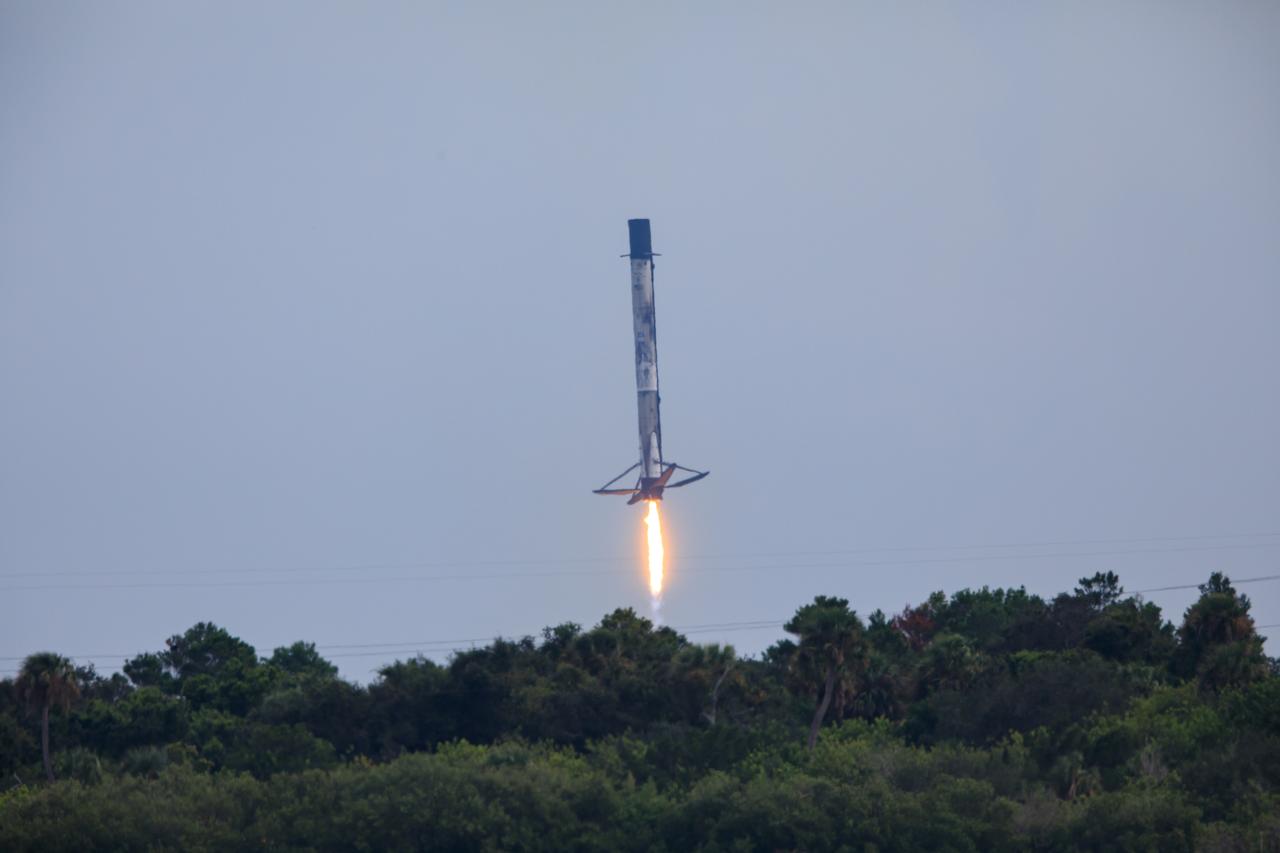
A first-stage booster from SpaceX’s Falcon 9 rocket comes in for a successful landing at Landing Zone 1 at Cape Canaveral Space Force Station in Florida on Saturday, Sept. 28, 2024, just minutes after NASA’s SpaceX Crew-9 launch from Space Launch Complex-40. NASA astronaut Nick Hague and Roscosmos cosmonaut Aleksandr Gorbunov launched to the International Space Station aboard SpaceX’s Dragon spacecraft and Falcon 9 rocket at 1:17 p.m. EDT on the ninth crew rotation mission with SpaceX to the space station as part of the agency’s Commercial Crew Program.
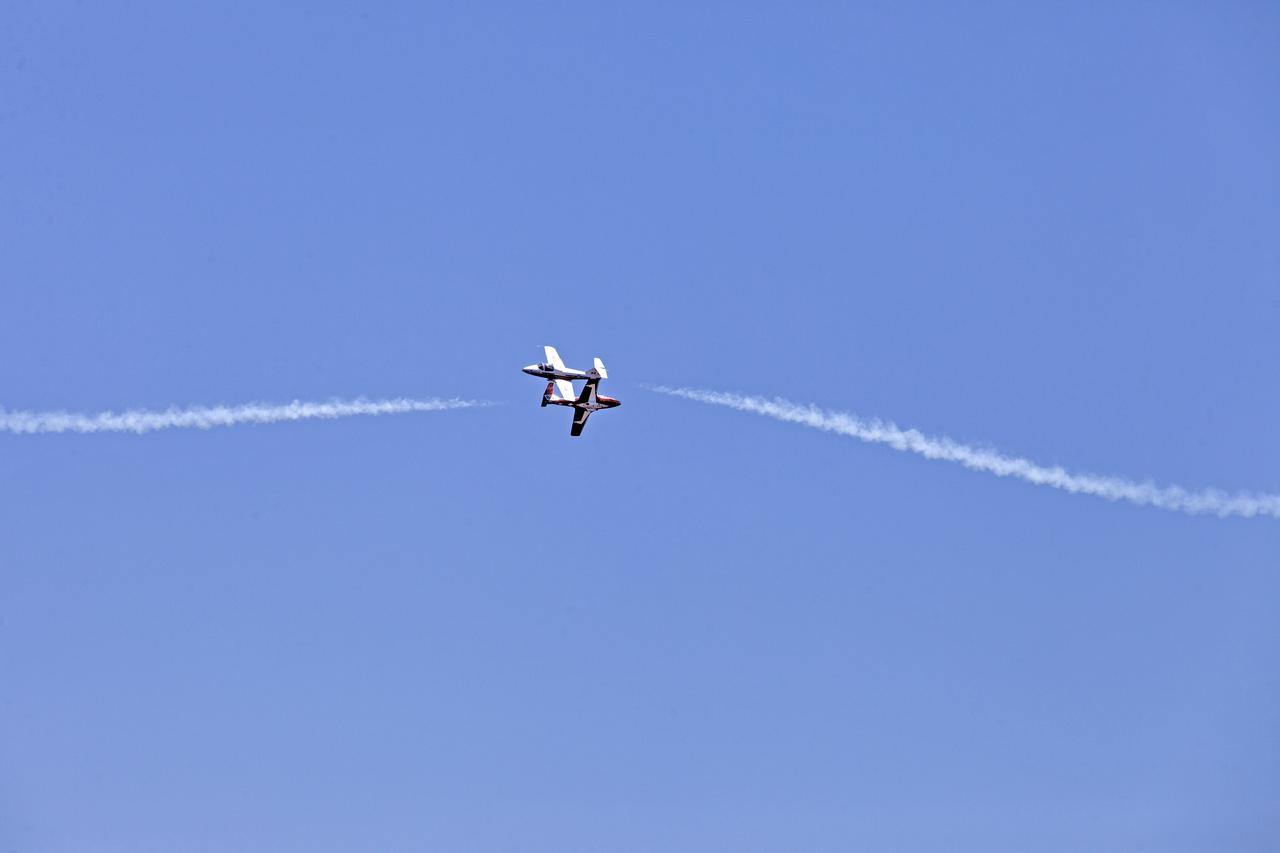
Two Canadian Forces Snowbirds perform a close flyby maneuver over NASA's Kennedy Space Center in Florida during a practice flight on May 9, 2018, between their scheduled U.S. air shows.
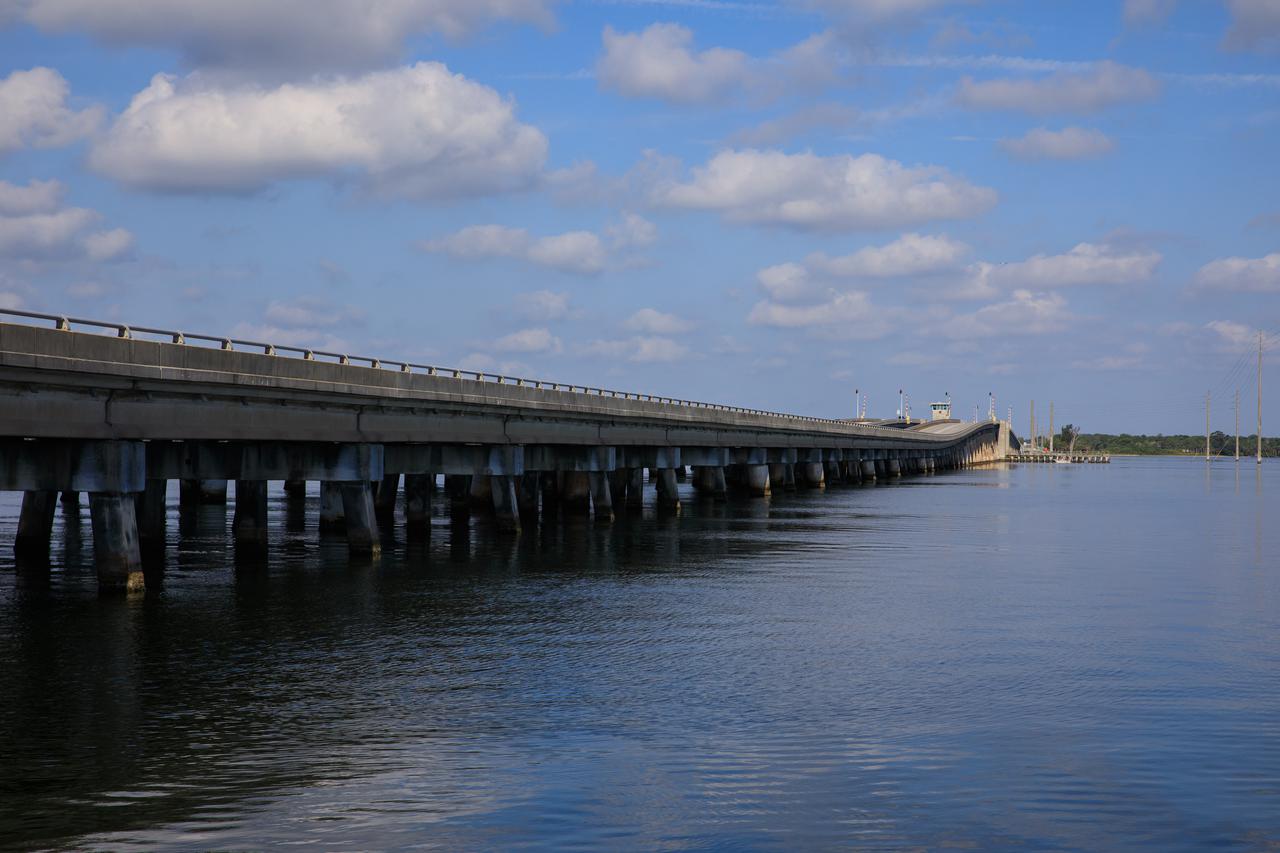
NASA’s bridge engineering team at Kennedy Space Center is managing multiple critical projects on the Indian River Bridge. This includes running new utility lines and safeguarding the existing wires and piping prior to the beginning of construction of the new Brevard County bridge. The much-traveled structure is a key access and evacuation route for the Florida spaceport and Cape Canaveral Space Force Station. Also known as the NASA Causeway Bridge, the Indian River Bridge was built in 1964.
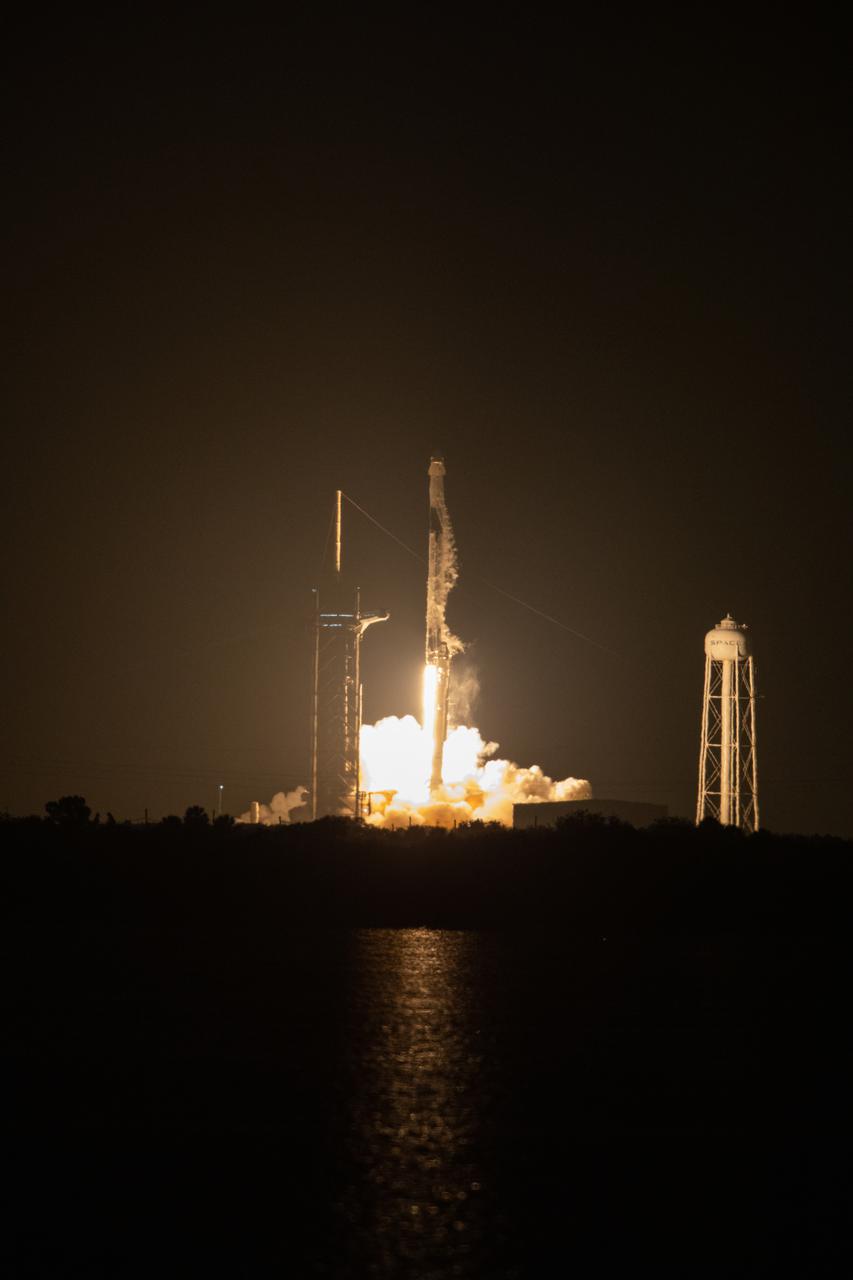
The SpaceX Falcon 9 rocket, with the company’s Crew Dragon atop, lifts off from Launch Pad 39A at Kennedy Space Center in Florida for NASA’s SpaceX Crew-4 mission on April 27, 2022, at 3:52 a.m. EDT. Aboard the Dragon are NASA astronauts Kjell Lindgren, Bob Hines, and Jessica Watkins, and ESA (European Space Agency) astronaut Samantha Cristoforetti. The spacecraft will carry the Crew-4 astronauts to the International Space Station as part of NASA’s Commercial Crew Program. The Dragon spacecraft, named Freedom by the mission’s crew, is scheduled to dock to the space station today at 8:15 p.m. EDT.
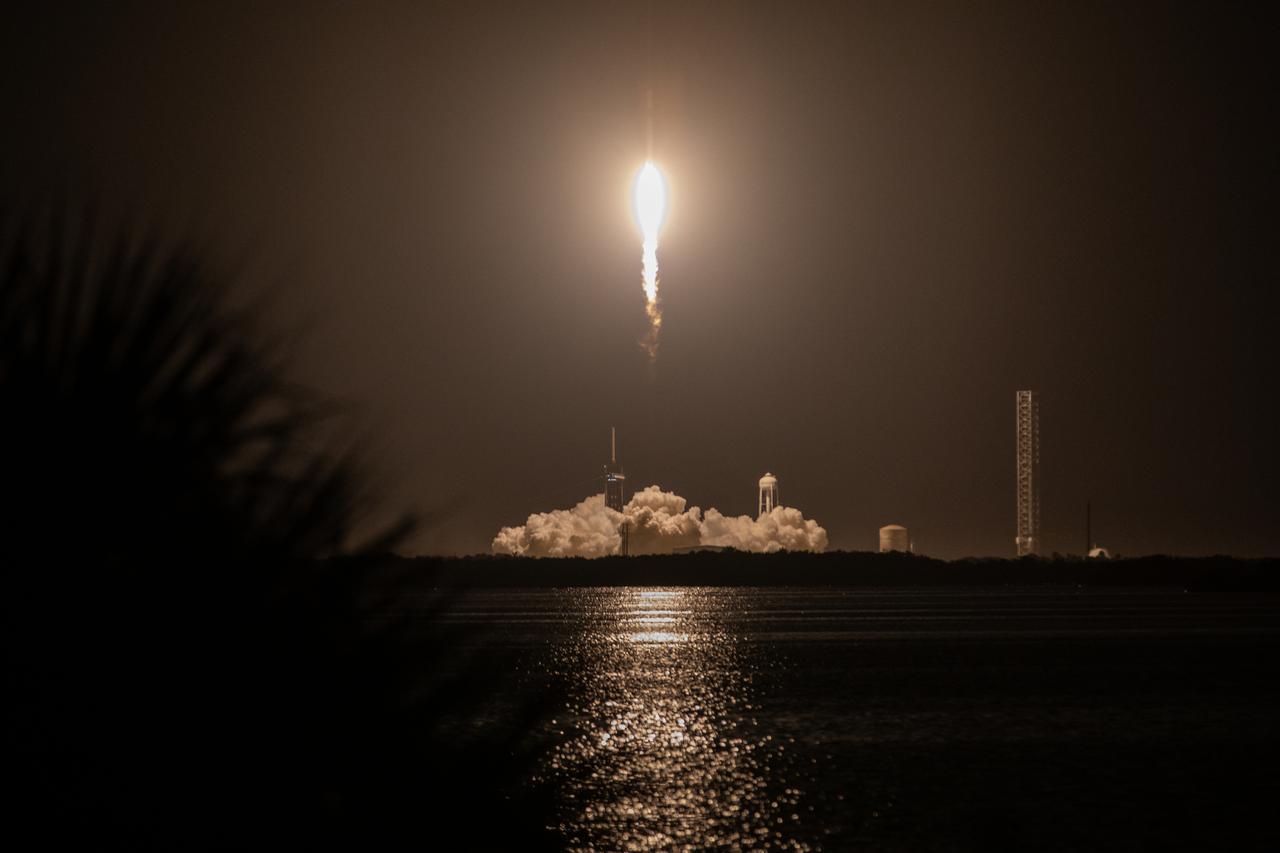
A SpaceX Falcon 9 rocket lifts off at 3:27 a.m. EDT on Saturday, Aug. 26, from Kennedy Space Center’s Launch Complex 39A in Florida, carrying NASA’s SpaceX Crew-7 crew members to the International Space Station. Aboard SpaceX’s Dragon spacecraft are NASA astronaut Jasmin Moghbeli, ESA (European Space Agency) astronaut Andreas Mogensen, JAXA (Japan Aerospace Exploration Agency) astronaut Satoshi Furukawa, and Roscosmos cosmonaut Konstantin Borisov. They will dock to the orbiting laboratory at about 8:40 a.m. EDT Sunday, Aug. 27.
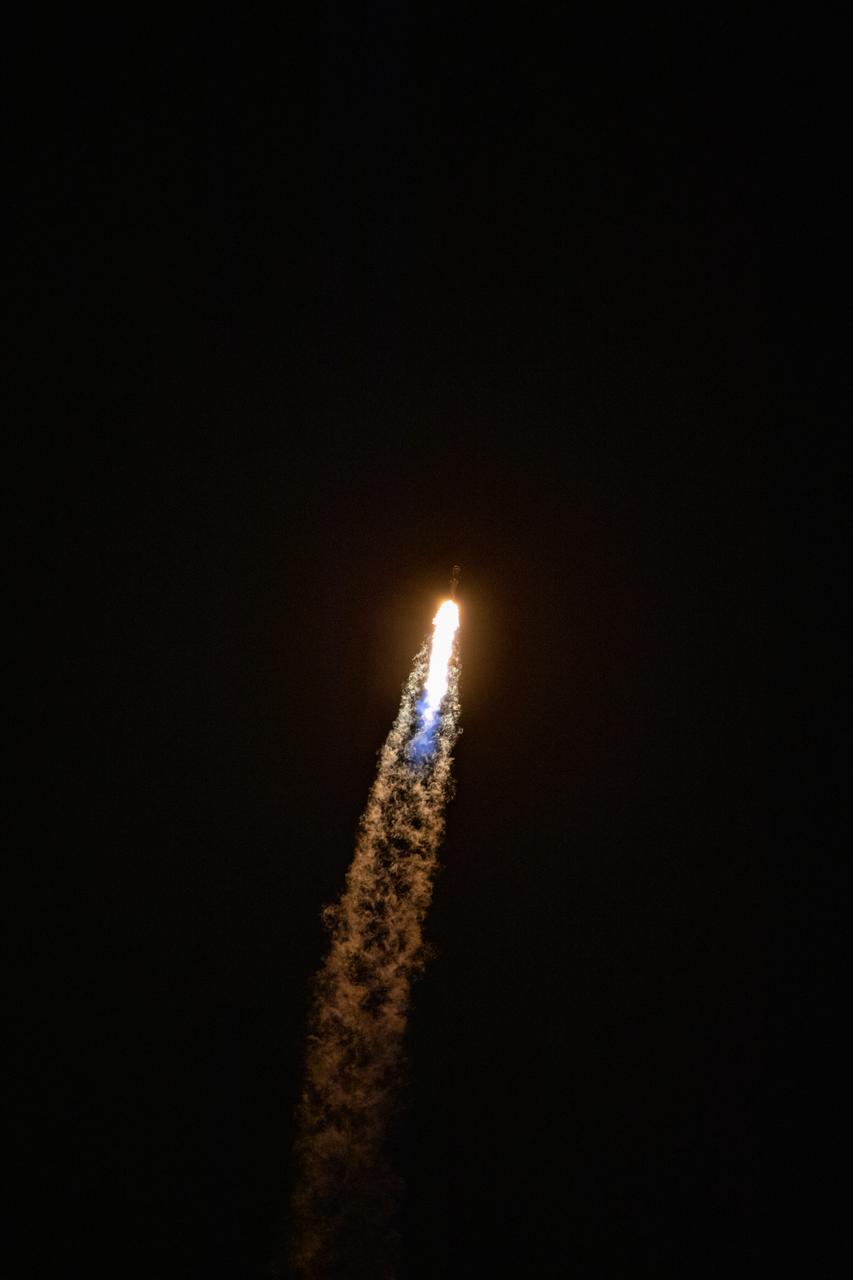
A SpaceX Falcon 9 rocket soars upward after liftoff from the pad at Launch Complex 39A at 12:34 a.m. EST on March 2, 2023 carrying the Dragon spacecraft Endeavour for NASA’s Crew-6 mission to the International Space Station. Aboard Dragon are NASA astronauts Stephen Bowen, spacecraft commander, and Warren Hoburg, pilot, along with mission specialists Sultan Alneyadi, UAE (United Arab Emirates) astronaut, and Andrey Fedyaev, Roscosmos cosmonaut. Crew-6 is the sixth crew rotation mission with SpaceX to the station, and the seventh flight of Dragon with people as part of the agency’s Commercial Crew Program.

Creating a golden streak in the night sky, a SpaceX Falcon 9 rocket carrying Firefly Aerospace’s Blue Ghost Mission One lander soars upward after liftoff from Launch Complex 39A at NASA’s Kennedy Space Center in Florida on Wednesday, Jan. 15, 2025 as part of NASA’s CLPS (Commercial Lunar Payload Services) initiative. The Blue Ghost lander will carry 10 NASA science and technology instruments to the lunar surface to further understand the Moon and help prepare for future human missions.
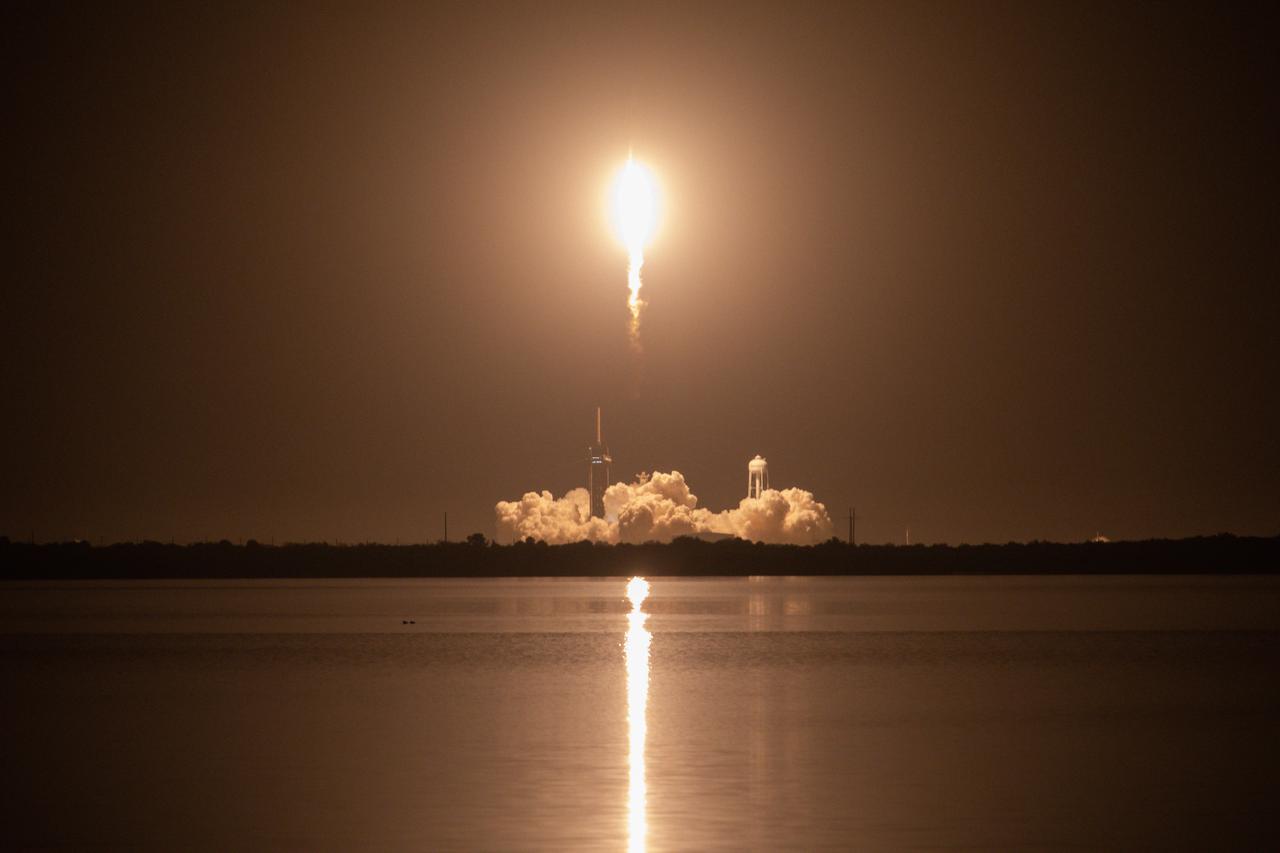
The SpaceX Falcon 9 rocket, with the Crew Dragon atop, soars upward after liftoff from Launch Pad 39A at NASA’s Kennedy Space Center in Florida on Nov. 10, 2021. Aboard the Crew Dragon are the SpaceX Crew-3 astronauts Raja Chari, commander; Tom Marshburn, pilot; and Kayla Barron, mission specialist; along with Matthias Maurer, ESA (European Space Agency) astronaut and mission specialist. Launch time was at 9:03 p.m. EST. The Crew Dragon Endurance will carry the four-person crew to the International Space Station for the agency’s Commercial Crew Program.
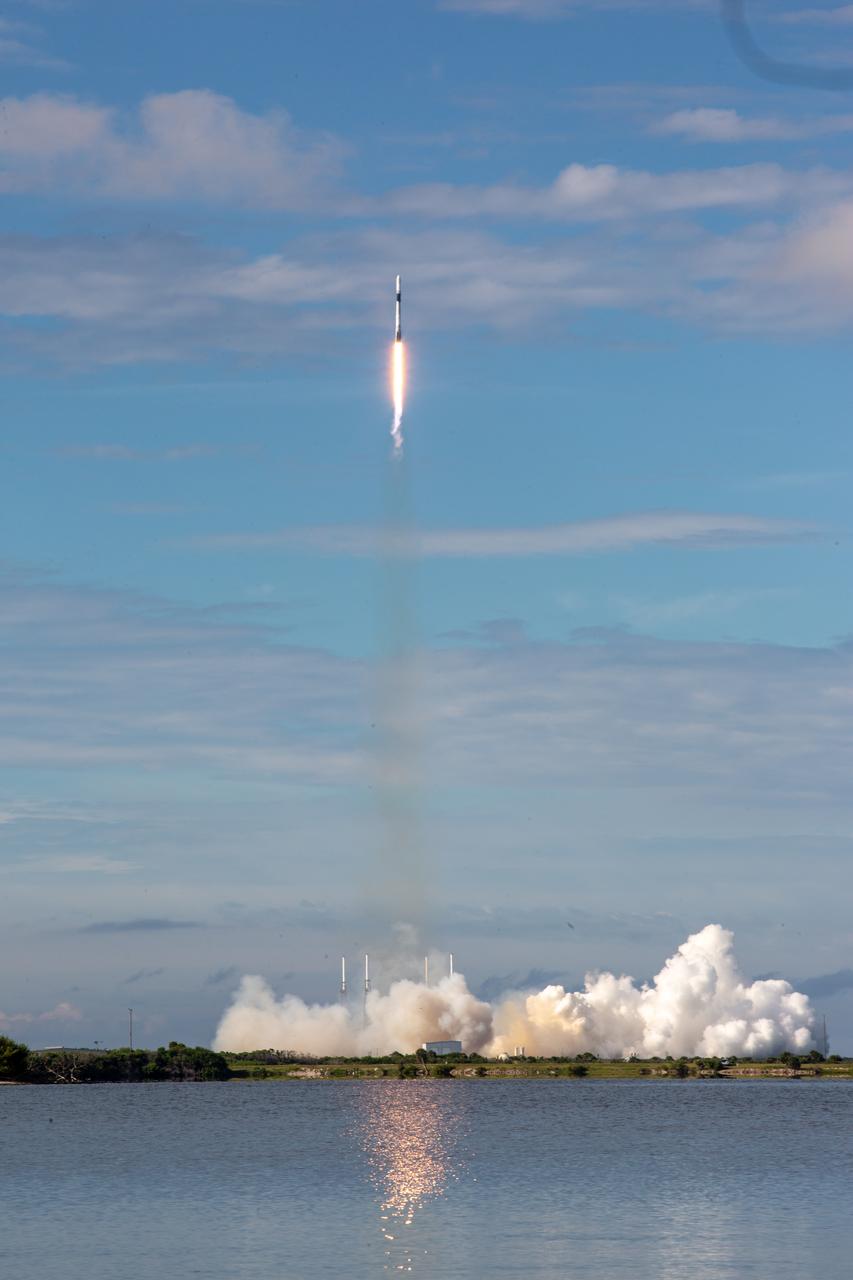
A SpaceX Falcon 9 rocket lifts off from Space Launch Complex 40 at Cape Canaveral Air Force Station in Florida at 6:01 p.m. EDT on July 25, 2019, carrying the Dragon spacecraft on the company's 18th Commercial Resupply Services (CRS-18) mission to the International Space Station. The uncrewed Dragon spacecraft will deliver about 5,000 pounds of science and research, crew supplies and vehicle hardware to the orbiting laboratory.
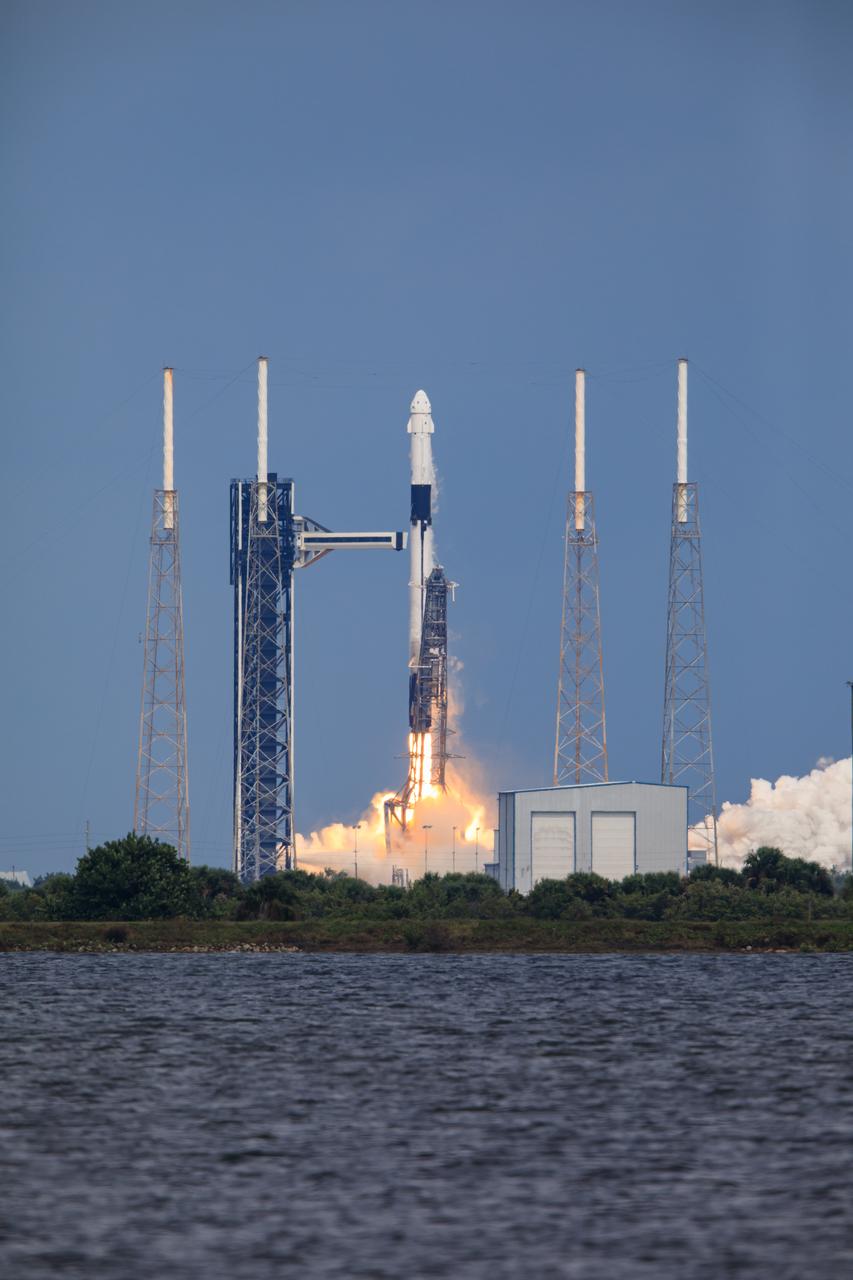
A SpaceX Falcon 9 rocket carrying the company's Dragon spacecraft lifts off on NASA’s SpaceX Crew-9 mission to the International Space Station with NASA astronaut Nick Hague and Roscosmos cosmonaut Aleksandr Gorbunov aboard Saturday, Sept. 28, 2024, from Space Launch Complex-40 at Cape Canaveral Space Force Station in Florida. Crew-9 is the ninth crew rotation mission of the SpaceX Dragon spacecraft and Falcon 9 rocket to the space station as part of the agency’s Commercial Crew Program. Hague and Gorbunov launched at 1:17 p.m. EDT to begin a mission aboard the orbital outpost lasting about five months.
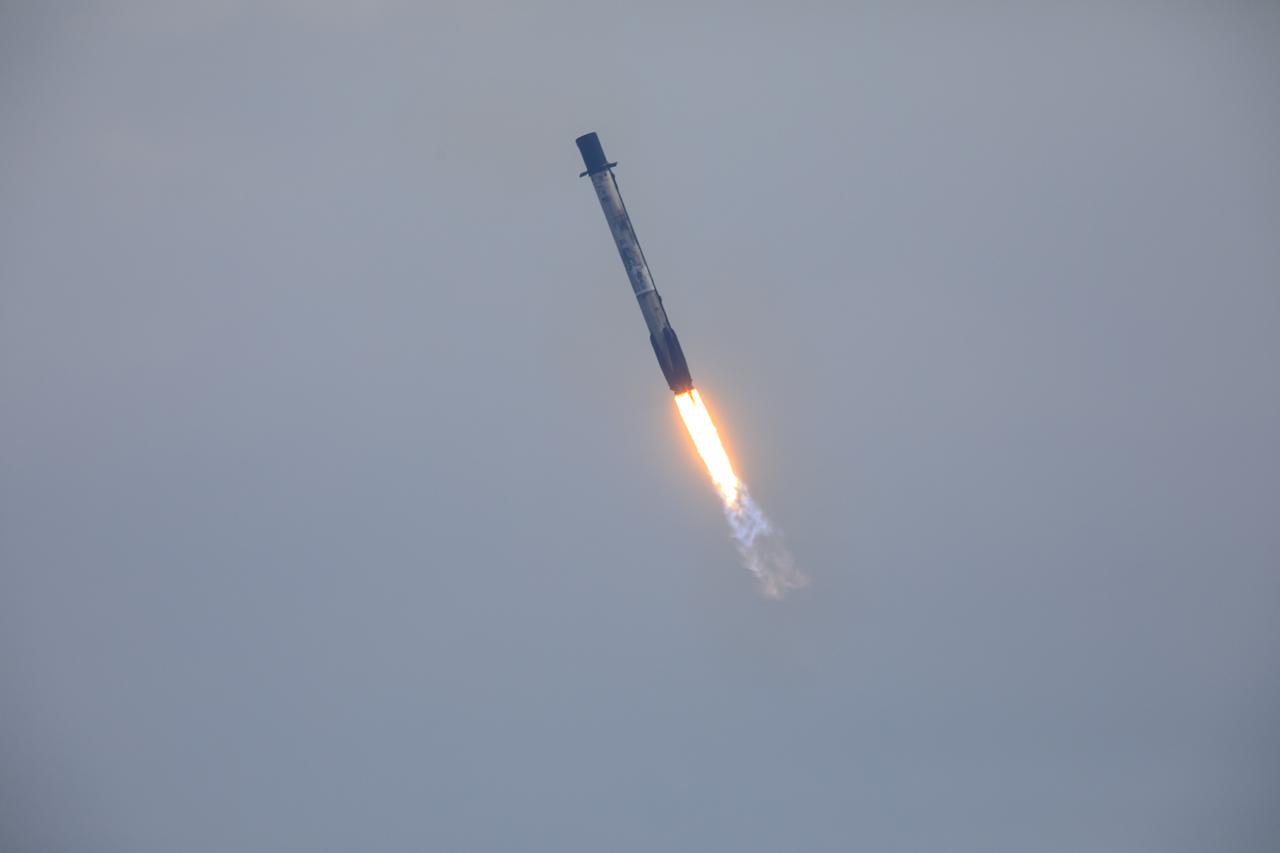
A first-stage booster from SpaceX’s Falcon 9 rocket comes in for a successful landing at Landing Zone 1 at Cape Canaveral Space Force Station in Florida on Saturday, Sept. 28, 2024, just minutes after NASA’s SpaceX Crew-9 launch from Space Launch Complex-40. NASA astronaut Nick Hague and Roscosmos cosmonaut Aleksandr Gorbunov launched to the International Space Station aboard SpaceX’s Dragon spacecraft and Falcon 9 rocket at 1:17 p.m. EDT on the ninth crew rotation mission with SpaceX to the space station as part of the agency’s Commercial Crew Program.
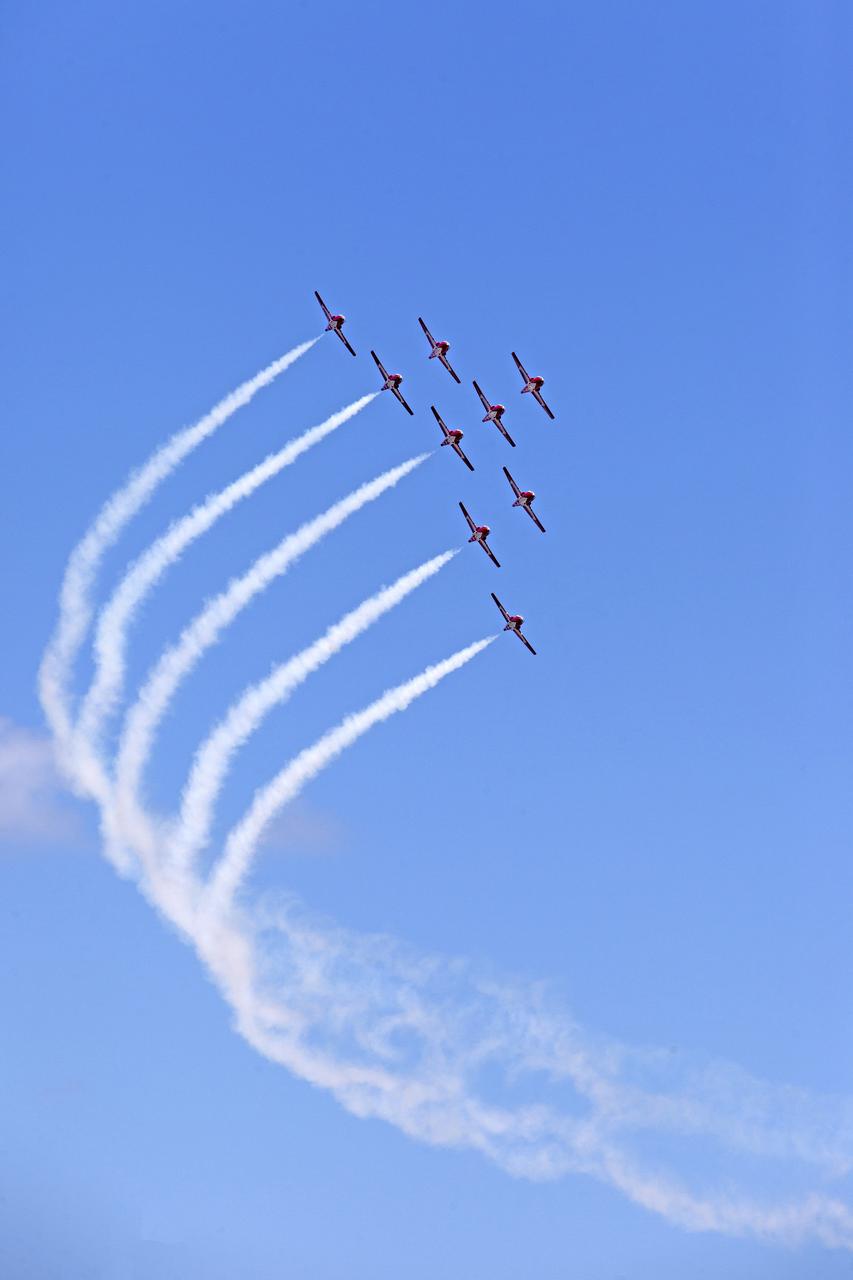
Canadian Forces Snowbirds fly in formation over NASA's Kennedy Space Center in Florida during a practice flight on May 9, 2018, between their scheduled U.S. air shows.
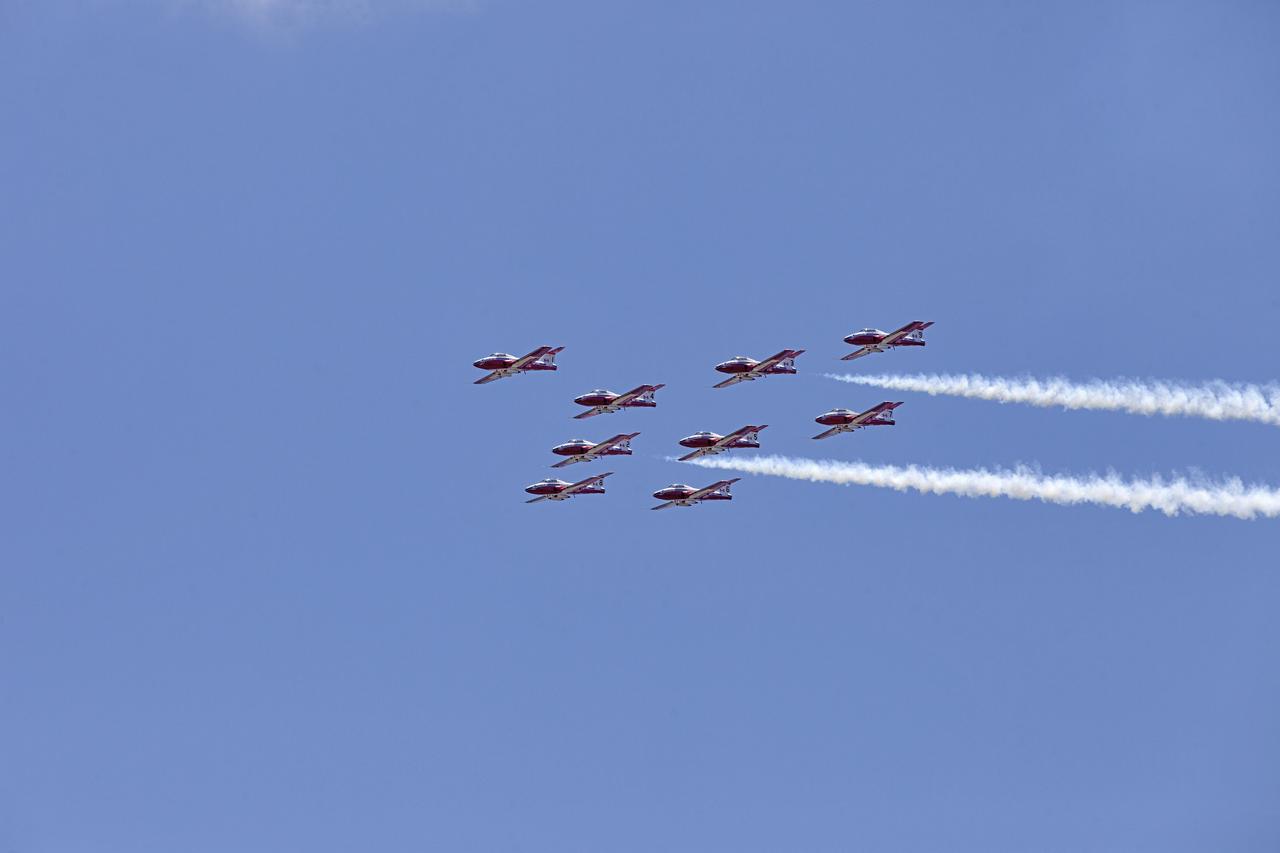
Canadian Forces Snowbirds fly in formation over NASA's Kennedy Space Center in Florida during a practice flight on May 9, 2018, between their scheduled U.S. air shows.
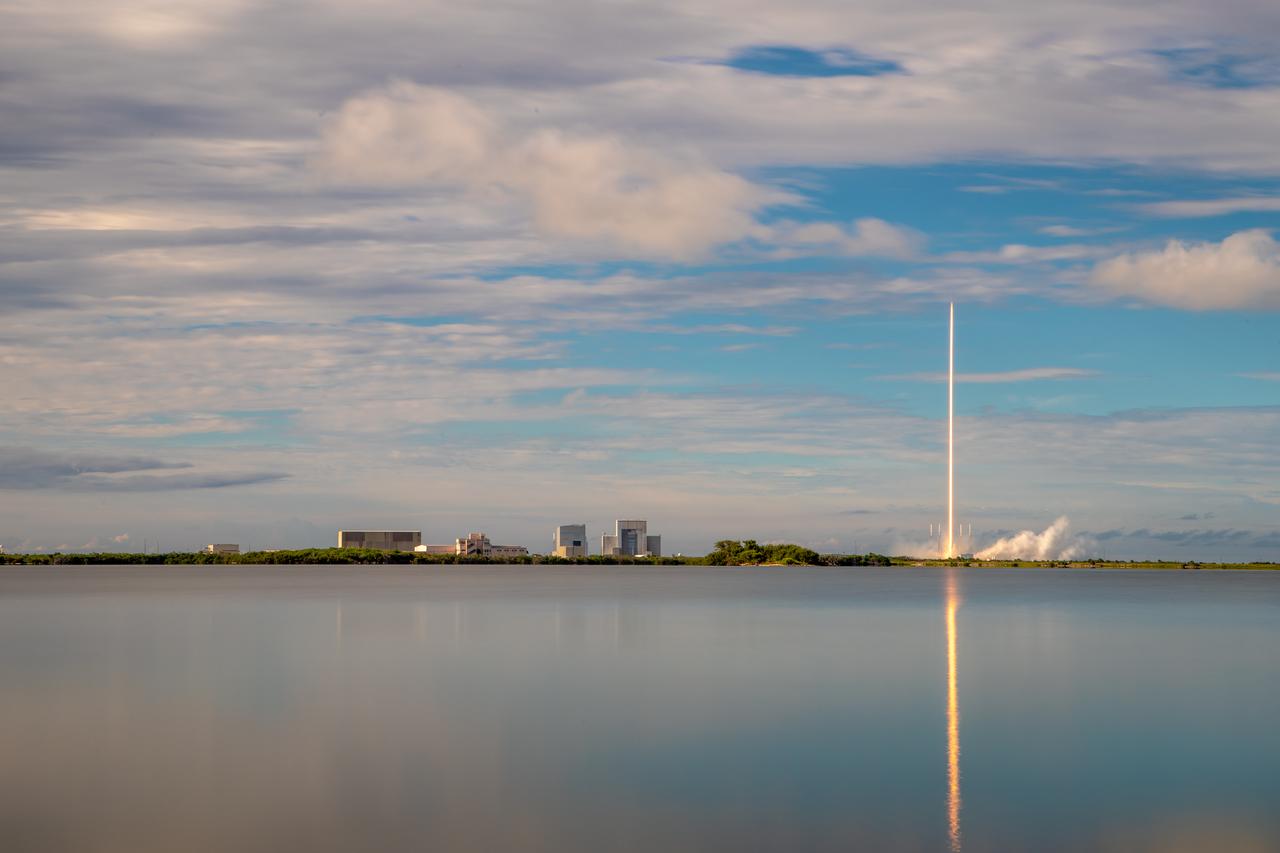
A SpaceX Falcon 9 rocket soars upward after its liftoff from Space Launch Complex 40 at Cape Canaveral Air Force Station in Florida at 6:01 p.m. EDT on July 25, 2019, carrying the Dragon spacecraft on the company's 18th Commercial Resupply Services (CRS-18) mission to the International Space Station. The uncrewed Dragon spacecraft will deliver about 5,000 pounds of science and research, crew supplies and vehicle hardware to the orbiting laboratory.
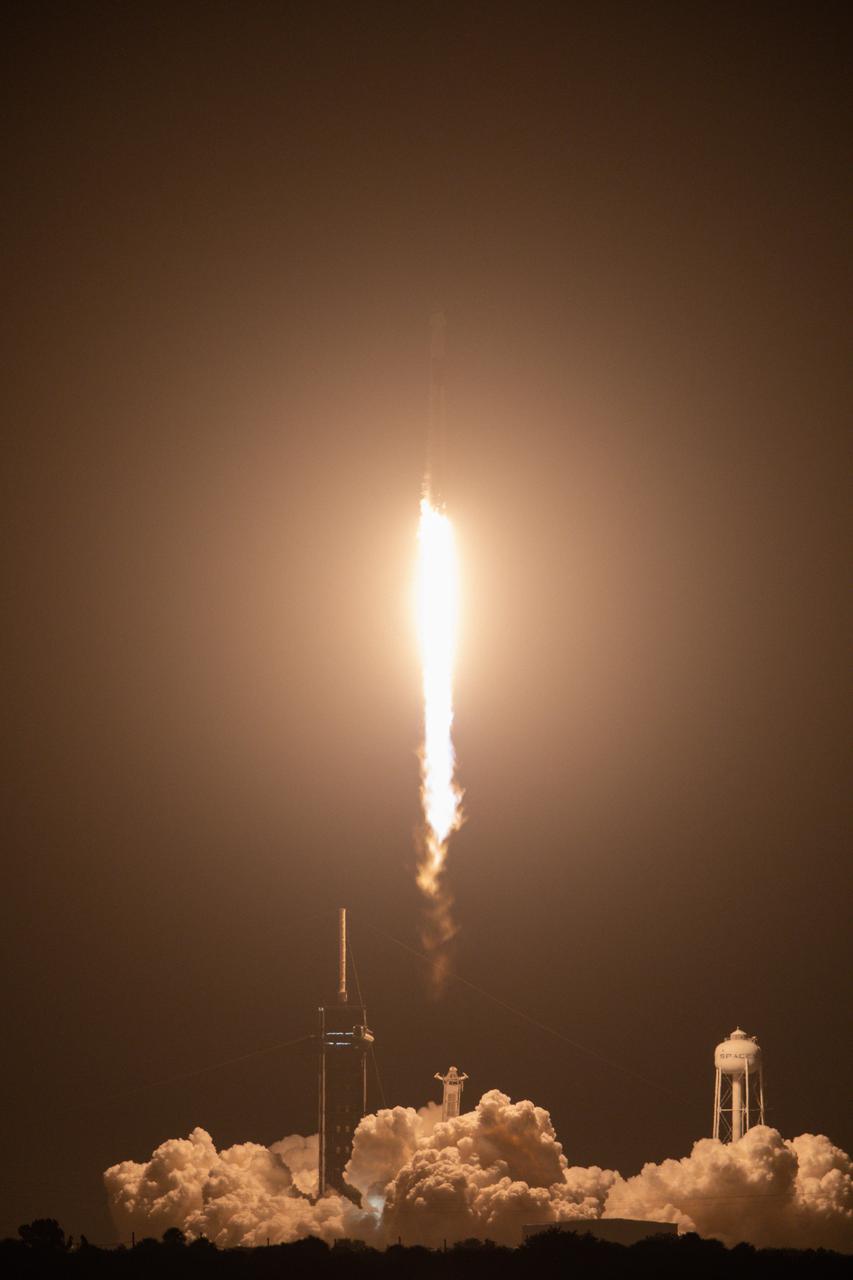
The SpaceX Falcon 9 rocket, with the Crew Dragon atop, soars upward after liftoff from Launch Pad 39A at NASA’s Kennedy Space Center in Florida on Nov. 10, 2021. Aboard the Crew Dragon are the SpaceX Crew-3 astronauts Raja Chari, commander; Tom Marshburn, pilot; and Kayla Barron, mission specialist; along with Matthias Maurer, ESA (European Space Agency) astronaut and mission specialist. Launch time was at 9:03 p.m. EST. The Crew Dragon Endurance will carry the four-person crew to the International Space Station for the agency’s Commercial Crew Program.
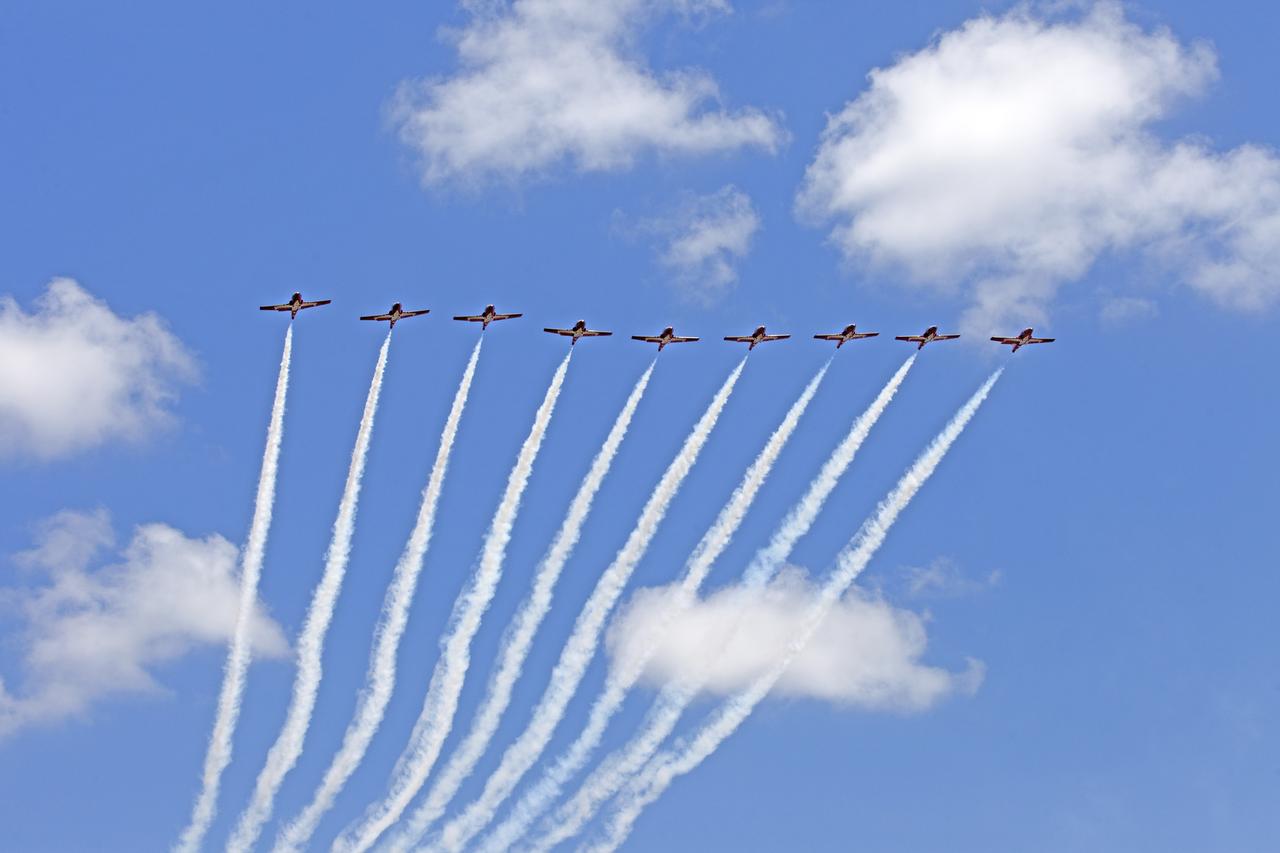
Canadian Forces Snowbirds fly in formation over NASA's Kennedy Space Center in Florida during a practice flight on May 9, 2018, between their scheduled U.S. air shows.
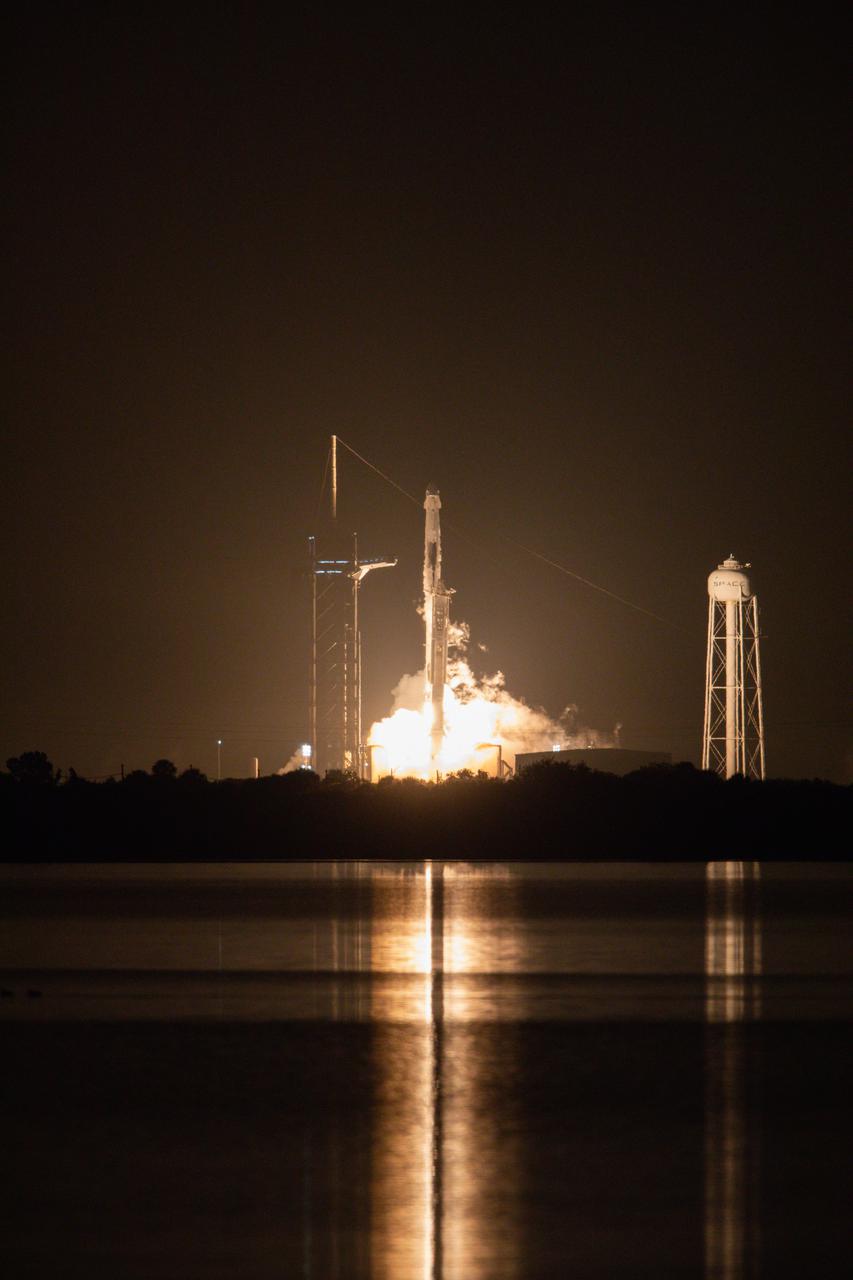
The SpaceX Falcon 9 rocket with the Crew Dragon lifts off from Launch Pad 39A at NASA’s Kennedy Space Center in Florida on Nov. 10, 2021. Aboard the Crew Dragon are the SpaceX Crew-3 astronauts Raja Chari, commander; Tom Marshburn, pilot; and Kayla Barron, mission specialist; along with Matthias Maurer, ESA (European Space Agency) astronaut and mission specialist. Launch time was at 9:03 p.m. EST. The Crew Dragon Endurance will carry the four-person crew to the International Space Station for the agency’s Commercial Crew Program.
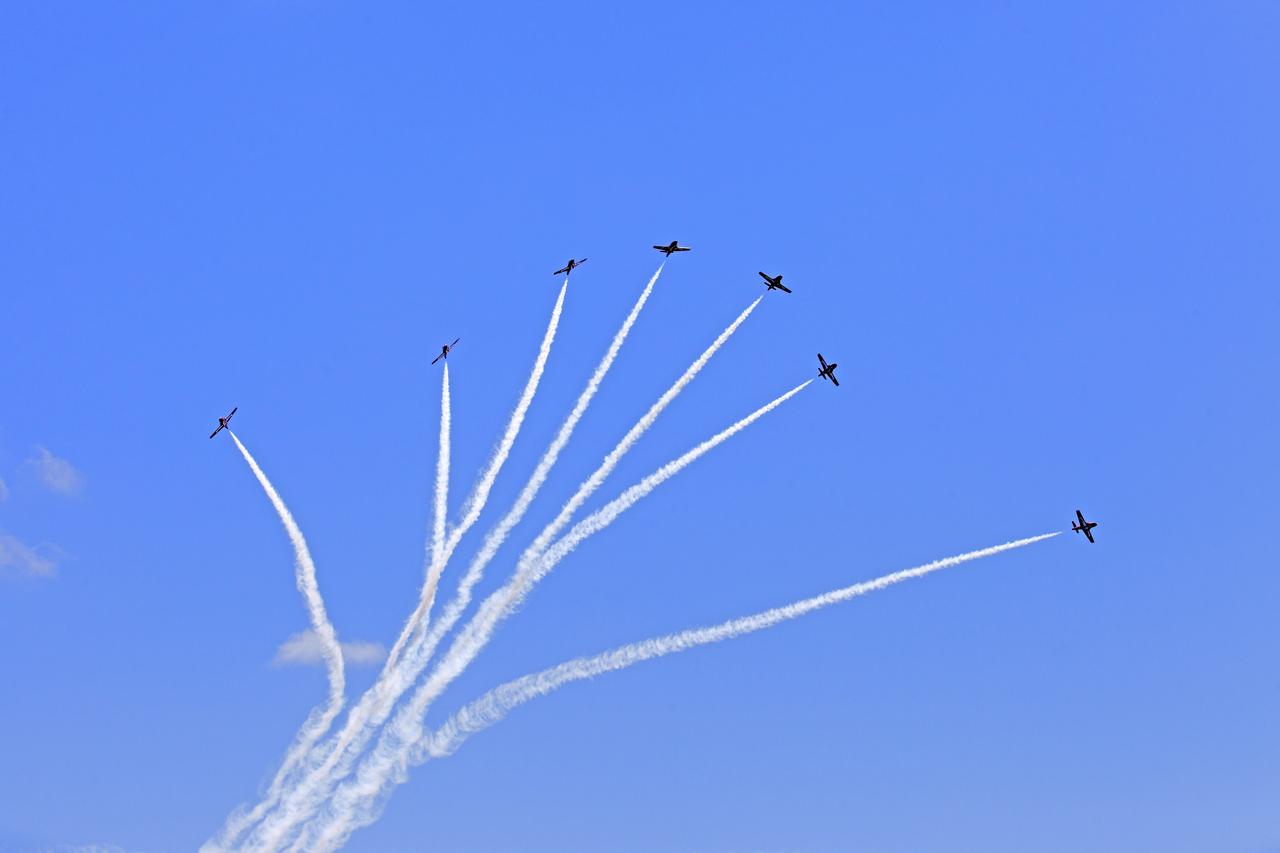
Canadian Forces Snowbirds perform an aerial acrobatic maneuver over NASA's Kennedy Space Center in Florida during a practice flight on May 9, 2018, between their scheduled U.S. air shows.
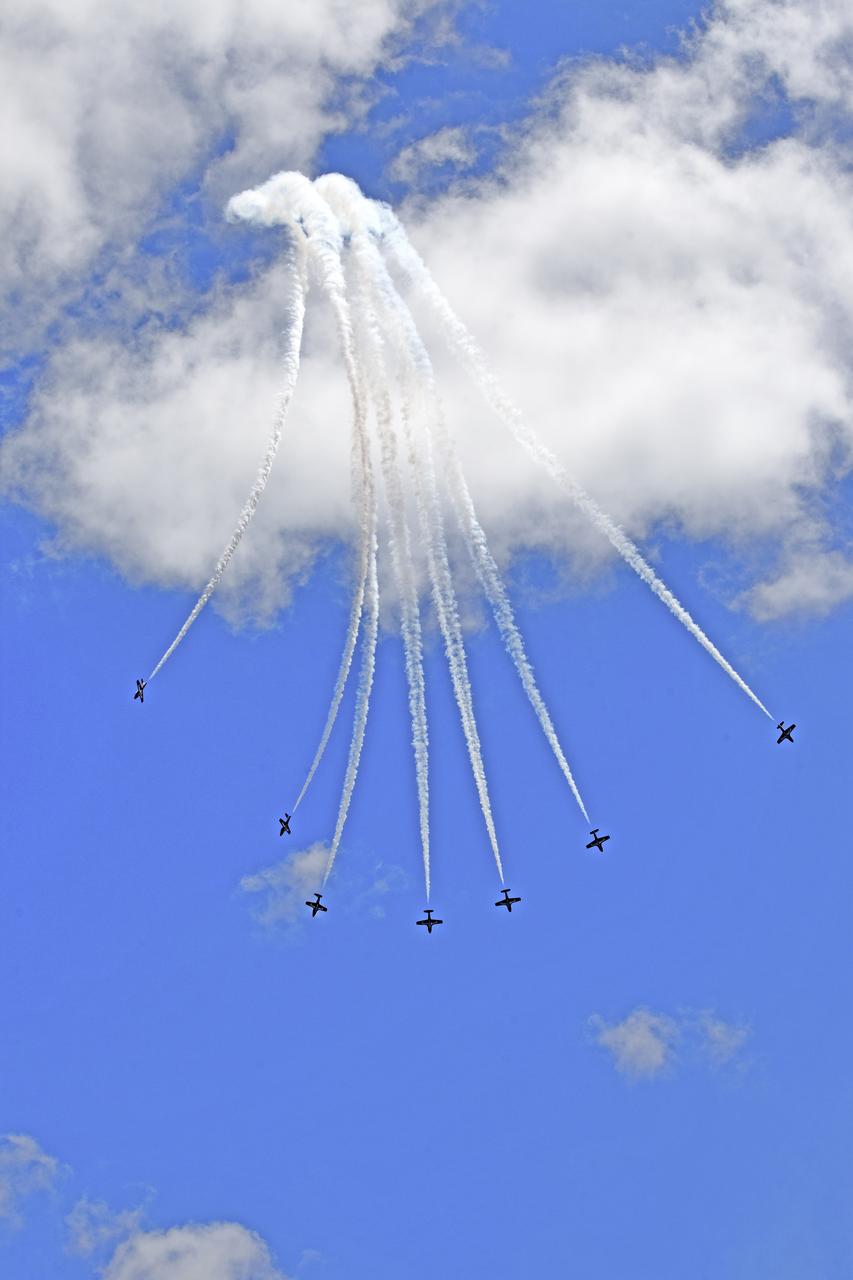
Canadian Forces Snowbirds perform an aerial acrobatic maneuver over NASA's Kennedy Space Center in Florida during a practice flight on May 9, 2018, between their scheduled U.S. air shows.
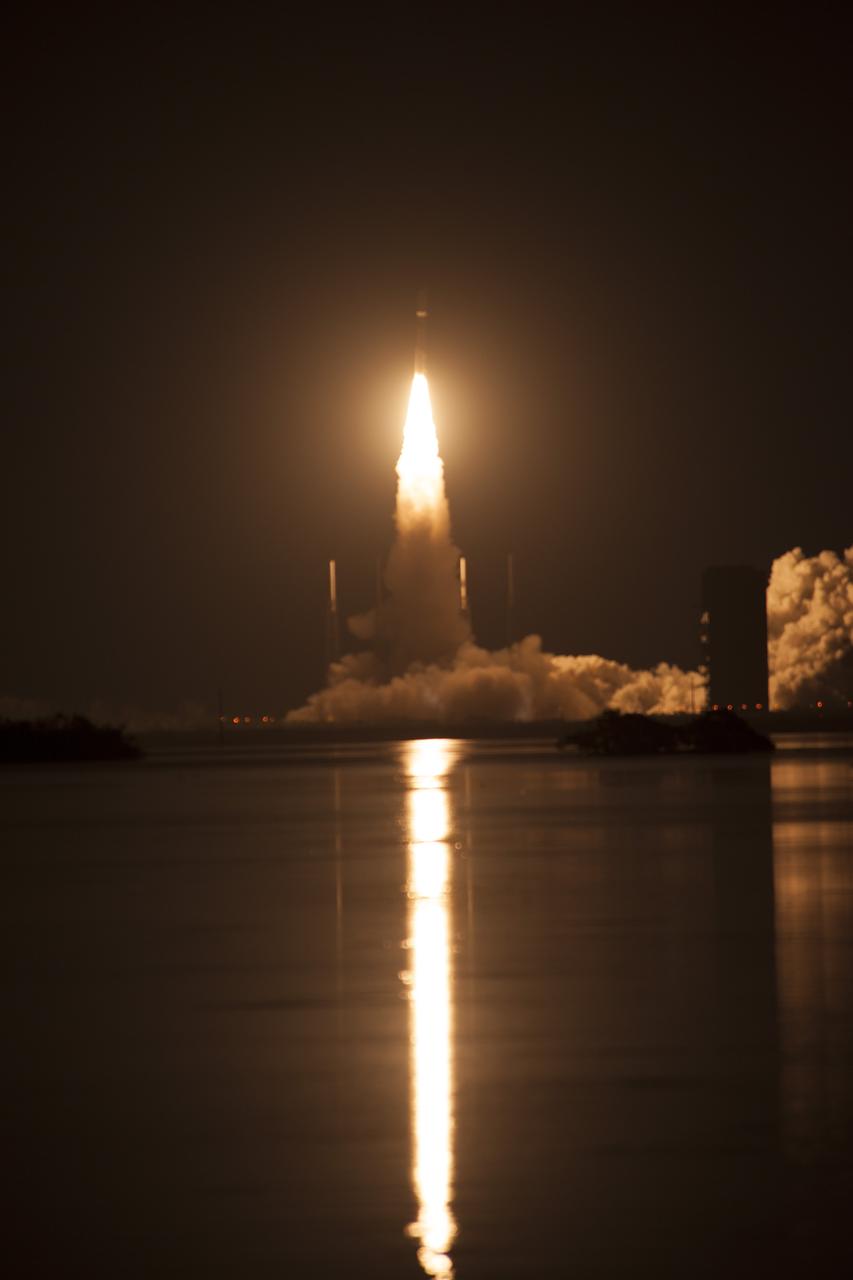
At Cape Canaveral Air Force Station's Space Launch Complex 41, an Atlas V rocket with NOAA's Geostationary Operational Environmental Satellite, or GOES-R, lifts off at 6:42 p.m. EST. GOES-R is the first satellite in a series of next-generation GOES satellites for NOAA, the National Oceanographic and Atmospheric Administration. It will launch to a geostationary orbit over the western hemisphere to provide images of storms and help meteorologists predict severe weather conditionals and develop long-range forecasts.
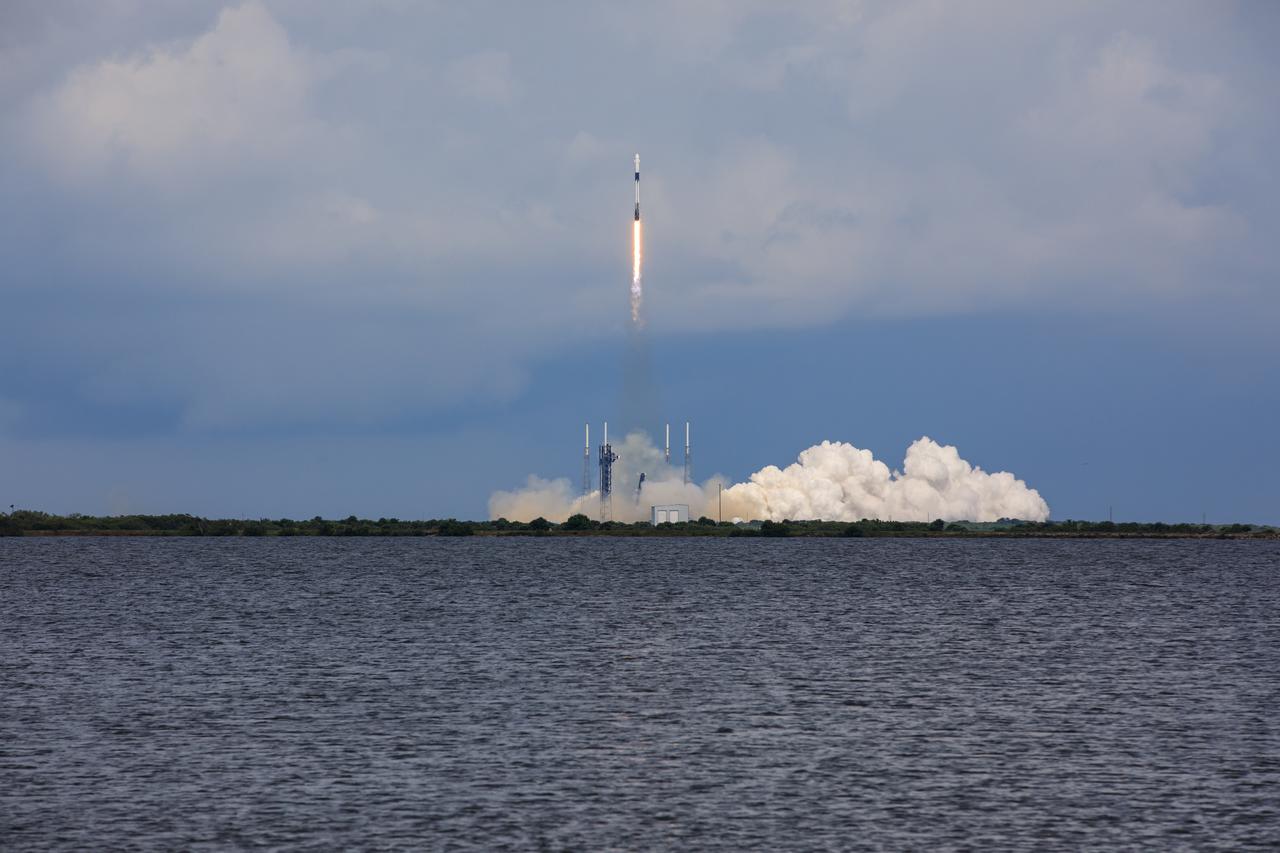
A SpaceX Falcon 9 rocket carrying the company's Dragon spacecraft lifts off on NASA’s SpaceX Crew-9 mission to the International Space Station with NASA astronaut Nick Hague and Roscosmos cosmonaut Aleksandr Gorbunov aboard Saturday, Sept. 28, 2024, from Space Launch Complex-40 at Cape Canaveral Space Force Station in Florida. Crew-9 is the ninth crew rotation mission of the SpaceX Dragon spacecraft and Falcon 9 rocket to the space station as part of the agency’s Commercial Crew Program. Hague and Gorbunov launched at 1:17 p.m. EDT to begin a mission aboard the orbital outpost lasting about five months.
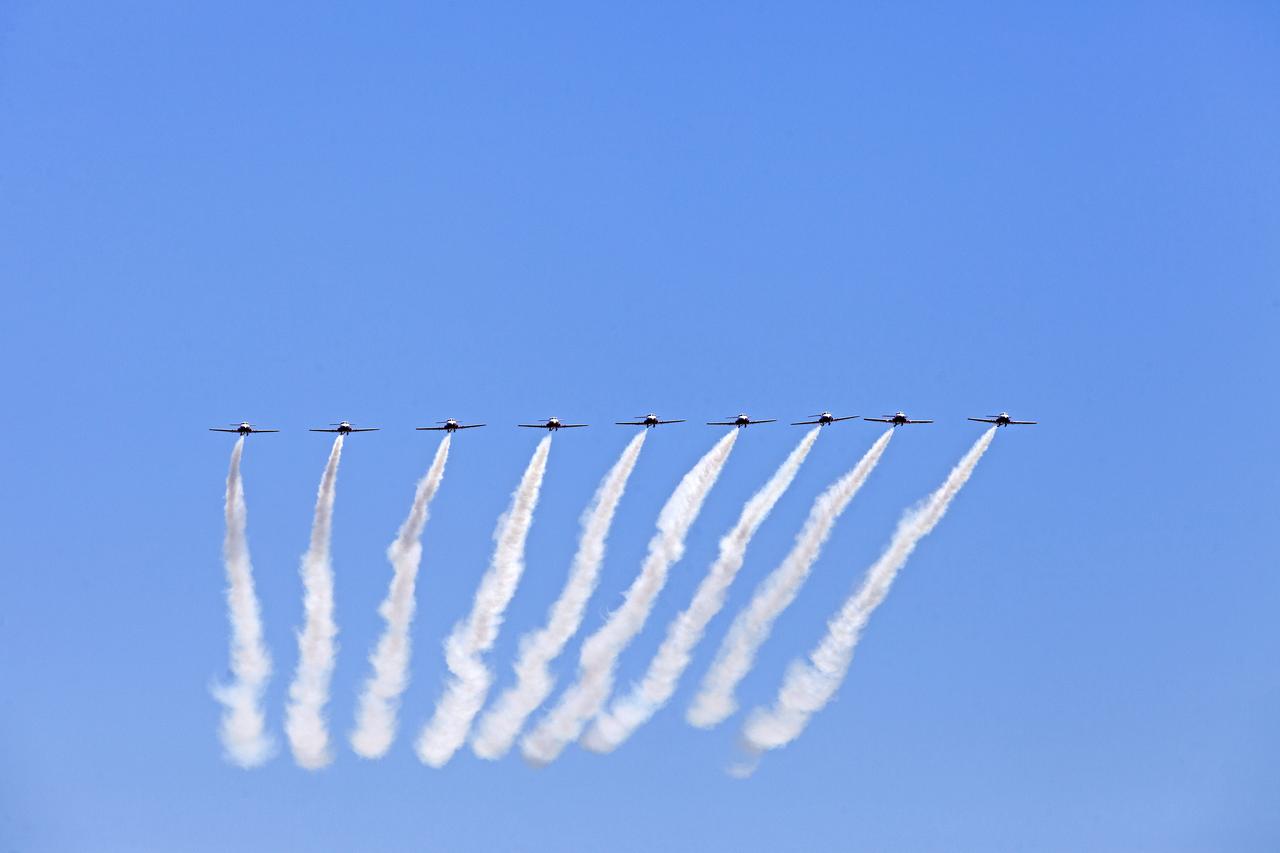
Canadian Forces Snowbirds fly in formation over NASA's Kennedy Space Center in Florida during a practice flight on May 9, 2018, between their scheduled U.S. air shows.
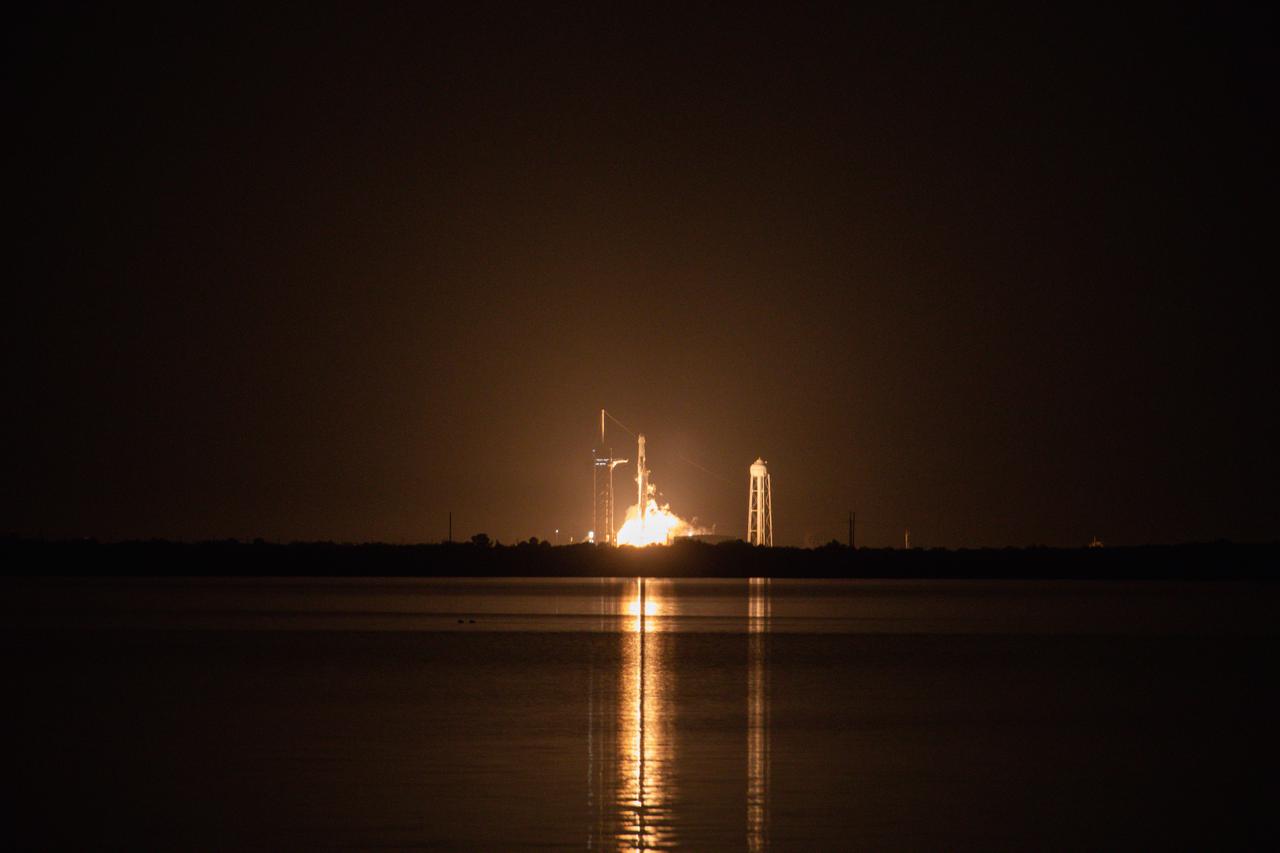
The SpaceX Falcon 9 rocket with the Crew Dragon lifts off from Launch Pad 39A at NASA’s Kennedy Space Center in Florida on Nov. 10, 2021. Aboard the Crew Dragon are the SpaceX Crew-3 astronauts Raja Chari, commander; Tom Marshburn, pilot; and Kayla Barron, mission specialist; along with Matthias Maurer, ESA (European Space Agency) astronaut and mission specialist. Launch time was at 9:03 p.m. EST. The Crew Dragon Endurance will carry the four-person crew to the International Space Station for the agency’s Commercial Crew Program.
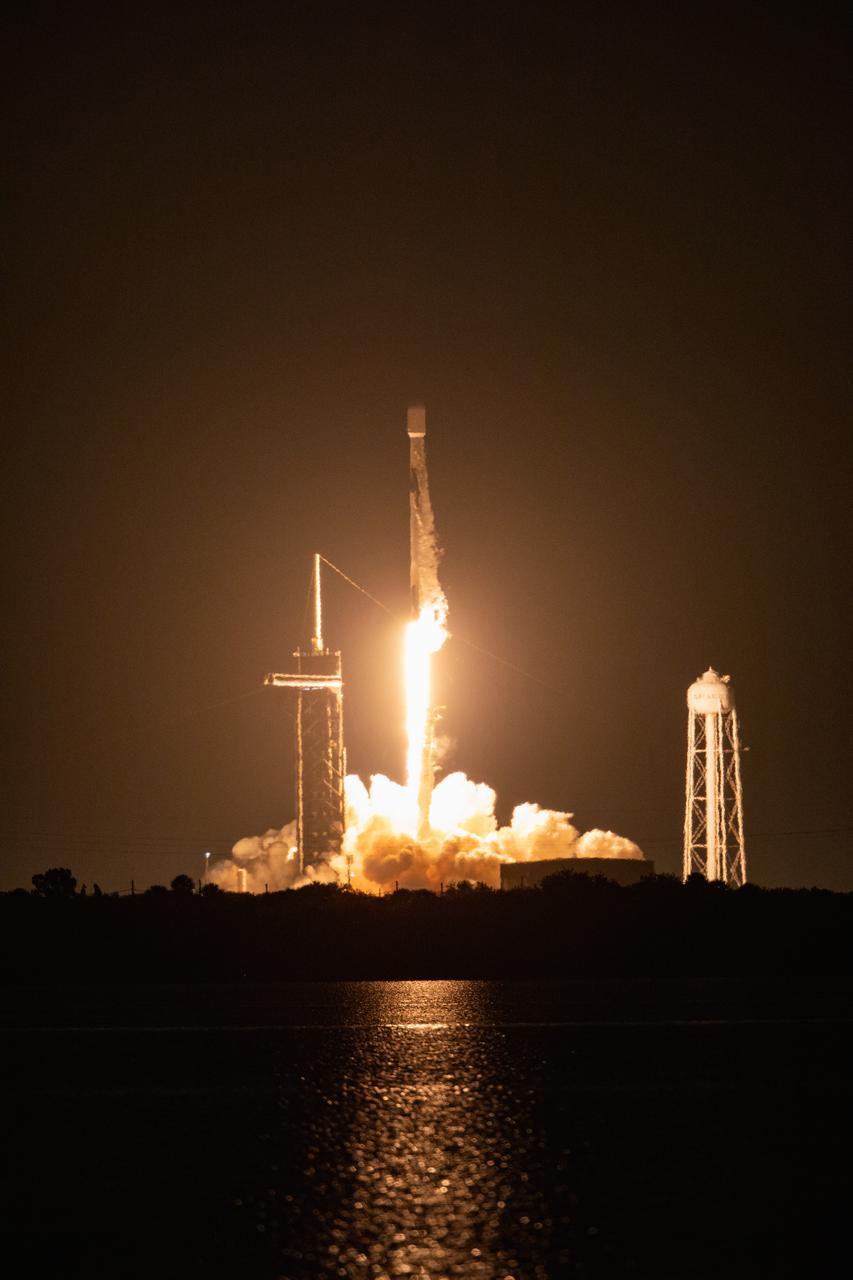
A SpaceX Falcon 9 rocket roars off the launch pad at Launch Complex 39A at NASA’s Kennedy Space Center in Florida at 1 a.m. EST on Thursday, Dec. 9, 2021, carrying NASA’s Imaging X-ray Polarimetry Explorer (IXPE) spacecraft. NASA’s Launch Services Program managed this launch. NASA’s Marshall Space Flight Center in Huntsville, Alabama, manages the IXPE mission. Ball Aerospace, headquartered in Broomfield, Colorado, manages spacecraft operations with support from the University of Colorado at Boulder. NASA’s Goddard Space Flight Center in Greenbelt, Maryland, manages the Explorers Program for the agency’s Science Mission Directorate in Washington. The IXPE spacecraft includes three space telescopes with sensitive detectors capable of measuring the polarization of cosmic X-rays, allowing scientists to answer fundamental questions about extremely complex environments in space where gravitational, electric, and magnetic fields are at their limits. The project is a collaboration between NASA and the Italian Space Agency.
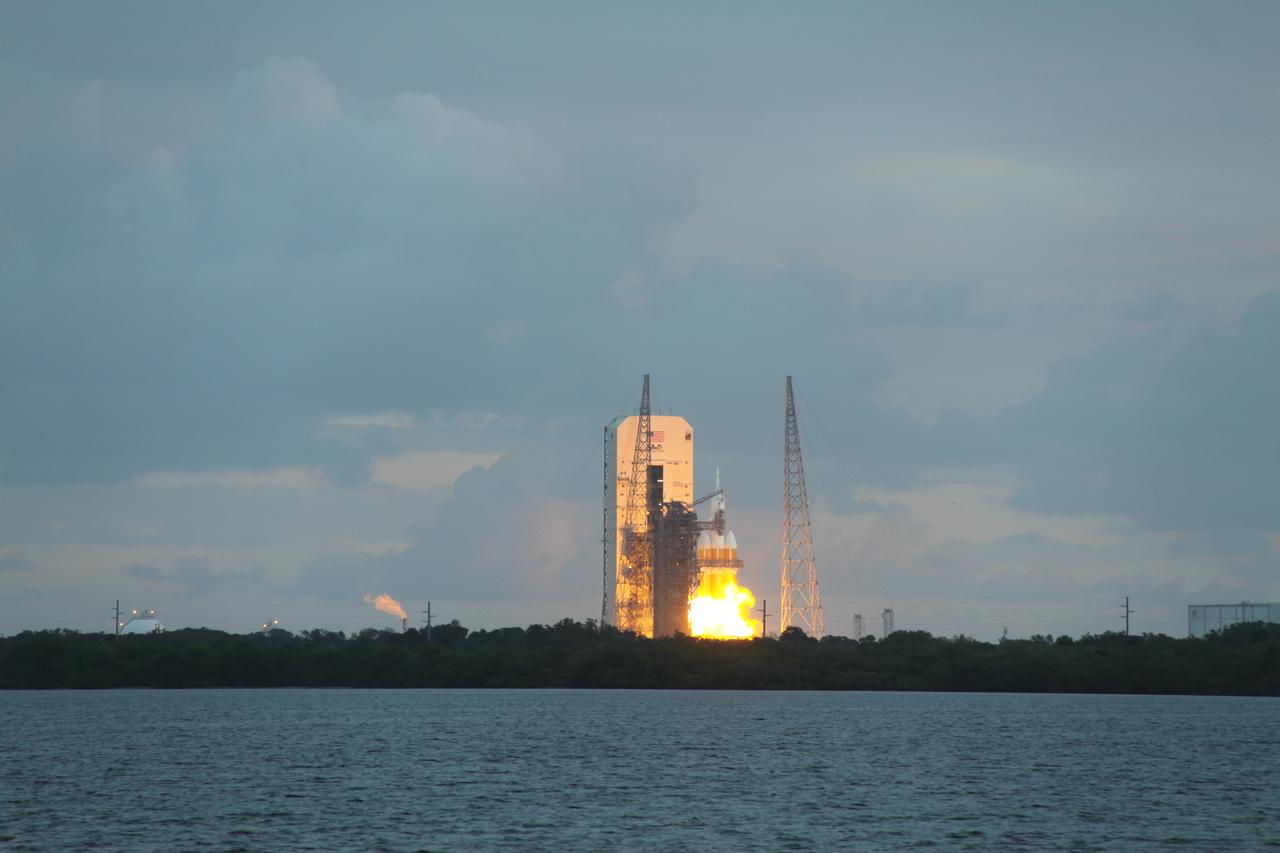
A Delta IV Heavy rocket lifts off from Space Launch Complex 37 at Cape Canaveral Air Force Station in Florida carrying NASA's Orion spacecraft on an unpiloted flight test to Earth orbit. Liftoff was at 7:05 a.m. EST. During the two-orbit, four-and-a-half hour mission, engineers will evaluate the systems critical to crew safety, the launch abort system, the heat shield and the parachute system.
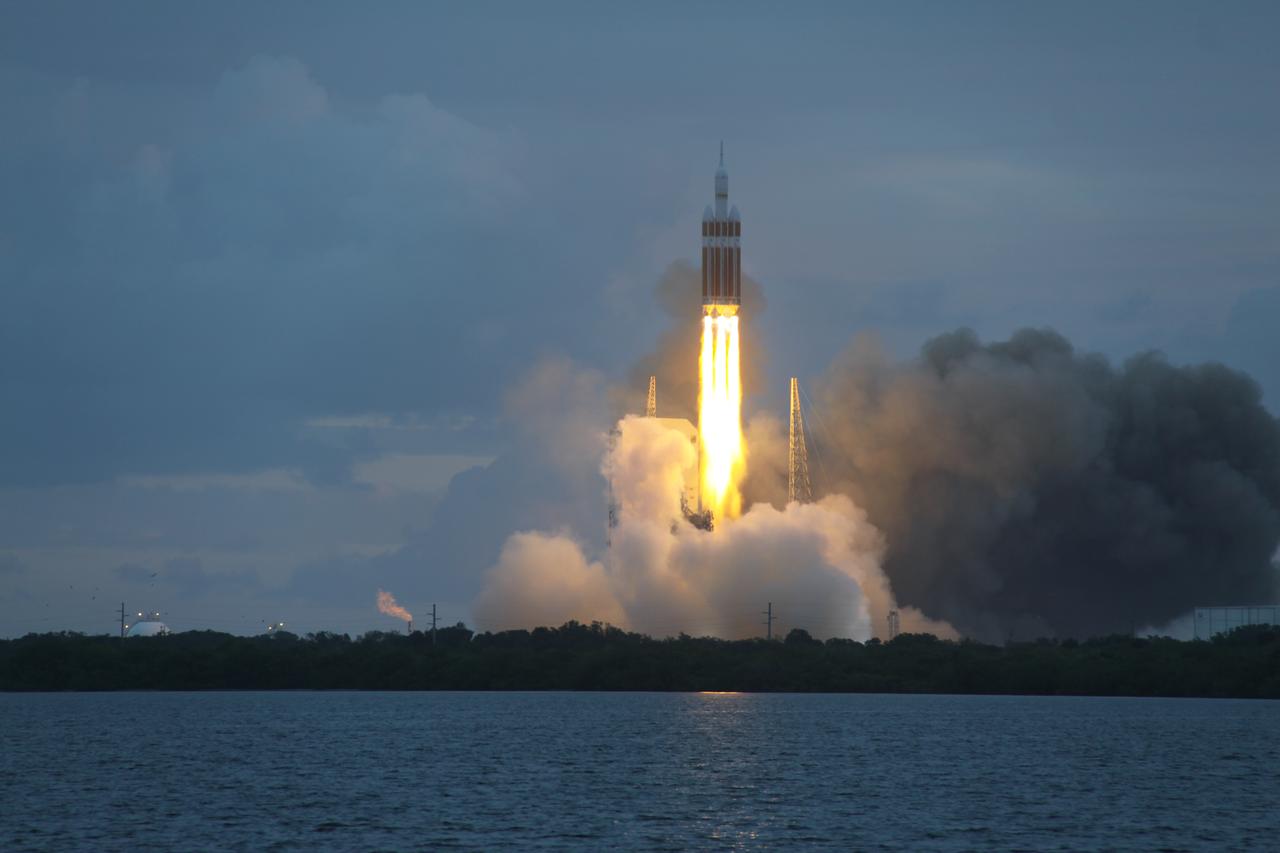
A Delta IV Heavy rocket lifts off from Space Launch Complex 37 at Cape Canaveral Air Force Station in Florida carrying NASA's Orion spacecraft on an unpiloted flight test to Earth orbit. Liftoff was at 7:05 a.m. EST. During the two-orbit, four-and-a-half hour mission, engineers will evaluate the systems critical to crew safety, the launch abort system, the heat shield and the parachute system.
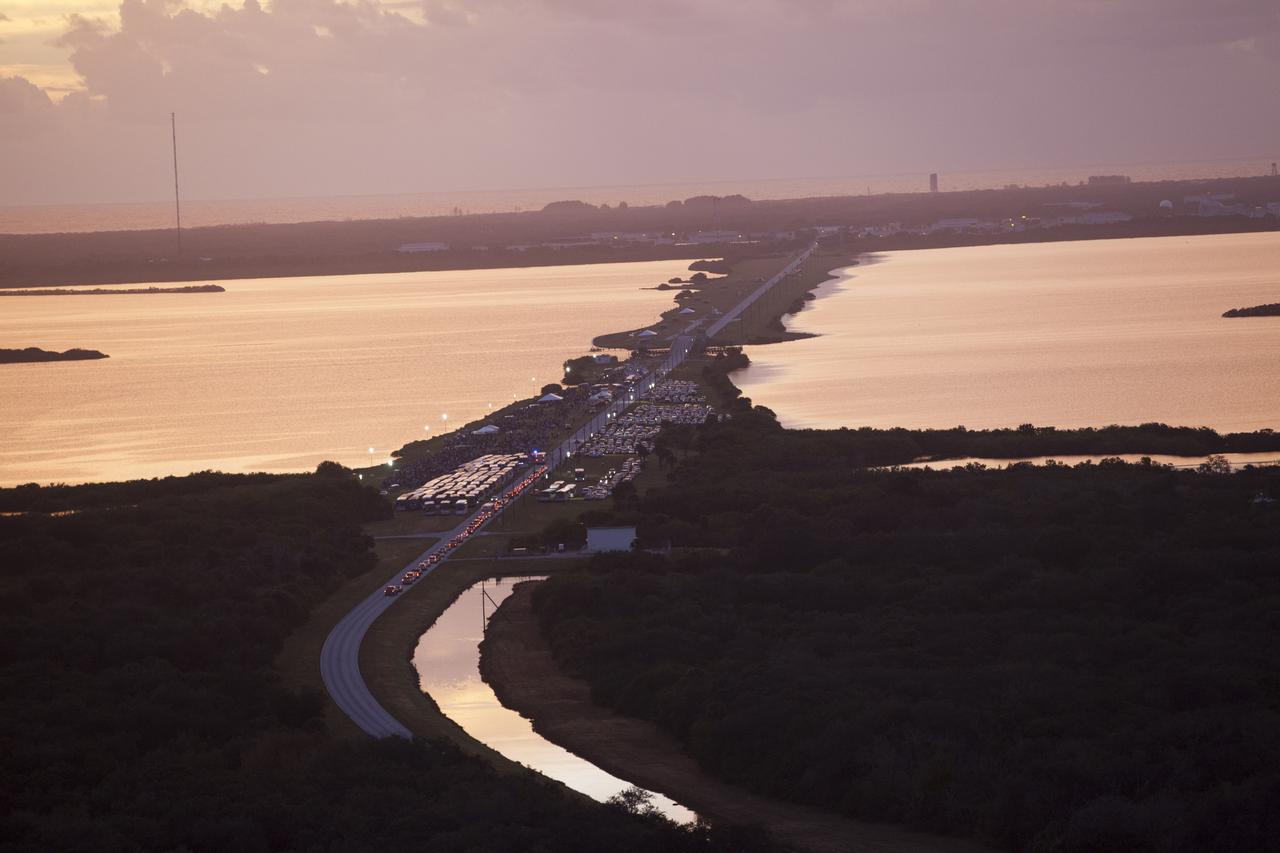
This helicopter view of the NASA Causeway connecting NASA's Kennedy Space Center with Cape Canaveral Air Force Staton shows the thousands of vehicles parked where guests gather to see the launch of the Orion Flight Test. The liftoff was postponed because of an issue related to fill and drain valves on the Delta IV Heavy rocket that teams could not troubleshoot by the time the launch window expired.
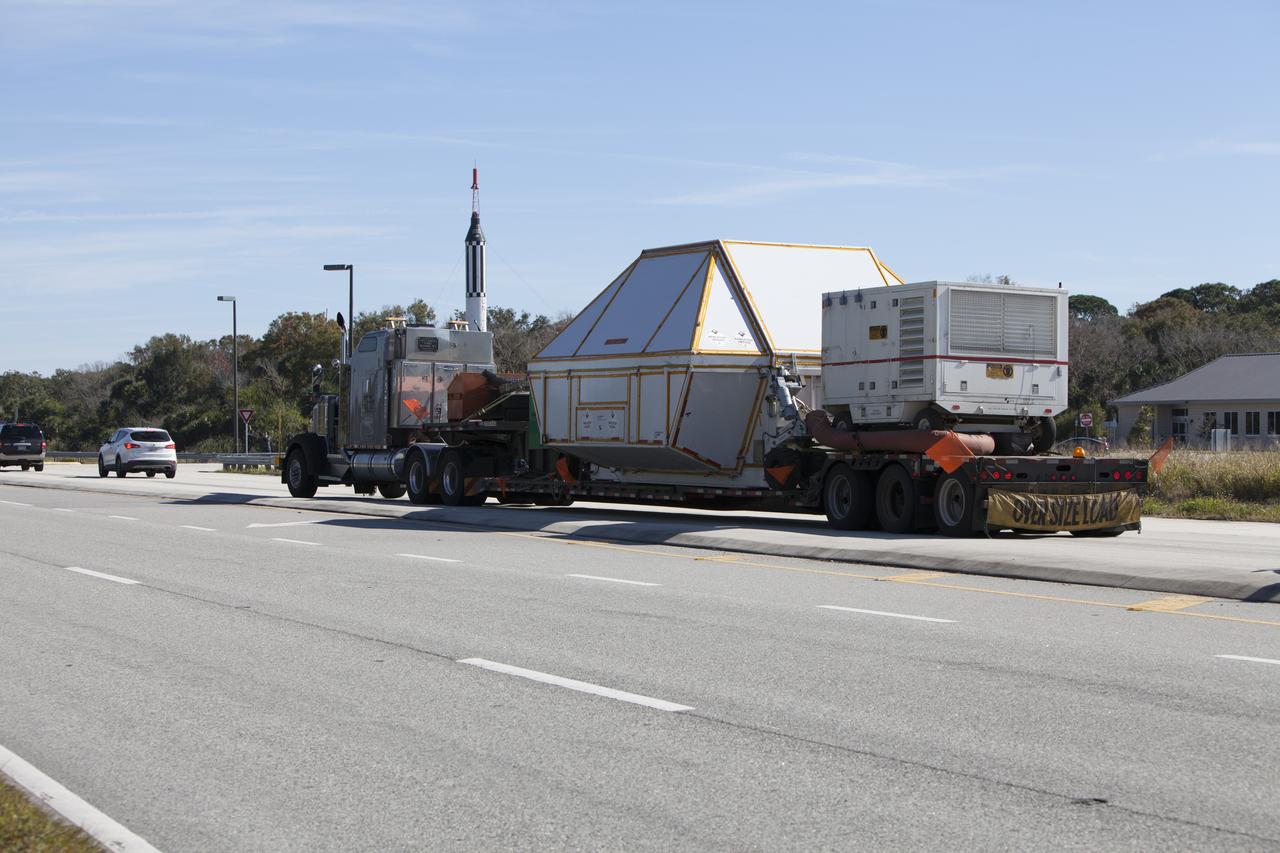
NASA's Orion crew module, enclosed in its crew module transportation fixture and secured on a flatbed truck nears the entrance gate to Kennedy Space Center in Florida. In the background is a full-scale mockup of the Mercury Redstone rocket that boosted NASA astronauts Alan Shepard and Virgil "Gus" Grissom on their 1961 sub-orbital missions that began America's human spaceflight program. Orion made the overland trip from Naval Base San Diego in California. Orion was recovered from the Pacific Ocean after completing a two-orbit, four-and-a-half hour mission Dec. 5 to test systems critical to crew safety, including the launch abort system, the heat shield and the parachute system. The Ground Systems Development and Operations Program led the recovery, offload and transportation efforts.
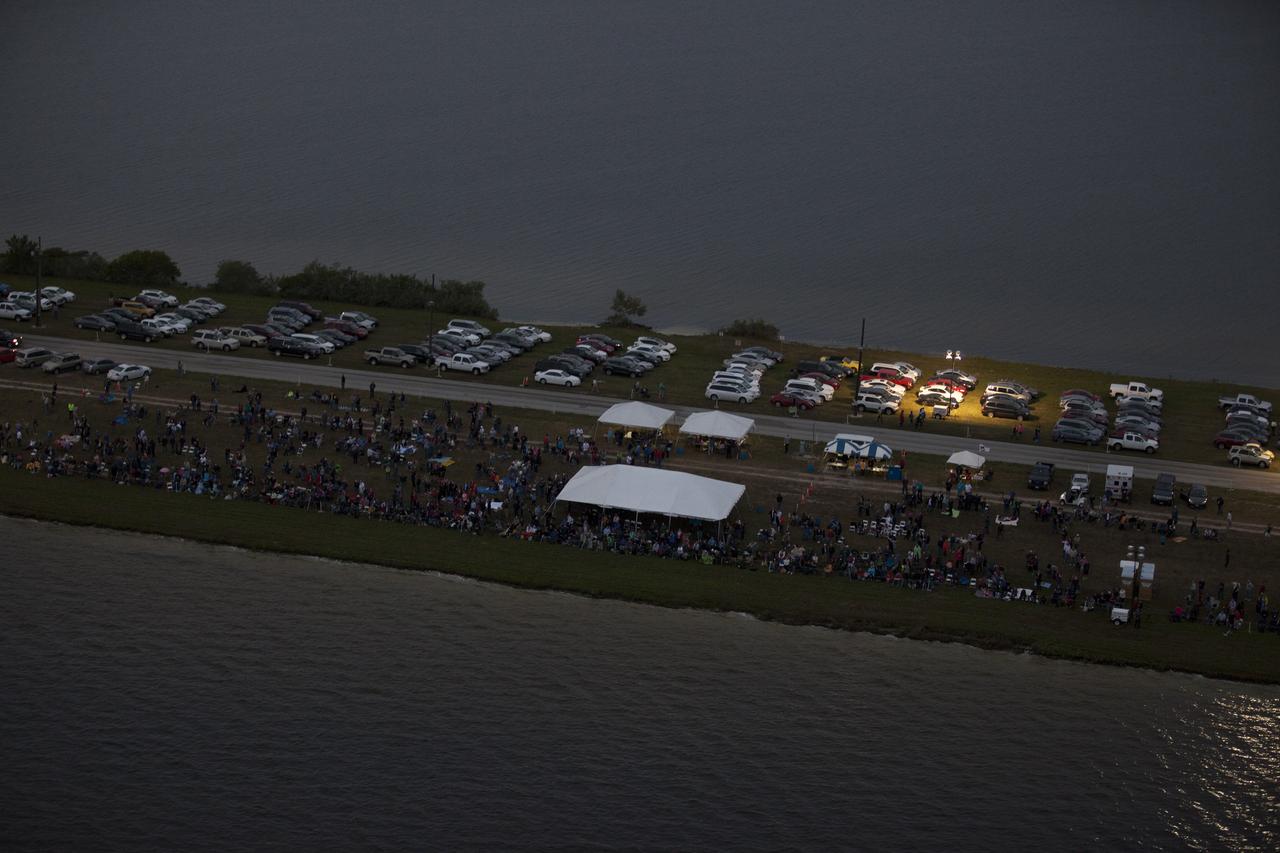
This helicopter view of the NASA Causeway connecting NASA's Kennedy Space Center with Cape Canaveral Air Force Staton shows the thousands of vehicles parked where guests gather to see the launch of the Orion Flight Test.
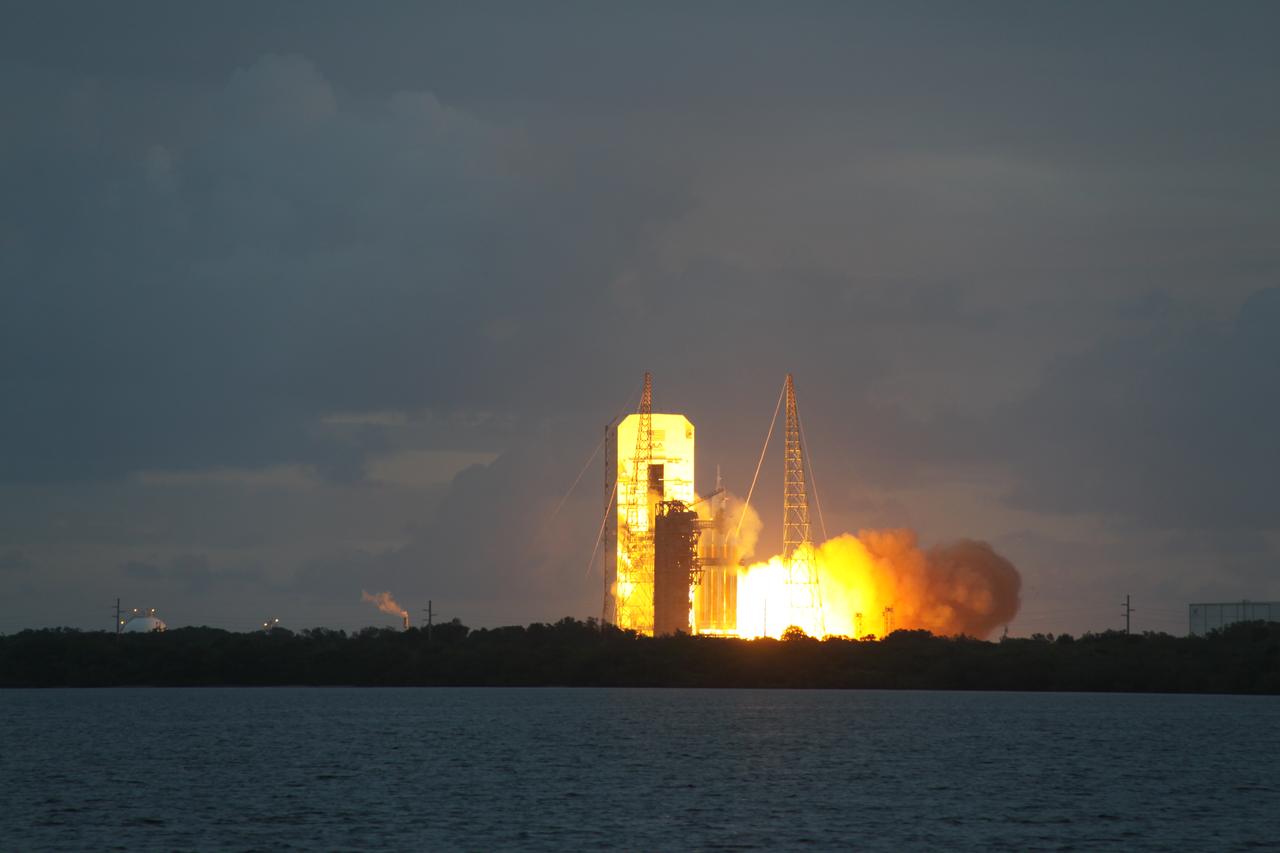
A Delta IV Heavy rocket lifts off from Space Launch Complex 37 at Cape Canaveral Air Force Station in Florida carrying NASA's Orion spacecraft on an unpiloted flight test to Earth orbit. Liftoff was at 7:05 a.m. EST. During the two-orbit, four-and-a-half hour mission, engineers will evaluate the systems critical to crew safety, the launch abort system, the heat shield and the parachute system.
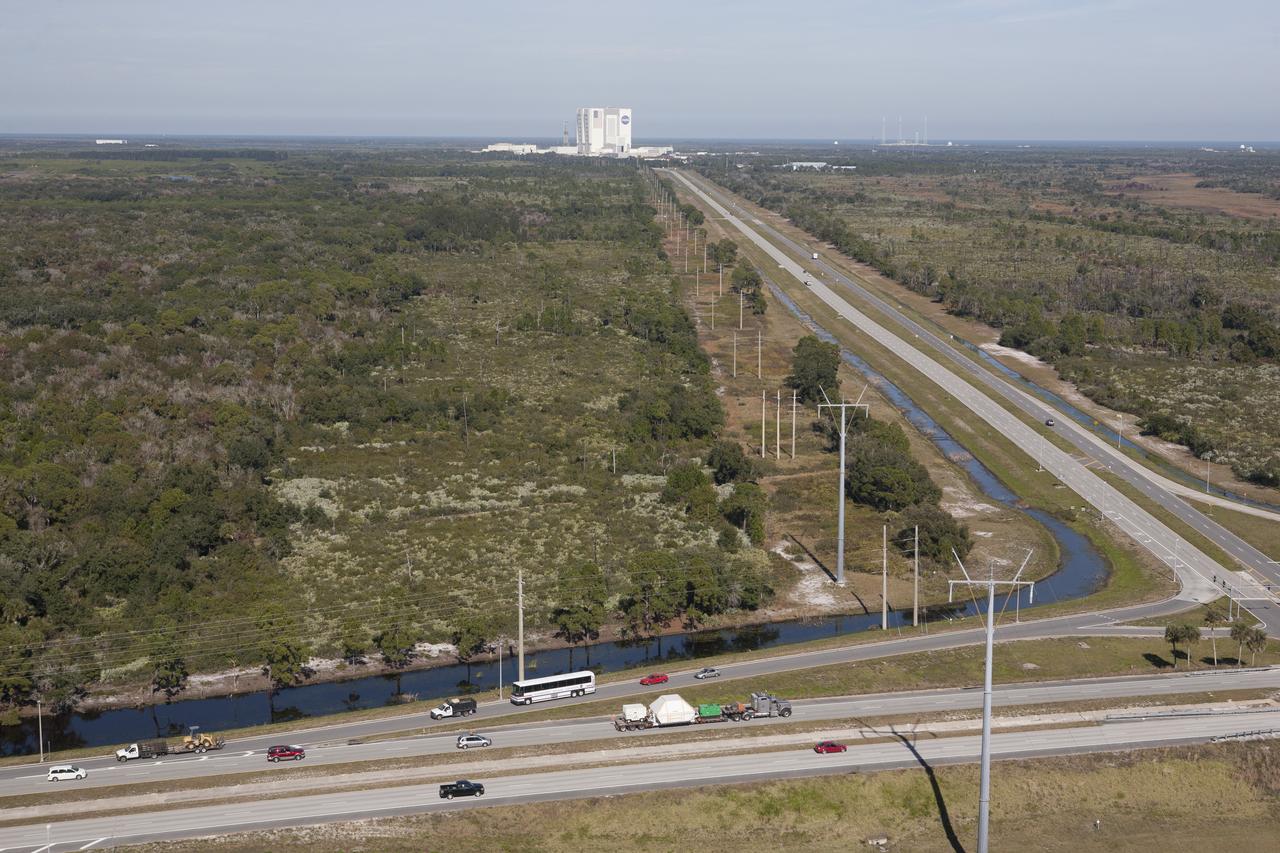
An aerial view reveals the Orion crew module, enclosed in its crew module transportation fixture and secured on a flatbed truck that is proceeding along the NASA Causeway at Kennedy Space Center in Florida. In the background is the iconic Vehicle Assembly Building. Orion made the 2,700 mile overland trip from Naval Base San Diego in California. The spacecraft was recovered from the Pacific Ocean after completing a two-orbit, four-and-a-half hour mission Dec. 5 to test systems critical to crew safety, including the launch abort system, the heat shield and the parachute system. The Ground Systems Development and Operations Program led the recovery, offload and transportation efforts.

Incoming KSC Director James W. Kennedy (left) and departing KSC Director Roy D. Bridges Jr. (center) view the new sign on the NASA Causeway naming the bridge for Bridges who is leaving KSC to become the director of NASA's Langley Research Center, Hampton, Va. At right is the 45th Space Wing Commander Brig. Gen. J. Gregory Pavlovich. The bridge spans the Banana River on the NASA Causeway and connects Kennedy Space Center and Cape Canaveral Air Force Station.
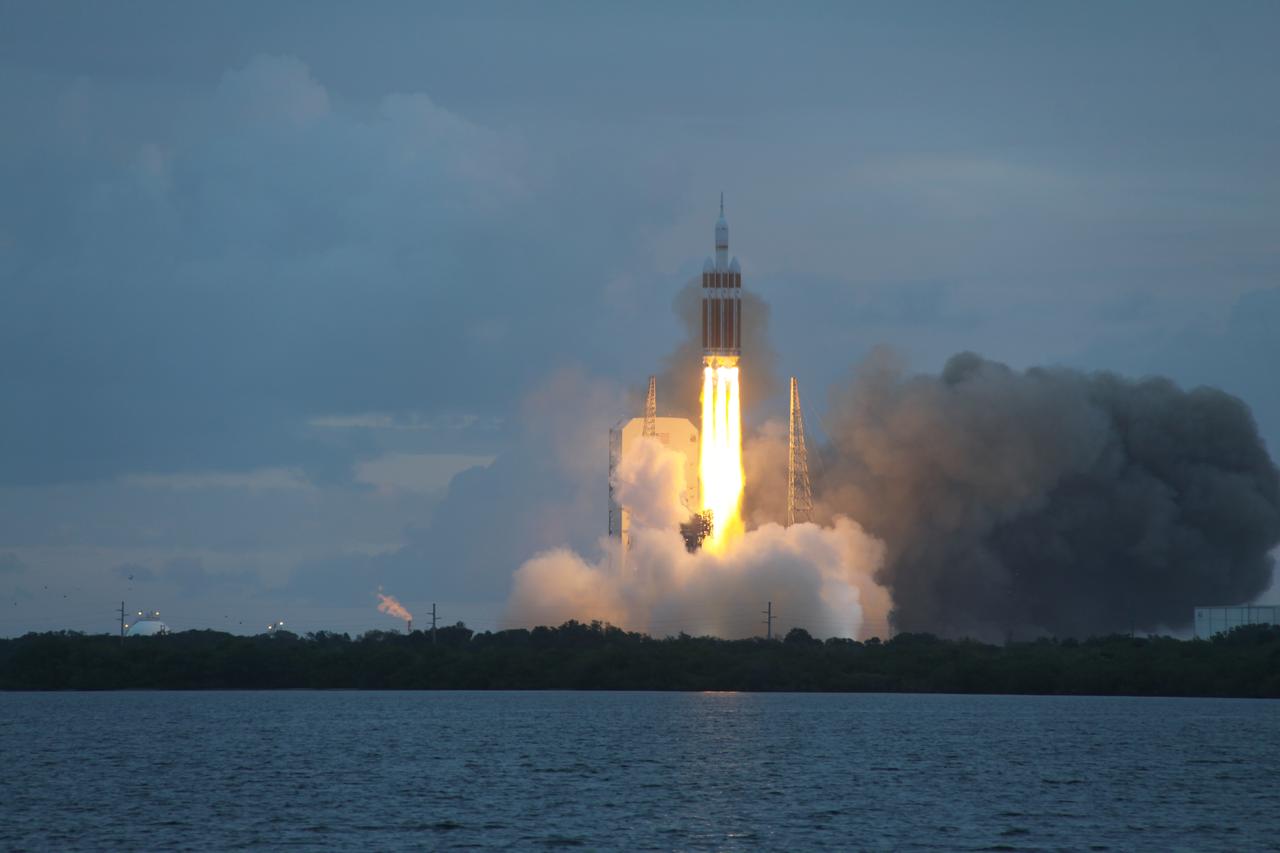
A Delta IV Heavy rocket lifts off from Space Launch Complex 37 at Cape Canaveral Air Force Station in Florida carrying NASA's Orion spacecraft on an unpiloted flight test to Earth orbit. Liftoff was at 7:05 a.m. EST. During the two-orbit, four-and-a-half hour mission, engineers will evaluate the systems critical to crew safety, the launch abort system, the heat shield and the parachute system.
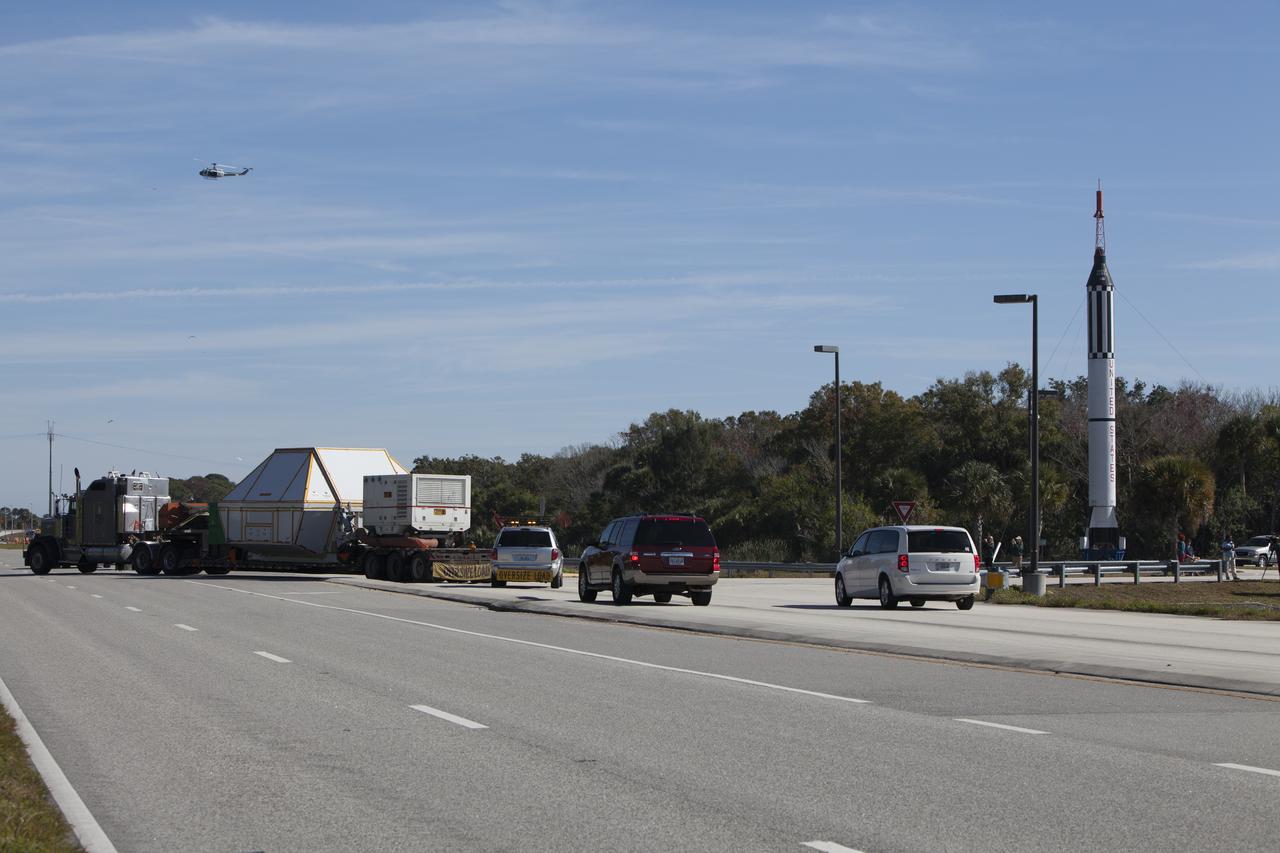
NASA's Orion crew module, enclosed in its crew module transportation fixture and secured on a flatbed truck nears the entrance gate to Kennedy Space Center in Florida. In the background is a full-scale mockup of the Mercury Redstone rocket that boosted NASA astronauts Alan Shepard and Virgil "Gus" Grissom on their 1961 sub-orbital missions that began America's human spaceflight program. Orion made the overland trip from Naval Base San Diego in California. Orion was recovered from the Pacific Ocean after completing a two-orbit, four-and-a-half hour mission Dec. 5 to test systems critical to crew safety, including the launch abort system, the heat shield and the parachute system. The Ground Systems Development and Operations Program led the recovery, offload and transportation efforts.
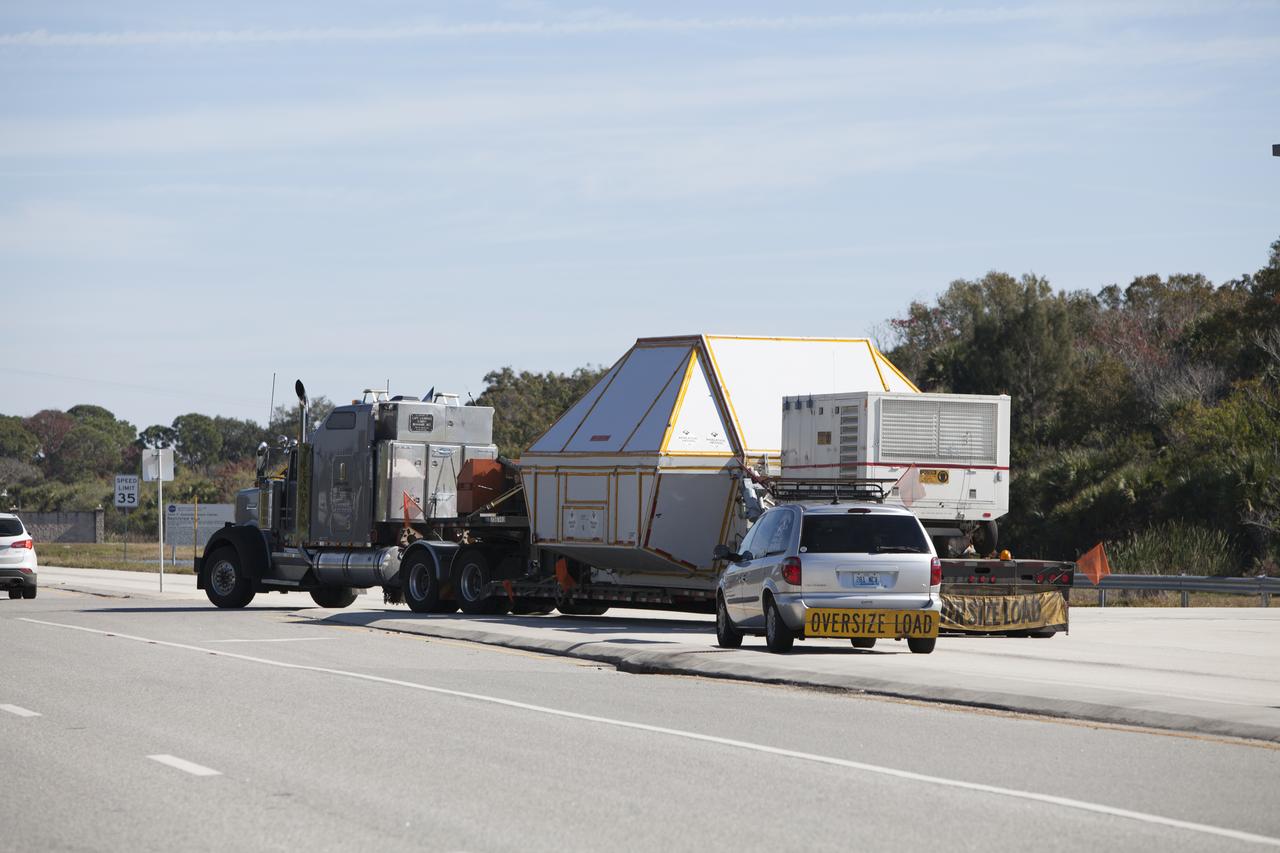
NASA's Orion crew module, enclosed in its crew module transportation fixture and secured on a flatbed truck nears the entrance gate to Kennedy Space Center in Florida. Orion made the overland trip from Naval Base San Diego in California. Orion was recovered from the Pacific Ocean after completing a two-orbit, four-and-a-half hour mission Dec. 5 to test systems critical to crew safety, including the launch abort system, the heat shield and the parachute system. The Ground Systems Development and Operations Program led the recovery, offload and transportation efforts.
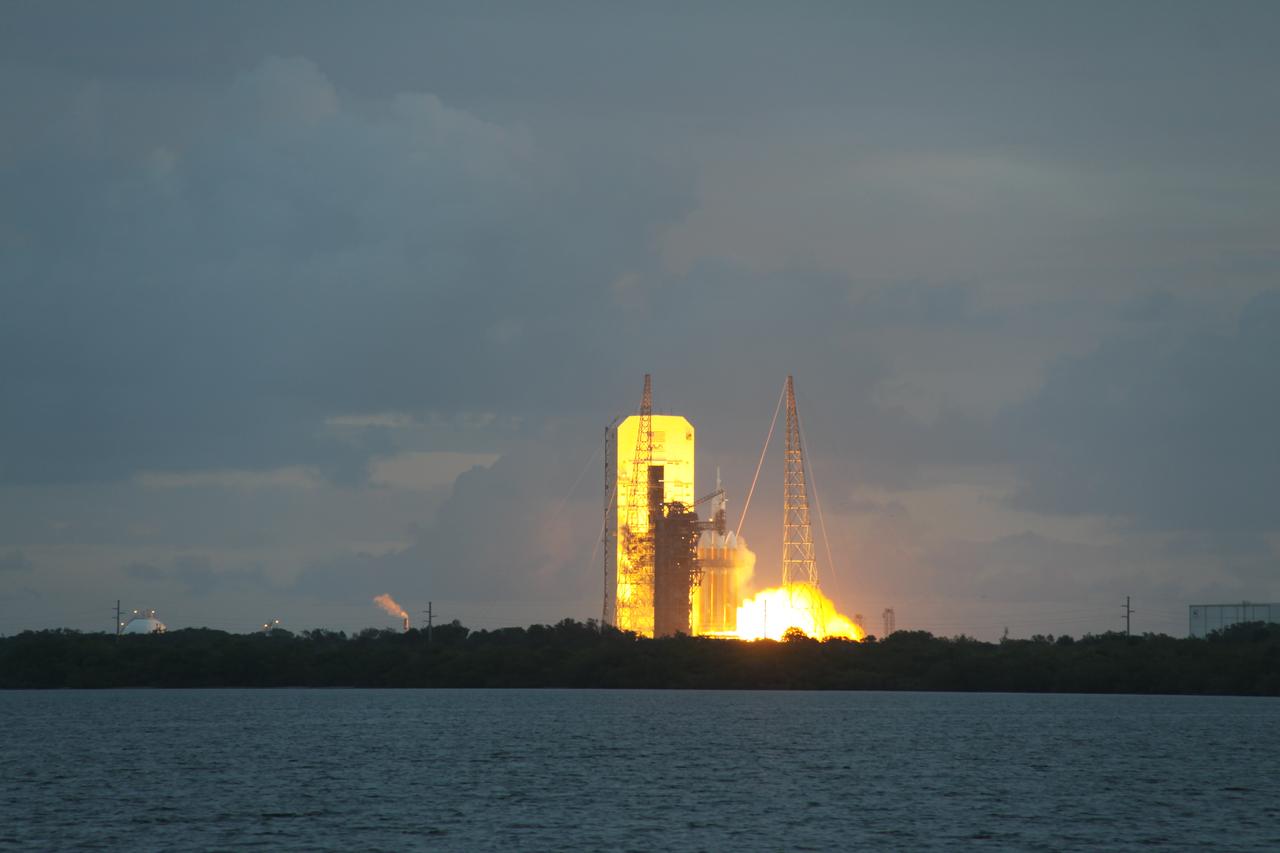
A Delta IV Heavy rocket lifts off from Space Launch Complex 37 at Cape Canaveral Air Force Station in Florida carrying NASA's Orion spacecraft on an unpiloted flight test to Earth orbit. Liftoff was at 7:05 a.m. EST. During the two-orbit, four-and-a-half hour mission, engineers will evaluate the systems critical to crew safety, the launch abort system, the heat shield and the parachute system.

From left, incoming KSC Director James W. Kennedy looks on as departing KSC Director Roy D. Bridges Jr. shakes hands with the 45th Space Wing Commander Brig. Gen. J. Gregory Pavlovich. The occasion is the unveiling of the new sign on the NASA Causeway naming the bridge for Bridges who is leaving KSC to become the director of NASA's Langley Research Center, Hampton, Va. The bridge spans the Banana River on the NASA Causeway and connects Kennedy Space Center and Cape Canaveral Air Force Station.
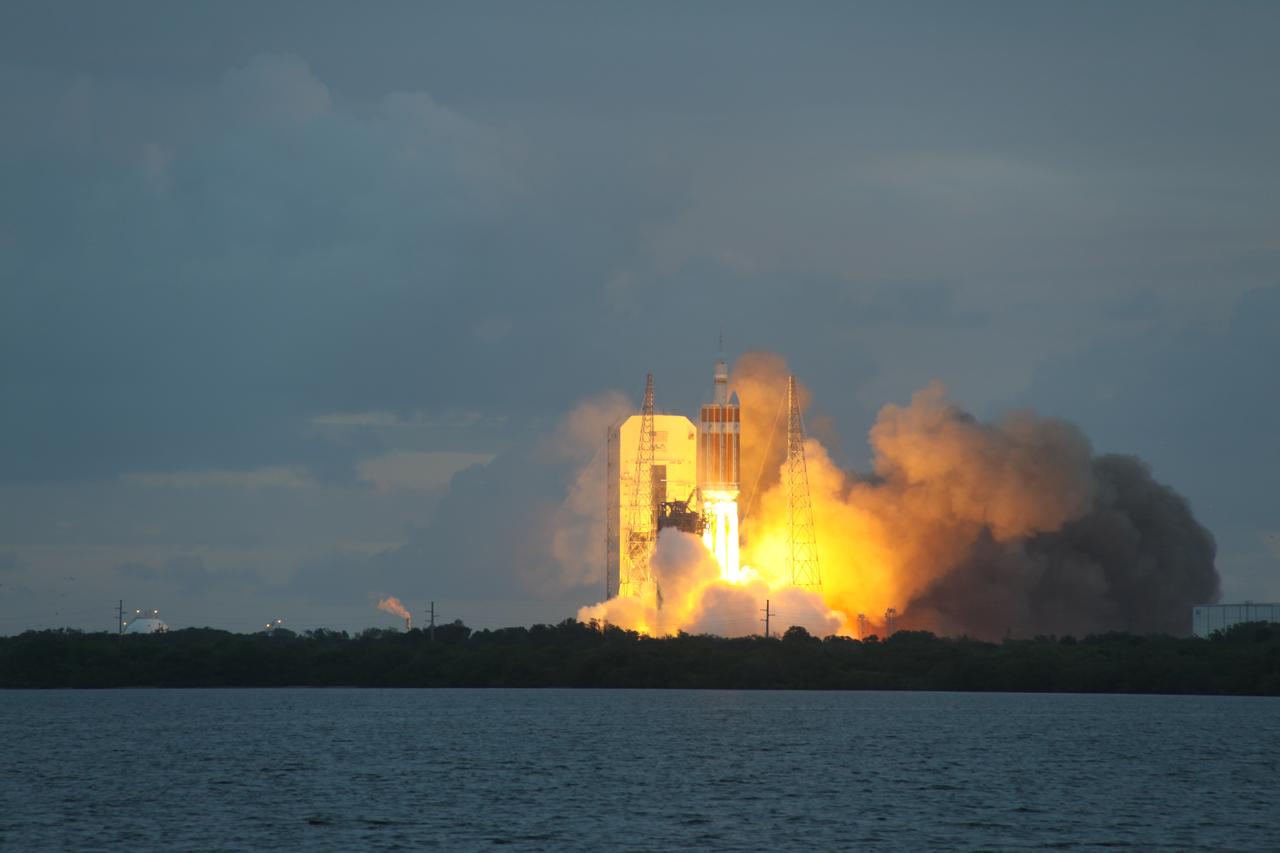
A Delta IV Heavy rocket lifts off from Space Launch Complex 37 at Cape Canaveral Air Force Station in Florida carrying NASA's Orion spacecraft on an unpiloted flight test to Earth orbit. Liftoff was at 7:05 a.m. EST. During the two-orbit, four-and-a-half hour mission, engineers will evaluate the systems critical to crew safety, the launch abort system, the heat shield and the parachute system.
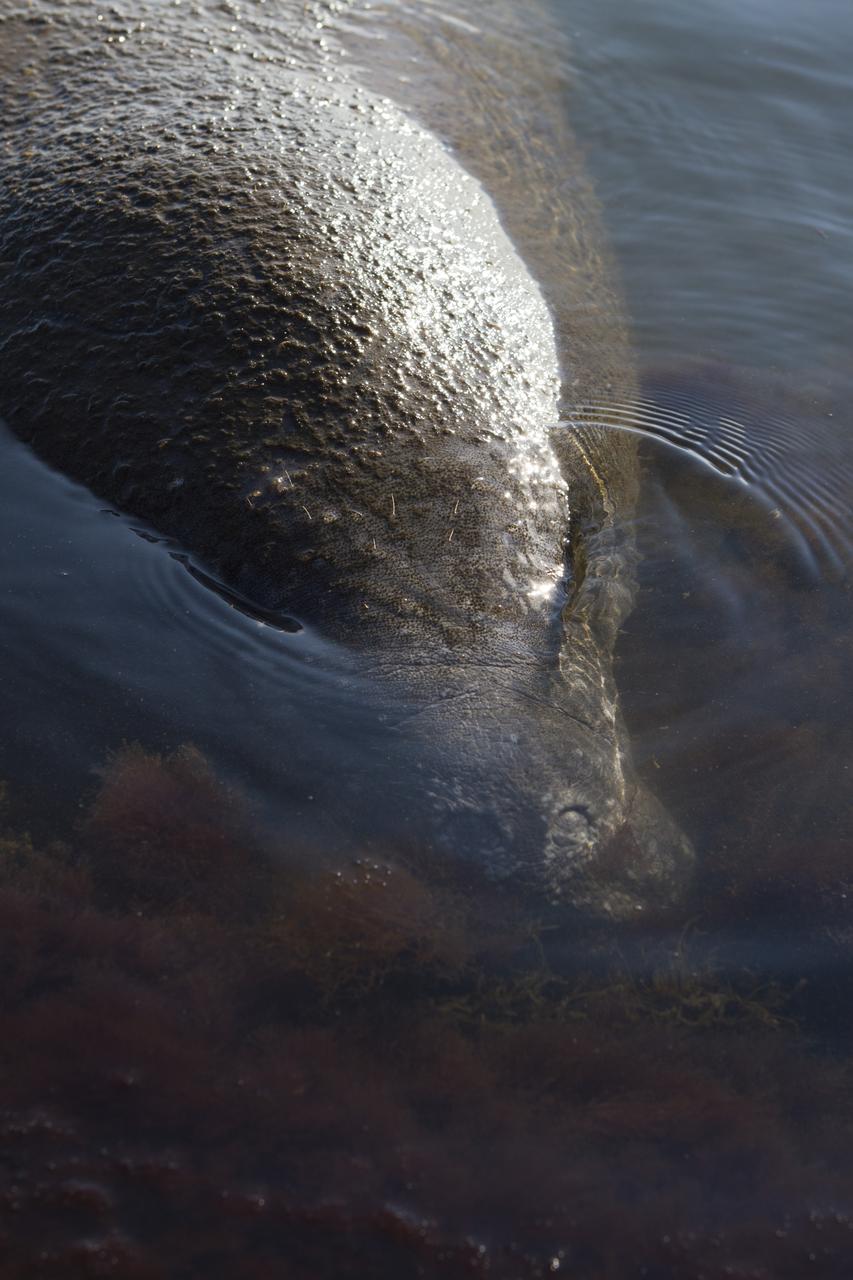
CAPE CANAVERAL, Fla. -- A manatee swims in the water near the NASA Causeway Bridge at Kennedy Space Center in Florida. The gentle sea cows prefer warmer inland waterways during the winter months. The center shares a boundary with the Merritt Island National Wildlife Refuge. The refuge encompasses 140,000 acres that are a habitat for more than 330 species of birds, 31 mammals, 117 fishes, and 65 amphibians and reptiles. It contains more than 1,000 known plant species. The marshes and open water of the refuge provide wintering areas for 23 species of migratory waterfowl, as well as a year-round home for great blue herons, great egrets, wood storks, cormorants, brown pelicans and other species of marsh and shore birds, and a variety of insects. Photo credit: NASA/Ben Smegelsky
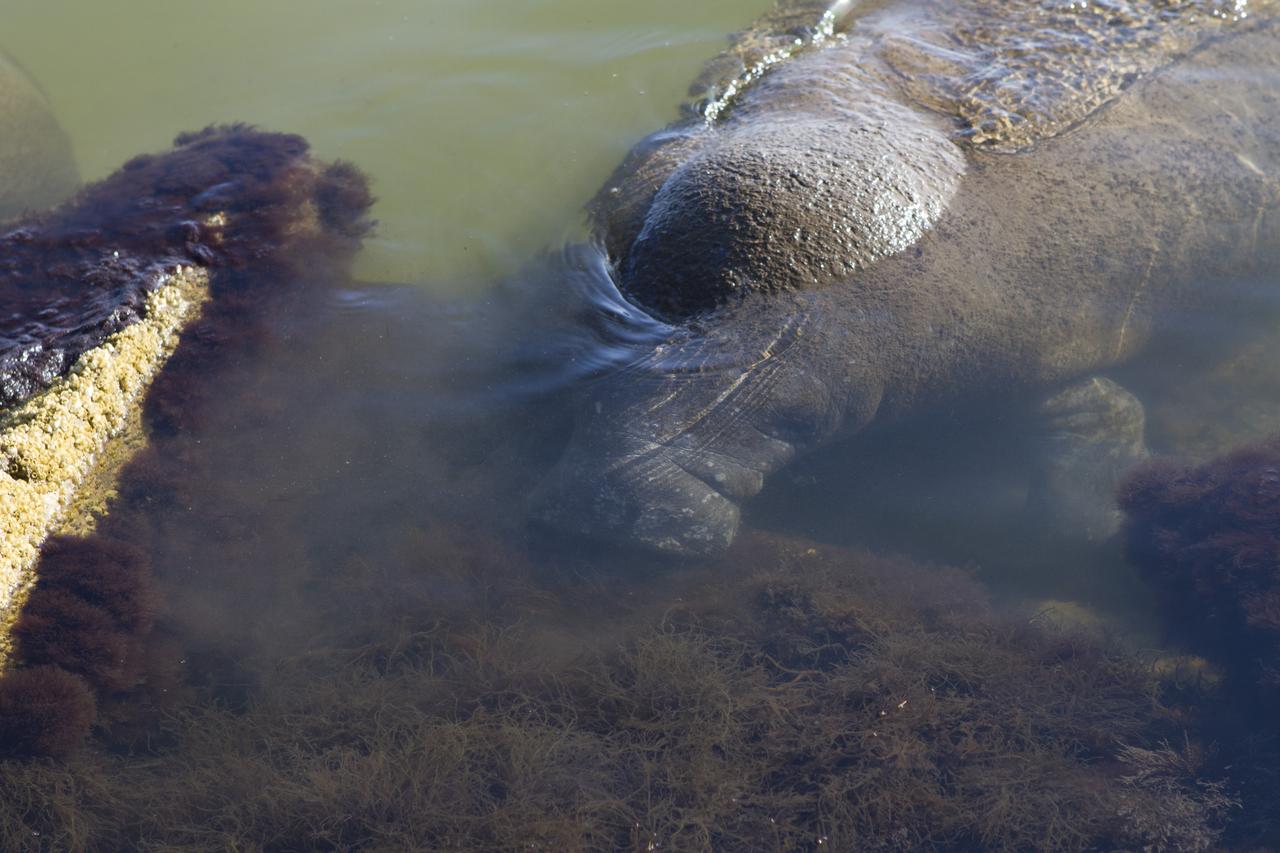
CAPE CANAVERAL, Fla. -- A manatee swims in the water near the NASA Causeway Bridge at Kennedy Space Center in Florida. The gentle sea cows prefer warmer inland waterways during the winter months. The center shares a boundary with the Merritt Island National Wildlife Refuge. The refuge encompasses 140,000 acres that are a habitat for more than 330 species of birds, 31 mammals, 117 fishes, and 65 amphibians and reptiles. It contains more than 1,000 known plant species. The marshes and open water of the refuge provide wintering areas for 23 species of migratory waterfowl, as well as a year-round home for great blue herons, great egrets, wood storks, cormorants, brown pelicans and other species of marsh and shore birds, and a variety of insects. Photo credit: NASA/Ben Smegelsky
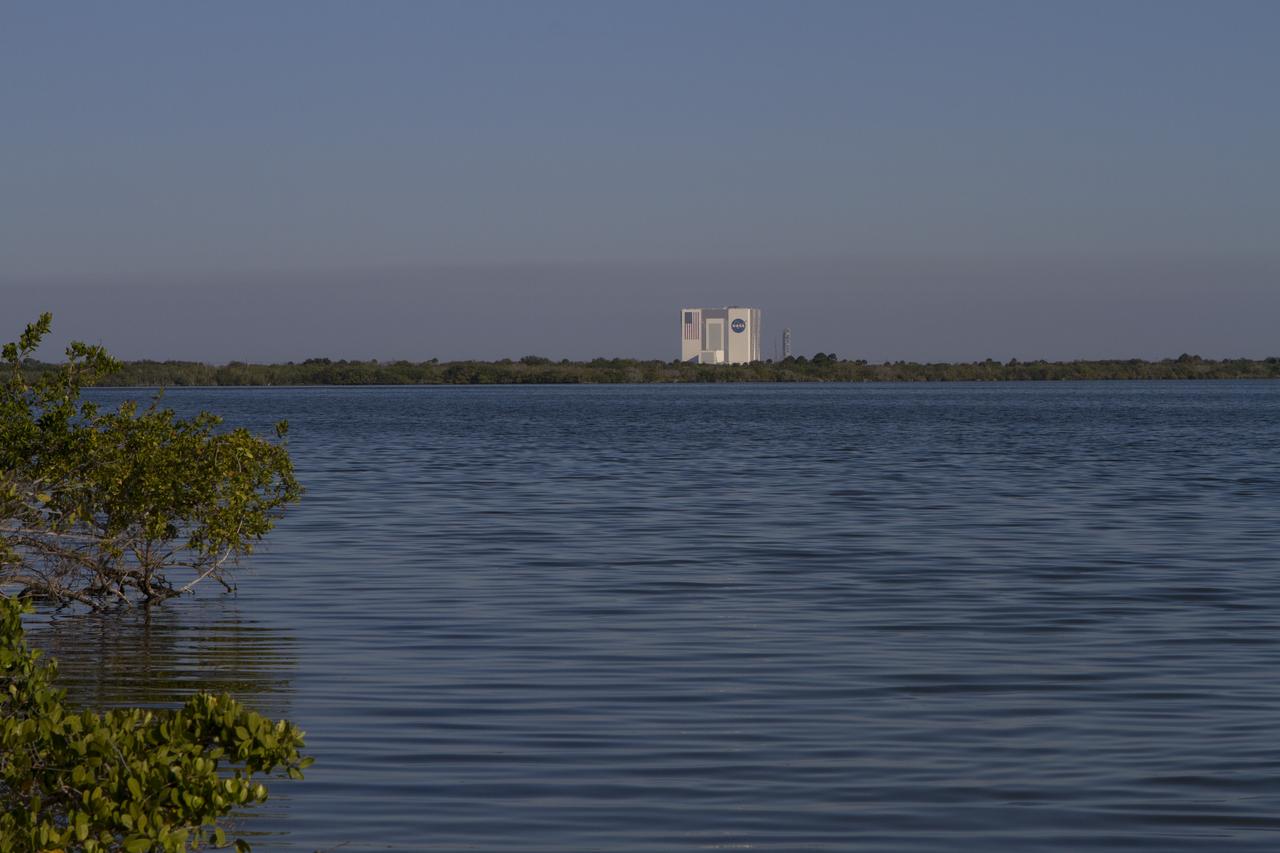
CAPE CANAVERAL, Fla. -- The 525-foot-tall Vehicle Assembly Building is seen from this view looking north across the inland waterway of the Banana River at NASA’s Kennedy Space Center in Florida. In view to the right is the Mobile Launcher. The center shares a boundary with the Merritt Island National Wildlife Refuge. The refuge encompasses 140,000 acres that are a habitat for more than 330 species of birds, 31 mammals, 117 fishes, and 65 amphibians and reptiles. It contains more than 1,000 known plant species. The marshes and open water of the refuge provide wintering areas for 23 species of migratory waterfowl, as well as a year-round home for great blue herons, great egrets, wood storks, cormorants, brown pelicans and other species of marsh and shore birds, and a variety of insects. Photo credit: NASA/Ben Smegelsky
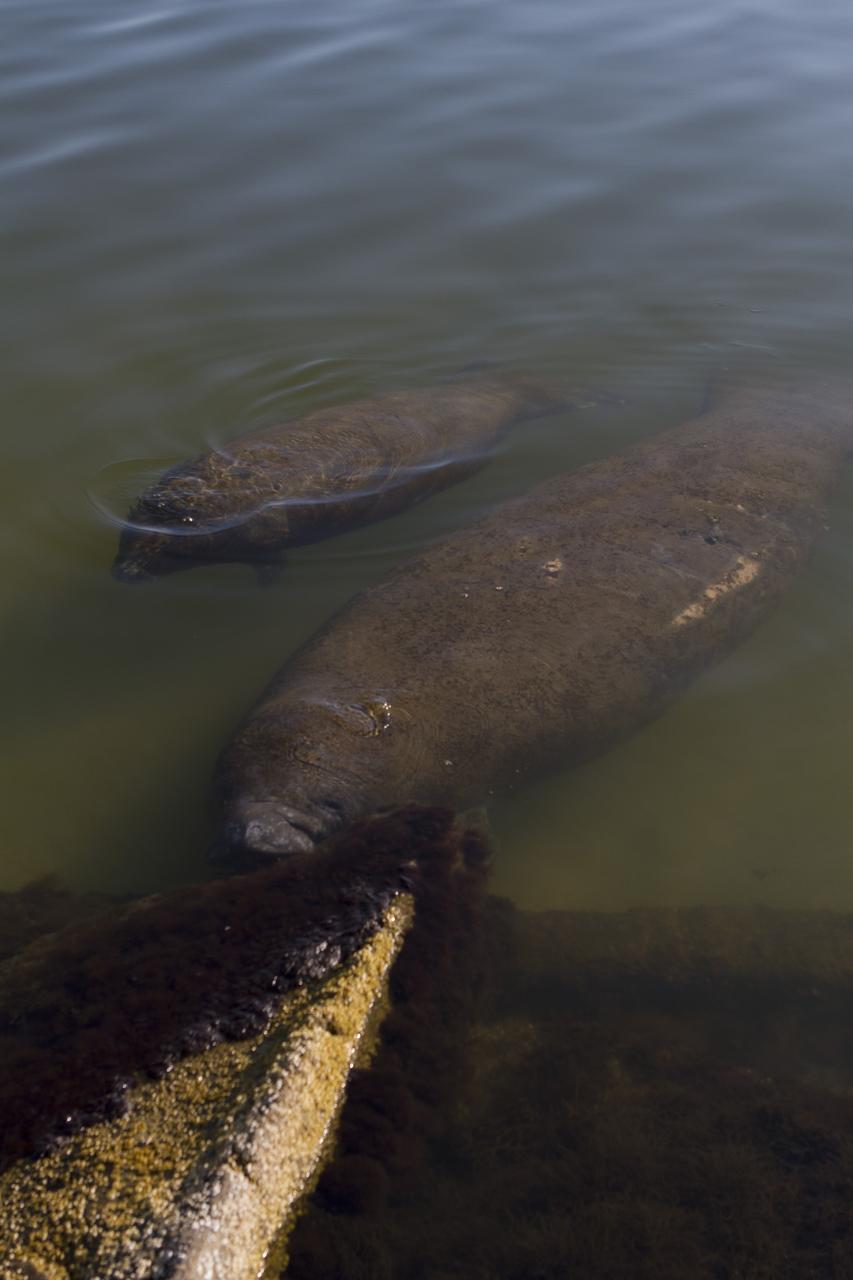
CAPE CANAVERAL, Fla. -- Two manatees swim in the water near the NASA Causeway Bridge at Kennedy Space Center in Florida. The gentle sea cows prefer warmer inland waterways during the winter months. The center shares a boundary with the Merritt Island National Wildlife Refuge. The refuge encompasses 140,000 acres that are a habitat for more than 330 species of birds, 31 mammals, 117 fishes, and 65 amphibians and reptiles. It contains more than 1,000 known plant species. The marshes and open water of the refuge provide wintering areas for 23 species of migratory waterfowl, as well as a year-round home for great blue herons, great egrets, wood storks, cormorants, brown pelicans and other species of marsh and shore birds, and a variety of insects. Photo credit: NASA/Ben Smegelsky
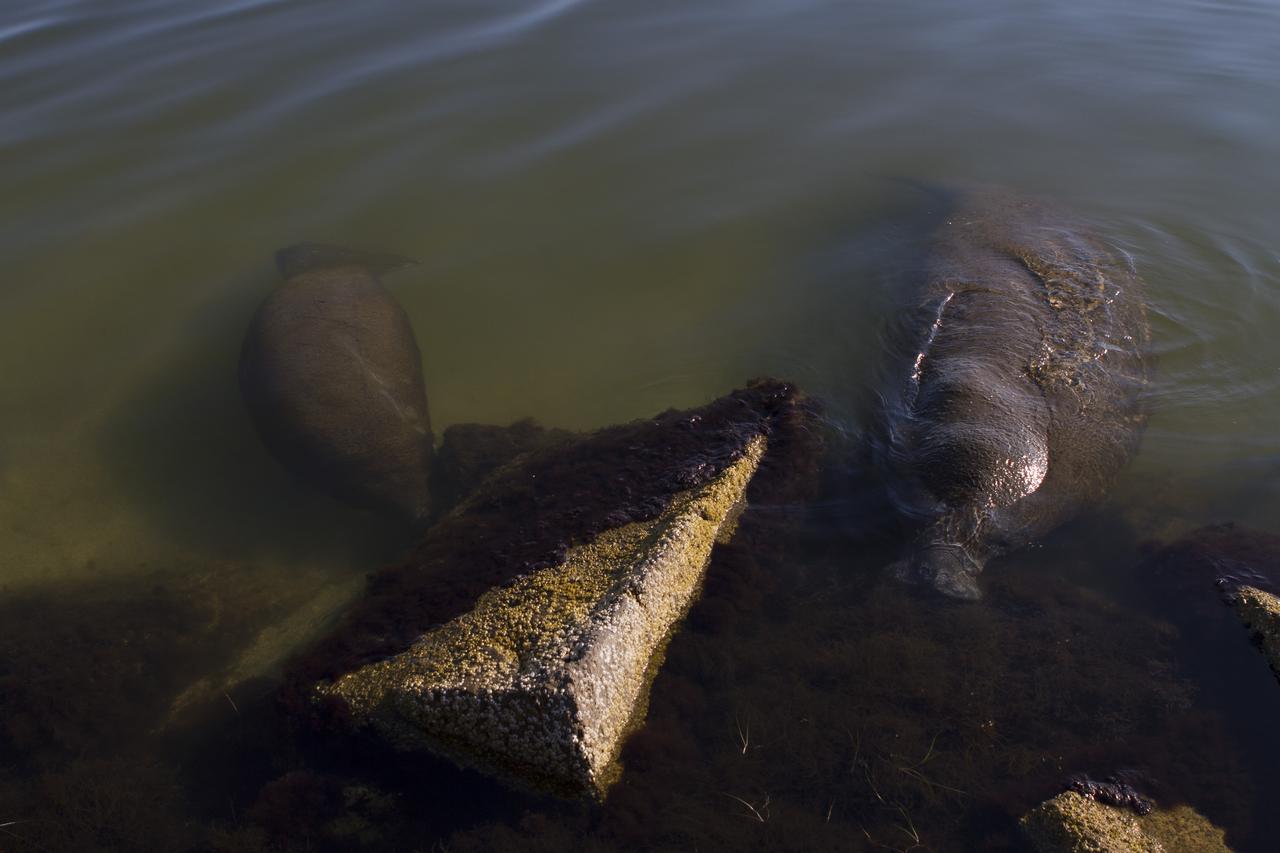
CAPE CANAVERAL, Fla. -- Two manatees swim in the water near the NASA Causeway Bridge at Kennedy Space Center in Florida. The gentle sea cows prefer warmer inland waterways during the winter months. The center shares a boundary with the Merritt Island National Wildlife Refuge. The refuge encompasses 140,000 acres that are a habitat for more than 330 species of birds, 31 mammals, 117 fishes, and 65 amphibians and reptiles. It contains more than 1,000 known plant species. The marshes and open water of the refuge provide wintering areas for 23 species of migratory waterfowl, as well as a year-round home for great blue herons, great egrets, wood storks, cormorants, brown pelicans and other species of marsh and shore birds, and a variety of insects. Photo credit: NASA/Ben Smegelsky
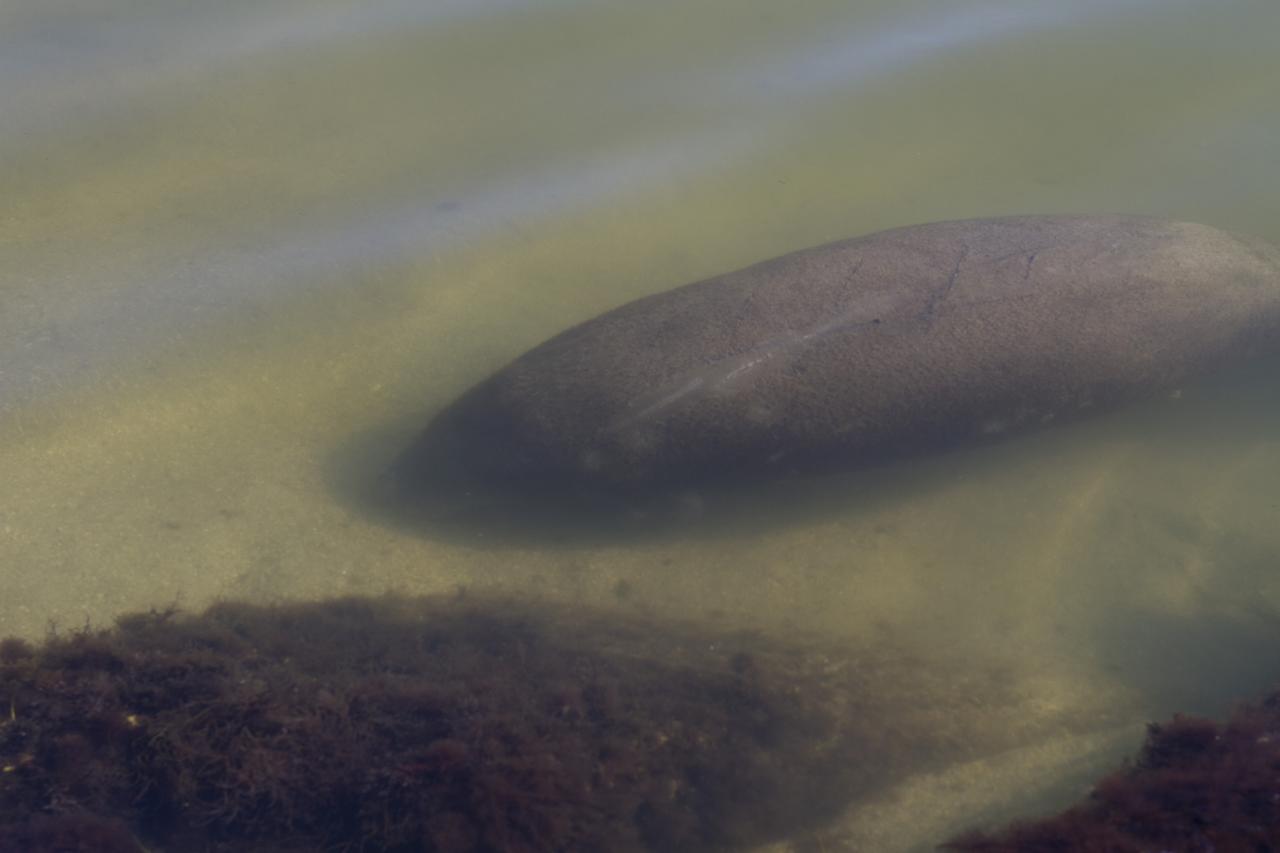
CAPE CANAVERAL, Fla. -- A manatee swims in the water near the NASA Causeway Bridge at Kennedy Space Center in Florida. The gentle sea cows prefer warmer inland waterways during the winter months. The center shares a boundary with the Merritt Island National Wildlife Refuge. The refuge encompasses 140,000 acres that are a habitat for more than 330 species of birds, 31 mammals, 117 fishes, and 65 amphibians and reptiles. It contains more than 1,000 known plant species. The marshes and open water of the refuge provide wintering areas for 23 species of migratory waterfowl, as well as a year-round home for great blue herons, great egrets, wood storks, cormorants, brown pelicans and other species of marsh and shore birds, and a variety of insects. Photo credit: NASA/Ben Smegelsky
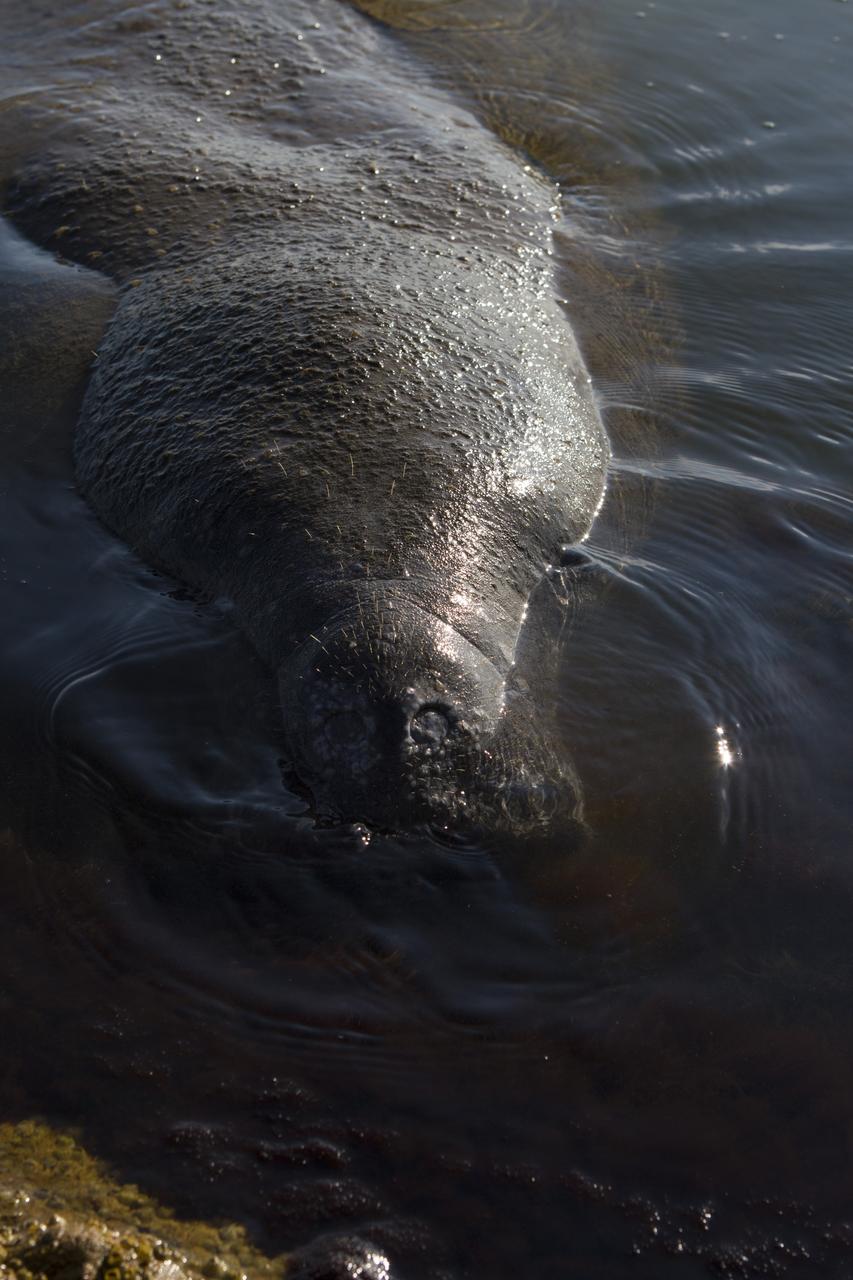
CAPE CANAVERAL, Fla. -- A manatee swims in the water near the NASA Causeway Bridge at Kennedy Space Center in Florida. The gentle sea cows prefer warmer inland waterways during the winter months. The center shares a boundary with the Merritt Island National Wildlife Refuge. The refuge encompasses 140,000 acres that are a habitat for more than 330 species of birds, 31 mammals, 117 fishes, and 65 amphibians and reptiles. It contains more than 1,000 known plant species. The marshes and open water of the refuge provide wintering areas for 23 species of migratory waterfowl, as well as a year-round home for great blue herons, great egrets, wood storks, cormorants, brown pelicans and other species of marsh and shore birds, and a variety of insects. Photo credit: NASA/Ben Smegelsky
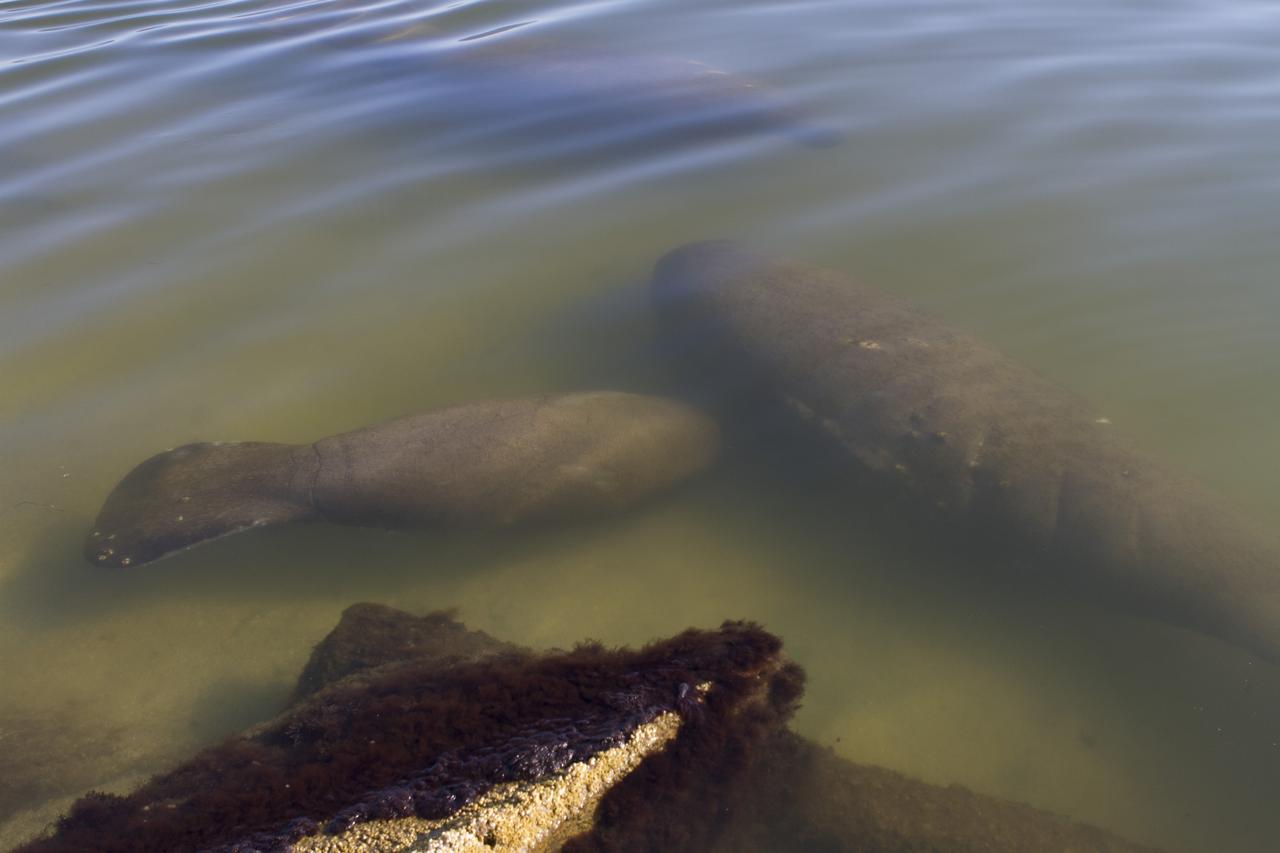
CAPE CANAVERAL, Fla. -- Two manatees swim in the water near the NASA Causeway Bridge at Kennedy Space Center in Florida. The gentle sea cows prefer warmer inland waterways during the winter months. The center shares a boundary with the Merritt Island National Wildlife Refuge. The refuge encompasses 140,000 acres that are a habitat for more than 330 species of birds, 31 mammals, 117 fishes, and 65 amphibians and reptiles. It contains more than 1,000 known plant species. The marshes and open water of the refuge provide wintering areas for 23 species of migratory waterfowl, as well as a year-round home for great blue herons, great egrets, wood storks, cormorants, brown pelicans and other species of marsh and shore birds, and a variety of insects. Photo credit: NASA/Ben Smegelsky