
During its routine yearly monitoring of the weather on our solar system's outer planets, NASA's Hubble Space Telescope has uncovered a new mysterious dark storm on Neptune (right) and provided a fresh look at a long-lived storm circling around the north polar region on Uranus (left).

This Hubble Space Telescope Wide Field Camera 3 image of Uranus, taken in November 2018, reveals a vast, bright stormy cloud cap across the planet's north pole. Credits: NASA, ESA, A. Simon (NASA Goddard Space Flight Center), and M.H. Wong and A. Hsu (University of California, Berkeley)
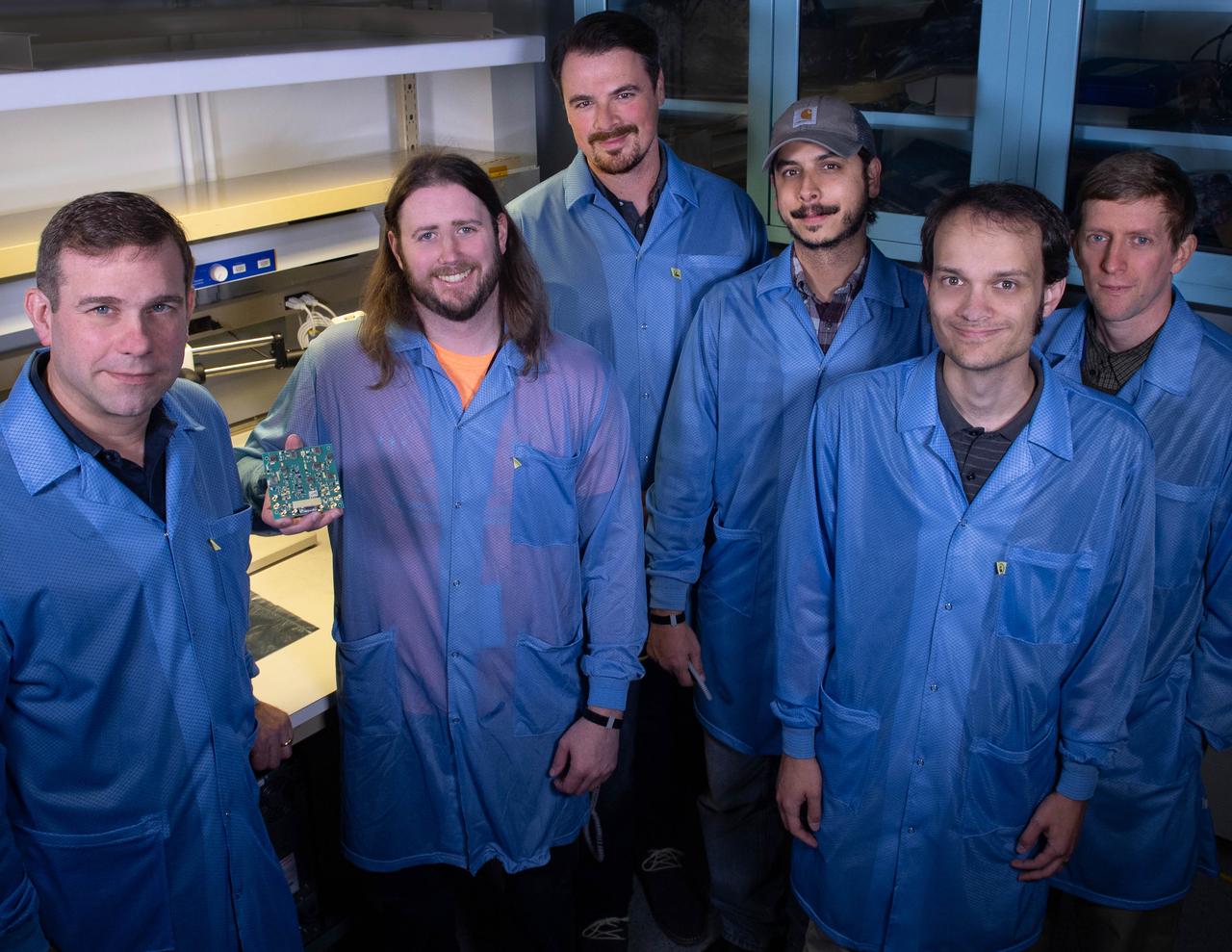
Several Goddard technologists are involved in a new CubeSat technology-demonstration mission called SNoOPI, which employs a novel remote-sensing technique for measuring soil-moisture levels. From left to right: Jeffrey Piepmeier, Chase Kielbasa, who is holding a first-generation prototype circuit board for the SNoOPI instrument, Joseph Knuble, Manuel Vega, Michael Coon, and Derek Hudson.

This Hubble Space Telescope Wide Field Camera 3 image of Neptune, taken in September and November 2018, shows a new dark storm (top center). Credits: NASA, ESA, A. Simon (NASA Goddard Space Flight Center), and M.H. Wong and A. Hsu (University of California, Berkeley)

This image shows the Modulated X-ray Source, a key component in NASA’s first-ever demonstration of X-ray communication in space. Credits: NASA/W. Hrybyk
![For me, I picked up an interest for engineering through drawing. When I was young, I was really big into art. Like most science-drawn younger kids, I would draw Pokémon, I would draw Dragon Ball Z, things like that. I guess my passion for art and drawing helped me to get into CAD (Computer Aided Design) modeling — things like 3D modeling and 3D printing. And with CAD modeling, you need to learn how to figure out the dimensions of things, what material they’re made out of, xyz. So that got me deeper into engineering. There’s definitely an artistic component to science. You can just look at James Webb [Space Telescope]. It looks artistic. If you look at the beveled mirrors, or how the bat wings on the side fold out, I would argue that that is artistic in a sense. But it also matches perfectly with its scientific functions. So not only does it need to fit into the rocket, but it also needs these beveled mirrors to reflect light at a specific angle. So, I think art and science blend pretty well. Kenneth Harris II, lead database engineer for the Joint Polar Satellite System (JPSS) J2 Satellite Mission at NASA’s Goddard Space Flight Center, Friday, Feb. 21, 2020, Greenbelt, Md. Photo Credit: (NASA/Joel Kowsky)](https://images-assets.nasa.gov/image/NHQ202002210002/NHQ202002210002~medium.jpg)
For me, I picked up an interest for engineering through drawing. When I was young, I was really big into art. Like most science-drawn younger kids, I would draw Pokémon, I would draw Dragon Ball Z, things like that. I guess my passion for art and drawing helped me to get into CAD (Computer Aided Design) modeling — things like 3D modeling and 3D printing. And with CAD modeling, you need to learn how to figure out the dimensions of things, what material they’re made out of, xyz. So that got me deeper into engineering. There’s definitely an artistic component to science. You can just look at James Webb [Space Telescope]. It looks artistic. If you look at the beveled mirrors, or how the bat wings on the side fold out, I would argue that that is artistic in a sense. But it also matches perfectly with its scientific functions. So not only does it need to fit into the rocket, but it also needs these beveled mirrors to reflect light at a specific angle. So, I think art and science blend pretty well. Kenneth Harris II, lead database engineer for the Joint Polar Satellite System (JPSS) J2 Satellite Mission at NASA’s Goddard Space Flight Center, Friday, Feb. 21, 2020, Greenbelt, Md. Photo Credit: (NASA/Joel Kowsky)
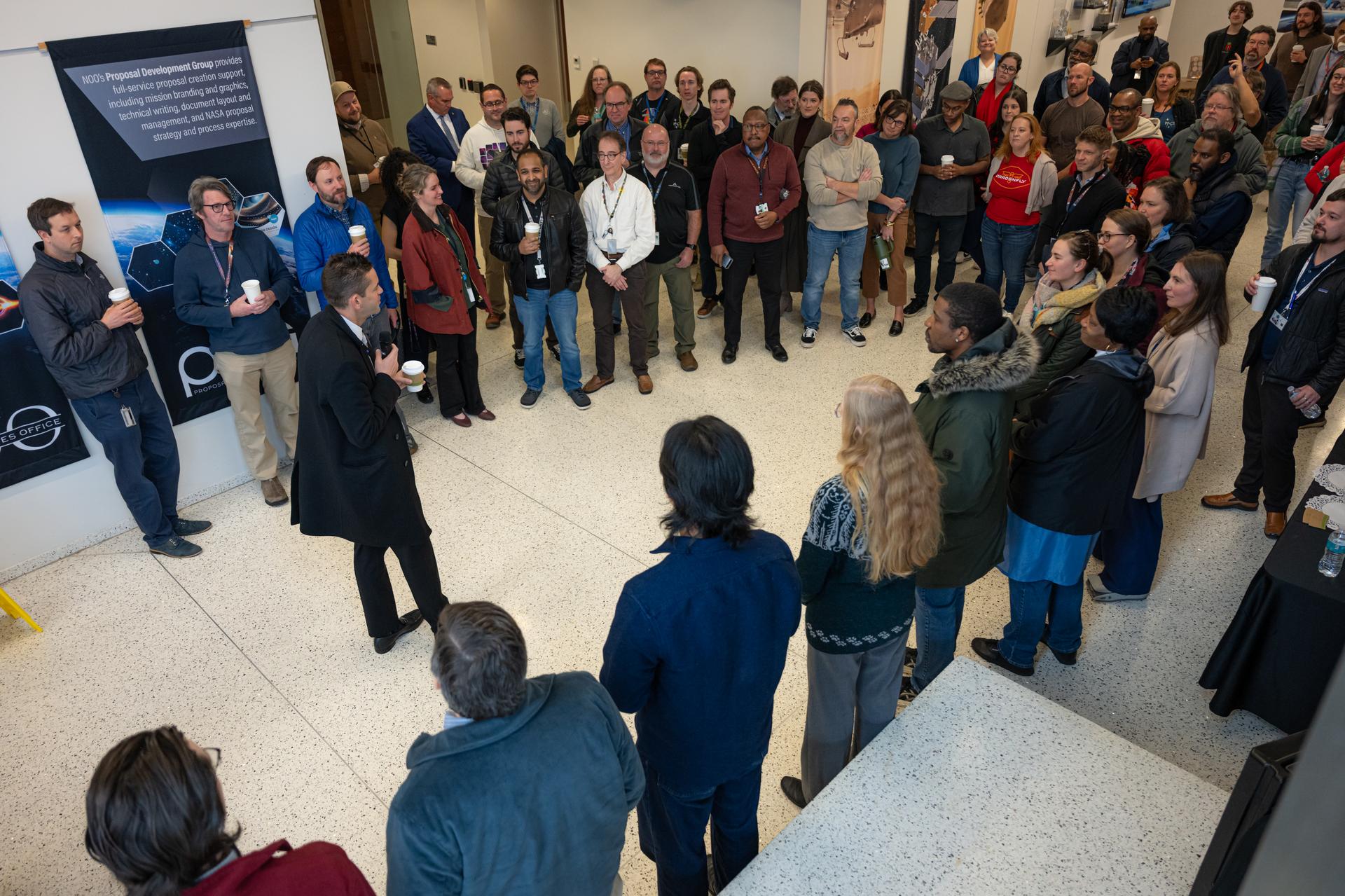
NASA Administrator Jared Isaacman speaks during a workforce Q&A session, Friday, Jan. 9, 2026, at NASA’s Goddard Space Flight Center in Greenbelt, Md. Goddard marks the first stop in Isaacman’s roadshow to visit NASA facilities and engage directly with the agency’s workforce. Photo Credit: (NASA/John Kraus)
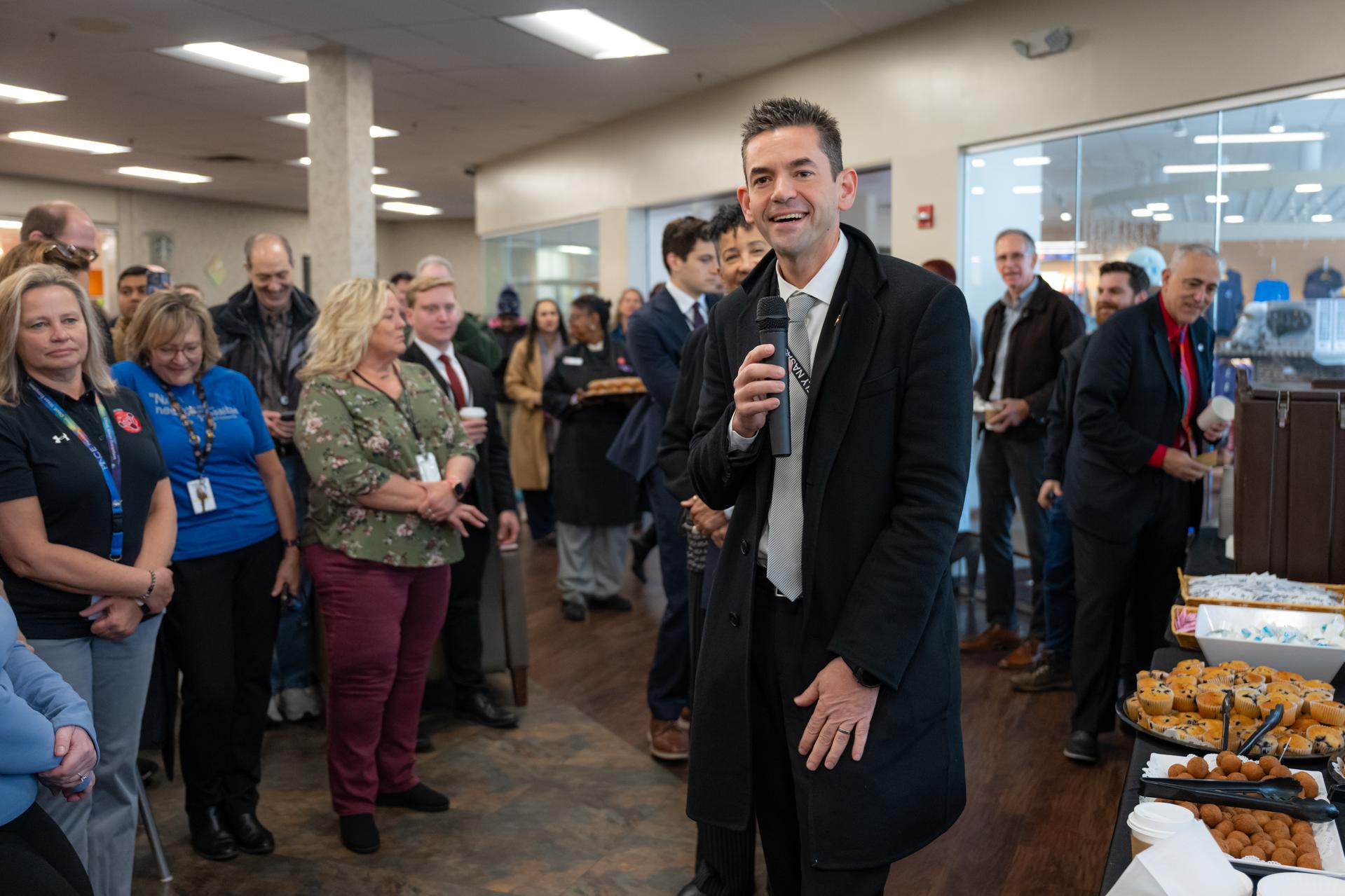
NASA Administrator Jared Isaacman speaks during a workforce Q&A session, Friday, Jan. 9, 2026, at NASA’s Goddard Space Flight Center in Greenbelt, Md. Goddard marks the first stop in Isaacman’s roadshow to visit NASA facilities and engage directly with the agency’s workforce. Photo Credit: (NASA/John Kraus)
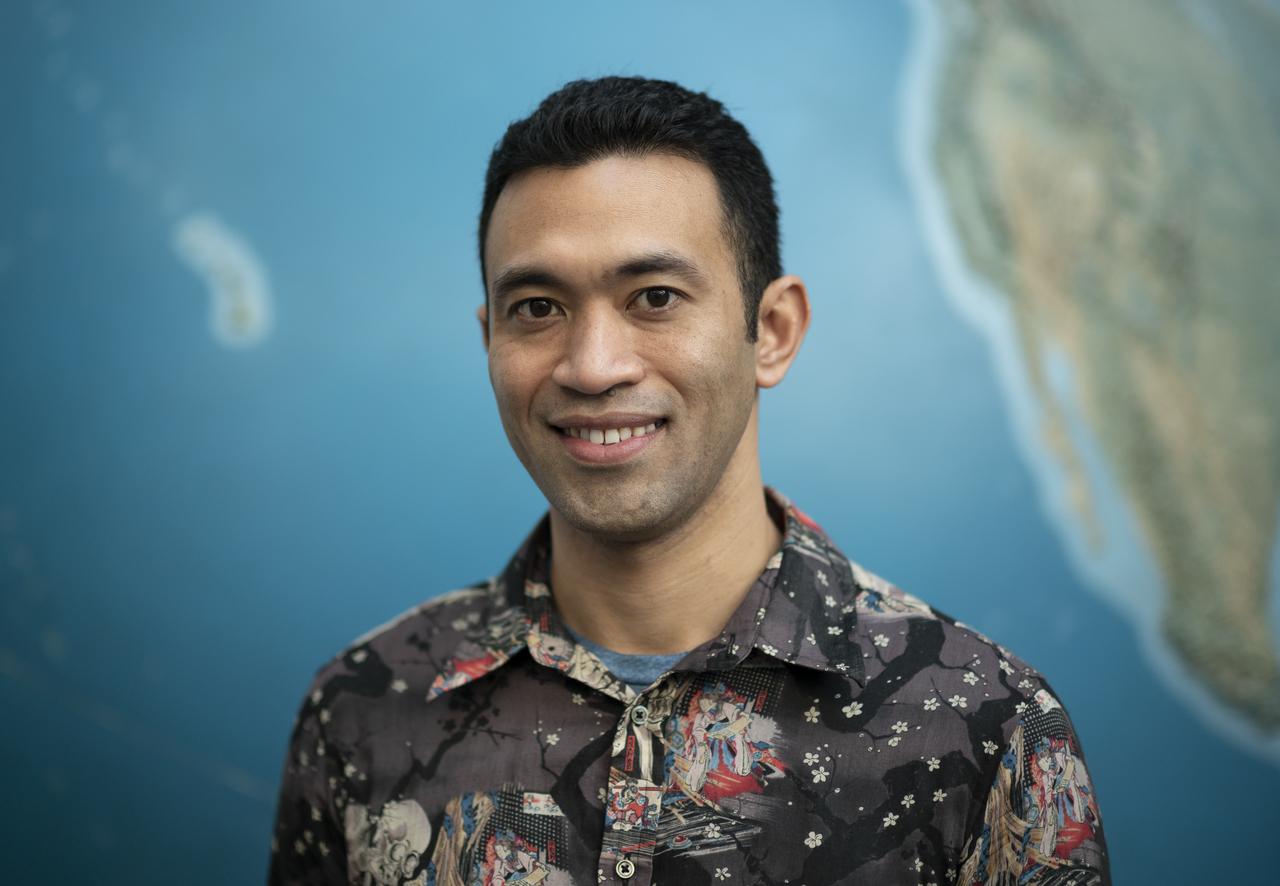
“Back home there’s a place called Mākua beach. It’s where I spent so much of my childhood. My grandfather had a little beachside camp area, and every day after school my dad and I would drive to the camp and visit my grandfather, and we’d go out fishing either on a rubber tube or a small fishing boat. There are so many memories of being with my dad and my grandfather and all of my calabash uncles there. My grandmother and my grandfather were both strongly connected to the beach. They actually both passed away on the beach, so that place has a special place in my heart. It’s a beautiful, beautiful quiet little pocket of sand and water, and every time I go back, I think of them and all of those memories. “The Hawaiians have been there for a thousand-plus years. And I have written documents that show my grandfather’s great-grandfather had an association with the area. It was a letter he wrote to a commission voicing his support for Native Hawaiian land rights in the valley. I love to go back every time I go home. Sometimes when it’s low tide, you can even find petroglyphs engraved on the rocks. There’s always something new to discover. “I know fishing is not as plentiful as it was before because of overfishing and likely other factors. Climate change is impacting a lot of coastal areas not just in Hawaii but also around the world, from erosion to coral bleaching. It’s powerful that we continue to learn how everyone and everything on Earth is interconnected. It’s what Native Hawaiians have long understood through our cosmology and approach to resource management. “That’s what makes communicating Earth science meaningful for me—knowing that indigenous Hawaiian wisdom and NASA research both point to the responsible management of and respect for the environment.” Samson Reiny, editor and senior outreach coordinator at NASA Earth Science News, Friday, Feb. 21, 2020, at NASA's Goddard Space Flight Center in Greenbelt, Md. Photo Credit: (NASA/Joel Kowsky)
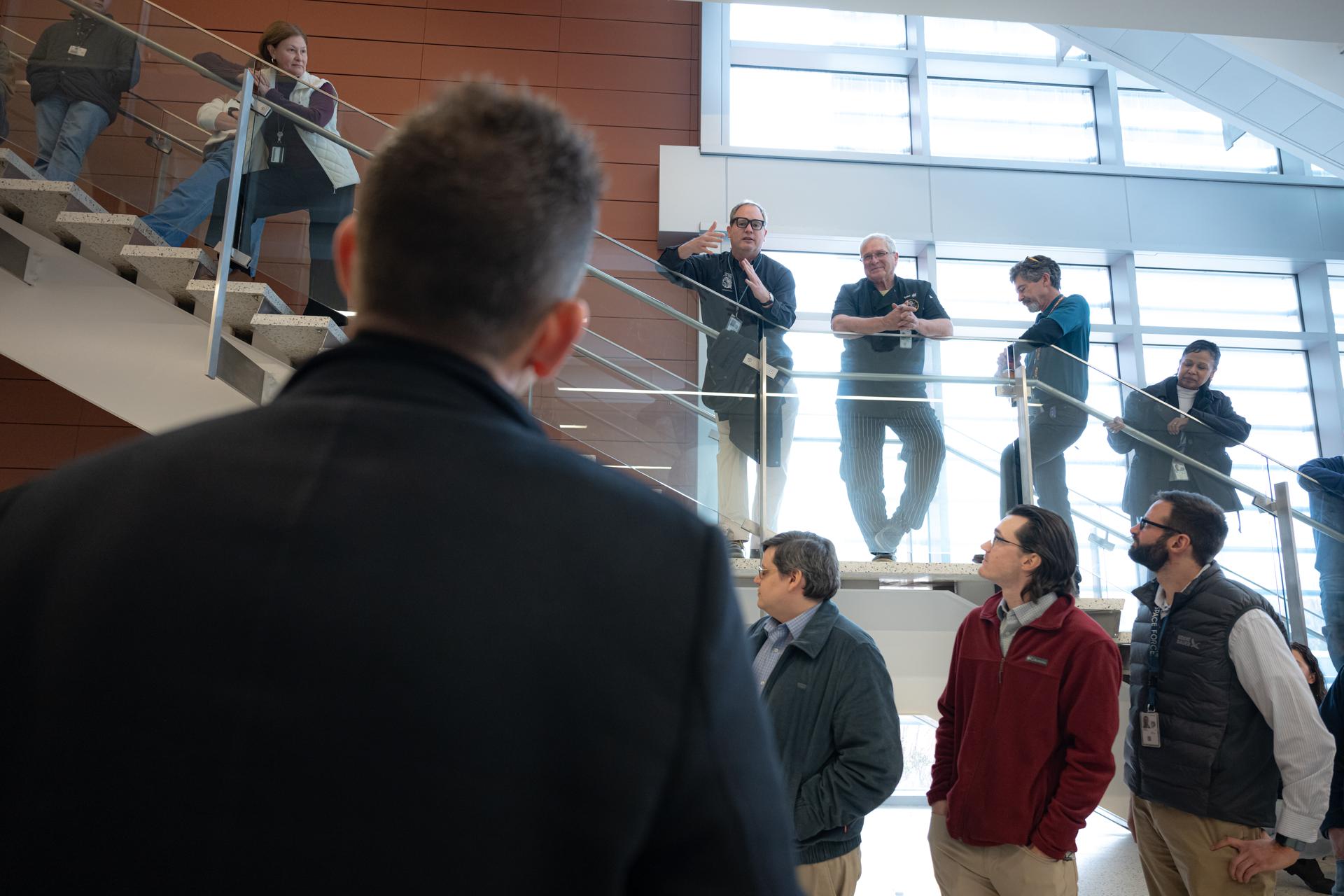
NASA Administrator Jared Isaacman speaks during a workforce Q&A session, Friday, Jan. 9, 2026, at NASA’s Goddard Space Flight Center in Greenbelt, Md. Goddard marks the first stop in Isaacman’s roadshow to visit NASA facilities and engage directly with the agency’s workforce. Photo Credit: (NASA/John Kraus)
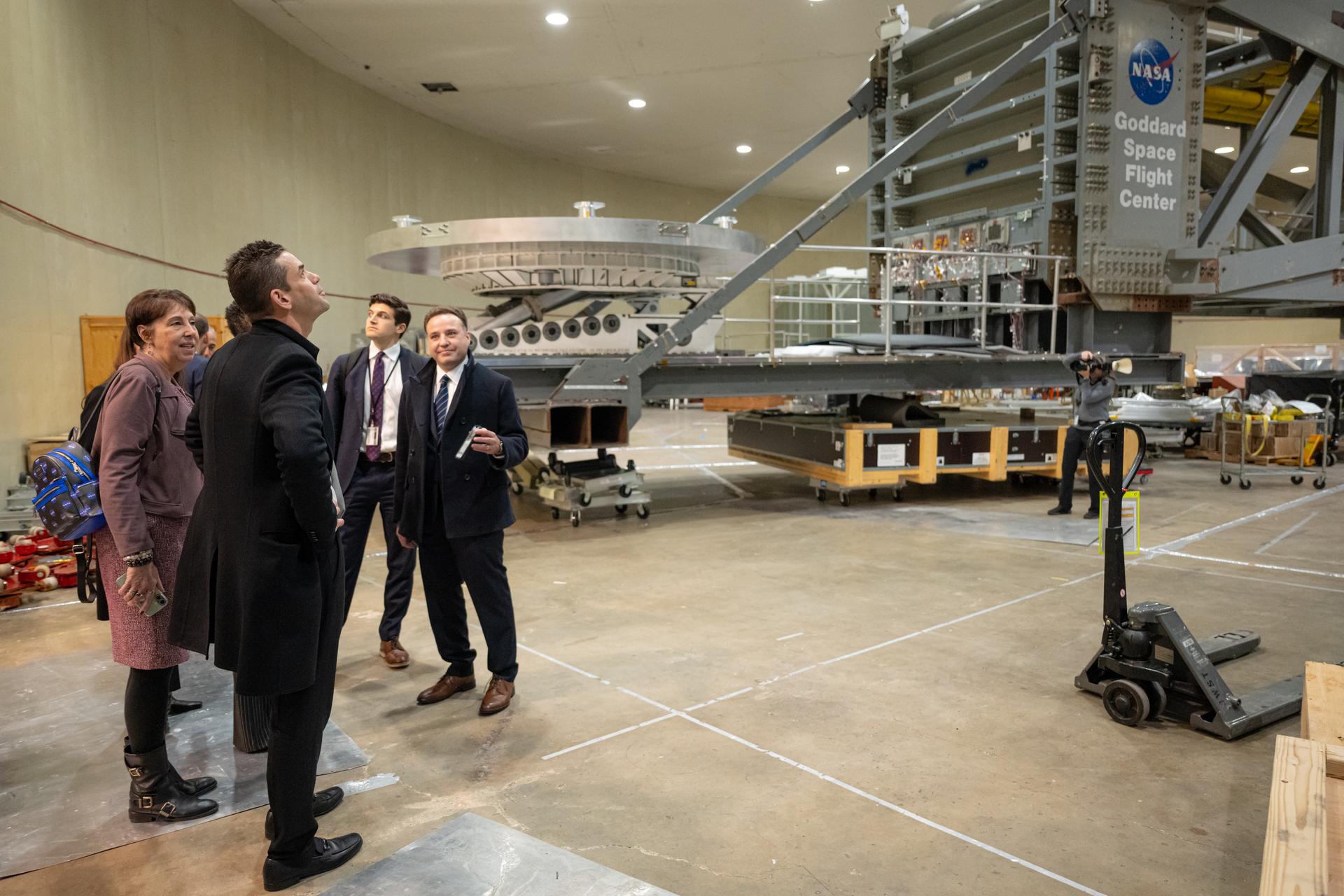
NASA Administrator Jared Isaacman, second from left, and Dr. Nicola Fox, associate administrator, NASA’s Science Mission Directorate, left, visit the High-Capacity Centrifuge, Friday, Jan. 9, 2026, at NASA’s Goddard Space Flight Center in Greenbelt, Md. Goddard marks the first stop in Isaacman’s roadshow to visit NASA facilities and engage directly with the agency’s workforce. Photo Credit: (NASA/John Kraus)
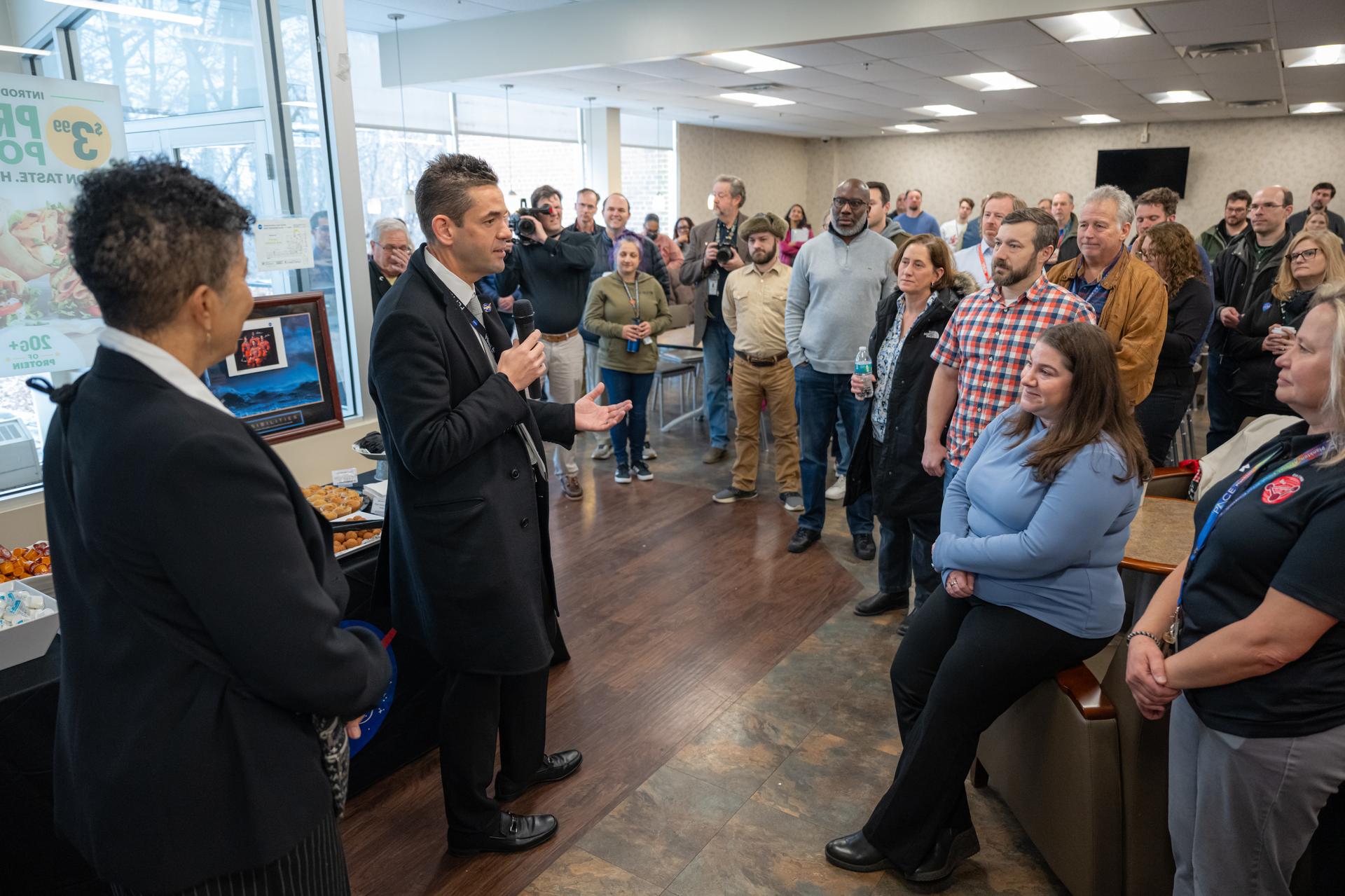
NASA Administrator Jared Isaacman, second from left, speaks during a workforce Q&A session, Friday, Jan. 9, 2026, at NASA’s Goddard Space Flight Center in Greenbelt, Md. Goddard marks the first stop in Isaacman’s roadshow to visit NASA facilities and engage directly with the agency’s workforce. Photo Credit: (NASA/John Kraus)
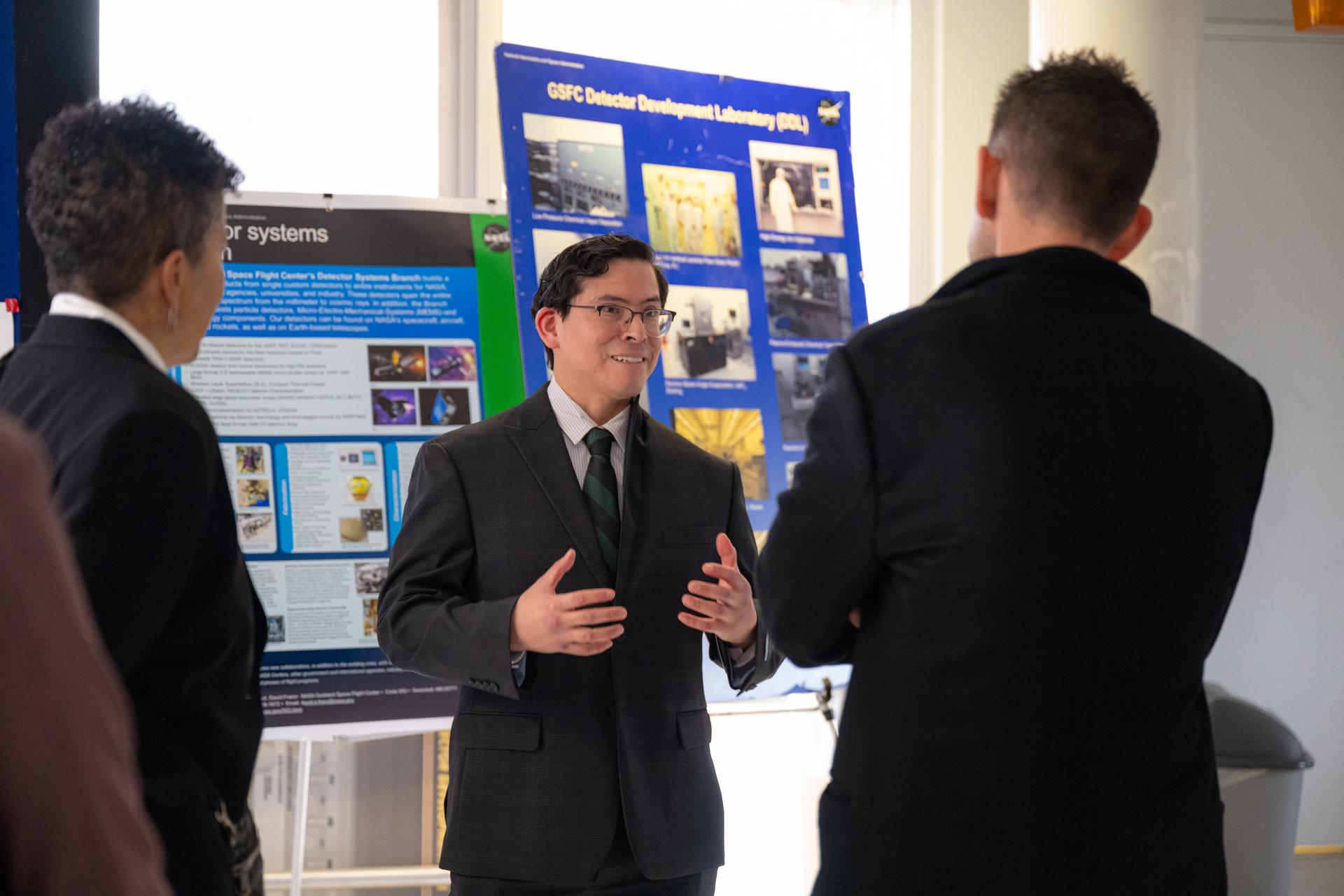
Manuel Balvin, Instrument Systems and Technology Division’s associate chief of operations at NASA’s Goddard Space Flight Center, center, speaks to Cynthia Simmons, acting center director of Goddard, left, and NASA Administrator Jared Isaacman, right, Friday, Jan. 9, 2026, at Goddard Space Flight Center in Greenbelt, Md. Goddard marks the first stop in Isaacman’s roadshow to visit NASA facilities and engage directly with the agency’s workforce. Photo Credit: (NASA/John Kraus)
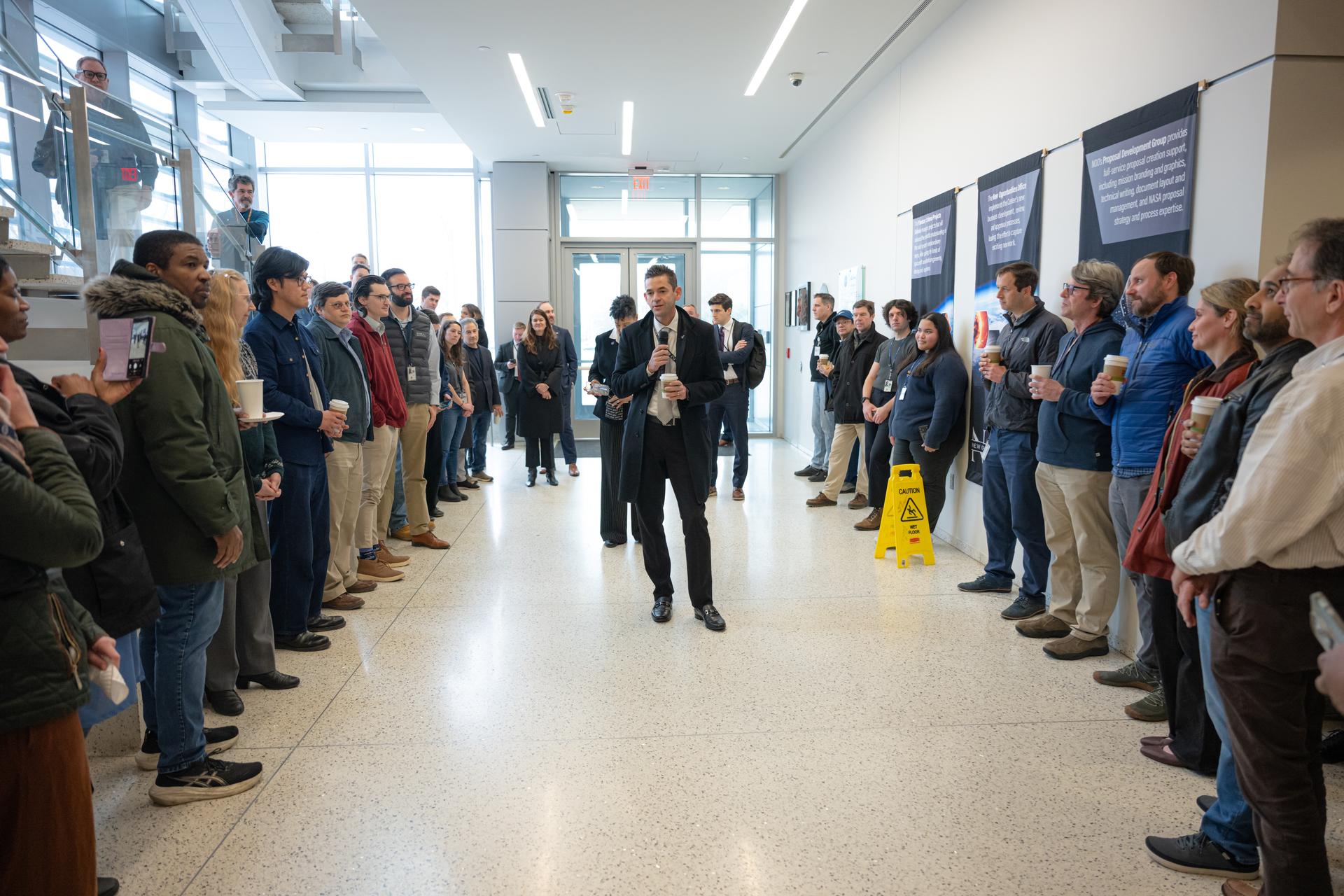
NASA Administrator Jared Isaacman, center, speaks during a workforce Q&A session, Friday, Jan. 9, 2026, at NASA’s Goddard Space Flight Center in Greenbelt, Md. Goddard marks the first stop in Isaacman’s roadshow to visit NASA facilities and engage directly with the agency’s workforce. Photo Credit: (NASA/John Kraus)
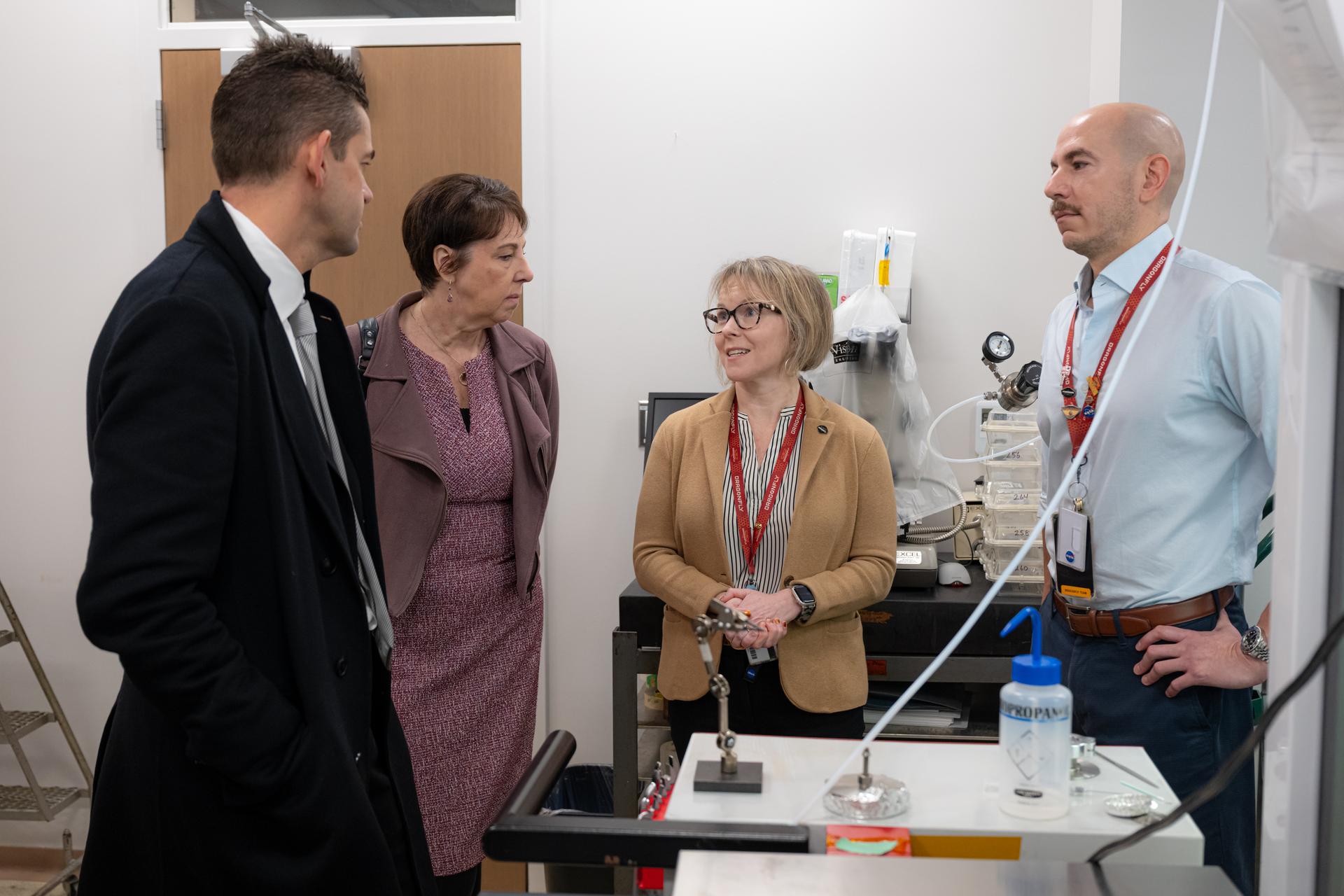
From left to right: NASA Administrator Jared Isaacman; Dr. Nicola Fox, associate administrator, NASA’s Science Mission Directorate; Melissa Grady Trainer, deputy principal investigator for the Dragonfly mission; Charles Malespin, chief of the Planetary Environments Lab, discuss the Dragonfly mission to Saturn’s moon Titan, Friday, Jan. 9, 2026, at NASA’s Goddard Space Flight Center in Greenbelt, Md. Goddard marks the first stop in Isaacman’s roadshow to visit NASA facilities and engage directly with the agency’s workforce. Photo Credit: (NASA/John Kraus)

“I liked every subject in school, but I think I always liked math and science the most. At the time, math seemed to always have just one answer, versus English or history where you always had to interpret things. The funny part is, once you get more into research, there’s never really one answer. You are always interpreting your data. “Data are almost tangible, even though you can’t literally touch them. You can measure the brightness of a star. You can measure the radius of a planet. You can physically see what a telescope collected and the data that come out. You can see how a star is changing over time. You can say, oh look, there’s a periodic dip! There’s a planet! And then you can say, okay, let’s take this dip and look at it across the whole spectrum of light and then you realize: this planet has an atmosphere! It has clouds, just like Earth, or Jupiter! So what does that all mean? So now, I appreciate the interpretive aspect of astronomy. “I love that there’s just so much to learn from all different-sized planets. The giant ones, down to the little ones.” Knicole Colon, research astrophysicist in the Exoplanets and Stellar Astrophysics Laboratory at NASA’s Goddard Space Flight Center, Friday, Feb. 21, 2020, in Greenbelt, Md. Photo Credit: (NASA/Joel Kowsky)
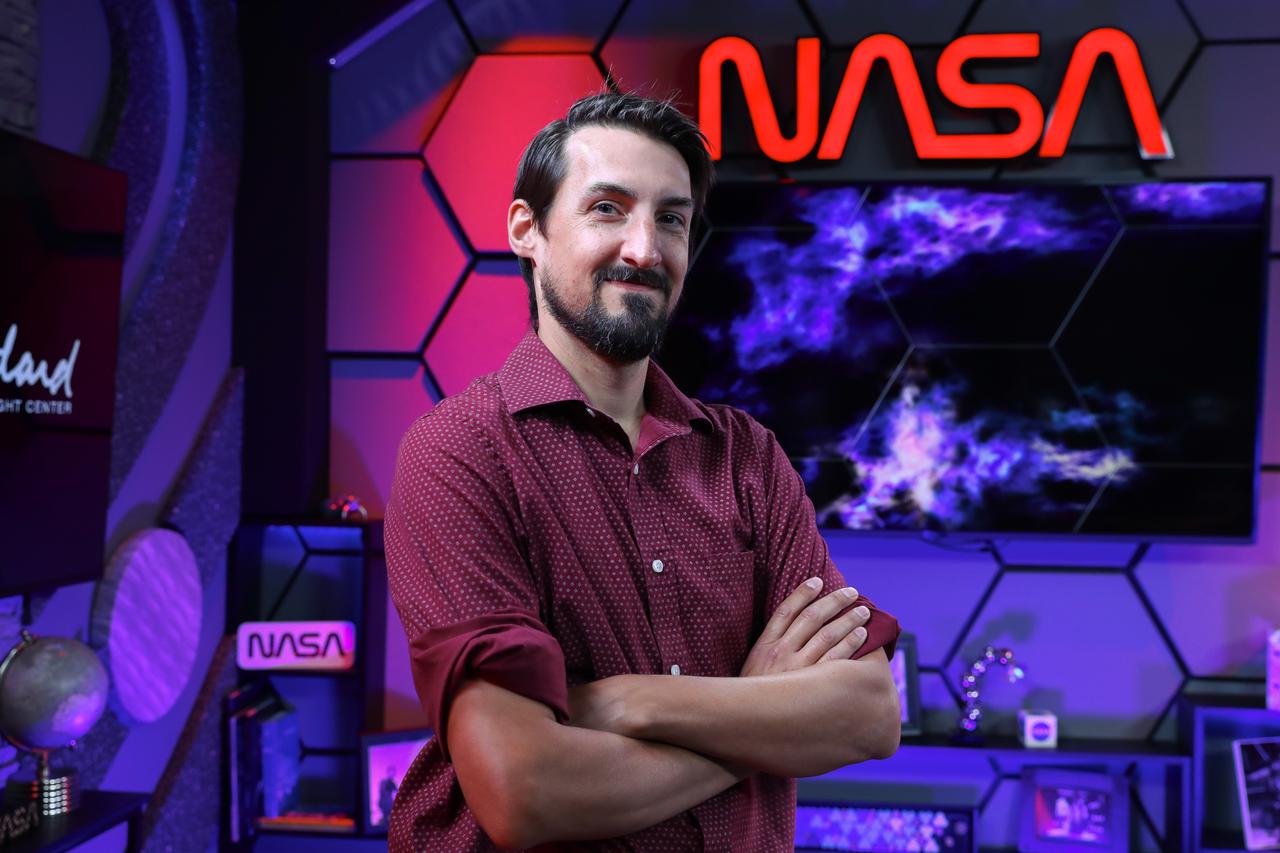
Rob Garner has worked in the Office of Communications at NASA's Goddard Space Flight Center in Greenbelt, Md., since 2007.
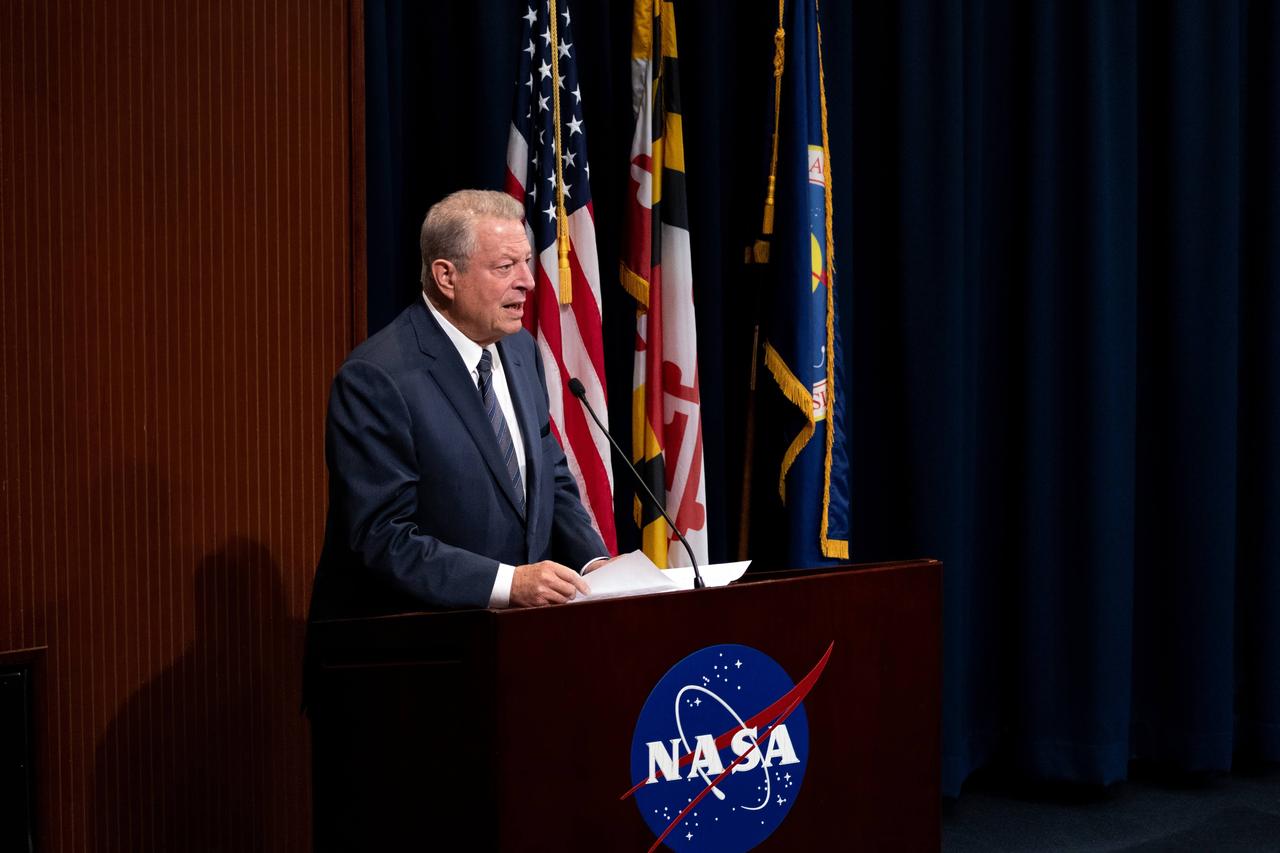
To commemorate the upcoming 10th anniversary of the DSCOVR (Deep Space Climate Observatory) mission, NASA’s Goddard Space Flight Center in Greenbelt, Md., hosted environmentalist and former Vice President Al Gore, shown here addressing a crowd in the Building 3 Harry J. Goett Auditorium, on Oct. 16, 2024. “The image of our Earth from space is the single most compelling iconic image that any of us have ever seen,” Gore said at a panel discussion for employees. “Now we have, thanks to DSCOVR, 50,000 ‘Blue Marble’ photographs … To date there are more than 100 peer-reviewed scientific publications that are based on the unique science gathered at the L1 point by DSCOVR. For all of the scientists who are here and those on the teams that are represented here, I want to say congratulations and thank you.” Following Gore’s talk on climate monitoring, Goddard scientists participated in a panel discussion, “Remote Sensing and the Future of Earth Observations,” which explored the latest advancements in technology that allow for the monitoring of the atmosphere from space and showcased how Goddard’s research drives the future of Earth science. Gore’s visit also entailed a meeting with the DSCOVR science team, a view into the clean room where Goddard is assembling the Roman Space Telescope, and a stop at the control center for PACE: NASA’s Plankton, Aerosol, Cloud, ocean Ecosystem mission. Launched Feb. 11, 2015, DSCOVR is a space weather station that monitors changes in the solar wind, providing space weather alerts and forecasts for geomagnetic storms that could disrupt power grids, satellites, telecommunications, aviation and GPS. DSCOVR is a joint mission among NASA, the National Oceanic and Atmospheric Administration (NOAA), and the U.S. Air Force. The project originally was called Triana, a mission conceived of by Gore in 1998 during his vice presidency.
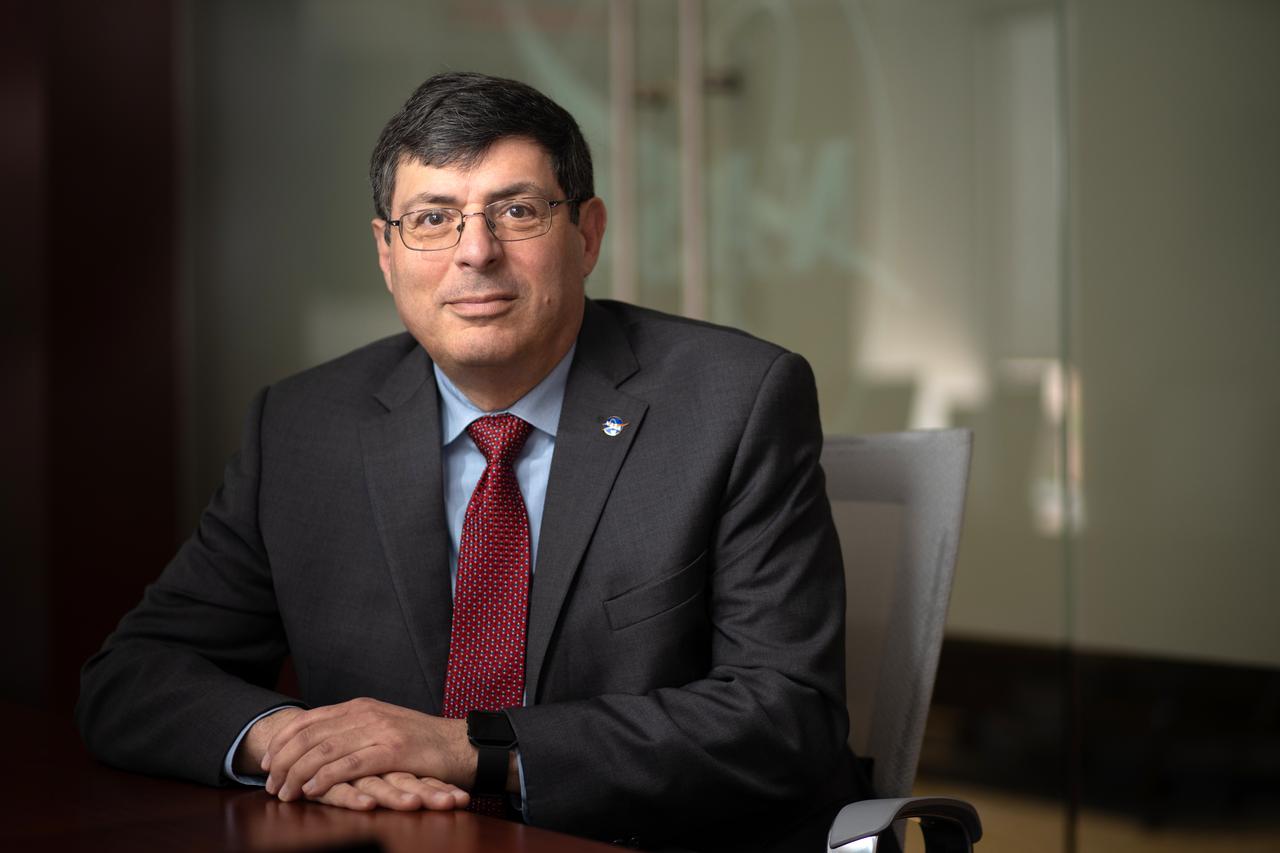
Dr. Christopher Scolese was the director of NASA’s Goddard Space Flight Center, located in Greenbelt, Maryland. Scolese assumed his post on March 5, 2012, and retired from NASA on July 31, 2019. Scolese previously served as NASA associate administrator at NASA Headquarters in Washington, D.C.