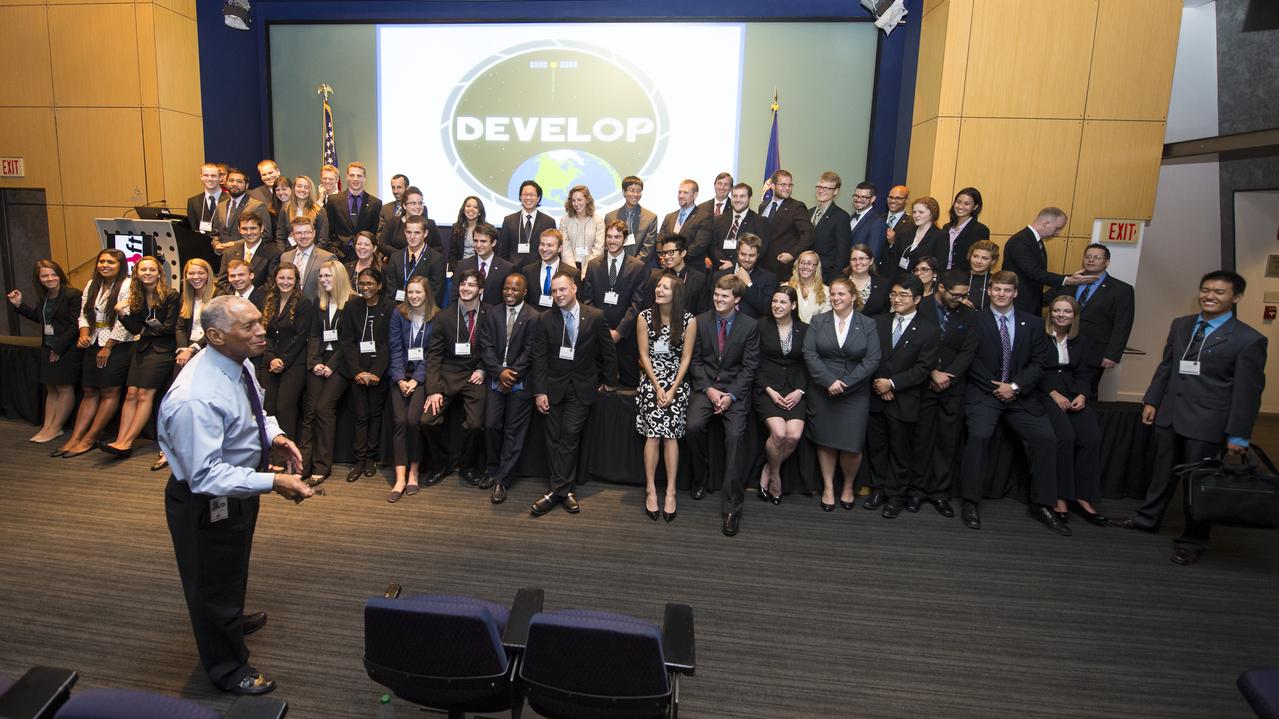
NASA Administrator Charles Bolden asks young professionals about their projects after posing for a group photo during the annual DEVELOP Earth Science Application Showcase at NASA headquarters Tuesday, August 5, 2014. The Earth Science Applications Showcase highlights the work of over 150 participants in the 10-week DEVELOP program that started in June. The DEVELOP Program bridges the gap between NASA Earth science and society, building capacity in both its participants and partner organizations, to better prepare them to handle the challenges that face our society and future generations. Photo Credit: (NASA/Aubrey Gemignani)

Dr. Phoebe Cohen, Professor of Geosciences, Williams College, speaks on a panel at the “Ancient Earth, Alien Earths” Event at NASA Headquarters in Washington, DC Wednesday, August 20, 2014. The event was sponsored by NASA, the National Science Foundation (NSF), and the Smithsonian Institution and was moderated by Dr. David H. Grinspoon, Senior Scientist at the Planetary Science Institute. Six scientists discussed how research on early Earth could help guide our search for habitable planets orbiting other stars. Photo Credit: (NASA/Aubrey Gemignani)
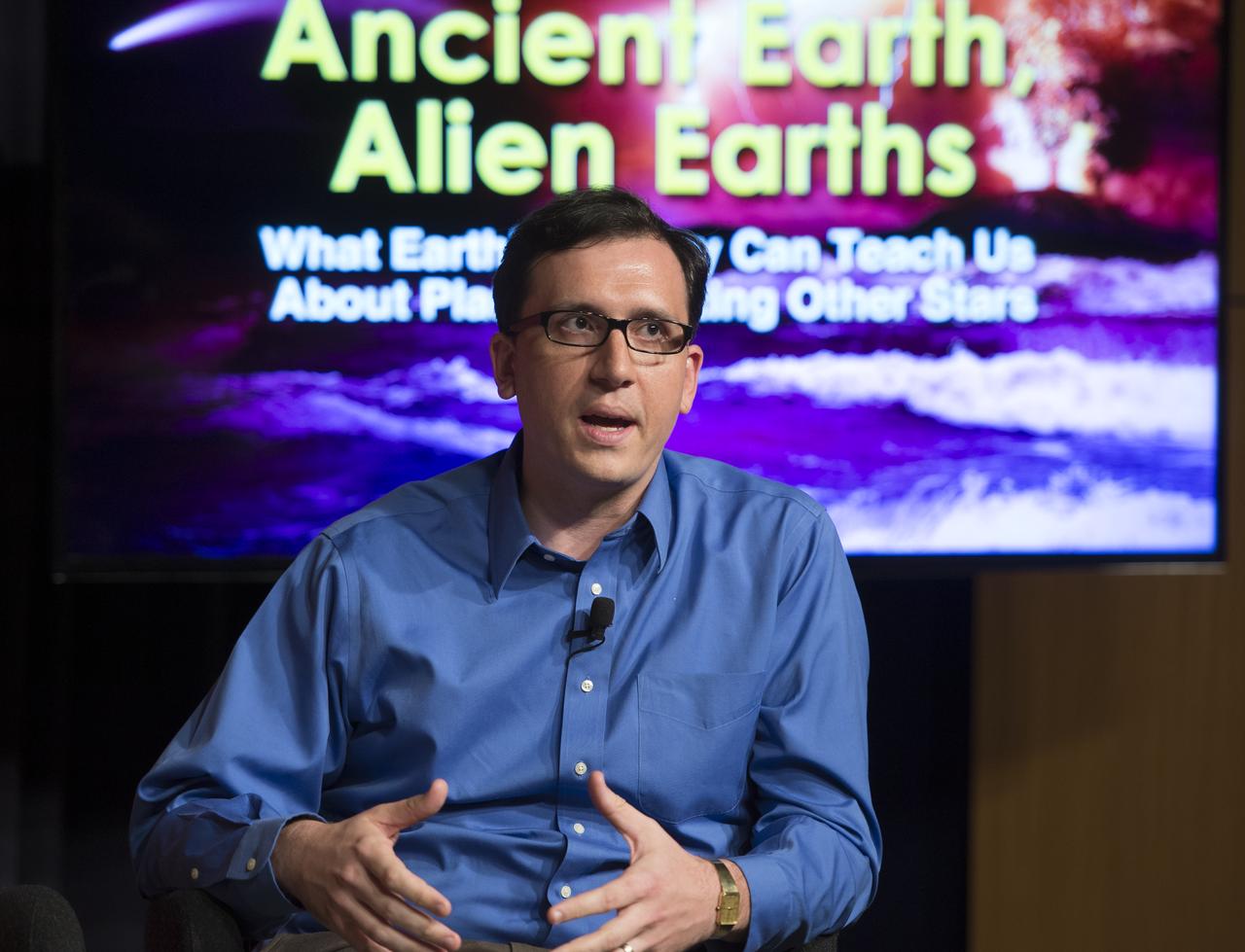
Dr. Shawn Domagal-Goldman, Research Space Scientist, NASA Goddard Space Flight Center, speaks on a panel at the “Ancient Earth, Alien Earths” Event at NASA Headquarters in Washington, DC Wednesday, August 20, 2014. The event was sponsored by NASA, the National Science Foundation (NSF), and the Smithsonian Institution and was moderated by Dr. David H. Grinspoon, Senior Scientist at the Planetary Science Institute. Six scientists discussed how research on early Earth could help guide our search for habitable planets orbiting other stars. Photo Credit: (NASA/Aubrey Gemignani)
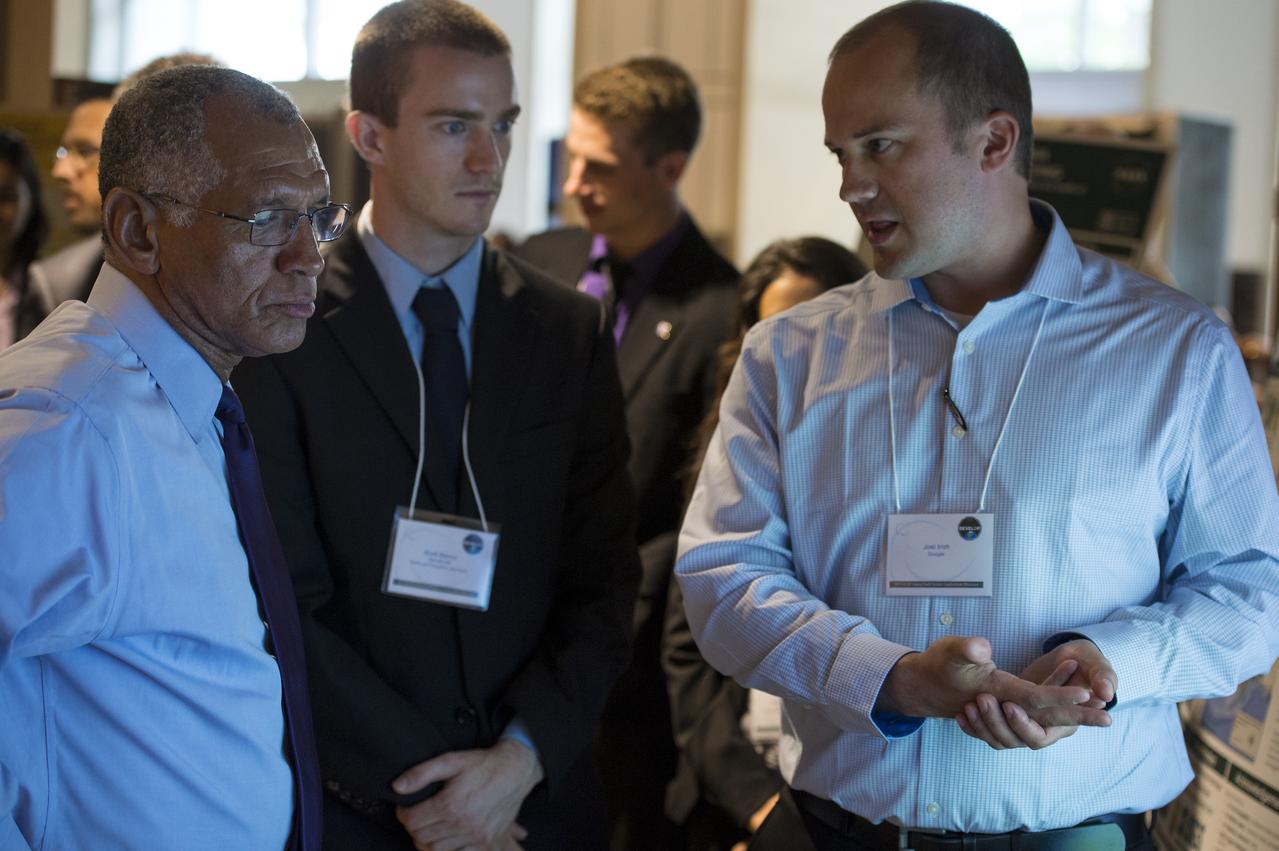
NASA Administrator Charles Bolden speaks with young professionals about their project during the annual DEVELOP Earth Science Application Showcase at NASA headquarters Tuesday, August 5, 2014. The Earth Science Applications Showcase highlights the work of over 150 participants in the 10-week DEVELOP program that started in June. The DEVELOP Program bridges the gap between NASA Earth science and society, building capacity in both its participants and partner organizations, to better prepare them to handle the challenges that face our society and future generations. Photo Credit: (NASA/Aubrey Gemignani)

Dr. Christopher House, Professor of Geosciences, Pennsylvania State University, speaks on a panel at the “Ancient Earth, Alien Earths” Event at NASA Headquarters in Washington, DC Wednesday, August 20, 2014. The event was sponsored by NASA, the National Science Foundation (NSF), and the Smithsonian Institution and was moderated by Dr. David H. Grinspoon, Senior Scientist at the Planetary Science Institute. Six scientists discussed how research on early Earth could help guide our search for habitable planets orbiting other stars. Photo Credit: (NASA/Aubrey Gemignani)
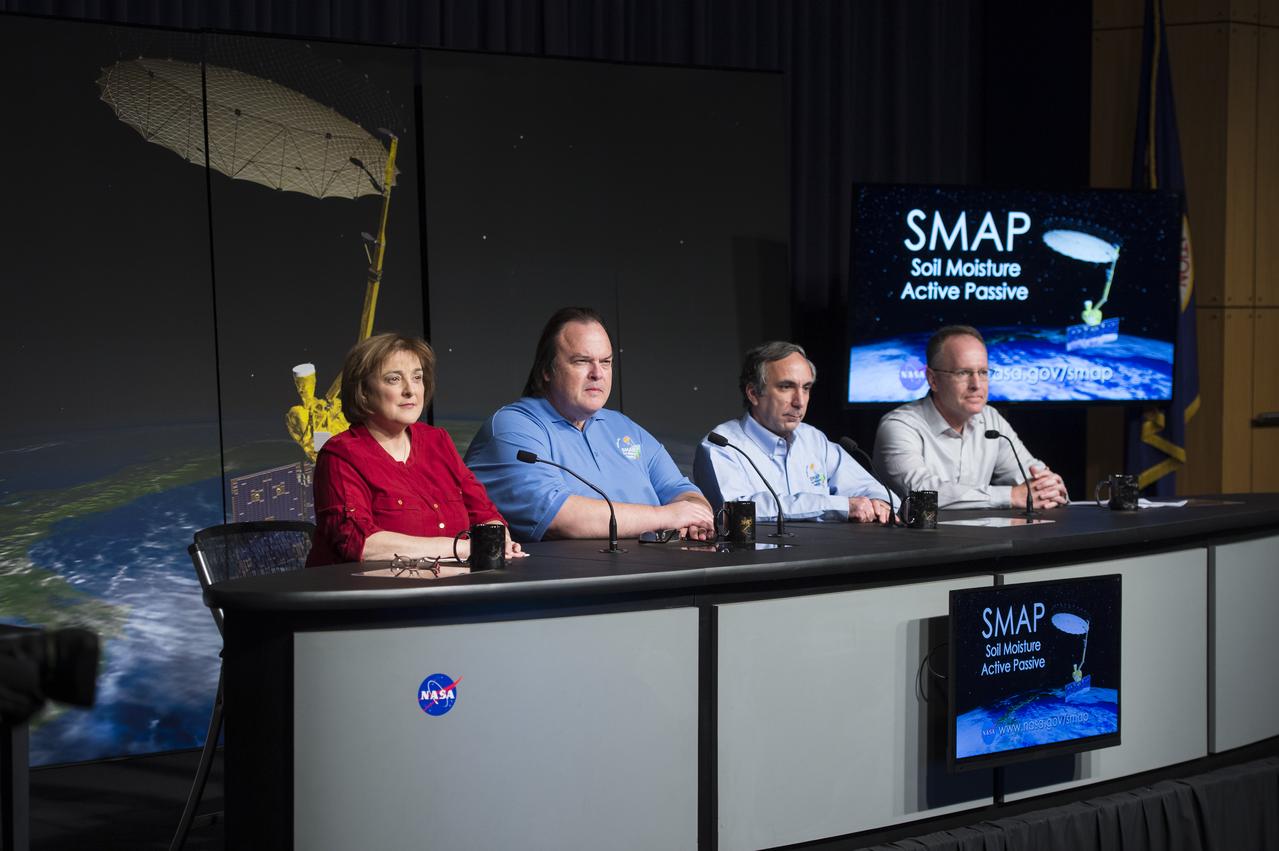
Christine Bonniksen, SMAP program executive with the Science Mission Directorate’s Earth Science Division, NASA Headquarters, left, Kent Kellogg, SMAP project manager, NASA Jet Propulsion Laboratory (JPL), second from left, Dara Entekhabi, SMAP science team lead, Massachusetts Institute of Technology, second from right, and Brad Doorn, SMAP applications lead, Science Mission Directorate’s Applied Sciences Program, NASA Headquarters, right, are seen during a briefing about the upcoming launch of the Soil Moisture Active Passive (SMAP) mission, Thursday, Jan. 08, 2015, at NASA Headquarters in Washington DC. The mission is scheduled for a Jan. 29 launch from Vandenberg Air Force Base in California, and will provide the most accurate, highest-resolution global measurements of soil moisture ever obtained from space. The data will be used to enhance scientists' understanding of the processes that link Earth's water, energy and carbon cycles. Photo Credit: (NASA/Aubrey Gemignani)
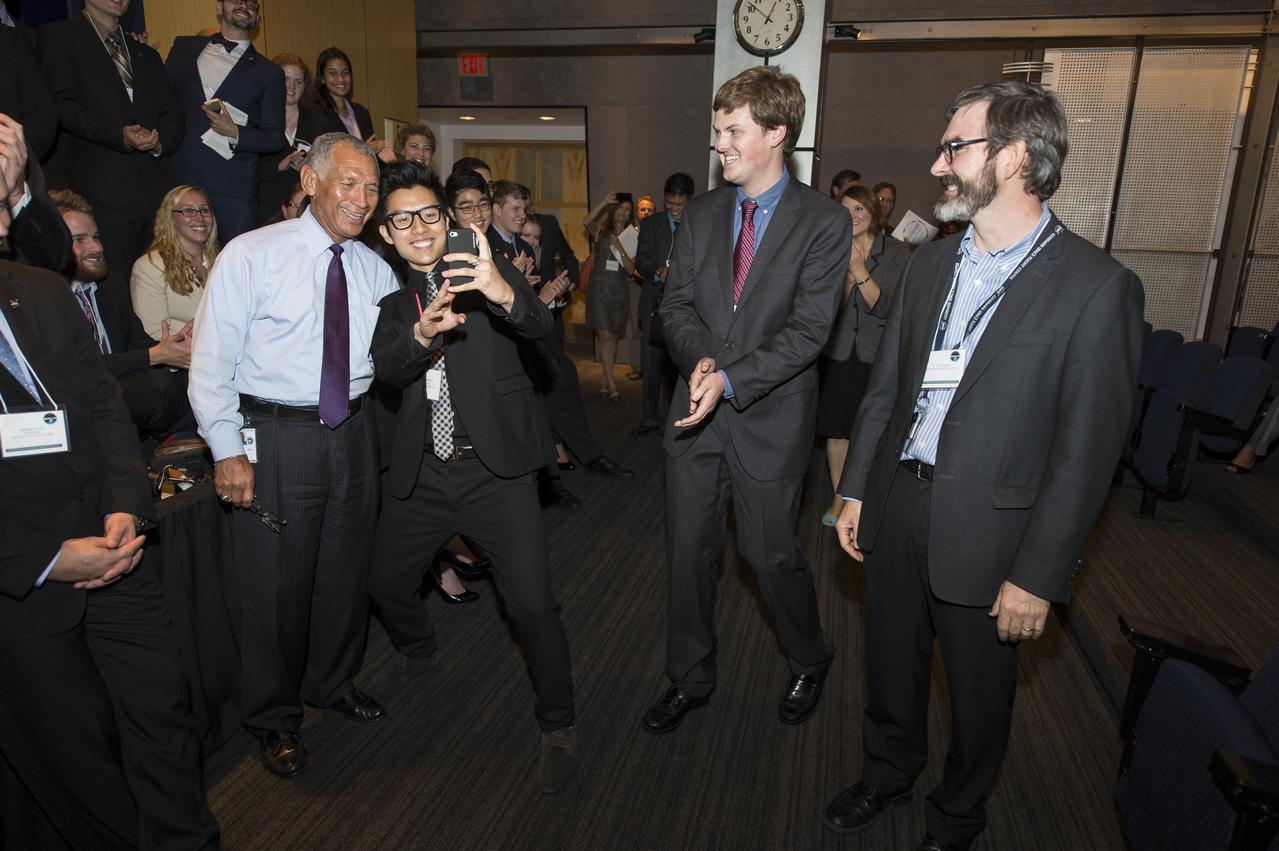
NASA Administrator Charles Bolden poses for a selfie after a quick rap performance by some young professionals during the annual DEVELOP Earth Science Application Showcase at NASA headquarters Tuesday, August 5, 2014. The Earth Science Applications Showcase highlights the work of over 150 participants in the 10-week DEVELOP program that started in June. The DEVELOP Program bridges the gap between NASA Earth science and society, building capacity in both its participants and partner organizations, to better prepare them to handle the challenges that face our society and future generations. Photo Credit: (NASA/Aubrey Gemignani)
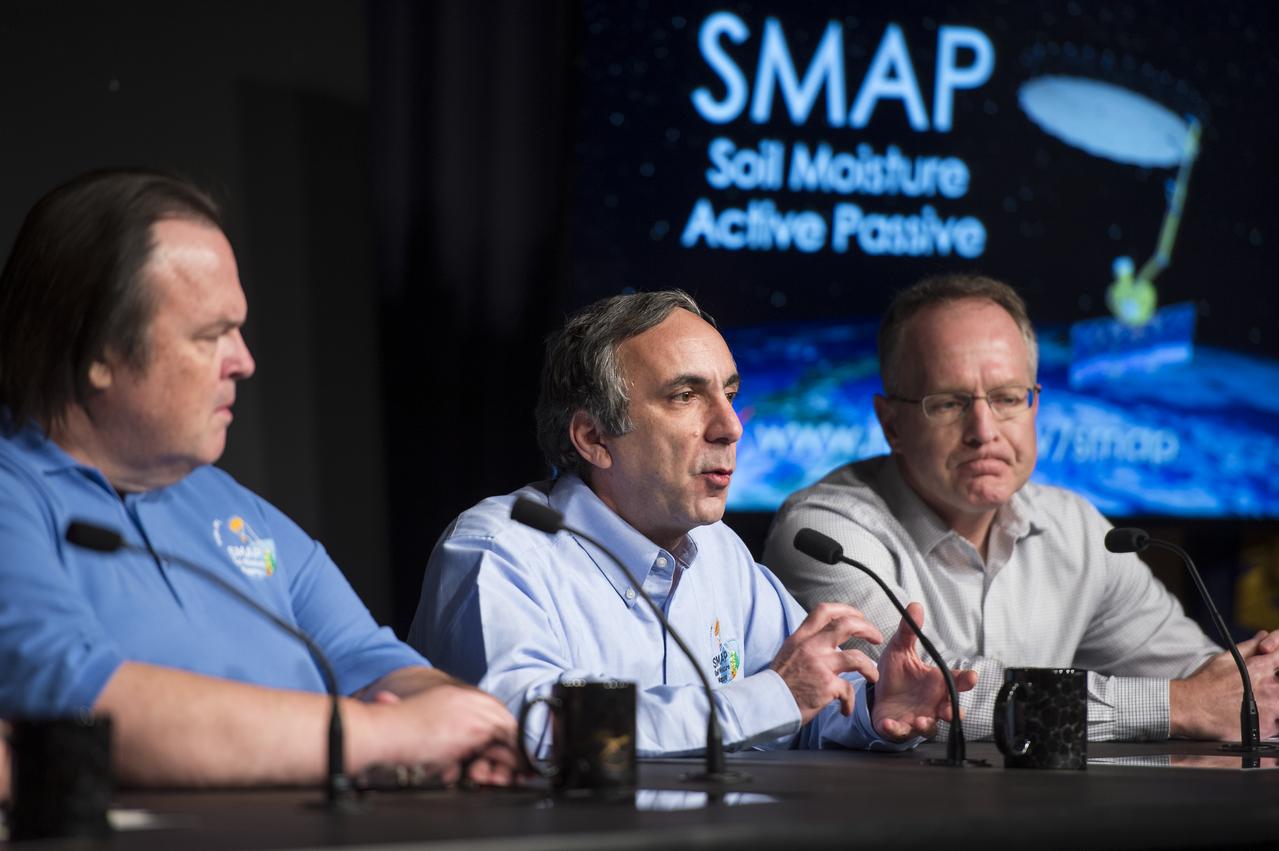
Dara Entekhabi, SMAP science team lead, Massachusetts Institute of Technology, center, speaks during a briefing about the upcoming launch of the Soil Moisture Active Passive (SMAP) mission, Thursday, Jan. 08, 2015, at NASA Headquarters in Washington DC. The mission is scheduled for a Jan. 29 launch from Vandenberg Air Force Base in California, and will provide the most accurate, highest-resolution global measurements of soil moisture ever obtained from space. The data will be used to enhance scientists' understanding of the processes that link Earth's water, energy and carbon cycles. Photo Credit: (NASA/Aubrey Gemignani)
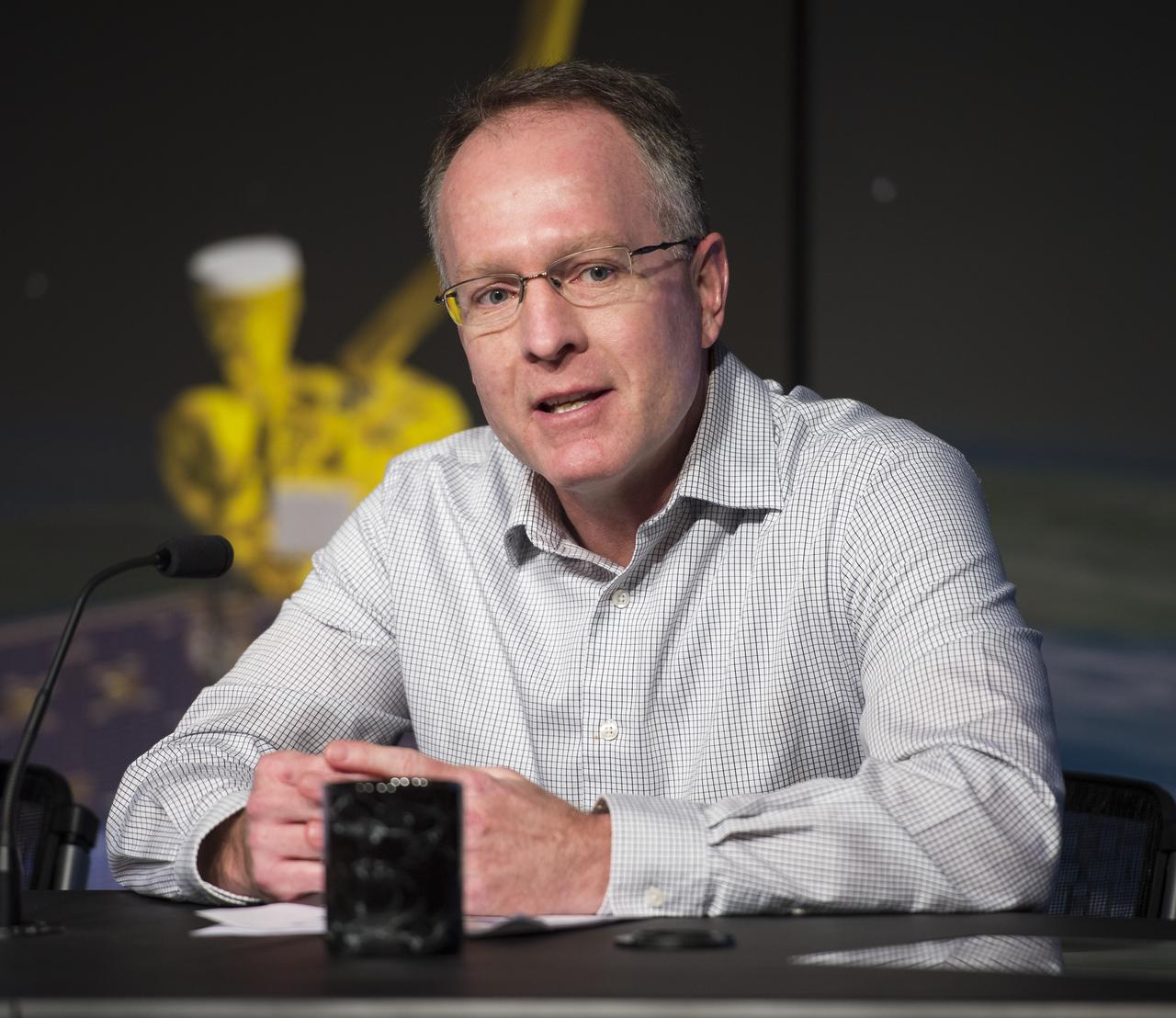
Brad Doorn, SMAP applications lead, Science Mission Directorate’s Applied Sciences Program at NASA Headquarters speaks during a briefing about the upcoming launch of the Soil Moisture Active Passive (SMAP) mission, Thursday, Jan. 08, 2015, at NASA Headquarters in Washington DC. The mission is scheduled for a Jan. 29 launch from Vandenberg Air Force Base in California, and will provide the most accurate, highest-resolution global measurements of soil moisture ever obtained from space. The data will be used to enhance scientists' understanding of the processes that link Earth's water, energy and carbon cycles. Photo Credit: (NASA/Aubrey Gemignani)
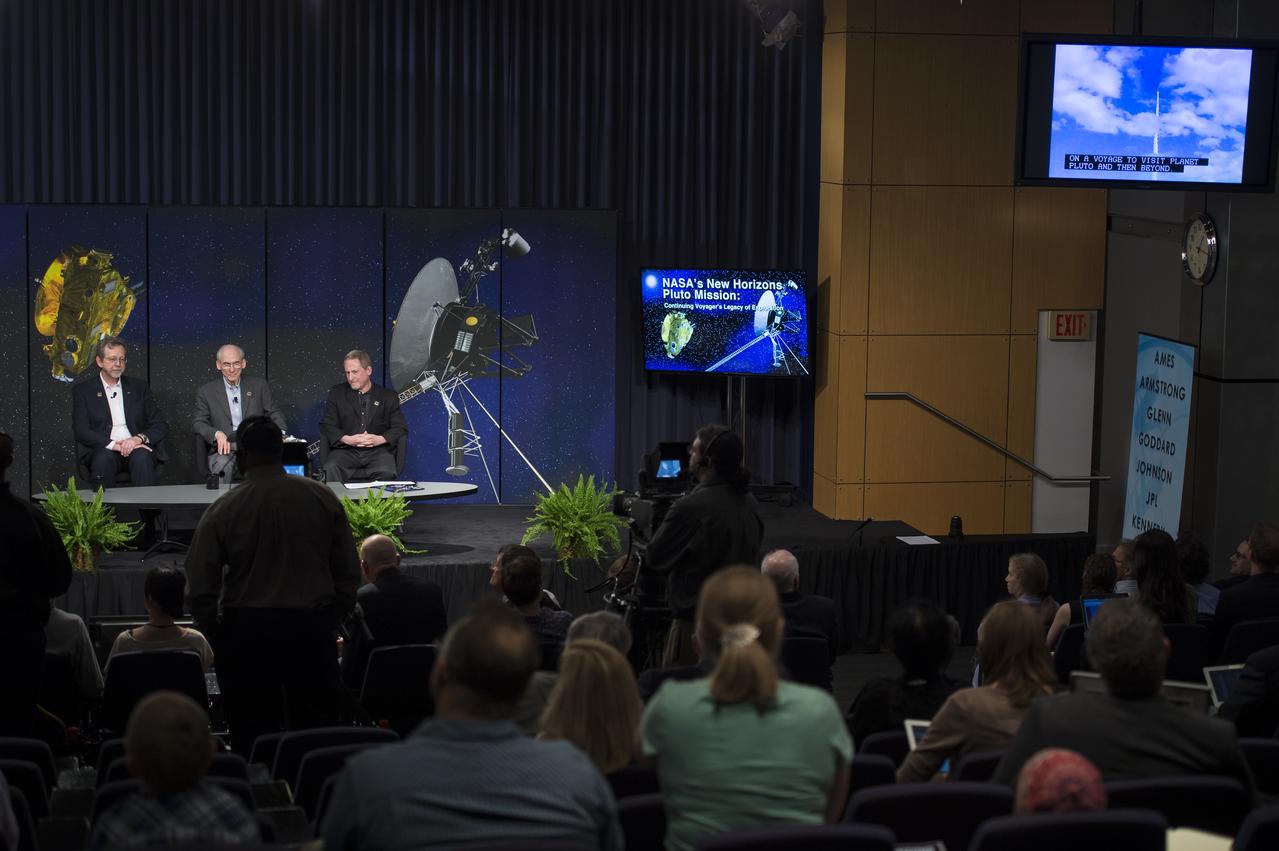
Dr. Jim Green, Dr. Ed Stone, and Dr. Alan Stern speak on a panel at the "New Horizons: The First Mission to the Pluto System and the Kuiper Belt" Event at NASA Headquarters in Washington, DC Monday, August 25, 2014. They discussed how the first images of Pluto and its moons would be captured by the New Horizons spacecraft during a five month long reconnaissance flyby study starting in the summer of 2015. New Horizons launched on January 19, 2006 and is scheduled to make its closest approach to Pluto on July 14, 2015. Photo Credit: (NASA/Aubrey Gemignani)

An audience member asks the panelists a question at the "New Horizons: The First Mission to the Pluto System and the Kuiper Belt" Event at NASA Headquarters in Washington, DC Monday, August 25, 2014. Scientists discussed how the first images of Pluto and its moons would be captured by the New Horizons spacecraft during a five month long reconnaissance flyby study starting in the summer of 2015. New Horizons launched on January 19, 2006 and is scheduled to make its closest approach to Pluto on July 14, 2015. Photo Credit: (NASA/Aubrey Gemignani)

Dr. Dawn Sumner, Professor of Geology, UC Davis, speaks on a panel at the “Ancient Earth, Alien Earths” Event at NASA Headquarters in Washington, DC Wednesday, August 20, 2014. The event was sponsored by NASA, the National Science Foundation (NSF), and the Smithsonian Institution and was moderated by Dr. David H. Grinspoon, Senior Scientist at the Planetary Science Institute. Six scientists discussed how research on early Earth could help guide our search for habitable planets orbiting other stars. Photo Credit: (NASA/Aubrey Gemignani)

Christine Bonniksen, SMAP program executive with the Science Mission Directorate’s Earth Science Division, NASA Headquarters, left, Kent Kellogg, SMAP project manager, NASA Jet Propulsion Laboratory (JPL), second from left, Dara Entekhabi, SMAP science team lead, Massachusetts Institute of Technology, second from right, and Brad Doorn, SMAP applications lead, Science Mission Directorate’s Applied Sciences Program, NASA Headquarters, right, are seen during a briefing about the upcoming launch of the Soil Moisture Active Passive (SMAP) mission, Thursday, Jan. 08, 2015, at NASA Headquarters in Washington DC. The mission is scheduled for a Jan. 29 launch from Vandenberg Air Force Base in California, and will provide the most accurate, highest-resolution global measurements of soil moisture ever obtained from space. The data will be used to enhance scientists' understanding of the processes that link Earth's water, energy and carbon cycles. Photo Credit: (NASA/Aubrey Gemignani)
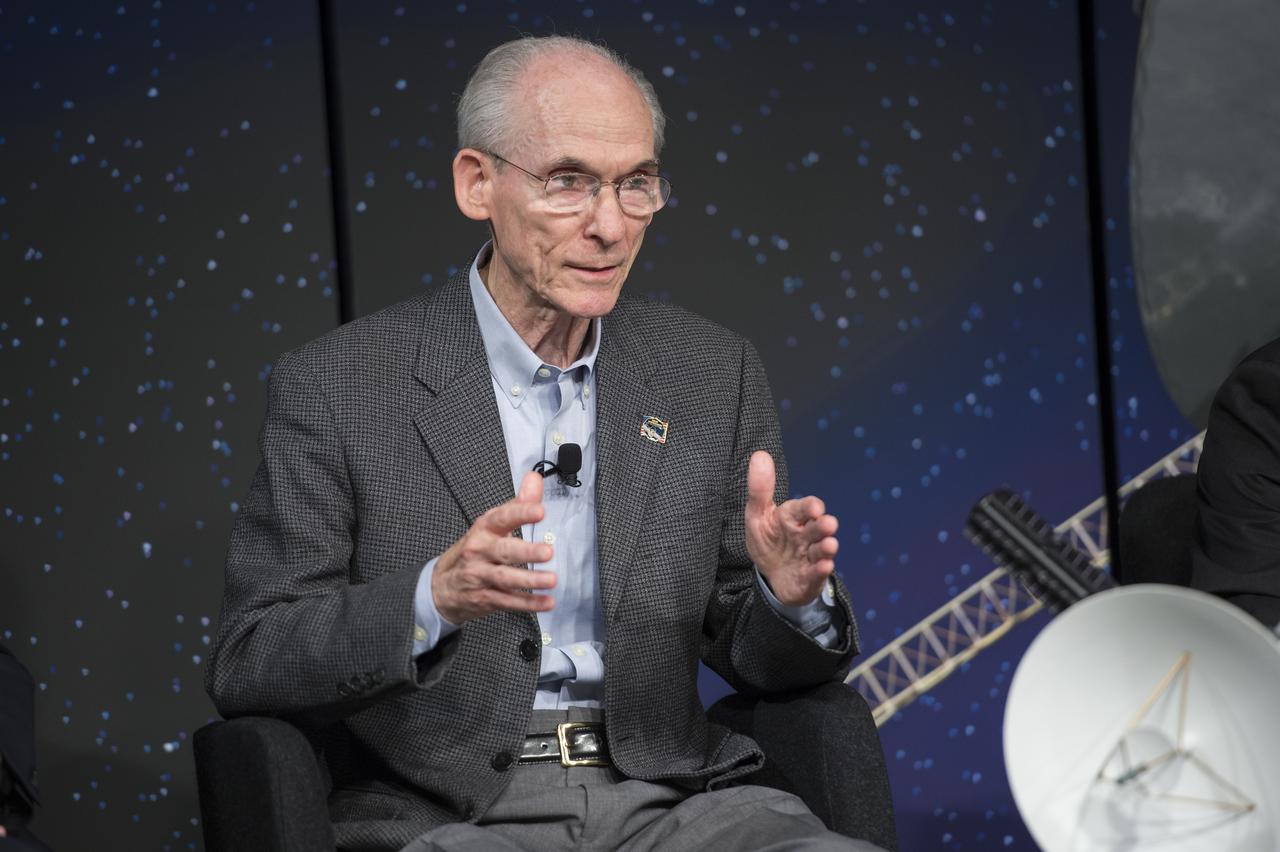
Dr. Ed Stone, Voyager project scientist, speaks on a panel at the "New Horizons: The First Mission to the Pluto System and the Kuiper Belt" Event at NASA Headquarters in Washington, DC Monday, August 25, 2014. Scientists discussed how the first images of Pluto and its moons would be captured by the New Horizons spacecraft during a five month long reconnaissance flyby study starting in the summer of 2015. New Horizons launched on January 19, 2006 and is scheduled to make its closest approach to Pluto on July 14, 2015. Photo Credit: (NASA/Aubrey Gemignani)
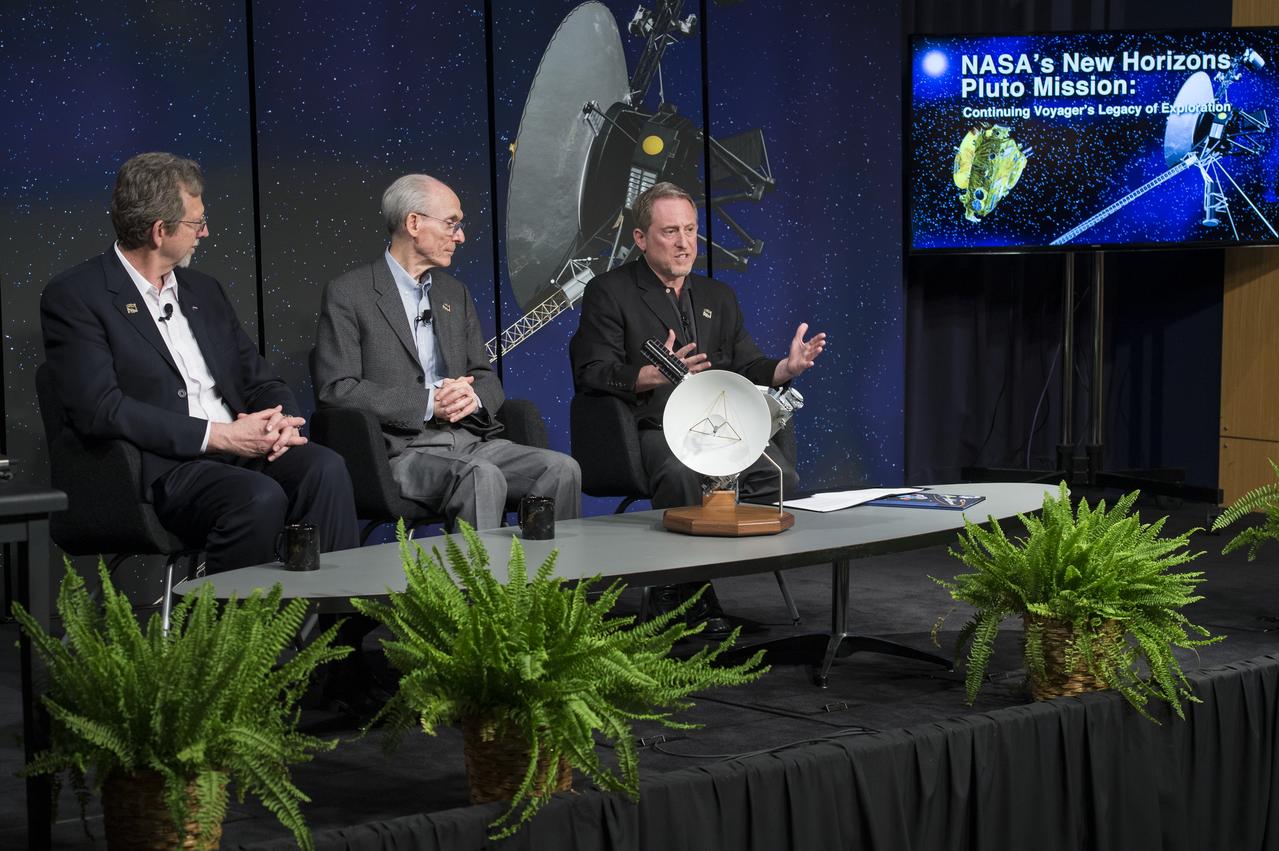
Dr. Jim Green, Dr. Ed Stone, and Dr. Alan Stern speak on a panel at the "New Horizons: The First Mission to the Pluto System and the Kuiper Belt" Event at NASA Headquarters in Washington, DC Monday, August 25, 2014. They discussed how the first images of Pluto and its moons would be captured by the New Horizons spacecraft during a five month long reconnaissance flyby study starting in the summer of 2015. New Horizons launched on January 19, 2006 and is scheduled to make its closest approach to Pluto on July 14, 2015. Photo Credit: (NASA/Aubrey Gemignani)

Dr. David H. Grinspoon, Senior Scientist, Planetary Science Institute, moderates a panel at the “Ancient Earth, Alien Earths” Event at NASA Headquarters in Washington, DC Wednesday, August 20, 2014. The event was sponsored by NASA, the National Science Foundation (NSF), and the Smithsonian Institution and highlighted how research on early Earth could help guide our search for habitable planets orbiting other stars. Photo Credit: (NASA/Aubrey Gemignani)
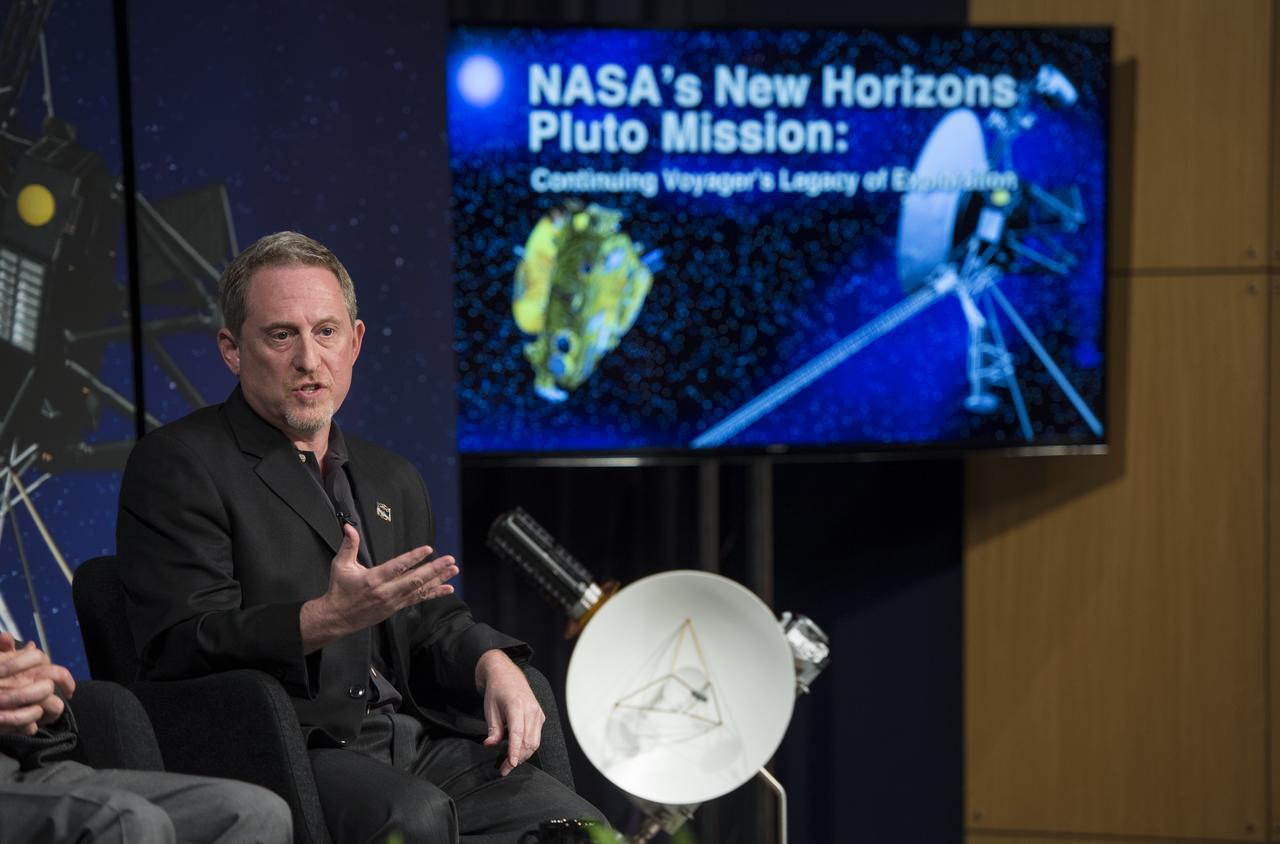
Dr. Alan Stern, New Horizons principal investigator, speaks on a panel at the "New Horizons: The First Mission to the Pluto System and the Kuiper Belt" Event at NASA Headquarters in Washington, DC Monday, August 25, 2014. Scientists discussed how the first images of Pluto and its moons would be captured by the New Horizons spacecraft during a five month long reconnaissance flyby study starting in the summer of 2015. New Horizons launched on January 19, 2006 and is scheduled to make its closest approach to Pluto on July 14, 2015. Photo Credit: (NASA/Aubrey Gemignani)

An audience member asks the panelists a question at the “Ancient Earth, Alien Earths” Event at NASA Headquarters in Washington, DC Wednesday, August 20, 2014. The event was sponsored by NASA, the National Science Foundation (NSF), and the Smithsonian Institution and was moderated by Dr. David H. Grinspoon, Senior Scientist at the Planetary Science Institute. Six scientists discussed how research on early Earth could help guide our search for habitable planets orbiting other stars. Photo Credit: (NASA/Aubrey Gemignani)
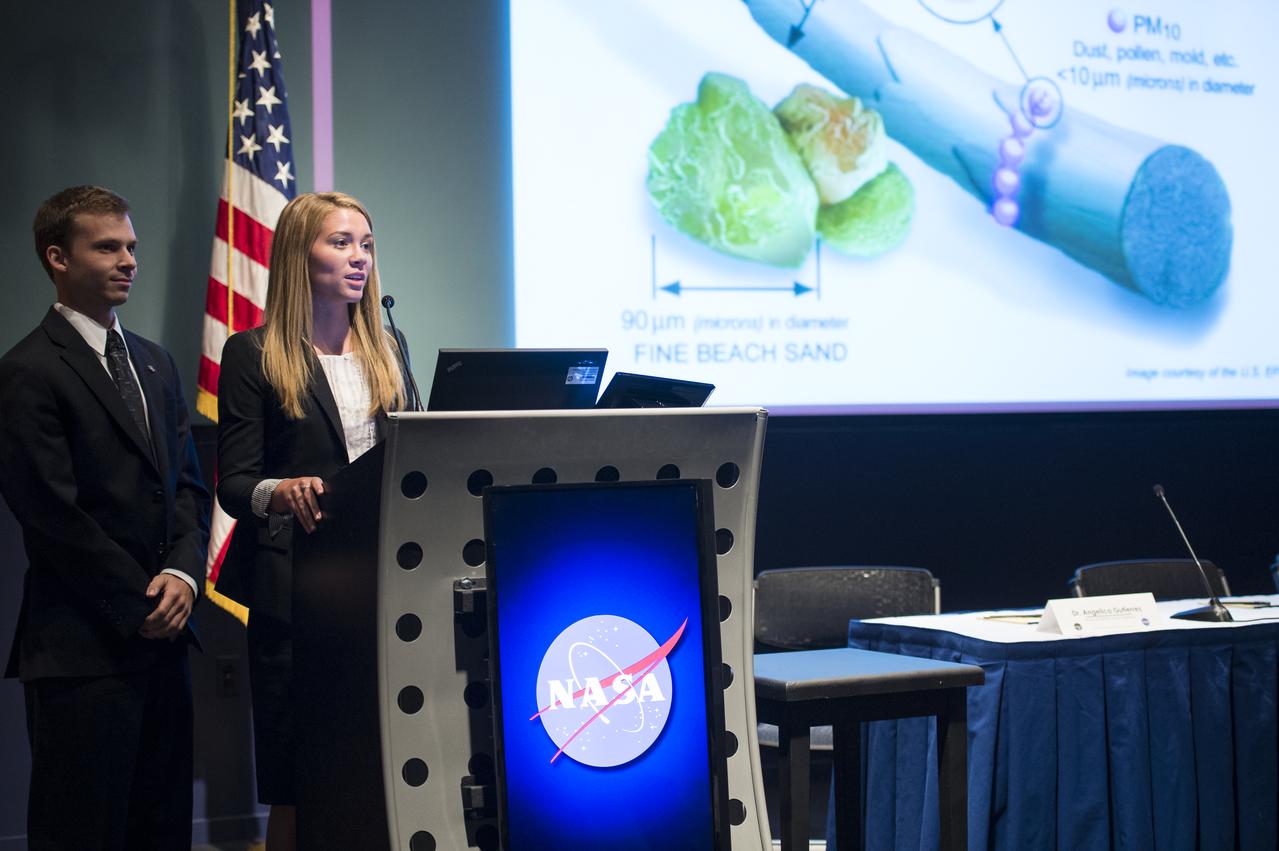
Lisa Waldron and Justin Roberts-Pierel present their project on Texas health and air quality during the annual DEVELOP Earth Science Application Showcase at NASA headquarters Tuesday, August 5, 2014. The Earth Science Applications Showcase highlights the work of over 150 participants in the 10-week DEVELOP program that started in June. The DEVELOP Program bridges the gap between NASA Earth science and society, building capacity in both its participants and partner organizations, to better prepare them to handle the challenges that face our society and future generations. Photo Credit: (NASA/Aubrey Gemignani)

NASA Administrator Charles Bolden speaks with young professionals about their project on New England water resources during the annual DEVELOP Earth Science Application Showcase at NASA headquarters Tuesday, August 5, 2014. The Earth Science Applications Showcase highlights the work of over 150 participants in the 10-week DEVELOP program that started in June. The DEVELOP Program bridges the gap between NASA Earth science and society, building capacity in both its participants and partner organizations, to better prepare them to handle the challenges that face our society and future generations. Photo Credit: (NASA/Aubrey Gemignani)
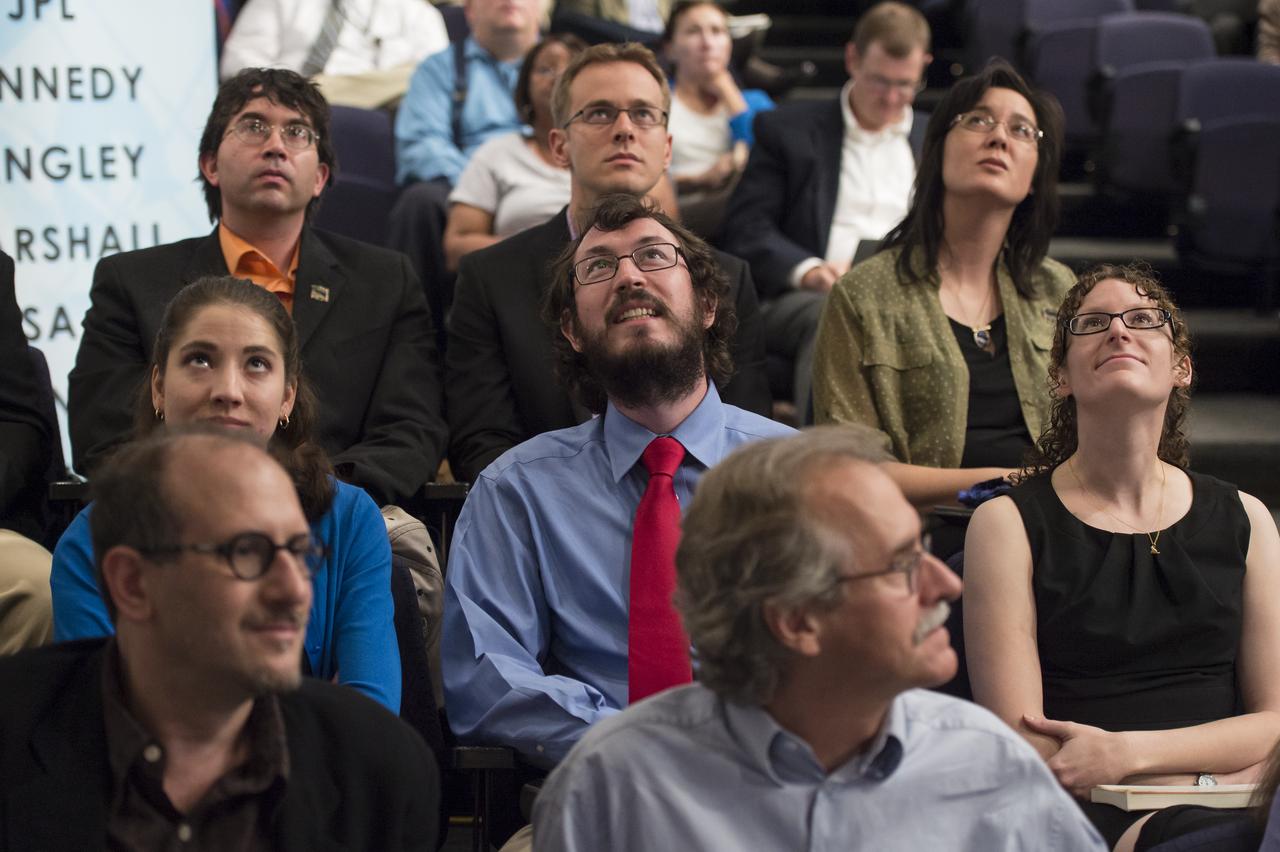
Audience members view slides from a presentation by Dr. Jim Green, Dr. Ed Stone, and Dr. Alan Stern at the "New Horizons: The First Mission to the Pluto System and the Kuiper Belt" Event at NASA Headquarters in Washington, DC Monday, August 25, 2014. They discussed how the first images of Pluto and its moons would be captured by the New Horizons spacecraft during a five month long reconnaissance flyby study starting in the summer of 2015. New Horizons launched on January 19, 2006 and is scheduled to make its closest approach to Pluto on July 14, 2015. Photo Credit: (NASA/Aubrey Gemignani)
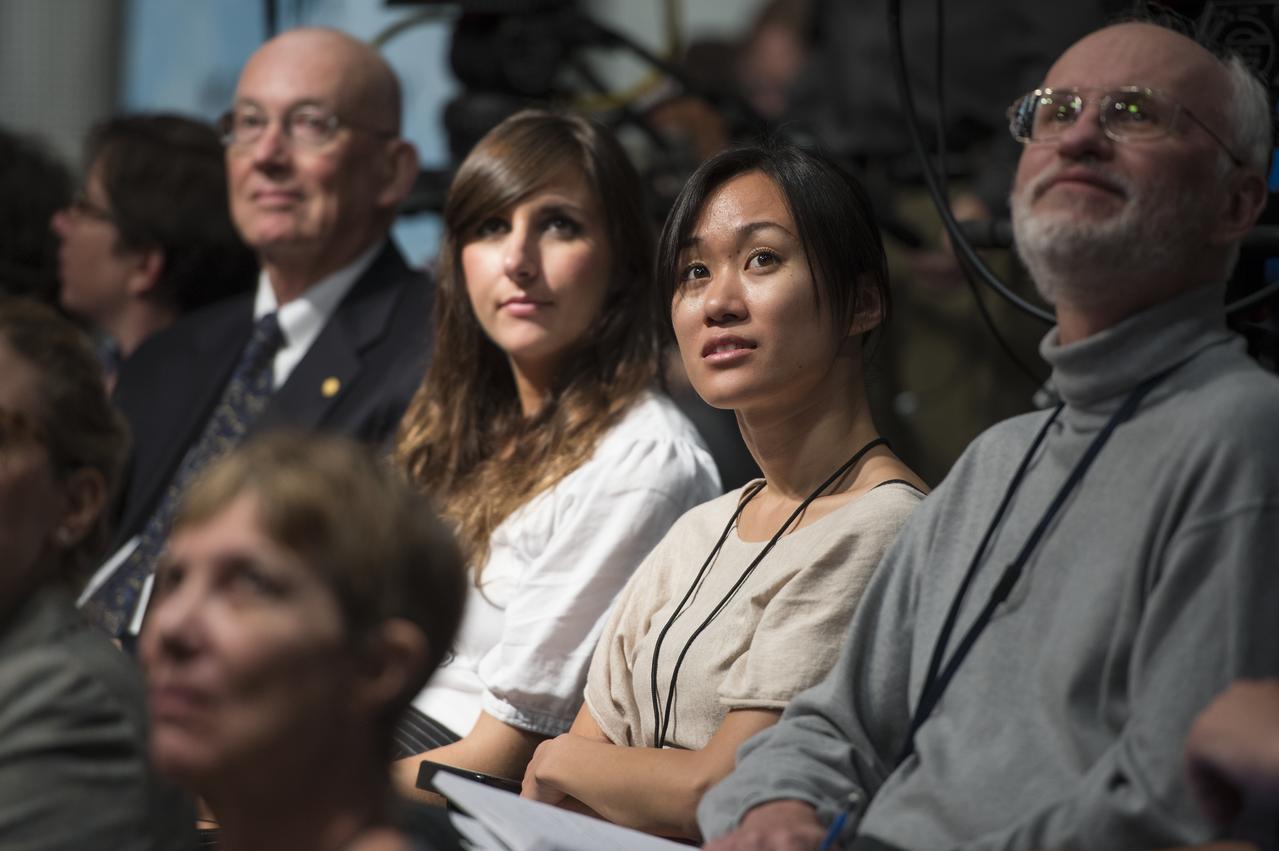
Audience members view images of Neptune taken by Voyager while scientists discuss how the first images of Pluto and its moons will be captured during the "New Horizons: The First Mission to the Pluto System and the Kuiper Belt" Event at NASA Headquarters in Washington, DC Monday, August 25, 2014. The New Horizons spacecraft launched on January 19, 2006 will conduct a five month long reconnaissance flyby study of Pluto and its moons starting in the summer of 2015. Photo Credit: (NASA/Aubrey Gemignani)
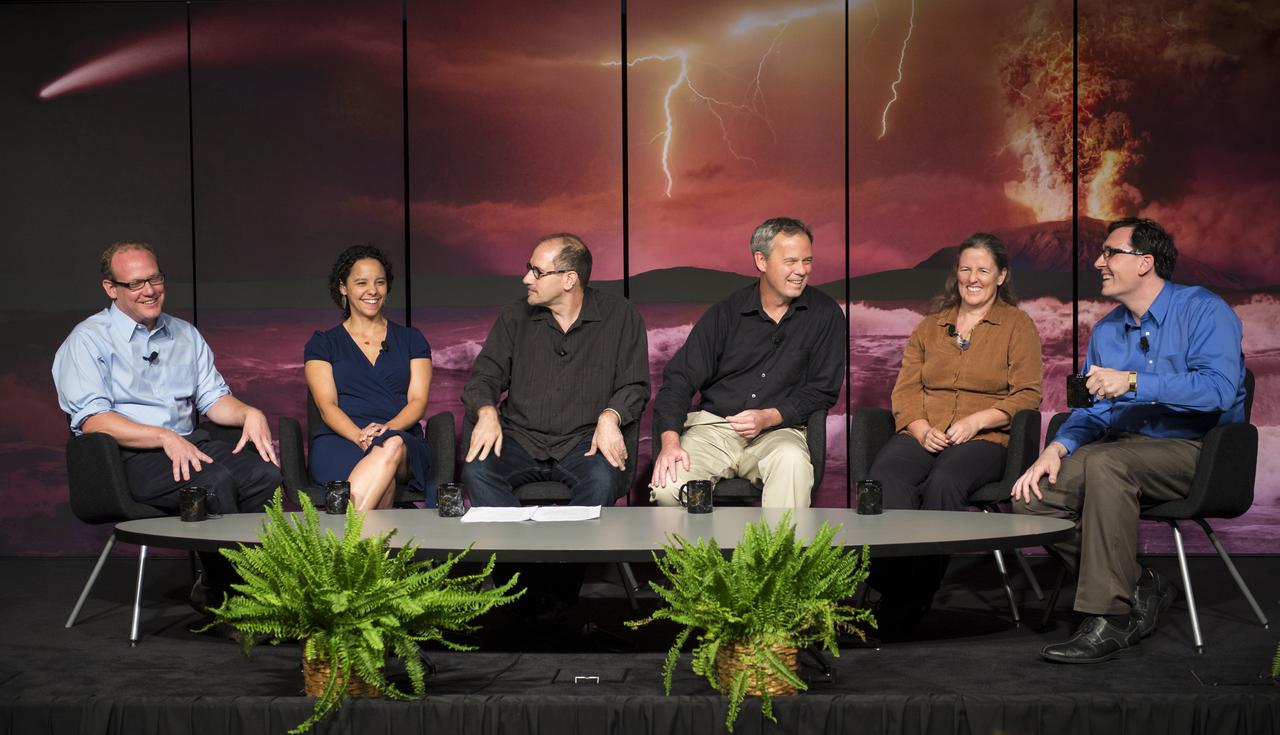
Panelists discuss how research on early Earth could help guide our search for habitable planets orbiting other stars at the “Ancient Earth, Alien Earths” Event at NASA Headquarters in Washington, DC Wednesday, August 20, 2014. The event was sponsored by NASA, the National Science Foundation (NSF), and the Smithsonian Institution and was moderated by Dr. David H. Grinspoon, Senior Scientist at the Planetary Science Institute. Photo Credit: (NASA/Aubrey Gemignani)

Dr. Timothy Lyons, Professor of Biogeochemistry, UC Riverside, speaks on a panel at the “Ancient Earth, Alien Earths” Event at NASA Headquarters in Washington, DC Wednesday, August 20, 2014. The event was sponsored by NASA, the National Science Foundation (NSF), and the Smithsonian Institution and was moderated by Dr. David H. Grinspoon, Senior Scientist at the Planetary Science Institute. Six scientists discussed how research on early Earth could help guide our search for habitable planets orbiting other stars. Photo Credit: (NASA/Aubrey Gemignani)
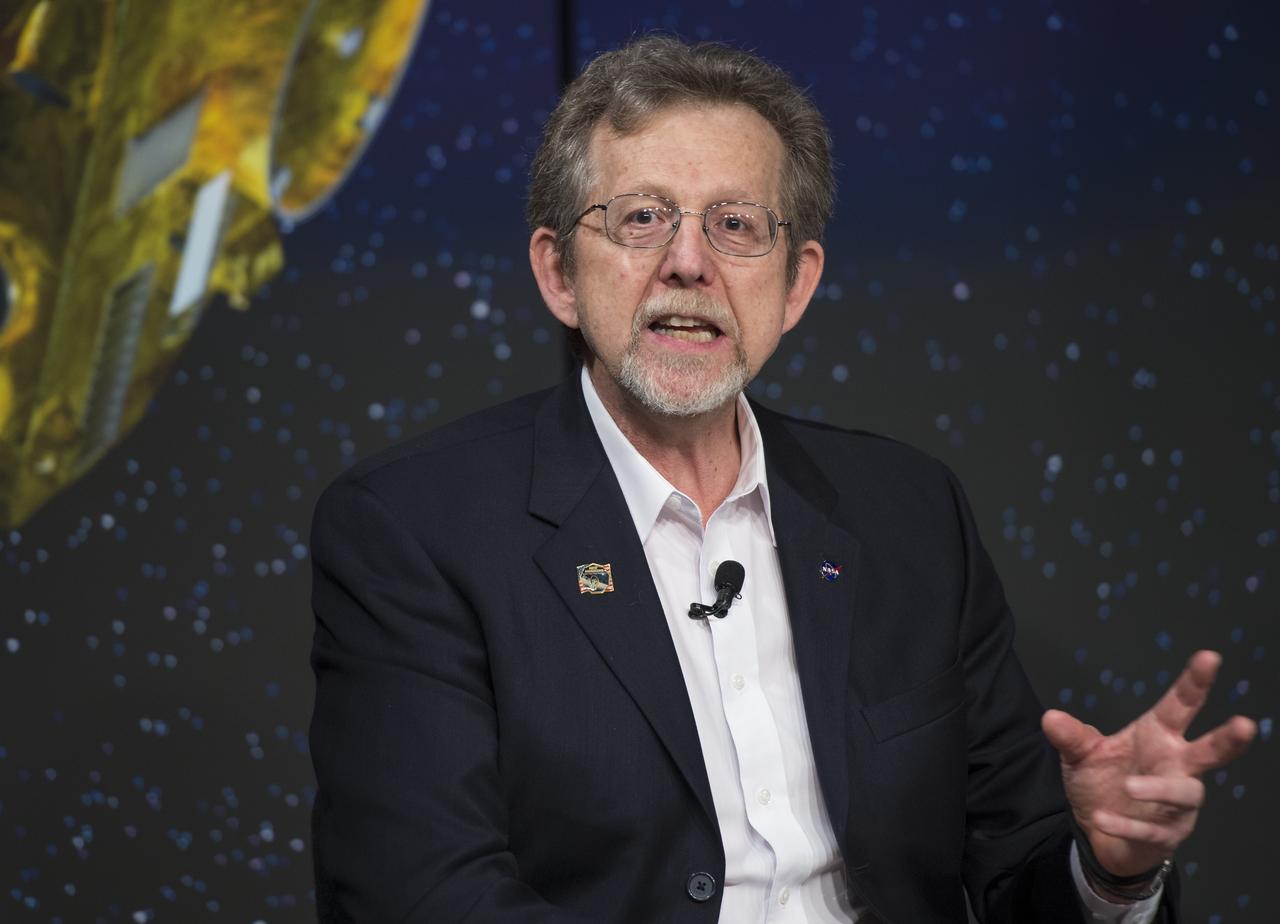
Dr. Jim Green, Director of NASA’s Planetary Division, speaks on a panel at the "New Horizons: The First Mission to the Pluto System and the Kuiper Belt" Event at NASA Headquarters in Washington, DC Monday, August 25, 2014. Scientists discussed how the first images of Pluto and its moons would be captured by the New Horizons spacecraft during a five month long reconnaissance flyby study starting in the summer of 2015. New Horizons launched on January 19, 2006 and is scheduled to make its closest approach to Pluto on July 14, 2015. Photo Credit: (NASA/Aubrey Gemignani)
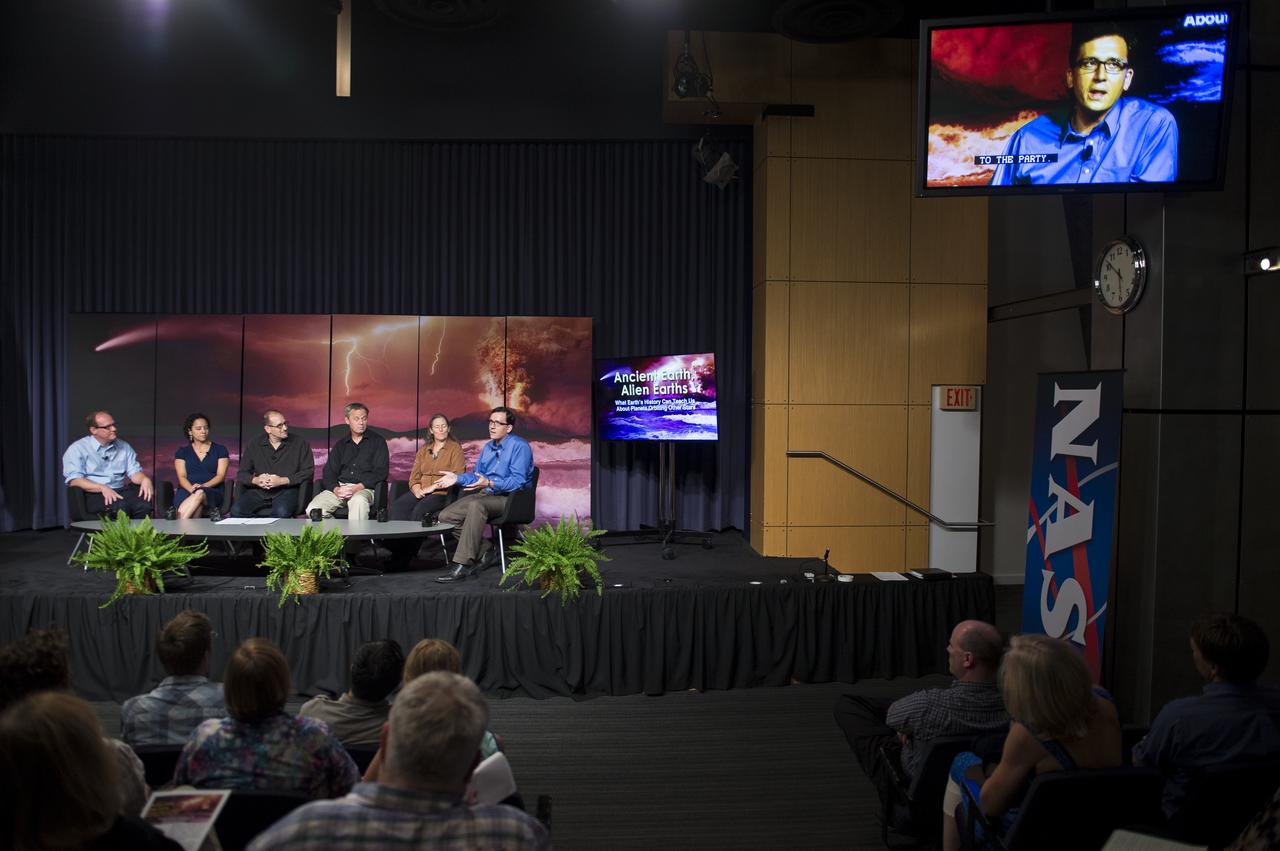
Dr. Shawn Domagal-Goldman, Research Space Scientist, NASA Goddard Space Flight Center, speaks on a panel at the “Ancient Earth, Alien Earths” Event at NASA Headquarters in Washington, DC Wednesday, August 20, 2014. The event was sponsored by NASA, the National Science Foundation (NSF), and the Smithsonian Institution and was moderated by Dr. David H. Grinspoon, Senior Scientist at the Planetary Science Institute. Six scientists discussed how research on early Earth could help guide our search for habitable planets orbiting other stars. Photo Credit: (NASA/Aubrey Gemignani)
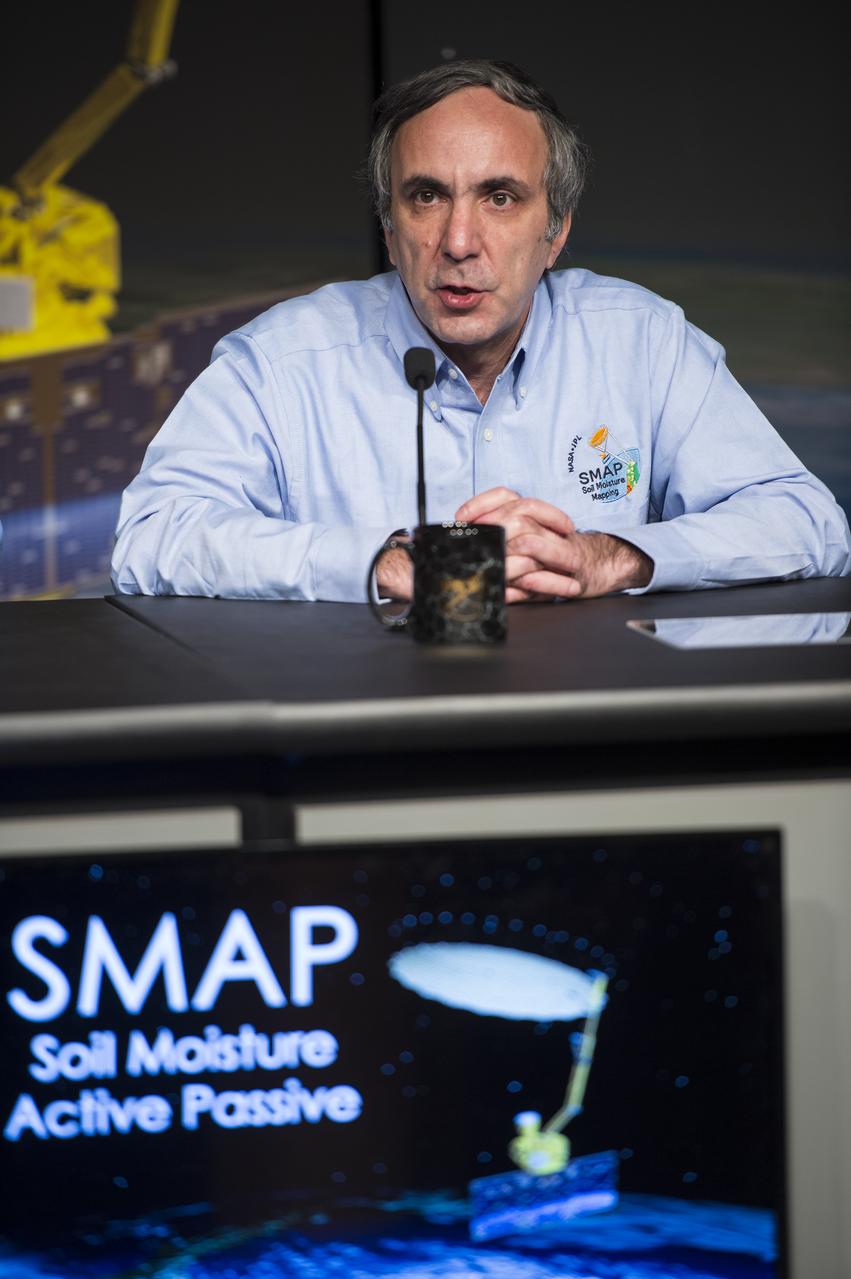
Dara Entekhabi, SMAP science team lead, Massachusetts Institute of Technology, speaks during a briefing about the upcoming launch of the Soil Moisture Active Passive (SMAP) mission, Thursday, Jan. 08, 2015, at NASA Headquarters in Washington DC. The mission is scheduled for a Jan. 29 launch from Vandenberg Air Force Base in California, and will provide the most accurate, highest-resolution global measurements of soil moisture ever obtained from space. The data will be used to enhance scientists' understanding of the processes that link Earth's water, energy and carbon cycles. Photo Credit: (NASA/Aubrey Gemignani)
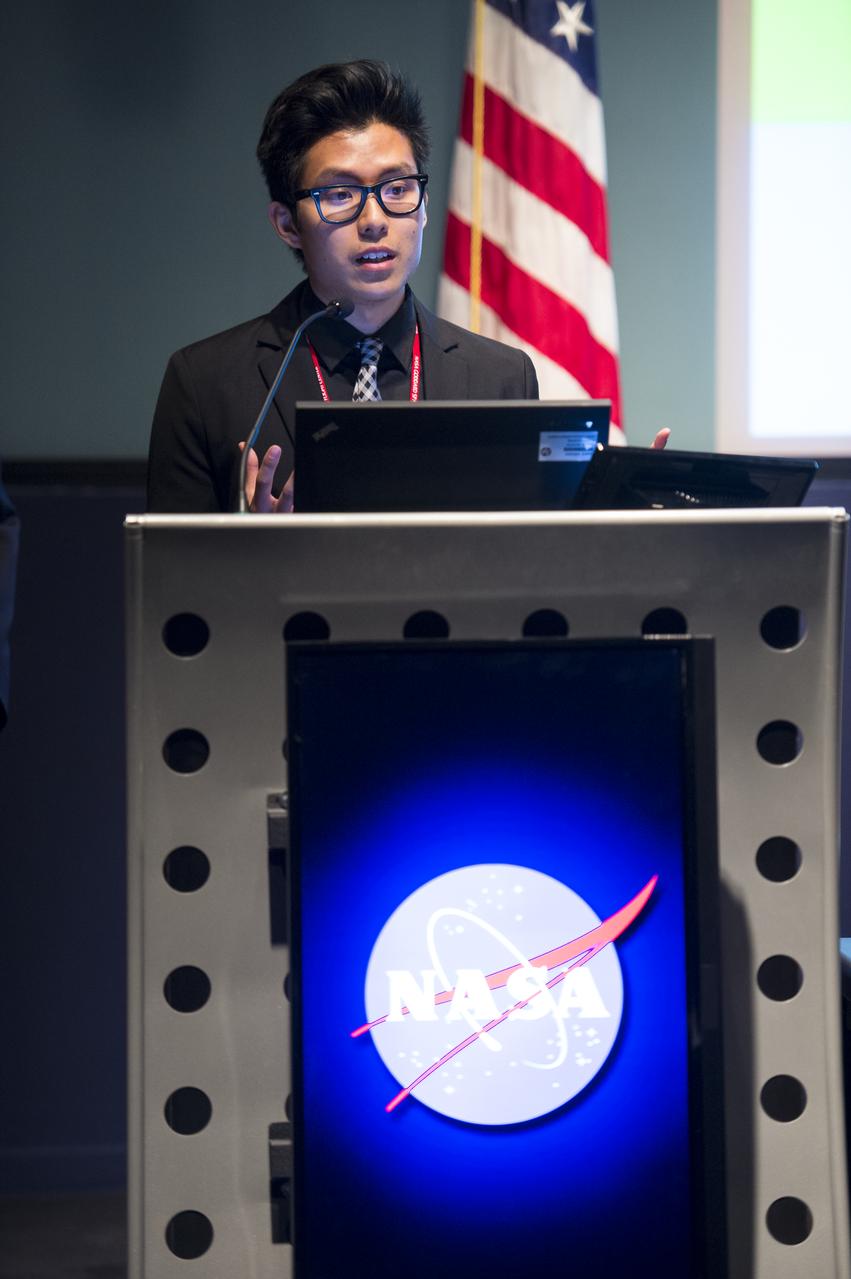
Michael Gao presents his project on Southeast Asian disasters during the annual DEVELOP Earth Science Application Showcase at NASA headquarters Tuesday, August 5, 2014. The Earth Science Applications Showcase highlights the work of over 150 participants in the 10-week DEVELOP program that started in June. The DEVELOP Program bridges the gap between NASA Earth science and society, building capacity in both its participants and partner organizations, to better prepare them to handle the challenges that face our society and future generations. Photo Credit: (NASA/Aubrey Gemignani)

Kent Kellogg, SMAP project manager at NASA’s Jet Propulsion Laboratory (JPL) in Pasadena, CA, speaks during a briefing about the upcoming launch of the Soil Moisture Active Passive (SMAP) mission, Thursday, Jan. 08, 2015, at NASA Headquarters in Washington DC. The mission is scheduled for a Jan. 29 launch from Vandenberg Air Force Base in California, and will provide the most accurate, highest-resolution global measurements of soil moisture ever obtained from space. The data will be used to enhance scientists' understanding of the processes that link Earth's water, energy and carbon cycles. Photo Credit: (NASA/Aubrey Gemignani)

Christine Bonniksen, SMAP program executive with the Science Mission Directorate’s Earth Science Division at NASA Headquarters speaks during a briefing about the upcoming launch of the Soil Moisture Active Passive (SMAP) mission, Thursday, Jan. 08, 2015, at NASA Headquarters in Washington DC. The mission is scheduled for a Jan. 29 launch from Vandenberg Air Force Base in California, and will provide the most accurate, highest-resolution global measurements of soil moisture ever obtained from space. The data will be used to enhance scientists' understanding of the processes that link Earth's water, energy and carbon cycles. Photo Credit: (NASA/Aubrey Gemignani)

Panelists pose for a group photo at the “Ancient Earth, Alien Earths” Event at NASA Headquarters in Washington, DC Wednesday, August 20, 2014. The event was sponsored by NASA, the National Science Foundation (NSF), and the Smithsonian Institution and highlighted how research on early Earth could help guide our search for habitable planets orbiting other stars. Photo Credit: (NASA/Aubrey Gemignani)