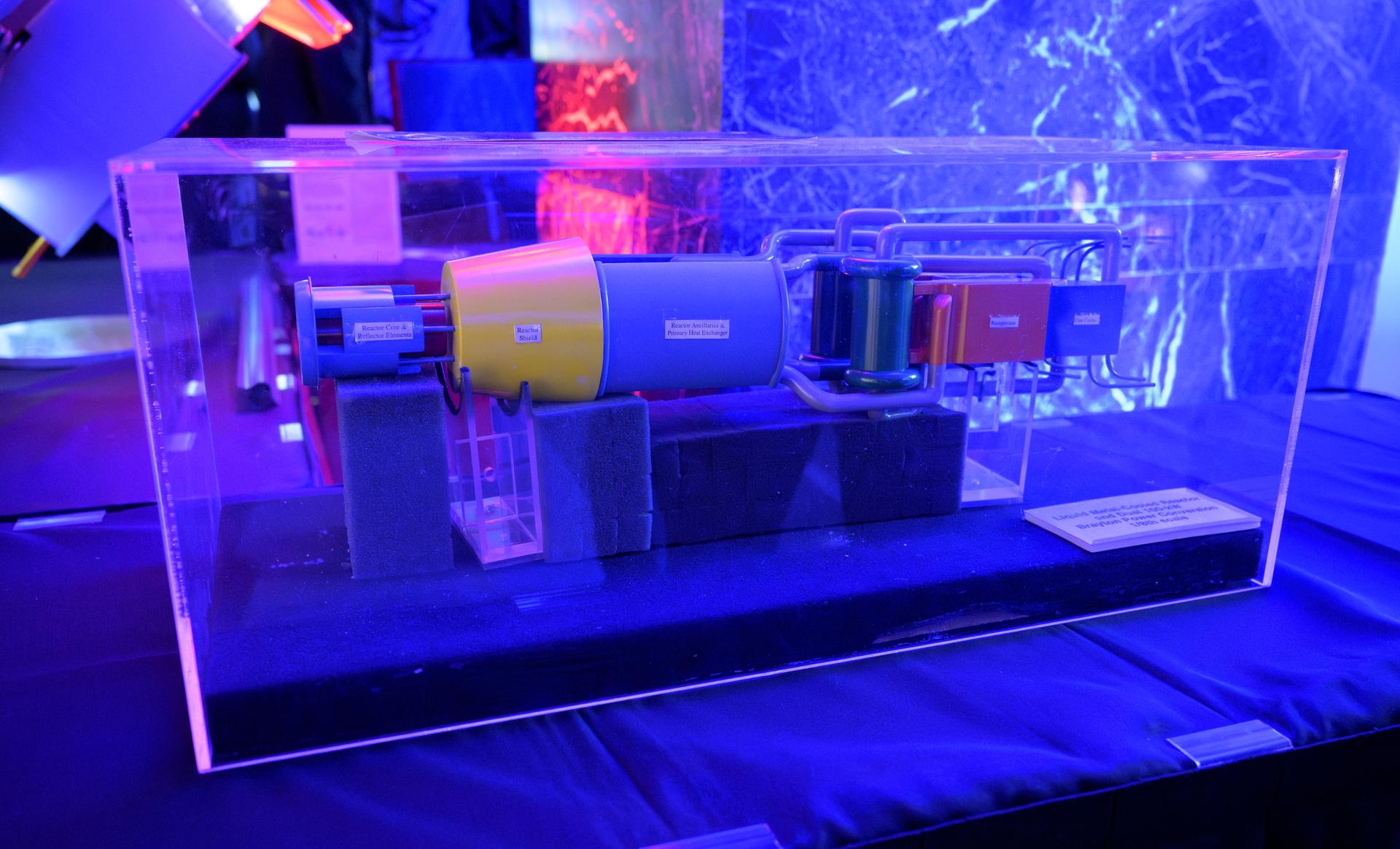
A model of a liquid metal-cooled reactor, dual 100-kw Brayton Power Conversion is seen on display during an event where NASA is outlining how the agency is executing President Donald J. Trump’s National Space Policy and accelerating preparations for America’s return to the surface of the Moon by 2028, Tuesday, March 24, 2026, at the Mary W. Jackson NASA Headquarters building in Washington. During the event NASA leadership provided updates on mission priorities, including sending the first astronauts to the lunar surface in more than 50 years, establishing the initial elements of a permanent lunar base, getting America underway in space on nuclear propulsion, and other objectives. Photo Credit: (NASA/Bill Ingalls)

NASA Associate Administrator for International and Interagency Relations, Karen Feldstein, listens to Mongolian Minister of Digital Development and Communications Nyam-Osor Uchral, during a meeting to discuss Mongolia’s National Space Strategy planning and methods for natural disasters monitoring and prevention, Friday, Jan. 26, 2024, at the NASA Headquarters Mary W. Jackson Building in Washington. Photo Credit: (NASA/Bill Ingalls)
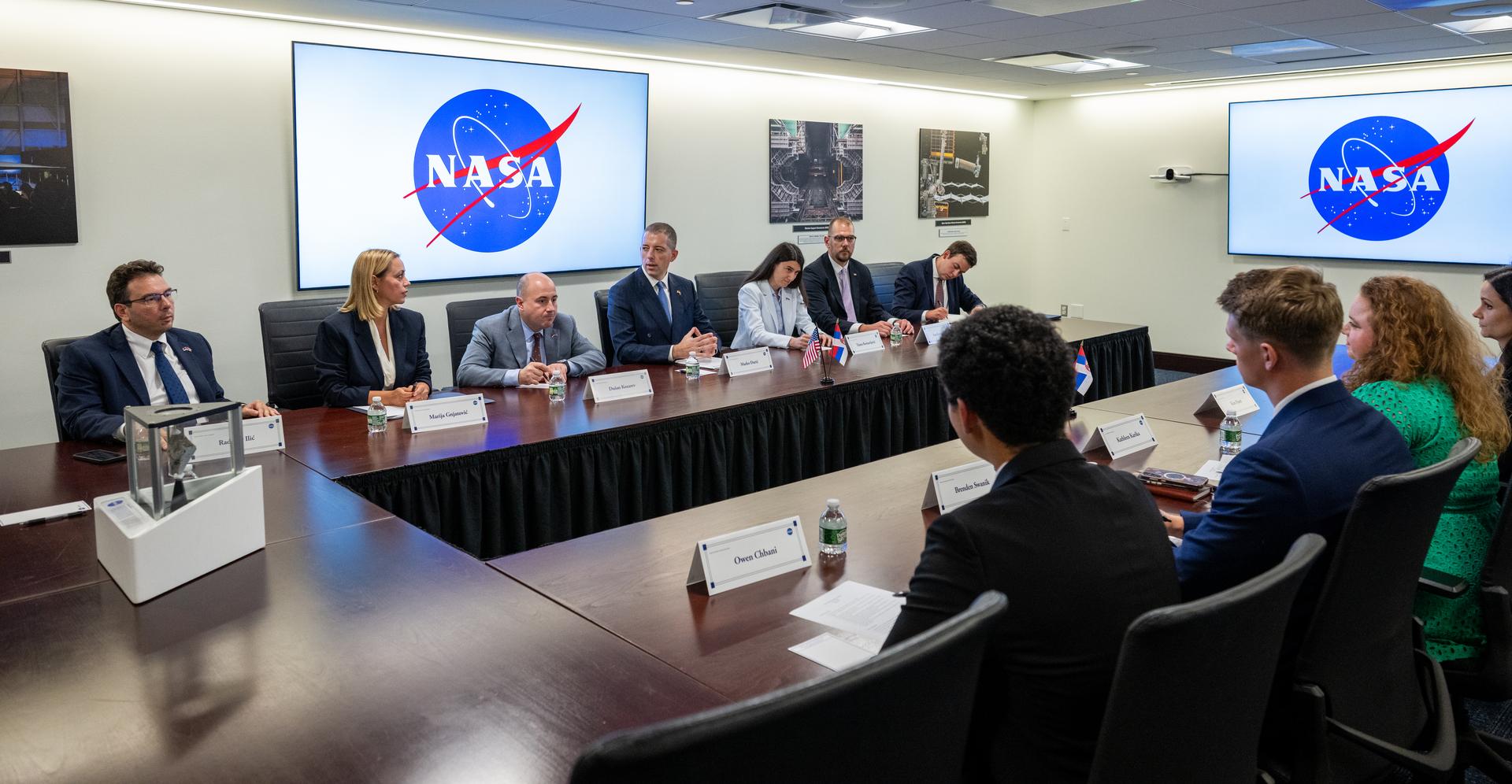
Representatives from Serbia and members of NASA’s Office of International and Interagency Relations participate in a bilateral meeting following an Artemis Accords signing ceremony Thursday, July 16, 2026, at the Mary W. Jackson NASA Headquarters building in Washington. Serbia is the 69th country to sign the Artemis Accords, which establish a practical set of principles to guide space exploration cooperation among nations participating in NASA’s Artemis program. Photo Credit: (NASA/Keegan Barber)
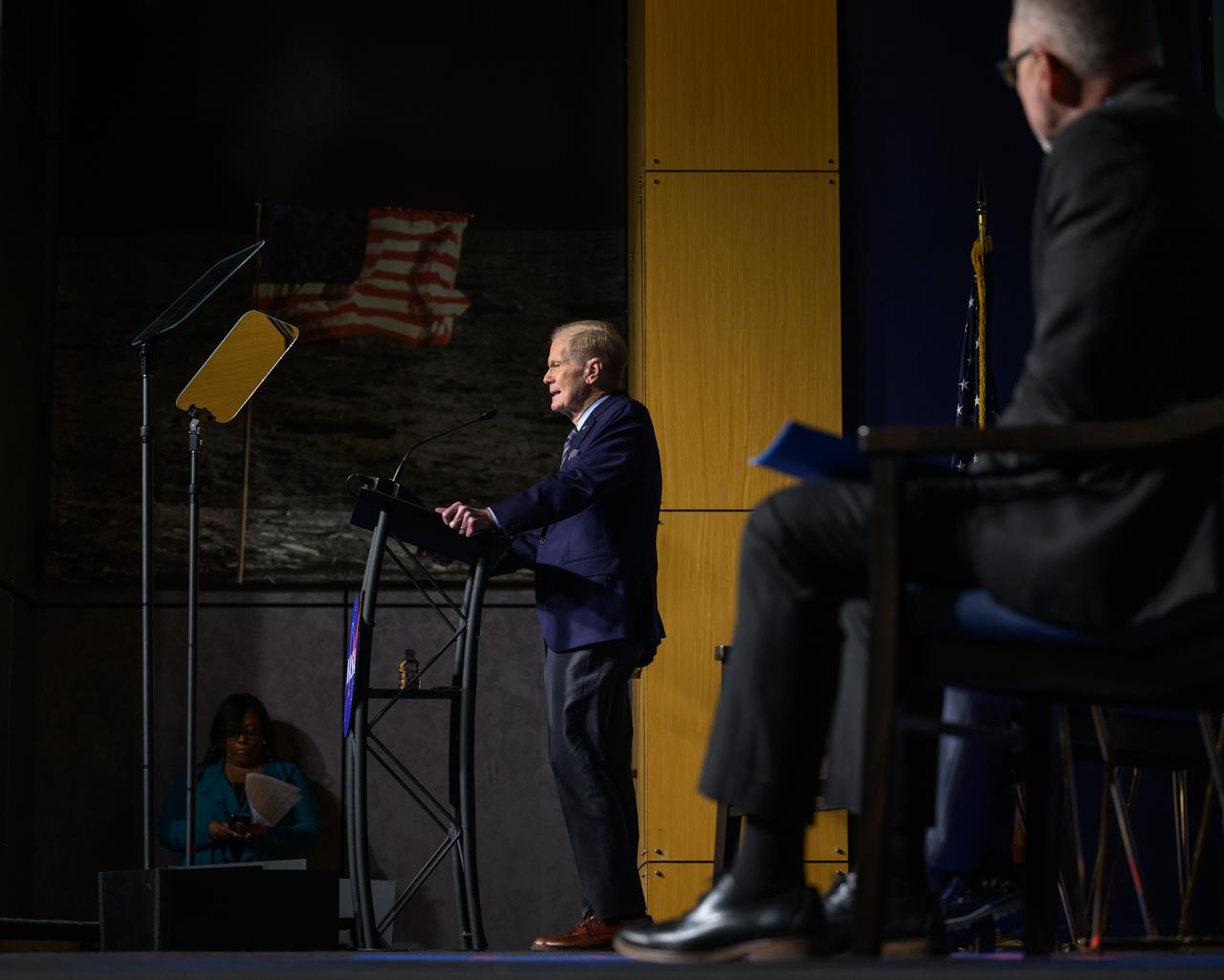
NASA Administrator Bill Nelson, gives remarks during a NASA agencywide all hands, Friday, Dec. 6, 2024, at the NASA Headquarters Mary W. Jackson Building in Washington. Photo Credit: (NASA/Bill Ingalls)
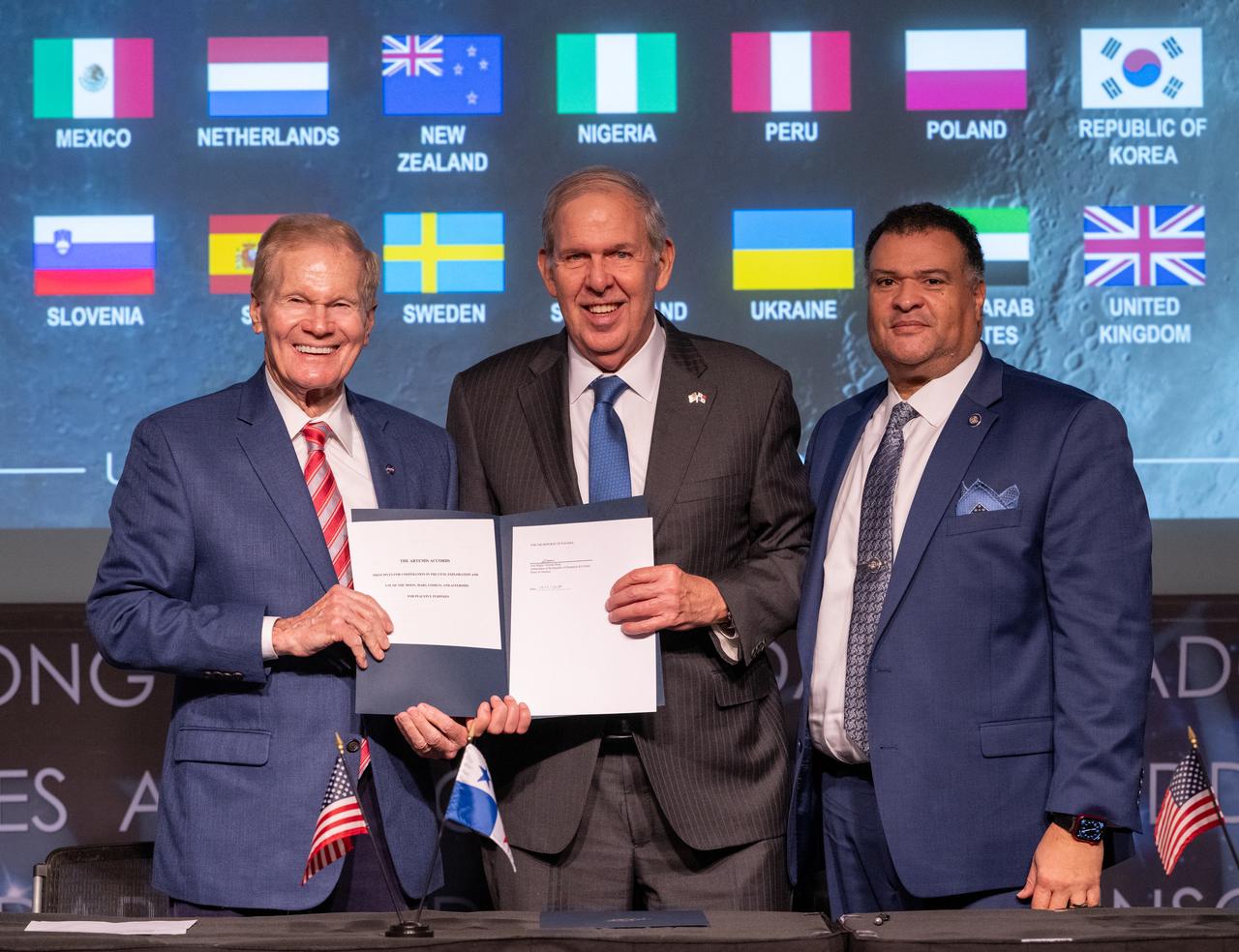
NASA Administrator Bill Nelson, left, Ambassador of the Republic of Panama to the United States of America José Miguel Alemán Healy, center, and U.S. Department of State Principal Deputy Assistant Secretary in the Bureau of Oceans and International Environmental and Scientific Affairs Tony Fernandes, pose for a picture after the Republic of Panama signed the Artemis Accords, Wednesday, Dec. 11, 2024, at the Mary W. Jackson NASA Headquarters building in Washington. The Republic of Panama is the 49th country to sign the Artemis Accords, which establish a practical set of principles to guide space exploration cooperation among nations participating in NASA’s Artemis program. Photo Credit: (NASA/Joel Kowsky)
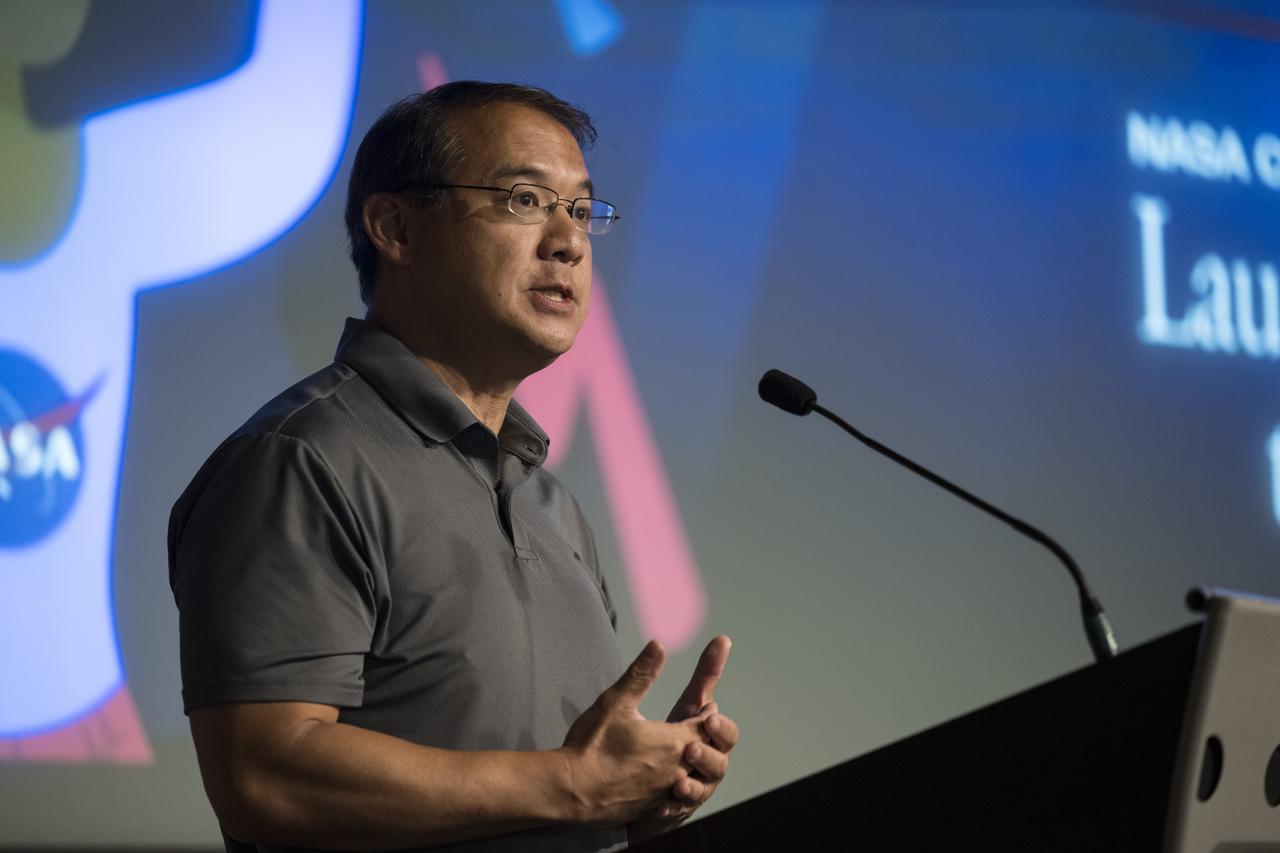
NASA Associate Administrator for Diversity and Equal Opportunity, Steve Shih, provides closing remarks after a panel discussion with NASA's four female center directors: Dr. Marla Peréz-Davis of Glenn Research Center, Vanessa Wyche of Johnson Space Center, Janet Petro of Kennedy Space Center, and Jody Singer of Marshall Space Flight Center, during the "DirectHERS" - Launching Through the Glass Ceiling event, Tuesday, June 7, 2022, at the Mary W. Jackson NASA Headquarters Building in Washington. Photo Credit: (NASA/Aubrey Gemignani)
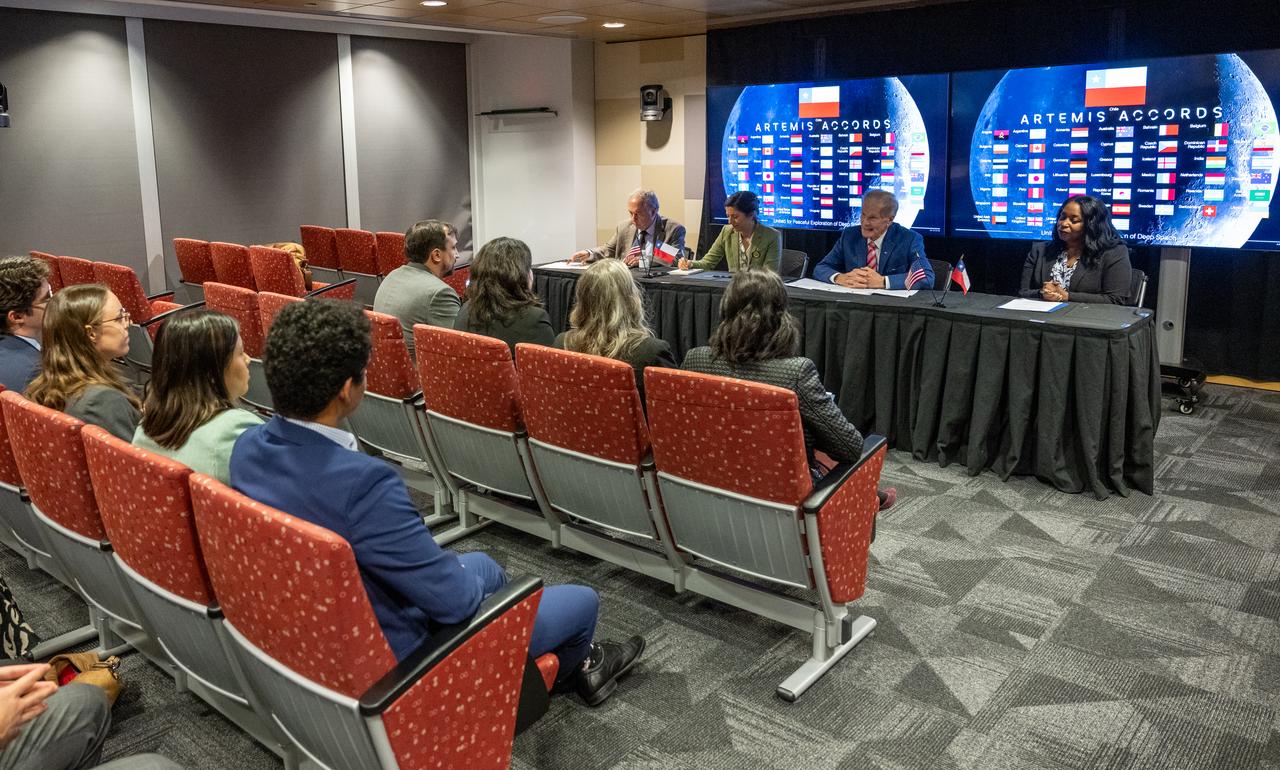
NASA Administrator Bill Nelson, second from right, delivers remarks during an Artemis Accords signing ceremony Friday, Oct. 25, 2024, at the Mary W. Jackson NASA Headquarters building in Washington. The Republic of Chile is the 47th country to sign the Artemis Accords, which establish a practical set of principles to guide space exploration cooperation among nations participating in NASA’s Artemis program. Photo Credit: (NASA/Keegan Barber)
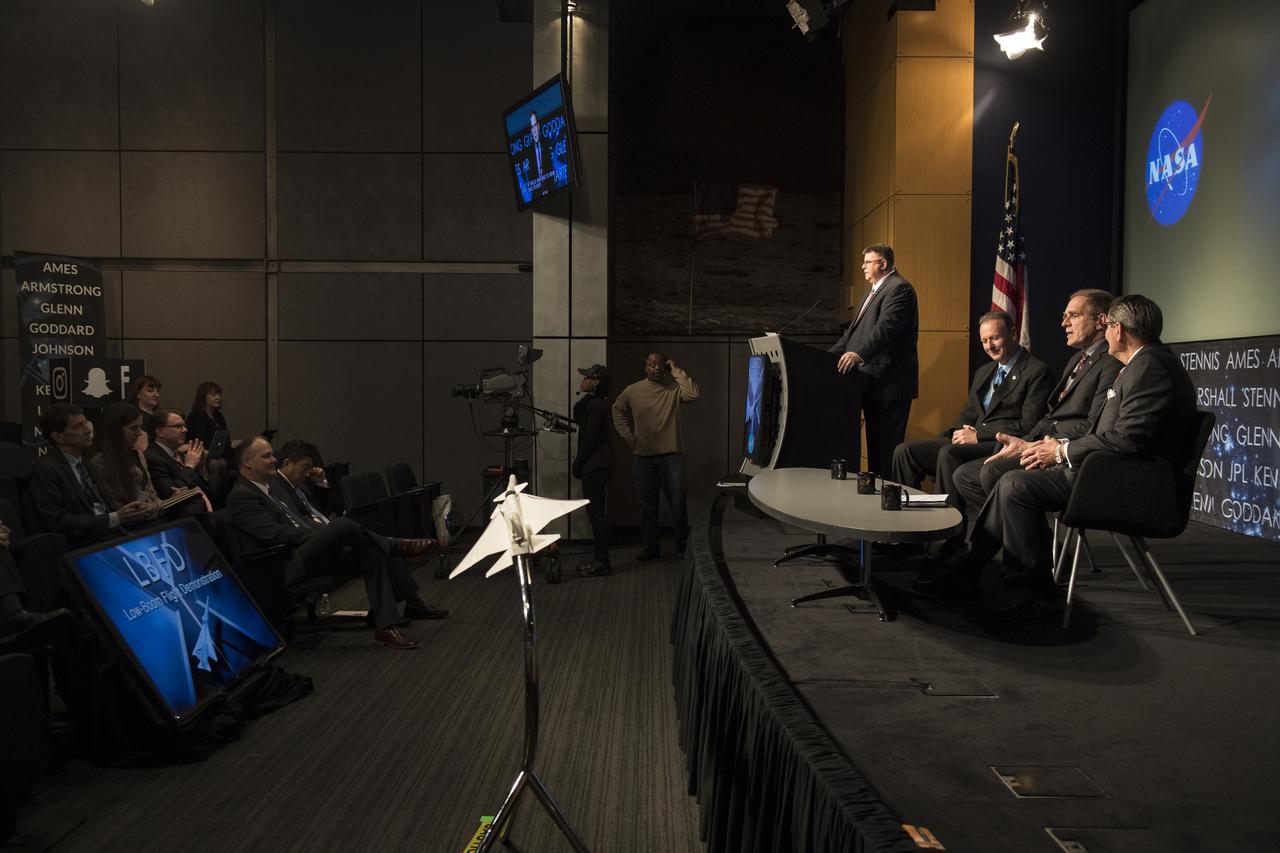
Peter Coen, project manager, Commercial Supersonics Technology Project, Langley Research Center, NASA, center, speaks on a panel with Peter Iosifidis, Lockheed Martin, left, and Dr. Ed Waggoner, NASA, right, at a briefing on the Low Boom Flight Demonstrator, Tuesday, April 3, 2018 at NASA Headquarters in Washington. This new experimental aircraft will cut cross country travel times in half by flying faster than the speed of sound without creating a sonic boom, enabling travel from New York to Los Angeles in two hours. Photo Credit: (NASA/Aubrey Gemignani)
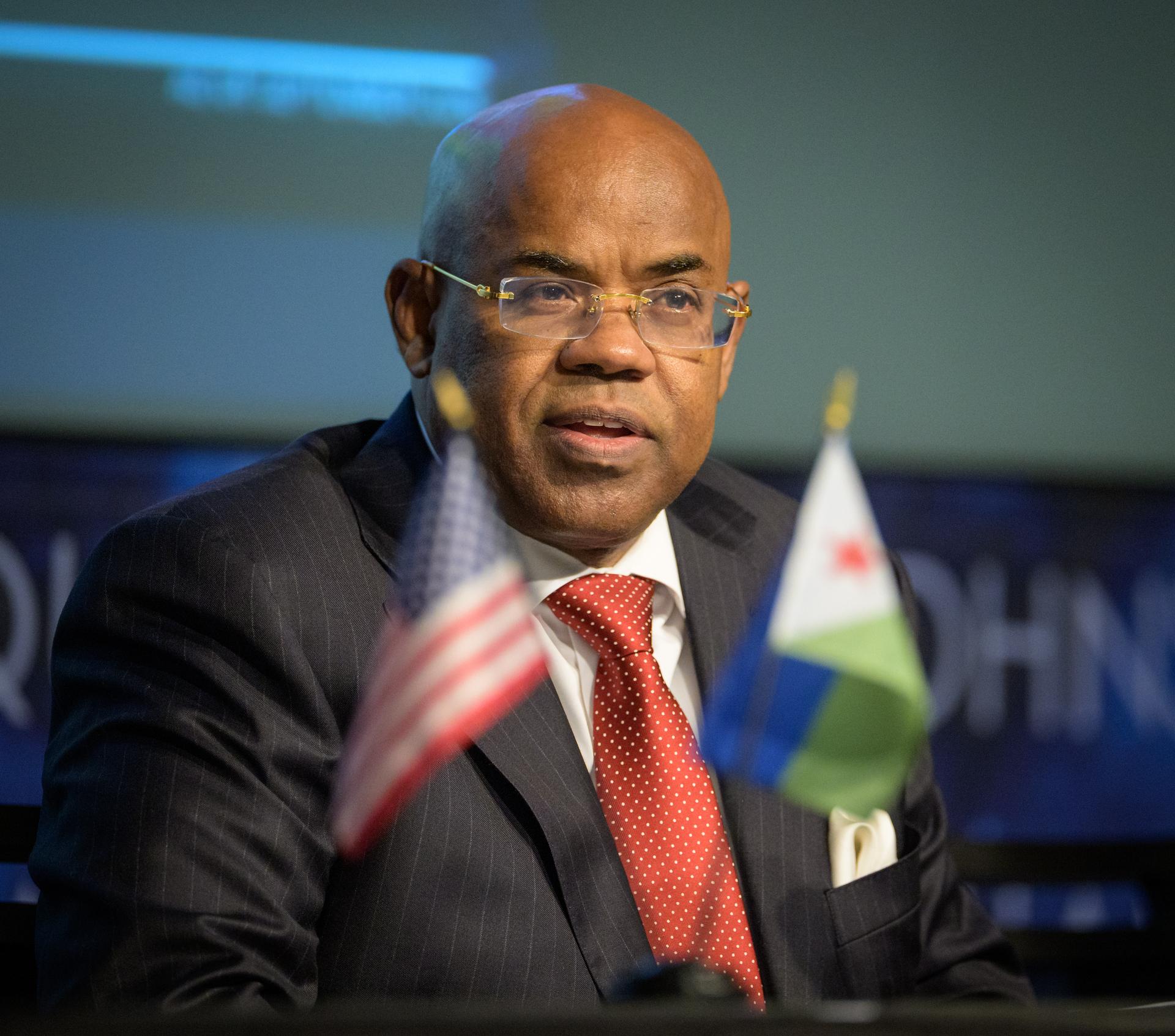
Ambassador of Djibouti to the United States, Mohamed Siad Douale gives remarks during an Artemis Accord signing ceremony with Djibouti, Monday, September 14, 2026, at the Mary W. Jackson NASA Headquarters building in Washington. Djibouti is the 72nd country to sign the Artemis Accords, which establish a practical set of principles to guide space exploration cooperation among nations participating in NASA’s Artemis program. Photo Credit: (NASA/Bill Ingalls)
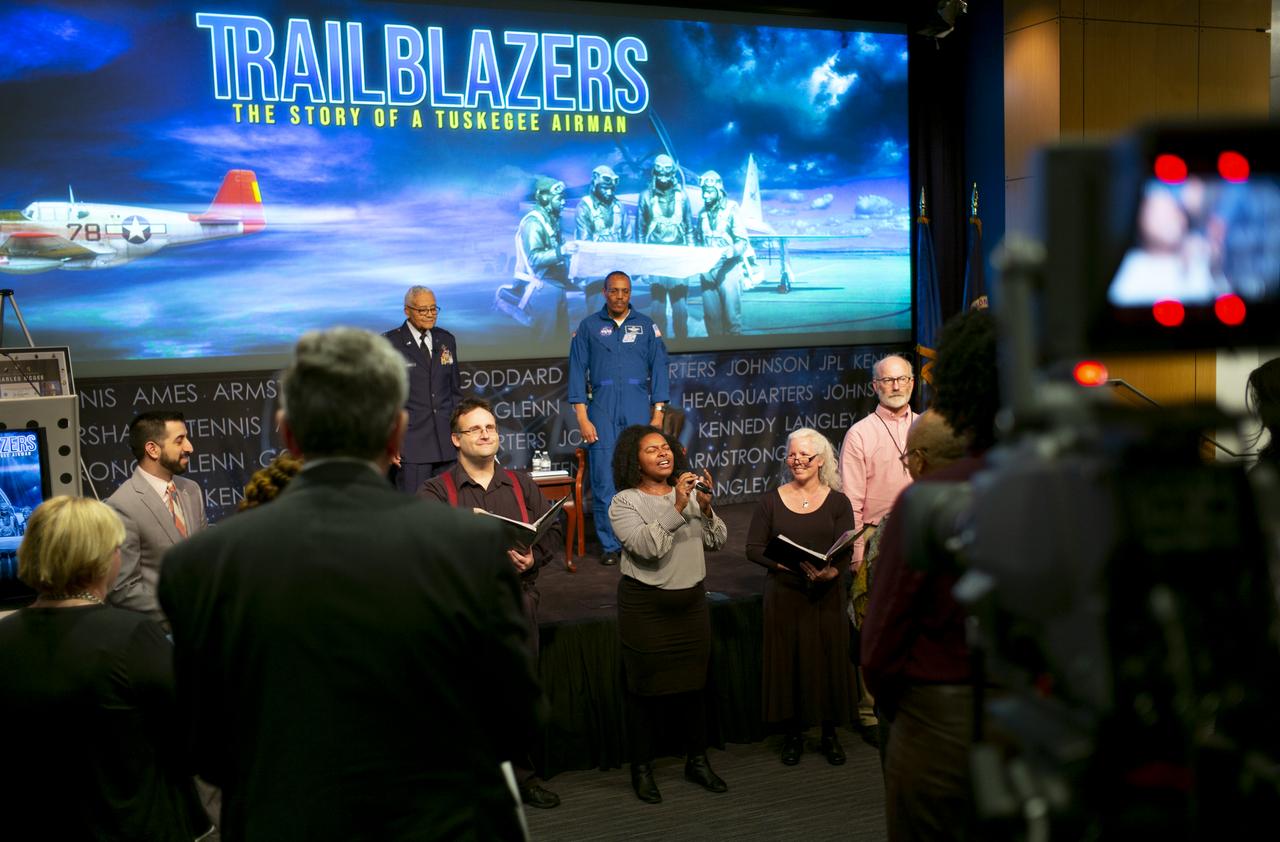
Members of the All Souls Church Unitarian Choir lead the audience in “Lift Ev’ry Voice and Sing” after a duscussion between Retired U.S. Air Force Honorary Brigadier General Charles McGee and NASA astronaut Alvin Drew during a Black History Month program titled “Trailblazers, The Story of a Tuskegee Airman,” Wednesday, Feb. 5, 2020, at NASA Headquarters in Washington, DC. McGee, a pilot with the Tuskegee Airmen during World War II, was a career officer in the Air Force also serving during the Korean and Vietnam Wars. Over his 30 years of service he flew 409 combat missions. Of the 355 Tuskegee pilots who flew in combat, McGee is one of only nine surviving. Photo Credit: (NASA/Joel Kowsky)
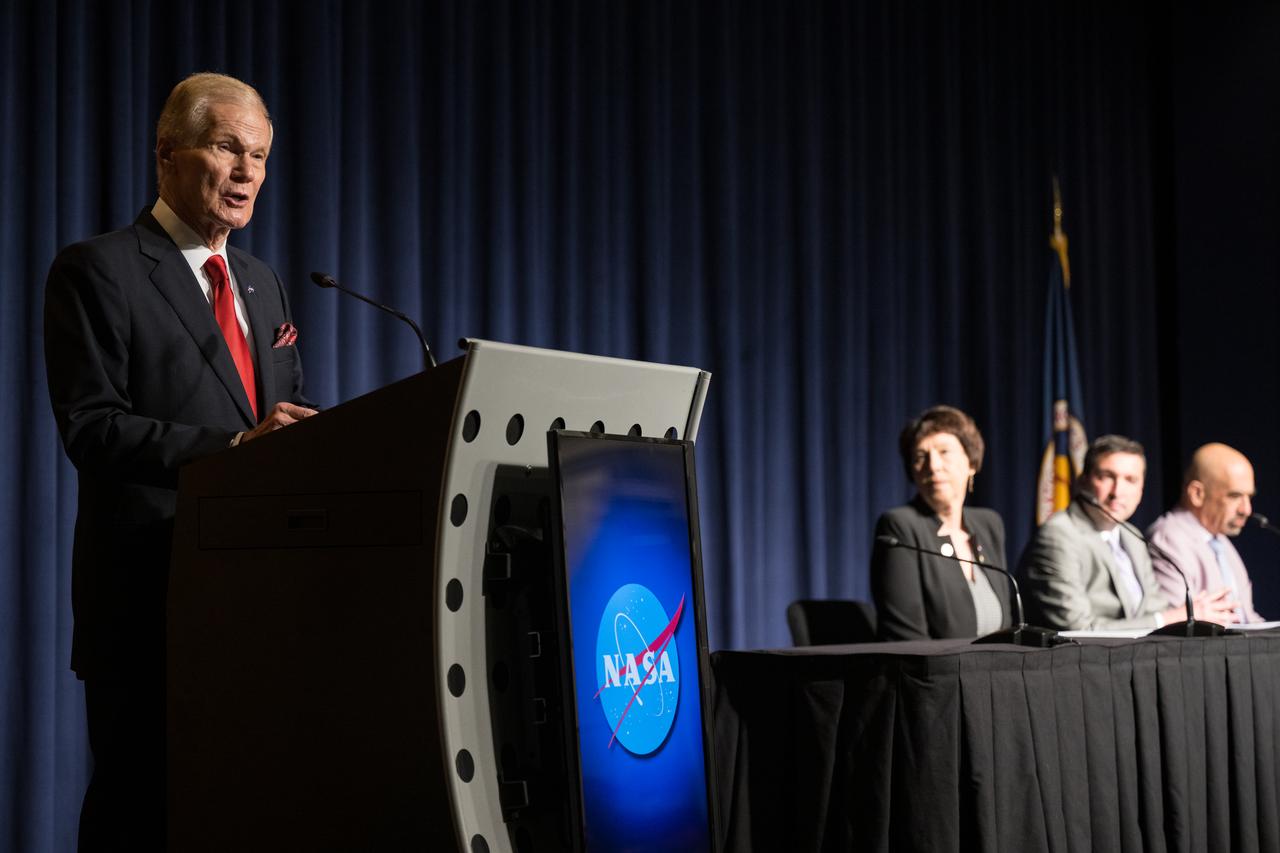
NASA Administrator Bill Nelson provides remarks during a media briefing to discuss the findings from an unidentified anomalous phenomena (UAP) independent study team, Thursday, Sept. 14, 2023, at the Mary W. Jackson NASA Headquarters building in Washington. The UAP independent study team, commissioned in 2022, is a counsel of 16 community experts across diverse areas on matters relevant to potential methods of study for unidentified anomalous phenomena. NASA published the team’s full report online, which aims to inform about what possible data could be collected in the future to shed light on the nature and origin of UAP. Photo Credit: (NASA/Aubrey Gemignani)
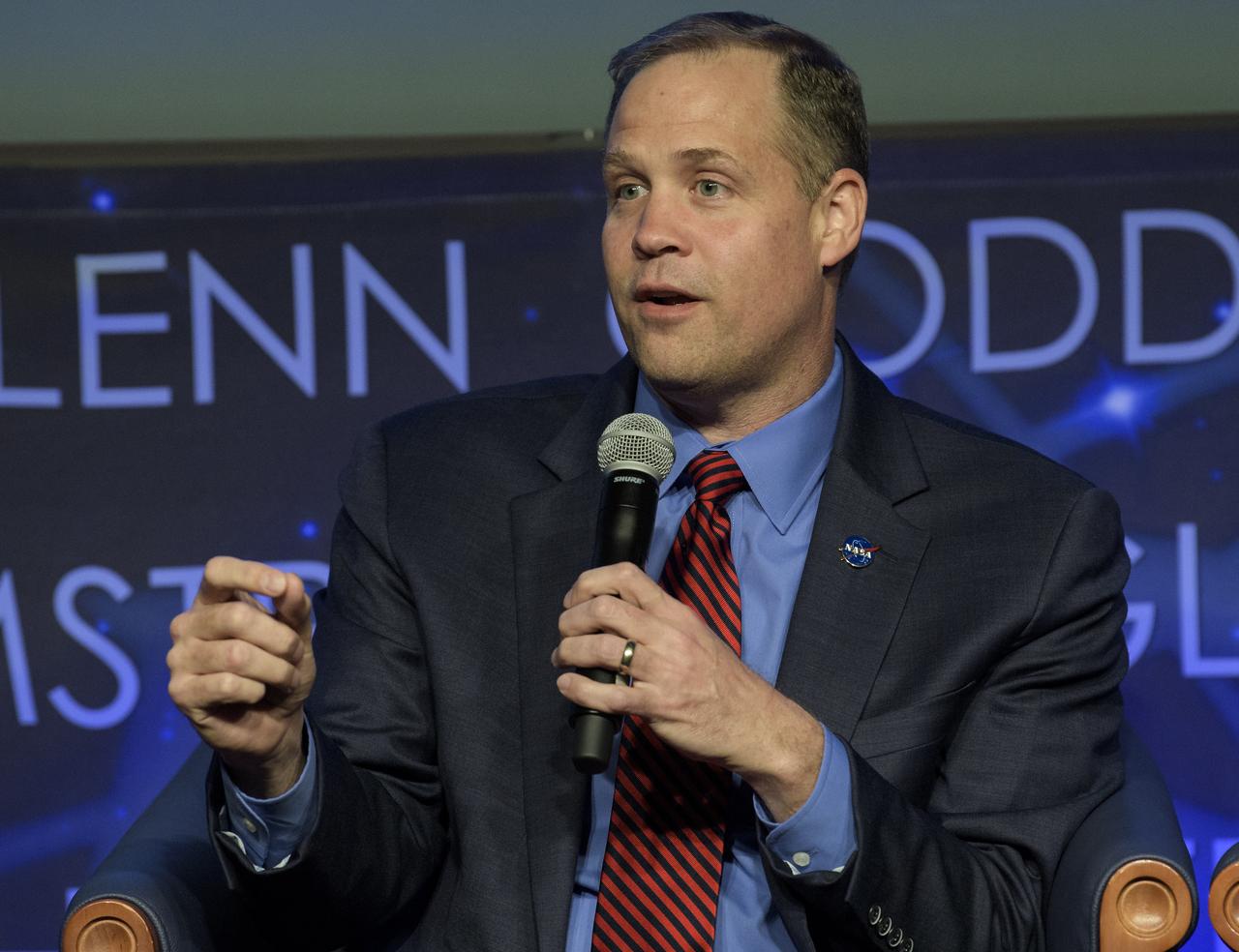
NASA Administrator Jim Bridenstine speaks about the agency’s Artemis program during an interactive STEM discussion with students attending the 70th International Astronautical Congress, Wednesday, Oct. 23, 2019, at NASA Headquarters in Washington. Photo Credit: (NASA/Joel Kowsky)
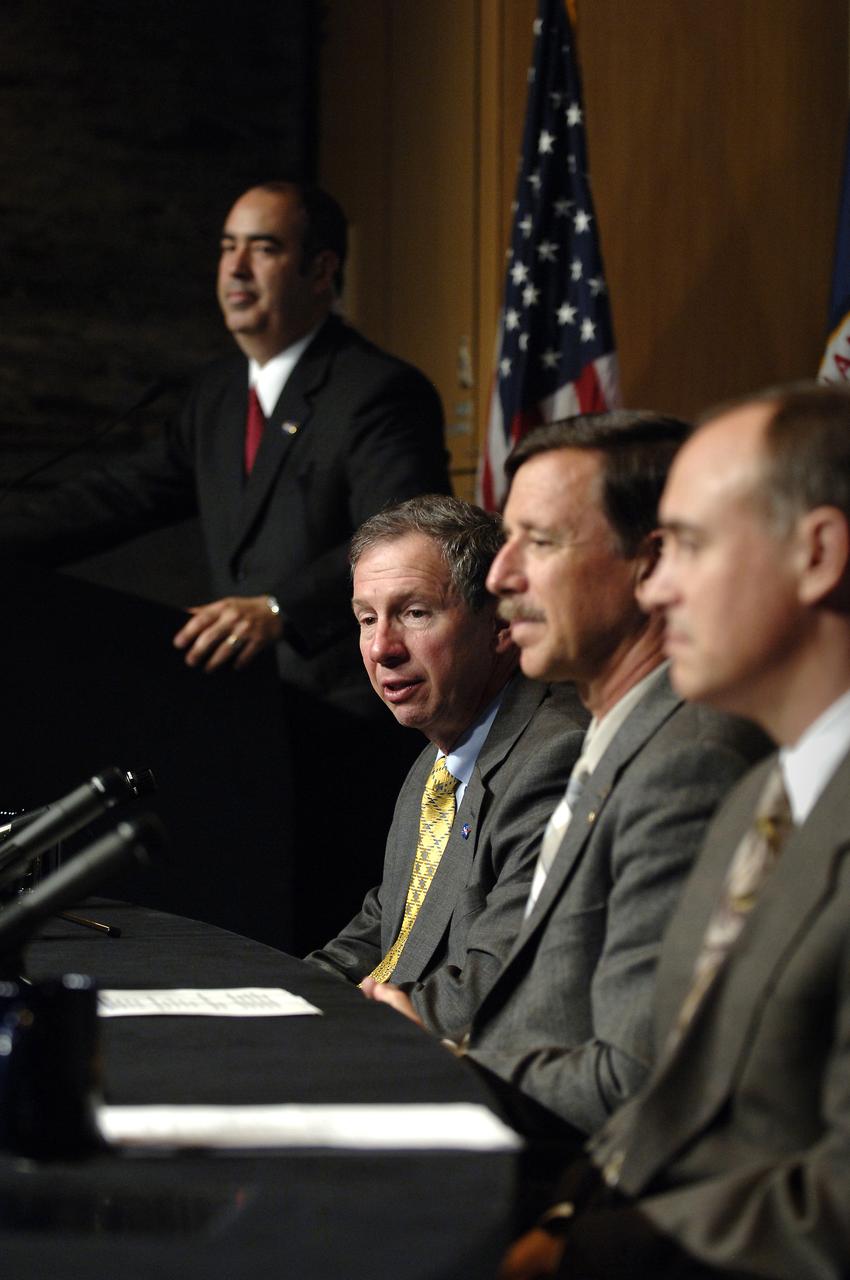
NASA Administrator Michael Griffin, seated left, Scott Horowitz, NASA Associate Administrator for Exploration Systems and Jeff Hanley, Constellation Program Manager, right, are seen during a press conference outlining specific center responsibilities associated with the Constellation Program for robotic and human moon and Mars exploration, Monday, June 5, 2006, at NASA Headquarters in Washington. Dean Acosta, NASA Deputy Assistant Administrator and Press Secretary, far left, moderates the program. Photo Credit (NASA/Bill Ingalls)
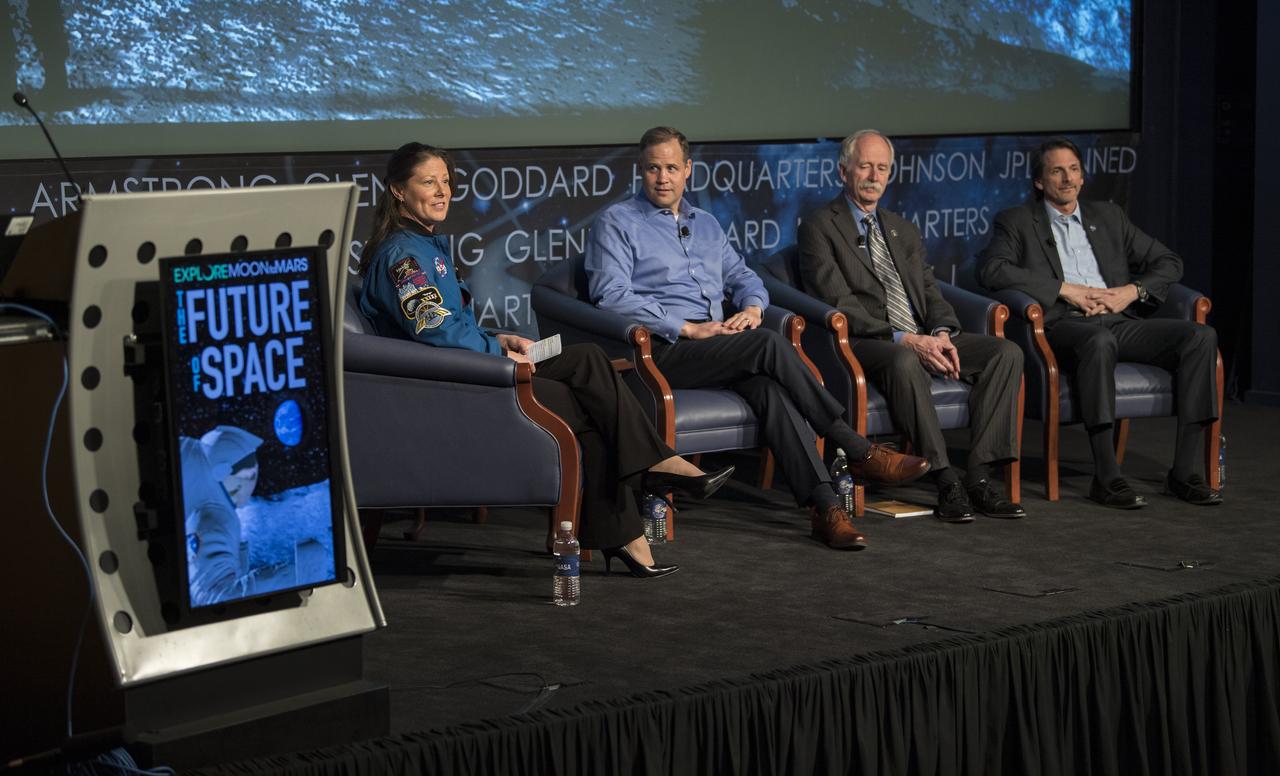
NASA astronaut Tracy Caldwell Dyson, left, moderates a panel discussion with NASA Administrator Jim Bridenstine, NASA Associate Administrator for the Human Exploration and Operations Mission Directorate, Bill Gerstenmaier, and NASA Deputy Associate Administrator for Exploration, Steve Clarke at the "Future of Space" STEM event, Monday, April 29, 2019 at NASA Headquarters in Washington, where college students were able to ask the panelists questions as well as speak with two astronauts currently on the International Space Station, Nick Hague and Christina Koch. Photo Credit: (NASA/Aubrey Gemignani)

NASA Administrator Michael Griffin talks with employees during a NASA Update program at NASA Headquarters, Tuesday, June 28, 2005, in Washington. Photo Credit: (NASA/Bill Ingalls)
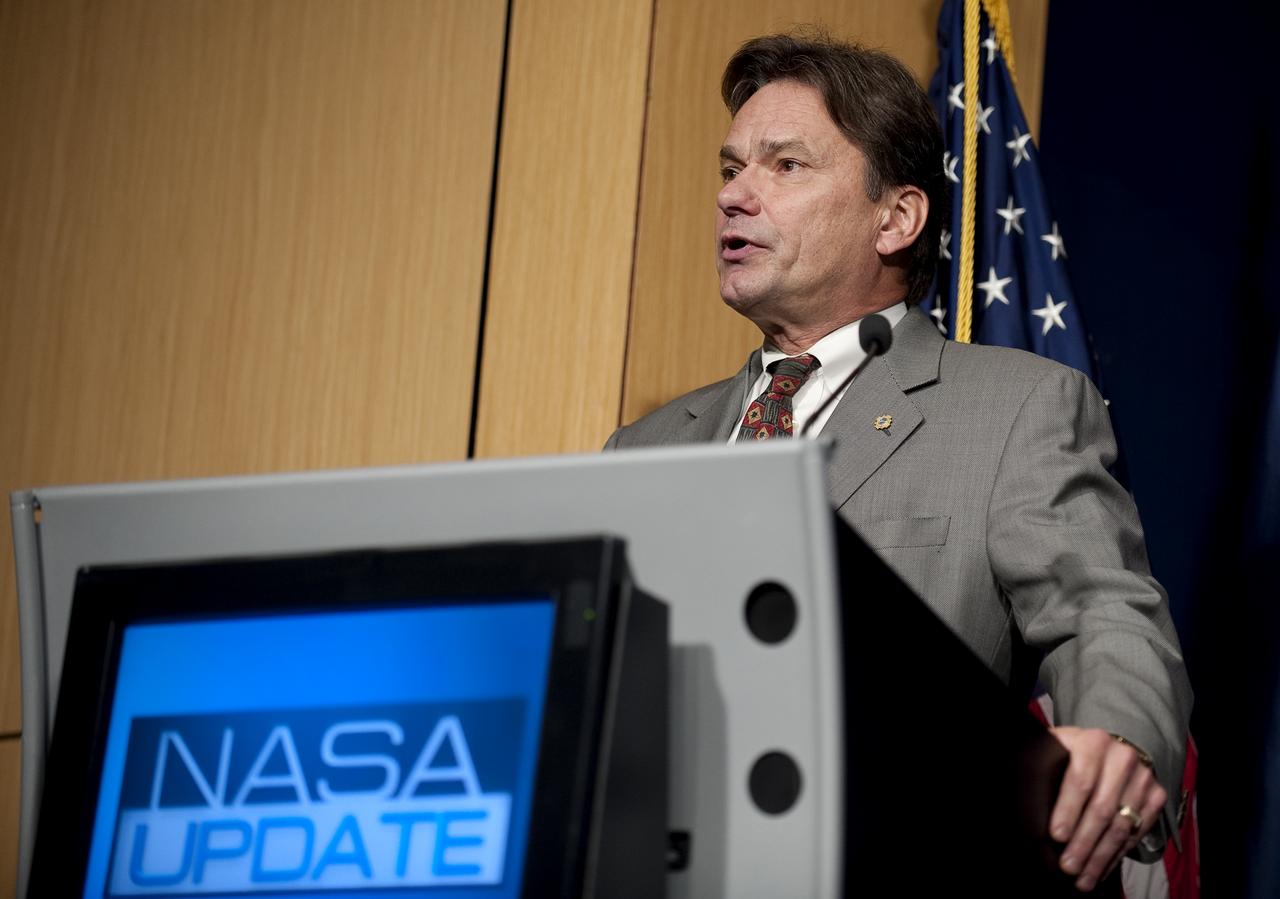
Alan Ladwig, Senior Advisor to the NASA Administrator, introduces Administrator Charles F. Bolden Jr. and Deputy Administrator Lori Garver at a NASA Update,Tuesday, July 21, 2009, at NASA Headquarters in Washington. Bolden, the agency's 12th Administrator and Garver took the time to introduce themselves and outline their vision for the agency going forward. No questions were taken during the session. Photo Credit: (NASA/Bill Ingalls)
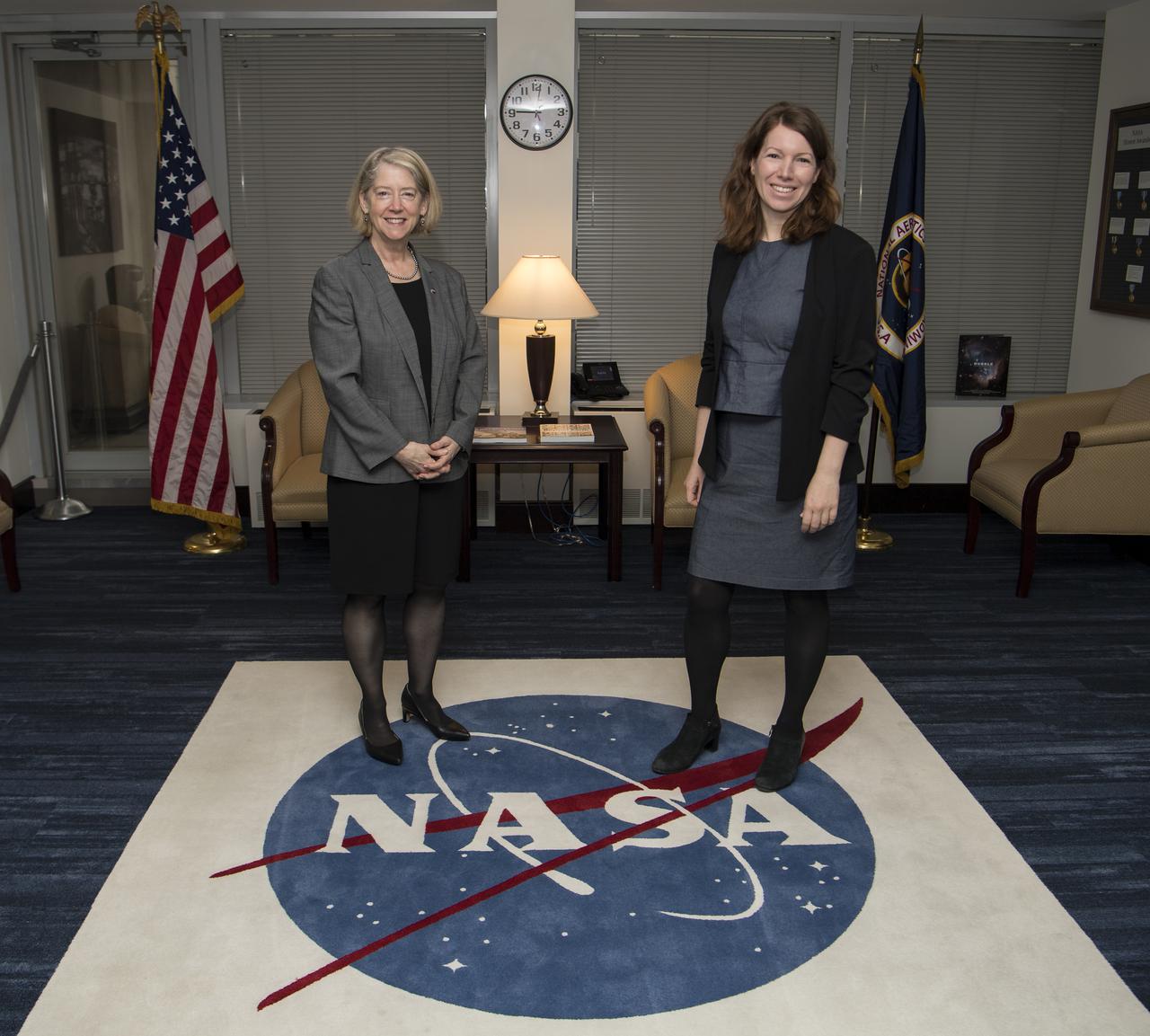
NASA Deputy Administrator, Pam Melroy, left, poses for a photo with the Federal Government Coordinator of German Aerospace Policy, Dr. Anna Christmann, Thursday, March 31, 2022, at NASA Headquarters in Washington DC. Photo Credit: (NASA/Aubrey Gemignani)
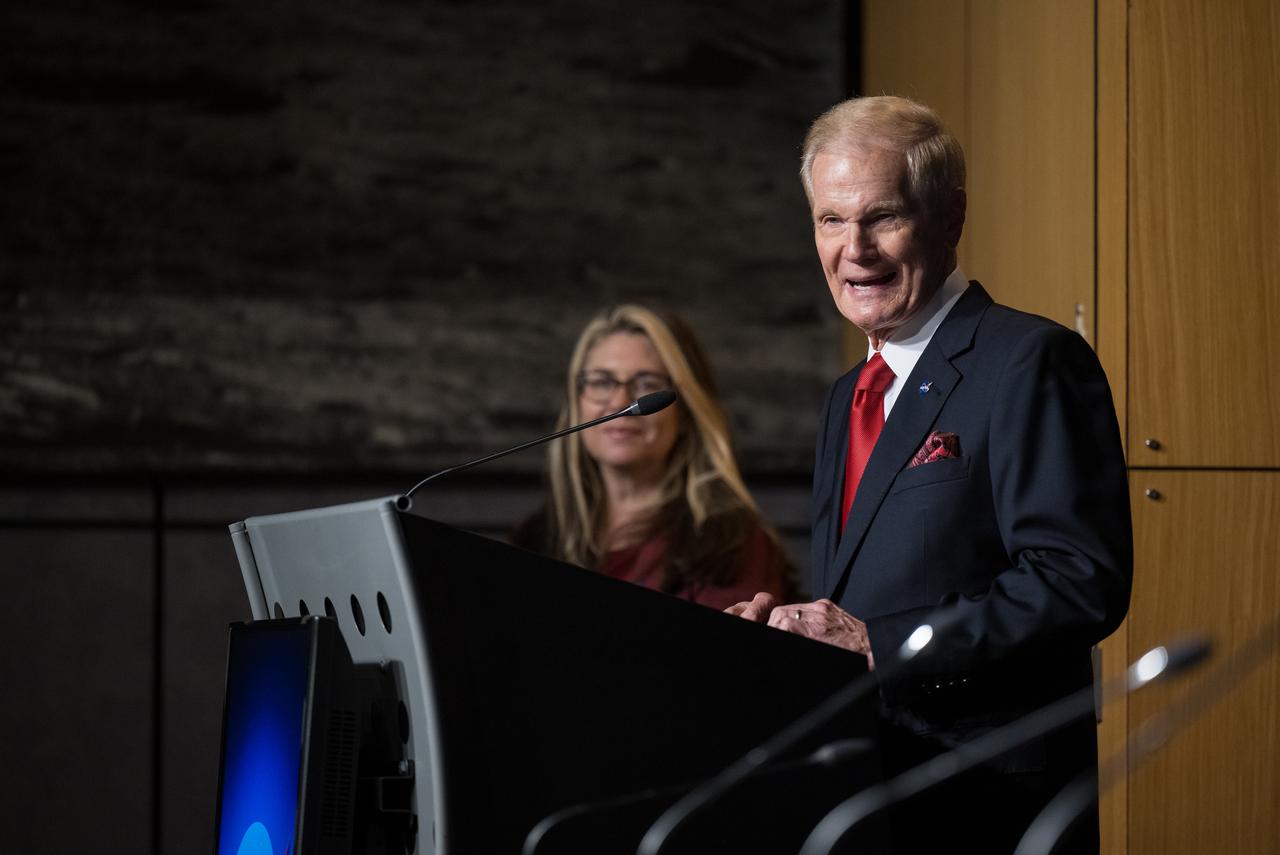
NASA Administrator Bill Nelson provides remarks during a media briefing to discuss the findings from an unidentified anomalous phenomena (UAP) independent study team, Thursday, Sept. 14, 2023, at the Mary W. Jackson NASA Headquarters building in Washington. The UAP independent study team, commissioned in 2022, is a counsel of 16 community experts across diverse areas on matters relevant to potential methods of study for unidentified anomalous phenomena. NASA published the team’s full report online, which aims to inform about what possible data could be collected in the future to shed light on the nature and origin of UAP. Photo Credit: (NASA/Aubrey Gemignani)
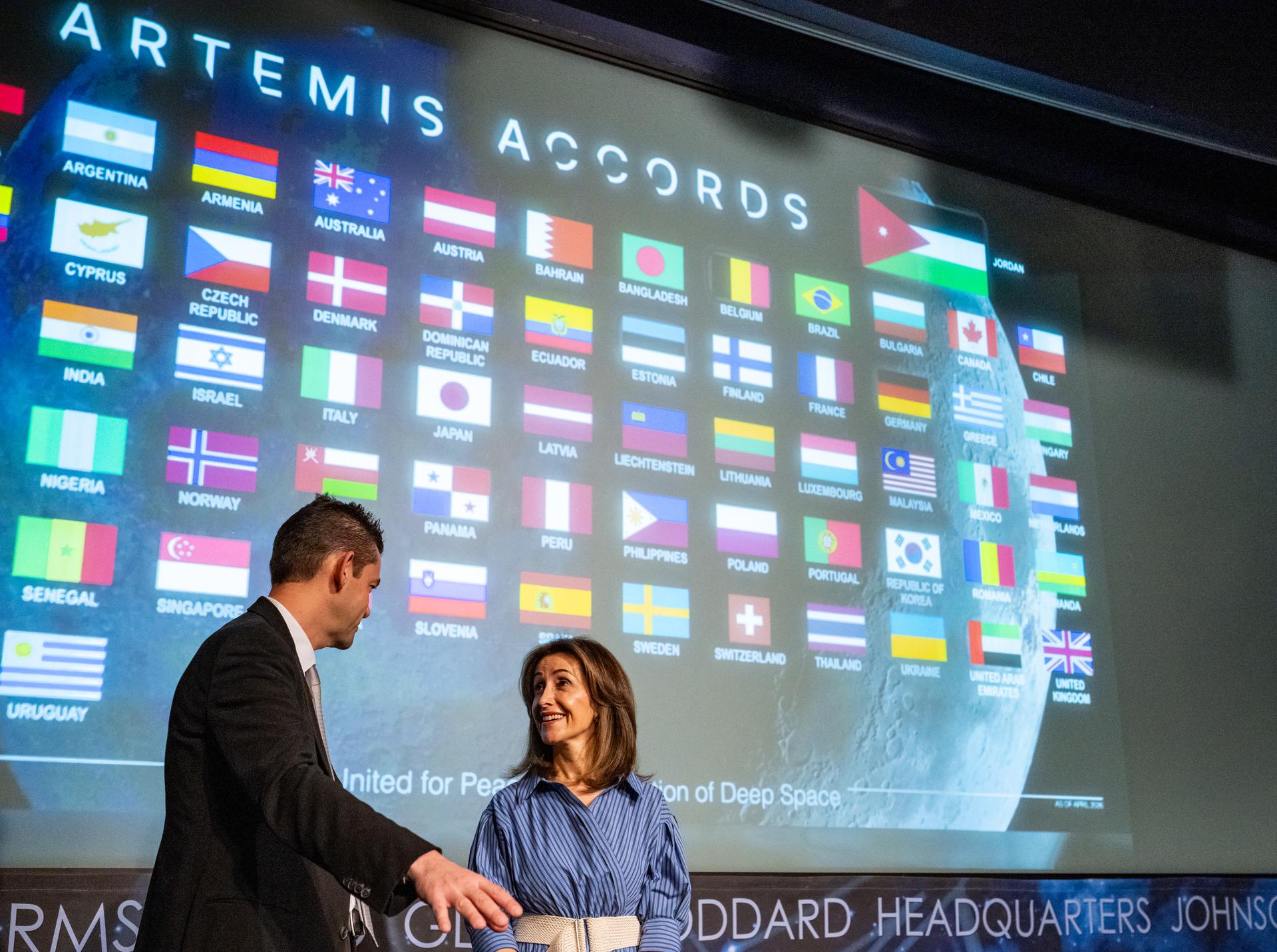
NASA Administrator Jared Isaacman, left, and Ambassador of Jordan to the United States Dina Kawar, right, are seen following an Artemis Accords signing ceremony Thursday, April 23, 2026, at the Mary W. Jackson NASA Headquarters building in Washington. The Hashemite Kingdom of Jordan is the 63rd country to sign the Artemis Accords, which establish a practical set of principles to guide space exploration cooperation among nations participating in NASA’s Artemis program. Photo Credit: (NASA/Keegan Barber)
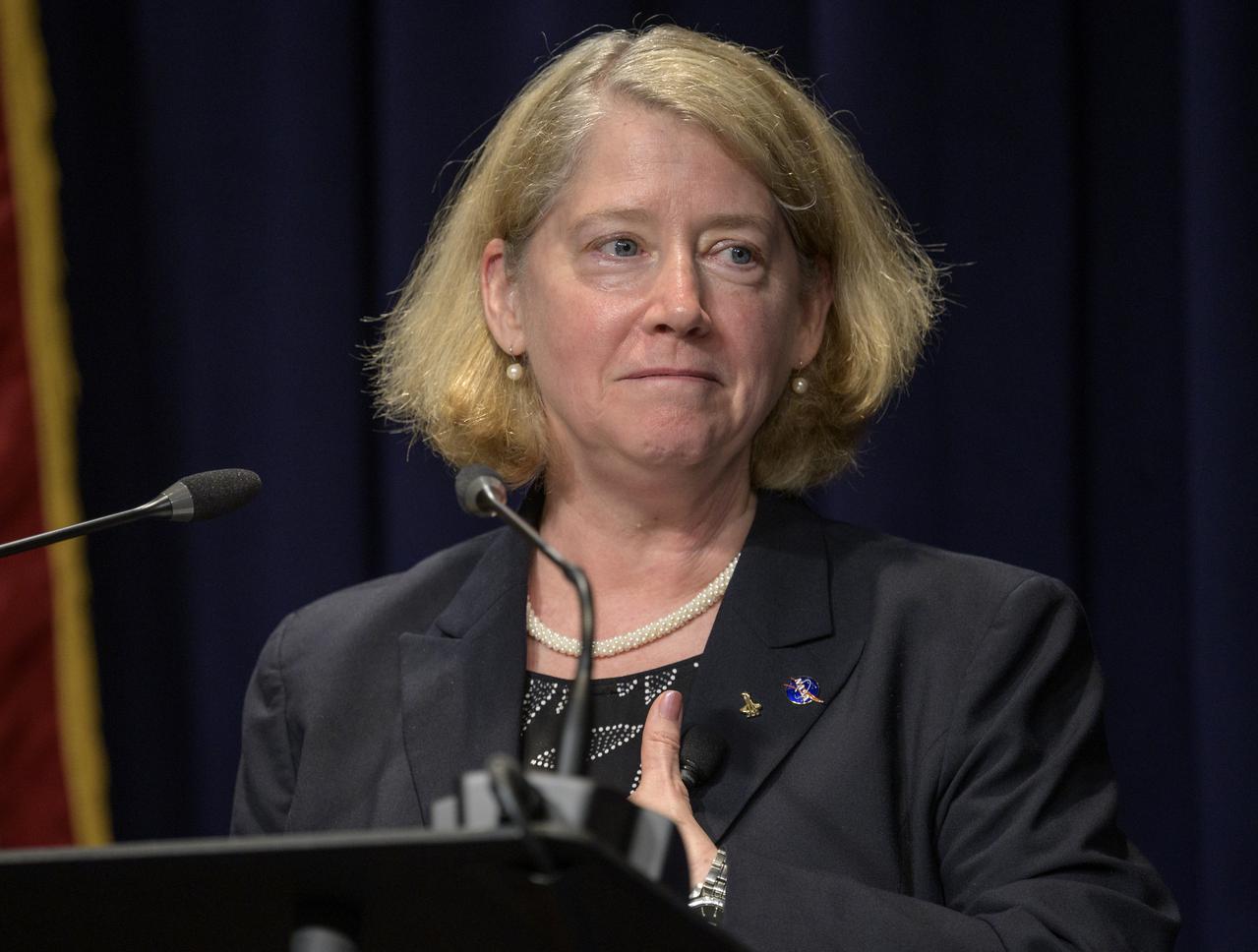
NASA Deputy Administrator Pam Melroy gives remarks after having been ceremonially sworn-in, Monday, June 21, 2021, at NASA Headquarters Mary W. Jackson Building in Washington. Melroy is a former NASA astronaut. Photo Credit: (NASA/Bill Ingalls)
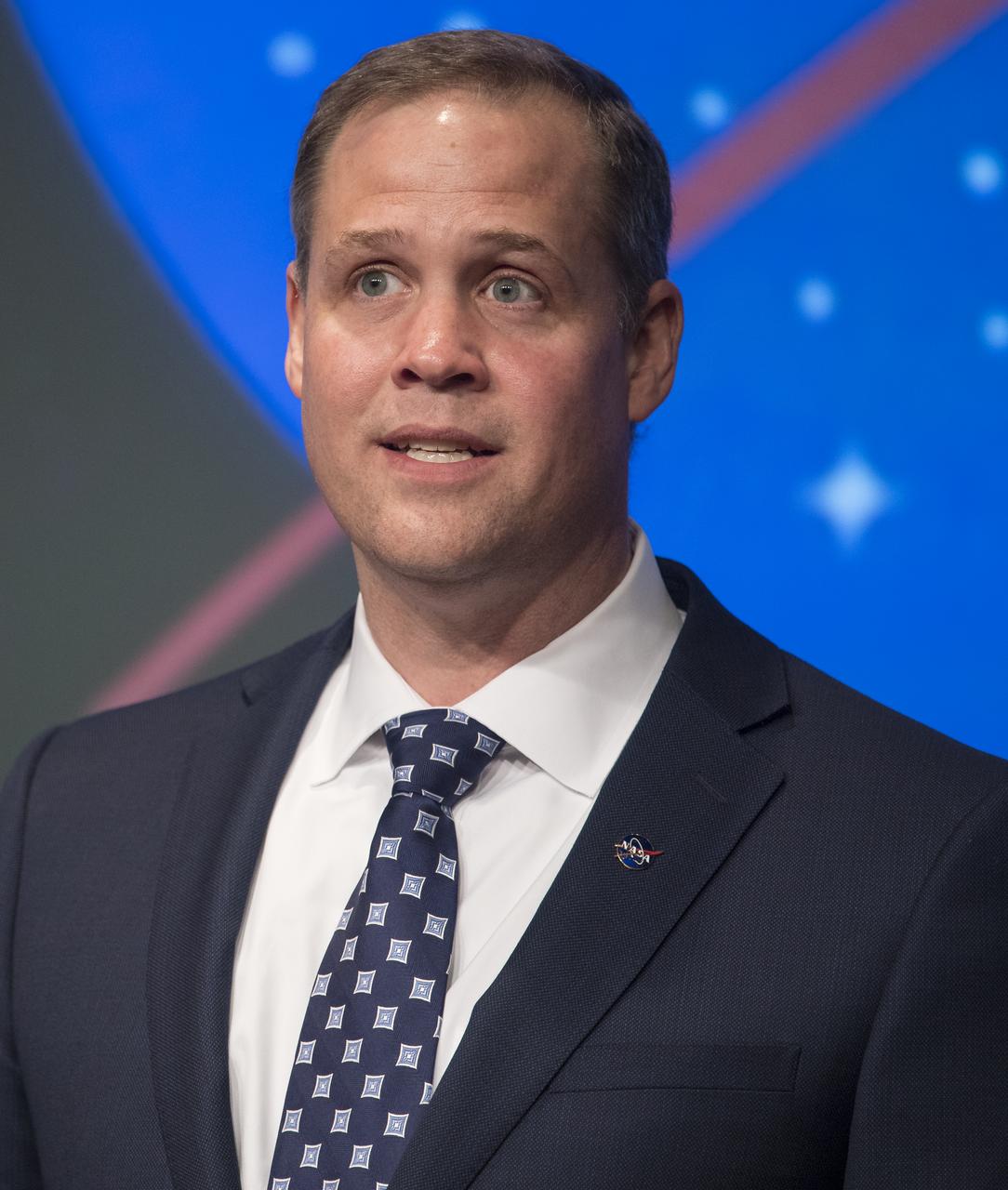
NASA Administrator Jim Bridenstine speaks after being sworn-in as they agency's 13th administrator as Vice President Mike Pence looks on, Monday, April 23, 2018 at NASA Headquarters in Washington. Photo Credit: (NASA/Joel Kowsky)
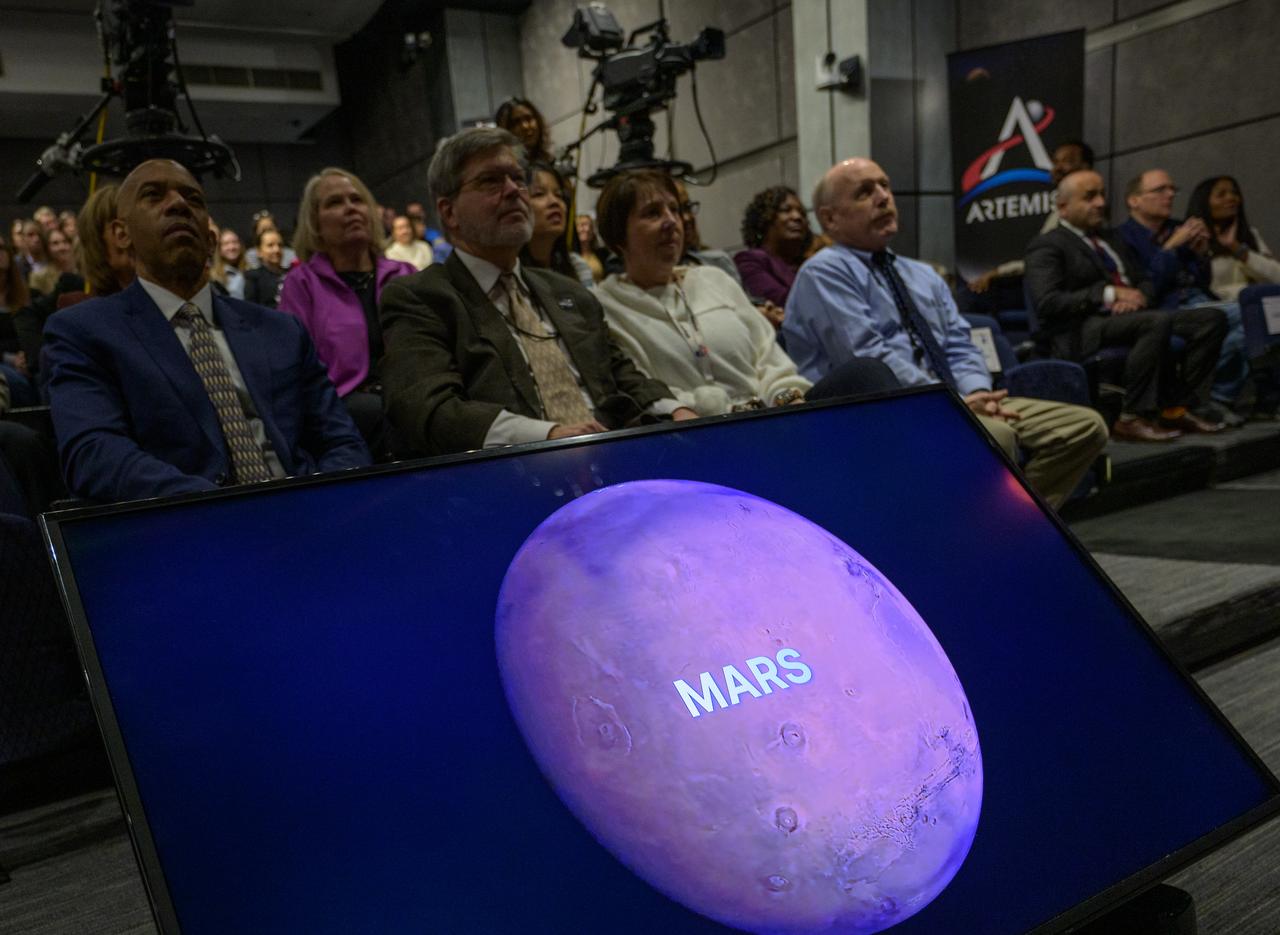
Employees watch a video during a NASA agencywide all hands, Friday, Dec. 6, 2024, at the NASA Headquarters Mary W. Jackson Building in Washington. Photo Credit: (NASA/Bill Ingalls)
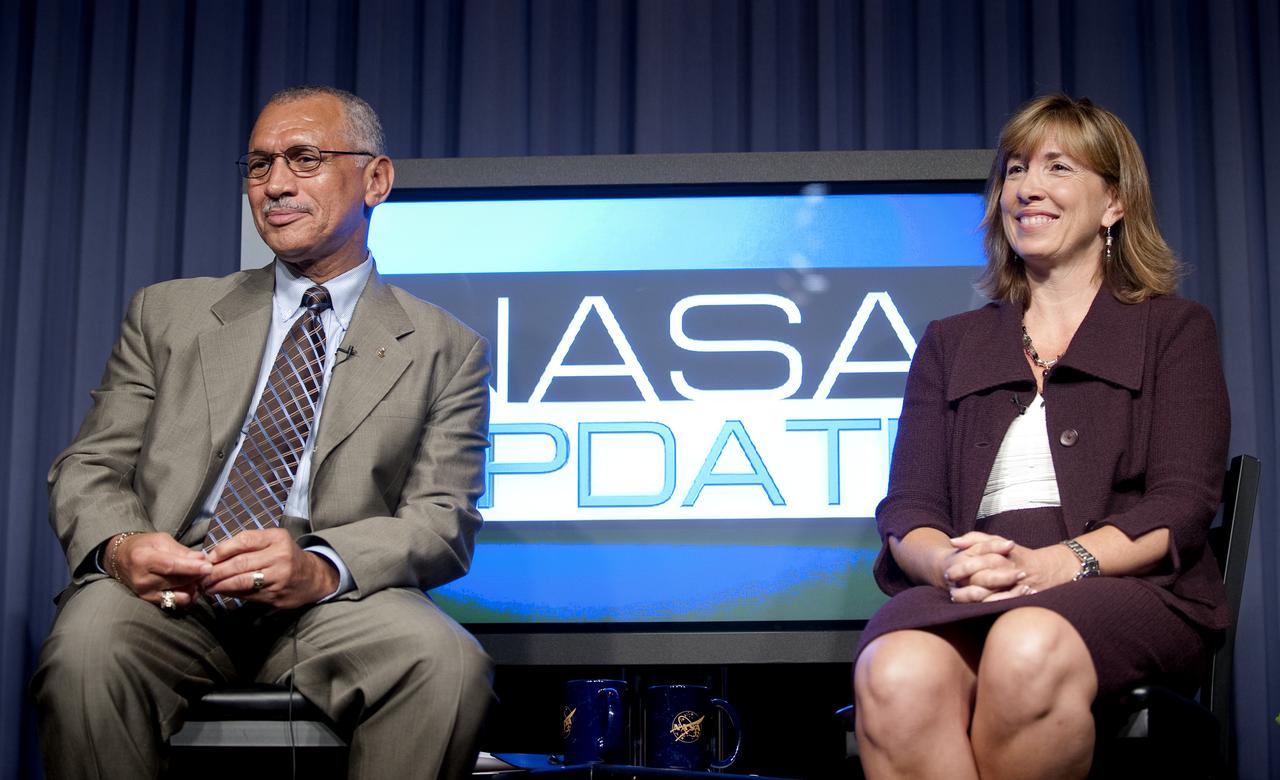
NASA Administrator Charles F. Bolden Jr. left, and Deputy Administrator Lori Garver are seen during their first NASA Update,Tuesday, July 21, 2009, at NASA Headquarters in Washington. Bolden, NASA's 12th Administrator and Garver took the time to introduce themselves and outline their vision for the agency going forward. No questions were taken during the session. Photo Credit: (NASA/Bill Ingalls)
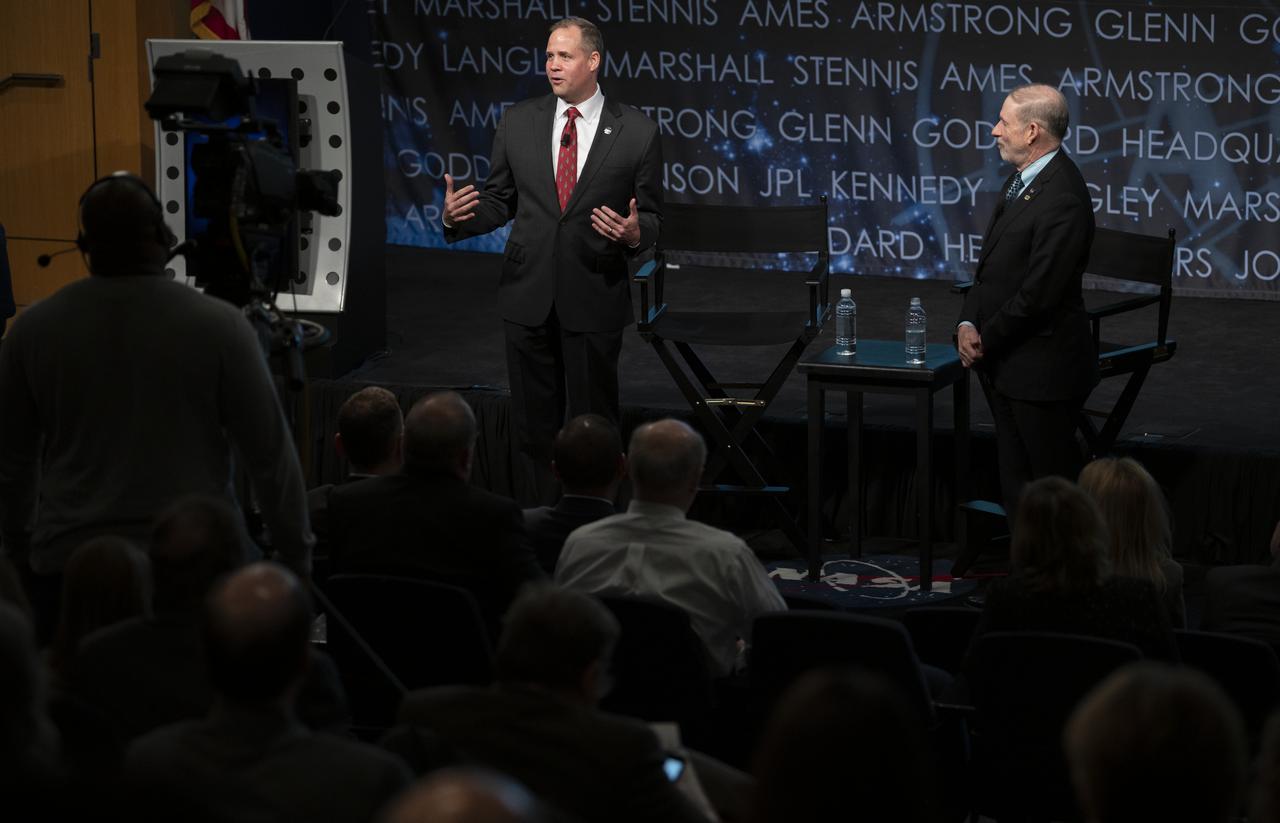
NASA Administrator Jim Bridenstine, left, and NASA Associate Administrator for the Human Exploration and Operations Mission Directorate Douglas Loverro, right, are seen during a NASA town hall event, Tuesday, Dec. 3, 2019, at NASA Headquarters in Washington. Photo Credit: (NASA/Joel Kowsky)
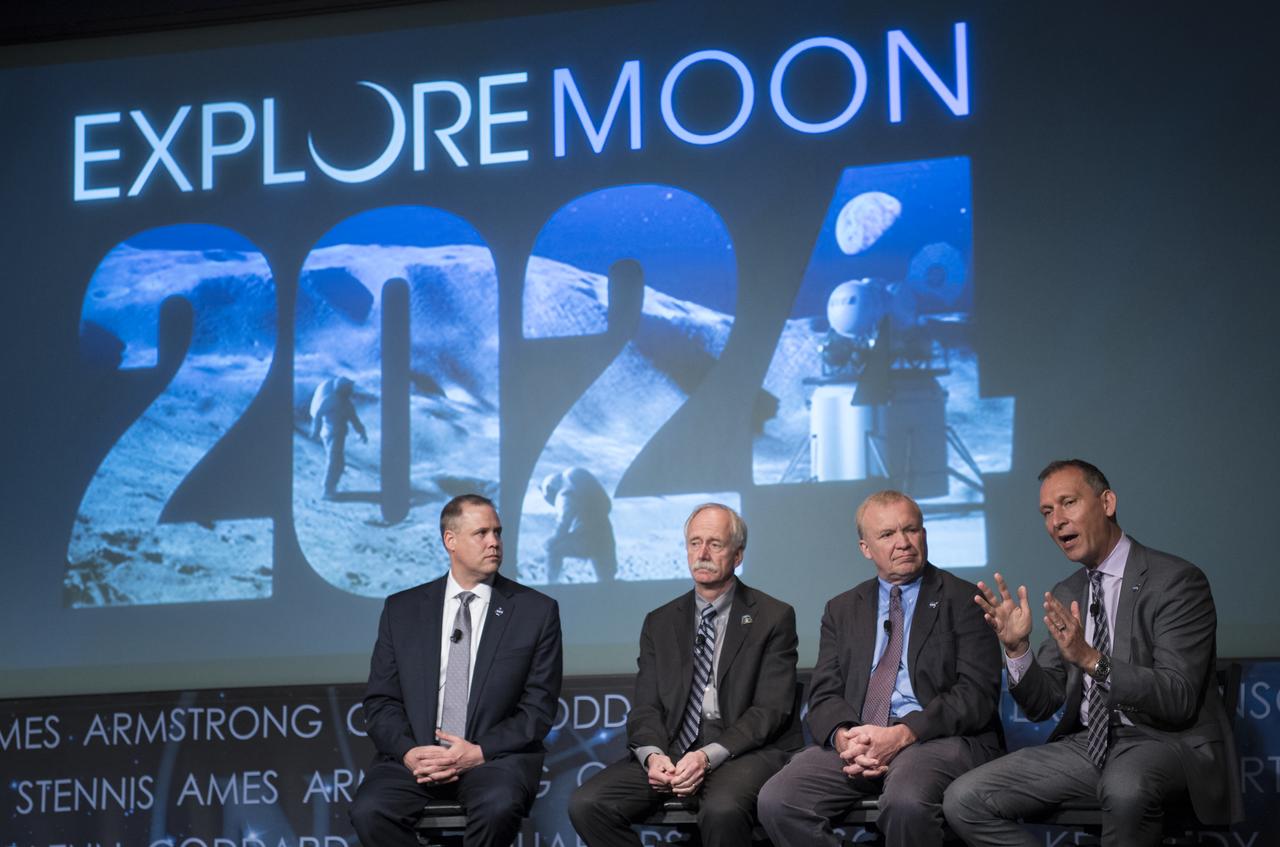
NASA Administrator Jim Bridenstine, left, NASA Associate Administrator for Human Exploration and Operations William Gerstenmaier, second from left, acting Associate Administrator for NASA's Space Technology Mission Directorate, second from right, acting Associate Administrator for NASA's Science Mission Directorate Thomas Zurbuchen, right, are seen during a NASA town hall on the amendment to the fiscal year 2020 budget request that supports the agency’s plan to land astronauts on the Moon by 2024, Tuesday, May 14, 2019 at NASA Headquarters in Washington, DC. Photo Credit: (NASA/Joel Kowsky)

Aya Collins, director of the engagement division of NASA’s Office of Communications, moderates a discussion with NASA astronauts Mike Fincke and Zena Cardman and JAXA (Japan Aerospace Exploration Agency) astronaut Kimiya Yui, Monday, June 1, 2026 at the Mary W. Jackson NASA Headquarters building in Washington. Fincke, Cardman, and Yui served as part of Expeditions 73 and 74 onboard the International Space Station. Photo Credit: (NASA/Aubrey Gemignani)
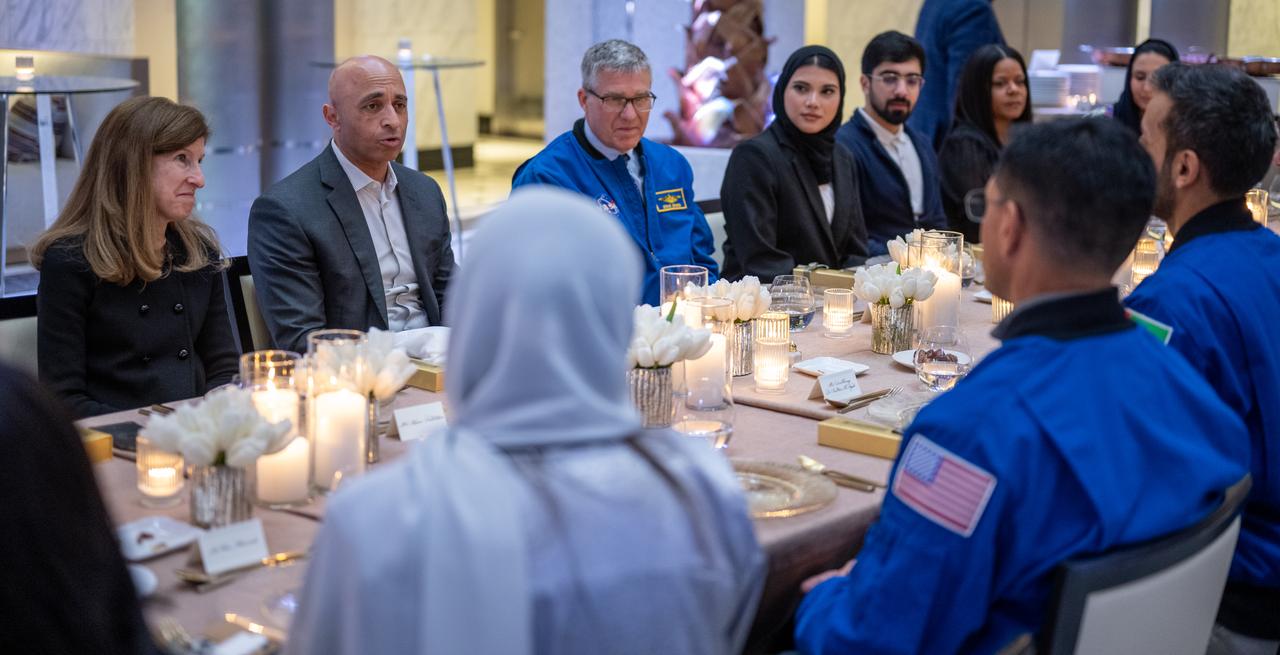
UAE (United Arab Emirates) Ambassador to the US and Minister of State, Yousef Al Otaib, second from left, delivers remarks during an Iftar dinner with with UAE astronaut Sultan Alneyadi, NASA astronauts Frank Rubio and Stephen Bowen, and guests, Thursday, March 21, 2024, at the UAE Embassy in Washington. Bowen and Alneyadi spent 186 days aboard the International Space Station as part of Expedition 69; while Rubio set a new record for the longest single spaceflight by a U.S. astronaut, spending 371 days in orbit on an extended mission spanning Expeditions 68 and 69. Photo Credit: (NASA/Keegan Barber)
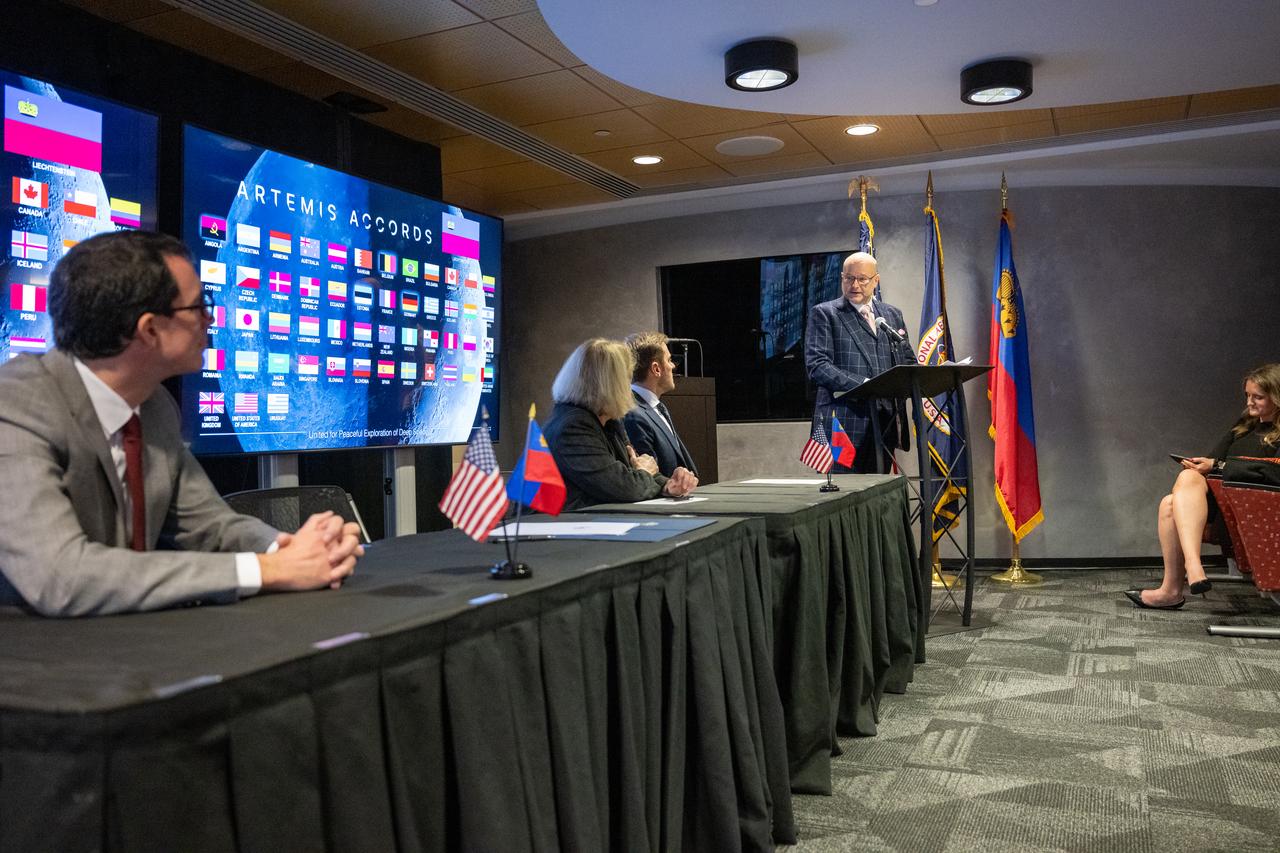
Director of the Office for Communications of the Principality of Liechtenstein Dr. Rainer Schnepfleitner delivers remarks during an Artemis Accords signing ceremony Friday, Dec. 20, 2024, at the Mary W. Jackson NASA Headquarters building in Washington. The Principality of Liechtenstein is the 52nd country to sign the Artemis Accords, which establish a practical set of principles to guide space exploration cooperation among nations participating in NASA’s Artemis program.Photo Credit: (NASA/Keegan Barber)
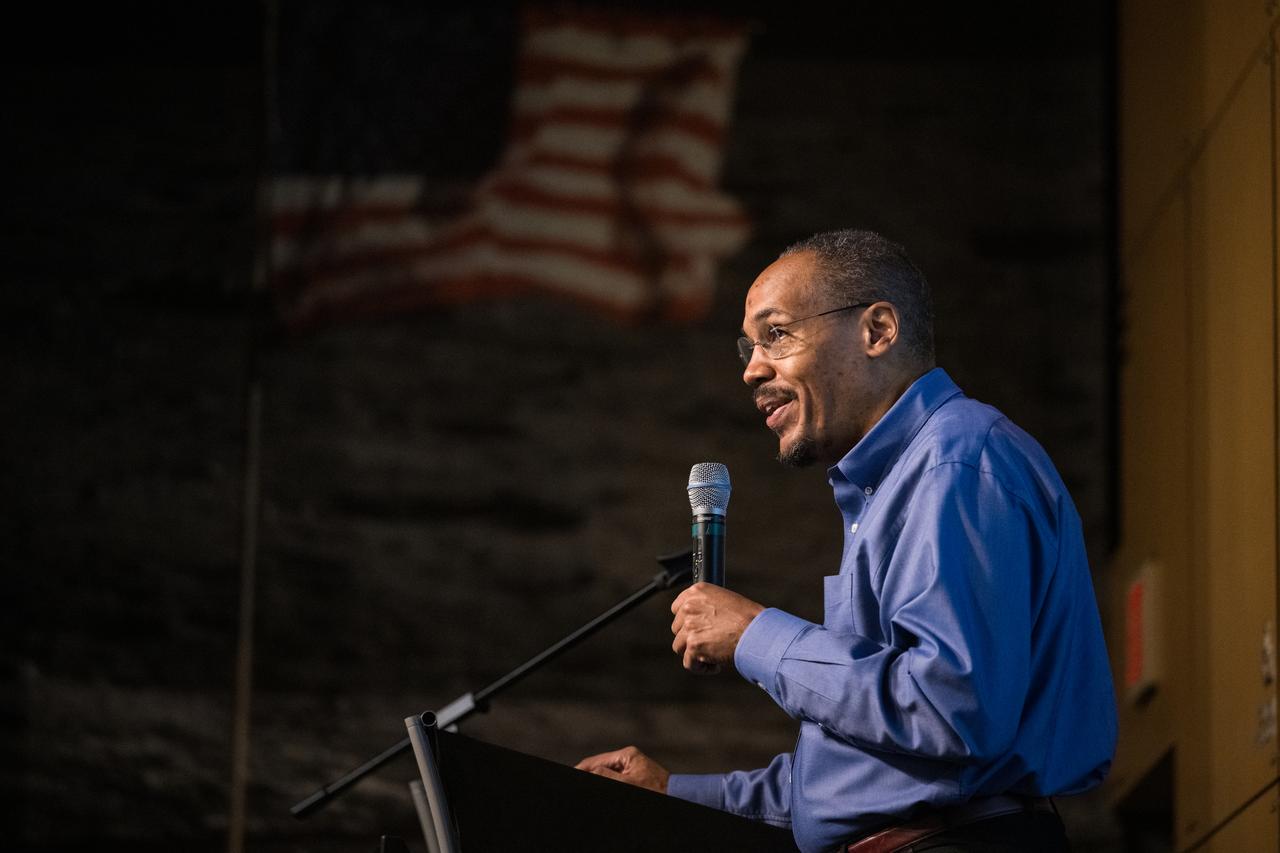
Former astronaut Alvin Drew provides remarks during the Earth Information Center Student Engagement event at the Mary W. Jackson NASA Headquarters building, Friday, Sept. 29, 2023, in Washington. Photo Credit: (NASA/Aubrey Gemignani)
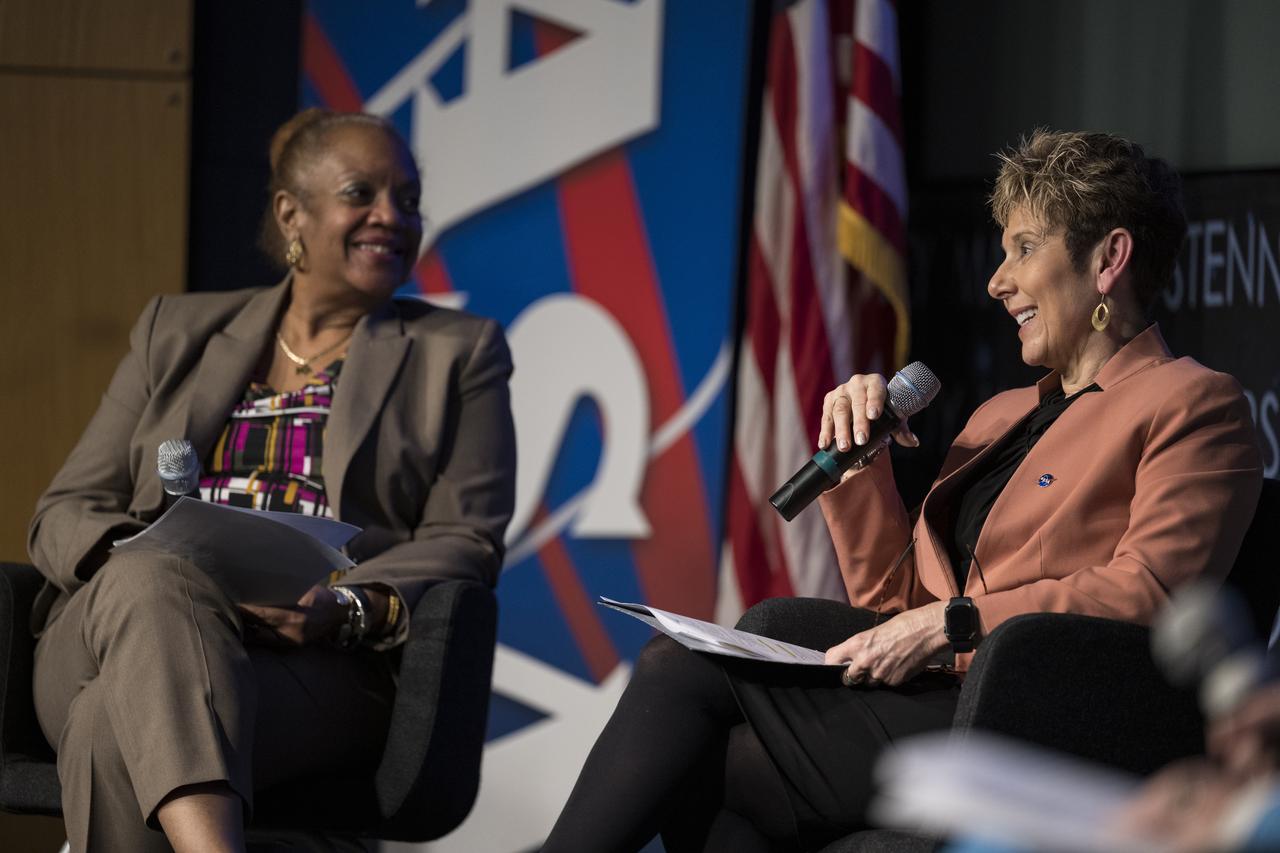
Director of Glenn Research Center, Dr. Marla Peréz-Davis speaks on a panel with NASA's three other female center directors: Janet Petro of Kennedy Space Center, Vanessa Wyche of Johnson Space Center, and Jody Singer of Marshall Space Flight Center, moderated by NASA General Counsel, Sumara Thompson-King, left, during the "DirectHERS" - Launching Through the Glass Ceiling event, Tuesday, June 7, 2022, at the Mary W. Jackson NASA Headquarters Building in Washington. Photo Credit: (NASA/Aubrey Gemignani)
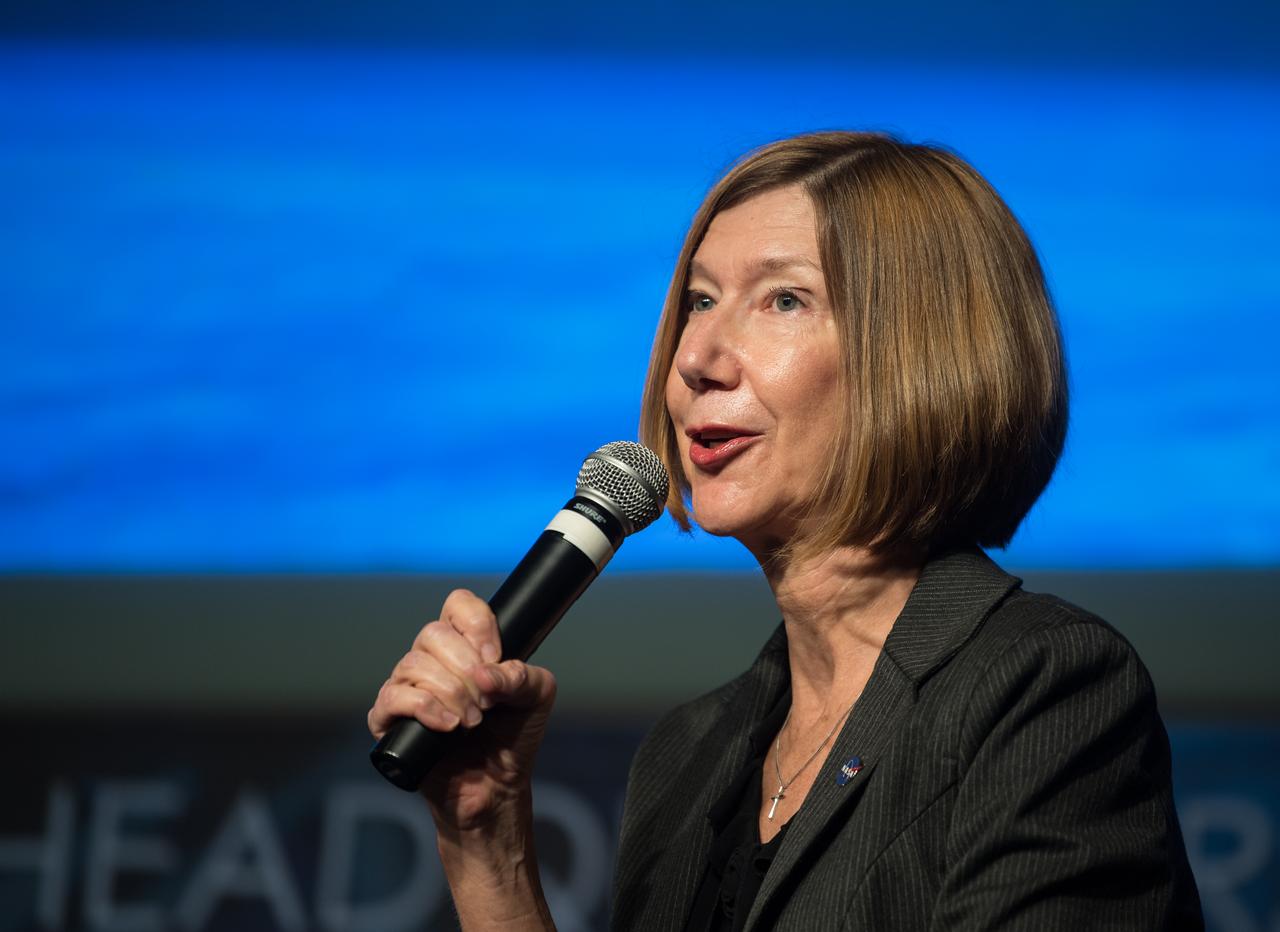
NASA Associate Administrator for the Space Operations Mission Directorate (SpaceOps), Kathy Lueders, speaks during a NASA town hall to discuss the reorganization of the Human Exploration and Operations Mission Directorate into two mission directorates: SpaceOps and the Exploration Systems Development Mission Directorate (ESDMD), Tuesday, Sept. 21, 2021 at the Mary W. Jackson NASA Headquarters building in Washington. As head of SpaceOps, Kathy Lueders will lead launch and space operations including the International Space Station, the commercialization of low-Earth orbit, and eventually operations on and around the Moon. Associate Administrator of ESDMD, Jim Free, will lead efforts to define and manage systems development for programs critical to NASA’s Artemis program and the planning of NASA’s Moon to Mars exploration. Photo Credit: (NASA/Aubrey Gemignani)

Jānis Beķeris, Chargé D’Affaires a.i. at the Embassy of the Republic of Latvia to the United States delivers remarks during an Artemis Accords signing ceremony, Monday, April 20, 2026, at the Mary W. Jackson NASA Headquarters building in Washington. The Republic of Latvia is the 62nd country to sign the Artemis Accords, which establish a practical set of principles to guide space exploration cooperation among nations participating in NASA’s Artemis program. Photo Credit: (NASA/Joel Kowsky)
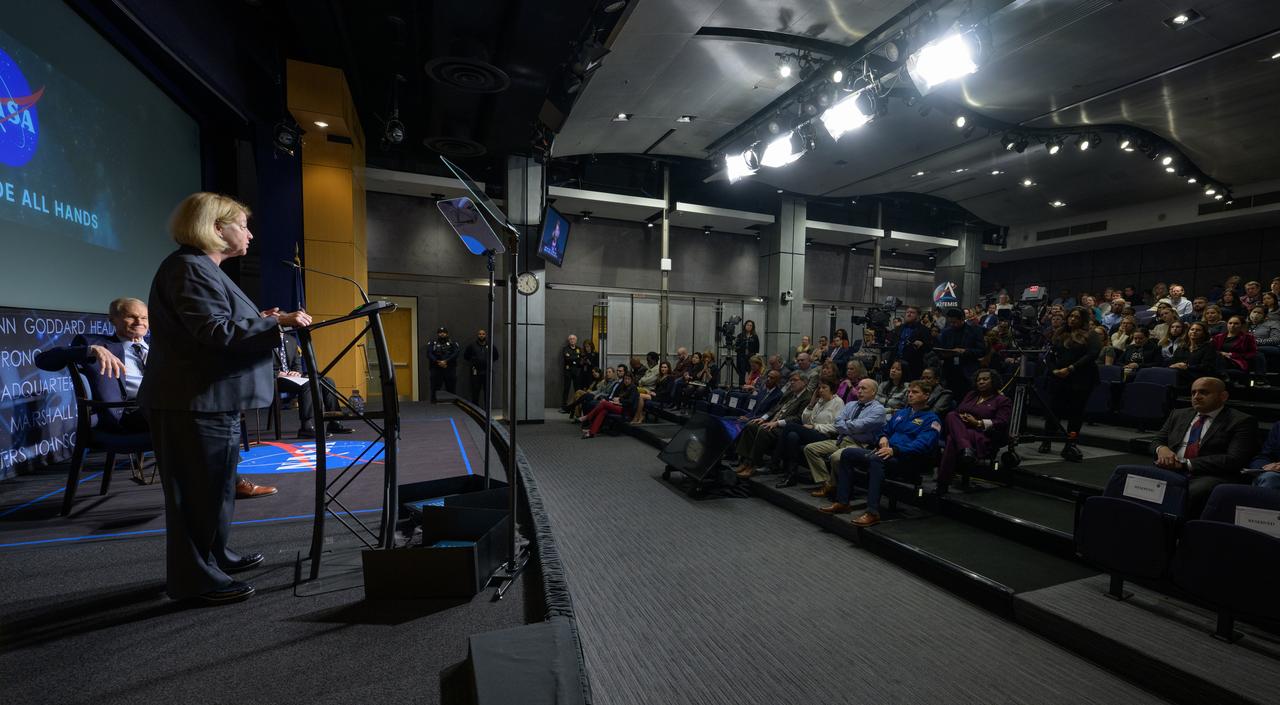
NASA Deputy Administrator Pam Melroy, gives remarks during a NASA agencywide all hands, Friday, Dec. 6, 2024, at the NASA Headquarters Mary W. Jackson Building in Washington. Photo Credit: (NASA/Bill Ingalls)
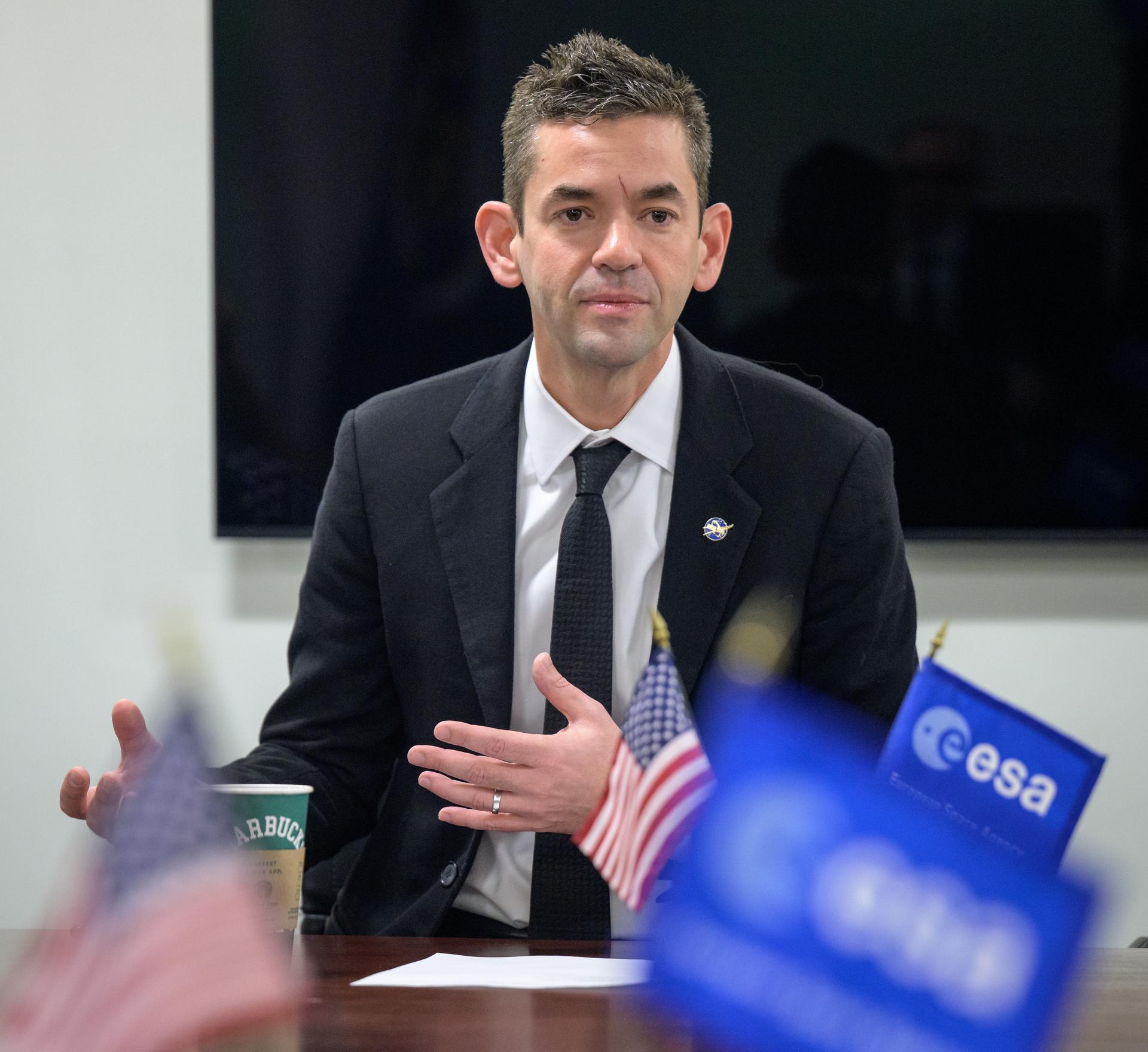
NASA Administrator Jared Isaacman meets with ESA Director General Josef Aschbacher, Wednesday, Feb. 11, 2026, at the Mary W. Jackson NASA Headquarters Building in Washington. Photo Credit: (NASA/Bill Ingalls)
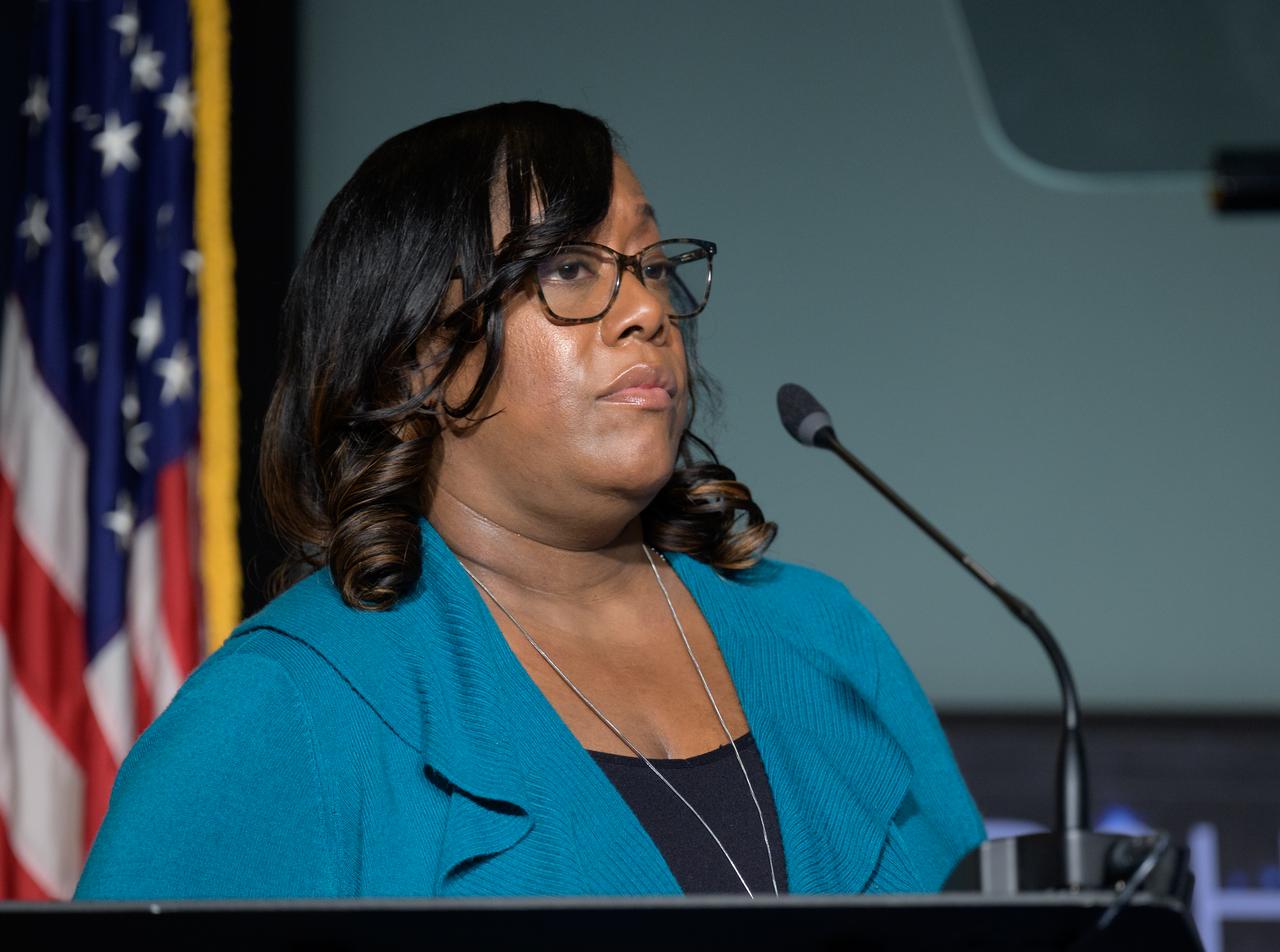
Michelle Jones, Deputy Associate Administrator for NASA’s Office of Communications, kicks off a NASA agencywide all hands, Friday, Dec. 6, 2024, at the NASA Headquarters Mary W. Jackson Building in Washington. Photo Credit: (NASA/Bill Ingalls)
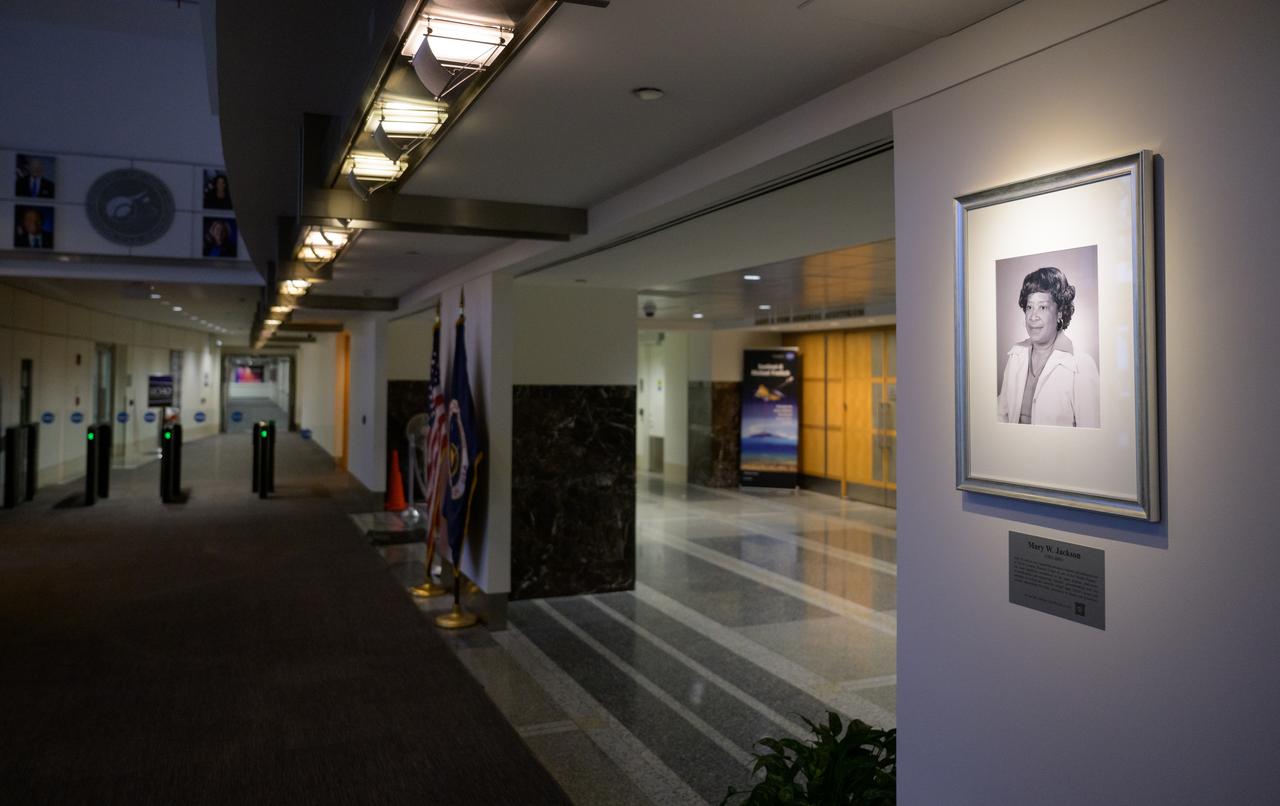
A portrait of Mary W. Jackson is seen after it was unveiled, Friday, Dec. 6, 2024, at the NASA Headquarters Mary W. Jackson Building in Washington. Mary W. Jackson was a pioneering aerospace engineer and mathematician at NASA’s Langley Research Center. As one of the “Hidden Figures,” she made significant contributions to the space program, particularly in aerodynamics and engineering. Jackson’s groundbreaking work and advocacy for women and minorities helped shape NASA’s success and advance opportunities for future generations in science and technology. Photo Credit: (NASA/Joel Kowsky)
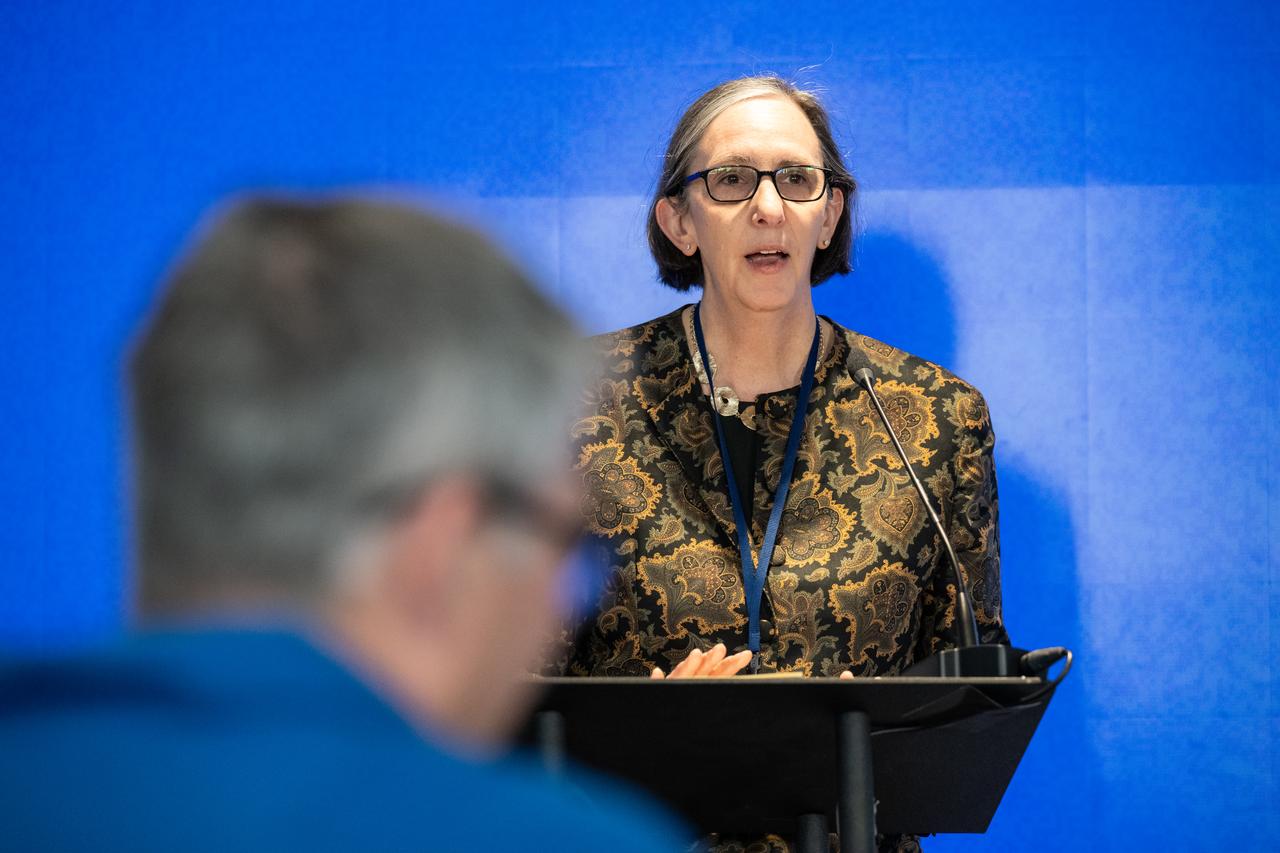
Director of the National Cancer Institute (NCI) Dr. Kimryn Rathmell delivers remarks during an event with NASA and the Department of Health and Human Services (HHS) to highlight how the agencies are making progress toward President Joe Biden and First Lady Jill Biden’s Cancer Moonshot initiative, Thursday, March 21, 2024, in the Earth Information Center at the Mary W. Jackson NASA Headquarters building in Washington. NASA is working with agencies and researchers across the federal government to help cut the nation’s cancer death rate by at least 50% in the next 25 years, a goal of the Cancer Moonshot Initiative. Photo Credit: (NASA/Keegan Barber)
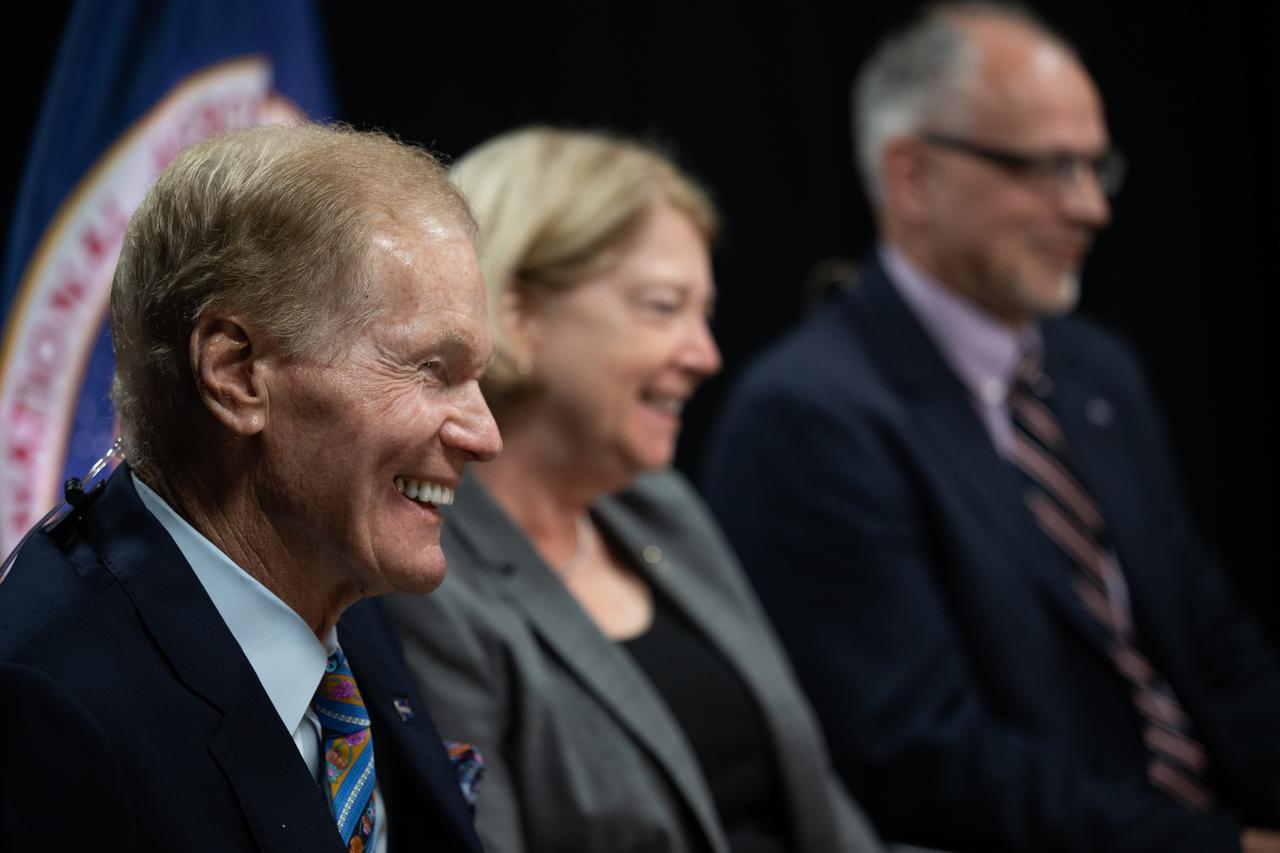
NASA Administrator Bill Nelson, left, NASA Deputy Administrator Pam Melroy, and NASA Associate Administrator Jim Free are seen during an Earth-to-space call with the agency’s Boeing Crew Flight Test crew members Butch Wilmore and Suni Williams aboard the International Space Station, Monday, June 10, 2024 at the Mary W. Jackson NASA Headquarters building in Washington. Nelson, Melroy, Free, and Johnson Space Center Director Vanessa Wyche spoke to Wilmore and Williams about their mission aboard Boeing’s Starliner Spacecraft. Photo Credit: (NASA/Joel Kowsky)
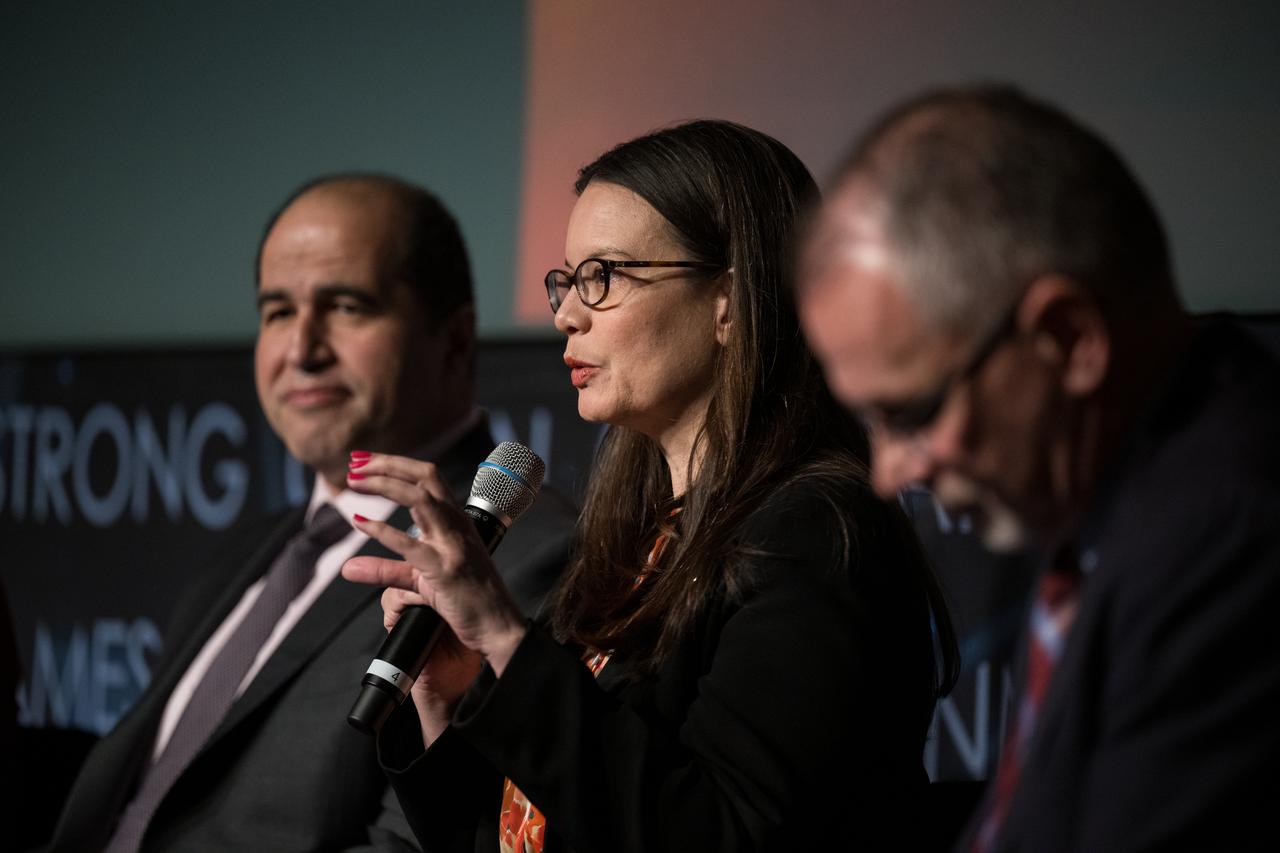
NASA Headquarters eclipse program manager, Kelly Korreck, speaks during a media briefing to discuss the upcoming solar eclipse, Tuesday, March 26, 2024 at the Mary W. Jackson NASA Headquarters building in Washington. A total solar eclipse will sweep across a narrow portion of the North American continent from Mexico’s Pacific coast to the Atlantic coast of Newfoundland, Canada on April 8, 2024. A partial solar eclipse will be visible across the entire North American continent along with parts of Central America and Europe. Photo Credit: (NASA/Aubrey Gemignani)
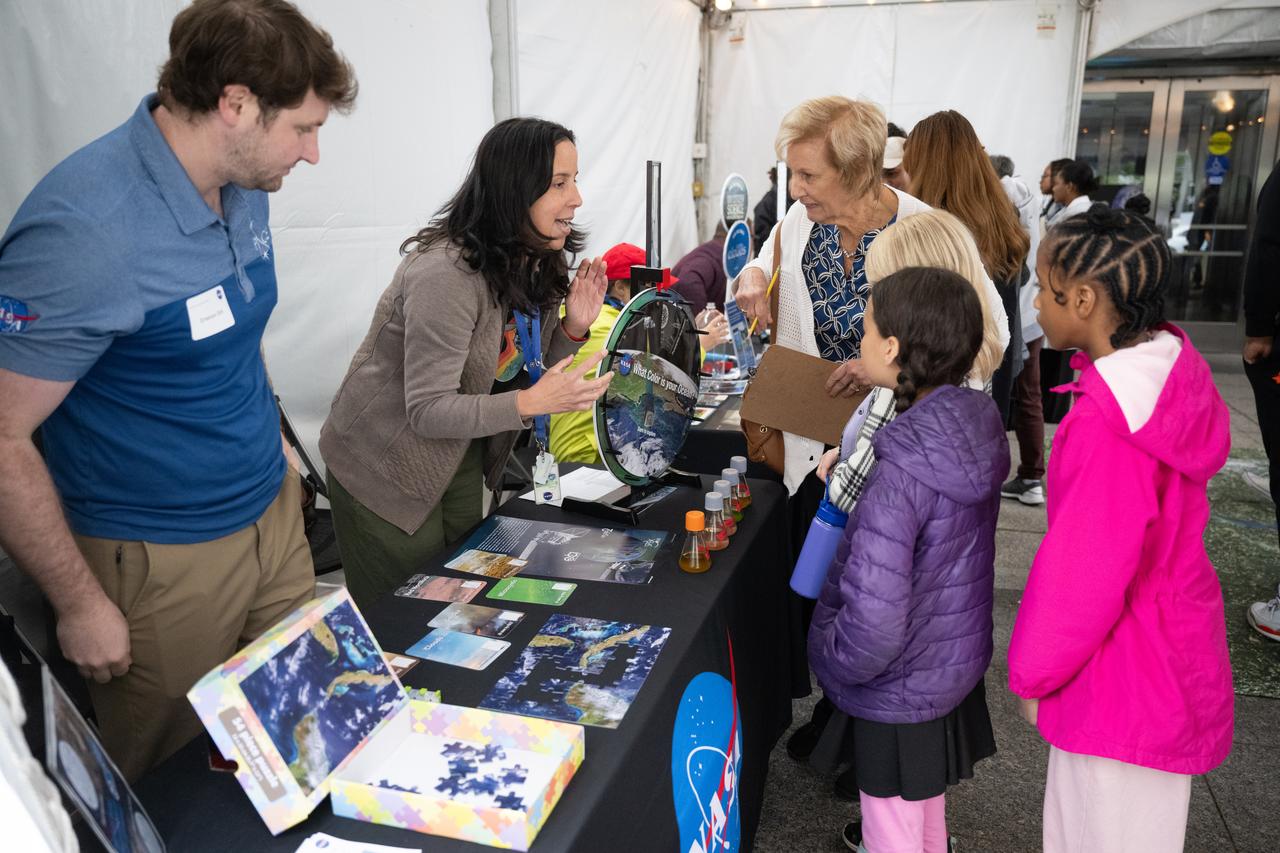
Visitors to NASA’s Earth Information Center view exhibits and hands-on activities as NASA celebrates Earth Day, Friday, April 19, 2024, at the Mary W. Jackson NASA Headquarters building in Washington. Photo Credit: (NASA/Joel Kowsky)

NASA Administrator Charles Bolden, left, NASA Associate Administrator for Small Business Programs Glenn A. Delgado, and NASA Deputy Administrator Lori Garver, right, pose for a photograph with Autumn Sellars, President/CEO of A2Research of Huntsville, Alabama after the company was awarded the Small Business Prime Contractor of the Year at NASA Headquarters, Tuesday, April 23, 2013 in Washington. Photo Credit: (NASA/Bill Ingalls)
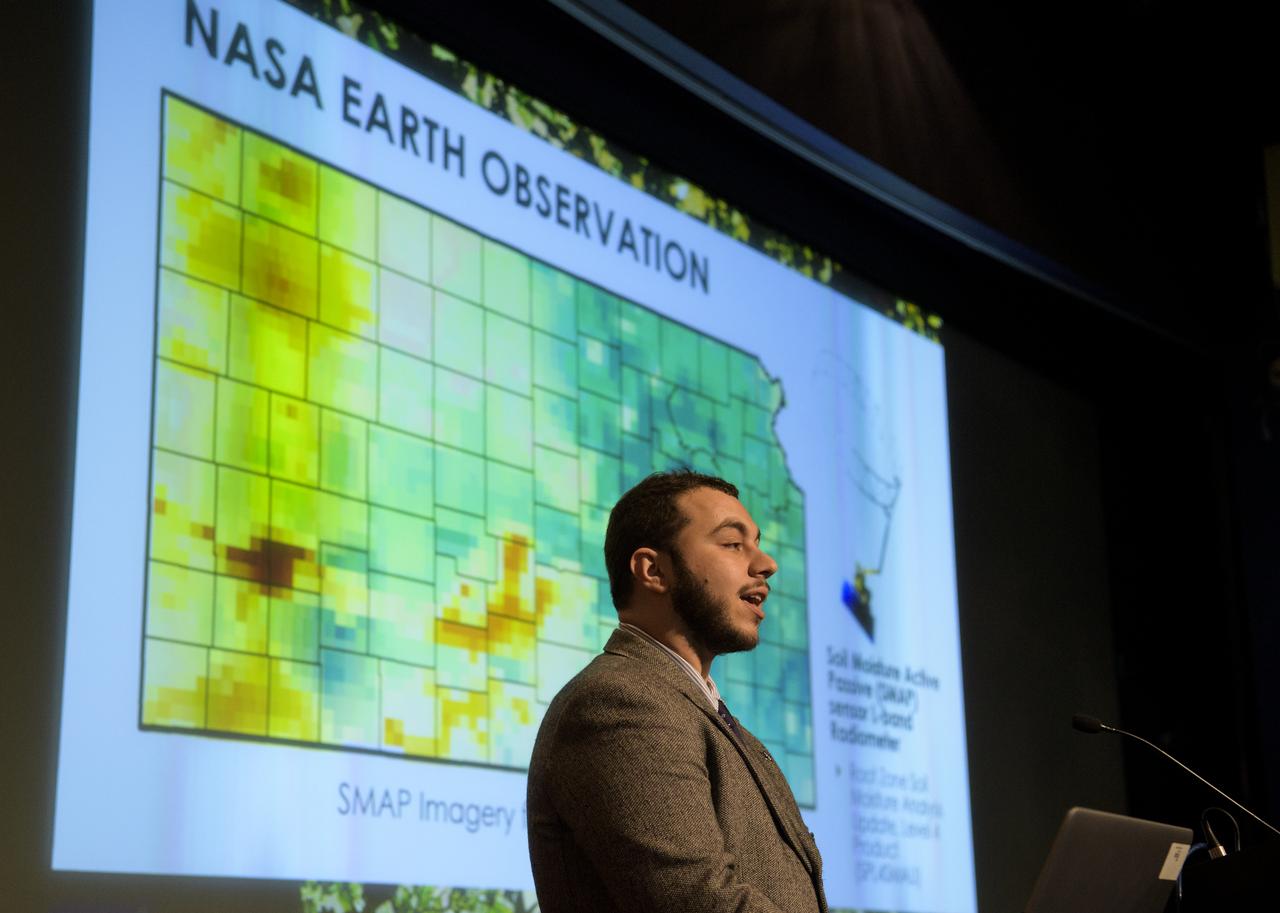
Max Dunsker speaks about the DEVELOP Kansas Agriculture and Food Security Project, which modeled soil drydown parameters for drought mitigation, during the 2019 Annual Earth Science Applications Showcase, Thursday, Aug. 1, 2019 at NASA Headquarters in Washington, DC. Every summer students and young professionals from NASA’s Applied Sciences’ DEVELOP National Program come to NASA Headquarters and present their research projects. DEVELOP is a training and development program where students work on Earth science research projects, mentored by science advisers from NASA and partner agencies, and extend research results to local communities. Photo Credit: (NASA/Joel Kowsky)
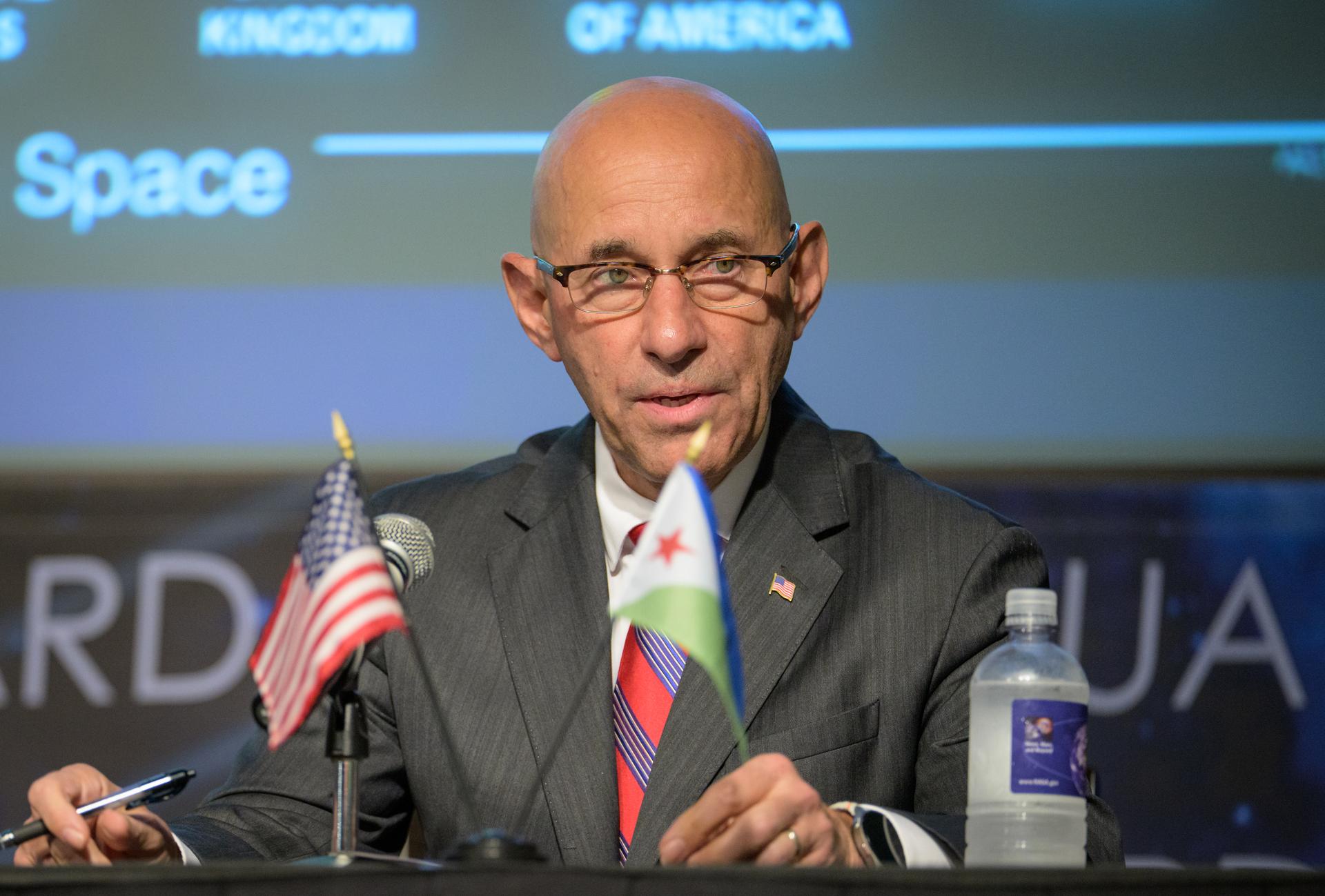
Assistant Secretary of State for African Affairs, Frank Garcia gives remarks during an Artemis Accord signing ceremony with Djibouti, Monday, September 14, 2026, at the Mary W. Jackson NASA Headquarters building in Washington. Djibouti is the 72nd country to sign the Artemis Accords, which establish a practical set of principles to guide space exploration cooperation among nations participating in NASA’s Artemis program. Photo Credit: (NASA/Bill Ingalls)
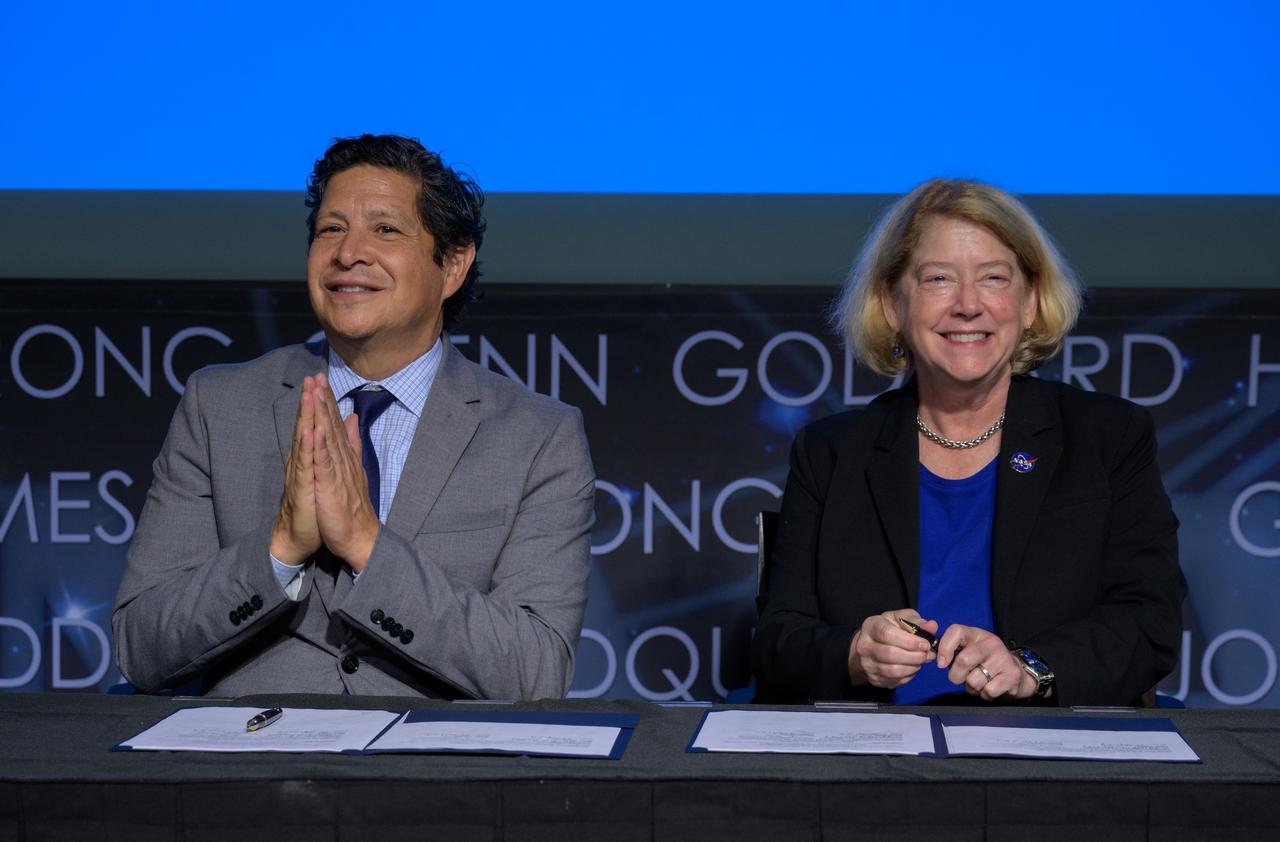
President and CEO of the Hispanic Heritage Foundation Jose Antonio Tijerino, left, and NASA Deputy Administrator Pam Melroy, react after signing a Space Act Agreement between the HHF and NASA to collaborate and expand STEM opportunities for Latino K-12 and university students and reduce barriers to agency activities and opportunities, Monday, Sept. 30, 2024, at the NASA Headquarters Mary W. Jackson Building in Washington. Photo Credit: (NASA/Bill Ingalls)
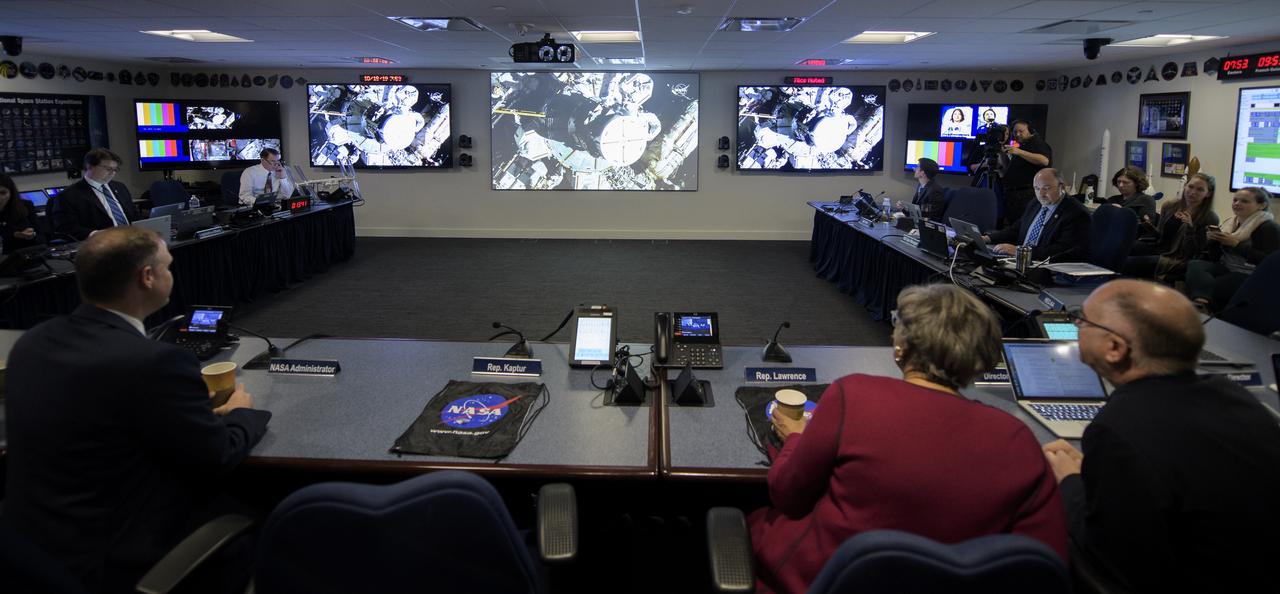
NASA Administrator Jim Bridenstine, NASA management and members of Congess watch the beginning of the first all-woman spacewalk on Friday, Oct. 18, 2019, from the Space Operations Center at NASA Headquarters in Washington. The first all-woman spacewalk in history began at 7:38am EDT with NASA astronauts Christina Koch and Jessica Meir venturing outside the International Space Station to replace a failed battery charge-discharge unit. This is the fourth spacewalk for Koch and Meir’s first. Photo Credit: (NASA/Joel Kowsky)
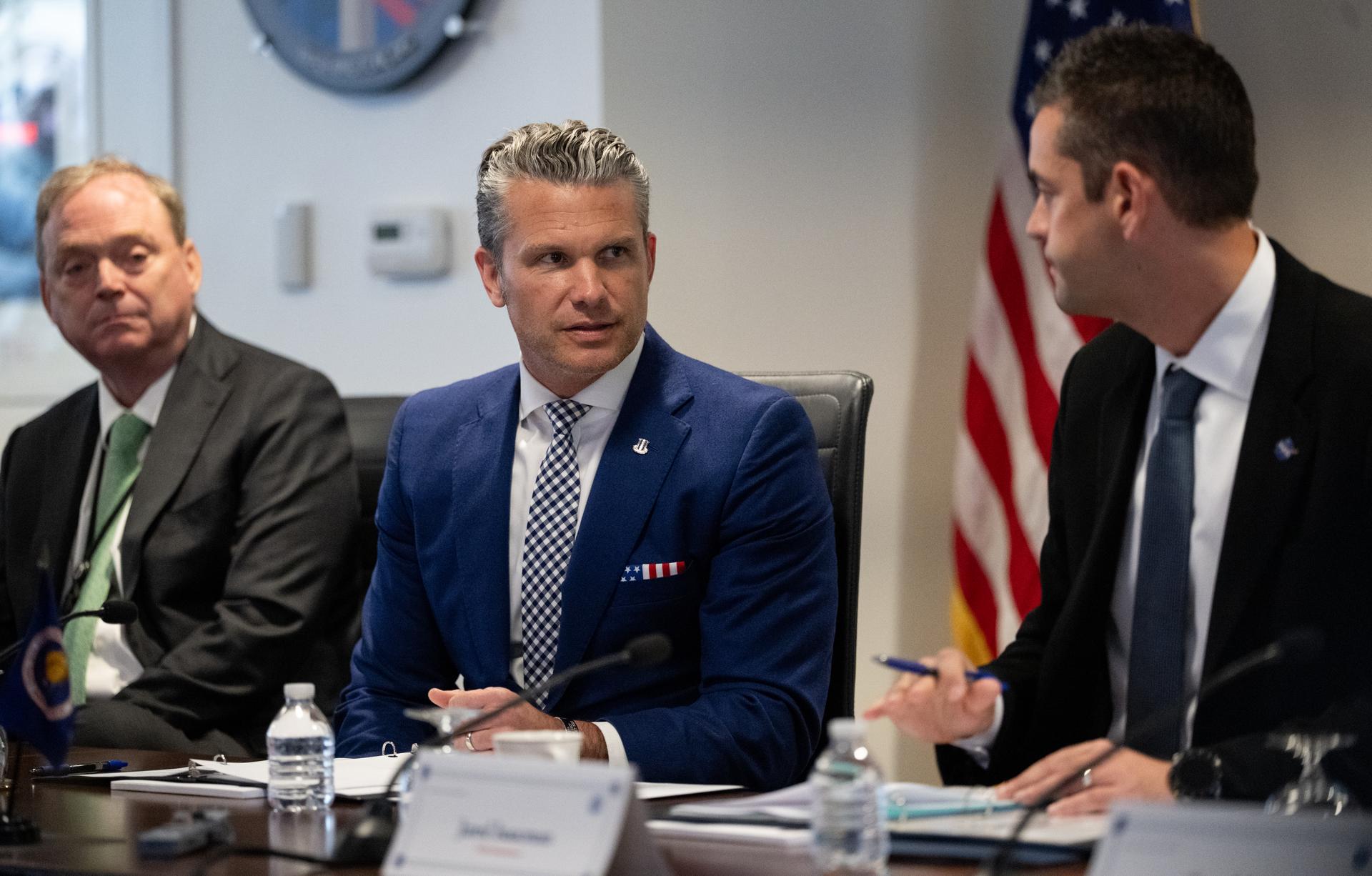
Secretary of War Pete Hegseth is seen during a meeting of the Presidential Commission on the United States Space Academy in the Space Operations Center, Wednesday, Sept. 9, 2026, at the Mary W. Jackson NASA Headquarters Building in Washington. The commission will meet and submit a report proposing recommendations for the establishment of the Space Academy. Photo Credit (NASA/Joel Kowsky)
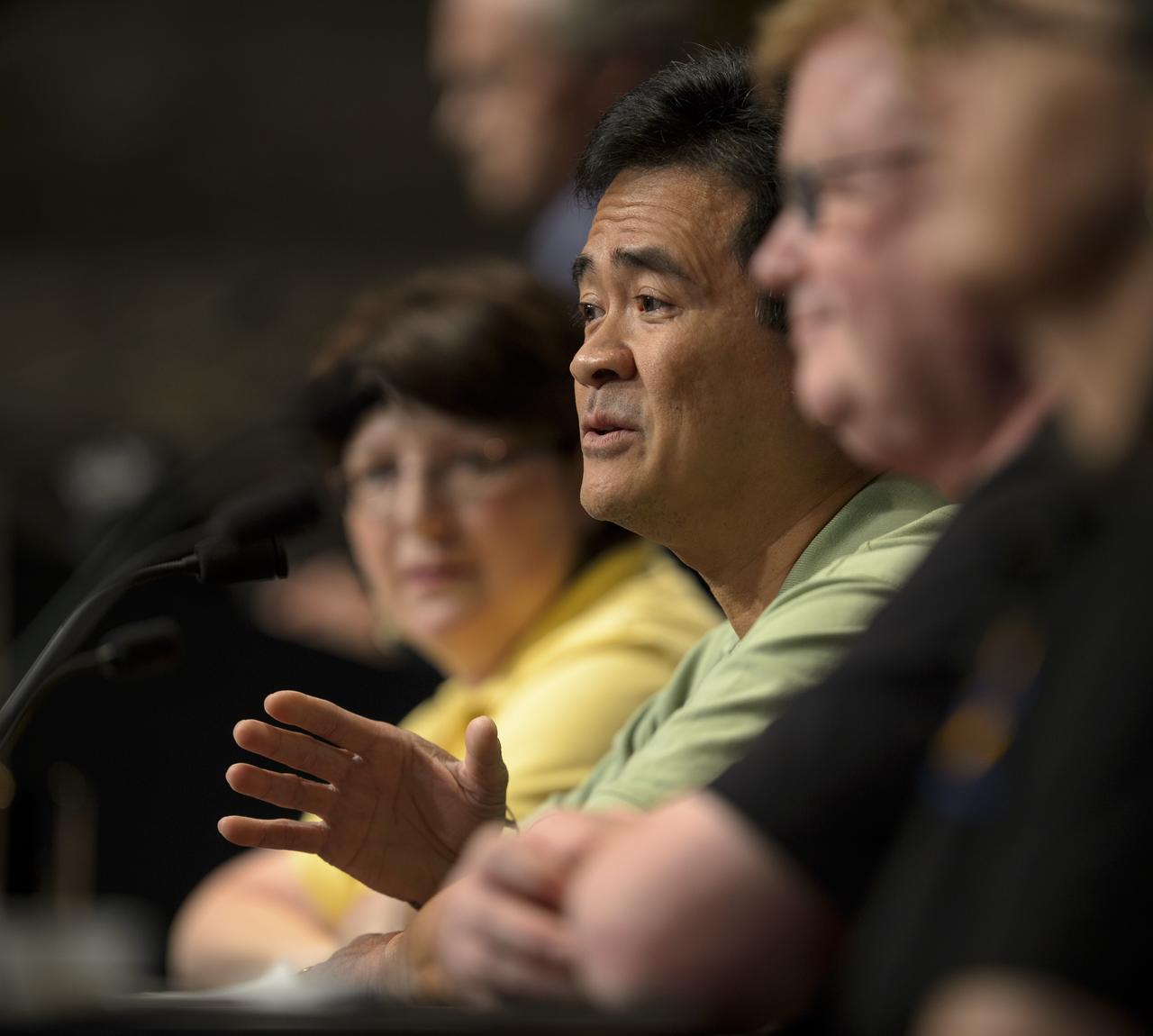
Ralph Basilio, OCO-2 project manager with NASA’s Jet Propulsion Laboratory (JPL) in Pasadena, California discusses the Orbiting Carbon Observatory-2 (OCO-2), NASA’s first spacecraft dedicated to studying carbon dioxide, during a press briefing, Thursday, June 12, 2014, at NASA Headquarters in Washington. OCO-2 is set for a July 1, 2014 launch from Vandenberg Air Force Base in California. Its mission is to measure the global distribution of carbon dioxide, the leading human-produced greenhouse gas driving changes in Earth’s climate. Photo Credit: (NASA/Bill Ingalls)
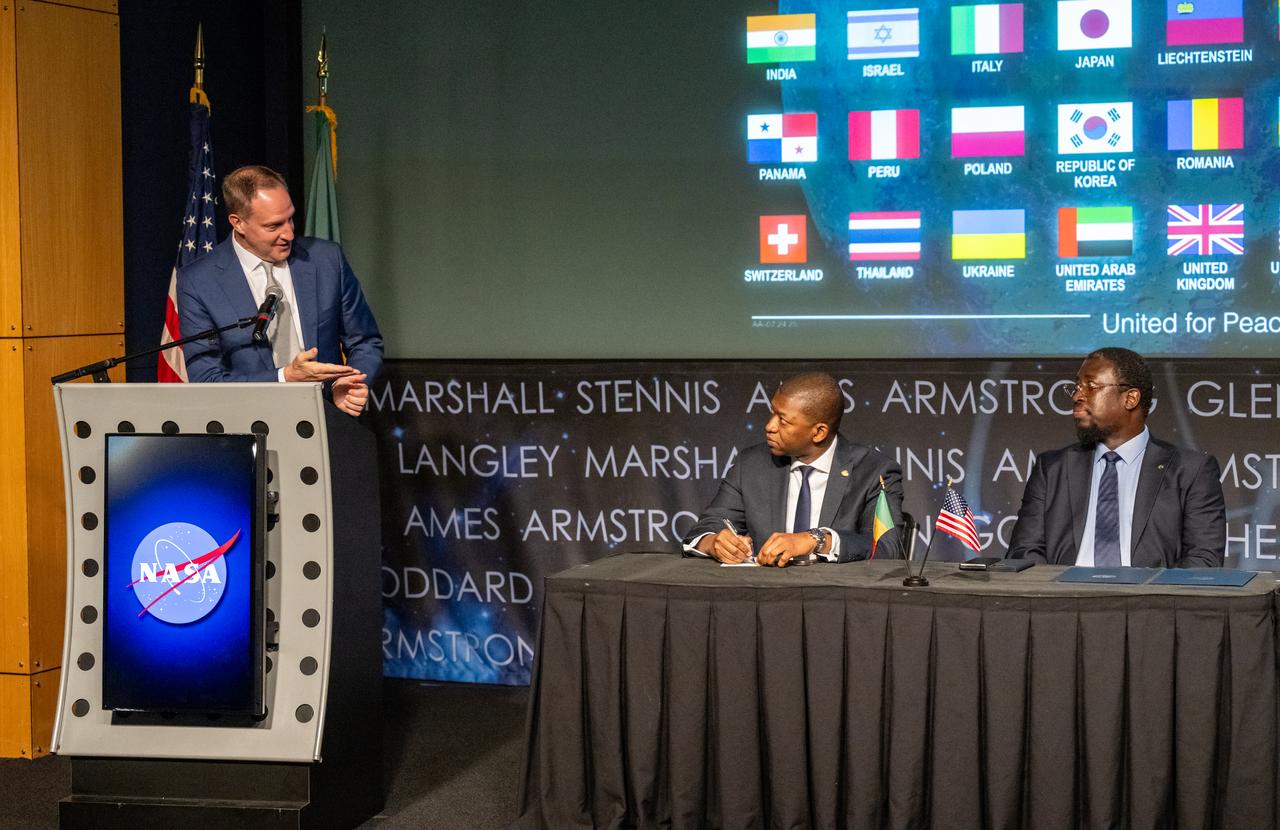
Department of State Bureau of African Affairs Senior Bureau Official Jonathan Pratt delivers remarks during an Artemis Accords signing ceremony Thursday, July 24, 2025, at the Mary W. Jackson NASA Headquarters building in Washington. Senegal is the 56th country to sign the Artemis Accords, which establish a practical set of principles to guide space exploration cooperation among nations participating in NASA’s Artemis program. Photo Credit: (NASA/Keegan Barber)
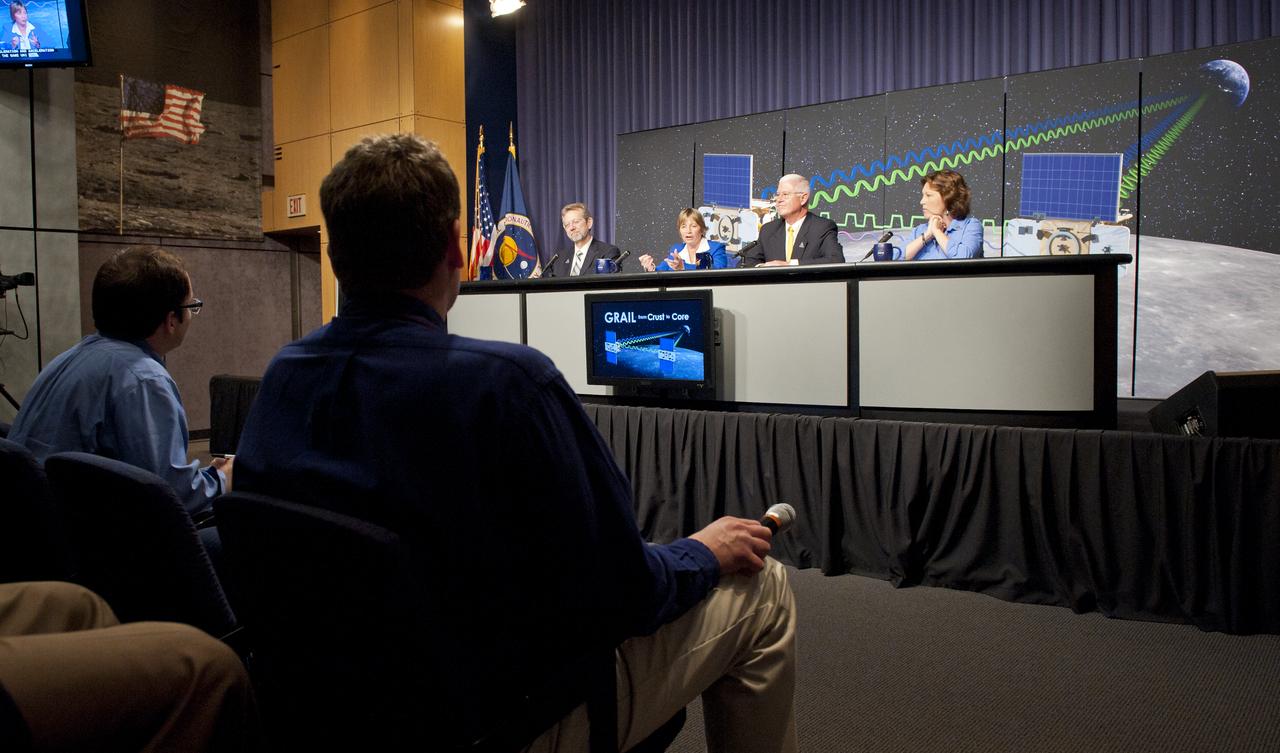
On the panel from right: Leesa Hubbard, teacher in residence, Sally Ride Science, San Diego; David Lehman, GRAIL project manager, NASA's Jet Propulsion Laboratory, Pasadena, Calif.; Maria Zuber, GRAIL principal investigator, Massachusetts Institute of Technology, Cambridge and Jim Green, director, Planetary Science Division, NASA Headquarters, Washington are seen at a press briefing to discuss the upcoming launch to the moon of the Gravity Recovery and Interior Laboratory (GRAIL) mission, Thursday, Aug. 25, 2011 in Washington. Photo Credit: (NASA/Carla Cioffi)
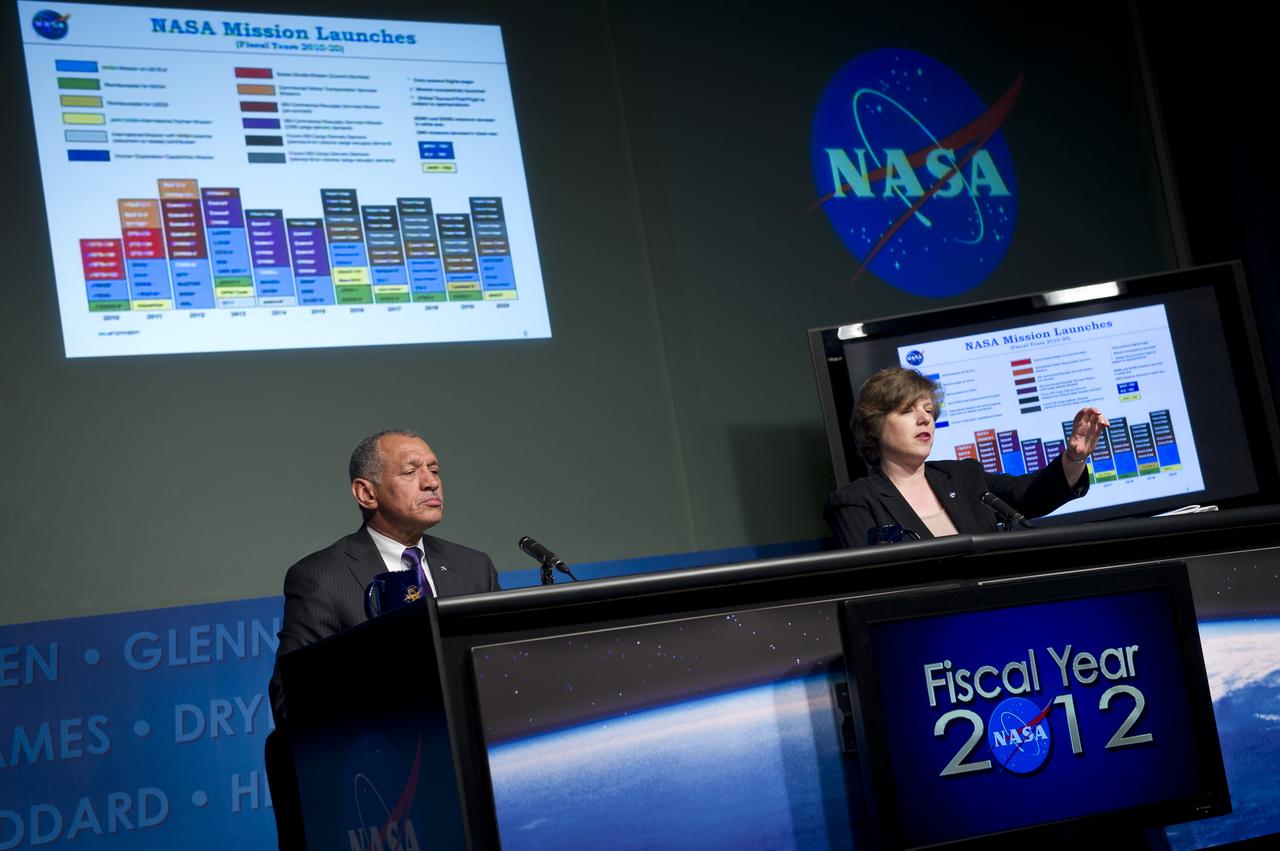
NASA Administrator Charles Bolden and NASA Chief Financial Officer Elizabeth Robinson deliver an overview briefing on NASA's fiscal year 2012 budget, Monday, Feb. 14, 2011 at NASA Headquarters in Washington. Photo Credit: (NASA/Bill Ingalls)
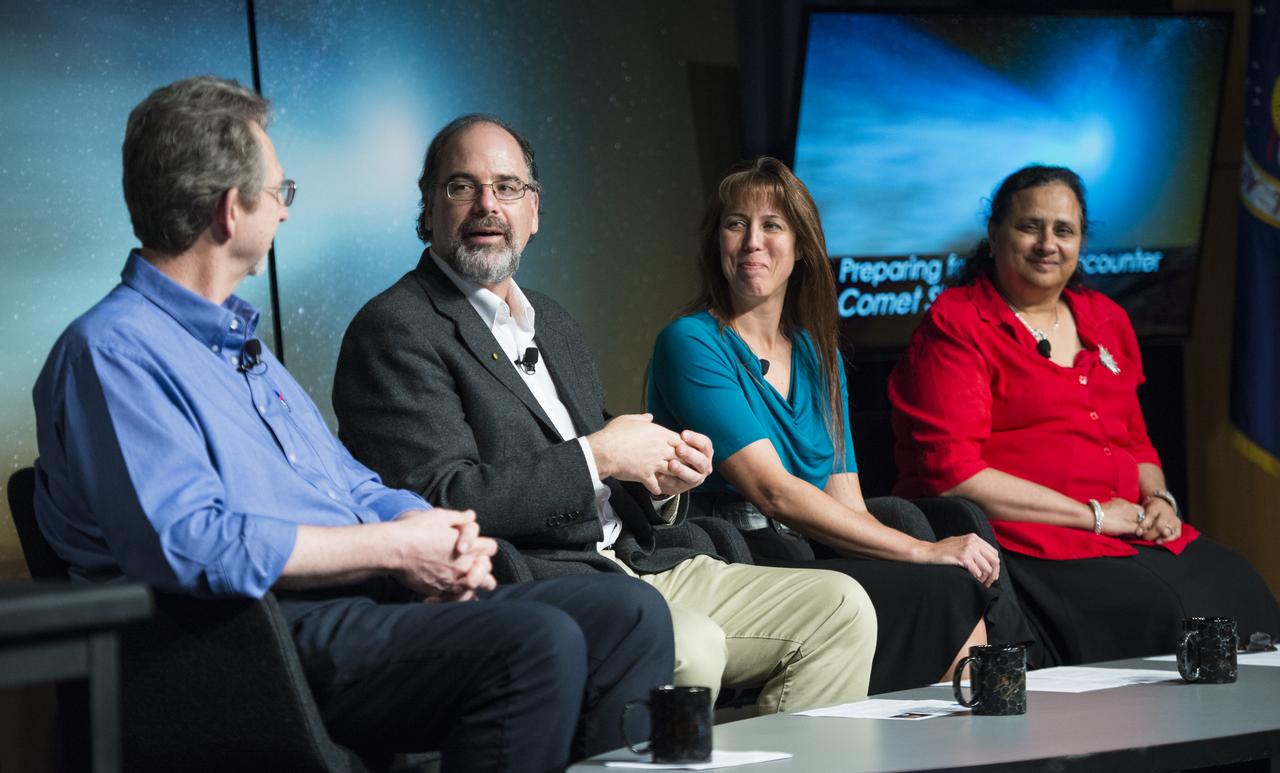
Panelists, from left, Jim Green, director, Planetary Science Division, NASA Headquarters, Washington, Carey Lisse, senior astrophysicist, Johns Hopkins University Applied Physics Laboratory, Laurel, Maryland, Kelly Fast, program scientist, Planetary Science Division, NASA Headquarters, Washington, and Padma Yanamandra-Fisher, senior research scientist, Space Science Institute, Rancho Cucamonga Branch, California, are seen during a media briefing where they outlined how space and Earth-based assets will be used to image and study comet Siding Spring during its Sunday, Oct. 19 flyby of Mars, Thursday, Oct. 9, 2014 at NASA Headquarters in Washington. (Photo credit: NASA/Joel Kowsky)
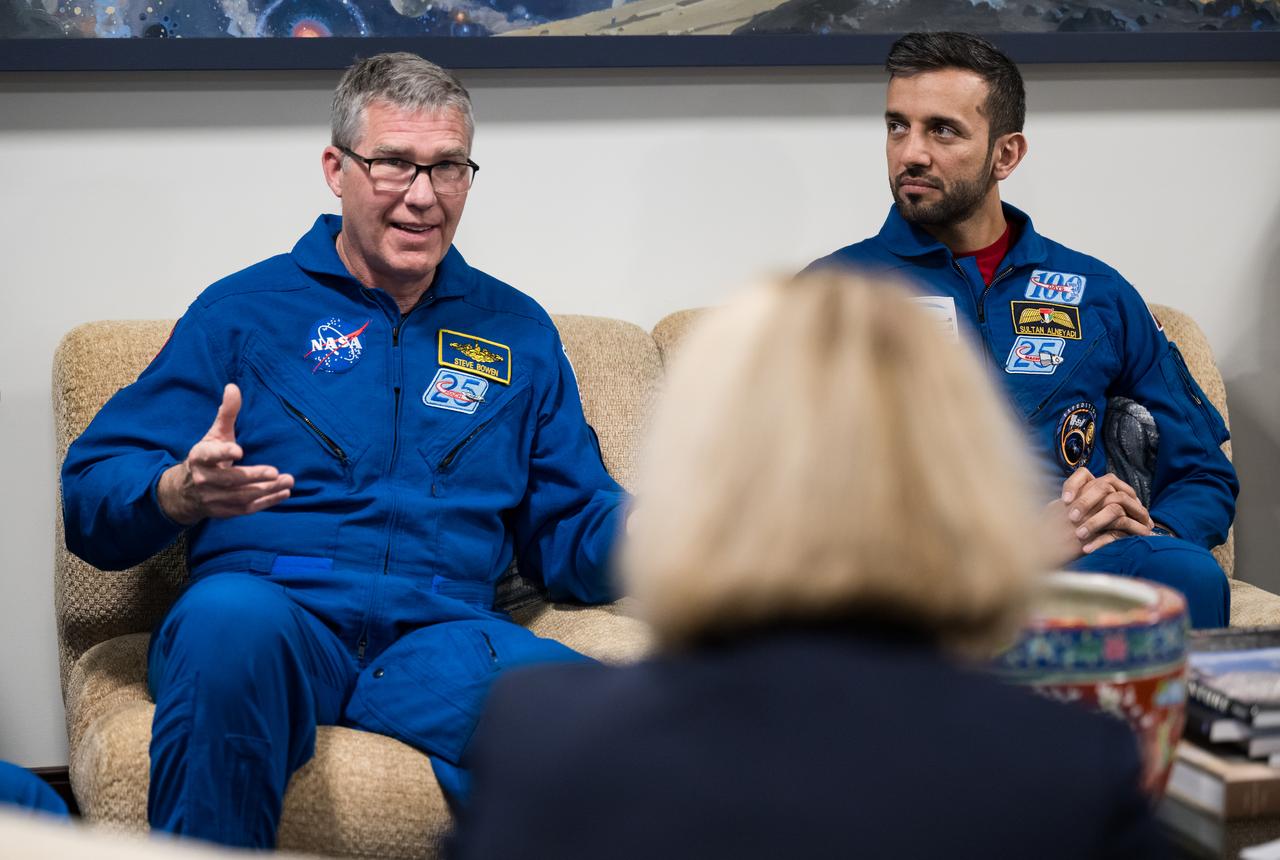
Expedition 69 NASA astronaut Stephen Bowen is seen as he and fellow crewmates NASA astronauts Warren Hoburg and Frank Rubio, and UAE (United Arab Emirates) astronaut Sultan Alneyadi, right, meet with NASA Deputy Administrator Pam Melroy, and NASA Administrator Bill Nelson, Tuesday, March 19, 2024 at the Mary W. Jackson NASA Headquarters building in Washington. Bowen, Hoburg, and Alneyadi spent 186 days aboard the International Space Station as part of Expedition 69; while Rubio set a new record for the longest single spaceflight by a U.S. astronaut, spending 371 days in orbit on an extended mission spanning Expeditions 68 and 69. Photo Credit: (NASA/Aubrey Gemignani)
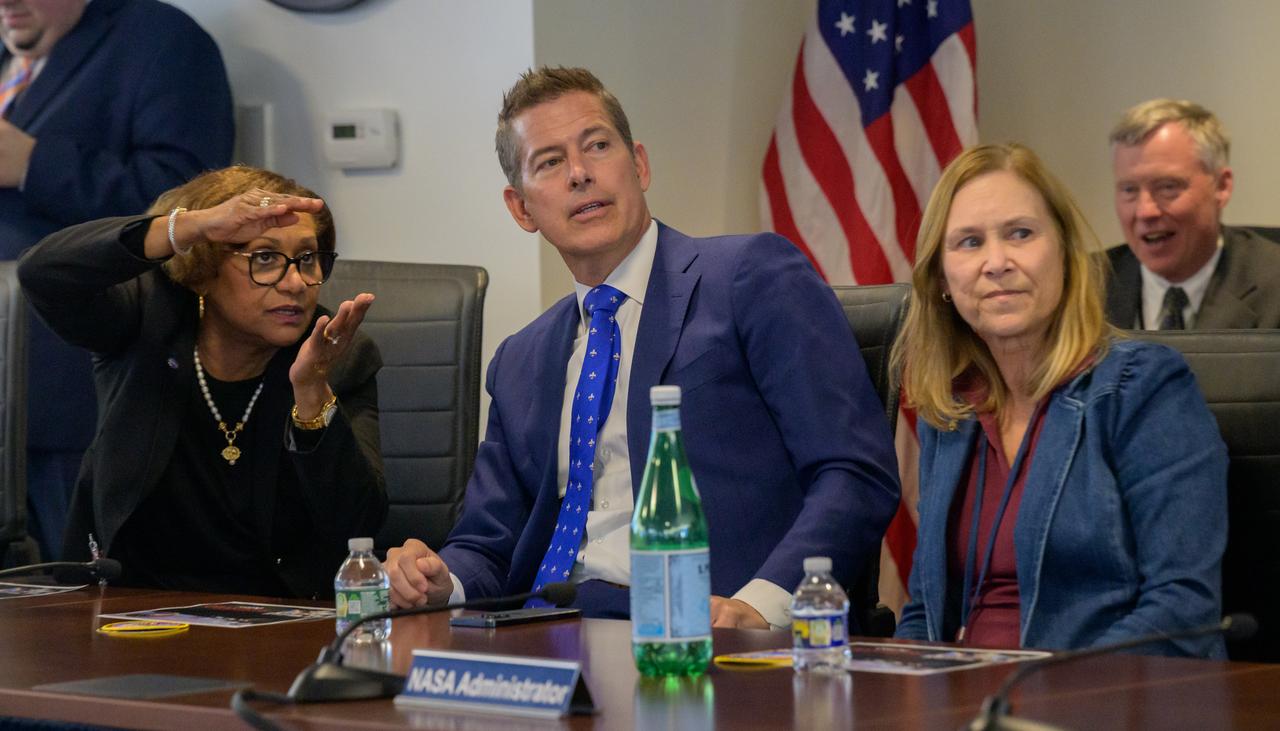
Acting NASA Associate Administrator Vanessa Wyche, left, U.S. Transportation Secretary Sean Duffy, and acting NASA Administrator Janet Petro, right, watch as the SpaceX Dragon spacecraft splashes down with NASA astronauts Butch Wilmore, Suni Williams, Nick Hague, and Roscosmos cosmonaut Aleksandr Gorbunov, Tuesday, March 18, 2025, from the Space Operations Center at the Mary W. Jackson NASA Headquarters Building in Washington. Photo Credit: (NASA/Bill Ingalls)
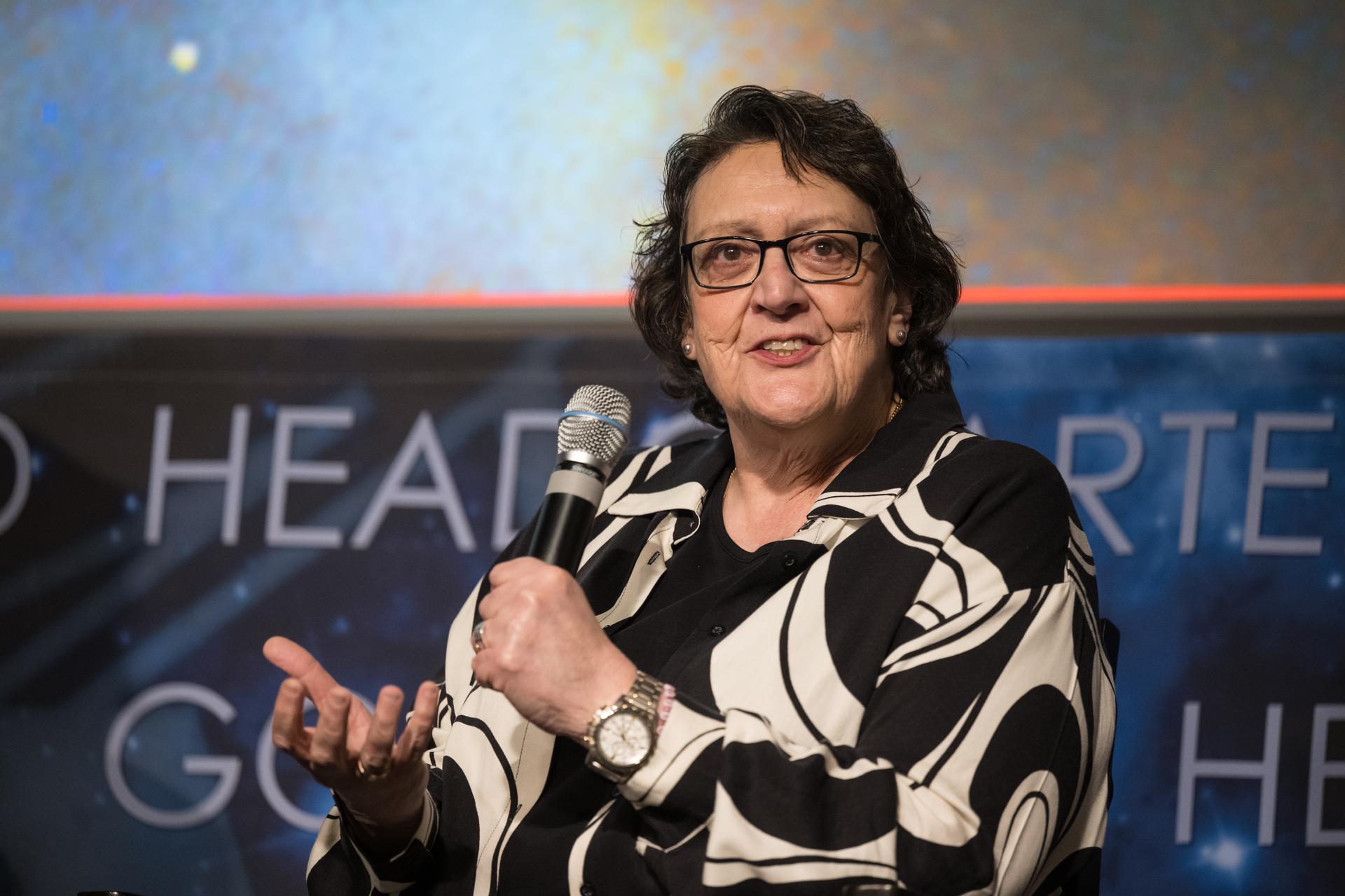
Olivia Lupie, Hubble Space Telescope instrument systems manager at NASA's Goddard Space Flight Center, speaks about the history of the Hubble Space Telescope’s partnerships during an event titled “Beyond the Deep Field: Hubble’s Legacy and the Future of Cosmic Observation,” Friday, June 5, 2026, at the Mary W. Jackson NASA Headquarters building in Washington. Photo Credit: (NASA/Aubrey Gemignani)
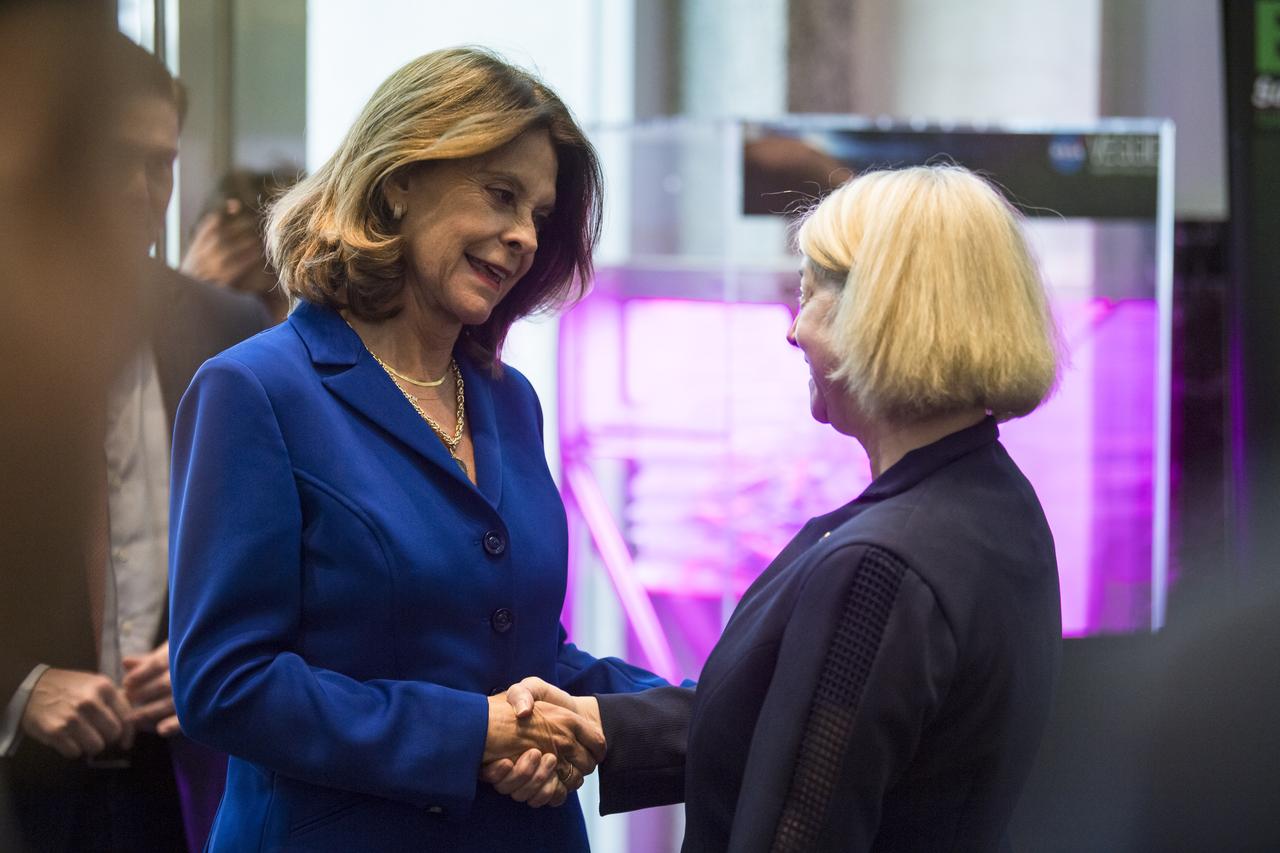
Colombian Vice President and Foreign Minister, Marta Lucía Ramírez, left, greets NASA Deputy Administrator Pam Melroy before an event where she will sign the Artemis Accords, Tuesday, May 10, 2022, at NASA Headquarters in Washington DC. Colombia is the nineteenth country to sign the Artemis Accords, which establish a practical set of principles to guide space exploration cooperation among nations participating in NASA’s Artemis program. Photo Credit: (NASA/Aubrey Gemignani)
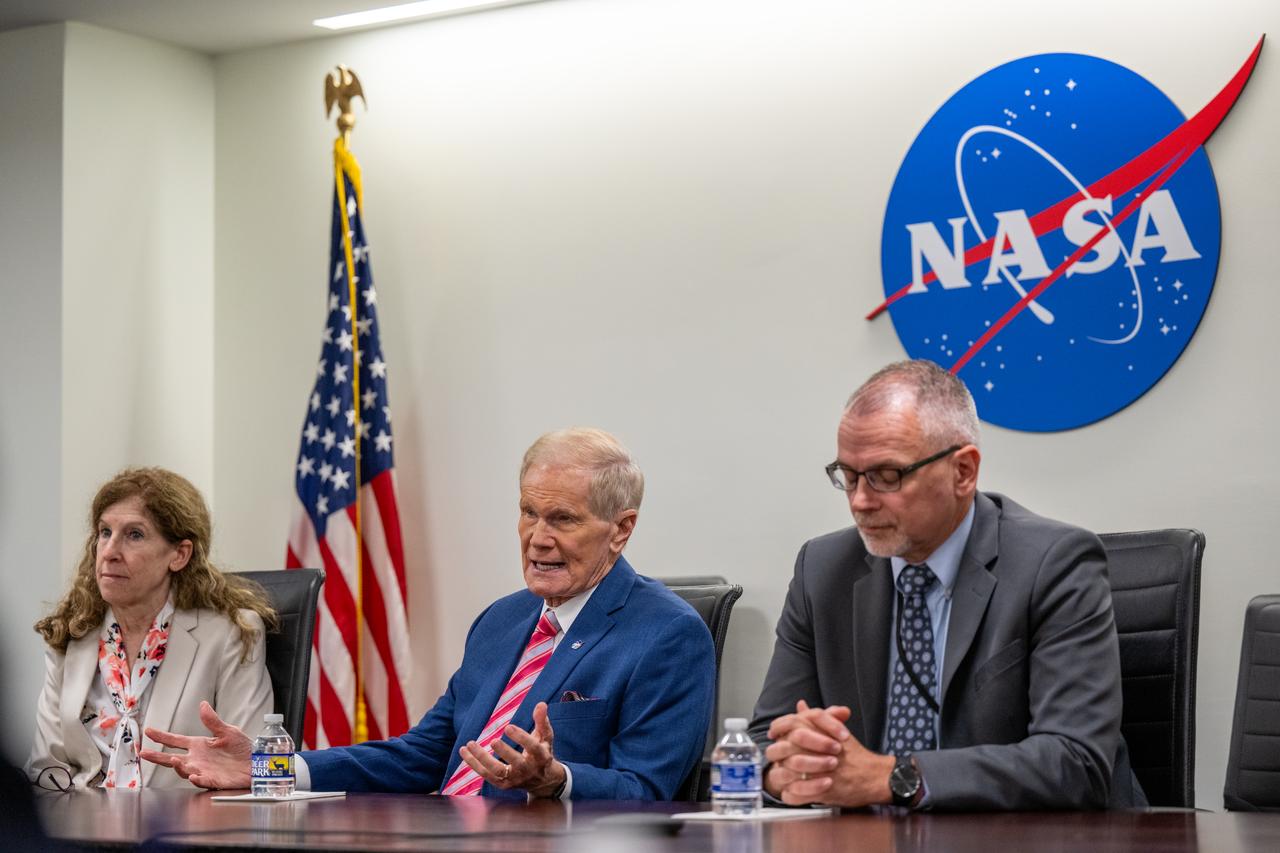
NASA Administrator Bill Nelson, center, delivers remarks during a bilateral meeting with Korea AeroSpace Administration (KASA) Administrator Youngbin Yoon Thursday, Sept. 19, 2024, at the Mary W. Jackson NASA Headquarters building in Washington. Photo Credit: (NASA/Keegan Barber)
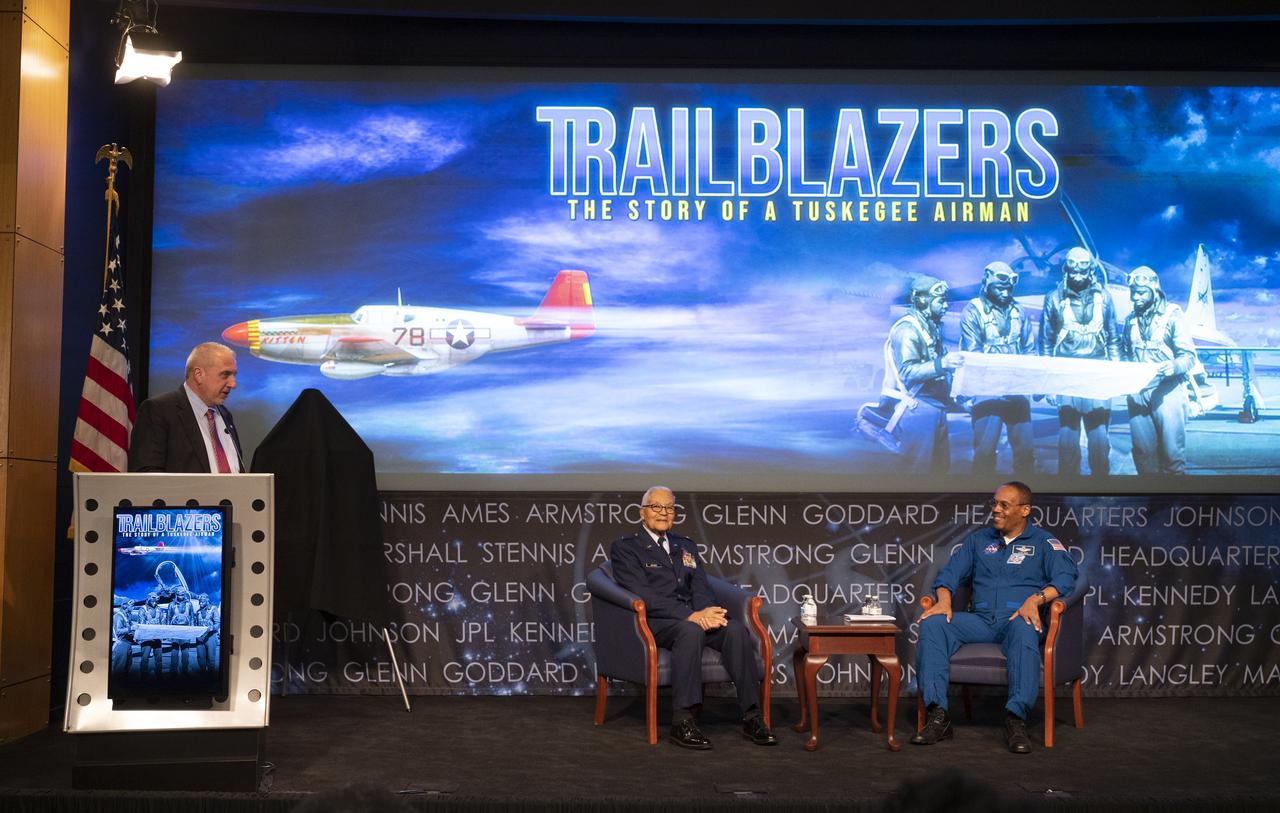
Robert Pearce, Associate Administrator for NASA’s Aeronautics Research Mission Directorate, left, moderates questions from the audience for retired U.S. Air Force Honorary Brigadier General Charles McGee speaks with NASA astronaut Alvin Drew during a Black History Month program titled “Trailblazers, The Story of a Tuskegee Airman,” Wednesday, Feb. 5, 2020, at NASA Headquarters in Washington, DC. McGee, a pilot with the Tuskegee Airmen during World War II, was a career officer in the Air Force also serving during the Korean and Vietnam Wars. Over his 30 years of service he flew 409 combat missions. Of the 355 Tuskegee pilots who flew in combat, McGee is one of only nine surviving. Photo Credit: (NASA/Joel Kowsky)
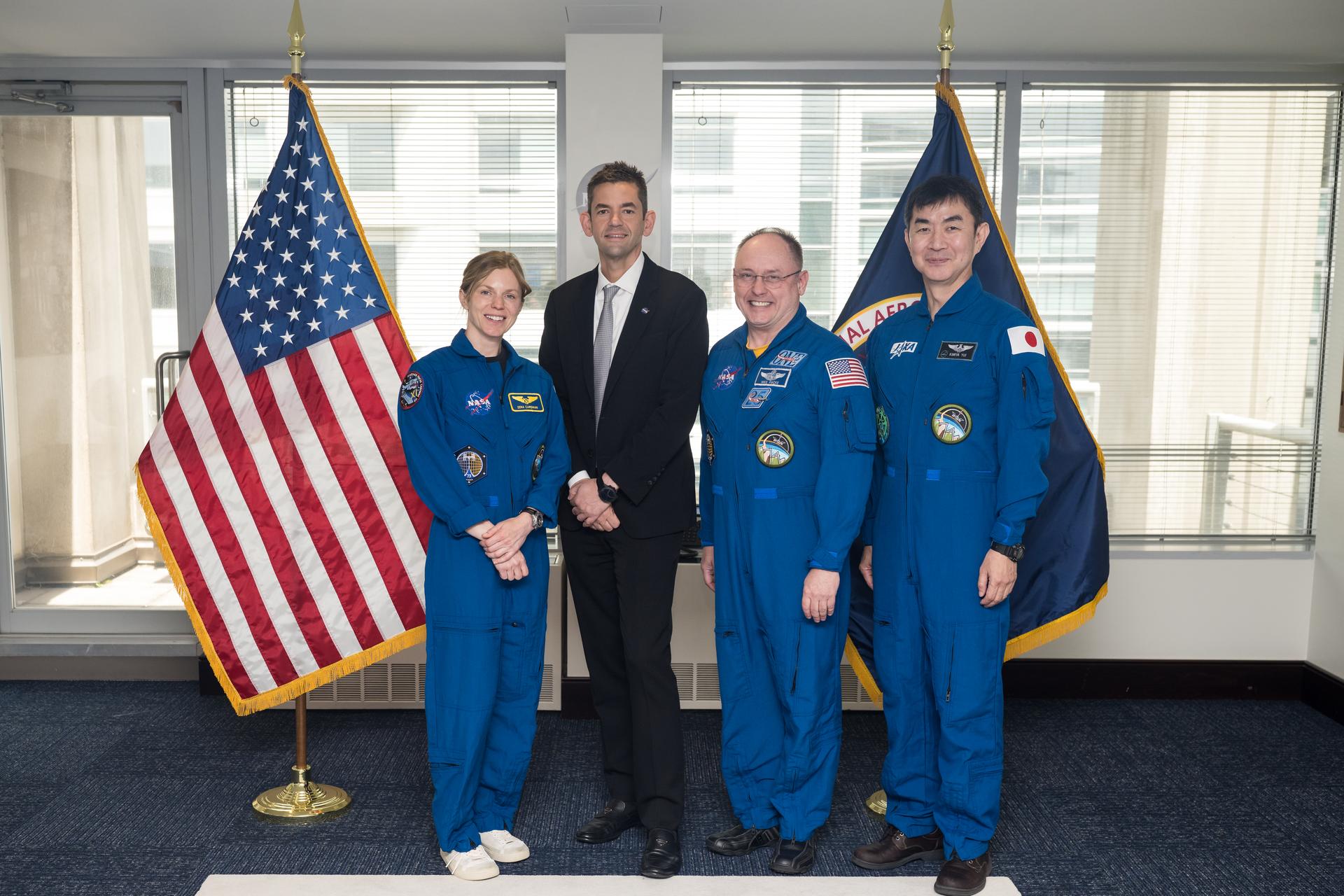
NASA Administrator Jared Isaacman poses for a photo with NASA astronauts Zena Cardman, Mike Fincke, and JAXA (Japan Aerospace Exploration Agency) astronaut Kimiya Yui, Monday, June 1, 2026, at the Mary W. Jackson NASA Headquarters building in Washington. Cardman, Fincke, and Yui served as part of Expeditions 73 and 74 onboard the International Space Station. Photo Credit: (NASA/Aubrey Gemignani)
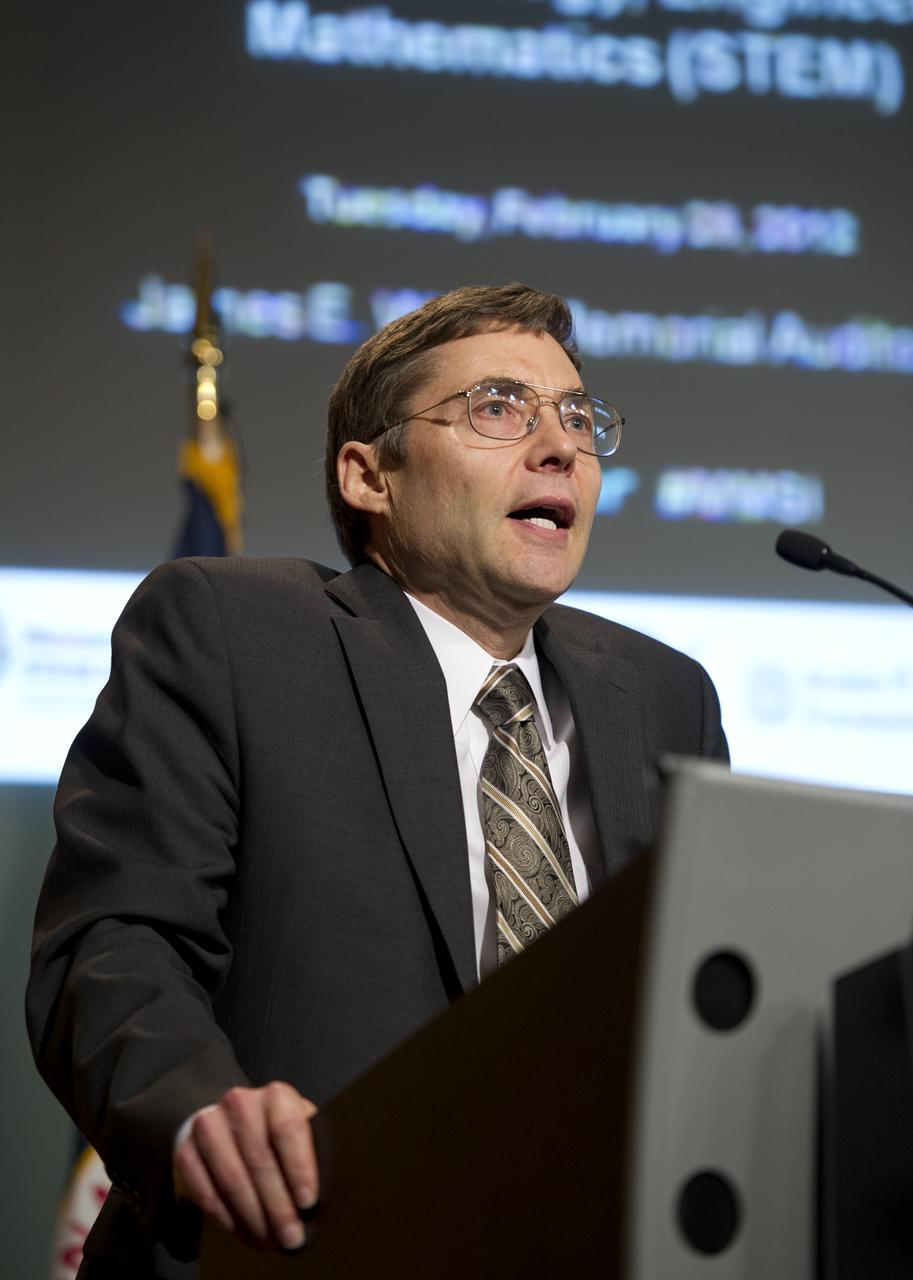
Carl Wieman, Associate Director, Office of Science and Technology Policy, The White House, speaks at the Symposium on Supporting Underrepresented Minority Males in Science, Technology, Engineering and Mathematics (STEM), Tuesday, February 28, 2012 at NASA Headquarters in Washington. Photo Credit: (NASA/Carla Cioffi)
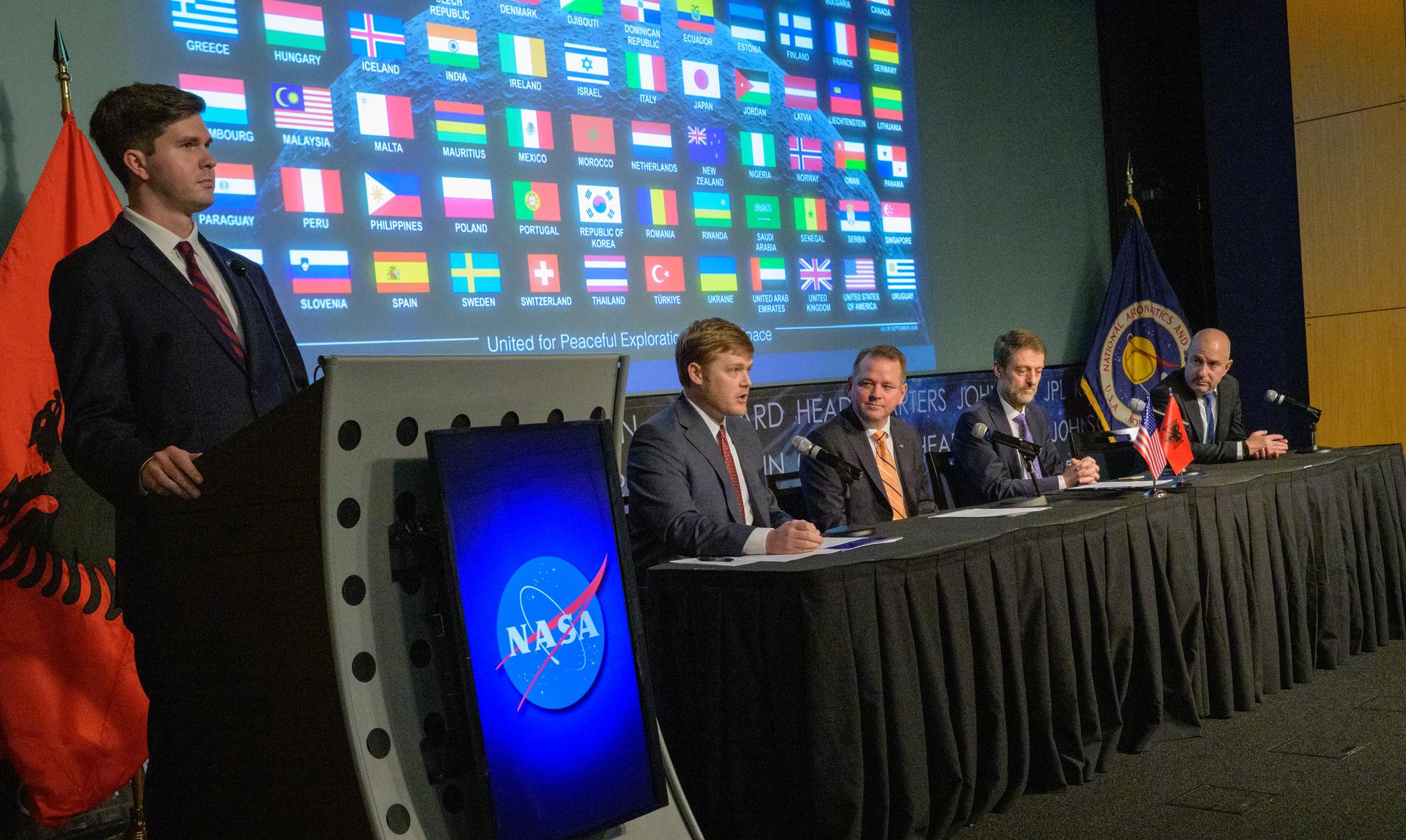
NASA Deputy Press Secretary George Alderman, standing left, U.S. Deputy Assistant Secretary of State for Space and Environment Connor Tomlinson, seated left, NASA Deputy Administrator Matt Anderson, Albania’s Minister for Europe and Foreign Affairs Ferit Hoxha, and Ambassador of the Republic of Albania to the United States Ervin Bushati, right, are seen during an Artemis Accords signing ceremony Monday, September 21, 2026, at the Mary W. Jackson NASA Headquarters building in Washington. The Republic of Albania is the 73rd country to sign the Artemis Accords, which establish a practical set of principles to guide space exploration cooperation among nations participating in NASA’s Artemis program. Photo Credit: (NASA/Bill Ingalls)
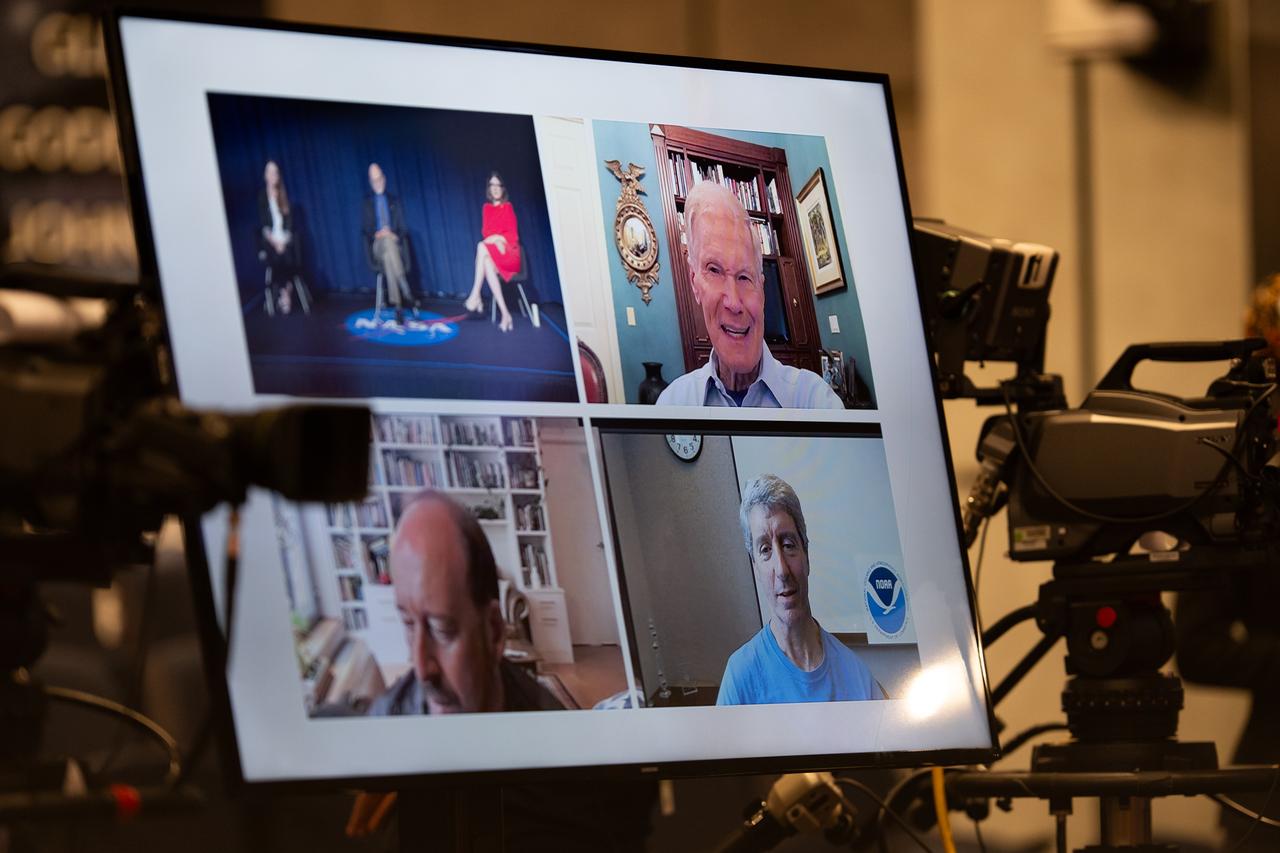
NASA Administrator Bill Nelson, upper right, is seen on a monitor as he speaks during a news conference to discuss the latest global temperature data, Monday, Aug. 14, 2023, at the Mary W. Jackson NASA Headquarters building in Washington. Photo Credit: (NASA/Joel Kowsky)
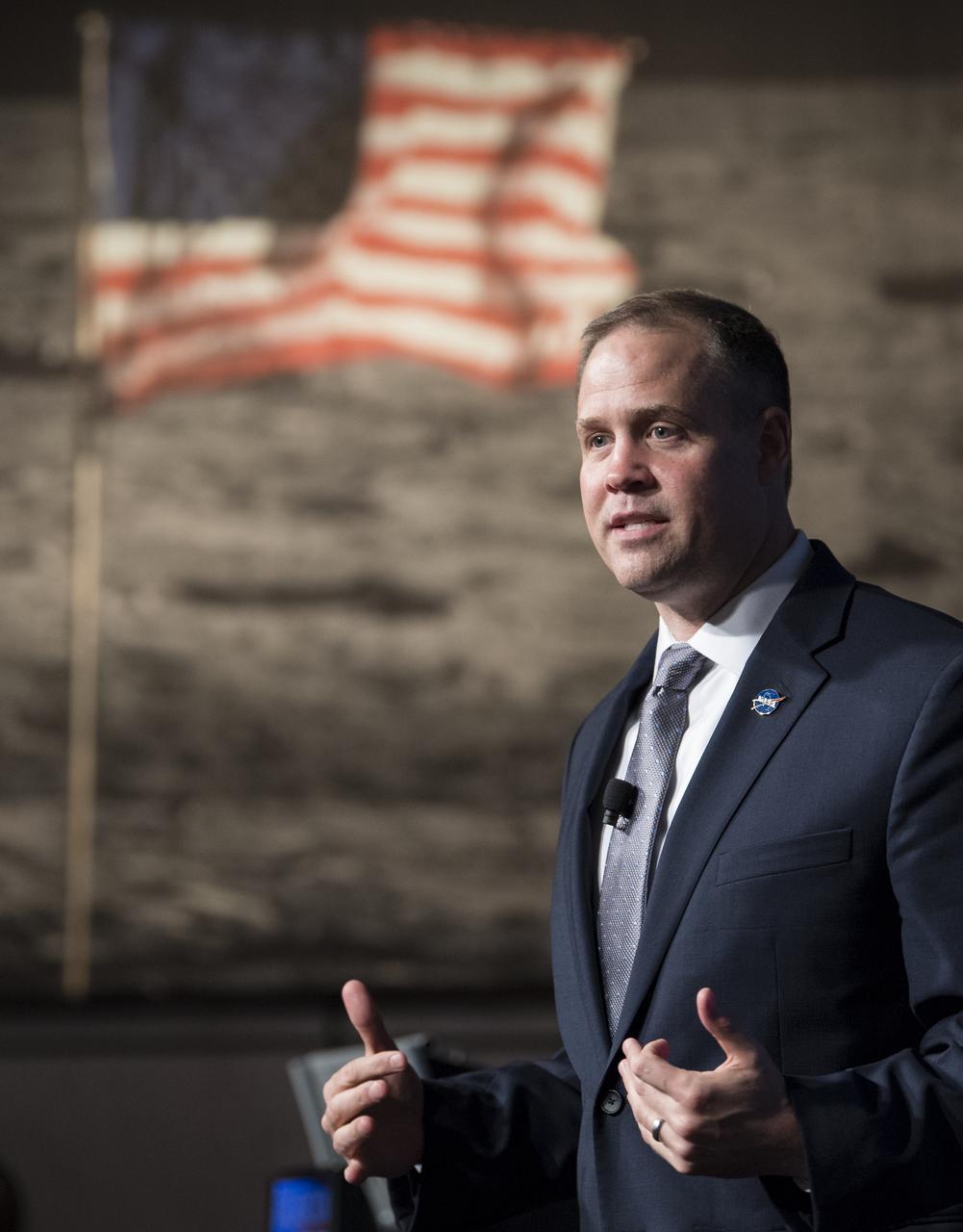
NASA Administrator Jim Bridenstine delivers opening remarks during a NASA town hall on the amendment to the fiscal year 2020 budget request that supports the agency’s plan to land astronauts on the Moon by 2024, Tuesday, May 14, 2019 at NASA Headquarters in Washington, DC. Photo Credit: (NASA/Joel Kowsky)
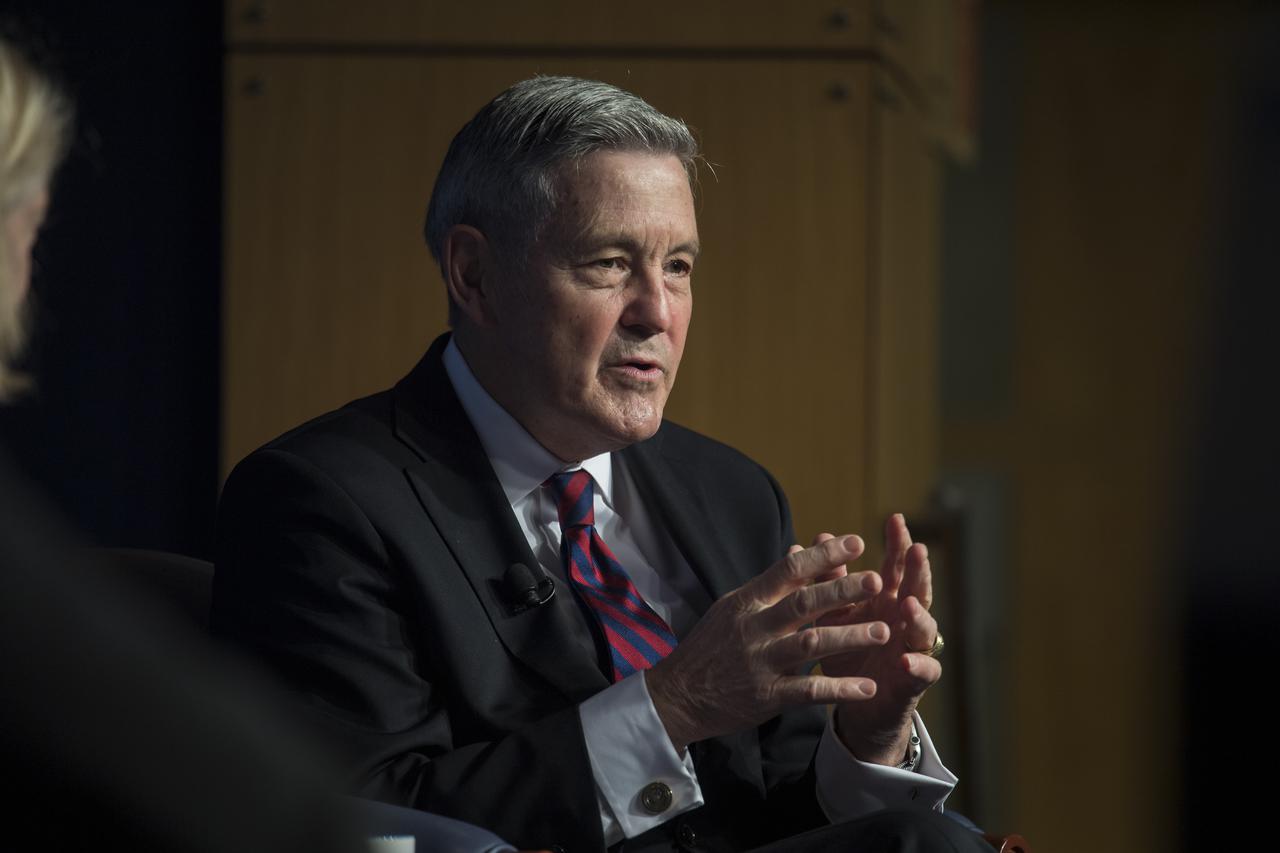
NASA Associate Administrator Bob Cabana speaks during the 2022 NASA Safety Stand-Down panel discussion, Thursday, Jan. 27, 2022, at the Mary W. Jackson NASA Headquarters building in Washington. The event followed the annual visit to Arlington National Cemetery where NASA leadership and family members and/or friends of the astronauts commemorate NASA’s Day of Remembrance and the sacrifices made to further exploration. Panelists included NASA Safety and Mission Assurance Chief Russ DeLoach, NASA Administrator Bill Nelson, NASA Deputy Administrator Pam Melroy, and NASA Associate Administrator Bob Cabana. Photo Credit: (NASA/Aubrey Gemignani)
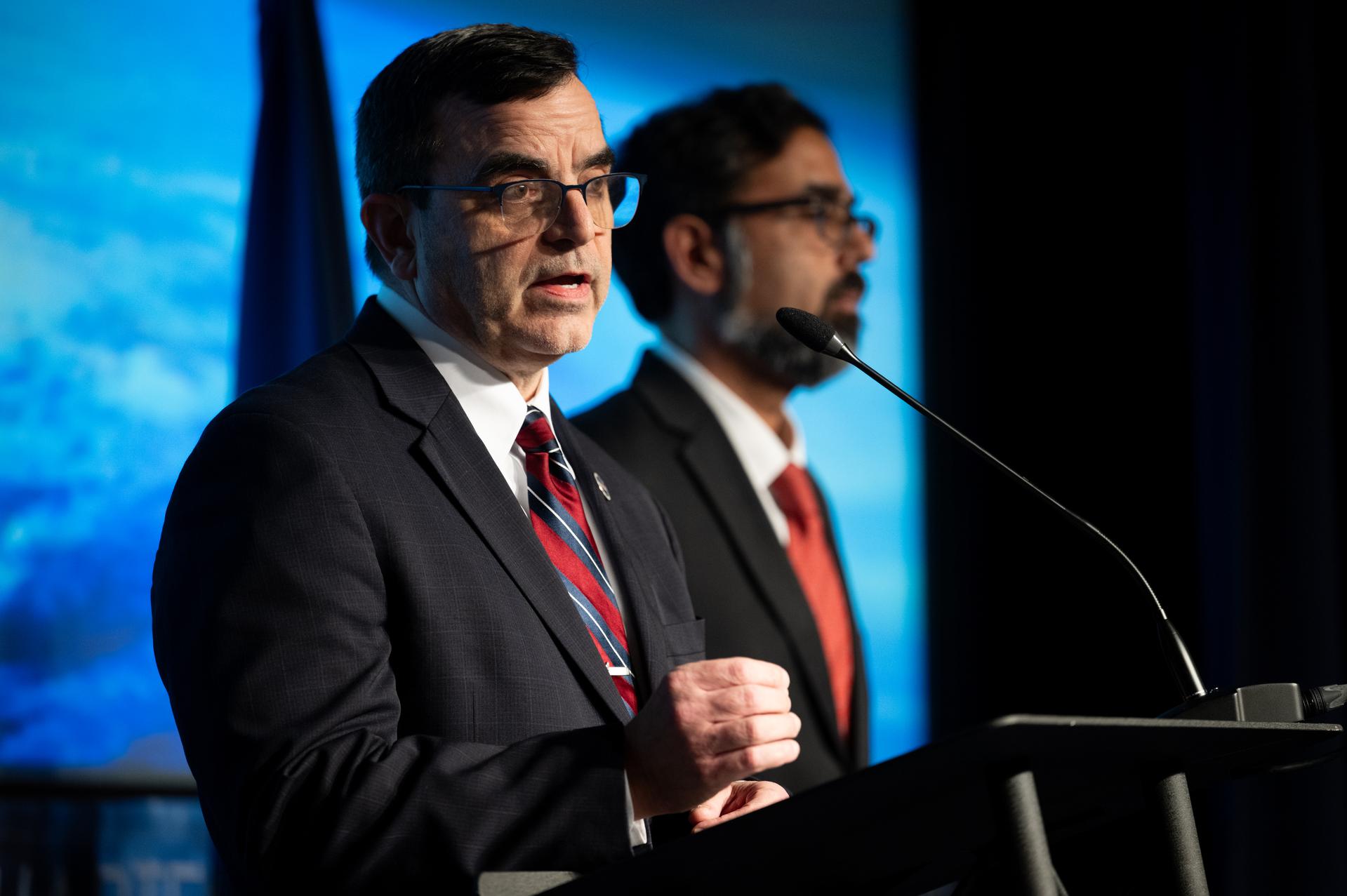
Dr. James Polk, NASA’s chief health and medical officer, provides an update on the International Space Station and its crew, Thursday, Jan. 8, 2026, at the Mary W. Jackson NASA Headquarters building in Washington. Photo Credit: (NASA/Joel Kowsky)
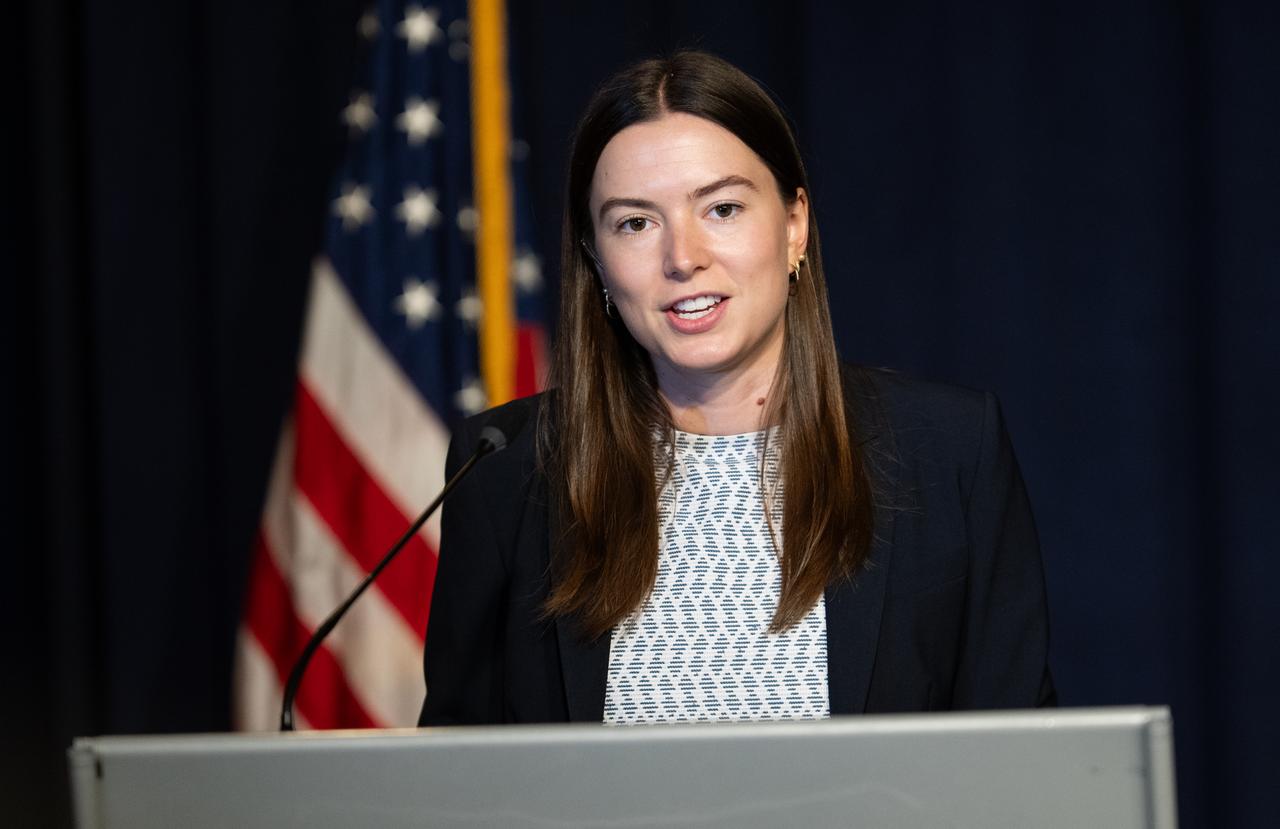
NASA Press Secretary Jackie McGuinness moderates a news conference to discuss the latest global temperature data, Monday, Aug. 14, 2023, at the Mary W. Jackson NASA Headquarters building in Washington. Photo Credit: (NASA/Joel Kowsky)
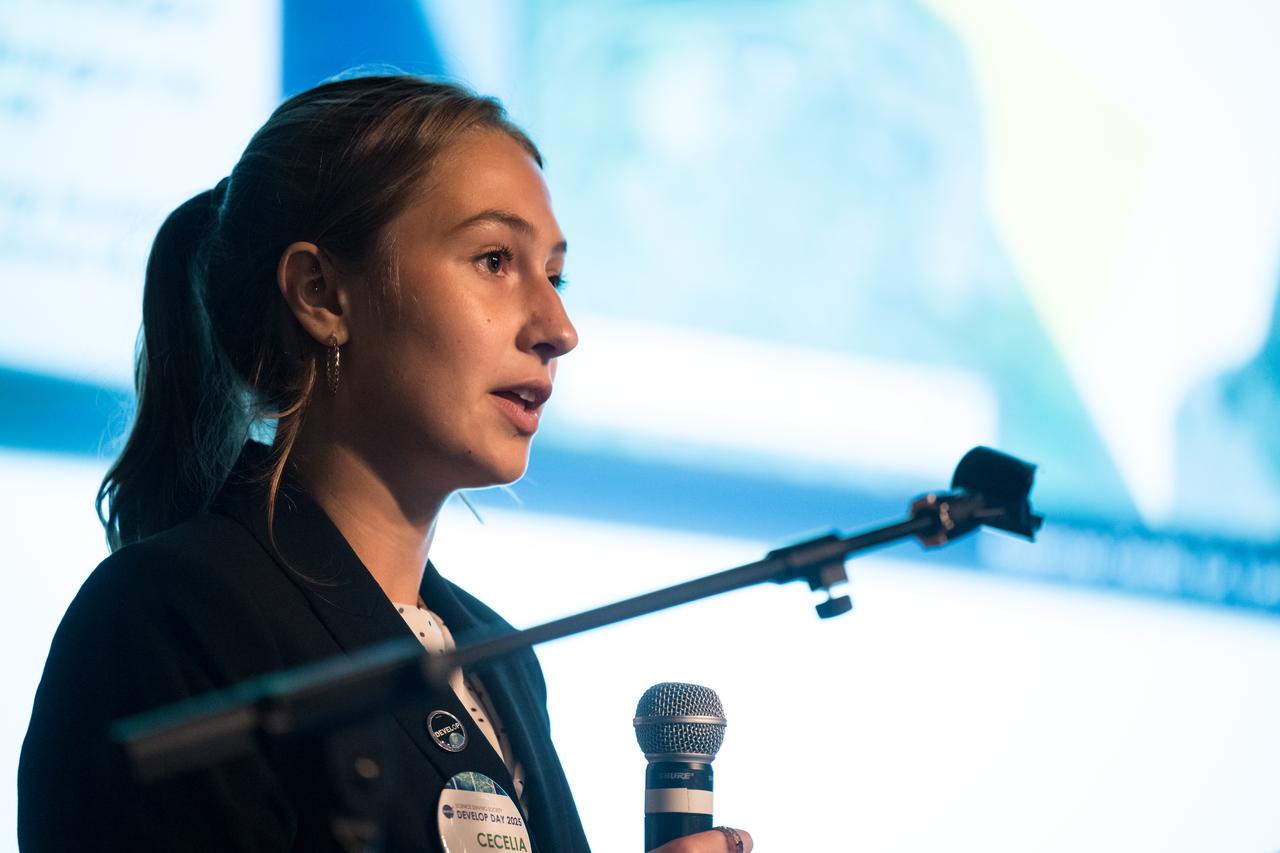
Cecelia Paparella provides remarks about her DEVELOP Project, Tuesday, August 6, 2024, at the Mary W. Jackson NASA Headquarters building in Washington. Every summer early career researchers from NASA’s DEVELOP National Program come to NASA Headquarters and present their research projects. DEVELOP is a training and development program where early career researchers work on Earth science projects, mentored by science advisors from NASA and partner agencies, and provide research results to local communities. Photo Credit: (NASA/Aubrey Gemignani)

David Spergel, chair of NASA's independent study on unidentified anomalous phenomena and President of the Simons Foundation, speaks during a public meeting of NASA’s unidentified anomalous phenomena (UAP) independent study team, Wednesday, May 31, 2023 at the Mary W. Jackson NASA Headquarters building in Washington. The UAP independent study team is a counsel of 16 community experts across diverse areas on matters relevant to potential methods of study for unidentified anomalous phenomena. NASA commissioned the nine-month study to examine UAP from a scientific perspective and create a roadmap for how to use data and the tools of science to move our understanding of UAP forward. Photo Credit: (NASA/Joel Kowsky)

NASA astronaut Zena Cardman presents NASA Administrator Jared Isaacman with a montage from Expeditions 73 and 74 while NASA astronauts Mike Fincke and JAXA (Japan Aerospace Exploration Agency) astronaut Kimiya Yui (not pictured) look on, Monday, June 1, 2026, at the Mary W. Jackson NASA Headquarters building in Washington. Fincke, Cardman, and Yui served as part of Expeditions 73 and 74 onboard the International Space Station. Photo Credit: (NASA/Aubrey Gemignani)
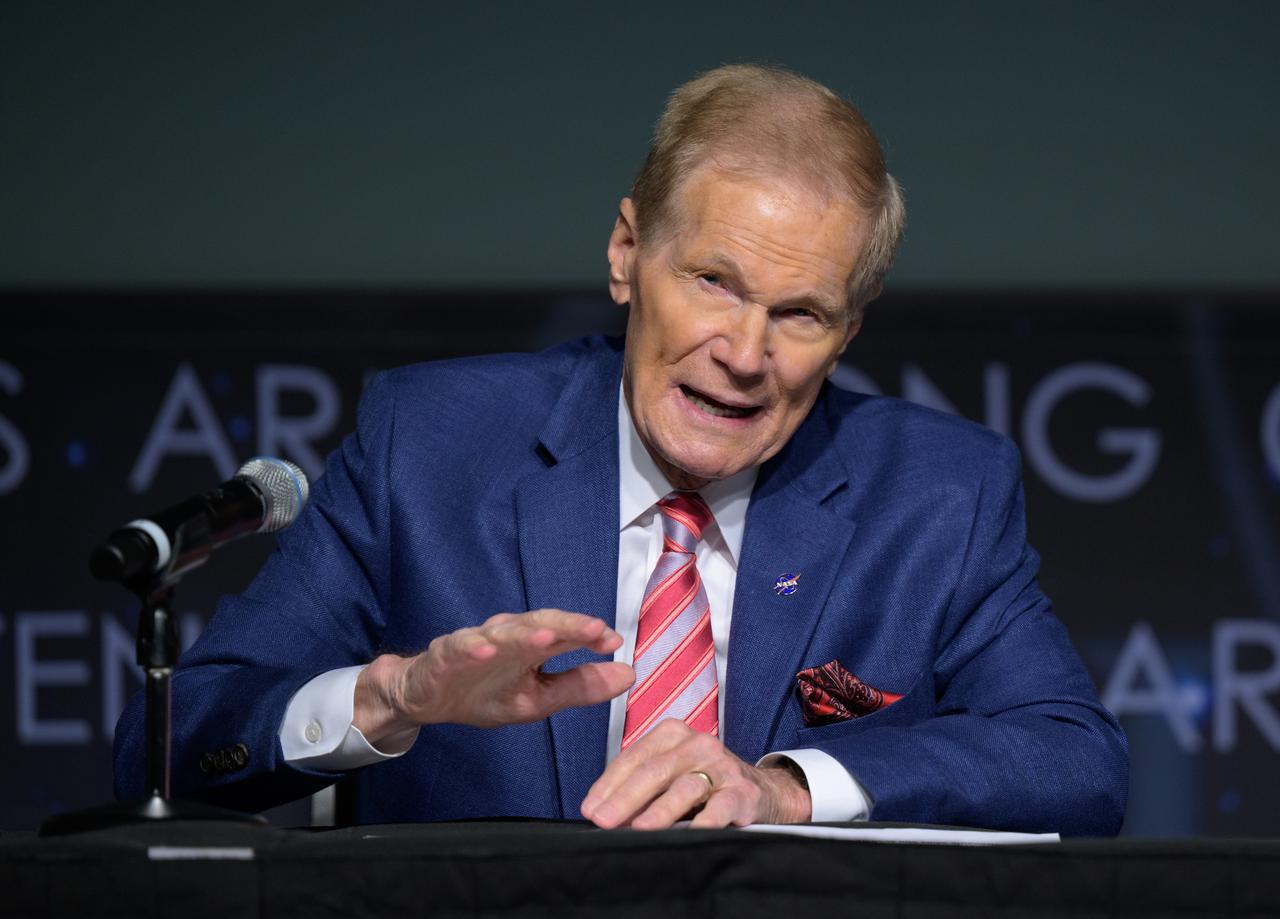
NASA Administrator Bill Nelson, gives remarks during an update on NASA's Artemis campaign, Thursday, Dec. 5, 2024, at the NASA Headquarters Mary W. Jackson Building in Washington. Photo Credit: (NASA/Bill Ingalls)
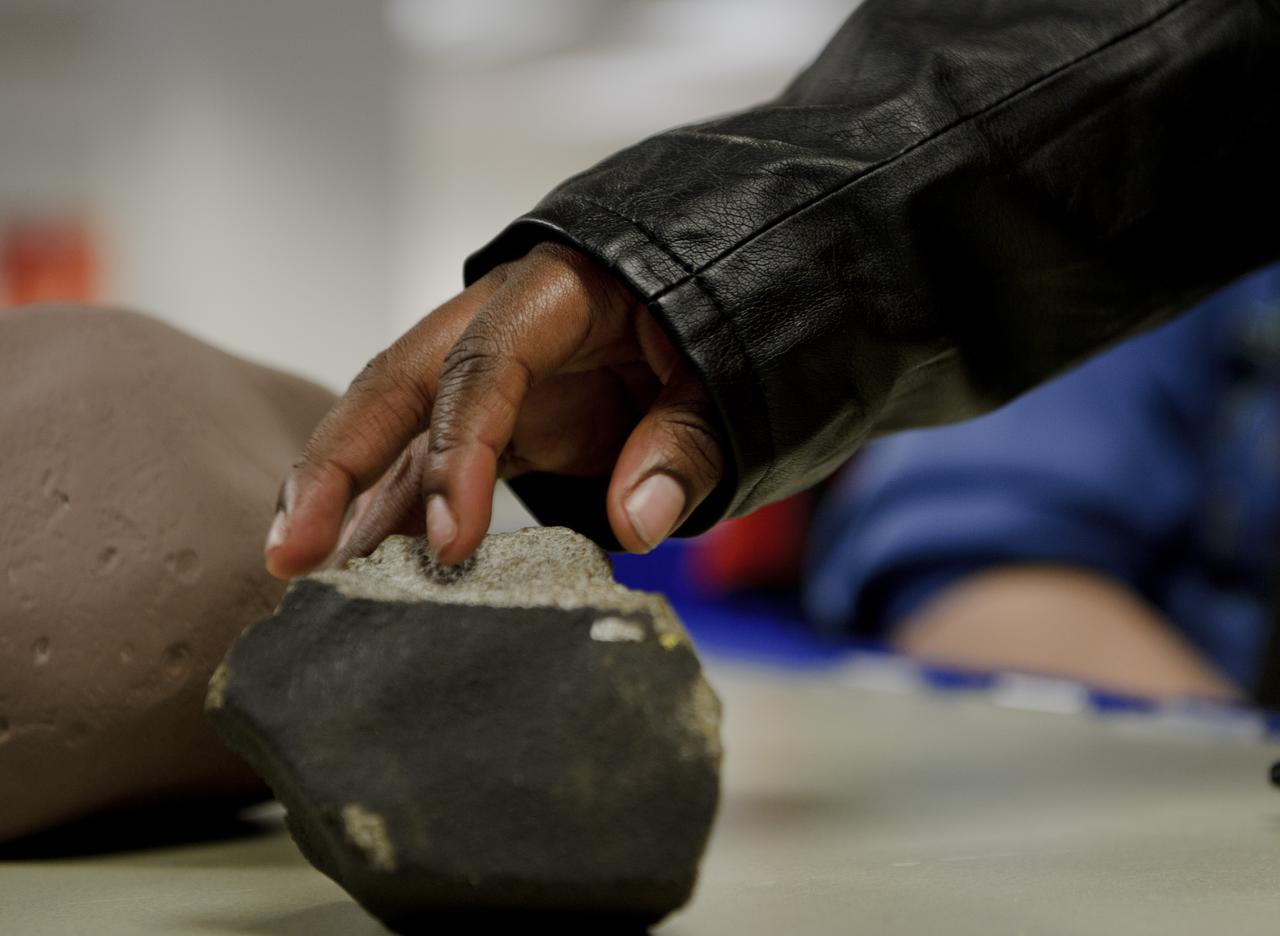
A student from the Maryland School For the Blind explores an object while learning about Meteorites, Asteroids and Comets during NASA's Disability Mentoring Day, Thursday, April 7, 2011, at NASA Headquarters in Washignton. Photo Credit: (NASA/Paul E. Alers)
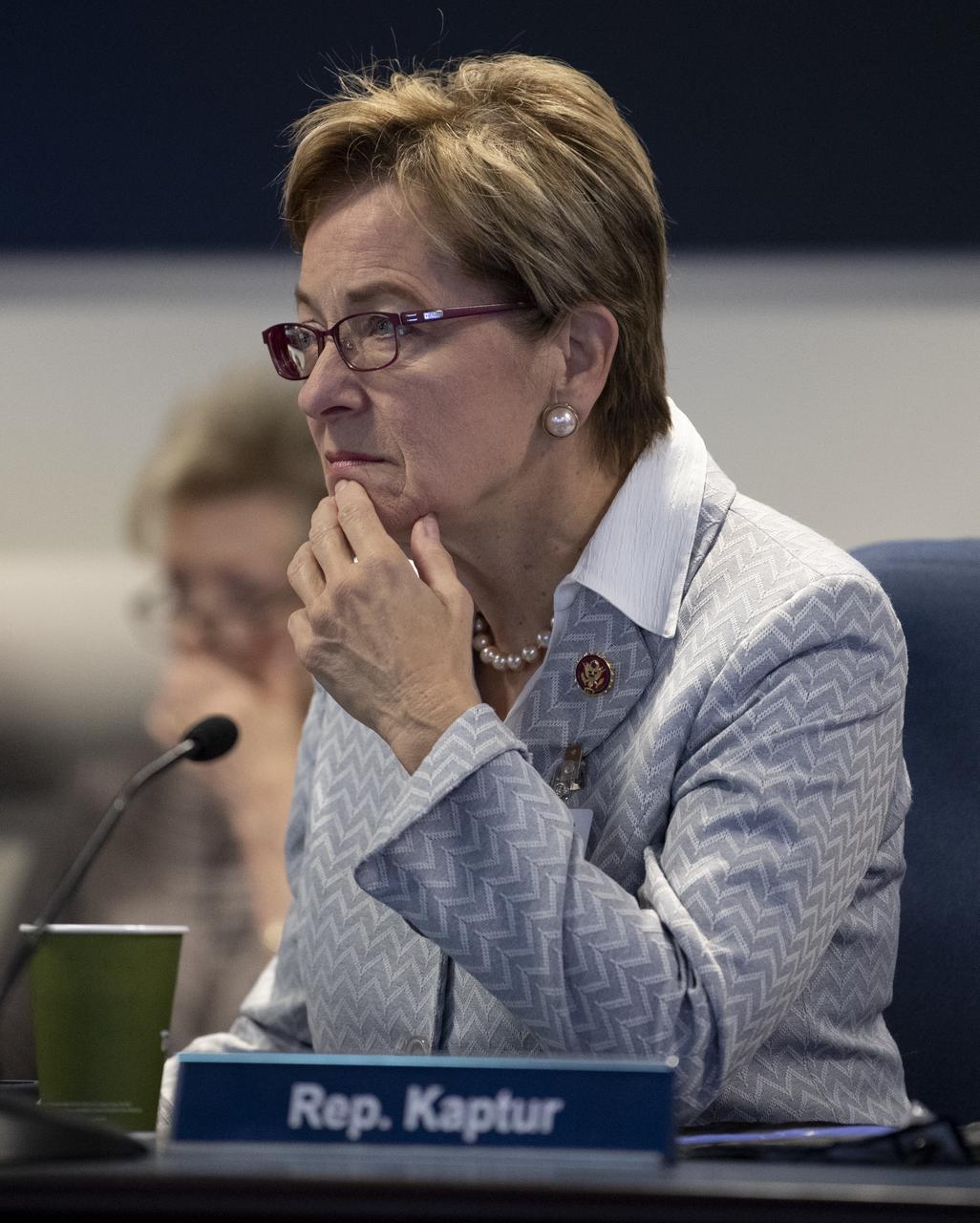
Rep. Marcy Kaptur, D-Ohio, watches the beginning of the first all-woman spacewalk on Friday, Oct. 18, 2019, from the Space Operations Center at NASA Headquarters in Washington. The first all-woman spacewalk in history began at 7:38am EDT with NASA astronauts Christina Koch and Jessica Meir venturing outside the International Space Station to replace a failed battery charge-discharge unit. This is the fourth spacewalk for Koch and Meir’s first. Photo Credit: (NASA/Joel Kowsky)
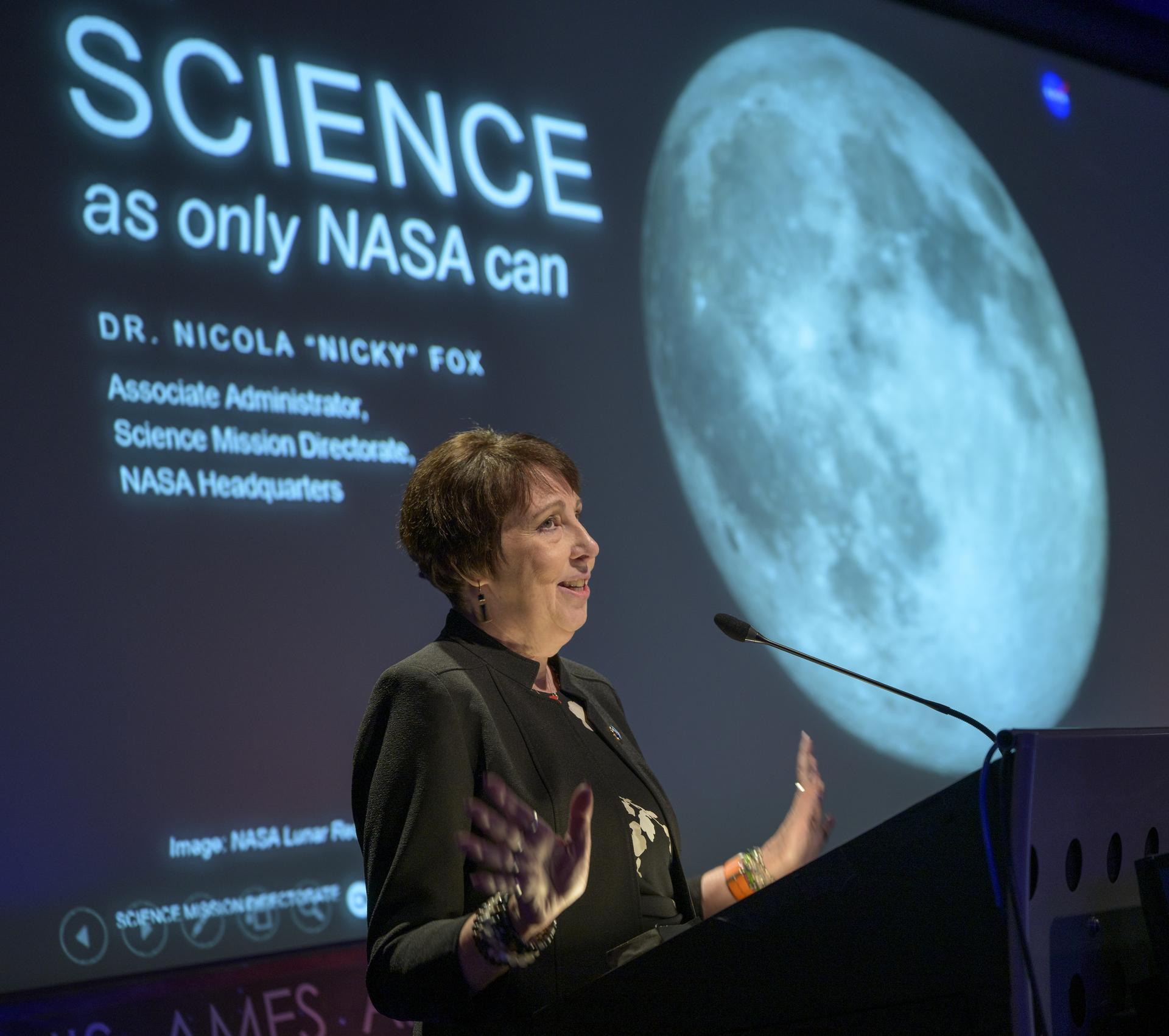
Associate Administrator for NASA's Science Mission Directorate Nicola Fox speaks during an event where NASA is outlining how the agency is executing President Donald J. Trump’s National Space Policy and accelerating preparations for America’s return to the surface of the Moon by 2028, Tuesday, March 24, 2026, at the Mary W. Jackson NASA Headquarters building in Washington. During the event NASA leadership provided updates on mission priorities, including sending the first astronauts to the lunar surface in more than 50 years, establishing the initial elements of a permanent lunar base, getting America underway in space on nuclear propulsion, and other objectives. Photo Credit: (NASA/Bill Ingalls)
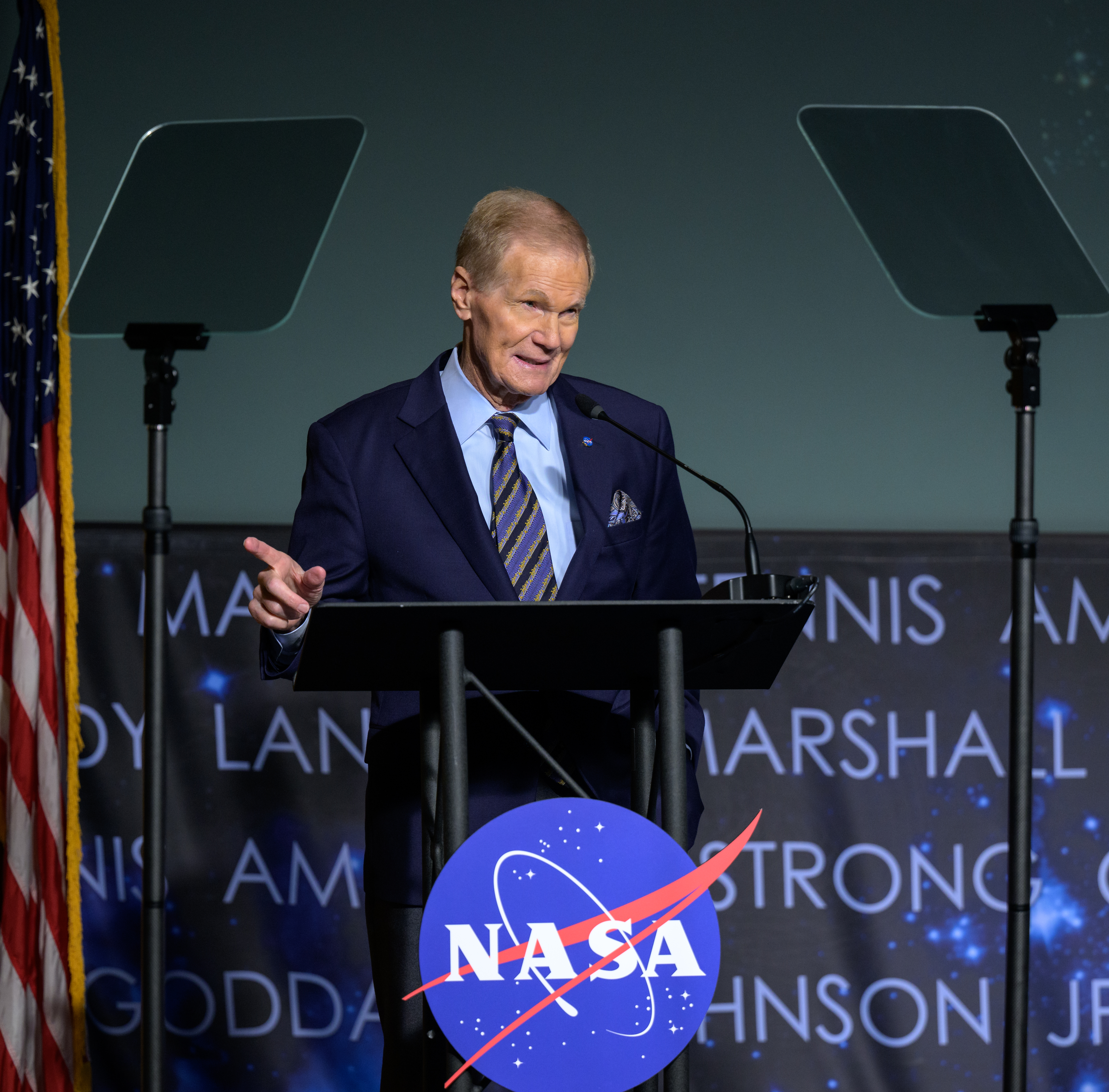
NASA Administrator Bill Nelson, gives remarks during a NASA agencywide all hands, Friday, Dec. 6, 2024, at the NASA Headquarters Mary W. Jackson Building in Washington. Photo Credit: (NASA/Bill Ingalls)
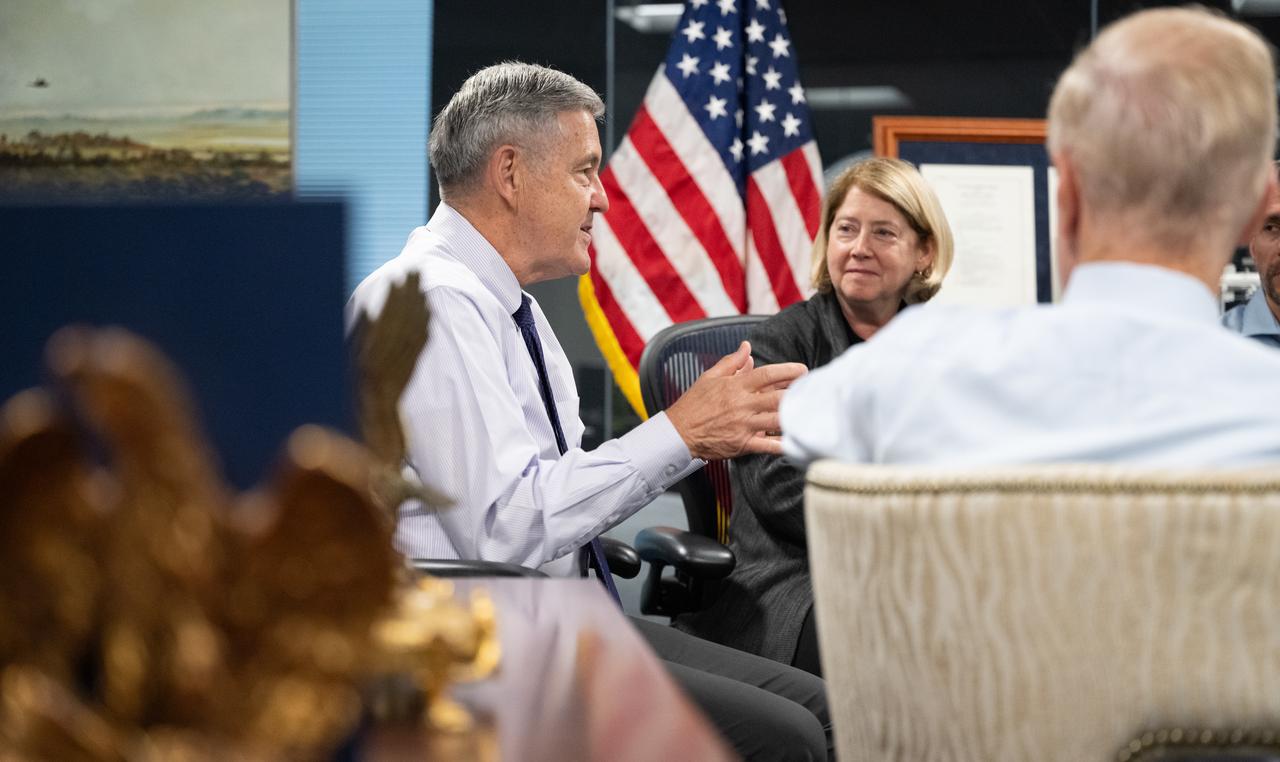
Bob Cabana, NASA associate administrator, speaks with the 2021 astronaut candidate class with NASA Administrator Bill Nelson and NASA Deputy Administrator Pam Melroy, Wednesday, Oct. 18, 2023, at the Mary W. Jackson NASA Headquarters building in Washington. Upon completion of two years of training they could be assigned to missions that involve performing research aboard the International Space Station, launching from American soil on spacecraft built by commercial companies, as well as deep space missions to destinations including the Moon on NASA’s Orion spacecraft and Space Launch System rocket. Photo Credit: (NASA/Joel Kowsky)
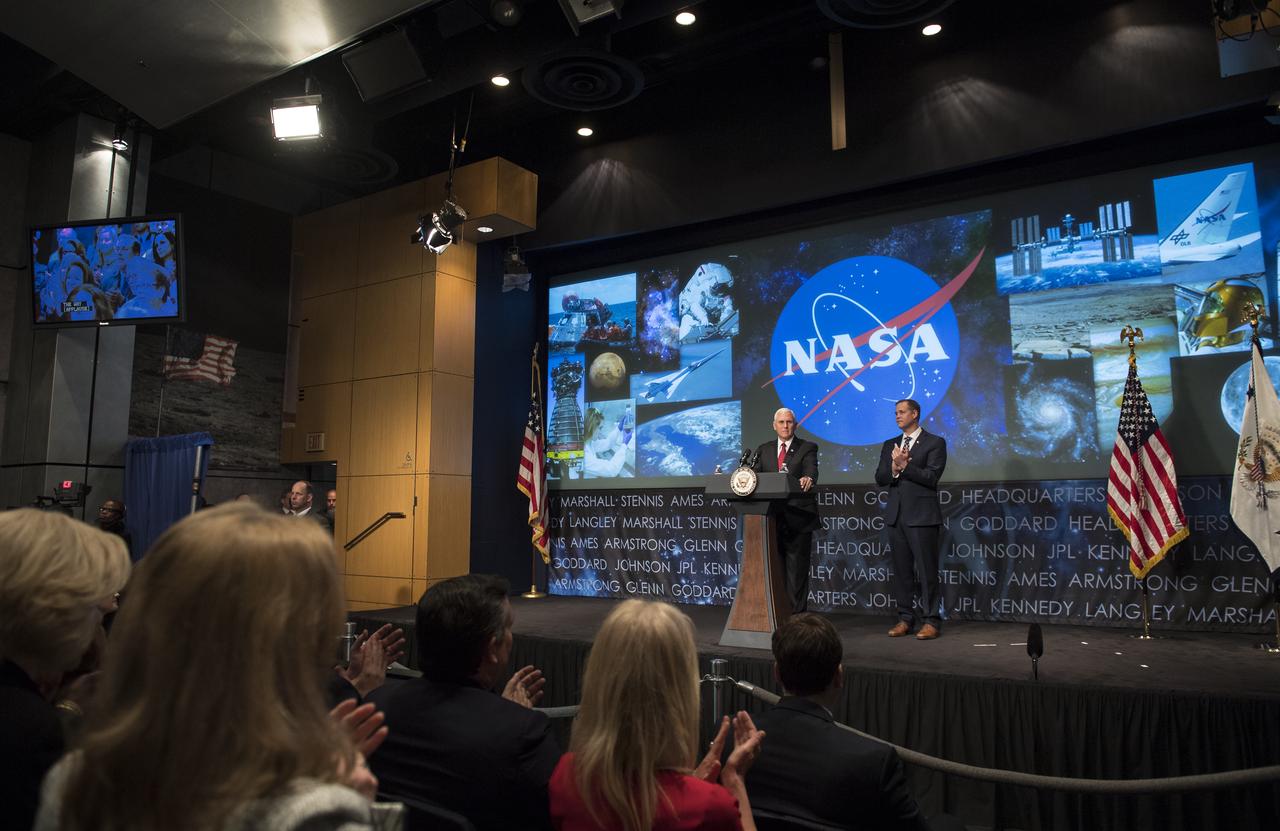
Vice President Mike Pence speaks prior to the swearing-in of Jim Bridenstine as the 13th NASA Administrator, Monday, April 23, 2018 at NASA Headquarters in Washington. Photo Credit: (NASA/Joel Kowsky)
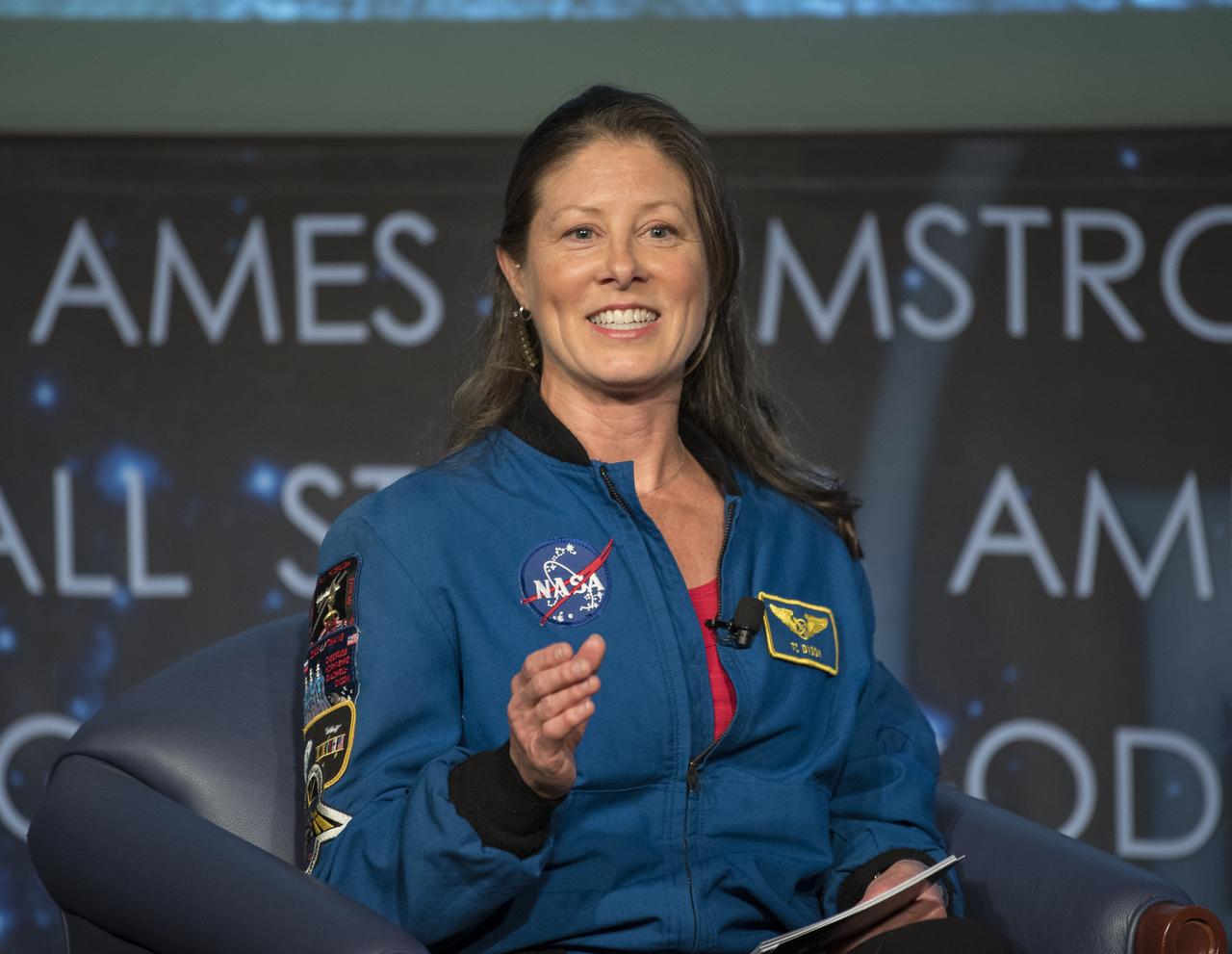
NASA astronaut Tracy Caldwell Dyson, moderates a panel discussion with NASA Administrator Jim Bridenstine, NASA Associate Administrator for the Human Exploration and Operations Mission Directorate, Bill Gerstenmaier, and NASA Deputy Associate Administrator for Exploration, Steve Clarke at the "Future of Space" STEM event, Monday, April 29, 2019 at NASA Headquarters in Washington, where college students were able to ask the panelists questions as well as speak with two astronauts currently on the International Space Station, Nick Hague and Christina Koch. Photo Credit: (NASA/Aubrey Gemignani)
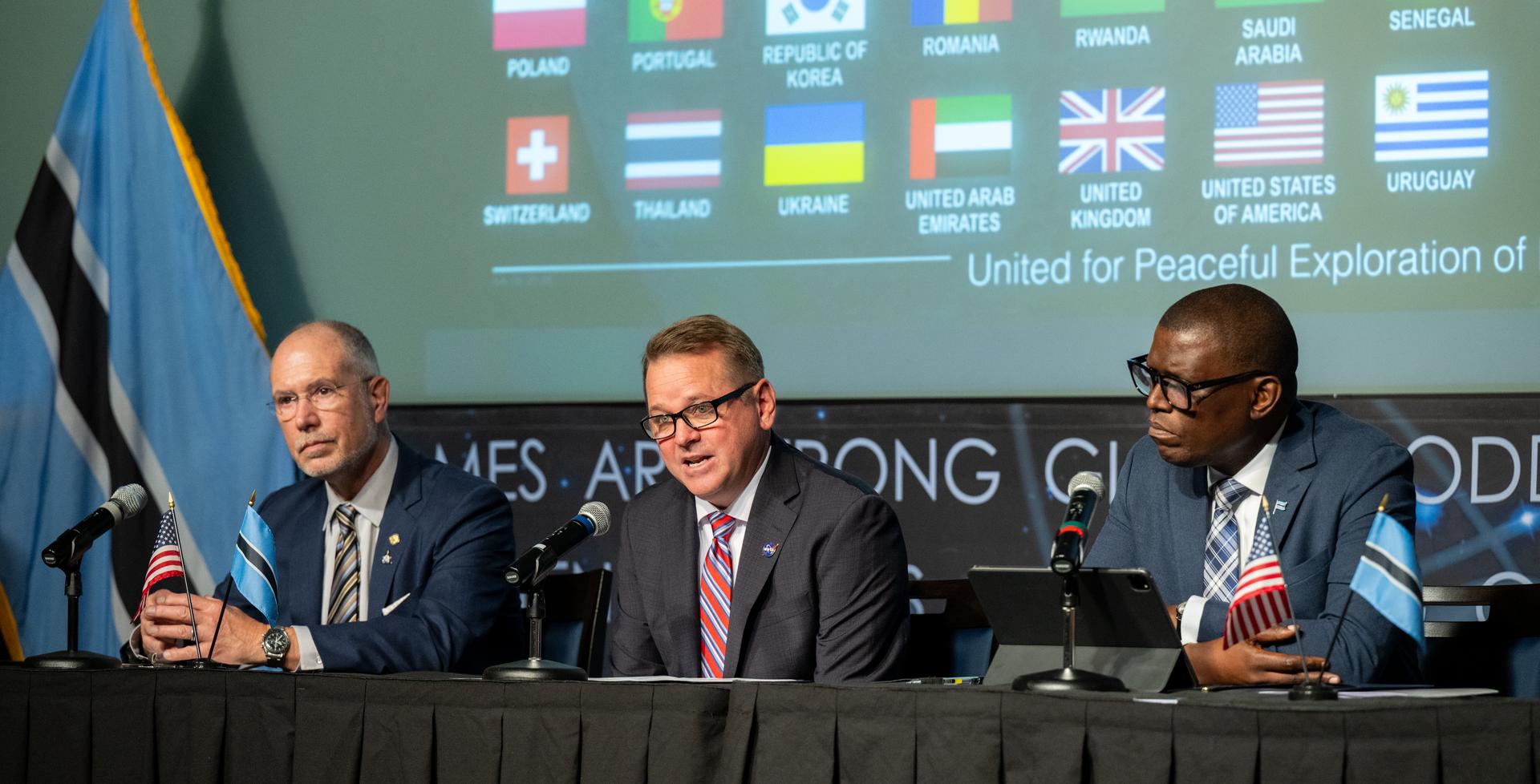
NASA Deputy Administrator Matt Anderson, center, delivers remarks during an Artemis Accords signing ceremony with the Republic of Botswana alongside Senior Advisor on Space for the Bureau of Oceans and International Environmental and Scientific Affairs Greg Autry, left, and Minister of Communications and Innovation David Tshere, right, Thursday, June 25, 2026, at the Mary W. Jackson NASA Headquarters building in Washington. The Republic of Botswana is the 68th country to sign the Artemis Accords, which establish a practical set of principles to guide space exploration cooperation among nations participating in NASA’s Artemis program. Photo Credit: (NASA/Keegan Barber)
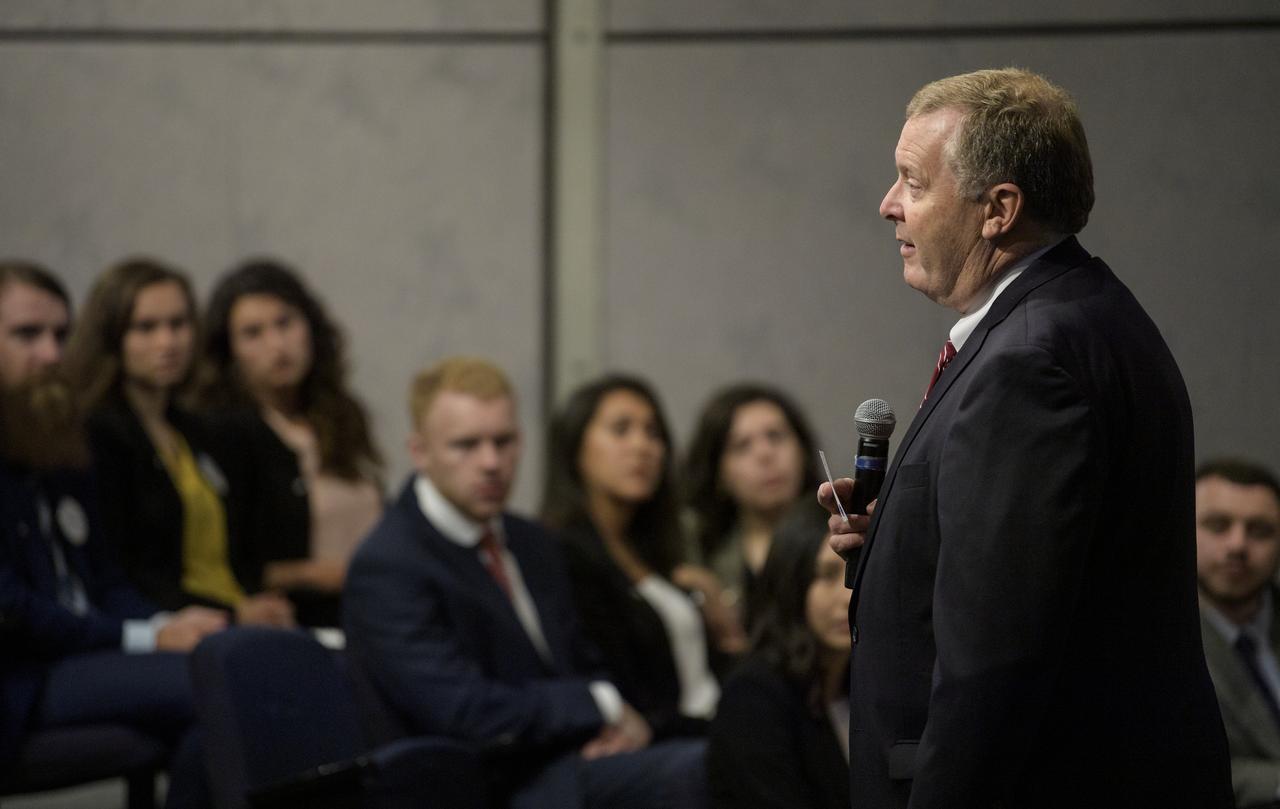
NASA Deputy Administrator Jim Morhard speaks during the 2019 Annual Earth Science Applications Showcase, Thursday, Aug. 1, 2019 at NASA Headquarters in Washington, DC. Every summer students and young professionals from NASA’s Applied Sciences’ DEVELOP National Program come to NASA Headquarters and present their research projects. DEVELOP is a training and development program where students work on Earth science research projects, mentored by science advisers from NASA and partner agencies, and extend research results to local communities. Photo Credit: (NASA/Joel Kowsky)
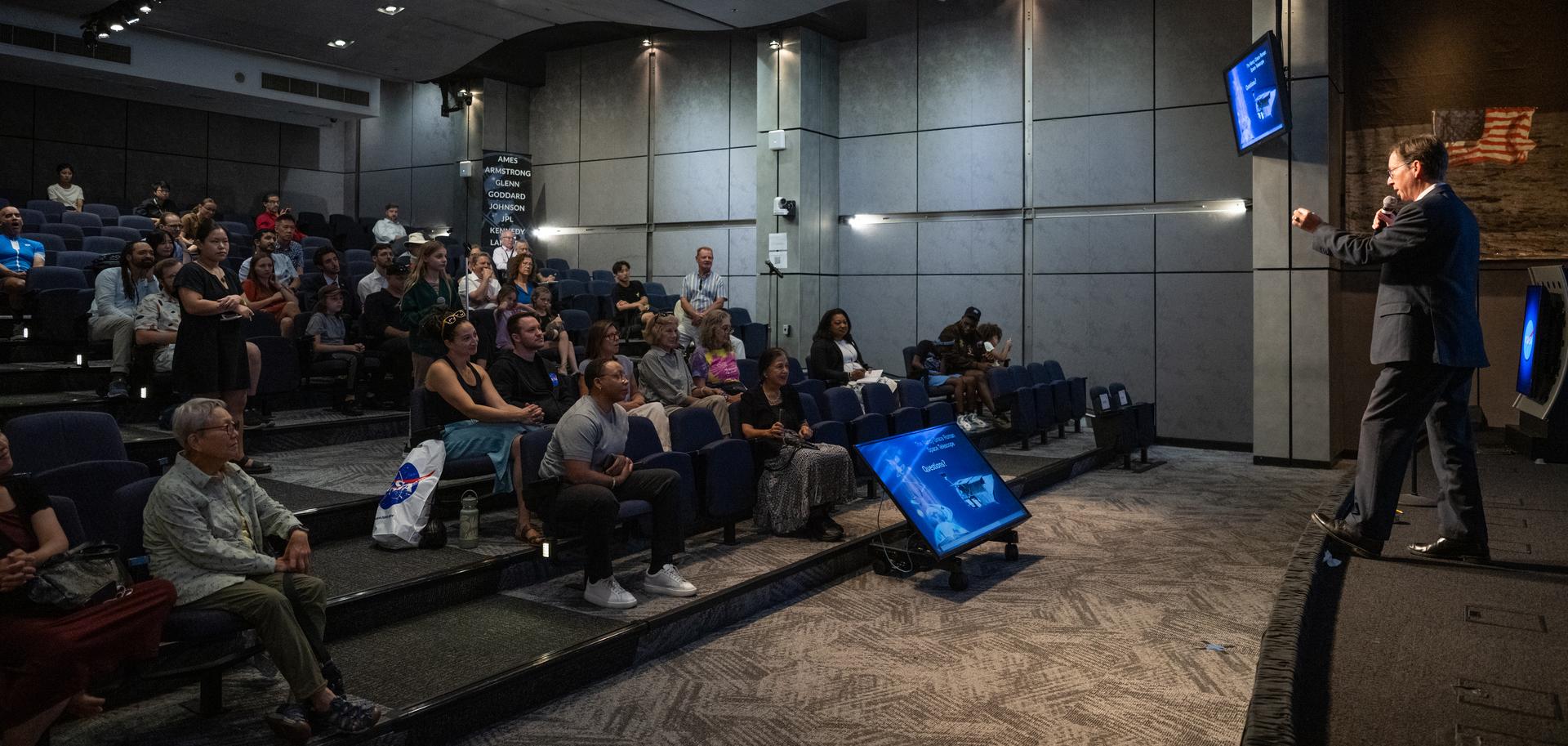
Dr. Dominic Benford, program scientist for the Nancy Grace Roman Space Telescope, answers questions from visitors during a Frontiers Forum event titled "Countdown to Launch – Why We’re Excited about the Nancy Grace Roman Space Telescope," Thursday, Aug. 6, 2026, at the Mary W. Jackson NASA Headquarters building in Washington. Photo Credit: (NASA/Keegan Barber)

NASA employees view the live broadcast announcing the astronauts assigned to the agency's Artemis III mission, Tuesday, June 9, 2026, at the Mary W. Jackson NASA Headquarters building in Washington. NASA's Artemis III test flight will take NASA astronauts Randy Bresnik, Frank Rubio, Andre Douglas, and ESA (European Space Agency) astronaut Luca Parmitano to low Earth orbit where they will test rendezvous and docking capabilities between Orion and commercial human landing systems, demonstrating the systems required for future surface missions. Photo Credit: (NASA/Aubrey Gemignani)

An audience member asks NASA astronaut Serena Auñón-Chancellor a question about her experience on Expeditions 56 and 57 onboard the International Space Station at NASA Headquarters, Friday, June 14, 2019 in Washington. Auñón-Chancellor spent 197 days living and working onboard the orbital laboratory, contributing to hundreds of experiments in biology, biotechnology, physical science, and Earth science. She began her career at NASA as a flight surgeon before being selected as an astronaut in 2009. Photo Credit: (NASA/Aubrey Gemignani)
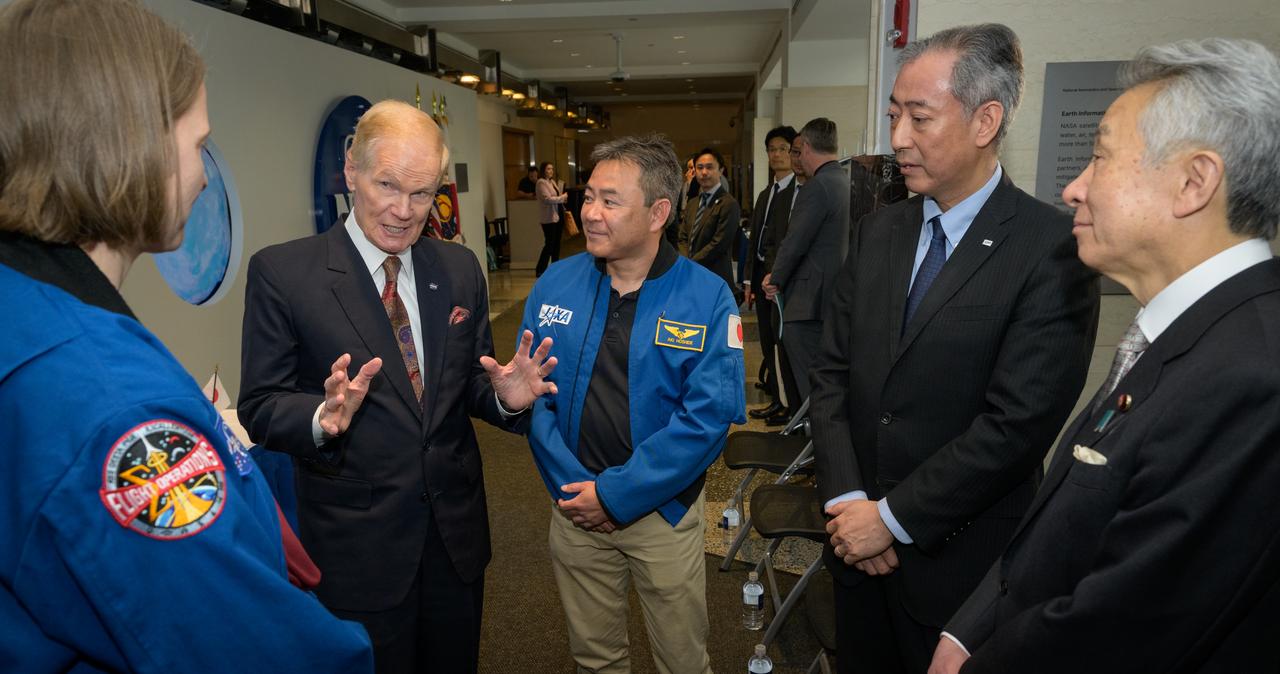
NASA astronaut Kayla Barron, left, NASA Administrator Bill Nelson, JAXA astronaut Akihiko Hoshide, Japan Aerospace Exploration Agency (JAXA) President Hiroshi Yamakawa, and Japan’s Minister of Education, Culture, Sports, Science and Technology Masahito Moriyama, right, talk after the signing of an historic agreement between the United States and Japan to advance sustainable human exploration of the Moon, Tuesday, April 9, 2024, at the NASA Headquarters Mary W. Jackson Building in Washington. Under the agreement, Japan will design, develop, and operate a pressurized rover for crewed and uncrewed exploration on the Moon. NASA will provide the launch and delivery of the rover to the Moon as well as two Japanese astronaut missions to the lunar surface. Photo Credit: (NASA/Bill Ingalls)
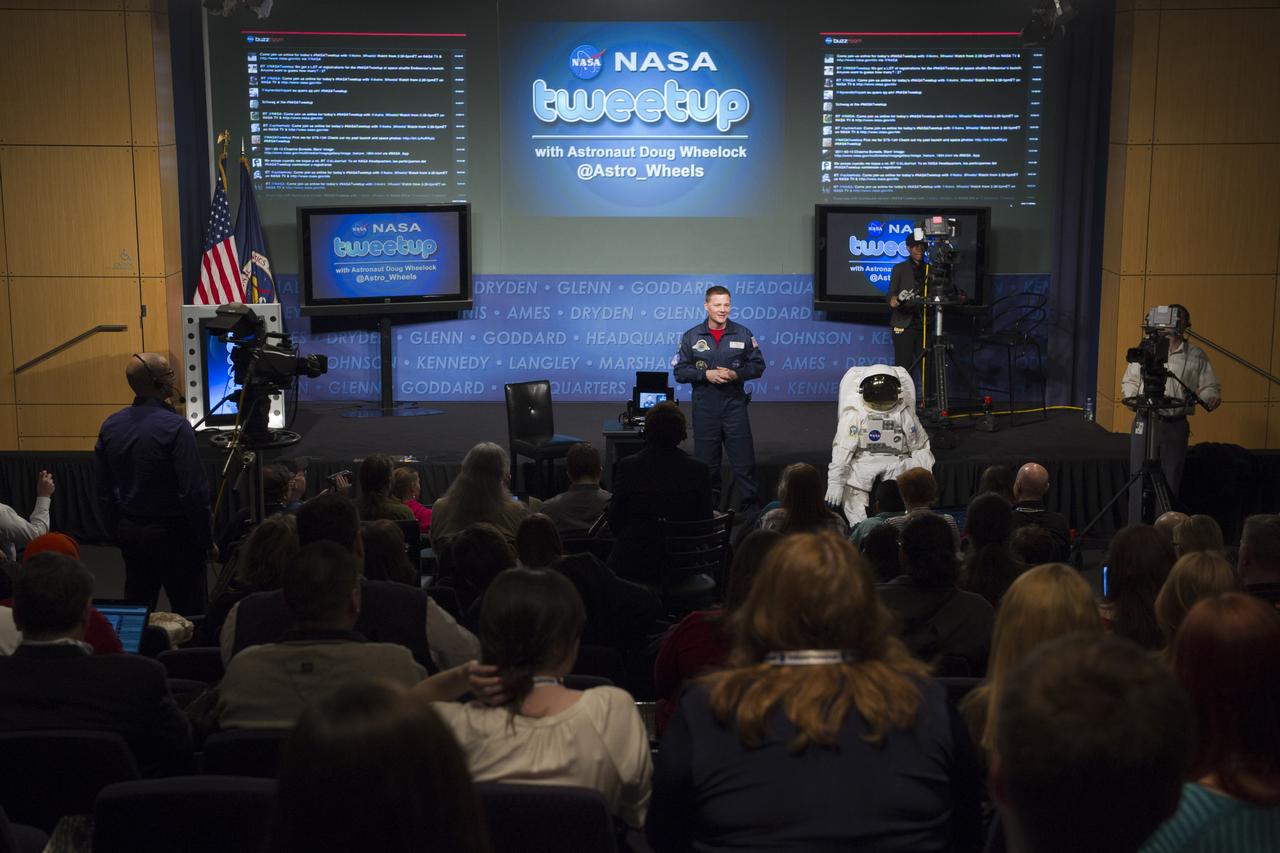
Astronaut Doug Wheelock discusses his experiences while living on the International Space Station during a tweetup at NASA Headquarters in Washington, Wednesday, March 16, 2011. Wheelock, who has accumulated a total of 178 days in space, assumed command of the International Space Station and the Expedition 25 crew. During Expedition 25, there were more than 120 microgravity experiments in human research; biology and biotechnology; physical and materials sciences; technology development; and Earth and space sciences. Wheelock also responded to an emergency shutdown of half of the station's external cooling system and supported three unplanned spacewalks to replace the faulty pump module that caused the shutdown. His efforts restored the station's critical cooling system to full function. The mission duration was 163 days. Photo Credit: (NASA/Paul E. Alers)
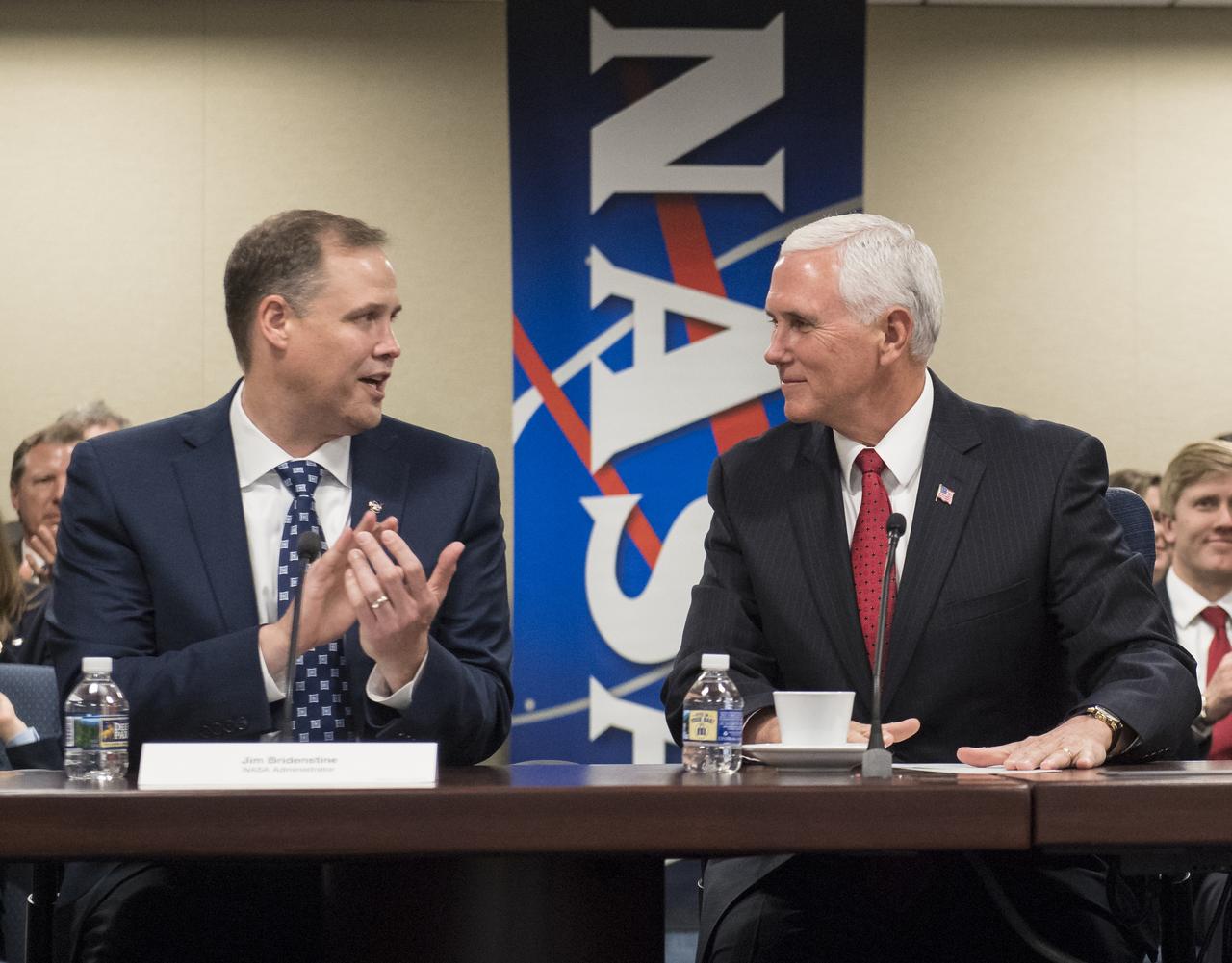
NASA Administrator Jim Bridenstine, left, Vice President Mike Pence, and NASA Chief Financial Officer, Jeff DeWit, right, meet with NASA leadership, Monday, April 23, 2018 at NASA Headquarters in Washington. Bridenstine was just sworn in by the Vice President as NASA's 13th Administrator. Photo Credit: (NASA/Aubrey Gemignani)
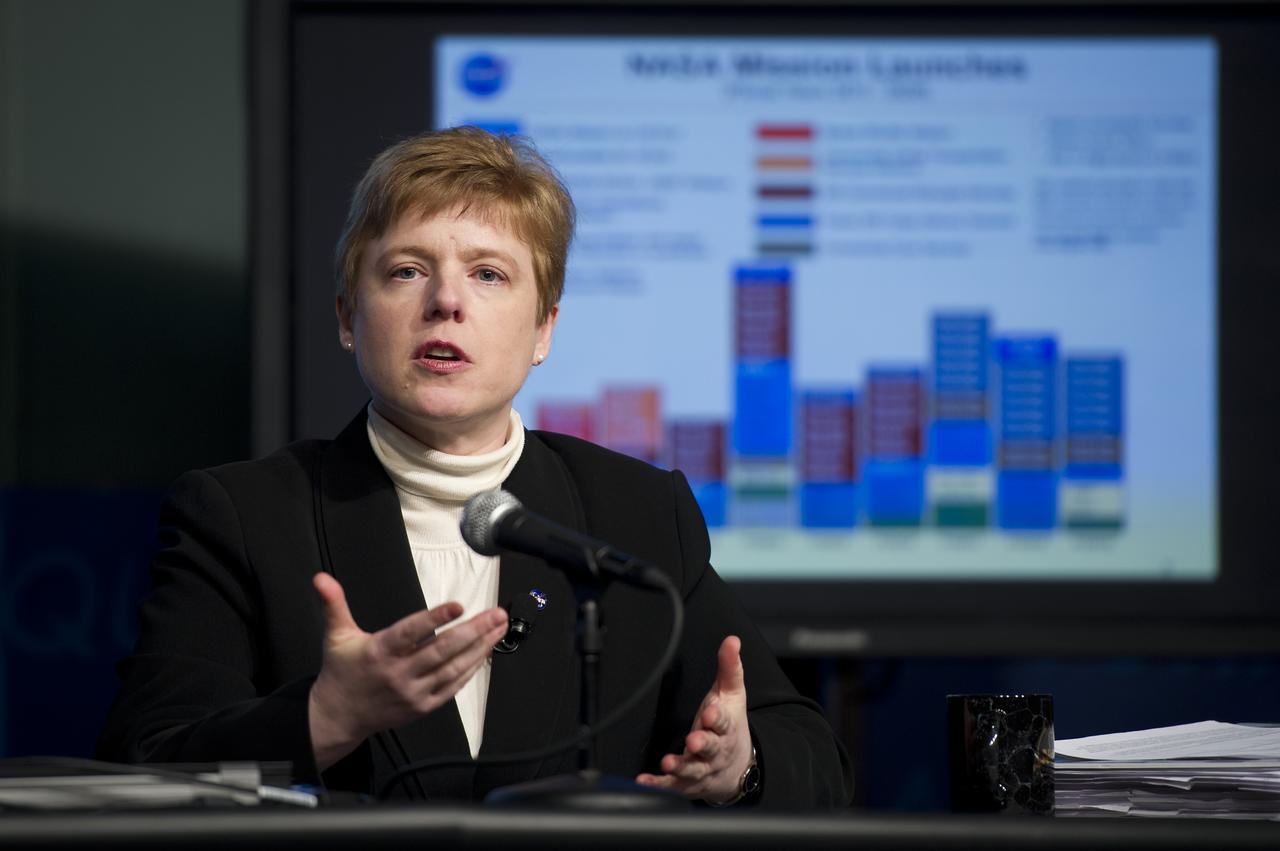
NASA Chief Financial Officer Elizabeth Robinson delivers an overview briefing on NASA's fiscal year 2013 budget, Monday, Feb. 13, 2012 at NASA Headquarters in Washington. Photo Credit: (NASA/Bill Ingalls)
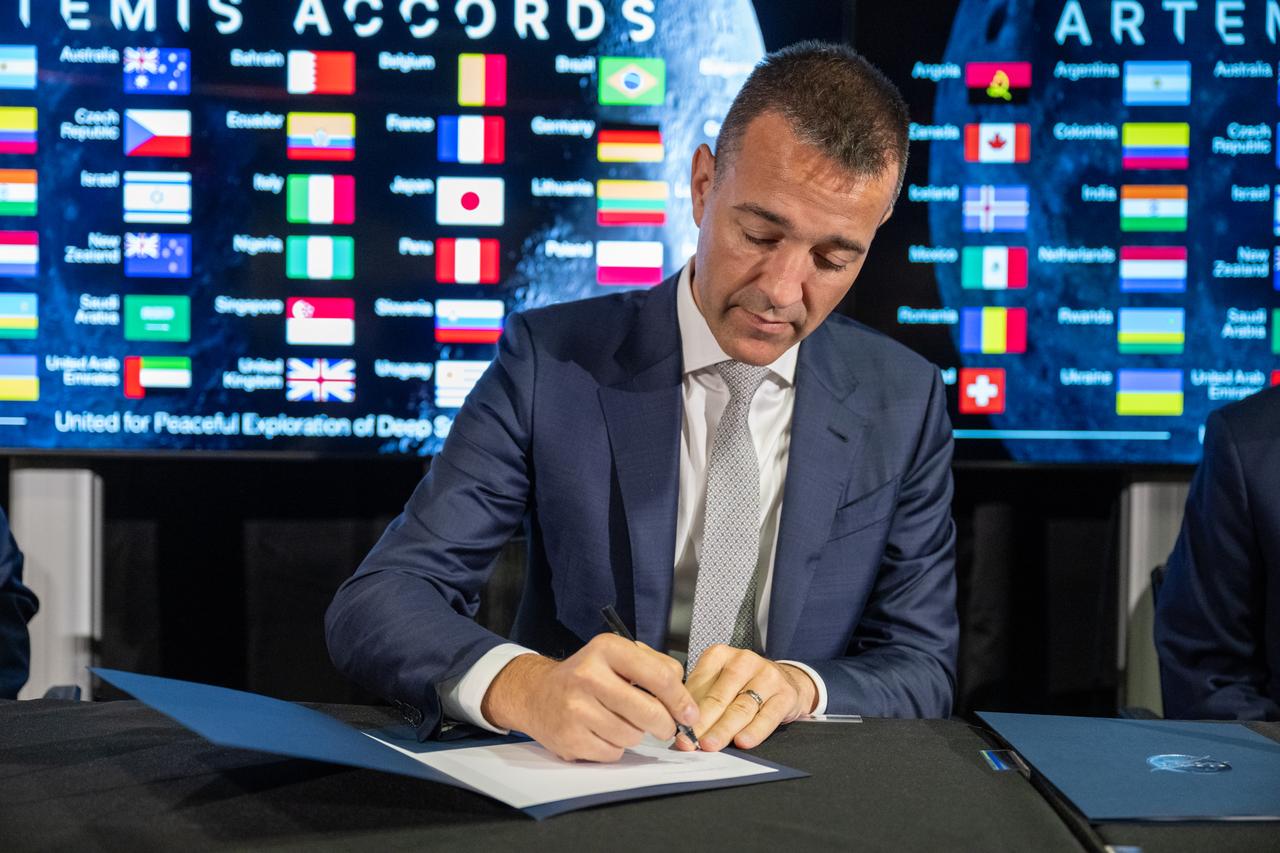
Slovak Republic Minister of Education, Research, Development, and Youth Tomáš Drucker signs the Artemis Accords, Thursday, May 30, 2024, at the Mary W. Jackson NASA Headquarters building in Washington. Slovakia is the 42nd country to sign the Artemis Accords, which establish a practical set of principles to guide space exploration cooperation among nations participating in NASA’s Artemis program. Photo Credit: (NASA/Keegan Barber)
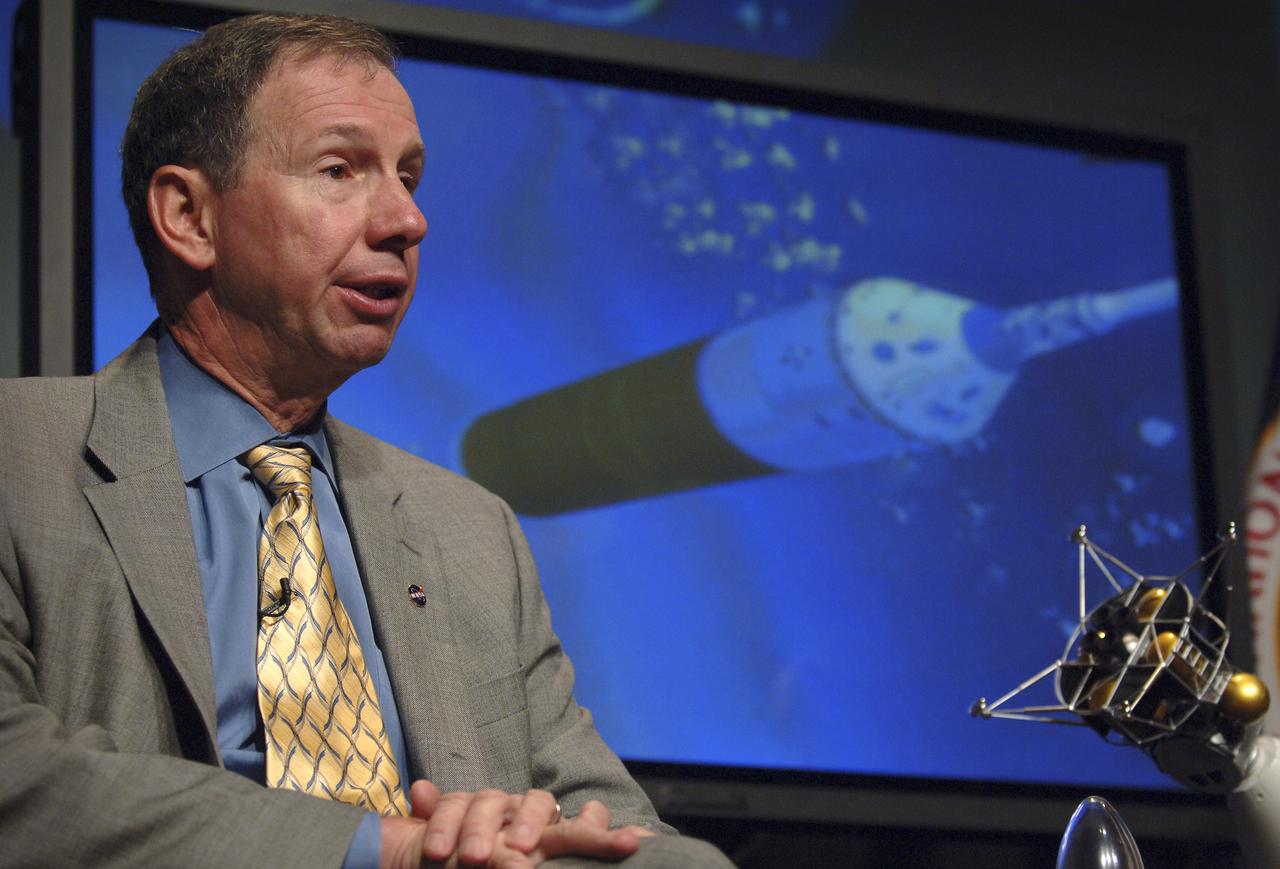
NASA Administrator Michael Griffin discusses the results of the agency's exploration architecture study on Monday, Sept. 19, 2005, at NASA Headquarters in Washington. The study made specific design recommendations for a vehicle to carry crews into space, a family of launch vehicles to take missions to the moon and beyond, and a "lunar mission architecture" for landing on the moon. Photo Credit: (NASA/Bill Ingalls)
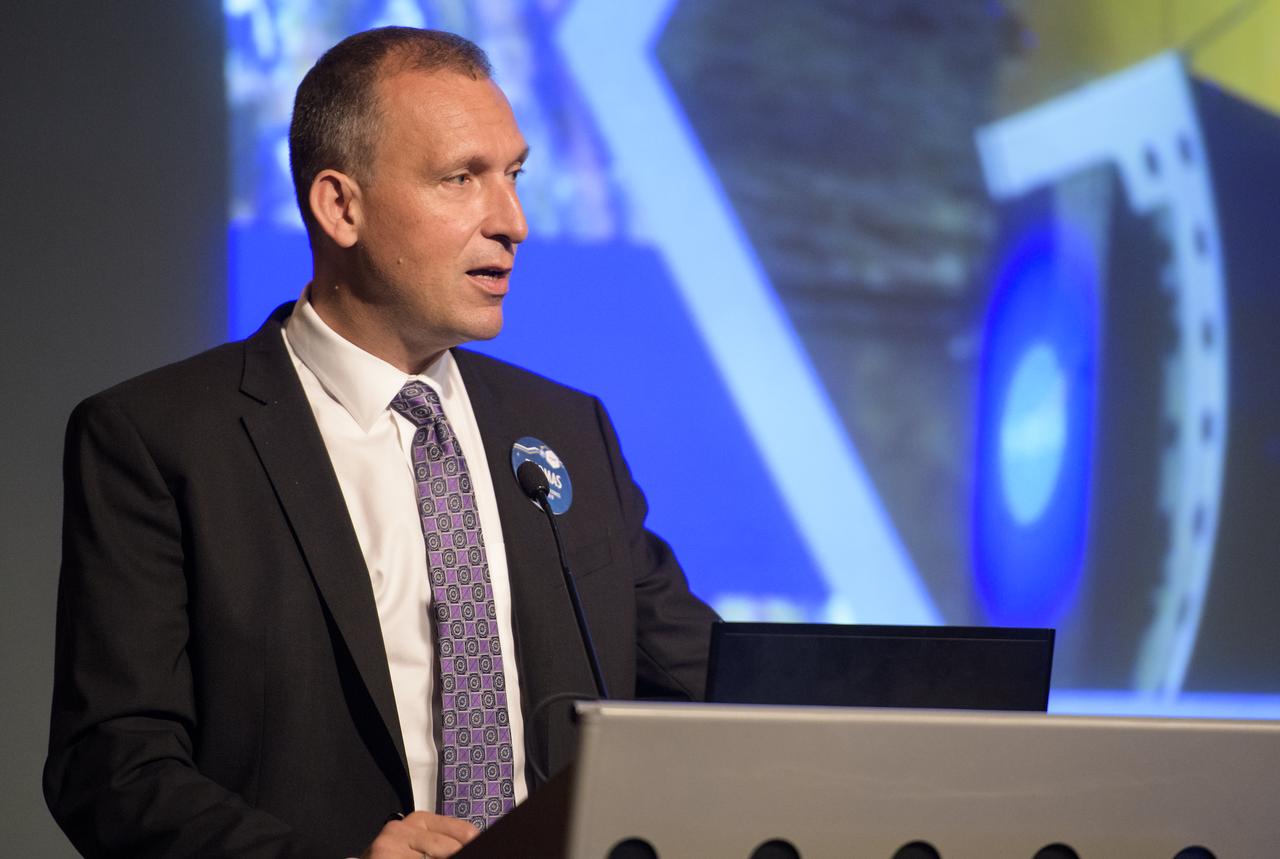
Thomas Zurbuchen, Associate Administrator for NASA's Science Mission Directorate, speaks during the 2018 Annual Earth Science Applications Showcase, Wednesday, Aug. 1, 2018 at NASA Headquarters in Washington. Every summer students and young professionals from NASA’s Applied Sciences’ DEVELOP National Program come to NASA Headquarters and present their research projects. DEVELOP is a training and development program where students work on Earth science research projects, mentored by science advisers from NASA and partner agencies, and extend research results to local communities. Photo Credit: (NASA/Joel Kowsky)
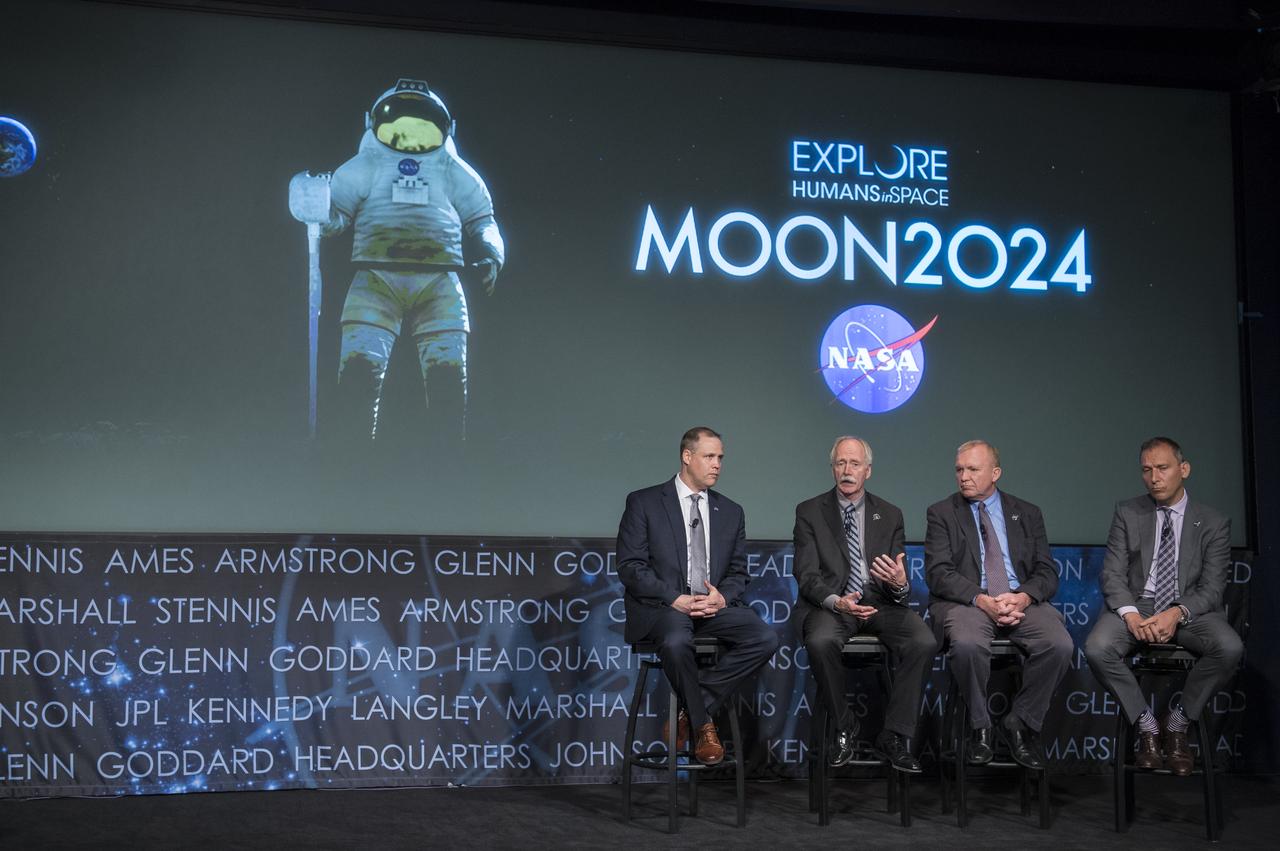
NASA Administrator Jim Bridenstine, left, NASA Associate Administrator for Human Exploration and Operations William Gerstenmaier, second from left, acting Associate Administrator for NASA's Space Technology Mission Directorate, second from right, acting Associate Administrator for NASA's Science Mission Directorate Thomas Zurbuchen, right, are seen during a NASA town hall on the amendment to the fiscal year 2020 budget request that supports the agency’s plan to land astronauts on the Moon by 2024, Tuesday, May 14, 2019 at NASA Headquarters in Washington, DC. Photo Credit: (NASA/Joel Kowsky)
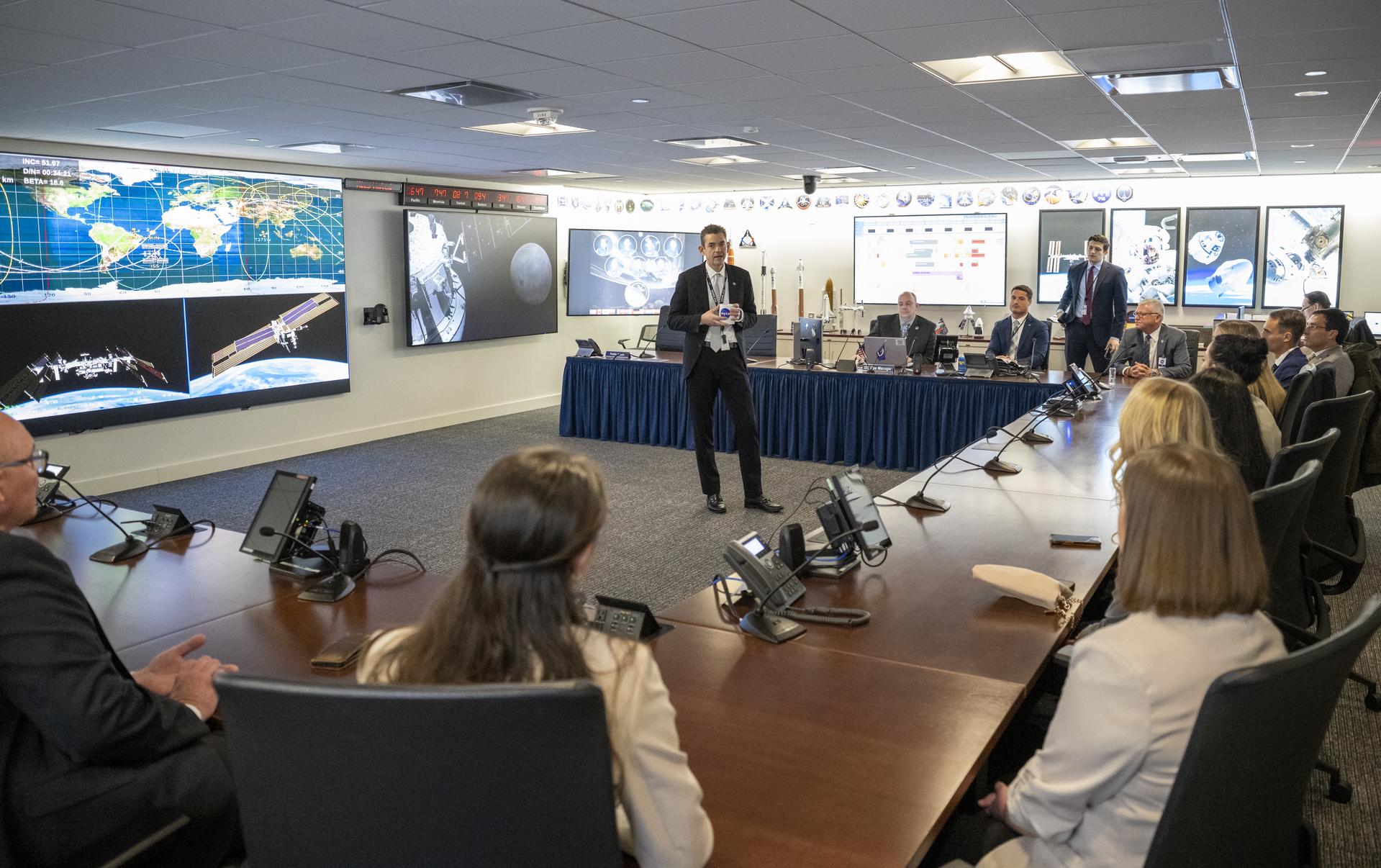
NASA Administrator Jared Isaacman speaks with Embry‑Riddle Aeronautical University students and staff in the Space Operations Center (SOC), Thursday, March 19, 2026, at the Mary W. Jackson NASA Headquarters building in Washington. The group is visiting NASA Headquarters after six Embry‑Riddle Aeronautical University students were named to the Aviation Week Network 20 Twenties Class of 2026, which recognizes outstanding aerospace-focused university students. Photo Credit: (NASA/Keegan Barber)
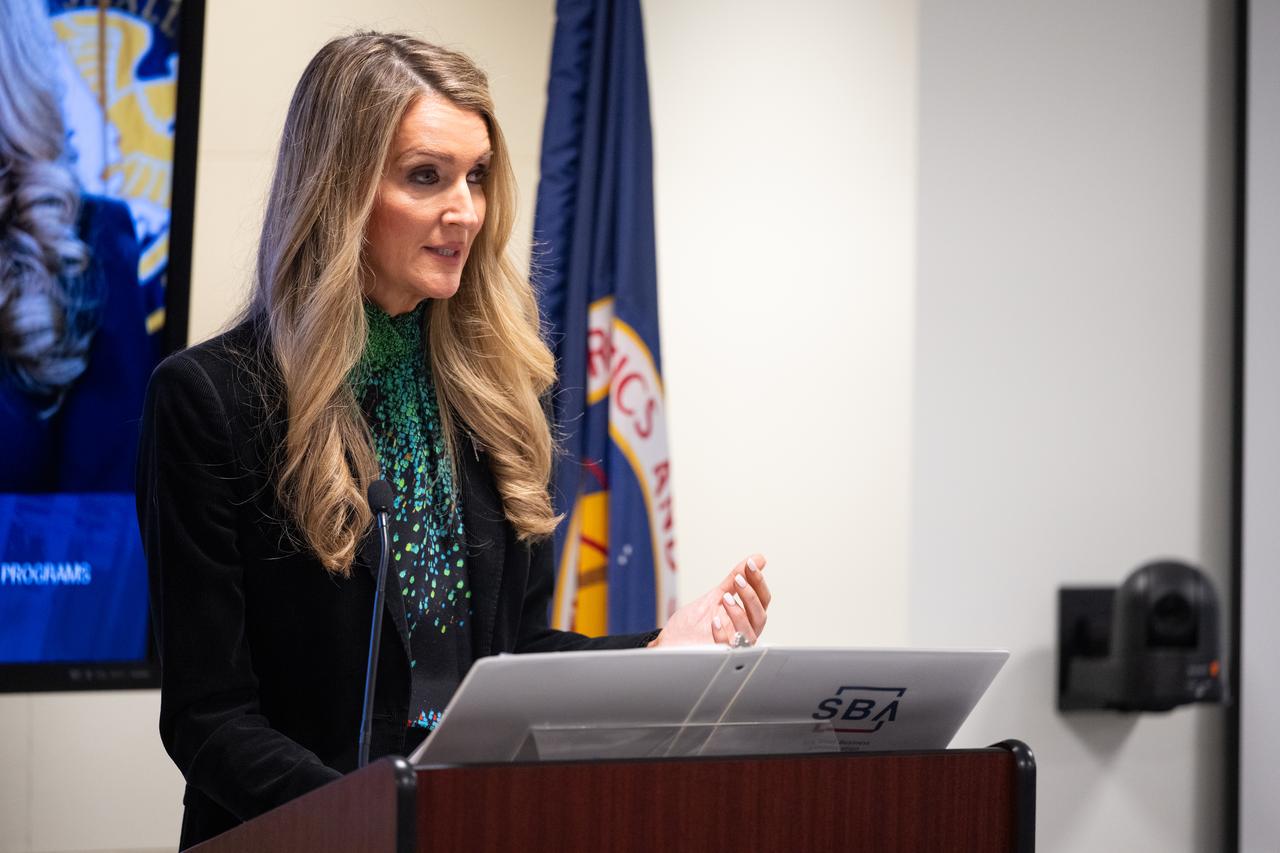
Administrator of the Small Business Administration Kelly Loeffler provides remarks during a NASA Office of Small Business Programs learning webinar titled “Empowering Small Businesses: NASA OSBP & SBA present The Made in America Manufacturing,” Wednesday, April 16, 2025, at the Mary W. Jackson NASA Headquarters building in Washington. Photo Credit: (NASA/Joel Kowsky)
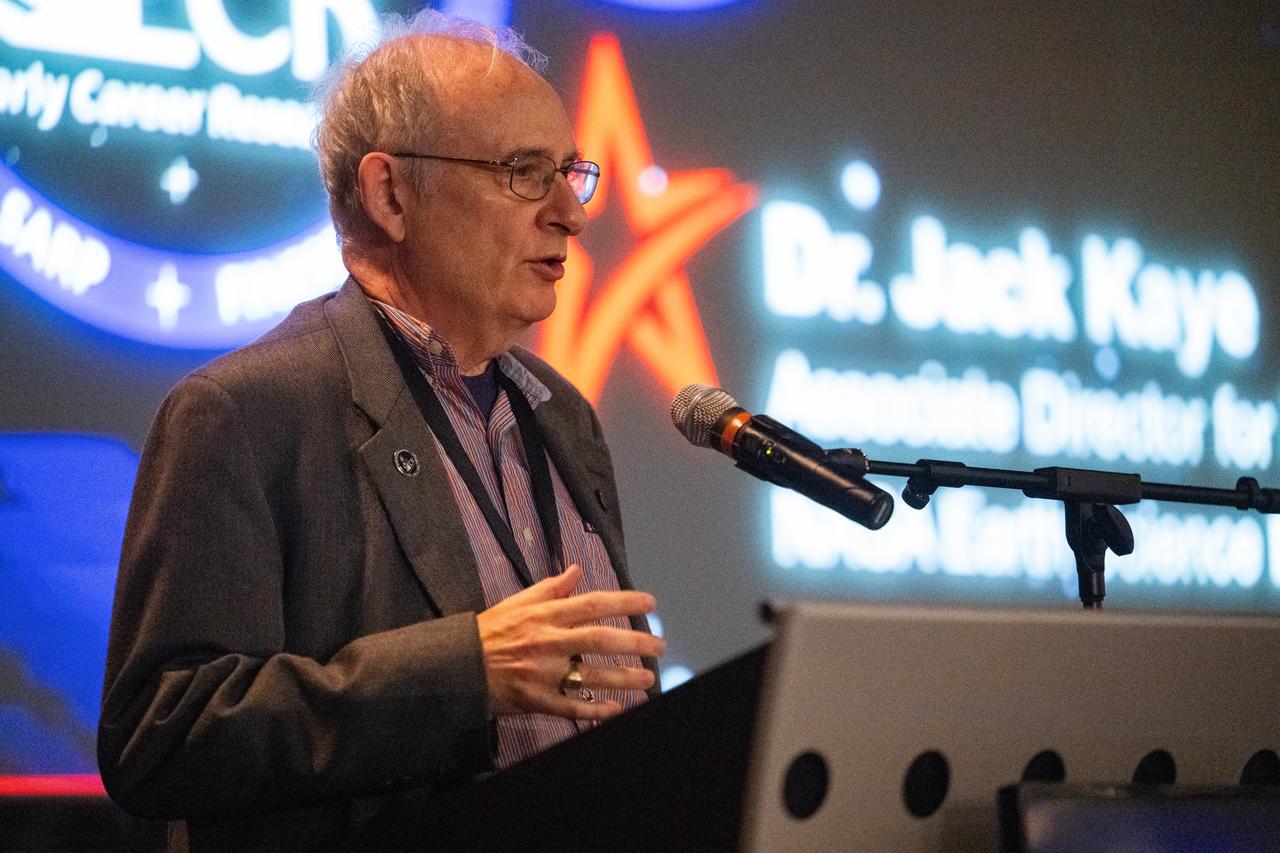
Jack Kaye, associate director for research in the Earth Science Division of NASA’s Science Mission Directorate, speaks with the Climate Change Research Initiative (CCRI) cohort, Wednesday, Aug. 7, 2024, at the Mary W. Jackson NASA Headquarters building in Washington, DC. The Earth Science Division’s Early Career Research Program’s Climate Change Research Initiative (CCRI) is a year-long STEM engagement and experiential learning opportunity for educators and students from high school to graduate level. Photo Credit: (NASA/Joel Kowsky)
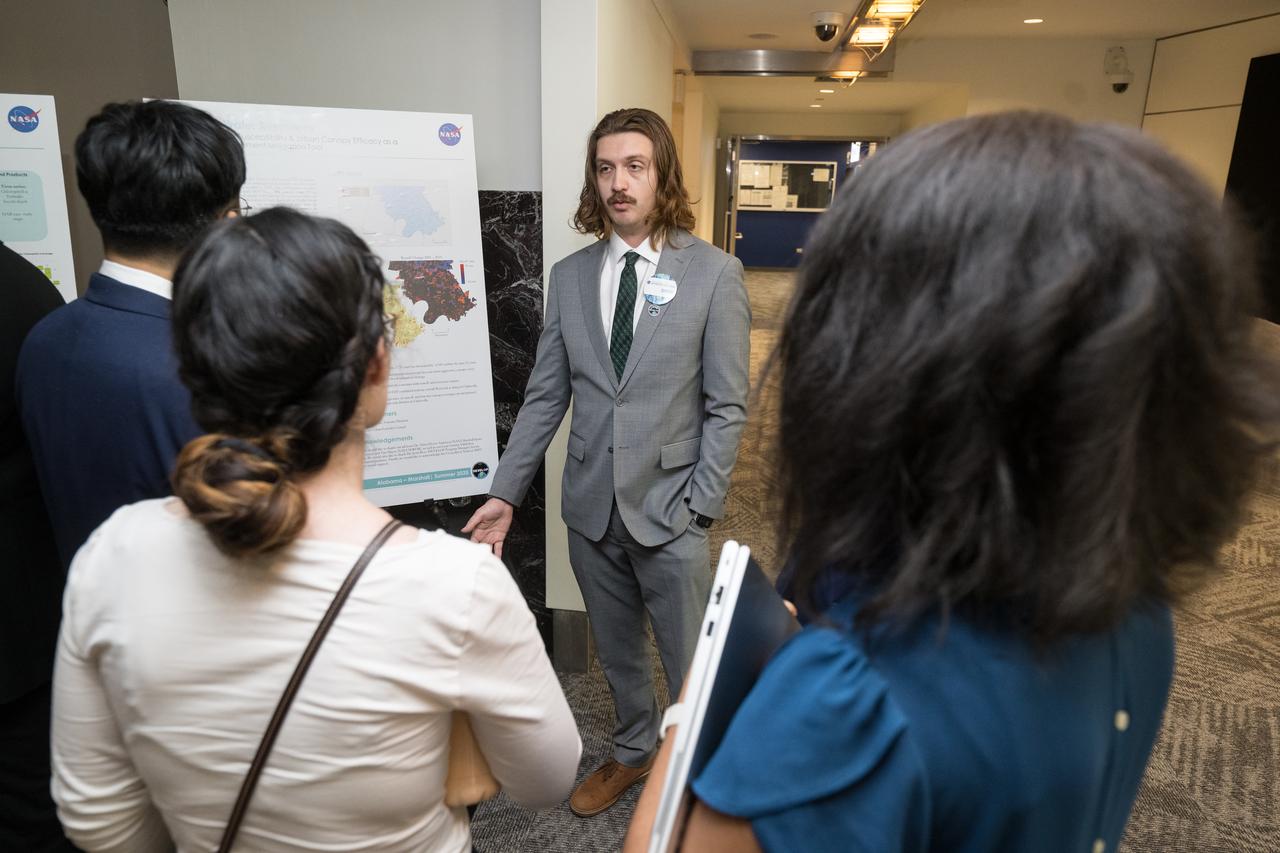
Students and young professionals share the results of their DEVELOP Project, Tuesday, August 5, 2025, at the Mary W. Jackson NASA Headquarters building in Washington. Every summer early career researchers from NASA’s DEVELOP National Program come to NASA Headquarters and present their research projects. DEVELOP is a training and development program where early career researchers work on Earth science projects, mentored by science advisors from NASA and partner agencies, and provide research results to local communities. Photo Credit: (NASA/Aubrey Gemignani)
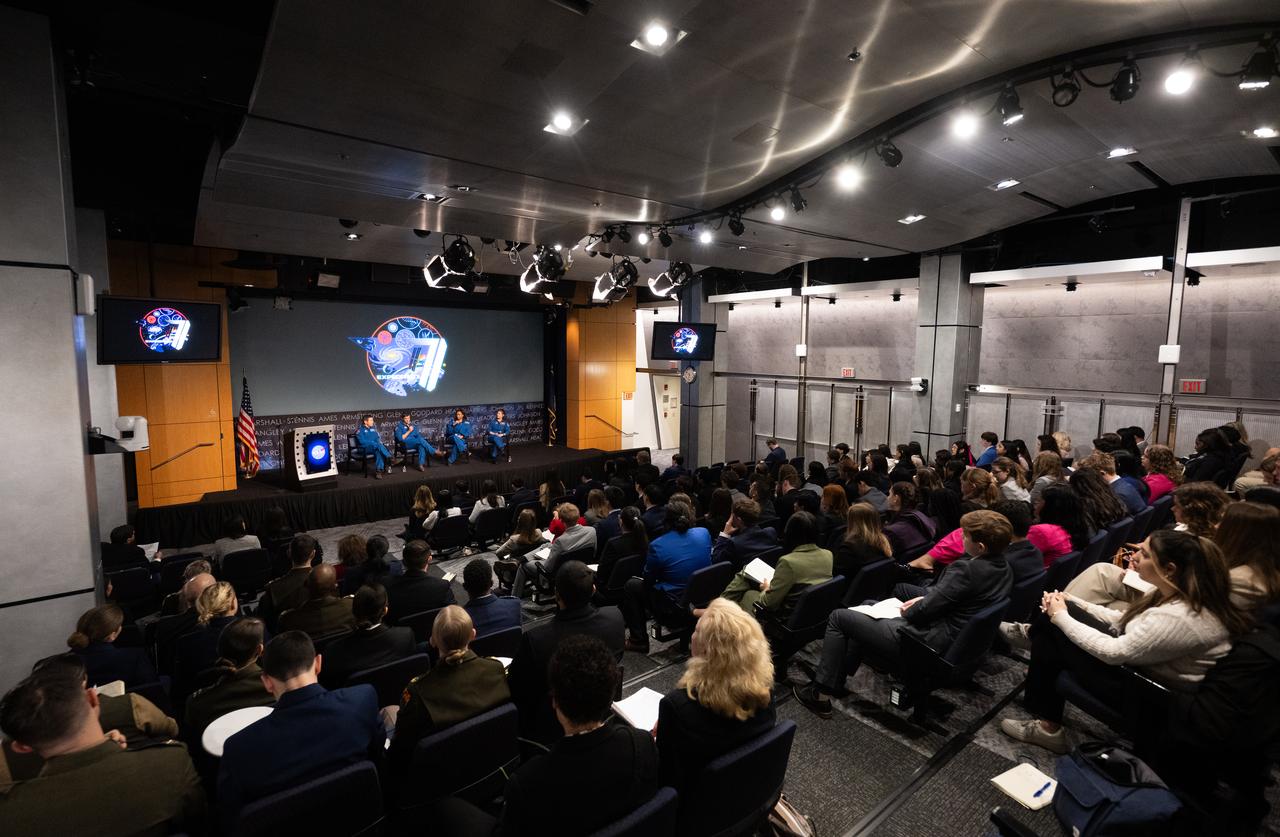
Expedition 71 NASA astronauts Michael Barratt, left, Matthew Dominick, Jeanette Epps, and Tracy Dyson, speak to delegates of the U.S. Senate Youth Program, Wednesday, March 5, 2025 at the Mary W. Jackson NASA Headquarters Building in Washington. Dominick, Epps, Barratt, and Dyson served as part of Expedition 71 aboard the International Space Station. Photo Credit: (NASA/Joel Kowsky)
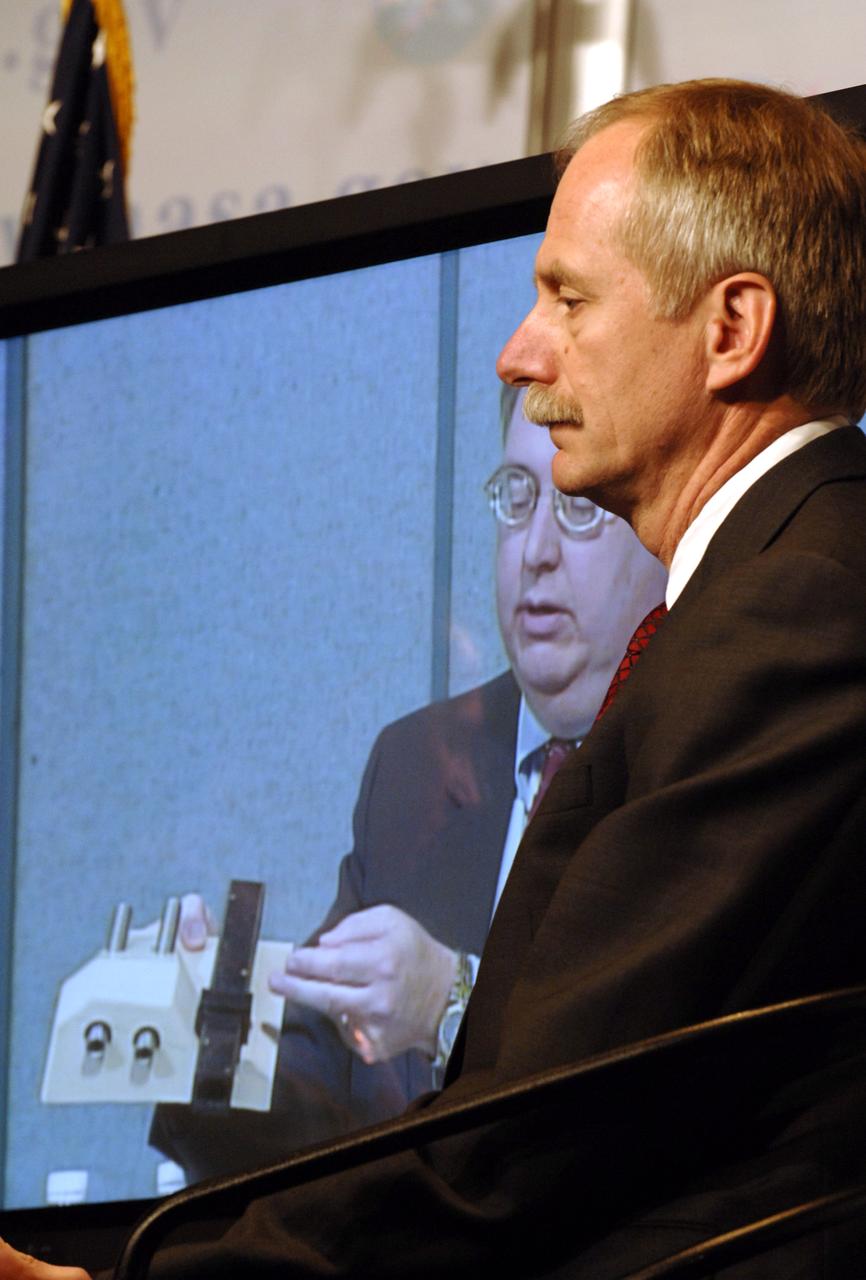
NASA Associate Administrator for Space Operations William Gerstenmaier, right, look on as Space Shuttle Program Manager Wayne Hale speaks from NASA's Marshall Space Flight Center during a media briefing about the space shuttle program and processing for the STS-121 mission, Friday, April 28, 2006, at NASA Headquarters in Washington. Photo Credit (NASA/Bill Ingalls)
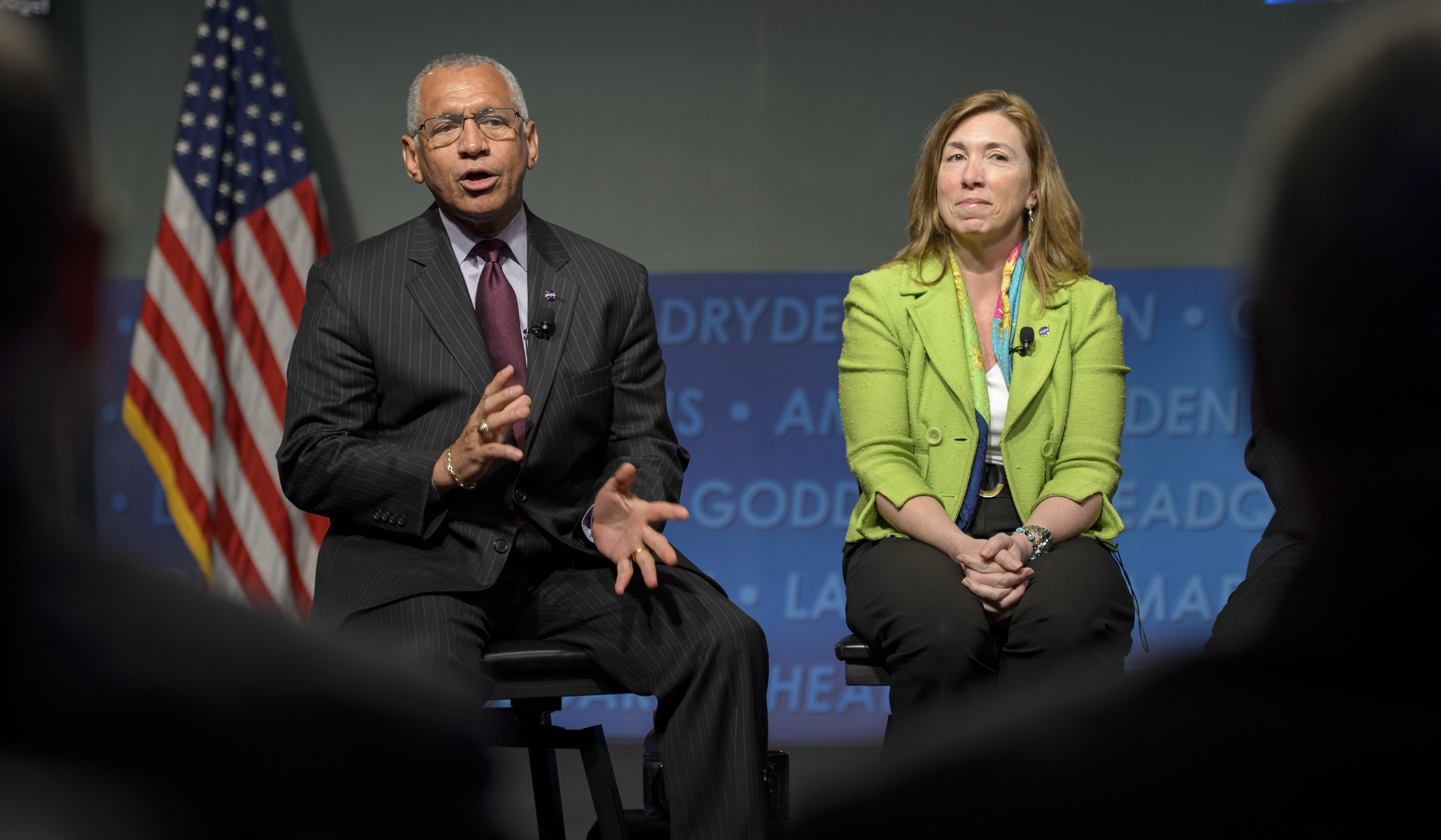
NASA Administrator Charlie Bolden and NASA Deputy Administrator Lori Garver present details of the fiscal year 2014 budget request in an agency-wide all hands meeting televised from NASA Headquarters on Wednesday, April 10, 2013 in Washington. Photo Credit: (NASA/Bill Ingalls)

NASA Moon Base Program Executive Carlos Garcia-Galan speaks during an event where NASA is outlining how the agency is executing President Donald J. Trump’s National Space Policy and accelerating preparations for America’s return to the surface of the Moon by 2028, Tuesday, March 24, 2026, at the Mary W. Jackson NASA Headquarters building in Washington. During the event NASA leadership provided updates on mission priorities, including sending the first astronauts to the lunar surface in more than 50 years, establishing the initial elements of a permanent lunar base, getting America underway in space on nuclear propulsion, and other objectives. Photo Credit: (NASA/Bill Ingalls)

NASA International Space Station Program Manager Dana Weigel speaks during an event where NASA is outlining how the agency is executing President Donald J. Trump’s National Space Policy and accelerating preparations for America’s return to the surface of the Moon by 2028, Tuesday, March 24, 2026, at the Mary W. Jackson NASA Headquarters building in Washington. During the event NASA leadership provided updates on mission priorities, including sending the first astronauts to the lunar surface in more than 50 years, establishing the initial elements of a permanent lunar base, getting America underway in space on nuclear propulsion, and other objectives. Photo Credit: (NASA/Bill Ingalls)
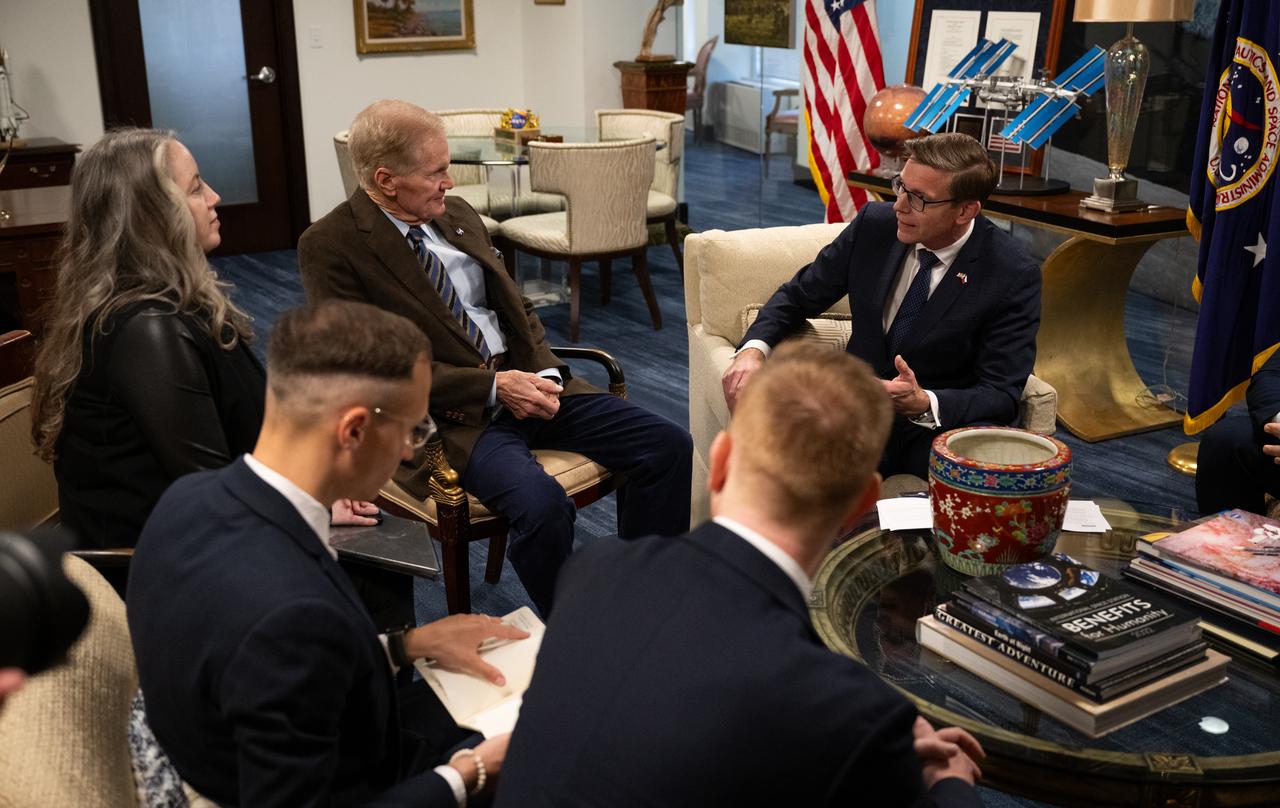
Meredith McKay, deputy associate administrator for International and Interagency Relations, left, NASA Administrator Bill Nelson, center, and Martin Kupka, Minister of Transport for the Czech Republic, are seen during a meeting at the Mary W. Jackson NASA Headquarters building, Monday, Jan. 22, 2024, in Washington. Photo Credit: (NASA/Joel Kowsky)
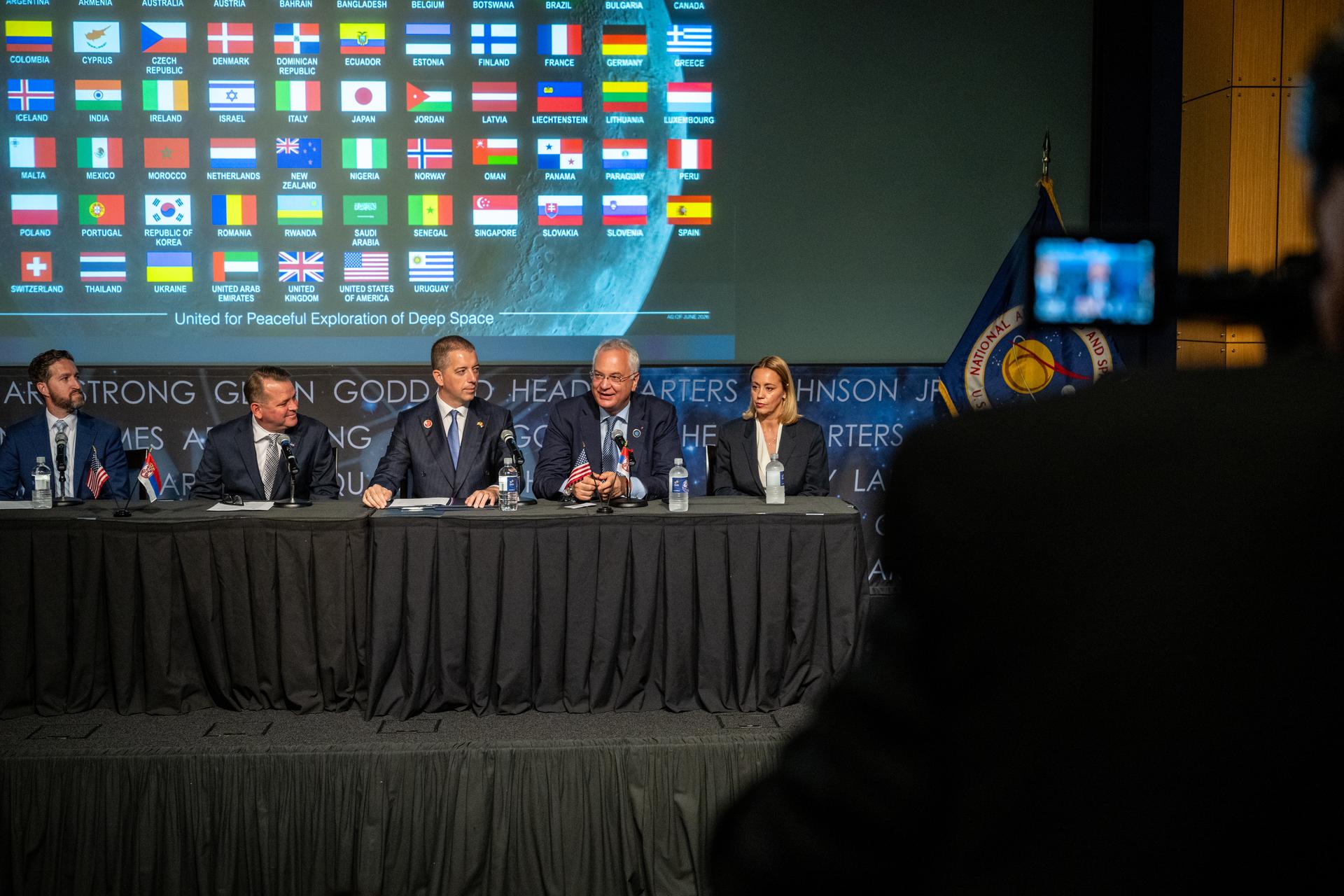
Ambassador of Serbia to the Unites States Dragan Šutanovac, second from right, delivers remarks during an Artemis Accords signing ceremony Thursday, July 16, 2026, at the Mary W. Jackson NASA Headquarters building in Washington. Serbia is the 69th country to sign the Artemis Accords, which establish a practical set of principles to guide space exploration cooperation among nations participating in NASA’s Artemis program. Photo Credit: (NASA/Keegan Barber)