
United Space Alliance Senior Space Shuttle Technician Mitchell Bromwell, left, and Randy Meyers of United Space Alliance display an American flag that has been flown all over the world by the U.S. military from atop the Mobile Launch Platform (MLP) as the space shuttle Atlantis begins its journey from High Bay 3 in the Vehicle Assembly Building to Launch Pad 39a for its final flight, Tuesday evening, May 31, 2011, at Kennedy Space Center in Cape Canaveral, Fla. The 3.4-mile trek, known as "rollout," will take about seven hours to complete. Atlantis will carry the Raffaello multipurpose logistics module to deliver supplies, logistics and spare parts to the International Space Station. The launch of STS-135 is targeted for July 8. Photo Credit: (NASA/Bill Ingalls)
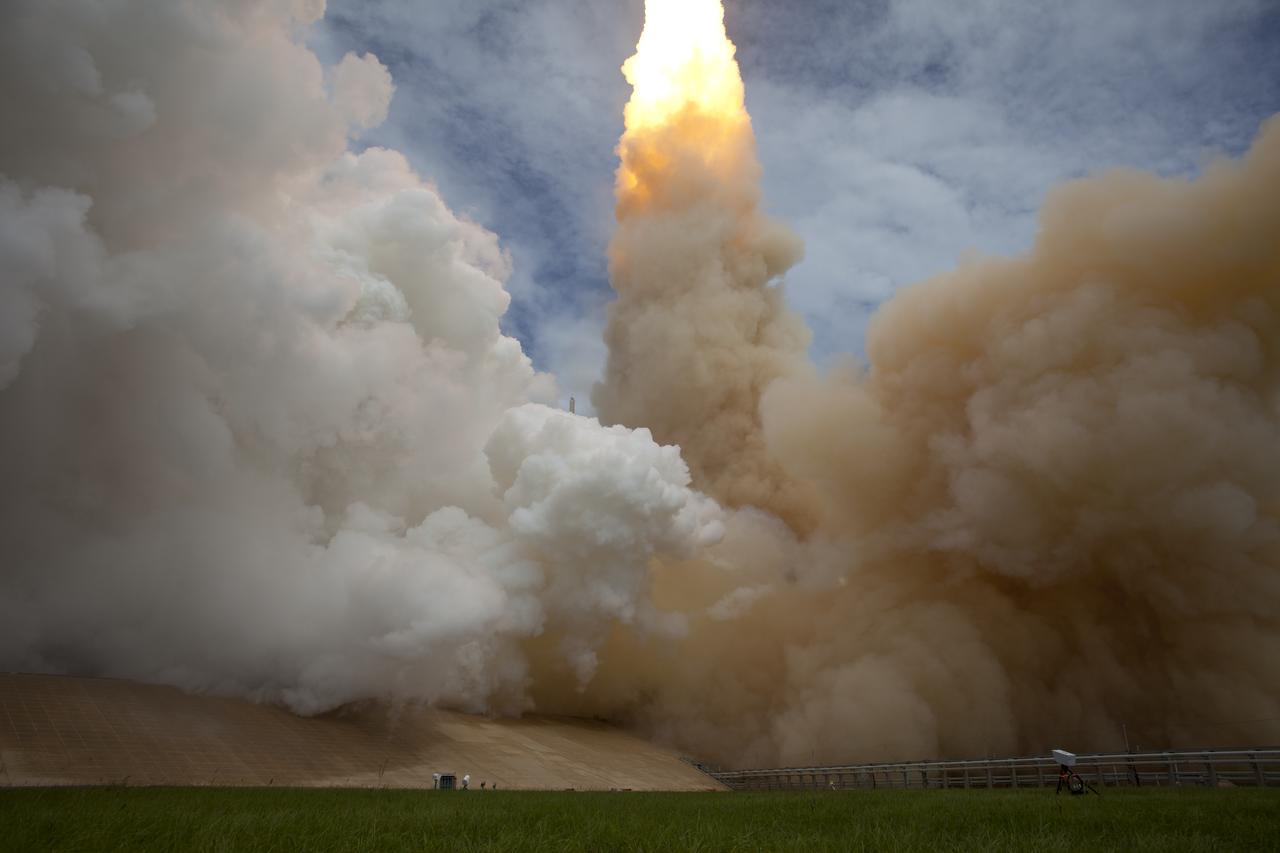
The exhaust plume from space shuttle Atlantis is seen as it launches from pad 39A on Friday, July 8, 2011, at NASA's Kennedy Space Center in Cape Canaveral, Fla. The launch of Atlantis, STS-135, is the final flight of the shuttle program, a 12-day mission to the International Space Station. Photo Credit: (NASA/Bill Ingalls)
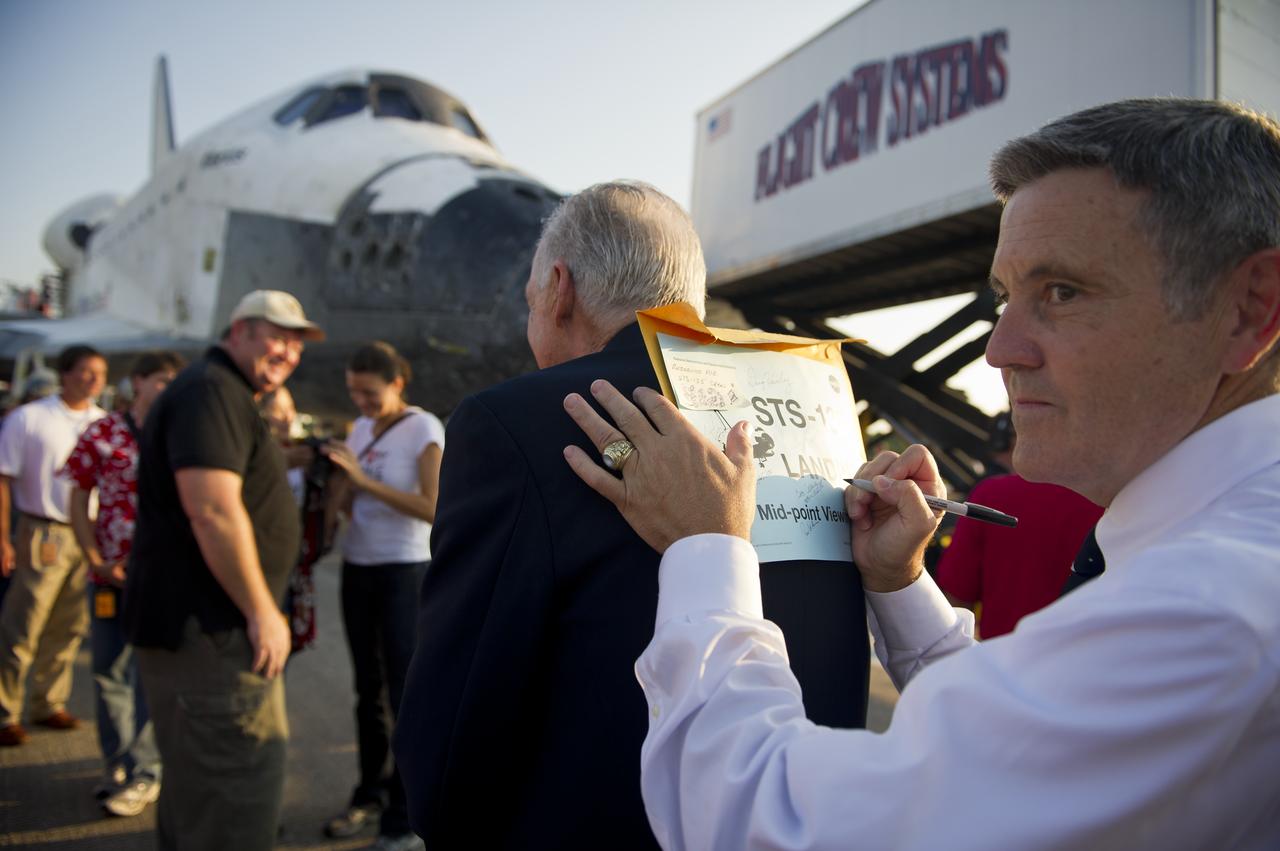
NASA Kennedy Space center Director Robert Cabana sings an STS-135 landing car placard at the Shuttle Landing Facility (SLF) runway at NASA Kennedy Space Center shortly after the space shuttle Atlantis (STS-135) landed, completing its 13-day mission to the International Space Station (ISS) and the final flight of the Space Shuttle Program, early Thursday morning, July 21, 2011, in Cape Canaveral, Fla. Overall, Atlantis spent 307 days in space and traveled nearly 126 million miles during its 33 flights. Atlantis, the fourth orbiter built, launched on its first mission on Oct. 3, 1985. Photo Credit: (NASA/Bill Ingalls)
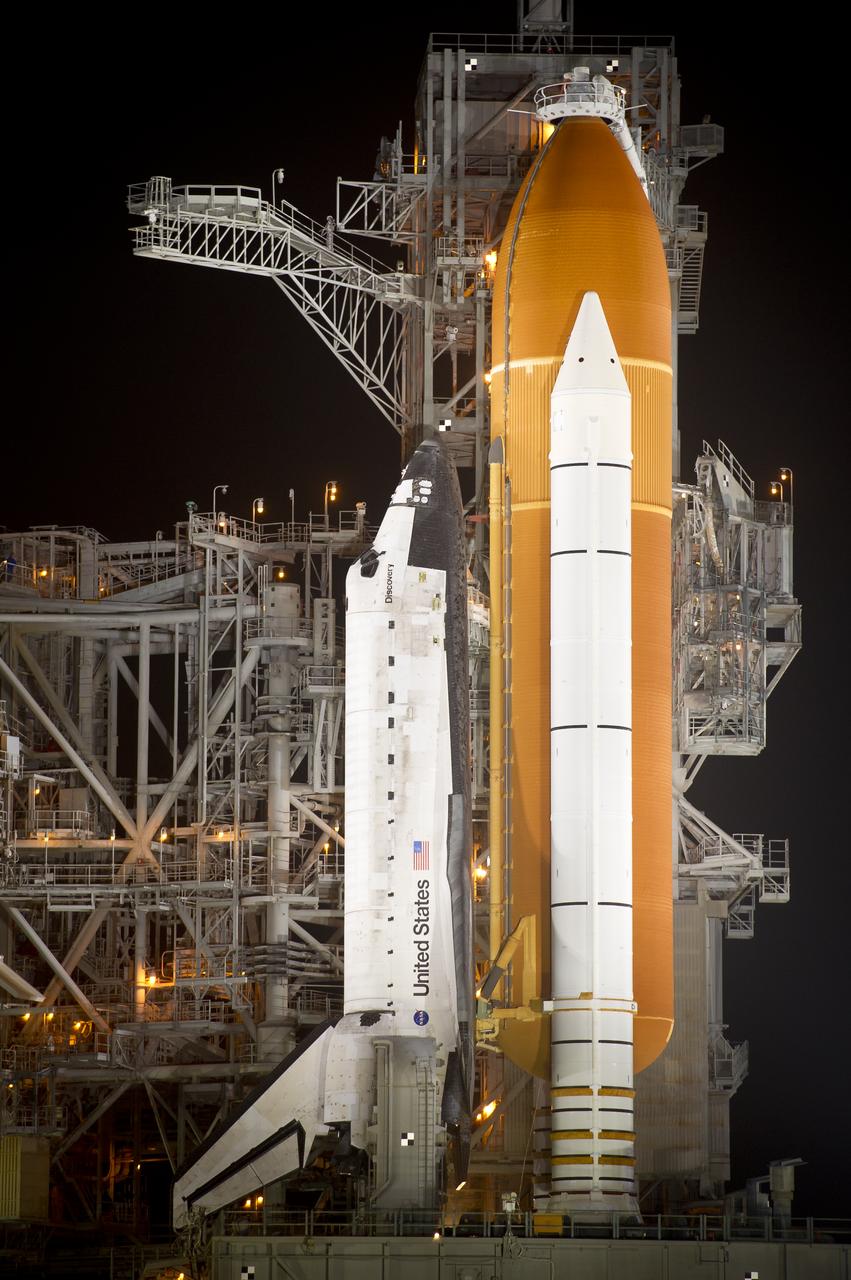
The space shuttle Discovery is seen shortly after the Rotating Service Structure was rolled back at launch pad 39A, at the Kennedy Space Center in Cape Canaveral, Florida, on Wednesday, Feb. 23, 2011. Discovery, on its 39th and final flight, will carry the Italian-built Permanent Multipurpose Module (PMM), Express Logistics Carrier 4 (ELC4) and Robonaut 2, the first humanoid robot in space to the International Space Station. Photo Credit: (NASA/Bill Ingalls)
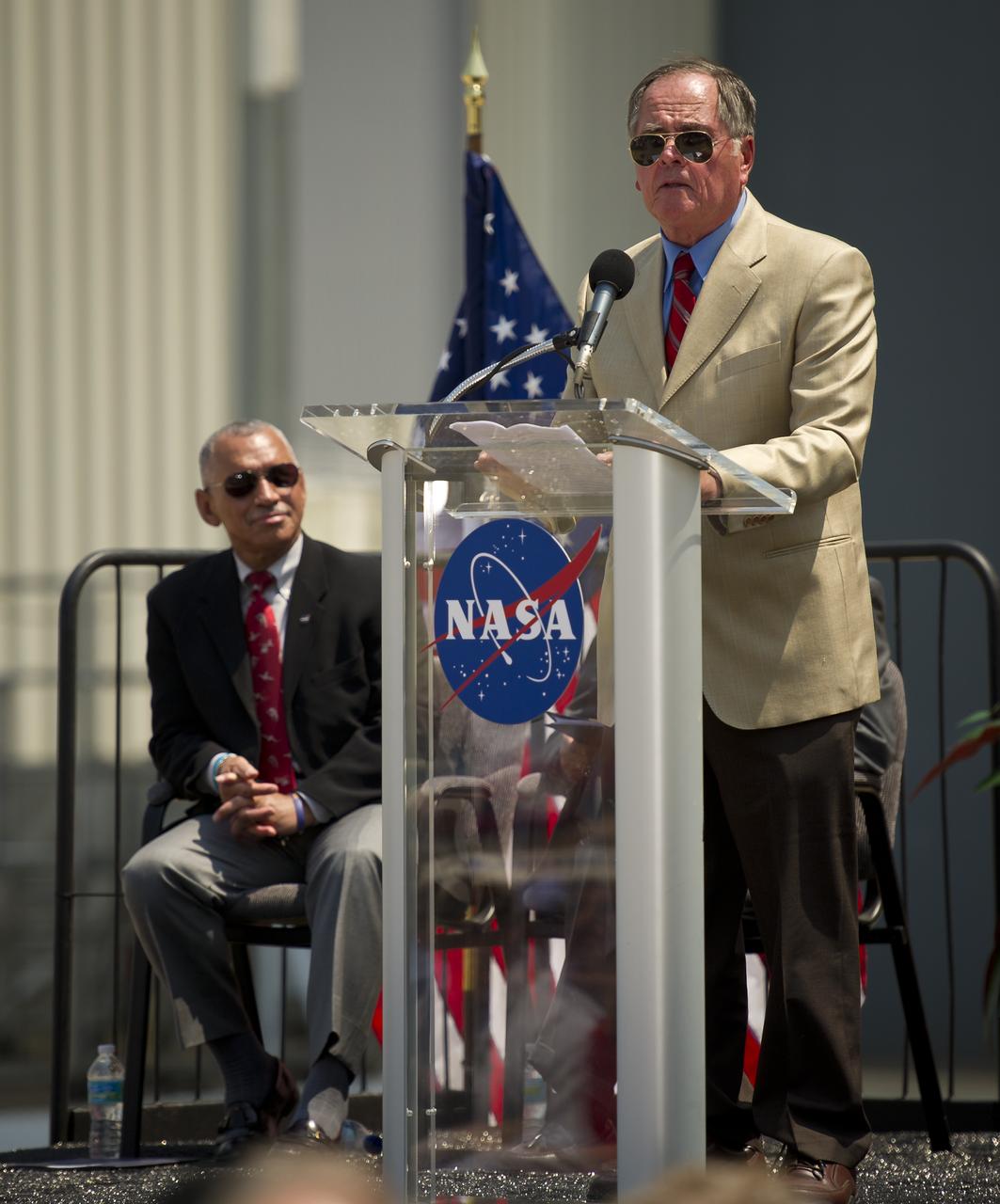
Pilot of the first space shuttle mission, STS-1, Bob Crippen speaks at an event where NASA Administrator Charles Bolden announced where four space shuttle orbiters will be permanently displayed at the conclusion of the Space Shuttle Program, Tuesday, April 12, 2011, at Kennedy Space Center in Cape Canaveral, Fla. The four orbiters, Enterprise, which currently is on display at the Smithsonian's Steven F. Udvar-Hazy Center near Washington Dulles International Airport, will move to the Intrepid Sea, Air & Space Museum in New York, Discovery will move to Udvar-Hazy, Endeavour will be displayed at the California Science Center in Los Angeles and Atlantis, in background, will be displayed at the Kennedy Space Center Visitor’s Complex. Photo Credit: (NASA/Bill Ingalls)
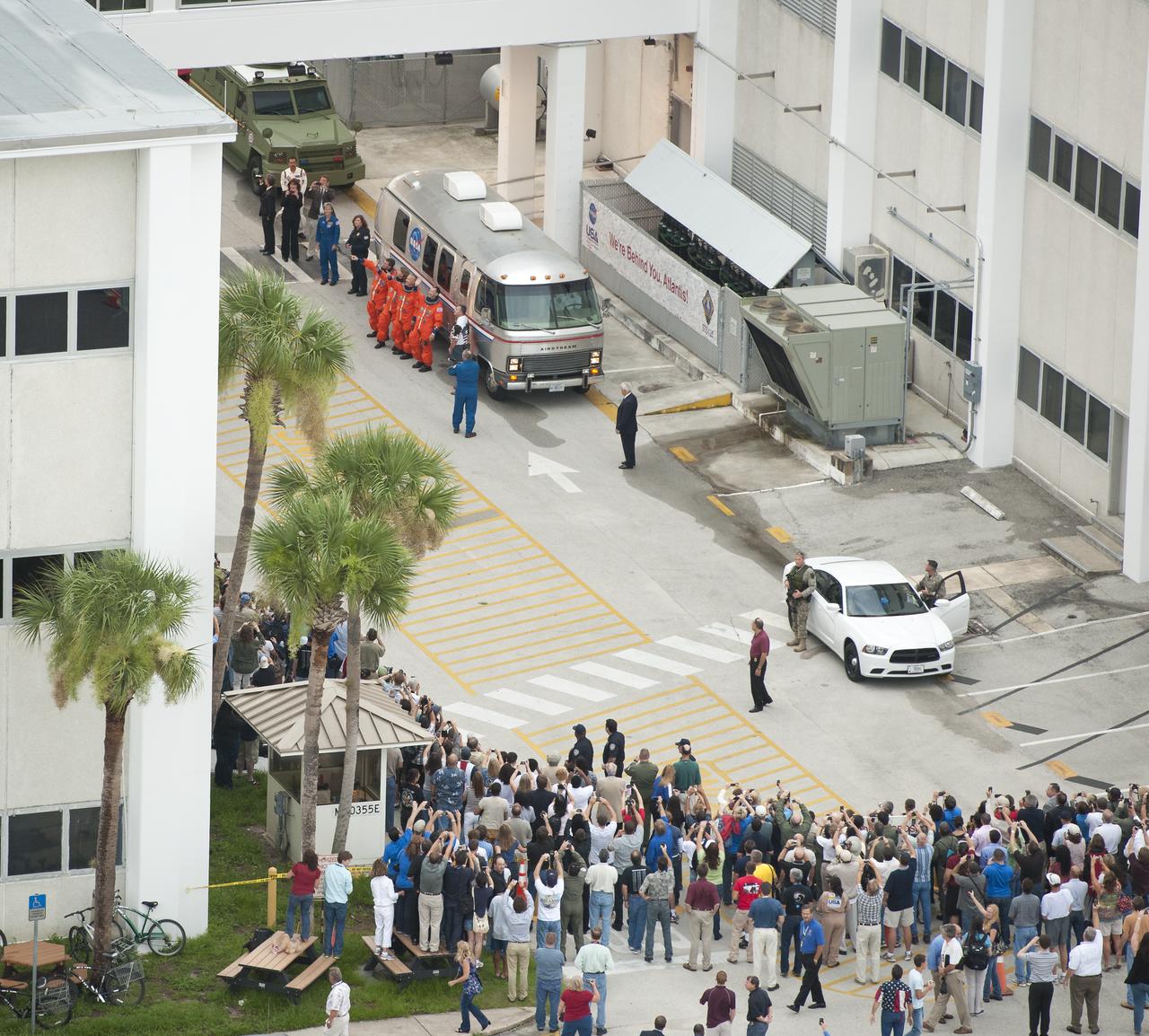
The STS-135 crew; Chris Ferguson, commander; Doug Hurley, pilot; Rex Walheim and Sandy Magnus, both mission specialists stop and pose for photographers before boarding the Astrovan that will take them to launch pad 39A for the launch of the space shuttle Atlantis on Friday, July 8, 2011 at the NASA Kennedy Space Center in Cape Canaveral, Fla. The launch of Atlantis, STS-135, is the final flight of the shuttle program, a 12-day mission to the International Space Station. Photo Credit: (NASA/Bill Ingalls)
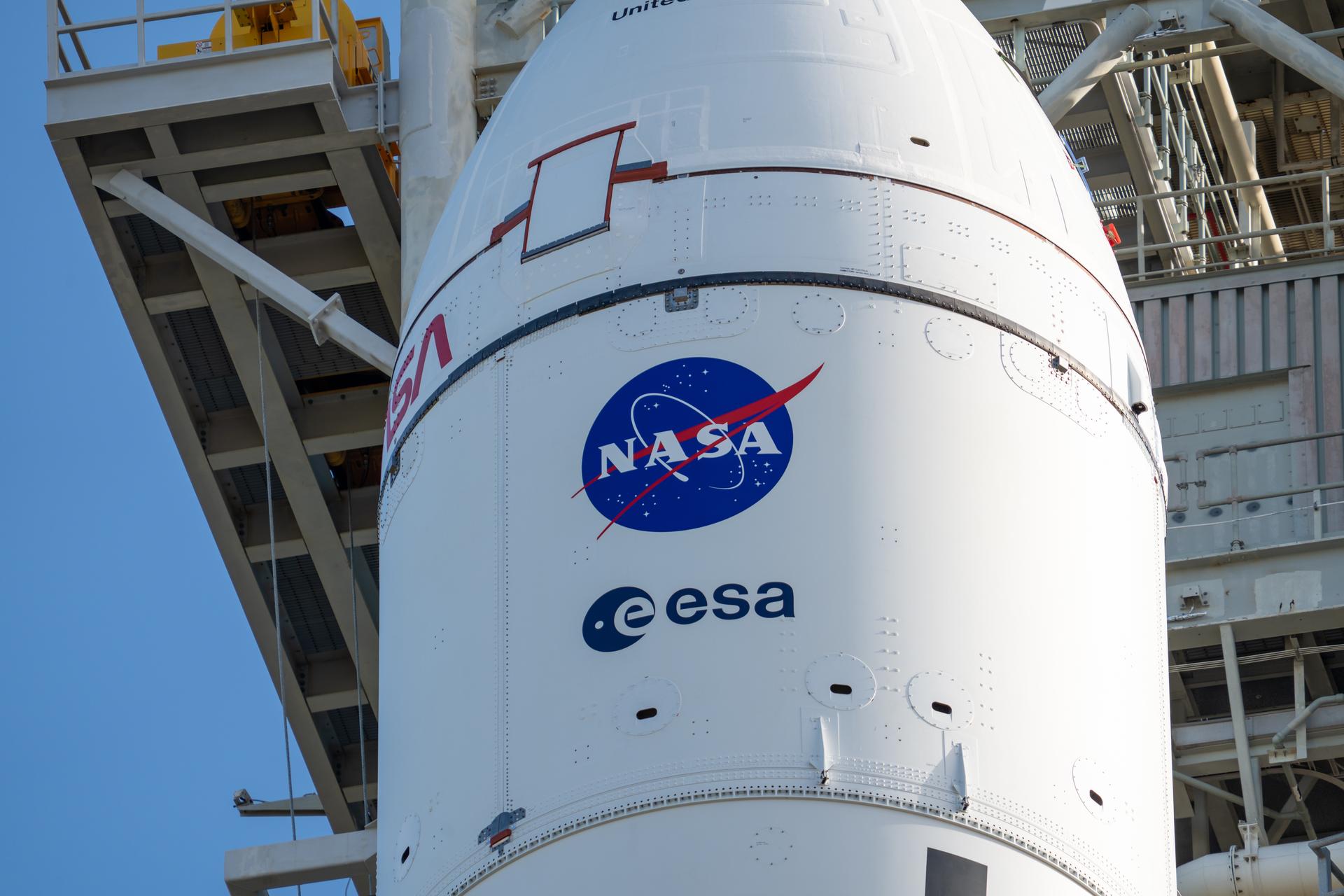
This image shows NASA’s SLS (Space Launch System) and Orion spacecraft rolling out of the Vehicle Assembly Building at NASA’s Kennedy Space Center. NASA's massive Crawler-Transporter, upgraded for the Artemis program, carries the powerful SLS rocket and Orion spacecraft on the Mobile Launcher from the Vehicle Assembly Building to Launch Pad 39B at Kennedy Space Center in preparation for the Artemis II mission.
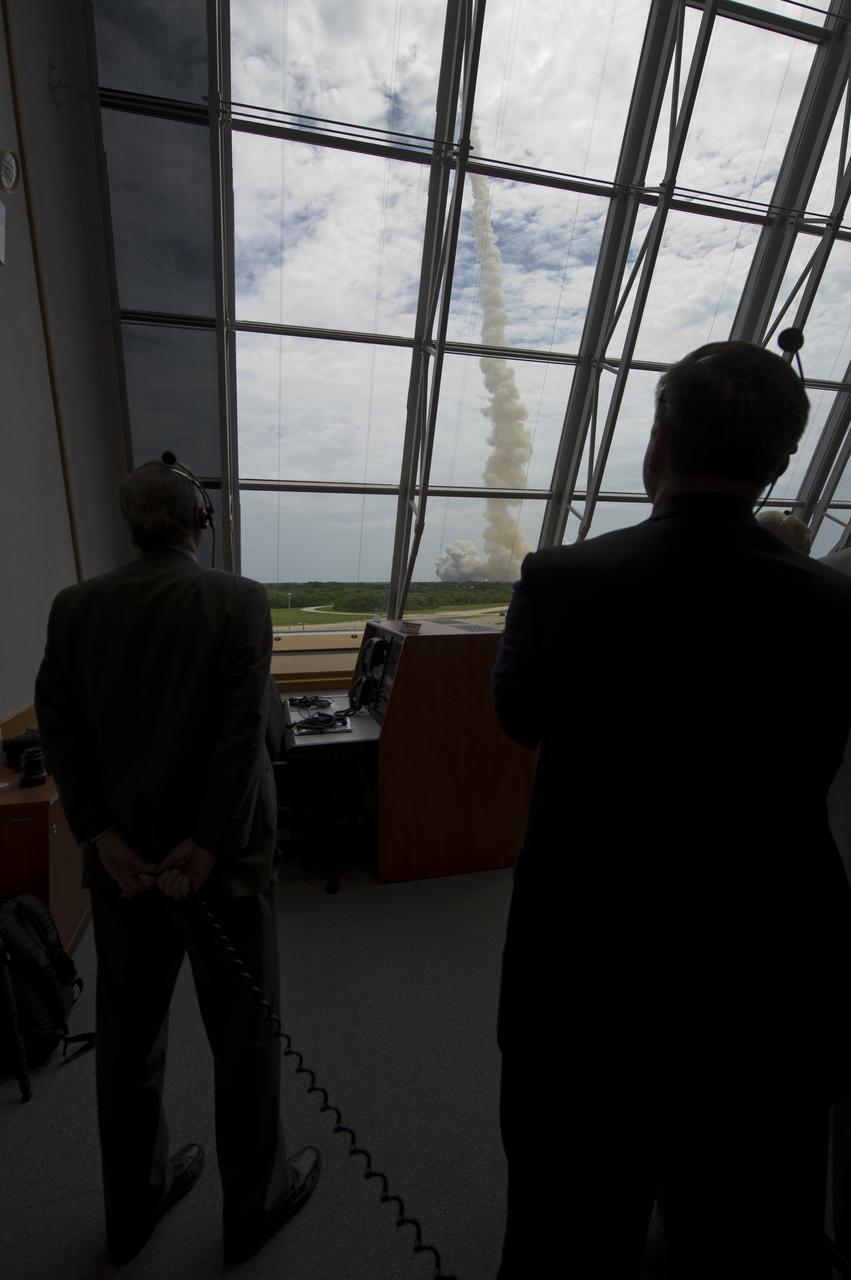
NASA management look on from Firing Room Four of the Launch Control Center (LCC) as space shuttle Atlantis launches from pad 39A on Friday, July 8, 2011, in Cape Canaveral, Fla. The launch of Atlantis, STS-135, is the final flight of the shuttle program, a 12-day mission to the International Space Station. Photo Credit: (NASA/Bill Ingalls)
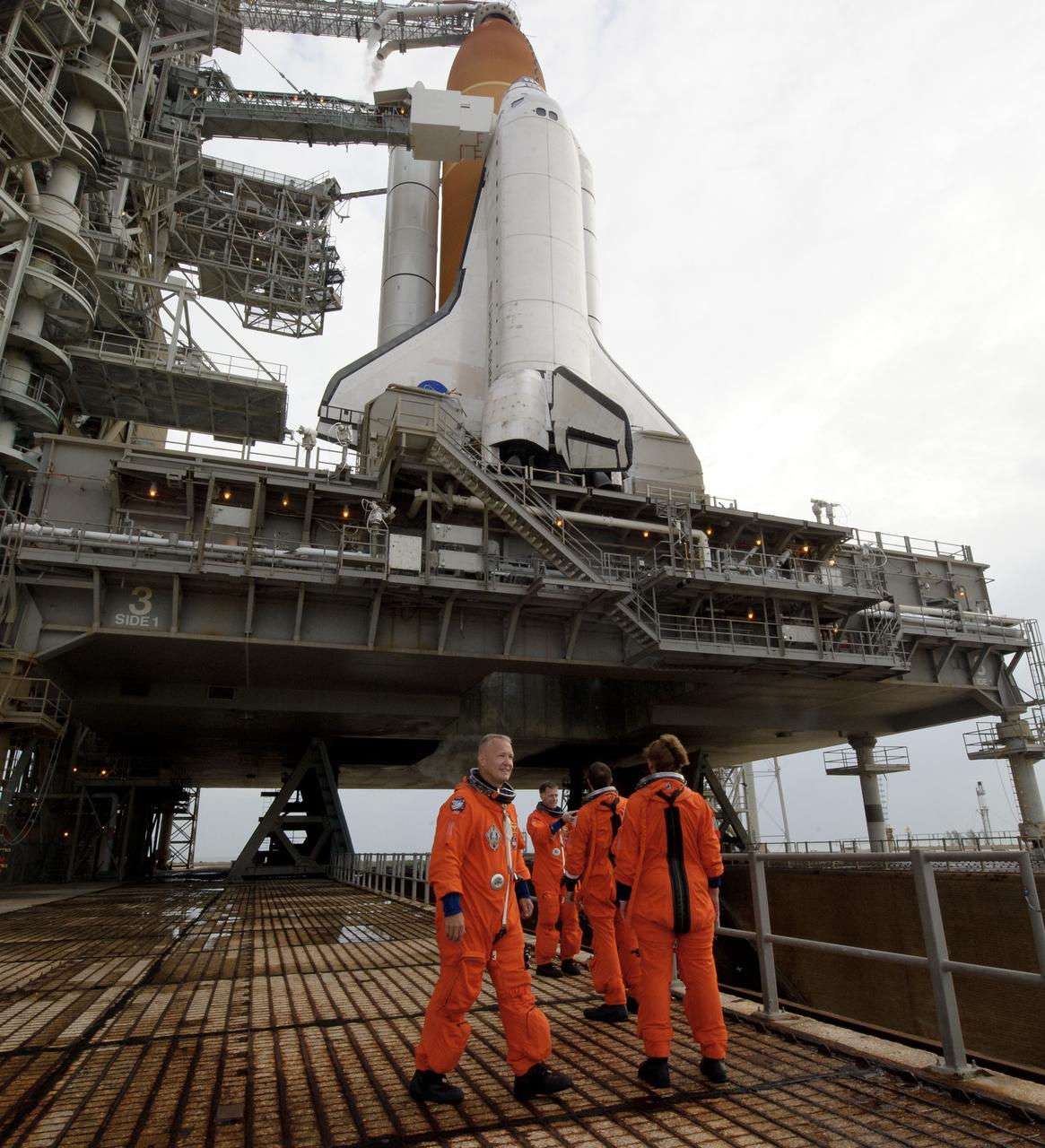
The STS-135 crew; Chris Ferguson, commander; Doug Hurley, pilot;, left, Rex Walheim and Sandy Magnus, both mission specialists are seen before boarding space shuttle Atlantis at launch pad 39A prior to launch, Friday, July 8, 2011 at the NASA Kennedy Space Center in Cape Canaveral, Fla. The launch of Atlantis, STS-135, is the final flight of the shuttle program, a 12-day mission to the International Space Station. Photo Credit: (NASA/Jerry Ross)
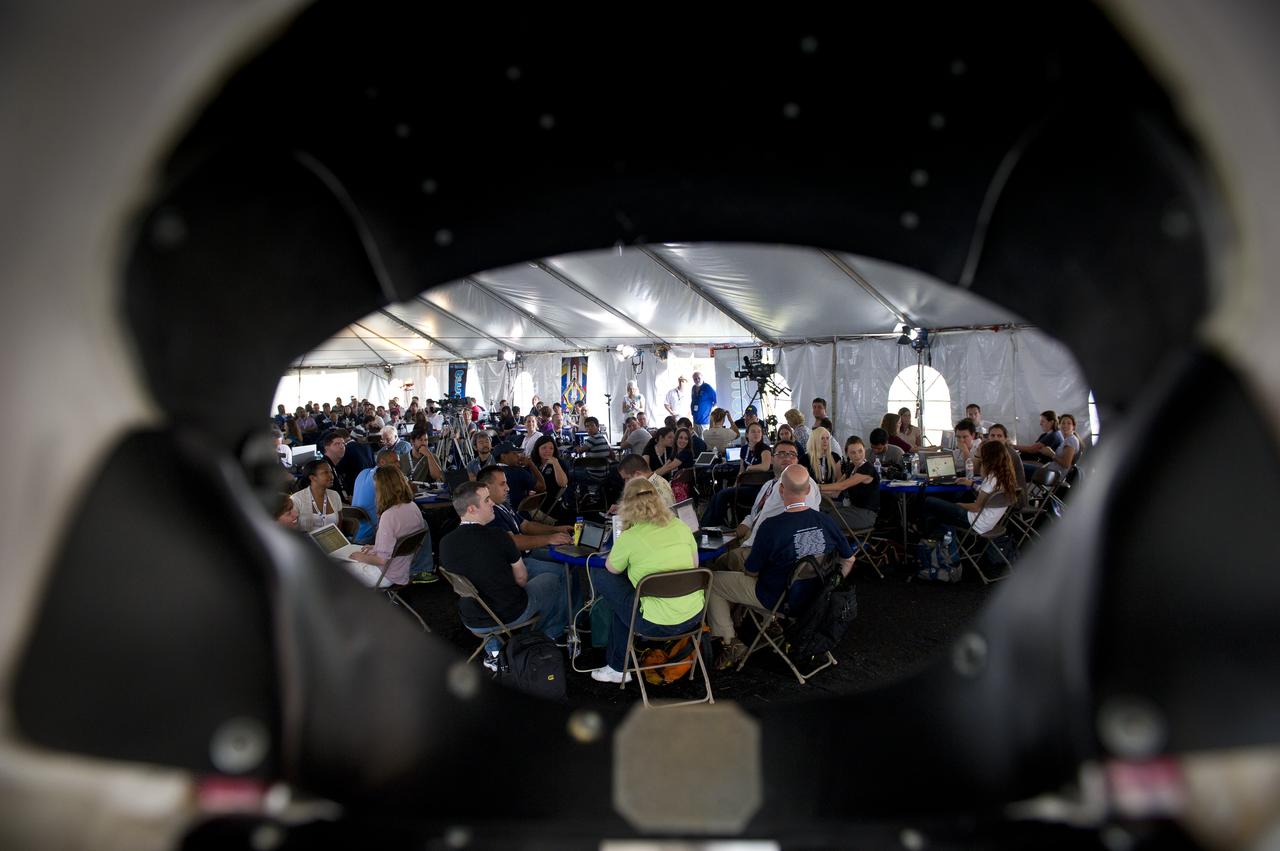
NASA Twitter followers attending the STS-135 Tweetup are seen through the helmet of a NASA space suit, Thursday, July 7, 2011, at Kennedy Space Center in Cape Canaveral, Fla. About 150 NASA Twitter followers attended the event. The STS-135 mission will be NASA's last space shuttle launch. Photo Credit: (NASA/Paul E. Alers)
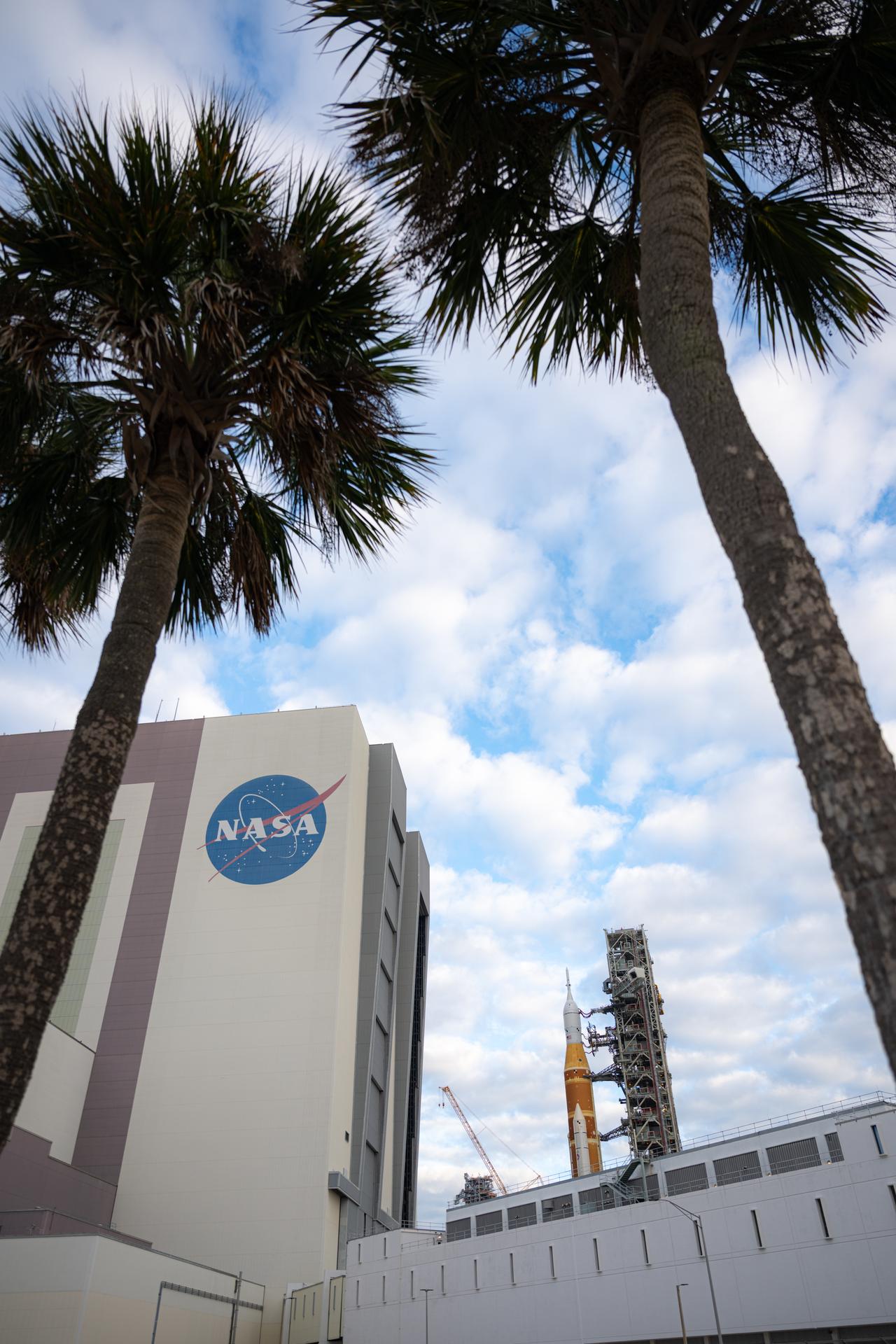
NASA’s Artemis II SLS (Space Launch System) rocket and Orion spacecraft roll out to Launch Complex 39B, Saturday, Jan. 17, 2026, at NASA’s Kennedy Space Center in Florida. Photo Credit: (NASA/John Kraus)
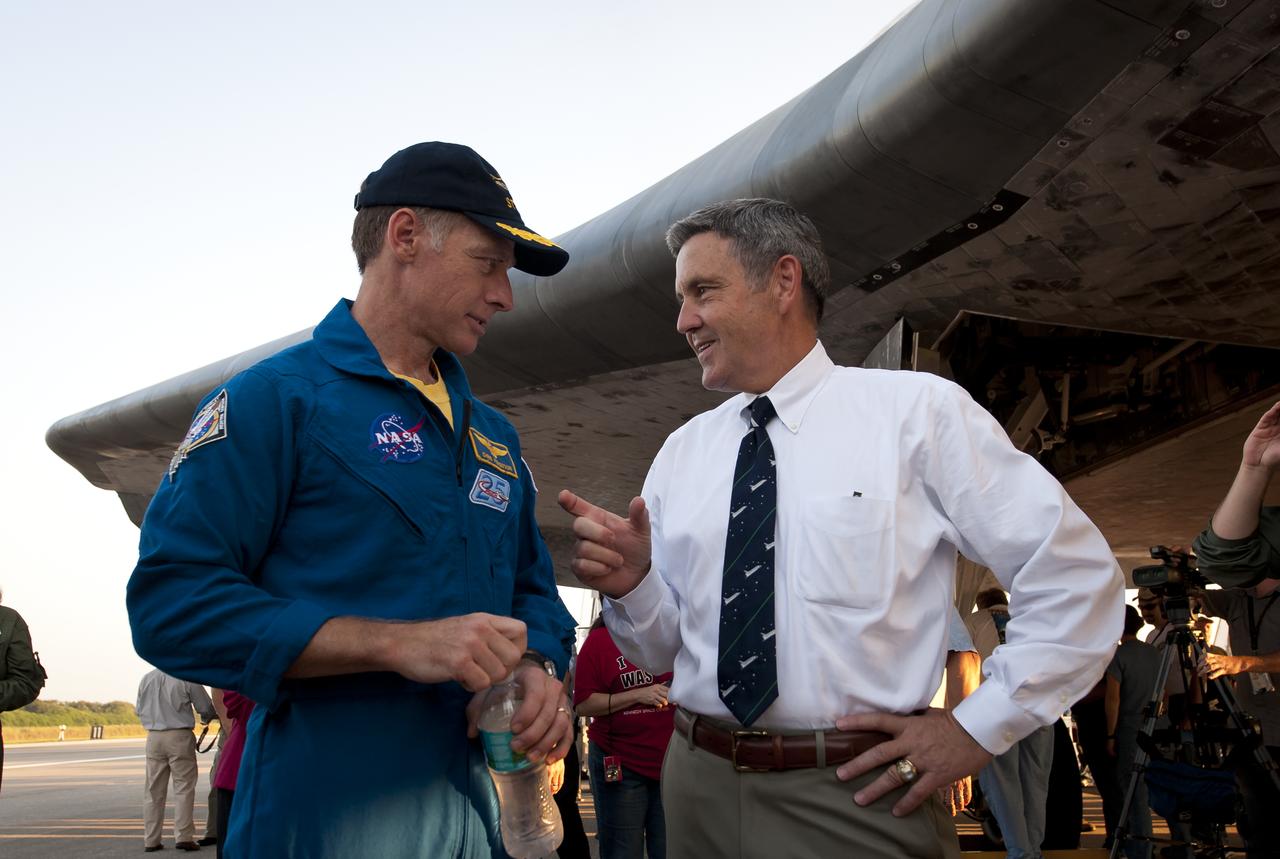
NASA Kennedy Space Center Director Bob Cabana, right, and Commander Chris Ferguson talk underneath the space shuttle Atlantis shortly after Ferguson and the rest of the STS-135 crew landed at NASA's Kennedy Space Center Shuttle Landing Facility (SLF), completing a 13-day mission to the International Space Station (ISS) and the final flight of the Space Shuttle Program, early Thursday morning, July 21, 2011, in Cape Canaveral, Fla. Overall, Atlantis spent 307 days in space and traveled nearly 126 million miles during its 33 flights. Atlantis, the fourth orbiter built, launched on its first mission on Oct. 3, 1985. Photo Credit: (NASA/Bill Ingalls)
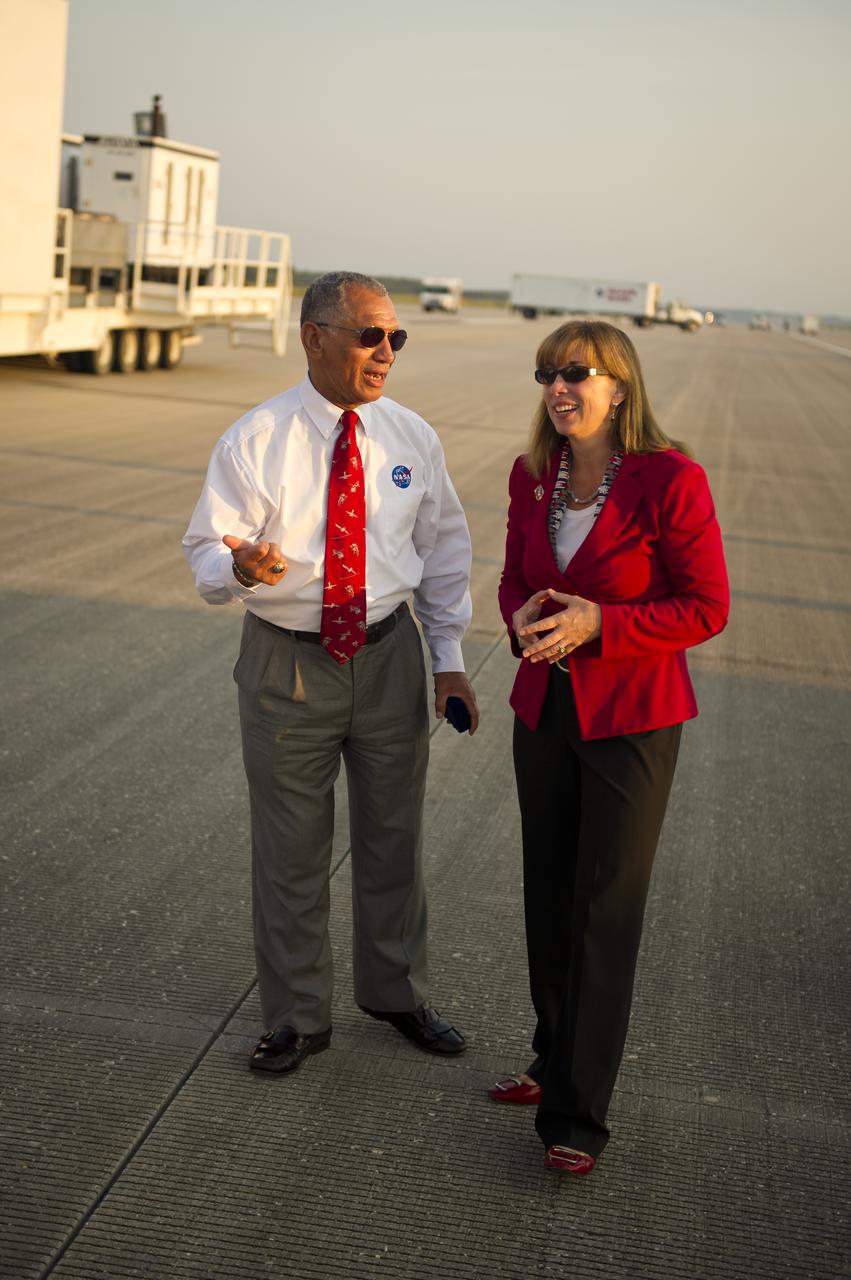
NASA Administrator Charles Bolden and Deputy Administrator Lori Garver talk at the Kennedy Space Center Shuttle Landing Facility (SLF) shortly after the space shuttle Atlantis (STS-135) landed early Thursday morning, July 21, 2011, in Cape Canaveral, Fla. Overall, Atlantis spent 307 days in space and traveled nearly 126 million miles during its 33 flights. Atlantis, the fourth orbiter built, launched on its first mission on Oct. 3, 1985. Photo Credit: (NASA/Bill Ingalls)

Space shuttle Atlantis is seen as it rolls down Kennedy Parkway on its way to its new home at the Kennedy Space Center Visitor Complex, Friday, Nov. 2, 2012, in Cape Canaveral, Fla. The spacecraft traveled 125,935,769 miles during 33 spaceflights, including 12 missions to the International Space Station. Its final flight, STS-135, closed out the Space Shuttle Program era with a landing on July 21, 2011. Photo Credit: (NASA/Bill Ingalls)
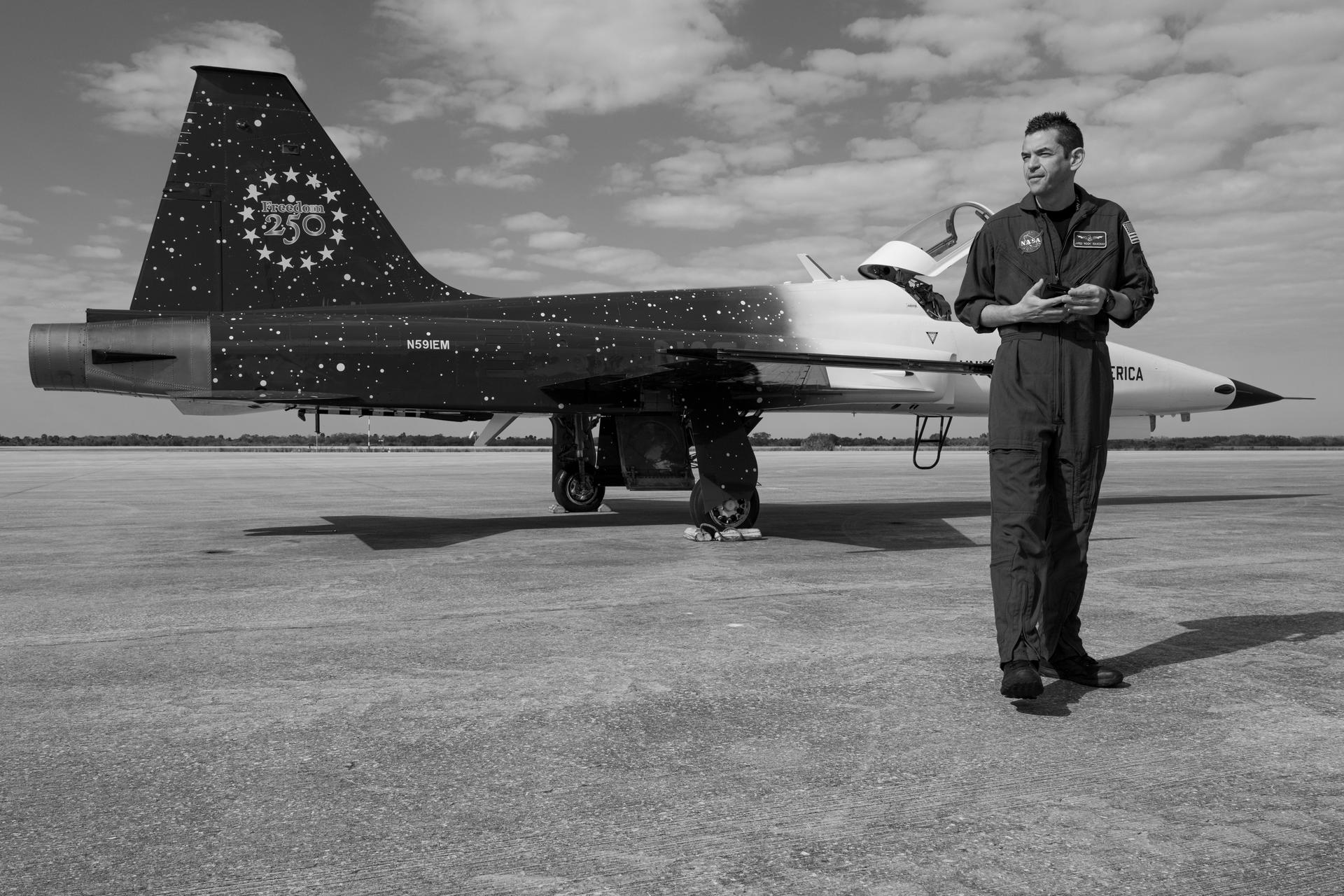
NASA Administrator Jared Isaacman is seen with his personal F-5 aircraft, Saturday, Feb. 21, 2026, at NASA’s Kennedy Space Center in Florida. Photo Credit: (NASA/John Kraus)
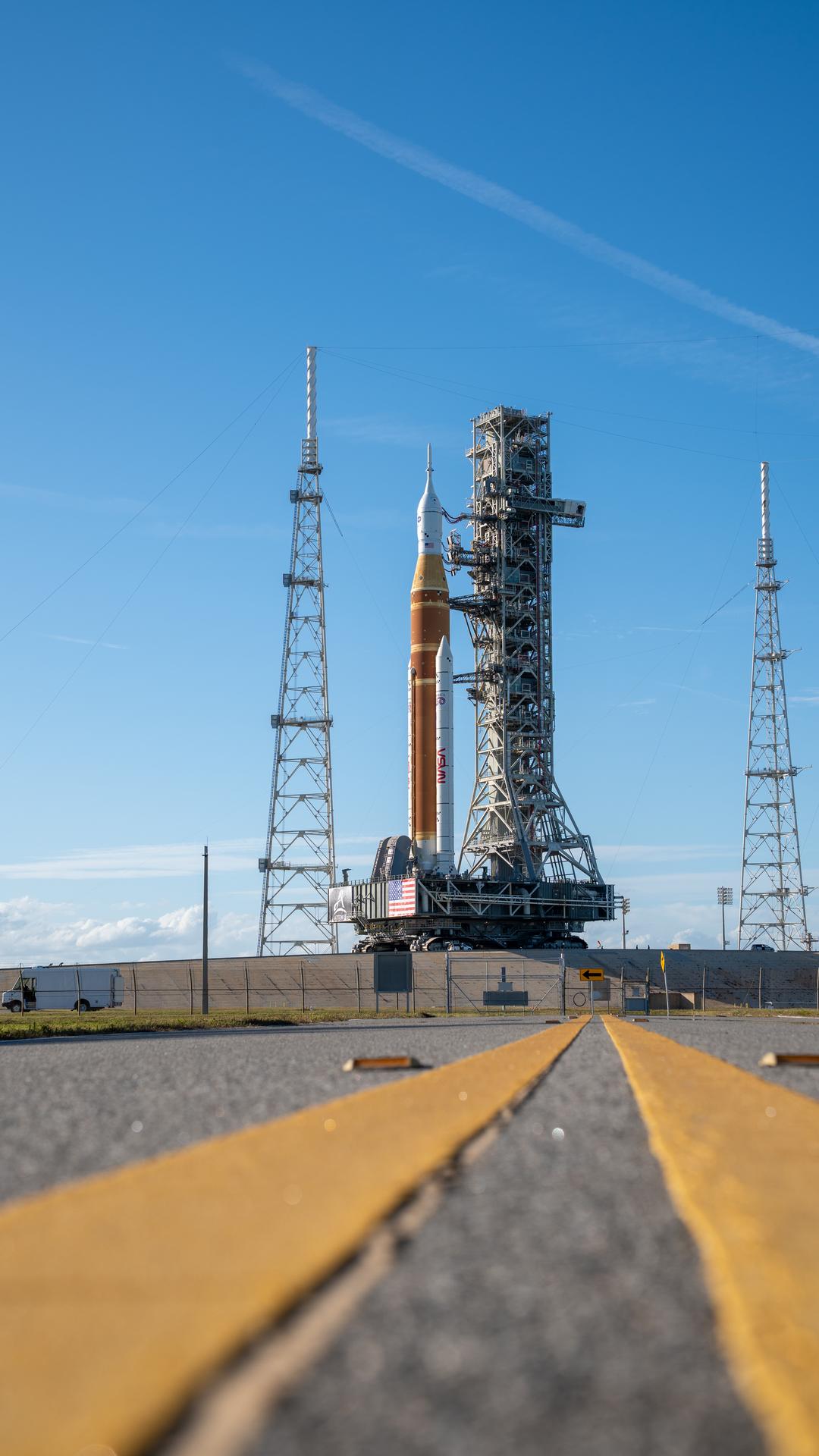
This image shows NASA’s SLS (Space Launch System) and Orion spacecraft rolling out of the Vehicle Assembly Building at NASA’s Kennedy Space Center. NASA's massive Crawler-Transporter, upgraded for the Artemis program, carries the powerful SLS rocket and Orion spacecraft on the Mobile Launcher from the Vehicle Assembly Building to Launch Pad 39B at Kennedy Space Center in preparation for the Artemis II mission.

Space shuttle Atlantis is seen near the Orbiter Processing Facility during its trip to its new home at the Kennedy Space Center Visitor Complex, early Friday, Nov. 2, 2012, in Cape Canaveral, Fla. The spacecraft traveled 125,935,769 miles during 33 spaceflights, including 12 missions to the International Space Station. Its final flight, STS-135, closed out the Space Shuttle Program era with a landing on July 21, 2011. Photo Credit: (NASA/Bill Ingalls)
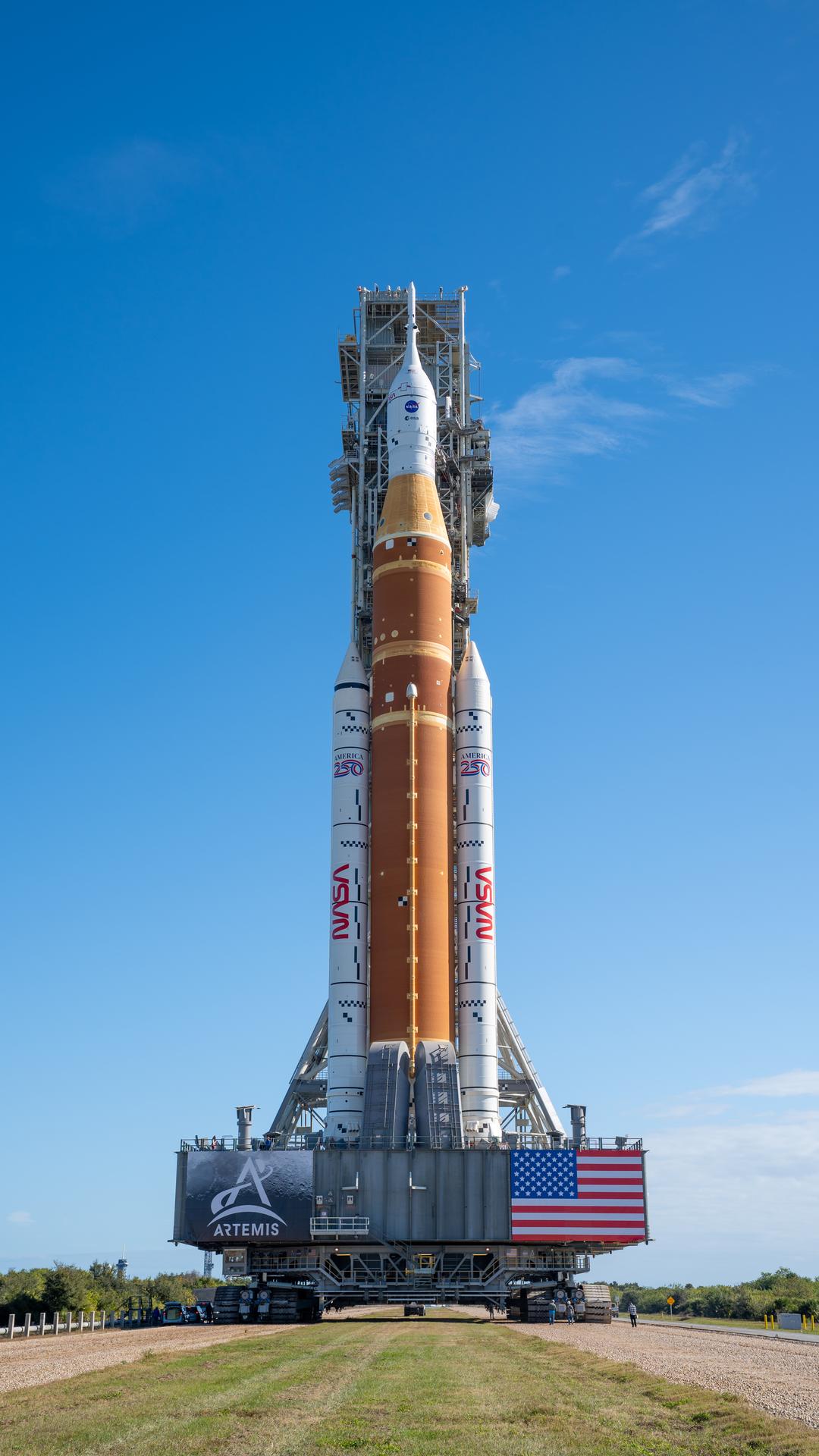
This image shows NASA’s SLS (Space Launch System) and Orion spacecraft rolling out of the Vehicle Assembly Building at NASA’s Kennedy Space Center. NASA's massive Crawler-Transporter, upgraded for the Artemis program, carries the powerful SLS rocket and Orion spacecraft on the Mobile Launcher from the Vehicle Assembly Building to Launch Pad 39B at Kennedy Space Center in preparation for the Artemis II mission.
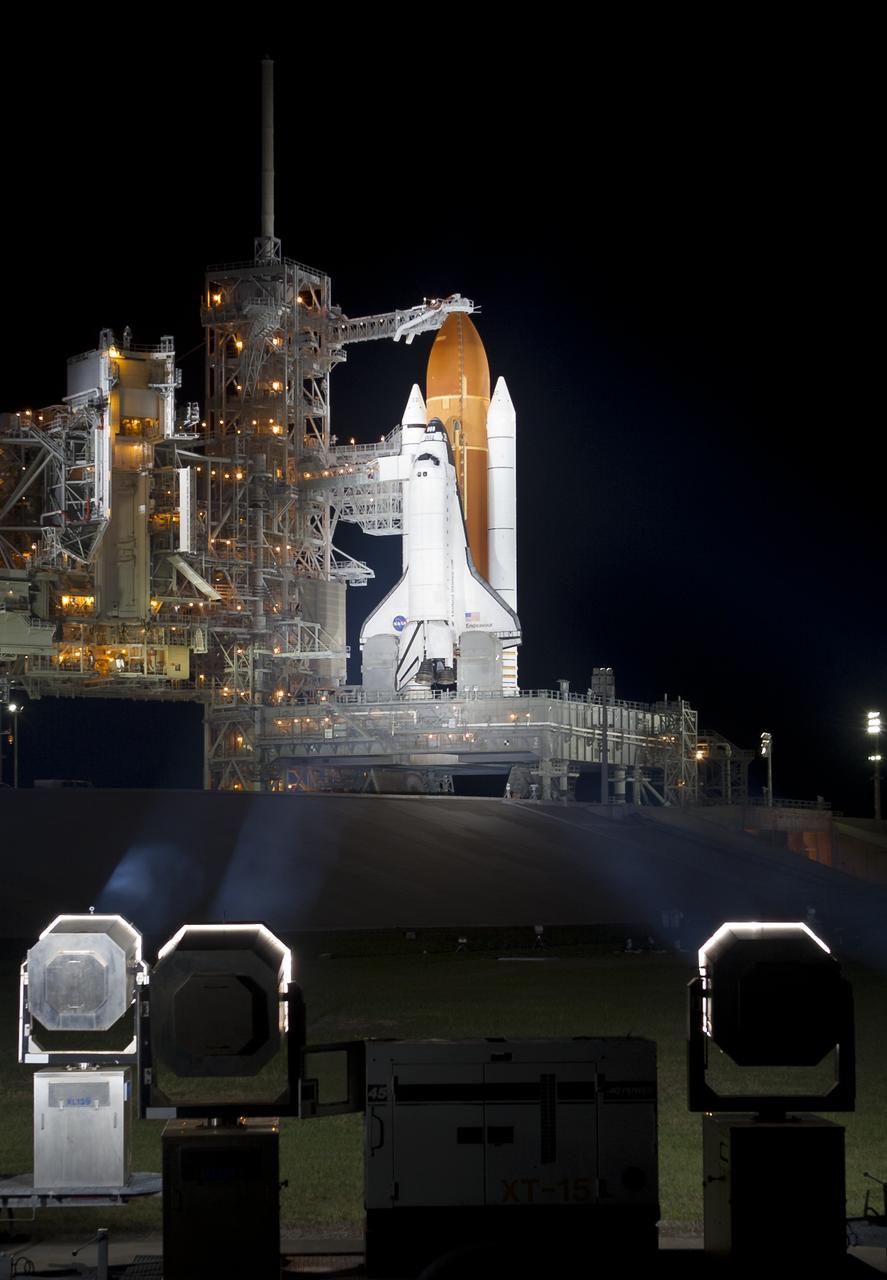
The space shuttle Endeavour is seen on launch pad 39a after the rollback of the Rotating Service Structure (RSS), Thursday, April 28, 2011, at Kennedy Space Center in Cape Canaveral, Fla. During the 14-day mission, Endeavour and the STS-134 crew will deliver the Alpha Magnetic Spectrometer (AMS) and spare parts including two S-band communications antennas, a high-pressure gas tank and additional spare parts for Dextre. Launch is targeted for Friday, April 29 at 3:47 p.m. EDT. Photo credit: (NASA/Bill Ingalls)
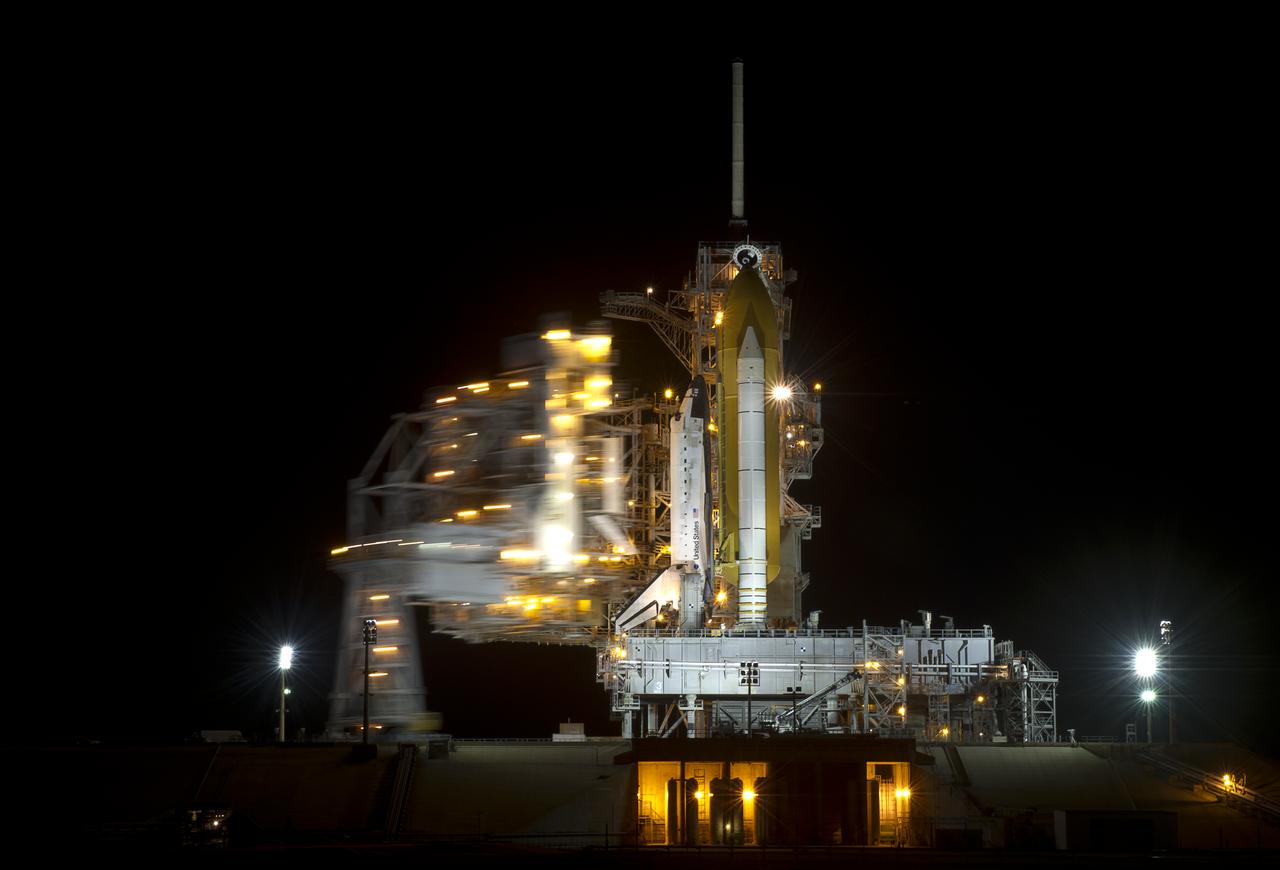
The space shuttle Discovery is seen on launch Pad 39a as the Rotating Service Structure (RSS) is rolled back on Wednesday, Nov. 3, 2010 at the NASA Kennedy Space Center in Cape Canaveral, Fla. During space shuttle Discovery's final spaceflight, the STS-133 crew members will take important spare parts to the International Space Station along with the Express Logistics Carrier-4. Photo Credit: (NASA/Bill Ingalls)
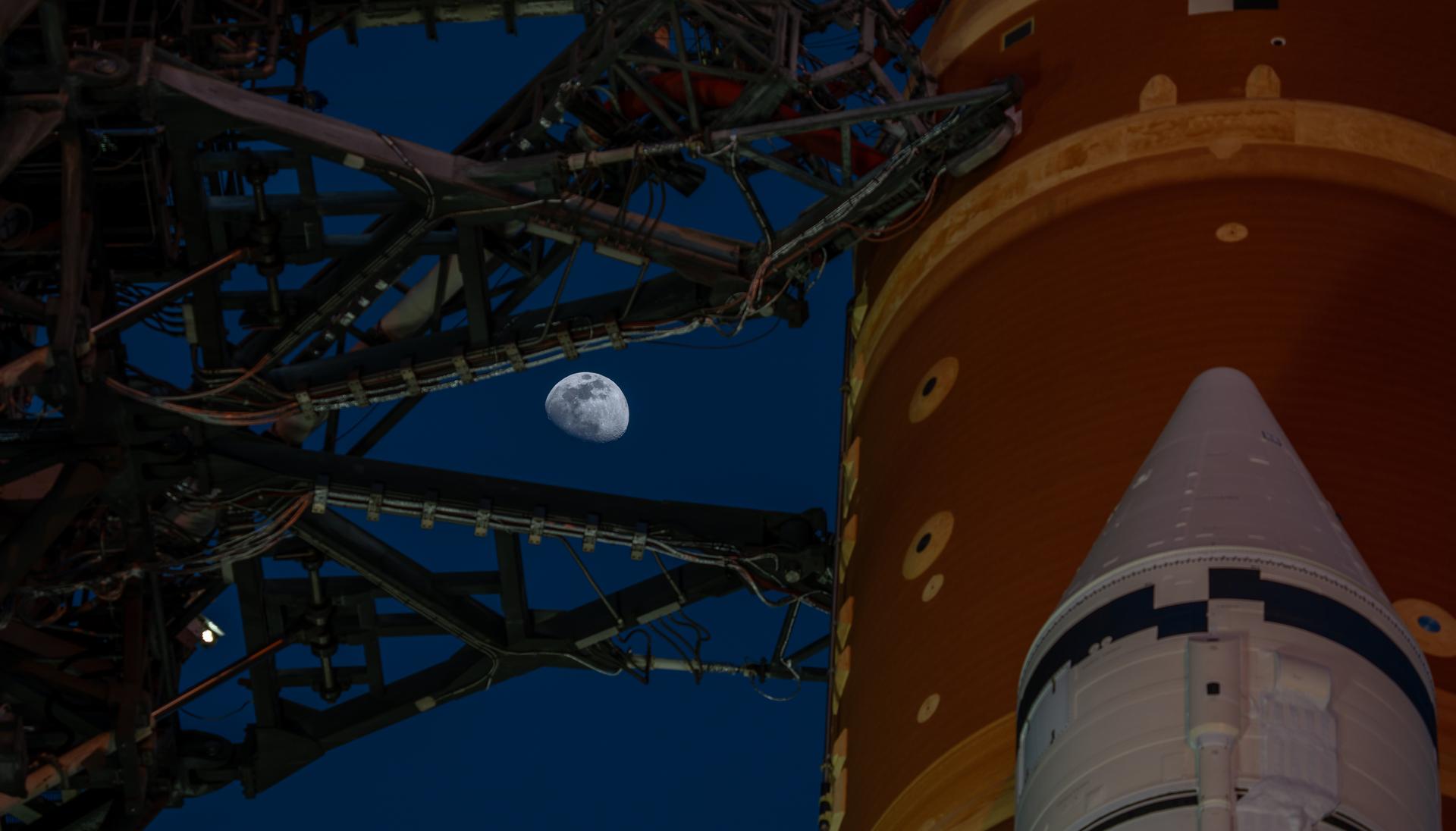
The Moon is seen shining over the SLS (Space Launch System) and Orion spacecraft, atop the mobile launcher on January 28, 2026. The rocket is currently at Launch Pad 39B at NASA’s Kennedy Space Center in Florida, as teams are preparing for a wet dress rehearsal to practice timelines and procedures for the launch of Artemis II.
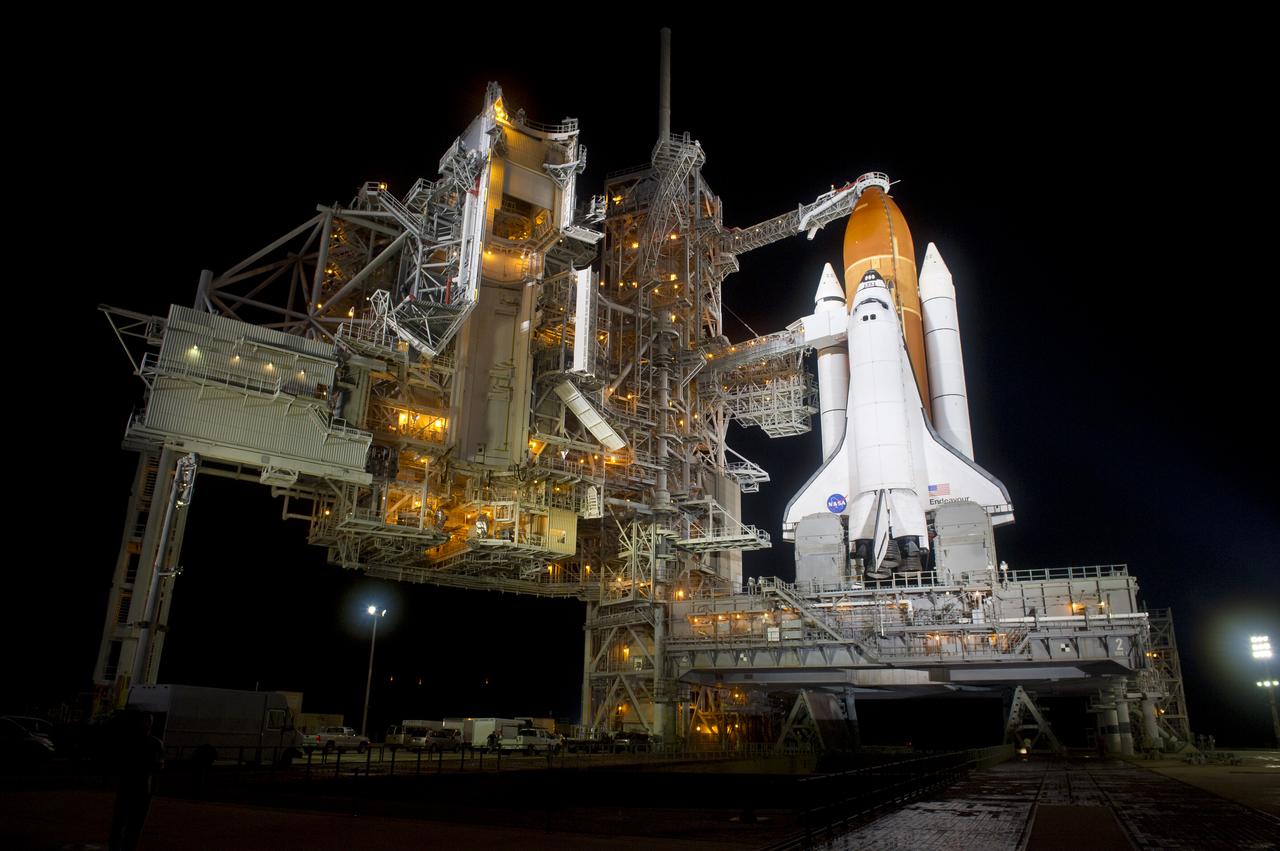
The space shuttle Endeavour is seen on launch pad 39a after the rollback of the Rotating Service Structure (RSS), Thursday, April 28, 2011, at Kennedy Space Center in Cape Canaveral, Fla. During the 14-day mission, Endeavour and the STS-134 crew will deliver the Alpha Magnetic Spectrometer (AMS) and spare parts including two S-band communications antennas, a high-pressure gas tank and additional spare parts for Dextre. Launch is targeted for Friday, April 29 at 3:47 p.m. EDT. Photo credit: (NASA/Bill Ingalls)
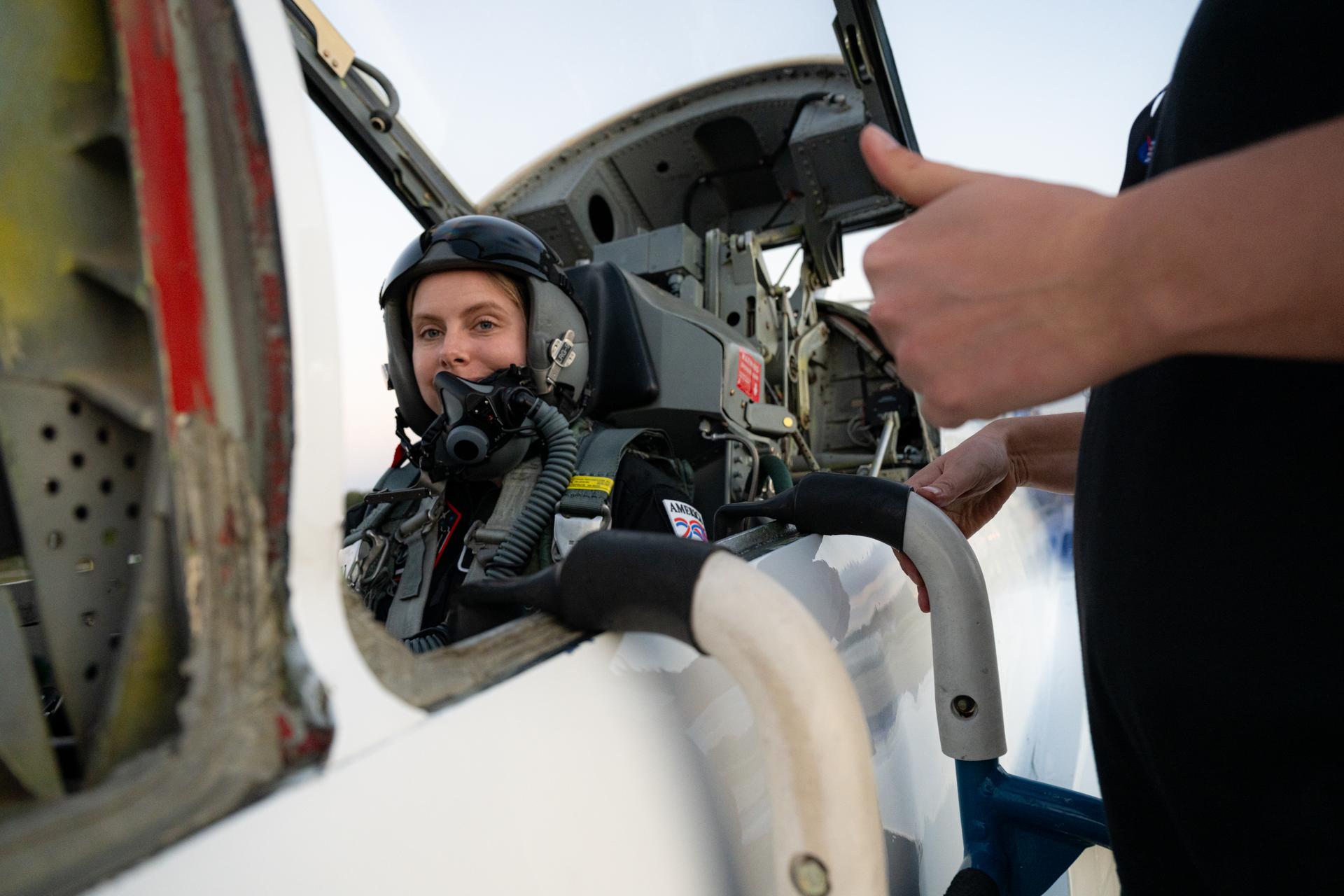
NASA employee Ashley Scharfenberg participates in an employee incentive flying event with NASA Administrator Jared Isaacman and his personal F-5 aircraft, Tuesday, Jan. 13, 2026, at NASA’s Kennedy Space Center in Florida. Photo Credit: (NASA/John Kraus)
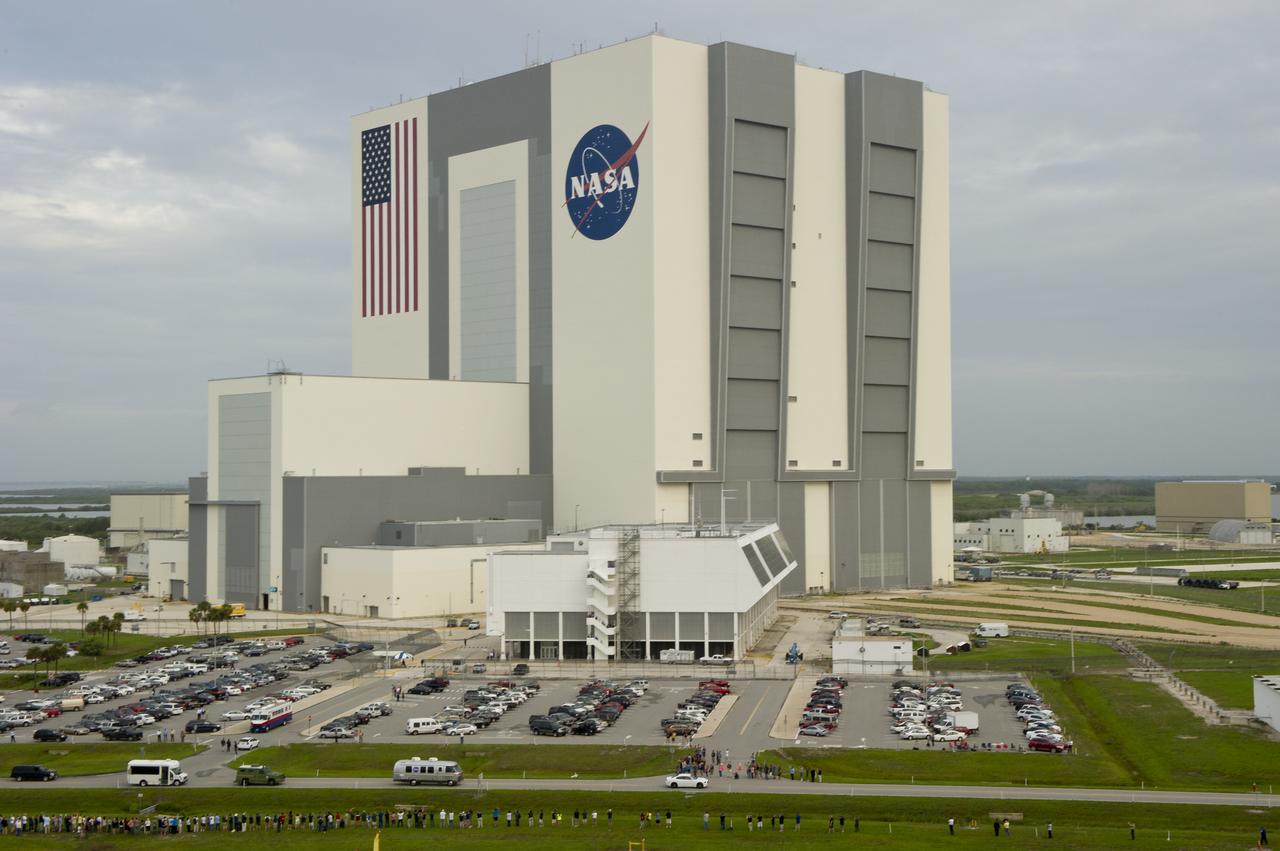
The Astrovan carrying the STS-135 crew; Chris Furgeson, commander, Doug Hurley, pilot, and mission specialists Rex Walheim and Sandy Mangus, rolls past the Vehicle Assembly Building (VAB) and Launch Control Center (LCC), on its way to launch pad 39a and space shuttle Atlantis, Friday, July 8, 2011, at Kennedy Space Center in Cape Canaveral, Fla. The launch of Atlantis, STS-135, is the final flight of the shuttle program, a 12-day mission to the International Space Station. Photo Credit: (NASA/Bill Ingalls)
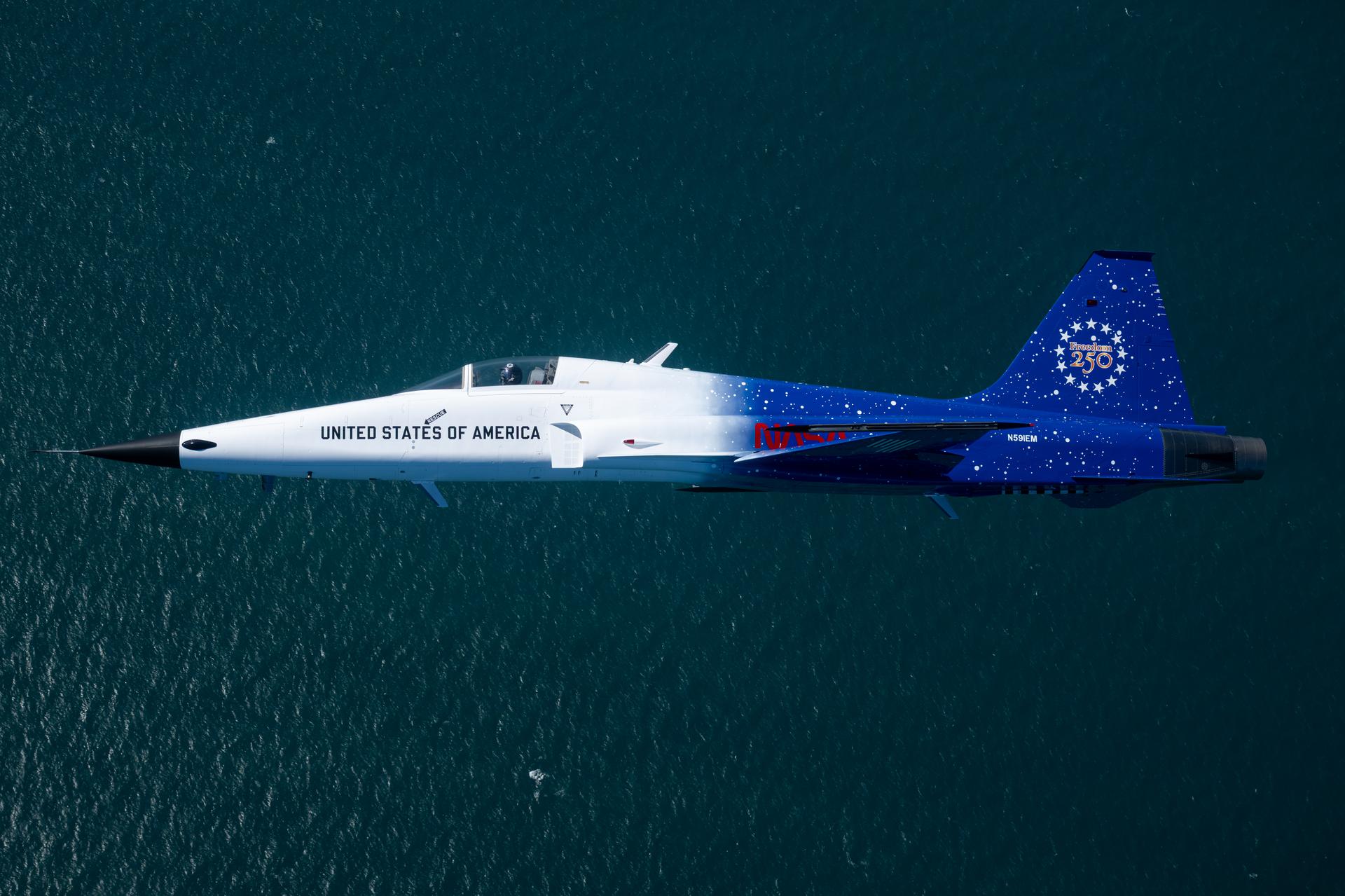
NASA Administrator Jared Isaacman is seen flying his personal F-5 aircraft, Sunday, Feb. 8, 2026, at NASA’s Kennedy Space Center in Florida. Photo Credit: (NASA/John Kraus)
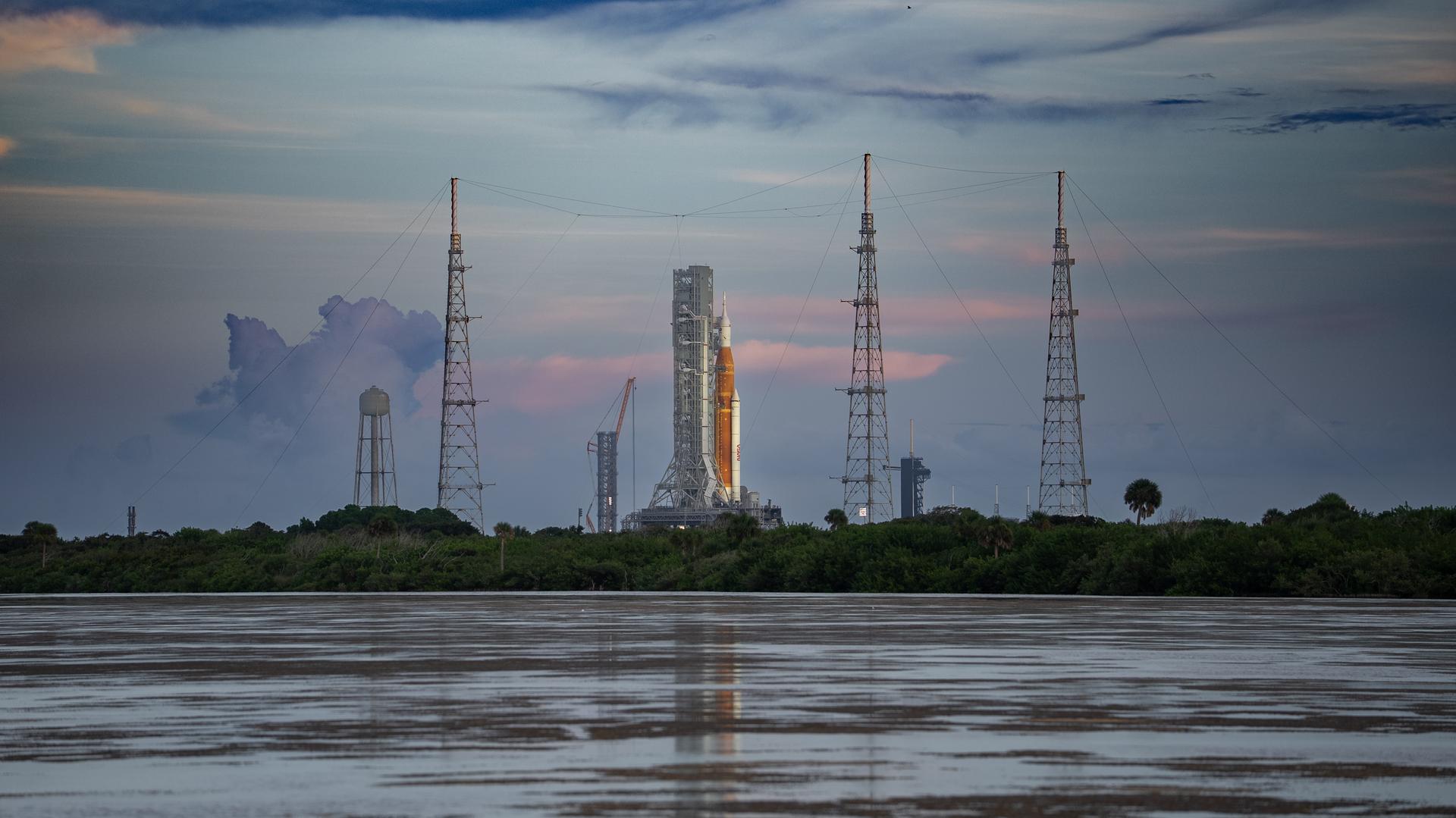
NASA’s Space Launch System (SLS) rocket with the Orion spacecraft aboard is seen atop the mobile launcher at Launch Pad 39B at NASA’s Kennedy Space Center in Florida. Artemis I mission is the first integrated test of the agency’s deep space exploration systems: the Space Launch System rocket, Orion spacecraft, and supporting ground systems. The mission is the first in a series of increasingly complex missions to the Moon. Launch of the uncrewed flight test is targeted for no earlier than Sept. 3 at 2:17 p.m. ET. With Artemis missions, NASA will land the first woman and first person of color on the Moon, using innovative technologies to explore more of the lunar surface than ever before.
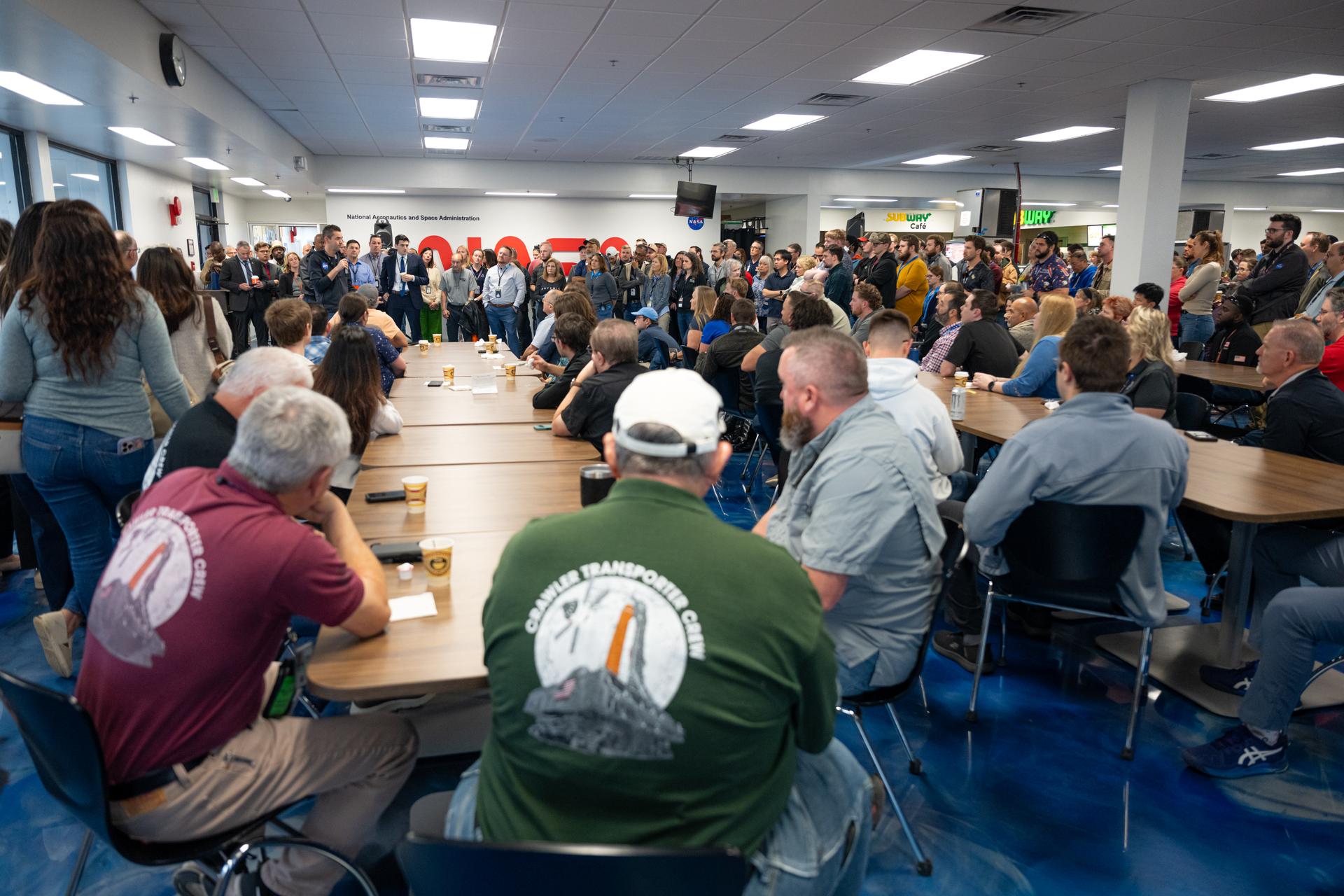
NASA Administrator Jared Isaacman speaks during a workforce Q&A session, Thursday, Jan. 22, 2026, at NASA’s Kennedy Space Center in Florida. Photo Credit: (NASA/John Kraus)
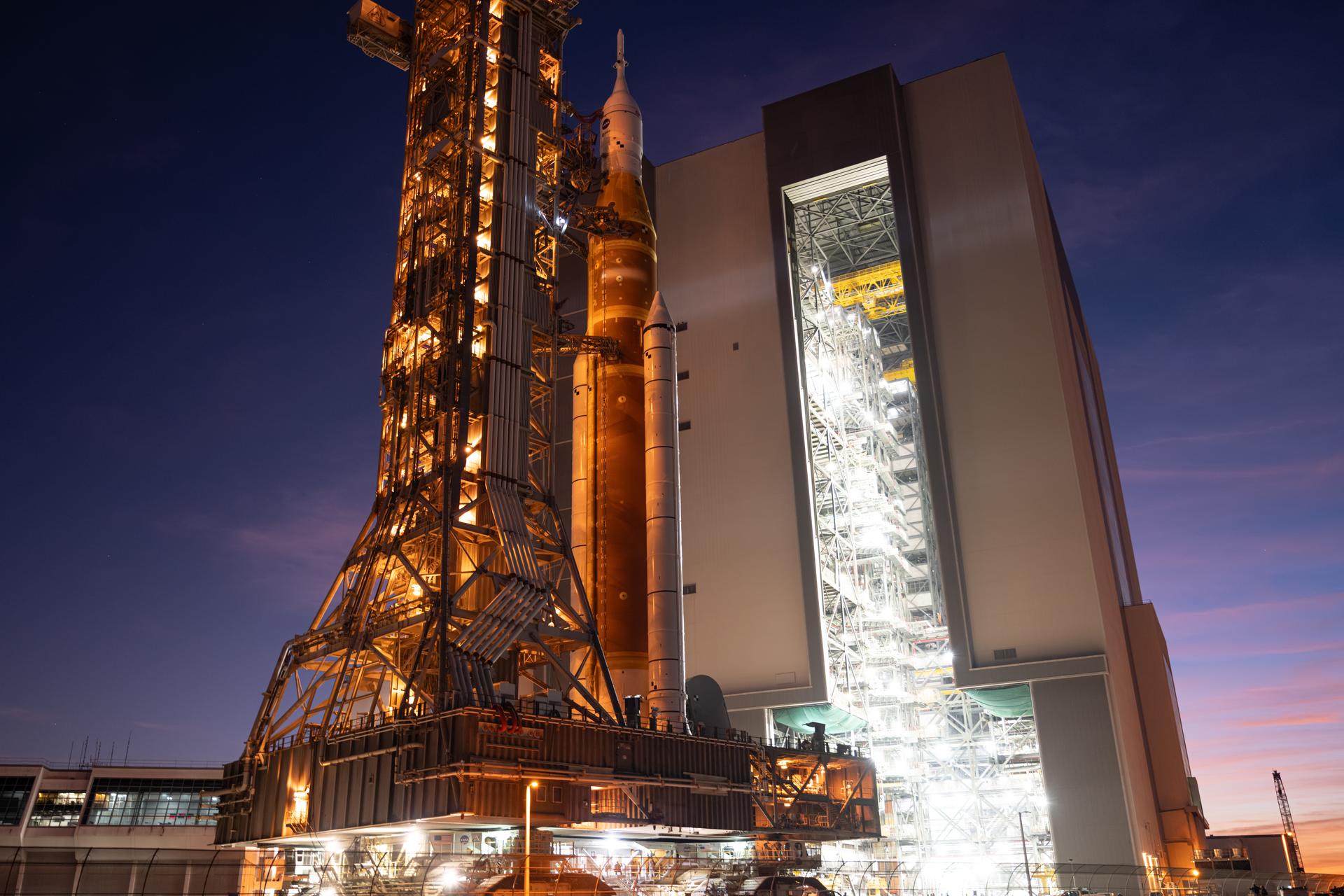
NASA’s Artemis II SLS (Space Launch System) rocket and Orion spacecraft roll back to the Vehicle Assembly Building, Wednesday, Feb. 25, 2026, at NASA’s Kennedy Space Center in Florida. Teams will troubleshoot a helium flow issue experienced on the rocket’s interim cryogenic propulsion stage before rolling the rocket and spacecraft back to Launch Complex 39B for the Artemis II mission around the Moon. Photo Credit: (NASA/John Kraus)
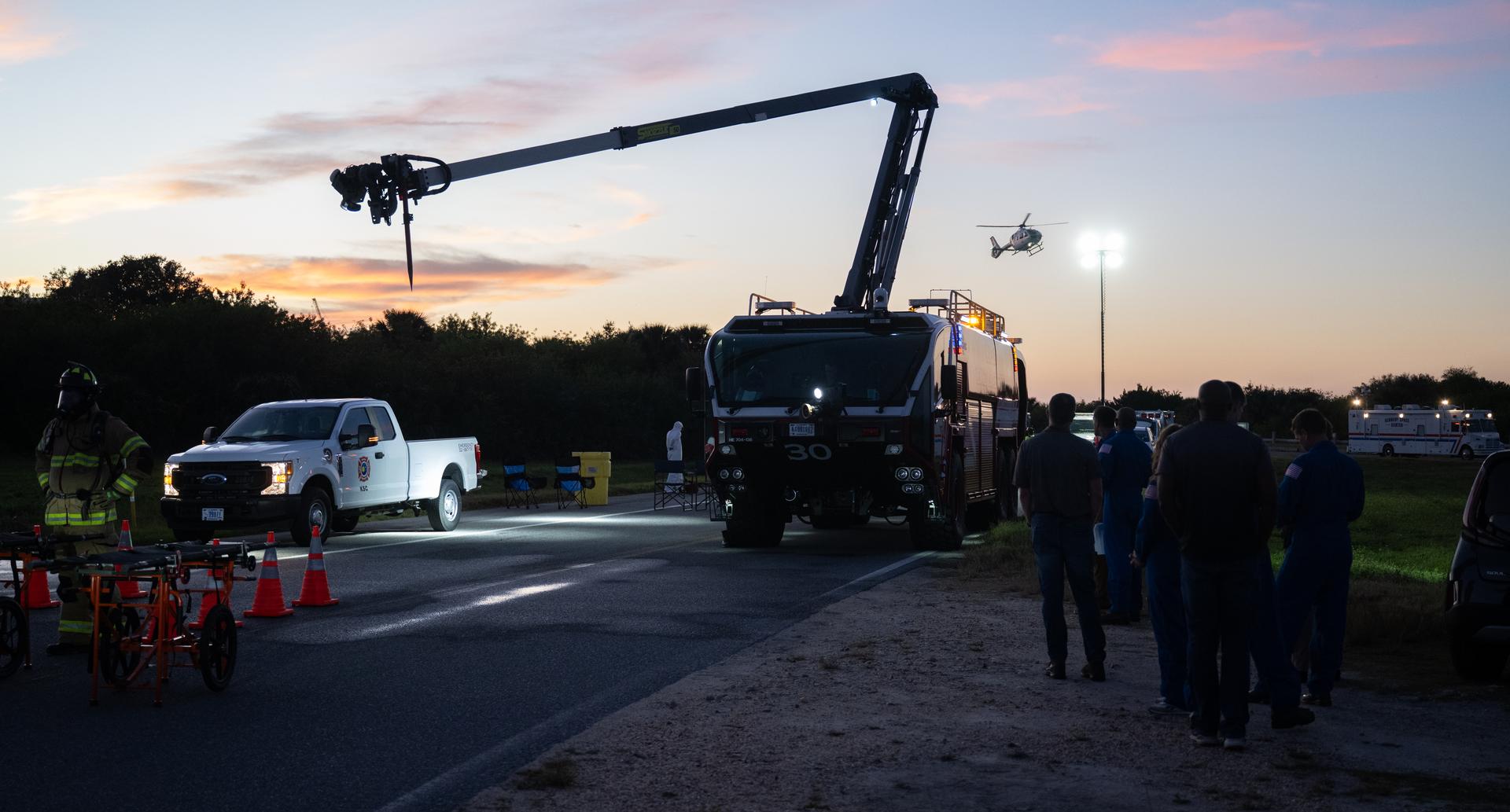
Teams at NASA's Kennedy Space Center in Florida practiced various emergency rescue training scenarios with the Artemis II crew, Friday, Dec. 19, 2025, ahead of the Artemis II mission. In the unlikely event of an emergency during launch countdown at Launch Complex 39B, personnel will be transported in mine-resistant ambush protected vehicles, or MRAPS, from the pad and to one of the triage site locations at Kennedy. Photo Credit: (NASA/Joel Kowsky)
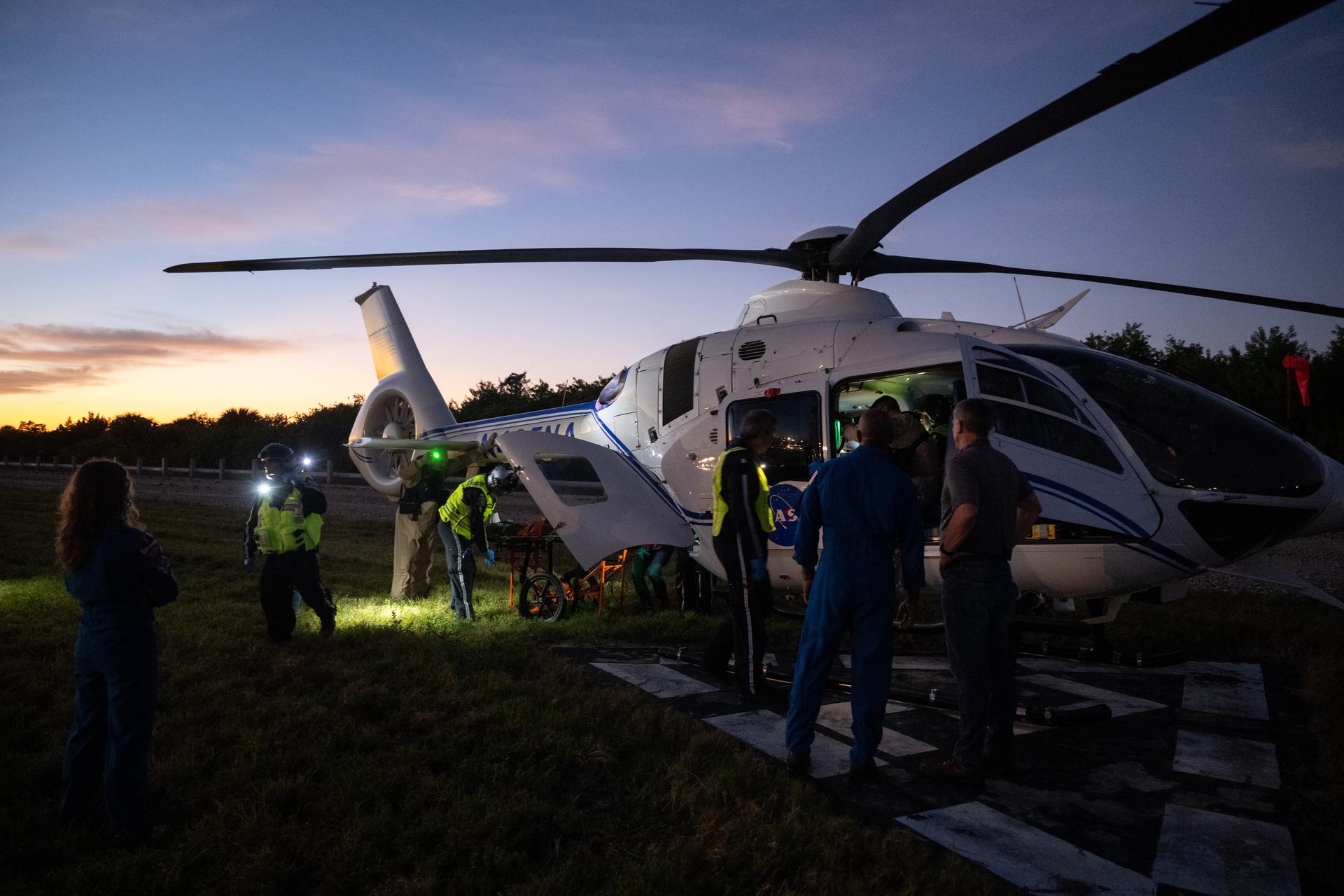
Teams at NASA's Kennedy Space Center in Florida practiced various emergency rescue training scenarios with the Artemis II crew, Friday, Dec. 19, 2025, ahead of the Artemis II mission. In the unlikely event of an emergency during launch countdown at Launch Complex 39B, personnel will be transported in mine-resistant ambush protected vehicles, or MRAPS, from the pad and to one of the triage site locations at Kennedy. Photo Credit: (NASA/Joel Kowsky)
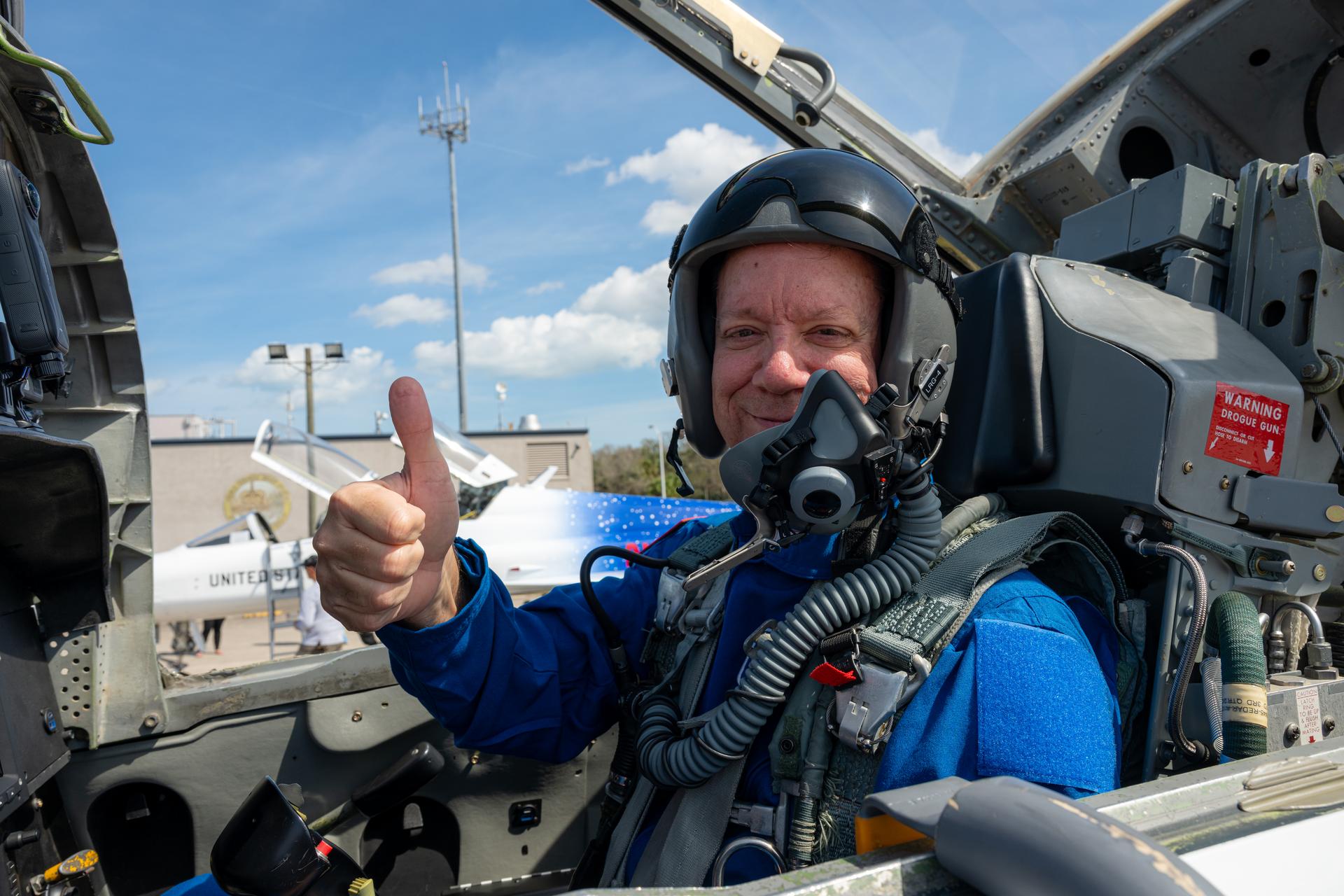
NASA employee Greg Gaddis, spaceport senior operations manager at NASA’s Kennedy Space Center, participates in an employee incentive flying event with NASA Administrator Jared Isaacman's personal F-5 aircraft, Friday, Feb. 20, 2026, at NASA’s Kennedy Space Center in Florida. Photo Credit: (NASA/John Kraus)
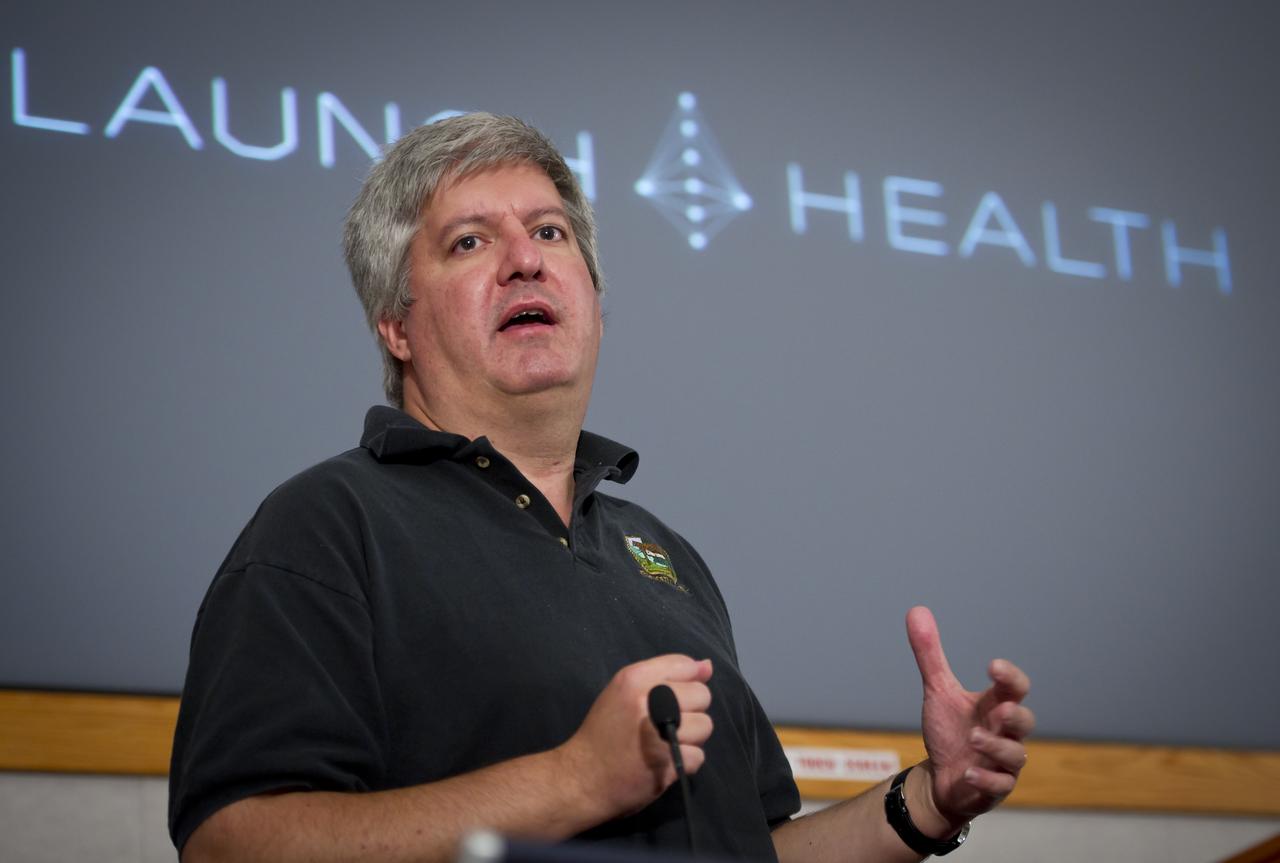
Tom Kalil, Deputy Director of the White House Office of Science and Technology Policy, opens the LAUNCH: Health forum at NASA's Kennedy Space Center in Florida on Saturday, Oct. 30, 2010. LAUNCH: Health provides a forum to discuss accelerating innovation for a sustainable future. LAUNCH: Health partners include NASA, USAID and Nike. Photo Credit: (NASA/Bill Ingalls)
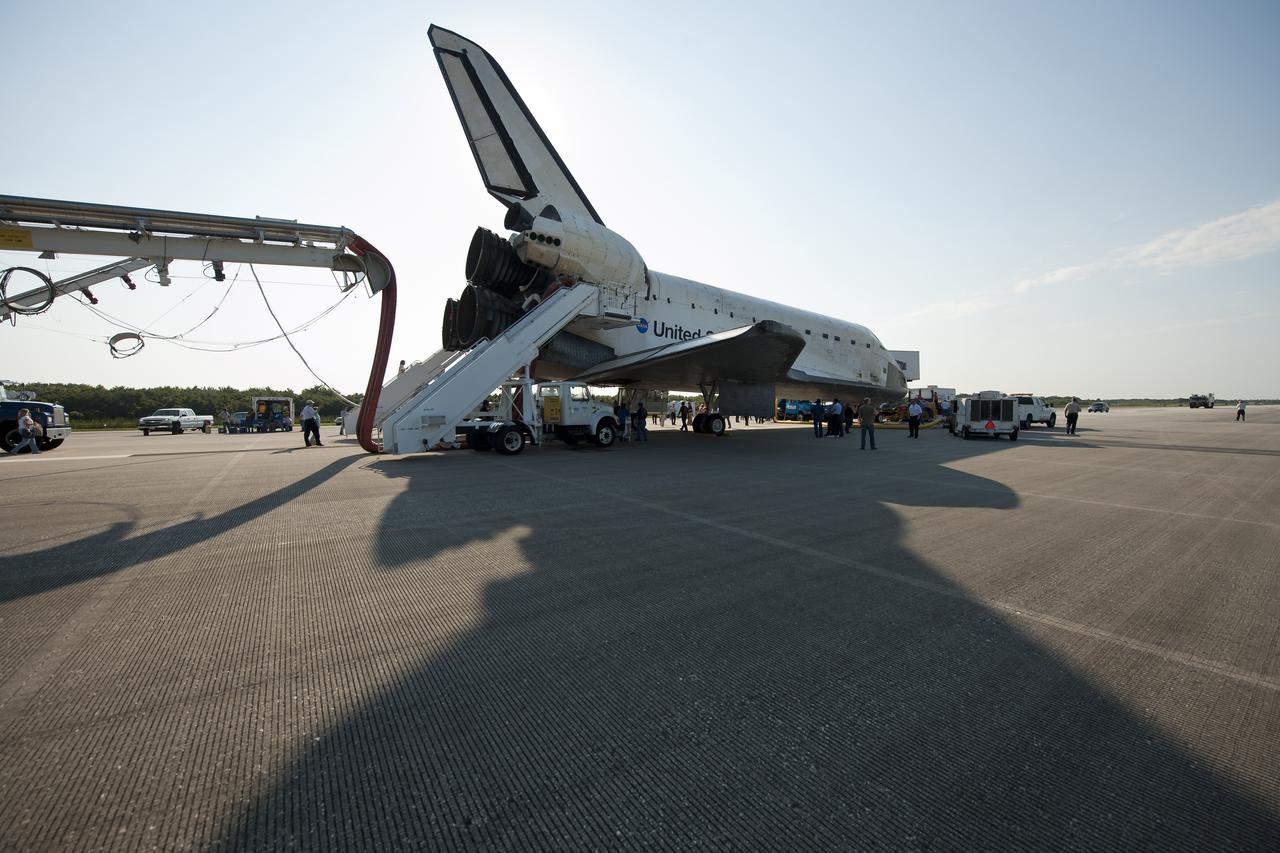
NASA and contractor personnel work on the space shuttle Atlantis at the Kennedy Space Center Shuttle Landing Facility (SLF) shortly after Atlantis (STS-135) landed early Thursday morning, July 21, 2011, in Cape Canaveral, Fla. Overall, Atlantis spent 307 days in space and traveled nearly 126 million miles during its 33 flights. Atlantis, the fourth orbiter built, launched on its first mission on Oct. 3, 1985. Photo Credit: (NASA/Bill Ingalls)
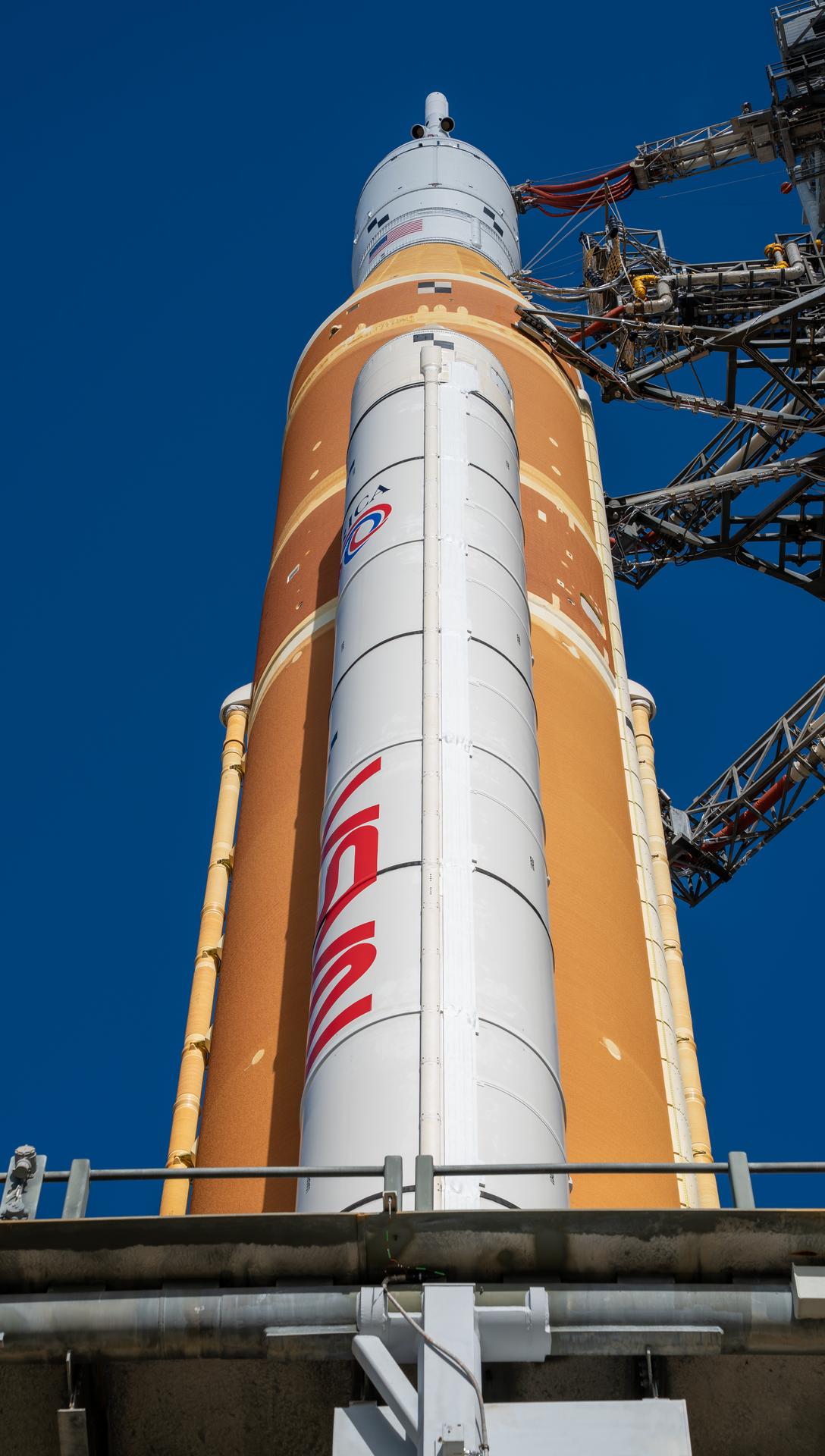
This image shows NASA’s SLS (Space Launch System) and Orion spacecraft rolling out of the Vehicle Assembly Building at NASA’s Kennedy Space Center. NASA's massive Crawler-Transporter, upgraded for the Artemis program, carries the powerful SLS rocket and Orion spacecraft on the Mobile Launcher from the Vehicle Assembly Building to Launch Pad 39B at Kennedy Space Center in preparation for the Artemis II mission.
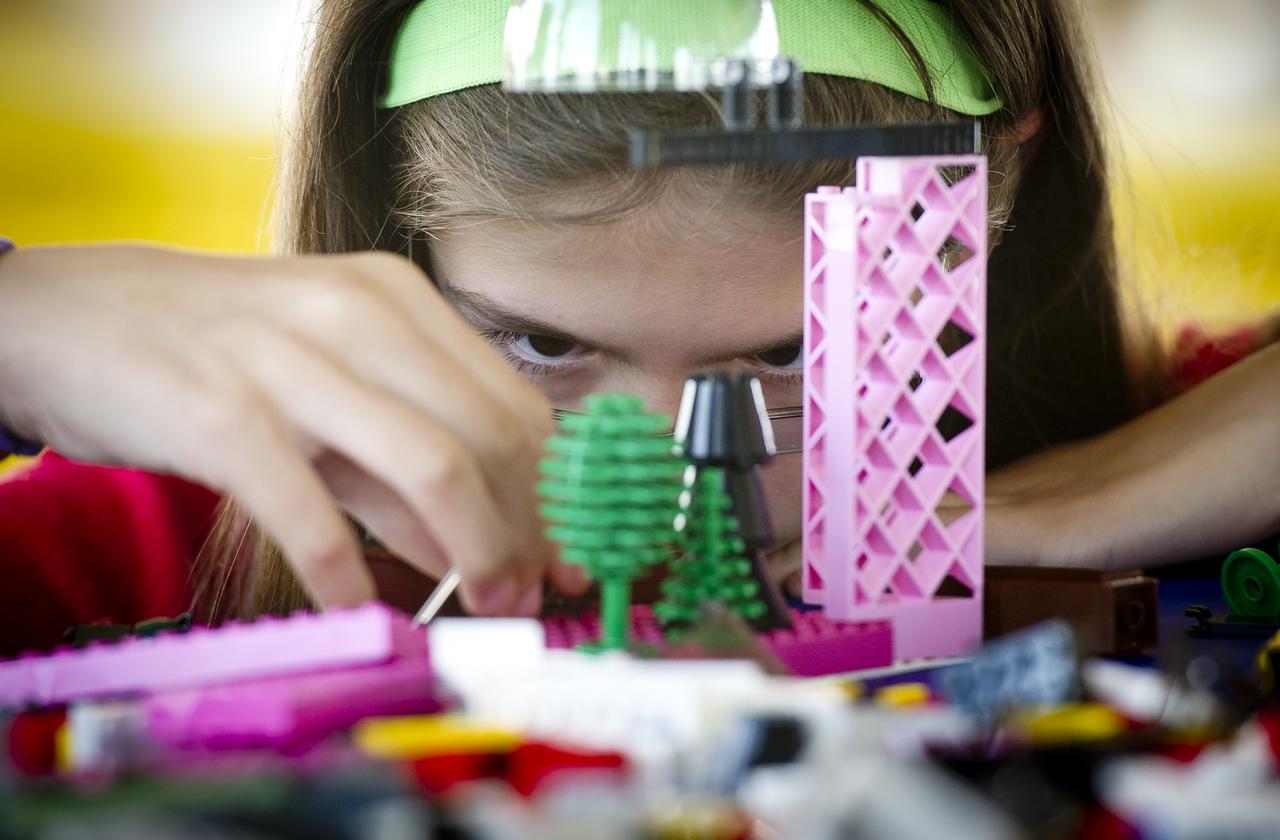
NASA Officials, LEGO Group management, students, teachers and parents create their vision of the future in space with LEGO bricks and elements as part of a “Build the Future” activity inside a tent that was set up on the launch viewing area at NASA's Kennedy Space Center in Cape Canaveral, Fla. on Monday, Nov. 1, 2010. NASA and The LEGO Group signed a Space Act Agreement to spark children's interest in science, technology, engineering and math (STEM). Photo Credit: (NASA/Bill Ingalls)
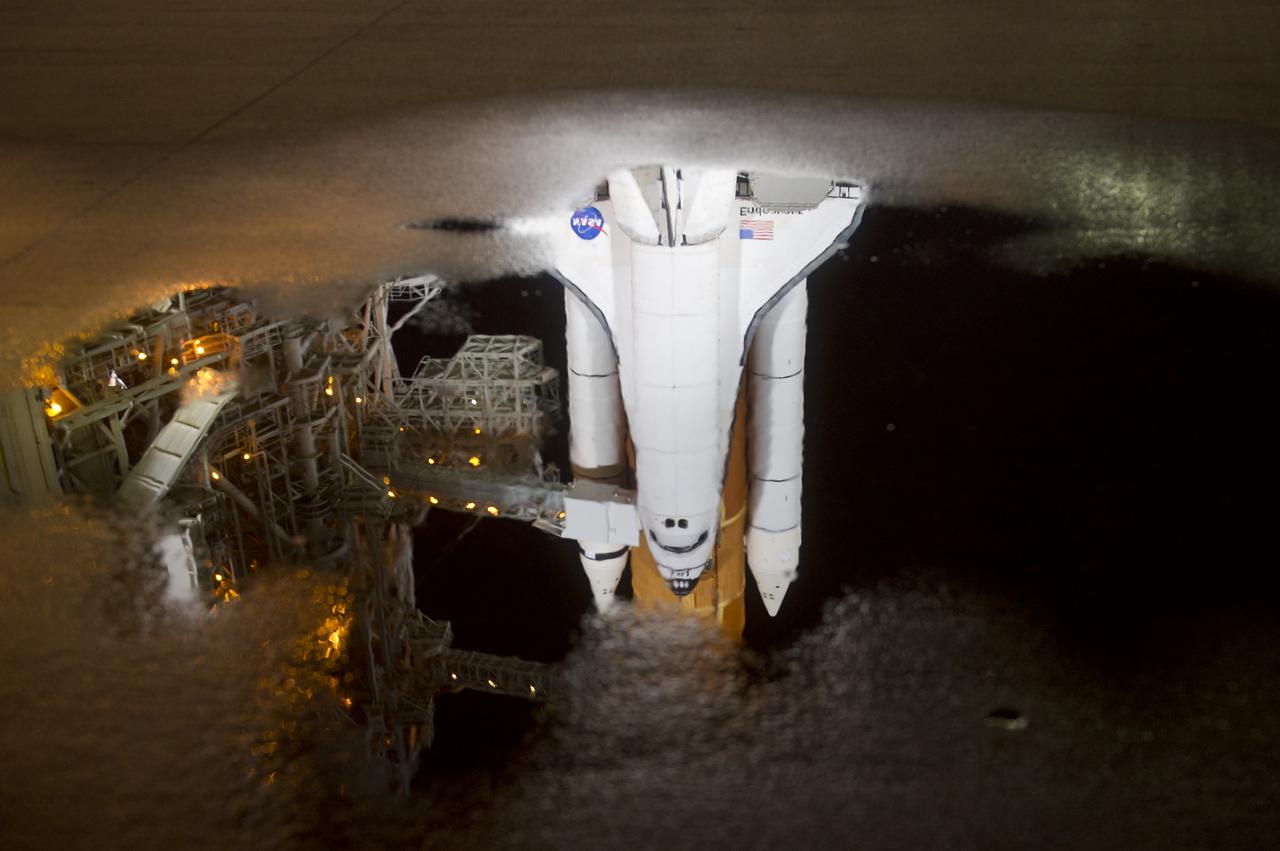
The space shuttle Endeavour is seen reflected in a puddle of water on launch pad 39a after the rollback of the Rotating Service Structure (RSS), Thursday, April 28, 2011, at Kennedy Space Center in Cape Canaveral, Fla. During the 14-day mission, Endeavour and the STS-134 crew will deliver the Alpha Magnetic Spectrometer (AMS) and spare parts including two S-band communications antennas, a high-pressure gas tank and additional spare parts for Dextre. Launch is targeted for Friday, April 29 at 3:47 p.m. EDT. Photo credit: (NASA/Bill Ingalls)
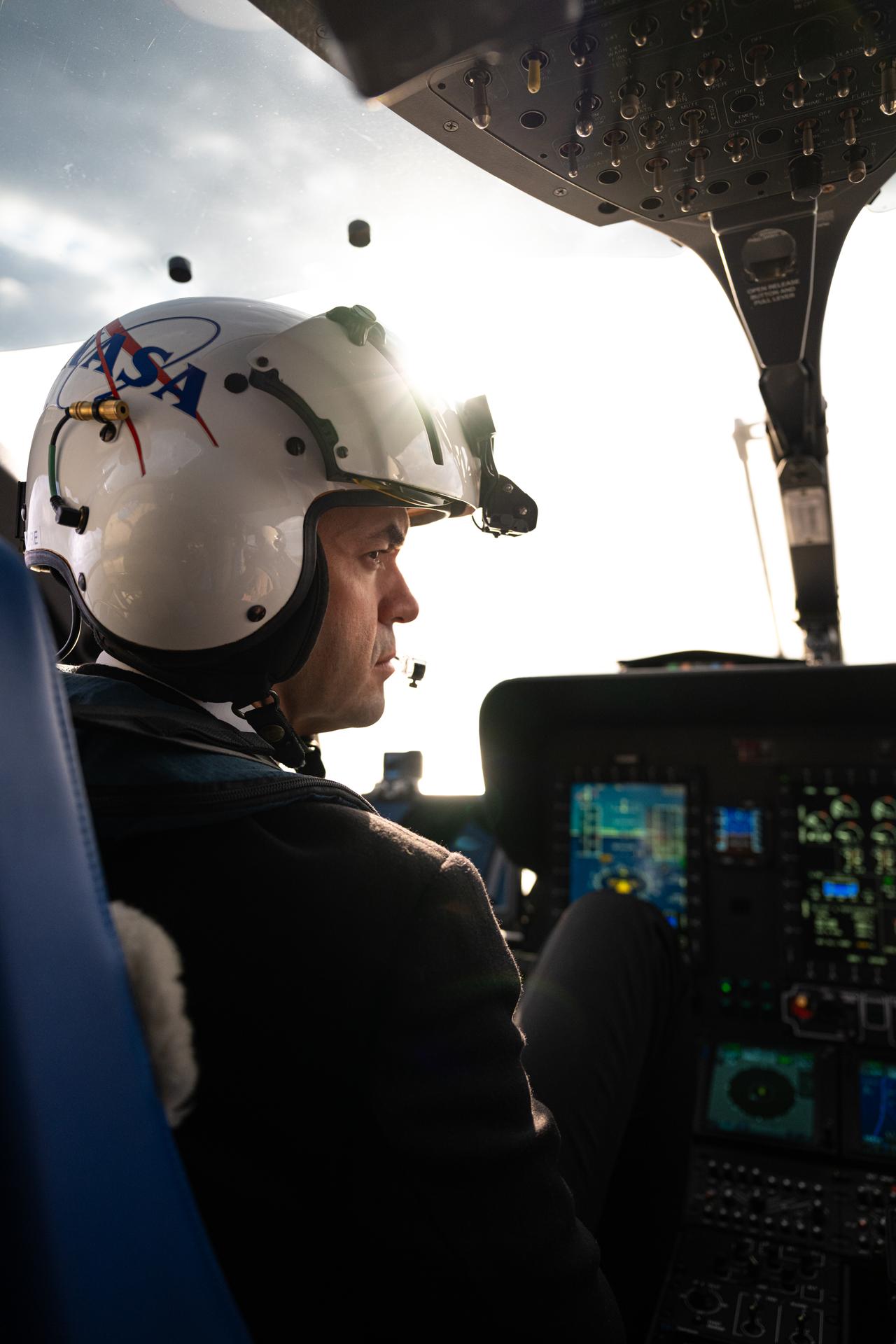
NASA Administrator Jared Isaacman participates in a helicopter tour of NASA’s Kennedy Space Center, Tuesday, Jan. 13, 2026, in Florida. Kennedy marks the fourth stop in Isaacman’s roadshow to visit NASA facilities and engage directly with the agency’s workforce. Photo Credit: (NASA/John Kraus)
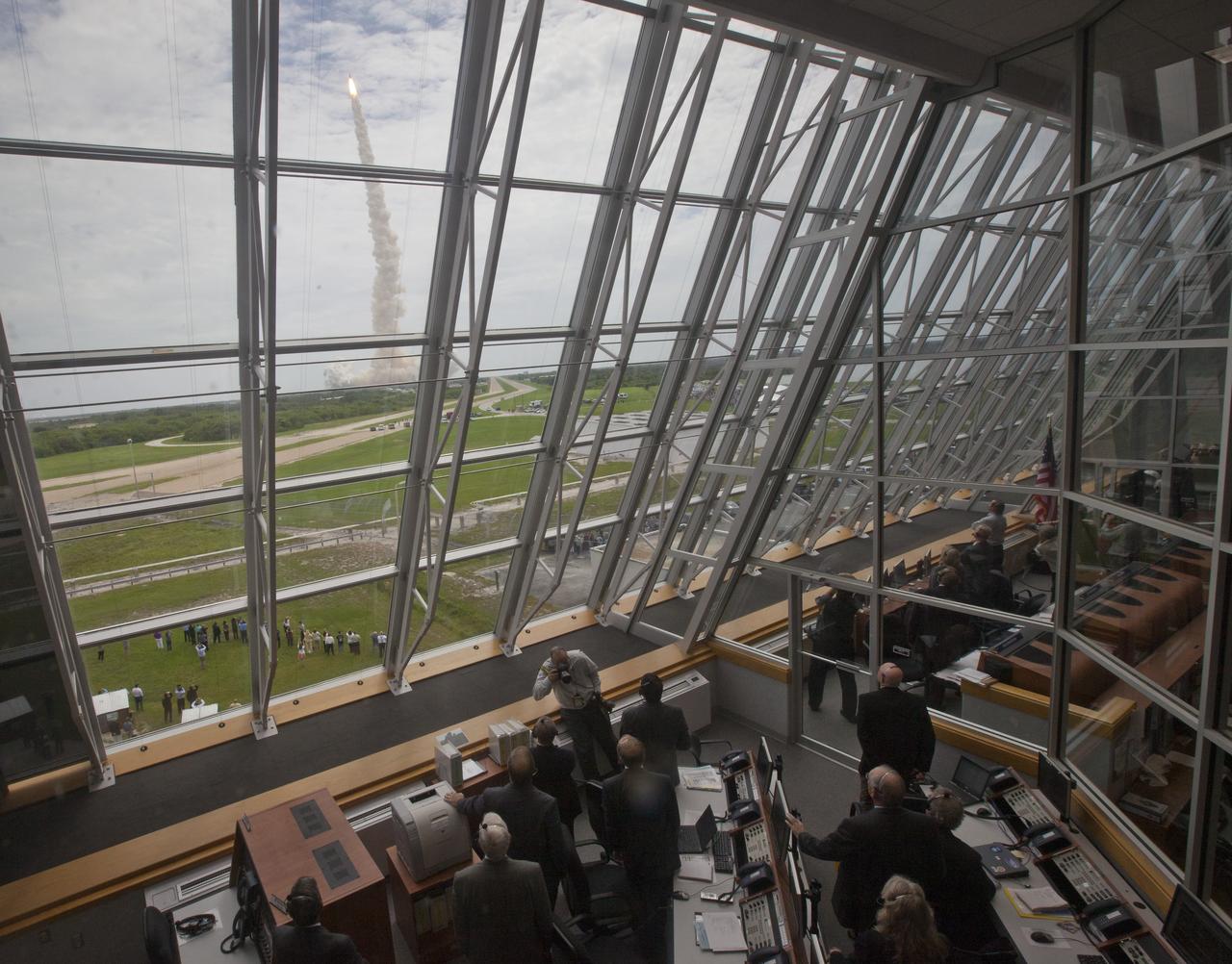
NASA management look on from Firing Room Four of the Launch Control Center (LCC) as space shuttle Atlantis launches from pad 39A on Friday, July 8, 2011, in Cape Canaveral, Fla. The launch of Atlantis, STS-135, is the final flight of the shuttle program, a 12-day mission to the International Space Station. Photo Credit: (NASA/Bill Ingalls)
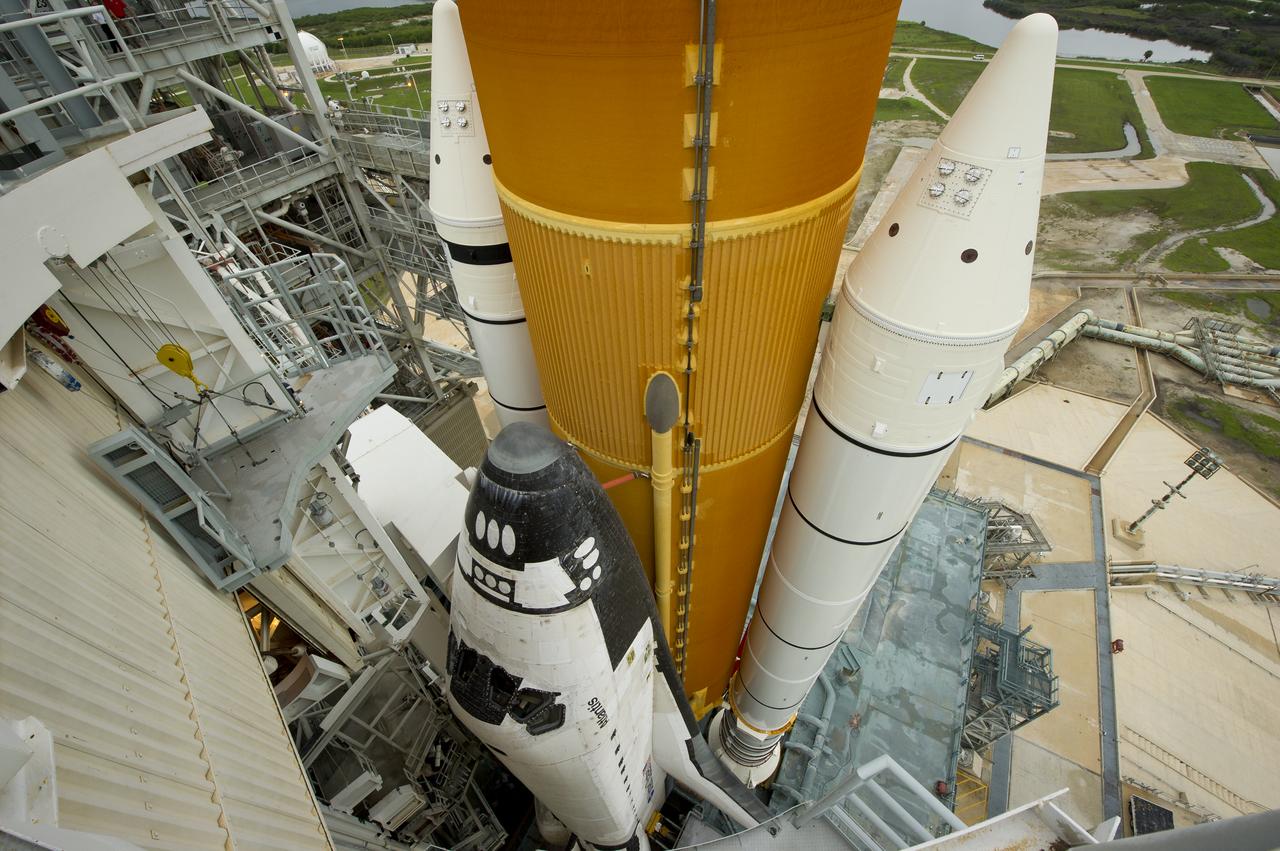
The space shuttle Atlantis is revealed as the rotating service structure (RSS) is rolled back at launch pad 39a on Thursday, July 7, 2011 at the NASA Kennedy Space Center in Cape Canaveral, Fla. Atlantis is set to liftoff Friday, July 8, on the final flight of the shuttle program, STS-135, a 12-day mission to the International Space Station. Photo Credit: (NASA/Bill Ingalls)
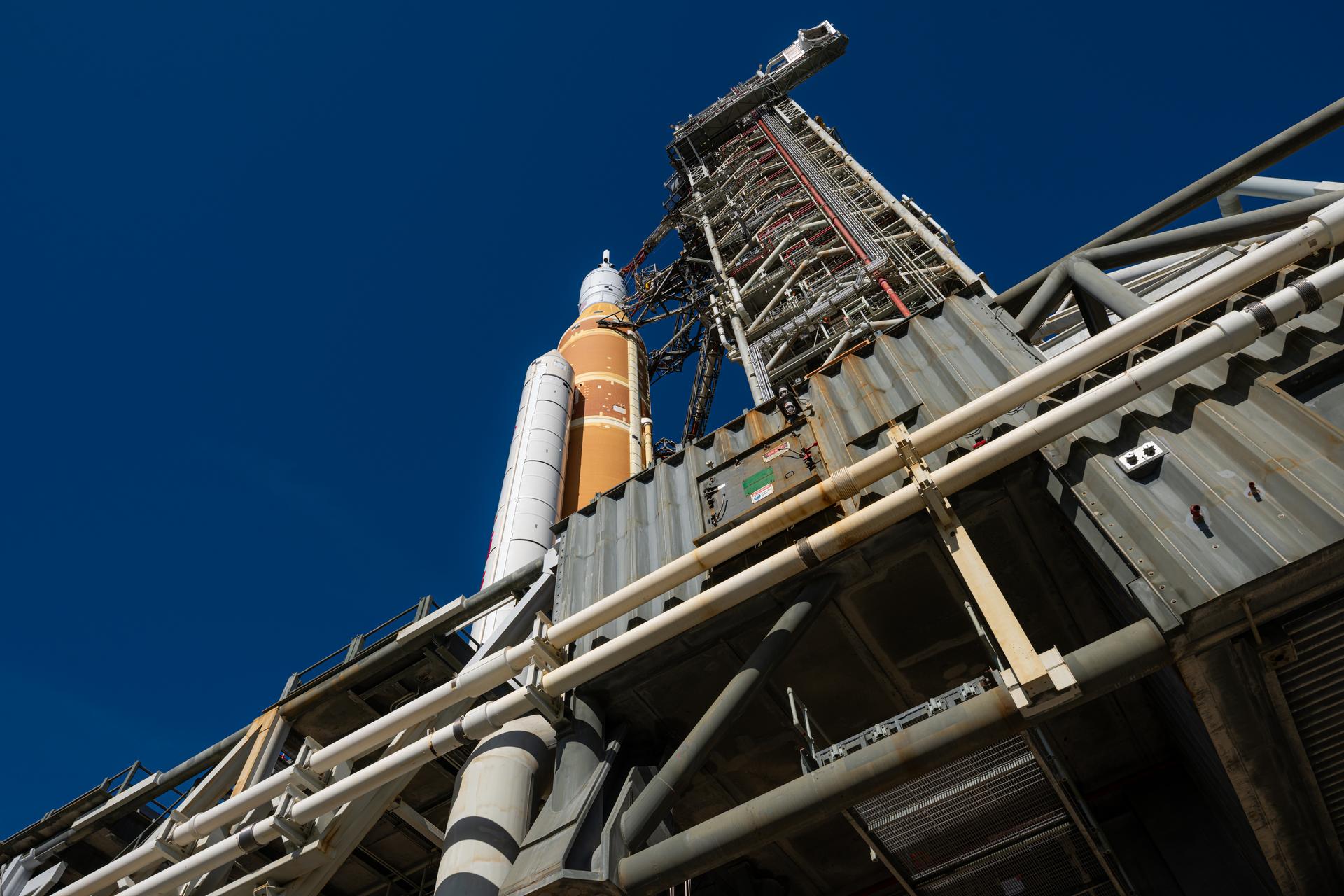
NASA’s Artemis II SLS (Space Launch System) rocket and Orion spacecraft roll out to Launch Complex 39B, Saturday, Jan. 17, 2026, at NASA’s Kennedy Space Center in Florida. Photo Credit: (NASA/John Kraus)
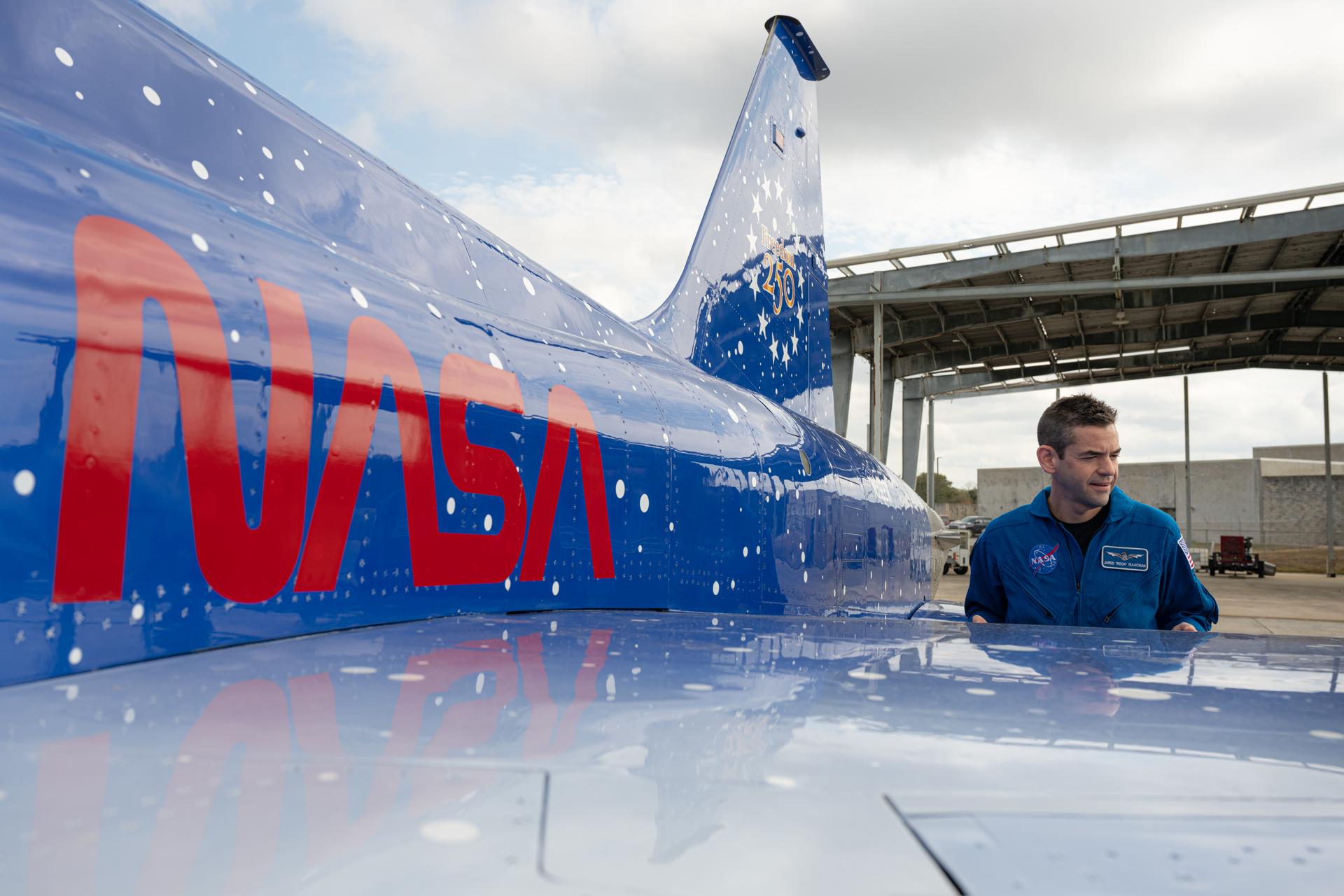
NASA Administrator Jared Isaacman is seen before an employee incentive flying event using his personal F-5 aircraft, Thursday, Feb. 12, 2026, at NASA’s Kennedy Space Center in Florida. Photo Credit: (NASA/John Kraus)
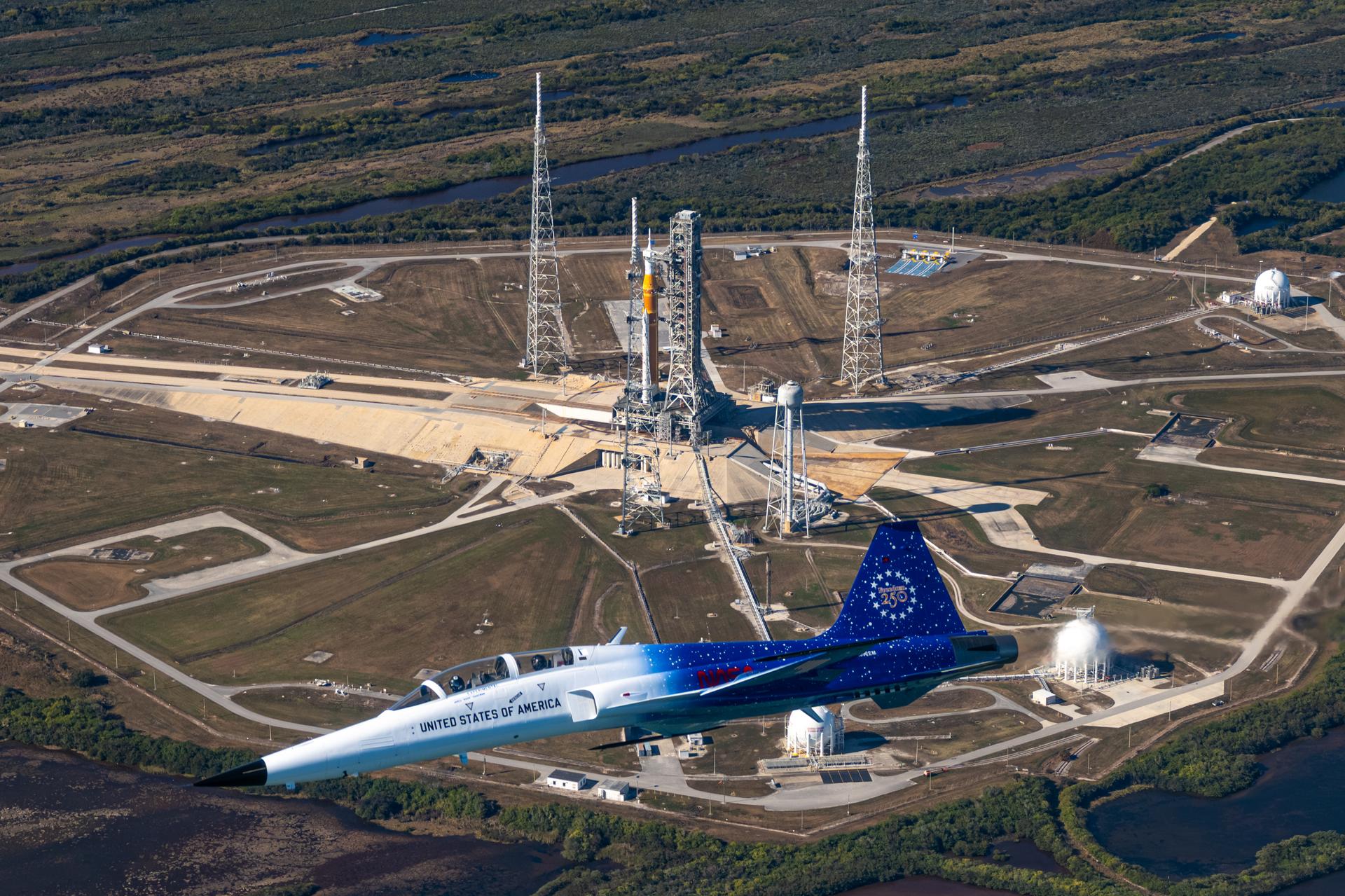
NASA Administrator Jared Isaacman flies in his personal F-5 aircraft, Monday, Feb. 2, 2026, at NASA’s Kennedy Space Center in Florida. Isaacman was joined by Secretary of War Pete Hegseth in the back seat for a flight around Launch Complex 39B, the Vehicle Assembly Building, and surrounding areas at Kennedy. Photo Credit: (NASA/John Kraus)
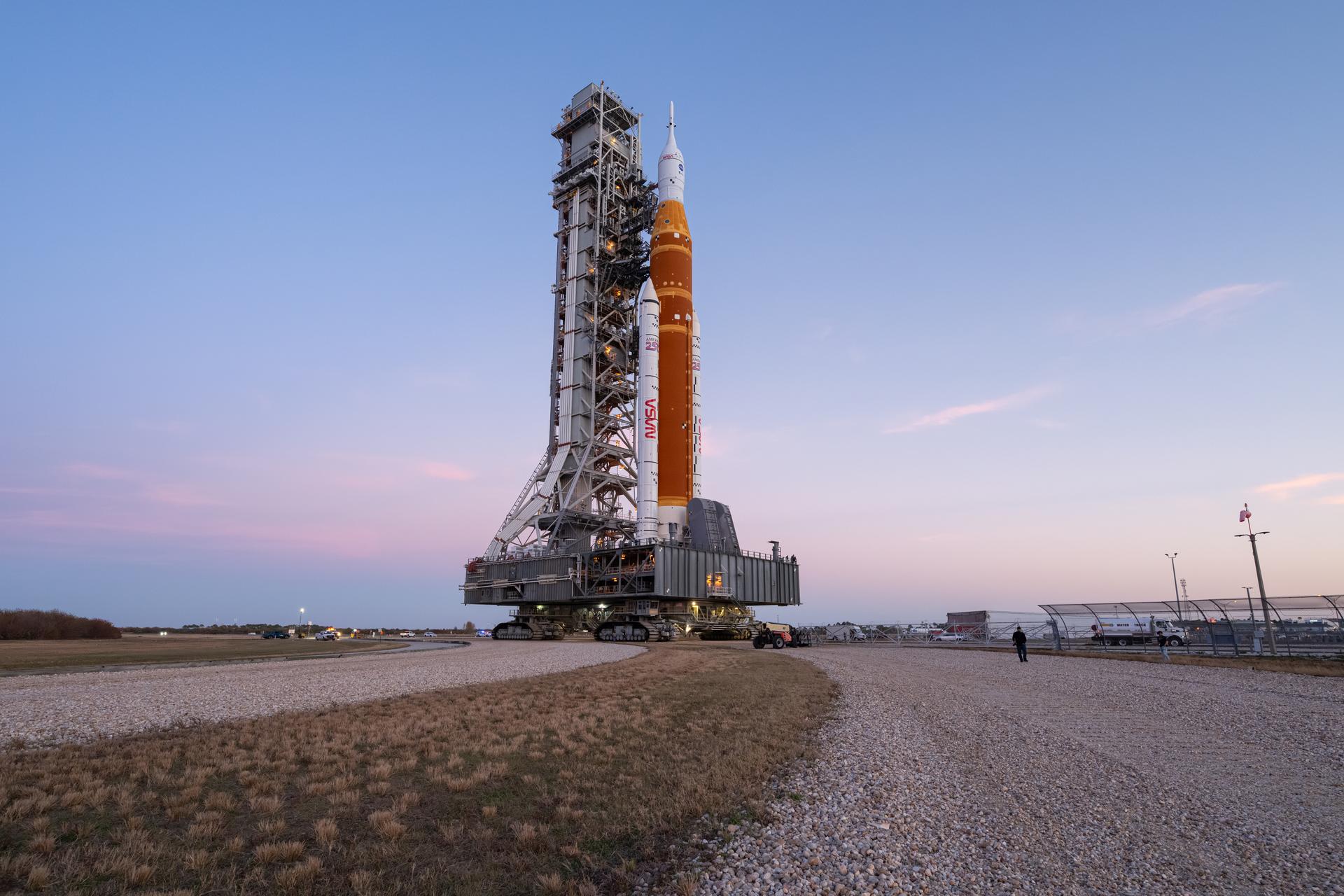
NASA’s Artemis II SLS (Space Launch System) rocket and Orion spacecraft roll back to the Vehicle Assembly Building, Wednesday, Feb. 25, 2026, at NASA’s Kennedy Space Center in Florida. Teams will troubleshoot a helium flow issue experienced on the rocket’s interim cryogenic propulsion stage before rolling the rocket and spacecraft back to Launch Complex 39B for the Artemis II mission around the Moon. Photo Credit: (NASA/John Kraus)
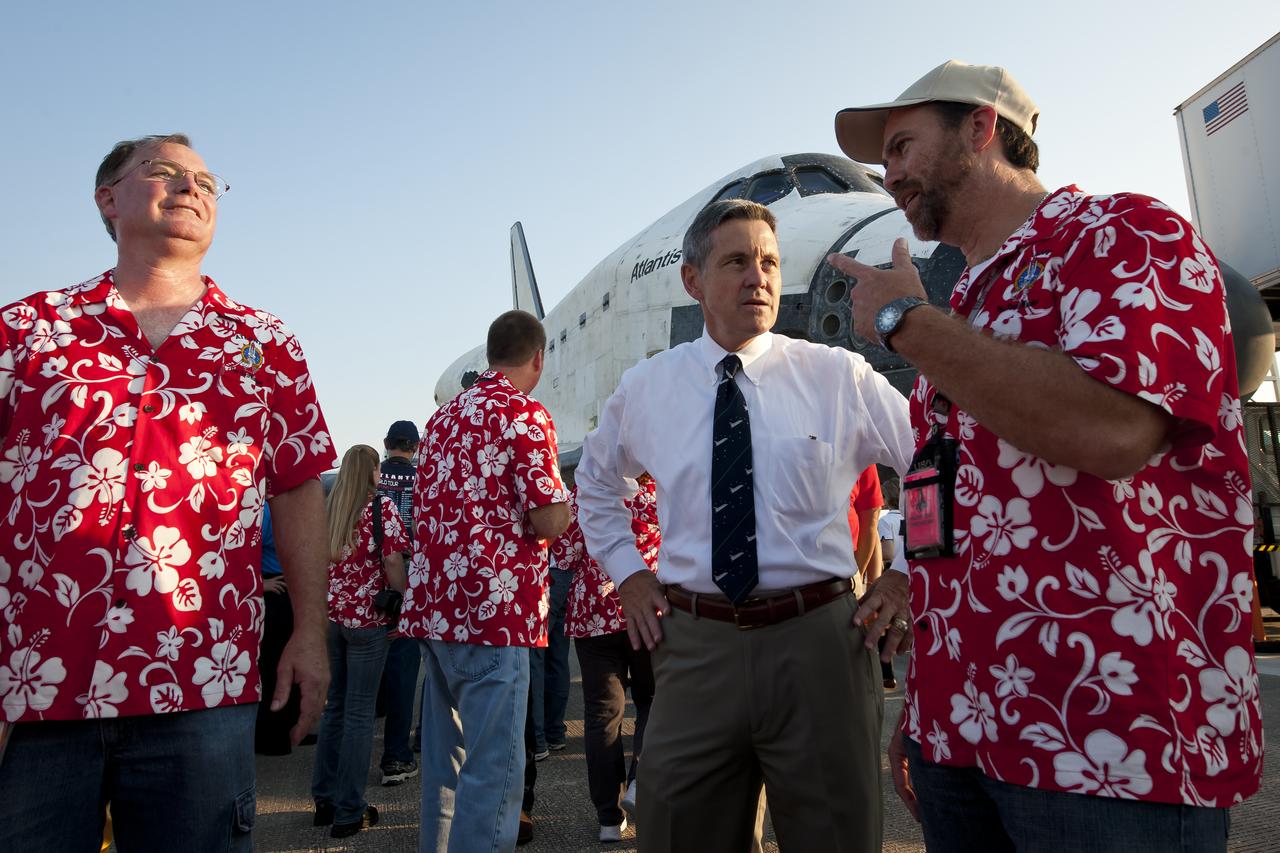
NASA Kennedy Space center Director Robert Cabana talks with members of the shuttle tile team which are wearing flowered shirts together at the Shuttle Landing Facility (SLF) runway at NASA Kennedy Space Center shortly after the space shuttle Atlantis (STS-135) landed, completing its 13-day mission to the International Space Station (ISS) and the final flight of the Space Shuttle Program, early Thursday morning, July 21, 2011, in Cape Canaveral, Fla. Overall, Atlantis spent 307 days in space and traveled nearly 126 million miles during its 33 flights. Atlantis, the fourth orbiter built, launched on its first mission on Oct. 3, 1985. Photo Credit: (NASA/Bill Ingalls)
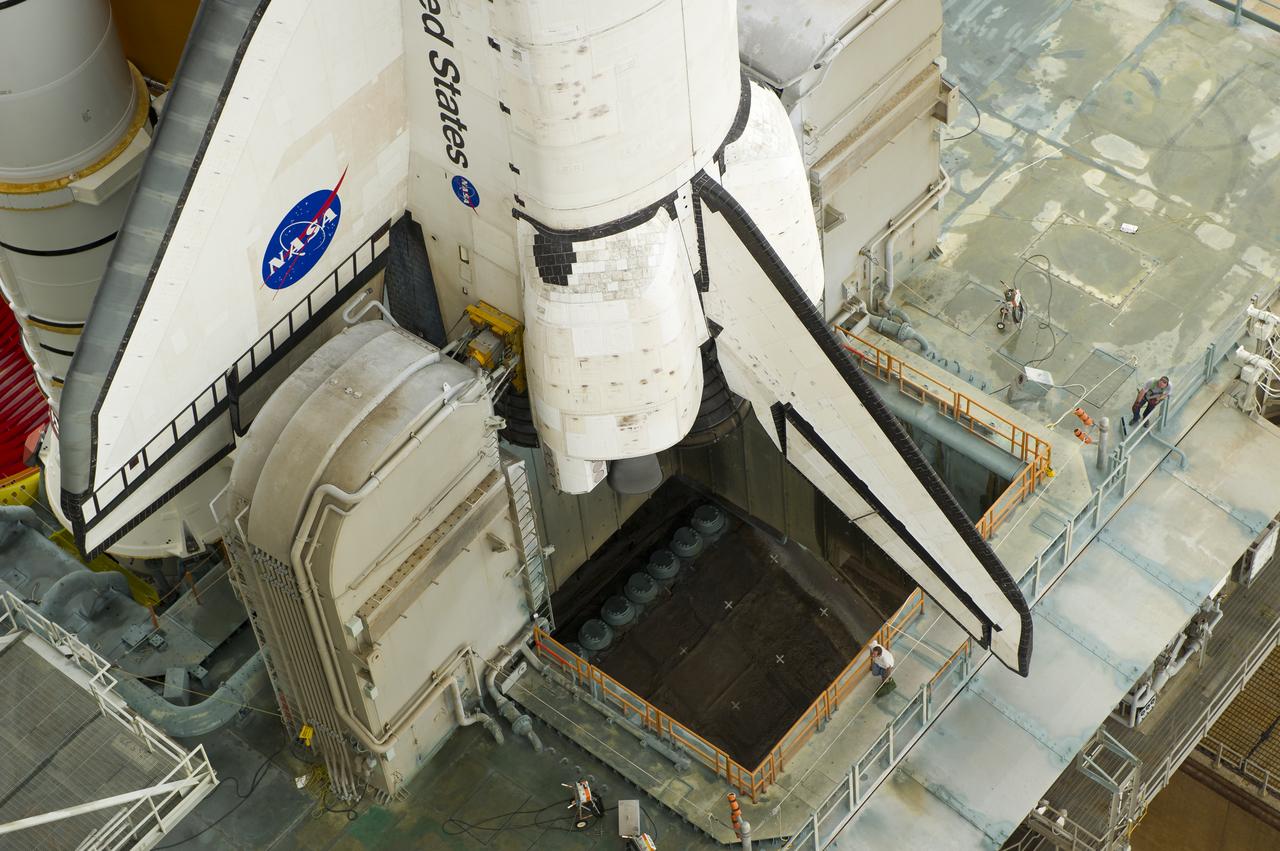
The space shuttle Atlantis is revealed as the rotating service structure (RSS) is rolled back at launch pad 39a on Thursday, July 7, 2011 at the NASA Kennedy Space Center in Cape Canaveral, Fla. Atlantis is set to liftoff Friday, July 8, on the final flight of the shuttle program, STS-135, a 12-day mission to the International Space Station. Photo Credit: (NASA/Bill Ingalls)
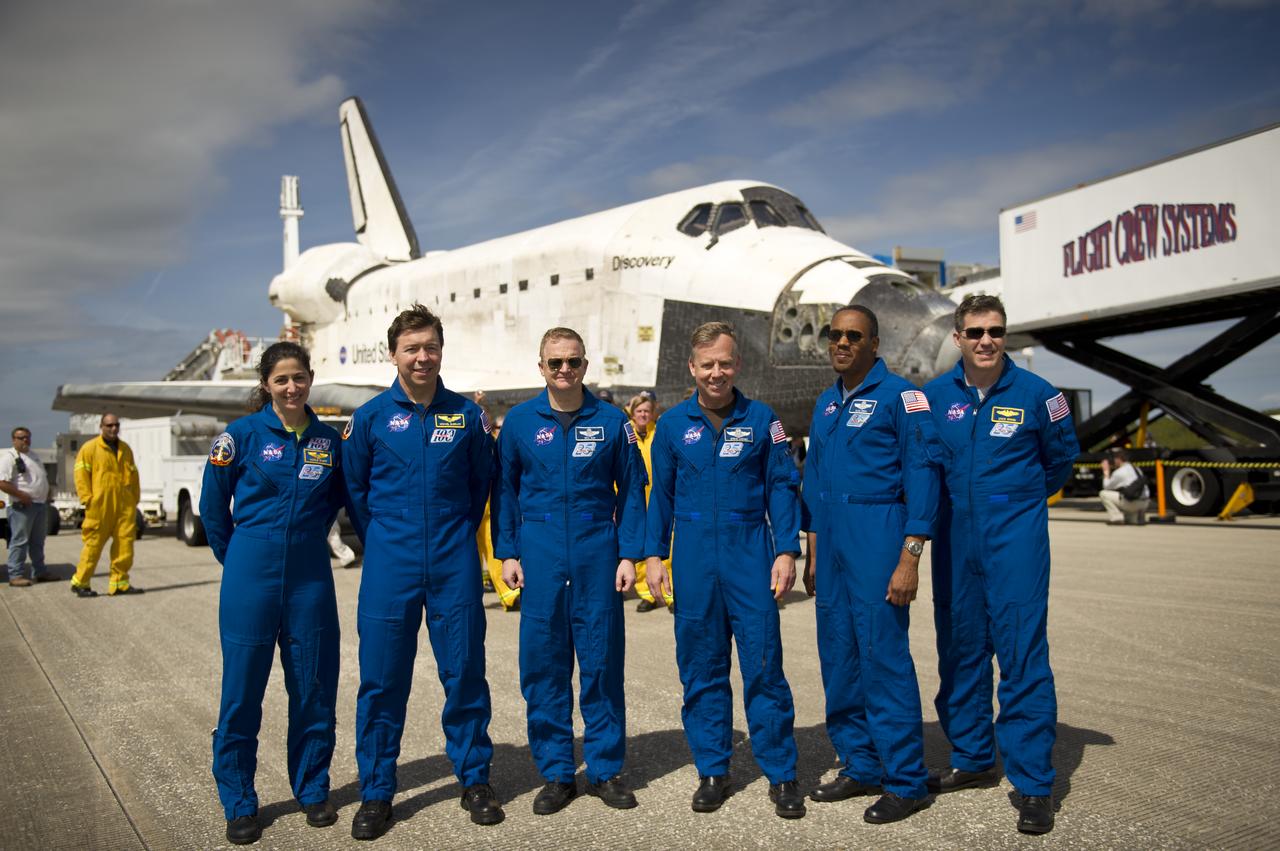
NASA Astronauts and STS-133 mission crew members, from left, Mission Specialists Nicole Stott, Michael Barratt, Pilot Eric Boe, Commander Steve Lindsey, Mission Specialists Alvin Drew, and Steve Bowen pose for a photograph in front of the space shuttle Discovery after they landed, Wednesday, March 9, 2011, at Kennedy Space Center in Cape Canaveral, Fla., completing Discovery's 39th and final flight. Since 1984, Discovery flew 39 missions, spent 365 days in space, orbited Earth 5,830 times and traveled 148,221,675 miles. Photo credit: (NASA/Bill Ingalls)
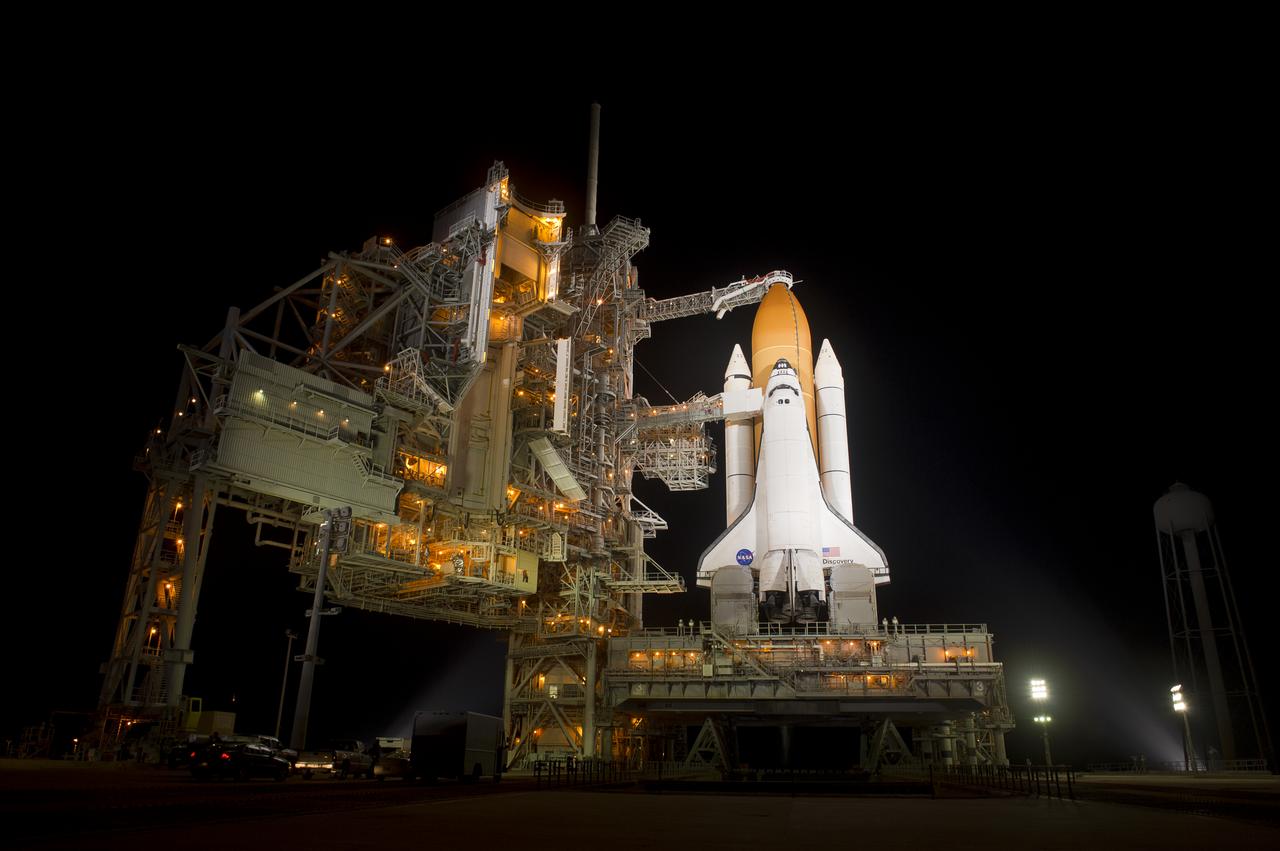
The space shuttle Discovery is seen on launch Pad 39a after the Rotating Service Structure (RSS) is rolled back on Wednesday, Nov. 3, 2010 at the NASA Kennedy Space Center in Cape Canaveral, Fla. During space shuttle Discovery's final spaceflight, the STS-133 crew members will take important spare parts to the International Space Station along with the Express Logistics Carrier-4. Photo Credit: (NASA/Bill Ingalls)

Onlookers watch as space shuttle Atlantis rolls to its new home at the Kennedy Space Center Visitor Complex, early Friday, Nov. 2, 2012, in Cape Canaveral, Fla. The spacecraft traveled 125,935,769 miles during 33 spaceflights, including 12 missions to the International Space Station. Its final flight, STS-135, closed out the Space Shuttle Program era with a landing on July 21, 2011. Photo Credit: (NASA/Bill Ingalls)
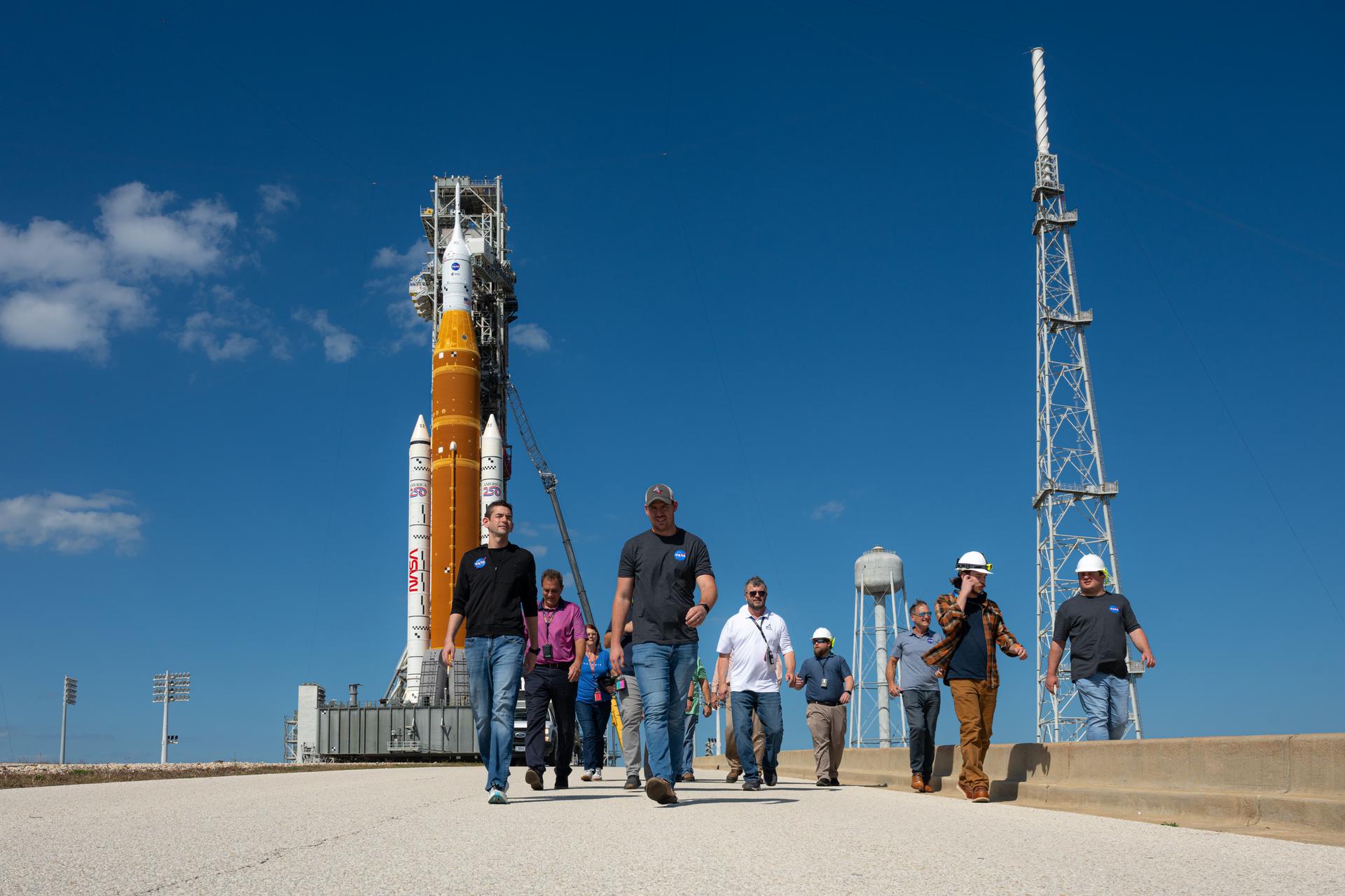
NASA Administrator Jared Isaacman, left, and members of the Artemis launch team visit NASA’s Artemis II SLS (Space Launch System) rocket and Orion spacecraft at Launch Complex 39B, Saturday, Feb. 21, 2026, at NASA’s Kennedy Space Center in Florida. Photo Credit: (NASA/John Kraus)
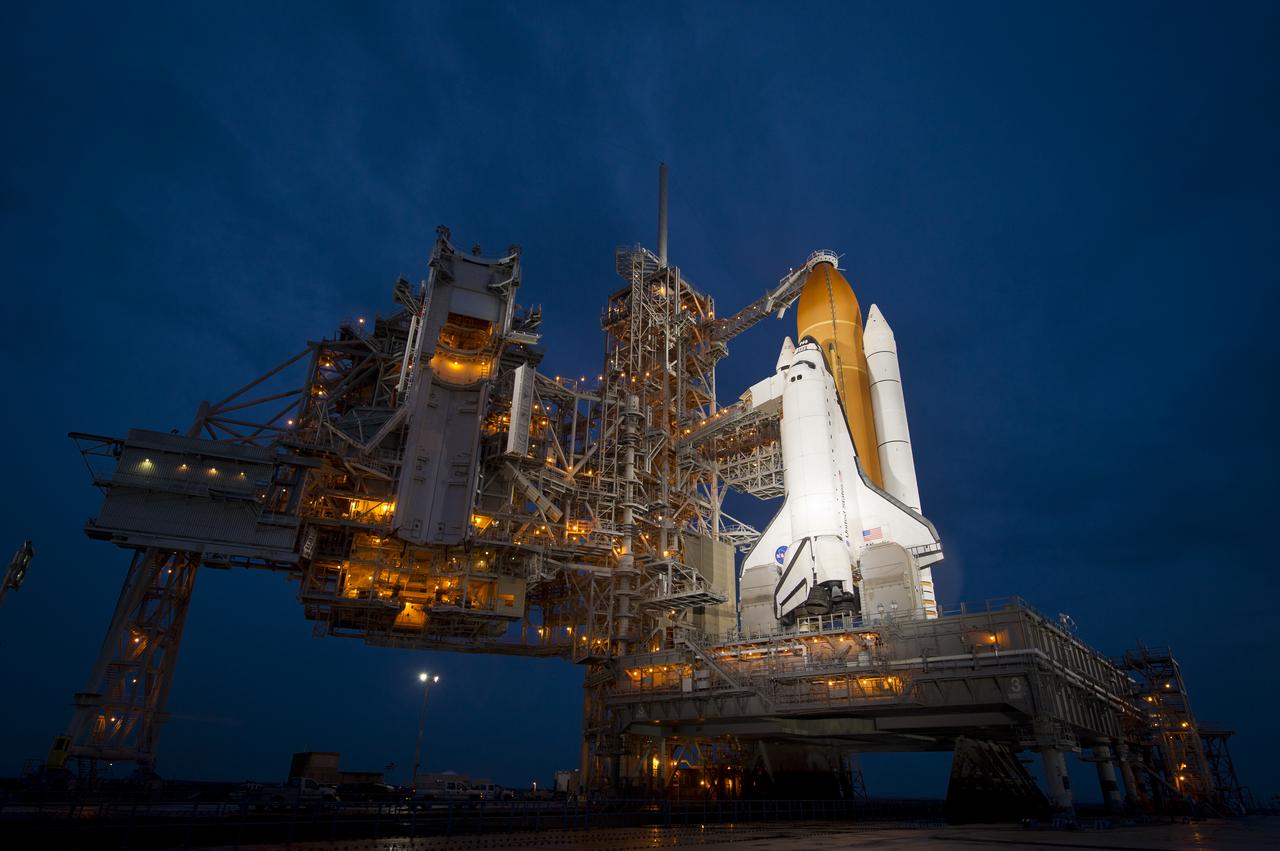
The space shuttle Atlantis is seen shortly after the rotating service structure (RSS) was rolled back at launch pad 39a, Thursday, July 7, 2011 at the NASA Kennedy Space Center in Cape Canaveral, Fla. Atlantis is set to liftoff Friday, July 8, on the final flight of the shuttle program, STS-135, a 12-day mission to the International Space Station. Photo Credit: (NASA/Bill Ingalls)

NASA Officials, LEGO Group management, students, teachers and parents create their vision of the future in space with LEGO bricks and elements as part of a “Build the Future” activity inside a tent that was set up on the launch viewing area at NASA's Kennedy Space Center in Cape Canaveral, Fla. on Monday, Nov. 1, 2010. NASA and The LEGO Group signed a Space Act Agreement to spark children's interest in science, technology, engineering and math (STEM). Photo Credit: (NASA/Bill Ingalls)
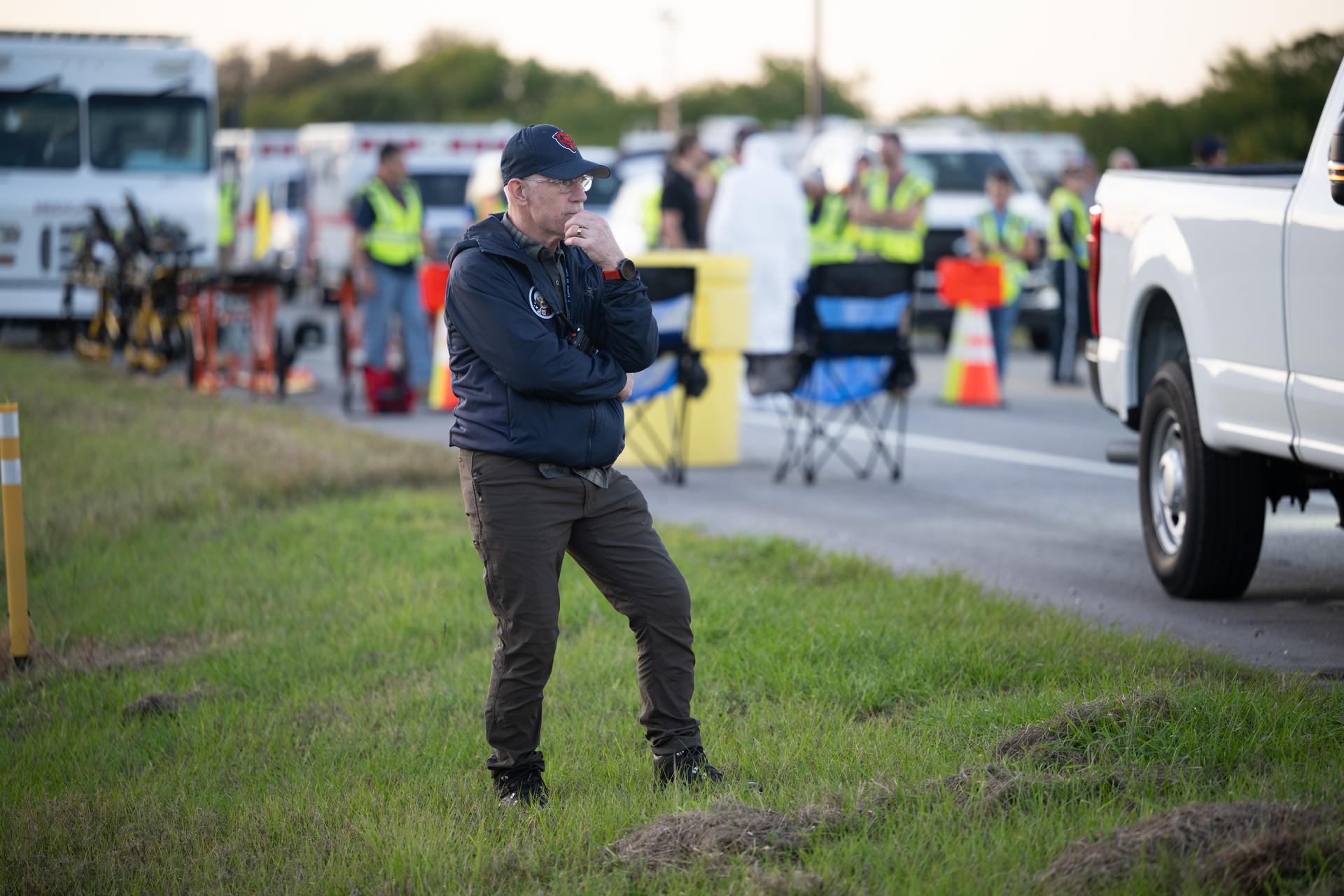
NASA Flight Surgeon Richard Scheuring watches as teams at NASA's Kennedy Space Center in Florida practiced various emergency rescue training scenarios with the Artemis II crew, Friday, Dec. 19, 2025, ahead of the Artemis II mission. In the unlikely event of an emergency during launch countdown at Launch Complex 39B, personnel will be transported in mine-resistant ambush protected vehicles, or MRAPS, from the pad and to one of the triage site locations at Kennedy. Photo Credit: (NASA/Joel Kowsky)
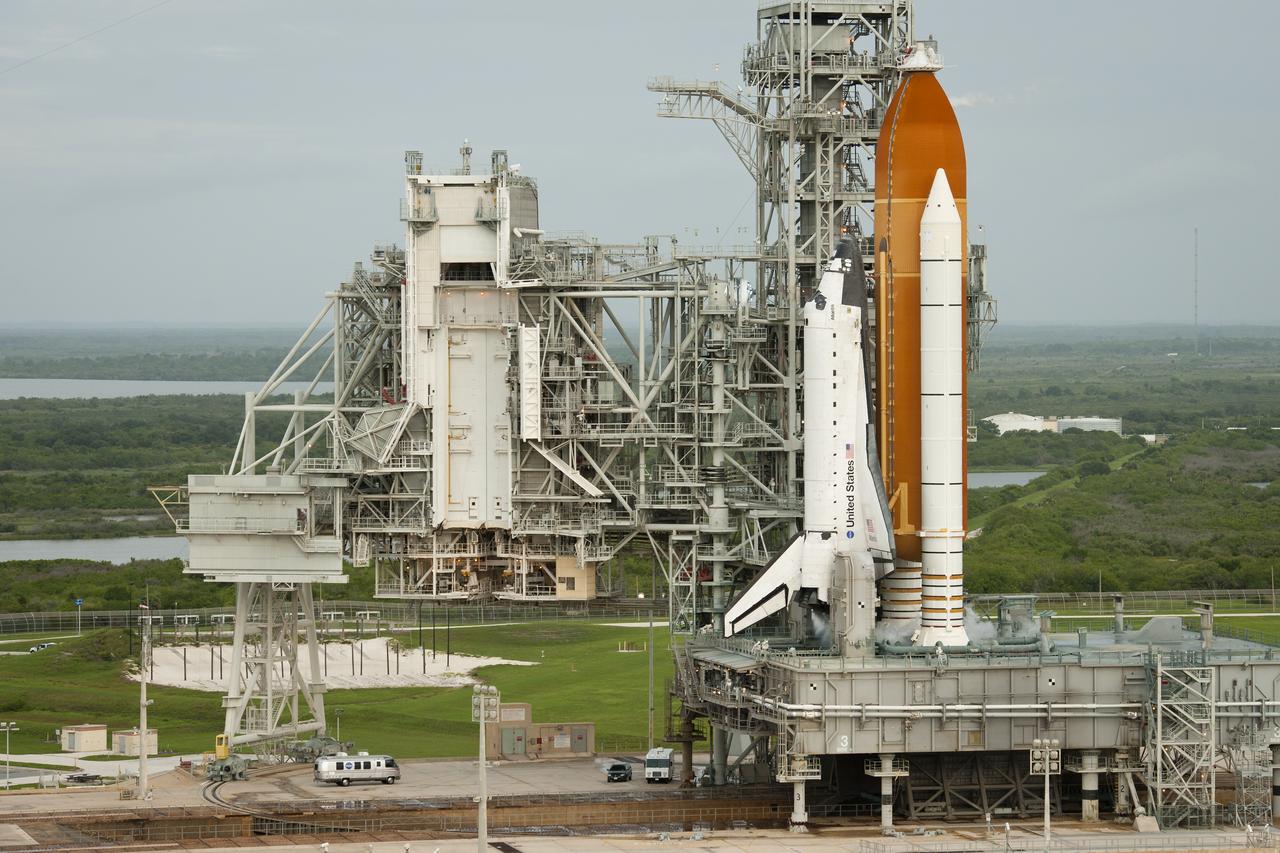
The Astrovan carrying the STS-135 crew; Chris Ferguson, commander, Doug Hurley, pilot, and mission specialists Rex Walheim and Sandy Mangus, arrives at launch pad 39A and space shuttle Atlantis, Friday, July 8, 2011, at Kennedy Space Center in Cape Canaveral, Fla. The launch of Atlantis, STS-135, is the final flight of the shuttle program, a 12-day mission to the International Space Station. Photo Credit: (NASA/Bill Ingalls)
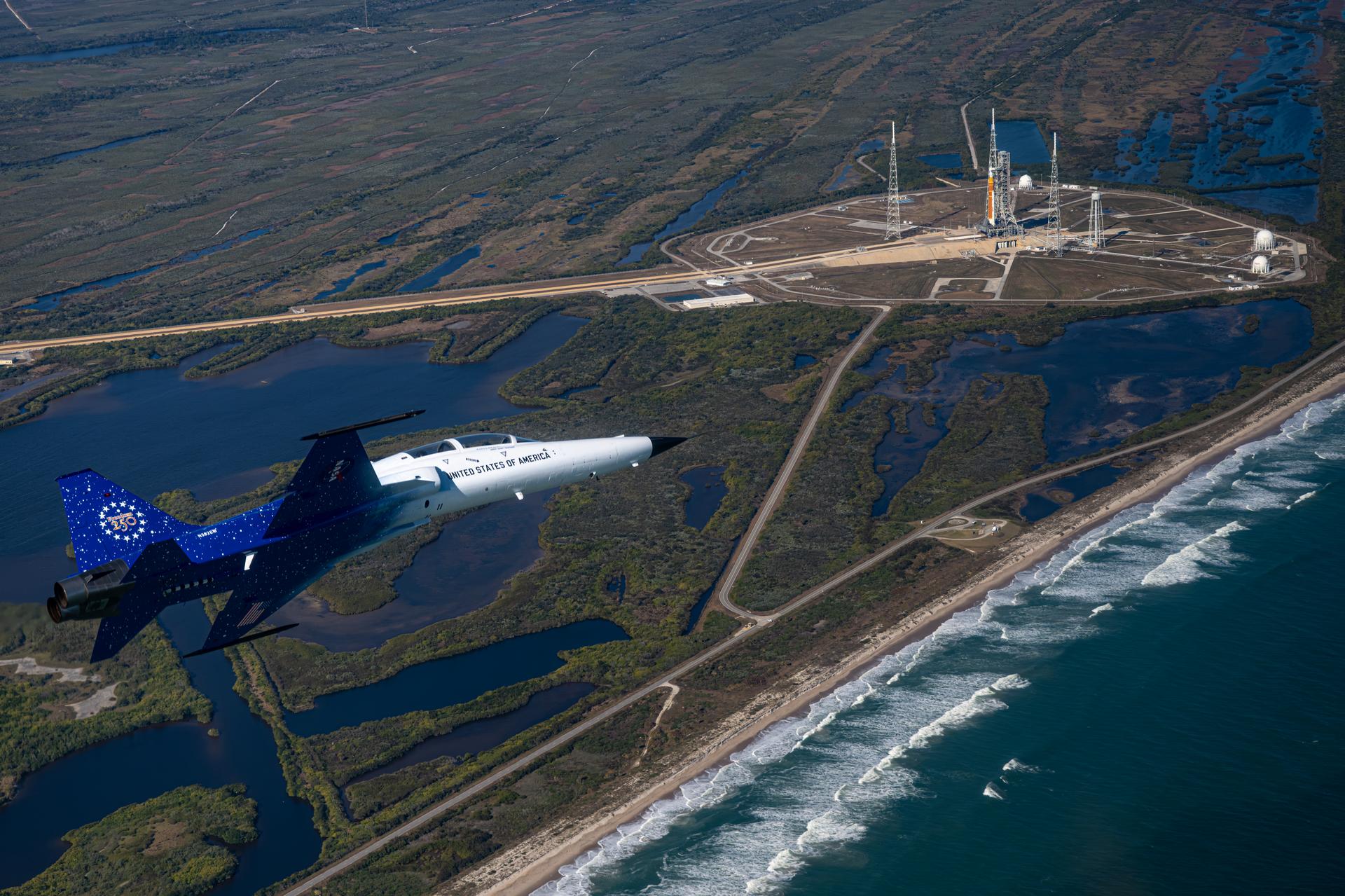
NASA Administrator Jared Isaacman flies in his personal F-5 aircraft, Monday, Feb. 2, 2026, at NASA’s Kennedy Space Center in Florida. Isaacman was joined by Secretary of War Pete Hegseth in the back seat for a flight around Launch Complex 39B, the Vehicle Assembly Building, and surrounding areas at Kennedy. Photo Credit: (NASA/John Kraus)
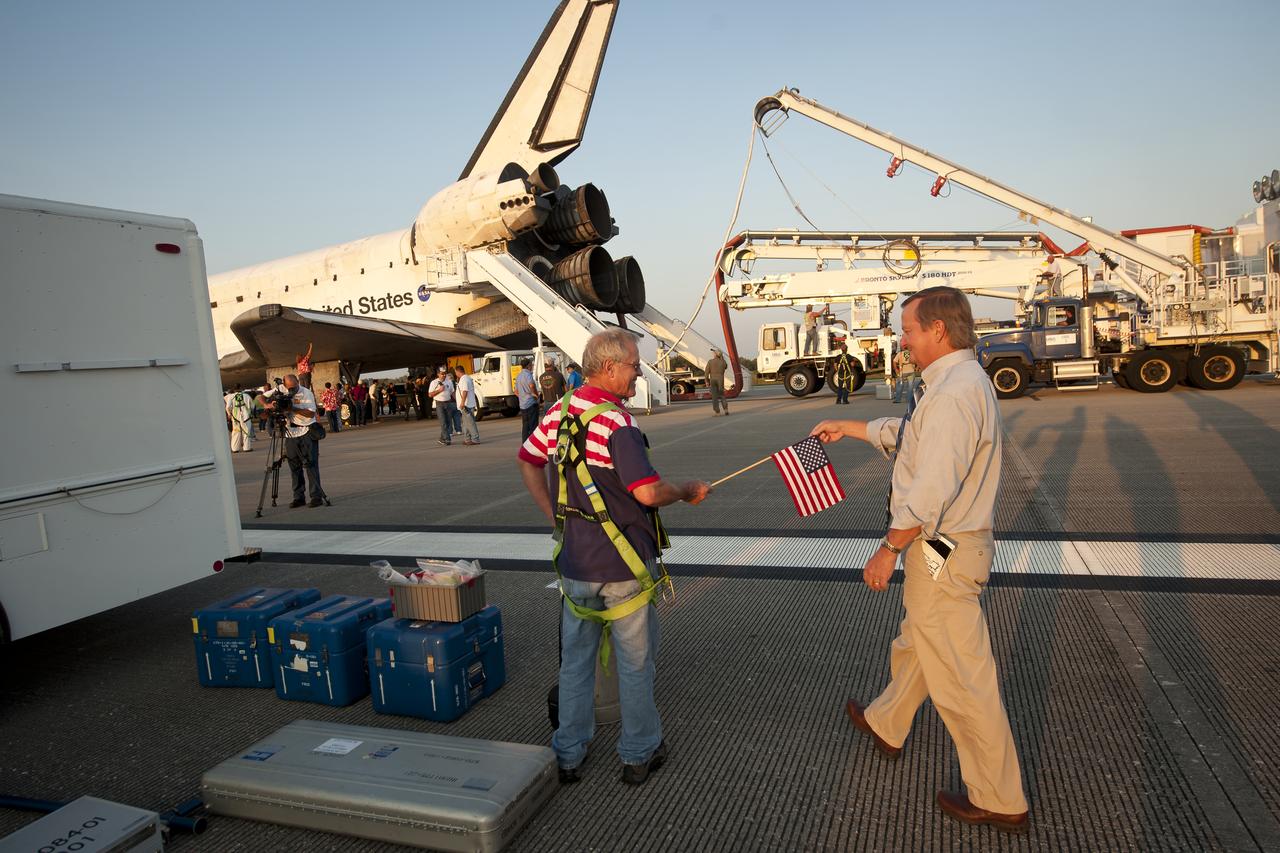
NASA Launch Director Michael Leinbach, right, hands an American flag to a worker on the runway of the Shuttle Landing Facility (SLF) shortly after the space shuttle Atlantis (STS-135) landed early Thursday morning, July 21, 2011, in Cape Canaveral, Fla. Overall, Atlantis spent 307 days in space and traveled nearly 126 million miles during its 33 flights. Atlantis, the fourth orbiter built, launched on its first mission on Oct. 3, 1985. Photo Credit: (NASA/Bill Ingalls)

Susie Bodman, Twitter handle @sciwhat, tweets during the STS-135 Tweetup, Thursday, July 7, 2011, at Kennedy Space Center in Cape Canaveral, Fla. About 150 NASA Twitter followers attended the event. The STS-135 mission will be NASA's last space shuttle launch. Photo Credit: (NASA/Paul E. Alers)
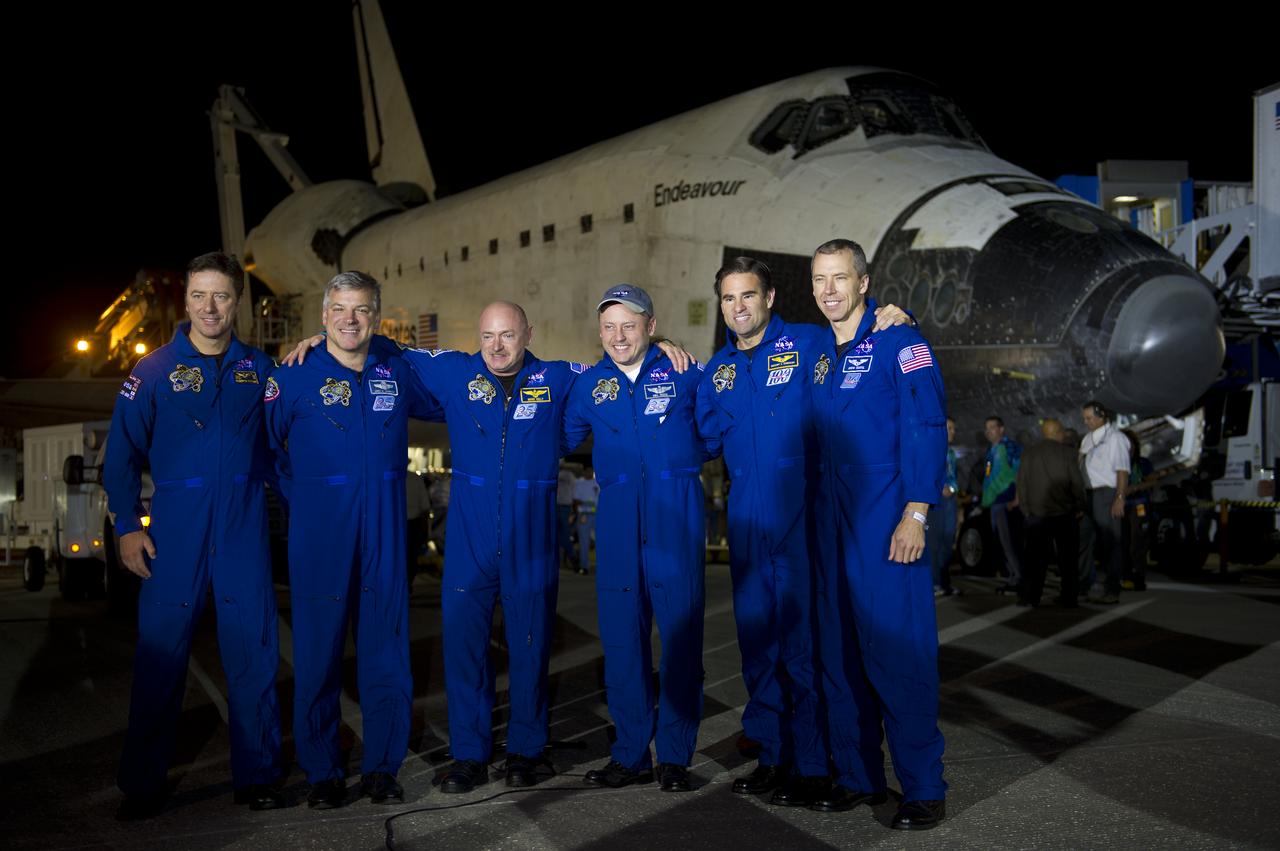
The STS-134 astronauts from left, European Space Agency's Roberto Vittori, Gregory H. Johnson, pilot; Mark Kelly, commander; Michael Fincke, Greg Chamitoff, and Andrew Feustel all mission specialists, pose for a group photograph shortly after landing onboard the space shuttle Endeavour at the Shuttle Landing Facility (SLF) at Kennedy Space Center, Wednesday, June 1, 2011, in Cape Canaveral, Fla. Endeavour, completing a 16-day mission to outfit the International Space Station, spent 299 days in space and traveled more than 122.8 million miles during its 25 flights. It launched on its first mission on May 7, 1992. Photo Credit: (NASA/Bill Ingalls)
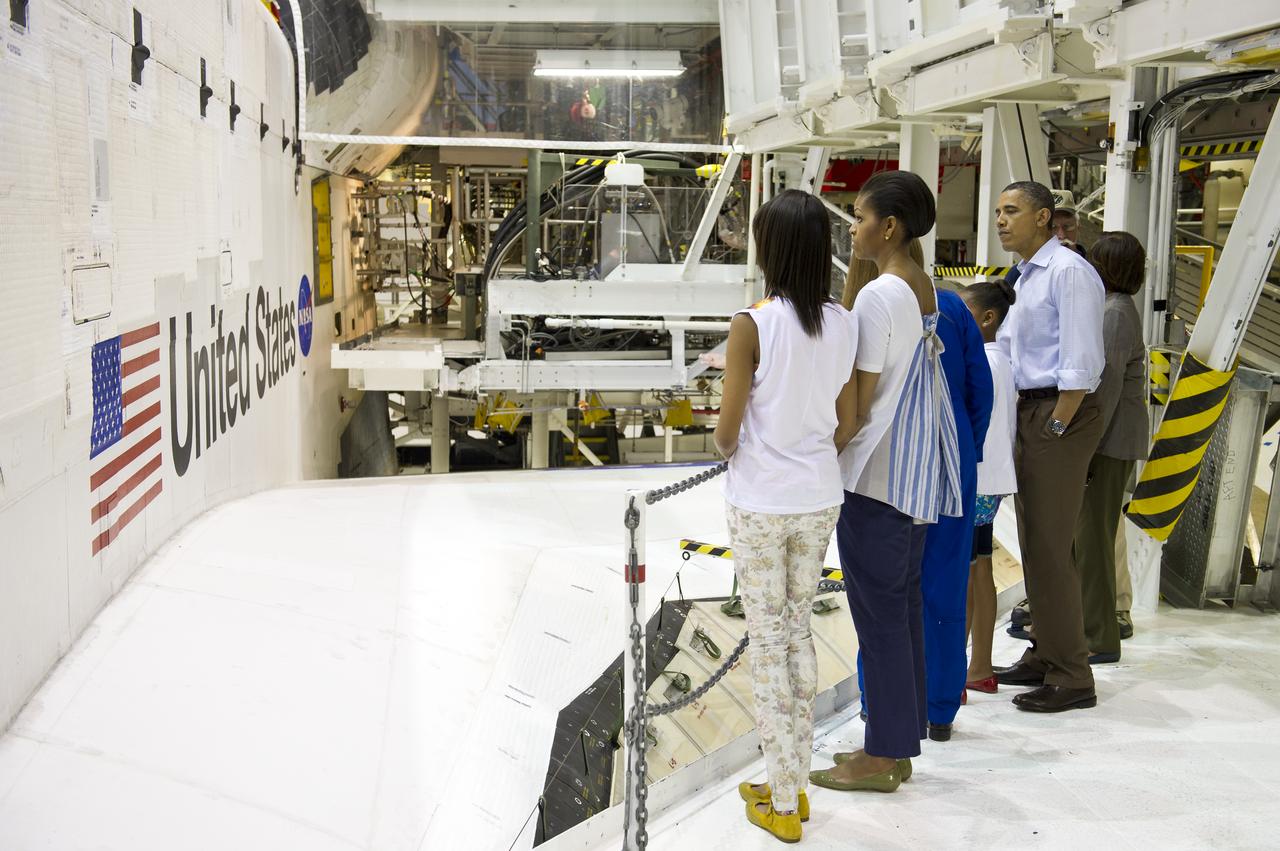
President Barack Obama, First Lady Michelle Obama, daughters Malia, Sasha, and the First Lady's mother Marian Robinson, are shown the space shuttle Atlantis during a tour of the Orbital Processing Facility by NASA Astronaut Janet Kavandi during their visit to the Kennedy Space Center in Cape Canaveral, Fla., Friday, April 29, 2011. Photo Credit: (NASA/Bill Ingalls)
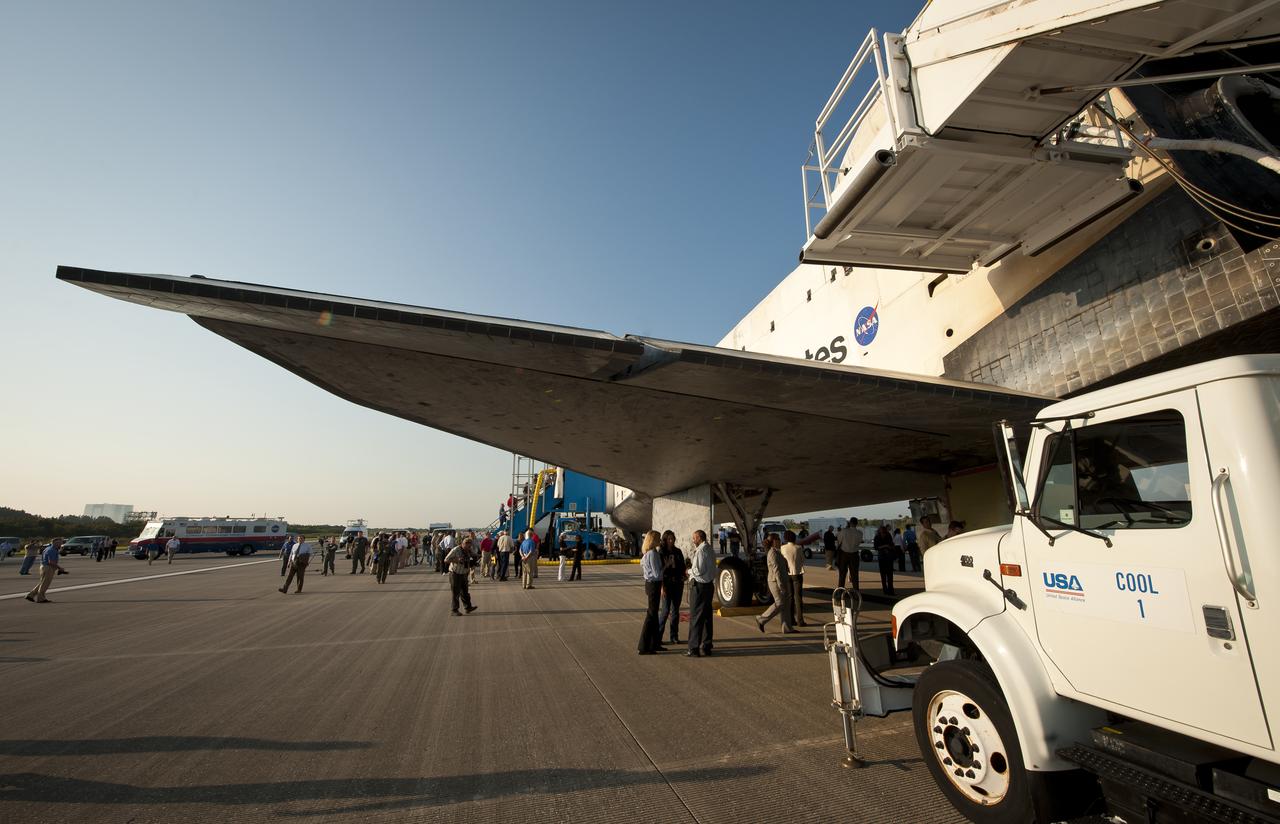
NASA and contractor personnel work on the space shuttle Atlantis at the Kennedy Space Center Shuttle Landing Facility (SLF) shortly after Atlantis (STS-135) landed early Thursday morning, July 21, 2011, in Cape Canaveral, Fla. Overall, Atlantis spent 307 days in space and traveled nearly 126 million miles during its 33 flights. Atlantis, the fourth orbiter built, launched on its first mission on Oct. 3, 1985. Photo Credit: (NASA/Bill Ingalls)
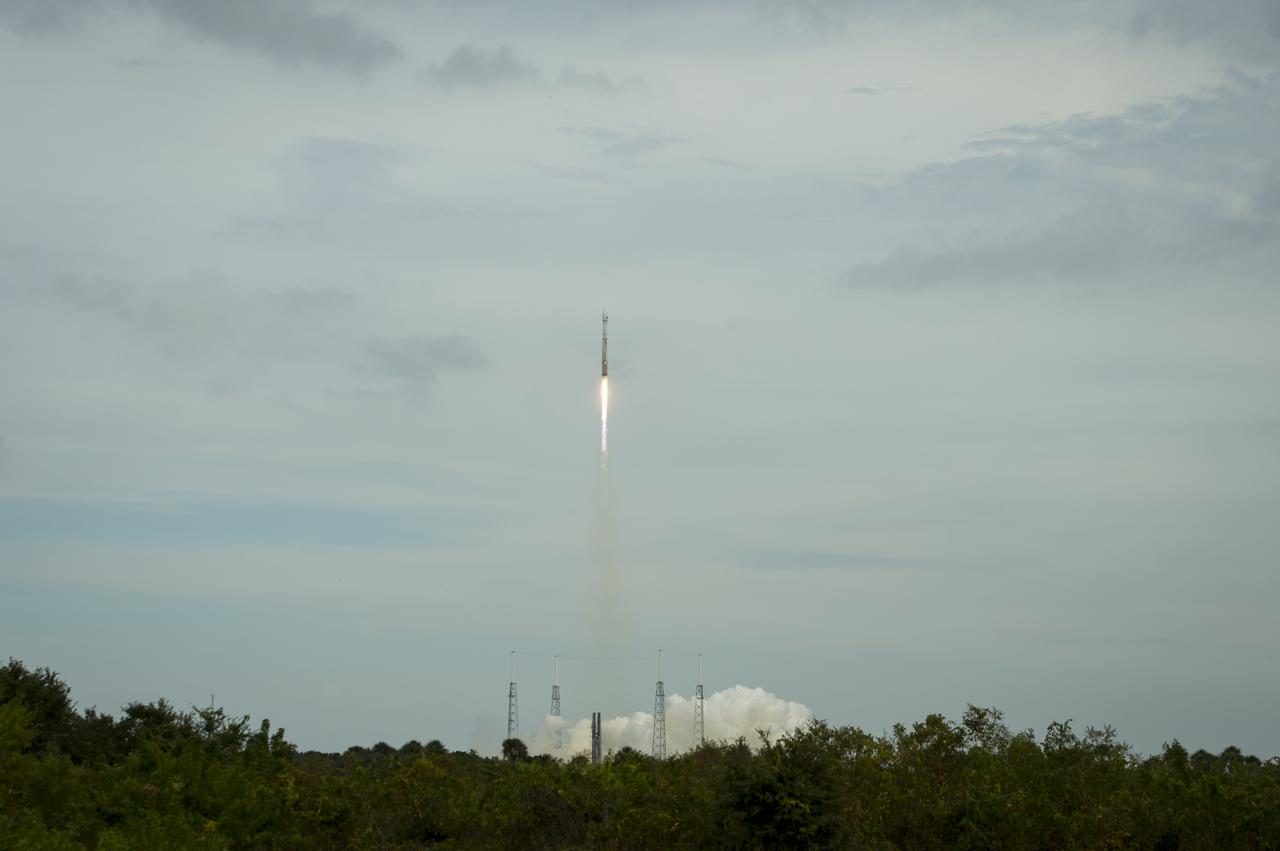
The United Launch Alliance Atlas V rocket with NASA’s Mars Atmosphere and Volatile EvolutioN (MAVEN) spacecraft launches from the Cape Canaveral Air Force Station Space Launch Complex 41, Monday, Nov. 18, 2013, Cape Canaveral, Florida. NASA’s Mars-bound spacecraft, the Mars Atmosphere and Volatile EvolutioN, or MAVEN, is the first spacecraft devoted to exploring and understanding the Martian upper atmosphere. Photo Credit: (NASA/Bill Ingalls)
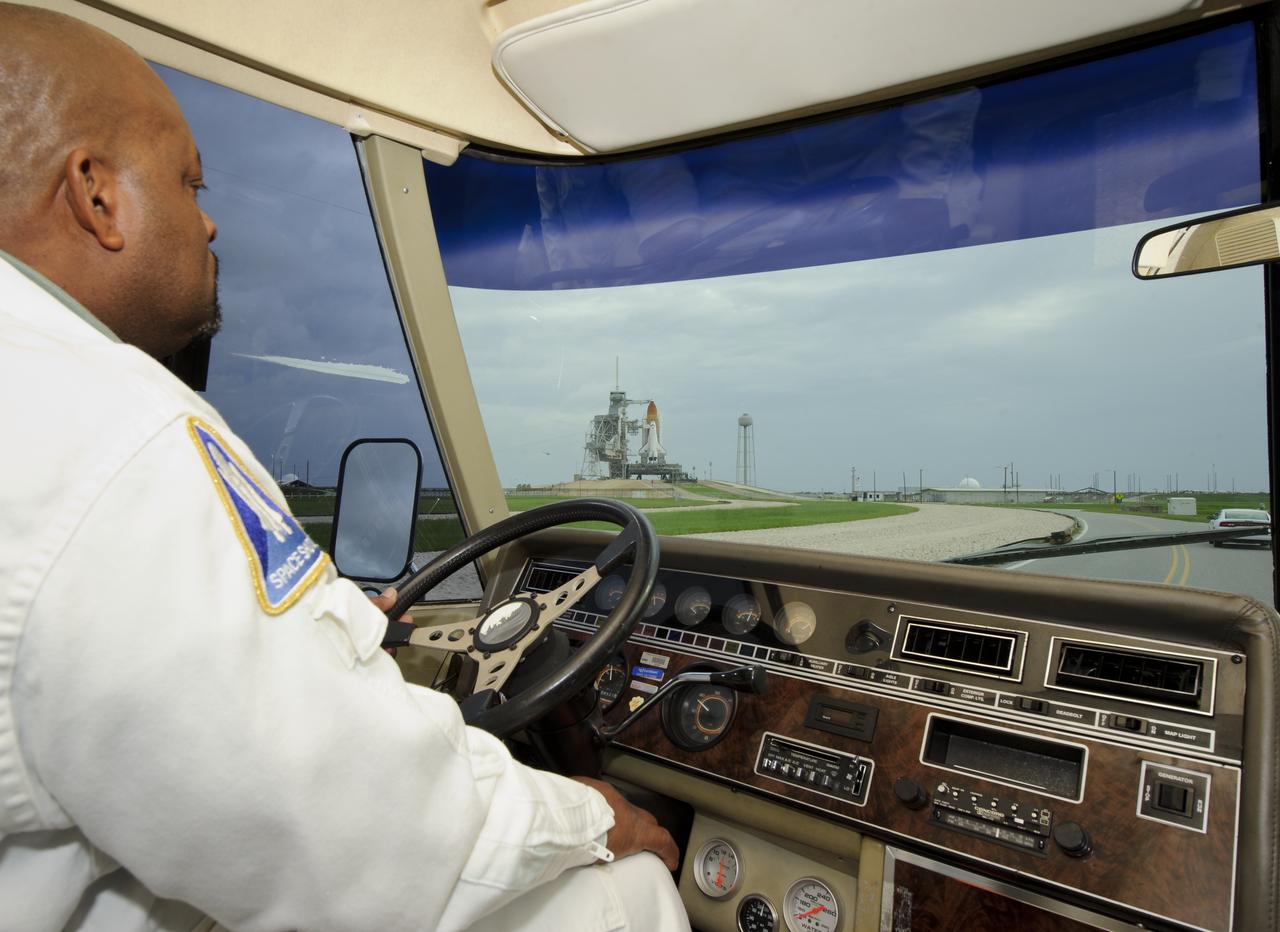
Hiawatha Brown, Heavy Equipment Operator for United Space Alliance (USA), approaches launch pad 39A at the NASA Kennedy Space Center as he drives the Astrovan carrying the STS-135 crew on Friday July 8, 2011 in Cape Canaveral, Fla. The Astrovan is a modified 1983 Airstream and has been in use to carry crews to the launch pads since 1984. A close look at the odometer shows it has a little more than 26,521 miles at the time of this photo. The launch of Atlantis, STS-135, is the final flight of the shuttle program, a 12-day mission to the International Space Station. Photo Credit: (NASA/Jerry Ross)

Teams at NASA's Kennedy Space Center in Florida practiced various emergency rescue training scenarios with the Artemis II crew, Friday, Dec. 19, 2025, ahead of the Artemis II mission. In the unlikely event of an emergency during launch countdown at Launch Complex 39B, personnel will be transported in mine-resistant ambush protected vehicles, or MRAPS, from the pad and to one of the triage site locations at Kennedy. Photo Credit: (NASA/Joel Kowsky)
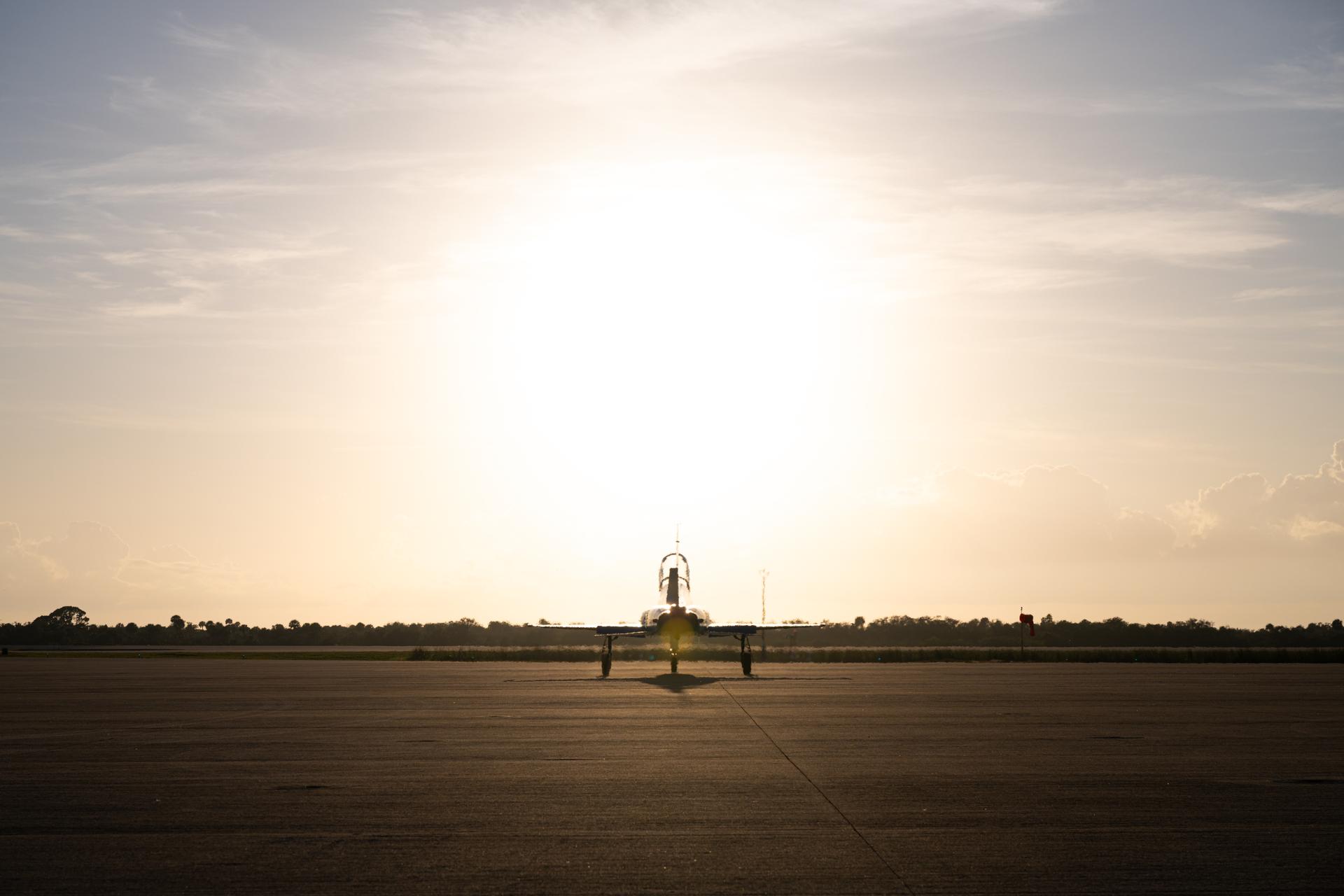
NASA Administrator Jared Isaacman participates in a formation flight with his personal F-5 aircraft, Monday, Jan. 5, 2026, at NASA’s Kennedy Space Center in Florida. Isaacman was joined by Lara Trump of Fox News flying in the back seat. Photo Credit: (NASA/John Kraus)
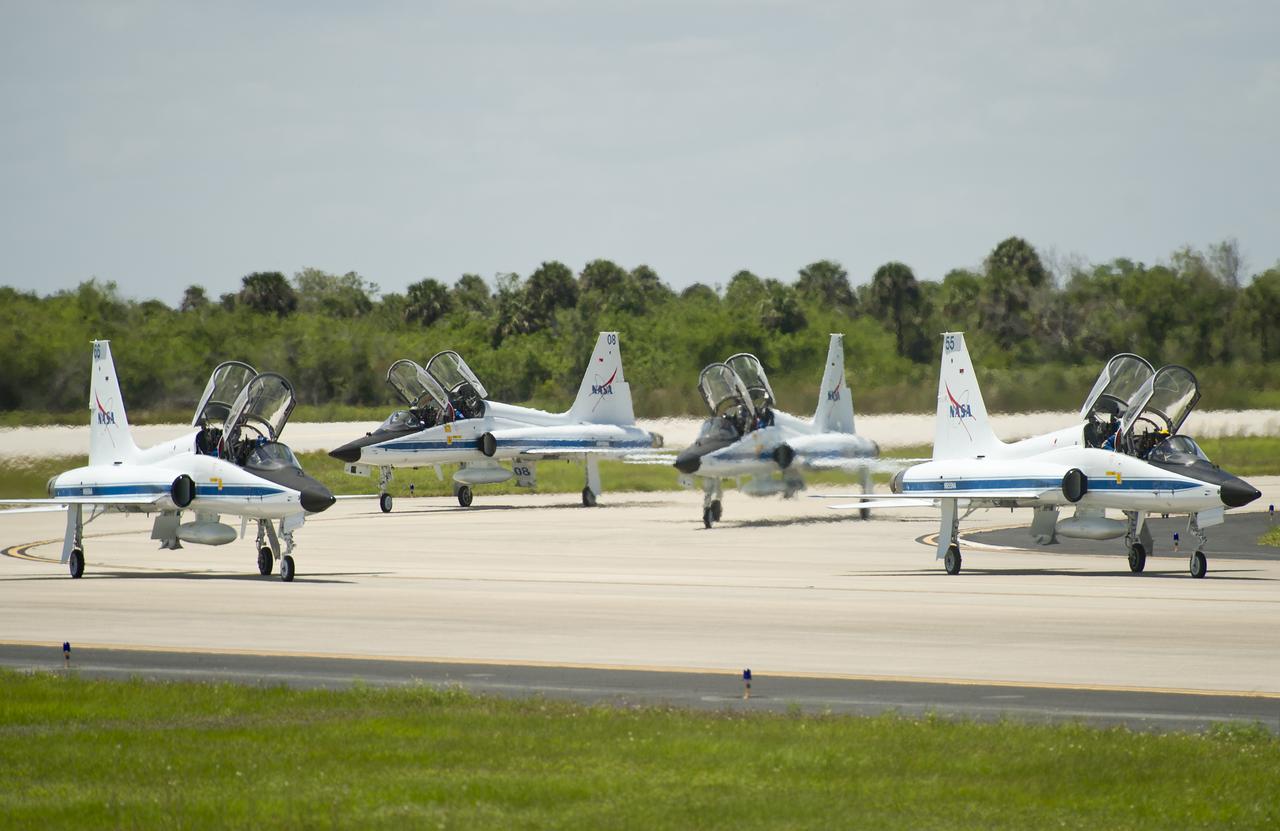
The STS-134 crew arrives in T-38 jets on Tuesday, April 26, 2011 at the NASA Kennedy Space Center Shuttle Landing Facility (SLF) in Cape Canaveral, Fla. During the 14-day mission, the space shuttle Endeavour and its crew will deliver the Alpha Magnetic Spectrometer (AMS) and spare parts including two S-band communications antennas, a high-pressure gas tank and additional spare parts for Dextre. Launch is targeted for Friday, April 29 at 3:47 p.m. EDT. Photo credit: (NASA/Bill Ingalls)
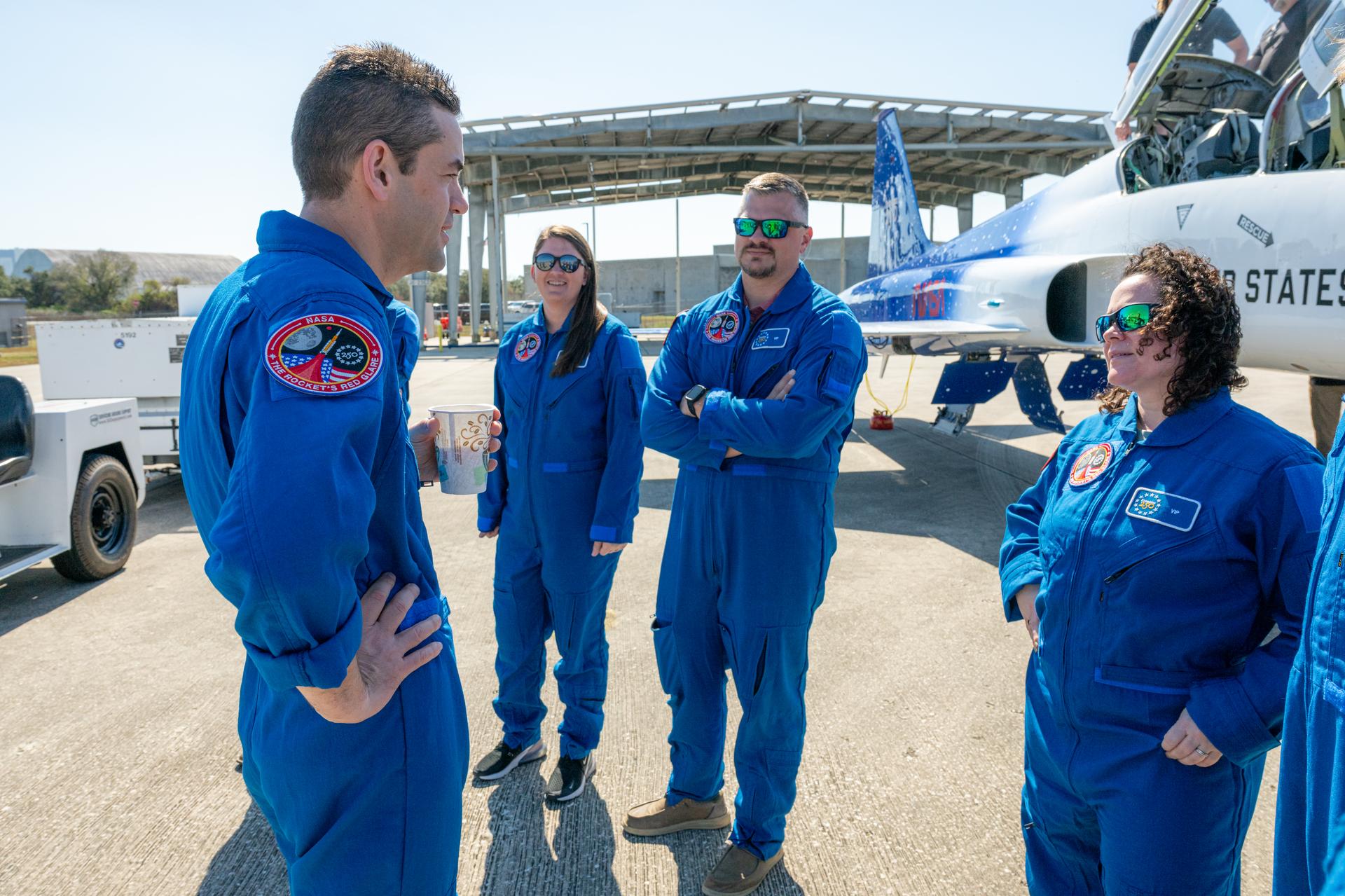
NASA Administrator Jared Isaacman, left, speaks with NASA employees Megan Vansant, chief architect and demolition program manager at NASA’s Marshall Space Flight Center, second from left; James Hamilton, propellant and pressurant manager at NASA’s Stennis Space Center, third from left; and Brittany Bouché, acting deputy chief of facility engineering services at NASA’s Stennis Space Center, right, following an employee incentive flying event using Isaacman's personal F-5 aircraft, Saturday, Feb. 21, 2026, at NASA’s Kennedy Space Center in Florida. Photo Credit: (NASA/John Kraus)
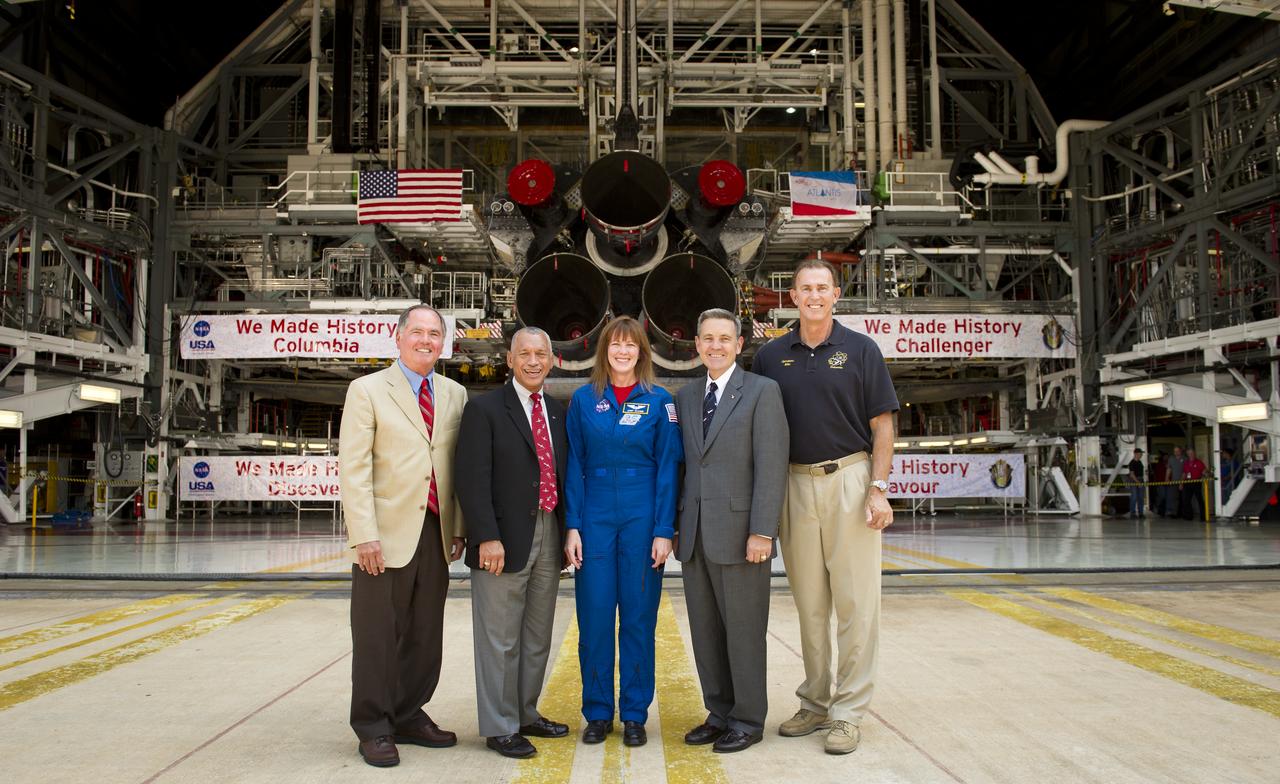
From left, Pilot of the first space shuttle mission, STS-1, Bob Crippen, NASA Administrator Charles Bolden, NASA Johnson Space Center Director of Flight Crew Operations, and Astronaut, Janet Kavandi, NASA Kennedy Space Center Director and former astronaut Bob Cabana, and Endeavour Vehicle Manager for United Space Alliance Mike Parrish pose for a photograph outside of the an Orbiter Processing Facility with the space shuttle Atlantis shortly after Bolden announced where four space shuttle orbiters will be permanently displayed at the conclusion of the Space Shuttle Program, Tuesday, April 12, 2011, at Kennedy Space Center in Cape Canaveral, Fla. The four orbiters, Enterprise, which currently is on display at the Smithsonian's Steven F. Udvar-Hazy Center near Washington Dulles International Airport, will move to the Intrepid Sea, Air & Space Museum in New York, Discovery will move to Udvar-Hazy, Endeavour will be displayed at the California Science Center in Los Angeles and Atlantis, in background, will be displayed at the Kennedy Space Center Visitor’s Complex. Photo Credit: (NASA/Bill Ingalls)
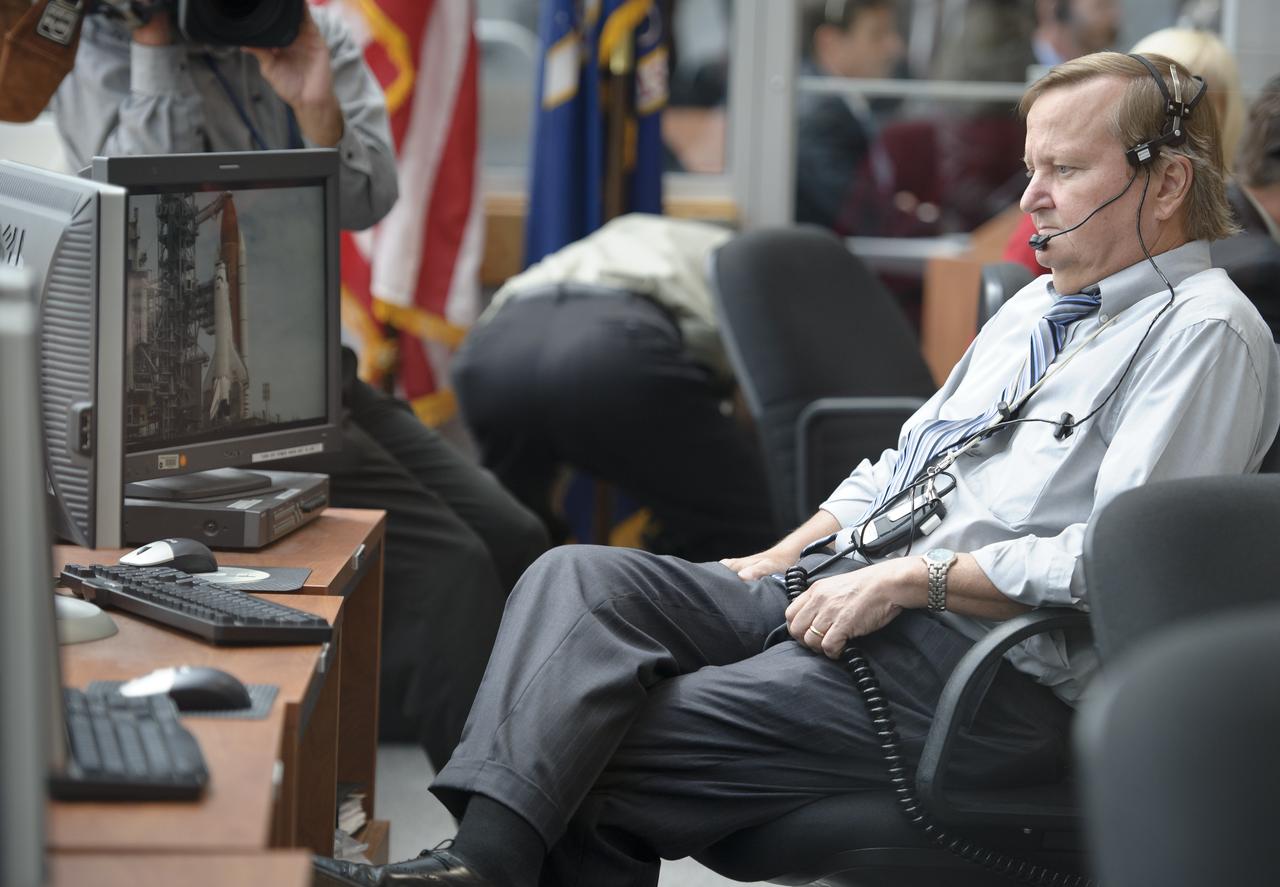
NASA Shuttle Launch Director Michael Leinbach monitors the launch countdown from Firing Room Four of the Launch Control Center (LCC) at NASA's Kennedy Space Center on Friday, July 8, 2011, in Cape Canaveral, Fla. The launch of Atlantis, STS-135, is the final flight of the shuttle program, a 12-day mission to the International Space Station. Photo Credit: (NASA/Bill Ingalls)
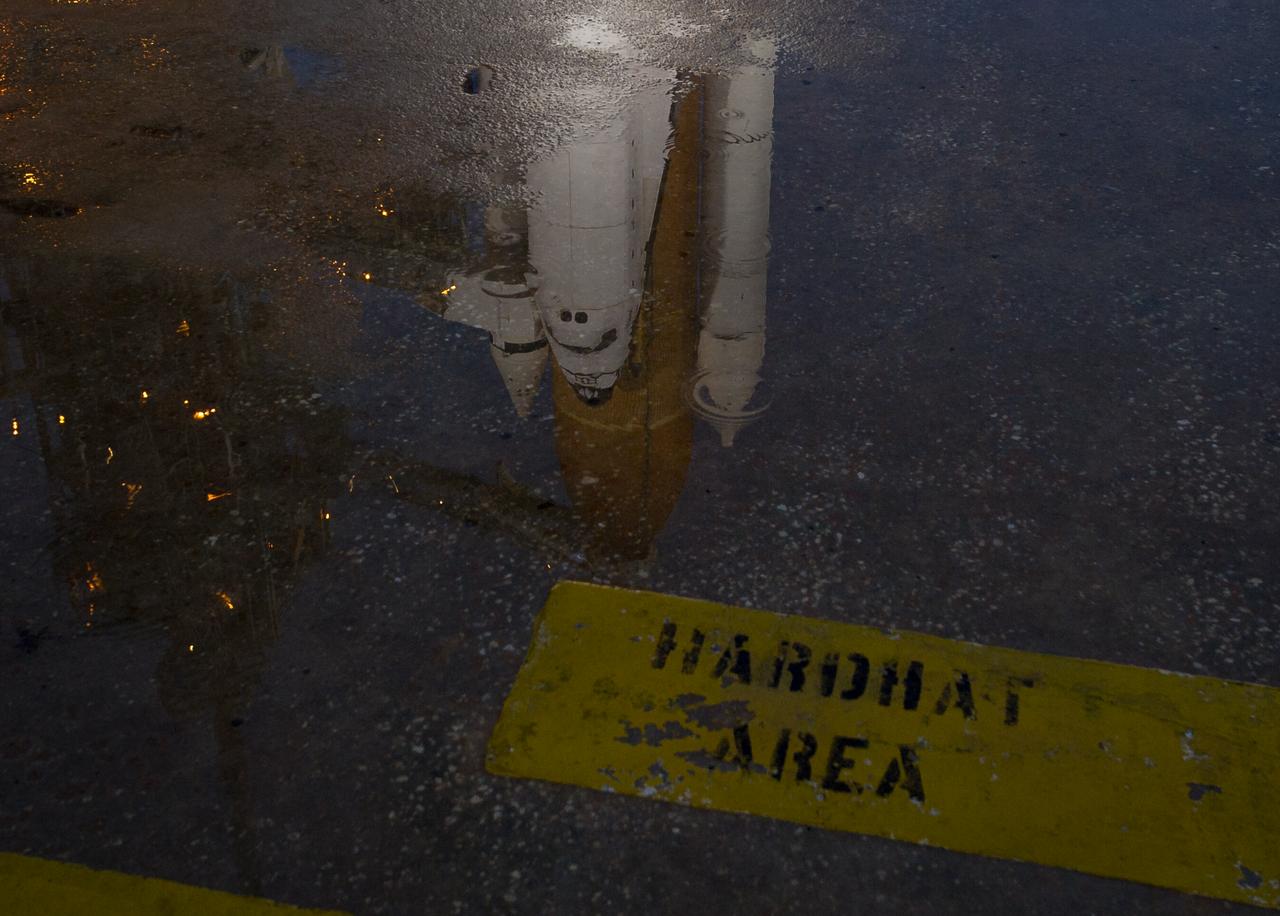
The space shuttle Atlantis is seen shortly after the rotating service structure (RSS) was rolled back at launch pad 39a, Thursday, July 7, 2011 at the NASA Kennedy Space Center in Cape Canaveral, Fla. Atlantis is set to liftoff Friday, July 8, on the final flight of the shuttle program, STS-135, a 12-day mission to the International Space Station. Photo Credit: (NASA/Bill Ingalls)
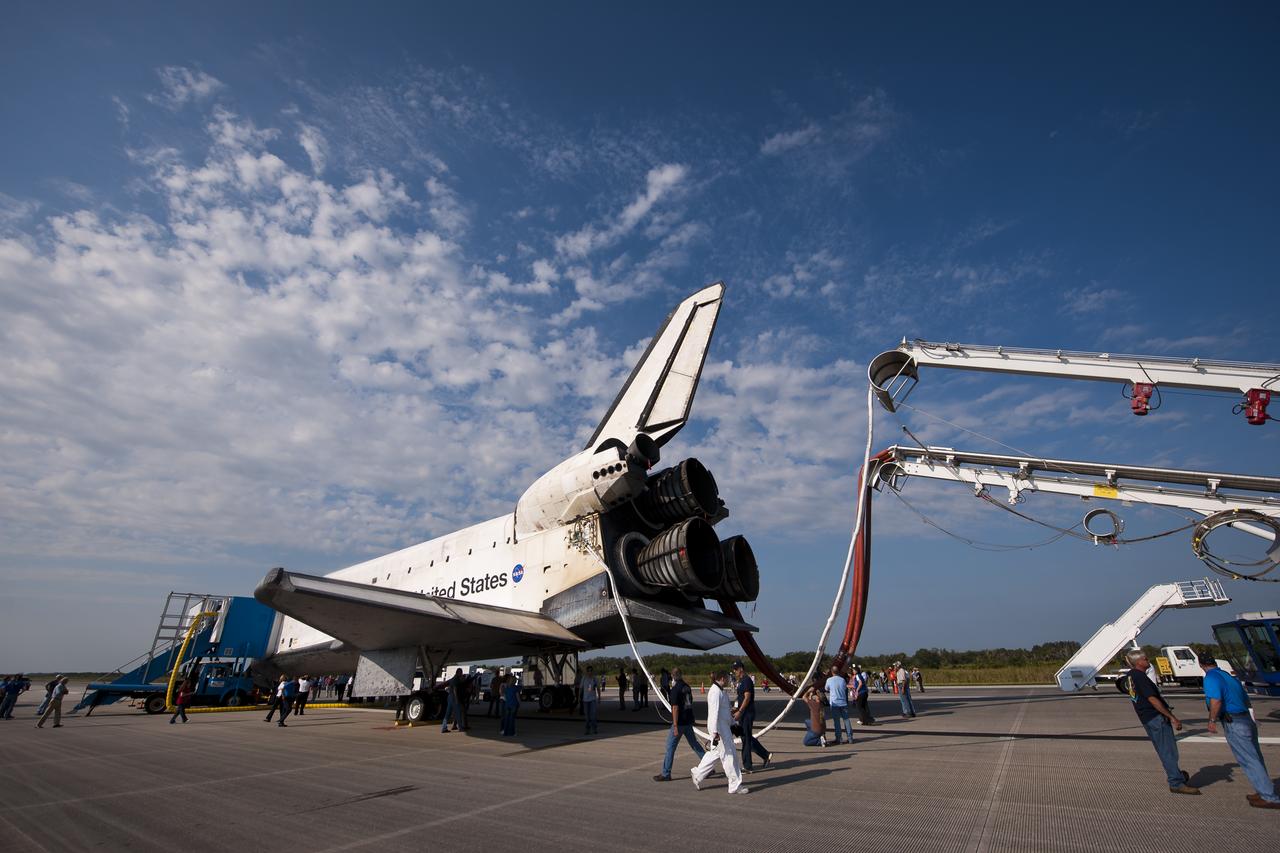
NASA and contractor personnel work on the space shuttle Atlantis at the Kennedy Space Center Shuttle Landing Facility (SLF) shortly after Atlantis (STS-135) landed early Thursday morning, July 21, 2011, in Cape Canaveral, Fla. Overall, Atlantis spent 307 days in space and traveled nearly 126 million miles during its 33 flights. Atlantis, the fourth orbiter built, launched on its first mission on Oct. 3, 1985. Photo Credit: (NASA/Bill Ingalls)
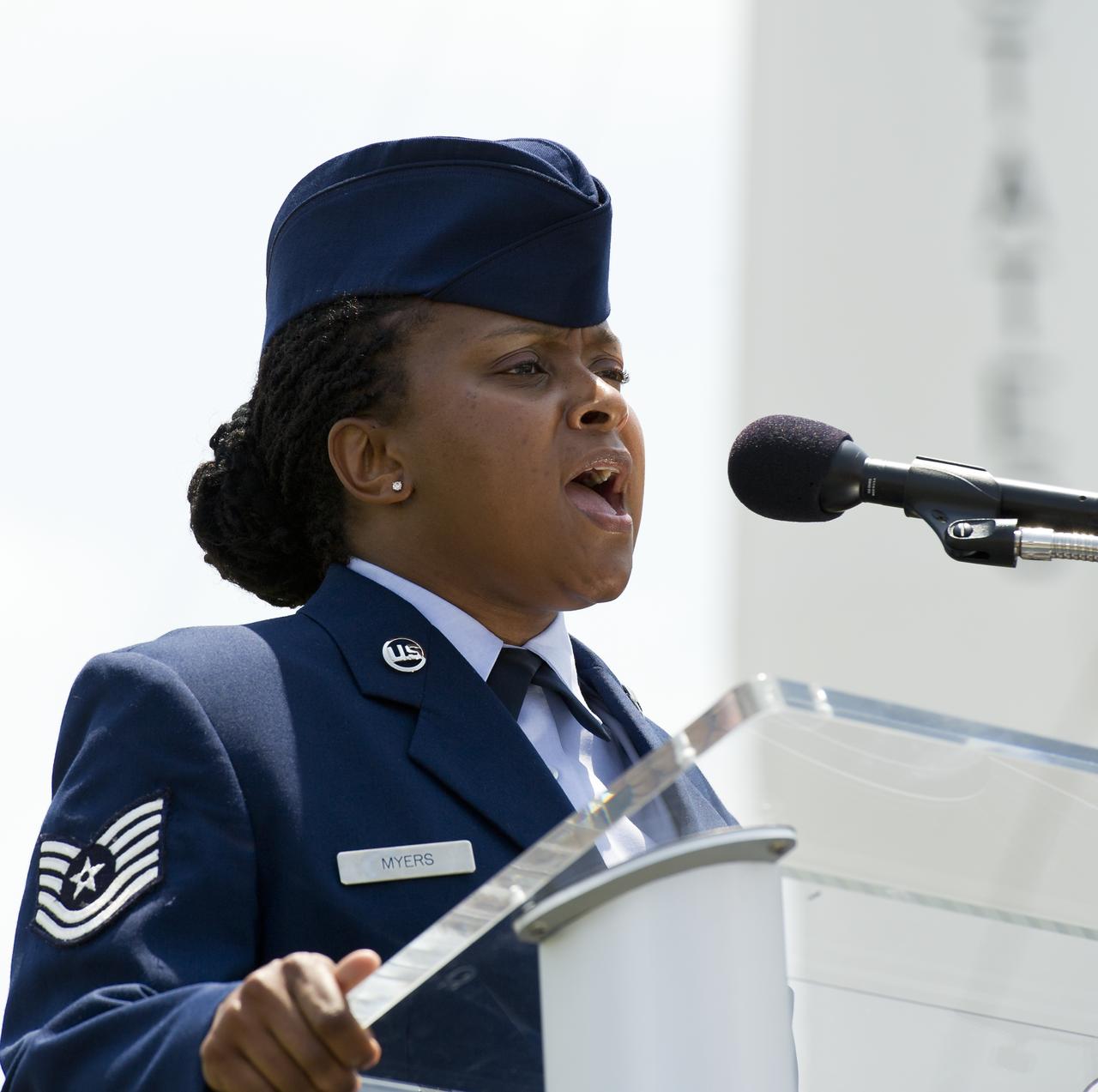
Altrameise Myers, Tech Sgt., 45th Space Wing sings the National Anthem during the start of a ceremony where two USPS stamps where unveiled to commemorate and celebrate 50 years of US Spaceflight and the MESSENGER program during an event, Wednesday, May 4, 2011 at the NASA Kennedy Space Center in Cape Canaveral, Fla. One stamp commemorates NASA’s Project Mercury, America’s first manned spaceflight program, and NASA astronaut Alan Shepard’s historic flight on May 5, 1961, aboard spacecraft Freedom 7. The other stamp draws attention to NASA’s unmanned MESSENGER mission, a scientific investigation of the planet Mercury. On March 17, 2011, MESSENGER became the first spacecraft to enter into orbit around Mercury. Photo Credit: (NASA/Bill Ingalls)
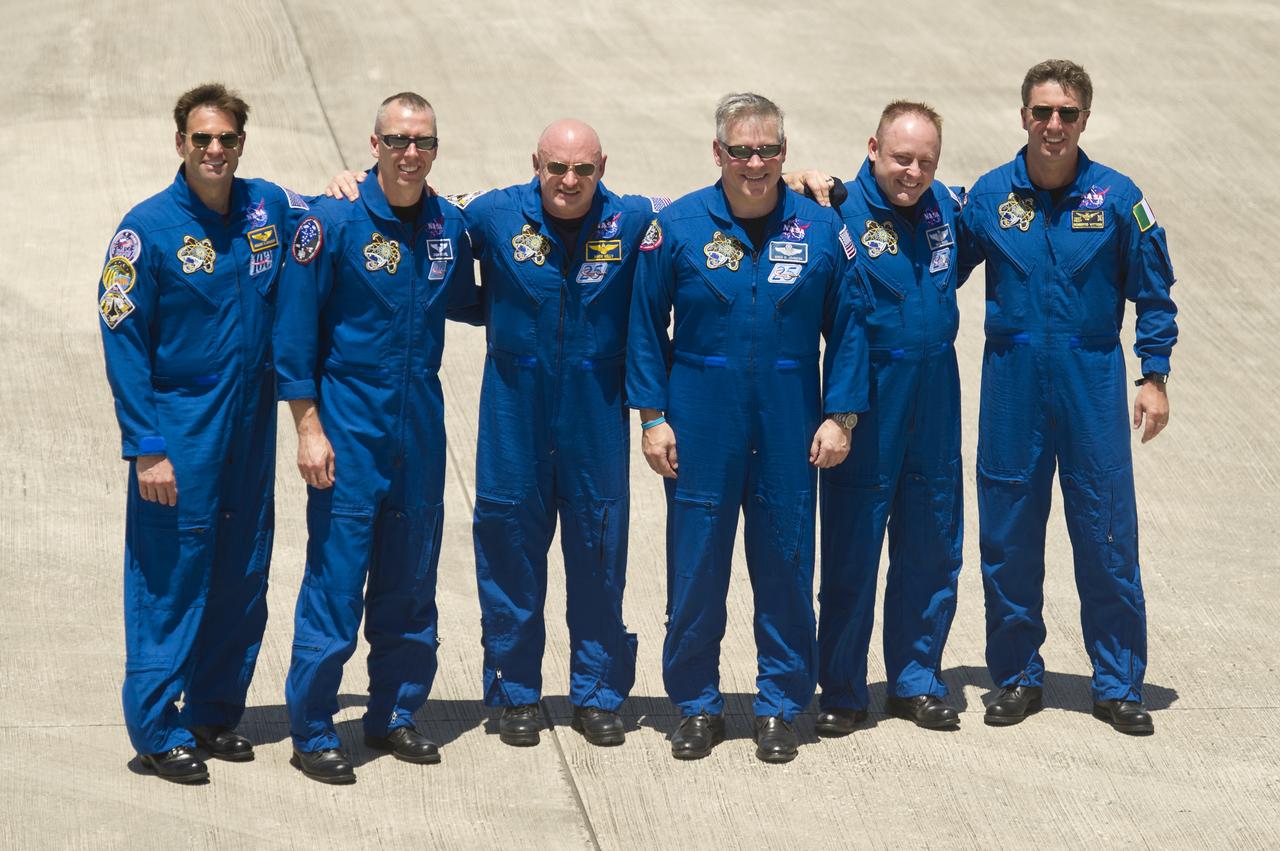
STS-134 Commander Mark Kelly, center, along with his crew pose for a photograph following their arrival to Kennedy Space Center, Tuesday, April 26, 2011, in Cape Canaveral, Fla. From left are Mission Specialists Greg Chamitoff, Andrew Feustel, Kelly, Pilot Greg H. Johnson, Mission Specialist Mike Fincke and European Space Agency astronaut Roberto Vittori. The six astronauts for space shuttle Endeavour's STS-134 mission to the International Space Station arrived at Kennedy's Shuttle Landing Facility (SLF) in T-38 jets early Tuesday afternoon. Photo Credit: (NASA/Bill Ingalls)
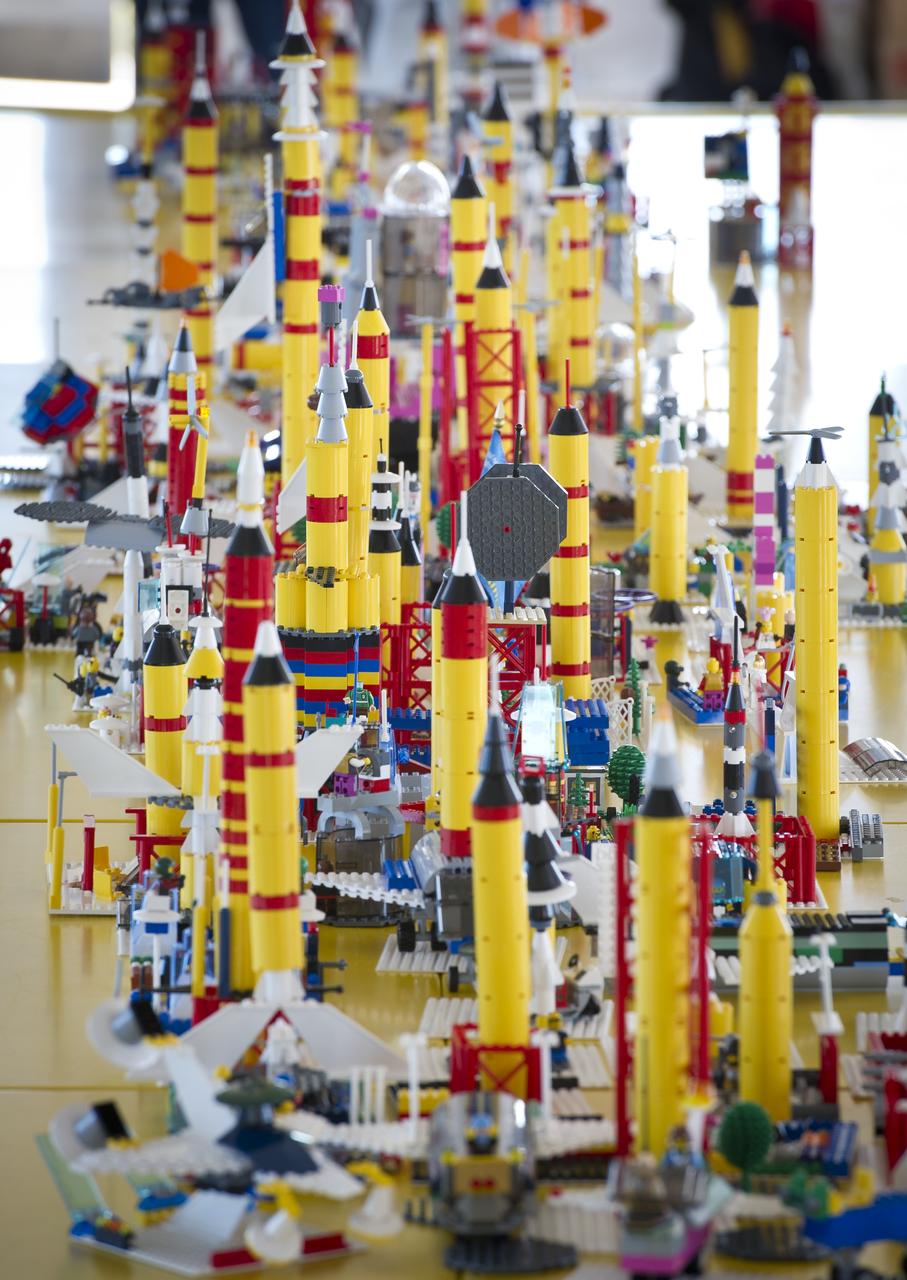
LEGOs are seen assembled by students as part of a “Build the Future” activity inside a tent that was set up on the launch viewing area at NASA's Kennedy Space Center in Cape Canaveral, Fla. on Wednesday, Nov. 3, 2010. NASA and The LEGO Group signed a Space Act Agreement to spark children's interest in science, technology, engineering and math (STEM). Photo Credit: (NASA/Bill Ingalls)
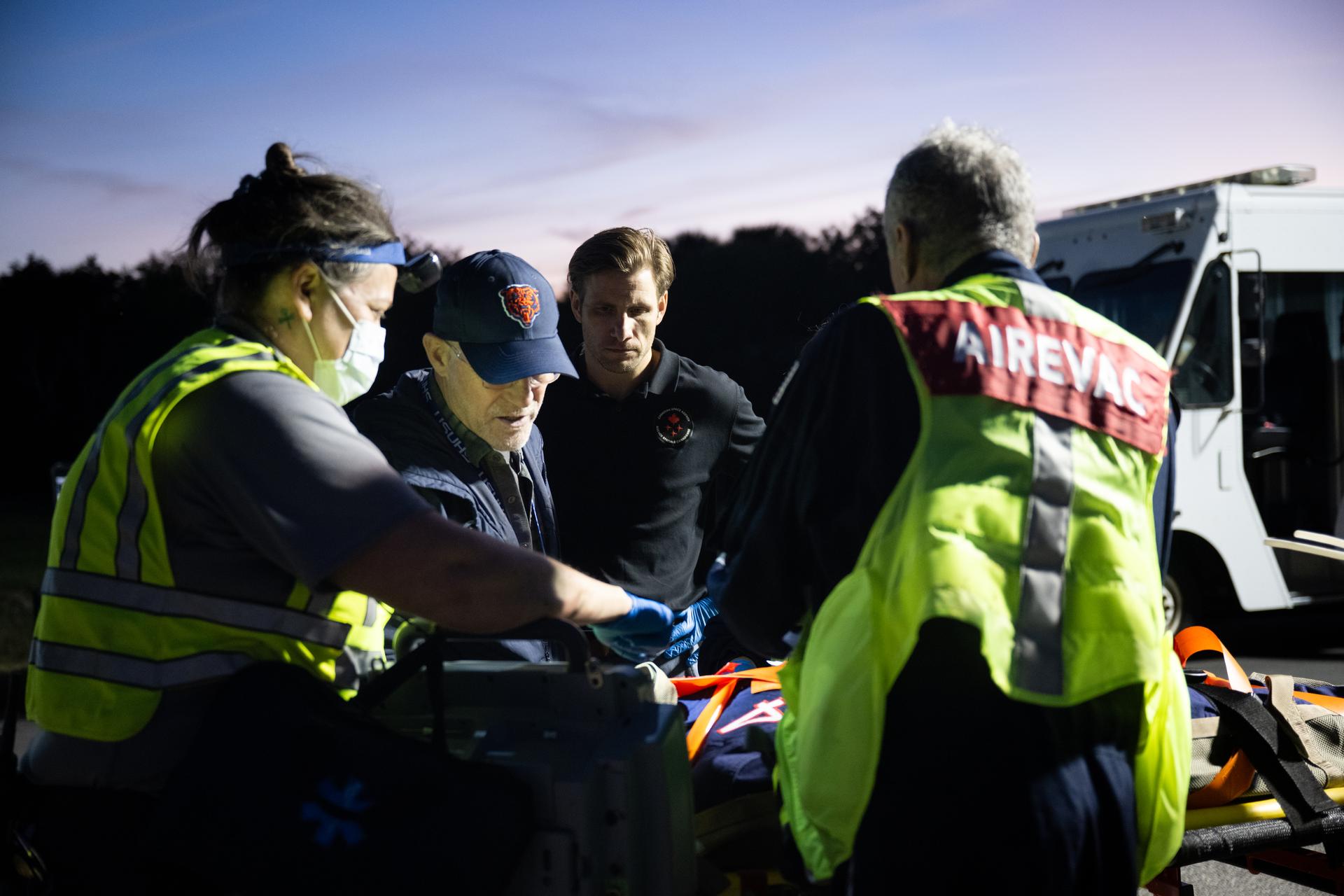
Teams at NASA's Kennedy Space Center in Florida practiced various emergency rescue training scenarios with the Artemis II crew, Friday, Dec. 19, 2025, ahead of the Artemis II mission. In the unlikely event of an emergency during launch countdown at Launch Complex 39B, personnel will be transported in mine-resistant ambush protected vehicles, or MRAPS, from the pad and to one of the triage site locations at Kennedy. Photo Credit: (NASA/Joel Kowsky)
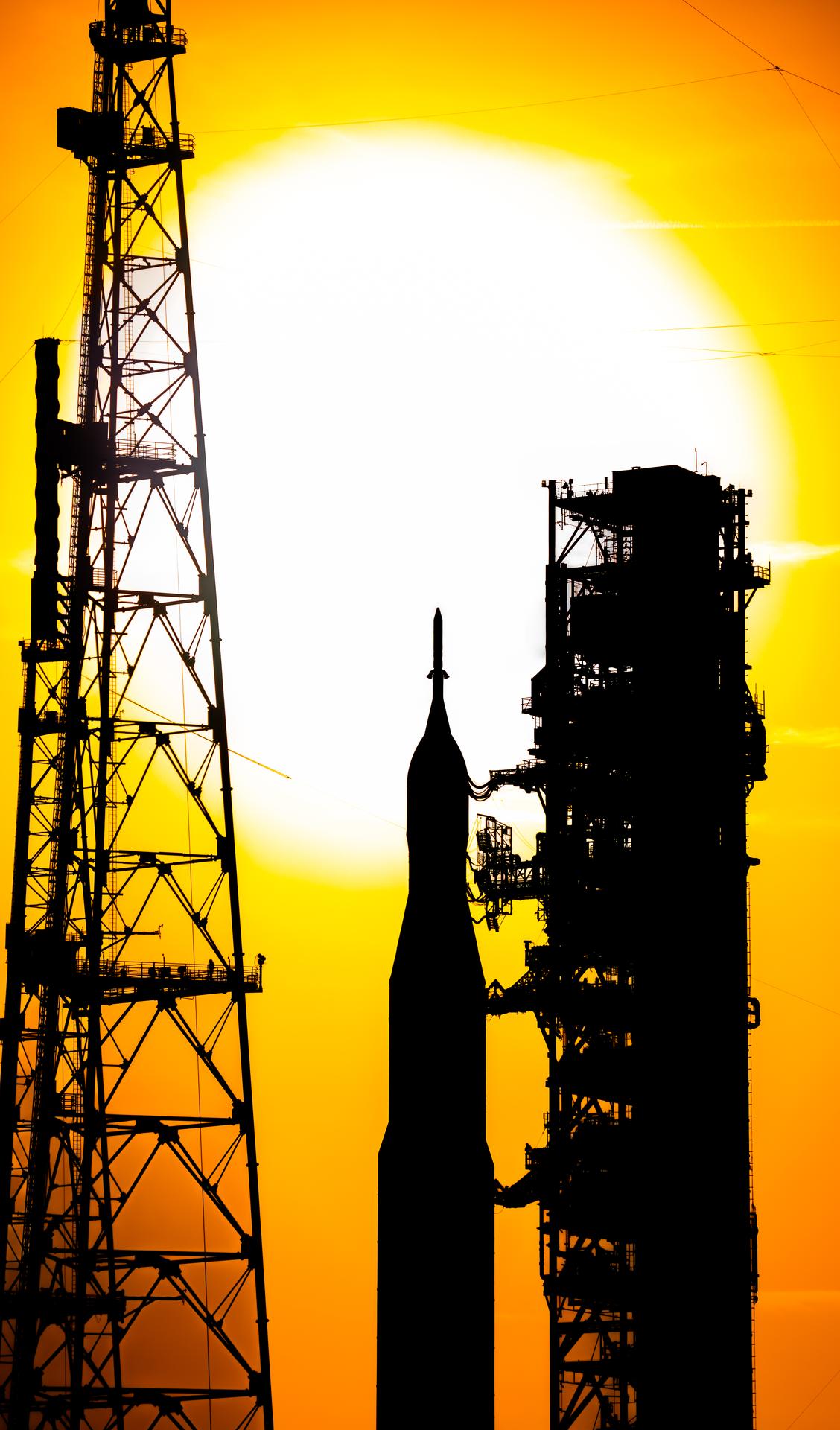
The sun sets as NASA’s crawler-transporter 2 carrying the agency’s Artemis II SLS (Space Launch System) rocket and Orion spacecraft, secured to the mobile launcher, rolls toward Launch Complex 39B at NASA’s Kennedy Space Center in Florida on 01/17/2026. The Artemis II test flight will take Commander Reid Wiseman, Pilot Victor Glover, and Mission Specialist Christina Koch from NASA and Mission Specialist Jeremy Hansen from the CSA (Canadian Space Agency), around the Moon and back to Earth no later than April 2026.
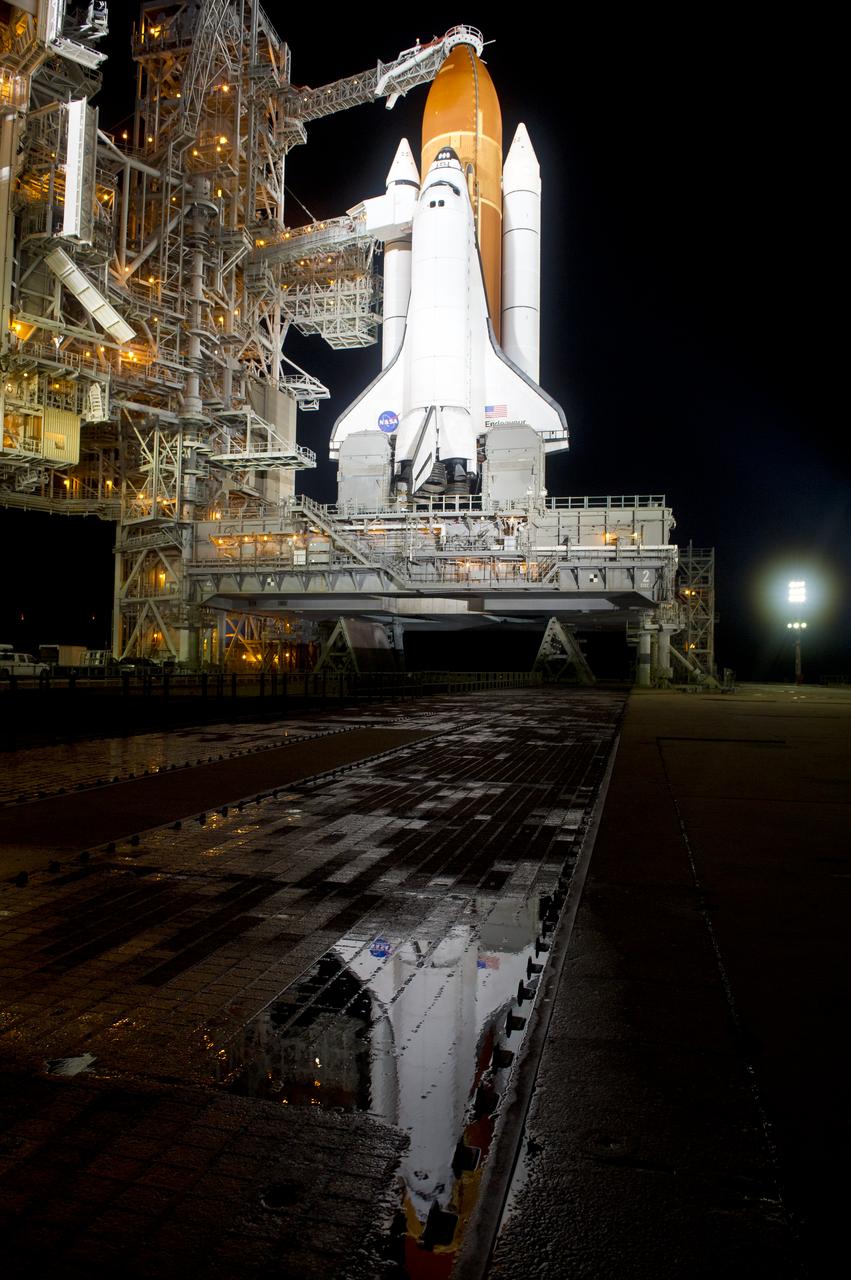
The space shuttle Endeavour is seen on launch pad 39a after the rollback of the Rotating Service Structure (RSS), Thursday, April 28, 2011, at Kennedy Space Center in Cape Canaveral, Fla. During the 14-day mission, Endeavour and the STS-134 crew will deliver the Alpha Magnetic Spectrometer (AMS) and spare parts including two S-band communications antennas, a high-pressure gas tank and additional spare parts for Dextre. Launch is targeted for Friday, April 29 at 3:47 p.m. EDT. Photo credit: (NASA/Bill Ingalls)
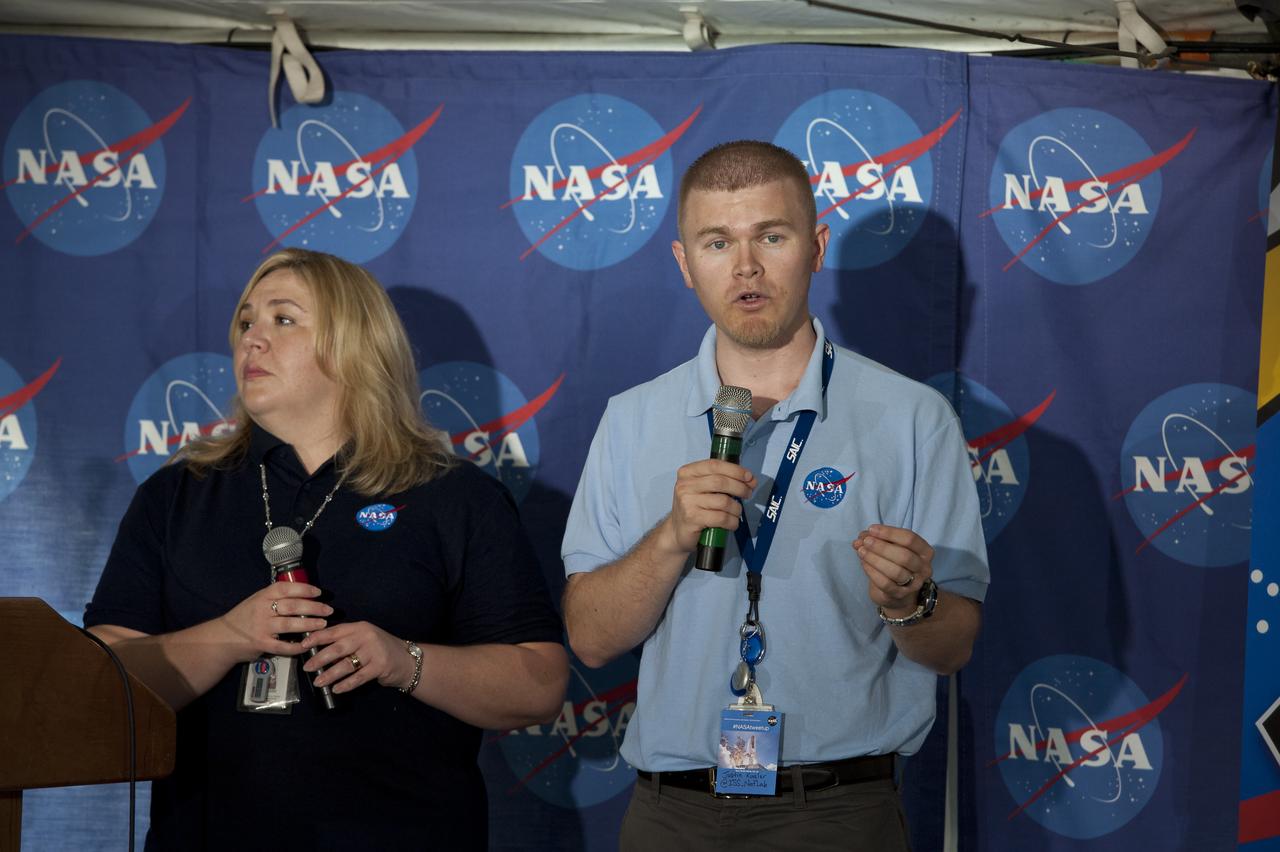
Tracy Thumm, left, and Justin Kugler both from the International Space Station Program Science Office at Johnson Space Center speak at the STS-135 Tweetup, Thursday, July 7, 2011, at Kennedy Space Center in Cape Canaveral, Fla. About 150 NASA Twitter followers attended the event. The STS-135 mission will be NASA's last space shuttle launch. Photo Credit: (NASA/Paul E. Alers)
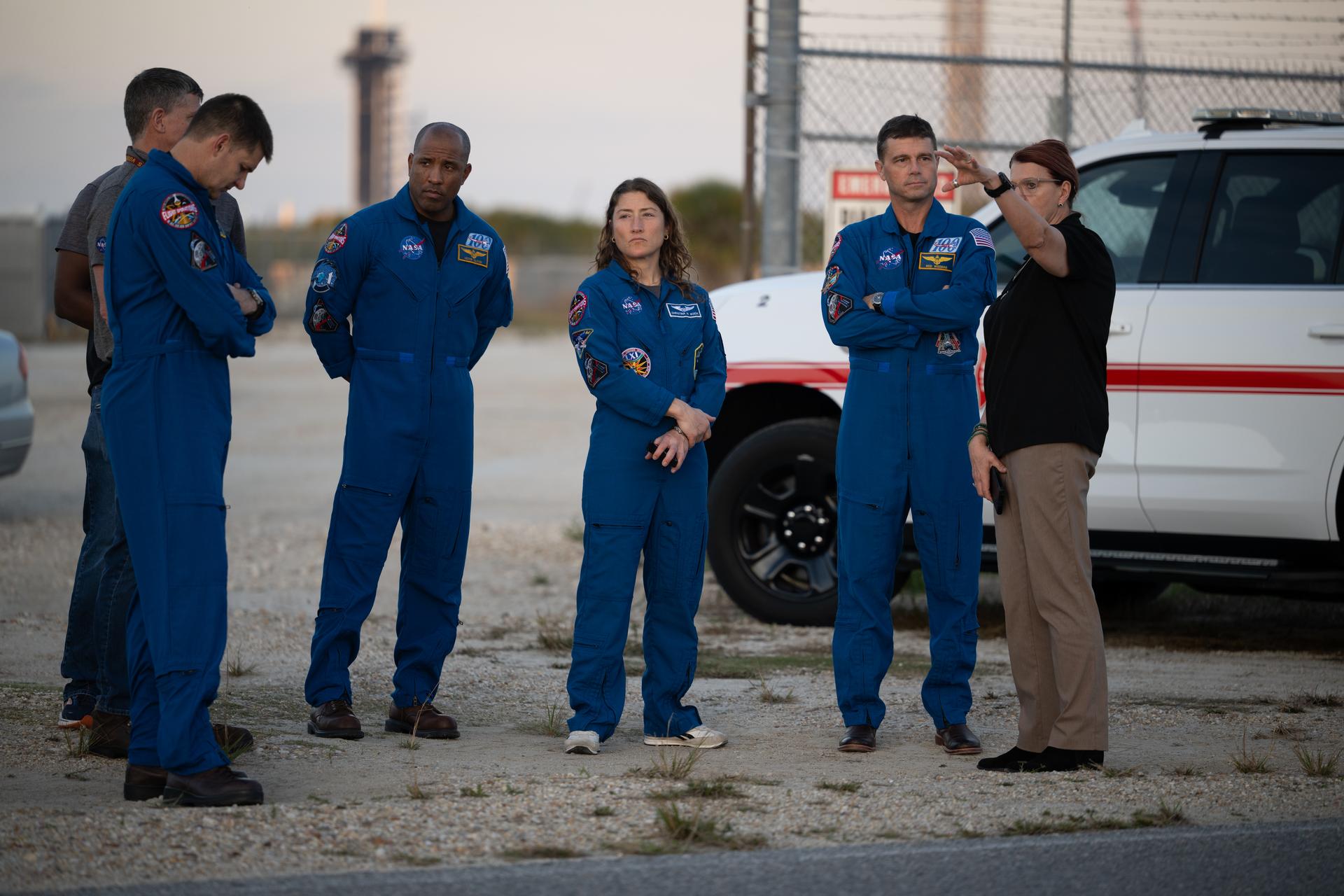
Charlie Blackwell-Thompson, Artemis II Launch Director, right, talks to NASA astronauts Reid Wiseman, Artemis II commander, second from right, Christina Koch, Artemis II mission specialist, Victor Glover, Artemis II pilot, and CSA (Canadian Space Agency) astronaut Jeremy Hansen, as teams at NASA's Kennedy Space Center in Florida practiced various emergency rescue training scenarios with the Artemis II crew, Friday, Dec. 19, 2025, ahead of the Artemis II mission. In the unlikely event of an emergency during launch countdown at Launch Complex 39B, personnel will be transported in mine-resistant ambush protected vehicles, or MRAPS, from the pad and to one of the triage site locations at Kennedy. Photo Credit: (NASA/Joel Kowsky)
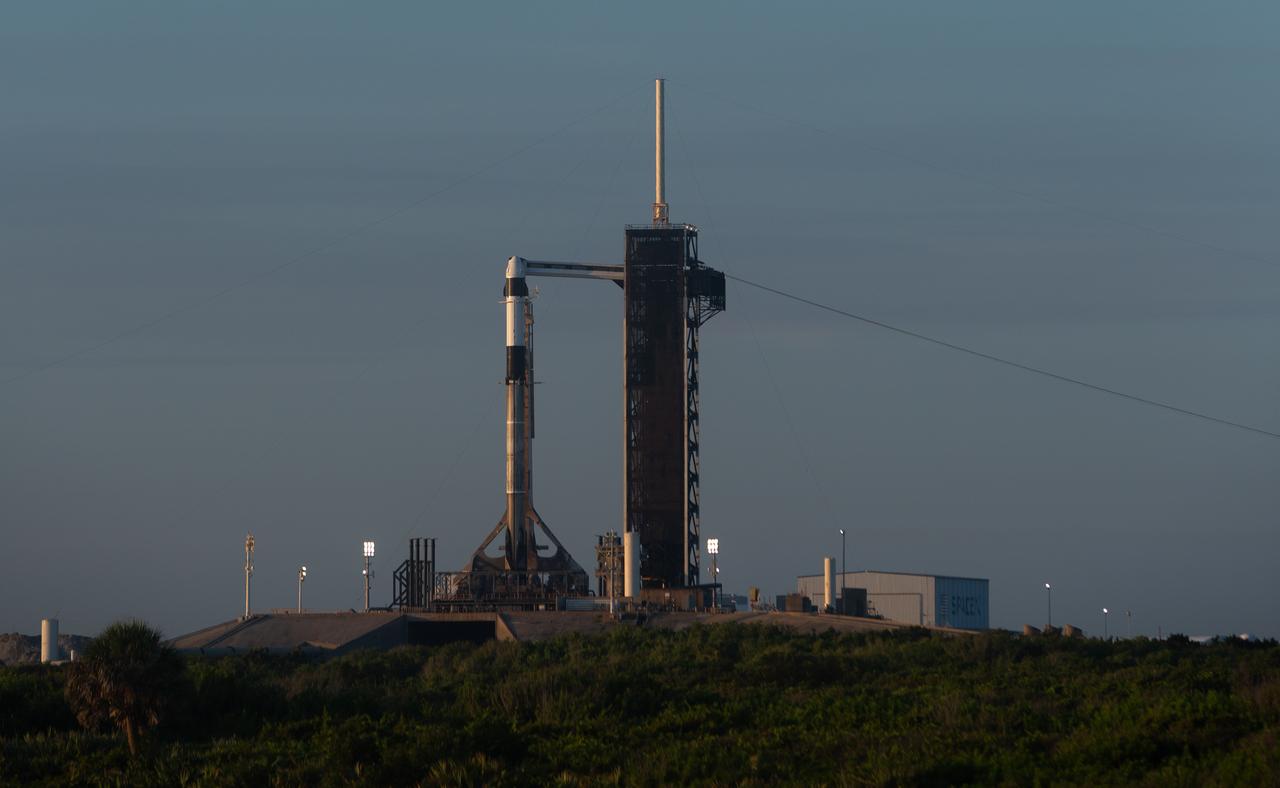
A SpaceX Falcon 9 rocket with the company's Dragon spacecraft on top is seen after sunrise on the launch pad at Launch Complex 39A as preparations continue for the Crew-11 mission, Thursday, July 31, 2025, at NASA's Kennedy Space Center in Florida. NASA’s SpaceX Crew-11 mission is the eleventh crew rotation mission of the SpaceX Dragon spacecraft and Falcon 9 rocket to the International Space Station as part of the agency’s Commercial Crew Program.NASA astronauts Zena Cardman, Mike Fincke, JAXA (Japan Aerospace Exploration Agency) astronaut Kimiya Yui, and Roscosmos cosmonaut Oleg Platonov are scheduled to launch at 11:43 a.m. EDT on Friday, August 1, from Launch Complex 39A at the NASA's Kennedy Space Center. Photo Credit: (NASA/Joel Kowsky)
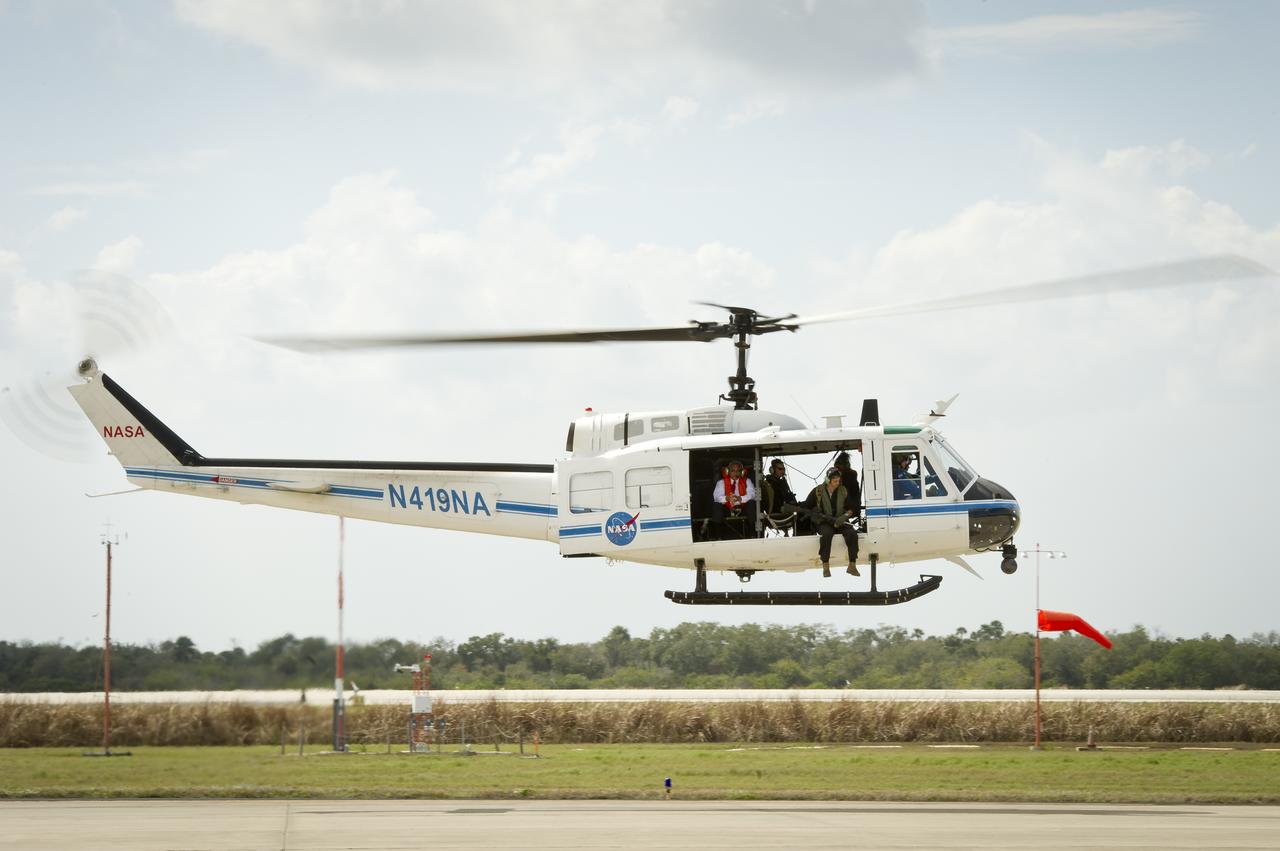
NASA Administrator Charles Bolden, seated left, takes off from the Shuttle Landing Facility (SLF) in a helicopter that will escort the crew of the space shuttle Discovery (STS-133) to launch pad 39a at the Kennedy Space Center, Thursday, Feb. 24, 2011, in Cape Canaveral, Fla. Discovery, on its 39th and final flight, is carrying the Italian-built Permanent Multipurpose Module (PMM), Express Logistics Carrier 4 (ELC4) and Robonaut 2, the first humanoid robot in space to the International Space Station. Photo Credit: (NASA/Bill Ingalls)
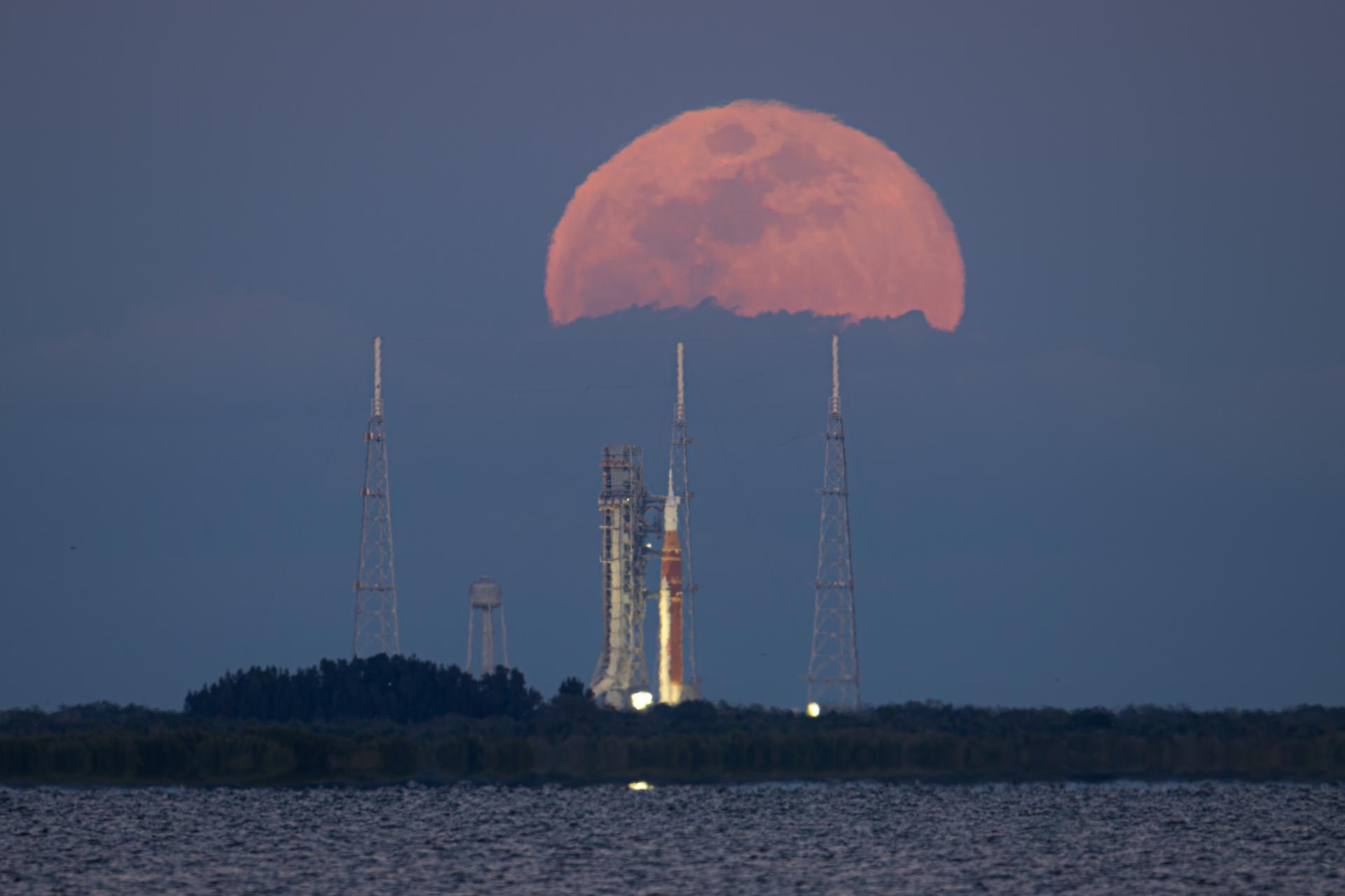
The full Moon rises behind NASA’s Artemis II Space Launch System (SLS) rocket and Orion spacecraft, standing atop a mobile launcher at Launch Complex 39B, Sunday, Feb. 1, 2026, at NASA’s Kennedy Space Center, as seen from Titusville, Fla. NASA’s Artemis II test flight will take Commander Reid Wiseman, Pilot Victor Glover, and Mission Specialist Christina Koch from NASA, and Mission Specialist Jeremy Hansen from the CSA (Canadian Space Agency), around the Moon and back to Earth no later than April 2026. Photo Credit: (NASA/John Kraus)
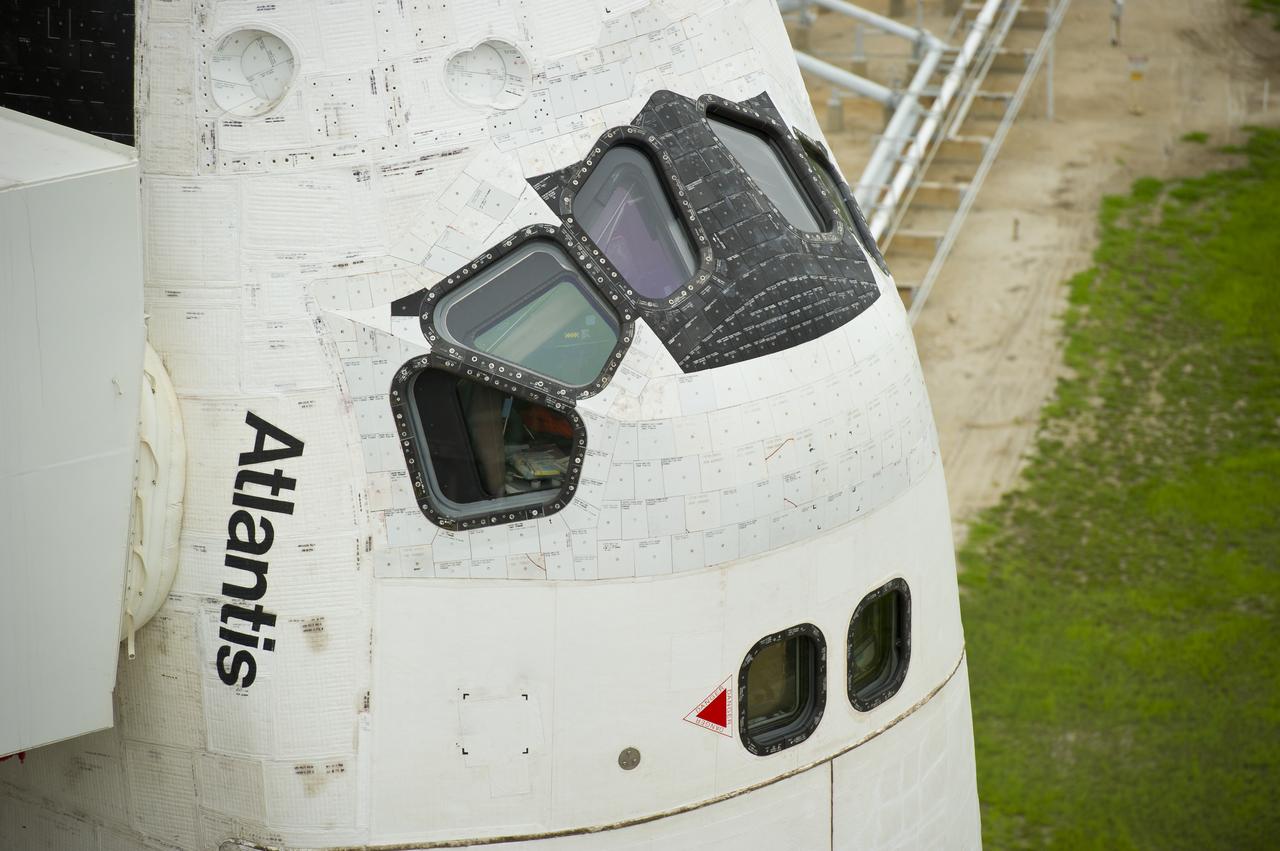
The space shuttle Atlantis is revealed as the rotating service structure (RSS) is rolled back at launch pad 39a on Thursday, July 7, 2011 at the NASA Kennedy Space Center in Cape Canaveral, Fla. Atlantis is set to liftoff Friday, July 8, on the final flight of the shuttle program, STS-135, a 12-day mission to the International Space Station. Photo Credit: (NASA/Bill Ingalls)
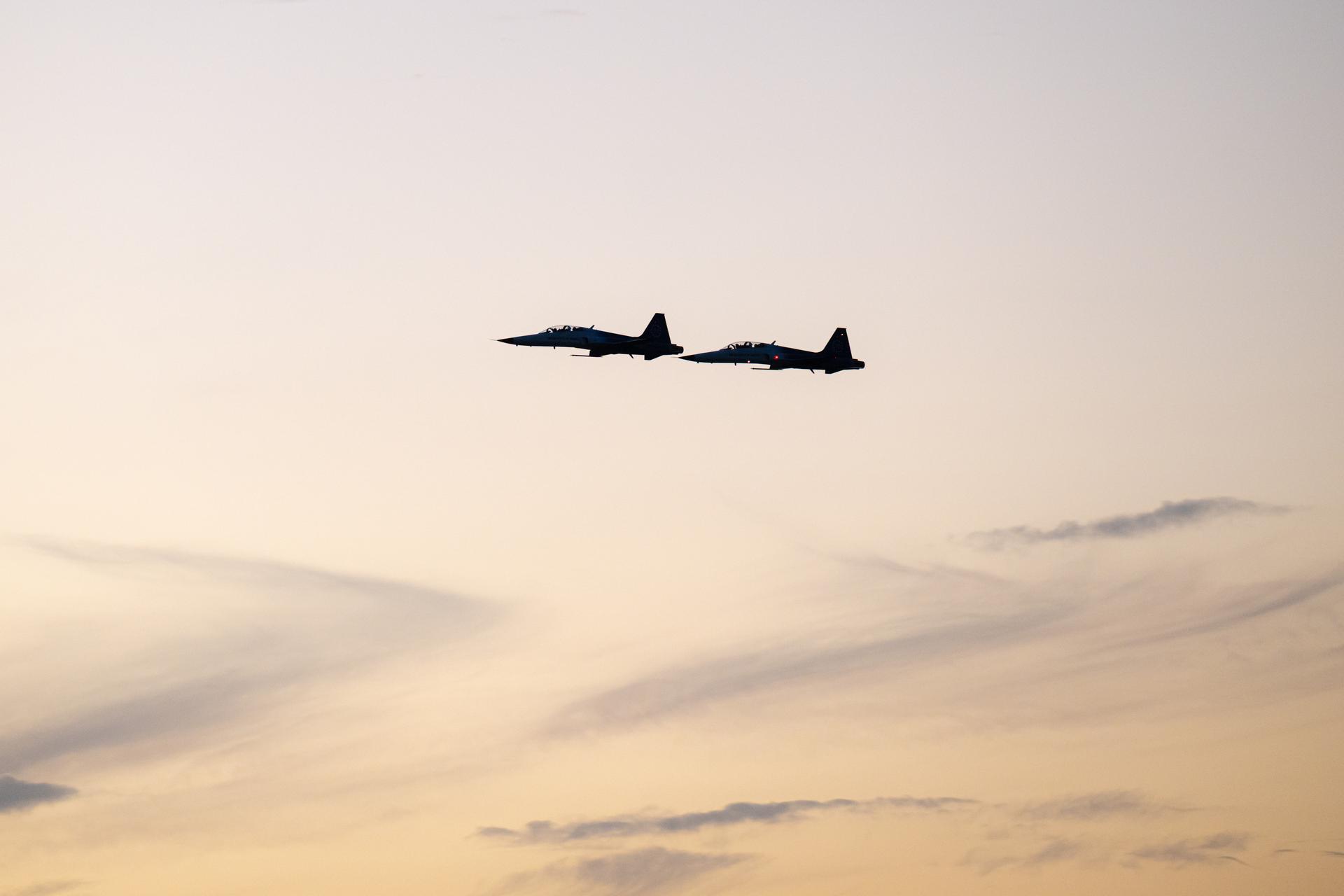
NASA Administrator Jared Isaacman participates in an employee incentive flying event using his personal F-5 aircraft with NASA employees Daniel Forrestel and Ashley Scharfenberg, Tuesday, Jan. 13, 2026, at NASA’s Kennedy Space Center in Florida. Photo Credit: (NASA/John Kraus)
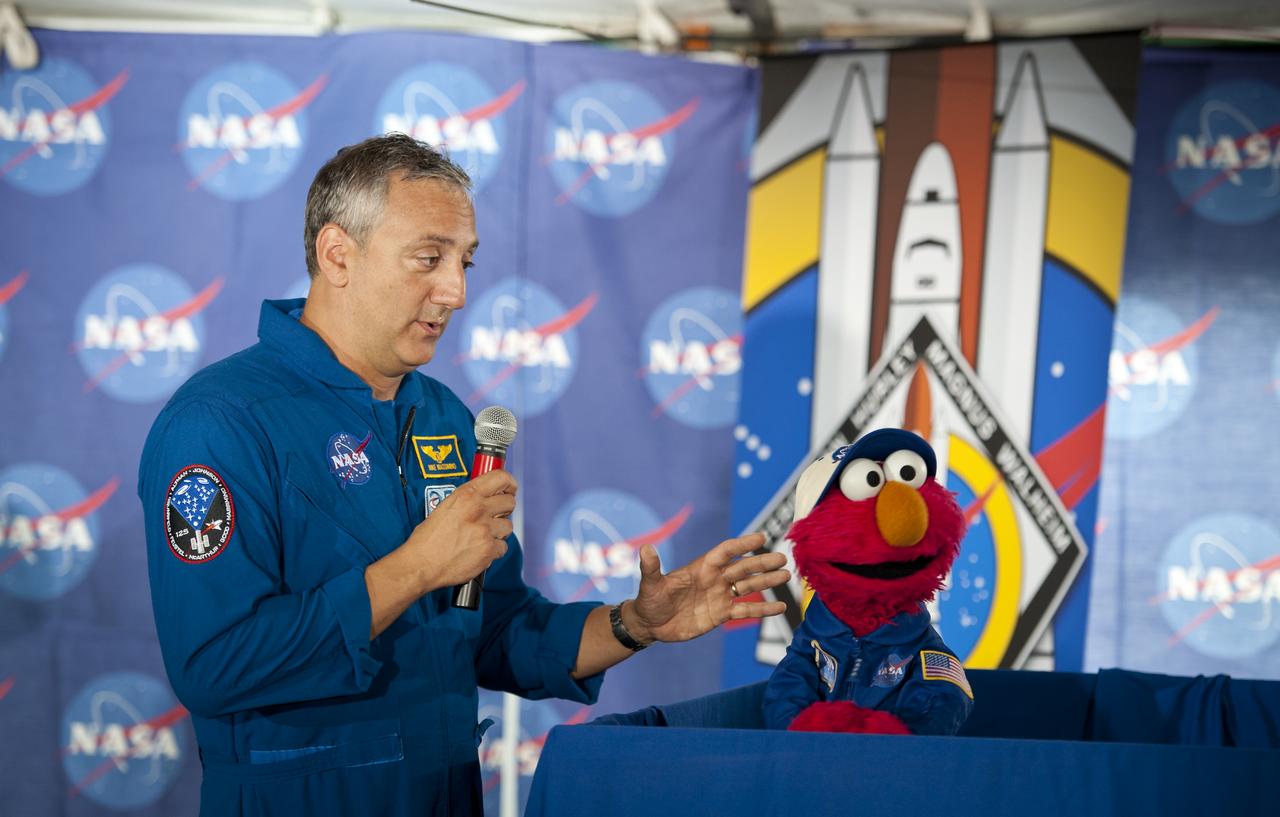
NASA astronaut Mike Massimino, left, and Sesame Street's Elmo speak at the STS-135 Tweetup, Thursday, July 7, 2011, at Kennedy Space Center in Cape Canaveral, Fla. Elmo asked the astronauts questions about living and working in space. About 150 NASA Twitter followers attended the event. The STS-135 mission will be NASA's last space shuttle launch. Photo Credit: (NASA/Paul E. Alers)
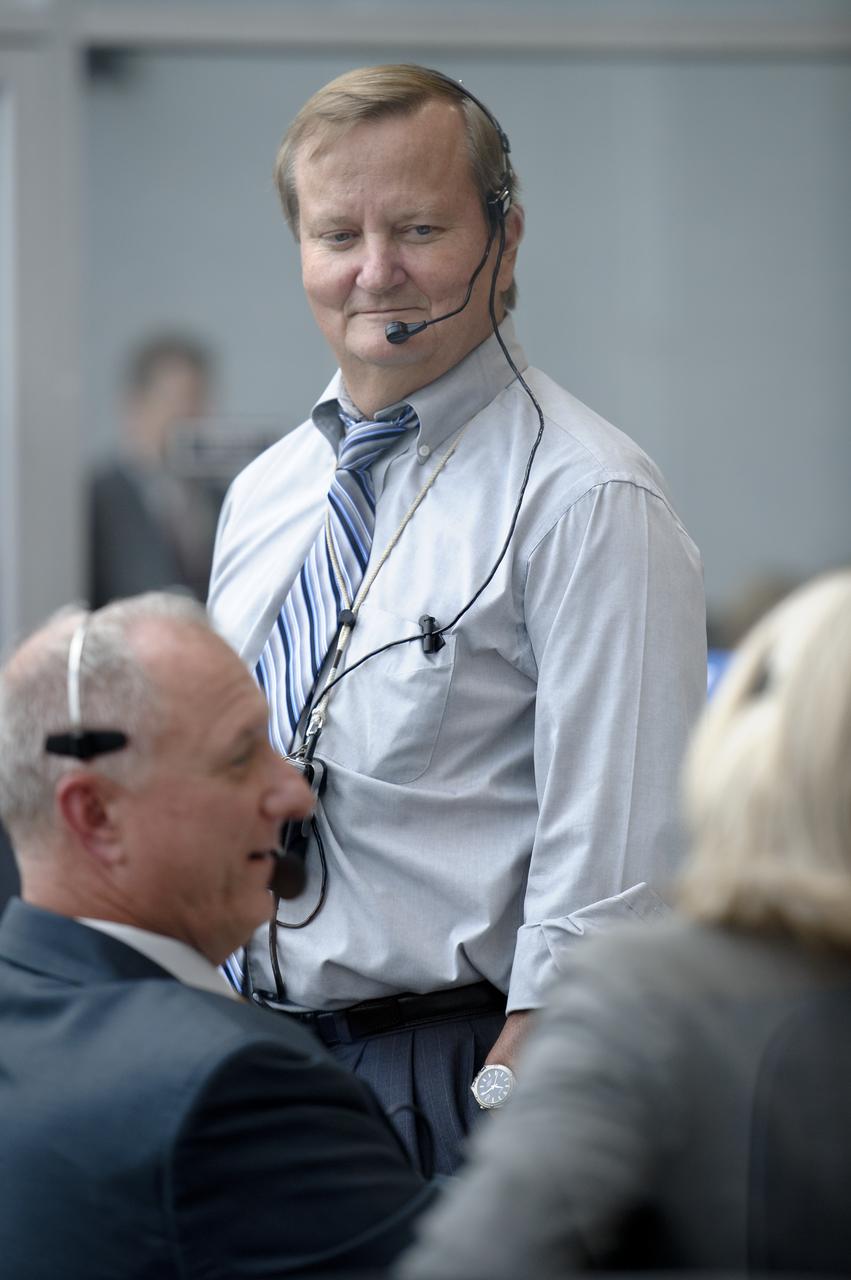
NASA Shuttle Launch Director Michael Leinbach talks with other members of teh launch team as they monitor the launch countdown from Firing Room Four of the Launch Control Center (LCC) at NASA's Kennedy Space Center on Friday, July 8, 2011, in Cape Canaveral, Fla. The launch of Atlantis, STS-135, is the final flight of the shuttle program, a 12-day mission to the International Space Station. Photo Credit: (NASA/Bill Ingalls)
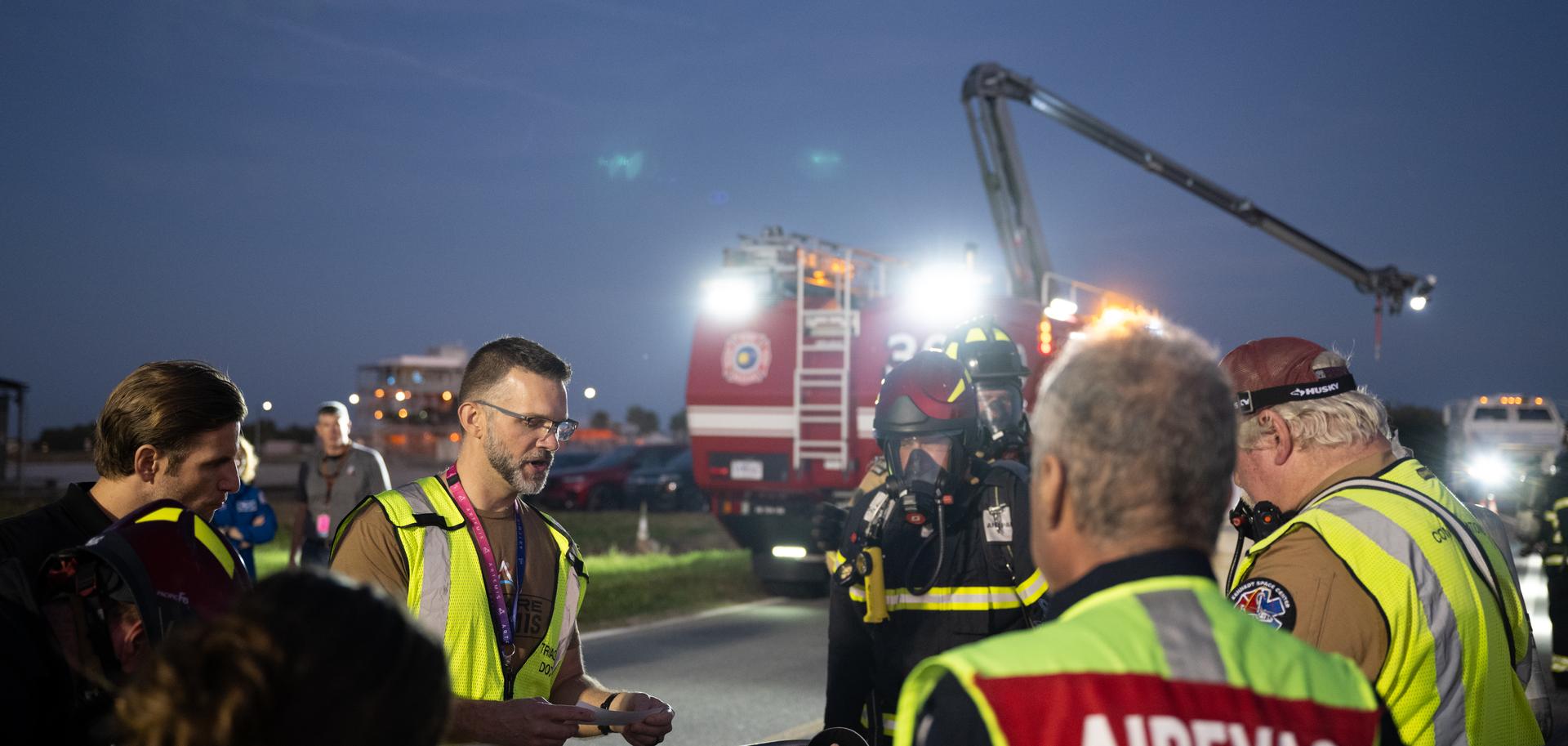
Teams at NASA's Kennedy Space Center in Florida practiced various emergency rescue training scenarios with the Artemis II crew, Friday, Dec. 19, 2025, ahead of the Artemis II mission. In the unlikely event of an emergency during launch countdown at Launch Complex 39B, personnel will be transported in mine-resistant ambush protected vehicles, or MRAPS, from the pad and to one of the triage site locations at Kennedy. Photo Credit: (NASA/Joel Kowsky)
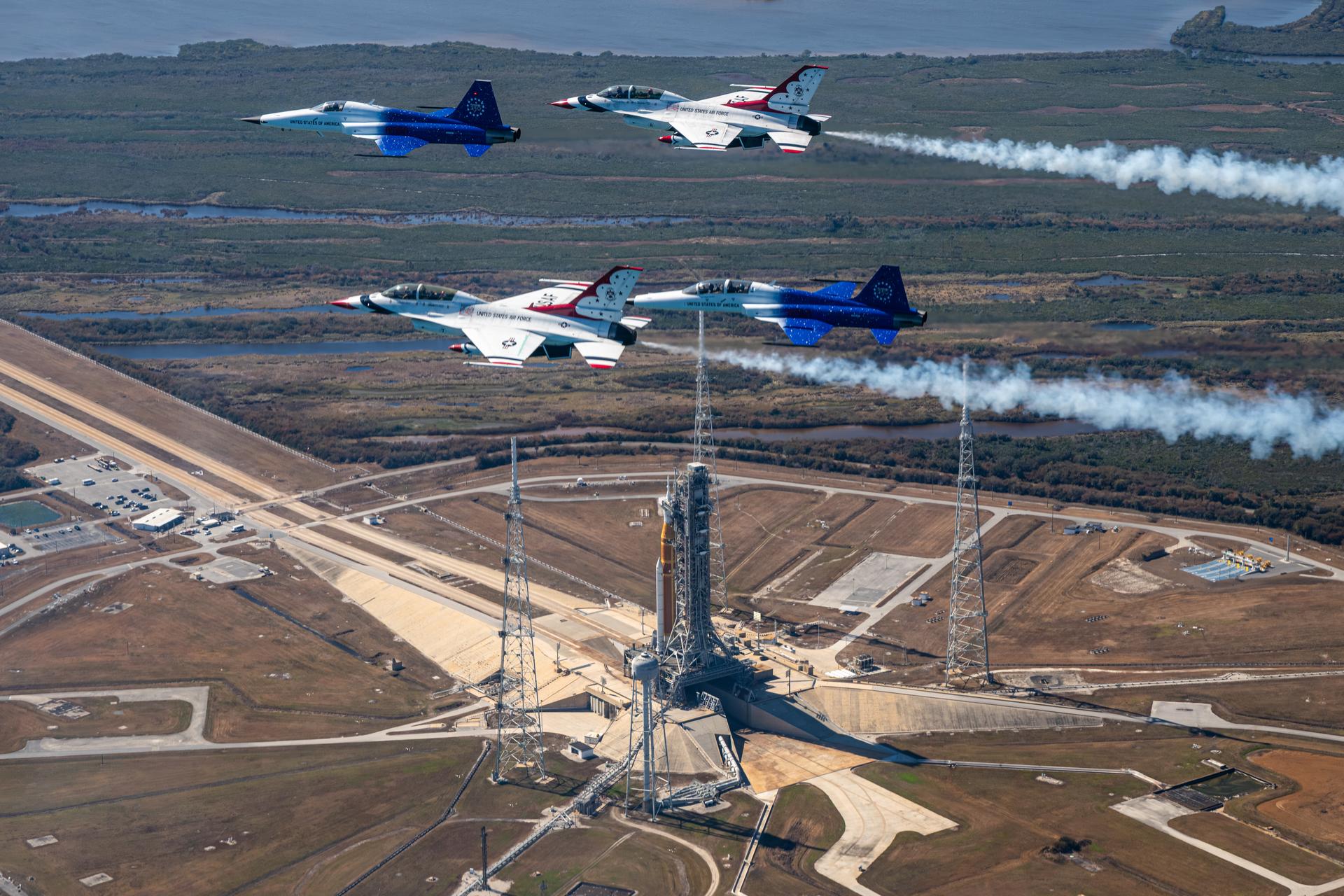
NASA Administrator Jared Isaacman conducts a formation flight with two of his personal F-5 aircraft, piloted by Isaacman and Sean Gustafson, senior advisor to the administrator, and two U.S. Air Force Thunderbirds F-16s, piloted by Thunderbird 7 Lt. Col. Tyler Keener and Thunderbird 8 Maj. Samuel Larson, Sunday, Feb. 8, 2026, at NASA’s Kennedy Space Center in Florida. The formation flew near the Artemis II SLS (Space Launch System) rocket and Orion spacecraft at Launch Complex 39B and the surrounding area at Kennedy. Photo Credit: (NASA/John Kraus)
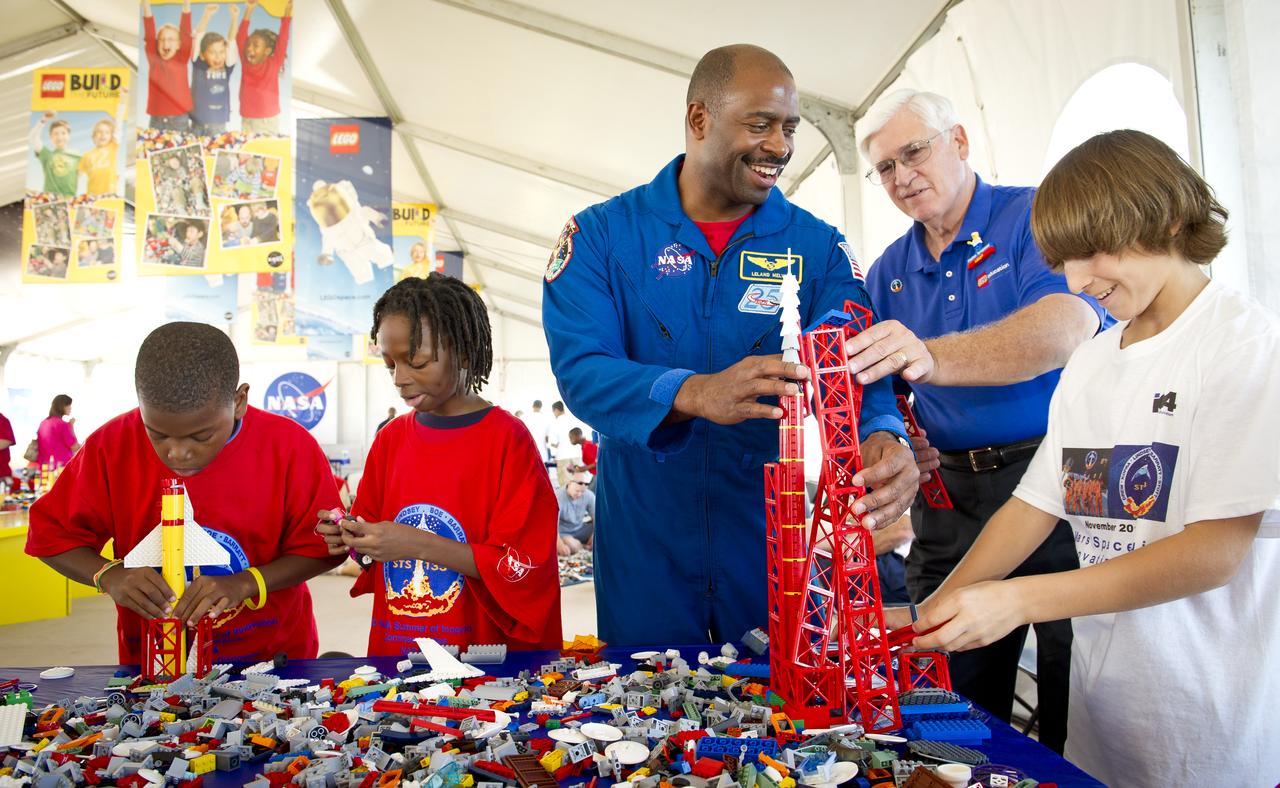
Associate Administrator for Education and Astronaut Leland Melvin, left, and President of LEGO Education USA Stephan Turnipseed, right, help students during the “Build the Future” activity where students created their vision of the future in space with LEGO bricks and elements inside a tent that was set up on the launch viewing area at NASA's Kennedy Space Center in Cape Canaveral, Fla. on Monday, Nov. 1, 2010. NASA and The LEGO Group signed a Space Act Agreement to spark children's interest in science, technology, engineering and math (STEM). Photo Credit: (NASA/Bill Ingalls)
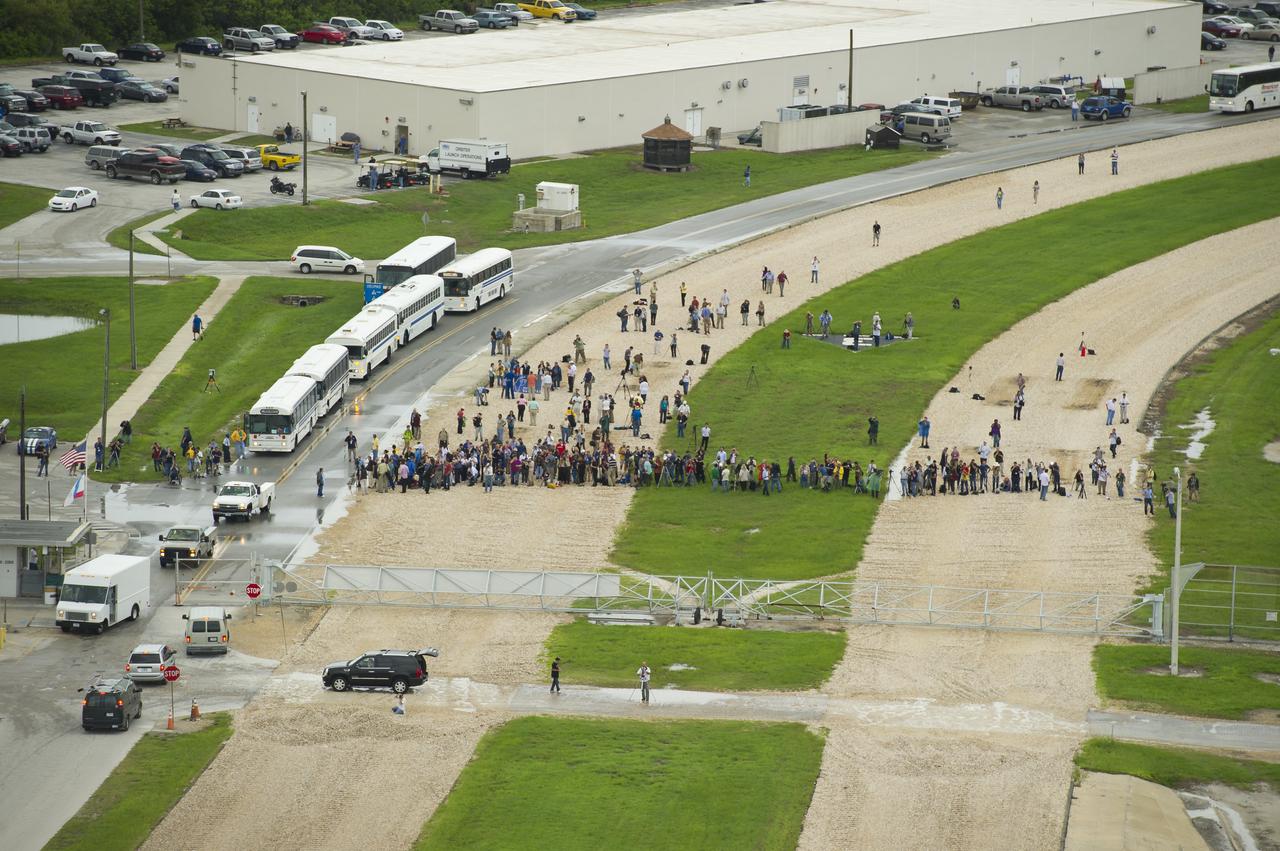
Press and guest watch from outside the perimeter of Launch Pad 39a as the space shuttle Atlantis is revealed during the rotating service structure (RSS) is rolled back on Thursday, July 7, 2011 at the NASA Kennedy Space Center in Cape Canaveral, Fla. Atlantis is set to liftoff Friday, July 8, on the final flight of the shuttle program, STS-135, a 12-day mission to the International Space Station. Photo Credit: (NASA/Bill Ingalls)
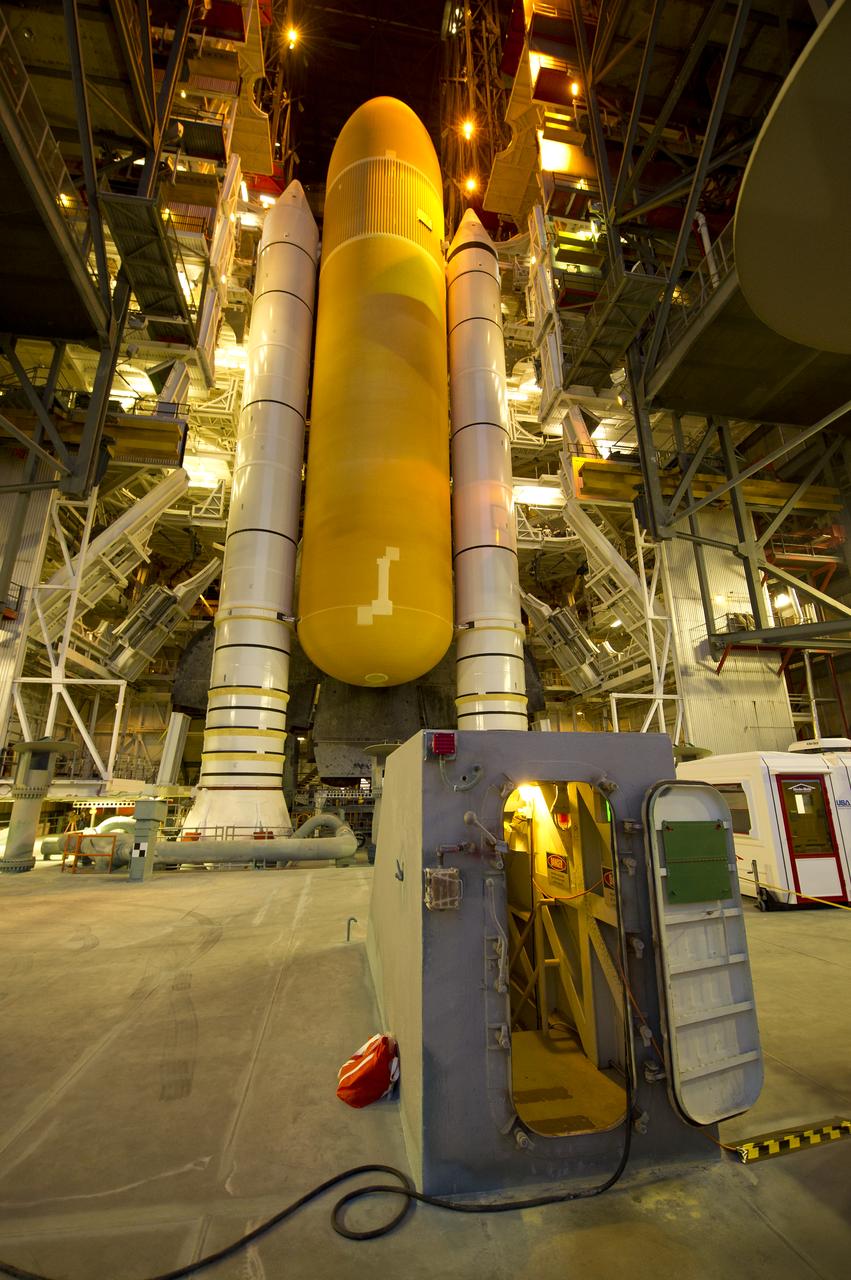
Space Shuttle Atlantis (STS-135) is seen atop a Mobile Launcher Platform (MLP) just prior to beginning its journey from High Bay 3 in the Vehicle Assembly Building to Launch Pad 39a for its final flight, Tuesday evening, May 31, 2011, at Kennedy Space Center in Cape Canaveral, Fla. The 3.4-mile trek, known as "rollout," will take about seven hours to complete. Atlantis will carry the Raffaello multipurpose logistics module to deliver supplies, logistics and spare parts to the International Space Station. The launch of STS-135 is targeted for July 8. Photo Credit: (NASA/Bill Ingalls)

NASA Officials, LEGO Group management, students, teachers and parents create their vision of the future in space with LEGO bricks and elements as part of a “Build the Future” activity inside a tent that was set up on the launch viewing area at NASA's Kennedy Space Center in Cape Canaveral, Fla. on Monday, Nov. 1, 2010. NASA and The LEGO Group signed a Space Act Agreement to spark children's interest in science, technology, engineering and math (STEM). Photo Credit: (NASA/Bill Ingalls)
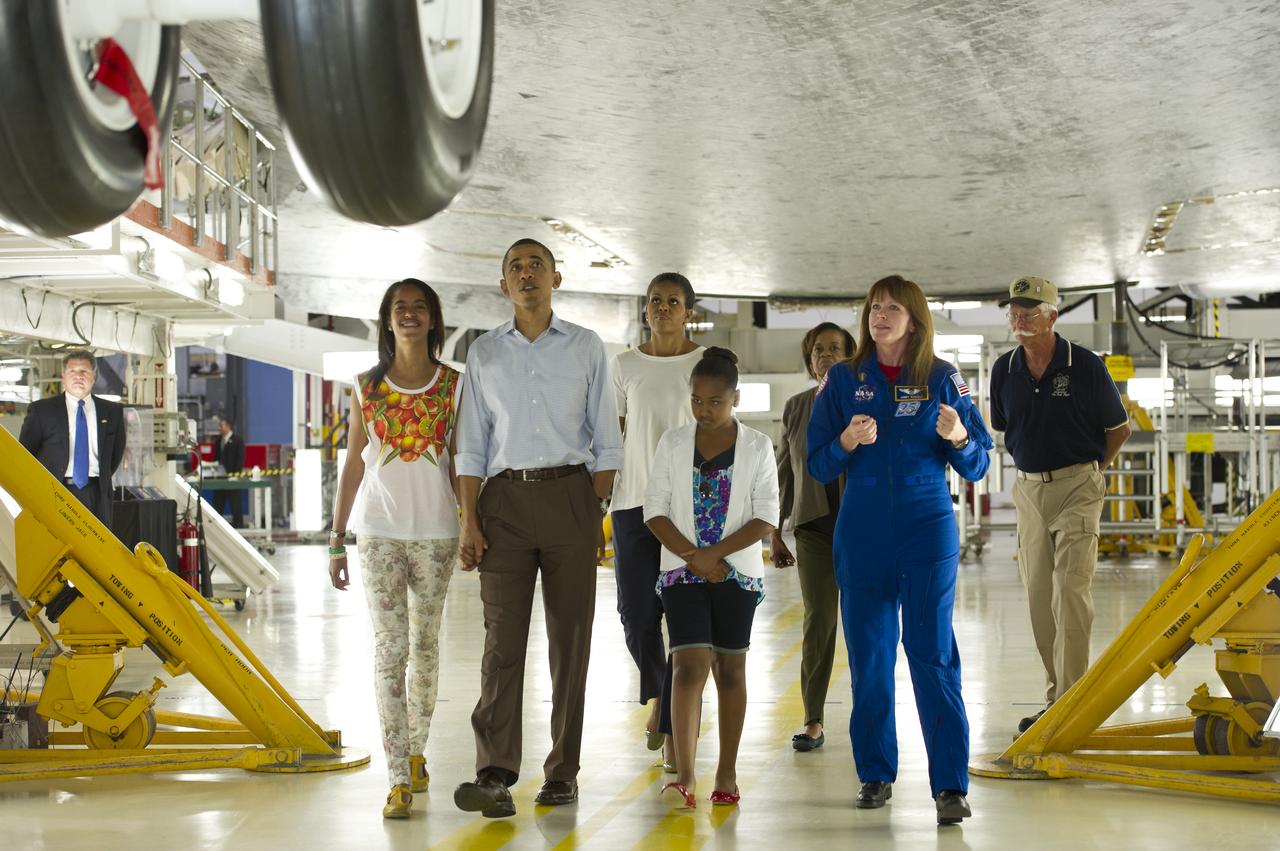
President Barack Obama holds hands with his daughter Malia as they walk under the space shuttle Atlantis with First Lady Michelle Obama, Sasha, and Marian Robinson during a tour they received of the NASA Orbital Processing Facility given by Astronaut, Janet Kavandi, and United Space Alliance project lead for thermal protection systems Terry White, right, at the NASA Kennedy Space Center in Cape Canaveral, Fla., Friday, April 29, 2011. Photo Credit: (NASA/Bill Ingalls)
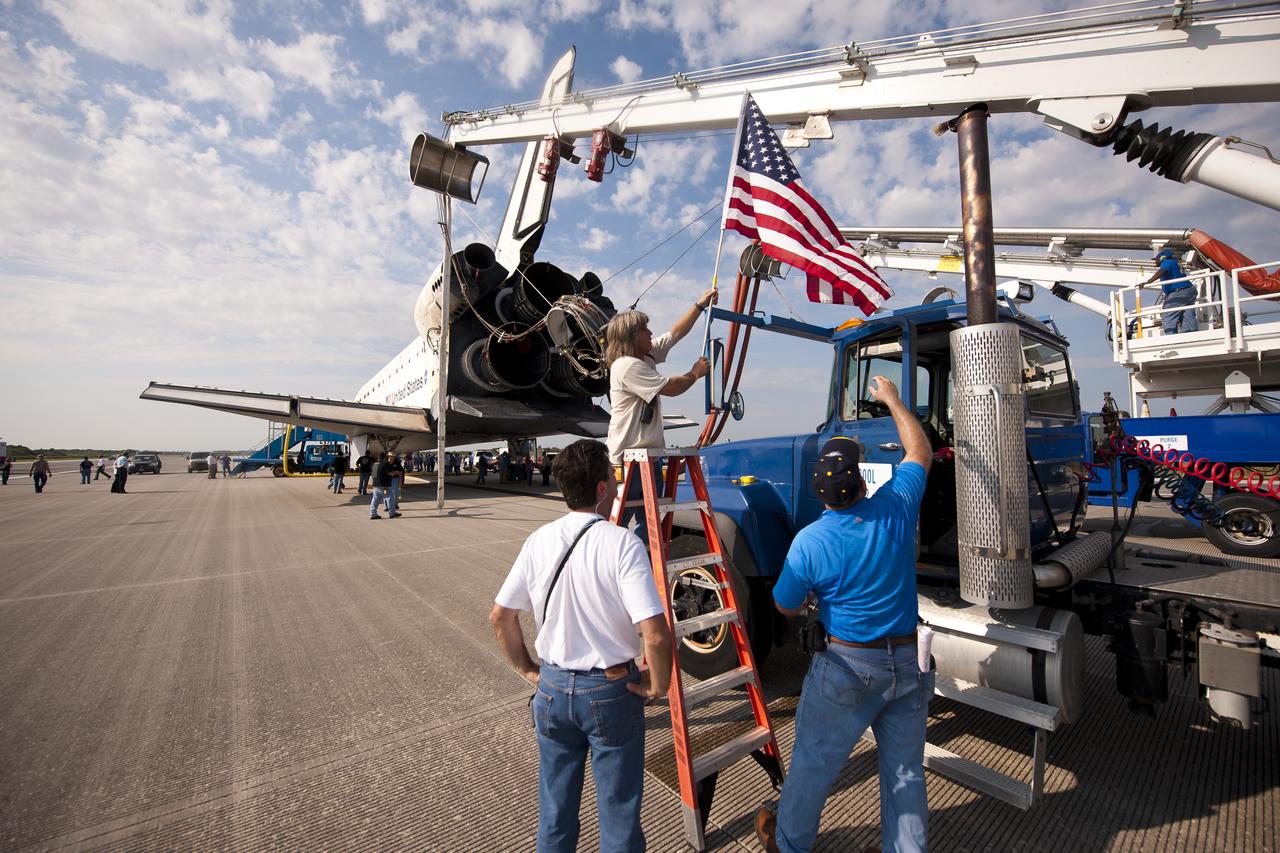
NASA and contractor personnel mount American flags to support vehicles near the space shuttle Atlantis at the Kennedy Space Center Shuttle Landing Facility (SLF) shortly after Atlantis (STS-135) landed early Thursday morning, July 21, 2011, in Cape Canaveral, Fla. The runway is marked to show where the nose landing gear wheels stopped. Overall, Atlantis spent 307 days in space and traveled nearly 126 million miles during its 33 flights. Atlantis, the fourth orbiter built, launched on its first mission on Oct. 3, 1985. Photo Credit: (NASA/Bill Ingalls)
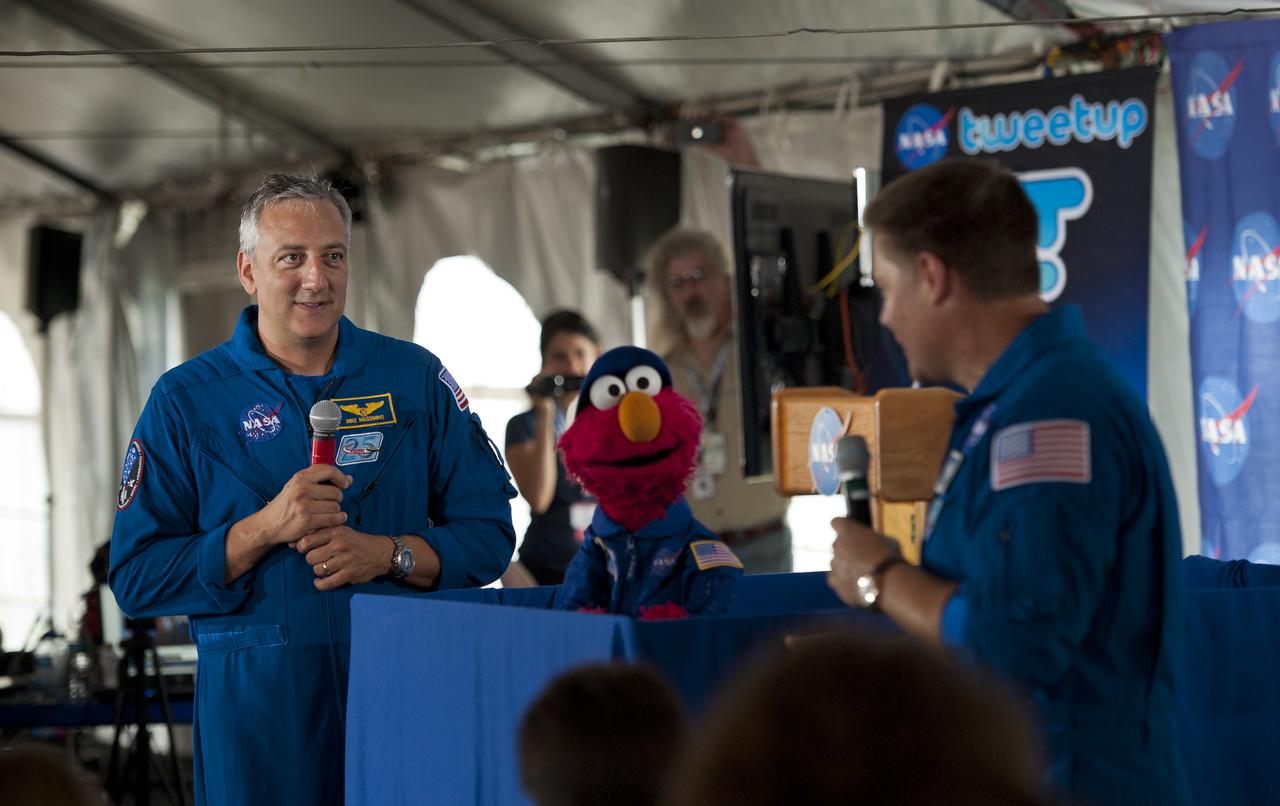
NASA astronaut Mike Massimino, far left, Sesame Street's Elmo and NASA astronaut Doug Wheelock, far right, speak at the STS-135 Tweetup, Thursday, July 7, 2011, at Kennedy Space Center in Cape Canaveral, Fla. Elmo asked the astronauts questions about living and working in space. About 150 NASA Twitter followers attended the event. The STS-135 mission will be NASA's last space shuttle launch. Photo Credit: (NASA/Paul E. Alers)
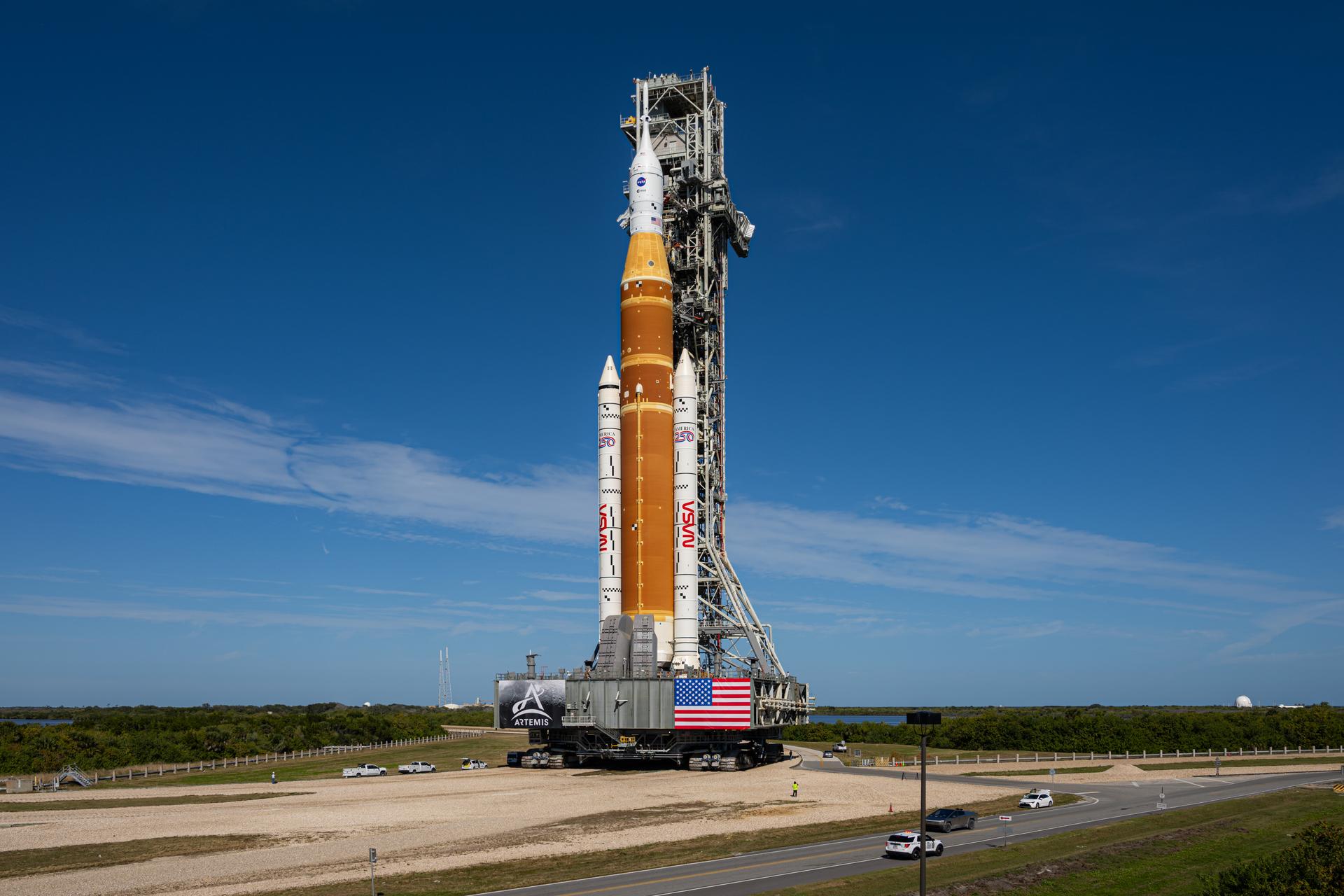
NASA’s Artemis II SLS (Space Launch System) rocket and Orion spacecraft roll out to Launch Complex 39B, Saturday, Jan. 17, 2026, at NASA’s Kennedy Space Center in Florida. Photo Credit: (NASA/John Kraus)
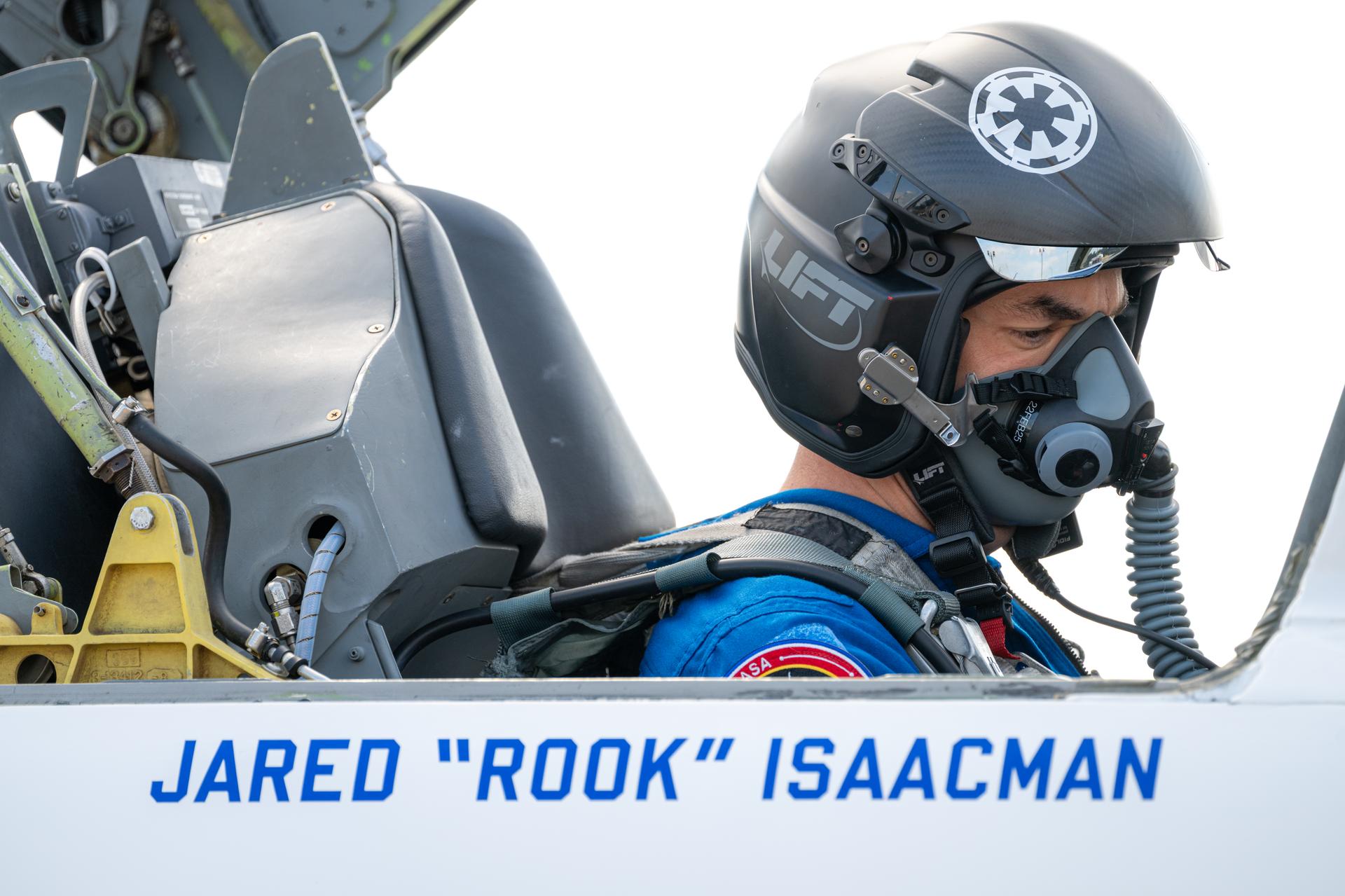
NASA Administrator Jared Isaacman is seen before an employee incentive flying event using his personal F-5 aircraft, Thursday, Feb. 12, 2026, at NASA’s Kennedy Space Center in Florida. Photo Credit: (NASA/John Kraus)

Space shuttle Atlantis, (OV-104), is seen as it begins its trip to its new home at the Kennedy Space Center Visitor Complex, early Friday, Nov. 2, 2012, in Cape Canaveral, Fla. The spacecraft traveled 125,935,769 miles during 33 spaceflights, including 12 missions to the International Space Station. Its final flight, STS-135, closed out the Space Shuttle Program era with a landing on July 21, 2011. Photo Credit: (NASA/Bill Ingalls)
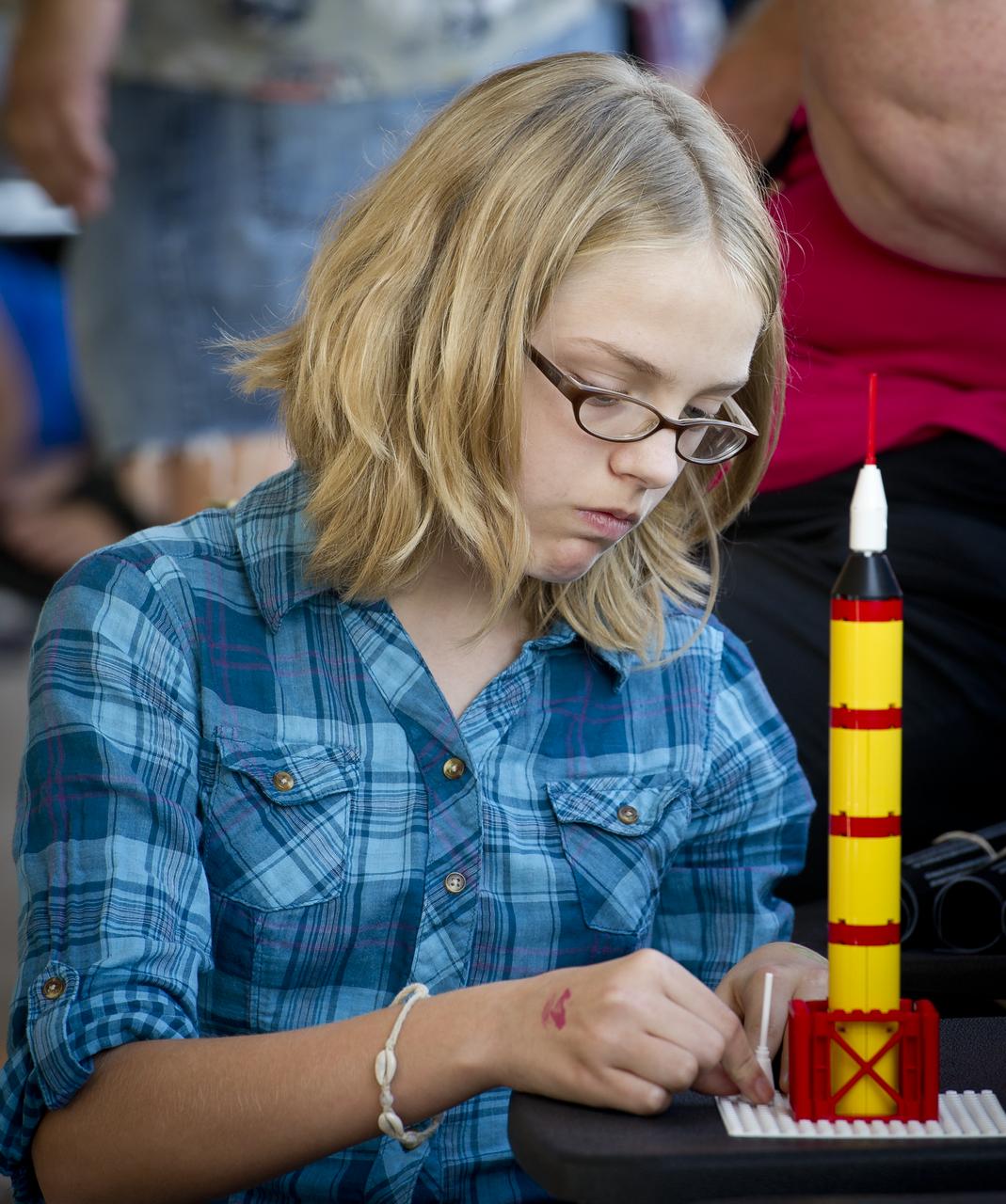
NASA Officials, LEGO Group management, students, teachers and parents create their vision of the future in space with LEGO bricks and elements as part of a “Build the Future” activity inside a tent that was set up on the launch viewing area at NASA's Kennedy Space Center in Cape Canaveral, Fla. on Monday, Nov. 1, 2010. NASA and The LEGO Group signed a Space Act Agreement to spark children's interest in science, technology, engineering and math (STEM). Photo Credit: (NASA/Bill Ingalls)
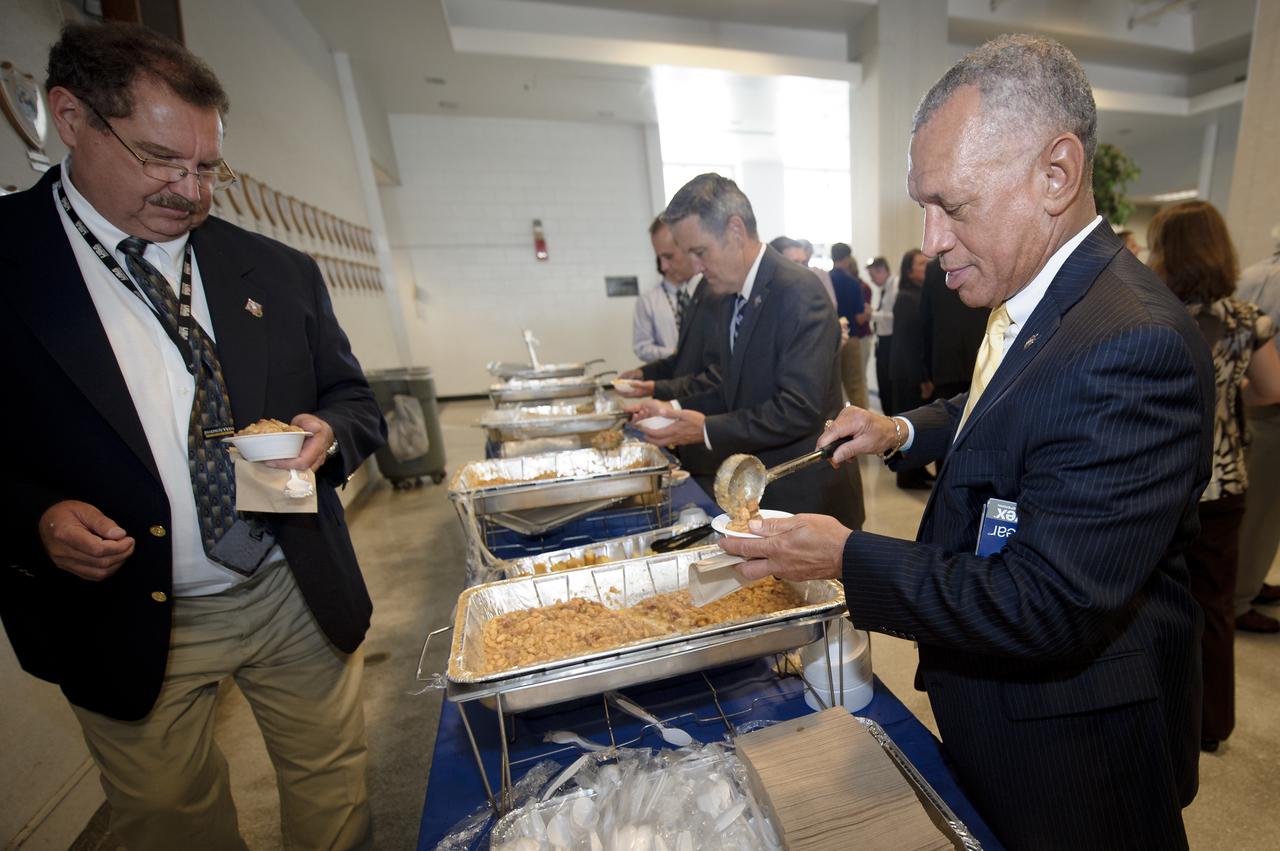
NASA Administrator Charles Bolden, right, participates in the post launch traditional beans and cornbread at the NASA Kennedy Space Center, Launch Control Center (LCC) shortly after the space shuttle Atlantis, STS-135, launched on Friday, July 8, 2011, in Cape Canaveral, Fla. The launch of Atlantis is the final flight of the shuttle program, a 12-day mission to the International Space Station. Photo Credit: (NASA/Bill Ingalls)
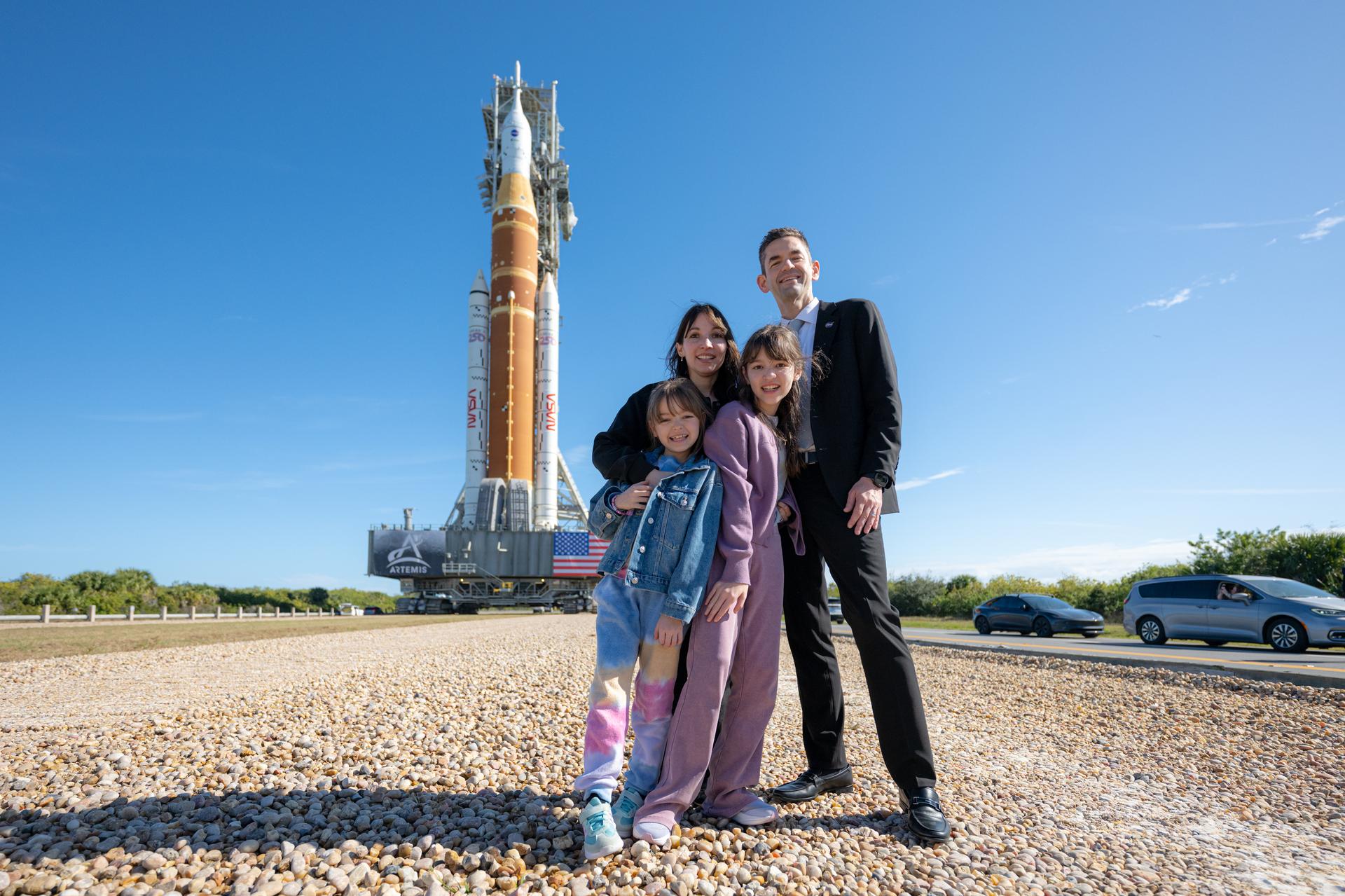
NASA Administrator Jared Isaacman, right, poses with members of his family as NASA’s Artemis II SLS (Space Launch System) rocket and Orion spacecraft roll out to Launch Complex 39B, Saturday, Jan. 17, 2026, at NASA’s Kennedy Space Center in Florida. Photo Credit: (NASA/John Kraus)
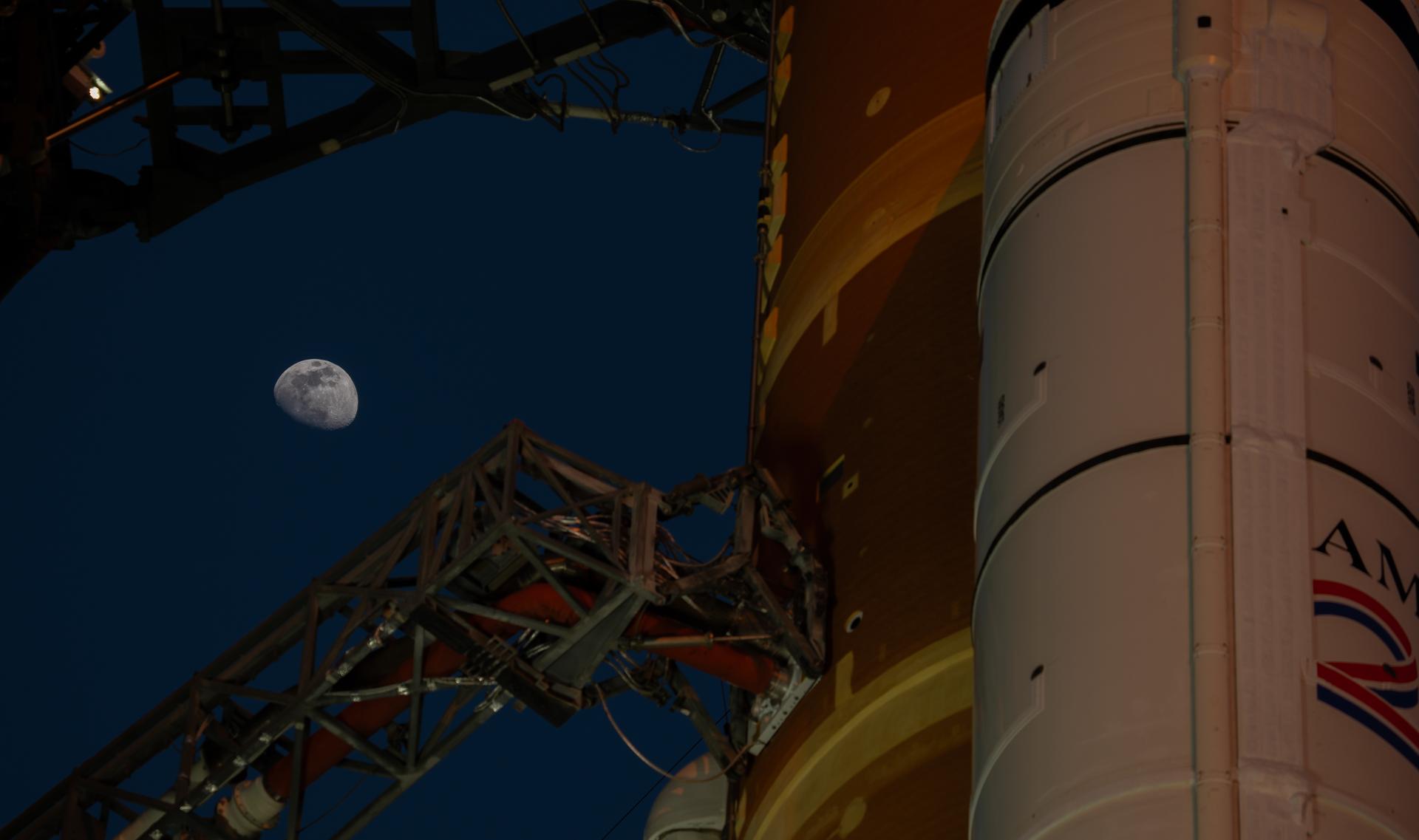
The Moon is seen shining over the SLS (Space Launch System) and Orion spacecraft, atop the mobile launcher on January 28, 2026. The rocket is currently at Launch Pad 39B at NASA’s Kennedy Space Center in Florida, as teams are preparing for a wet dress rehearsal to practice timelines and procedures for the launch of Artemis II.