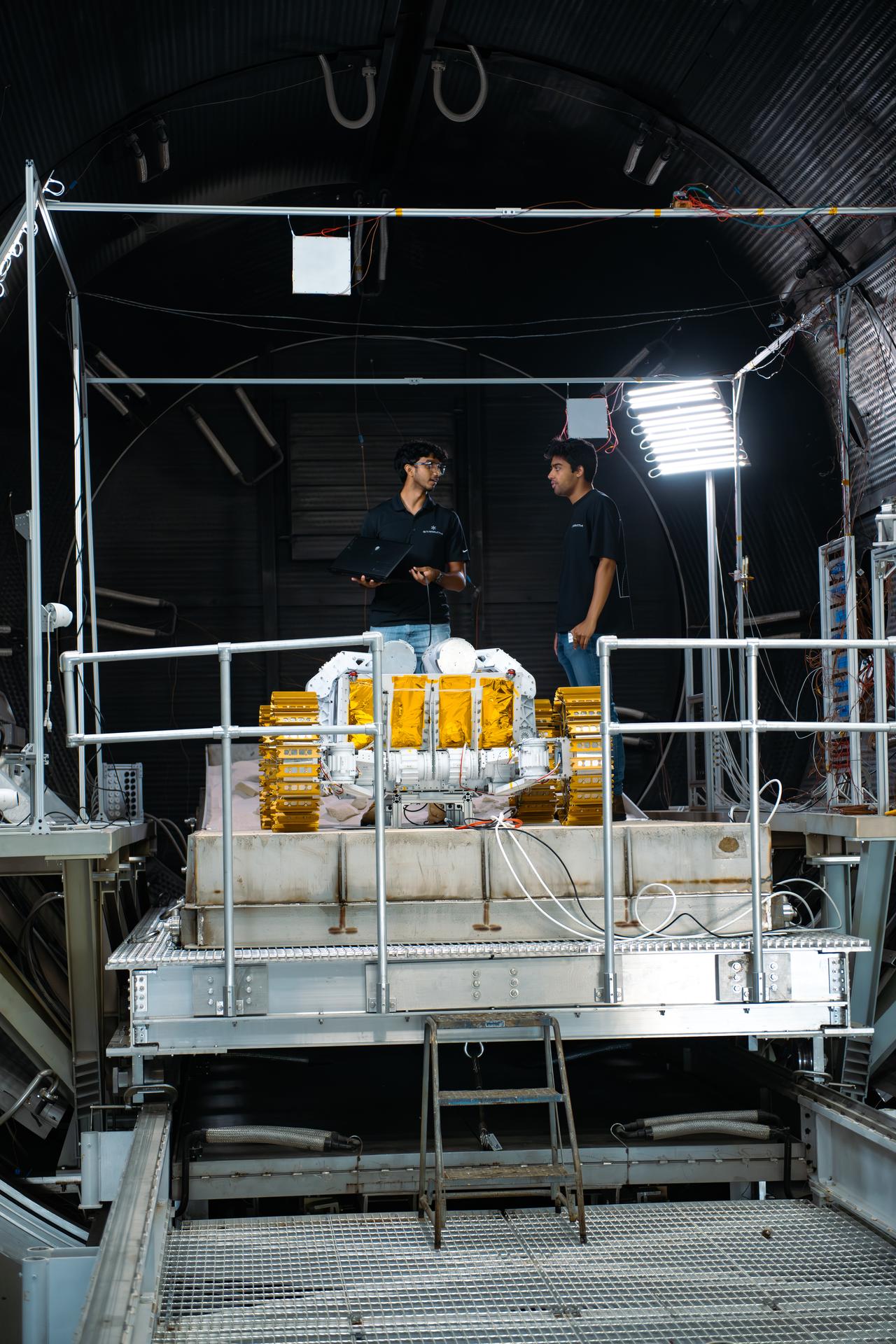
On July 30, 2025, members of the Starpath team discuss what final preparations need to be made before the chamber is closed for testing of their rover at NASA’s Marshall Space Flight Center in Huntsville, Alabama. The technology startup headquartered in Hawthorne, California, won second place overall at the Break the Ice Lunar Challenge’s live demonstration and finale in June 2024. This competition, one of NASA’s Centennial Challenges, tasked competitors to design, build, and demonstrate robotic technologies that could excavate and transport the icy, rocky dirt – otherwise known as regolith – found on the Moon. Starpath’s visit to NASA Marshall was part of their prize opportunity to test their upgraded lunar regolith excavation and transportation rover in the center’s 20-foot thermal vacuum chamber. For more information, contact NASA Marshall’s Office of Communications at 256-544-0034.
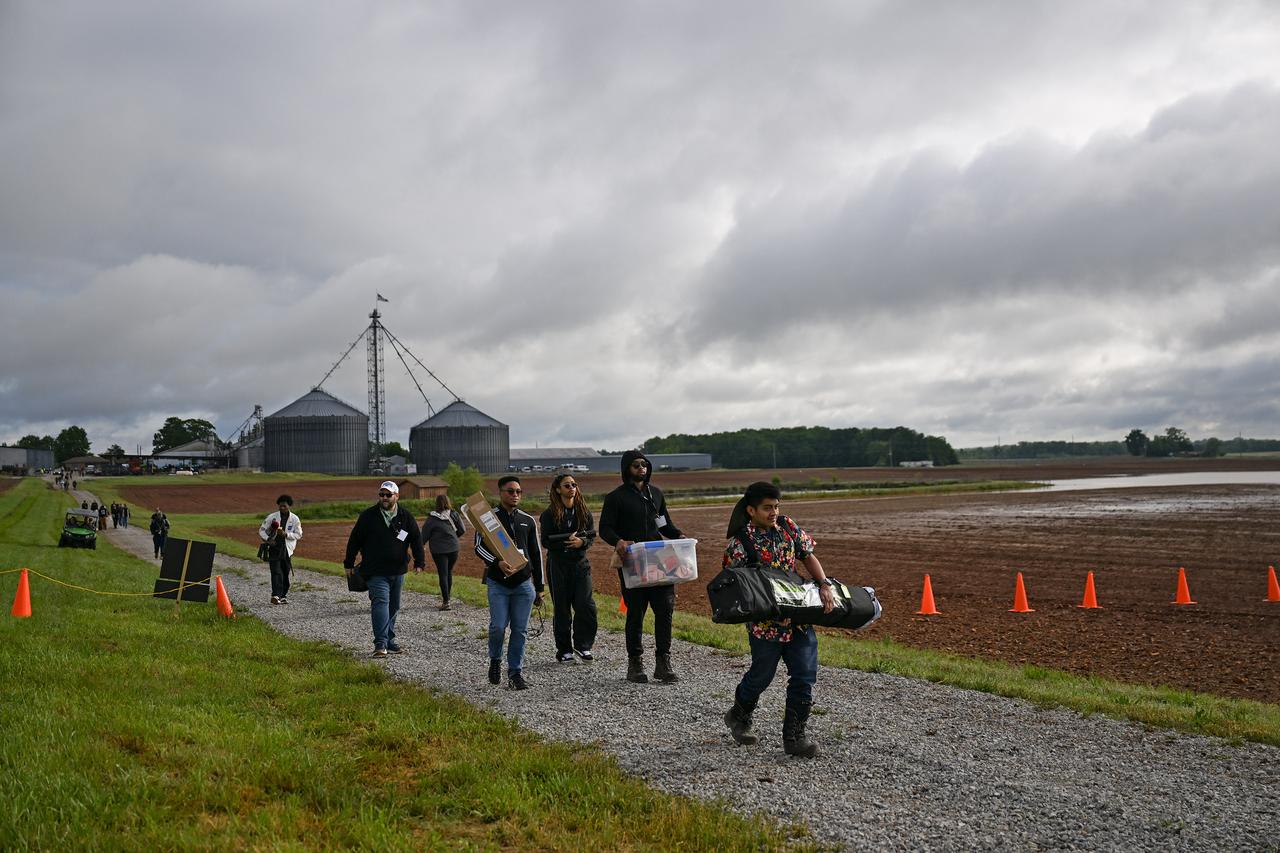
Over than 980 middle school, high school, and college students from across the nation launched more than 40 high-powered rockets just north of NASA’s Marshall Space Flight Center in Huntsville, Alabama. This year marked the 25th anniversary of the competition. To compete, students follow the NASA engineering design lifecycle by going through a series of reviews for nine months leading up to launch day. Each year, a payload challenge is issued to the university teams, and this year’s task took inspiration from the agency’s Artemis missions, where NASA will send astronauts to explore the Moon for scientific discovery, economic benefit, and to build the foundation for the first crewed missions to Mars. Teams were challenged to include “reports” from STEMnauts, non-living objects representing astronauts. The STEMnaut “crew” had to relay real-time data to the student team’s mission control, just as the Artemis astronaut crew will do as they explore the lunar surface. To learn more, visit: www.nasa.gov/studentlaunch.
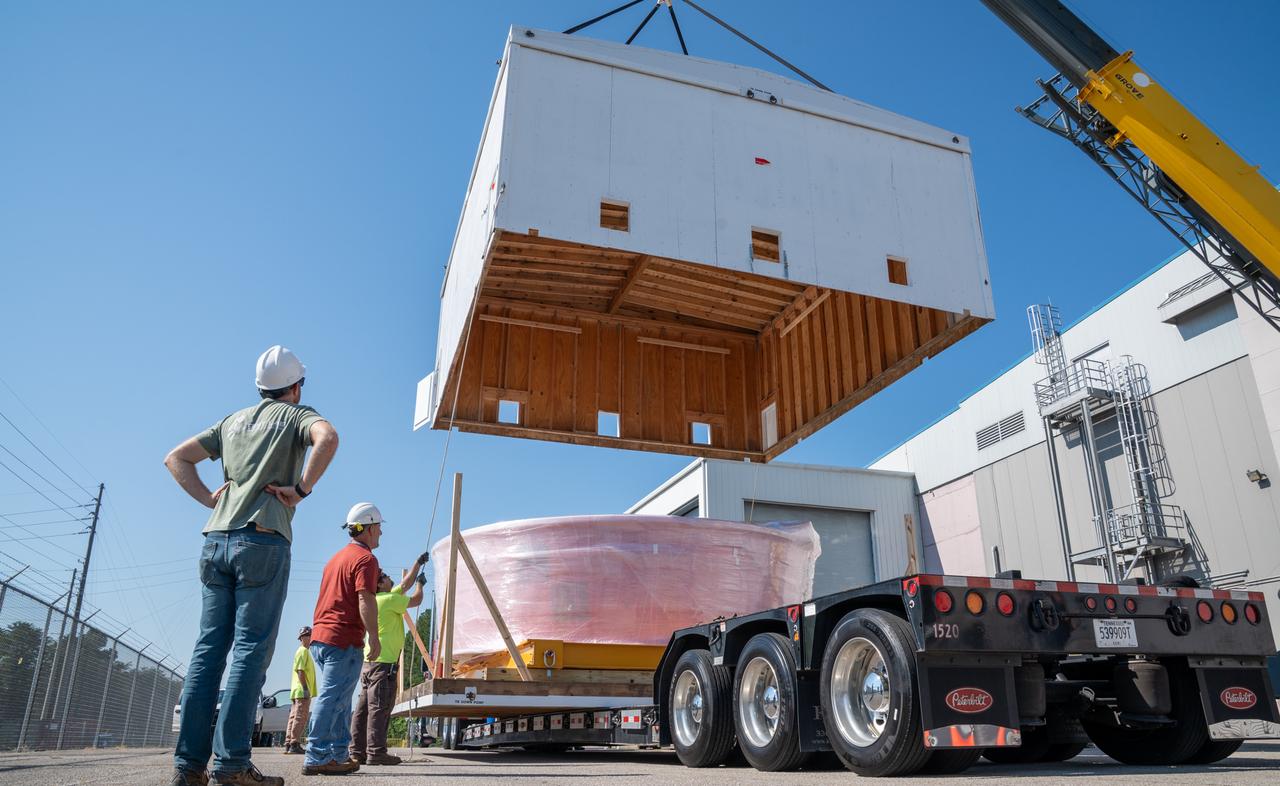
These images show the Orion stage adapter for Artemis II being prepped for shipment and then packaged in a large box, loaded on a semi-truck. It is seen leaving NASA’s Marshall Space Flight Center in Huntsville, Alabama, as it begins its journey to NASA’s Kennedy Space Center in Florida. Manufactured at Marshall, this adapter for the SLS (Space Launch System) connects the rocket’s interim cryogenic propulsion stage to the Orion spacecraft and is the final piece of SLS hardware to be delivered to Kennedy Space Center in preparation for the Artemis II mission.
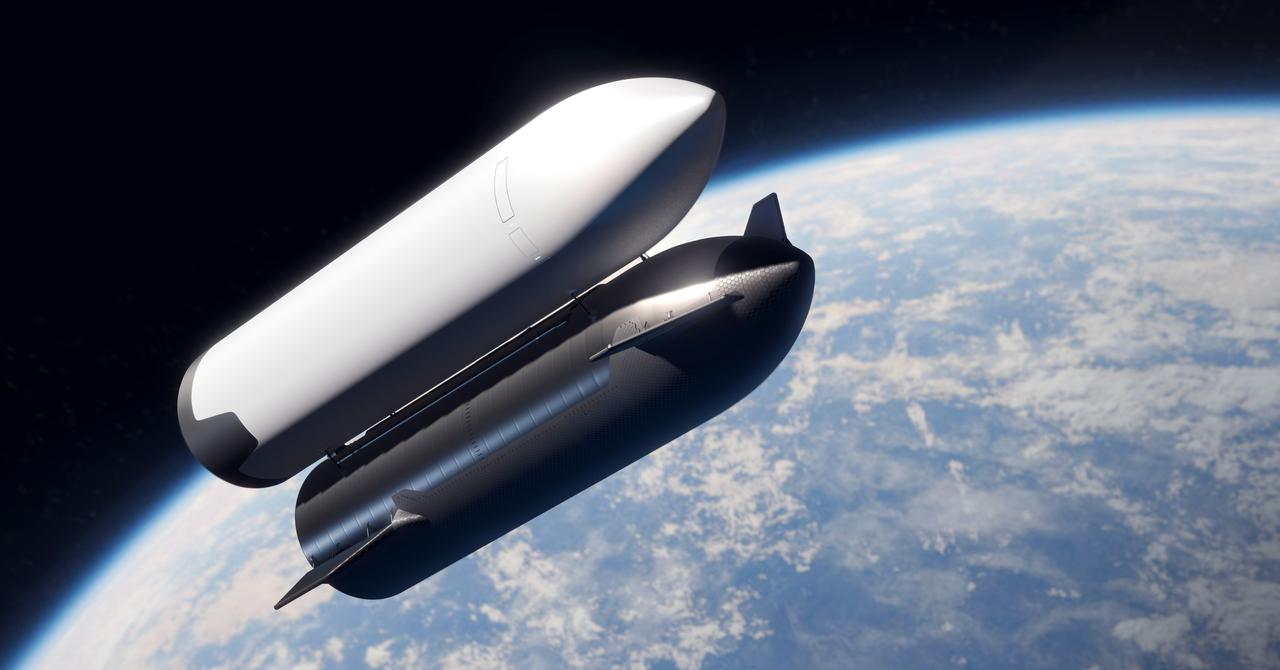
These artist’s concepts show SpaceX’s Starship Human Landing System (HLS) in operation on its journey to the Moon. Before astronauts launch in NASA’s Orion spacecraft atop the agency’s SLS (Space Launch System) rocket, SpaceX will launch a storage depot to Earth orbit. For Artemis III and Artemis IV, SpaceX plans to complete propellant loading operations in Earth orbit to send a fully fueled Starship HLS to the Moon. Starship HLS will then dock directly to Orion so that two astronauts can transfer from the spacecraft to the lander to descend to the Moon’s surface, while two others remain in Orion. Beginning with Artemis IV, NASA’s Gateway lunar space station will serve as the crew transfer point. NASA is working with SpaceX to develop Starship HLS to carry astronauts from lunar orbit to the Moon’s surface and back for Artemis III and Artemis IV as part of the agency’s Artemis campaign.
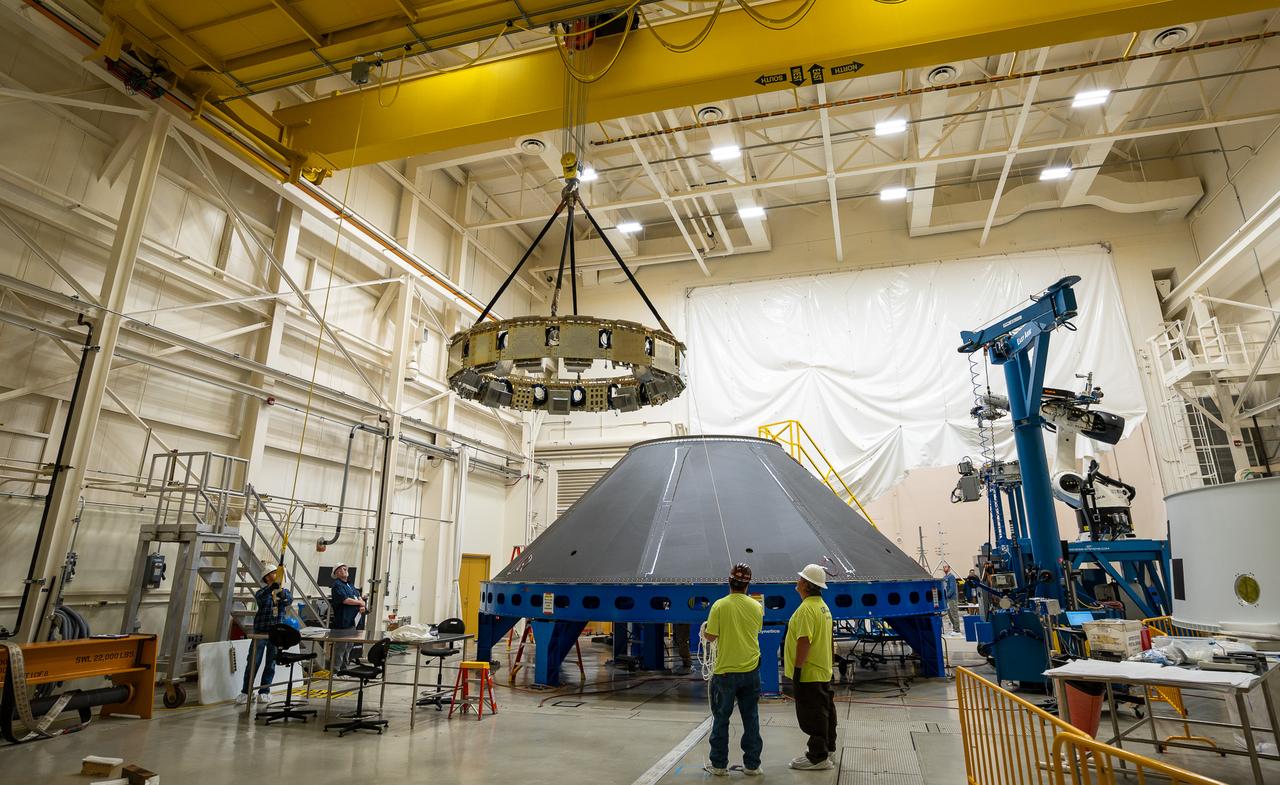
These photos and videos show how NASA manufactured and prepared to transport the payload adapter in February inside Building 4708 at NASA’s Marshall Space Flight Center in Huntsville, Alabama. Prior to moving the hardware for testing, teams installed the New Explorations Secondary Transport component, called the NEST, into the top of the engineering development unit. The NEST component will allow the hardware to hold a series of secondary payloads, or small satellites. The cone-shaped payload adapter is about 8.5 feet tall and features two metal rings and eight composite panels. The adapter, which will debut on NASA’s Artemis IV mission, is an evolution from the Orion stage adapter used in the Block 1 configuration of the rocket for the first three Artemis missions. It will be housed inside the universal stage adapter atop the rocket’s more powerful in-space stage, called the exploration upper stage. The payload adapter, like the launch vehicle stage adapter and the Orion stage adapter, is fully manufactured and tested at Marshall, which manages the SLS Program. NASA is working to land the first woman, first person of color, and its first international partner astronaut on the Moon under Artemis. SLS is part of NASA’s backbone for deep space exploration, along with the Orion spacecraft and Gateway in orbit around the Moon and commercial human landing systems, next-generational spacesuits, and rovers on the lunar surface. SLS is the only rocket that can send Orion, astronauts, and supplies to the Moon in a single launch.
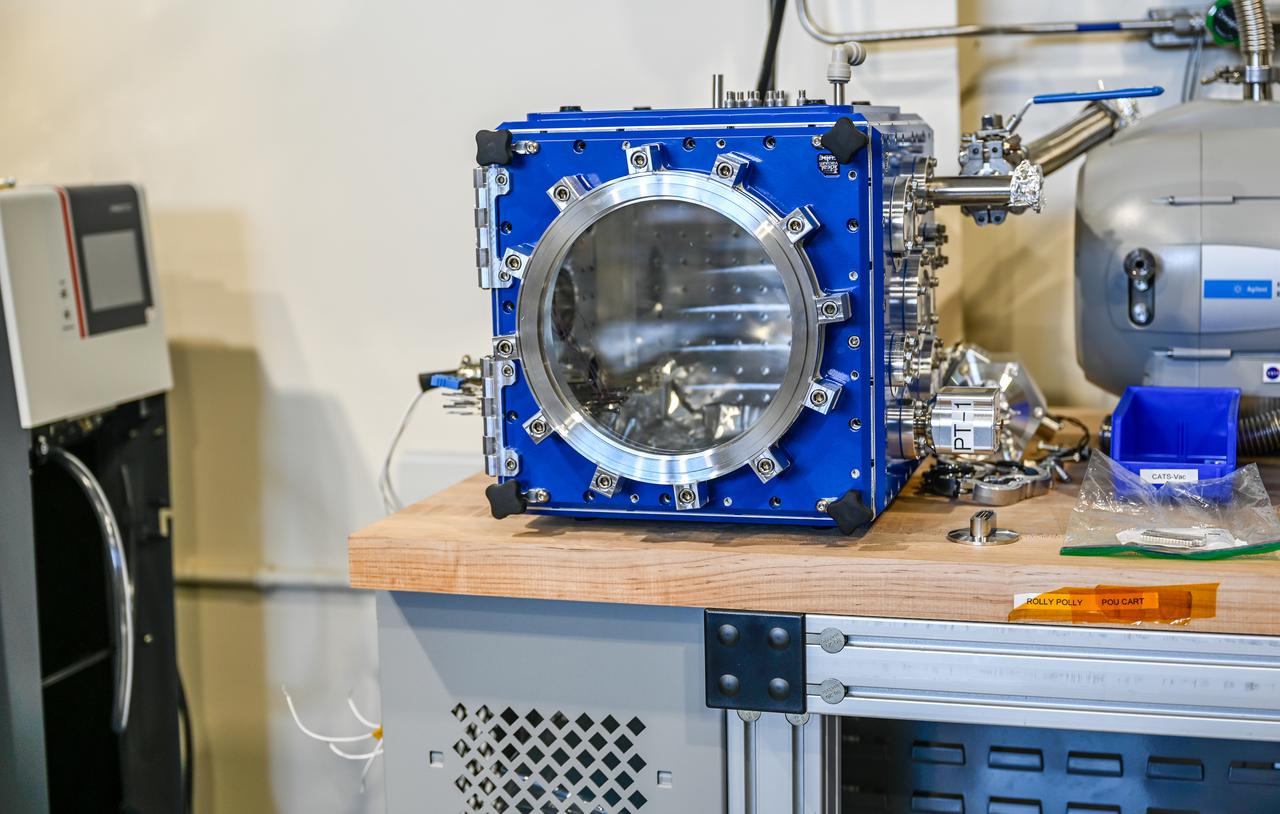
These photos, taken in fall 2024, show how NASA engineers use the Hub for Innovative Thermal Technology Maturation and Prototyping (Hi-TTeMP) laboratory at NASA’s Marshall Space Flight Center in Huntsville, Alabama. NASA engineers working in the HI-TTeMP lab not only design, set up, and run tests, they also provide insight and expertise in thermal engineering to assist NASA’s industry partners, such as SpaceX and other organizations, in validating concepts and models, or suggesting changes to designs. The lab is able to rapidly test and evaluate design updates or iterations. Engineering teams inside the lab are currently testing how well prototype insulation for SpaceX’s Starship HLS (Human Landing System) will insulate interior environments, including propellant storage tanks and the crew cabin. Starship HLS will land astronauts on the lunar surface during Artemis III and Artemis IV.
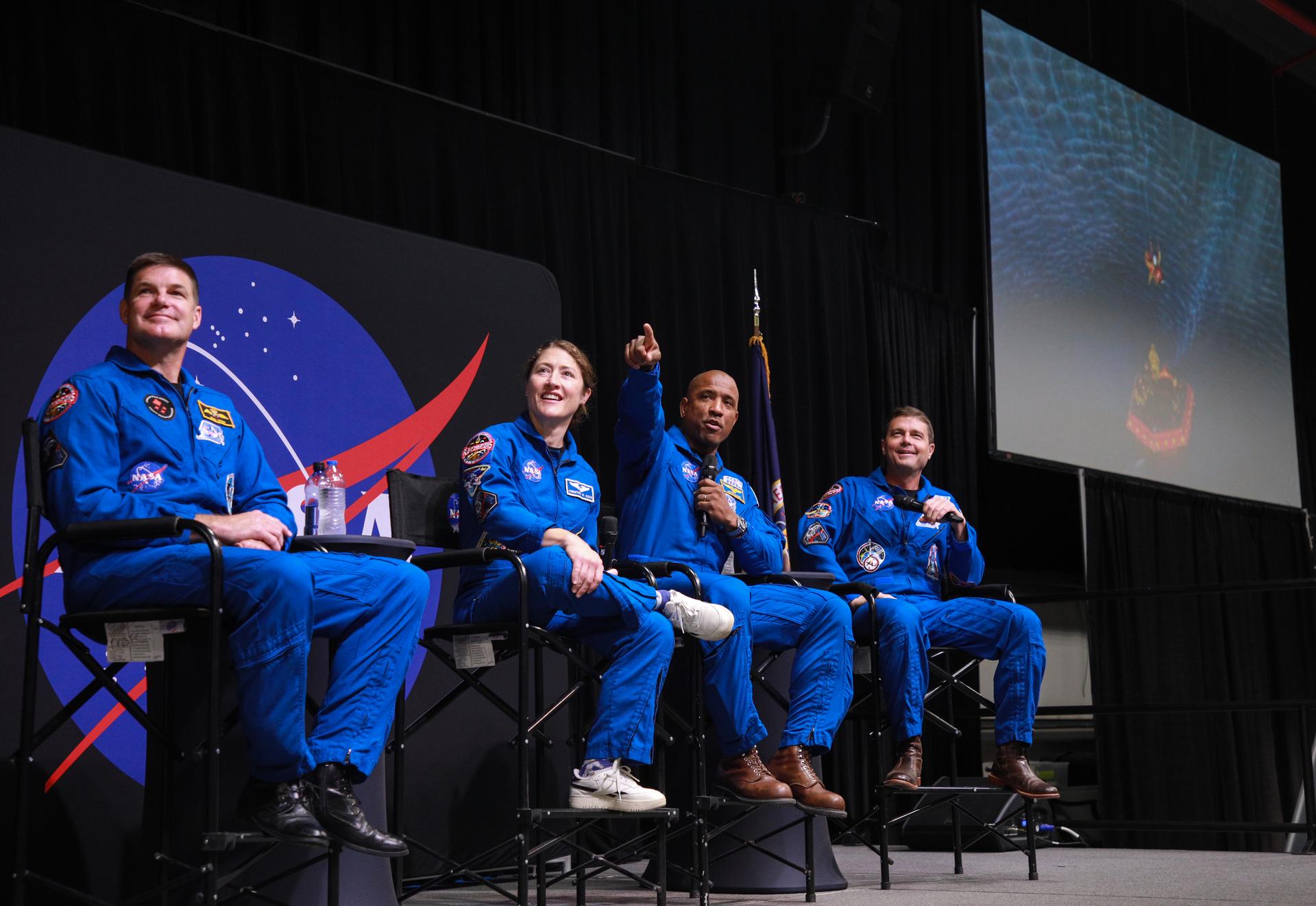
The crew of NASA’s Artemis II mission – NASA astronauts Reid Wiseman, Victor Glover, and Christina Koch, and Canadian Space Agency astronaut Jeremy Hansen – visited the agency’s Marshall Space Flight Center in Huntsville, Alabama, on Tuesday, Sept. 1, 2026. During an employee all-hands event, the crew reflected on their journey around the Moon, thanked Marshall team members for their contributions to the mission, and answered questions from the workforce. Artemis II was the first crewed mission of NASA’s Artemis campaign. Wiseman, Glover, Koch, and Hansen completed the approximately 10-day mission around the Moon in April 2026.

Over 600 middle school, high school, and college students from across the nation launched 30 high-powered rockets just north of NASA’s Marshall Space Flight Center in Huntsville, Alabama. This year marked the 26th anniversary of the competition. To compete, students follow the NASA engineering design lifecycle by going through a series of reviews for nine months leading up to launch day. Each year, a payload challenge is issued to the university teams, and this year’s task took inspiration from the agency’s Artemis missions, where NASA will send astronauts to explore the Moon for scientific discovery, economic benefit, and to build the foundation for the first crewed missions to Mars. Teams were challenged build and fly a STEMnaut Habitat for Agricultural Utilization Study (HAUS) that safely houses four STEMnauts, non-living objects representing astronauts. The habitat had to include equipment capable of both collecting and testing soil samples to support agricultural research operations.

Over 600 middle school, high school, and college students from across the nation launched 30 high-powered rockets just north of NASA’s Marshall Space Flight Center in Huntsville, Alabama. This year marked the 26th anniversary of the competition. To compete, students follow the NASA engineering design lifecycle by going through a series of reviews for nine months leading up to launch day. Each year, a payload challenge is issued to the university teams, and this year’s task took inspiration from the agency’s Artemis missions, where NASA will send astronauts to explore the Moon for scientific discovery, economic benefit, and to build the foundation for the first crewed missions to Mars. Teams were challenged build and fly a STEMnaut Habitat for Agricultural Utilization Study (HAUS) that safely houses four STEMnauts, non-living objects representing astronauts. The habitat had to include equipment capable of both collecting and testing soil samples to support agricultural research operations.
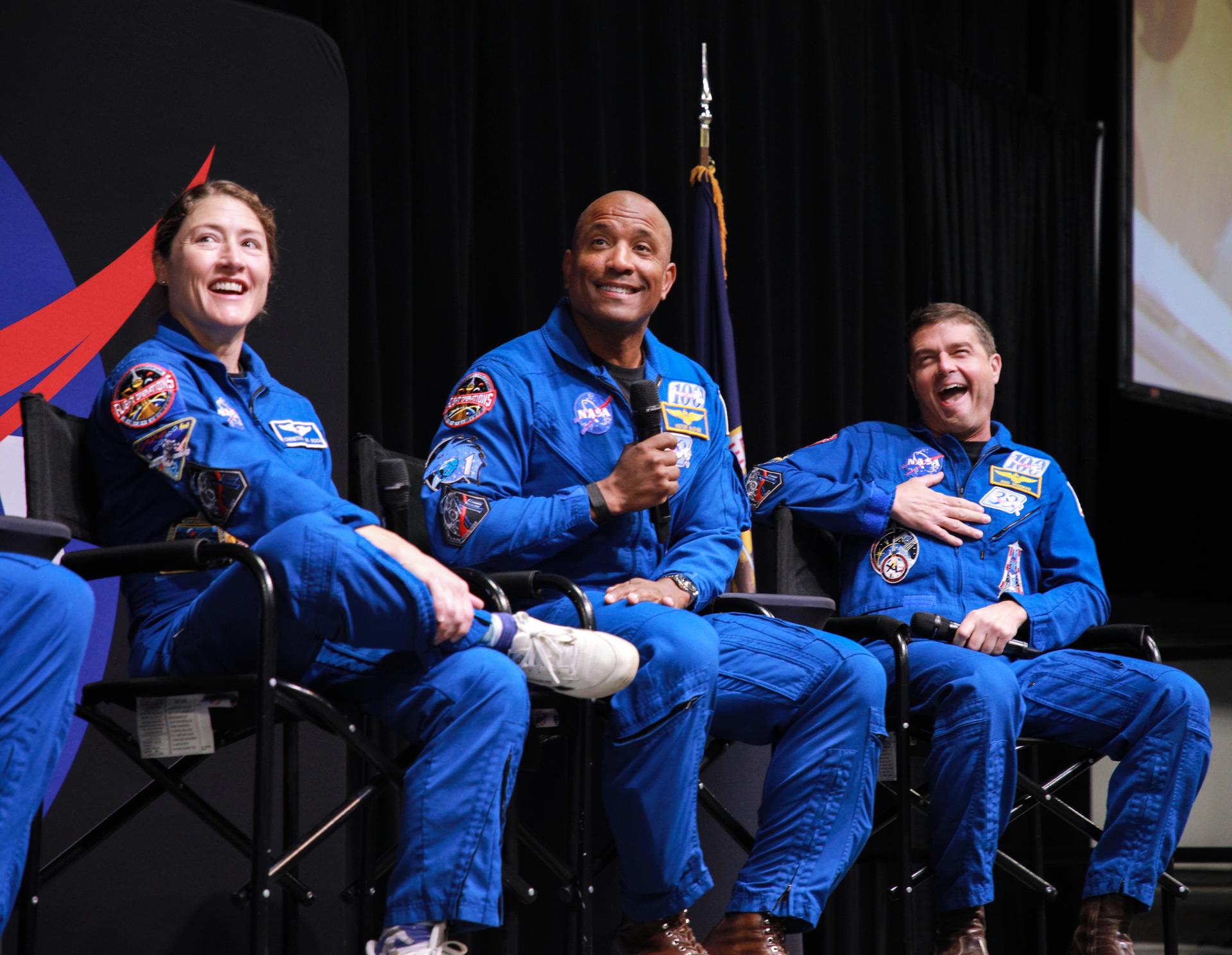
The crew of NASA’s Artemis II mission – NASA astronauts Reid Wiseman, Victor Glover, and Christina Koch, and Canadian Space Agency astronaut Jeremy Hansen – visited the agency’s Marshall Space Flight Center in Huntsville, Alabama, on Tuesday, Sept. 1, 2026. During an employee all-hands event, the crew reflected on their journey around the Moon, thanked Marshall team members for their contributions to the mission, and answered questions from the workforce. Artemis II was the first crewed mission of NASA’s Artemis campaign. Wiseman, Glover, Koch, and Hansen completed the approximately 10-day mission around the Moon in April 2026.
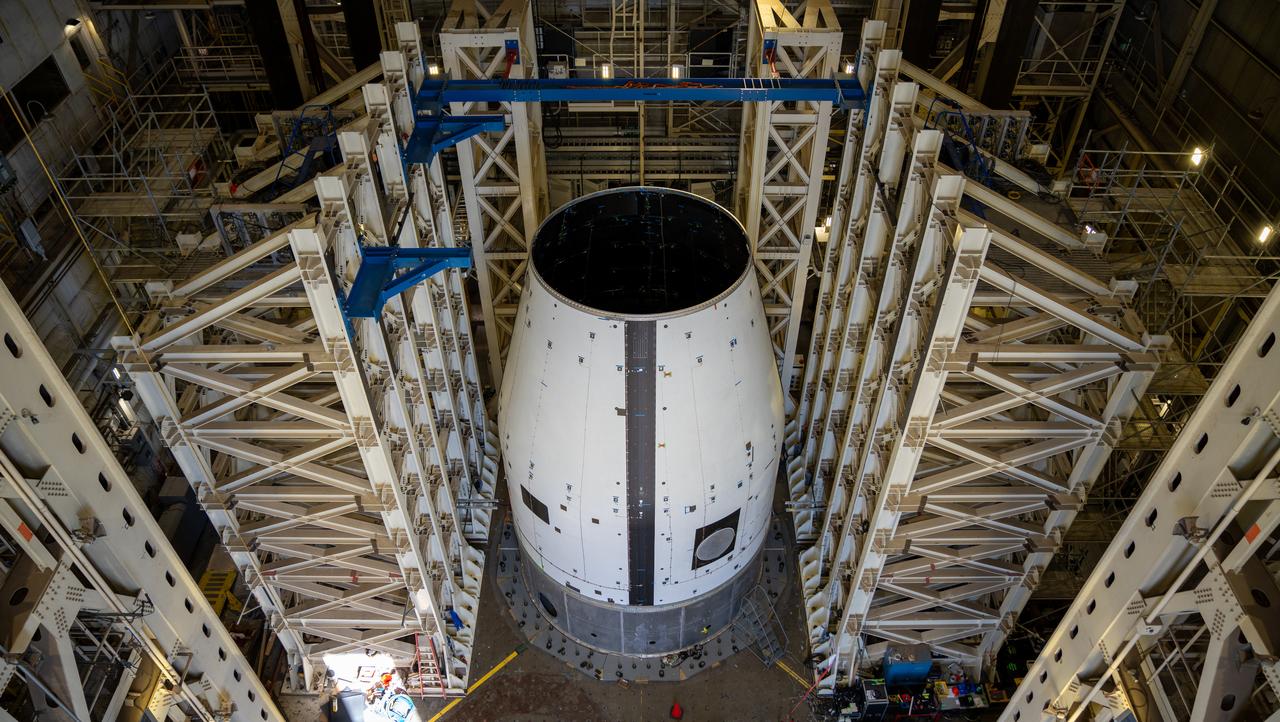
These photos and videos show how crews guided a test version of the universal stage adapter for NASA’s more powerful version of its SLS (Space Launch System) rocket to Building 4619 at the agency’s Marshall Space Flight Center in Huntsville, Alabama, Feb. 22. Built by Leidos, the lead contractor for the universal stage adapter, crews transported the hardware from a Leidos facility in Decatur, Alabama, the same day. The universal stage adapter will connect the SLS rocket’s upgraded in-space propulsion stage, called the exploration upper stage, to NASA’s Orion spacecraft as part of the evolved Block 1B configuration of the SLS rocket. It will also serve as a compartment capable of accommodating large payloads, such as modules or other exploration spacecraft. In Building 4619’s Load Test Annex High Bay at Marshall, the development test article will first undergo modal testing that will shake the hardware to validate dynamic models. Later, during ultimate load testing, force will be applied vertically and to the sides of the hardware. Unlike the flight hardware, the development test article has flaws intentionally included in its design, which will help engineers verity that the flight adapter can withstand the extreme forces it will face during launch and flight.

Over 600 middle school, high school, and college students from across the nation launched 30 high-powered rockets just north of NASA’s Marshall Space Flight Center in Huntsville, Alabama. This year marked the 26th anniversary of the competition. To compete, students follow the NASA engineering design lifecycle by going through a series of reviews for nine months leading up to launch day. Each year, a payload challenge is issued to the university teams, and this year’s task took inspiration from the agency’s Artemis missions, where NASA will send astronauts to explore the Moon for scientific discovery, economic benefit, and to build the foundation for the first crewed missions to Mars. Teams were challenged build and fly a STEMnaut Habitat for Agricultural Utilization Study (HAUS) that safely houses four STEMnauts, non-living objects representing astronauts. The habitat had to include equipment capable of both collecting and testing soil samples to support agricultural research operations.

These artist’s concepts show SpaceX’s Starship Human Landing System (HLS) in operation on its journey to the Moon. Before astronauts launch in NASA’s Orion spacecraft atop the agency’s SLS (Space Launch System) rocket, SpaceX will launch a storage depot to Earth orbit. For Artemis III and Artemis IV, SpaceX plans to complete propellant loading operations in Earth orbit to send a fully fueled Starship HLS to the Moon. Starship HLS will then dock directly to Orion so that two astronauts can transfer from the spacecraft to the lander to descend to the Moon’s surface, while two others remain in Orion. Beginning with Artemis IV, NASA’s Gateway lunar space station will serve as the crew transfer point. NASA is working with SpaceX to develop Starship HLS to carry astronauts from lunar orbit to the Moon’s surface and back for Artemis III and Artemis IV as part of the agency’s Artemis campaign.
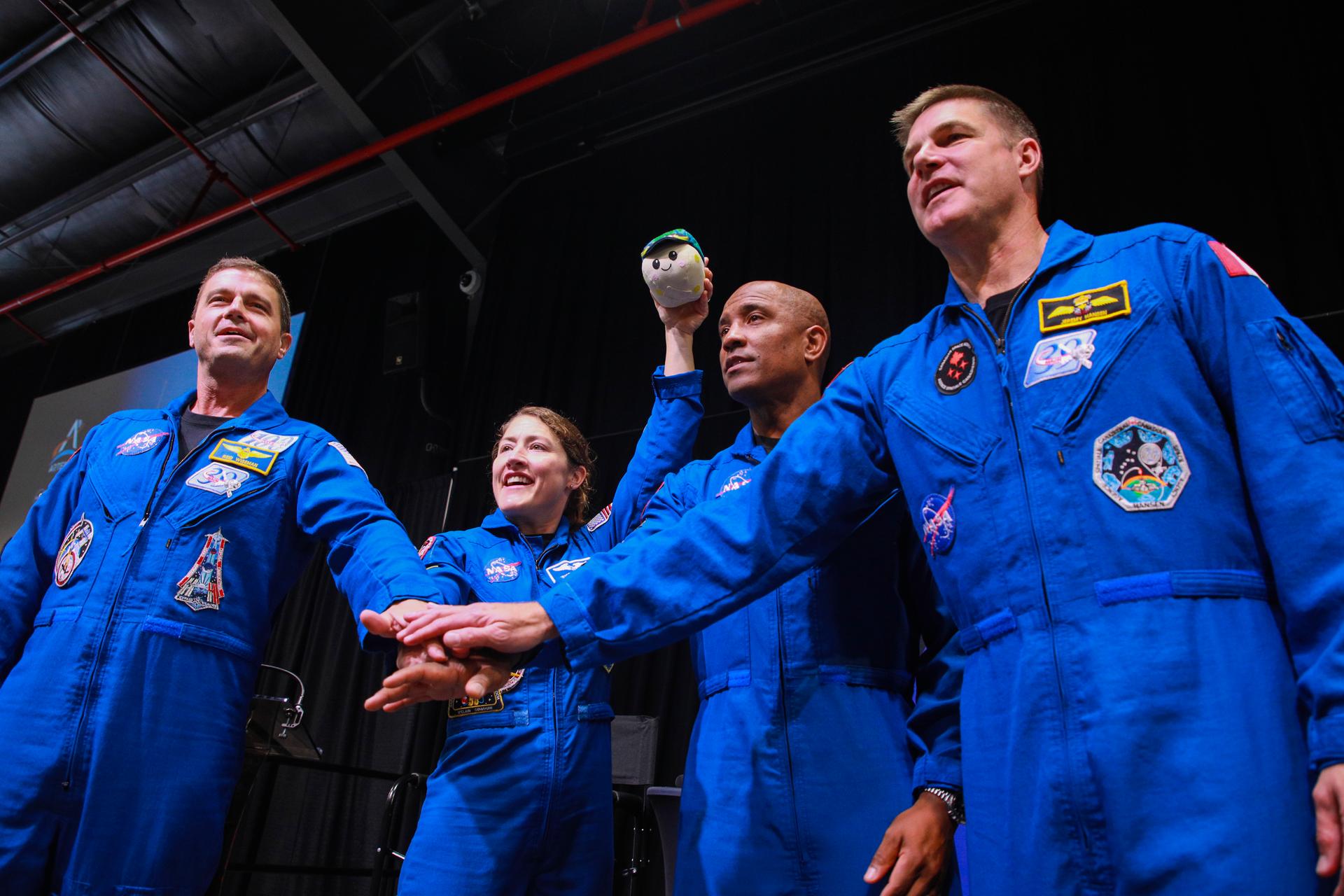
The crew of NASA’s Artemis II mission – NASA astronauts Reid Wiseman, Victor Glover, and Christina Koch, and Canadian Space Agency astronaut Jeremy Hansen – visited the agency’s Marshall Space Flight Center in Huntsville, Alabama, on Tuesday, Sept. 1, 2026. During an employee all-hands event, the crew reflected on their journey around the Moon, thanked Marshall team members for their contributions to the mission, and answered questions from the workforce. Artemis II was the first crewed mission of NASA’s Artemis campaign. Wiseman, Glover, Koch, and Hansen completed the approximately 10-day mission around the Moon in April 2026.

Over 600 middle school, high school, and college students from across the nation launched 30 high-powered rockets just north of NASA’s Marshall Space Flight Center in Huntsville, Alabama. This year marked the 26th anniversary of the competition. To compete, students follow the NASA engineering design lifecycle by going through a series of reviews for nine months leading up to launch day. Each year, a payload challenge is issued to the university teams, and this year’s task took inspiration from the agency’s Artemis missions, where NASA will send astronauts to explore the Moon for scientific discovery, economic benefit, and to build the foundation for the first crewed missions to Mars. Teams were challenged build and fly a STEMnaut Habitat for Agricultural Utilization Study (HAUS) that safely houses four STEMnauts, non-living objects representing astronauts. The habitat had to include equipment capable of both collecting and testing soil samples to support agricultural research operations.
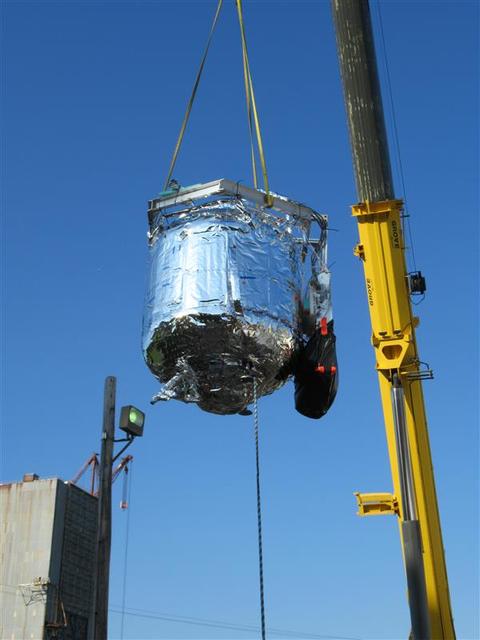
These photos show how teams at NASA’s Marshall Space Flight Center in Huntsville, Alabama, are testing an innovative approach to achieve zero boiloff storage of liquid hydrogen using two stages of active cooling, which could prevent the loss of valuable propellant during future long-duration spaceflight missions. Test teams installed the propellant tank in Test Stand 300 at NASA Marshall in early June, and the 90-day test campaign is scheduled to conclude in September. The tank is wrapped in a multi-layer insulation blanket that includes a thin aluminum heat shield fitted between layers. A second set of tubes, carrying helium at about minus 298 Fahrenheit, is integrated into the shield. This intermediate cooling layer intercepts and rejects incoming heat before it reaching the tank, easing the heat load on the tube-on-tank system. The Cryogenic Fluid Management Portfolio Project is a cross-agency team based at NASA Marshall and the agency’s Glenn Research Center in Cleveland. The cryogenic portfolio’s work is under NASA’s Technology Demonstration Missions Program, part of NASA’s Space Technology Mission Directorate, and is comprised of more than 20 individual technology development activities. For more information, contact NASA Marshall’s Office of Communications at 256-544-0034.
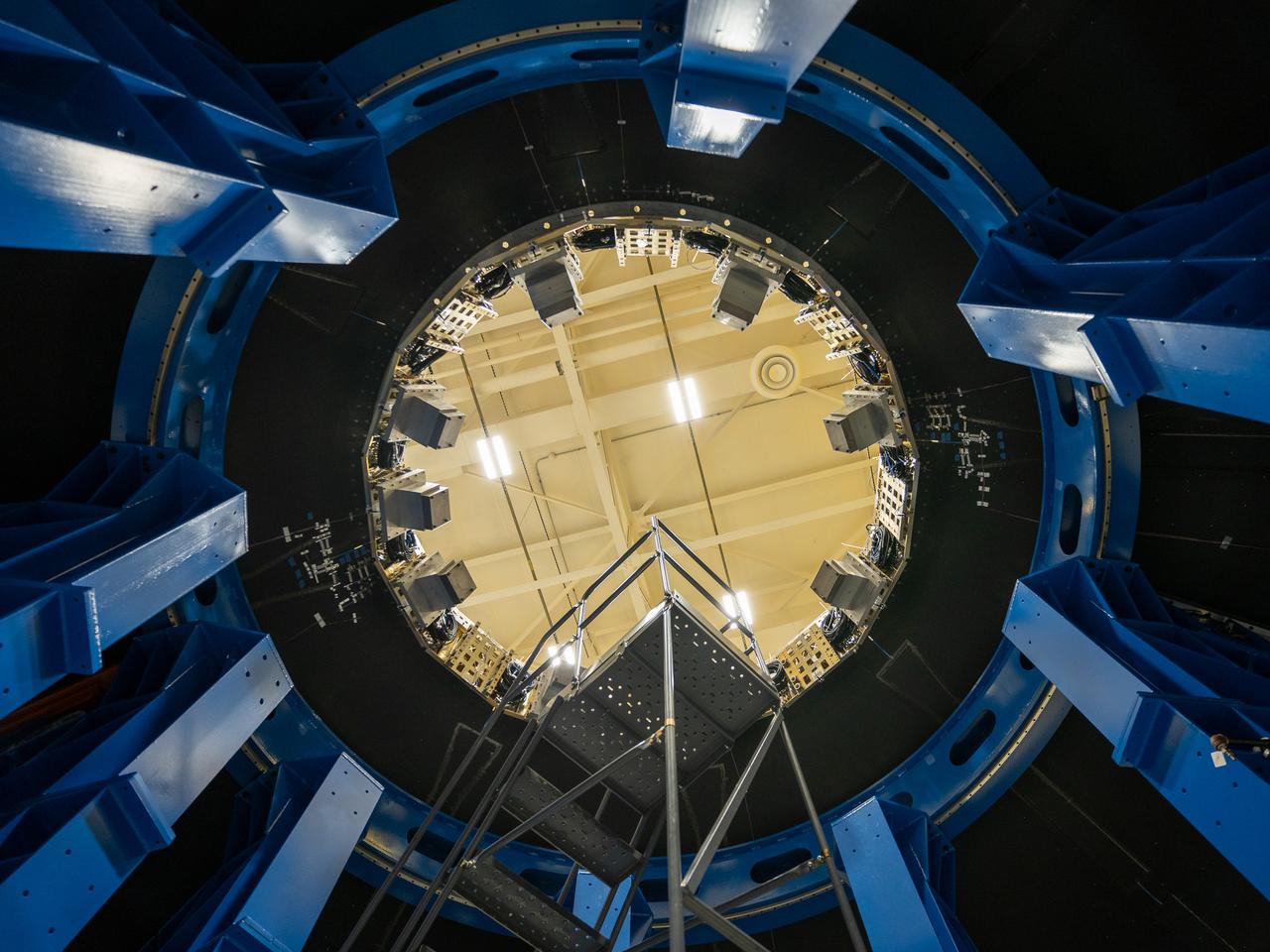
These photos and videos show how NASA manufactured and prepared to transport the payload adapter in February inside Building 4708 at NASA’s Marshall Space Flight Center in Huntsville, Alabama. Prior to moving the hardware for testing, teams installed the New Explorations Secondary Transport component, called the NEST, into the top of the engineering development unit. The NEST component will allow the hardware to hold a series of secondary payloads, or small satellites. The cone-shaped payload adapter is about 8.5 feet tall and features two metal rings and eight composite panels. The adapter, which will debut on NASA’s Artemis IV mission, is an evolution from the Orion stage adapter used in the Block 1 configuration of the rocket for the first three Artemis missions. It will be housed inside the universal stage adapter atop the rocket’s more powerful in-space stage, called the exploration upper stage. The payload adapter, like the launch vehicle stage adapter and the Orion stage adapter, is fully manufactured and tested at Marshall, which manages the SLS Program. NASA is working to land the first woman, first person of color, and its first international partner astronaut on the Moon under Artemis. SLS is part of NASA’s backbone for deep space exploration, along with the Orion spacecraft and Gateway in orbit around the Moon and commercial human landing systems, next-generational spacesuits, and rovers on the lunar surface. SLS is the only rocket that can send Orion, astronauts, and supplies to the Moon in a single launch.
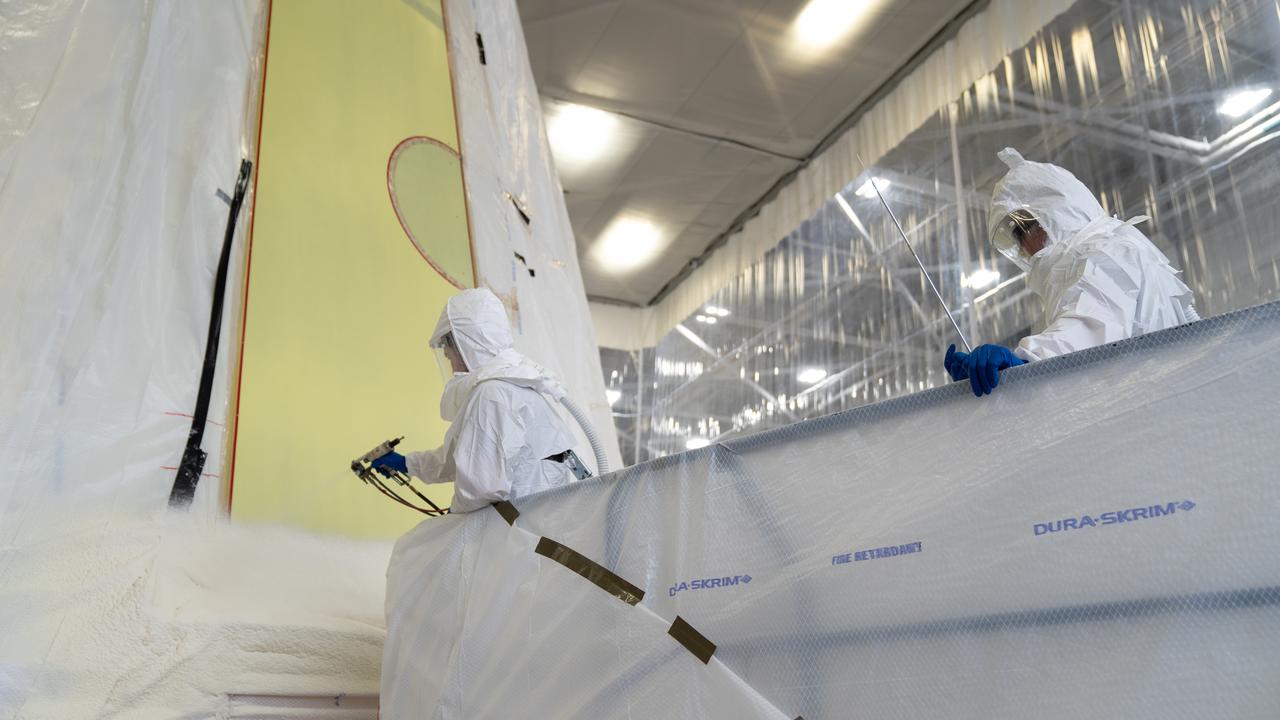
These photos show how technicians at NASA’s Marshall Space Flight Center in Huntsville, Alabama, have applied the thermal protection system material to the launch vehicle stage adapter (LVSA) of NASA’s SLS (Space Launch System) rocket for Artemis III, which will land astronauts on the Moon to advance long-term lunar exploration and scientific discovery and inspire the Artemis Generation. The LVSA is a cone-shaped element that connects the mega rocket’s core stage to its interim cryogenic propulsion stage (ICPS), partially enclosing it and protecting its avionics and electrical systems from the extreme pressures, sounds, and temperatures during launch and flight. Teams at Marshall began applying the thermal protection system material in the spring of 2023. Unlike other parts of the SLS rocket, the thermal protection system material for the LVSA is applied entirely by hand using a spray gun. During application, the technicians use a thin measuring rod to gauge the proper thickness. Once the thermal protection system has cured, certain areas are sanded down to meet parameters. The entire process takes several months. The LVSA is fully manufactured at Marshall by NASA, lead contractor Teledyne Brown Engineering, and the Jacobs Space Group’s ESSCA contract. The LVSA for Artemis III is the last of its kind as future SLS rockets will transition to its next, more powerful Block 1B configuration beginning with Artemis IV. NASA is working to land the first woman and first person of color on the Moon under Artemis. SLS is part of NASA’s backbone for deep space exploration, along with the Orion spacecraft, advanced spacesuits and rovers, the Gateway in orbit around the Moon, and commercial human landing systems. SLS is the only rocket that can send Orion, astronauts, and supplies to the Moon in a single mission.
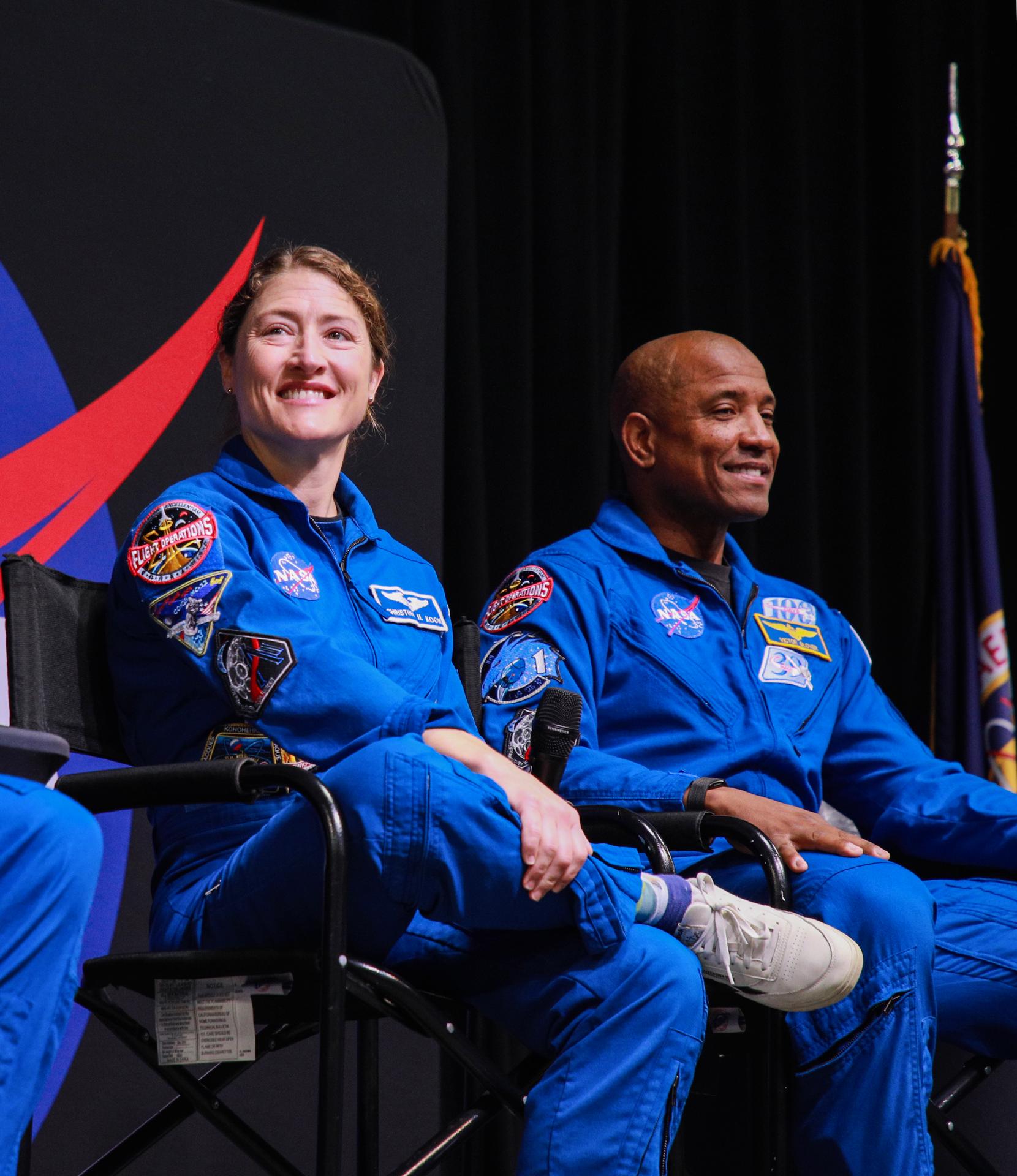
The crew of NASA’s Artemis II mission – NASA astronauts Reid Wiseman, Victor Glover, and Christina Koch, and Canadian Space Agency astronaut Jeremy Hansen – visited the agency’s Marshall Space Flight Center in Huntsville, Alabama, on Tuesday, Sept. 1, 2026. During an employee all-hands event, the crew reflected on their journey around the Moon, thanked Marshall team members for their contributions to the mission, and answered questions from the workforce. Artemis II was the first crewed mission of NASA’s Artemis campaign. Wiseman, Glover, Koch, and Hansen completed the approximately 10-day mission around the Moon in April 2026.
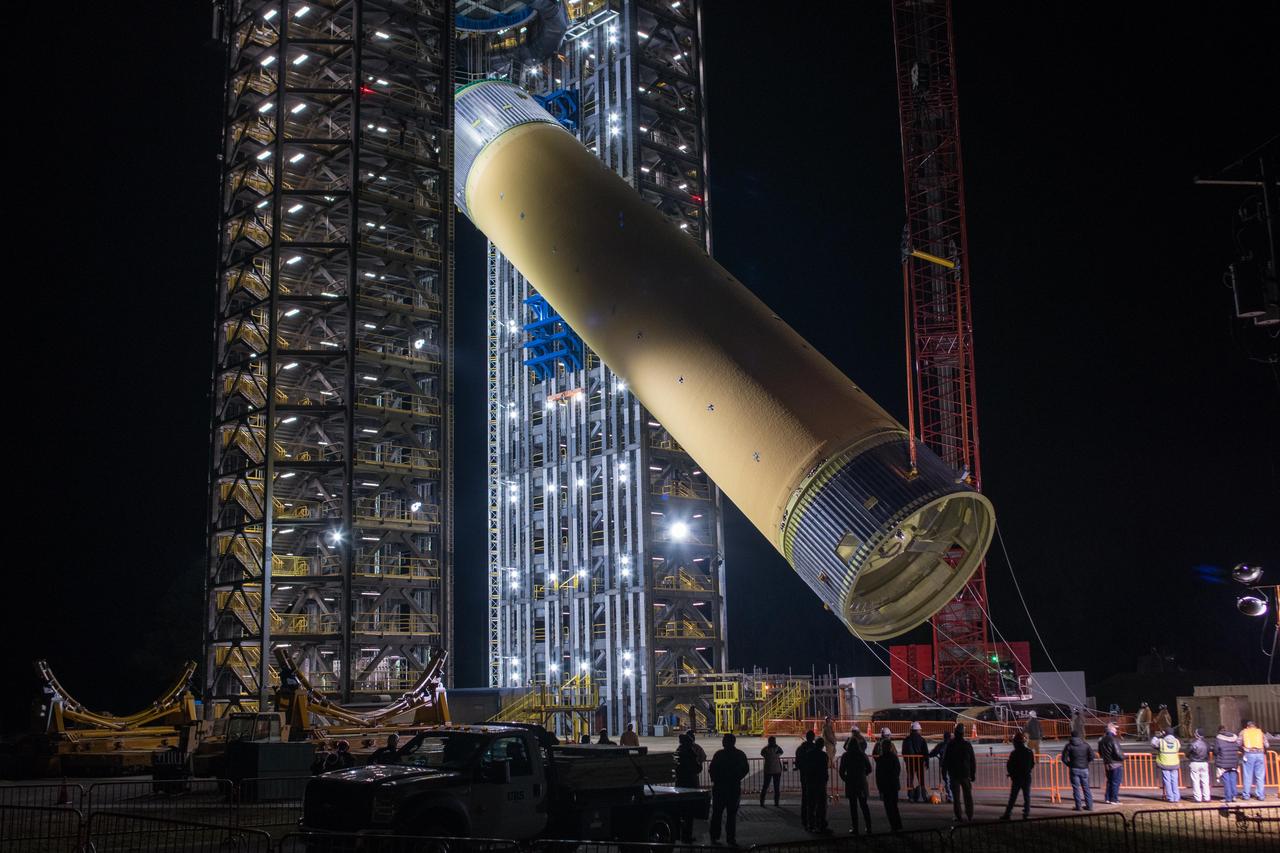
The Space Launch System (SLS) liquid hydrogen tank structural test article is loaded into Test Stand 4693 at NASA’s Marshall Space Flight Center in Huntsville, Alabama, on Jan. 14, 2019. The 149-foot piece of test hardware is the largest piece of structural hardware for the SLS core stage for America’s new deep space rocket Itis structurally identical to the flight version of the tank. It will undergo a series of tests in Test Stand 4693 to simulate the stresses and loads of liftoff and flight. These tests will help ensure designs are adequate for successful SLS missions to the Moon and beyond.
/USSRC_TravisHogan (195)~large.jpg)
More than 600 students with 44 teams from around the world participated in the 32nd year of NASA’s Human Exploration Rover Challenge (HERC) on April 10 and April 11 near NASA’s Marshall Space Flight Center in Huntsville, Alabama. Participating teams represented 28 colleges and universities, 13 high schools, and one middle school from 18 states, Puerto Rico, and four Artemis Accord countries. Teams were awarded points based on navigating a half-mile obstacle course with either a human-powered or remote-controlled rover, conducting mission-specific task challenges, and completing multiple safety and design reviews with NASA engineers.
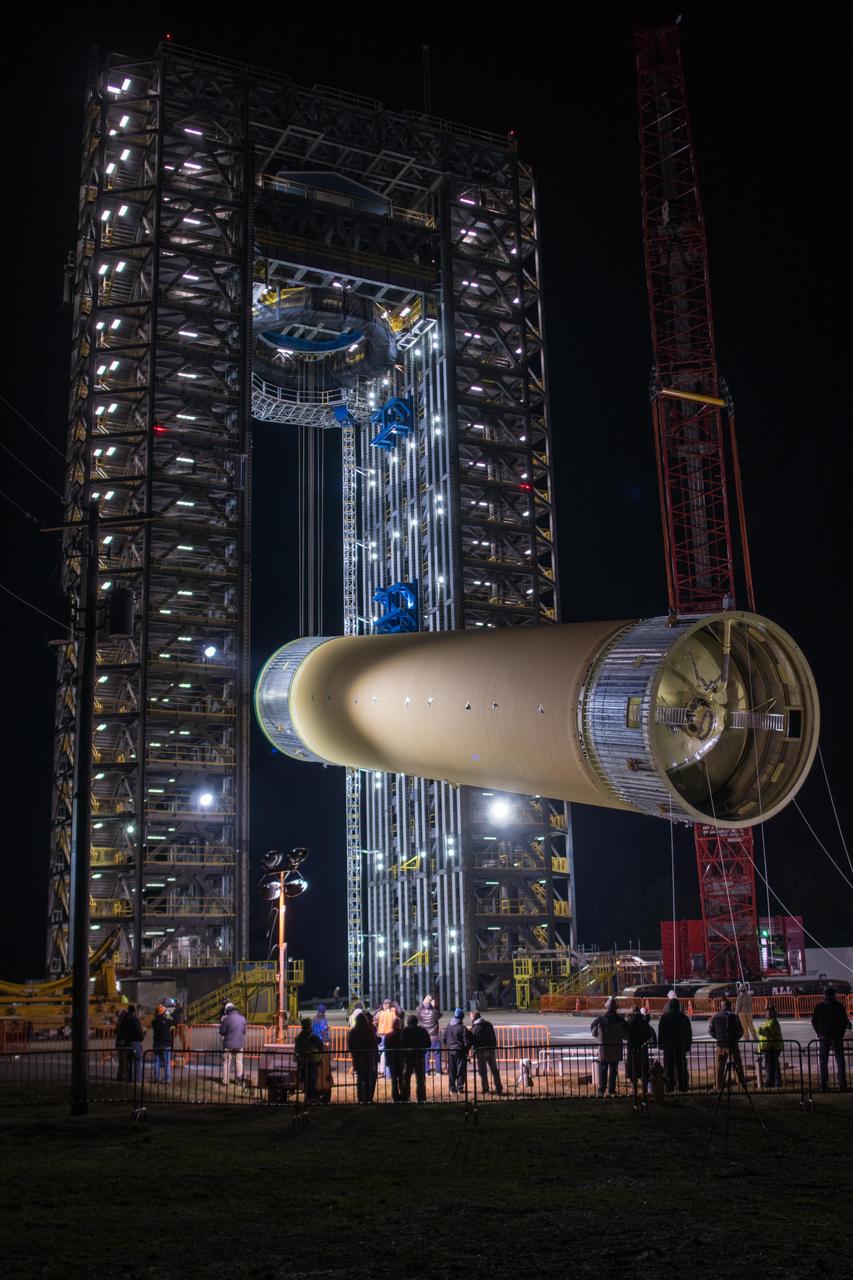
The Space Launch System (SLS) liquid hydrogen tank structural test article is loaded into Test Stand 4693 at NASA’s Marshall Space Flight Center in Huntsville, Alabama, on Jan. 14, 2019. The 149-foot piece of test hardware is the largest piece of structural hardware for the SLS core stage for America’s new deep space rocket Itis structurally identical to the flight version of the tank. It will undergo a series of tests in Test Stand 4693 to simulate the stresses and loads of liftoff and flight. These tests will help ensure designs are adequate for successful SLS missions to the Moon and beyond.
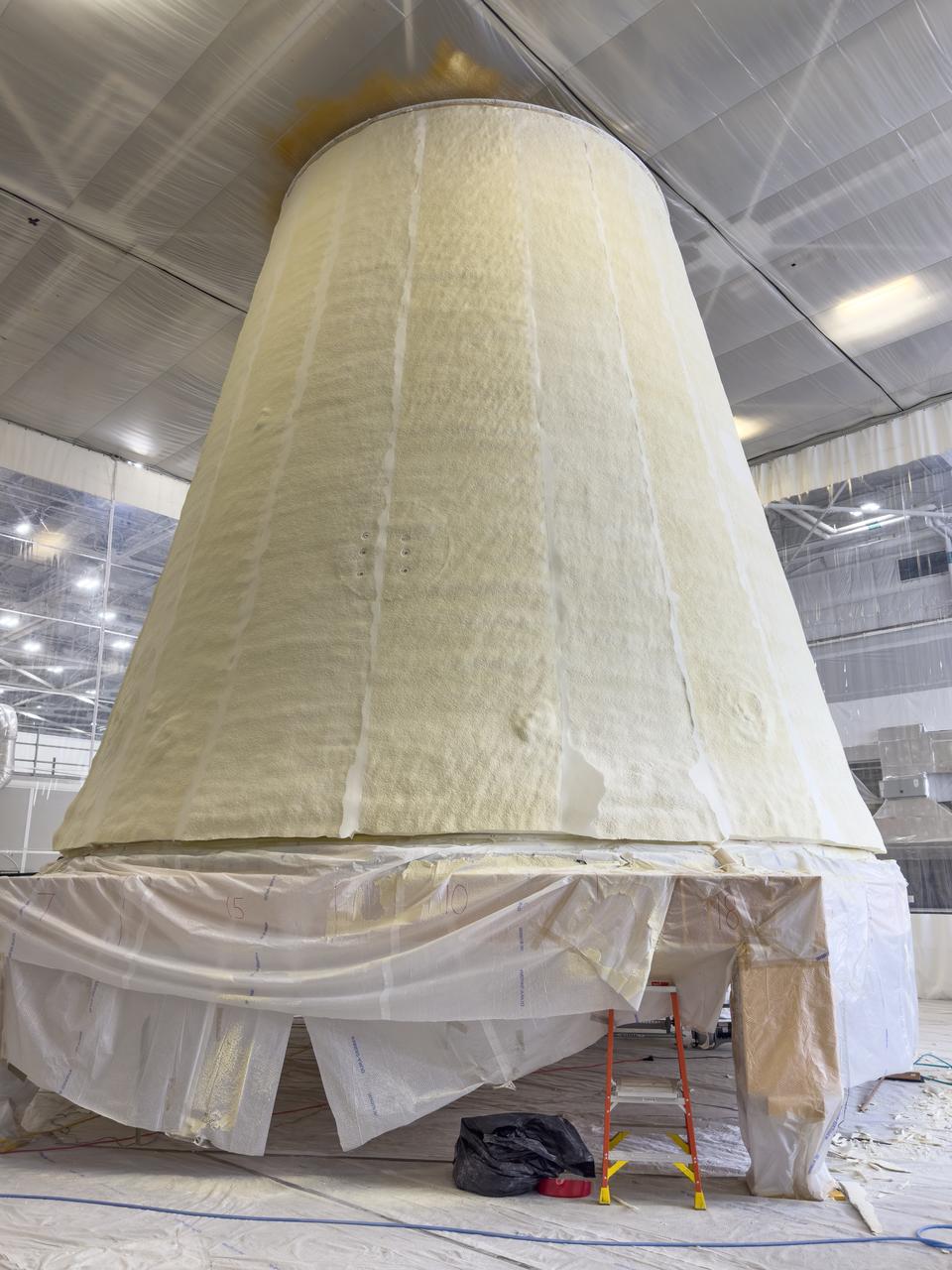
These photos show how technicians at NASA’s Marshall Space Flight Center in Huntsville, Alabama, have applied the thermal protection system material to the launch vehicle stage adapter (LVSA) of NASA’s SLS (Space Launch System) rocket for Artemis III, which will land astronauts on the Moon to advance long-term lunar exploration and scientific discovery and inspire the Artemis Generation. The LVSA is a cone-shaped element that connects the mega rocket’s core stage to its interim cryogenic propulsion stage (ICPS), partially enclosing it and protecting its avionics and electrical systems from the extreme pressures, sounds, and temperatures during launch and flight. Teams at Marshall began applying the thermal protection system material in the spring of 2023. Unlike other parts of the SLS rocket, the thermal protection system material for the LVSA is applied entirely by hand using a spray gun. During application, the technicians use a thin measuring rod to gauge the proper thickness. Once the thermal protection system has cured, certain areas are sanded down to meet parameters. The entire process takes several months. The LVSA is fully manufactured at Marshall by NASA, lead contractor Teledyne Brown Engineering, and the Jacobs Space Group’s ESSCA contract. The LVSA for Artemis III is the last of its kind as future SLS rockets will transition to its next, more powerful Block 1B configuration beginning with Artemis IV. NASA is working to land the first woman and first person of color on the Moon under Artemis. SLS is part of NASA’s backbone for deep space exploration, along with the Orion spacecraft, advanced spacesuits and rovers, the Gateway in orbit around the Moon, and commercial human landing systems. SLS is the only rocket that can send Orion, astronauts, and supplies to the Moon in a single mission.
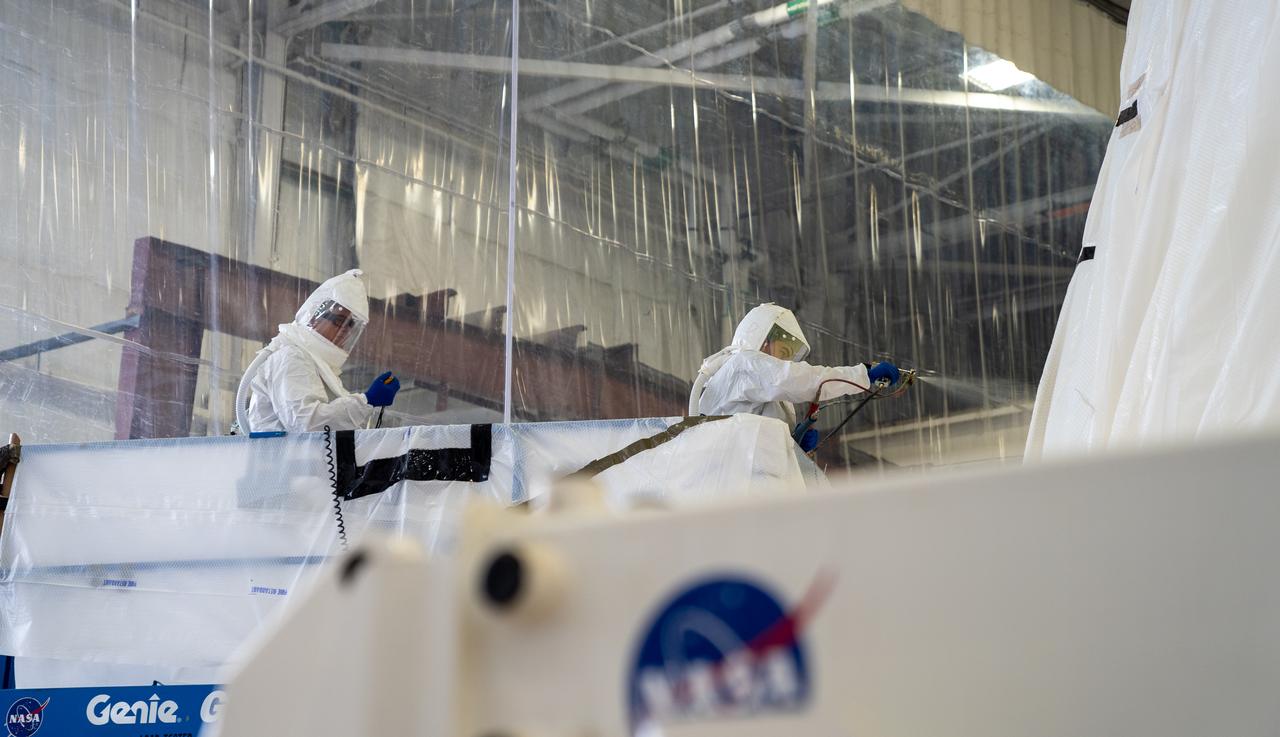
These photos show how technicians at NASA’s Marshall Space Flight Center in Huntsville, Alabama, have applied the thermal protection system material to the launch vehicle stage adapter (LVSA) of NASA’s SLS (Space Launch System) rocket for Artemis III, which will land astronauts on the Moon to advance long-term lunar exploration and scientific discovery and inspire the Artemis Generation. The LVSA is a cone-shaped element that connects the mega rocket’s core stage to its interim cryogenic propulsion stage (ICPS), partially enclosing it and protecting its avionics and electrical systems from the extreme pressures, sounds, and temperatures during launch and flight. Teams at Marshall began applying the thermal protection system material in the spring of 2023. Unlike other parts of the SLS rocket, the thermal protection system material for the LVSA is applied entirely by hand using a spray gun. During application, the technicians use a thin measuring rod to gauge the proper thickness. Once the thermal protection system has cured, certain areas are sanded down to meet parameters. The entire process takes several months. The LVSA is fully manufactured at Marshall by NASA, lead contractor Teledyne Brown Engineering, and the Jacobs Space Group’s ESSCA contract. The LVSA for Artemis III is the last of its kind as future SLS rockets will transition to its next, more powerful Block 1B configuration beginning with Artemis IV. NASA is working to land the first woman and first person of color on the Moon under Artemis. SLS is part of NASA’s backbone for deep space exploration, along with the Orion spacecraft, advanced spacesuits and rovers, the Gateway in orbit around the Moon, and commercial human landing systems. SLS is the only rocket that can send Orion, astronauts, and supplies to the Moon in a single mission.

Over 600 middle school, high school, and college students from across the nation launched 30 high-powered rockets just north of NASA’s Marshall Space Flight Center in Huntsville, Alabama. This year marked the 26th anniversary of the competition. To compete, students follow the NASA engineering design lifecycle by going through a series of reviews for nine months leading up to launch day. Each year, a payload challenge is issued to the university teams, and this year’s task took inspiration from the agency’s Artemis missions, where NASA will send astronauts to explore the Moon for scientific discovery, economic benefit, and to build the foundation for the first crewed missions to Mars. Teams were challenged build and fly a STEMnaut Habitat for Agricultural Utilization Study (HAUS) that safely houses four STEMnauts, non-living objects representing astronauts. The habitat had to include equipment capable of both collecting and testing soil samples to support agricultural research operations.
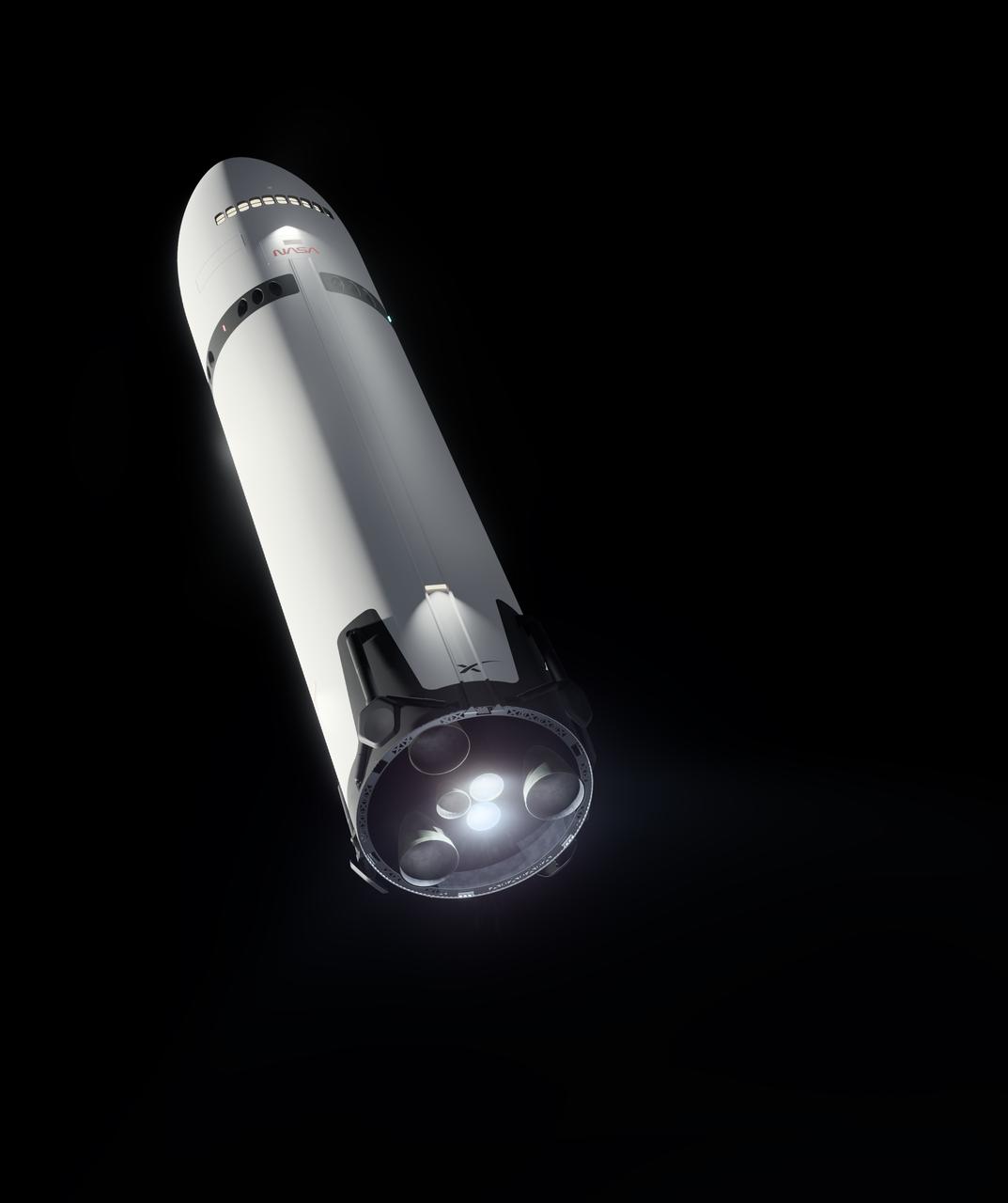
This artist’s concept portrays SpaceX’s Starship Human Landing System (HLS) with two Raptor engines lit, performing a braking burn prior to its Moon landing. The burn will occur after Starship HLS departs low lunar orbit to reduce the lander’s velocity prior to final descent to the lunar surface. NASA is working with SpaceX to develop Starship HLS to carry astronauts from lunar orbit to the Moon’s surface and back for Artemis III and Artemis IV as part of the agency’s Artemis campaign.
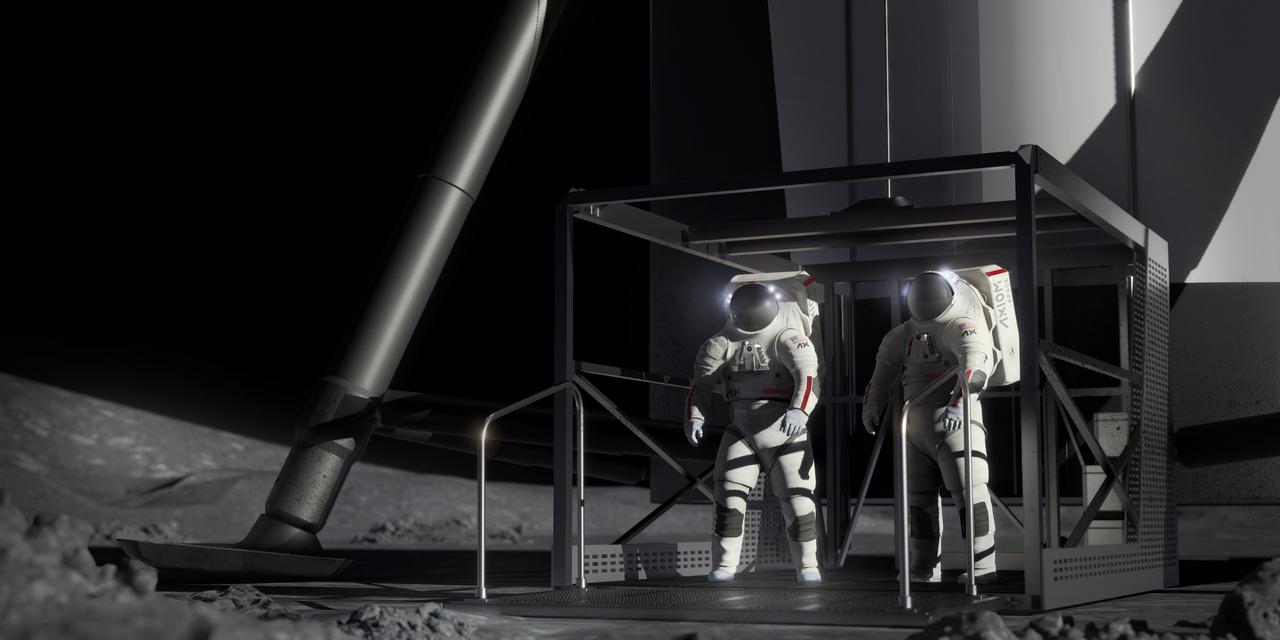
These artist’s concepts show SpaceX’s Starship Human Landing System (HLS) on the Moon. NASA is working with SpaceX to develop Starship HLS to carry astronauts from lunar orbit to the Moon’s surface and back for Artemis III and Artemis IV as part of the agency’s Artemis campaign. At about 165 feet (50 m), Starship HLS will be about the same height as a 15-story building. An elevator on Starship HLS will be used to transport crew and cargo between the lander and the Moon’s surface.
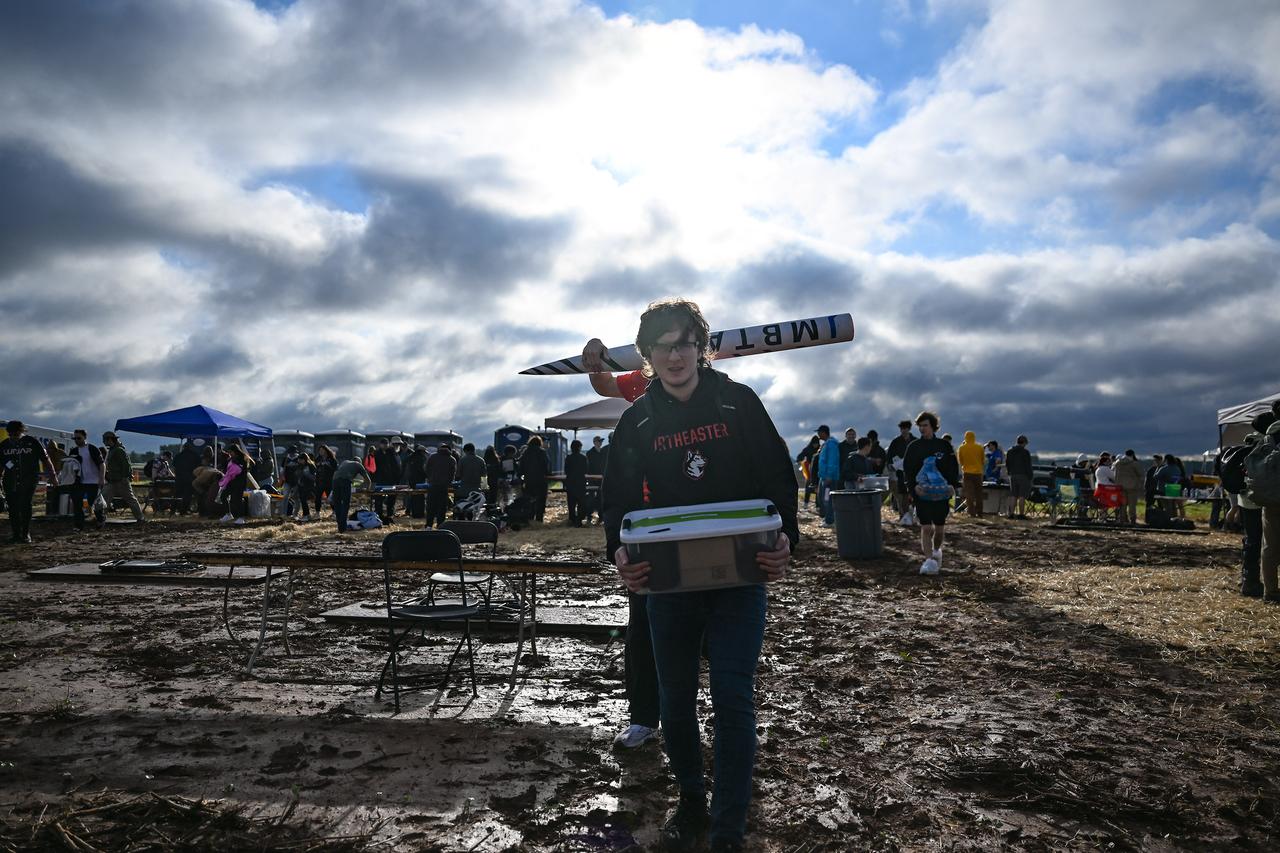
Over than 980 middle school, high school, and college students from across the nation launched more than 40 high-powered rockets just north of NASA’s Marshall Space Flight Center in Huntsville, Alabama. This year marked the 25th anniversary of the competition. To compete, students follow the NASA engineering design lifecycle by going through a series of reviews for nine months leading up to launch day. Each year, a payload challenge is issued to the university teams, and this year’s task took inspiration from the agency’s Artemis missions, where NASA will send astronauts to explore the Moon for scientific discovery, economic benefit, and to build the foundation for the first crewed missions to Mars. Teams were challenged to include “reports” from STEMnauts, non-living objects representing astronauts. The STEMnaut “crew” had to relay real-time data to the student team’s mission control, just as the Artemis astronaut crew will do as they explore the lunar surface. To learn more, visit: www.nasa.gov/studentlaunch.

These photos show how teams at NASA’s Marshall Space Flight Center in Huntsville, Alabama, are testing an innovative approach to achieve zero boiloff storage of liquid hydrogen using two stages of active cooling, which could prevent the loss of valuable propellant during future long-duration spaceflight missions. Test teams installed the propellant tank in Test Stand 300 at NASA Marshall in early June, and the 90-day test campaign is scheduled to conclude in September. The tank is wrapped in a multi-layer insulation blanket that includes a thin aluminum heat shield fitted between layers. A second set of tubes, carrying helium at about minus 298 Fahrenheit, is integrated into the shield. This intermediate cooling layer intercepts and rejects incoming heat before it reaching the tank, easing the heat load on the tube-on-tank system. The Cryogenic Fluid Management Portfolio Project is a cross-agency team based at NASA Marshall and the agency’s Glenn Research Center in Cleveland. The cryogenic portfolio’s work is under NASA’s Technology Demonstration Missions Program, part of NASA’s Space Technology Mission Directorate, and is comprised of more than 20 individual technology development activities. For more information, contact NASA Marshall’s Office of Communications at 256-544-0034.
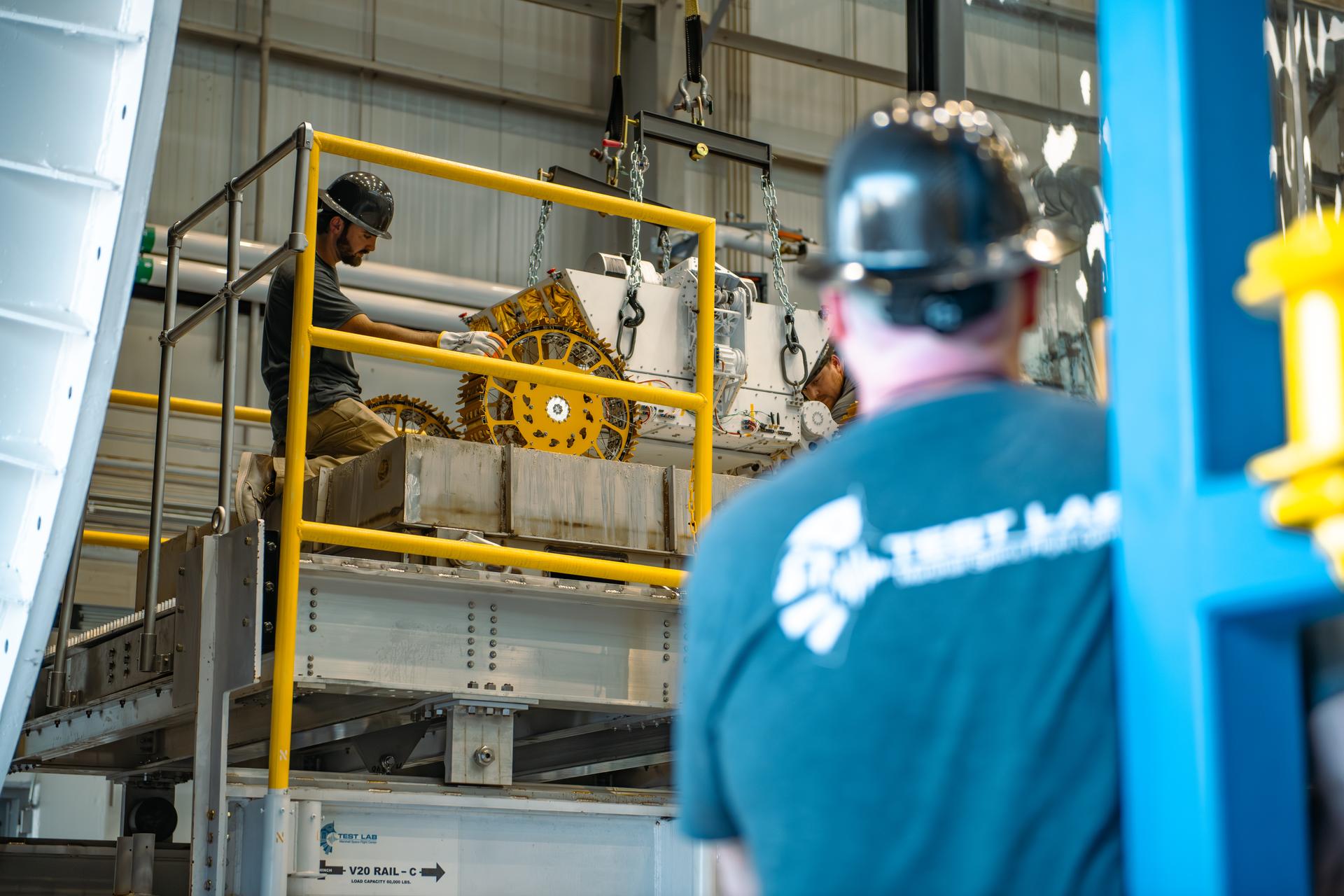
NASA test engineers with the Environmental Test Facility at NASA’s Marshall Space Flight Center situate the rover over the concrete slab that it will operate on before removing the suspension straps that lifted it onto the platform. The technology startup headquartered in Hawthorne, California, won second place overall at the agency’s Break the Ice Lunar Challenge’s live demonstration and finale in June 2024. This competition, one of NASA’s Centennial Challenges, tasked competitors to design, build, and demonstrate robotic technologies that could excavate and transport the icy, rocky dirt – otherwise known as regolith – found on the Moon. Starpath’s visit to NASA Marshall was part of their prize opportunity to test their upgraded lunar regolith excavation and transportation rover in the center’s 20-foot thermal vacuum chamber. For more information, contact NASA Marshall’s Office of Communications at 256-544-0034.
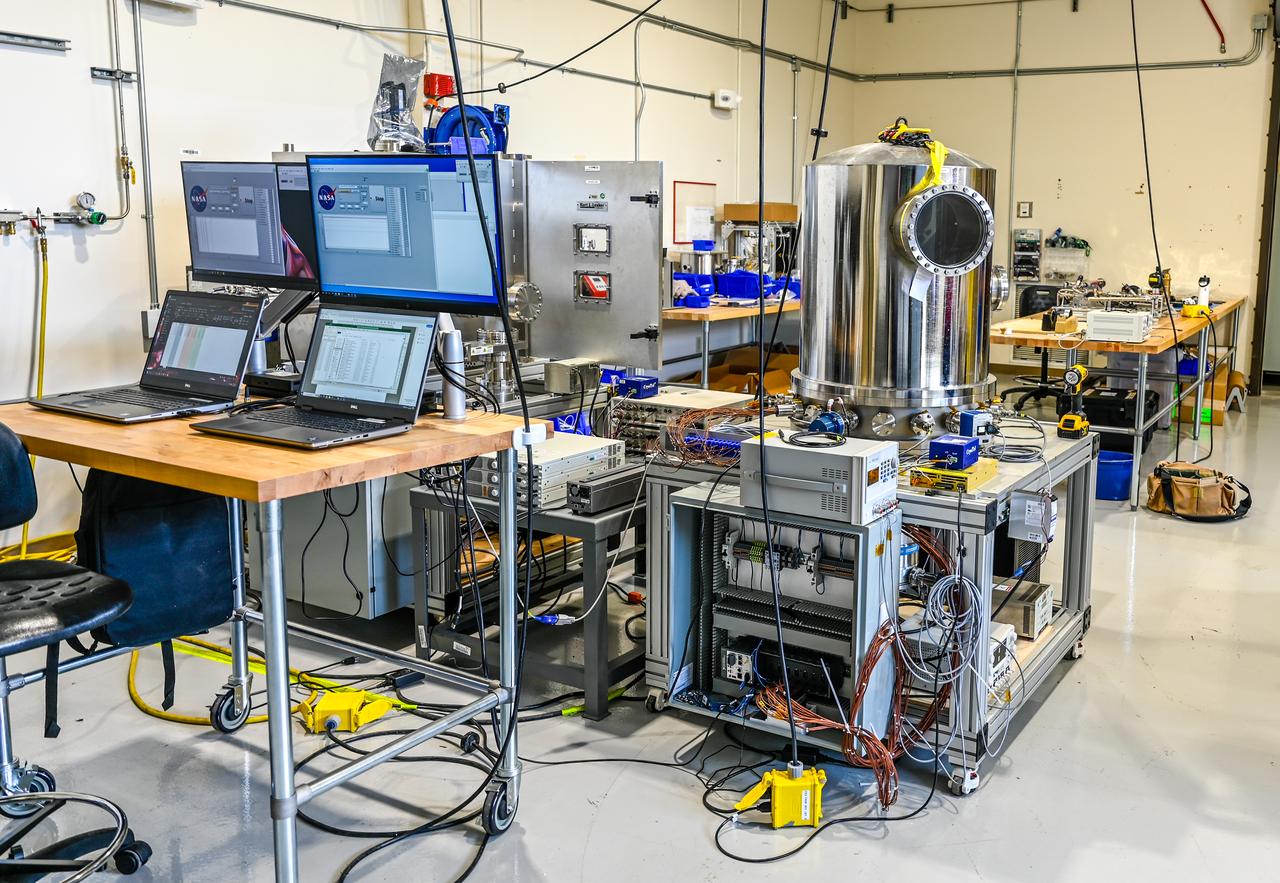
These photos, taken in fall 2024, show how NASA engineers use the Hub for Innovative Thermal Technology Maturation and Prototyping (Hi-TTeMP) laboratory at NASA’s Marshall Space Flight Center in Huntsville, Alabama. NASA engineers working in the HI-TTeMP lab not only design, set up, and run tests, they also provide insight and expertise in thermal engineering to assist NASA’s industry partners, such as SpaceX and other organizations, in validating concepts and models, or suggesting changes to designs. The lab is able to rapidly test and evaluate design updates or iterations. Engineering teams inside the lab are currently testing how well prototype insulation for SpaceX’s Starship HLS (Human Landing System) will insulate interior environments, including propellant storage tanks and the crew cabin. Starship HLS will land astronauts on the lunar surface during Artemis III and Artemis IV.
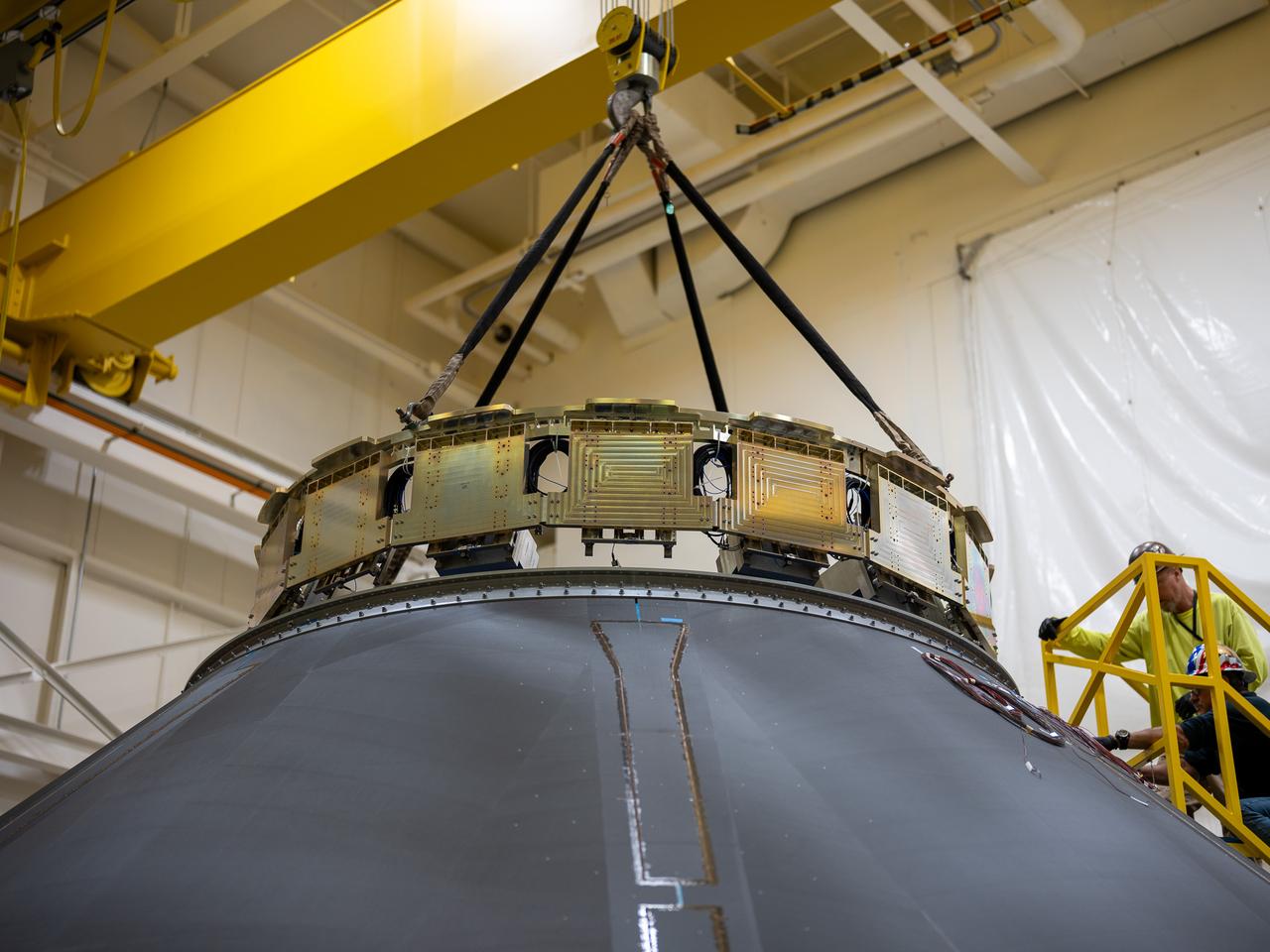
These photos and videos show how NASA manufactured and prepared to transport the payload adapter in February inside Building 4708 at NASA’s Marshall Space Flight Center in Huntsville, Alabama. Prior to moving the hardware for testing, teams installed the New Explorations Secondary Transport component, called the NEST, into the top of the engineering development unit. The NEST component will allow the hardware to hold a series of secondary payloads, or small satellites. The cone-shaped payload adapter is about 8.5 feet tall and features two metal rings and eight composite panels. The adapter, which will debut on NASA’s Artemis IV mission, is an evolution from the Orion stage adapter used in the Block 1 configuration of the rocket for the first three Artemis missions. It will be housed inside the universal stage adapter atop the rocket’s more powerful in-space stage, called the exploration upper stage. The payload adapter, like the launch vehicle stage adapter and the Orion stage adapter, is fully manufactured and tested at Marshall, which manages the SLS Program. NASA is working to land the first woman, first person of color, and its first international partner astronaut on the Moon under Artemis. SLS is part of NASA’s backbone for deep space exploration, along with the Orion spacecraft and Gateway in orbit around the Moon and commercial human landing systems, next-generational spacesuits, and rovers on the lunar surface. SLS is the only rocket that can send Orion, astronauts, and supplies to the Moon in a single launch.
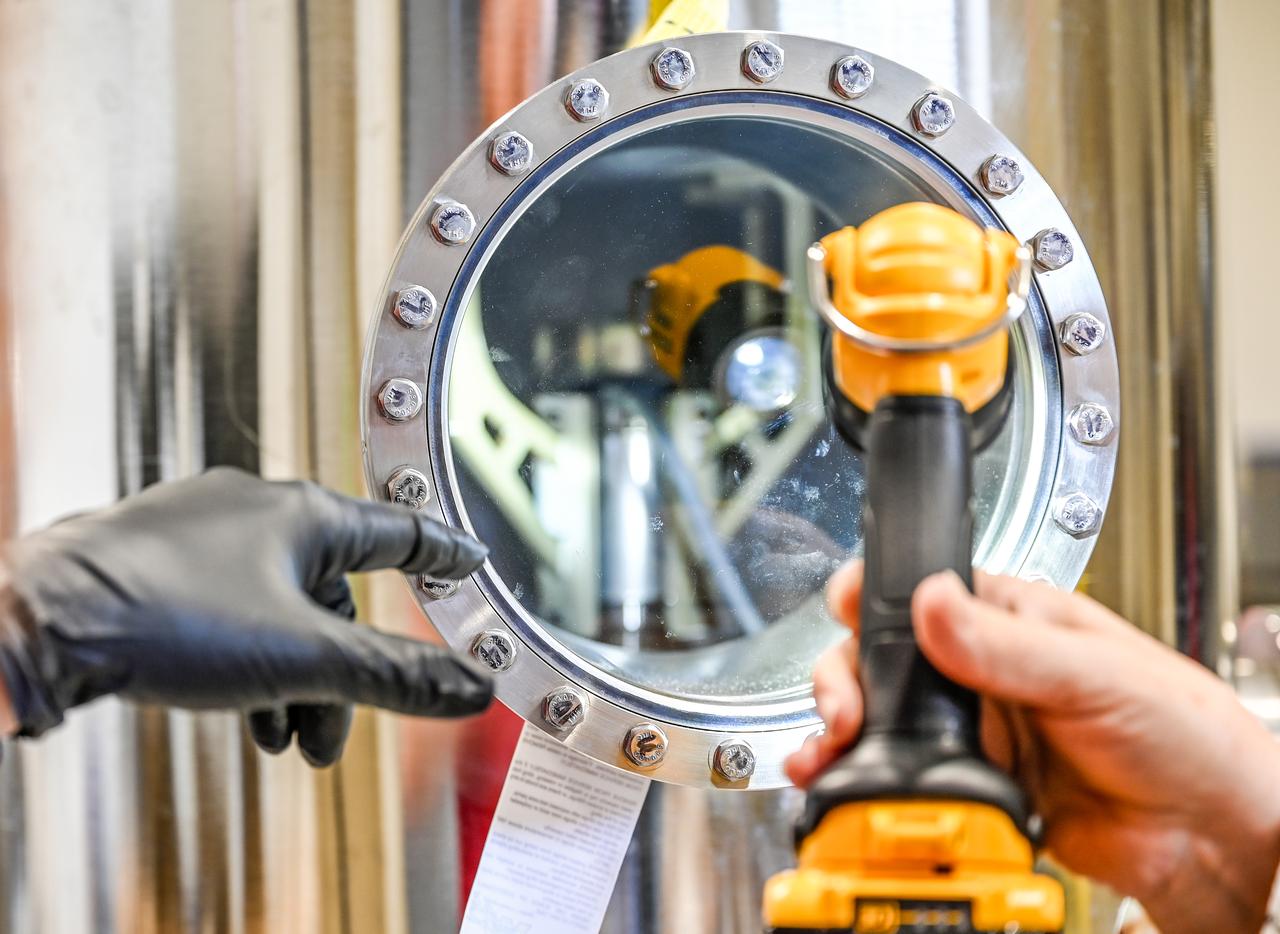
These photos, taken in fall 2024, show how NASA engineers use the Hub for Innovative Thermal Technology Maturation and Prototyping (Hi-TTeMP) laboratory at NASA’s Marshall Space Flight Center in Huntsville, Alabama. NASA engineers working in the HI-TTeMP lab not only design, set up, and run tests, they also provide insight and expertise in thermal engineering to assist NASA’s industry partners, such as SpaceX and other organizations, in validating concepts and models, or suggesting changes to designs. The lab is able to rapidly test and evaluate design updates or iterations. Engineering teams inside the lab are currently testing how well prototype insulation for SpaceX’s Starship HLS (Human Landing System) will insulate interior environments, including propellant storage tanks and the crew cabin. Starship HLS will land astronauts on the lunar surface during Artemis III and Artemis IV.
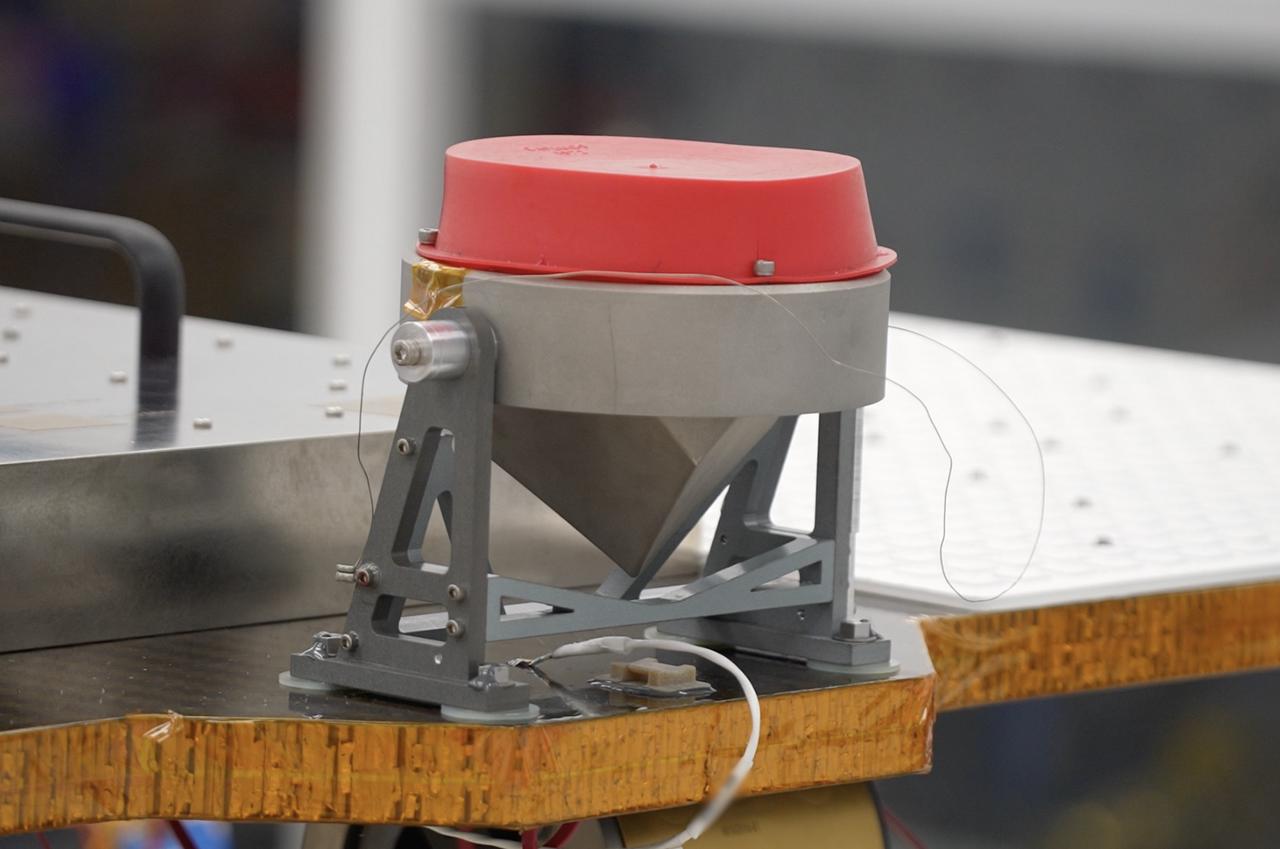
A science instrument flying aboard the next delivery for NASA’s CLPS (Commercial Lunar Payload Services) initiative is expected to significantly expand our knowledge of the Moon. Next Generation Lunar Retroreflector, or NGLR-1, is one of 10 payloads set to be carried to the Moon by the Blue Ghost 1 lunar lander in 2025. Developed by the University of Maryland in College Park, NGLR-1 is designed to reflect very short laser pulses from Earth-based lunar laser ranging observatories using a retroreflector, or a mirror designed to reflect the incoming light back in the same incoming direction. Investigations and demonstrations, such as NGLR-1, launched on CLPS flights will help NASA study Earth’s nearest neighbor under Artemis and pave the way for future crewed missions on the Moon. NASA’s Marshall Space Flight Center in Huntsville, Alabama, manages the development for seven of the 10 CLPS payloads that will be carried on Firefly’s Blue Ghost lunar lander.
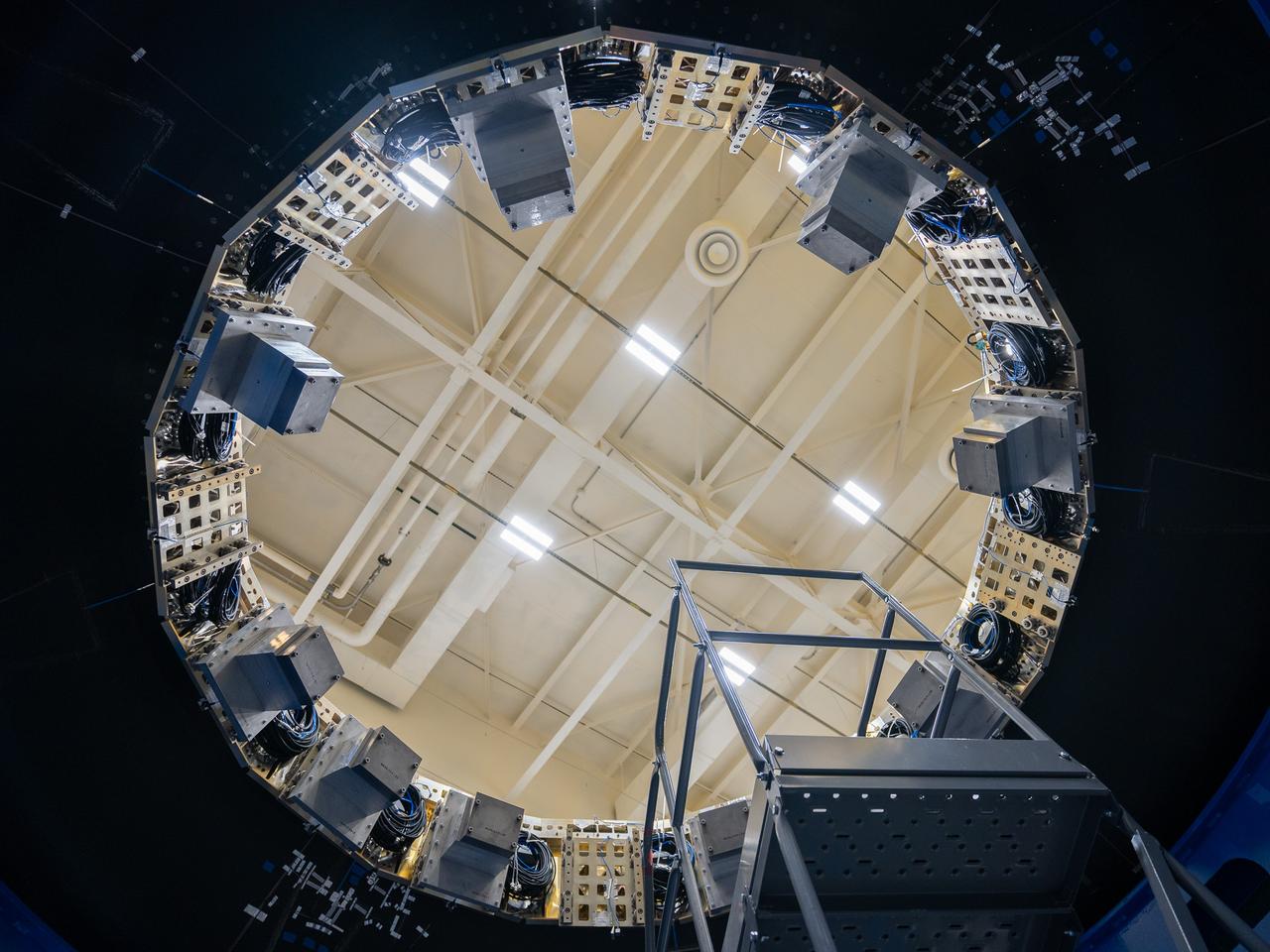
These photos and videos show how NASA manufactured and prepared to transport the payload adapter in February inside Building 4708 at NASA’s Marshall Space Flight Center in Huntsville, Alabama. Prior to moving the hardware for testing, teams installed the New Explorations Secondary Transport component, called the NEST, into the top of the engineering development unit. The NEST component will allow the hardware to hold a series of secondary payloads, or small satellites. The cone-shaped payload adapter is about 8.5 feet tall and features two metal rings and eight composite panels. The adapter, which will debut on NASA’s Artemis IV mission, is an evolution from the Orion stage adapter used in the Block 1 configuration of the rocket for the first three Artemis missions. It will be housed inside the universal stage adapter atop the rocket’s more powerful in-space stage, called the exploration upper stage. The payload adapter, like the launch vehicle stage adapter and the Orion stage adapter, is fully manufactured and tested at Marshall, which manages the SLS Program. NASA is working to land the first woman, first person of color, and its first international partner astronaut on the Moon under Artemis. SLS is part of NASA’s backbone for deep space exploration, along with the Orion spacecraft and Gateway in orbit around the Moon and commercial human landing systems, next-generational spacesuits, and rovers on the lunar surface. SLS is the only rocket that can send Orion, astronauts, and supplies to the Moon in a single launch.
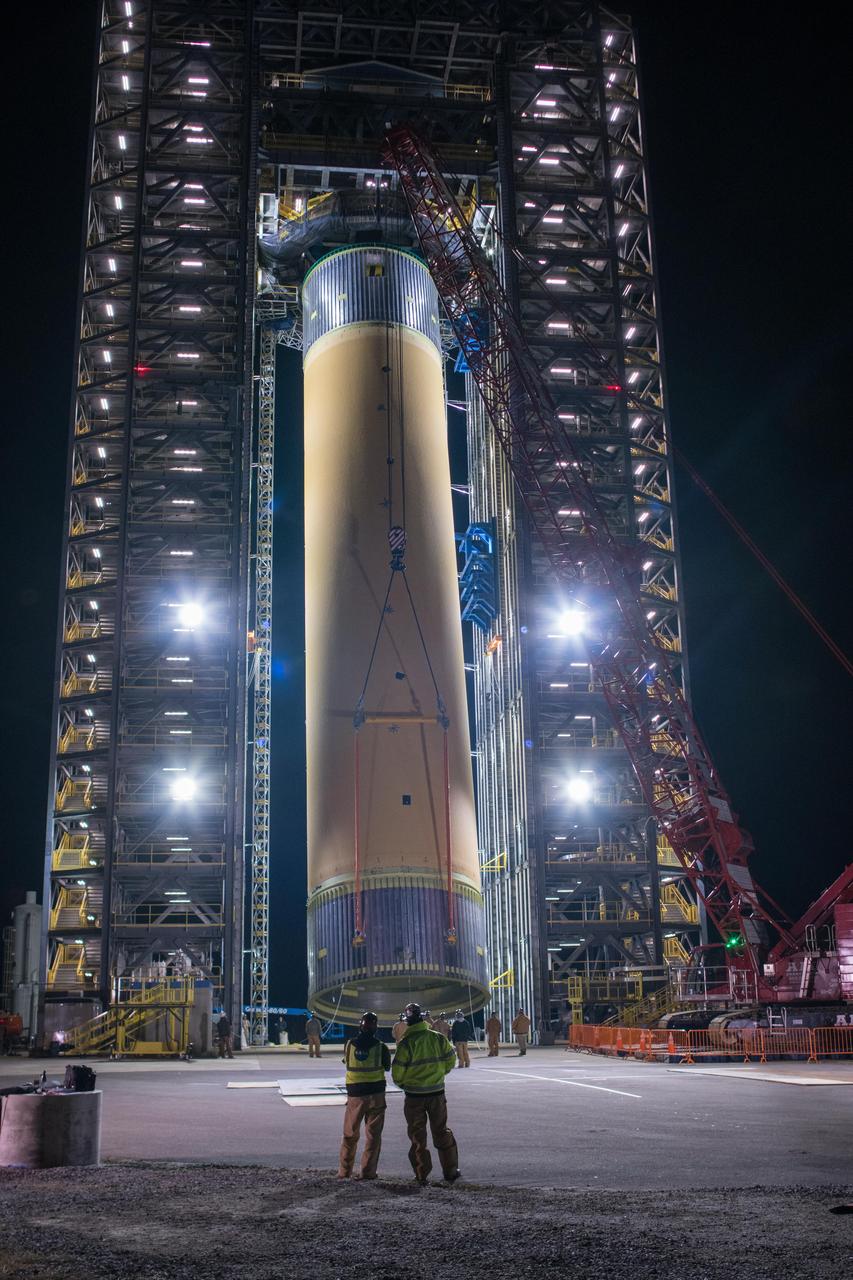
The Space Launch System (SLS) liquid hydrogen tank structural test article is loaded into Test Stand 4693 at NASA’s Marshall Space Flight Center in Huntsville, Alabama, on Jan. 14, 2019. The 149-foot piece of test hardware is the largest piece of structural hardware for the SLS core stage for America’s new deep space rocket Itis structurally identical to the flight version of the tank. It will undergo a series of tests in Test Stand 4693 to simulate the stresses and loads of liftoff and flight. These tests will help ensure designs are adequate for successful SLS missions to the Moon and beyond.
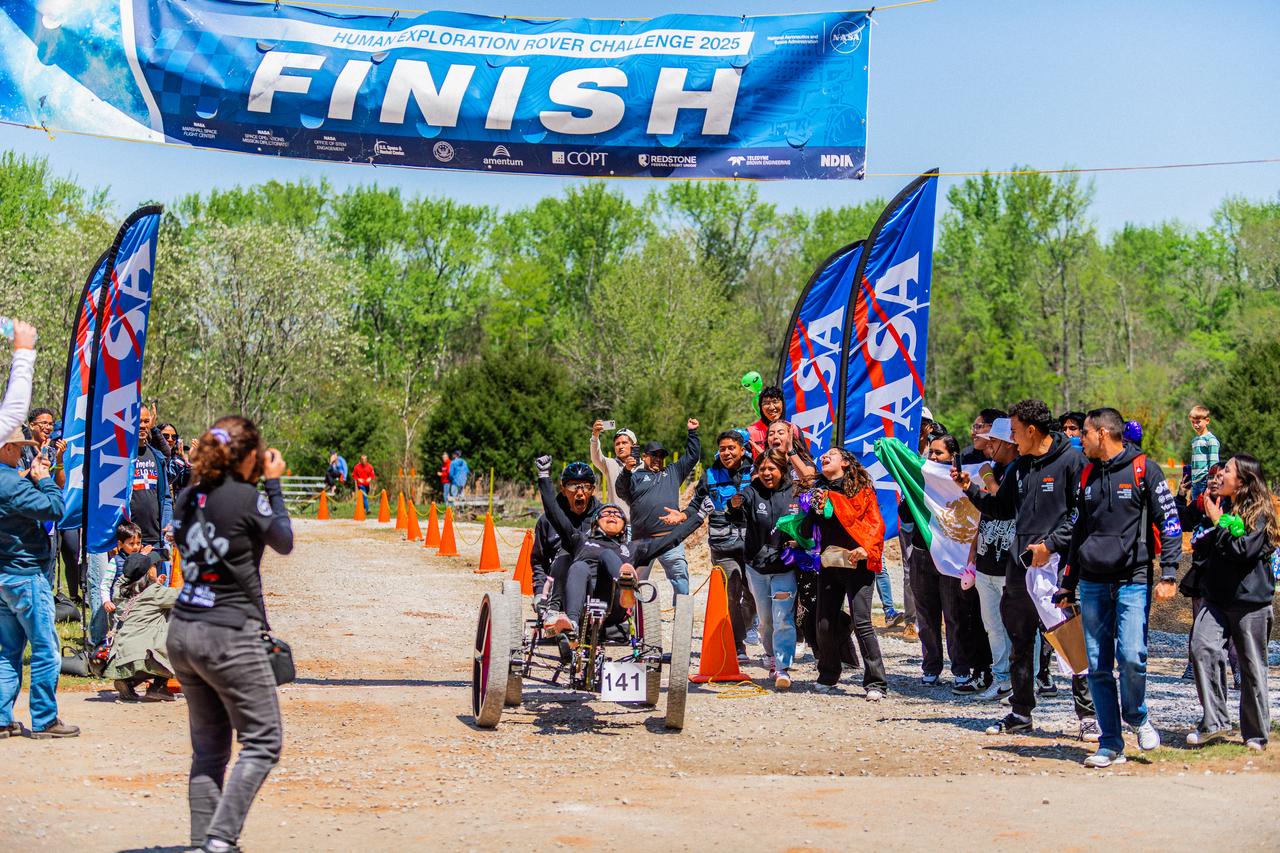
More than 500 students with 75 teams from around the world participated in the 31st year of NASA’s Human Exploration Rover Challenge (HERC) on April 11 and April 12, 2025, near NASA’s Marshall Space Flight Center in Huntsville, Alabama. Participating teams represented 35 colleges and universities, 38 high schools, and two middle schools from 20 states, Puerto Rico, and 16 other nations. NASA expanded the 2025 challenge to include a remote-control division - named Remote-Operated Vehicular Research - and invited middle school students to participate. Teams were awarded points based on navigating a half-mile obstacle course, conducting mission-specific task challenges, and completing multiple safety and design reviews with NASA engineers.
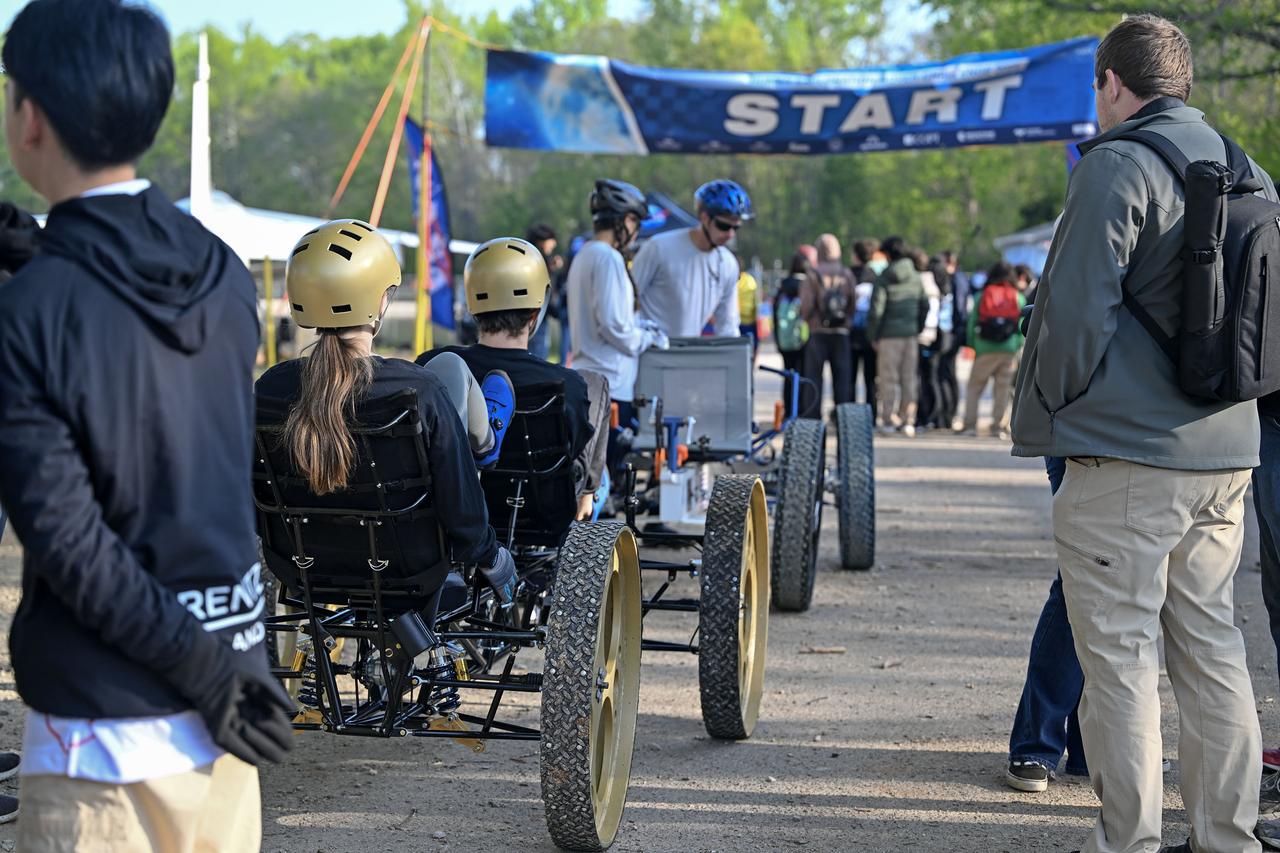
More than 500 students with 75 teams from around the world participated in the 31st year of NASA’s Human Exploration Rover Challenge (HERC) on April 11 and April 12, 2025, near NASA’s Marshall Space Flight Center in Huntsville, Alabama. Participating teams represented 35 colleges and universities, 38 high schools, and two middle schools from 20 states, Puerto Rico, and 16 other nations. NASA expanded the 2025 challenge to include a remote-control division - named Remote-Operated Vehicular Research - and invited middle school students to participate. Teams were awarded points based on navigating a half-mile obstacle course, conducting mission-specific task challenges, and completing multiple safety and design reviews with NASA engineers.

These artist’s concepts show SpaceX’s Starship Human Landing System (HLS) on the Moon. NASA is working with SpaceX to develop Starship HLS to carry astronauts from lunar orbit to the Moon’s surface and back for Artemis III and Artemis IV as part of the agency’s Artemis campaign. At about 165 feet (50 m), Starship HLS will be about the same height as a 15-story building. An elevator on Starship HLS will be used to transport crew and cargo between the lander and the Moon’s surface.

More than 500 students with 75 teams from around the world participated in the 31st year of NASA’s Human Exploration Rover Challenge (HERC) on April 11 and April 12, 2025, near NASA’s Marshall Space Flight Center in Huntsville, Alabama. Participating teams represented 35 colleges and universities, 38 high schools, and two middle schools from 20 states, Puerto Rico, and 16 other nations. NASA expanded the 2025 challenge to include a remote-control division - named Remote-Operated Vehicular Research - and invited middle school students to participate. Teams were awarded points based on navigating a half-mile obstacle course, conducting mission-specific task challenges, and completing multiple safety and design reviews with NASA engineers.
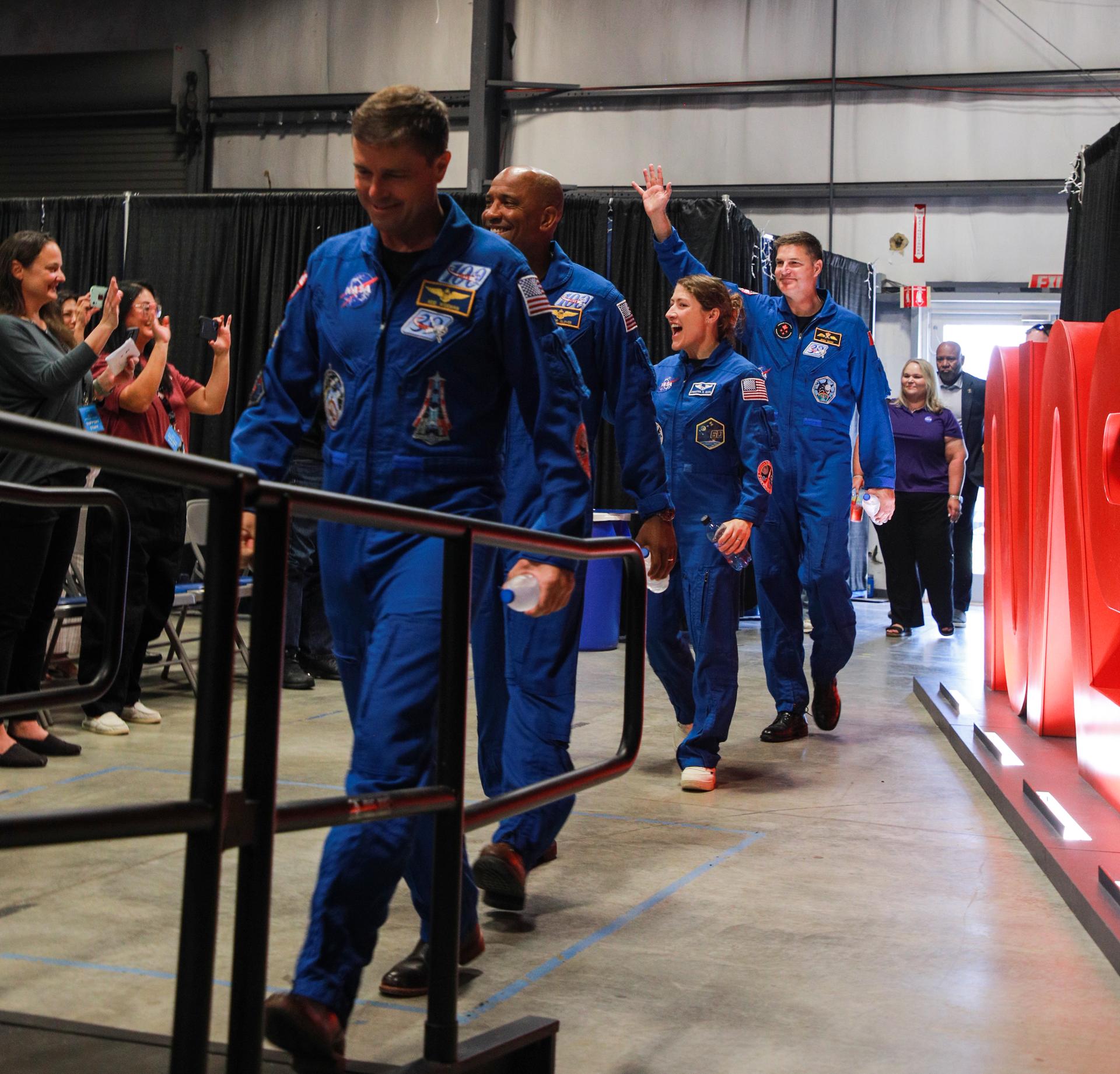
The crew of NASA’s Artemis II mission – NASA astronauts Reid Wiseman, Victor Glover, and Christina Koch, and Canadian Space Agency astronaut Jeremy Hansen – visited the agency’s Marshall Space Flight Center in Huntsville, Alabama, on Tuesday, Sept. 1, 2026. During an employee all-hands event, the crew reflected on their journey around the Moon, thanked Marshall team members for their contributions to the mission, and answered questions from the workforce. Artemis II was the first crewed mission of NASA’s Artemis campaign. Wiseman, Glover, Koch, and Hansen completed the approximately 10-day mission around the Moon in April 2026.
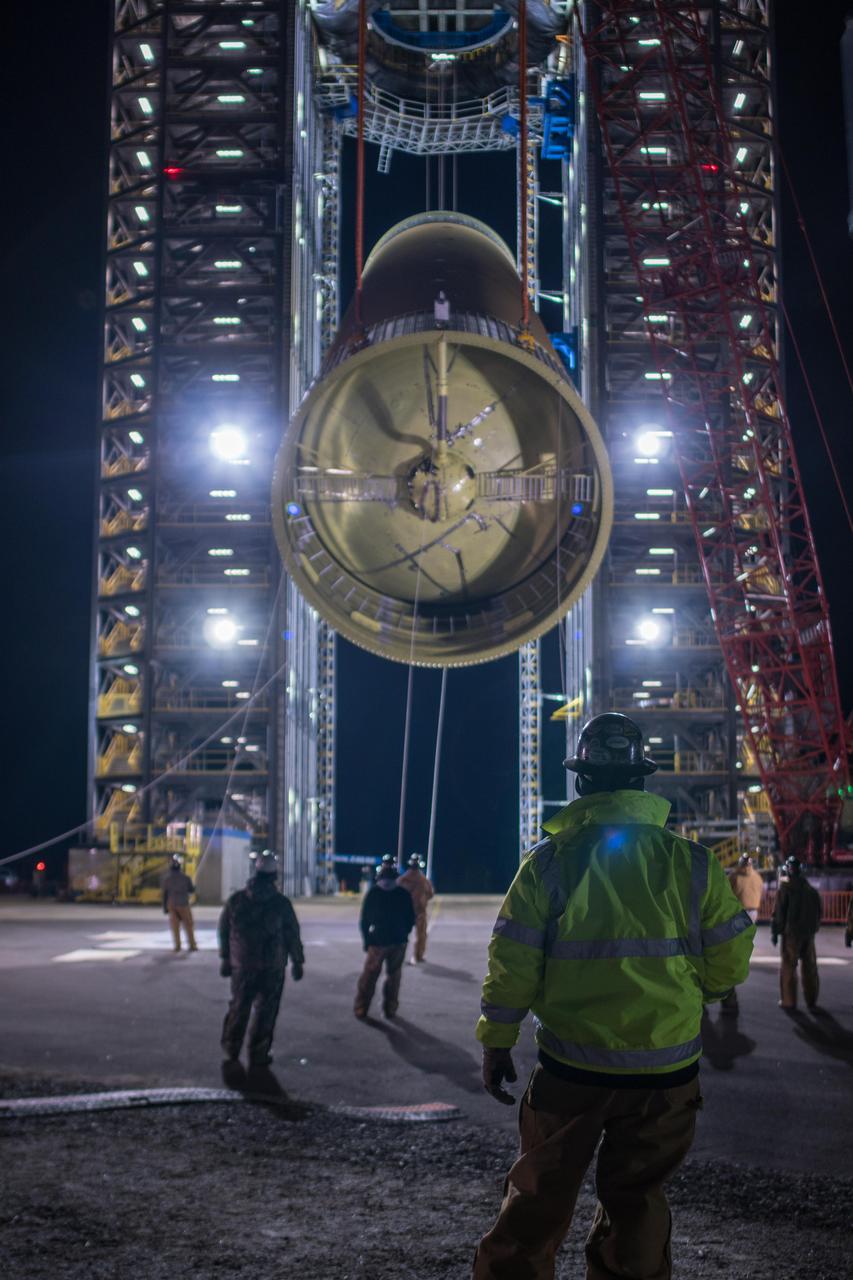
The Space Launch System (SLS) liquid hydrogen tank structural test article is loaded into Test Stand 4693 at NASA’s Marshall Space Flight Center in Huntsville, Alabama, on Jan. 14, 2019. The 149-foot piece of test hardware is the largest piece of structural hardware for the SLS core stage for America’s new deep space rocket Itis structurally identical to the flight version of the tank. It will undergo a series of tests in Test Stand 4693 to simulate the stresses and loads of liftoff and flight. These tests will help ensure designs are adequate for successful SLS missions to the Moon and beyond.
/USSRC_MeganHolbrook (98)~large.jpg)
More than 600 students with 44 teams from around the world participated in the 32nd year of NASA’s Human Exploration Rover Challenge (HERC) on April 10 and April 11 near NASA’s Marshall Space Flight Center in Huntsville, Alabama. Participating teams represented 28 colleges and universities, 13 high schools, and one middle school from 18 states, Puerto Rico, and four Artemis Accord countries. Teams were awarded points based on navigating a half-mile obstacle course with either a human-powered or remote-controlled rover, conducting mission-specific task challenges, and completing multiple safety and design reviews with NASA engineers.
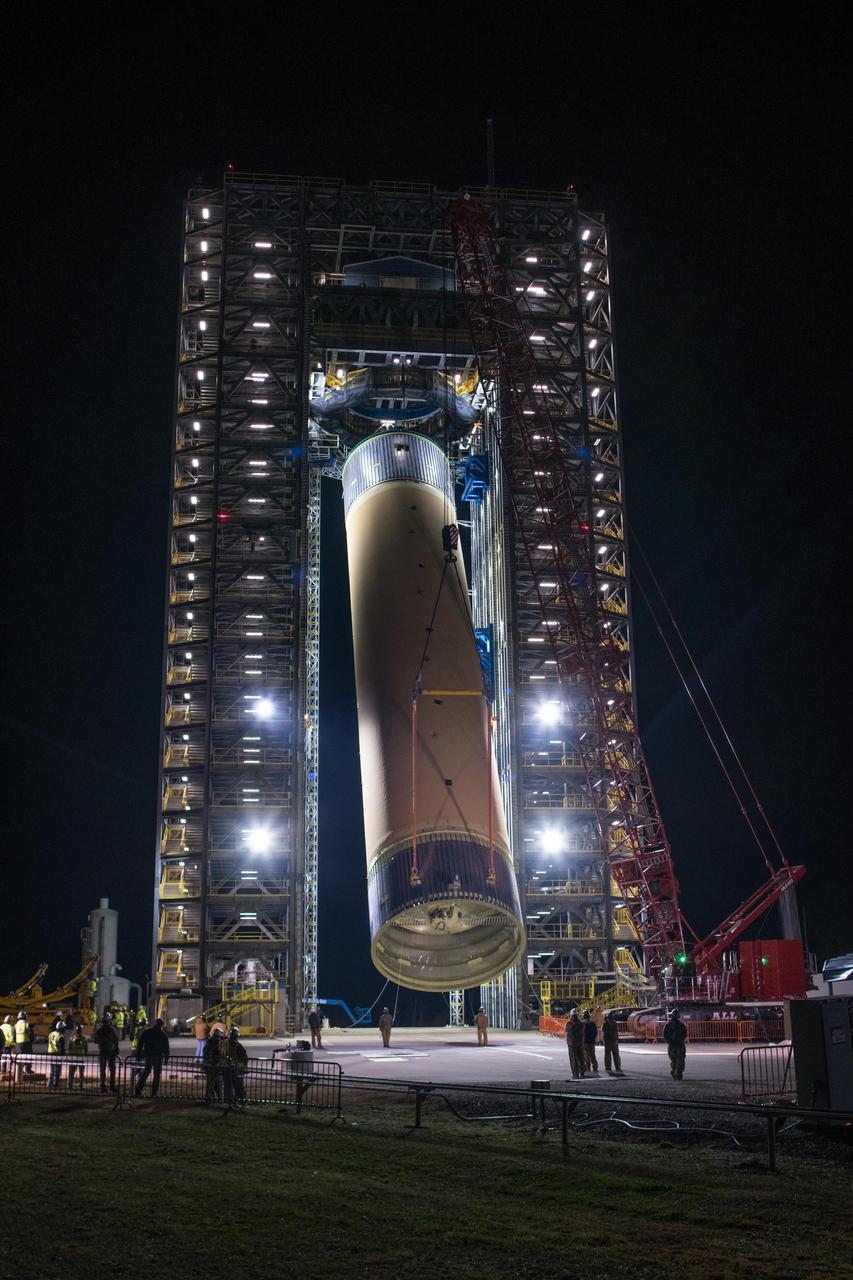
The Space Launch System (SLS) liquid hydrogen tank structural test article is loaded into Test Stand 4693 at NASA’s Marshall Space Flight Center in Huntsville, Alabama, on Jan. 14, 2019. The 149-foot piece of test hardware is the largest piece of structural hardware for the SLS core stage for America’s new deep space rocket Itis structurally identical to the flight version of the tank. It will undergo a series of tests in Test Stand 4693 to simulate the stresses and loads of liftoff and flight. These tests will help ensure designs are adequate for successful SLS missions to the Moon and beyond.
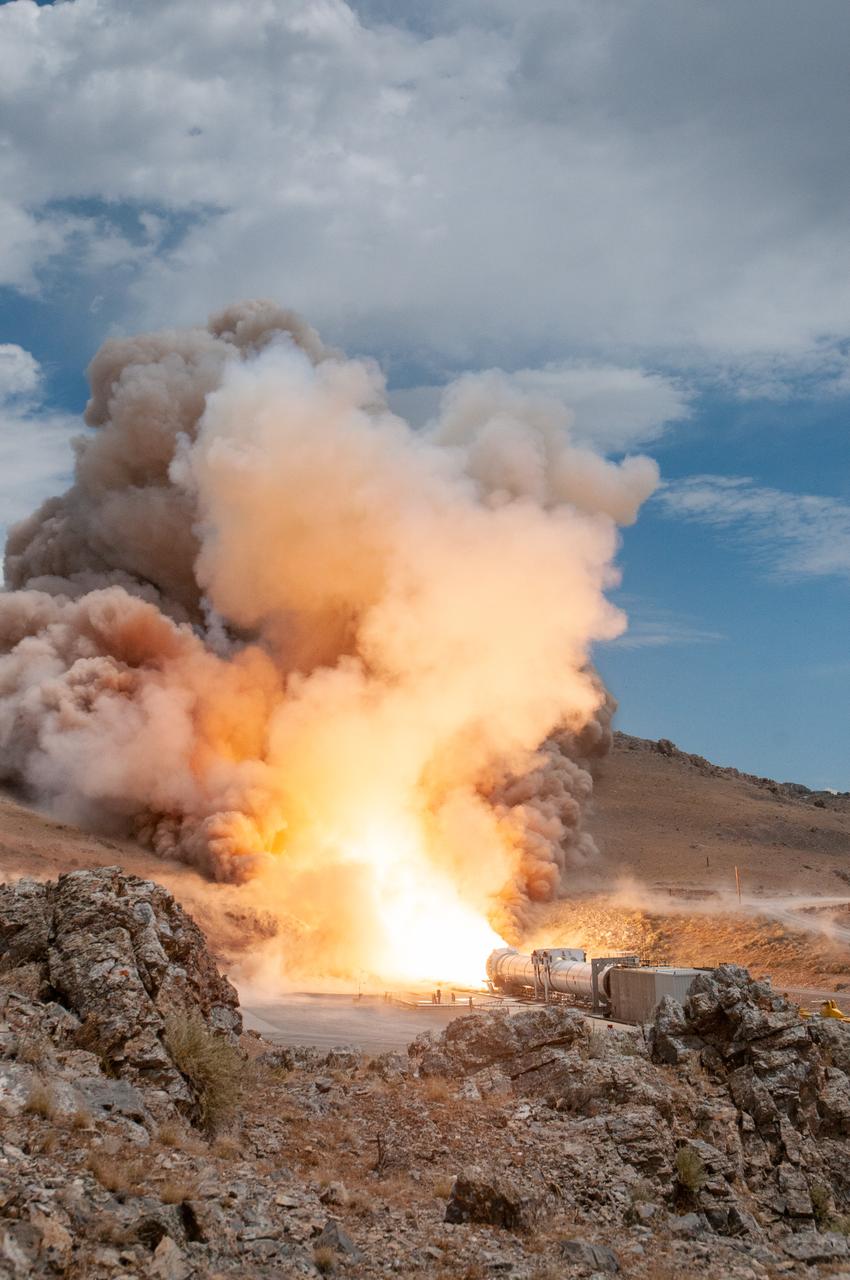
NASA and Northrop Grumman completed a solid rocket booster motor ground test for future flights of the agency’s Space Launch System rocket at Northrop Grumman’s test facility in Promontory, Utah, July 21. The booster motor, called Flight Support Booster-2 (FSB-2), fired for a little over two minutes and produced more than 3.6 million pounds of thrust. Test data will be used to evaluate improvements and new materials in the boosters for missions after Artemis III. When SLS launches the Artemis missions to the Moon, its two five-segment solid rocket boosters produce more than 75% of the initial thrust. The SLS boosters are the largest, most powerful boosters ever built for flight. For more information about SLS, visit nasa.gov/sls
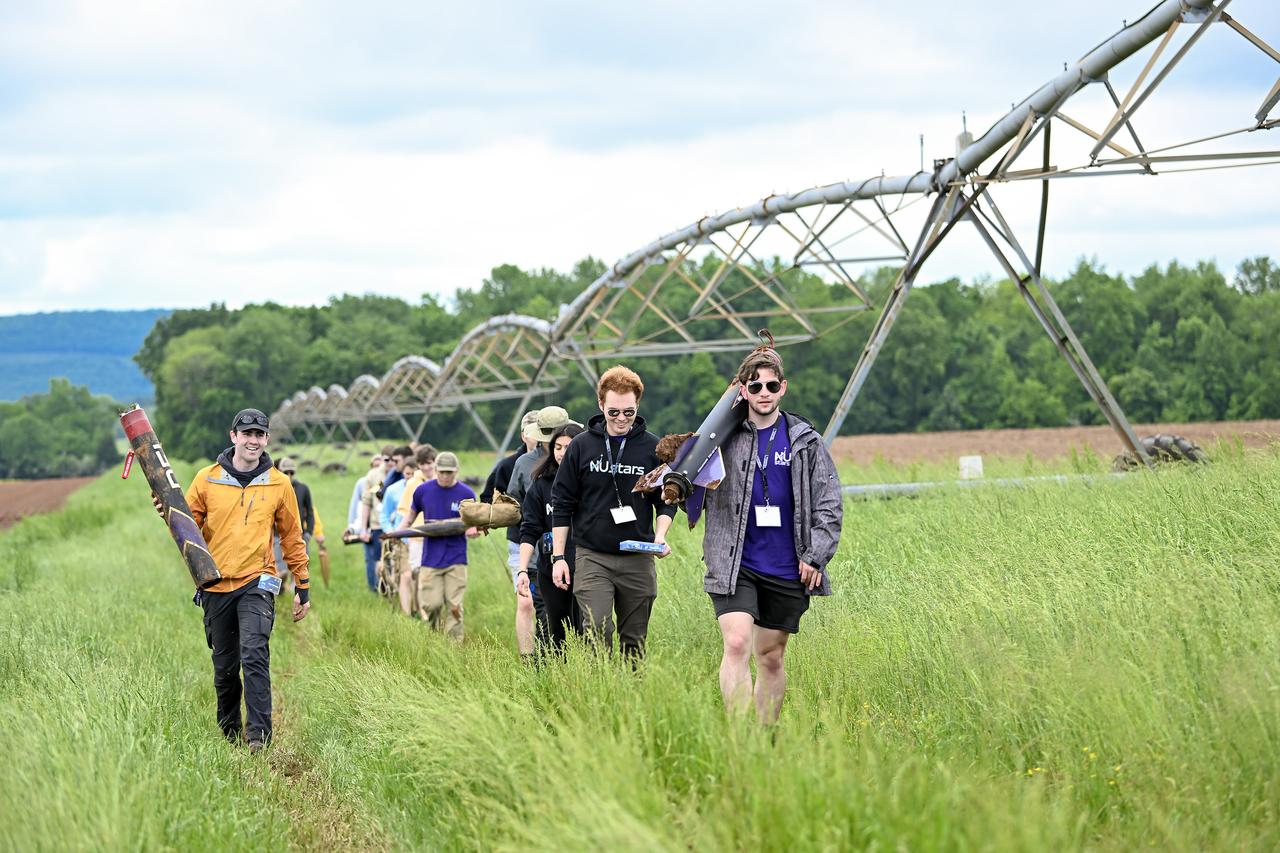
Over than 980 middle school, high school, and college students from across the nation launched more than 40 high-powered rockets just north of NASA’s Marshall Space Flight Center in Huntsville, Alabama. This year marked the 25th anniversary of the competition. To compete, students follow the NASA engineering design lifecycle by going through a series of reviews for nine months leading up to launch day. Each year, a payload challenge is issued to the university teams, and this year’s task took inspiration from the agency’s Artemis missions, where NASA will send astronauts to explore the Moon for scientific discovery, economic benefit, and to build the foundation for the first crewed missions to Mars. Teams were challenged to include “reports” from STEMnauts, non-living objects representing astronauts. The STEMnaut “crew” had to relay real-time data to the student team’s mission control, just as the Artemis astronaut crew will do as they explore the lunar surface. To learn more, visit: www.nasa.gov/studentlaunch.
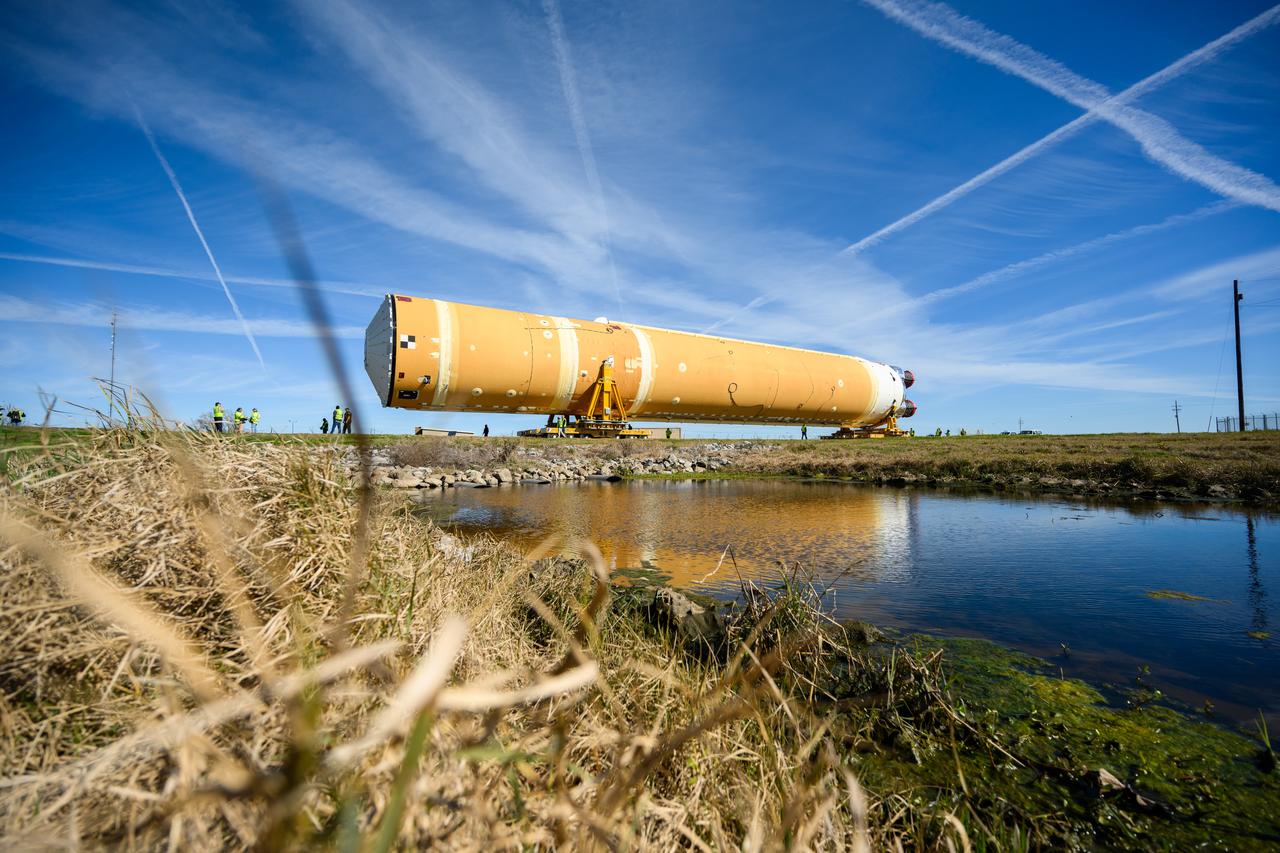
These images show the first core stage for NASA’s Space Launch System rocket inside NASA’s Pegasus barge on Jan. 8 ahead of its forthcoming journey to NASA’s Stennis Space Center near Bay St. Louis, Mississippi. Teams rolled out, or moved, the completed core stage from NASA’s Michoud Assembly Facility in New Orleans to the barge in preparation for the SLS rocket’s core stage Green Run test series at Stennis. Pegasus, which was modified to ferry SLS rocket hardware, will transport the core stage more than 40 miles from Michoud to Stennis for the comprehensive core stage Green Run test series. Green Run, named for its testing of new, or green, hardware progressively is the final test campaign ahead of the first Artemis launch. Assembly and integration of the core stage and its four RS-25 engines has been a collaborative, multistep process for NASA and its partners Boeing, the core stage lead contractor, and Aerojet Rocketdyne, the RS-25 engines lead contractor. Together with four RS-25 engines, the rocket’s massive 212-foot-tall core stage — the largest stage NASA has ever built — and its twin solid rocket boosters will produce 8.8 million pounds of thrust to send NASA’s Orion spacecraft, astronauts and supplies beyond Earth’s orbit to the Moon and, ultimately, Mars. Offering more payload mass, volume capability and energy to speed missions through space, the SLS rocket, along with NASA’s Gateway in lunar orbit and Orion, is part of NASA’s backbone for deep space exploration and the Artemis lunar program.
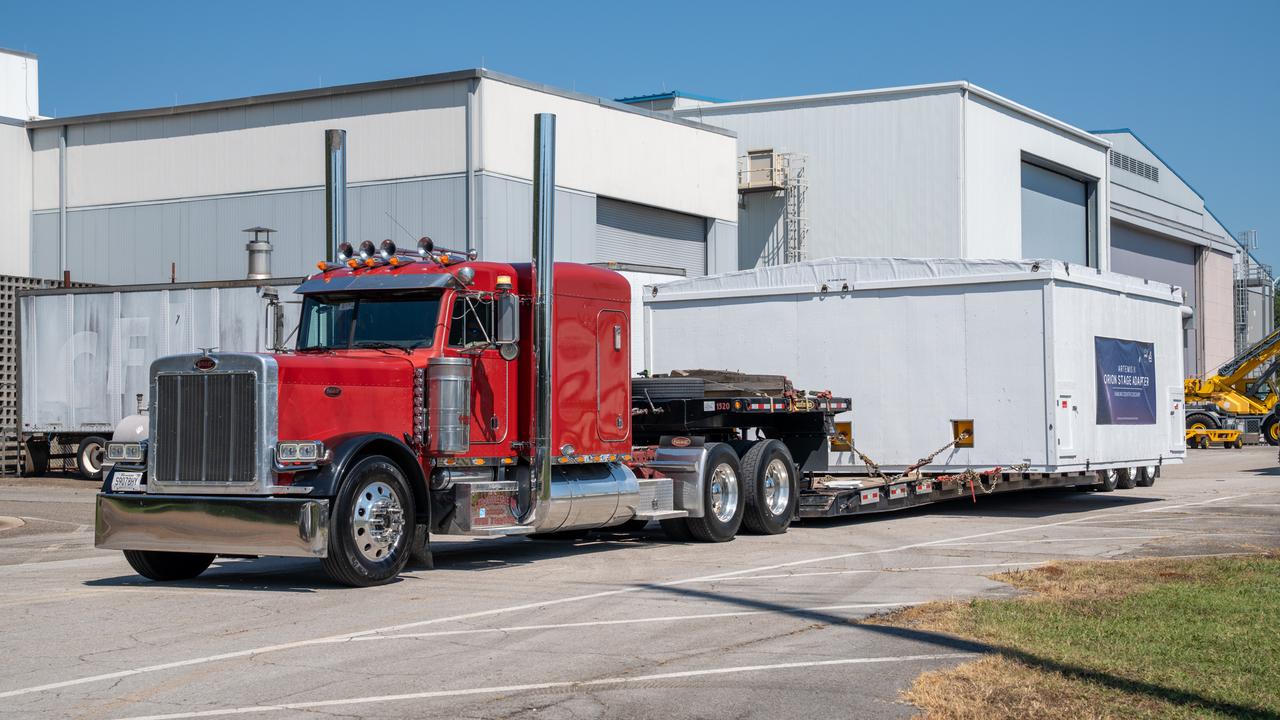
These images show the Orion stage adapter for Artemis II being prepped for shipment and then packaged in a large box, loaded on a semi-truck. It is seen leaving NASA’s Marshall Space Flight Center in Huntsville, Alabama, as it begins its journey to NASA’s Kennedy Space Center in Florida. Manufactured at Marshall, this adapter for the SLS (Space Launch System) connects the rocket’s interim cryogenic propulsion stage to the Orion spacecraft and is the final piece of SLS hardware to be delivered to Kennedy Space Center in preparation for the Artemis II mission.

Over 600 middle school, high school, and college students from across the nation launched 30 high-powered rockets just north of NASA’s Marshall Space Flight Center in Huntsville, Alabama. This year marked the 26th anniversary of the competition. To compete, students follow the NASA engineering design lifecycle by going through a series of reviews for nine months leading up to launch day. Each year, a payload challenge is issued to the university teams, and this year’s task took inspiration from the agency’s Artemis missions, where NASA will send astronauts to explore the Moon for scientific discovery, economic benefit, and to build the foundation for the first crewed missions to Mars. Teams were challenged build and fly a STEMnaut Habitat for Agricultural Utilization Study (HAUS) that safely houses four STEMnauts, non-living objects representing astronauts. The habitat had to include equipment capable of both collecting and testing soil samples to support agricultural research operations.
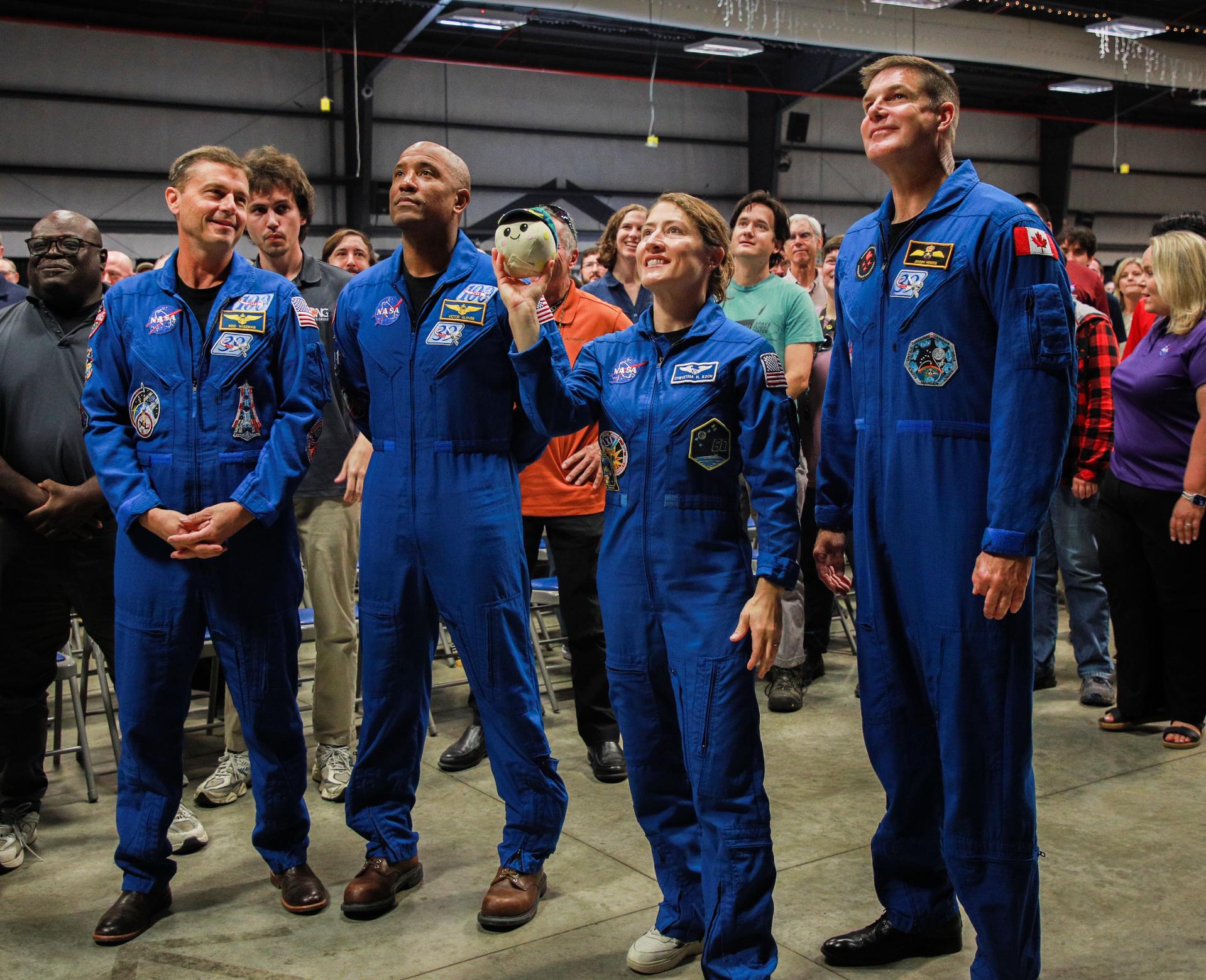
The crew of NASA’s Artemis II mission – NASA astronauts Reid Wiseman, Victor Glover, and Christina Koch, and Canadian Space Agency astronaut Jeremy Hansen – visited the agency’s Marshall Space Flight Center in Huntsville, Alabama, on Tuesday, Sept. 1, 2026. During an employee all-hands event, the crew reflected on their journey around the Moon, thanked Marshall team members for their contributions to the mission, and answered questions from the workforce. Artemis II was the first crewed mission of NASA’s Artemis campaign. Wiseman, Glover, Koch, and Hansen completed the approximately 10-day mission around the Moon in April 2026.
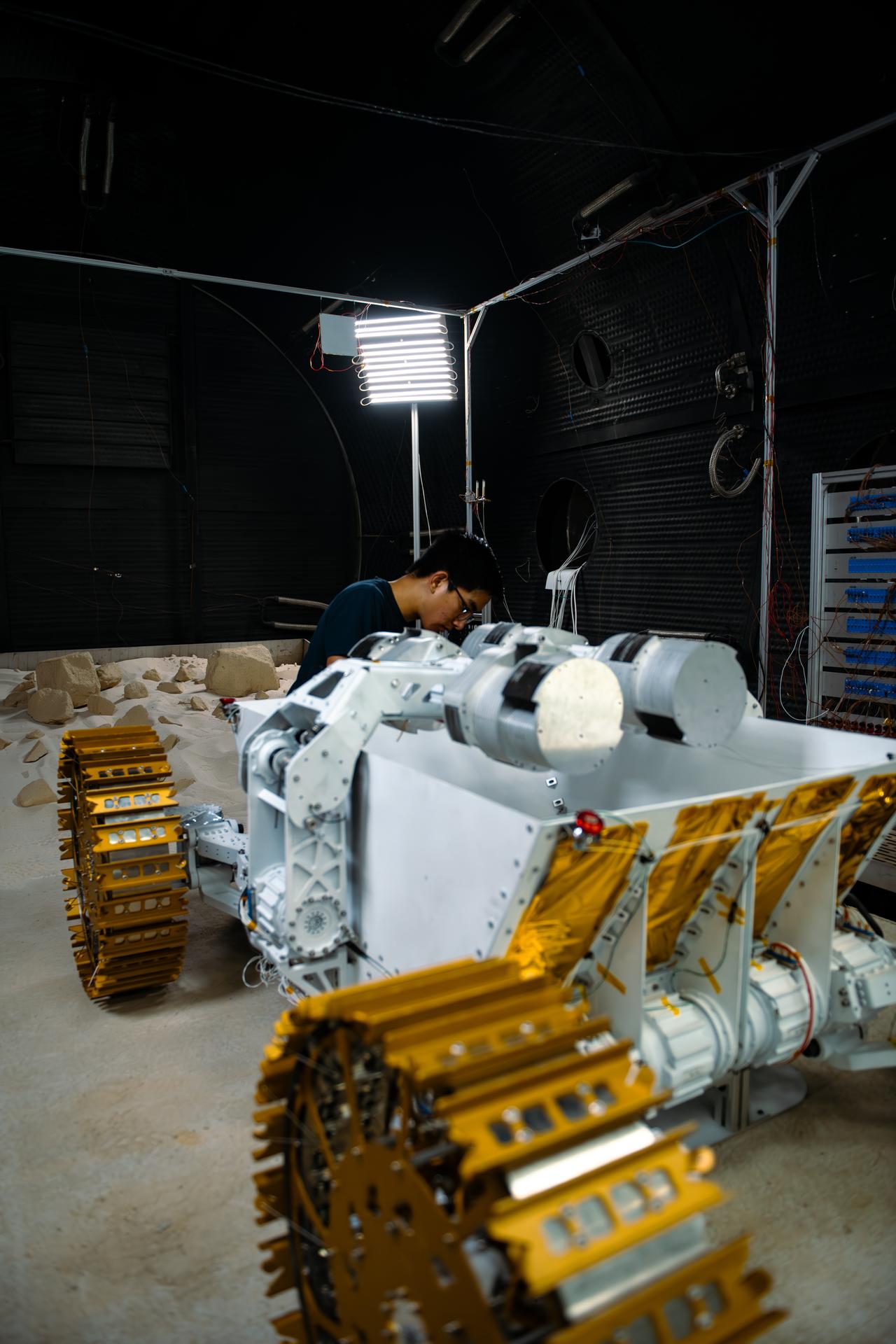
Starpath’s rover sits on a concrete slab that will be used to mimic the rugged lunar surface within a vacuum chamber at NASA’s Marshall Space Flight Center in Huntsville, Alabama, on July 30, 2025. The slab features a sandy, rocky terrain, and lamps within the chamber will turn on and off to simulate sunlight. The technology startup headquartered in Hawthorne, California, won second place overall at the agency’s Break the Ice Lunar Challenge’s live demonstration and finale in June 2024. This competition, one of NASA’s Centennial Challenges, tasked competitors to design, build, and demonstrate robotic technologies that could excavate and transport the icy, rocky dirt – otherwise known as regolith – found on the Moon. Starpath’s visit to NASA Marshall was part of their prize opportunity to test their upgraded lunar regolith excavation and transportation rover in the center’s 20-foot thermal vacuum chamber. For more information, contact NASA Marshall’s Office of Communications at 256-544-0034
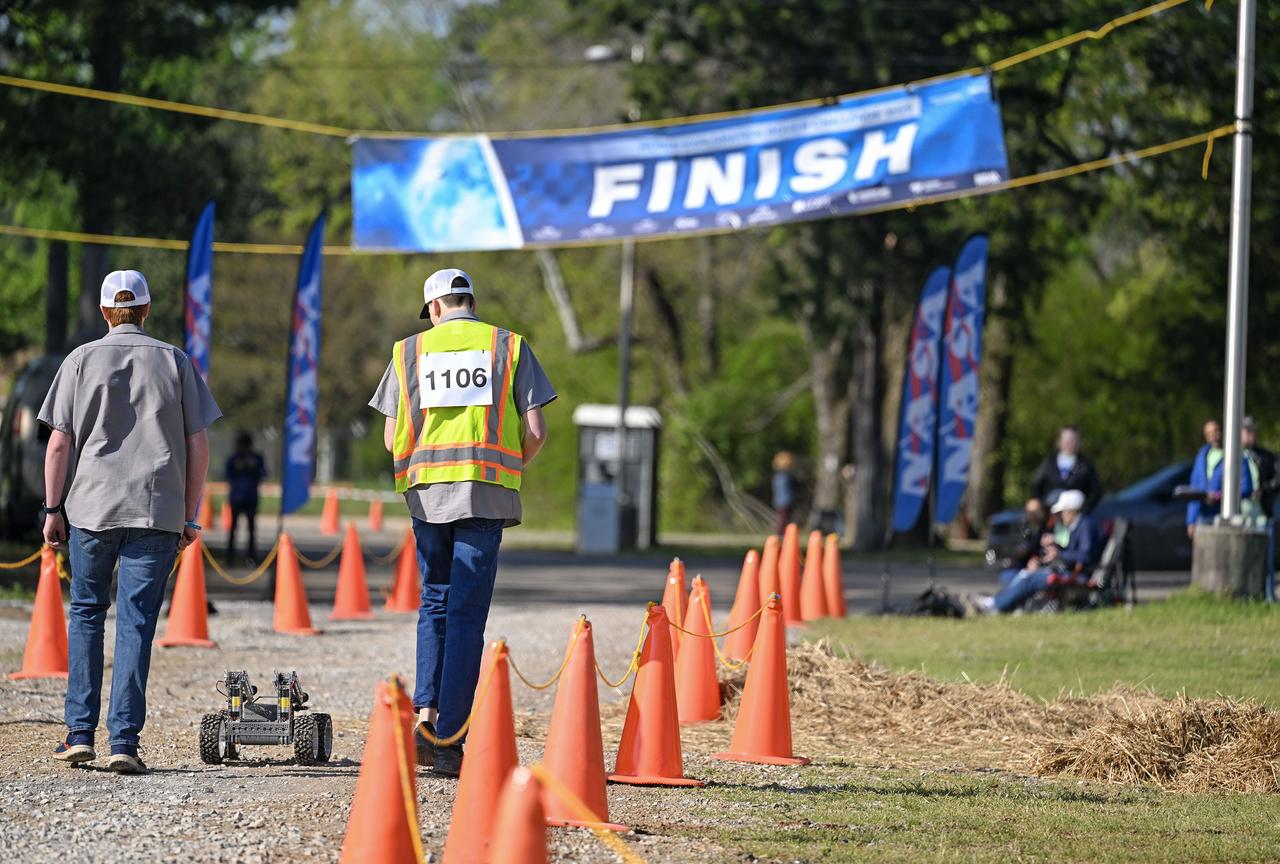
More than 500 students with 75 teams from around the world participated in the 31st year of NASA’s Human Exploration Rover Challenge (HERC) on April 11 and April 12, 2025, near NASA’s Marshall Space Flight Center in Huntsville, Alabama. Participating teams represented 35 colleges and universities, 38 high schools, and two middle schools from 20 states, Puerto Rico, and 16 other nations. NASA expanded the 2025 challenge to include a remote-control division - named Remote-Operated Vehicular Research - and invited middle school students to participate. Teams were awarded points based on navigating a half-mile obstacle course, conducting mission-specific task challenges, and completing multiple safety and design reviews with NASA engineers.

Photo shows how the Space Launch Sysetm (SLS) rocket liquid oxygen tank failed during a structural qualification test at NASA’s Marshall Space Flight Center in Huntsville, Alabama. The photos show both the water flowing from the tank as it ruptured and the resultant tear left in the tank when it buckled during the test. Engineers pushed the liquid oxygen structural test article to the limits on purpose. The tank is a test article that is identical to tanks that are part of the SLS core stage that will produce 2 million pounds of thrust to help launch the rocket on the Artemis missions to the Moon. During the test, hydraulic cylinders were then calibrated and positioned along the tank to apply millions of pounds of crippling force from all sides while engineers measured and recorded the effects of the launch and flight forces. For the test, water used to simulate the liquid oxygen flows out of the tank after it ruptures. The structural test campaign was conducted on the rocket to ensure the SLS rocket’s structure can endure the rigors of launch and safely send astronauts to the Moon on the Artemis missions. For more information: https://www.nasa.gov/exploration/systems/sls/nasa-completes-artemis-sls-structural-testing-campaign.html
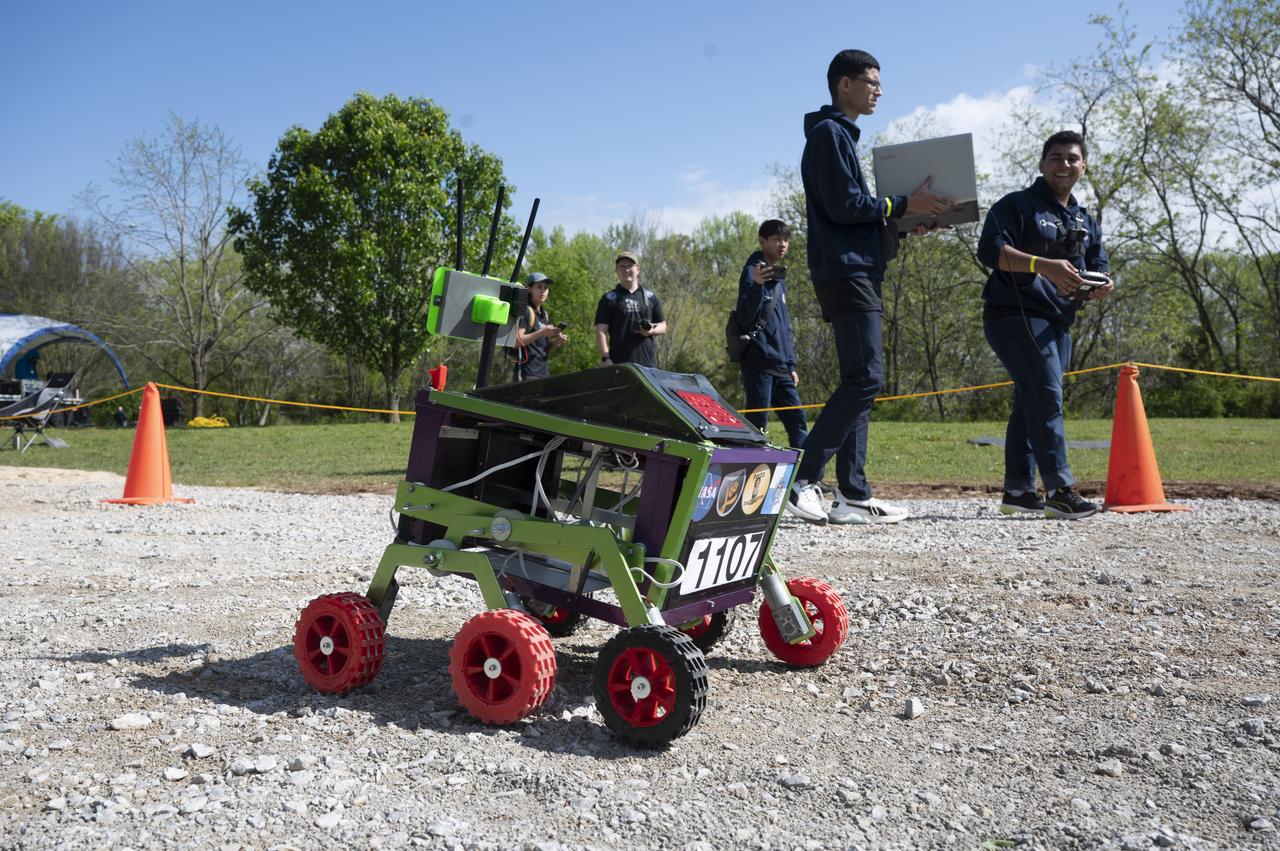
More than 500 students with 75 teams from around the world participated in the 31st year of NASA’s Human Exploration Rover Challenge (HERC) on April 11 and April 12, 2025, near NASA’s Marshall Space Flight Center in Huntsville, Alabama. Participating teams represented 35 colleges and universities, 38 high schools, and two middle schools from 20 states, Puerto Rico, and 16 other nations. NASA expanded the 2025 challenge to include a remote-control division - named Remote-Operated Vehicular Research - and invited middle school students to participate. Teams were awarded points based on navigating a half-mile obstacle course, conducting mission-specific task challenges, and completing multiple safety and design reviews with NASA engineers.
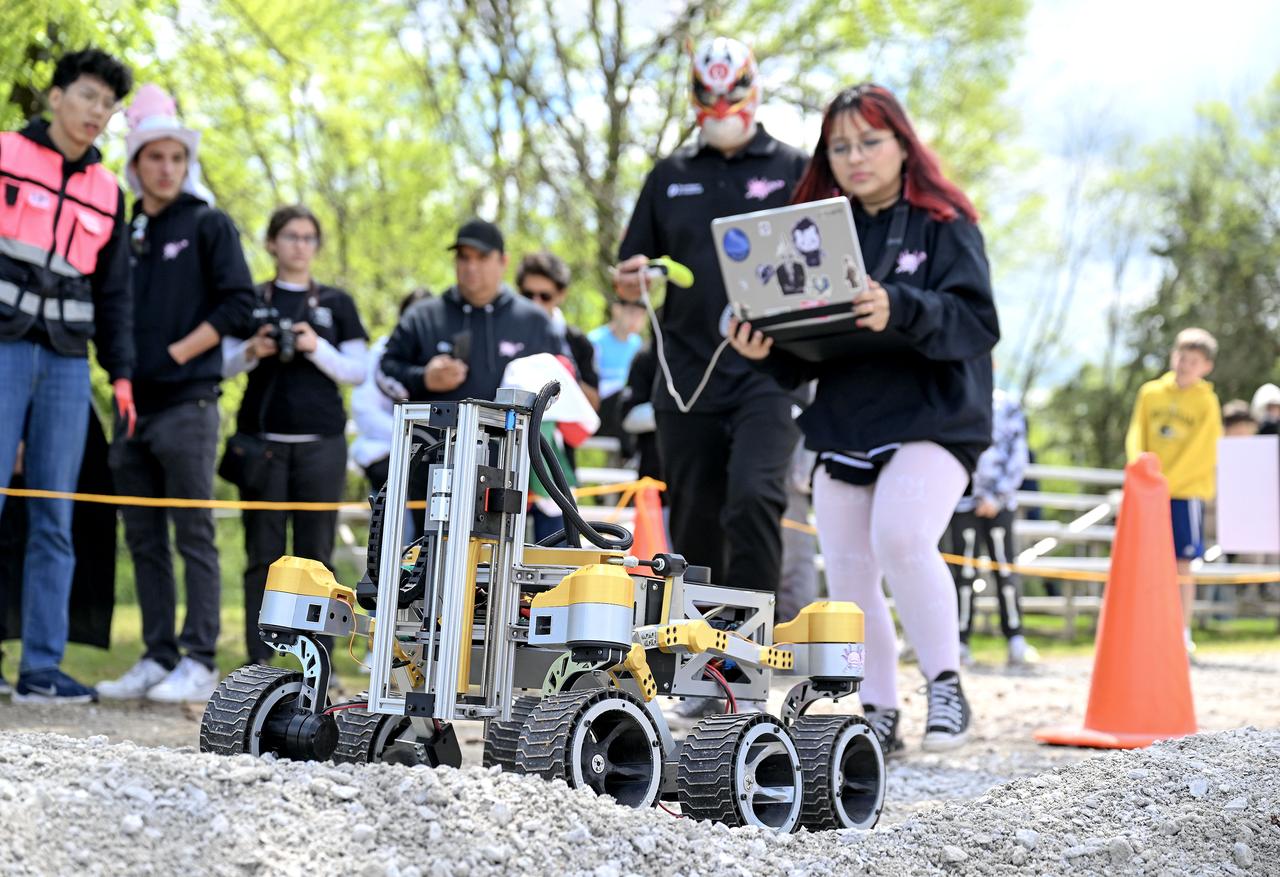
More than 500 students with 75 teams from around the world participated in the 31st year of NASA’s Human Exploration Rover Challenge (HERC) on April 11 and April 12, 2025, near NASA’s Marshall Space Flight Center in Huntsville, Alabama. Participating teams represented 35 colleges and universities, 38 high schools, and two middle schools from 20 states, Puerto Rico, and 16 other nations. NASA expanded the 2025 challenge to include a remote-control division - named Remote-Operated Vehicular Research - and invited middle school students to participate. Teams were awarded points based on navigating a half-mile obstacle course, conducting mission-specific task challenges, and completing multiple safety and design reviews with NASA engineers.
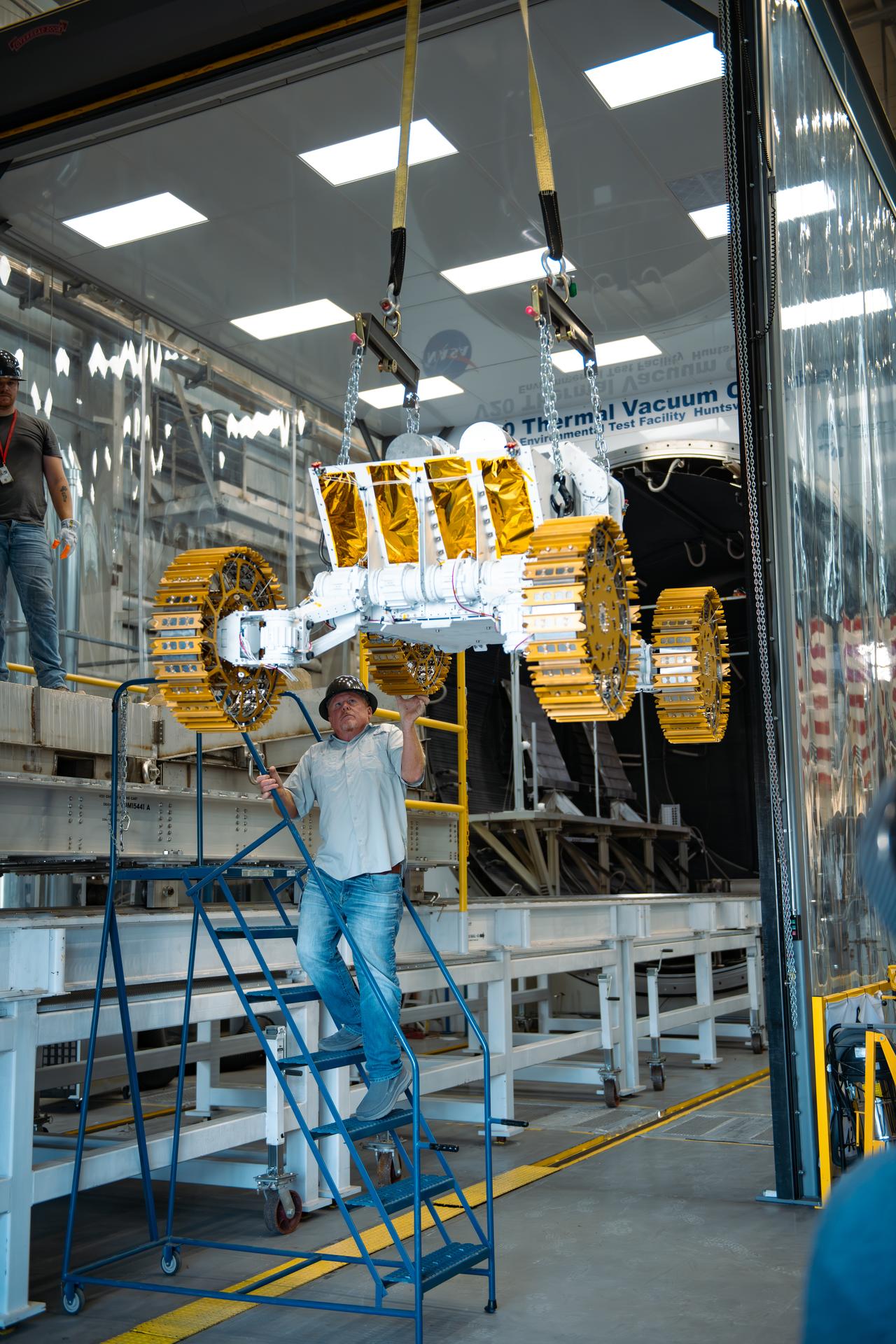
Employees from Environmental Test Facility at NASA’s Marshall Space Flight Center in Huntsville, Alabama, work with the Starpath team on July 30, 2025, to carefully maneuver the rover onto a platform that will slide the rover into the chamber. The technology startup headquartered in Hawthorne, California, won second place overall at the agency’s Break the Ice Lunar Challenge’s live demonstration and finale in June 2024. Their visit to NASA Marshall was part of their prize opportunity to test their upgraded lunar regolith excavation and transportation rover in the center’s 20-foot thermal vacuum chamber. The competition, one of NASA’s Centennial Challenges, tasked competitors to design, build, and demonstrate robotic technologies that could excavate and transport the icy, rocky dirt – otherwise known as regolith – found on the Moon. For more information, contact NASA Marshall’s Office of Communications at 256-544-0034.

More than 600 students with 44 teams from around the world participated in the 32nd year of NASA’s Human Exploration Rover Challenge (HERC) on April 10 and April 11 near NASA’s Marshall Space Flight Center in Huntsville, Alabama. Participating teams represented 28 colleges and universities, 13 high schools, and one middle school from 18 states, Puerto Rico, and four Artemis Accord countries. Teams were awarded points based on navigating a half-mile obstacle course with either a human-powered or remote-controlled rover, conducting mission-specific task challenges, and completing multiple safety and design reviews with NASA engineers.
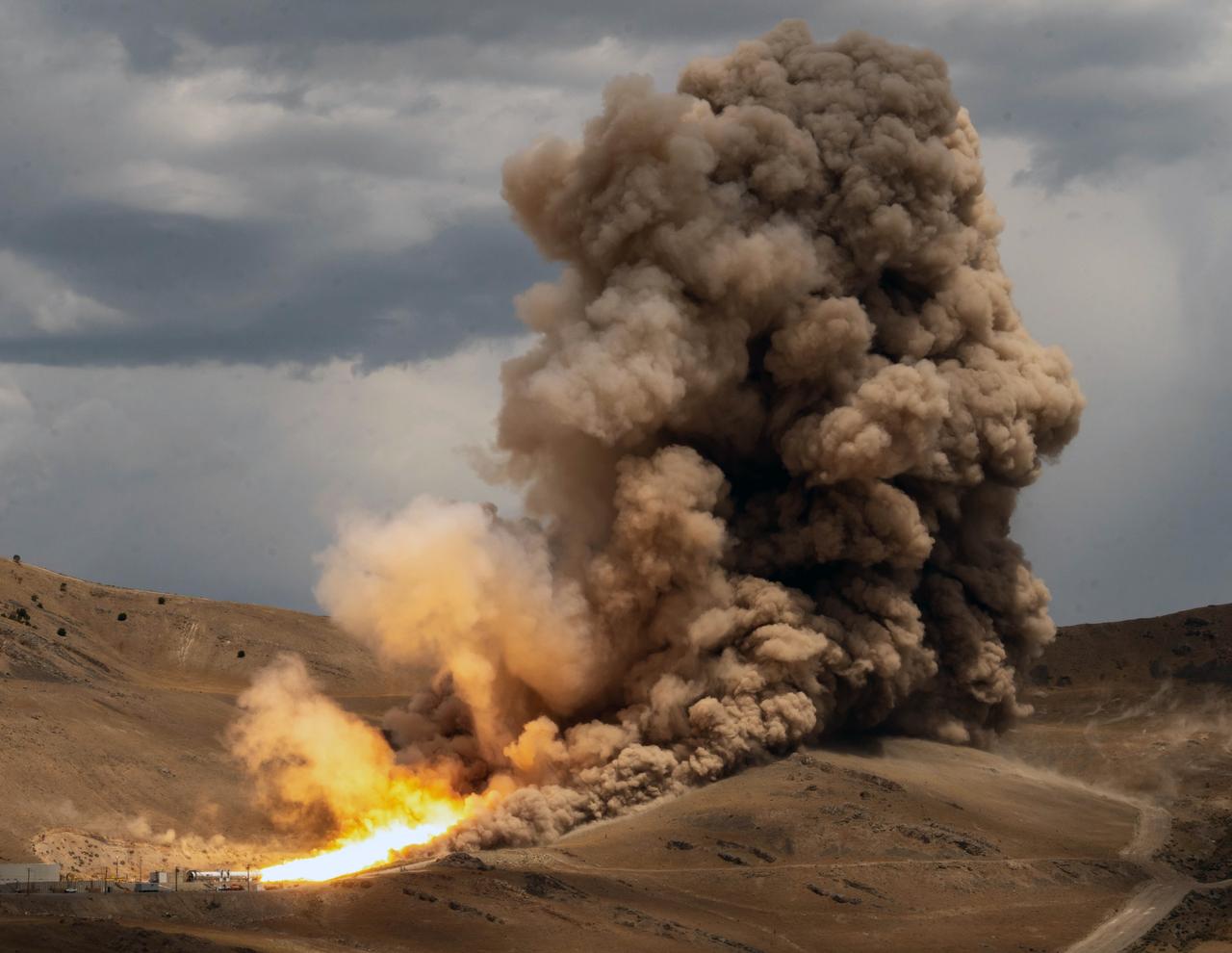
NASA and Northrop Grumman completed a solid rocket booster motor ground test for future flights of the agency’s Space Launch System rocket at Northrop Grumman’s test facility in Promontory, Utah, July 21. The booster motor, called Flight Support Booster-2 (FSB-2), fired for a little over two minutes and produced more than 3.6 million pounds of thrust. Test data will be used to evaluate improvements and new materials in the boosters for missions after Artemis III. When SLS launches the Artemis missions to the Moon, its two five-segment solid rocket boosters produce more than 75% of the initial thrust. The SLS boosters are the largest, most powerful boosters ever built for flight. For more information about SLS, visit nasa.gov/sls
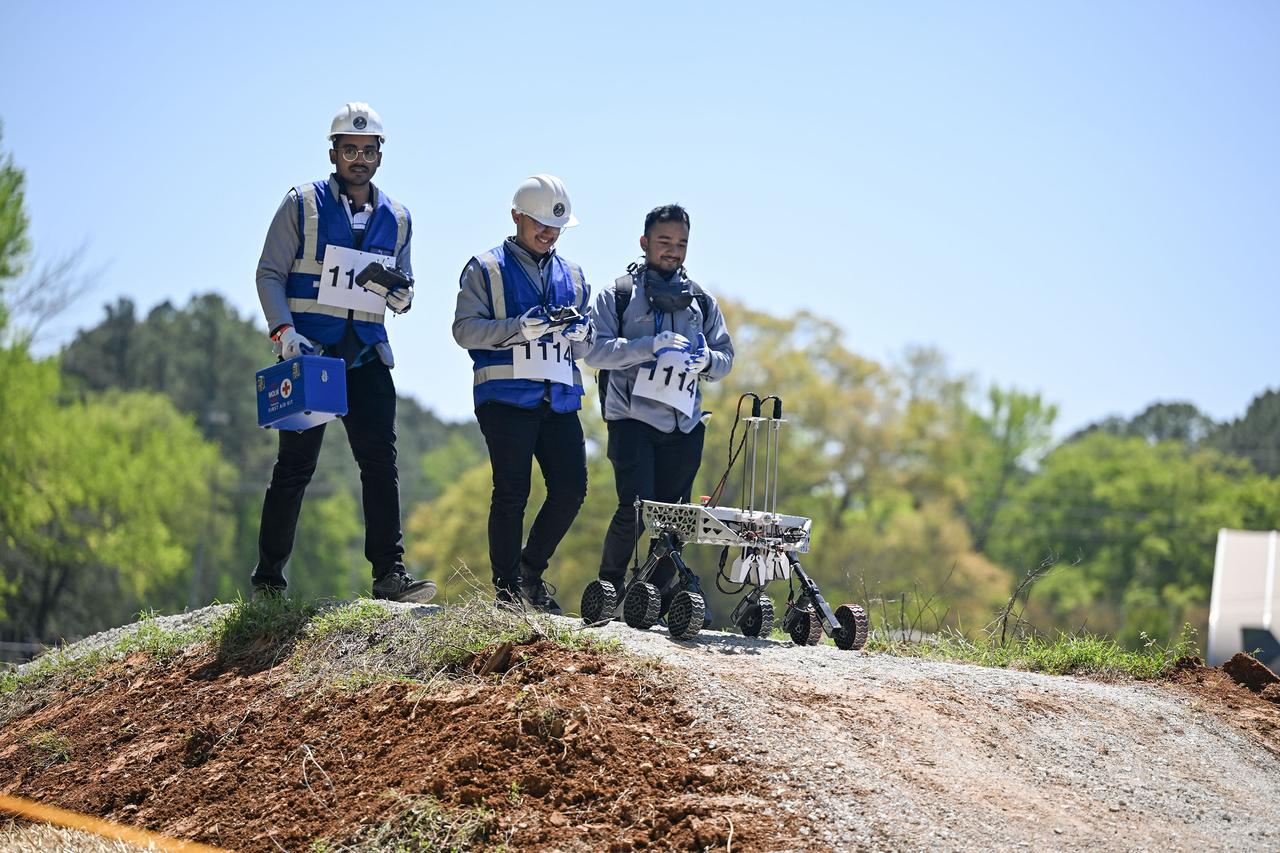
More than 500 students with 75 teams from around the world participated in the 31st year of NASA’s Human Exploration Rover Challenge (HERC) on April 11 and April 12, 2025, near NASA’s Marshall Space Flight Center in Huntsville, Alabama. Participating teams represented 35 colleges and universities, 38 high schools, and two middle schools from 20 states, Puerto Rico, and 16 other nations. NASA expanded the 2025 challenge to include a remote-control division - named Remote-Operated Vehicular Research - and invited middle school students to participate. Teams were awarded points based on navigating a half-mile obstacle course, conducting mission-specific task challenges, and completing multiple safety and design reviews with NASA engineers.
/USSRC_DavidSercel (616)~large.jpg)
More than 600 students with 44 teams from around the world participated in the 32nd year of NASA’s Human Exploration Rover Challenge (HERC) on April 10 and April 11 near NASA’s Marshall Space Flight Center in Huntsville, Alabama. Participating teams represented 28 colleges and universities, 13 high schools, and one middle school from 18 states, Puerto Rico, and four Artemis Accord countries. Teams were awarded points based on navigating a half-mile obstacle course with either a human-powered or remote-controlled rover, conducting mission-specific task challenges, and completing multiple safety and design reviews with NASA engineers.

Over 600 middle school, high school, and college students from across the nation launched 30 high-powered rockets just north of NASA’s Marshall Space Flight Center in Huntsville, Alabama. This year marked the 26th anniversary of the competition. To compete, students follow the NASA engineering design lifecycle by going through a series of reviews for nine months leading up to launch day. Each year, a payload challenge is issued to the university teams, and this year’s task took inspiration from the agency’s Artemis missions, where NASA will send astronauts to explore the Moon for scientific discovery, economic benefit, and to build the foundation for the first crewed missions to Mars. Teams were challenged build and fly a STEMnaut Habitat for Agricultural Utilization Study (HAUS) that safely houses four STEMnauts, non-living objects representing astronauts. The habitat had to include equipment capable of both collecting and testing soil samples to support agricultural research operations.
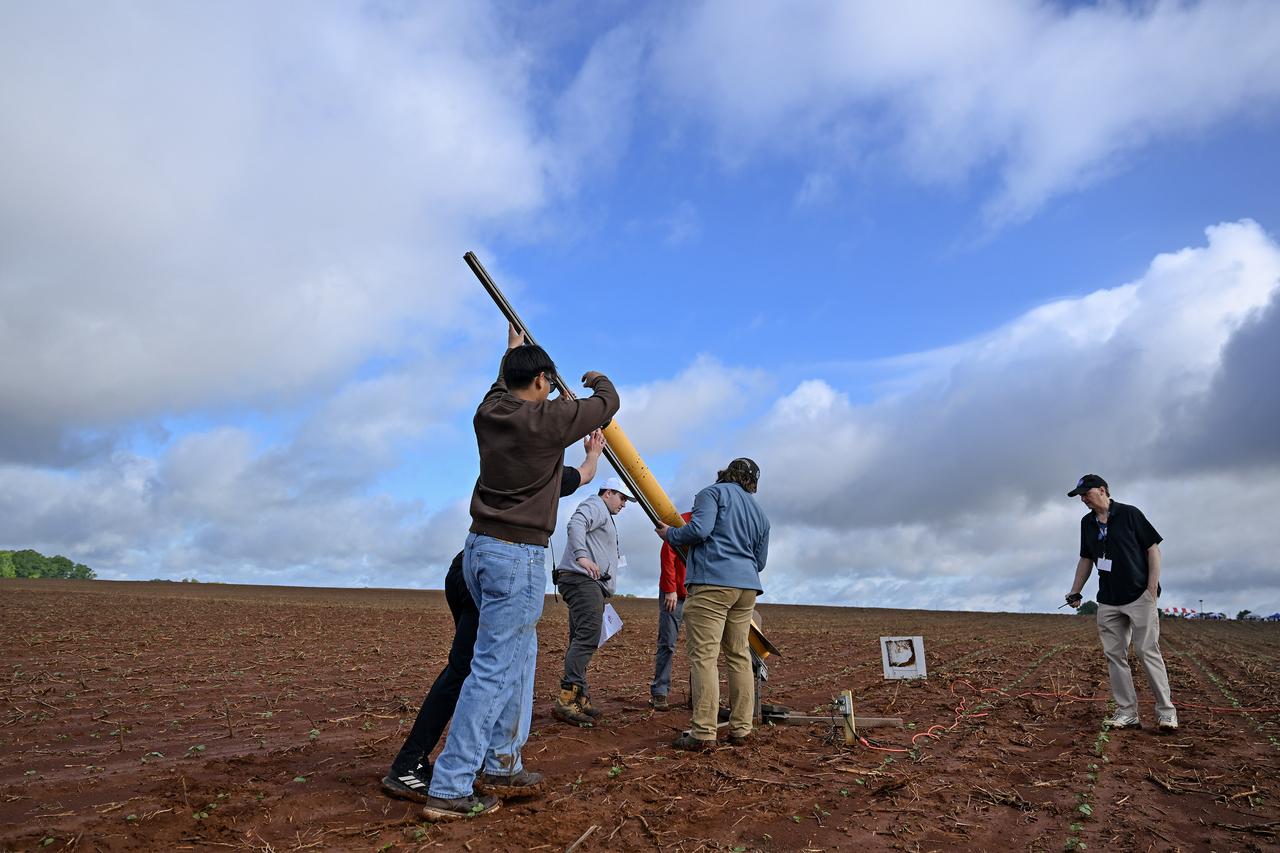
Over than 980 middle school, high school, and college students from across the nation launched more than 40 high-powered rockets just north of NASA’s Marshall Space Flight Center in Huntsville, Alabama. This year marked the 25th anniversary of the competition. To compete, students follow the NASA engineering design lifecycle by going through a series of reviews for nine months leading up to launch day. Each year, a payload challenge is issued to the university teams, and this year’s task took inspiration from the agency’s Artemis missions, where NASA will send astronauts to explore the Moon for scientific discovery, economic benefit, and to build the foundation for the first crewed missions to Mars. Teams were challenged to include “reports” from STEMnauts, non-living objects representing astronauts. The STEMnaut “crew” had to relay real-time data to the student team’s mission control, just as the Artemis astronaut crew will do as they explore the lunar surface. To learn more, visit: www.nasa.gov/studentlaunch.

Photo shows how the Space Launch Sysetm (SLS) rocket liquid oxygen tank failed during a structural qualification test at NASA’s Marshall Space Flight Center in Huntsville, Alabama. The photos show both the water flowing from the tank as it ruptured and the resultant tear left in the tank when it buckled during the test. Engineers pushed the liquid oxygen structural test article to the limits on purpose. The tank is a test article that is identical to tanks that are part of the SLS core stage that will produce 2 million pounds of thrust to help launch the rocket on the Artemis missions to the Moon. During the test, hydraulic cylinders were then calibrated and positioned along the tank to apply millions of pounds of crippling force from all sides while engineers measured and recorded the effects of the launch and flight forces. For the test, water used to simulate the liquid oxygen flows out of the tank after it ruptures. The structural test campaign was conducted on the rocket to ensure the SLS rocket’s structure can endure the rigors of launch and safely send astronauts to the Moon on the Artemis missions. For more information: https://www.nasa.gov/exploration/systems/sls/nasa-completes-artemis-sls-structural-testing-campaign.html
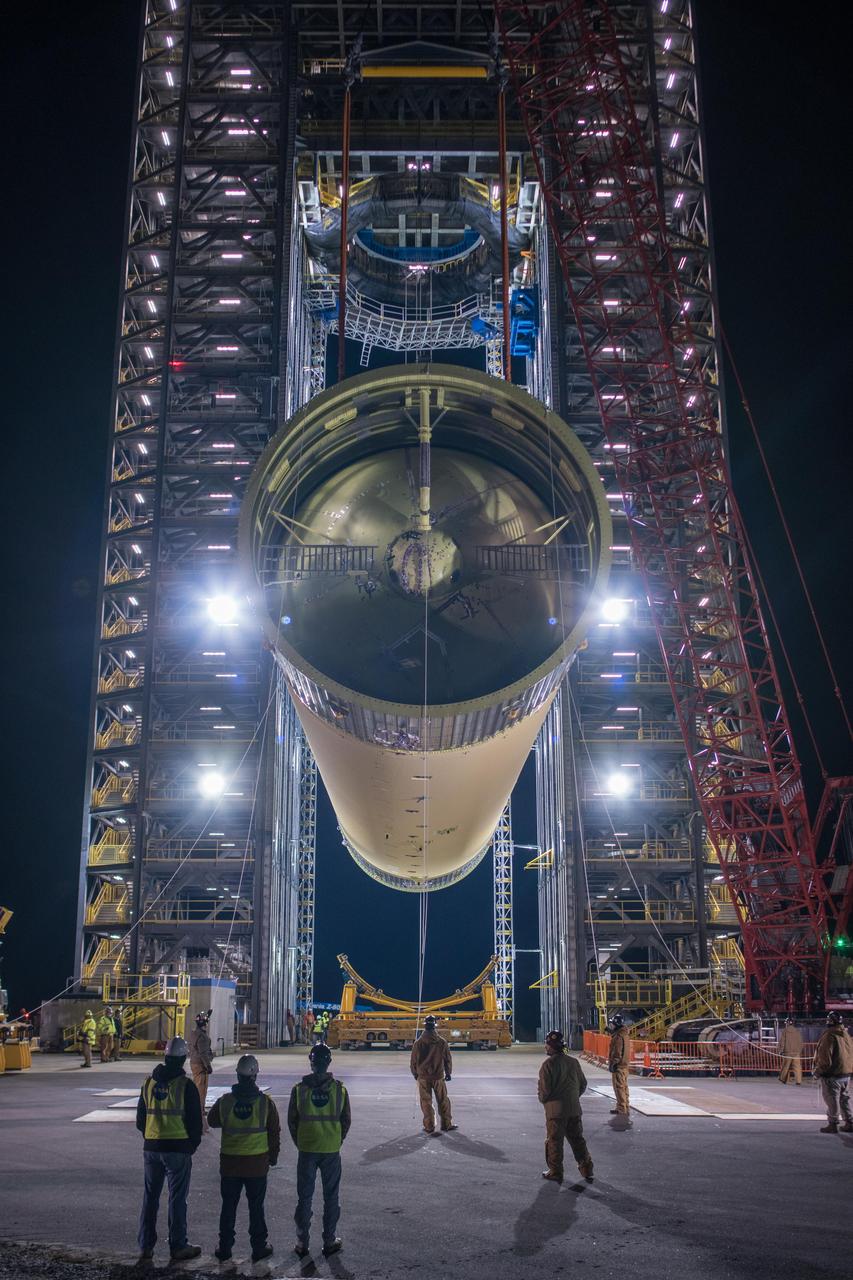
The Space Launch System (SLS) liquid hydrogen tank structural test article is loaded into Test Stand 4693 at NASA’s Marshall Space Flight Center in Huntsville, Alabama, on Jan. 14, 2019. The 149-foot piece of test hardware is the largest piece of structural hardware for the SLS core stage for America’s new deep space rocket Itis structurally identical to the flight version of the tank. It will undergo a series of tests in Test Stand 4693 to simulate the stresses and loads of liftoff and flight. These tests will help ensure designs are adequate for successful SLS missions to the Moon and beyond.
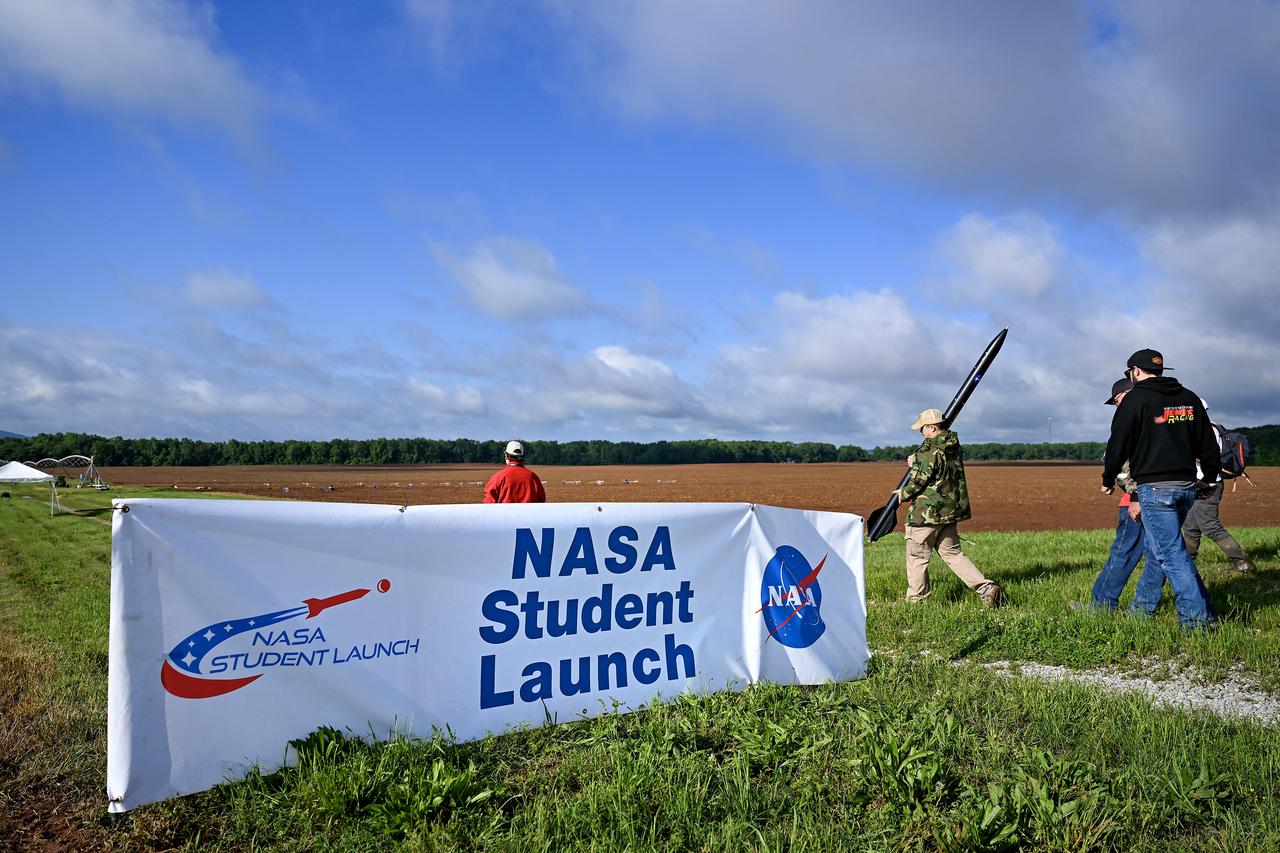
Over than 980 middle school, high school, and college students from across the nation launched more than 40 high-powered rockets just north of NASA’s Marshall Space Flight Center in Huntsville, Alabama. This year marked the 25th anniversary of the competition. To compete, students follow the NASA engineering design lifecycle by going through a series of reviews for nine months leading up to launch day. Each year, a payload challenge is issued to the university teams, and this year’s task took inspiration from the agency’s Artemis missions, where NASA will send astronauts to explore the Moon for scientific discovery, economic benefit, and to build the foundation for the first crewed missions to Mars. Teams were challenged to include “reports” from STEMnauts, non-living objects representing astronauts. The STEMnaut “crew” had to relay real-time data to the student team’s mission control, just as the Artemis astronaut crew will do as they explore the lunar surface. To learn more, visit: www.nasa.gov/studentlaunch.
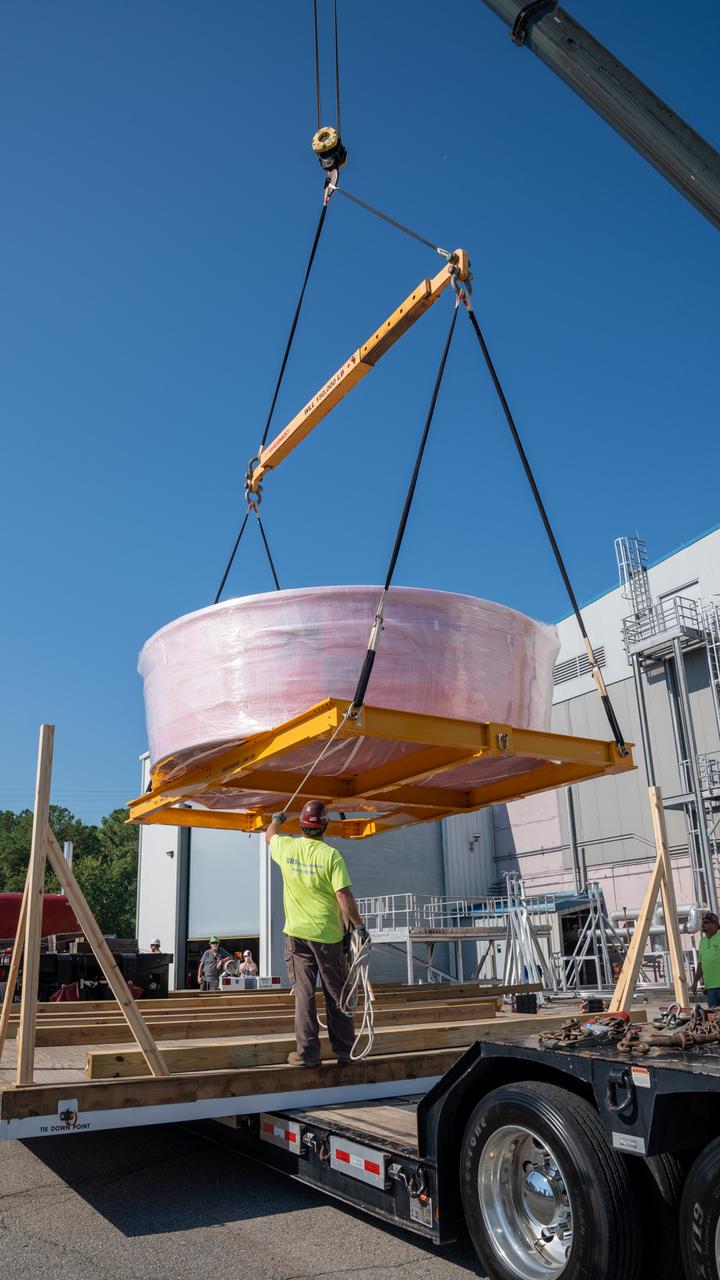
These images show the Orion stage adapter for Artemis II leaving NASA’s Marshall Space Flight Center in Huntsville, Alabama, as it begins its journey to NASA’s Kennedy Space Center in Florida. Manufactured at Marshall, this adapter for the SLS (Space Launch System) connects the rocket’s interim cryogenic propulsion stage to the Orion spacecraft and is the final piece of SLS hardware to be delivered to Kennedy Space Center in preparation for the Artemis II mission.
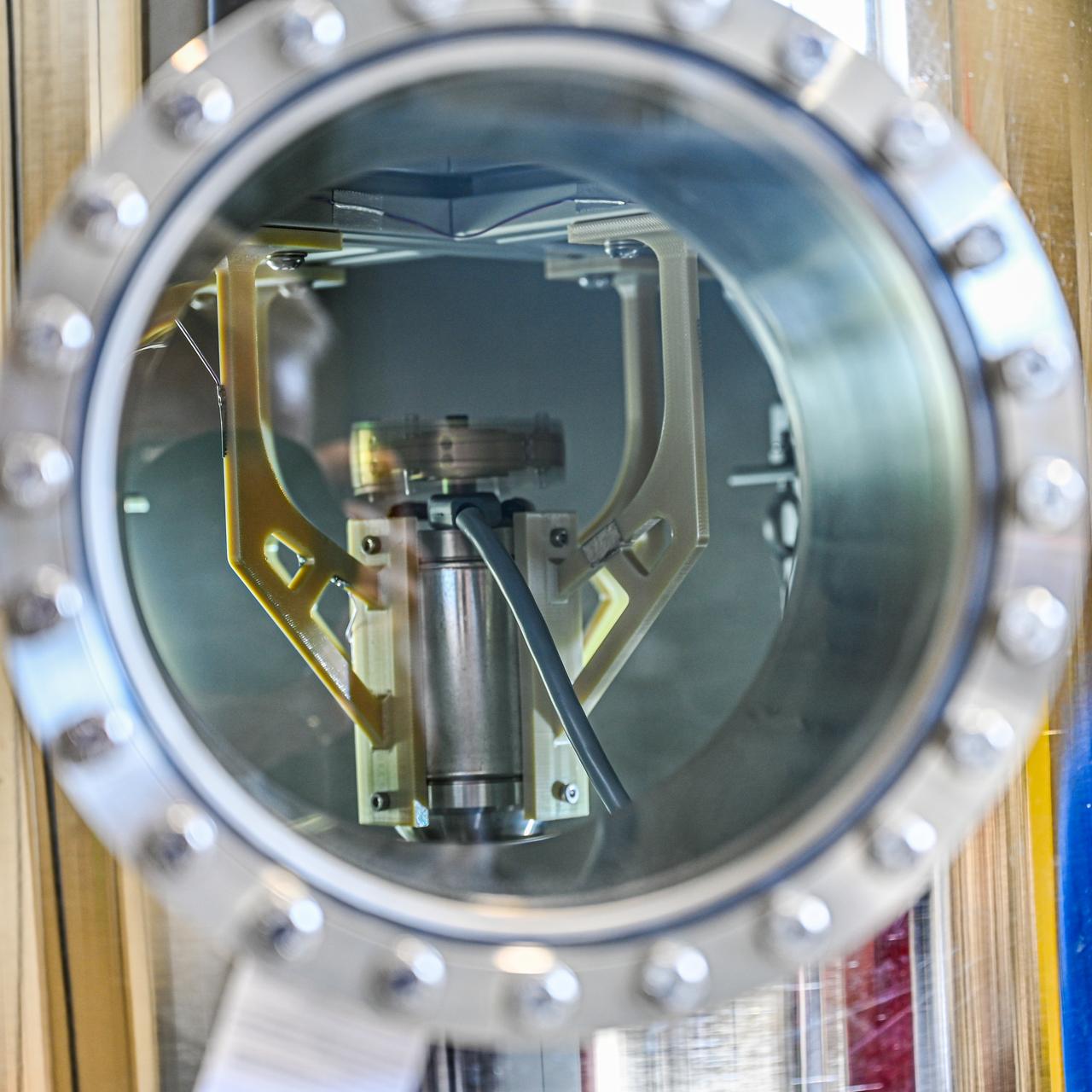
These photos, taken in fall 2024, show how NASA engineers use the Hub for Innovative Thermal Technology Maturation and Prototyping (Hi-TTeMP) laboratory at NASA’s Marshall Space Flight Center in Huntsville, Alabama. NASA engineers working in the HI-TTeMP lab not only design, set up, and run tests, they also provide insight and expertise in thermal engineering to assist NASA’s industry partners, such as SpaceX and other organizations, in validating concepts and models, or suggesting changes to designs. The lab is able to rapidly test and evaluate design updates or iterations. Engineering teams inside the lab are currently testing how well prototype insulation for SpaceX’s Starship HLS (Human Landing System) will insulate interior environments, including propellant storage tanks and the crew cabin. Starship HLS will land astronauts on the lunar surface during Artemis III and Artemis IV.
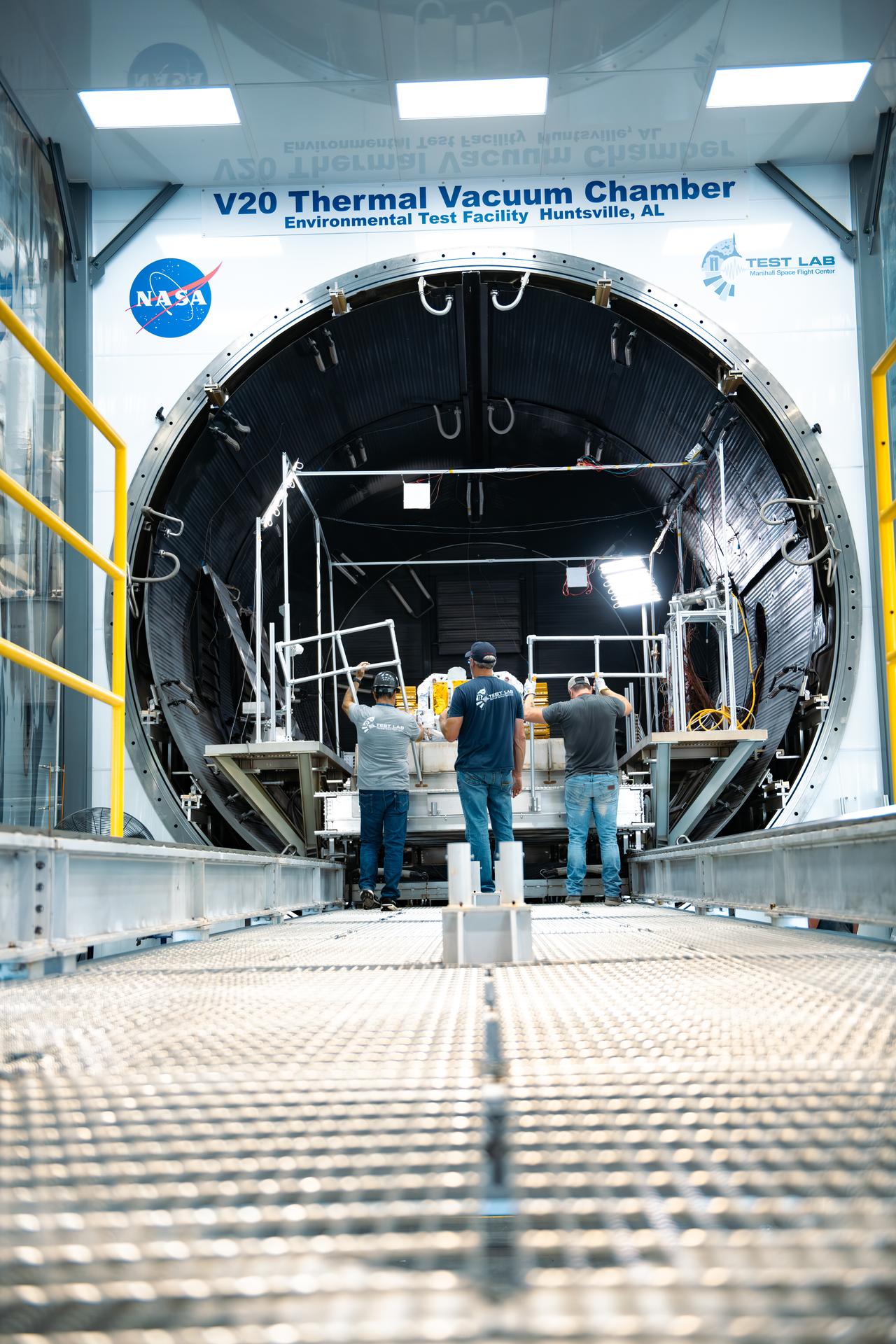
NASA Environmental Test Facility employees at the agency’s Marshall Space Flight Center in Huntsville, Alabama, work with members from the Starpath team to push the sliding platform into the thermal vacuum chamber, with the heavy rover and concrete slab in tow. The technology startup headquartered in Hawthorne, California, won second place overall at the agency’s Break the Ice Lunar Challenge’s live demonstration and finale in June 2024. This competition, one of NASA’s Centennial Challenges, tasked competitors to design, build, and demonstrate robotic technologies that could excavate and transport the icy, rocky dirt – otherwise known as regolith – found on the Moon. Starpath’s visit to NASA Marshall was part of their prize opportunity to test their upgraded lunar regolith excavation and transportation rover in the center’s 20-foot thermal vacuum chamber. For more information, contact NASA Marshall’s Office of Communications at 256-544-0034.
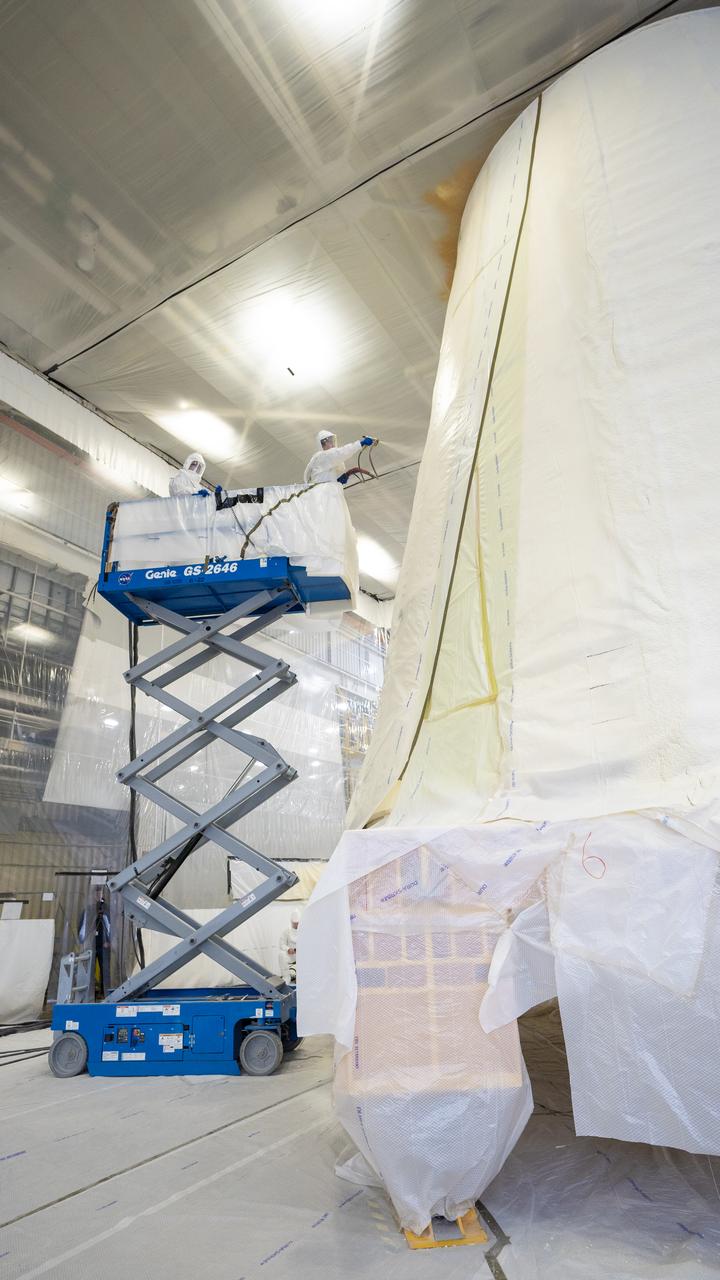
These photos show how technicians at NASA’s Marshall Space Flight Center in Huntsville, Alabama, have applied the thermal protection system material to the launch vehicle stage adapter (LVSA) of NASA’s SLS (Space Launch System) rocket for Artemis III, which will land astronauts on the Moon to advance long-term lunar exploration and scientific discovery and inspire the Artemis Generation. The LVSA is a cone-shaped element that connects the mega rocket’s core stage to its interim cryogenic propulsion stage (ICPS), partially enclosing it and protecting its avionics and electrical systems from the extreme pressures, sounds, and temperatures during launch and flight. Teams at Marshall began applying the thermal protection system material in the spring of 2023. Unlike other parts of the SLS rocket, the thermal protection system material for the LVSA is applied entirely by hand using a spray gun. During application, the technicians use a thin measuring rod to gauge the proper thickness. Once the thermal protection system has cured, certain areas are sanded down to meet parameters. The entire process takes several months. The LVSA is fully manufactured at Marshall by NASA, lead contractor Teledyne Brown Engineering, and the Jacobs Space Group’s ESSCA contract. The LVSA for Artemis III is the last of its kind as future SLS rockets will transition to its next, more powerful Block 1B configuration beginning with Artemis IV. NASA is working to land the first woman and first person of color on the Moon under Artemis. SLS is part of NASA’s backbone for deep space exploration, along with the Orion spacecraft, advanced spacesuits and rovers, the Gateway in orbit around the Moon, and commercial human landing systems. SLS is the only rocket that can send Orion, astronauts, and supplies to the Moon in a single mission.

Photo shows how the Space Launch Sysetm (SLS) rocket liquid oxygen tank failed during a structural qualification test at NASA’s Marshall Space Flight Center in Huntsville, Alabama. The photos show both the water flowing from the tank as it ruptured and the resultant tear left in the tank when it buckled during the test. Engineers pushed the liquid oxygen structural test article to the limits on purpose. The tank is a test article that is identical to tanks that are part of the SLS core stage that will produce 2 million pounds of thrust to help launch the rocket on the Artemis missions to the Moon. During the test, hydraulic cylinders were then calibrated and positioned along the tank to apply millions of pounds of crippling force from all sides while engineers measured and recorded the effects of the launch and flight forces. For the test, water used to simulate the liquid oxygen flows out of the tank after it ruptures. The structural test campaign was conducted on the rocket to ensure the SLS rocket’s structure can endure the rigors of launch and safely send astronauts to the Moon on the Artemis missions. For more information: https://www.nasa.gov/exploration/systems/sls/nasa-completes-artemis-sls-structural-testing-campaign.html
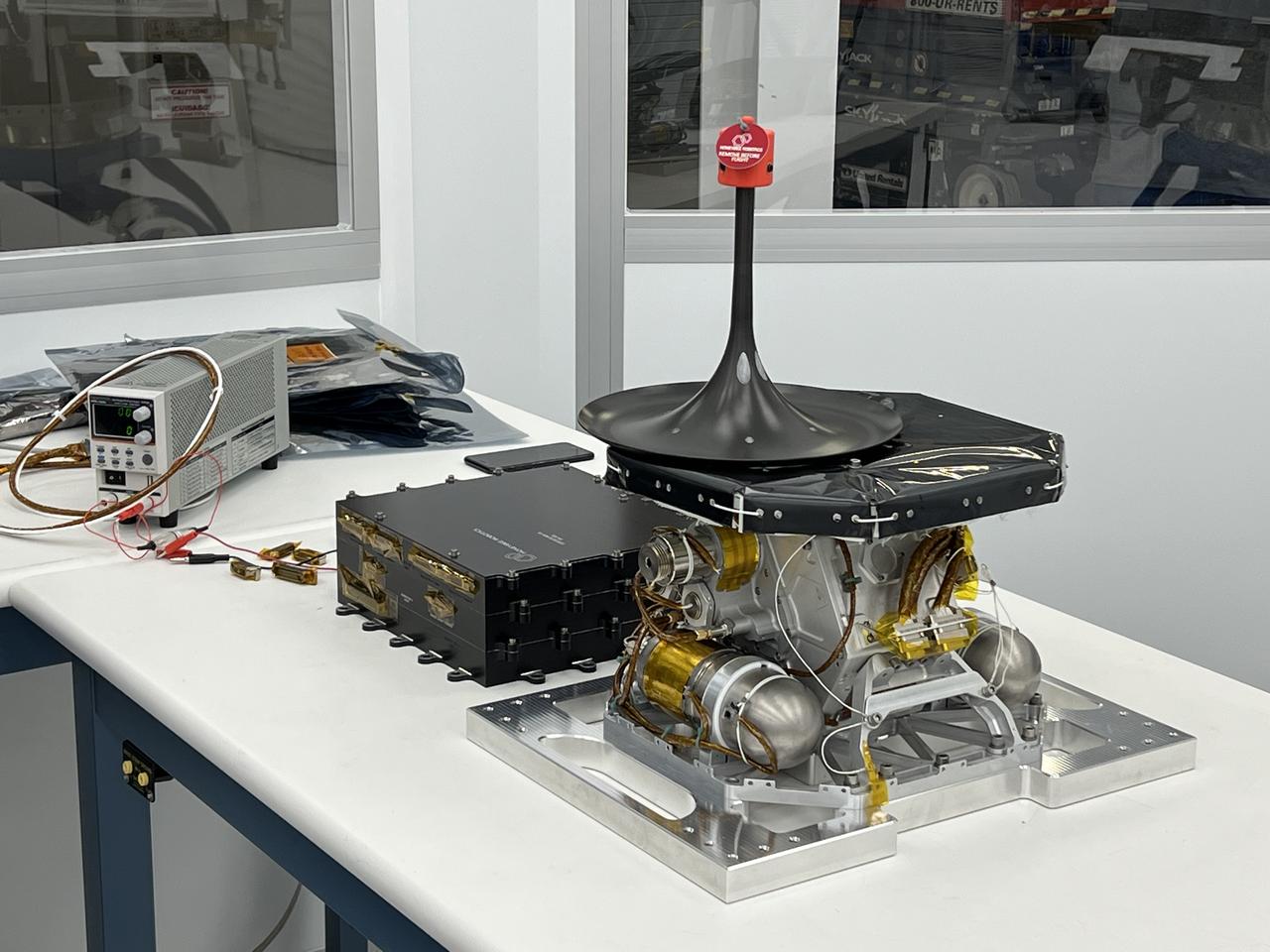
A science instrument flying aboard the next delivery for NASA’s CLPS (Commercial Lunar Payload Services) initiative could help improve our understanding of the Moon. The Lunar Instrumentation for Subsurface Thermal Exploration with Rapidity, or LISTER, is one of 10 payloads set to be carried to the Moon by the Blue Ghost 1 lunar lander in 2025. Developed jointly by Texas Tech University and Honeybee Robotics, LISTER’s planned mission is to measure the flow of heat from the Moon’s interior using a specialized drill. Investigations and demonstrations, such as LISTER, launched on CLPS flights will help NASA study Earth’s nearest neighbor under Artemis and pave the way for future crewed missions on the Moon. NASA’s Marshall Space Flight Center in Huntsville, Alabama, manages the development and operations for seven of the 10 CLPS payloads that will be carried on Firefly’s Blue Ghost lunar lander.
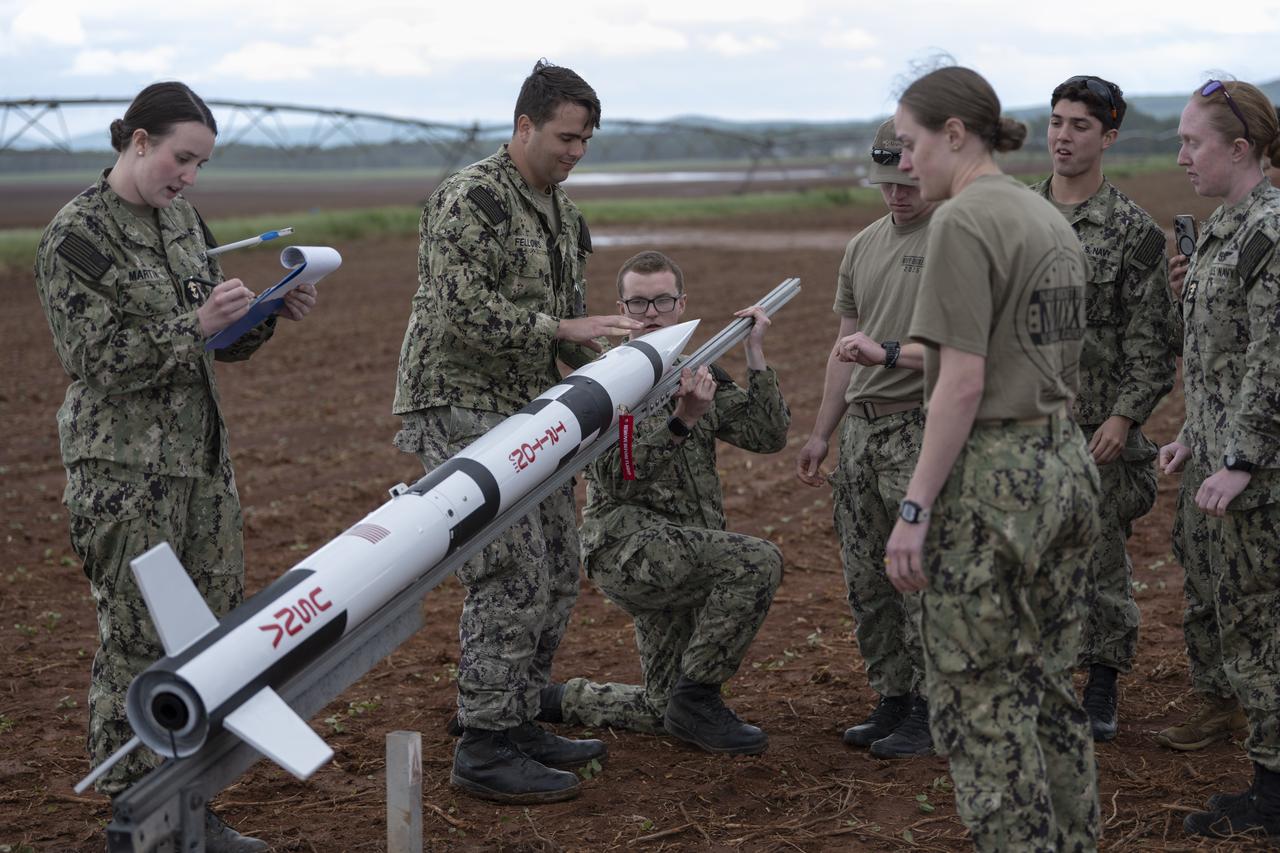
Over than 980 middle school, high school, and college students from across the nation launched more than 40 high-powered rockets just north of NASA’s Marshall Space Flight Center in Huntsville, Alabama. This year marked the 25th anniversary of the competition. To compete, students follow the NASA engineering design lifecycle by going through a series of reviews for nine months leading up to launch day. Each year, a payload challenge is issued to the university teams, and this year’s task took inspiration from the agency’s Artemis missions, where NASA will send astronauts to explore the Moon for scientific discovery, economic benefit, and to build the foundation for the first crewed missions to Mars. Teams were challenged to include “reports” from STEMnauts, non-living objects representing astronauts. The STEMnaut “crew” had to relay real-time data to the student team’s mission control, just as the Artemis astronaut crew will do as they explore the lunar surface. To learn more, visit: www.nasa.gov/studentlaunch.
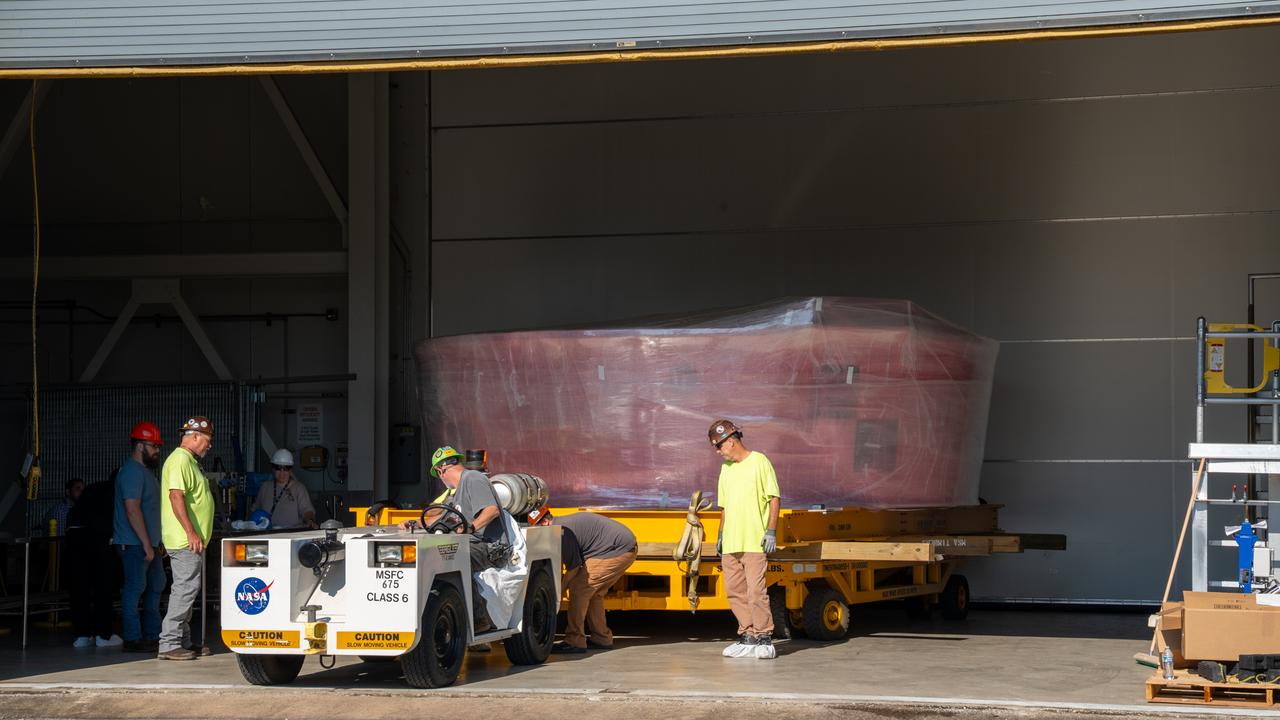
These images show the Orion stage adapter for Artemis II leaving NASA’s Marshall Space Flight Center in Huntsville, Alabama, as it begins its journey to NASA’s Kennedy Space Center in Florida. Manufactured at Marshall, this adapter for the SLS (Space Launch System) connects the rocket’s interim cryogenic propulsion stage to the Orion spacecraft and is the final piece of SLS hardware to be delivered to Kennedy Space Center in preparation for the Artemis II mission.
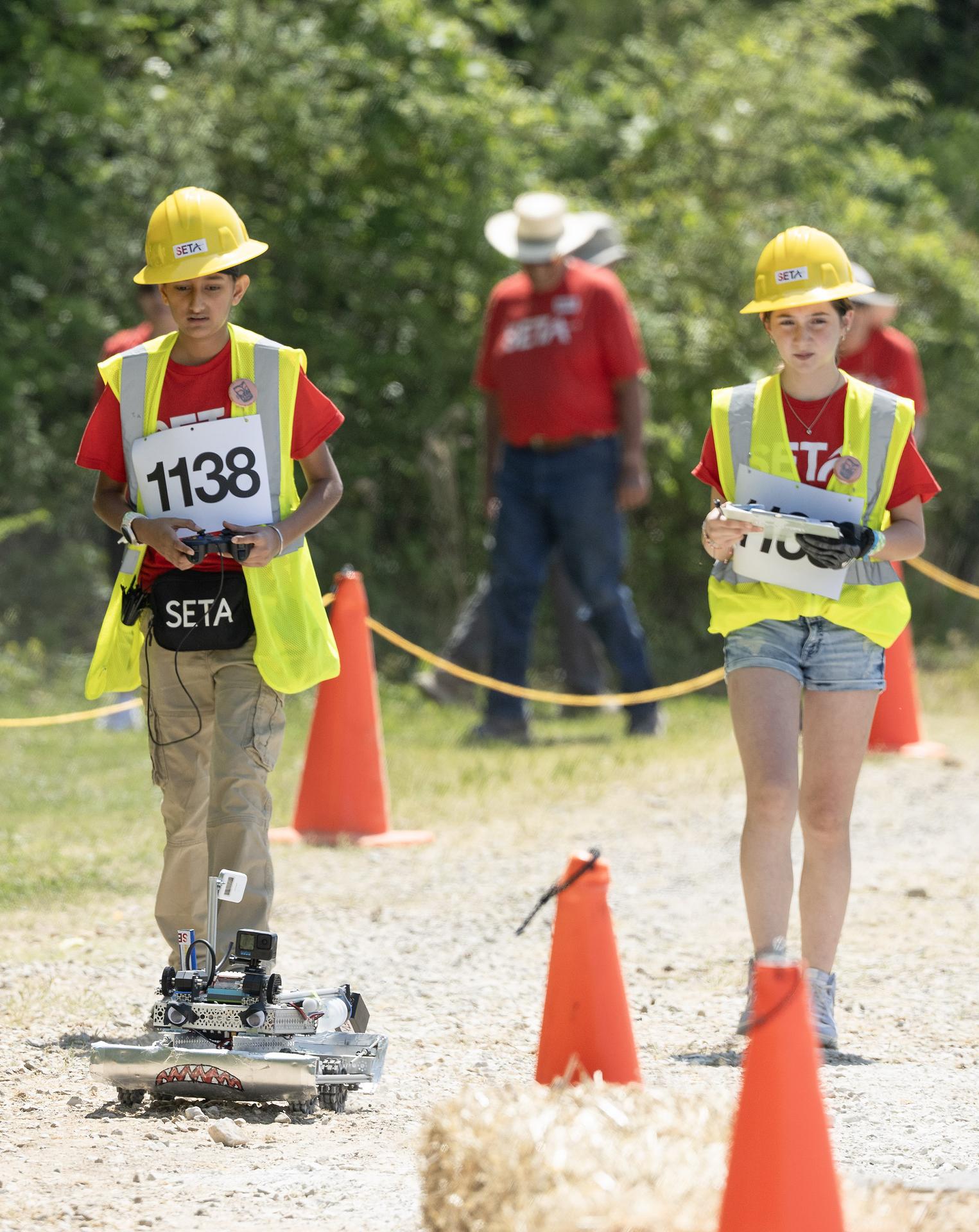
More than 600 students with 44 teams from around the world participated in the 32nd year of NASA’s Human Exploration Rover Challenge (HERC) on April 10 and April 11 near NASA’s Marshall Space Flight Center in Huntsville, Alabama. Participating teams represented 28 colleges and universities, 13 high schools, and one middle school from 18 states, Puerto Rico, and four Artemis Accord countries. Teams were awarded points based on navigating a half-mile obstacle course with either a human-powered or remote-controlled rover, conducting mission-specific task challenges, and completing multiple safety and design reviews with NASA engineers.
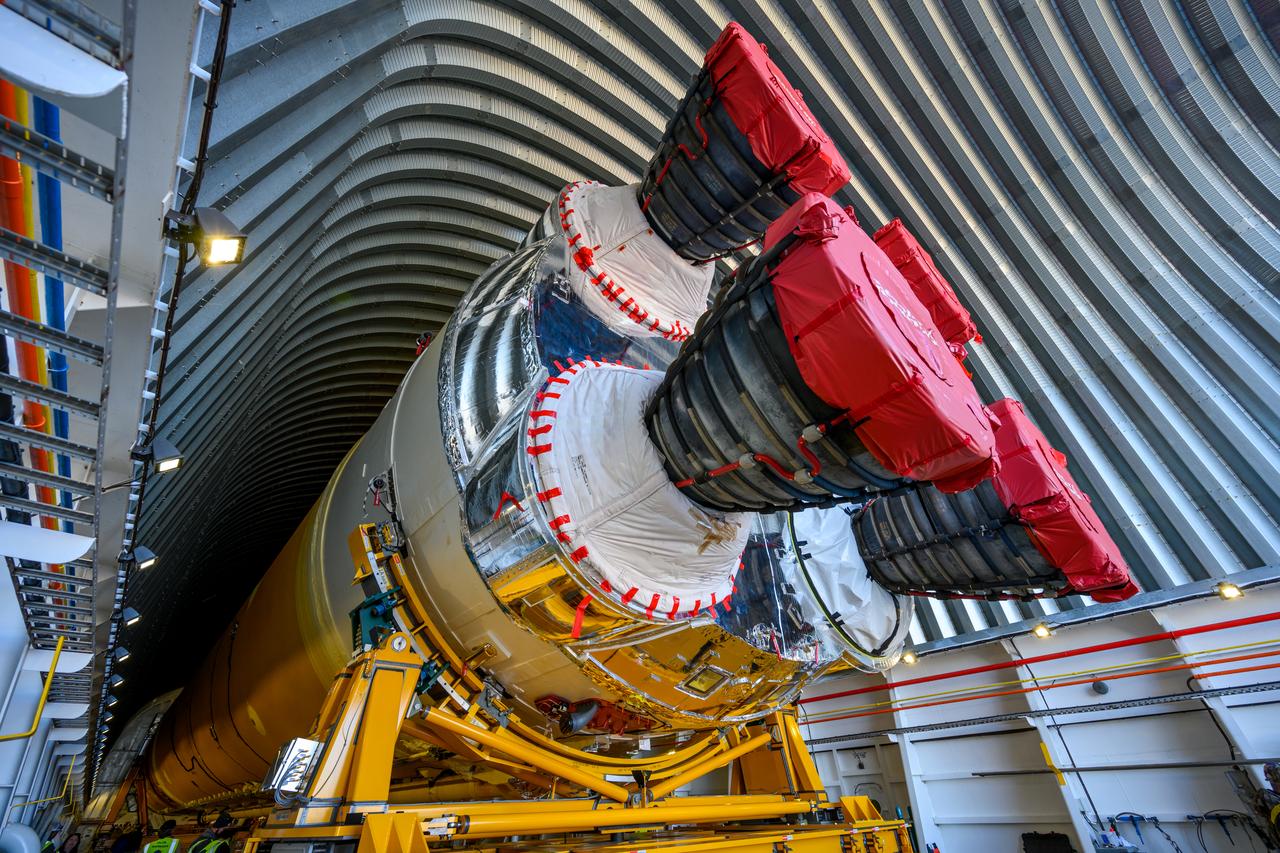
These images show the first core stage for NASA’s Space Launch System rocket inside NASA’s Pegasus barge on Jan. 8 ahead of its forthcoming journey to NASA’s Stennis Space Center near Bay St. Louis, Mississippi. Teams rolled out, or moved, the completed core stage from NASA’s Michoud Assembly Facility in New Orleans to the barge in preparation for the SLS rocket’s core stage Green Run test series at Stennis. Pegasus, which was modified to ferry SLS rocket hardware, will transport the core stage more than 40 miles from Michoud to Stennis for the comprehensive core stage Green Run test series. Green Run, named for its testing of new, or green, hardware progressively is the final test campaign ahead of the first Artemis launch. Assembly and integration of the core stage and its four RS-25 engines has been a collaborative, multistep process for NASA and its partners Boeing, the core stage lead contractor, and Aerojet Rocketdyne, the RS-25 engines lead contractor. Together with four RS-25 engines, the rocket’s massive 212-foot-tall core stage — the largest stage NASA has ever built — and its twin solid rocket boosters will produce 8.8 million pounds of thrust to send NASA’s Orion spacecraft, astronauts and supplies beyond Earth’s orbit to the Moon and, ultimately, Mars. Offering more payload mass, volume capability and energy to speed missions through space, the SLS rocket, along with NASA’s Gateway in lunar orbit and Orion, is part of NASA’s backbone for deep space exploration and the Artemis lunar program.
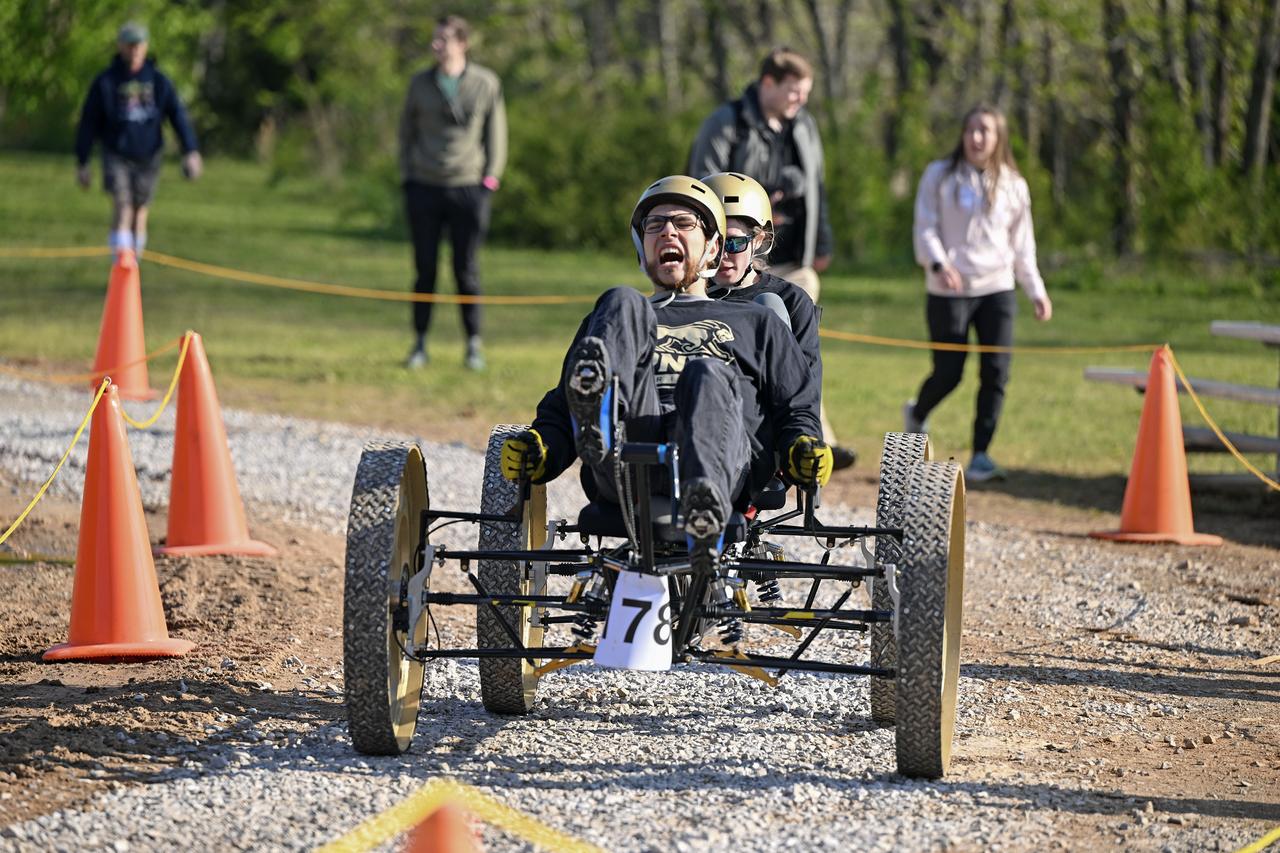
More than 500 students with 75 teams from around the world participated in the 31st year of NASA’s Human Exploration Rover Challenge (HERC) on April 11 and April 12, 2025, near NASA’s Marshall Space Flight Center in Huntsville, Alabama. Participating teams represented 35 colleges and universities, 38 high schools, and two middle schools from 20 states, Puerto Rico, and 16 other nations. NASA expanded the 2025 challenge to include a remote-control division - named Remote-Operated Vehicular Research - and invited middle school students to participate. Teams were awarded points based on navigating a half-mile obstacle course, conducting mission-specific task challenges, and completing multiple safety and design reviews with NASA engineers.
/USSRC_DavidSercel (195)~large.jpg)
More than 600 students with 44 teams from around the world participated in the 32nd year of NASA’s Human Exploration Rover Challenge (HERC) on April 10 and April 11 near NASA’s Marshall Space Flight Center in Huntsville, Alabama. Participating teams represented 28 colleges and universities, 13 high schools, and one middle school from 18 states, Puerto Rico, and four Artemis Accord countries. Teams were awarded points based on navigating a half-mile obstacle course with either a human-powered or remote-controlled rover, conducting mission-specific task challenges, and completing multiple safety and design reviews with NASA engineers.
/USSRC_MeganHolbrook (191)~large.jpg)
More than 600 students with 44 teams from around the world participated in the 32nd year of NASA’s Human Exploration Rover Challenge (HERC) on April 10 and April 11 near NASA’s Marshall Space Flight Center in Huntsville, Alabama. Participating teams represented 28 colleges and universities, 13 high schools, and one middle school from 18 states, Puerto Rico, and four Artemis Accord countries. Teams were awarded points based on navigating a half-mile obstacle course with either a human-powered or remote-controlled rover, conducting mission-specific task challenges, and completing multiple safety and design reviews with NASA engineers.
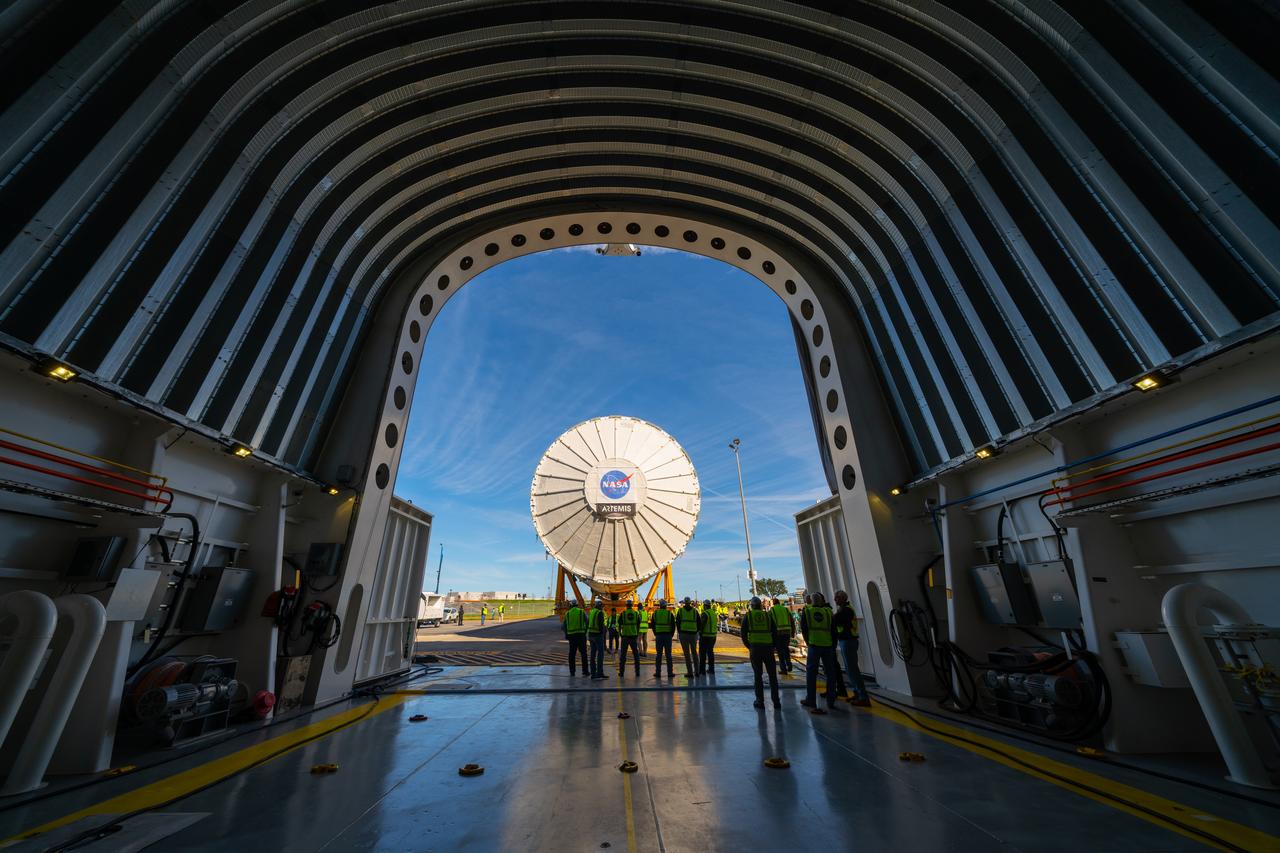
These images show how teams rolled out, or moved, the completed core stage for NASA’s Space Launch System rocket from NASA’s Michoud Assembly Facility in New Orleans. Crews moved the flight hardware for the first Artemis mission to NASA’s Pegasus barge on Jan. 8 in preparation for the core stage Green Run test series at NASA’s Stennis Space Center near Bay St. Louis, Mississippi. Pegasus, which was modified to ferry SLS rocket hardware, will transport the core stage from Michoud to Stennis for the comprehensive core stage Green Run test series. Once at Stennis, the Artemis rocket stage will be loaded into the B-2 Test Stand for the core stage Green Run test series. The comprehensive test campaign will progressively bring the entire core stage, including its avionics and engines, to life for the first time to verify the stage is fit for flight ahead of the launch of Artemis I. Assembly and integration of the core stage and its four RS-25 engines has been a collaborative, multistep process for NASA and its partners Boeing, the core stage lead contractor, and Aerojet Rocketdyne, the RS-25 engines lead contractor. Together with four RS-25 engines, the rocket’s massive 212-foot-tall core stage — the largest stage NASA has ever built — and its twin solid rocket boosters will produce 8.8 million pounds of thrust to send NASA’s Orion spacecraft, astronauts and supplies beyond Earth’s orbit to the Moon and, ultimately, Mars. Offering more payload mass, volume capability and energy to speed missions through space, the SLS rocket, along with NASA’s Gateway in lunar orbit and Orion, is part of NASA’s backbone for deep space exploration and the Artemis lunar program.
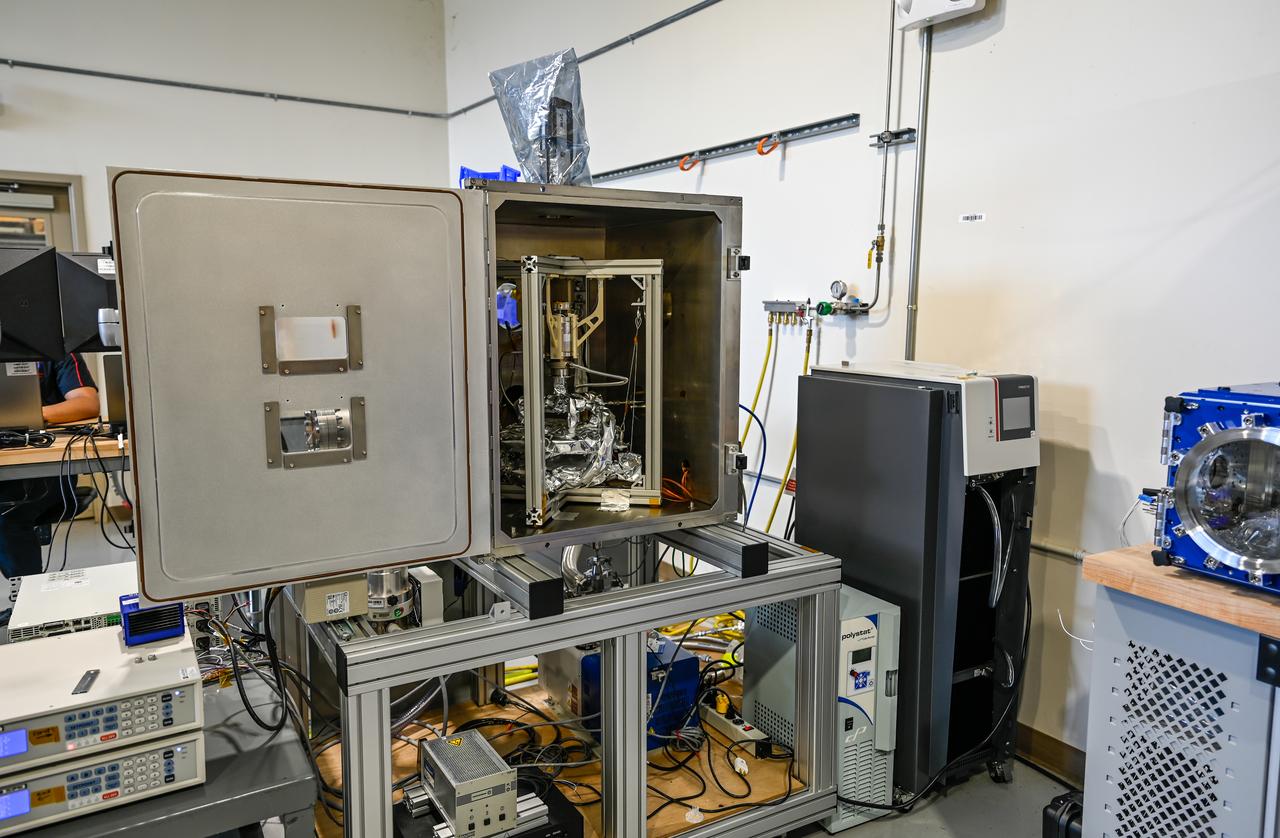
These photos, taken in fall 2024, show how NASA engineers use the Hub for Innovative Thermal Technology Maturation and Prototyping (Hi-TTeMP) laboratory at NASA’s Marshall Space Flight Center in Huntsville, Alabama. NASA engineers working in the HI-TTeMP lab not only design, set up, and run tests, they also provide insight and expertise in thermal engineering to assist NASA’s industry partners, such as SpaceX and other organizations, in validating concepts and models, or suggesting changes to designs. The lab is able to rapidly test and evaluate design updates or iterations. Engineering teams inside the lab are currently testing how well prototype insulation for SpaceX’s Starship HLS (Human Landing System) will insulate interior environments, including propellant storage tanks and the crew cabin. Starship HLS will land astronauts on the lunar surface during Artemis III and Artemis IV.
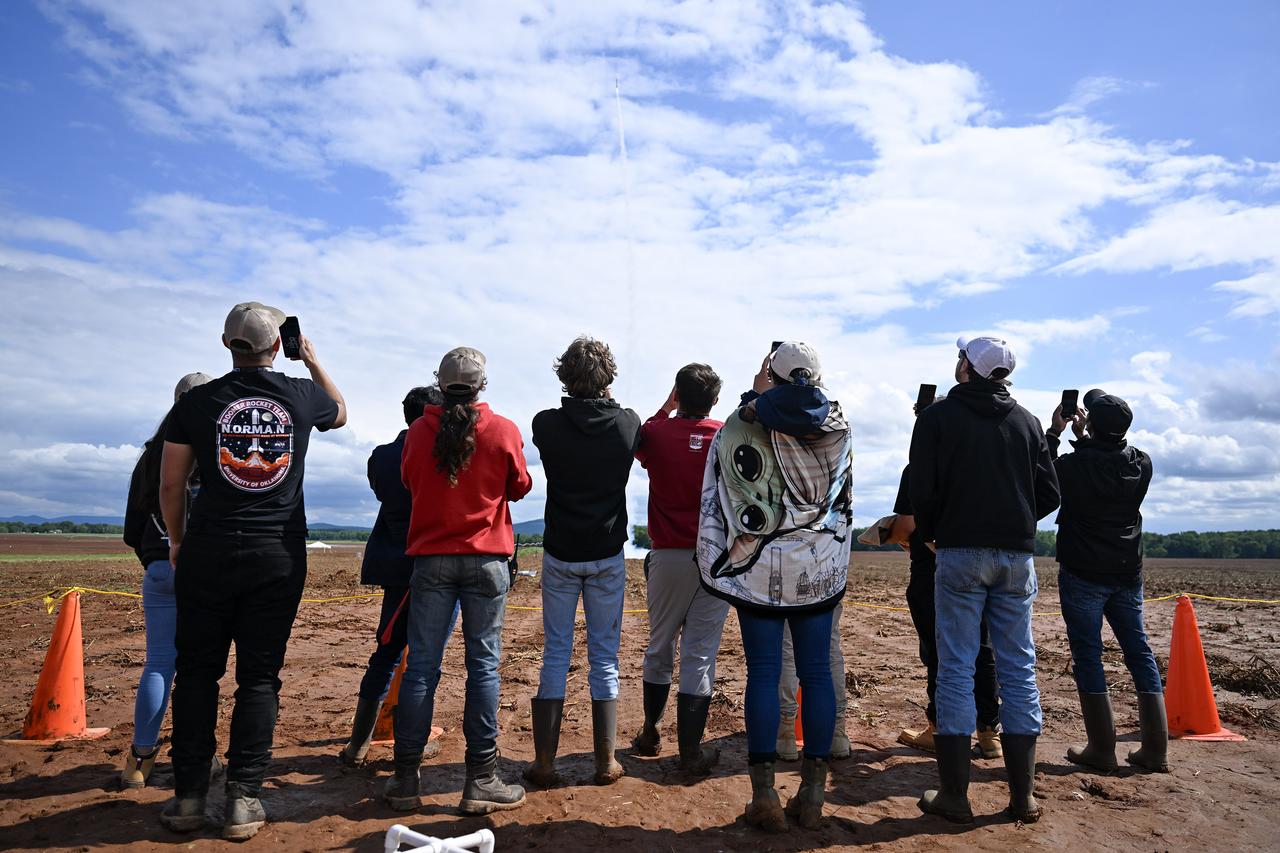
Over than 980 middle school, high school, and college students from across the nation launched more than 40 high-powered rockets just north of NASA’s Marshall Space Flight Center in Huntsville, Alabama. This year marked the 25th anniversary of the competition. To compete, students follow the NASA engineering design lifecycle by going through a series of reviews for nine months leading up to launch day. Each year, a payload challenge is issued to the university teams, and this year’s task took inspiration from the agency’s Artemis missions, where NASA will send astronauts to explore the Moon for scientific discovery, economic benefit, and to build the foundation for the first crewed missions to Mars. Teams were challenged to include “reports” from STEMnauts, non-living objects representing astronauts. The STEMnaut “crew” had to relay real-time data to the student team’s mission control, just as the Artemis astronaut crew will do as they explore the lunar surface. To learn more, visit: www.nasa.gov/studentlaunch.

Over than 980 middle school, high school, and college students from across the nation launched more than 40 high-powered rockets just north of NASA’s Marshall Space Flight Center in Huntsville, Alabama. This year marked the 25th anniversary of the competition. To compete, students follow the NASA engineering design lifecycle by going through a series of reviews for nine months leading up to launch day. Each year, a payload challenge is issued to the university teams, and this year’s task took inspiration from the agency’s Artemis missions, where NASA will send astronauts to explore the Moon for scientific discovery, economic benefit, and to build the foundation for the first crewed missions to Mars. Teams were challenged to include “reports” from STEMnauts, non-living objects representing astronauts. The STEMnaut “crew” had to relay real-time data to the student team’s mission control, just as the Artemis astronaut crew will do as they explore the lunar surface. To learn more, visit: www.nasa.gov/studentlaunch.
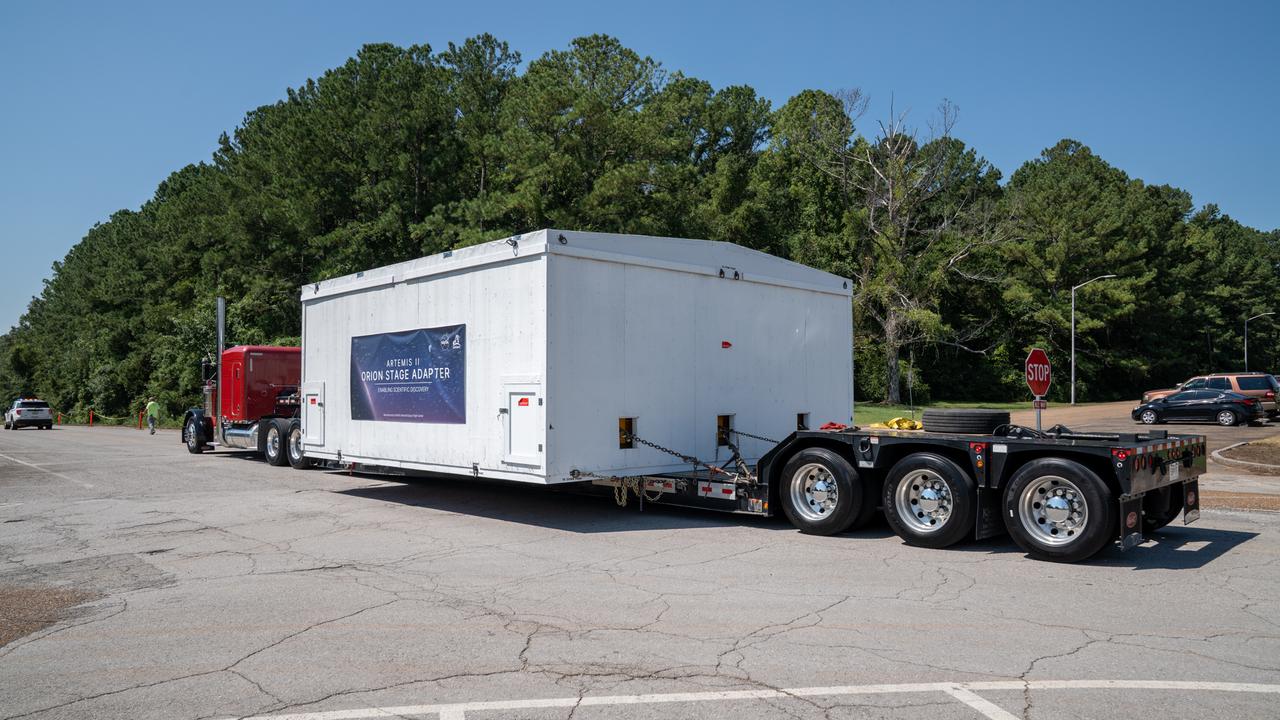
These images show the Orion stage adapter for Artemis II being prepped for shipment and then packaged in a large box, loaded on a semi-truck. It is seen leaving NASA’s Marshall Space Flight Center in Huntsville, Alabama, as it begins its journey to NASA’s Kennedy Space Center in Florida. Manufactured at Marshall, this adapter for the SLS (Space Launch System) connects the rocket’s interim cryogenic propulsion stage to the Orion spacecraft and is the final piece of SLS hardware to be delivered to Kennedy Space Center in preparation for the Artemis II mission.
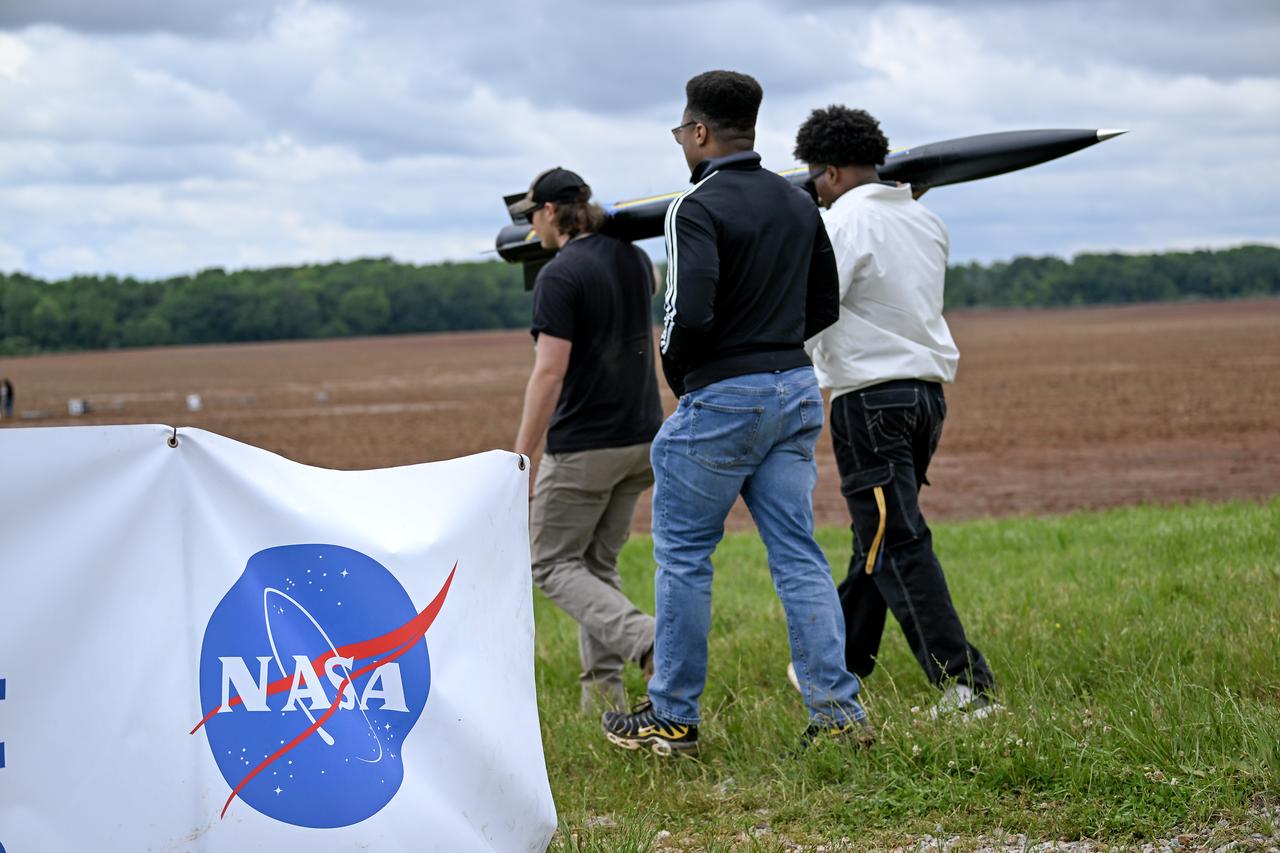
Over than 980 middle school, high school, and college students from across the nation launched more than 40 high-powered rockets just north of NASA’s Marshall Space Flight Center in Huntsville, Alabama. This year marked the 25th anniversary of the competition. To compete, students follow the NASA engineering design lifecycle by going through a series of reviews for nine months leading up to launch day. Each year, a payload challenge is issued to the university teams, and this year’s task took inspiration from the agency’s Artemis missions, where NASA will send astronauts to explore the Moon for scientific discovery, economic benefit, and to build the foundation for the first crewed missions to Mars. Teams were challenged to include “reports” from STEMnauts, non-living objects representing astronauts. The STEMnaut “crew” had to relay real-time data to the student team’s mission control, just as the Artemis astronaut crew will do as they explore the lunar surface. To learn more, visit: www.nasa.gov/studentlaunch.
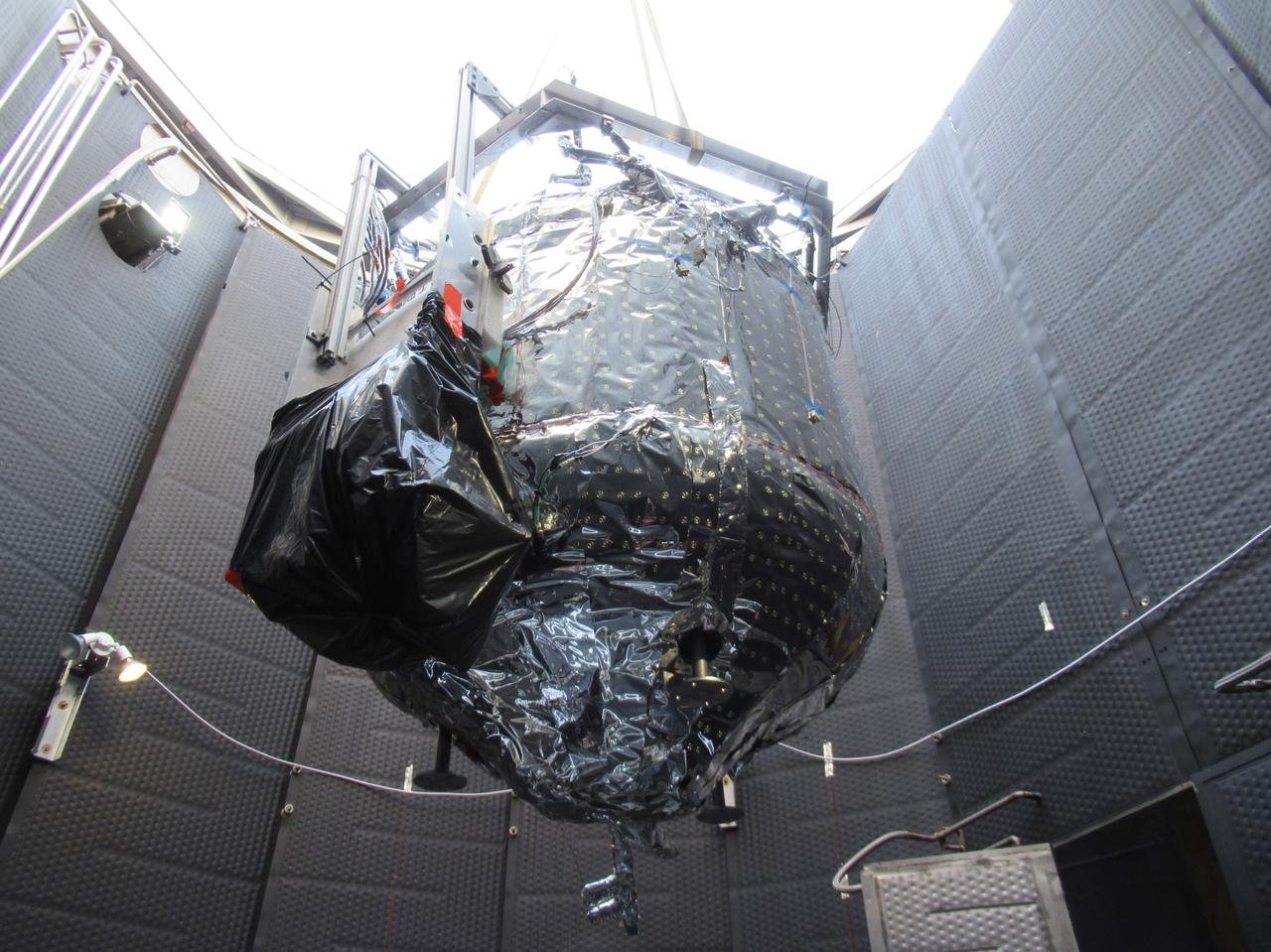
These photos show how teams at NASA’s Marshall Space Flight Center in Huntsville, Alabama, are testing an innovative approach to achieve zero boiloff storage of liquid hydrogen using two stages of active cooling, which could prevent the loss of valuable propellant during future long-duration spaceflight missions. Test teams installed the propellant tank in Test Stand 300 at NASA Marshall in early June, and the 90-day test campaign is scheduled to conclude in September. The tank is wrapped in a multi-layer insulation blanket that includes a thin aluminum heat shield fitted between layers. A second set of tubes, carrying helium at about minus 298 Fahrenheit, is integrated into the shield. This intermediate cooling layer intercepts and rejects incoming heat before it reaching the tank, easing the heat load on the tube-on-tank system. The Cryogenic Fluid Management Portfolio Project is a cross-agency team based at NASA Marshall and the agency’s Glenn Research Center in Cleveland. The cryogenic portfolio’s work is under NASA’s Technology Demonstration Missions Program, part of NASA’s Space Technology Mission Directorate, and is comprised of more than 20 individual technology development activities. For more information, contact NASA Marshall’s Office of Communications at 256-544-0034.
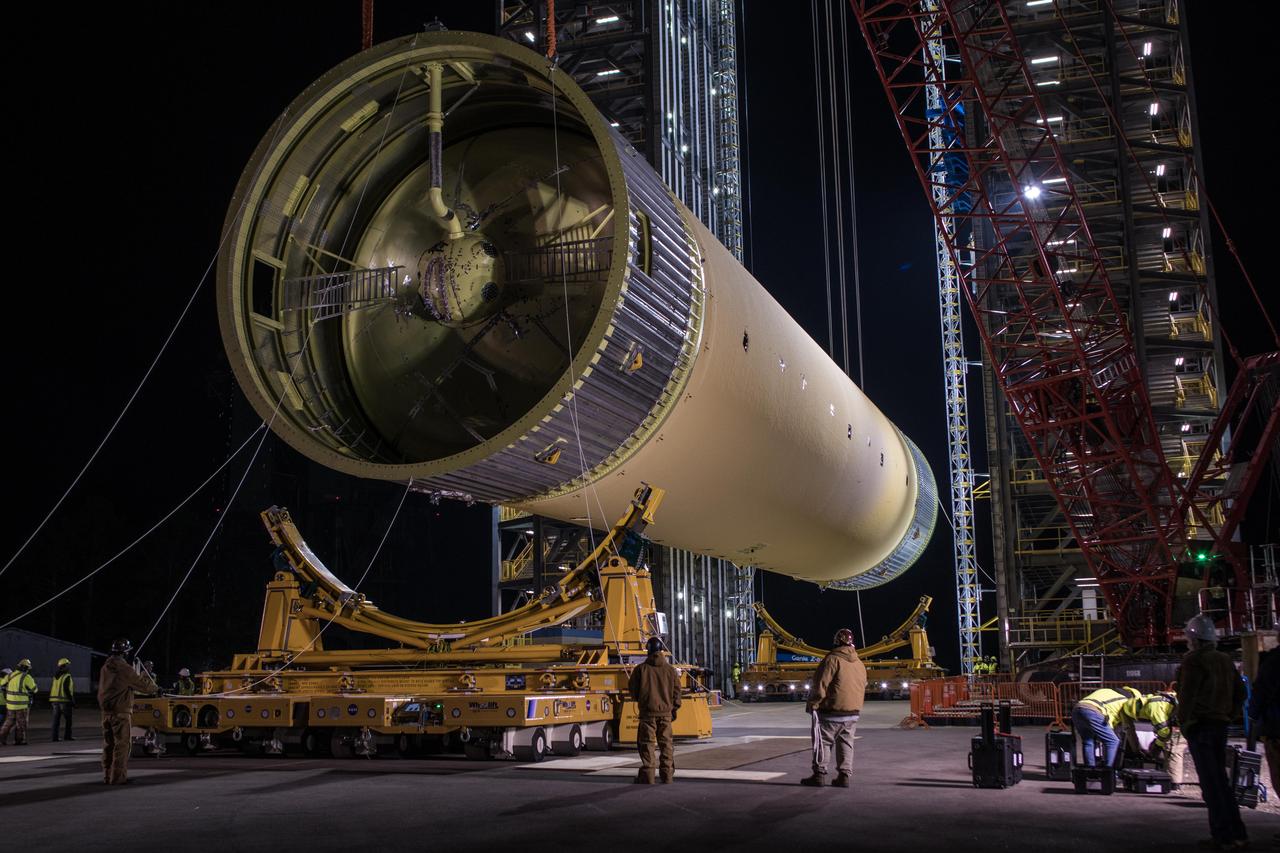
The Space Launch System (SLS) liquid hydrogen tank structural test article is loaded into Test Stand 4693 at NASA’s Marshall Space Flight Center in Huntsville, Alabama, on Jan. 14, 2019. The 149-foot piece of test hardware is the largest piece of structural hardware for the SLS core stage for America’s new deep space rocket Itis structurally identical to the flight version of the tank. It will undergo a series of tests in Test Stand 4693 to simulate the stresses and loads of liftoff and flight. These tests will help ensure designs are adequate for successful SLS missions to the Moon and beyond.
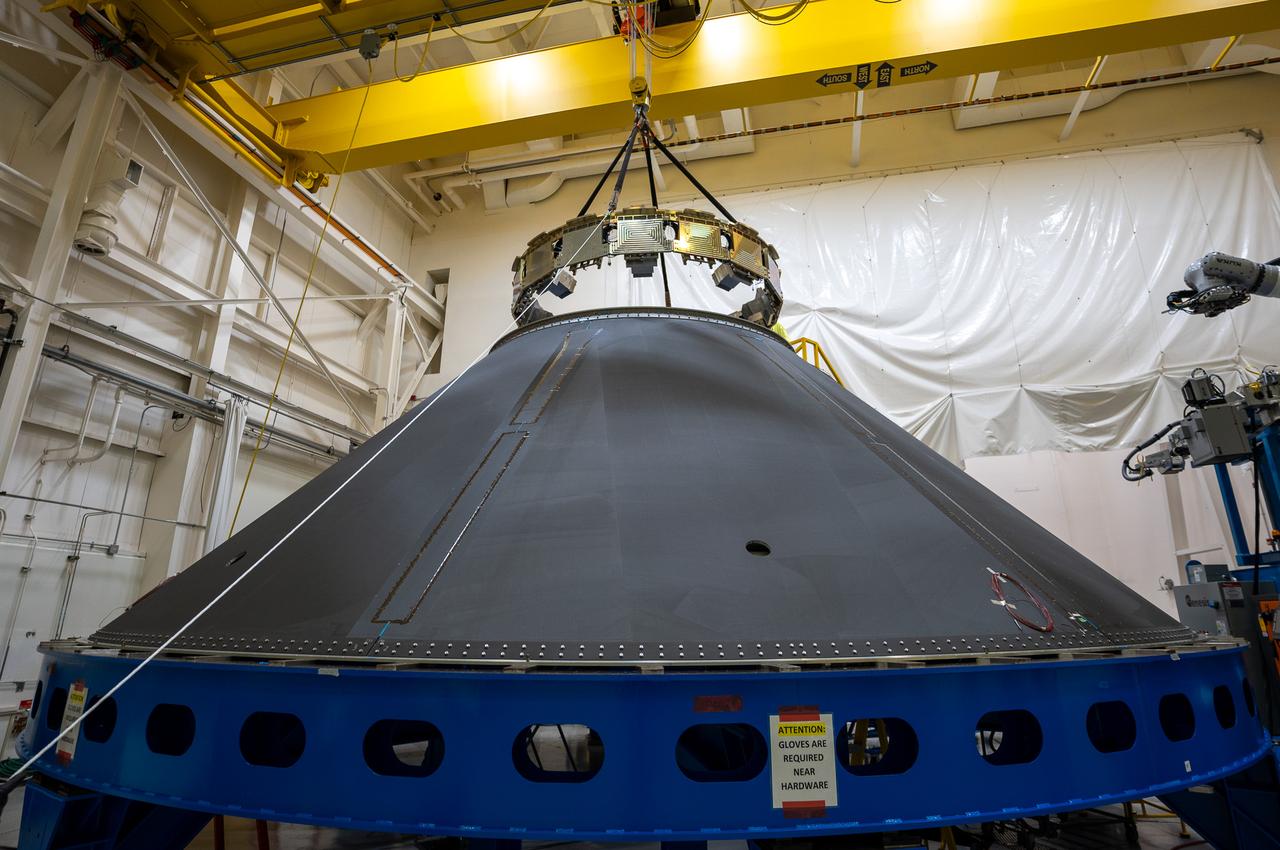
These photos and videos show how NASA manufactured and prepared to transport the payload adapter in February inside Building 4708 at NASA’s Marshall Space Flight Center in Huntsville, Alabama. Prior to moving the hardware for testing, teams installed the New Explorations Secondary Transport component, called the NEST, into the top of the engineering development unit. The NEST component will allow the hardware to hold a series of secondary payloads, or small satellites. The cone-shaped payload adapter is about 8.5 feet tall and features two metal rings and eight composite panels. The adapter, which will debut on NASA’s Artemis IV mission, is an evolution from the Orion stage adapter used in the Block 1 configuration of the rocket for the first three Artemis missions. It will be housed inside the universal stage adapter atop the rocket’s more powerful in-space stage, called the exploration upper stage. The payload adapter, like the launch vehicle stage adapter and the Orion stage adapter, is fully manufactured and tested at Marshall, which manages the SLS Program. NASA is working to land the first woman, first person of color, and its first international partner astronaut on the Moon under Artemis. SLS is part of NASA’s backbone for deep space exploration, along with the Orion spacecraft and Gateway in orbit around the Moon and commercial human landing systems, next-generational spacesuits, and rovers on the lunar surface. SLS is the only rocket that can send Orion, astronauts, and supplies to the Moon in a single launch.
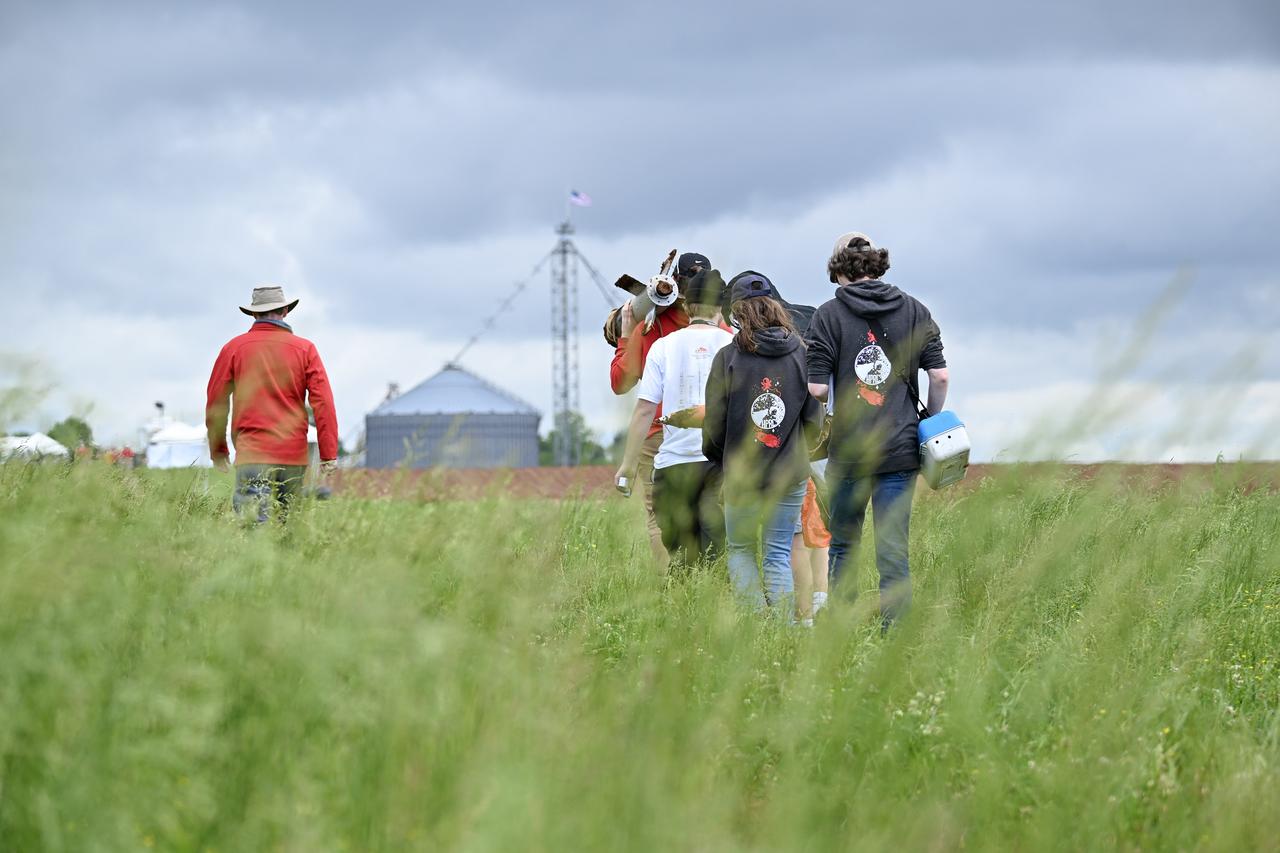
Over than 980 middle school, high school, and college students from across the nation launched more than 40 high-powered rockets just north of NASA’s Marshall Space Flight Center in Huntsville, Alabama. This year marked the 25th anniversary of the competition. To compete, students follow the NASA engineering design lifecycle by going through a series of reviews for nine months leading up to launch day. Each year, a payload challenge is issued to the university teams, and this year’s task took inspiration from the agency’s Artemis missions, where NASA will send astronauts to explore the Moon for scientific discovery, economic benefit, and to build the foundation for the first crewed missions to Mars. Teams were challenged to include “reports” from STEMnauts, non-living objects representing astronauts. The STEMnaut “crew” had to relay real-time data to the student team’s mission control, just as the Artemis astronaut crew will do as they explore the lunar surface. To learn more, visit: www.nasa.gov/studentlaunch.
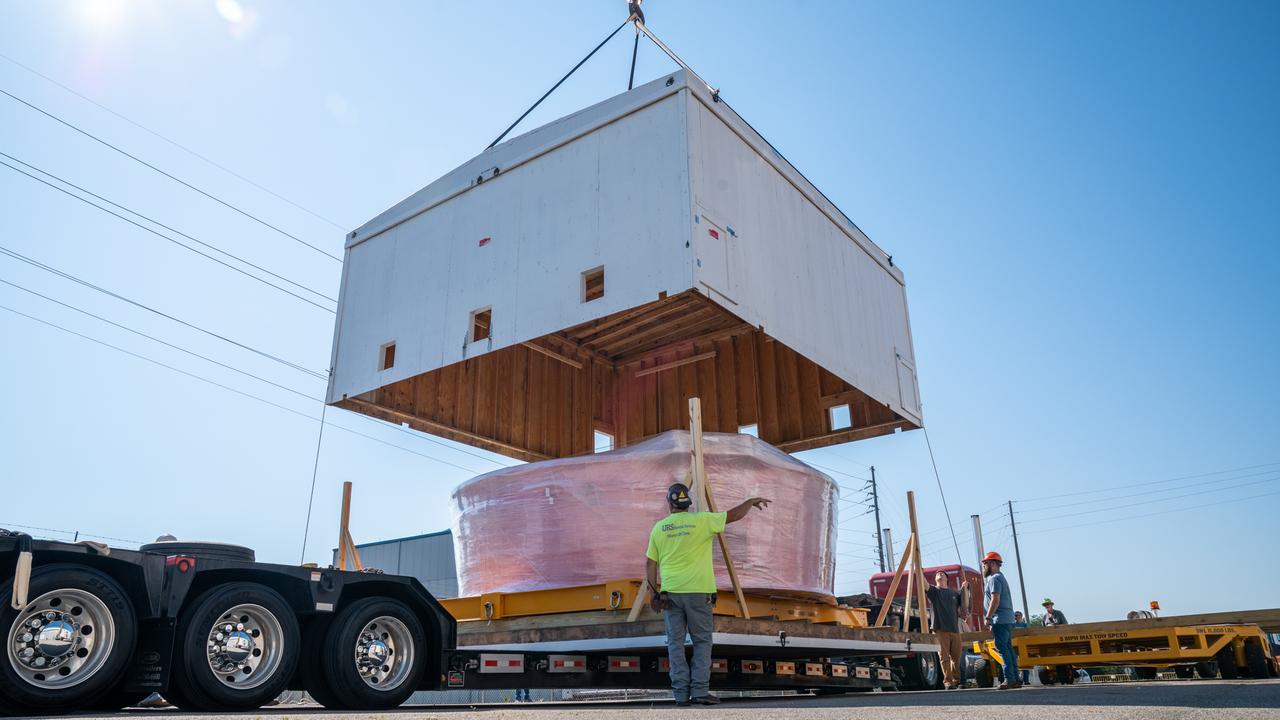
These images show the Orion stage adapter for Artemis II being prepped for shipment and then packaged in a large box, loaded on a semi-truck. It is seen leaving NASA’s Marshall Space Flight Center in Huntsville, Alabama, as it begins its journey to NASA’s Kennedy Space Center in Florida. Manufactured at Marshall, this adapter for the SLS (Space Launch System) connects the rocket’s interim cryogenic propulsion stage to the Orion spacecraft and is the final piece of SLS hardware to be delivered to Kennedy Space Center in preparation for the Artemis II mission.
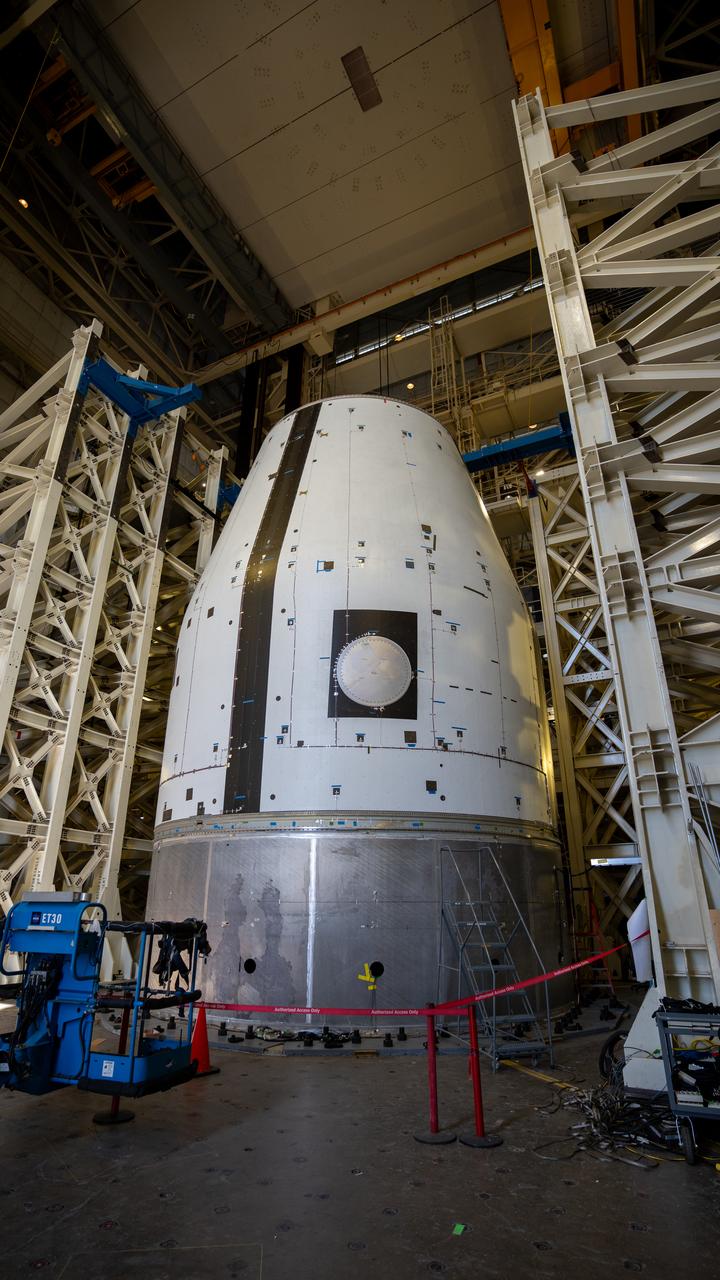
These photos and videos show how crews guided a test version of the universal stage adapter for NASA’s more powerful version of its SLS (Space Launch System) rocket to Building 4619 at the agency’s Marshall Space Flight Center in Huntsville, Alabama, Feb. 22. Built by Leidos, the lead contractor for the universal stage adapter, crews transported the hardware from a Leidos facility in Decatur, Alabama, the same day. The universal stage adapter will connect the SLS rocket’s upgraded in-space propulsion stage, called the exploration upper stage, to NASA’s Orion spacecraft as part of the evolved Block 1B configuration of the SLS rocket. It will also serve as a compartment capable of accommodating large payloads, such as modules or other exploration spacecraft. In Building 4619’s Load Test Annex High Bay at Marshall, the development test article will first undergo modal testing that will shake the hardware to validate dynamic models. Later, during ultimate load testing, force will be applied vertically and to the sides of the hardware. Unlike the flight hardware, the development test article has flaws intentionally included in its design, which will help engineers verity that the flight adapter can withstand the extreme forces it will face during launch and flight.
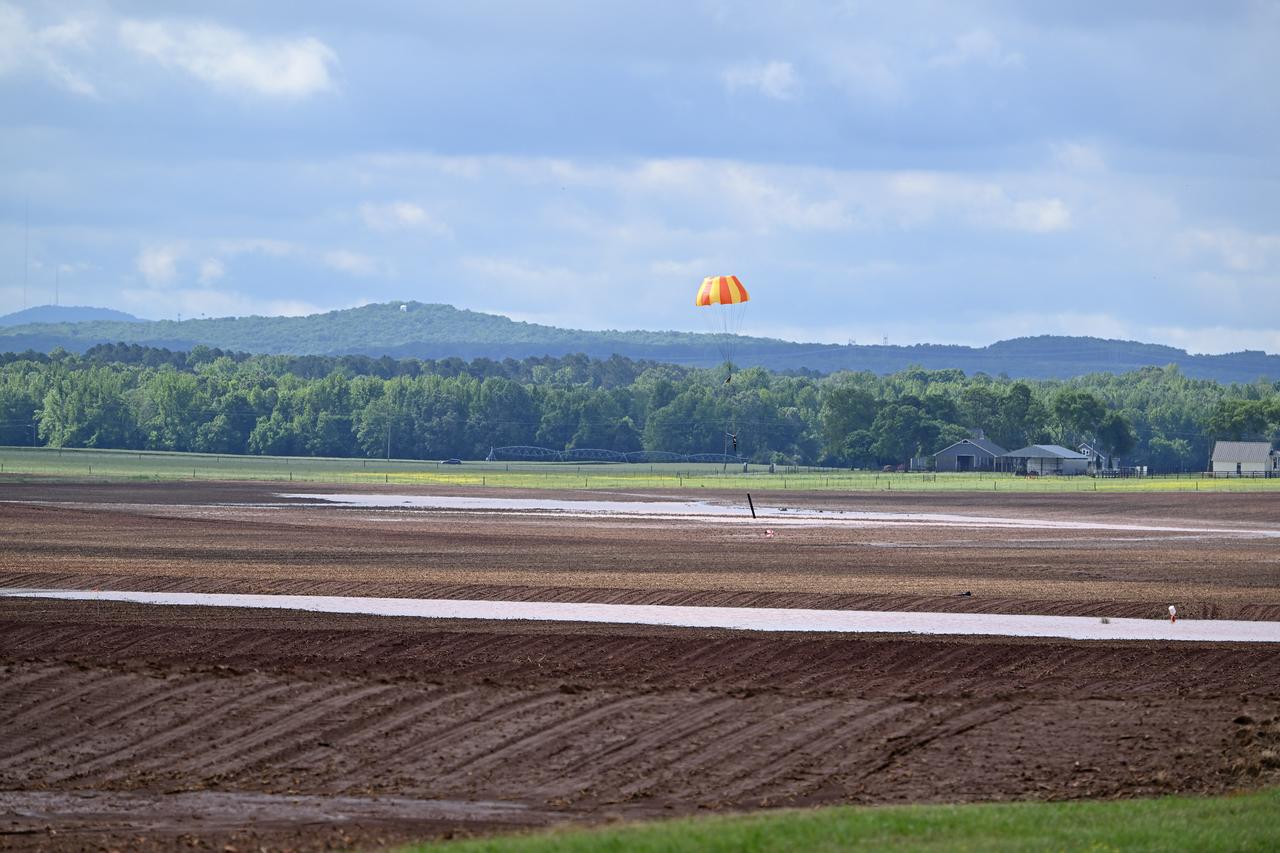
Over than 980 middle school, high school, and college students from across the nation launched more than 40 high-powered rockets just north of NASA’s Marshall Space Flight Center in Huntsville, Alabama. This year marked the 25th anniversary of the competition. To compete, students follow the NASA engineering design lifecycle by going through a series of reviews for nine months leading up to launch day. Each year, a payload challenge is issued to the university teams, and this year’s task took inspiration from the agency’s Artemis missions, where NASA will send astronauts to explore the Moon for scientific discovery, economic benefit, and to build the foundation for the first crewed missions to Mars. Teams were challenged to include “reports” from STEMnauts, non-living objects representing astronauts. The STEMnaut “crew” had to relay real-time data to the student team’s mission control, just as the Artemis astronaut crew will do as they explore the lunar surface. To learn more, visit: www.nasa.gov/studentlaunch.
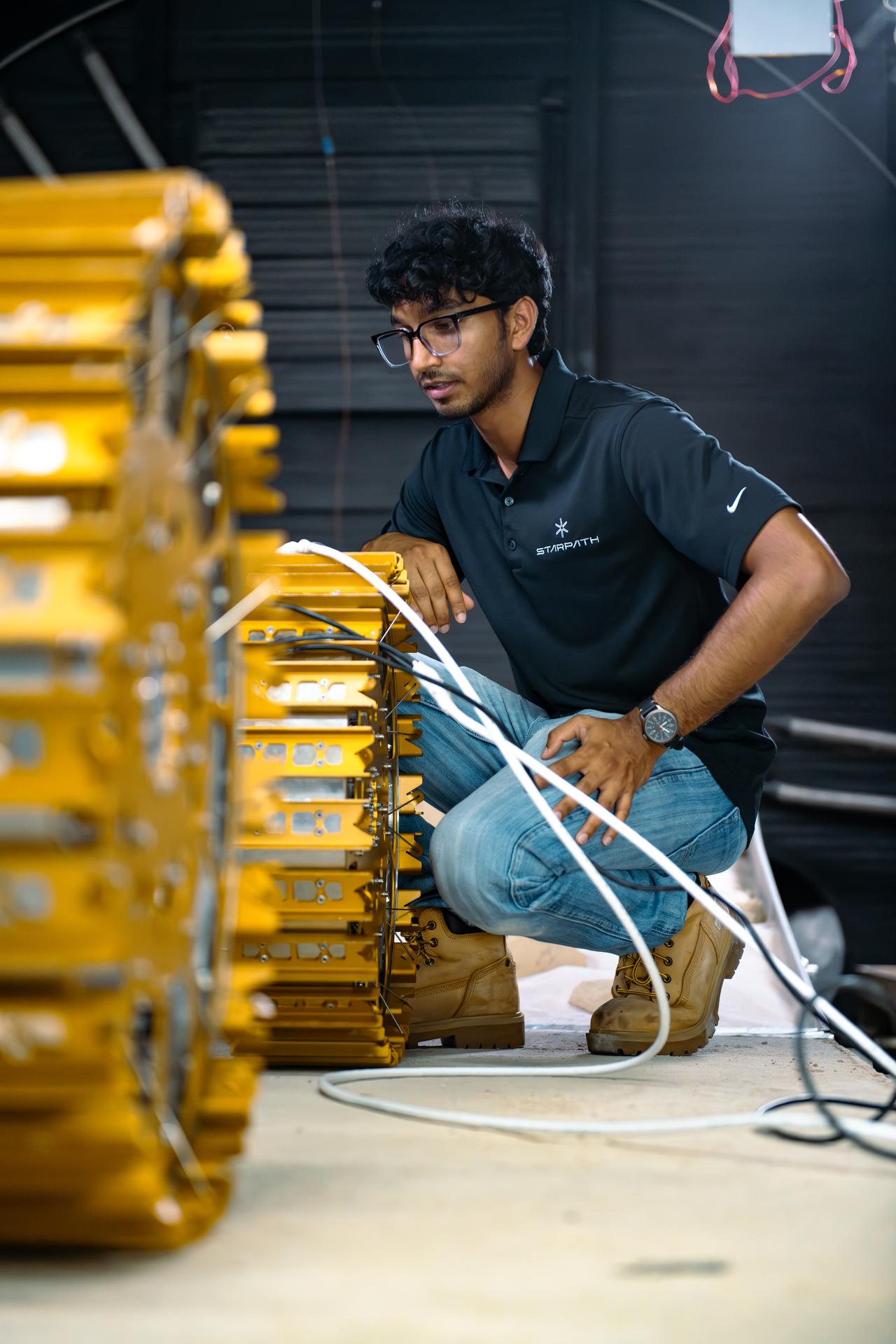
Starpath mechanical engineer Josh Kavilaveettil monitors a component of the rover, attached to wires, in preparation for testing at NASA’s Marshall Space Flight Center in Huntsville, Alabama on July 30, 2025. The technology startup headquartered in Hawthorne, California, won second place overall at the agency’s Break the Ice Lunar Challenge’s live demonstration and finale in June 2024. This competition, one of NASA’s Centennial Challenges, tasked competitors to design, build, and demonstrate robotic technologies that could excavate and transport the icy, rocky dirt – otherwise known as regolith – found on the Moon. Starpath’s visit to NASA Marshall was part of their prize opportunity to test their upgraded lunar regolith excavation and transportation rover in the center’s 20-foot thermal vacuum chamber. For more information, contact NASA Marshall’s Office of Communications at 256-544-0034.
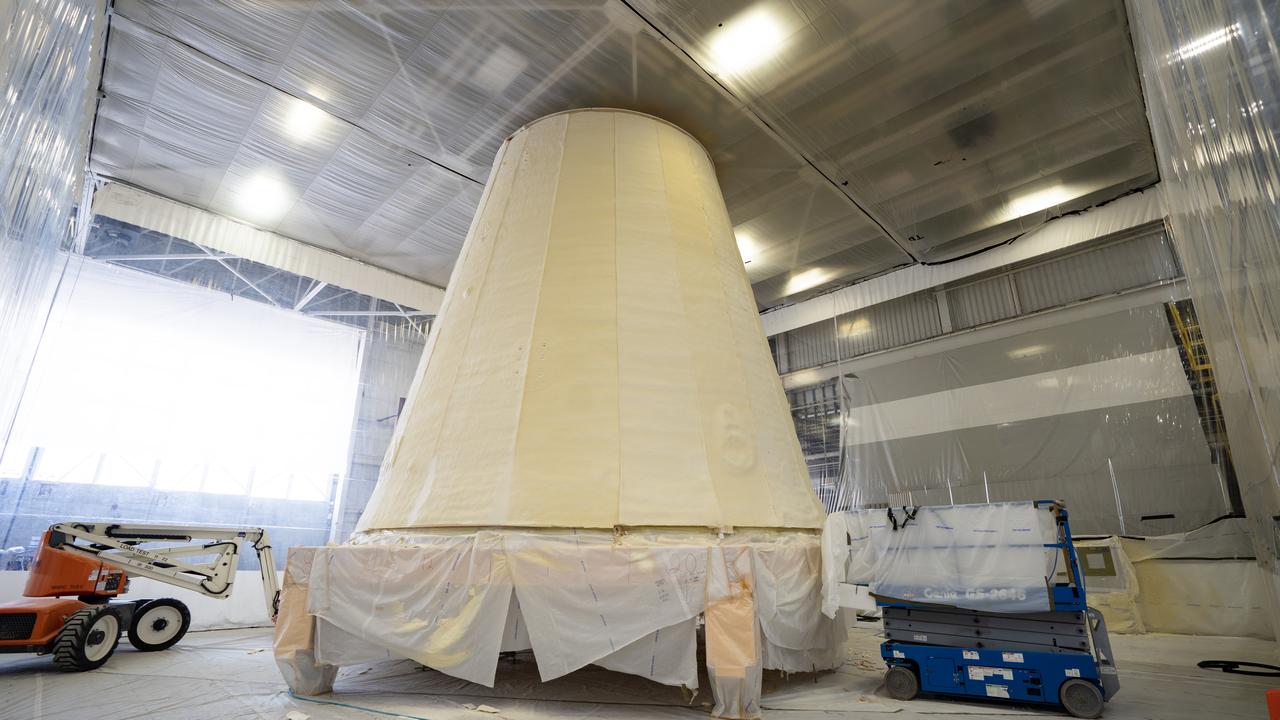
These photos show how technicians at NASA’s Marshall Space Flight Center in Huntsville, Alabama, have applied the thermal protection system material to the launch vehicle stage adapter (LVSA) of NASA’s SLS (Space Launch System) rocket for Artemis III, which will land astronauts on the Moon to advance long-term lunar exploration and scientific discovery and inspire the Artemis Generation. The LVSA is a cone-shaped element that connects the mega rocket’s core stage to its interim cryogenic propulsion stage (ICPS), partially enclosing it and protecting its avionics and electrical systems from the extreme pressures, sounds, and temperatures during launch and flight. Teams at Marshall began applying the thermal protection system material in the spring of 2023. Unlike other parts of the SLS rocket, the thermal protection system material for the LVSA is applied entirely by hand using a spray gun. During application, the technicians use a thin measuring rod to gauge the proper thickness. Once the thermal protection system has cured, certain areas are sanded down to meet parameters. The entire process takes several months. The LVSA is fully manufactured at Marshall by NASA, lead contractor Teledyne Brown Engineering, and the Jacobs Space Group’s ESSCA contract. The LVSA for Artemis III is the last of its kind as future SLS rockets will transition to its next, more powerful Block 1B configuration beginning with Artemis IV. NASA is working to land the first woman and first person of color on the Moon under Artemis. SLS is part of NASA’s backbone for deep space exploration, along with the Orion spacecraft, advanced spacesuits and rovers, the Gateway in orbit around the Moon, and commercial human landing systems. SLS is the only rocket that can send Orion, astronauts, and supplies to the Moon in a single mission.

Over 600 middle school, high school, and college students from across the nation launched 30 high-powered rockets just north of NASA’s Marshall Space Flight Center in Huntsville, Alabama. This year marked the 26th anniversary of the competition. To compete, students follow the NASA engineering design lifecycle by going through a series of reviews for nine months leading up to launch day. Each year, a payload challenge is issued to the university teams, and this year’s task took inspiration from the agency’s Artemis missions, where NASA will send astronauts to explore the Moon for scientific discovery, economic benefit, and to build the foundation for the first crewed missions to Mars. Teams were challenged build and fly a STEMnaut Habitat for Agricultural Utilization Study (HAUS) that safely houses four STEMnauts, non-living objects representing astronauts. The habitat had to include equipment capable of both collecting and testing soil samples to support agricultural research operations.
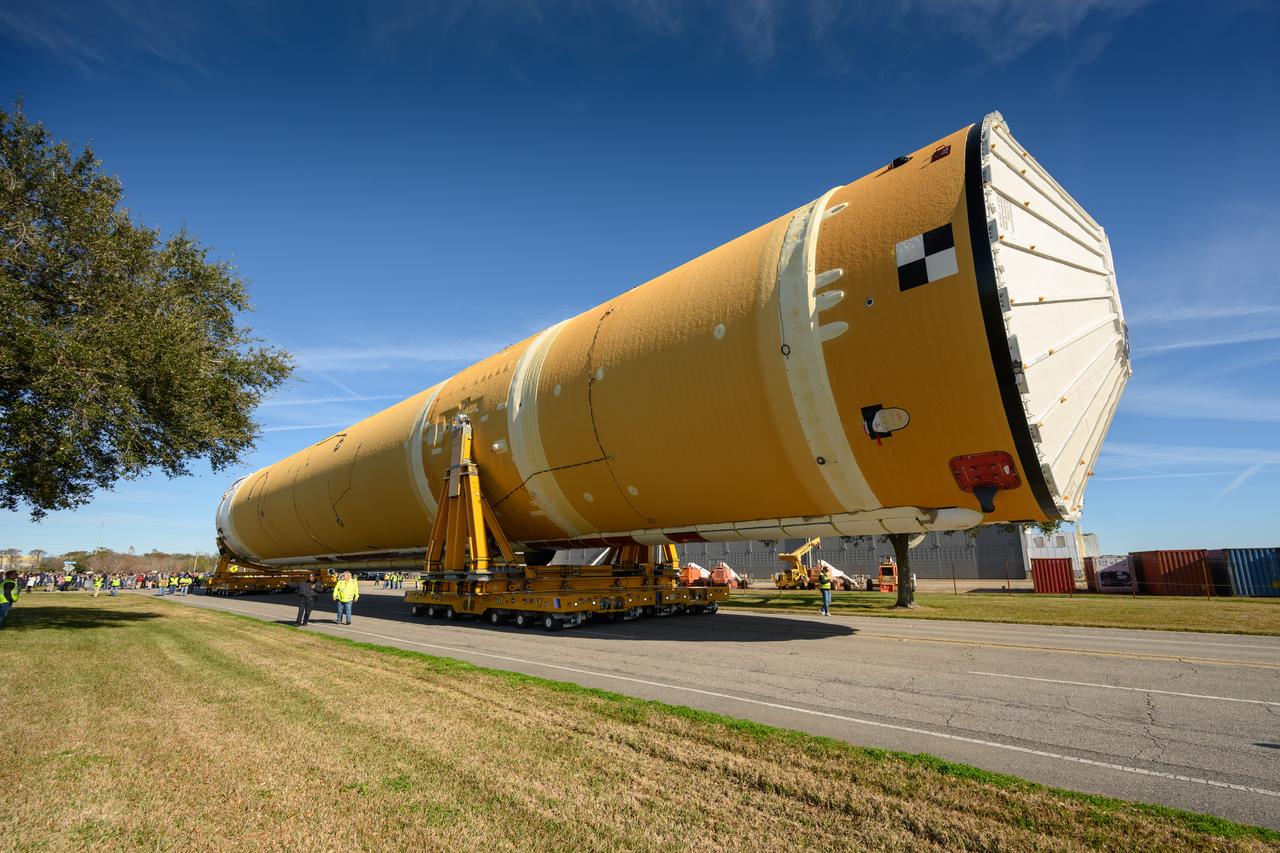
These images show the first core stage for NASA’s Space Launch System rocket inside NASA’s Pegasus barge on Jan. 8 ahead of its forthcoming journey to NASA’s Stennis Space Center near Bay St. Louis, Mississippi. Teams rolled out, or moved, the completed core stage from NASA’s Michoud Assembly Facility in New Orleans to the barge in preparation for the SLS rocket’s core stage Green Run test series at Stennis. Pegasus, which was modified to ferry SLS rocket hardware, will transport the core stage more than 40 miles from Michoud to Stennis for the comprehensive core stage Green Run test series. Green Run, named for its testing of new, or green, hardware progressively is the final test campaign ahead of the first Artemis launch. Assembly and integration of the core stage and its four RS-25 engines has been a collaborative, multistep process for NASA and its partners Boeing, the core stage lead contractor, and Aerojet Rocketdyne, the RS-25 engines lead contractor. Together with four RS-25 engines, the rocket’s massive 212-foot-tall core stage — the largest stage NASA has ever built — and its twin solid rocket boosters will produce 8.8 million pounds of thrust to send NASA’s Orion spacecraft, astronauts and supplies beyond Earth’s orbit to the Moon and, ultimately, Mars. Offering more payload mass, volume capability and energy to speed missions through space, the SLS rocket, along with NASA’s Gateway in lunar orbit and Orion, is part of NASA’s backbone for deep space exploration and the Artemis lunar program.
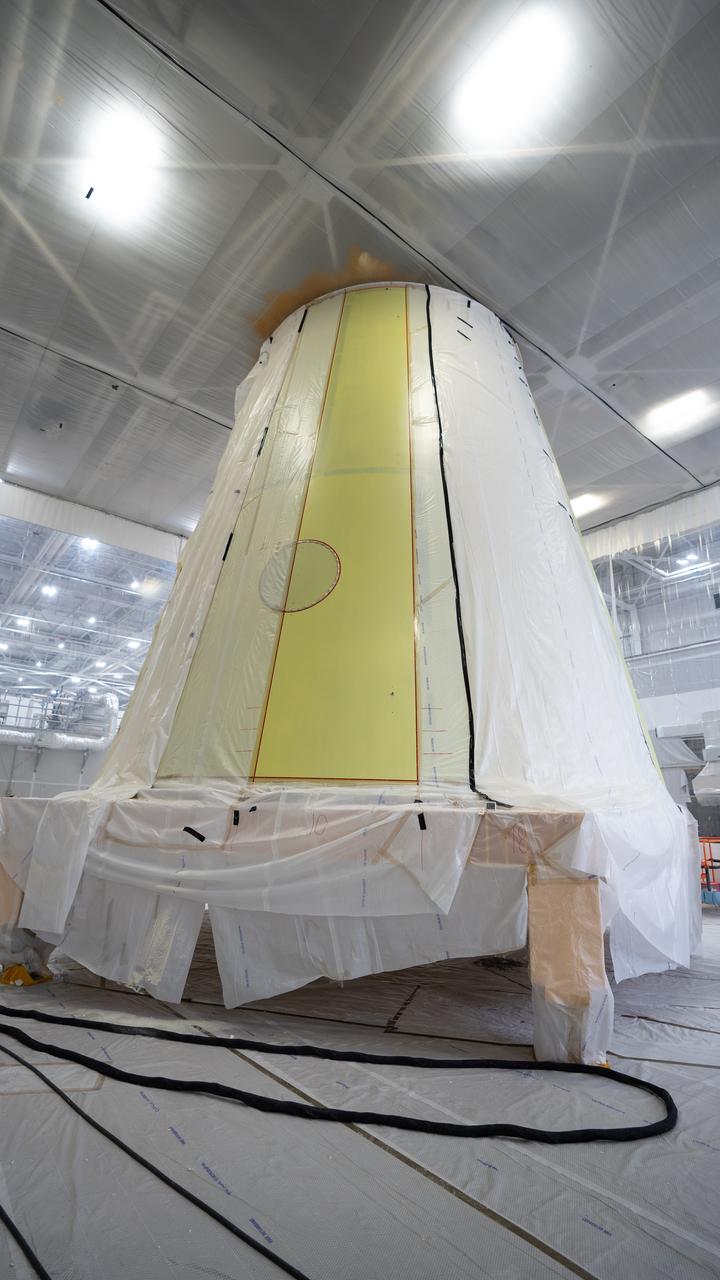
These photos show the launch vehicle stage adapter (LVSA) of NASA’s SLS (Space Launch System) rocket for Artemis III before technicians at NASA’s Marshall Space Flight Center in Huntsville, Alabama, applied the thermal protection system to it. Artemis III will land astronauts on the Moon to advance long-term lunar exploration and scientific discover and inspire the Artemis Generation. Teams at Marshall began applying the thermal protection system material in the spring of 2023. Unlike other parts of the SLS rocket, the thermal protection system material for the LVSA is applied entirely by hand using a spray gun. During application, the technicians use a thin measuring rod to gauge the proper thickness. Once the thermal protection system has cured, certain areas are sanded down to meet parameters. The entire process takes several months. The LVSA is fully manufactured at Marshall by NASA, lead contractor Teledyne Brown Engineering, and the Jacobs Space Group’s ESSCA contract. The LVSA for Artemis III is the last of its kind as future SLS rockets will transition to its next, more powerful Block 1B configuration beginning with Artemis IV. NASA is working to land the first woman and first person of color on the Moon under Artemis. SLS is part of NASA’s backbone for deep space exploration, along with the Orion spacecraft, advanced spacesuits and rovers, the Gateway in orbit around the Moon, and commercial human landing systems. SLS is the only rocket that can send Orion, astronauts, and supplies to the Moon in a single mission.
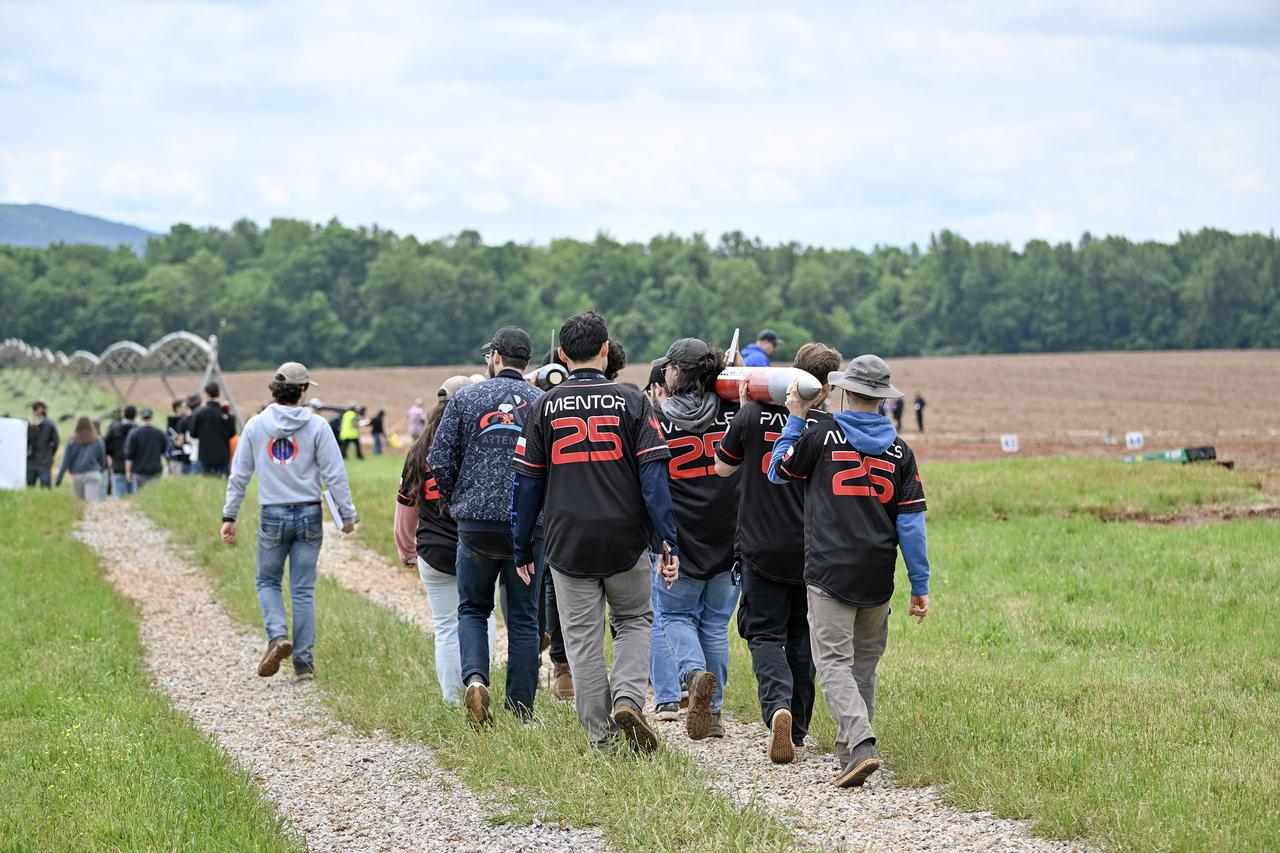
Over than 980 middle school, high school, and college students from across the nation launched more than 40 high-powered rockets just north of NASA’s Marshall Space Flight Center in Huntsville, Alabama. This year marked the 25th anniversary of the competition. To compete, students follow the NASA engineering design lifecycle by going through a series of reviews for nine months leading up to launch day. Each year, a payload challenge is issued to the university teams, and this year’s task took inspiration from the agency’s Artemis missions, where NASA will send astronauts to explore the Moon for scientific discovery, economic benefit, and to build the foundation for the first crewed missions to Mars. Teams were challenged to include “reports” from STEMnauts, non-living objects representing astronauts. The STEMnaut “crew” had to relay real-time data to the student team’s mission control, just as the Artemis astronaut crew will do as they explore the lunar surface. To learn more, visit: www.nasa.gov/studentlaunch.
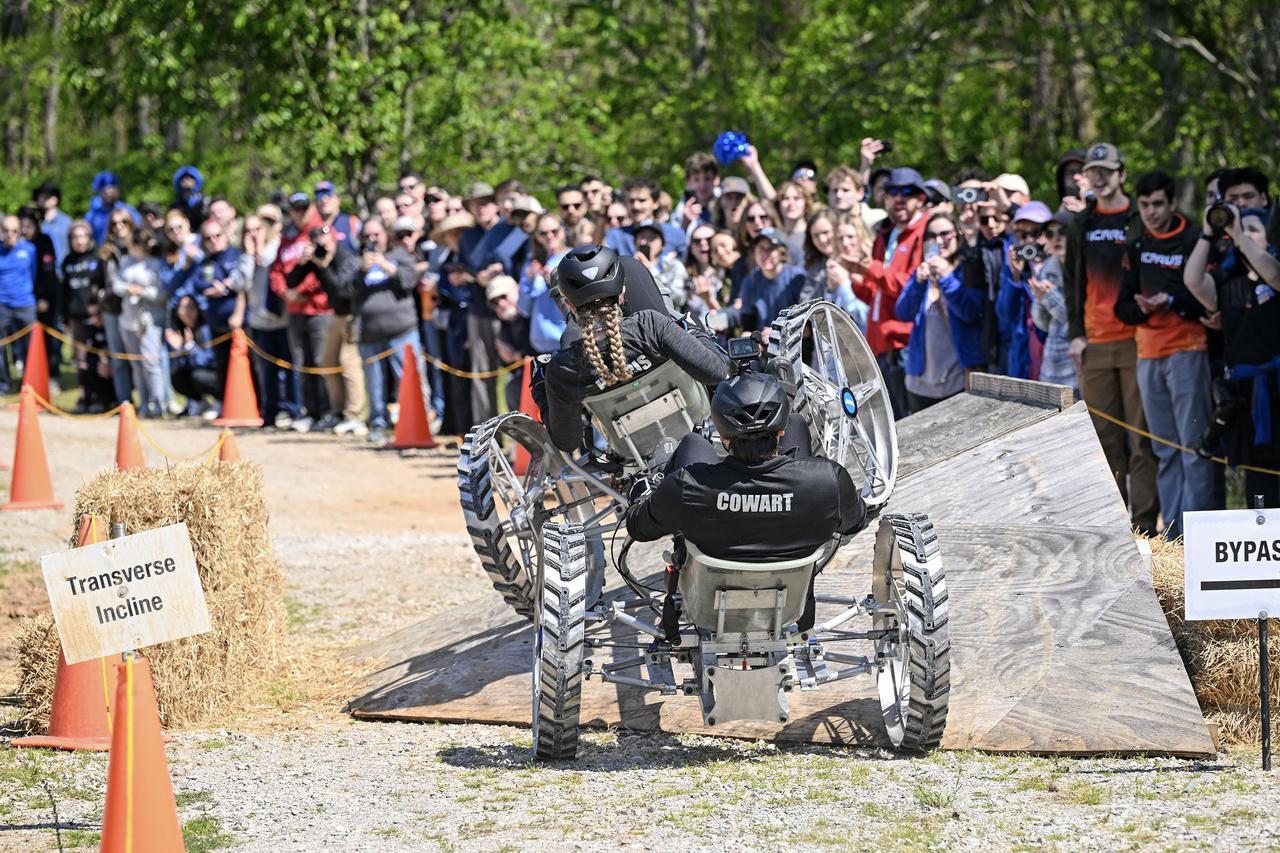
More than 500 students with 75 teams from around the world participated in the 31st year of NASA’s Human Exploration Rover Challenge (HERC) on April 11 and April 12, 2025, near NASA’s Marshall Space Flight Center in Huntsville, Alabama. Participating teams represented 35 colleges and universities, 38 high schools, and two middle schools from 20 states, Puerto Rico, and 16 other nations. NASA expanded the 2025 challenge to include a remote-control division - named Remote-Operated Vehicular Research - and invited middle school students to participate. Teams were awarded points based on navigating a half-mile obstacle course, conducting mission-specific task challenges, and completing multiple safety and design reviews with NASA engineers.
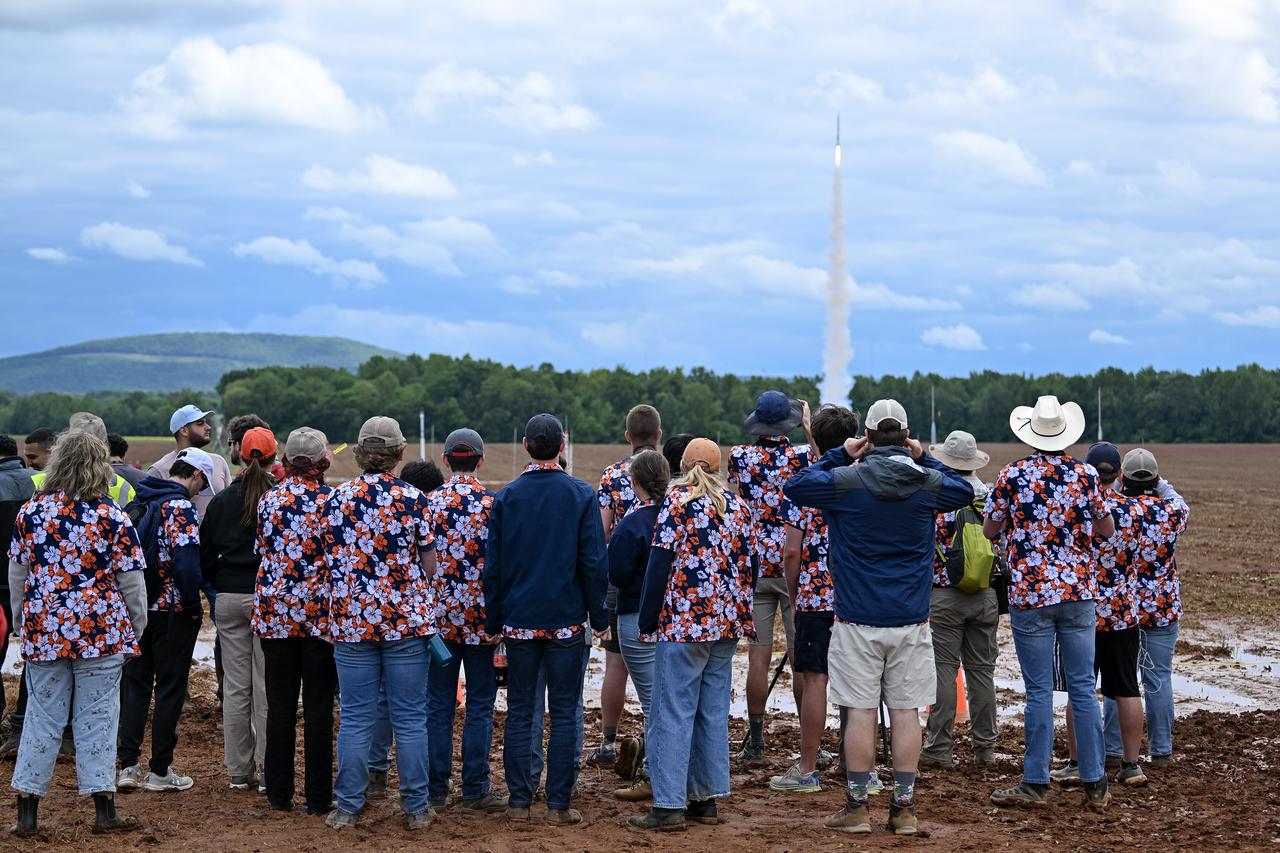
Over than 980 middle school, high school, and college students from across the nation launched more than 40 high-powered rockets just north of NASA’s Marshall Space Flight Center in Huntsville, Alabama. This year marked the 25th anniversary of the competition. To compete, students follow the NASA engineering design lifecycle by going through a series of reviews for nine months leading up to launch day. Each year, a payload challenge is issued to the university teams, and this year’s task took inspiration from the agency’s Artemis missions, where NASA will send astronauts to explore the Moon for scientific discovery, economic benefit, and to build the foundation for the first crewed missions to Mars. Teams were challenged to include “reports” from STEMnauts, non-living objects representing astronauts. The STEMnaut “crew” had to relay real-time data to the student team’s mission control, just as the Artemis astronaut crew will do as they explore the lunar surface. To learn more, visit: www.nasa.gov/studentlaunch.
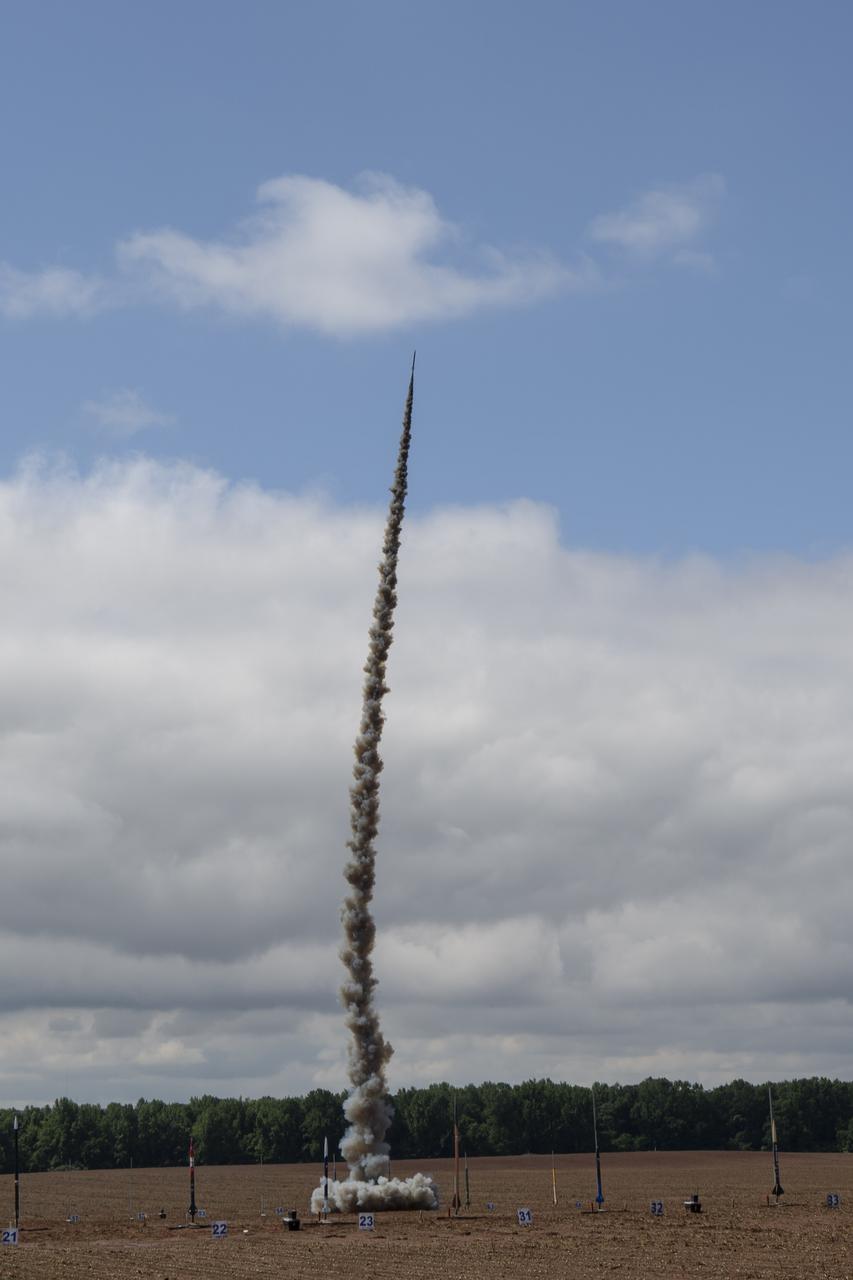
Over than 980 middle school, high school, and college students from across the nation launched more than 40 high-powered rockets just north of NASA’s Marshall Space Flight Center in Huntsville, Alabama. This year marked the 25th anniversary of the competition. To compete, students follow the NASA engineering design lifecycle by going through a series of reviews for nine months leading up to launch day. Each year, a payload challenge is issued to the university teams, and this year’s task took inspiration from the agency’s Artemis missions, where NASA will send astronauts to explore the Moon for scientific discovery, economic benefit, and to build the foundation for the first crewed missions to Mars. Teams were challenged to include “reports” from STEMnauts, non-living objects representing astronauts. The STEMnaut “crew” had to relay real-time data to the student team’s mission control, just as the Artemis astronaut crew will do as they explore the lunar surface. To learn more, visit: www.nasa.gov/studentlaunch.