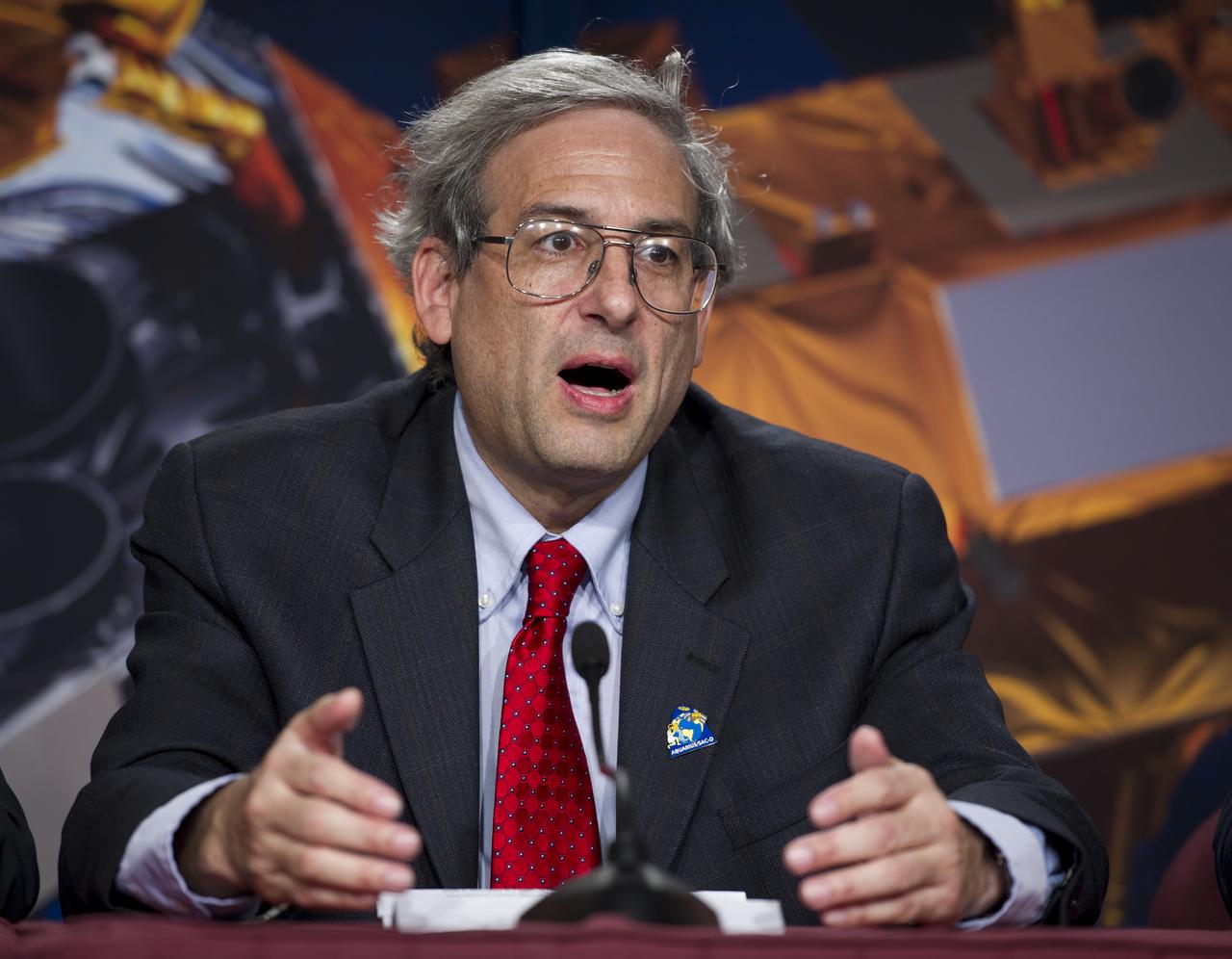
Michael Freilich, NASA Earth Science Division Director, NASA Headquarters, talks during the Aquarius/SAC-D post-launch press conference on Friday, June 10, 2011 at the NASA Resident Office, Vandenberg Air Force Base, Calif. The joint U.S./Argentinian Aquarius/Satélite de Aplicaciones Científicas (SAC)-D mission, launched earlier on Friday June 10, will map the salinity at the ocean surface, information critical to improving our understanding of two major components of Earth's climate system: the water cycle and ocean circulation. Photo Credit: (NASA/Bill Ingalls)
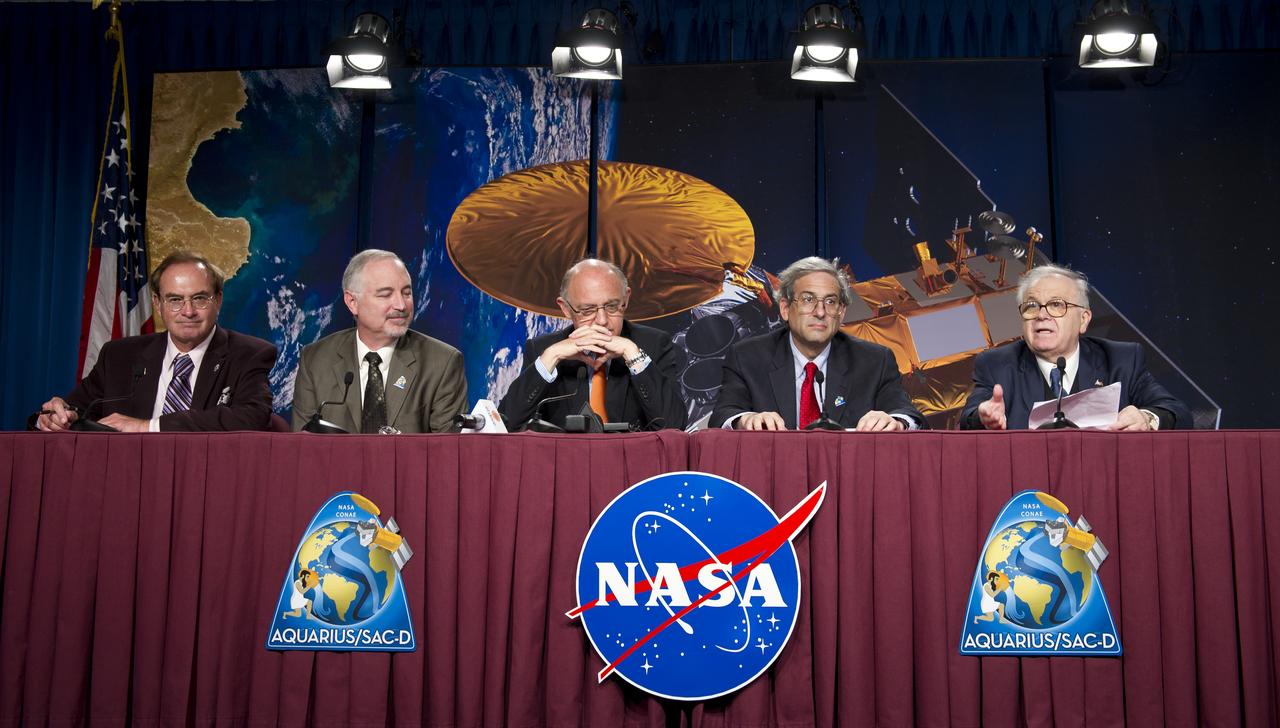
From left, George Diller, NASA Public Affairs Officer; Charles Gay, Deputy Associate Administrator, NASA Science Mission Directorate; Hector Timerman, Foreign Minister of Argentina, Buenos Aires; Michael Freilich, NASA Earth Science Division Director, NASA Headquarters; and Conrado Varotto, CONAE Executive and Technical Director, Buenos Aires, are seen at the Aquarius/SAC-D post-launch press conference on Friday, June 10, 2011 at the NASA Resident Office, Vandenberg Air Force Base, Calif. The joint U.S./Argentinian Aquarius/Satélite de Aplicaciones Científicas (SAC)-D mission, launched earlier on Friday June 10, will map the salinity at the ocean surface, information critical to improving our understanding of two major components of Earth's climate system: the water cycle and ocean circulation. Photo Credit: (NASA/Bill Ingalls)
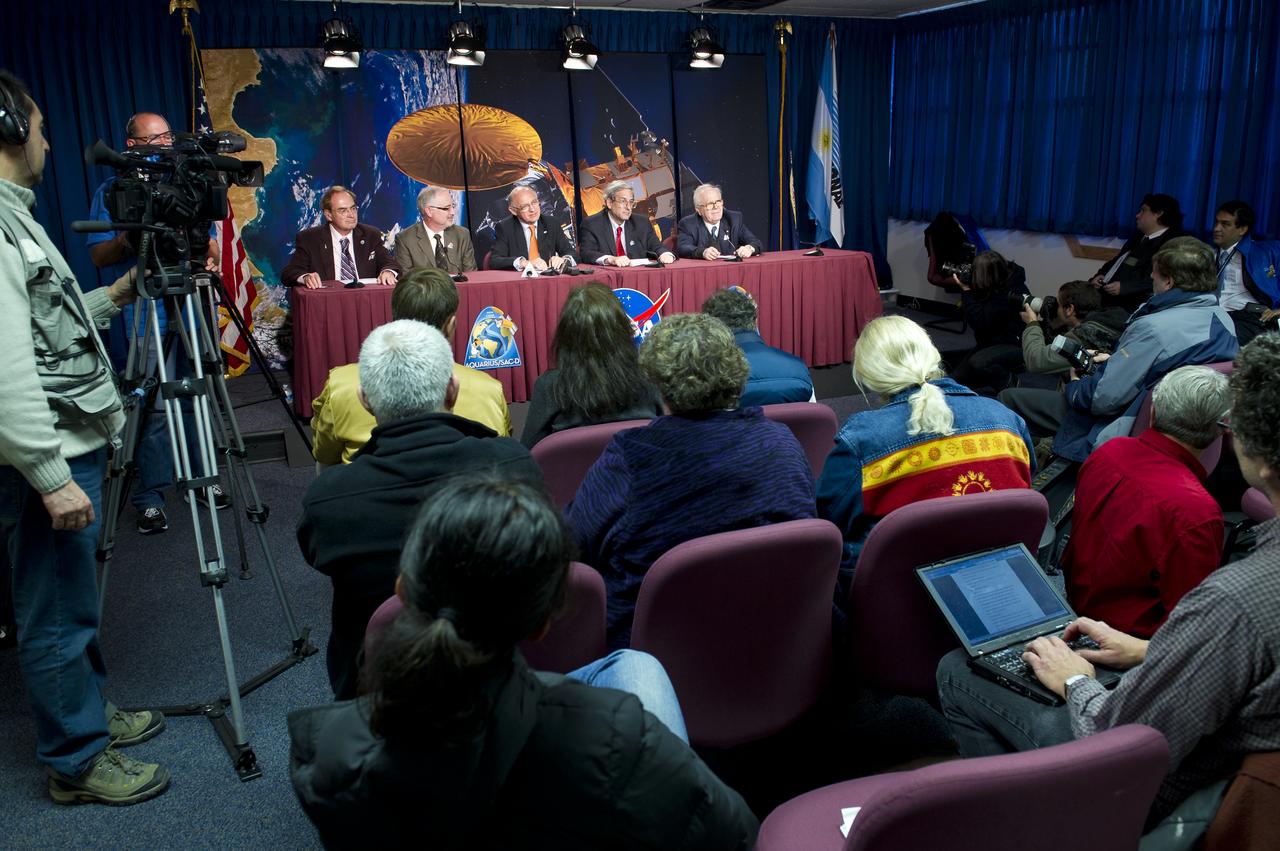
Seated from left, George Diller, NASA Public Affairs Officer; Charles Gay, Deputy Associate Administrator, NASA Science Mission Directorate; Hector Timerman, Foreign Minister of Argentina, Buenos Aires; Michael Freilich, NASA Earth Science Division Director, NASA Headquarters; and Conrado Varotto, CONAE Executive and Technical Director, Buenos Aires, are seen at the Aquarius/SAC-D post-launch press conference on Friday, June 10, 2011 at the NASA Resident Office, Vandenberg Air Force Base, Calif. The joint U.S./Argentinian Aquarius/Satélite de Aplicaciones Científicas (SAC)-D mission, launched earlier on Friday June 10, will map the salinity at the ocean surface, information critical to improving our understanding of two major components of Earth's climate system: the water cycle and ocean circulation. Photo Credit: (NASA/Bill Ingalls)
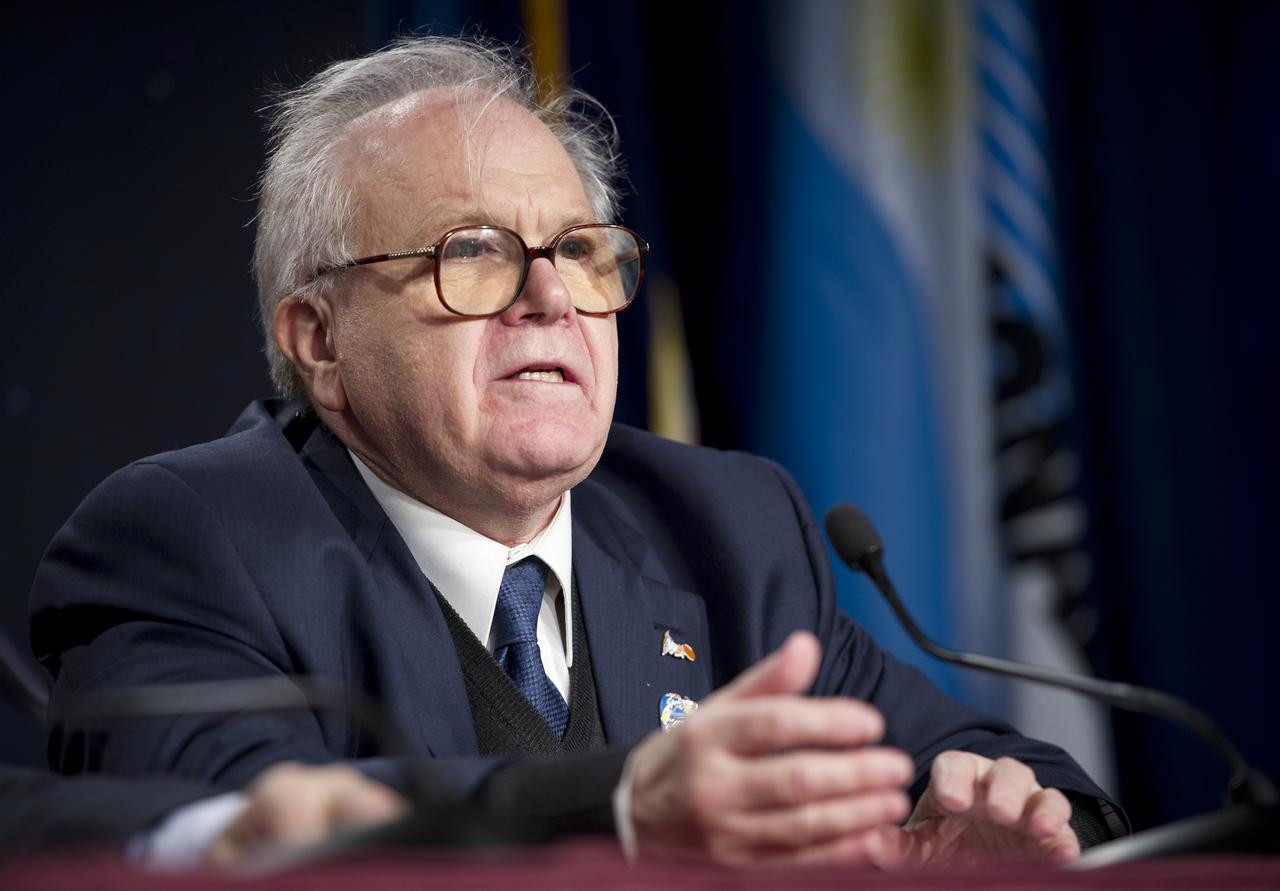
Conrado Varotto, CONAE Executive and Technical Director, Buenos Aires, talks during the Aquarius/SAC-D post-launch press conference on Friday, June 10, 2011 at the NASA Resident Office, Vandenberg Air Force Base, Calif. The joint U.S./Argentinian Aquarius/Satélite de Aplicaciones Científicas (SAC)-D mission, launched earlier on Friday June 10, will map the salinity at the ocean surface, information critical to improving our understanding of two major components of Earth's climate system: the water cycle and ocean circulation. Photo Credit: (NASA/Bill Ingalls)
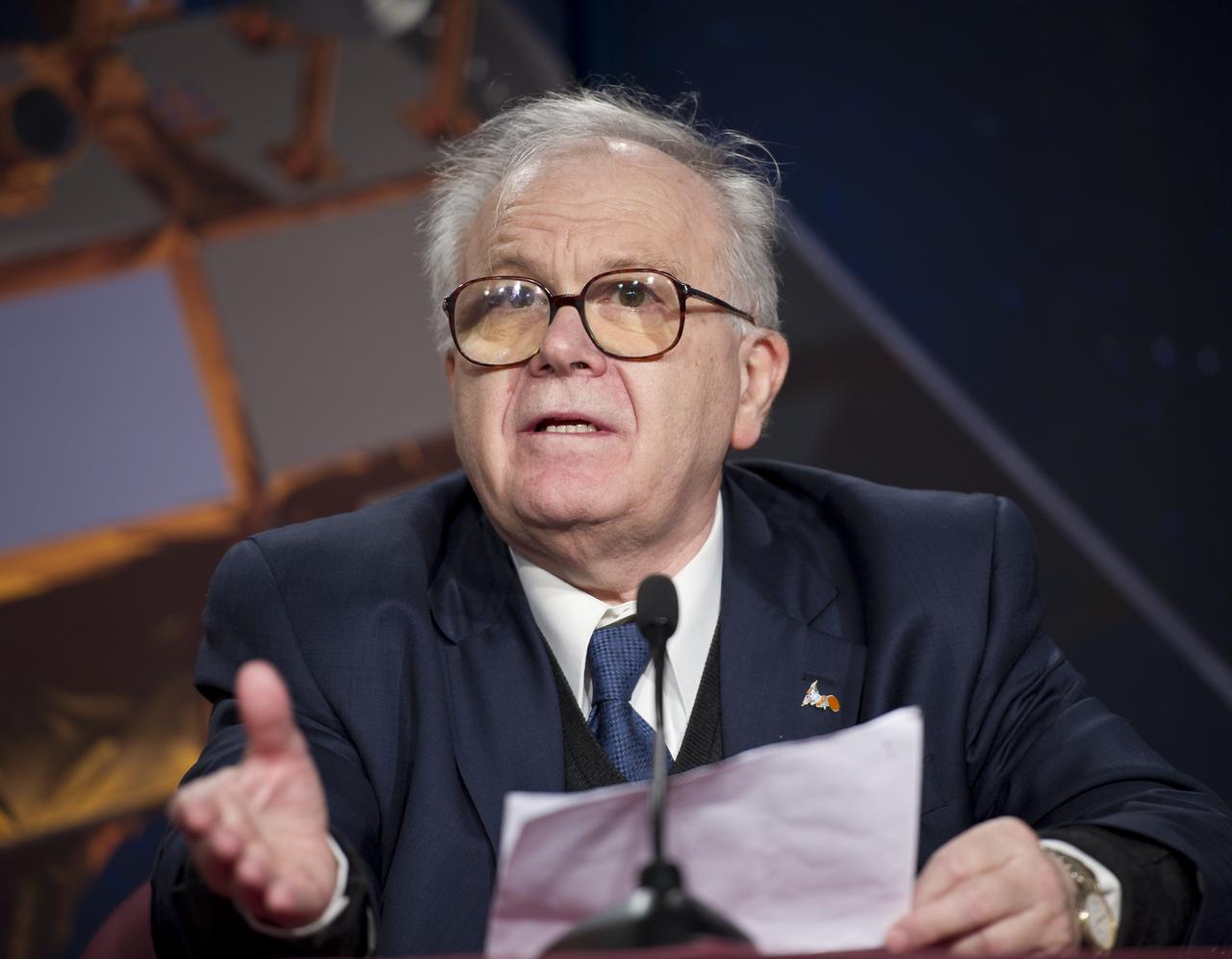
Conrado Varotto, CONAE Executive and Technical Director, Buenos Aires, talks during the Aquarius/SAC-D post-launch press conference on Friday, June 10, 2011 at the NASA Resident Office, Vandenberg Air Force Base, Calif. The joint U.S./Argentinian Aquarius/Satélite de Aplicaciones Científicas (SAC)-D mission, launched earlier on Friday June 10, will map the salinity at the ocean surface, information critical to improving our understanding of two major components of Earth's climate system: the water cycle and ocean circulation. Photo Credit: (NASA/Bill Ingalls)
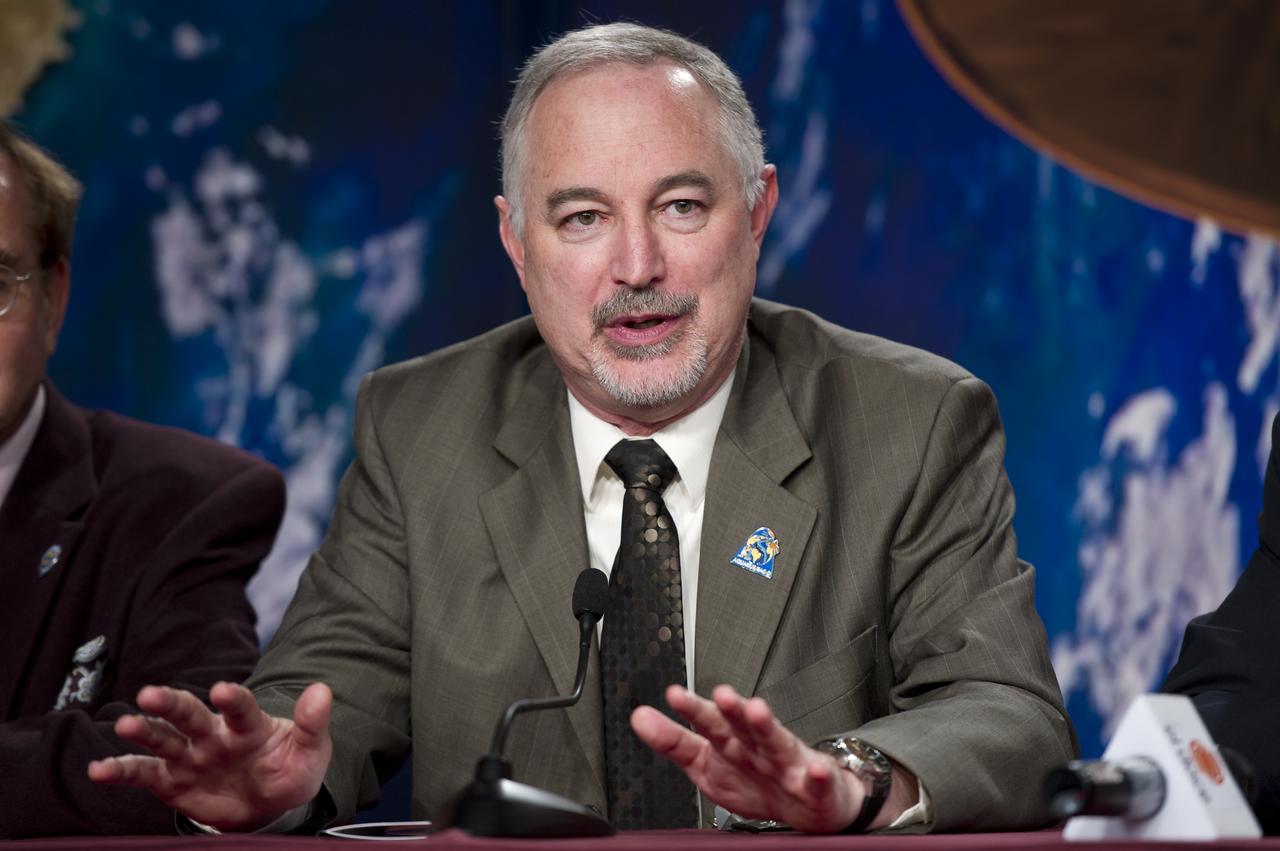
Charles Gay, Deputy Associate Administrator, NASA Science Mission Directorate, talks during the Aquarius/SAC-D post-launch press conference on Friday, June 10, 2011 at the NASA Resident Office, Vandenberg Air Force Base, Calif. The joint U.S./Argentinian Aquarius/Satélite de Aplicaciones Científicas (SAC)-D mission, launched earlier on Friday June 10, will map the salinity at the ocean surface, information critical to improving our understanding of two major components of Earth's climate system: the water cycle and ocean circulation. Photo Credit: (NASA/Bill Ingalls)
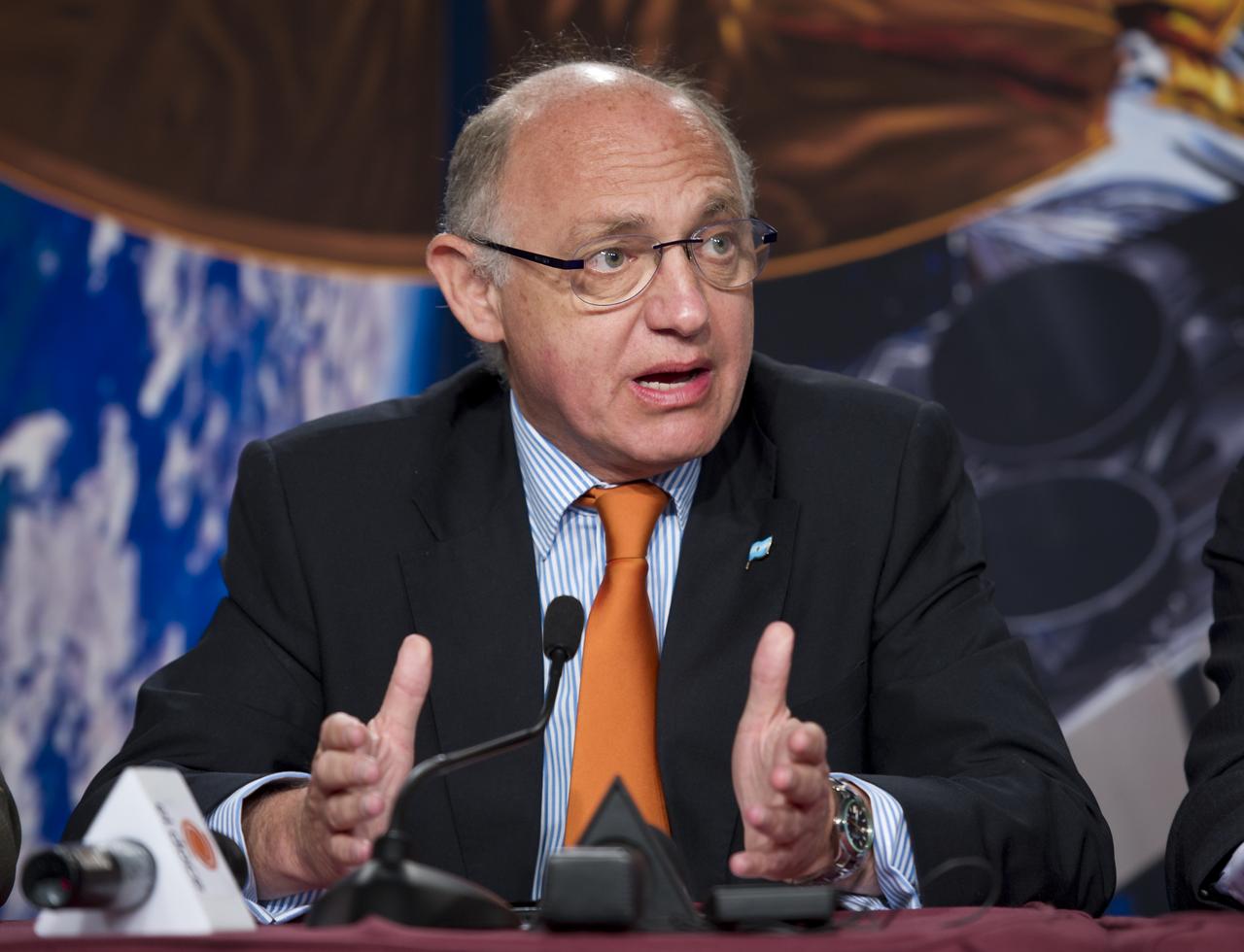
Hector Timerman, Foreign Minister of Argentina, Buenos Aires, talks during the Aquarius/SAC-D post-launch press conference on Friday, June 10, 2011 at the NASA Resident Office, Vandenberg Air Force Base, Calif. The joint U.S./Argentinian Aquarius/Satélite de Aplicaciones Científicas (SAC)-D mission, launched earlier on Friday June 10, will map the salinity at the ocean surface, information critical to improving our understanding of two major components of Earth's climate system: the water cycle and ocean circulation. Photo Credit: (NASA/Bill Ingalls)
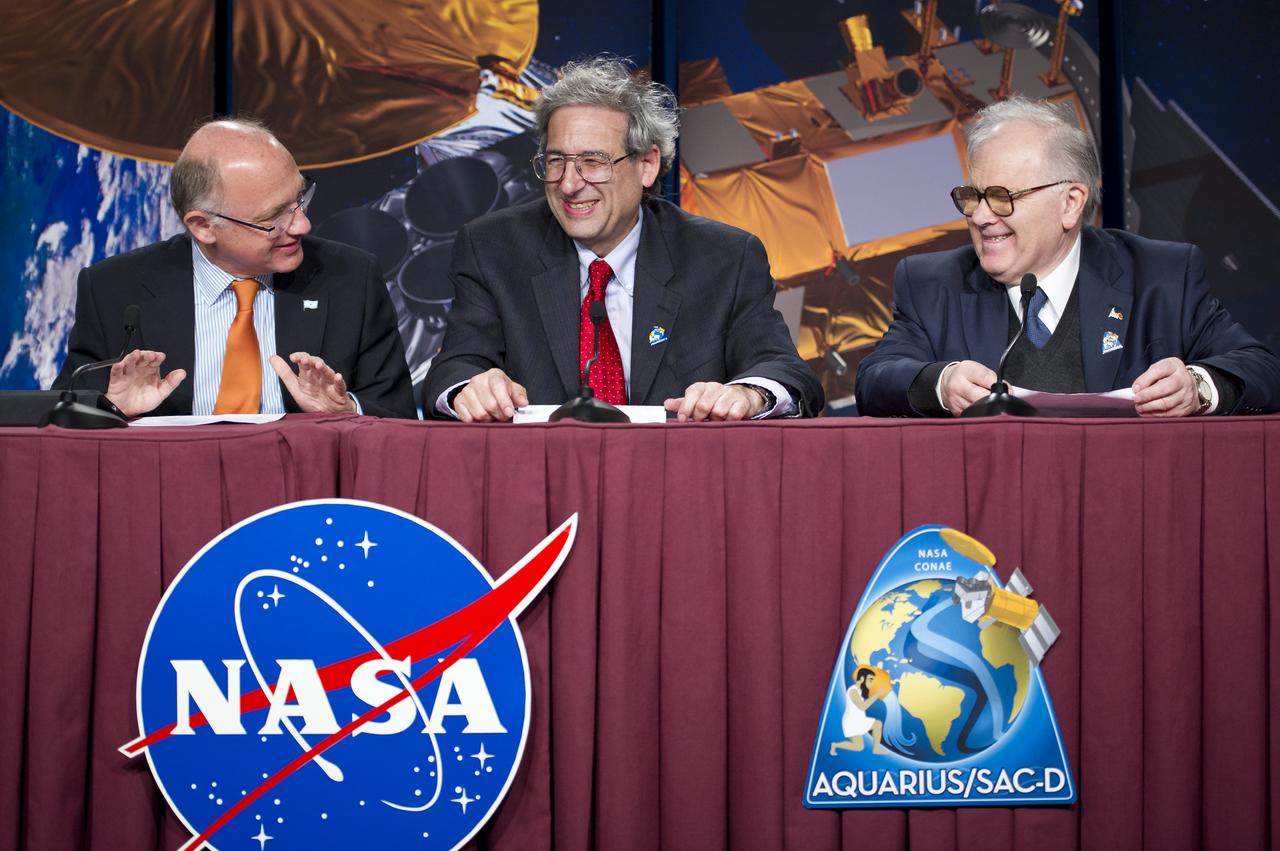
Hector Timerman, Foreign Minister of Argentina, Buenos Aires, left, Michael Freilich, NASA Earth Science Division Director, NASA Headquarters, Washington, center, and Conrado Varotto, CONAE Executive and Technical Director, Buenos Aires, laugh at the start of the Aquarius/SAC-D post-launch press conference on Friday, June 10, 2011 at the NASA Resident Office, Vandenberg Air Force Base, Calif. The joint U.S./Argentinian Aquarius/Satélite de Aplicaciones Científicas (SAC)-D mission, launched earlier on Friday June 10, will map the salinity at the ocean surface, information critical to improving our understanding of two major components of Earth's climate system: the water cycle and ocean circulation. Photo Credit: (NASA/Bill Ingalls)
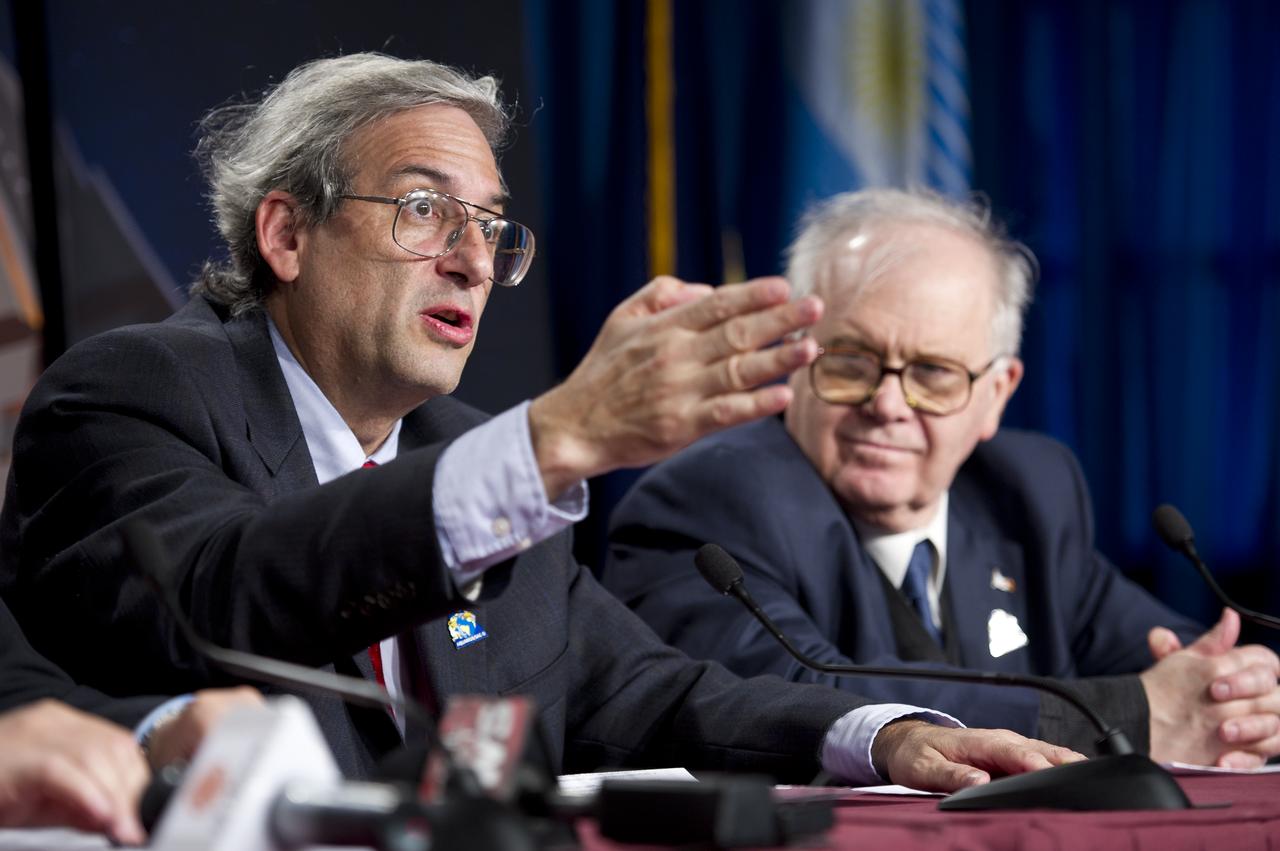
Michael Freilich, NASA Earth Science Division Director, NASA Headquarters, talks during the Aquarius/SAC-D post-launch press conference on Friday, June 10, 2011 at the NASA Resident Office, Vandenberg Air Force Base, Calif. The joint U.S./Argentinian Aquarius/Satélite de Aplicaciones Científicas (SAC)-D mission, launched earlier on Friday June 10, will map the salinity at the ocean surface, information critical to improving our understanding of two major components of Earth's climate system: the water cycle and ocean circulation. Photo Credit: (NASA/Bill Ingalls)

Conrado Varotto, CONAE Executive and Technical Director, Buenos Aires, looks on as other panelest speak during the Aquarius/SAC-D post-launch press conference on Friday, June 10, 2011 at the NASA Resident Office, Vandenberg Air Force Base, Calif. The joint U.S./Argentinian Aquarius/Satélite de Aplicaciones Científicas (SAC)-D mission, launched earlier on Friday June 10, will map the salinity at the ocean surface, information critical to improving our understanding of two major components of Earth's climate system: the water cycle and ocean circulation. Photo Credit: (NASA/Bill Ingalls)