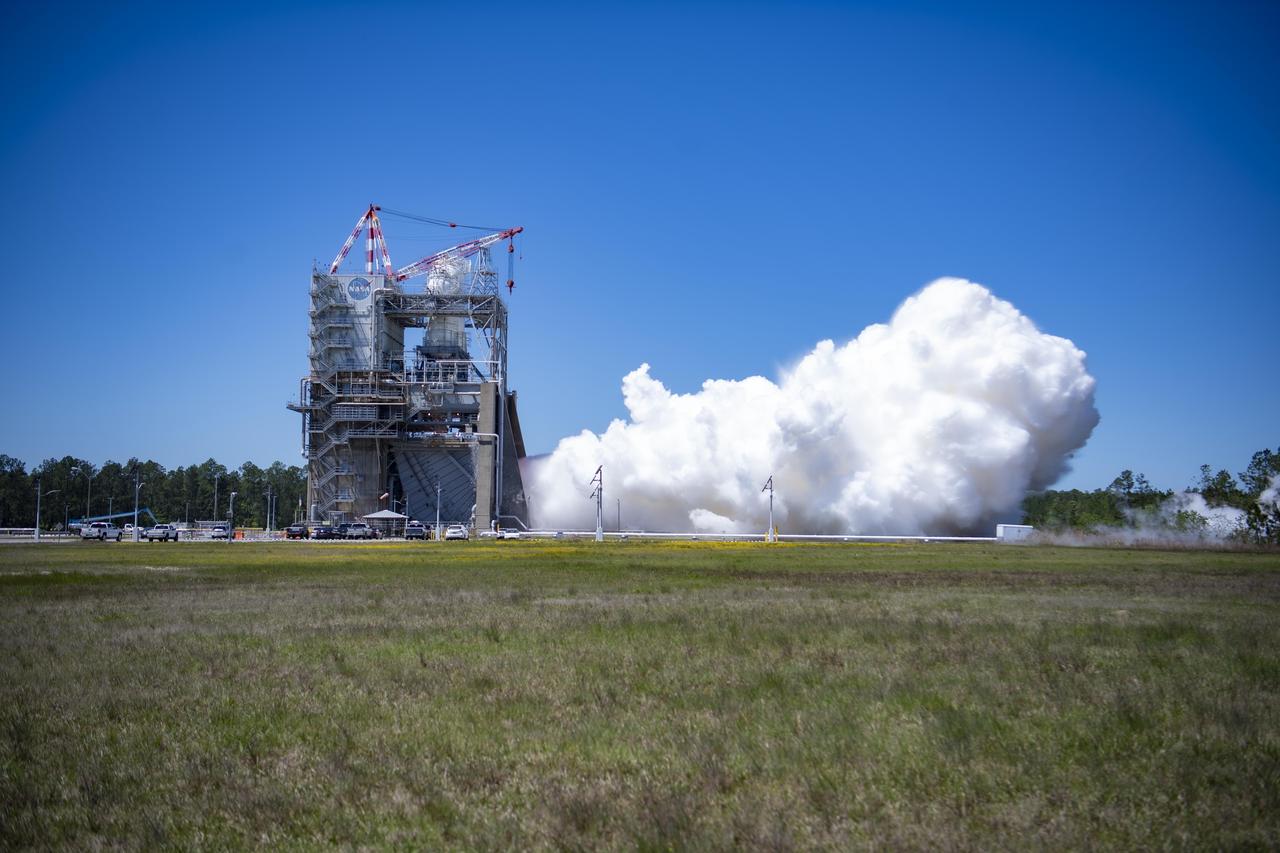
NASA conducted a full-duration RS-25 hot fire April 3 on the Fred Haise Test Stand at NASA’s Stennis Space Center near Bay St. Louis, Mississippi, achieving a major milestone for future Artemis flights of NASA’s SLS (Space Launch System) rocket. It marked the final test of a 12-test series to certify production of new RS-25 engines by lead contractor Aerojet Rocketdyne, an L3Harris Technologies company, to help power NASA’s SLS rocket on Artemis missions to the Moon and beyond, beginning with Artemis V.
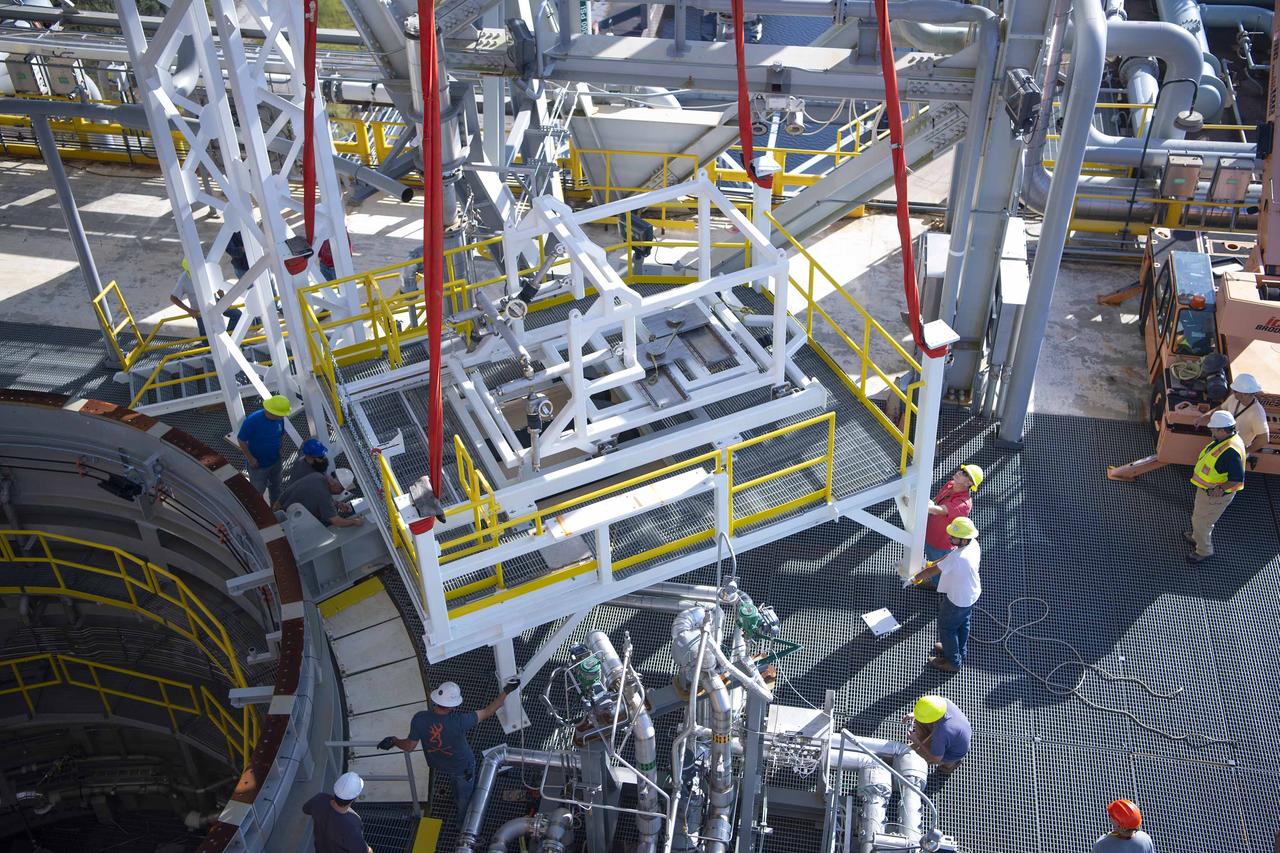
A pair of umbilical support structures needed for future testing of NASA’s exploration upper stage (EUS) were installed in the B-2 position of the Thad Cochran Test Stand on Oct. 30-31 at NASA’s Stennis Space Center. The support structures arrived from NASA’s Michoud Assembly Facility in New Orleans via the unique NASA Stennis seven-and-a-half-mile canal system in 2023. Since then, crews have prepared the structures that will align with the EUS unit for installation. In addition to helping secure the unit in place during hot fire testing, the umbilical support structures are where the command, control, and data electrical connections are mated to connect the ground systems to the vehicle systems, as well as most the commodity connections such as liquid hydrogen, liquid oxygen, hydrogen vent, helium bottle fill pressure, and purges. Prior to its initial flight, the EUS unit will undergo a series of so-called Green Run tests at NASA Stennis to ensure all systems are ready to go. The test series will culminate with a hot fire of the stage’s four RL10 engines, made by Aerojet Rocketdyne, an L3Harris Technologies company and lead SLS engines contractor. The new upper stage will enable NASA to carry larger payloads on Artemis missions to the Moon and beyond.
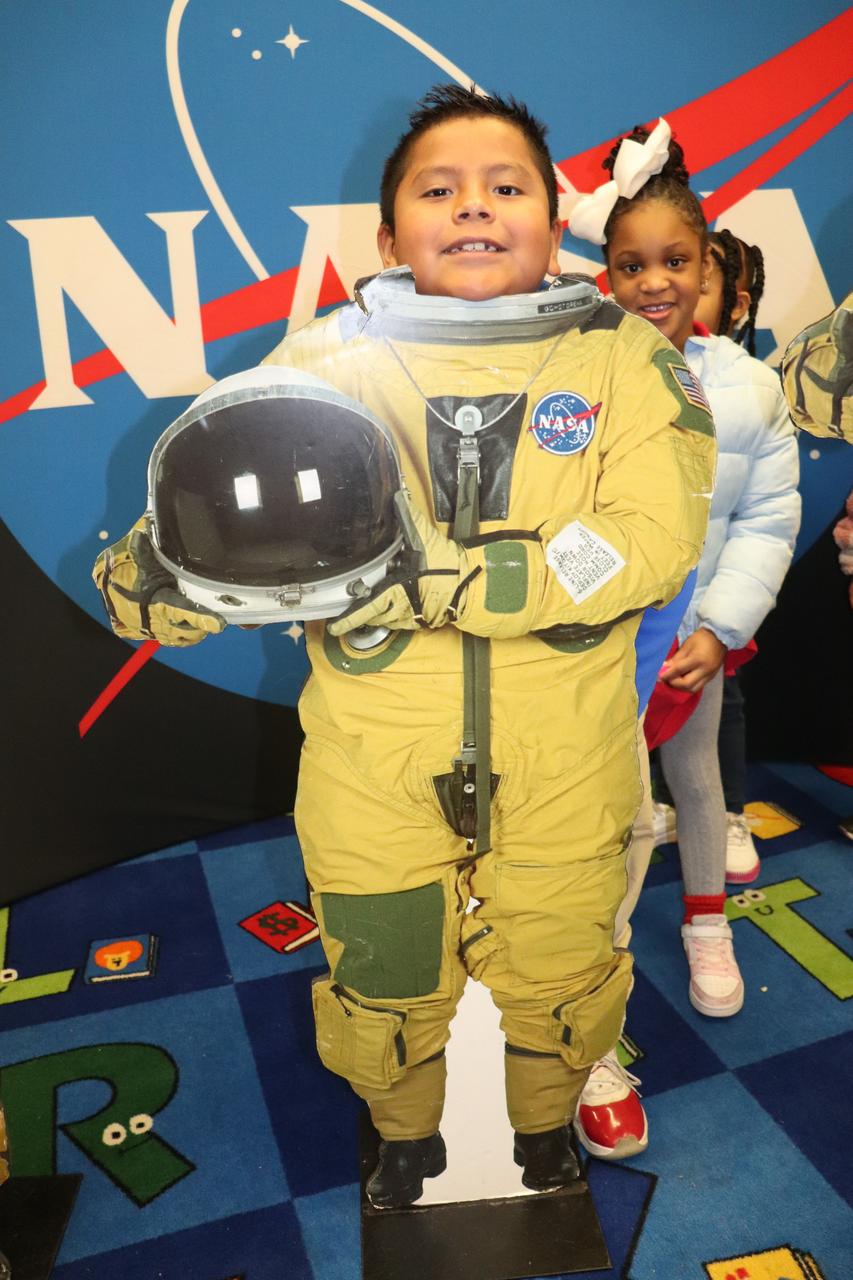
Representatives from NASA’s Stennis Space Center and NASA Shared Services Center participate in multiple related outreach events throughout Jackson, Mississippi, as part of the annual Stennis Day at the Capitol activities on Feb. 29. NASA personnel inspired the Artemis Generation with visits to Spann Elementary and Blackburn Middle schools. Activities included students learning about life as a NASA astronaut and a hands-on STEM (science, technology, engineering, and mathematics) activity. Sending the first woman and first person of color to the Moon on future Artemis missions will inspire the Artemis Generation to see themselves in space and understand the importance of STEM studies and careers. As NASA takes giant leaps to bridge disparities and break barriers in STEM, the agency’s efforts in the future workforce advances the nation’s space exploration.
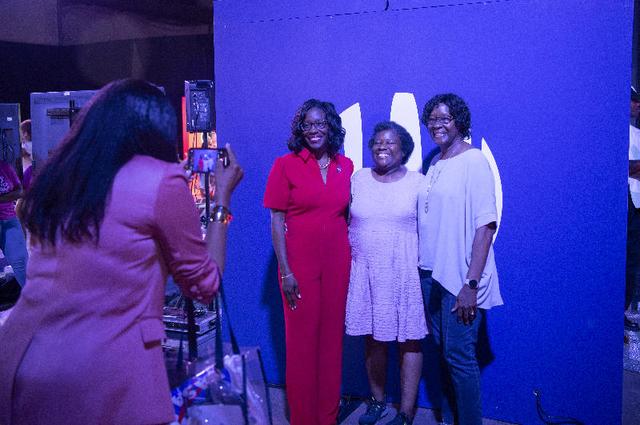
NASA Assistant Deputy Associate Administrator for the Moon to Mars Program Office Lakiesha Hawkins, left, takes a picture with attendees of the 30th annual ESSENCE Fest in New Orleans on July 5.
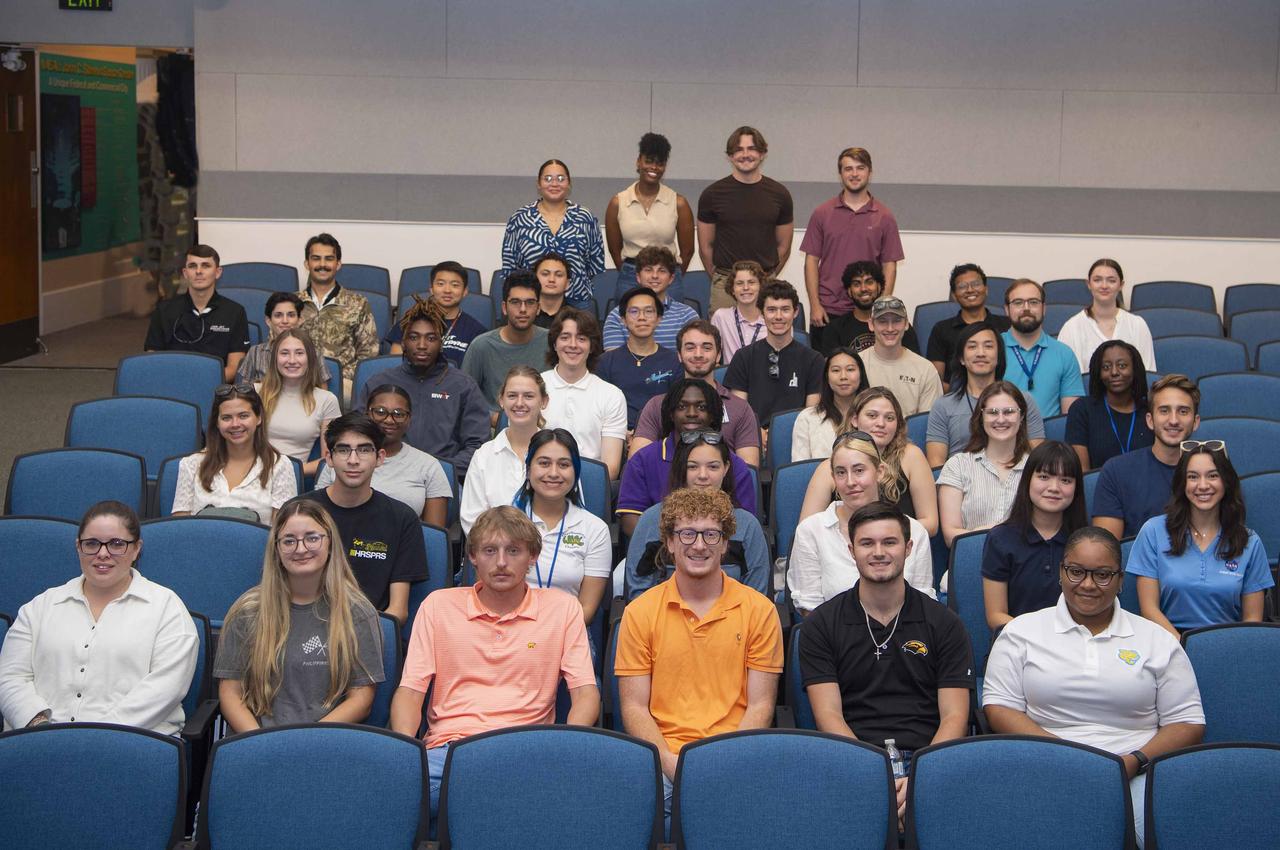
Interns representing NASA and companies across the NASA Stennis federal city participate in National Intern Day activities at NASA Stennis on July 25. NASA has over 100 programs and opportunities to attract, engage, and educate students across the nation.
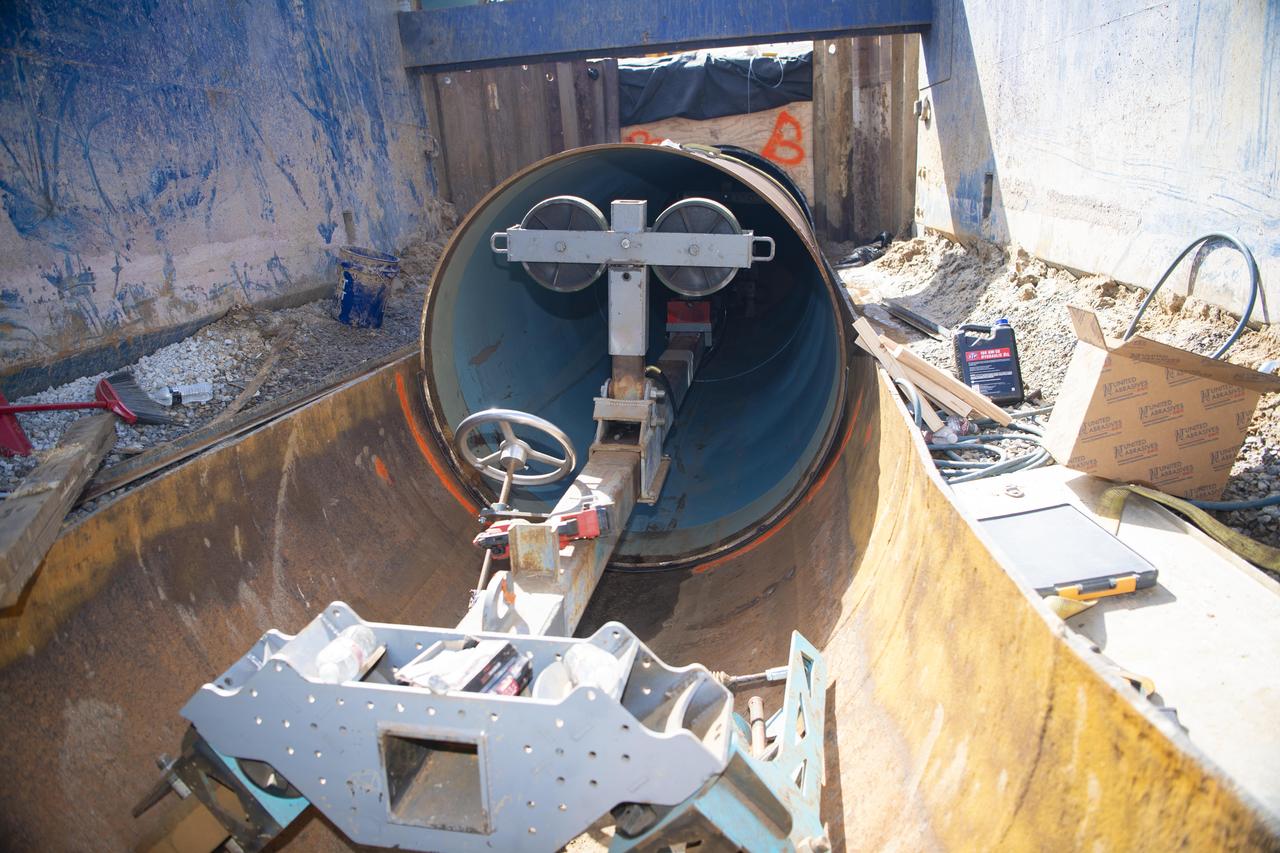
Crews use a special tool to place a new pipeline liner section inside the existing carrier pipe near the Fred Haise Test Stand on May 1 in the last phase of updating the original test complex industrial water system at NASA’s Stennis Space Center.
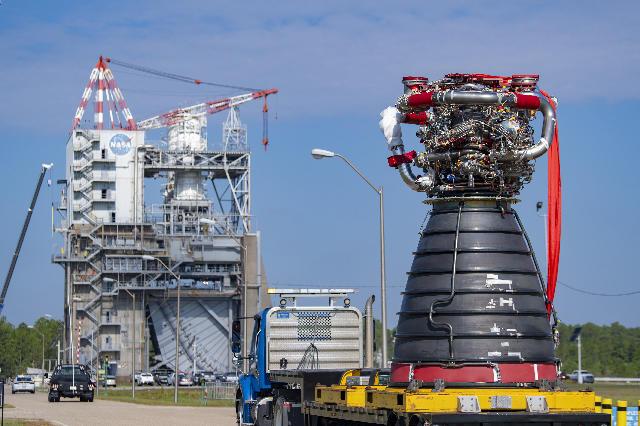
Crews bring RS-25 developmental engine E0525 to the Fred Haise Test Stand at NASA’s Stennis Space Center on Aug. 30 for the second and final certification test series.
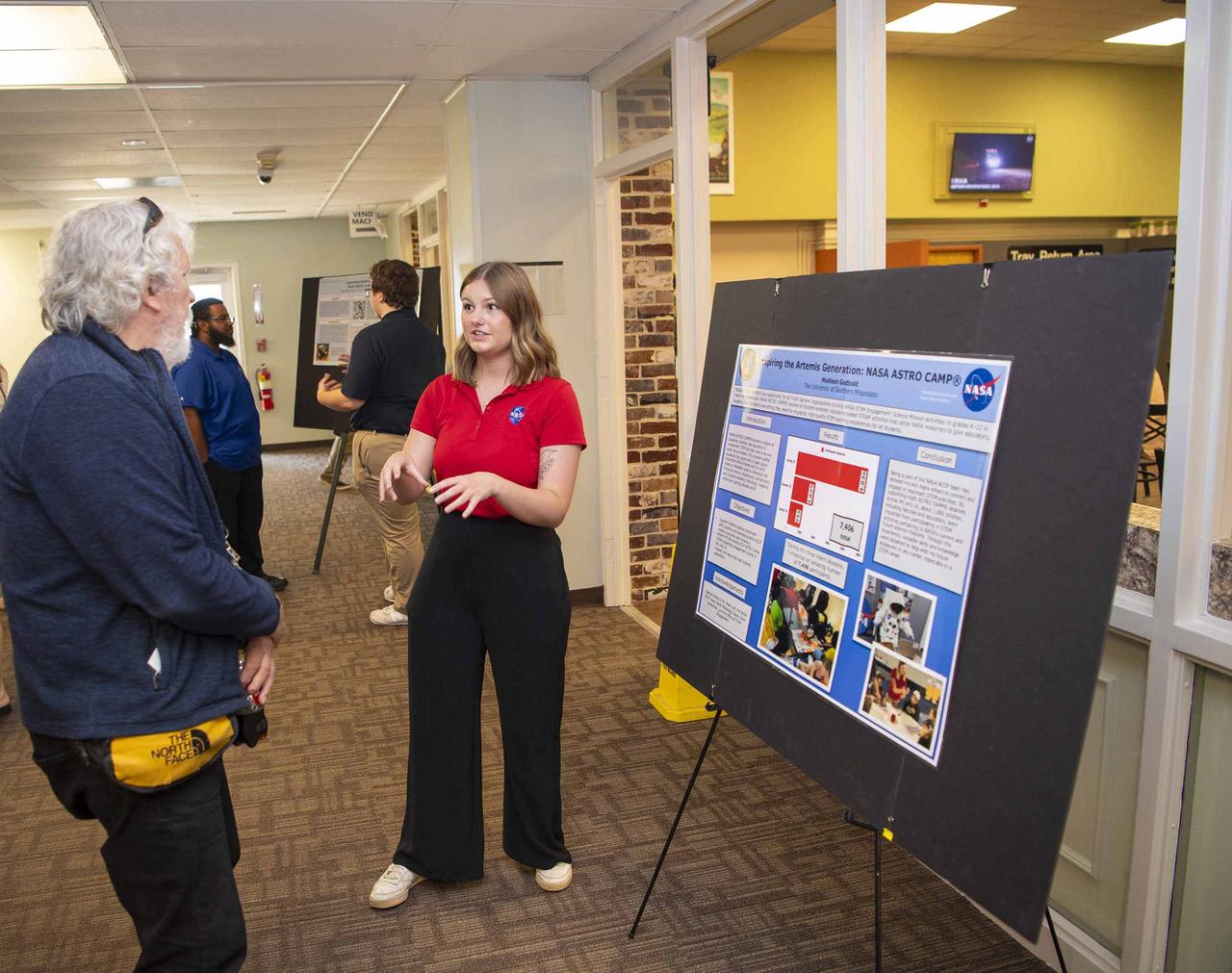
NASA Stennis summer intern Madison Godbold, right, shares about her work of inspiring the Artemis Generation through ASTRO Camp activities during an Aug. 7 event hosted by the Office of STEM Engagement. Godbold, a student at The University of Southern Mississippi in Hattiesburg, worked with the NASA Stennis Office of STEM Engagement. The poster symposium highlighted research topics, including propulsion test operations, lunar robotics, autonomous systems, STEM education, and more. NASA’s Office of STEM Engagement paid internships allow high school and college-level students to contribute to the agency’s mission to advance science, technology, aeronautics, and space exploration.
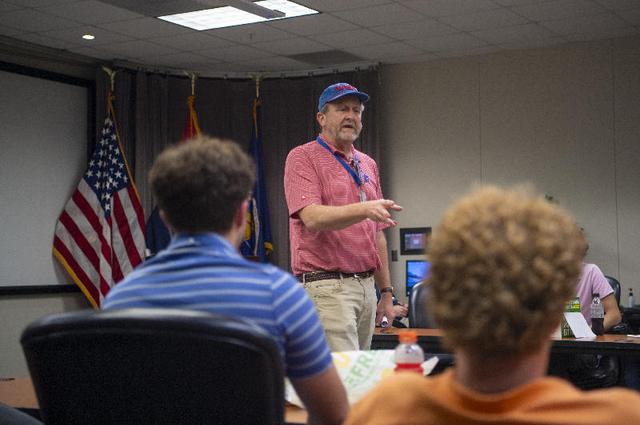
NASA Stennis Associate Director Rodney McKellip speaks with interns from across the NASA Stennis federal city on July 25 as part of National Intern Day at the center.
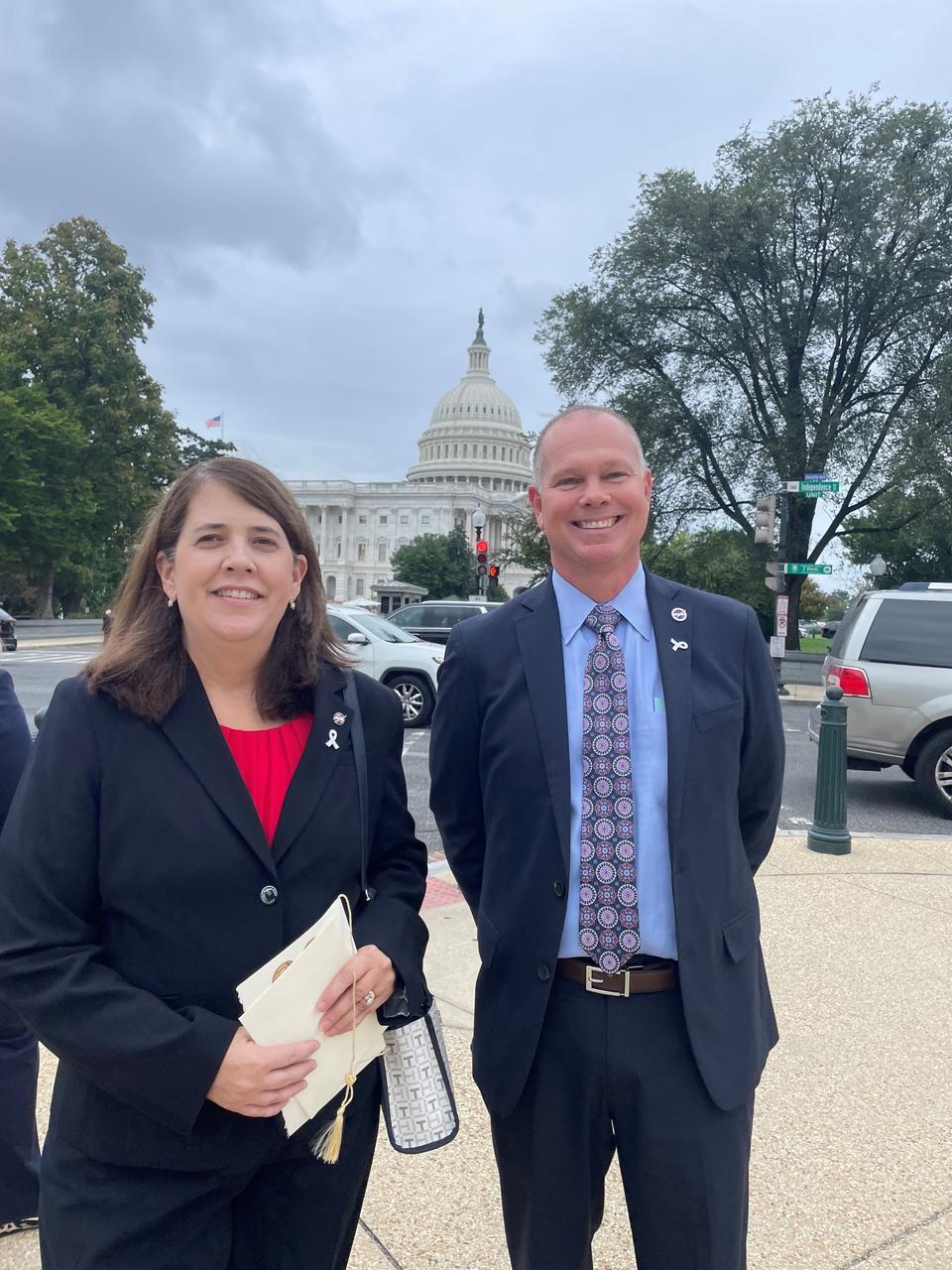
NASA Stennis Deputy Director Christine Powell, left, and NASA Stennis Director John Bailey stand near the United States Capitol during a visit to Washington, D.C. on Sept. 18. It marked the first visit to Capitol Hill for the leaders from NASA’s Stennis Space Center near Bay St. Louis, Mississippi, since being named to their current roles. Following conversations with Mississippi and Louisiana congressional representatives and staffers, Bailey and Powell attended the Hidden Figures Congressional Gold Medal ceremony. The awards recognized the women who contributed to the U.S. space race, including the NASA mathematicians who helped land the first astronauts on the Moon under the agency’s Apollo Program. NASA Stennis, established in the 1960s, tested first and second stages of the Saturn V rocket for Apollo missions to the Moon. The south Mississippi NASA center continues supporting the NASA mission by testing engines and stages to help power the agency’s Artemis campaign to return astronauts to the Moon and beyond.
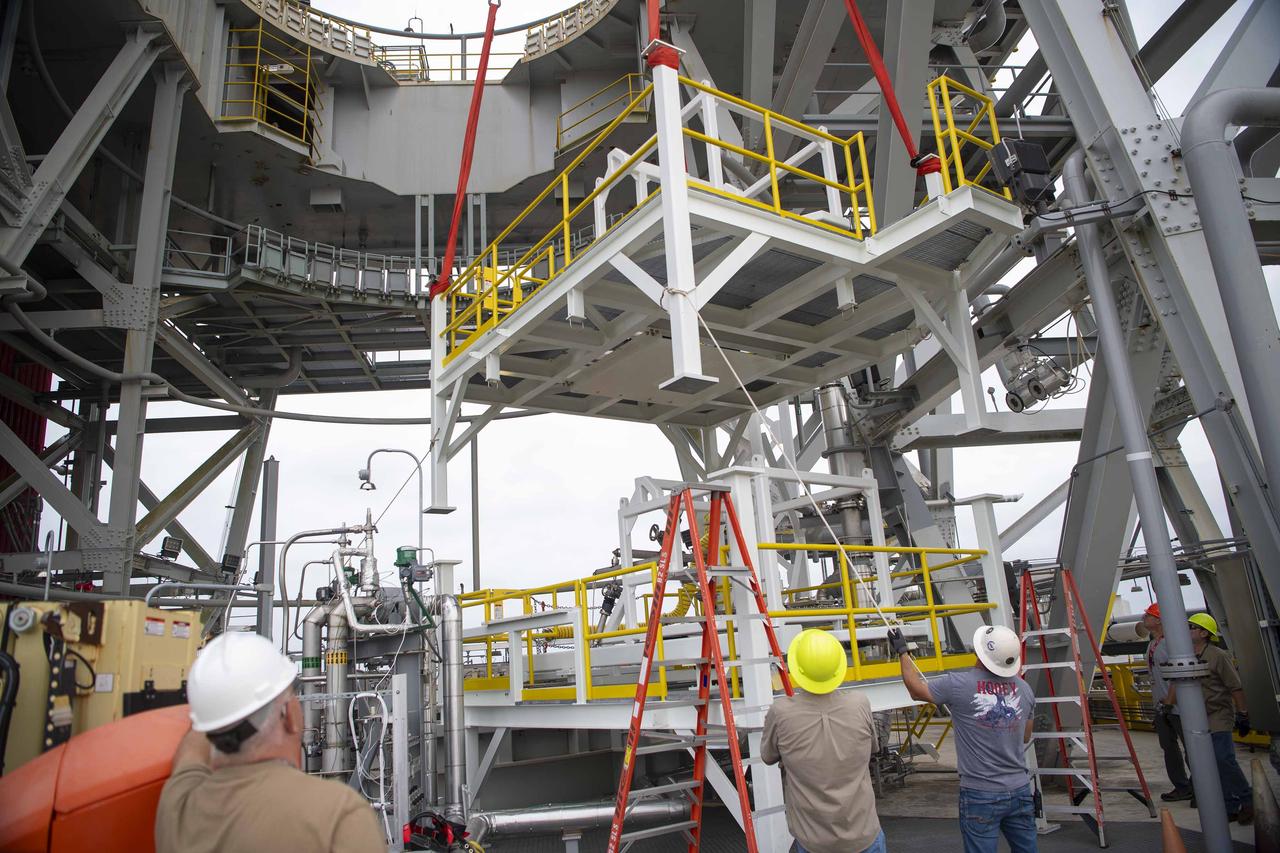
A pair of umbilical support structures needed for future testing of NASA’s exploration upper stage (EUS) were installed in the B-2 position of the Thad Cochran Test Stand on Oct. 30-31 at NASA’s Stennis Space Center. The support structures arrived from NASA’s Michoud Assembly Facility in New Orleans via the unique NASA Stennis seven-and-a-half-mile canal system in 2023. Since then, crews have prepared the structures that will align with the EUS unit for installation. In addition to helping secure the unit in place during hot fire testing, the umbilical support structures are where the command, control, and data electrical connections are mated to connect the ground systems to the vehicle systems, as well as most the commodity connections such as liquid hydrogen, liquid oxygen, hydrogen vent, helium bottle fill pressure, and purges. Prior to its initial flight, the EUS unit will undergo a series of so-called Green Run tests at NASA Stennis to ensure all systems are ready to go. The test series will culminate with a hot fire of the stage’s four RL10 engines, made by Aerojet Rocketdyne, an L3Harris Technologies company and lead SLS engines contractor. The new upper stage will enable NASA to carry larger payloads on Artemis missions to the Moon and beyond.
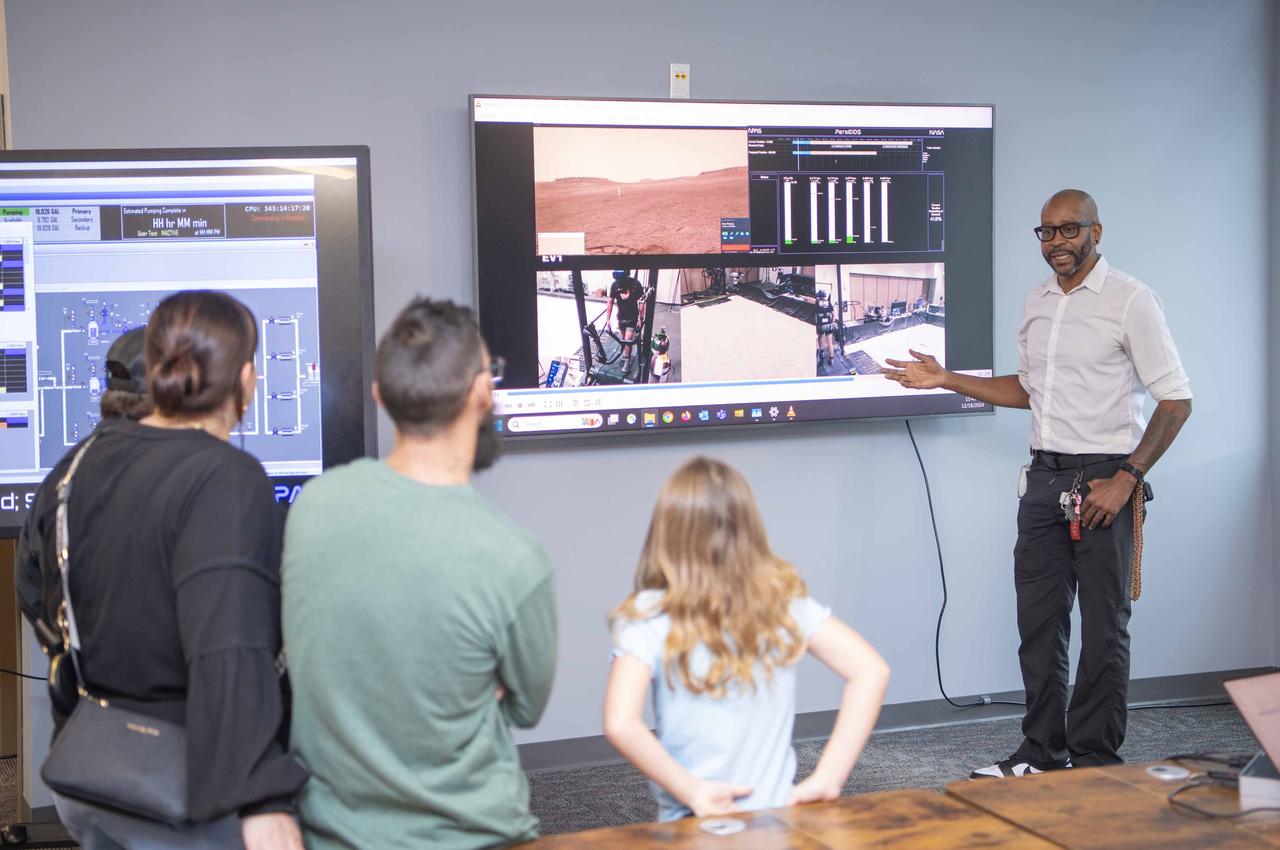
Cookbook author and culinary content creator Caroline Davis, popularly known as Mississippi Kween, and her family enjoy touring facilities and learning about NASA Stennis and its frontline work during a site visit Dec. 18. Davis, husband Joe, and children Zeke and Zoey, met with NASA Stennis leadership before touring the L3Harris (formerly Aerojet Rocketdyne) Engine Assembly Facility, Thad Cochran Test Stand, Autonomous Systems Laboratory, and the NASA Stennis rocket engine garden. The tour highlighted the NASA Stennis story and how the south Mississippi NASA center has the ingredients for a recipe that accelerates the exploration and commercialization of space, innovates to benefit NASA and industry, and leverages assets to stimulate the economy.
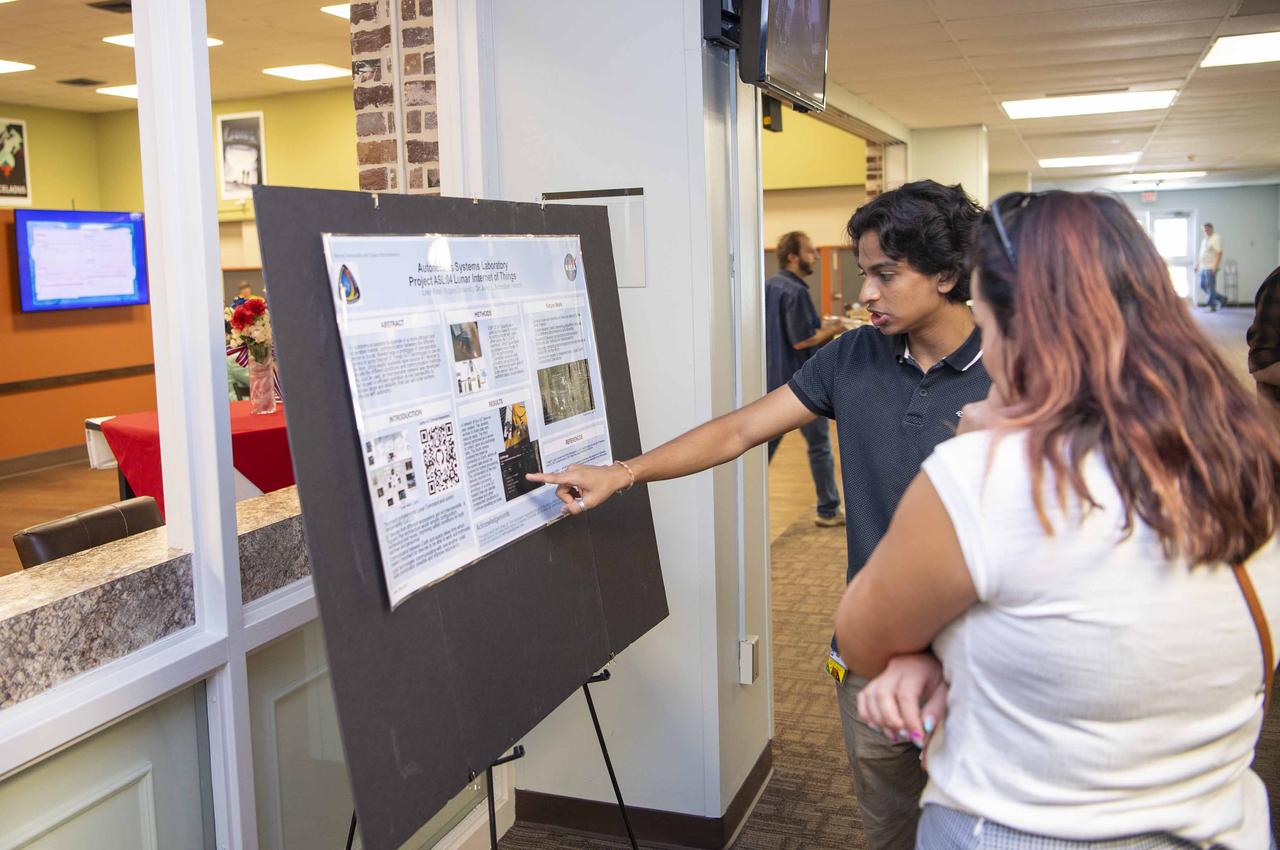
NASA Stennis summer intern Lekh Patel shares about his work on lunar communications during an Aug. 7 event hosted by the Office of STEM Engagement. Patel, a student at Rutgers University in Newark, New Jersey, worked with the NASA Stennis Autonomous Systems Laboratory. The poster symposium highlighted research topics, including propulsion test operations, lunar robotics, autonomous systems, STEM education, and more. NASA’s Office of STEM Engagement paid internships allow high school and college-level students to contribute to the agency’s mission to advance science, technology, aeronautics, and space exploration.
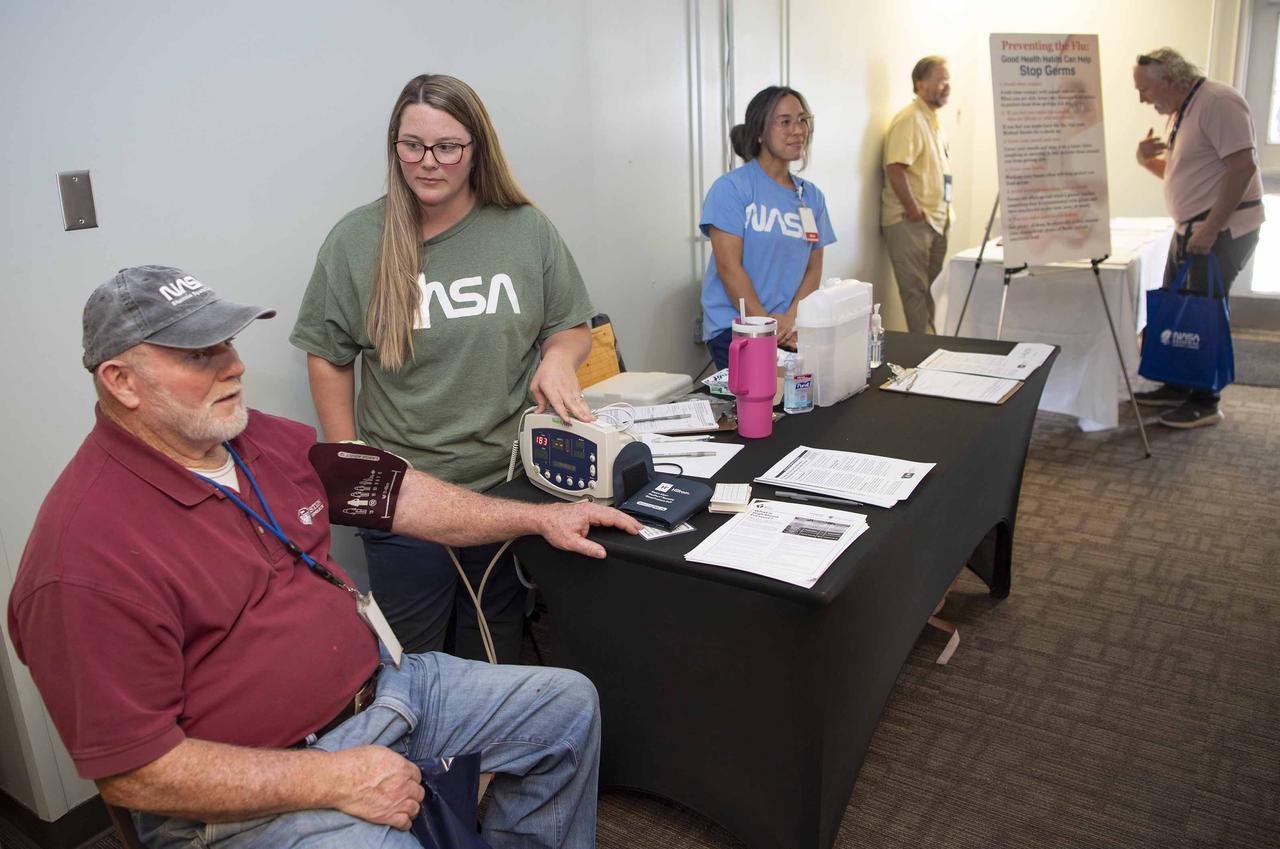
NASA Stennis employees visit booths with safety and health information in the Roy S. Estess Building during the annual Safety and Health Day at NASA’s Stennis Space Center on Sept. 26. The yearly event is a reminder to the NASA Stennis workforce about the importance of a safe work environment and provided the opportunity for a health screening.
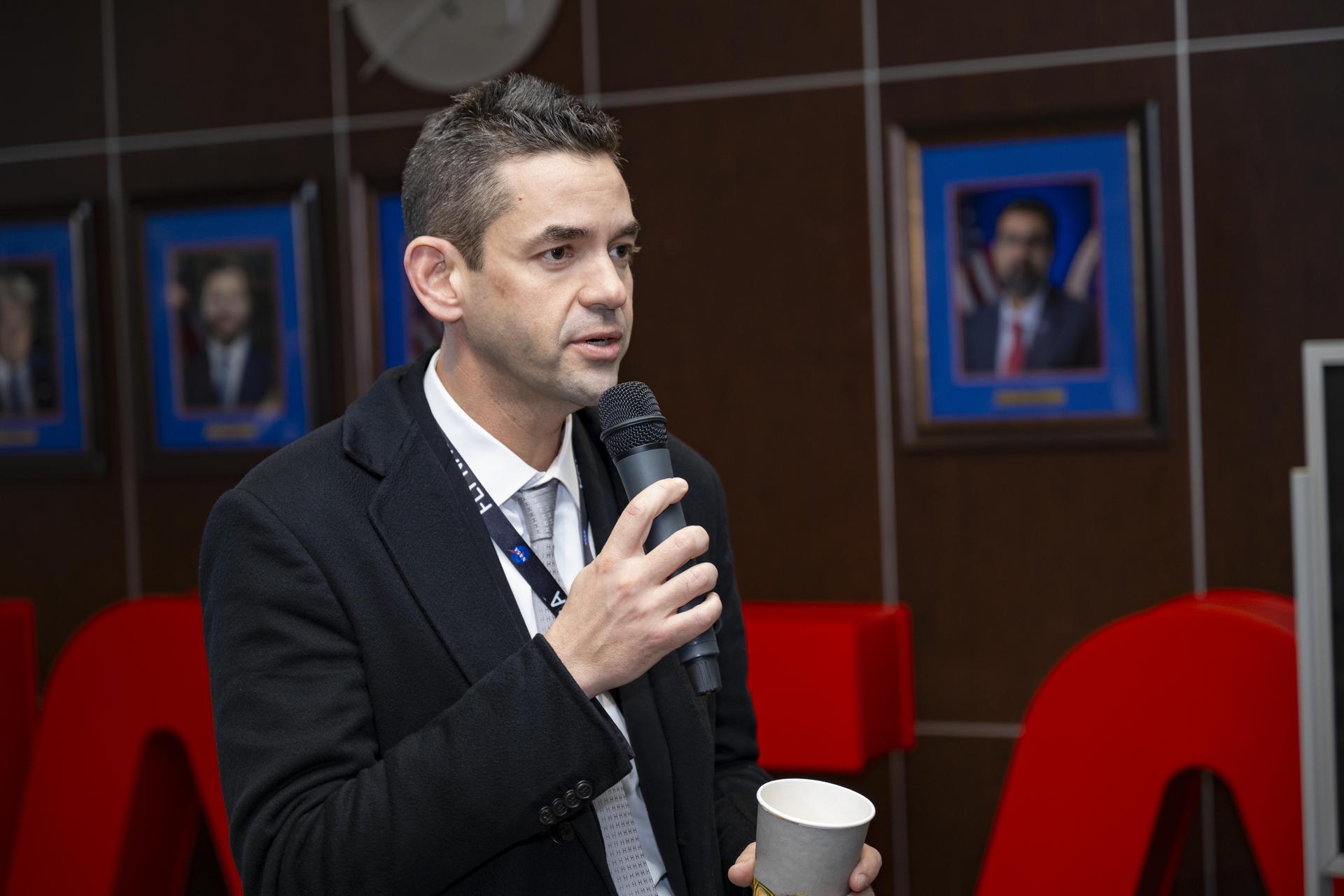
NASA Administrator Jared Isaacman speaks with NASA employees during his visit to NASA’s Stennis Space Center near Bay St. Louis, Mississippi, on Jan. 15, 2026. Isaacman, NASA’s 15th administrator, began visiting the agency’s centers after his appointment on Dec. 17, 2025.
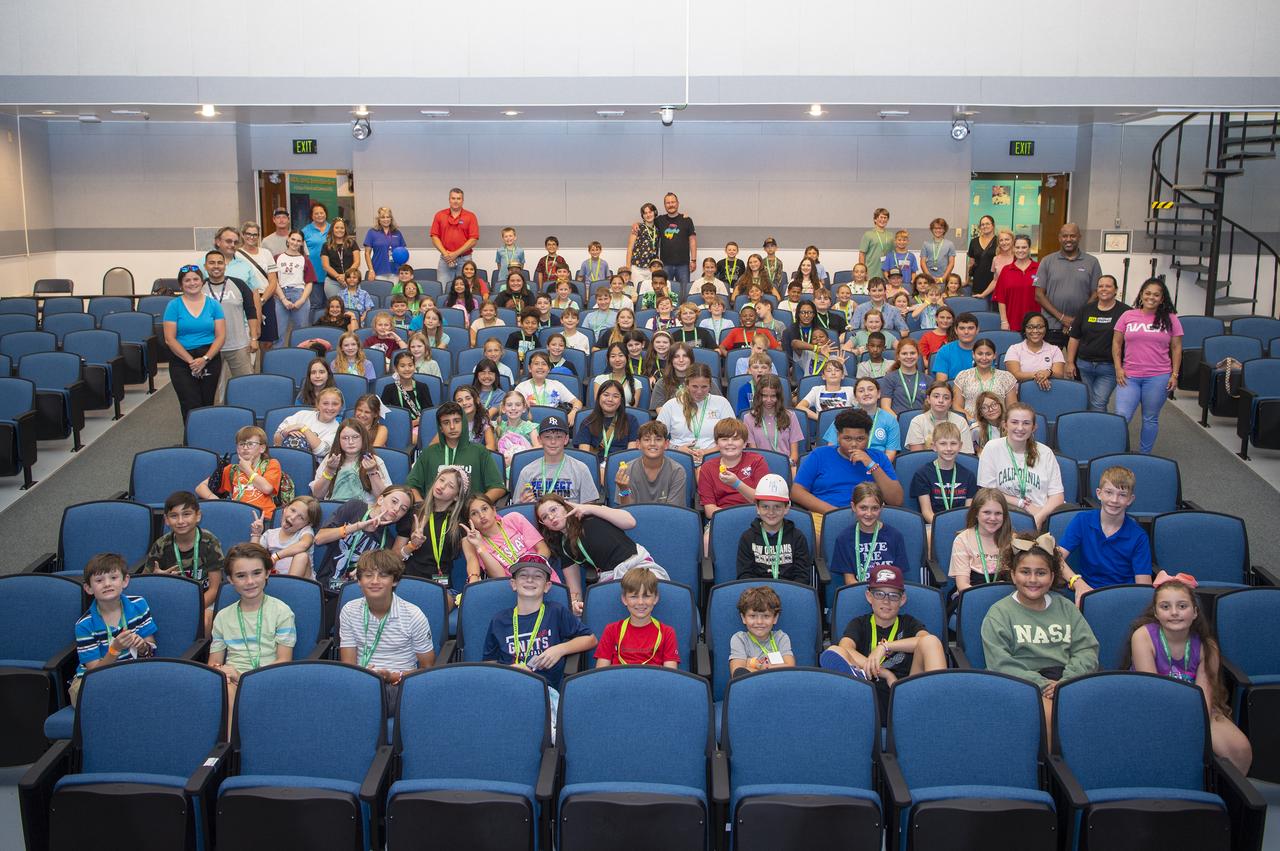
NASA’s Stennis Space Center inspired the Artemis Generation during the 2024 Take Our Children to Work Day on June 27. Participants are shown in the StenniSphere auditorium following a site tour and full day of hands-on activities to promote interest in STEM (science, technology, engineering, and mathematics) and the variety of work conducted at NASA Stennis. NASA is returning to the Moon through the Artemis campaign for scientific discovery, economic benefits, and inspiration for a new generation of explorers.
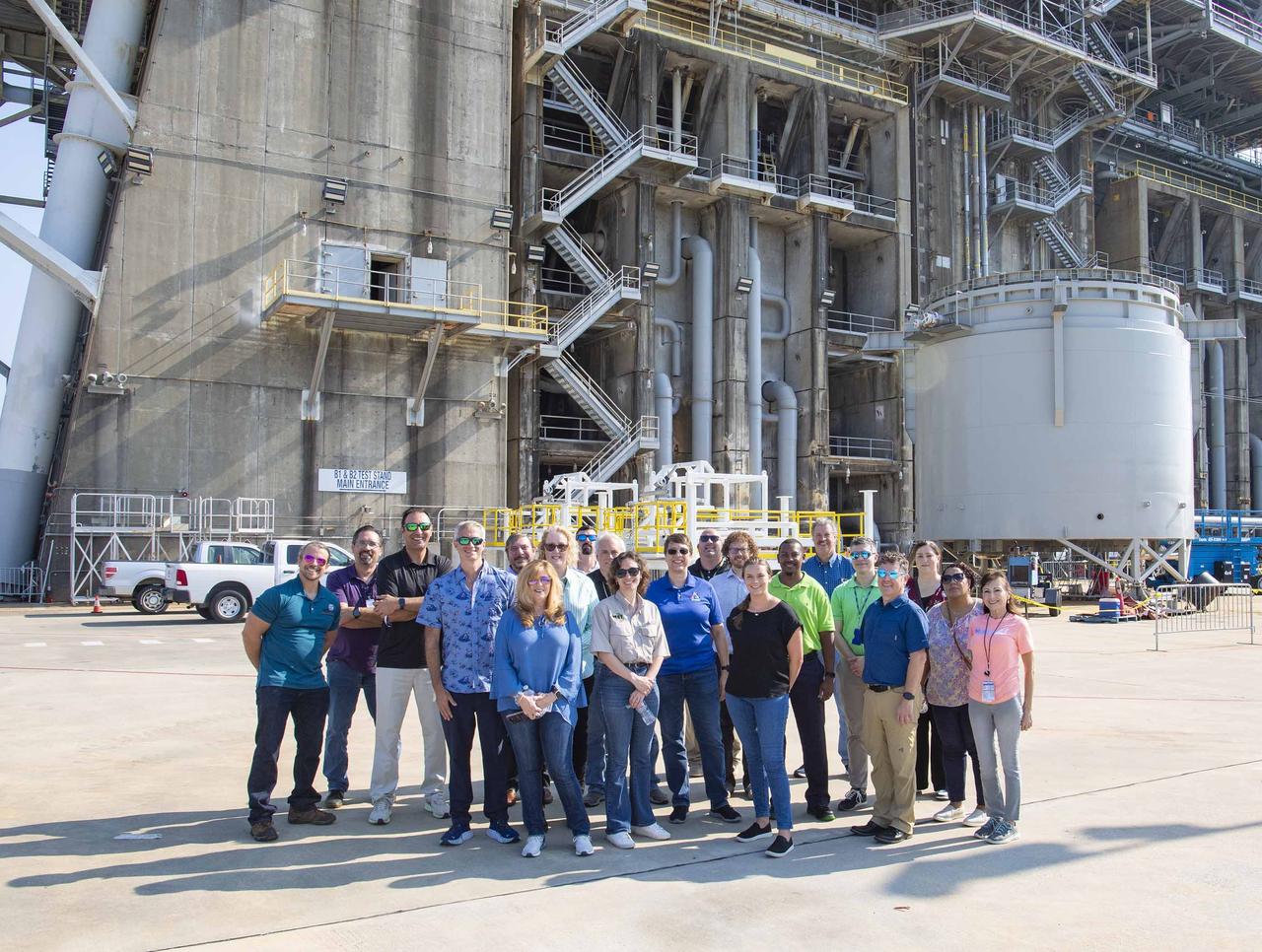
NASA and contractor representatives working with NASA’s Rocket Propulsion Test Program Office stand at the base of the Thad Cochran Test Stand during a tour of the test complex on Aug. 15 at NASA’s Stennis Space Center near Bay St. Louis, Mississippi. The program office hosted a Risk Workshop and Program Management Review meeting at NASA Stennis on Aug. 13-15. The representatives are from NASA Stennis; NASA’s Neil Armstrong Test Facility in Sandusky, Ohio; NASA’s Michoud Assembly Facility in New Orleans; NASA’s Marshall Space Flight Center in Huntsville, Alabama; NASA’s Wallops Flight Facility in Virginia; and NASA Headquarters in Washington. NASA Stennis is preparing the Thad Cochran Test Stand (B-2) to test the exploration upper stage, which will fly on future SLS (Space Launch System) missions as NASA continues its mission of exploring the secrets of the universe for the benefit of all. The upper stage is being built at NASA Michoud as a more powerful second stage to send the Orion spacecraft to deep space. It is expected to fly on the Artemis IV mission. Before that, it will be installed on the test stand at NASA Stennis to undergo a series of Green Run tests of its integrated systems to demonstrate it is ready to fly.
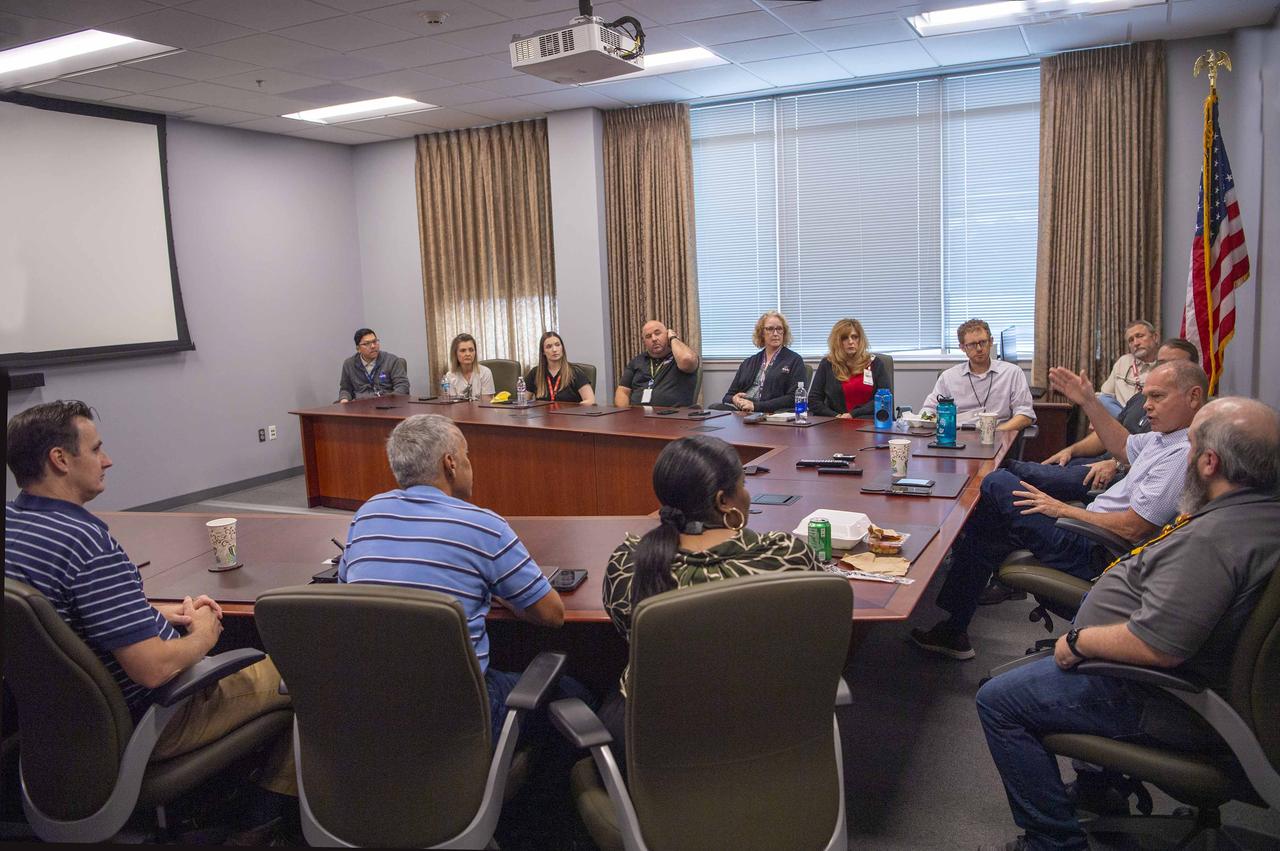
NASA Stennis Director John Bailey hosted the latest Java with John session on Nov. 19 with employees from the NASA Stennis Safety and Mission Assurance Directorate, Rocket Propulsion Test Program Office, and Office of the Chief Information Officer. Java with John is an employee-led discussion in a casual environment aimed at fostering a culture in which employees are welcome to share what matters most to them at work.
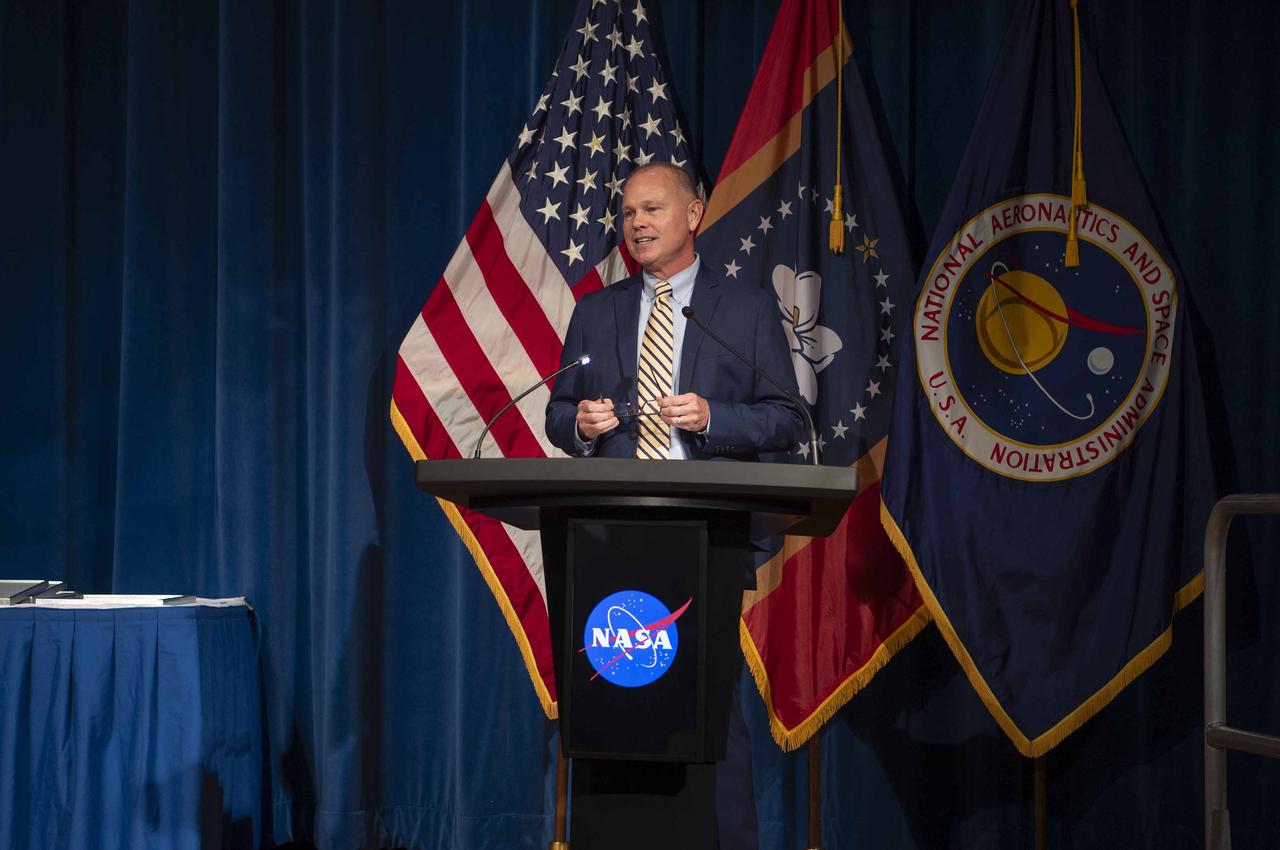
NASA Stennis Director John Bailey welcomes employees and guests to the Silver Snoopy Award ceremony on Aug. 21 at NASA’s Stennis Space Center. NASA’s Space Flight Awareness Program recognizes outstanding job performances and contributions by civil servants and contract employees. It focuses on excellence in quality and safety in support of human spaceflight.
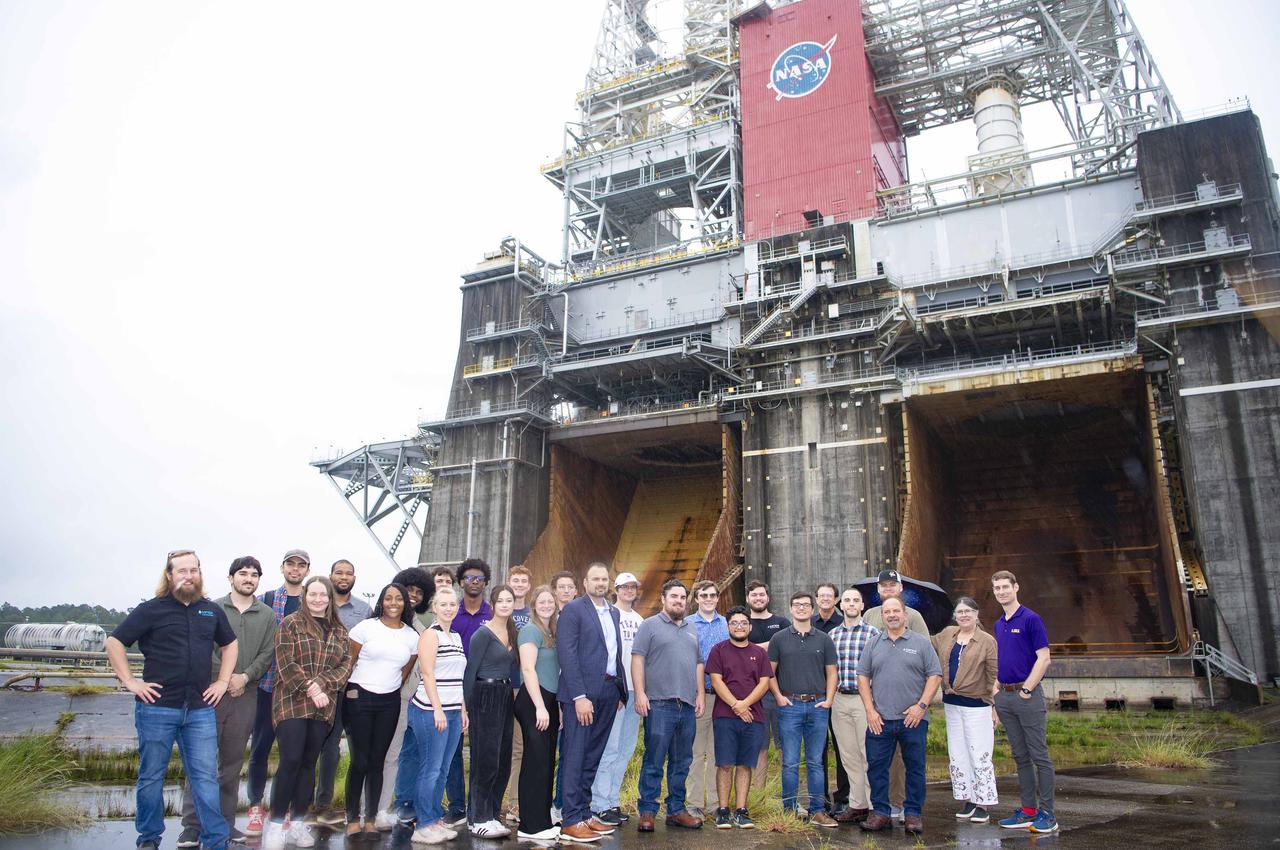
Members of the Society for the Advancement of Material and Process Engineering at Louisiana State University stand at the Thad Cochran Test Stand during a visit to NASA Stennis on Oct. 4. The Thad Cochran Test Stand (B-2) is where future Green Run testing of NASA’s exploration upper stage will take place ahead of future Artemis missions to the Moon and beyond. The mission of the Society for the Advancement of Material and Process Engineering at LSU is to provide enhanced educational opportunities by delivering information on new and advanced materials and processing technology.
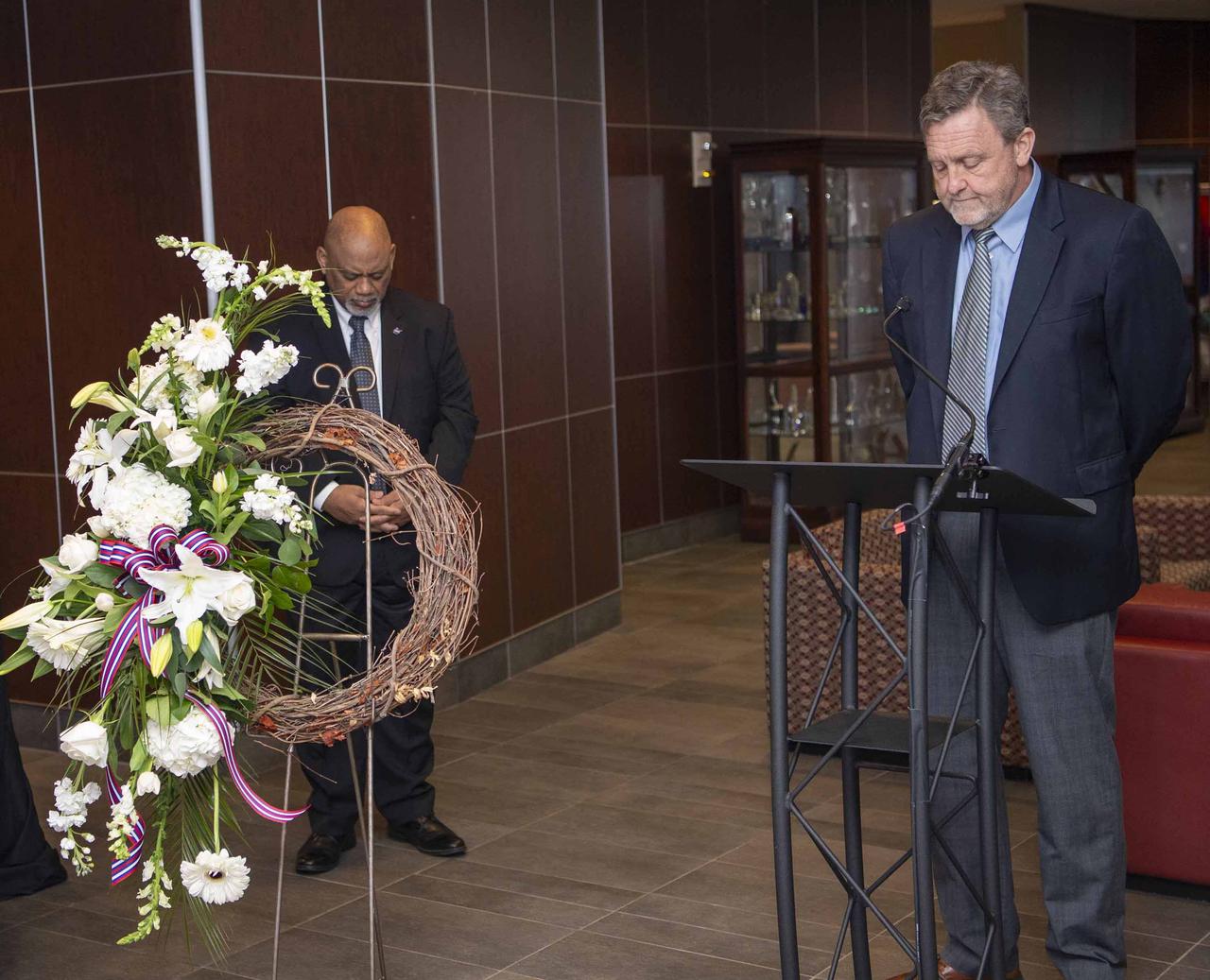
NASA’s Stennis Space Center and NASA Shared Services Center leaders commemorate NASA Day of Remembrance on Jan. 25 with a ceremony at the south Mississippi site. Rodney McKellip, NASA Stennis associate director (right), and Ken Newton, NASA Shared Services Center acting executive director, observe a moment of silence as employees honor members of the NASA family who lost their lives while furthering the cause of exploration and discovery, including the crews of Apollo 1, and space shuttles Challenger and Columbia.
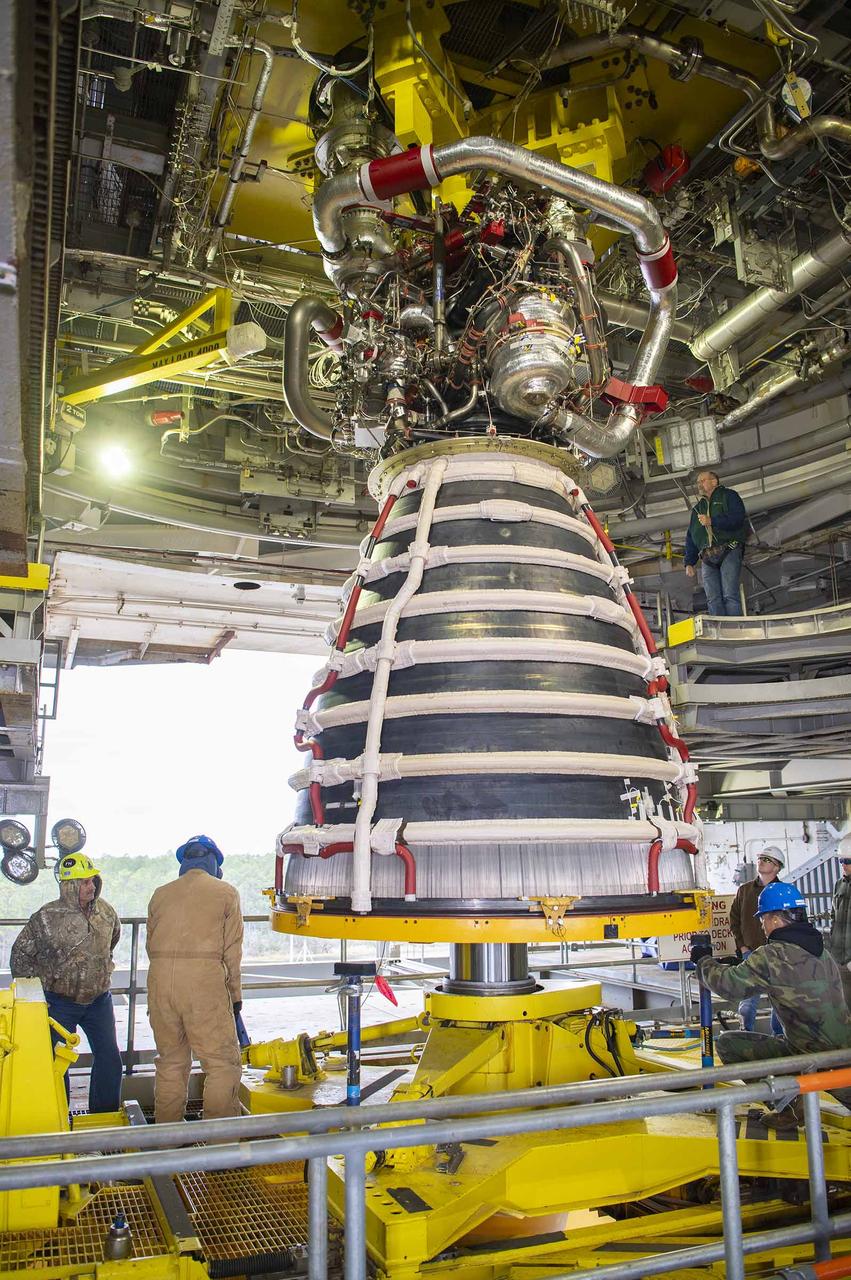
Teams at NASA’s Stennis Space Center deliver, lift, and install the first new production RS-25 engine on the Fred Haise Test Stand on Feb. 18.
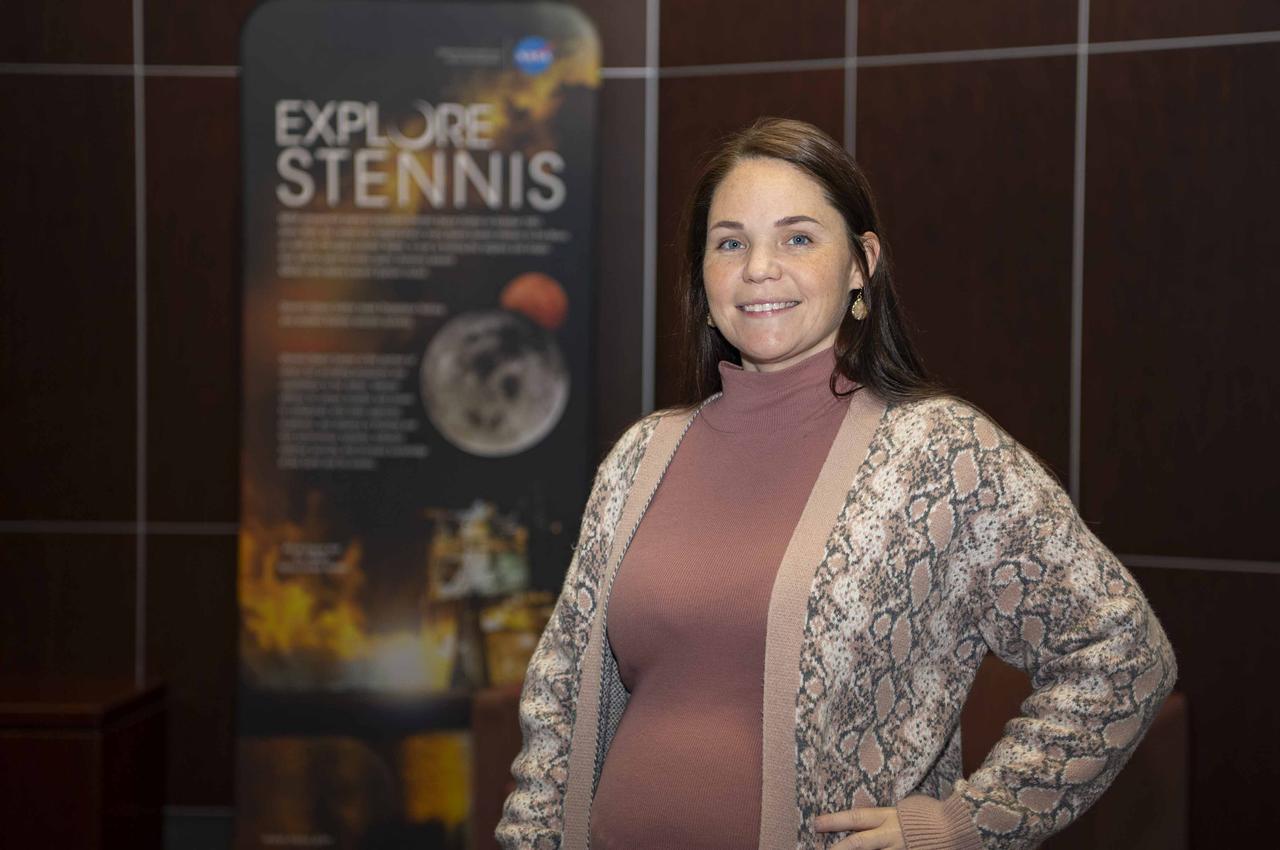
Heather Seagren grew up near NASA’s Stennis Space Center and visited for field trips as a child. Now, as a financial management specialist, Seagren coordinates work trips for NASA employees at the south Mississippi NASA center.
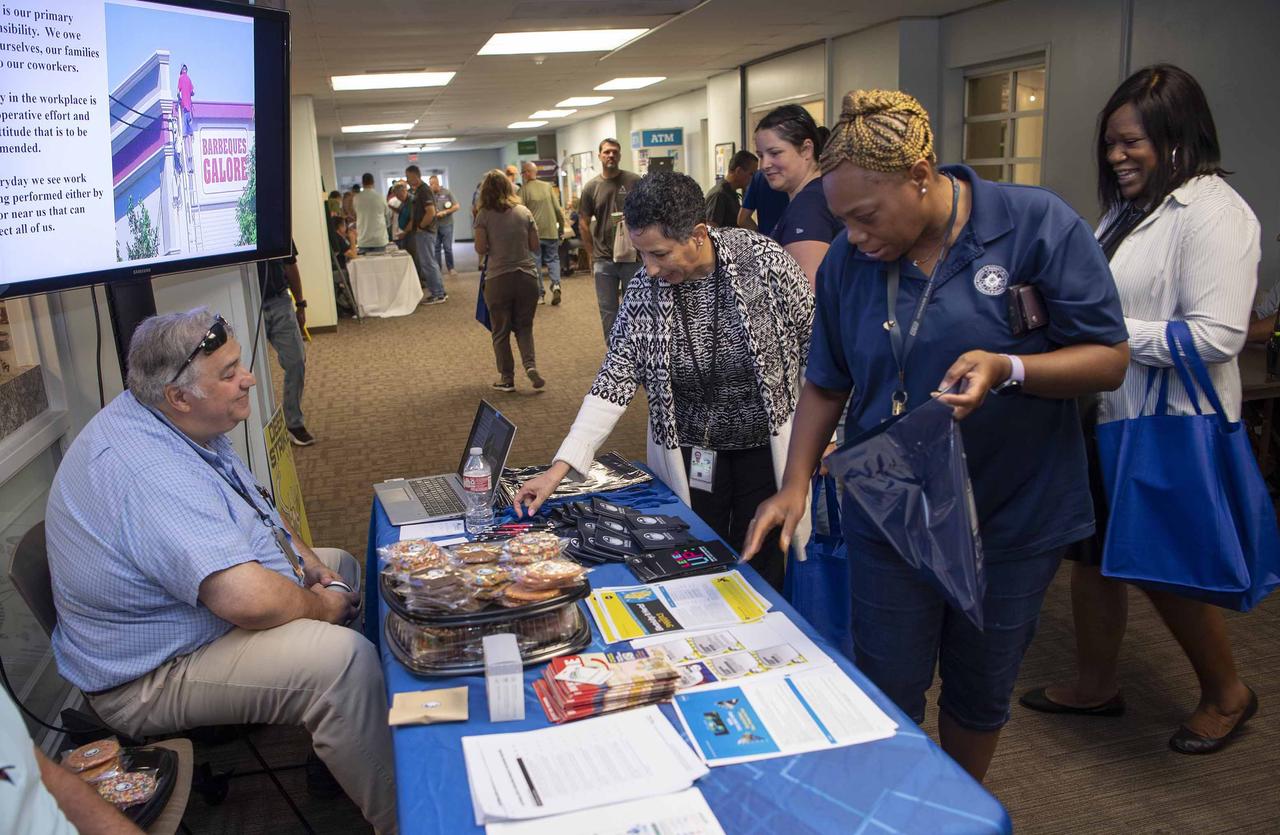
NASA Stennis employees visit booths with safety and health information in the Roy S. Estess Building during the annual Safety and Health Day at NASA’s Stennis Space Center on Sept. 26. The yearly event is a reminder to the NASA Stennis workforce about the importance of a safe work environment and provided the opportunity for a health screening.
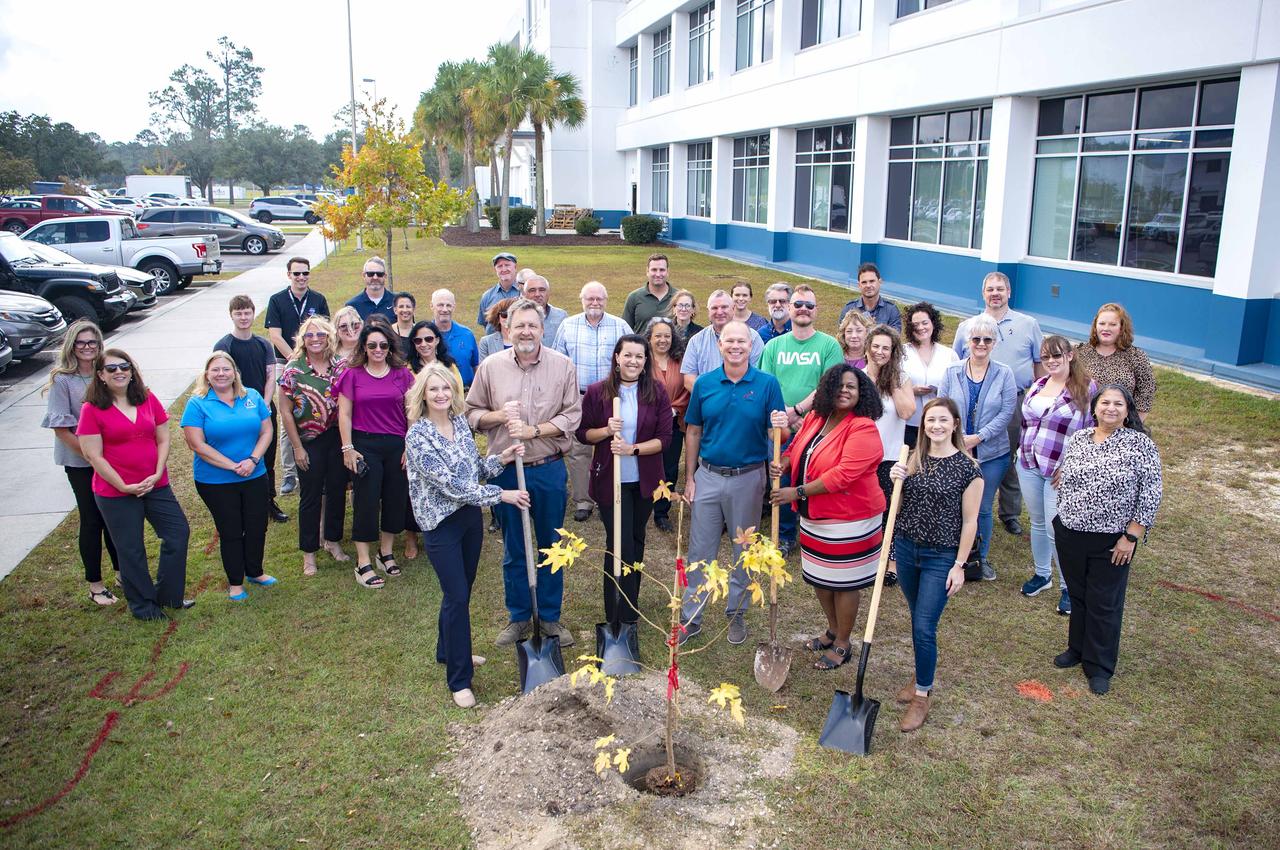
NASA employees plant an Artemis Moon Tree at NASA’s Stennis Space Center on Oct. 29 to celebrate NASA’s successful Artemis I mission as the agency prepares for a return around the Moon with astronauts on Artemis II.
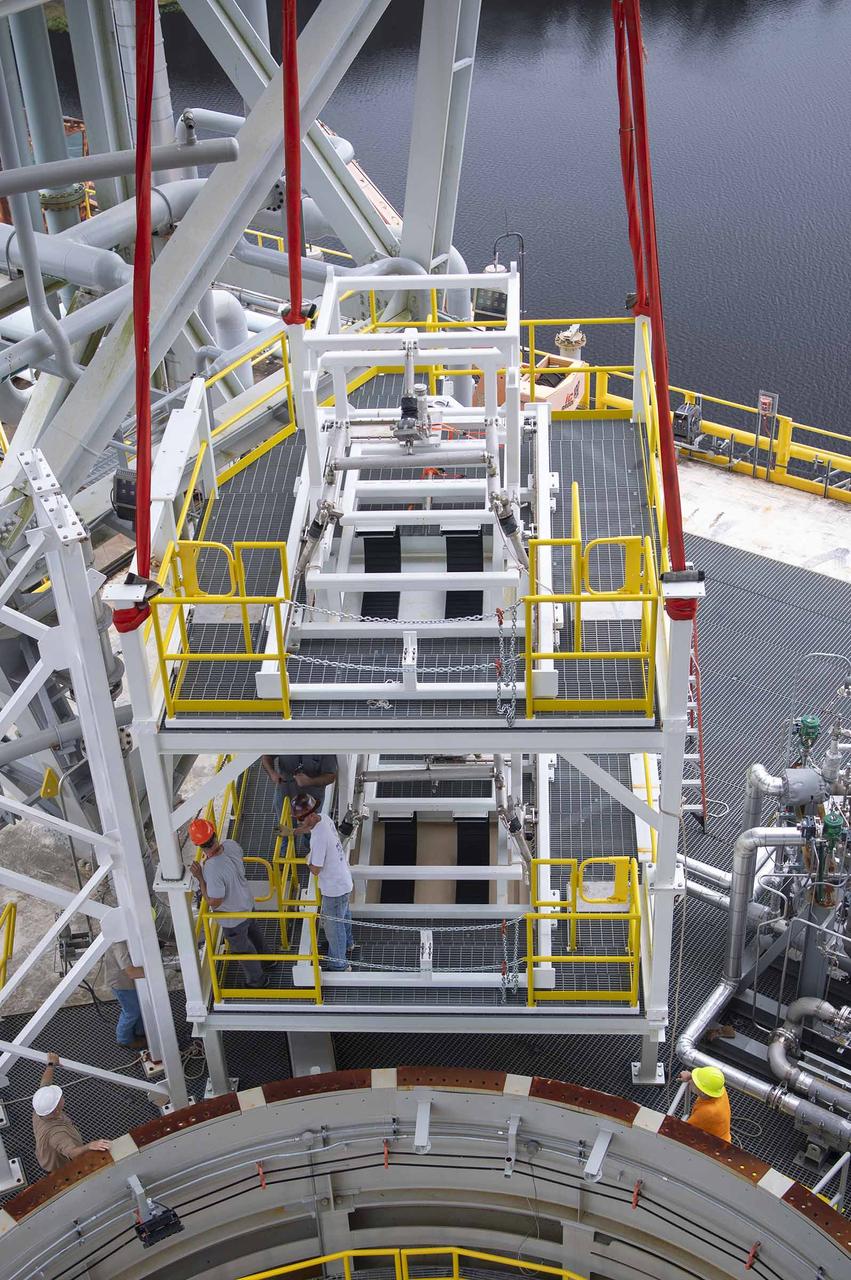
A pair of umbilical support structures needed for future testing of NASA’s exploration upper stage (EUS) were installed in the B-2 position of the Thad Cochran Test Stand on Oct. 30-31 at NASA’s Stennis Space Center. The support structures arrived from NASA’s Michoud Assembly Facility in New Orleans via the unique NASA Stennis seven-and-a-half-mile canal system in 2023. Since then, crews have prepared the structures that will align with the EUS unit for installation. In addition to helping secure the unit in place during hot fire testing, the umbilical support structures are where the command, control, and data electrical connections are mated to connect the ground systems to the vehicle systems, as well as most the commodity connections such as liquid hydrogen, liquid oxygen, hydrogen vent, helium bottle fill pressure, and purges. Prior to its initial flight, the EUS unit will undergo a series of so-called Green Run tests at NASA Stennis to ensure all systems are ready to go. The test series will culminate with a hot fire of the stage’s four RL10 engines, made by Aerojet Rocketdyne, an L3Harris Technologies company and lead SLS engines contractor. The new upper stage will enable NASA to carry larger payloads on Artemis missions to the Moon and beyond.
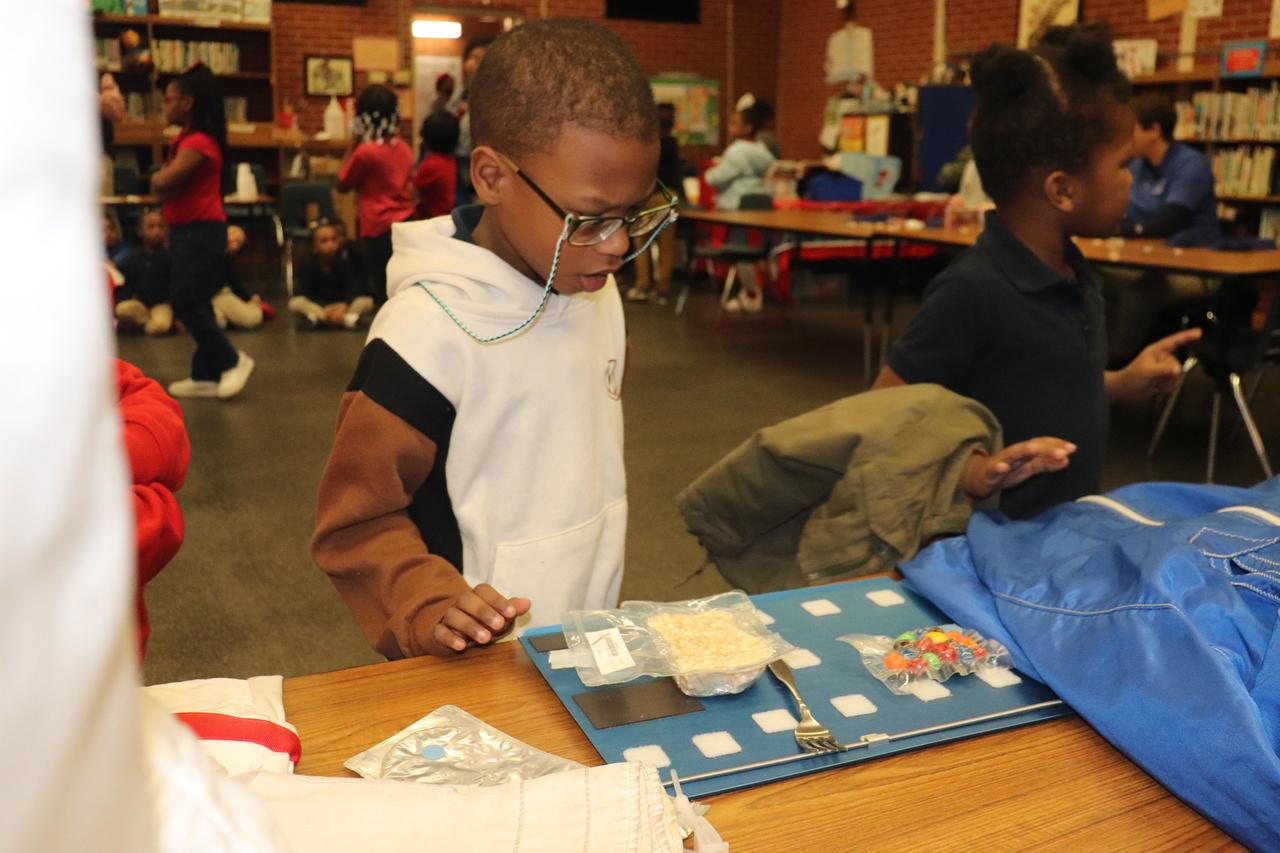
Representatives from NASA’s Stennis Space Center and NASA Shared Services Center participate in multiple related outreach events throughout Jackson, Mississippi, as part of the annual Stennis Day at the Capitol activities on Feb. 29. NASA personnel inspired the Artemis Generation with visits to Spann Elementary and Blackburn Middle schools. Activities included students learning about life as a NASA astronaut and a hands-on STEM (science, technology, engineering, and mathematics) activity. Sending the first woman and first person of color to the Moon on future Artemis missions will inspire the Artemis Generation to see themselves in space and understand the importance of STEM studies and careers. As NASA takes giant leaps to bridge disparities and break barriers in STEM, the agency’s efforts in the future workforce advances the nation’s space exploration.
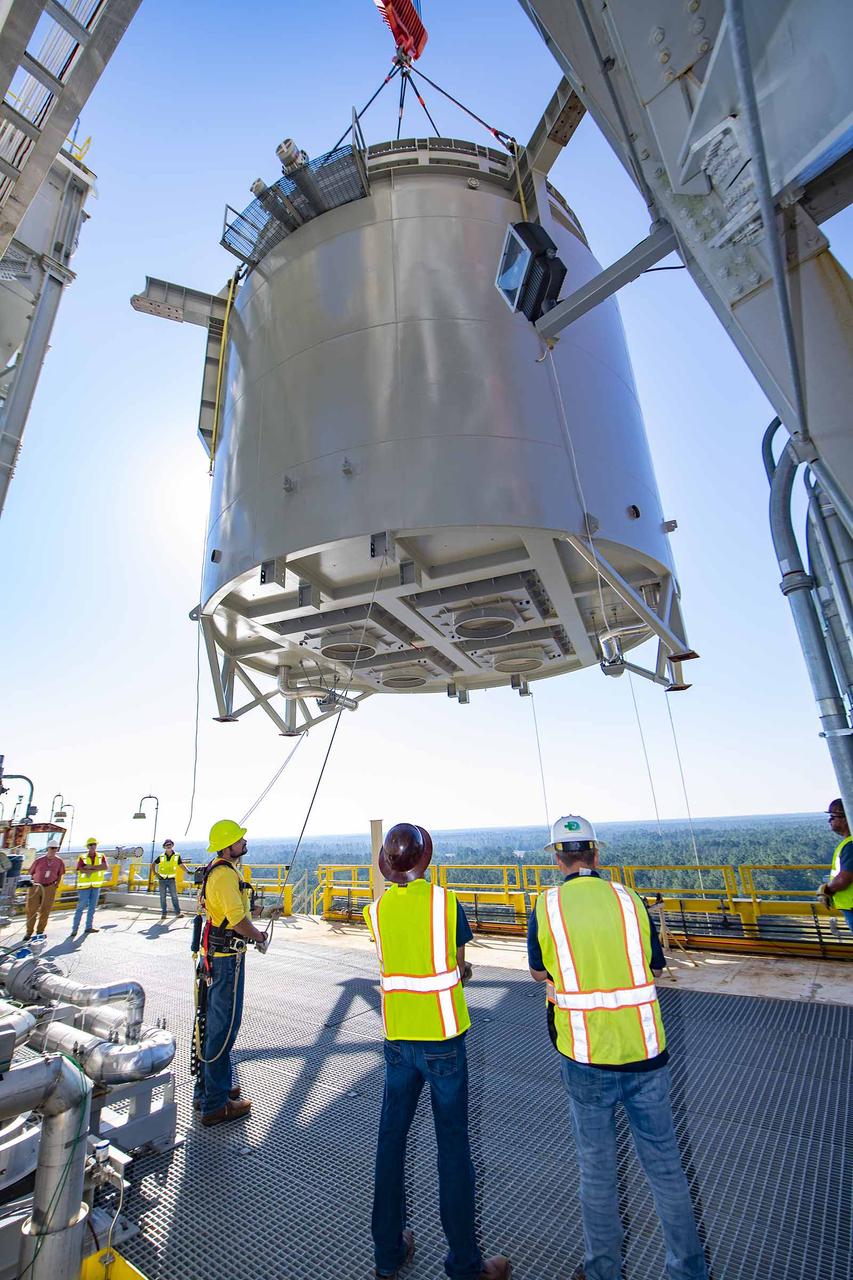
Teams at NASA’s Stennis Space Center complete a safe lift and install of an interstage simulator unit needed for future testing of NASA’s exploration upper stage (EUS) in the B-2 position of the Thad Cochran Test Stand. The lift and install, completed over a two-week period that began Oct. 10, marks a milestone for testing the new SLS (Space Launch System) rocket stage that will fly on future Artemis missions to the Moon and beyond. The EUS will undergo a series of Green Run tests of its integrated systems prior to its first flight. During testing, the interstage simulator component will function like the SLS interstage section that helps protect the upper stage during Artemis launches.
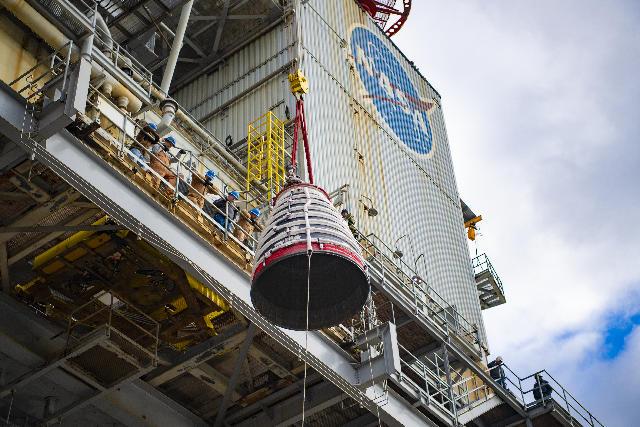
The new production nozzle is lifted on the Fred Haise Test Stand at NASA’s Stennis Space Center on Feb. 6. Crews used specially adapted procedures and tools to swap out the nozzles with the engine in place.
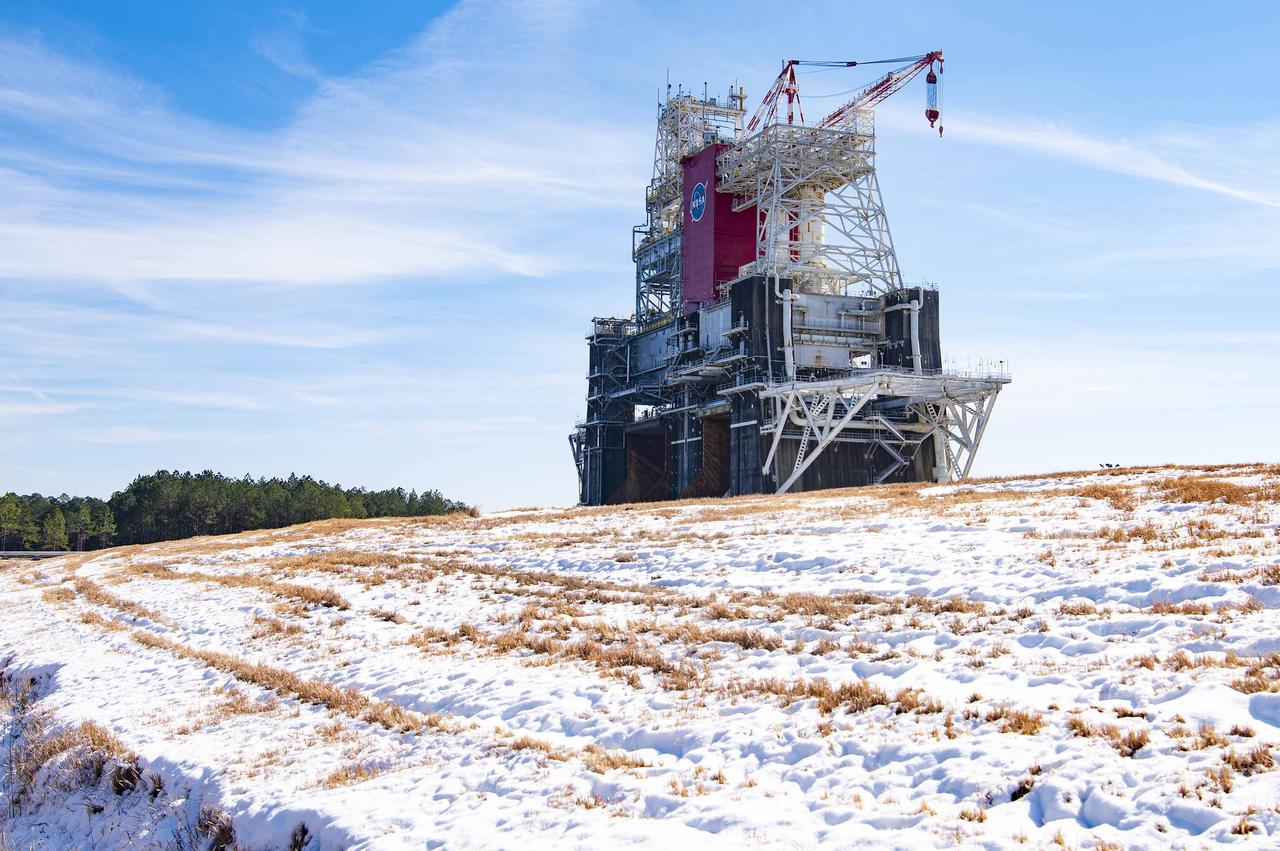
NASA’s Stennis Space Center near Bay St. Louis, Mississippi, is often associated with hot fires coming from the center’s long history of hot fire testing engines and stages that have helped power the nation’s space dreams since the first humans stepped foot on the Moon. However, NASA Stennis turned into a Winter Wonderland Jan. 21 when America’s largest rocket propulsion test site received a historic amount of snow across the unique federal city. Hancock County, where NASA Stennis is located, received five to seven inches of snow, according to the National Weather Service. It marked the most snow the county has received in 61 years. The December 31, 1963, snowfall holds the record at 10 inches of snow for Bay St. Louis, Mississippi.
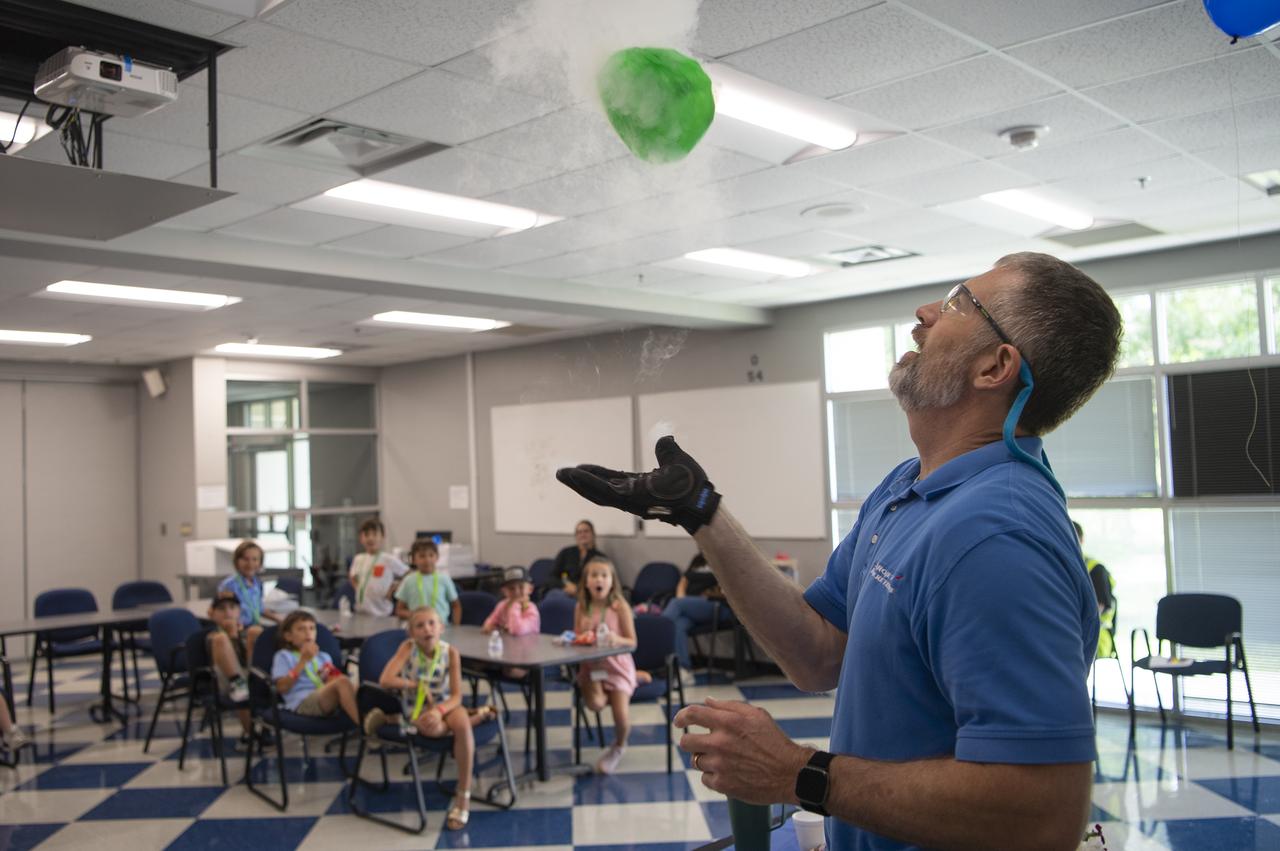
A group of Take Our Children Day participants watch a cryogenic demonstration led by Allen Forsman of Aerojet Rocketdyne, an L3Harris Technologies company, on June 27 at the Aerojet Rocketdyne Engine Assembly Facility at NASA Stennis.
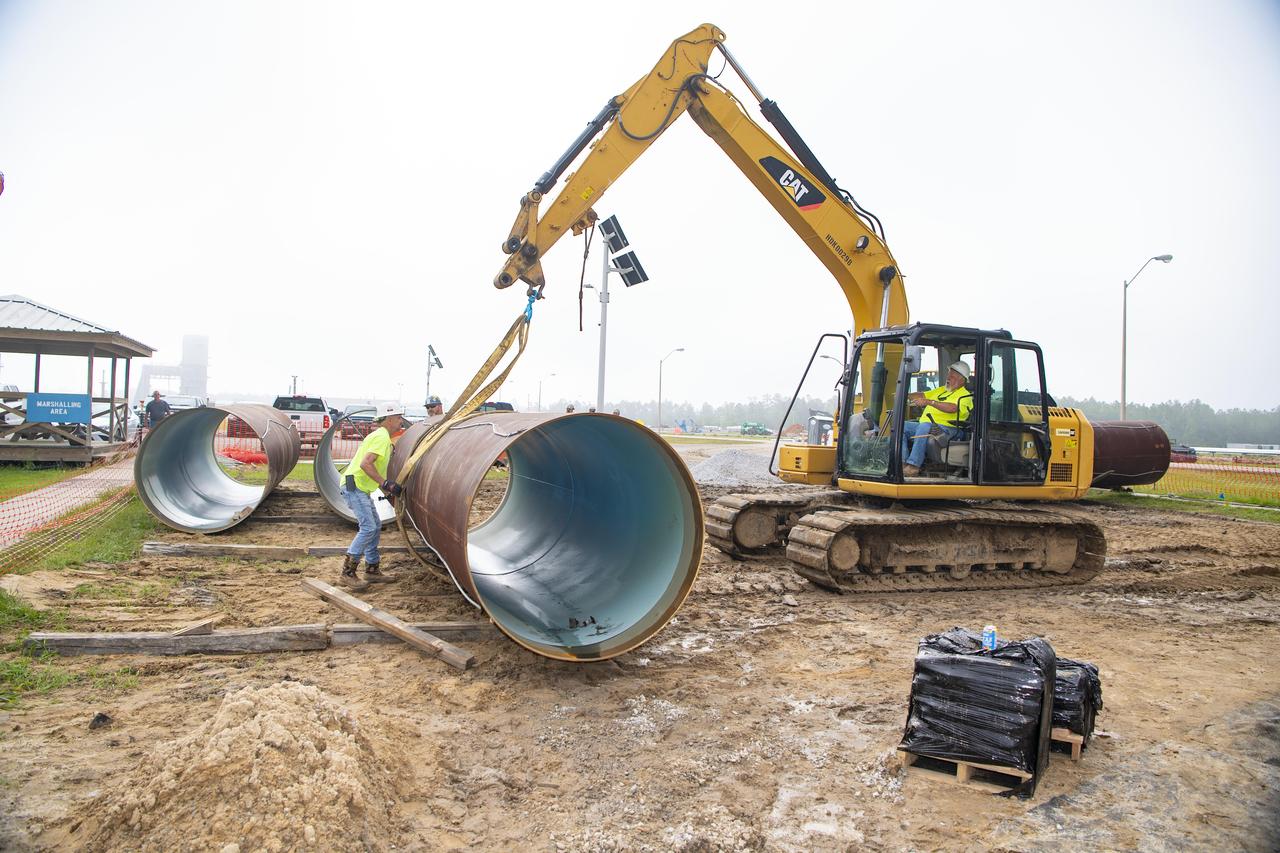
Crews lift a new pipeline liner section near the Fred Haise Test Stand on May 1 in the last phase of updating the original test complex water system at NASA’s Stennis Space Center.
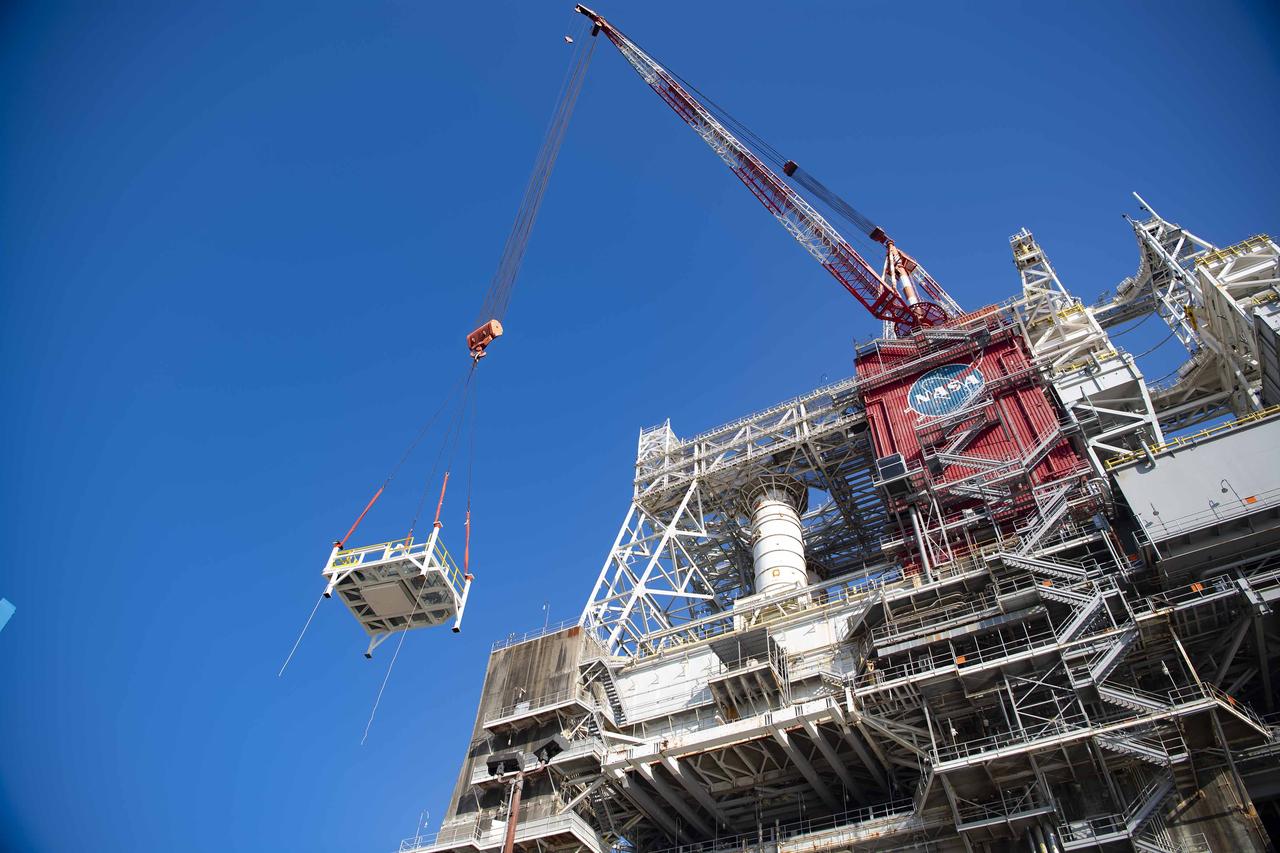
A pair of umbilical support structures needed for future testing of NASA’s exploration upper stage (EUS) were installed in the B-2 position of the Thad Cochran Test Stand on Oct. 30-31 at NASA’s Stennis Space Center. The support structures arrived from NASA’s Michoud Assembly Facility in New Orleans via the unique NASA Stennis seven-and-a-half-mile canal system in 2023. Since then, crews have prepared the structures that will align with the EUS unit for installation. In addition to helping secure the unit in place during hot fire testing, the umbilical support structures are where the command, control, and data electrical connections are mated to connect the ground systems to the vehicle systems, as well as most the commodity connections such as liquid hydrogen, liquid oxygen, hydrogen vent, helium bottle fill pressure, and purges. Prior to its initial flight, the EUS unit will undergo a series of so-called Green Run tests at NASA Stennis to ensure all systems are ready to go. The test series will culminate with a hot fire of the stage’s four RL10 engines, made by Aerojet Rocketdyne, an L3Harris Technologies company and lead SLS engines contractor. The new upper stage will enable NASA to carry larger payloads on Artemis missions to the Moon and beyond.
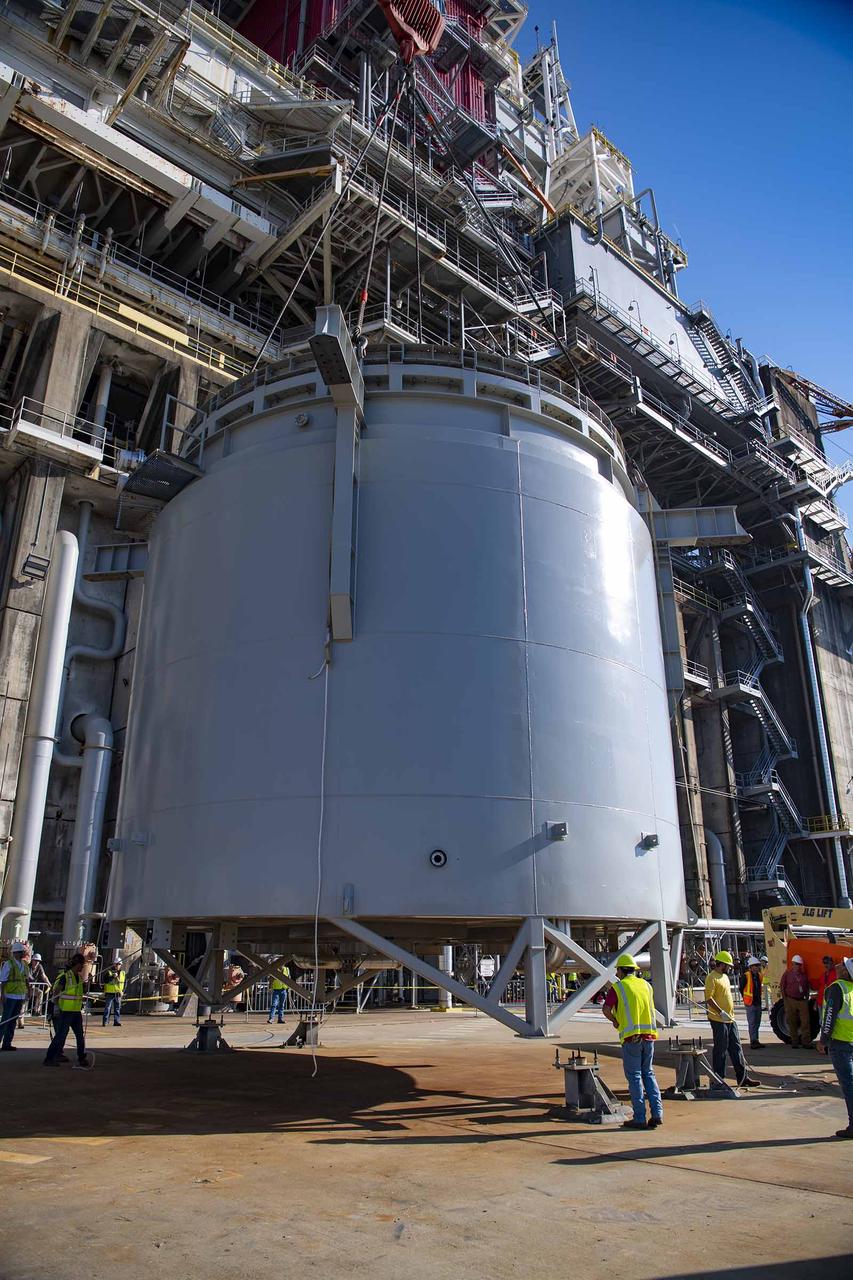
Teams at NASA’s Stennis Space Center complete a safe lift and install of an interstage simulator unit needed for future testing of NASA’s exploration upper stage (EUS) in the B-2 position of the Thad Cochran Test Stand. The lift and install, completed over a two-week period that began Oct. 10, marks a milestone for testing the new SLS (Space Launch System) rocket stage that will fly on future Artemis missions to the Moon and beyond. The EUS will undergo a series of Green Run tests of its integrated systems prior to its first flight. During testing, the interstage simulator component will function like the SLS interstage section that helps protect the upper stage during Artemis launches.
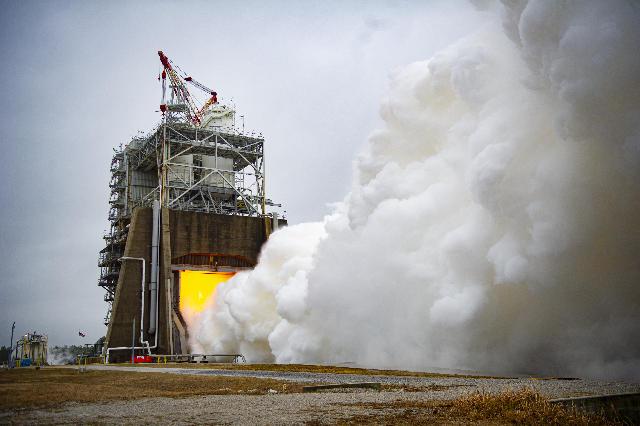
Crews exceed the 111% power level needed to lift the SLS (Space Launch System) rocket when firing the RS-25 certification engine at 113% on Jan. 23 at NASA’s Stennis Space Center.
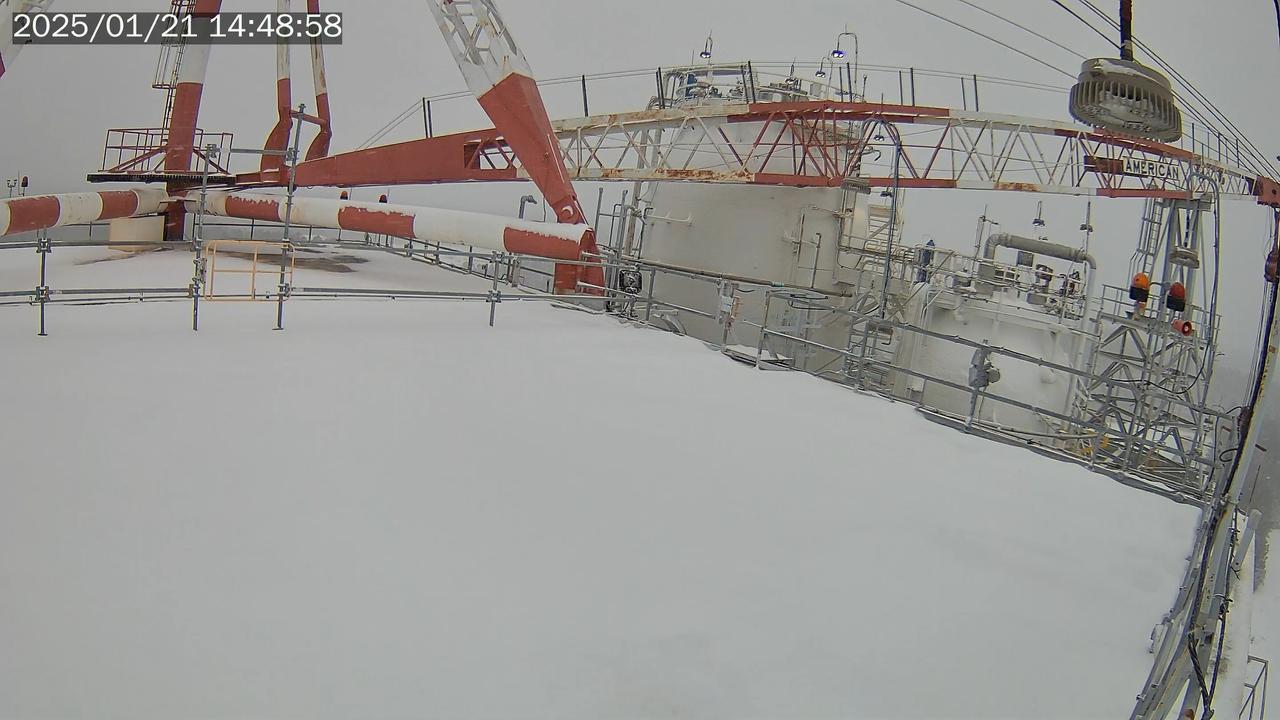
NASA’s Stennis Space Center near Bay St. Louis, Mississippi, is often associated with hot fires coming from the center’s long history of hot fire testing engines and stages that have helped power the nation’s space dreams since the first humans stepped foot on the Moon. However, NASA Stennis turned into a Winter Wonderland Jan. 21 when America’s largest rocket propulsion test site received a historic amount of snow across the unique federal city. Hancock County, where NASA Stennis is located, received five to seven inches of snow, according to the National Weather Service. It marked the most snow the county has received in 61 years. The December 31, 1963, snowfall holds the record at 10 inches of snow for Bay St. Louis, Mississippi.
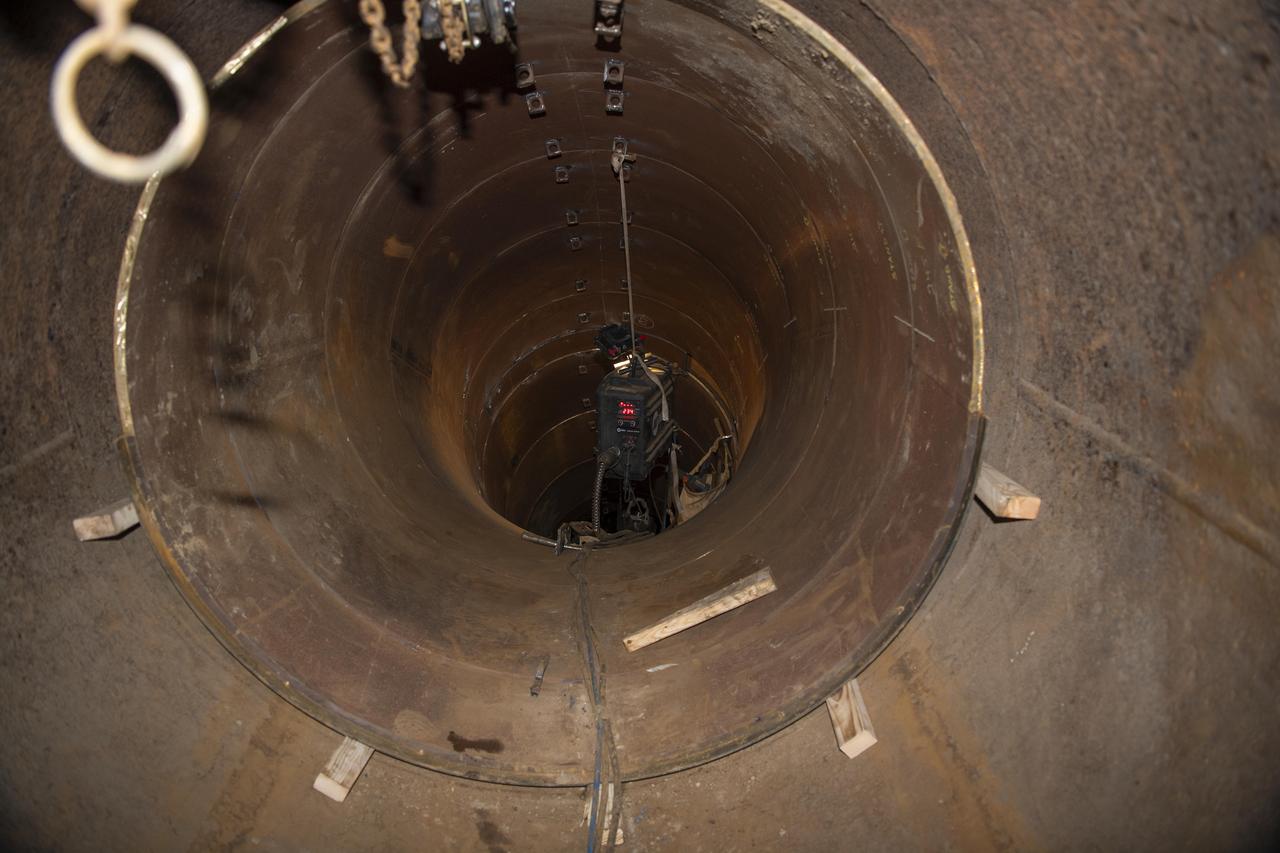
An image shows a new pipeline liner section being place inside the existing carrier pipe near the Fred Haise Test Stand on May 1 in the last phase of updating the original test complex industrial water system at NASA’s Stennis Space Center.
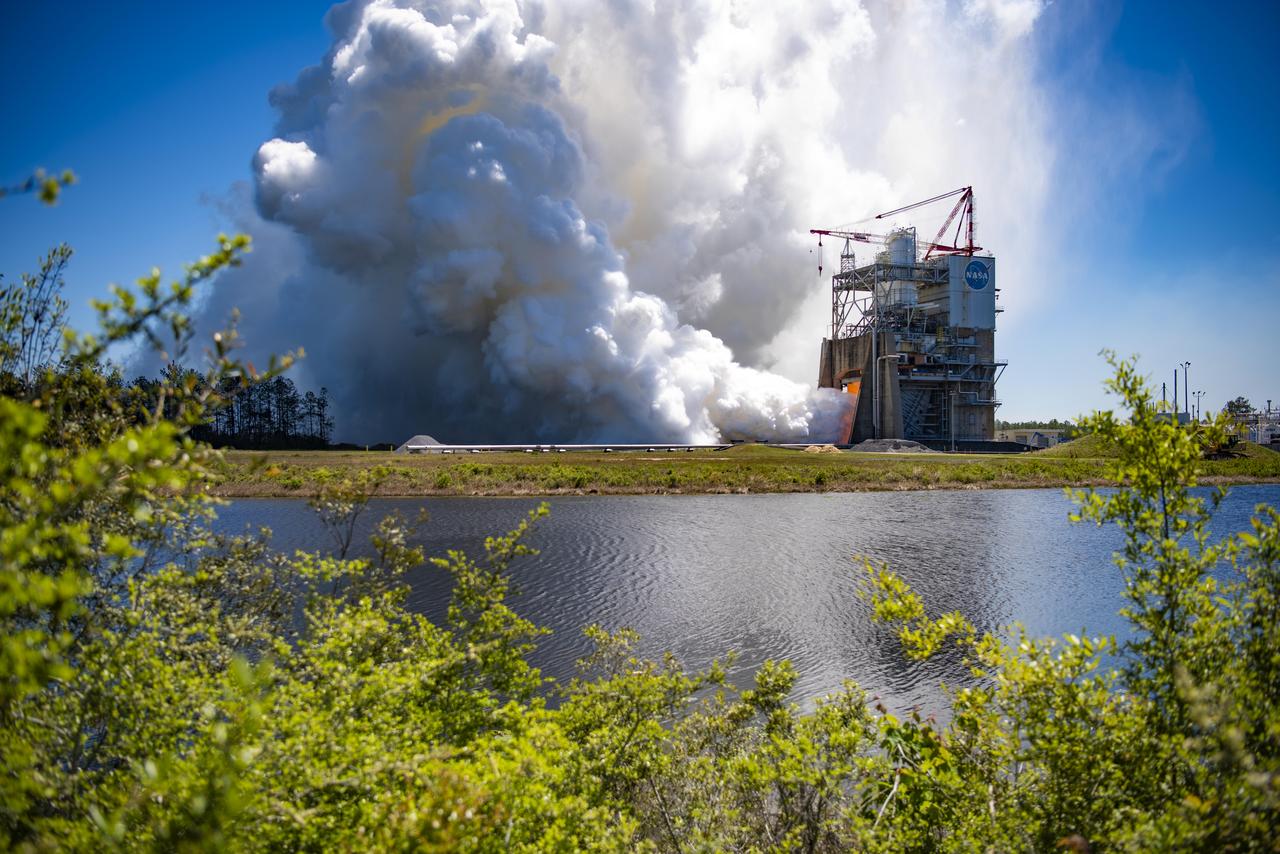
NASA conducted a full-duration RS-25 hot fire April 3 on the Fred Haise Test Stand at NASA’s Stennis Space Center near Bay St. Louis, Mississippi, achieving a major milestone for future Artemis flights of NASA’s SLS (Space Launch System) rocket. It marked the final test of a 12-test series to certify production of new RS-25 engines by lead contractor Aerojet Rocketdyne, an L3Harris Technologies company, to help power NASA’s SLS rocket on Artemis missions to the Moon and beyond, beginning with Artemis V.
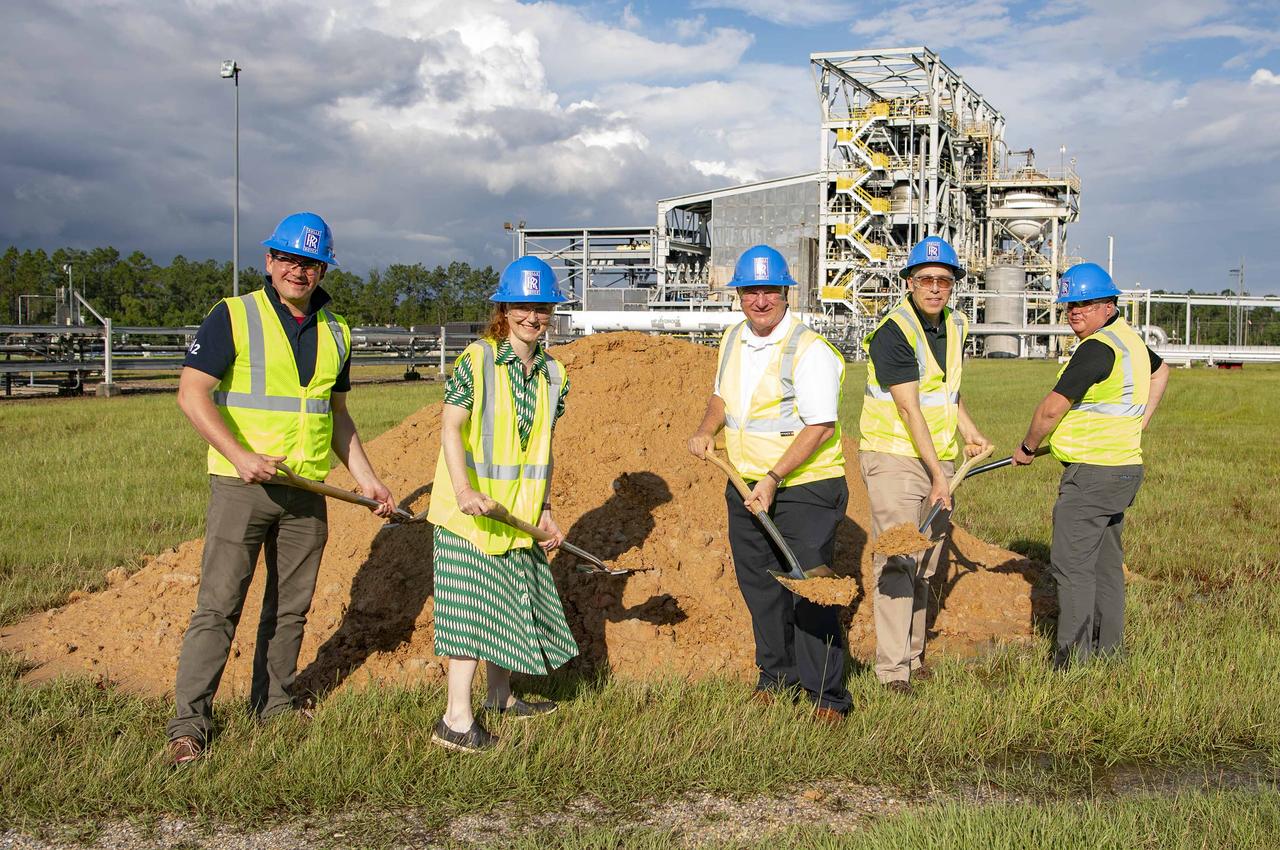
: NASA’s Stennis Space Center continues to support commercial companies and benefit the aerospace industry. The latest example comes as officials from NASA Stennis and Rolls-Royce break ground for the E-1 Hydrogen Test Pad, located at the NASA Stennis E-Complex Test Facility, during a June 27 ceremony. The site will be where Rolls-Royce conducts hydrogen testing for the Pearl 15 engine. The Pearl 15 engine helps power the Bombardier Global 5500 & 6500 aircraft and enables top speeds of Mach 0.90. Groundbreaking participants include (left to right): Adam Newman, Rolls-Royce chief engineer of hydrogen technology; Deborah Robinson, Rolls-Royce director of test and experimental engineering; Troy Frisbie, NASA Stennis legislative affairs specialist and chief of staff; Dan Lyon, Rolls-Royce North America general manager; and Steven Blake, Rolls-Royce North America indirect purchasing, global commodity manager.
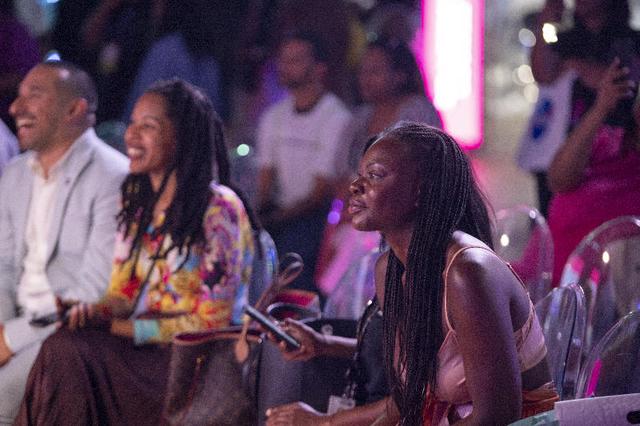
The audience for a Take Up Space (Literally) presentation at the 30th annual ESSENCE Fest in New Orleans on July 5 listens to a conversation with NASA representatives about Black women in the aerospace industry and diversity in science, technology, engineering, and mathematics (STEM).
NASA Stennis Deputy Director Christine Powell thanks all employees for attending the annual Safety and Health Day event in the StenniSphere Auditorium at NASA’s Stennis Space Center on Sept. 26. Powell noted the NASA Stennis workforce contributed to the NASA mission while holding safety – a NASA core value – as a top priority.
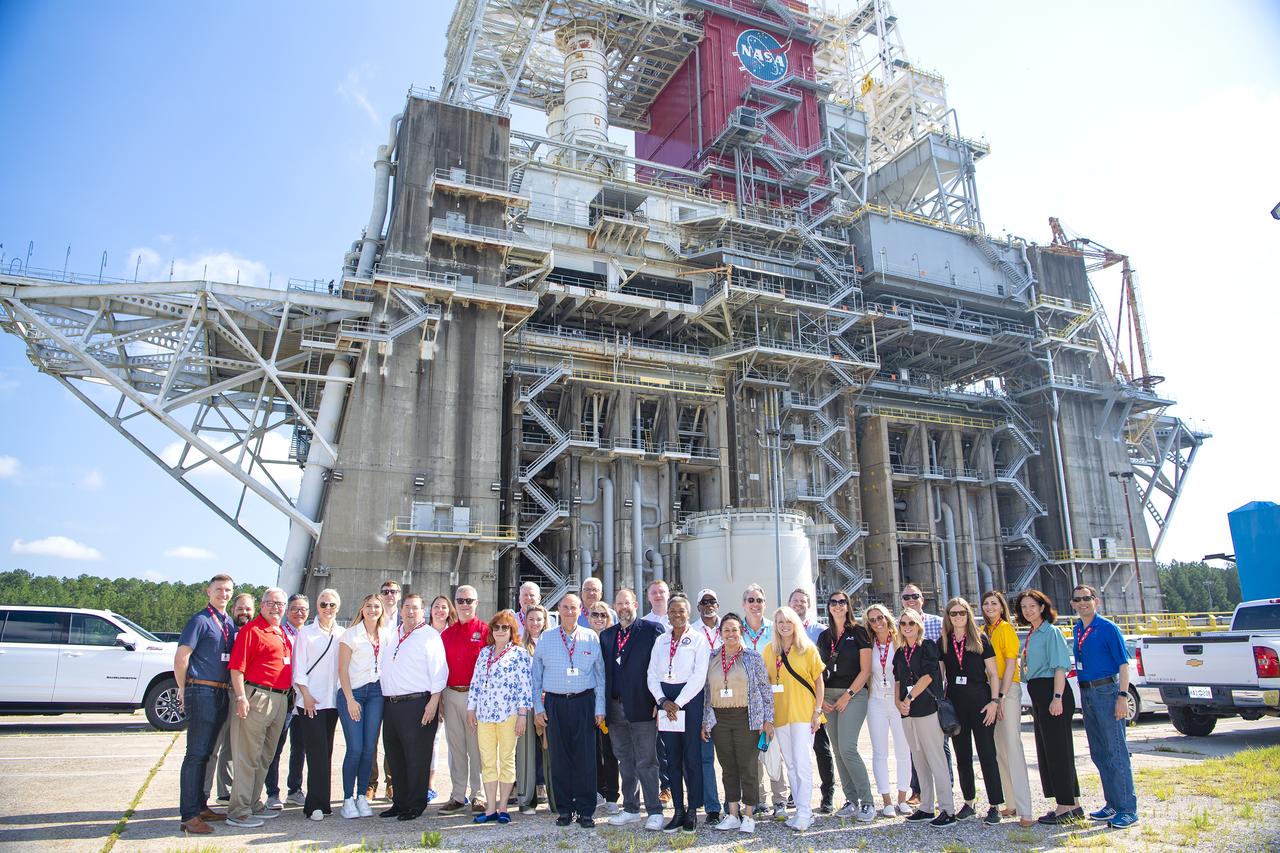
Members of the Aerospace States Association stand at the Thad Cochran Test Stand on June 25 during a visit to NASA’s Stennis Space Center. The group came to the south Mississippi NASA center during the Aerospace States Association conference in New Orleans June 24-27. NASA Stennis will use the Thad Cochran Test Stand (B-2) to test the exploration upper stage, a more powerful second stage to send the Orion spacecraft to deep space on NASA’s SLS (Space Launch System) rocket, ahead of its expected flight on the Artemis IV mission.
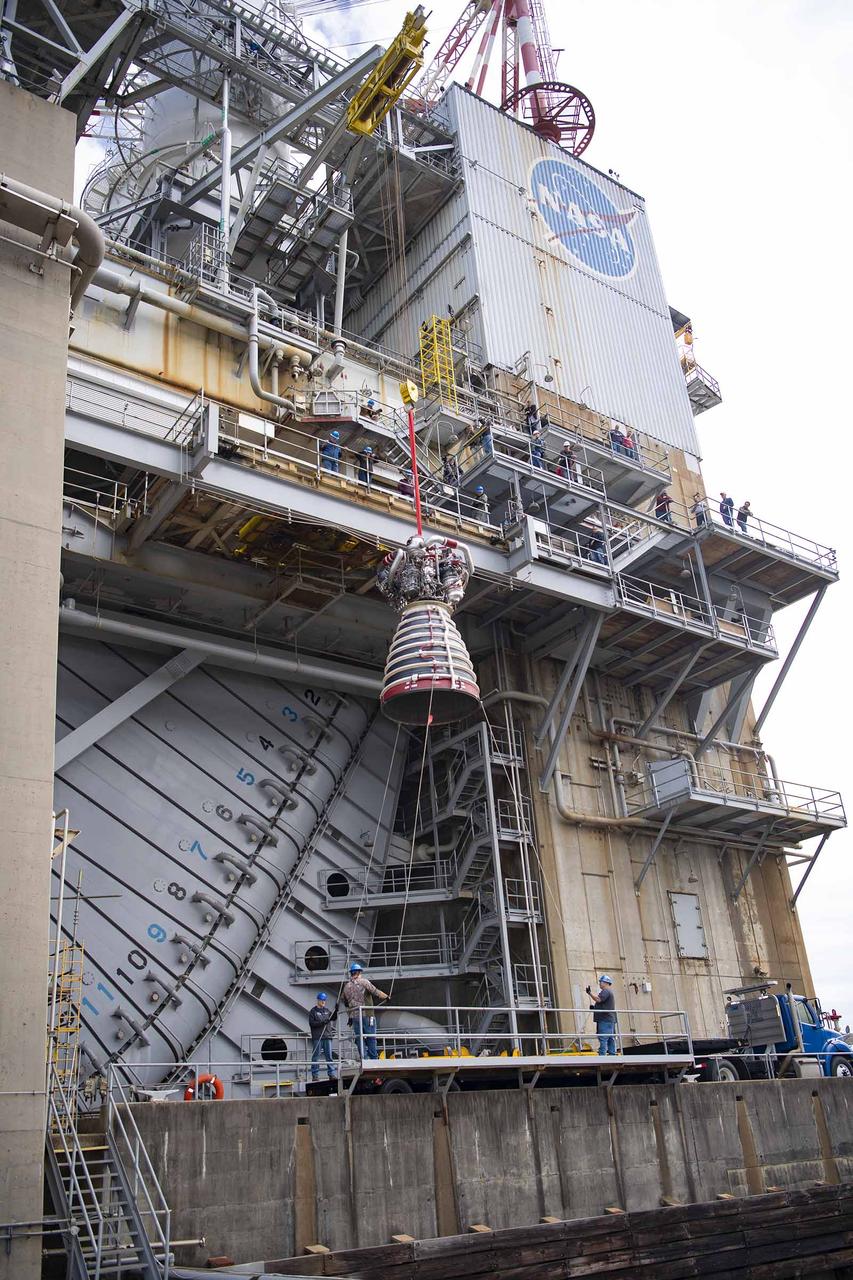
Teams at NASA’s Stennis Space Center deliver, lift, and install the first new production RS-25 engine on the Fred Haise Test Stand on Feb. 18.
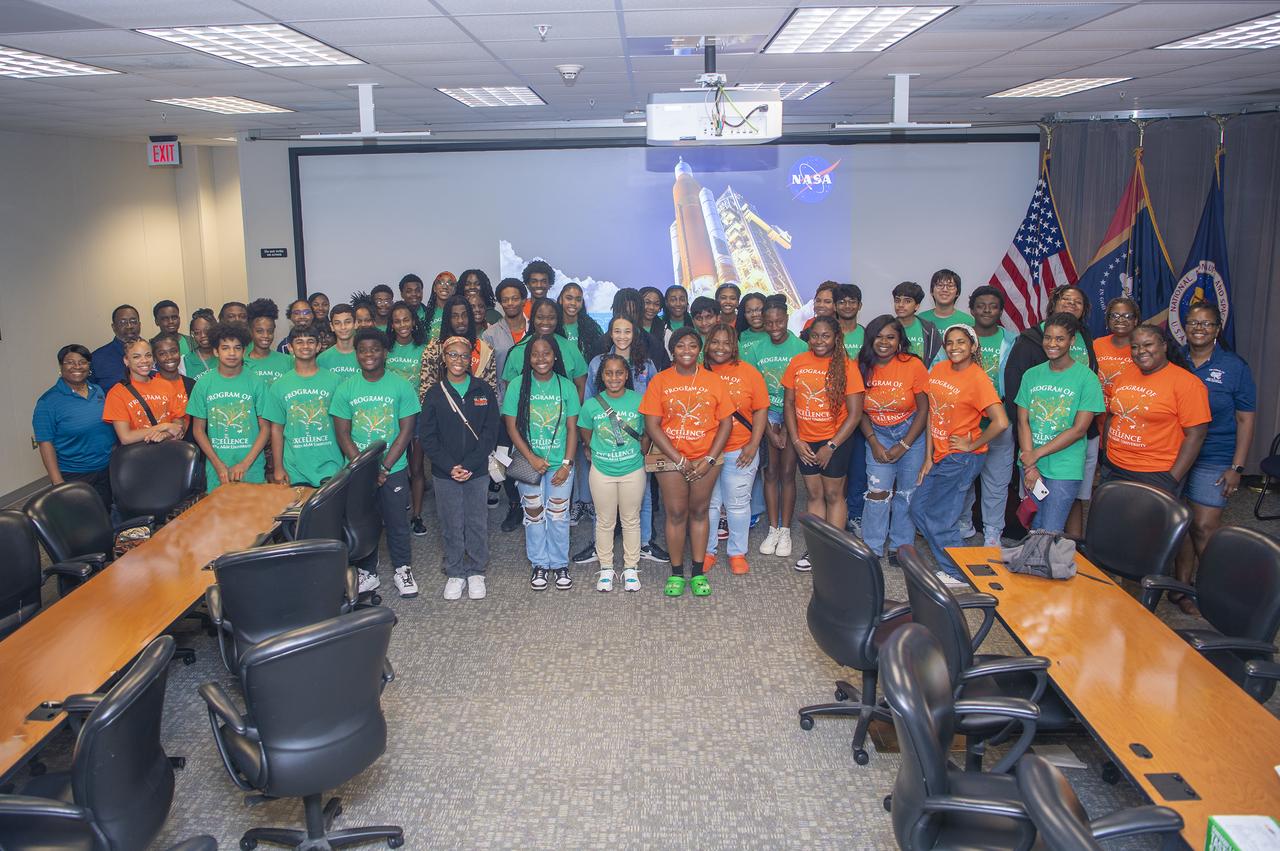
Members of the Florida A&M University Program of Excellence in STEM attend a presentation June 21 during a visit to NASA’s Stennis Space Center. The NASA Office of STEM Engagement provided information on grants and student activities during the presentation about NASA Stennis and the work conducted at the unique federal city. The group also visited the Thad Cochran Test Stand and Relativity Space test complex during a site tour. The Program of Excellence in STEM summer academy aims to enhance student knowledge of opportunities in the fields of science, technology, engineering, and mathematics.
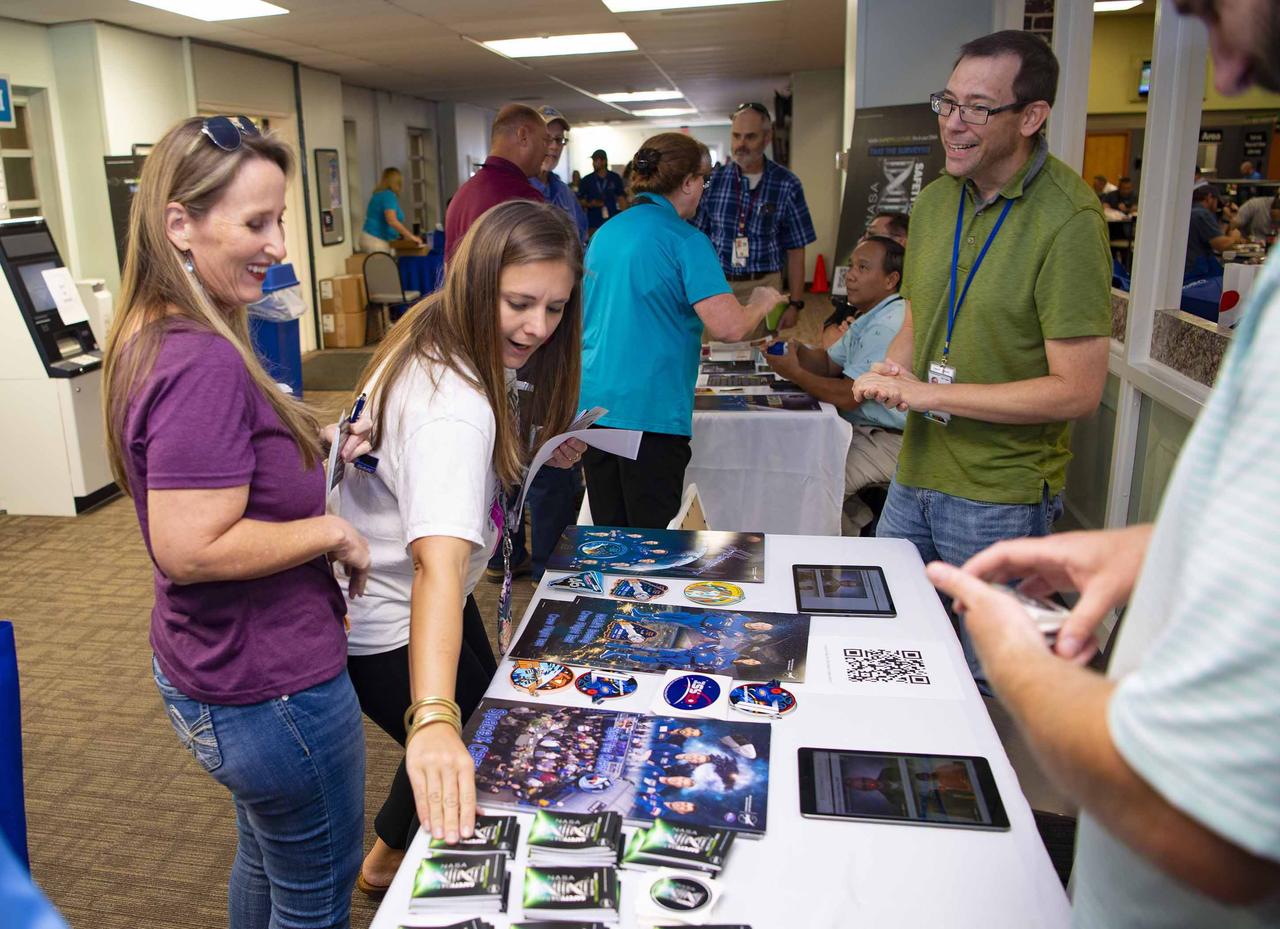
NASA Stennis employees visit booths with safety and health information in the Roy S. Estess Building during the annual Safety and Health Day at NASA’s Stennis Space Center on Sept. 26. The yearly event is a reminder to the NASA Stennis workforce about the importance of a safe work environment and provided the opportunity for a health screening.
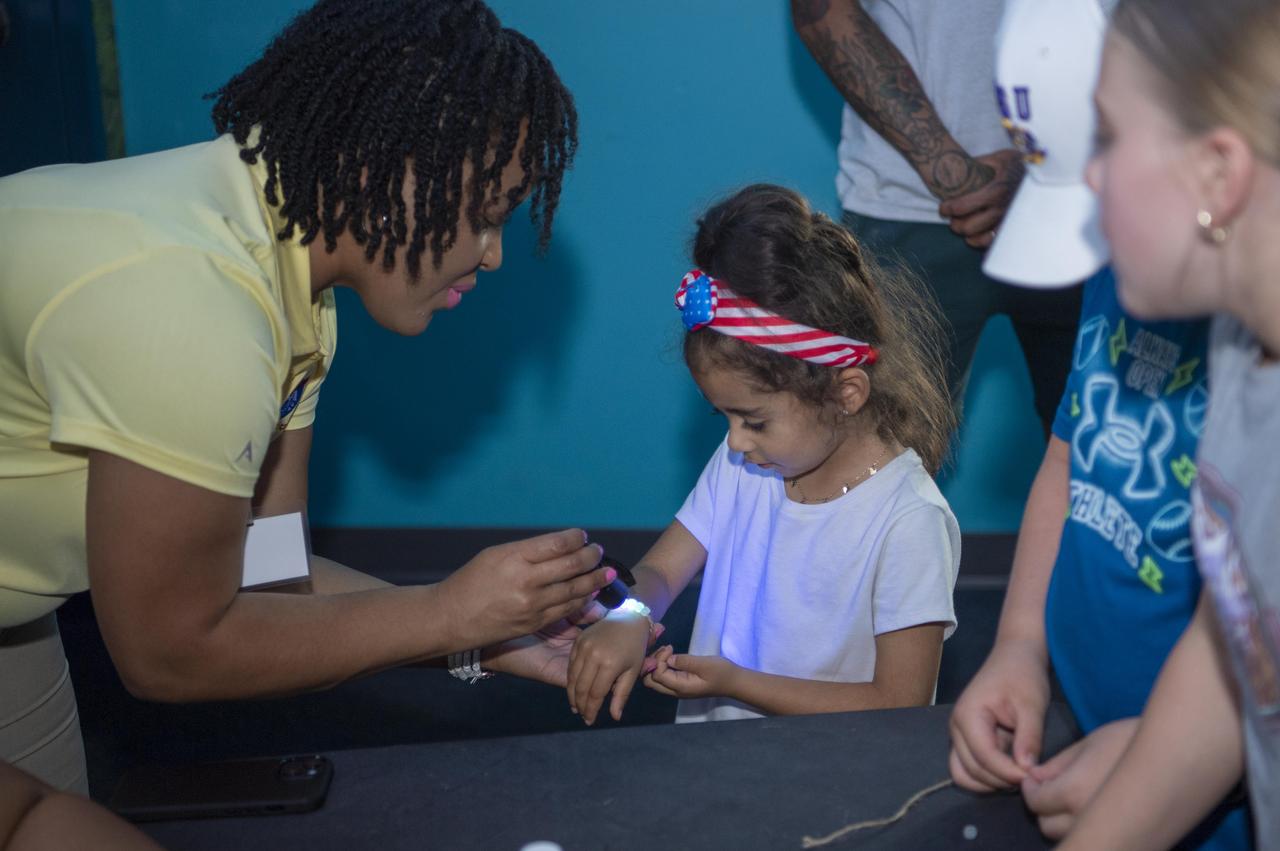
NASA Public Affairs Specialist Samone Wilson, left, uses a solar bead activity to teach a young visitor to the Audubon Aquarium in New Orleans about skin protection on July 5. NASA hosted an information/interactive exhibit at the aquarium in conjunction with NASA activities at the 30th annual ESSENCE Fest in New Orleans during the Fourth of July weekend.
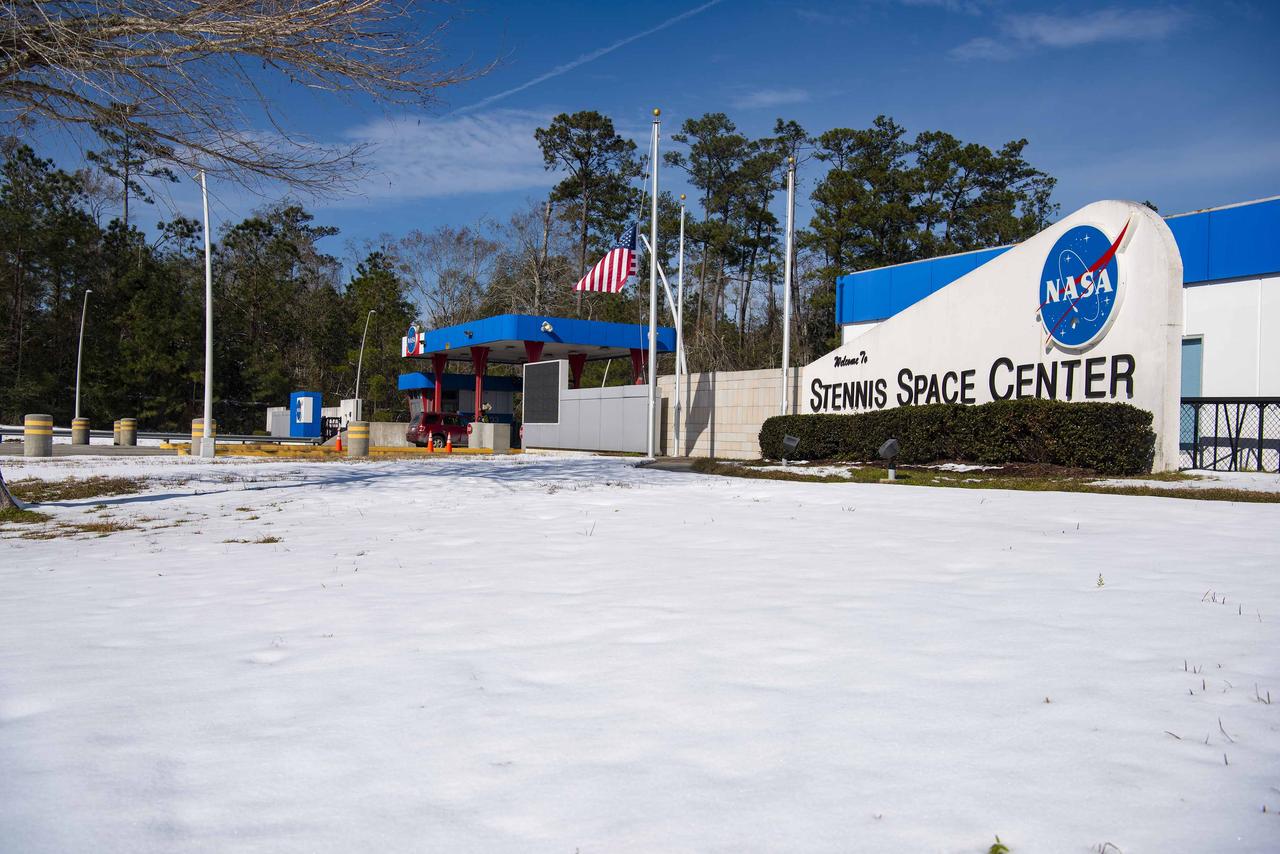
NASA’s Stennis Space Center near Bay St. Louis, Mississippi, is often associated with hot fires coming from the center’s long history of hot fire testing engines and stages that have helped power the nation’s space dreams since the first humans stepped foot on the Moon. However, NASA Stennis turned into a Winter Wonderland Jan. 21 when America’s largest rocket propulsion test site received a historic amount of snow across the unique federal city. Hancock County, where NASA Stennis is located, received five to seven inches of snow, according to the National Weather Service. It marked the most snow the county has received in 61 years. The December 31, 1963, snowfall holds the record at 10 inches of snow for Bay St. Louis, Mississippi.
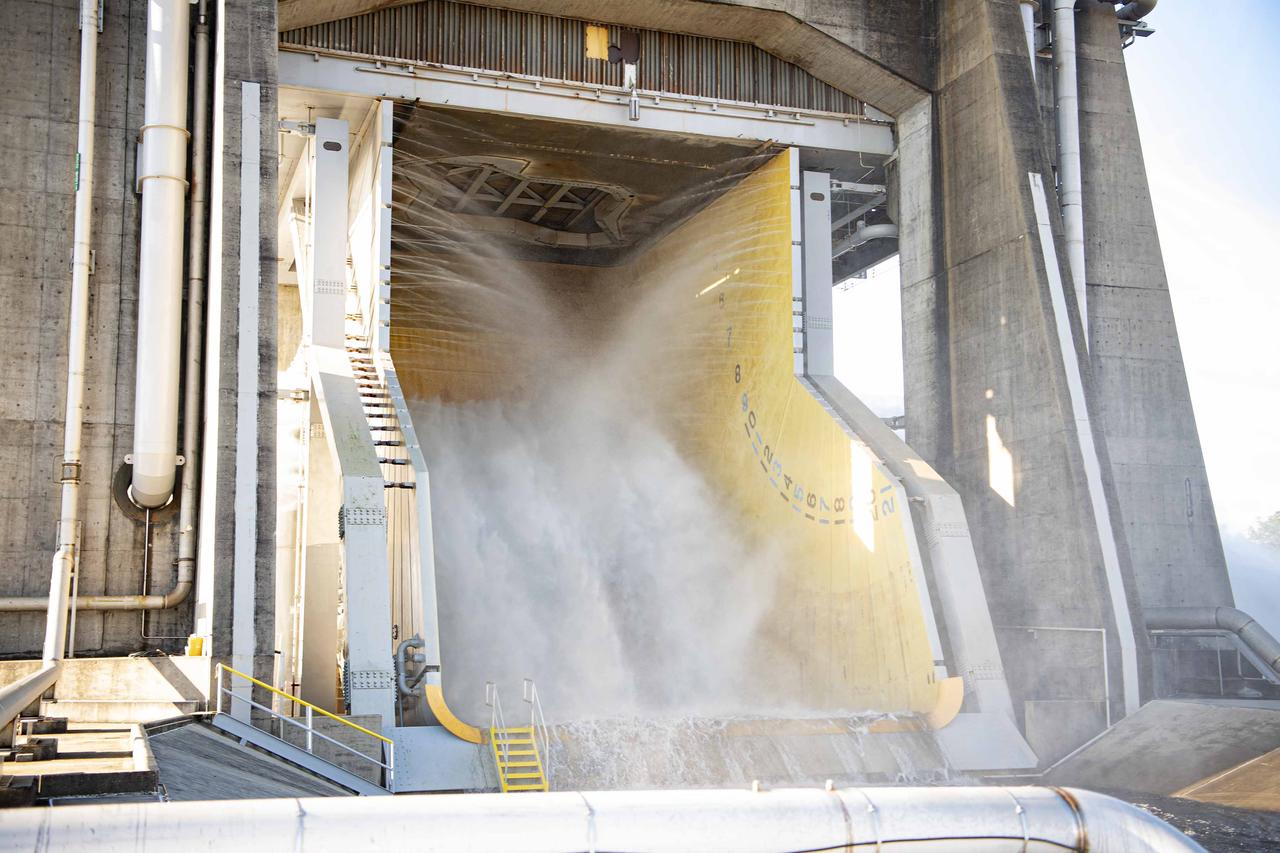
Crews conduct a planned flame deflector water flow system flush on the Fred Haise Test Stand at NASA’s Stennis Space Center on Oct. 22, following the recent completion of upgrades to the High Pressure Industrial Water Facility’s underground piping network. The flush, a periodic procedure to ensure system functionality and performance, involves flowing 150,000 gallons or more per minute from the High Pressure Industrial Water Facility to the stand. It also continues stand preparations for testing RS-25 flight engines for use on future Artemis missions to the Moon and beyond.
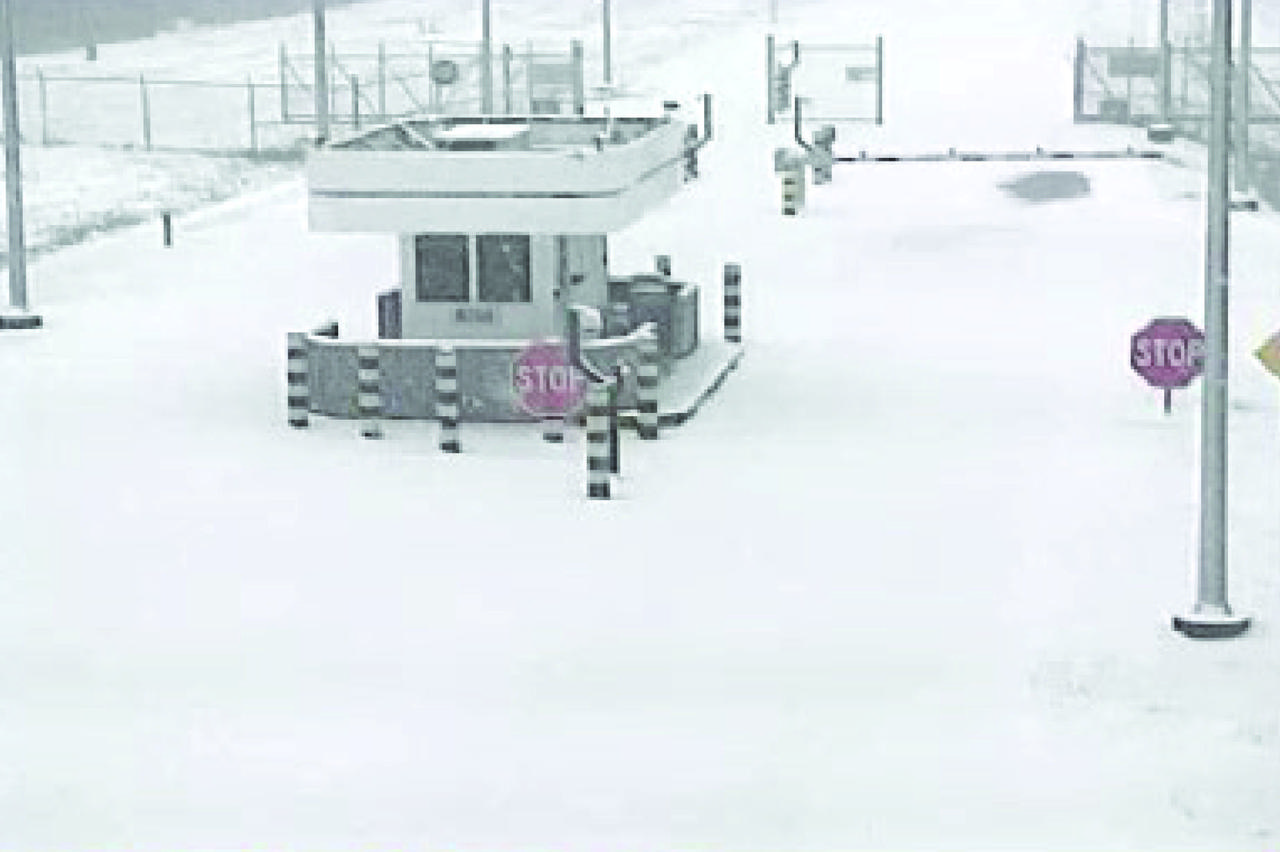
NASA’s Stennis Space Center near Bay St. Louis, Mississippi, is often associated with hot fires coming from the center’s long history of hot fire testing engines and stages that have helped power the nation’s space dreams since the first humans stepped foot on the Moon. However, NASA Stennis turned into a Winter Wonderland Jan. 21 when America’s largest rocket propulsion test site received a historic amount of snow across the unique federal city. Hancock County, where NASA Stennis is located, received five to seven inches of snow, according to the National Weather Service. It marked the most snow the county has received in 61 years. The December 31, 1963, snowfall holds the record at 10 inches of snow for Bay St. Louis, Mississippi.
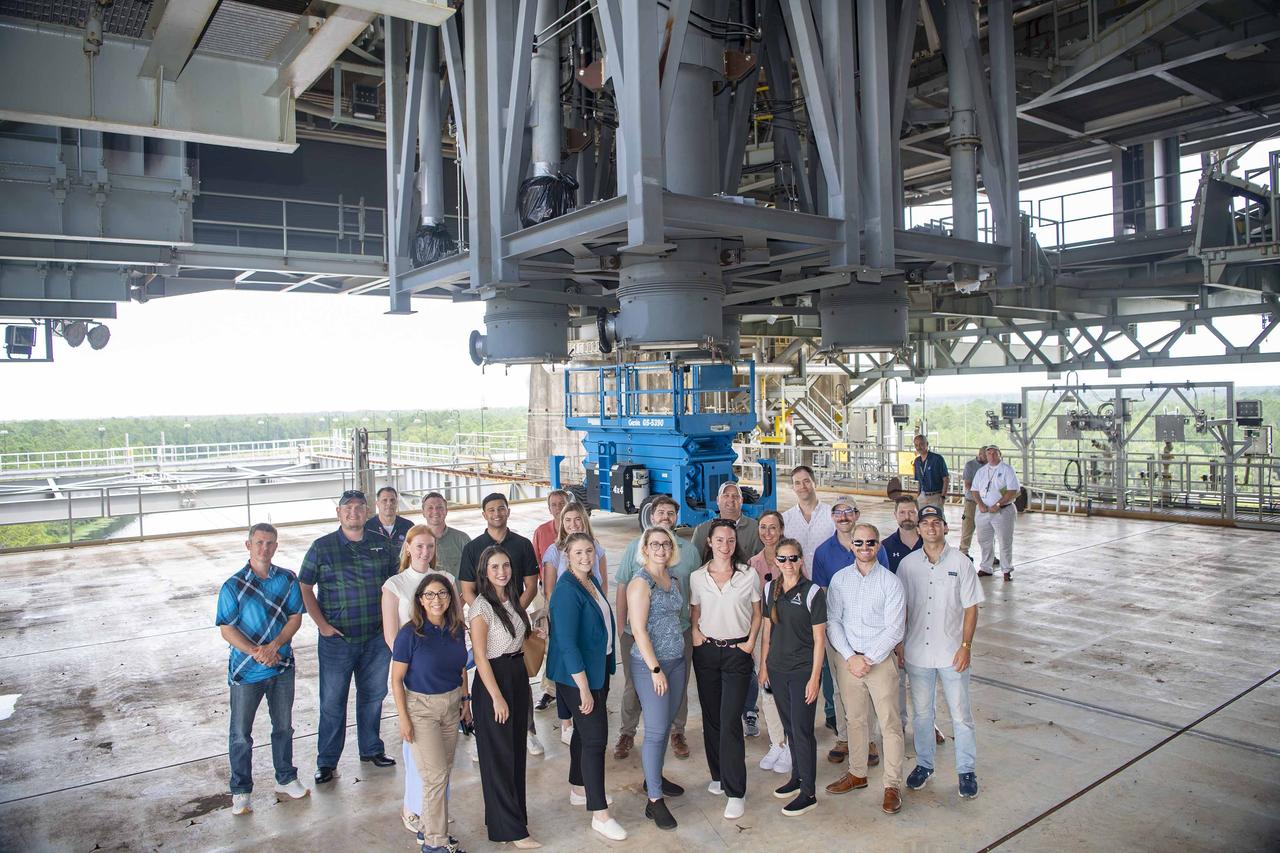
Congressional staff delegates representing eight states (Alabama, California, Colorado, Illinois, Louisiana, Maryland, New Jersey, and New York), along with NASA and U.S. Air Force representatives, tour the Thad Cochran Test Stand (B-2) at NASA Stennis on July 16. The visit provided an opportunity for the group to learn about propulsion test work carried out onsite by NASA and commercial companies.
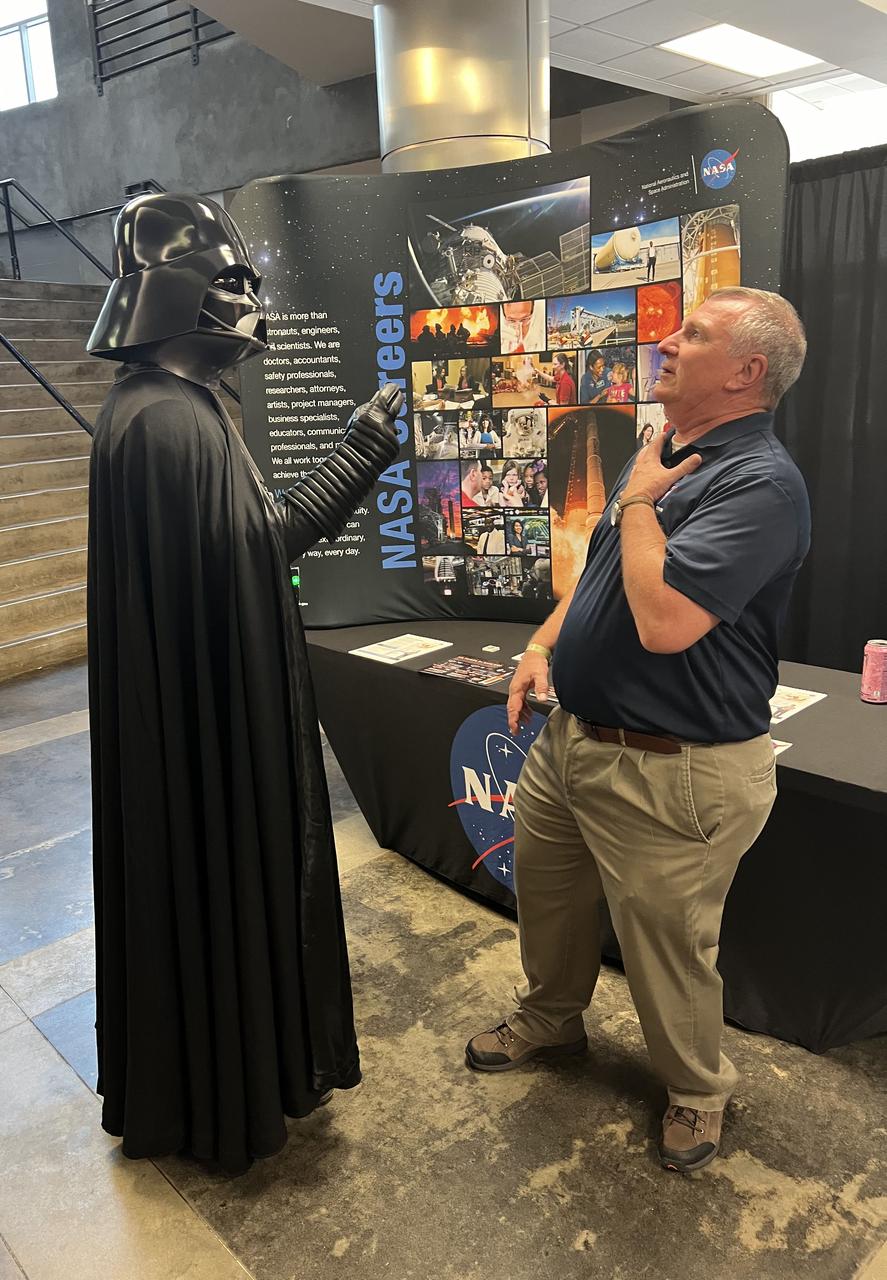
A Darth Vader character visits with NASA Stennis legislative affairs specialist and chief of staff Troy Frisbie at the NASA booth on June 23 at the Mississippi Comic Convention in Jackson, Mississippi.
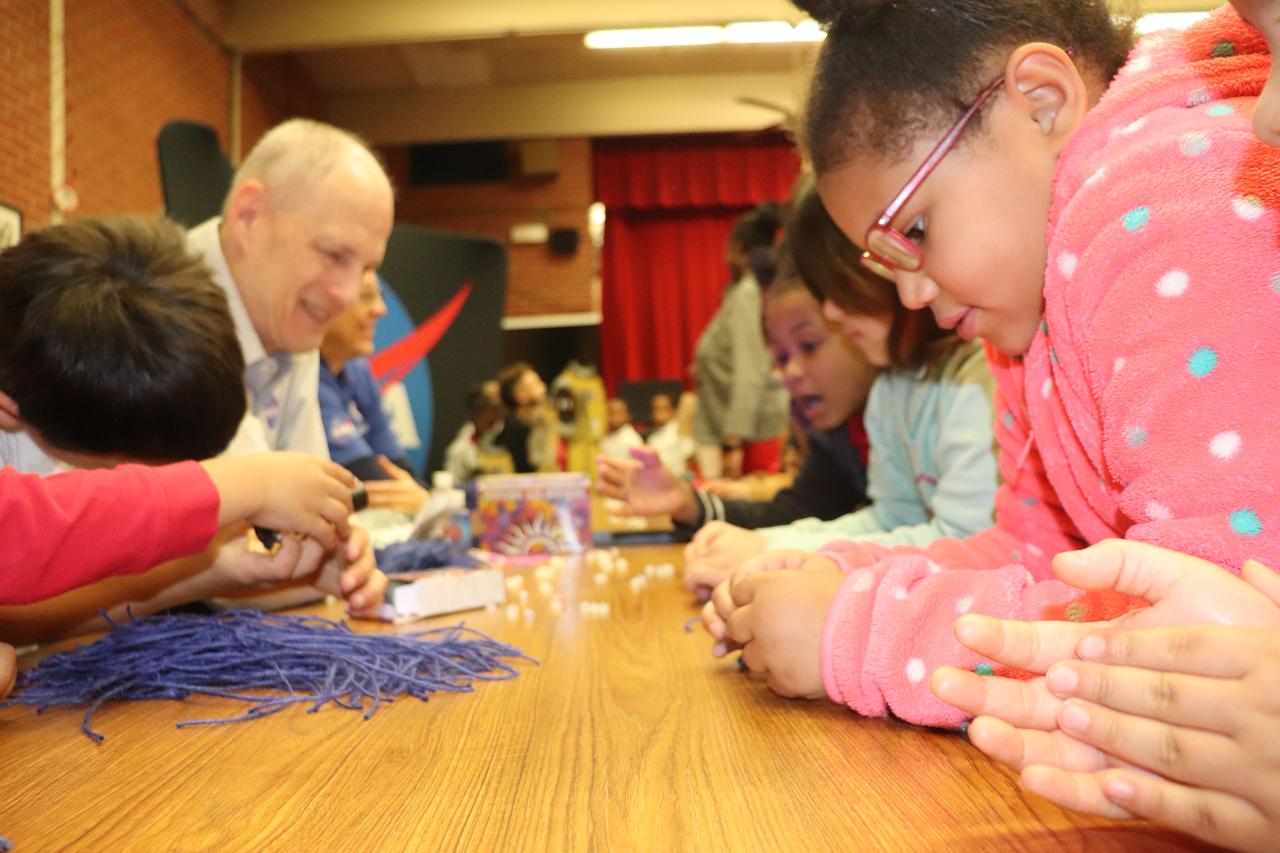
Representatives from NASA’s Stennis Space Center and NASA Shared Services Center participate in multiple related outreach events throughout Jackson, Mississippi, as part of the annual Stennis Day at the Capitol activities on Feb. 29. NASA personnel inspired the Artemis Generation with visits to Spann Elementary and Blackburn Middle schools. Activities included students learning about life as a NASA astronaut and a hands-on STEM (science, technology, engineering, and mathematics) activity. Sending the first woman and first person of color to the Moon on future Artemis missions will inspire the Artemis Generation to see themselves in space and understand the importance of STEM studies and careers. As NASA takes giant leaps to bridge disparities and break barriers in STEM, the agency’s efforts in the future workforce advances the nation’s space exploration.

The first RS-25 hot fire of the spring came on March 22 when test teams at NASA’s Stennis Space Center fired the engine up to a power level of 113% for a full duration of 500 seconds. As NASA aims to establish a long-term presence on the Moon for scientific discovery and exploration, and prepare for future missions to Mars, new engines will incorporate dozens of improvements to make production more efficient and affordable while maintaining high performance and reliability.

NASA Stennis employees visit booths with safety and health information in the Roy S. Estess Building during the annual Safety and Health Day at NASA’s Stennis Space Center on Sept. 26. The yearly event is a reminder to the NASA Stennis workforce about the importance of a safe work environment and provided the opportunity for a health screening.
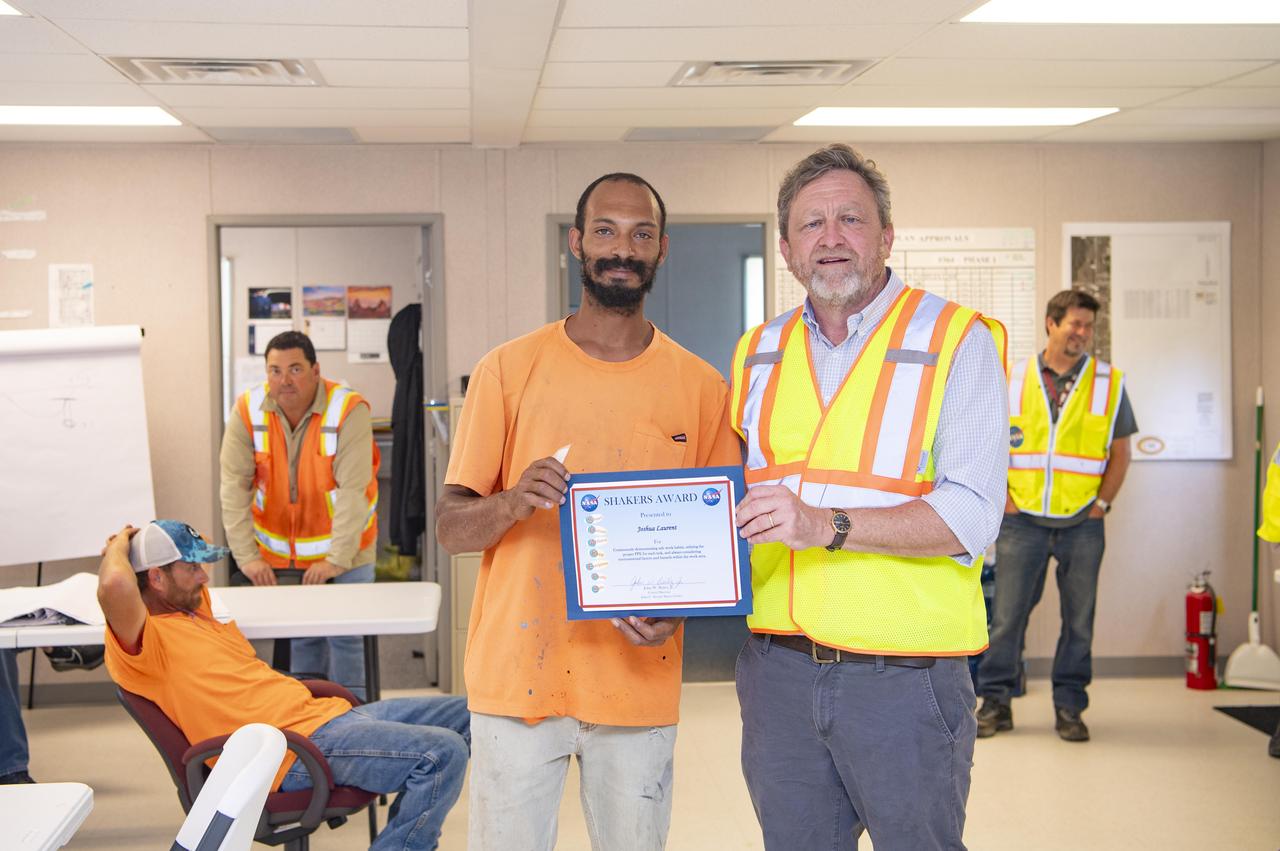
Joshua Laurent, an employee with Civil Works Contracting, is presented a NASA SHAKERS (Smart Human Actions Keep Everyone Really Safe) Award from NASA Stennis Associate Director Rodney McKellip on May 8. Laurent, left, received the award for continuously demonstrating safe work habits, utilizing the proper personal protective equipment for each task, and always considering environmental factors and hazards within the work area while working on the NASA Stennis potable water system. NASA’s constant attention to safety, one of the agency’s five core values, is the cornerstone for mission success.
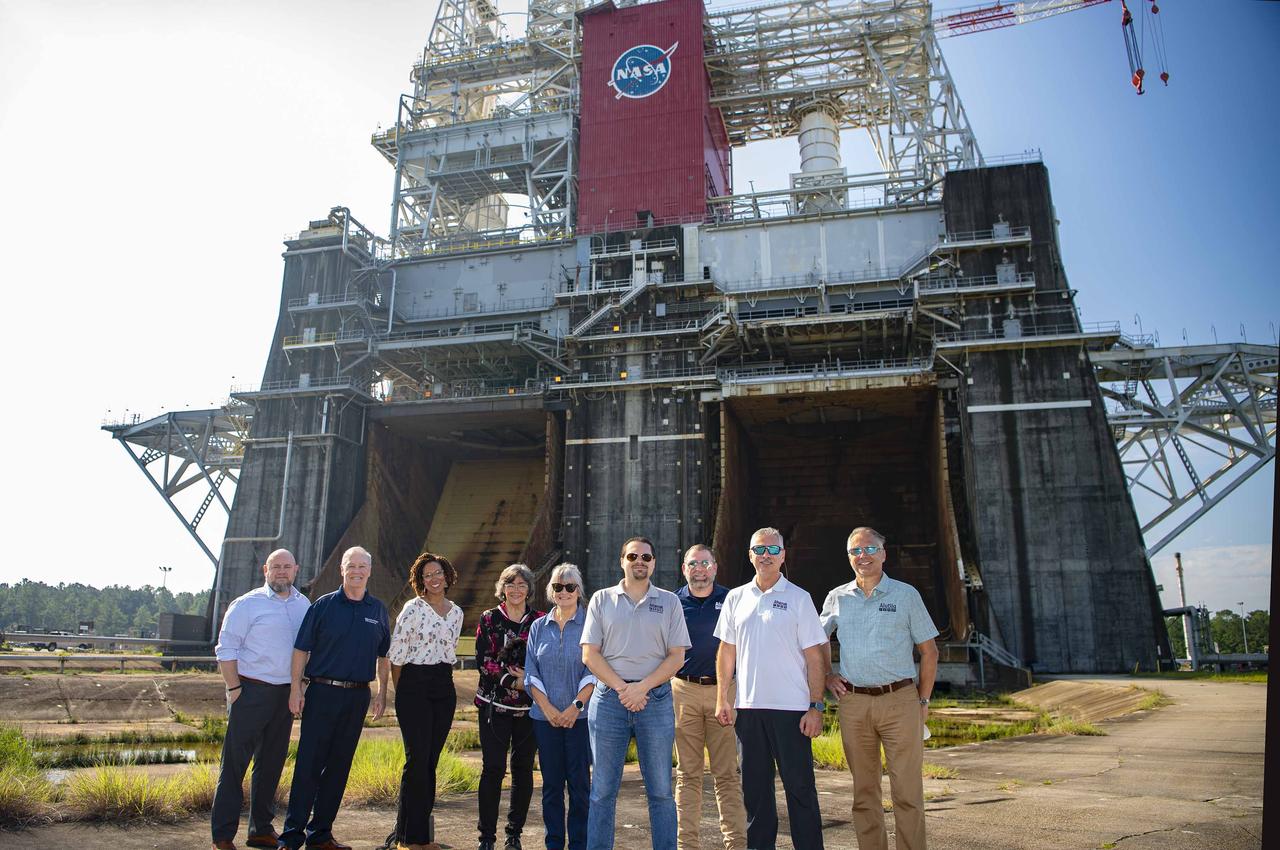
Afognak Native Corporation Board of Director members and Alutiiq, LLC executives stand at the Thad Cochran Test Stand (B-1/B-2) during a visit to NASA’s Stennis Space Center on Sept. 19. The board members and executives visited the site to learn about laboratory services provided by Alutiiq Essential Services at NASA Stennis since 2020. Afognak is an Alaskan corporation focused on serving the needs of its native Alaskan people. Alutiiq, LLC operates as a subsidiary of the corporation to provide a variety of services to federal entities. Alutiiq Essential Services operates as a subsidiary of Alutiiq, LLC. Shown at the test stand during the Sept. 19 visit are, left to right: Ian Neumann, Alutiiq executive; John Monaccio, Alutiiq Essential Services president; Autumn Sellers, Alutiiq executive; Loretta Nelson, director; Marci Orth, director; Wade Hall, director; Shane Mendel, Alutiiq Essential Services program manager at NASA Stennis; Erik Olsen, director; Alan Hines, Alutiiq Essential Services executive.
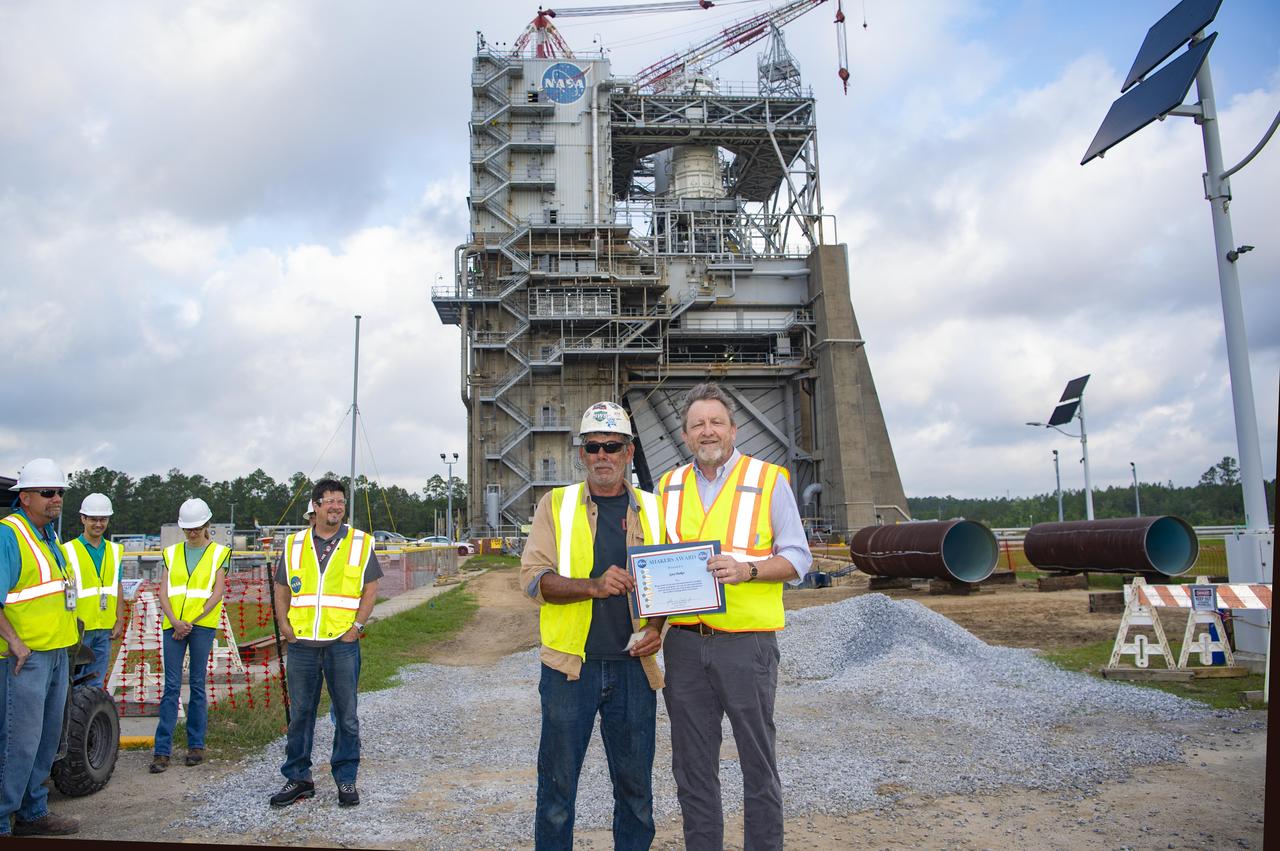
: Gary Parker, an employee with Healtheon, Inc., is presented a NASA SHAKERS (Smart Human Actions Keep Everyone Really Safe) Award from NASA Stennis Associate Director Rodney McKellip on May 8. Parker, left, received the award for leadership and dedication to safety of the crew working to upgrade an essential test complex water system at NASA Stennis. As one of the crew leaders, Parker ensured all took the safest approach for each task, even as the scale of the project increased. NASA’s constant attention to safety, one of the agency’s five core values, is the cornerstone for mission success.
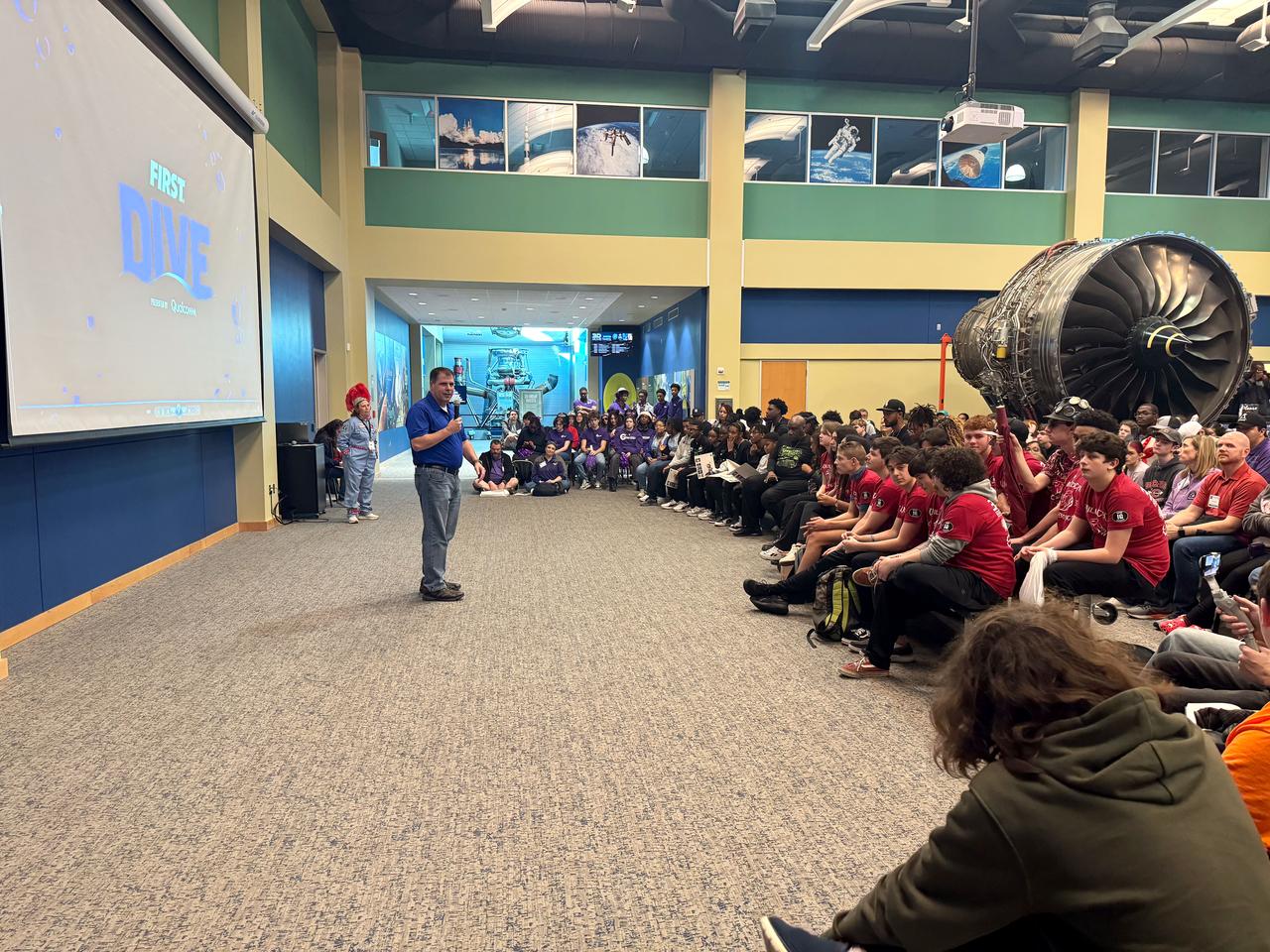
The NASA ASTRO CAMP® Community Partners (ACCP) program hosted a FIRST® Robotics Competition 2025 season kickoff event Jan. 4 at INFINITY Science Center, the official visitor center of NASA’s Stennis Space Center. NASA representatives welcomed competition teams as the event revealed the challenge for the new season. Teams will use engineering skills during the REEFSCAPE℠ challenge to strengthen one of the ocean’s most diverse habitats to build a better world. The third annual FIRST (For the Inspiration and Recognition of Science and Technology) Robotics Magnolia Regional, a NASA-sponsored event, is scheduled for March 13-15 in Laurel, Mississippi, at the South Mississippi Fairgrounds. The regional competition will serve as a championship-qualifying event for teams to compete in Houston in the world championship event in April. FIRST Robotics is described as the ultimate sport of the mind as teams concentrate and share in the excitement of success.
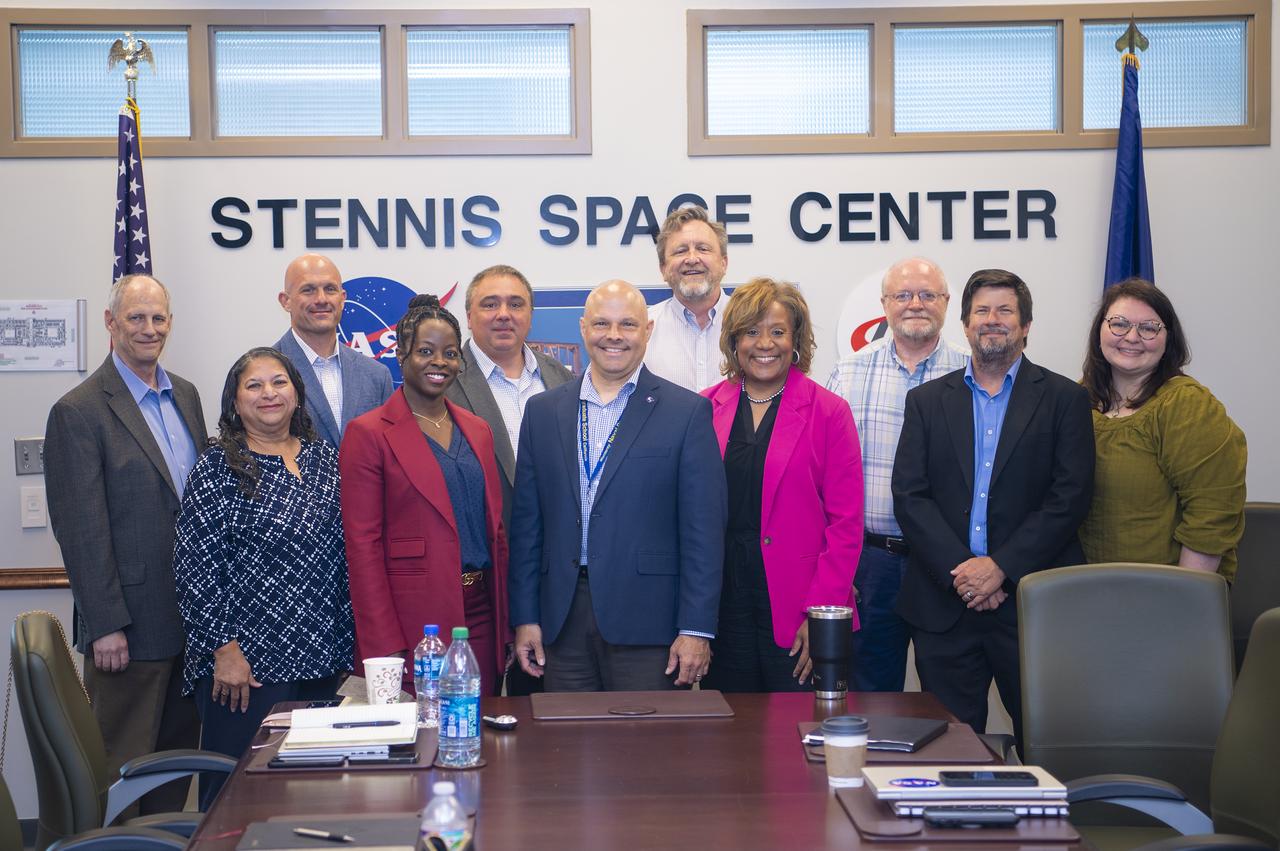
Members of NASA’s Mission Support Directorate met with leaders from NASA’s Stennis Space Center and the NASA Shared Services Center during an onsite visit June 3. The group also participated in an in-depth tour of the NASA Stennis facilities. Pictured (left to right) are Ron Bald, chief counsel for the Office of the General Counsel at NASA Stennis and NASA Shared Services Center; Dinna Cottrell, chief information officer for the NASA Stennis and NASA Shared Services Center Office of the Chief Information Officer; Eli Ouder, procurement officer for NASA Stennis and NASA Shared Services Center; Stacy Houston, executive officer for NASA’s Mission Support Directorate; Michael Tubbs, acting director for the NASA Stennis Center Operations Directorate; Michael Hess, deputy associate administrator for NASA’s Mission Support Directorate; Rodney McKellip, associate director for NASA Stennis; Nichole Pinkney, program manager for NASA’s Mission Support Directorate; Duane Armstrong, manager for the NASA Stennis Strategic Development Office; Gary Benton, director for the NASA Stennis Safety and Mission Assurance Directorate; and Alison Butsch, associate chief financial officer for the External Business Operations Division within the NASA Stennis Office of the Chief Financial Officer.
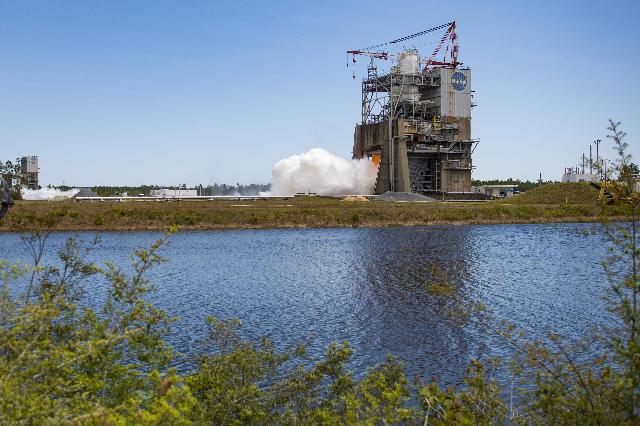
NASA closes in on a milestone for production of new RS-25 engines to help power future Artemis missions to the Moon and beyond following a successful full duration test on March 27 at NASA’s Stennis Space Center. It marks the 11th test of the 12-test series.
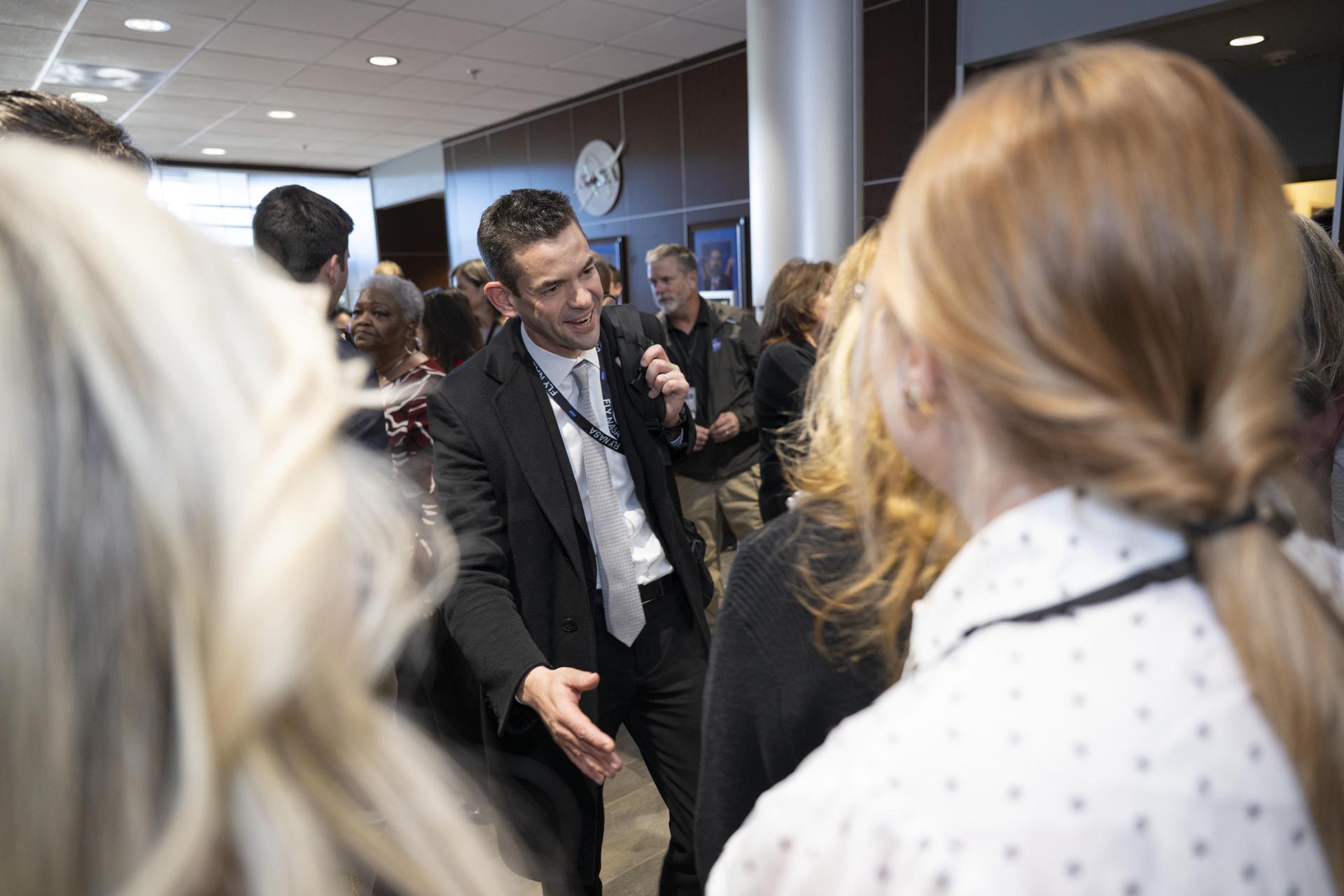
NASA Administrator Jared Isaacman, center, meets with NASA employees during his visit to NASA’s Stennis Space Center near Bay St. Louis, Mississippi, on Jan. 15, 2026. Isaacman, NASA’s 15th administrator, began visiting the agency’s centers after his appointment on Dec. 17, 2025.
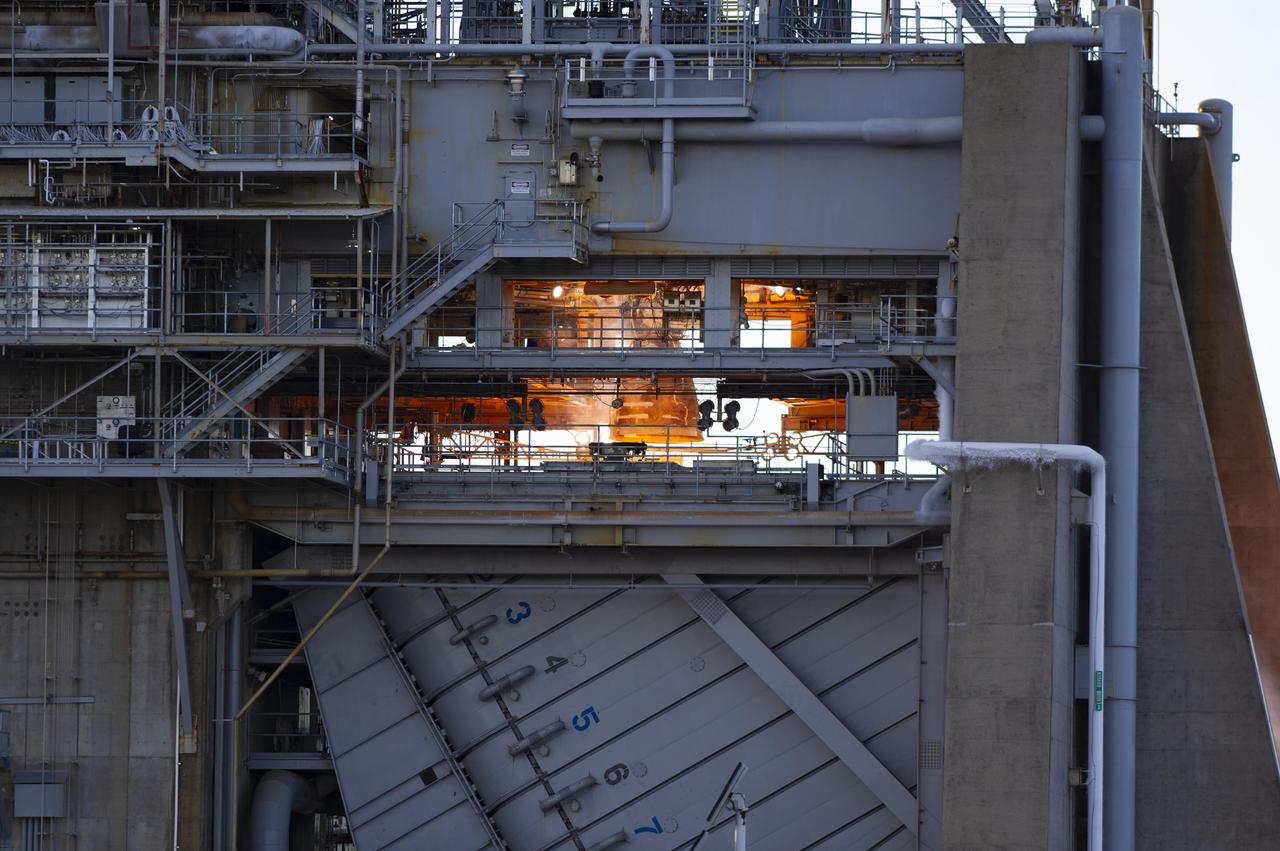
NASA completed a full-duration, 500-second hot fire of an RS-25 certification engine Jan. 17, continuing a critical test series to support future SLS (Space Launch System) missions to the Moon and beyond as NASA explores the secrets of the universe for the benefit of all.
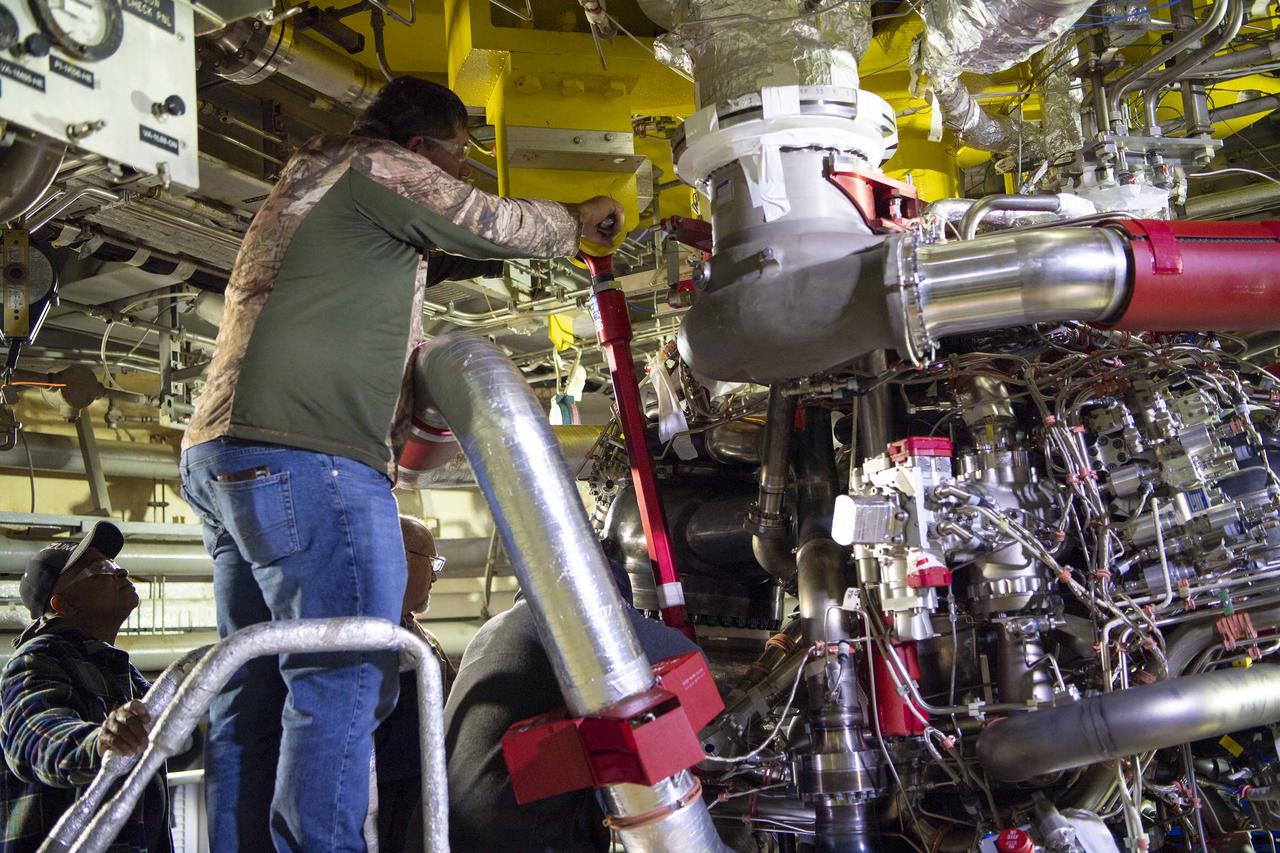
Teams at NASA’s Stennis Space Center deliver, lift, and install the first new production RS-25 engine on the Fred Haise Test Stand on Feb. 18.
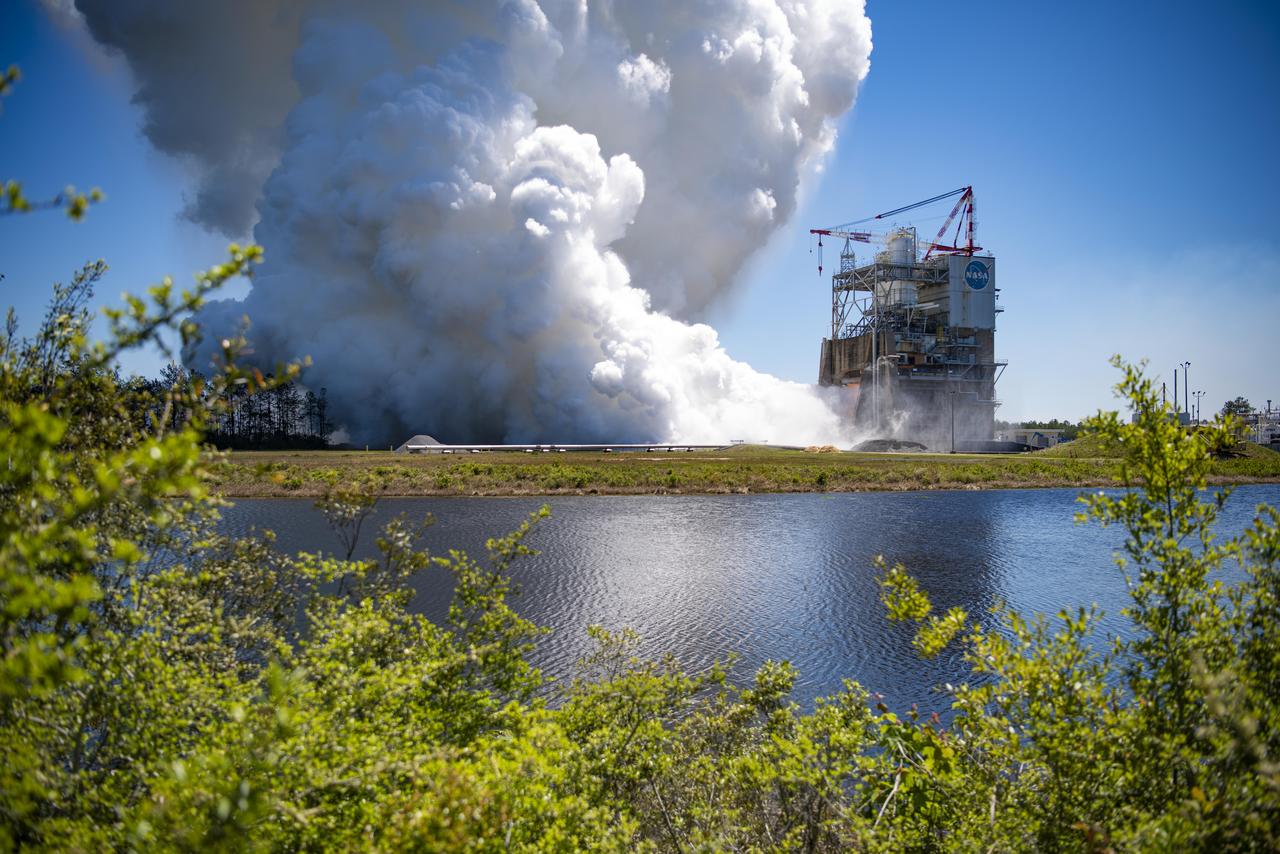
NASA conducted a full-duration RS-25 hot fire April 3 on the Fred Haise Test Stand at NASA’s Stennis Space Center near Bay St. Louis, Mississippi, achieving a major milestone for future Artemis flights of NASA’s SLS (Space Launch System) rocket. It marked the final test of a 12-test series to certify production of new RS-25 engines by lead contractor Aerojet Rocketdyne, an L3Harris Technologies company, to help power NASA’s SLS rocket on Artemis missions to the Moon and beyond, beginning with Artemis V.
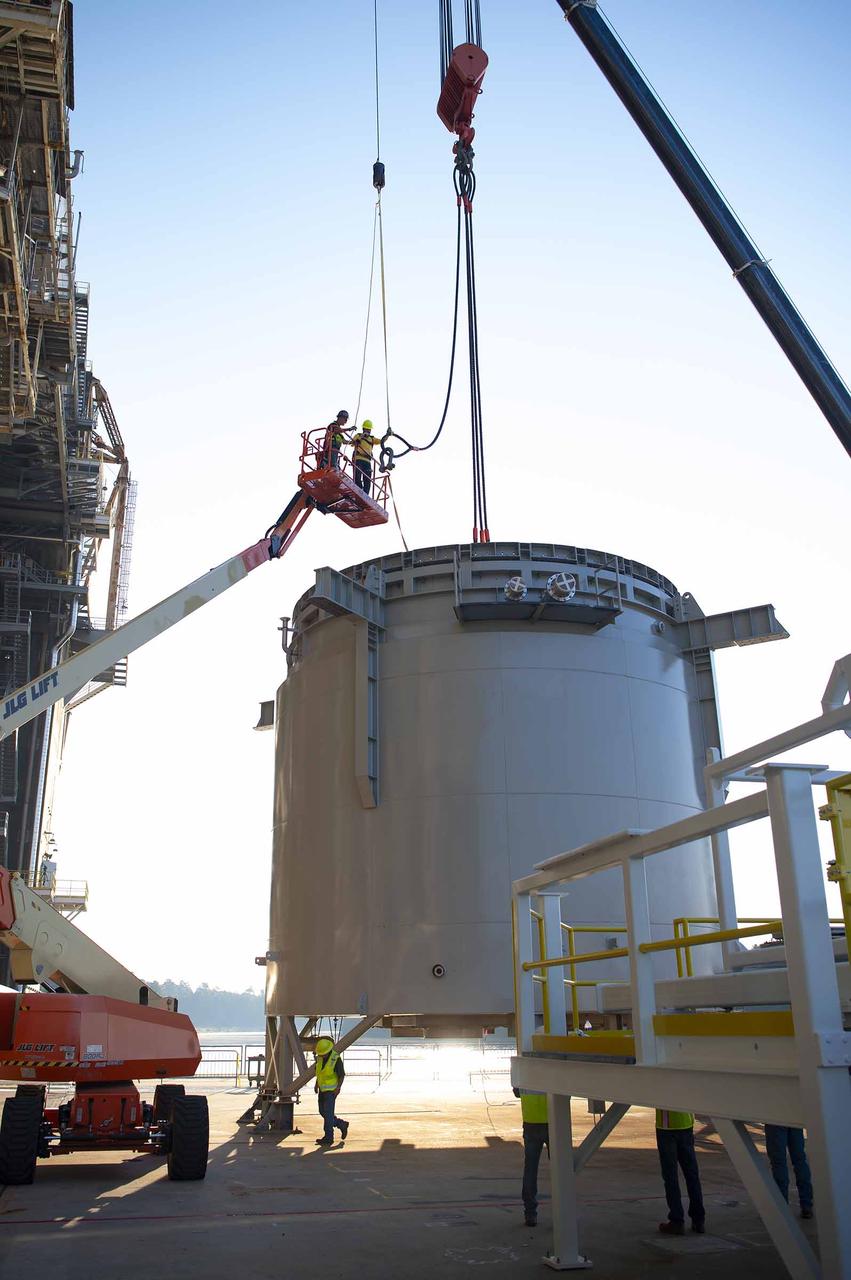
Teams at NASA’s Stennis Space Center complete a safe lift and install of an interstage simulator unit needed for future testing of NASA’s exploration upper stage (EUS) in the B-2 position of the Thad Cochran Test Stand. The lift and install, completed over a two-week period that began Oct. 10, marks a milestone for testing the new SLS (Space Launch System) rocket stage that will fly on future Artemis missions to the Moon and beyond. The EUS will undergo a series of Green Run tests of its integrated systems prior to its first flight. During testing, the interstage simulator component will function like the SLS interstage section that helps protect the upper stage during Artemis launches.
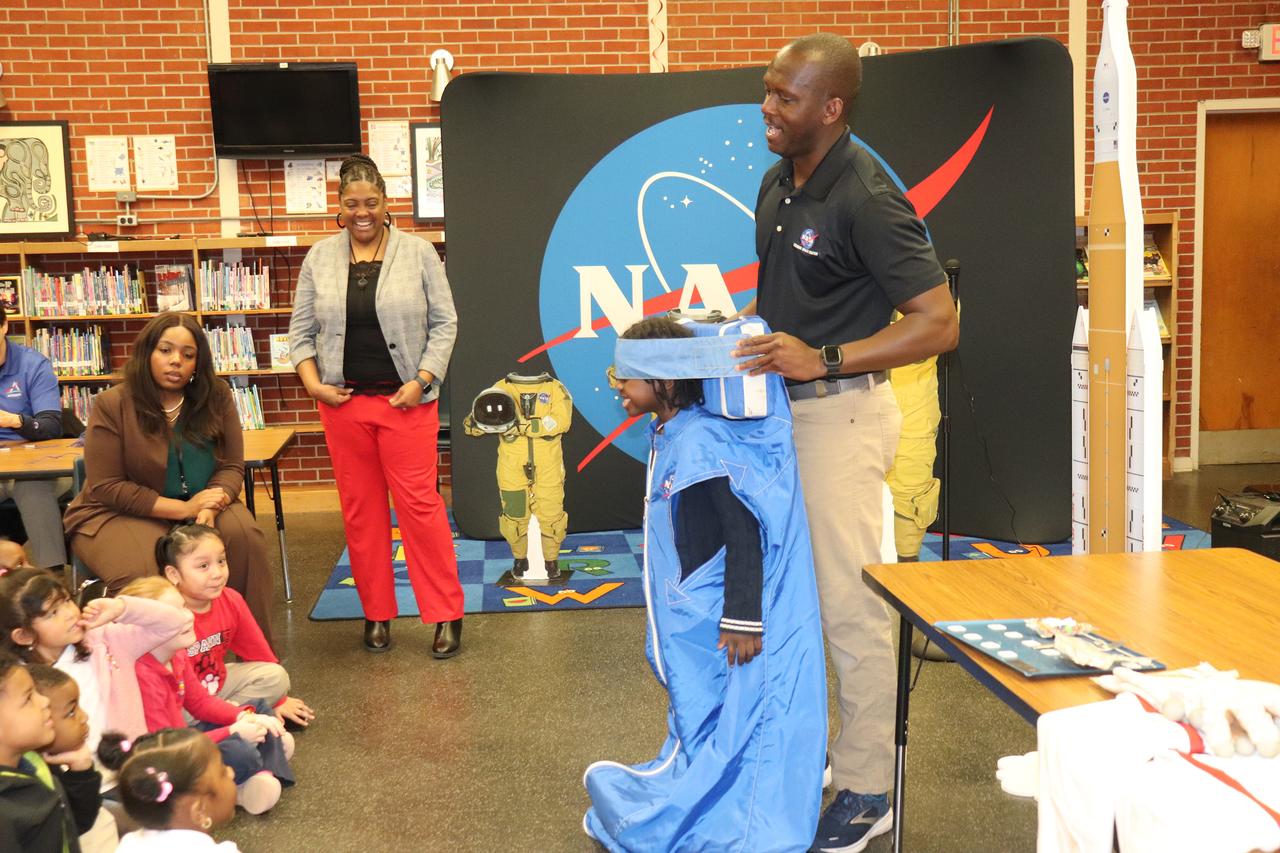
Representatives from NASA’s Stennis Space Center and NASA Shared Services Center participate in multiple related outreach events throughout Jackson, Mississippi, as part of the annual Stennis Day at the Capitol activities on Feb. 29. NASA personnel inspired the Artemis Generation with visits to Spann Elementary and Blackburn Middle schools. Activities included students learning about life as a NASA astronaut and a hands-on STEM (science, technology, engineering, and mathematics) activity. Sending the first woman and first person of color to the Moon on future Artemis missions will inspire the Artemis Generation to see themselves in space and understand the importance of STEM studies and careers. As NASA takes giant leaps to bridge disparities and break barriers in STEM, the agency’s efforts in the future workforce advances the nation’s space exploration.
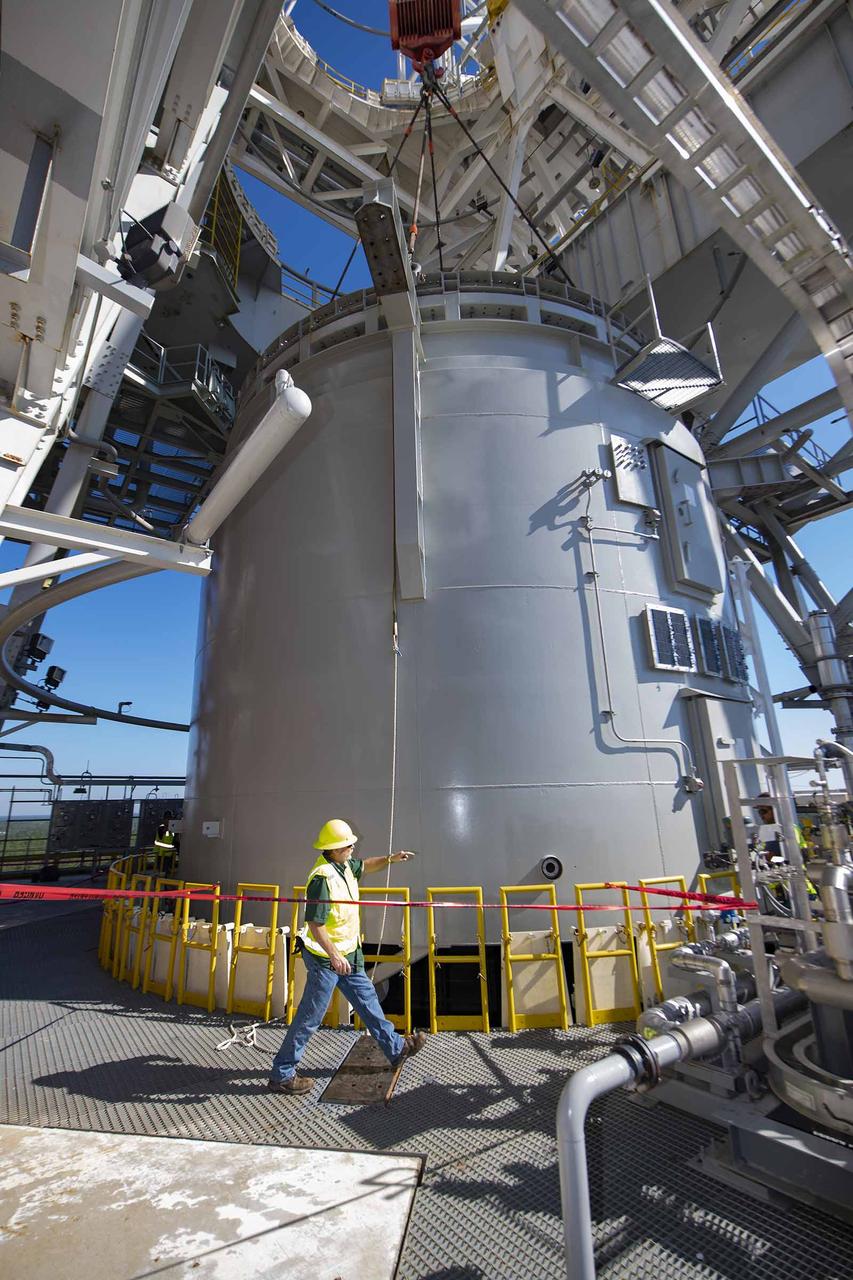
Teams at NASA’s Stennis Space Center complete a safe lift and install of an interstage simulator unit needed for future testing of NASA’s exploration upper stage (EUS) in the B-2 position of the Thad Cochran Test Stand. The lift and install, completed over a two-week period that began Oct. 10, marks a milestone for testing the new SLS (Space Launch System) rocket stage that will fly on future Artemis missions to the Moon and beyond. The EUS will undergo a series of Green Run tests of its integrated systems prior to its first flight. During testing, the interstage simulator component will function like the SLS interstage section that helps protect the upper stage during Artemis launches.
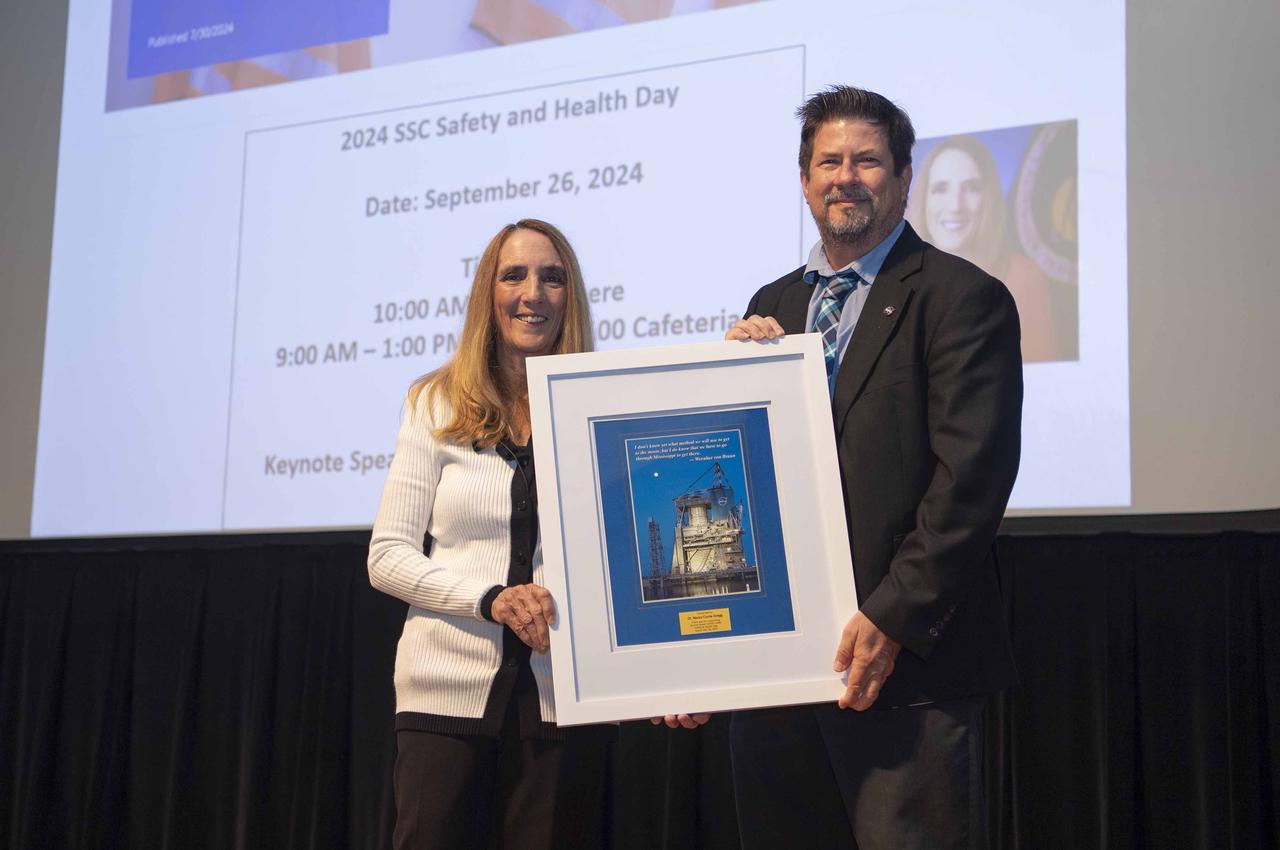
NASA Stennis Safety and Mission Assurance Director Gary Benton, right, presents a token of appreciation to keynote speaker and former NASA astronaut Dr. Nancy Currie-Gregg at the annual Safety and Health Day in the StenniSphere Auditorium at NASA’s Stennis Space Center on Sept. 26. The yearly event is a reminder to the NASA Stennis workforce about the importance of a safe work environment.
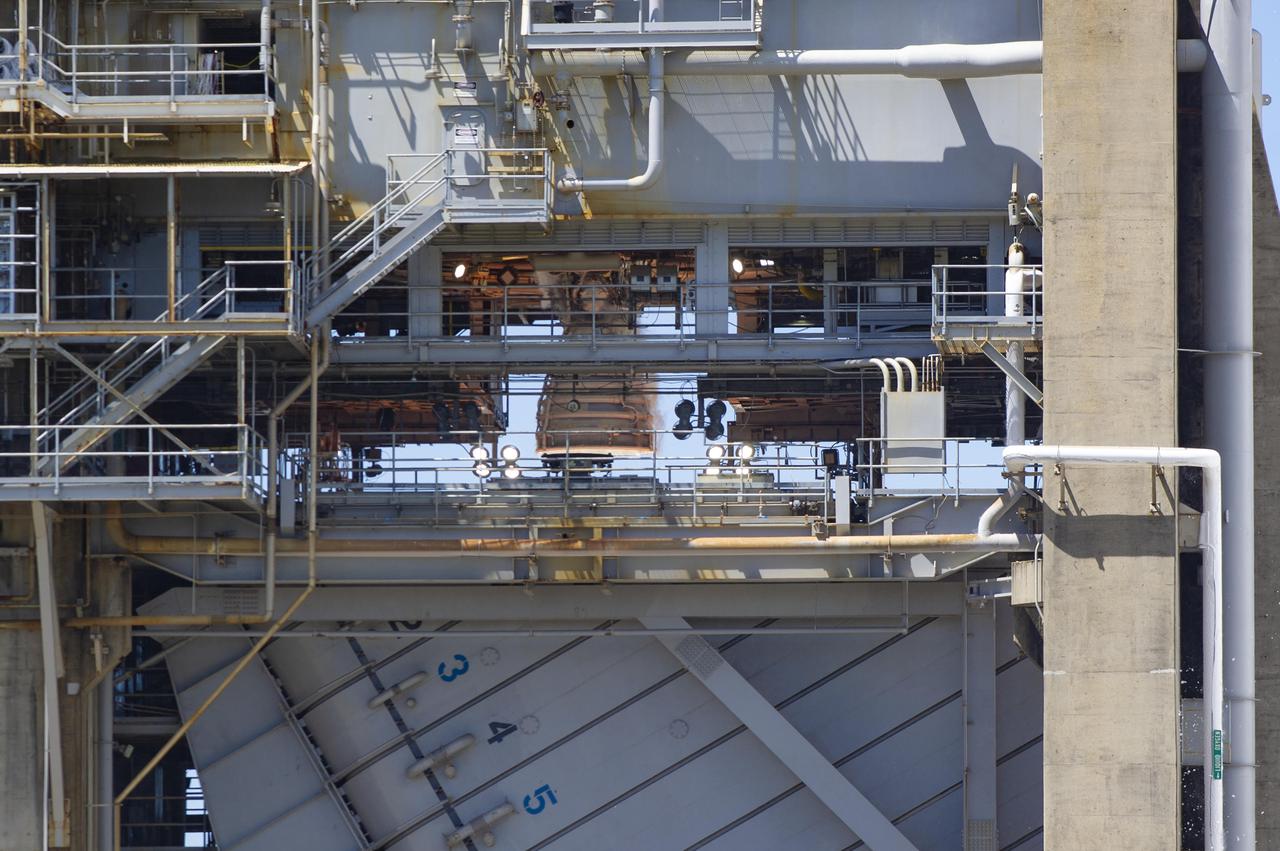
NASA conducted a full-duration RS-25 hot fire April 3 on the Fred Haise Test Stand at NASA’s Stennis Space Center near Bay St. Louis, Mississippi, achieving a major milestone for future Artemis flights of NASA’s SLS (Space Launch System) rocket. It marked the final test of a 12-test series to certify production of new RS-25 engines by lead contractor Aerojet Rocketdyne, an L3Harris Technologies company, to help power NASA’s SLS rocket on Artemis missions to the Moon and beyond, beginning with Artemis V.
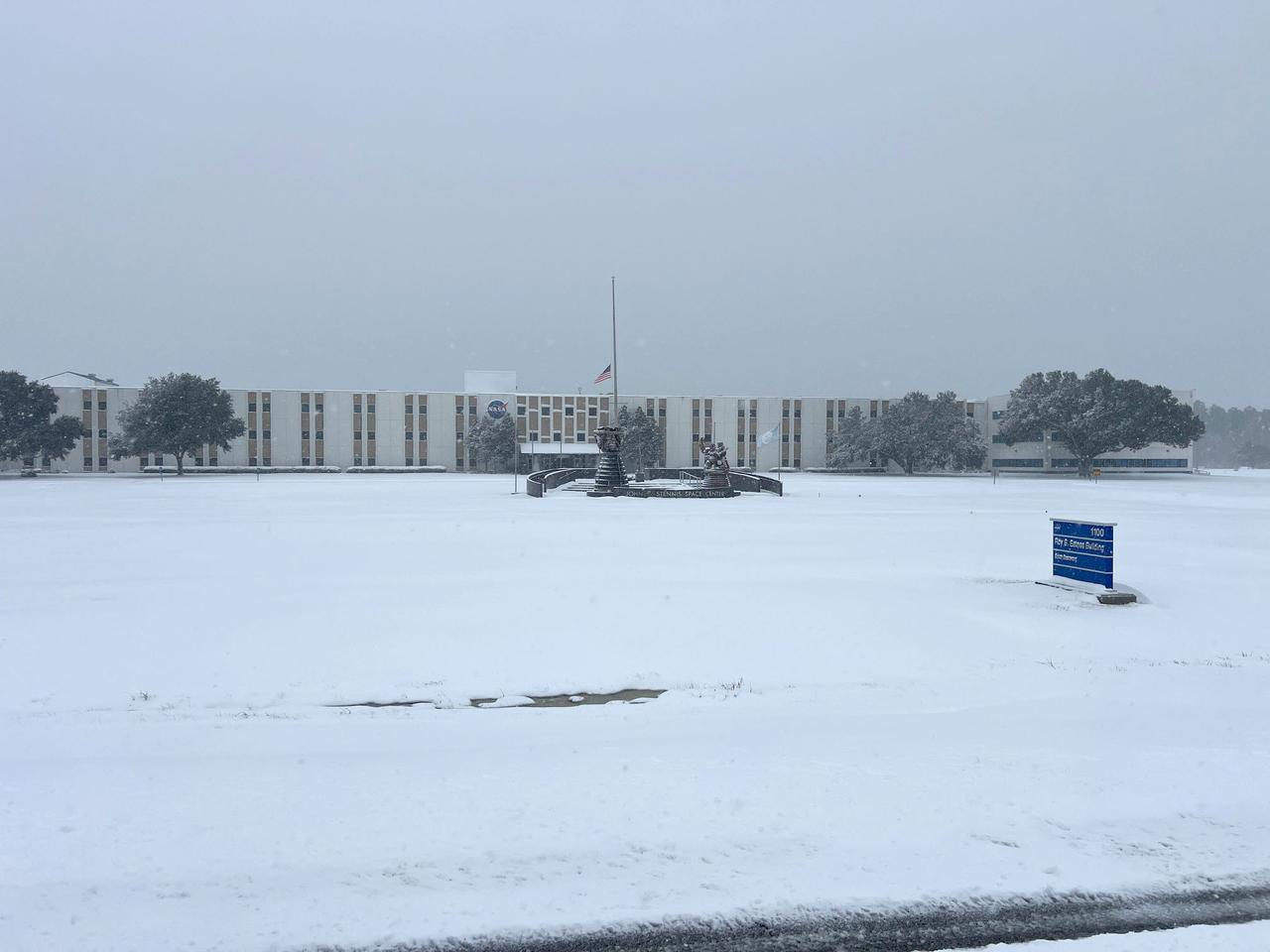
NASA’s Stennis Space Center near Bay St. Louis, Mississippi, is often associated with hot fires coming from the center’s long history of hot fire testing engines and stages that have helped power the nation’s space dreams since the first humans stepped foot on the Moon. However, NASA Stennis turned into a Winter Wonderland Jan. 21 when America’s largest rocket propulsion test site received a historic amount of snow across the unique federal city. Hancock County, where NASA Stennis is located, received five to seven inches of snow, according to the National Weather Service. It marked the most snow the county has received in 61 years. The December 31, 1963, snowfall holds the record at 10 inches of snow for Bay St. Louis, Mississippi.
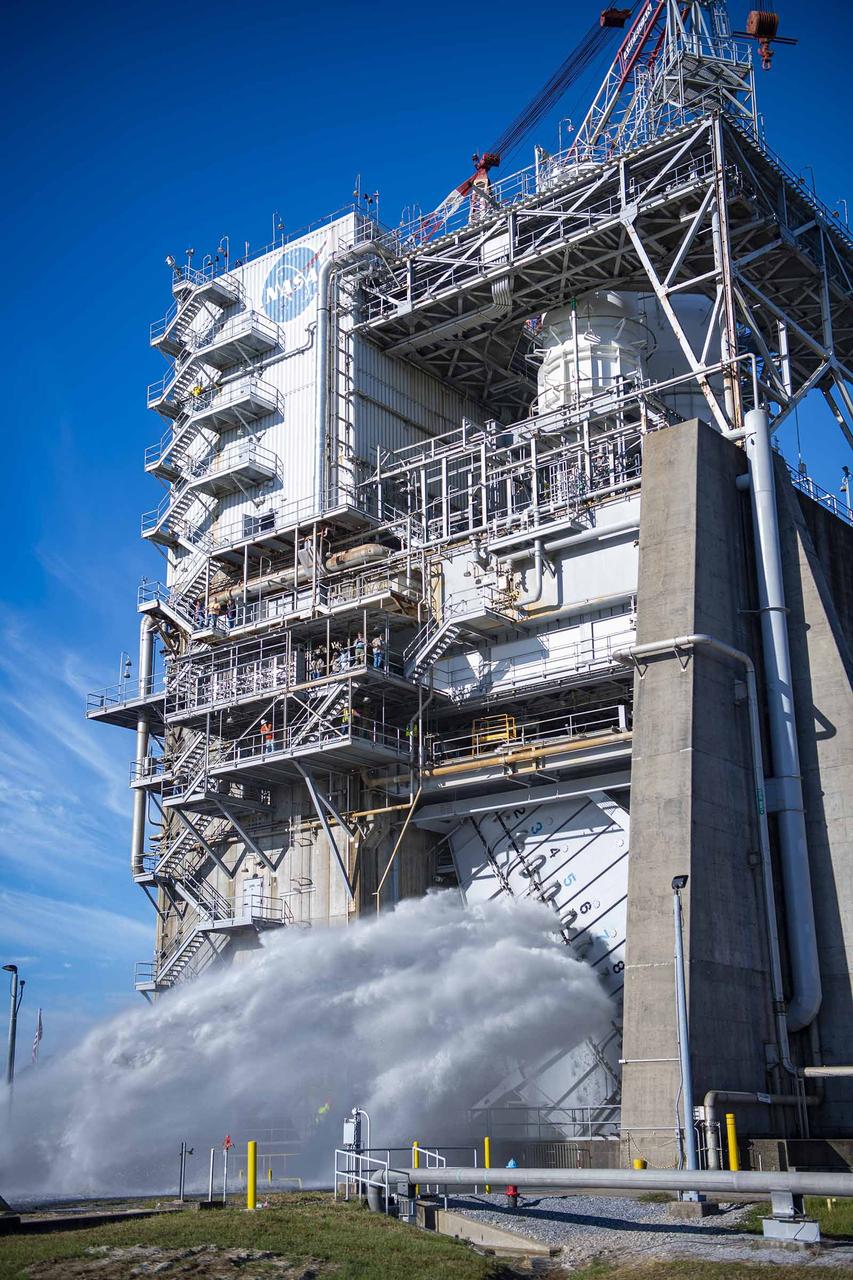
Crews conduct a planned flame deflector water flow system flush on the Fred Haise Test Stand at NASA’s Stennis Space Center on Oct. 22, following the recent completion of upgrades to the High Pressure Industrial Water Facility’s underground piping network. The flush, a periodic procedure to ensure system functionality and performance, involves flowing 150,000 gallons or more per minute from the High Pressure Industrial Water Facility to the stand. It also continues stand preparations for testing RS-25 flight engines for use on future Artemis missions to the Moon and beyond.

: NASA program specialist Miyoshi Collins talks with an annual ESSENCE Fest audience in New Orleans on July 5 following a video presentation from NASA astronaut Jeannette Epps aboard the International Space Station. NASA representatives participated in a panel presentation about women in space during the cultural festival held each year during the Fourth of July weekend.
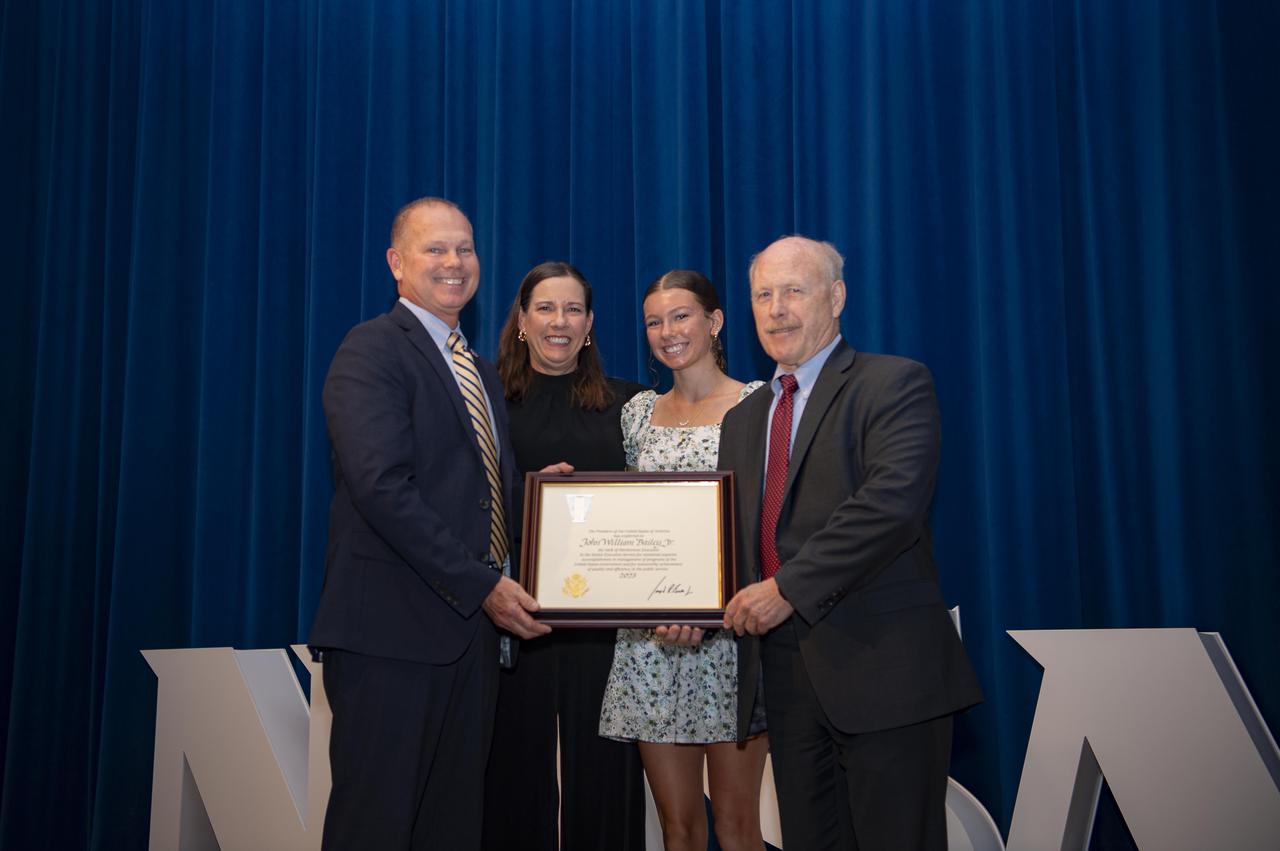
NASA Stennis Space Center Director John Bailey receives the Meritorious Senior Executive Presidential Rank Award from NASA Associate Administrator for Space Operations Kenneth Bowersox during the NASA Honor Awards ceremony on May 15 at NASA Stennis. Bailey is pictured, from left, with his wife, Lori; daughter, Isabella; and Bowersox.
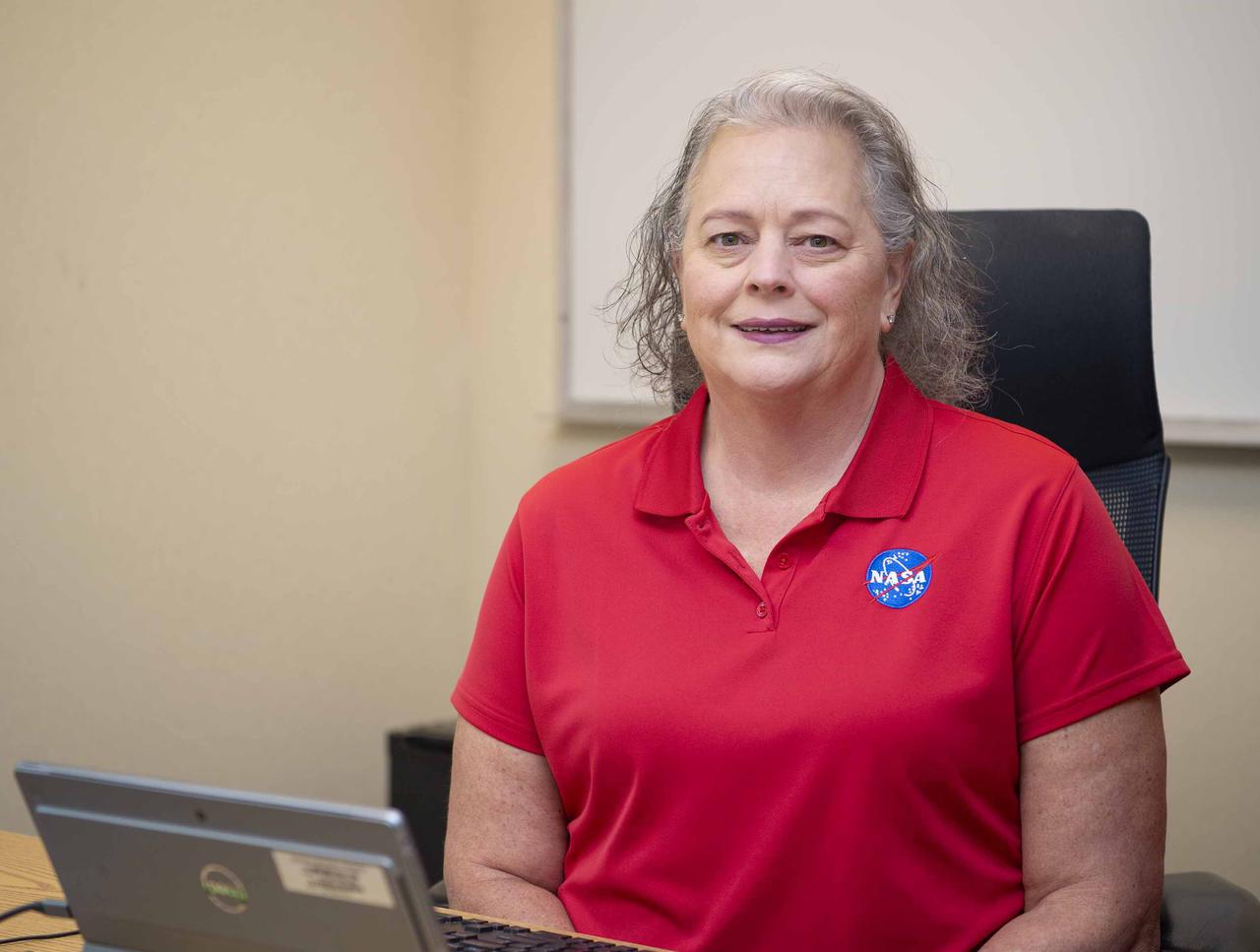
Rae Anderson, subject matter expert for software assurance in the NASA Stennis Safety and Mission Assurance Directorate, is the first employee at NASA’s Stennis Space Center – and one of five civil servants across NASA – to earn the highest distinction in the Safety and Mission Assurance Technical Excellence Program in the discipline of software assurance. The level four certification demonstrates Anderson’s dedication to growing her knowledge and skills to become an effective contributor to the agency’s mission.
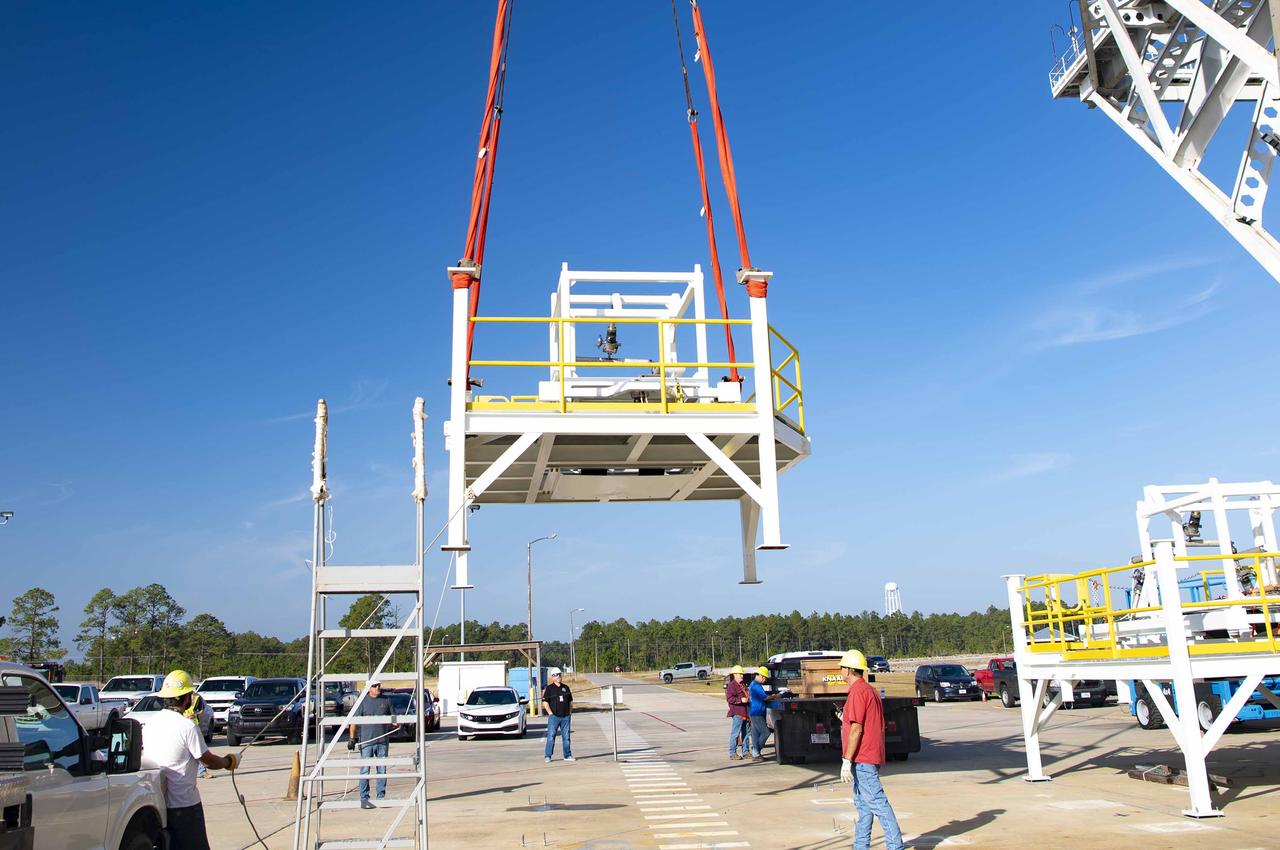
A pair of umbilical support structures needed for future testing of NASA’s exploration upper stage (EUS) were installed in the B-2 position of the Thad Cochran Test Stand on Oct. 30-31 at NASA’s Stennis Space Center. The support structures arrived from NASA’s Michoud Assembly Facility in New Orleans via the unique NASA Stennis seven-and-a-half-mile canal system in 2023. Since then, crews have prepared the structures that will align with the EUS unit for installation. In addition to helping secure the unit in place during hot fire testing, the umbilical support structures are where the command, control, and data electrical connections are mated to connect the ground systems to the vehicle systems, as well as most the commodity connections such as liquid hydrogen, liquid oxygen, hydrogen vent, helium bottle fill pressure, and purges. Prior to its initial flight, the EUS unit will undergo a series of so-called Green Run tests at NASA Stennis to ensure all systems are ready to go. The test series will culminate with a hot fire of the stage’s four RL10 engines, made by Aerojet Rocketdyne, an L3Harris Technologies company and lead SLS engines contractor. The new upper stage will enable NASA to carry larger payloads on Artemis missions to the Moon and beyond.
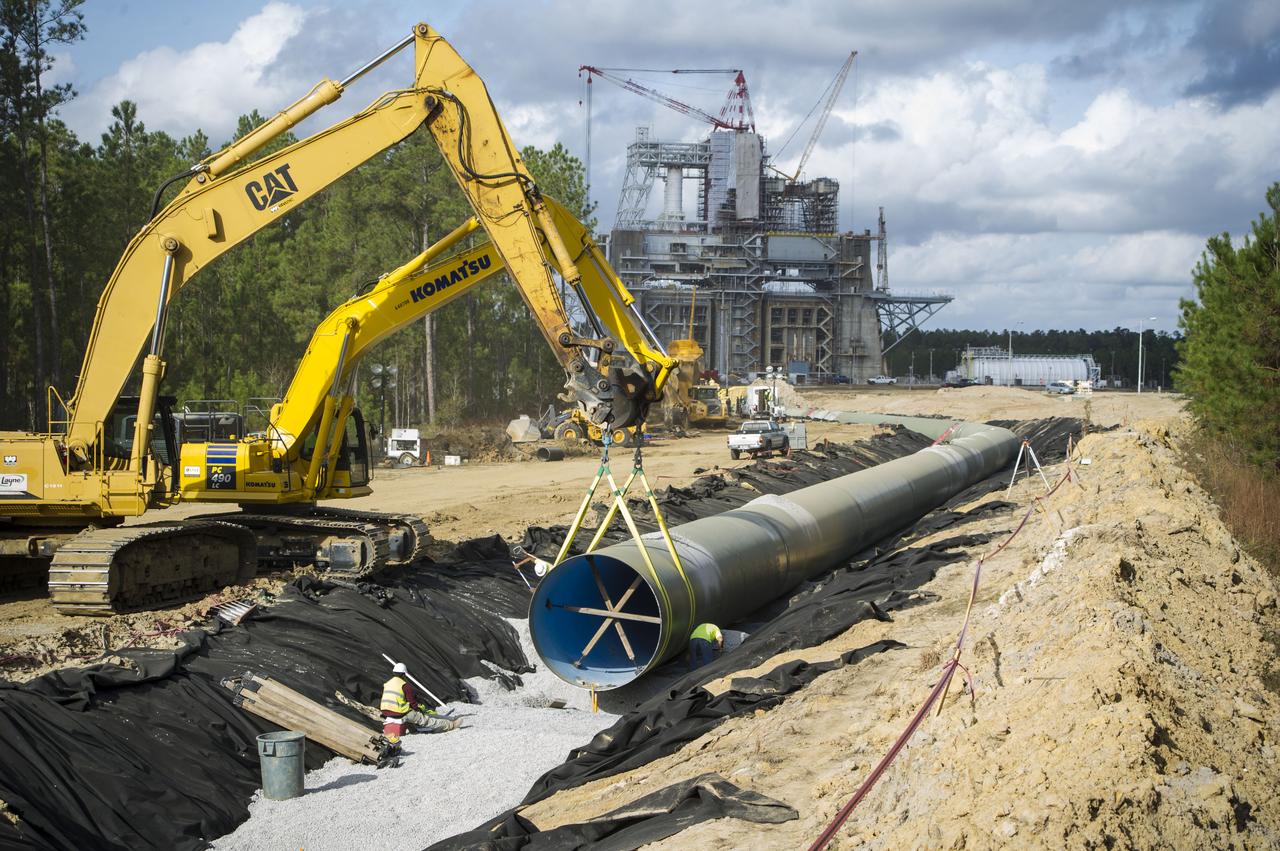
Water piping is installed near the Thad Cochran Test Stand (B-1/B-2) at NASA’s Stennis Space Center in December 2014. The project to replace and upgrade the center’s high pressure industrial water system was a key milestone in preparations to test the SLS (Space Launch System) core stage ahead of the successful Artemis I launch.
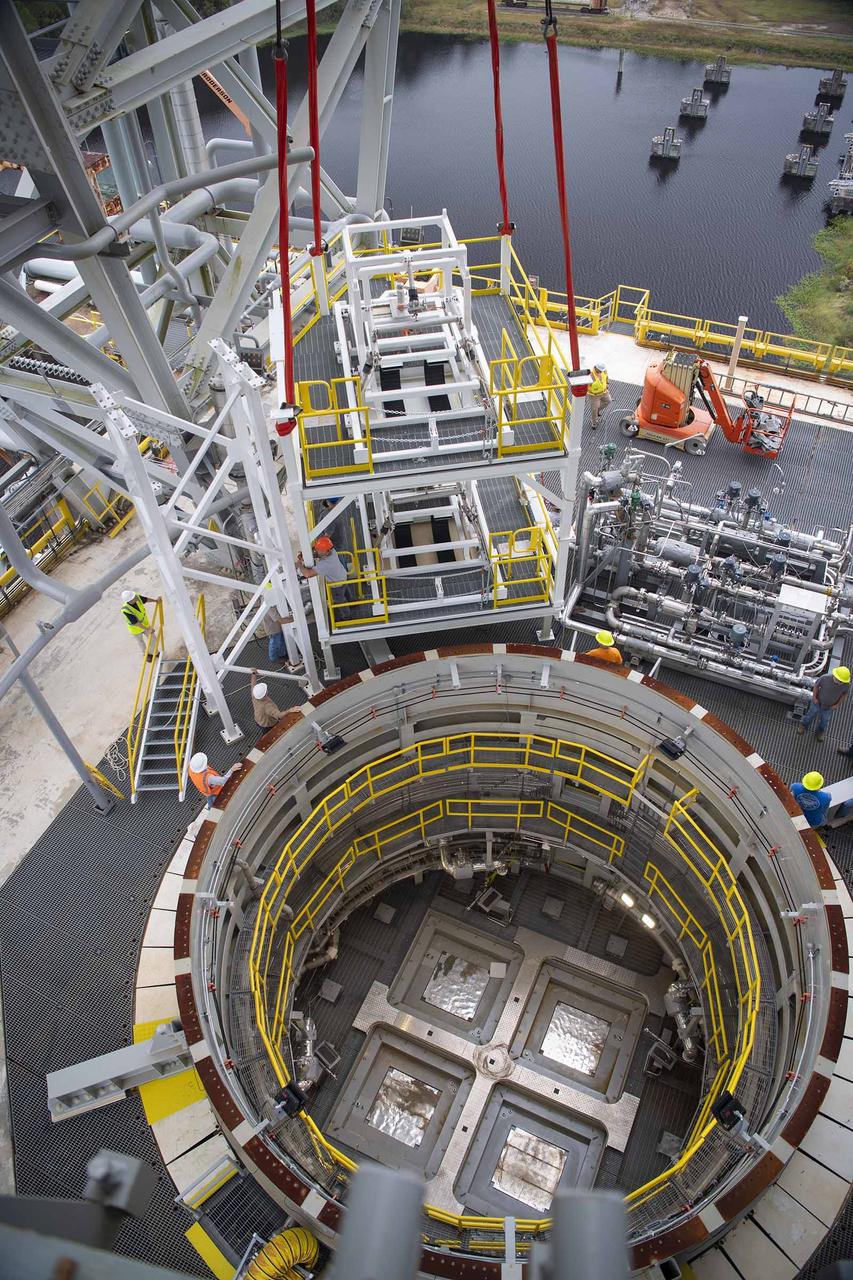
A pair of umbilical support structures needed for future testing of NASA’s exploration upper stage (EUS) were installed in the B-2 position of the Thad Cochran Test Stand on Oct. 30-31 at NASA’s Stennis Space Center. The support structures arrived from NASA’s Michoud Assembly Facility in New Orleans via the unique NASA Stennis seven-and-a-half-mile canal system in 2023. Since then, crews have prepared the structures that will align with the EUS unit for installation. In addition to helping secure the unit in place during hot fire testing, the umbilical support structures are where the command, control, and data electrical connections are mated to connect the ground systems to the vehicle systems, as well as most the commodity connections such as liquid hydrogen, liquid oxygen, hydrogen vent, helium bottle fill pressure, and purges. Prior to its initial flight, the EUS unit will undergo a series of so-called Green Run tests at NASA Stennis to ensure all systems are ready to go. The test series will culminate with a hot fire of the stage’s four RL10 engines, made by Aerojet Rocketdyne, an L3Harris Technologies company and lead SLS engines contractor. The new upper stage will enable NASA to carry larger payloads on Artemis missions to the Moon and beyond.
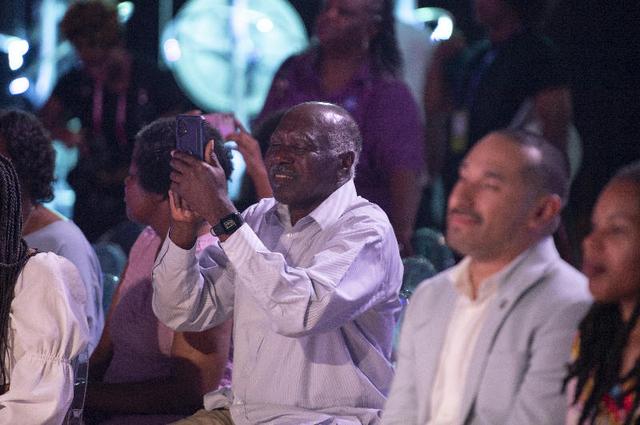
An audience member takes a photo as NASA representatives participate in a Take Up Space (Literally) panel conversation during the 30th annual ESSENCE Fest in New Orleans on July 5.
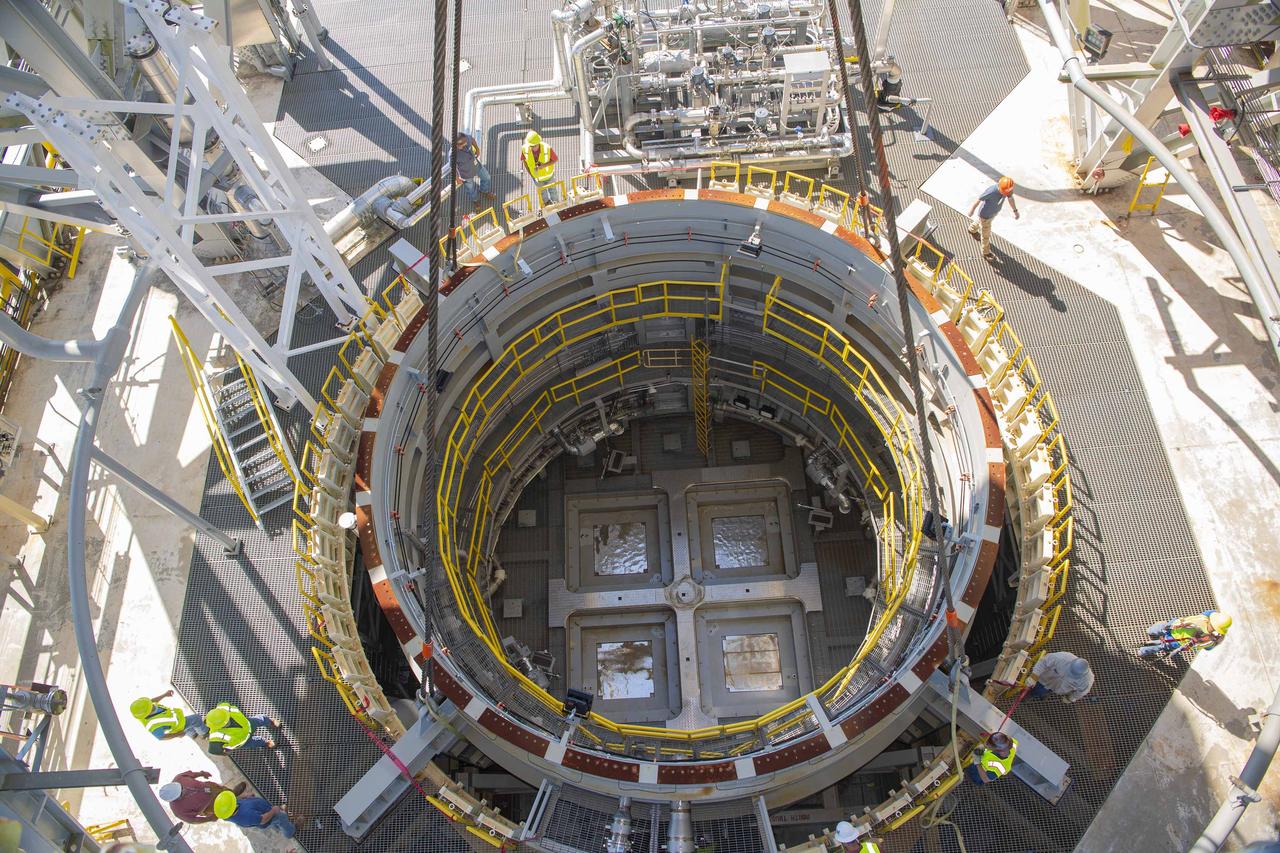
Teams at NASA’s Stennis Space Center complete a safe lift and install of an interstage simulator unit needed for future testing of NASA’s exploration upper stage (EUS) in the B-2 position of the Thad Cochran Test Stand. The lift and install, completed over a two-week period that began Oct. 10, marks a milestone for testing the new SLS (Space Launch System) rocket stage that will fly on future Artemis missions to the Moon and beyond. The EUS will undergo a series of Green Run tests of its integrated systems prior to its first flight. During testing, the interstage simulator component will function like the SLS interstage section that helps protect the upper stage during Artemis launches.
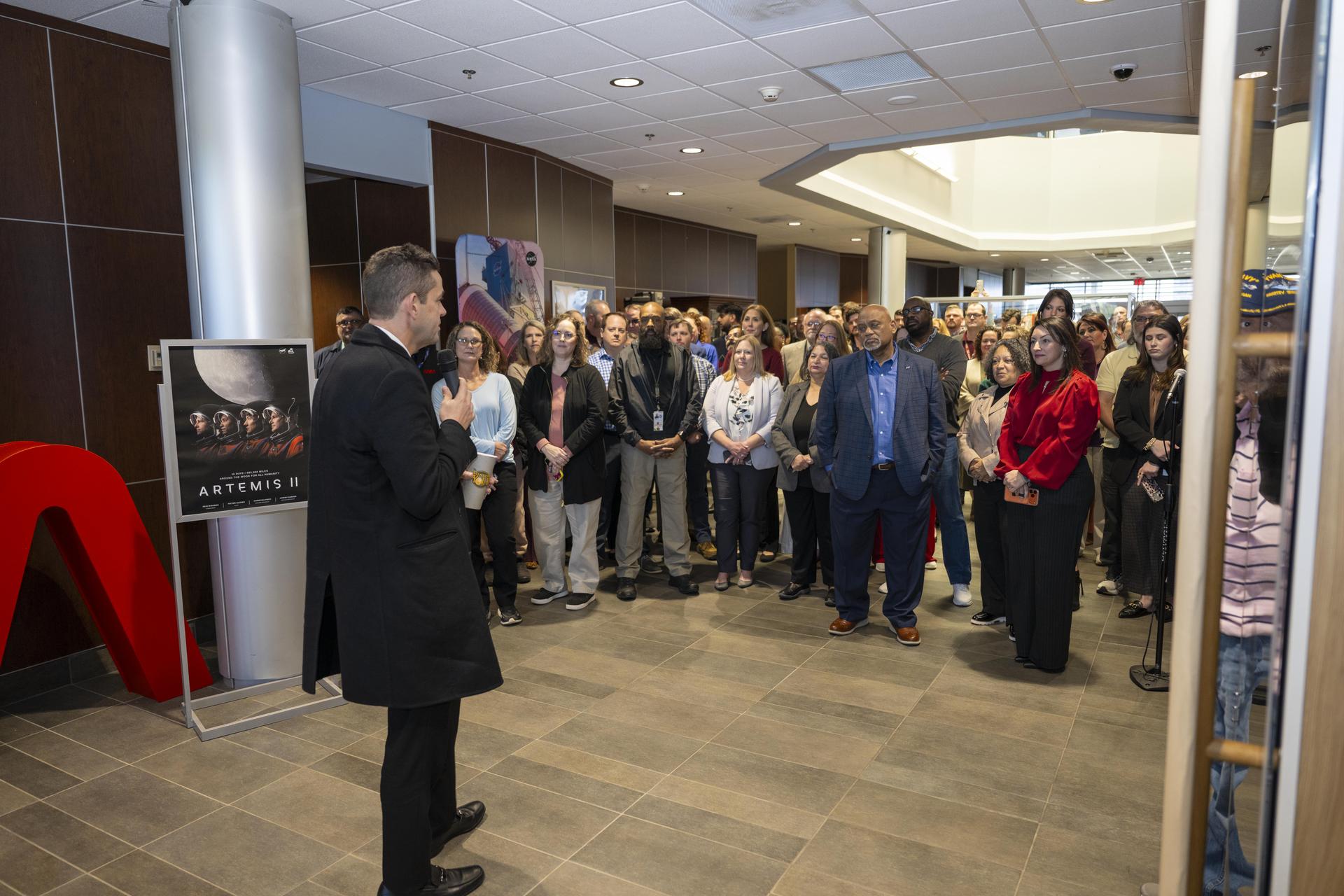
NASA Administrator Jared Isaacman, left, speaks with NASA employees during his visit to NASA’s Stennis Space Center near Bay St. Louis, Mississippi, on Jan. 15, 2026. Isaacman, NASA’s 15th administrator, began visiting the agency’s centers after his appointment on Dec. 17, 2025.
The NASA ASTRO CAMP® Community Partners (ACCP) program hosted a FIRST® Robotics Competition 2025 season kickoff event Jan. 4 at INFINITY Science Center, the official visitor center of NASA’s Stennis Space Center. NASA representatives welcomed competition teams as the event revealed the challenge for the new season. Teams will use engineering skills during the REEFSCAPE℠ challenge to strengthen one of the ocean’s most diverse habitats to build a better world. The third annual FIRST (For the Inspiration and Recognition of Science and Technology) Robotics Magnolia Regional, a NASA-sponsored event, is scheduled for March 13-15 in Laurel, Mississippi, at the South Mississippi Fairgrounds. The regional competition will serve as a championship-qualifying event for teams to compete in Houston in the world championship event in April. FIRST Robotics is described as the ultimate sport of the mind as teams concentrate and share in the excitement of success.
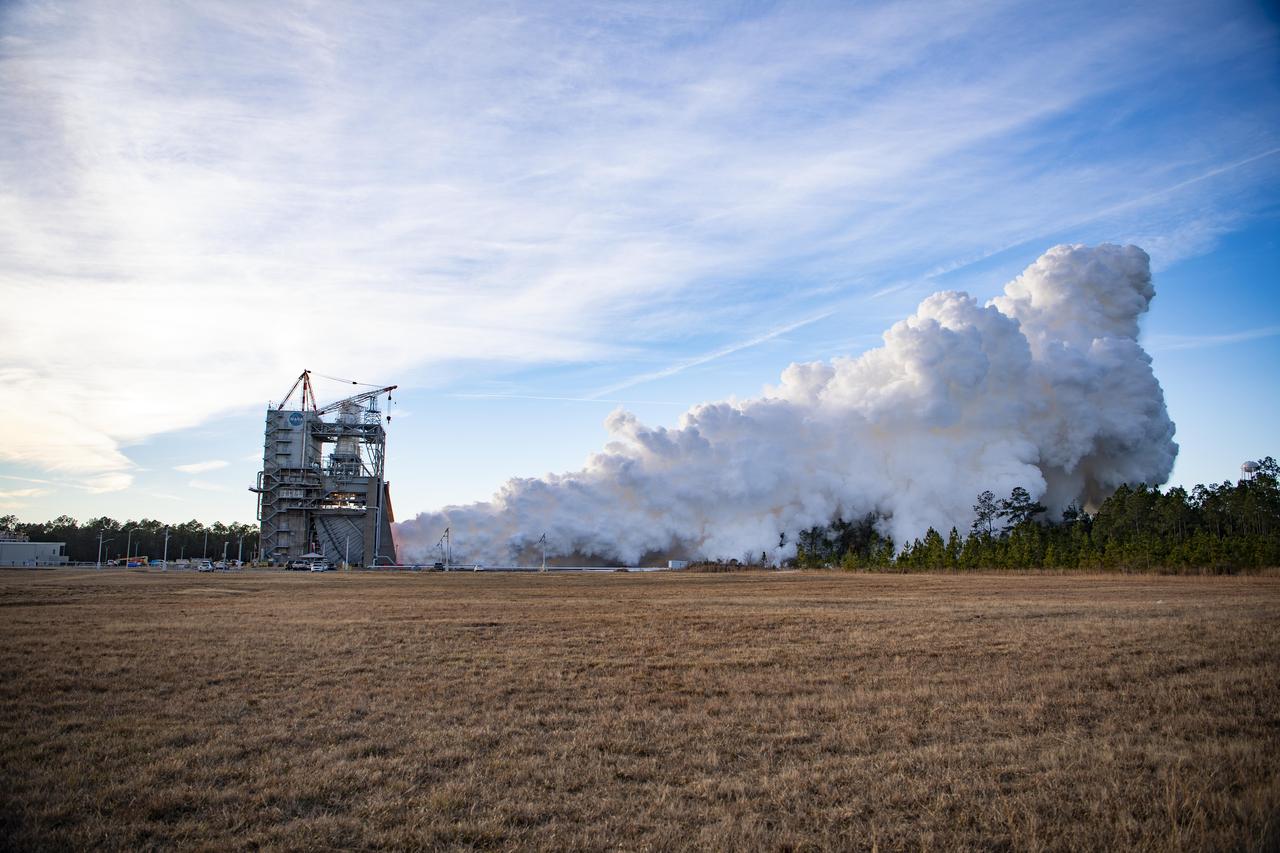
NASA completed a full-duration, 500-second hot fire of an RS-25 certification engine Jan. 17, continuing a critical test series to support future SLS (Space Launch System) missions to the Moon and beyond as NASA explores the secrets of the universe for the benefit of all.
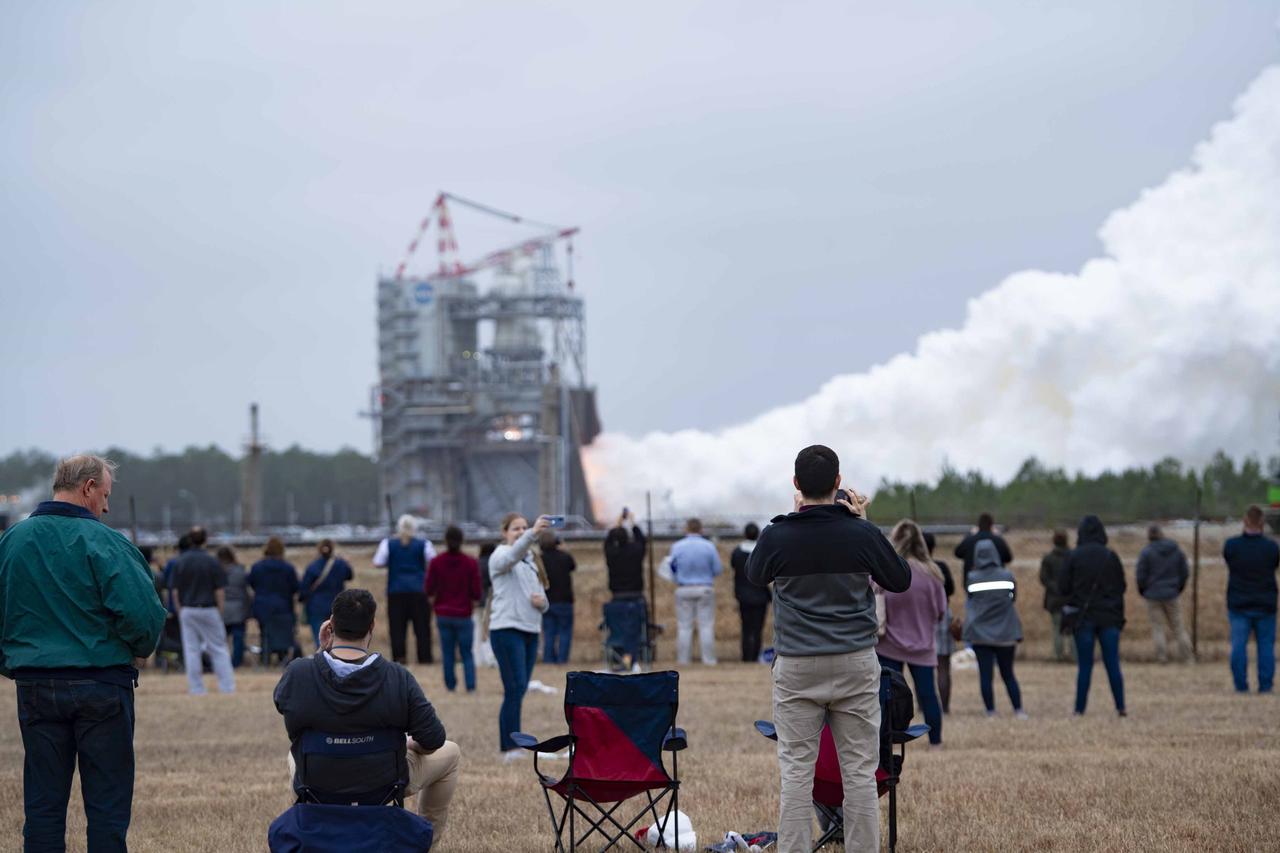
Sitewide employees at NASA’s Stennis Space Center watch the RS-25 test conducted on Jan. 23 as NASA continued a critical test series for future Artemis flights of NASA’s SLS (Space Launch System) rocket. The full-duration hot fire on the Fred Haise Test Stand is part of a 12-test series to certify production of new RS-25 engines by lead contractor Aerojet Rocketdyne, an L3Harris Technologies company. The new engines will help power SLS rocket on Artemis missions to the Moon and beyond, beginning with Artemis V.
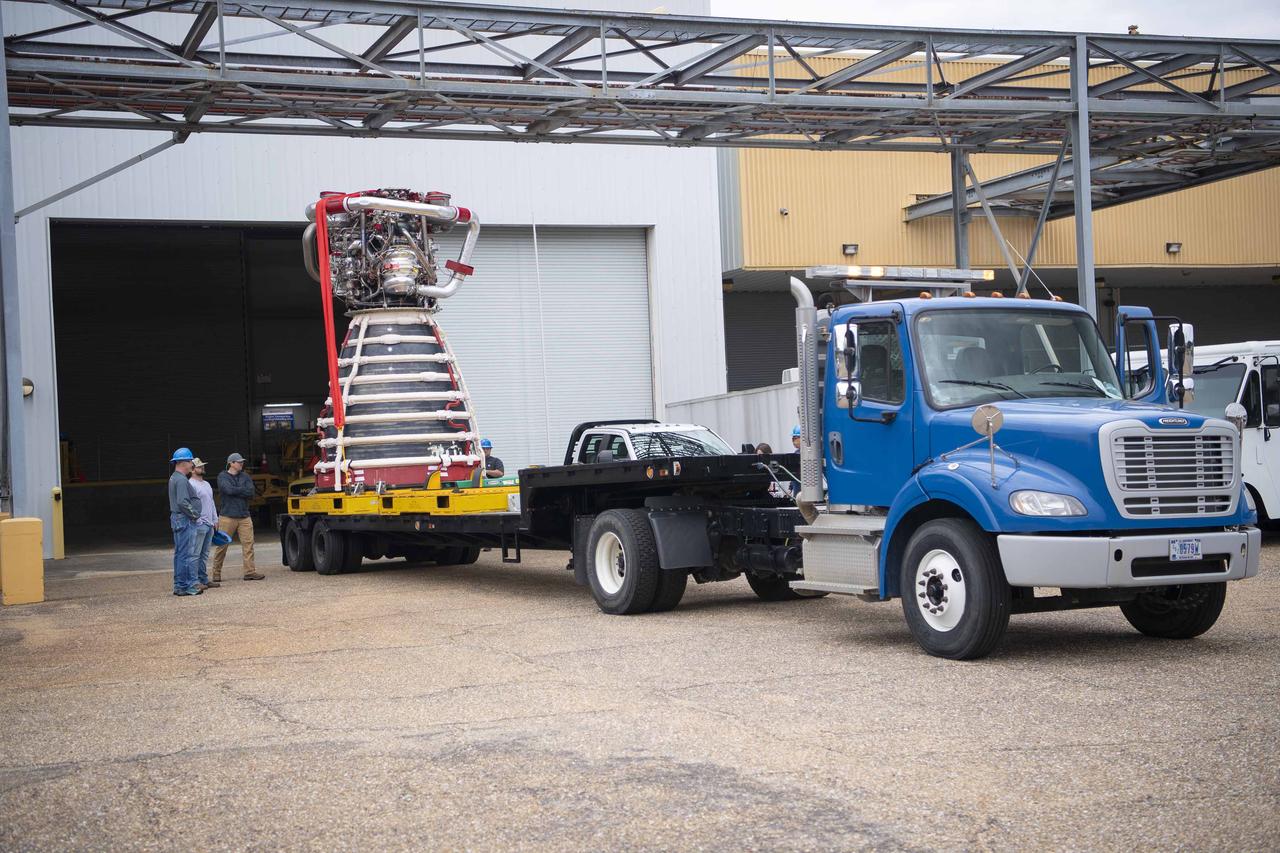
Teams at NASA’s Stennis Space Center deliver, lift, and install the first new production RS-25 engine on the Fred Haise Test Stand on Feb. 18.
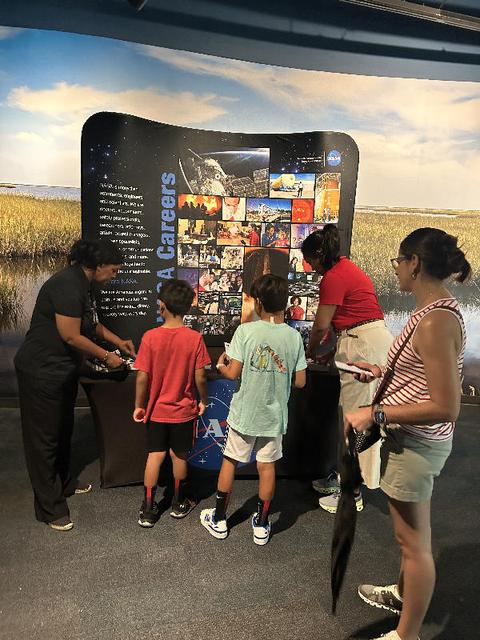
NASA representatives provide information about the space agency to Audubon Aquarium visitors in New Orleans on July 5. NASA hosted an information/interactive exhibit at the aquarium in conjunction with NASA activities at the 30th annual ESSENCE Fest in New Orleans during the Fourth of July weekend.
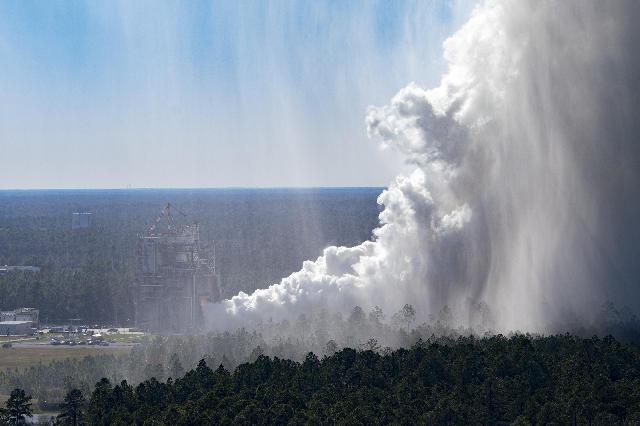
The cloud of steam is visible at NASA’s Stennis Space Center during the Oct. 17 hot fire, which marks the first test in the critical series to support future SLS (Space Launch System) missions to deep space. The steam released during the full duration, 550-second test is water and does not pollute the atmosphere.
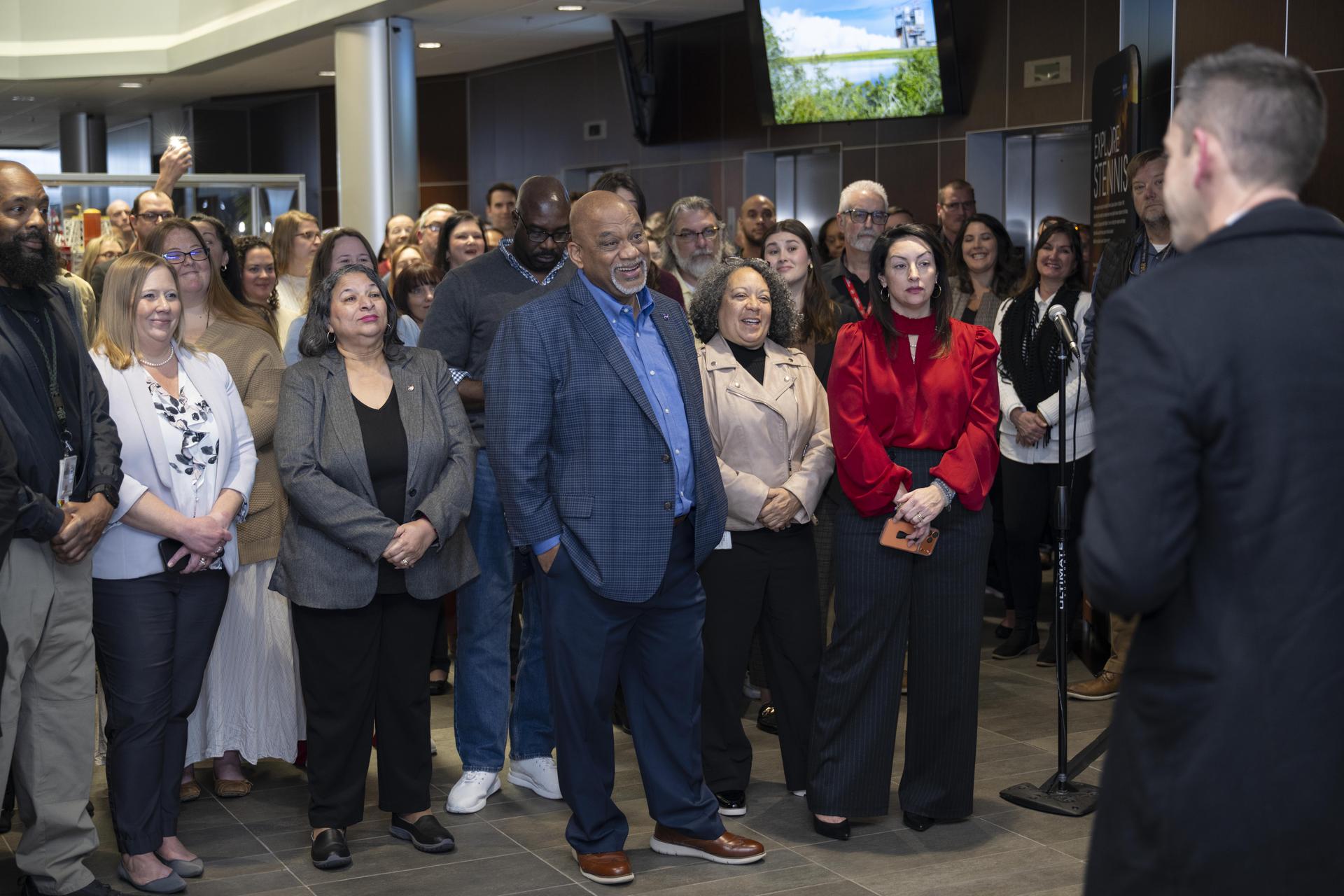
NASA Administrator Jared Isaacman, right, speaks with NASA employees during his visit to NASA’s Stennis Space Center near Bay St. Louis, Mississippi, on Jan. 15, 2026. Isaacman, NASA’s 15th administrator, began visiting the agency’s centers after his appointment on Dec. 17, 2025.
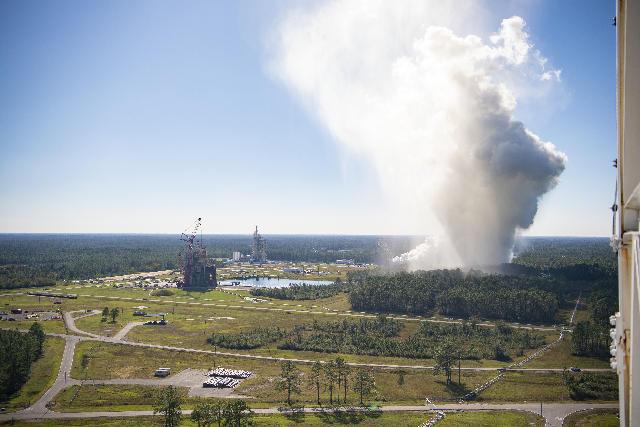
The RS-25 certification test series begins Oct. 17. When the liquid hydrogen and liquid oxygen propellants mix and ignite, an extremely high temperature exhaust, of up to 6,000-degrees Fahrenheit, mixes with water to form steam that exits the flame deflector and rises into the atmosphere, forming a cloud that subsequently cools.
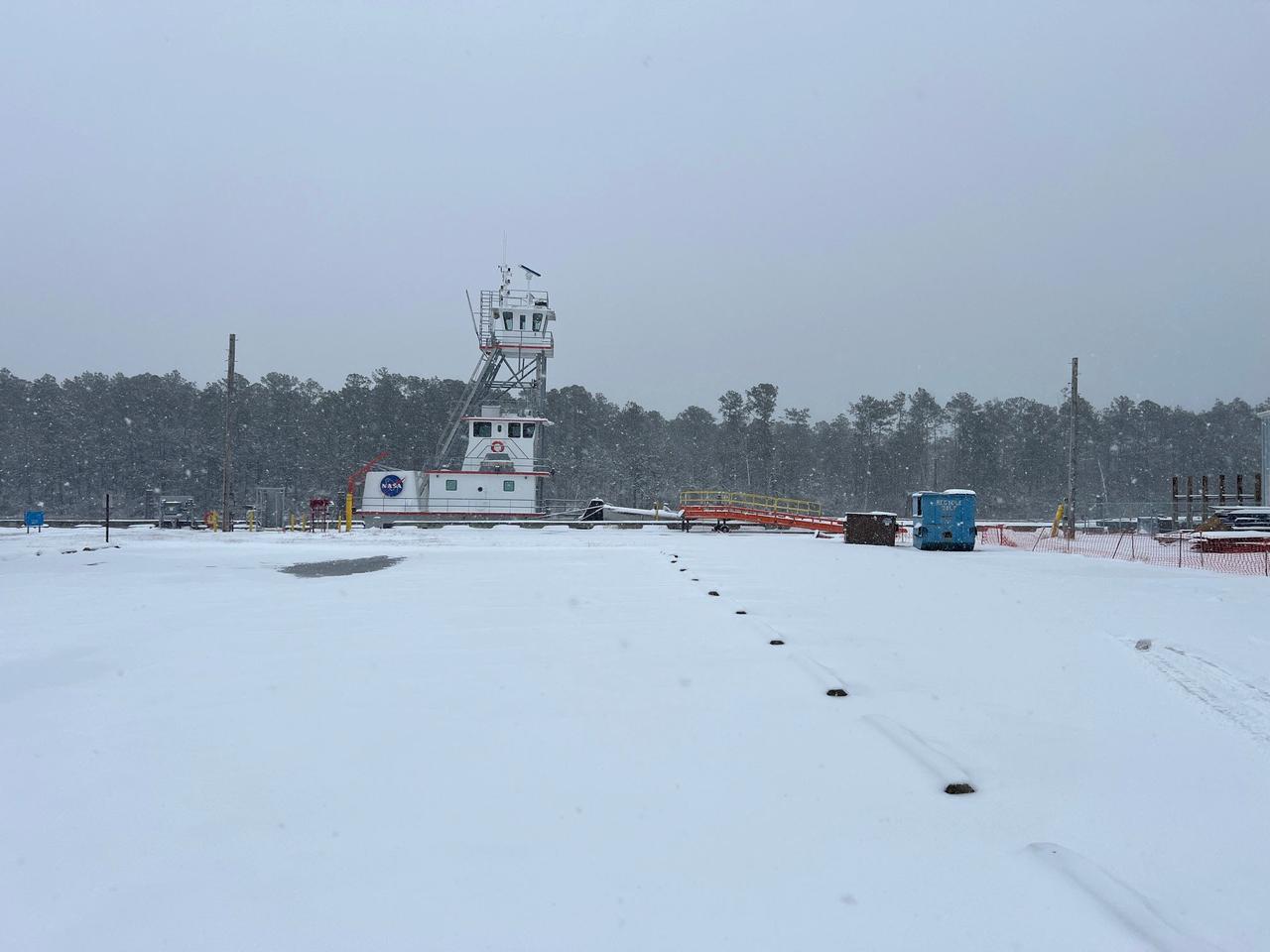
NASA’s Stennis Space Center near Bay St. Louis, Mississippi, is often associated with hot fires coming from the center’s long history of hot fire testing engines and stages that have helped power the nation’s space dreams since the first humans stepped foot on the Moon. However, NASA Stennis turned into a Winter Wonderland Jan. 21 when America’s largest rocket propulsion test site received a historic amount of snow across the unique federal city. Hancock County, where NASA Stennis is located, received five to seven inches of snow, according to the National Weather Service. It marked the most snow the county has received in 61 years. The December 31, 1963, snowfall holds the record at 10 inches of snow for Bay St. Louis, Mississippi.
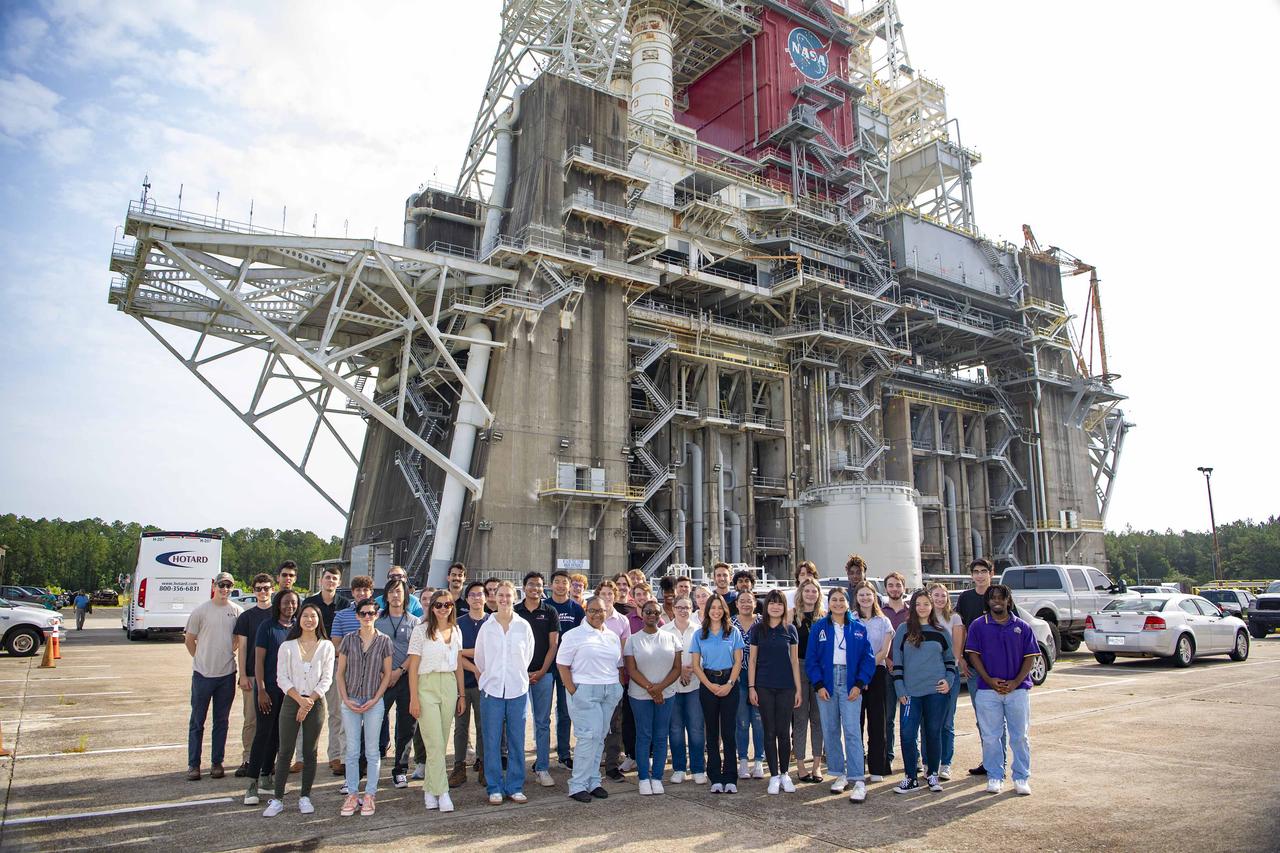
Interns at NASA Stennis visit the Thad Cochran Test Stand (B-1/B-2) on July 25 during a test complex tour on National Intern Day. As NASA continues to progress with the Artemis campaign, students across the nation are invited to join the journey. NASA’s internships aim to inspire the Artemis Generation to pursue STEM careers across the nation.

NASA Stennis Director John Bailey hosts a Java with John session with NASA Stennis supervisors on July 24. Java with John is an ongoing employee-led discussion in a relaxed environment aimed to foster a culture where all are welcome to share what matters most to their work at NASA Stennis.
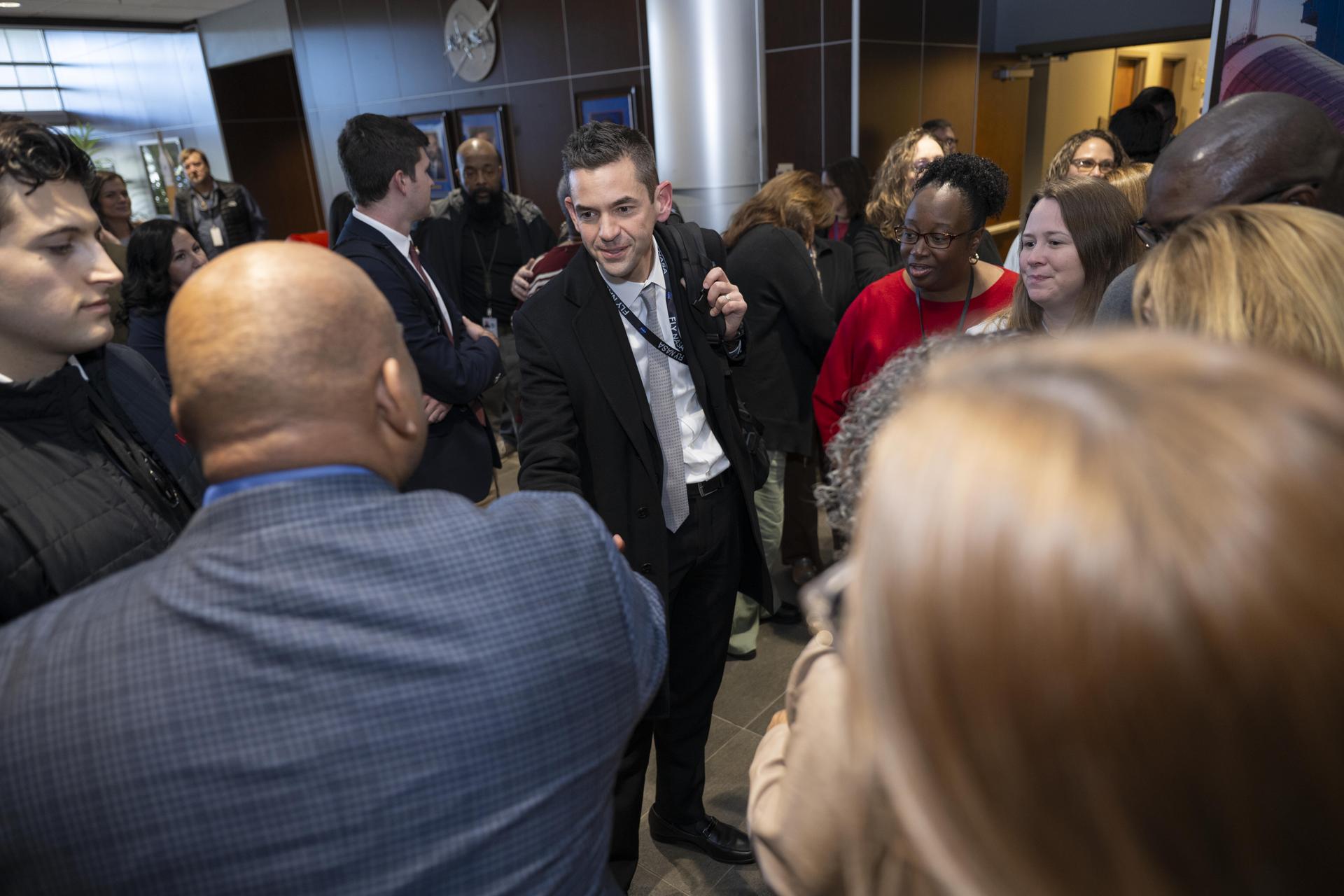
NASA Administrator Jared Isaacman, center, meets with NASA employees during his visit to NASA’s Stennis Space Center near Bay St. Louis, Mississippi, on Jan. 15, 2026. Isaacman, NASA’s 15th administrator, began visiting the agency’s centers after his appointment on Dec. 17, 2025.
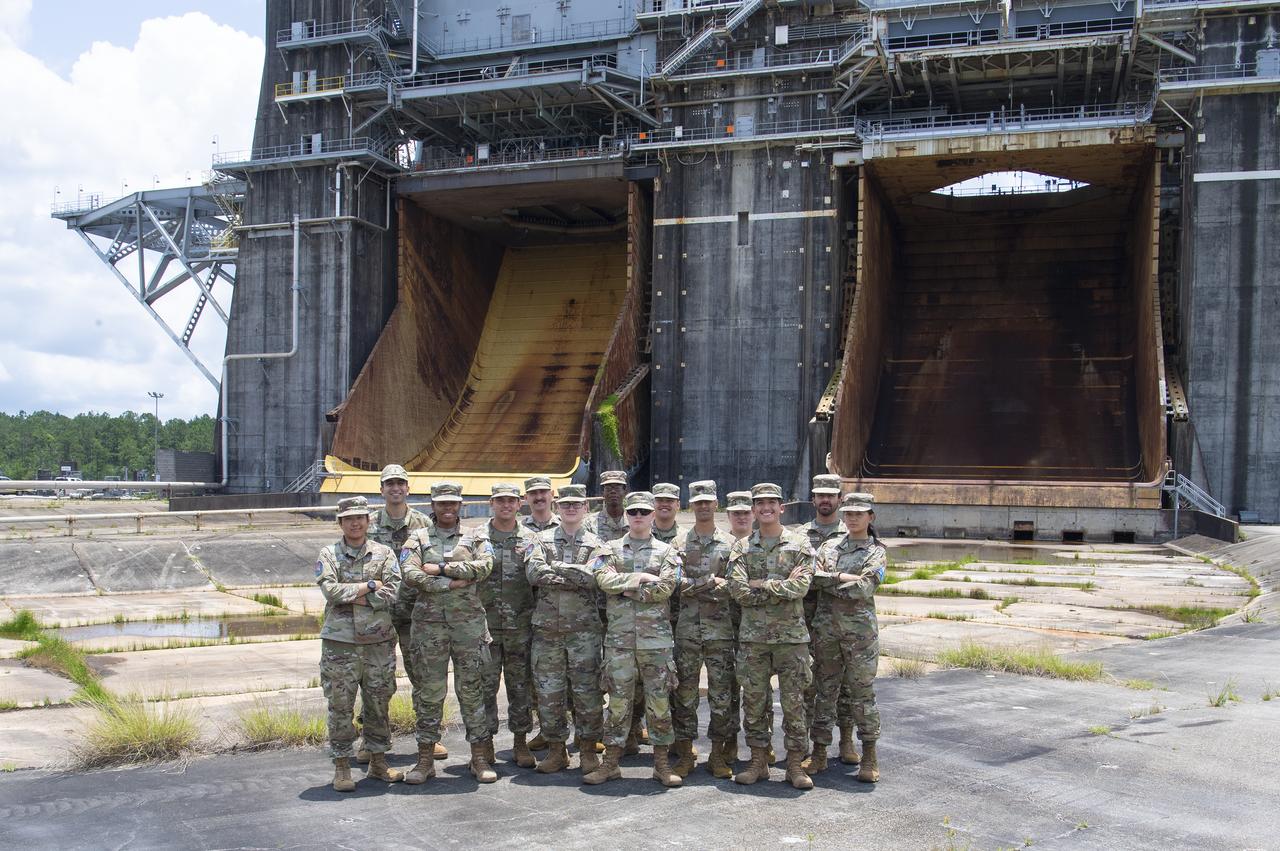
United States Space Force training students and professors stand at the Thad Cochran Test Stand on June 4 during a tour of NASA’s Stennis Space Center. NASA Stennis is preparing the test stand to test the exploration upper stage, which will fly on future SLS (Space Launch System) missions as NASA continues its mission of exploring the secrets of the universe for the benefit of all. The upper stage is being built at NASA’s Michoud Assembly Facility in New Orleans as a more powerful second stage to send the Orion spacecraft to deep space. It is expected to fly on the Artemis IV mission. Before that, it will be installed on the Thad Cochran Test Stand (B-2) at NASA Stennis to undergo a series of Green Run tests of its integrated systems to demonstrate it is ready to fly. The Space Force, established in 2019, organizes, trains, and equips personnel to protect U.S. and allied interests in space and to provide space capabilities to the joint forces.
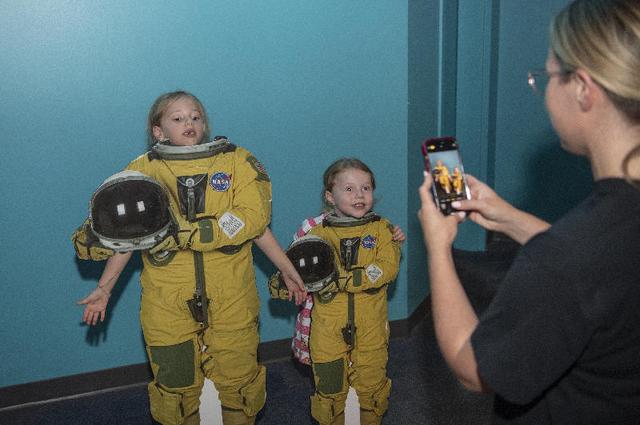
Two young visitors to the Audubon Aquarium in New Orleans pose as NASA astronauts as part of a NASA exhibit July 5. NASA hosted an information/interactive exhibit at the aquarium in conjunction with NASA activities at the 30th annual ESSENCE Fest in New Orleans during the Fourth of July weekend.
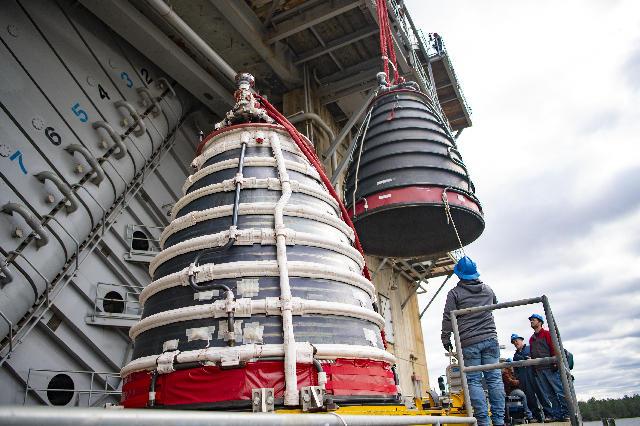
Teams at NASA’s Stennis Space Center install a second production nozzle, left, on Feb. 6 to gather additional performance data on the RS-25 certification engine at the Fred Haise Test Stand.
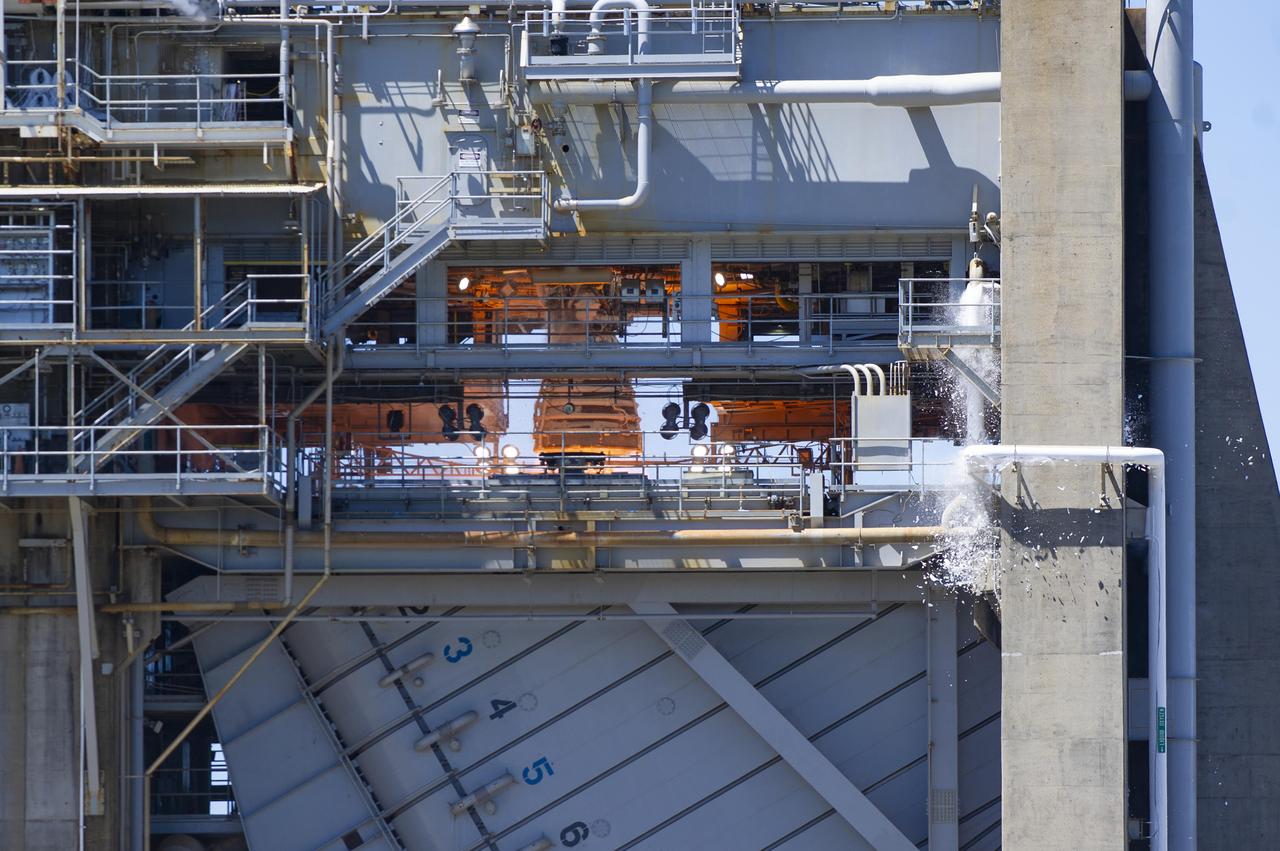
NASA conducted a full-duration RS-25 hot fire April 3 on the Fred Haise Test Stand at NASA’s Stennis Space Center near Bay St. Louis, Mississippi, achieving a major milestone for future Artemis flights of NASA’s SLS (Space Launch System) rocket. It marked the final test of a 12-test series to certify production of new RS-25 engines by lead contractor Aerojet Rocketdyne, an L3Harris Technologies company, to help power NASA’s SLS rocket on Artemis missions to the Moon and beyond, beginning with Artemis V.
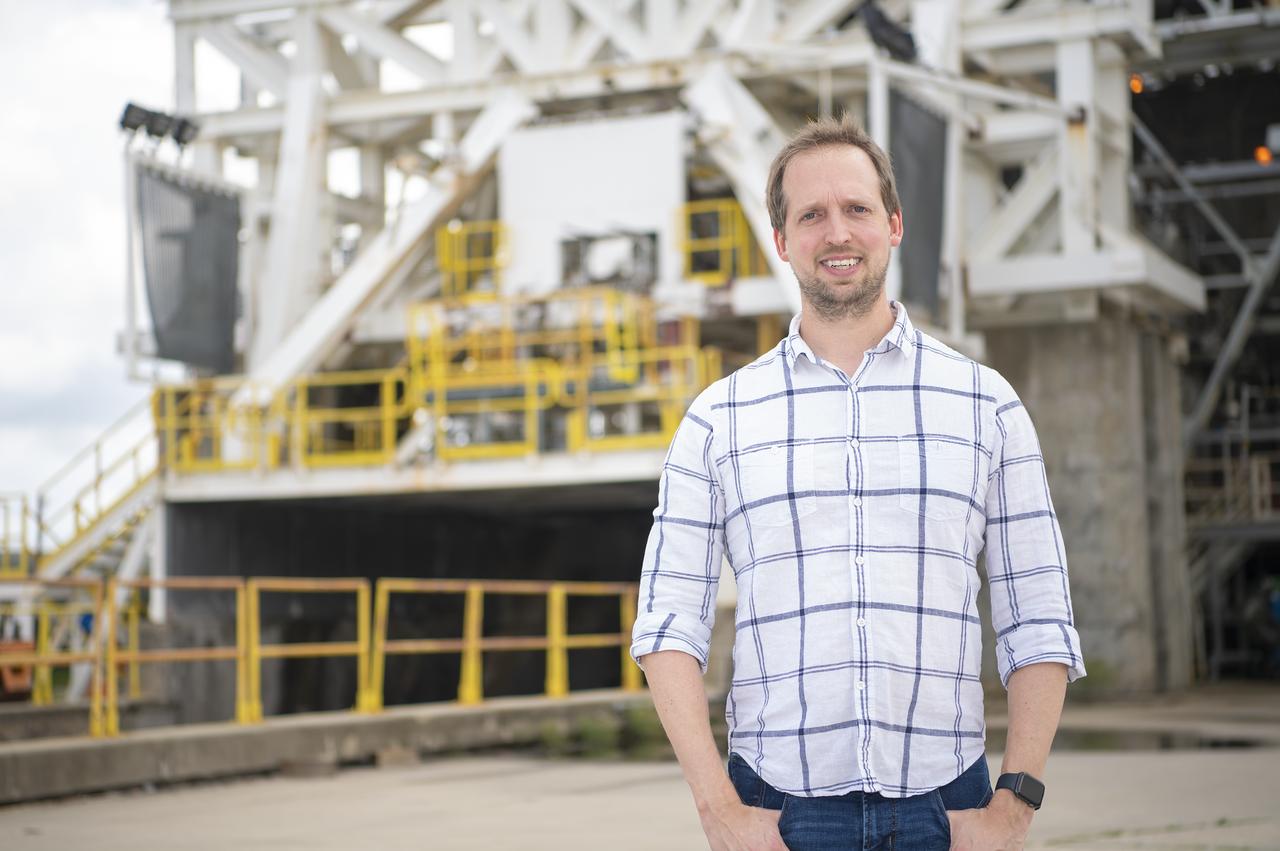
Chris Barnett-Woods is shown at the E-1 Test Stand at NASA’s Stennis Space Center near Bay St. Louis, Mississippi, where NASA Stennis accelerates the exploration and commercialization of space and innovates to benefit NASA and industry.
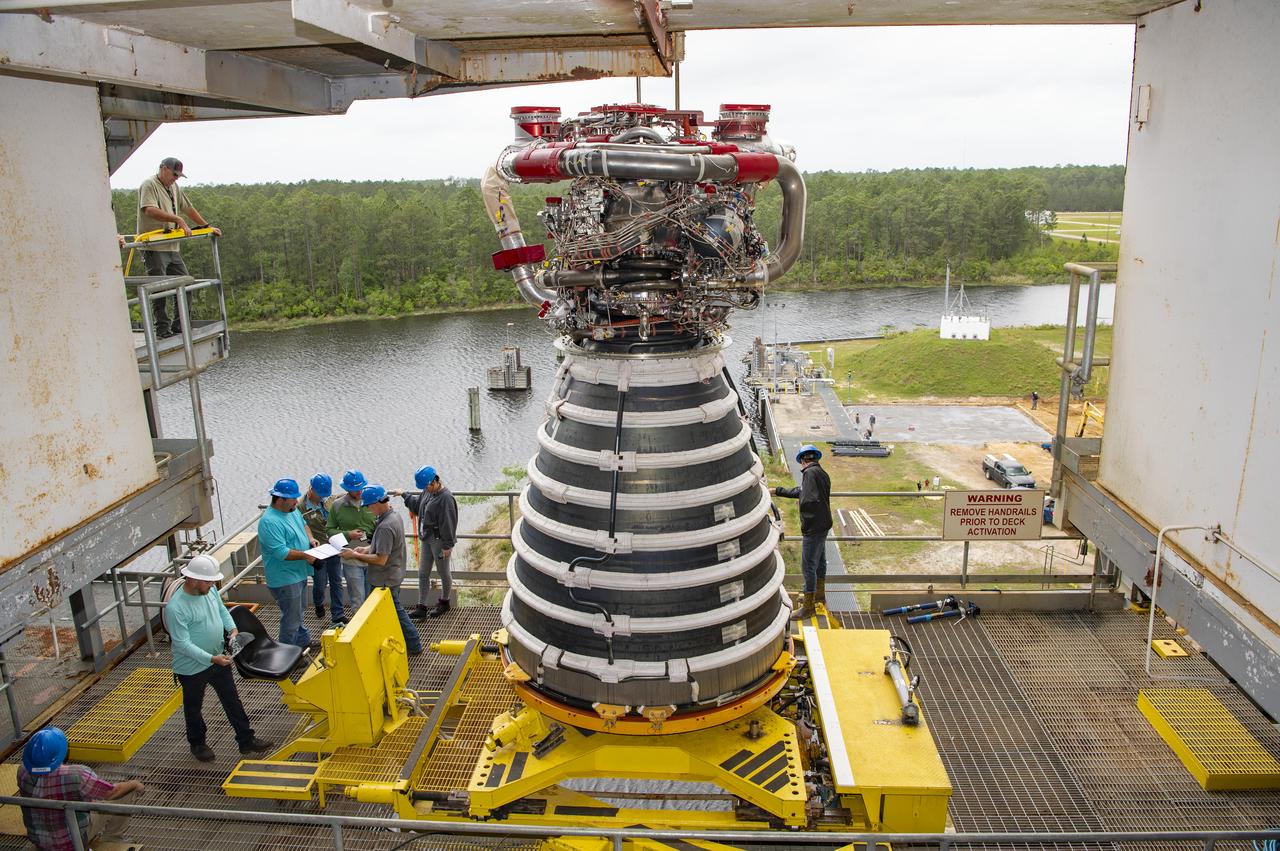
A work crew at NASA’s Stennis Space Center near Bay St. Louis, Mississippi removes RS-25 developmental engine E0525 from the Fred Haise Test Stand on April 9. Removal of the engine follows completion of the second and final 12-test series for lead engines contractor Aerojet Rocketdyne, an L3Harris Technologies company, to certify and build new RS-25 engines for NASA’s SLS (Space Launch System) rockets that will power future lunar missions, beginning with Artemis V. Through Artemis, NASA will establish the foundation for long-term scientific exploration at the Moon; land the first woman, first person of color, and first international partner astronaut on the lunar surface; and prepare for human expeditions to Mars for the benefit of all.
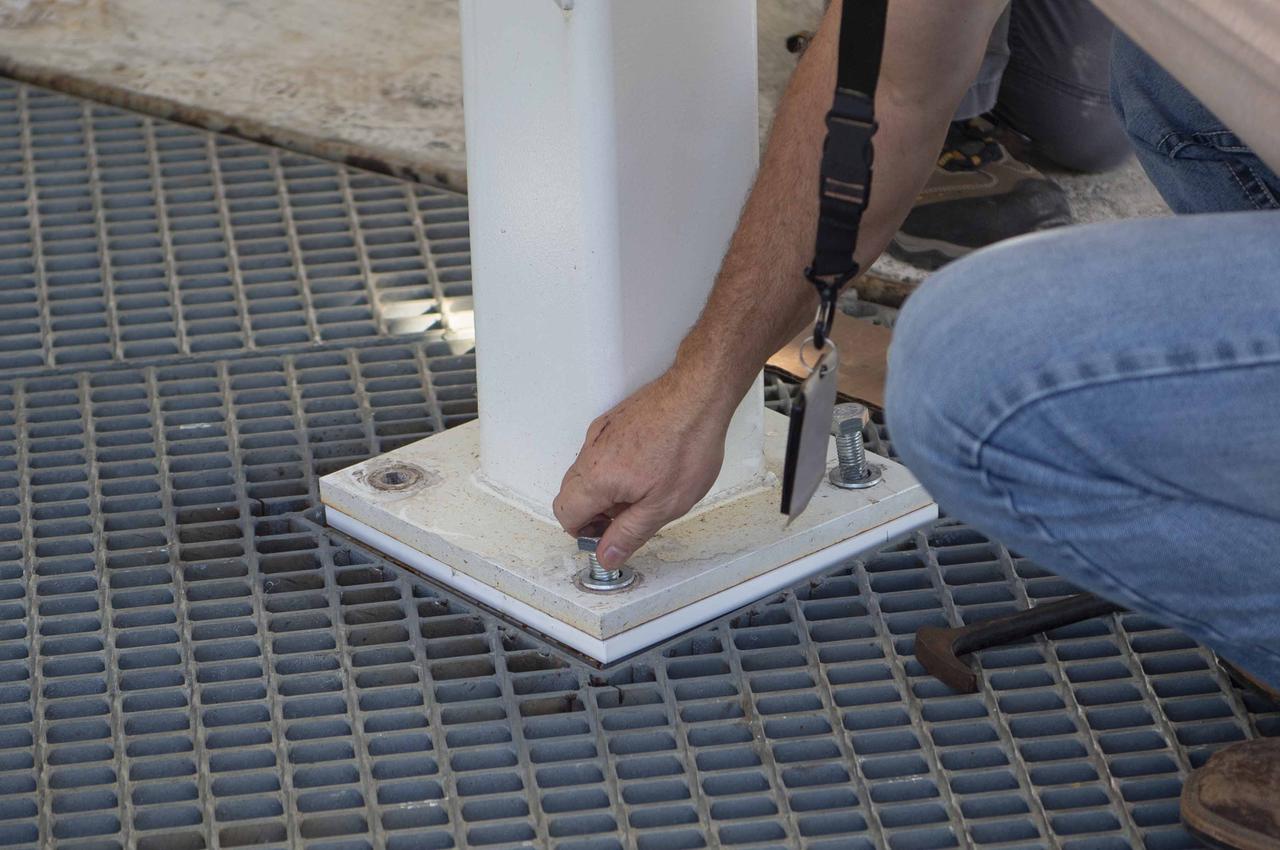
A pair of umbilical support structures needed for future testing of NASA’s exploration upper stage (EUS) were installed in the B-2 position of the Thad Cochran Test Stand on Oct. 30-31 at NASA’s Stennis Space Center. The support structures arrived from NASA’s Michoud Assembly Facility in New Orleans via the unique NASA Stennis seven-and-a-half-mile canal system in 2023. Since then, crews have prepared the structures that will align with the EUS unit for installation. In addition to helping secure the unit in place during hot fire testing, the umbilical support structures are where the command, control, and data electrical connections are mated to connect the ground systems to the vehicle systems, as well as most the commodity connections such as liquid hydrogen, liquid oxygen, hydrogen vent, helium bottle fill pressure, and purges. Prior to its initial flight, the EUS unit will undergo a series of so-called Green Run tests at NASA Stennis to ensure all systems are ready to go. The test series will culminate with a hot fire of the stage’s four RL10 engines, made by Aerojet Rocketdyne, an L3Harris Technologies company and lead SLS engines contractor. The new upper stage will enable NASA to carry larger payloads on Artemis missions to the Moon and beyond.
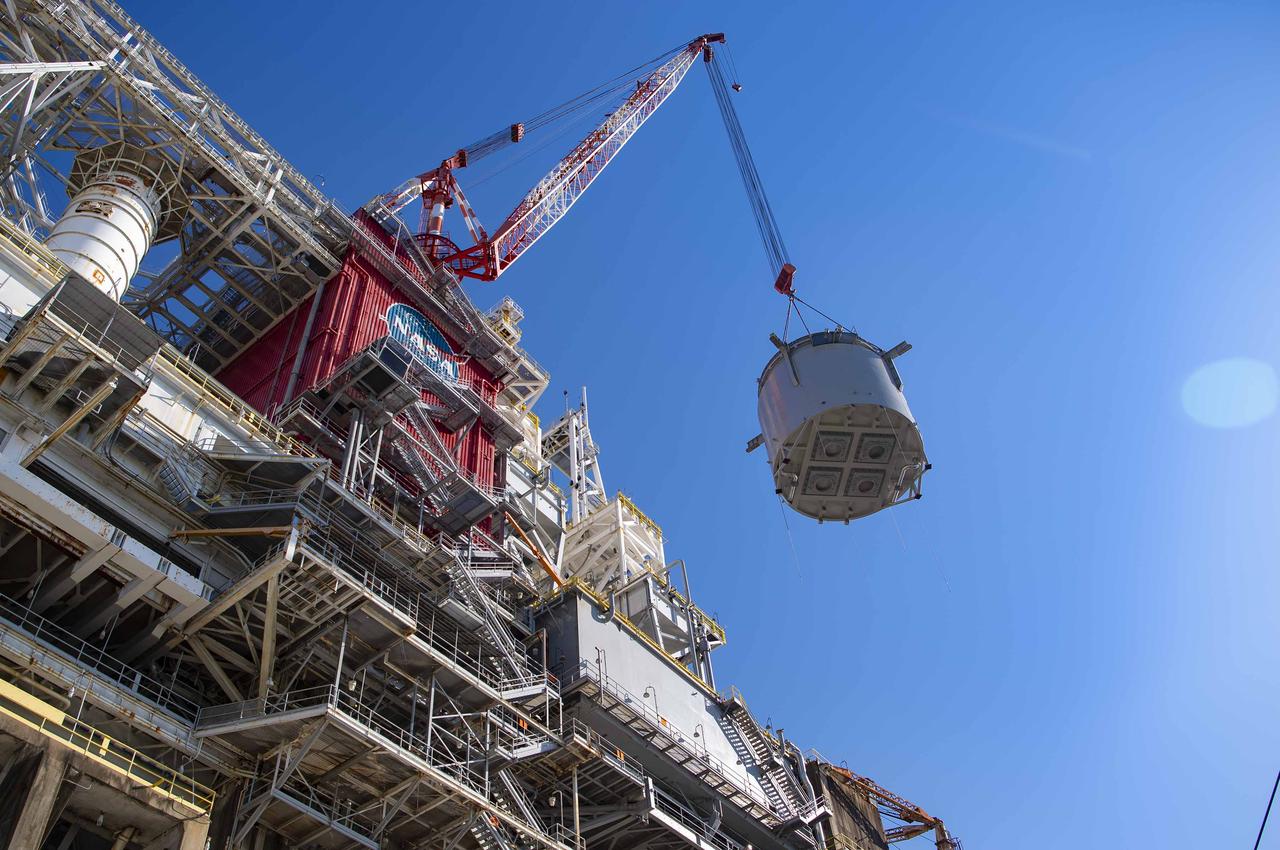
Teams at NASA’s Stennis Space Center complete a safe lift and install of an interstage simulator unit needed for future testing of NASA’s exploration upper stage (EUS) in the B-2 position of the Thad Cochran Test Stand. The lift and install, completed over a two-week period that began Oct. 10, marks a milestone for testing the new SLS (Space Launch System) rocket stage that will fly on future Artemis missions to the Moon and beyond. The EUS will undergo a series of Green Run tests of its integrated systems prior to its first flight. During testing, the interstage simulator component will function like the SLS interstage section that helps protect the upper stage during Artemis launches.