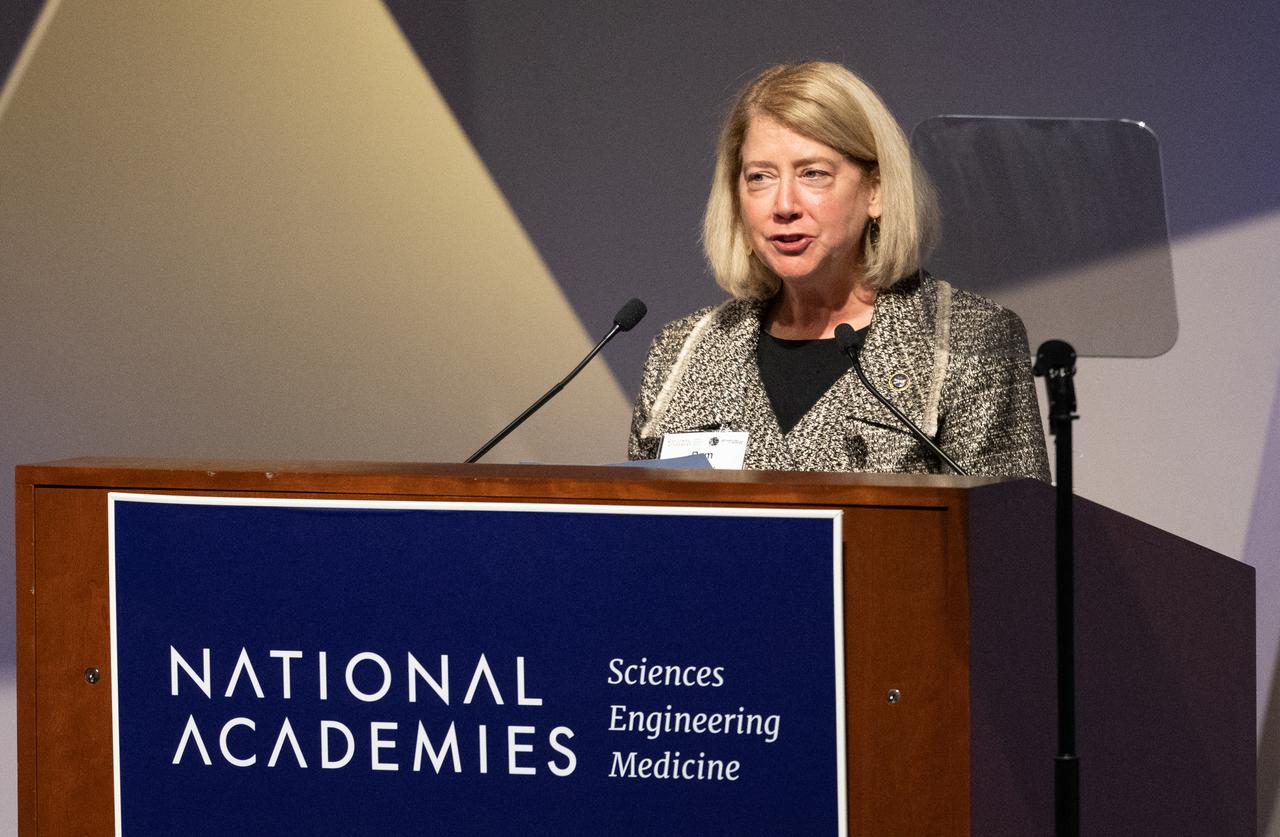
NASA Deputy Administrator Pam Melroy delivers remarks during an event celebrating the 50th anniversary of the Apollo 17 mission, Wednesday, Dec. 14, 2022, at the National Academies of Science in Washington. The three-astronaut crew of Apollo 17 - commander Eugene Cernan, lunar module pilot Harrison Schmitt, and command module pilot Ronald Evans, embarked on the last mission of the Apollo program to land humans on the Moon in December of 1972. Cernan and Schmitt spent three days on the lunar surface collecting samples and performing scientific experiments before lifting off from the Taurus-Littrow Valley on December 14, 1972. Photo Credit: (NASA/Joel Kowsky)
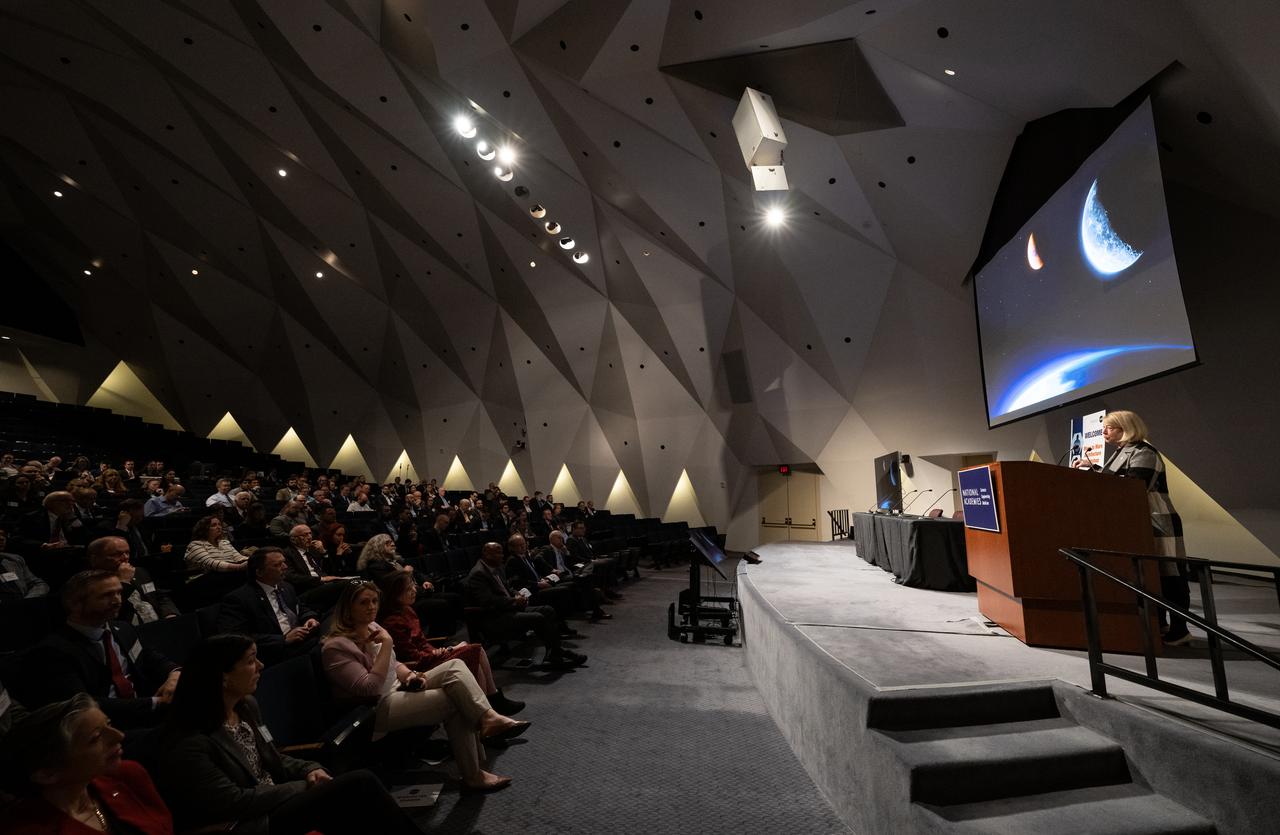
NASA Deputy Administrator Pam Melroy gives opening remarks at the Moon to Mars Architecture Workshop, Thursday, Feb. 22, 2024, at the National Academy of Sciences in Washington. NASA held the workshop to engage the broader space community and collect feedback from U.S. industry and academia and international partners to inform NASA's Moon to Mars Architecture, the agency's roadmap for human exploration of the Moon and Mars.
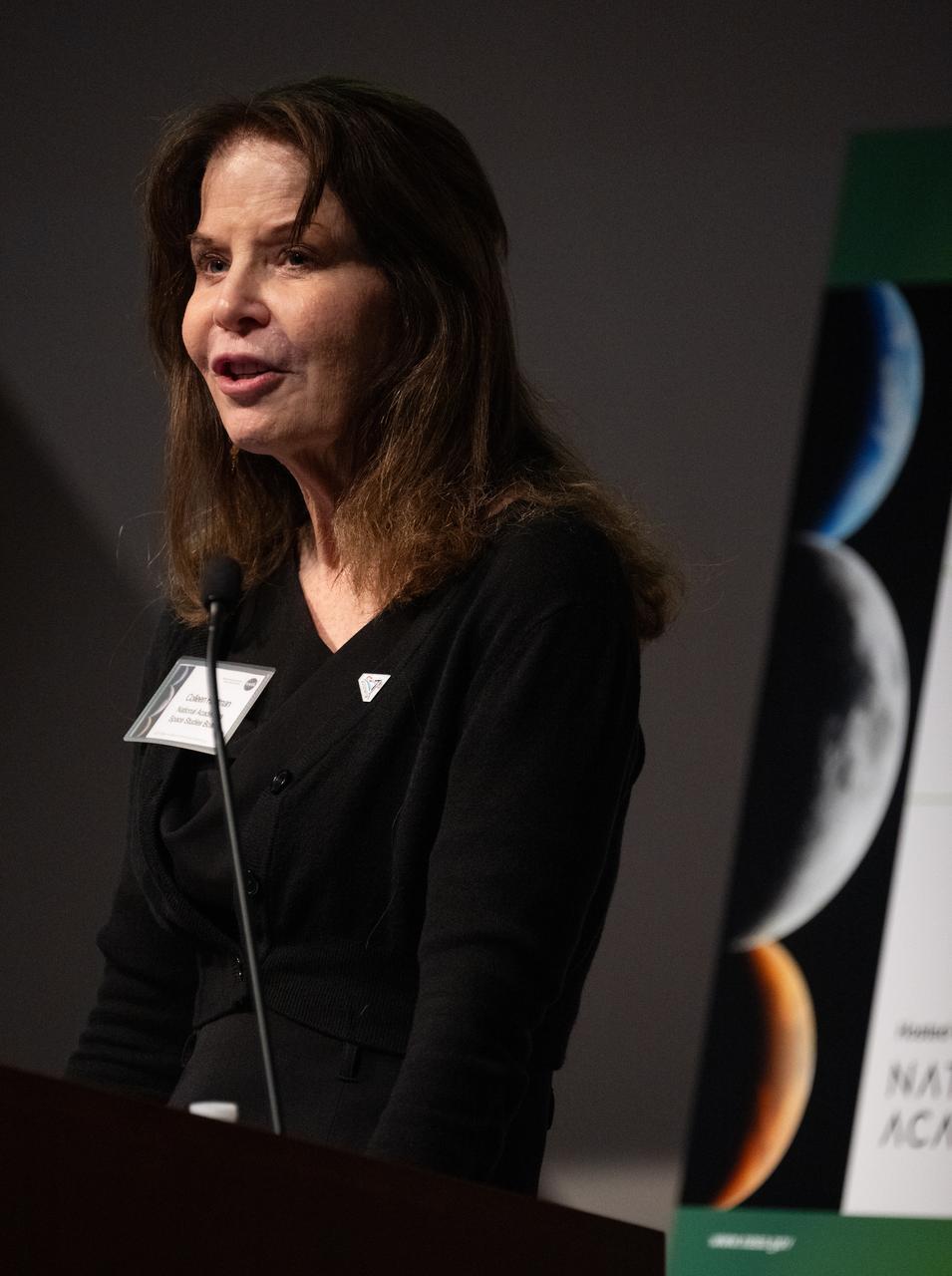
Colleen Hartman, director of the Space Studies Board at the National Academy of Sciences gives opening remarks at the Moon to Mars Architecture Workshop, Wednesday, Feb. 12, 2025, at the National Academy of Sciences in Washington. NASA held the workshop to engage the broader space community and collect feedback from U.S. industry and academia and international partners to inform NASA's Moon to Mars Architecture, the agency's roadmap for human exploration of the Moon and Mars. Photo Credit: (NASA/Joel Kowsky)
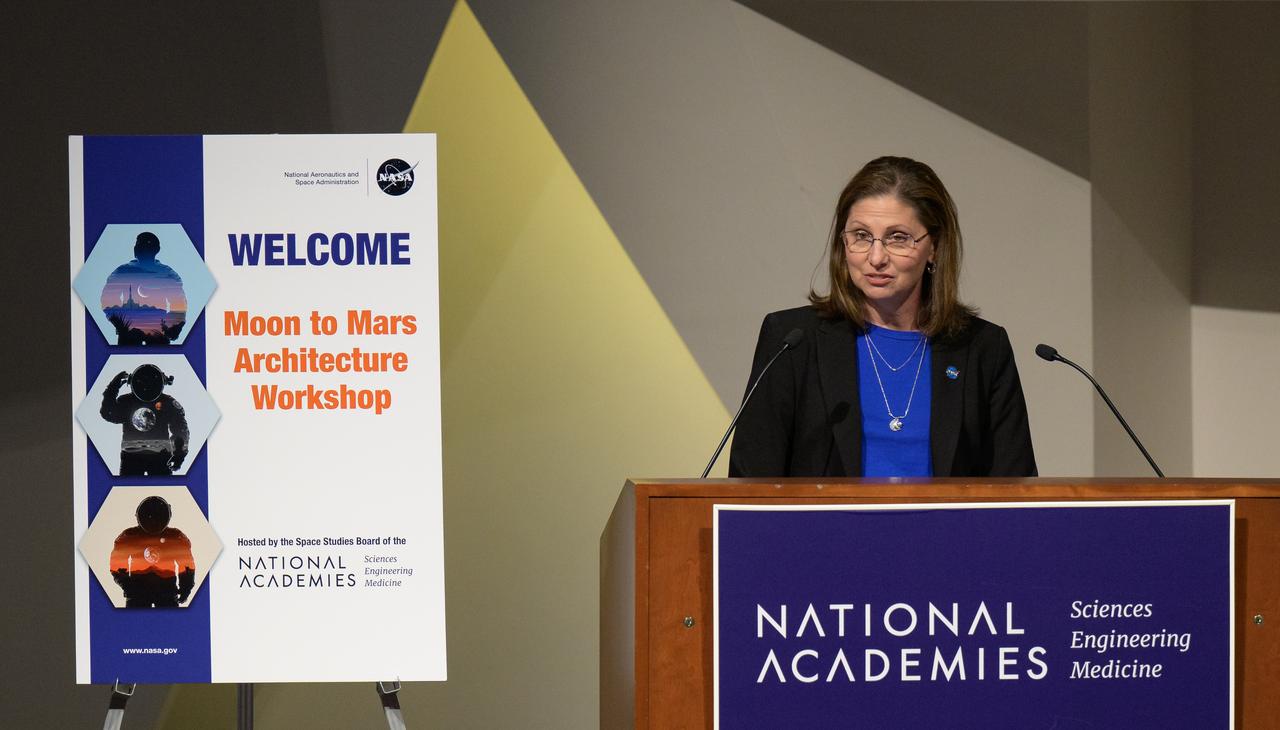
NASA Associate Administrator for Exploration Systems Development, Catherine Koerner, gives opening remarks at the Moon to Mars Architecture Workshop, Tuesday, Feb. 20, 2024, at the National Academy of Sciences in Washington. NASA held the workshop to engage the broader space community and collect feedback from U.S. industry and academia and international partners to inform NASA's Moon to Mars Architecture, the agency's roadmap for human exploration of the Moon and Mars. Photo Credit: (NASA/Bill Ingalls)
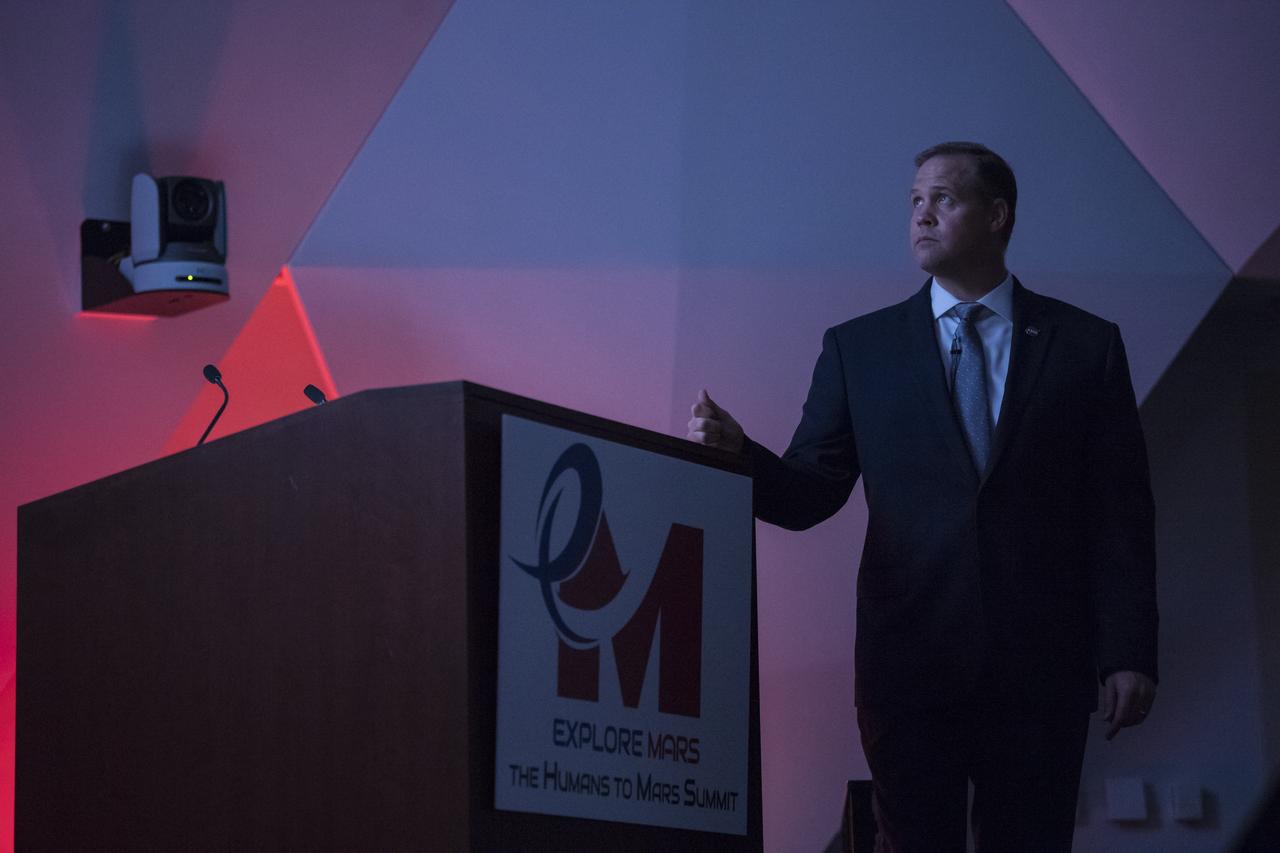
NASA Administrator Jim Bridenstine watches the "We Are NASA" film just after giving keynote remarks at the Humans to Mars Summit, Tuesday, May 14, 2019, at the National Academy of Sciences in Washington. Photo credit: (NASA/Aubrey Gemignani)
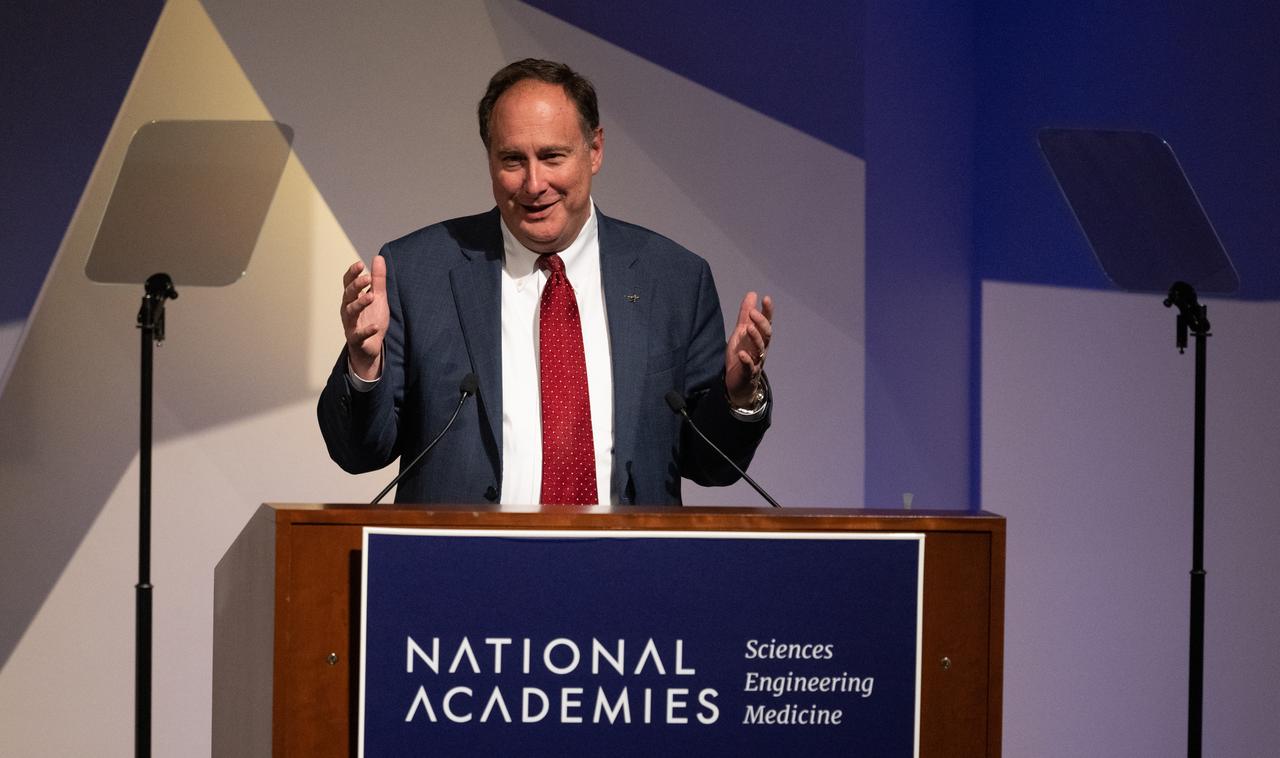
Robert Lightfoot, executive vice president of Lockheed Martin Space, speaks during an event celebrating the 50th anniversary of the Apollo 17 mission, Wednesday, Dec. 14, 2022, at the National Academies of Science in Washington. The three-astronaut crew of Apollo 17 - commander Eugene Cernan, lunar module pilot Harrison Schmitt, and command module pilot Ronald Evans, embarked on the last mission of the Apollo program to land humans on the Moon in December of 1972. Cernan and Schmitt spent three days on the lunar surface collecting samples and performing scientific experiments before lifting off from the Taurus-Littrow Valley on December 14, 1972. Photo Credit: (NASA/Joel Kowsky)
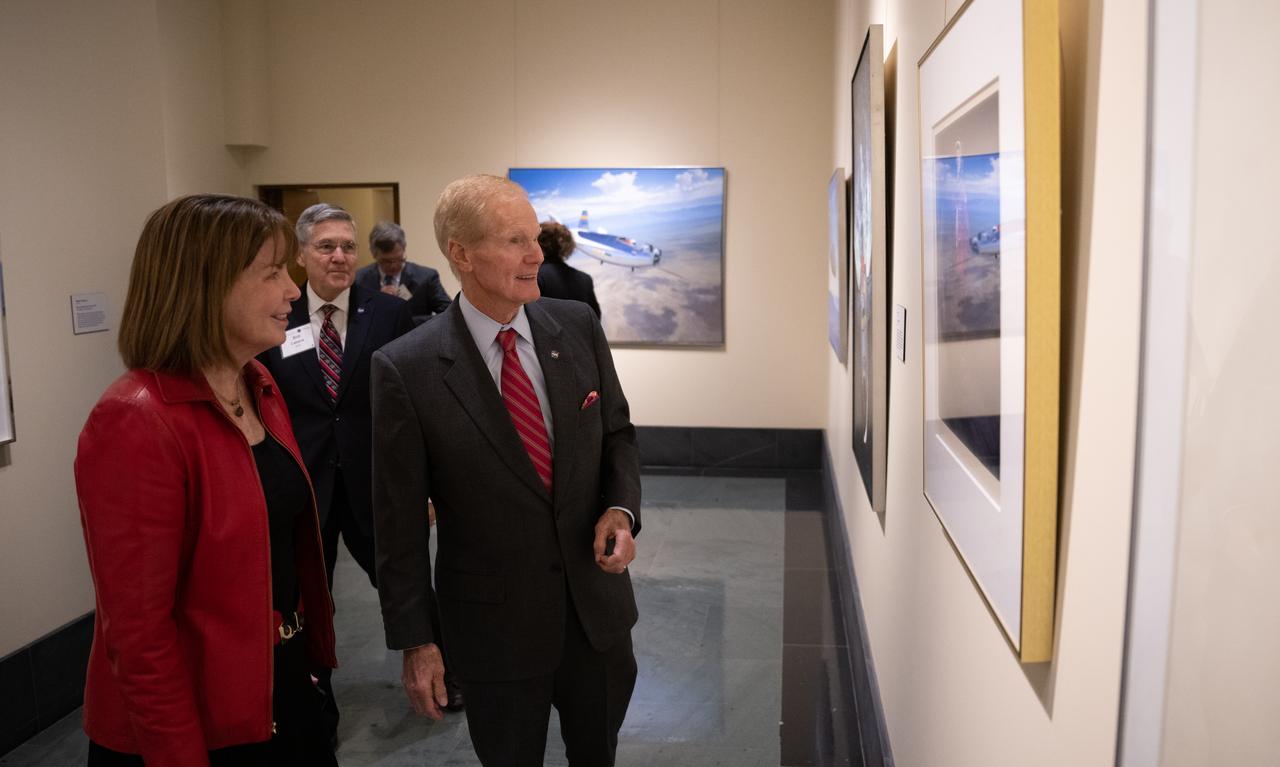
Colleen Hartman, director of physics, aeronautics, and space science at the National Academies of Science , left, and NASA Administrator Bill Nelson are seen as they view the NASA Art Program Exhibition “Launching the Future: Looking Back to Look Forward” during an event celebrating the 50th anniversary of the Apollo 17 mission, Wednesday, Dec. 14, 2022, at the National Academies of Science in Washington. The three-astronaut crew of Apollo 17 - commander Eugene Cernan, lunar module pilot Harrison Schmitt, and command module pilot Ronald Evans, embarked on the last mission of the Apollo program to land humans on the Moon in December of 1972. Cernan and Schmitt spent three days on the lunar surface collecting samples and performing scientific experiments before lifting off from the Taurus-Littrow Valley on December 14, 1972. Photo Credit: (NASA/Joel Kowsky)
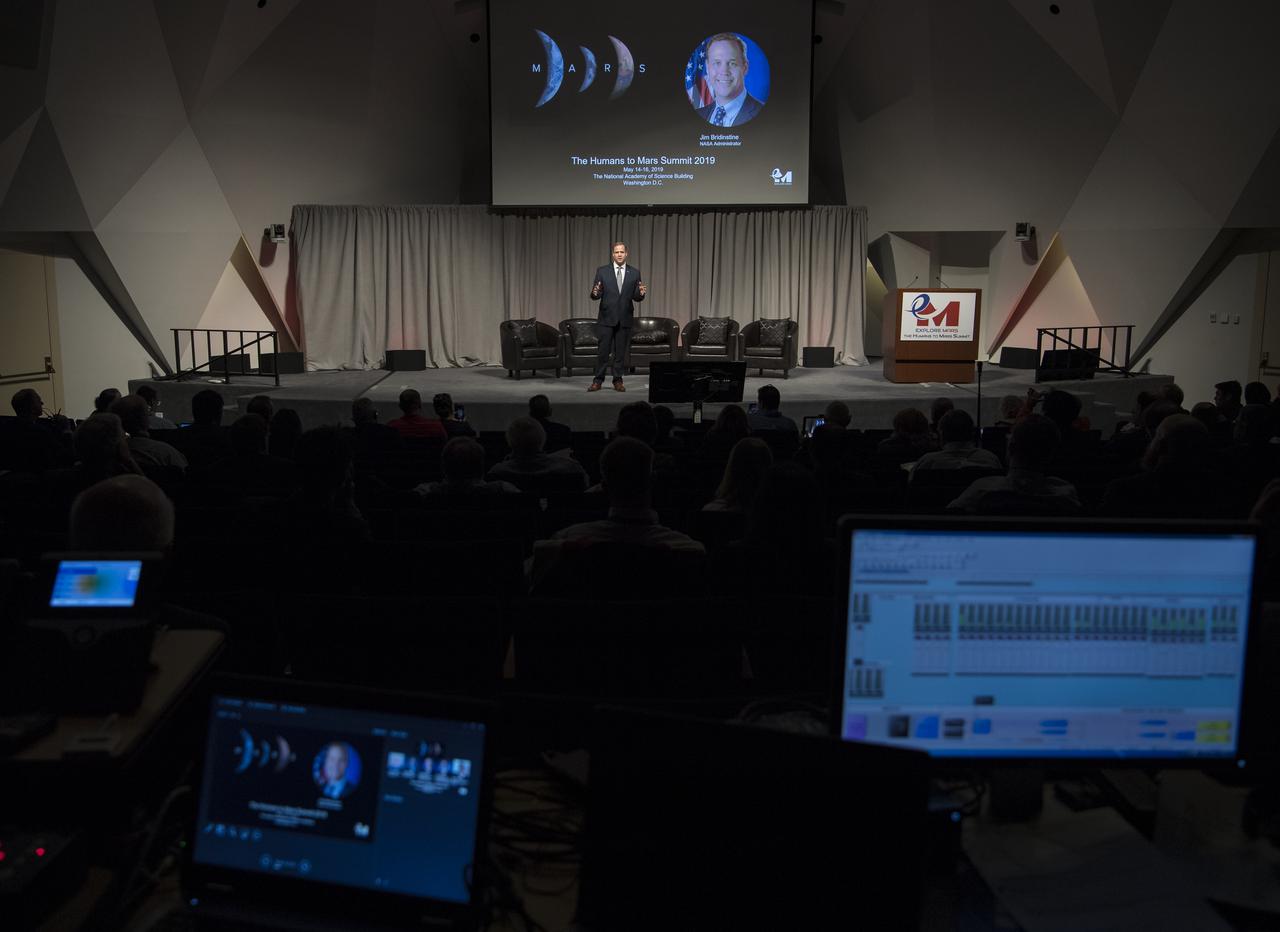
NASA Administrator Jim Bridenstine gives keynote remarks at the Humans to Mars Summit, Tuesday, May 14, 2019, at the National Academy of Sciences in Washington. Photo credit: (NASA/Aubrey Gemignani)
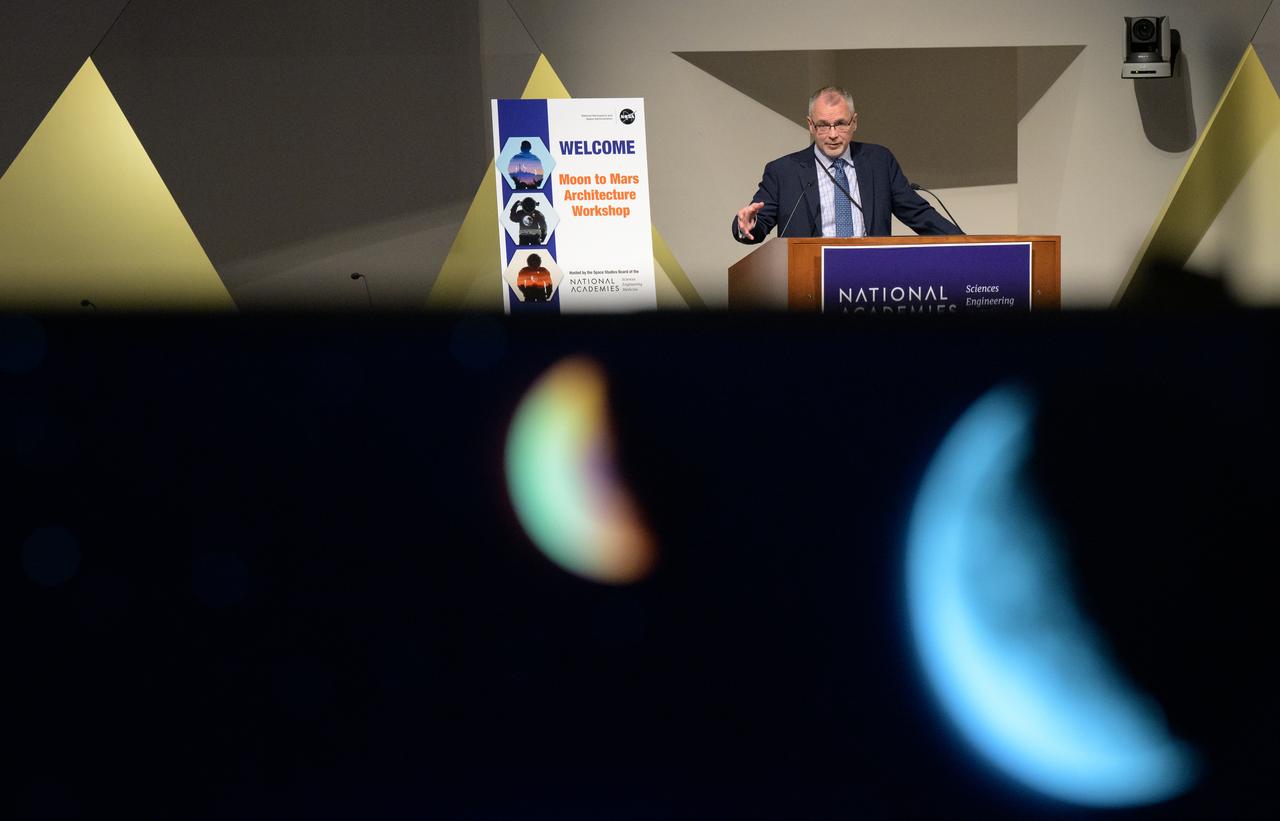
NASA Associate Administrator Jim Free gives opening remarks at the Moon to Mars Architecture Workshop, Tuesday, Feb. 20, 2024, at the National Academy of Sciences in Washington. NASA held the workshop to engage the broader space community and collect feedback from U.S. industry and academia and international partners to inform NASA's Moon to Mars Architecture, the agency's roadmap for human exploration of the Moon and Mars. Photo Credit: (NASA/Bill Ingalls)
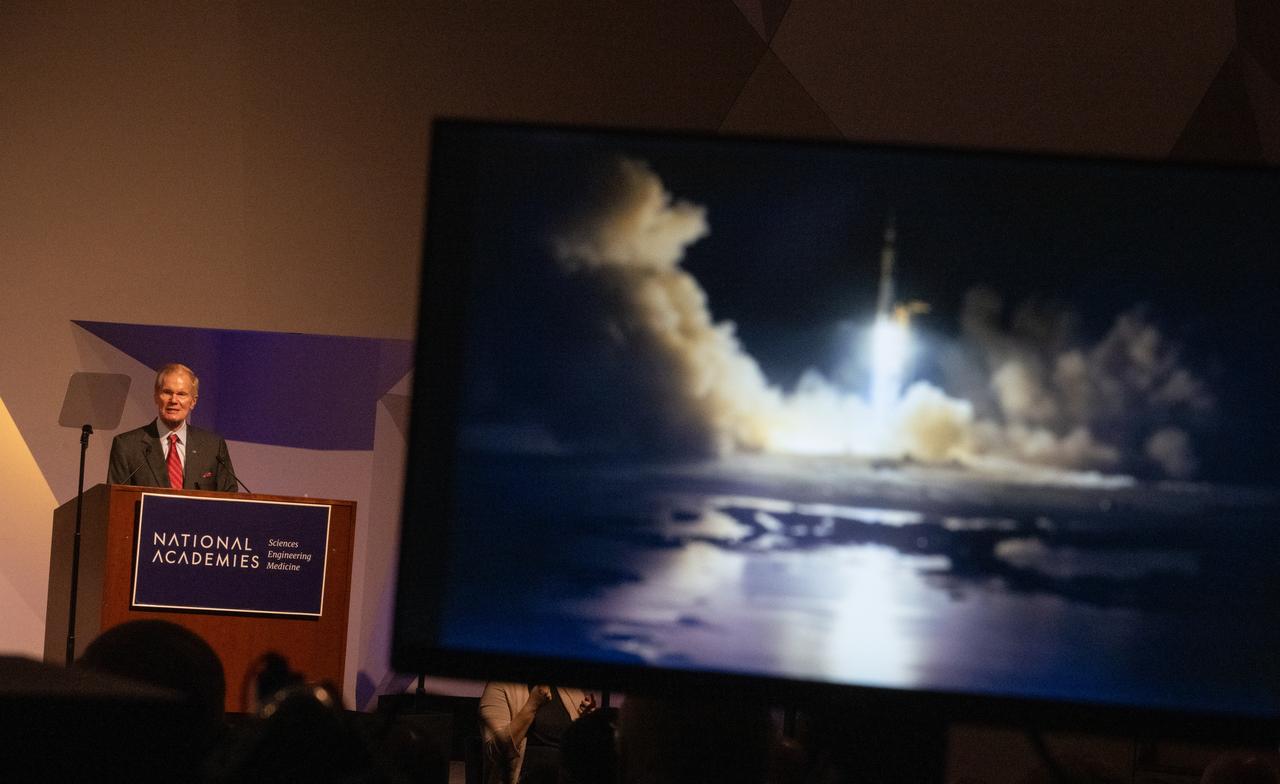
NASA Administrator Bill Nelson delivers remarks during an event celebrating the 50th anniversary of the Apollo 17 mission, Wednesday, Dec. 14, 2022, at the National Academies of Science in Washington. The three-astronaut crew of Apollo 17 - commander Eugene Cernan, lunar module pilot Harrison Schmitt, and command module pilot Ronald Evans, embarked on the last mission of the Apollo program to land humans on the Moon in December of 1972. Cernan and Schmitt spent three days on the lunar surface collecting samples and performing scientific experiments before lifting off from the Taurus-Littrow Valley on December 14, 1972. Photo Credit: (NASA/Joel Kowsky)
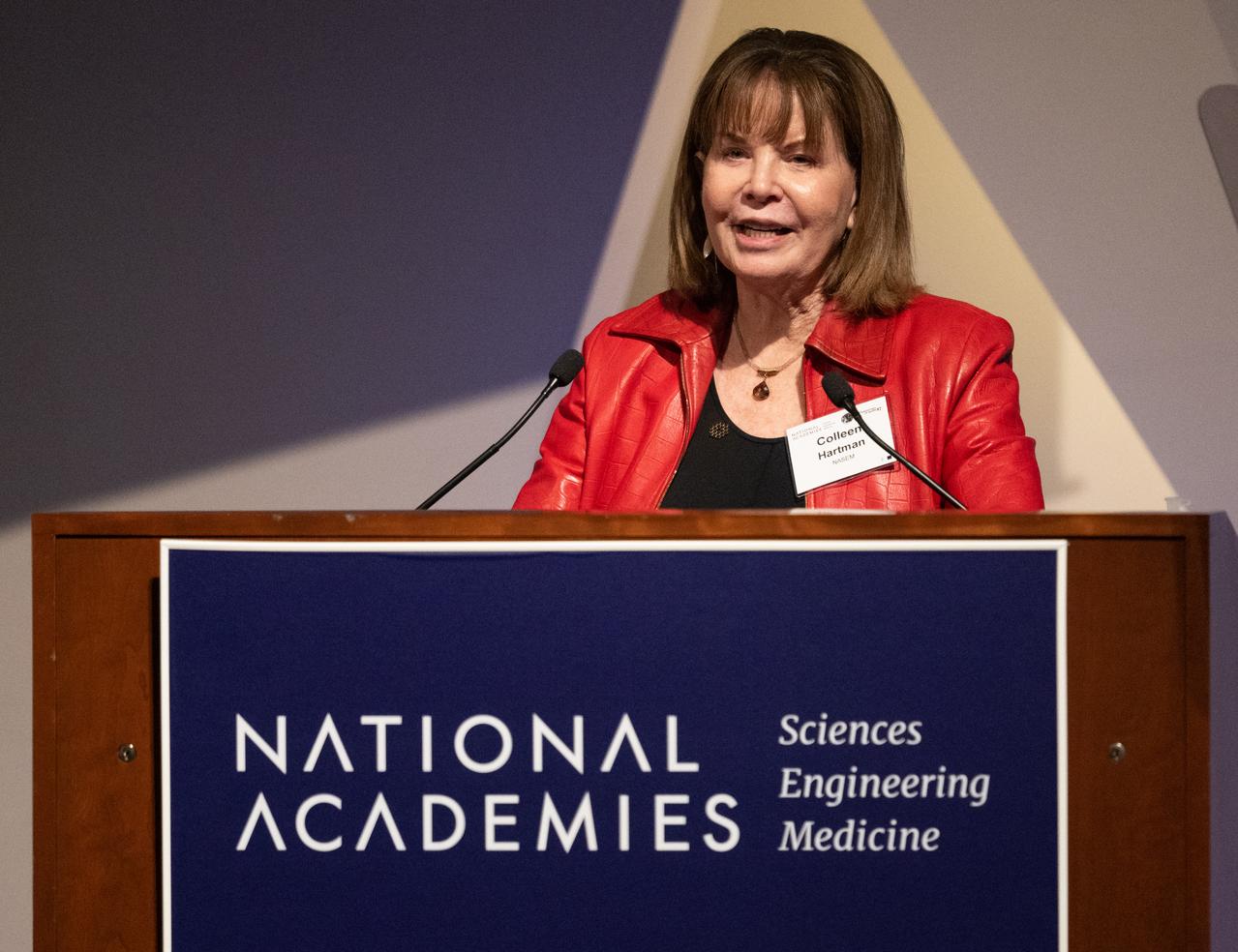
Colleen Hartman, director of physics, aeronautics, and space science at the National Academies of Science gives closing remarks during an event celebrating the 50th anniversary of the Apollo 17 mission, Wednesday, Dec. 14, 2022, at the National Academies of Science in Washington. The three-astronaut crew of Apollo 17 - commander Eugene Cernan, lunar module pilot Harrison Schmitt, and command module pilot Ronald Evans, embarked on the last mission of the Apollo program to land humans on the Moon in December of 1972. Cernan and Schmitt spent three days on the lunar surface collecting samples and performing scientific experiments before lifting off from the Taurus-Littrow Valley on December 14, 1972. Photo Credit: (NASA/Joel Kowsky)
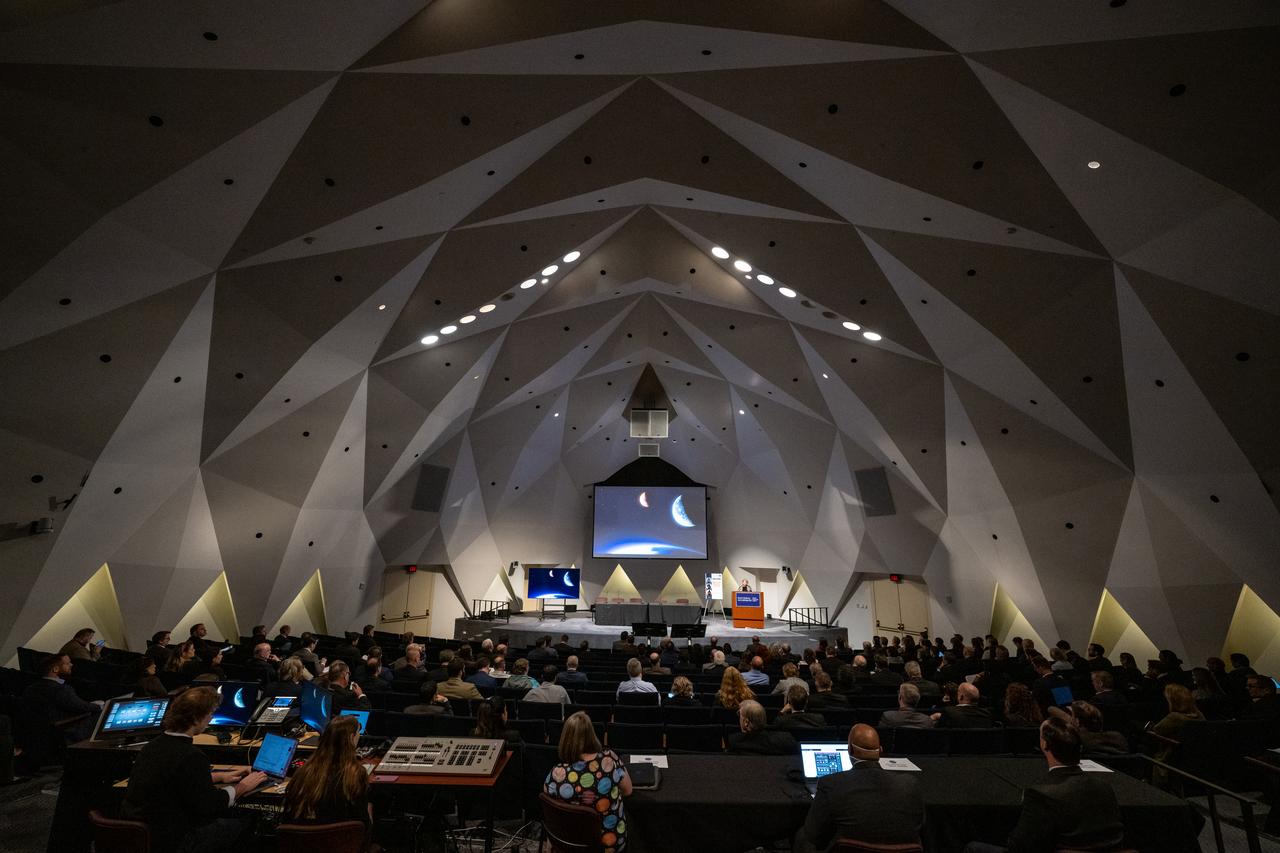
NASA Deputy Administrator Pam Melroy gives opening remarks at the Moon to Mars Architecture Workshop, Thursday, Feb. 22, 2024, at the National Academy of Sciences in Washington. NASA held the workshop to engage the broader space community and collect feedback from U.S. industry and academia and international partners to inform NASA's Moon to Mars Architecture, the agency's roadmap for human exploration of the Moon and Mars.
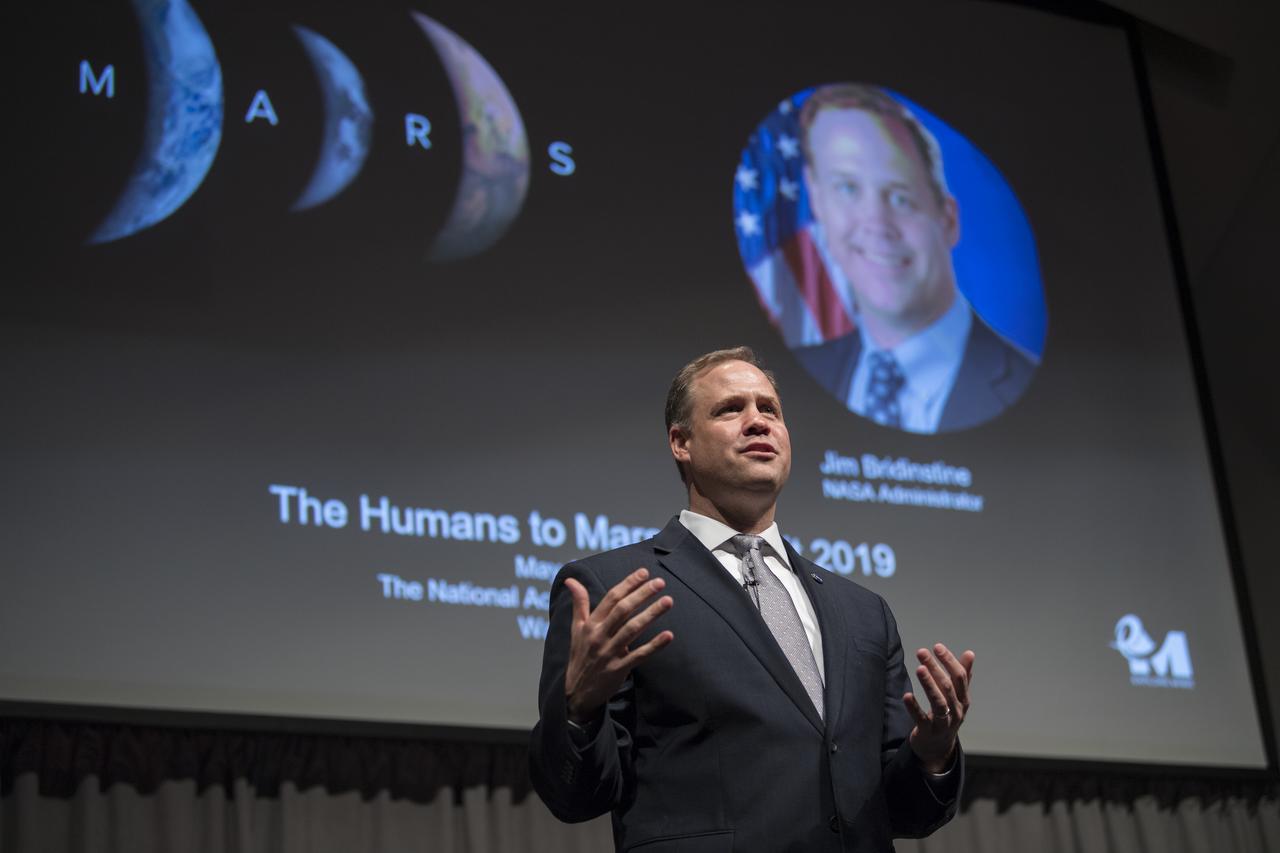
NASA Administrator Jim Bridenstine gives keynote remarks at the Humans to Mars Summit, Tuesday, May 14, 2019, at the National Academy of Sciences in Washington. Photo credit: (NASA/Aubrey Gemignani)
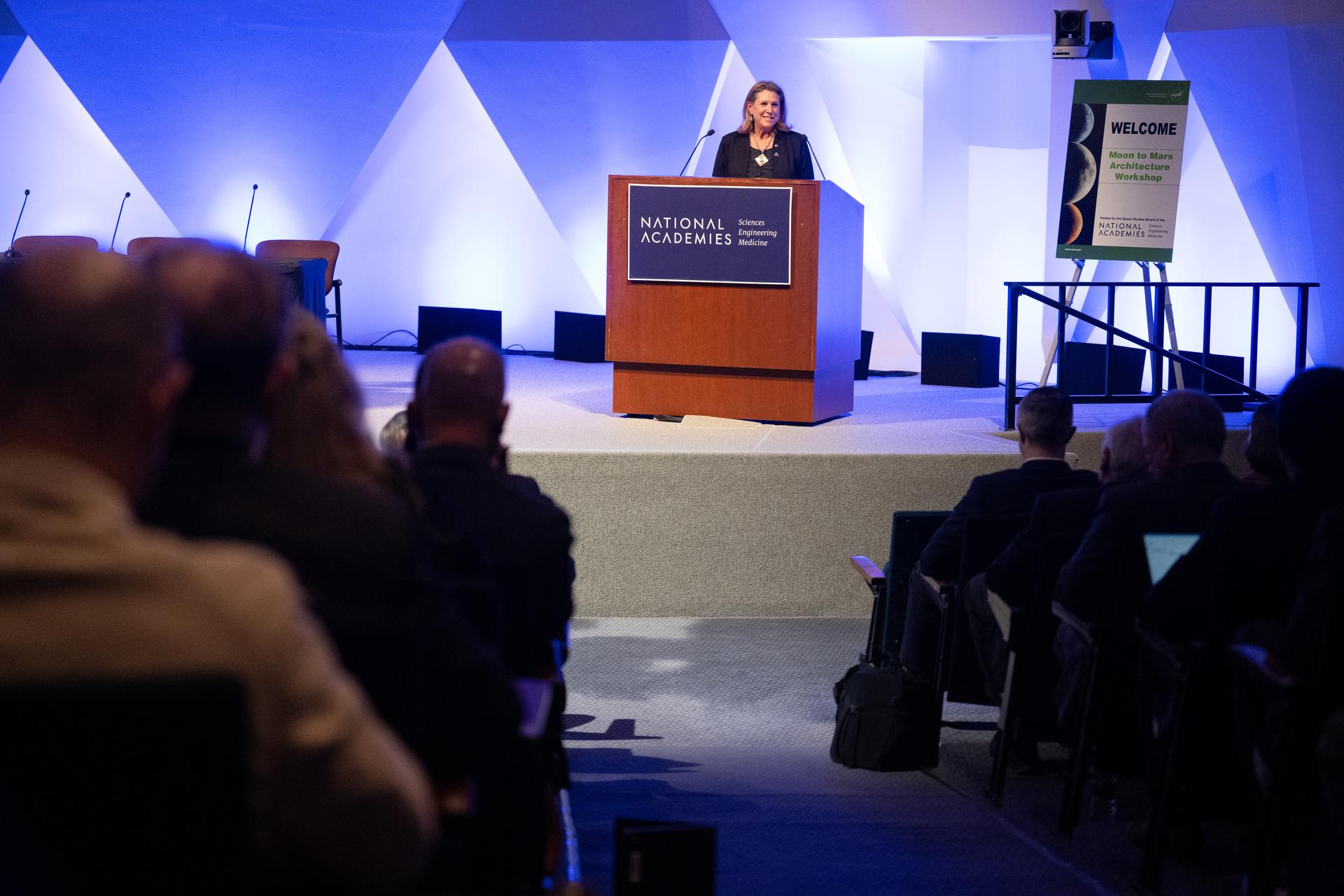
Lori Glaze, acting associate administrator for NASA's Exploration Systems Development Mission Directorate, gives opening remarks at the Moon to Mars Architecture Workshop, Wednesday, Jan. 21, 2026, at the National Academy of Sciences in Washington. NASA held the workshop to engage the broader space community and collect feedback from U.S. industry and academia and international partners to inform NASA's Moon to Mars Architecture, the agency's roadmap for human exploration of the Moon and Mars. Photo Credit: (NASA/Joel Kowsky)
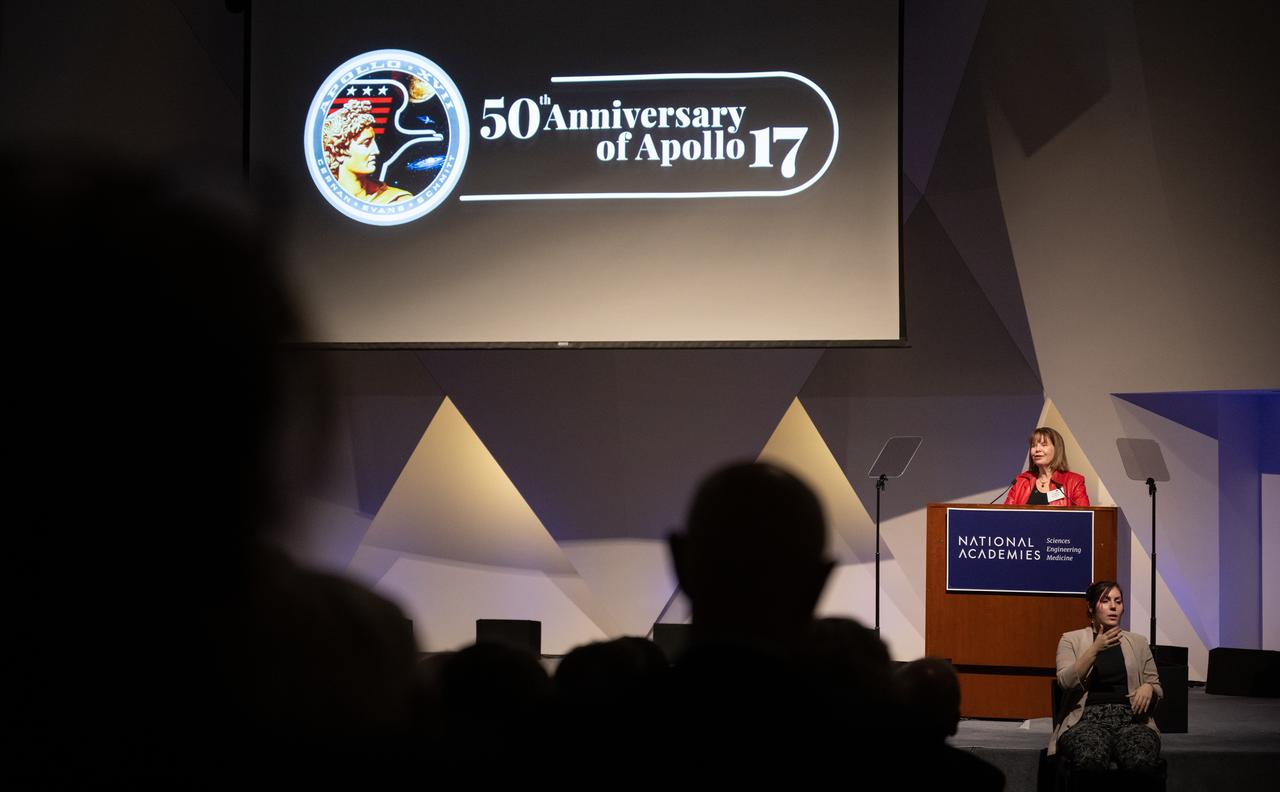
Colleen Hartman, director of physics, aeronautics, and space science at the National Academies of Science gives closing remarks during an event celebrating the 50th anniversary of the Apollo 17 mission, Wednesday, Dec. 14, 2022, at the National Academies of Science in Washington. The three-astronaut crew of Apollo 17 - commander Eugene Cernan, lunar module pilot Harrison Schmitt, and command module pilot Ronald Evans, embarked on the last mission of the Apollo program to land humans on the Moon in December of 1972. Cernan and Schmitt spent three days on the lunar surface collecting samples and performing scientific experiments before lifting off from the Taurus-Littrow Valley on December 14, 1972. Photo Credit: (NASA/Joel Kowsky)
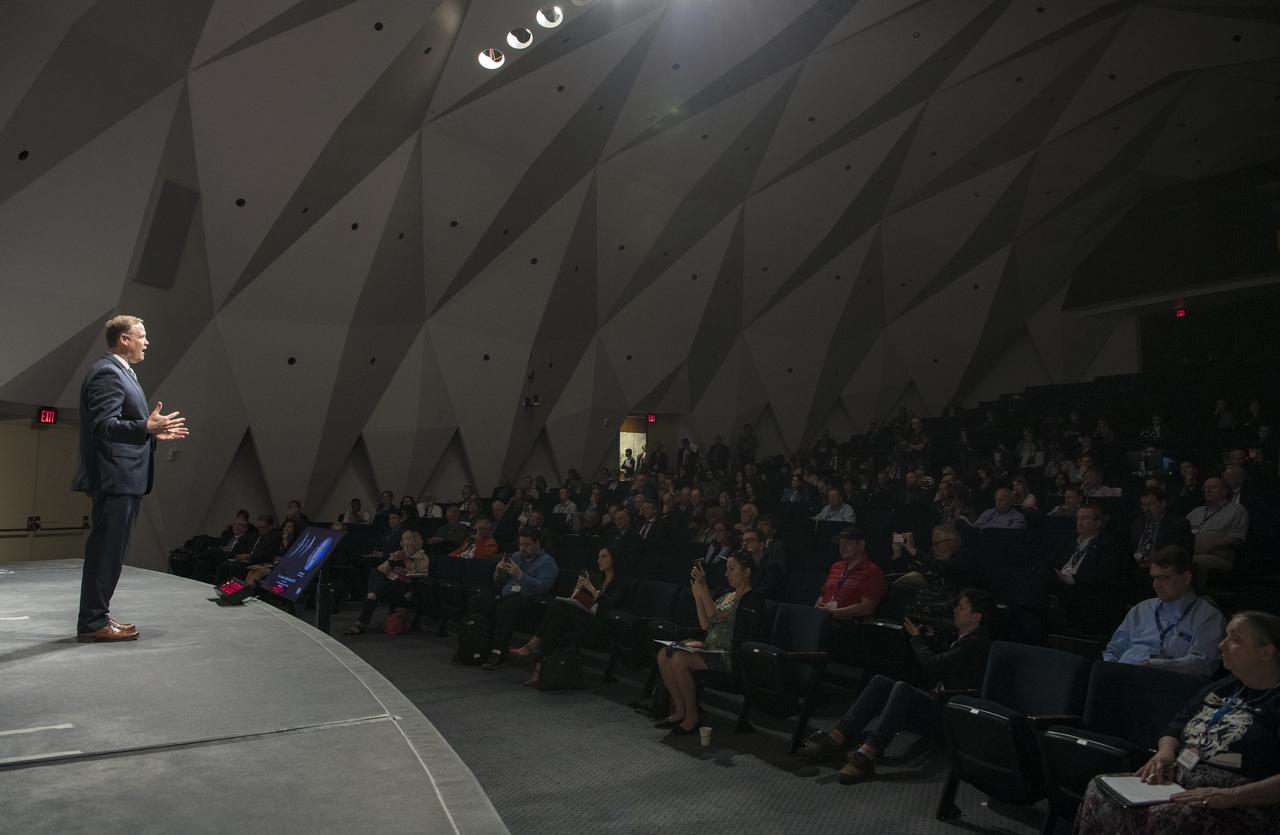
NASA Administrator Jim Bridenstine gives keynote remarks at the Humans to Mars Summit, Tuesday, May 14, 2019, at the National Academy of Sciences in Washington. Photo credit: (NASA/Aubrey Gemignani)
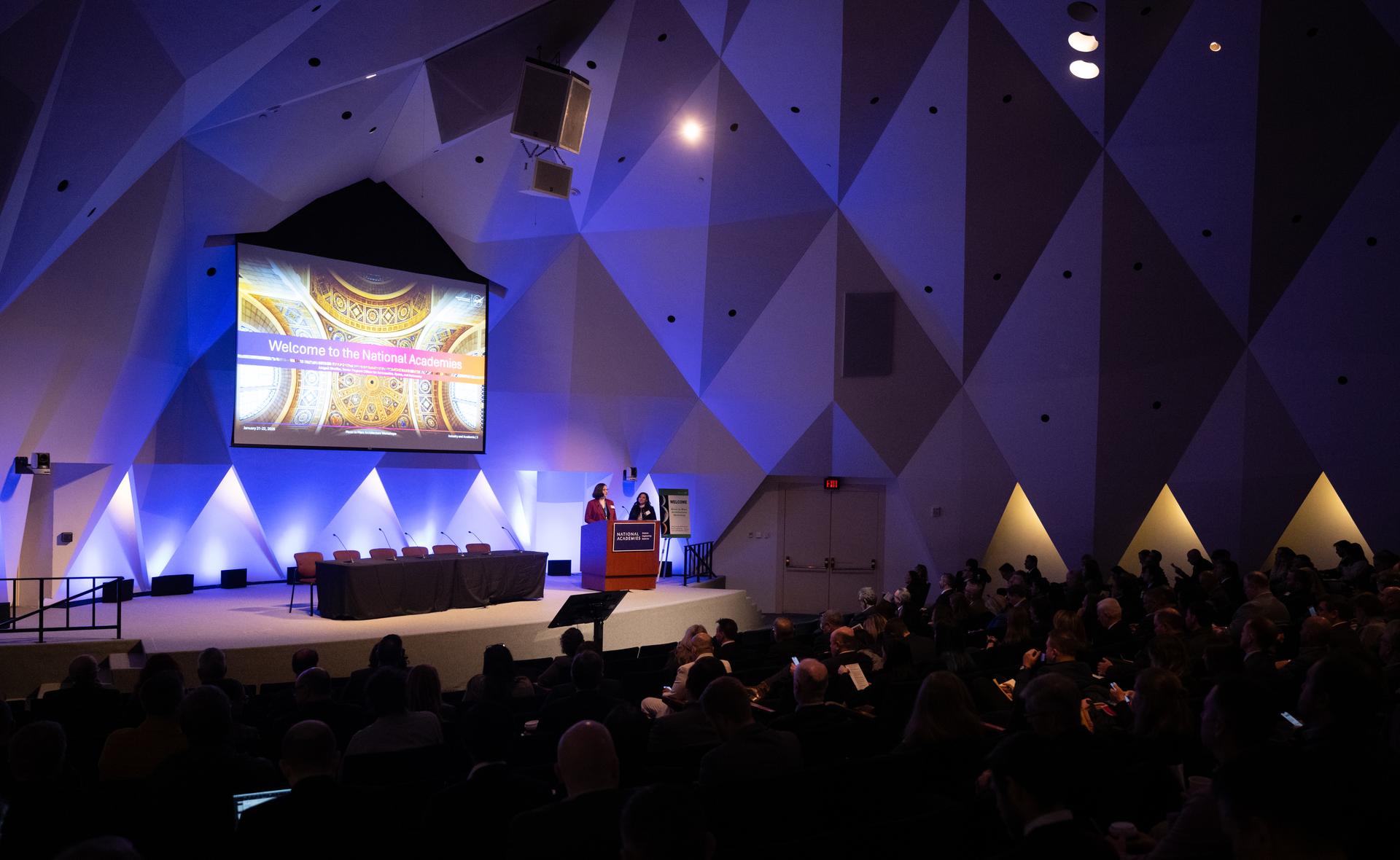
Abigail Sheffer, senior program office for Aeronautics, Space, and Astronomy at the National Academy of Sciences speaks at the Moon to Mars Architecture Workshop, Wednesday, Jan. 21, 2026, at the National Academy of Sciences in Washington. NASA held the workshop to engage the broader space community and collect feedback from U.S. industry and academia and international partners to inform NASA's Moon to Mars Architecture, the agency's roadmap for human exploration of the Moon and Mars. Photo Credit: (NASA/Joel Kowsky)
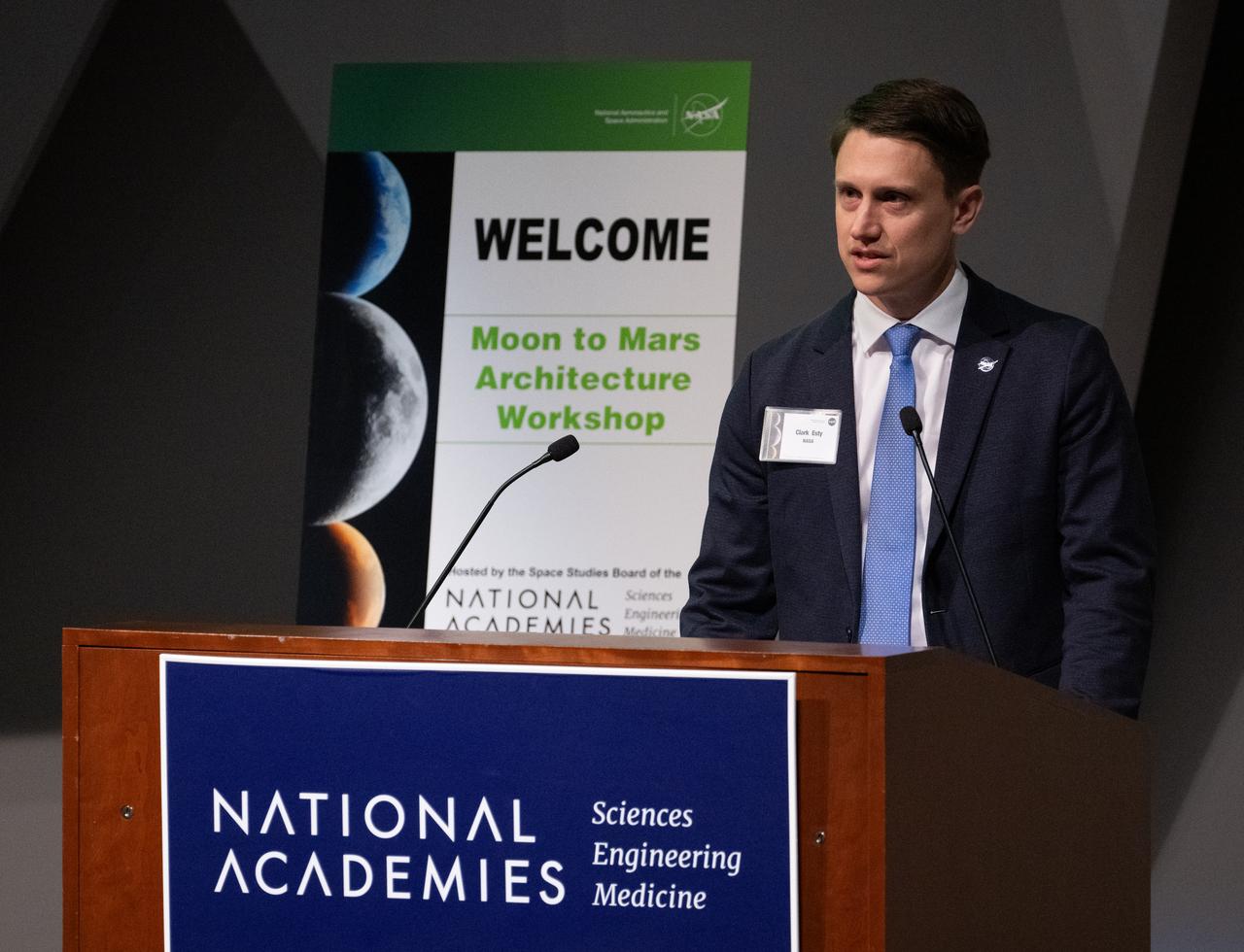
Clark Esty, executive officer for NASA’s Exploration Systems Development Mission Directorate speaks at the Moon to Mars Architecture Workshop, Wednesday, Feb. 12, 2025, at the National Academy of Sciences in Washington. NASA held the workshop to engage the broader space community and collect feedback from U.S. industry and academia and international partners to inform NASA's Moon to Mars Architecture, the agency's roadmap for human exploration of the Moon and Mars. Photo Credit: (NASA/Joel Kowsky)
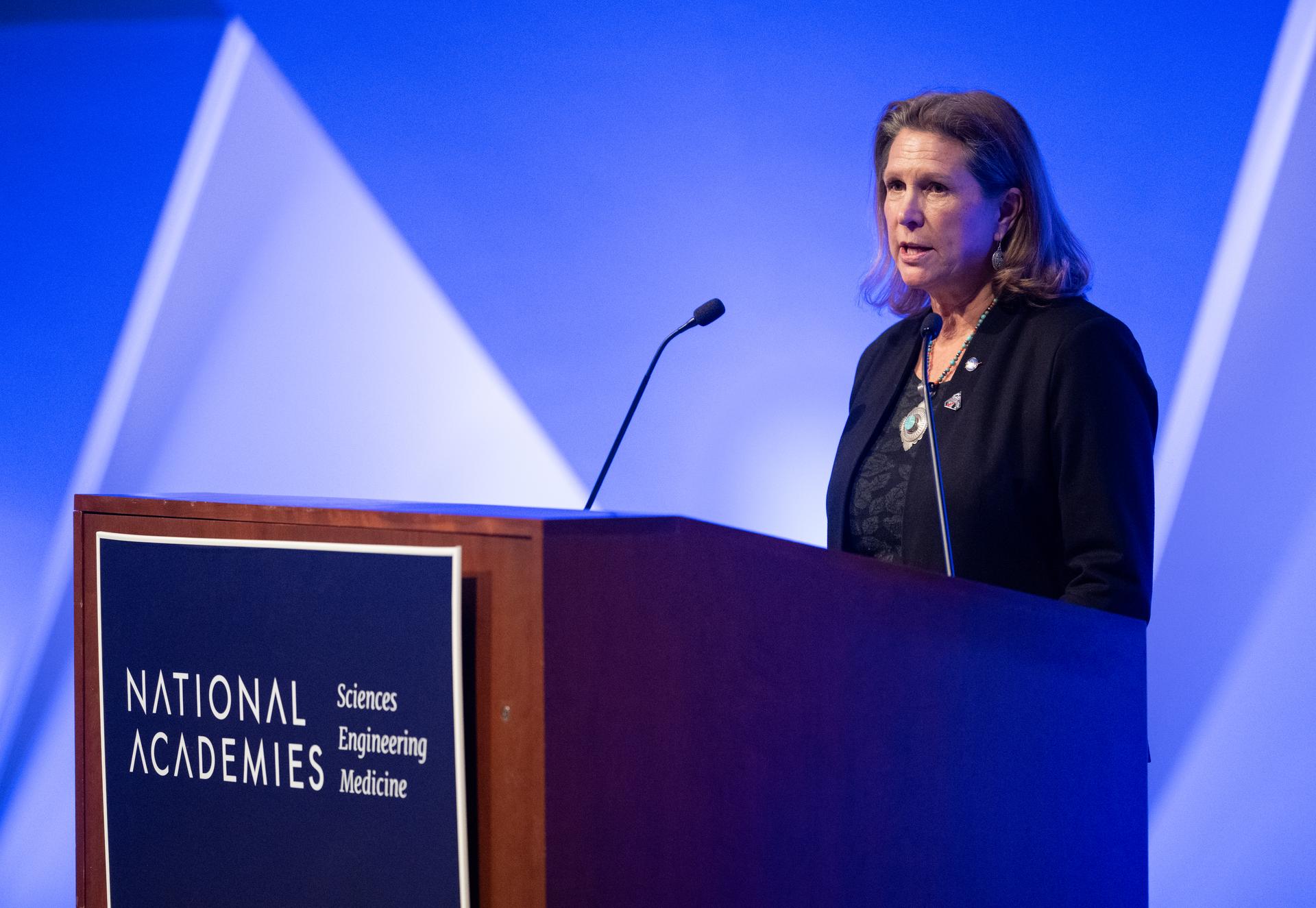
Lori Glaze, acting associate administrator for NASA's Exploration Systems Development Mission Directorate, gives opening remarks at the Moon to Mars Architecture Workshop, Wednesday, Jan. 21, 2026, at the National Academy of Sciences in Washington. NASA held the workshop to engage the broader space community and collect feedback from U.S. industry and academia and international partners to inform NASA's Moon to Mars Architecture, the agency's roadmap for human exploration of the Moon and Mars. Photo Credit: (NASA/Joel Kowsky)
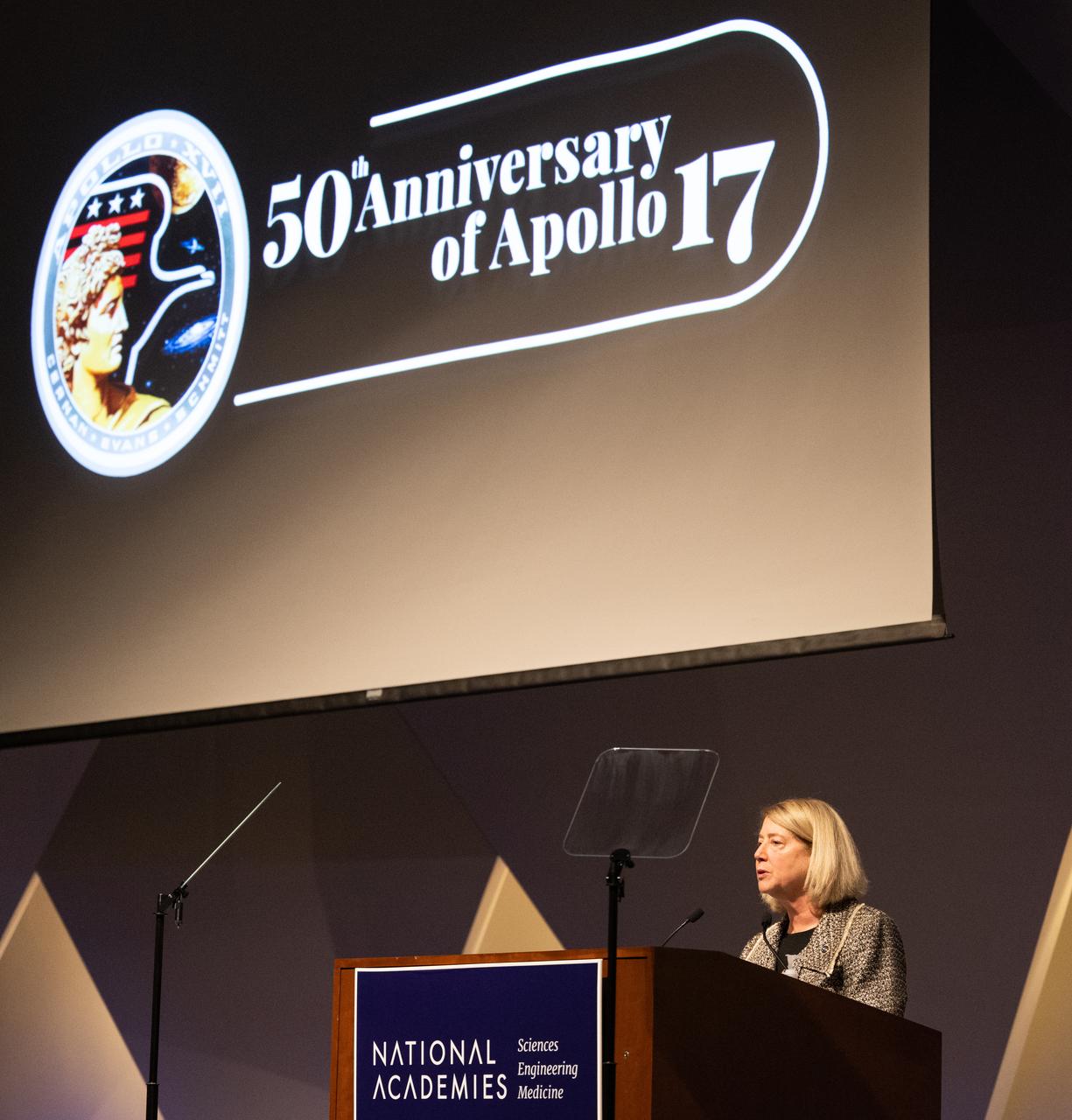
NASA Deputy Administrator Pam Melroy delivers remarks during an event celebrating the 50th anniversary of the Apollo 17 mission, Wednesday, Dec. 14, 2022, at the National Academies of Science in Washington. The three-astronaut crew of Apollo 17 - commander Eugene Cernan, lunar module pilot Harrison Schmitt, and command module pilot Ronald Evans, embarked on the last mission of the Apollo program to land humans on the Moon in December of 1972. Cernan and Schmitt spent three days on the lunar surface collecting samples and performing scientific experiments before lifting off from the Taurus-Littrow Valley on December 14, 1972. Photo Credit: (NASA/Joel Kowsky)
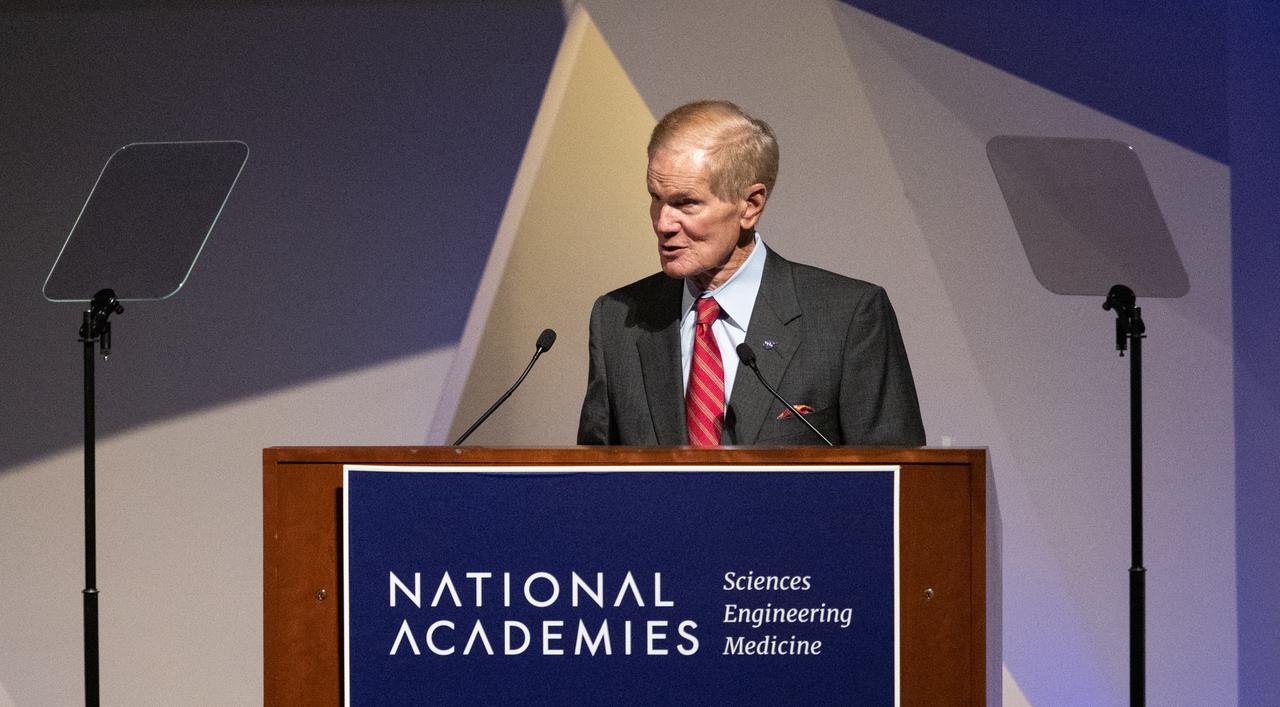
NASA Administrator Bill Nelson delivers remarks during an event celebrating the 50th anniversary of the Apollo 17 mission, Wednesday, Dec. 14, 2022, at the National Academies of Science in Washington. The three-astronaut crew of Apollo 17 - commander Eugene Cernan, lunar module pilot Harrison Schmitt, and command module pilot Ronald Evans, embarked on the last mission of the Apollo program to land humans on the Moon in December of 1972. Cernan and Schmitt spent three days on the lunar surface collecting samples and performing scientific experiments before lifting off from the Taurus-Littrow Valley on December 14, 1972. Photo Credit: (NASA/Joel Kowsky)
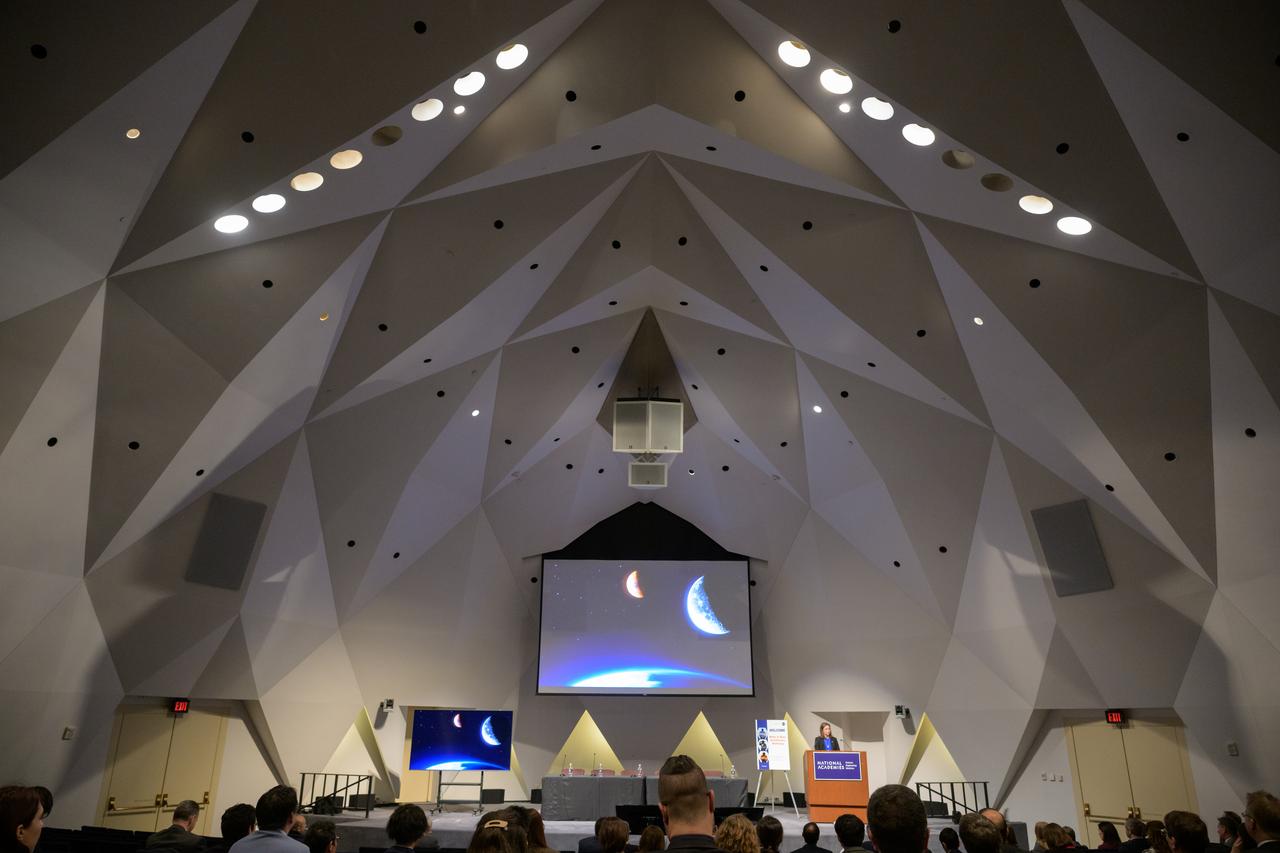
NASA Associate Administrator for Exploration Systems Development, Catherine Koerner, gives opening remarks at the Moon to Mars Architecture Workshop, Tuesday, Feb. 20, 2024, at the National Academy of Sciences in Washington. NASA held the workshop to engage the broader space community and collect feedback from U.S. industry and academia and international partners to inform NASA's Moon to Mars Architecture, the agency's roadmap for human exploration of the Moon and Mars. Photo Credit: (NASA/Bill Ingalls)
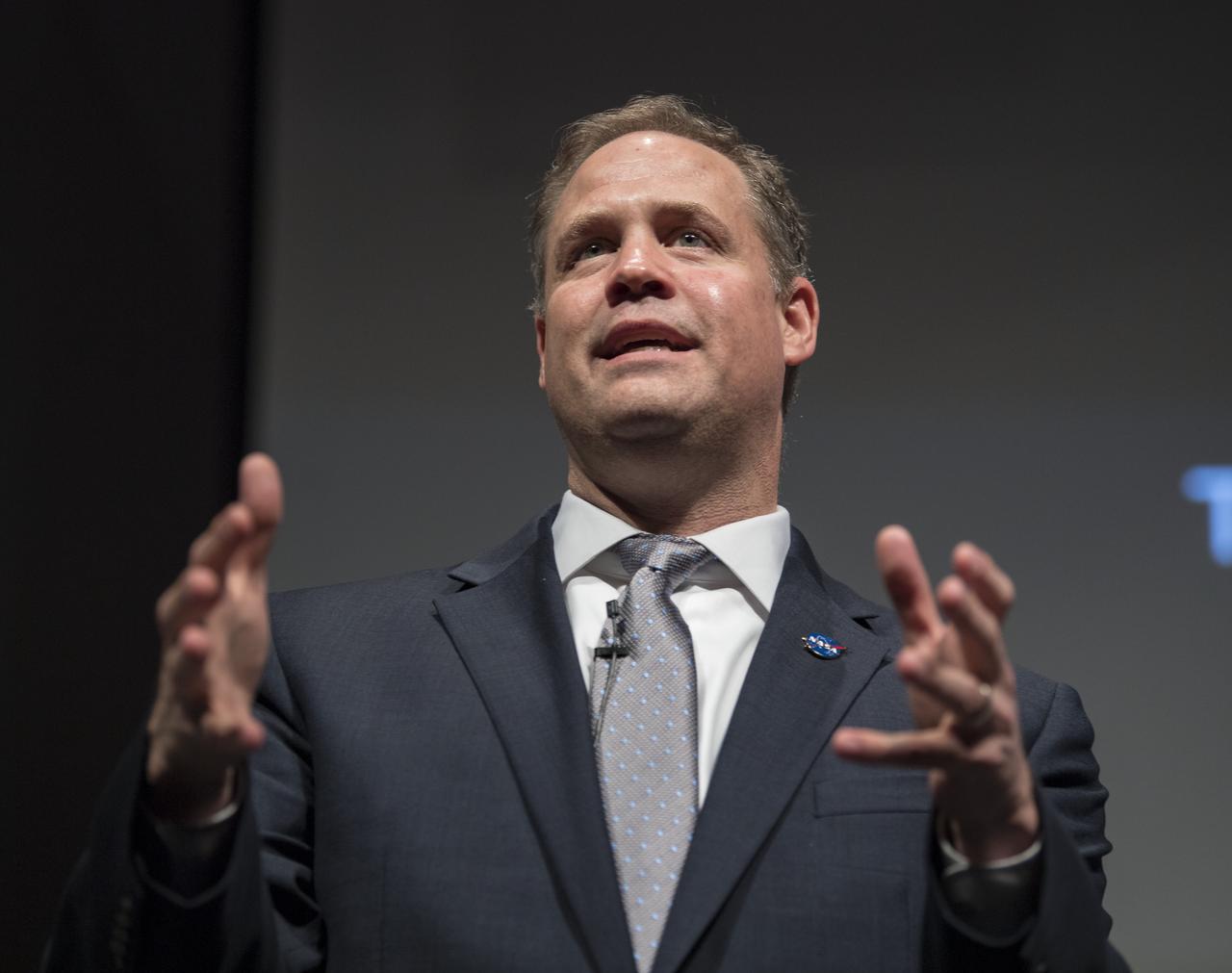
NASA Administrator Jim Bridenstine gives keynote remarks at the Humans to Mars Summit, Tuesday, May 14, 2019, at the National Academy of Sciences in Washington. Photo credit: (NASA/Aubrey Gemignani)
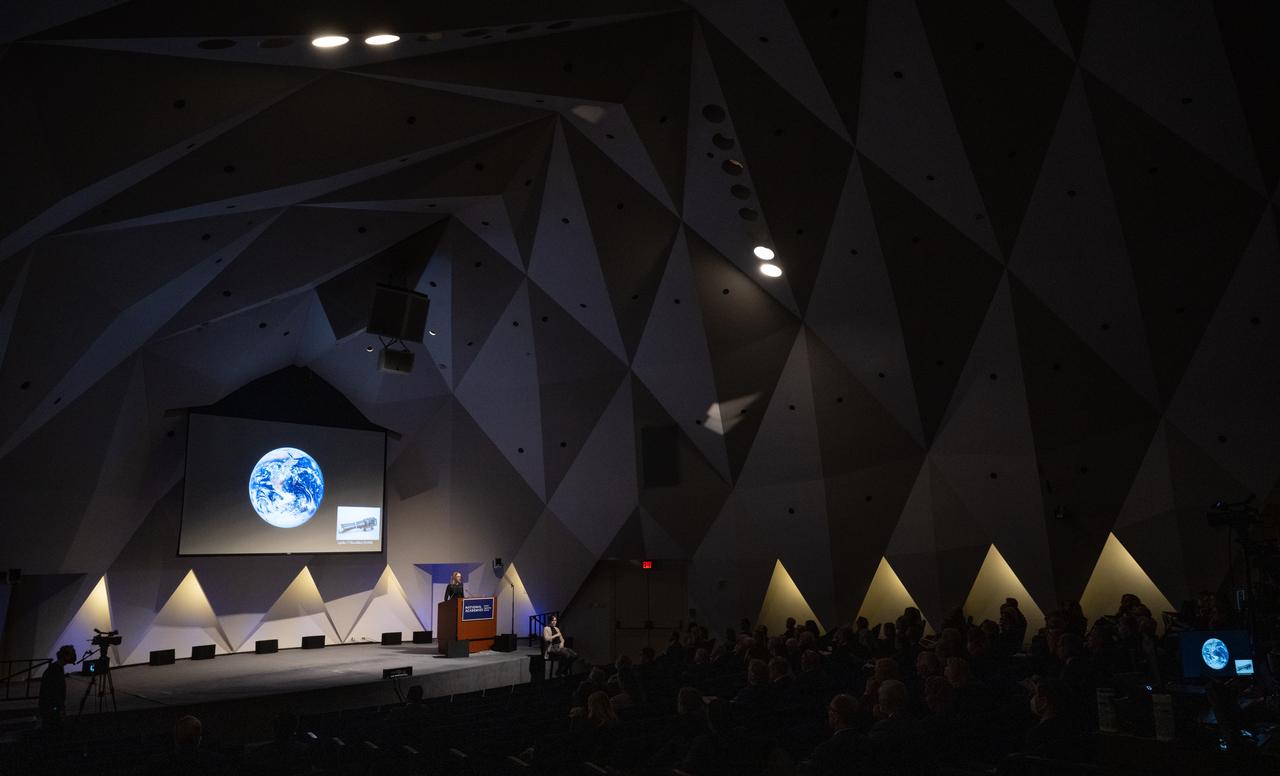
Teasel Muir-Harmony, curator of the Apollo collection at the Smithsonian National Air and Space Museum, speaks during an event celebrating the 50th anniversary of the Apollo 17 mission, Wednesday, Dec. 14, 2022, at the National Academies of Science in Washington. The three-astronaut crew of Apollo 17 - commander Eugene Cernan, lunar module pilot Harrison Schmitt, and command module pilot Ronald Evans, embarked on the last mission of the Apollo program to land humans on the Moon in December of 1972. Cernan and Schmitt spent three days on the lunar surface collecting samples and performing scientific experiments before lifting off from the Taurus-Littrow Valley on December 14, 1972. Photo Credit: (NASA/Joel Kowsky)
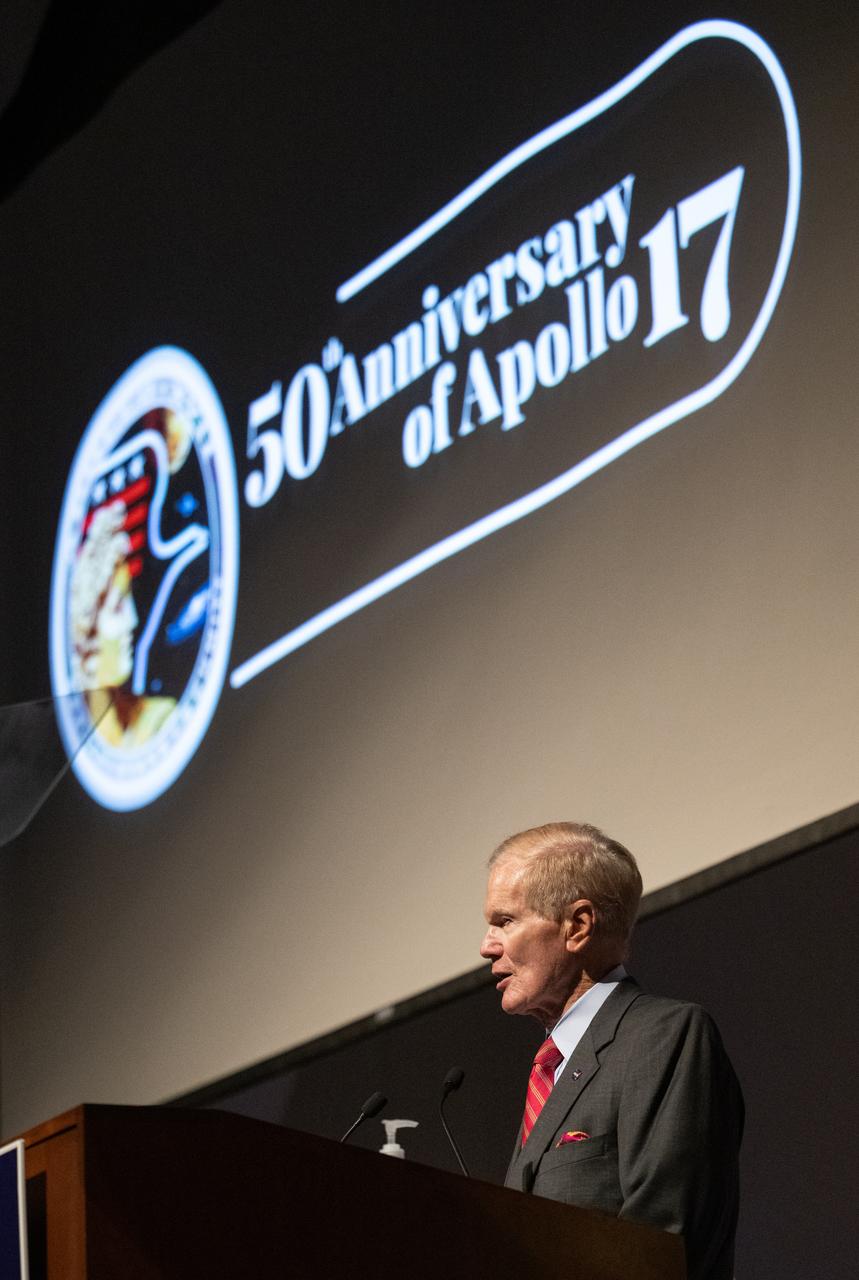
NASA Administrator Bill Nelson delivers remarks during an event celebrating the 50th anniversary of the Apollo 17 mission, Wednesday, Dec. 14, 2022, at the National Academies of Science in Washington. The three-astronaut crew of Apollo 17 - commander Eugene Cernan, lunar module pilot Harrison Schmitt, and command module pilot Ronald Evans, embarked on the last mission of the Apollo program to land humans on the Moon in December of 1972. Cernan and Schmitt spent three days on the lunar surface collecting samples and performing scientific experiments before lifting off from the Taurus-Littrow Valley on December 14, 1972. Photo Credit: (NASA/Joel Kowsky)
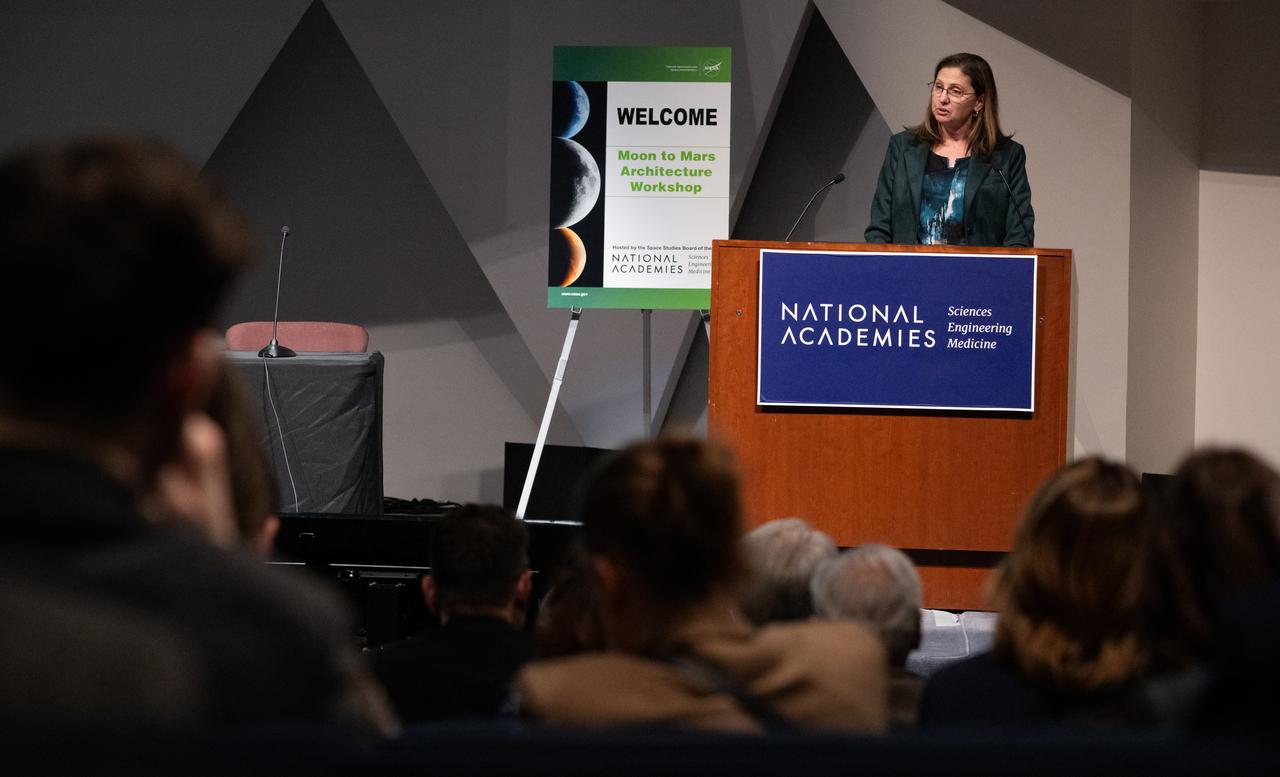
Catherine Koerner, associate administrator for NASA’s Exploration Systems Development Mission Directorate, gives opening remarks at the Moon to Mars Architecture Workshop, Wednesday, Feb. 12, 2025, at the National Academy of Sciences in Washington. NASA held the workshop to engage the broader space community and collect feedback from U.S. industry and academia and international partners to inform NASA's Moon to Mars Architecture, the agency's roadmap for human exploration of the Moon and Mars. Photo Credit: (NASA/Joel Kowsky)
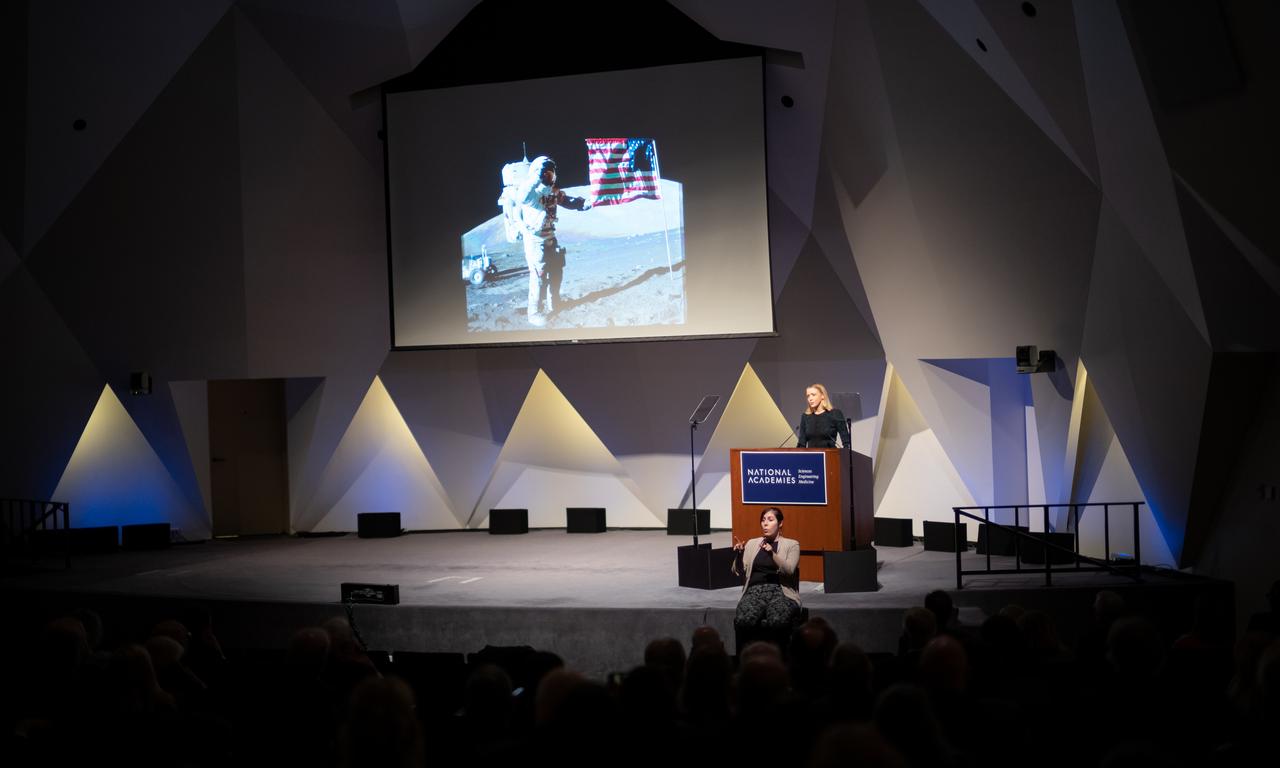
Teasel Muir-Harmony, curator of the Apollo collection at the Smithsonian National Air and Space Museum speaks during an event celebrating the 50th anniversary of the Apollo 17 mission, Wednesday, Dec. 14, 2022, at the National Academies of Science in Washington. The three-astronaut crew of Apollo 17 - commander Eugene Cernan, lunar module pilot Harrison Schmitt, and command module pilot Ronald Evans, embarked on the last mission of the Apollo program to land humans on the Moon in December of 1972. Cernan and Schmitt spent three days on the lunar surface collecting samples and performing scientific experiments before lifting off from the Taurus-Littrow Valley on December 14, 1972. Photo Credit: (NASA/Joel Kowsky)
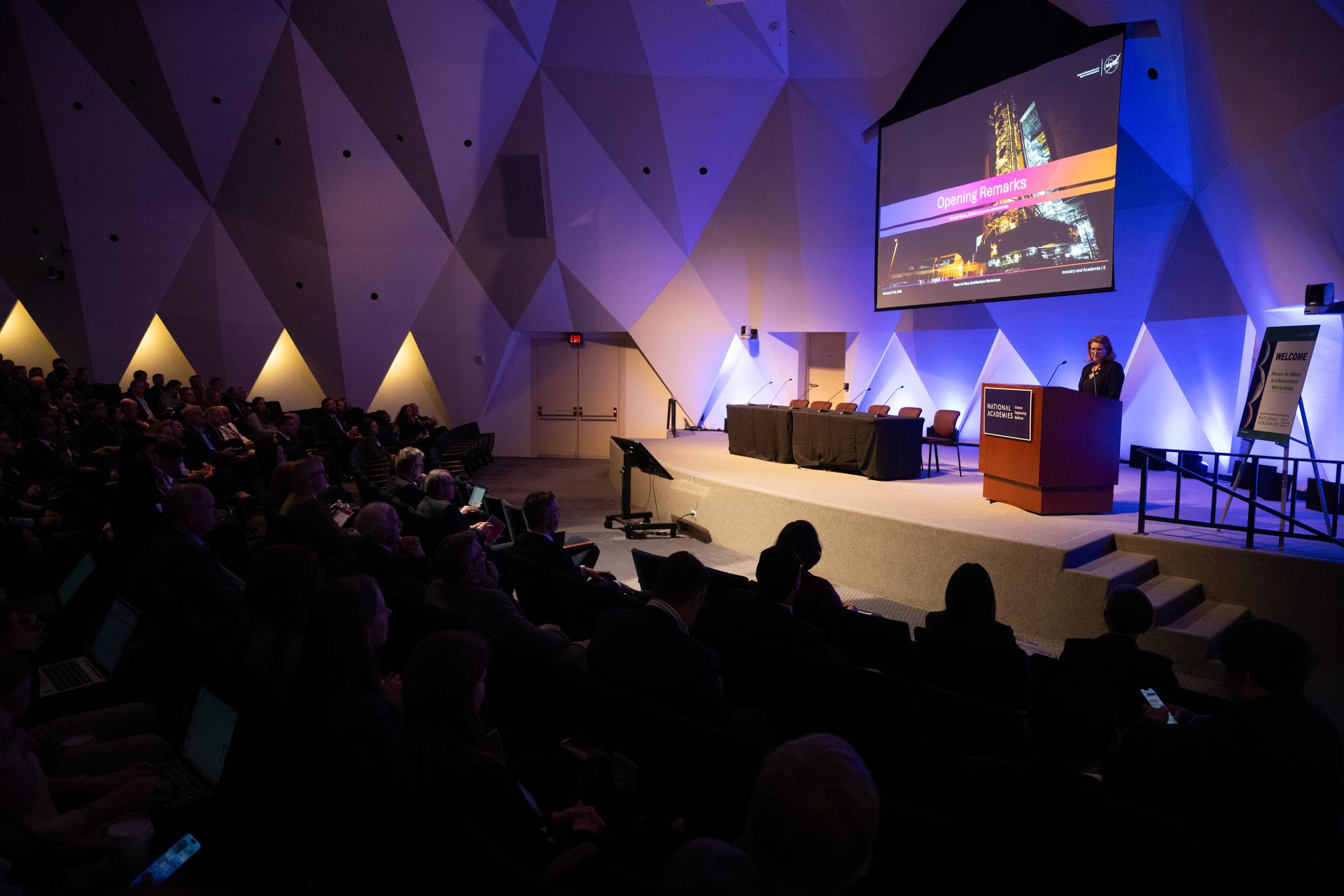
Lori Glaze, acting associate administrator for NASA's Exploration Systems Development Mission Directorate, gives opening remarks at the Moon to Mars Architecture Workshop, Wednesday, Jan. 21, 2026, at the National Academy of Sciences in Washington. NASA held the workshop to engage the broader space community and collect feedback from U.S. industry and academia and international partners to inform NASA's Moon to Mars Architecture, the agency's roadmap for human exploration of the Moon and Mars. Photo Credit: (NASA/Joel Kowsky)
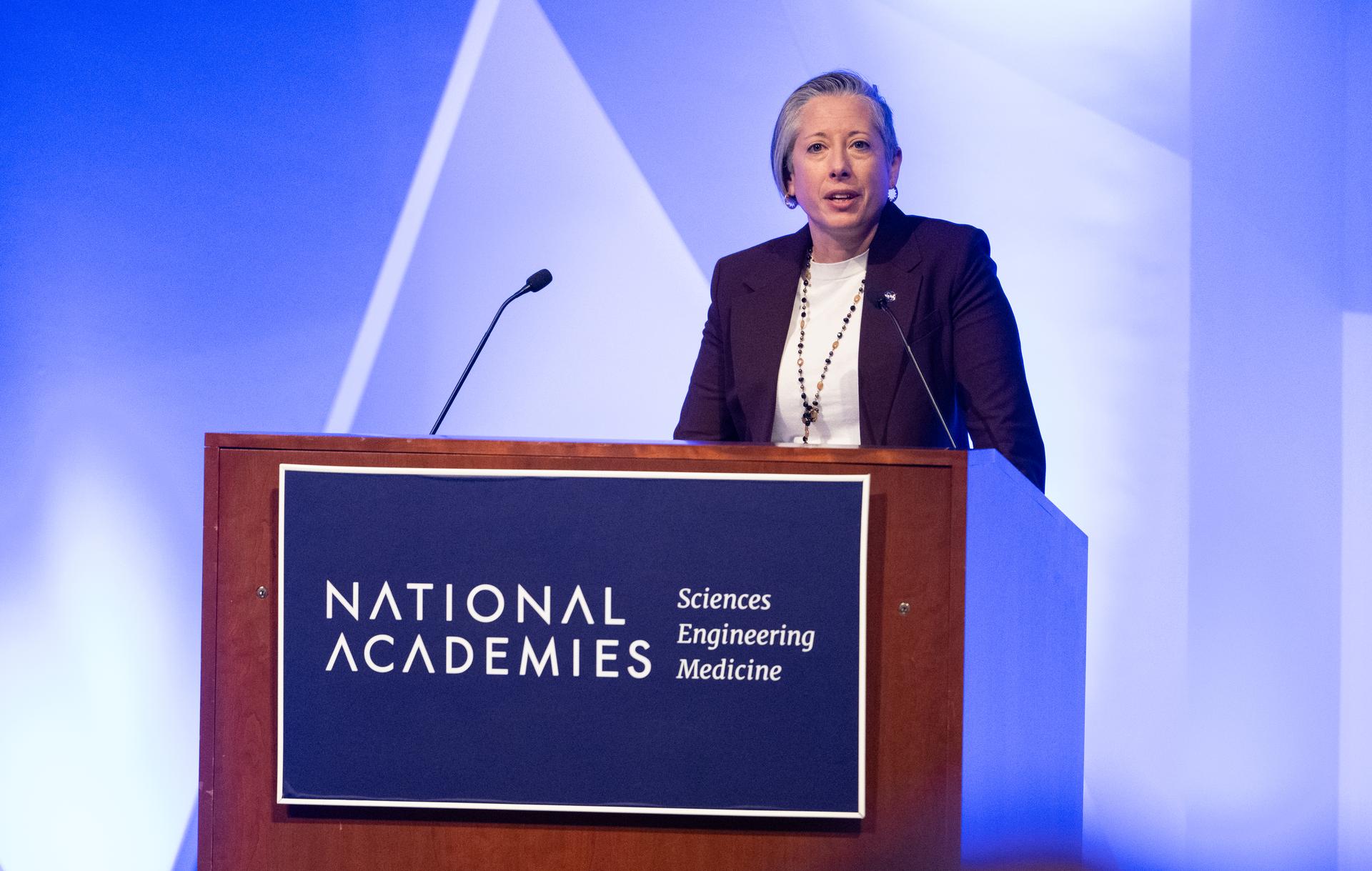
Nujoud Merancy, deputy associate administrator for the Strategy and Architecture Office in NASA’s Exploration Systems Development Mission Directorate speaks at the Moon to Mars Architecture Workshop, Wednesday, Jan. 21, 2026, at the National Academy of Sciences in Washington. NASA held the workshop to engage the broader space community and collect feedback from U.S. industry and academia and international partners to inform NASA's Moon to Mars Architecture, the agency's roadmap for human exploration of the Moon and Mars. Photo Credit: (NASA/Joel Kowsky)
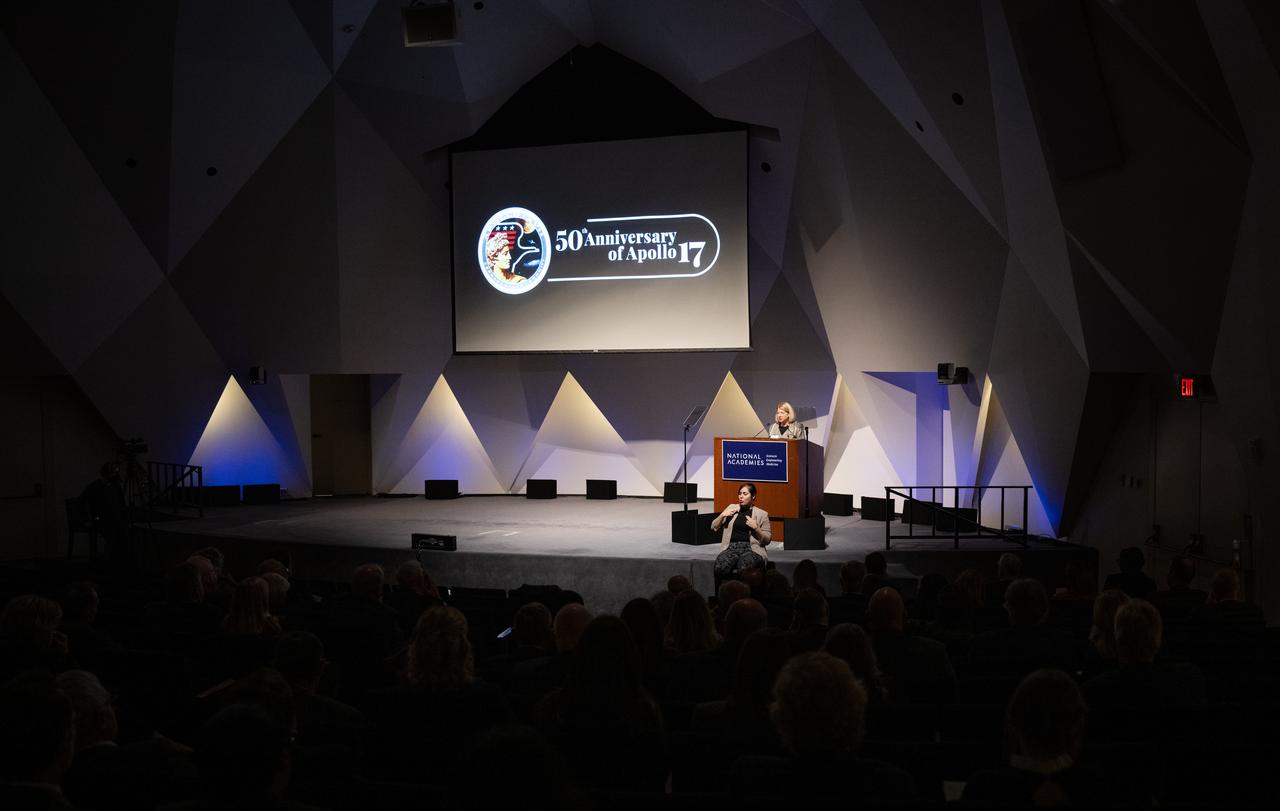
NASA Deputy Administrator Pam Melroy delivers remarks during an event celebrating the 50th anniversary of the Apollo 17 mission, Wednesday, Dec. 14, 2022, at the National Academies of Science in Washington. The three-astronaut crew of Apollo 17 - commander Eugene Cernan, lunar module pilot Harrison Schmitt, and command module pilot Ronald Evans, embarked on the last mission of the Apollo program to land humans on the Moon in December of 1972. Cernan and Schmitt spent three days on the lunar surface collecting samples and performing scientific experiments before lifting off from the Taurus-Littrow Valley on December 14, 1972. Photo Credit: (NASA/Joel Kowsky)
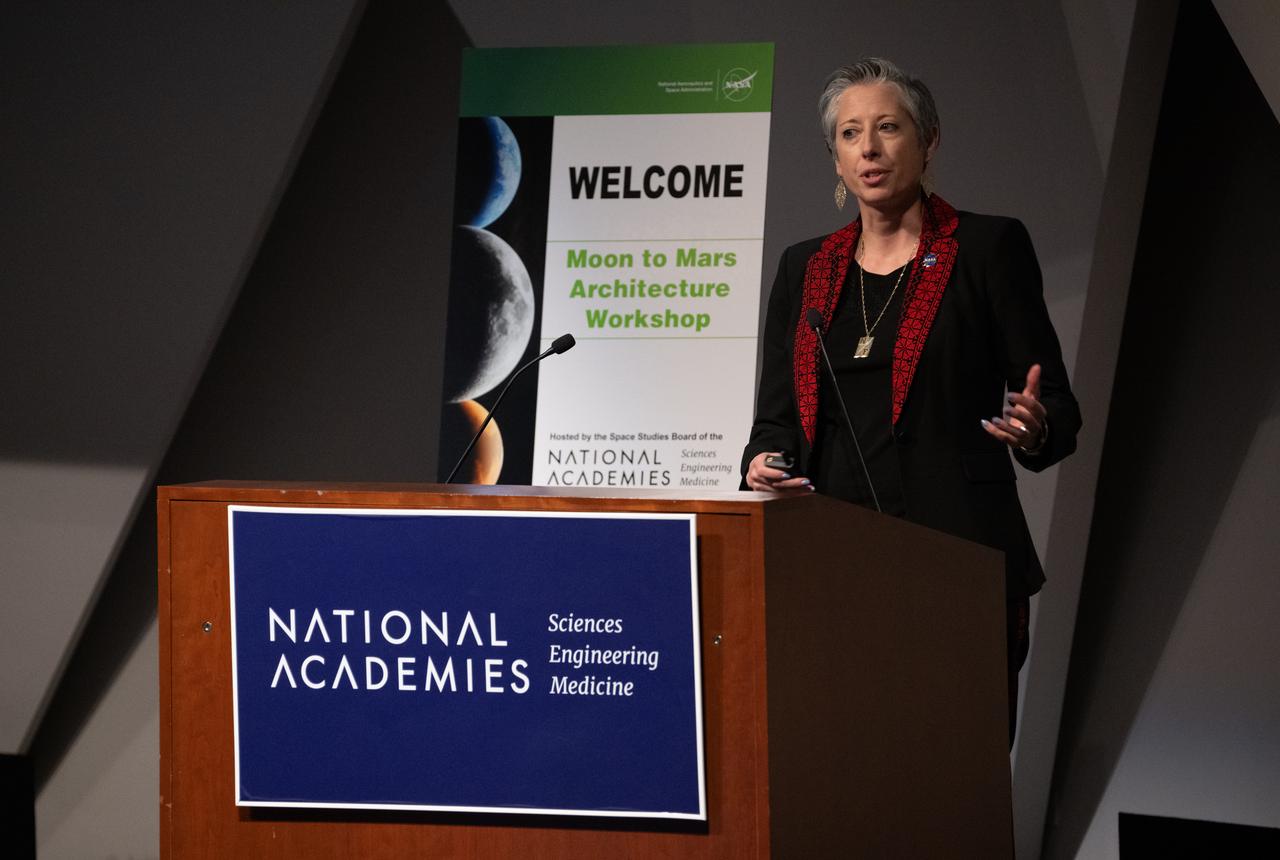
Nujoud Merancy, deputy associate administrator for the Strategy & Architecture Office in NASA’s Exploration Systems Development Mission Directorate gives remarks at the Moon to Mars Architecture Workshop, Wednesday, Feb. 12, 2025, at the National Academy of Sciences in Washington. NASA held the workshop to engage the broader space community and collect feedback from U.S. industry and academia and international partners to inform NASA's Moon to Mars Architecture, the agency's roadmap for human exploration of the Moon and Mars. Photo Credit: (NASA/Joel Kowsky)
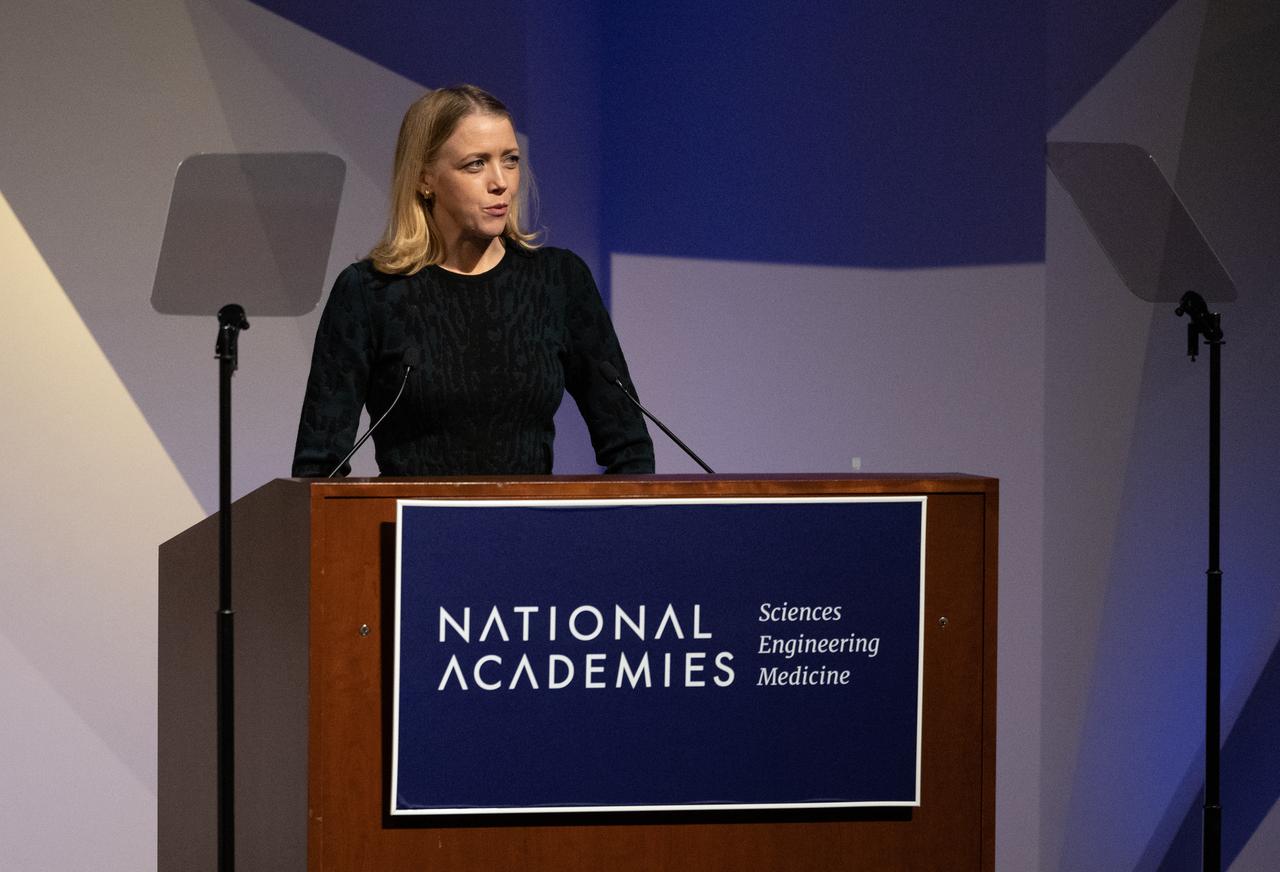
Teasel Muir-Harmony, curator of the Apollo collection at the Smithsonian National Air and Space Museum, speaks during an event celebrating the 50th anniversary of the Apollo 17 mission, Wednesday, Dec. 14, 2022, at the National Academies of Science in Washington. The three-astronaut crew of Apollo 17 - commander Eugene Cernan, lunar module pilot Harrison Schmitt, and command module pilot Ronald Evans, embarked on the last mission of the Apollo program to land humans on the Moon in December of 1972. Cernan and Schmitt spent three days on the lunar surface collecting samples and performing scientific experiments before lifting off from the Taurus-Littrow Valley on December 14, 1972. Photo Credit: (NASA/Joel Kowsky)
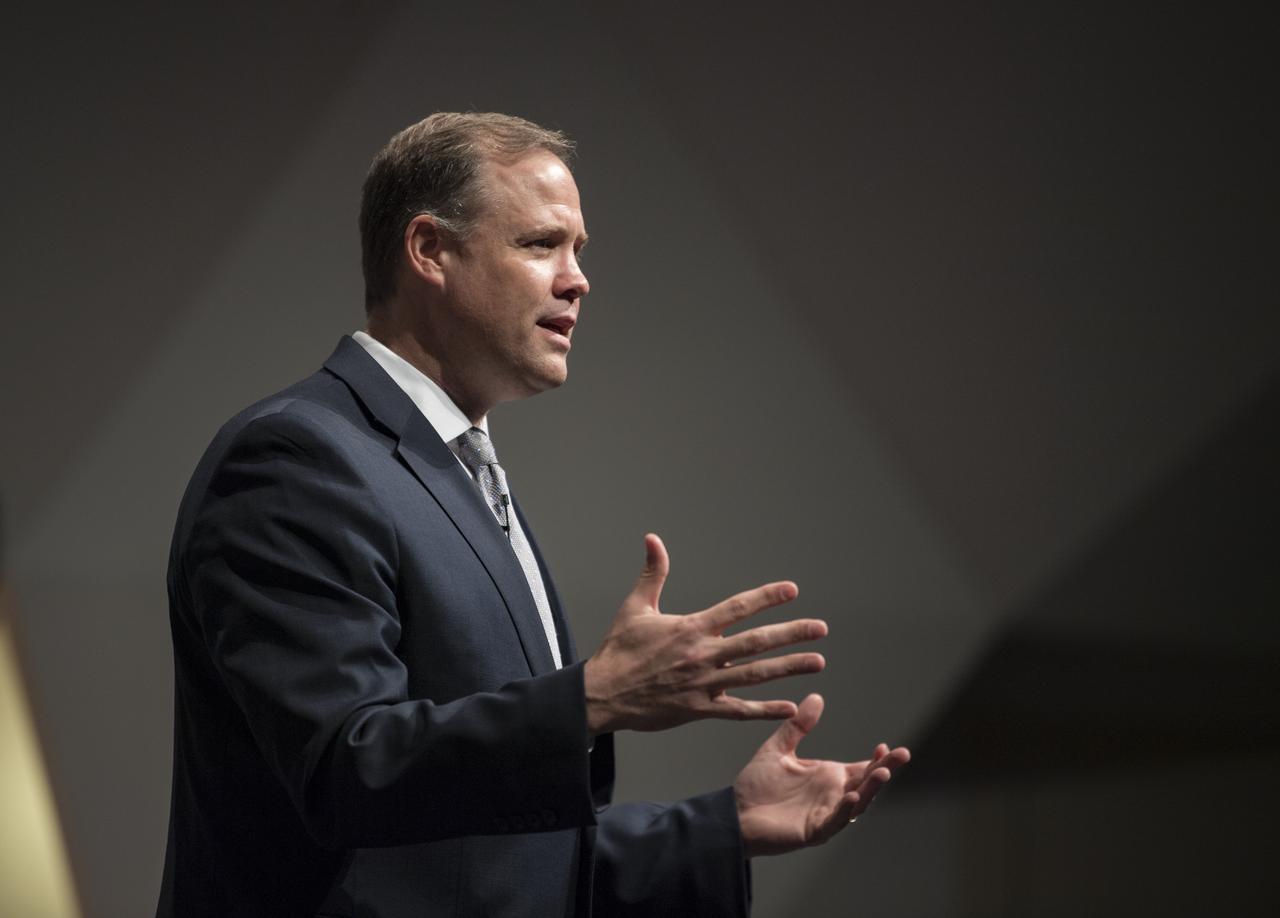
NASA Administrator Jim Bridenstine gives keynote remarks at the Humans to Mars Summit, Tuesday, May 14, 2019, at the National Academy of Sciences in Washington. Photo credit: (NASA/Aubrey Gemignani)
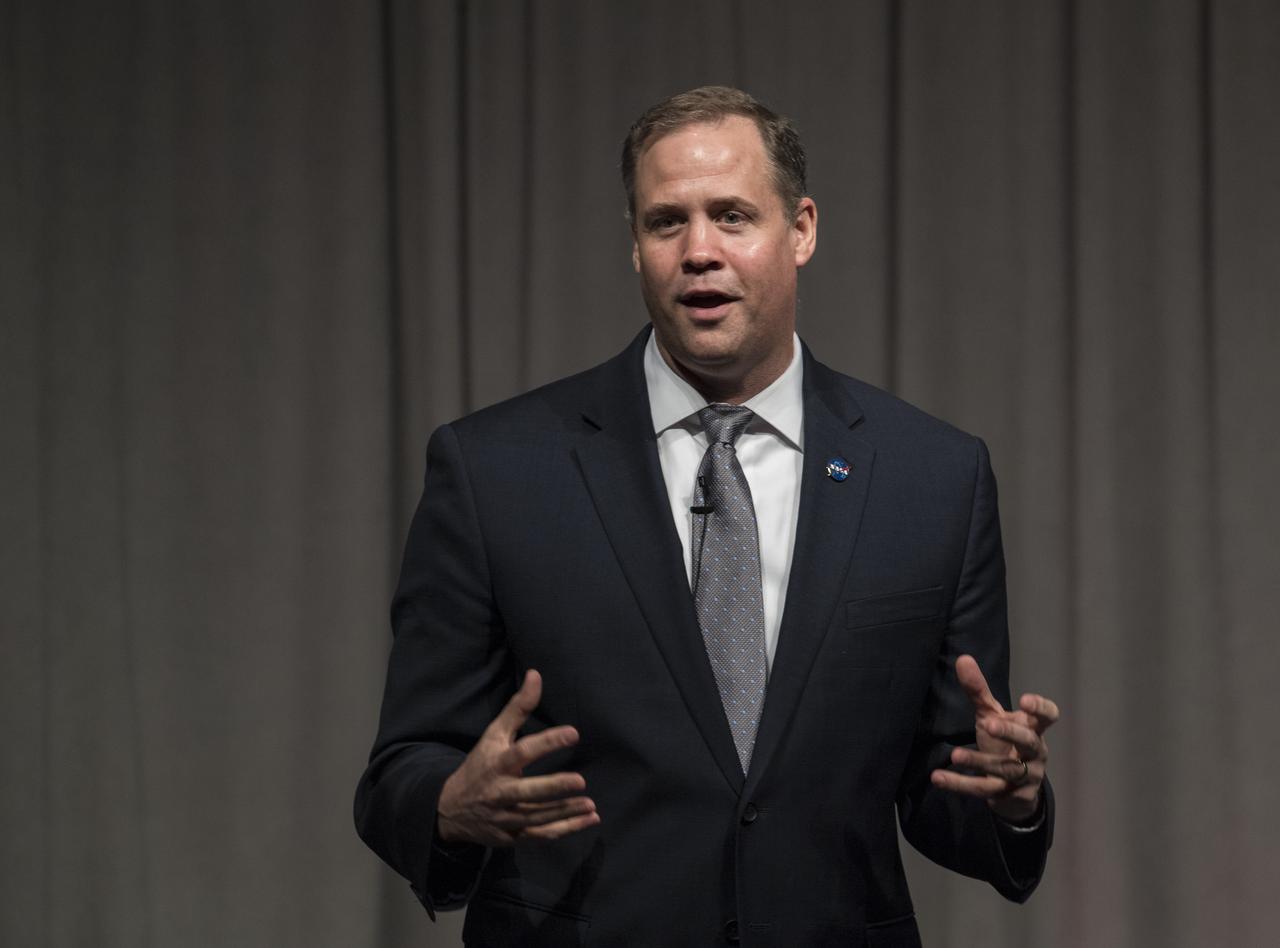
NASA Administrator Jim Bridenstine gives keynote remarks at the Humans to Mars Summit, Tuesday, May 14, 2019, at the National Academy of Sciences in Washington. Photo credit: (NASA/Aubrey Gemignani)
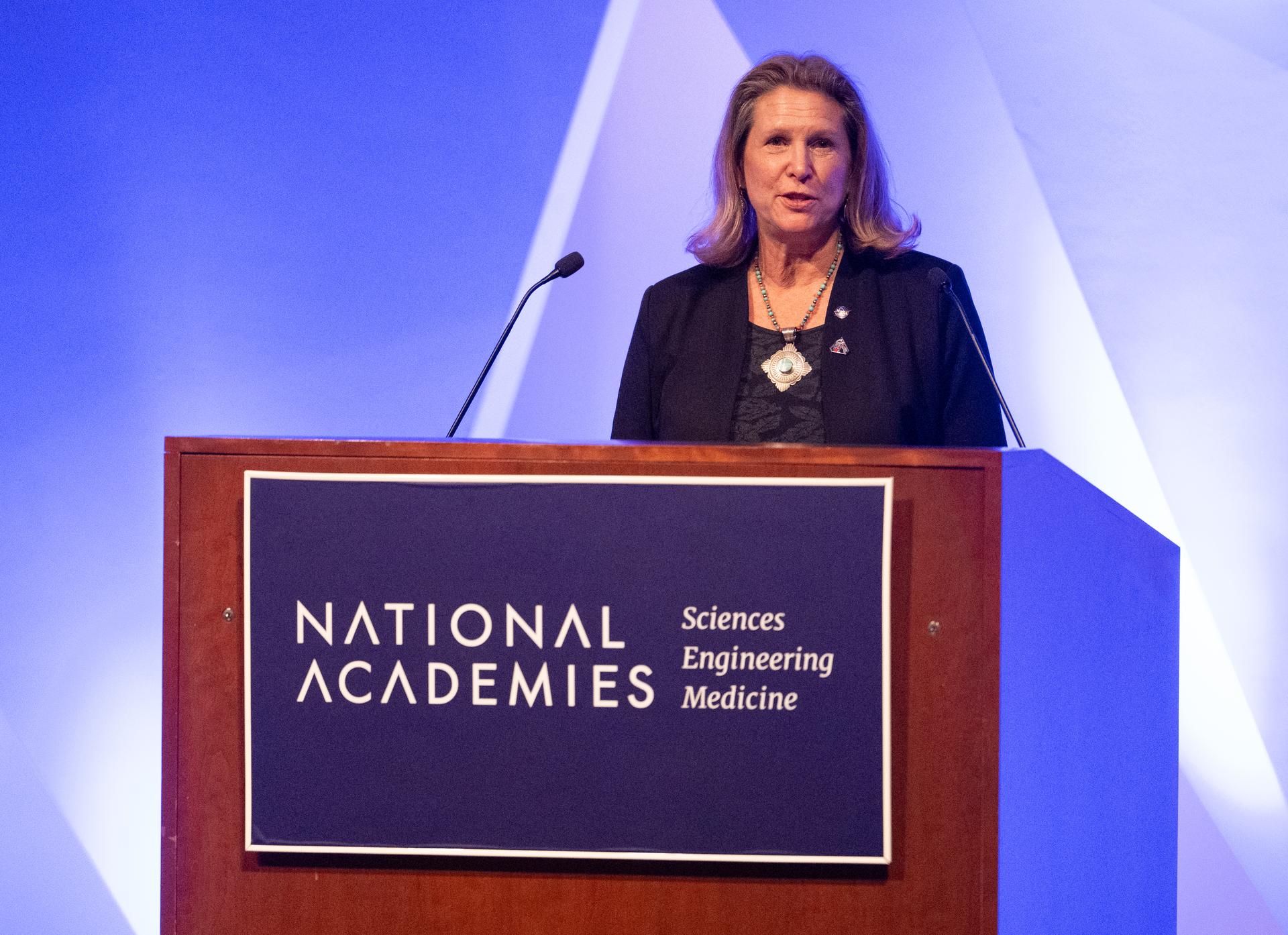
Lori Glaze, acting associate administrator for NASA's Exploration Systems Development Mission Directorate, gives opening remarks at the Moon to Mars Architecture Workshop, Wednesday, Jan. 21, 2026, at the National Academy of Sciences in Washington. NASA held the workshop to engage the broader space community and collect feedback from U.S. industry and academia and international partners to inform NASA's Moon to Mars Architecture, the agency's roadmap for human exploration of the Moon and Mars. Photo Credit: (NASA/Joel Kowsky)
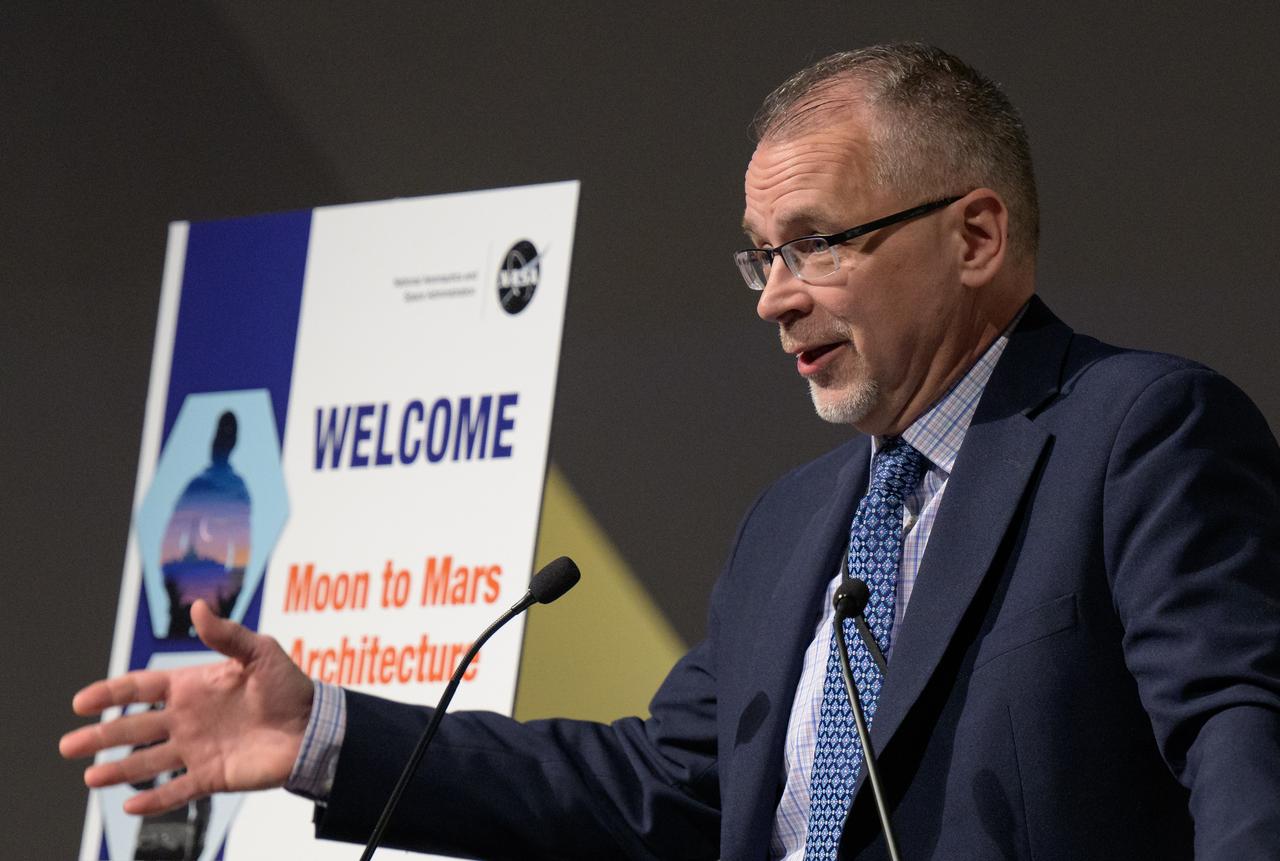
NASA Associate Administrator Jim Free gives opening remarks at the Moon to Mars Architecture Workshop, Tuesday, Feb. 20, 2024, at the National Academy of Sciences in Washington. NASA held the workshop to engage the broader space community and collect feedback from U.S. industry and academia and international partners to inform NASA's Moon to Mars Architecture, the agency's roadmap for human exploration of the Moon and Mars. Photo Credit: (NASA/Bill Ingalls)
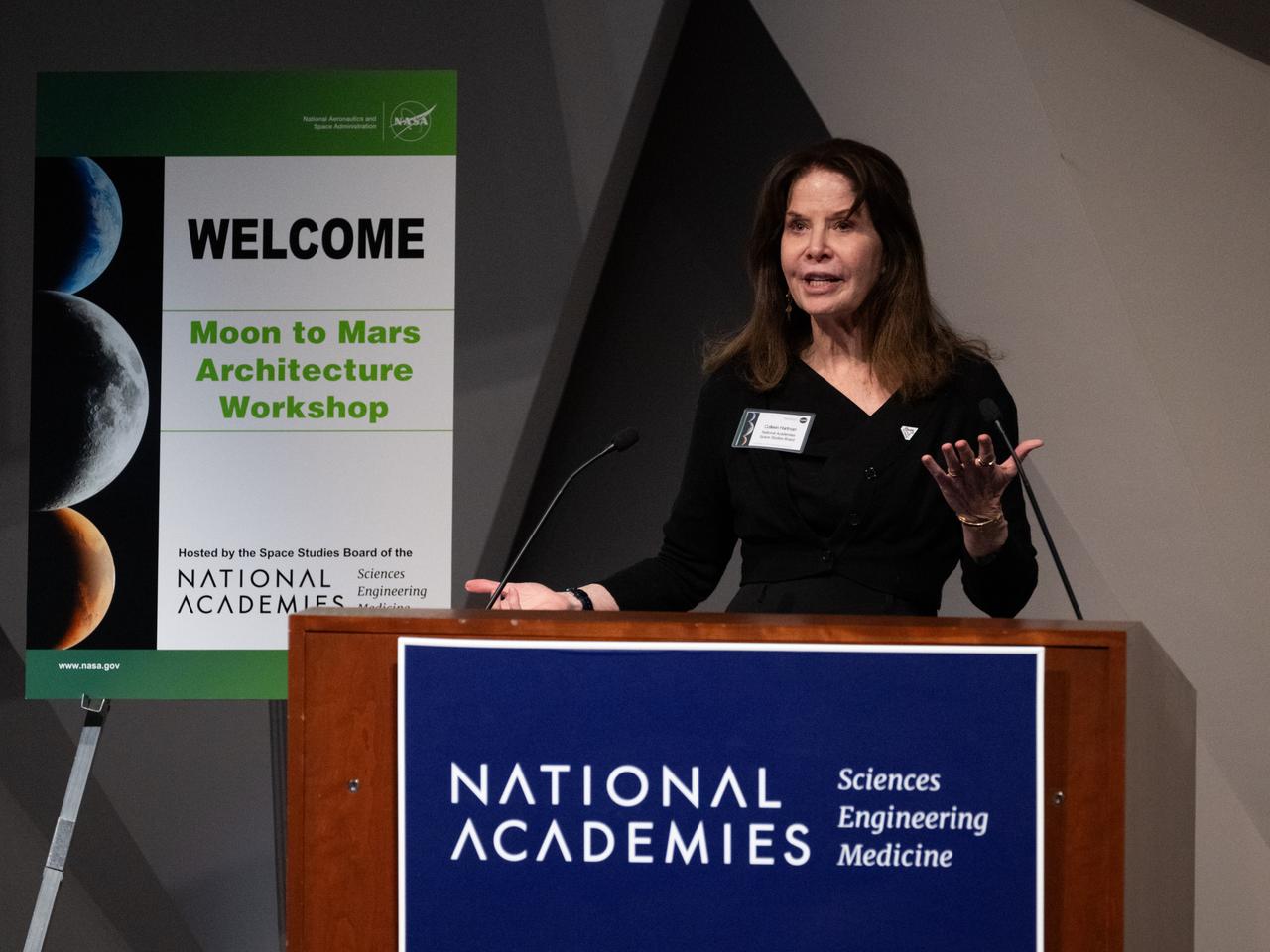
Colleen Hartman, director of the Space Studies Board at the National Academy of Sciences gives opening remarks at the Moon to Mars Architecture Workshop, Wednesday, Feb. 12, 2025, at the National Academy of Sciences in Washington. NASA held the workshop to engage the broader space community and collect feedback from U.S. industry and academia and international partners to inform NASA's Moon to Mars Architecture, the agency's roadmap for human exploration of the Moon and Mars. Photo Credit: (NASA/Joel Kowsky)
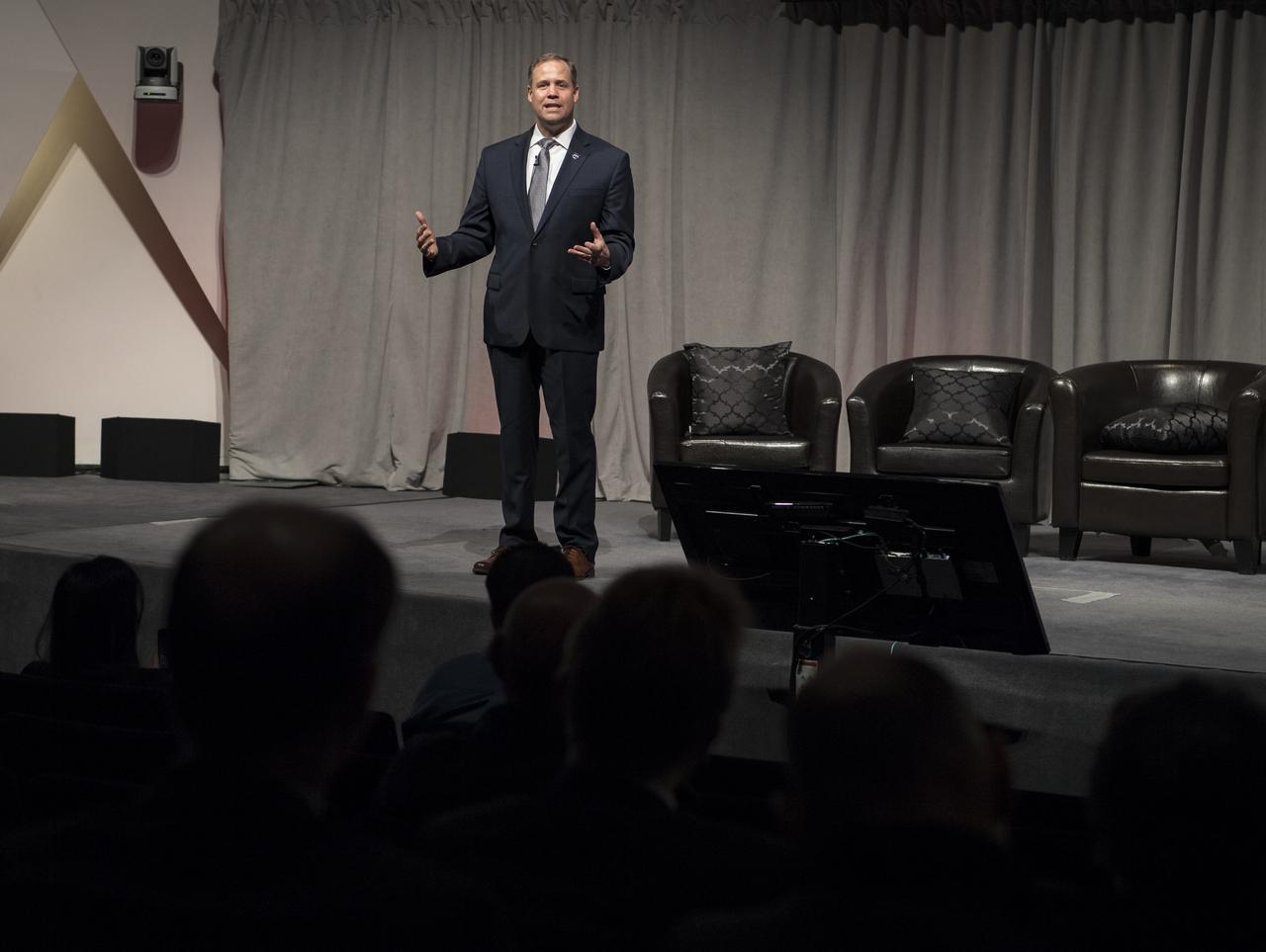
NASA Administrator Jim Bridenstine gives keynote remarks at the Humans to Mars Summit, Tuesday, May 14, 2019, at the National Academy of Sciences in Washington. Photo credit: (NASA/Aubrey Gemignani)
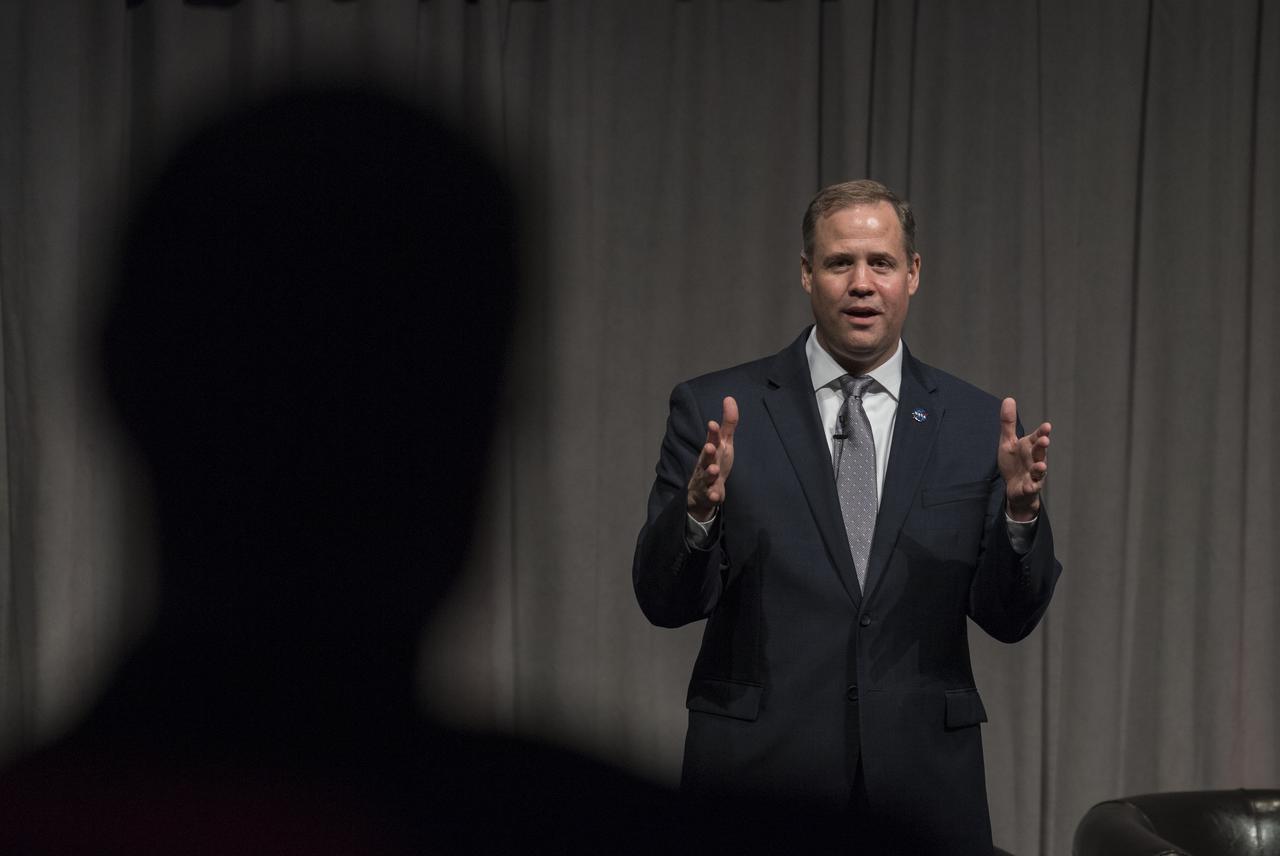
NASA Administrator Jim Bridenstine gives keynote remarks at the Humans to Mars Summit, Tuesday, May 14, 2019, at the National Academy of Sciences in Washington. Photo credit: (NASA/Aubrey Gemignani)
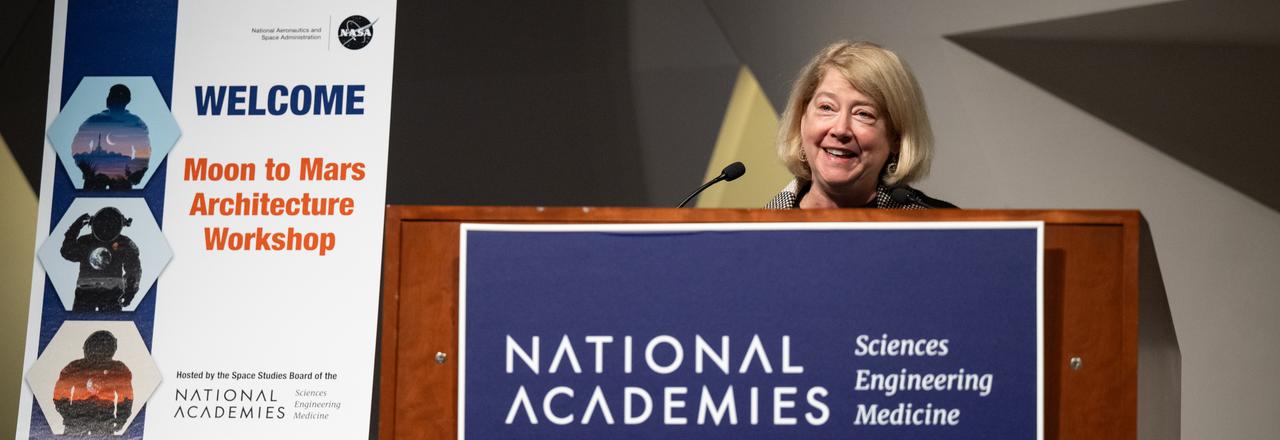
NASA Deputy Administrator Pam Melroy gives opening remarks at the Moon to Mars Architecture Workshop, Thursday, Feb. 22, 2024, at the National Academy of Sciences in Washington. NASA held the workshop to engage the broader space community and collect feedback from U.S. industry and academia and international partners to inform NASA's Moon to Mars Architecture, the agency's roadmap for human exploration of the Moon and Mars.
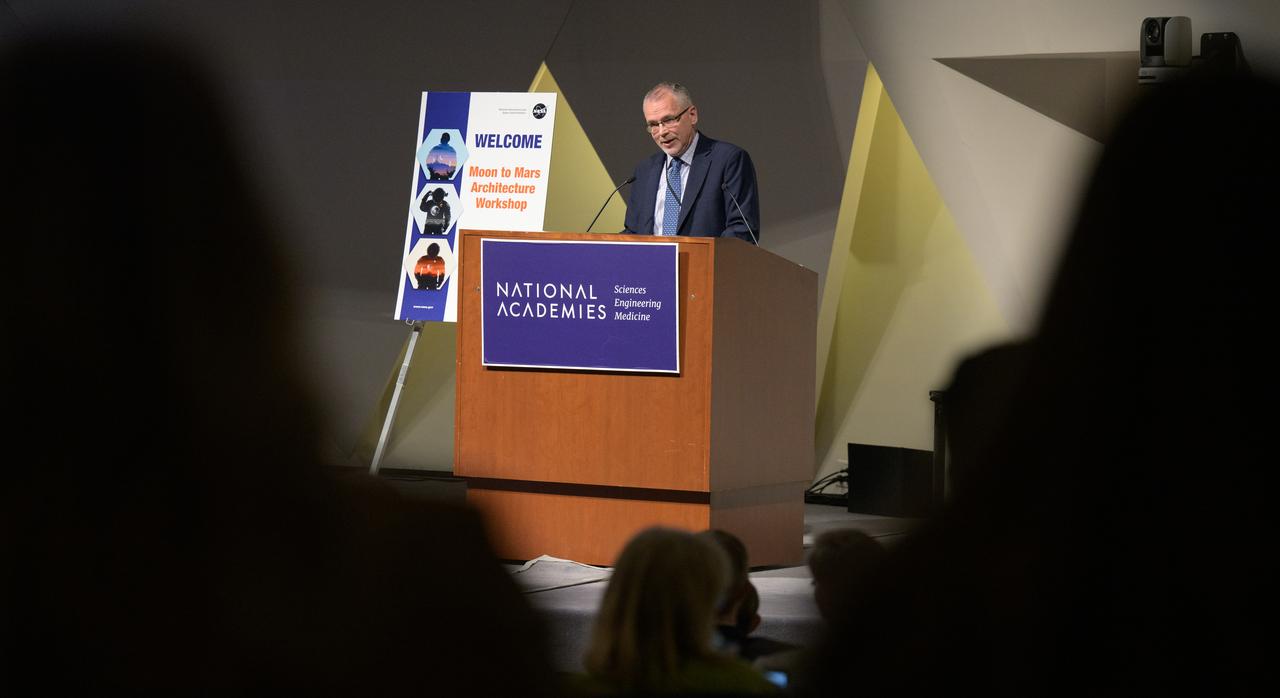
NASA Associate Administrator Jim Free gives opening remarks at the Moon to Mars Architecture Workshop, Tuesday, Feb. 20, 2024, at the National Academy of Sciences in Washington. NASA held the workshop to engage the broader space community and collect feedback from U.S. industry and academia and international partners to inform NASA's Moon to Mars Architecture, the agency's roadmap for human exploration of the Moon and Mars. Photo Credit: (NASA/Bill Ingalls)
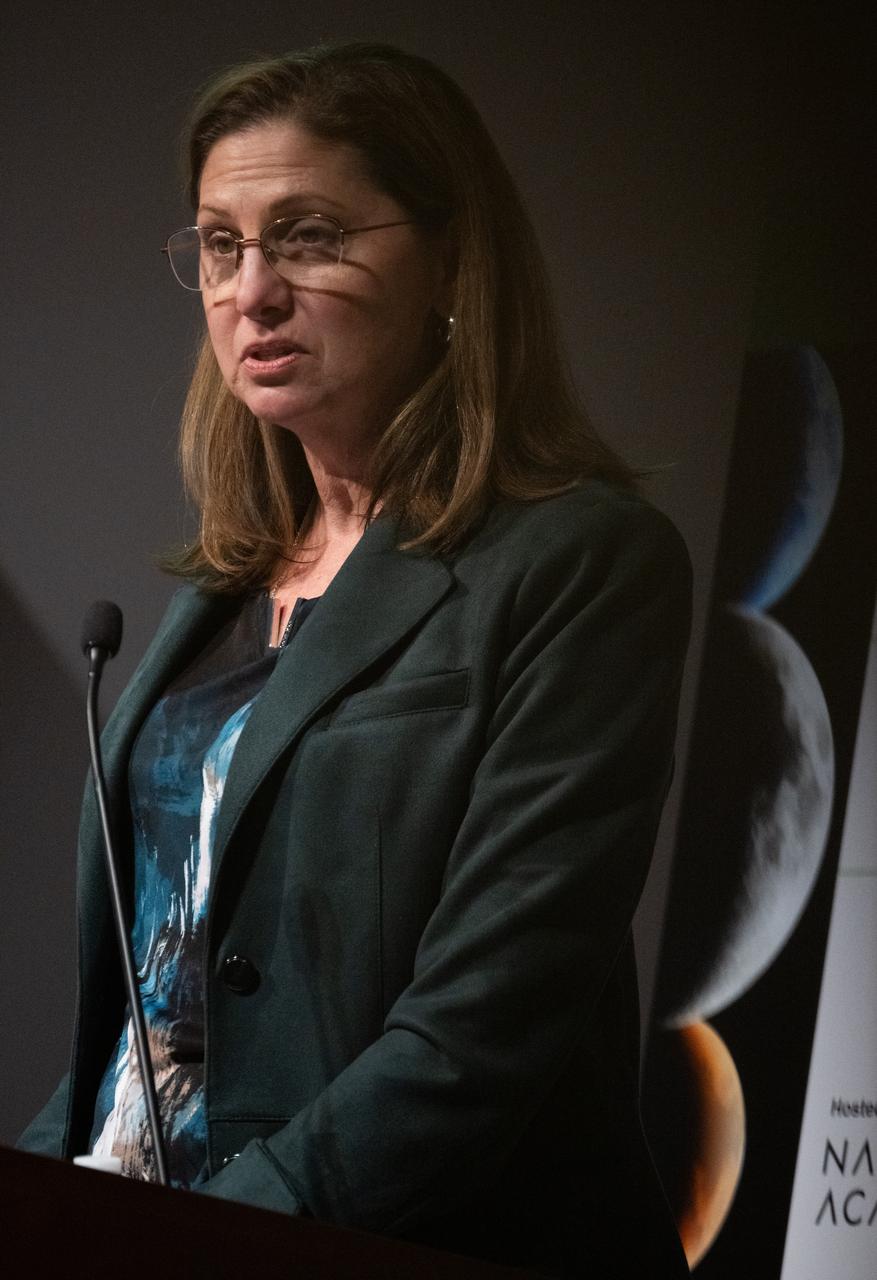
Catherine Koerner, associate administrator for NASA’s Exploration Systems Development Mission Directorate, gives opening remarks at the Moon to Mars Architecture Workshop, Wednesday, Feb. 12, 2025, at the National Academy of Sciences in Washington. NASA held the workshop to engage the broader space community and collect feedback from U.S. industry and academia and international partners to inform NASA's Moon to Mars Architecture, the agency's roadmap for human exploration of the Moon and Mars. Photo Credit: (NASA/Joel Kowsky)
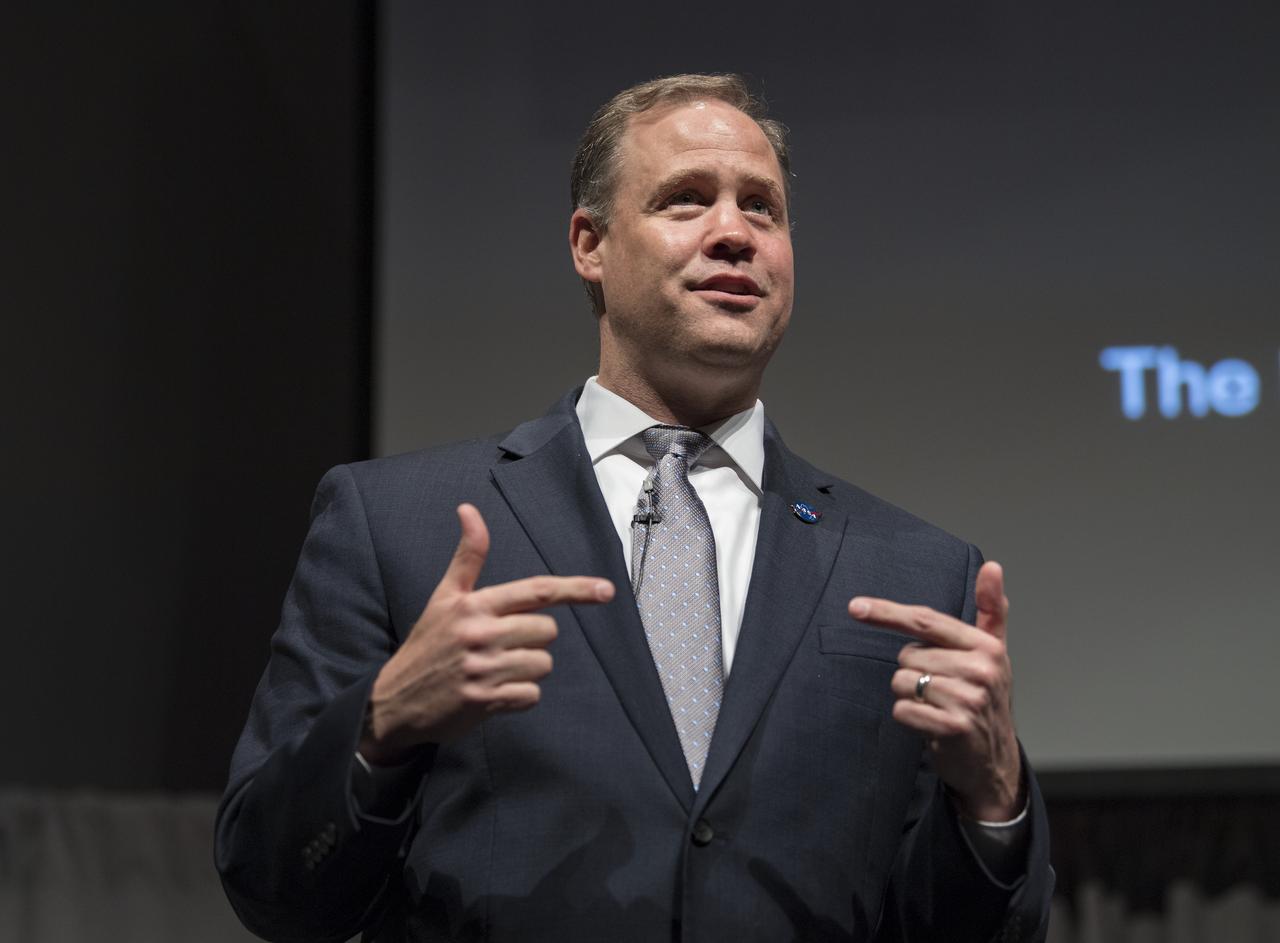
NASA Administrator Jim Bridenstine gives keynote remarks at the Humans to Mars Summit, Tuesday, May 14, 2019, at the National Academy of Sciences in Washington. Photo credit: (NASA/Aubrey Gemignani)
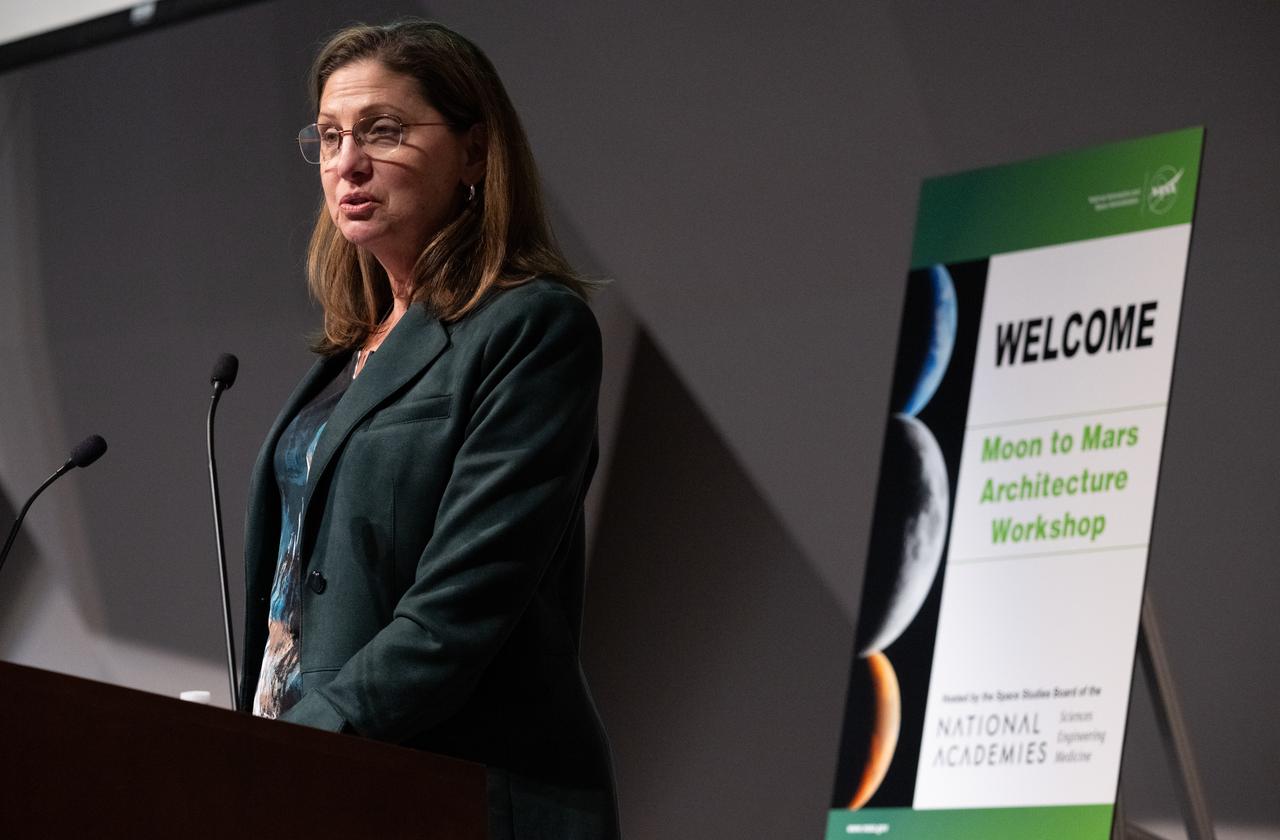
Catherine Koerner, associate administrator for NASA’s Exploration Systems Development Mission Directorate, gives opening remarks at the Moon to Mars Architecture Workshop, Wednesday, Feb. 12, 2025, at the National Academy of Sciences in Washington. NASA held the workshop to engage the broader space community and collect feedback from U.S. industry and academia and international partners to inform NASA's Moon to Mars Architecture, the agency's roadmap for human exploration of the Moon and Mars. Photo Credit: (NASA/Joel Kowsky)
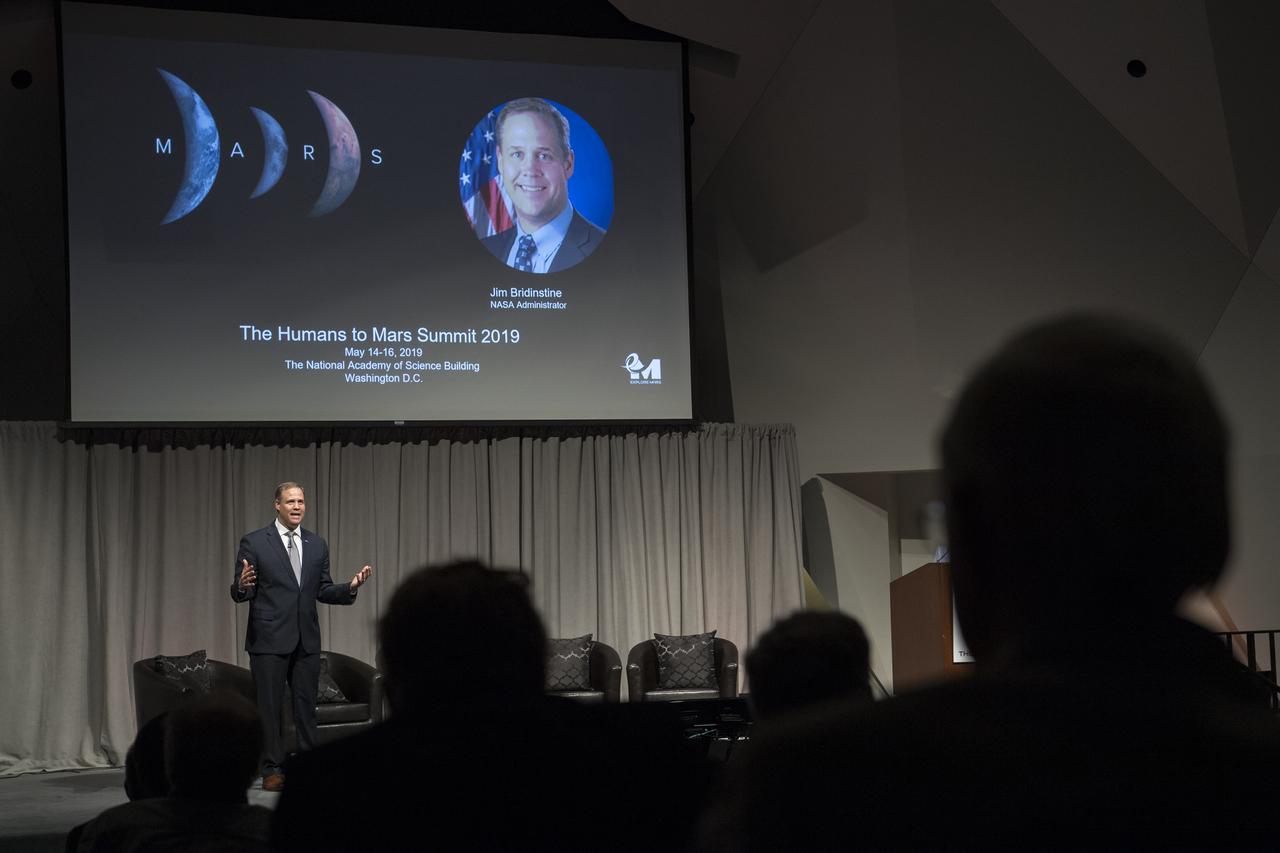
NASA Administrator Jim Bridenstine gives keynote remarks at the Humans to Mars Summit, Tuesday, May 14, 2019, at the National Academy of Sciences in Washington. Photo credit: (NASA/Aubrey Gemignani)
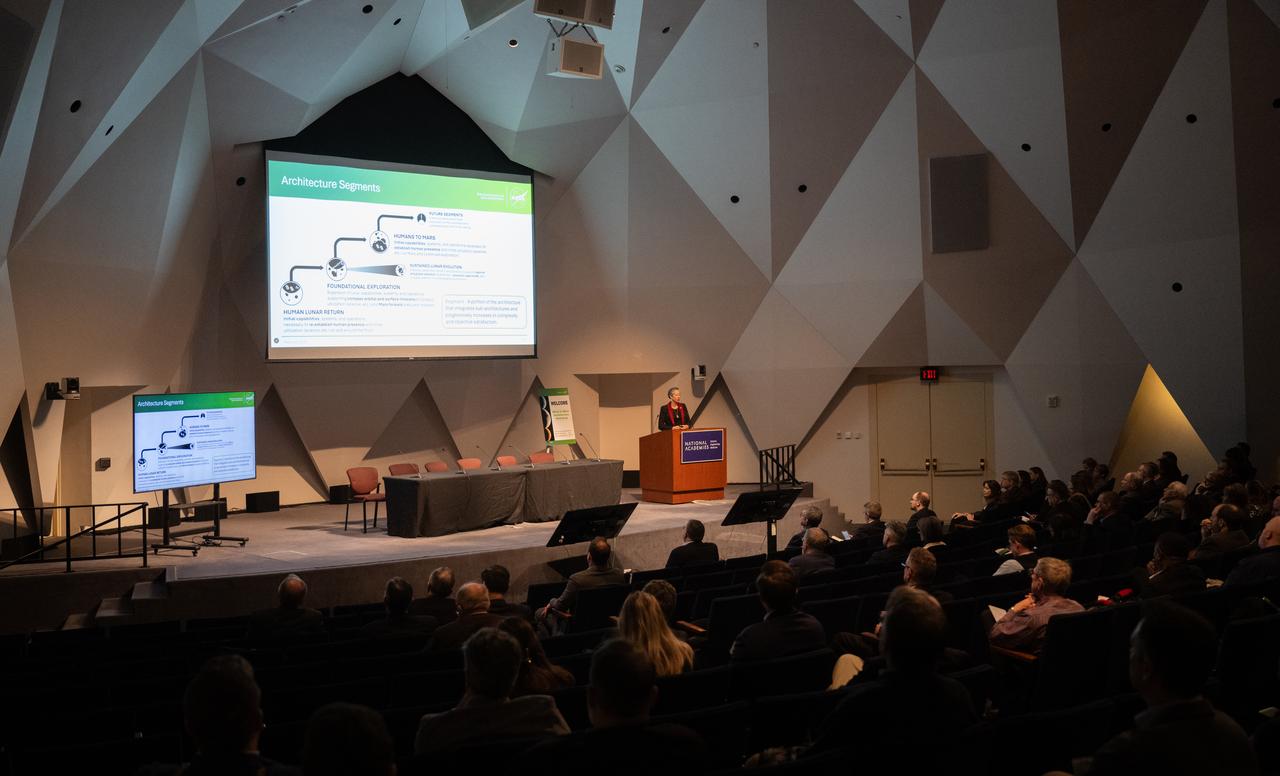
Nujoud Merancy, deputy associate administrator for the Strategy & Architecture Office in NASA’s Exploration Systems Development Mission Directorate gives remarks at the Moon to Mars Architecture Workshop, Wednesday, Feb. 12, 2025, at the National Academy of Sciences in Washington. NASA held the workshop to engage the broader space community and collect feedback from U.S. industry and academia and international partners to inform NASA's Moon to Mars Architecture, the agency's roadmap for human exploration of the Moon and Mars. Photo Credit: (NASA/Joel Kowsky)
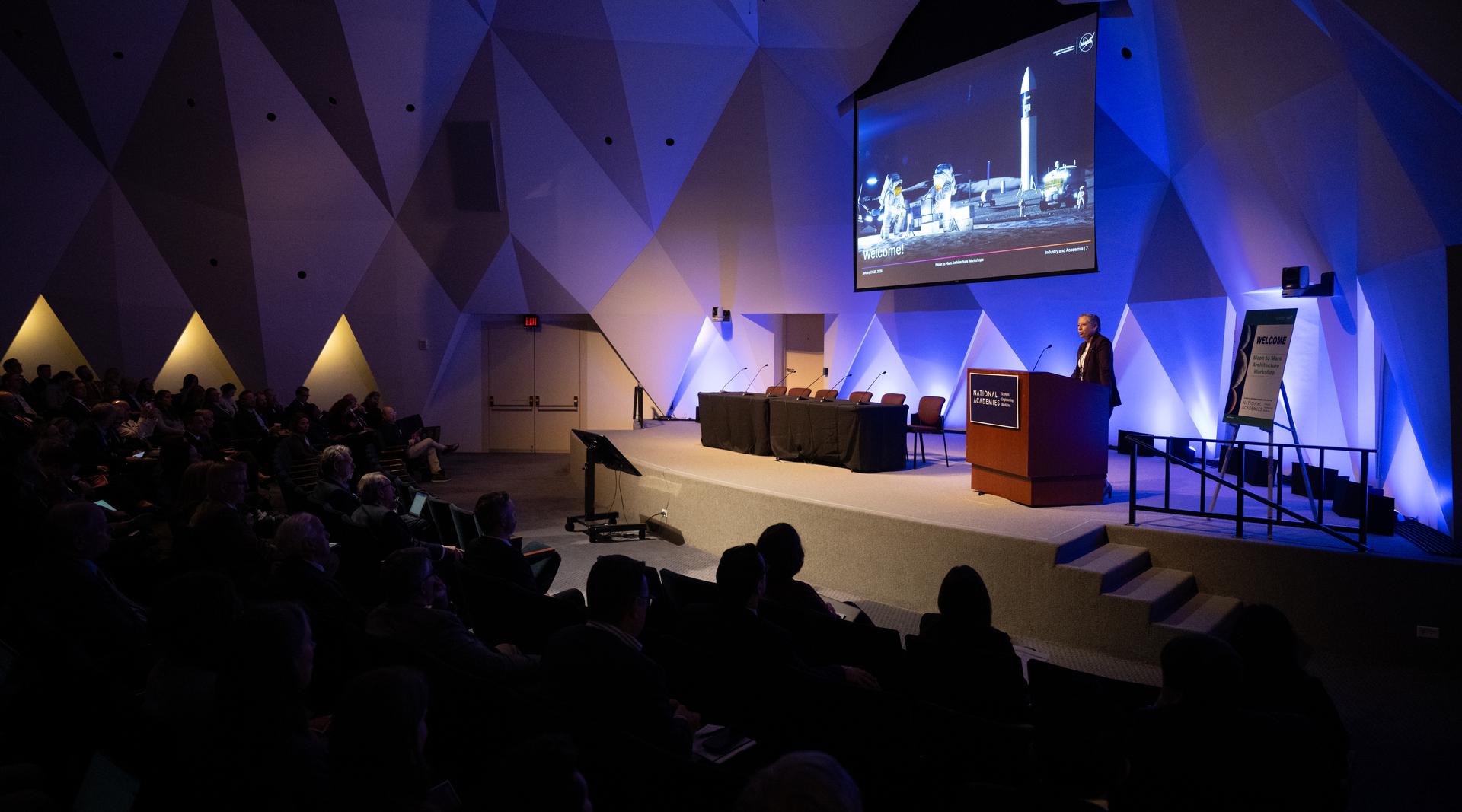
Nujoud Merancy, deputy associate administrator for the Strategy and Architecture Office in NASA’s Exploration Systems Development Mission Directorate speaks at the Moon to Mars Architecture Workshop, Wednesday, Jan. 21, 2026, at the National Academy of Sciences in Washington. NASA held the workshop to engage the broader space community and collect feedback from U.S. industry and academia and international partners to inform NASA's Moon to Mars Architecture, the agency's roadmap for human exploration of the Moon and Mars. Photo Credit: (NASA/Joel Kowsky)
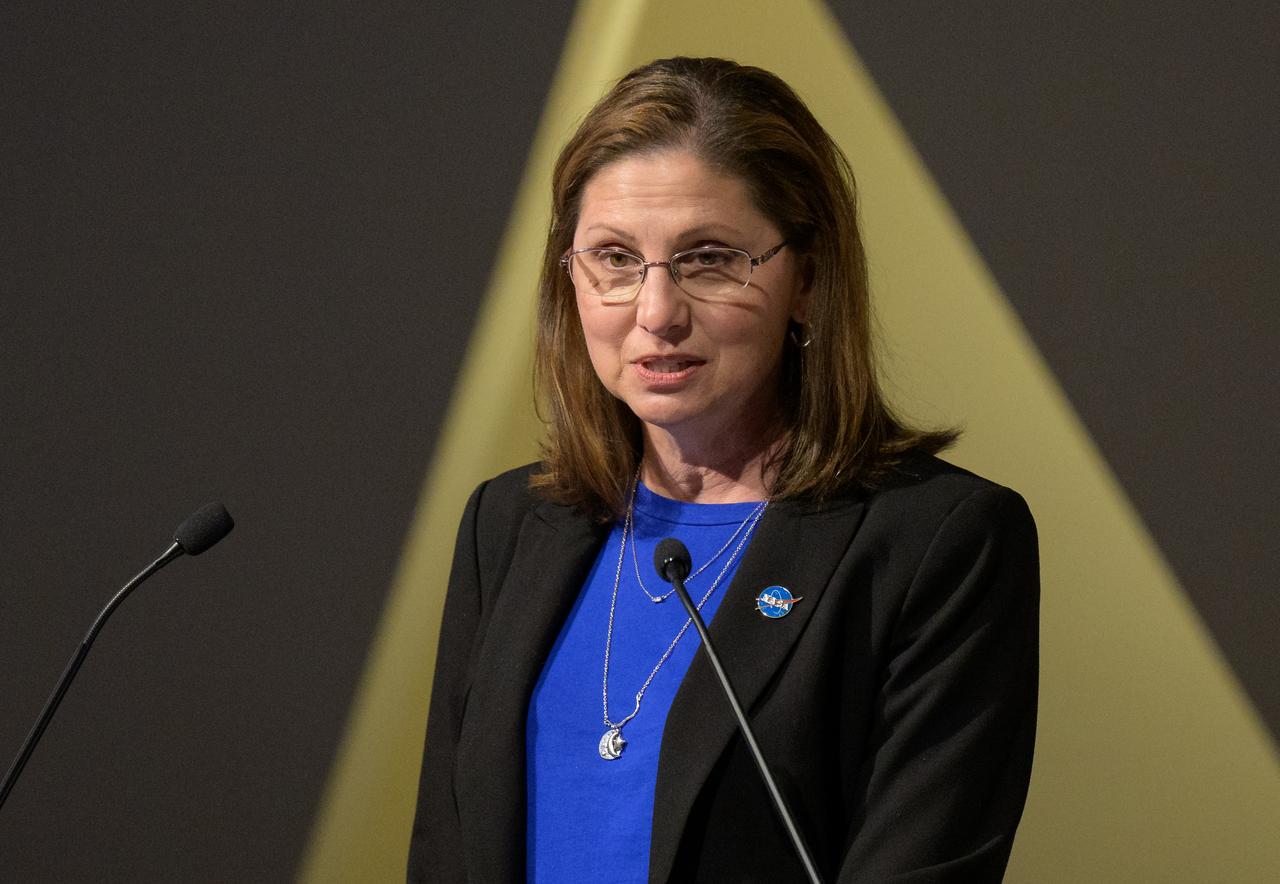
NASA Associate Administrator for Exploration Systems Development, Catherine Koerner, gives opening remarks at the Moon to Mars Architecture Workshop, Tuesday, Feb. 20, 2024, at the National Academy of Sciences in Washington. NASA held the workshop to engage the broader space community and collect feedback from U.S. industry and academia and international partners to inform NASA's Moon to Mars Architecture, the agency's roadmap for human exploration of the Moon and Mars. Photo Credit: (NASA/Bill Ingalls)
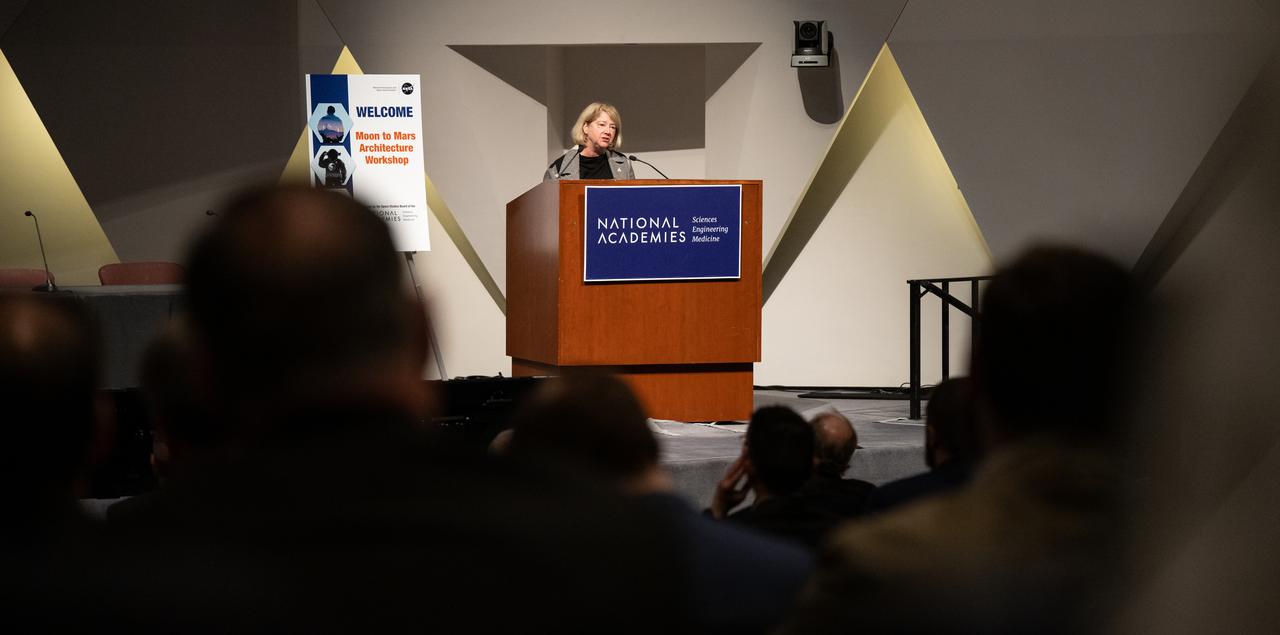
NASA Deputy Administrator Pam Melroy gives opening remarks at the Moon to Mars Architecture Workshop, Thursday, Feb. 22, 2024, at the National Academy of Sciences in Washington. NASA held the workshop to engage the broader space community and collect feedback from U.S. industry and academia and international partners to inform NASA's Moon to Mars Architecture, the agency's roadmap for human exploration of the Moon and Mars.
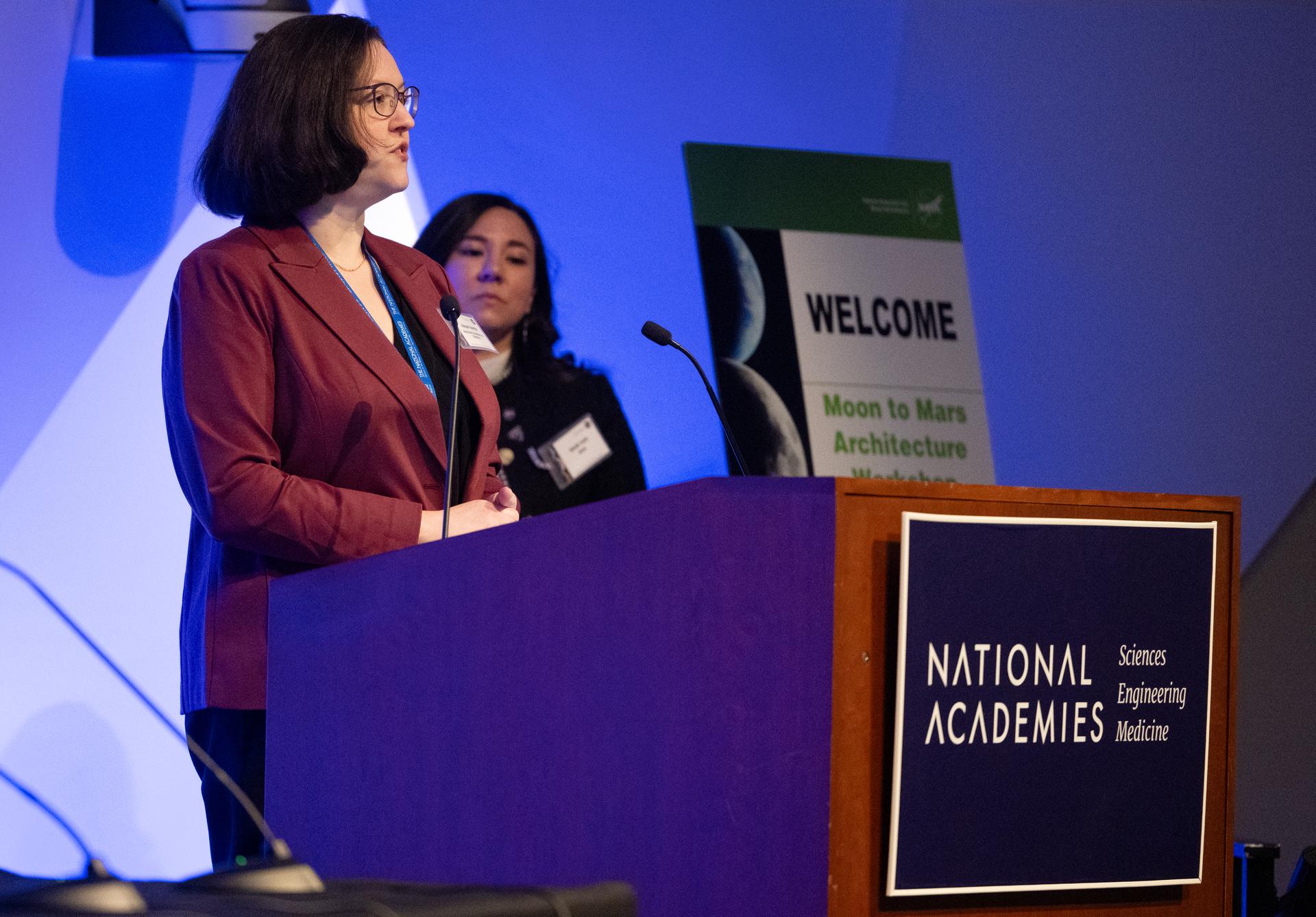
Abigail Sheffer, senior program office for Aeronautics, Space, and Astronomy at the National Academy of Sciences speaks at the Moon to Mars Architecture Workshop, Wednesday, Jan. 21, 2026, at the National Academy of Sciences in Washington. NASA held the workshop to engage the broader space community and collect feedback from U.S. industry and academia and international partners to inform NASA's Moon to Mars Architecture, the agency's roadmap for human exploration of the Moon and Mars. Photo Credit: (NASA/Joel Kowsky)
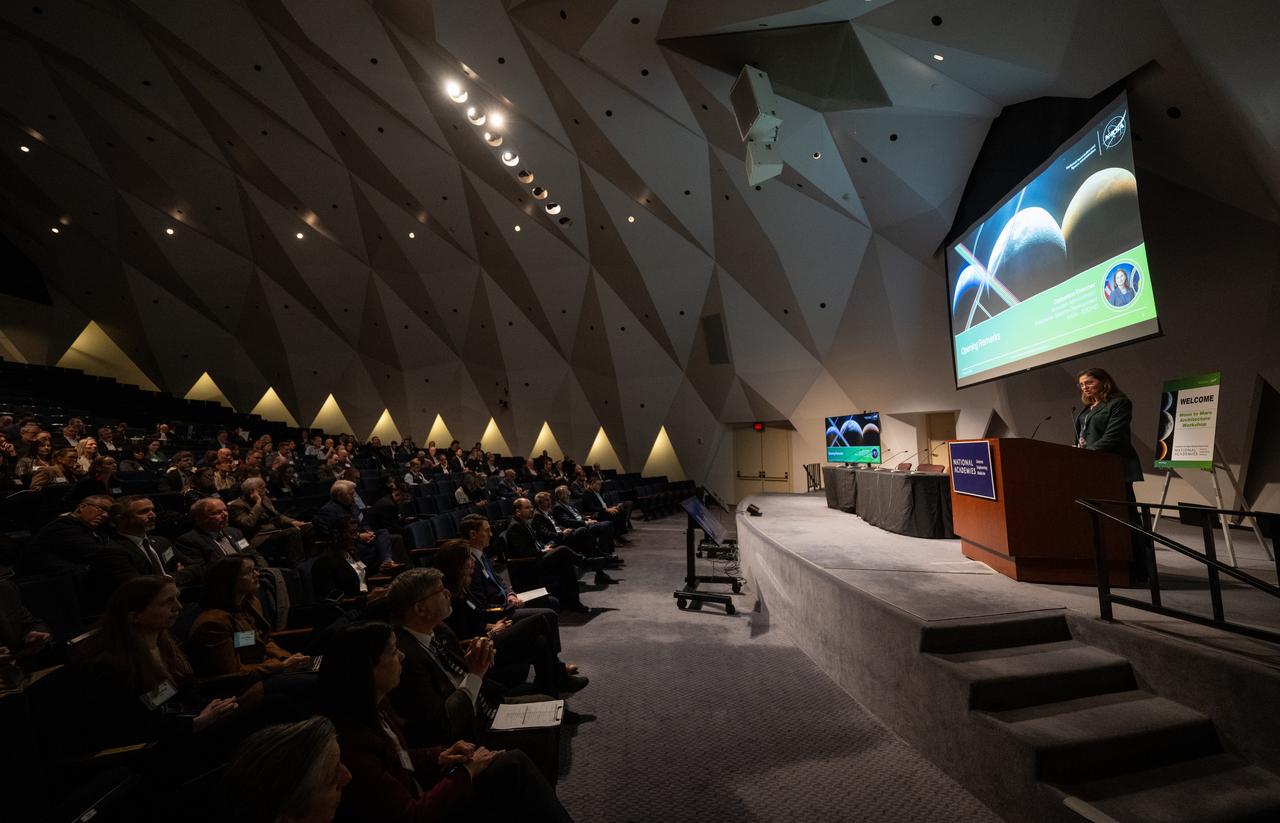
Catherine Koerner, associate administrator for NASA’s Exploration Systems Development Mission Directorate, gives opening remarks at the Moon to Mars Architecture Workshop, Wednesday, Feb. 12, 2025, at the National Academy of Sciences in Washington. NASA held the workshop to engage the broader space community and collect feedback from U.S. industry and academia and international partners to inform NASA's Moon to Mars Architecture, the agency's roadmap for human exploration of the Moon and Mars. Photo Credit: (NASA/Joel Kowsky)
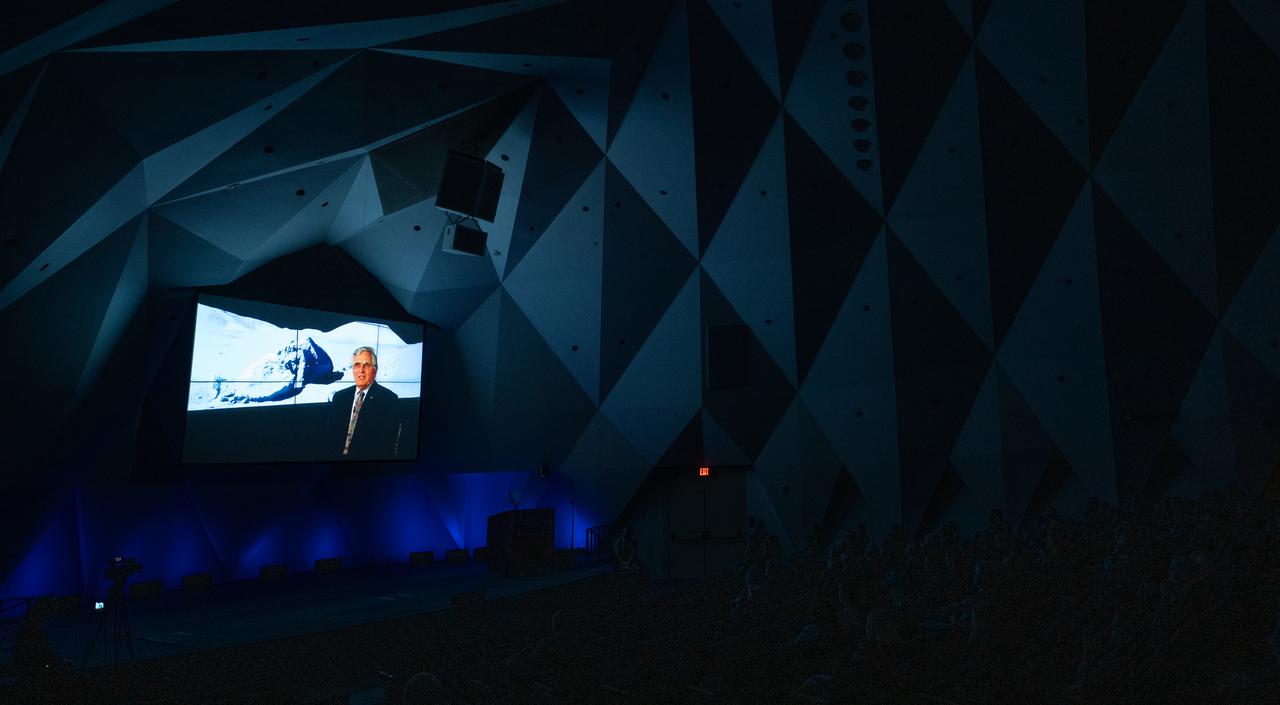
Apollo 17 astronaut Harrison Schmitt is seen in a video during an event celebrating the 50th anniversary of the Apollo 17 mission, Wednesday, Dec. 14, 2022, at the National Academies of Science in Washington. The three-astronaut crew of Apollo 17 - commander Eugene Cernan, lunar module pilot Harrison Schmitt, and command module pilot Ronald Evans, embarked on the last mission of the Apollo program to land humans on the Moon in December of 1972. Cernan and Schmitt spent three days on the lunar surface collecting samples and performing scientific experiments before lifting off from the Taurus-Littrow Valley on December 14, 1972. Photo Credit: (NASA/Joel Kowsky)
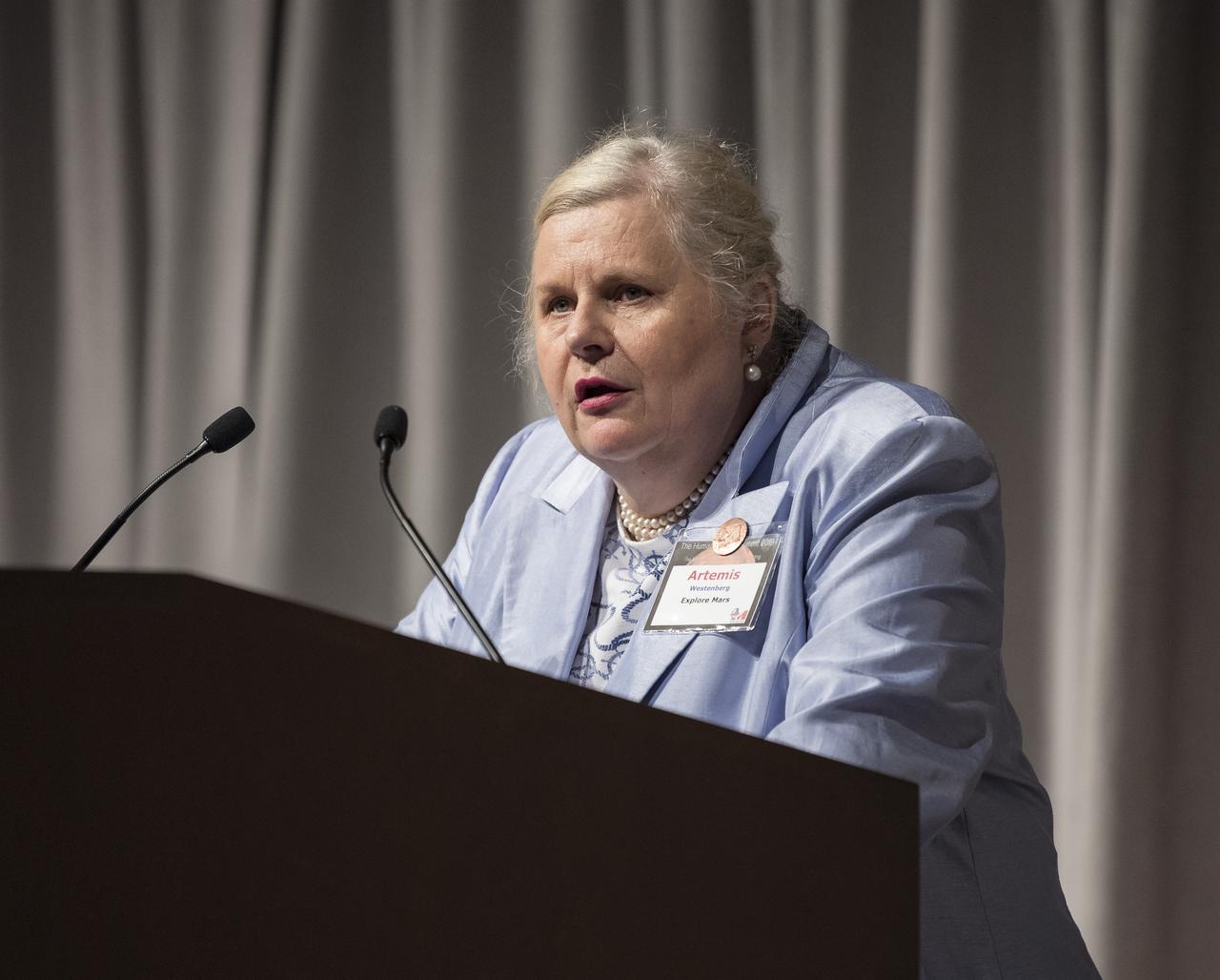
Explore Mars President and Co-Founder, Artemis Westenberg, introduces NASA Administrator Jim Bridenstine at the Humans to Mars Summit, Tuesday, May 14, 2019, at the National Academy of Sciences in Washington. Photo credit: (NASA/Aubrey Gemignani)

The opening presentation slide for the Moon to Mars Architecture Workshop is seen on monitors, Tuesday, Feb. 20, 2024, at the National Academy of Sciences in Washington. NASA held the workshop to engage the broader space community and collect feedback from U.S. industry and academia and international partners to inform NASA's Moon to Mars Architecture, the agency's roadmap for human exploration of the Moon and Mars. Photo Credit: (NASA/Bill Ingalls)
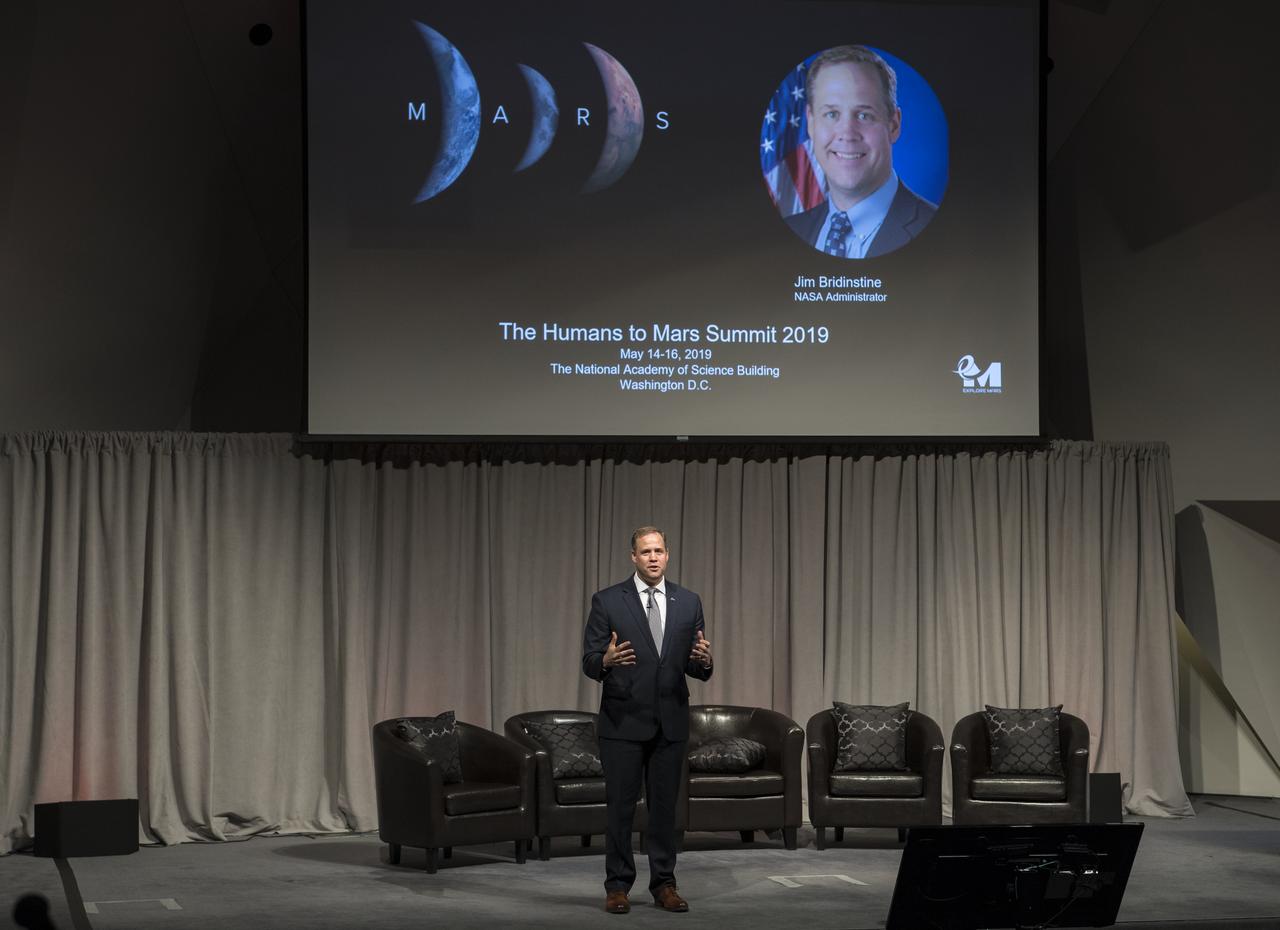
NASA Administrator Jim Bridenstine gives keynote remarks at the Humans to Mars Summit, Tuesday, May 14, 2019, at the National Academy of Sciences in Washington. Photo credit: (NASA/Aubrey Gemignani)
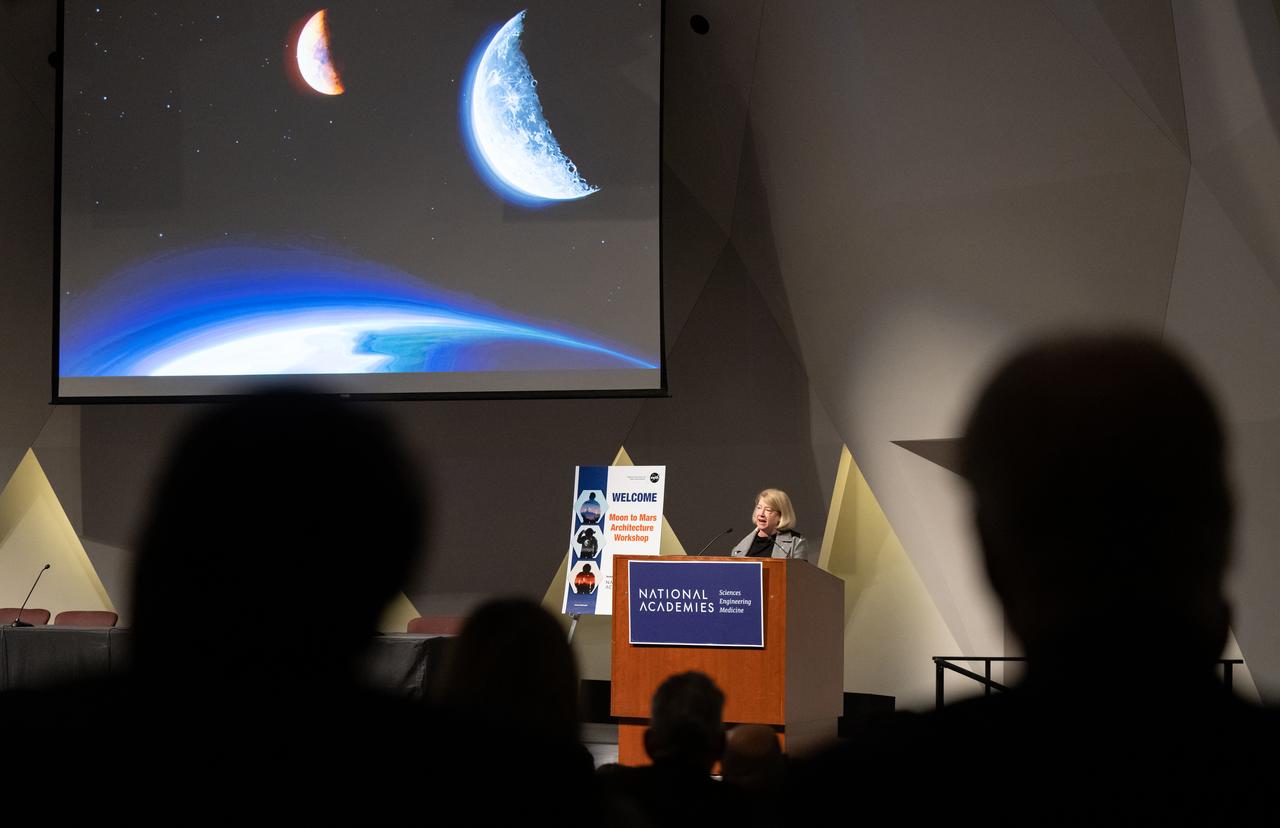
NASA Deputy Administrator Pam Melroy gives opening remarks at the Moon to Mars Architecture Workshop, Thursday, Feb. 22, 2024, at the National Academy of Sciences in Washington. NASA held the workshop to engage the broader space community and collect feedback from U.S. industry and academia and international partners to inform NASA's Moon to Mars Architecture, the agency's roadmap for human exploration of the Moon and Mars.
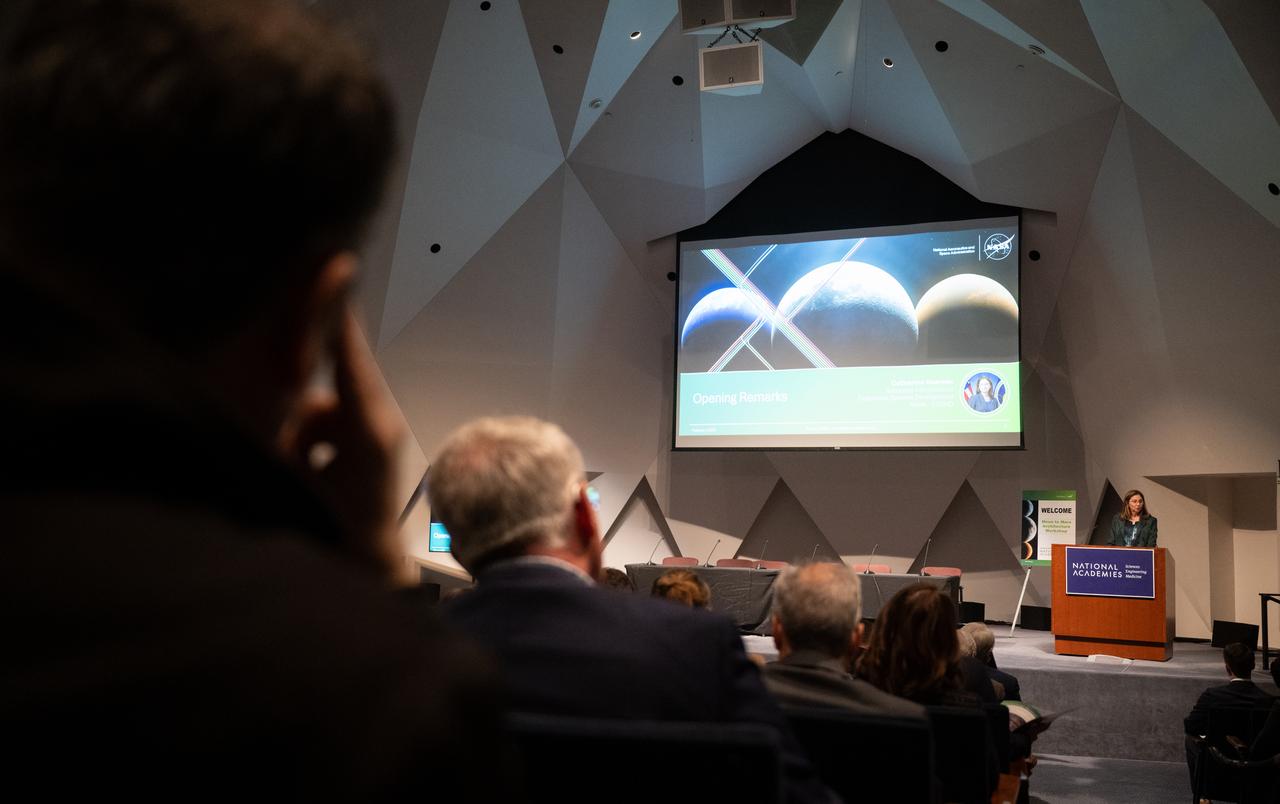
Catherine Koerner, associate administrator for NASA’s Exploration Systems Development Mission Directorate, gives opening remarks at the Moon to Mars Architecture Workshop, Wednesday, Feb. 12, 2025, at the National Academy of Sciences in Washington. NASA held the workshop to engage the broader space community and collect feedback from U.S. industry and academia and international partners to inform NASA's Moon to Mars Architecture, the agency's roadmap for human exploration of the Moon and Mars. Photo Credit: (NASA/Joel Kowsky)
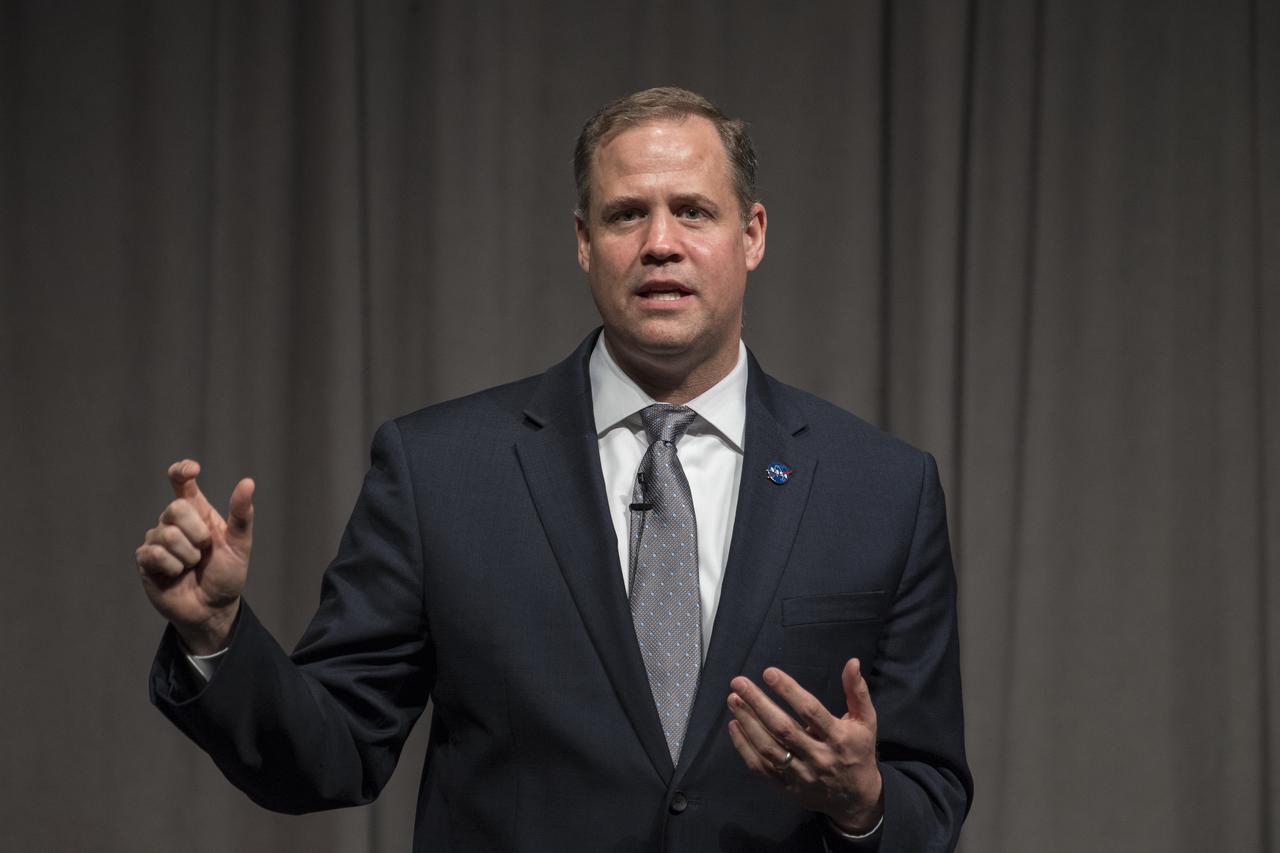
NASA Administrator Jim Bridenstine gives keynote remarks at the Humans to Mars Summit, Tuesday, May 14, 2019, at the National Academy of Sciences in Washington. Photo credit: (NASA/Aubrey Gemignani)
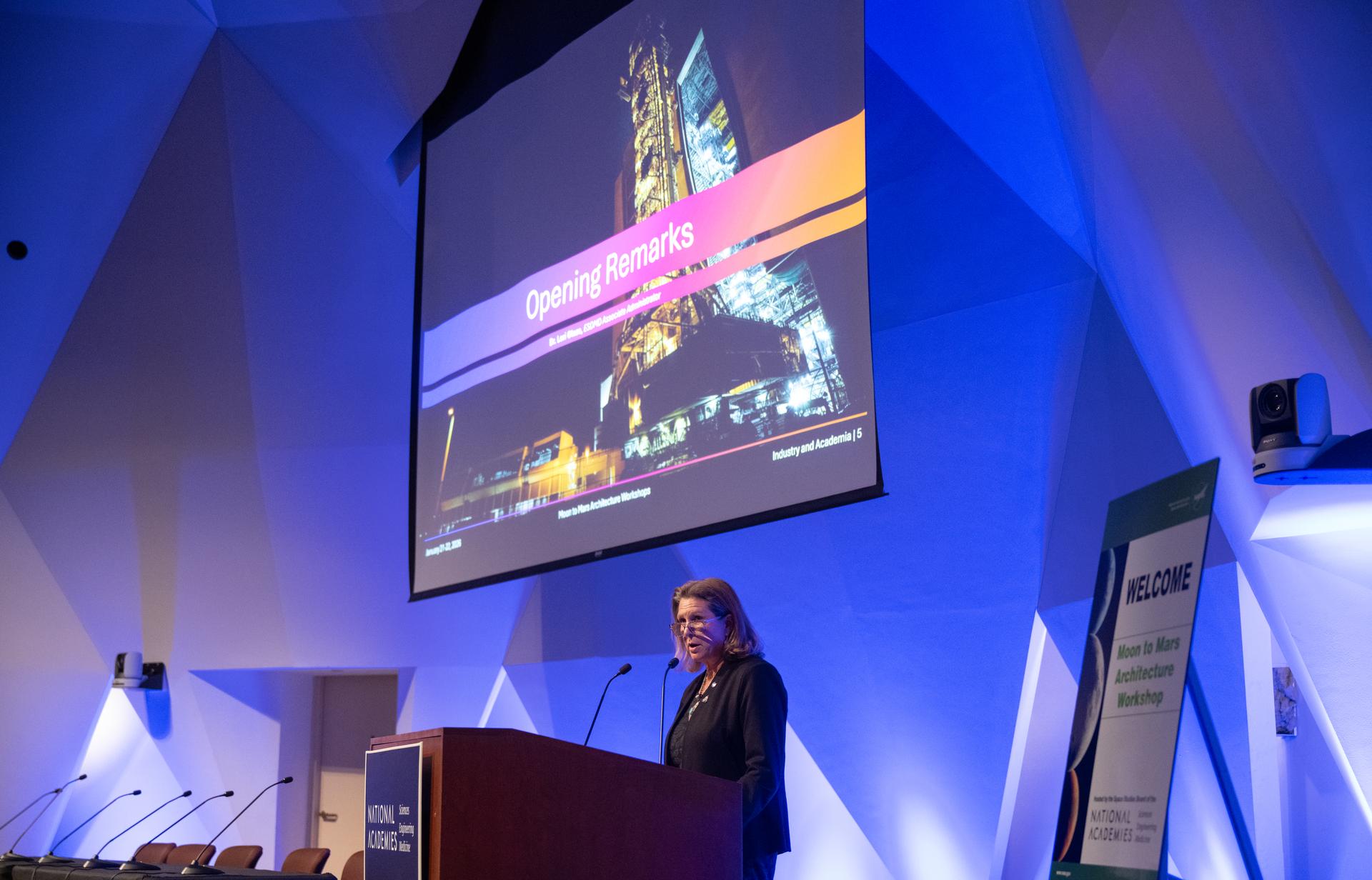
Lori Glaze, acting associate administrator for NASA's Exploration Systems Development Mission Directorate, gives opening remarks at the Moon to Mars Architecture Workshop, Wednesday, Jan. 21, 2026, at the National Academy of Sciences in Washington. NASA held the workshop to engage the broader space community and collect feedback from U.S. industry and academia and international partners to inform NASA's Moon to Mars Architecture, the agency's roadmap for human exploration of the Moon and Mars. Photo Credit: (NASA/Joel Kowsky)
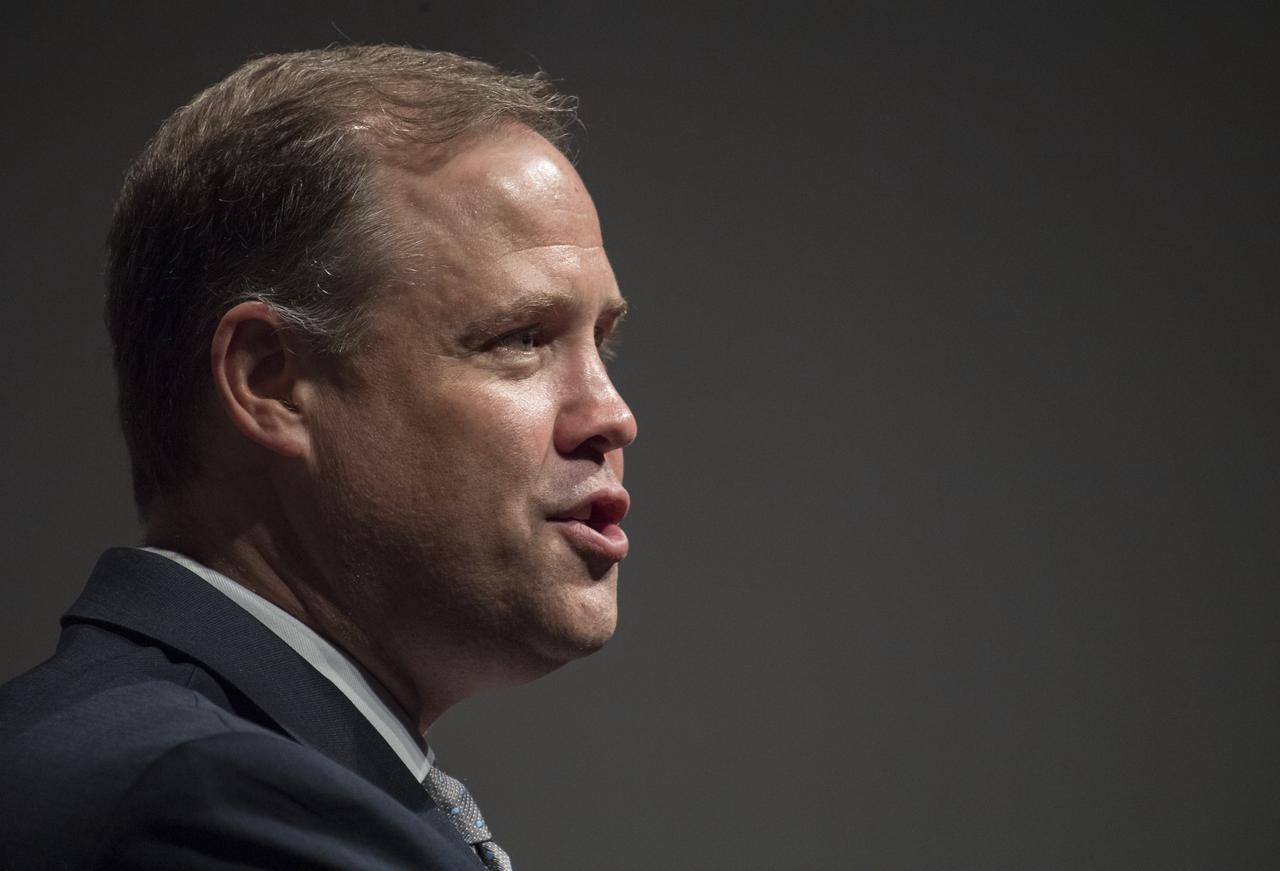
NASA Administrator Jim Bridenstine gives keynote remarks at the Humans to Mars Summit, Tuesday, May 14, 2019, at the National Academy of Sciences in Washington. Photo credit: (NASA/Aubrey Gemignani)
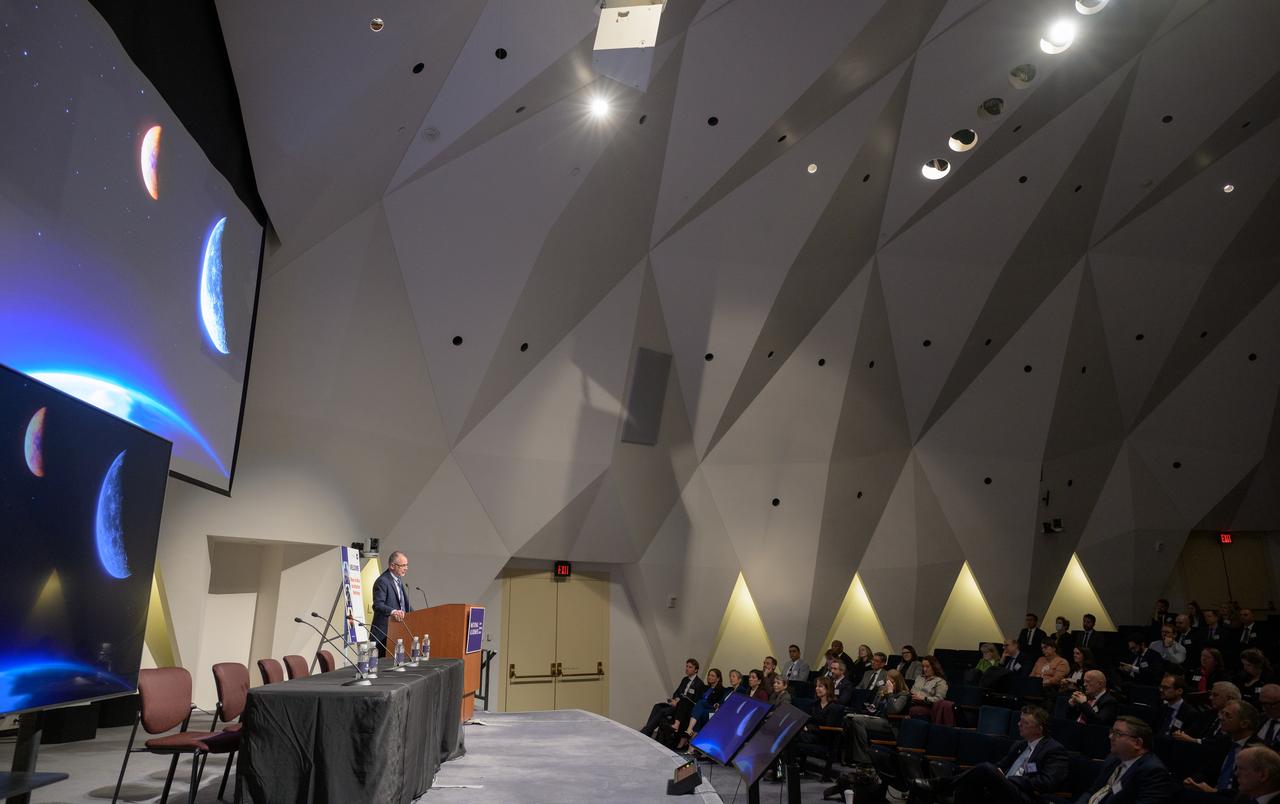
NASA Associate Administrator Jim Free gives opening remarks at the Moon to Mars Architecture Workshop, Tuesday, Feb. 20, 2024, at the National Academy of Sciences in Washington. NASA held the workshop to engage the broader space community and collect feedback from U.S. industry and academia and international partners to inform NASA's Moon to Mars Architecture, the agency's roadmap for human exploration of the Moon and Mars. Photo Credit: (NASA/Bill Ingalls)
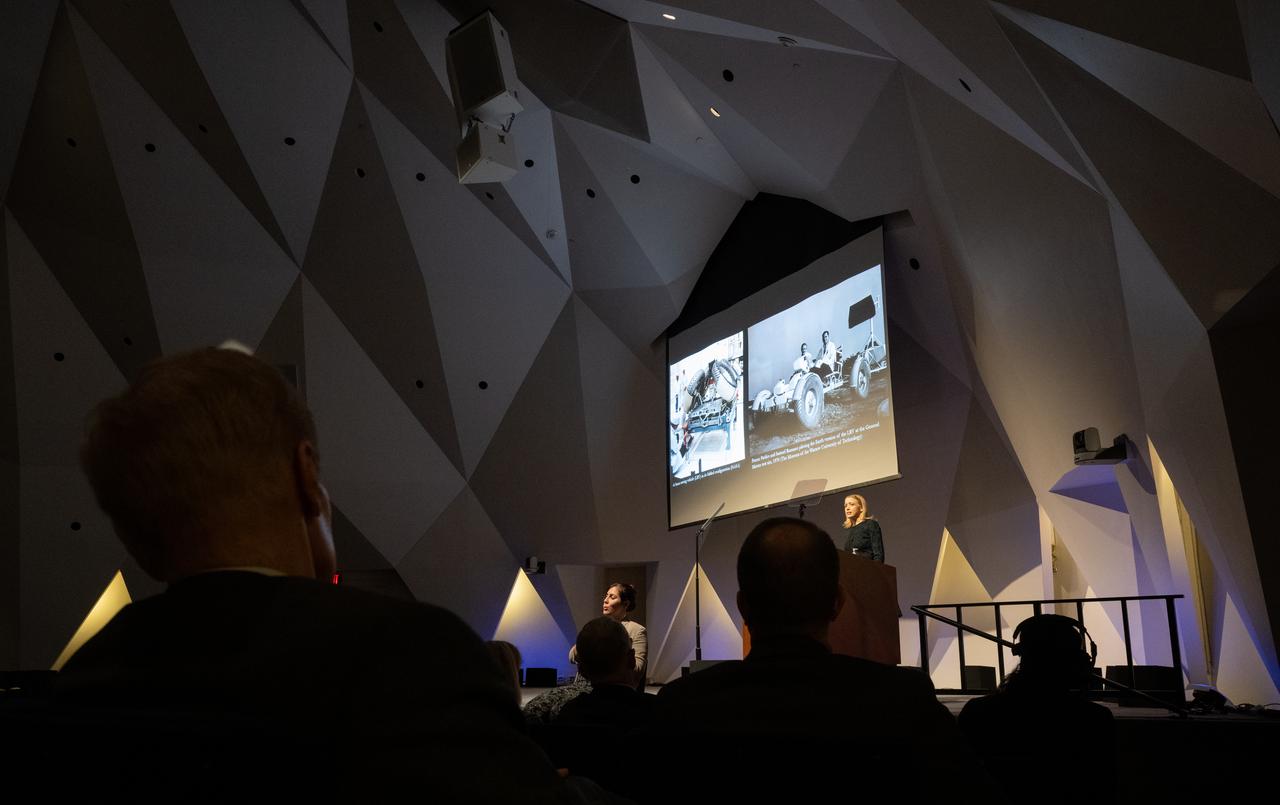
Teasel Muir-Harmony, curator of the Apollo collection at the Smithsonian National Air and Space Museum, speaks during an event celebrating the 50th anniversary of the Apollo 17 mission, Wednesday, Dec. 14, 2022, at the National Academies of Science in Washington. The three-astronaut crew of Apollo 17 - commander Eugene Cernan, lunar module pilot Harrison Schmitt, and command module pilot Ronald Evans, embarked on the last mission of the Apollo program to land humans on the Moon in December of 1972. Cernan and Schmitt spent three days on the lunar surface collecting samples and performing scientific experiments before lifting off from the Taurus-Littrow Valley on December 14, 1972. Photo Credit: (NASA/Joel Kowsky)
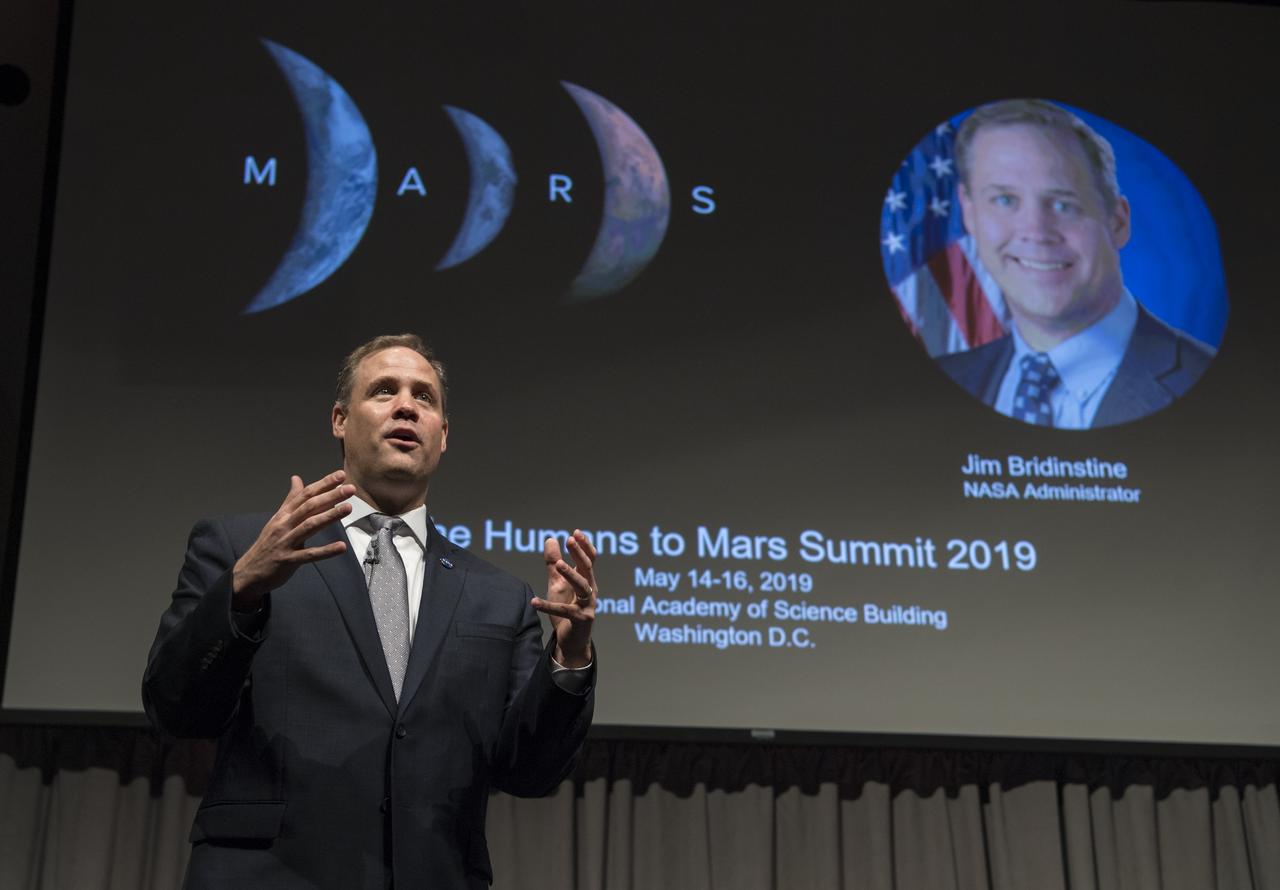
NASA Administrator Jim Bridenstine gives keynote remarks at the Humans to Mars Summit, Tuesday, May 14, 2019, at the National Academy of Sciences in Washington. Photo credit: (NASA/Aubrey Gemignani)

Sarah Luna, executive officer for NASA’s Exploration Systems Development Mission Directorate speaks at the Moon to Mars Architecture Workshop, Wednesday, Jan. 21, 2026, at the National Academy of Sciences in Washington. NASA held the workshop to engage the broader space community and collect feedback from U.S. industry and academia and international partners to inform NASA's Moon to Mars Architecture, the agency's roadmap for human exploration of the Moon and Mars. Photo Credit: (NASA/Joel Kowsky)