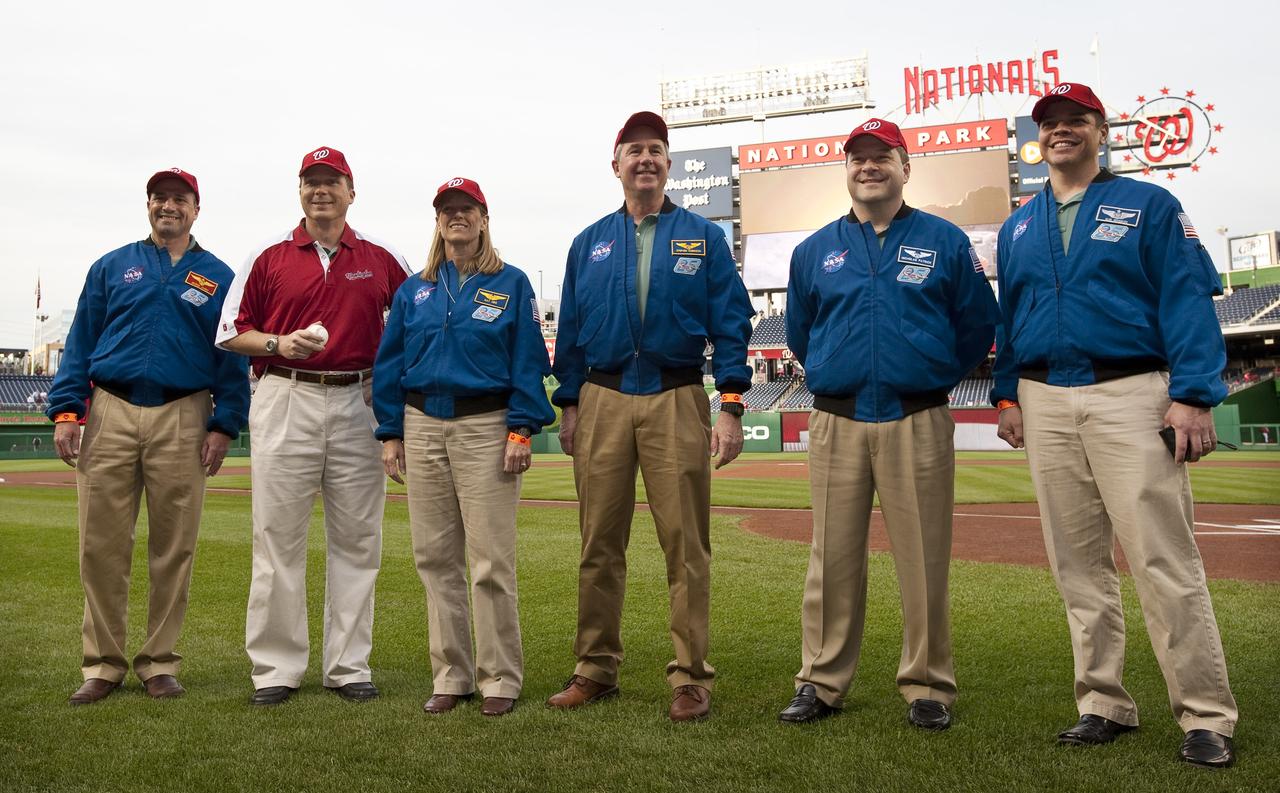
NASA STS-130 crew Commander George Zamka, far left, Pilot Terry Virts, Mission Specialists Kathryn Hire, Stephen Robinson, Nicholas Patrick and Robert Behnken, far right, pose for pictures on the field at Nationals Park, Tuesday, April 20, 2010, in Washington. Photo Credit: (NASA/Carla Cioffi)
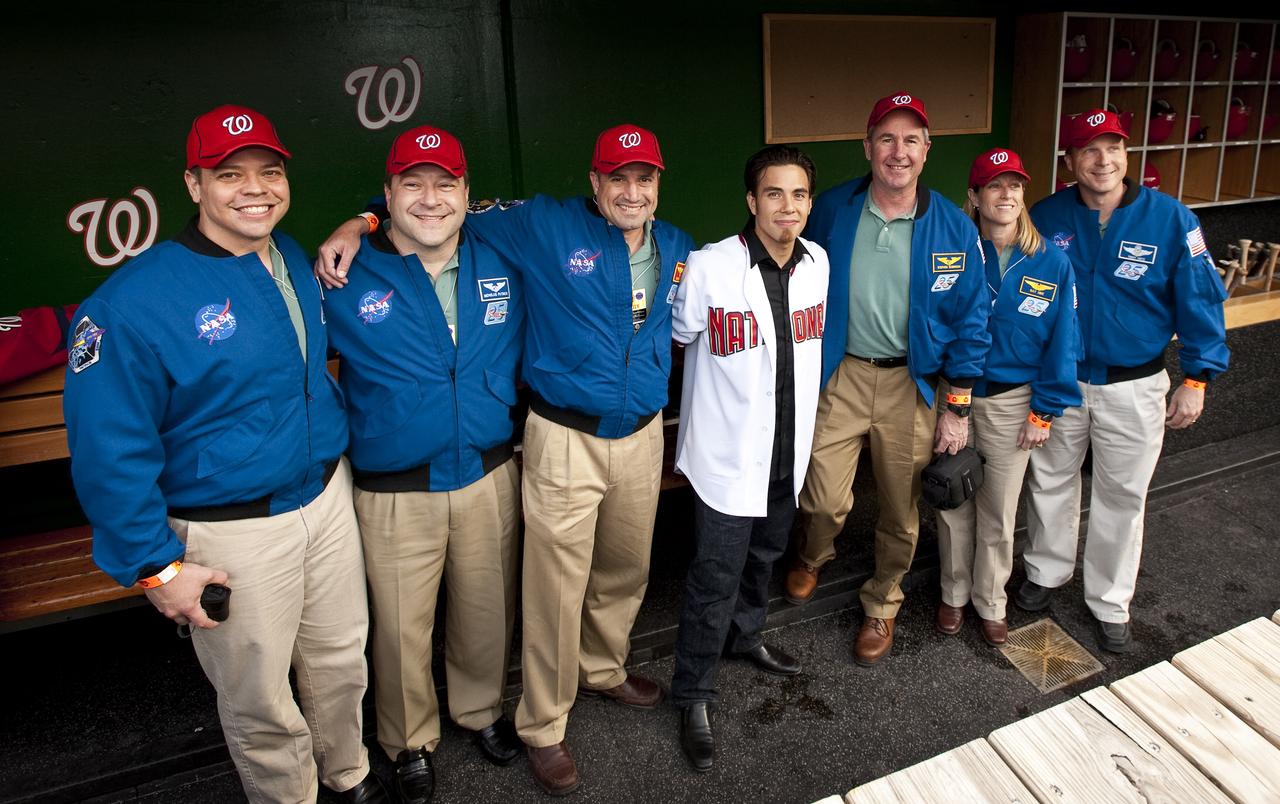
NASA STS-130 crew pose with Winter Olympics medalist Apolo Ohno, center, at Nationals Park, Tuesday, April 20, 2010, in Washington. Pictured from left are STS-130 Mission Specialist Robert Benhken, Mission Specialist Nicholas Patrick, Commander George Zamka, Apolo Ohno, Mission Specialist Stephen Robinson, Mission Specialist Kathryn Hire and Pilot Terry Virts. Photo Credit: (NASA/Carla Cioffi)
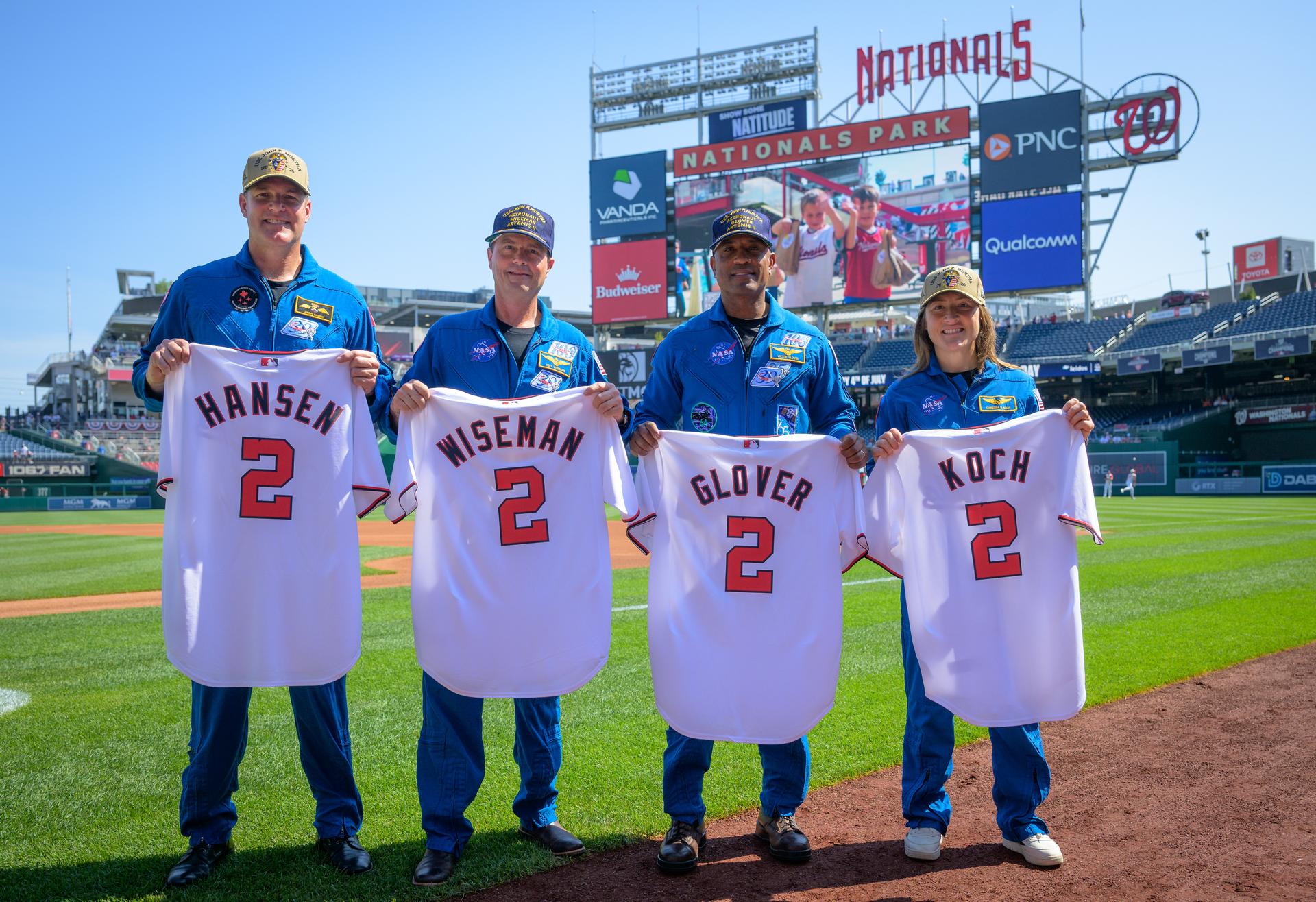
Artemis II astronauts; CSA (Canadian Space Agency) astronaut Jeremy Hansen, mission specialist, left, NASA astronauts Reid Wiseman, commander; Victor Glover, pilot; and Christina Koch, mission specialist, right, pose for a photograph with Nationals jerseys before the start of a baseball game between the Pittsburgh Pirates and the Washington Nationals, Saturday, July 4, 2026, at Nationals Park in Washington. NASA’s Artemis II mission took Wiseman, Glover, Koch, and Hansen on a nearly 10-day journey around the Moon and back to Earth in April 2026. Photo Credit: (NASA/Bill Ingalls)
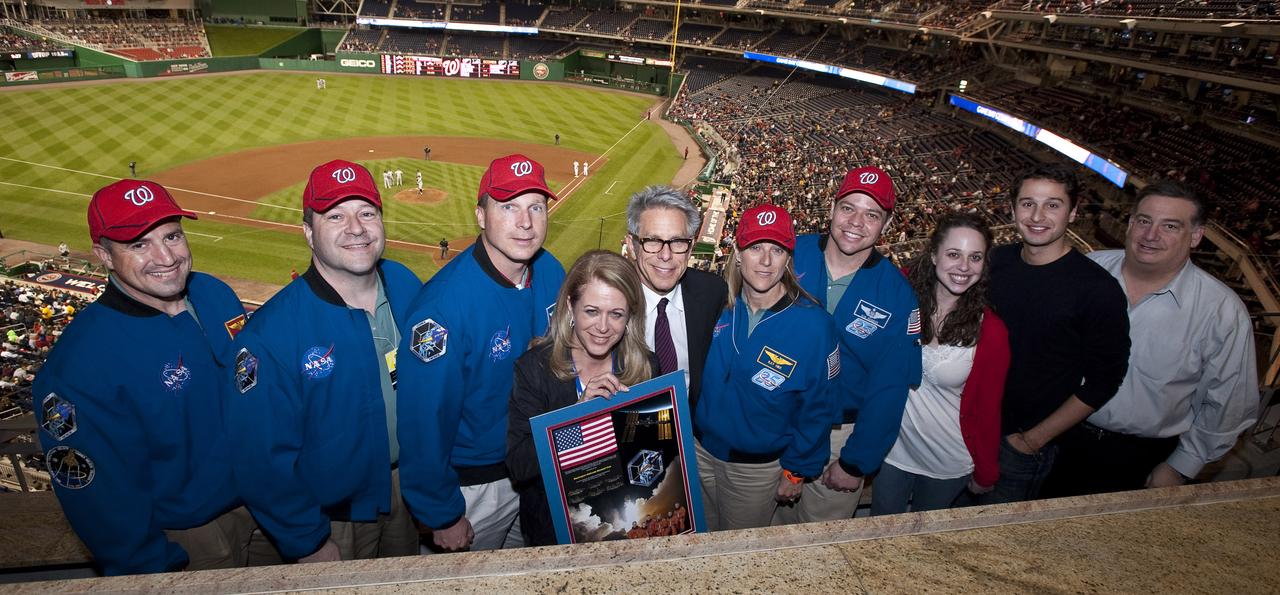
The crew of STS-130 present the principal owner of the Washington Nationals, Debra Lerner Cohen (holding montage) with a montage of their mission, Tuesday, April 20, 2010 at Nationals Park in Washington. From left are seen Commander George Zamka, Mission Specialist Nicholas Patrick, Pilot Terry Virts, Debra Lerner Cohen, Edward Cohen, Mission Specialist Kathryn Hire, Mission Specialist Robert Behnken, Lauren Lerner, Jacob Lerner and Alan Gottlieb. Photo Credit: (NASA/Carla Cioffi)

NASA STS-130 Pilot Terry Virts, center, is interviewed by Washington Nationals radio broadcasters Charlie Slowes, right, and David Jageler on Tuesday, April 20, 2010, in Washington. Photo Credit: (NASA/Carla Cioffi)

NASA astronaut Reid Wiseman, commander; left, CSA (Canadian Space Agency) astronaut Jeremy Hansen, mission specialist; Christina Koch, mission specialist; and Victor Glover, pilot, right, along with members of the Jr. Nats Kids Club, are seen as they give the call to “play ball” at the beginning of a baseball game between the Pittsburgh Pirates and the Washington Nationals, Saturday, July 4, 2026, at Nationals Park in Washington. NASA’s Artemis II mission took Wiseman, Glover, Koch, and Hansen on a nearly 10-day journey around the Moon and back to Earth in April 2026. Photo Credit: (NASA/Bill Ingalls)
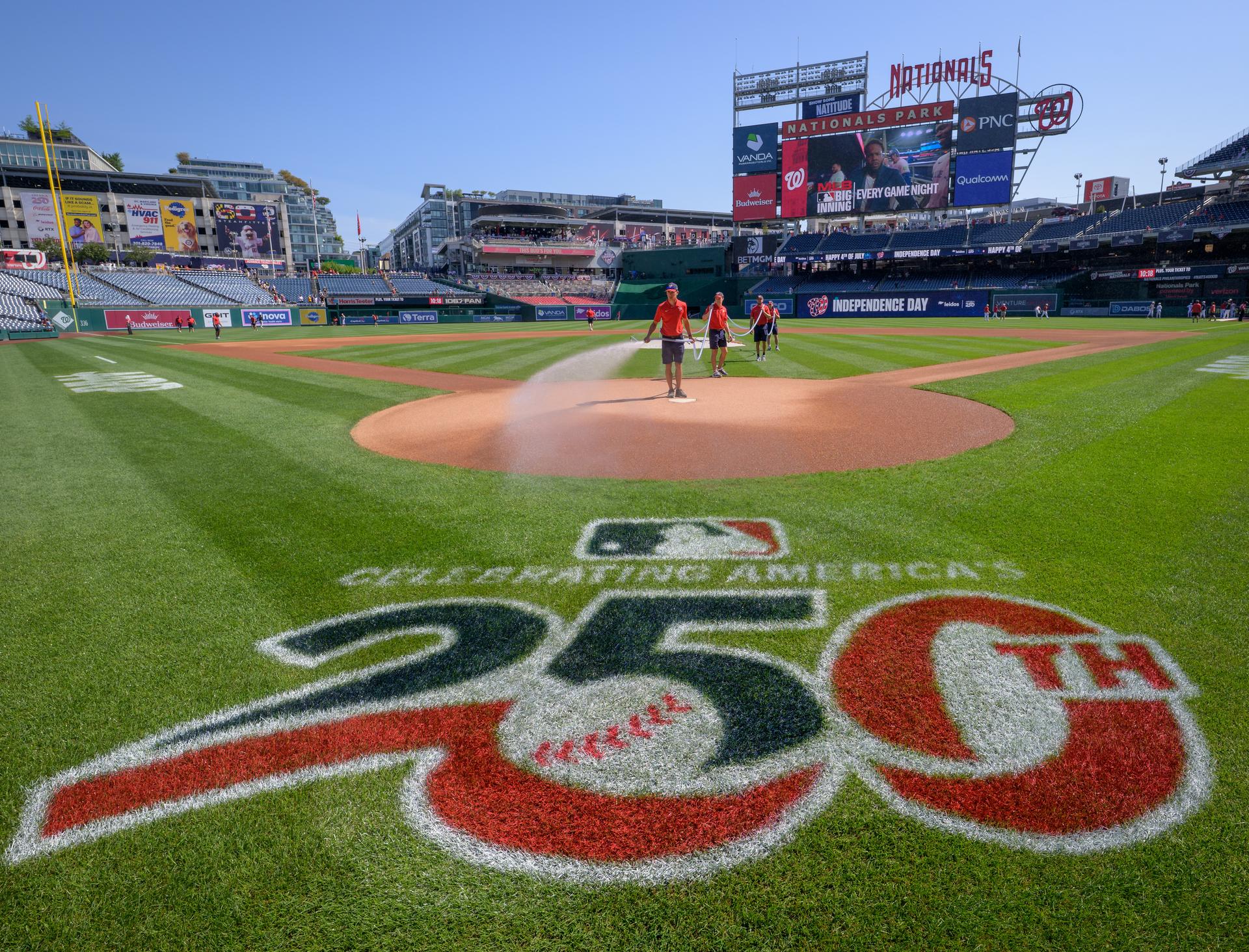
Grounds teams prepare the field before the start of a baseball game between the Pittsburgh Pirates and the Washington Nationals, Saturday, July 4, 2026, at Nationals Park in Washington. NASA’s Artemis II mission crew; NASA astronauts Reid Wiseman, commander; Victor Glover, pilot; Christina Koch, mission specialist; and CSA (Canadian Space Agency) astronaut Jeremy Hansen, mission specialist threw the ceremonial opening pitch. Photo Credit: (NASA/Bill Ingalls)

NASA STS-130 Pilot Terry Virts throws the opening pitch at Nationals Park on Tuesday, April 20, 2010, in Washington. Photo Credit: (Courtesy of the Washington Nationals)

NASA STS-130 Pilot Terry Virts, right, is interviewed by Mid-Atlantic Sports Network (MASN) reporter Debbie Taylor at Nationals Park Tuesday, April 20, 2010, in Washington. Photo Credit: (NASA/Carla Cioffi)
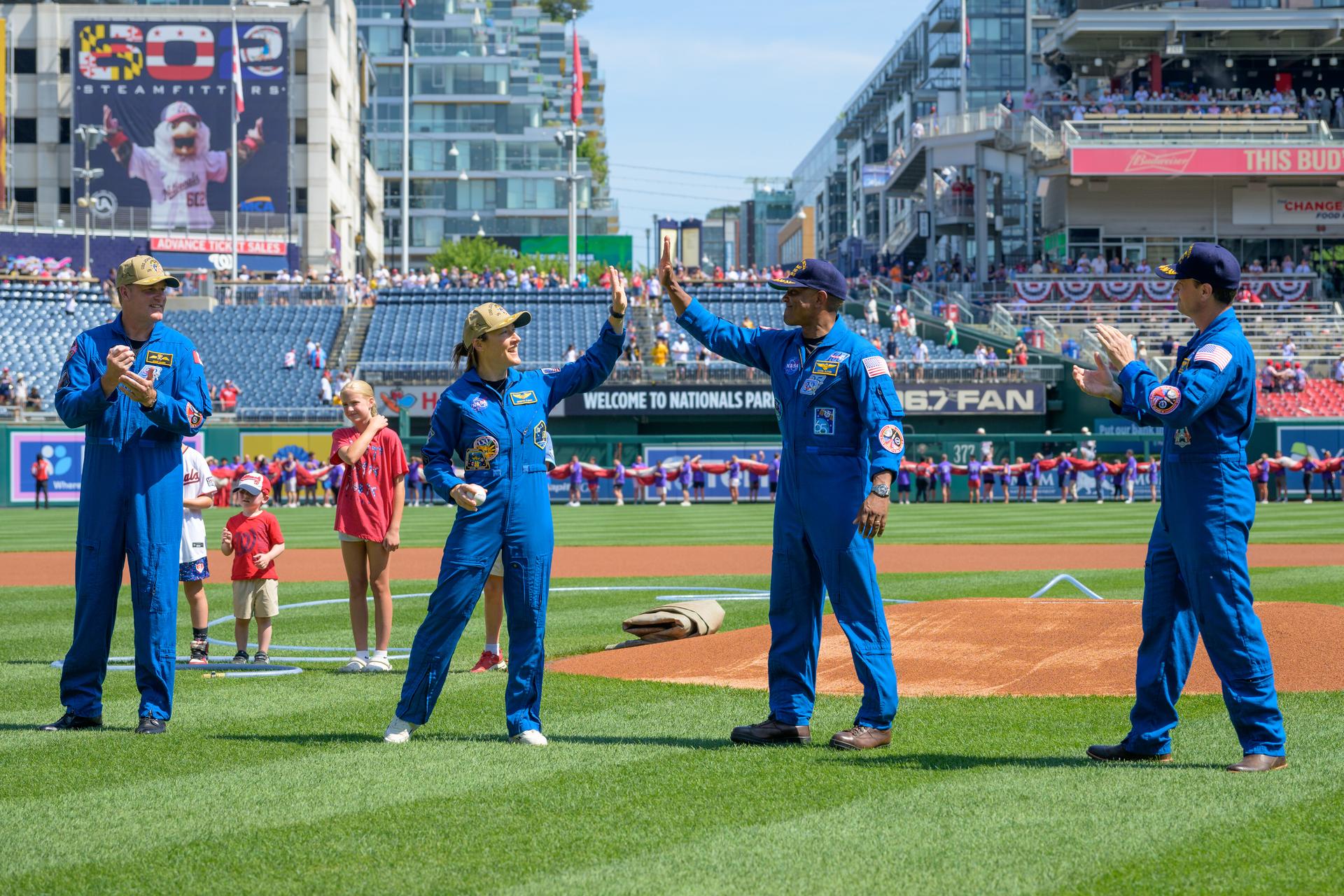
Artemis II astronauts: CSA (Canadian Space Agency) astronaut Jeremy Hansen, mission specialist, left, NASA astronauts Christina Koch, mission specialist; Victor Glover, pilot; and Reid Wiseman, commander, right, celebrate as they throw the ceremonial first pitches before the start of a baseball game between the Pittsburgh Pirates and the Washington Nationals, Saturday, July 4, 2026, at Nationals Park in Washington. NASA’s Artemis II mission took Wiseman, Glover, Koch, and Hansen on a nearly 10-day journey around the Moon and back to Earth in April 2026. Photo Credit: (NASA/Bill Ingalls)
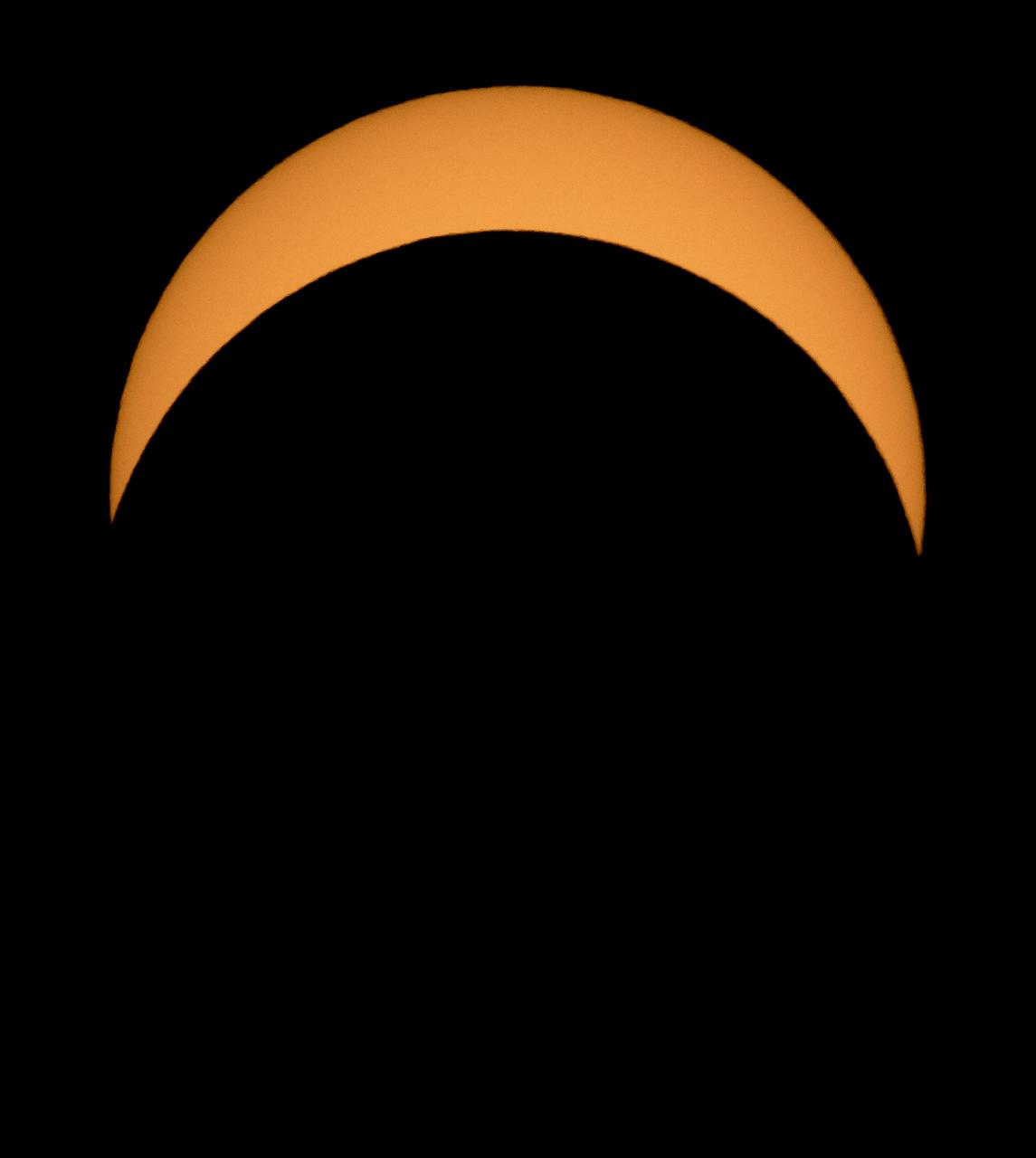
The Moon is seen passing in front of the Sun during a solar eclipse from Ross Lake, Northern Cascades National Park, Washington on Monday, Aug. 21, 2017. A total solar eclipse swept across a narrow portion of the contiguous United States from Lincoln Beach, Oregon to Charleston, South Carolina. A partial solar eclipse was visible across the entire North American continent along with parts of South America, Africa, and Europe. Photo Credit: (NASA/Bill Ingalls)
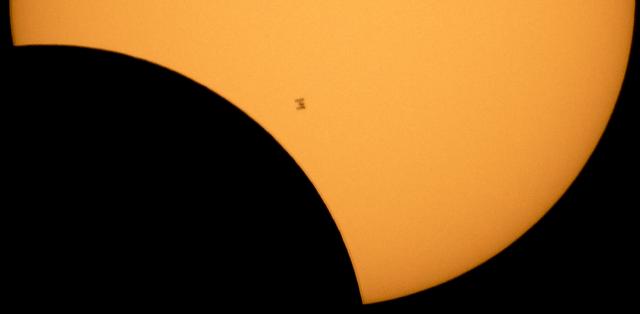
The International Space Station, with a crew of six onboard, is seen in silhouette as it transits the Sun at roughly five miles per second during a partial solar eclipse, Monday, Aug. 21, 2017 from Ross Lake, Northern Cascades National Park, Washington. Onboard as part of Expedition 52 are: NASA astronauts Peggy Whitson, Jack Fischer, and Randy Bresnik; Russian cosmonauts Fyodor Yurchikhin and Sergey Ryazanskiy; and ESA (European Space Agency) astronaut Paolo Nespoli. A total solar eclipse swept across a narrow portion of the contiguous United States from Lincoln Beach, Oregon to Charleston, South Carolina. A partial solar eclipse was visible across the entire North American continent along with parts of South America, Africa, and Europe. Photo Credit: (NASA/Bill Ingalls)
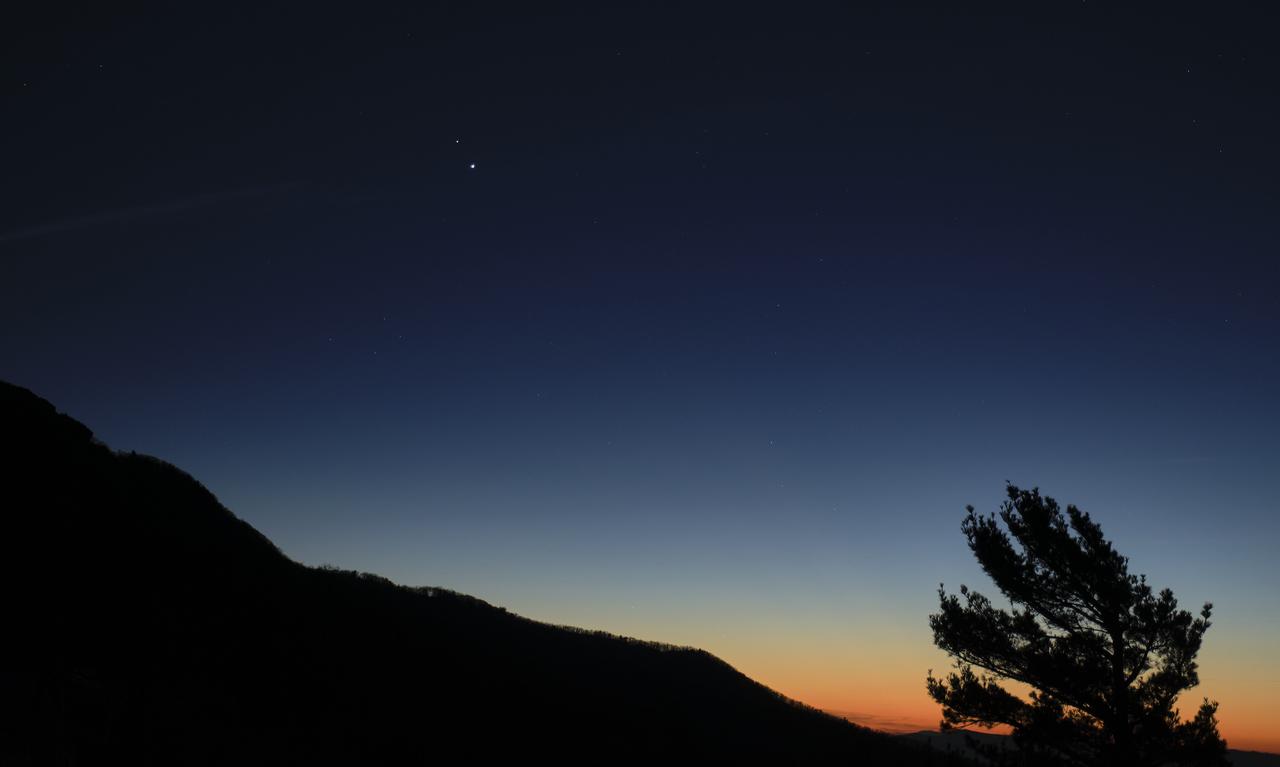
Saturn, top, and Jupiter, below, are seen after sunset from Shenandoah National Park, Sunday, Dec. 13, 2020, in Luray, Virginia. The two planets are drawing closer to each other in the sky as they head towards a “great conjunction” on December 21, where the two giant planets will appear a tenth of a degree apart. Photo Credit: (NASA/Bill Ingalls)
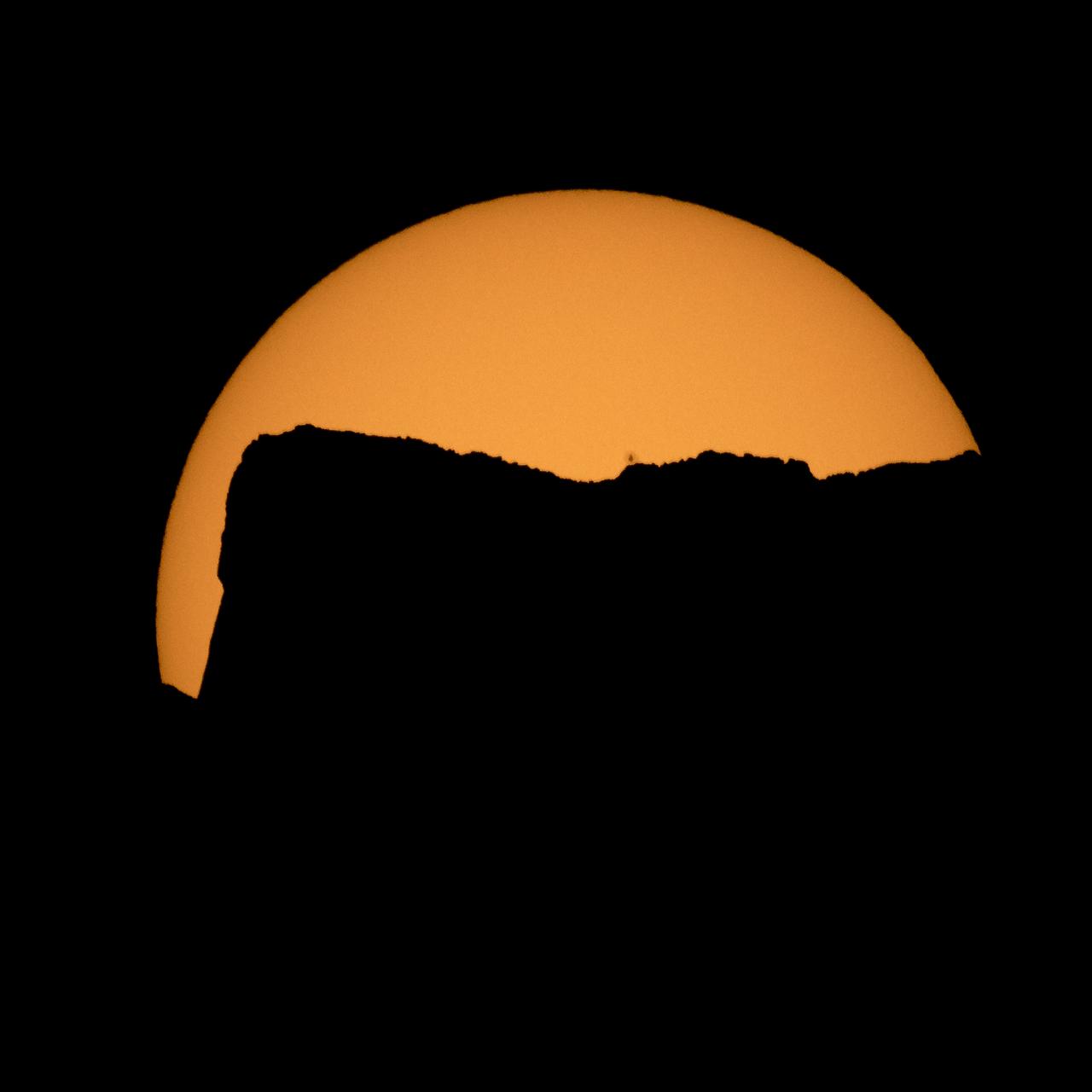
The Sun is seen as it rises behind Jack Mountain head of the solar eclipse, Monday, Aug. 21, 2017, Ross Lake, Northern Cascades National Park, Washington. A total solar eclipse will sweep across a narrow portion of the contiguous United States from Lincoln Beach, Oregon to Charleston, South Carolina. A partial solar eclipse was visible across the entire North American continent along with parts of South America, Africa, and Europe. Photo Credit: (NASA/Bill Ingalls)
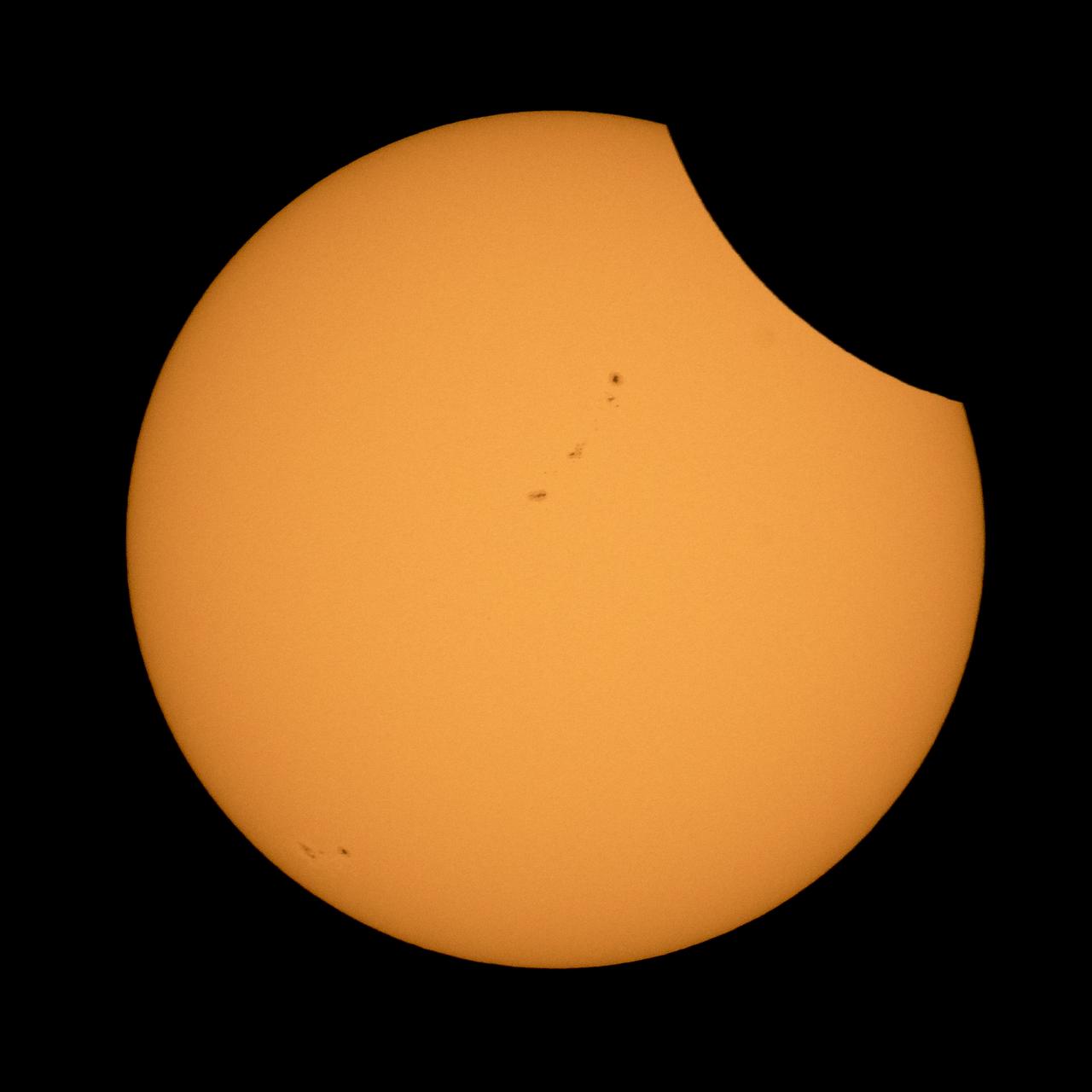
The Moon is seen as it starts passing in front of the Sun during a solar eclipse from Ross Lake, Northern Cascades National Park, Washington on Monday, Aug. 21, 2017. A total solar eclipse swept across a narrow portion of the contiguous United States from Lincoln Beach, Oregon to Charleston, South Carolina. A partial solar eclipse was visible across the entire North American continent along with parts of South America, Africa, and Europe. Photo Credit: (NASA/Bill Ingalls)

This composite image of seven pictures shows the progression of a partial solar eclipse near from Ross Lake, Northern Cascades National Park, Washington on Monday, Aug. 21, 2017. The second to the last frame shows the International Space Station, with a crew of six onboard, in silhouette as it transits the Sun at roughly five miles per second. A total solar eclipse swept across a narrow portion of the contiguous United States from Lincoln Beach, Oregon to Charleston, South Carolina. A partial solar eclipse was visible across the entire North American continent along with parts of South America, Africa, and Europe. Photo Credit: (NASA/Bill Ingalls)
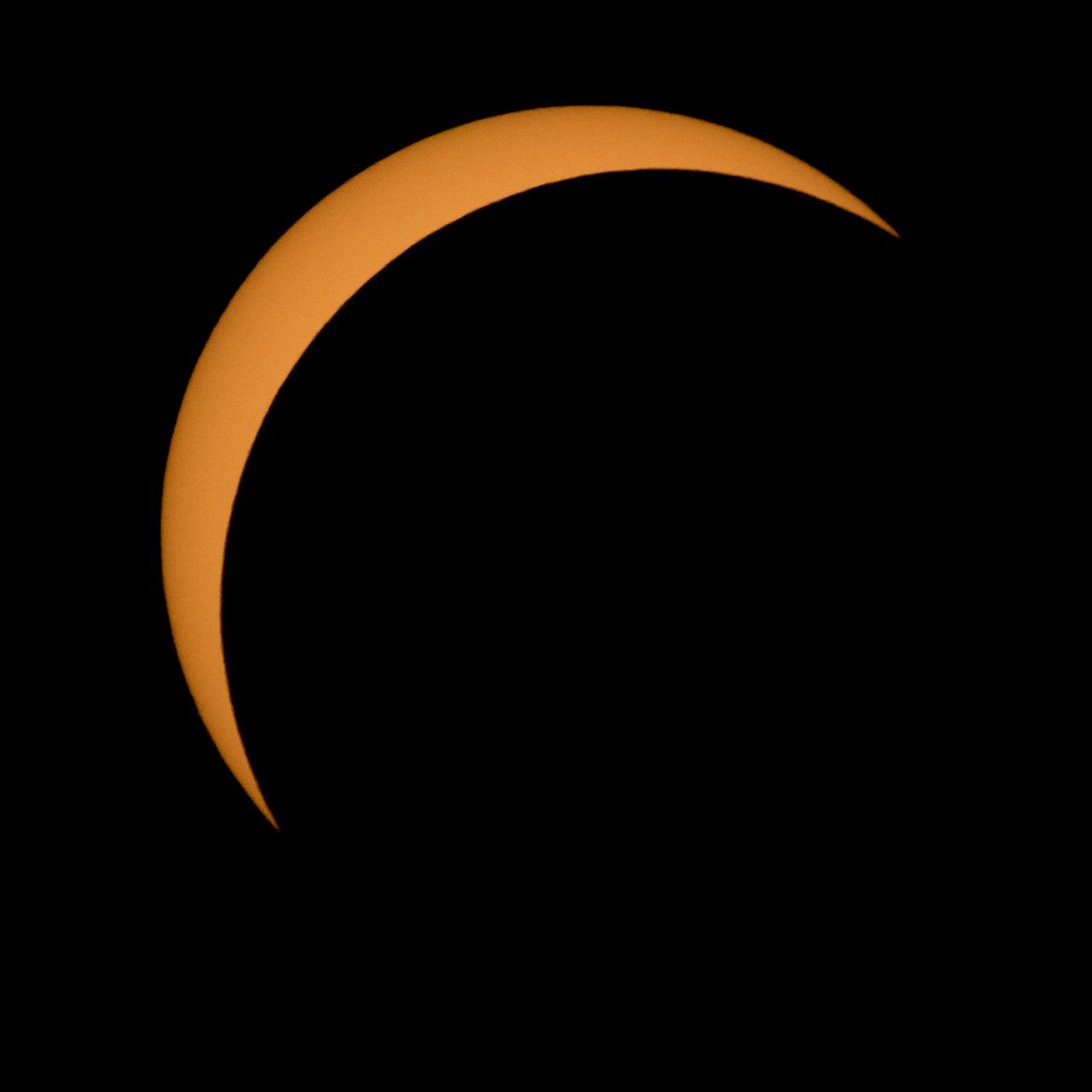
The Moon is seen passing in front of the Sun during a solar eclipse from Ross Lake, Northern Cascades National Park, Washington on Monday, Aug. 21, 2017. A total solar eclipse swept across a narrow portion of the contiguous United States from Lincoln Beach, Oregon to Charleston, South Carolina. A partial solar eclipse was visible across the entire North American continent along with parts of South America, Africa, and Europe. Photo Credit: (NASA/Bill Ingalls)
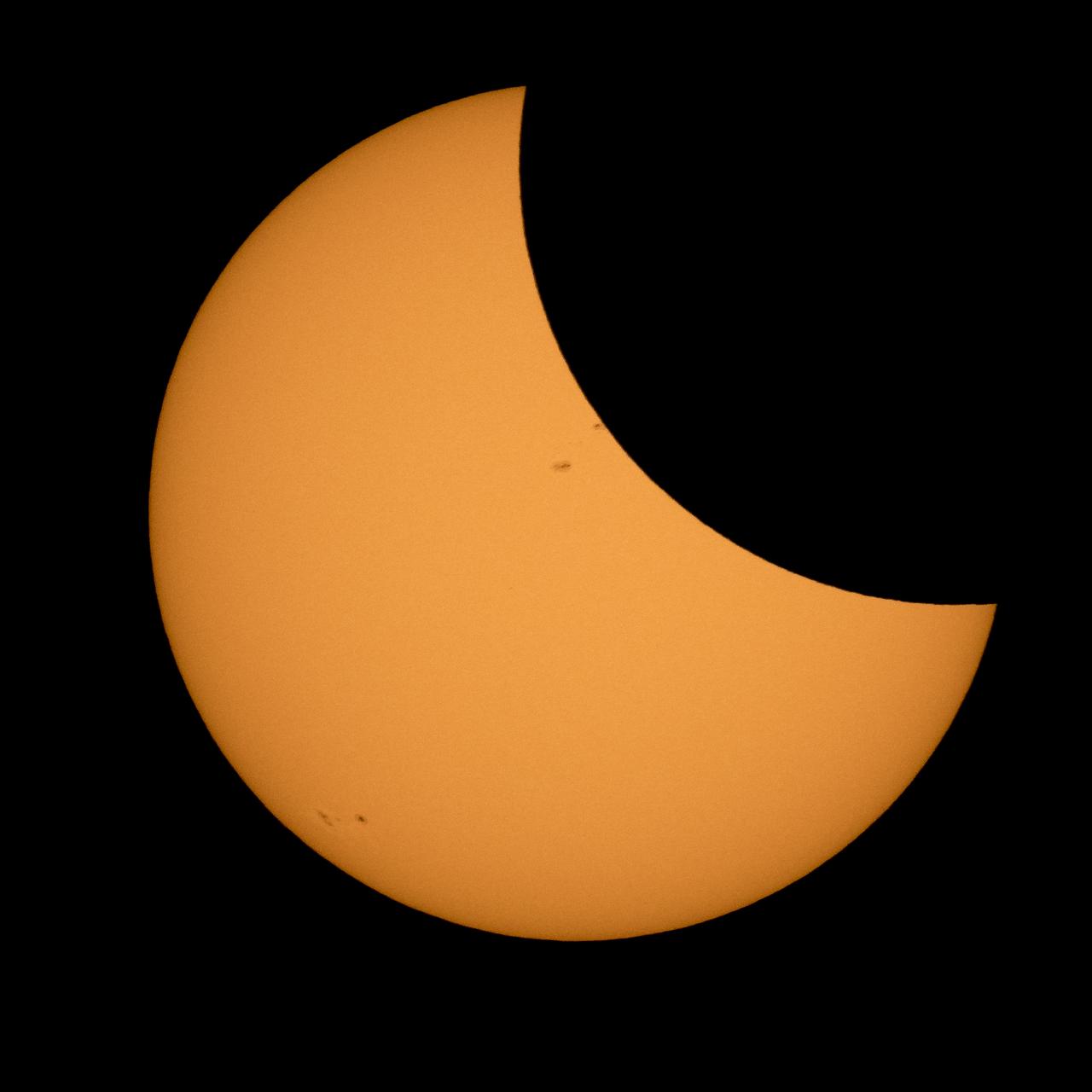
The Moon is seen passing in front of the Sun during a solar eclipse from Ross Lake, Northern Cascades National Park, Washington on Monday, Aug. 21, 2017. A total solar eclipse swept across a narrow portion of the contiguous United States from Lincoln Beach, Oregon to Charleston, South Carolina. A partial solar eclipse was visible across the entire North American continent along with parts of South America, Africa, and Europe. Photo Credit: (NASA/Bill Ingalls)