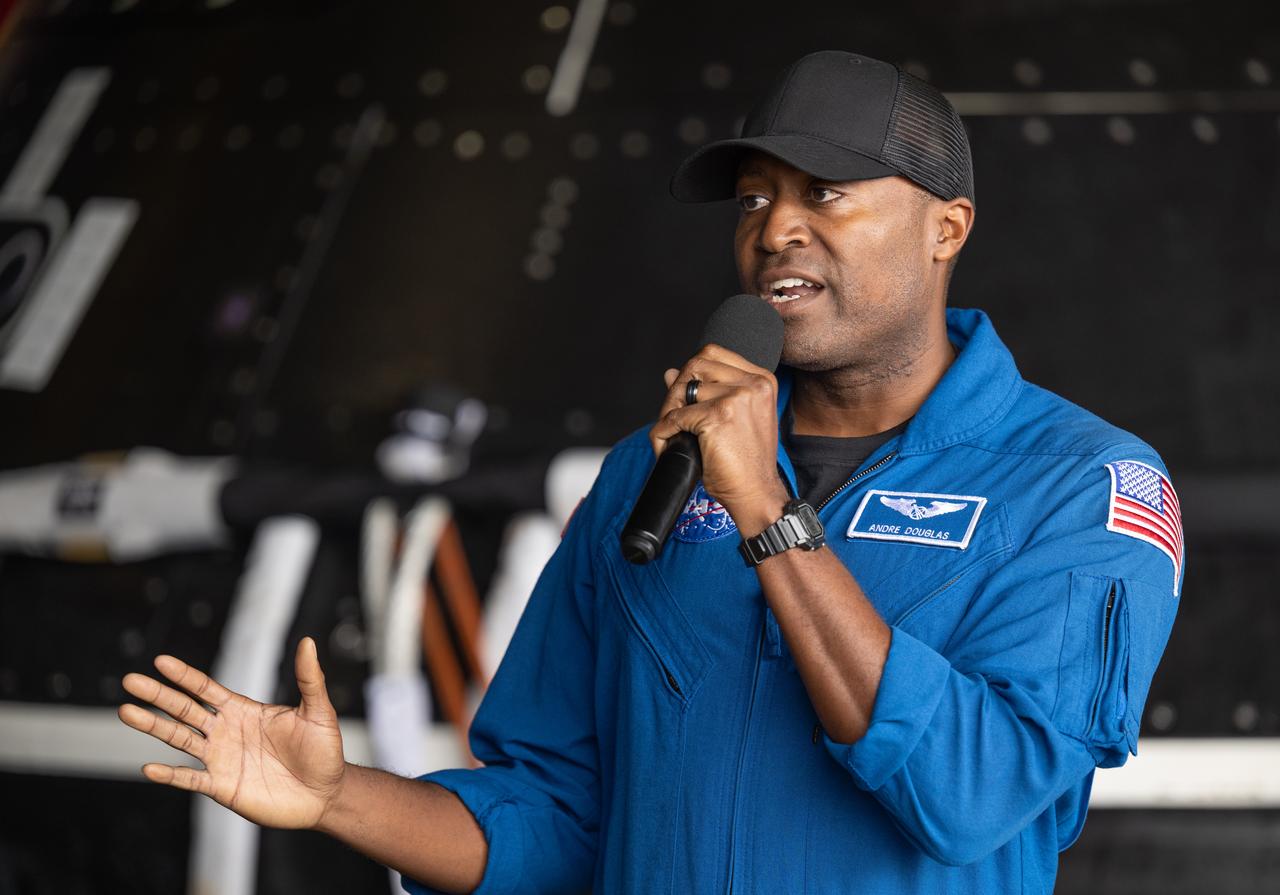
NASA astronaut Andre Douglas gives remarks during a media event where NASA and the Department of Defense discussed the recovery operations that will bring the Artemis II astronauts and the agency’s Orion spacecraft home at the conclusion of next year’s mission around the Moon, Monday, March 31, 2025, onboard USS Somerset at Naval Base San Diego, in California. The teams spent the week practicing the procedures they will use to recover the astronauts after their more than 600,000 mile journey from Earth to the Moon and back on the first crewed mission under the Artemis campaign. Photo Credit: (NASA/Bill Ingalls)
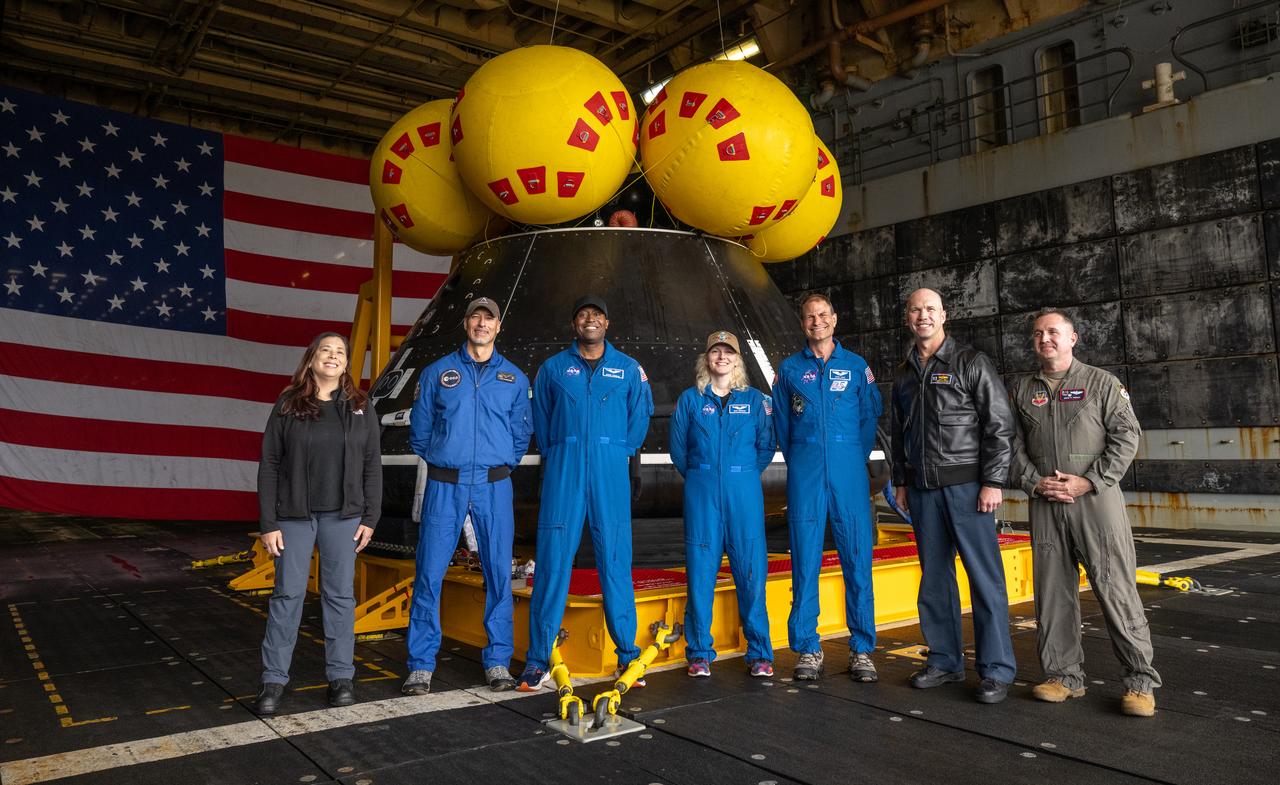
Liliana Villarreal, NASA’s Artemis II landing and recovery director, Exploration Ground Systems Program, left, ESA (European Space Agency) astronaut Luca Parmitano, NASA astronauts Andre Douglas, Deniz Burnham, Stan Love, Capt. Andrew “Andy” Koy, commanding officer of USS Somerset (LPD 25), U.S. Navy, and Lt. Col. David Mahan, commander, U.S. Air Force’s 1st Air Force, Detachment 3, Patrick Space Force Base, Florida, right, pose for a group photo in front of the Crew Module Test Article (CMTA) at the conclusion of a media event where NASA and the Department of Defense discussed the recovery operations that will bring the Artemis II astronauts and the agency’s Orion spacecraft home at the conclusion of next year’s mission around the Moon, Monday, March 31, 2025, onboard USS Somerset at Naval Base San Diego, in California. The teams spent the week practicing the procedures they will use to recover the astronauts after their more than 600,000 mile journey from Earth to the Moon and back on the first crewed mission under the Artemis campaign. Photo Credit: (NASA/Bill Ingalls)
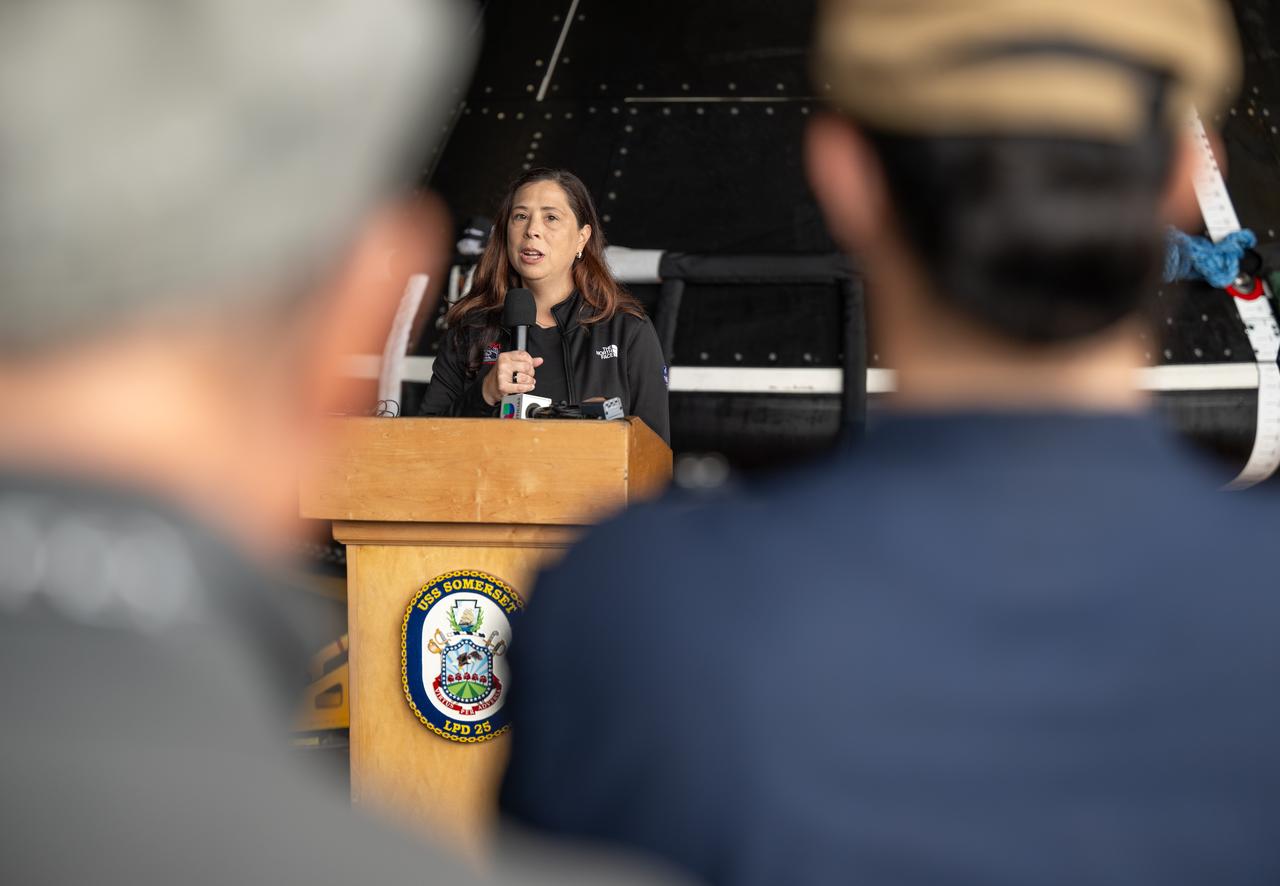
Liliana Villarreal, NASA’s Artemis II landing and recovery director, Exploration Ground Systems Program, gives remarks during a media event where NASA and the Department of Defense discussed the recovery operations that will bring the Artemis II astronauts and the agency’s Orion spacecraft home at the conclusion of next year’s mission around the Moon, Monday, March 31, 2025, onboard USS Somerset at Naval Base San Diego, in California. The teams spent the week practicing the procedures they will use to recover the astronauts after their more than 600,000 mile journey from Earth to the Moon and back on the first crewed mission under the Artemis campaign. Photo Credit: (NASA/Bill Ingalls)
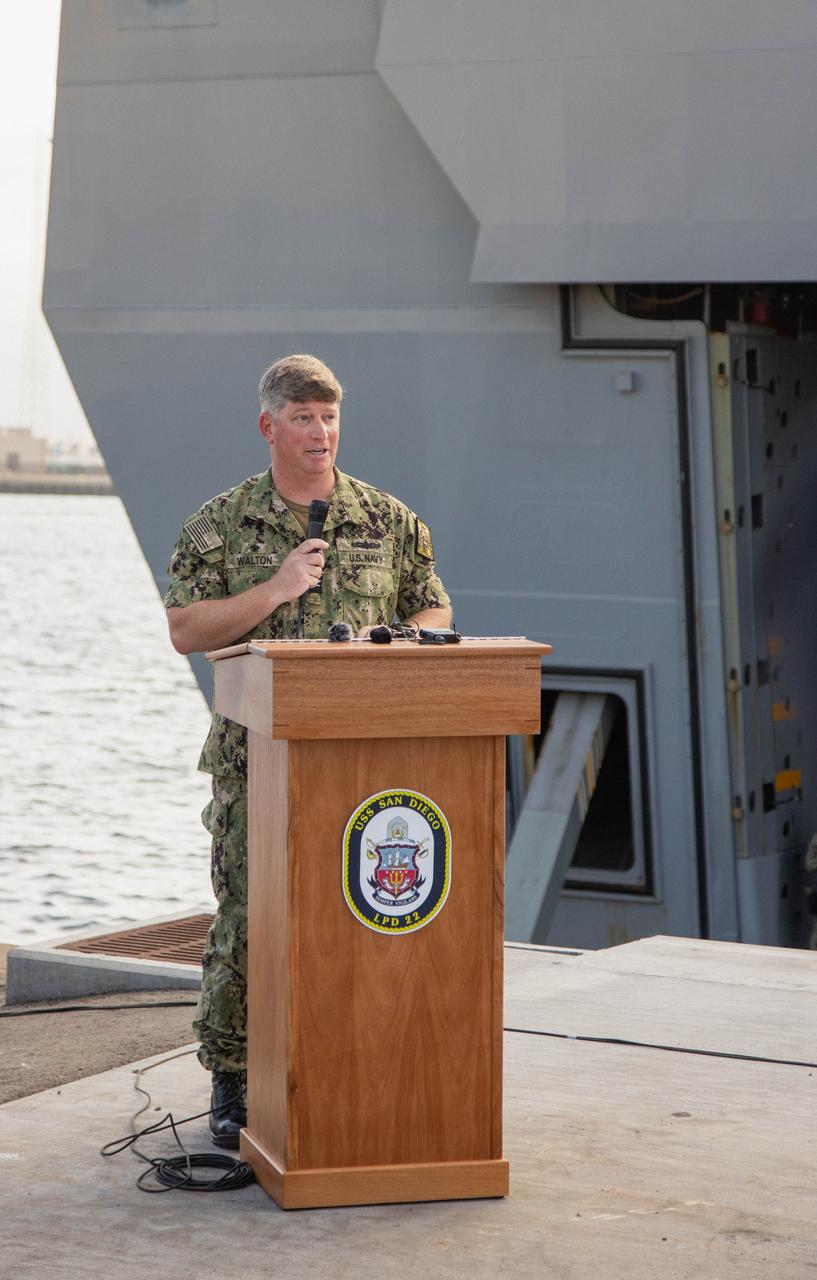
USS San Diego Commanding Officer Capt. David Walton speaks at a news conference held in San Diego, California on Wednesday, Feb. 28, 2024, about the Underway Recovery Test 11 (URT-11) off the coast of San Diego, California. URT-11 performed by NASA’s Exploration Ground System’s Landing and Recovery team, partners from the Department of Defense, and U.S. Navy personnel aboard the USS San Diego is the eleventh in a series of Artemis recovery tests, and the first the Artemis II recovery procedures involved the astronauts.
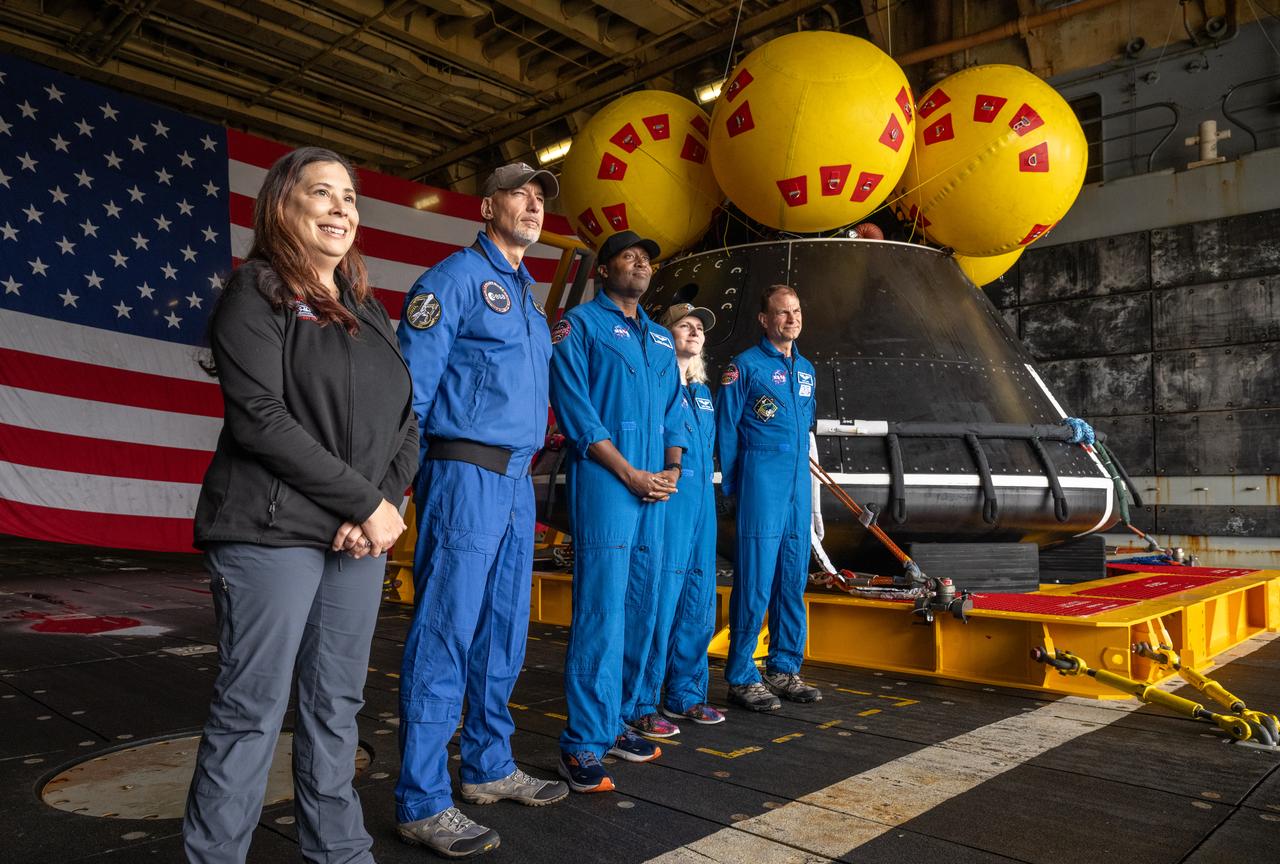
Liliana Villarreal, NASA’s Artemis II landing and recovery director, Exploration Ground Systems Program, left, ESA (European Space Agency) astronaut Luca Parmitano, and NASA astronauts Andre Douglas, Deniz Burnham, and Stan Love, are seen during a media event where NASA and the Department of Defense discussed the recovery operations that will bring the Artemis II astronauts and the agency’s Orion spacecraft home at the conclusion of next year’s mission around the Moon, Monday, March 31, 2025, onboard USS Somerset at Naval Base San Diego, in California. The teams spent the week practicing the procedures they will use to recover the astronauts after their more than 600,000 mile journey from Earth to the Moon and back on the first crewed mission under the Artemis campaign. Photo Credit: (NASA/Bill Ingalls)
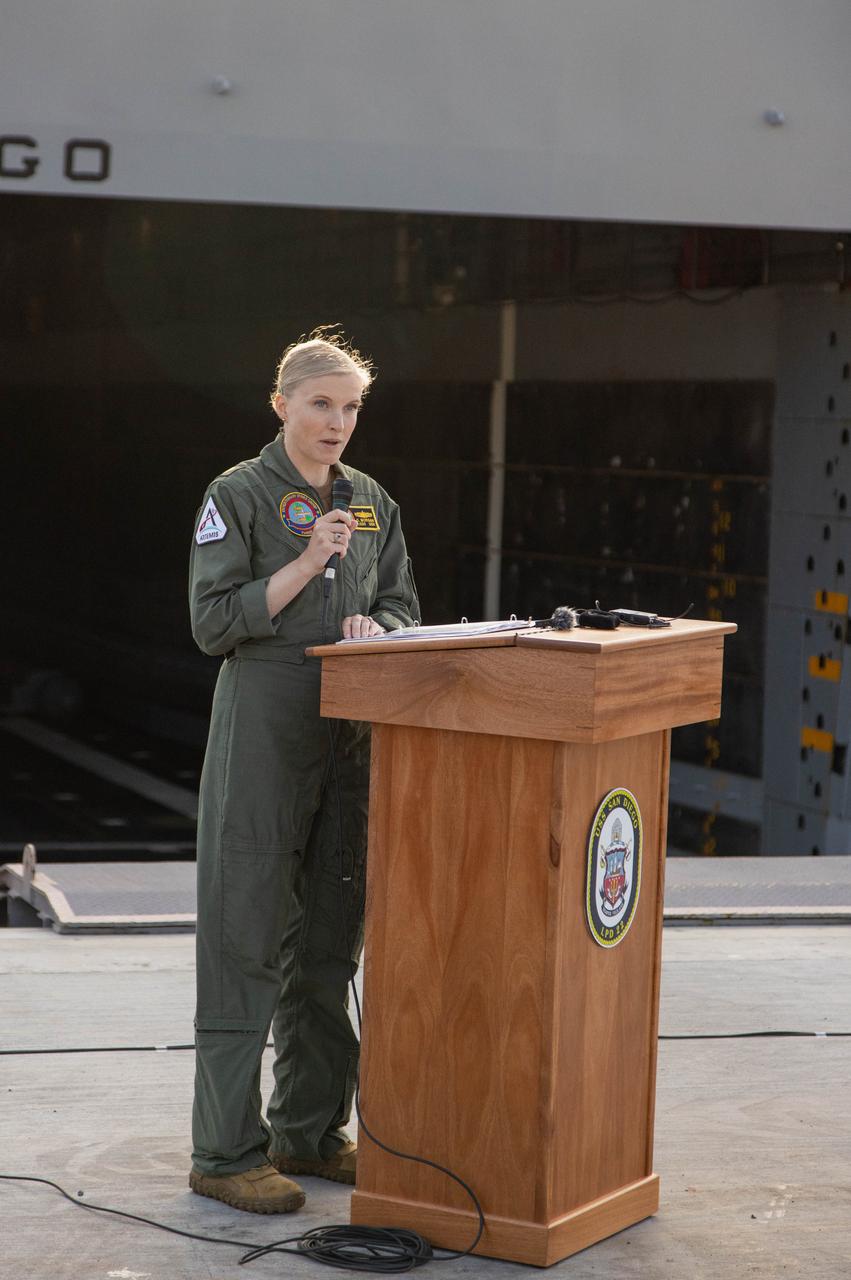
Lt. Cmdr. Chloe Morgan, public affairs officer for Expeditionary Strike Group 3 U.S. Navy speaks during a news conference held in San Diego, California on Wednesday, Feb. 28, 2024, about the Underway Recovery Test 11 (URT-11) performed off the coast of San Diego, California. URT-11 performed by NASA’s Exploration Ground System’s Landing and Recovery team, partners from the Department of Defense, and U.S. Navy personnel aboard the USS San Diego is the eleventh in a series of Artemis recovery tests, and the first the Artemis II recovery procedures involved the astronauts.
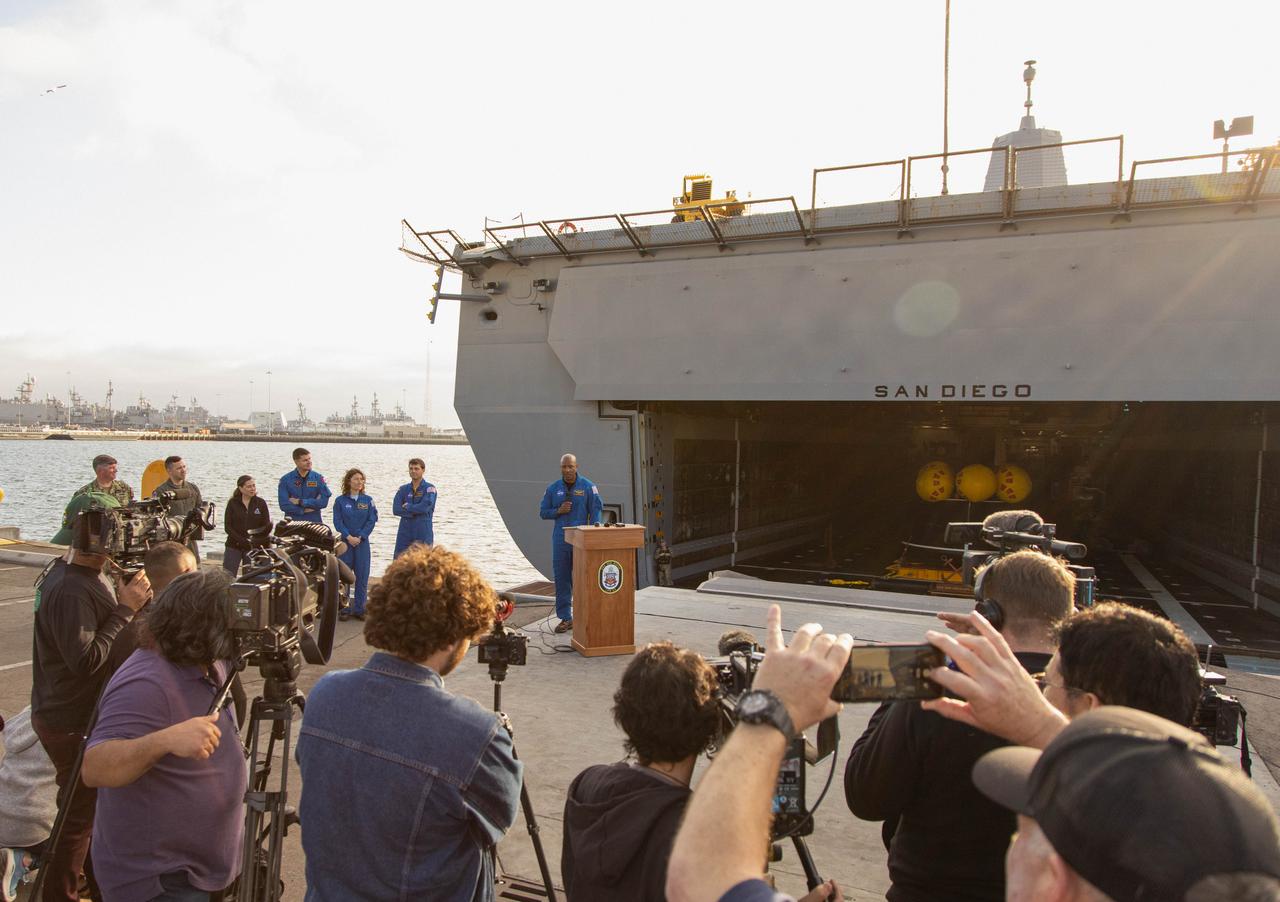
NASA’s Artemis II crew member NASA astronaut Victor Glover speaks to members of the media about the Underway Recovery Test (URT-11) during a news conference held in San Diego, California on Wednesday, Feb. 28, 2024. URT-11 performed by NASA’s Exploration Ground System’s Landing and Recovery team, partners from the Department of Defense, and U.S. Navy personnel aboard the USS San Diego is the eleventh in a series of Artemis recovery tests, and the first the Artemis II recovery procedures involved the astronauts.
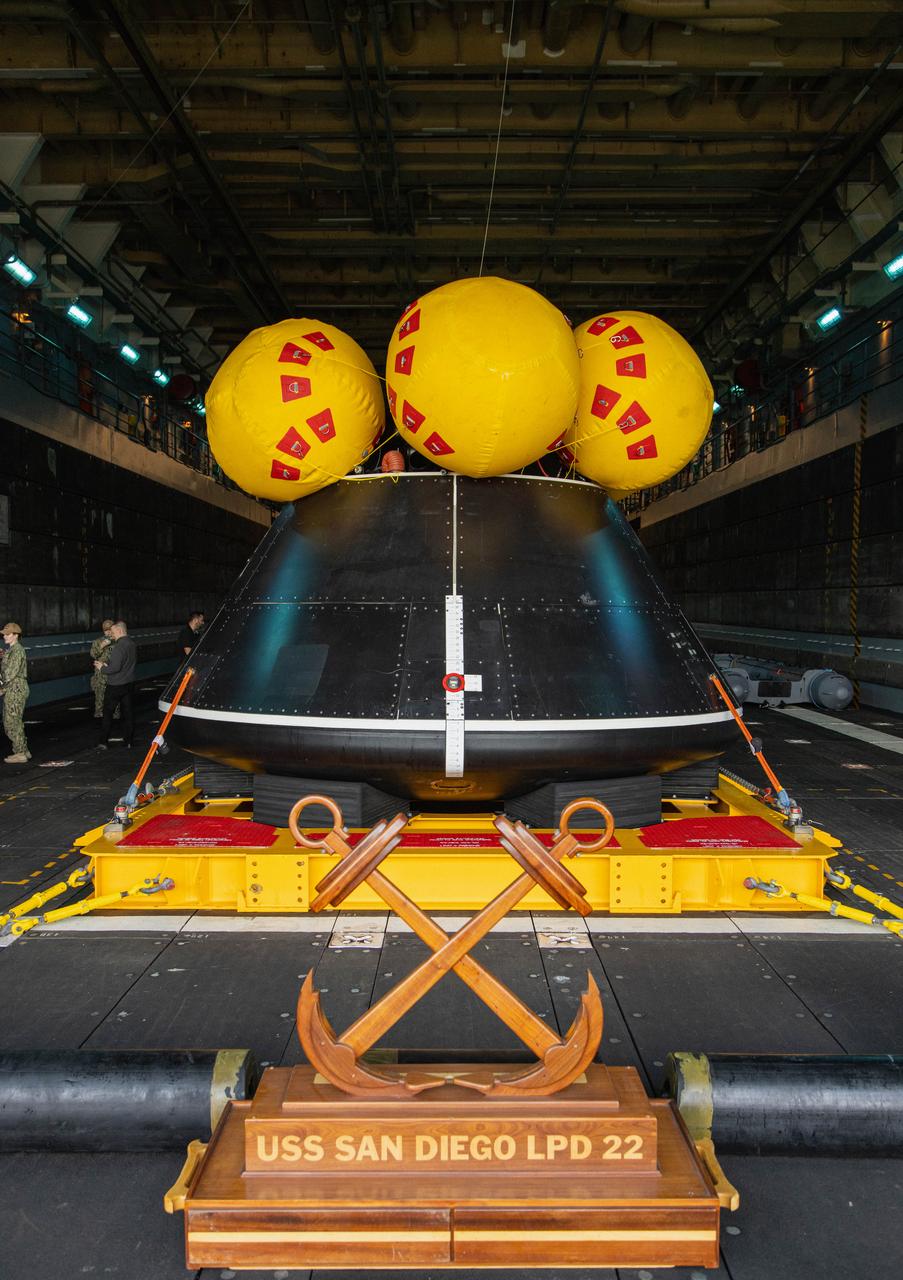
The mockup of the NASA Orion spacecraft sits aboard the USS San Diego on Wednesday Feb. 28, 2024, following the completion of the Underway Recovery Test (URT-11). URT-11, aboard the USS San Diego, is the eleventh in a series of Artemis recovery tests, and the first time NASA and its partners put their Artemis II recovery procedures to the test with the astronauts.
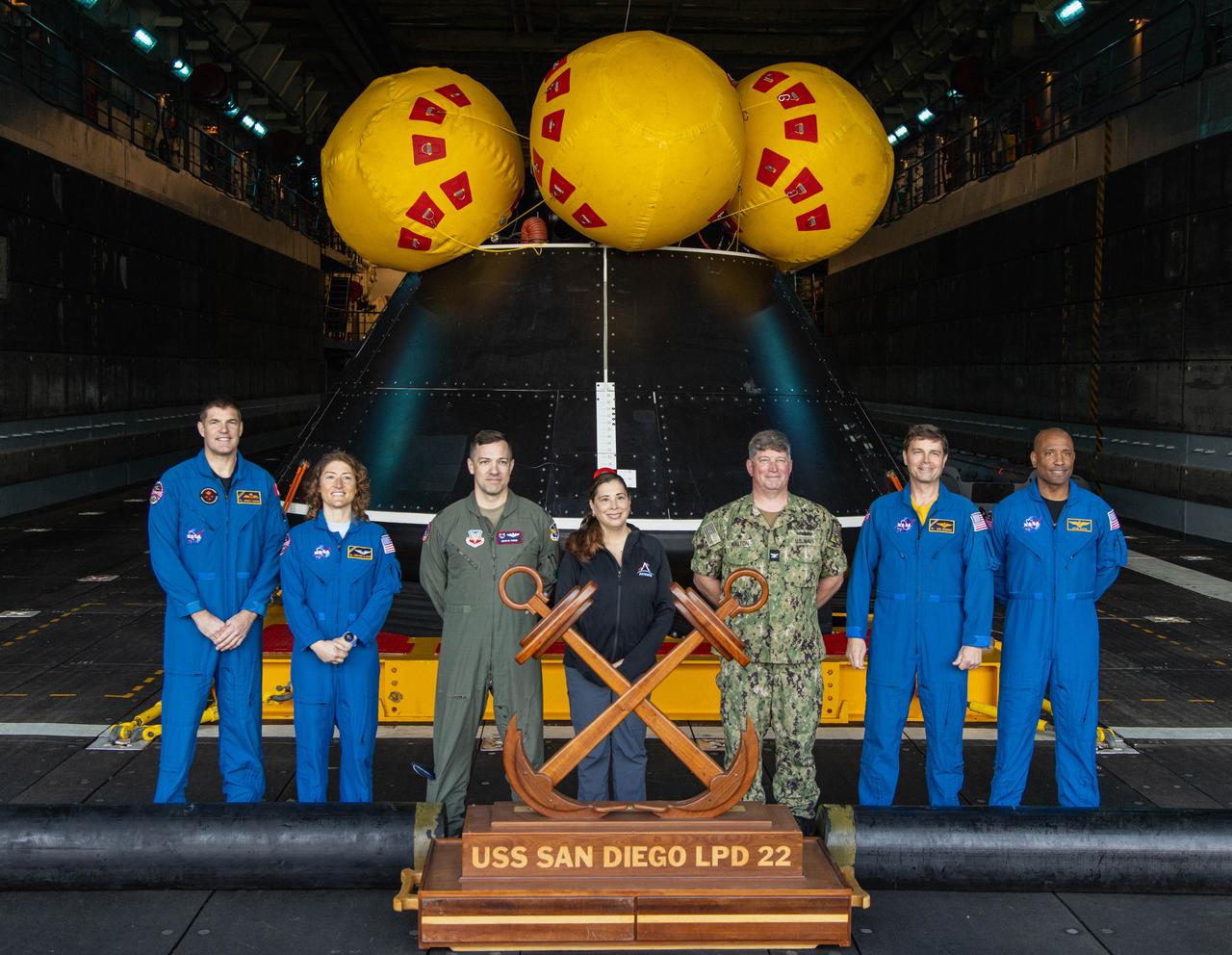
NASA’s Artemis II crew member from right to left, CSA (Canadian Space Agency) astronaut Jeremy Hansen, NASA astronaut Christina Koch, NASA’s Exploration Ground System’s Landing and Recovery team, partners from the Department of Defense, and NASA astronauts Reid Wiseman, and Victor Glover, pose for a photo near a mockup Orion spacecraft in San Diego, California on Wednesday, Feb. 28, 2024, as part of the Underway Recovery Test (URT-11). URT-11, aboard the USS San Diego, is the eleventh in a series of Artemis recovery tests, and the first time NASA and its partners put their Artemis II recovery procedures in place involving the astronauts.

NASA’s Artemis II crew member NASA astronaut Victor Glover smiles during a news conference discussing the practice recovery procedures following the Underway Recovery Test (URT-11) aboard the USS San Diego on Wednesday, Feb. 28, 2024. URT-11 performed by NASA’s Exploration Ground System’s Landing and Recovery team, partners from the Department of Defense, and U.S. Navy personnel aboard the USS San Diego is the eleventh in a series of Artemis recovery tests, and the first the Artemis II recovery procedures involved the astronauts.
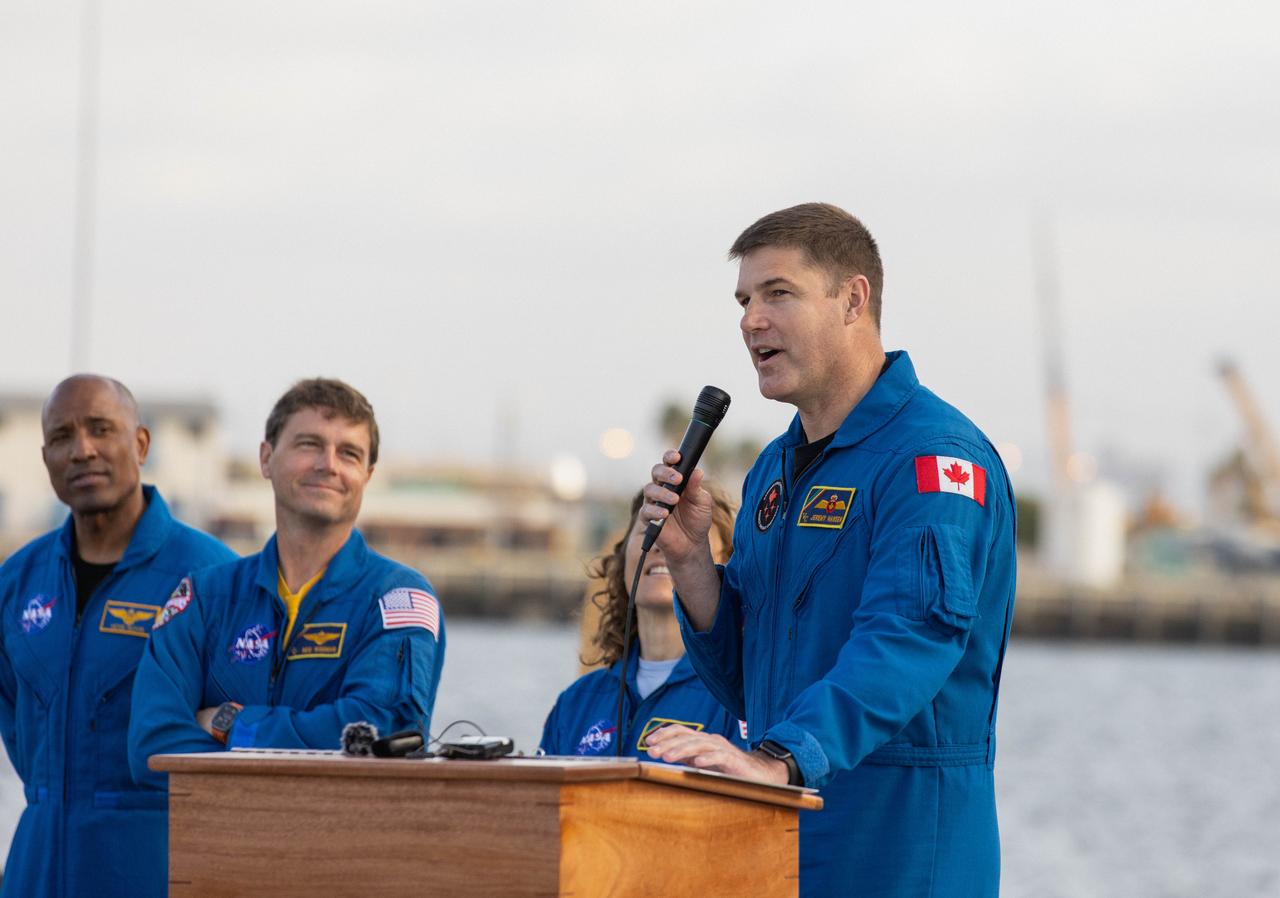
NASA’s Artemis II crew member CSA (Canadian Space Agency) astronaut Jeremy Hansen along with NASA astronauts from right to left, Victor Glover, Reid Wiseman, and Christina Koch discuss the Underway Recovery Test (URT-11) during a news conference held in San Diego, California on Wednesday, Feb. 28, 2024. URT-11 performed by NASA’s Exploration Ground System’s Landing and Recovery team, partners from the Department of Defense, and U.S. Navy personnel aboard the USS San Diego is the eleventh in a series of Artemis recovery tests, and the first the Artemis II recovery procedures involved the astronauts.
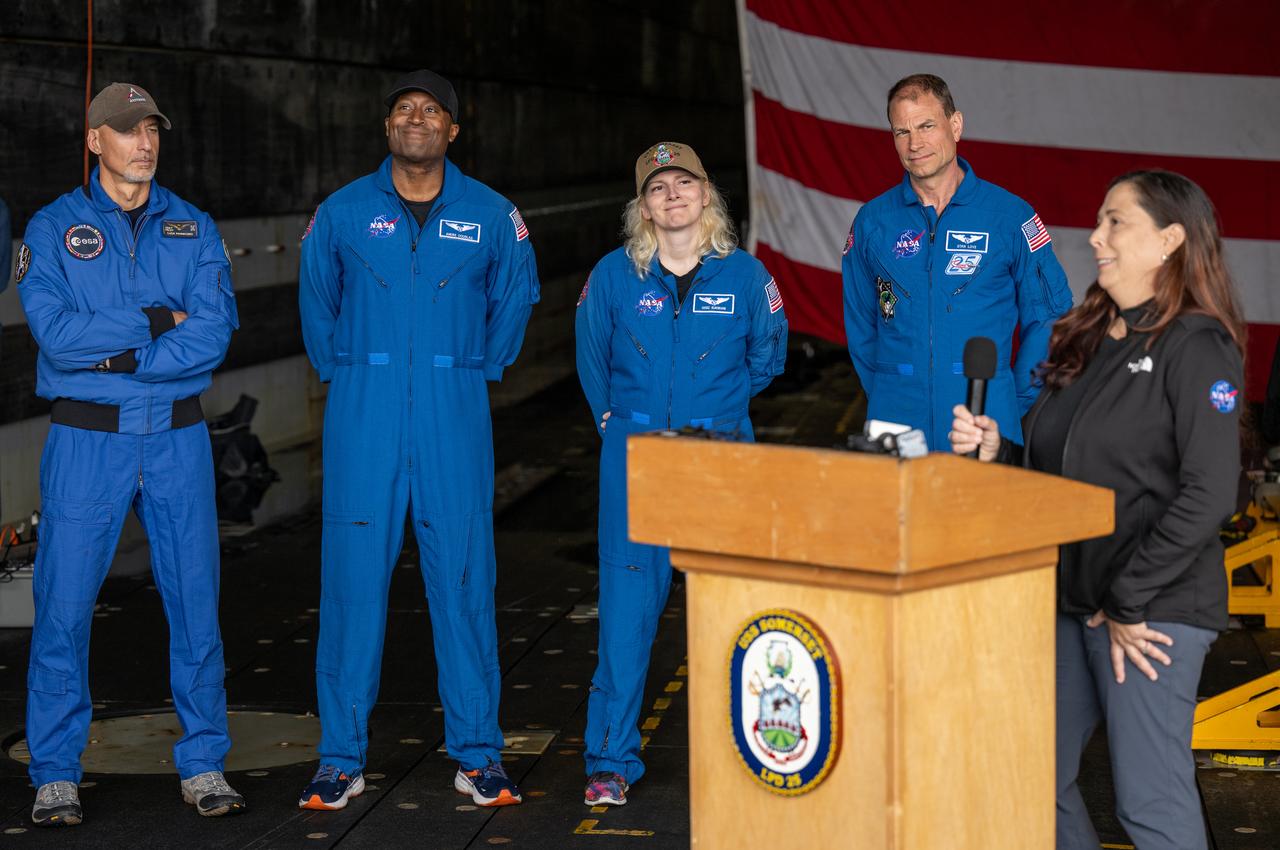
ESA (European Space Agency) astronaut Luca Parmitano, left, NASA astronauts Andre Douglas, Deniz Burnham, and Stan Love, and Liliana Villarreal, NASA’s Artemis II landing and recovery director, Exploration Ground Systems Program, right, are seen during a media event where NASA and the Department of Defense discussed the recovery operations that will bring the Artemis II astronauts and the agency’s Orion spacecraft home at the conclusion of next year’s mission around the Moon, Monday, March 31, 2025, onboard USS Somerset at Naval Base San Diego, in California. The teams spent the week practicing the procedures they will use to recover the astronauts after their more than 600,000 mile journey from Earth to the Moon and back on the first crewed mission under the Artemis campaign. Photo Credit: (NASA/Bill Ingalls)

ESA (European Space Agency) astronaut Luca Parmitano, left, NASA astronauts Andre Douglas, Deniz Burnham, and Stan Love, are seen during a media event where NASA and the Department of Defense discussed the recovery operations that will bring the Artemis II astronauts and the agency’s Orion spacecraft home at the conclusion of next year’s mission around the Moon, Monday, March 31, 2025, onboard USS Somerset at Naval Base San Diego, in California. The teams spent the week practicing the procedures they will use to recover the astronauts after their more than 600,000 mile journey from Earth to the Moon and back on the first crewed mission under the Artemis campaign. Photo Credit: (NASA/Bill Ingalls)
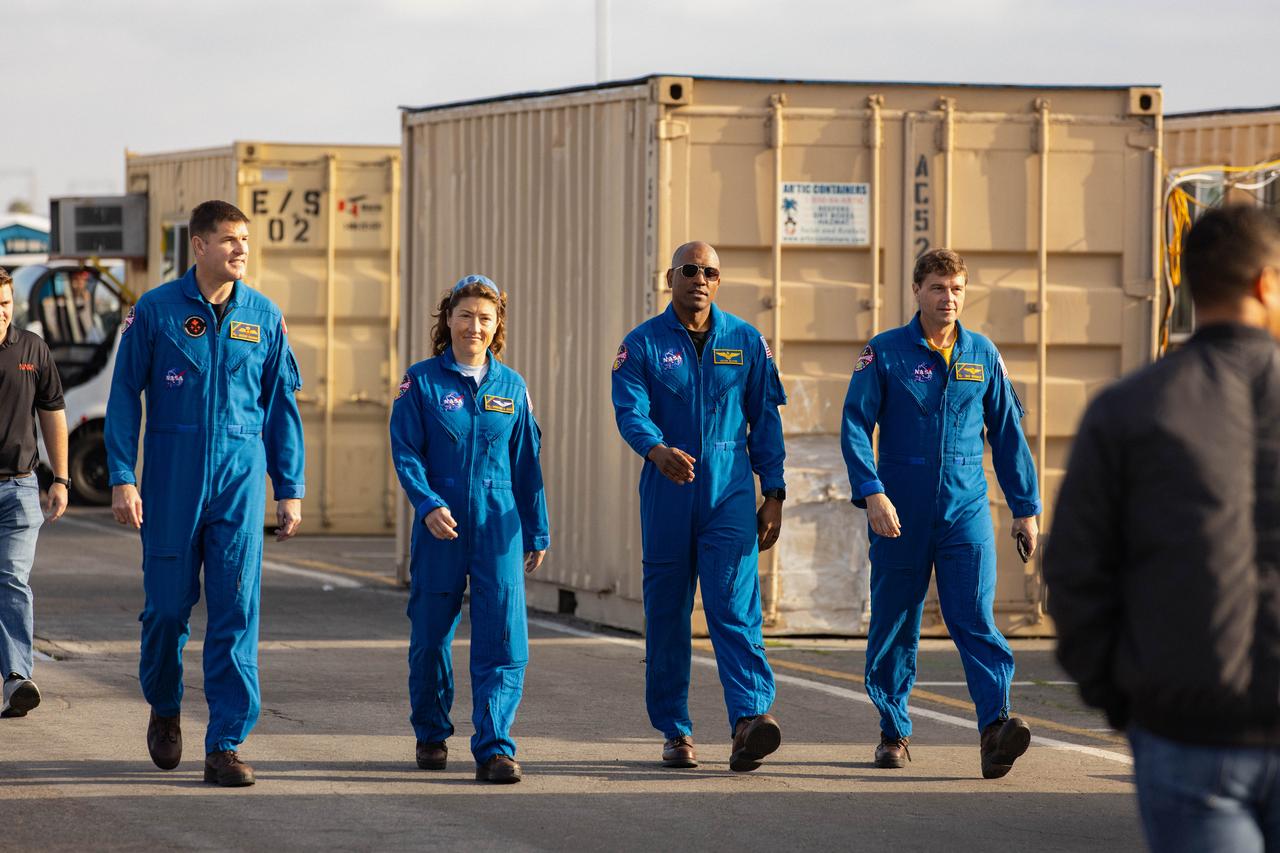
NASA’s Artemis II crew members, from left to right, CSA (Canadian Space Agency) astronaut Jeremy Hansen, NASA astronauts Christina Koch, Victor Glover, and Reid Wiseman prepare for a news conference to discuss the practice recovery procedures performed by NASA’s Exploration Ground System’s Landing and Recovery team, partners from the Department of Defense, and U.S. Navy personnel during Underway Recovery Test 11 (URT-11) aboard the USS San Diego on Wednesday, Feb. 28, 2024. URT-11 is the eleventh in a series of Artemis recovery tests, and the first time NASA and its partners put their Artemis II recovery procedures in place with the astronauts.
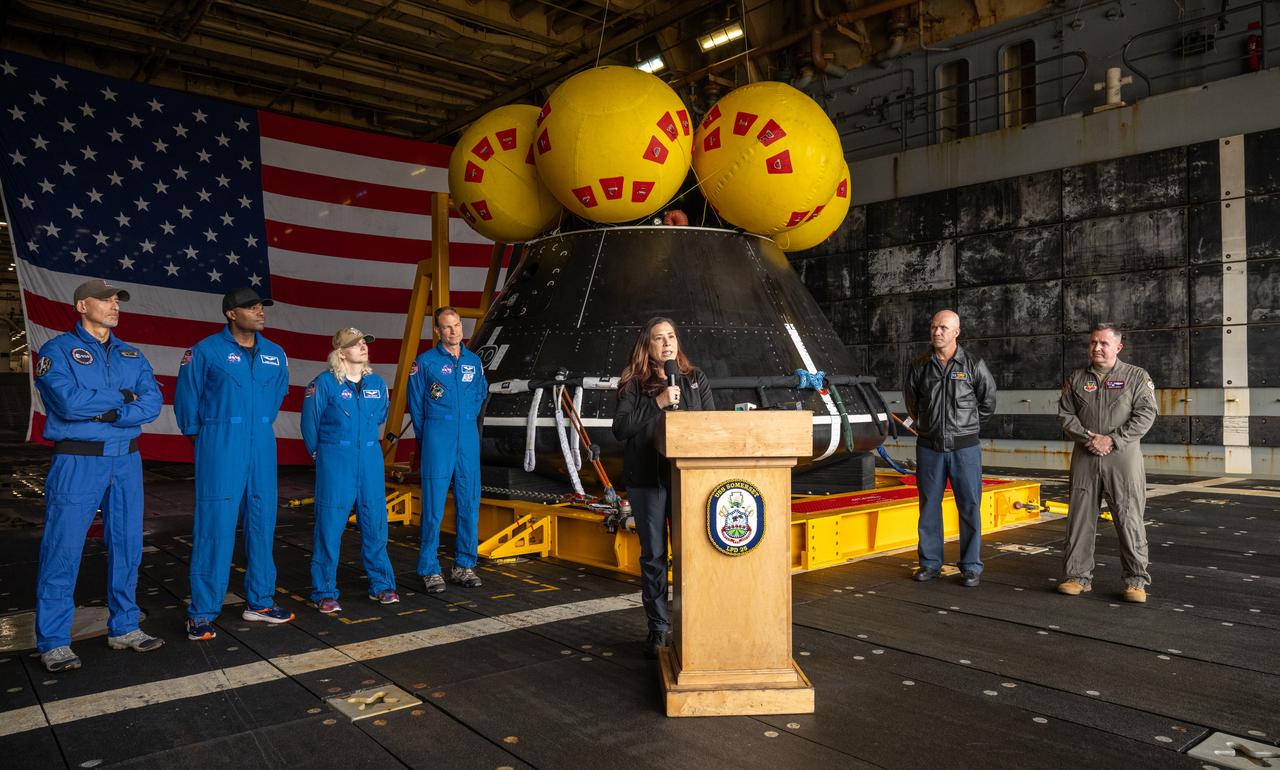
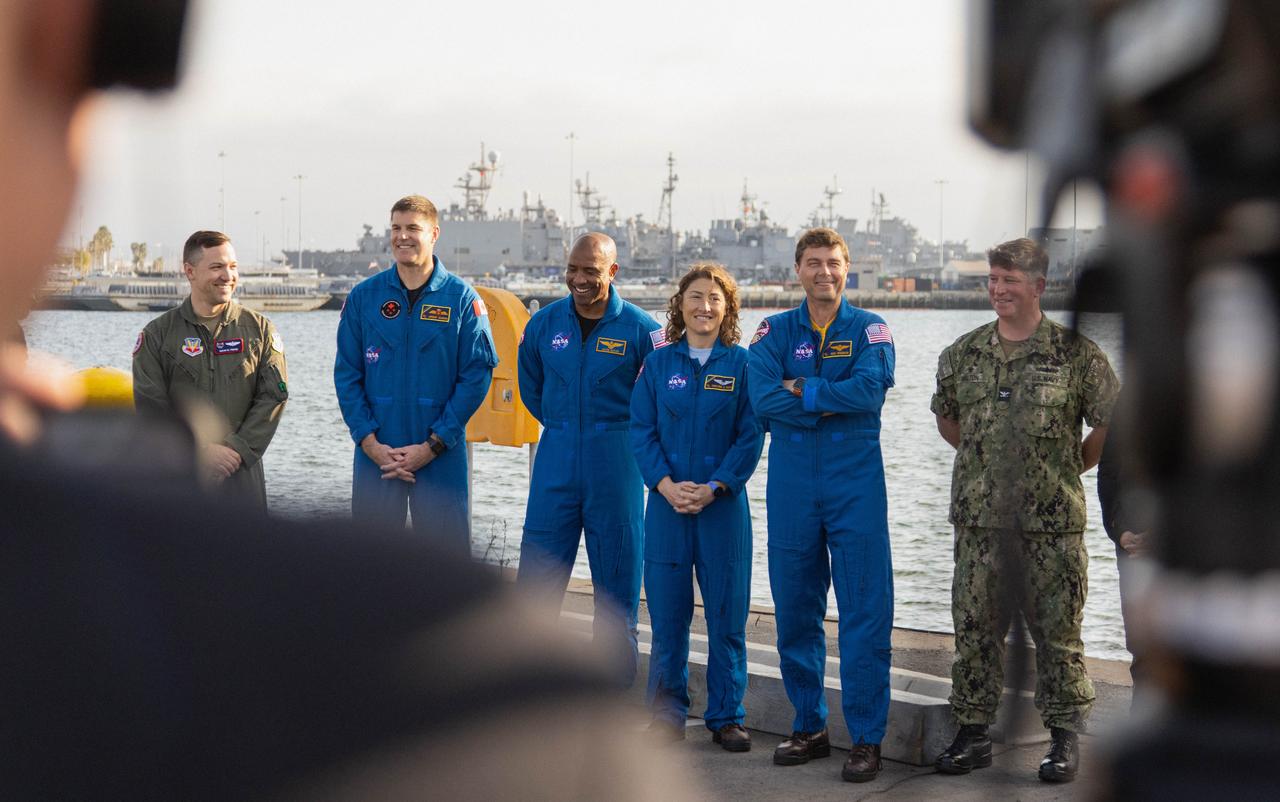
Liliana Villarreal, NASA’s Artemis II landing and recovery director, Exploration Ground Systems Program, center, gives remarks as ESA (European Space Agency) astronaut Luca Parmitano, left, NASA astronauts Andre Douglas, Deniz Burnham, Stan Love, Capt. Andrew “Andy” Koy, commanding officer of USS Somerset (LPD 25), U.S. Navy, and Lt. Col. David Mahan, commander, U.S. Air Force’s 1st Air Force, Detachment 3, Patrick Space Force Base, Florida, right, look on during a media event where NASA and the Department of Defense discussed the recovery operations that will bring the Artemis II astronauts and the agency’s Orion spacecraft home at the conclusion of next year’s mission around the Moon, Monday, March 31, 2025, onboard USS Somerset at Naval Base San Diego, in California. The teams spent the week practicing the procedures they will use to recover the astronauts after their more than 600,000 mile journey from Earth to the Moon and back on the first crewed mission under the Artemis campaign. Photo Credit: (NASA/Bill Ingalls)
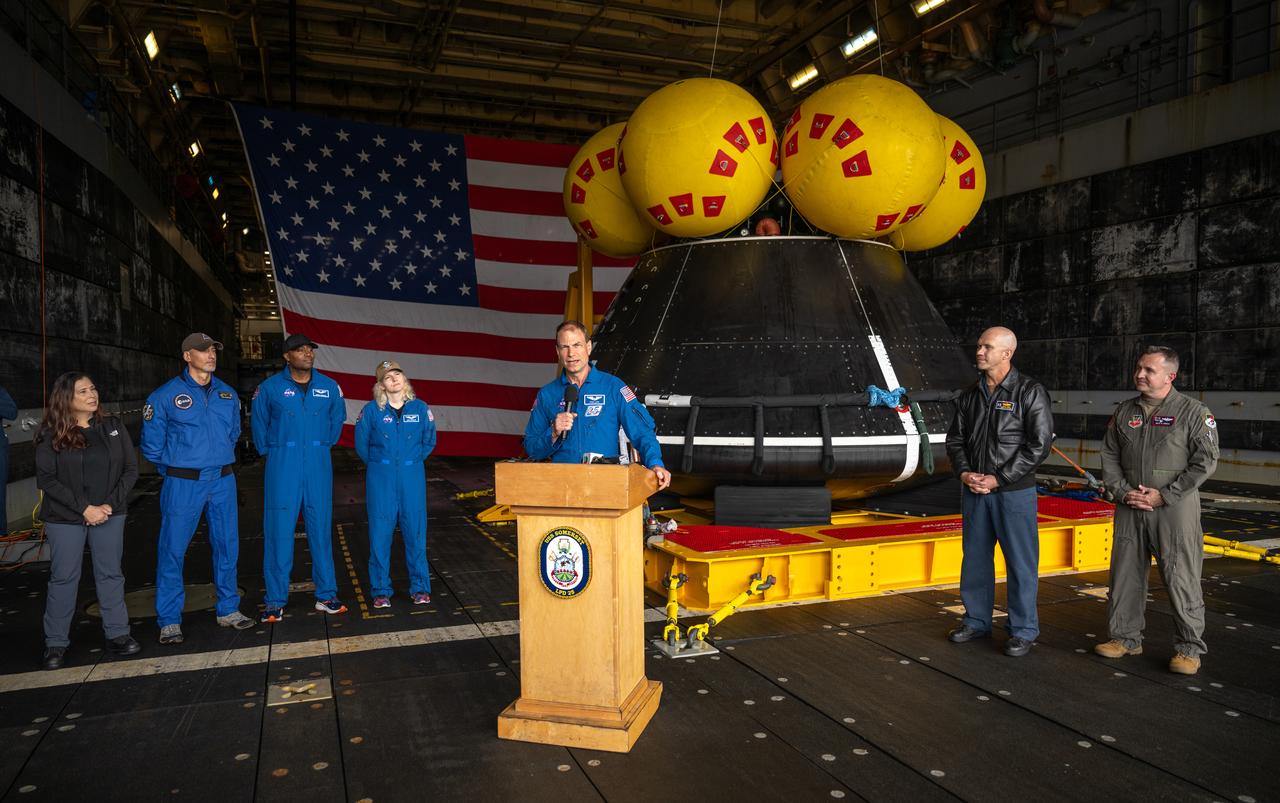
NASA astronaut Stan Love gives remarks during a media event where NASA and the Department of Defense discussed the recovery operations that will bring the Artemis II astronauts and the agency’s Orion spacecraft home at the conclusion of next year’s mission around the Moon, Monday, March 31, 2025, onboard USS Somerset at Naval Base San Diego, in California. The teams spent the week practicing the procedures they will use to recover the astronauts after their more than 600,000 mile journey from Earth to the Moon and back on the first crewed mission under the Artemis campaign. Photo Credit: (NASA/Bill Ingalls)
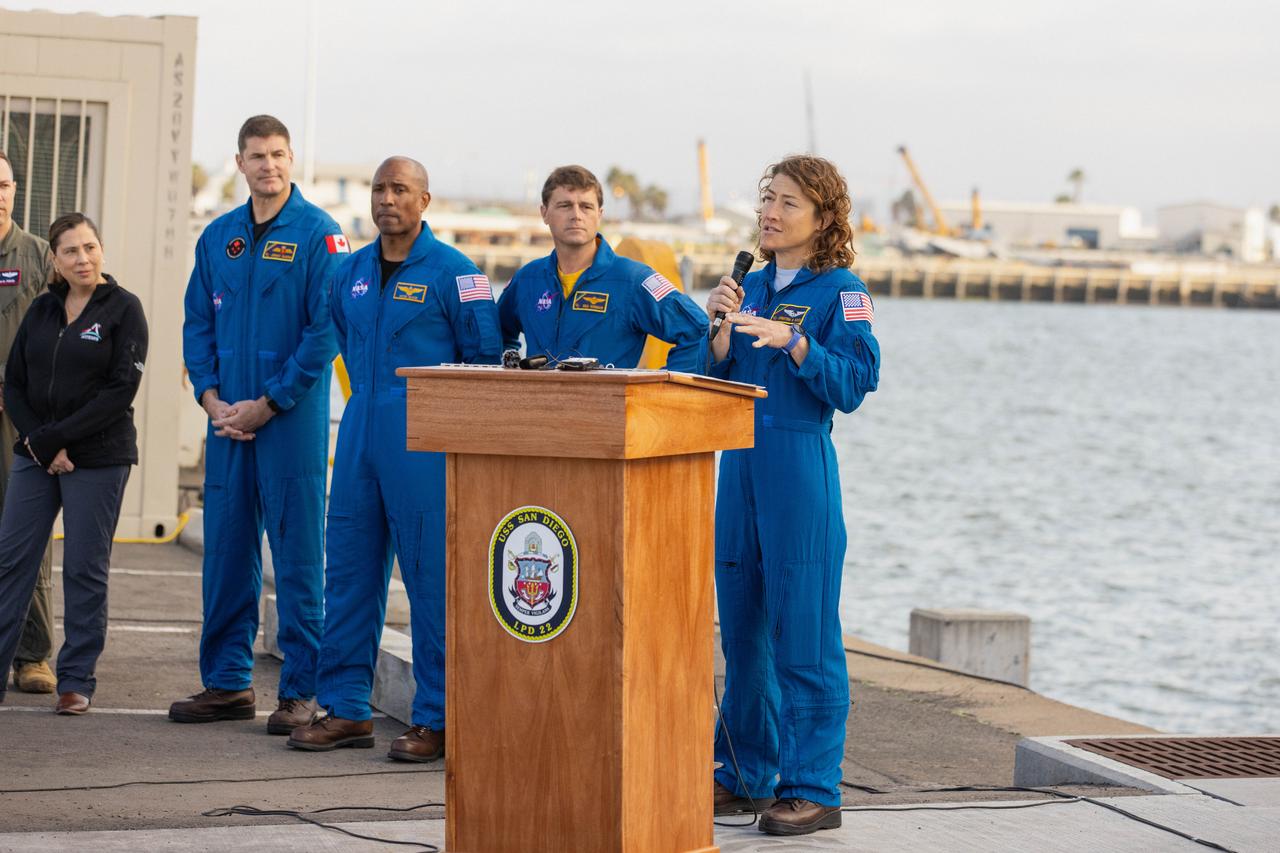
NASA’s Artemis II crew member NASA astronaut Christina Koch, from left to right is joined by, CSA (Canadian Space Agency) astronaut Jeremy Hansen, NASA astronauts Victor Glover and Reid Wiseman to discuss the Underway Recovery Test (URT-11) during a news conference held in San Diego, California on Wednesday, Feb. 28, 2024. URT-11 performed by NASA’s Exploration Ground System’s Landing and Recovery team, partners from the Department of Defense, and U.S. Navy personnel aboard the USS San Diego is the eleventh in a series of Artemis recovery tests, and the first the Artemis II recovery procedures involved the astronauts.
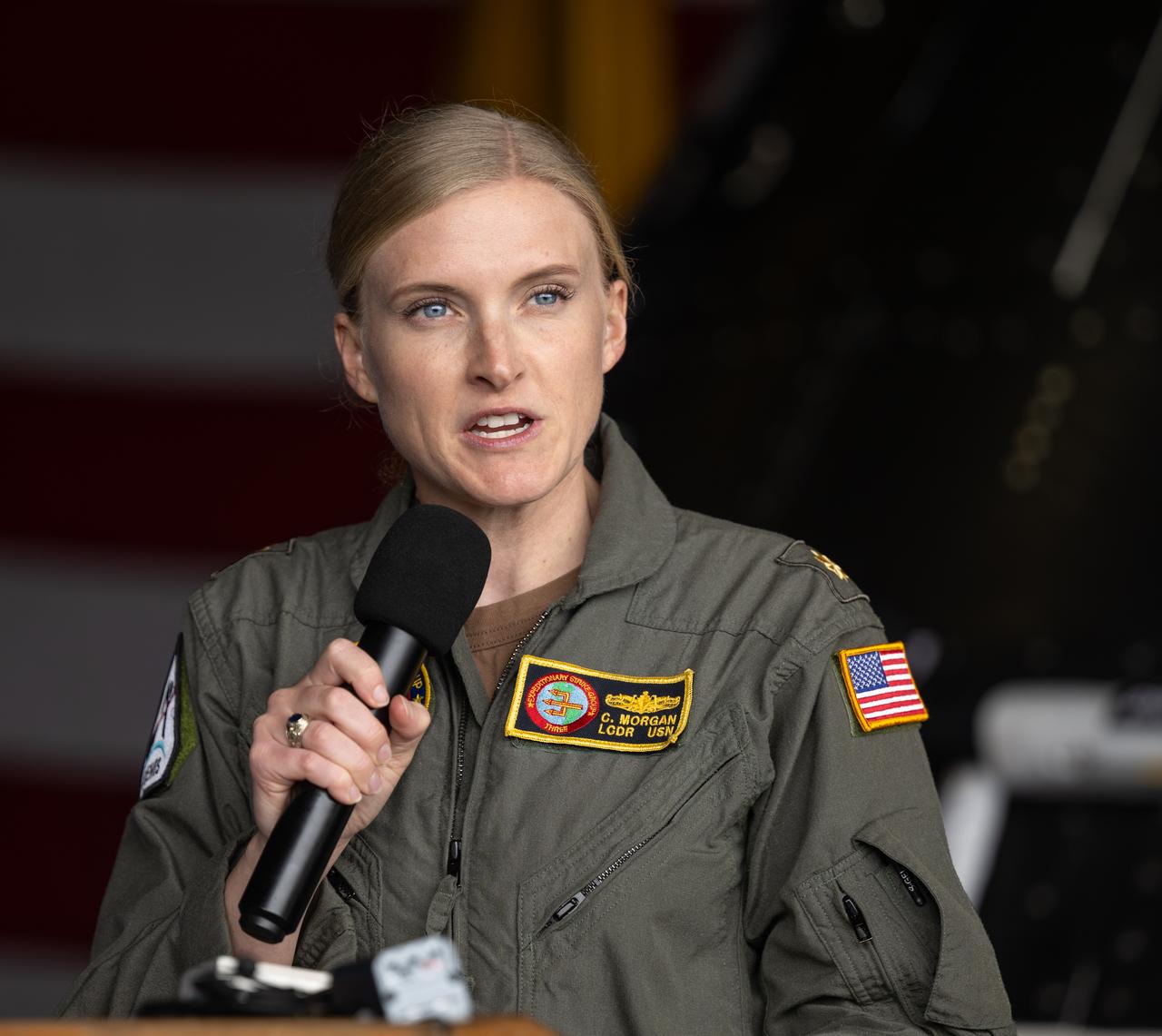
Chloe Morgan, Expeditionary Strike Group 3 Public Affairs Officer gives remarks during a media event where NASA and the Department of Defense discussed the recovery operations that will bring the Artemis II astronauts and the agency’s Orion spacecraft home at the conclusion of next year’s mission around the Moon, Monday, March 31, 2025, onboard USS Somerset at Naval Base San Diego, in California. The teams spent the week practicing the procedures they will use to recover the astronauts after their more than 600,000 mile journey from Earth to the Moon and back on the first crewed mission under the Artemis campaign. Photo Credit: (NASA/Bill Ingalls)
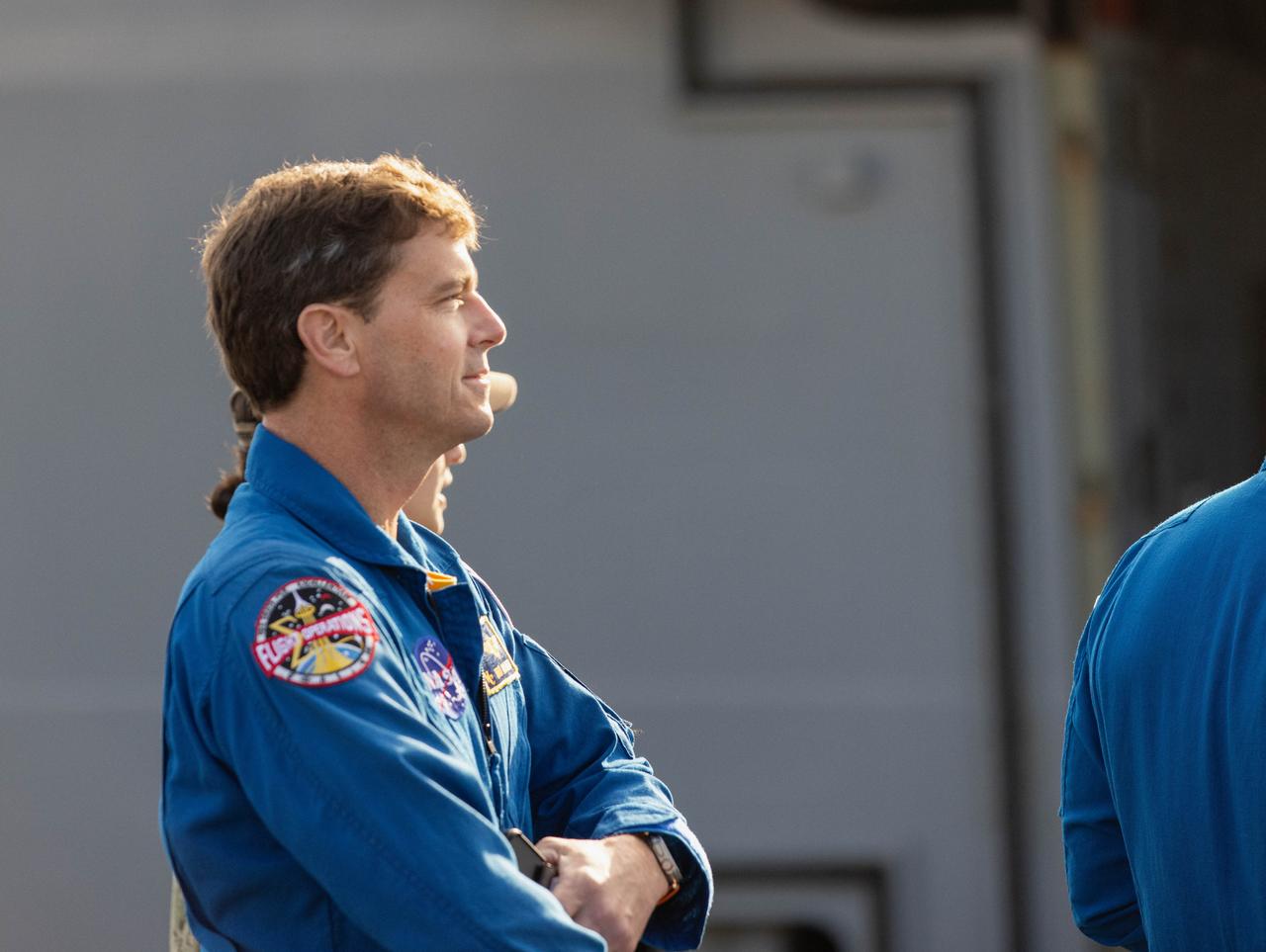
NASA’s Artemis II crew member NASA astronaut Reid Wiseman observes a news conference discussing the practice recovery procedures following the Underway Recovery Test (URT-11) aboard the USS San Diego on Wednesday, Feb. 28, 2024. URT-11 performed by NASA’s Exploration Ground System’s Landing and Recovery team, partners from the Department of Defense, and U.S. Navy personnel aboard the USS San Diego is the eleventh in a series of Artemis recovery tests, and the first the Artemis II recovery procedures involved the astronauts.
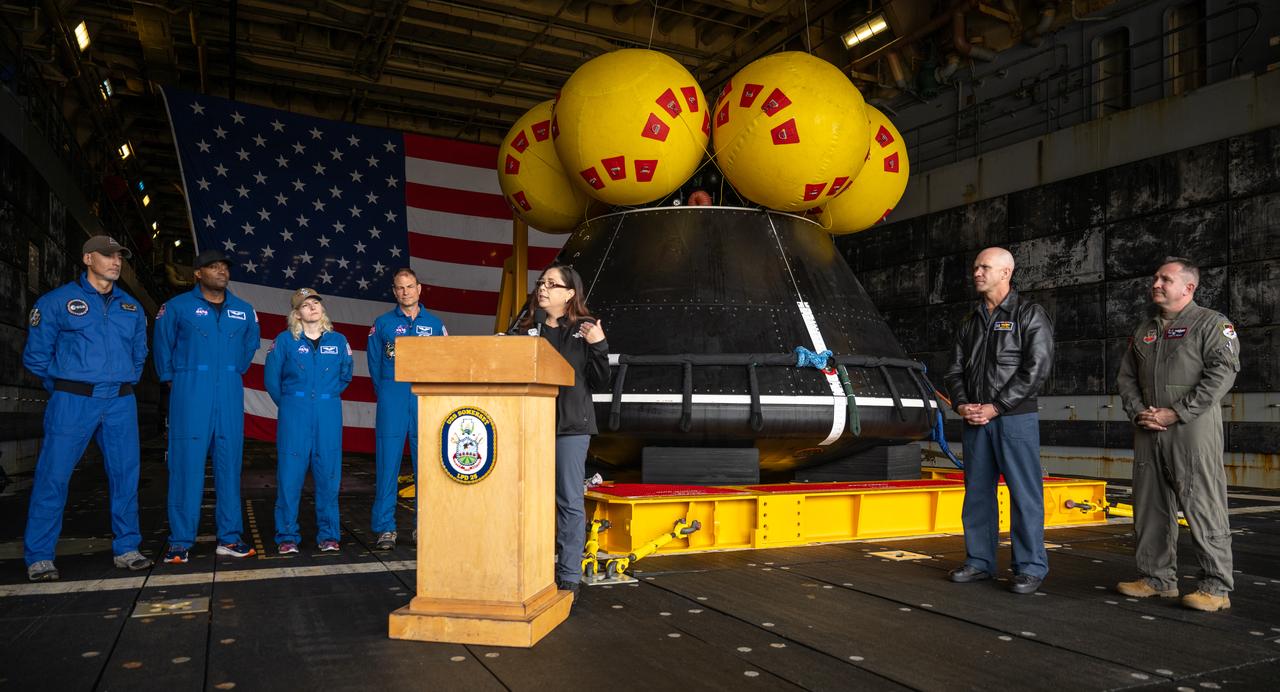
Liliana Villarreal, NASA’s Artemis II landing and recovery director, Exploration Ground Systems Program, gives remarks during a media event where NASA and the Department of Defense discussed the recovery operations that will bring the Artemis II astronauts and the agency’s Orion spacecraft home at the conclusion of next year’s mission around the Moon, Monday, March 31, 2025, onboard USS Somerset at Naval Base San Diego, in California. The teams spent the week practicing the procedures they will use to recover the astronauts after their more than 600,000 mile journey from Earth to the Moon and back on the first crewed mission under the Artemis campaign. Photo Credit: (NASA/Bill Ingalls)
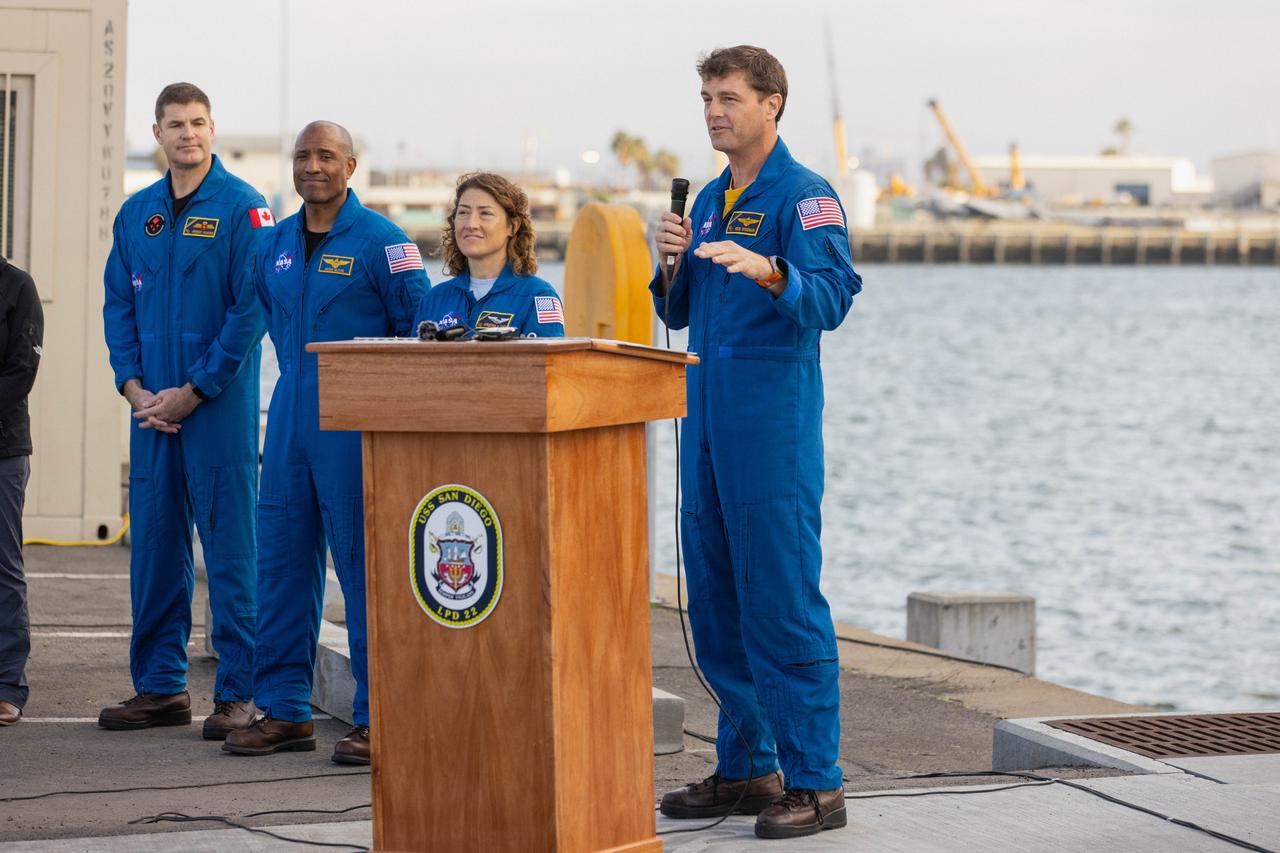
NASA’s Artemis II crew member NASA astronaut Reid Wiseman, from left to right is joined by, CSA (Canadian Space Agency) astronaut Jeremy Hansen, NASA astronauts Victor Glover and Christina Koch to discuss the Underway Recovery Test (URT-11) during a news conference held in San Diego, California on Wednesday, Feb. 28, 2024. NASA’s Exploration Ground System’s Landing and Recovery team, partners from the Department of Defense, and U.S. Navy personnel aboard the USS San Diego is the eleventh in a series of Artemis recovery tests, and the first the Artemis II recovery procedures involved the astronauts.
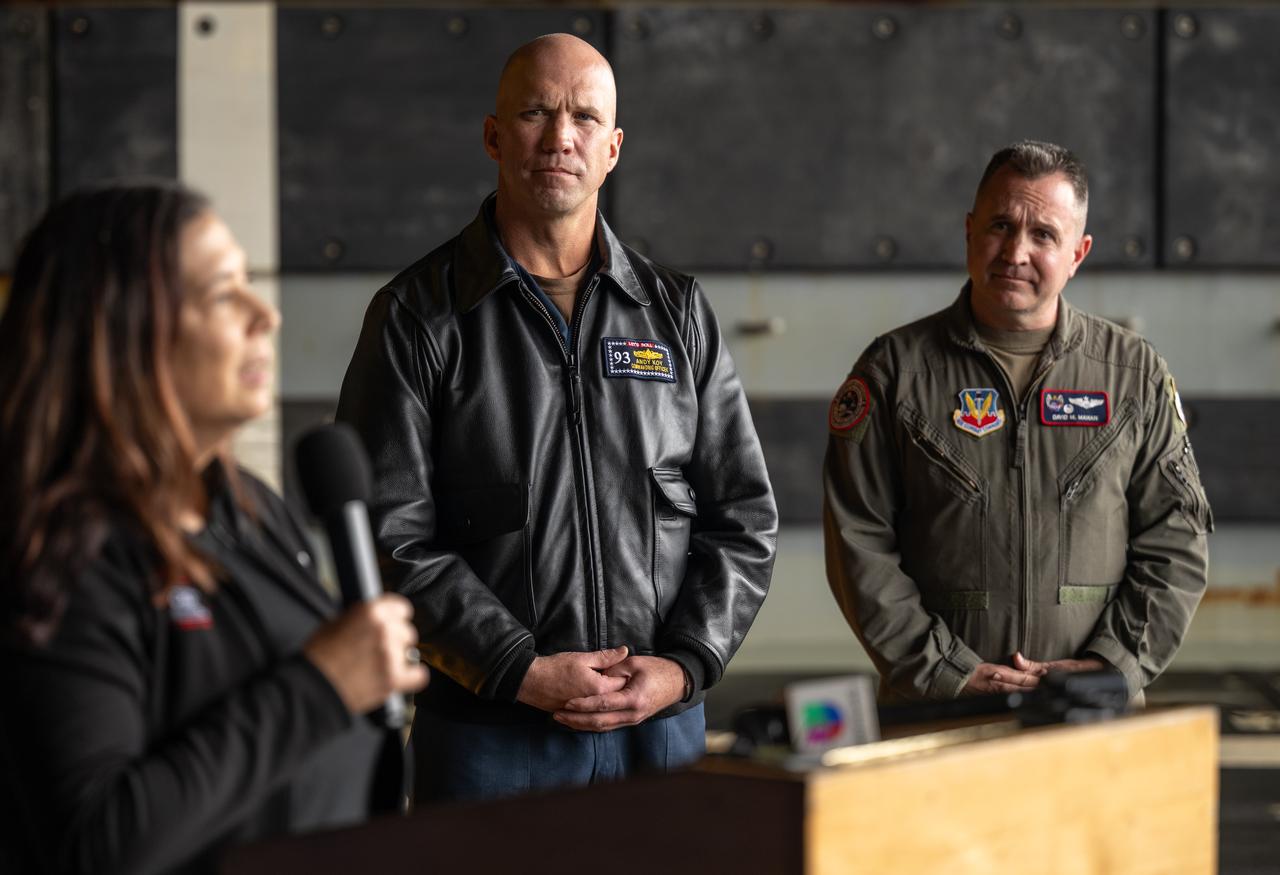
Liliana Villarreal, NASA’s Artemis II landing and recovery director, Exploration Ground Systems Program, gives remarks, as Capt. Andrew “Andy” Koy, commanding officer of USS Somerset (LPD 25), U.S. Navy, left, and Lt. Col. David Mahan, commander, U.S. Air Force’s 1st Air Force, Detachment 3, Patrick Space Force Base, Florida, look on, during a media event where NASA and the Department of Defense discussed the recovery operations that will bring the Artemis II astronauts and the agency’s Orion spacecraft home at the conclusion of next year’s mission around the Moon, Monday, March 31, 2025, onboard USS Somerset at Naval Base San Diego, in California. The teams spent the week practicing the procedures they will use to recover the astronauts after their more than 600,000 mile journey from Earth to the Moon and back on the first crewed mission under the Artemis campaign. Photo Credit: (NASA/Bill Ingalls)
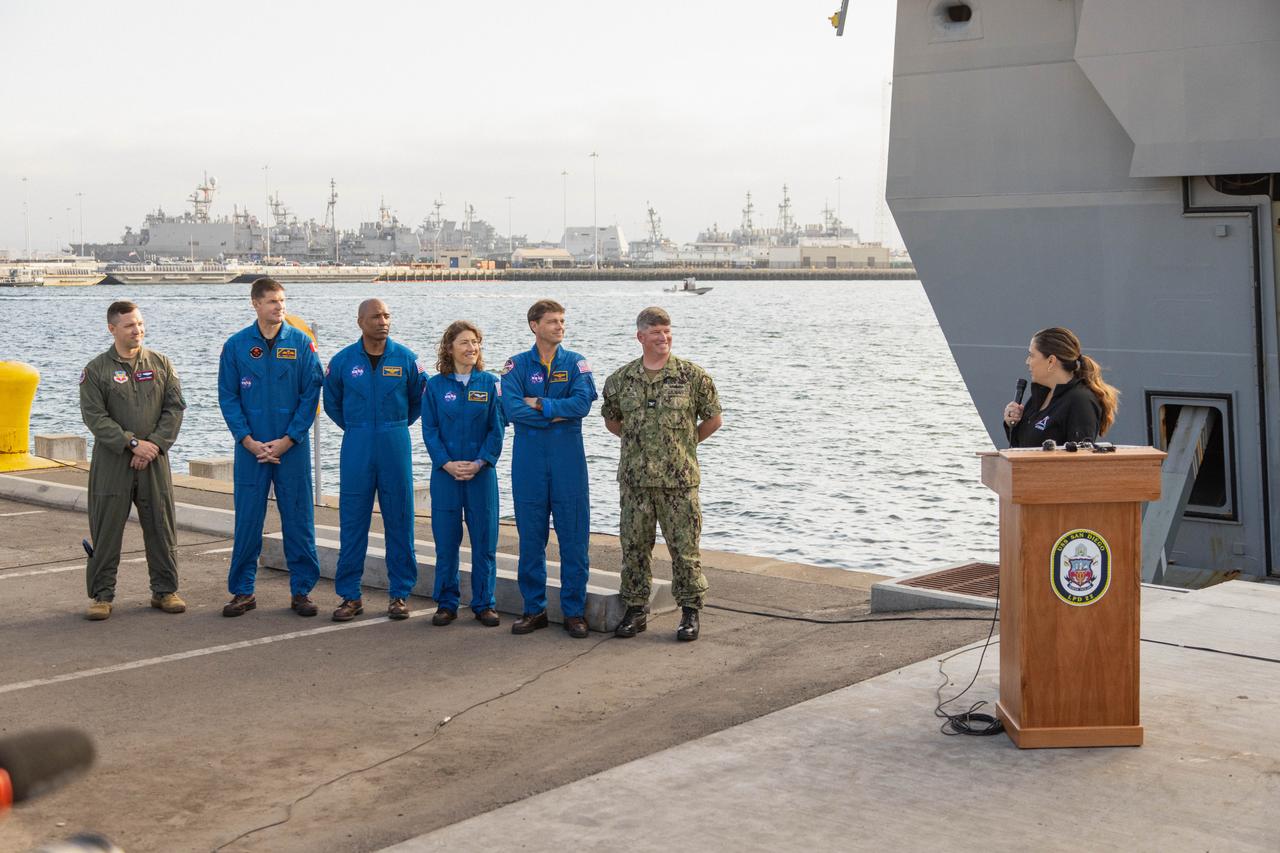
NASA’s Artemis II crew members, from left to right, CSA (Canadian Space Agency) astronaut Jeremy Hansen, NASA astronauts Victor Glover, Christina Koch, and Reid Wiseman, along with partners from the Department of Defense, and U.S. Navy personnel smile during a news conference held in San Diego, California on Wednesday, Feb. 28, 2024, to discuss the Underway Recovery Test (URT-11) aboard the USS San Diego. URT-11 is the eleventh in a series of Artemis recovery tests, and the first time NASA and its partners put their Artemis II recovery procedures in place with the astronauts.
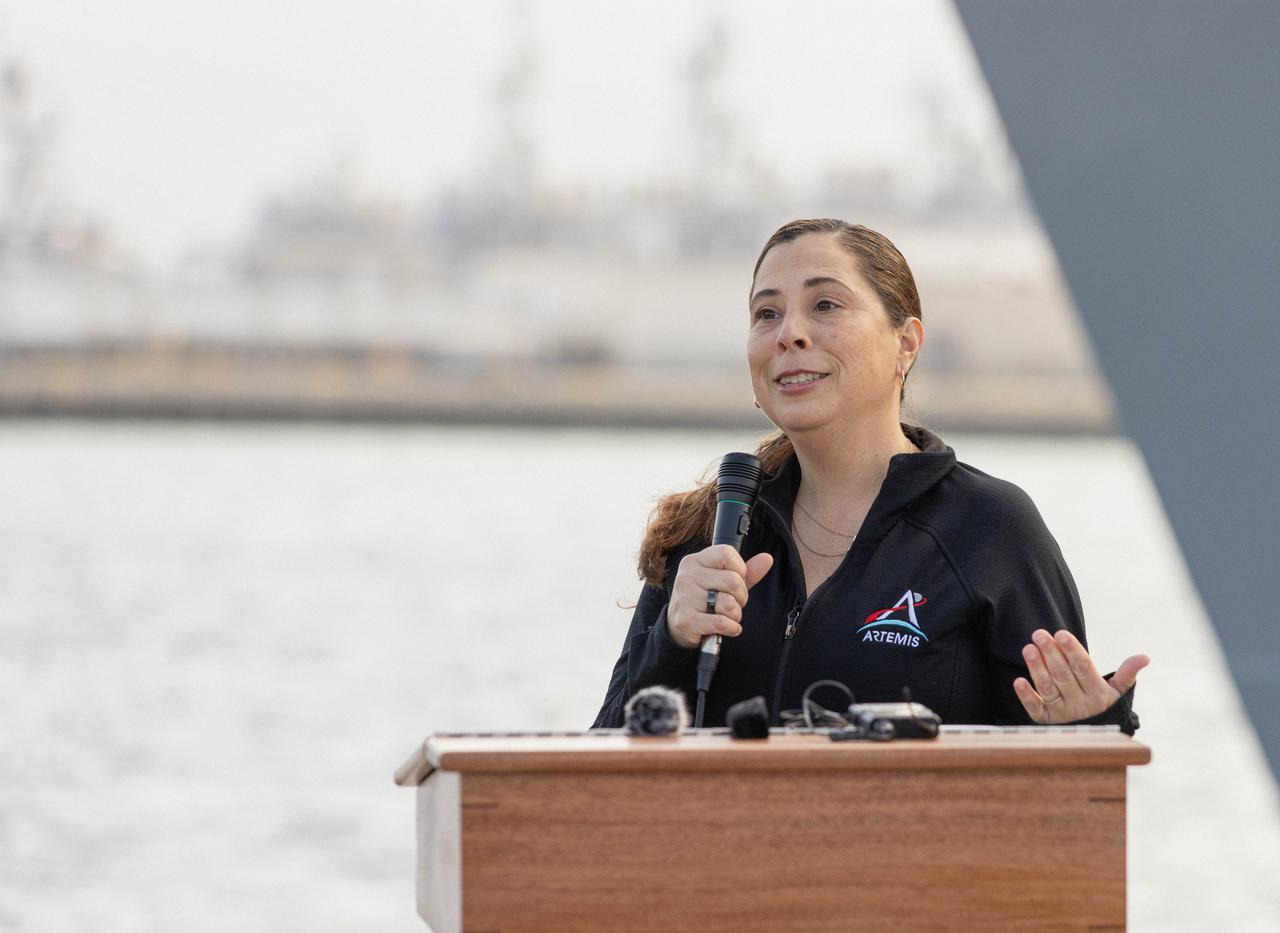
Liliana Villarreal, landing and recovery director in Exploration Ground Systems at NASA’s Kennedy Space Center in Florida speaks in a news conference held in San Diego, California on Wednesday, Feb. 28, 2024, about the Underway Recovery Test 11 (URT-11) performed off the coast of San Diego, California. URT-11 performed by NASA’s Exploration Ground System’s Landing and Recovery team, partners from the Department of Defense, and U.S. Navy personnel aboard the USS San Diego is the eleventh in a series of Artemis recovery tests, and the first the Artemis II recovery procedures involved the astronauts.
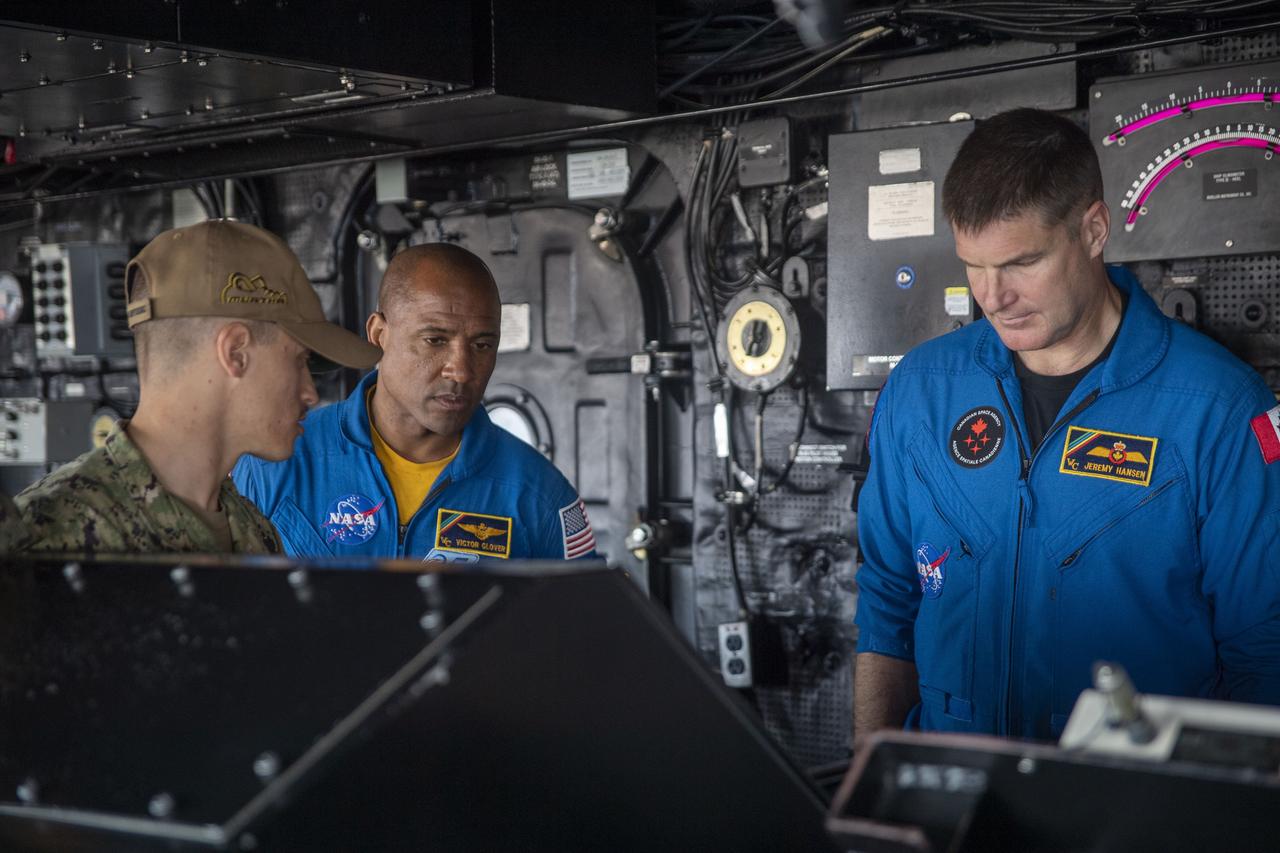
L.t. j.g Thomas Lampognana, left, explains amphibious transport dock ship USS John P. Murtha’s (LPD 26) helm control console to NASA Astronaut U.S. Navy Capt. Victor Glover and Canadian Space Agency Astronaut Jeremy Hansen, July 19, 2023. The helm is used as the primary steering for the ship underway. In preparation for NASA's Artemis II crewed mission, which will send four astronauts in Orion beyond the Moon, NASA and the U.S. Navy will conduct a series of tests to demonstrate and evaluate the processes, procedures, and hardware used in recovery operations for crewed lunar missions. The U.S. Navy has many unique capabilities that make it an ideal partner to support NASA, including its amphibious capabilities with the ability to embark helicopters, launch and recover small boats, three-dimensional air search radar and advanced medical facilities.
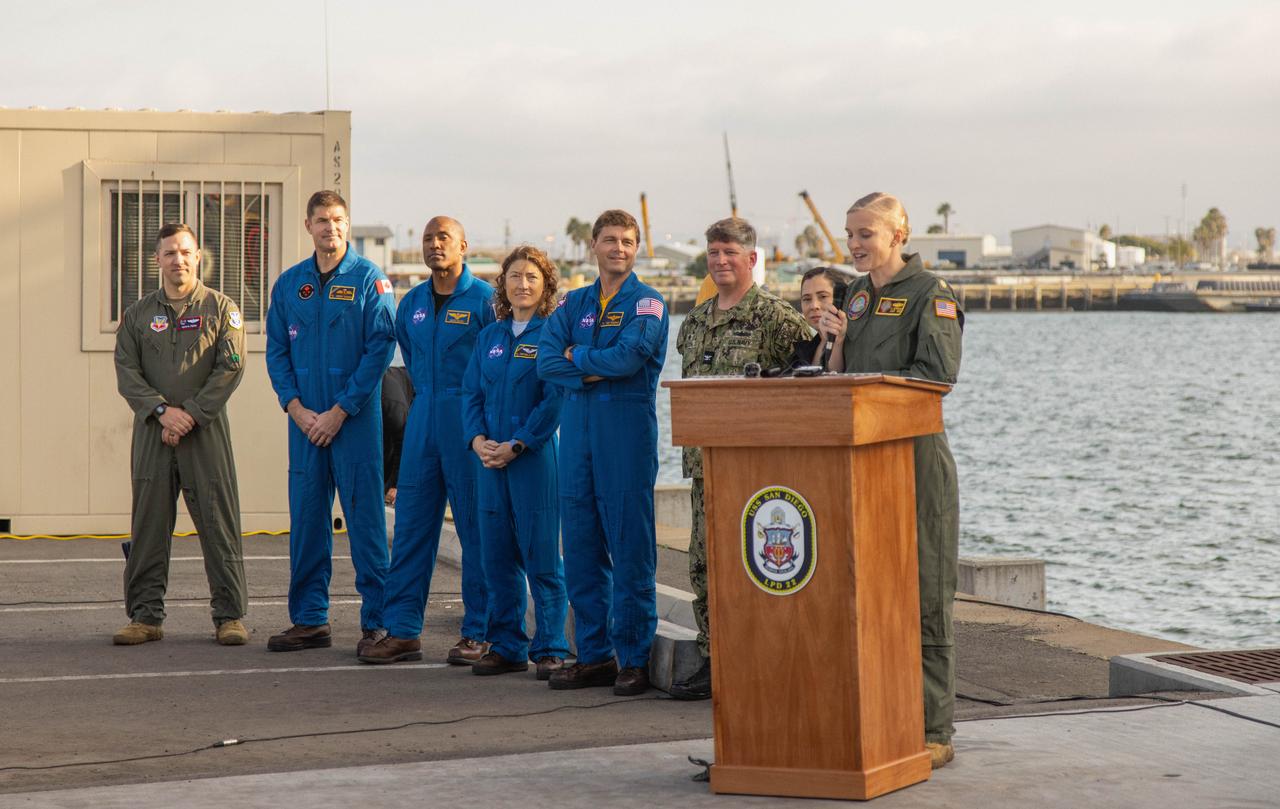
NASA’s Artemis II crew members from left to right, CSA (Canadian Space Agency) astronaut Jeremy Hansen, NASA astronauts Victor Glover, Christina Koch, and Reid Wiseman, and partners from the Department of Defense hold a news conference to discuss practice recovery procedures following the Underway Recovery Test 11 (URT-11) off the coast of San Diego, California on Wednesday, Feb. 28, 2024. URT-11 performed by NASA’s Exploration Ground System’s Landing and Recovery team, partners from the Department of Defense, and U.S. Navy personnel aboard the USS San Diego is the eleventh in a series of Artemis recovery tests, and the first the Artemis II recovery procedures involved the astronauts.
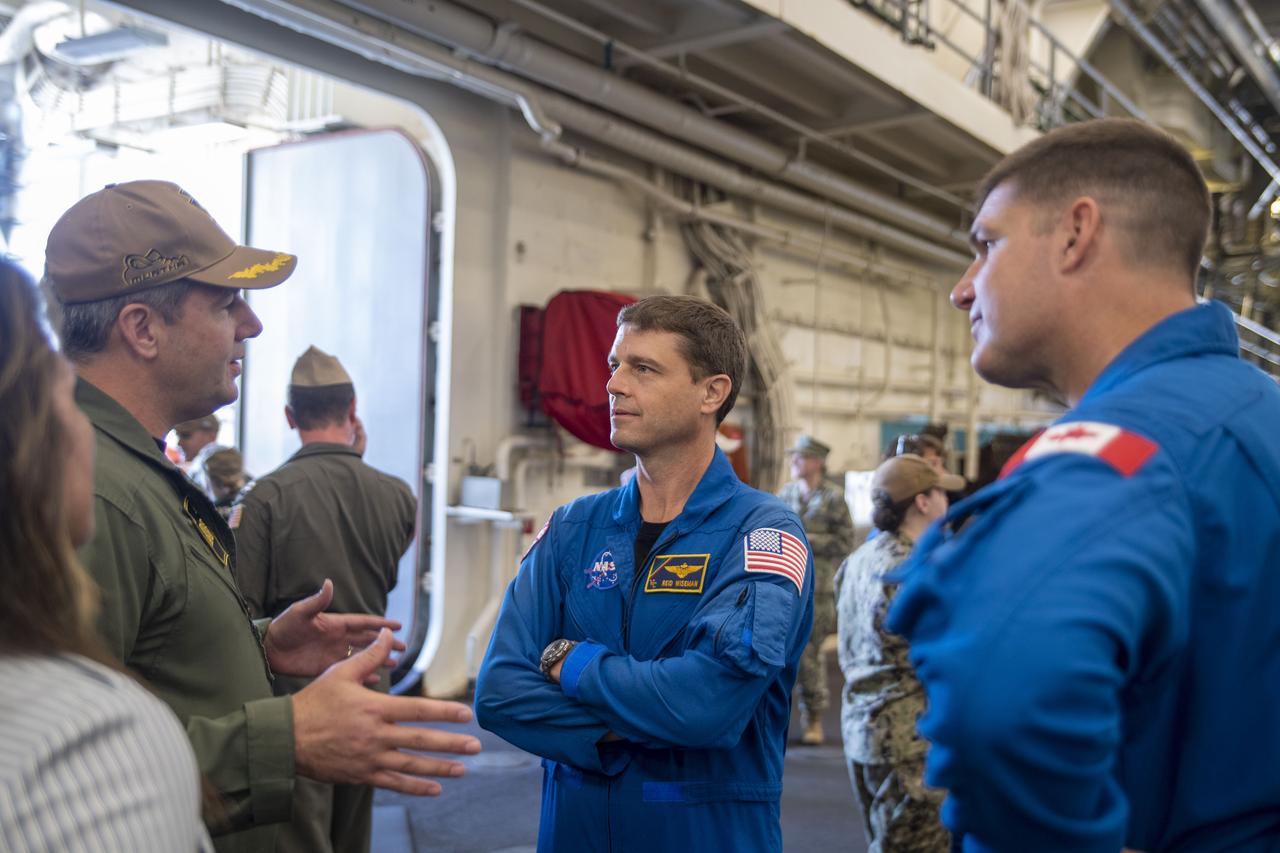
Amphibious transport dock ship USS John P. Murtha (LPD 26) Commanding Officer Capt. Doug Langenberg, left, explains to NASA Astronaut U.S. Navy Capt. Reid Wiseman and Canadian Space Agency Astronaut Jeremy Hansen, right, the ship’s recovery capabilities, July 19, 2023. In preparation for NASA's Artemis II crewed mission, which will send four astronauts in Orion beyond the Moon, NASA and the U.S. Navy will conduct a series of tests to demonstrate and evaluate the processes, procedures, and hardware used in recovery operations for crewed lunar missions. The U.S. Navy has many unique capabilities that make it an ideal partner to support NASA, including its amphibious capabilities with the ability to embark helicopters, launch and recover small boats, three-dimensional air search radar and advanced medical facilities.
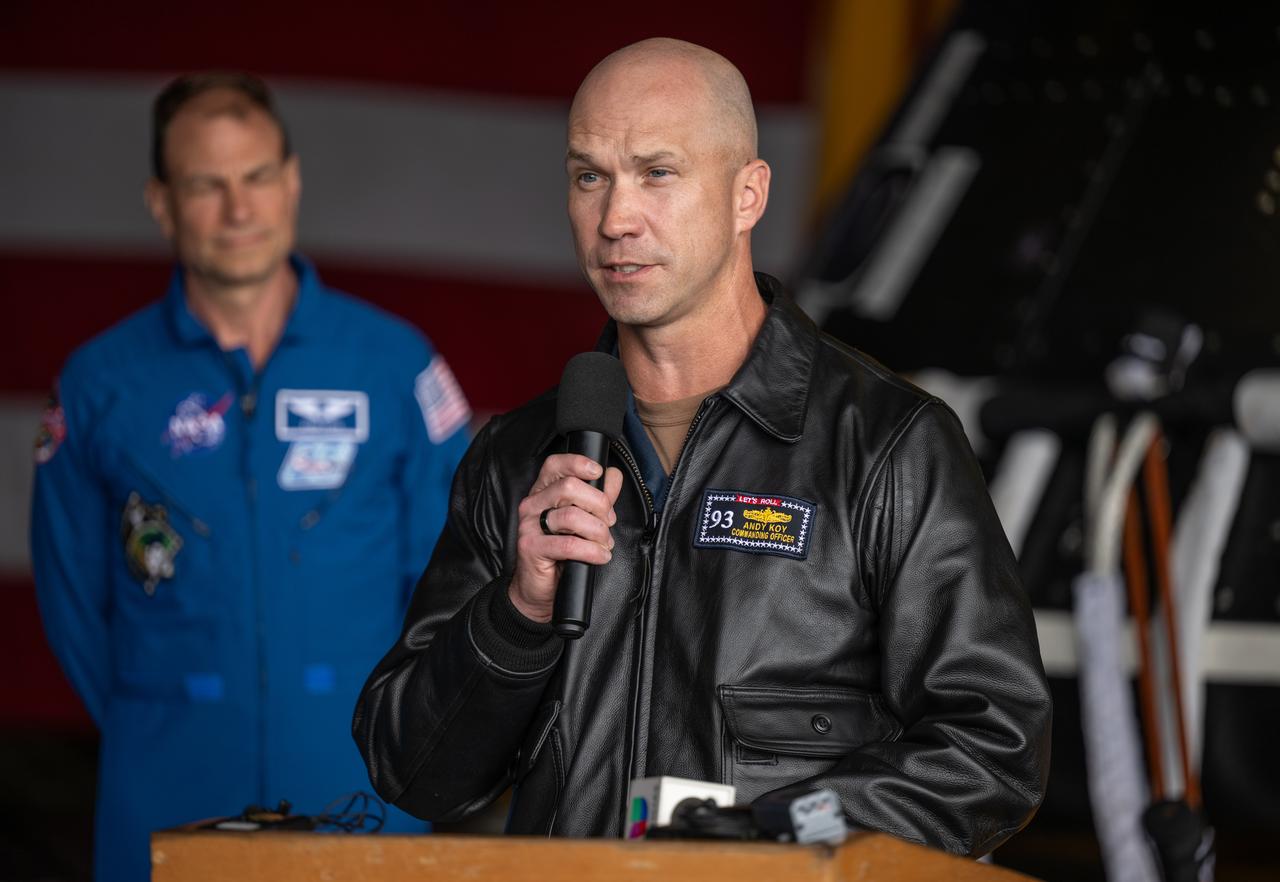
Capt. Andrew “Andy” Koy, commanding officer of USS Somerset (LPD 25), U.S. Navy, gives remarks during a media event where NASA and the Department of Defense discussed the recovery operations that will bring the Artemis II astronauts and the agency’s Orion spacecraft home at the conclusion of next year’s mission around the Moon, Monday, March 31, 2025, onboard USS Somerset at Naval Base San Diego, in California. The teams spent the week practicing the procedures they will use to recover the astronauts after their more than 600,000 mile journey from Earth to the Moon and back on the first crewed mission under the Artemis campaign. Photo Credit: (NASA/Bill Ingalls)
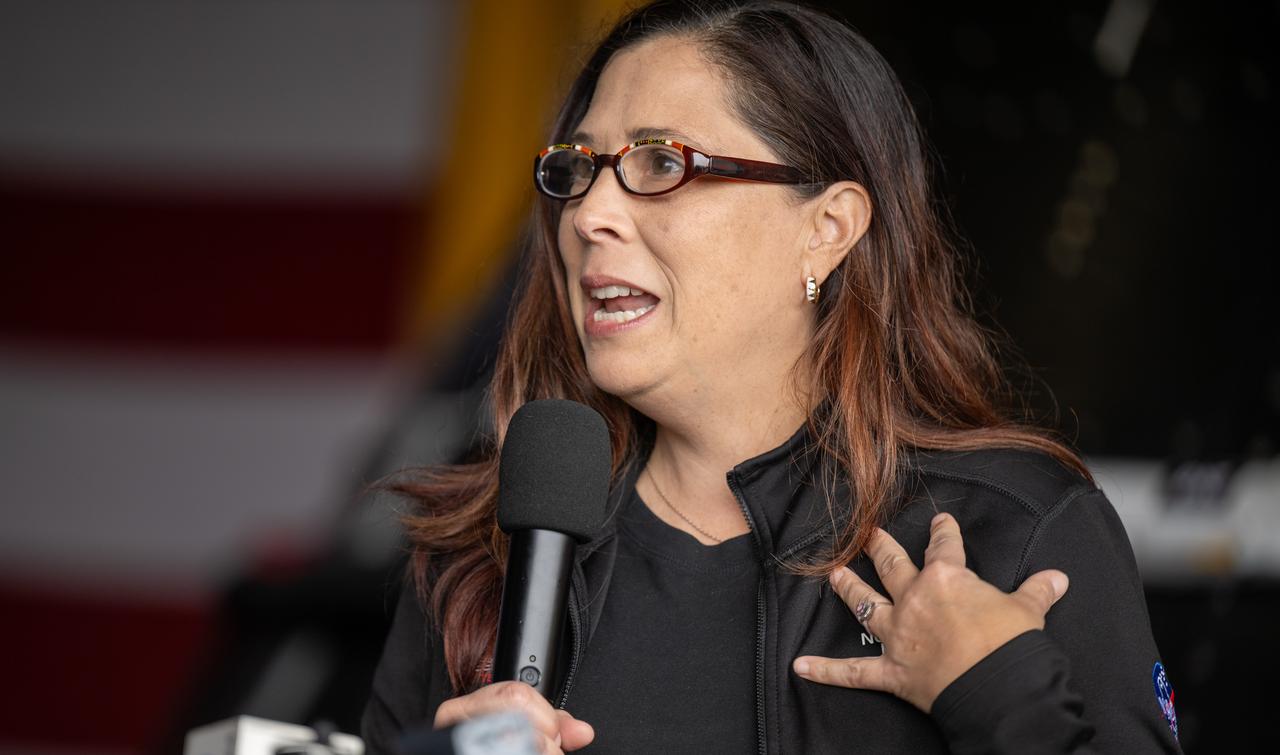
Liliana Villarreal, NASA’s Artemis II landing and recovery director, Exploration Ground Systems Program, gives remarks during a media event where NASA and the Department of Defense discussed the recovery operations that will bring the Artemis II astronauts and the agency’s Orion spacecraft home at the conclusion of next year’s mission around the Moon, Monday, March 31, 2025, onboard USS Somerset at Naval Base San Diego, in California. The teams spent the week practicing the procedures they will use to recover the astronauts after their more than 600,000 mile journey from Earth to the Moon and back on the first crewed mission under the Artemis campaign. Photo Credit: (NASA/Bill Ingalls)
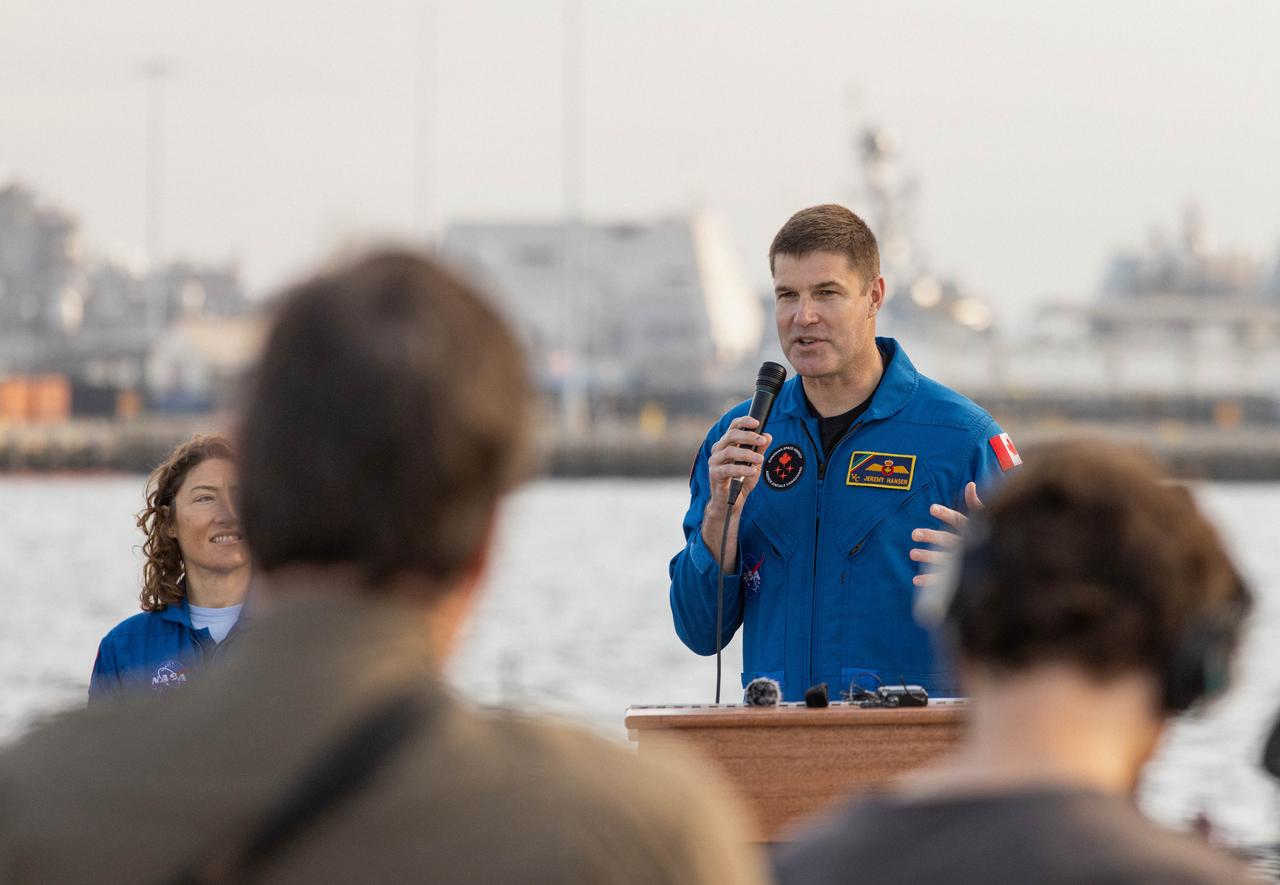
NASA’s Artemis II crew member CSA (Canadian Space Agency) astronaut Jeremy Hansen discusses the Underway Recovery Test (URT-11) during a news conference held in San Diego, California on Wednesday, Feb. 28, 2024. URT-11 performed by NASA’s Exploration Ground System’s Landing and Recovery team, partners from the Department of Defense, and U.S. Navy personnel aboard the USS San Diego is the eleventh in a series of Artemis recovery tests, and the first the Artemis II recovery procedures involved the astronauts.
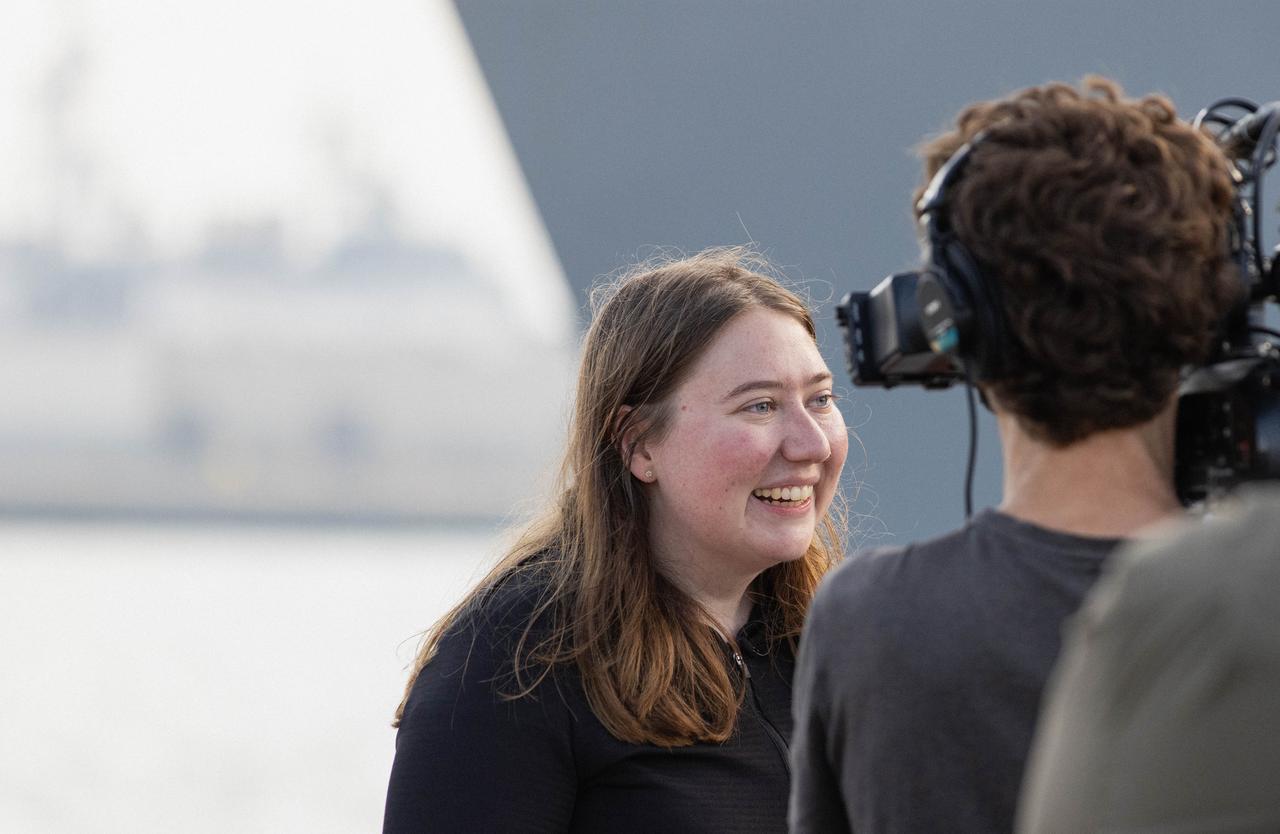
NASA’s Artemis program public affairs specialist Madison Tuttle speaks during a news conference about the practice recovery procedures performed by NASA’s Exploration Ground System’s Landing and Recovery team, partners from the Department of Defense, and U.S. Navy personnel during Underway Recovery Test 11 (URT-11) aboard the USS San Diego on Wednesday, Feb. 28, 2024. URT-11 performed by NASA’s Exploration Ground System’s Landing and Recovery team, partners from the Department of Defense, and U.S. Navy personnel aboard the USS San Diego is the eleventh in a series of Artemis recovery tests, and the first the Artemis II recovery procedures involved the astronauts.
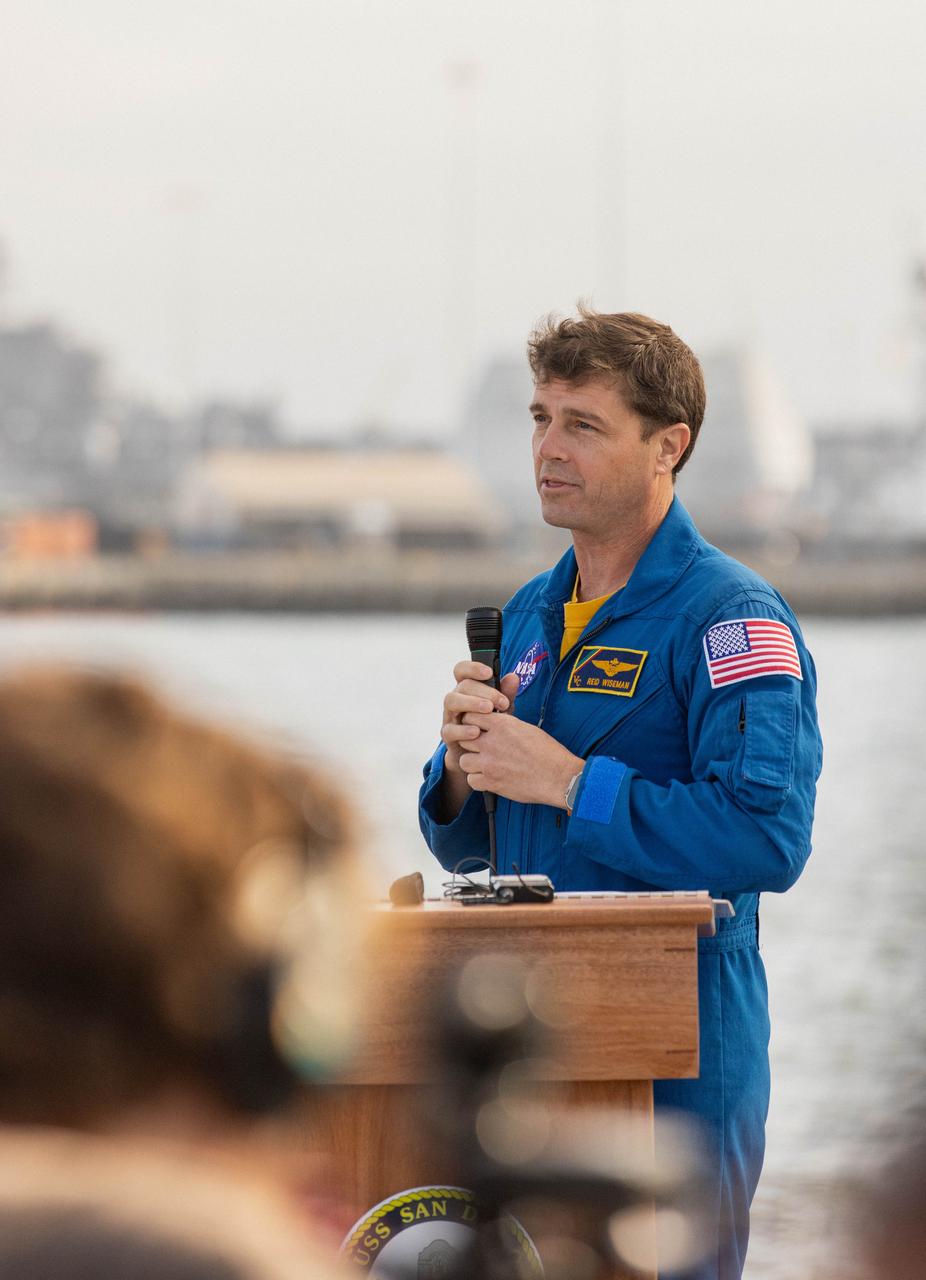
NASA’s Artemis II crew member NASA astronaut Reid Wiseman discusses the Underway Recovery Test (URT-11) during a news conference in San Diego, California on Wednesday, Feb. 28, 2024. URT-11 performed by NASA’s Exploration Ground System’s Landing and Recovery team, partners from the Department of Defense, and U.S. Navy personnel aboard the USS San Diego is the eleventh in a series of Artemis recovery tests, and the first the Artemis II recovery procedures involved the astronauts.
NASA’s Artemis II crew members, from left to right, CSA (Canadian Space Agency) astronaut Jeremy Hansen, NASA astronauts Victor Glover, Christina Koch, and Reid Wiseman smile during a news conference to discuss the practice recovery procedures following the Underway Recovery Test (URT-11) aboard the USS San Diego on Wednesday, Feb. 28, 2024. URT-11 performed by NASA’s Exploration Ground System’s Landing and Recovery team, partners from the Department of Defense, and U.S. Navy personnel aboard the USS San Diego is the eleventh in a series of Artemis recovery tests, and the first the Artemis II recovery procedures involved the astronauts.
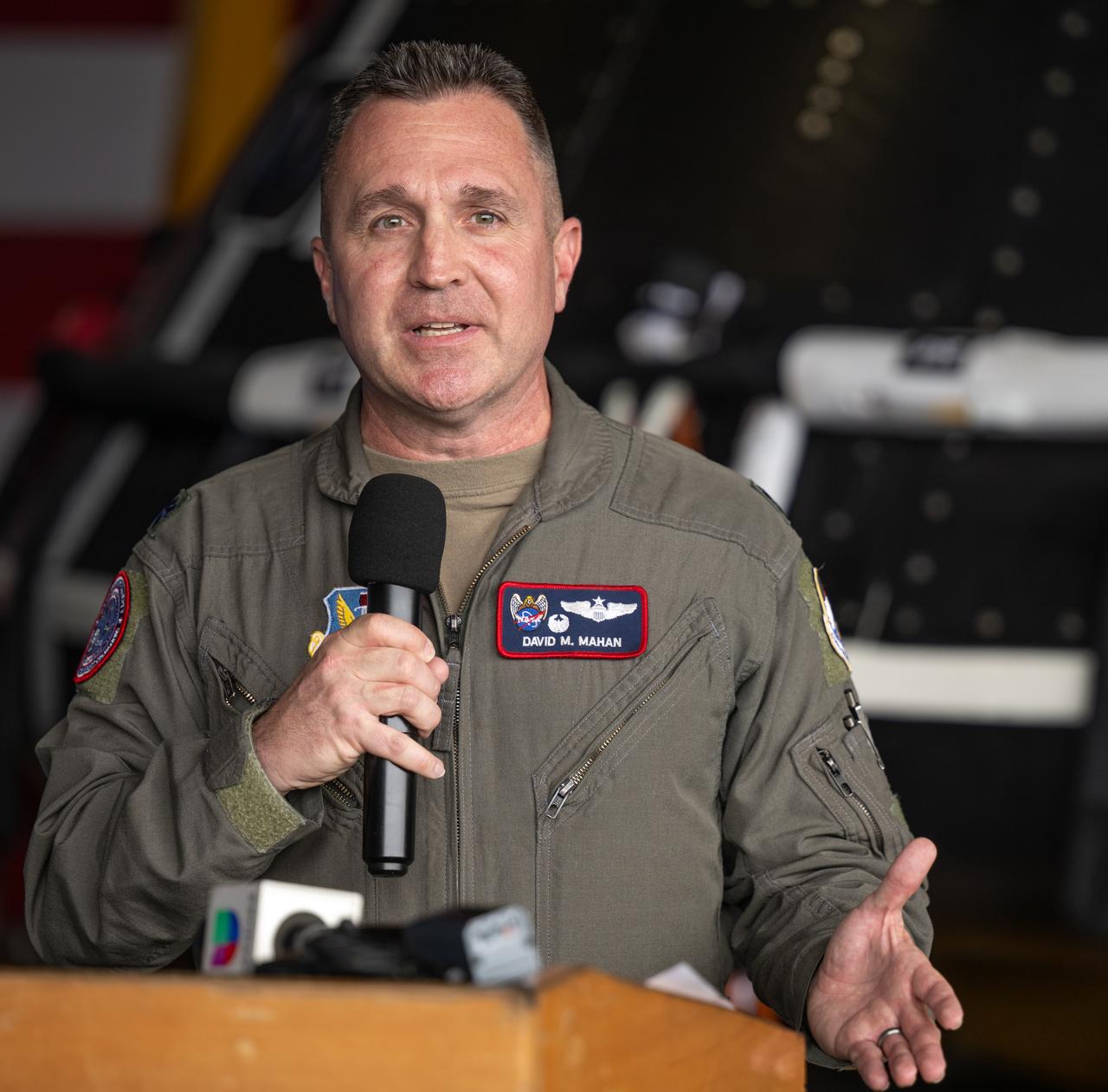
Lt. Col. David Mahan, commander, U.S. Air Force’s 1st Air Force, Detachment 3, Patrick Space Force Base, Florida, gives remarks during a media event where NASA and the Department of Defense discussed the recovery operations that will bring the Artemis II astronauts and the agency’s Orion spacecraft home at the conclusion of next year’s mission around the Moon, Monday, March 31, 2025, onboard USS Somerset at Naval Base San Diego, in California. The teams spent the week practicing the procedures they will use to recover the astronauts after their more than 600,000 mile journey from Earth to the Moon and back on the first crewed mission under the Artemis campaign. Photo Credit: (NASA/Bill Ingalls)
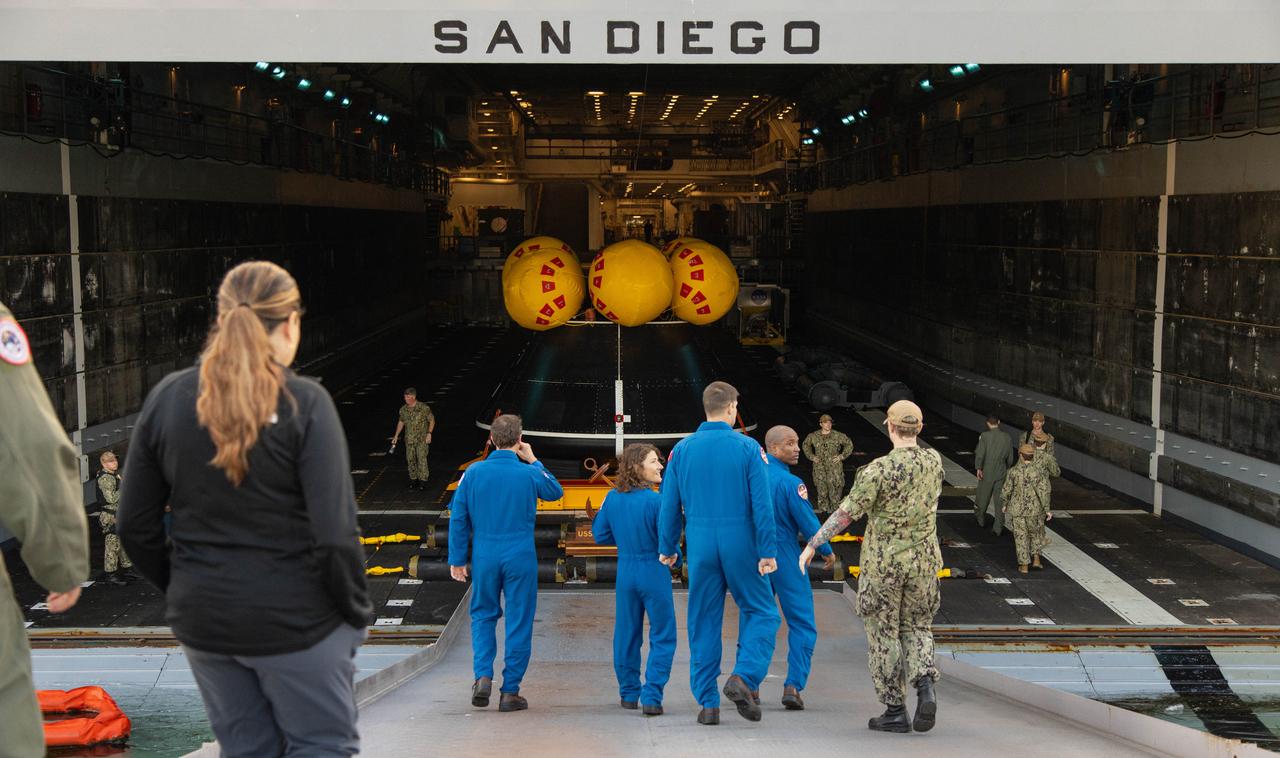
NASA’s Artemis II crew members from left to right, NASA astronauts Reid Wiseman, Christina Koch, and CSA (Canadian Space Agency) astronaut Jeremy Hansen, and NASA astronaut Victor Glover walk toward the USS San Diego and approach a mockup of the Orion spacecraft in San Diego, California on Wednesday, Feb. 28, 2024, as part of the Underway Recovery Test (URT-11). URT-11 performed by NASA’s Exploration Ground System’s Landing and Recovery team, partners from the Department of Defense, and U.S. Navy personnel aboard the USS San Diego is the eleventh in a series of Artemis recovery tests, and the first the Artemis II recovery procedures involved the astronauts.
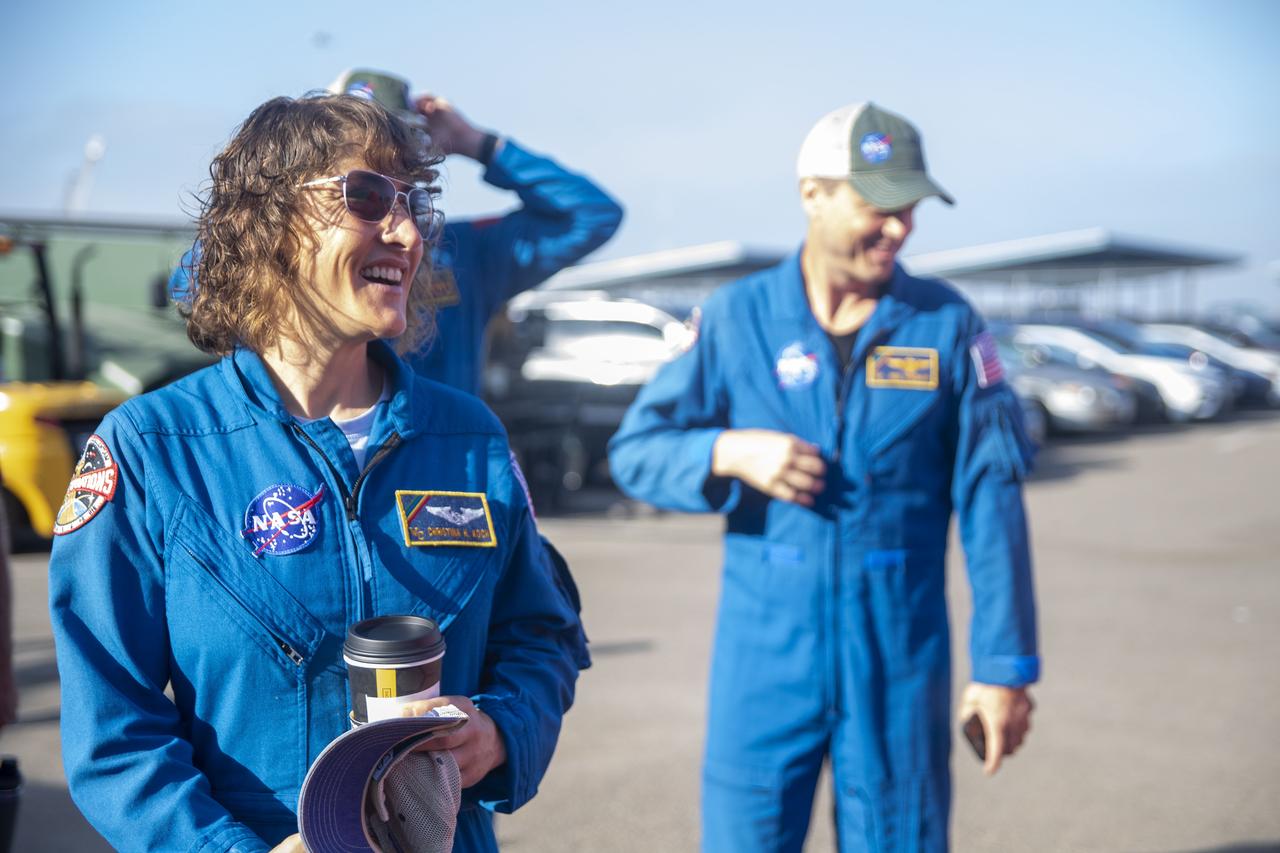
NASA’s Artemis II astronauts tour the U.S. Navy’s Defense Distribution Depot Center in San Diego, California, on July 19, 2023. The depot is currently being used by NASA to house the Vehicle Advanced Demonstrator for Emergency Recovery (VADER), a replica of the Orion crew module. In preparation for the agency’s Artemis II crewed mission, NASA and the U.S. Navy will conduct a series of tests to demonstrate and evaluate the processes, procedures, and hardware used in Orion recovery operations for crewed lunar missions. NASA astronauts Commander Reid Wiseman, Pilot Victor Glover, and Mission Specialist Christina Koch, and Canadian Space Agency astronaut Jeremy Hansen will venture around the Moon on Artemis II. The approximately 10-day flight will test NASA's foundational human deep space exploration capabilities, the Space Launch System rocket and Orion spacecraft, for the first time with astronauts and will pave the way to establishing a long-term presence at the Moon for science and exploration through Artemis.
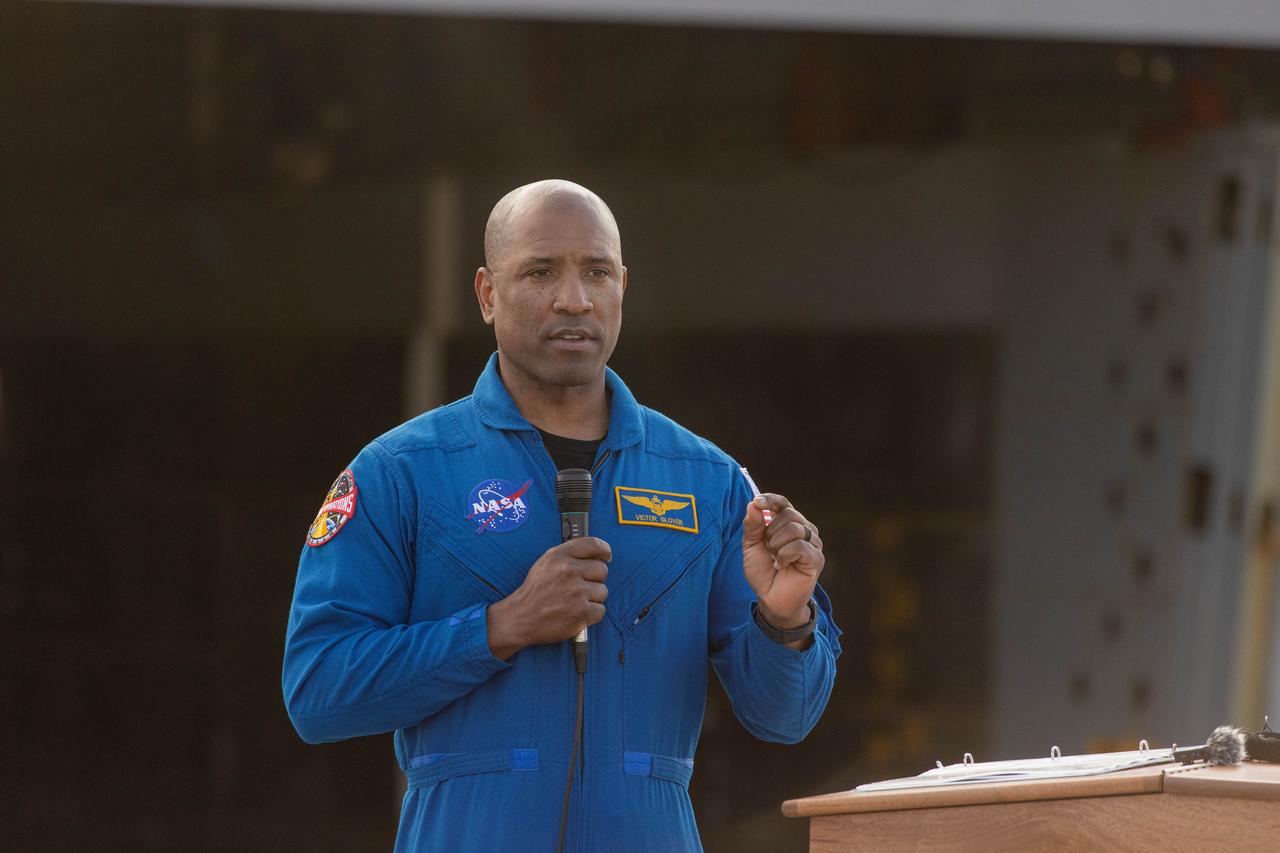
NASA’s Artemis II crew member NASA astronaut Victor Glover discusses the Underway Recovery Test (URT-11) during a news conference held in San Diego, California on Wednesday, Feb. 28, 2024. URT-11 performed by NASA’s Exploration Ground System’s Landing and Recovery team, partners from the Department of Defense, and U.S. Navy personnel aboard the USS San Diego is the eleventh in a series of Artemis recovery tests, and the first the Artemis II recovery procedures involved the astronauts.
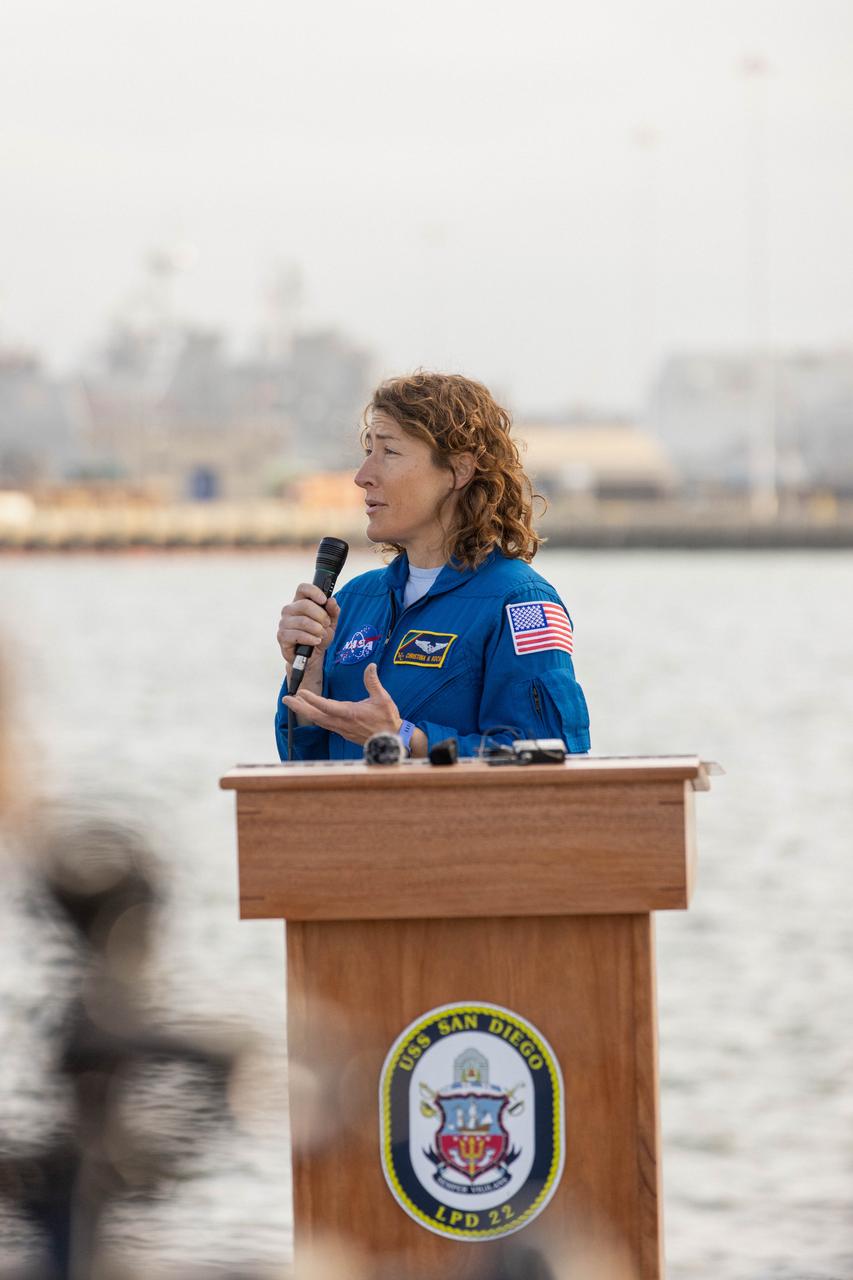
NASA’s Artemis II crew member NASA astronaut Christina Koch discusses the Underway Recovery Test (URT-11) during a news conference held in San Diego, California on Wednesday, Feb. 28, 2024. URT-11 performed by NASA’s Exploration Ground System’s Landing and Recovery team, partners from the Department of Defense, and U.S. Navy personnel aboard the USS San Diego is the eleventh in a series of Artemis recovery tests, and the first the Artemis II recovery procedures involved the astronauts.
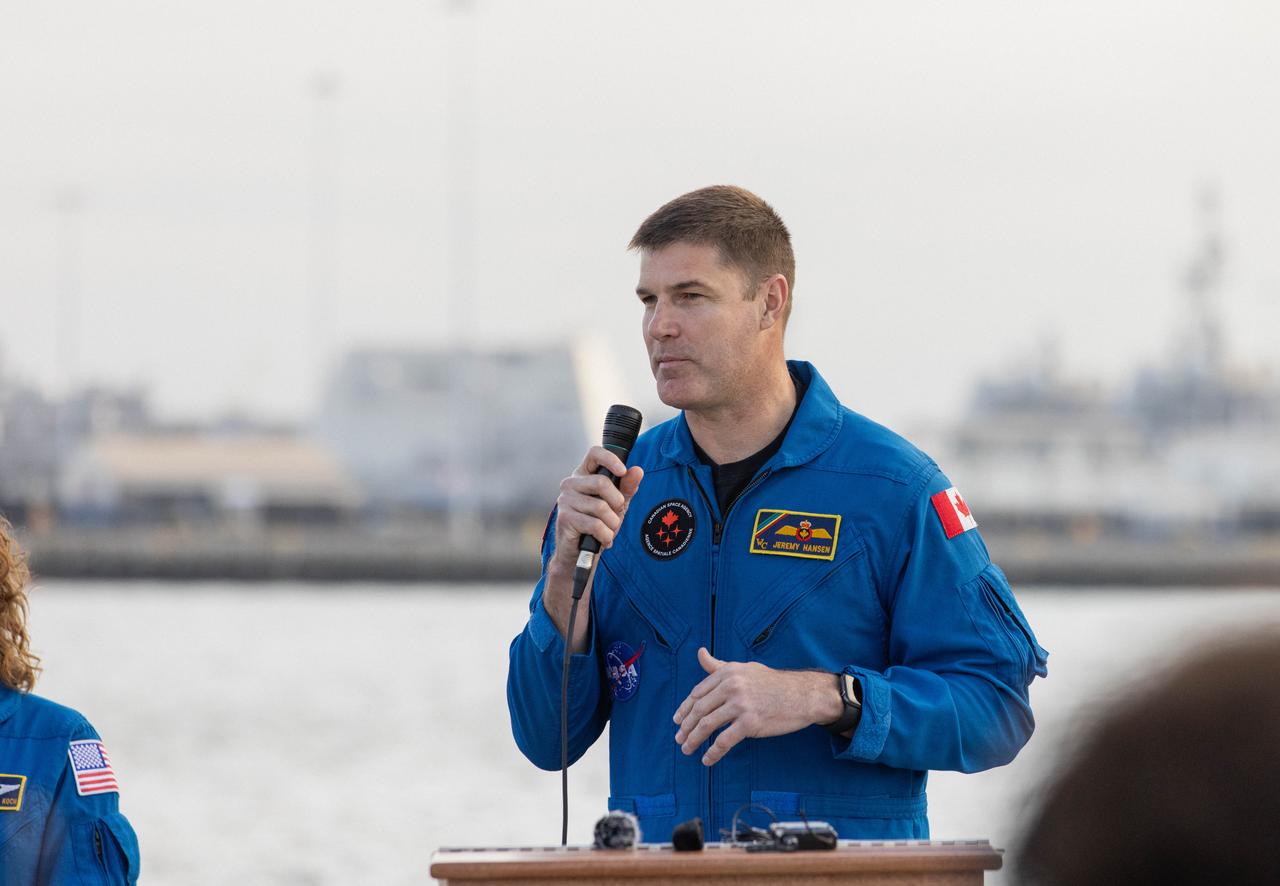
NASA’s Artemis II crew member CSA (Canadian Space Agency) astronaut Jeremy Hansen discusses the Underway Recovery Test (URT-11) during a news conference held in San Diego, California on Wednesday, Feb. 28, 2024. URT-11 performed by NASA’s Exploration Ground System’s Landing and Recovery team, partners from the Department of Defense, and U.S. Navy personnel aboard the USS San Diego is the eleventh in a series of Artemis recovery tests, and the first the Artemis II recovery procedures involved the astronauts.
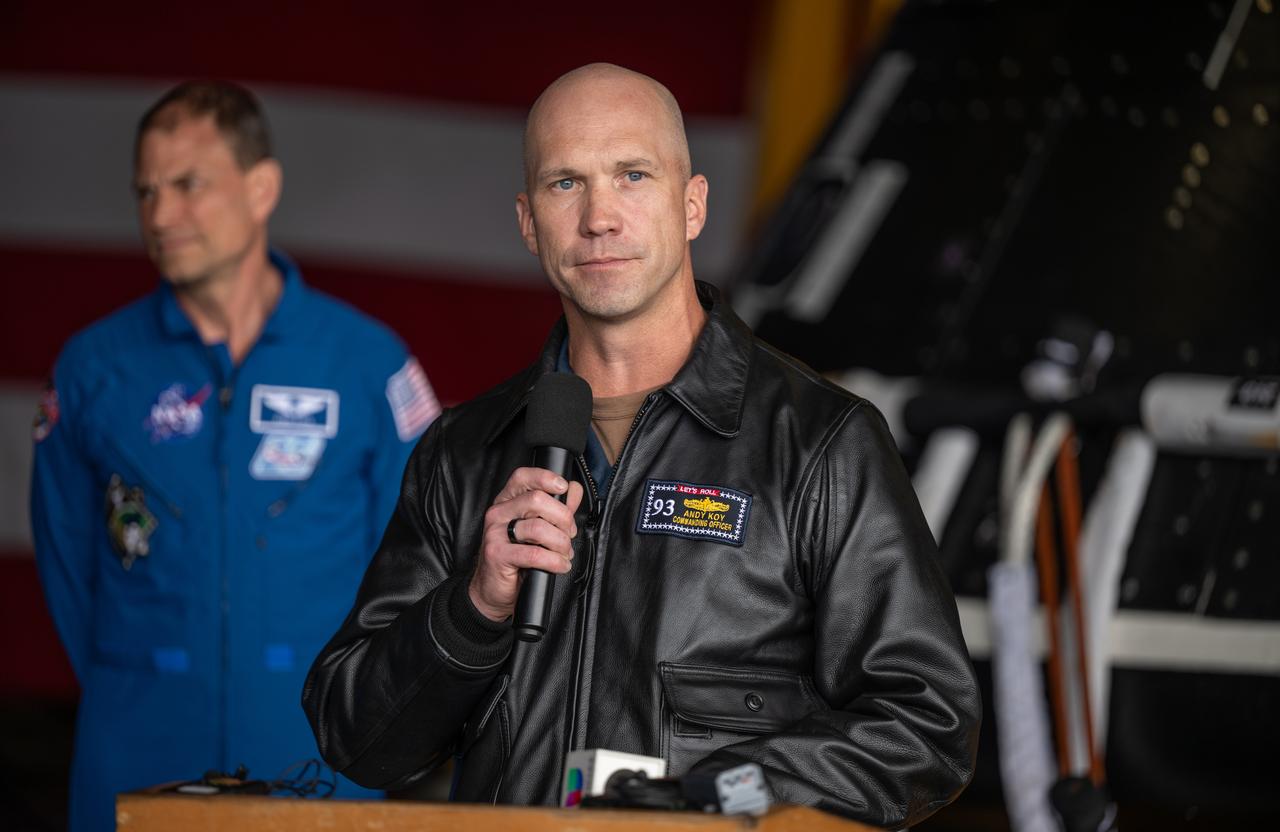
Capt. Andrew “Andy” Koy, commanding officer of USS Somerset (LPD 25), U.S. Navy, gives remarks during a media event where NASA and the Department of Defense discussed the recovery operations that will bring the Artemis II astronauts and the agency’s Orion spacecraft home at the conclusion of next year’s mission around the Moon, Monday, March 31, 2025, onboard USS Somerset at Naval Base San Diego, in California. The teams spent the week practicing the procedures they will use to recover the astronauts after their more than 600,000 mile journey from Earth to the Moon and back on the first crewed mission under the Artemis campaign. Photo Credit: (NASA/Bill Ingalls)
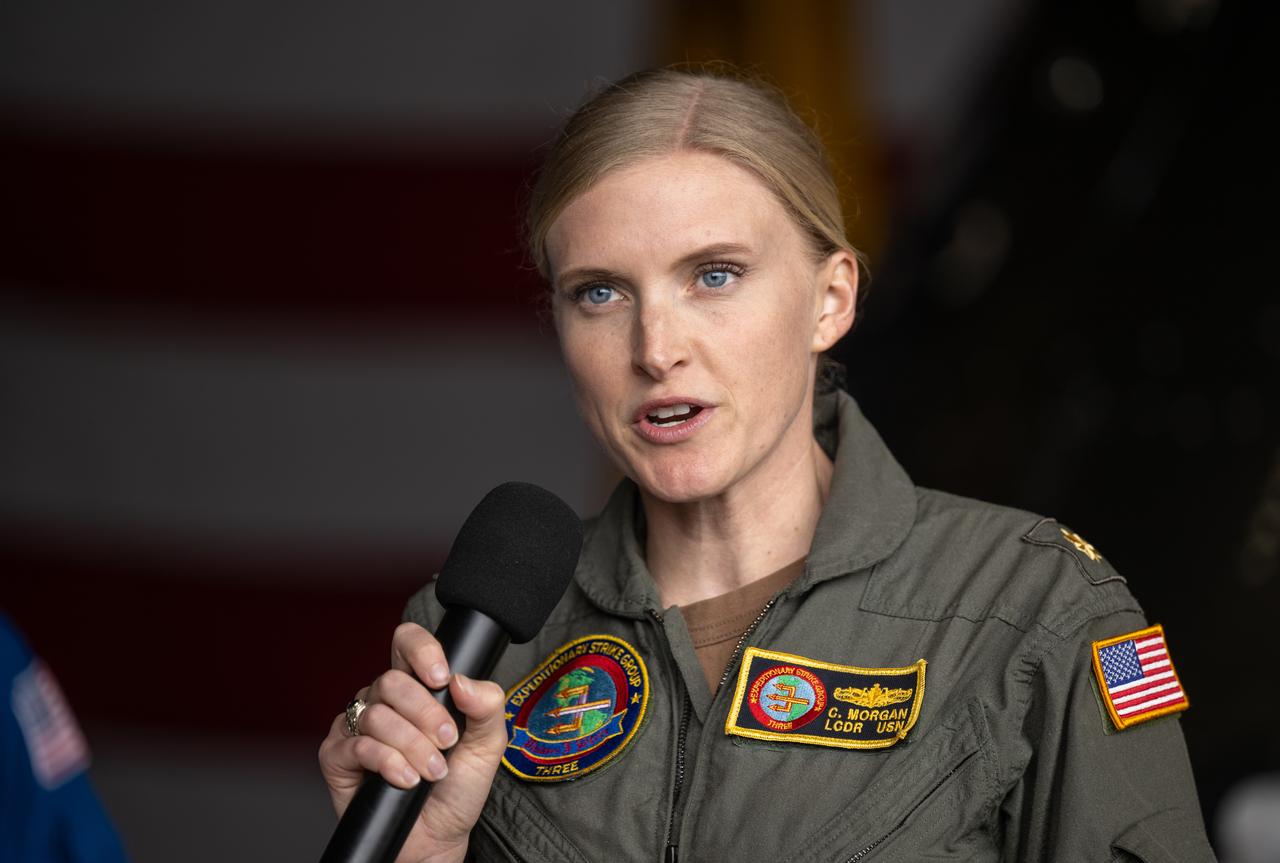
Chloe Morgan, Expeditionary Strike Group 3 Public Affairs Officer gives remarks during a media event where NASA and the Department of Defense discussed the recovery operations that will bring the Artemis II astronauts and the agency’s Orion spacecraft home at the conclusion of next year’s mission around the Moon, Monday, March 31, 2025, onboard USS Somerset at Naval Base San Diego, in California. The teams spent the week practicing the procedures they will use to recover the astronauts after their more than 600,000 mile journey from Earth to the Moon and back on the first crewed mission under the Artemis campaign. Photo Credit: (NASA/Bill Ingalls)
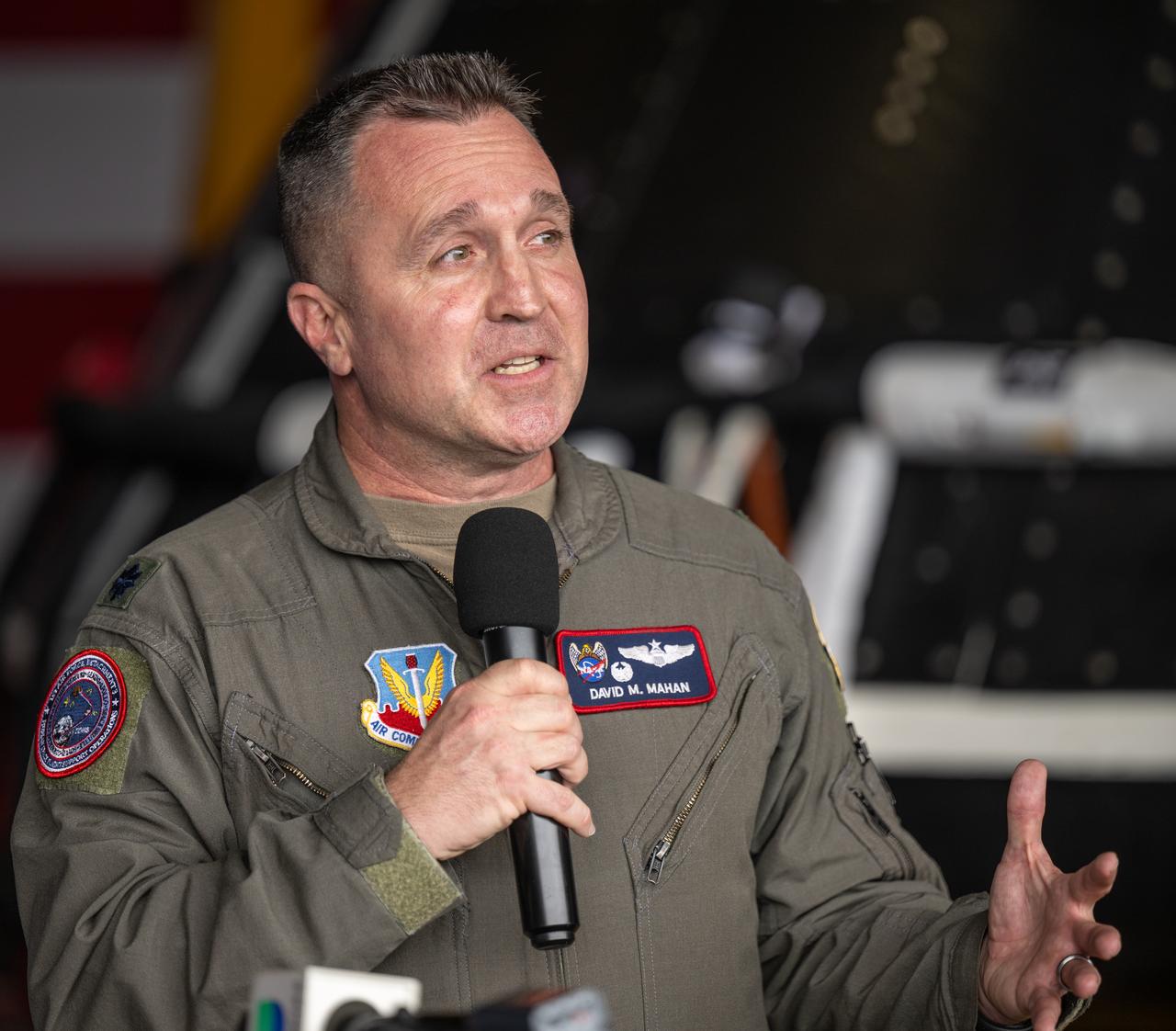
Lt. Col. David Mahan, commander, U.S. Air Force’s 1st Air Force, Detachment 3, Patrick Space Force Base, Florida, gives remarks during a media event where NASA and the Department of Defense discussed the recovery operations that will bring the Artemis II astronauts and the agency’s Orion spacecraft home at the conclusion of next year’s mission around the Moon, Monday, March 31, 2025, onboard USS Somerset at Naval Base San Diego, in California. The teams spent the week practicing the procedures they will use to recover the astronauts after their more than 600,000 mile journey from Earth to the Moon and back on the first crewed mission under the Artemis campaign. Photo Credit: (NASA/Bill Ingalls)
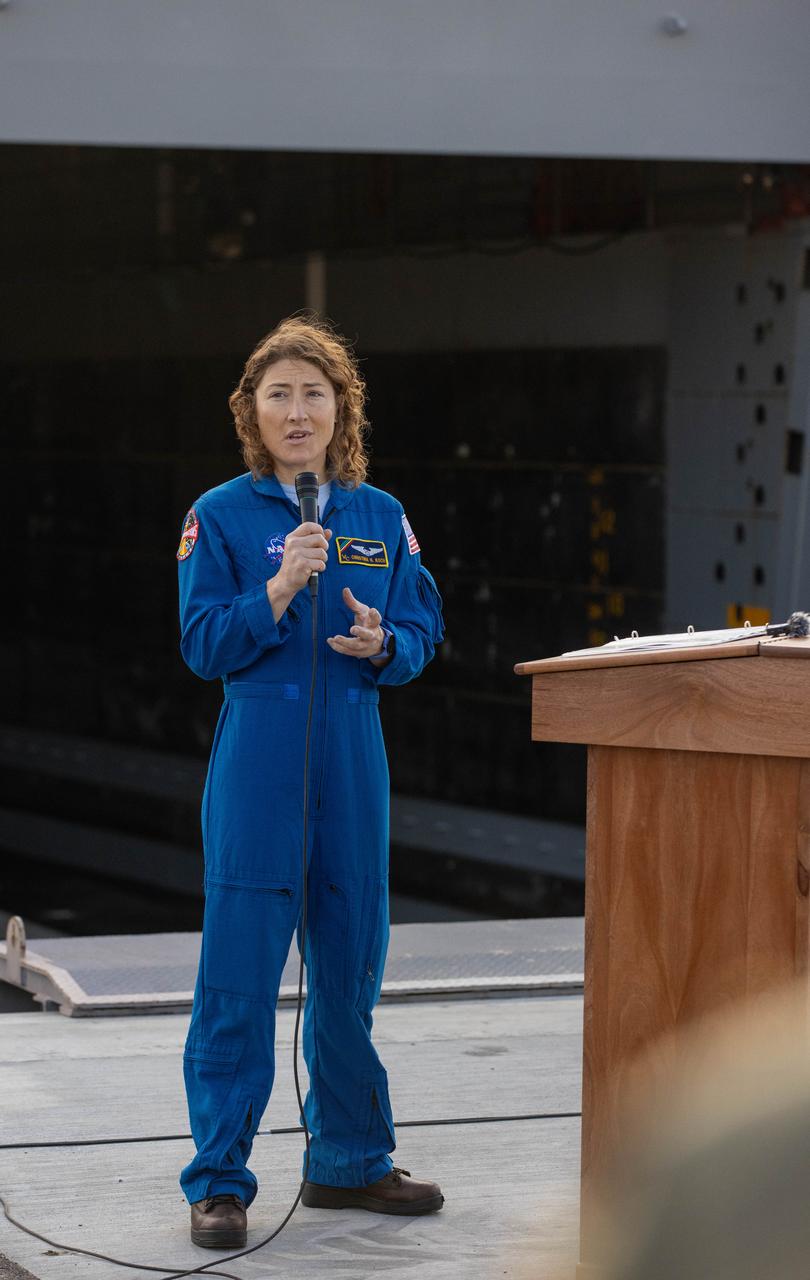
NASA’s Artemis II crew member NASA astronaut Christina Koch discusses the Underway Recovery Test (URT-11) during a news conference held in San Diego, California on Wednesday, Feb. 28, 2024. URT-11 performed by NASA’s Exploration Ground System’s Landing and Recovery team, partners from the Department of Defense, and U.S. Navy personnel aboard the USS San Diego is the eleventh in a series of Artemis recovery tests, and the first the Artemis II recovery procedures involved the astronauts.
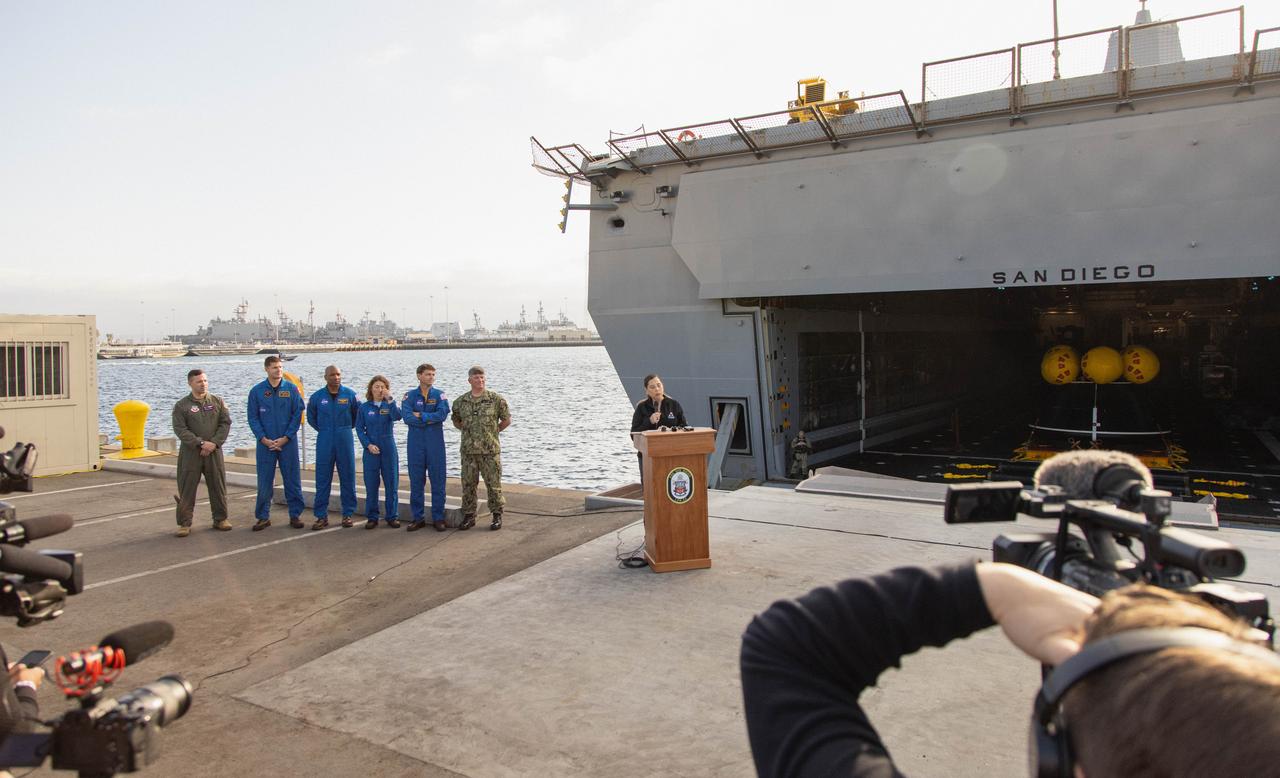
NASA’s Artemis II crew members, from left to right, CSA (Canadian Space Agency) astronaut Jeremy Hansen, NASA astronauts Victor Glover, Christina Koch, and Reid Wiseman, along with partners from the Department of Defense, and U.S. Navy personnel participate in a news conference held in San Diego, California on Wednesday, Feb. 28, 2024, to discuss the Underway Recovery Test (URT-11) aboard the USS San Diego. URT-11 is the eleventh in a series of Artemis recovery tests, and the first time NASA and its partners put their Artemis II recovery procedures in place with the astronauts.
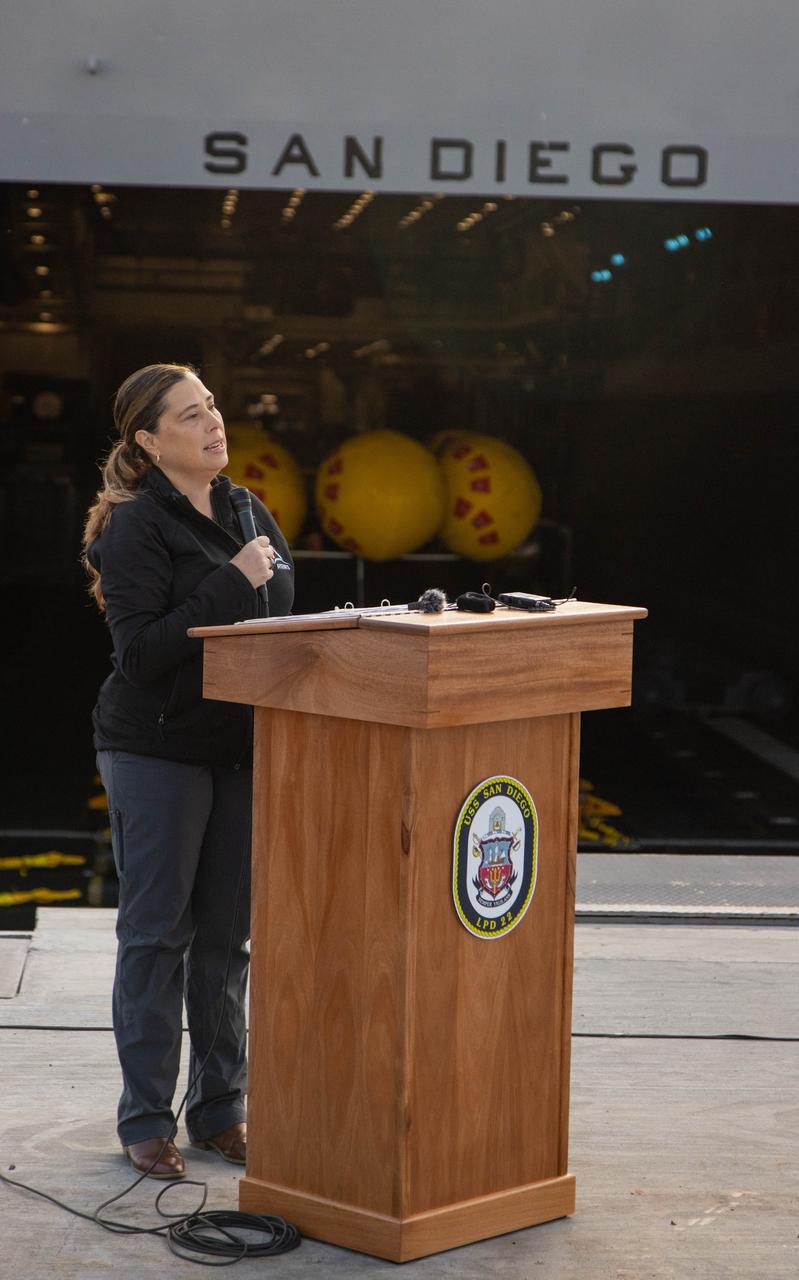
Liliana Villarreal, landing and recovery director in Exploration Ground Systems at NASA’s Kennedy Space Center in Florida speaks in a news conference held in San Diego, California on Wednesday, Feb. 28, 2024, about the Underway Recovery Test 11 (URT-11) performed off the coast of San Diego, California. URT-11 is the eleventh in a series of Artemis recovery tests, and the first time NASA and its partners put their Artemis II recovery procedures in place with the astronauts.
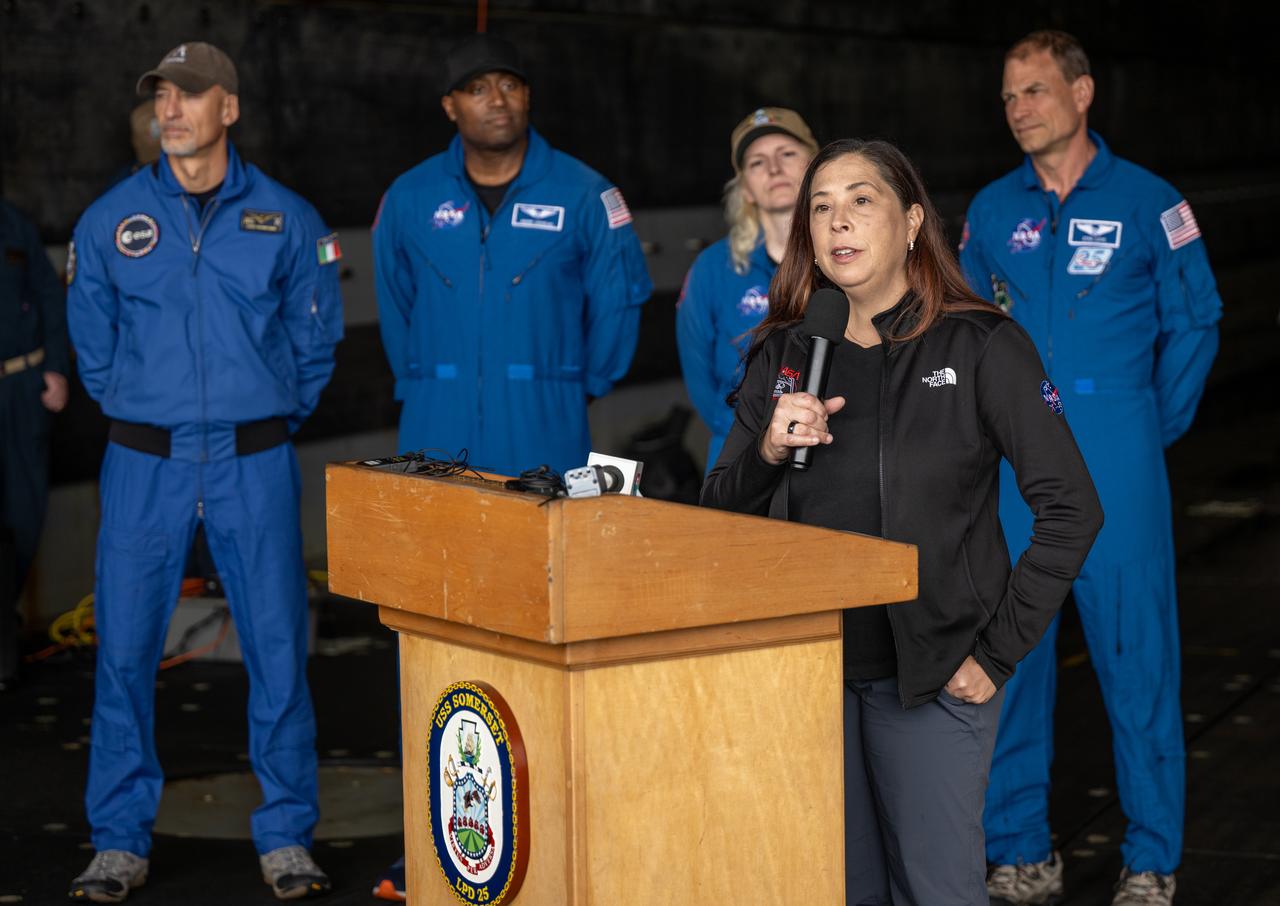
Liliana Villarreal, NASA’s Artemis II landing and recovery director, Exploration Ground Systems Program, gives remarks during a media event where NASA and the Department of Defense discussed the recovery operations that will bring the Artemis II astronauts and the agency’s Orion spacecraft home at the conclusion of next year’s mission around the Moon, Monday, March 31, 2025, onboard USS Somerset at Naval Base San Diego, in California. The teams spent the week practicing the procedures they will use to recover the astronauts after their more than 600,000 mile journey from Earth to the Moon and back on the first crewed mission under the Artemis campaign. Photo Credit: (NASA/Bill Ingalls)
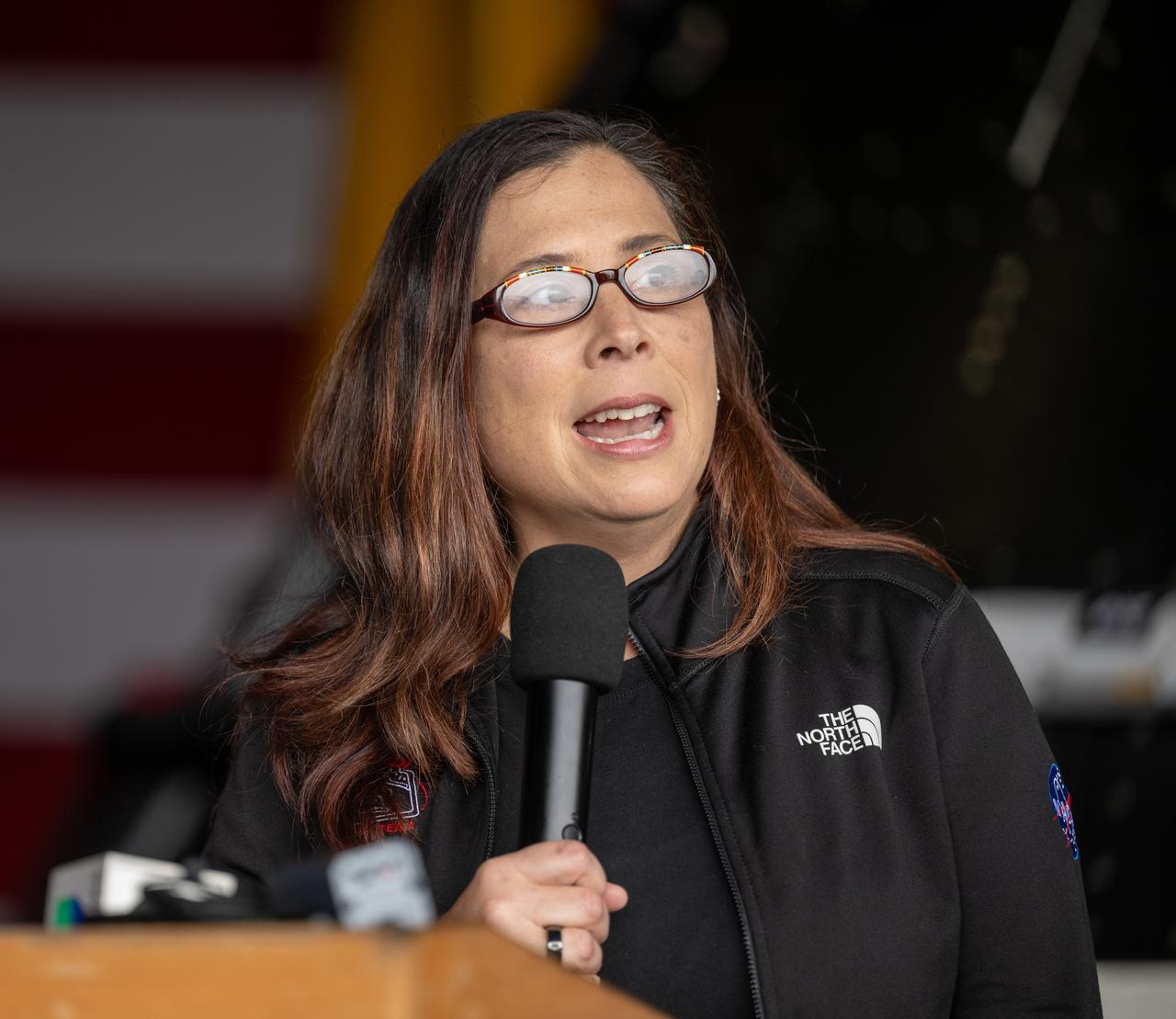
Liliana Villarreal, NASA’s Artemis II landing and recovery director, Exploration Ground Systems Program, gives remarks during a media event where NASA and the Department of Defense discussed the recovery operations that will bring the Artemis II astronauts and the agency’s Orion spacecraft home at the conclusion of next year’s mission around the Moon, Monday, March 31, 2025, onboard USS Somerset at Naval Base San Diego, in California. The teams spent the week practicing the procedures they will use to recover the astronauts after their more than 600,000 mile journey from Earth to the Moon and back on the first crewed mission under the Artemis campaign. Photo Credit: (NASA/Bill Ingalls)
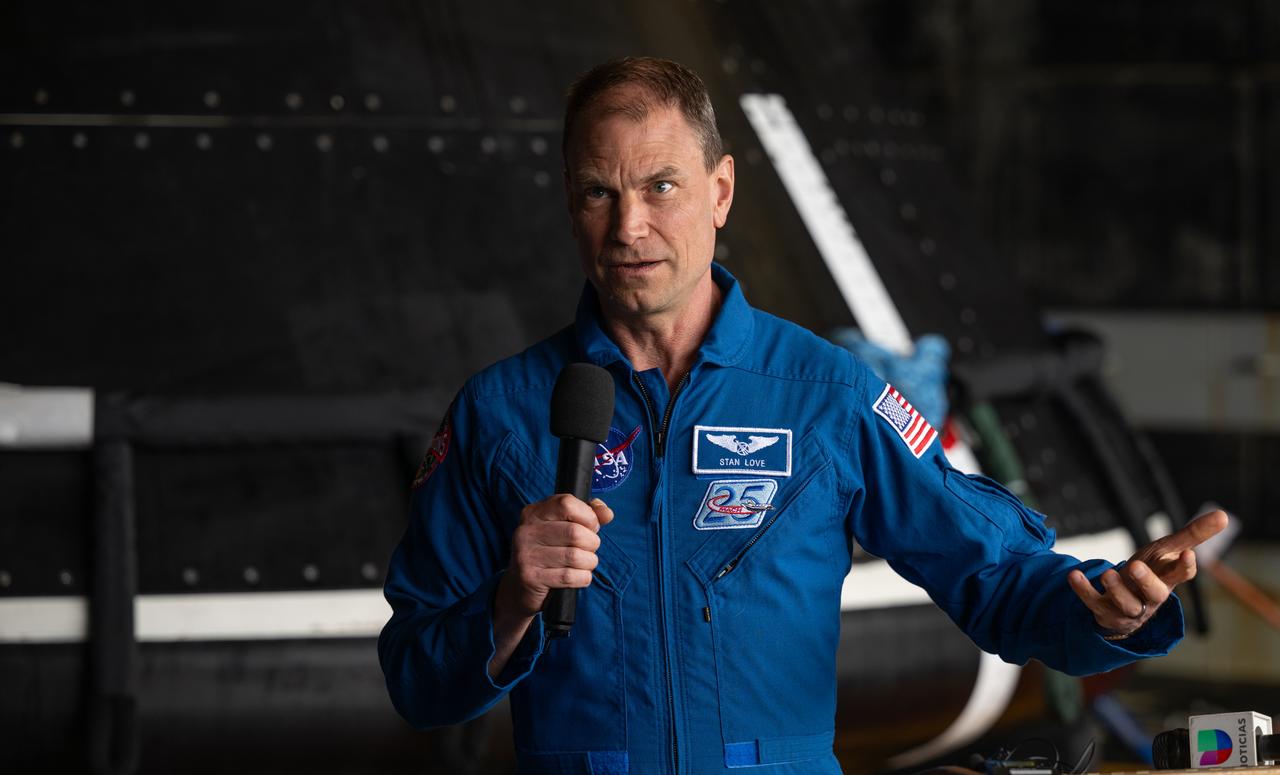
NASA astronaut Stan Love gives remarks during a media event where NASA and the Department of Defense discussed the recovery operations that will bring the Artemis II astronauts and the agency’s Orion spacecraft home at the conclusion of next year’s mission around the Moon, Monday, March 31, 2025, onboard USS Somerset at Naval Base San Diego, in California. The teams spent the week practicing the procedures they will use to recover the astronauts after their more than 600,000 mile journey from Earth to the Moon and back on the first crewed mission under the Artemis campaign. Photo Credit: (NASA/Bill Ingalls)
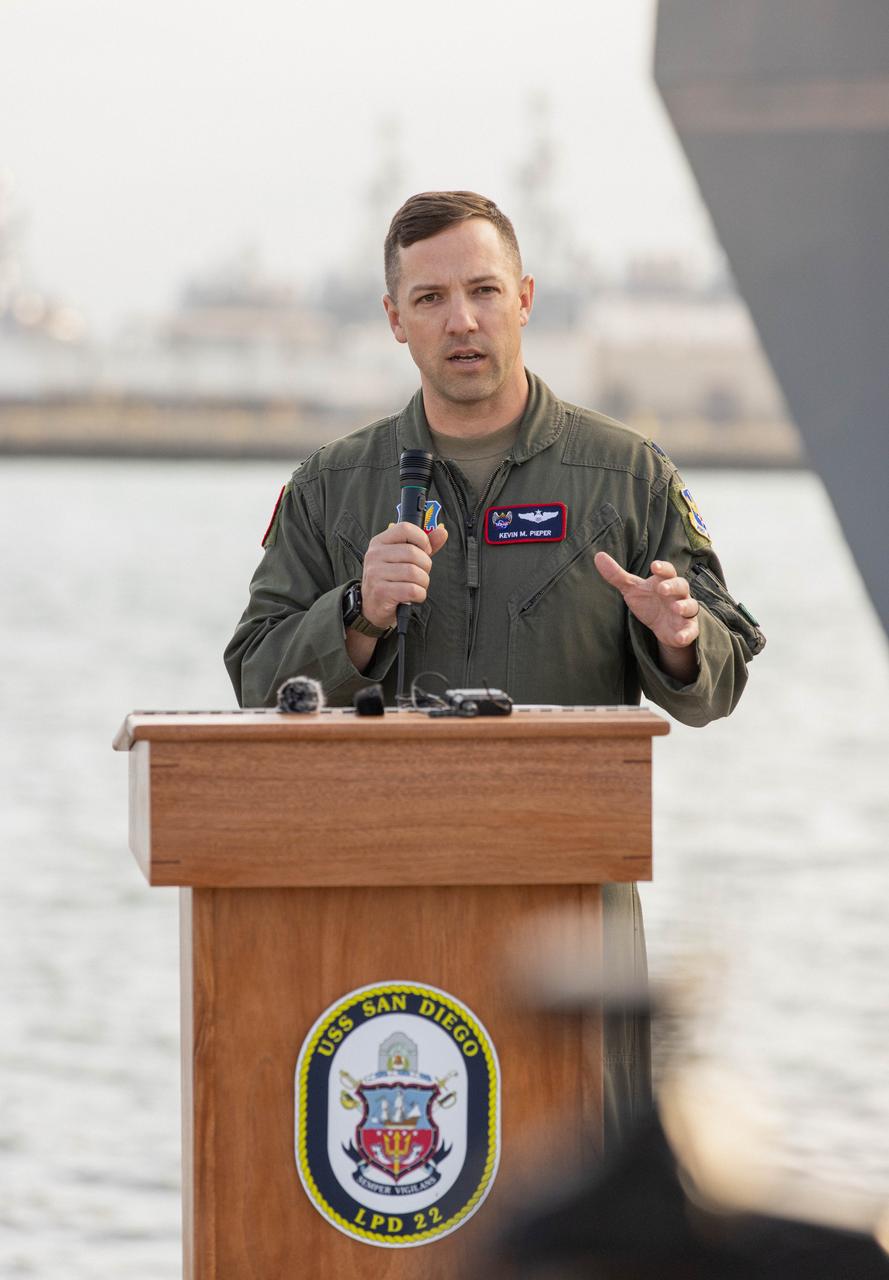
Lt. Col. Kevin Pieper, First Air Force, Detachment 3 Artemis program director discusses the Underway Recovery Test (URT-11) during a news conference held in San Diego, California on Wednesday, Feb. 28, 2024. URT-11 performed by NASA’s Exploration Ground System’s Landing and Recovery team, partners from the Department of Defense, and U.S. Navy personnel aboard the USS San Diego is the eleventh in a series of Artemis recovery tests, and the first the Artemis II recovery procedures involved the astronauts.
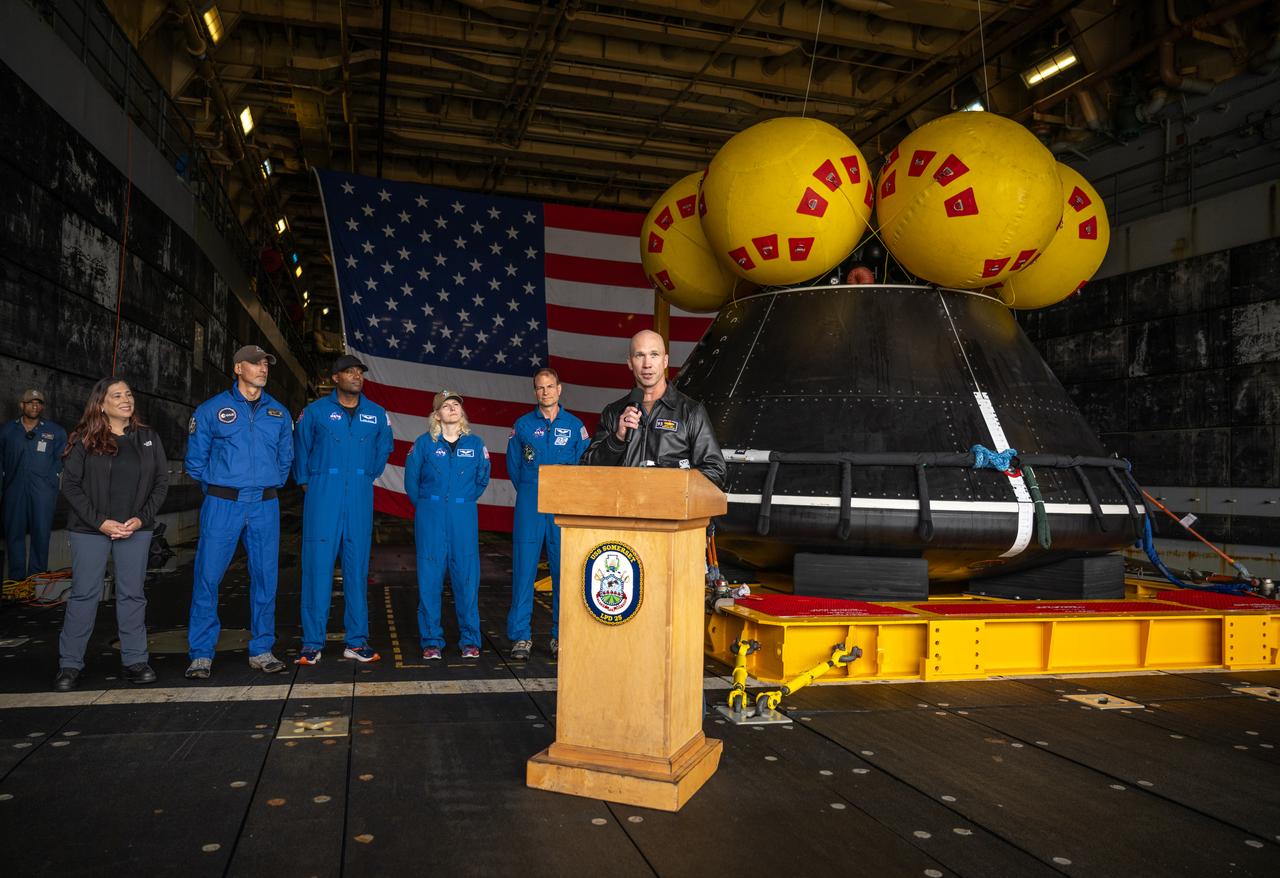
Capt. Andrew “Andy” Koy, commanding officer of USS Somerset (LPD 25), U.S. Navy, gives remarks during a media event where NASA and the Department of Defense discussed the recovery operations that will bring the Artemis II astronauts and the agency’s Orion spacecraft home at the conclusion of next year’s mission around the Moon, Monday, March 31, 2025, onboard USS Somerset at Naval Base San Diego, in California. The teams spent the week practicing the procedures they will use to recover the astronauts after their more than 600,000 mile journey from Earth to the Moon and back on the first crewed mission under the Artemis campaign. Photo Credit: (NASA/Bill Ingalls)
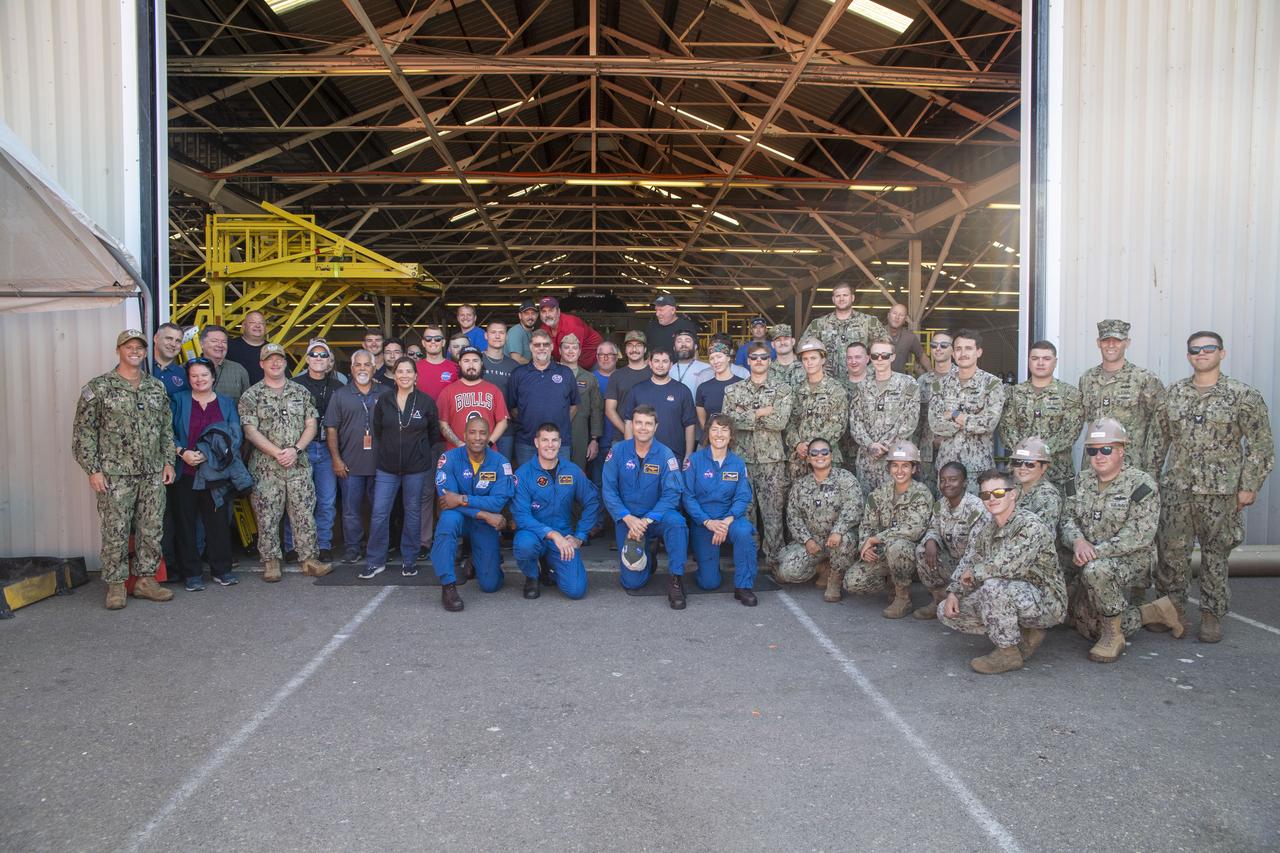
From left to right, NASA astronaut Victor Glover, Canadian Space Agency astronaut Jeremy Hansen, NASA astronauts Reid Wiseman and Christina Hammock Koch, pose with teams from NASA’s Exploration Ground Systems Program and sailors from the U.S. Navy assigned to Amphibious Construction Battalion 1 during a tour of Defense Distribution Depot Center in San Diego, California, on July 19, 2023. The depot is currently being used by NASA to house the Vehicle Advanced Demonstrator for Emergency Recovery, “VADER”, a replica of the space capsule. In preparation for NASA's Artemis II crewed mission, which will send four astronauts in Orion beyond the Moon, NASA and the U.S. Navy will conduct a series of tests to demonstrate and evaluate the processes, procedures, and hardware used in recovery operations for crewed lunar missions. The approximately 10-day flight of Artemis II will test NASA's foundational human deep space exploration capabilities, the Space Launch System rocket and Orion spacecraft, for the first time with astronauts and will pave the way to establishing a long-term presence at the Moon for science and exploration through Artemis.

NASA’s Artemis II crew member NASA astronaut Victor Glover, along with NASA’s Exploration Ground System’s Landing and Recovery team, partners from the Department of Defense, and U.S. Navy personnel, speaks to members of the media about the Underway Recovery Test (URT-11) during a news conference held in San Diego, California on Wednesday, Feb. 28, 2024. URT-11 performed by NASA’s Exploration Ground System’s Landing and Recovery team, partners from the Department of Defense, and U.S. Navy personnel aboard the USS San Diego is the eleventh in a series of Artemis recovery tests, and the first the Artemis II recovery procedures involved the astronauts.
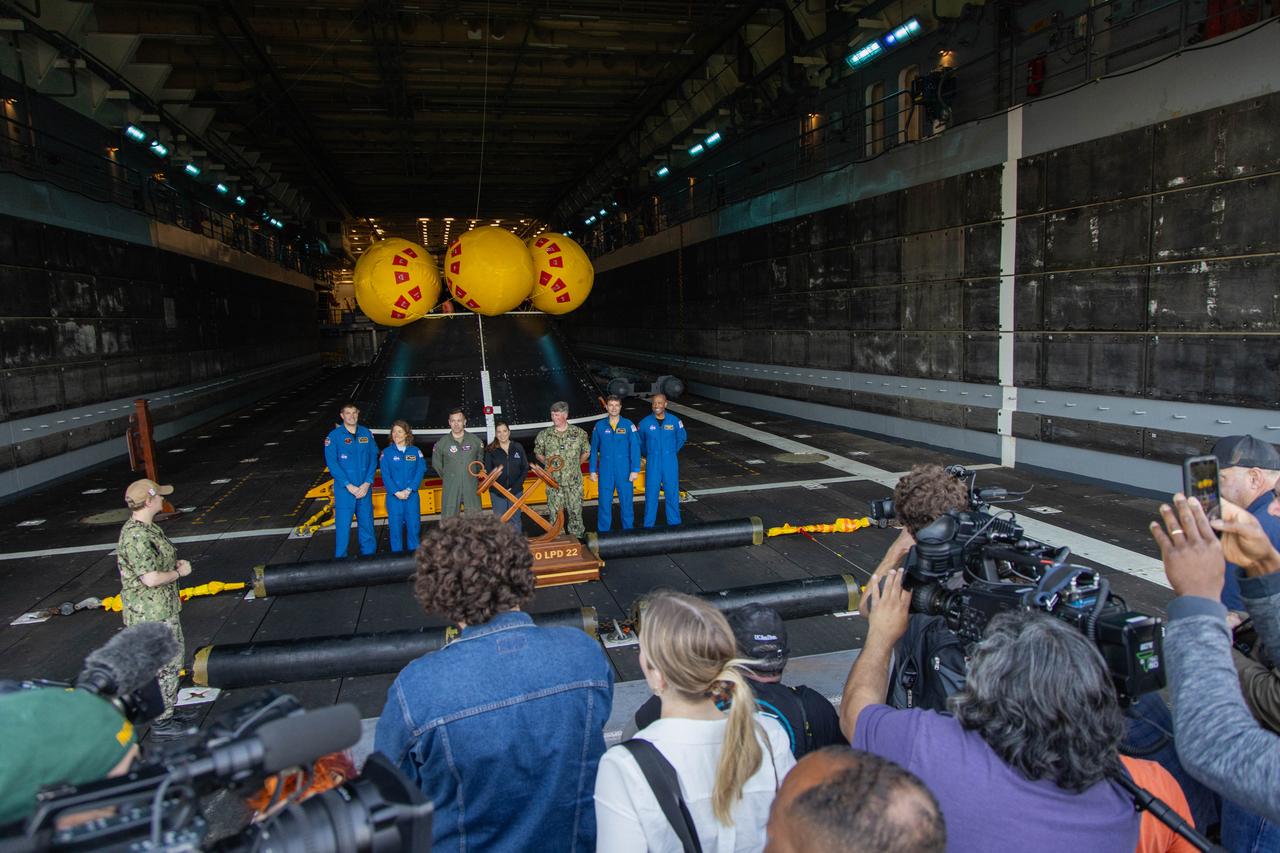
NASA’s Artemis II crew members from right to left, CSA (Canadian Space Agency) astronaut Jeremy Hansen, NASA astronaut Christina Koch, NASA’s Exploration Ground System’s Landing and Recovery team, partners from the Department of Defense, and NASA astronauts Reid Wiseman, and Victor Glover, pose for a photo near a mockup Orion spacecraft in San Diego, California on Wednesday, Feb. 28, 2024, as part of the Underway Recovery Test (URT-11). URT-11, aboard the USS San Diego, is the eleventh in a series of Artemis recovery tests, and the first time NASA and its partners put their Artemis II recovery procedures to the test with the astronauts.
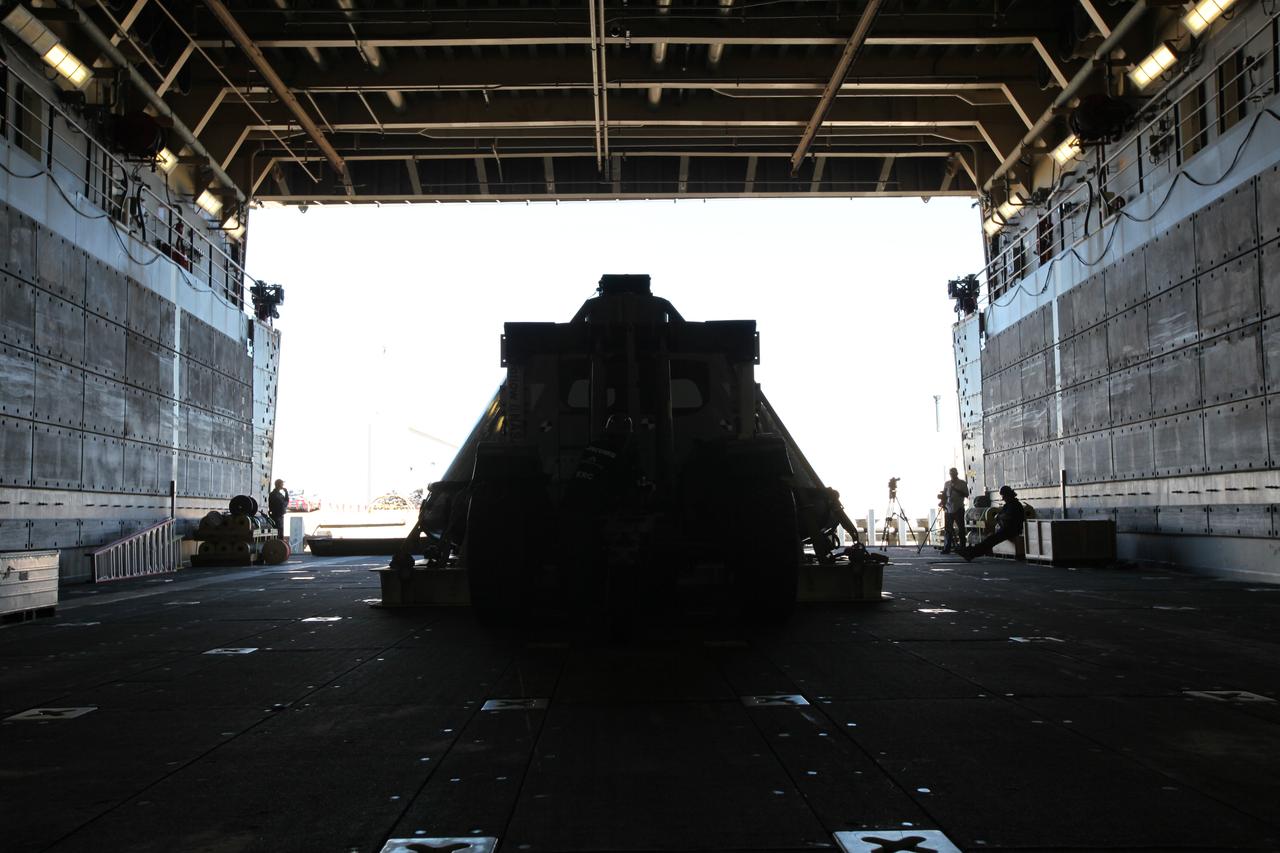
A contract of light and shadow. The test version of the Orion crew module has been transported into the well deck of the USS San Diego at Naval Base San Diego in California, as viewed from inside the ship. NASA, Orion manufacturer Lockheed Martin and the U.S. Navy will head out to sea with the Orion test spacecraft aboard for Underway Recovery Test 5 (URT-5) in the Pacific Ocean off the coast of California. During URT-5, the team will demonstrate and evaluate the recovery processes, procedures, hardware and personnel necessary for recovery of Orion on its return from a deep space mission. Orion is the exploration spacecraft designed to carry astronauts to destinations not yet explored by humans, including an asteroid and NASA Journey to Mars. It will have emergency abort capability, sustain the crew during space travel and provide safe re-entry from deep space return velocities. Orion is scheduled to launch atop NASA’s Space Launch System rocket in 2018. For more information, visit http://www.nasa.gov/orion.
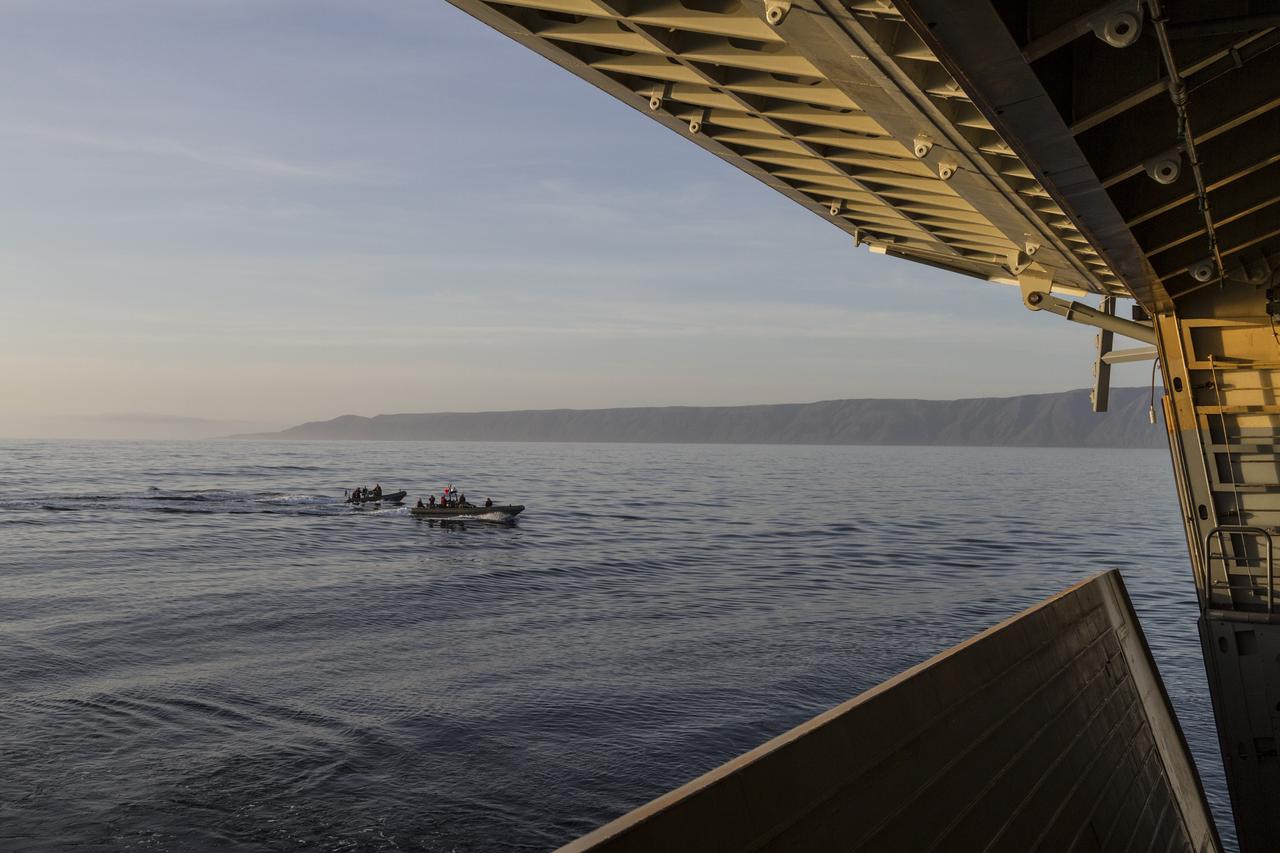
SAN DIEGO, Calif. – The U.S. Navy uses two rigid hull inflatable boats to practice Orion underway recovery test procedures near the USS San Diego, in the Pacific Ocean near the coast of San Diego. The Orion boilerplate test vehicle and other hardware are in its well deck for the test. For the test, the ship traveled about 100 miles offshore. NASA and the U.S. Navy conducted the tests to prepare for recovery of the Orion crew module, forward bay cover and parachutes on its return from a deep space mission. The underway recovery test allowed the teams to demonstrate and evaluate the recovery processes, procedures, hardware and personnel in open waters. During the testing, the tether lines were unable to support the tension caused by crew module motion that was driven by wave turbulence in the well deck of the ship. NASA and the U.S. Navy are reviewing the testing data collected to evaluate the next steps. The Ground Systems Development and Operations Program conducted the underway recovery tests. Orion is the exploration spacecraft designed to carry astronauts to destinations not yet explored by humans, including an asteroid and Mars. It will have emergency abort capability, sustain the crew during space travel and provide safe re-entry from deep space return velocities. The first unpiloted test flight of the Orion is scheduled to launch in 2014 atop a Delta IV rocket and in 2017 on NASA’s Space Launch System rocket. For more information, visit http://www.nasa.gov/orion. Photo credit: NASA/Cory Huston
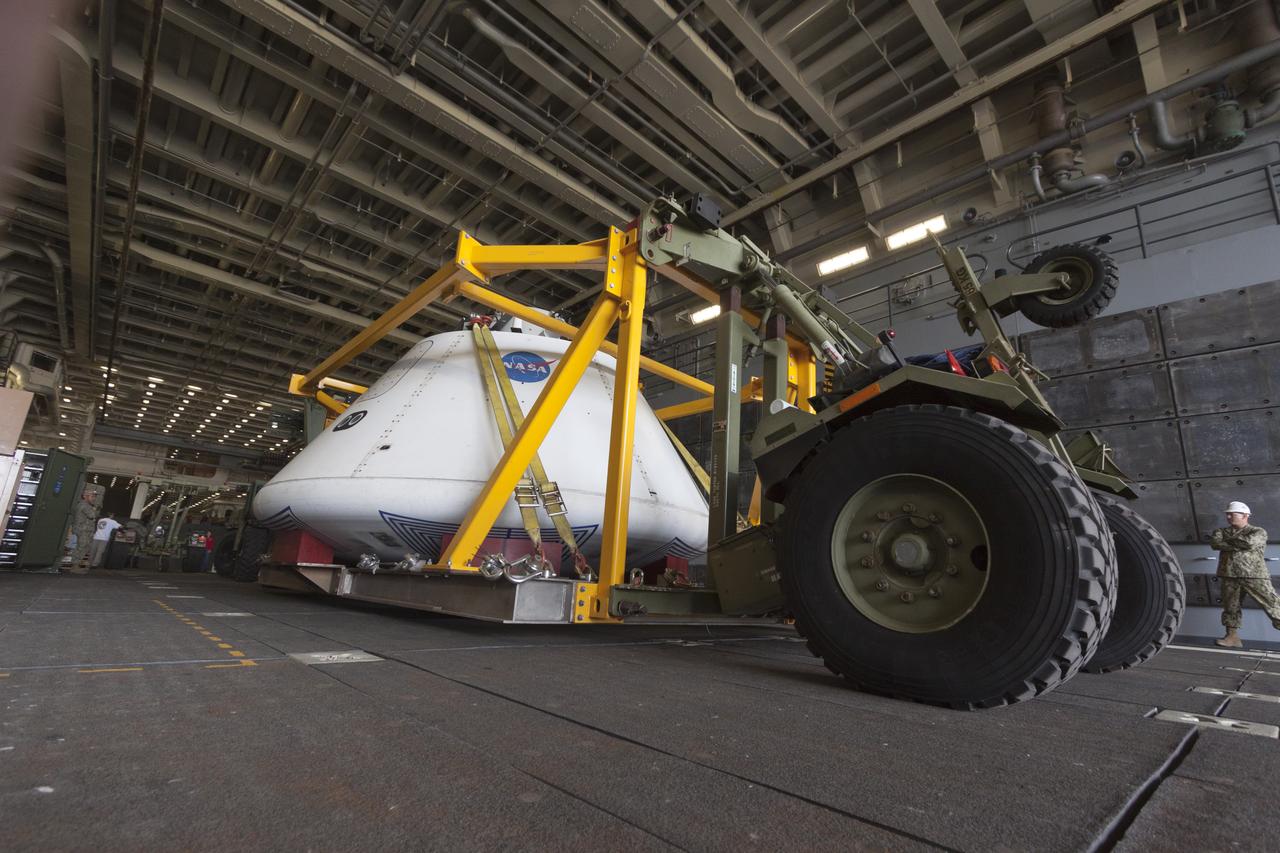
SAN DIEGO, Calif. – The Orion boilerplate test vehicle arrived at the U.S. Naval Base San Diego in California, and was loaded aboard the USS San Diego. Orion was transported in the ship’s well deck about 100 miles offshore for an underway recovery test. NASA and the U.S. Navy are conducting tests to prepare for recovery of the Orion crew module, forward bay cover and parachutes on its return from a deep space mission. The underway recovery test will allow the teams to demonstrate and evaluate the recovery processes, procedures, hardware and personnel in open waters. The Ground Systems Development and Operations Program Orion is the exploration spacecraft designed to carry astronauts to destinations not yet explored by humans, including an asteroid and Mars. It will have emergency abort capability, sustain the crew during space travel and provide safe re-entry from deep space return velocities. The first unpiloted test flight of the Orion is scheduled to launch in 2014 atop a Delta IV rocket and in 2017 on NASA’s Space Launch System rocket. For more information, visit http://www.nasa.gov/orion. Photo credit: NASA/Cory Huston
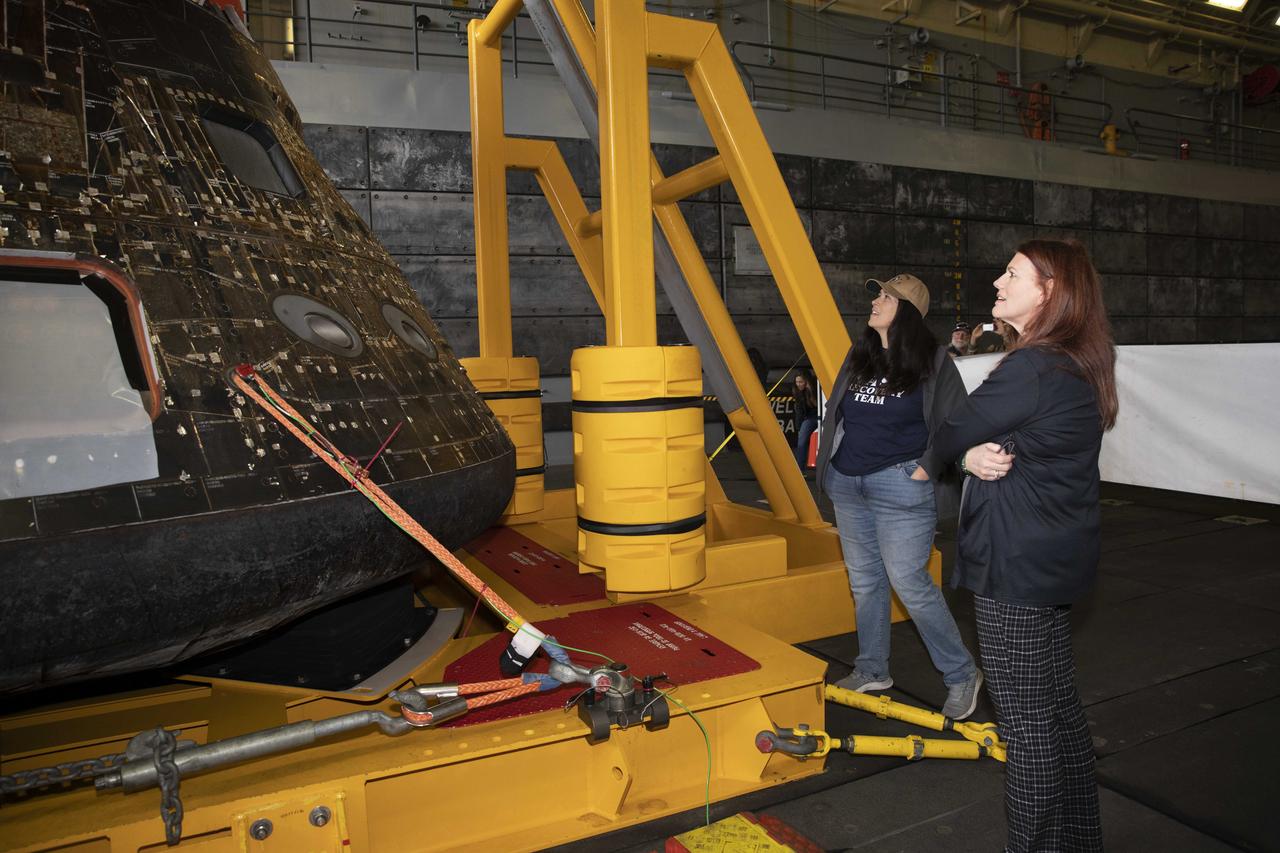
NASA Artemis Launch Director Charlie Blackwell-Thompson, at right, and Melissa Jones, NASA’s Artemis I Recovery director, both with the Exploration Ground Systems program, look at the Artemis I Orion spacecraft inside the well deck of the USS Portland at U.S. Naval Base San Diego on Dec. 13, 2022. The Orion spacecraft is secured inside the well deck after splashing down at 12:40 p.m. EST on Dec. 11, 2022. U.S. Navy divers helped recover the Orion spacecraft. NASA, the Navy and other Department of Defense partners worked together to secure the spacecraft inside the ship’s well deck approximately five hours after Orion splashed down in the Pacific Ocean off the coast of Baja, California.
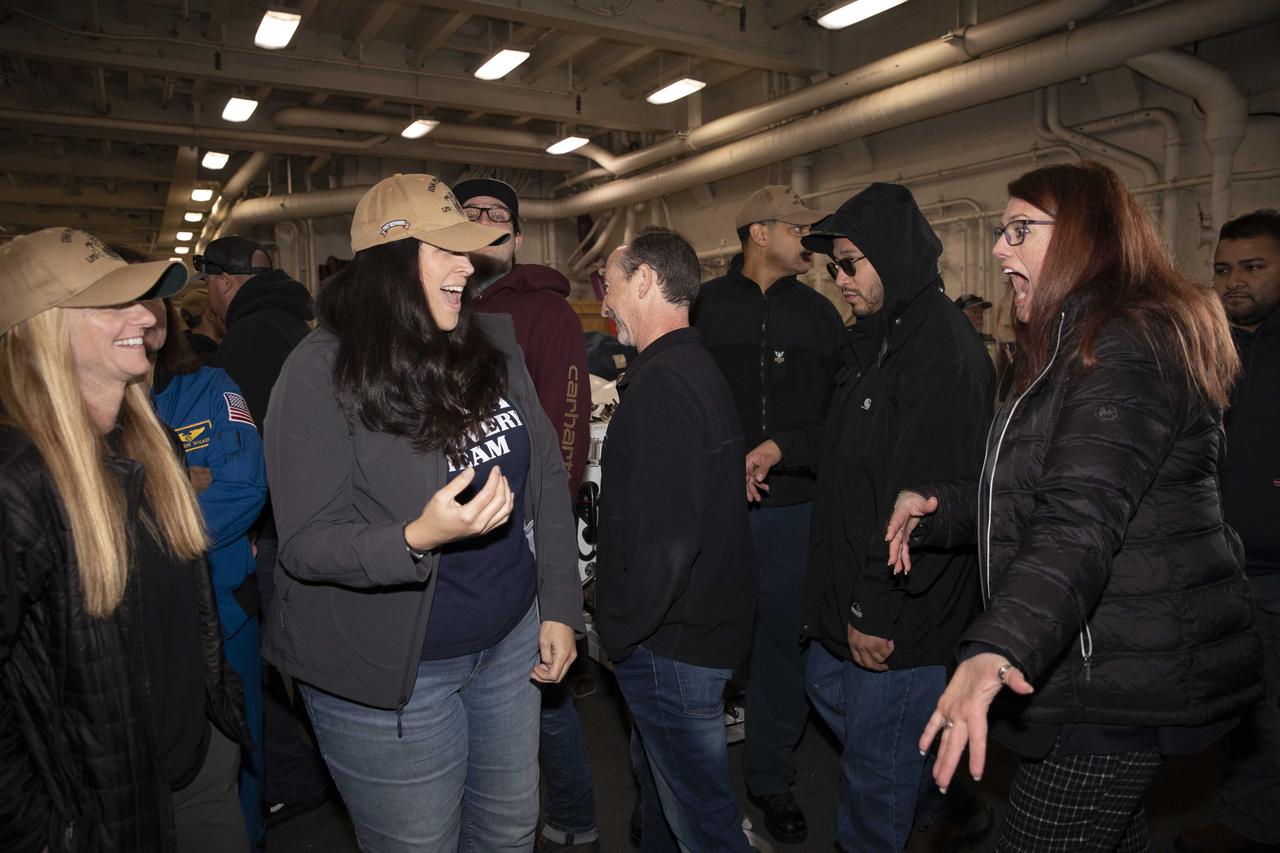
NASA Artemis Launch Director Charlie Blackwell-Thompson, at right, and Melissa Jones, NASA’s Artemis I Recovery director, second from left, both with the Exploration Ground Systems program, along with other recovery team members, exchange congratulations inside the well deck of the USS Portland at U.S. Naval Base San Diego on Dec. 13, 2022. The Orion spacecraft is secured inside the well deck after splashing down at 12:40 p.m. EST on Dec. 11, 2022. U.S. Navy divers helped recover the Orion spacecraft. NASA, the Navy and other Department of Defense partners worked together to secure the spacecraft inside the ship’s well deck approximately five hours after Orion splashed down in the Pacific Ocean off the coast of Baja, California.
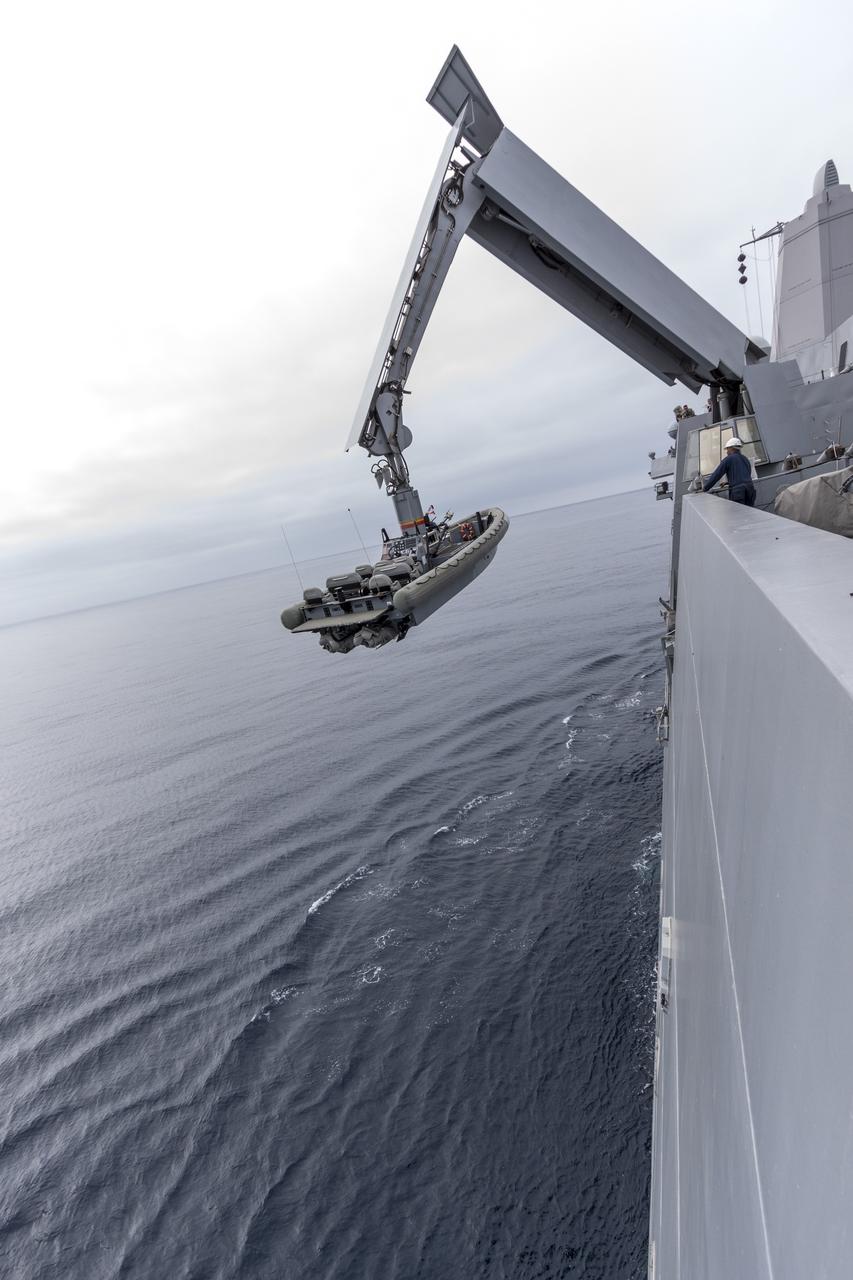
SAN DIEGO, Calif. – The USS San Diego heads out to sea with the Orion boilerplate test vehicle and other hardware in its well deck for an underway recovery test. A crane is used to lower a rigid hull inflatable boat into the water. About 100 miles offshore, NASA and the U.S. Navy conducted tests to prepare for recovery of the Orion crew module, forward bay cover and parachutes on its return from a deep space mission. The underway recovery test will allow the teams to demonstrate and evaluate the recovery processes, procedures, hardware and personnel in open waters. During the testing, the tether lines were unable to support the tension caused by crew module motion that was driven by wave turbulence in the well deck of the ship. NASA and the U.S. Navy are reviewing the testing data collected to evaluate the next steps. The Ground Systems Development and Operations Program conducted the underway recovery tests. Orion is the exploration spacecraft designed to carry astronauts to destinations not yet explored by humans, including an asteroid and Mars. It will have emergency abort capability, sustain the crew during space travel and provide safe re-entry from deep space return velocities. The first unpiloted test flight of the Orion is scheduled to launch in 2014 atop a Delta IV rocket and in 2017 on NASA’s Space Launch System rocket. For more information, visit http://www.nasa.gov/orion. Photo credit: NASA/Cory Huston
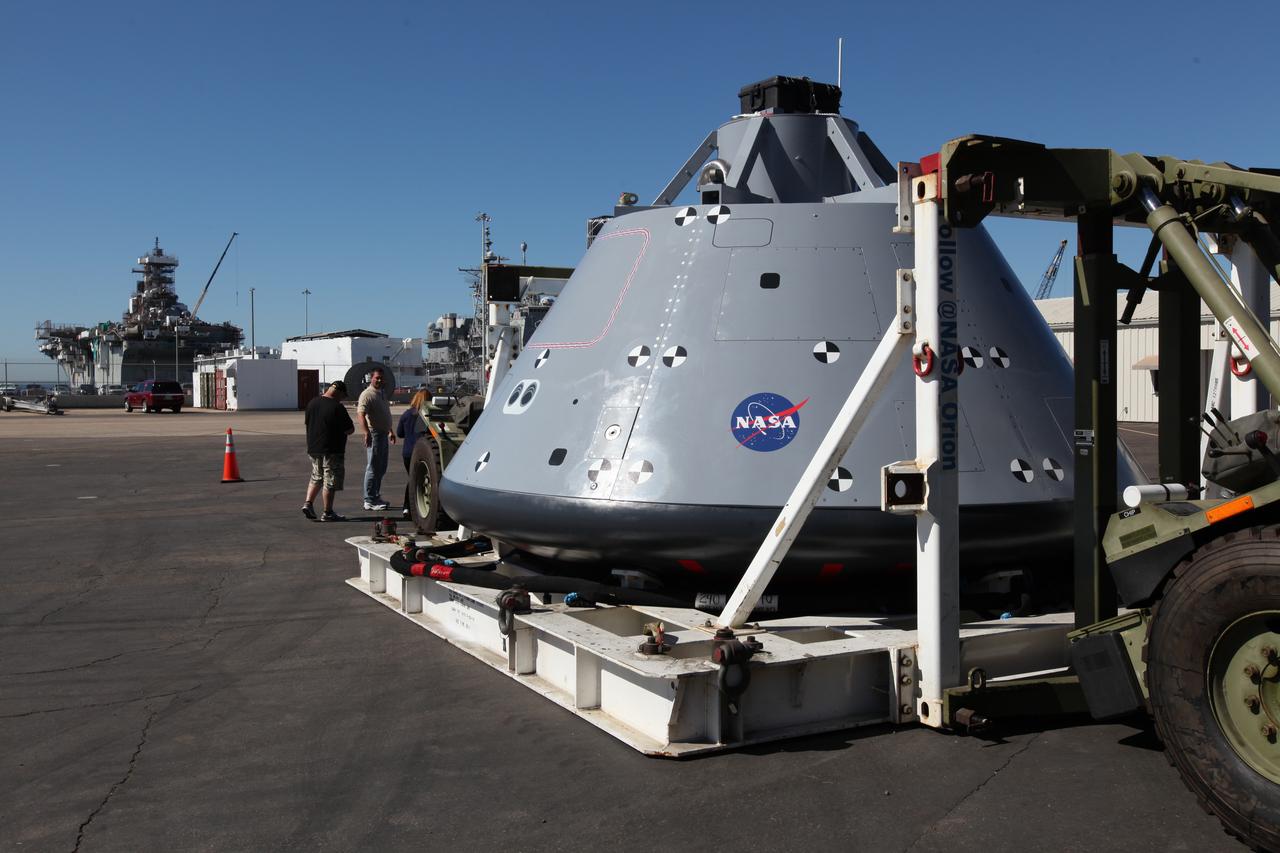
Service members, base employees and their families view a test version of the Orion crew module on display at Naval Base San Diego in California, before Underway Recovery Test 5 (URT-5). NASA, Orion manufacturer Lockheed Martin and the U.S. Navy will head out to sea with the Orion test vehicle aboard the USS San Diego to demonstrate and evaluate the recovery processes, procedures, hardware and personnel necessary for recovery of Orion on its return from a deep space mission. Orion is the exploration spacecraft designed to carry astronauts to destinations not yet explored by humans, including an asteroid and NASA Journey to Mars. It will have emergency abort capability, sustain the crew during space travel and provide safe re-entry from deep space return velocities. Orion is scheduled to launch atop NASA’s Space Launch System rocket in 2018. For more information, visit http://www.nasa.gov/orion.
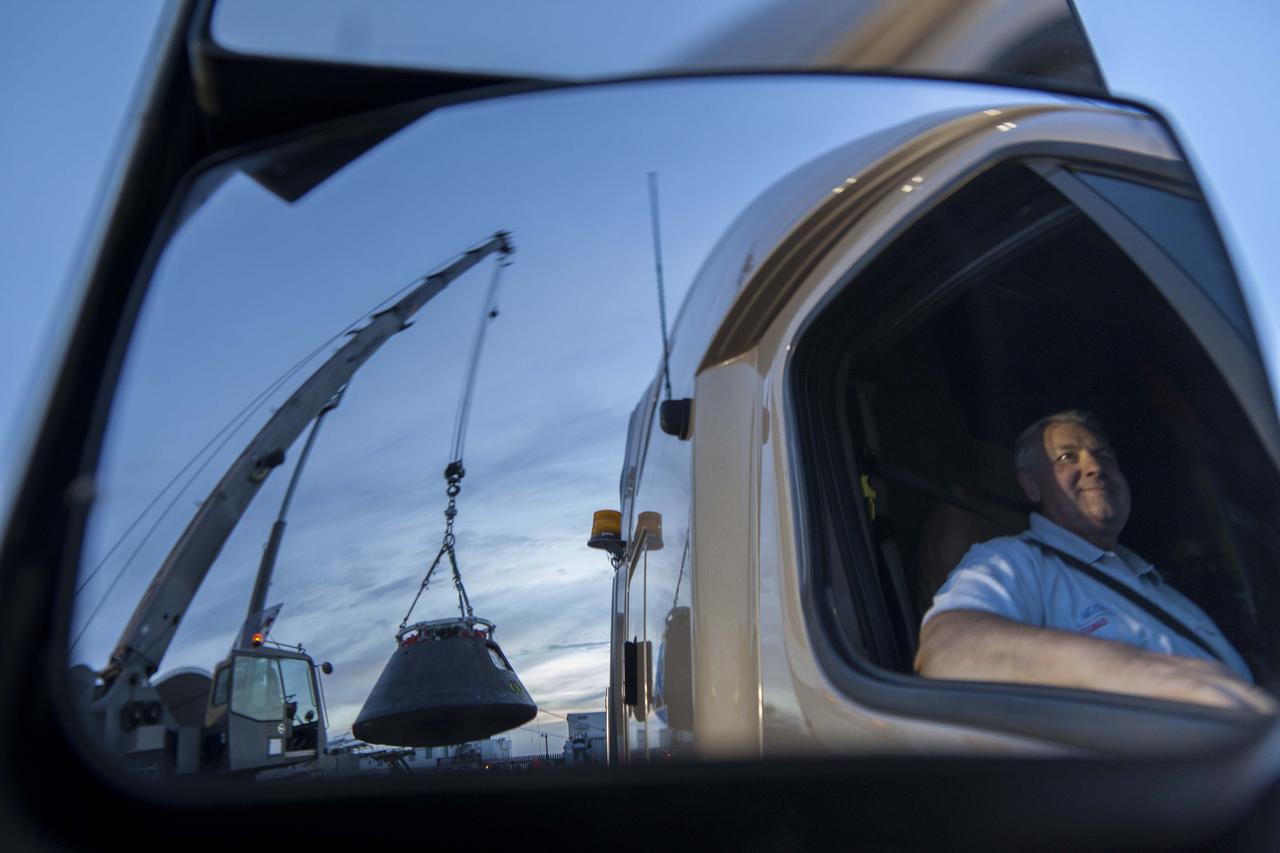
In this reflected view, the Orion crew module is being moved by crane from its crew module recovery cradle and will be placed in the crew module transportation fixture at the Mole Pier at Naval Base San Diego in California. The fixture has been secured on the back of a flatbed truck. Orion is being prepared for the overland trip back to NASA's Kennedy Space Center in Florida. Orion was recovered from the Pacific Ocean after completing a two-orbit, four-and-a-half hour mission Dec. 5 to test systems critical to crew safety, including the launch abort system, the heat shield and the parachute system. NASA, the U.S. Navy and Lockheed Martin coordinated efforts to recover Orion. The Ground Systems Development and Operations Program led the recovery, offload and pre-transportation efforts.
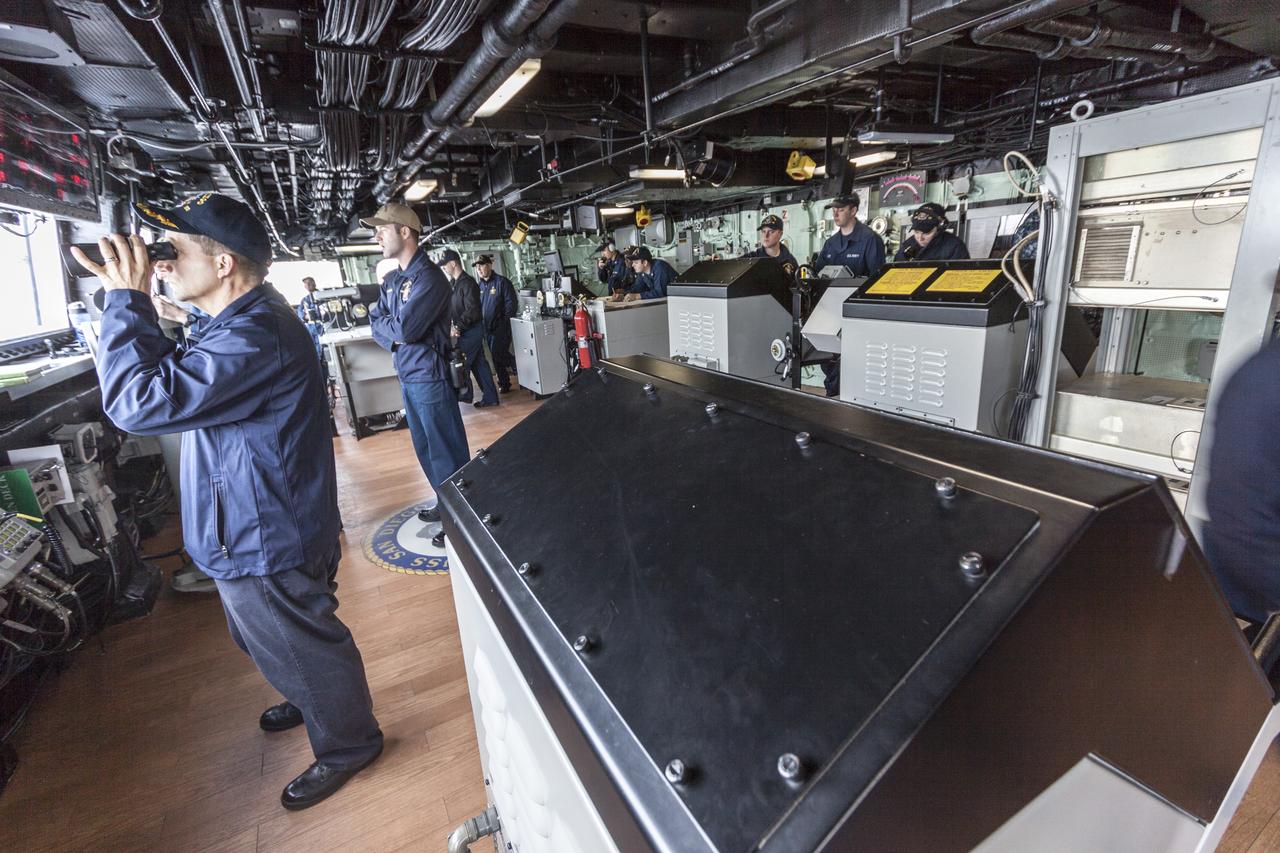
SAN DIEGO, Calif. – At the U.S. Naval Base San Diego in California, the USS San Diego heads out to sea with the Orion boilerplate test vehicle and other hardware in its well deck for an underway recovery test. U.S. Navy personnel monitor conditions as the ship leaves port. About 100 miles offshore, NASA and the U.S. Navy conducted tests to prepare for recovery of the Orion crew module, forward bay cover and parachutes on its return from a deep space mission. The underway recovery test will allow the teams to demonstrate and evaluate the recovery processes, procedures, hardware and personnel in open waters. During the testing, the tether lines were unable to support the tension caused by crew module motion that was driven by wave turbulence in the well deck of the ship. NASA and the U.S. Navy are reviewing the testing data collected to evaluate the next steps. The Ground Systems Development and Operations Program conducted the underway recovery tests. Orion is the exploration spacecraft designed to carry astronauts to destinations not yet explored by humans, including an asteroid and Mars. It will have emergency abort capability, sustain the crew during space travel and provide safe re-entry from deep space return velocities. The first unpiloted test flight of the Orion is scheduled to launch in 2014 atop a Delta IV rocket and in 2017 on NASA’s Space Launch System rocket. For more information, visit http://www.nasa.gov/orion. Photo credit: NASA/Cory Huston
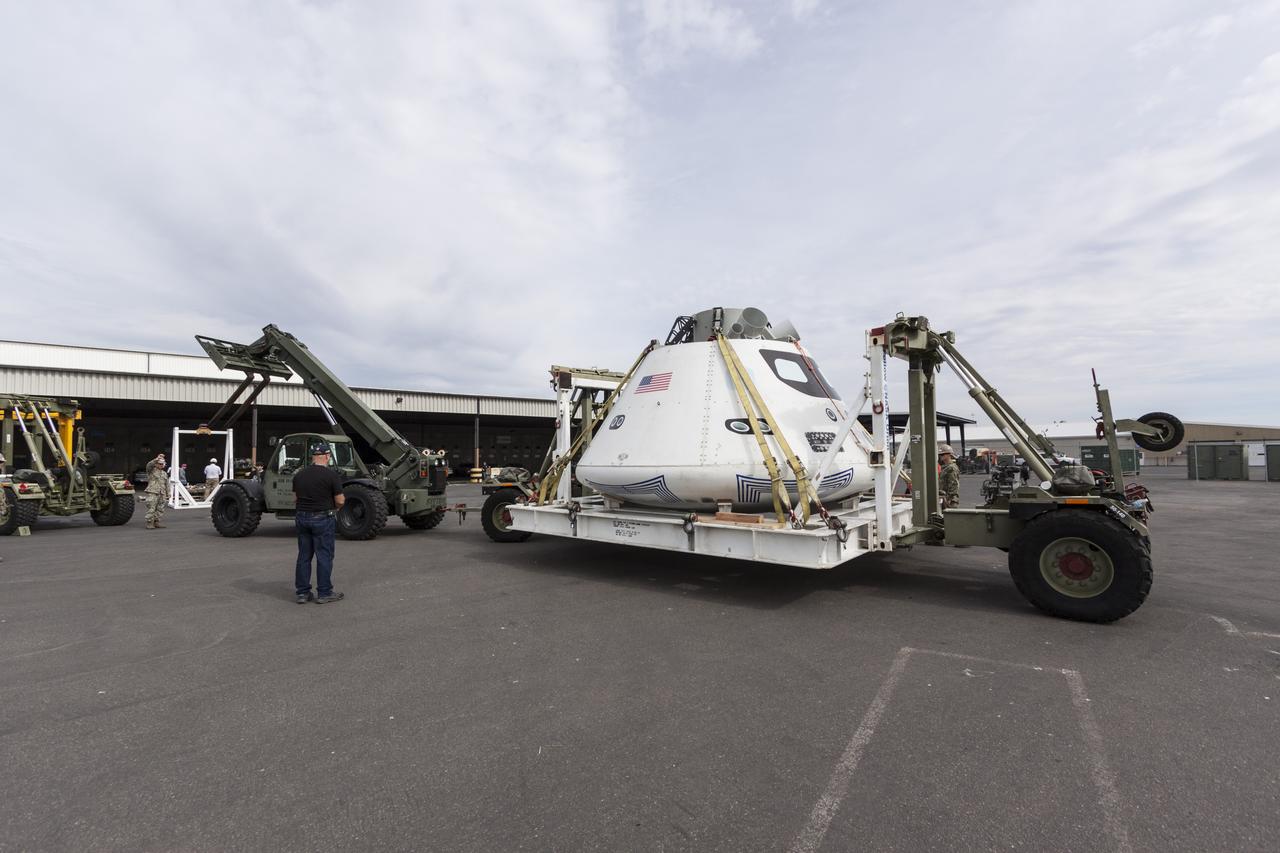
SAN DIEGO, Calif. – The Orion boilerplate test vehicle was offloaded from the USS San Diego at the U.S. Naval Base San Diego in California. Orion was transported in the ship’s well deck about 100 miles offshore for an underway recovery test. NASA and the U.S. Navy conducted tests to prepare for recovery of the Orion crew module, forward bay cover and parachutes on its return from a deep space mission. The underway recovery test allowed the teams to demonstrate and evaluate the recovery processes, procedures, hardware and personnel in open waters. During the testing, the tether lines were unable to support the tension caused by crew module motion that was driven by wave turbulence in the well deck of the ship. NASA and the U.S. Navy are reviewing the testing data collected to evaluate the next steps. The Ground Systems Development and Operations Program was conducting the recovery tests. Orion is the exploration spacecraft designed to carry astronauts to destinations not yet explored by humans, including an asteroid and Mars. It will have emergency abort capability, sustain the crew during space travel and provide safe re-entry from deep space return velocities. The first unpiloted test flight of the Orion is scheduled to launch in 2014 atop a Delta IV rocket and in 2017 on NASA’s Space Launch System rocket. For more information, visit http://www.nasa.gov/orion. Photo credit: NASA/Cory Huston
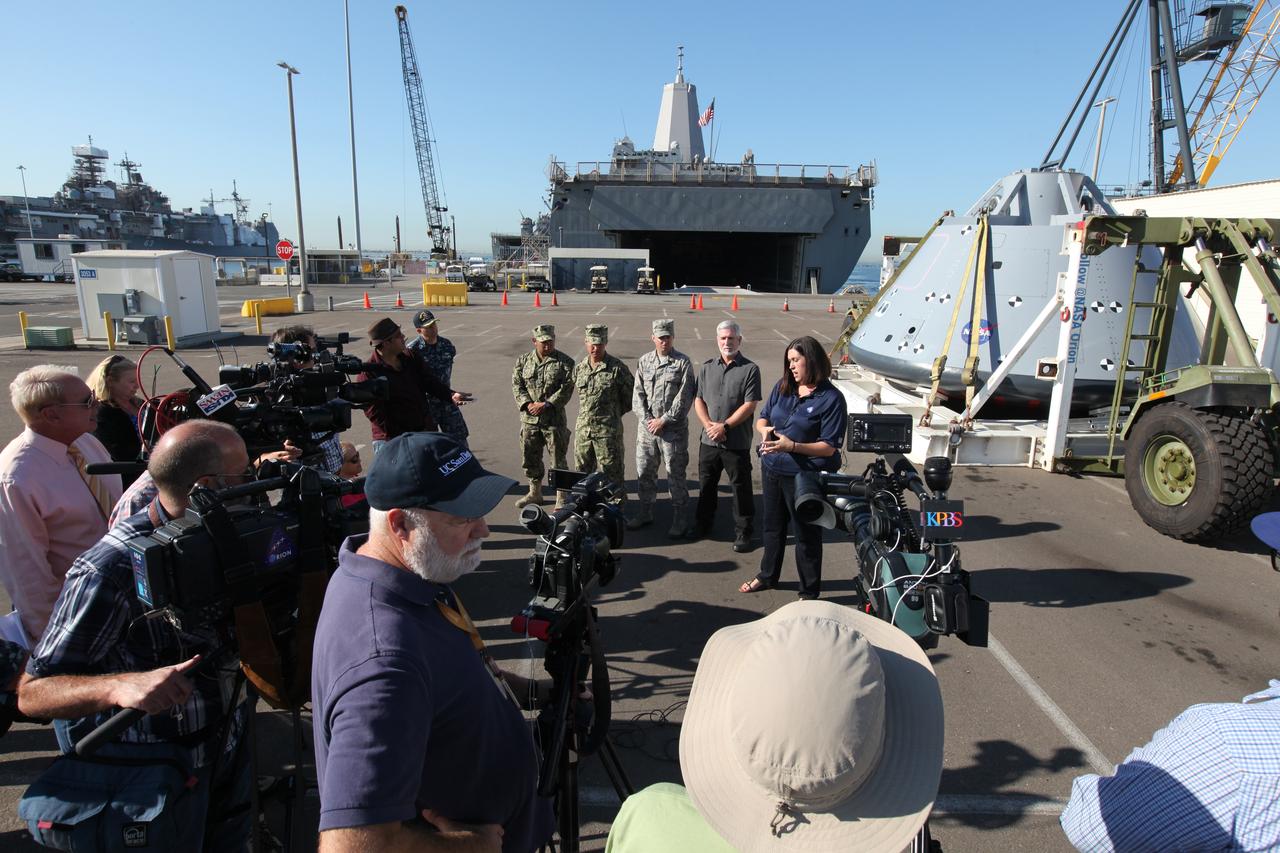
Melissa Jones, far right, Landing and Recovery director with the Ground Systems Development and Operations Program (GSDO), speaks to members of the media about Orion Underway Recovery Test 5. The USS San Diego is docked at Naval Base San Diego in California and the test version of the Orion crew module, secured on its handling fixture, was offloaded from the well deck of the ship. NASA's GSDO Program and the U.S. Navy completed a series of tests using the ship's well deck, the test module, various watercraft and equipment to prepare for recovery of Orion on its return from deep space missions. The testing allowed the team to demonstrate and evaluate recovery processes, procedures, hardware and personnel in open waters. Orion is the exploration spacecraft designed to carry astronauts to destinations not yet explored by humans, including an asteroid and NASA's Journey to Mars. It will have emergency abort capability, sustain the crew during space travel and provide safe re-entry from deep space return velocities. Orion is scheduled to launch on NASA's Space Launch System in late 2018. For more information, visit http://www.nasa.gov/orion.
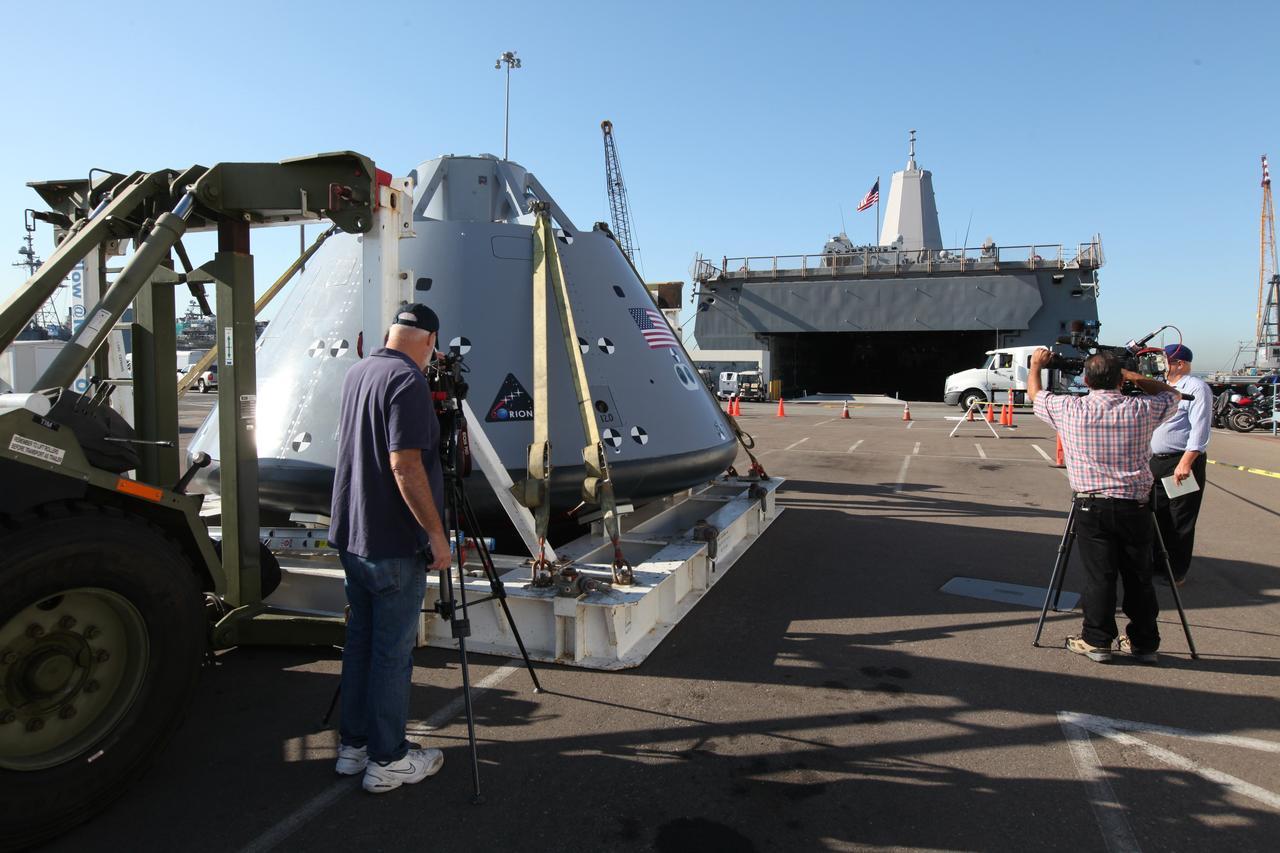
The USS San Diego is docked at Naval Base San Diego in California after returning from Underway Recovery Test 5 in the Pacific Ocean. A test version of the Orion crew module, secured on its handling fixture, was offloaded from the well deck of the ship. NASA's Ground Systems Development and Operations Program and the U.S. Navy completed a series of tests using the ship's well deck, the test module, various watercraft and equipment to prepare for recovery of Orion on its return from deep space missions. The testing allowed the team to demonstrate and evaluate recovery processes, procedures, hardware and personnel in open waters. Orion is the exploration spacecraft designed to carry astronauts to destinations not yet explored by humans, including an asteroid and NASA's Journey to Mars. It will have emergency abort capability, sustain the crew during space travel and provide safe re-entry from deep space return velocities. Orion is scheduled to launch on NASA's Space Launch System in late 2018. For more information, visit http://www.nasa.gov/orion.
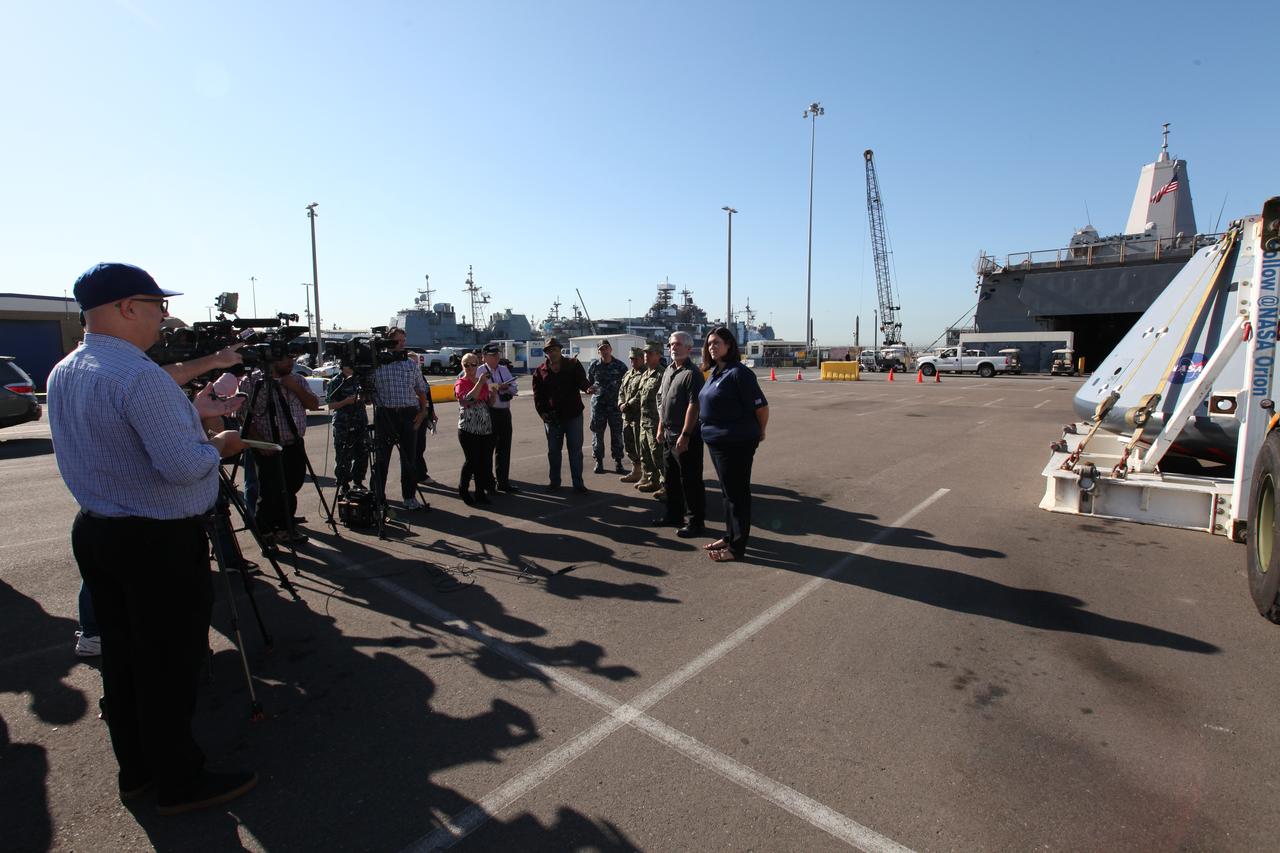
Melissa Jones, far right, Landing and Recovery director with the Ground Systems Development and Operations Program (GSDO), and other members of the recovery team speak to members of the media about Orion Underway Recovery Test 5. The USS San Diego is docked at Naval Base San Diego in California and the test version of the Orion crew module, secured on its handling fixture, was offloaded from the well deck of the ship. NASA's GSDO Program and the U.S. Navy completed a series of tests using the ship's well deck, the test module, various watercraft and equipment to prepare for recovery of Orion on its return from deep space missions. The testing allowed the team to demonstrate and evaluate recovery processes, procedures, hardware and personnel in open waters. Orion is the exploration spacecraft designed to carry astronauts to destinations not yet explored by humans, including an asteroid and NASA's Journey to Mars. It will have emergency abort capability, sustain the crew during space travel and provide safe re-entry from deep space return velocities. Orion is scheduled to launch on NASA's Space Launch System in late 2018. For more information, visit http://www.nasa.gov/orion.
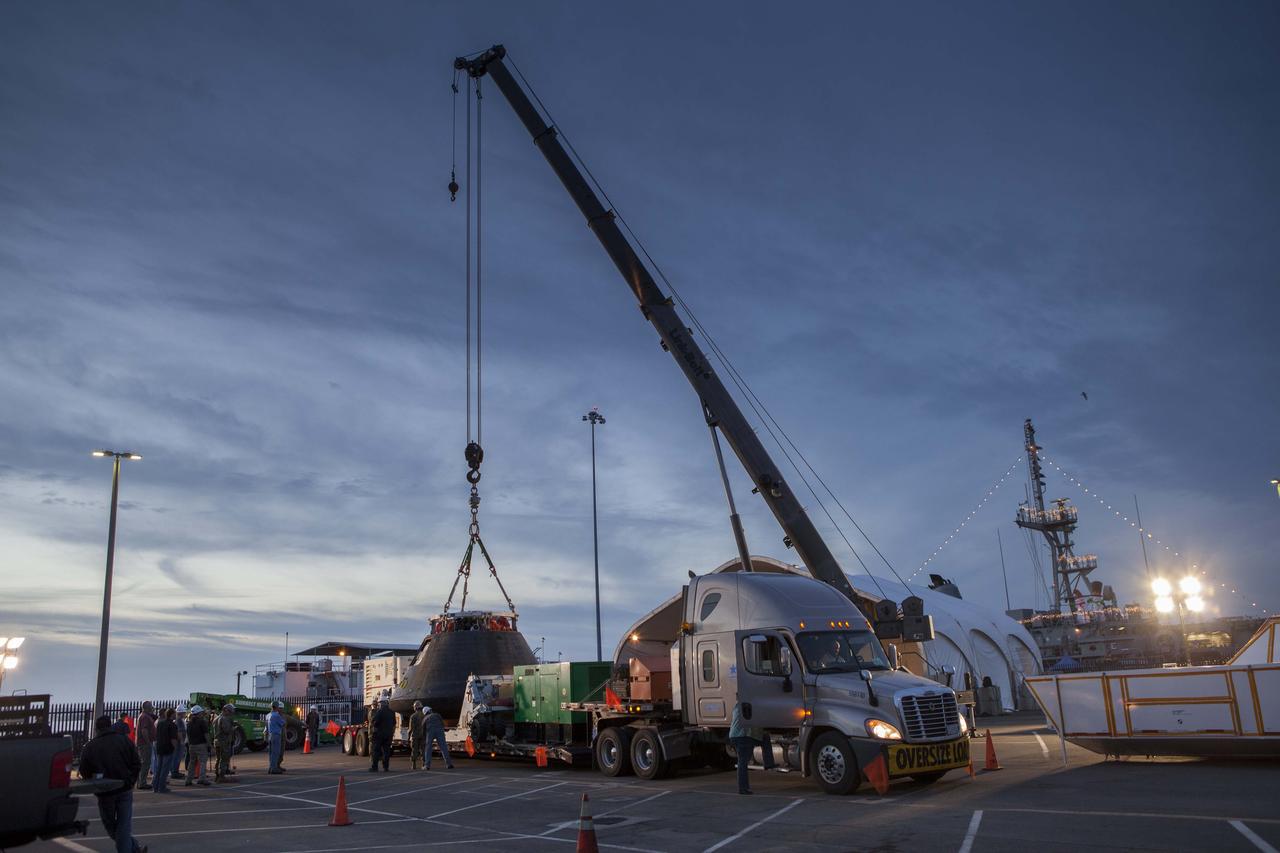
The Orion crew module is being lowered onto the crew module transportation fixture at the Mole Pier at Naval Base San Diego in California. The fixture has been secured on the back of a flatbed truck. Orion is being prepared for the overland trip back to NASA's Kennedy Space Center in Florida. Orion was recovered from the Pacific Ocean after completing a two-orbit, four-and-a-half hour mission Dec. 5 to test systems critical to crew safety, including the launch abort system, the heat shield and the parachute system. NASA, the U.S. Navy and Lockheed Martin coordinated efforts to recover Orion. The Ground Systems Development and Operations Program led the recovery, offload and pre-transportation efforts.

Ground support equipment for use during an alternate recovery method of the Orion crew module after its first flight test, is being prepared for loading into the well deck of the USNS Salvor, a salvage ship, at Naval Base San Diego in California. Before launch of Orion on a Delta IV Heavy rocket from Cape Canaveral Air Force Station in Florida, NASA, Lockheed Martin and U.S. Navy personnel will head out to sea in the USS Anchorage and the USNS Salvor and wait for splashdown of the Orion crew module in the Pacific Ocean. The Ground Systems Development and Operations Program will lead the recovery efforts. Orion is the exploration spacecraft designed to carry astronauts to destinations not yet explored by humans, including an asteroid and Mars. It will have emergency abort capability, sustain the crew during space travel and provide safe re-entry from deep space return velocities. The first unpiloted flight test of Orion is scheduled to launch in December atop a United Launch Alliance Delta IV Heavy rocket and in 2018 on NASA’s Space Launch System rocket.
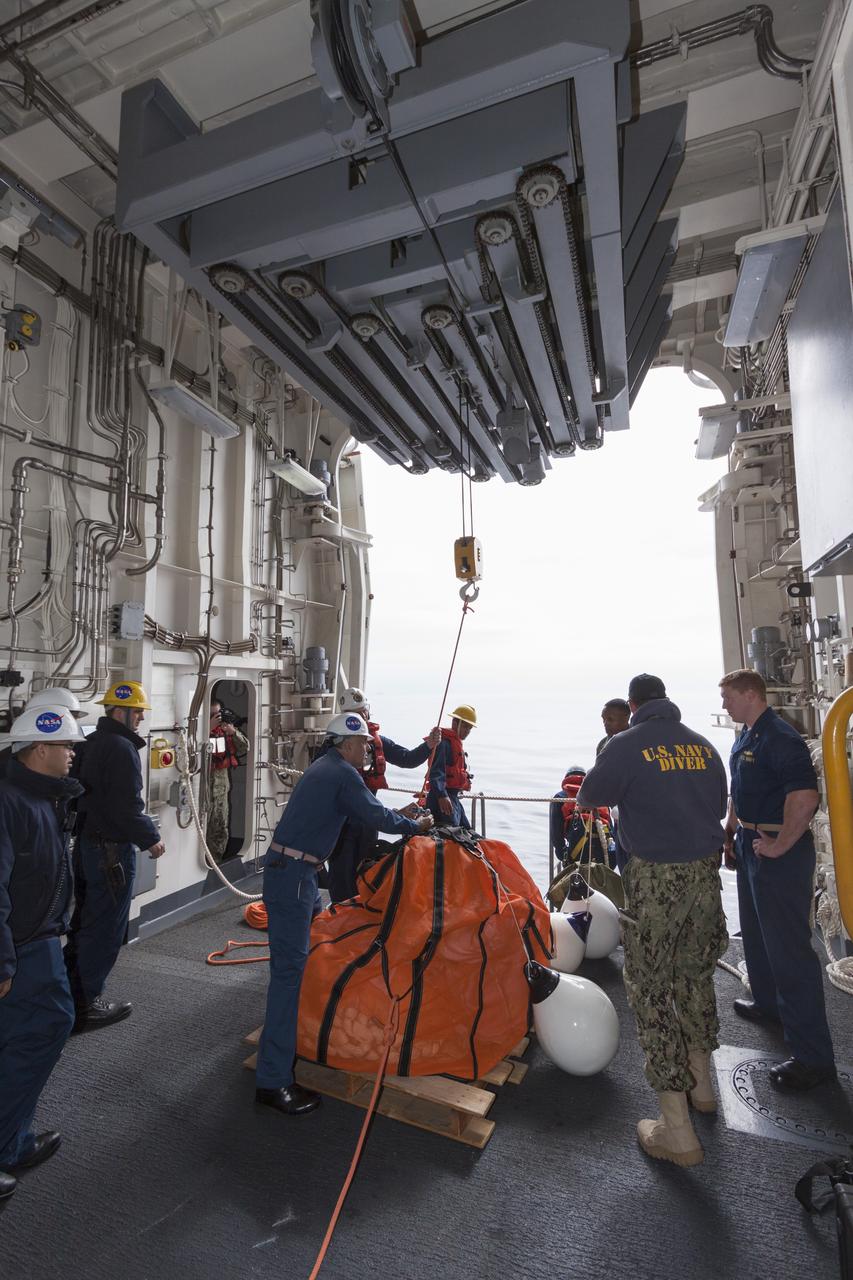
SAN DIEGO, Calif. – In the well deck of the USS San Diego, NASA and U.S. Navy personnel prepare a parachute for transfer into the water as part of the Orion underway recovery test. The Orion boilerplate test vehicle and other hardware are secured in the well deck of the ship in preparation for the test about 100 miles off the coast of San Diego, California. NASA and the U.S. Navy conducted tests to prepare for the recovery of the Orion crew module, forward bay cover and parachutes on its return from a deep space mission. The underway recovery test will allow the teams to demonstrate and evaluate the recovery processes, procedures, hardware and personnel in open waters. During the testing, the tether lines were unable to support the tension caused by crew module motion that was driven by wave turbulence in the well deck of the ship. NASA and the U.S. Navy are reviewing the testing data collected to evaluate the next steps. The Ground Systems Development and Operations Program conducted the underway recovery tests. Orion is the exploration spacecraft designed to carry astronauts to destinations not yet explored by humans, including an asteroid and Mars. It will have emergency abort capability, sustain the crew during space travel and provide safe re-entry from deep space return velocities. The first unpiloted test flight of the Orion is scheduled to launch in 2014 atop a Delta IV rocket and in 2017 on NASA’s Space Launch System rocket. For more information, visit http://www.nasa.gov/orion. Photo credit: NASA/Cory Huston
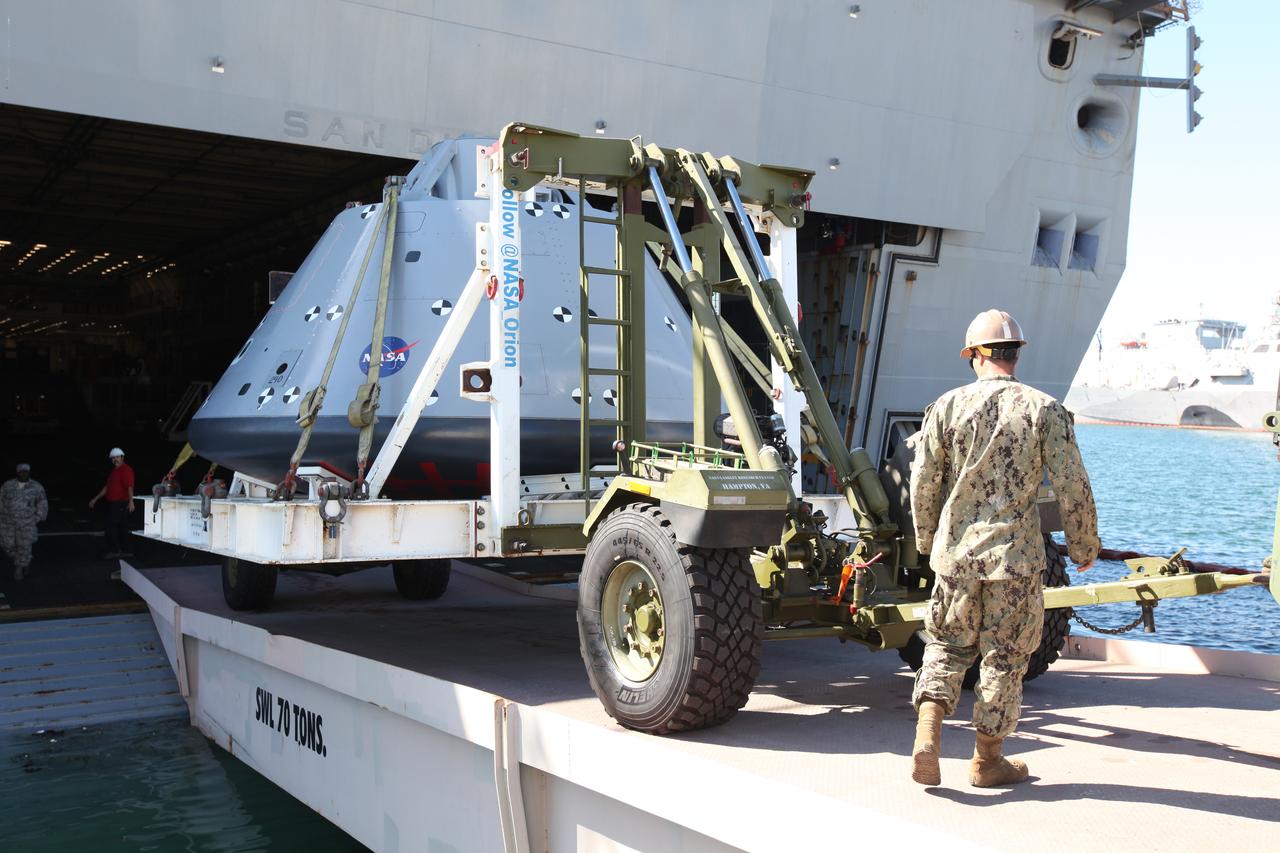
The USS San Diego is docked at Naval Base San Diego in California after returning from Underway Recovery Test 5 in the Pacific Ocean. A test version of the Orion crew module is being offloaded from the well deck of the ship. NASA's Ground Systems Development and Operations Program and the U.S. Navy completed a series of tests using the ship's well deck, the test module, various watercraft and equipment to prepare for recovery of Orion on its return from deep space missions. The testing allowed the team to demonstrate and evaluate recovery processes, procedures, hardware and personnel in open waters. Orion is the exploration spacecraft designed to carry astronauts to destinations not yet explored by humans, including an asteroid and NASA's Journey to Mars. It will have emergency abort capability, sustain the crew during space travel and provide safe re-entry from deep space return velocities. Orion is scheduled to launch on NASA's Space Launch System in late 2018. For more information, visit http://www.nasa.gov/orion.
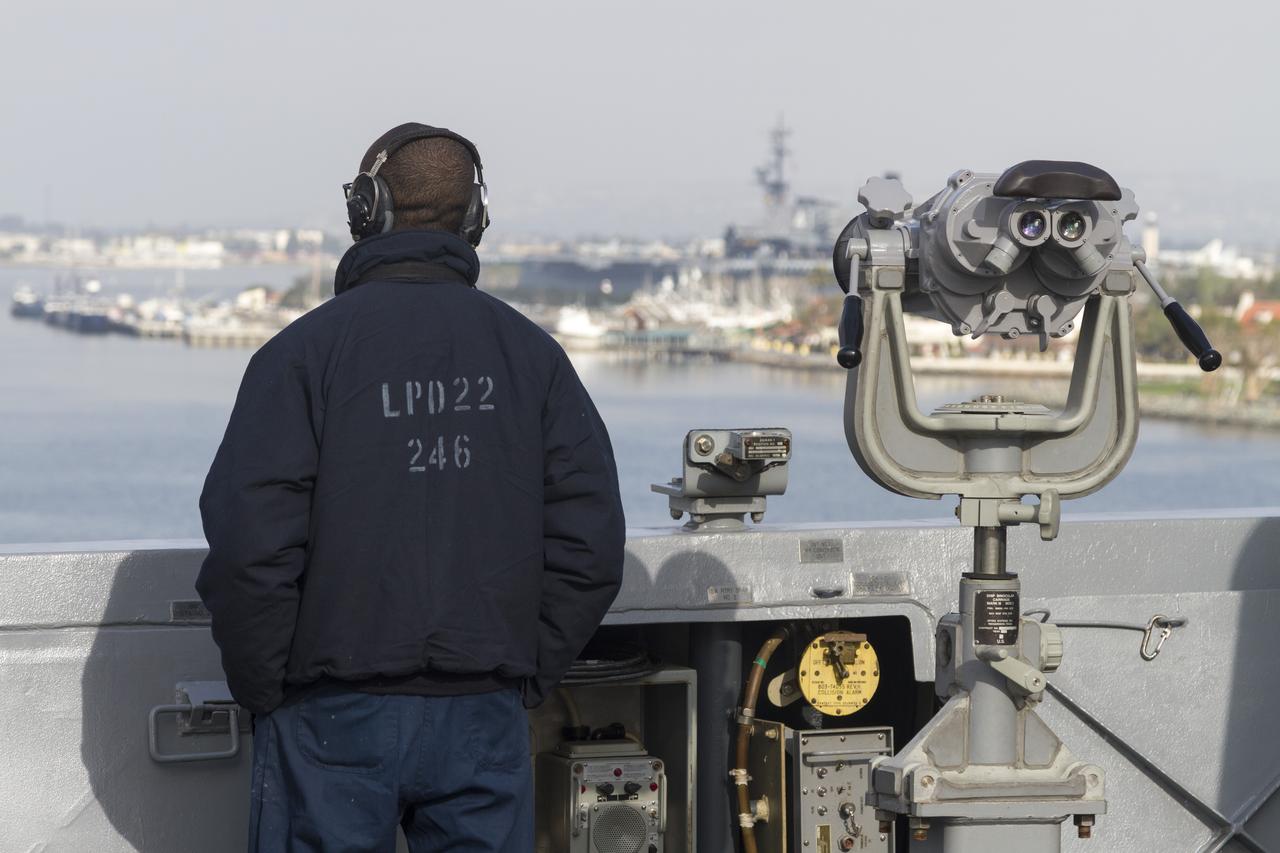
SAN DIEGO, Calif. – At the U.S. Naval Base San Diego in California, the USS San Diego heads out to sea with the Orion boilerplate test vehicle and other hardware in its well deck for an underway recovery test. About 100 miles offshore, NASA and the U.S. Navy conducted tests to prepare for recovery of the Orion crew module, forward bay cover and parachutes on its return from a deep space mission. The underway recovery test will allow the teams to demonstrate and evaluate the recovery processes, procedures, hardware and personnel in open waters. During the testing, the tether lines were unable to support the tension caused by crew module motion that was driven by wave turbulence in the well deck of the ship. NASA and the U.S. Navy are reviewing the testing data collected to evaluate the next steps. The Ground Systems Development and Operations Program conducted the underway recovery tests. Orion is the exploration spacecraft designed to carry astronauts to destinations not yet explored by humans, including an asteroid and Mars. It will have emergency abort capability, sustain the crew during space travel and provide safe re-entry from deep space return velocities. The first unpiloted test flight of the Orion is scheduled to launch in 2014 atop a Delta IV rocket and in 2017 on NASA’s Space Launch System rocket. For more information, visit http://www.nasa.gov/orion. Photo credit: NASA/Cory Huston
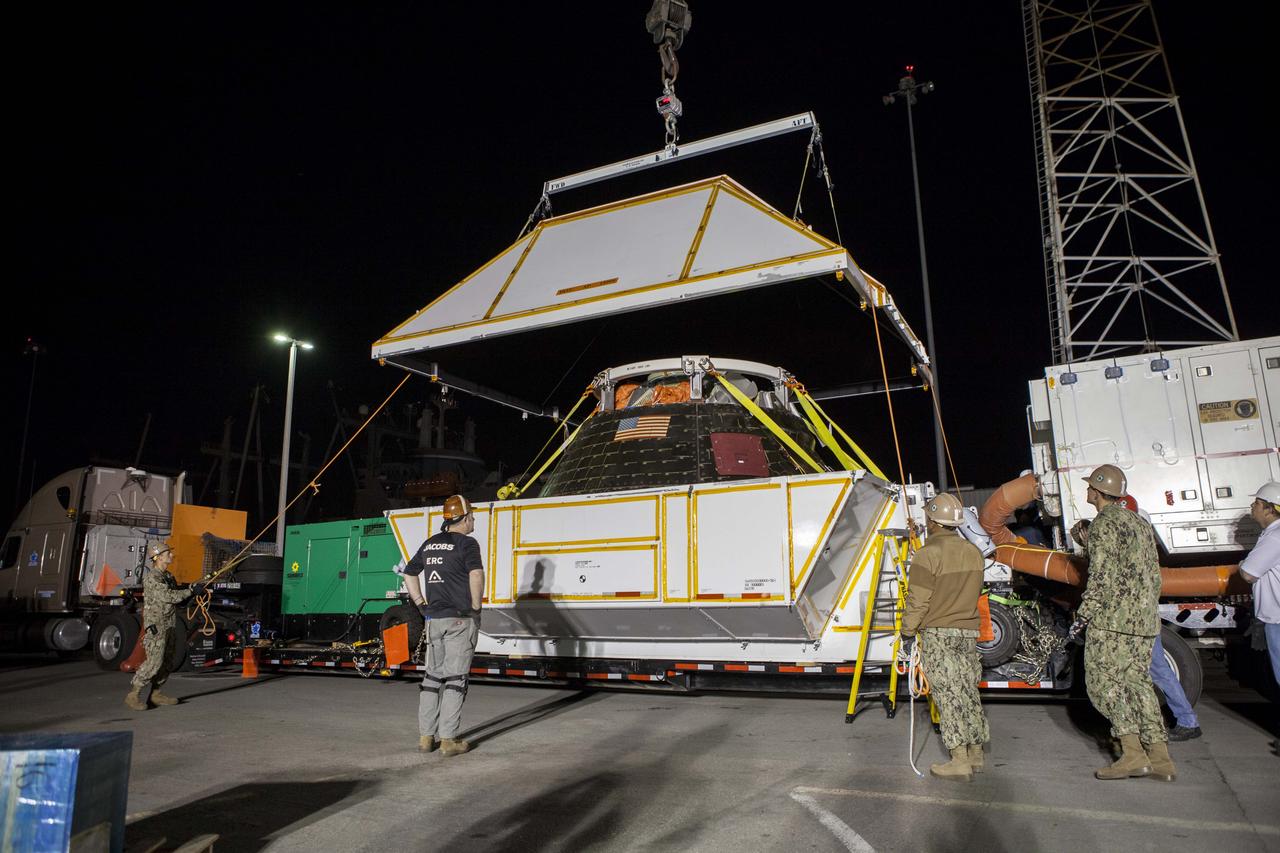
The Orion crew module has been lowered and secured in the crew module transportation fixture at the Mole Pier at Naval Base San Diego in California. The fixture has been secured on the back of a flatbed truck and the cover is being lowered over the spacecraft. Orion is being prepared for the overland trip back to NASA's Kennedy Space Center in Florida. Orion was recovered from the Pacific Ocean after completing a two-orbit, four-and-a-half hour mission Dec. 5 to test systems critical to crew safety, including the launch abort system, the heat shield and the parachute system. NASA, the U.S. Navy and Lockheed Martin coordinated efforts to recover Orion. The Ground Systems Development and Operations Program led the recovery, offload and pre-transportation efforts.
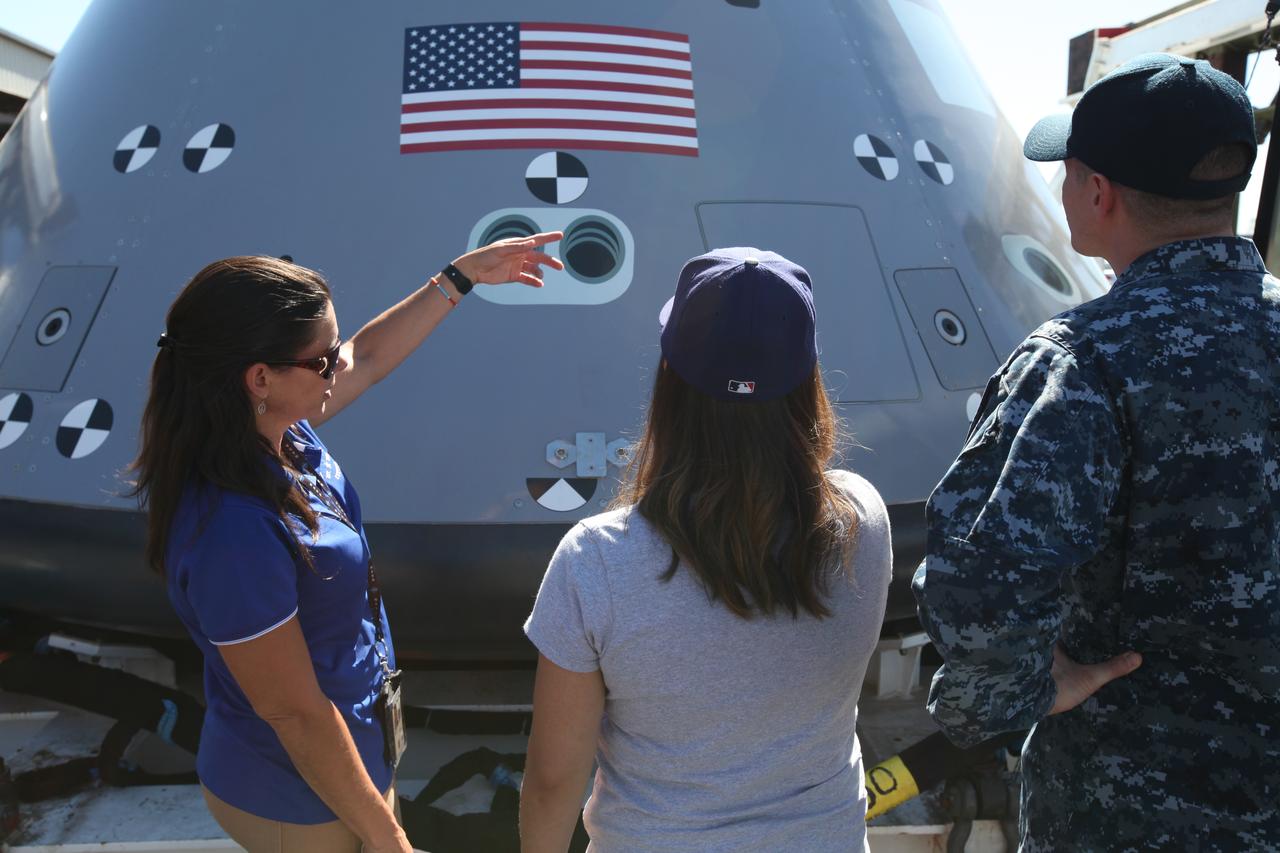
A service member and his family check out a test version of the Orion crew module on display at Naval Base San Diego in California, before Underway Recovery Test 5 (URT-5). NASA, Orion manufacturer Lockheed Martin and the U.S. Navy will head out to sea with the Orion test vehicle aboard the USS San Diego to demonstrate and evaluate the recovery processes, procedures, hardware and personnel necessary for recovery of Orion on its return from a deep space mission. Orion is the exploration spacecraft designed to carry astronauts to destinations not yet explored by humans, including an asteroid and NASA Journey to Mars. It will have emergency abort capability, sustain the crew during space travel and provide safe re-entry from deep space return velocities. Orion is scheduled to launch atop NASA’s Space Launch System rocket in 2018. For more information, visit http://www.nasa.gov/orion.
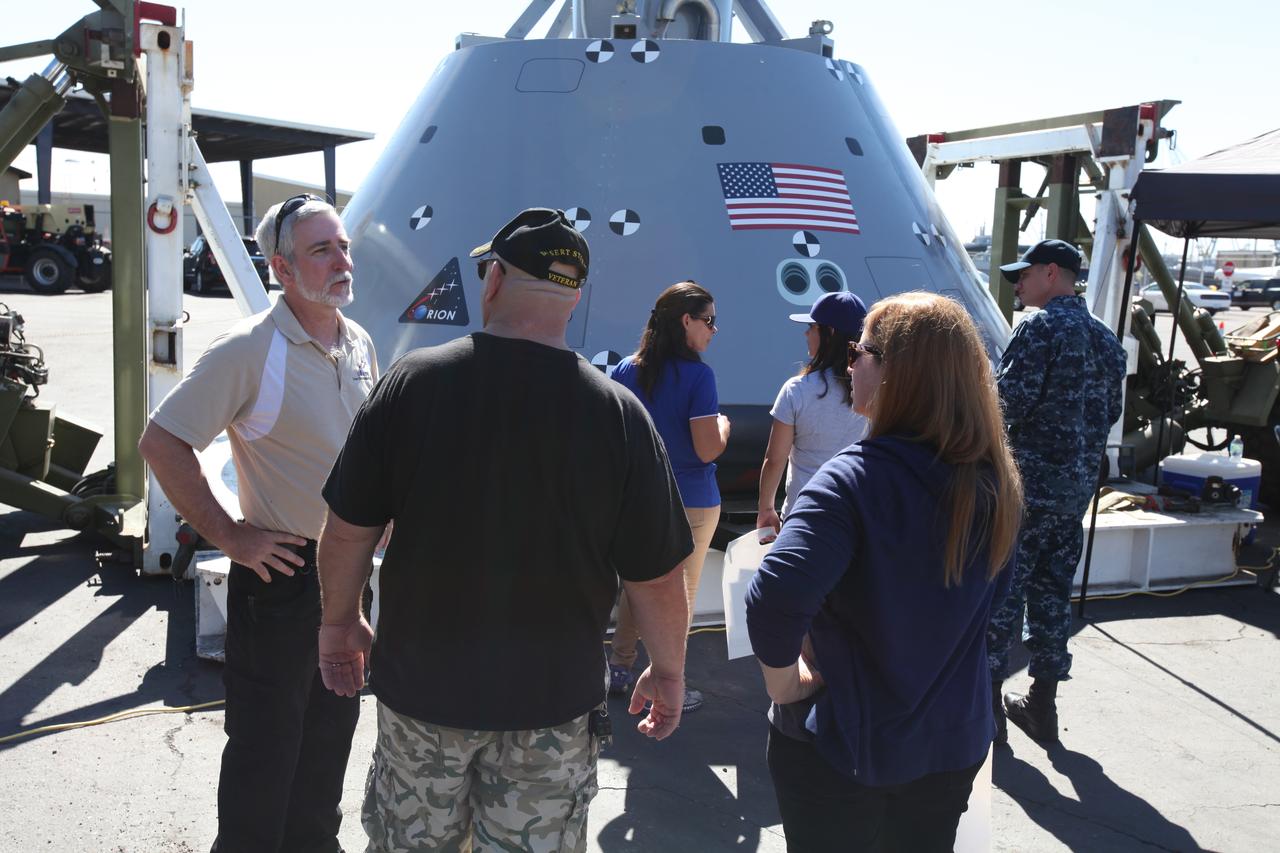
Service members, base employees and their families check out a test version of the Orion crew module on display at Naval Base San Diego in California, before Underway Recovery Test 5 (URT-5). NASA, Orion manufacturer Lockheed Martin and the U.S. Navy will head out to sea with the Orion test vehicle aboard the USS San Diego to demonstrate and evaluate the recovery processes, procedures, hardware and personnel necessary for recovery of Orion on its return from a deep space mission. Orion is the exploration spacecraft designed to carry astronauts to destinations not yet explored by humans, including an asteroid and NASA Journey to Mars. It will have emergency abort capability, sustain the crew during space travel and provide safe re-entry from deep space return velocities. Orion is scheduled to launch atop NASA’s Space Launch System rocket in 2018. For more information, visit http://www.nasa.gov/orion.
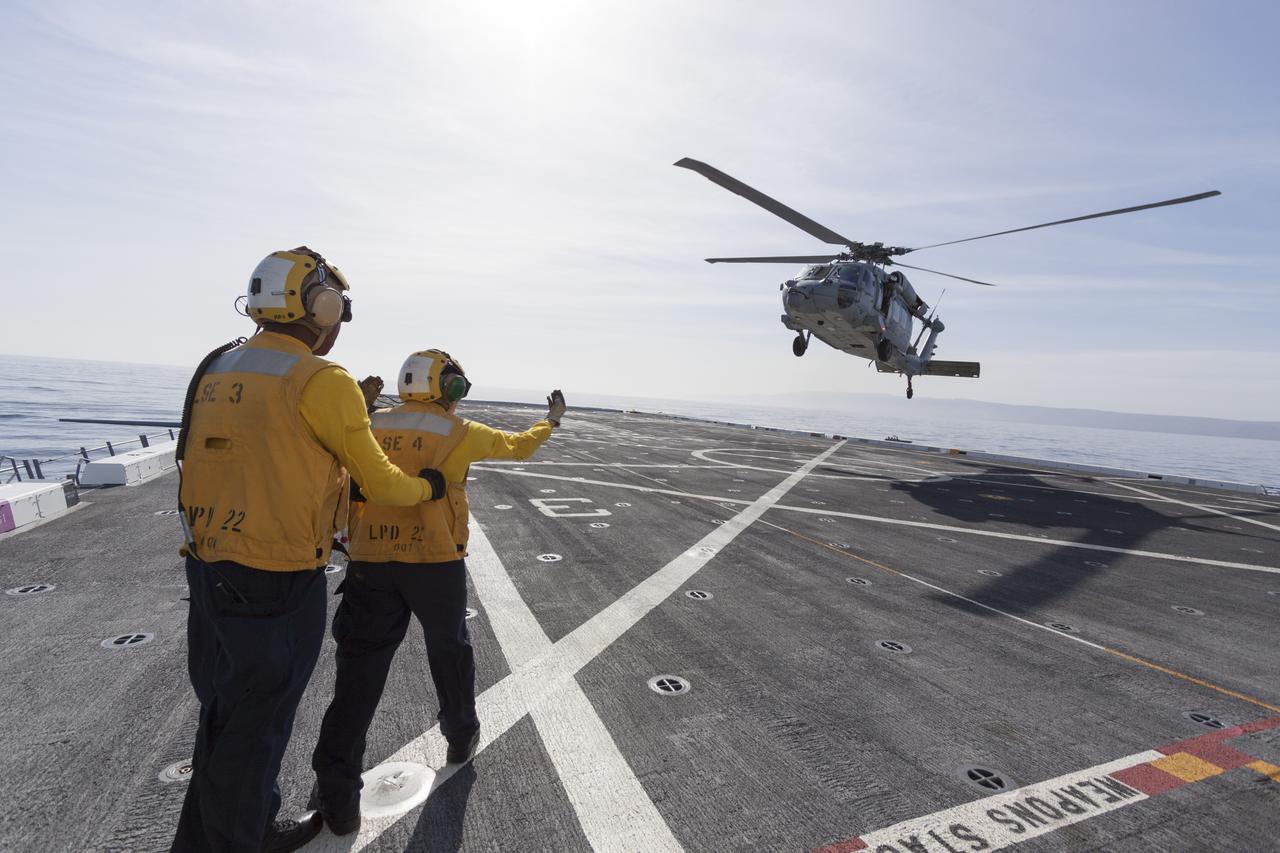
SAN DIEGO, Calif. – On the top deck of the USS San Diego, U.S. Navy personnel monitor a helicopter landing after an Orion underway recovery test. The Orion boilerplate test vehicle and other hardware were secured in the well deck of the USS San Diego at the U.S. Naval Base San Diego in California. Orion was transported about 100 miles offshore for an underway recovery test. NASA and the U.S. Navy conducted tests to prepare for recovery of the Orion crew module, forward bay cover and parachutes on its return from a deep space mission. The underway recovery test allowed the teams to demonstrate and evaluate the recovery processes, procedures, hardware and personnel in open waters. During the testing, the tether lines were unable to support the tension caused by crew module motion that was driven by wave turbulence in the well deck of the ship. NASA and the U.S. Navy are reviewing the testing data collected to evaluate the next steps. The Ground Systems Development and Operations Program conducted the underway recovery tests. Orion is the exploration spacecraft designed to carry astronauts to destinations not yet explored by humans, including an asteroid and Mars. It will have emergency abort capability, sustain the crew during space travel and provide safe re-entry from deep space return velocities. The first unpiloted test flight of the Orion is scheduled to launch in 2014 atop a Delta IV rocket and in 2017 on NASA’s Space Launch System rocket. For more information, visit http://www.nasa.gov/orion. Photo credit: NASA/Cory Huston
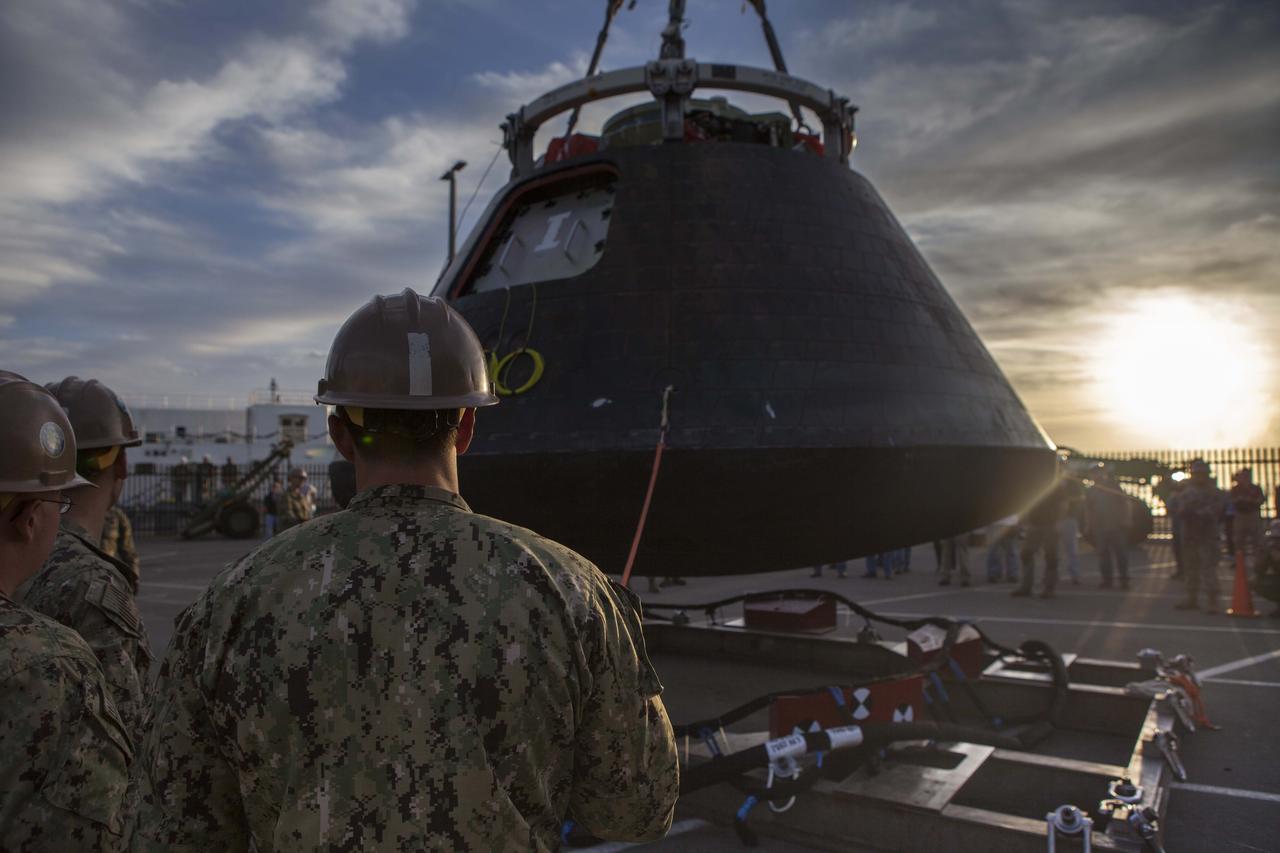
The Orion crew module is being lifted by crane from its crew module recovery cradle so it can be placed in its crew module transportation fixture at the Mole Pier at Naval Base San Diego in California. The fixture has been secured on the back of a flatbed truck. Orion is being prepared for the overland trip back to NASA's Kennedy Space Center in Florida. Orion was recovered from the Pacific Ocean after completing a two-orbit, four-and-a-half hour mission Dec. 5 to test systems critical to crew safety, including the launch abort system, the heat shield and the parachute system. NASA, the U.S. Navy and Lockheed Martin coordinated efforts to recover Orion. The Ground Systems Development and Operations Program led the recovery, offload and pre-transportation efforts.
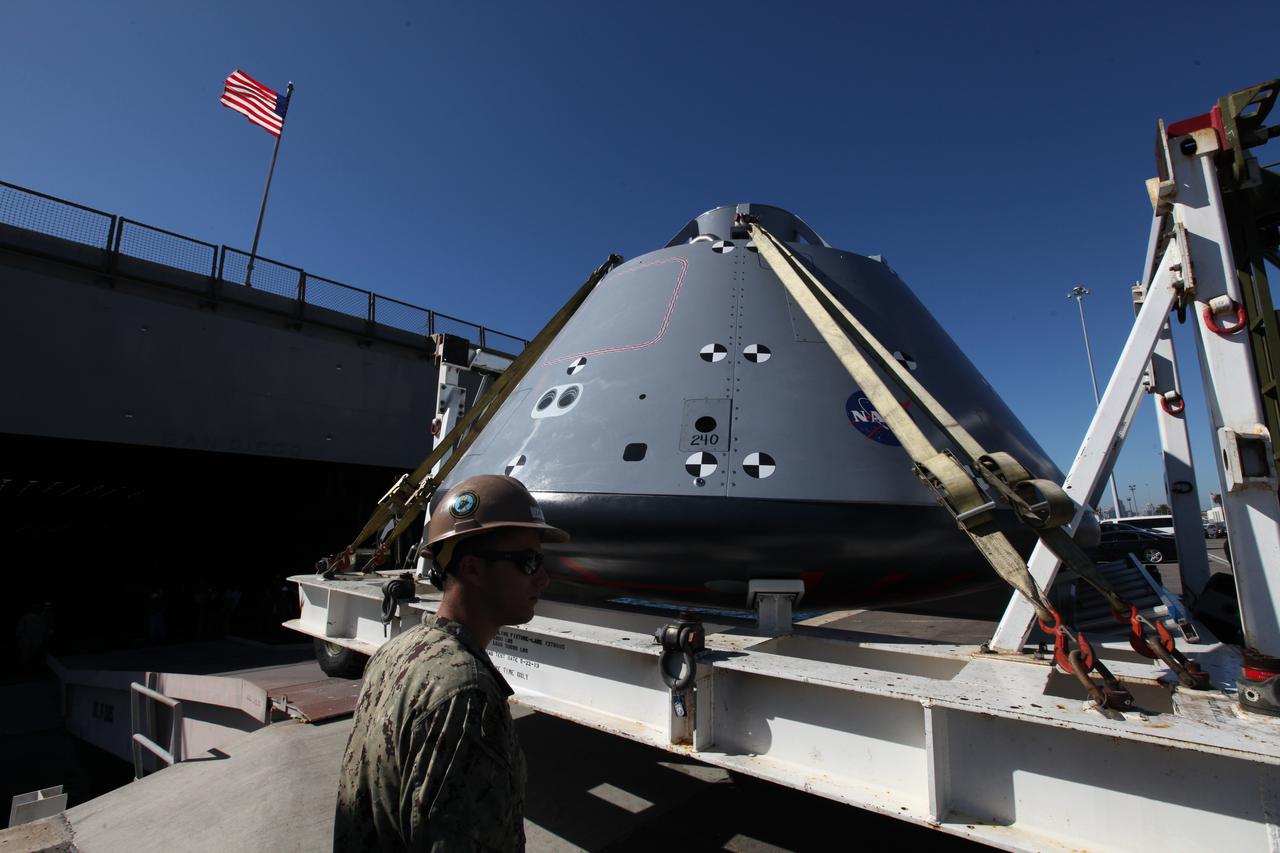
The USS San Diego is docked at Naval Base San Diego in California after returning from Underway Recovery Test 5 in the Pacific Ocean. A test version of the Orion crew module is being offloaded from the well deck of the ship. NASA's Ground Systems Development and Operations Program and the U.S. Navy completed a series of tests using the ship's well deck, the test module, various watercraft and equipment to prepare for recovery of Orion on its return from deep space missions. The testing allowed the team to demonstrate and evaluate recovery processes, procedures, hardware and personnel in open waters. Orion is the exploration spacecraft designed to carry astronauts to destinations not yet explored by humans, including an asteroid and NASA's Journey to Mars. It will have emergency abort capability, sustain the crew during space travel and provide safe re-entry from deep space return velocities. Orion is scheduled to launch on NASA's Space Launch System in late 2018. For more information, visit http://www.nasa.gov/orion.
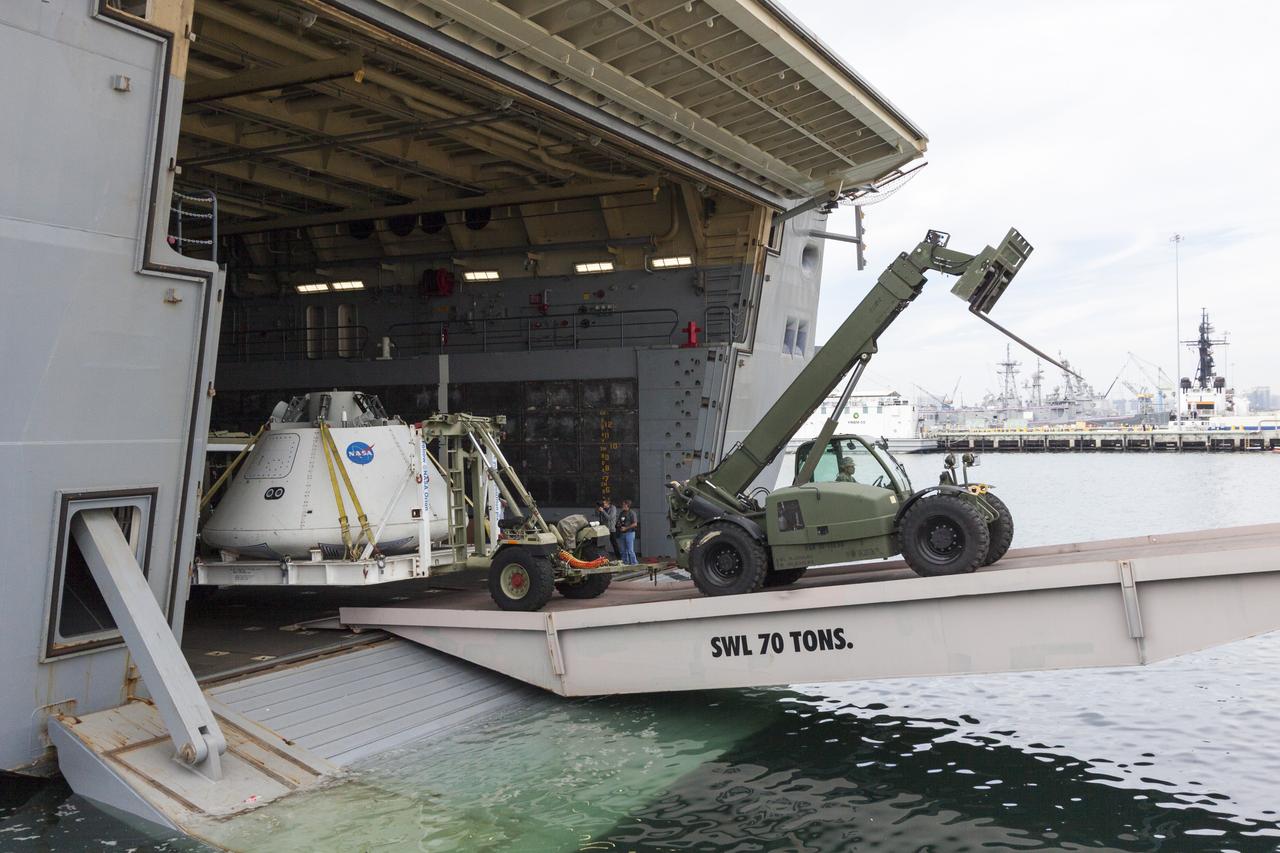
SAN DIEGO, Calif. – The Orion boilerplate test vehicle is being offloaded from the USS San Diego at the U.S. Naval Base San Diego in California. Orion was transported in the ship’s well deck about 100 miles offshore for an underway recovery test. NASA and the U.S. Navy conducted tests to prepare for recovery of the Orion crew module, forward bay cover and parachutes on its return from a deep space mission. The underway recovery test allowed the teams to demonstrate and evaluate the recovery processes, procedures, hardware and personnel in open waters. During the testing, the tether lines were unable to support the tension caused by crew module motion that was driven by wave turbulence in the well deck of the ship. NASA and the U.S. Navy are reviewing the testing data collected to evaluate the next steps. The Ground Systems Development and Operations Program was conducting the recovery tests. Orion is the exploration spacecraft designed to carry astronauts to destinations not yet explored by humans, including an asteroid and Mars. It will have emergency abort capability, sustain the crew during space travel and provide safe re-entry from deep space return velocities. The first unpiloted test flight of the Orion is scheduled to launch in 2014 atop a Delta IV rocket and in 2017 on NASA’s Space Launch System rocket. For more information, visit http://www.nasa.gov/orion. Photo credit: NASA/Cory Huston
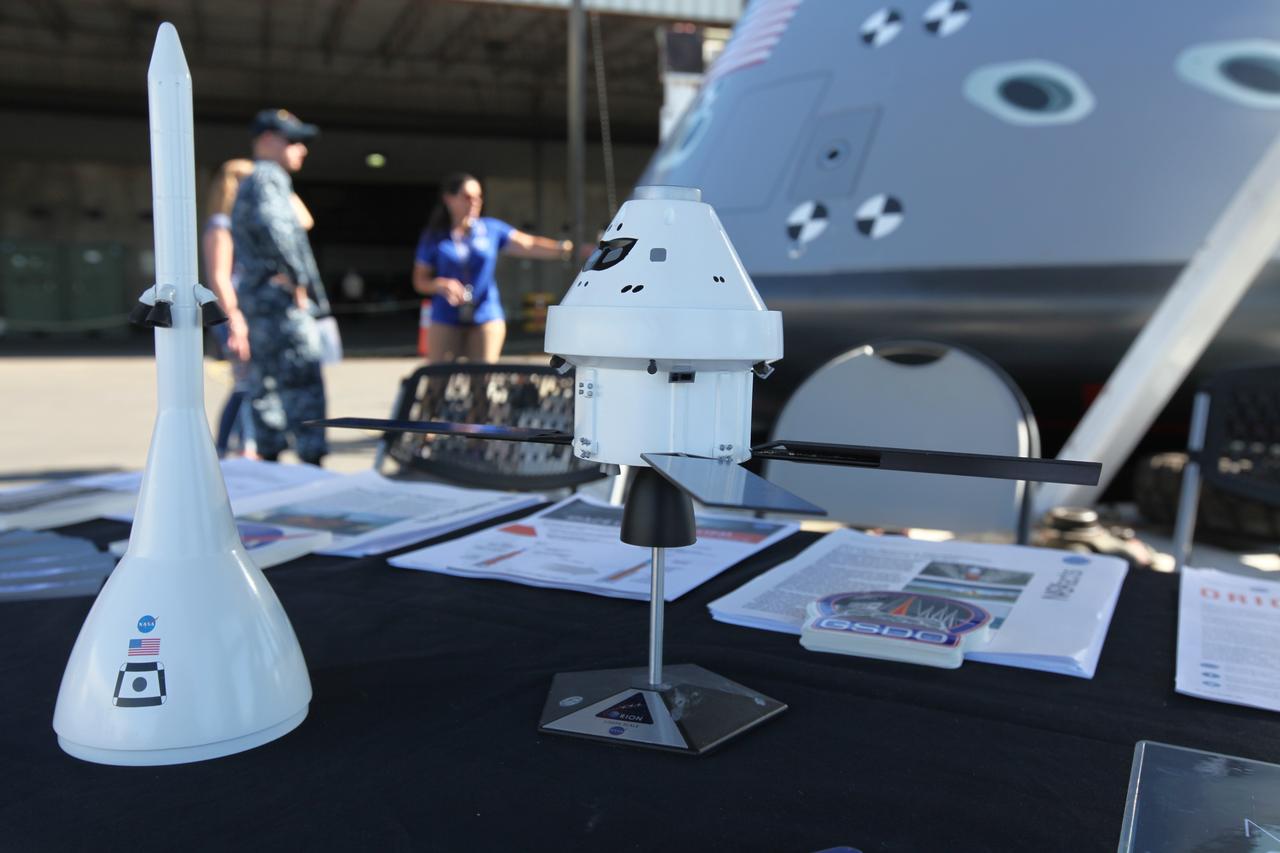
Models of the Orion spacecraft and Launch Abort System are on display for viewing at Naval Base San Diego in California. Service members, base employees and their families had the opportunity to view a test version of the Orion crew module (in view in the background) before Underway Recovery Test 5 (URT-5). NASA, Orion manufacturer Lockheed Martin and the U.S. Navy will head out to sea with the Orion test vehicle aboard the USS San Diego to demonstrate and evaluate the recovery processes, procedures, hardware and personnel necessary for recovery of Orion on its return from a deep space mission. Orion is the exploration spacecraft designed to carry astronauts to destinations not yet explored by humans, including an asteroid and NASA Journey to Mars. It will have emergency abort capability, sustain the crew during space travel and provide safe re-entry from deep space return velocities. Orion is scheduled to launch atop NASA’s Space Launch System rocket in 2018. For more information, visit http://www.nasa.gov/orion.
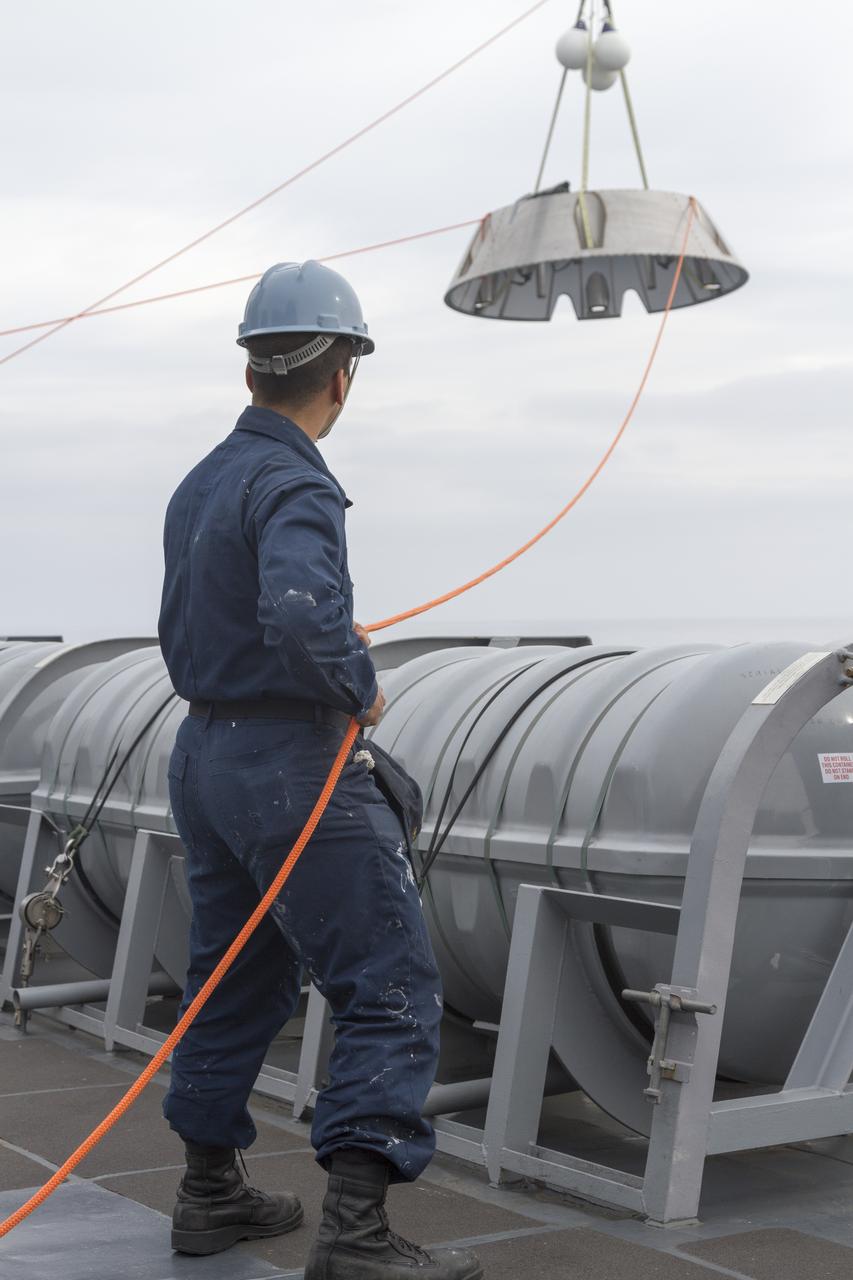
SAN DIEGO, Calif. – The Orion forward bay cover is lowered into the water using a crane and tether lines as part of the Orion underway recovery test. The Orion boilerplate test vehicle and other hardware are secured in the well deck of the USS San Diego in preparation for the test about 100 miles off the coast of San Diego, California. NASA and the U.S. Navy conducted tests to prepare for the recovery of the Orion crew module, forward bay cover and parachutes on its return from a deep space mission. The underway recovery test will allow the teams to demonstrate and evaluate the recovery processes, procedures, hardware and personnel in open waters. During the testing, the tether lines were unable to support the tension caused by crew module motion that was driven by wave turbulence in the well deck of the ship. NASA and the U.S. Navy are reviewing the testing data collected to evaluate the next steps. The Ground Systems Development and Operations Program conducted the underway recovery tests. Orion is the exploration spacecraft designed to carry astronauts to destinations not yet explored by humans, including an asteroid and Mars. It will have emergency abort capability, sustain the crew during space travel and provide safe re-entry from deep space return velocities. The first unpiloted test flight of the Orion is scheduled to launch in 2014 atop a Delta IV rocket and in 2017 on NASA’s Space Launch System rocket. For more information, visit http://www.nasa.gov/orion. Photo credit: NASA/Cory Huston
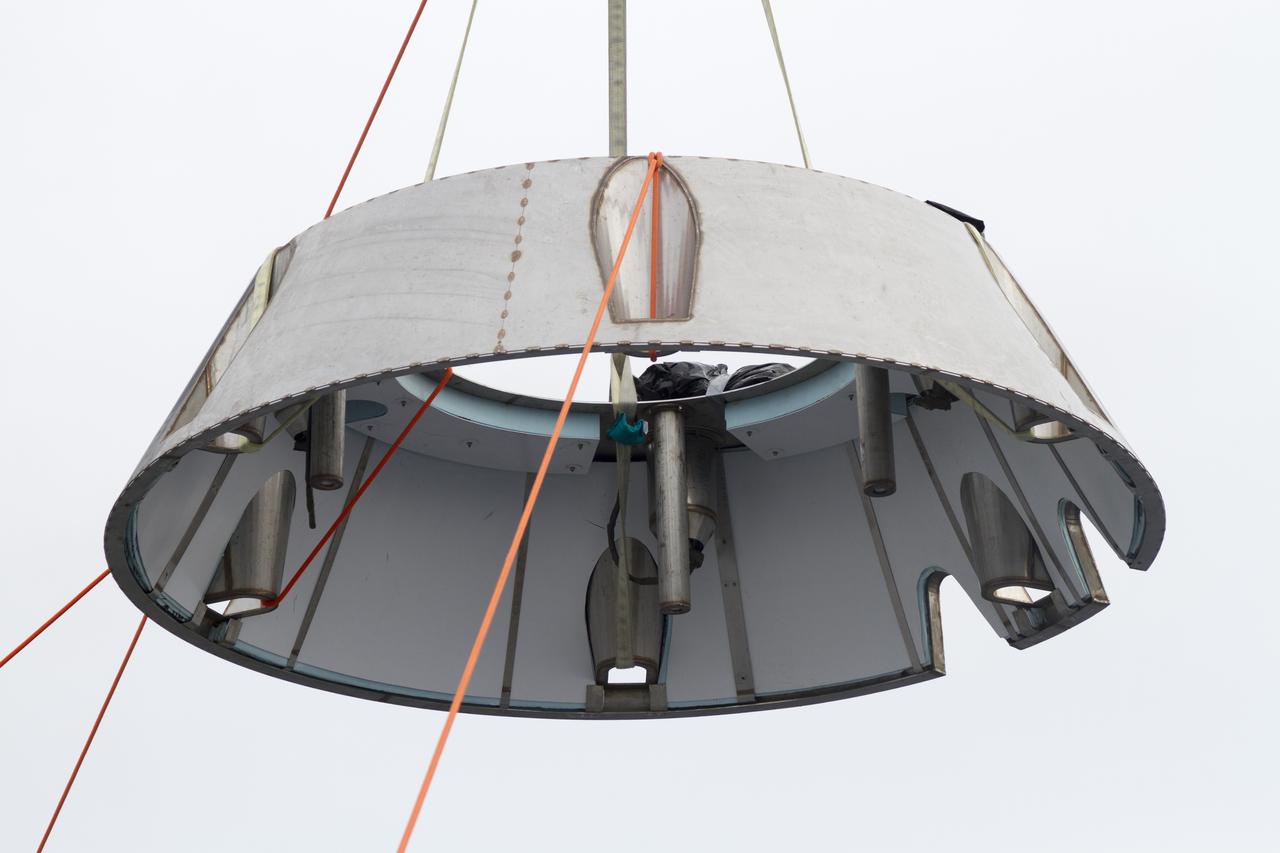
SAN DIEGO, Calif. – The Orion forward bay cover is lowered into the water using a crane and tether lines as part of the Orion underway recovery test. The Orion boilerplate test vehicle and other hardware are secured in the well deck of the USS San Diego in preparation for the test about 100 miles off the coast of San Diego, California. NASA and the U.S. Navy conducted tests to prepare for the recovery of the Orion crew module, forward bay cover and parachutes on its return from a deep space mission. The underway recovery test will allow the teams to demonstrate and evaluate the recovery processes, procedures, hardware and personnel in open waters. During the testing, the tether lines were unable to support the tension caused by crew module motion that was driven by wave turbulence in the well deck of the ship. NASA and the U.S. Navy are reviewing the testing data collected to evaluate the next steps. The Ground Systems Development and Operations Program conducted the underway recovery tests. Orion is the exploration spacecraft designed to carry astronauts to destinations not yet explored by humans, including an asteroid and Mars. It will have emergency abort capability, sustain the crew during space travel and provide safe re-entry from deep space return velocities. The first unpiloted test flight of the Orion is scheduled to launch in 2014 atop a Delta IV rocket and in 2017 on NASA’s Space Launch System rocket. For more information, visit http://www.nasa.gov/orion. Photo credit: NASA/Cory Huston
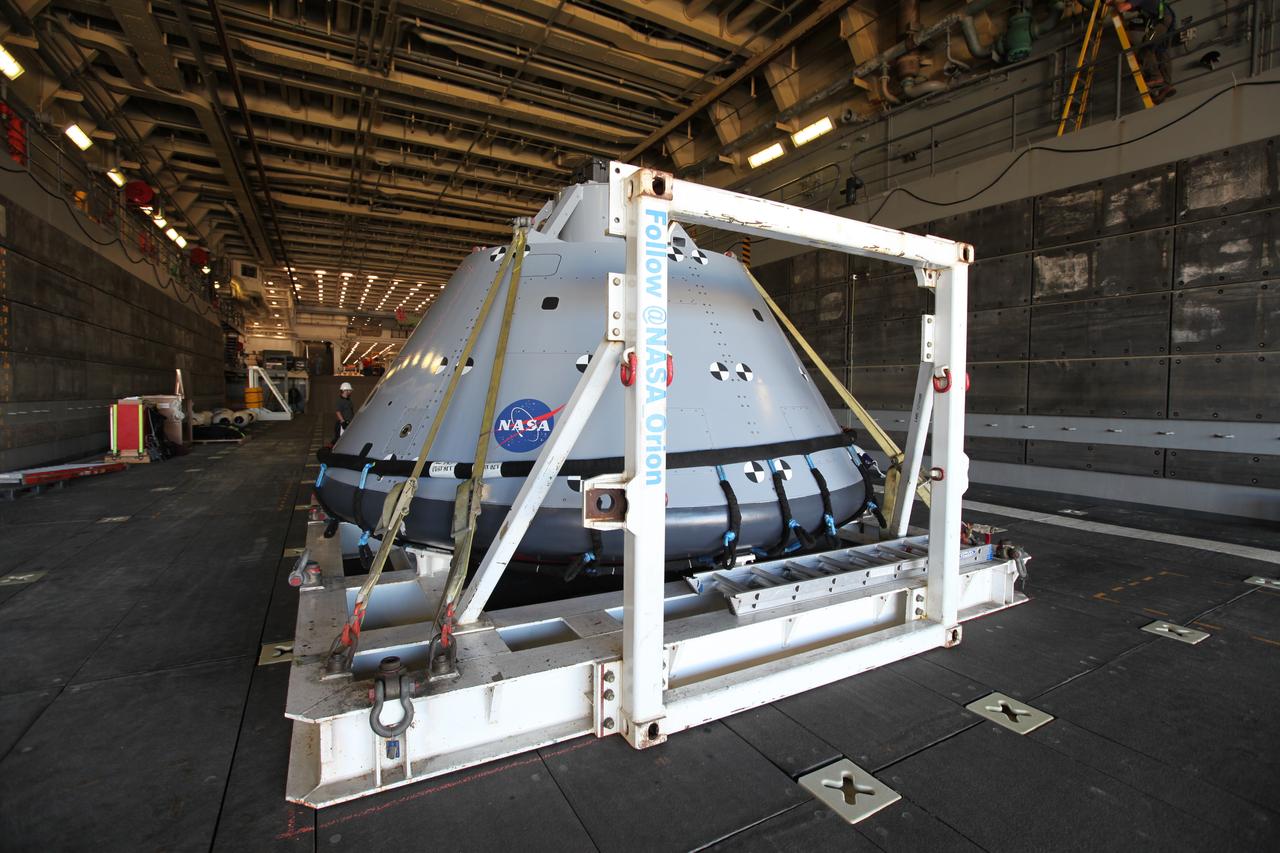
The test version of the Orion crew module is secured on its fixture inside the well deck of the USS San Diego at Naval Base San Diego in California. NASA, Orion manufacturer Lockheed Martin and the U.S. Navy will head out to sea with the Orion test spacecraft aboard for Underway Recovery Test 5 (URT-5) in the Pacific Ocean off the coast of California. During URT-5, the team will demonstrate and evaluate the recovery processes, procedures, hardware and personnel necessary for recovery of Orion on its return from a deep space mission. Orion is the exploration spacecraft designed to carry astronauts to destinations not yet explored by humans, including an asteroid and NASA Journey to Mars. It will have emergency abort capability, sustain the crew during space travel and provide safe re-entry from deep space return velocities. Orion is scheduled to launch atop NASA’s Space Launch System rocket in 2018. For more information, visit http://www.nasa.gov/orion.
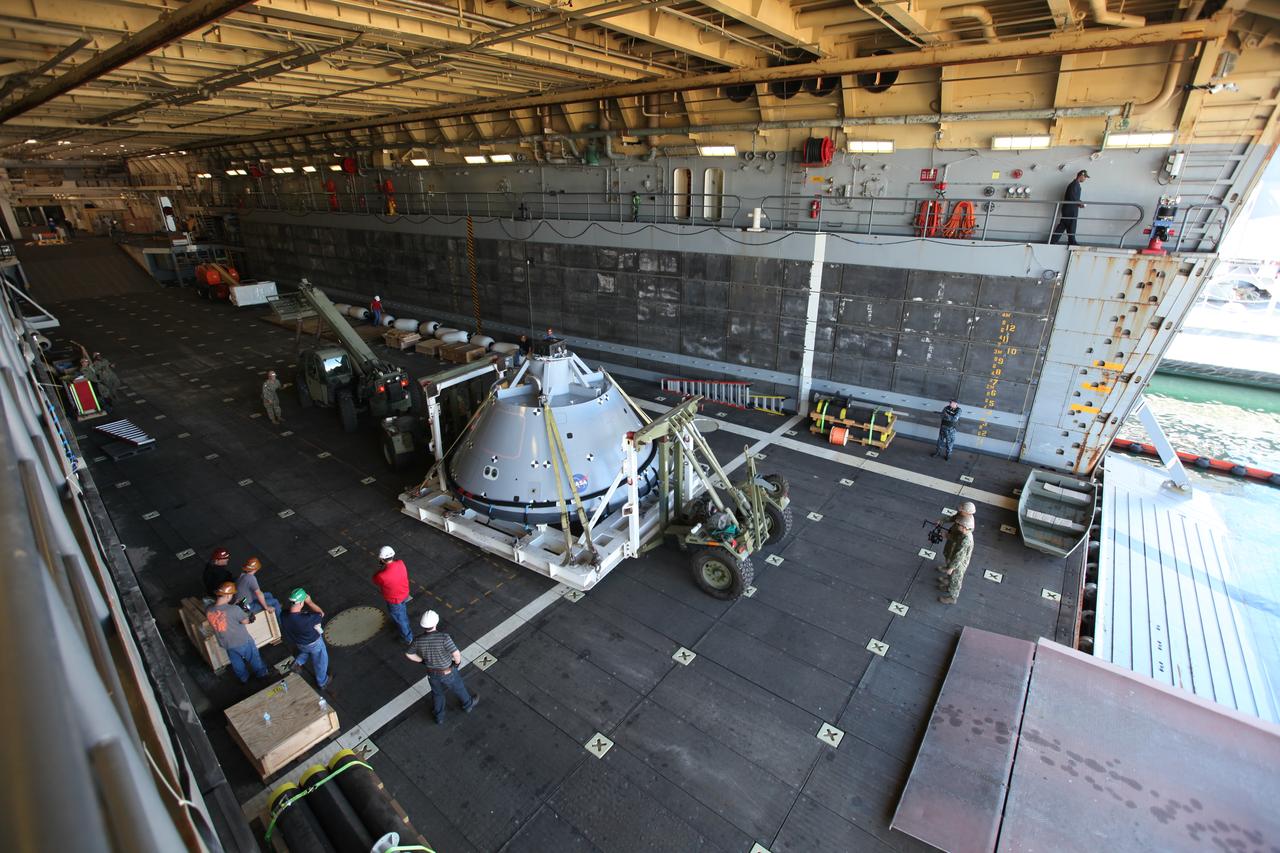
The test version of the Orion crew module has been transported into the well deck of the USS San Diego at Naval Base San Diego in California. NASA, Orion manufacturer Lockheed Martin and the U.S. Navy will head out to sea with the Orion test spacecraft aboard for Underway Recovery Test 5 (URT-5) in the Pacific Ocean off the coast of California. During URT-5, the team will demonstrate and evaluate the recovery processes, procedures, hardware and personnel necessary for recovery of Orion on its return from a deep space mission. Orion is the exploration spacecraft designed to carry astronauts to destinations not yet explored by humans, including an asteroid and NASA Journey to Mars. It will have emergency abort capability, sustain the crew during space travel and provide safe re-entry from deep space return velocities. Orion is scheduled to launch atop NASA’s Space Launch System rocket in 2018. For more information, visit http://www.nasa.gov/orion.
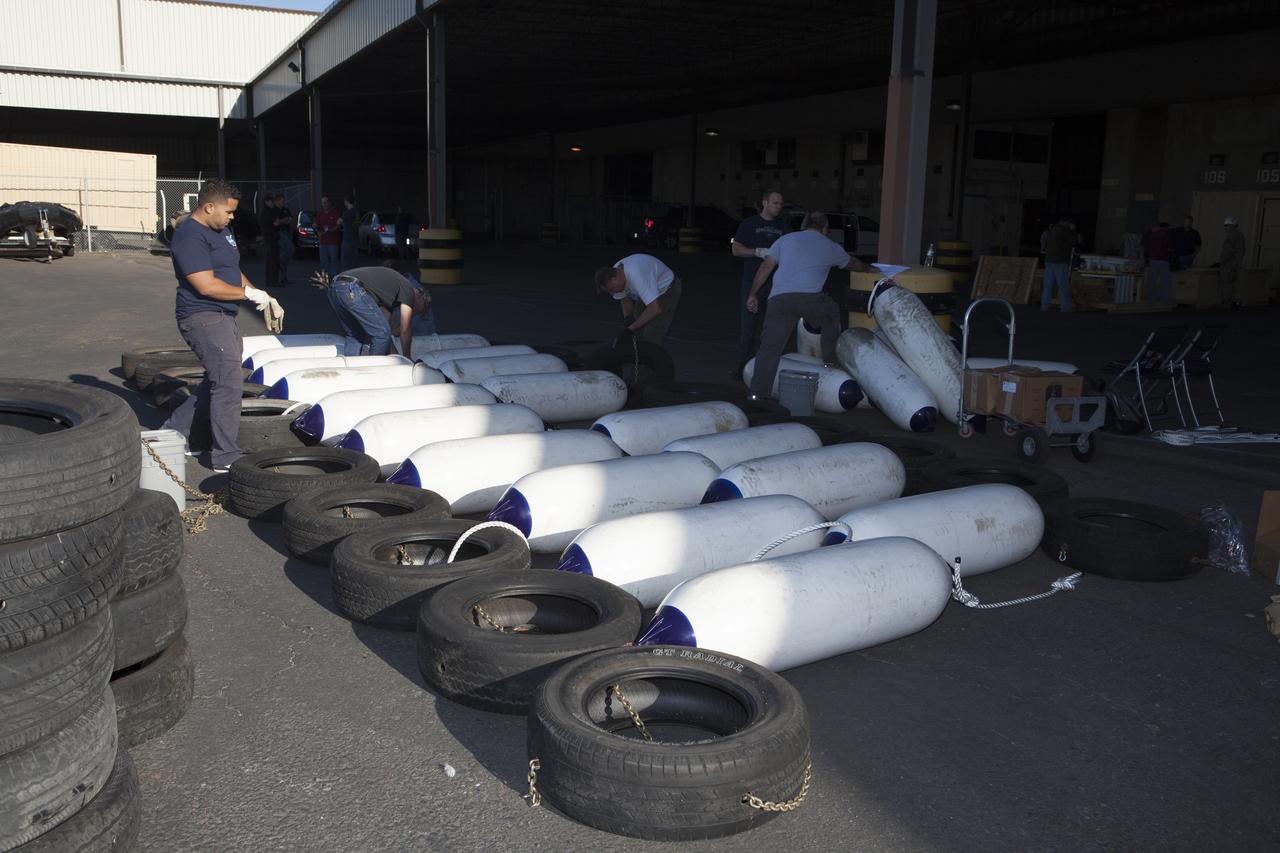
Ground support equipment for use during an alternate recovery method of the Orion crew module after its first flight test, is being prepared for loading onto the USNS Salvor, a salvage ship, at Naval Base San Diego in California. Before launch of Orion on a Delta IV Heavy rocket from Cape Canaveral Air Force Station in Florida, NASA, Lockheed Martin and U.S. Navy personnel will head out to sea in the USS Anchorage and the USNS Salvor and wait for splashdown of the Orion crew module in the Pacific Ocean. The Ground Systems Development and Operations Program will lead the recovery efforts. Orion is the exploration spacecraft designed to carry astronauts to destinations not yet explored by humans, including an asteroid and Mars. It will have emergency abort capability, sustain the crew during space travel and provide safe re-entry from deep space return velocities. The first unpiloted flight test of Orion is scheduled to launch in December atop a United Launch Alliance Delta IV Heavy rocket and in 2018 on NASA’s Space Launch System rocket.
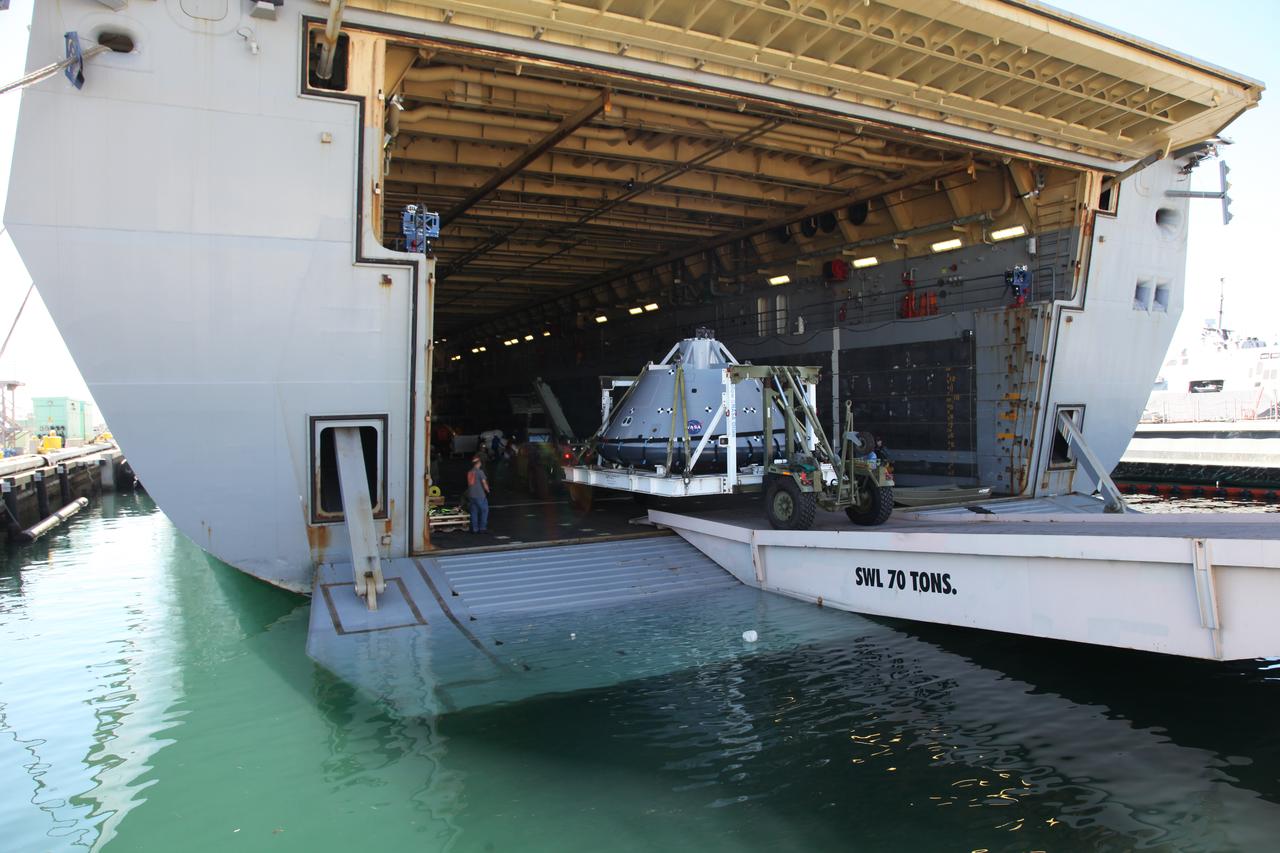
The test version of the Orion crew module is transported into the well deck of the USS San Diego at Naval Base San Diego in California. NASA, Orion manufacturer Lockheed Martin and the U.S. Navy will head out to sea with the Orion test spacecraft aboard for Underway Recovery Test 5 (URT-5) in the Pacific Ocean off the coast of California. During URT-5, the team will demonstrate and evaluate the recovery processes, procedures, hardware and personnel necessary for recovery of Orion on its return from a deep space mission. Orion is the exploration spacecraft designed to carry astronauts to destinations not yet explored by humans, including an asteroid and NASA Journey to Mars. It will have emergency abort capability, sustain the crew during space travel and provide safe re-entry from deep space return velocities. Orion is scheduled to launch atop NASA’s Space Launch System rocket in 2018. For more information, visit http://www.nasa.gov/orion.
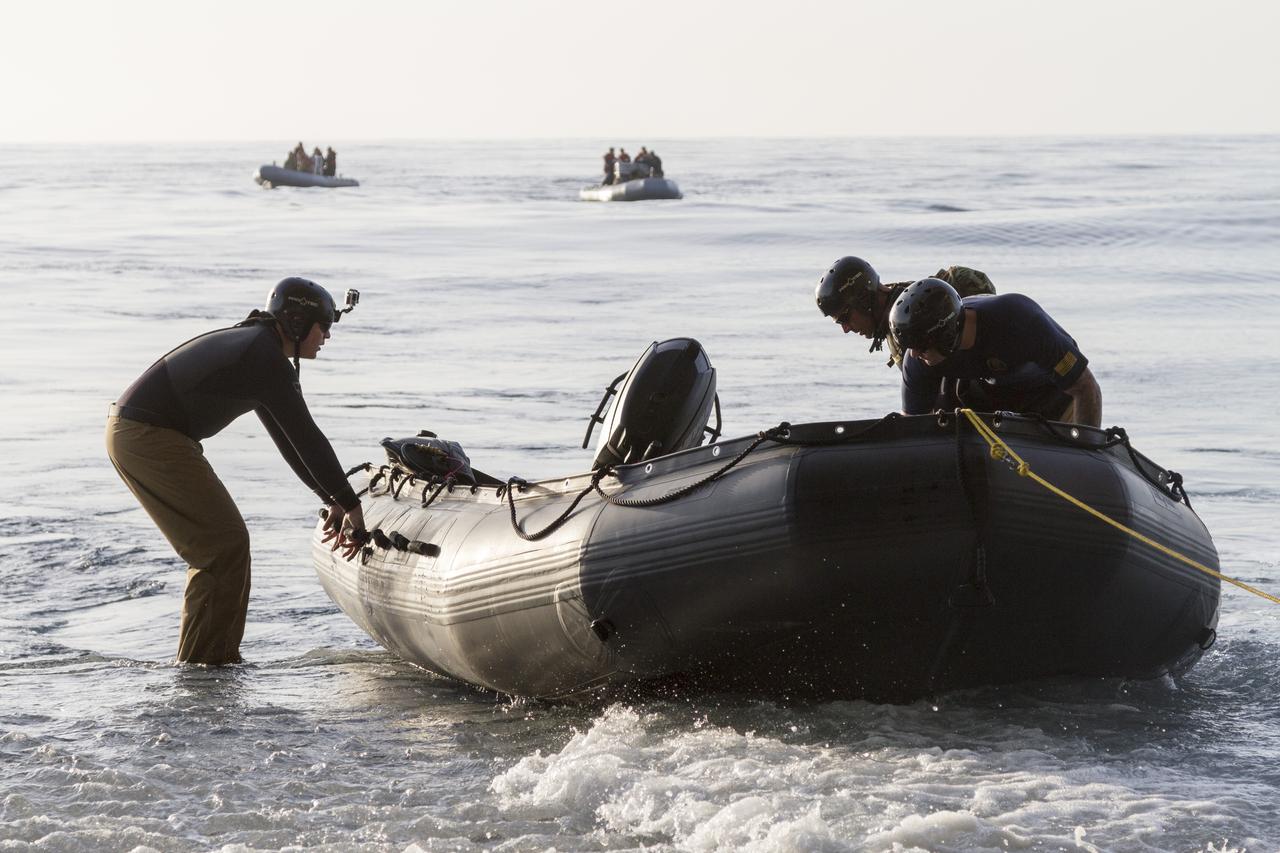
SAN DIEGO, Calif. – U.S. Navy personnel board a rigid hull inflatable boat near the USS San Diego to conduct an Orion underway recovery test with the Orion boilerplate test vehicle and other hardware. Earlier in the week, NASA and the U.S. Navy conducted tests about 100 miles offshore to prepare for recovery of the Orion crew module, forward bay cover and parachutes on its return from a deep space mission. The underway recovery test allowed the teams to demonstrate and evaluate the recovery processes, procedures, hardware and personnel in open waters. During the testing, the tether lines were unable to support the tension caused by crew module motion that was driven by wave turbulence in the well deck of the ship. NASA and the U.S. Navy are reviewing the testing data collected to evaluate the next steps. The Ground Systems Development and Operations Program conducted the underway recovery tests. Orion is the exploration spacecraft designed to carry astronauts to destinations not yet explored by humans, including an asteroid and Mars. It will have emergency abort capability, sustain the crew during space travel and provide safe re-entry from deep space return velocities. The first unpiloted test flight of the Orion is scheduled to launch in 2014 atop a Delta IV rocket and in 2017 on NASA’s Space Launch System rocket. For more information, visit http://www.nasa.gov/orion. Photo credit: NASA/Cory Huston
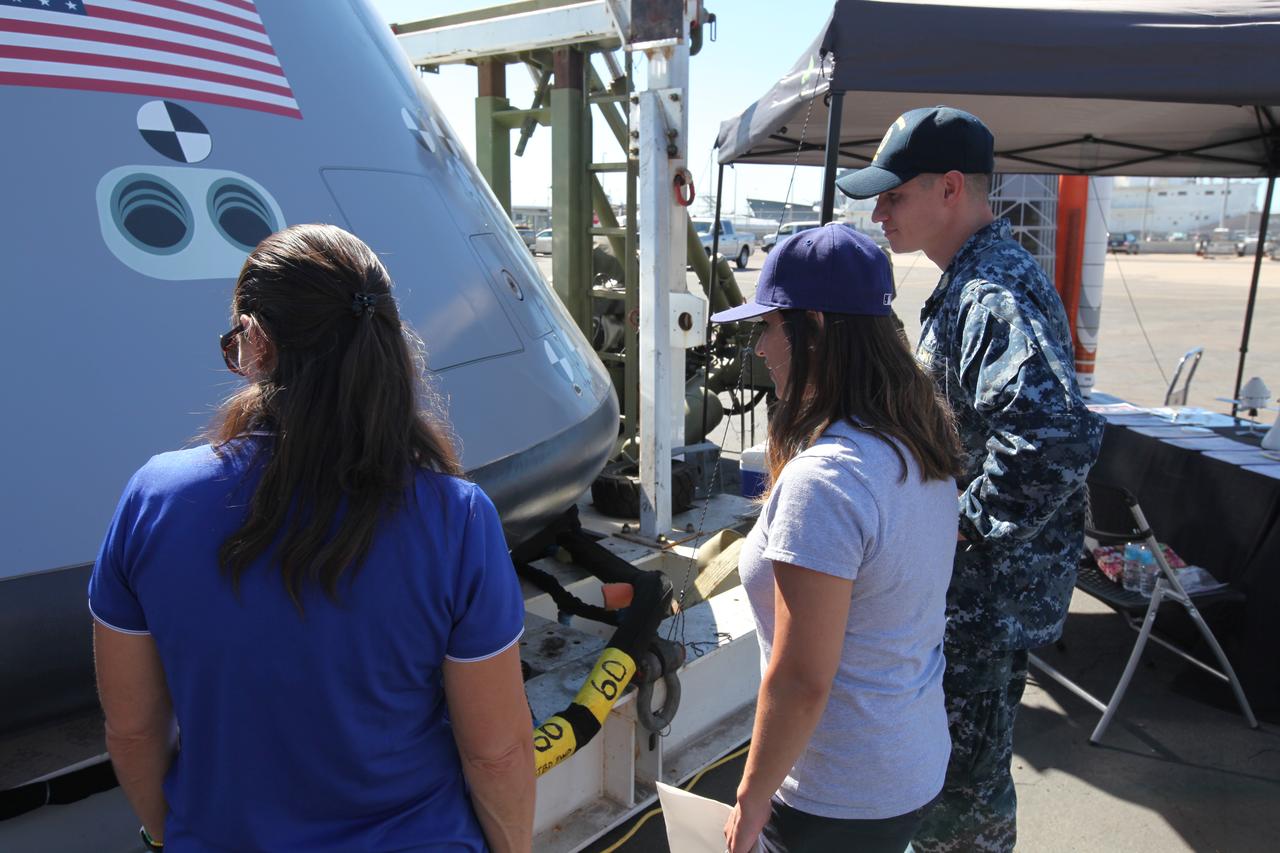
A service member and his family check out a test version of the Orion crew module on display at Naval Base San Diego in California, before Underway Recovery Test 5 (URT-5). NASA, Orion manufacturer Lockheed Martin and the U.S. Navy will head out to sea with the Orion test vehicle aboard the USS San Diego to demonstrate and evaluate the recovery processes, procedures, hardware and personnel necessary for recovery of Orion on its return from a deep space mission. Orion is the exploration spacecraft designed to carry astronauts to destinations not yet explored by humans, including an asteroid and NASA Journey to Mars. It will have emergency abort capability, sustain the crew during space travel and provide safe re-entry from deep space return velocities. Orion is scheduled to launch atop NASA’s Space Launch System rocket in 2018. For more information, visit http://www.nasa.gov/orion.
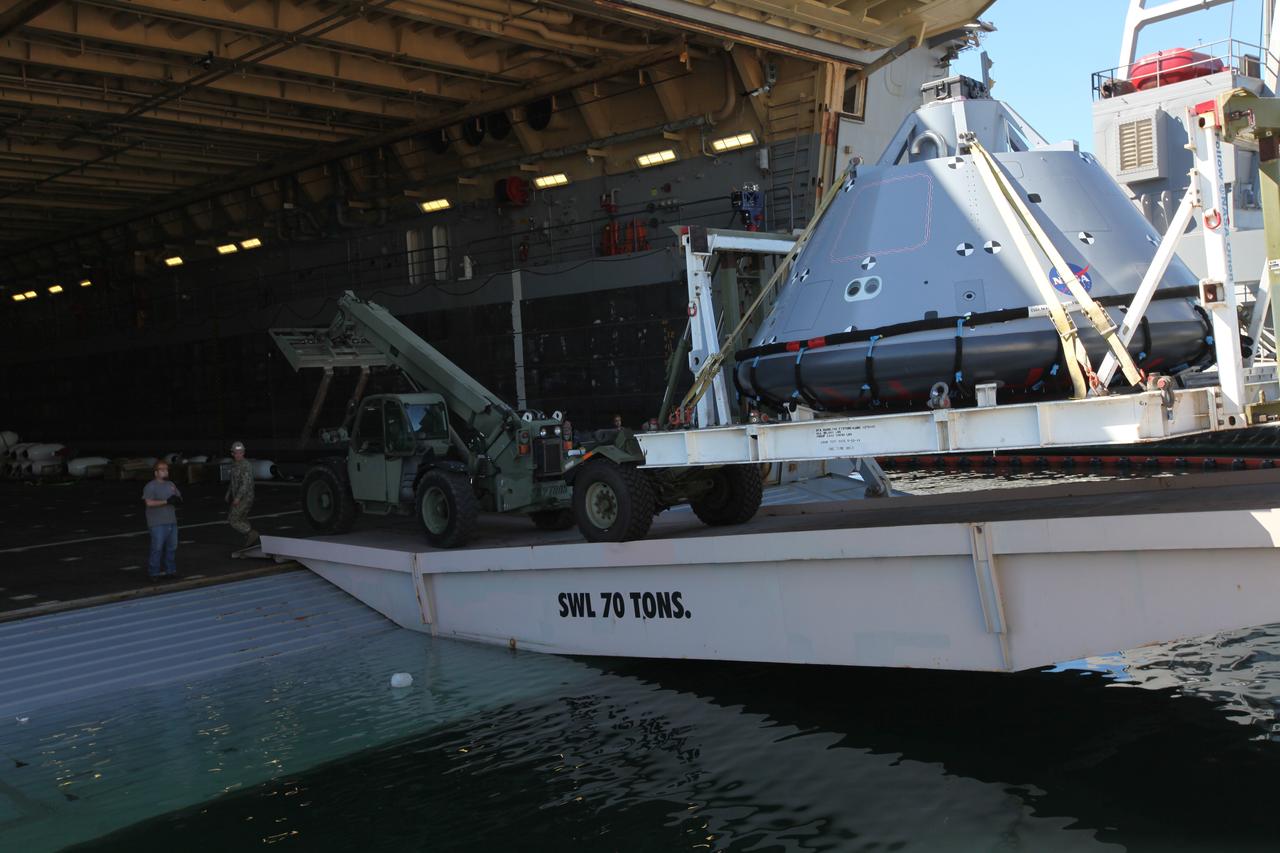
The test version of the Orion crew module is transported into the well deck of the USS San Diego at Naval Base San Diego in California. NASA, Orion manufacturer Lockheed Martin and the U.S. Navy will head out to sea with the Orion test spacecraft aboard for Underway Recovery Test 5 (URT-5) in the Pacific Ocean off the coast of California. During URT-5, the team will demonstrate and evaluate the recovery processes, procedures, hardware and personnel necessary for recovery of Orion on its return from a deep space mission. Orion is the exploration spacecraft designed to carry astronauts to destinations not yet explored by humans, including an asteroid and NASA Journey to Mars. It will have emergency abort capability, sustain the crew during space travel and provide safe re-entry from deep space return velocities. Orion is scheduled to launch atop NASA’s Space Launch System rocket in 2018. For more information, visit http://www.nasa.gov/orion.
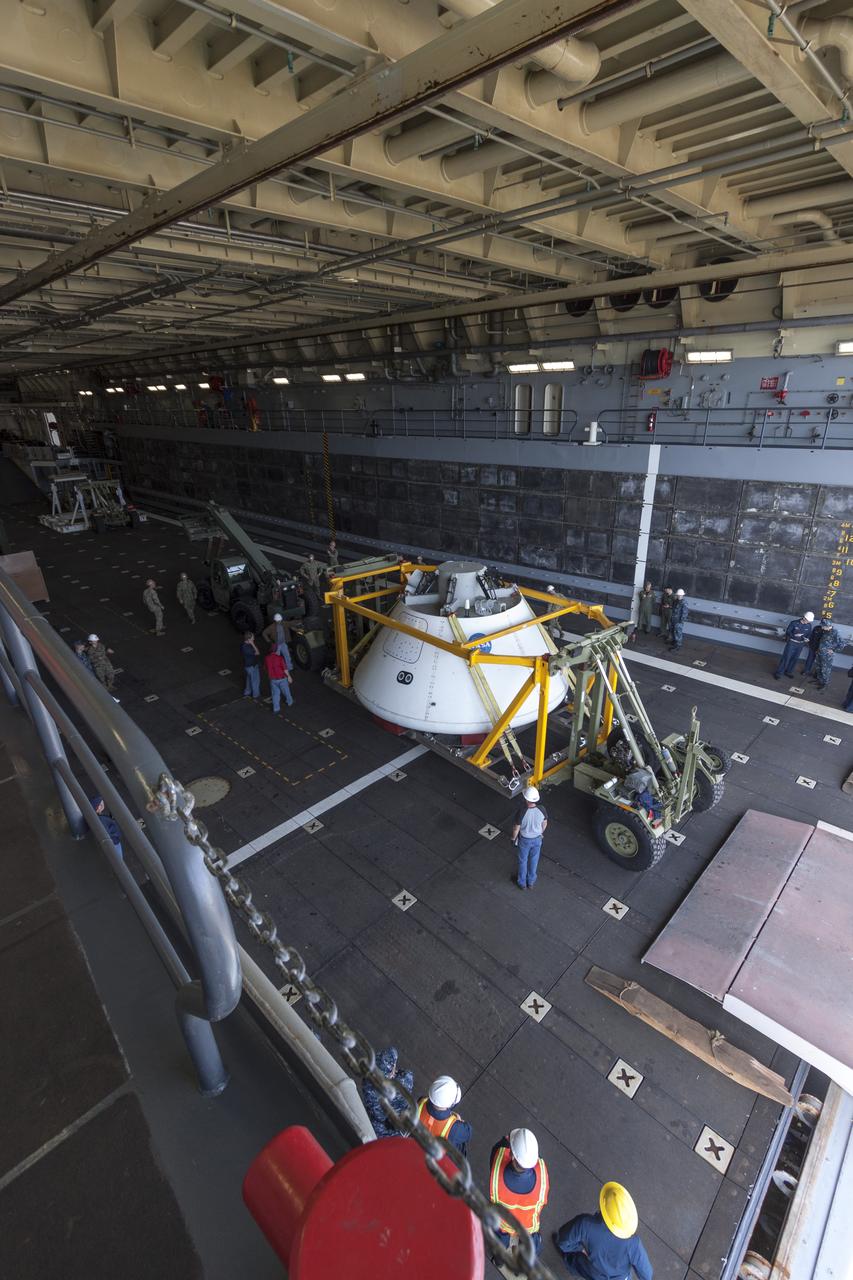
SAN DIEGO, Calif. – The Orion boilerplate test vehicle arrived at the U.S. Naval Base San Diego in California, and was loaded aboard the USS San Diego. Orion was transported in the ship’s well deck about 100 miles offshore for an underway recovery test. NASA and the U.S. Navy are conducting tests to prepare for recovery of the Orion crew module, forward bay cover and parachutes on its return from a deep space mission. The underway recovery test will allow the teams to demonstrate and evaluate the recovery processes, procedures, hardware and personnel in open waters. The Ground Systems Development and Operations Program Orion is the exploration spacecraft designed to carry astronauts to destinations not yet explored by humans, including an asteroid and Mars. It will have emergency abort capability, sustain the crew during space travel and provide safe re-entry from deep space return velocities. The first unpiloted test flight of the Orion is scheduled to launch in 2014 atop a Delta IV rocket and in 2017 on NASA’s Space Launch System rocket. For more information, visit http://www.nasa.gov/orion. Photo credit: NASA/Cory Huston
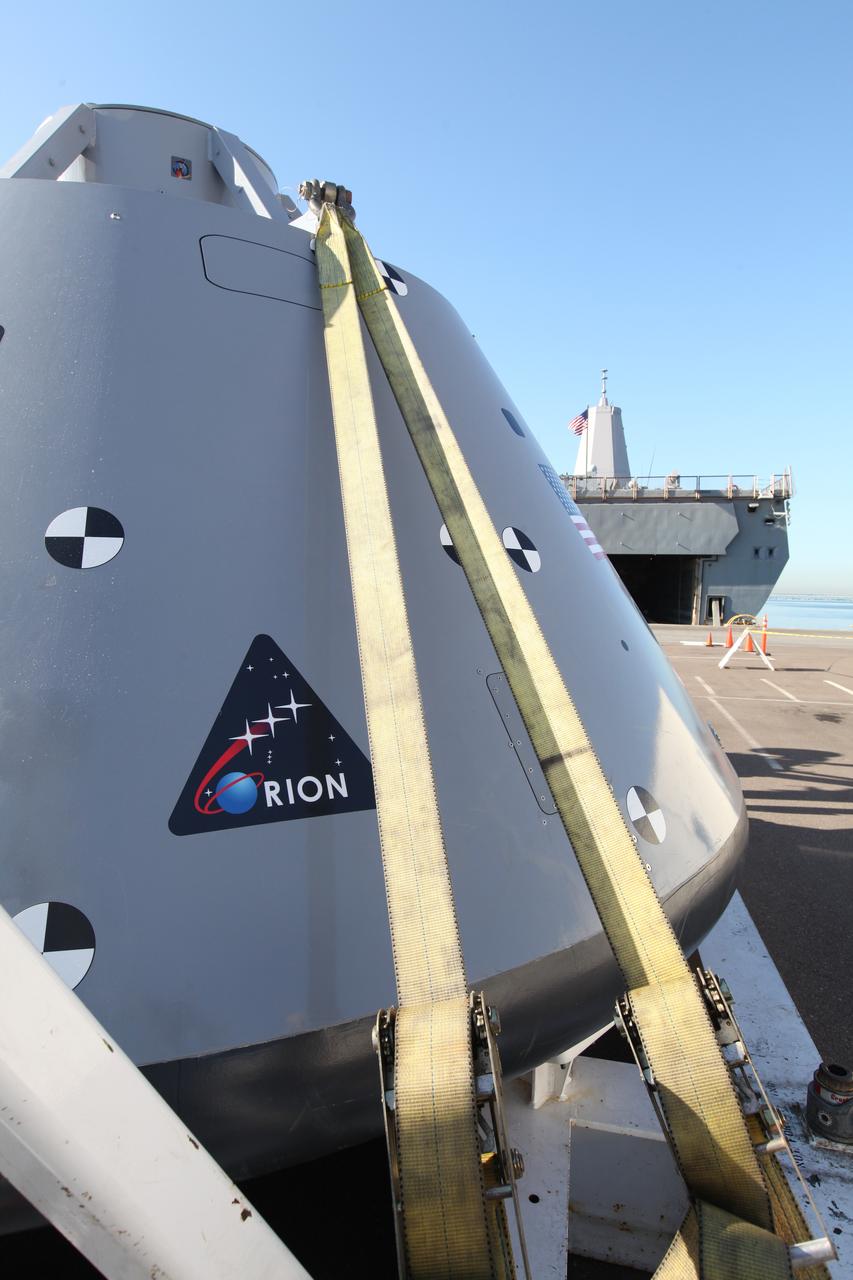
The USS San Diego is docked at Naval Base San Diego in California after returning from Underway Recovery Test 5 in the Pacific Ocean. A test version of the Orion crew module, secured on its handling fixture, was offloaded from the well deck of the ship. NASA's Ground Systems Development and Operations Program and the U.S. Navy completed a series of tests using the ship's well deck, the test module, various watercraft and equipment to prepare for recovery of Orion on its return from deep space missions. The testing allowed the team to demonstrate and evaluate recovery processes, procedures, hardware and personnel in open waters. Orion is the exploration spacecraft designed to carry astronauts to destinations not yet explored by humans, including an asteroid and NASA's Journey to Mars. It will have emergency abort capability, sustain the crew during space travel and provide safe re-entry from deep space return velocities. Orion is scheduled to launch on NASA's Space Launch System in late 2018. For more information, visit http://www.nasa.gov/orion.
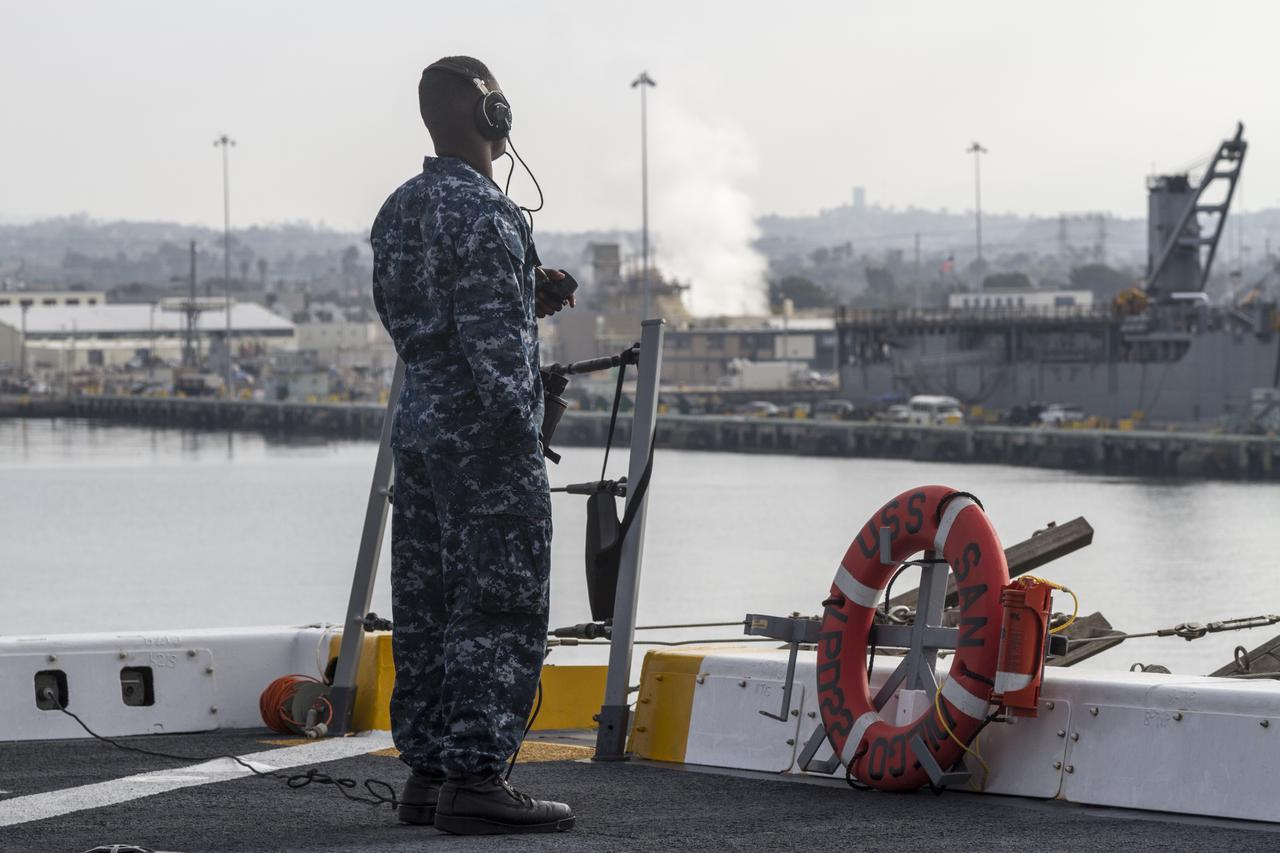
SAN DIEGO, Calif. – At the U.S. Naval Base San Diego in California, the USS San Diego heads out to sea with the Orion boilerplate test vehicle and other hardware in its well deck for an underway recovery test. About 100 miles offshore, NASA and the U.S. Navy conducted tests to prepare for recovery of the Orion crew module, forward bay cover and parachutes on its return from a deep space mission. The underway recovery test will allow the teams to demonstrate and evaluate the recovery processes, procedures, hardware and personnel in open waters. During the testing, the tether lines were unable to support the tension caused by crew module motion that was driven by wave turbulence in the well deck of the ship. NASA and the U.S. Navy are reviewing the testing data collected to evaluate the next steps. The Ground Systems Development and Operations Program conducted the underway recovery tests. Orion is the exploration spacecraft designed to carry astronauts to destinations not yet explored by humans, including an asteroid and Mars. It will have emergency abort capability, sustain the crew during space travel and provide safe re-entry from deep space return velocities. The first unpiloted test flight of the Orion is scheduled to launch in 2014 atop a Delta IV rocket and in 2017 on NASA’s Space Launch System rocket. For more information, visit http://www.nasa.gov/orion. Photo credit: NASA/Cory Huston
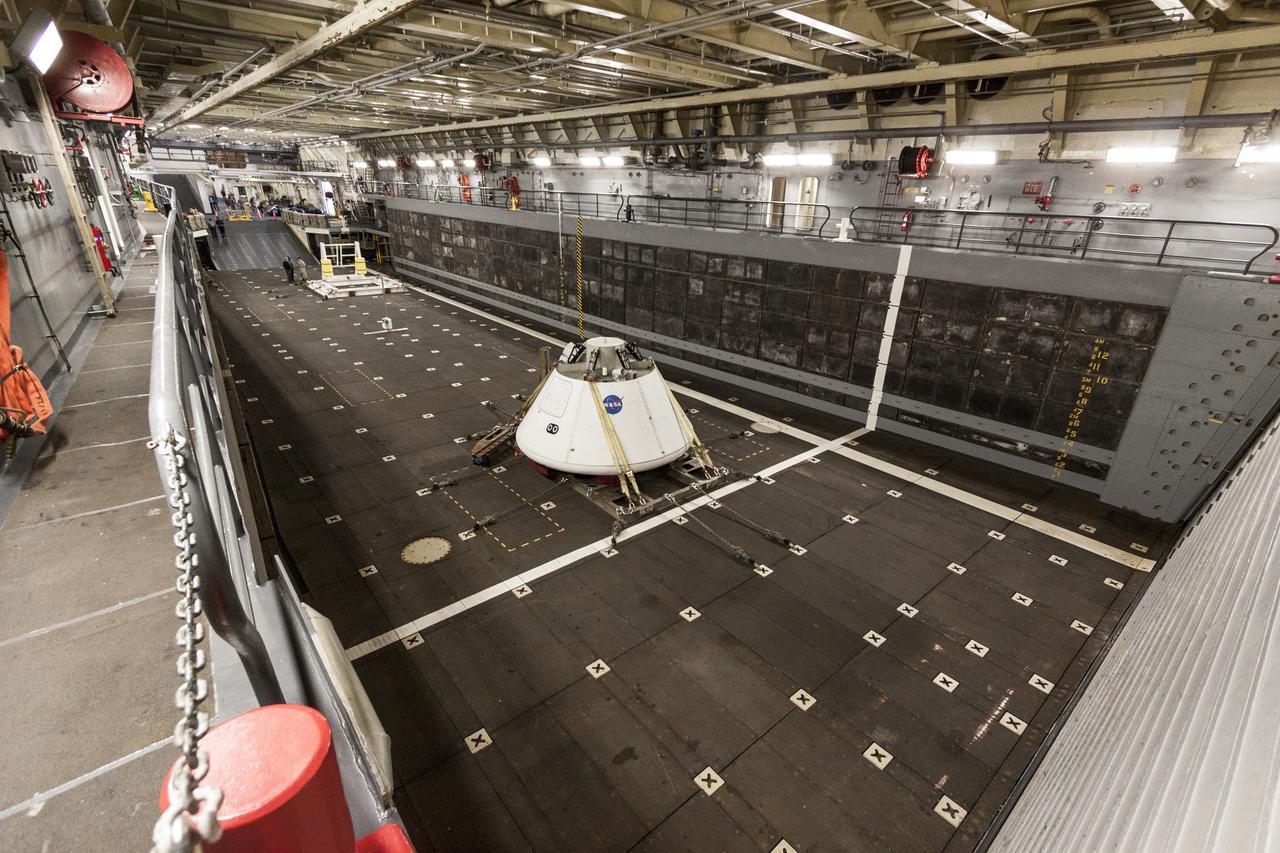
SAN DIEGO, Calif. – The Orion boilerplate test vehicle is secured in the well deck of the USS San Diego at the U.S. Naval Base San Diego in California. Orion was transported about 100 miles offshore for an underway recovery test. NASA and the U.S. Navy conducted tests to prepare for recovery of the Orion crew module, forward bay cover and parachutes on its return from a deep space mission. The underway recovery test will allow the teams to demonstrate and evaluate the recovery processes, procedures, hardware and personnel in open waters. During the testing, the tether lines were unable to support the tension caused by crew module motion that was driven by wave turbulence in the well deck of the ship. NASA and the U.S. Navy are reviewing the testing data collected to evaluate the next steps. The Ground Systems Development and Operations Program conducted the underway recovery tests. Orion is the exploration spacecraft designed to carry astronauts to destinations not yet explored by humans, including an asteroid and Mars. It will have emergency abort capability, sustain the crew during space travel and provide safe re-entry from deep space return velocities. The first unpiloted test flight of the Orion is scheduled to launch in 2014 atop a Delta IV rocket and in 2017 on NASA’s Space Launch System rocket. For more information, visit http://www.nasa.gov/orion. Photo credit: NASA/Cory Huston
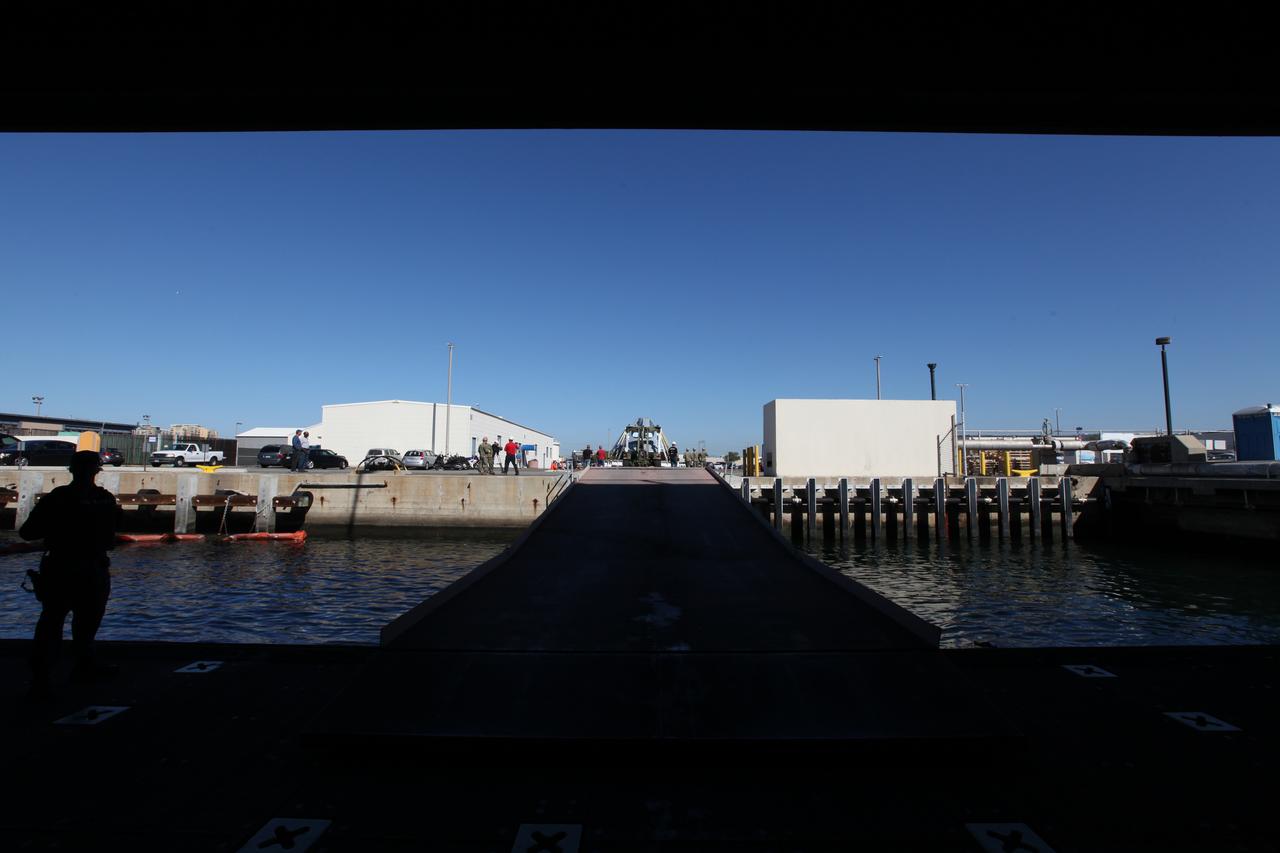
A test version of the Orion crew module has been offloaded from the USS San Diego at Naval Base San Diego in California after returning from Orion Underway Recovery Test 5 in the Pacific Ocean. NASA's Ground Systems Development and Operations Program and the U.S. Navy completed a series of tests using the ship's well deck, the test module, various watercraft and equipment to prepare for recovery of Orion on its return from deep space missions. The testing allowed the team to demonstrate and evaluate recovery processes, procedures, hardware and personnel in open waters. Orion is the exploration spacecraft designed to carry astronauts to destinations not yet explored by humans, including an asteroid and NASA's Journey to Mars. It will have emergency abort capability, sustain the crew during space travel and provide safe re-entry from deep space return velocities. Orion is scheduled to launch on NASA's Space Launch System in late 2018. For more information, visit http://www.nasa.gov/orion.
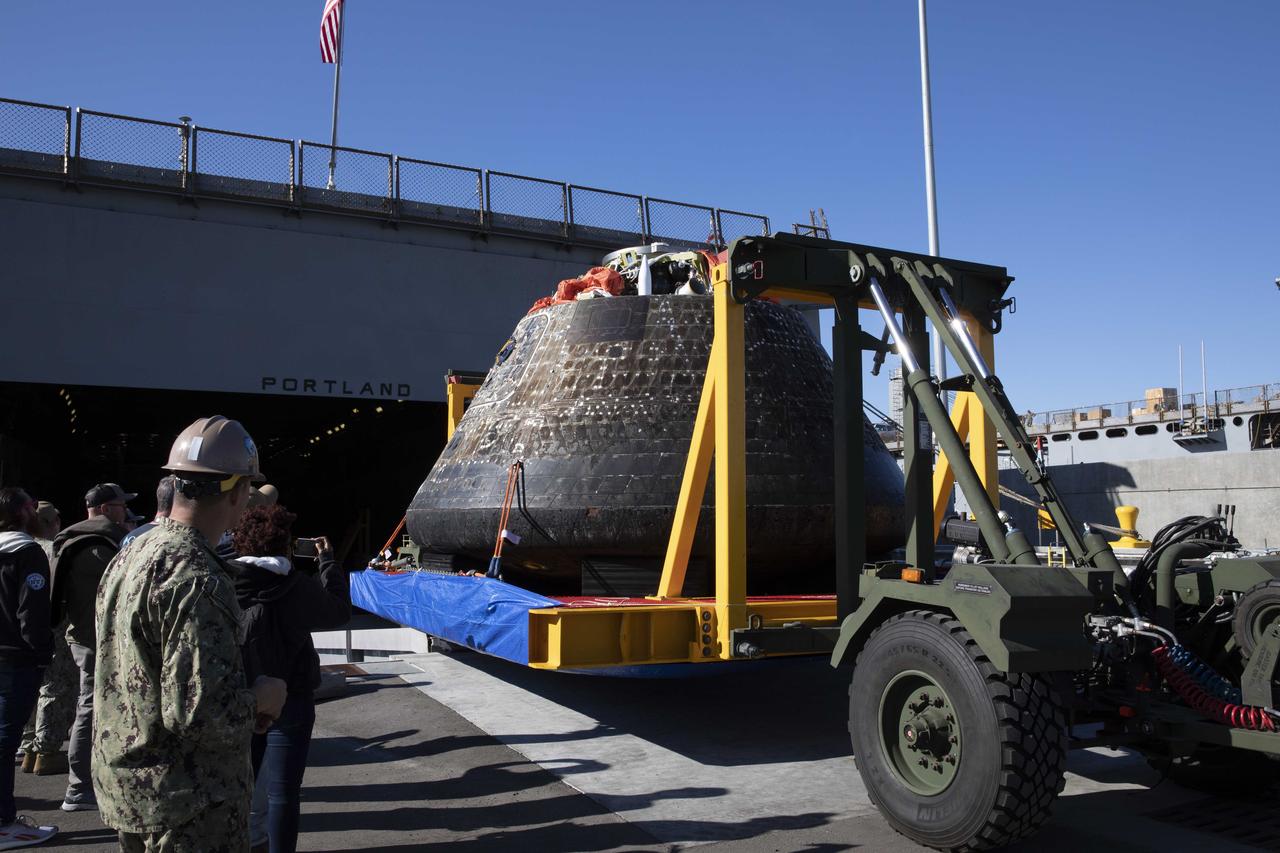
Team members with NASA’s Exploration Ground Systems program successfully removed the Artemis I Orion spacecraft from the USS Portland Dec. 14, after the ship arrived at U.S. Naval Base San Diego.
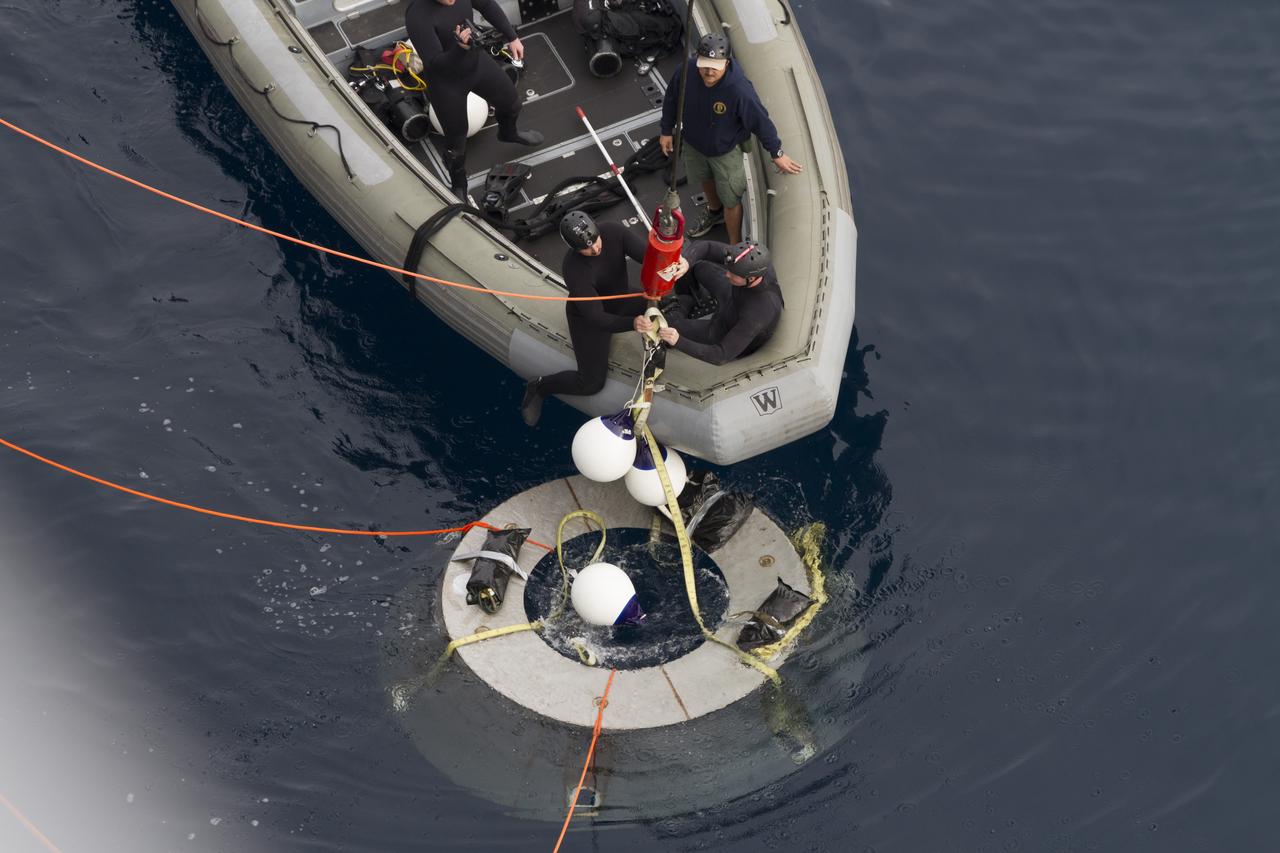
SAN DIEGO, Calif. – NASA and U.S. Navy personnel practice retrieving the Orion forward bay cover from the water during the Orion underway recovery test. The Orion boilerplate test vehicle and other hardware are secured in the well deck of the USS San Diego nearby in preparation for the test about 100 miles off the coast of San Diego, California. NASA and the U.S. Navy conducted tests to prepare for the recovery of the Orion crew module, forward bay cover and parachutes on its return from a deep space mission. The underway recovery test will allow the teams to demonstrate and evaluate the recovery processes, procedures, hardware and personnel in open waters. During the testing, the tether lines were unable to support the tension caused by crew module motion that was driven by wave turbulence in the well deck of the ship. NASA and the U.S. Navy are reviewing the testing data collected to evaluate the next steps. The Ground Systems Development and Operations Program conducted the underway recovery tests. Orion is the exploration spacecraft designed to carry astronauts to destinations not yet explored by humans, including an asteroid and Mars. It will have emergency abort capability, sustain the crew during space travel and provide safe re-entry from deep space return velocities. The first unpiloted test flight of the Orion is scheduled to launch in 2014 atop a Delta IV rocket and in 2017 on NASA’s Space Launch System rocket. For more information, visit http://www.nasa.gov/orion. Photo credit: NASA/Cory Huston
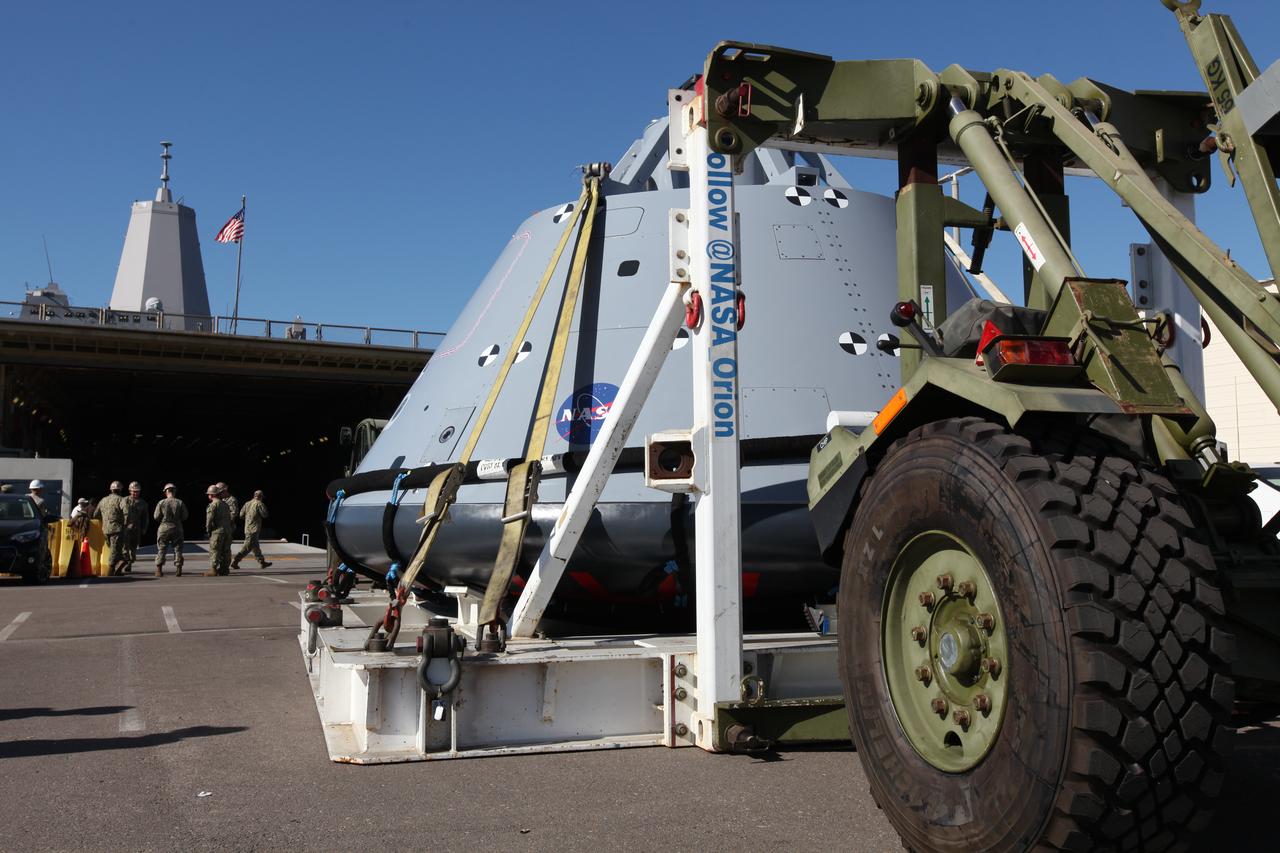
The test version of the Orion crew module is transported to the USS San Diego at Naval Base San Diego in California. NASA, Orion manufacturer Lockheed Martin and the U.S. Navy will head out to sea with the Orion test spacecraft aboard for Underway Recovery Test 5 (URT-5) in the Pacific Ocean off the coast of California. During URT-5, the team will demonstrate and evaluate the recovery processes, procedures, hardware and personnel necessary for recovery of Orion on its return from a deep space mission. Orion is the exploration spacecraft designed to carry astronauts to destinations not yet explored by humans, including an asteroid and NASA Journey to Mars. It will have emergency abort capability, sustain the crew during space travel and provide safe re-entry from deep space return velocities. Orion is scheduled to launch atop NASA’s Space Launch System rocket in 2018. For more information, visit http://www.nasa.gov/orion.
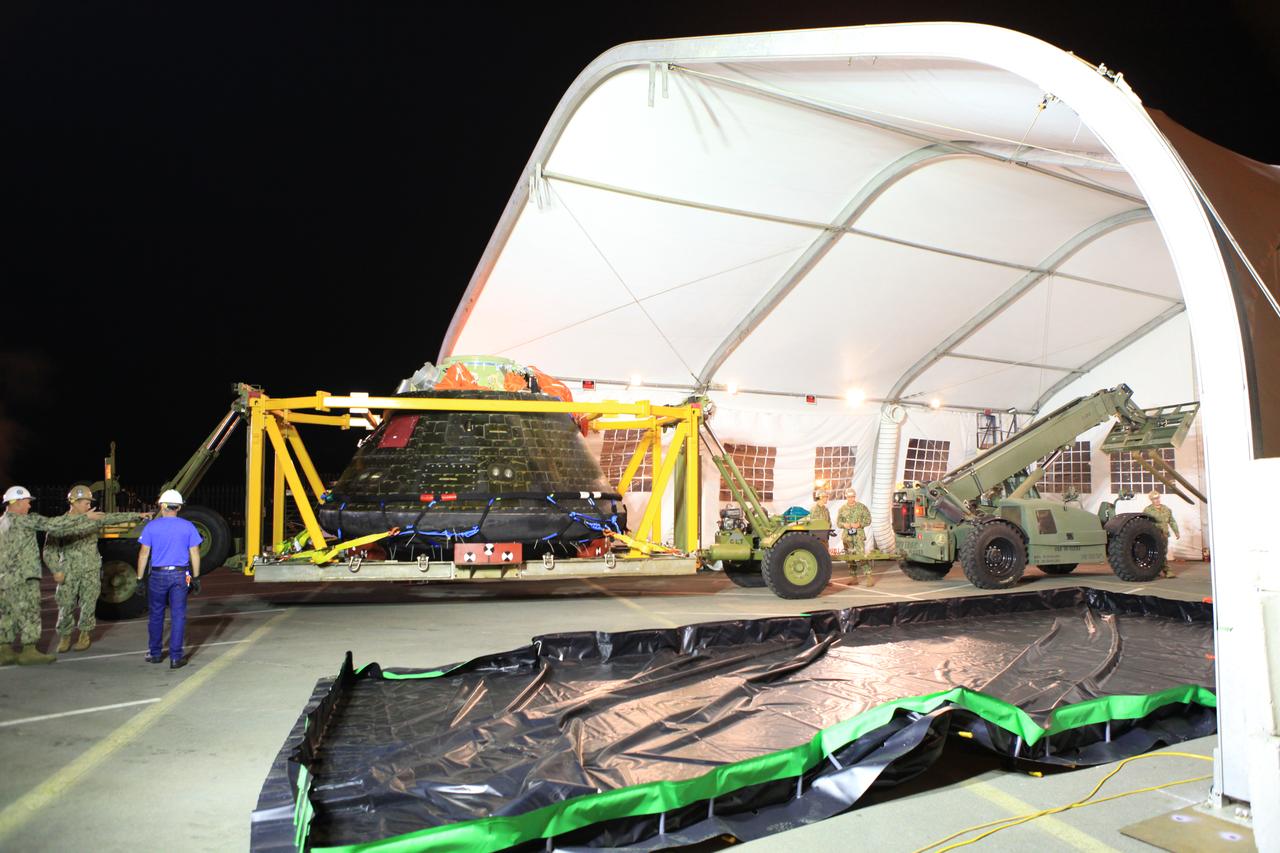
The Orion crew module is being moved into a covered structure at the Mole Pier at Naval Base San Diego in California where it will be prepared for return to NASA's Kennedy Space Center in Florida. Orion was secured on its crew module recovery cradle in the well deck of the USS Anchorage after it was recovered from the Pacific Ocean. After lifting off at 7:05 a.m. EST on Dec. 5, atop a Delta IV Heavy rocket from Space Launch Complex 37 at Cape Canaveral Air Force Station in Florida, Orion completed a two-orbit, four-and-a-half hour mission to test systems critical to crew safety, including the launch abort system, the heat shield and the parachute system. NASA, the U.S. Navy and Lockheed Martin coordinated efforts to recover Orion after splashdown in the Pacific Ocean. The Ground Systems Development and Operations Program led the recovery efforts.
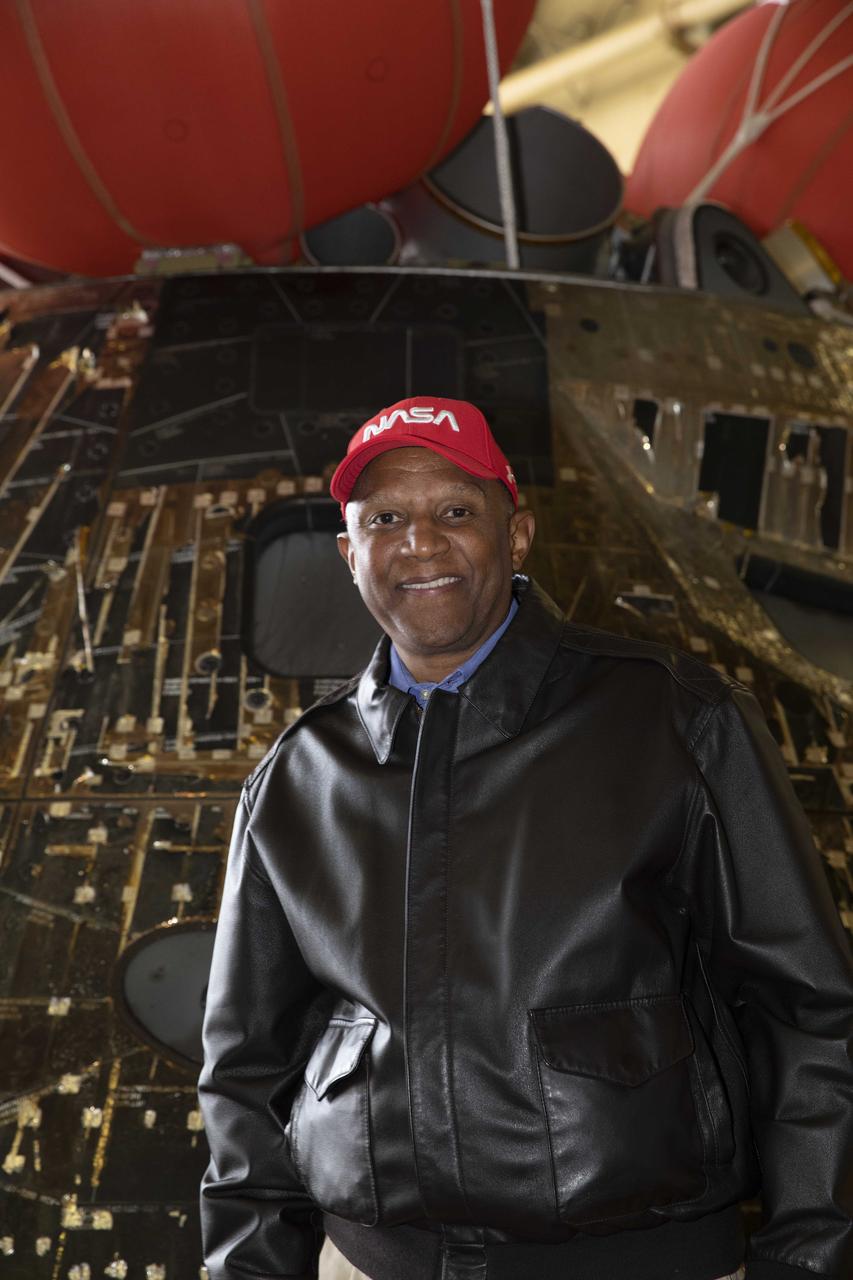
Kennedy Space Center Deputy Director Kelvin Manning stands near the Artemis I Orion spacecraft inside the well deck of the USS Portland at U.S. Naval Base San Diego on Dec. 13, 2022. The Orion spacecraft is secured inside the well deck after splashing down at 12:40 p.m. EST on Dec. 11, 2022. U.S. Navy divers helped recover the Orion spacecraft. NASA, the Navy and other Department of Defense partners worked together to secure the spacecraft inside the ship’s well deck approximately five hours after Orion splashed down in the Pacific Ocean off the coast of Baja, California.
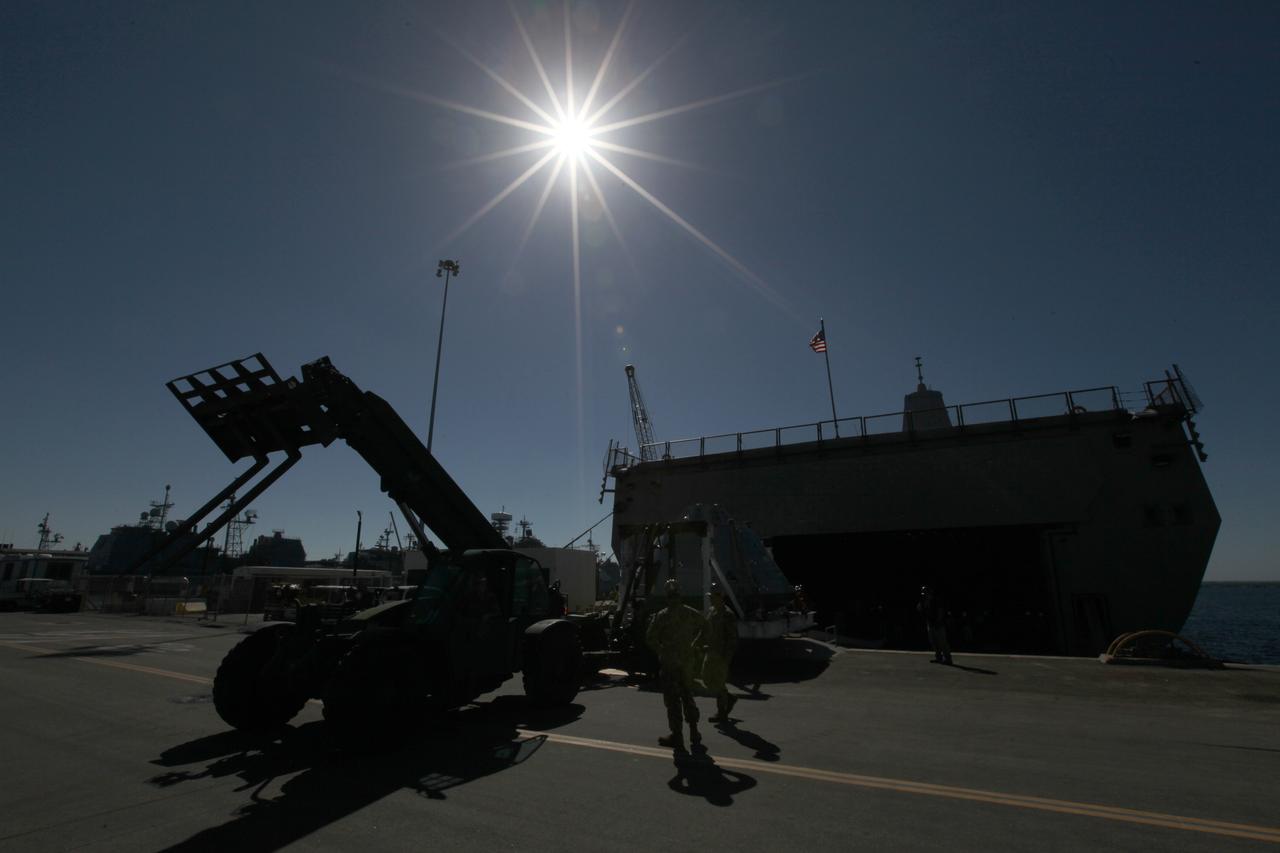
The USS San Diego is docked at Naval Base San Diego in California after returning from Underway Recovery Test 5 in the Pacific Ocean. A test version of the Orion crew module has been offloaded from the well deck of the ship. NASA's Ground Systems Development and Operations Program and the U.S. Navy completed a series of tests using the ship's well deck, the test module, various watercraft and equipment to prepare for recovery of Orion on its return from deep space missions. The testing allowed the team to demonstrate and evaluate recovery processes, procedures, hardware and personnel in open waters. Orion is the exploration spacecraft designed to carry astronauts to destinations not yet explored by humans, including an asteroid and NASA's Journey to Mars. It will have emergency abort capability, sustain the crew during space travel and provide safe re-entry from deep space return velocities. Orion is scheduled to launch on NASA's Space Launch System in late 2018. For more information, visit http://www.nasa.gov/orion.
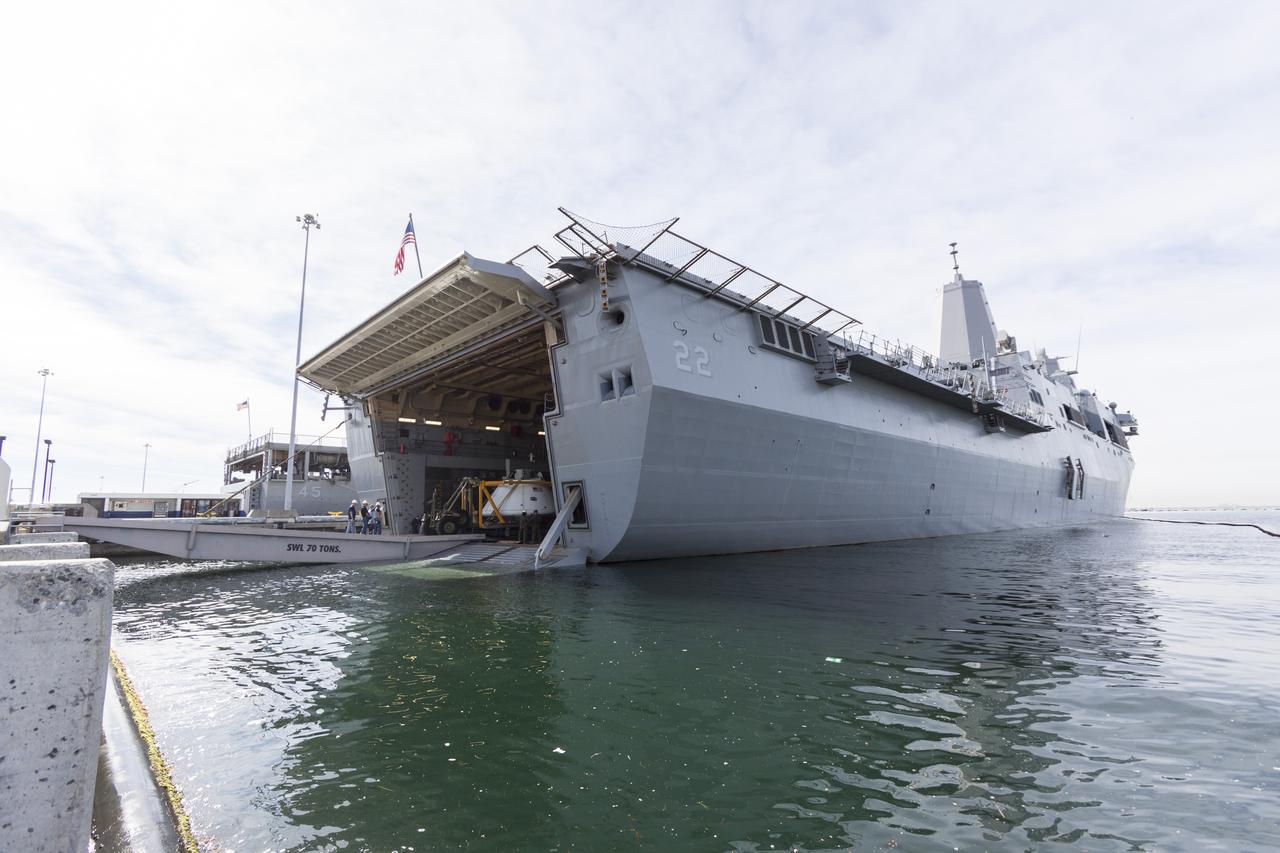
SAN DIEGO, Calif. – The Orion boilerplate test vehicle arrived at the U.S. Naval Base San Diego in California, and is loaded aboard the USS San Diego. Orion was transported in the ship’s well deck about 100 miles offshore for an underway recovery test. NASA and the U.S. Navy are conducting tests to prepare for recovery of the Orion crew module, forward bay cover and parachutes on its return from a deep space mission. The underway recovery test will allow the teams to demonstrate and evaluate the recovery processes, procedures, hardware and personnel in open waters. The Ground Systems Development and Operations Program Orion is the exploration spacecraft designed to carry astronauts to destinations not yet explored by humans, including an asteroid and Mars. It will have emergency abort capability, sustain the crew during space travel and provide safe re-entry from deep space return velocities. The first unpiloted test flight of the Orion is scheduled to launch in 2014 atop a Delta IV rocket and in 2017 on NASA’s Space Launch System rocket. For more information, visit http://www.nasa.gov/orion. Photo credit: NASA/Cory Huston