
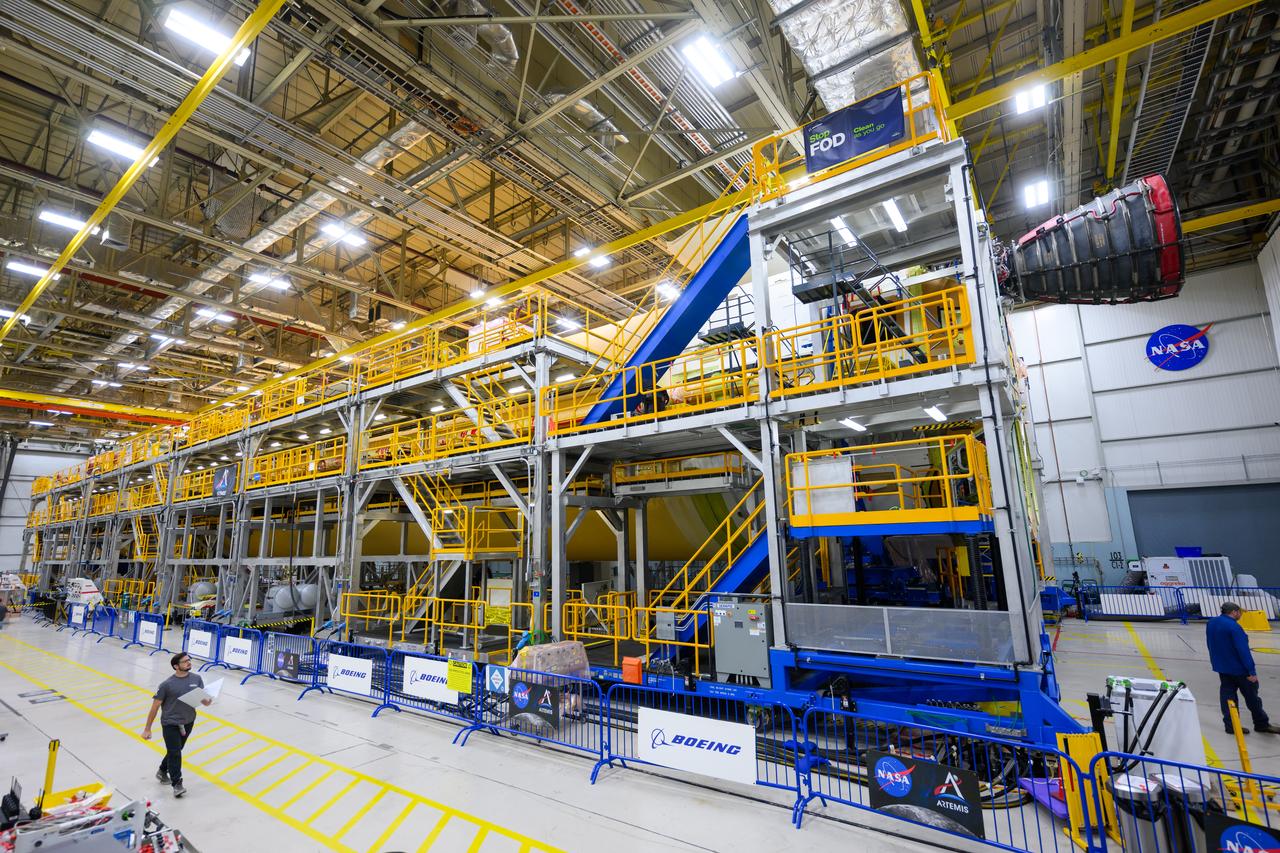
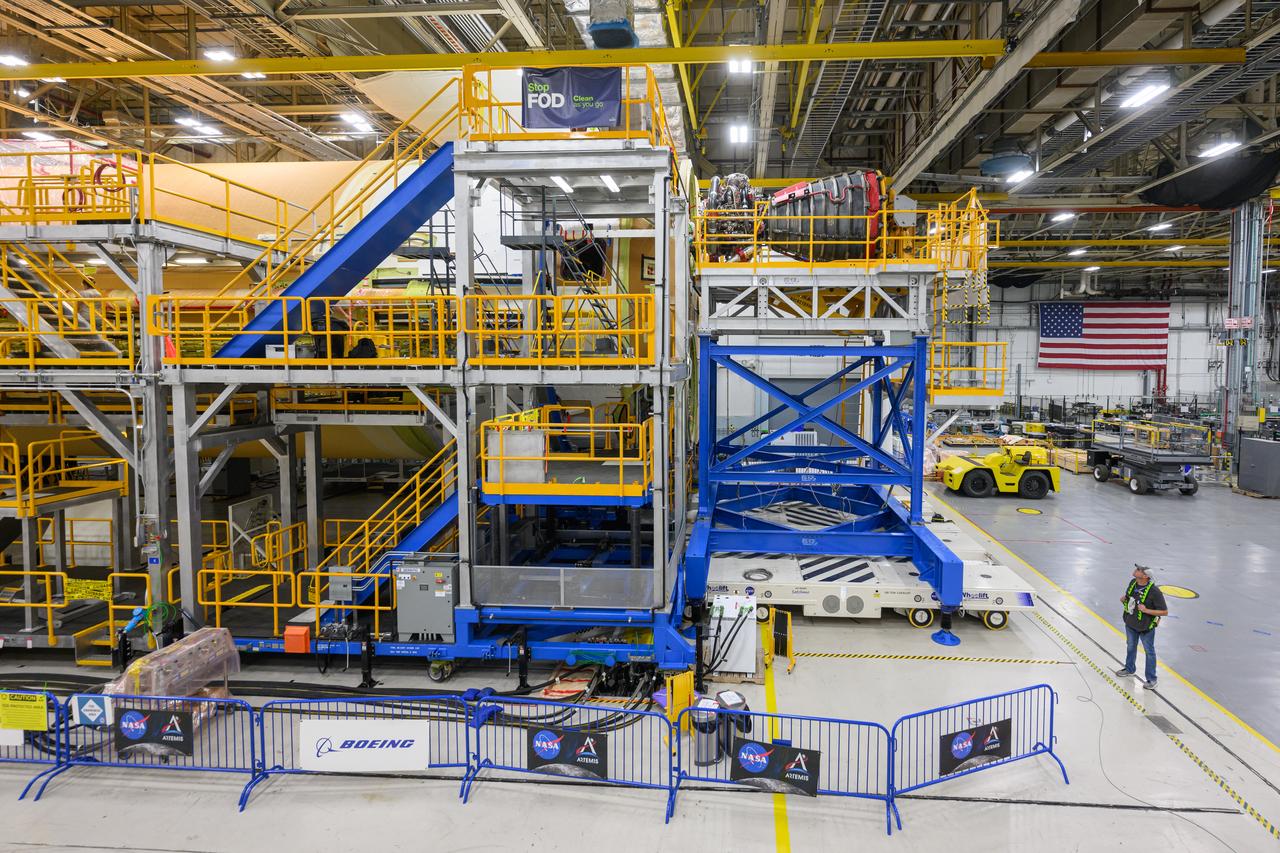
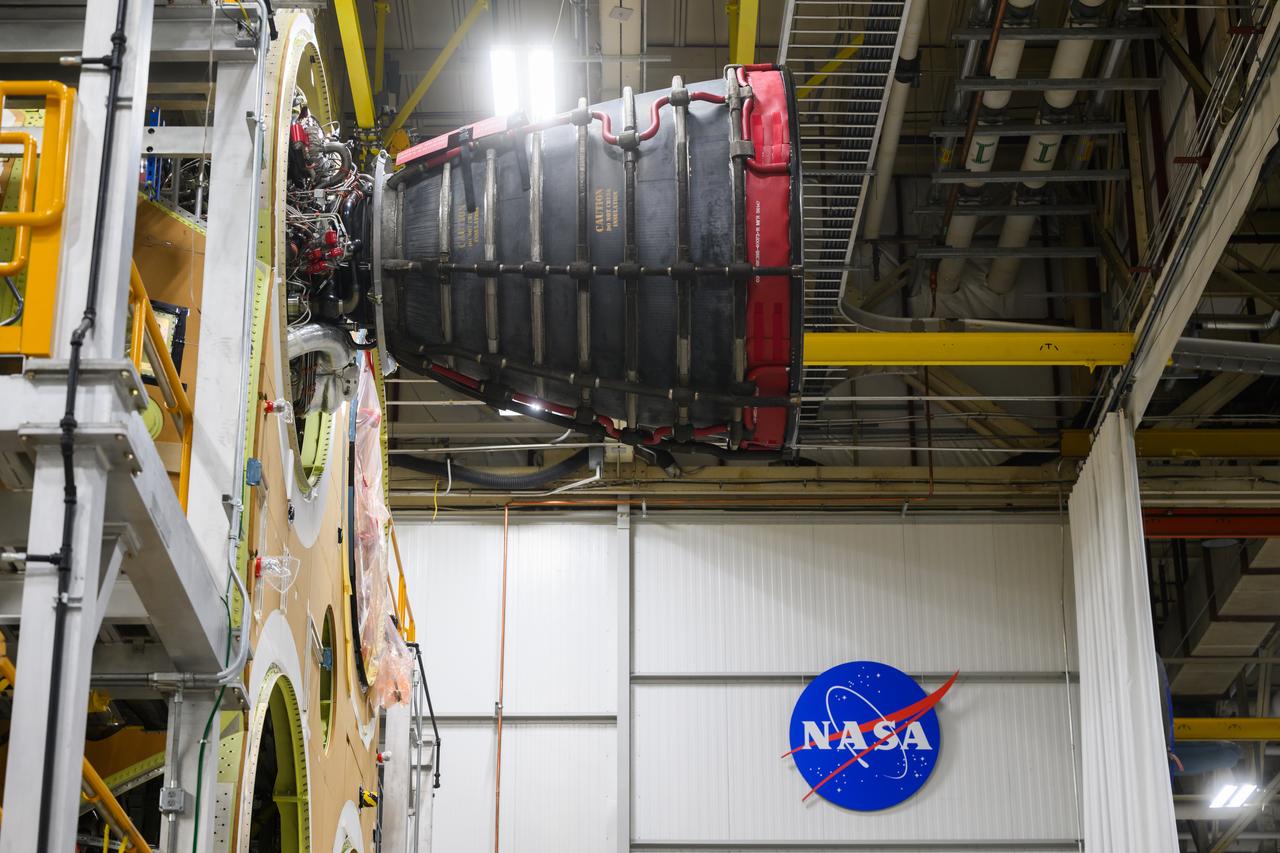
These photos and videos show how technicians at NASA’s Michoud Assembly Facility in New Orleans installed the third and fourth RS-25 engines onto the core stage for the agency’s SLS (Space Launch System) rocket that will help power NASA’s first crewed Artemis mission to the Moon. Technicians added the first engine to the SLS core stage Sept. 11. The second engine was installed onto the stage Sept. 15 with the third and fourth engines following Sept. 19 and Sept. 20. Engineers consider the engines to be “soft” mated to the rocket stage. Technicians with NASA, Aerojet Rocketdyne, an L3Harris Technologies company and the RS-25 engines lead contractor, along with Boeing, the core stage lead contractor, will now focus efforts on the complex tax of fully securing the engines to the stage and integrating the propulsion and electrical systems within the structure. NASA is working to land the first woman and first person of color on the Moon under Artemis. SLS is part of NASA’s backbone for deep space exploration, along with Orion and the Gateway in orbit around the Moon. SLS is the only rocket that can send Orion, astronauts, and supplies to the Moon in a single mission.
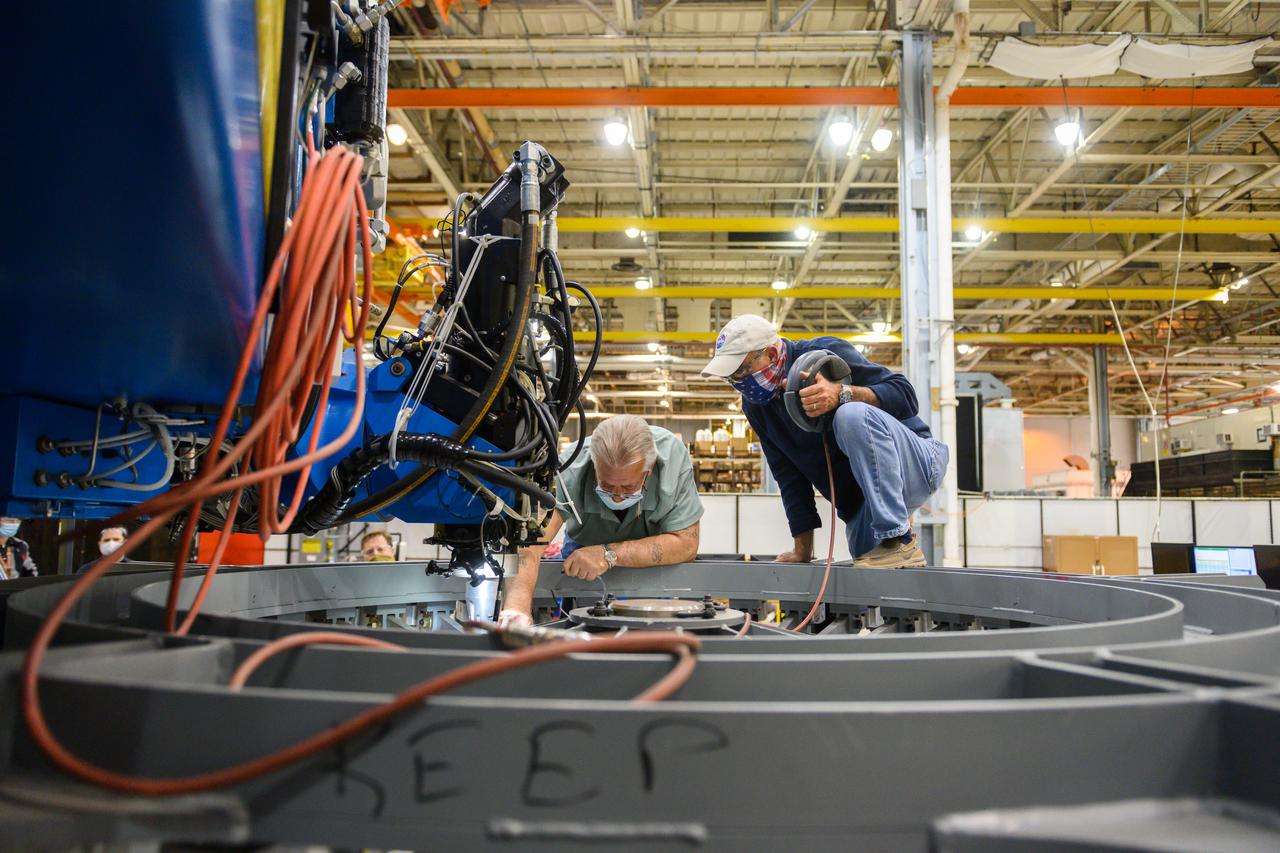
Technicians from Orion Prime Contractor Lockheed Martin weld the forward bulkhead of the pressure vessel to the tunnel hardware on the Orion Spacecraft for the Artemis III mission at NASA’s Michoud Assembly Facility in New Orleans. The crew module’s primary structure, the pressure vessel, is comprised of seven machined aluminum alloy pieces that are welded together through a weld process that produces a strong, air-tight habitable space for astronauts during the mission. The pressure vessel is designed to withstand the harsh and demanding environment of deep space and is the core structure upon which all the other elements of Orion’s crew module are integrated. This pressure vessel weld is the next step following the completion of the crew module cone panel welds and creates the top of the spacecraft. Work will then begin to join the barrel with the aft bulkhead to form the bottom of Orion. Last, the forward bulkhead will be welded to the top of the panels and, for the seventh and closeout weld, the bottom of the cone panels will be joined to the barrel to complete the pressure vessel. Once welding of the Artemis III crew module primary structure is complete, it will be shipped to NASA’s Kennedy Space Center in Florida where it will undergo further assembly beginning this fall. Orion, the Space Launch System, and Exploration Ground Systems programs are foundational elements of the Artemis program. Artemis I will be the first integrated flight test of Orion and SLS and is targeted to launch later this year. Artemis II will follow and is the first crewed mission, taking humans farther into space than ever before.
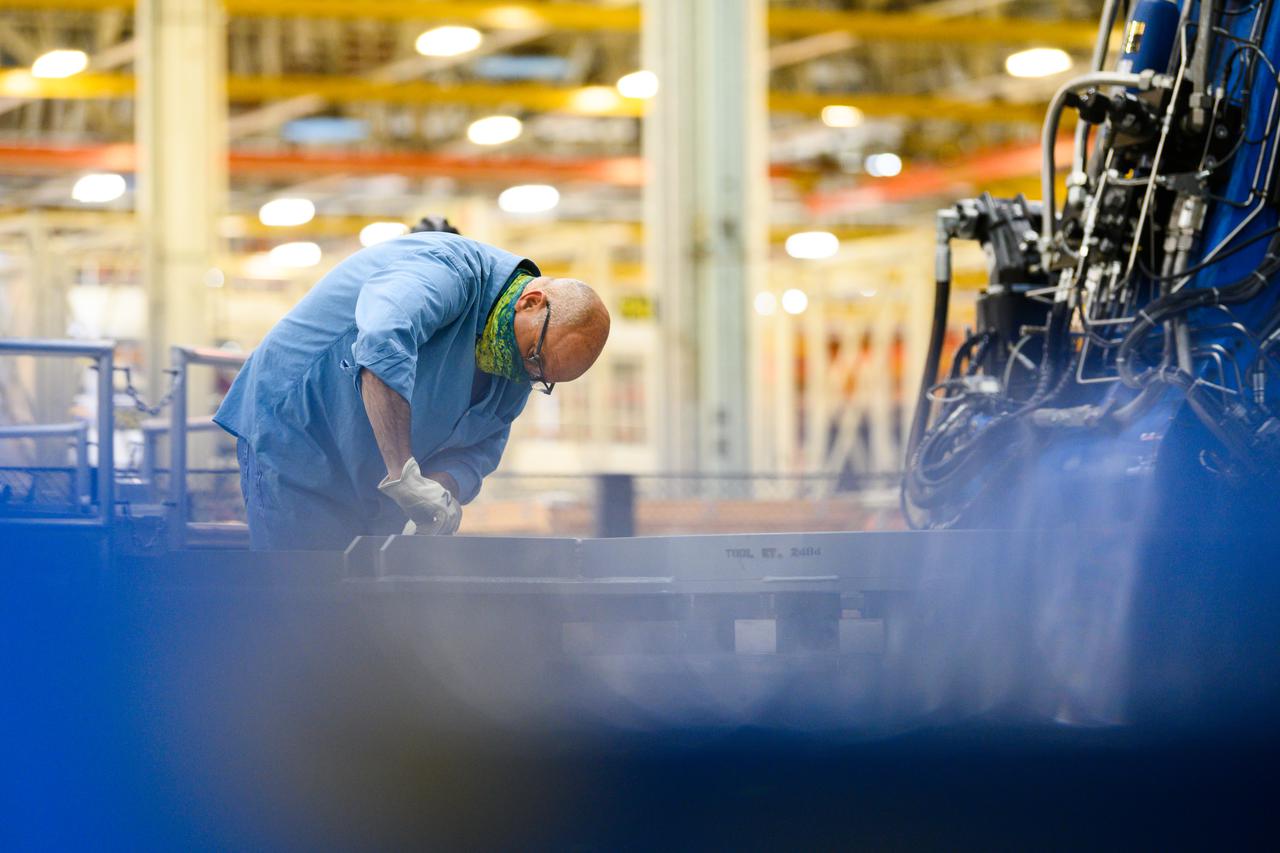
Technicians from Orion Prime Contractor Lockheed Martin weld the forward bulkhead of the pressure vessel to the tunnel hardware on the Orion Spacecraft for the Artemis III mission at NASA’s Michoud Assembly Facility in New Orleans. The crew module’s primary structure, the pressure vessel, is comprised of seven machined aluminum alloy pieces that are welded together through a weld process that produces a strong, air-tight habitable space for astronauts during the mission. The pressure vessel is designed to withstand the harsh and demanding environment of deep space and is the core structure upon which all the other elements of Orion’s crew module are integrated. This pressure vessel weld is the next step following the completion of the crew module cone panel welds and creates the top of the spacecraft. Work will then begin to join the barrel with the aft bulkhead to form the bottom of Orion. Last, the forward bulkhead will be welded to the top of the panels and, for the seventh and closeout weld, the bottom of the cone panels will be joined to the barrel to complete the pressure vessel. Once welding of the Artemis III crew module primary structure is complete, it will be shipped to NASA’s Kennedy Space Center in Florida where it will undergo further assembly beginning this fall. Orion, the Space Launch System, and Exploration Ground Systems programs are foundational elements of the Artemis program. Artemis I will be the first integrated flight test of Orion and SLS and is targeted to launch later this year. Artemis II will follow and is the first crewed mission, taking humans farther into space than ever before.
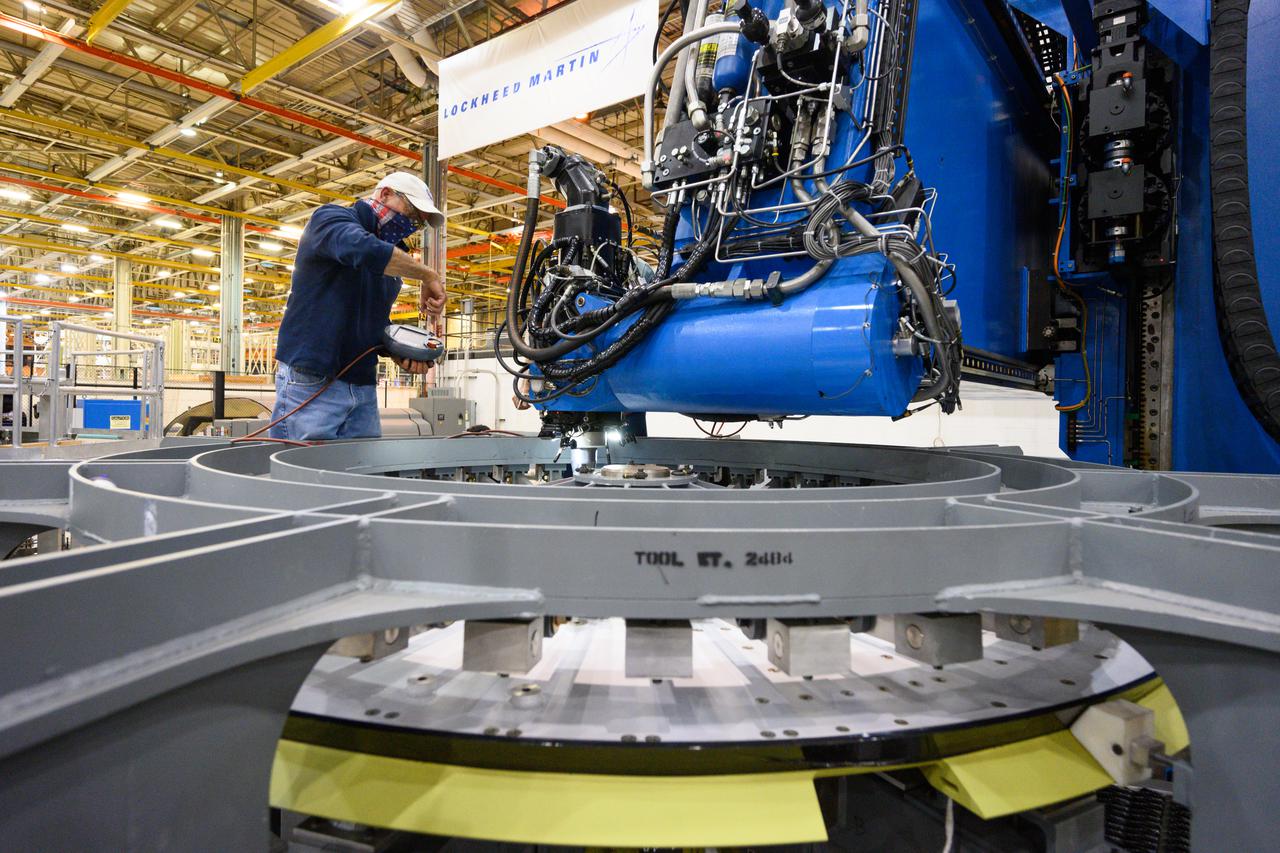
Technicians from Orion Prime Contractor Lockheed Martin weld the forward bulkhead of the pressure vessel to the tunnel hardware on the Orion Spacecraft for the Artemis III mission at NASA’s Michoud Assembly Facility in New Orleans. The crew module’s primary structure, the pressure vessel, is comprised of seven machined aluminum alloy pieces that are welded together through a weld process that produces a strong, air-tight habitable space for astronauts during the mission. The pressure vessel is designed to withstand the harsh and demanding environment of deep space and is the core structure upon which all the other elements of Orion’s crew module are integrated. This pressure vessel weld is the next step following the completion of the crew module cone panel welds and creates the top of the spacecraft. Work will then begin to join the barrel with the aft bulkhead to form the bottom of Orion. Last, the forward bulkhead will be welded to the top of the panels and, for the seventh and closeout weld, the bottom of the cone panels will be joined to the barrel to complete the pressure vessel. Once welding of the Artemis III crew module primary structure is complete, it will be shipped to NASA’s Kennedy Space Center in Florida where it will undergo further assembly beginning this fall. Orion, the Space Launch System, and Exploration Ground Systems programs are foundational elements of the Artemis program. Artemis I will be the first integrated flight test of Orion and SLS and is targeted to launch later this year. Artemis II will follow and is the first crewed mission, taking humans farther into space than ever before.

This image shows technicians and engineers move and connect the liquid oxygen tank (LOX) to the intertank as they continue the process of the forward join on the core stage of NASA’s Space Launch System rocket for Artemis II, the first crewed mission of NASA’s Artemis program at NASA’s Michoud Assembly Facility. The forward join connects the forward skirt, the liquid oxygen tank (LOX) and the intertank structures to form the top part of the SLS rocket’s core stage. Now, NASA and Boeing, the SLS prime contractor, will continue to integrate various systems inside the forward part of the core stage and prepare for structural joining of the liquid hydrogen tank and engine section to form the bottom of the stage. Together with its four RS-25 engines, the rocket’s massive 212-foot-tall core stage — the largest stage NASA has ever built — and its twin solid rocket boosters will produce 8.8 million pounds of thrust to send NASA’s Orion spacecraft, astronauts and supplies beyond Earth’s orbit to the Moon and, ultimately, Mars. Offering more payload mass, volume capability and energy to speed missions through space, the SLS rocket, along with NASA’s Gateway in lunar orbit, the Human Landing System, and Orion spacecraft, is part of NASA’s backbone for deep space exploration and the Artemis lunar program. No other rocket is capable of carrying astronauts in Orion around the Moon in a single mission.
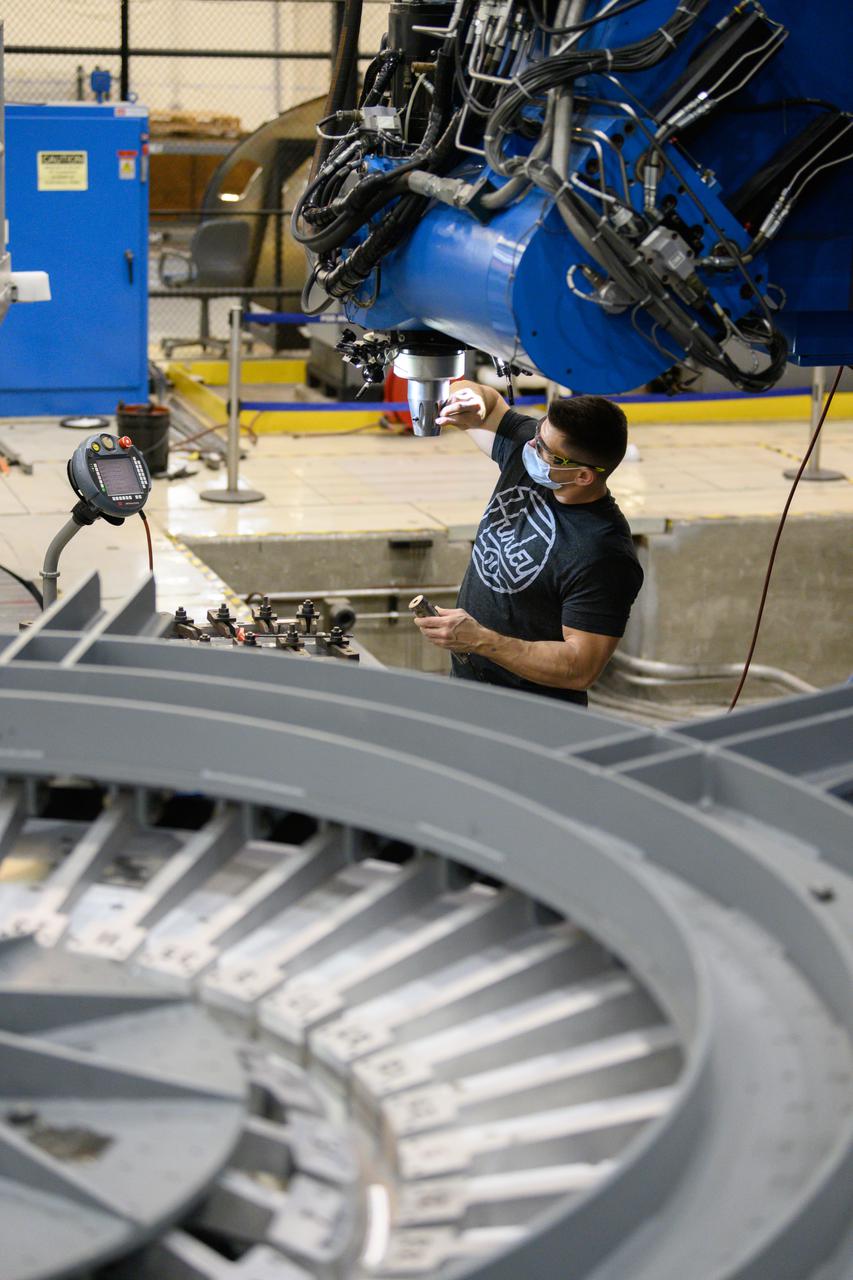
Technicians from Orion Prime Contractor Lockheed Martin weld the forward bulkhead of the pressure vessel to the tunnel hardware on the Orion Spacecraft for the Artemis III mission at NASA’s Michoud Assembly Facility in New Orleans. The crew module’s primary structure, the pressure vessel, is comprised of seven machined aluminum alloy pieces that are welded together through a weld process that produces a strong, air-tight habitable space for astronauts during the mission. The pressure vessel is designed to withstand the harsh and demanding environment of deep space and is the core structure upon which all the other elements of Orion’s crew module are integrated. This pressure vessel weld is the next step following the completion of the crew module cone panel welds and creates the top of the spacecraft. Work will then begin to join the barrel with the aft bulkhead to form the bottom of Orion. Last, the forward bulkhead will be welded to the top of the panels and, for the seventh and closeout weld, the bottom of the cone panels will be joined to the barrel to complete the pressure vessel. Once welding of the Artemis III crew module primary structure is complete, it will be shipped to NASA’s Kennedy Space Center in Florida where it will undergo further assembly beginning this fall. Orion, the Space Launch System, and Exploration Ground Systems programs are foundational elements of the Artemis program. Artemis I will be the first integrated flight test of Orion and SLS and is targeted to launch later this year. Artemis II will follow and is the first crewed mission, taking humans farther into space than ever before.
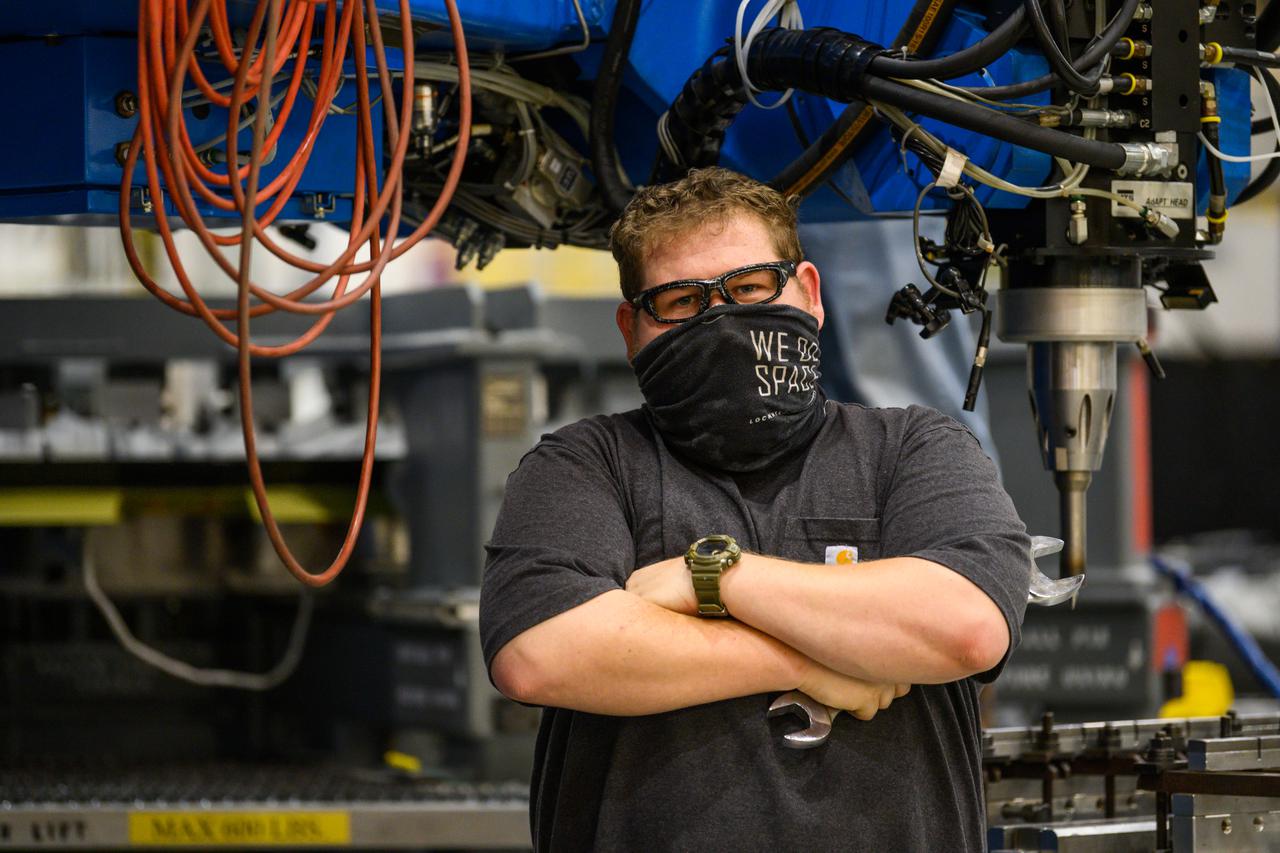
Technicians from Orion Prime Contractor Lockheed Martin weld the forward bulkhead of the pressure vessel to the tunnel hardware on the Orion Spacecraft for the Artemis III mission at NASA’s Michoud Assembly Facility in New Orleans. The crew module’s primary structure, the pressure vessel, is comprised of seven machined aluminum alloy pieces that are welded together through a weld process that produces a strong, air-tight habitable space for astronauts during the mission. The pressure vessel is designed to withstand the harsh and demanding environment of deep space and is the core structure upon which all the other elements of Orion’s crew module are integrated. This pressure vessel weld is the next step following the completion of the crew module cone panel welds and creates the top of the spacecraft. Work will then begin to join the barrel with the aft bulkhead to form the bottom of Orion. Last, the forward bulkhead will be welded to the top of the panels and, for the seventh and closeout weld, the bottom of the cone panels will be joined to the barrel to complete the pressure vessel. Once welding of the Artemis III crew module primary structure is complete, it will be shipped to NASA’s Kennedy Space Center in Florida where it will undergo further assembly beginning this fall. Orion, the Space Launch System, and Exploration Ground Systems programs are foundational elements of the Artemis program. Artemis I will be the first integrated flight test of Orion and SLS and is targeted to launch later this year. Artemis II will follow and is the first crewed mission, taking humans farther into space than ever before.
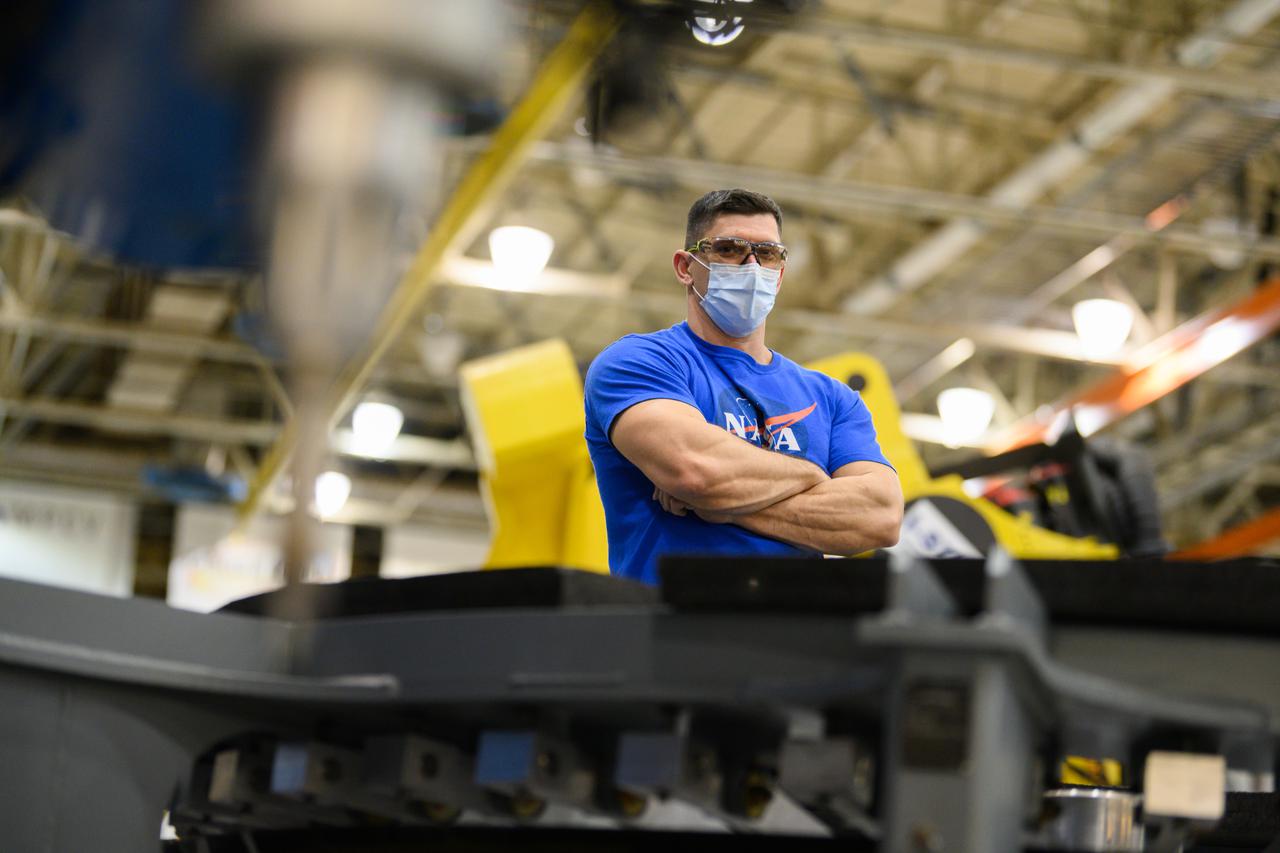
Technicians from Orion Prime Contractor Lockheed Martin weld the forward bulkhead of the pressure vessel to the tunnel hardware on the Orion Spacecraft for the Artemis III mission at NASA’s Michoud Assembly Facility in New Orleans. The crew module’s primary structure, the pressure vessel, is comprised of seven machined aluminum alloy pieces that are welded together through a weld process that produces a strong, air-tight habitable space for astronauts during the mission. The pressure vessel is designed to withstand the harsh and demanding environment of deep space and is the core structure upon which all the other elements of Orion’s crew module are integrated. This pressure vessel weld is the next step following the completion of the crew module cone panel welds and creates the top of the spacecraft. Work will then begin to join the barrel with the aft bulkhead to form the bottom of Orion. Last, the forward bulkhead will be welded to the top of the panels and, for the seventh and closeout weld, the bottom of the cone panels will be joined to the barrel to complete the pressure vessel. Once welding of the Artemis III crew module primary structure is complete, it will be shipped to NASA’s Kennedy Space Center in Florida where it will undergo further assembly beginning this fall. Orion, the Space Launch System, and Exploration Ground Systems programs are foundational elements of the Artemis program. Artemis I will be the first integrated flight test of Orion and SLS and is targeted to launch later this year. Artemis II will follow and is the first crewed mission, taking humans farther into space than ever before.
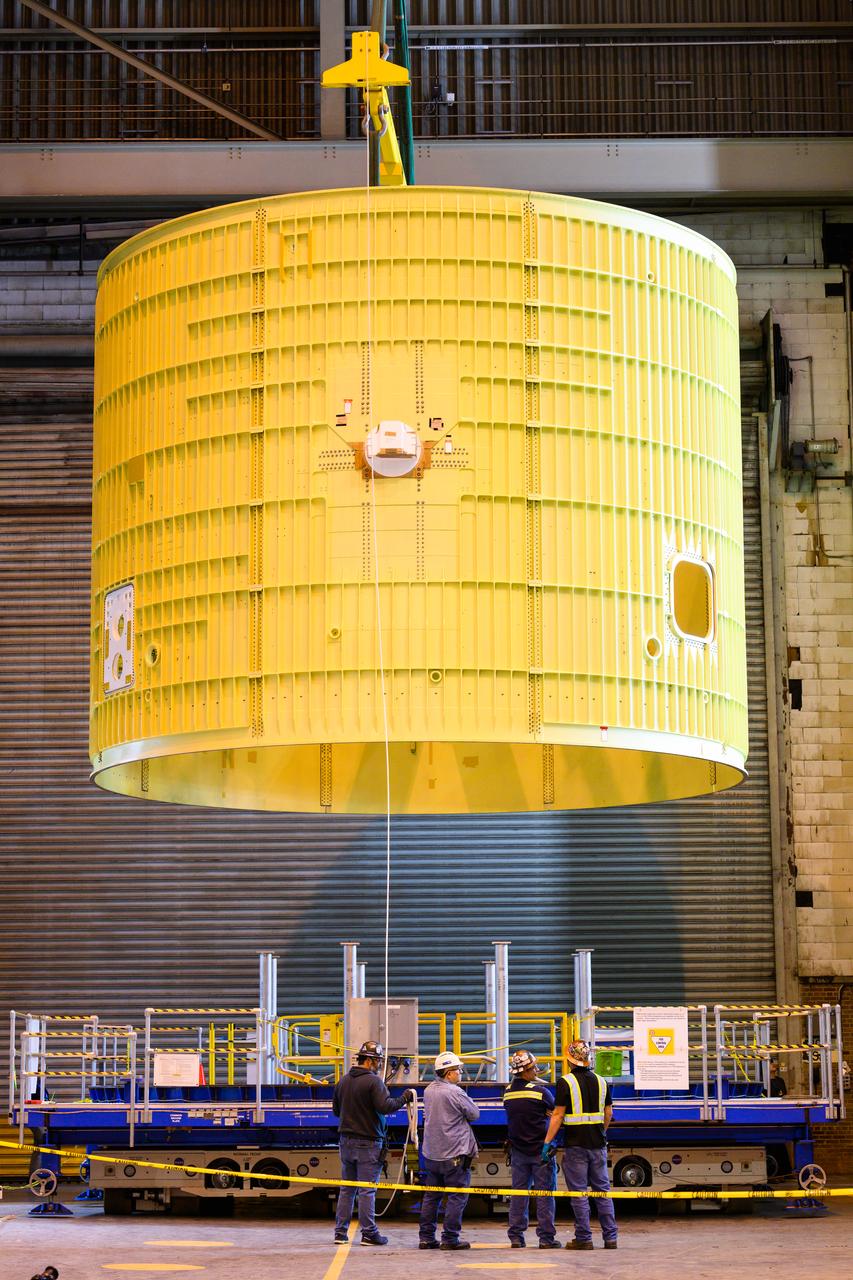
Technicians at NASA’s Michoud Assembly Facility move the intertank of NASA’s Space Launch System rocket for Artemis III to Cell G on October 26, 2022 to await application of the thermal protection system. Thermal protection systems protect space vehicles from aerodynamic heating during entry to planet atmosphere and re-entry to earth atmosphere. The intertank lays between the liquid hydrogen tank and liquid oxygen tank. Together with the engine section and the forward skirt, they comprise the SLS core stage. The liquid hydrogen tank and liquid oxygen tank hold 733,000 gallons of propellant to power the stage’s four RS-25 engines needed for liftoff and Artemis missions to the Moon and future missions to Mars.

NASA’s Space Launch System (SLS) rocket with the Orion spacecraft aboard is seen atop the mobile launcher at Launch 39B at NASA’s Kennedy Space Center in Florida. Artemis I mission is the first integrated test of the agency’s deep space exploration systems: the Space Launch System rocket, Orion spacecraft, and supporting ground systems. The mission is the first in a series of increasingly complex missions to the Moon. Launch of the uncrewed flight test is targeted for no earlier than Sept. 3 at 2:17 p.m. ET. With Artemis missions, NASA will land the first woman and first person of color on the Moon, using innovative technologies to explore more of the lunar surface than ever before.
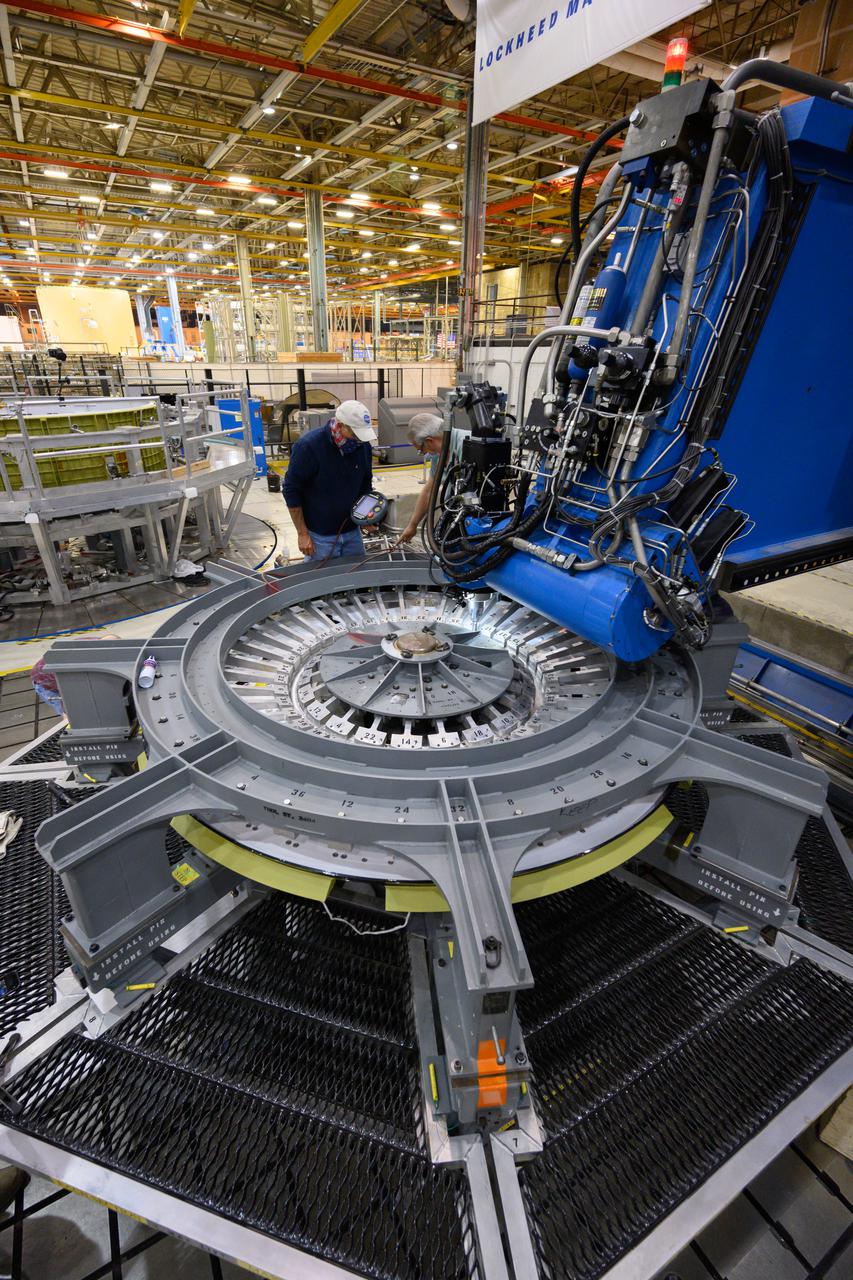
Technicians from Orion Prime Contractor Lockheed Martin weld the forward bulkhead of the pressure vessel to the tunnel hardware on the Orion Spacecraft for the Artemis III mission at NASA’s Michoud Assembly Facility in New Orleans. The crew module’s primary structure, the pressure vessel, is comprised of seven machined aluminum alloy pieces that are welded together through a weld process that produces a strong, air-tight habitable space for astronauts during the mission. The pressure vessel is designed to withstand the harsh and demanding environment of deep space and is the core structure upon which all the other elements of Orion’s crew module are integrated. This pressure vessel weld is the next step following the completion of the crew module cone panel welds and creates the top of the spacecraft. Work will then begin to join the barrel with the aft bulkhead to form the bottom of Orion. Last, the forward bulkhead will be welded to the top of the panels and, for the seventh and closeout weld, the bottom of the cone panels will be joined to the barrel to complete the pressure vessel. Once welding of the Artemis III crew module primary structure is complete, it will be shipped to NASA’s Kennedy Space Center in Florida where it will undergo further assembly beginning this fall. Orion, the Space Launch System, and Exploration Ground Systems programs are foundational elements of the Artemis program. Artemis I will be the first integrated flight test of Orion and SLS and is targeted to launch later this year. Artemis II will follow and is the first crewed mission, taking humans farther into space than ever before.
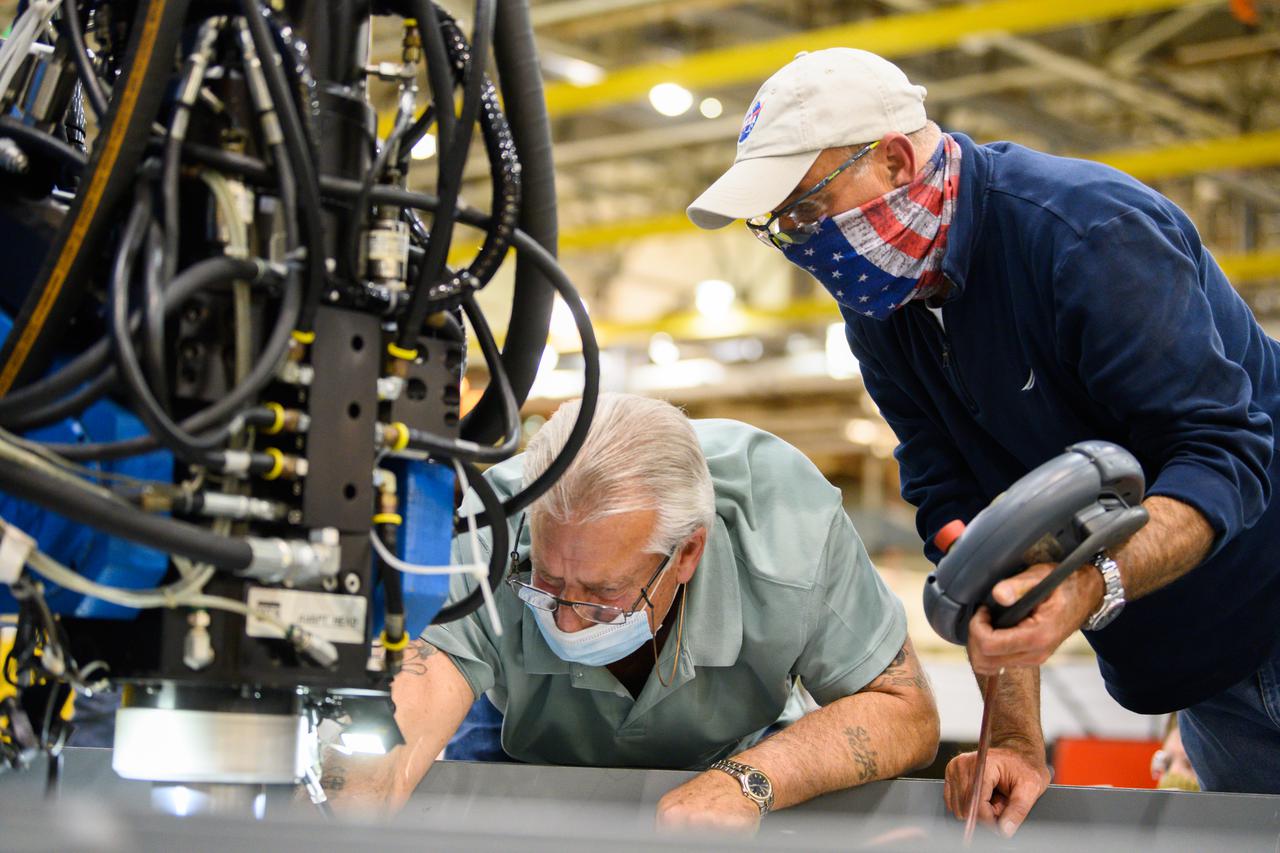
Technicians from Orion Prime Contractor Lockheed Martin weld the forward bulkhead of the pressure vessel to the tunnel hardware on the Orion Spacecraft for the Artemis III mission at NASA’s Michoud Assembly Facility in New Orleans. The crew module’s primary structure, the pressure vessel, is comprised of seven machined aluminum alloy pieces that are welded together through a weld process that produces a strong, air-tight habitable space for astronauts during the mission. The pressure vessel is designed to withstand the harsh and demanding environment of deep space and is the core structure upon which all the other elements of Orion’s crew module are integrated. This pressure vessel weld is the next step following the completion of the crew module cone panel welds and creates the top of the spacecraft. Work will then begin to join the barrel with the aft bulkhead to form the bottom of Orion. Last, the forward bulkhead will be welded to the top of the panels and, for the seventh and closeout weld, the bottom of the cone panels will be joined to the barrel to complete the pressure vessel. Once welding of the Artemis III crew module primary structure is complete, it will be shipped to NASA’s Kennedy Space Center in Florida where it will undergo further assembly beginning this fall. Orion, the Space Launch System, and Exploration Ground Systems programs are foundational elements of the Artemis program. Artemis I will be the first integrated flight test of Orion and SLS and is targeted to launch later this year. Artemis II will follow and is the first crewed mission, taking humans farther into space than ever before.

This image highlights the liquid hydrogen tank that will be used on the core stage of NASA’s Space Launch System rocket for Artemis II, the first crewed mission of NASA’s Artemis program. The tank is being built at NASA’s Michoud Assembly Facility in New Orleans. The SLS core stage is made up of five unique elements: the forward skirt, liquid oxygen tank, intertank, liquid hydrogen tank, and the engine section. The liquid hydrogen tank holds 537,000 gallons of liquid hydrogen cooled to minus 423 degrees Fahrenheit and sits between the core stage’s intertank and engine section. The liquid hydrogen hardware, along with the liquid oxygen tank, will provide propellant to the four RS-25 engines at the bottom of the cores stage to produce more than two million pounds of thrust to launch NASA’s Artemis missions to the Moon. Together with its four RS-25 engines, the rocket’s massive 212-foot-tall core stage — the largest stage NASA has ever built — and its twin solid rocket boosters will produce 8.8 million pounds of thrust to send NASA’s Orion spacecraft, astronauts and supplies beyond Earth’s orbit to the Moon and, ultimately, Mars. Offering more payload mass, volume capability and energy to speed missions through space, the SLS rocket, along with NASA’s Gateway in lunar orbit, the human landing system, and Orion spacecraft, is part of NASA’s backbone for deep space exploration and the Artemis lunar program. No other rocket can send astronauts in Orion around the Moon in a single mission.

This image shows technicians and engineers move and connect the liquid oxygen tank (LOX) to the intertank as they continue the process of the forward join on the core stage of NASA’s Space Launch System rocket for Artemis II, the first crewed mission of NASA’s Artemis program at NASA’s Michoud Assembly Facility. The forward join connects the forward skirt, the liquid oxygen tank (LOX) and the intertank structures to form the top part of the SLS rocket’s core stage. Now, NASA and Boeing, the SLS prime contractor, will continue to integrate various systems inside the forward part of the core stage and prepare for structural joining of the liquid hydrogen tank and engine section to form the bottom of the stage. Together with its four RS-25 engines, the rocket’s massive 212-foot-tall core stage — the largest stage NASA has ever built — and its twin solid rocket boosters will produce 8.8 million pounds of thrust to send NASA’s Orion spacecraft, astronauts and supplies beyond Earth’s orbit to the Moon and, ultimately, Mars. Offering more payload mass, volume capability and energy to speed missions through space, the SLS rocket, along with NASA’s Gateway in lunar orbit, the Human Landing System, and Orion spacecraft, is part of NASA’s backbone for deep space exploration and the Artemis lunar program. No other rocket is capable of carrying astronauts in Orion around the Moon in a single mission.
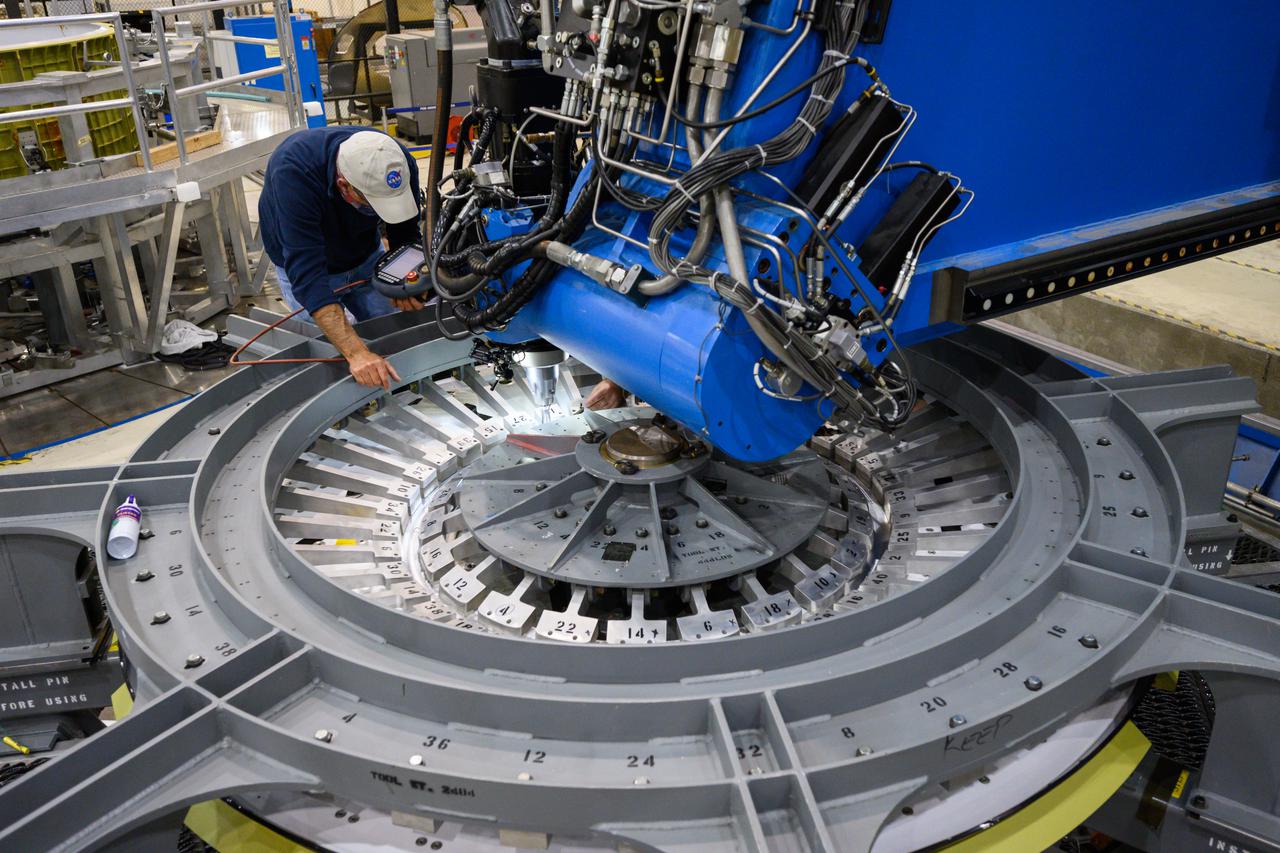
Technicians from Orion Prime Contractor Lockheed Martin weld the forward bulkhead of the pressure vessel to the tunnel hardware on the Orion Spacecraft for the Artemis III mission at NASA’s Michoud Assembly Facility in New Orleans. The crew module’s primary structure, the pressure vessel, is comprised of seven machined aluminum alloy pieces that are welded together through a weld process that produces a strong, air-tight habitable space for astronauts during the mission. The pressure vessel is designed to withstand the harsh and demanding environment of deep space and is the core structure upon which all the other elements of Orion’s crew module are integrated. This pressure vessel weld is the next step following the completion of the crew module cone panel welds and creates the top of the spacecraft. Work will then begin to join the barrel with the aft bulkhead to form the bottom of Orion. Last, the forward bulkhead will be welded to the top of the panels and, for the seventh and closeout weld, the bottom of the cone panels will be joined to the barrel to complete the pressure vessel. Once welding of the Artemis III crew module primary structure is complete, it will be shipped to NASA’s Kennedy Space Center in Florida where it will undergo further assembly beginning this fall. Orion, the Space Launch System, and Exploration Ground Systems programs are foundational elements of the Artemis program. Artemis I will be the first integrated flight test of Orion and SLS and is targeted to launch later this year. Artemis II will follow and is the first crewed mission, taking humans farther into space than ever before.

Crews at NASA’s Michoud Assembly Facility in New Orleans load alluminum alloy panels into the Vertical Weld Center June 1. The Vertical Weld Center is a friction-stir weld tool for the large structures of the core stage for the SLS (Space Launch System) rocket. Teams load the panels into the VWC using an overhead crane system, then multiple panels are welded together to create entire barrels. The panels in these images are some of the five barrels that will form the SLS liquid hydrogen propellant tank for the SLS rocket that will power NASA’s Artemis IV mission, which is also the first flight of SLS in its more powerful Block 1B configuration. The SLS core stage is made up of five unique elements: the forward skirt, liquid oxygen tank, intertank, liquid hydrogen tank, and the engine section. The liquid hydrogen propellant tank holds 537,000 gallons of liquid hydrogen cooled to minus 432 degrees Fahrenheit and sits between the core stage’s intertank and engine section. The liquid hydrogen hardware, along with the liquid oxygen tank, provides propellant to the four RS-25 engines at the bottom of the core stage to produce more than two million pounds of thrust to help launch the Artemis IV mission to the Moon. Together with its four RS-25 engines, the rocket’s massive 212-foot-tall core stage — the largest stage NASA has ever built — and its twin solid rocket boosters produce 8.8 million pounds of thrust to send NASA’s Orion spacecraft, astronauts and supplies beyond Earth’s orbit to the Moon. NASA is working to land the first woman and first person of color on the Moon under Artemis. SLS is part of NASA’s backbone for deep space exploration, along with Orion and the Gateway in orbit around the Moon. SLS is the only rocket that can send Orion, astronauts, and supplies to the Moon in a single mission.
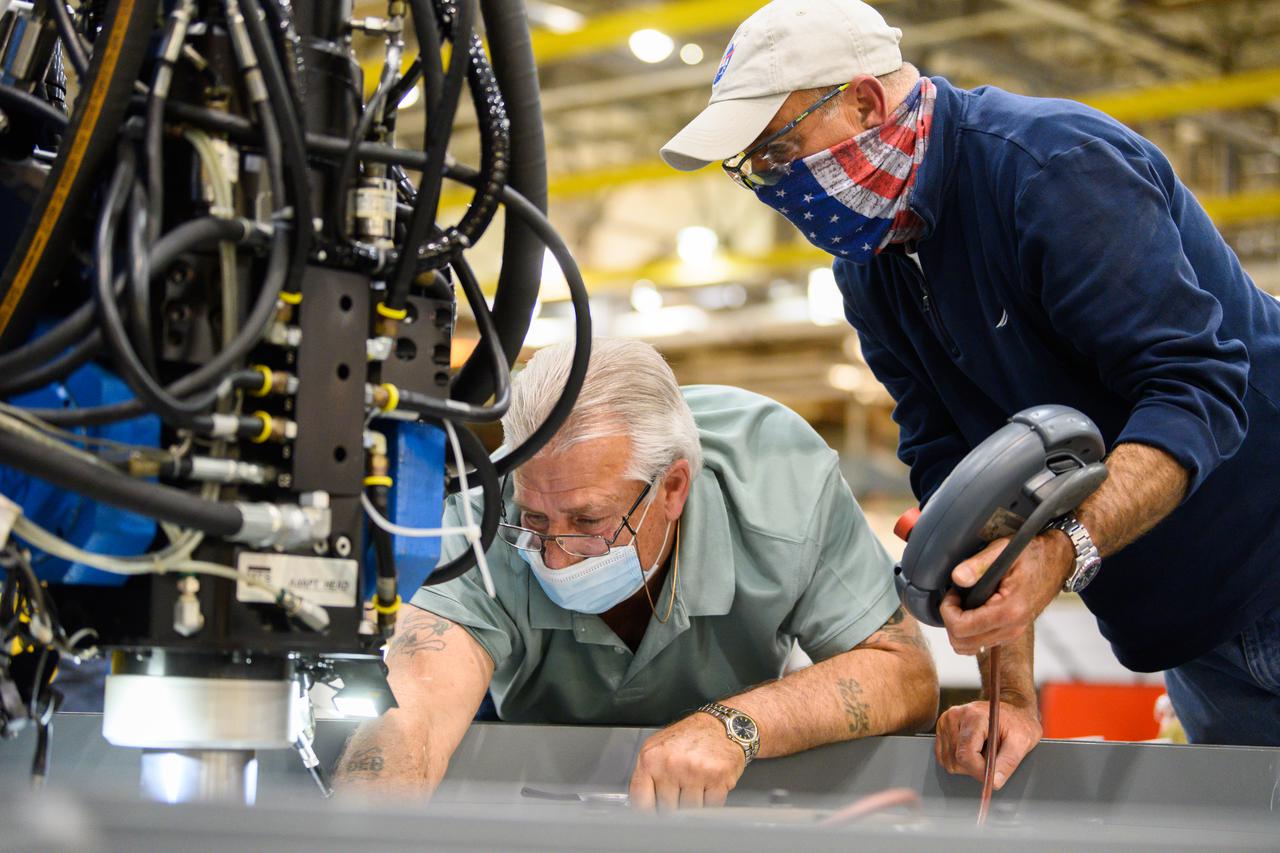
Technicians from Orion Prime Contractor Lockheed Martin weld the forward bulkhead of the pressure vessel to the tunnel hardware on the Orion Spacecraft for the Artemis III mission at NASA’s Michoud Assembly Facility in New Orleans. The crew module’s primary structure, the pressure vessel, is comprised of seven machined aluminum alloy pieces that are welded together through a weld process that produces a strong, air-tight habitable space for astronauts during the mission. The pressure vessel is designed to withstand the harsh and demanding environment of deep space and is the core structure upon which all the other elements of Orion’s crew module are integrated. This pressure vessel weld is the next step following the completion of the crew module cone panel welds and creates the top of the spacecraft. Work will then begin to join the barrel with the aft bulkhead to form the bottom of Orion. Last, the forward bulkhead will be welded to the top of the panels and, for the seventh and closeout weld, the bottom of the cone panels will be joined to the barrel to complete the pressure vessel. Once welding of the Artemis III crew module primary structure is complete, it will be shipped to NASA’s Kennedy Space Center in Florida where it will undergo further assembly beginning this fall. Orion, the Space Launch System, and Exploration Ground Systems programs are foundational elements of the Artemis program. Artemis I will be the first integrated flight test of Orion and SLS and is targeted to launch later this year. Artemis II will follow and is the first crewed mission, taking humans farther into space than ever before.

These photos and videos show how technicians at NASA’s Michoud Assembly Facility in New Orleans installed the third and fourth RS-25 engines onto the core stage for the agency’s SLS (Space Launch System) rocket that will help power NASA’s first crewed Artemis mission to the Moon. Technicians added the first engine to the SLS core stage Sept. 11. The second engine was installed onto the stage Sept. 15 with the third and fourth engines following Sept. 19 and Sept. 20. Engineers consider the engines to be “soft” mated to the rocket stage. Technicians with NASA, Aerojet Rocketdyne, an L3Harris Technologies company and the RS-25 engines lead contractor, along with Boeing, the core stage lead contractor, will now focus efforts on the complex tax of fully securing the engines to the stage and integrating the propulsion and electrical systems within the structure. NASA is working to land the first woman and first person of color on the Moon under Artemis. SLS is part of NASA’s backbone for deep space exploration, along with Orion and the Gateway in orbit around the Moon. SLS is the only rocket that can send Orion, astronauts, and supplies to the Moon in a single mission.
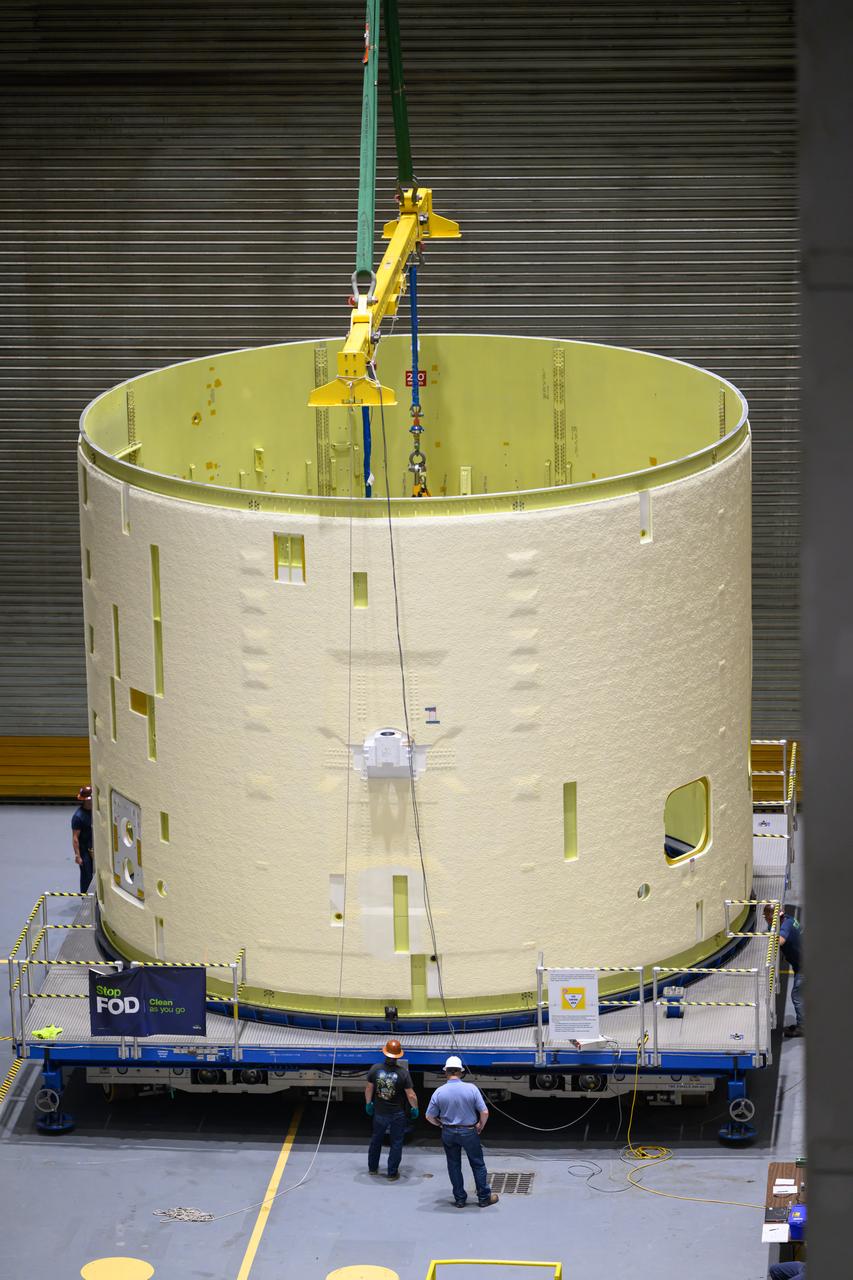
Technicians at NASA’s Michoud Assembly Facility in New Orleans lift the intertank of the SLS (Space Launch System)’s core stage for NASA’s Artemis III mission to move it to another location in the 43-acre factory for further inspection and production. The intertank is the backbone of the rocket’s core stage and is located between the mega rocket’s liquid hydrogen tank and liquid oxygen tank. In addition to joining the rocket’s two massive propellant tanks, the intertank houses avionics and electronics and serves as an attachment point for the rocket’s two solid rocket boosters positioned on either side of the core stage. The liquid hydrogen tank and liquid oxygen tank hold 733,000 gallons of super-cold propellant to power the stage’s four RS-25 engines needed for liftoff. Together, the rocket’s four RS-25 engines and two solid rocket boosters provide more than 8.8 million pounds to launch NASA’s and Artemis missions to the Moon. NASA is working to land the first woman and first person of color on the Moon under Artemis. SLS is part of NASA’s backbone for deep space exploration, along with Orion and the Gateway in orbit around the Moon. SLS is the only rocket that can send Orion, astronauts, and supplies to the Moon in a single mission.
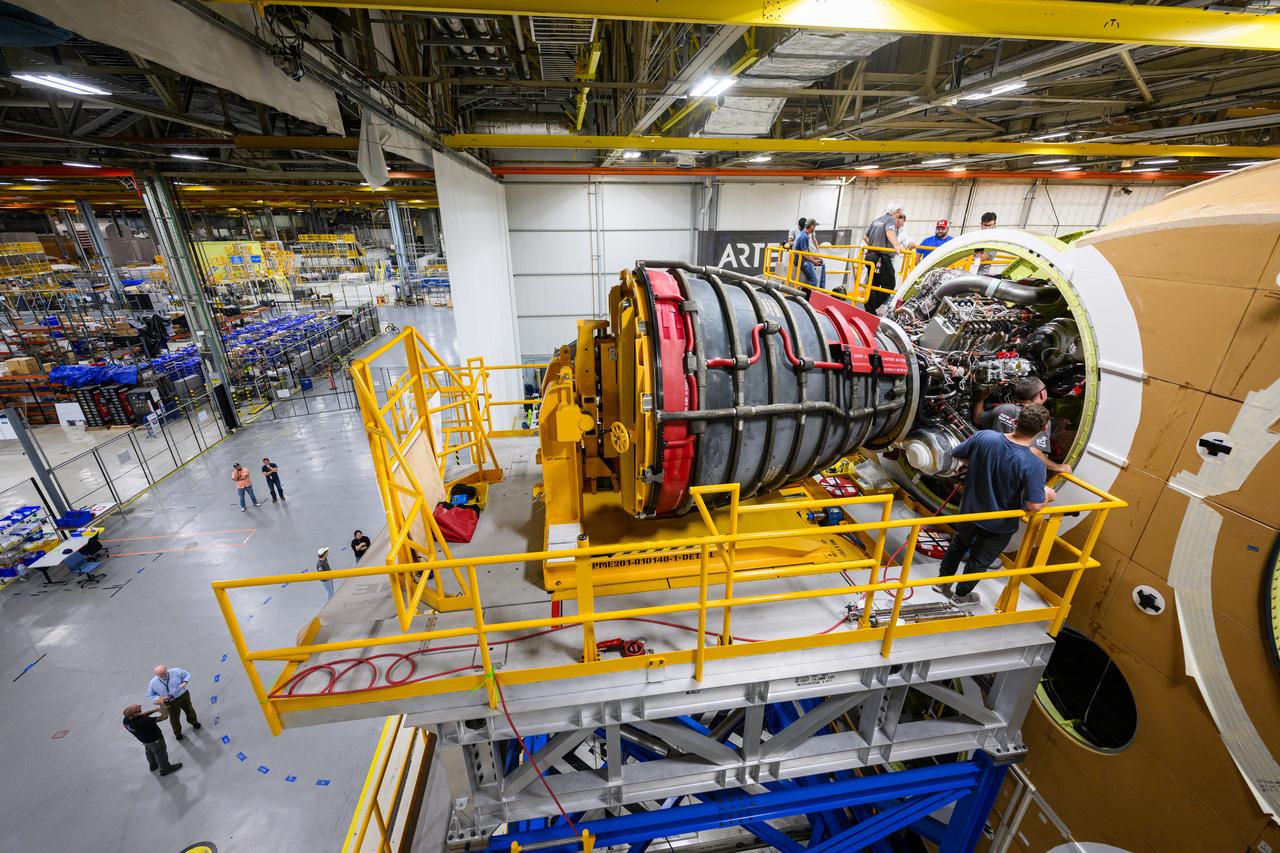

These photos and videos show how technicians at NASA’s Michoud Assembly Facility in New Orleans installed the third and fourth RS-25 engines onto the core stage for the agency’s SLS (Space Launch System) rocket that will help power NASA’s first crewed Artemis mission to the Moon. Technicians added the first engine to the SLS core stage Sept. 11. The second engine was installed onto the stage Sept. 15 with the third and fourth engines following Sept. 19 and Sept. 20. Engineers consider the engines to be “soft” mated to the rocket stage. Technicians with NASA, Aerojet Rocketdyne, an L3Harris Technologies company and the RS-25 engines lead contractor, along with Boeing, the core stage lead contractor, will now focus efforts on the complex tax of fully securing the engines to the stage and integrating the propulsion and electrical systems within the structure. NASA is working to land the first woman and first person of color on the Moon under Artemis. SLS is part of NASA’s backbone for deep space exploration, along with Orion and the Gateway in orbit around the Moon. SLS is the only rocket that can send Orion, astronauts, and supplies to the Moon in a single mission.
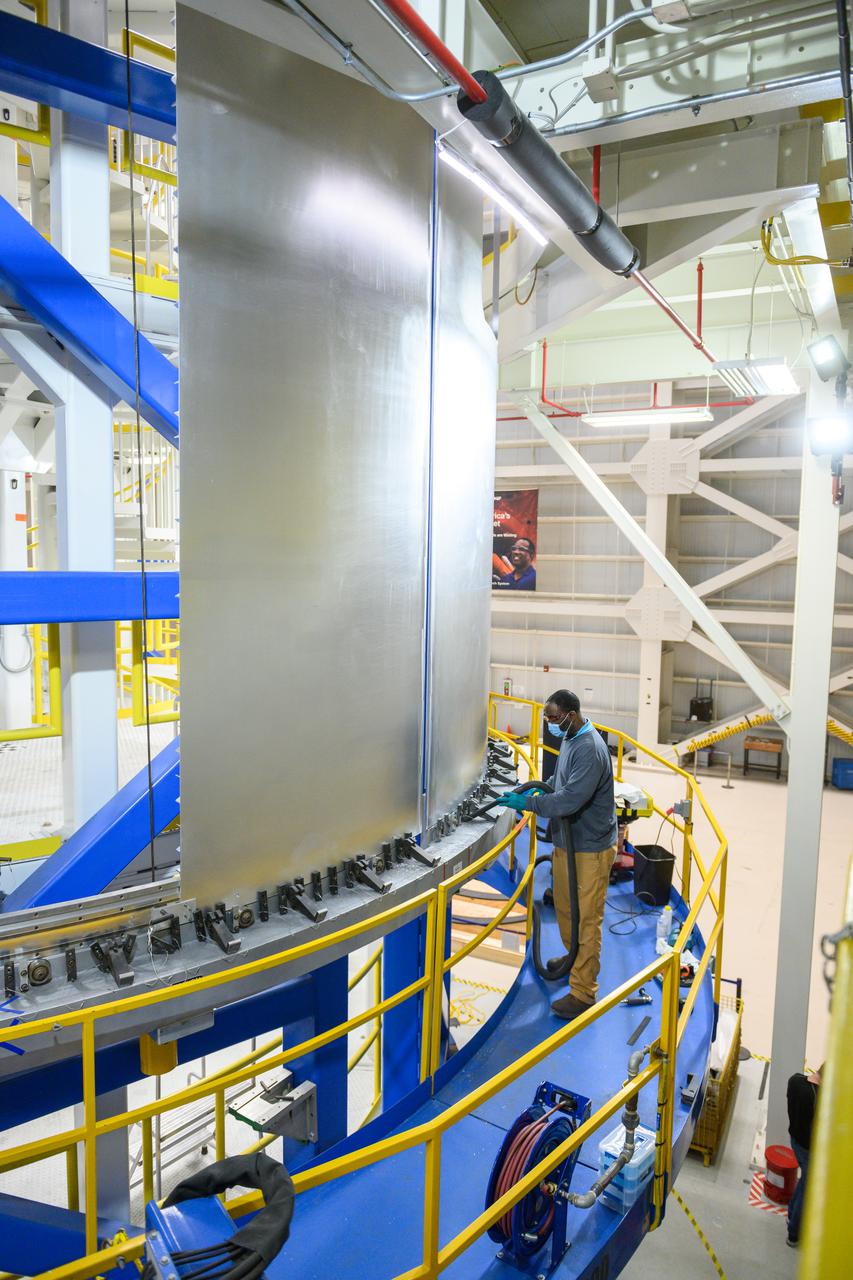
Technicians are manufacturing and testing the first in a series of initial weld confidence articles for the Exploration Upper Stage (EUS) for future flights of NASA’s Space Launch System (SLS) rocket at the agency’s Michoud Assembly Facility in New Orleans. The Exploration Upper Stage will be used on the second configuration of the SLS rocket, known as Block 1B, and will provide in-space propulsion to send astronauts in NASA’s Orion spacecraft and heavy cargo on a precise trajectory to the Moon. The Exploration Upper Stage weld confidence panels are first produced in the Vertical Weld Center at Michoud, then small sections of the panels are removed for mechanical testing and analysis in another area of the factory. Teams use weld confidence articles to verify welding procedures, interfaces between the tooling and hardware, and the structural integrity of the welds. Testing of the EUS weld confidence articles will help engineers and technicians validate welding parameters for manufacturing EUS hardware. The first three SLS flights of NASA’s Artemis program will use an interim cryogenic propulsion stage with one RL10 engine to send Orion to the Moon. The SLS Exploration Upper Stage for flights beyond Artemis III has larger propellant tanks and four RL10 engines. The evolution of the rocket to SLS Block 1B configuration with EUS enables SLS to launch 40% more cargo to the Moon along with the crew. Manufacturing the Exploration Upper Stage is a collaborative effort between NASA and Boeing, the lead contractor for EUS and the SLS core stage. SLS is the only rocket that can send Orion, astronauts, and supplies to the Moon in a single mission. The SLS rocket, NASA’s Orion spacecraft, Gateway, and human landing system are part of NASA’s backbone for deep space exploration. Under the Artemis program, NASA is working to land the first woman and the next man on the Moon to pave the way for sustainable exploration at the Moon and future missions to Mars. (NASA)
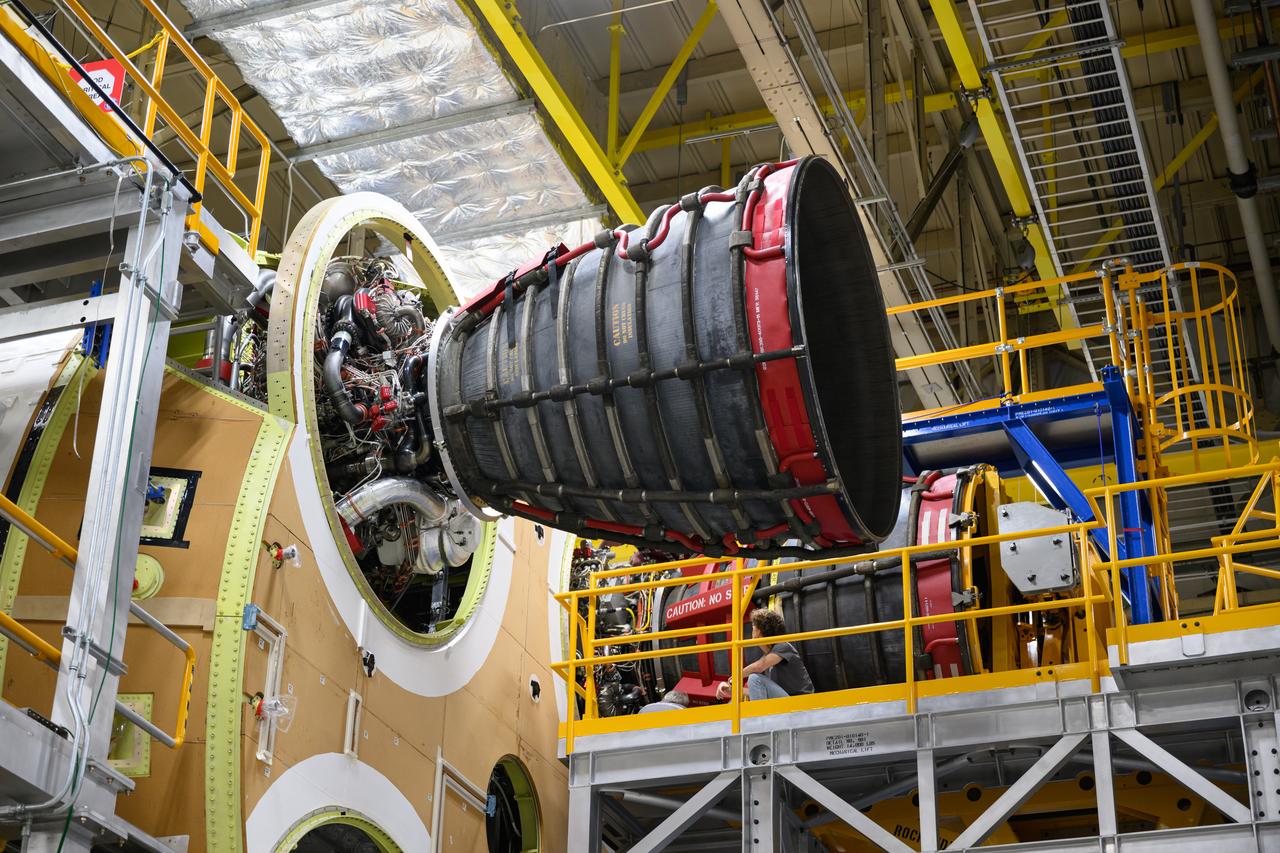
These photos and videos show how technicians at NASA’s Michoud Assembly Facility in New Orleans installed the second of four RS-25 engines onto the core stage for the agency’s SLS (Space Launch System) rocket that will help power NASA’s first crewed Artemis mission to the Moon. Crews added the second engine, with the serial number E2047 in position one, to the stage Sept. 15. The serial number for the engine installed Sept. 11 in position two on the core stage is E2059. Engineers consider the engines to be “soft” mated to the rocket stage. Following soft mate of all four engines, technicians with NASA, Aerojet Rocketdyne, an L3Harris Technologies company and the RS-25 engines lead contractor, along with Boeing, the core stage lead contractor, will fully secure the engines to the stage and integrate the propulsion and electrical systems within the structure. All four RS-25 engines are located at the base of the core stage within the engine section. NASA is working to land the first woman and first person of color on the Moon under Artemis. SLS is part of NASA’s backbone for deep space exploration, along with Orion and the Gateway in orbit around the Moon. SLS is the only rocket that can send Orion, astronauts, and supplies to the Moon in a single mission.
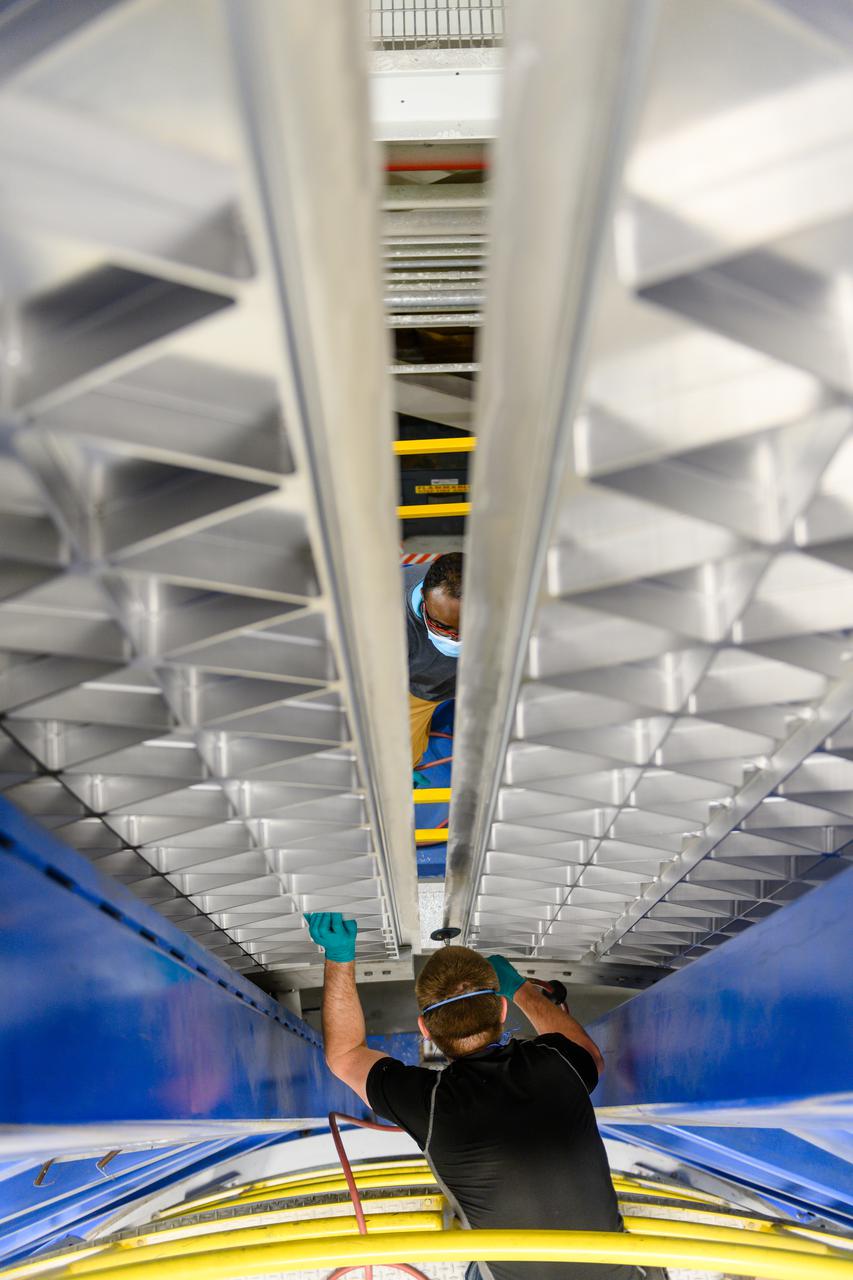
Technicians are manufacturing and testing the first in a series of initial weld confidence articles for the Exploration Upper Stage (EUS) for future flights of NASA’s Space Launch System (SLS) rocket at the agency’s Michoud Assembly Facility in New Orleans. The Exploration Upper Stage will be used on the second configuration of the SLS rocket, known as Block 1B, and will provide in-space propulsion to send astronauts in NASA’s Orion spacecraft and heavy cargo on a precise trajectory to the Moon. The Exploration Upper Stage weld confidence panels are first produced in the Vertical Weld Center at Michoud, then small sections of the panels are removed for mechanical testing and analysis in another area of the factory. Teams use weld confidence articles to verify welding procedures, interfaces between the tooling and hardware, and the structural integrity of the welds. Testing of the EUS weld confidence articles will help engineers and technicians validate welding parameters for manufacturing EUS hardware. The first three SLS flights of NASA’s Artemis program will use an interim cryogenic propulsion stage with one RL10 engine to send Orion to the Moon. The SLS Exploration Upper Stage for flights beyond Artemis III has larger propellant tanks and four RL10 engines. The evolution of the rocket to SLS Block 1B configuration with EUS enables SLS to launch 40% more cargo to the Moon along with the crew. Manufacturing the Exploration Upper Stage is a collaborative effort between NASA and Boeing, the lead contractor for EUS and the SLS core stage. SLS is the only rocket that can send Orion, astronauts, and supplies to the Moon in a single mission. The SLS rocket, NASA’s Orion spacecraft, Gateway, and human landing system are part of NASA’s backbone for deep space exploration. Under the Artemis program, NASA is working to land the first woman and the next man on the Moon to pave the way for sustainable exploration at the Moon and future missions to Mars. (NASA)
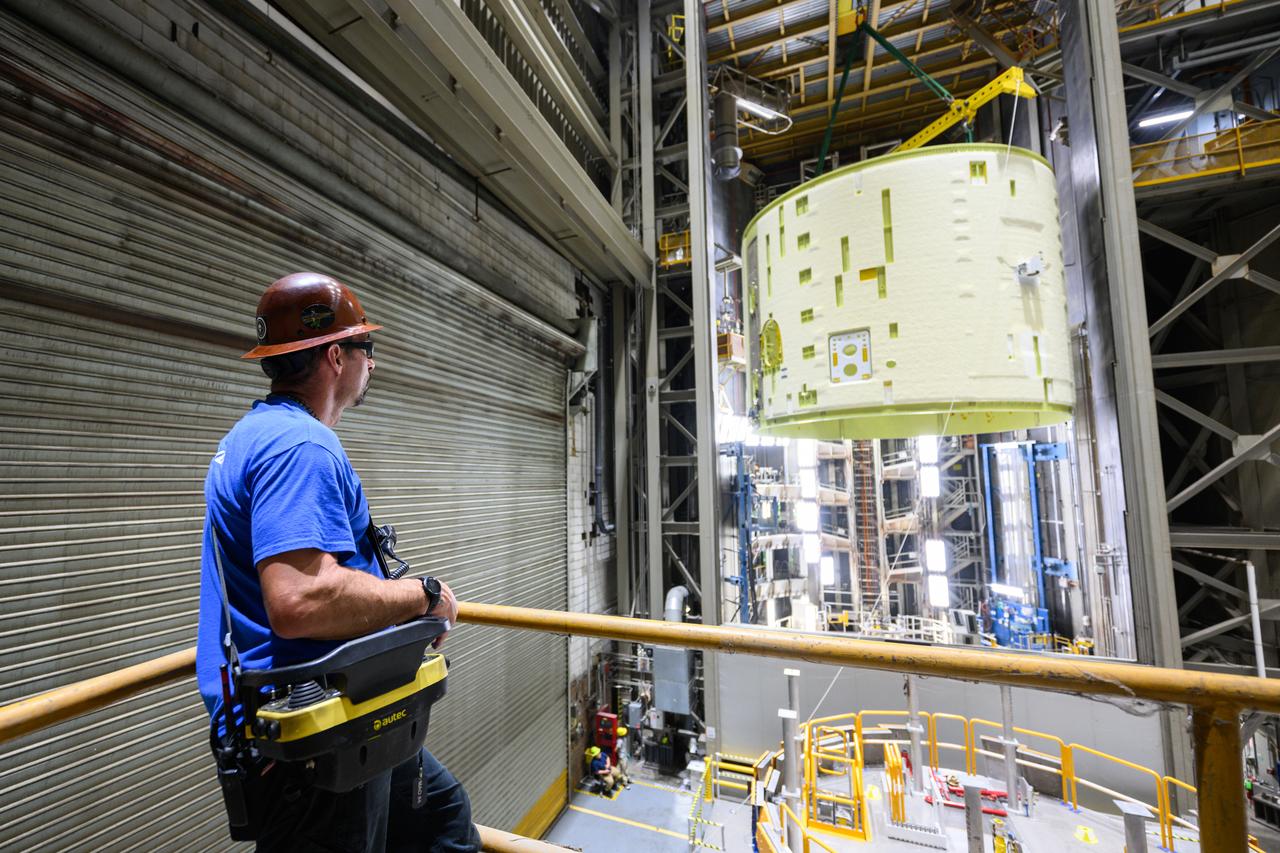
Technicians at NASA’s Michoud Assembly Facility in New Orleans lift the intertank of the SLS (Space Launch System)’s core stage for NASA’s Artemis III mission to move it to another location in the 43-acre factory for further inspection and production. The intertank is the backbone of the rocket’s core stage and is located between the mega rocket’s liquid hydrogen tank and liquid oxygen tank. In addition to joining the rocket’s two massive propellant tanks, the intertank houses avionics and electronics and serves as an attachment point for the rocket’s two solid rocket boosters positioned on either side of the core stage. The liquid hydrogen tank and liquid oxygen tank hold 733,000 gallons of super-cold propellant to power the stage’s four RS-25 engines needed for liftoff. Together, the rocket’s four RS-25 engines and two solid rocket boosters provide more than 8.8 million pounds to launch NASA’s and Artemis missions to the Moon. NASA is working to land the first woman and first person of color on the Moon under Artemis. SLS is part of NASA’s backbone for deep space exploration, along with Orion and the Gateway in orbit around the Moon. SLS is the only rocket that can send Orion, astronauts, and supplies to the Moon in a single mission.
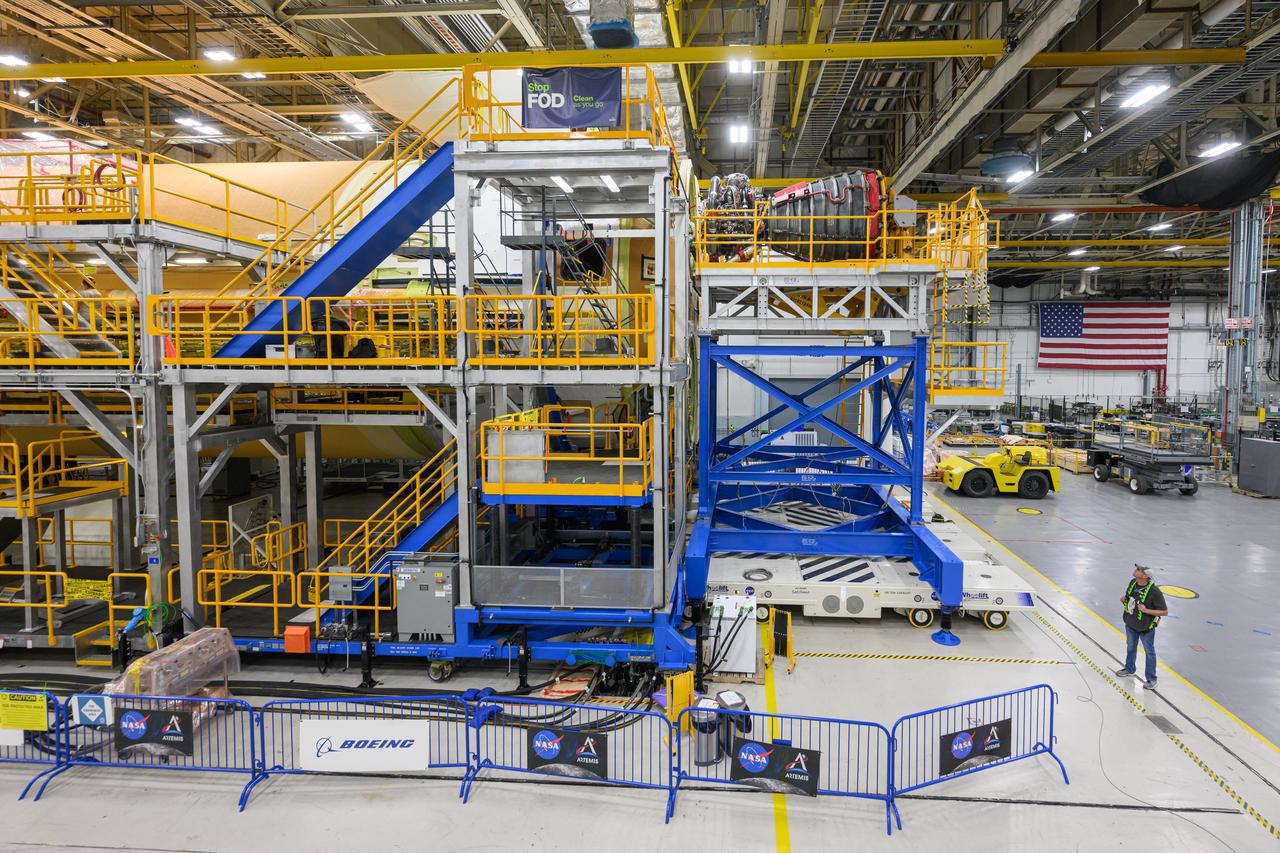

This image highlights the liquid hydrogen tank that will be used on the core stage of NASA’s Space Launch System rocket for Artemis II, the first crewed mission of NASA’s Artemis program. The tank is being built at NASA’s Michoud Assembly Facility in New Orleans. The SLS core stage is made up of five unique elements: the forward skirt, liquid oxygen tank, intertank, liquid hydrogen tank, and the engine section. The liquid hydrogen tank holds 537,000 gallons of liquid hydrogen cooled to minus 423 degrees Fahrenheit and sits between the core stage’s intertank and engine section. The liquid hydrogen hardware, along with the liquid oxygen tank, will provide propellant to the four RS-25 engines at the bottom of the cores stage to produce more than two million pounds of thrust to launch NASA’s Artemis missions to the Moon. Together with its four RS-25 engines, the rocket’s massive 212-foot-tall core stage — the largest stage NASA has ever built — and its twin solid rocket boosters will produce 8.8 million pounds of thrust to send NASA’s Orion spacecraft, astronauts and supplies beyond Earth’s orbit to the Moon and, ultimately, Mars. Offering more payload mass, volume capability and energy to speed missions through space, the SLS rocket, along with NASA’s Gateway in lunar orbit, the human landing system, and Orion spacecraft, is part of NASA’s backbone for deep space exploration and the Artemis lunar program. No other rocket can send astronauts in Orion around the Moon in a single mission.
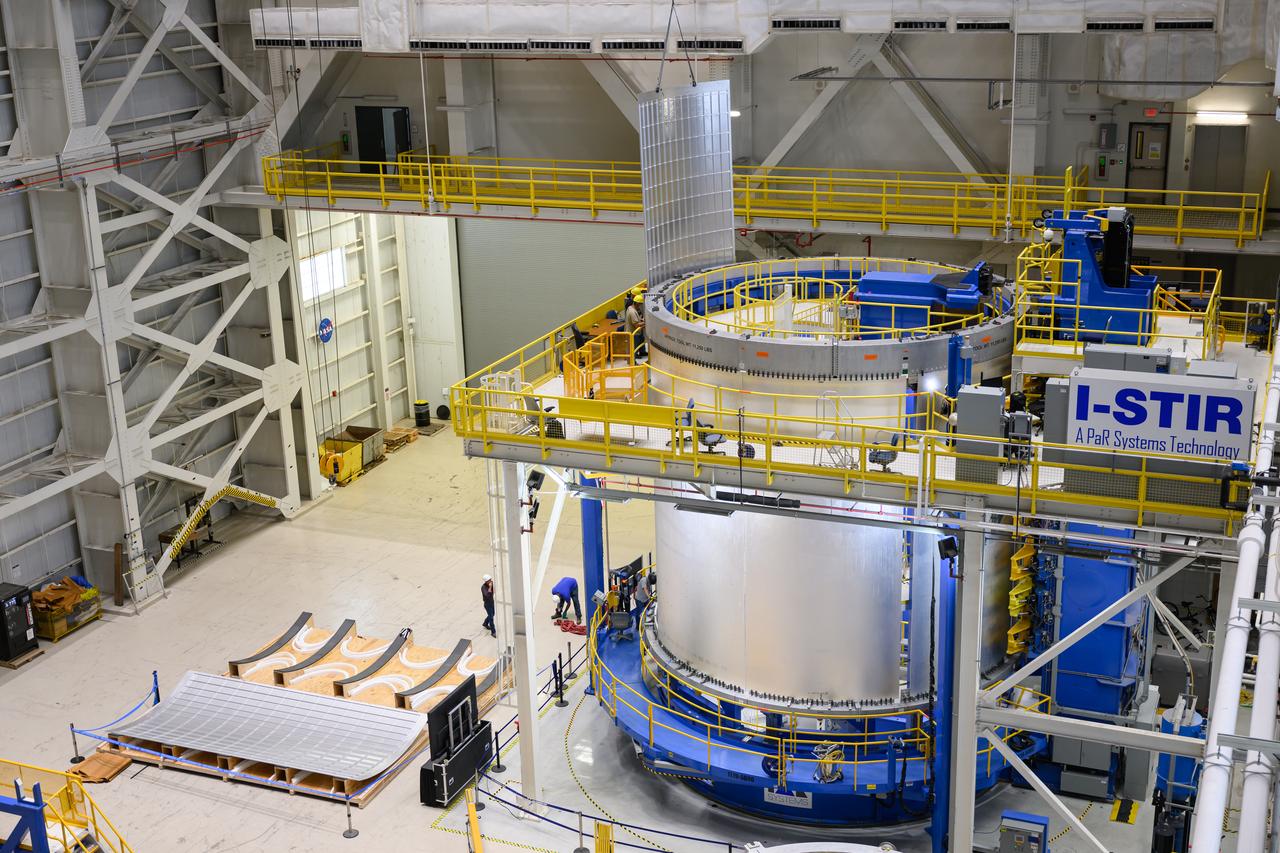
Crews at NASA’s Michoud Assembly Facility in New Orleans load alluminum alloy panels into the Vertical Weld Center June 1. The Vertical Weld Center is a friction-stir weld tool for the large structures of the core stage for the SLS (Space Launch System) rocket. Teams load the panels into the VWC using an overhead crane system, then multiple panels are welded together to create entire barrels. The panels in these images are some of the five barrels that will form the SLS liquid hydrogen propellant tank for the SLS rocket that will power NASA’s Artemis IV mission, which is also the first flight of SLS in its more powerful Block 1B configuration. The SLS core stage is made up of five unique elements: the forward skirt, liquid oxygen tank, intertank, liquid hydrogen tank, and the engine section. The liquid hydrogen propellant tank holds 537,000 gallons of liquid hydrogen cooled to minus 432 degrees Fahrenheit and sits between the core stage’s intertank and engine section. The liquid hydrogen hardware, along with the liquid oxygen tank, provides propellant to the four RS-25 engines at the bottom of the core stage to produce more than two million pounds of thrust to help launch the Artemis IV mission to the Moon. Together with its four RS-25 engines, the rocket’s massive 212-foot-tall core stage — the largest stage NASA has ever built — and its twin solid rocket boosters produce 8.8 million pounds of thrust to send NASA’s Orion spacecraft, astronauts and supplies beyond Earth’s orbit to the Moon. NASA is working to land the first woman and first person of color on the Moon under Artemis. SLS is part of NASA’s backbone for deep space exploration, along with Orion and the Gateway in orbit around the Moon. SLS is the only rocket that can send Orion, astronauts, and supplies to the Moon in a single mission.
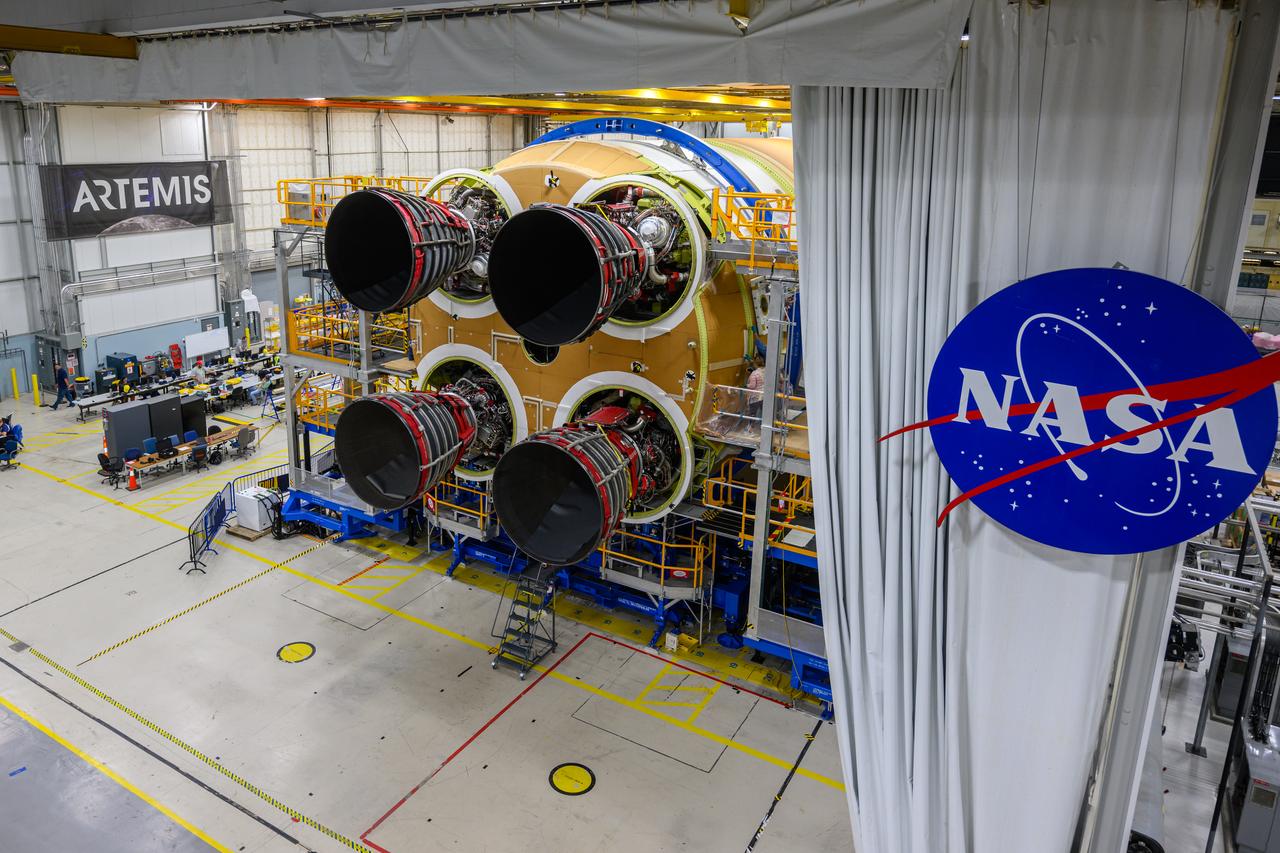
These photos and videos show how technicians at NASA’s Michoud Assembly Facility in New Orleans installed the third and fourth RS-25 engines onto the core stage for the agency’s SLS (Space Launch System) rocket that will help power NASA’s first crewed Artemis mission to the Moon. Technicians added the first engine to the SLS core stage Sept. 11. The second engine was installed onto the stage Sept. 15 with the third and fourth engines following Sept. 19 and Sept. 20. Engineers consider the engines to be “soft” mated to the rocket stage. Technicians with NASA, Aerojet Rocketdyne, an L3Harris Technologies company and the RS-25 engines lead contractor, along with Boeing, the core stage lead contractor, will now focus efforts on the complex tax of fully securing the engines to the stage and integrating the propulsion and electrical systems within the structure. NASA is working to land the first woman and first person of color on the Moon under Artemis. SLS is part of NASA’s backbone for deep space exploration, along with Orion and the Gateway in orbit around the Moon. SLS is the only rocket that can send Orion, astronauts, and supplies to the Moon in a single mission.

: These photos and videos show how technicians at NASA’s Michoud Assembly Facility in New Orleans installed the third and fourth RS-25 engines onto the core stage for the agency’s SLS (Space Launch System) rocket that will help power NASA’s first crewed Artemis mission to the Moon. Technicians added the first engine to the SLS core stage Sept. 11. The second engine was installed onto the stage Sept. 15 with the third and fourth engines following Sept. 19 and Sept. 20. Engineers consider the engines to be “soft” mated to the rocket stage. Technicians with NASA, Aerojet Rocketdyne, an L3Harris Technologies company and the RS-25 engines lead contractor, along with Boeing, the core stage lead contractor, will now focus efforts on the complex tax of fully securing the engines to the stage and integrating the propulsion and electrical systems within the structure. NASA is working to land the first woman and first person of color on the Moon under Artemis. SLS is part of NASA’s backbone for deep space exploration, along with Orion and the Gateway in orbit around the Moon. SLS is the only rocket that can send Orion, astronauts, and supplies to the Moon in a single mission.
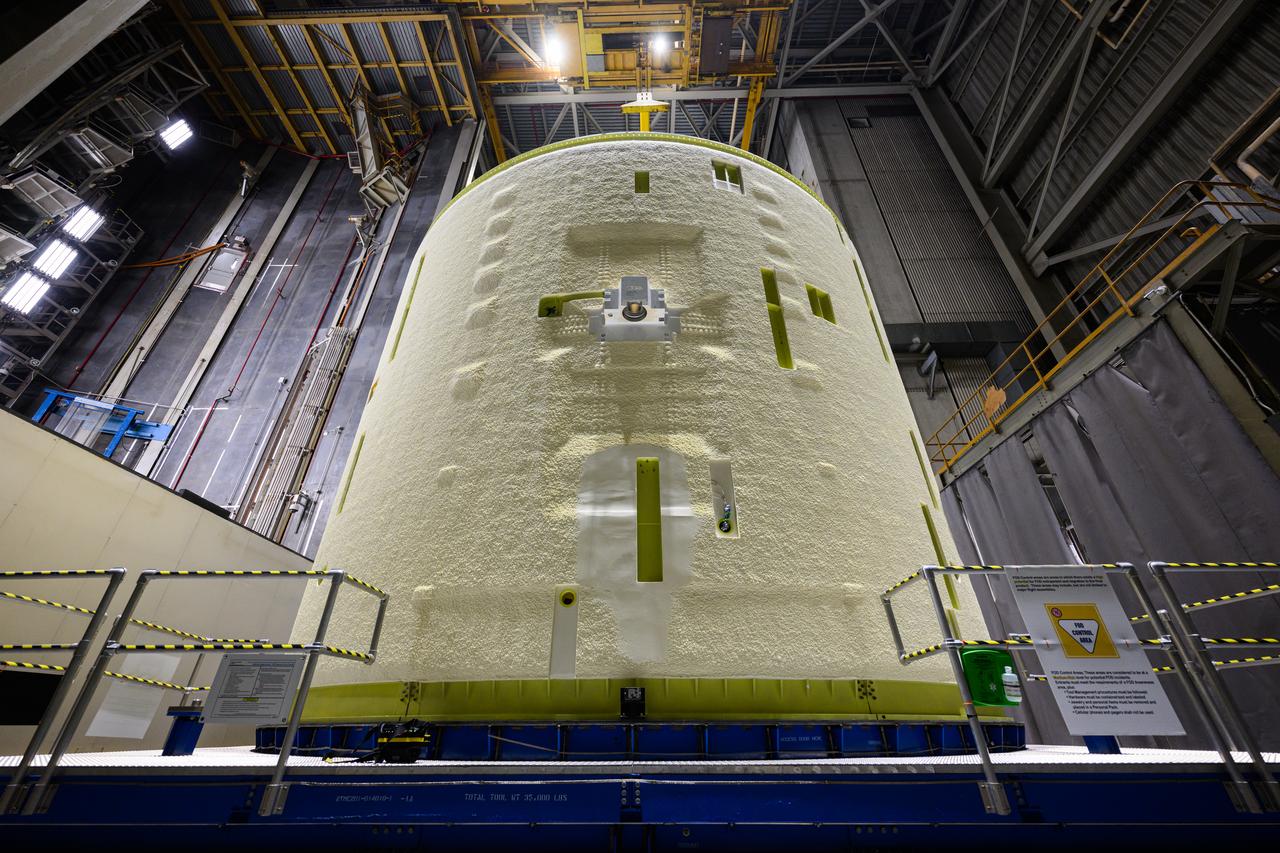
Technicians at NASA’s Michoud Assembly Facility in New Orleans lift the intertank of the SLS (Space Launch System)’s core stage for NASA’s Artemis III mission to move it to another location in the 43-acre factory for further inspection and production. The intertank is the backbone of the rocket’s core stage and is located between the mega rocket’s liquid hydrogen tank and liquid oxygen tank. In addition to joining the rocket’s two massive propellant tanks, the intertank houses avionics and electronics and serves as an attachment point for the rocket’s two solid rocket boosters positioned on either side of the core stage. The liquid hydrogen tank and liquid oxygen tank hold 733,000 gallons of super-cold propellant to power the stage’s four RS-25 engines needed for liftoff. Together, the rocket’s four RS-25 engines and two solid rocket boosters provide more than 8.8 million pounds to launch NASA’s and Artemis missions to the Moon. NASA is working to land the first woman and first person of color on the Moon under Artemis. SLS is part of NASA’s backbone for deep space exploration, along with Orion and the Gateway in orbit around the Moon. SLS is the only rocket that can send Orion, astronauts, and supplies to the Moon in a single mission.

These photos and videos show how technicians at NASA’s Michoud Assembly Facility in New Orleans installed the third and fourth RS-25 engines onto the core stage for the agency’s SLS (Space Launch System) rocket that will help power NASA’s first crewed Artemis mission to the Moon. Technicians added the first engine to the SLS core stage Sept. 11. The second engine was installed onto the stage Sept. 15 with the third and fourth engines following Sept. 19 and Sept. 20. Engineers consider the engines to be “soft” mated to the rocket stage. Technicians with NASA, Aerojet Rocketdyne, an L3Harris Technologies company and the RS-25 engines lead contractor, along with Boeing, the core stage lead contractor, will now focus efforts on the complex tax of fully securing the engines to the stage and integrating the propulsion and electrical systems within the structure. NASA is working to land the first woman and first person of color on the Moon under Artemis. SLS is part of NASA’s backbone for deep space exploration, along with Orion and the Gateway in orbit around the Moon. SLS is the only rocket that can send Orion, astronauts, and supplies to the Moon in a single mission.
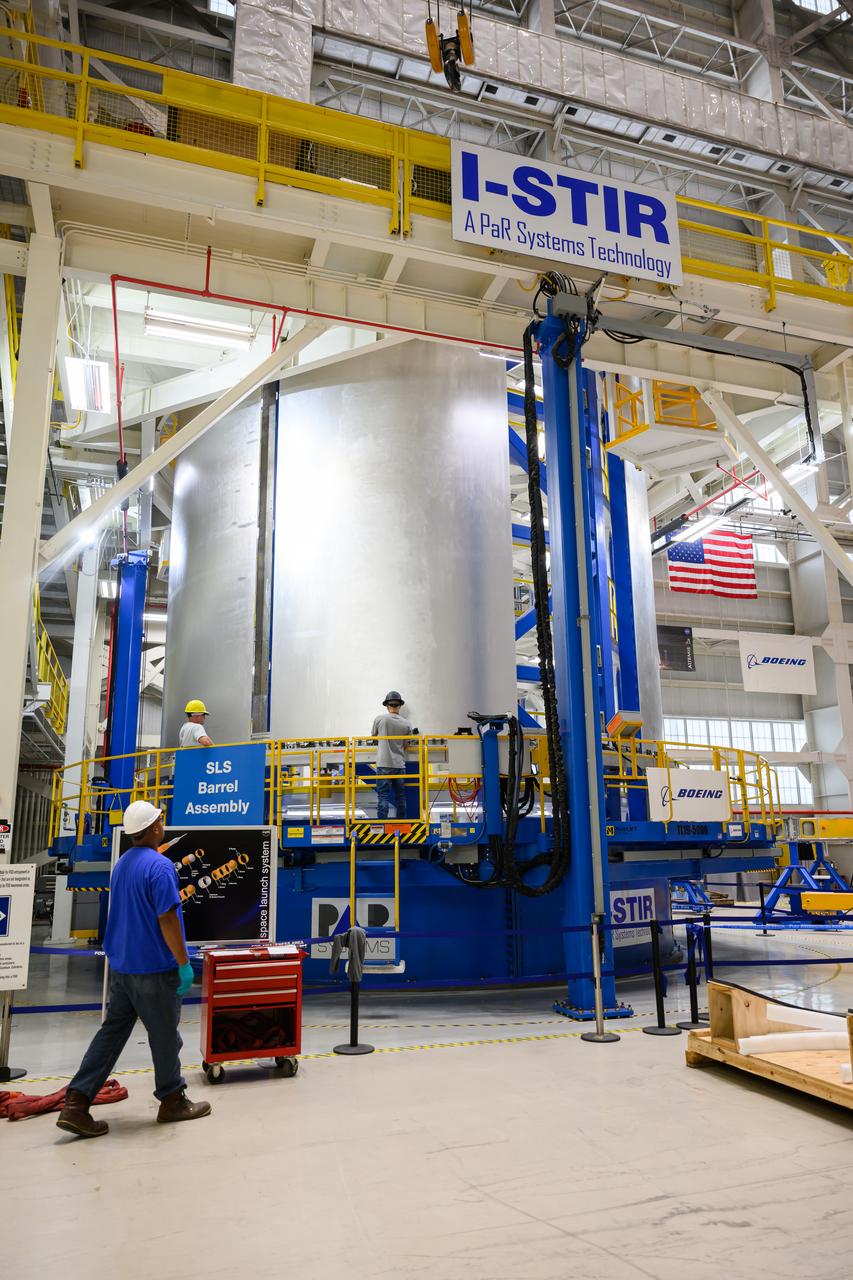
Crews at NASA’s Michoud Assembly Facility in New Orleans load alluminum alloy panels into the Vertical Weld Center June 1. The Vertical Weld Center is a friction-stir weld tool for the large structures of the core stage for the SLS (Space Launch System) rocket. Teams load the panels into the VWC using an overhead crane system, then multiple panels are welded together to create entire barrels. The panels in these images are some of the five barrels that will form the SLS liquid hydrogen propellant tank for the SLS rocket that will power NASA’s Artemis IV mission, which is also the first flight of SLS in its more powerful Block 1B configuration. The SLS core stage is made up of five unique elements: the forward skirt, liquid oxygen tank, intertank, liquid hydrogen tank, and the engine section. The liquid hydrogen propellant tank holds 537,000 gallons of liquid hydrogen cooled to minus 432 degrees Fahrenheit and sits between the core stage’s intertank and engine section. The liquid hydrogen hardware, along with the liquid oxygen tank, provides propellant to the four RS-25 engines at the bottom of the core stage to produce more than two million pounds of thrust to help launch the Artemis IV mission to the Moon. Together with its four RS-25 engines, the rocket’s massive 212-foot-tall core stage — the largest stage NASA has ever built — and its twin solid rocket boosters produce 8.8 million pounds of thrust to send NASA’s Orion spacecraft, astronauts and supplies beyond Earth’s orbit to the Moon. NASA is working to land the first woman and first person of color on the Moon under Artemis. SLS is part of NASA’s backbone for deep space exploration, along with Orion and the Gateway in orbit around the Moon. SLS is the only rocket that can send Orion, astronauts, and supplies to the Moon in a single mission.
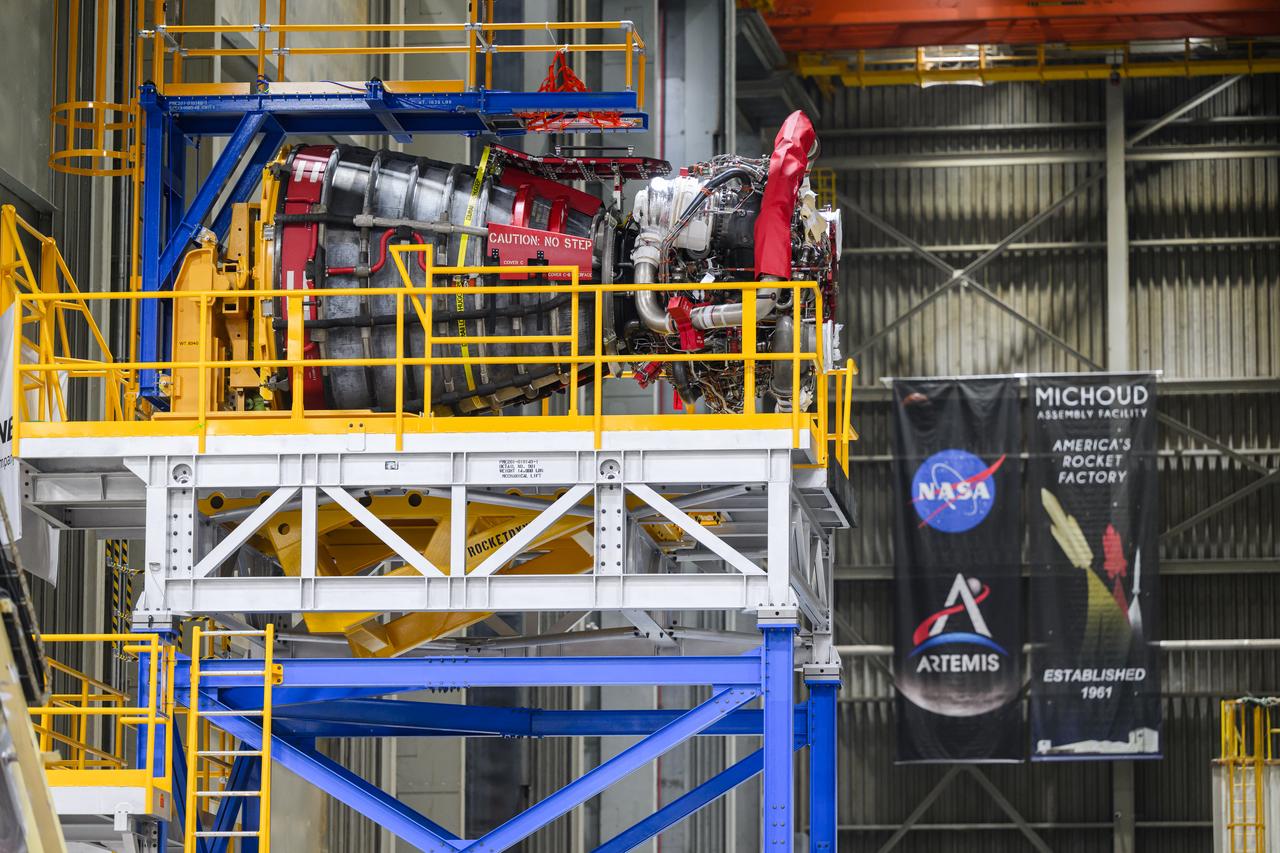
These photos and videos show how technicians at NASA’s Michoud Assembly Facility in New Orleans installed the second of four RS-25 engines onto the core stage for the agency’s SLS (Space Launch System) rocket that will help power NASA’s first crewed Artemis mission to the Moon. Crews added the second engine, with the serial number E2047 in position one, to the stage Sept. 15. The serial number for the engine installed Sept. 11 in position two on the core stage is E2059. Engineers consider the engines to be “soft” mated to the rocket stage. Following soft mate of all four engines, technicians with NASA, Aerojet Rocketdyne, an L3Harris Technologies company and the RS-25 engines lead contractor, along with Boeing, the core stage lead contractor, will fully secure the engines to the stage and integrate the propulsion and electrical systems within the structure. All four RS-25 engines are located at the base of the core stage within the engine section. NASA is working to land the first woman and first person of color on the Moon under Artemis. SLS is part of NASA’s backbone for deep space exploration, along with Orion and the Gateway in orbit around the Moon. SLS is the only rocket that can send Orion, astronauts, and supplies to the Moon in a single mission.
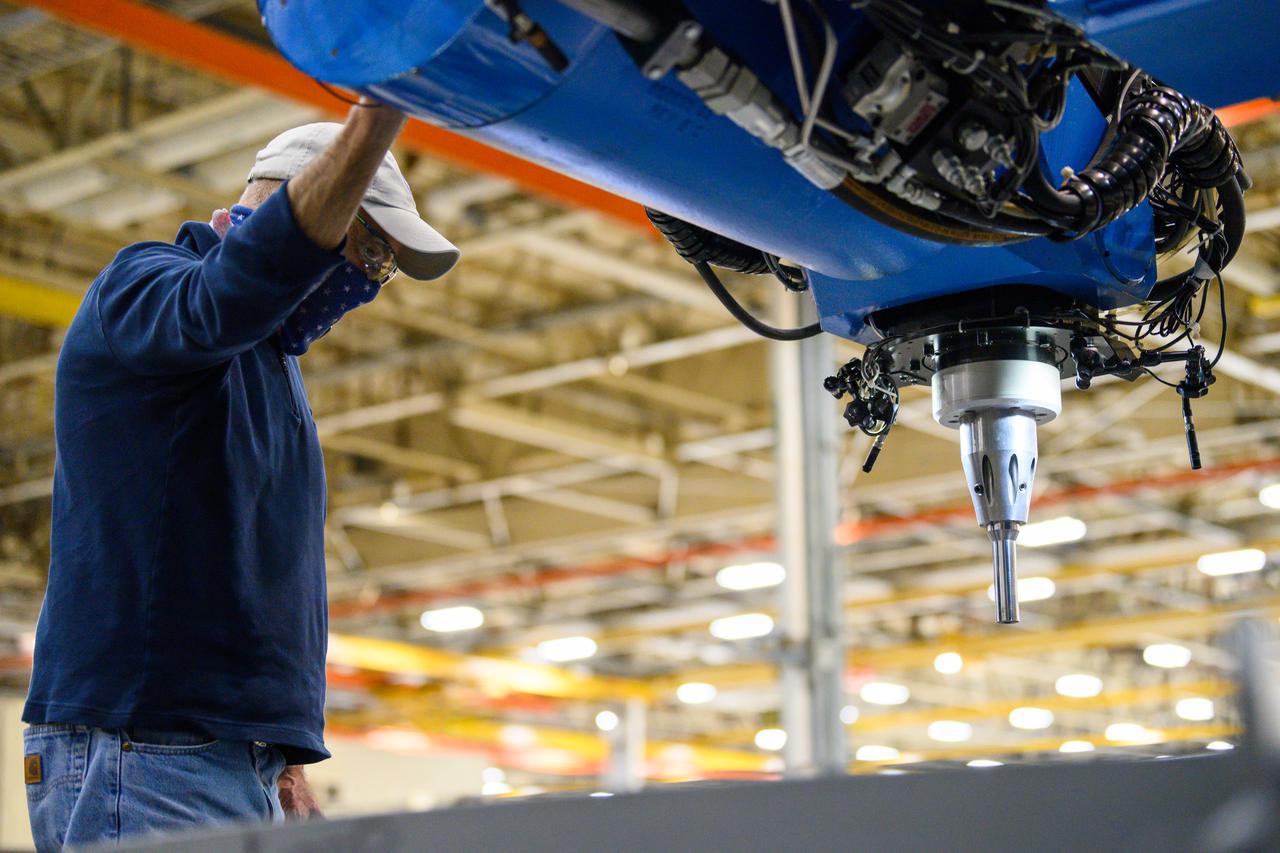
Technicians from Orion Prime Contractor Lockheed Martin weld the forward bulkhead of the pressure vessel to the tunnel hardware on the Orion Spacecraft for the Artemis III mission at NASA’s Michoud Assembly Facility in New Orleans. The crew module’s primary structure, the pressure vessel, is comprised of seven machined aluminum alloy pieces that are welded together through a weld process that produces a strong, air-tight habitable space for astronauts during the mission. The pressure vessel is designed to withstand the harsh and demanding environment of deep space and is the core structure upon which all the other elements of Orion’s crew module are integrated. This pressure vessel weld is the next step following the completion of the crew module cone panel welds and creates the top of the spacecraft. Work will then begin to join the barrel with the aft bulkhead to form the bottom of Orion. Last, the forward bulkhead will be welded to the top of the panels and, for the seventh and closeout weld, the bottom of the cone panels will be joined to the barrel to complete the pressure vessel. Once welding of the Artemis III crew module primary structure is complete, it will be shipped to NASA’s Kennedy Space Center in Florida where it will undergo further assembly beginning this fall. Orion, the Space Launch System, and Exploration Ground Systems programs are foundational elements of the Artemis program. Artemis I will be the first integrated flight test of Orion and SLS and is targeted to launch later this year. Artemis II will follow and is the first crewed mission, taking humans farther into space than ever before.
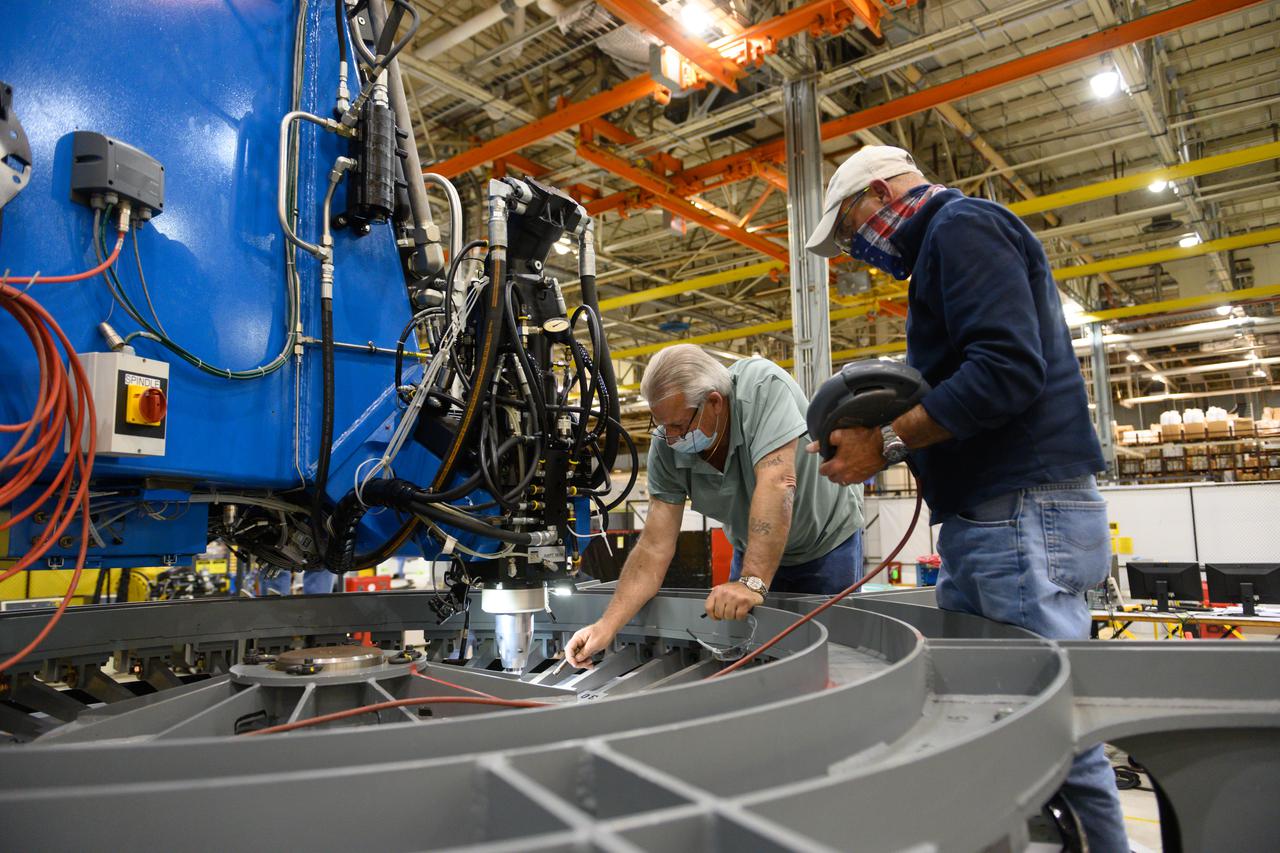
Technicians from Orion Prime Contractor Lockheed Martin weld the forward bulkhead of the pressure vessel to the tunnel hardware on the Orion Spacecraft for the Artemis III mission at NASA’s Michoud Assembly Facility in New Orleans. The crew module’s primary structure, the pressure vessel, is comprised of seven machined aluminum alloy pieces that are welded together through a weld process that produces a strong, air-tight habitable space for astronauts during the mission. The pressure vessel is designed to withstand the harsh and demanding environment of deep space and is the core structure upon which all the other elements of Orion’s crew module are integrated. This pressure vessel weld is the next step following the completion of the crew module cone panel welds and creates the top of the spacecraft. Work will then begin to join the barrel with the aft bulkhead to form the bottom of Orion. Last, the forward bulkhead will be welded to the top of the panels and, for the seventh and closeout weld, the bottom of the cone panels will be joined to the barrel to complete the pressure vessel. Once welding of the Artemis III crew module primary structure is complete, it will be shipped to NASA’s Kennedy Space Center in Florida where it will undergo further assembly beginning this fall. Orion, the Space Launch System, and Exploration Ground Systems programs are foundational elements of the Artemis program. Artemis I will be the first integrated flight test of Orion and SLS and is targeted to launch later this year. Artemis II will follow and is the first crewed mission, taking humans farther into space than ever before.

This image shows technicians and engineers move and connect the liquid oxygen tank (LOX) to the intertank as they continue the process of the forward join on the core stage of NASA’s Space Launch System rocket for Artemis II, the first crewed mission of NASA’s Artemis program at NASA’s Michoud Assembly Facility. The forward join connects the forward skirt, the liquid oxygen tank (LOX) and the intertank structures to form the top part of the SLS rocket’s core stage. Now, NASA and Boeing, the SLS prime contractor, will continue to integrate various systems inside the forward part of the core stage and prepare for structural joining of the liquid hydrogen tank and engine section to form the bottom of the stage. Together with its four RS-25 engines, the rocket’s massive 212-foot-tall core stage — the largest stage NASA has ever built — and its twin solid rocket boosters will produce 8.8 million pounds of thrust to send NASA’s Orion spacecraft, astronauts and supplies beyond Earth’s orbit to the Moon and, ultimately, Mars. Offering more payload mass, volume capability and energy to speed missions through space, the SLS rocket, along with NASA’s Gateway in lunar orbit, the Human Landing System, and Orion spacecraft, is part of NASA’s backbone for deep space exploration and the Artemis lunar program. No other rocket is capable of carrying astronauts in Orion around the Moon in a single mission.

These photos and videos show how technicians at NASA’s Michoud Assembly Facility in New Orleans installed the third and fourth RS-25 engines onto the core stage for the agency’s SLS (Space Launch System) rocket that will help power NASA’s first crewed Artemis mission to the Moon. Technicians added the first engine to the SLS core stage Sept. 11. The second engine was installed onto the stage Sept. 15 with the third and fourth engines following Sept. 19 and Sept. 20. Engineers consider the engines to be “soft” mated to the rocket stage. Technicians with NASA, Aerojet Rocketdyne, an L3Harris Technologies company and the RS-25 engines lead contractor, along with Boeing, the core stage lead contractor, will now focus efforts on the complex tax of fully securing the engines to the stage and integrating the propulsion and electrical systems within the structure. NASA is working to land the first woman and first person of color on the Moon under Artemis. SLS is part of NASA’s backbone for deep space exploration, along with Orion and the Gateway in orbit around the Moon. SLS is the only rocket that can send Orion, astronauts, and supplies to the Moon in a single mission.
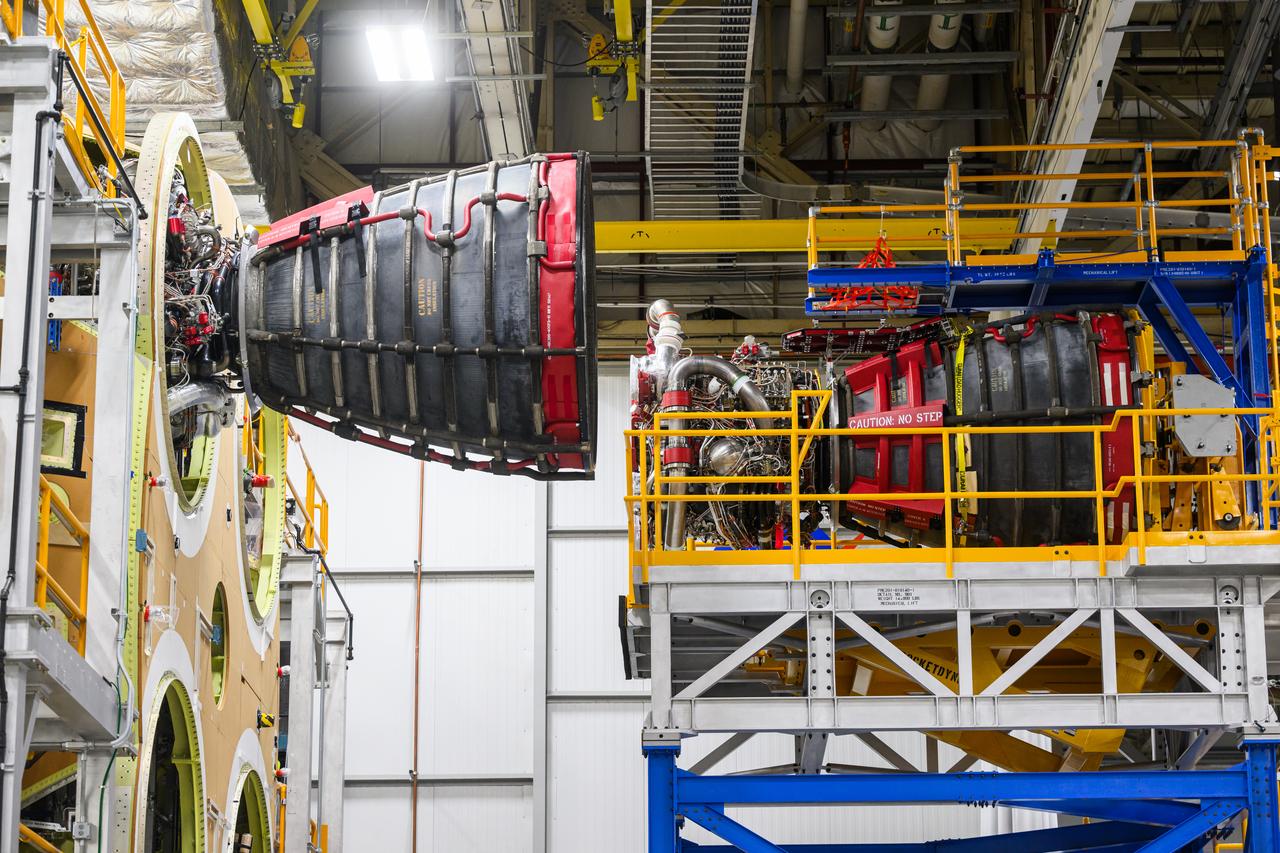
These photos and videos show how technicians at NASA’s Michoud Assembly Facility in New Orleans installed the second of four RS-25 engines onto the core stage for the agency’s SLS (Space Launch System) rocket that will help power NASA’s first crewed Artemis mission to the Moon. Crews added the second engine, with the serial number E2047 in position one, to the stage Sept. 15. The serial number for the engine installed Sept. 11 in position two on the core stage is E2059. Engineers consider the engines to be “soft” mated to the rocket stage. Following soft mate of all four engines, technicians with NASA, Aerojet Rocketdyne, an L3Harris Technologies company and the RS-25 engines lead contractor, along with Boeing, the core stage lead contractor, will fully secure the engines to the stage and integrate the propulsion and electrical systems within the structure. All four RS-25 engines are located at the base of the core stage within the engine section. NASA is working to land the first woman and first person of color on the Moon under Artemis. SLS is part of NASA’s backbone for deep space exploration, along with Orion and the Gateway in orbit around the Moon. SLS is the only rocket that can send Orion, astronauts, and supplies to the Moon in a single mission.
Technicians at NASA’s Michoud Assembly Facility move the intertank of NASA’s Space Launch System rocket for Artemis III to Cell G on October 26, 2022 to await application of the thermal protection system. Thermal protection systems protect space vehicles from aerodynamic heating during entry to planet atmosphere and re-entry to earth atmosphere. The intertank lays between the liquid hydrogen tank and liquid oxygen tank. Together with the engine section and the forward skirt, they comprise the SLS core stage. The liquid hydrogen tank and liquid oxygen tank hold 733,000 gallons of propellant to power the stage’s four RS-25 engines needed for liftoff and Artemis missions to the Moon and future missions to Mars.
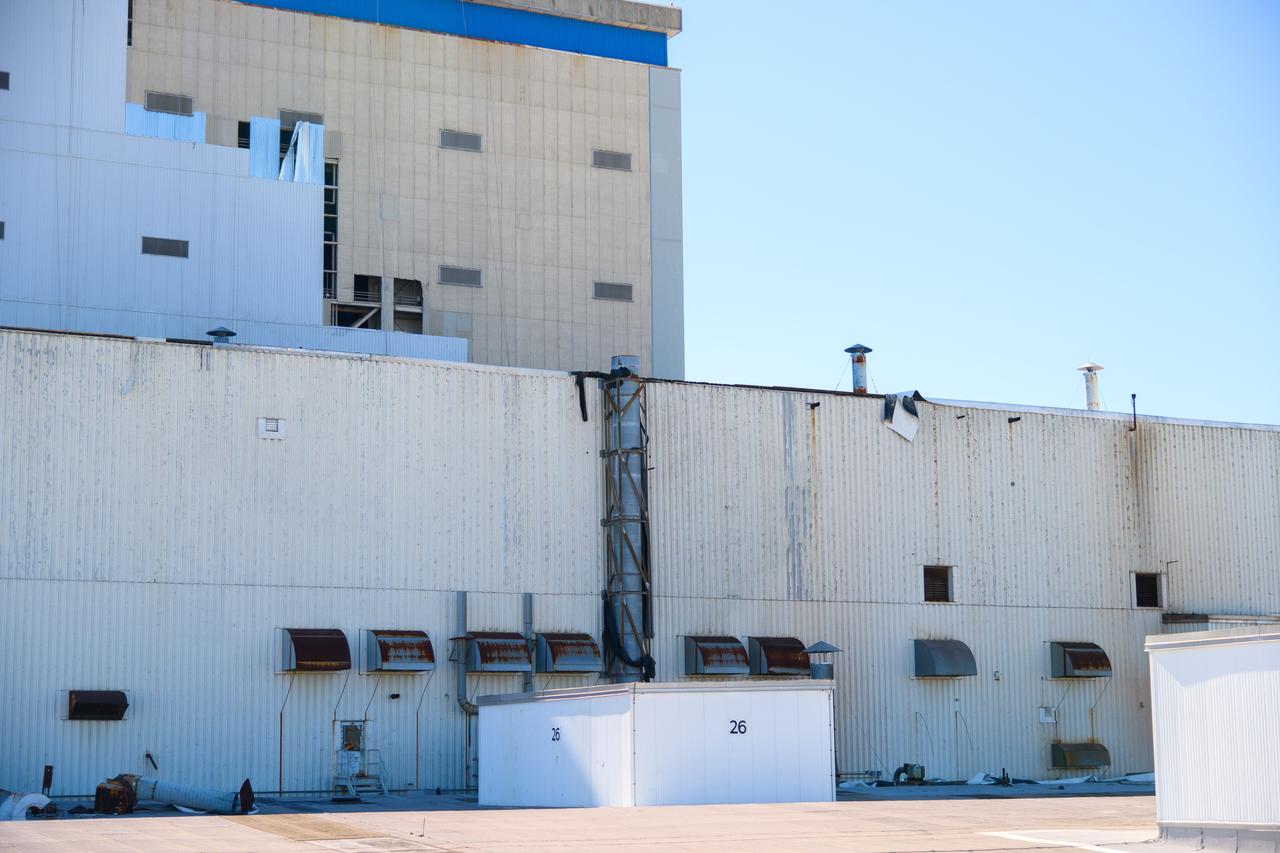
Hurricane Zeta damage to NASA’s Michoud Assembly Facility – East side of Bldg. 110 the Vertical Assembly Building (VAB).

This image highlights the liquid hydrogen tank that will be used on the core stage of NASA’s Space Launch System rocket for Artemis II, the first crewed mission of NASA’s Artemis program. The tank is being built at NASA’s Michoud Assembly Facility in New Orleans. The SLS core stage is made up of five unique elements: the forward skirt, liquid oxygen tank, intertank, liquid hydrogen tank, and the engine section. The liquid hydrogen tank holds 537,000 gallons of liquid hydrogen cooled to minus 423 degrees Fahrenheit and sits between the core stage’s intertank and engine section. The liquid hydrogen hardware, along with the liquid oxygen tank, will provide propellant to the four RS-25 engines at the bottom of the cores stage to produce more than two million pounds of thrust to launch NASA’s Artemis missions to the Moon. Together with its four RS-25 engines, the rocket’s massive 212-foot-tall core stage — the largest stage NASA has ever built — and its twin solid rocket boosters will produce 8.8 million pounds of thrust to send NASA’s Orion spacecraft, astronauts and supplies beyond Earth’s orbit to the Moon and, ultimately, Mars. Offering more payload mass, volume capability and energy to speed missions through space, the SLS rocket, along with NASA’s Gateway in lunar orbit, the human landing system, and Orion spacecraft, is part of NASA’s backbone for deep space exploration and the Artemis lunar program. No other rocket can send astronauts in Orion around the Moon in a single mission.

A total lunar eclipse rises over New Orleans, home of NASA’s Michoud Assembly Facility, in the early morning hours of Tuesday, March 3. A lunar eclipse occurs when Earth passes directly between the Sun and Moon, casting a huge shadow across the Moon’s surface. The Moon appears dark red or orange as the Sun’s light filters through Earth’s atmosphere. This is a composite of 4 images taken during the eclipse.

This image shows technicians and engineers move and connect the liquid oxygen tank (LOX) to the intertank as they continue the process of the forward join on the core stage of NASA’s Space Launch System rocket for Artemis II, the first crewed mission of NASA’s Artemis program at NASA’s Michoud Assembly Facility. The forward join connects the forward skirt, the liquid oxygen tank (LOX) and the intertank structures to form the top part of the SLS rocket’s core stage. Now, NASA and Boeing, the SLS prime contractor, will continue to integrate various systems inside the forward part of the core stage and prepare for structural joining of the liquid hydrogen tank and engine section to form the bottom of the stage. Together with its four RS-25 engines, the rocket’s massive 212-foot-tall core stage — the largest stage NASA has ever built — and its twin solid rocket boosters will produce 8.8 million pounds of thrust to send NASA’s Orion spacecraft, astronauts and supplies beyond Earth’s orbit to the Moon and, ultimately, Mars. Offering more payload mass, volume capability and energy to speed missions through space, the SLS rocket, along with NASA’s Gateway in lunar orbit, the Human Landing System, and Orion spacecraft, is part of NASA’s backbone for deep space exploration and the Artemis lunar program. No other rocket is capable of carrying astronauts in Orion around the Moon in a single mission.
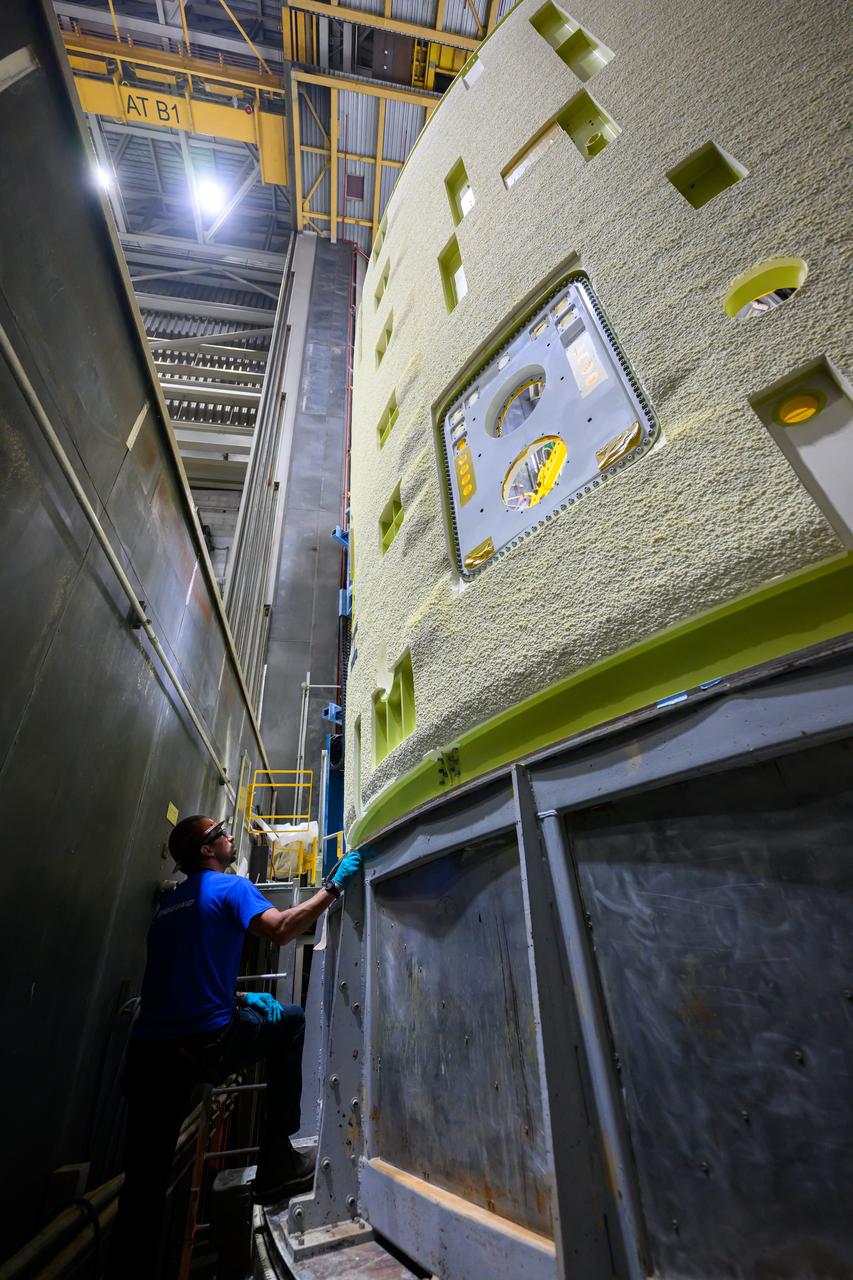
Technicians at NASA’s Michoud Assembly Facility in New Orleans lift the intertank of the SLS (Space Launch System)’s core stage for NASA’s Artemis III mission to move it to another location in the 43-acre factory for further inspection and production. The intertank is the backbone of the rocket’s core stage and is located between the mega rocket’s liquid hydrogen tank and liquid oxygen tank. In addition to joining the rocket’s two massive propellant tanks, the intertank houses avionics and electronics and serves as an attachment point for the rocket’s two solid rocket boosters positioned on either side of the core stage. The liquid hydrogen tank and liquid oxygen tank hold 733,000 gallons of super-cold propellant to power the stage’s four RS-25 engines needed for liftoff. Together, the rocket’s four RS-25 engines and two solid rocket boosters provide more than 8.8 million pounds to launch NASA’s and Artemis missions to the Moon. NASA is working to land the first woman and first person of color on the Moon under Artemis. SLS is part of NASA’s backbone for deep space exploration, along with Orion and the Gateway in orbit around the Moon. SLS is the only rocket that can send Orion, astronauts, and supplies to the Moon in a single mission.
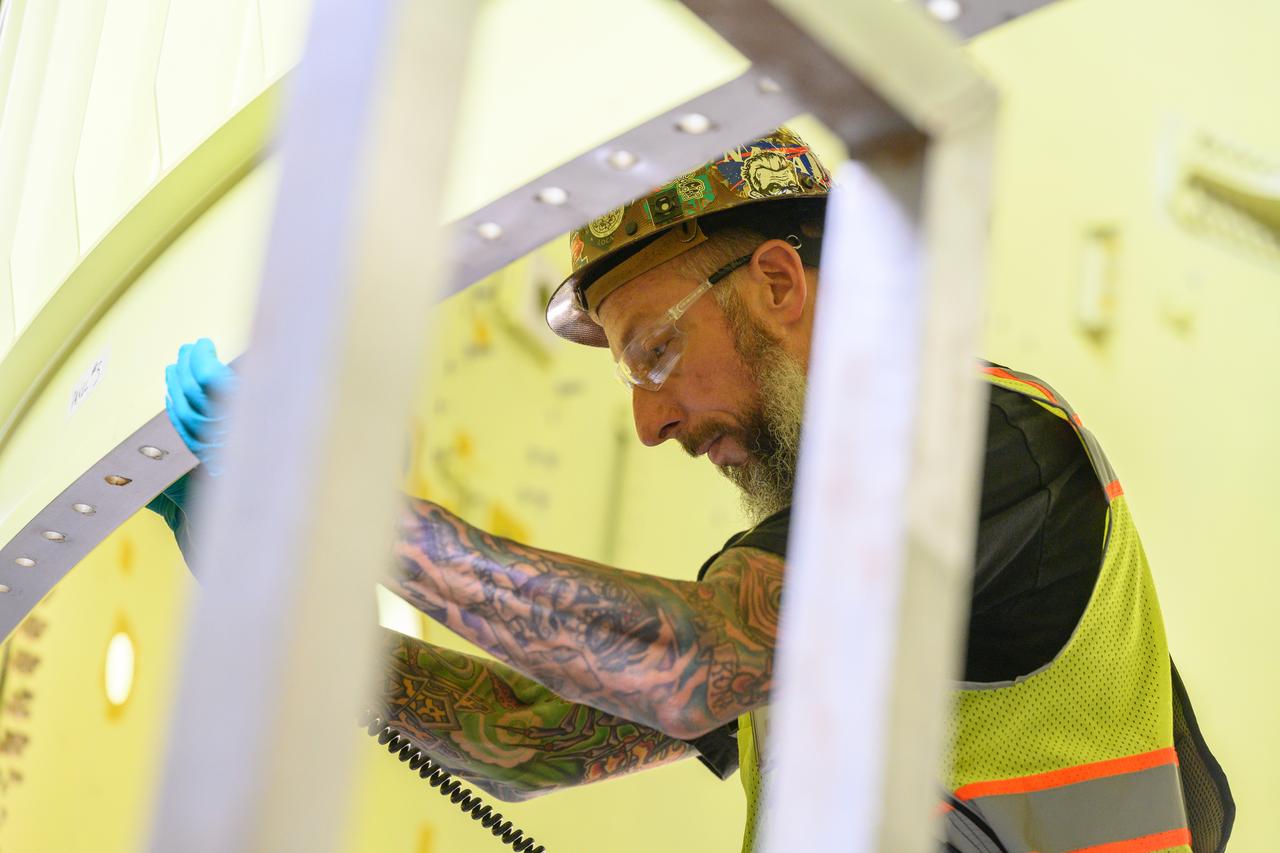
Technicians at NASA’s Michoud Assembly Facility move the intertank of NASA’s Space Launch System rocket for Artemis III to Cell G on October 26, 2022 to await application of the thermal protection system. Thermal protection systems protect space vehicles from aerodynamic heating during entry to planet atmosphere and re-entry to earth atmosphere. The intertank lays between the liquid hydrogen tank and liquid oxygen tank. Together with the engine section and the forward skirt, they comprise the SLS core stage. The liquid hydrogen tank and liquid oxygen tank hold 733,000 gallons of propellant to power the stage’s four RS-25 engines needed for liftoff and Artemis missions to the Moon and future missions to Mars.
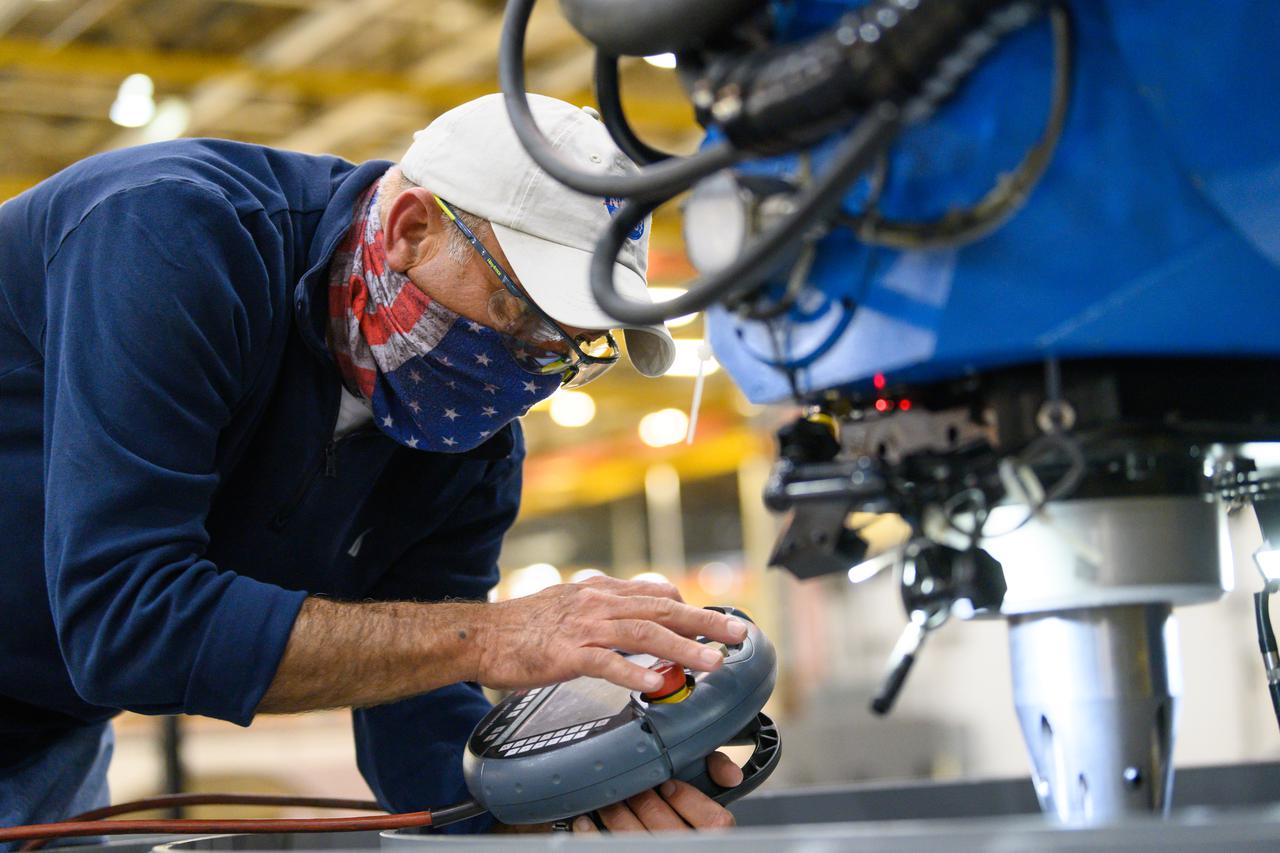
Technicians from Orion Prime Contractor Lockheed Martin weld the forward bulkhead of the pressure vessel to the tunnel hardware on the Orion Spacecraft for the Artemis III mission at NASA’s Michoud Assembly Facility in New Orleans. The crew module’s primary structure, the pressure vessel, is comprised of seven machined aluminum alloy pieces that are welded together through a weld process that produces a strong, air-tight habitable space for astronauts during the mission. The pressure vessel is designed to withstand the harsh and demanding environment of deep space and is the core structure upon which all the other elements of Orion’s crew module are integrated. This pressure vessel weld is the next step following the completion of the crew module cone panel welds and creates the top of the spacecraft. Work will then begin to join the barrel with the aft bulkhead to form the bottom of Orion. Last, the forward bulkhead will be welded to the top of the panels and, for the seventh and closeout weld, the bottom of the cone panels will be joined to the barrel to complete the pressure vessel. Once welding of the Artemis III crew module primary structure is complete, it will be shipped to NASA’s Kennedy Space Center in Florida where it will undergo further assembly beginning this fall. Orion, the Space Launch System, and Exploration Ground Systems programs are foundational elements of the Artemis program. Artemis I will be the first integrated flight test of Orion and SLS and is targeted to launch later this year. Artemis II will follow and is the first crewed mission, taking humans farther into space than ever before.
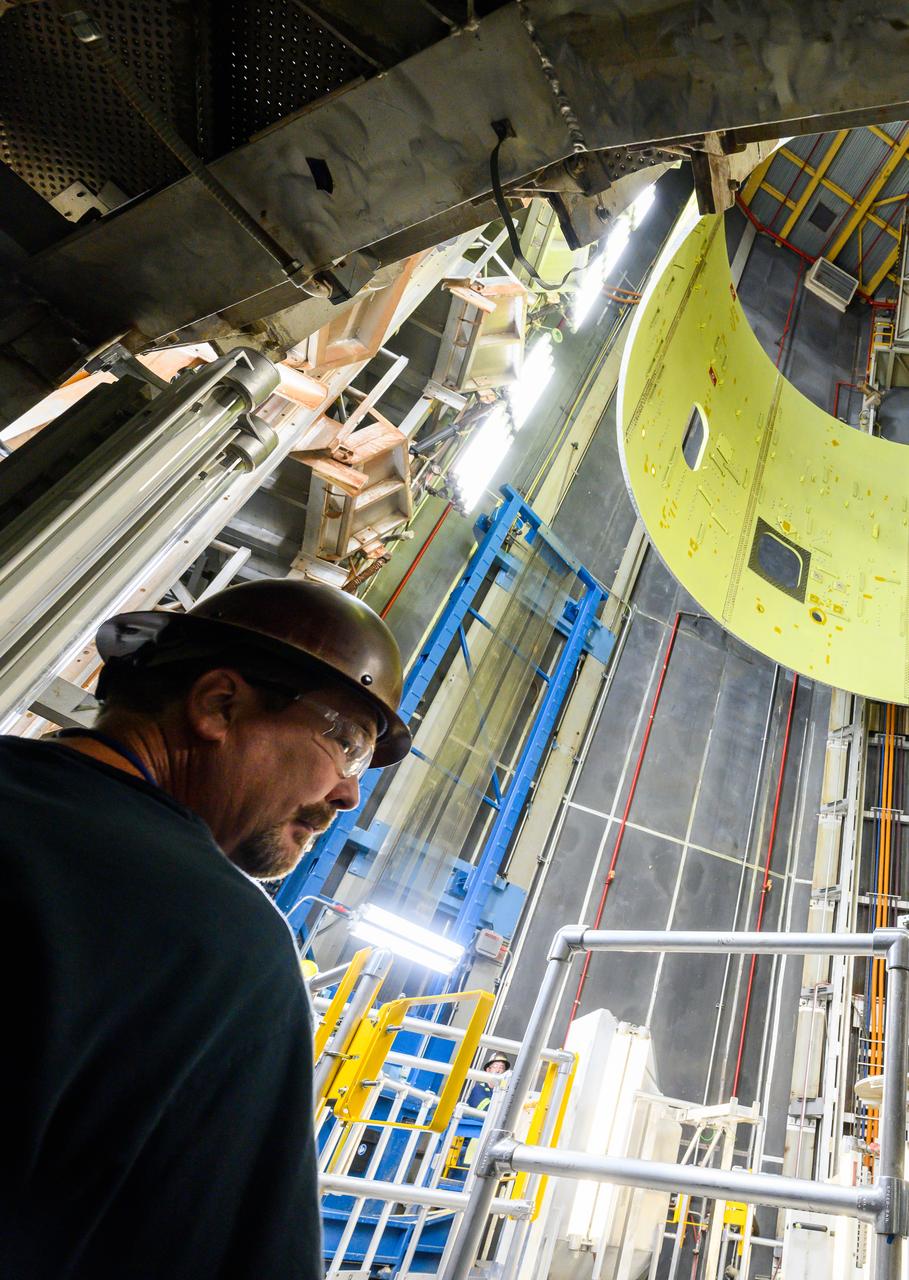
Technicians at NASA’s Michoud Assembly Facility move the intertank of NASA’s Space Launch System rocket for Artemis III to Cell G on October 26, 2022 to await application of the thermal protection system. Thermal protection systems protect space vehicles from aerodynamic heating during entry to planet atmosphere and re-entry to earth atmosphere. The intertank lays between the liquid hydrogen tank and liquid oxygen tank. Together with the engine section and the forward skirt, they comprise the SLS core stage. The liquid hydrogen tank and liquid oxygen tank hold 733,000 gallons of propellant to power the stage’s four RS-25 engines needed for liftoff and Artemis missions to the Moon and future missions to Mars.

This image highlights the liquid hydrogen tank that will be used on the core stage of NASA’s Space Launch System rocket for Artemis II, the first crewed mission of NASA’s Artemis program. The tank is being built at NASA’s Michoud Assembly Facility in New Orleans. The SLS core stage is made up of five unique elements: the forward skirt, liquid oxygen tank, intertank, liquid hydrogen tank, and the engine section. The liquid hydrogen tank holds 537,000 gallons of liquid hydrogen cooled to minus 423 degrees Fahrenheit and sits between the core stage’s intertank and engine section. The liquid hydrogen hardware, along with the liquid oxygen tank, will provide propellant to the four RS-25 engines at the bottom of the cores stage to produce more than two million pounds of thrust to launch NASA’s Artemis missions to the Moon. Together with its four RS-25 engines, the rocket’s massive 212-foot-tall core stage — the largest stage NASA has ever built — and its twin solid rocket boosters will produce 8.8 million pounds of thrust to send NASA’s Orion spacecraft, astronauts and supplies beyond Earth’s orbit to the Moon and, ultimately, Mars. Offering more payload mass, volume capability and energy to speed missions through space, the SLS rocket, along with NASA’s Gateway in lunar orbit, the human landing system, and Orion spacecraft, is part of NASA’s backbone for deep space exploration and the Artemis lunar program. No other rocket can send astronauts in Orion around the Moon in a single mission.
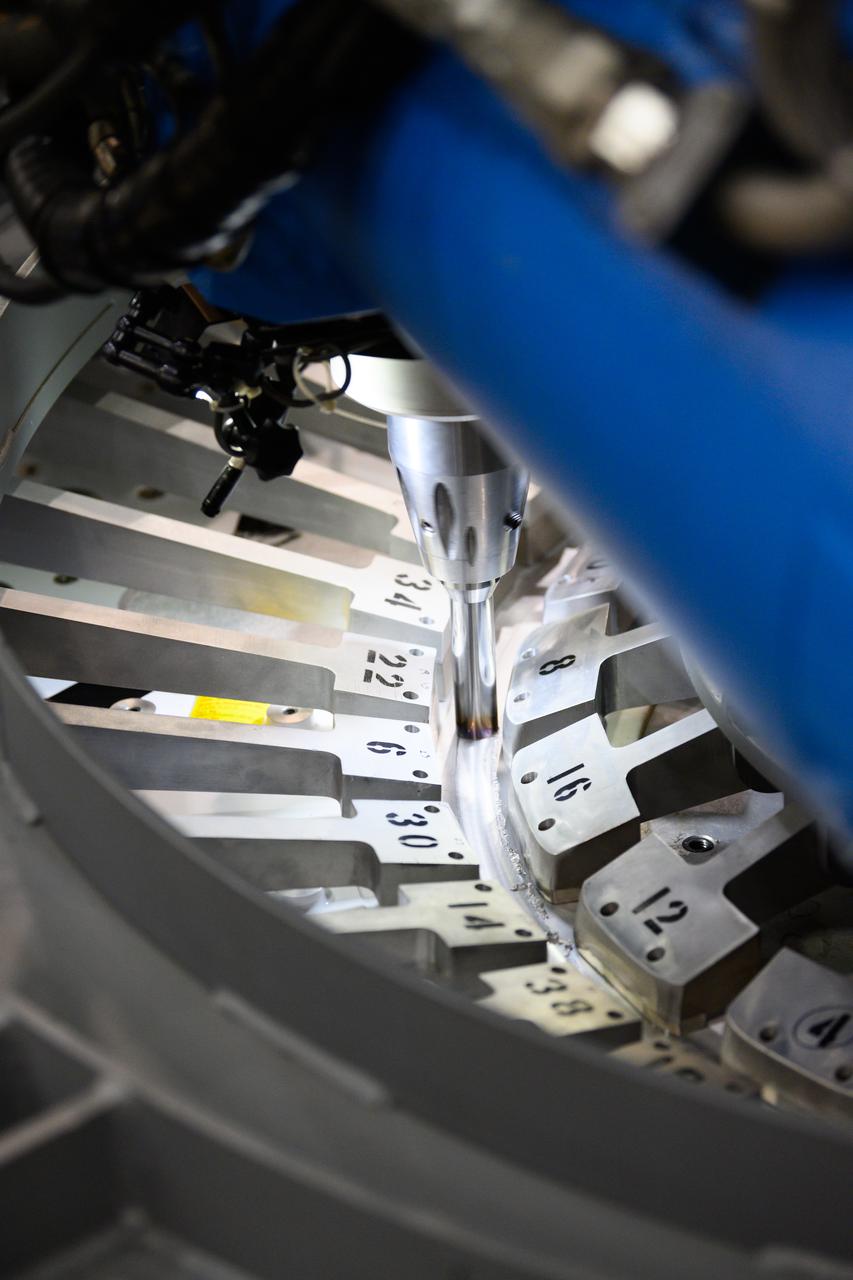
Technicians from Orion Prime Contractor Lockheed Martin weld the forward bulkhead of the pressure vessel to the tunnel hardware on the Orion Spacecraft for the Artemis III mission at NASA’s Michoud Assembly Facility in New Orleans. The crew module’s primary structure, the pressure vessel, is comprised of seven machined aluminum alloy pieces that are welded together through a weld process that produces a strong, air-tight habitable space for astronauts during the mission. The pressure vessel is designed to withstand the harsh and demanding environment of deep space and is the core structure upon which all the other elements of Orion’s crew module are integrated. This pressure vessel weld is the next step following the completion of the crew module cone panel welds and creates the top of the spacecraft. Work will then begin to join the barrel with the aft bulkhead to form the bottom of Orion. Last, the forward bulkhead will be welded to the top of the panels and, for the seventh and closeout weld, the bottom of the cone panels will be joined to the barrel to complete the pressure vessel. Once welding of the Artemis III crew module primary structure is complete, it will be shipped to NASA’s Kennedy Space Center in Florida where it will undergo further assembly beginning this fall. Orion, the Space Launch System, and Exploration Ground Systems programs are foundational elements of the Artemis program. Artemis I will be the first integrated flight test of Orion and SLS and is targeted to launch later this year. Artemis II will follow and is the first crewed mission, taking humans farther into space than ever before.
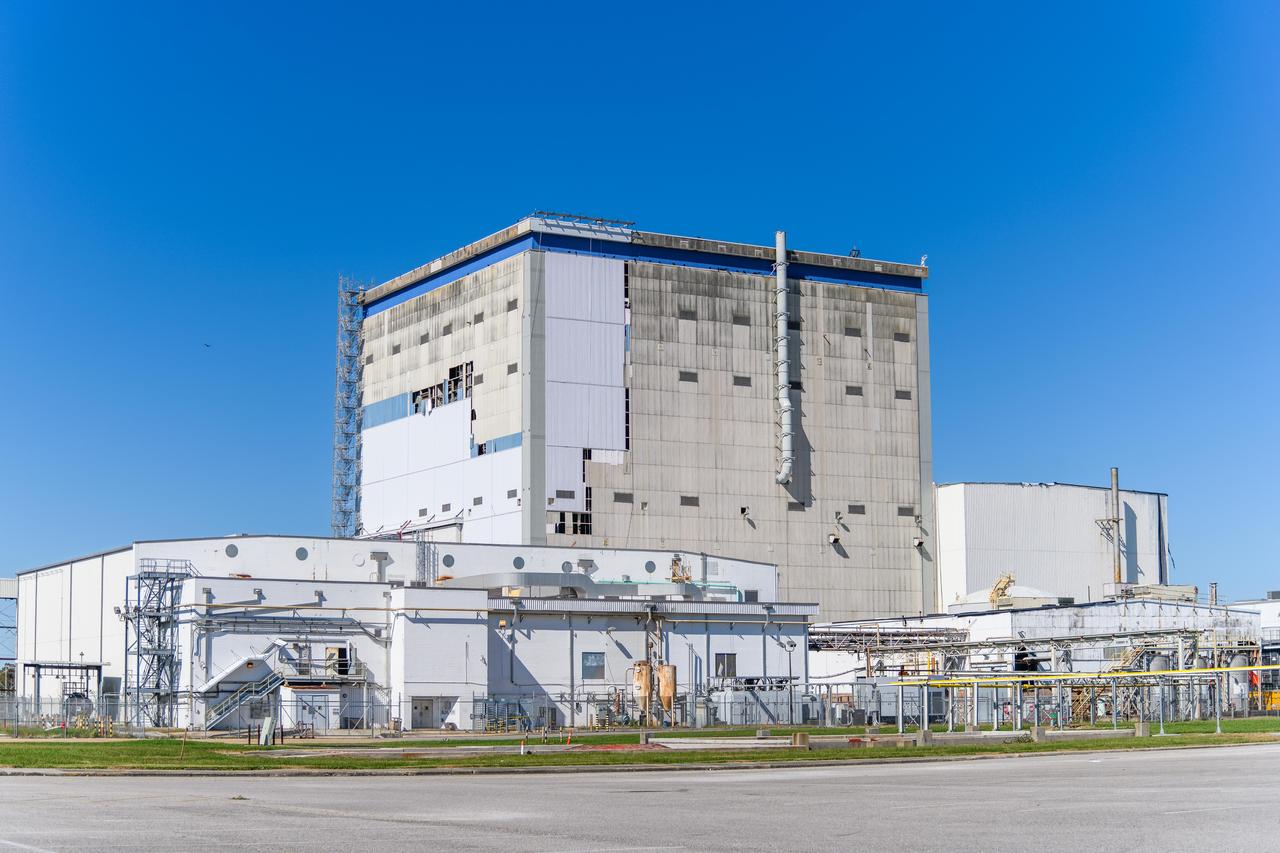
Hurricane Zeta damage to NASA’s Michoud Assembly Facility – South side of Bldg. 110 the Vertical Assembly Building (VAB).
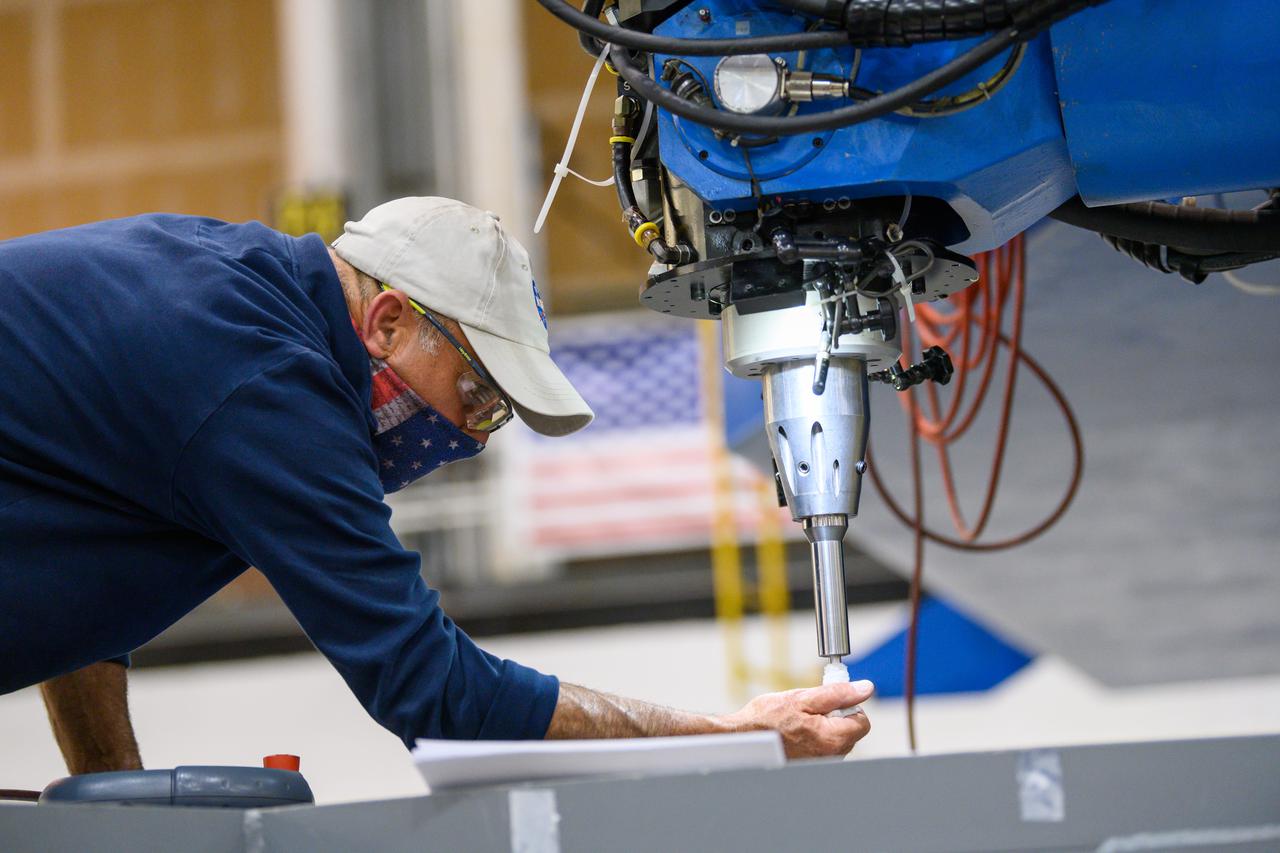
Technicians from Orion Prime Contractor Lockheed Martin weld the forward bulkhead of the pressure vessel to the tunnel hardware on the Orion Spacecraft for the Artemis III mission at NASA’s Michoud Assembly Facility in New Orleans. The crew module’s primary structure, the pressure vessel, is comprised of seven machined aluminum alloy pieces that are welded together through a weld process that produces a strong, air-tight habitable space for astronauts during the mission. The pressure vessel is designed to withstand the harsh and demanding environment of deep space and is the core structure upon which all the other elements of Orion’s crew module are integrated. This pressure vessel weld is the next step following the completion of the crew module cone panel welds and creates the top of the spacecraft. Work will then begin to join the barrel with the aft bulkhead to form the bottom of Orion. Last, the forward bulkhead will be welded to the top of the panels and, for the seventh and closeout weld, the bottom of the cone panels will be joined to the barrel to complete the pressure vessel. Once welding of the Artemis III crew module primary structure is complete, it will be shipped to NASA’s Kennedy Space Center in Florida where it will undergo further assembly beginning this fall. Orion, the Space Launch System, and Exploration Ground Systems programs are foundational elements of the Artemis program. Artemis I will be the first integrated flight test of Orion and SLS and is targeted to launch later this year. Artemis II will follow and is the first crewed mission, taking humans farther into space than ever before.

This image highlights the liquid hydrogen tank that will be used on the core stage of NASA’s Space Launch System rocket for Artemis II, the first crewed mission of NASA’s Artemis program. The tank is being built at NASA’s Michoud Assembly Facility in New Orleans. The SLS core stage is made up of five unique elements: the forward skirt, liquid oxygen tank, intertank, liquid hydrogen tank, and the engine section. The liquid hydrogen tank holds 537,000 gallons of liquid hydrogen cooled to minus 423 degrees Fahrenheit and sits between the core stage’s intertank and engine section. The liquid hydrogen hardware, along with the liquid oxygen tank, will provide propellant to the four RS-25 engines at the bottom of the cores stage to produce more than two million pounds of thrust to launch NASA’s Artemis missions to the Moon. Together with its four RS-25 engines, the rocket’s massive 212-foot-tall core stage — the largest stage NASA has ever built — and its twin solid rocket boosters will produce 8.8 million pounds of thrust to send NASA’s Orion spacecraft, astronauts and supplies beyond Earth’s orbit to the Moon and, ultimately, Mars. Offering more payload mass, volume capability and energy to speed missions through space, the SLS rocket, along with NASA’s Gateway in lunar orbit, the human landing system, and Orion spacecraft, is part of NASA’s backbone for deep space exploration and the Artemis lunar program. No other rocket can send astronauts in Orion around the Moon in a single mission.
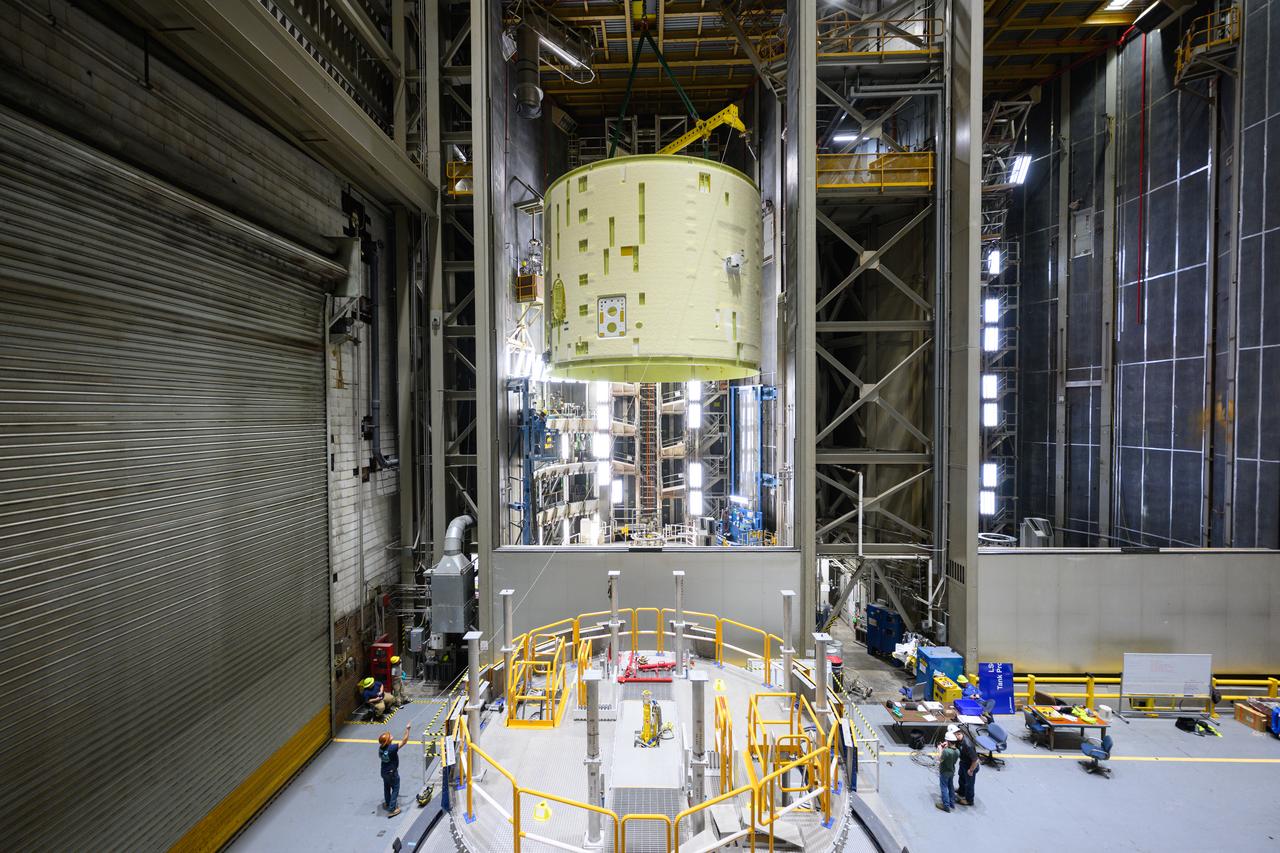
Technicians at NASA’s Michoud Assembly Facility in New Orleans lift the intertank of the SLS (Space Launch System)’s core stage for NASA’s Artemis III mission to move it to another location in the 43-acre factory for further inspection and production. The intertank is the backbone of the rocket’s core stage and is located between the mega rocket’s liquid hydrogen tank and liquid oxygen tank. In addition to joining the rocket’s two massive propellant tanks, the intertank houses avionics and electronics and serves as an attachment point for the rocket’s two solid rocket boosters positioned on either side of the core stage. The liquid hydrogen tank and liquid oxygen tank hold 733,000 gallons of super-cold propellant to power the stage’s four RS-25 engines needed for liftoff. Together, the rocket’s four RS-25 engines and two solid rocket boosters provide more than 8.8 million pounds to launch NASA’s and Artemis missions to the Moon. NASA is working to land the first woman and first person of color on the Moon under Artemis. SLS is part of NASA’s backbone for deep space exploration, along with Orion and the Gateway in orbit around the Moon. SLS is the only rocket that can send Orion, astronauts, and supplies to the Moon in a single mission.
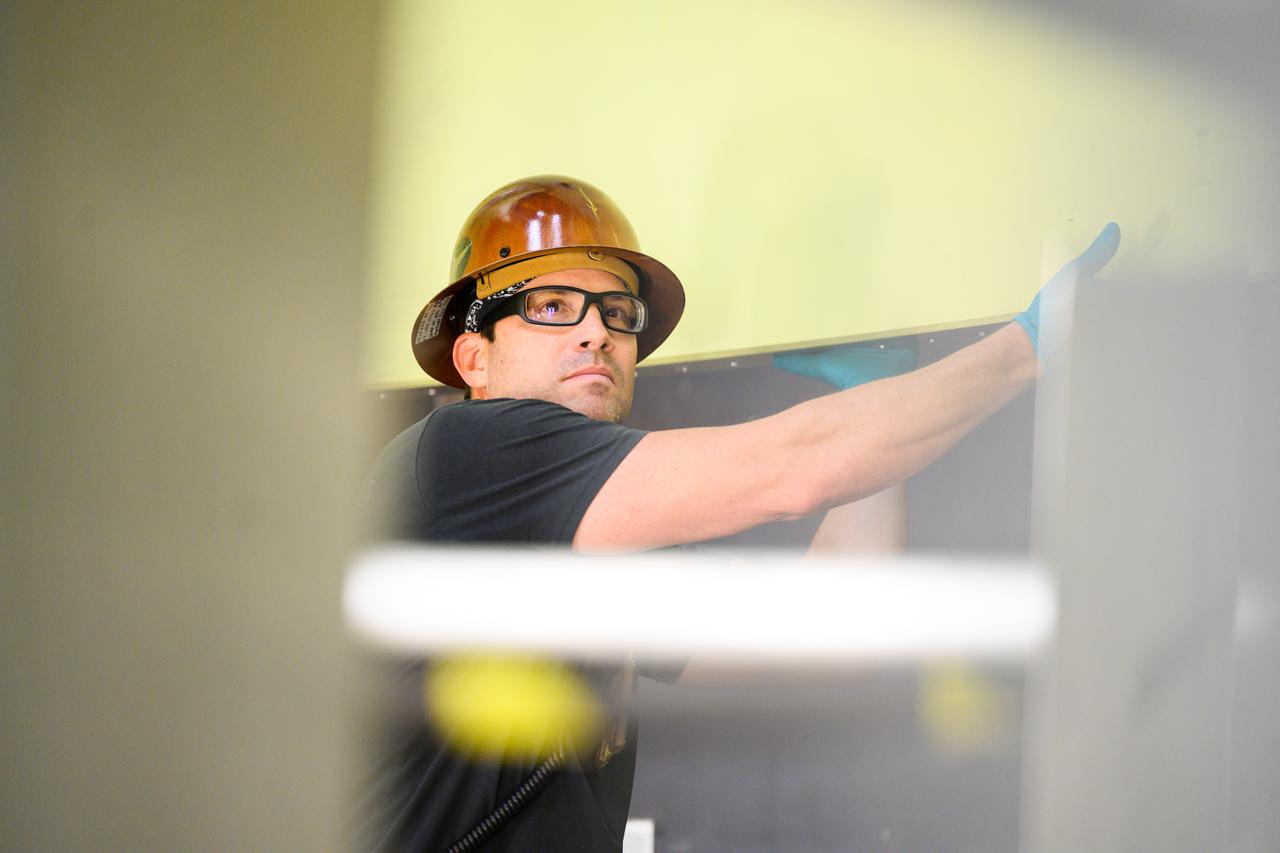
Technicians at NASA’s Michoud Assembly Facility move the intertank of NASA’s Space Launch System rocket for Artemis III to Cell G on October 26, 2022 to await application of the thermal protection system. Thermal protection systems protect space vehicles from aerodynamic heating during entry to planet atmosphere and re-entry to earth atmosphere. The intertank lays between the liquid hydrogen tank and liquid oxygen tank. Together with the engine section and the forward skirt, they comprise the SLS core stage. The liquid hydrogen tank and liquid oxygen tank hold 733,000 gallons of propellant to power the stage’s four RS-25 engines needed for liftoff and Artemis missions to the Moon and future missions to Mars.
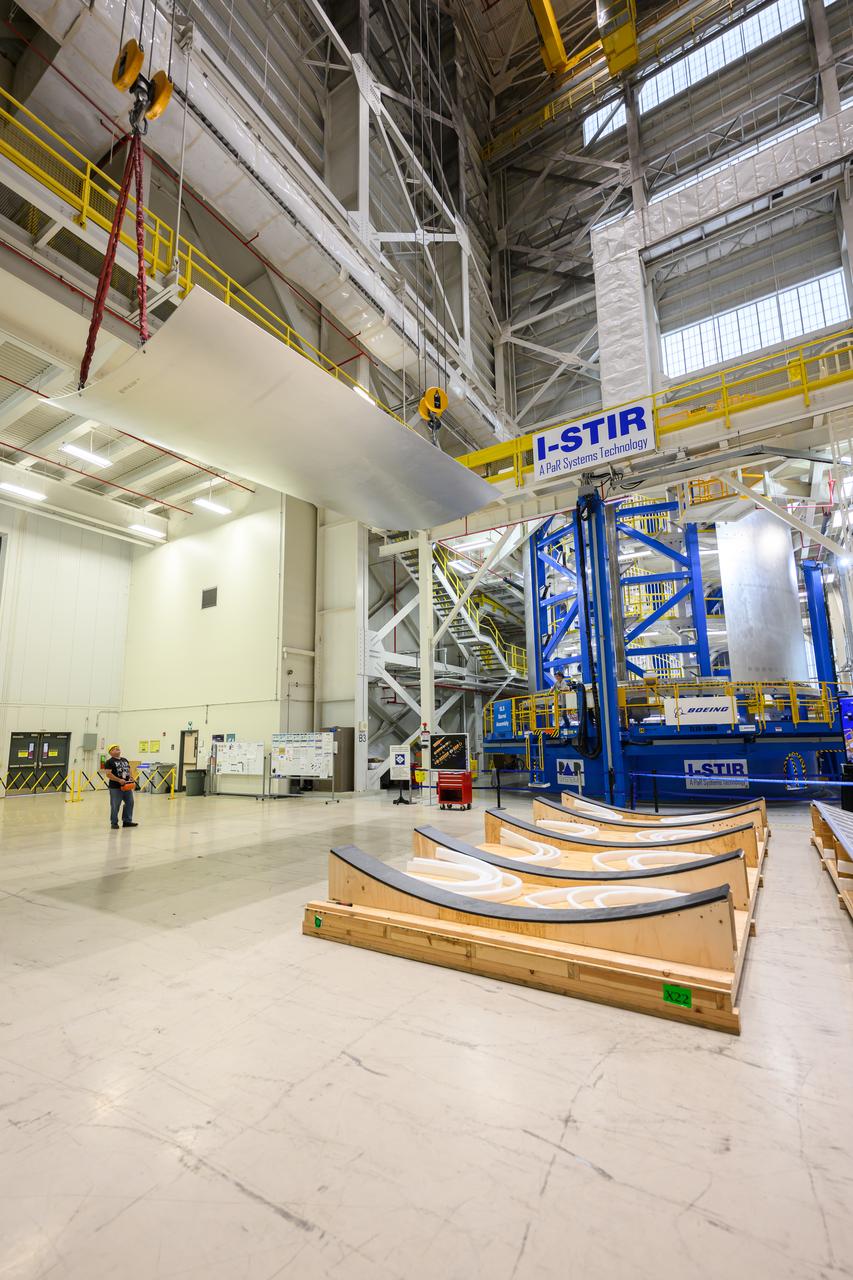
Crews at NASA’s Michoud Assembly Facility in New Orleans load alluminum alloy panels into the Vertical Weld Center June 1. The Vertical Weld Center is a friction-stir weld tool for the large structures of the core stage for the SLS (Space Launch System) rocket. Teams load the panels into the VWC using an overhead crane system, then multiple panels are welded together to create entire barrels. The panels in these images are some of the five barrels that will form the SLS liquid hydrogen propellant tank for the SLS rocket that will power NASA’s Artemis IV mission, which is also the first flight of SLS in its more powerful Block 1B configuration. The SLS core stage is made up of five unique elements: the forward skirt, liquid oxygen tank, intertank, liquid hydrogen tank, and the engine section. The liquid hydrogen propellant tank holds 537,000 gallons of liquid hydrogen cooled to minus 432 degrees Fahrenheit and sits between the core stage’s intertank and engine section. The liquid hydrogen hardware, along with the liquid oxygen tank, provides propellant to the four RS-25 engines at the bottom of the core stage to produce more than two million pounds of thrust to help launch the Artemis IV mission to the Moon. Together with its four RS-25 engines, the rocket’s massive 212-foot-tall core stage — the largest stage NASA has ever built — and its twin solid rocket boosters produce 8.8 million pounds of thrust to send NASA’s Orion spacecraft, astronauts and supplies beyond Earth’s orbit to the Moon. NASA is working to land the first woman and first person of color on the Moon under Artemis. SLS is part of NASA’s backbone for deep space exploration, along with Orion and the Gateway in orbit around the Moon. SLS is the only rocket that can send Orion, astronauts, and supplies to the Moon in a single mission.

This image highlights the liquid oxygen tank, which will be used on the core stage of NASA’ Space Launch System rocket for Atremis II, the first crewed mission of NASA’s Artemis program, at NASA’s Michoud Assembly Facility. The SLS core stage is made up of five unique elements: the forward skirt, liquid oxygen tank, intertank, liquid hydrogen tank, and the engine section. The forward skirt houses flight computers, cameras, and avionics systems. The liquid oxygen tan holds 196,000 gallons of liquid oxygen cooled to -297°F. The LOX hardware sits between the core stage’s forward skirt and the intertank; and along with the liquid hydrogen tank, it will fuel four RS-25 engines to produce two million pounds of thrust. Together with its four RS-25 engines, the rocket’s massive 212-foot-tall core stage — the largest stage NASA has ever built — and its twin solid rocket boosters will produce 8.8 million pounds of thrust to send NASA’s Orion spacecraft, astronauts and supplies beyond Earth’s orbit to the Moon and, ultimately, Mars. Offering more payload mass, volume capability and energy to speed missions through space, the SLS rocket, along with NASA’s Gateway in lunar orbit, the Human Landing System, and Orion spacecraft, is part of NASA’s backbone for deep space exploration and the Artemis lunar program. No other rocket can send astronauts in Orion around the Moon in a single mission.
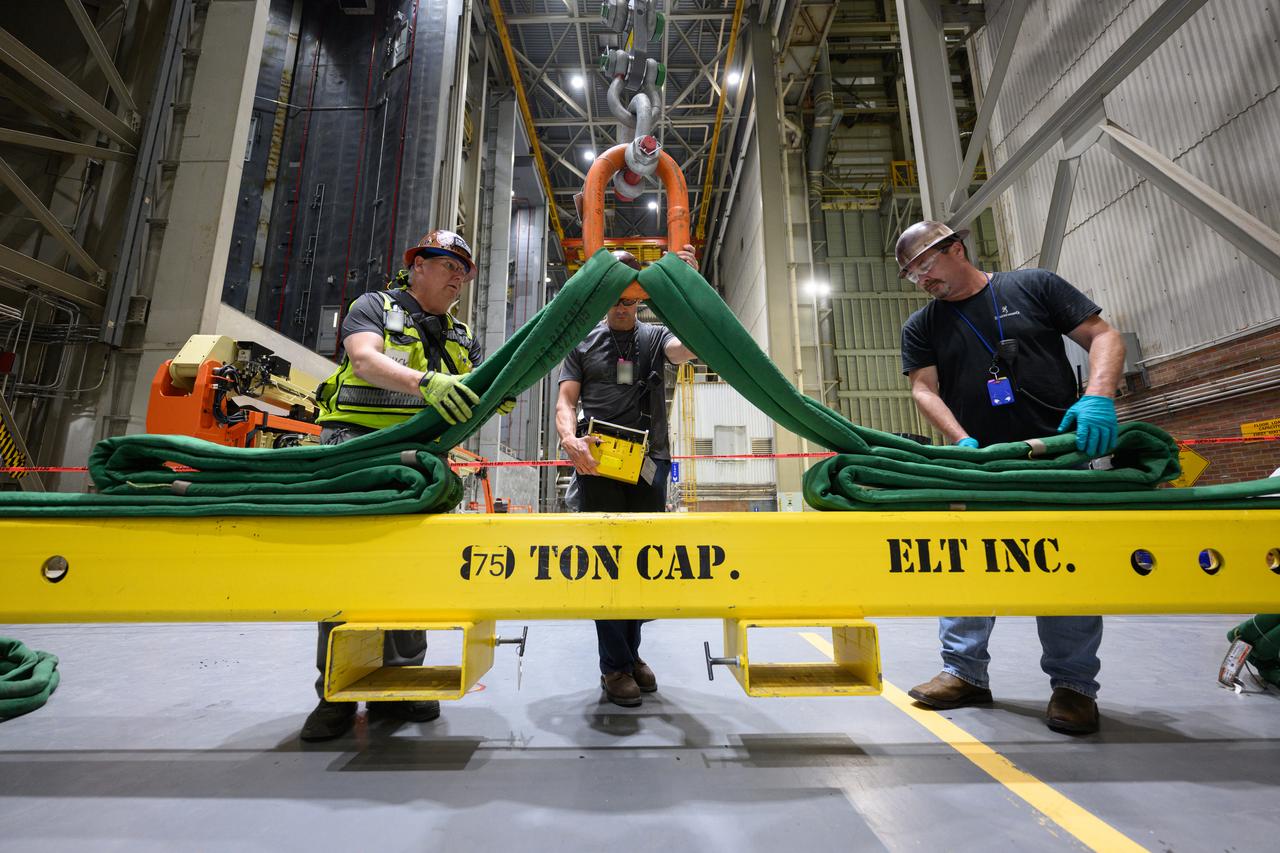
Technicians at NASA’s Michoud Assembly Facility in New Orleans lift the intertank of the SLS (Space Launch System)’s core stage for NASA’s Artemis III mission to move it to another location in the 43-acre factory for further inspection and production. The intertank is the backbone of the rocket’s core stage and is located between the mega rocket’s liquid hydrogen tank and liquid oxygen tank. In addition to joining the rocket’s two massive propellant tanks, the intertank houses avionics and electronics and serves as an attachment point for the rocket’s two solid rocket boosters positioned on either side of the core stage. The liquid hydrogen tank and liquid oxygen tank hold 733,000 gallons of super-cold propellant to power the stage’s four RS-25 engines needed for liftoff. Together, the rocket’s four RS-25 engines and two solid rocket boosters provide more than 8.8 million pounds to launch NASA’s and Artemis missions to the Moon. NASA is working to land the first woman and first person of color on the Moon under Artemis. SLS is part of NASA’s backbone for deep space exploration, along with Orion and the Gateway in orbit around the Moon. SLS is the only rocket that can send Orion, astronauts, and supplies to the Moon in a single mission.

These photos show how technicians at NASA’s Michoud Assembly Facility in New Orleans installed the third and fourth RS-25 engines onto the core stage for the agency’s SLS (Space Launch System) rocket that will help power NASA’s first crewed Artemis mission to the Moon. Technicians added the first engine to the SLS core stage Sept. 11. The second engine was installed onto the stage Sept. 15 with the third and fourth engines following Sept. 19 and Sept. 20. Engineers consider the engines to be “soft” mated to the rocket stage. Technicians with NASA, Aerojet Rocketdyne, an L3Harris Technologies company and the RS-25 engines lead contractor, along with Boeing, the core stage lead contractor, will now focus efforts on the complex tax of fully securing the engines to the stage and integrating the propulsion and electrical systems within the structure. NASA is working to land the first woman and first person of color on the Moon under Artemis. SLS is part of NASA’s backbone for deep space exploration, along with Orion and the Gateway in orbit around the Moon. SLS is the only rocket that can send Orion, astronauts, and supplies to the Moon in a single mission.
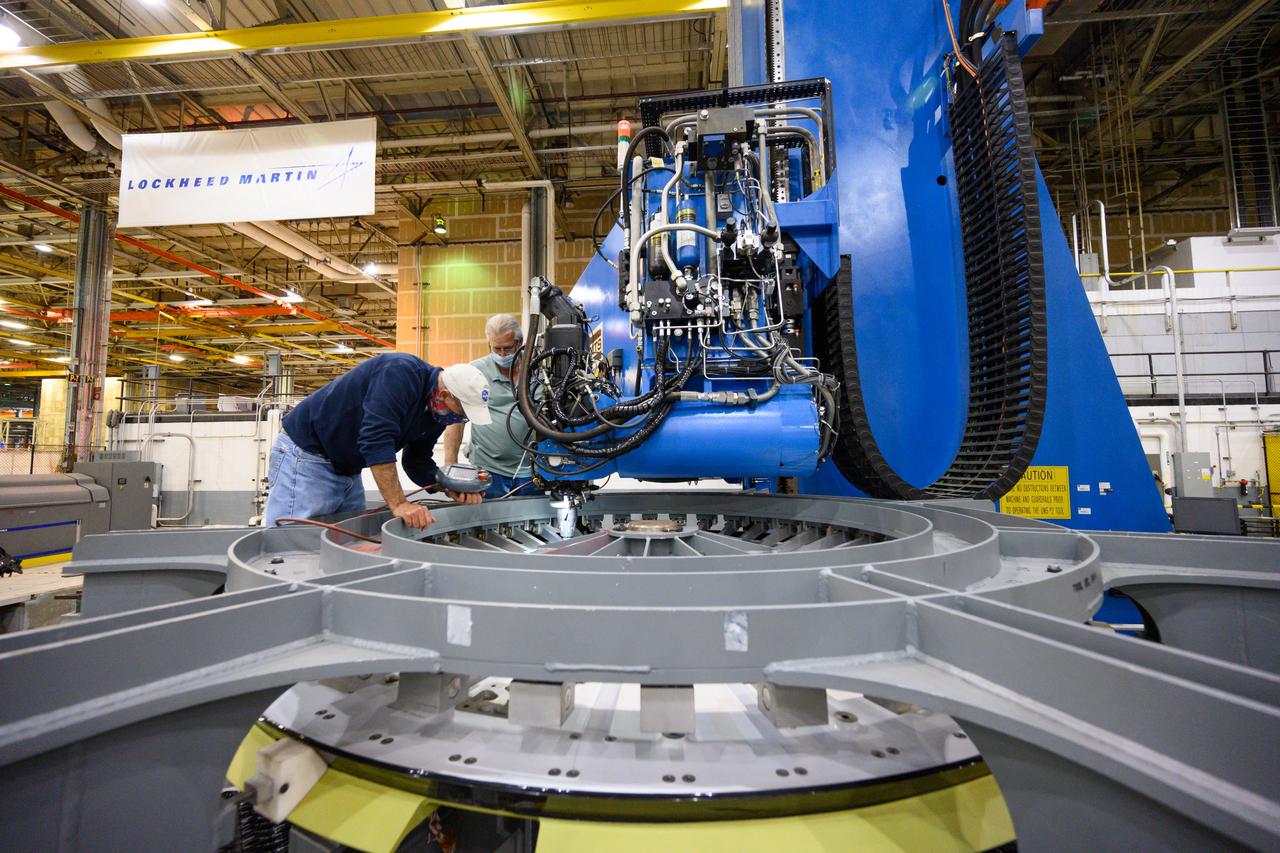
Technicians from Orion Prime Contractor Lockheed Martin weld the forward bulkhead of the pressure vessel to the tunnel hardware on the Orion Spacecraft for the Artemis III mission at NASA’s Michoud Assembly Facility in New Orleans. The crew module’s primary structure, the pressure vessel, is comprised of seven machined aluminum alloy pieces that are welded together through a weld process that produces a strong, air-tight habitable space for astronauts during the mission. The pressure vessel is designed to withstand the harsh and demanding environment of deep space and is the core structure upon which all the other elements of Orion’s crew module are integrated. This pressure vessel weld is the next step following the completion of the crew module cone panel welds and creates the top of the spacecraft. Work will then begin to join the barrel with the aft bulkhead to form the bottom of Orion. Last, the forward bulkhead will be welded to the top of the panels and, for the seventh and closeout weld, the bottom of the cone panels will be joined to the barrel to complete the pressure vessel. Once welding of the Artemis III crew module primary structure is complete, it will be shipped to NASA’s Kennedy Space Center in Florida where it will undergo further assembly beginning this fall. Orion, the Space Launch System, and Exploration Ground Systems programs are foundational elements of the Artemis program. Artemis I will be the first integrated flight test of Orion and SLS and is targeted to launch later this year. Artemis II will follow and is the first crewed mission, taking humans farther into space than ever before.
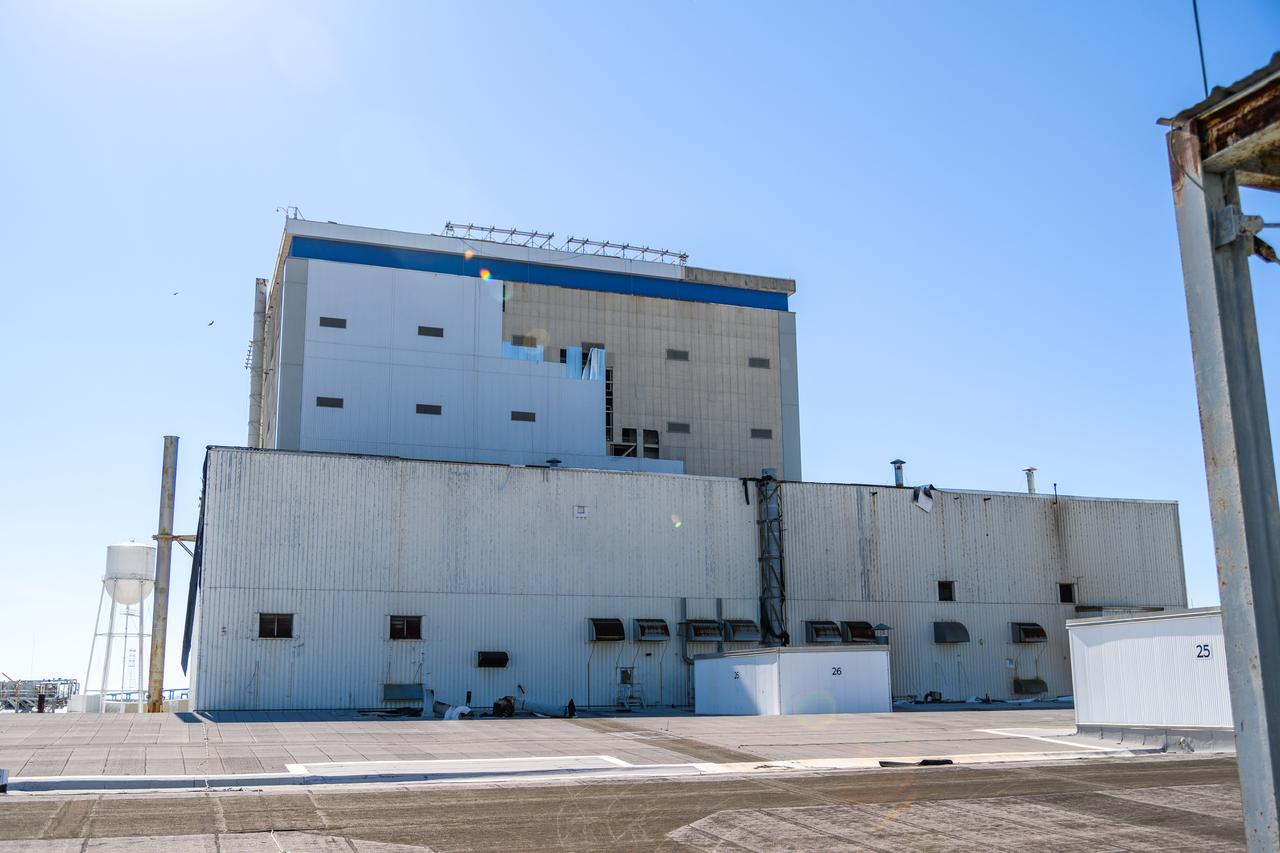
Hurricane Zeta damage to NASA’s Michoud Assembly Facility – East side of Bldg. 110 the Vertical Assembly Building (VAB).
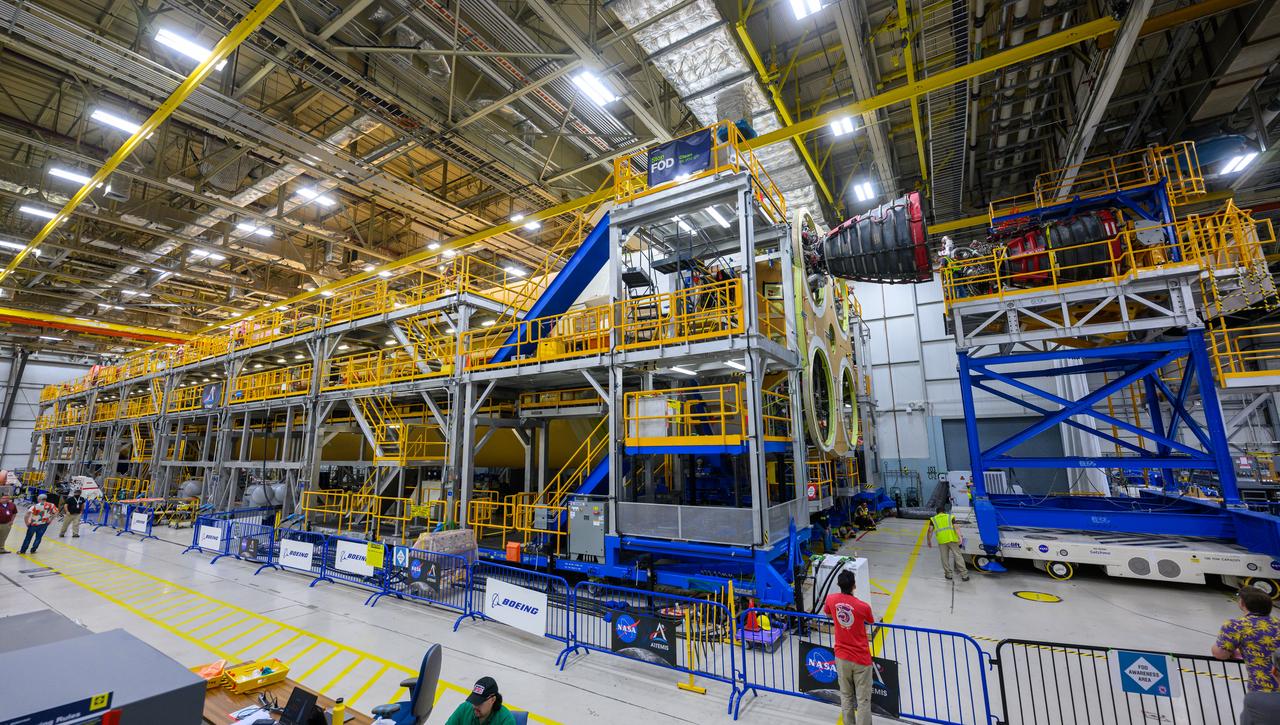
These photos and videos show how technicians at NASA’s Michoud Assembly Facility in New Orleans installed the second of four RS-25 engines onto the core stage for the agency’s SLS (Space Launch System) rocket that will help power NASA’s first crewed Artemis mission to the Moon. Crews added the second engine, with the serial number E2047 in position one, to the stage Sept. 15. The serial number for the engine installed Sept. 11 in position two on the core stage is E2059. Engineers consider the engines to be “soft” mated to the rocket stage. Following soft mate of all four engines, technicians with NASA, Aerojet Rocketdyne, an L3Harris Technologies company and the RS-25 engines lead contractor, along with Boeing, the core stage lead contractor, will fully secure the engines to the stage and integrate the propulsion and electrical systems within the structure. All four RS-25 engines are located at the base of the core stage within the engine section. NASA is working to land the first woman and first person of color on the Moon under Artemis. SLS is part of NASA’s backbone for deep space exploration, along with Orion and the Gateway in orbit around the Moon. SLS is the only rocket that can send Orion, astronauts, and supplies to the Moon in a single mission.
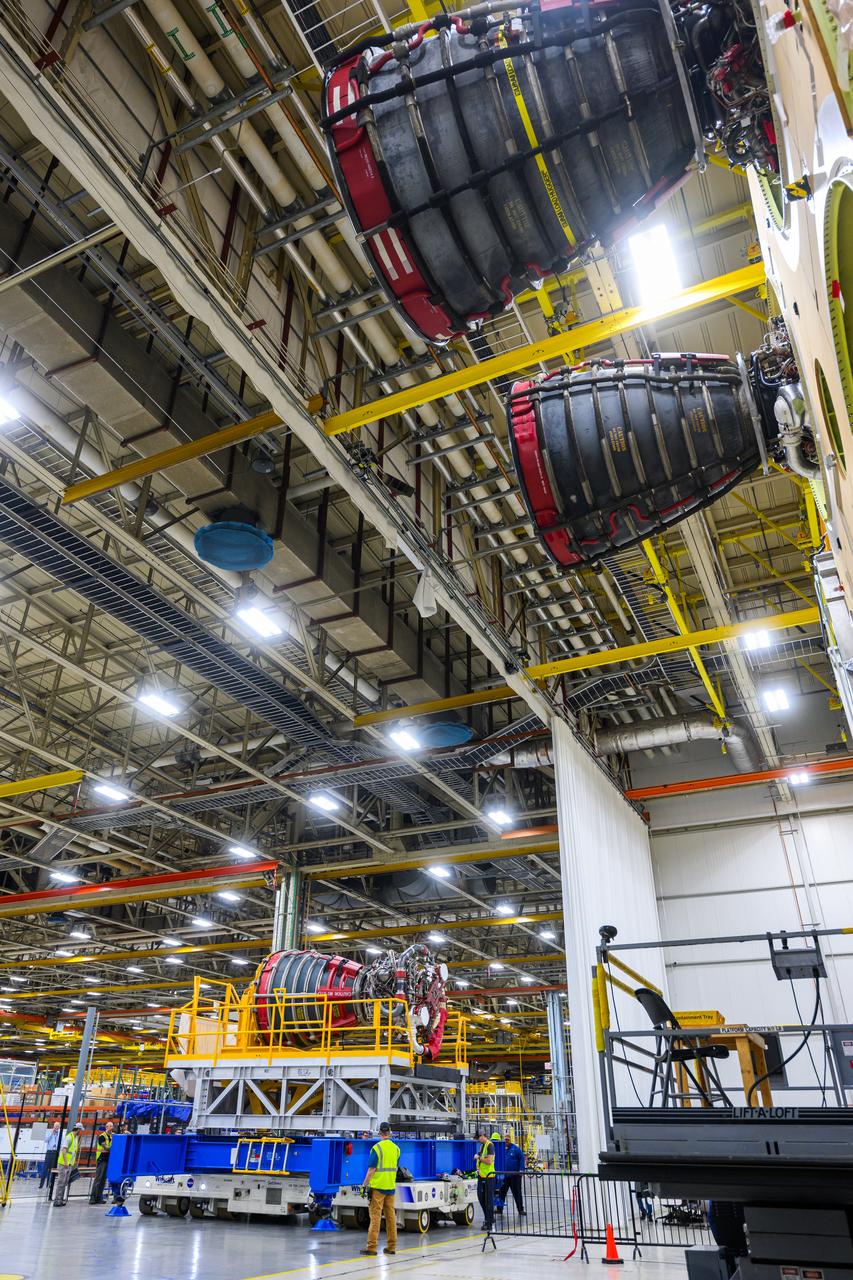
These photos and videos show how technicians at NASA’s Michoud Assembly Facility in New Orleans installed the third and fourth RS-25 engines onto the core stage for the agency’s SLS (Space Launch System) rocket that will help power NASA’s first crewed Artemis mission to the Moon. Technicians added the first engine to the SLS core stage Sept. 11. The second engine was installed onto the stage Sept. 15 with the third and fourth engines following Sept. 19 and Sept. 20. Engineers consider the engines to be “soft” mated to the rocket stage. Technicians with NASA, Aerojet Rocketdyne, an L3Harris Technologies company and the RS-25 engines lead contractor, along with Boeing, the core stage lead contractor, will now focus efforts on the complex tax of fully securing the engines to the stage and integrating the propulsion and electrical systems within the structure. NASA is working to land the first woman and first person of color on the Moon under Artemis. SLS is part of NASA’s backbone for deep space exploration, along with Orion and the Gateway in orbit around the Moon. SLS is the only rocket that can send Orion, astronauts, and supplies to the Moon in a single mission.
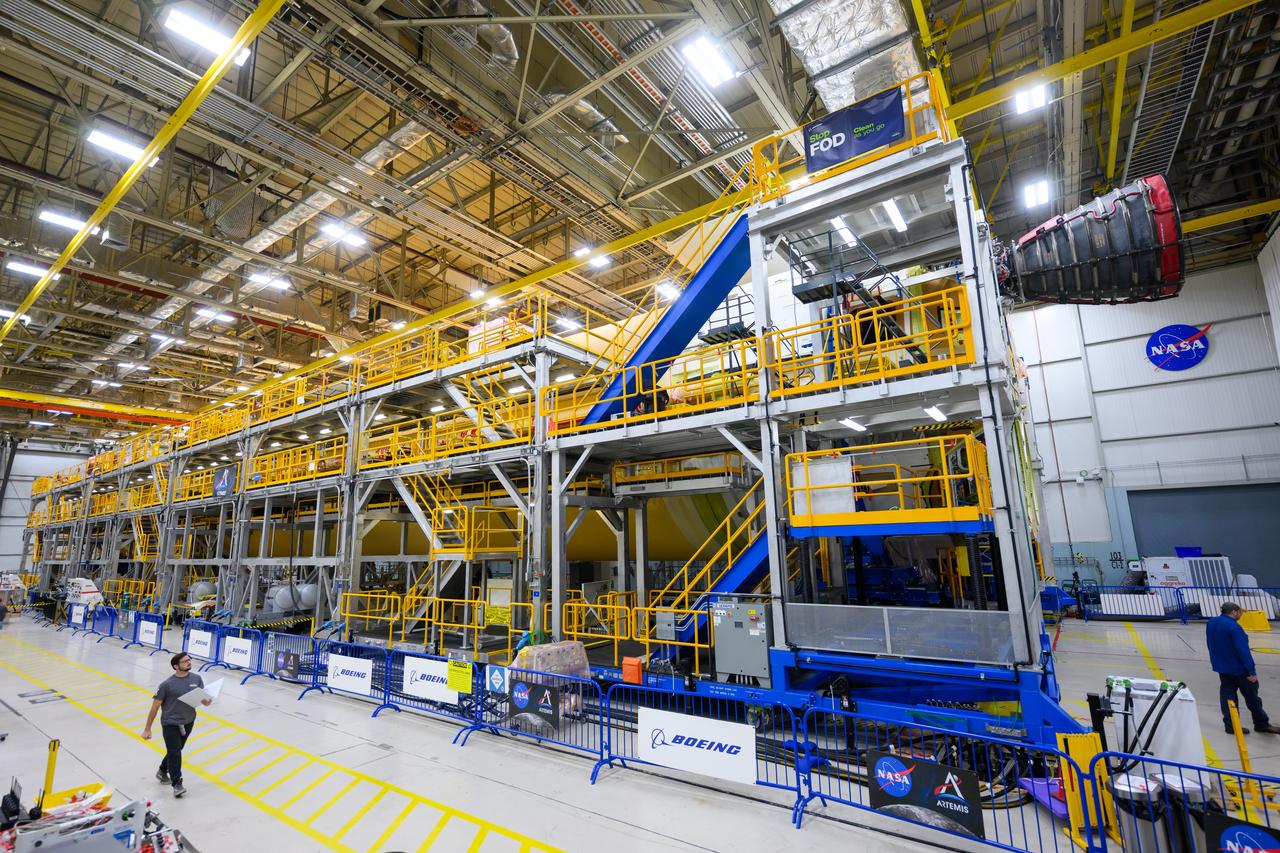
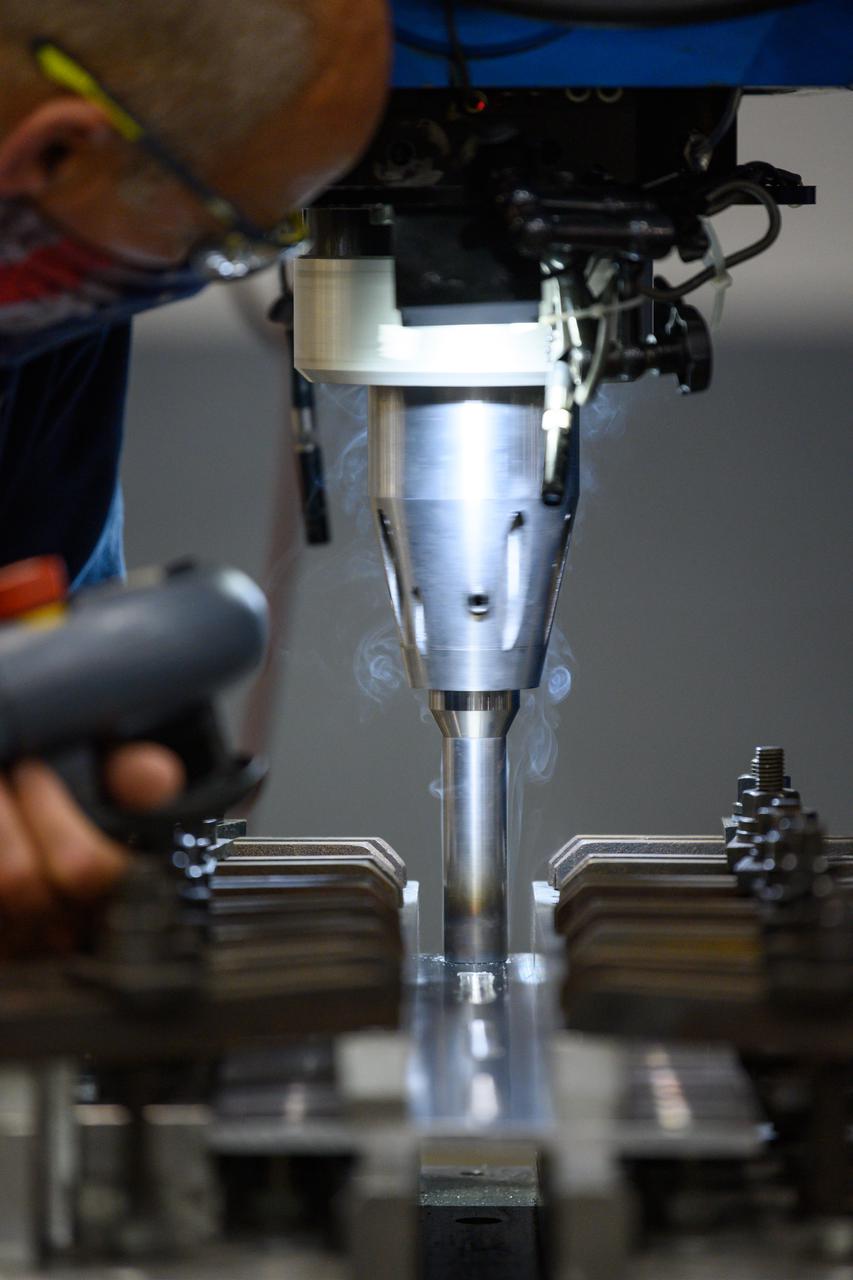
Technicians from Orion Prime Contractor Lockheed Martin weld the forward bulkhead of the pressure vessel to the tunnel hardware on the Orion Spacecraft for the Artemis III mission at NASA’s Michoud Assembly Facility in New Orleans. The crew module’s primary structure, the pressure vessel, is comprised of seven machined aluminum alloy pieces that are welded together through a weld process that produces a strong, air-tight habitable space for astronauts during the mission. The pressure vessel is designed to withstand the harsh and demanding environment of deep space and is the core structure upon which all the other elements of Orion’s crew module are integrated. This pressure vessel weld is the next step following the completion of the crew module cone panel welds and creates the top of the spacecraft. Work will then begin to join the barrel with the aft bulkhead to form the bottom of Orion. Last, the forward bulkhead will be welded to the top of the panels and, for the seventh and closeout weld, the bottom of the cone panels will be joined to the barrel to complete the pressure vessel. Once welding of the Artemis III crew module primary structure is complete, it will be shipped to NASA’s Kennedy Space Center in Florida where it will undergo further assembly beginning this fall. Orion, the Space Launch System, and Exploration Ground Systems programs are foundational elements of the Artemis program. Artemis I will be the first integrated flight test of Orion and SLS and is targeted to launch later this year. Artemis II will follow and is the first crewed mission, taking humans farther into space than ever before.
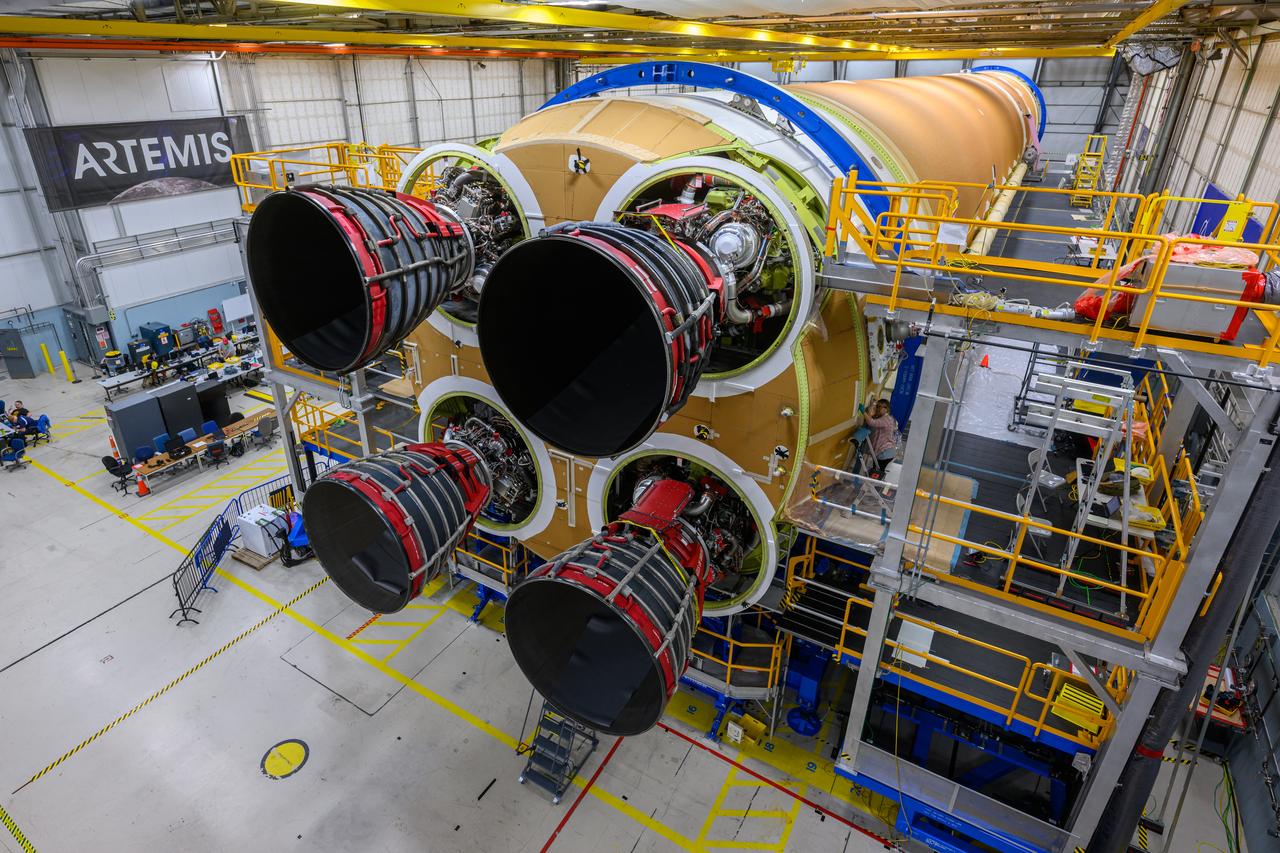
These photos and videos show how technicians at NASA’s Michoud Assembly Facility in New Orleans installed the third and fourth RS-25 engines onto the core stage for the agency’s SLS (Space Launch System) rocket that will help power NASA’s first crewed Artemis mission to the Moon. Technicians added the first engine to the SLS core stage Sept. 11. The second engine was installed onto the stage Sept. 15 with the third and fourth engines following Sept. 19 and Sept. 20. Engineers consider the engines to be “soft” mated to the rocket stage. Technicians with NASA, Aerojet Rocketdyne, an L3Harris Technologies company and the RS-25 engines lead contractor, along with Boeing, the core stage lead contractor, will now focus efforts on the complex tax of fully securing the engines to the stage and integrating the propulsion and electrical systems within the structure. NASA is working to land the first woman and first person of color on the Moon under Artemis. SLS is part of NASA’s backbone for deep space exploration, along with Orion and the Gateway in orbit around the Moon. SLS is the only rocket that can send Orion, astronauts, and supplies to the Moon in a single mission.

This image highlights the liquid hydrogen tank that will be used on the core stage of NASA’s Space Launch System rocket for Artemis II, the first crewed mission of NASA’s Artemis program. The tank is being built at NASA’s Michoud Assembly Facility in New Orleans. The SLS core stage is made up of five unique elements: the forward skirt, liquid oxygen tank, intertank, liquid hydrogen tank, and the engine section. The liquid hydrogen tank holds 537,000 gallons of liquid hydrogen cooled to minus 423 degrees Fahrenheit and sits between the core stage’s intertank and engine section. The liquid hydrogen hardware, along with the liquid oxygen tank, will provide propellant to the four RS-25 engines at the bottom of the cores stage to produce more than two million pounds of thrust to launch NASA’s Artemis missions to the Moon. Together with its four RS-25 engines, the rocket’s massive 212-foot-tall core stage — the largest stage NASA has ever built — and its twin solid rocket boosters will produce 8.8 million pounds of thrust to send NASA’s Orion spacecraft, astronauts and supplies beyond Earth’s orbit to the Moon and, ultimately, Mars. Offering more payload mass, volume capability and energy to speed missions through space, the SLS rocket, along with NASA’s Gateway in lunar orbit, the human landing system, and Orion spacecraft, is part of NASA’s backbone for deep space exploration and the Artemis lunar program. No other rocket can send astronauts in Orion around the Moon in a single mission.
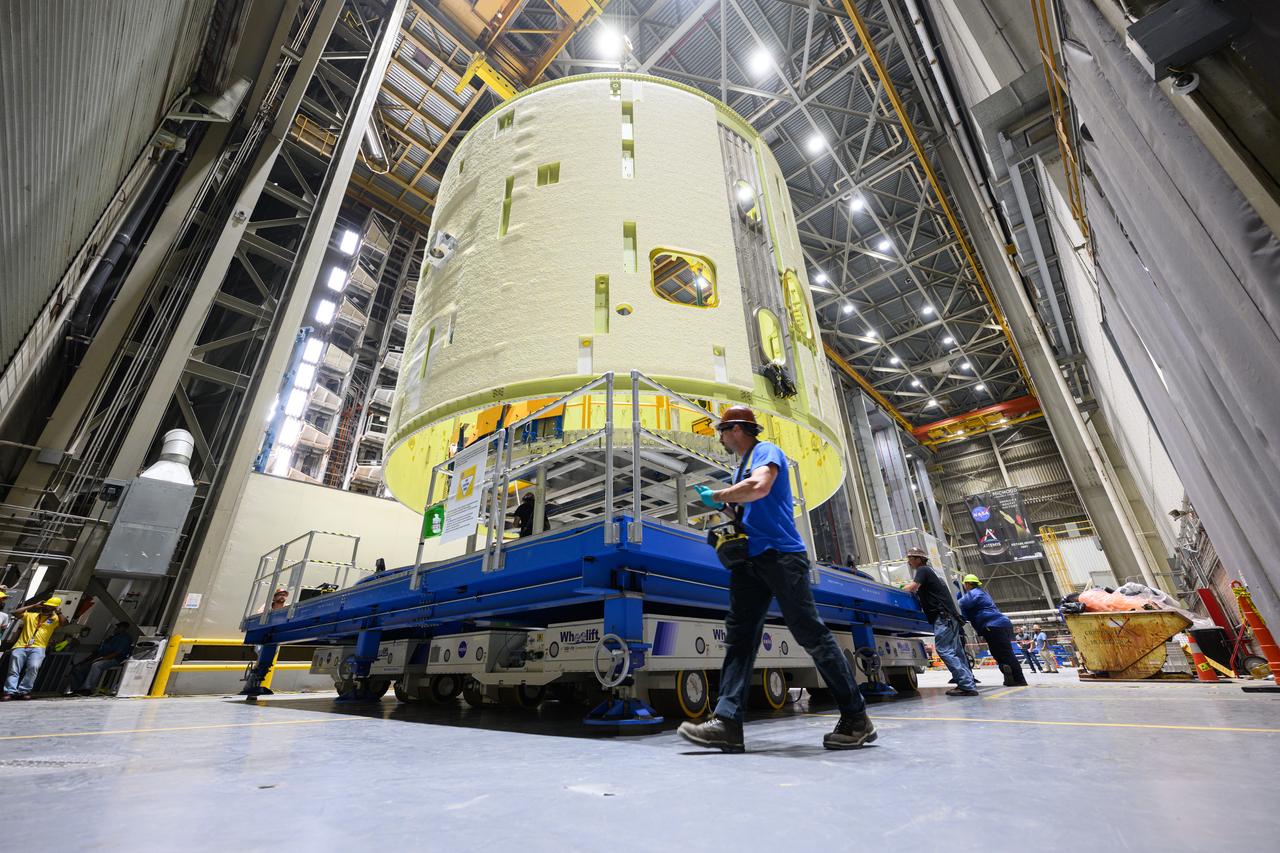
Technicians at NASA’s Michoud Assembly Facility in New Orleans lift the intertank of the SLS (Space Launch System)’s core stage for NASA’s Artemis III mission to move it to another location in the 43-acre factory for further inspection and production. The intertank is the backbone of the rocket’s core stage and is located between the mega rocket’s liquid hydrogen tank and liquid oxygen tank. In addition to joining the rocket’s two massive propellant tanks, the intertank houses avionics and electronics and serves as an attachment point for the rocket’s two solid rocket boosters positioned on either side of the core stage. The liquid hydrogen tank and liquid oxygen tank hold 733,000 gallons of super-cold propellant to power the stage’s four RS-25 engines needed for liftoff. Together, the rocket’s four RS-25 engines and two solid rocket boosters provide more than 8.8 million pounds to launch NASA’s and Artemis missions to the Moon. NASA is working to land the first woman and first person of color on the Moon under Artemis. SLS is part of NASA’s backbone for deep space exploration, along with Orion and the Gateway in orbit around the Moon. SLS is the only rocket that can send Orion, astronauts, and supplies to the Moon in a single mission.
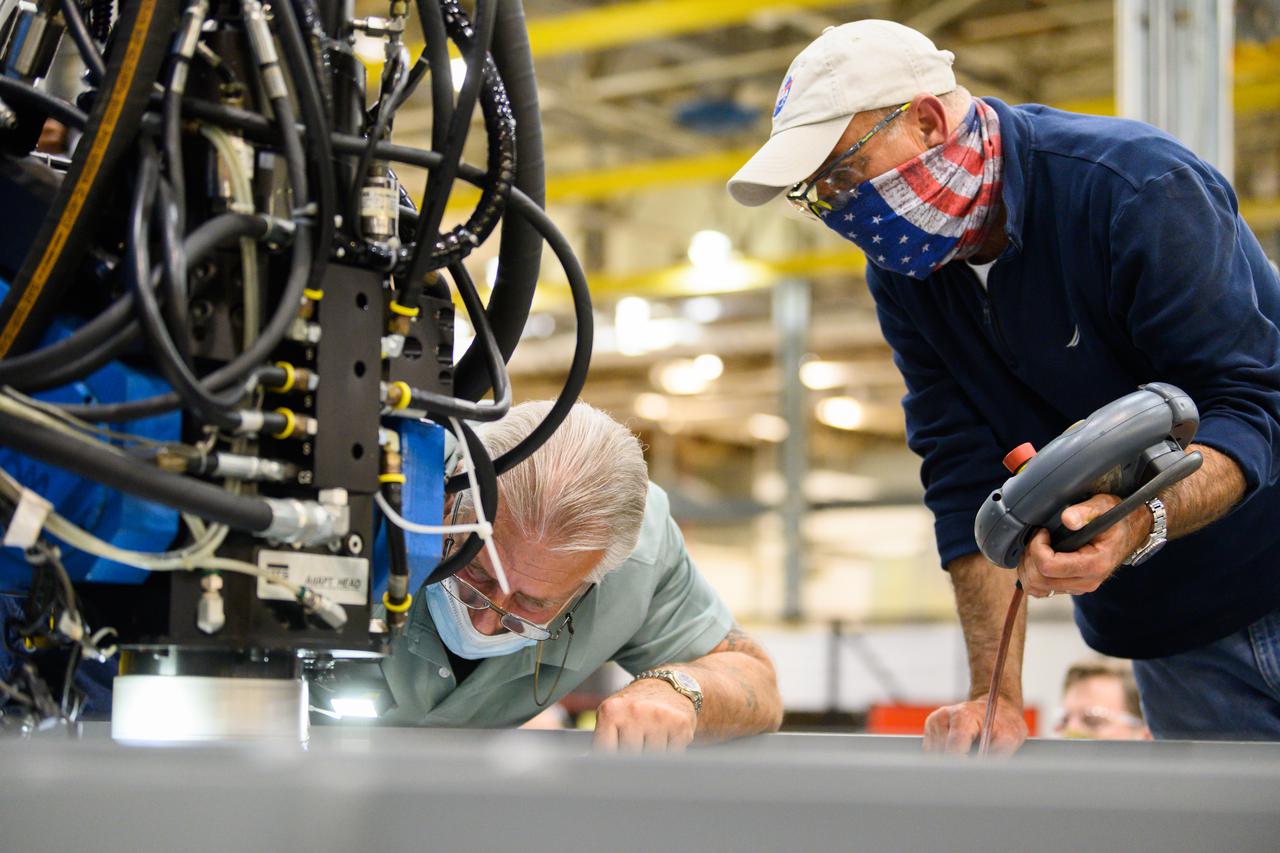
Technicians from Orion Prime Contractor Lockheed Martin weld the forward bulkhead of the pressure vessel to the tunnel hardware on the Orion Spacecraft for the Artemis III mission at NASA’s Michoud Assembly Facility in New Orleans. The crew module’s primary structure, the pressure vessel, is comprised of seven machined aluminum alloy pieces that are welded together through a weld process that produces a strong, air-tight habitable space for astronauts during the mission. The pressure vessel is designed to withstand the harsh and demanding environment of deep space and is the core structure upon which all the other elements of Orion’s crew module are integrated. This pressure vessel weld is the next step following the completion of the crew module cone panel welds and creates the top of the spacecraft. Work will then begin to join the barrel with the aft bulkhead to form the bottom of Orion. Last, the forward bulkhead will be welded to the top of the panels and, for the seventh and closeout weld, the bottom of the cone panels will be joined to the barrel to complete the pressure vessel. Once welding of the Artemis III crew module primary structure is complete, it will be shipped to NASA’s Kennedy Space Center in Florida where it will undergo further assembly beginning this fall. Orion, the Space Launch System, and Exploration Ground Systems programs are foundational elements of the Artemis program. Artemis I will be the first integrated flight test of Orion and SLS and is targeted to launch later this year. Artemis II will follow and is the first crewed mission, taking humans farther into space than ever before.
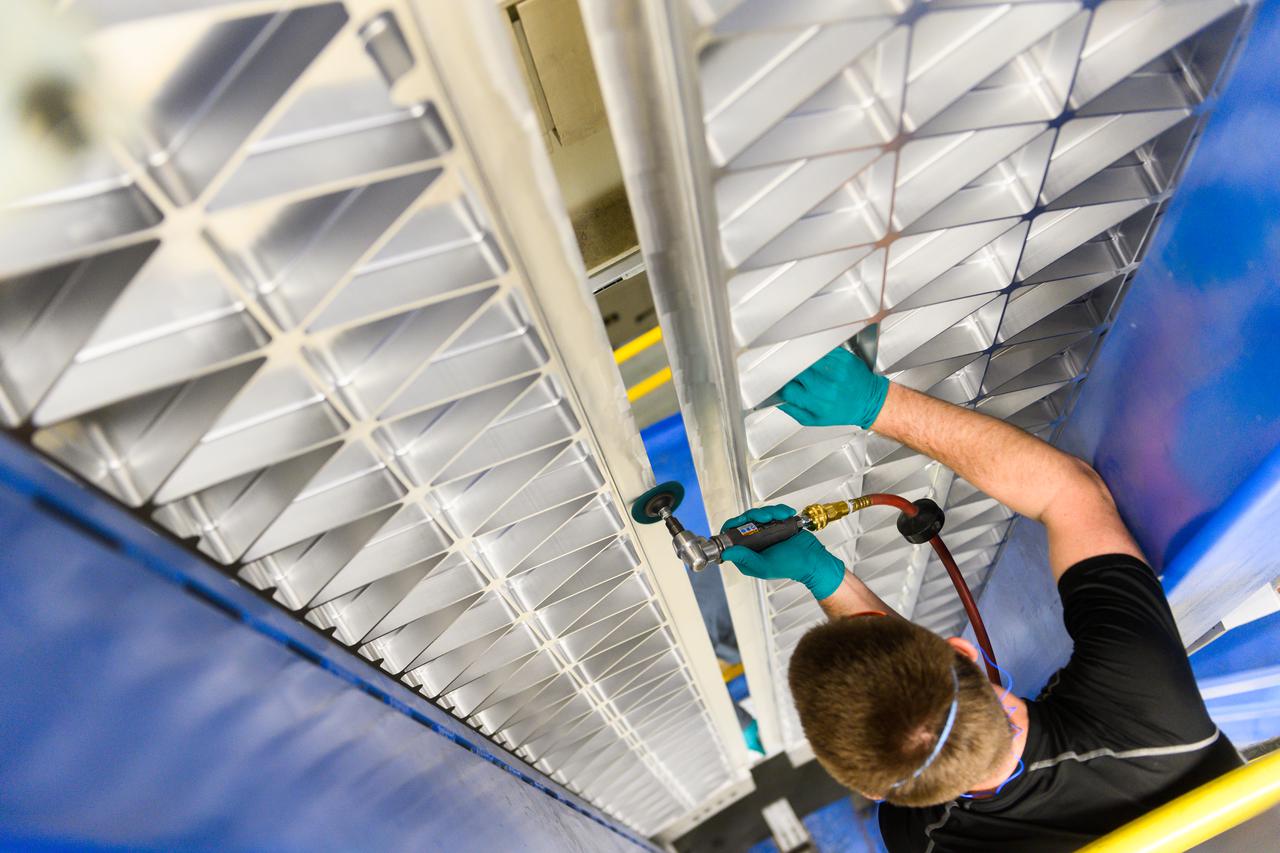
Technicians are manufacturing and testing the first in a series of initial weld confidence articles for the Exploration Upper Stage (EUS) for future flights of NASA’s Space Launch System (SLS) rocket at the agency’s Michoud Assembly Facility in New Orleans. The Exploration Upper Stage will be used on the second configuration of the SLS rocket, known as Block 1B, and will provide in-space propulsion to send astronauts in NASA’s Orion spacecraft and heavy cargo on a precise trajectory to the Moon. The Exploration Upper Stage weld confidence panels are first produced in the Vertical Weld Center at Michoud, then small sections of the panels are removed for mechanical testing and analysis in another area of the factory. Teams use weld confidence articles to verify welding procedures, interfaces between the tooling and hardware, and the structural integrity of the welds. Testing of the EUS weld confidence articles will help engineers and technicians validate welding parameters for manufacturing EUS hardware. The first three SLS flights of NASA’s Artemis program will use an interim cryogenic propulsion stage with one RL10 engine to send Orion to the Moon. The SLS Exploration Upper Stage for flights beyond Artemis III has larger propellant tanks and four RL10 engines. The evolution of the rocket to SLS Block 1B configuration with EUS enables SLS to launch 40% more cargo to the Moon along with the crew. Manufacturing the Exploration Upper Stage is a collaborative effort between NASA and Boeing, the lead contractor for EUS and the SLS core stage. SLS is the only rocket that can send Orion, astronauts, and supplies to the Moon in a single mission. The SLS rocket, NASA’s Orion spacecraft, Gateway, and human landing system are part of NASA’s backbone for deep space exploration. Under the Artemis program, NASA is working to land the first woman and the next man on the Moon to pave the way for sustainable exploration at the Moon and future missions to Mars. (NASA)
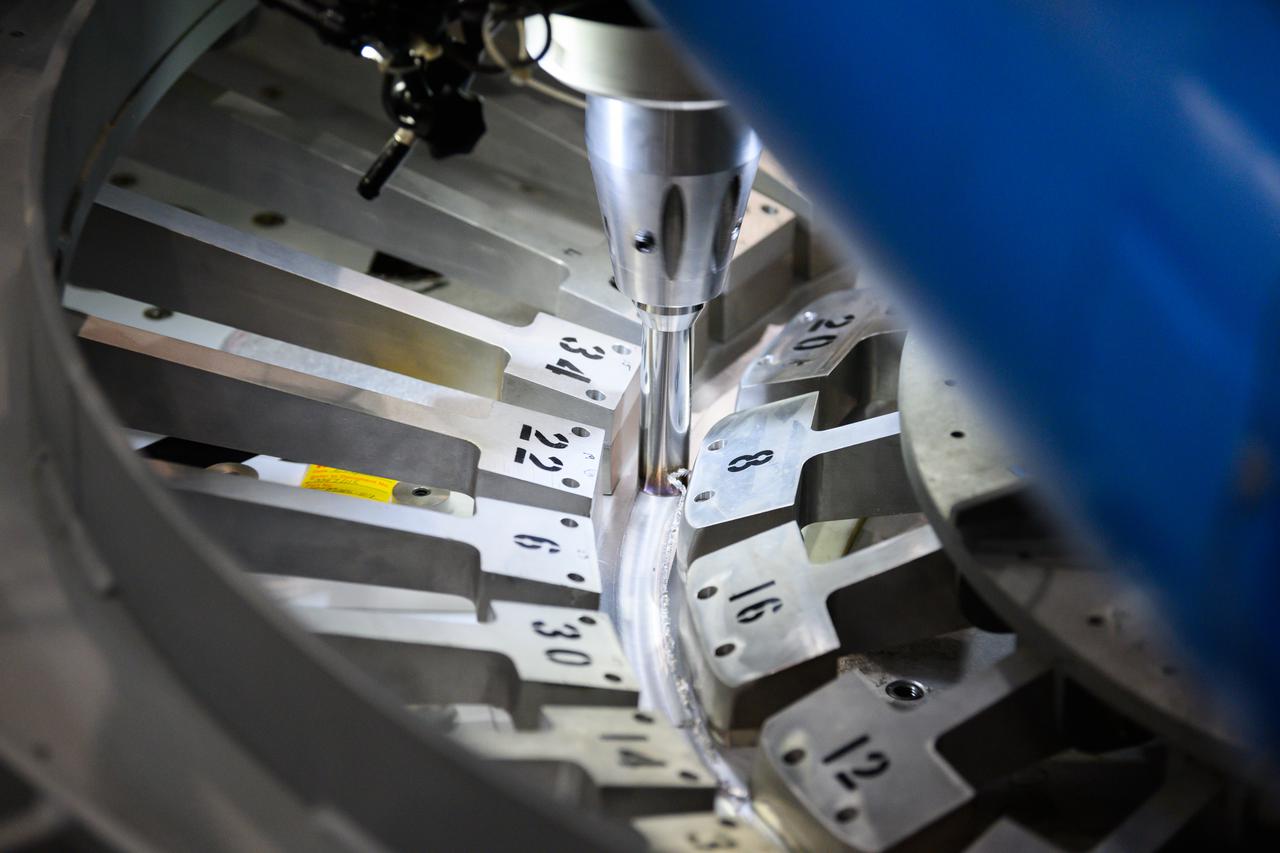
Technicians from Orion Prime Contractor Lockheed Martin weld the forward bulkhead of the pressure vessel to the tunnel hardware on the Orion Spacecraft for the Artemis III mission at NASA’s Michoud Assembly Facility in New Orleans. The crew module’s primary structure, the pressure vessel, is comprised of seven machined aluminum alloy pieces that are welded together through a weld process that produces a strong, air-tight habitable space for astronauts during the mission. The pressure vessel is designed to withstand the harsh and demanding environment of deep space and is the core structure upon which all the other elements of Orion’s crew module are integrated. This pressure vessel weld is the next step following the completion of the crew module cone panel welds and creates the top of the spacecraft. Work will then begin to join the barrel with the aft bulkhead to form the bottom of Orion. Last, the forward bulkhead will be welded to the top of the panels and, for the seventh and closeout weld, the bottom of the cone panels will be joined to the barrel to complete the pressure vessel. Once welding of the Artemis III crew module primary structure is complete, it will be shipped to NASA’s Kennedy Space Center in Florida where it will undergo further assembly beginning this fall. Orion, the Space Launch System, and Exploration Ground Systems programs are foundational elements of the Artemis program. Artemis I will be the first integrated flight test of Orion and SLS and is targeted to launch later this year. Artemis II will follow and is the first crewed mission, taking humans farther into space than ever before.
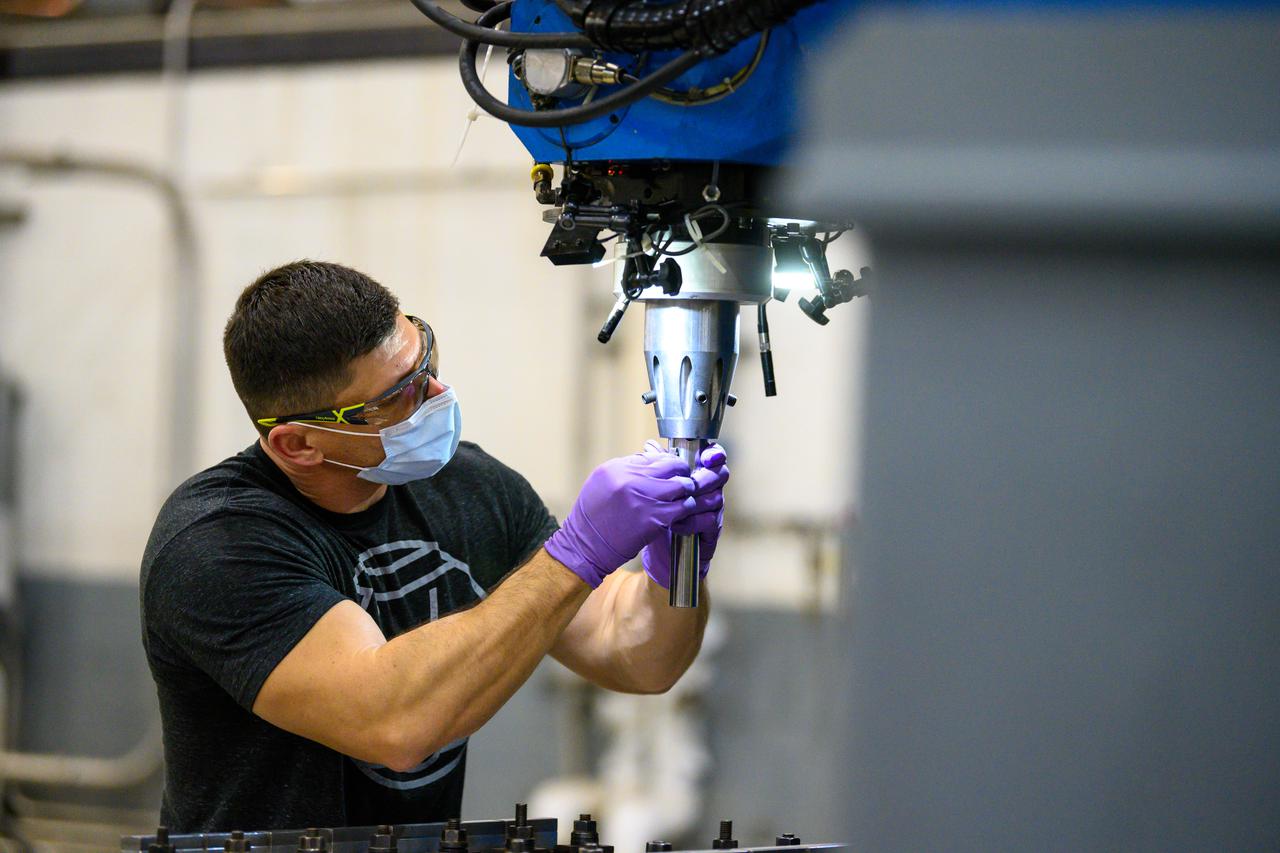
Technicians from Orion Prime Contractor Lockheed Martin weld the forward bulkhead of the pressure vessel to the tunnel hardware on the Orion Spacecraft for the Artemis III mission at NASA’s Michoud Assembly Facility in New Orleans. The crew module’s primary structure, the pressure vessel, is comprised of seven machined aluminum alloy pieces that are welded together through a weld process that produces a strong, air-tight habitable space for astronauts during the mission. The pressure vessel is designed to withstand the harsh and demanding environment of deep space and is the core structure upon which all the other elements of Orion’s crew module are integrated. This pressure vessel weld is the next step following the completion of the crew module cone panel welds and creates the top of the spacecraft. Work will then begin to join the barrel with the aft bulkhead to form the bottom of Orion. Last, the forward bulkhead will be welded to the top of the panels and, for the seventh and closeout weld, the bottom of the cone panels will be joined to the barrel to complete the pressure vessel. Once welding of the Artemis III crew module primary structure is complete, it will be shipped to NASA’s Kennedy Space Center in Florida where it will undergo further assembly beginning this fall. Orion, the Space Launch System, and Exploration Ground Systems programs are foundational elements of the Artemis program. Artemis I will be the first integrated flight test of Orion and SLS and is targeted to launch later this year. Artemis II will follow and is the first crewed mission, taking humans farther into space than ever before.
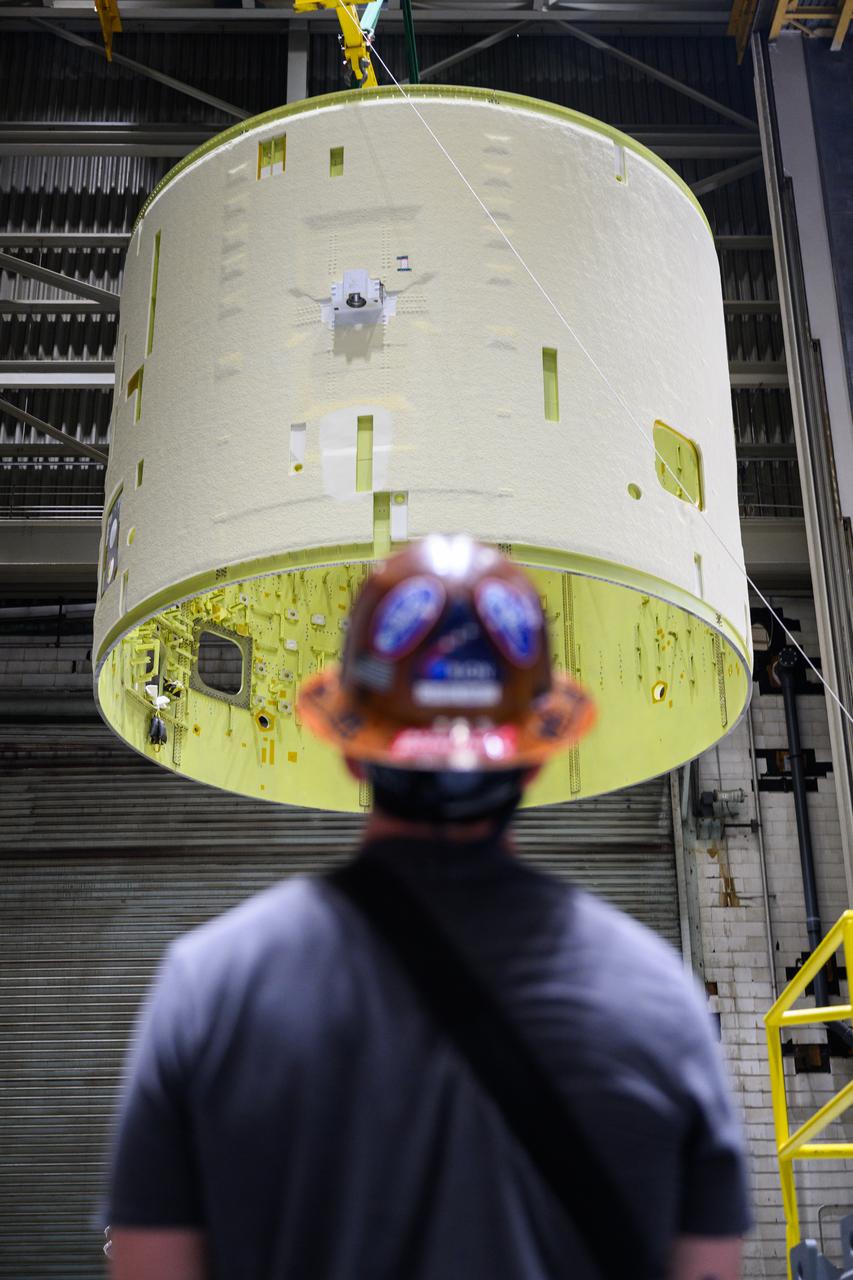
Technicians at NASA’s Michoud Assembly Facility in New Orleans lift the intertank of the SLS (Space Launch System)’s core stage for NASA’s Artemis III mission to move it to another location in the 43-acre factory for further inspection and production. The intertank is the backbone of the rocket’s core stage and is located between the mega rocket’s liquid hydrogen tank and liquid oxygen tank. In addition to joining the rocket’s two massive propellant tanks, the intertank houses avionics and electronics and serves as an attachment point for the rocket’s two solid rocket boosters positioned on either side of the core stage. The liquid hydrogen tank and liquid oxygen tank hold 733,000 gallons of super-cold propellant to power the stage’s four RS-25 engines needed for liftoff. Together, the rocket’s four RS-25 engines and two solid rocket boosters provide more than 8.8 million pounds to launch NASA’s and Artemis missions to the Moon. NASA is working to land the first woman and first person of color on the Moon under Artemis. SLS is part of NASA’s backbone for deep space exploration, along with Orion and the Gateway in orbit around the Moon. SLS is the only rocket that can send Orion, astronauts, and supplies to the Moon in a single mission.
/MAF_20221027_CS3_IT_lifttoG-epb_004(1)~medium.jpg)
Technicians at NASA’s Michoud Assembly Facility move the intertank of NASA’s Space Launch System rocket for Artemis III to Cell G on October 26, 2022 to await application of the thermal protection system. Thermal protection systems protect space vehicles from aerodynamic heating during entry to planet atmosphere and re-entry to earth atmosphere. The intertank lays between the liquid hydrogen tank and liquid oxygen tank. Together with the engine section and the forward skirt, they comprise the SLS core stage. The liquid hydrogen tank and liquid oxygen tank hold 733,000 gallons of propellant to power the stage’s four RS-25 engines needed for liftoff and Artemis missions to the Moon and future missions to Mars.

This image highlights the liquid hydrogen tank that will be used on the core stage of NASA’s Space Launch System rocket for Artemis II, the first crewed mission of NASA’s Artemis program. The tank is being built at NASA’s Michoud Assembly Facility in New Orleans. The SLS core stage is made up of five unique elements: the forward skirt, liquid oxygen tank, intertank, liquid hydrogen tank, and the engine section. The liquid hydrogen tank holds 537,000 gallons of liquid hydrogen cooled to minus 423 degrees Fahrenheit and sits between the core stage’s intertank and engine section. The liquid hydrogen hardware, along with the liquid oxygen tank, will provide propellant to the four RS-25 engines at the bottom of the cores stage to produce more than two million pounds of thrust to launch NASA’s Artemis missions to the Moon. Together with its four RS-25 engines, the rocket’s massive 212-foot-tall core stage — the largest stage NASA has ever built — and its twin solid rocket boosters will produce 8.8 million pounds of thrust to send NASA’s Orion spacecraft, astronauts and supplies beyond Earth’s orbit to the Moon and, ultimately, Mars. Offering more payload mass, volume capability and energy to speed missions through space, the SLS rocket, along with NASA’s Gateway in lunar orbit, the human landing system, and Orion spacecraft, is part of NASA’s backbone for deep space exploration and the Artemis lunar program. No other rocket can send astronauts in Orion around the Moon in a single mission.

These photos and videos show how technicians at NASA’s Michoud Assembly Facility in New Orleans installed the third and fourth RS-25 engines onto the core stage for the agency’s SLS (Space Launch System) rocket that will help power NASA’s first crewed Artemis mission to the Moon. Technicians added the first engine to the SLS core stage Sept. 11. The second engine was installed onto the stage Sept. 15 with the third and fourth engines following Sept. 19 and Sept. 20. Engineers consider the engines to be “soft” mated to the rocket stage. Technicians with NASA, Aerojet Rocketdyne, an L3Harris Technologies company and the RS-25 engines lead contractor, along with Boeing, the core stage lead contractor, will now focus efforts on the complex tax of fully securing the engines to the stage and integrating the propulsion and electrical systems within the structure. NASA is working to land the first woman and first person of color on the Moon under Artemis. SLS is part of NASA’s backbone for deep space exploration, along with Orion and the Gateway in orbit around the Moon. SLS is the only rocket that can send Orion, astronauts, and supplies to the Moon in a single mission.