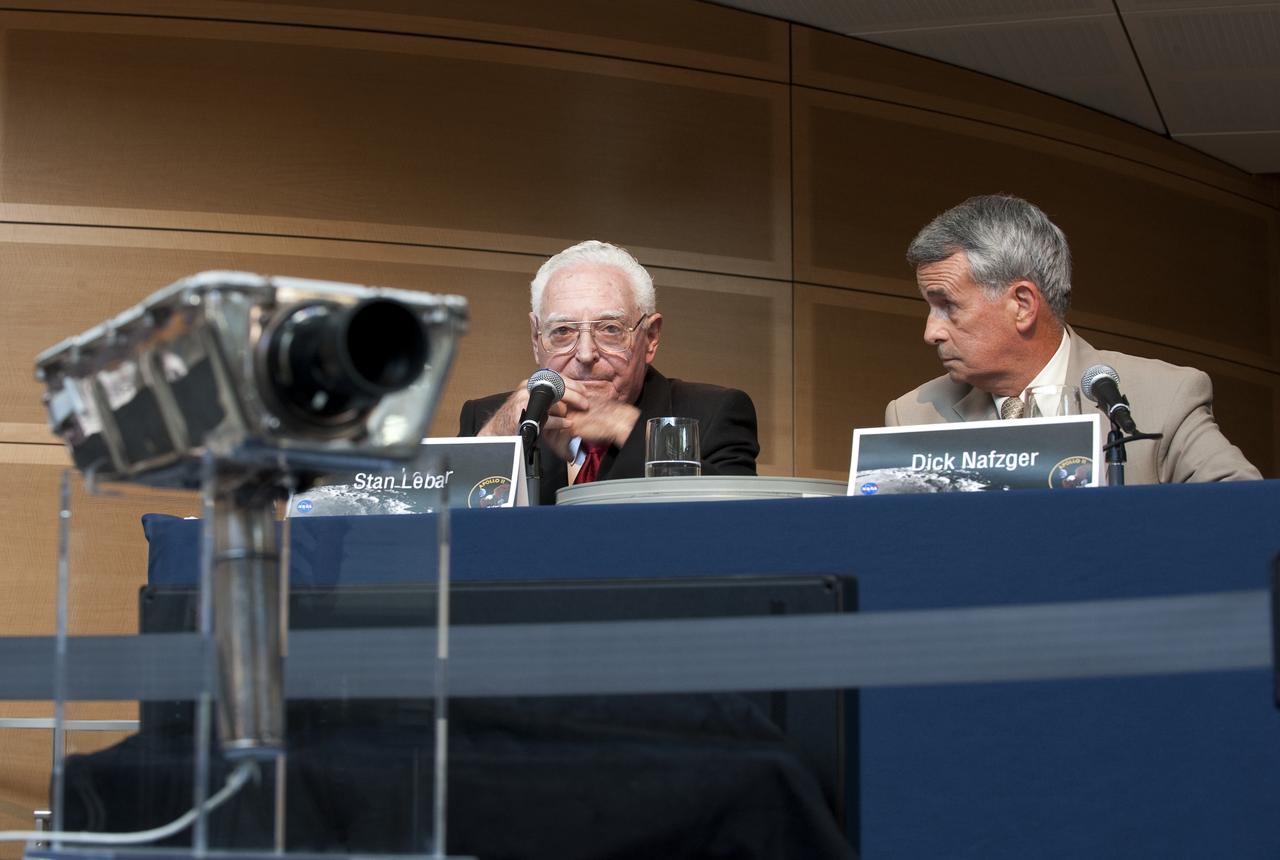
Stan Lebar, former Westinghouse Electric program manager, left, talks about the Apollo era TV cameras such as the one on display in the foreground as Richard Nafzger, team lead and Goddard engineer, listens at NASA's briefing where restored Apollo 11 moonwalk footage was revealed for the first time at the Newseum, Thursday, July 16, 2009, in Washington, DC. Photo Credit: (NASA/Bill Ingalls)
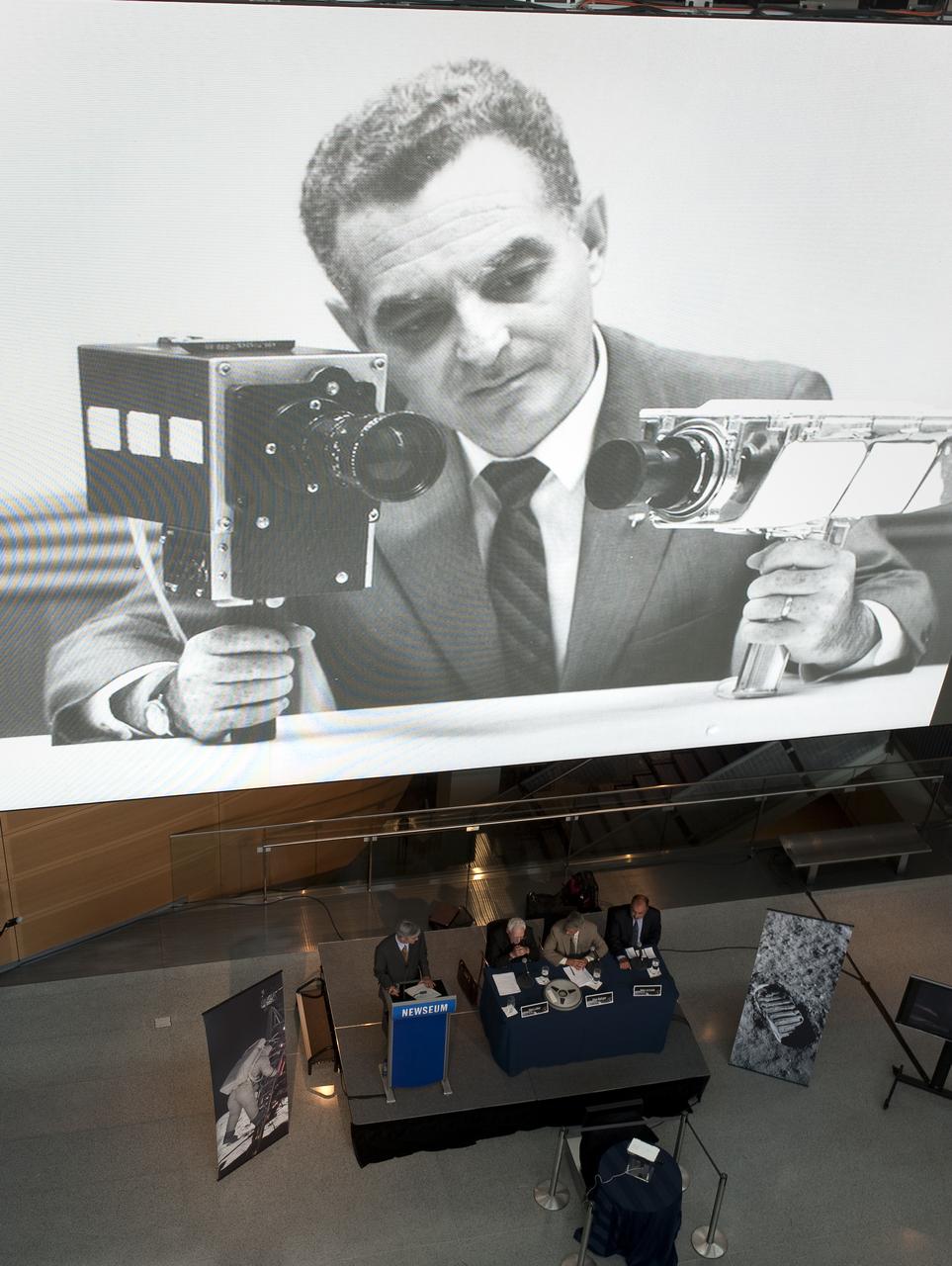
A photograph from the 1960's showing Stan Lebar, former Westinghouse Electric program manager, holding two cameras used during the Apollo missions is seen on a large video monitor above panelists, including Stan Lebar, at NASA's briefing where restored Apollo 11 moonwalk footage was revealed for the first time at the Newseum, Thursday, July 16, 2009, in Washington, DC. Photo Credit: (NASA/Carla Cioffi)
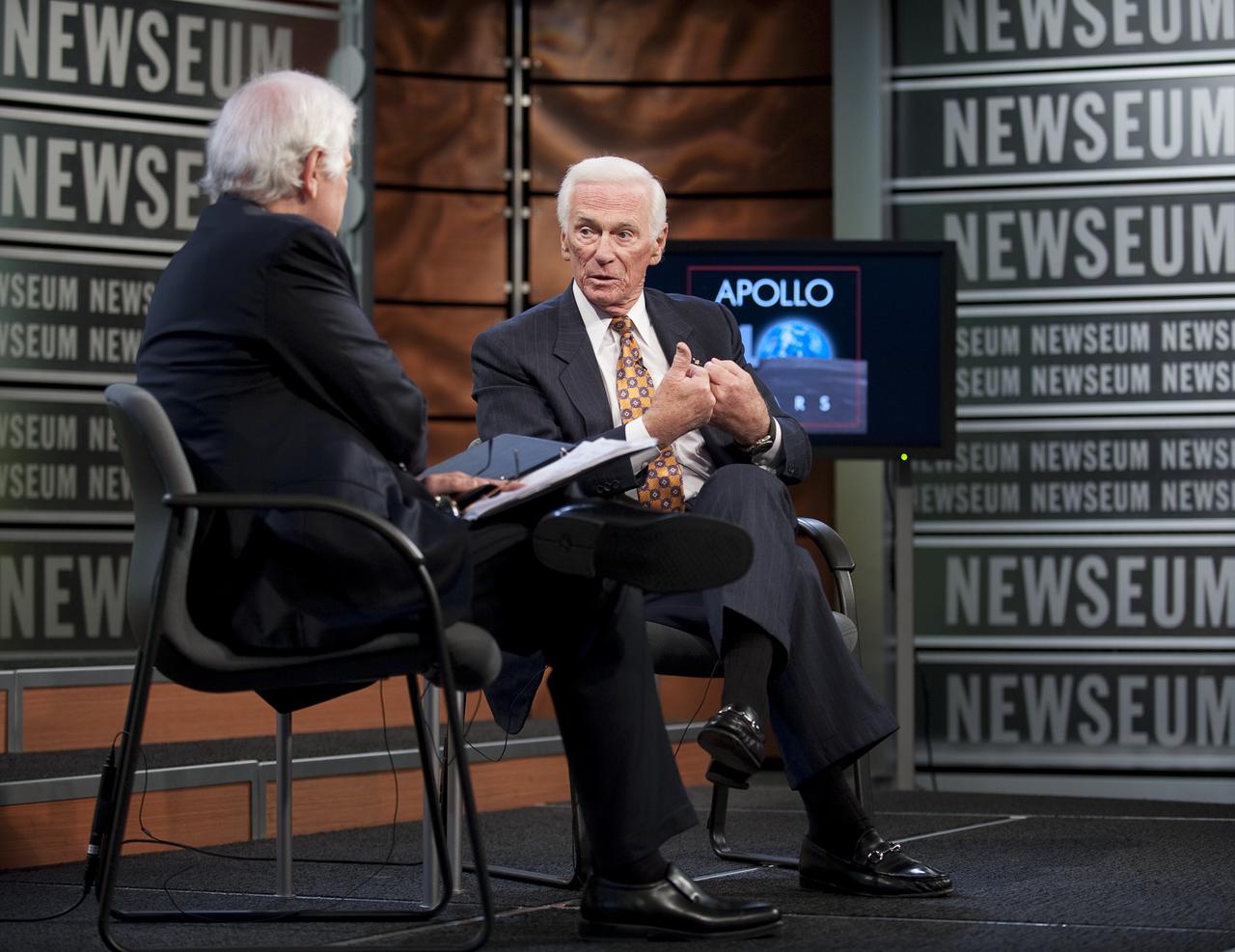
NASA Apollo 10 Astronaut Gene Cernan, right, answers questions from the Newseum's distinguished journalist-in-residence, Nick Clooney during a Newseum TV program celebrating the 40th anniversary of Apollo 10, Monday, May 18, 2009, in Washington. Photo Credit (NASA/Bill Ingalls)
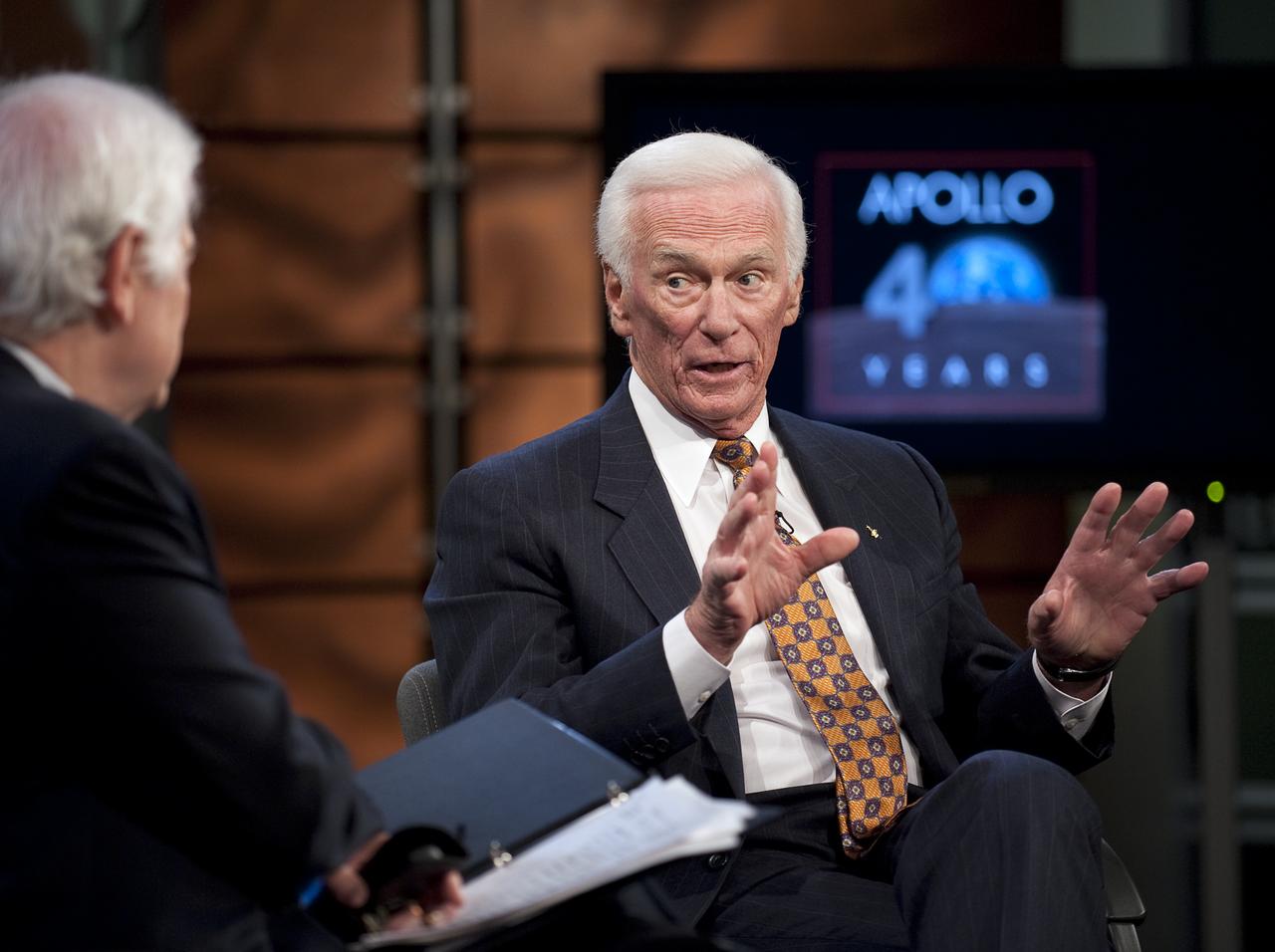
NASA Apollo 10 Astronaut Gene Cernan, right, answers questions from the Newseum's distinguished journalist-in-residence, Nick Clooney during a Newseum TV program celebrating the 40th anniversary of Apollo 10, Monday, May 18, 2009, in Washington. Photo Credit (NASA/Bill Ingalls)
NASA Apollo 10 Astronaut Gene Cernan, right, answers questions from the Newseum's distinguished journalist-in-residence, Nick Clooney during a Newseum TV program celebrating the 40th anniversary of Apollo 10, Monday, May 18, 2009, in Washington. Photo Credit (NASA/Bill Ingalls)
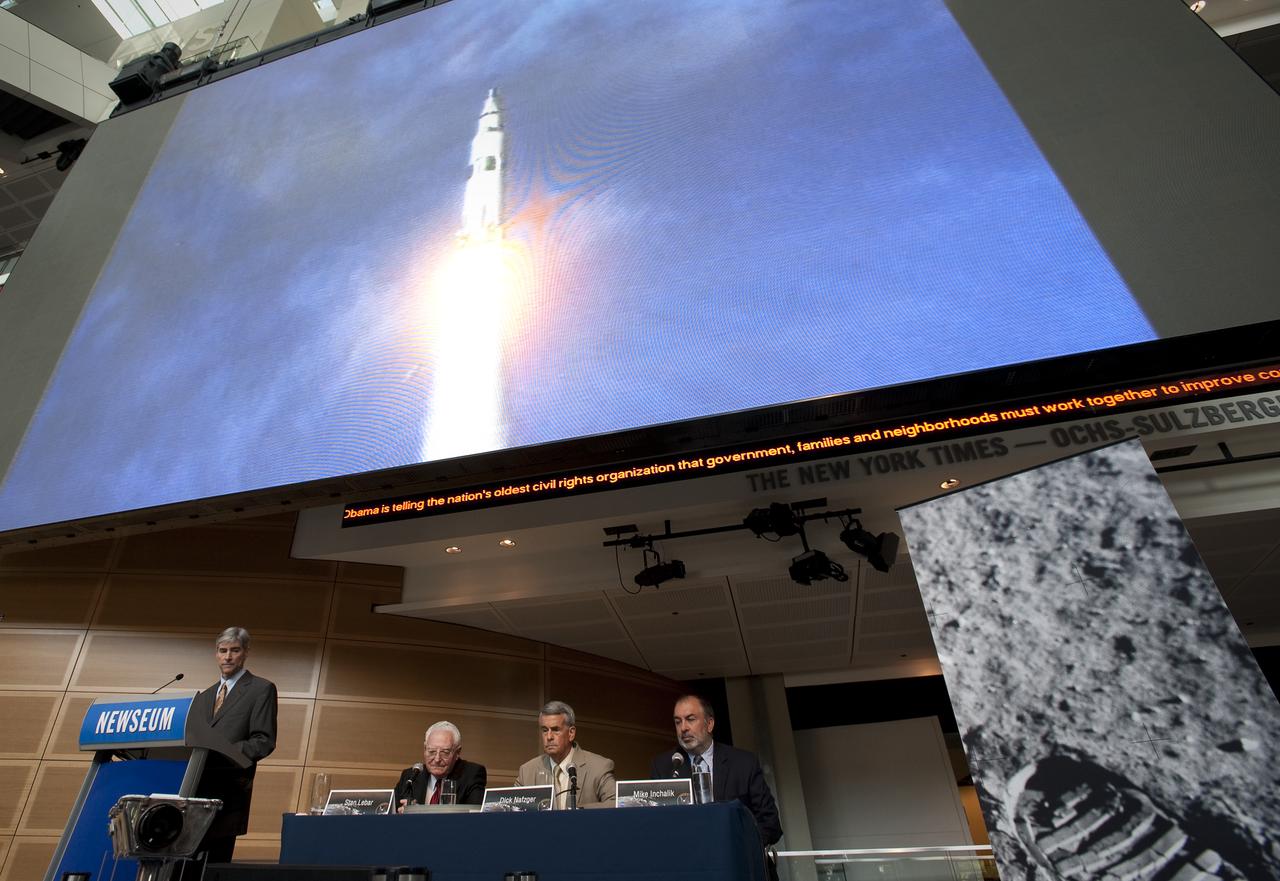
Footage of the Saturn V Apollo 11 rocket launch is seen on a large video monitor above panelists at NASA's briefing where restored Apollo 11 moonwalk footage was revealed for the first time at the Newseum, Thursday, July 16, 2009, in Washington, DC. Photo Credit: (NASA/Bill Ingalls)
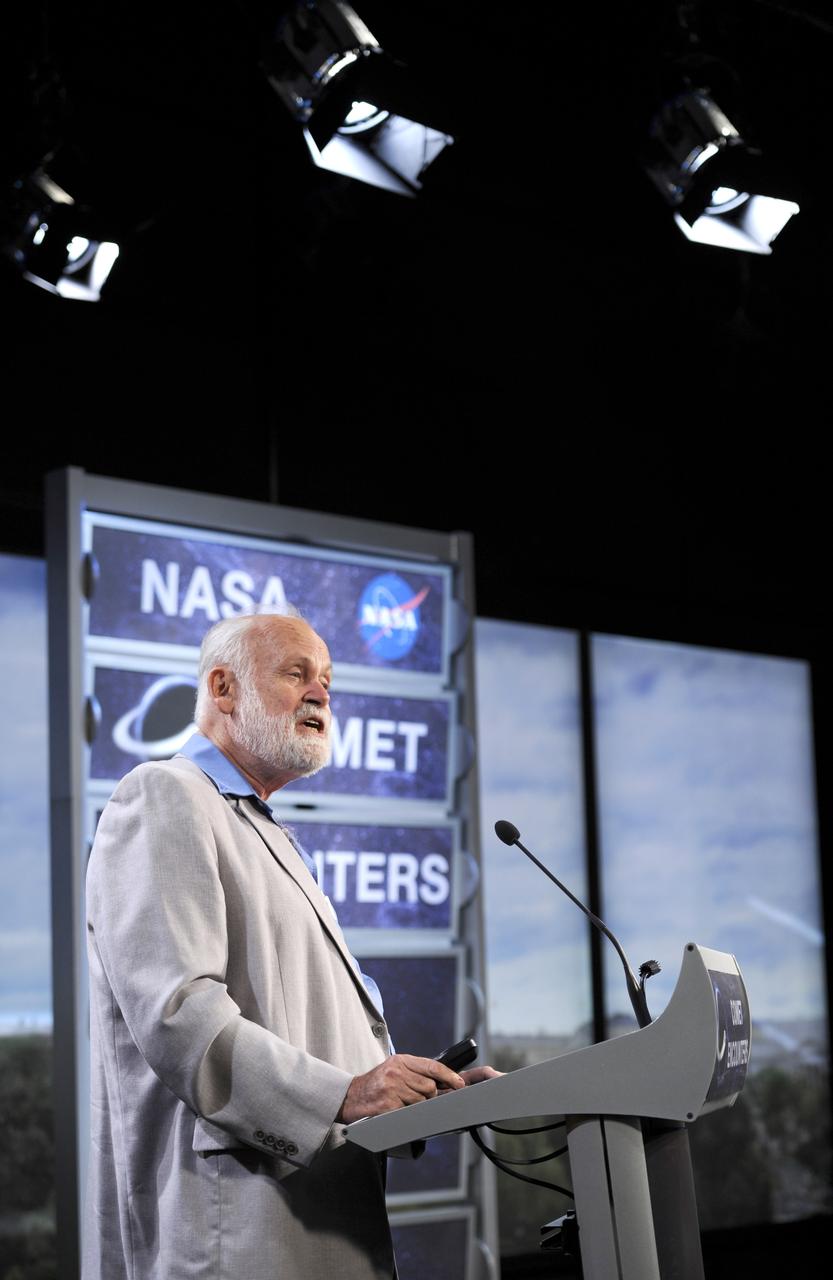
Dr. Michael A'Hearn, Principal Investigator, EPOXI Comet Encounter Mission, speaks during a symposium commemorating a quarter-century of comet discoveries, Friday, Sept. 10, 2010, in the Knight studio at the Newseum in Washington. The International Sun-Earth Explorer-3 (ISEE-3) spacecraft flew past the comet Giacobini-Zinner on Sept. 11, 1985 which established a foundation of discoveries that continue today. Photo Credit: (NASA/Paul E. Alers)
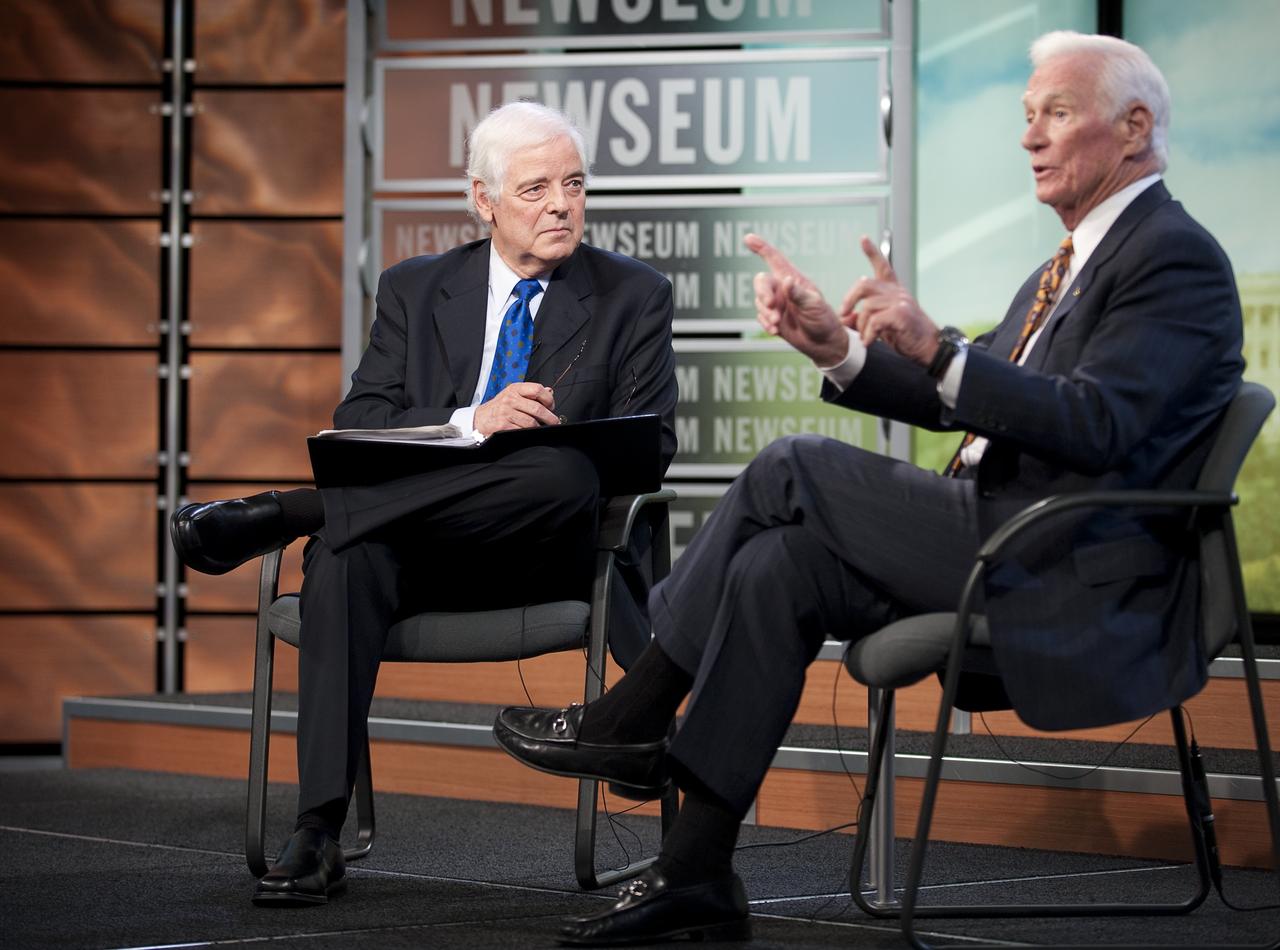
NASA Apollo 10 Astronaut Gene Cernan, right, answers questions from the Newseum's distinguished journalist-in-residence, Nick Clooney during a Newseum TV program celebrating the 40th anniversary of Apollo 10, Monday, May 18, 2009, in Washington. Photo Credit (NASA/Bill Ingalls)
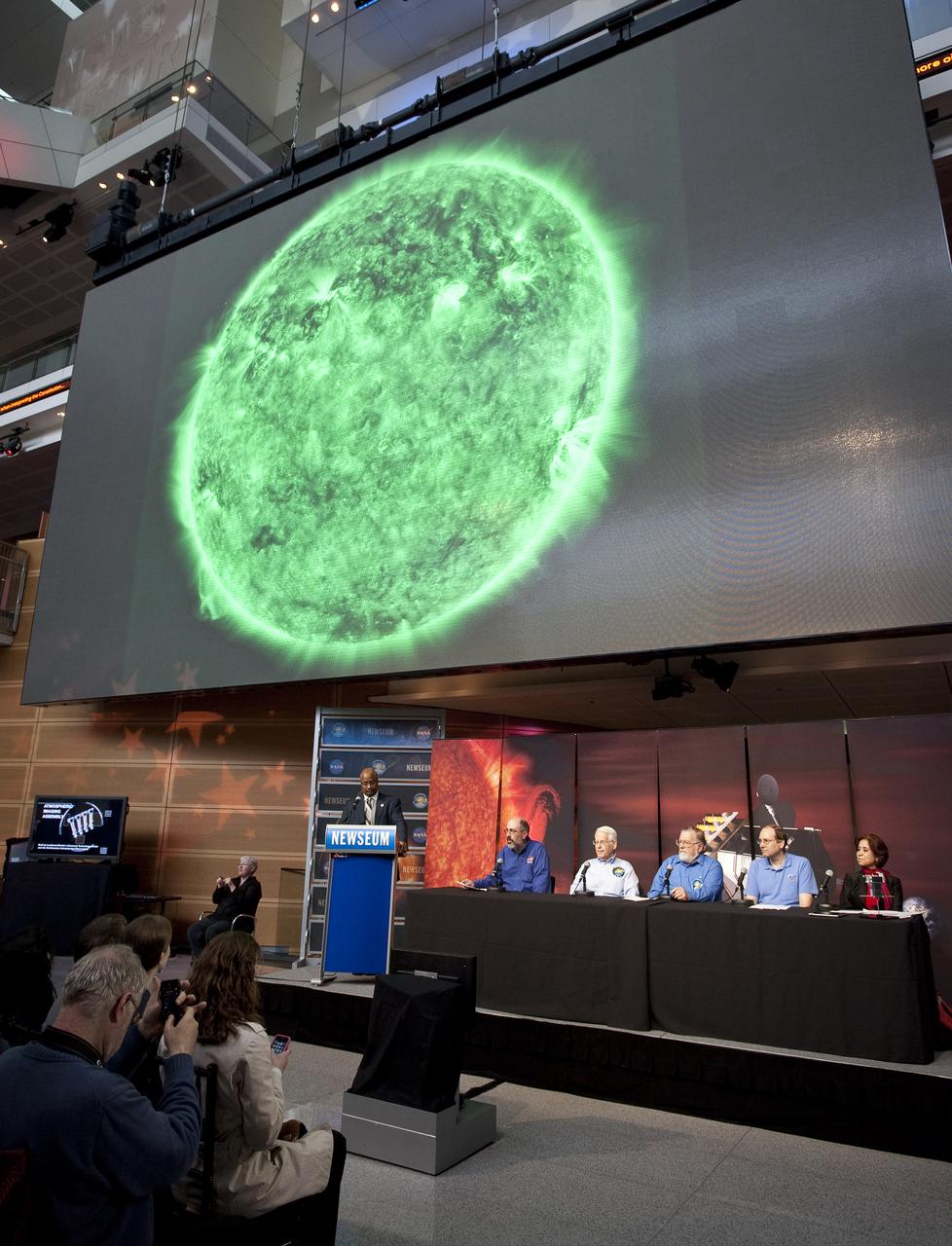
Scientists involved in NASA's Solar Dynamics Observatory (SDO) mission attend a press conference to discuss recent images captured by the SDO spacecraft Wednesday, April 21, 2010, at the Newseum in Washington. Pictured right to left are: Madhulika Guhathakurta, SDO program scientist, NASA Headquarters in Washington; Tom Woods, principal investigator, Extreme Ultraviolet Variability Experiment instrument, Laboratory for Atmospheric and Space Physics, University of Colorado in Boulder; Philip H. Scherrer, principal investigator, Helioseismic and Magnetic Imager instrument, Stanford University in Palo Alto; Alan Title, principal investigator, Atmospheric Imaging Assembly instrument, Lockheed Martin Solar and Astrophysics Laboratory in Palo Alto and Dean Pesnell, SDO project scientist, Goddard Space Flight Center in Greenbelt, Md. Photo Credit: (NASA/Carla Cioffi)
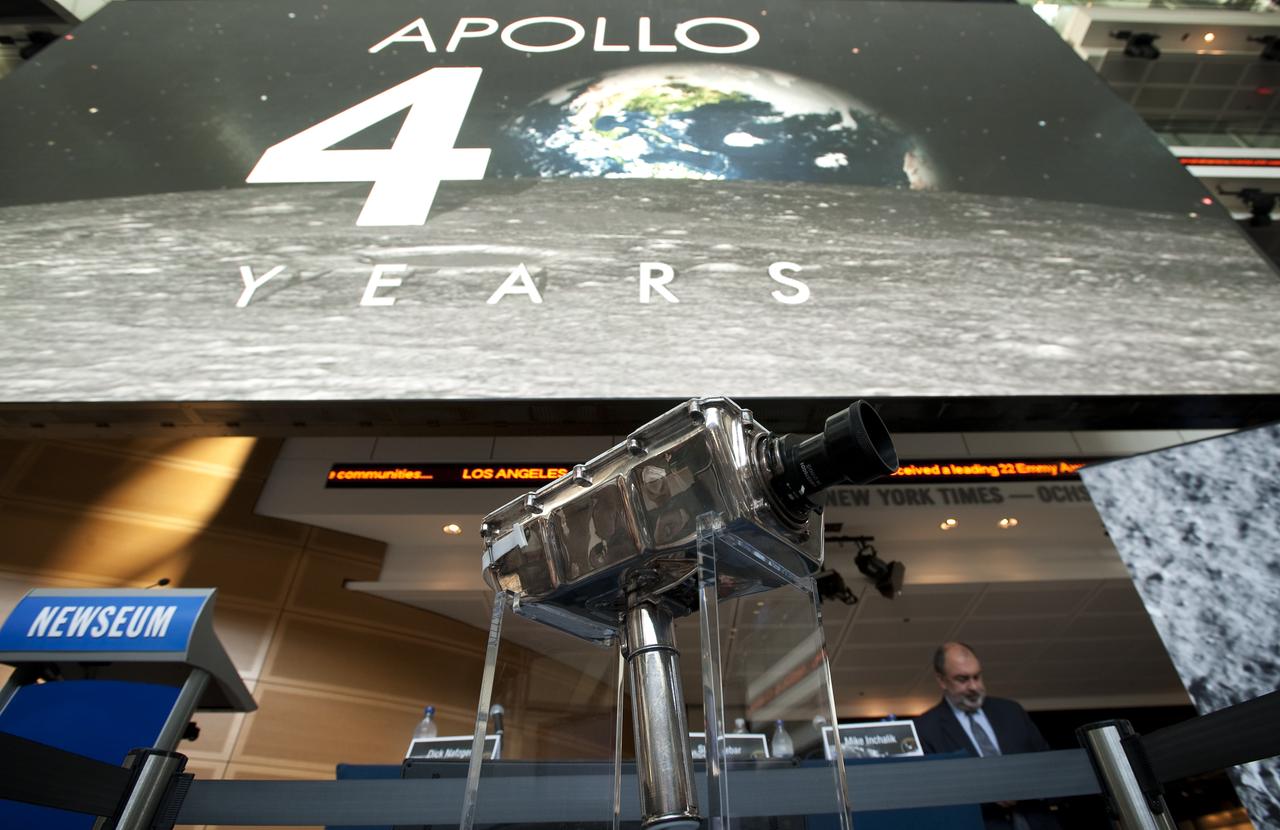
An Apollo TV camera from the National Electronic Museum in Baltimore, Maryland is on display for NASA's briefing to release restored Apollo 11 moonwalk footage at the Newseum, Thursday, July 16, 2009, in Washington, DC. Photo Credit: (NASA/Bill Ingalls)
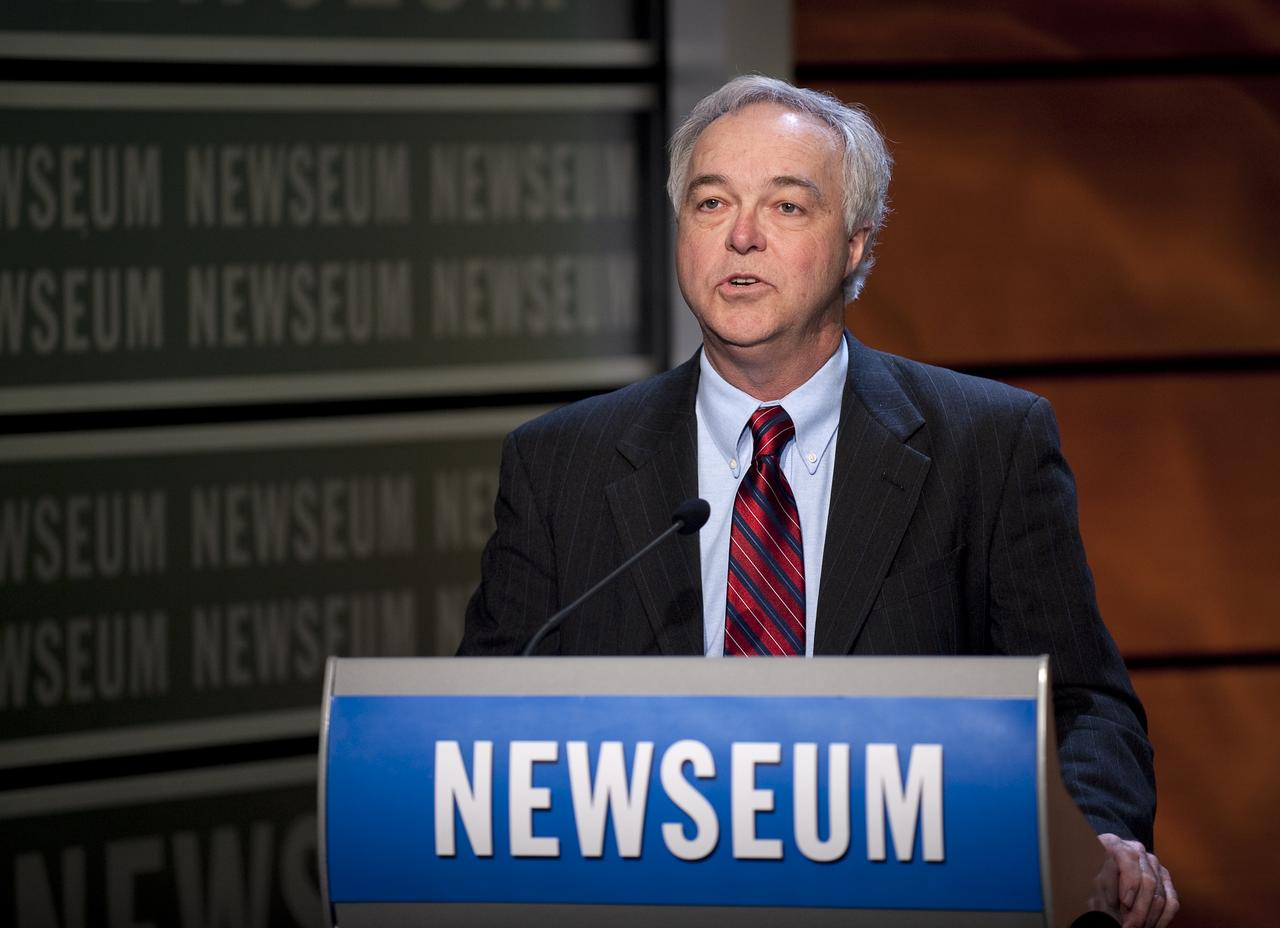
President and Chief Operating Officer of the Newseum, Kenneth Paulson, introduces the Newseum's distinguished journalist-in-residence, Nick Clooney and NASA Apollo 10 Astronaut Gene Cernan during a Newseum TV program celebrating the 40th anniversary of Apollo 10, Monday, May 18, 2009, in Washington. Photo Credit (NASA/Bill Ingalls)
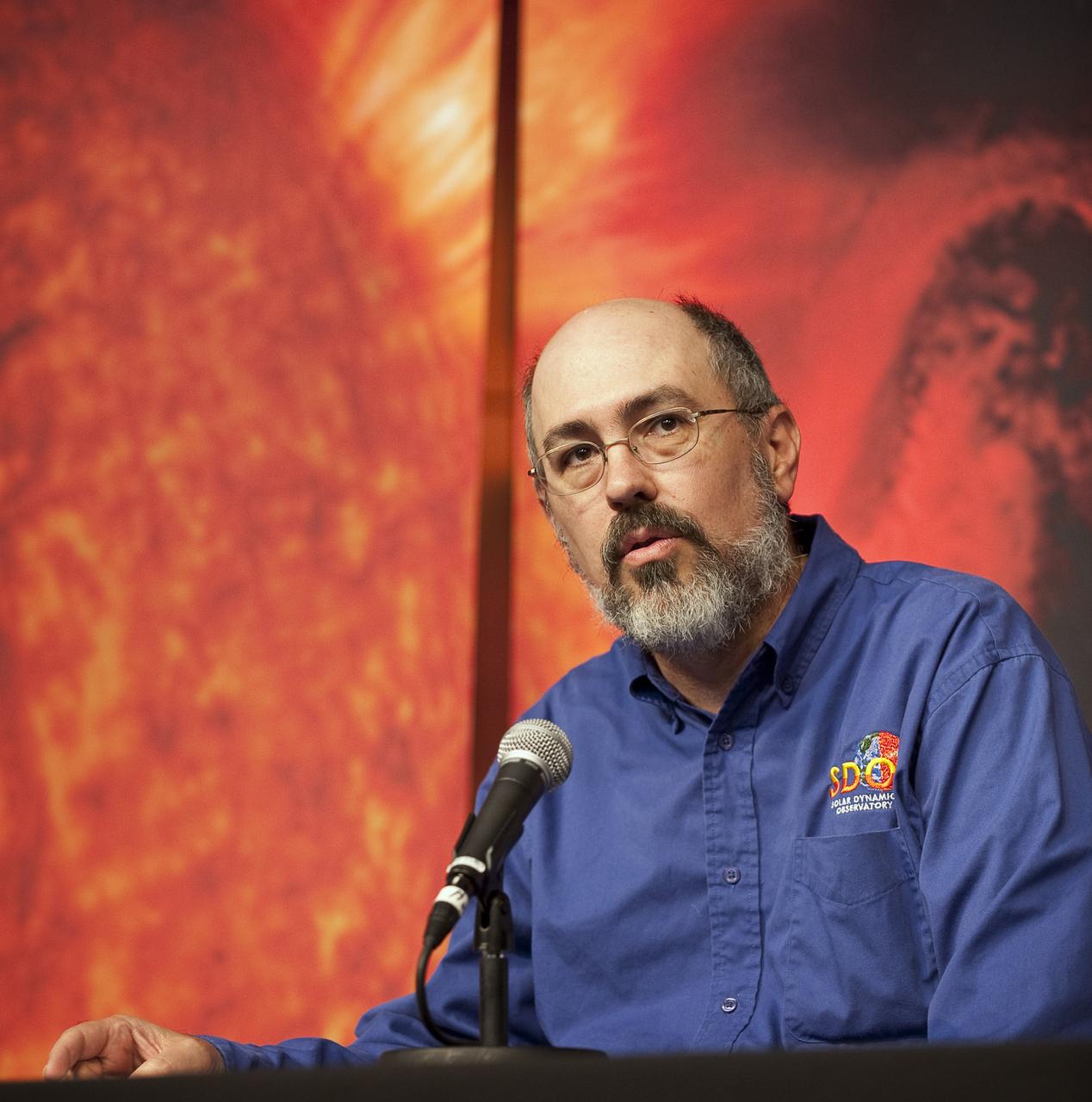
Dean Pesnell, SDO project scientist, Goddard Space Flight Center in Greenbelt, Md. speaks during a briefing to discuss recent images from NASA's Solar Dynamics Observatory, or SDO, Wednesday, April 21, 2010, at the Newseum in Washington. Photo Credit: (NASA/Carla Cioffi)
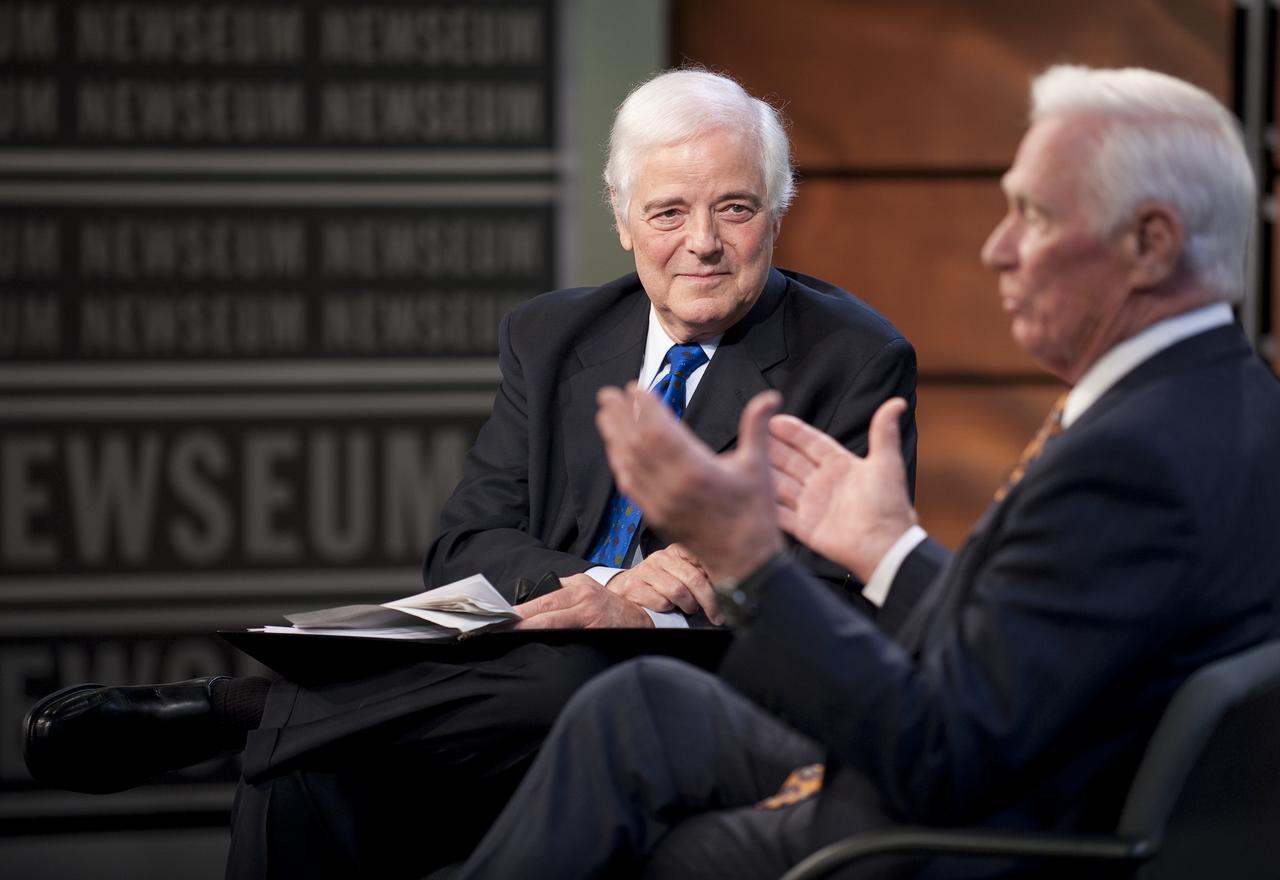
NASA Apollo 10 Astronaut Gene Cernan, right, answers questions from the Newseum's distinguished journalist-in-residence, Nick Clooney during a Newseum TV program celebrating the 40th anniversary of Apollo 10, Monday, May 18, 2009, in Washington. Photo Credit (NASA/Bill Ingalls)
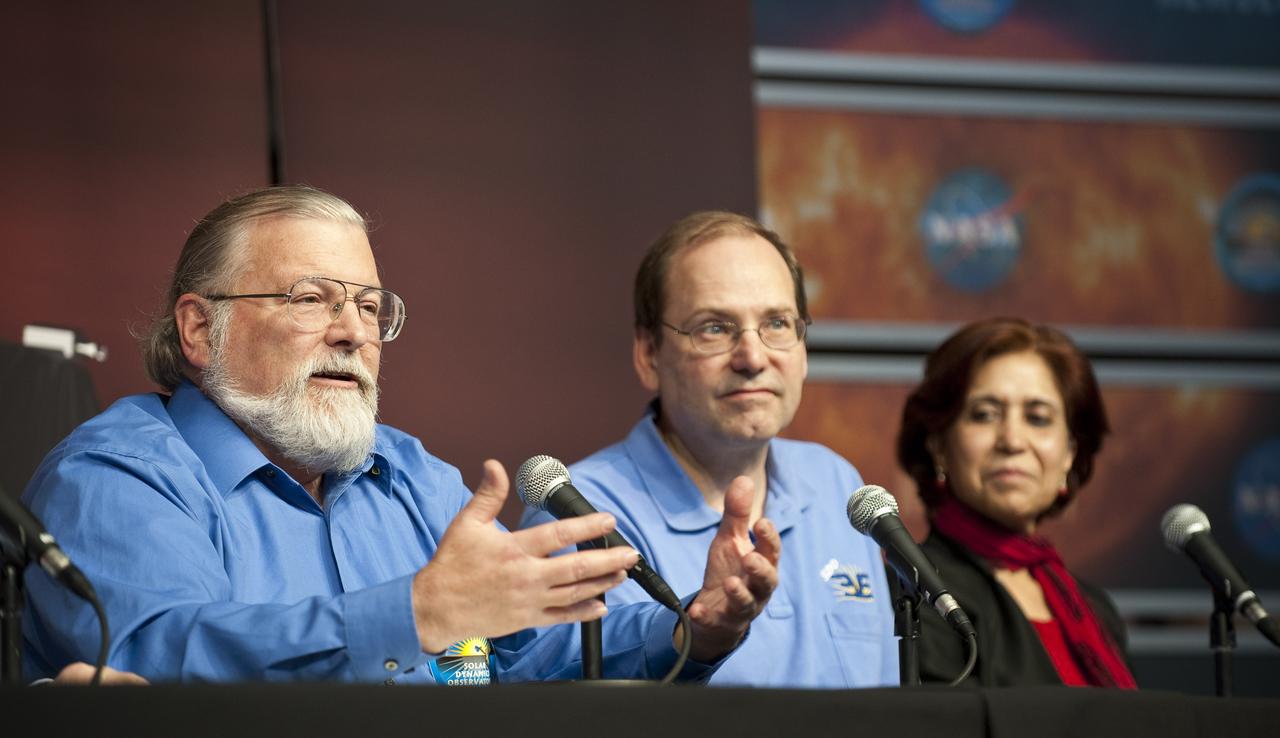
Philip H. Scherrer (left) principal investigator, Helioseismic and Magnetic Imager instrument, Stanford University in Palo Alto, speaks during a briefing to discuss recent images from NASA's Solar Dynamics Observatory, or SDO, while colleagues Tom Woods, principal investigator, Extreme Ultraviolet Variability Experiment instrument, Laboratory for Atmospheric and Space Physics, University of Colorado in Boulder and Madhulika Guhathakurta, SDO program scientist, NASA Headquarters (right) look on Wednesday, April 21, 2010, at the Newseum in Washington. Photo Credit: (NASA/Carla Cioffi)
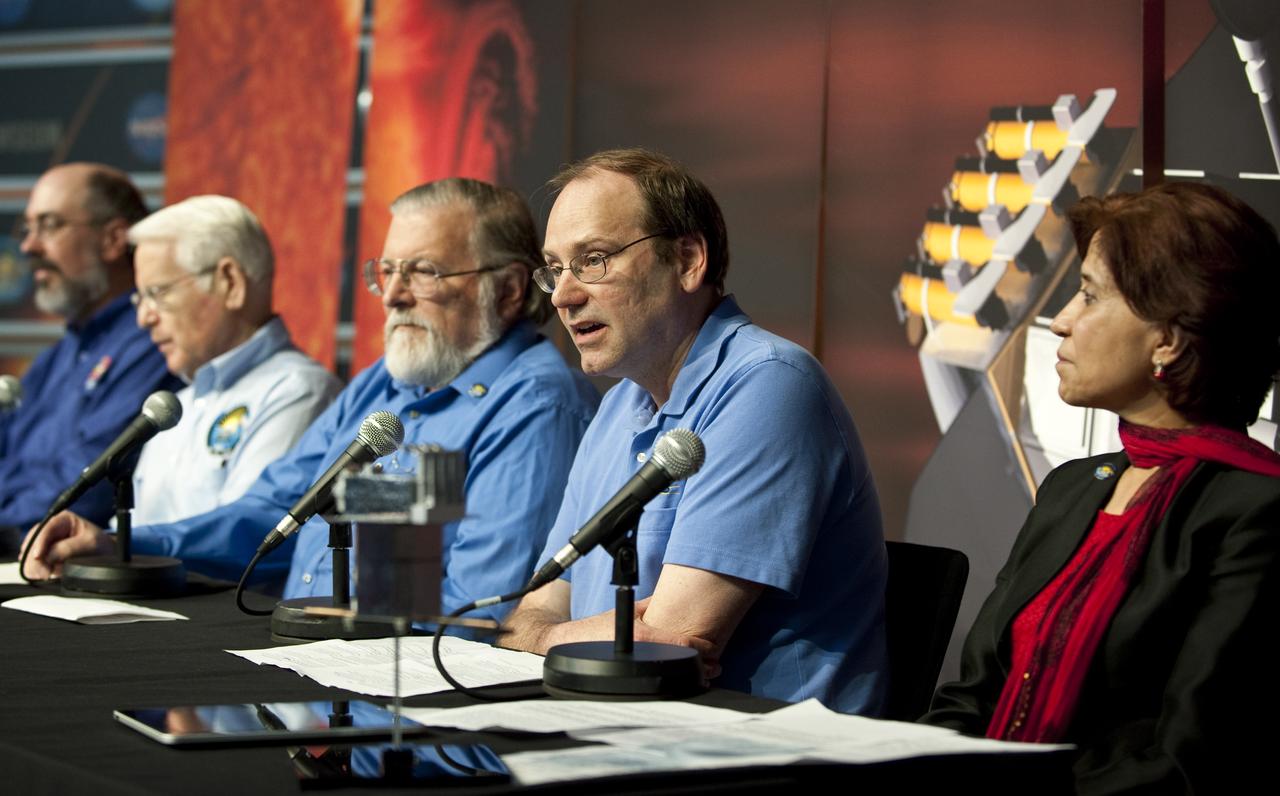
Tom Woods, (second from right), principal investigator, Extreme Ultraviolet Variability Experiment instrument, Laboratory for Atmospheric and Space Physics, University of Colorado in Boulder speaks during a briefing to discuss recent images from NASA's Solar Dynamics Observatory, or SDO, Wednesday, April 21, 2010, at the Newseum in Washington. Photo Credit: (NASA/Carla Cioffi)
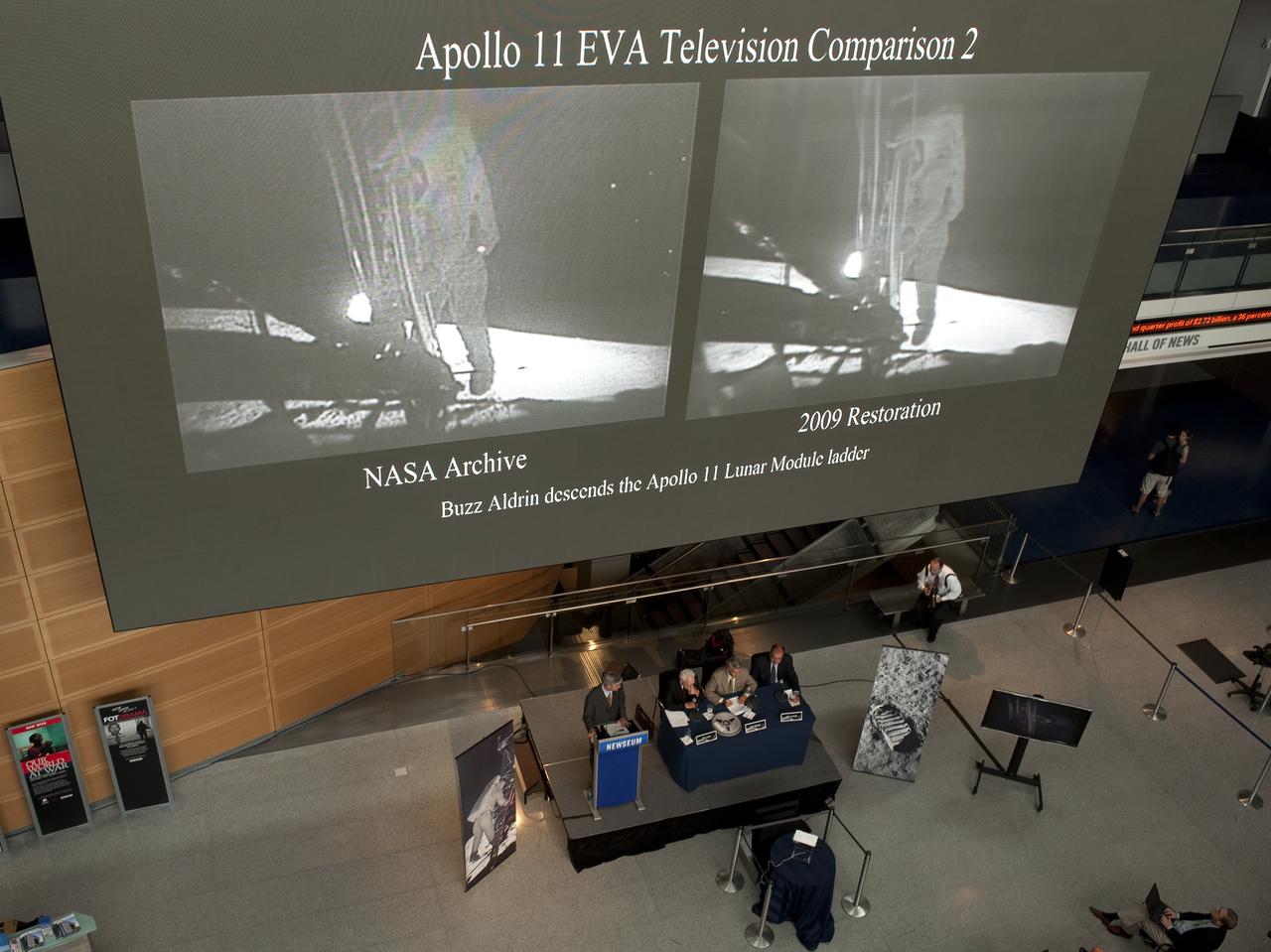
Archived and restored Apollo 11 moonwalk footage is shown on a large video monitor above panelists at a NASA briefing where restored Apollo 11 moonwalk footage was revealed for the first time at the Newseum, Thursday, July 16, 2009, in Washington, DC. Photo Credit: (NASA/Carla Cioffi)
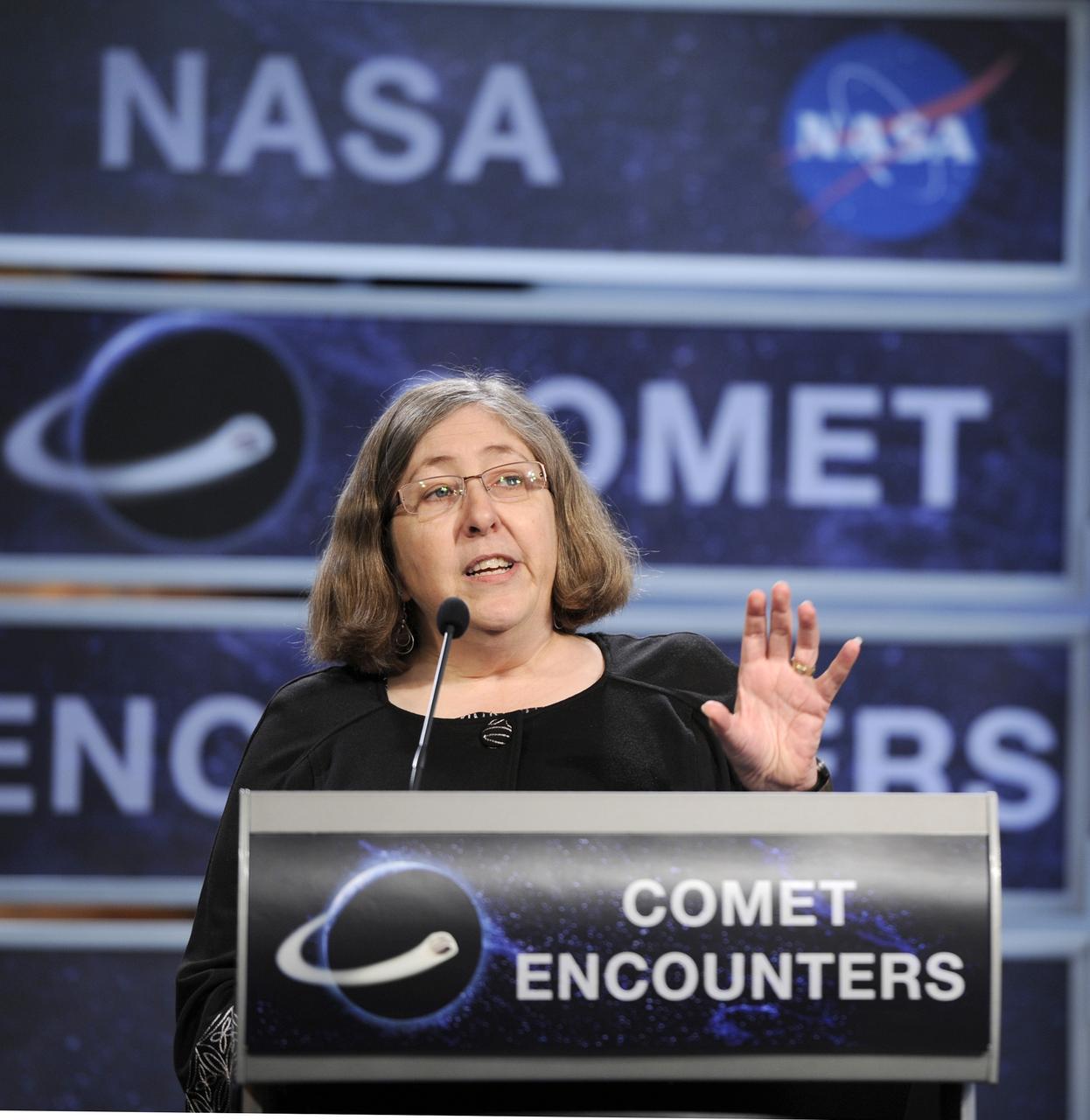
Dr. Anita Cochran, Assistant Director, McDonald Observatory at the University of Texas-Austin, speaks during a symposium commemorating a quarter-century of comet discoveries, Friday, Sept. 10, 2010, in the Knight studio at the Newseum in Washington. The International Sun-Earth Explorer-3 (ISEE-3) spacecraft flew past the comet Giacobini-Zinner on Sept. 11, 1985 which established a foundation of discoveries that continue today. Photo Credit: (NASA/Paul E. Alers)
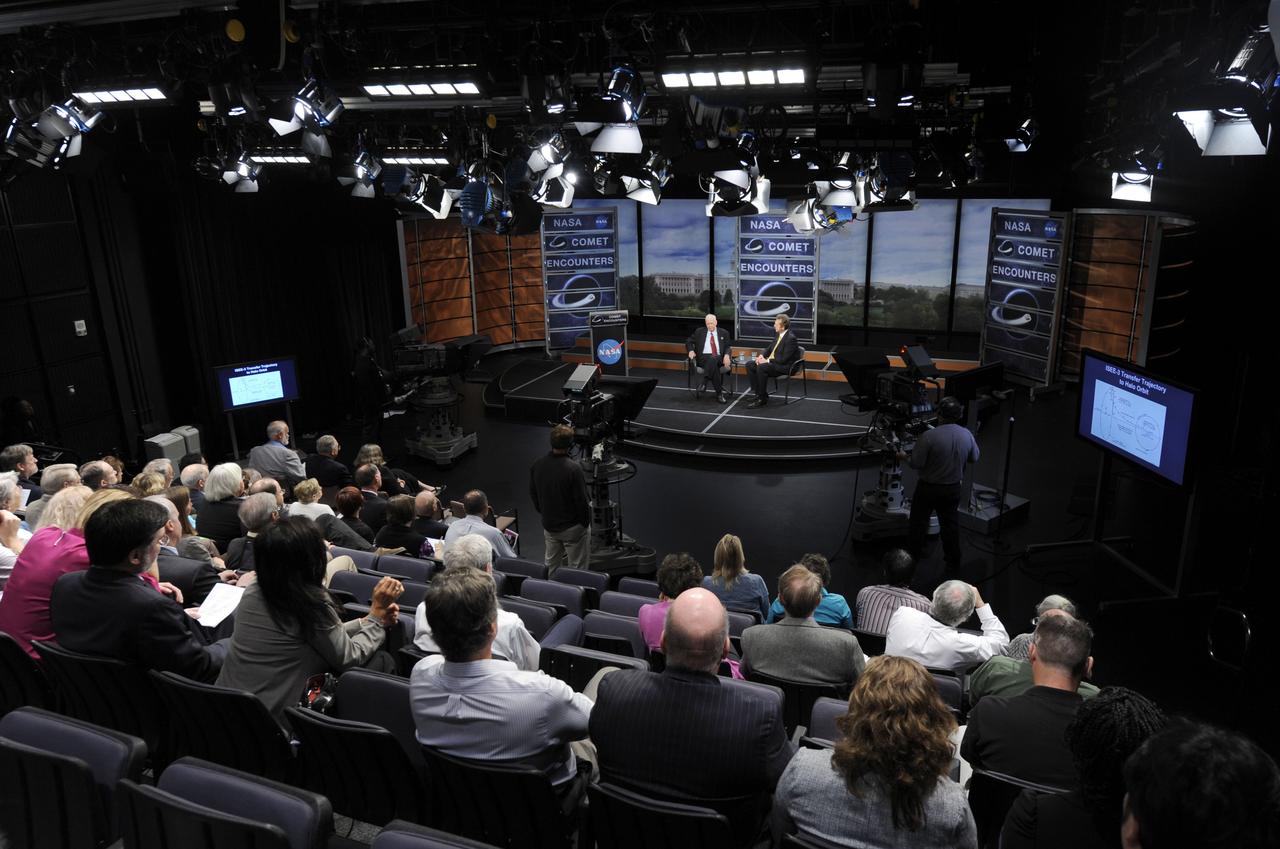
Members of the audience look on as Dr. James L. Green, Director of Planetary Science at NASA, right, speaks with Dr. Robert Farquar, an executive for space exploration at KinetX Inc., during a symposium commemorating a quarter-century of comet discoveries, Friday, Sept. 10, 2010, in the Knight studio at the Newseum in Washington. The International Sun-Earth Explorer-3 (ISEE-3) spacecraft flew past the comet Giacobini-Zinner on Sept. 11, 1985 which established a foundation of discoveries that continue today. Photo Credit: (NASA/Paul E. Alers)
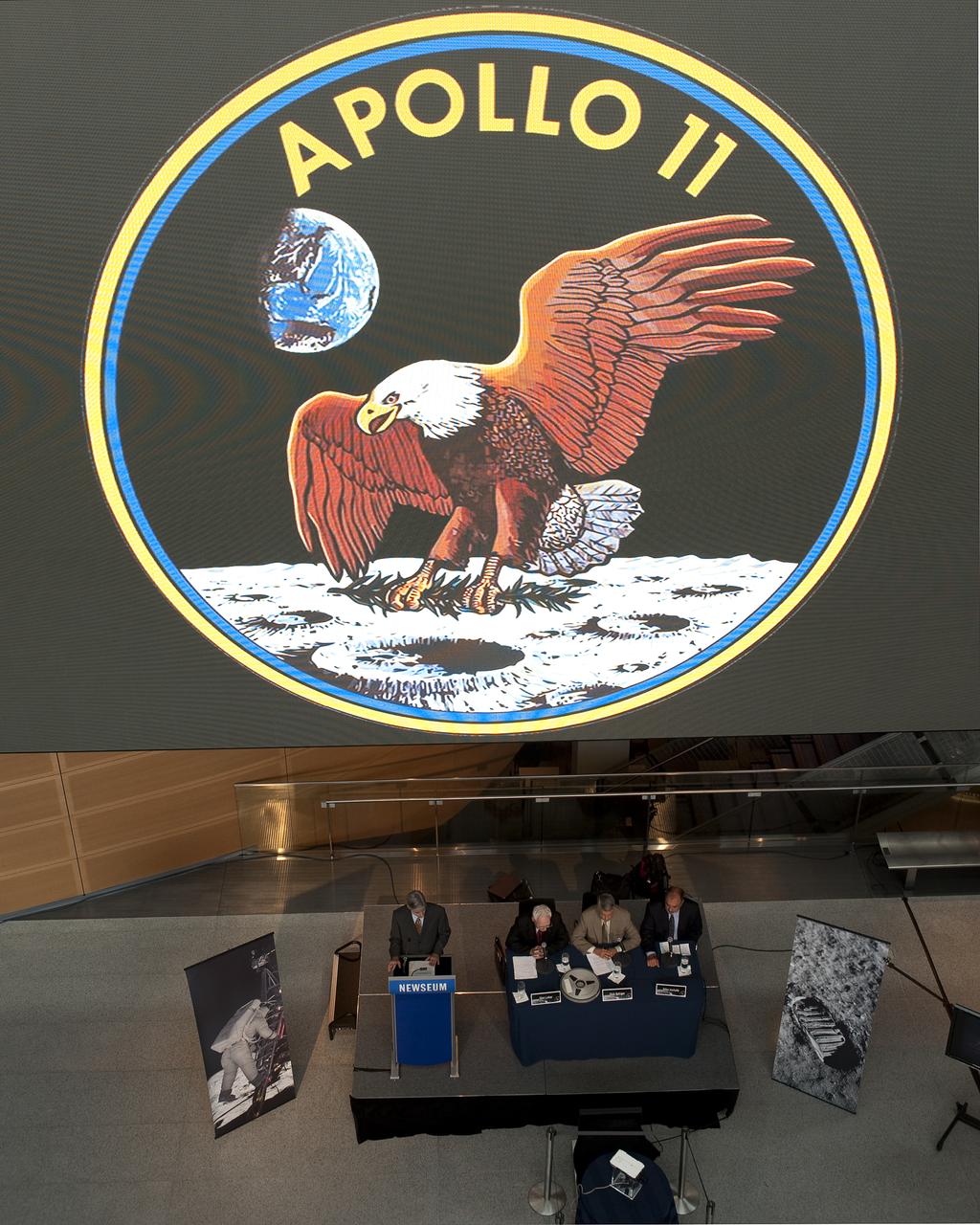
The Apollo 11 logo is seen on a large video monitor above panelists at NASA's briefing where restored Apollo 11 moonwalk footage was revealed for the first time at the Newseum, Thursday, July 16, 2009, in Washington, DC. Photo Credit: (NASA/Carla Cioffi)
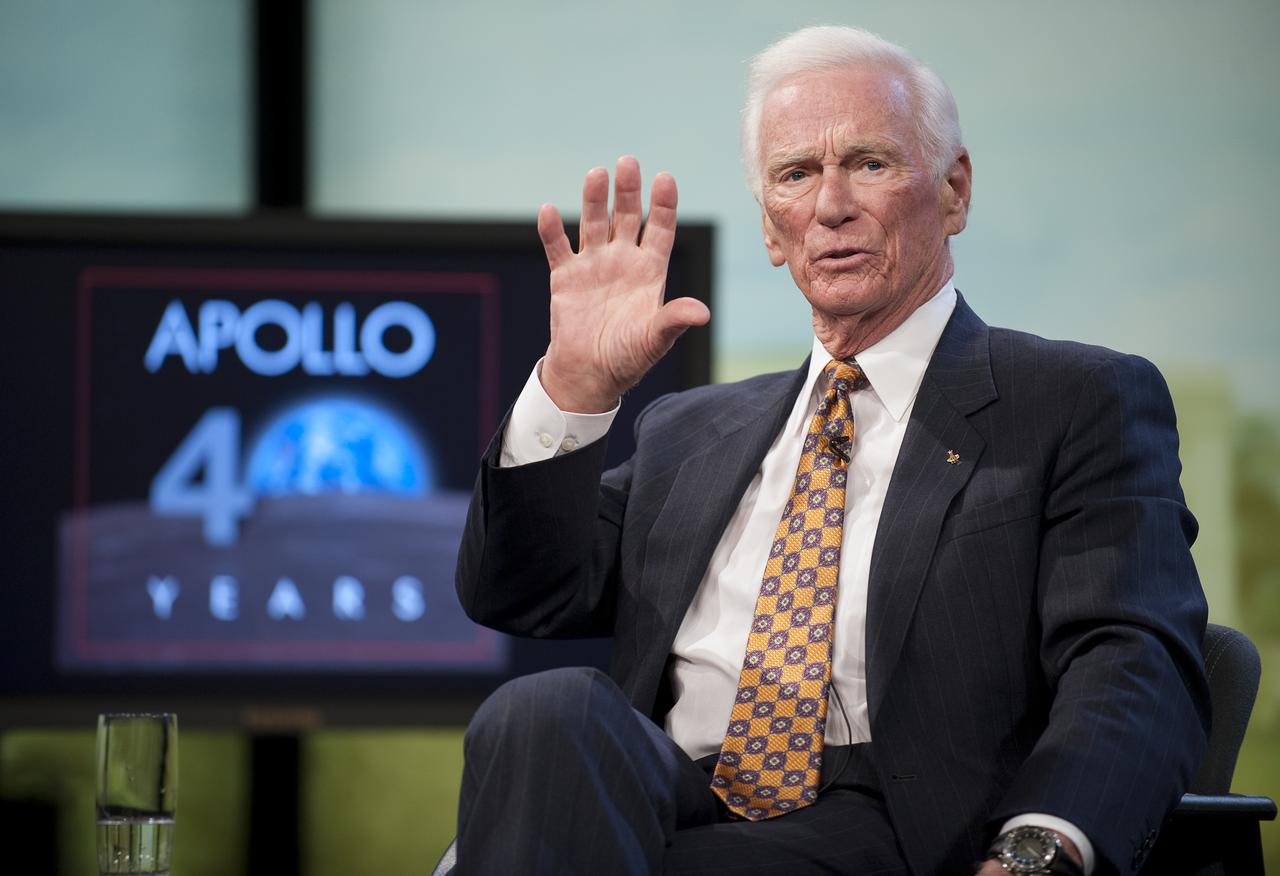
NASA Apollo 10 Astronaut Gene Cernan explains how wonderful the Earth looked from the Moon during a Newseum TV program celebrating the 40th anniversary of Apollo 10, Monday, May 18, 2009, in Washington. Photo Credit (NASA/Bill Ingalls)
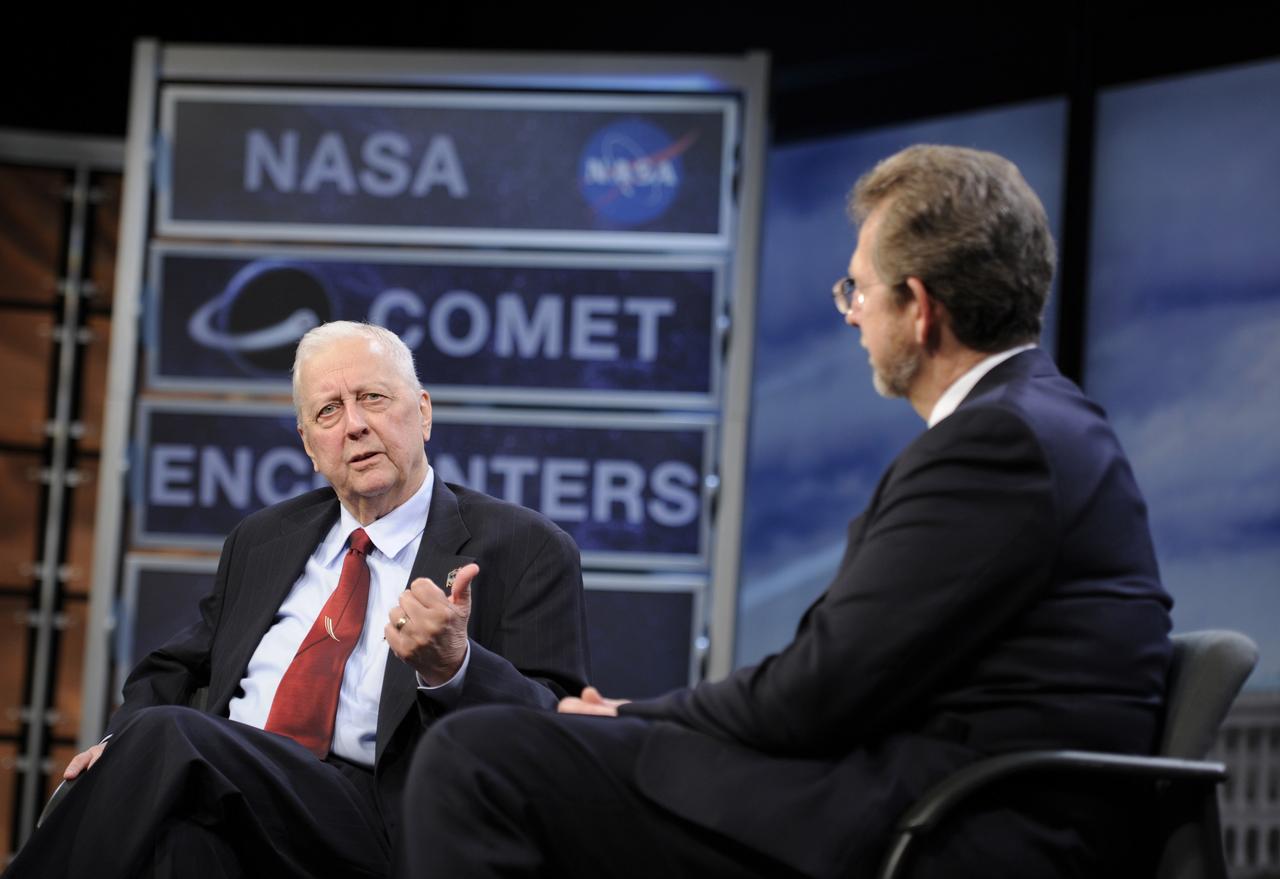
Dr. James L. Green, Director of Planetary Science at NASA, right, speaks with Dr. Robert Farquar, an executive for space exploration at KinetX Inc., during a symposium commemorating a quarter-century of comet discoveries, Friday, Sept. 10, 2010, in the Knight studio at the Newseum in Washington. The International Sun-Earth Explorer-3 (ISEE-3) spacecraft flew past the comet Giacobini-Zinner on Sept. 11, 1985 which established a foundation of discoveries that continue today. Photo Credit: (NASA/Paul E. Alers)
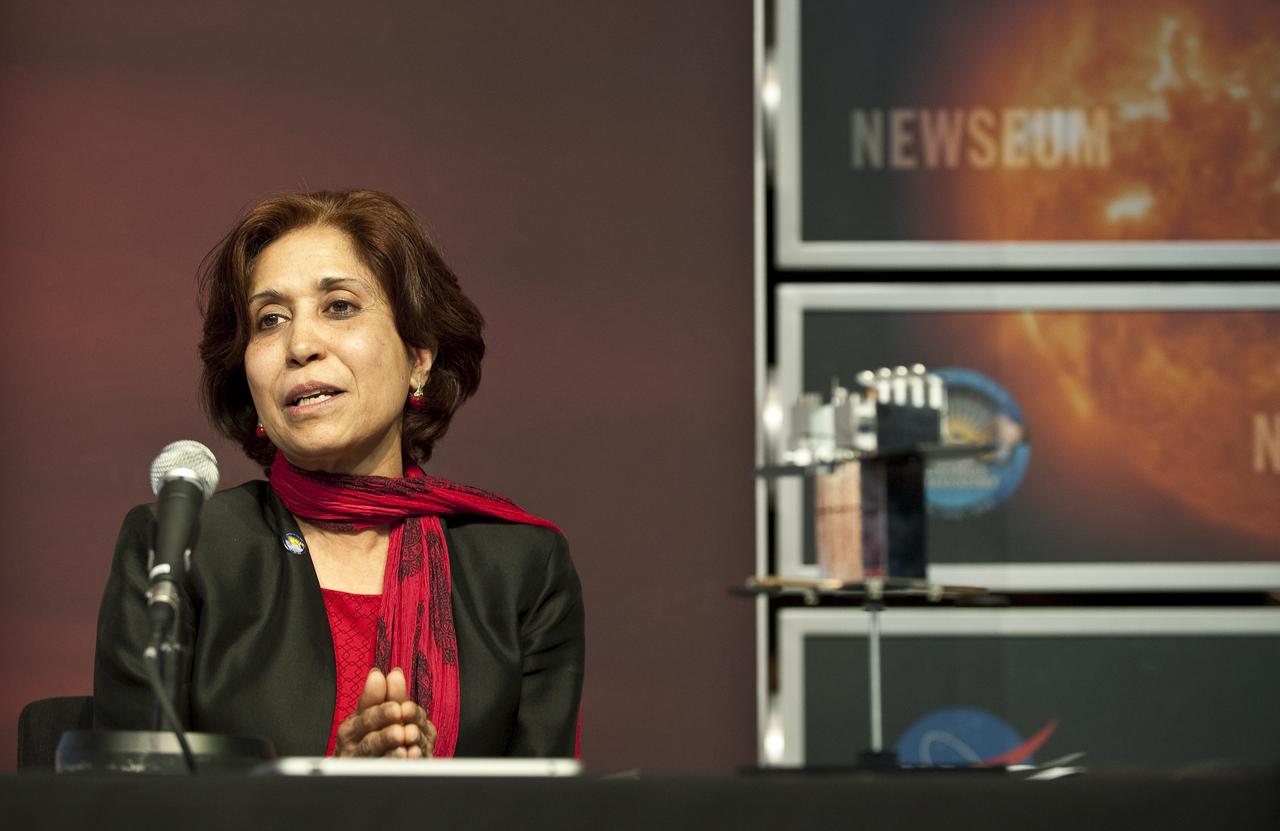
Madhulika Guhathakurta, SDO Program Scientist at NASA Headquarters in Washington, speaks during a briefing to discuss recent images from NASA's Solar Dynamics Observatory, or SDO, Wednesday, April 21, 2010, at the Newseum in Washington. Launched on Feb. 11, 2010, SDO is the most advanced spacecraft ever designed to study the sun. During its five-year mission, it will examine the sun's magnetic field and also provide a better understanding of the role the sun plays in Earth's atmospheric chemistry and climate. Photo Credit: (NASA/Carla Cioffi)
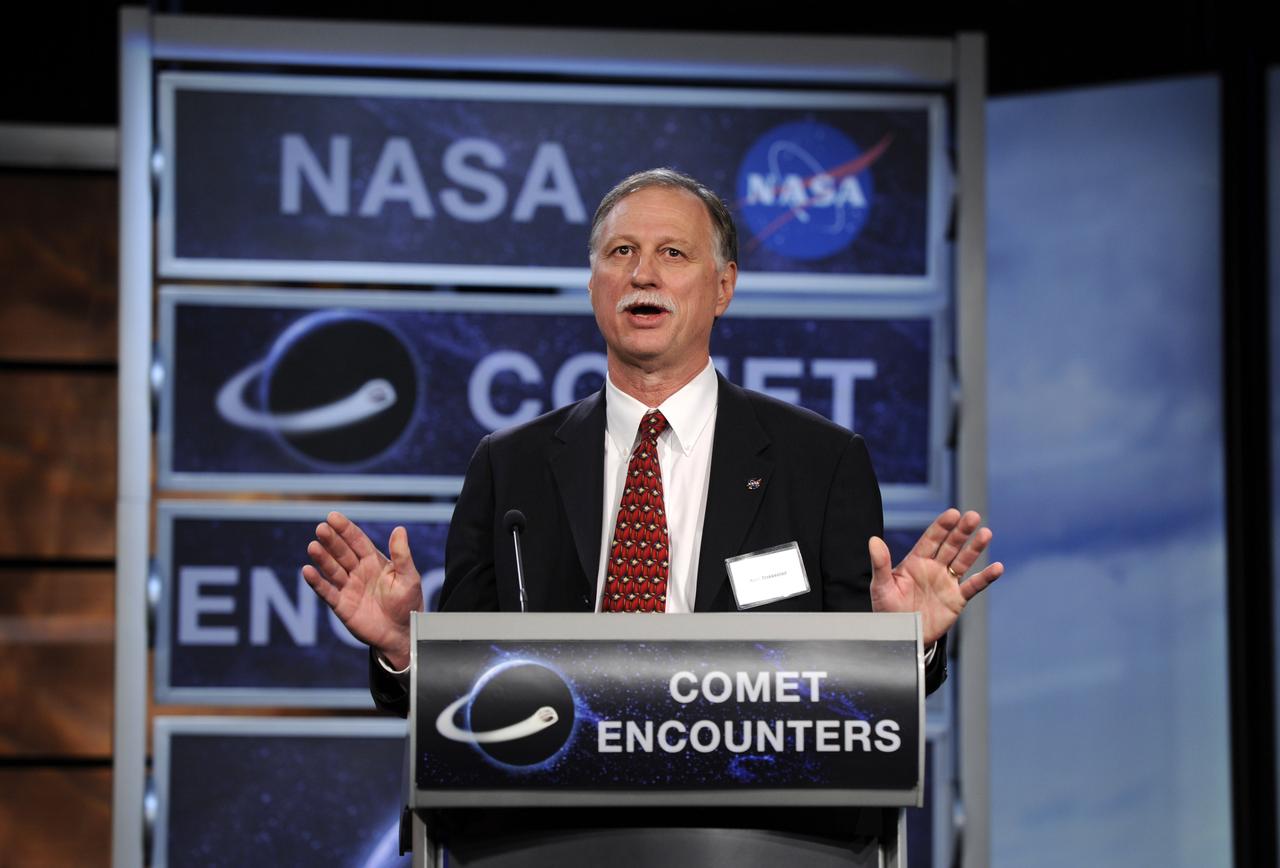
Kjell Stakkestad, President and CEO of KinetX Inc., speaks during a symposium commemorating a quarter-century of comet discoveries, Friday, Sept. 10, 2010, in the Knight studio at the Newseum in Washington. The International Sun-Earth Explorer-3 (ISEE-3) spacecraft flew past the comet Giacobini-Zinner on Sept. 11, 1985 which established a foundation of discoveries that continue today. Photo Credit: (NASA/Paul E. Alers)
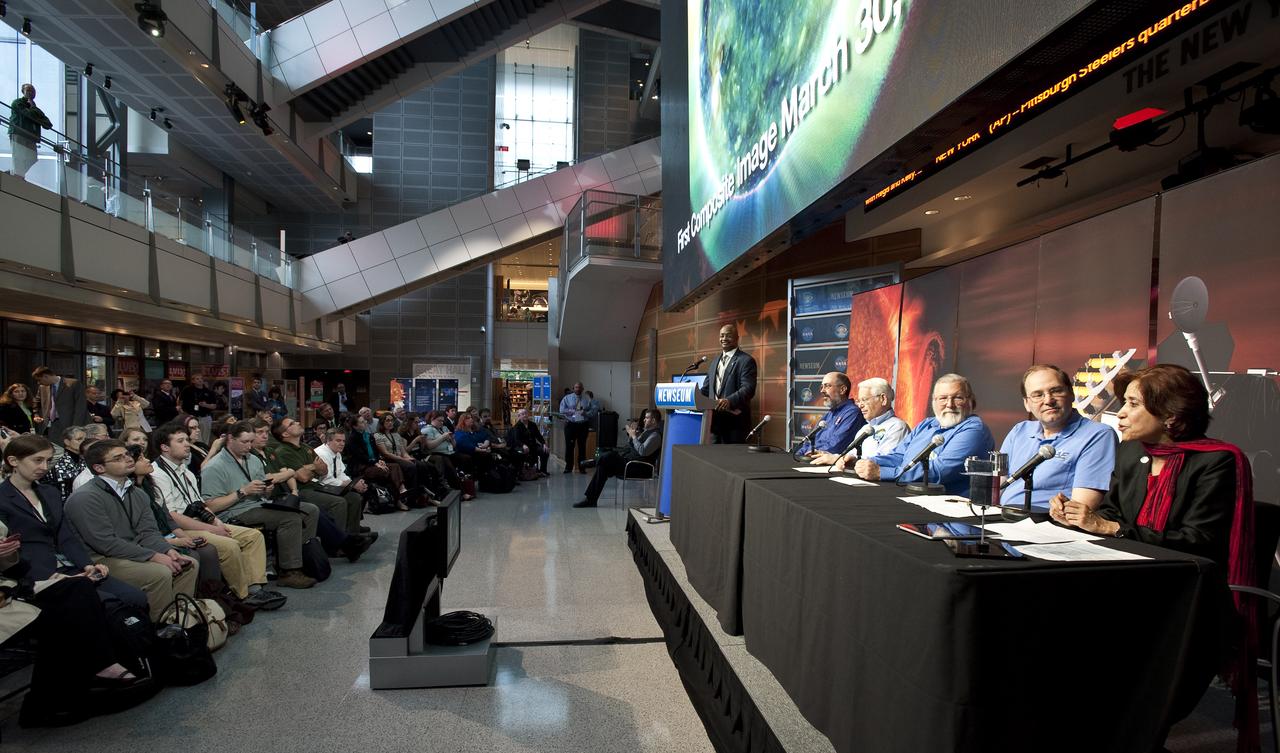
Madhulika Guhathakurta, far right, SDO Program Scientist at NASA Headquarters in Washington, speaks during a briefing to discuss recent images from NASA's Solar Dynamics Observatory, or SDO, Wednesday, April 21, 2010, at the Newseum in Washington. Pictured from left of Dr. Guhathakurta's are: Tom Woods, principal investigator, Extreme Ultraviolet Variability Experiment instrument, Laboratory for Atmospheric and Space Physics, University of Colorado in Boulder; Philip H. Scherrer, principal investigator, Helioseismic and Magnetic Imager instrument, Stanford University in Palo Alto; Alan Title, principal investigator, Atmospheric Imaging Assembly instrument, Lockheed Martin Solar and Astrophysics Laboratory in Palo Alto and Dean Pesnell, SDO project scientist, Goddard Space Flight Center in Greenbelt, Md. Photo Credit: (NASA/Carla Cioffi)
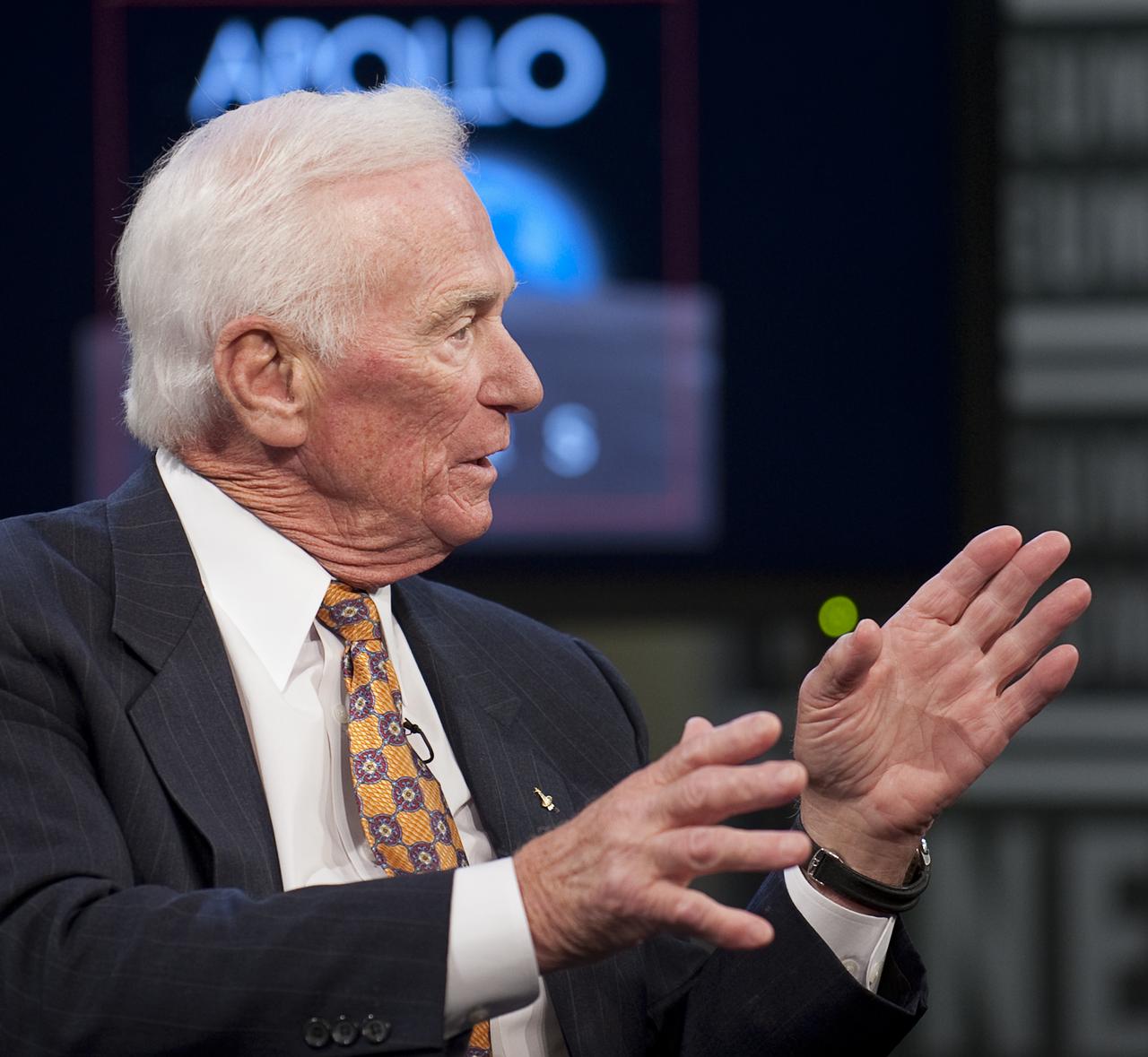
NASA Apollo 10 Astronaut Gene Cernan explains the importance of the nations space program for future generations during a Newseum TV program celebrating the 40th anniversary of Apollo 10, Monday, May 18, 2009, in Washington. Photo Credit (NASA/Bill Ingalls)
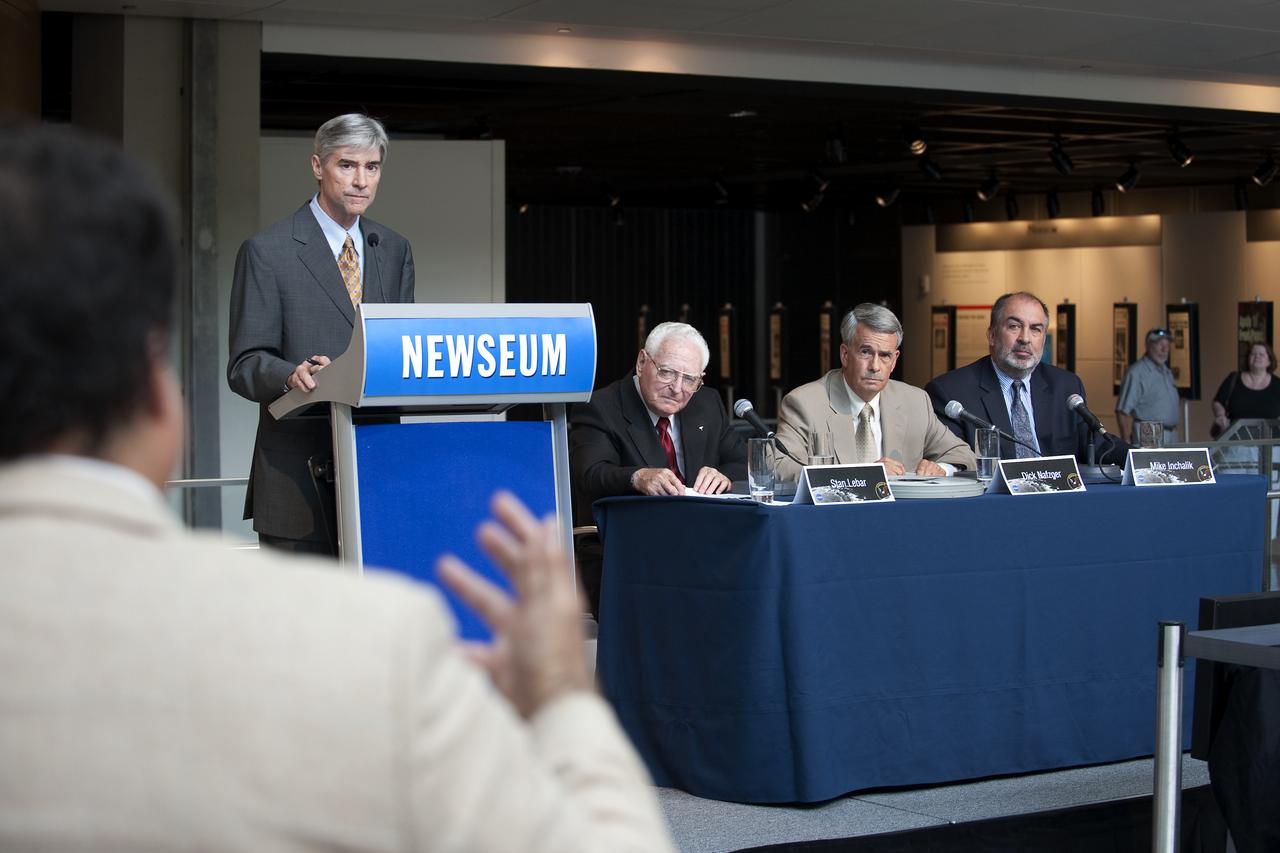
NASA moderator Mark Hess, left, directs reporters' questions to former Westinghouse Electric program manager Stan Lebar, second from left, team lead and Goddard engineer Richard Nafzger and president of Lowry Digital Mike Inchalik, far right, at a NASA briefing where restored Apollo 11 moonwalk footage was revealed for the first time at the Newseum, Thursday, July 16, 2009, in Washington, DC. Photo Credit: (NASA/Bill Ingalls)
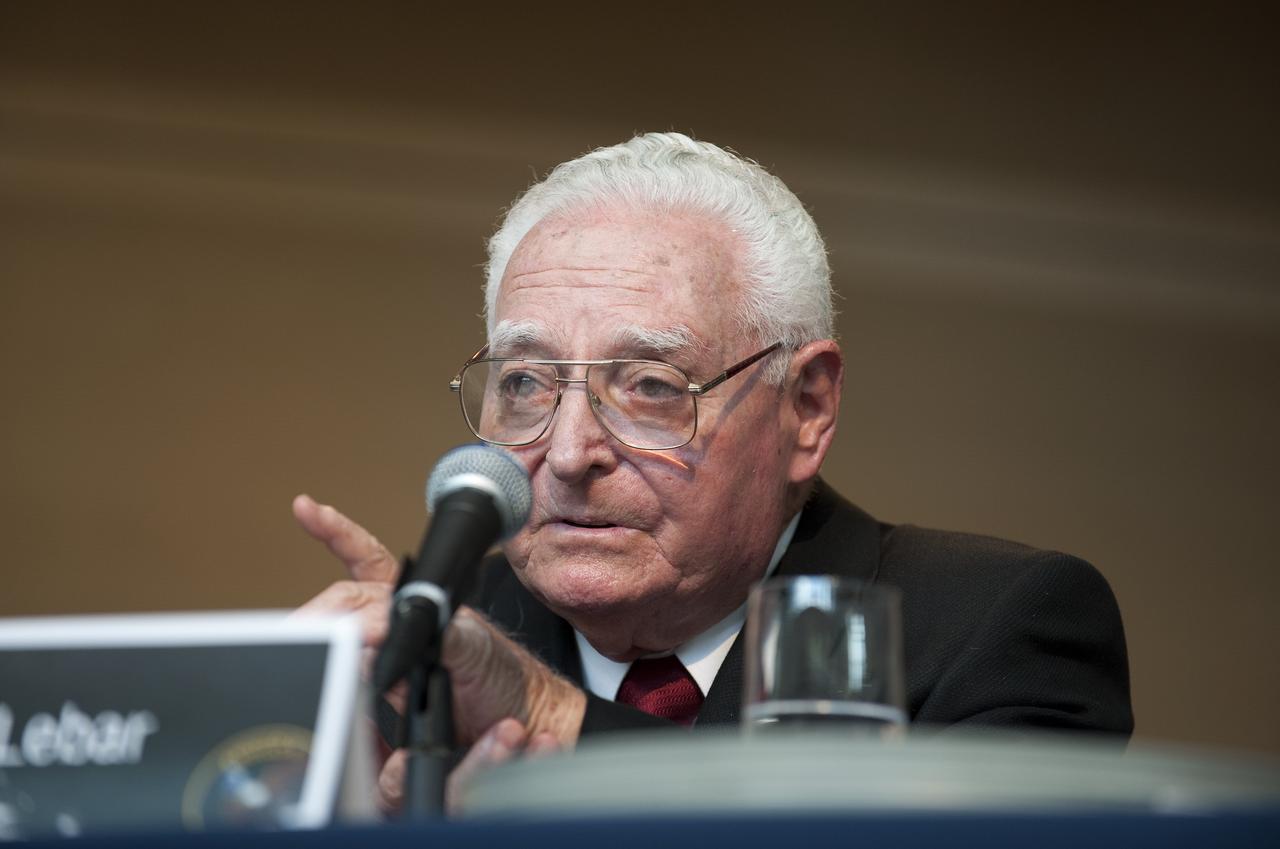
Stan Lebar, former Westinghouse Electric program manager, talks about the Apollo era TV cameras during NASA's briefing where restored Apollo 11 moonwalk footage was revealed for the first time at the Newseum, Thursday, July 16, 2009, in Washington, DC. Photo Credit: (NASA/Bill Ingalls)
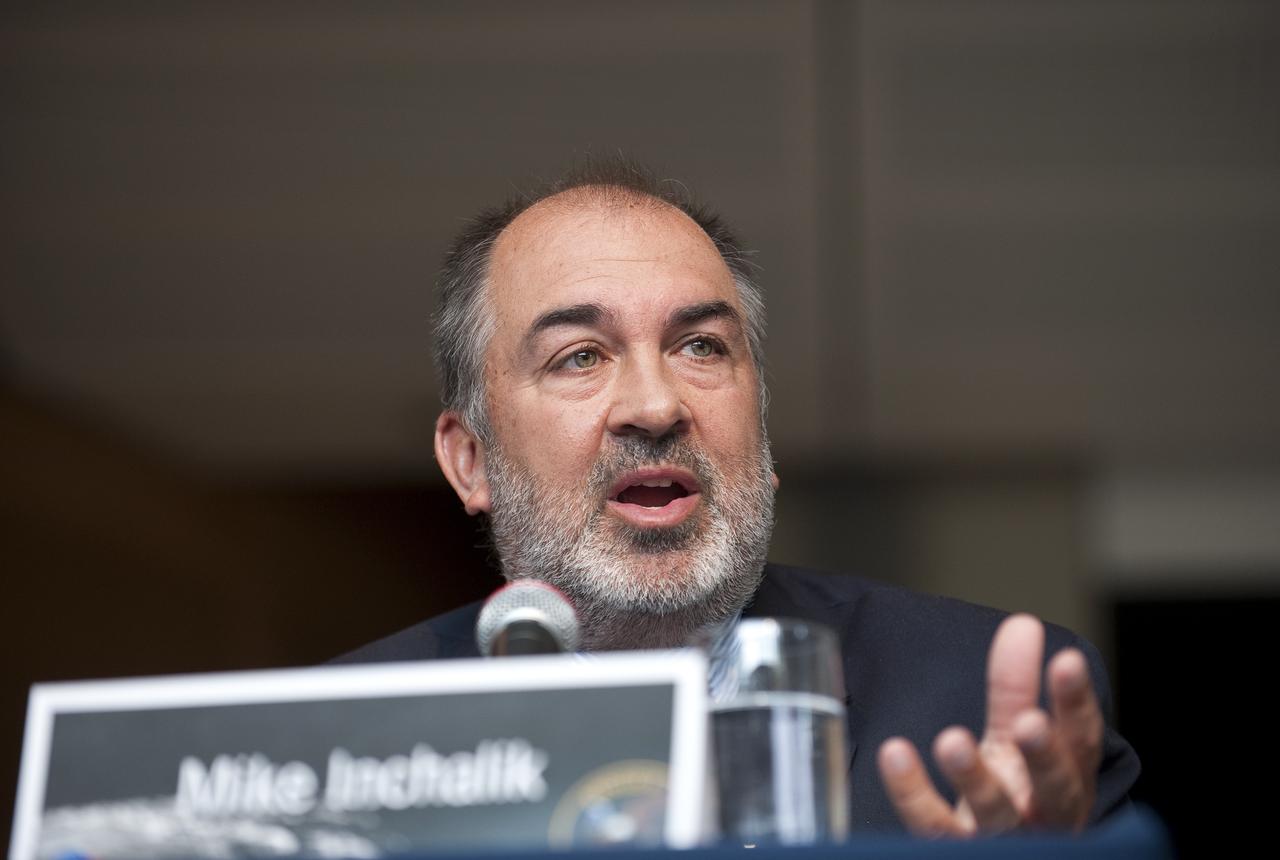
Mike Inchalik, president of Lowry Digital, talks about the job of restoring Apollo 11 moonwalk footage at a NASA briefing where restored Apollo 11 moonwalk footage was revealed for the first time at the Newseum, Thursday, July 16, 2009, in Washington, DC. Photo Credit: (NASA/Bill Ingalls)
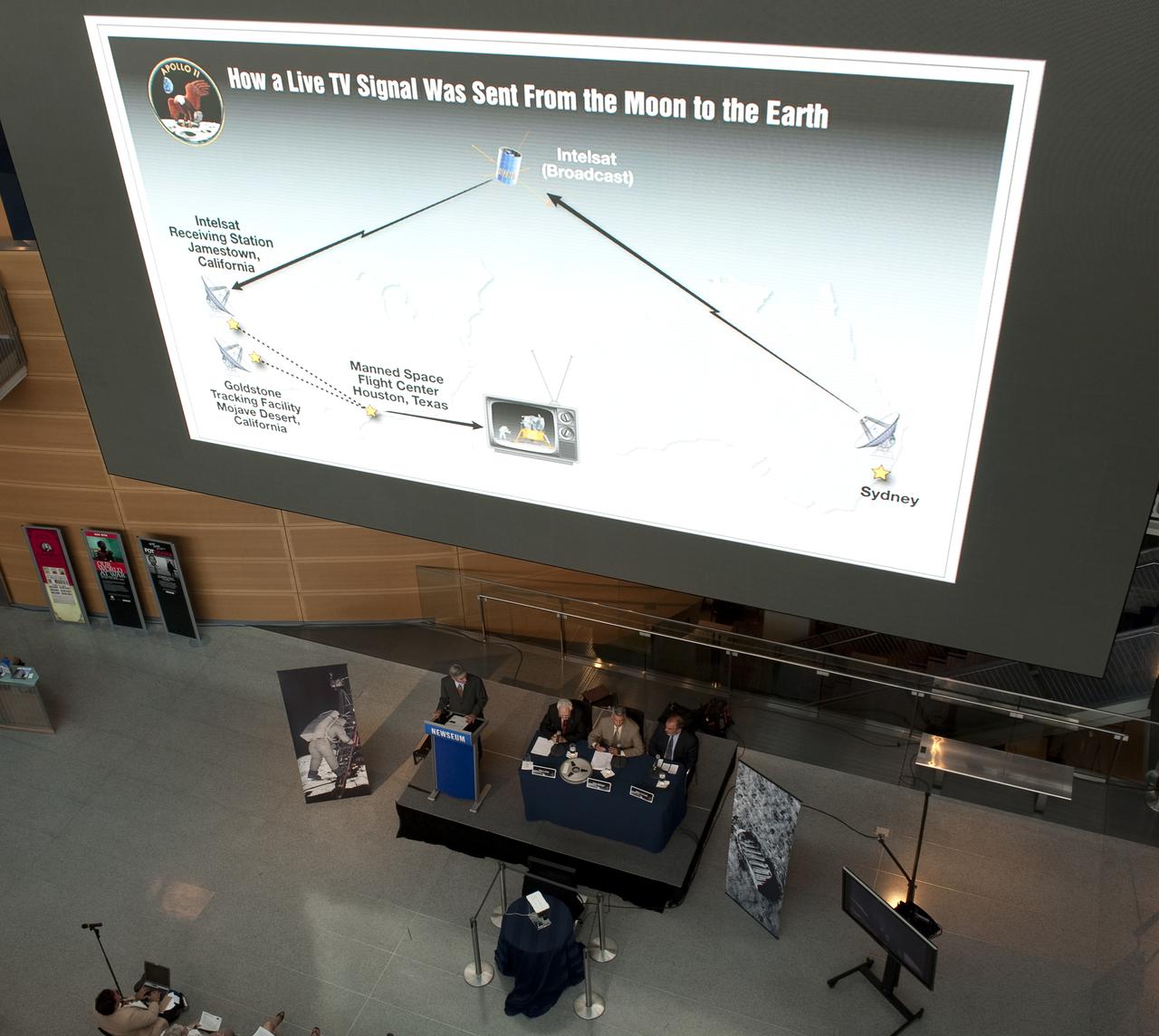
Graphics showing how TV signals were sent from the Apollo 11 mission back to Earth are shown on a large video monitor above panelists at NASA's briefing where restored Apollo 11 moonwalk footage was revealed for the first time at the Newseum, Thursday, July 16, 2009, in Washington, DC. Photo Credit: (NASA/Carla Cioffi)
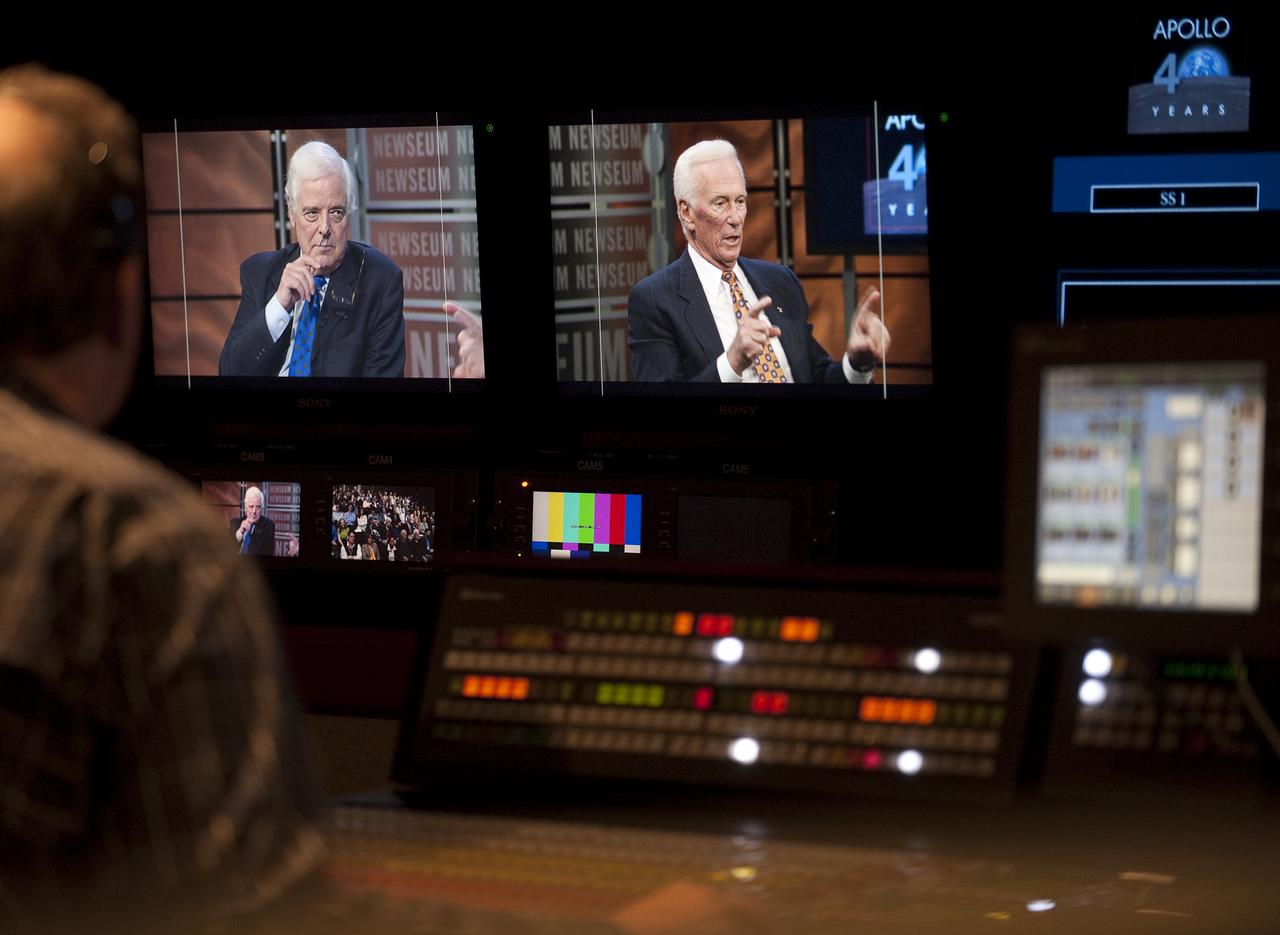
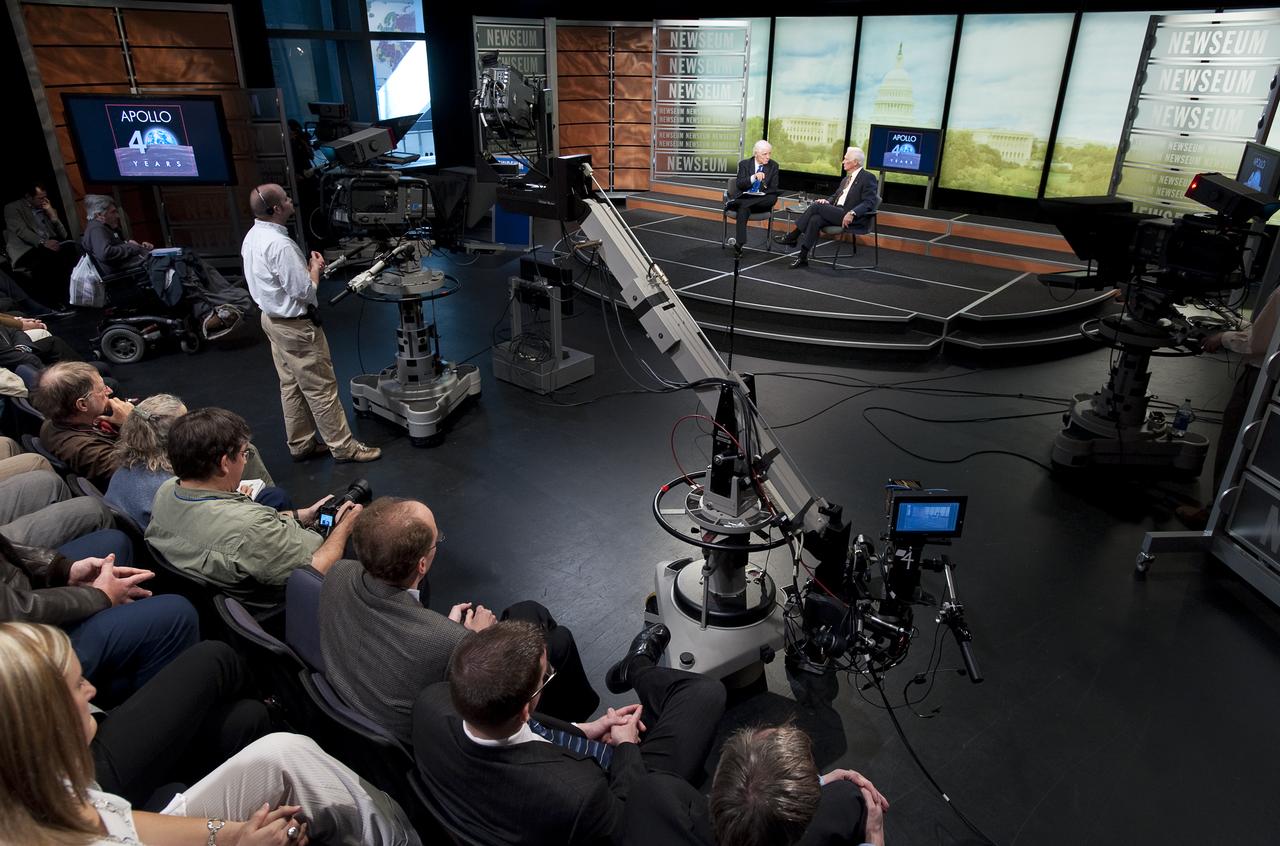
In this image made inside the TV production studio of the Newseum, NASA Apollo 10 Astronaut Gene Cernan, right monitor, answers questions from the Newseum's distinguished journalist-in-residence, Nick Clooney, left monitor, during a Newseum TV program celebrating the 40th anniversary of Apollo 10, Monday, May 18, 2009, in Washington. Photo Credit (NASA/Bill Ingalls)
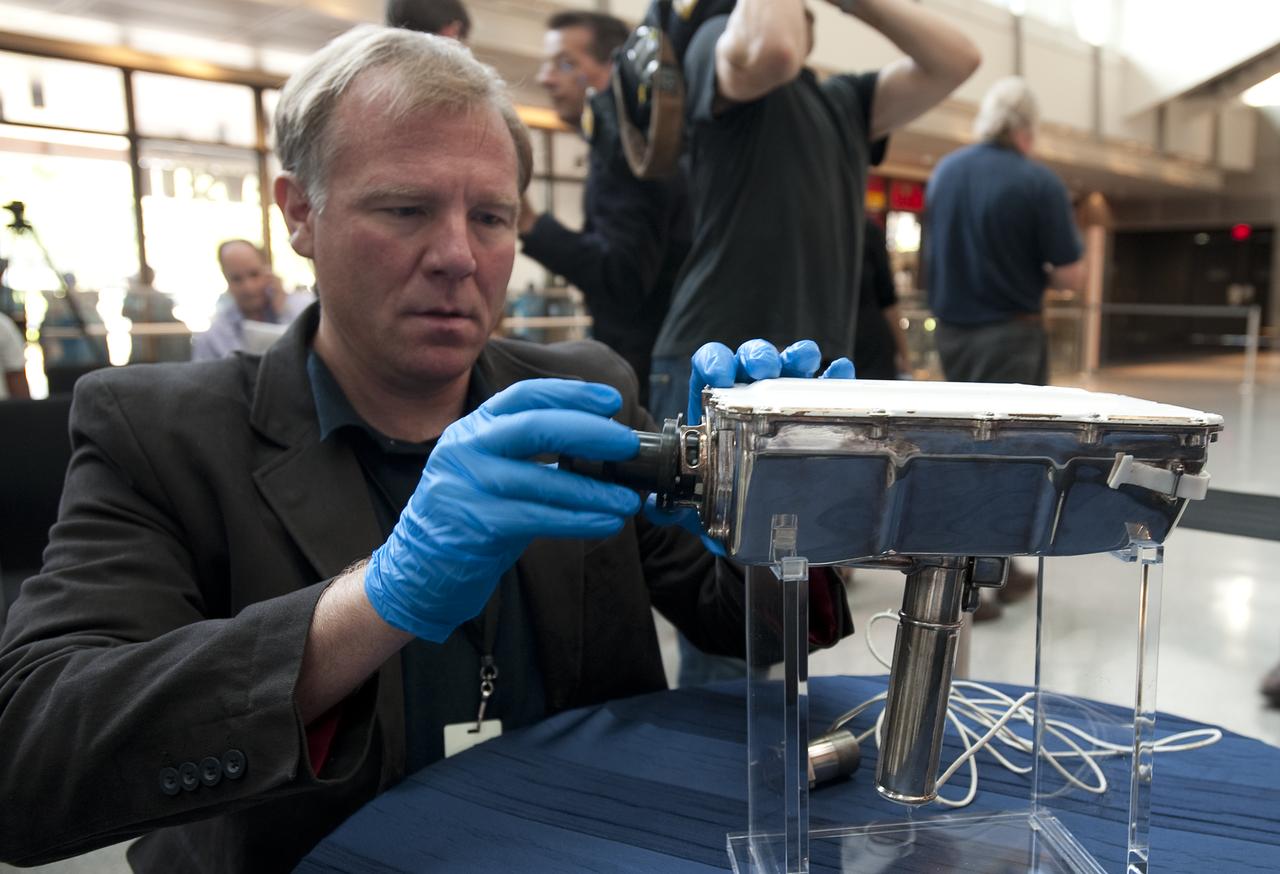
Mike Simons, Director of the National Electronic Museum in Baltimore, Maryland assembles an Apollo TV camera for display prior to NASA's briefing to release restored Apollo 11 moonwalk footage at the Newseum, Thursday, July 16, 2009, in Washington, DC. Photo Credit: (NASA/Bill Ingalls)
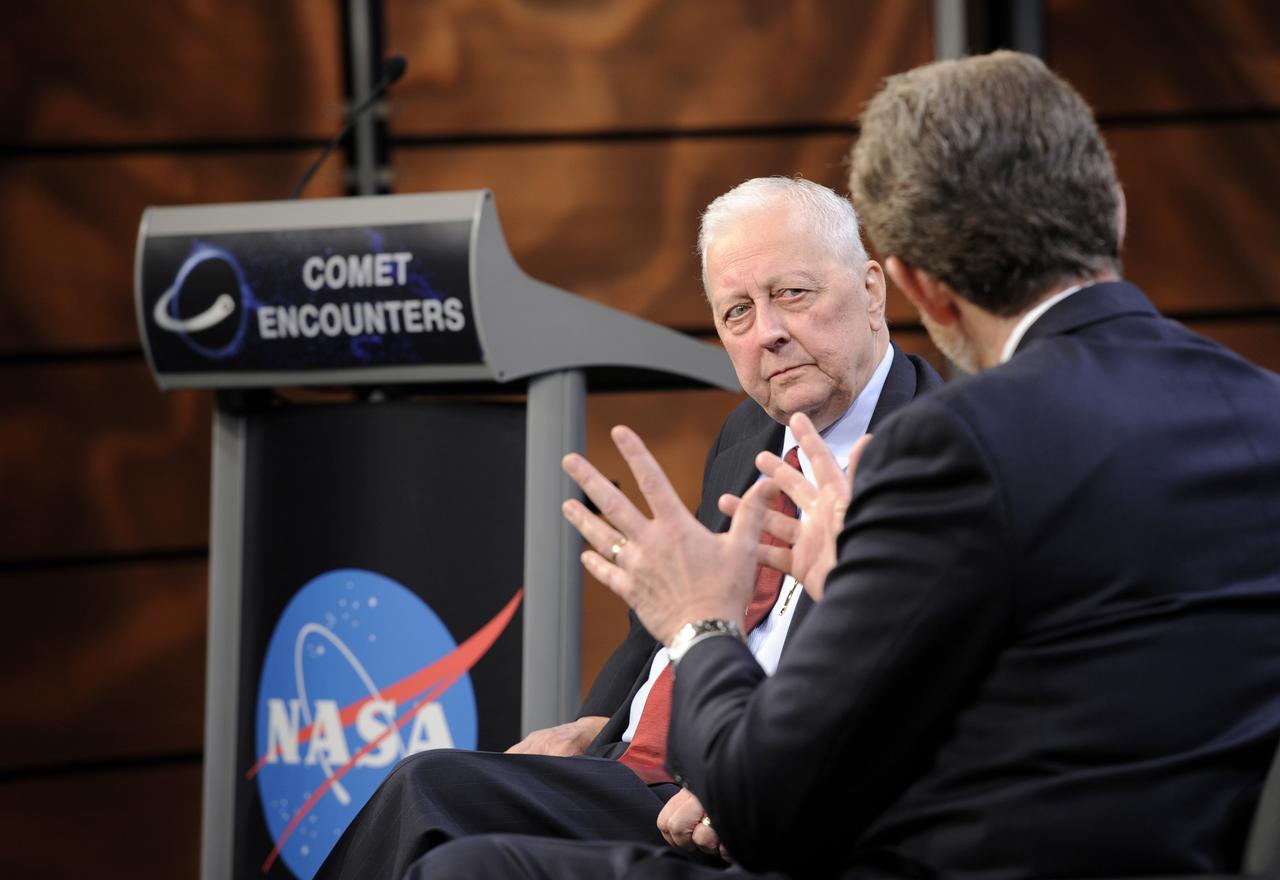
Dr. James L. Green, Director of Planetary Science at NASA, right, speaks with Dr. Robert Farquar, an executive for space exploration at KinetX Inc., during a symposium commemorating a quarter-century of comet discoveries, Friday, Sept. 10, 2010, in the Knight studio at the Newseum in Washington. The International Sun-Earth Explorer-3 (ISEE-3) spacecraft flew past the comet Giacobini-Zinner on Sept. 11, 1985 which established a foundation of discoveries that continue today. Photo Credit: (NASA/Paul E. Alers)
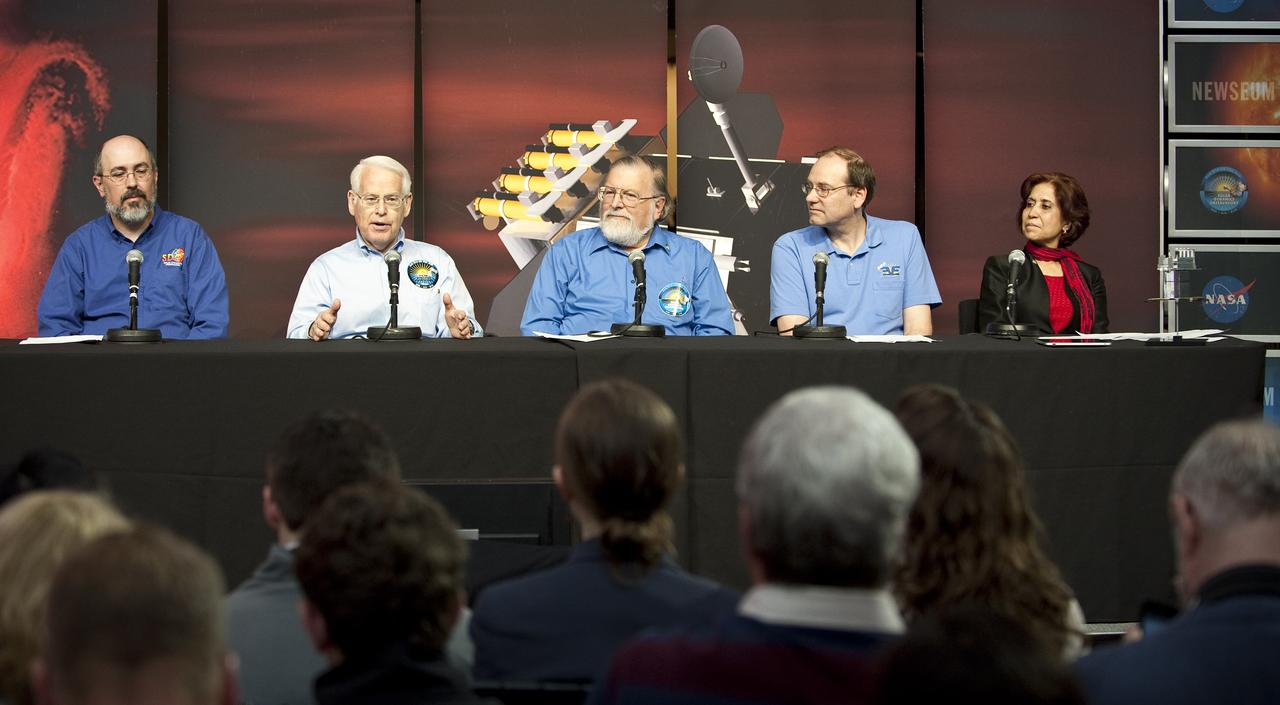
Alan Title, second from left, principal investigator, Atmospheric Imaging Assembly instrument, Lockheed Martin Solar and Astrophysics Laboratory in Palo Alto, speaks during a briefing to discuss recent images from NASA's Solar Dynamics Observatory, or SDO, Wednesday, April 21, 2010, at the Newseum in Washington. Launched on Feb. 11, 2010, SDO is the most advanced spacecraft ever designed to study the sun. During its five-year mission, it will examine the sun's magnetic field and also provide a better understanding of the role the sun plays in Earth's atmospheric chemistry and climate. Pictured from left to right: Dean Pesnell, SDO project scientist, Goddard Space Flight Center in Greenbelt, Md., Alan Title, Philip H. Scherrer, principal investigator, Helioseismic and Magnetic Imager instrument, Stanford University in Palo Alto, Tom Woods, principal investigator, Extreme Ultraviolet Variability Experiment instrument, Laboratory for Atmospheric and Space Physics, University of Colorado in Boulder and Madhulika Guhathakurta, SDO program scientist, NASA Headquarters in Washington. Photo Credit: (NASA/Carla Cioffi)
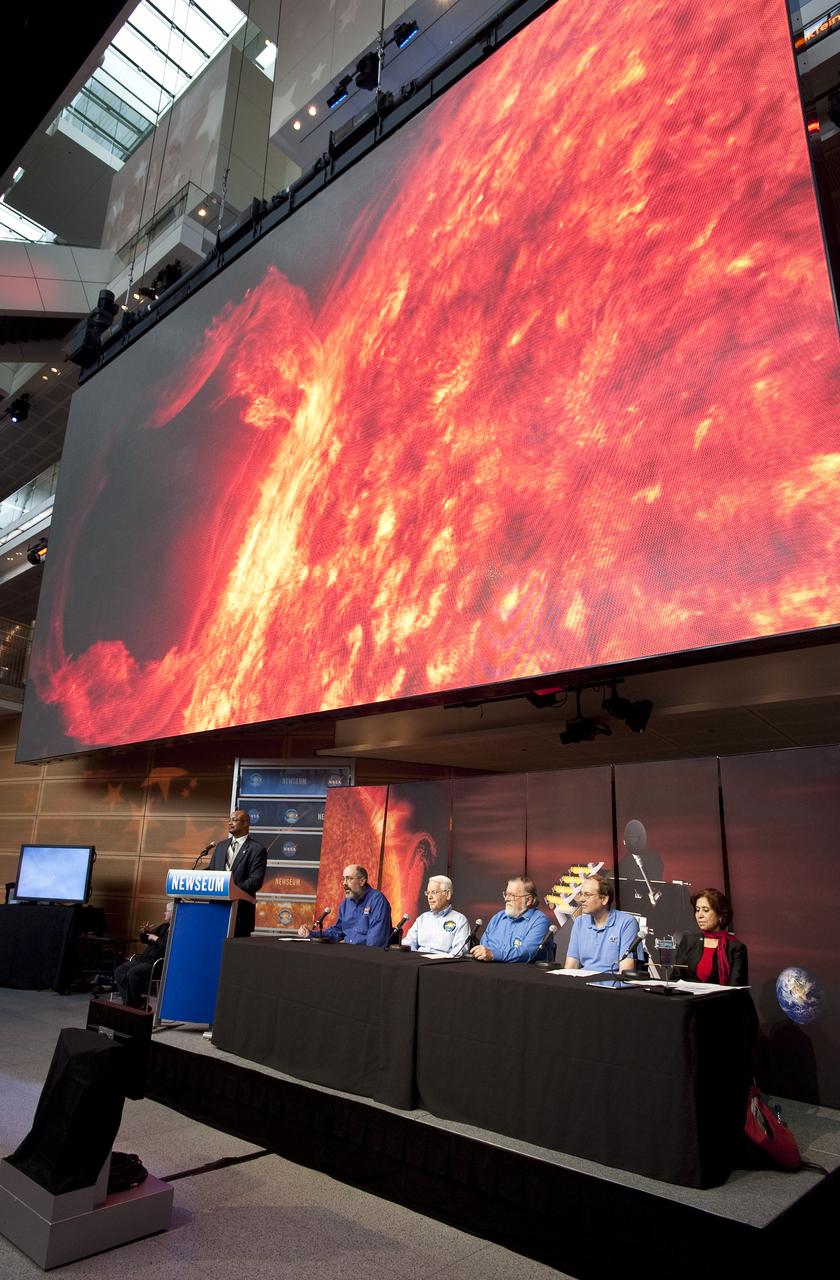
Scientists involved in NASA's Solar Dynamics Observatory (SDO) mission attend a press conference to discuss recent images captured by the SDO spacecraft Wednesday, April 21, 2010, at the Newseum in Washington. On Feb. 11, 2010, NASA launched the SDO spacecraft, which is the most advanced spacecraft ever designed to study the sun. Seated left to right are: Dean Pesnell, SDO project scientist, Goddard Space Flight Center in Greenbelt, Md.; Alan Title, principal investigator, Atmospheric Imaging Assembly instrument, Lockheed Martin Solar and Astrophysics Laboratory in Palo Alto; Philip H. Scherrer, principal investigator, Helioseismic and Magnetic Imager instrument, Stanford University in Palo Alto; Tom Woods, principal investigator, Extreme Ultraviolet Variability Experiment Instrument, Laboratory for Atmospheric and Space Physics, University of Colorado in Boulder and Madhulika Guhathakurta, SDO program scientist, NASA Headquarters in Washington. Photo Credit: (NASA/Carla Cioffi)
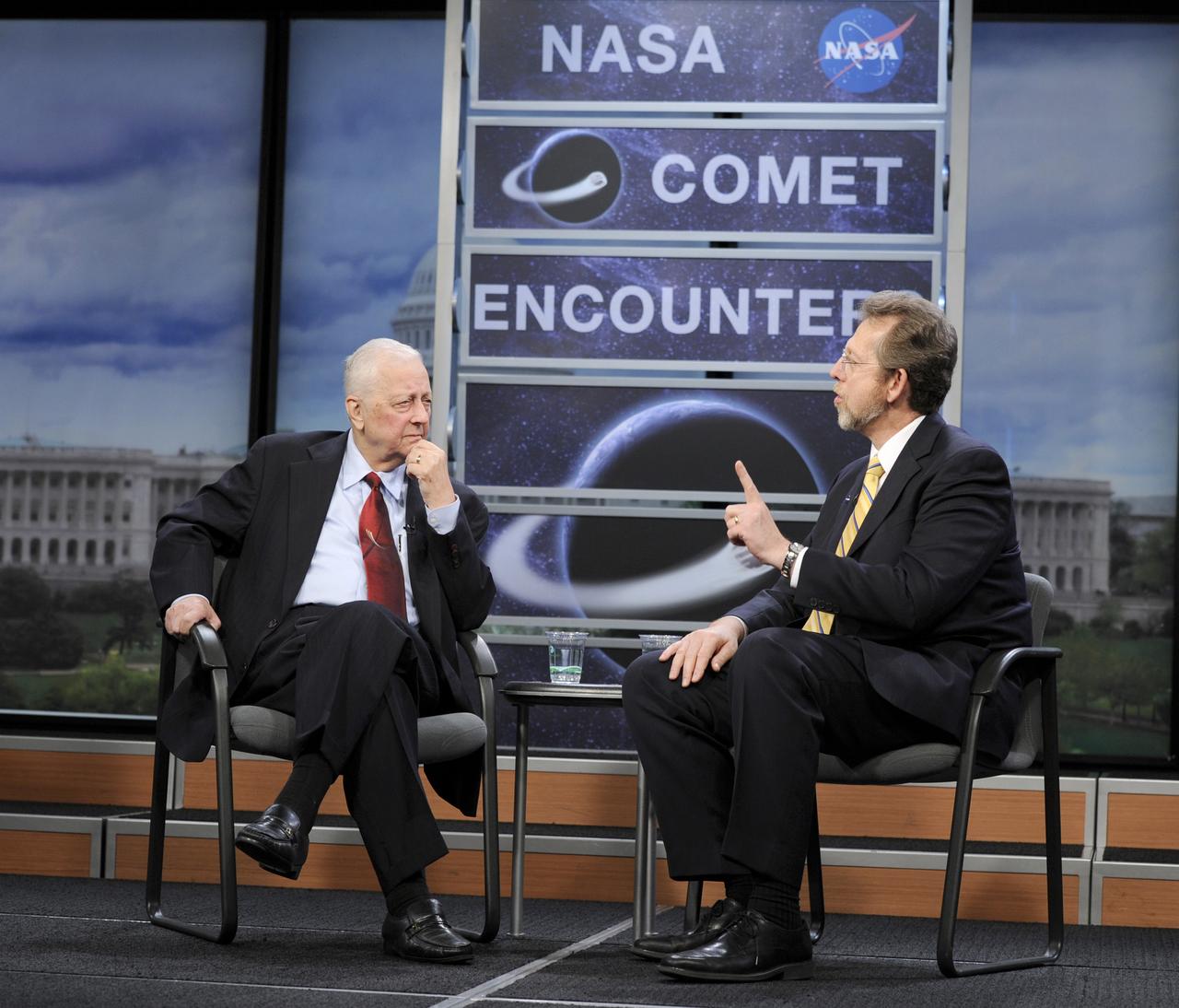
Dr. James L. Green, Director of Planetary Science at NASA, right, speaks with Dr. Robert Farquar, an executive for space exploration at KinetX Inc., during a symposium commemorating a quarter-century of comet discoveries, Friday, Sept. 10, 2010, in the Knight studio at the Newseum in Washington. The International Sun-Earth Explorer-3 (ISEE-3) spacecraft flew past the comet Giacobini-Zinner on Sept. 11, 1985 which established a foundation of discoveries that continue today. Photo Credit: (NASA/Paul E. Alers)
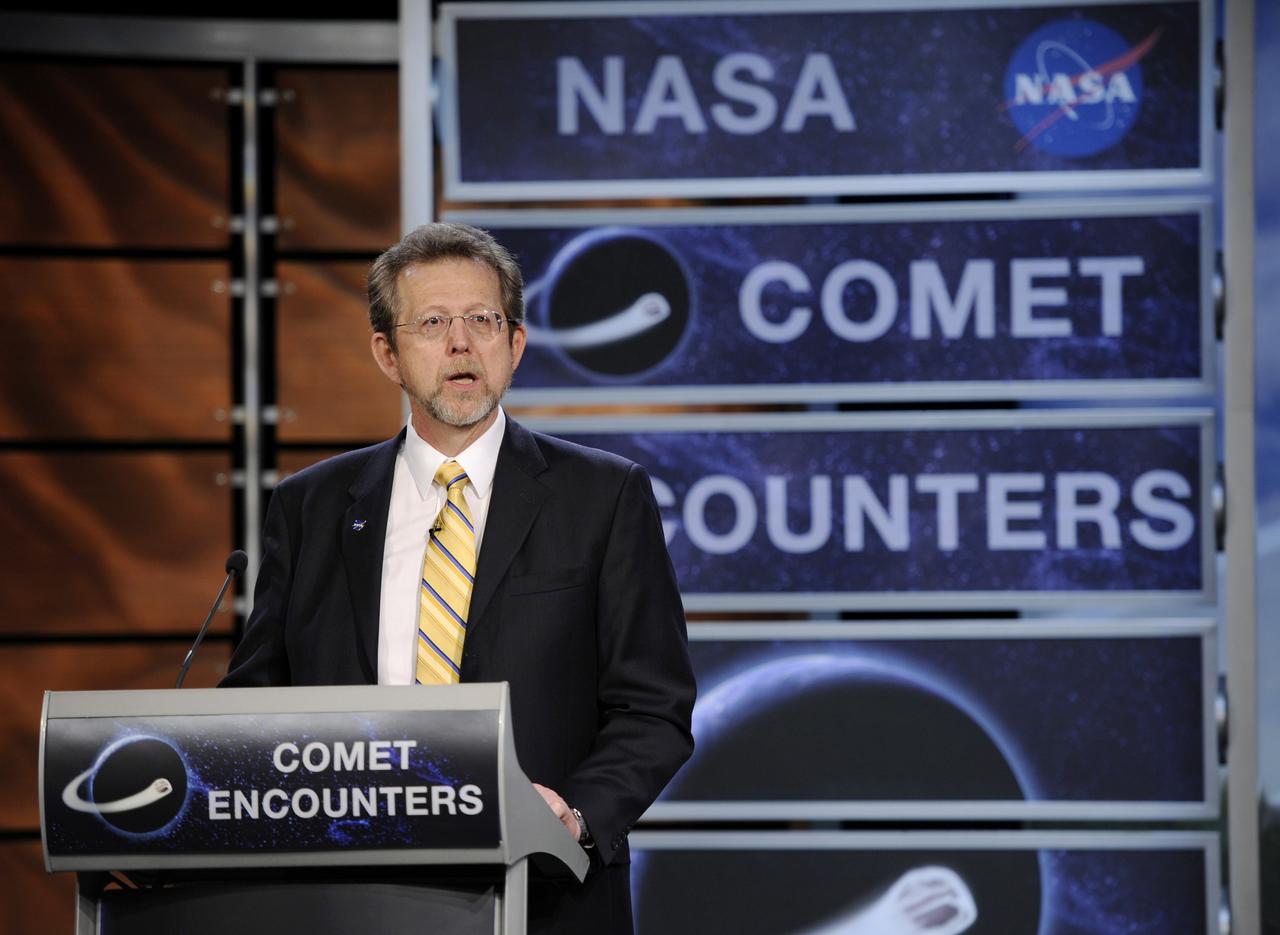
Dr. James L. Green, Director of Planetary Science at NASA, speaks during a symposium commemorating a quarter-century of comet discoveries, Friday, Sept. 10, 2010, in the Knight studio at the Newseum in Washington. The International Sun-Earth Explorer-3 (ISEE-3) spacecraft flew past the comet Giacobini-Zinner on Sept. 11, 1985 which established a foundation of discoveries that continue today. Photo Credit: (NASA/Paul E. Alers)
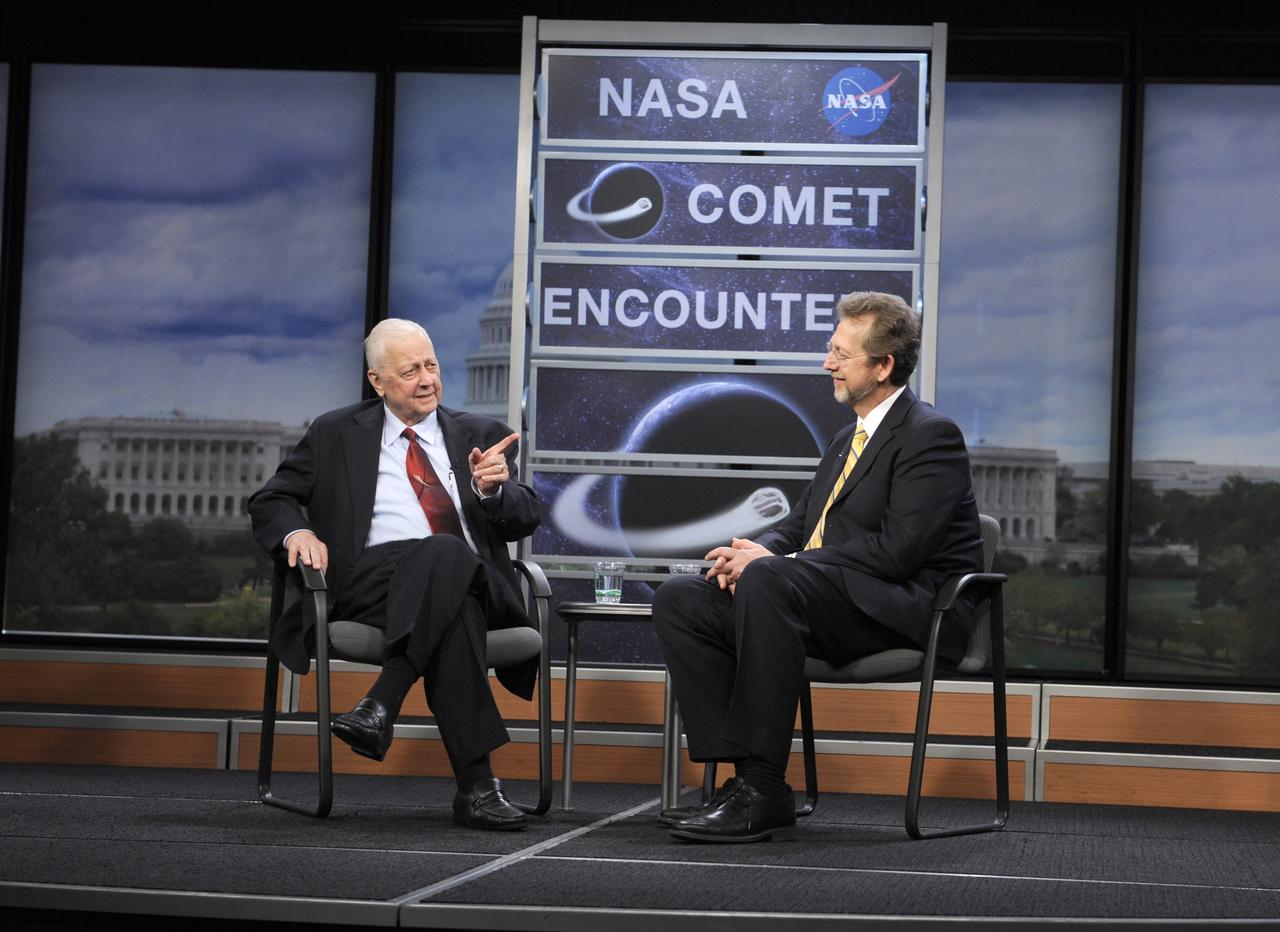
Dr. James L. Green, Director of Planetary Science at NASA, right, speaks with Dr. Robert Farquar, an executive for space exploration at KinetX Inc., during a symposium commemorating a quarter-century of comet discoveries, Friday, Sept. 10, 2010, in the Knight studio at the Newseum in Washington. The International Sun-Earth Explorer-3 (ISEE-3) spacecraft flew past the comet Giacobini-Zinner on Sept. 11, 1985 which established a foundation of discoveries that continue today. Photo Credit: (NASA/Paul E. Alers)
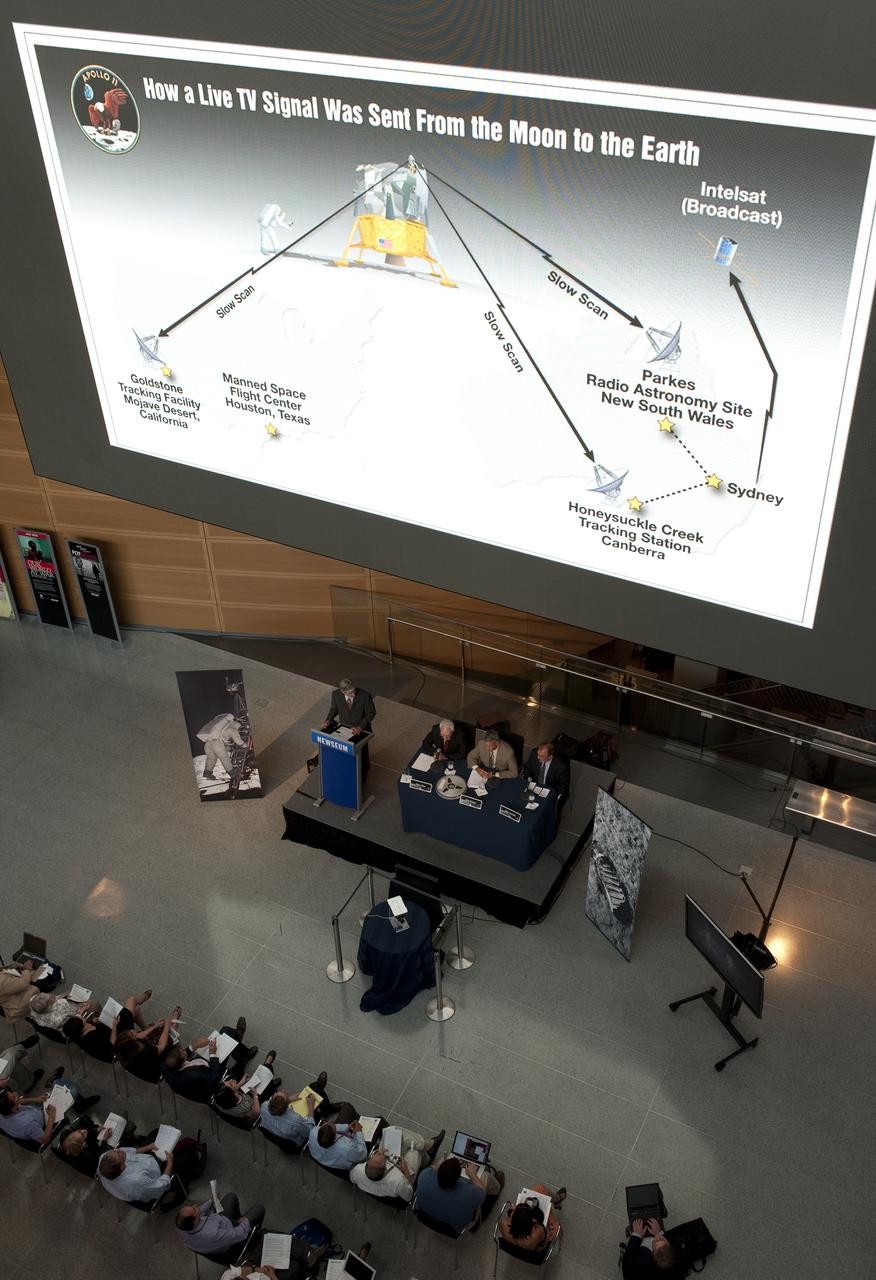
Graphics showing how TV signals were sent from the Apollo 11 mission back to Earth are shown on a large video monitor above panelists at NASA's briefing where restored Apollo 11 moonwalk footage was revealed for the first time at the Newseum, Thursday, July 16, 2009, in Washington, DC. Photo Credit: (NASA/Carla Cioffi)
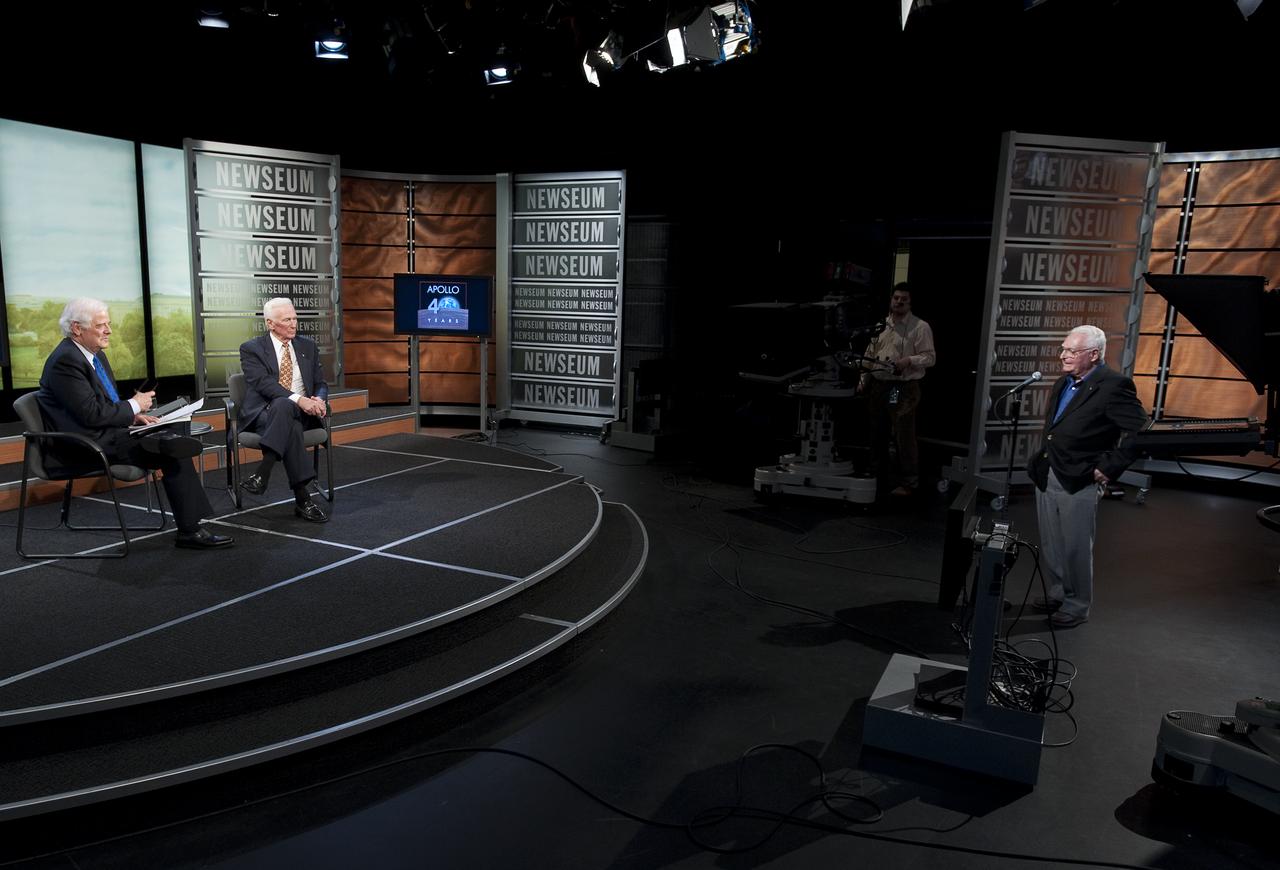
NASA Apollo 10 Astronaut Gene Cernan, on stage, right, and the Newseum's distinguished journalist-in-residence, Nick Clooney, on stage, left, talk with a Stan LeBar, Program Manager of the Apollo TV Lunar Camera who helped see that Apollo 10 was the first mission to broadcast in color from the moon during a Newseum TV program celebrating the 40th anniversary of Apollo 10, Monday, May 18, 2009, in Washington. Photo Credit (NASA/Bill Ingalls)
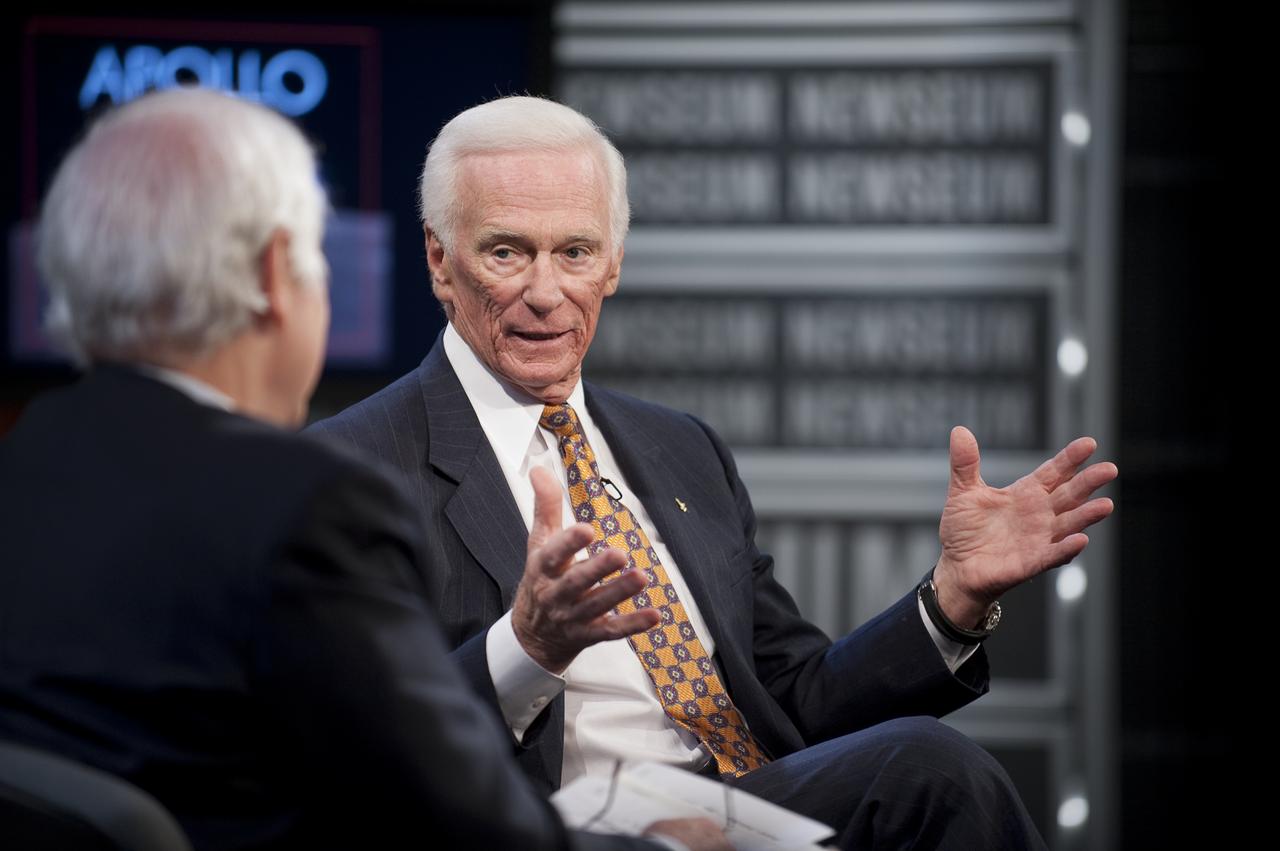
NASA Apollo 10 Astronaut Gene Cernan, right, answers questions from the Newseum's distinguished journalist-in-residence, Nick Clooney during a Newseum TV program celebrating the 40th anniversary of Apollo 10, Monday, May 18, 2009, in Washington. Photo Credit (NASA/Bill Ingalls)