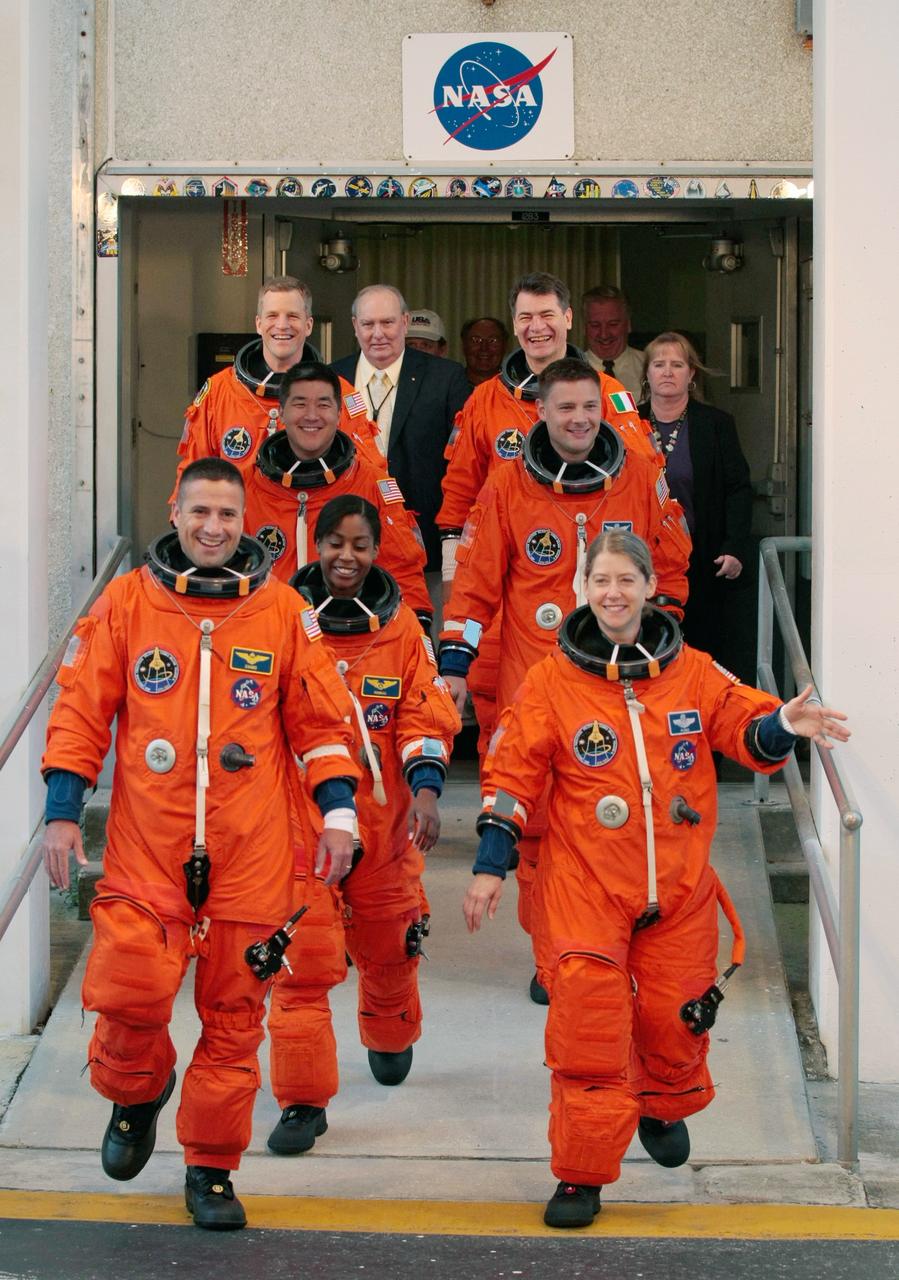
Crew members of space shuttle mission STS-120 prepare to board the bus that will transport them to Launch Pad 39A.
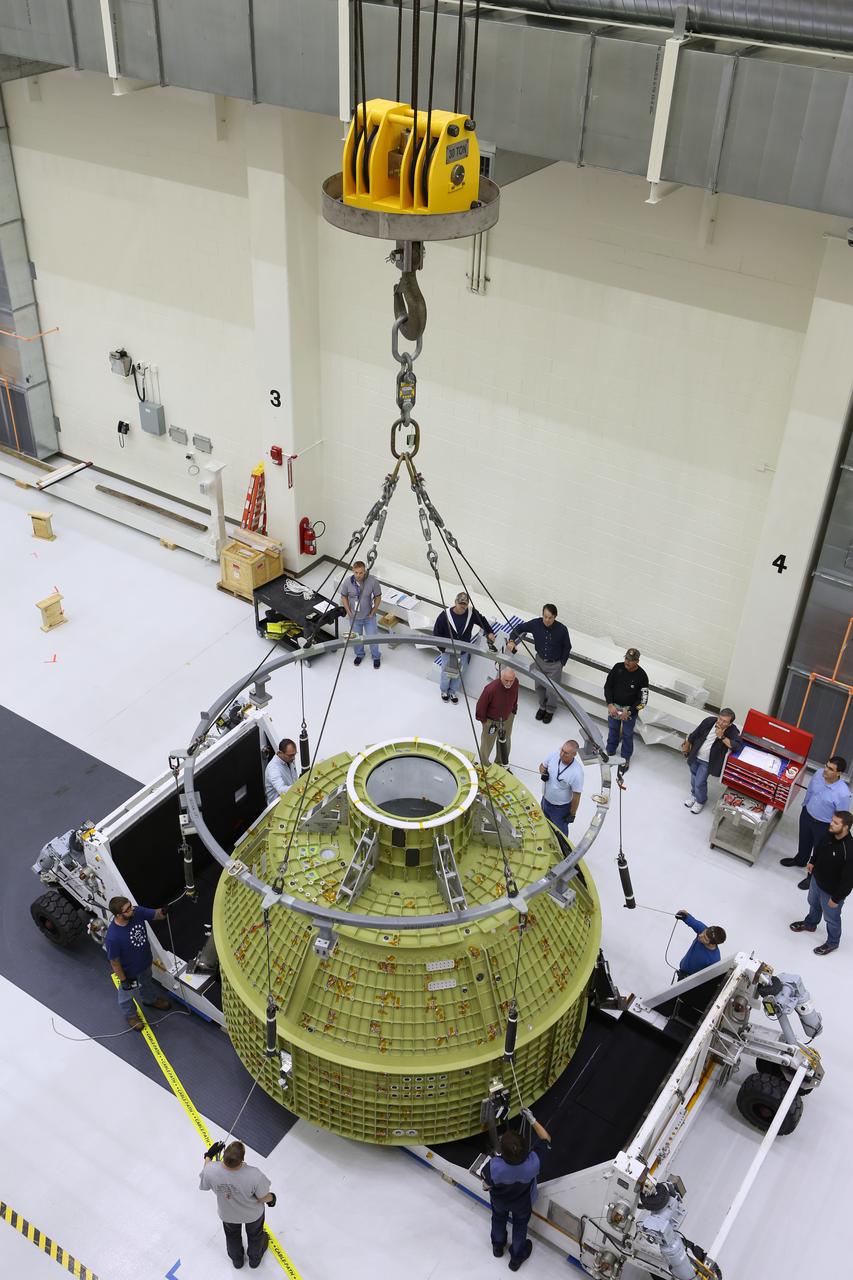
Inside the Neil Armstrong Operations and Checkout Building at NASA’s Kennedy Space Center in Florida, Lockheed Martin technicians attach lines from a crane to the Orion crew module structural test article (STA). The STA arrived aboard NASA's Super Guppy aircraft at the Shuttle Landing Facility operated by Space Florida. The test article will be lifted out of its container and moved to a test tool called the birdcage for further testing. The Orion spacecraft will launch atop NASA’s Space Launch System rocket on EM-1, its first deep space mission, in late 2018.
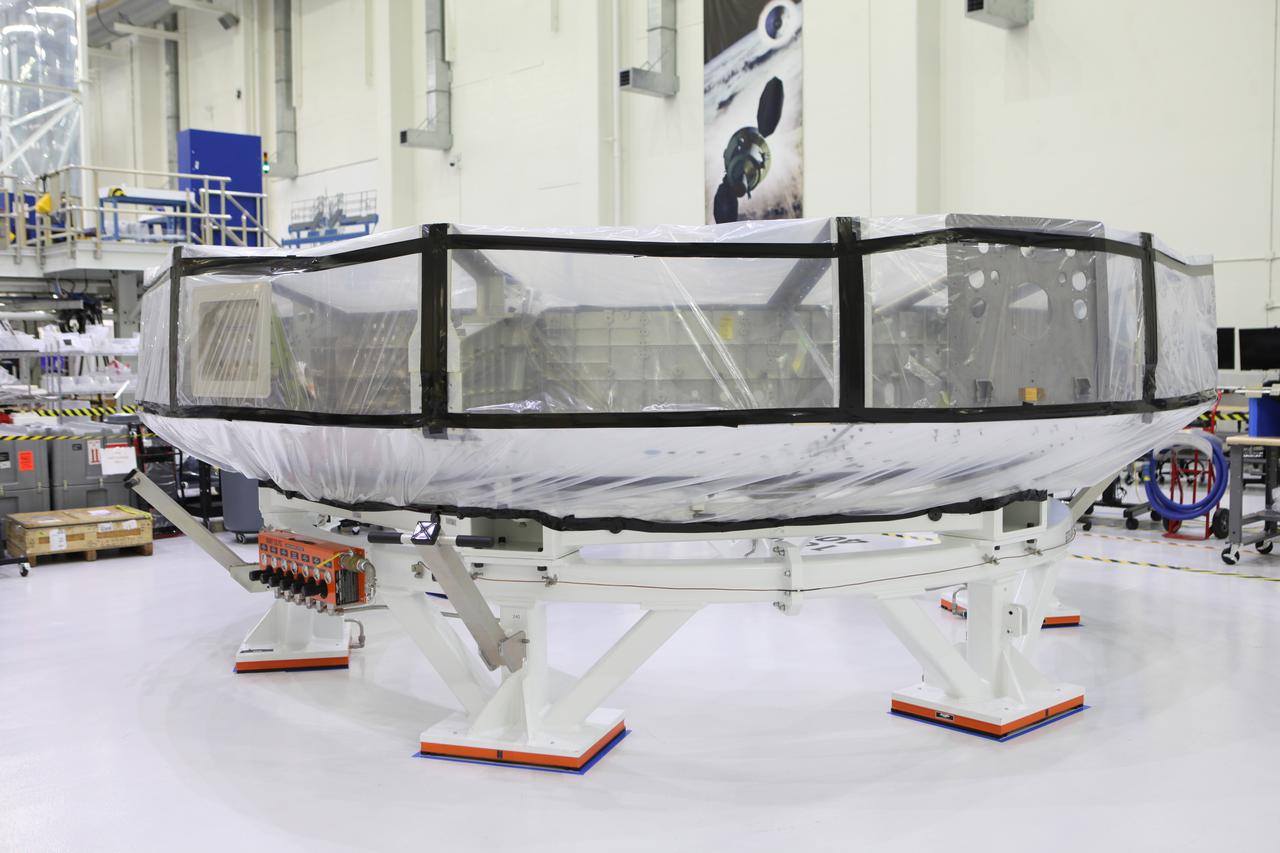
Inside the Neil Armstrong Operations and Checkout Building high bay at NASA’s Kennedy Space Center in Florida, a protective cover is installed around the Orion crew module adapter (CMA) for Exploration Mission 1 (EM-1) for its move to a clean room. The CMA will undergo propellant and environmental control and life support system tube installation and welding. The adapter will connect the Orion crew module to the European Space Agency-provided service module. The Orion spacecraft will launch atop NASA’s Space Launch System rocket on EM-1, its first deep space mission, in late 2018.
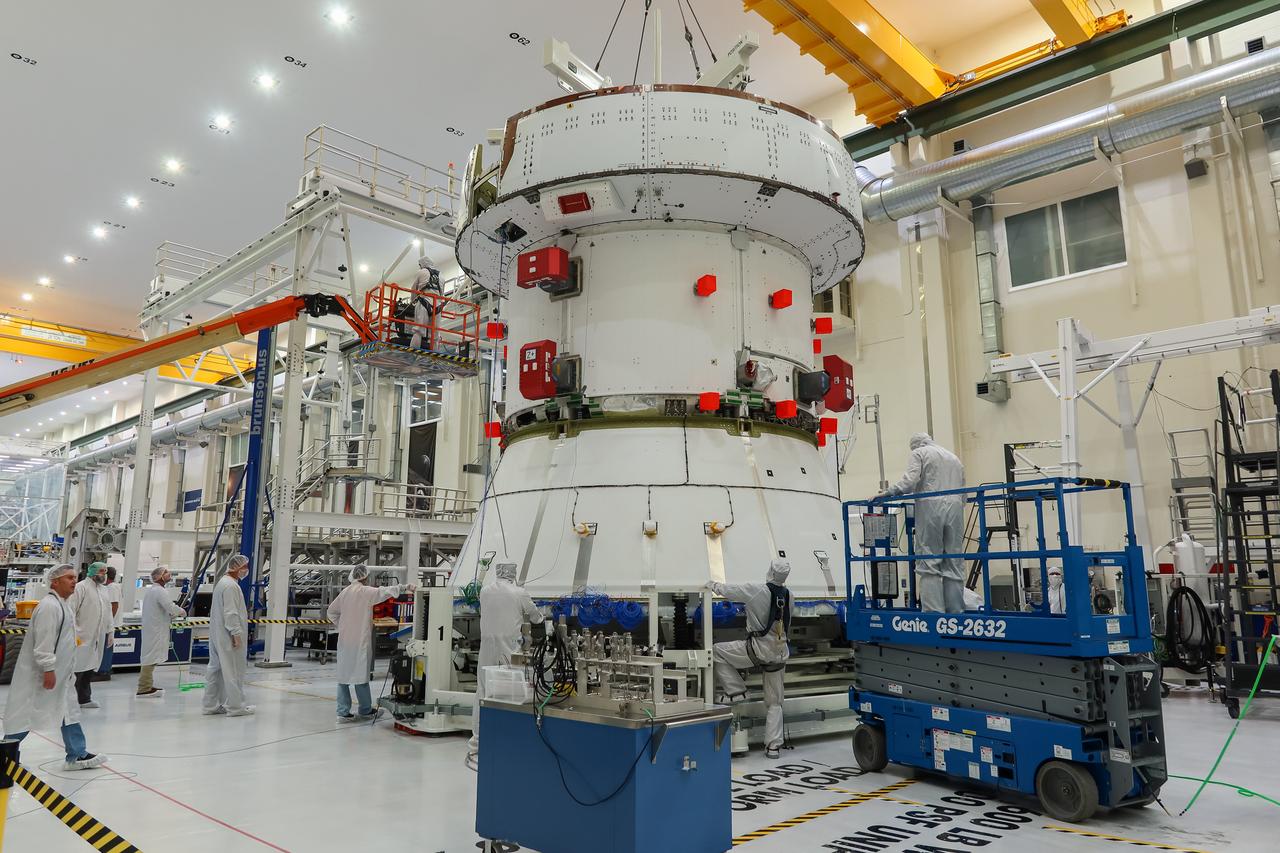
Preparations are underway to lift the European Service Module (ESM) for NASA’s Artemis II mission by crane inside the high bay of the Neil A. Armstrong Operations and Checkout Building at NASA’s Kennedy Space Center in Florida on May 22, 2023. Teams from NASA and Lockheed Martin are preparing the service module for transfer to the FAST (final assembly and system testing) cell for final checkouts before it is stacked with Orion crew module. The powerhouse that will fuel and propel Orion in space, the ESM will be used for Artemis II, the first Artemis mission flying crew aboard Orion.
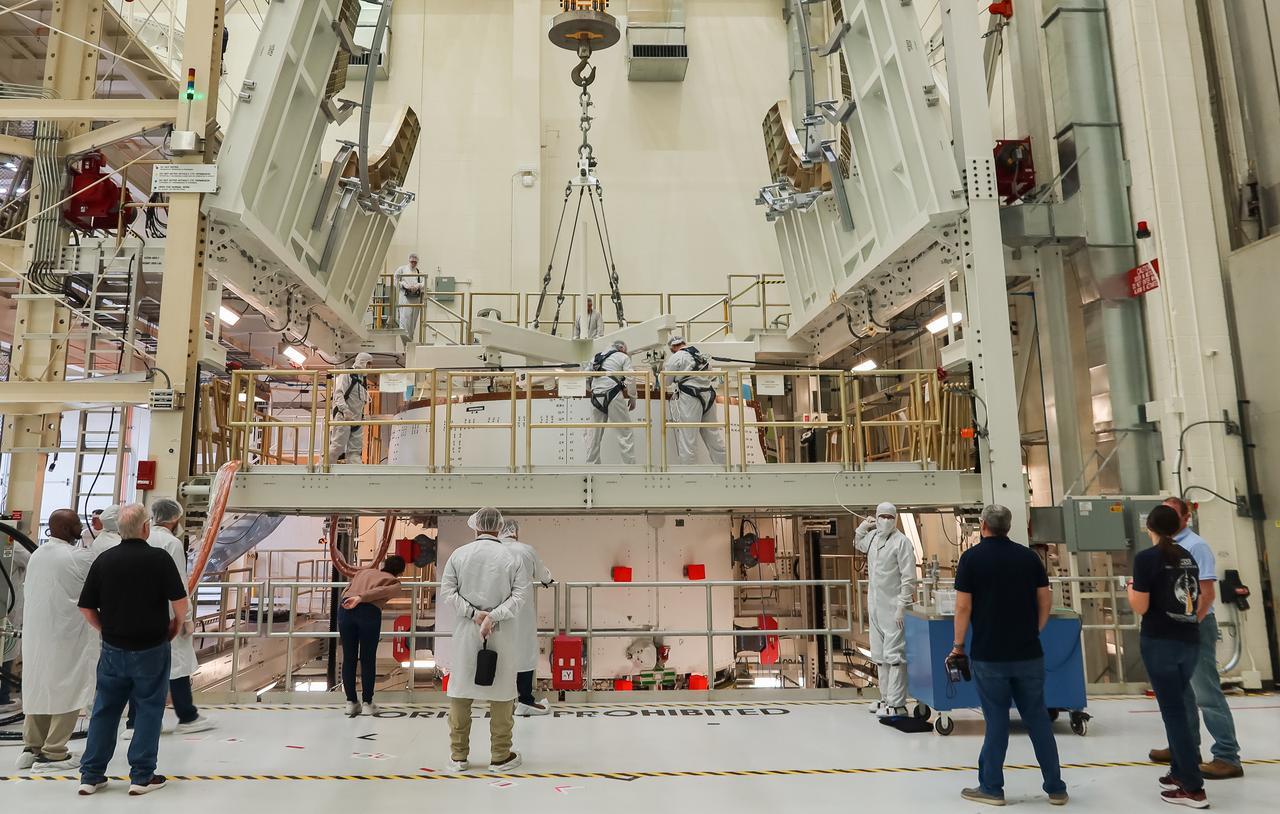
The European Service Module (ESM) for NASA’s Artemis II mission is secured inside the FAST (final assembly and system testing) cell in the high bay of the Neil A. Armstrong Operations and Checkout Building at NASA’s Kennedy Space Center in Florida on May 22, 2023. The ESM is in the FAST cell for final checkouts before it is stacked with the Orion crew module. Technicians are removing the crane that was used to move the ESM. The powerhouse that will fuel and propel Orion in space, the ESM will be used for Artemis II, the first Artemis mission flying crew aboard Orion.
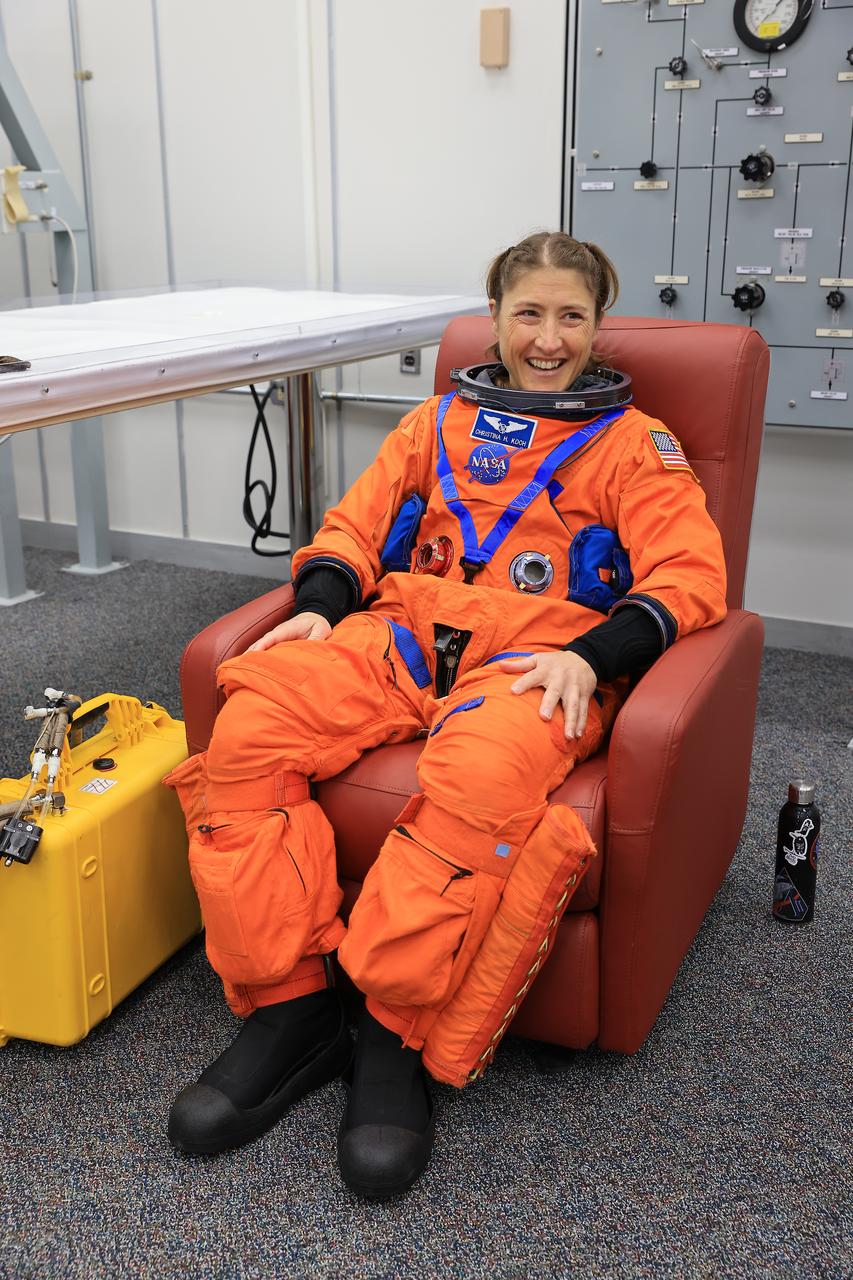
NASA astronaut Christina Koch, Artemis II mission specialist, smiles during suit-up operations inside the Neil A. Armstrong Operations and Checkout Building at NASA’s Kennedy Space Center in Florida on Monday, Aug. 11, 2025. During a two-day operation, the Artemis II team practiced night-run demonstrations of different launch day scenarios like suit-up operations, walk-out, and arriving at the launch pad for the Artemis II test flight. Through the Artemis campaign, NASA will send astronauts to explore the Moon for scientific discovery, economic benefits, and to build the foundation for the first crewed missions to Mars – for the benefit of all.
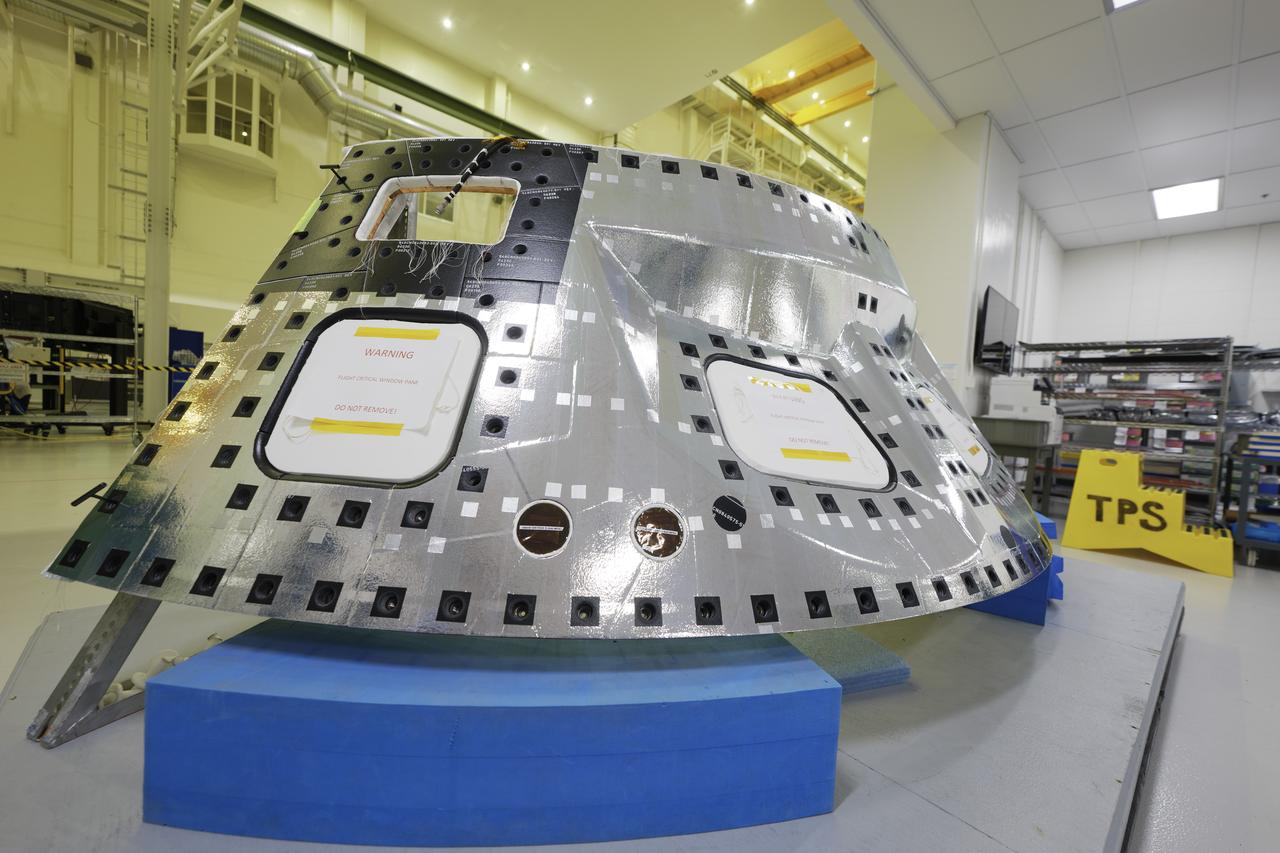
Inside the Operations and Checkout building at NASA's Kennedy Space Center in Florida on Thursday, Feb. 1, 2024, backshell panels and insulation for the Artemis II Orion spacecraft’s exterior are prepped for install. The spacecraft’s exterior will protect the Orion spacecraft and the astronauts inside from the harsh environments they will encounter on their mission.
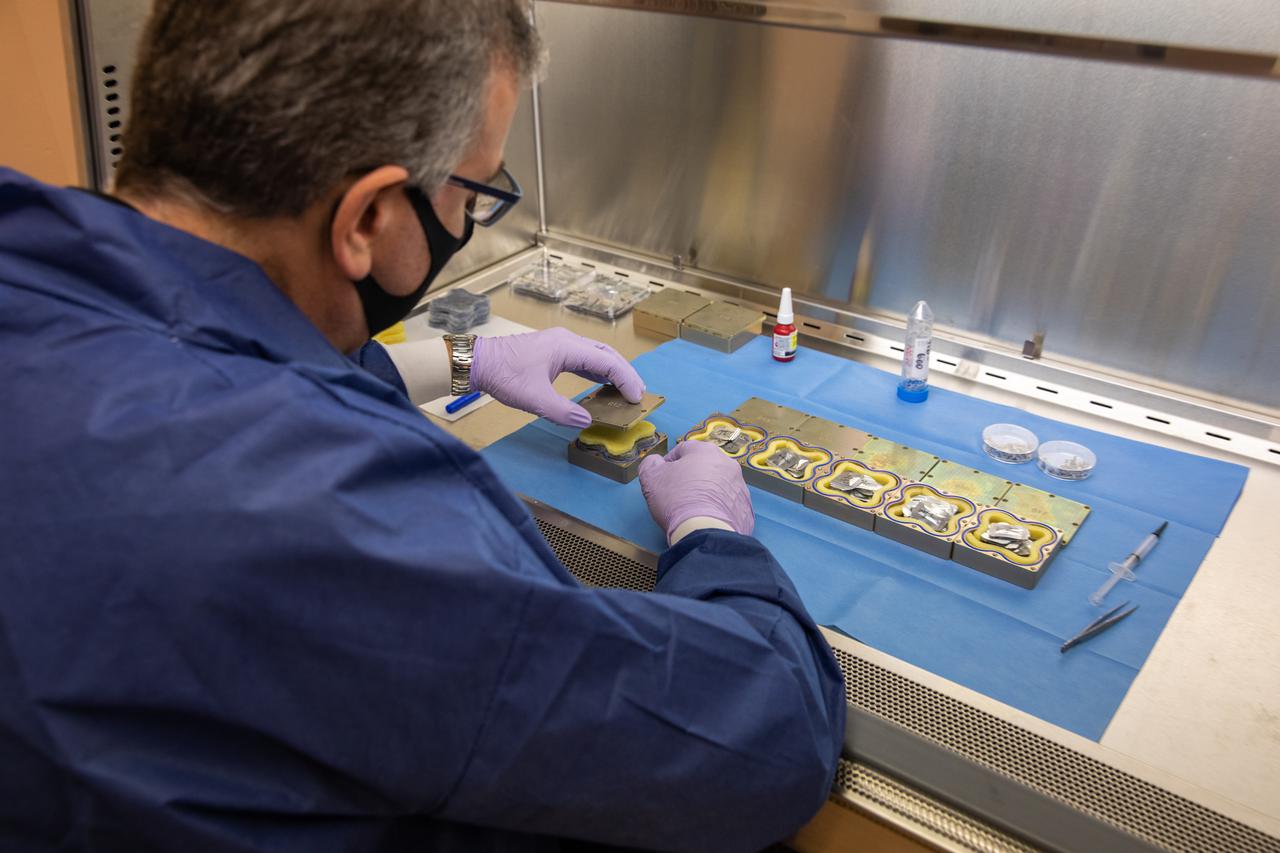
Jeffrey Richards, a project science coordinator working with the Exploration Research and Technology programs at NASA’s Kennedy Space Center in Florida, prepares containers Feb. 11, 2021, for a Materials International Space Station Experiment (MISSE). The containers, carrying sets of seeds, will fly aboard Northrop Grumman’s Cygnus spacecraft as part of NG-15, a NASA commercial resupply mission to the orbiting laboratory targeted for Feb. 20, 2021. They will be placed in the MISSE testing facility, located near the space station’s solar arrays, where they will be exposed to the extreme environment of for six months before returning to Earth for further study.
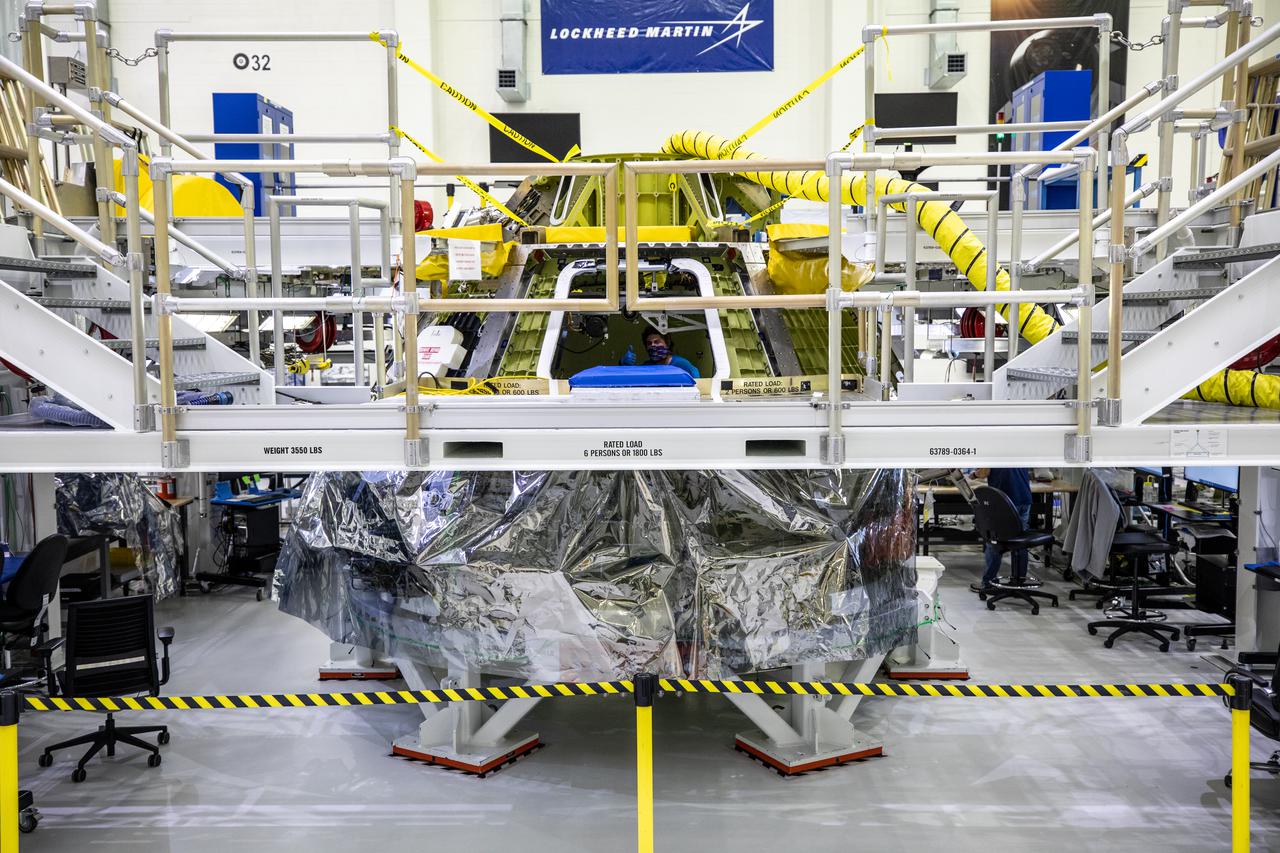
Inside the Neil Armstrong Operations and Checkout Building high bay at NASA's Kennedy Space Center in Florida, assembly continues on Orion’s Artemis II crew module on Feb. 5, 2021. The capsule will house astronauts during its mission around the Moon. Recently, teams removed the spacecraft from its clean room environment, where they have been performing the buildup of the Environmental Control and Propulsion System (ECPS) assemblies prior to their installation into the crew module. It will return to the clean room to complete ECPS final welds and assemblies. Artemis II will confirm all of the Orion spacecraft’s systems operate as designed in the actual environment of deep space with astronauts aboard. As part of the Artemis Program, NASA will send the first woman and next man to the Moon.
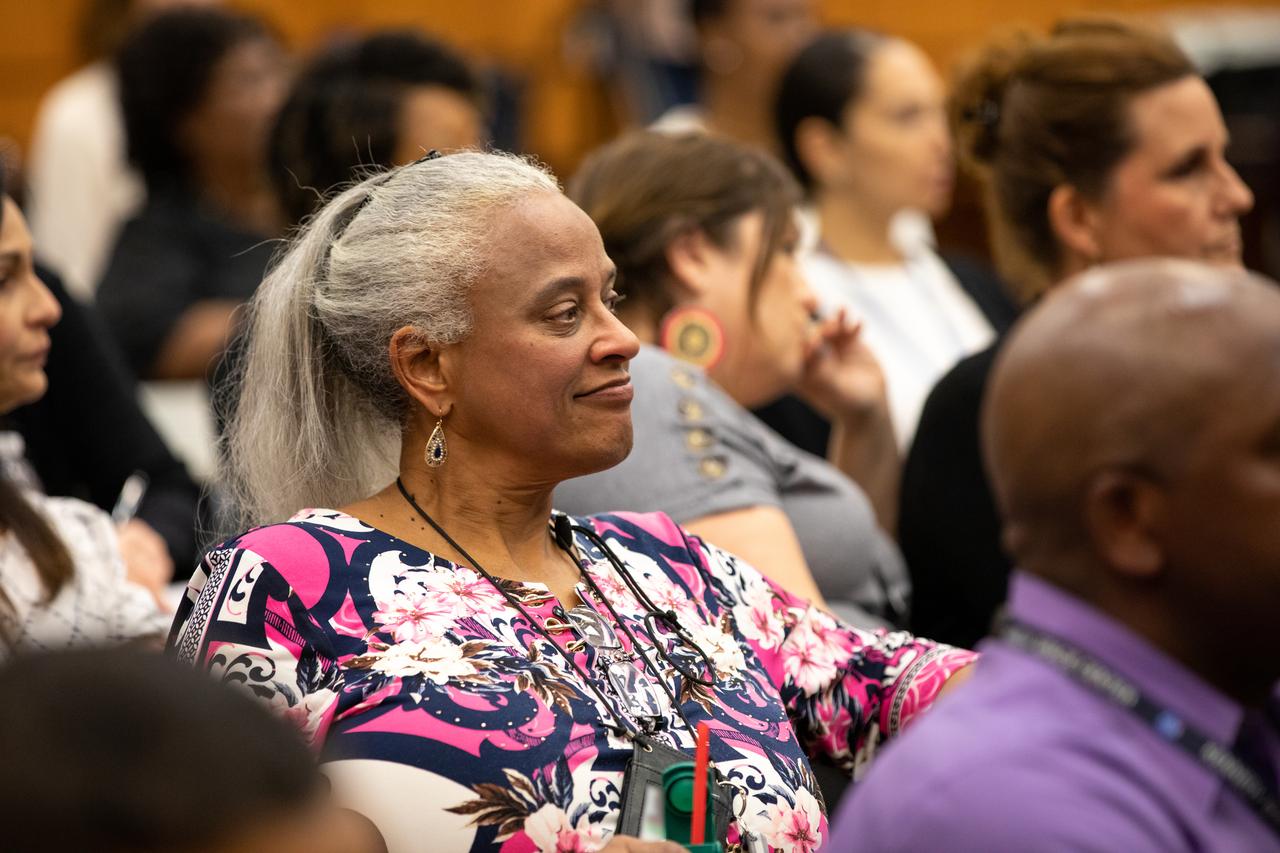
NASA and contractor workers attend a Black History Month celebration at Kennedy Space Center in Florida on Feb. 18, 2020. James Jennings, former NASA associate administrator for Institutions and Management and former Kennedy Space Center deputy director, was the keynote speaker. The program was organized by the Black Employee Strategy Team (BEST), one of the center’s employee resource groups. This year’s theme was “African Americans and the Vote.” Jennings shared advice with workers and managers.
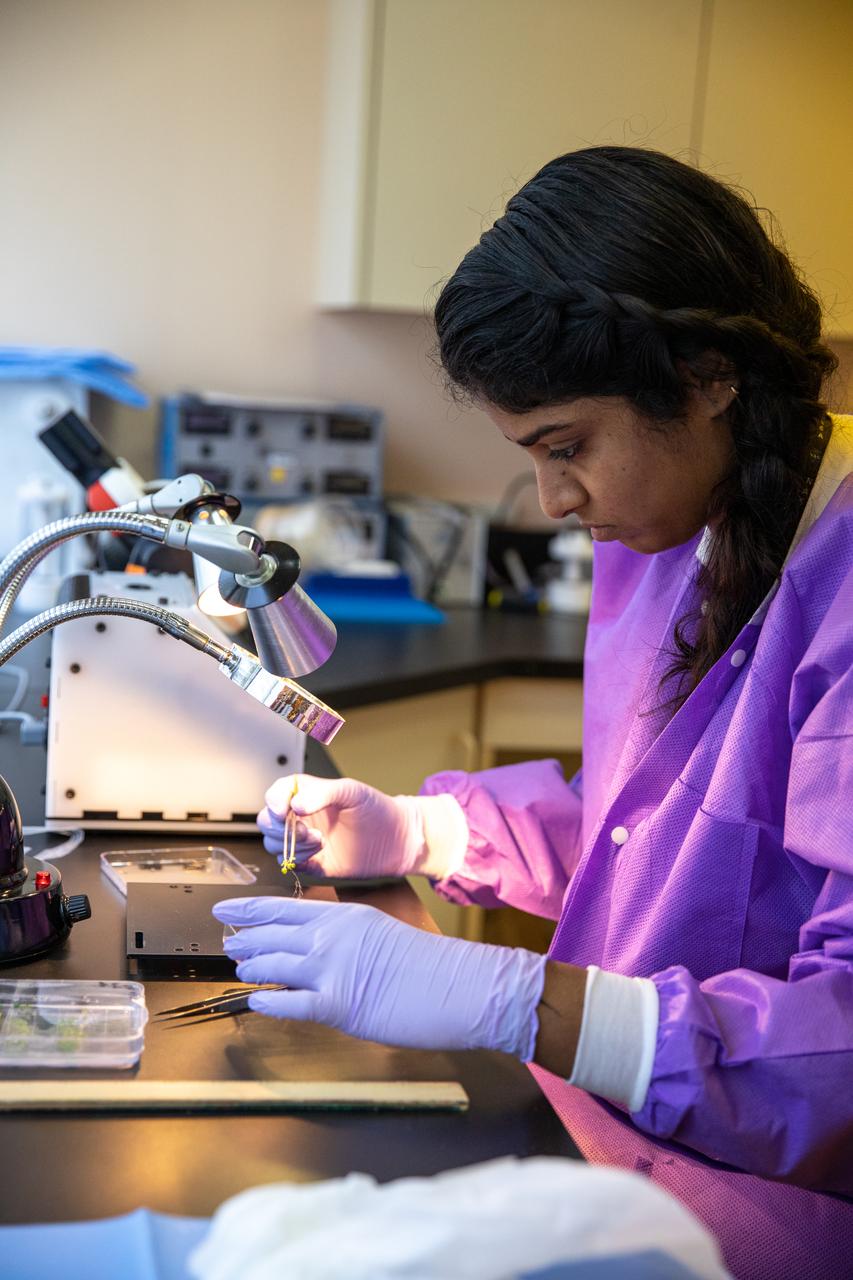
Srujana Neelam, a researcher working at NASA’s Kennedy Space Center in Florida, dissects Arabidopsis thaliana plants from petri plates used in microgravity simulation devices in the Microgravity Simulation Support Facility (MSSF) inside the Neil Armstrong Operations and Checkout building on Feb. 11, 2020. The facility was developed to provide ground simulation capability to the U.S. research community in order to supplement the limited opportunities to access the International Space Station and other platforms for microgravity research. The MSSF is designed to support biological research on microorganisms, cells, tissues, small plants and small animals. The simulator provides NASA with an alternative platform for microgravity research and creates the opportunity to conduct experiments on the space station in parallel with conditions of simulated microgravity on the ground.
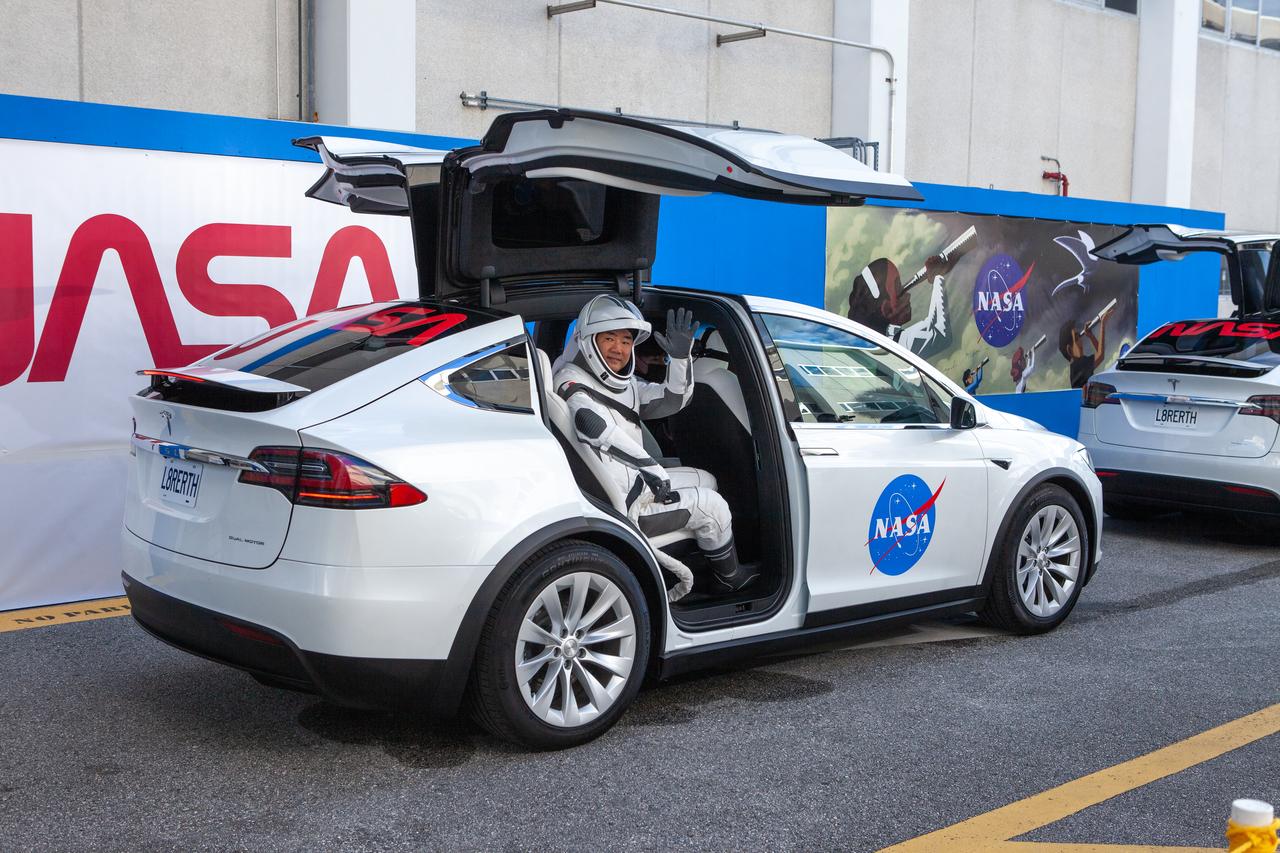
NASA SpaceX’s Crew-1 astronauts board two Tesla vehicles for the trip to Launch Complex 39A after emerging from the Neil Armstrong Operations and Checkout Building at NASA’s Kennedy Space Center in Florida on Nov. 15, 2020. NASA astronauts Michael Hopkins, spacecraft commander; Victor Glover, pilot; and Shannon Walker, mission specialist; and JAXA astronaut Soichi Noguchi, mission specialist will board the Crew Dragon for the first regular crew mission of a U.S. commercial spacecraft with astronauts to the International Space Station as part of NASA’s Commercial Crew Program. The SpaceX Crew Dragon Resilience capsule will launch atop the company’s Falcon 9 rocket from Pad 39A to the space station for a six-month science mission.
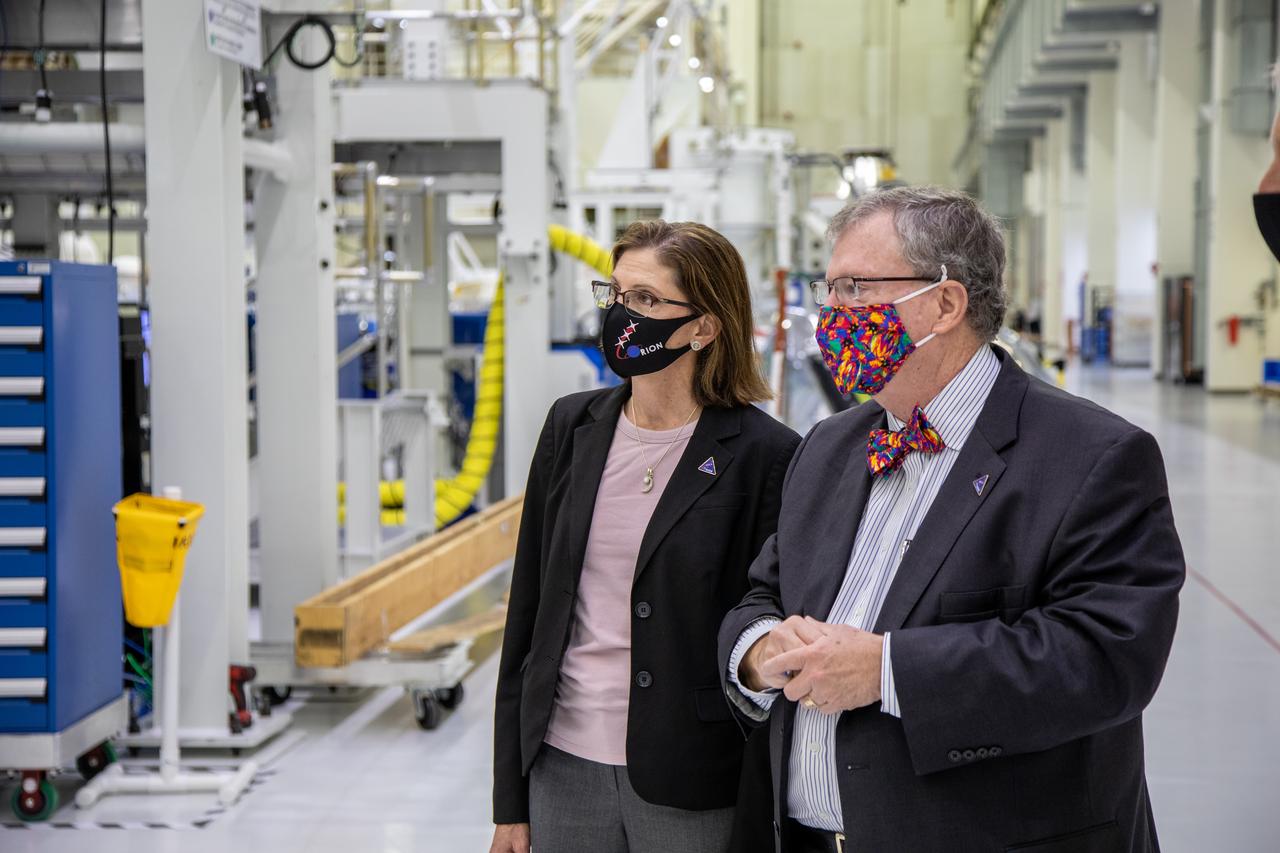
Catherine Koerner, at left, NASA Orion Program manager, along with senior managers from Orion and Lockheed Martin, tours the Neil Armstrong Operations and Checkout Building at NASA’s Kennedy Space Center in Florida on Oct. 6, 2020. Accompanying her, at right is Mike Hawes, Lockheed Martin vice president and Orion Program manager. Koerner viewed Orion spacecraft for the Artemis I and II missions. The first in a series of increasingly complex missions, Artemis I will test the Orion spacecraft and Space Launch System as an integrated system ahead of crewed flights to the Moon. Under the Artemis program, NASA will land the first woman and the next man on the Moon in 2024.
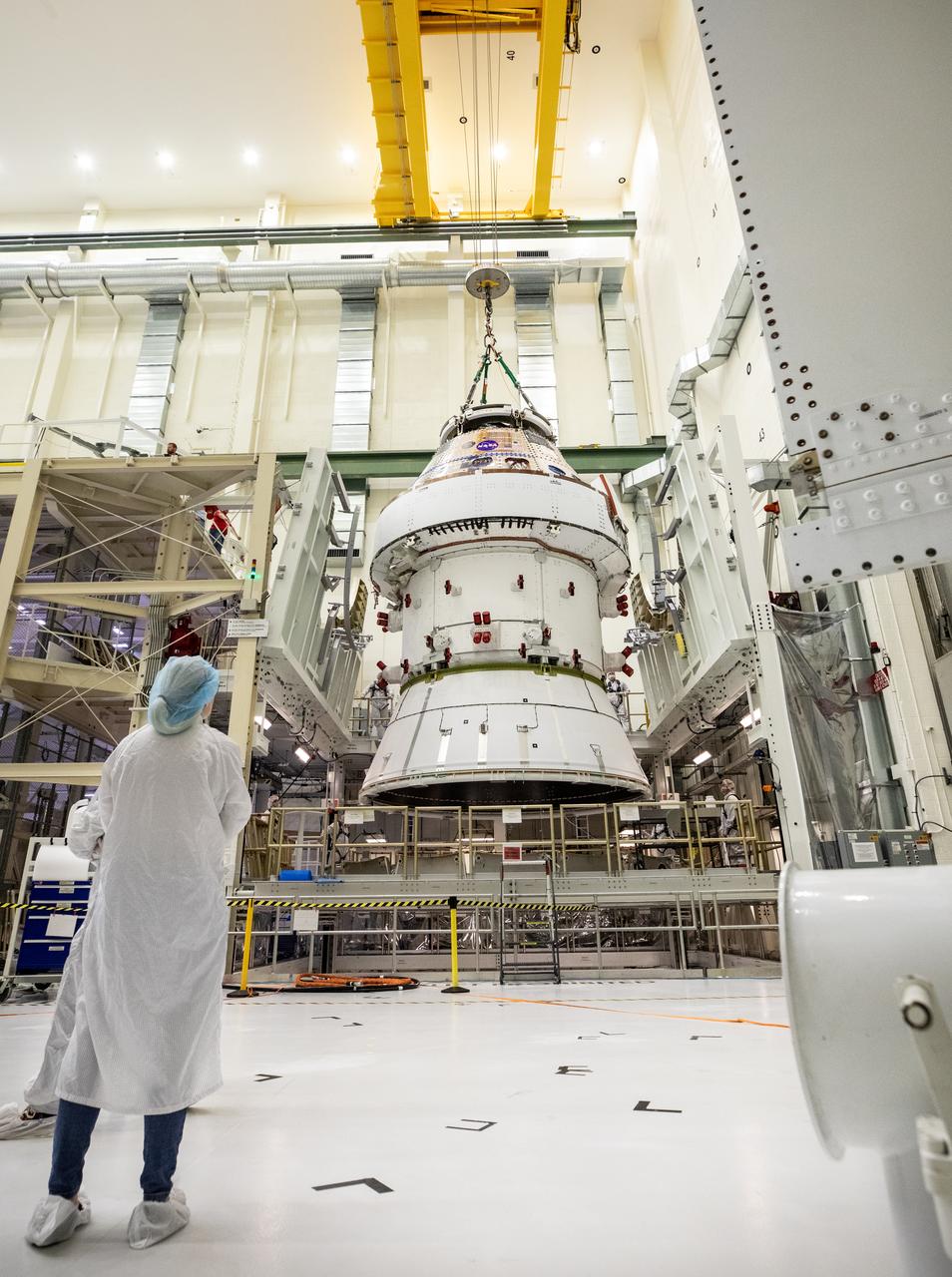
Technicians with NASA and Lockheed Martin operate a 30-ton crane to move NASA’s Artemis II Orion spacecraft out of the Final Assembly and System Testing cell inside the Neil A. Operations and Checkout Building at NASA’s Kennedy Space Center in Florida on Saturday, Feb. 22, 2025. The move prepares for the upcoming installation of four solar array wings and spacecraft adapter jettison fairings for the agency’s first crewed flight test under the Artemis campaign.
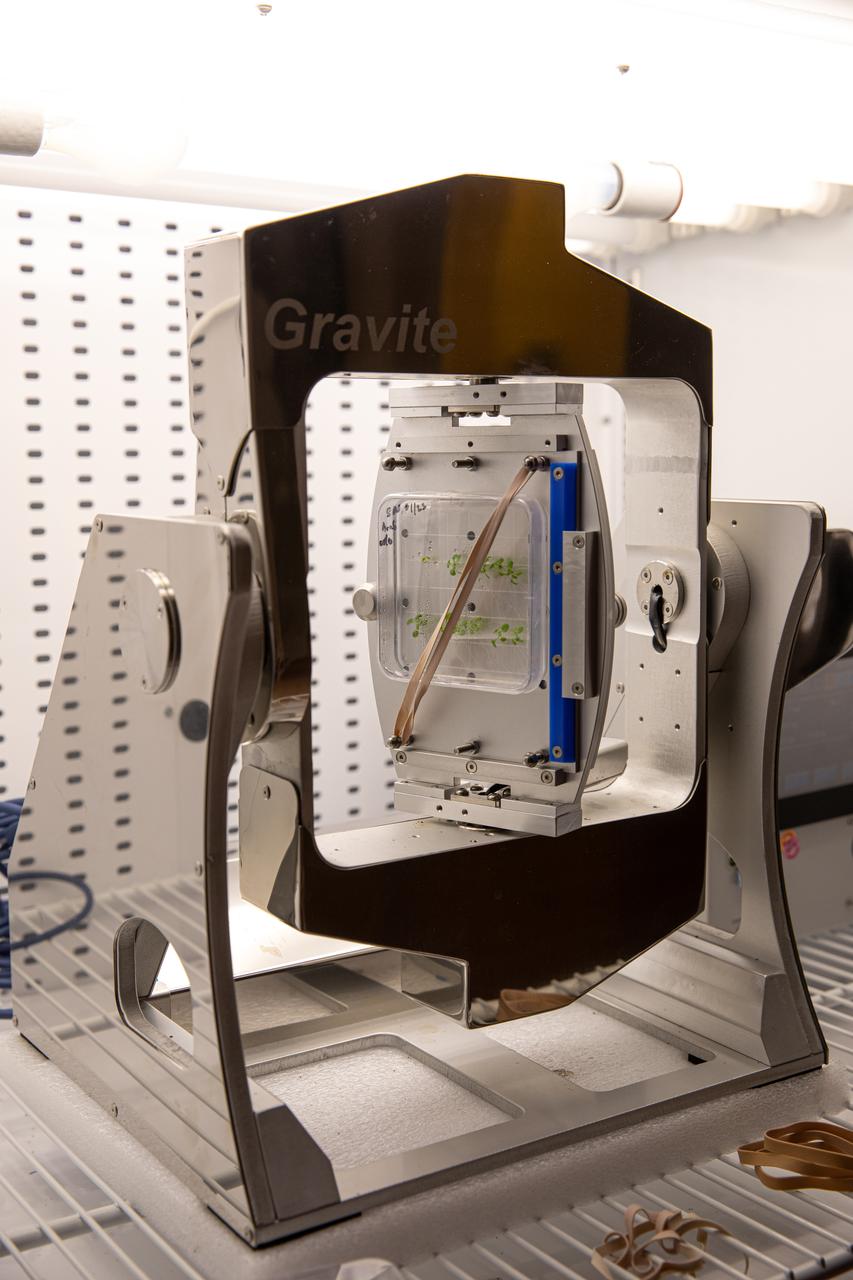
A Gravite 3d clinostat is in the Microgravity Simulation Support Facility (MSSF) inside the Neil Armstrong Operations and Checkout building at NASA’s Kennedy Space Center in Florida on Feb. 11, 2020. The facility was developed to provide ground simulation capability to the U.S. research community in order to supplement the limited opportunities to access the International Space Station and other platforms for microgravity research. The MSSF is designed to support biological research on microorganisms, cells, tissues, small plants and small animals. The simulator provides NASA with an alternative platform for microgravity research and creates the opportunity to conduct experiments on the space station in parallel with conditions of simulated microgravity on the ground.
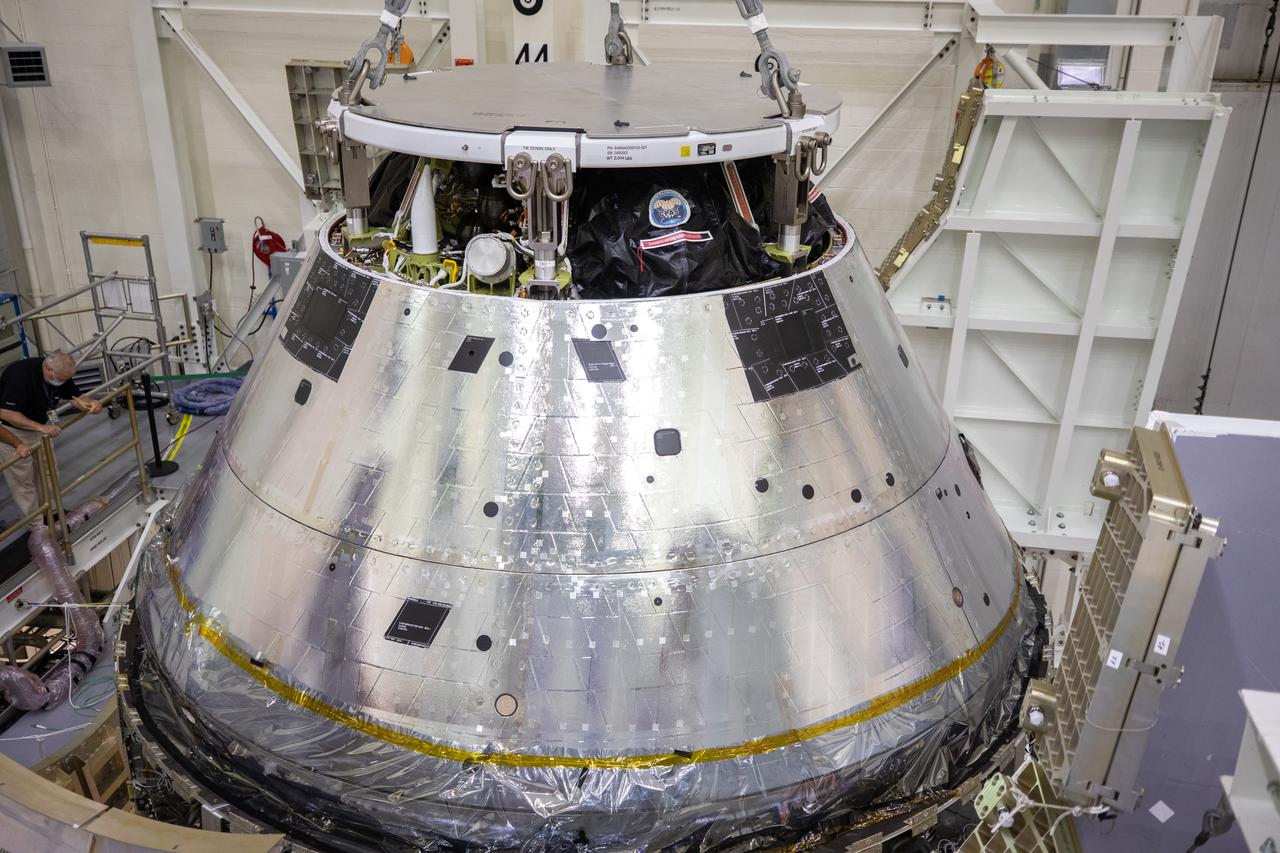
The Artemis I Orion spacecraft is lowered by crane into the FAST cell after installation of the spacecraft adapter (SA) cone was completed inside the Neil Armstrong Operations and Checkout Building on Aug. 20, 2020. This is one of the final major hardware operations the spacecraft will undergo during closeout processing prior to being integrated with the Space Launch System (SLS) rocket in preparation for the first Artemis mission. The spacecraft adapter cone connects the bottom portion of Orion’s service module to the top part of the rocket known as the interim cryogenic propulsion stage (ICPS). Orion will fly on the agency’s Artemis I mission – the first in a series of increasingly complex missions to the Moon that will ultimately lead to the exploration of Mars.
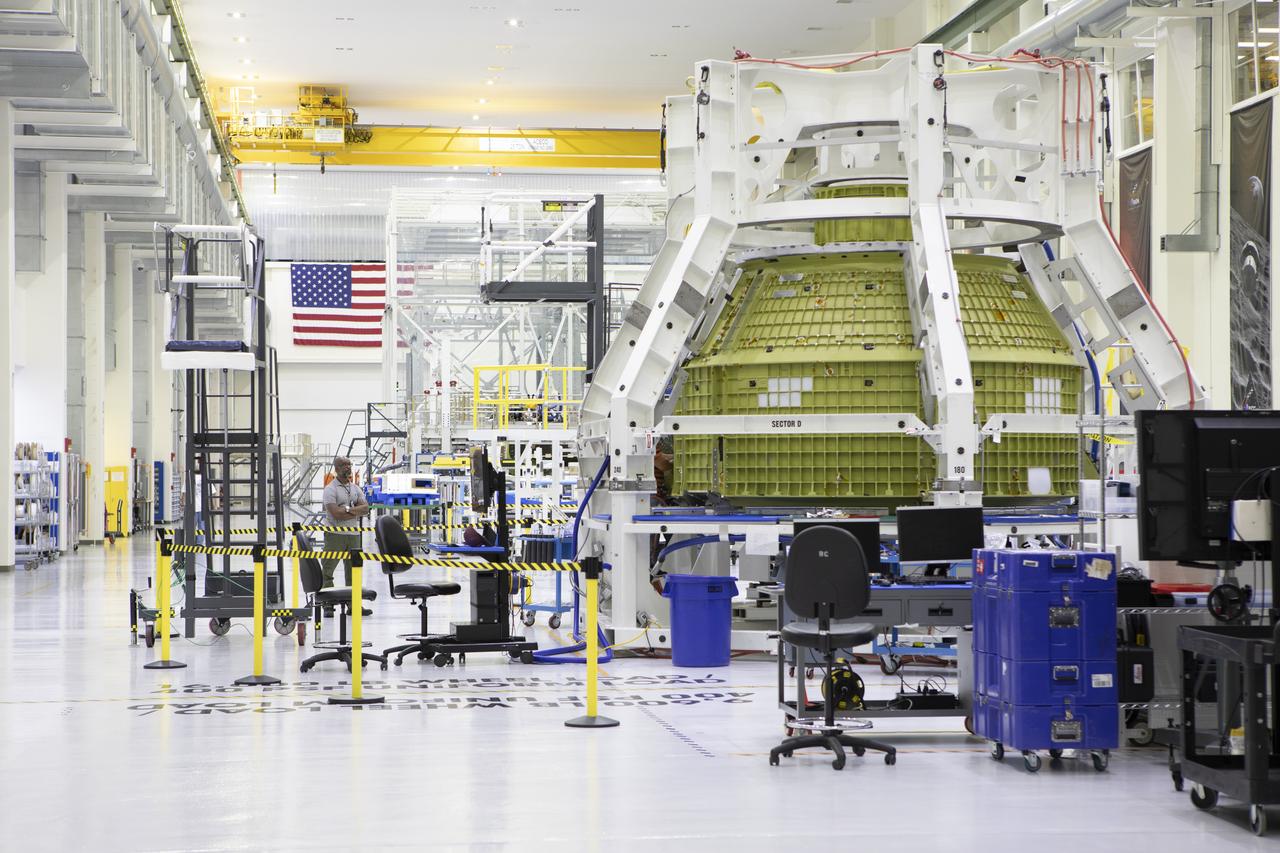
The Orion pressure vessel for Exploration Mission-2 (EM-2) is inside processing equipment where it is getting where it is getting initial processing done.

JAXA (Japan Aerospace Exploration Agency) astronaut Takuya Onishi is photographed in his SpaceX spacesuit inside the crew suit-up room in the Neil A. Armstrong Operations and Checkout Building at the agency’s Kennedy Space Center in Florida ahead of launch of NASA’s SpaceX Crew-10 mission on Friday, March 14, 2025. Onishi, NASA astronauts Anne McClain and Nichole Ayers, along with Roscosmos cosmonaut Kirill Peskov are scheduled to lift off aboard SpaceX’s Dragon spacecraft and Falcon 9 rocket at 7:03 p.m. EDT, from Launch Complex 39A at NASA Kennedy. Crew-10 is the 10th crew rotation mission with SpaceX to the space station as part of the agency’s Commercial Crew Program
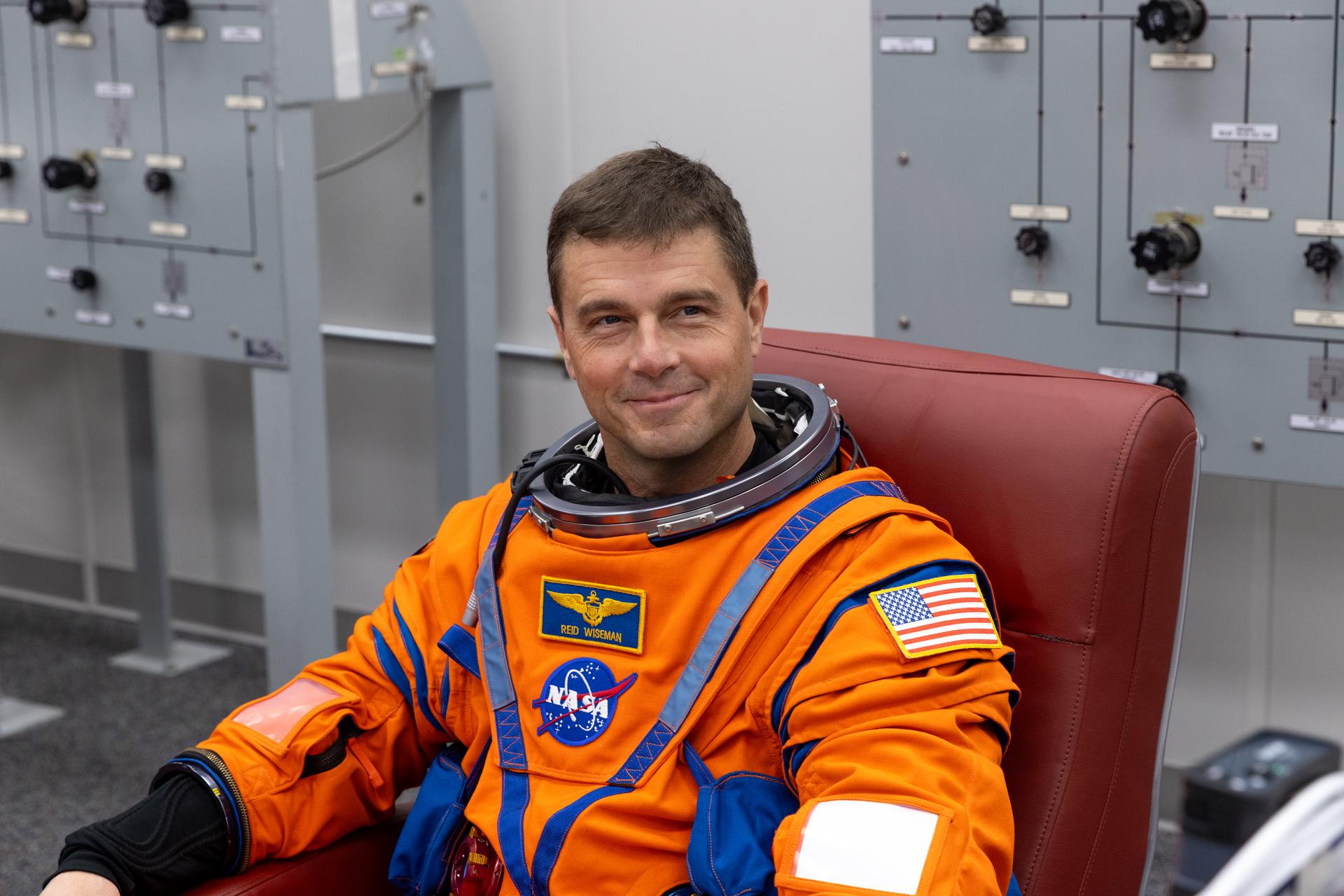
NASA astronaut Reid Wiseman, Artemis II commander, undergoes spacesuit checks inside the crew quarters suit-up room in the Neil A. Armstrong Operations and Checkout Building part of the Artemis II Countdown Demonstration Test at the agency’s Kennedy Space Center on Saturday, Dec. 20, 2025. For this operation, the Artemis II crew and launch team are simulating the launch day timeline including suit-up, walkout, and climbing in and out of the spacecraft. Through the Artemis campaign, NASA will send astronauts to explore the Moon for scientific discovery, economic benefits, and to build the foundation for the first crewed missions to Mars, for the benefit of all.
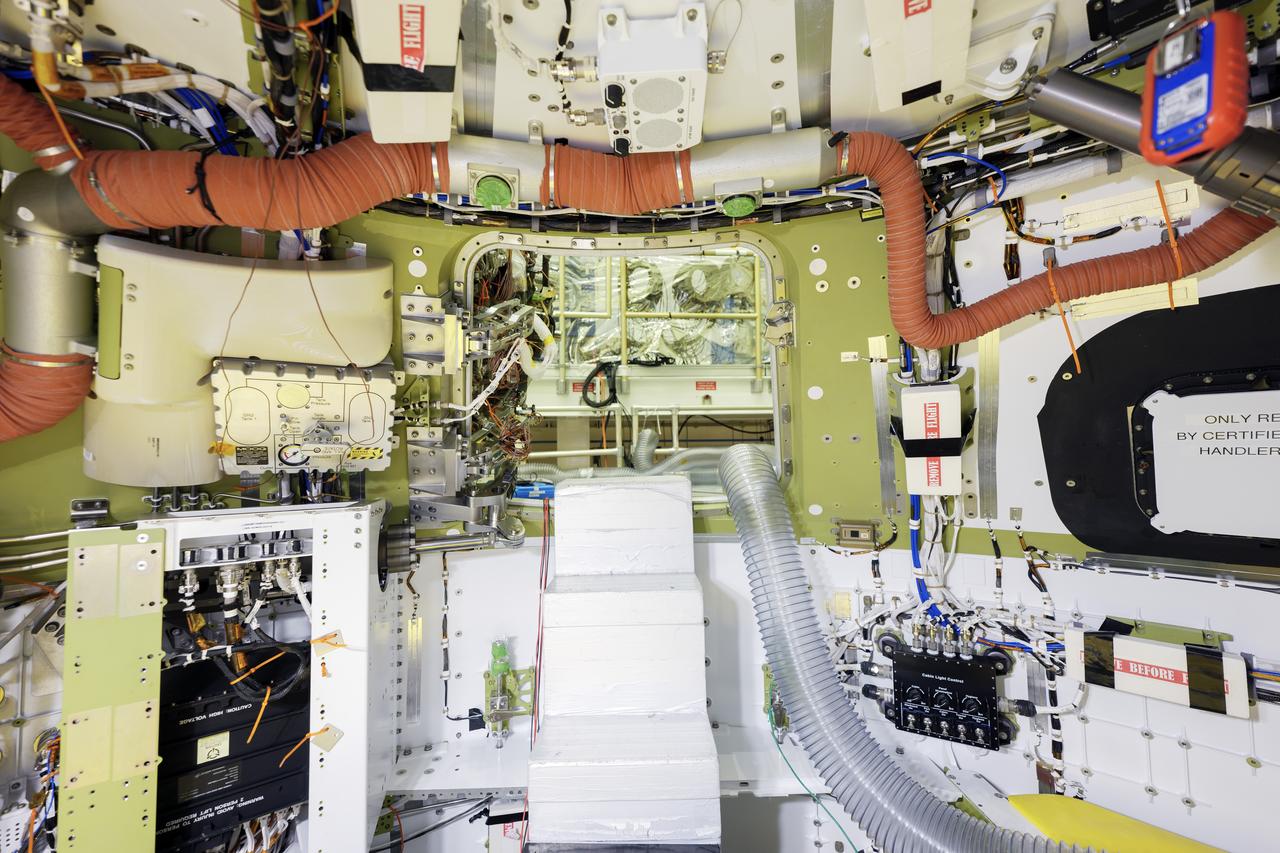
Teams inside the Operations and Checkout building at NASA’s Kennedy Space Center in Florida on Thursday, Feb. 1, 2024, work on the Orion spacecraft crew module that will carry the Artemis II astronauts on their 10-day journey around the Moon. Technicians are finalizing the crew cabin’s interior, and installing backshell panels and insulation on the spacecraft’s exterior that will protect Orion and the astronauts inside from the harsh environments they will encounter on their mission.
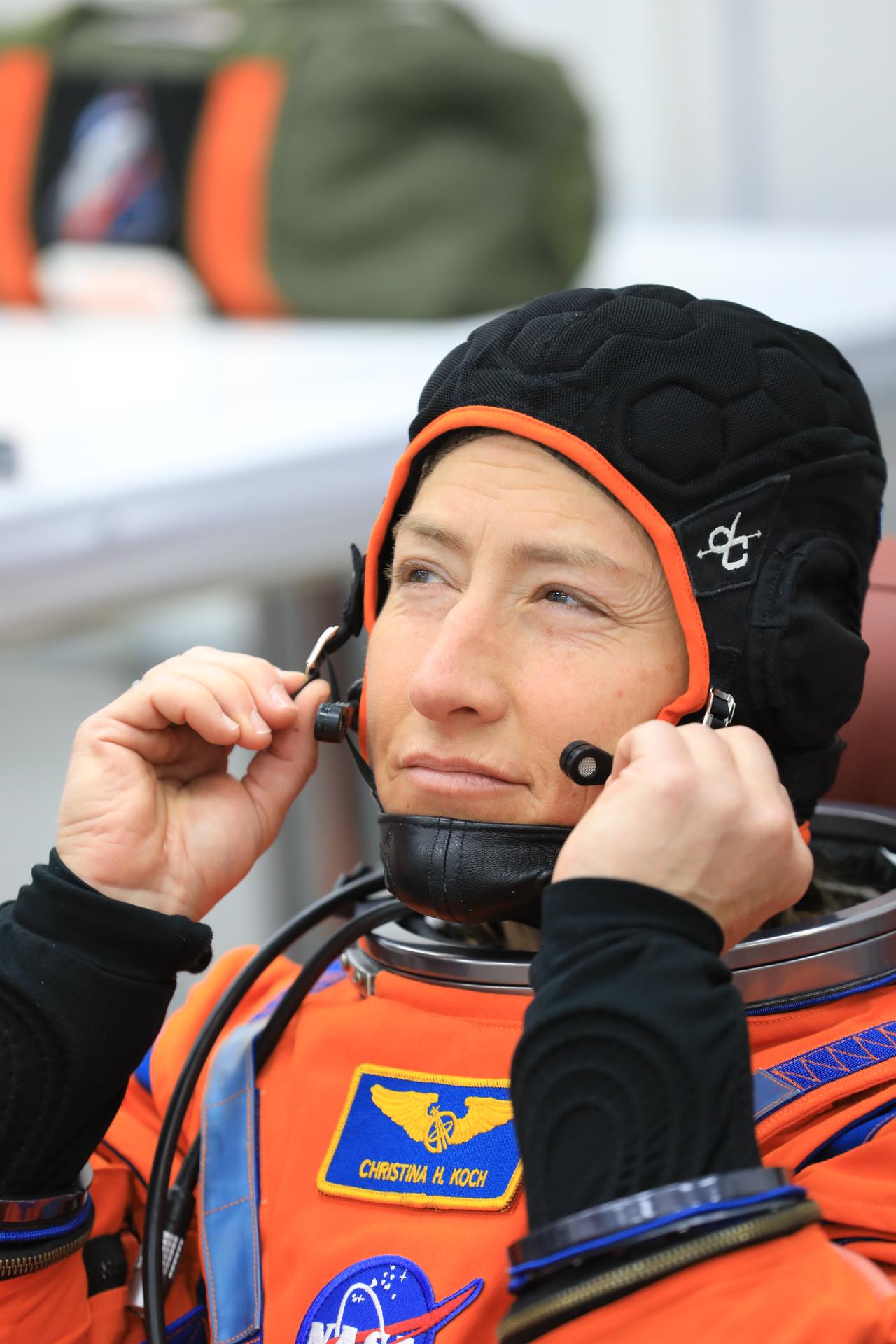
NASA astronaut Christina Koch, Artemis II mission specialist, conducts leak checks on her spacesuit inside the crew suit-up room in the Neil A. Armstrong Operations and Checkout Building at the agency’s Kennedy Space Center in Florida on Wednesday, April 1, 2026, ahead of the Artemis II test flight. The mission will take Koch, Commander Reid Wiseman, and Pilot Victor Glover, from NASA, along with Mission Specialist Jeremy Hansen from the CSA (Canadian Space Agency) on a 10-day journey around the Moon and back aboard NASA’s SLS (Space Launch System) rocket and Orion spacecraft with a two-hour launch window opening at 6:24 p.m. EDT from Launch Complex 39B at NASA Kennedy.
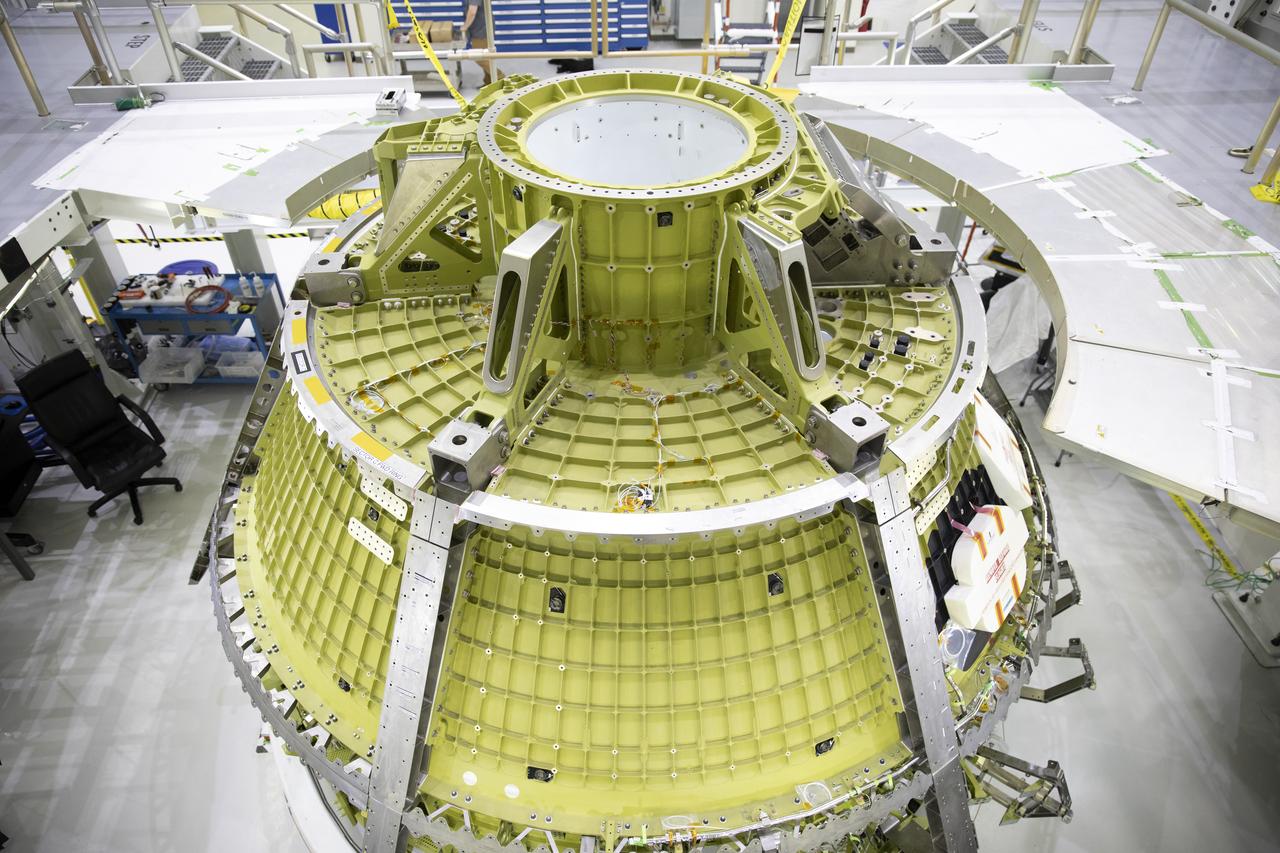
The Orion pressure vessel for NASA’s Artemis ll mission is in view in a processing stand inside the Neil Armstrong Operations and Checkout Building high bay on Sept. 17, 2019. Orion is being prepared for the first crewed test flight atop the agency’s Space Launch System rocket. Artemis ll will lift off from Launch Complex 39B. The mission will confirm all of the spacecraft’s systems operate as designed in the actual environment of deep space with astronauts aboard.
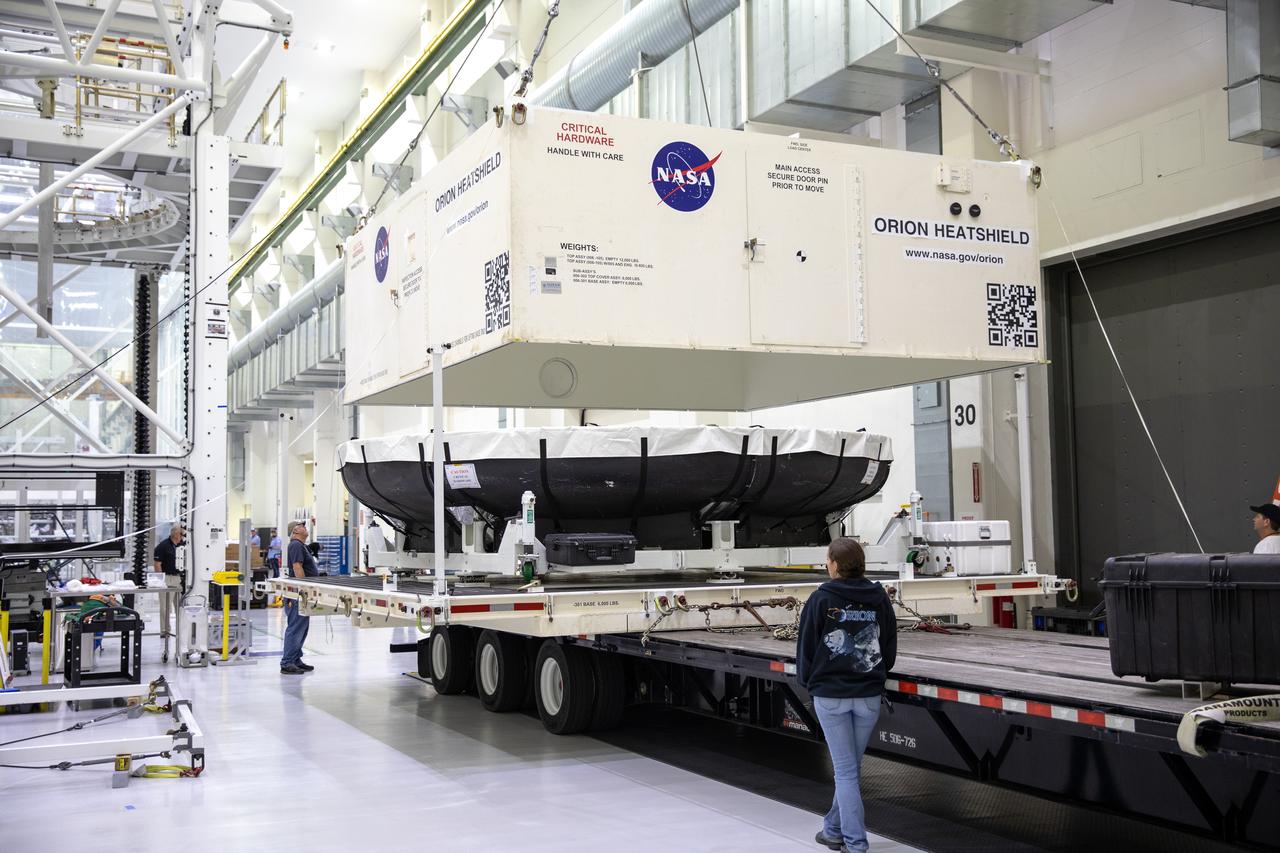
The cover of the shipping container carrying the heat shield for Orion’s Artemis 2 mission, NASA’s first crewed mission, is lifted up inside the Neil Armstrong Operations and Checkout Building high bay at the agency’s Kennedy Space Center in Florida on July 10, 2019. The heat shield, measuring roughly 16 feet in diameter, will protect astronauts upon re-entry on the second mission of Artemis. The heat shield arrived from Lockheed Martin’s manufacturing facility near Denver aboard NASA’s Super Guppy Aircraft. The heat shield is a base titanium truss structure. Over the next several months, technicians will apply Avcoat, an ablative material that will provide the thermal protection. Artemis 2 will confirm all of the spacecraft’s systems operate as designed in the actual environment of deep space with astronauts aboard.
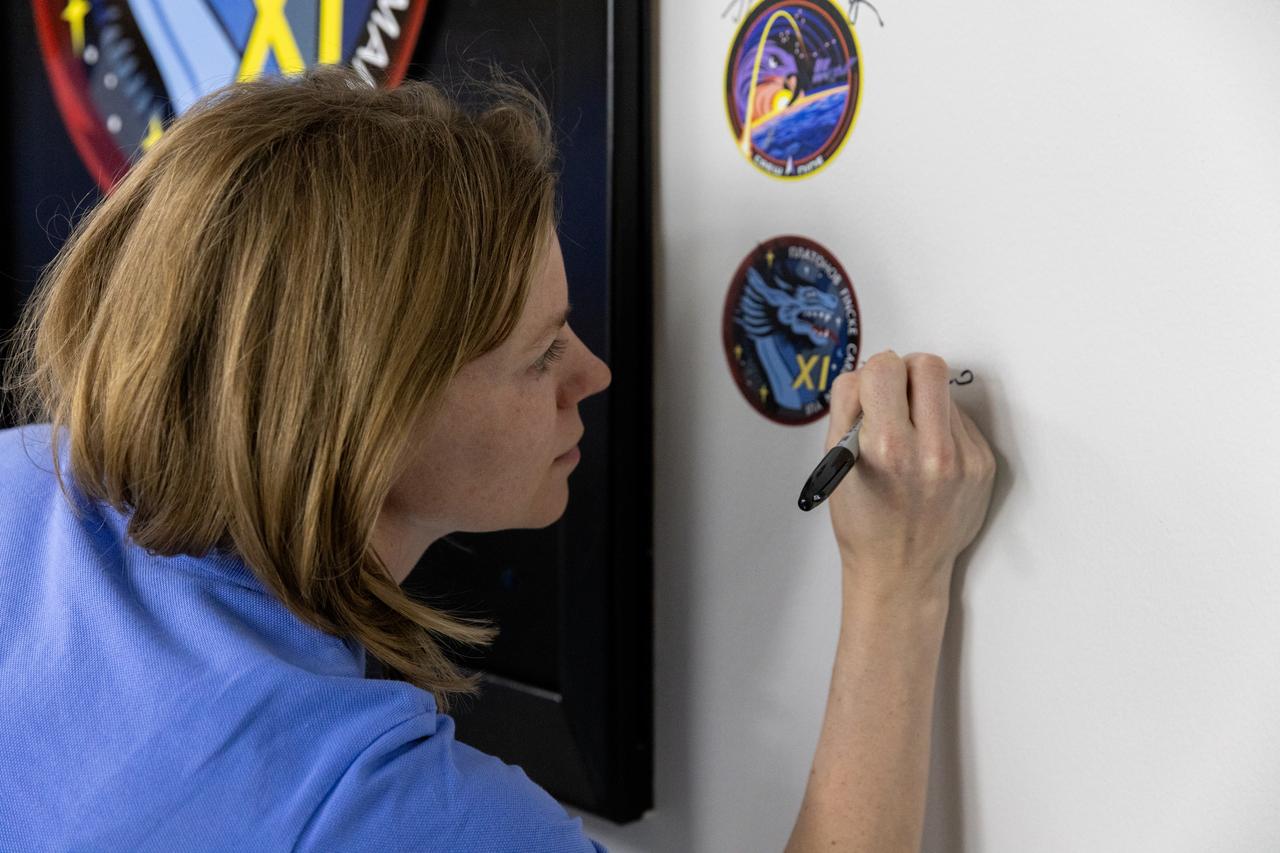
NASA astronaut Zena Cardman signs her name next to NASA’s SpaceX Crew-11 mission logo inside the Astronaut Crew Quarters in the Neil A. Armstrong Operations and Checkout Building at NASA’s Kennedy Space Center in Florida on Monday, July 28, 2025. A SpaceX Dragon spacecraft and Falcon 9 rocket will send NASA astronauts Cardman and Mike Fincke, along with JAXA (Japan Aerospace Exploration Agency) astronaut Kimiya Yui and Roscosmos cosmonaut Oleg Platonov to the International Space Station no earlier than 12:09 p.m. EDT Thursday, July 31, 2025, from NASA Kennedy’s Launch Complex 39A.
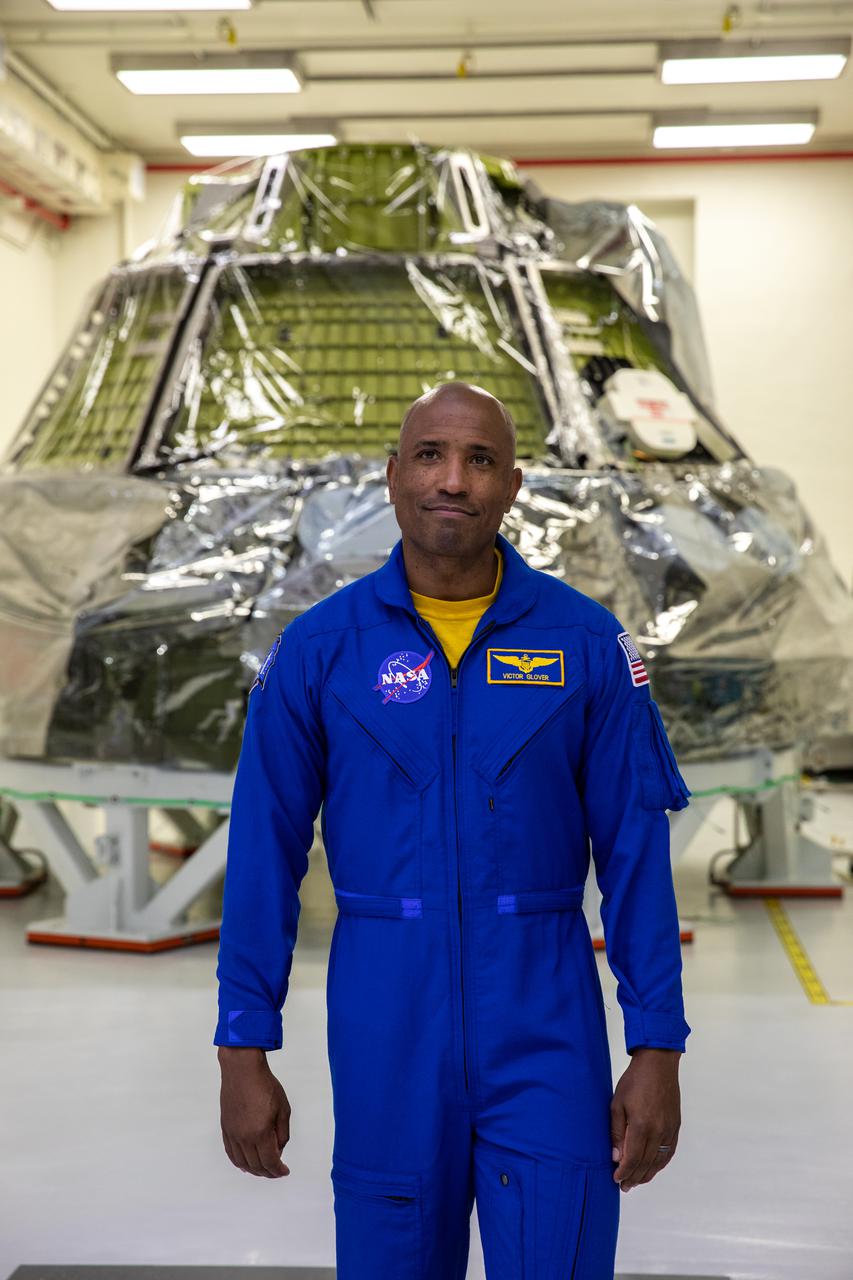
NASA astronaut Victor Glover stands inside Kennedy Space Center’s Neil A. Armstrong Operations and Checkout Building on July 15, 2021, near the crew module for the agency’s Artemis II mission. Artemis will lay the foundation for a sustained long-term presence on the lunar surface. NASA will use the Moon to validate deep space systems and operations before embarking on a human voyage to Mars.
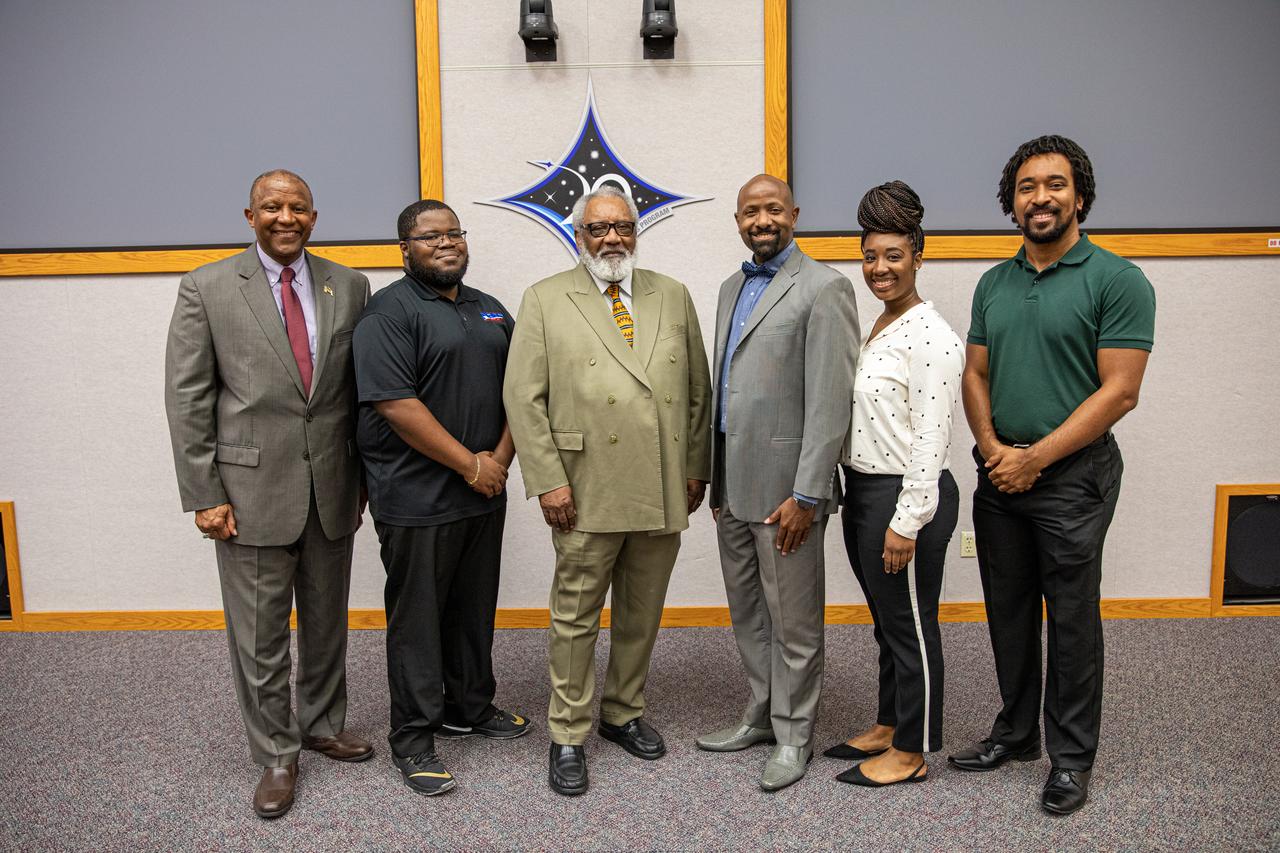
A Black History Month celebration was held on Feb. 18, 2020 at NASA’s Kennedy Space Center in Florida. The program was organized by the Black Employee Strategy Team (BEST), one of the center’s employee resource groups. This year’s theme was “African Americans and the Vote.” From left are Kelvin Manning, Kennedy’s associate director, technical; Daren Etienne, BEST marketing director; James Jennings, keynote speaker, former NASA associate administrator for Institutions and Management and Kennedy’s former deputy director; Martin Hayes, BEST chairperson; Jakebia Keith, program and contract analyst for the IT Resources Management Office and BEST secretary; and Phillip Hargrove, BEST co-chairperson.
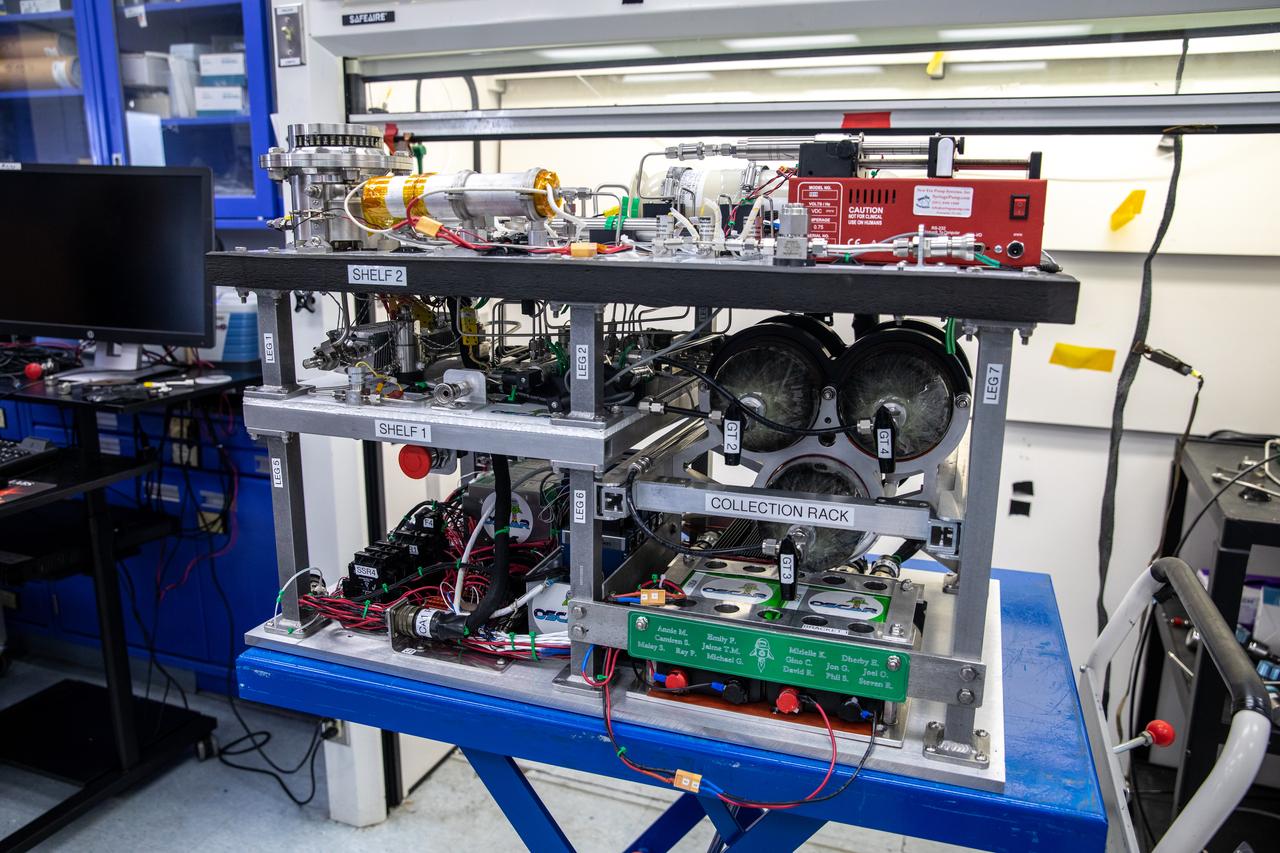
Flight hardware for NASA’s Orbital Syngas Commodity Augmentation Reactor, or OSCAR, is inside the Applied Physics Lab inside the Neil Armstrong Operations and Checkout Facility at the agency’s Kennedy Space Center in Florida on July 21, 2022. OSCAR began as an Early Career Initiative project at the spaceport that studies technology to convert trash and human waste into useful gasses such as methane, hydrogen, and carbon dioxide. By processing small pieces of trash in a high-temperature reactor, OSCAR is advancing new and innovative technology for managing waste in space.
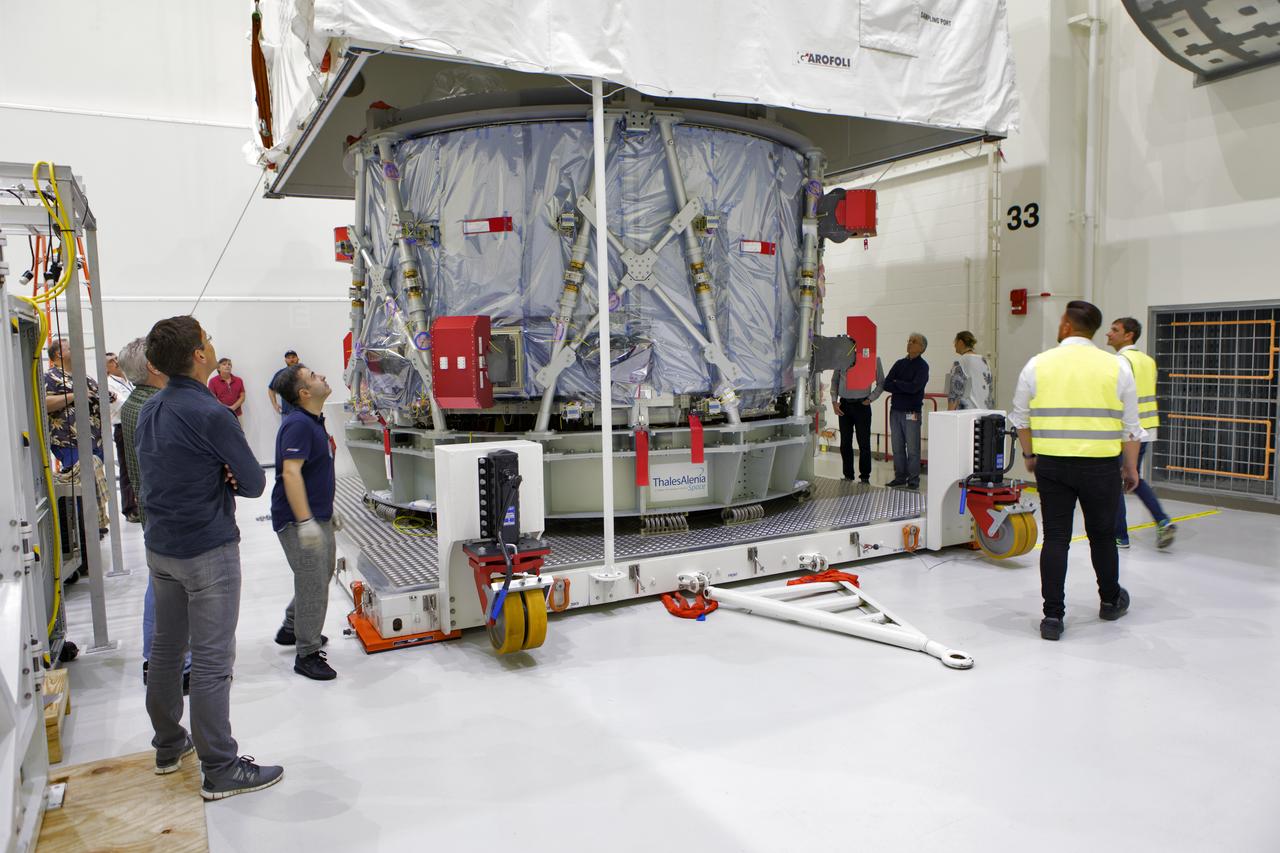
Inside the airlock in the Neil Armstrong Operations and Checkout Building high bay On Nov. 6, 2018, European Space Agency (ESA) and Airbus engineers and technicians watch as a crane is used to uncrate the ESA's European Service Module (ESM) at NASA's Kennedy Space Center in Florida. The ESM will supply the main propulsion system and power to the Orion spacecraft for Exploration Mission-1 (EM-1), a mission to the Moon. The ESM also will house air and water for astronauts on future missions. EM-1 will be an uncrewed flight test that will provide a foundation for human deep space exploration to destinations beyond Earth orbit. EM-1 will be the first integrated test of NASA's Space Launch System, Orion and the ground systems at Kennedy.
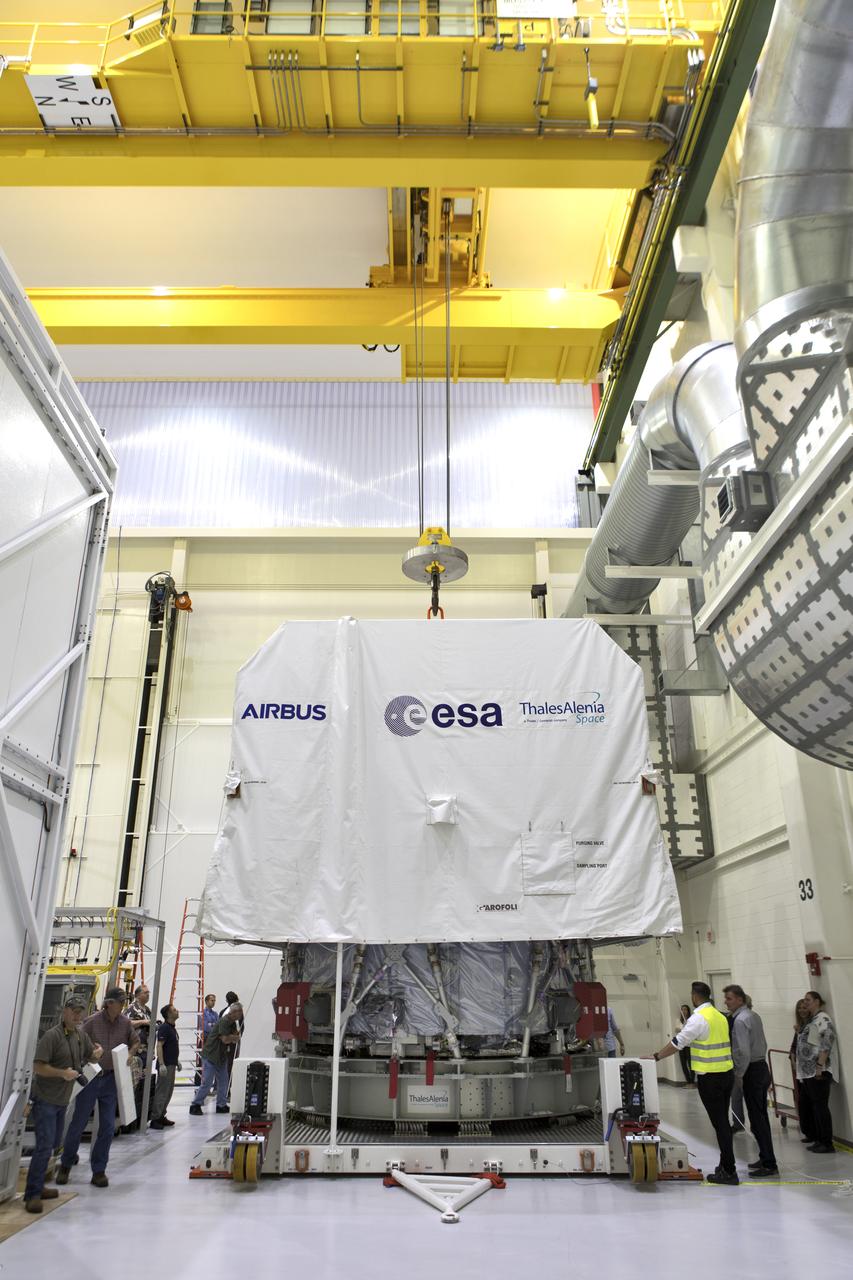
Inside the airlock in the Neil Armstrong Operations and Checkout Building high bay On Nov. 6, 2018, a crane is used to uncrate the European Space Agency's European Service Module (ESM) at NASA's Kennedy Space Center in Florida. The ESM will supply the main propulsion system and power to the Orion spacecraft for Exploration Mission-1 (EM-1), a mission to the Moon. The ESM also will house air and water for astronauts on future missions. EM-1 will be an uncrewed flight test that will provide a foundation for human deep space exploration to destinations beyond Earth orbit. EM-1 will be the first integrated test of NASA's Space Launch System, Orion and the ground systems at Kennedy.

Patrick Follis, an intern at NASA’s Kennedy Space Center in Florida, assembles the flight hardware for the agency’s Orbital Syngas Commodity Augmentation Reactor, or OSCAR. OSCAR is an Early Career Initiative project at the spaceport that studies technology to convert trash and human waste into useful gasses such as methane, hydrogen and carbon dioxide. By processing small pieces of trash in a high-temperature reactor, OSCAR is advancing new and innovative technology for managing waste in space. OSCAR would reduce the amount of space needed for waste storage within a spacecraft, turn some waste into gasses that have energy storage and life support applications, and ensure waste is no longer biologically active. A prototype has been developed, and a team of Kennedy employees are in the process of constructing a new rig for suborbital flight testing.
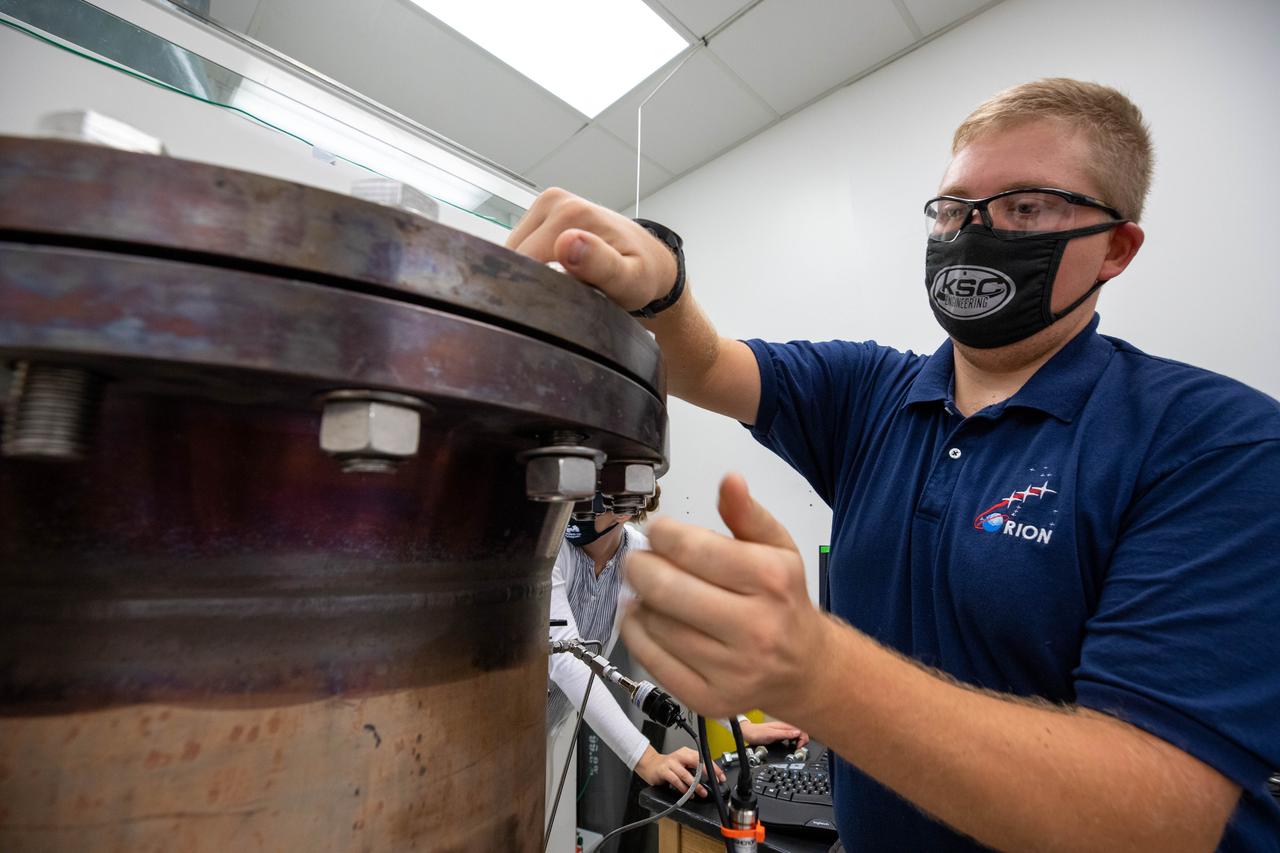
Evan Bell, a mechanical engineer and member of the Gaseous Lunar Oxygen from Regolith Electrolysis (GaLORE) project team at NASA’s Kennedy Space Center in Florida, checks the hardware that will be used to melt lunar regolith – dirt and dust on the Moon made from crushed rock – simulants during a test inside a laboratory at Kennedy’s Neil Armstrong Operations and Checkout Building on Oct. 29, 2020. GaLORE was selected as an Early Career Initiative project by the agency’s Space Technology Mission directorate, and the team was tasked with developing a device that could melt lunar regolith and turn it into oxygen. As NASA prepares to land the first woman and the next man on the Moon in 2024 as part of the Artemis program, technology such as this can assist with sustainable human lunar exploration and long-duration missions to Mars.
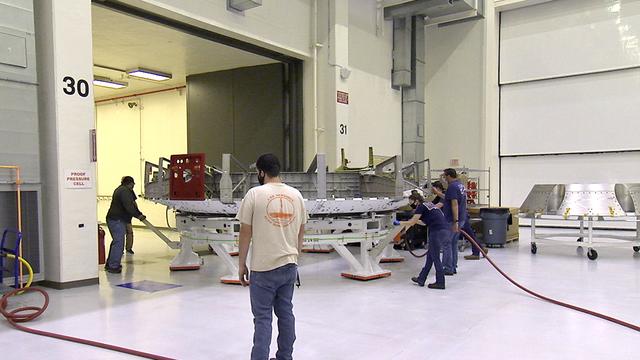
Inside the Neil Armstrong Operations and Checkout Building at NASA's Kennedy Space Center in Florida, the Artemis II crew module adapter (CMA) is being relocated from the clean room to the Pressure Proof Cell for additional testing and maintenance. The CMA connects the crew module to the service module. Artemis II is the first crewed mission in a series of missions to the Moon and on to Mars. Artemis II will confirm all of the Orion spacecraft’s systems operate as designed in the actual environment of deep space with astronauts aboard.
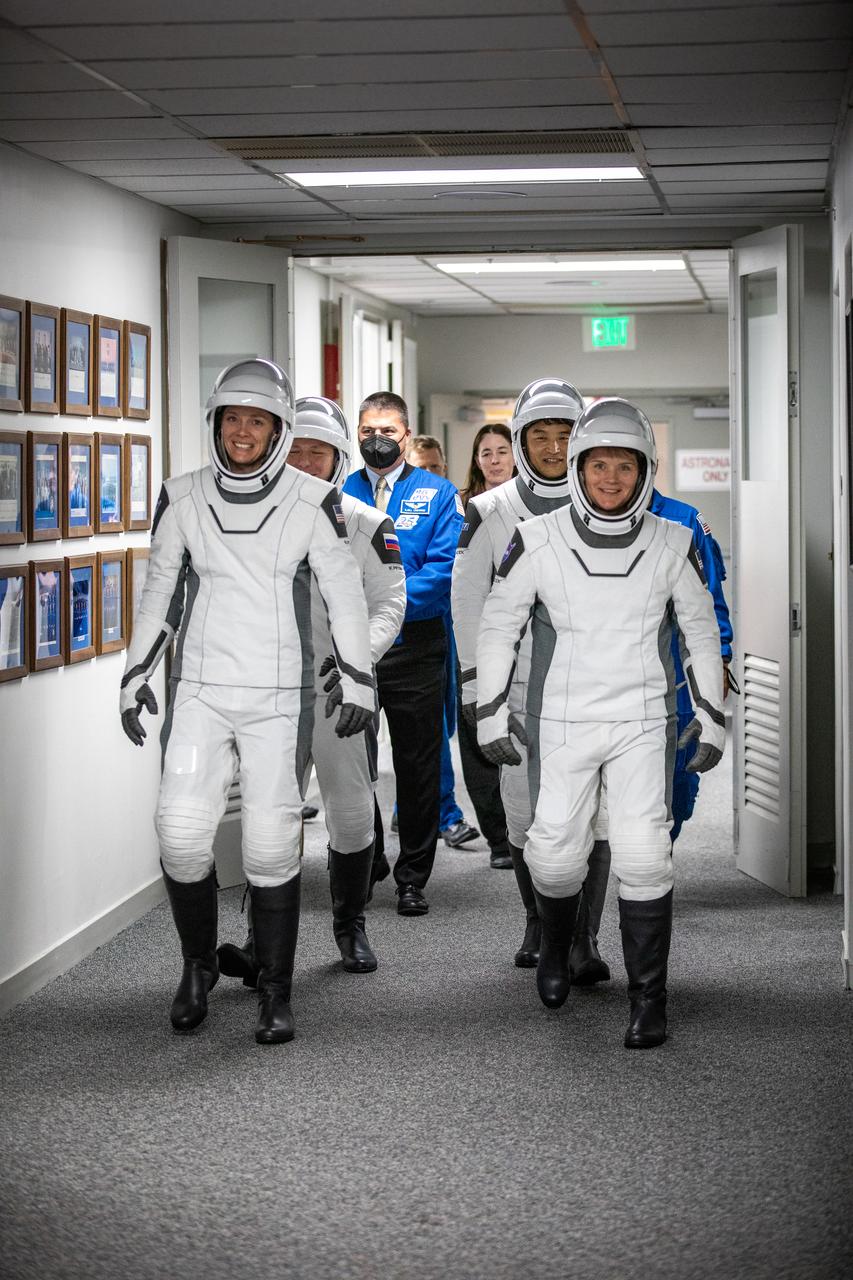
NASA’s SpaceX Crew-10 crew members walk out of the Neil A. Armstrong Operations and Checkout Building at the agency’s Kennedy Space Center in Florida ahead of launch on Wednesday, March 12, 2025. NASA astronauts Nichole Ayers (front, left) and Anne McClain (front, right), along with JAXA (Japan Aerospace Exploration Agency) astronaut Takuya Onishi (second row, right) and Roscosmos cosmonaut Kirill Peskov (second row, left) are scheduled to lift off aboard SpaceX’s Dragon spacecraft and Falcon 9 rocket at 7:48 p.m. EDT, from Launch Complex 39A at NASA Kennedy. Crew-10 is the tenth crew rotation mission with SpaceX to the space station as part of the agency’s Commercial Crew Program.
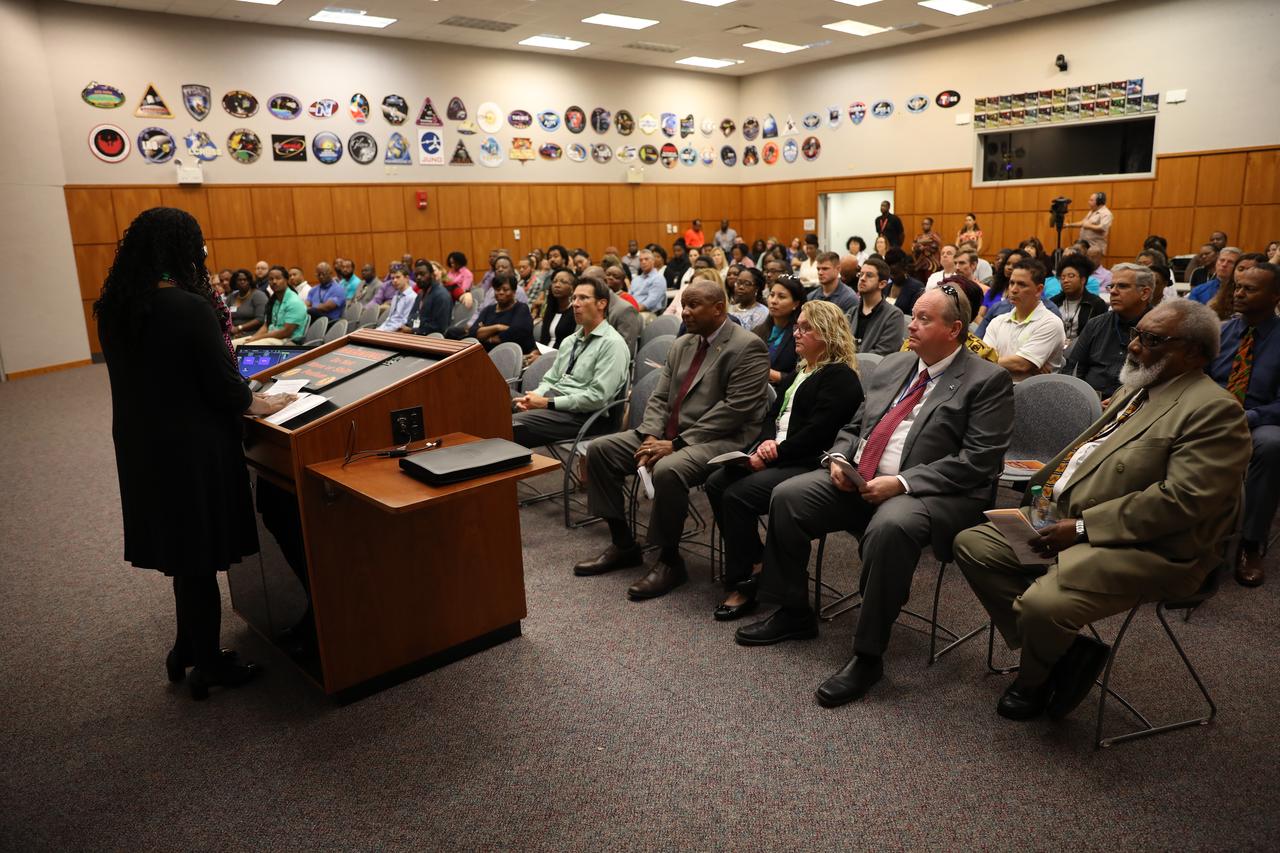
During a Black History Month celebration on Feb. 18, 2020 at NASA’s Kennedy Space Center in Florida, Hortense Diggs, at the podium, director of Communication and Public Engagement, commemorates the contributions of former NASA employee and mentor Roslyn McKinney. The program was organized by the Black Employee Strategy Team (BEST), one of the center’s employee resource groups. This year’s theme was “African Americans and the Vote.” Keynote speaker was James Jennings, seated, far right, former NASA associate administrator for Institutions and Management and Kennedy’s former deputy director. Jennings shared advice with workers and managers.
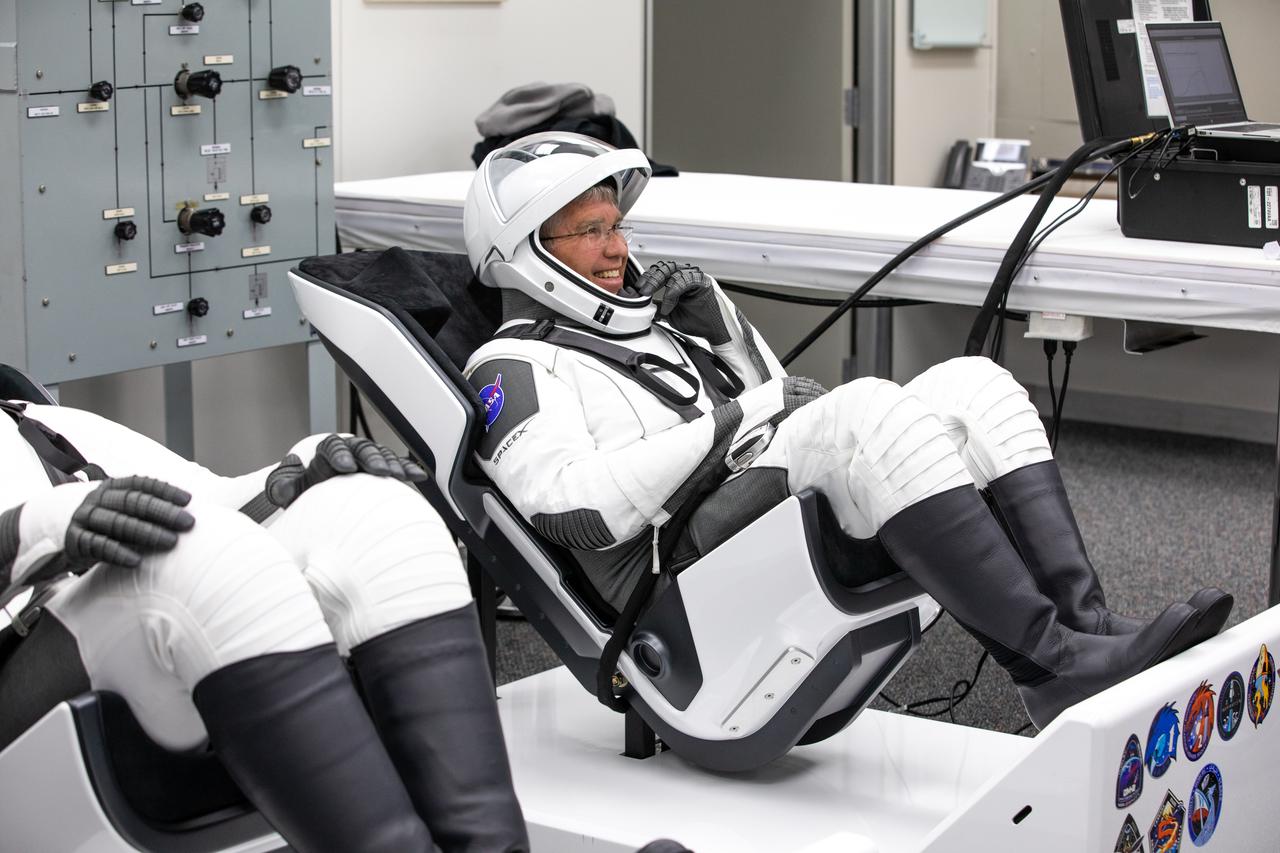
NASA’s SpaceX Crew-6 crewmembers participate in final fit checks of their SpaceX spacesuits in the crew suit-up room inside the Neil Armstrong Operations and Checkout Building at NASA’s Kennedy Space Center in Florida on March 1, 2023. In view is NASA astronaut Stephen Bowen, spacecraft commander. Bowen and his crewmates are preparing for launch to the International Space Station aboard SpaceX’s Dragon spacecraft Endeavour atop the Falcon 9 rocket. Launch is target for 12:34 a.m. EST on March 2 from Launch Complex 39A. Crew-6 is the sixth crew rotation mission with SpaceX to the station, and the seventh flight of Dragon with people as part of the agency’s Commercial Crew Program.
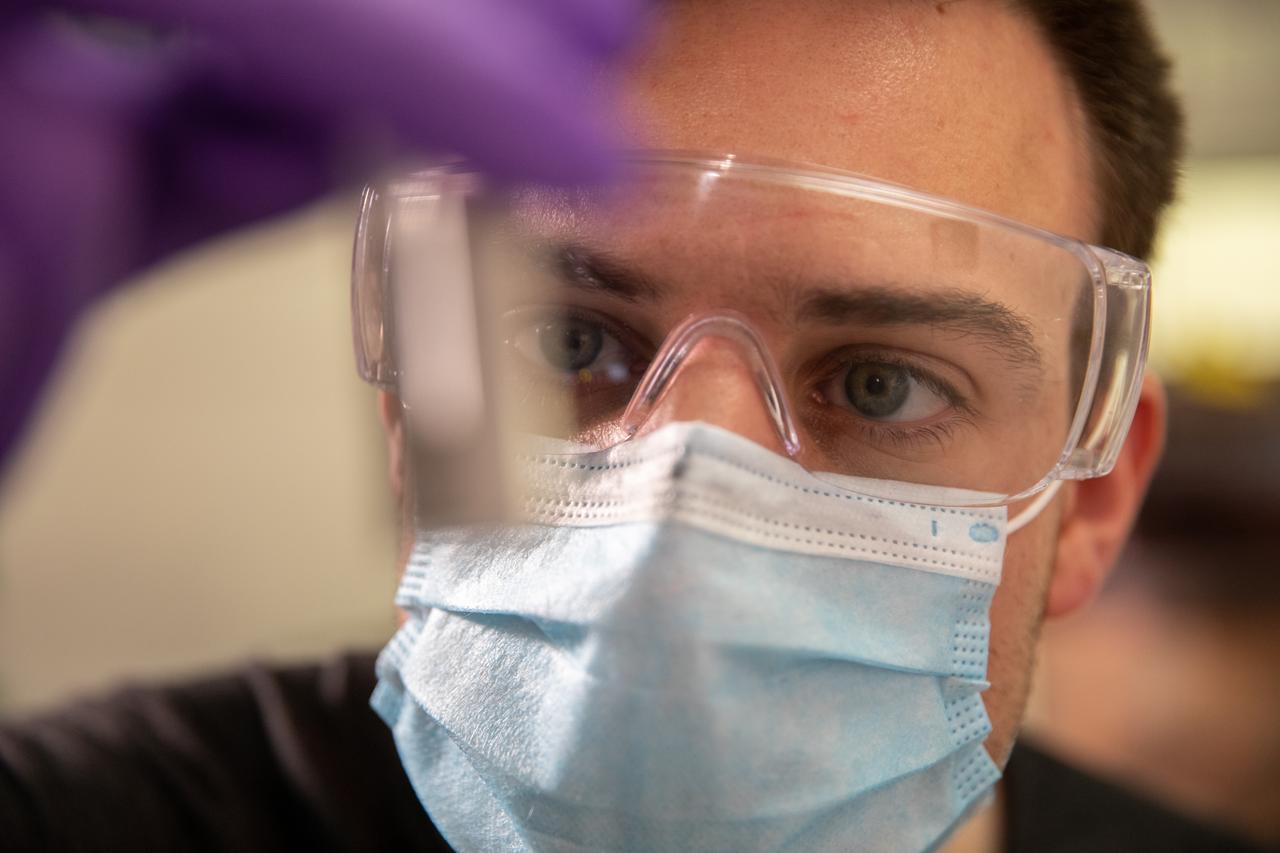
Kevin Grossman, project lead for the Gaseous Lunar Oxygen from Regolith Electrolysis (GaLORE) project at NASA Kennedy Space Center’s Swamp Works, inspects a piece of hardware for GaLORE on July 21, 2020, inside a laboratory at the center’s Neil Armstrong Operations and Checkout Building. Grossman is leading an Early Career Initiative project that is investing in turning lunar regolith into oxygen that could be used for life support for sustainable human lunar exploration on long-duration missions to Mars. GaLORE was selected as an Early Career Initiative project by NASA’s Space Technology Mission directorate.
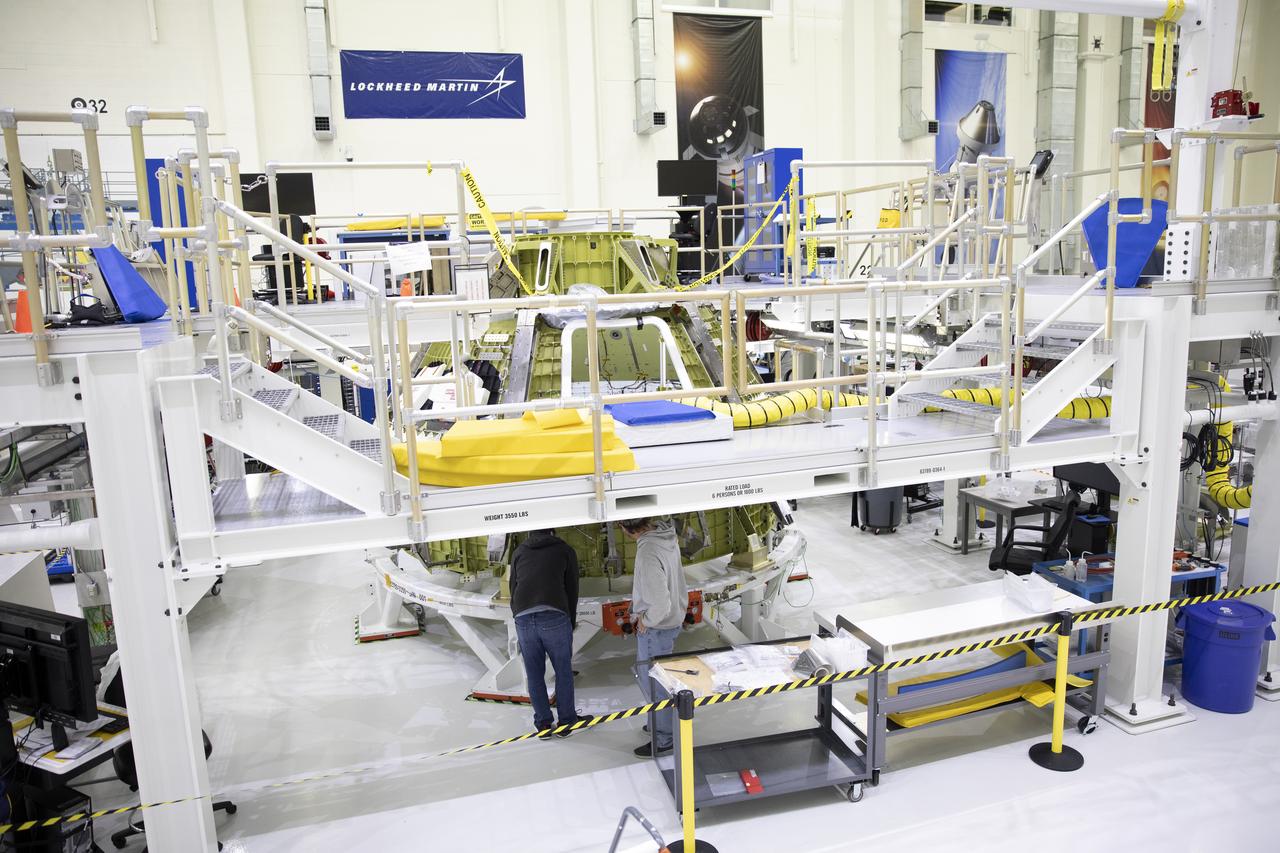
The Orion pressure vessel for NASA’s Artemis ll mission is in a processing stand inside the Neil Armstrong Operations and Checkout Building high bay on Sept. 17, 2019. Orion is being prepared for the first crewed test flight atop the agency’s Space Launch System rocket. Artemis ll will lift off from Launch Complex 39B. The mission will confirm all of the spacecraft’s systems operate as designed in the actual environment of deep space with astronauts aboard.
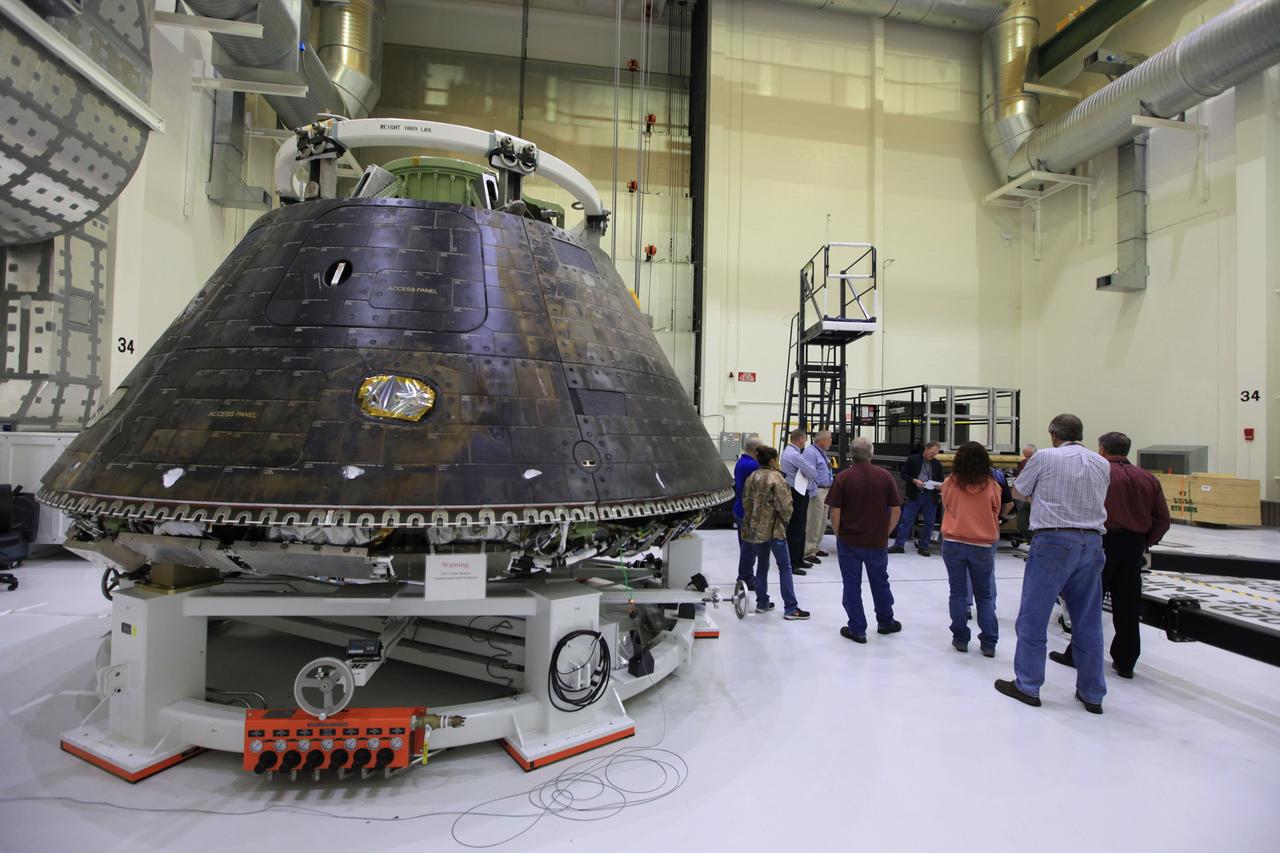
Inside the Neil Armstrong Operations and Checkout Building high bay at NASA's Kennedy Space Center in Florida, Lockheed Martin and ASRC engineers and technicians review procedures before preparing the Orion crew module from Exploration Flight Test 1 for its move to the nearby Kennedy Space Center Visitor Complex. The crew module will be delivered to the IMAX Theater where it will be prepared for display in the NASA Now exhibit. The Orion spacecraft launched atop a United Launch Alliance Delta IV rocket Dec. 5, 2014, from Space Launch Complex 37 at Cape Canaveral Air Force Station. The spacecraft built for humans traveled 3,604 miles above Earth and splashed down about 4.5 hours later in the Pacific Ocean.
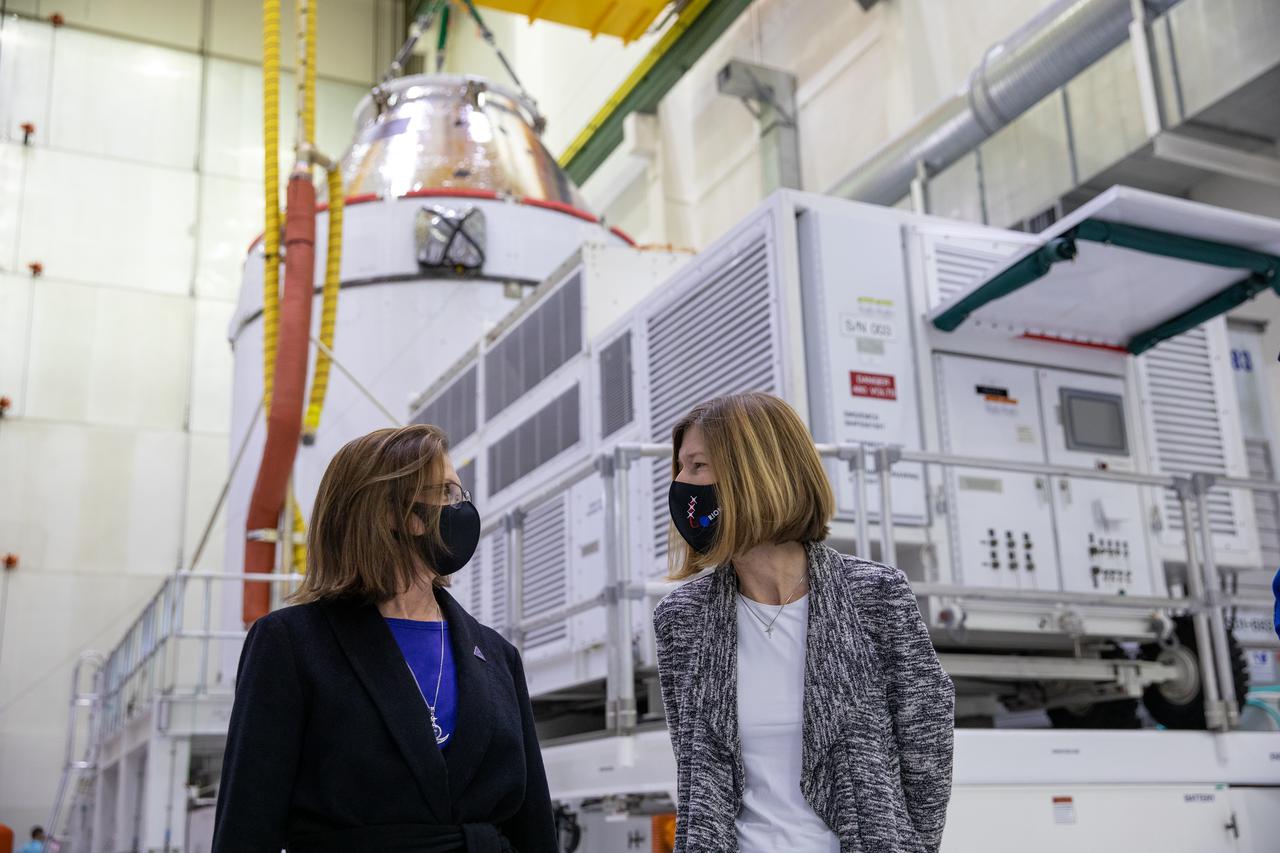
Orion is revealed for one of the final times on Jan. 14, as it is readied atop its transport pallet from the Neil Armstrong Operations and Checkout Building at NASA’s Kennedy Space Center in Florida, along its path to the pad ahead of the Artemis I launch. Viewing Orion in the high bay, from left, are Cathy Koerner, Orion Program Manager, and Kathy Lueders, associated administrator of the Human Exploration and Operations Mission Directorate. Teams across the globe have worked tirelessly to assemble the spacecraft, which will receive a protective covering prior to departing for the Multi-Payload Processing Facility to begin ground processing by the Exploration Ground Systems and Jacobs teams.
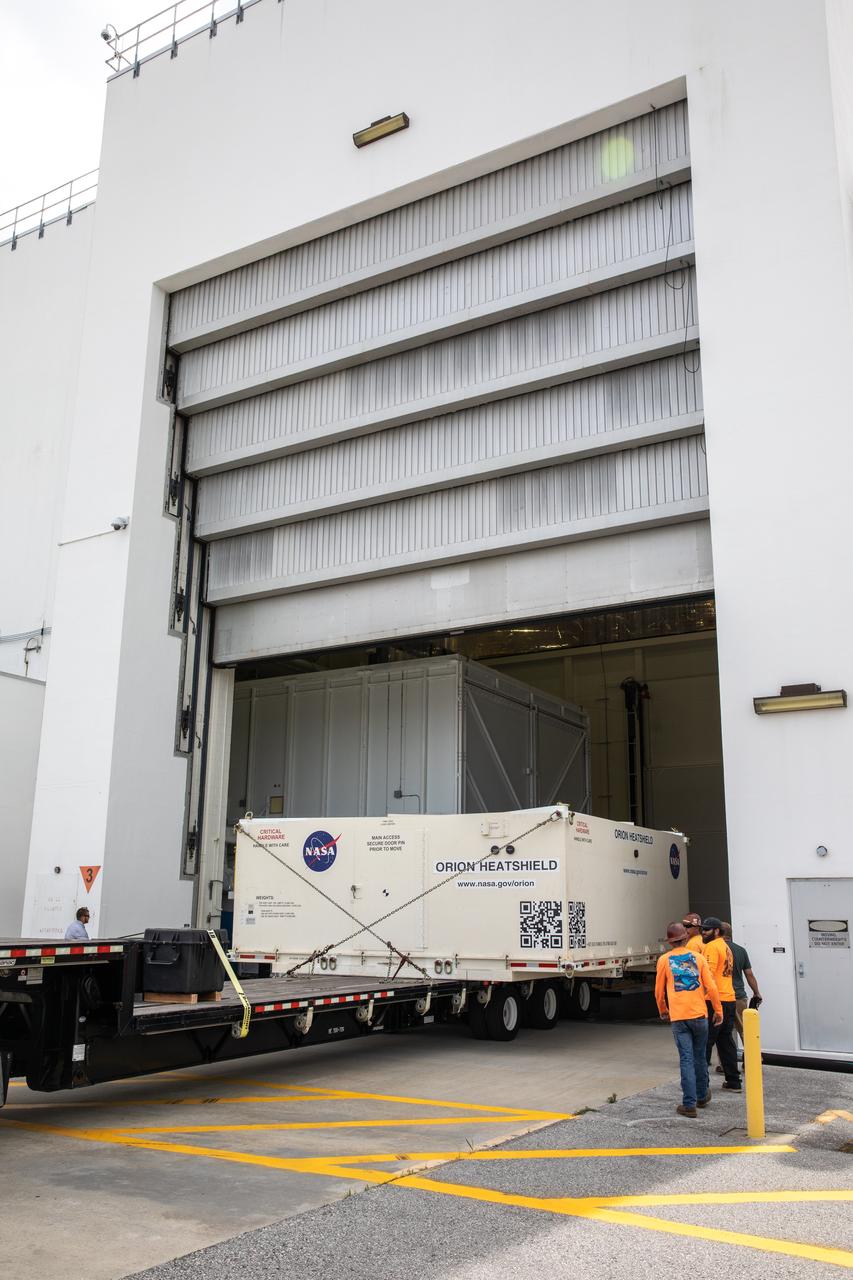
A flatbed truck with the shipping container carrying the heat shield for Orion’s Artemis 2 mission, NASA’s first crewed mission, arrives at the Neil Armstrong Operations and Checkout Building high bay entrance at the agency’s Kennedy Space Center in Florida on July 9, 2019. The heat shield, measuring roughly 16 feet in diameter, will protect astronauts upon re-entry on the second mission of Artemis. The heat shield arrived from Lockheed Martin’s manufacturing facility near Denver aboard NASA’s Super Guppy Aircraft. The heat shield is a base titanium truss structure. Over the next several months, technicians will apply Avcoat, an ablative material that will provide the thermal protection. Artemis 2 will confirm all of the spacecraft’s systems operate as designed in the actual environment of deep space with astronauts aboard.
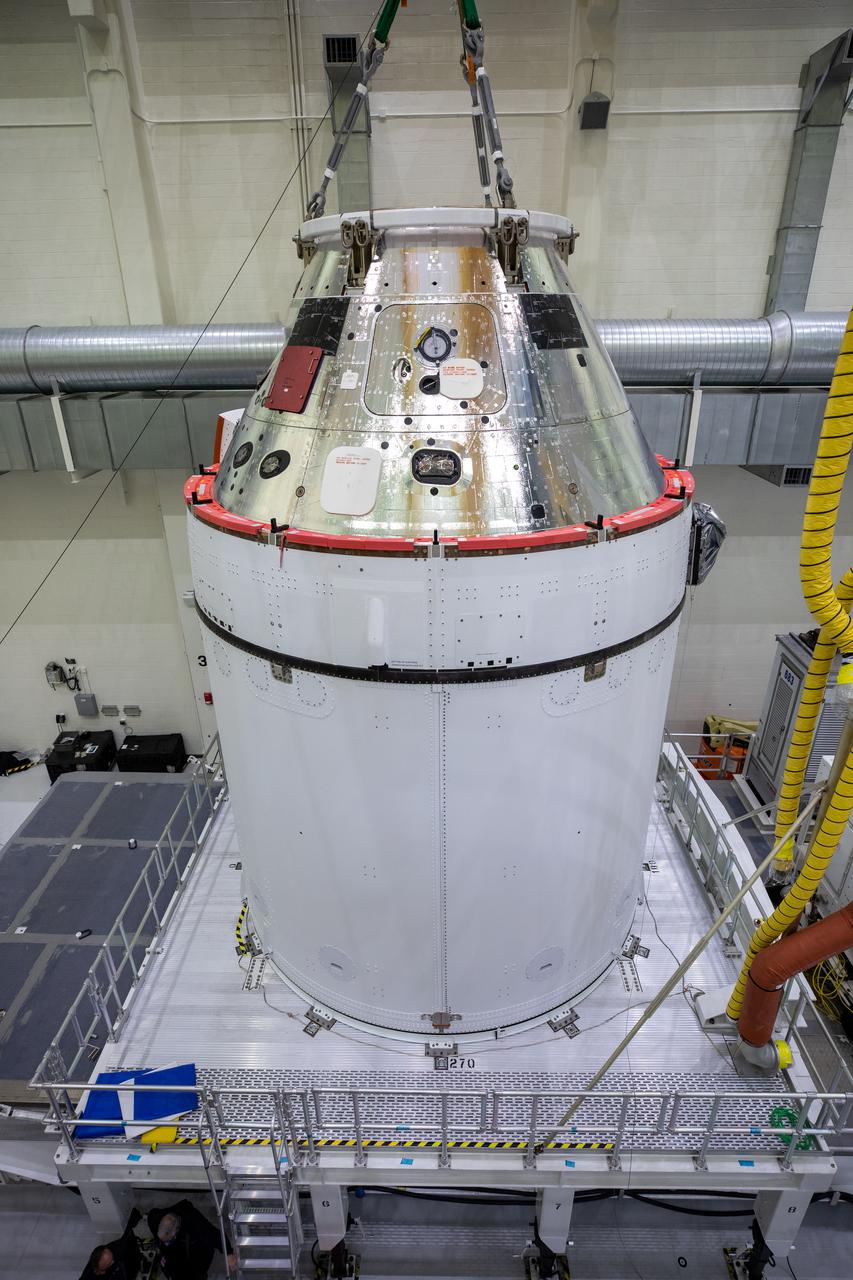
Orion is revealed for one of the final times on Jan. 14, as it is readied atop its transport pallet from the Neil Armstrong Operations and Checkout Building at NASA’s Kennedy Space Center in Florida, along its path to the pad ahead of the Artemis I launch. Teams across the globe have worked tirelessly to assemble the spacecraft, which will receive a protective covering prior to departing for the Multi-Payload Processing Facility to begin ground processing by the Exploration Ground Systems and Jacobs teams.
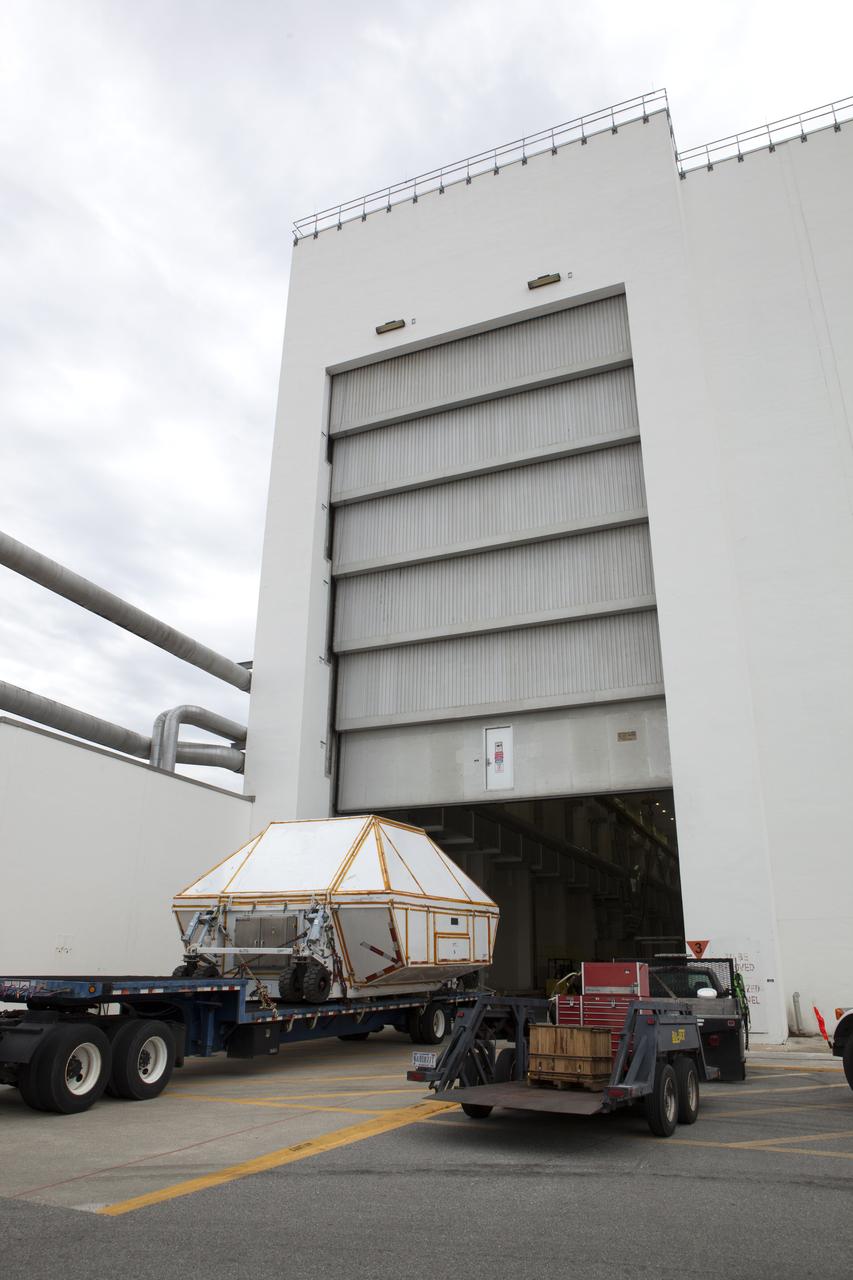
A transporter carrying the Orion crew module structural test article (STA) in its container arrives at the low bay entrance of the Neil Armstrong Operations and Checkout Building at NASA's Kennedy Space Center in Florida. The STA arrived aboard NASA's Super Guppy aircraft at the Shuttle Landing Facility operated by Space Florida. The test article will be moved inside the facility's high bay for further testing. The Orion spacecraft will launch atop NASA’s Space Launch System rocket on EM-1, its first deep space mission, in late 2018.
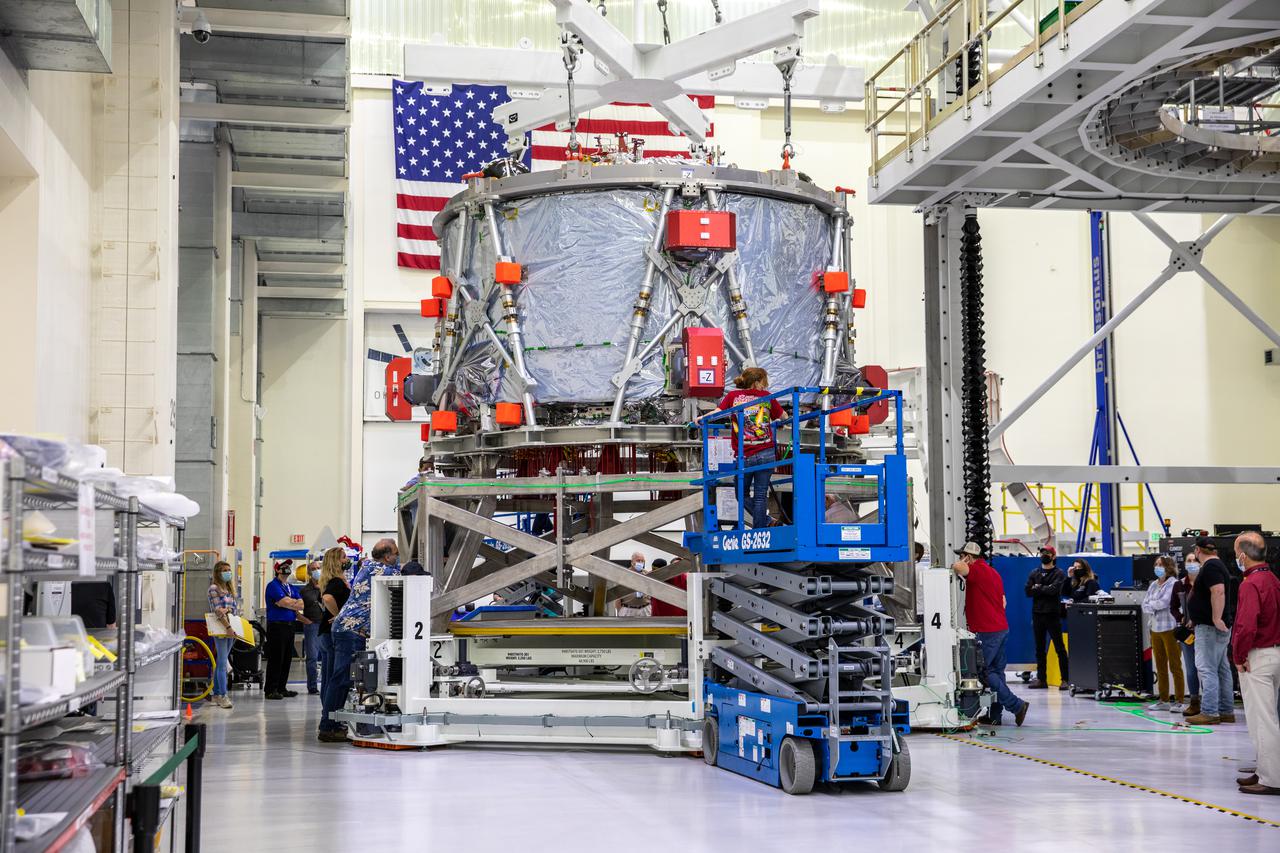
The European-built Service Module (ESM) for NASA’s Artemis II mission is shown in a work stand inside the high bay of the Neil A. Armstrong Operations and Checkout Building at NASA’s Kennedy Space Center in Florida on Oct. 15, 2021. Teams from NASA, Lockheed Martin, the European Space Agency and Airbus prepare the service module to be integrated with the Orion crew module adapter and crew module, already housed in the facility. The powerhouse that will fuel and propel Orion in space, the ESM for Artemis II will be the first Artemis mission flying crew aboard Orion.

Seen here is the pressure vessel for the Artemis IV mission inside the Neil Armstrong Operations and Checkout Building at NASA’s Kennedy Space Center in Florida on Feb. 21, 2023. The pressure vessel is the underlying structure of the Orion crew module, containing the pressurized atmosphere astronauts will breathe and work in while in the vacuum of deep space. Artemis IV will be the first operational mission to Gateway – an outpost in lunar orbit serving as a staging point for deep space exploration – followed by a week-long surface mission on the Moon. Using Gateway, NASA will develop a long-term presence on the Moon, using this as a steppingstone before venturing on to Mars.
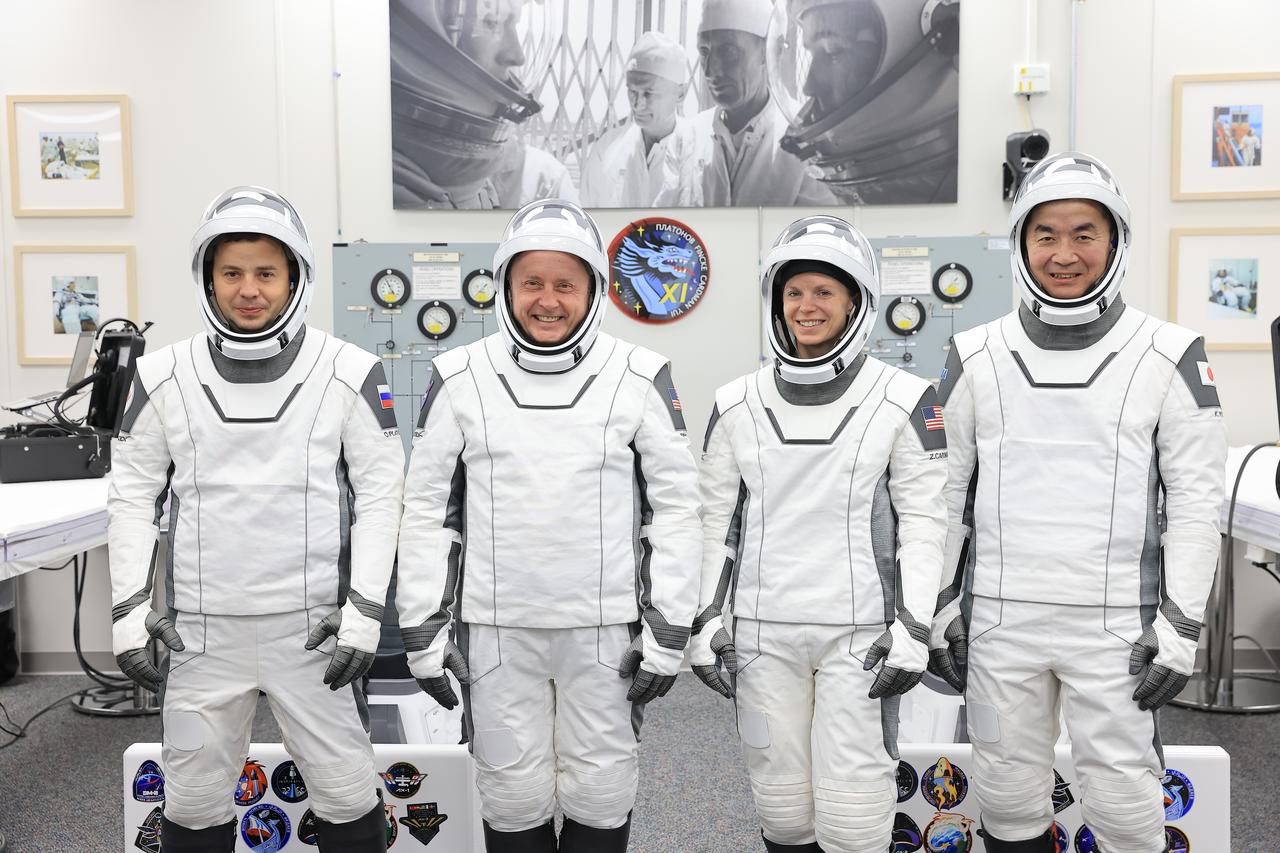
From right to left, NASA’s SpaceX Crew-11 crew members JAXA (Japan Aerospace Exploration Agency) astronaut Kimiya Yui, along with NASA astronauts Zena Cardman and Mike Fincke, as well as Roscosmos cosmonaut Oleg Platonov pose for a photo inside the crew suit-up room in the Neil A. Armstrong Operations and Checkout Building at the agency’s Kennedy Space Center in Florida during a countdown dress rehearsal on Monday, July 28, 2025. The crew will launch to the International Space Station aboard SpaceX’s Dragon spacecraft and Falcon 9 rocket at 12:09 p.m. EDT on Thursday, July 31, 2025, from NASA Kennedy’s Launch Complex 39A.
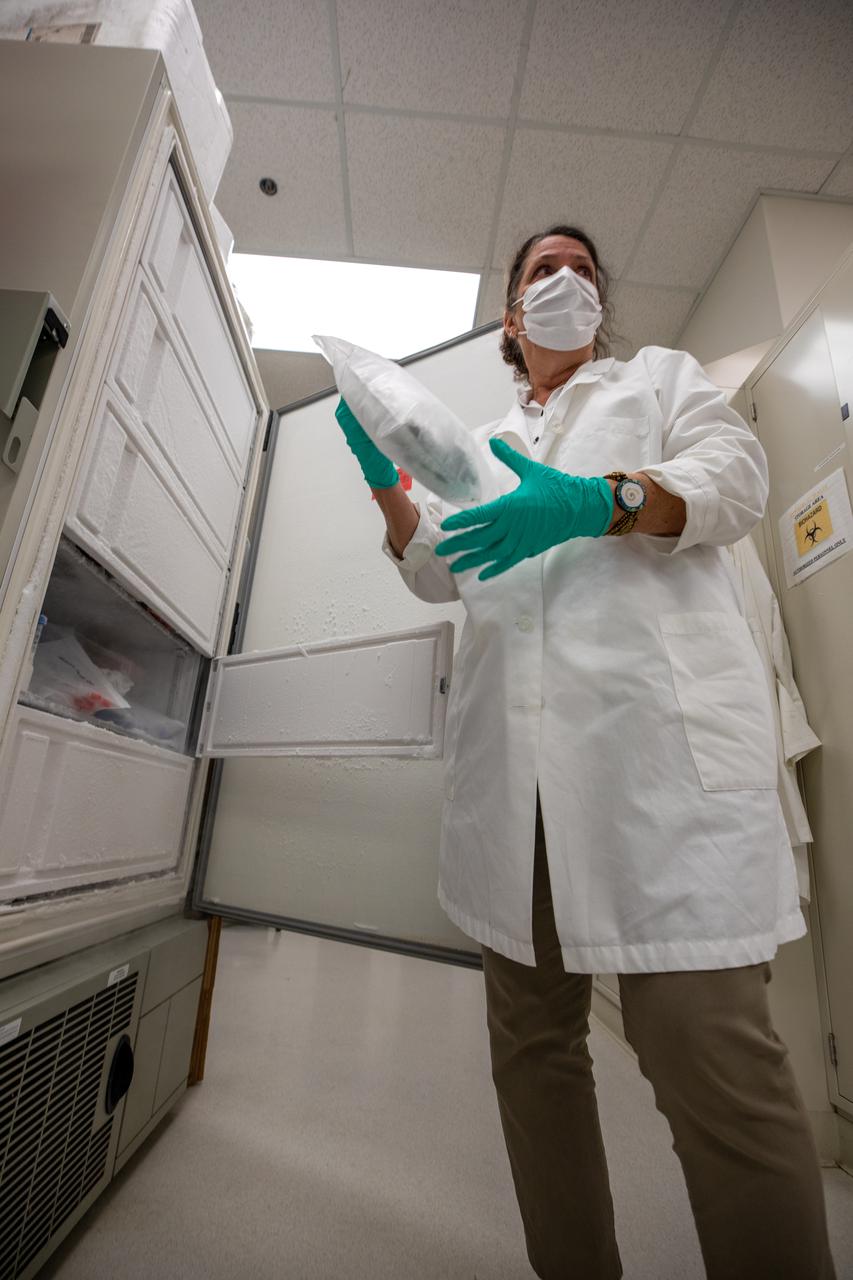
Inside the Microbiology Lab at NASA’s Kennedy Space Center in Florida on Oct. 6, 2021, Microbiology Lead Mary Hummerick works with frozen lettuce samples that recently returned from the International Space Station as part of NASA’s SpaceX 23rd commercial resupply services mission. The experiment, titled VEG-03J, involved “Outredgeous” red romaine lettuce grown in the Veggie Production System (Veggie) on the space station and demonstrated a new way of storing, handling, and planting seeds in space. NASA is studying how to effectively grow crops in space so plants can provide supplemental nutrients to astronaut crews on long-duration missions, such as a mission to Mars.
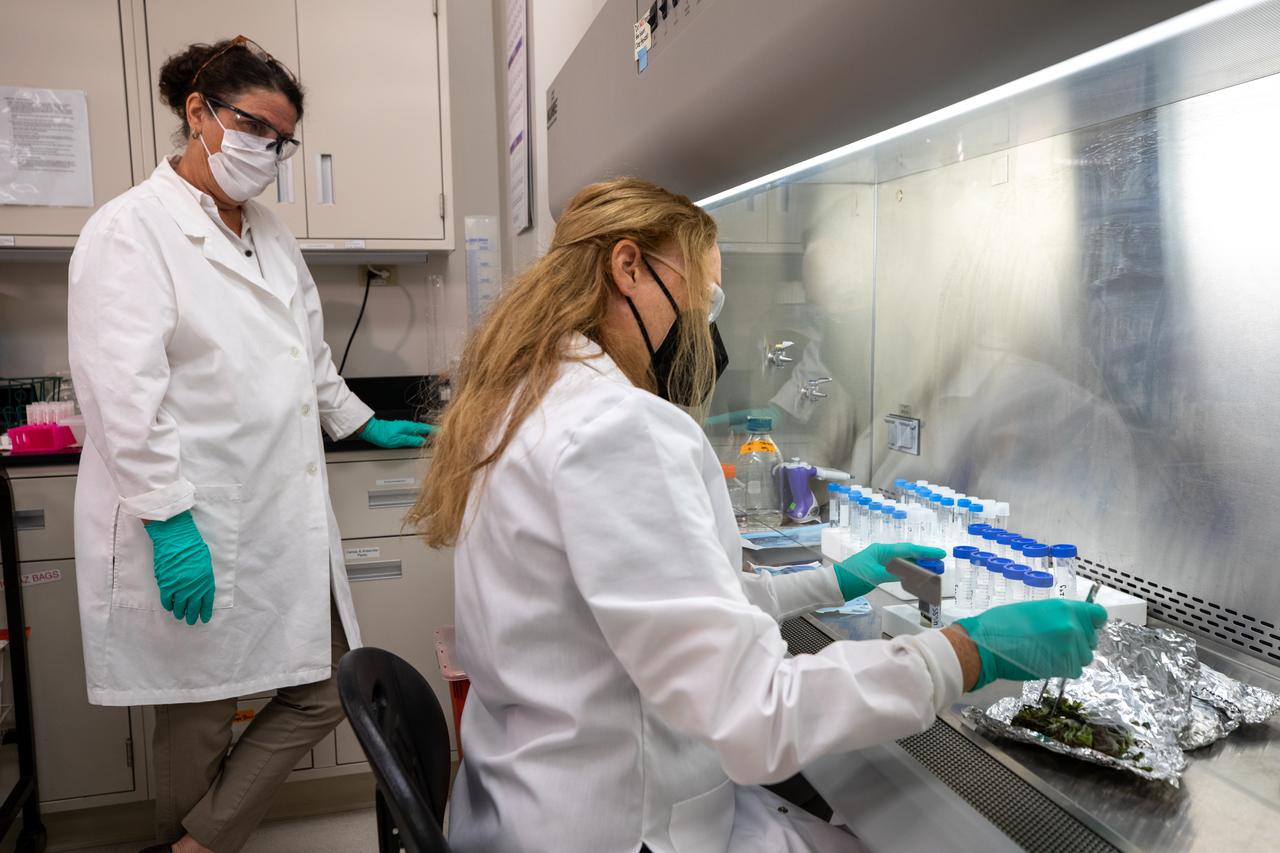
Inside the Microbiology Lab at NASA’s Kennedy Space Center in Florida on Oct. 6, 2021, Microbiology Lead Mary Hummerick, left, and Microbiologist Jennifer Gooden work with frozen lettuce samples that recently returned from the International Space Station as part of NASA’s SpaceX 23rd commercial resupply services mission. The experiment, titled VEG-03J, involved “Outredgeous” red romaine lettuce grown in the Veggie Production System (Veggie) on the space station and demonstrated a new way of storing, handling, and planting seeds in space. NASA is studying how to effectively grow crops in space so plants can provide supplemental nutrients to astronaut crews on long-duration missions, such as a mission to Mars.
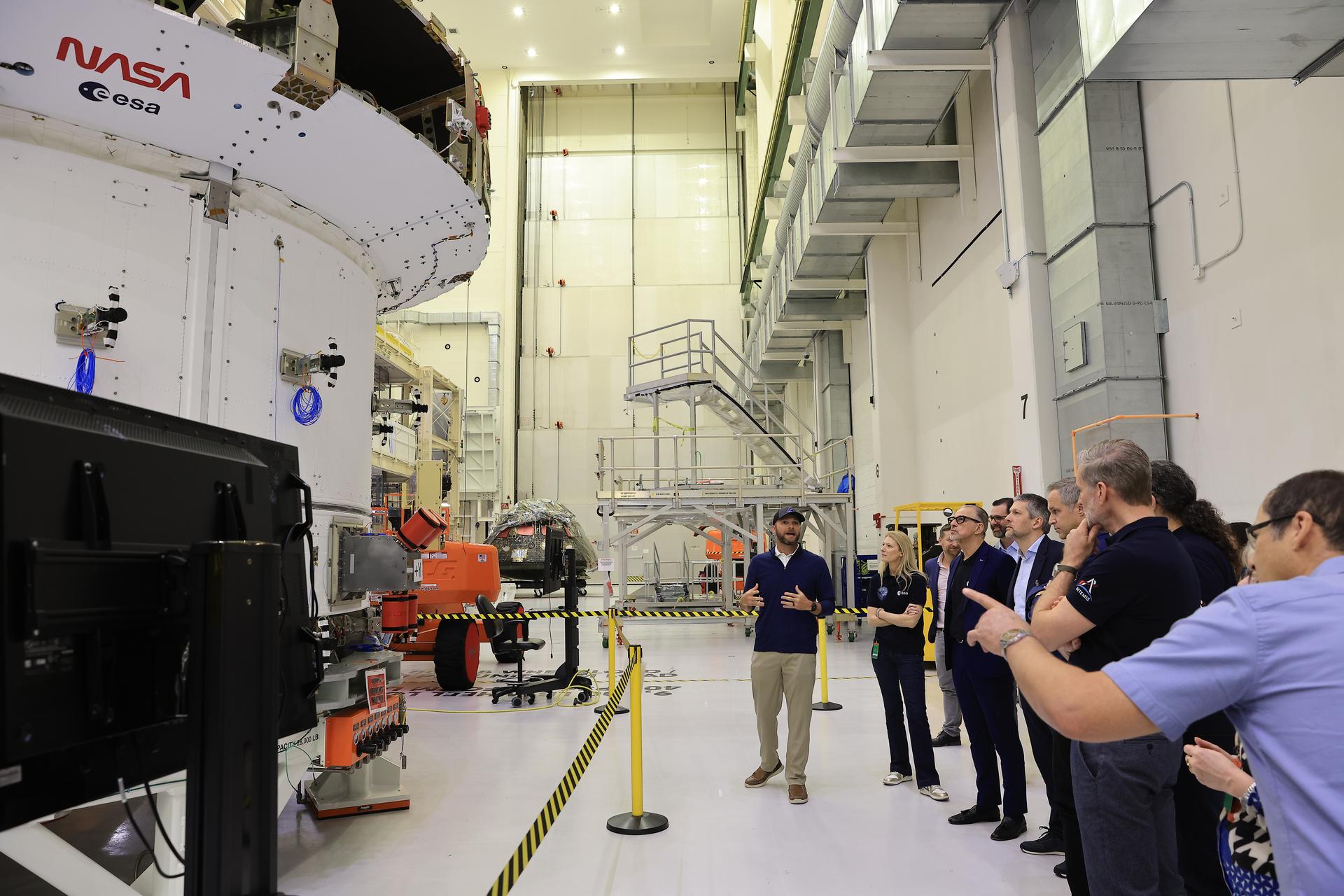
Members of the ESA (European Space Agency) leadership team and NASA Orion program team stand by European Service Module with the Orion spacecraft in the background for NASA’s Artemis III mission on Tuesday, Feb. 10, 2026, inside the high bay of the Neil A. Armstrong Operations and Checkout Building at NASA’s Kennedy Space Center in Florida. The service module provides the Orion spacecraft’s propulsion, thermal control, electrical power, and life support systems during the Artemis III mission to send humans to explore the lunar South Pole region.
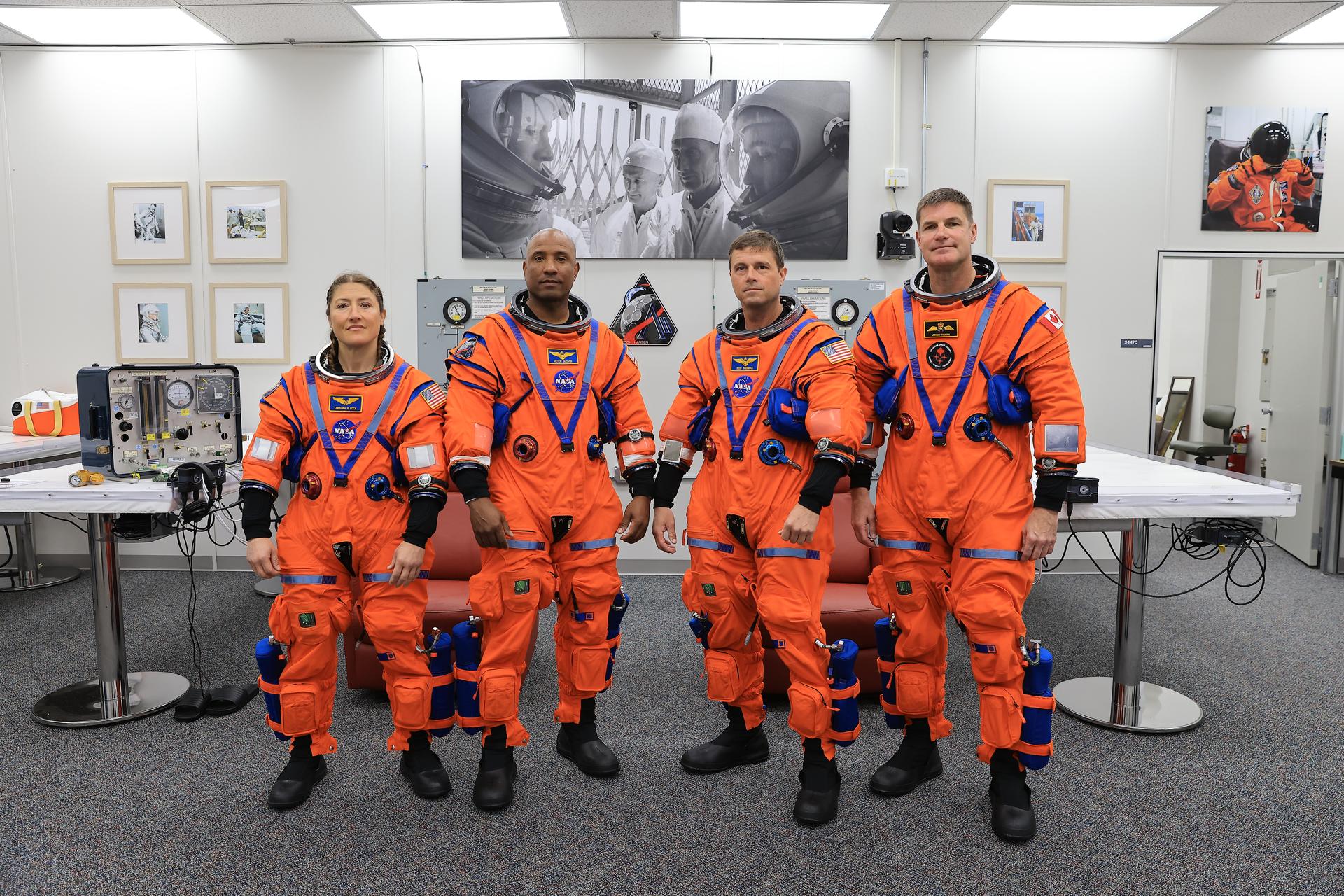
From left, Artemis II Mission Specialist Christina Koch, Pilot Victor Glover, and Commander Reid Wiseman, from NASA, along with Mission Specialist Jeremy Hansen from the CSA (Canadian Space Agency) complete leak checks on their spacesuits inside the crew suit-up room in the Neil A. Armstrong Operations and Checkout Building at the agency’s Kennedy Space Center in Florida on Wednesday, April 1, 2026, ahead of the Artemis II test flight. The mission will take the crew on a 10-day journey around the Moon and back aboard NASA’s SLS (Space Launch System) rocket and Orion spacecraft with a two hour launch window opening at 6:24 p.m. EDT from Launch Complex 39B at NASA Kennedy.
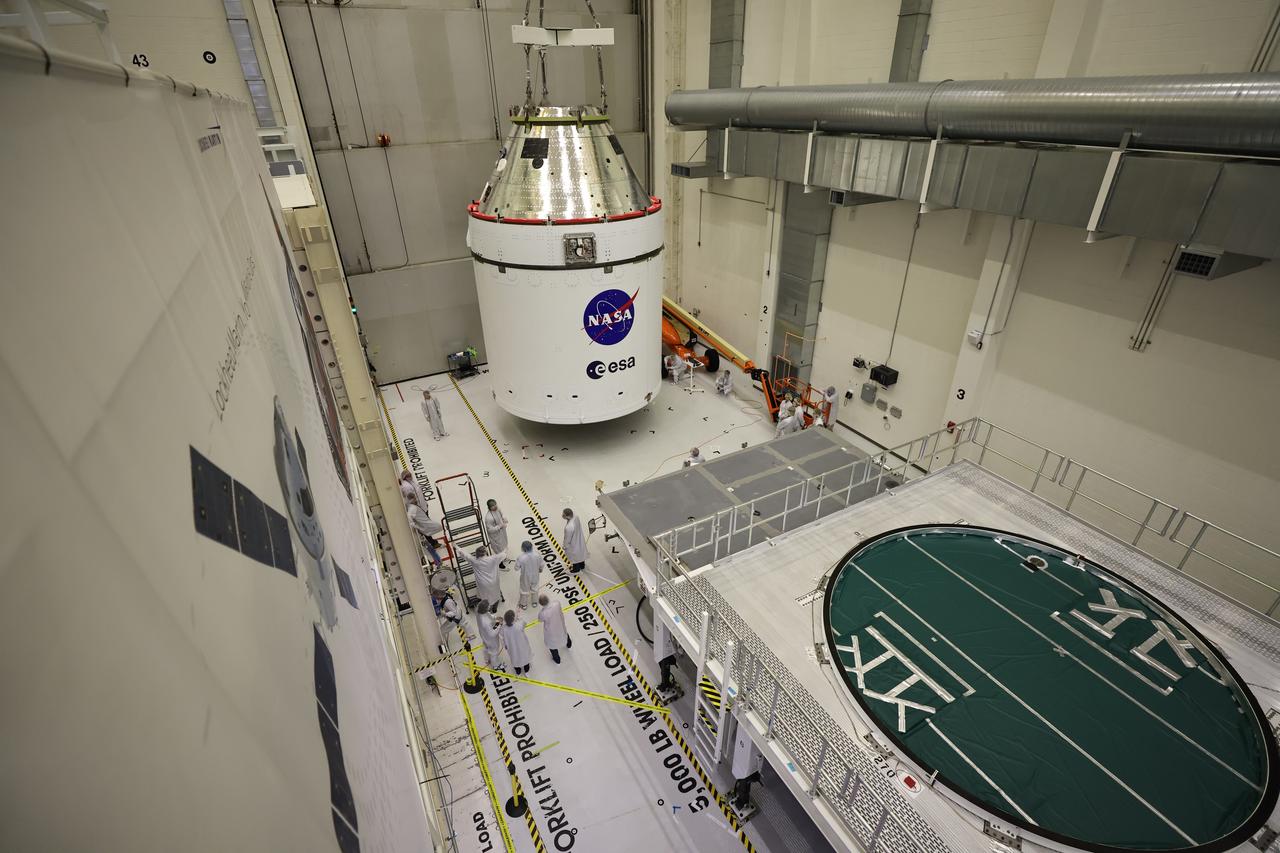
Crews use a massive crane to lift NASA’s Artemis II Orion spacecraft onto the agency’s KAMAG transporter inside the Neil A. Armstrong Operations and Checkout Building at Kennedy Space Center in Florida on Thursday, May 1, 2025. The spacecraft will be transported to the Multi-Payload Processing Facility to undergo fueling and processing for prelaunch operations. The Artemis II test flight is the first crewed flight under NASA’s Artemis campaign and is another step toward missions on the lunar surface and helping the agency prepare for future human missions to Mars.
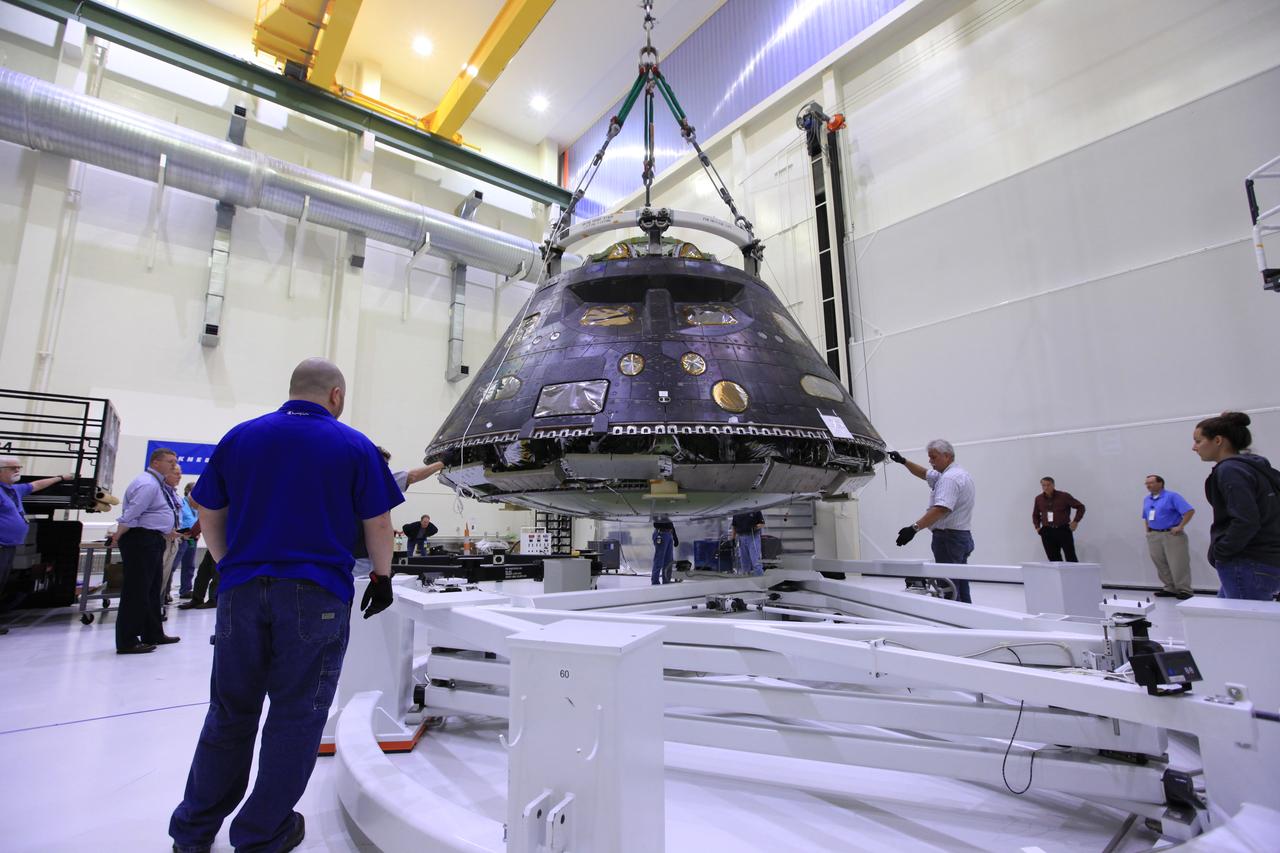
Inside the Neil Armstrong Operations and Checkout Building high bay at NASA's Kennedy Space Center in Florida, Lockheed Martin and ASRC workers monitor the progress as a crane moves the Orion crew module from Exploration Flight Test 1 over to a custom-built transport stand. The crew module is being prepared for its move to the nearby Kennedy Space Center Visitor Complex. It will be on display in the NASA Now exhibit in the IMAX Theater. The Orion spacecraft launched atop a United Launch Alliance Delta IV rocket Dec. 5, 2014, from Space Launch Complex 37 at Cape Canaveral Air Force Station. The spacecraft built for humans traveled 3,604 miles above Earth and splashed down about 4.5 hours later in the Pacific Ocean.
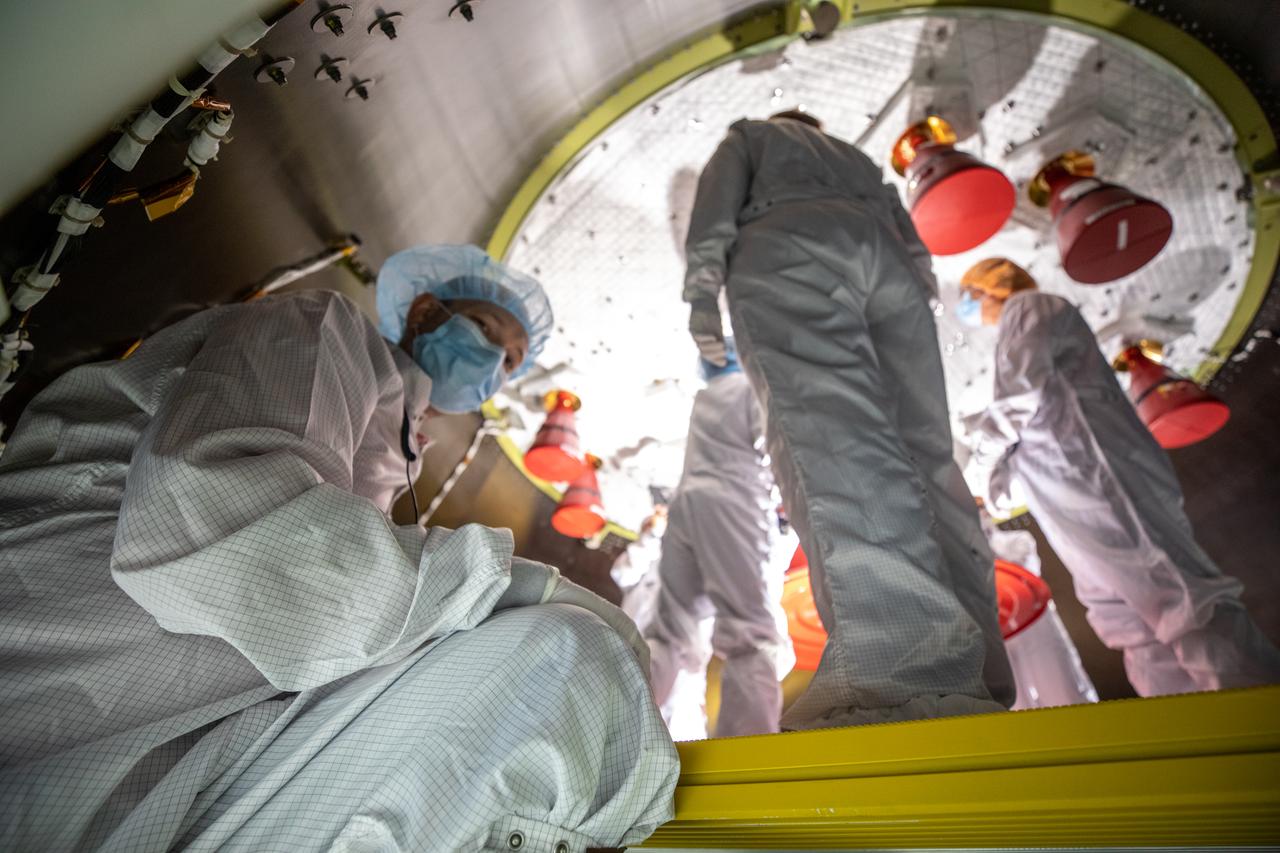
Members of the European Service Module processing team from the European Space Agency and Airbus inspect the insulation on the underside of the Orion service module for Artemis I inside the Neil Armstrong Operations and Checkout Building high bay at NASA’s Kennedy Space Center in Florida on Sept. 23, 2020. Work is also underway to attach protective covers over the solar arrays wings that were installed on the service module. Each solar array panel will generate 11 kilowatts of power and span about 63 feet. The array is a component of Orion’s service module, which is provided by the European Space Agency and built by Airbus Defence and Space to supply Orion’s power, propulsion, air and water. The first in a series of increasingly complex missions, Artemis I will test the Orion spacecraft and Space Launch System as an integrated system ahead of crewed flights to the Moon. Under the Artemis program, NASA will land the first woman and the next man on the Moon in 2024.
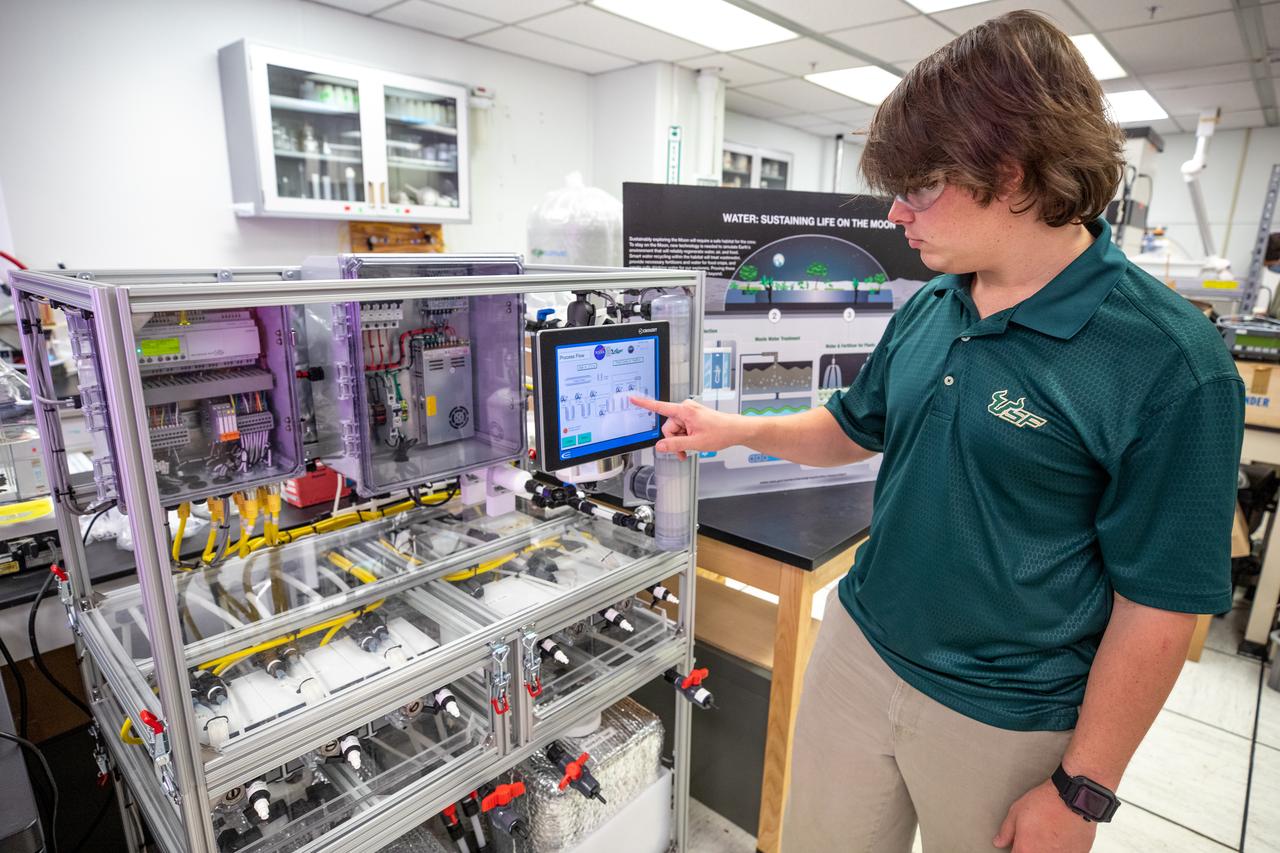
A prototype of Organic Processor Assembly (OPA) – technology capable of treating mixed organic wastes – arrives at the Neil Armstrong Operations and Checkout Building at NASA’s Kennedy Space Center in Florida on Aug. 19, 2020. Developed through a collaboration between Kennedy’s Dr. Luke Roberson and the University of South Florida’s Dr. Daniel Yeh, the OPA was designed for an early planetary base scenario to help close the resource recovery loop, decreasing the agency’s dependence on resupply missions. At the heart of the OPA is an anaerobic membrane bioreactor – a hybrid technology that couples anaerobic digestion with membrane filtration.
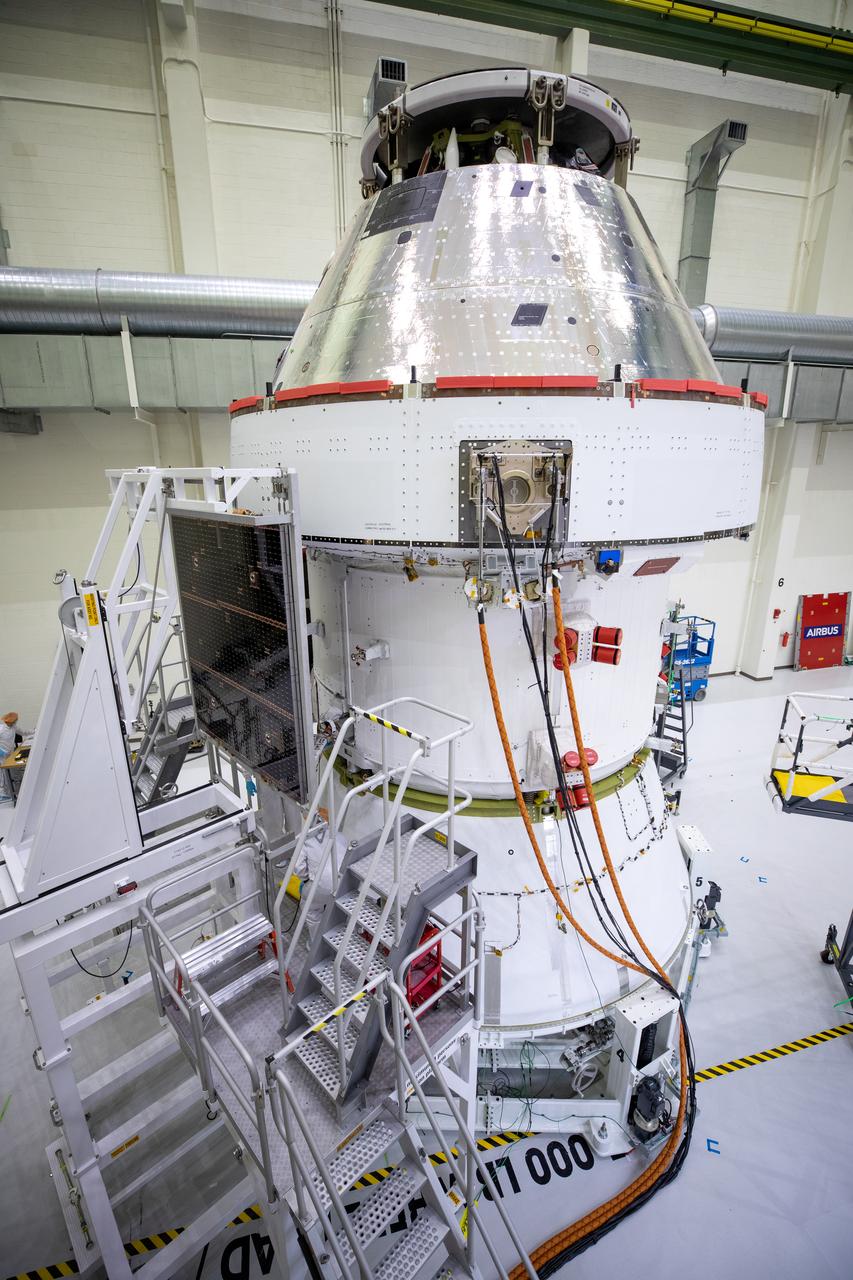
Shown is one of four solar array wings being fitted onto the Orion spacecraft for Artemis I inside the Neil Armstrong Operations and Checkout Building high bay at NASA’s Kennedy Space Center in Florida on Sept. 25, 2020. The solar arrays were extended, inspected, and then retracted before installation on the spacecraft. Each of the four solar array panels will generate 11 kilowatts of power and span about 63 feet. The array is a component of Orion’s service module, which is provided by the European Space Agency and built by Airbus Defence and Space to supply Orion’s power, propulsion, air, and water. The first in a series of increasingly complex missions, Artemis I will test the Orion spacecraft and Space Launch System as an integrated system ahead of crewed flights to the Moon. Under the Artemis program, NASA will land the first woman and the next man on the Moon in 2024.
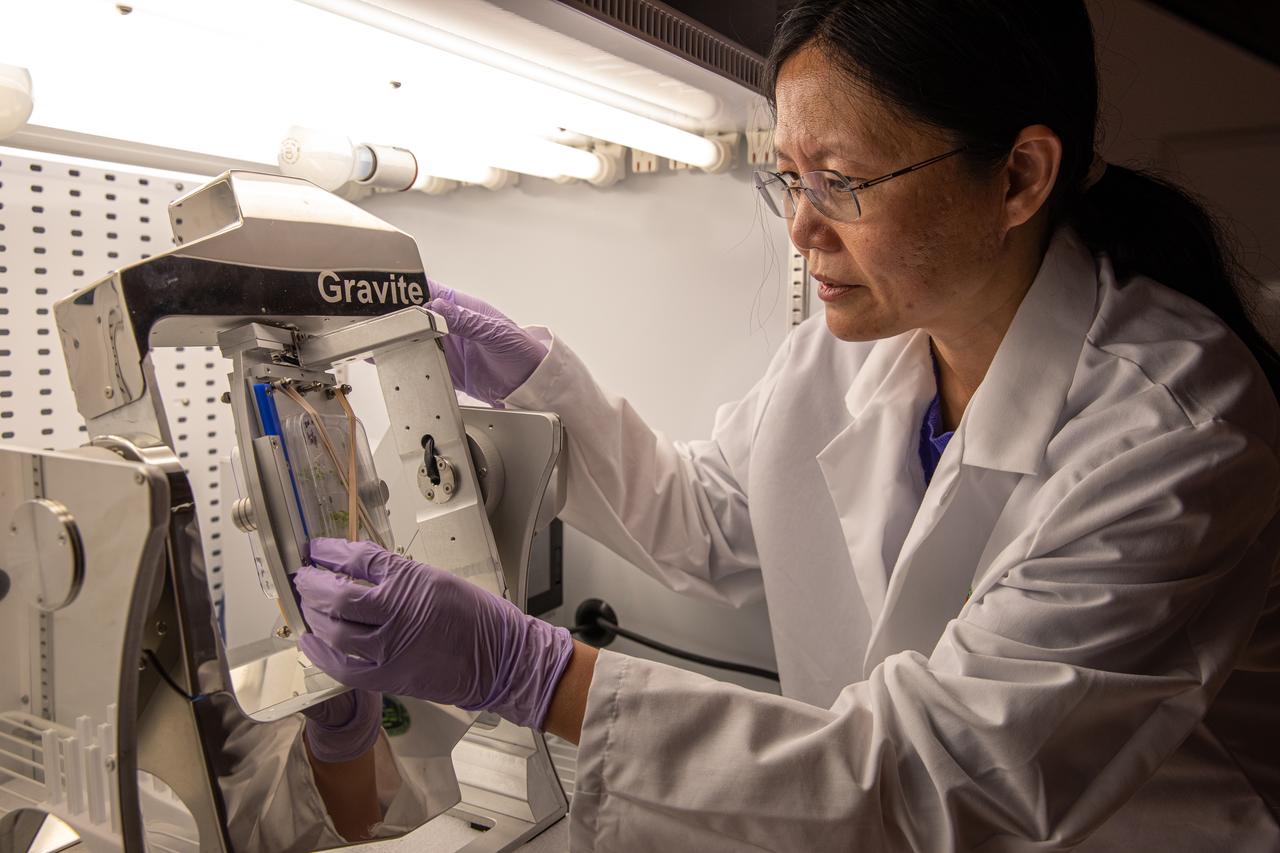
Ye Zhang, a project scientist at NASA’s Kennedy Space Center in Florida, makes adjustments to a Gravite 3d clinostat in the Microgravity Simulation Support Facility (MSSF) inside the Neil Armstrong Operations and Checkout building at on Feb. 11, 2020. The facility was developed to provide ground simulation capability to the U.S. research community in order to supplement the limited opportunities to access the International Space Station and other platforms for microgravity research. The MSSF is designed to support biological research on microorganisms, cells, tissues, small plants and small animals. The simulator provides NASA with an alternative platform for microgravity research and creates the opportunity to conduct experiments on the space station in parallel with conditions of simulated microgravity on the ground.
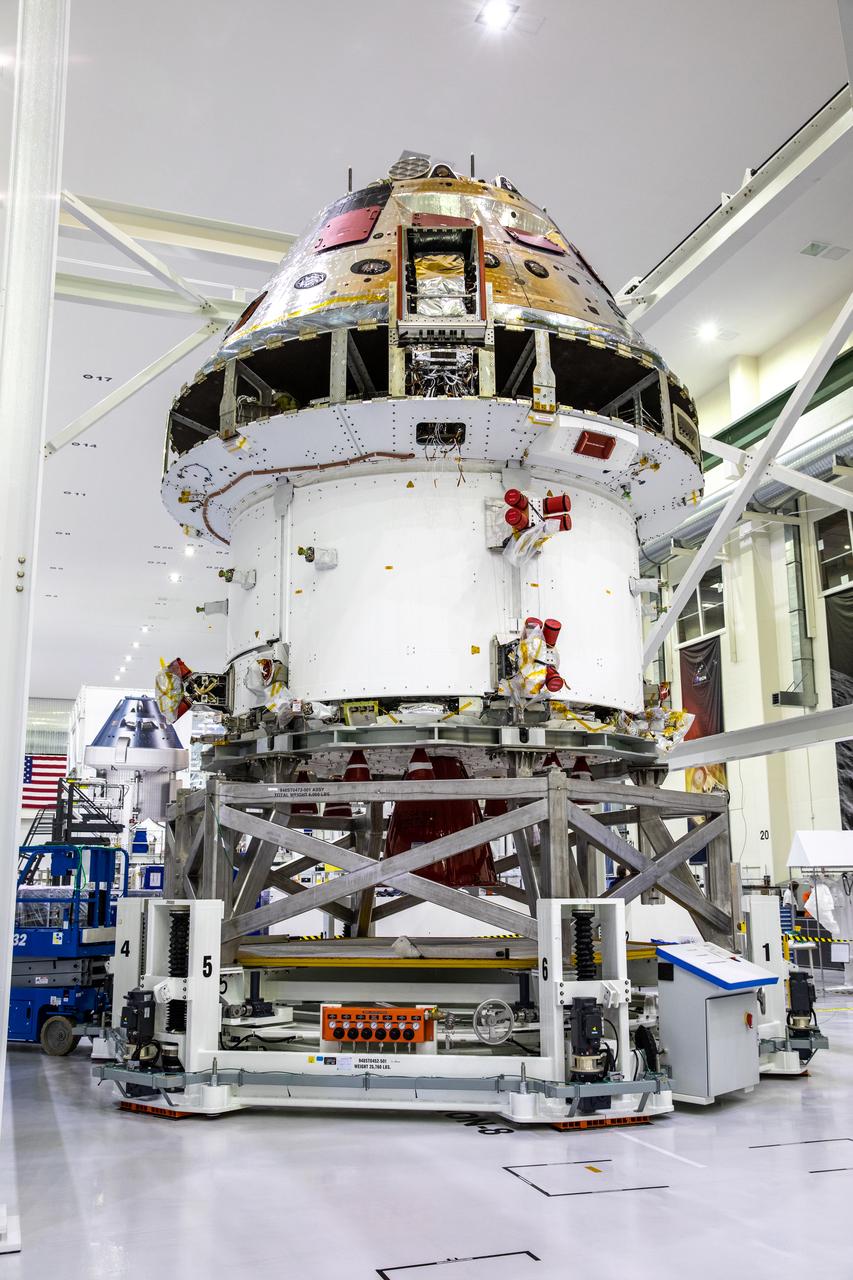
Installation of the spacecraft adapter (SA) cone to the Artemis I Orion spacecraft is in progress inside the Neil Armstrong Operations and Checkout Building at NASA’s Kennedy Space Center in Florida on Aug. 6, 2020. This is one of the final major hardware operations the spacecraft will undergo during closeout processing prior to being integrated with the Space Launch System (SLS) rocket in preparation for the first Artemis mission. The spacecraft adapter cone connects the bottom portion of Orion’s service module to the top part of the rocket known as the interim cryogenic propulsion stage (ICPS). Orion will fly on the agency’s Artemis I mission – the first in a series of increasingly complex missions to the Moon that will ultimately lead to the exploration of Mars.
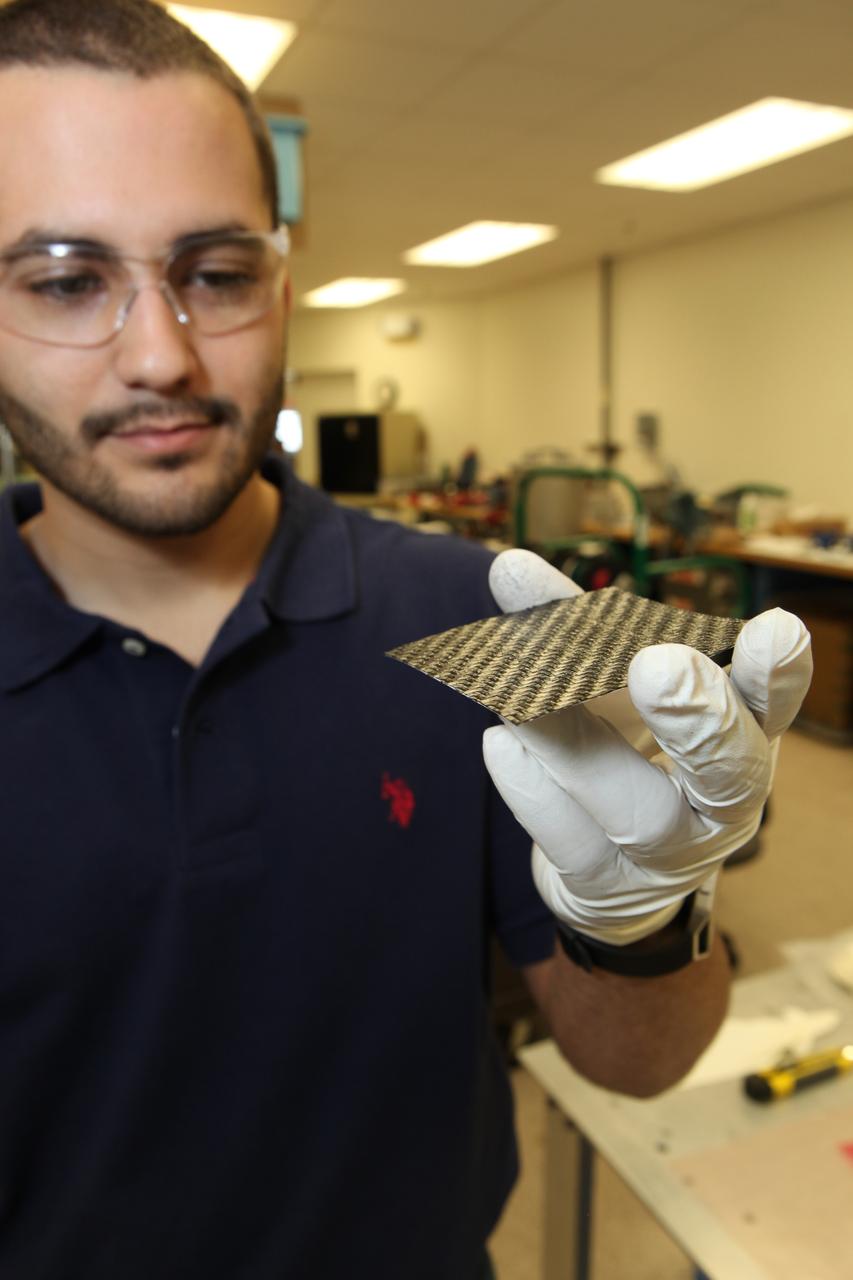
Daniel Perez, Ph.D., a graduate student from the University of Miami, displays a piece of the prototype structure for a new solid-state battery in the Prototype Laboratory at NASA's Kennedy Space Center in Florida. The size of the battery is so small that it could be a prime candidate for use in microsatellites, including CubeSats. Researchers at Kennedy are collaborating with experts at the University of Miami. The university partnership is funded through the Small Spacecraft Technology Program, in NASA's Space Technology Mission Directorate.
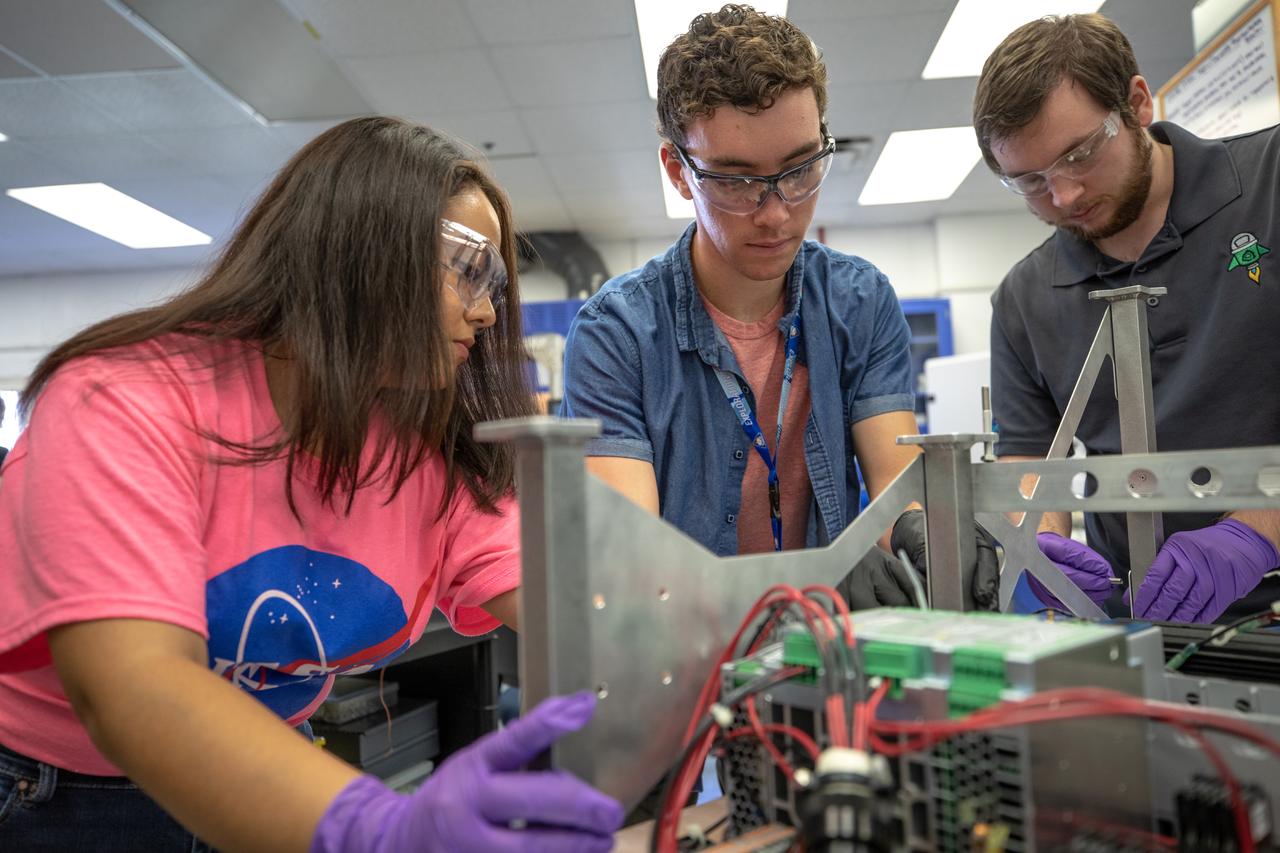
From left, Kennedy Space Center interns Brianna Sandoval and Patrick Follis, and Kennedy employee Jonathan Gleeson assemble the flight hardware of NASA’s Orbital Syngas Commodity Augmentation Reactor, or OSCAR. OSCAR is an Early Career Initiative project at the Florida spaceport that studies technology to convert trash and human waste into useful gasses such as methane, hydrogen and carbon dioxide. By processing small pieces of trash in a high-temperature reactor, OSCAR is advancing new and innovative technology for managing waste in space. OSCAR would reduce the amount of space needed for waste storage within a spacecraft, turn some waste into gasses that have energy storage and life support applications, and ensure waste is no longer biologically active. A prototype has been developed, and a team of Kennedy employees are in the process of constructing a new rig for suborbital flight testing.
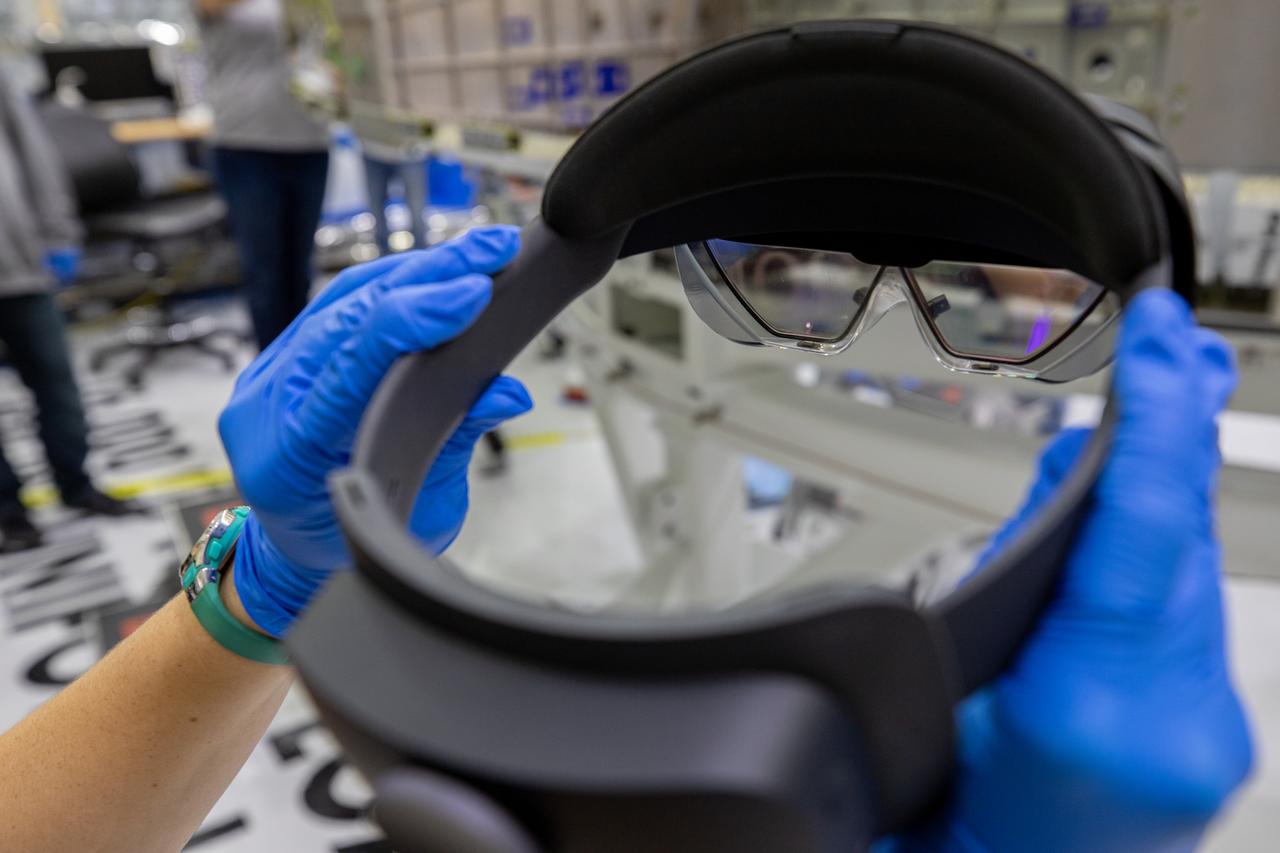
Mary Lakaszcyck, a technician with ASRC Federal Data Solutions, displays a pair of augmented reality (AR) goggles inside the high bay of the Neil Armstrong Operations and Checkout Building at NASA’s Kennedy Space Center in Florida on Jan. 16, 2020. Orion manufacturer Lockheed Martin provided the goggles to technicians to help place tapes where components will be installed on the Orion crew module adapter for NASA’s Artemis II mission, the first crewed mission aboard the spacecraft. Using the AR goggles saves significant labor and time to complete tasks. Manufactured by Microsoft, the goggles, called HoloLens2, are the second version used by Lockheed.
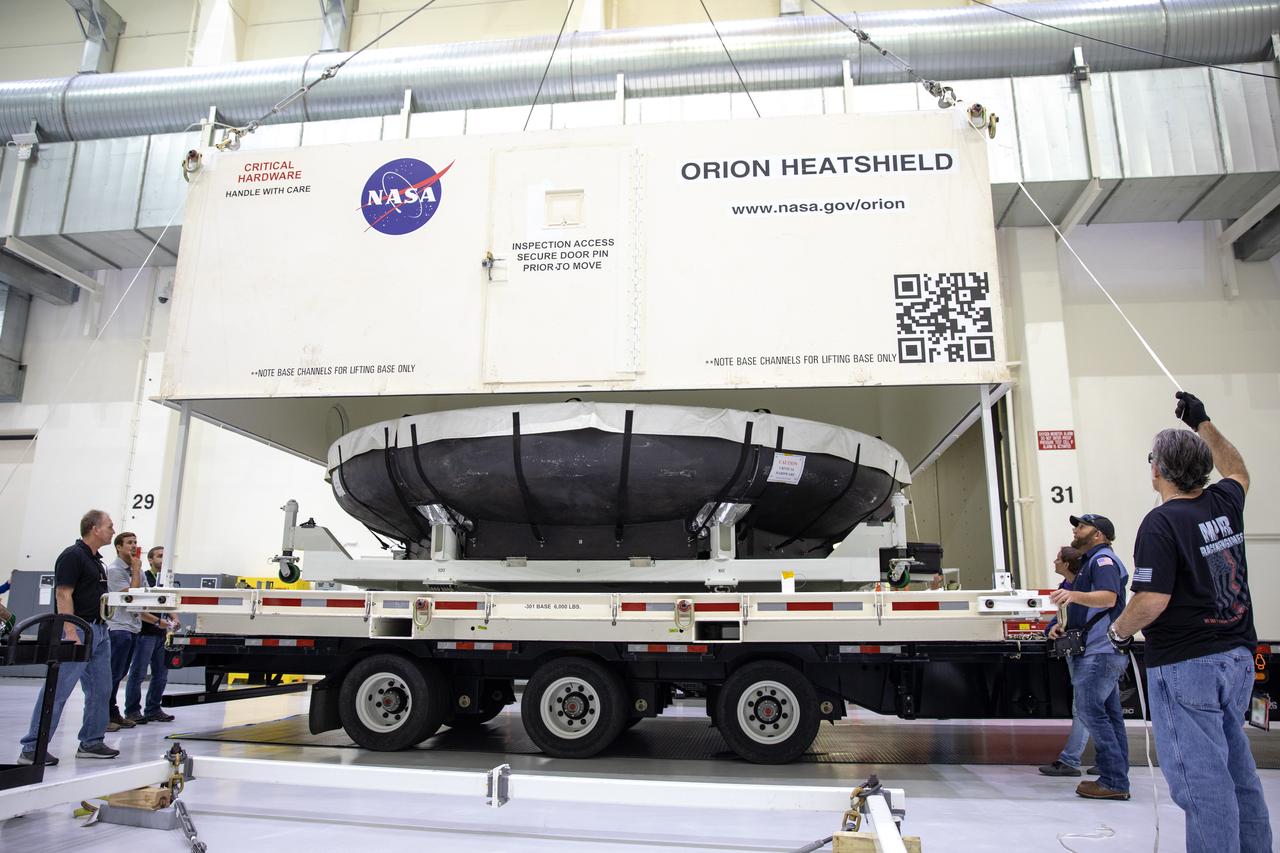
The cover of the shipping container carrying the heat shield for Orion’s Artemis 2 mission, NASA’s first crewed mission, is lifted up inside the Neil Armstrong Operations and Checkout Building high bay at the agency’s Kennedy Space Center in Florida on July 10, 2019. The heat shield, measuring roughly 16 feet in diameter, will protect astronauts upon re-entry on the second mission of Artemis. The heat shield arrived from Lockheed Martin’s manufacturing facility near Denver aboard NASA’s Super Guppy Aircraft. The heat shield is a base titanium truss structure. Over the next several months, technicians will apply Avcoat, an ablative material that will provide the thermal protection. Artemis 2 will confirm all of the spacecraft’s systems operate as designed in the actual environment of deep space with astronauts aboard.
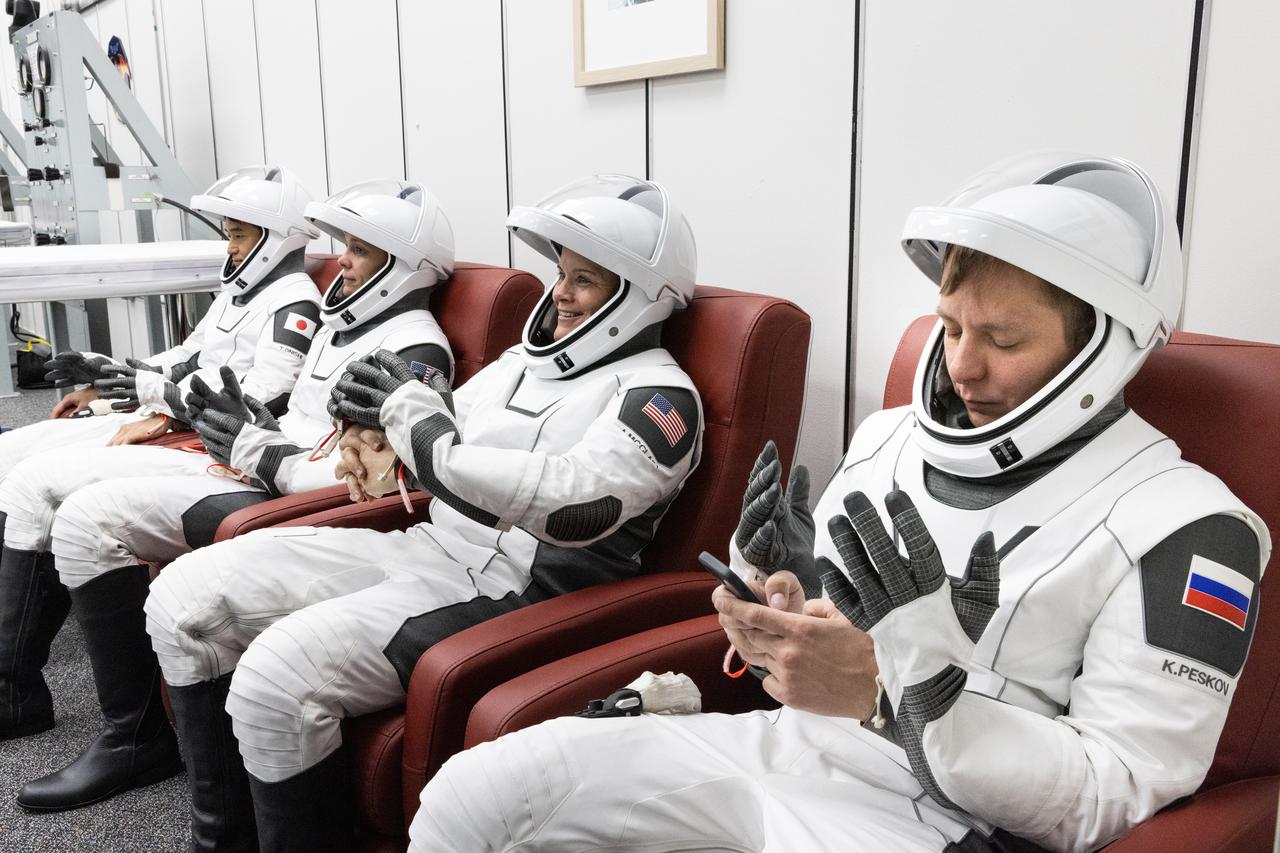
NASA’s SpaceX Crew-10 crew members are seated inside the crew suit-up room in the Neil A. Armstrong Operations and Checkout Building at the agency’s Kennedy Space Center in Florida ahead of launch to the International Space Station on Friday, March 14, 2025. From left to right, JAXA (Japan Aerospace Exploration Agency) astronaut Takuya Onishi, NASA astronauts Nichole Ayers and Anne McClain, along with Roscosmos cosmonaut Kirill Peskov are scheduled to lift off aboard SpaceX’s Dragon spacecraft and Falcon 9 rocket at 7:03 p.m. EDT, from Launch Complex 39A at NASA Kennedy. Crew-10 is the 10th crew rotation mission with SpaceX to the space station as part of the agency’s Commercial Crew Program.
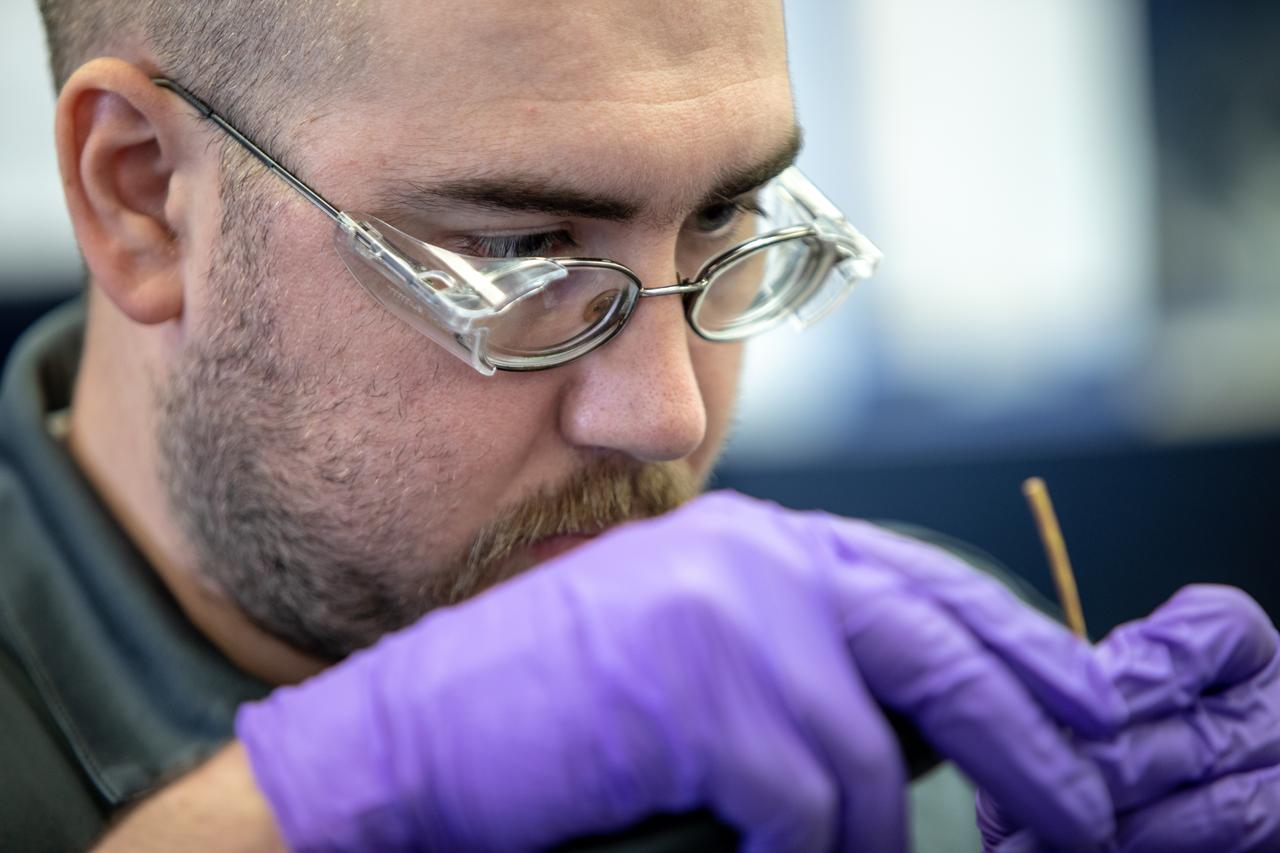
Thomas Cauvel, an intern assisting with software/electrical engineering on NASA’s Orbital Syngas Commodity Augmentation Reactor, or OSCAR, at Kennedy Space Center assembles the flight hardware. OSCAR is an Early Career Initiative project at the Florida spaceport that studies technology to convert trash and human waste into useful gasses such as methane, hydrogen and carbon dioxide. By processing small pieces of trash in a high-temperature reactor, OSCAR is advancing new and innovative technology for managing waste in space. OSCAR would reduce the amount of space needed for waste storage within a spacecraft, turn some waste into gasses that have energy storage and life support applications, and ensure waste is no longer biologically active. A prototype has been developed, and a team of Kennedy employees are in the process of constructing a new rig for suborbital flight testing.
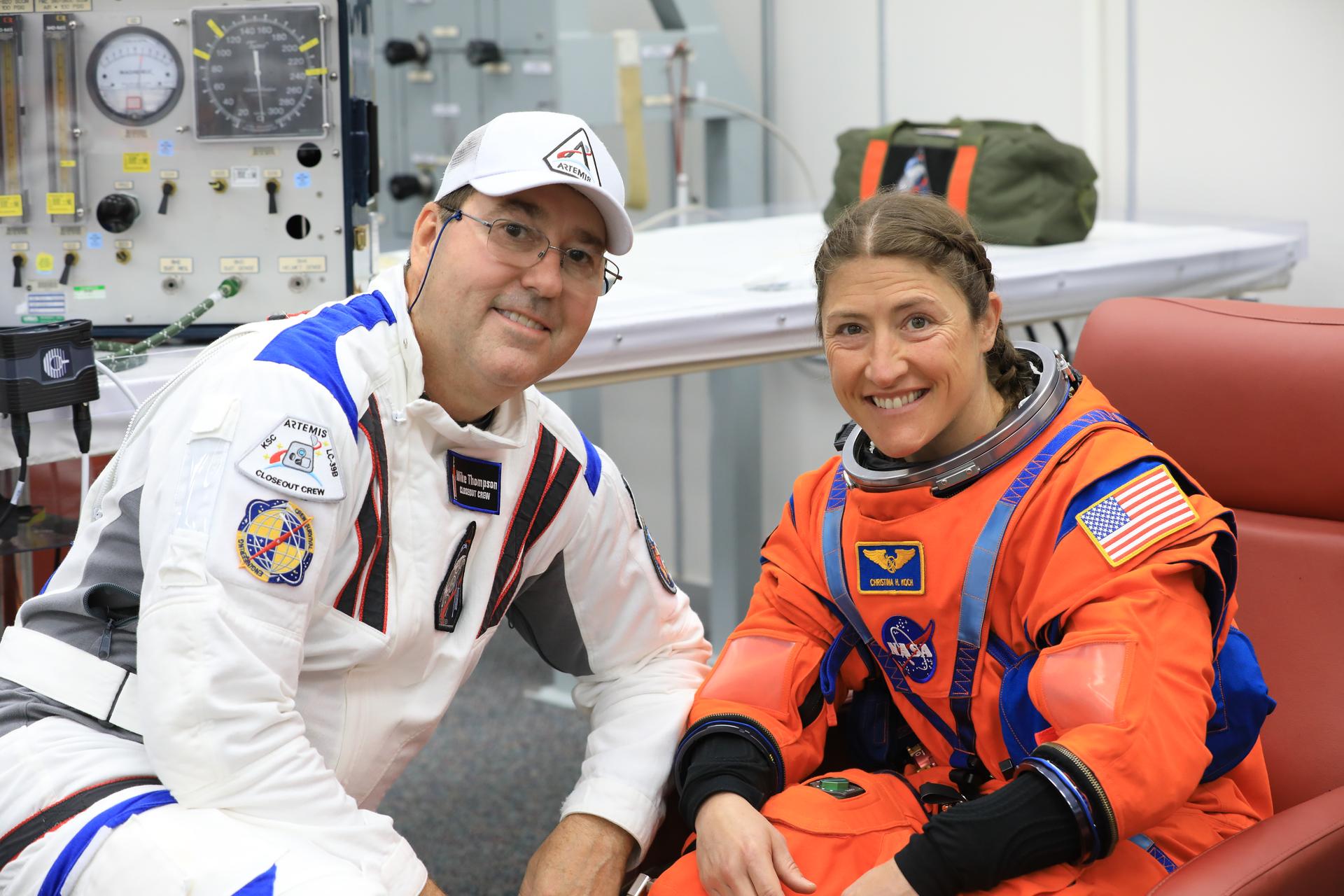
From left, a member of the Artemis closeout crew and NASA astronaut Christina Koch, Artemis II mission specialist, conducts leak checks on her spacesuit inside the crew suit-up room in the Neil A. Armstrong Operations and Checkout Building at the agency’s Kennedy Space Center in Florida on Wednesday, April 1, 2026, ahead of the Artemis II test flight. The mission will take Koch, Commander Reid Wiseman, and Pilot Victor Glover, from NASA, along with Mission Specialist Jeremy Hansen from the CSA (Canadian Space Agency) on a 10-day journey around the Moon and back aboard NASA’s SLS (Space Launch System) rocket and Orion spacecraft with a two-hour launch window opening at 6:24 p.m. EDT from Launch Complex 39B at NASA Kennedy.
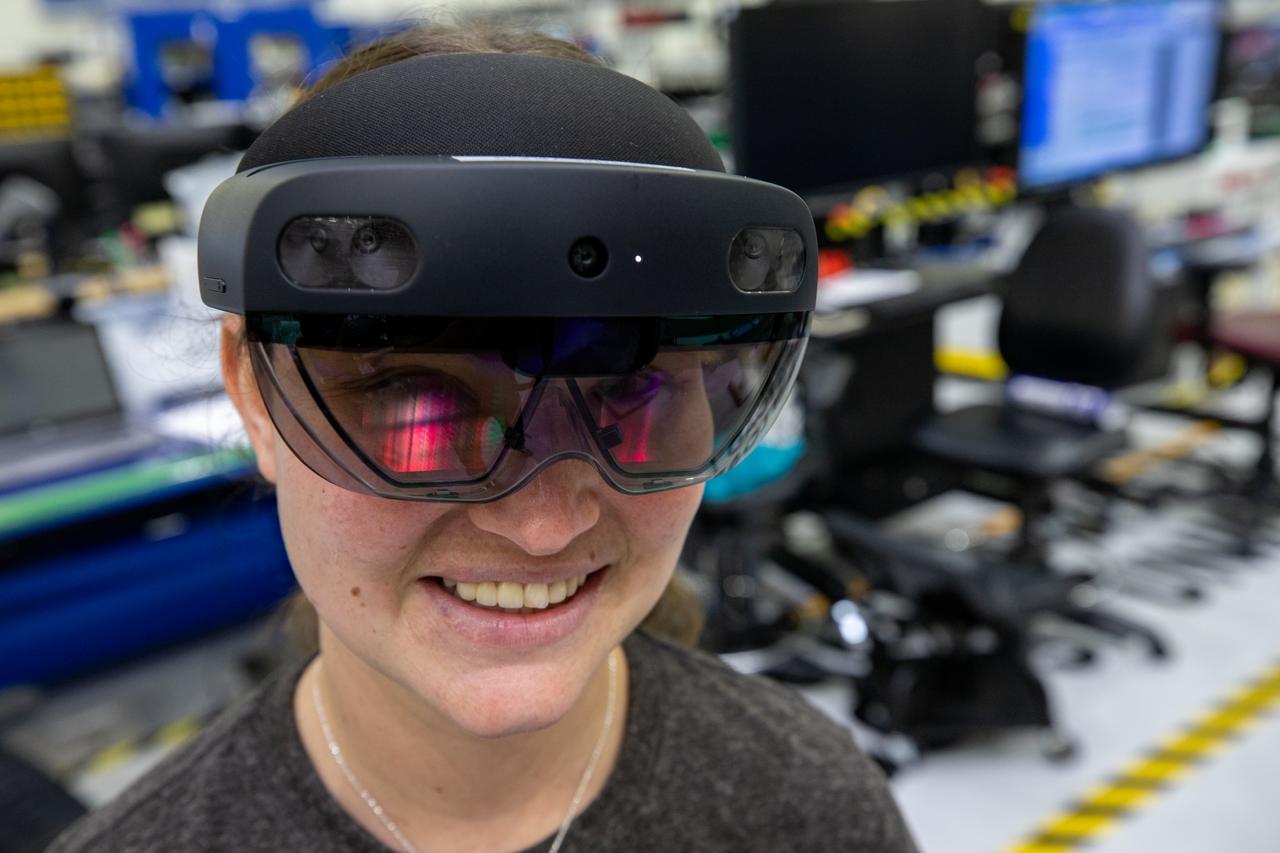
Mary Lakaszcyck, a technician with ASRC Federal Data Solutions, wears a pair of augmented reality (AR) goggles inside the high bay of the Neil Armstrong Operations and Checkout Building at NASA’s Kennedy Space Center in Florida on Jan. 16, 2020. Orion manufacturer Lockheed Martin provided the goggles to technicians to help place tapes where components will be installed on the Orion crew module adapter for NASA’s Artemis II mission, the first crewed mission aboard the spacecraft. Using the AR goggles saves significant labor and time to complete tasks. Manufactured by Microsoft, the goggles, called HoloLens2, are the second version used by Lockheed.
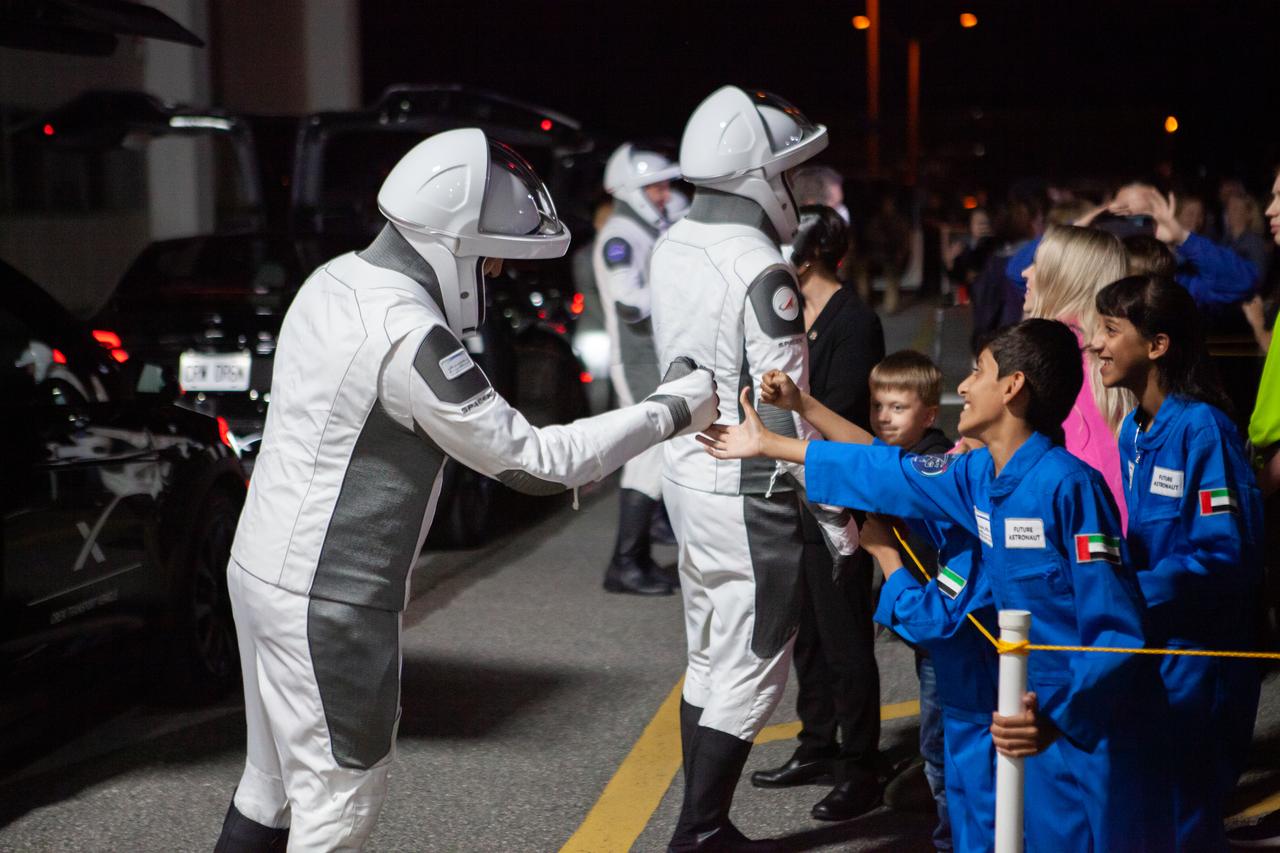
NASA’s SpaceX Crew-6 astronauts greet their family members after walking out of the Neil Armstrong Operations and Checkout Building at the agency’s Kennedy Space Center in Florida on Feb. 26, 2023. Crew-6 astronauts are NASA astronaut Stephen Bowen, spacecraft commander; NASA astronaut Warren “Woody” Hoburg, pilot; Sultan Alneyadi, UAE (United Arab Emirates) astronaut and mission specialist; and Andrey Fedyaev, Roscosmos cosmonaut and mission specialist. They will board two Tesla vehicles for the trip to Kennedy’s Launch Complex 39A, where they will launch to the International Space Station aboard SpaceX’s Dragon Endeavour spacecraft. Launch was targeted for 1:45 a.m. EST on Feb. 27 from Launch Complex 39A, but was scrubbed for the day. Crew-6 is the sixth crew rotation mission with SpaceX to the station, and the seventh flight of Dragon with people as part of the agency’s Commercial Crew Program.
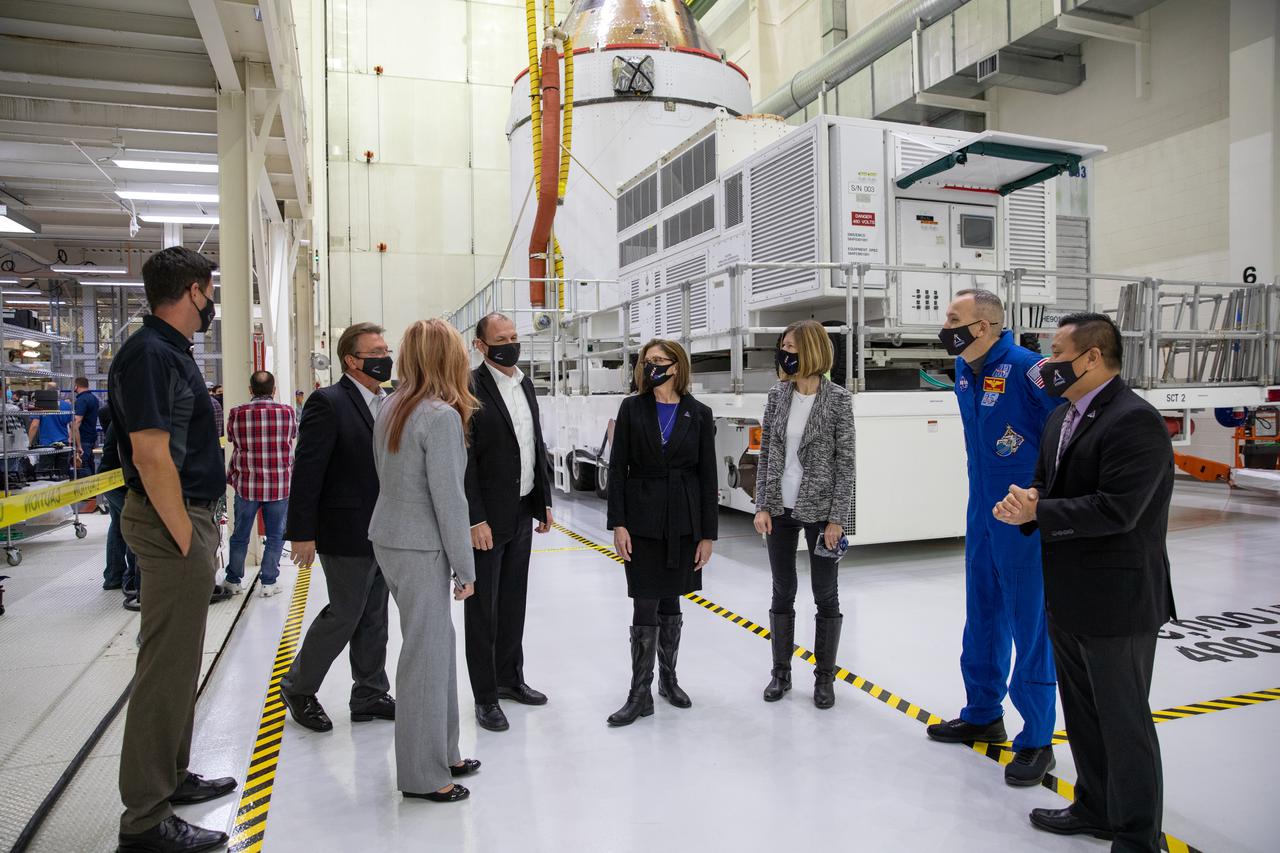
Orion is revealed for one of the final times on Jan. 14, as it is readied atop its transport pallet from the Neil Armstrong Operations and Checkout Building at NASA’s Kennedy Space Center in Florida, along its path to the pad ahead of the Artemis I launch. Inside the high bay, from left, are Nathan Varn, Lockheed Martin Production Control director; Jules Schneider, Lockheed Martin director of Orion Assembly, Test and Launch Operations at Kennedy; Kelly DeFazio, Lockheed Martin Orion Program director for production operations; Tony Antonelli, Lockheed Martin Orion Program director and Artemis II Mission director; Cathy Koerner, Orion Program manager; Kathy Lueders, associate administrator of the Human Exploration and Operations Mission Directorate; astronaut Randy Bresnik; and Howard Hu, Orion deputy program manager. Teams across the globe have worked tirelessly to assemble the spacecraft, which will receive a protective covering prior to departing for the Multi-Payload Processing Facility to begin ground processing by the Exploration Ground Systems and Jacobs teams.
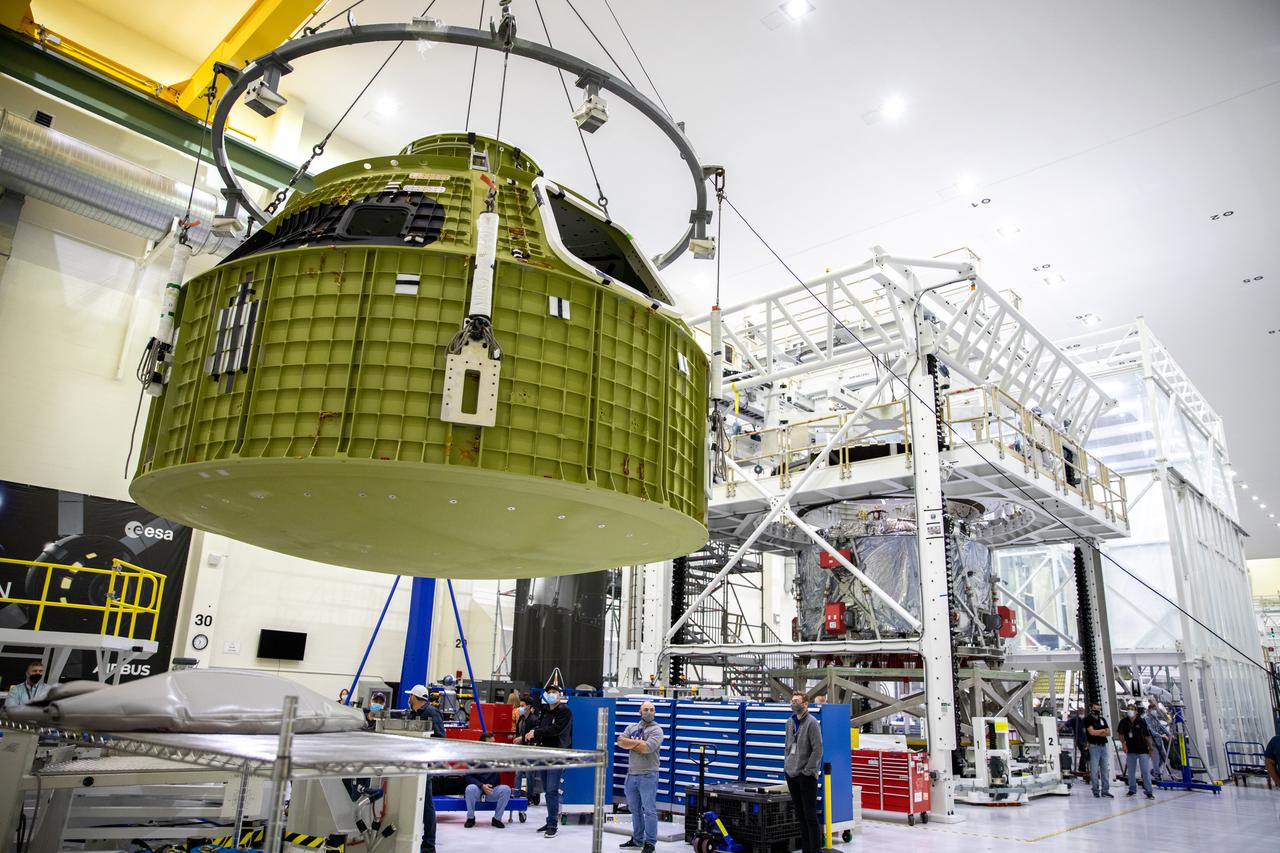
The Orion pressure vessel for NASA’s Artemis III mission is lifted by crane for its move onto a work stand in the high bay of the Neil A. Armstrong Operations and Checkout Building at NASA’s Kennedy Space Center in Florida on Oct. 20, 2021. The pressure vessel will be secured onto the work stand where Lockheed Matin technicians will begin the work to prepare the spacecraft for its launch atop a Space Launch System rocket. Artemis III will send astronauts, including the first woman and first person of color, on a mission to the surface of the Moon by 2024.
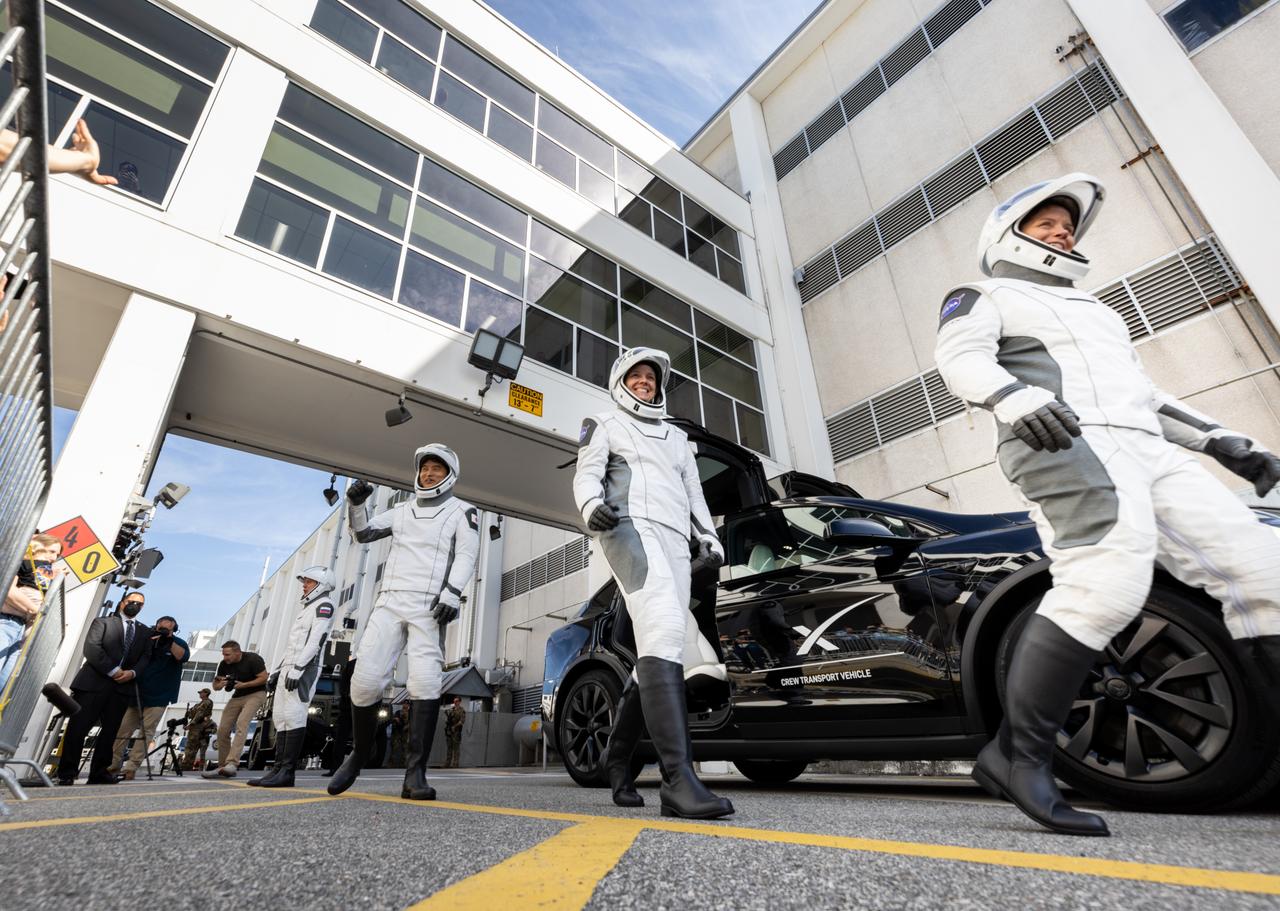
NASA’s SpaceX Crew-10 crew members pose for a photo after walking out of the Neil A. Armstrong Operations and Checkout Building at the agency’s Kennedy Space Center in Florida ahead of launch of the Crew-10 mission on Friday, March 14, 2025. From left to right, Roscosmos cosmonaut Kirill Peskov, NASA astronauts Anne McClain and Nichole Ayers, along with JAXA (Japan Aerospace Exploration Agency) astronaut Takuya Onishi are scheduled to lift off aboard SpaceX’s Dragon spacecraft and Falcon 9 rocket at 7:03 p.m. EDT, from Launch Complex 39A at NASA Kennedy. Crew-10 is the 10th crew rotation mission with SpaceX to the space station as part of the agency’s Commercial Crew Program
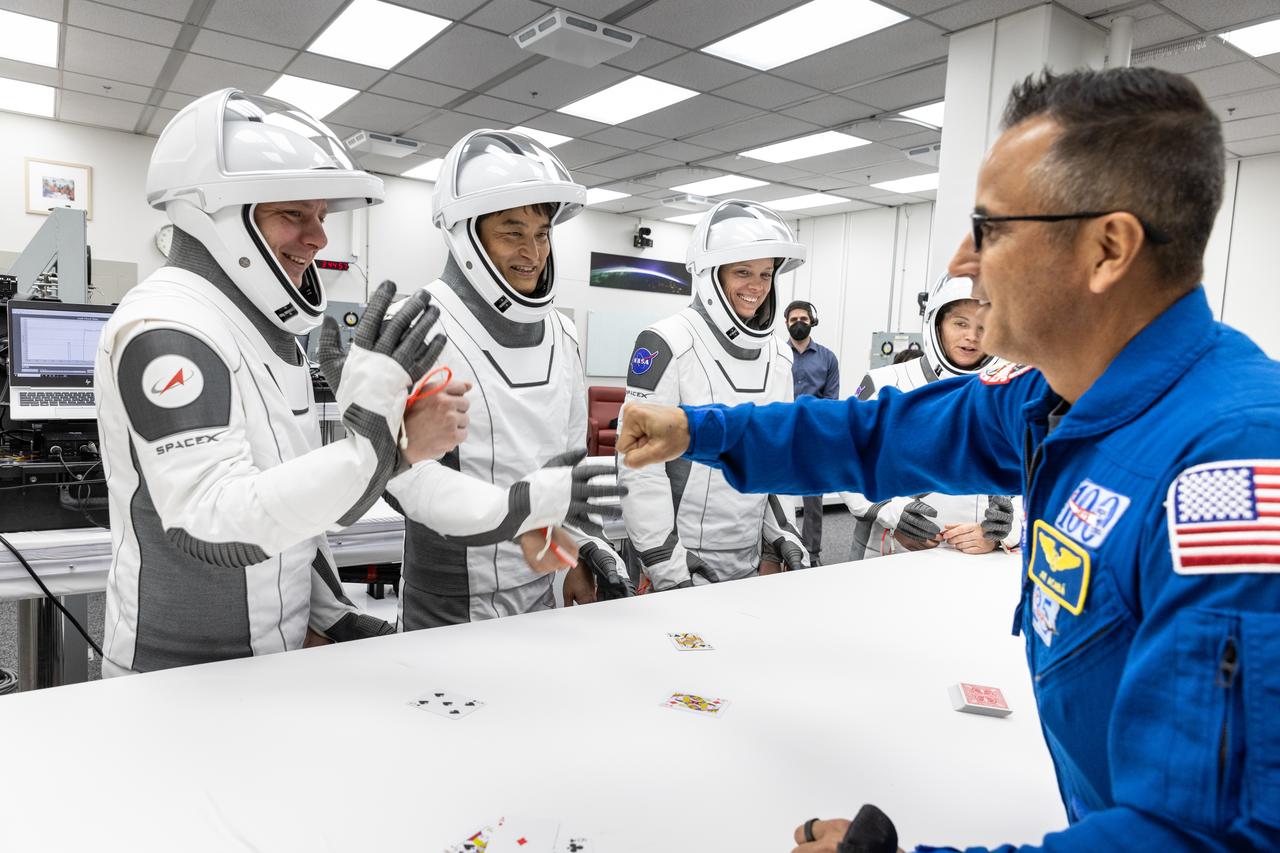
NASA’s SpaceX Crew-10 crew members play the traditional card game with NASA astronaut chief Joe Acaba, inside the Neil A. Armstrong Operations and Checkout Building at the agency’s Kennedy Space Center in Florida ahead of launch to the International Space Station on Friday, March 14, 2025. From left to right, Roscosmos cosmonaut Kirill Peskov, JAXA (Japan Aerospace Exploration Agency) astronaut Takuya Onishi, as well as NASA astronauts Nichole Ayers and Anne McClain are scheduled to lift off aboard SpaceX’s Dragon spacecraft and Falcon 9 rocket at 7:03 p.m. EDT, from Launch Complex 39A at NASA Kennedy. Crew-10 is the 10th crew rotation mission with SpaceX to the space station as part of the agency’s Commercial Crew Program.
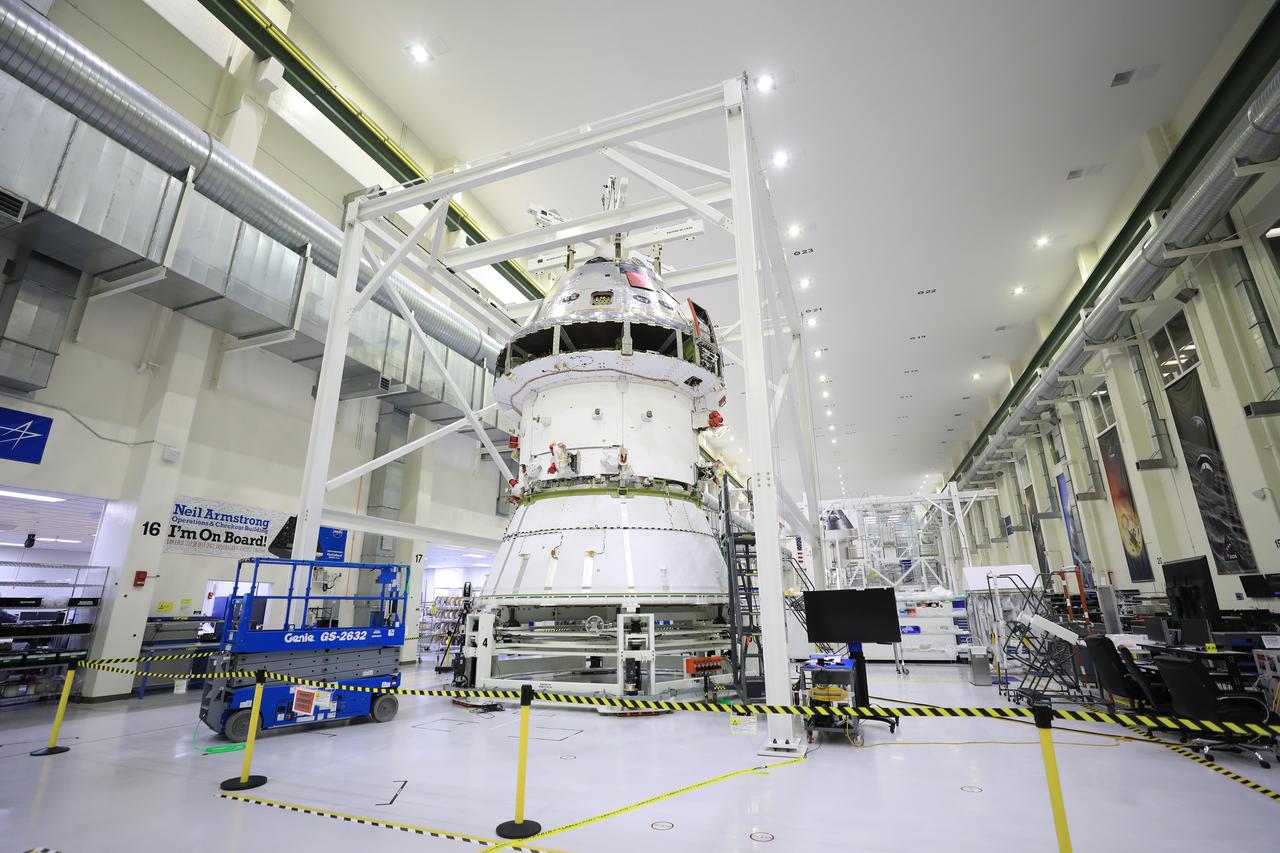
Technicians at NASA’s Kennedy Space Center in Florida work to install the spacecraft adapter (SA) cone to the Artemis I Orion spacecraft inside the Neil Armstrong Operations and Checkout Building on Aug. 10, 2020. This is one of the final major hardware operations the spacecraft will undergo during closeout processing prior to being integrated with the Space Launch System (SLS) rocket in preparation for the first Artemis mission. The spacecraft adapter cone connects the bottom portion of Orion’s service module to the top part of the rocket known as the interim cryogenic propulsion stage (ICPS). Orion will fly on the agency’s Artemis I mission – the first in a series of increasingly complex missions to the Moon that will ultimately lead to the exploration of Mars.
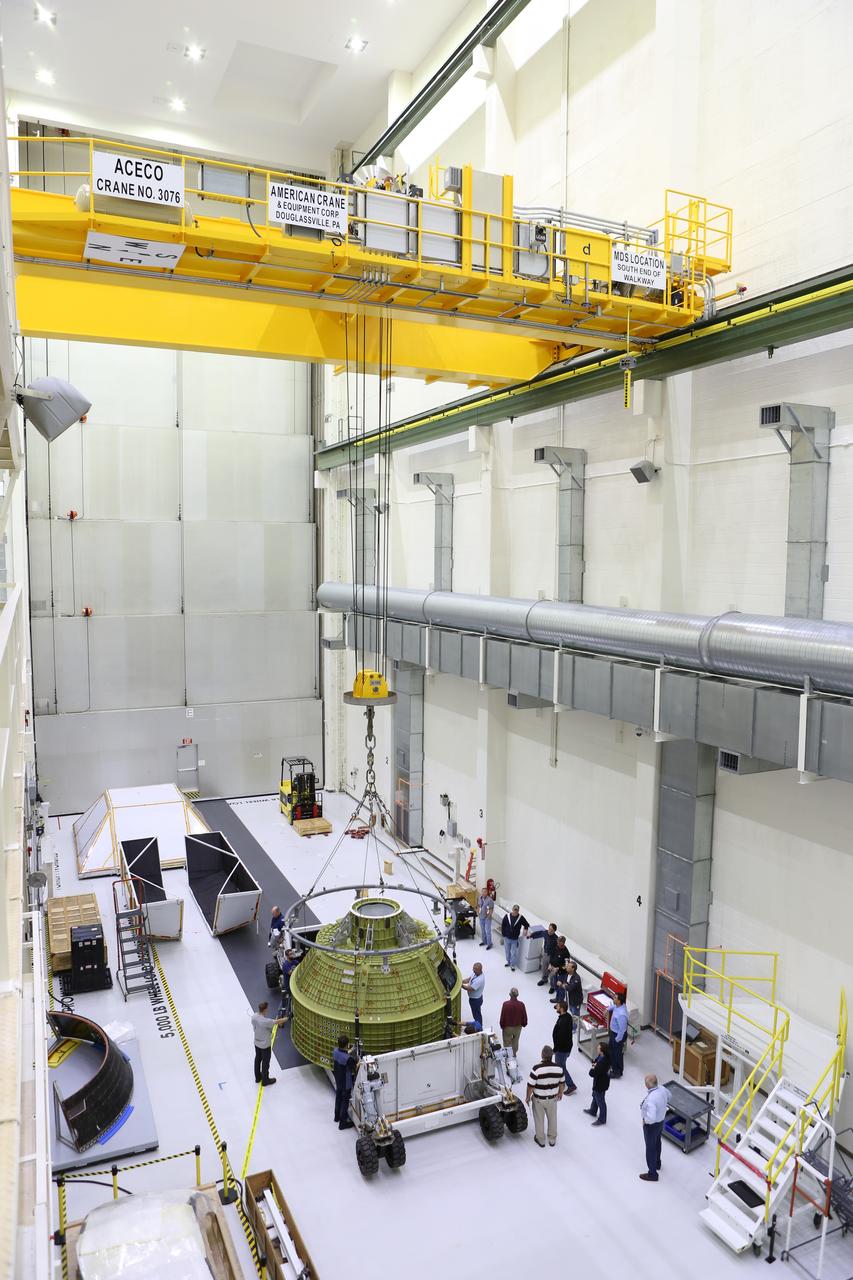
Inside the Neil Armstrong Operations and Checkout Building at NASA’s Kennedy Space Center in Florida, Lockheed Martin technicians attach lines from a crane to the Orion crew module structural test article (STA). The STA arrived aboard NASA's Super Guppy aircraft at the Shuttle Landing Facility operated by Space Florida. The test article will be lifted out of its container and moved to a test tool called the birdcage for further testing. The Orion spacecraft will launch atop NASA’s Space Launch System rocket on EM-1, its first deep space mission, in late 2018.
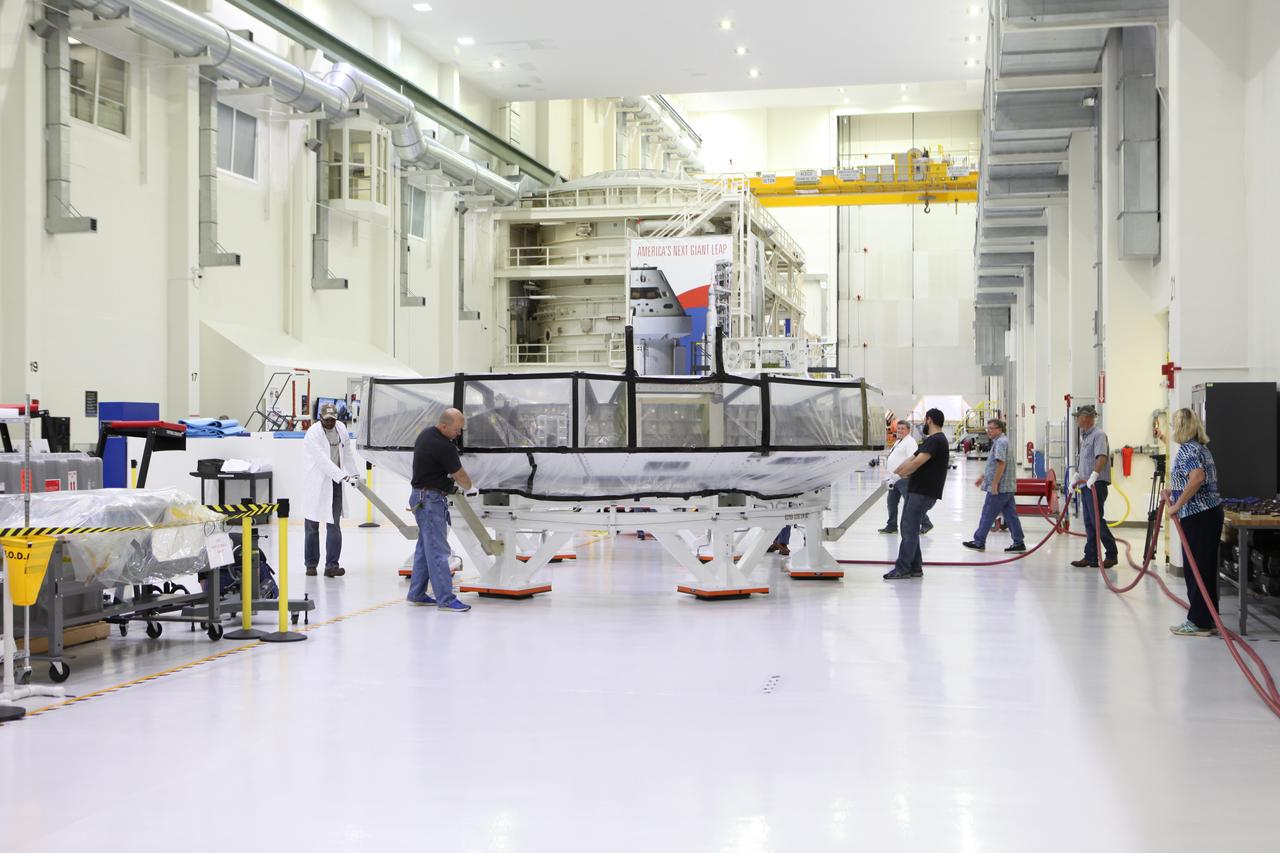
Inside the Neil Armstrong Operations and Checkout Building high bay at NASA’s Kennedy Space Center in Florida, Lockheed Martin technicians begin to move the Orion crew module adapter (CMA) for Exploration Mission 1 (EM-1) to a clean room. The CMA will undergo propellant and environmental control and life support system tube installation and welding. The adapter will connect the Orion crew module to the European Space Agency-provided service module. The Orion spacecraft will launch atop NASA’s Space Launch System rocket on EM-1, its first deep space mission, in late 2018.
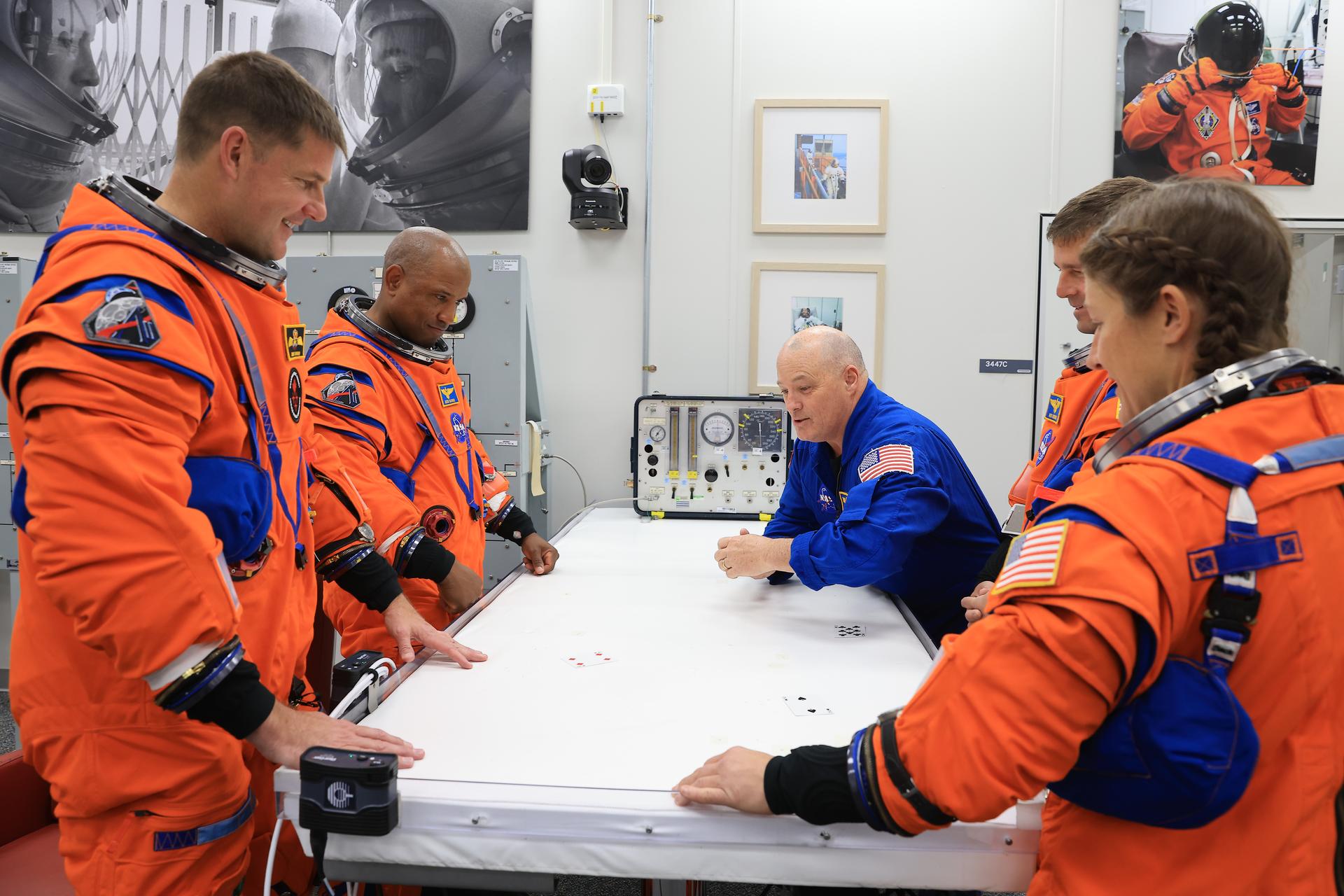
Artemis II crew members play the traditional card game with NASA astronaut chief Scott Tingle, inside the Neil A. Armstrong Operations and Checkout Building at the agency’s Kennedy Space Center in Florida on Wednesday, April 1, 2026, ahead of the Artemis II test flight. The mission will take Artemis II Commander Reid Wiseman, Pilot Victor Glover, and Mission Specialist Christina Koch from NASA, along with Mission Specialist Jeremy Hansen from the CSA (Canadian Space Agency), on a 10-day journey around the Moon and back aboard NASA’s SLS (Space Launch System) rocket and Orion spacecraft with a two hour launch window opening at 6:24 p.m. EDT from Launch Complex 39B at NASA Kennedy.
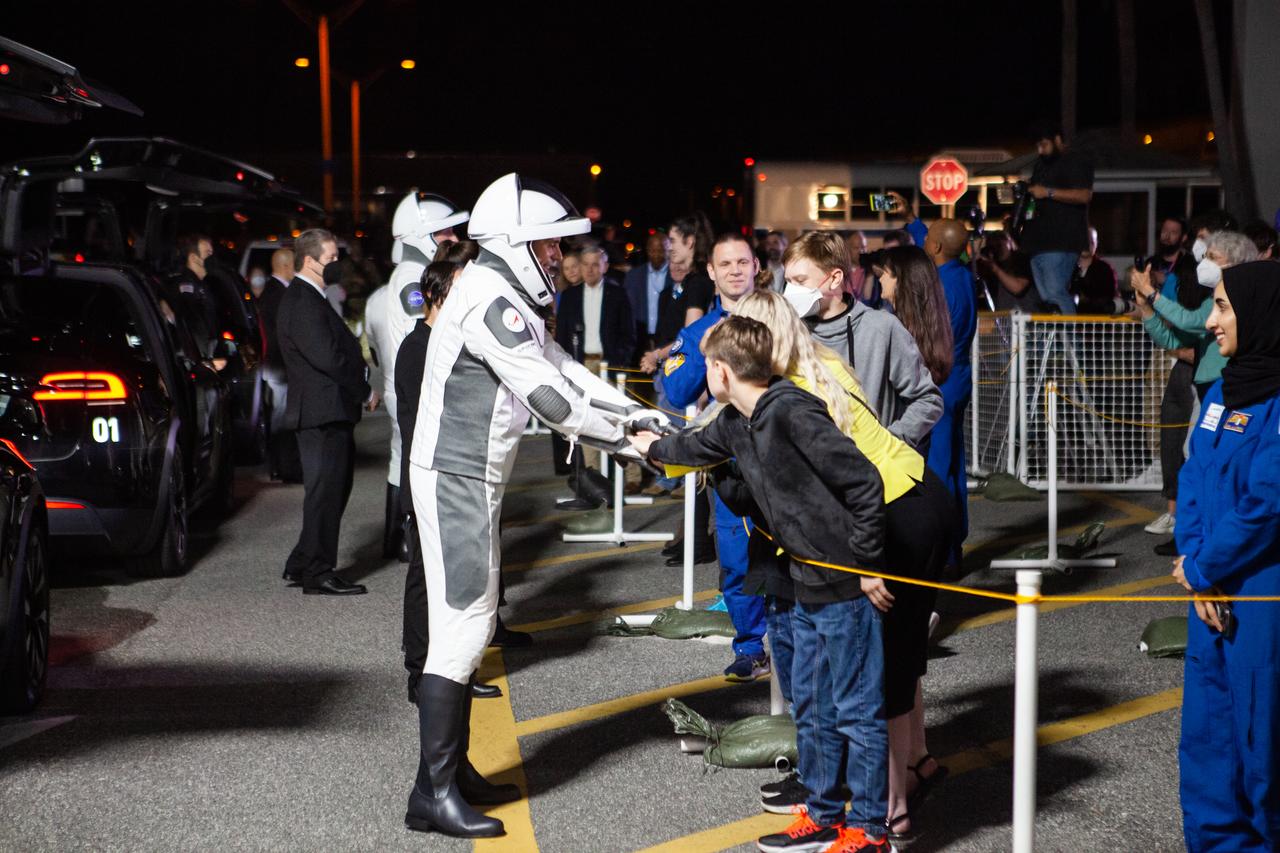
NASA’s SpaceX Crew-6 astronauts greet their family members after walking out of the Neil Armstrong Operations and Checkout Building at the agency’s Kennedy Space Center in Florida on March 1, 2023. In view at left is Sultan Alneyadi, UAE (United Arab Emirates) astronaut and mission specialist. The crewmembers will board one of the Tesla vehicles for the trip to Kennedy’s Launch Complex 39A, where they will launch to the International Space Station aboard SpaceX’s Dragon Endeavour spacecraft atop the Falcon 9 rocket. Launch is targeted for 12:34 a.m. EST on March 2 from Launch Complex 39A. Crew-6 is the sixth crew rotation mission with SpaceX to the station, and the seventh flight of Dragon with people as part of the agency’s Commercial Crew Program.

NASA’s Orbital Syngas Commodity Augmentation Reactor, or OSCAR, is being prepared for suborbital flight testing at the agency’s Kennedy Space Center in Florida. OSCAR is an Early Career Initiative project at the spaceport that studies technology to convert trash and human waste into useful gasses such as methane, hydrogen and carbon dioxide. By processing small pieces of trash in a high-temperature reactor, OSCAR is advancing new and innovative technology for managing waste in space. OSCAR would reduce the amount of space needed for waste storage within a spacecraft, turn some waste into gasses that have energy storage and life support applications, and ensure waste is no longer biologically active. A prototype has been developed, and a team of Kennedy employees are in the process of constructing a new rig for the suborbital flight test.
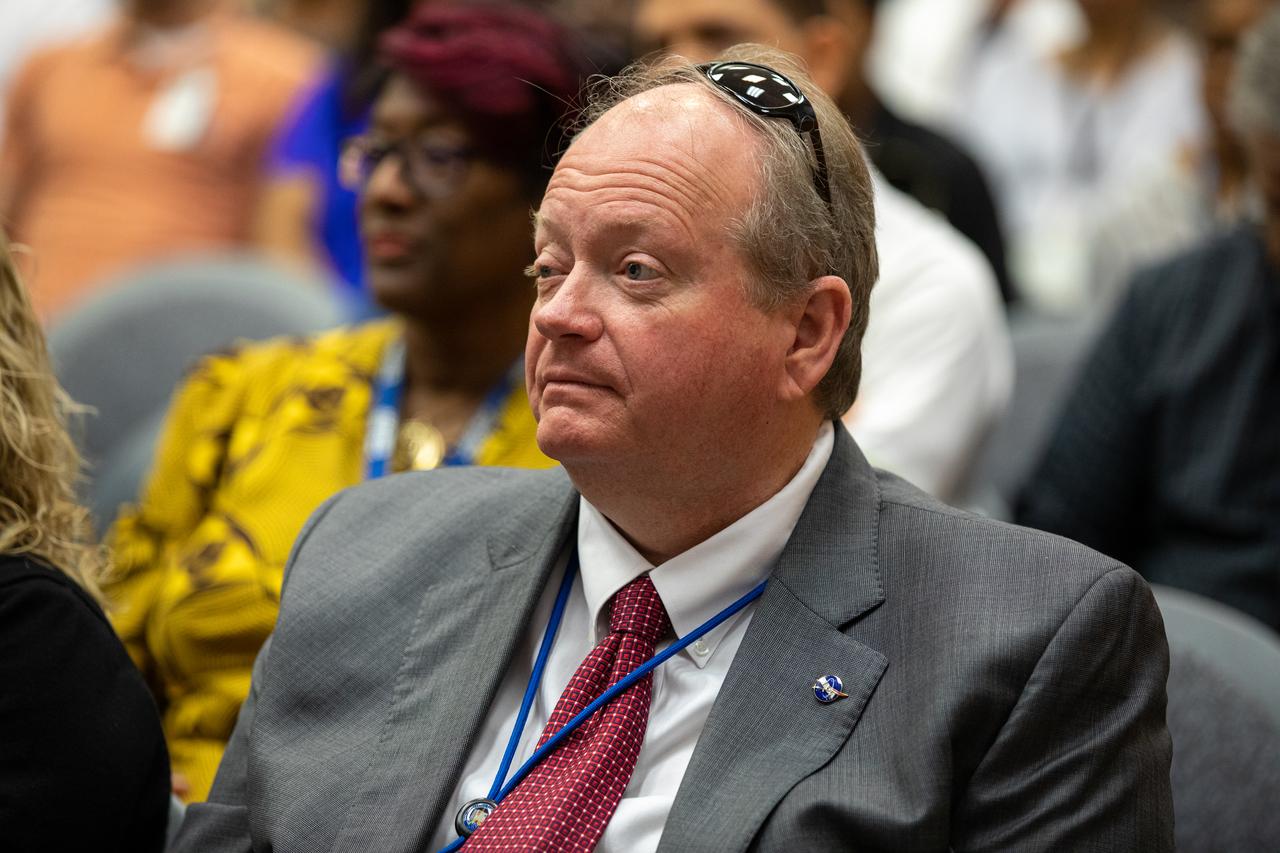
Burt Summerfield, associate director, management, attends the Black History Month celebration at Kennedy Space Center in Florida on Feb. 18, 2020. The program was organized by the Black Employee Strategy Team (BEST), one of the center’s employee resource groups. This year’s theme was “African Americans and the Vote.” Keynote speaker was James Jennings, former NASA associate administrator for Institutions and Management and Kennedy’s former deputy director. Jennings shared advice with workers and managers.
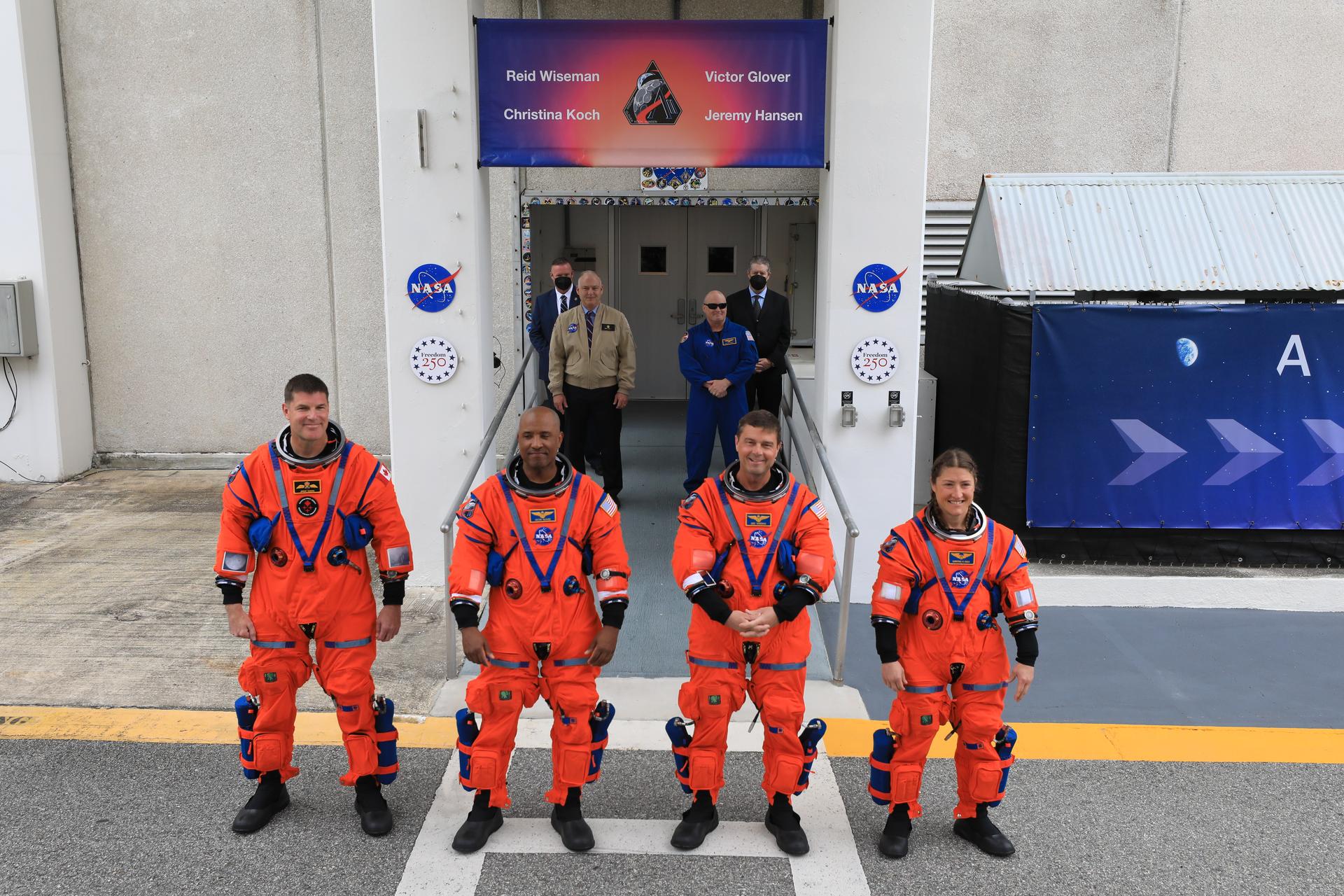
From left to right, Artemis II Mission Specialist Jeremy Hansen from the CSA (Canadian Space Agency), along with Pilot Victor Glover, Commander Reid Wiseman, and Mission Specialist Christina Koch, from NASA wave to family and friends outside the Neil A. Armstrong Operations and Checkout Building at the agency’s Kennedy Space Center in Florida on Wednesday, April 1, 2026, ahead of the Artemis II test flight. The mission will take the Artemis II crew on a 10-day journey around the Moon and back aboard NASA’s SLS (Space Launch System) rocket and Orion spacecraft with a two hour launch window opening at 6:24 p.m. EDT from Launch Complex 39B at NASA Kennedy.
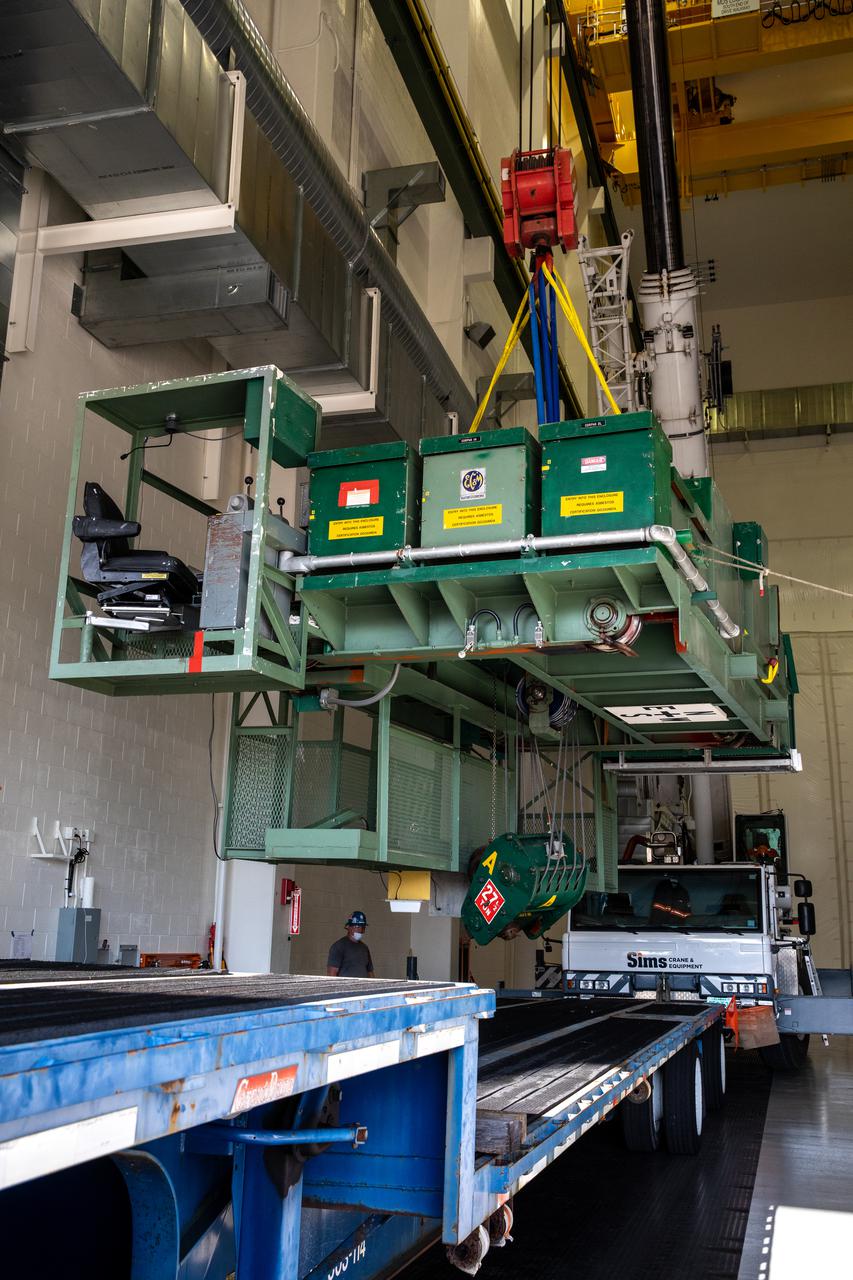
Inside the Neil Armstrong Operations and Checkout Building high bay at NASA’s Kennedy Space Center in Florida, a new overhead crane was installed, while the old Lypta 2.5-ton crane is lowered by crane on March 15, 2021. The new overhead crane will be used to process Orion for the agency’s first crewed mission, Artemis II. Teams from American Crane and Equipment Corp. are replacing the Lypta crane with the new Artemis-rated 30-ton crane. The new crane has enhanced controls and additional safety features that will allow for micro movements to within 1/100th of an inch. Operators will use the crane to lift Orion once the crew and service modules are mated.
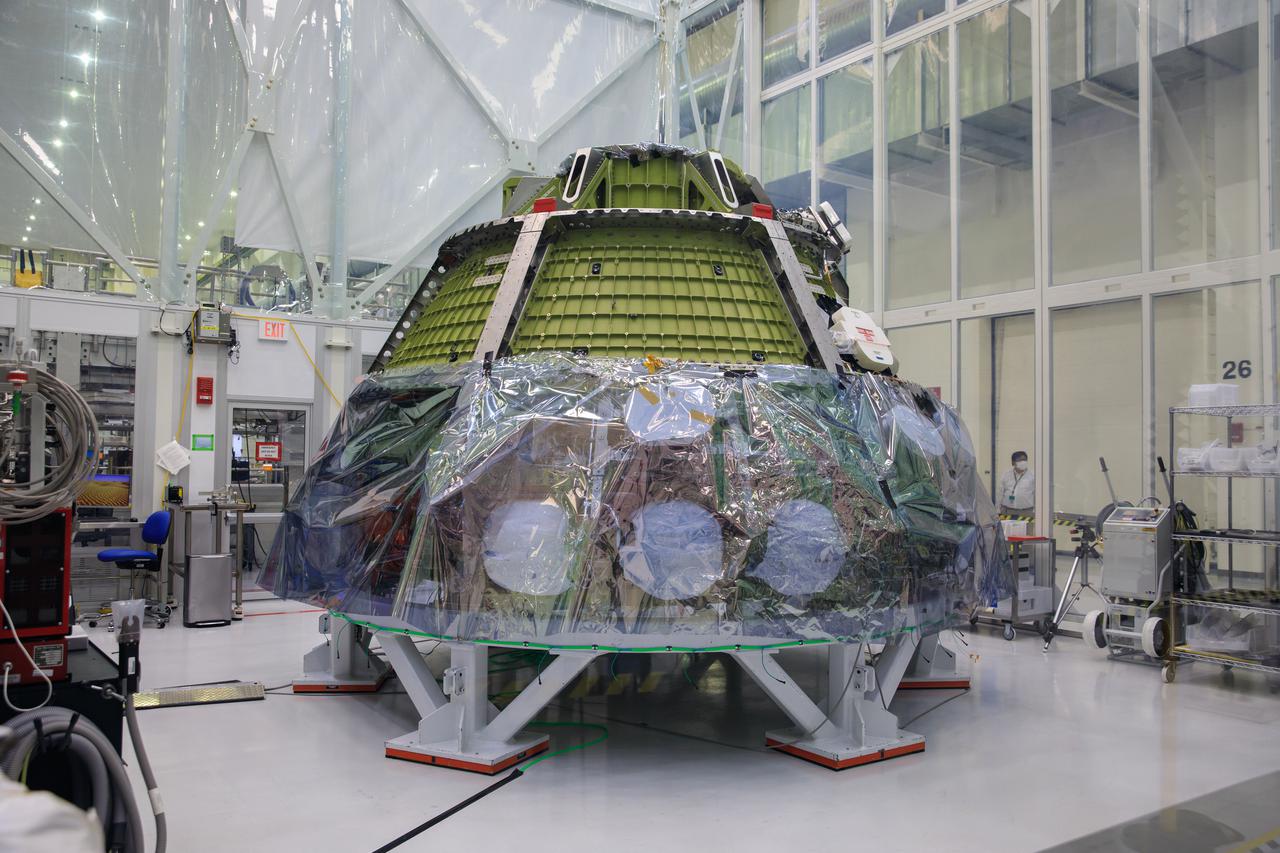
Assembly on the Artemis II Orion spacecraft that will carry the first Artemis crew on its lunar-bound mission continues at NASA’s Kennedy Space Center in Florida on Nov. 5, 2021. Located in the clean room inside the high bay of the Neil Armstrong Operations and Checkout Building, teams have been working on the closeout welding for the propulsion and Environmental Control and Life Support System. Once complete, the crew module will move out of the clean room and into its workstation to continue with subsystem installations. With Artemis missions, NASA will land the first woman and the first person of color on the lunar surface. Artemis II will be the first crewed flight test of NASA’s Space Launch System and Orion, paving the way for human exploration to the Moon and Mars.
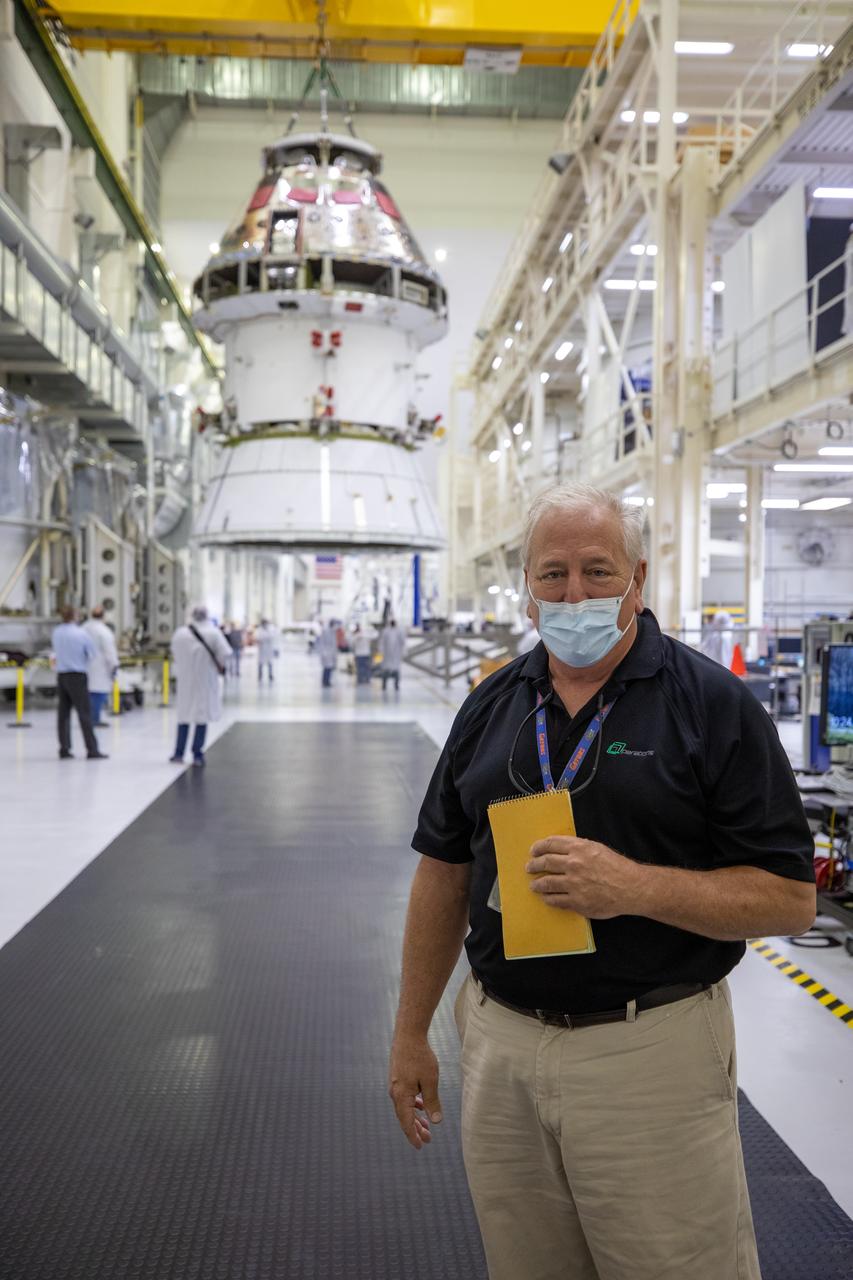
Bill Ruff, Lockheed Martin Safety manager, stands inside the Neil Armstrong Operations and Checkout Building high bay at NASA’s Kennedy Space Center in Florida on Aug. 20, 2020. Technicians are working to safely return the Artemis I Orion spacecraft to the FAST cell after completing the installation of the spacecraft adapter (SA) cone inside the high bay. This is one of the final major hardware operations the spacecraft will undergo during closeout processing prior to being integrated with the Space Launch System (SLS) rocket in preparation for the first Artemis mission. The spacecraft adapter cone connects the bottom portion of Orion’s service module to the top part of the rocket known as the interim cryogenic propulsion stage (ICPS). Orion will fly on the agency’s Artemis I mission – the first in a series of increasingly complex missions to the Moon that will ultimately lead to the exploration of Mars.
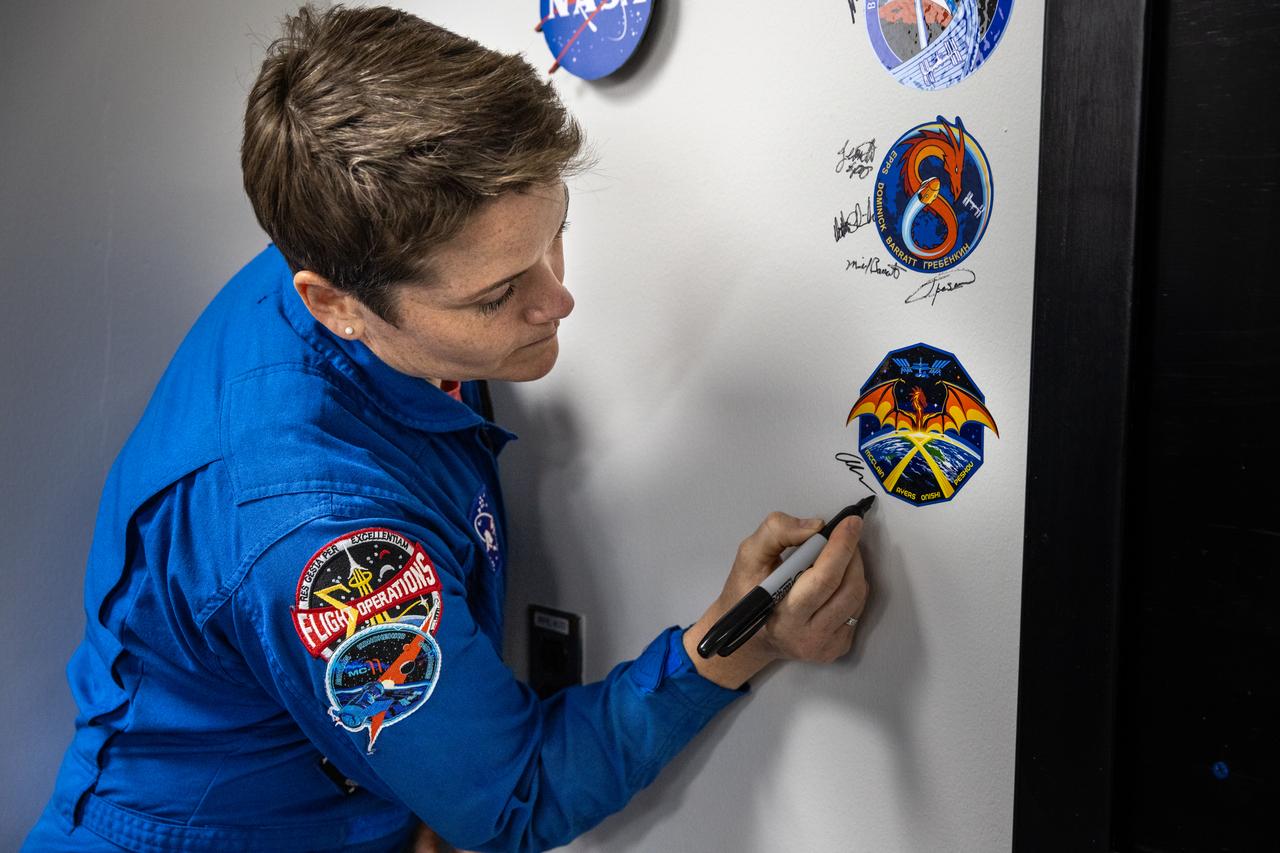
NASA astronaut Anne McClain signs her name inside the Astronaut Crew Quarters in the Neil A. Armstrong Operations and Checkout Building at NASA’s Kennedy Space Center in Florida on Friday, March 7, 2025, ahead of NASA’s SpaceX Crew-10 mission. Crew-10 is the 10th crew rotation mission of the SpaceX Dragon spacecraft and Falcon 9 rocket that will send McClain and fellow NASA astronaut Nichole Ayers, along with JAXA (Japan Aerospace Exploration Agency) astronaut Takuya Onishi and Roscosmos cosmonaut Kirill Peskov to the International Space Station as part of the agency’s Commercial Crew Program. The mission is scheduled to launch no earlier than 7:48 p.m. EDT on Wednesday, March 12, 2025, from NASA Kennedy’s Launch Complex 39A.
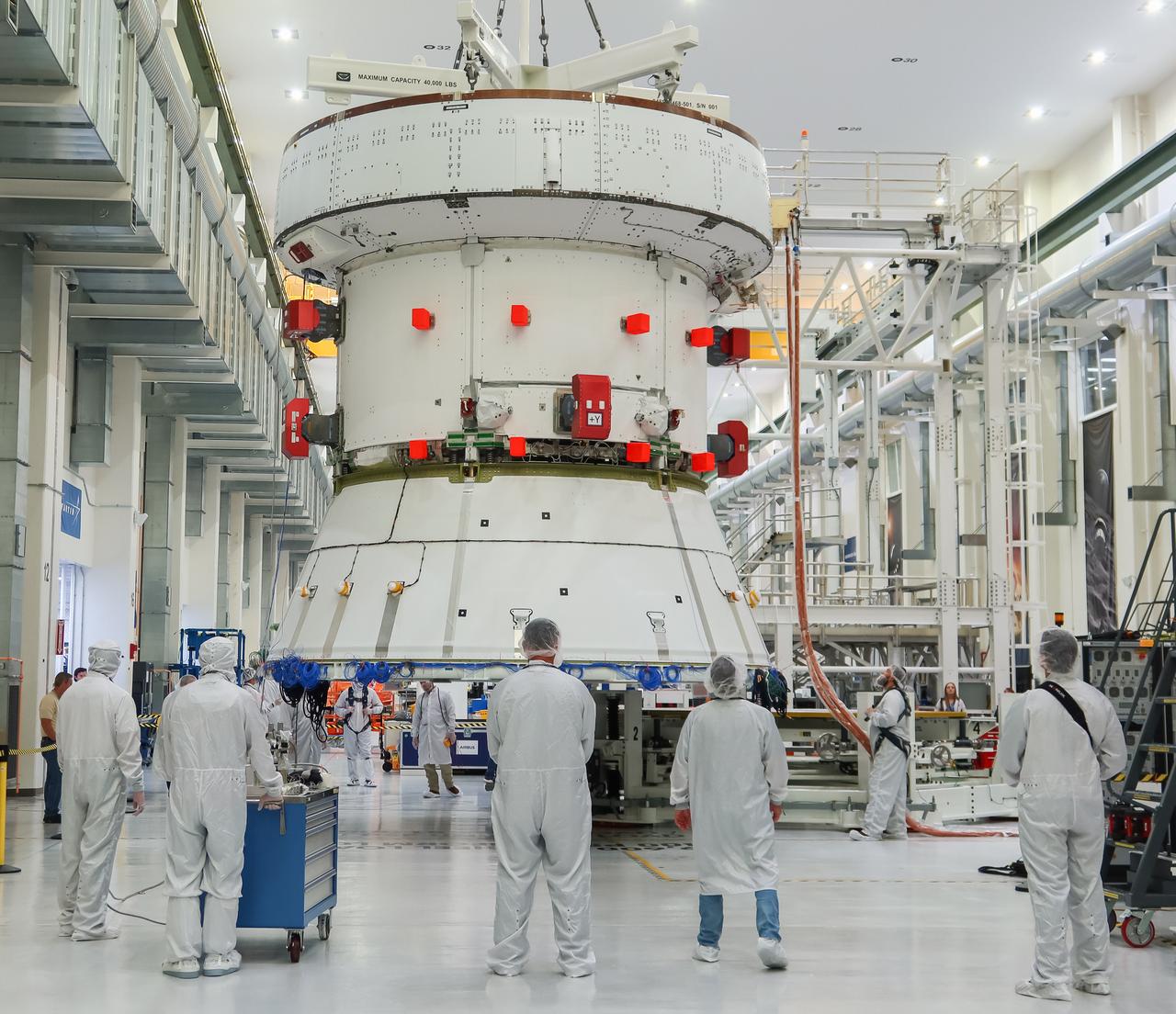
Engineers and technicians monitor the progress as the European Service Module (ESM) for NASA’s Artemis II mission is lifted by crane inside the high bay of the Neil A. Armstrong Operations and Checkout Building at NASA’s Kennedy Space Center in Florida on May 22, 2023. Teams from NASA and Lockheed Martin are preparing the service module for transfer to the FAST (final assembly and system testing) cell for final checkouts before it is stacked with the Orion crew module.. The powerhouse that will fuel and propel Orion in space, the ESM will be used for Artemis II, the first Artemis mission flying crew aboard Orion.
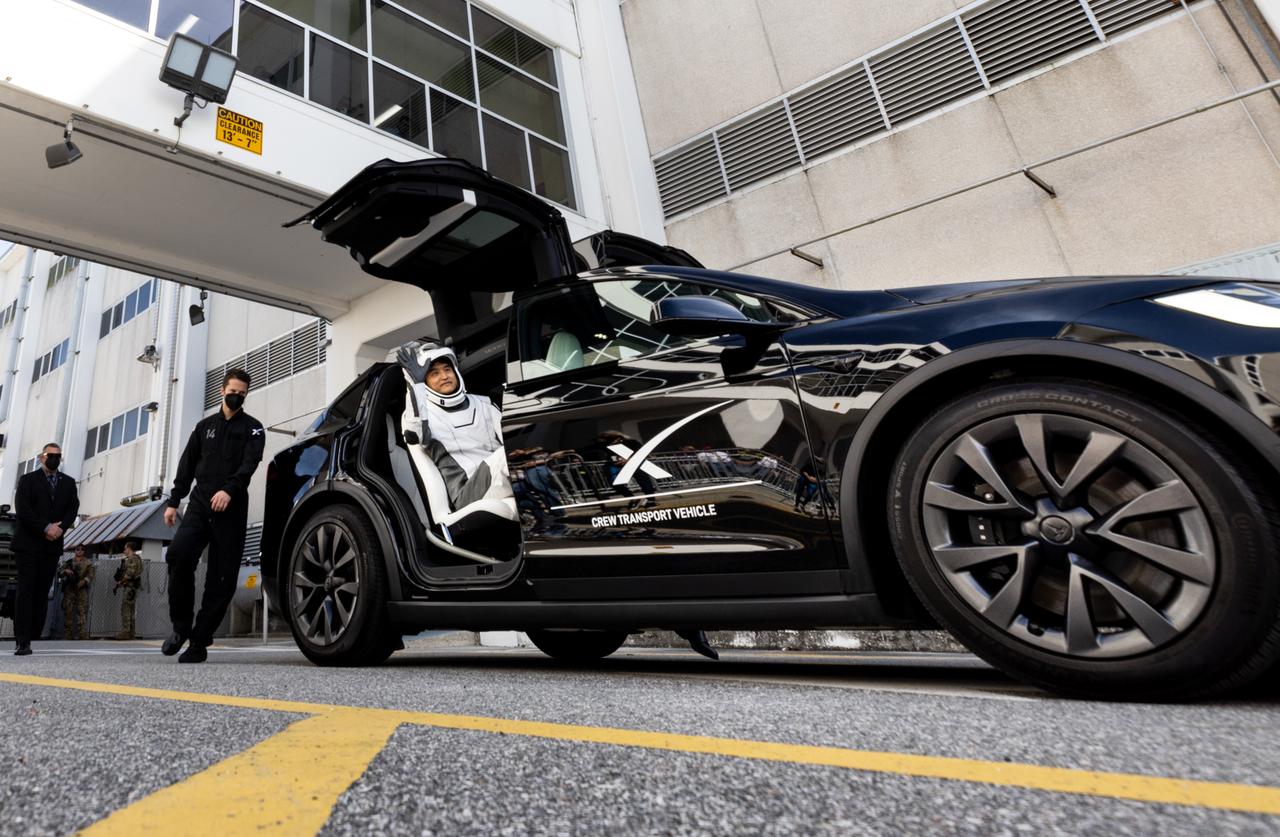
NASA’s SpaceX Crew-10 crew members pose for a photo after walking out of the Neil A. Armstrong Operations and Checkout Building at the agency’s Kennedy Space Center in Florida ahead of launch of the Crew-10 mission on Friday, March 14, 2025. From left to right, Roscosmos cosmonaut Kirill Peskov, NASA astronauts Anne McClain and Nichole Ayers, along with JAXA (Japan Aerospace Exploration Agency) astronaut Takuya Onishi are scheduled to lift off aboard SpaceX’s Dragon spacecraft and Falcon 9 rocket at 7:03 p.m. EDT, from Launch Complex 39A at NASA Kennedy. Crew-10 is the 10th crew rotation mission with SpaceX to the space station as part of the agency’s Commercial Crew Program
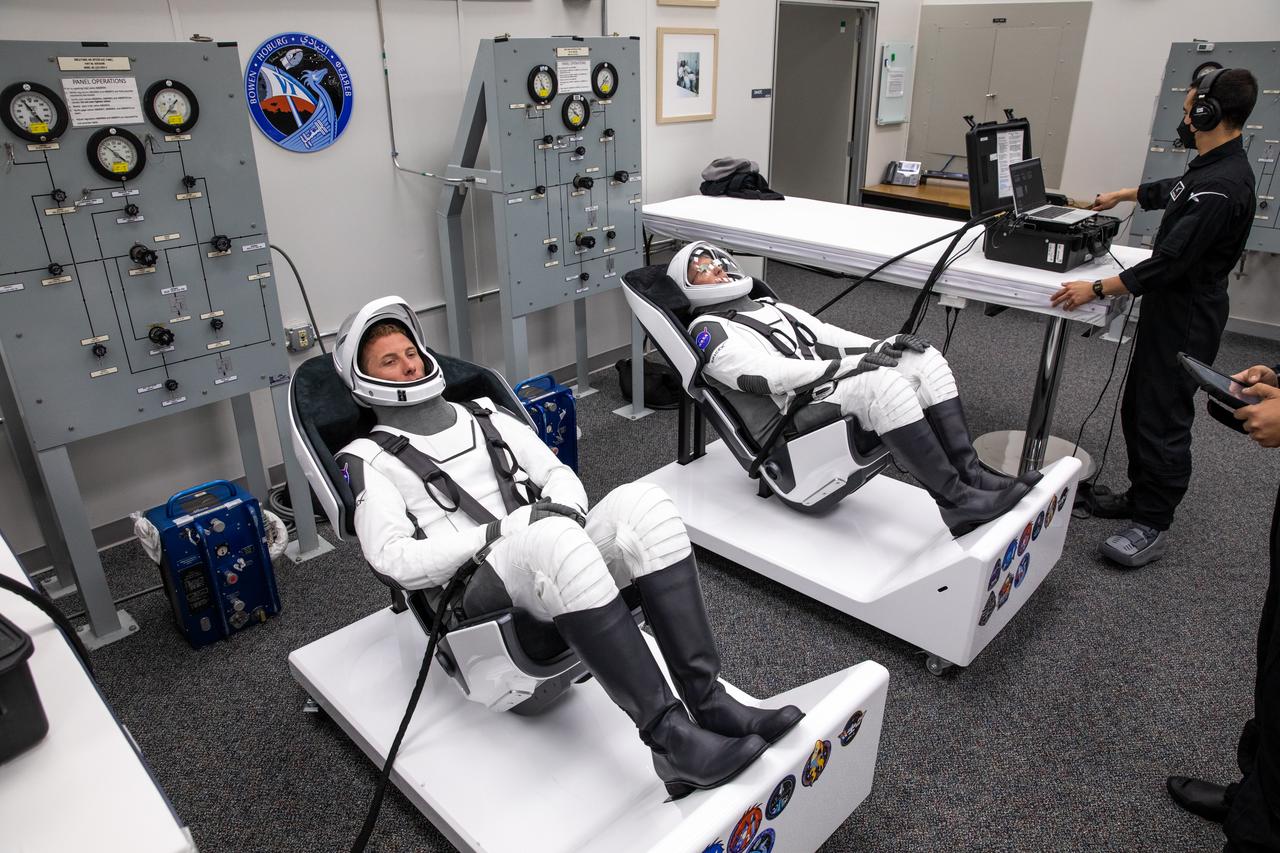
NASA’s SpaceX Crew-6 crewmembers participate in final fit checks of their SpaceX spacesuits in the crew suit-up room inside the Neil Armstrong Operations and Checkout Building at NASA’s Kennedy Space Center in Florida on March 1, 2023. From left are NASA astronaut Warren Hoburg, pilot; and NASA astronaut Stephen Bowen, spaceraft commander. They and their crewmates are preparing for launch to the International Space Station aboard SpaceX’s Dragon spacecraft Endeavour atop the Falcon 9 rocket. Launch is target for 12:34 a.m. EST on March 2 from Launch Complex 39A. Crew-6 is the sixth crew rotation mission with SpaceX to the station, and the seventh flight of Dragon with people as part of the agency’s Commercial Crew Program.
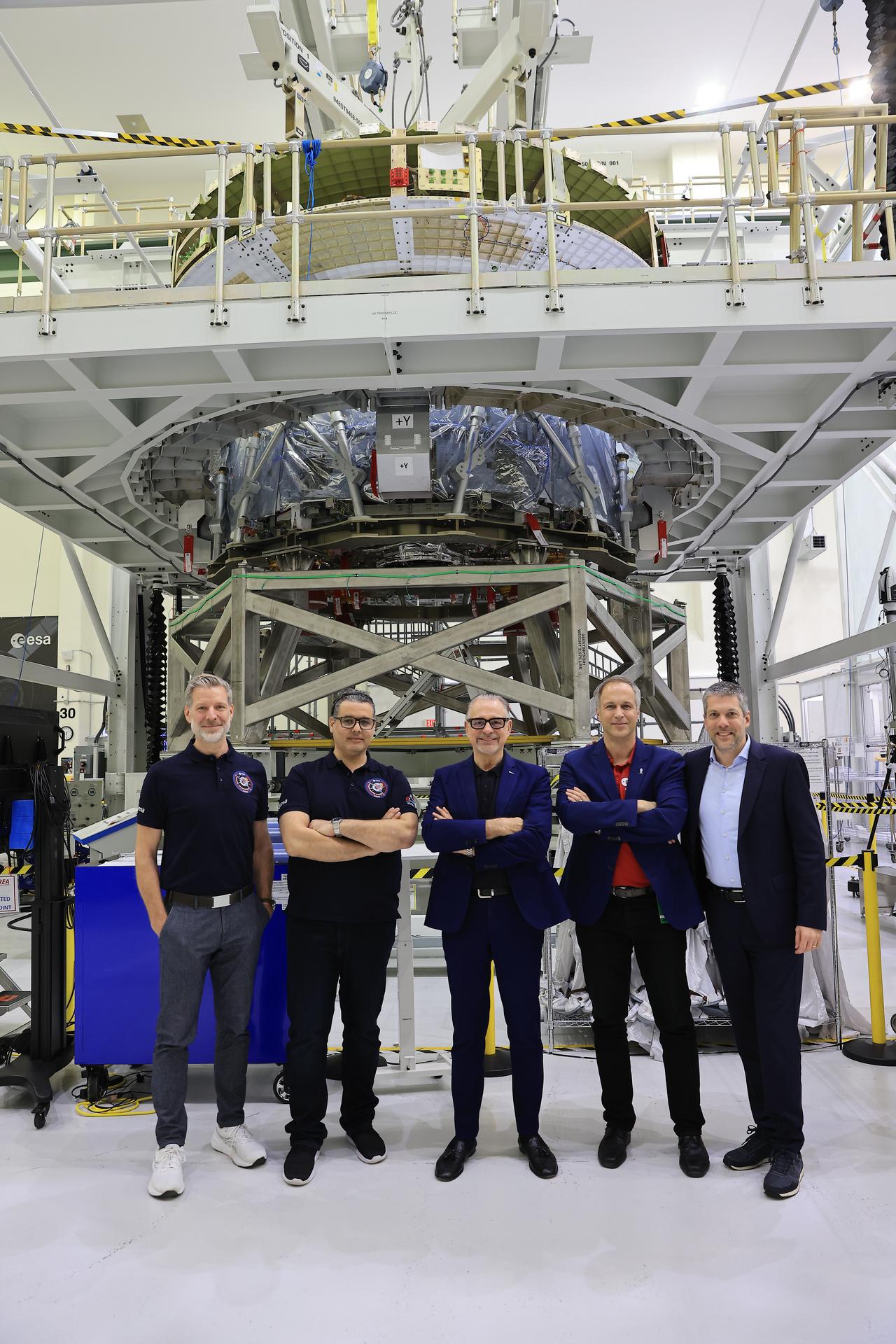
ESA (European Space Agency) Director General Josef Aschbacher (center), ESA Director of Human and Robotic Exploration Daniel Neuenschwander (second from right), and other members of ESA leadership tour on Tuesday, Feb. 10, 2026, the high bay of the Neil A. Armstrong Operations and Checkout Building at NASA’s Kennedy Space Center in Florida. Teams will soon attach the European Service Module to the crew module adapter for NASA’s Artemis IV mission. The European Service Module, which is assembled by Airbus in Bremen, Germany, from parts made in 10 European countries and the United States, acts as the driving force behind Orion for deep space exploration, providing essential propulsion, thermal control, and electrical power.
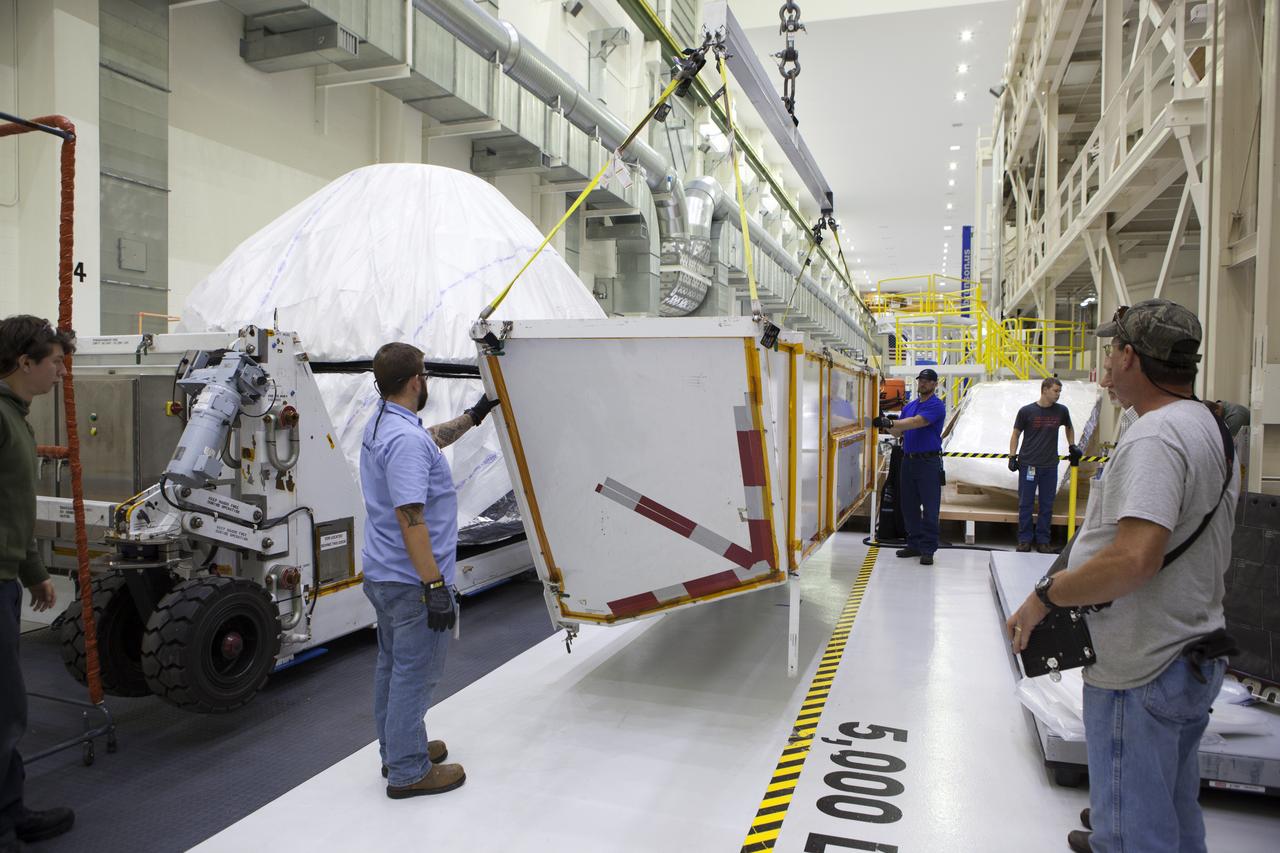
Inside the Neil Armstrong Operations and Checkout Building high bay at NASA's Kennedy Space Center in Florida, technicians with Lockheed Martin assist as a crane lifts the cover away from the container holding the Orion crew module structural test article (STA). The STA arrived aboard NASA's Super Guppy aircraft at the Shuttle Landing Facility operated by Space Florida. The test article was moved inside the facility's high bay for further testing. The Orion spacecraft will launch atop NASA’s Space Launch System rocket on EM-1, its first deep space mission, in late 2018.
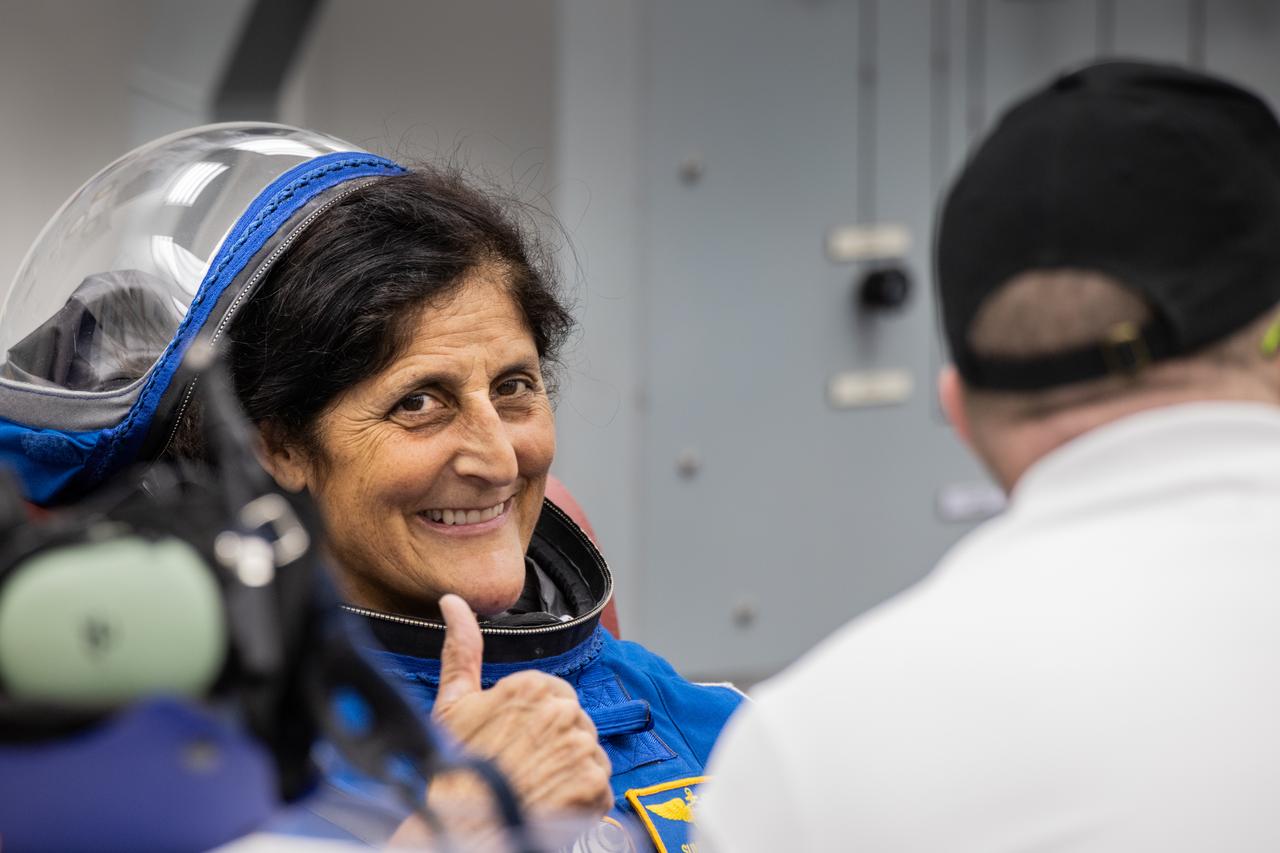
During a mission dress rehearsal, NASA’s Boeing Crew Flight Test astronaut Suni Williams flashes a thumbs up in her Boeing spacesuit inside the crew suit-up room inside the Neil A. Armstrong Operations and Checkout Building at the agency’s Kennedy Space Center in Florida on Friday, April 26, 2024. As part of the agency’s Commercial Crew Program, Wilmore and Williams are the first to launch to the International Space Station aboard Boeing’s Starliner spacecraft. Liftoff atop a United Launch Alliance Atlas V rocket from Space Launch Complex-41 at nearby Cape Canaveral Space Force Station is scheduled for 10:34 p.m. ET Monday, May 6.
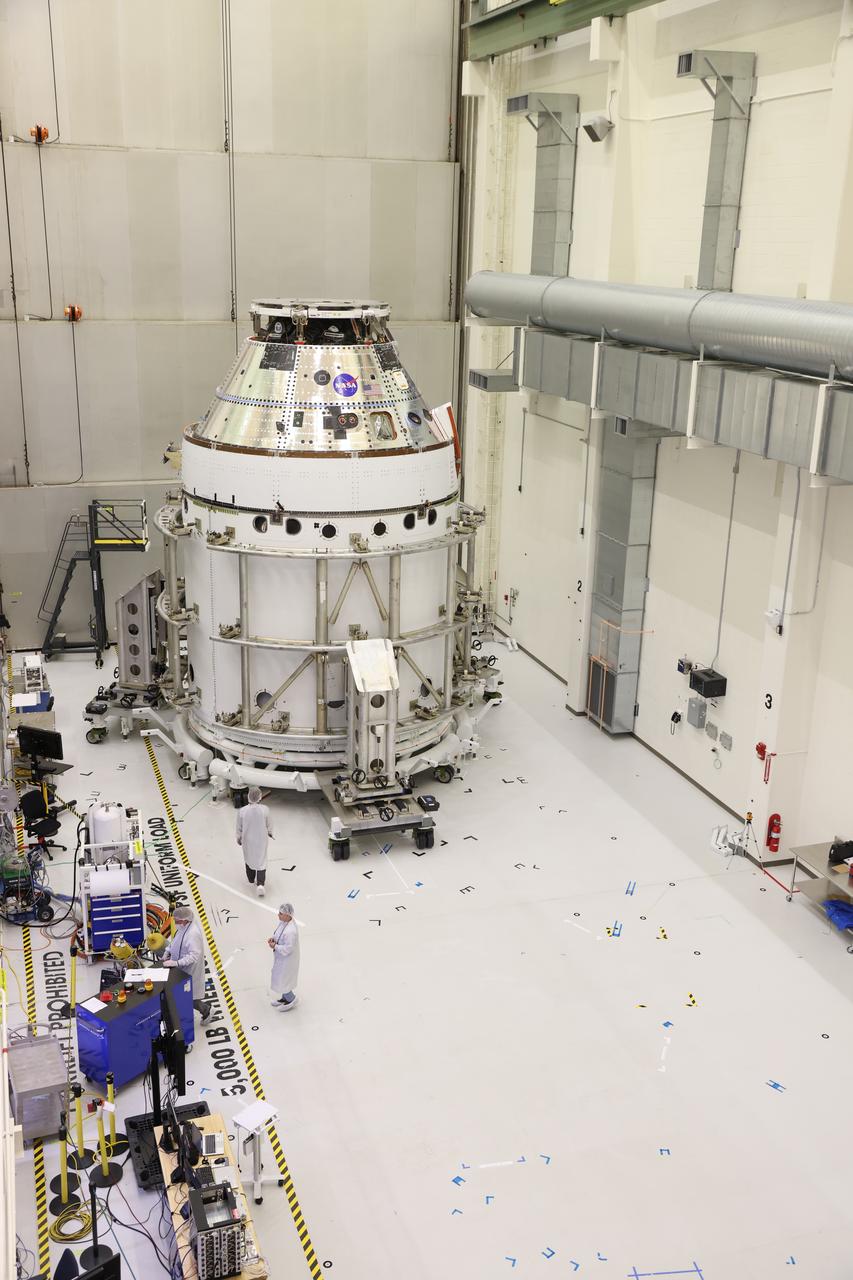
The Artemis II Orion spacecraft sits in the transfer aisle in the Neil A. Armstrong Operations and Checkout Building at NASA’s Kennedy Space Center in Florida following successful installation of three spacecraft adapter jettison fairings on Wednesday, March 19, 2025. The fairings encapsulate the service module and protect the solar array wings, shielding them from the heat, wind, and acoustics of launch and ascent, as well as help redistribute the load between Orion and the massive thrust of the SLS (Space Launch System) rocket during liftoff and ascent. Once the spacecraft is above the atmosphere, the three fairing panels will separate from the service module reducing the mass of the spacecraft.
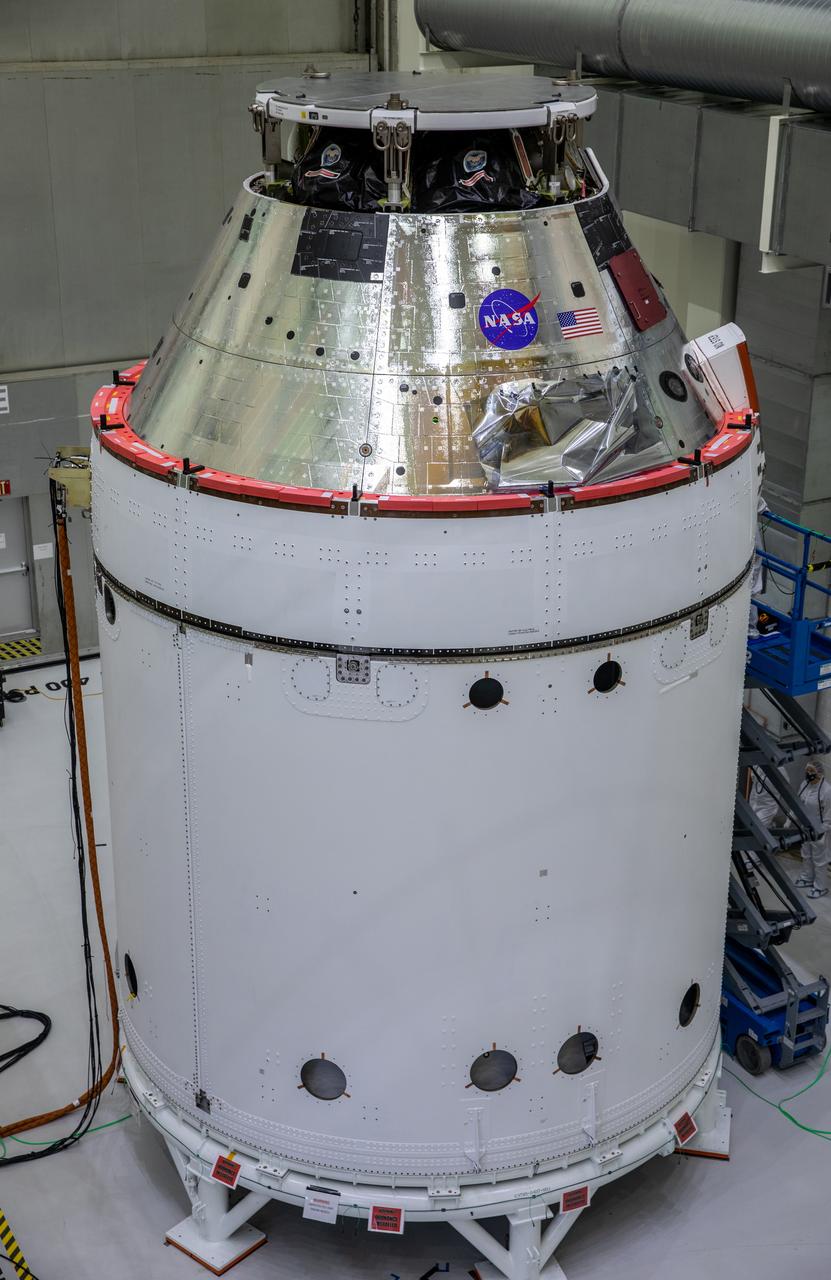
The NASA insignia, also called the “meatball,” and the American Flag are applied to the Orion crew module back shell for the Artemis I mission on Oct. 28, 2020, inside the Neil Armstrong Operations and Checkout Building at NASA’s Kennedy Space Center in Florida. Attached below Orion are the crew module adapter and the European Service Module (ESM) with spacecraft adapter jettison fairings installed. Recently, teams from across the globe installed the four solar array wings, which are housed inside the protective covering of the fairings. The fairing panels will encapsulate the ESM to protect it from harsh environments such as heat, wind, and acoustics as the spacecraft is propelled out of Earth’s atmosphere atop the Space Launch System rocket during NASA’s Artemis I mission.
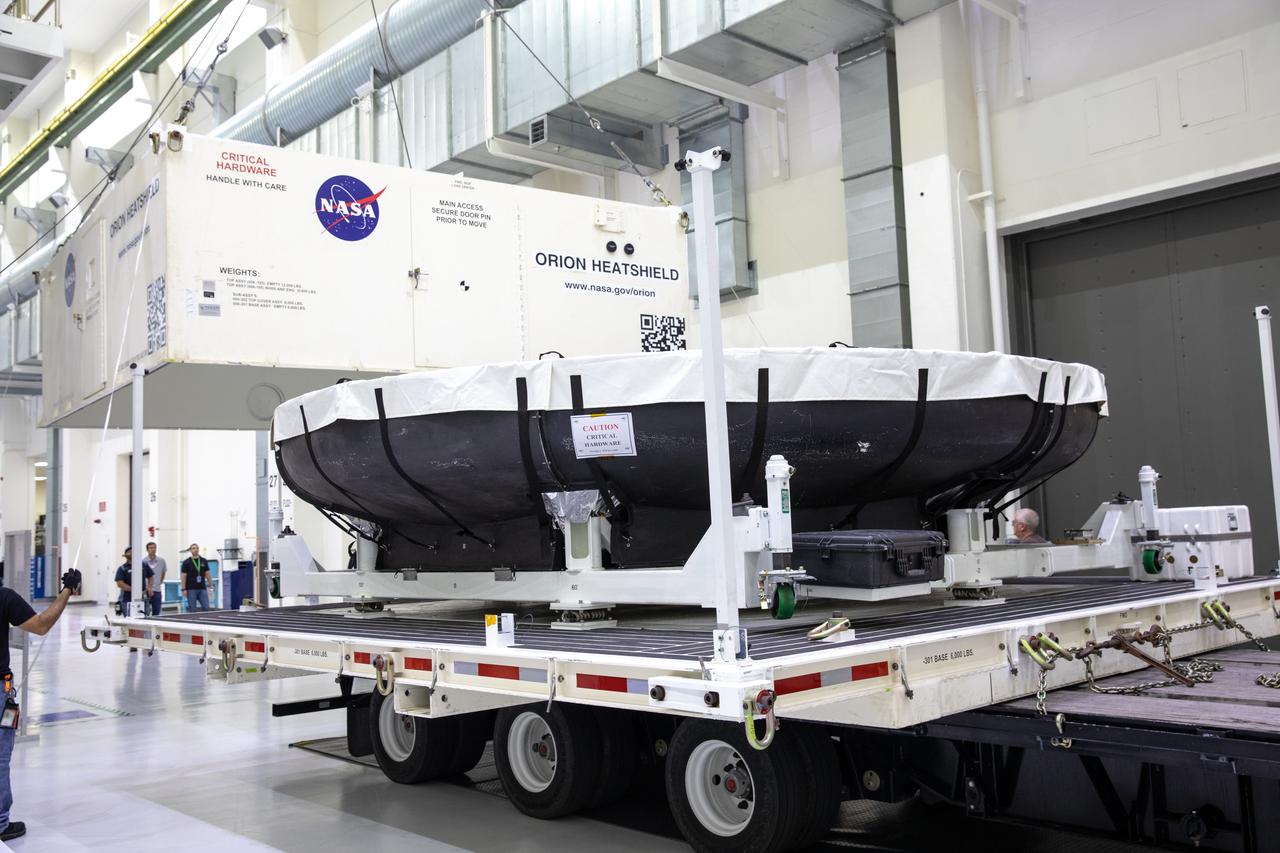
The heat shield for Orion’s Artemis 2 mission, NASA’s first crewed mission, is uncrated from its shipping container inside the Neil Armstrong Operations and Checkout Building high bay at the agency’s Kennedy Space Center in Florida on July 10, 2019. The heat shield, measuring roughly 16 feet in diameter, will protect astronauts upon re-entry on the second mission of Artemis. The heat shield arrived from Lockheed Martin’s manufacturing facility near Denver aboard NASA’s Super Guppy Aircraft. The heat shield is a base titanium truss structure. Over the next several months, technicians will apply Avcoat, an ablative material that will provide the thermal protection. Artemis 2 will confirm all of the spacecraft’s systems operate as designed in the actual environment of deep space with astronauts aboard.
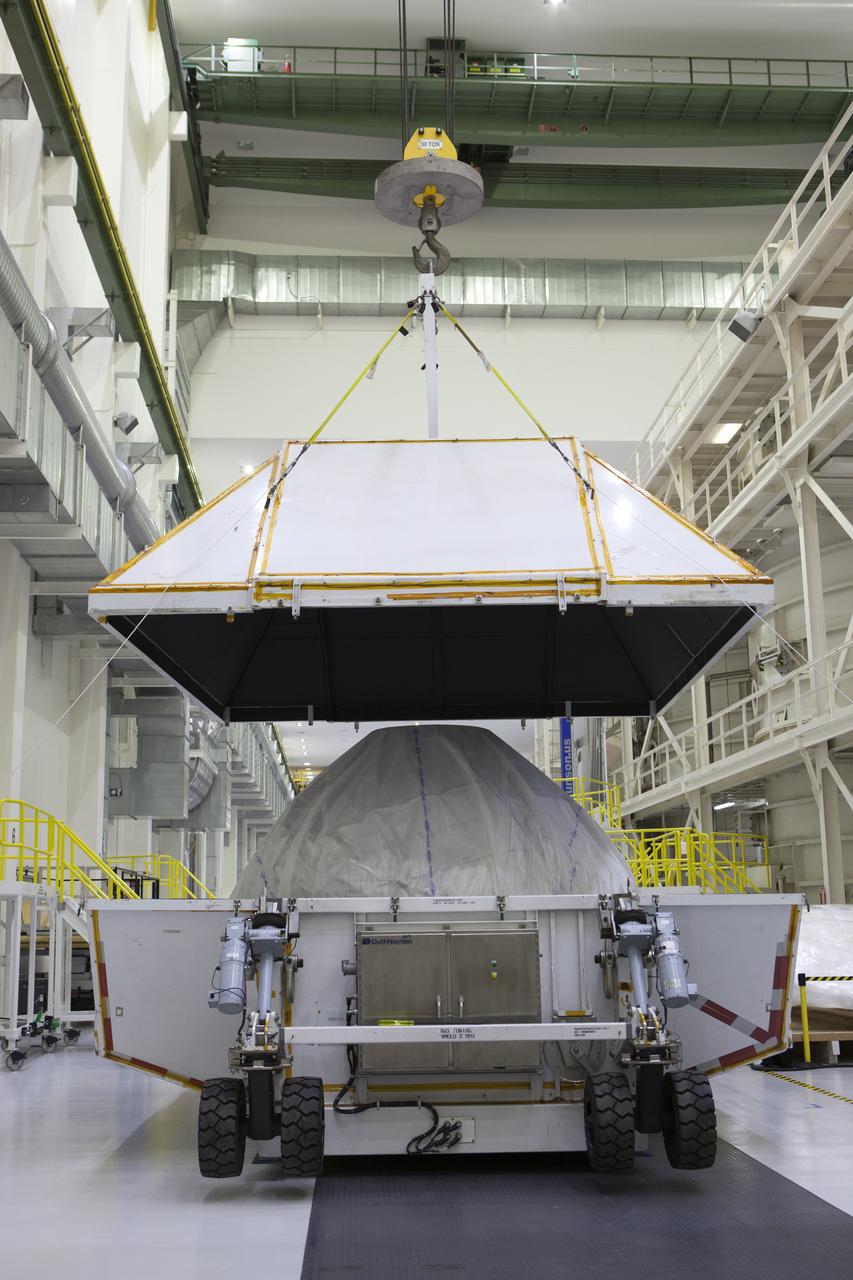
Inside the Neil Armstrong Operations and Checkout Building high bay at NASA's Kennedy Space Center in Florida, a crane lifts the cover up from the container holding the Orion crew module structural test article (STA). The STA arrived aboard NASA's Super Guppy aircraft at the Shuttle Landing Facility operated by Space Florida. The test article was moved inside the facility's high bay for further testing. The Orion spacecraft will launch atop NASA’s Space Launch System rocket on EM-1, its first deep space mission, in late 2018.
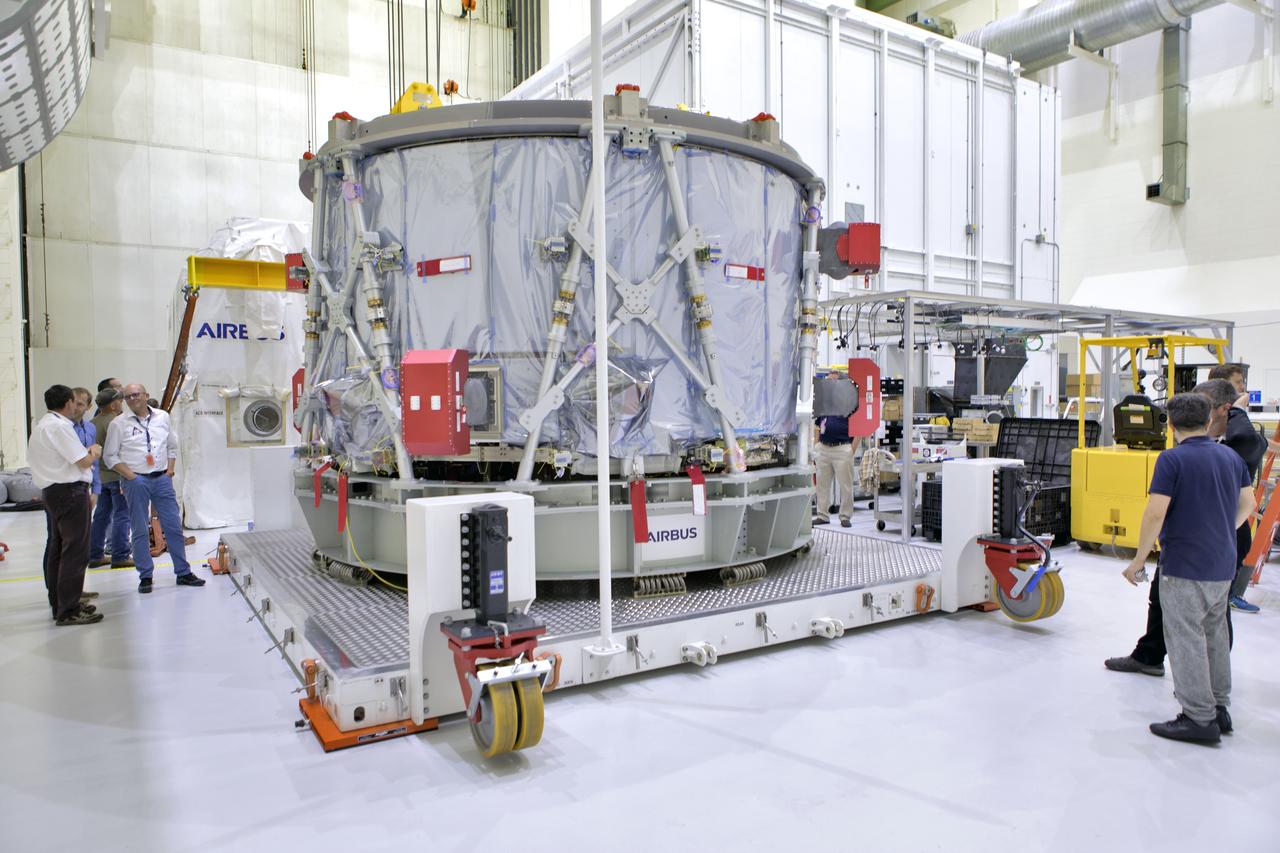
Inside the airlock in the Neil Armstrong Operations and Checkout Building high bay on Nov. 6, 2018, the European Space Agency's European Service Module (ESM) is uncrated and ready for its move to the high bay at NASA's Kennedy Space Center in Florida. The ESM will supply the main propulsion system and power to the Orion spacecraft for Exploration Mission-1 (EM-1), a mission to the Moon. The ESM also will house air and water for astronauts on future missions. EM-1 will be an uncrewed flight test that will provide a foundation for human deep space exploration to destinations beyond Earth orbit. EM-1 will be the first integrated test of NASA's Space Launch System, Orion and the ground systems at Kennedy.
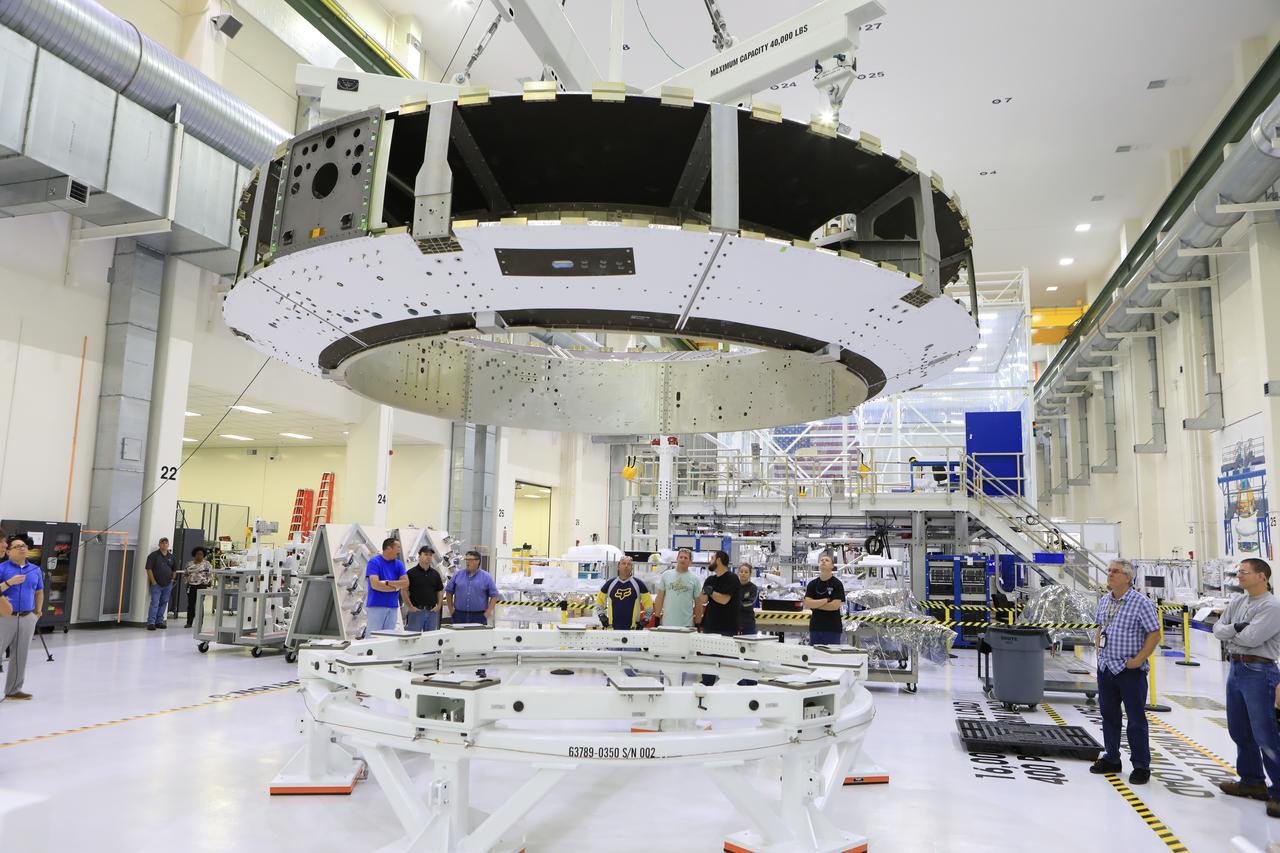
The Orion crew module adapter (CMA) for Exploration Mission 1 was lifted for the first and only time, Nov. 11, during its processing flow inside the Neil Armstrong Operations and Checkout (O&C) Building high bay at the agency's Kennedy Space Center in Florida. The CMA is now undergoing secondary structure outfitting.
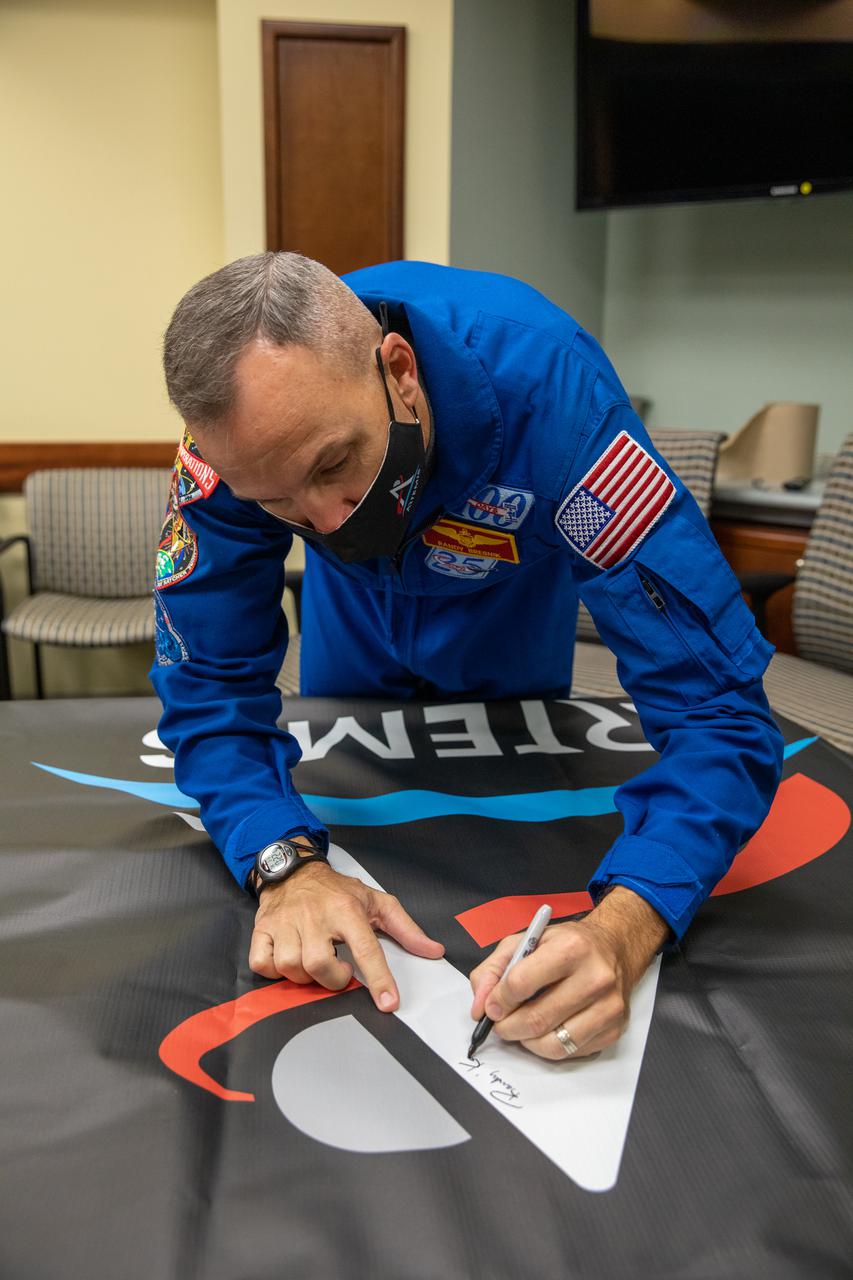
NASA astronaut Randy Bresnik signs an Artemis banner inside the Neil Armstrong Operations and Checkout Building at NASA’s Kennedy Space Center in Florida on Jan. 14, 2021. The banner will be hung on the KAMAG transporter ahead of the spacecraft’s journey to the Multi-Payload Processing Facility to begin ground processing by the Exploration Ground Systems and Jacobs teams.
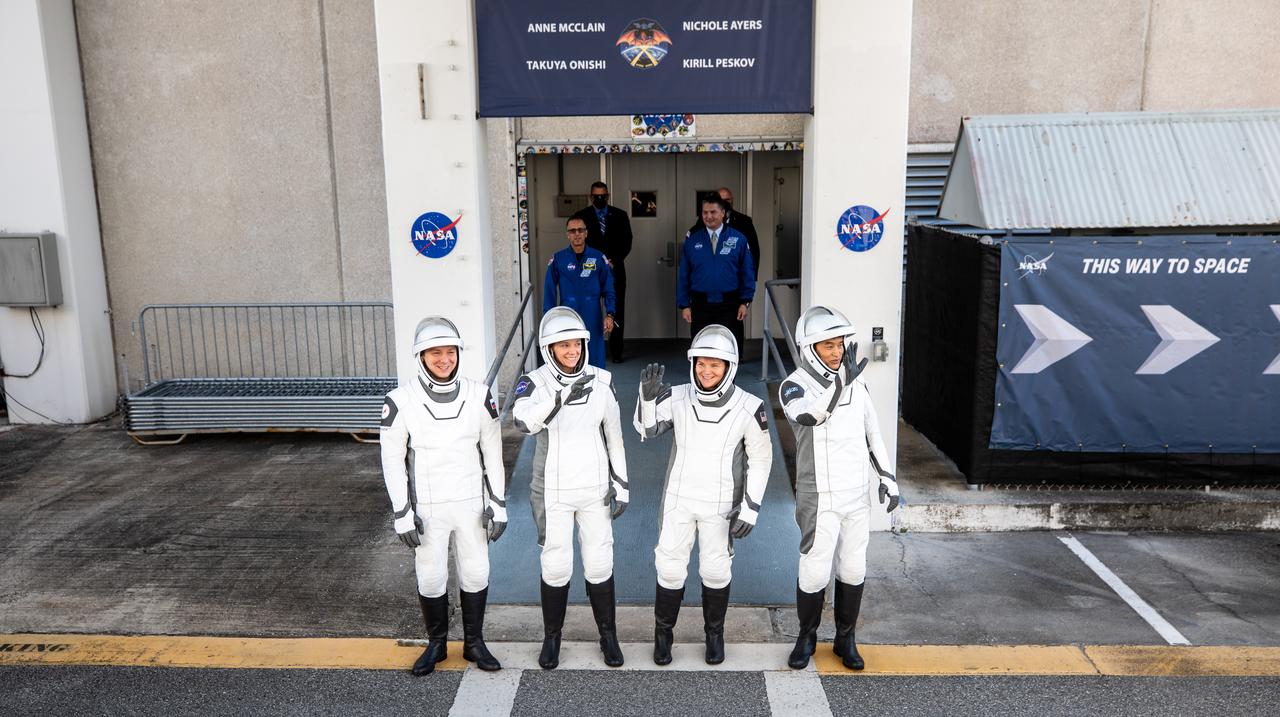
NASA’s SpaceX Crew-10 crew members wave to family and friends as they prepare to depart the Neil A. Armstrong Operations and Checkout Building at the agency’s Kennedy Space Center in Florida for nearby Launch Complex 39A for launch of Crew-10 on Wednesday, March 12, 2025. From left to right, Roscosmos cosmonaut Kirill Peskov, NASA astronauts Nichole Ayers and Anne McClain, along with JAXA (Japan Aerospace Exploration Agency) astronaut Takuya Onishi are scheduled to lift off aboard SpaceX’s Dragon spacecraft and Falcon 9 rocket at 7:48 p.m. EDT. Crew-10 is the 10th crew rotation mission with SpaceX to the space station as part of the agency’s Commercial Crew Program.
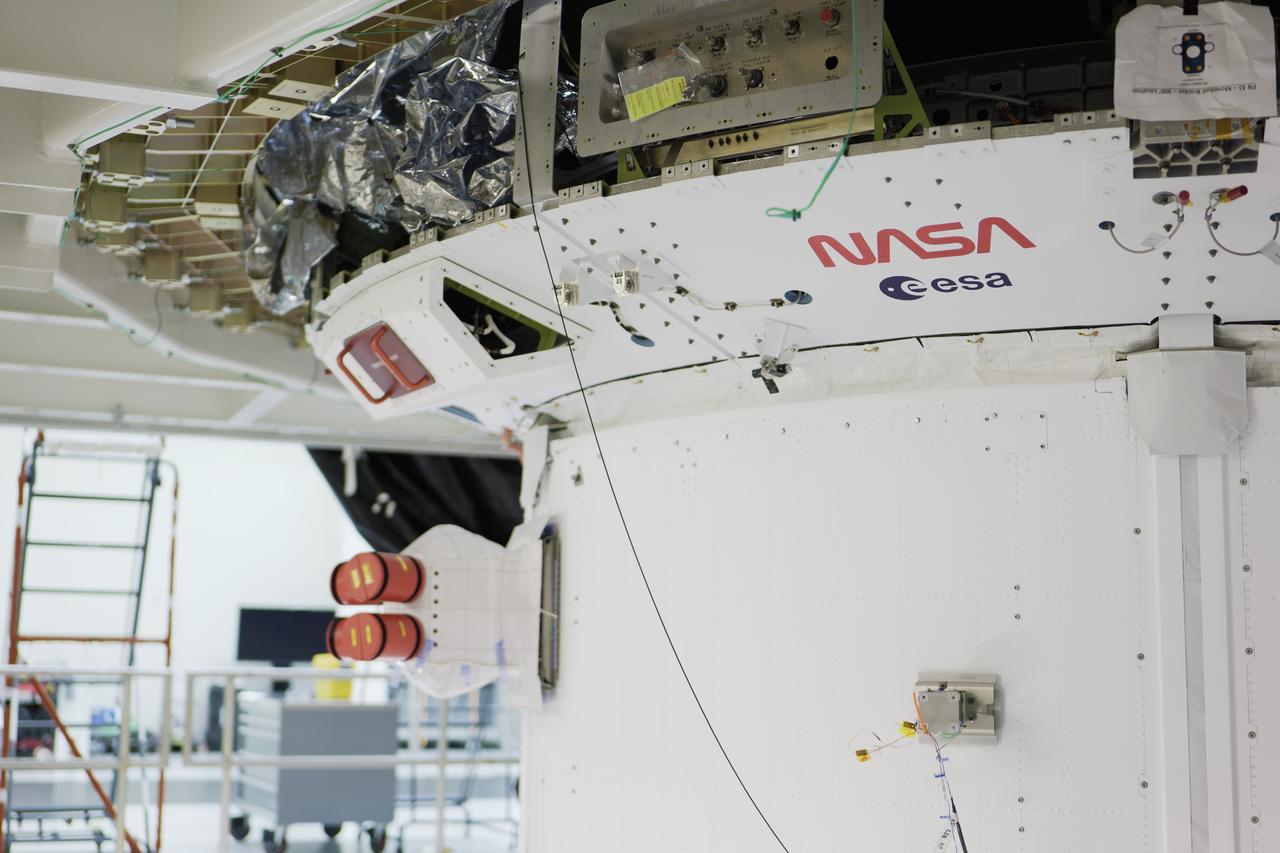
The Orion spacecraft for NASA’s Artemis II mission received its latest makeover. Teams adhered the agency’s iconic “worm” logo and ESA (European Space Agency) insignia on the spacecraft’s crew module adapter on Sunday, Jan. 28, inside the Neil Armstrong Operations and Checkout Building at NASA’s Kennedy Space Center in Florida.
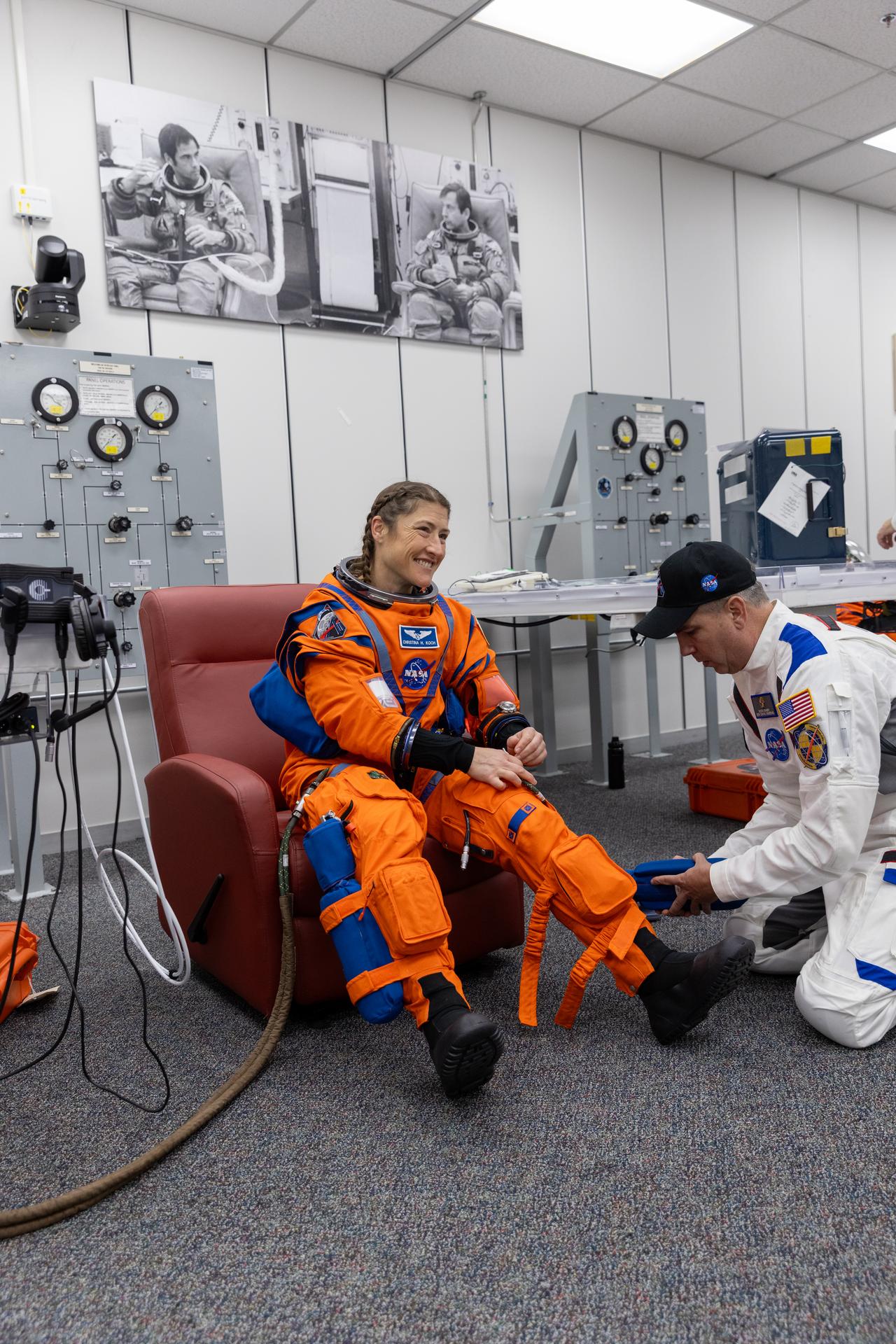
NASA astronaut, Christina Koch, Artemis II mission specialist, undergoes spacesuit checks inside the crew quarters suit-up room in the Neil A. Armstrong Operations and Checkout Building part of the Artemis II Countdown Demonstration Test at the agency’s Kennedy Space Center on Saturday, Dec. 20, 2025. For this operation, the Artemis II crew and launch team are simulating the launch day timeline including suit-up, walkout, and climbing in and out of the spacecraft. Through the Artemis campaign, NASA will send astronauts to explore the Moon for scientific discovery, economic benefits, and to build the foundation for the first crewed missions to Mars, for the benefit of all.
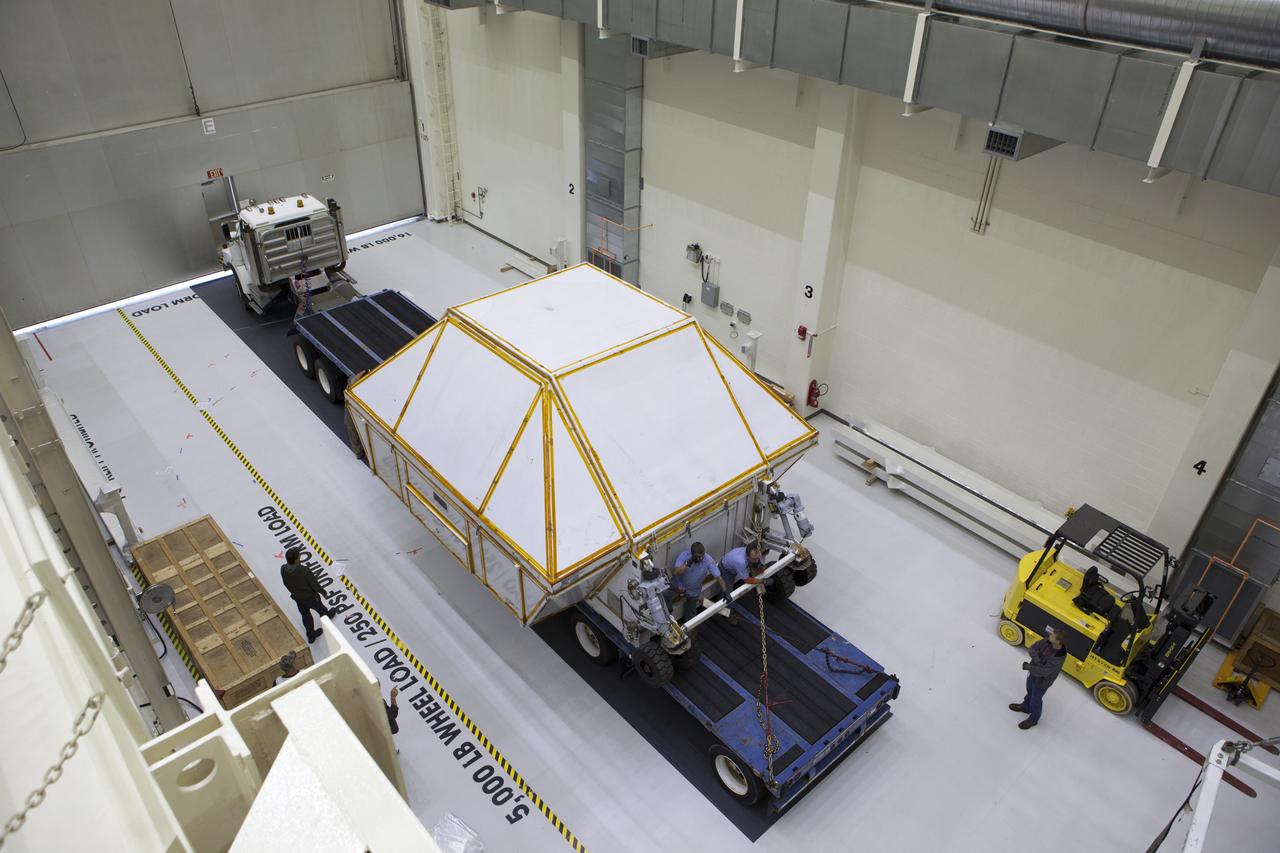
A transporter carrying the Orion crew module structural test article (STA) in its container arrives inside the low bay of the Neil Armstrong Operations and Checkout Building at NASA's Kennedy Space Center in Florida. The STA arrived aboard NASA's Super Guppy aircraft at the Shuttle Landing Facility operated by Space Florida. The test article will be moved inside the facility's high bay for further testing. The Orion spacecraft will launch atop NASA’s Space Launch System rocket on EM-1, its first deep space mission, in late 2018.
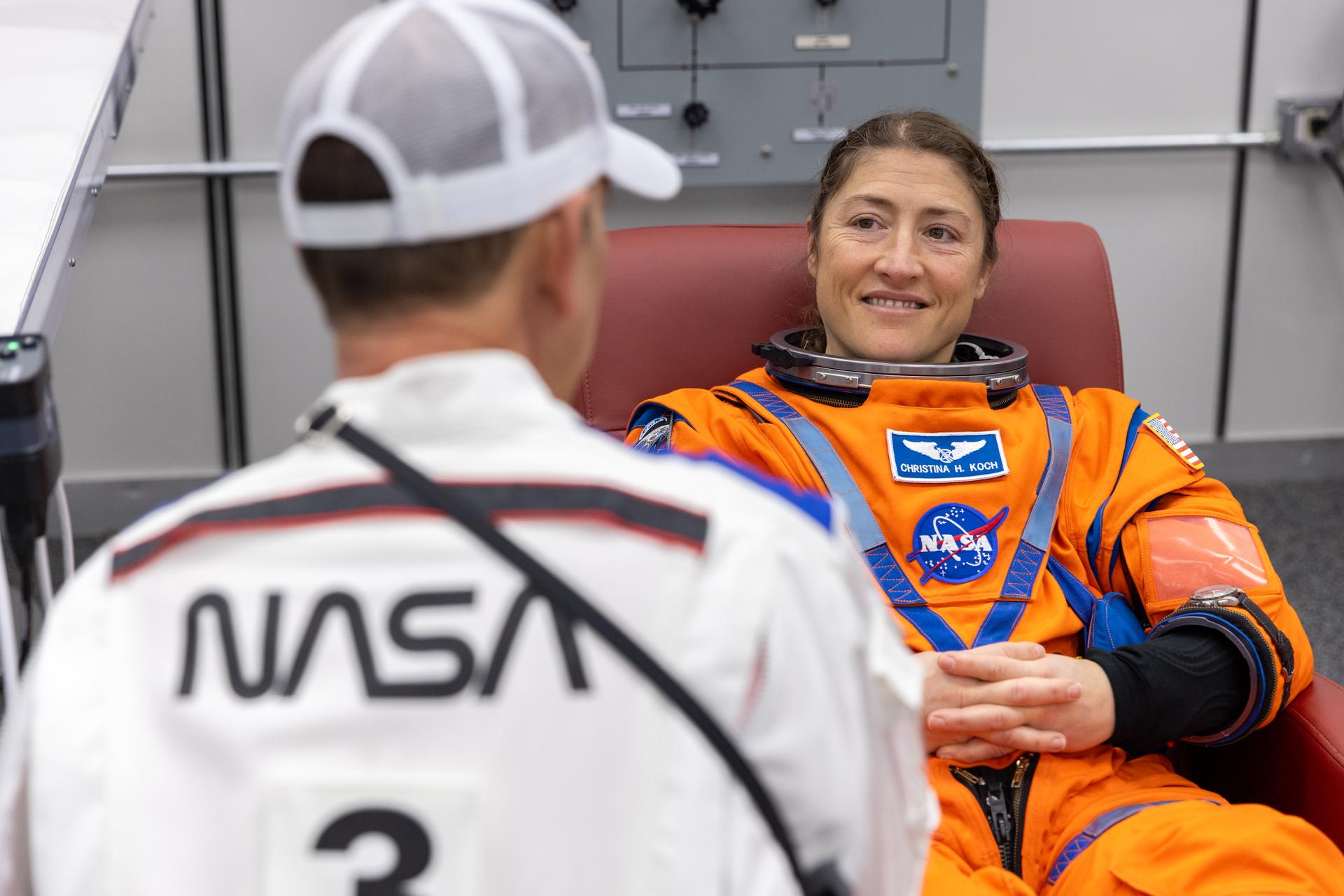
NASA astronaut, Christina Koch, Artemis II mission specialist, undergoes spacesuit checks inside the crew quarters suit-up room in the Neil A. Armstrong Operations and Checkout Building part of the Artemis II Countdown Demonstration Test at the agency’s Kennedy Space Center on Saturday, Dec. 20, 2025. For this operation, the Artemis II crew and launch team are simulating the launch day timeline including suit-up, walkout, and climbing in and out of the spacecraft. Through the Artemis campaign, NASA will send astronauts to explore the Moon for scientific discovery, economic benefits, and to build the foundation for the first crewed missions to Mars, for the benefit of all.
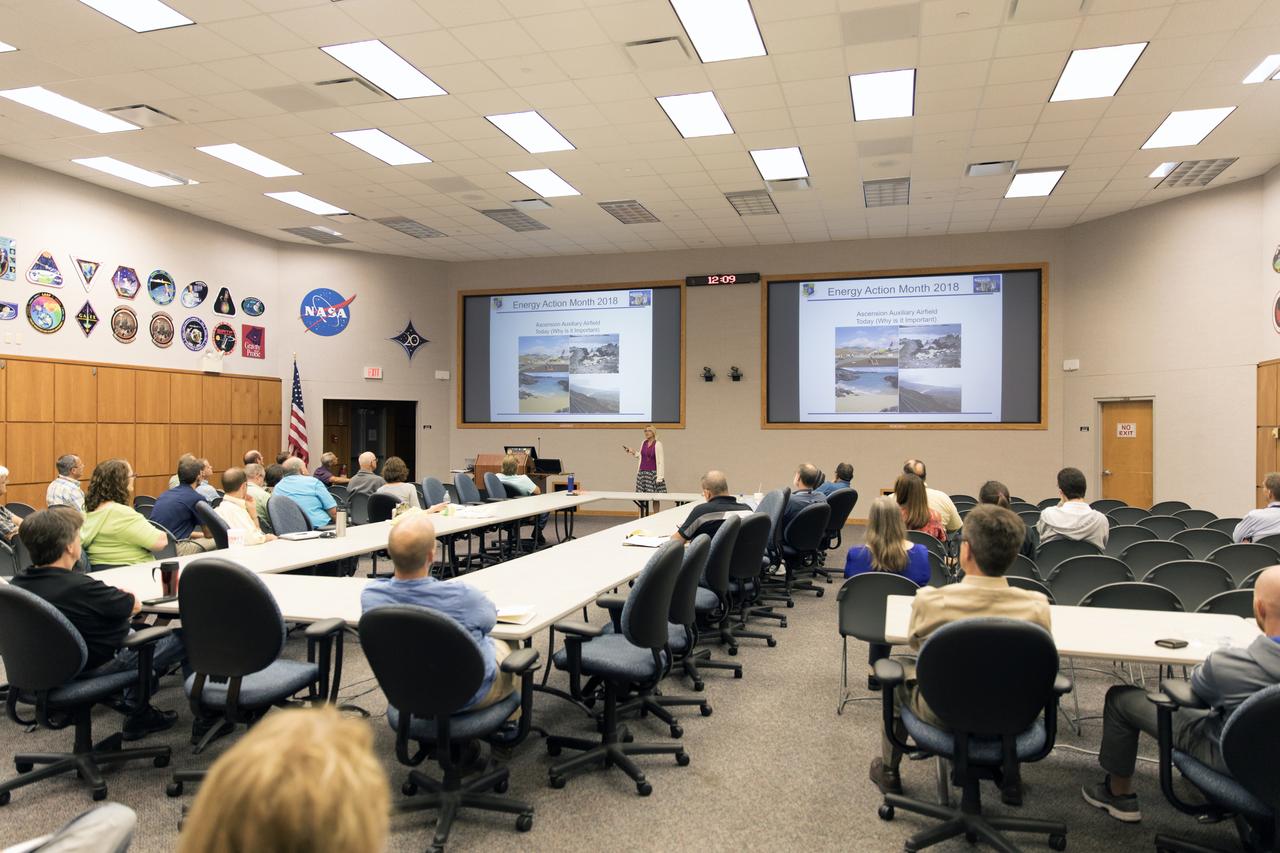
Guest speaker Robin Thomas shares a presentation focusing on energy resilience and the Ascension Island wind turbine generator project during a “lunch and learn” held Tuesday, Oct. 23, 2018, for employees at NASA’s Kennedy Space Center in Florida. Thomas is a resource efficiency manager working with the U.S. Air Force 45th Space Wing’s Civil Engineering Squadron based at Patrick Air Force Base. The event was one of two held during October in conjunction with Energy Awareness Month, which aims to recognize the importance of energy management for our national prosperity, security and environmental sustainability.