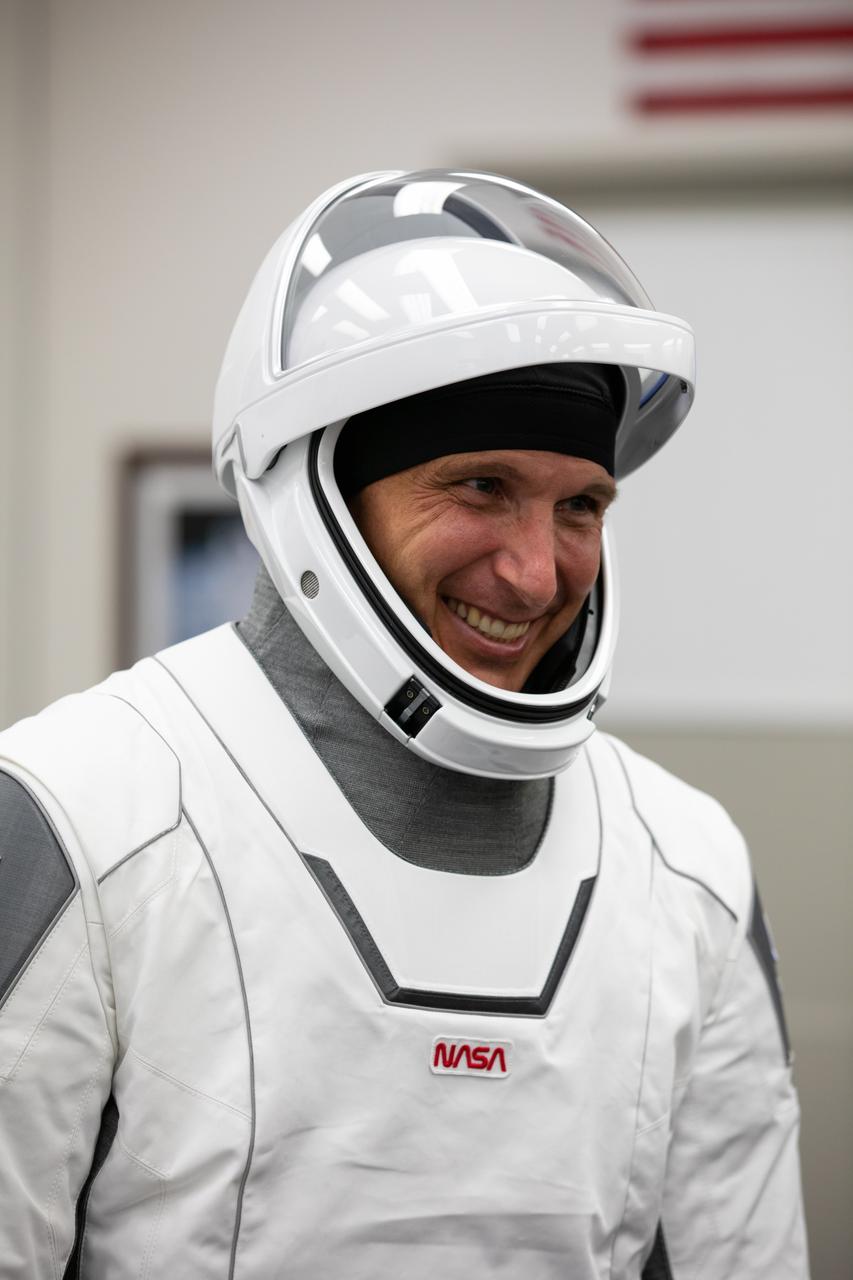
Inside the crew suit-up room in the Neil Armstrong Operations and Checkout Building at NASA’s Kennedy Space Center in Florida, on Nov. 15, 2020, NASA astronaut Michael Hopkins, spacecraft commander, is shown in a SpaceX spacesuit in preparation for NASA SpaceX’s Crew-1 mission. Crew-1 is the first regular crew mission of a U.S. commercial spacecraft with astronauts to the International Space Station as part of NASA’s Commercial Crew Program. The SpaceX Crew Dragon Resilience capsule will launch atop the company’s Falcon 9 rocket from Launch Complex 39A to the space station for a six-month science mission.
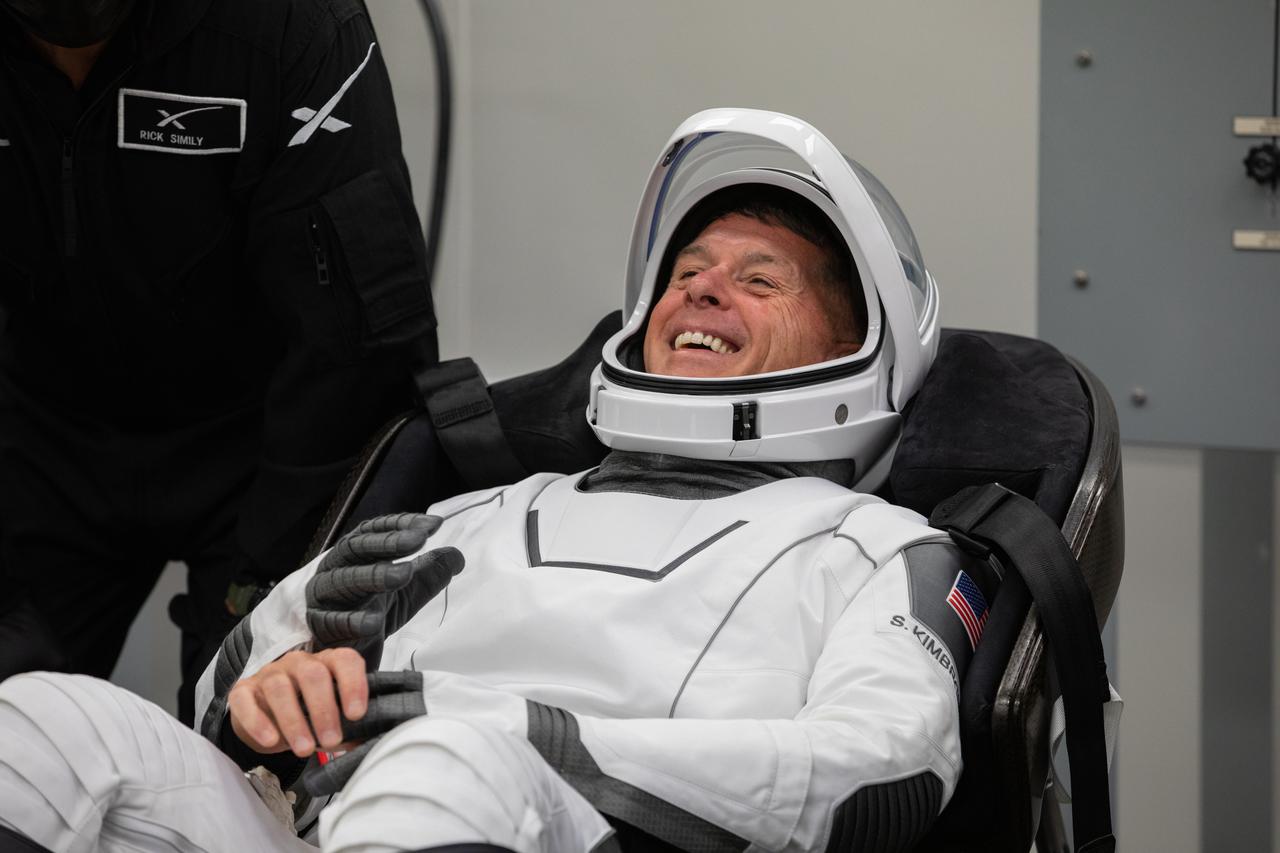
NASA astronaut Shane Kimbrough smiles inside the crew suit-up room in the Neil Armstrong Operations and Checkout Building at NASA’s Kennedy Space Center in Florida, on April 23, 2021. Kimbrough, along with NASA astronaut Megan McArthur, ESA astronaut Thomas Pesquet, and JAXA astronaut Akihiko Hoshide, will head to the International Space Station on NASA’s SpaceX Crew-2 mission. SpaceX’s Crew Dragon Endeavour will launch on the company’s Falcon 9 rocket from Kennedy’s Launch Complex 39A today at 5:49 a.m. EDT.
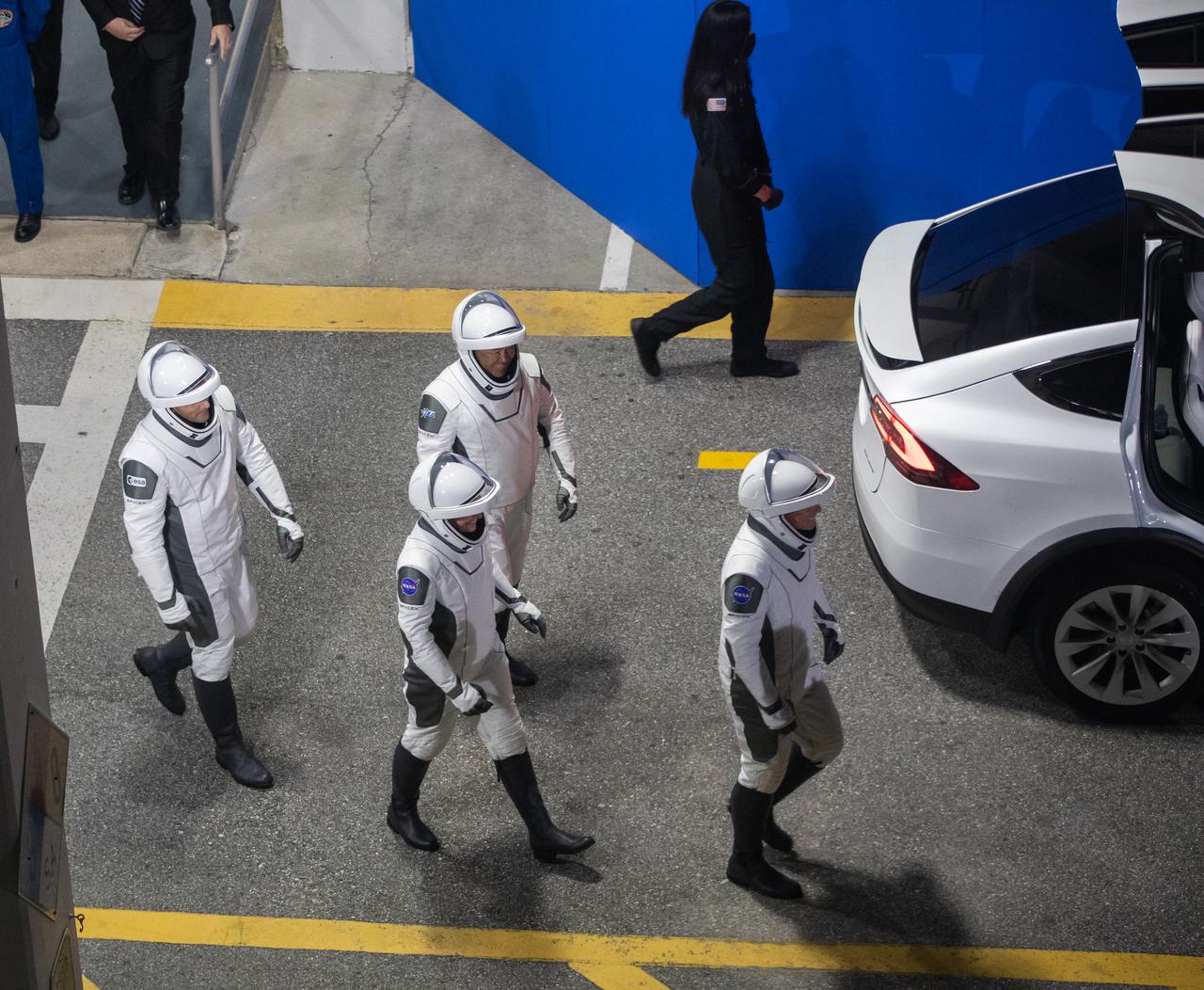
NASA SpaceX’s Crew-2 astronauts walk outside of the Neil Armstrong Operations and Checkout Building at NASA’s Kennedy Space Center in Florida on April 23, 2021. NASA astronaut Shane Kimbrough, spacecraft commander; NASA astronaut Megan McArthur, pilot; ESA astronaut Thomas Pesquet, mission specialist; and JAXA astronaut Akihiko Hoshide, mission specialist then boarded two Tesla vehicles for the trip to Kennedy’s Launch Complex 39A. Crew-2 is the second regular crew mission of a U.S. commercial spacecraft with astronauts to the International Space Station as part of NASA’s Commercial Crew Program. The SpaceX Crew Dragon Endeavour will launch atop the company’s Falcon 9 rocket from Pad 39A to the space station for a six-month science mission.
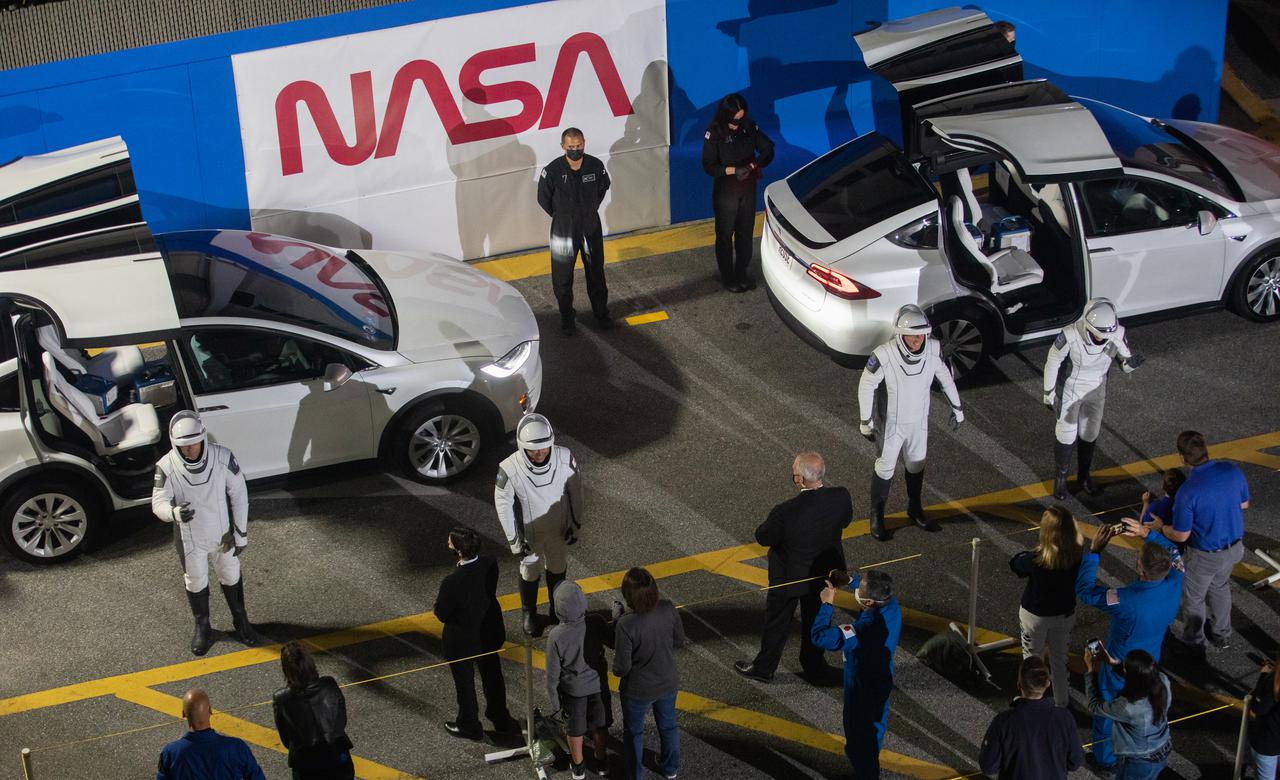
NASA SpaceX’s Crew-2 astronauts say goodbye to their families outside of the Neil Armstrong Operations and Checkout Building at NASA’s Kennedy Space Center in Florida on April 23, 2021. NASA astronauts Shane Kimbrough and Megan McArthur, ESA astronaut Thomas Pesquet, and JAXA astronaut Akihiko Hoshide will then board two Tesla vehicles for the trip to Kennedy’s Launch Complex 39A. Crew-2 is the second regular crew mission of a U.S. commercial spacecraft with astronauts to the International Space Station as part of NASA’s Commercial Crew Program. The SpaceX Crew Dragon Endeavour will launch atop the company’s Falcon 9 rocket from Pad 39A to the space station for a six-month science mission.
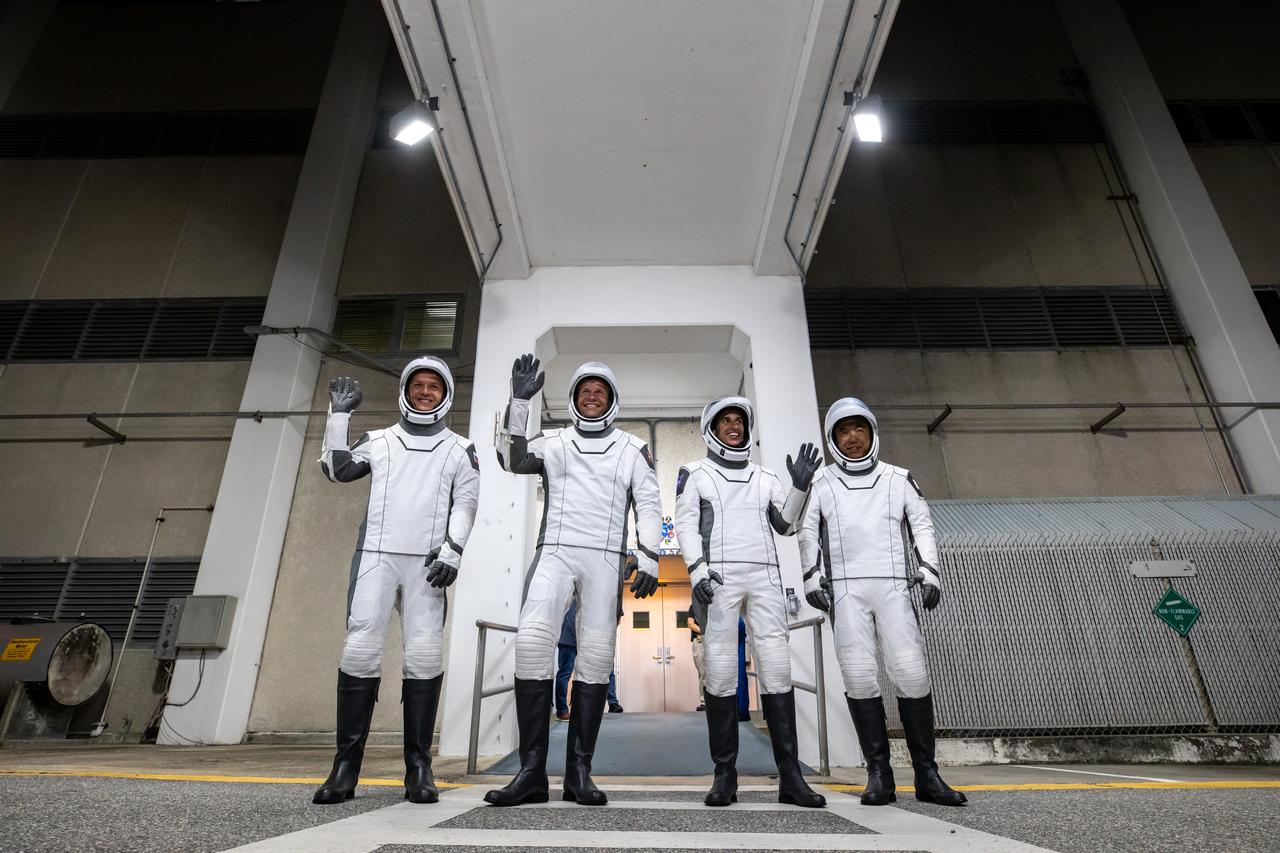
NASA’s SpaceX Crew-7 crew members stand outside of the Neil A. Armstrong Operations and Checkout Building on Tuesday, Aug. 22, 2023, at the agency’s Kennedy Space Center in Florida. They were participating in a countdown dress rehearsal to prepare for the upcoming mission launch. From left are Roscosmos cosmonaut Konstantin Borisov, ESA (European Space Agency) astronaut Andreas Mogensen, NASA astronaut Jasmin Moghbeli, and JAXA (Japan Aerospace Exploration Agency) astronaut Satoshi Furukawa. The crew will launch to the International Space Station aboard SpaceX’s Dragon spacecraft on the company’s Falcon 9 rocket. Liftoff is targeted for 3:49 a.m. EDT Friday, Aug. 25, 2023, from Kennedy’s Launch Complex 39A.
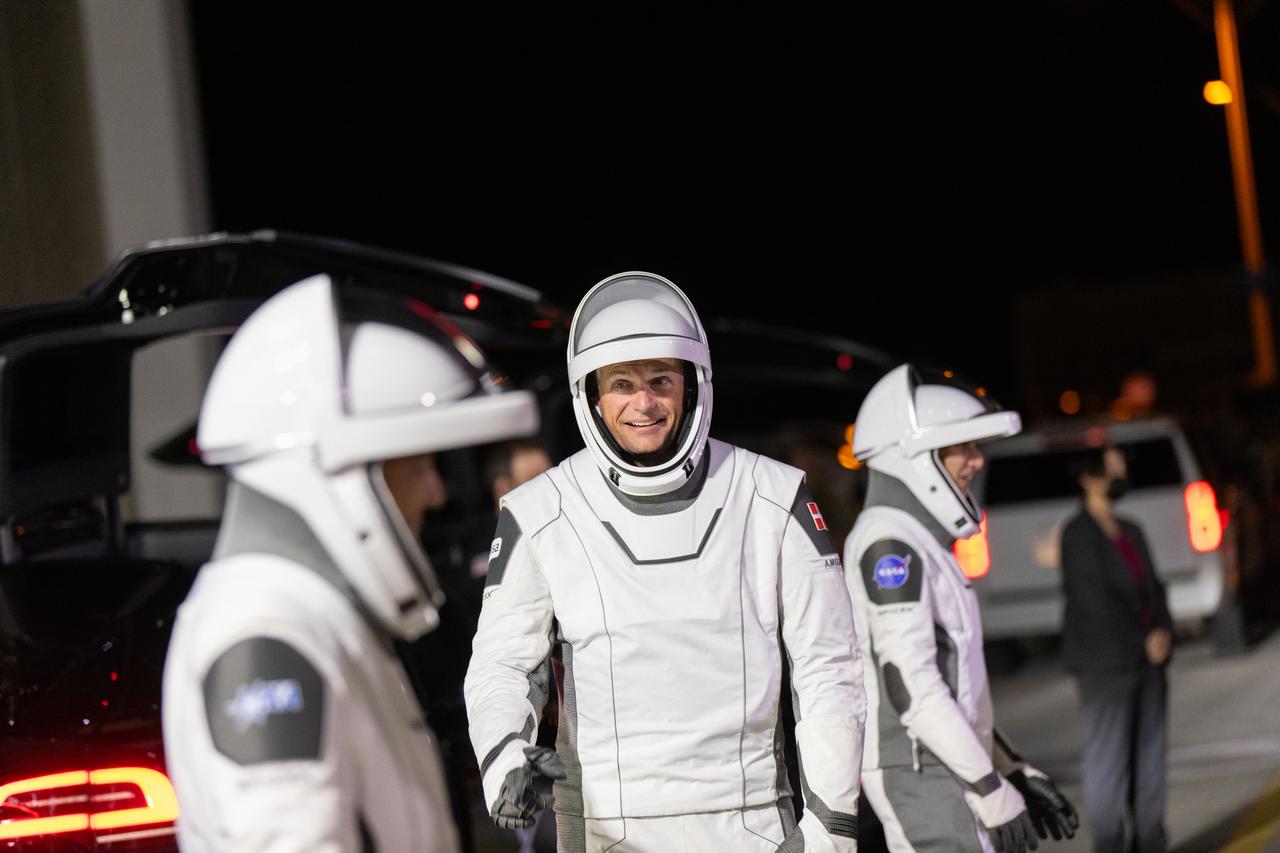
NASA’s SpaceX Crew-7 ESA (European Space Agency) astronaut Andreas Mogensen smiles outside of the Neil Armstrong Operations and Checkout Building at NASA’s Kennedy Space Center in Florida on Saturday, Aug. 26, 2023. Mogensen and his crewmates are preparing to get into the customized Tesla Model X vehicles that will transport them to Kennedy’s Launch Complex 39A. SpaceX’s Dragon spacecraft, powered by the company’s Falcon 9 rocket, will carry the four-person crew – which includes NASA astronaut Jasmin Moghbeli, JAXA (Japan Aerospace Exploration Agency) astronaut Satoshi Furukawa, and Roscosmos cosmonaut Konstantin Borisov – to the International Space Station as part of NASA’s Commercial Crew Program. Crew-7 is scheduled to launch at 3:27 a.m. EDT.
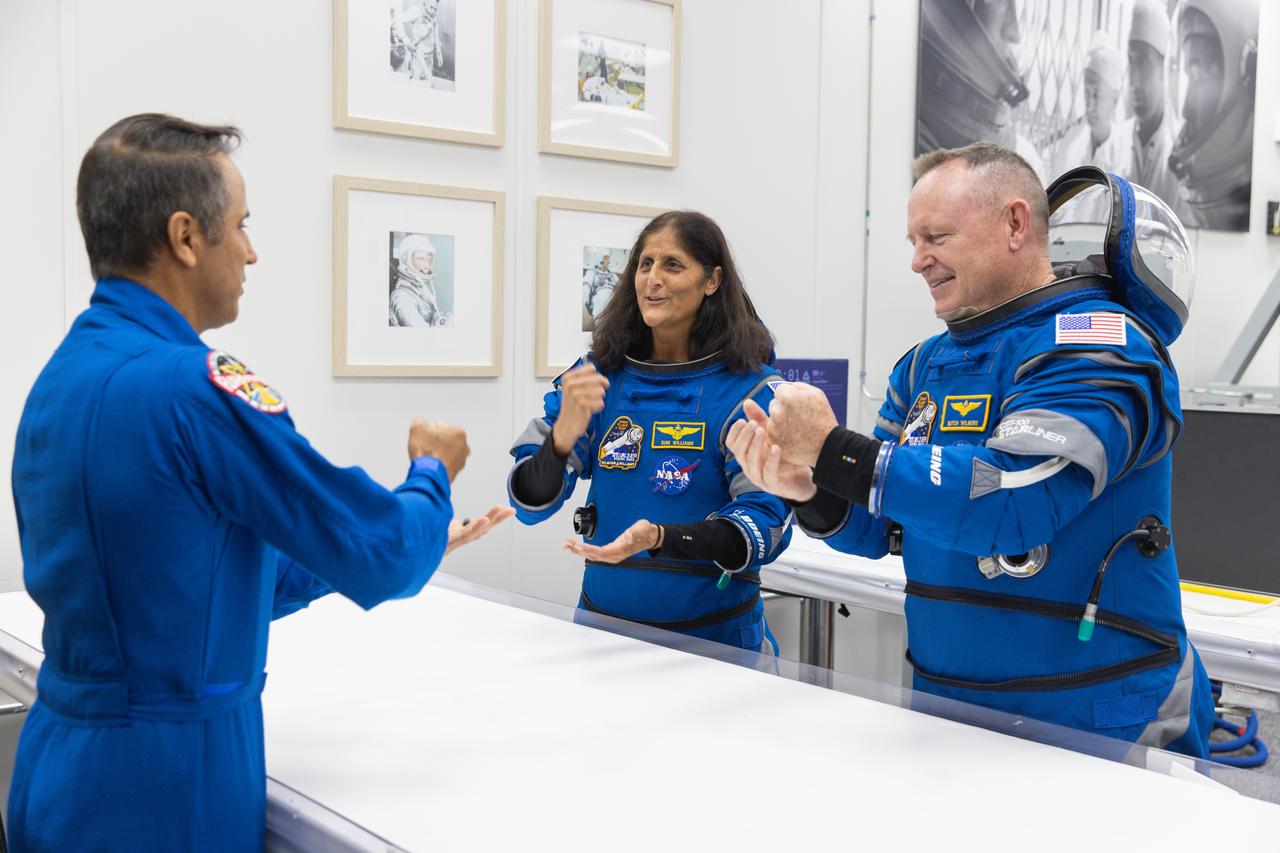
After suit-up and final fit checks, NASA’s Boeing Crew Flight Test astronauts Butch Wilmore and Suni Williams participate in a traditional game of rock, paper, scissors inside the Neil A. Armstrong Operations and Checkout Building at NASA’s Kennedy Space Center in Florida on Wednesday, June 5, 2024. The crew members are preparing for launch to the International Space Station aboard Boeing’s Starliner spacecraft atop a United Launch Alliance Atlas V rocket from Space Launch Complex-41 at nearby Cape Canaveral Space Force Station at 10:52 a.m. EDT.
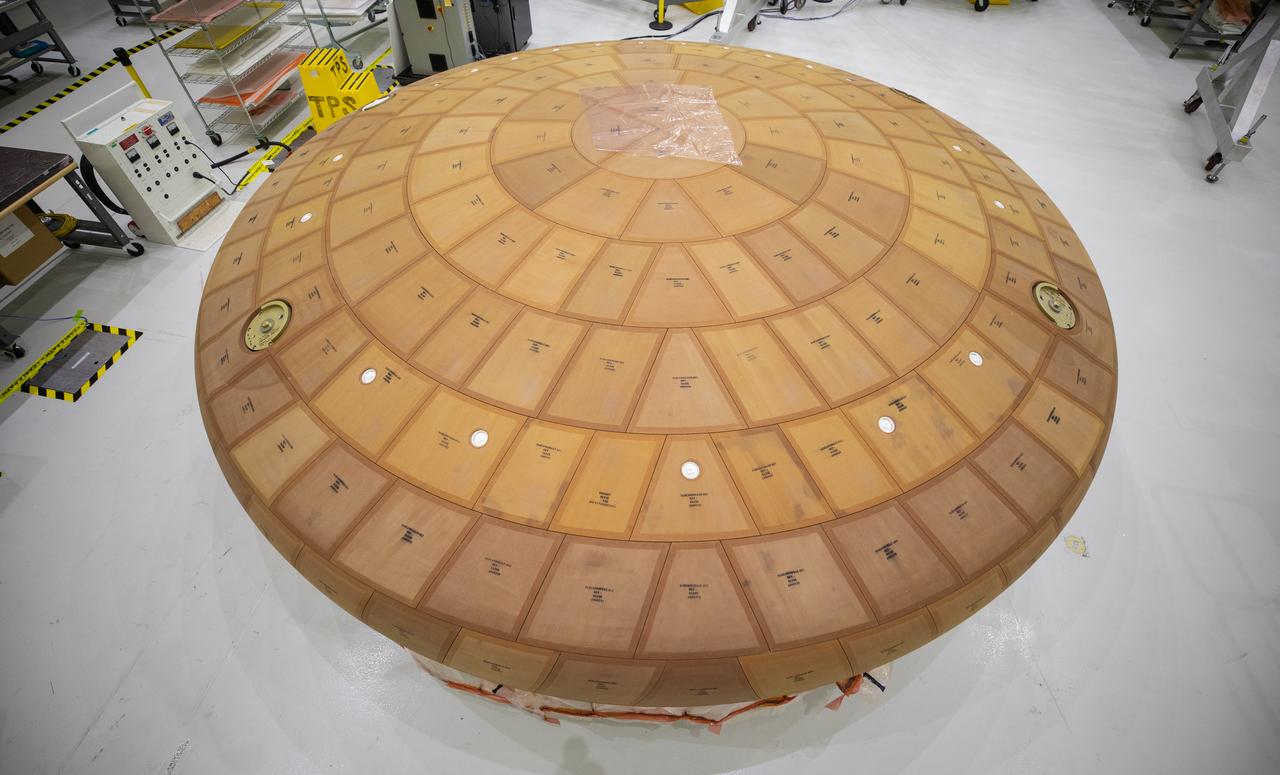
Inside the Neil Armstrong Operations and Checkout Building high bay at NASA's Kennedy Space Center in Florida, the AVOCAT block bonding is complete on the Artemis II heat shield on July 2, 2020. The heat shield is one of the most critical elements of Orion and will protect the capsule and astronauts during reentry through Earth’s atmosphere. Artemis II is the first crewed mission in a series of missions to the Moon and on to Mars. Artemis II will confirm all of the Orion spacecraft’s systems operate as designed in the actual environment of deep space with astronauts aboard. As part of the Artemis Program, NASA will send the first woman and next man to the Moon by 2024.
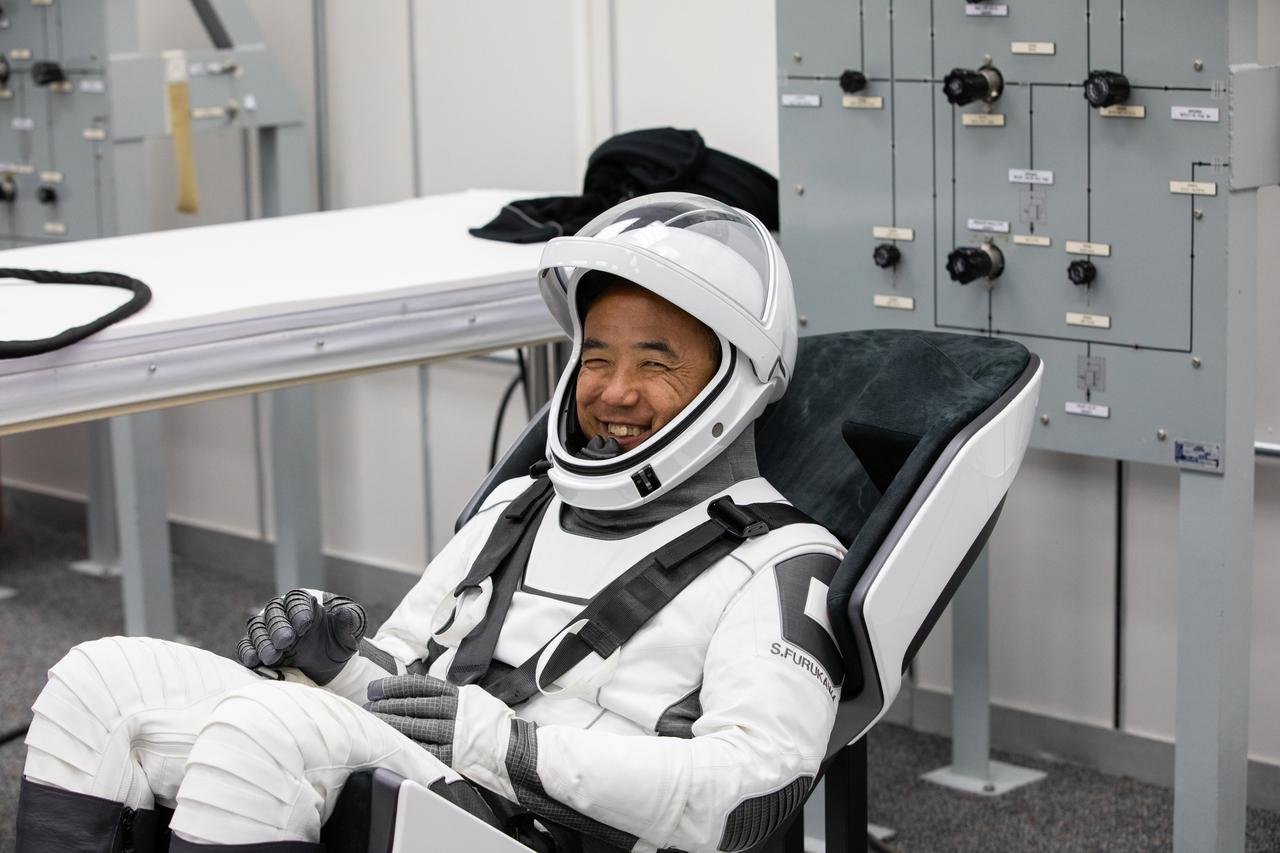
NASA’s SpaceX Crew-7 JAXA (Japan Aerospace Exploration Agency) astronaut Satoshi Furukawa relaxes in the suit-up room in the Astronaut Crew Quarters inside Kennedy Space Center’s Neil A. Armstrong Operations and Checkout Building a few hours before launch. A team of SpaceX suit technicians assisted the crew as they put on their custom-fitted spacesuits and checked the suits for leaks. Furukawa, along with NASA astronaut Jasmin Moghbeli, ESA (European Space Agency) astronaut Andreas Mogensen, and Roscosmos cosmonaut Konstantin Borisov, will launch aboard SpaceX’s Dragon spacecraft and Falcon 9 rocket to the International Space Station as part of NASA’s Commercial Crew Program. Launch is set for 3:27 a.m. EDT Saturday, Aug. 26, from Kennedy’s Launch Complex 39A.
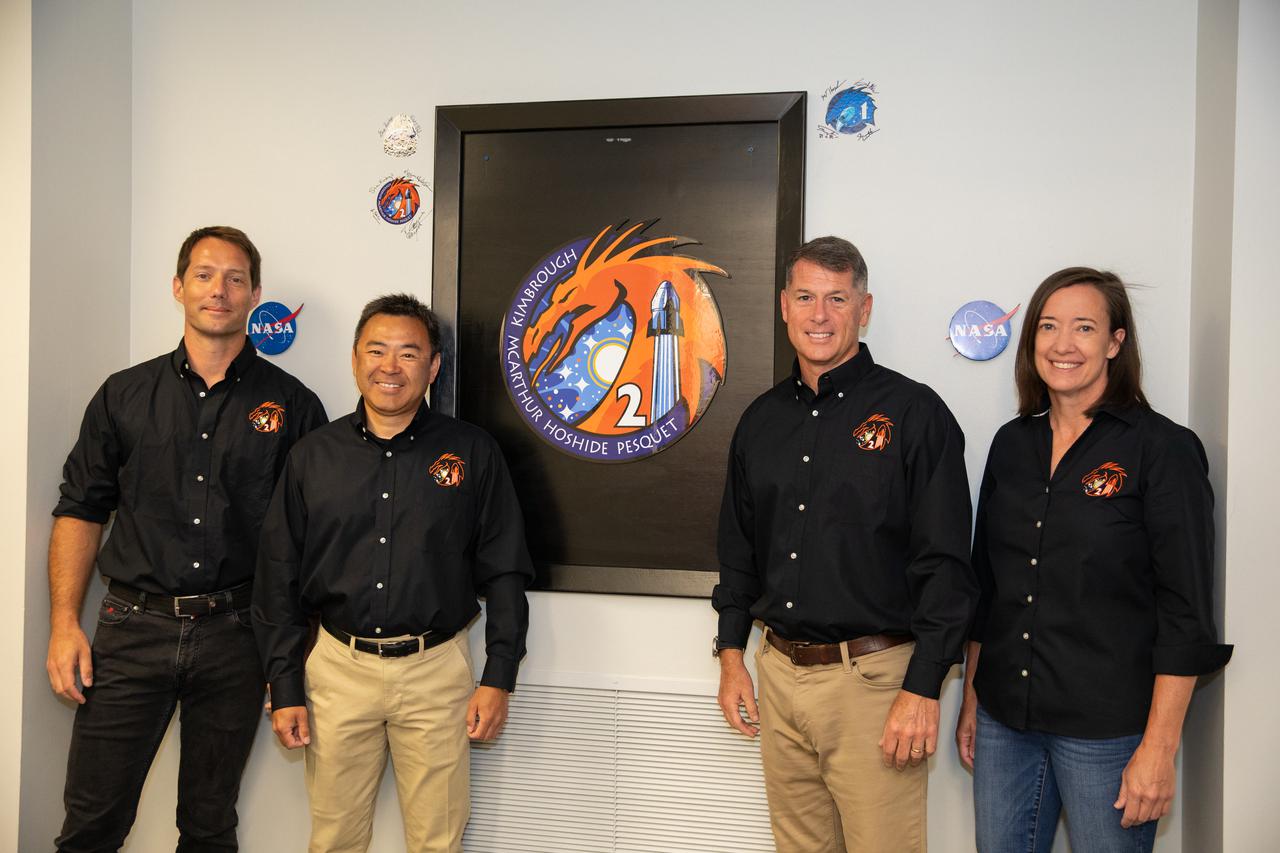
From left, ESA astronaut Thomas Pesquet, JAXA astronaut Akihiko Hoshide, and NASA astronauts Shane Kimbrough and Megan McArthur pose inside the Astronaut Crew Quarters in the Neil Armstrong Operations and Checkout Building at NASA’s Kennedy Space Center in Florida on April 23, 2021. NASA SpaceX’s Crew-2 astronauts will have breakfast before suiting up for the mission. Crew-2 is the second regular crew mission of a U.S. commercial spacecraft with astronauts to the International Space Station as part of NASA’s Commercial Crew Program. The SpaceX Crew Dragon Endeavour will launch atop the company’s Falcon 9 rocket from Launch Complex 39A to the space station for a six-month science mission.
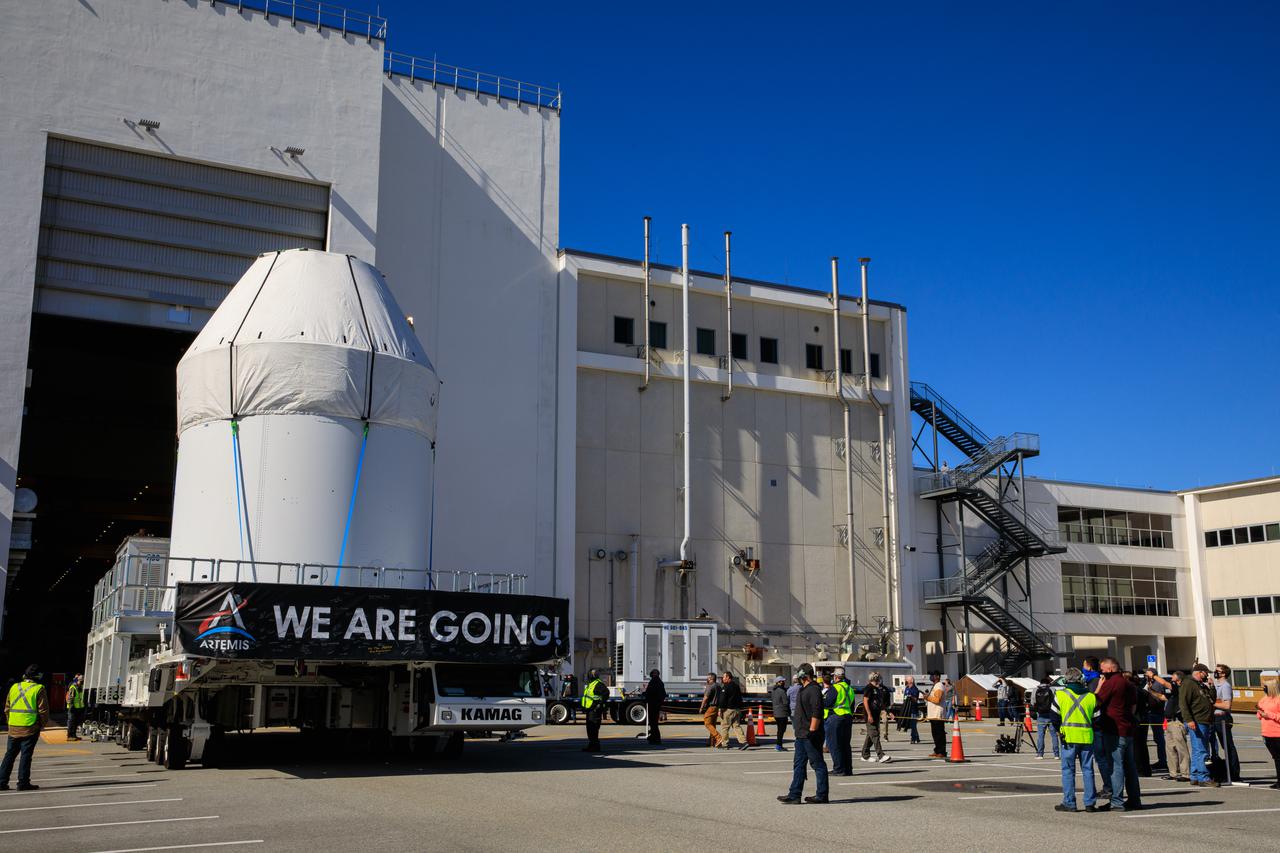
Orion sits atop a transport vehicle as it departs from its home at the Neil Armstrong Operations and Checkout Building at NASA’s Kennedy Space Center in Florida on Jan.16, 2021. Orion will begin its trek to the Multi-Payload Processing Facility. There it will undergo ground processing with the Exploration Ground Systems team taking over ground processing ahead of the Artemis I launch.
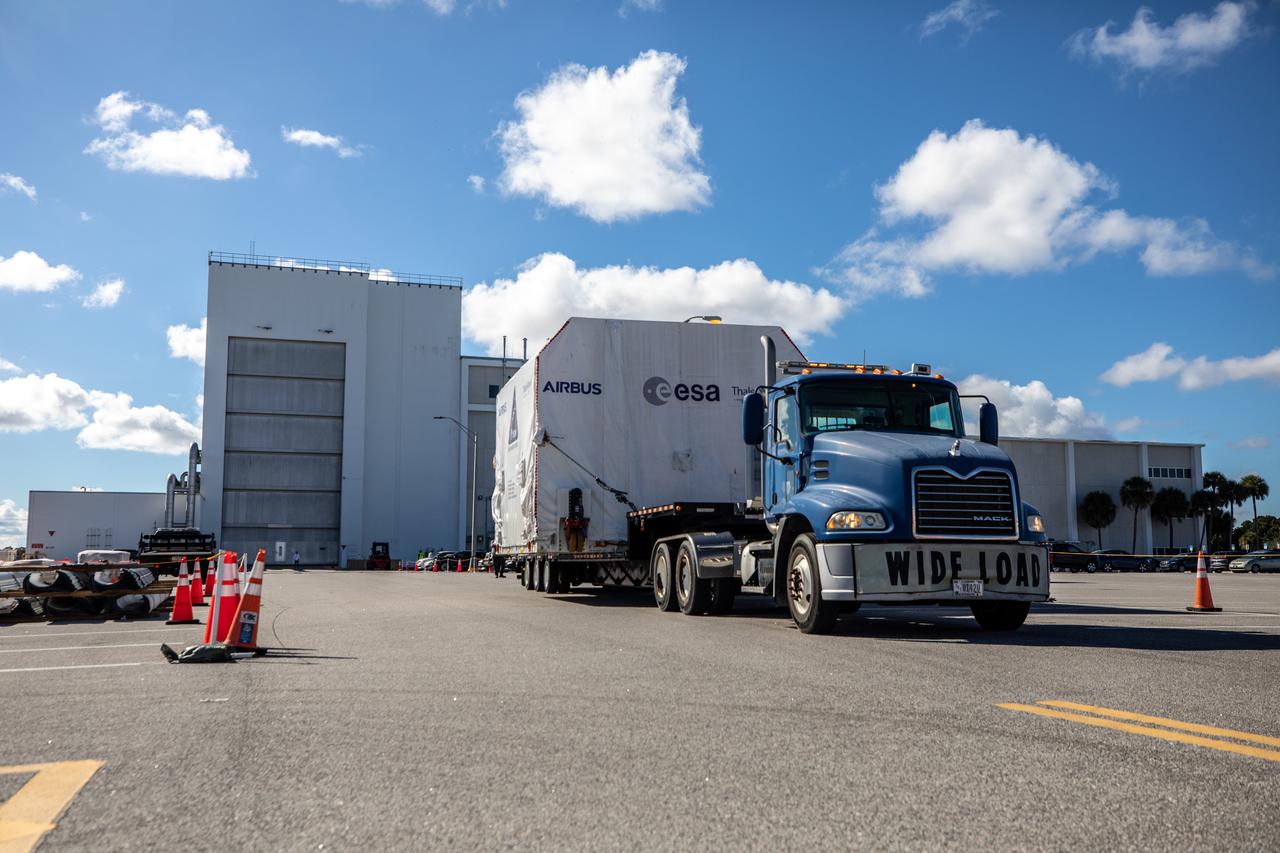
The European Service Module (ESM) for NASA’s Orion spacecraft arrived at the Neil A. Armstrong Operations and Checkout Facility at Kennedy Space Center in Florida on Oct 14, 2021. Earlier in the day the ESM arrived at the Launch and Landing Facility at Kennedy after making the journey from the Airbus Facility in Bremen, Germany, aboard a Russian Antonov aircraft. There, teams from NASA and Lockheed Martin will integrate the service module with the crew module adapter and crew module, already housed in the facility. The powerhouse that will fuel and propel Orion in space, the ESM will be used for Artemis II, the first Artemis mission flying crew aboard Orion. Teams with the European Space Agency and Airbus built the service module.
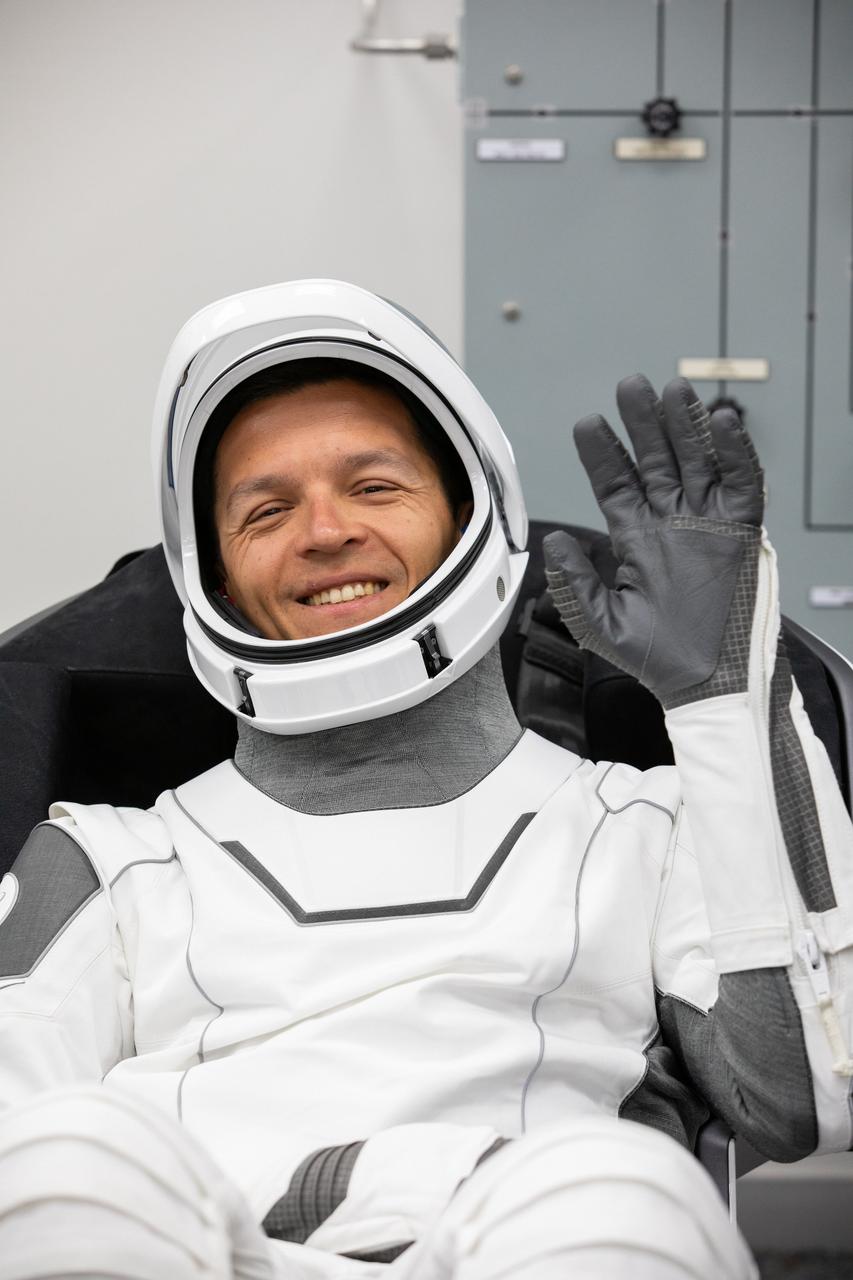
NASA’s SpaceX Crew-7 Roscosmos cosmonaut Konstantin Borisov relaxes in the suit-up room in the Astronaut Crew Quarters inside Kennedy Space Center’s Neil A. Armstrong Operations and Checkout Building a few hours before launch. A team of SpaceX suit technicians assisted the crew as they put on their custom-fitted spacesuits and checked the suits for leaks. Konstantin, along with NASA astronaut Jasmin Moghbeli, ESA (European Space Agency) astronaut Andreas Mogensen, and JAXA (Japan Aerospace Exploration Agency) astronaut Satoshi Furukawa, will launch aboard SpaceX’s Dragon spacecraft and Falcon 9 rocket to the International Space Station as part of NASA’s Commercial Crew Program. Launch is at 3:27 a.m. EDT Saturday, Aug. 26, from Kennedy’s Launch Complex 39A.
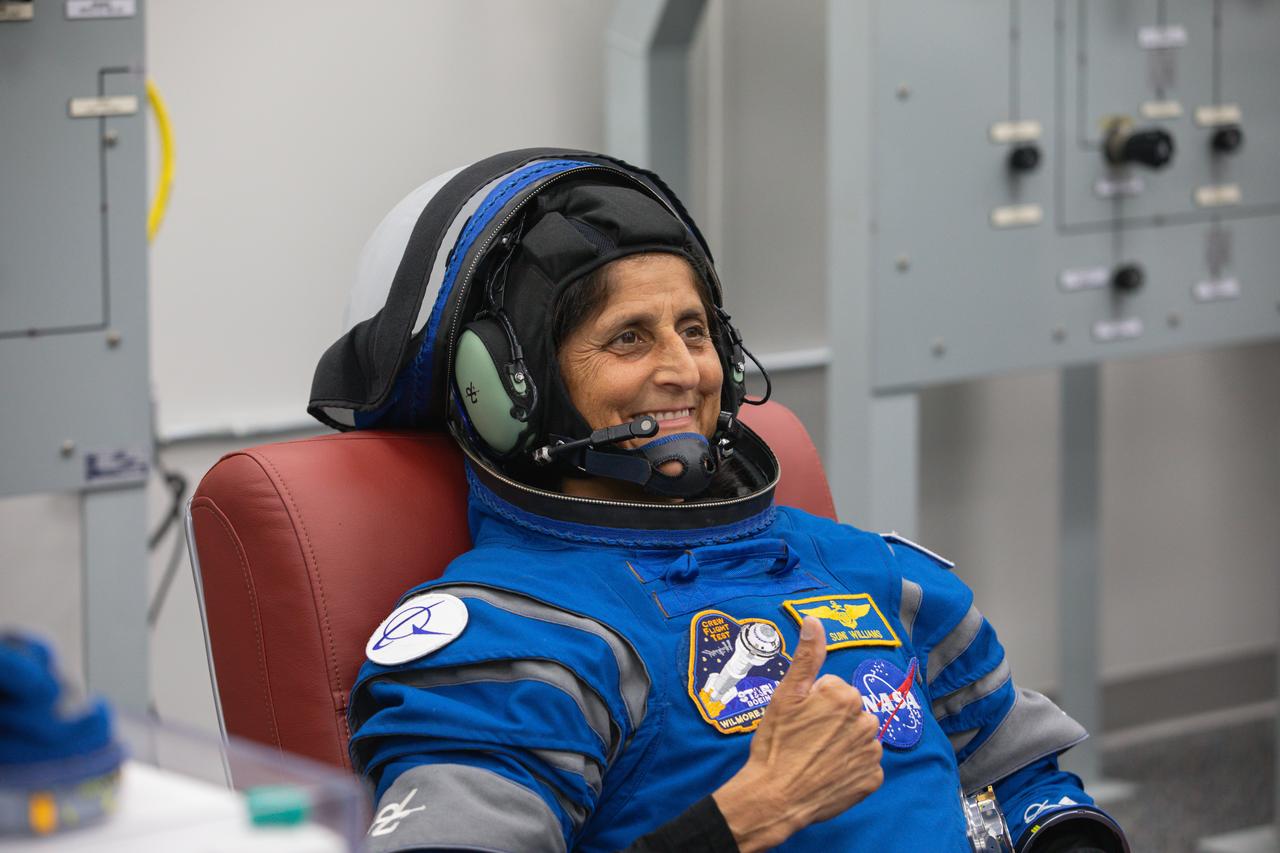
NASA’s Boeing Crew Flight Test astronaut Suni Williams relaxes in the suit-up room in the Astronaut Crew Quarters inside Kennedy Space Center’s Neil A. Armstrong Operations and Checkout Building in Florida a few hours before launch on Wednesday, June 5, 2024. As part of NASA’s Commercial Crew Program, Williams, joined by NASA astronaut Butch Wilmore, is preparing for the first crewed launch to the International Space Station aboard Boeing’s Starliner spacecraft atop a United Launch Alliance Atlas V rocket from Space Launch Complex-41 at nearby Cape Canaveral Space Force Station at 10:52 a.m. EDT.
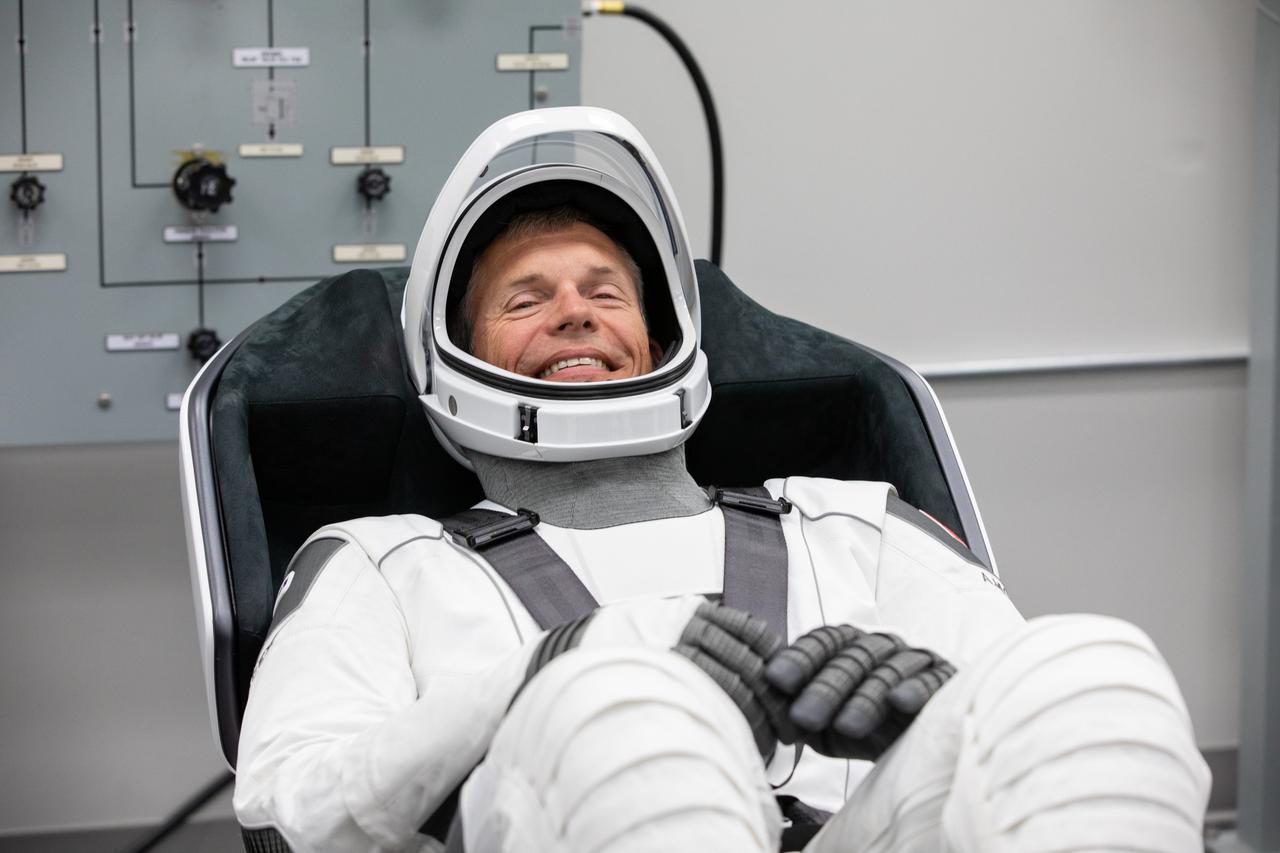
NASA’s SpaceX Crew-7 ESA (European Space Agency) astronaut Andreas Mogensen relaxes in the suit-up room in the Astronaut Crew Quarters inside Kennedy Space Center’s Neil A. Armstrong Operations and Checkout Building a few hours before launch. A team of SpaceX suit technicians assisted the crew as they put on their custom-fitted spacesuits and checked the suits for leaks. Mogensen, along with NASA astronaut Jasmin Moghbeli, JAXA (Japan Aerospace Exploration Agency) astronaut Satoshi Furukawa, and Roscosmos cosmonaut Konstantin Borisov, will launch aboard SpaceX’s Dragon spacecraft and Falcon 9 rocket to the International Space Station as part of NASA’s Commercial Crew Program. Launch is set for 3:27 a.m. EDT Saturday, Aug. 26, from Kennedy’s Launch Complex 39A
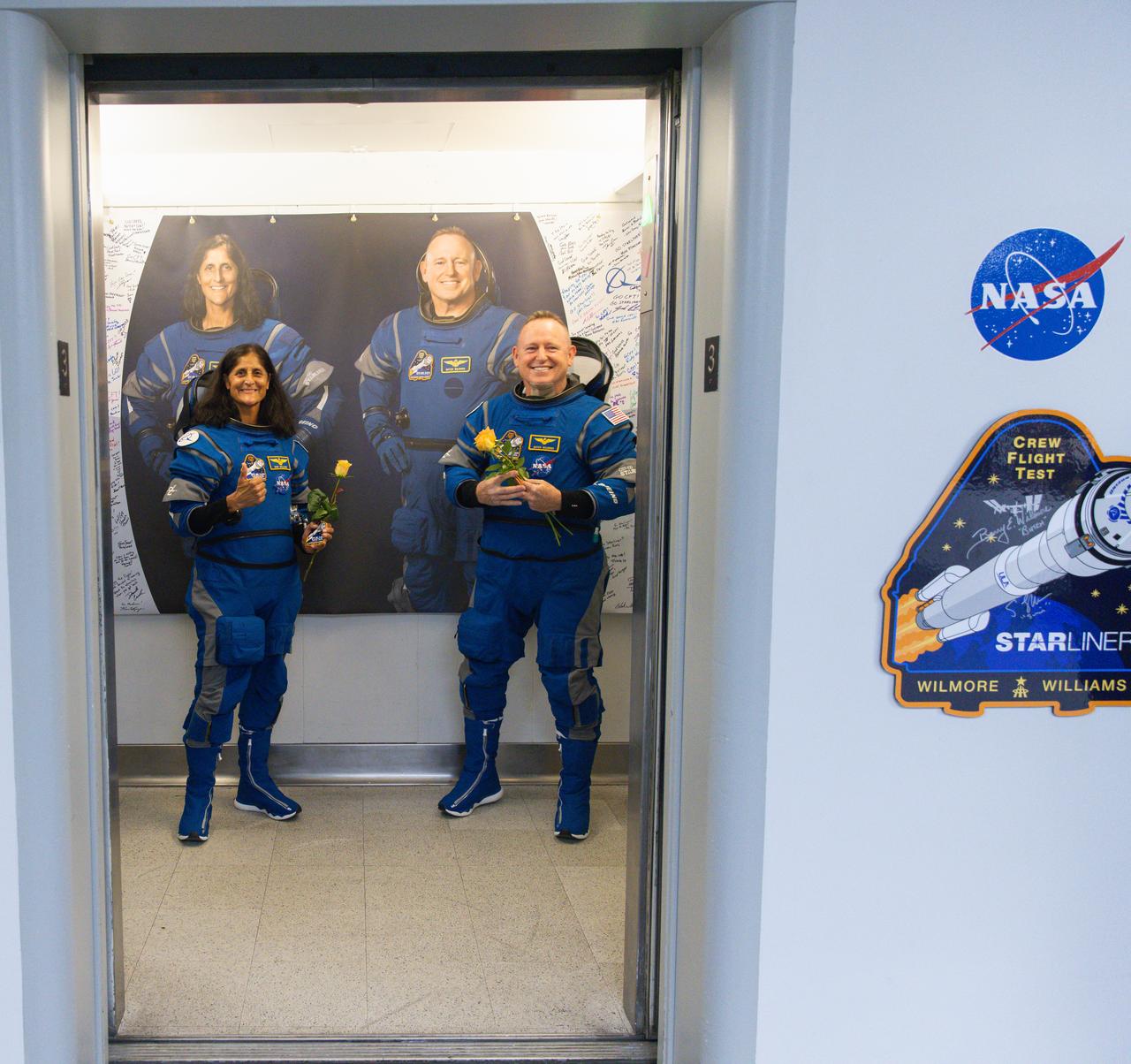
After suit-up and final fit checks, NASA’s Boeing Crew Flight Test astronauts Butch Wilmore and Suni Williams enter the elevator in the Astronaut Crew Quarters on Wednesday, June 5, 2024, inside Kennedy Space Center’s Neil A. Armstrong Operations and Checkout Building in Florida. The crew members are scheduled to launch to the International Space Station aboard Boeing’s Starliner spacecraft atop a United Launch Alliance Atlas V rocket from Space Launch Complex-41 at nearby Cape Canaveral Space Force Station at 10:52 a.m. EDT.
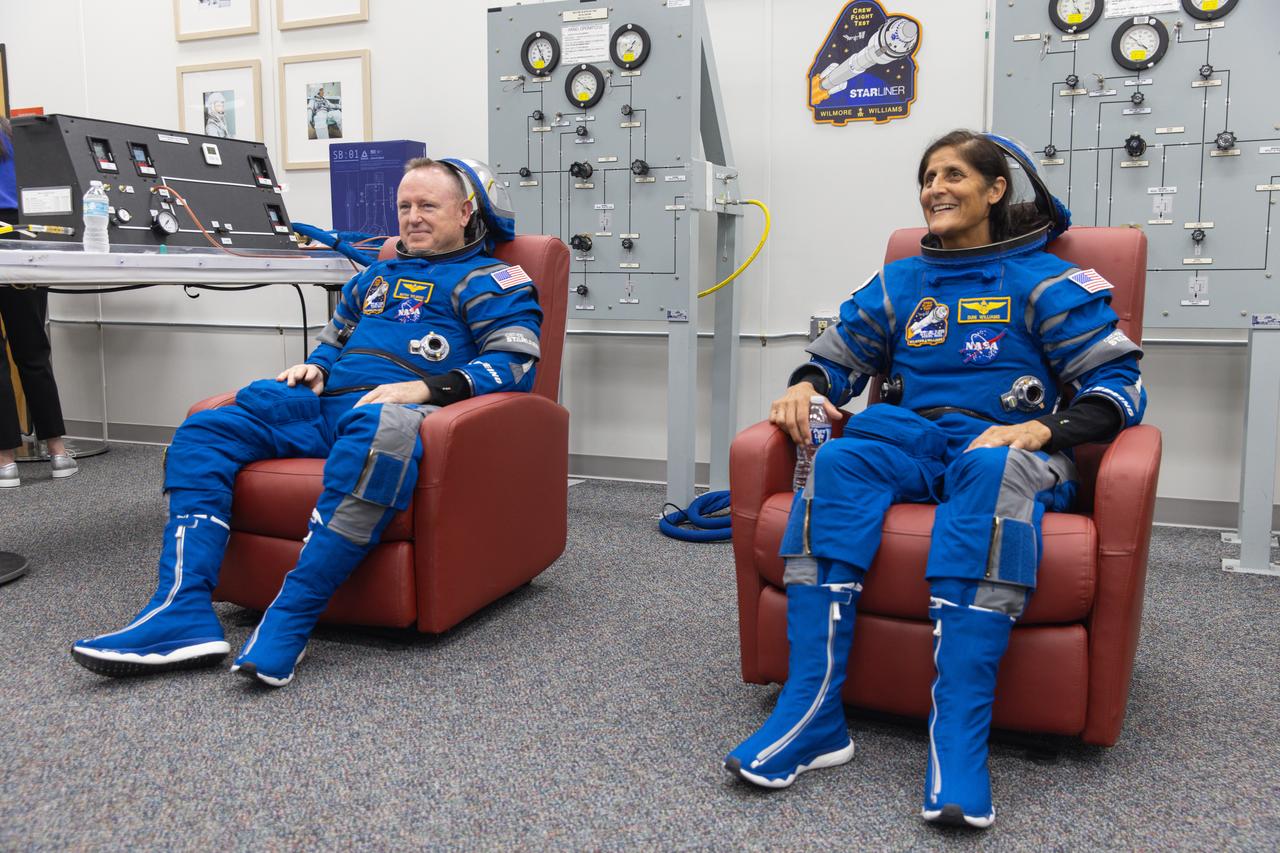
NASA’s Boeing Crew Flight Test astronauts Butch Wilmore and Suni Williams relax inside the crew suit-up room inside the Neil A. Armstrong Operations and Checkout Building at NASA’s Kennedy Space Center in Florida on Wednesday, June 5, 2024. As part of the agency’s Commercial Crew Program, Wilmore and Williams are preparing for the first crewed launch to the International Space Station aboard Boeing’s Starliner spacecraft atop a United Launch Alliance Atlas V rocket from Space Launch Complex-41 at nearby Cape Canaveral Space Force Station at 10:52 a.m. EDT.
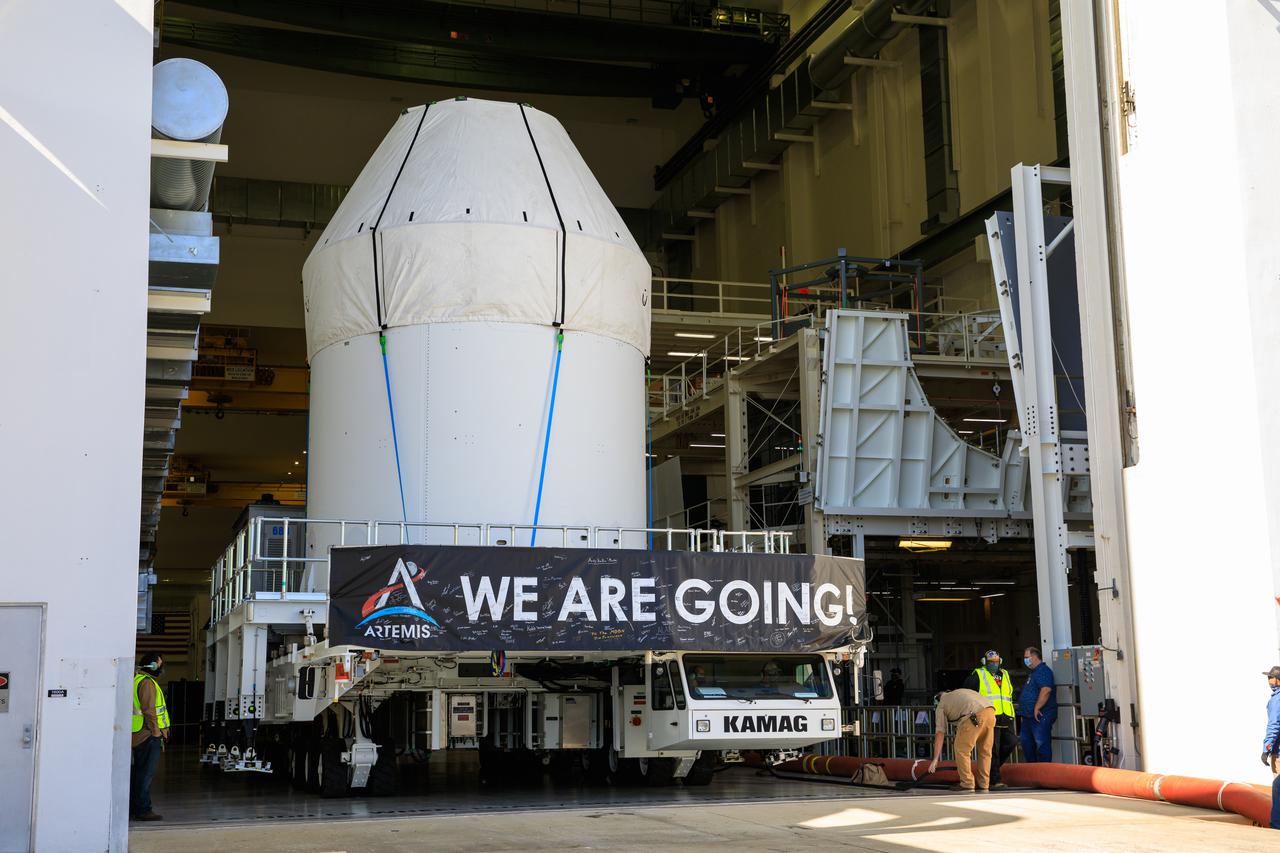
Orion is buttoned up as it sits atop a transport vehicle ready to depart from its home at the Neil Armstrong Operations and Checkout Building at NASA’s Kennedy Space Center in Florida on Jan.16, 2021. Orion will begin its trek to the Multi-Payload Processing Facility. There it will undergo ground processing with the Exploration Ground Systems team taking over ground processing ahead of the Artemis I launch.
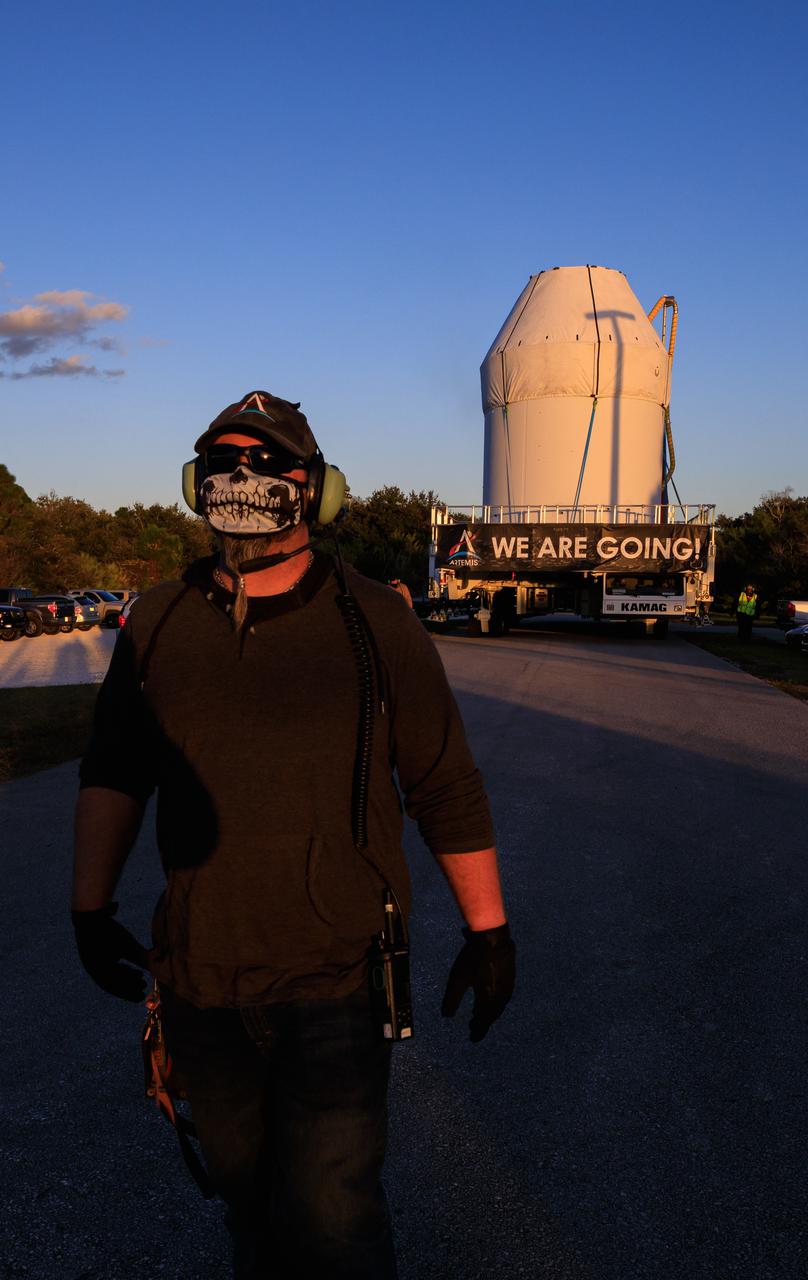
Secured atop a transport vehicle, Orion moves along the route to the Multi-Payload Processing Facility (MPPF) on Jan. 16, 2021, after departing from the Neil Armstrong Operations and Checkout Building at NASA’s Kennedy Space Center in Florida. Jason Parrish, a mechanical technician, Crawler Transporter Systems, with Jacobs, is one of the workers assisting with the move. Inside the MPPF, Orion will undergo processing with the Exploration Ground Systems team taking over ground processing ahead of the Artemis I launch.
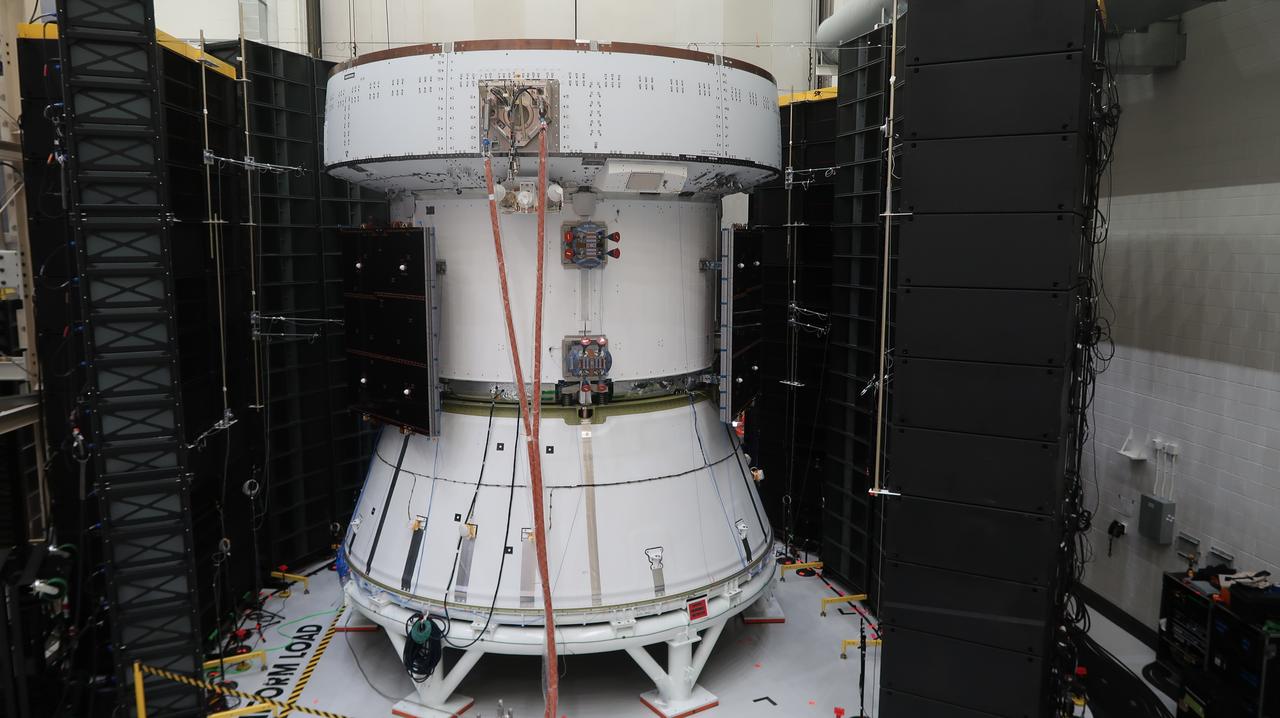
The European Service Module for the Artemis II mission is photographed inside the Neil Armstrong Operations and Checkout Building at NASA's Kennedy Space Center in Florida earlier this month. The Service Module successfully completed a round of acoustic tests to ensure it can withstand the speed and vibration it will experience during launch and throughout the mission. Artemis II will be the first crewed flight test of the Space Launch System rocket and Orion spacecraft. The service module will provide the power necessary to propel Orion on a trip around the Moon, including the in-space maneuvering capability and other commodities necessary to sustain crew for the duration of the mission.
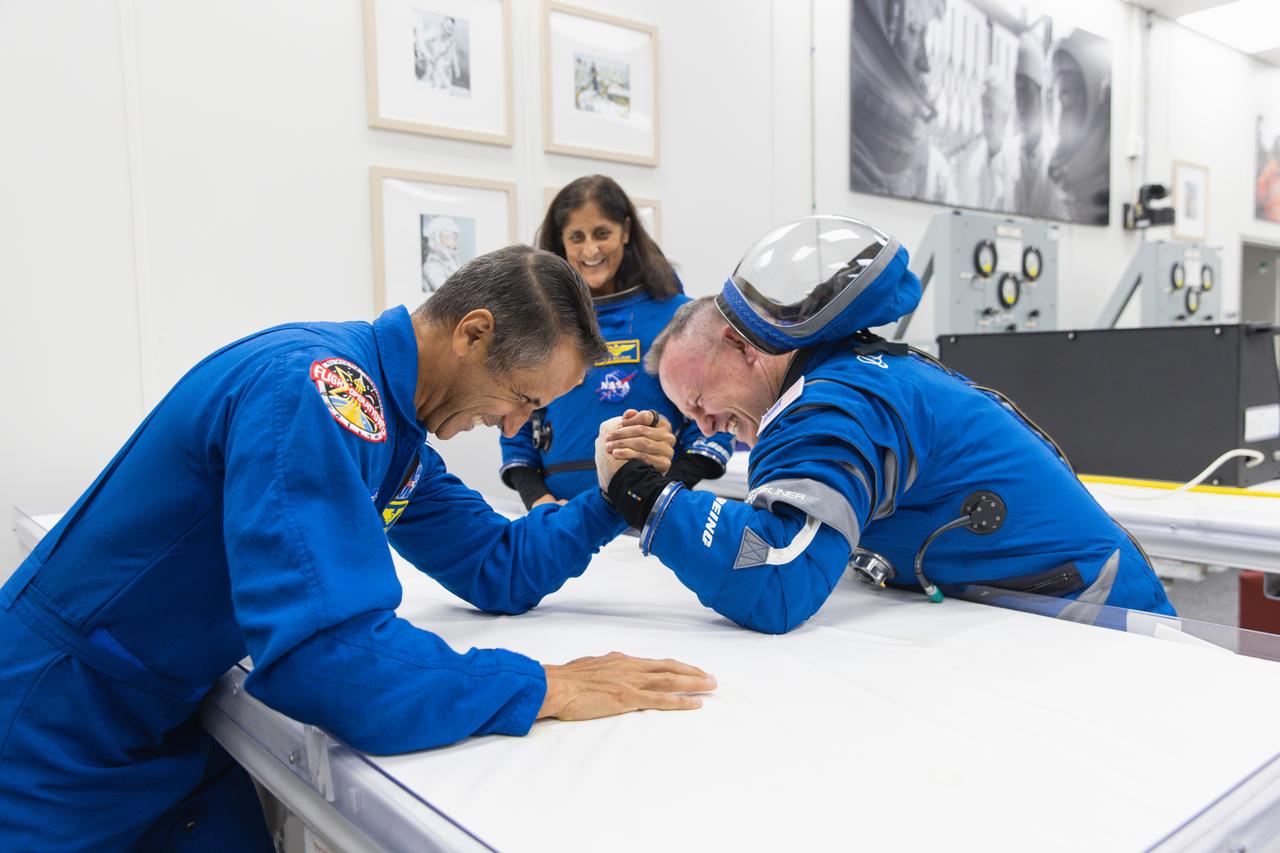
NASA’s Boeing Crew Flight Test astronaut Butch Wilmore participates in a round of arm wrestling with NASA astronauts Joseph Acaba after suit-up and final fit checks inside the Neil A. Armstrong Operations and Checkout Building at NASA’s Kennedy Space Center in Florida on Wednesday, June 5, 2024. As part of the agency’s Commercial Crew Program, Wilmore, joined by NASA astronaut Suni Williams, is preparing for launch to the International Space Station aboard Boeing’s Starliner spacecraft atop a United Launch Alliance Atlas V rocket from Space Launch Complex-41 at nearby Cape Canaveral Space Force Station at 10:52 a.m. EDT.
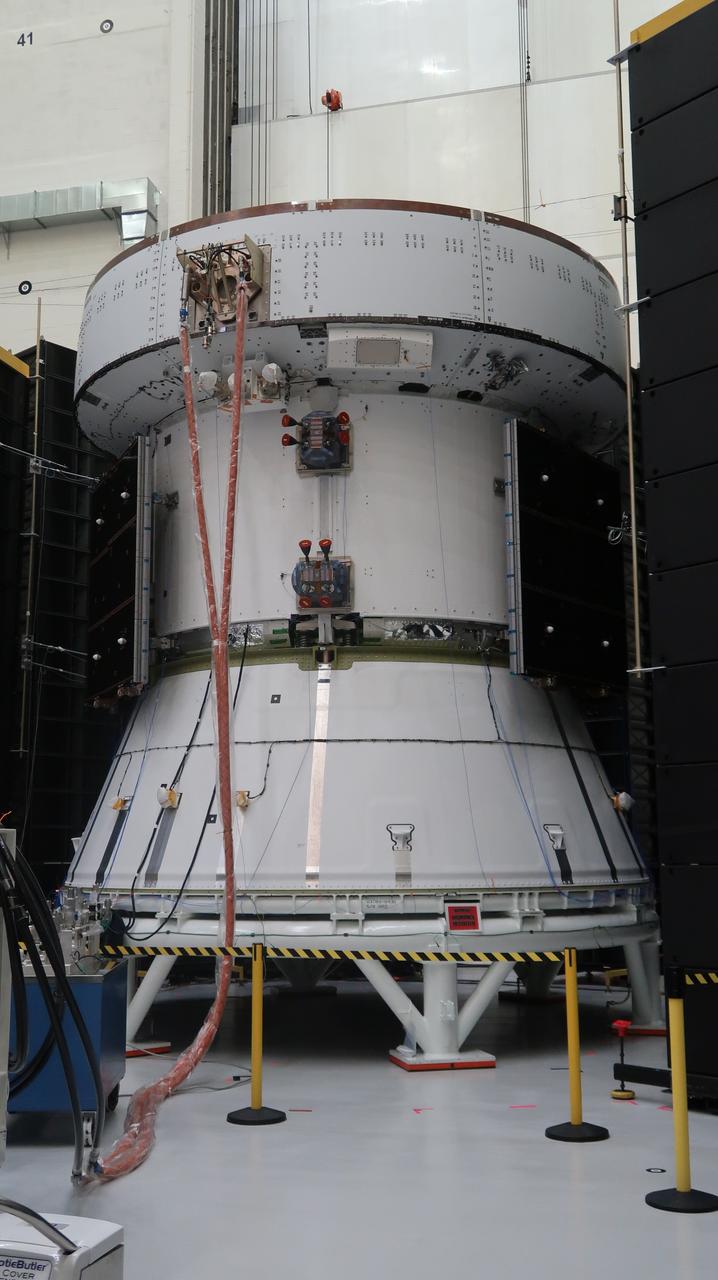
The European Service Module for the Artemis II mission is photographed inside the Neil Armstrong Operations and Checkout Building at NASA's Kennedy Space Center in Florida earlier this month. The Service Module successfully completed a round of acoustic tests to ensure it can withstand the speed and vibration it will experience during launch and throughout the mission. Artemis II will be the first crewed flight test of the Space Launch System rocket and Orion spacecraft. The service module will provide the power necessary to propel Orion on a trip around the Moon, including the in-space maneuvering capability and other commodities necessary to sustain crew for the duration of the mission.
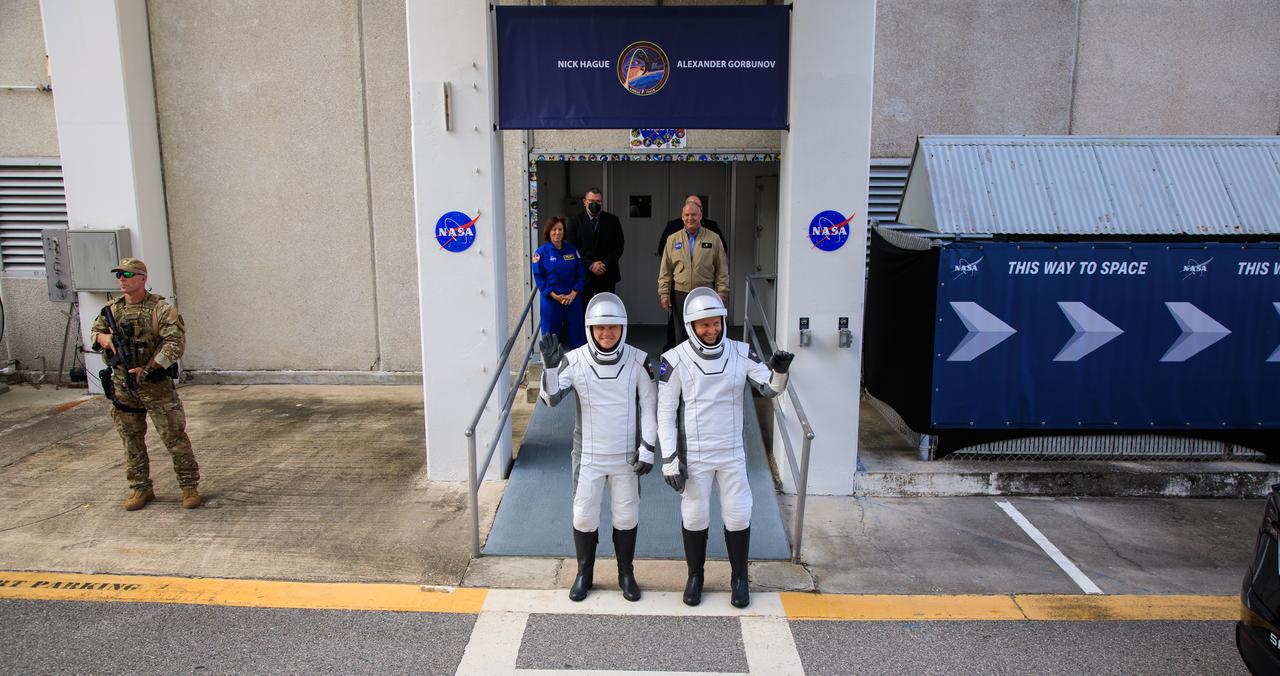
NASA’s SpaceX Crew-9 crew members wave to family and friends as they prepare to depart the Neil A. Armstrong Operations and Checkout Building at the agency’s Kennedy Space Center in Florida for nearby Space Launch Complex-40 at Cape Canaveral Space Force Station for launch of Crew-9 on Saturday, Sept. 28, 2024. NASA astronaut Nick Hague (lright) and Roscosmos cosmonaut Aleksandr Gorbunov will launch to the International Space Station aboard SpaceX’s Dragon spacecraft and Falcon 9 rocket. Launch is targeted for 1:17 p.m. EDT for the ninth crew rotation mission with SpaceX to the space station as part of the agency’s Commercial Crew Program.
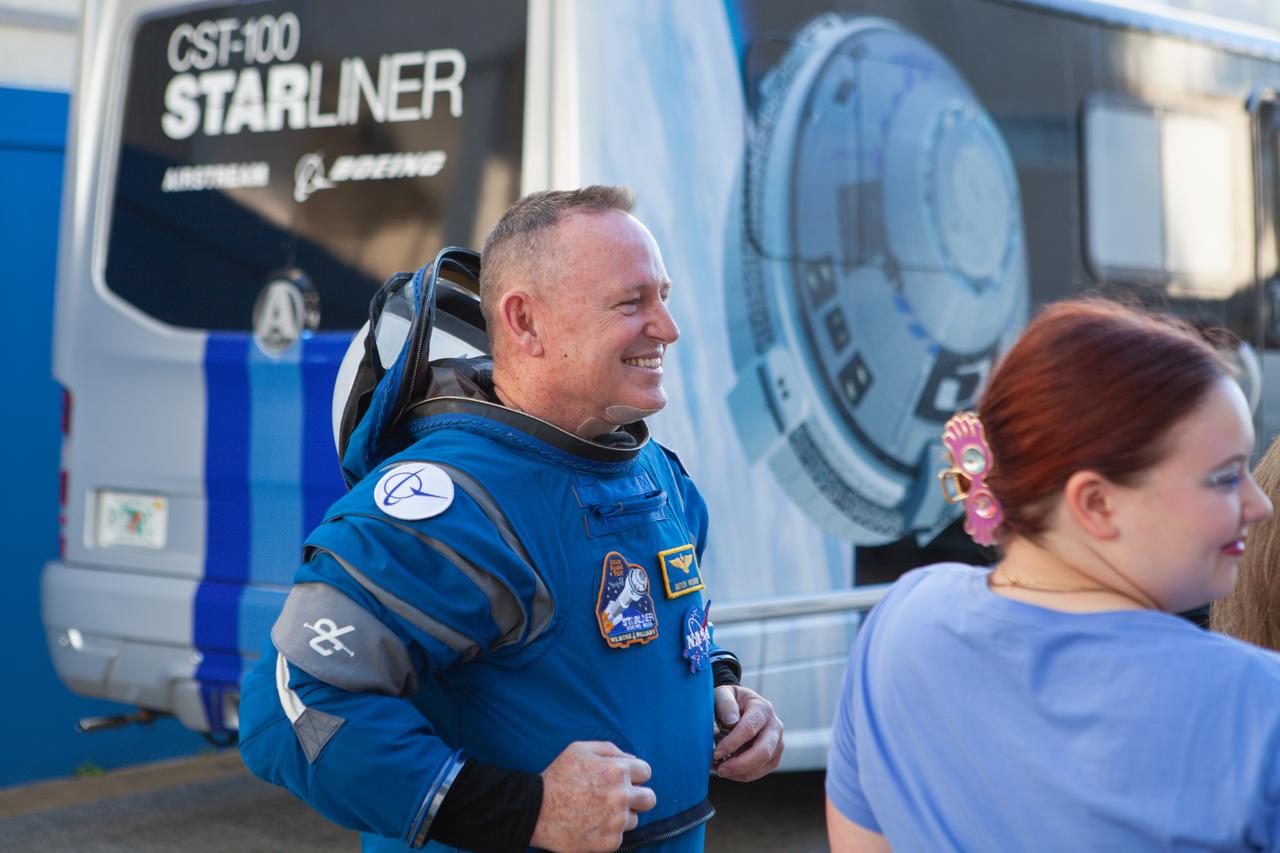
NASA’s Boeing Crew Flight Test astronaut Butch Wilmore says goodbye to friends and family upon exiting the Neil A. Armstrong Operations and Checkout Building at NASA’s Kennedy Space Center in Florida on Wednesday, June 5, 2024. Wilmore, accompanied by NASA astronaut Suni Williams, is preparing to load up into Boeing’s Astrovan for the trip to the launch pad of Space Launch Complex-41 at nearby Cape Canaveral Space Force Station, where the duo will launch to the International Space Station aboard Boeing’s Starliner spacecraft atop a United Launch Alliance Atlas V rocket at 10:52 a.m. EDT.
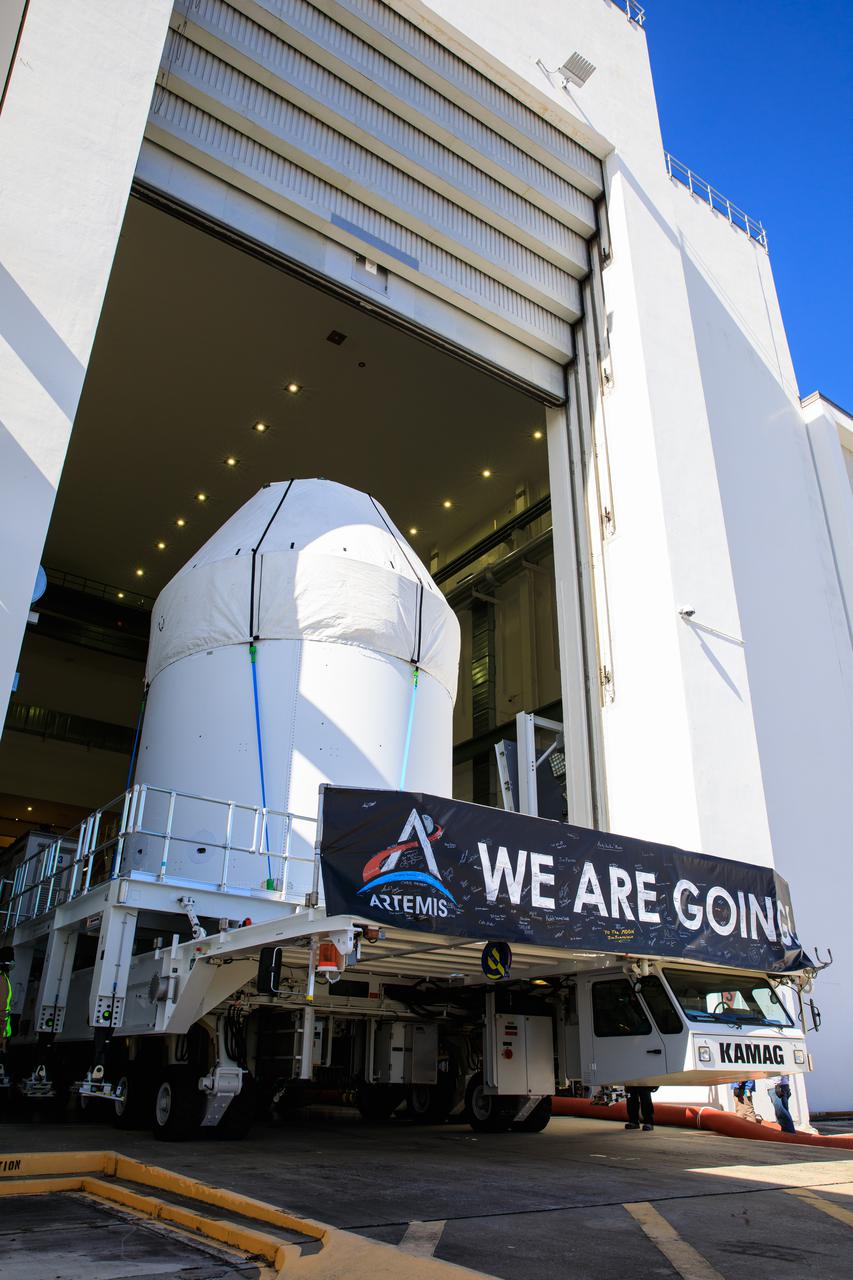
Orion is buttoned up as it sits atop a transport vehicle ready to depart from its home at the Neil Armstrong Operations and Checkout Building at NASA’s Kennedy Space Center in Florida on Jan.16, 2021. Orion will begin its trek to the Multi-Payload Processing Facility. There it will undergo ground processing with the Exploration Ground Systems team taking over ground processing ahead of the Artemis I launch.
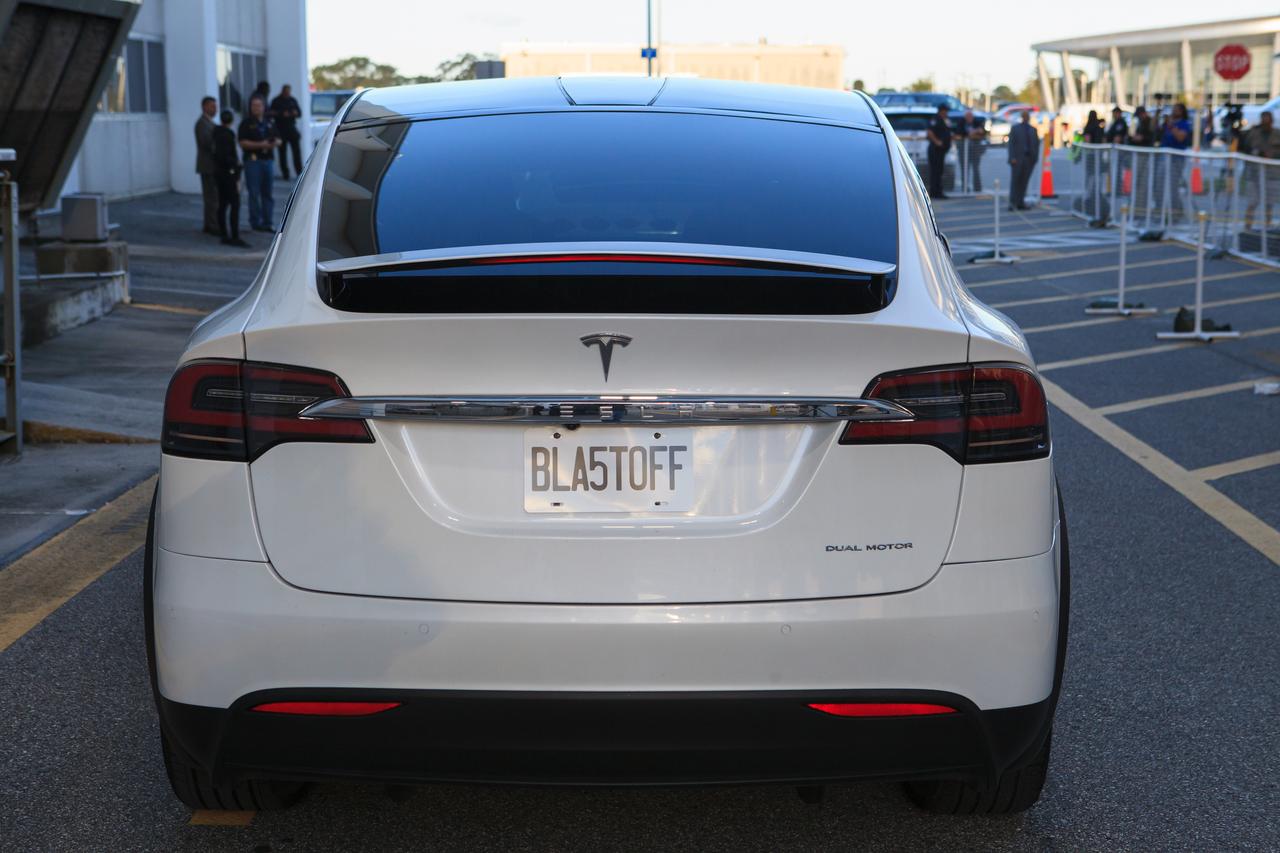
One of the Tesla Model X cars that will carry NASA’s SpaceX Crew-5 to Kennedy Space Center’s Launch Complex 39A is photographed at the Neil A. Armstrong Operations and Checkout Building on Oct. 5, 2022. The license plate tag reads “blast off.” NASA astronauts Nicole Mann, spacecraft commander, and Josh Cassada, pilot; Roscosmos cosmonaut Anna Kikina, mission specialist; and JAXA (Japan Aerospace Exploration Agency) astronaut Koichi Wakata, mission specialist, will launch to the International Space Station for a science expedition mission as part of NASA’s Commercial Crew Program. The SpaceX Falcon 9 rocket and Dragon Endurance spacecraft lifted off at noon EDT.
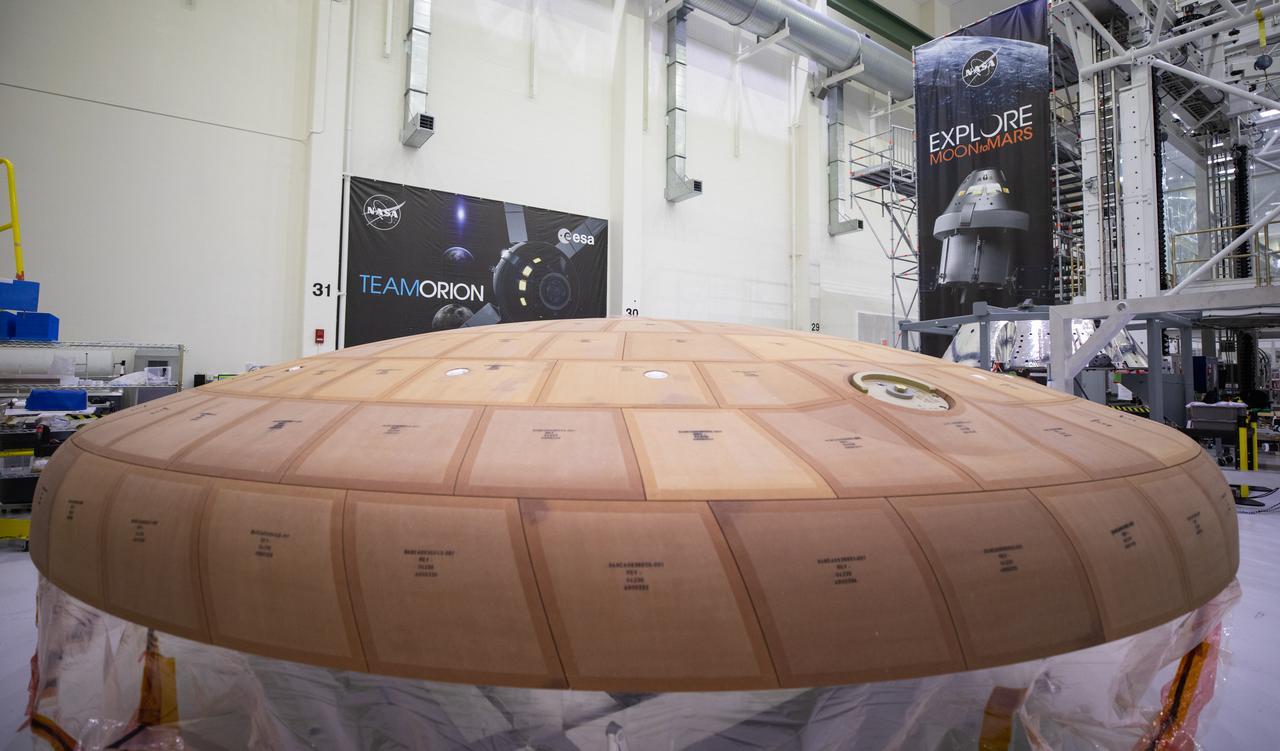
Inside the Neil Armstrong Operations and Checkout Building high bay at NASA's Kennedy Space Center in Florida, the AVCOAT block bonding is complete on the Artemis II heat shield on July 2, 2020. The heat shield is one of the most critical elements of Orion and will protect the capsule and astronauts during reentry through Earth’s atmosphere. Artemis II is the first crewed mission in a series of missions to the Moon and on to Mars. Artemis II will confirm all of the Orion spacecraft’s systems operate as designed in the actual environment of deep space with astronauts aboard. As part of the Artemis Program, NASA will send the first woman and next man to the Moon by 2024.
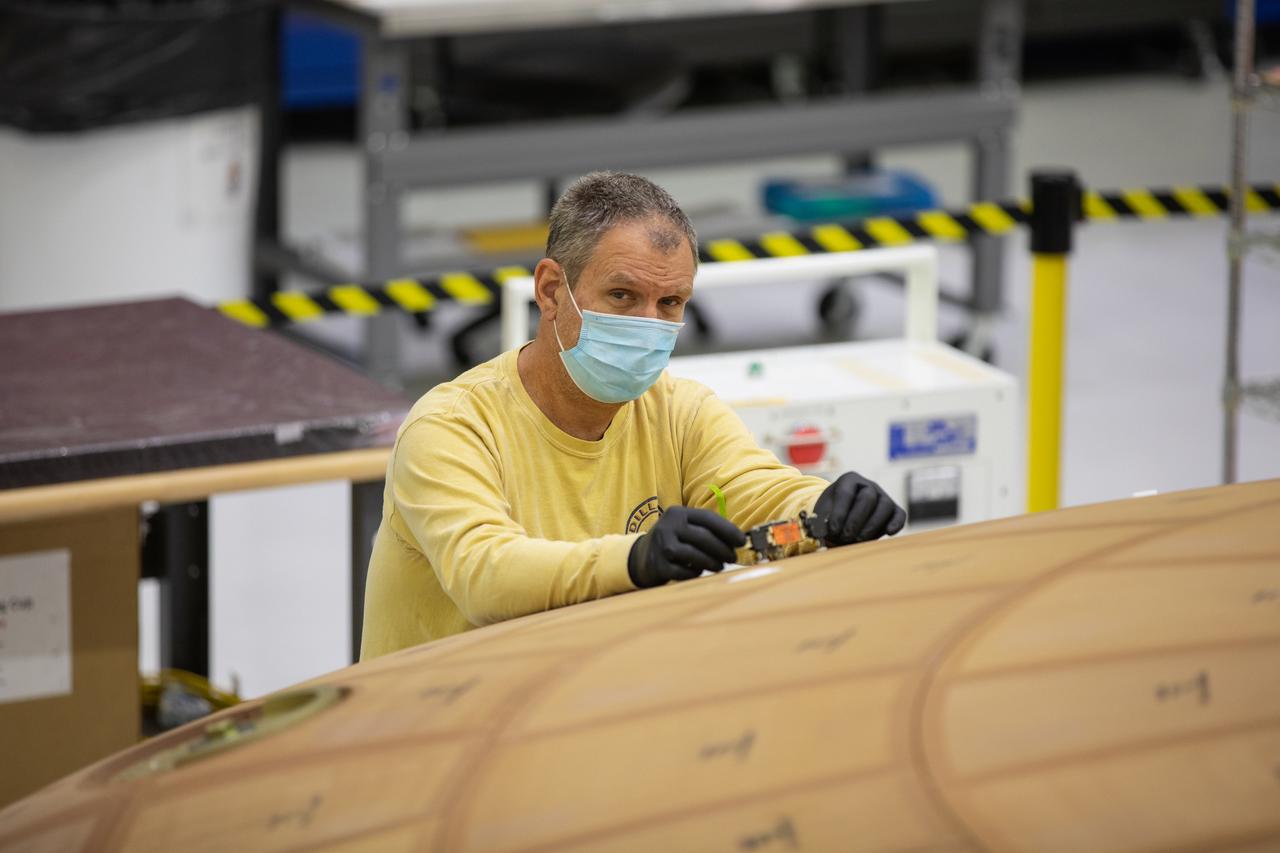
Inside the Neil Armstrong Operations and Checkout Building high bay at NASA's Kennedy Space Center in Florida, technician Kenny Leidner with ASRC Federal, inspects AVCOAT block bonding on the Artemis II heat shield on July 2, 2020. The heat shield is one of the most critical elements of Orion and will protect the capsule and astronauts during reentry through Earth’s atmosphere. Artemis II is the first crewed mission in a series of missions to the Moon and on to Mars. Artemis II will confirm all of the Orion spacecraft’s systems operate as designed in the actual environment of deep space with astronauts aboard. As part of the Artemis Program, NASA will send the first woman and next man to the Moon by 2024.
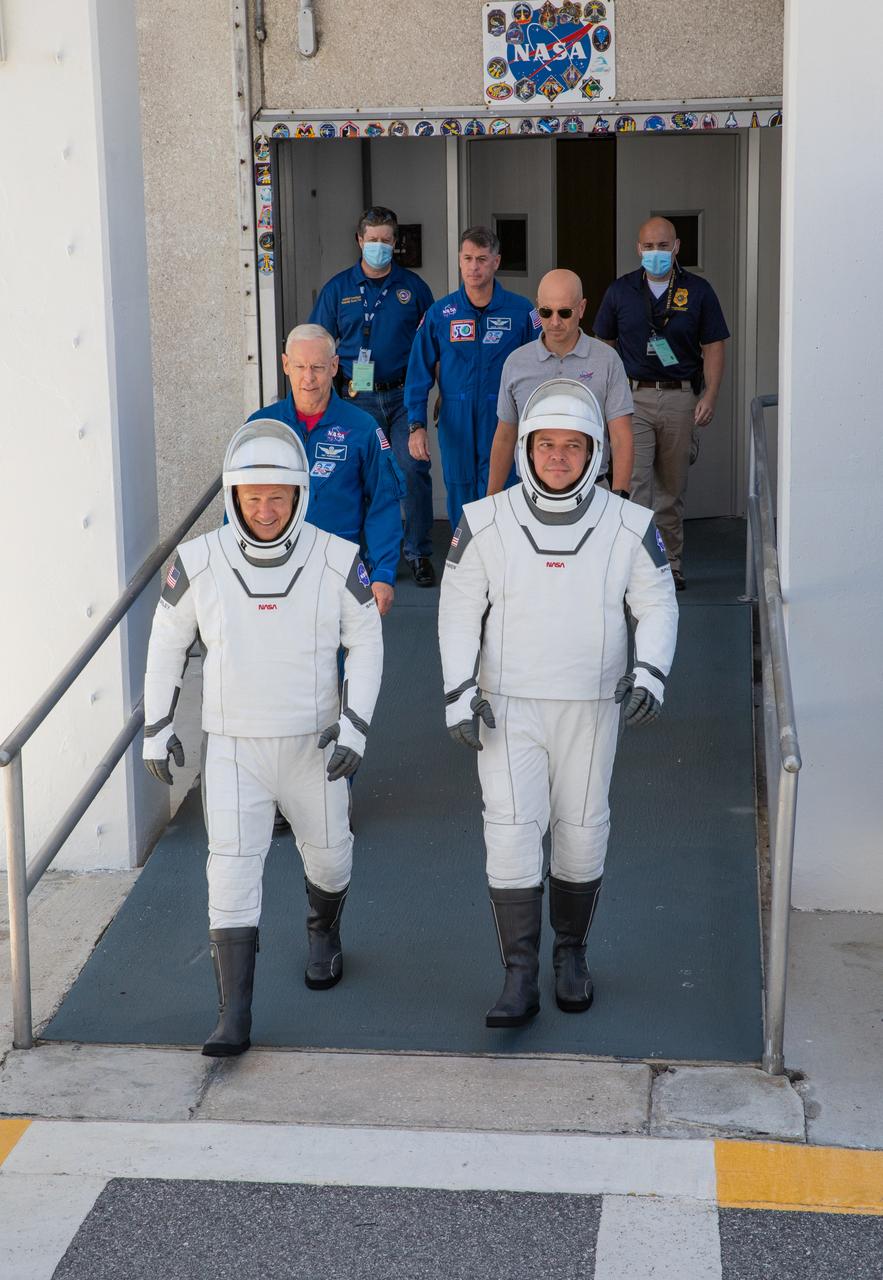
On May 23, 2020, Demo-2 crew members Robert Behnken (right) and Douglas Hurley walk out of the Neil A. Armstrong Operations and Checkout Building at NASA’s Kennedy Space Center in Florida in preparation for transport to Launch Complex 39A during a full dress rehearsal ahead of launch. A SpaceX Falcon 9 rocket and Crew Dragon spacecraft will carry Behnken and Hurley to the International Space Station as part of the agency’s Commercial Crew Program, returning human spaceflight capability to the U.S. after nearly a decade. Launch is slated for 4:33 p.m. EDT on Wednesday, May 27.
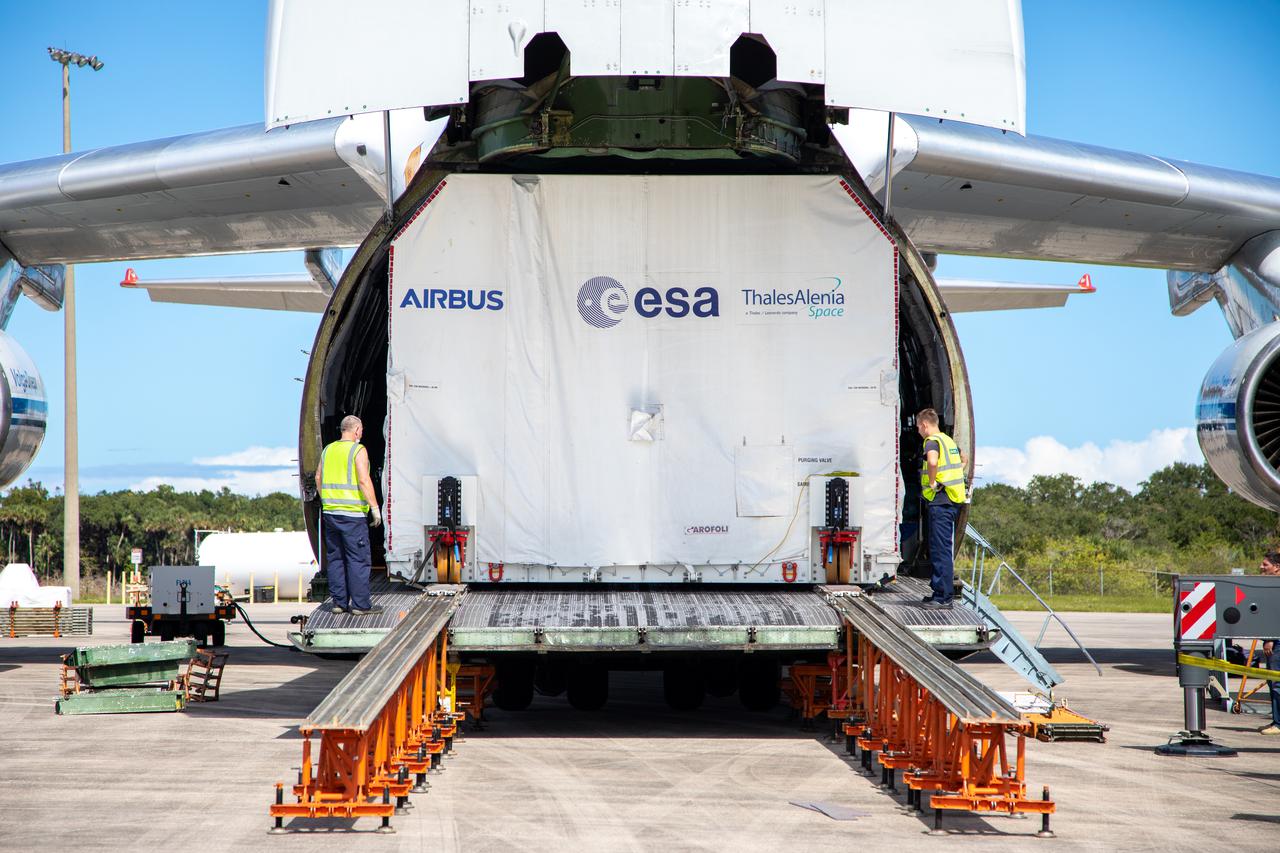
The European Service Module (ESM) for NASA’s Orion spacecraft arrived at the Launch and Landing Facility at NASA’s Kennedy Space Center in Florida on Thursday, Oct. 14, 2021, and was offloaded. Making the journey from the Airbus Facility in Bremen, Germany, aboard a Russian Antonov aircraft, the ESM will be transferred to Kennedy’s Neil A. Armstrong Operations and Checkout Facility. There, teams from NASA and Lockheed Martin will integrate the service module with the crew module adapter and crew module, already housed in the facility. The powerhouse that will fuel and propel Orion in space, the ESM will be used for Artemis II, the first Artemis mission flying crew aboard Orion. Teams with the European Space Agency and Airbus built the service module.
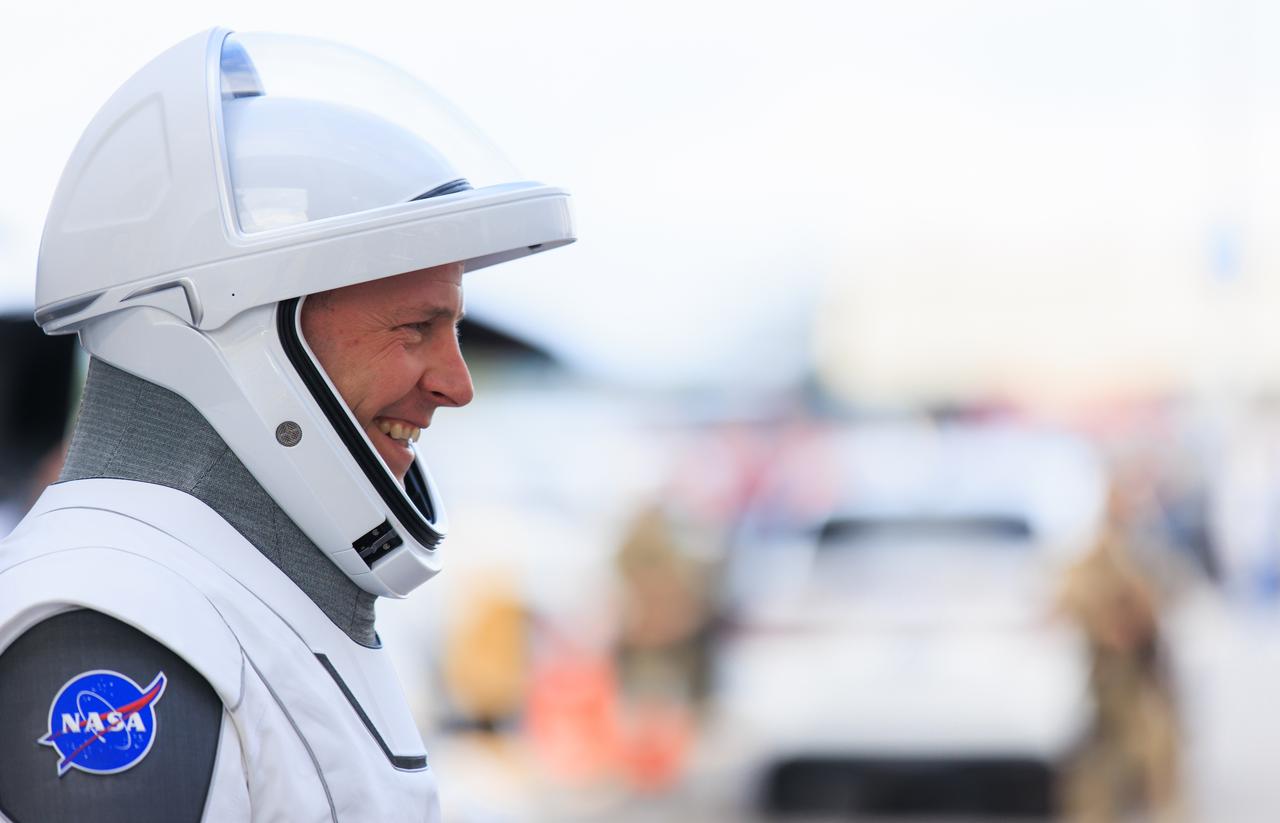
NASA astronaut Nick Hague walks out of the Neil A. Armstrong Operations and Checkout Building at the agency’s Kennedy Space Center in Florida ahead of launch on Saturday, Sept. 28, 2024. Hague and Roscosmos cosmonaut Aleksandr Gorbunov will launch to the International Space Station aboard SpaceX’s Dragon spacecraft and Falcon 9 rocket. Launch is targeted for 1:17 p.m. EDT from Space Launch Complex-40 at Cape Canaveral Space Force Station in Florida. Crew-9 is the ninth crew rotation mission with SpaceX to the space station as part of the agency’s Commercial Crew Program.
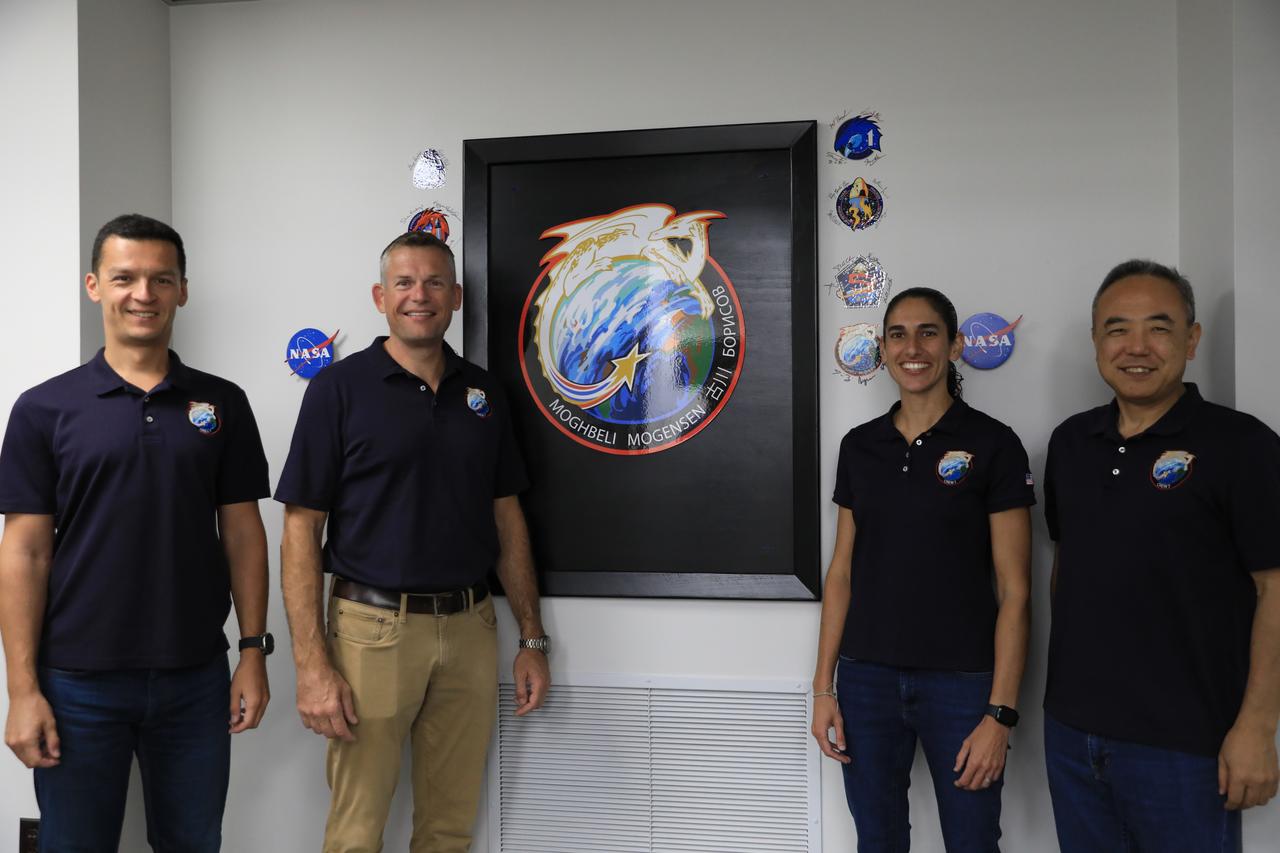
NASA’s SpaceX Crew-7 crew members participate in a countdown dress rehearsal at the agency’s Kennedy Space Center in Florida on Tuesday, Aug. 22, 2023, to prepare for the upcoming mission launch. Standing in the hallway of the Astronaut Crew Quarters inside the Neil A. Armstrong Operations and Checkout Building are, from left, Roscosmos cosmonaut Konstantin Borisov, ESA (European Space Agency) astronaut Andreas Mogensen, NASA astronaut Jasmin Moghbeli, and JAXA (Japan Aerospace Exploration Agency) astronaut Satoshi Furukawa. The crew will launch to the International Space Station aboard SpaceX’s Dragon spacecraft and Falcon 9 rocket. Liftoff is targeted for 3:49 a.m. EDT Friday, Aug. 25, 2023, from Kennedy’s Launch Complex 39A.
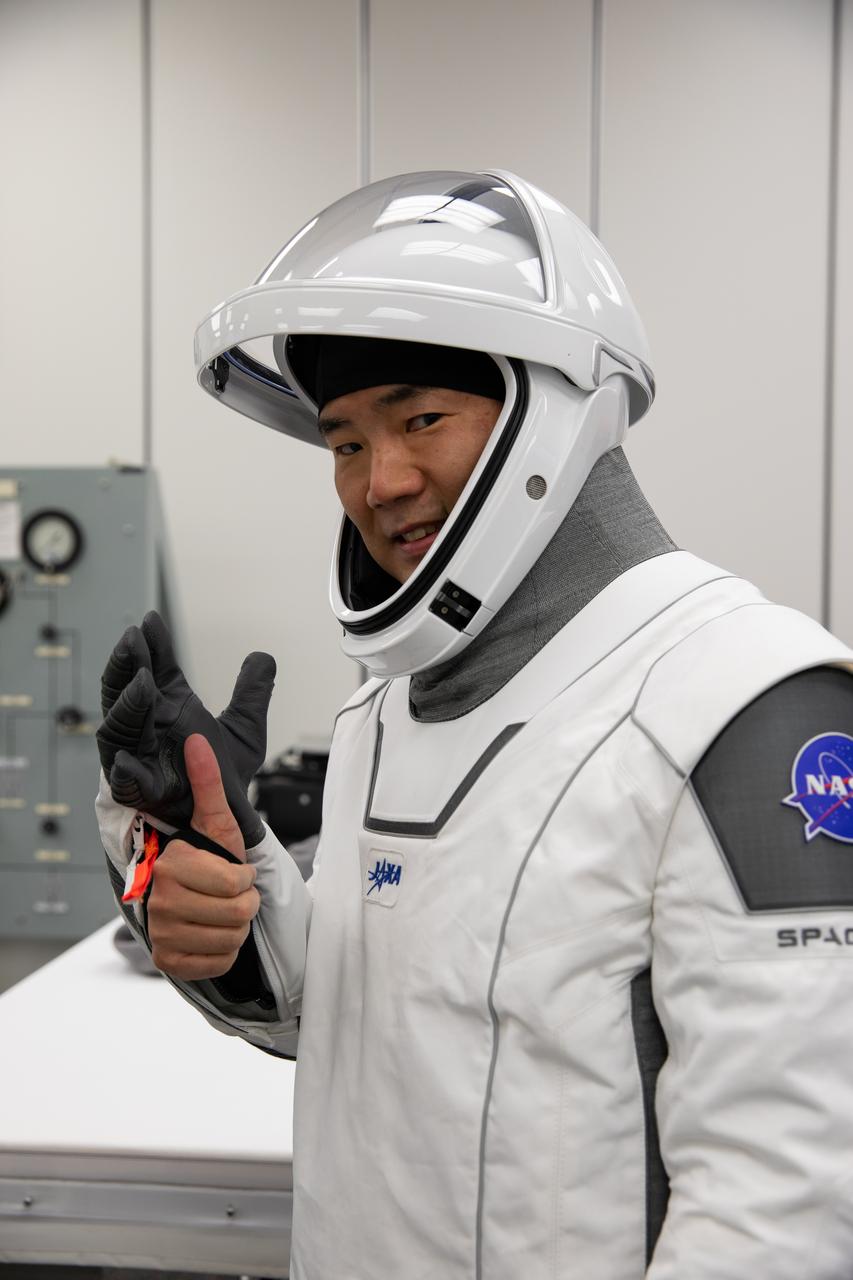
Inside the crew suit-up room in the Neil Armstrong Operations and Checkout Building at NASA’s Kennedy Space Center in Florida, on Nov. 15, 2020, Japan Aerospace Exploration Agency (JAXA) astronaut Soichi Noguchi, mission specialist, is shown in a SpaceX spacesuit in preparation for NASA SpaceX’s Crew-1 mission. Crew-1 is the first regular crew mission of a U.S. commercial spacecraft with astronauts to the International Space Station as part of NASA’s Commercial Crew Program. The SpaceX Crew Dragon Resilience capsule will launch atop the company’s Falcon 9 rocket from Launch Complex 39A to the space station for a six-month science mission.
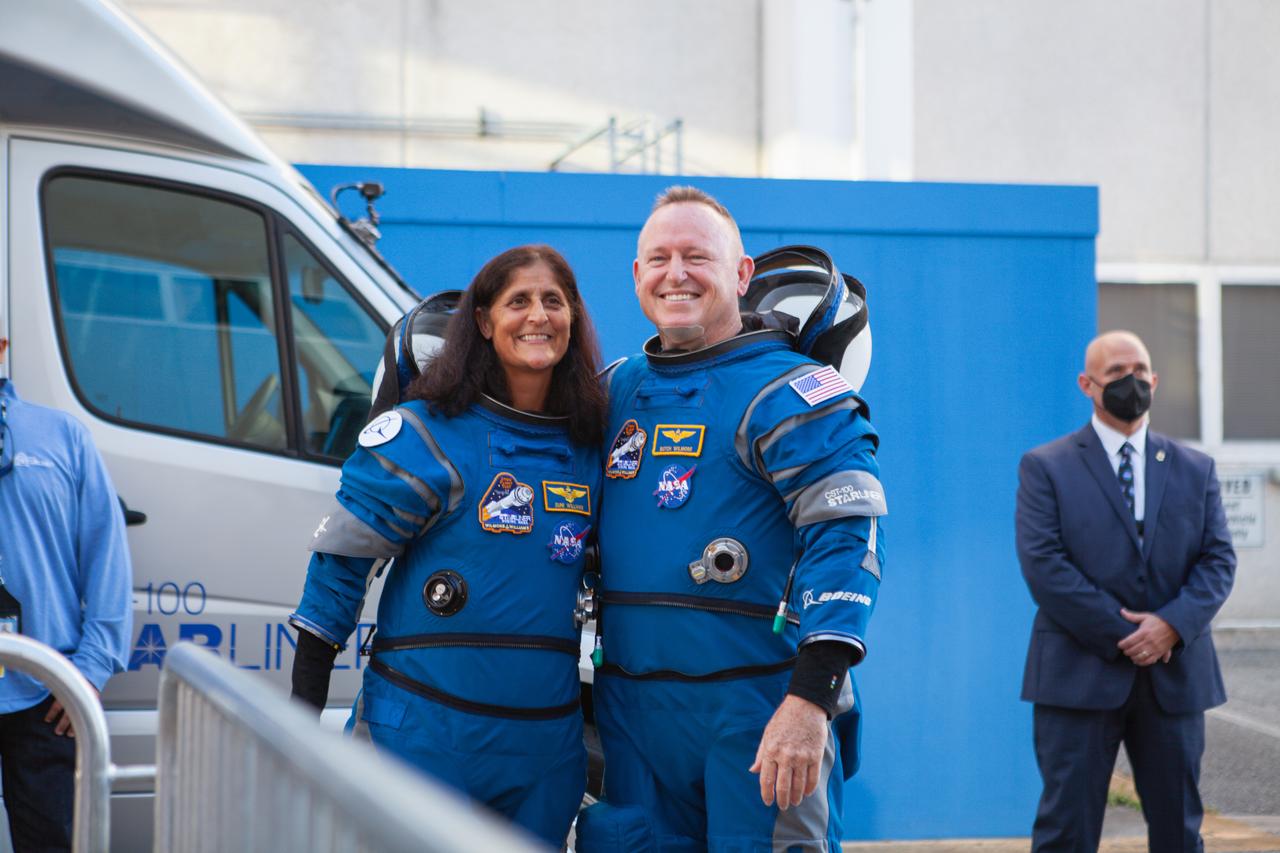
NASA’s Boeing Crew Flight Test astronauts Butch Wilmore and Suni Williams say goodbye to friends and family upon exiting the Neil A. Armstrong Operations and Checkout Building at NASA’s Kennedy Space Center in Florida on Wednesday, June 5, 2024. The crew members are on their way to load up into Boeing’s Astrovan for the trip to the launch pad of Space Launch Complex-41 at nearby Cape Canaveral Space Force Station, where they will launch to the International Space Station aboard Boeing’s Starliner spacecraft atop a United Launch Alliance Atlas V rocket at 10:52 a.m. EDT.
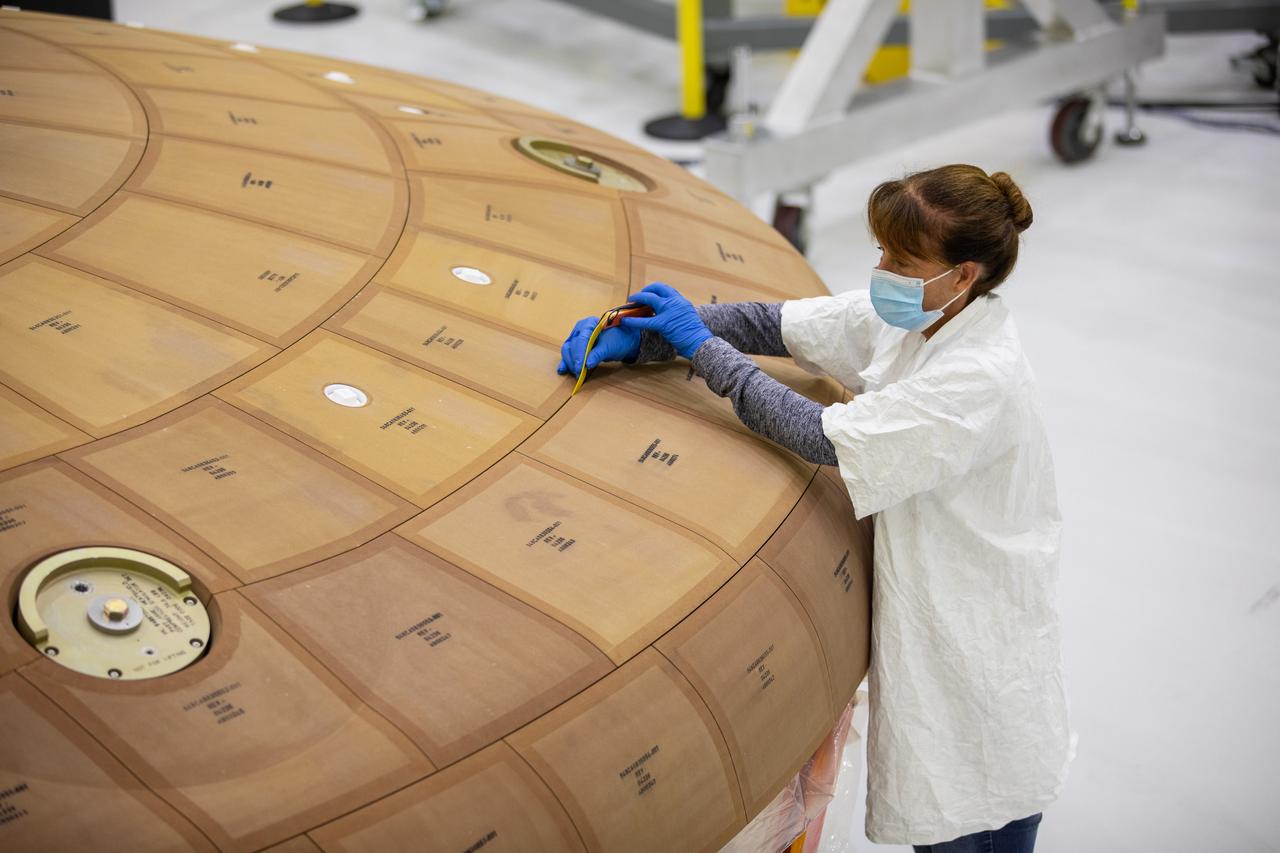
Inside the Neil Armstrong Operations and Checkout Building high bay at NASA's Kennedy Space Center in Florida, Darlene Beville with ASRC Federal, inspects AVOCAT block bonding on the Artemis II heat shield on July 2, 2020. The heat shield is one of the most critical elements of Orion and will protect the capsule and astronauts during reentry through Earth’s atmosphere. Artemis II is the first crewed mission in a series of missions to the Moon and on to Mars. Artemis II will confirm all of the Orion spacecraft’s systems operate as designed in the actual environment of deep space with astronauts aboard. As part of the Artemis Program, NASA will send the first woman and next man to the Moon by 2024.
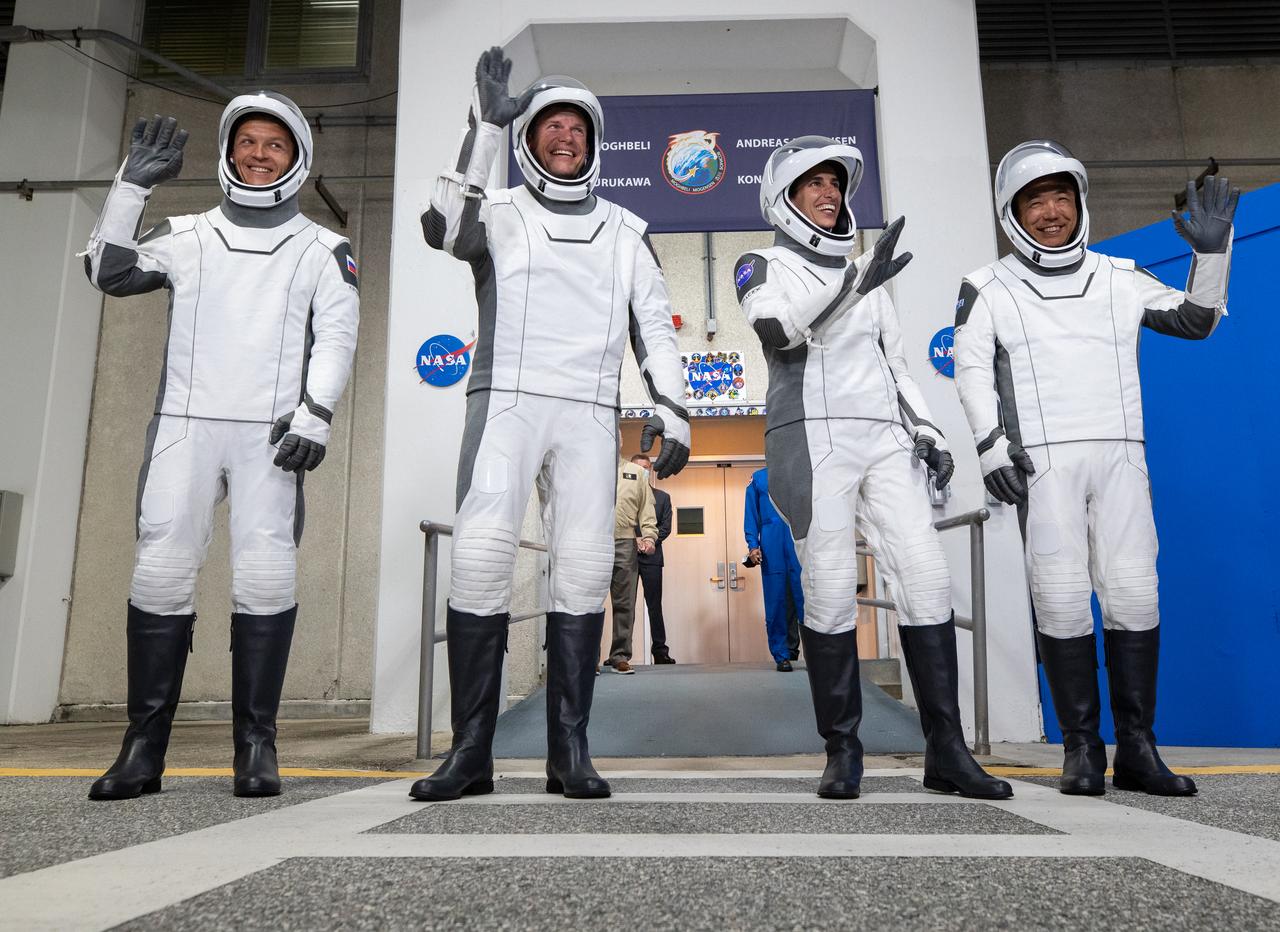
NASA’s SpaceX Crew-7 crew members, from left, Roscosmos cosmonaut Konstantin Borisov, ESA (European Space Agency) astronaut Andreas Mogensen, NASA astronaut Jasmin Moghbeli, and JAXA (Japan Aerospace Exploration Agency) astronaut Satoshi Furukawa acknowledge family and friends on Saturday, Aug. 26, 2023, outside of the Neil Armstrong Operations and Checkout Building at NASA’s Kennedy Space Center in Florida. Next, they will get into the customized Tesla Model X vehicles that will transport them to Kennedy’s Launch Complex 39A. SpaceX’s Dragon spacecraft, powered by the company’s Falcon 9 rocket, will carry the four-person crew to the International Space Station as part of NASA’s Commercial Crew Program. Crew-7 is scheduled to launch at 3:27 a.m. EDT.
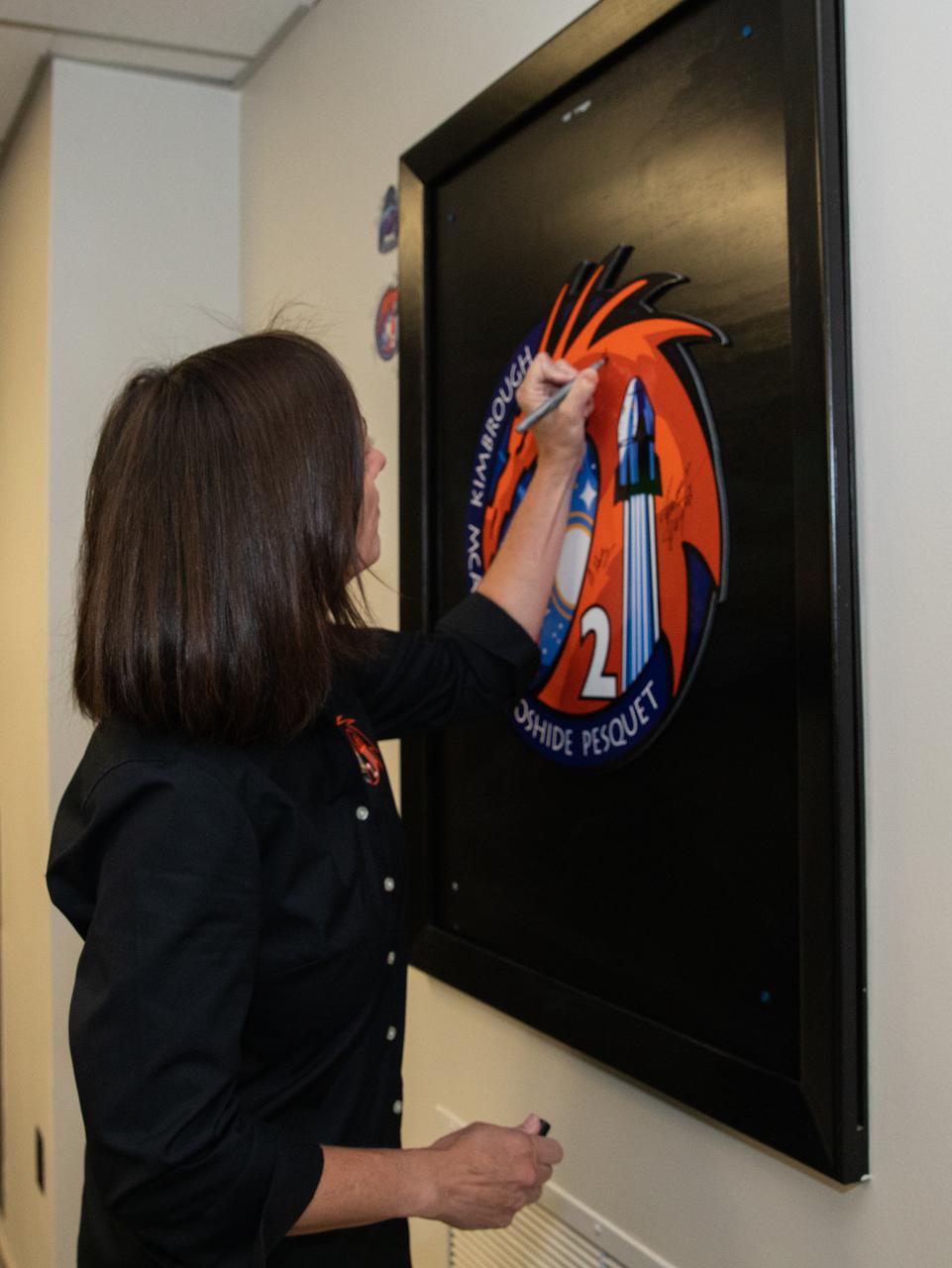
NASA astronaut Megan McArthur signs his name inside the Astronaut Crew Quarters in the Neil Armstrong Operations and Checkout Building at NASA’s Kennedy Space Center in Florida on April 23, 2021. NASA SpaceX’s Crew-2 astronauts will have breakfast before suiting up for the mission. Crew-2 is the second regular crew mission of a U.S. commercial spacecraft with astronauts to the International Space Station as part of NASA’s Commercial Crew Program. The SpaceX Crew Dragon Endeavour will launch atop the company’s Falcon 9 rocket from Launch Complex 39A to the space station for a six-month science mission.
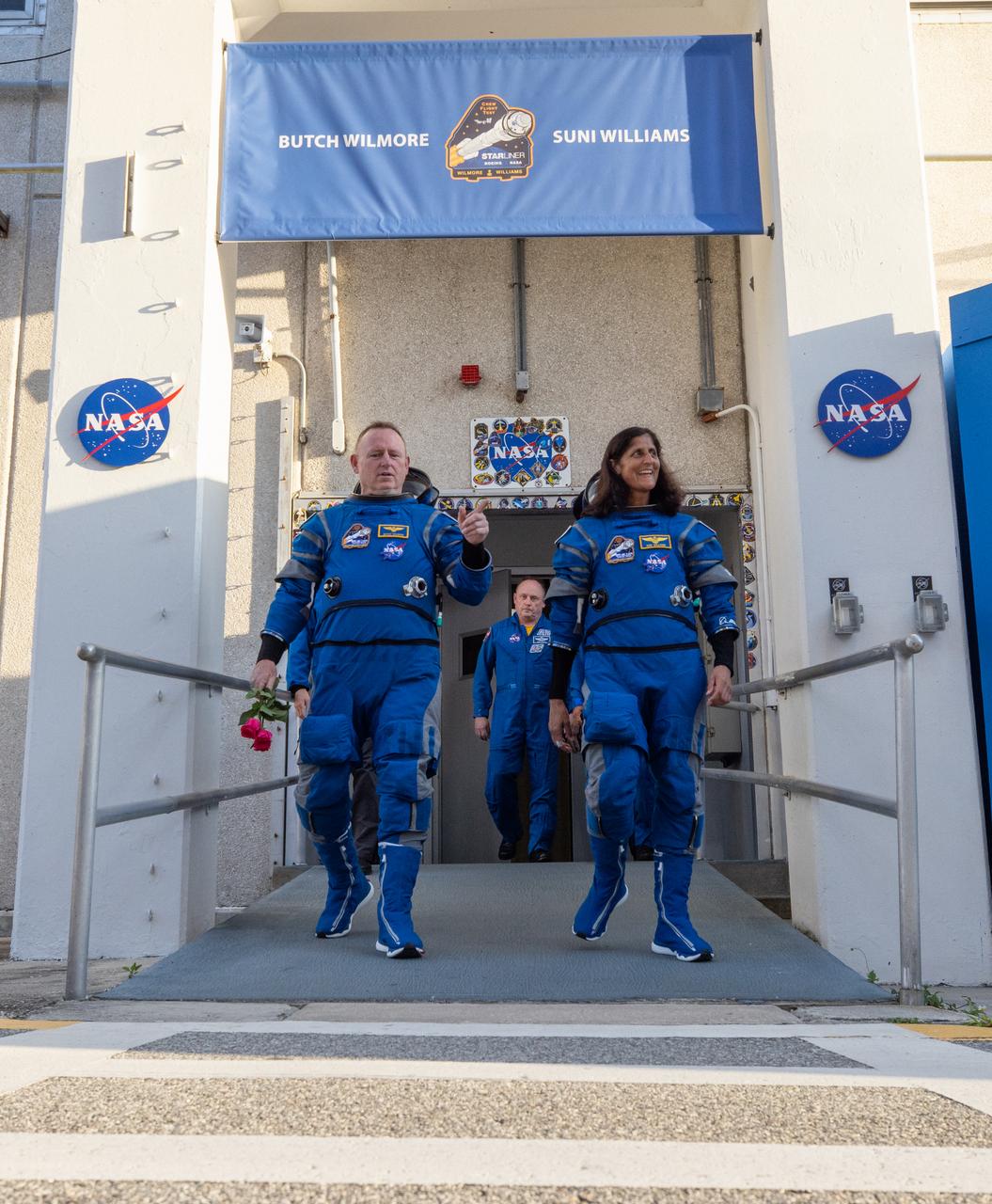
During the first launch attempt of NASA’s Boeing Crew Flight Test, NASA astronauts Butch Wilmore and Suni Williams walk out of the Neil A. Armstrong Operations and Checkout Building on Monday, May 6, 2024, at the agency’s Kennedy Space Center in Florida. As part of the agency’s Commercial Crew Program, the first crewed launch to the International Space Station aboard Boeing’s Starliner spacecraft atop a United Launch Alliance Atlas V rocket from Space Launch Complex-41 at nearby Cape Canaveral Space Force Station was targeted for 10:34 p.m. ET but scrubbed for the day.
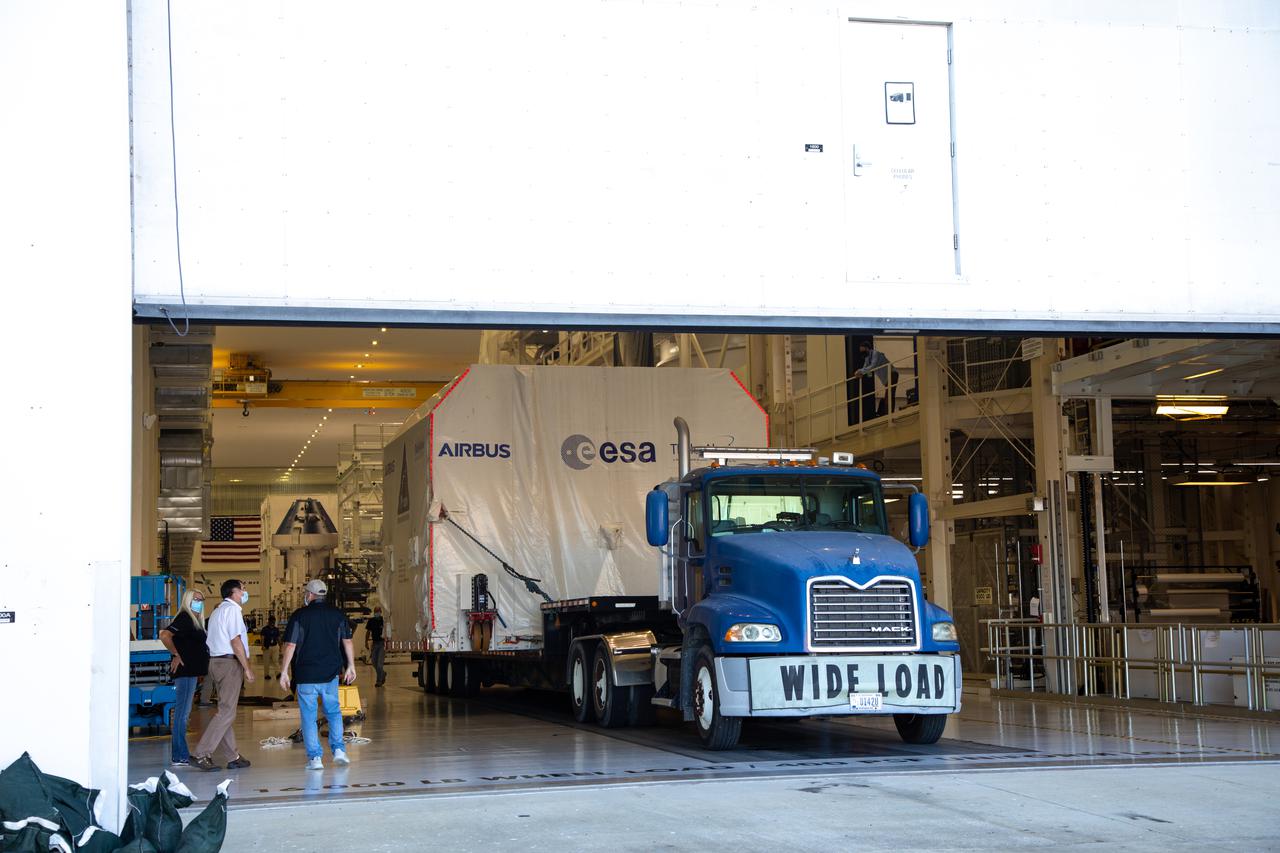
The European Service Module (ESM) for NASA’s Orion spacecraft arrived at the Neil A. Armstrong Operations and Checkout Facility at Kennedy Space Center in Florida on Oct 14, 2021. Earlier in the day the ESM arrived at the Launch and Landing Facility at Kennedy after making the journey from the Airbus Facility in Bremen, Germany, aboard a Russian Antonov aircraft. There, teams from NASA and Lockheed Martin will integrate the service module with the crew module adapter and crew module, already housed in the facility. The powerhouse that will fuel and propel Orion in space, the ESM will be used for Artemis II, the first Artemis mission flying crew aboard Orion. Teams with the European Space Agency and Airbus built the service module.
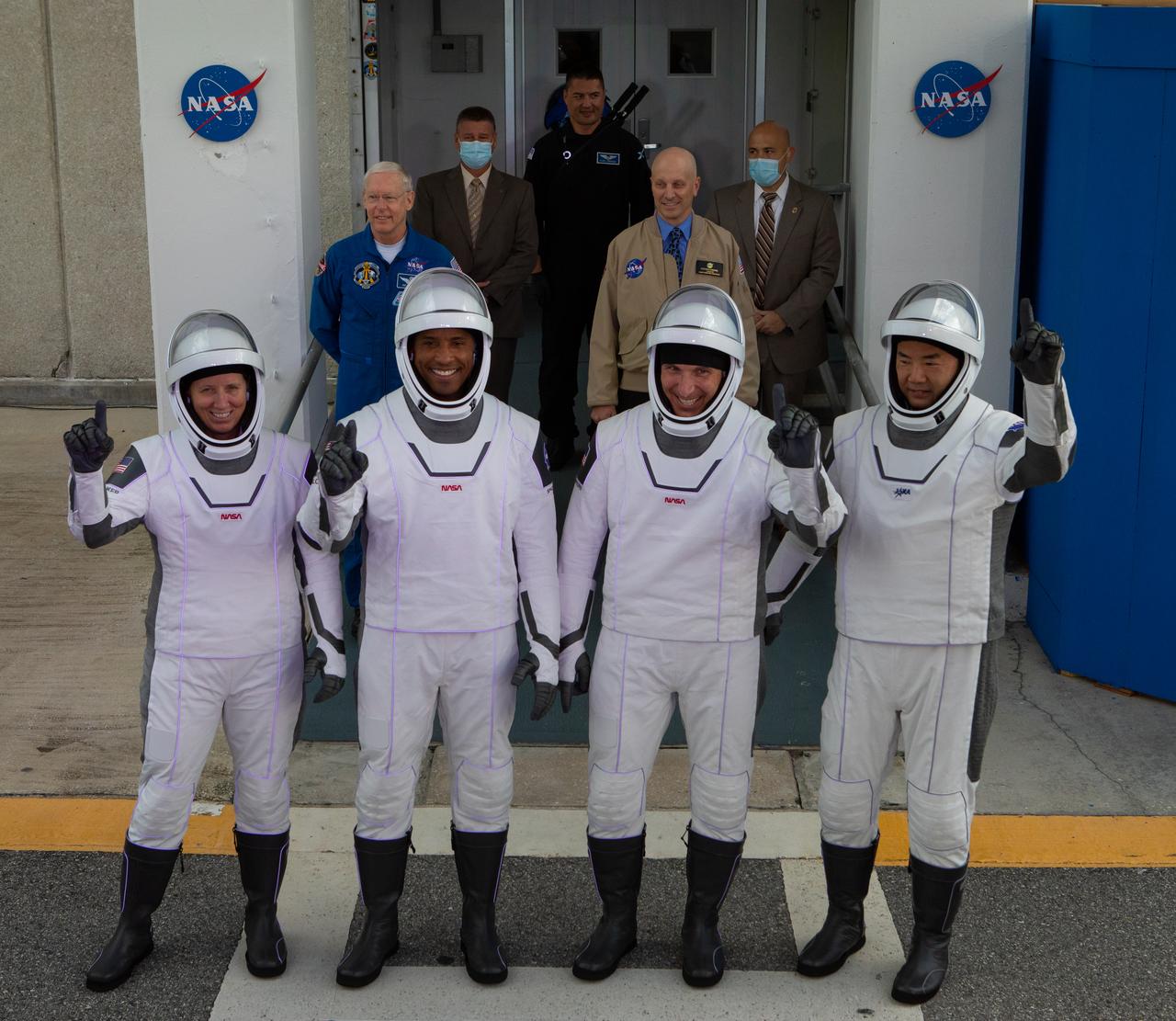
The NASA SpaceX Crew-1 astronauts emerge from the Neil Armstrong Operations and Checkout Building at NASA’s Kennedy Space Center in Florida on Nov. 15, 2020. From left are NASA astronaut Shannon Walker, mission specialist; NASA astronaut Victor Glover, pilot; NASA astronaut Michael Hopkins, spacecraft commander; and JAXA astronaut Soichi Noguchi, mission specialist. They will board two Tesla vehicles for the trip to Launch Complex 39A. Crew-1 is the first regular crew mission of a U.S. commercial spacecraft with astronauts to the International Space Station as part of NASA’s Commercial Crew Program. The SpaceX Crew Dragon Resilience capsule will launch atop the company’s Falcon 9 rocket from Pad 39A to the space station for a six-month science mission.
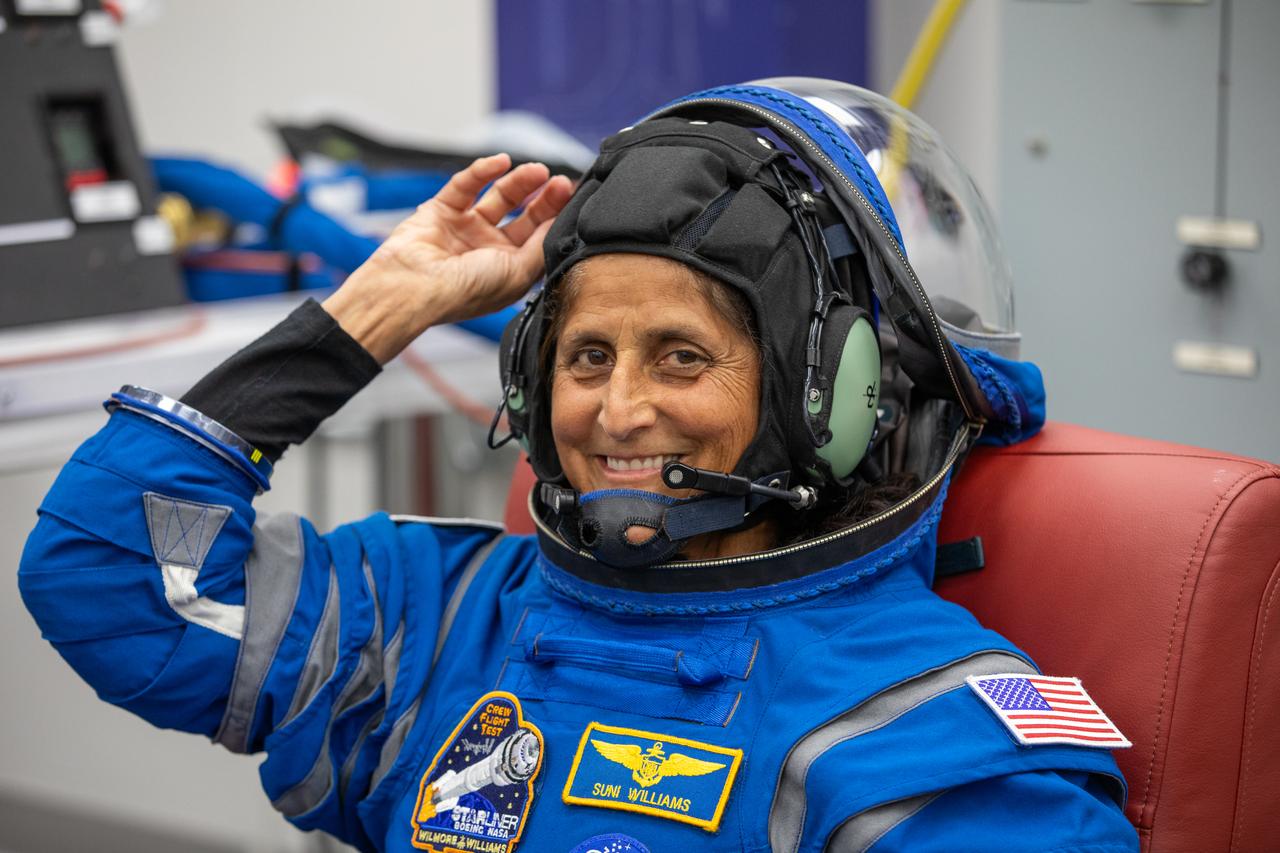
During the first launch attempt of NASA’s Boeing Crew Flight Test, NASA astronaut Suni Williams is photographed inside the crew suit-up room in the Neil A. Armstrong Operations and Checkout Building at NASA’s Kennedy Space Center in Florida on Monday, May 6, 2024. As part of the agency’s Commercial Crew Program, the first crewed launch to the International Space Station aboard Boeing’s Starliner spacecraft atop a United Launch Alliance Atlas V rocket from Space Launch Complex-41 at nearby Cape Canaveral Space Force Station was targeted for 10:34 p.m. ET but scrubbed for the day.
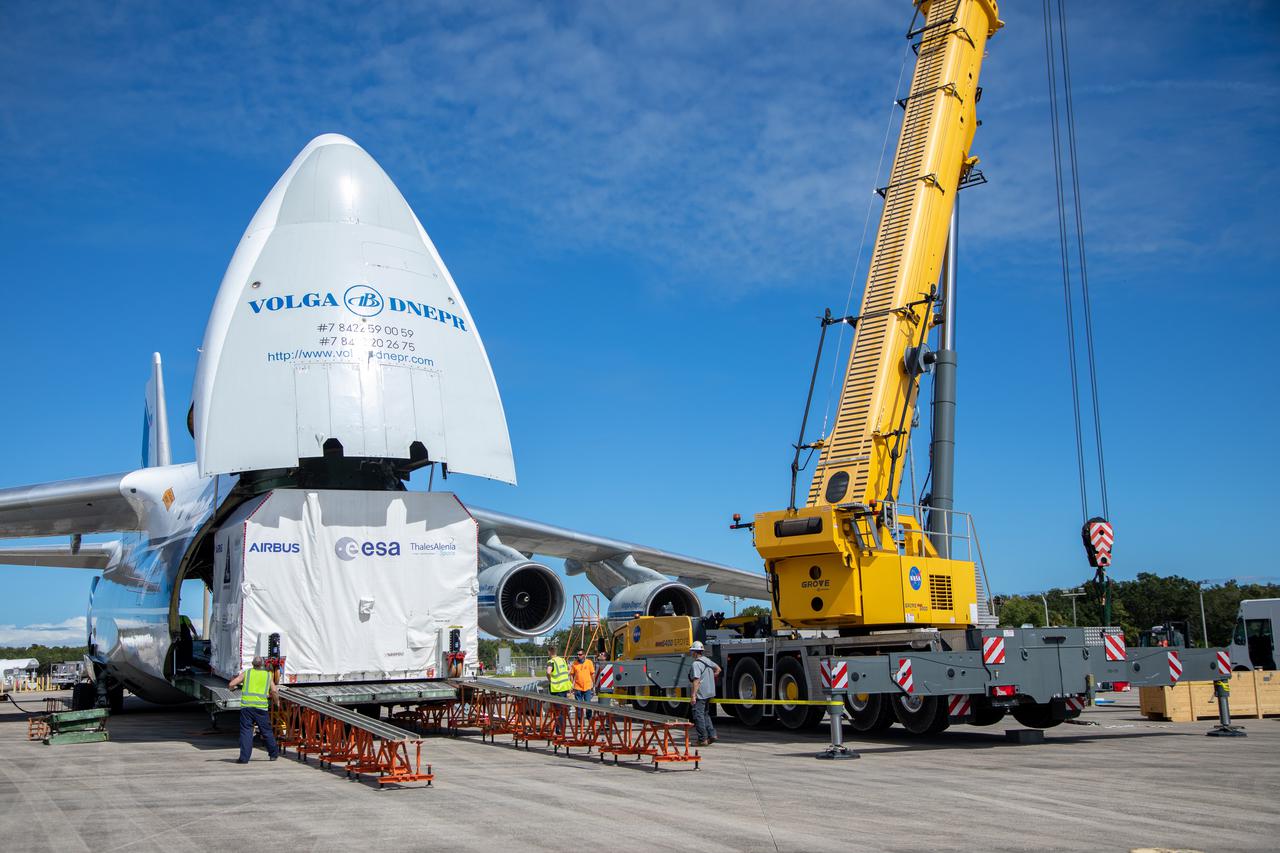
The European Service Module (ESM) for NASA’s Orion spacecraft arrived at the Launch and Landing Facility at NASA’s Kennedy Space Center in Florida on Thursday, Oct. 14, 2021, and was offloaded. Making the journey from the Airbus Facility in Bremen, Germany, aboard a Russian Antonov aircraft, the ESM will be transferred to Kennedy’s Neil A. Armstrong Operations and Checkout Facility. There, teams from NASA and Lockheed Martin will integrate the service module with the crew module adapter and crew module, already housed in the facility. The powerhouse that will fuel and propel Orion in space, the ESM will be used for Artemis II, the first Artemis mission flying crew aboard Orion. Teams with the European Space Agency and Airbus built the service module.
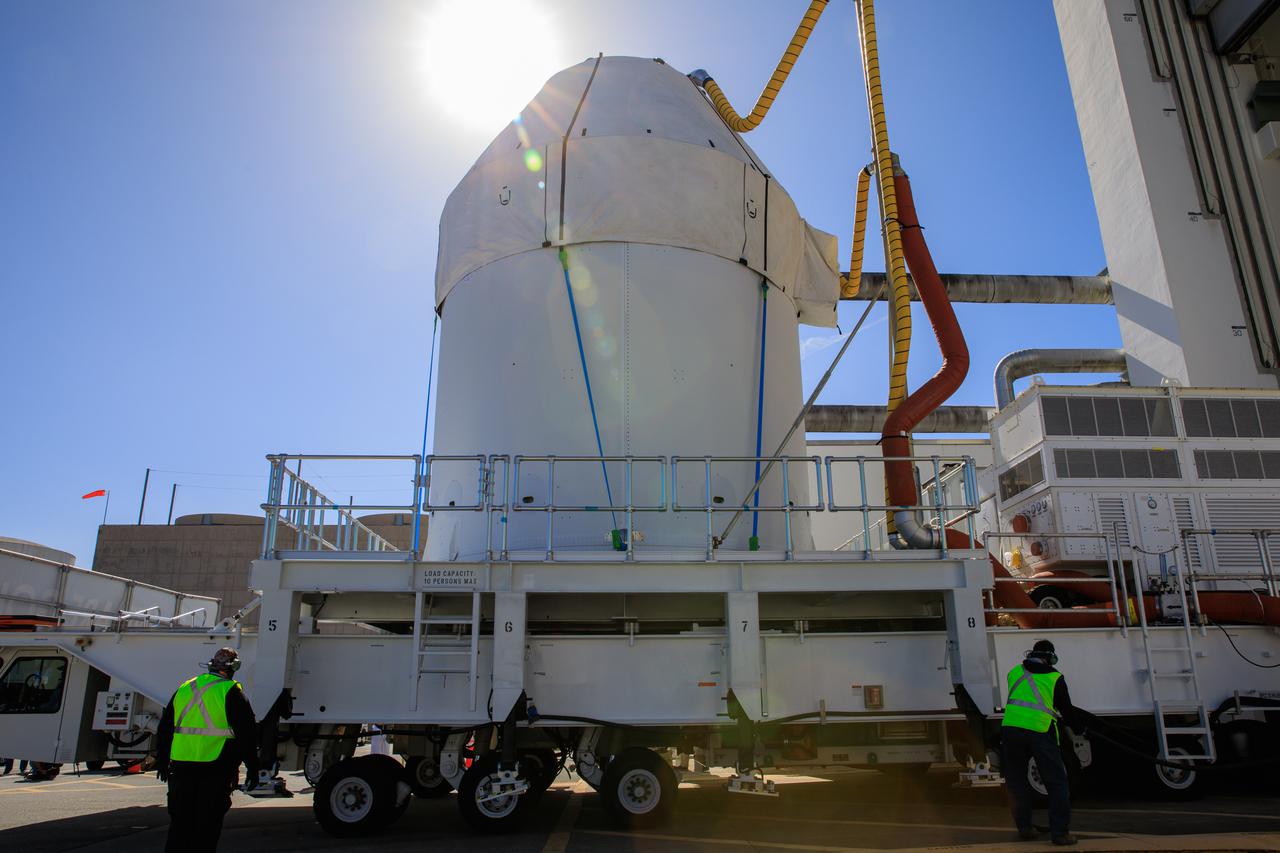
Orion sits atop a transport vehicle as it departs from its home at the Neil Armstrong Operations and Checkout Building at NASA’s Kennedy Space Center in Florida on Jan.16, 2021. Orion will begin its trek to the Multi-Payload Processing Facility. There it will undergo ground processing with the Exploration Ground Systems team taking over ground processing ahead of the Artemis I launch.
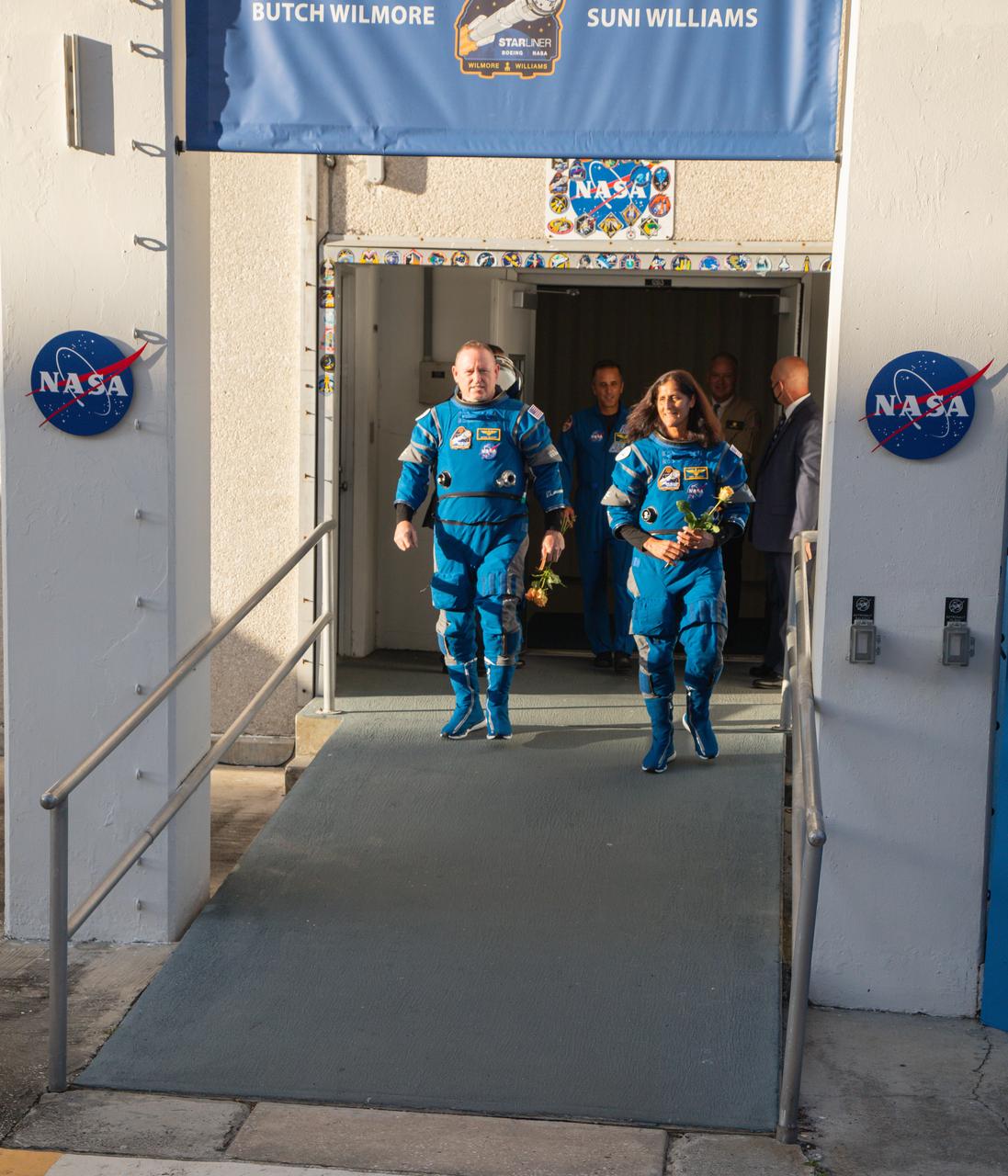
NASA’s Boeing Crew Flight Test astronauts Butch Wilmore and Suni Williams walk out of the Neil A. Armstrong Operations and Checkout Building on Wednesday, June 5, 2024, at the agency’s Kennedy Space Center in Florida. The crew members are on their way to load up into Boeing’s Astrovan for the trip to the launch pad of Space Launch Complex-41 at nearby Cape Canaveral Space Force Station, where they will launch to the International Space Station aboard Boeing’s Starliner spacecraft atop a United Launch Alliance Atlas V rocket at 10:52 a.m. EDT.
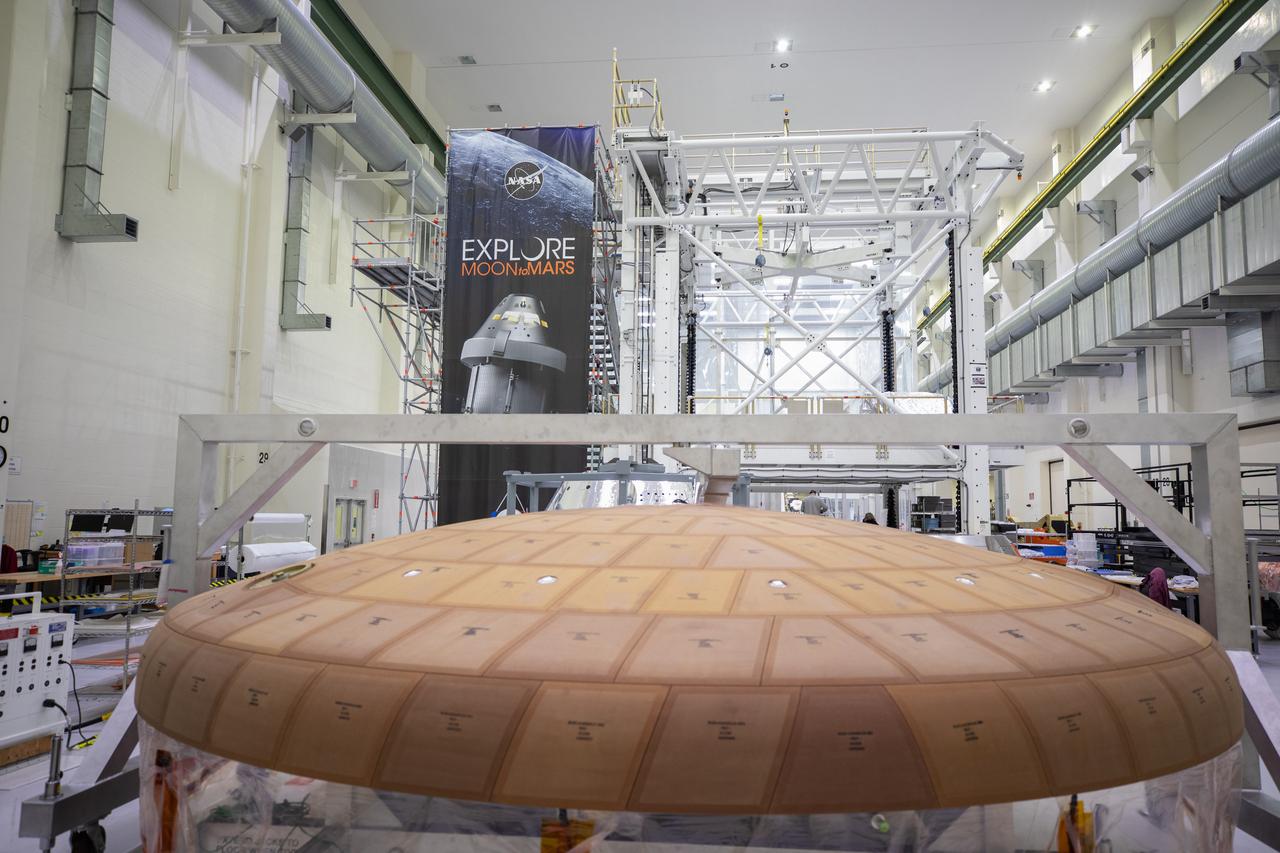
Inside the Neil Armstrong Operations and Checkout Building high bay at NASA's Kennedy Space Center in Florida, the AVCOAT block bonding is complete on the Artemis II heat shield on July 2, 2020. The heat shield is one of the most critical elements of Orion and will protect the capsule and astronauts during reentry through Earth’s atmosphere. Artemis II is the first crewed mission in a series of missions to the Moon and on to Mars. Artemis II will confirm all of the Orion spacecraft’s systems operate as designed in the actual environment of deep space with astronauts aboard. As part of the Artemis Program, NASA will send the first woman and next man to the Moon by 2024.
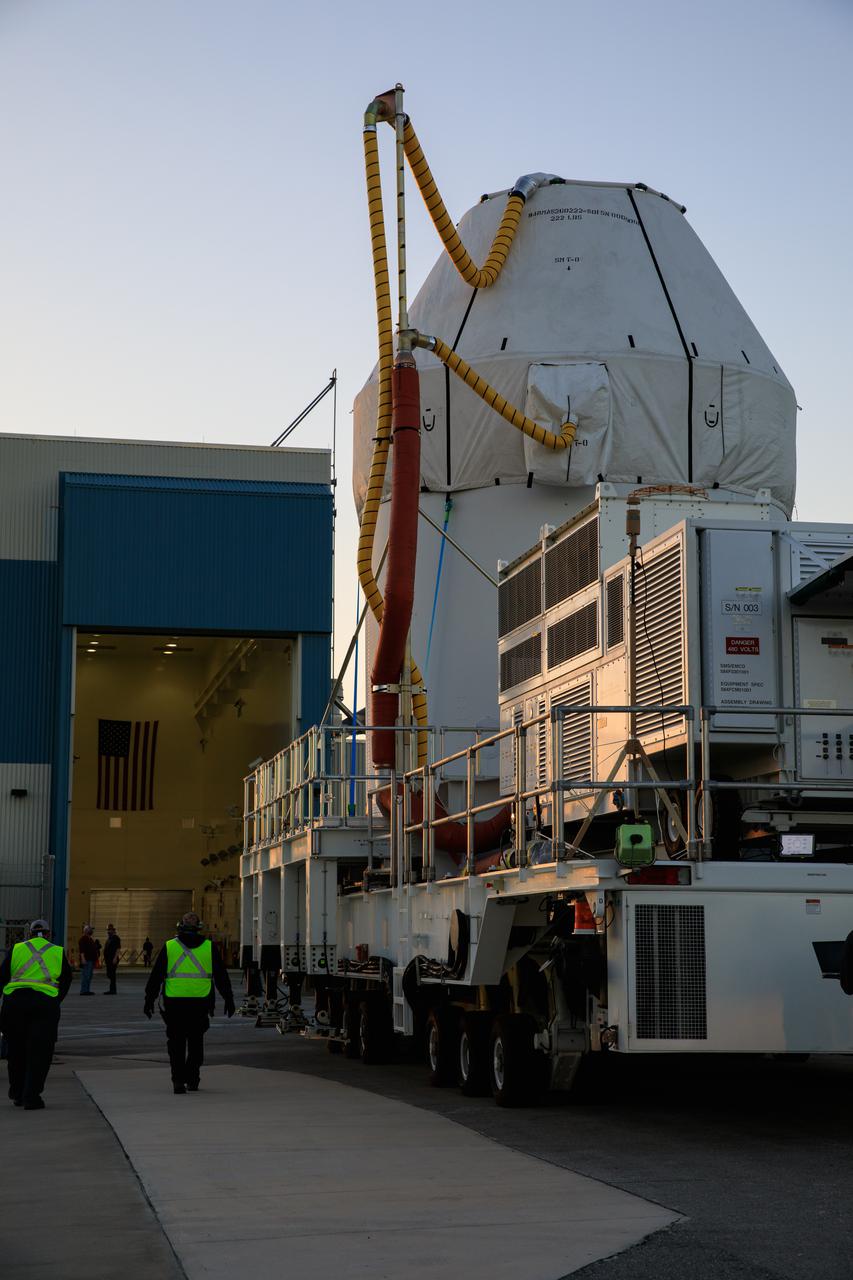
Orion arrives at its next stop along its path to the pad ahead of the Artemis I launch on Jan. 16, 2021, at Kennedy Space Center’s Multi-Payload Processing Facility, where the Exploration Ground Systems and Jacobs teams will take over ground processing. Here, the spacecraft will be “”gassed up” and fueled with commodities as part of preparations ahead of the mission.
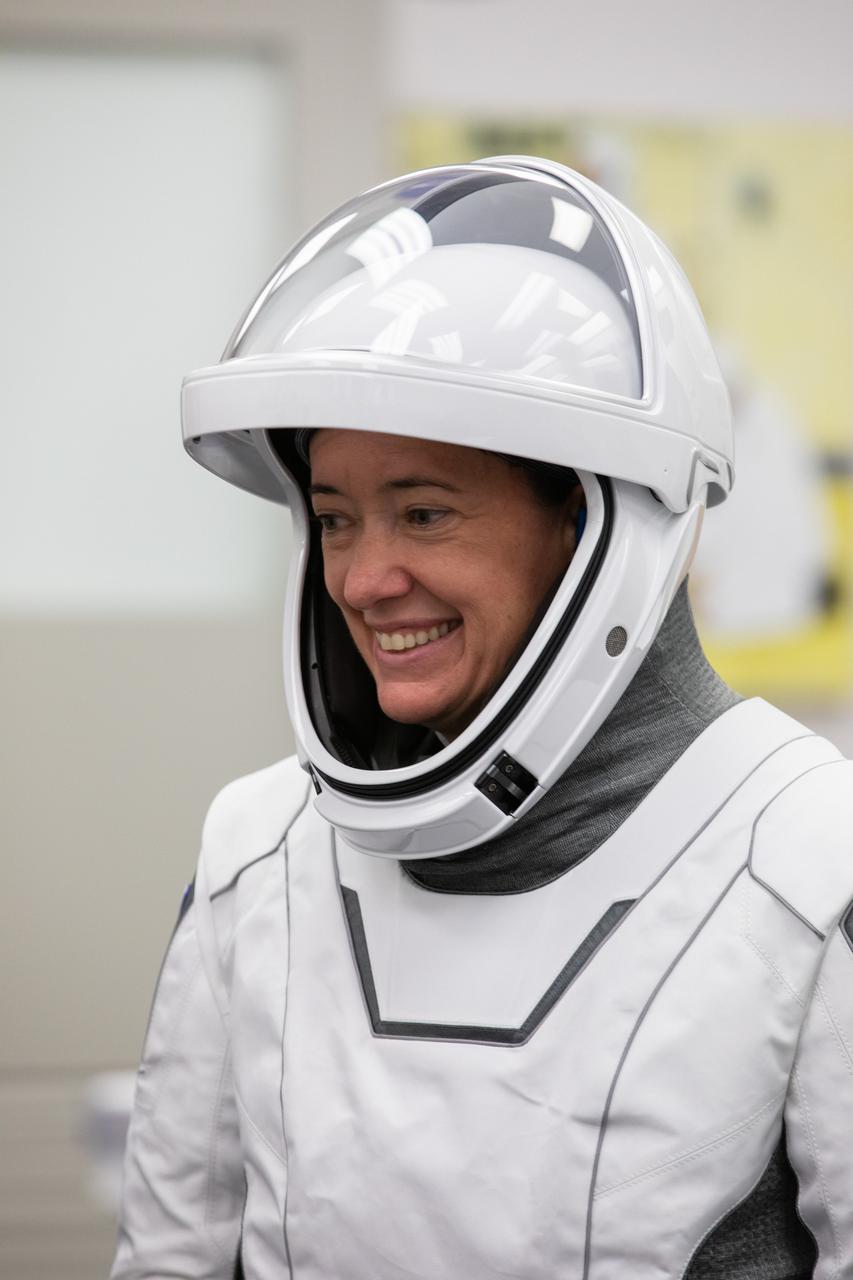
NASA astronaut Megan McArthur smiles inside the crew suit-up room in the Neil Armstrong Operations and Checkout Building at NASA’s Kennedy Space Center in Florida, on April 23, 2021. McArthur, along with NASA astronaut Shane Kimbrough, ESA astronaut Thomas Pesquet, and JAXA astronaut Akihiko Hoshide, will head to the International Space Station on NASA’s SpaceX Crew-2 mission. SpaceX’s Crew Dragon Endeavour will launch on the company’s Falcon 9 rocket from Kennedy’s Launch Complex 39A today at 5:49 a.m. EDT.
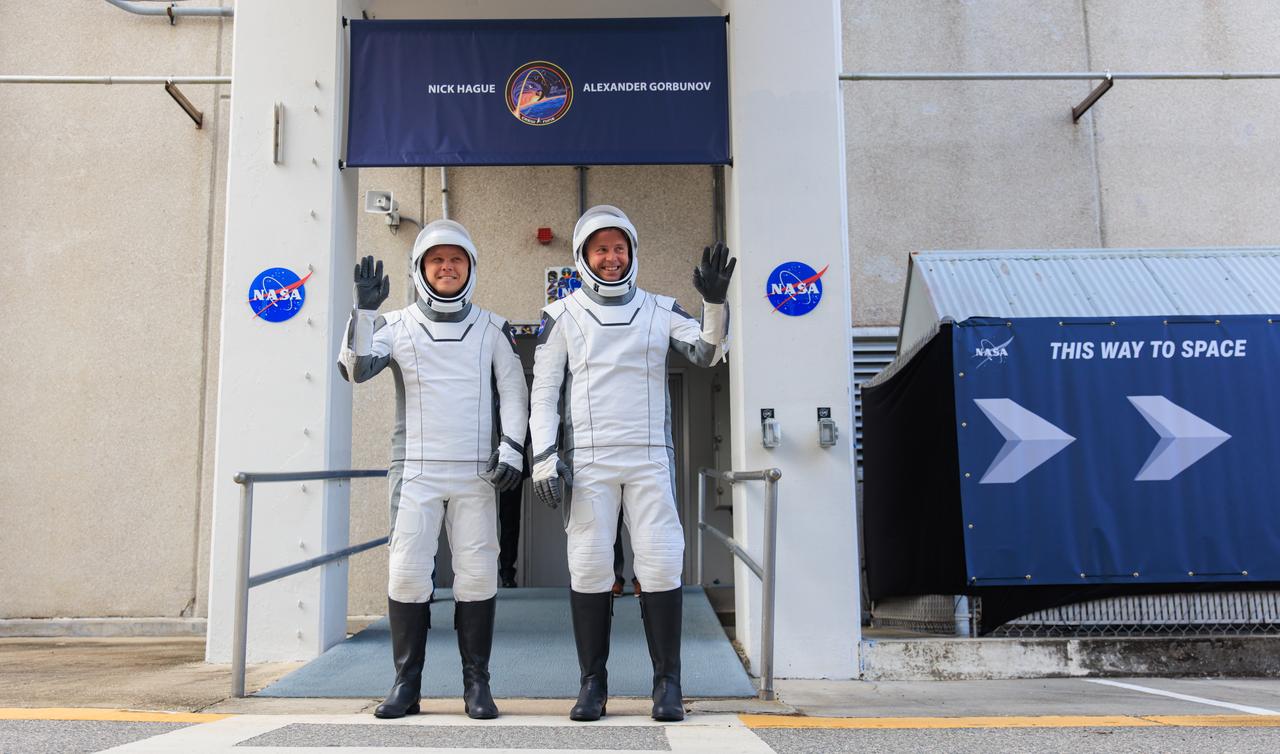
NASA’s SpaceX Crew-9 crew members wave to family and friends as they prepare to depart the Neil A. Armstrong Operations and Checkout Building at the agency’s Kennedy Space Center in Florida for nearby Space Launch Complex-40 at Cape Canaveral Space Force Station for launch of Crew-9 on Saturday, Sept. 28, 2024. NASA astronaut Nick Hague (lright) and Roscosmos cosmonaut Aleksandr Gorbunov will launch to the International Space Station aboard SpaceX’s Dragon spacecraft and Falcon 9 rocket. Launch is targeted for 1:17 p.m. EDT for the ninth crew rotation mission with SpaceX to the space station as part of the agency’s Commercial Crew Program.
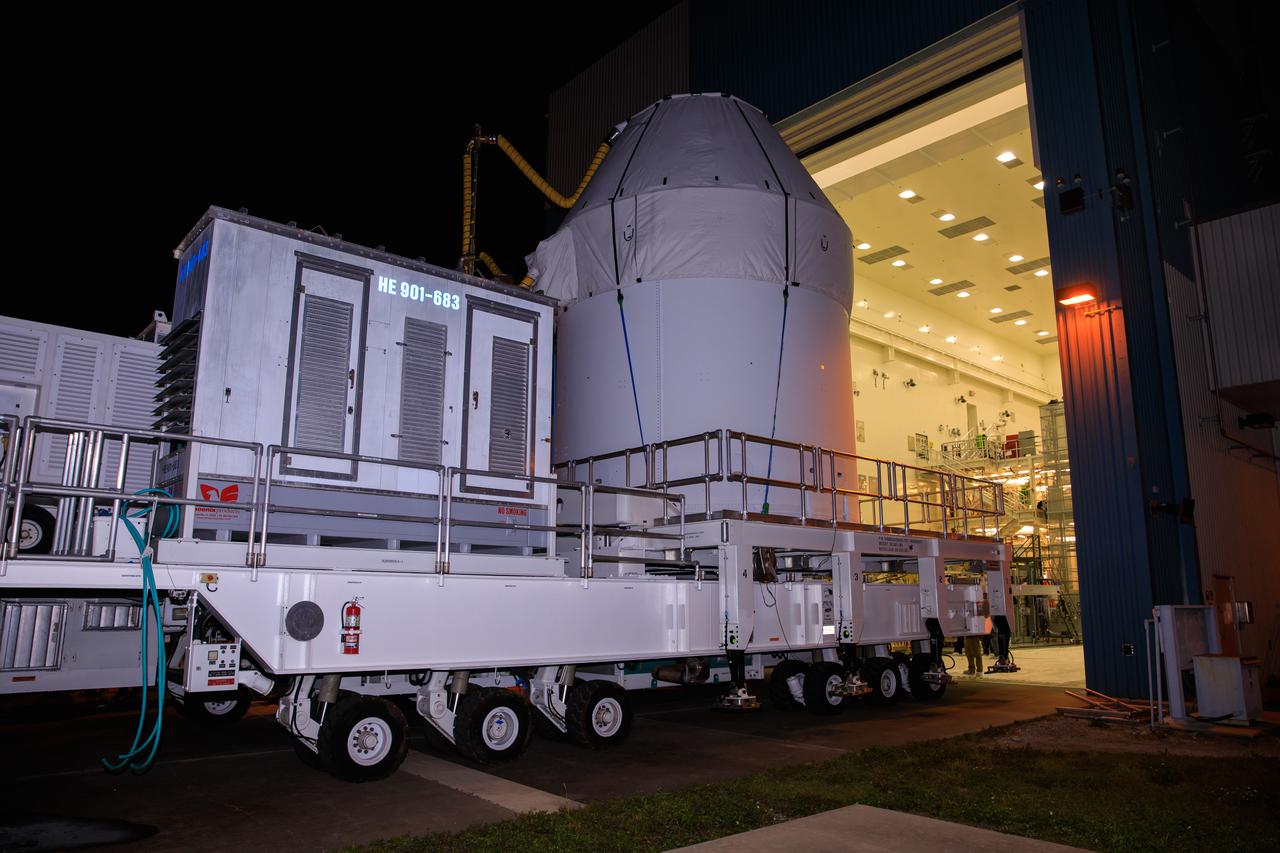
Orion arrives at its next stop along its path to the pad ahead of the Artemis I launch on Jan. 16, 2021, at Kennedy Space Center’s Multi-Payload Processing Facility, where the Exploration Ground Systems and Jacobs teams will take over ground processing. Here, the spacecraft will be “”gassed up” and fueled with commodities as part of preparations ahead of the mission.
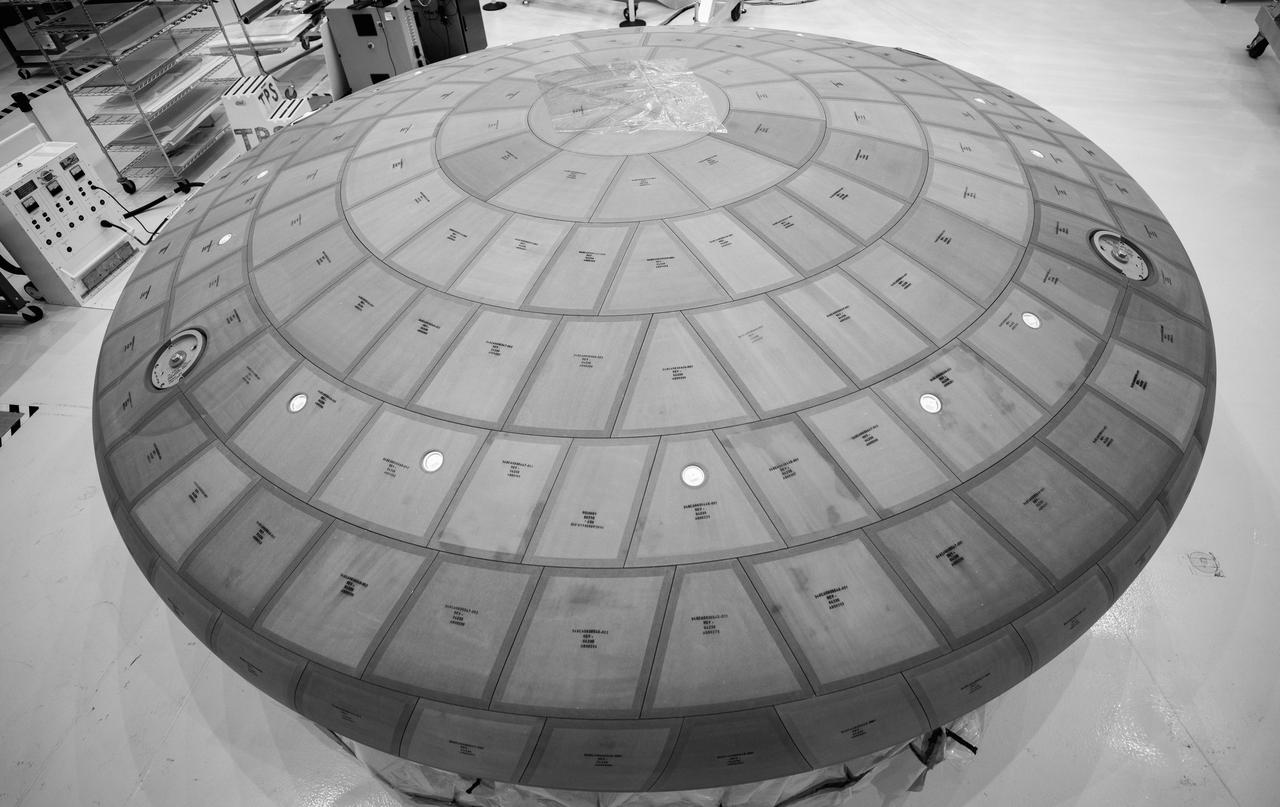
Inside the Neil Armstrong Operations and Checkout Building high bay at NASA's Kennedy Space Center in Florida, the AVOCAT block bonding is complete on the Artemis II heat shield on July 2, 2020. The heat shield is one of the most critical elements of Orion and will protect the capsule and astronauts during reentry through Earth’s atmosphere. Artemis II is the first crewed mission in a series of missions to the Moon and on to Mars. Artemis II will confirm all of the Orion spacecraft’s systems operate as designed in the actual environment of deep space with astronauts aboard. As part of the Artemis Program, NASA will send the first woman and next man to the Moon by 2024.

NASA astronaut Shane Kimbrough signs his name inside the Astronaut Crew Quarters in the Neil Armstrong Operations and Checkout Building at NASA’s Kennedy Space Center in Florida on April 23, 2021. NASA SpaceX’s Crew-2 astronauts will have breakfast before suiting up for the mission. Crew-2 is the second regular crew mission of a U.S. commercial spacecraft with astronauts to the International Space Station as part of NASA’s Commercial Crew Program. The SpaceX Crew Dragon Endeavour will launch atop the company’s Falcon 9 rocket from Launch Complex 39A to the space station for a six-month science mission.
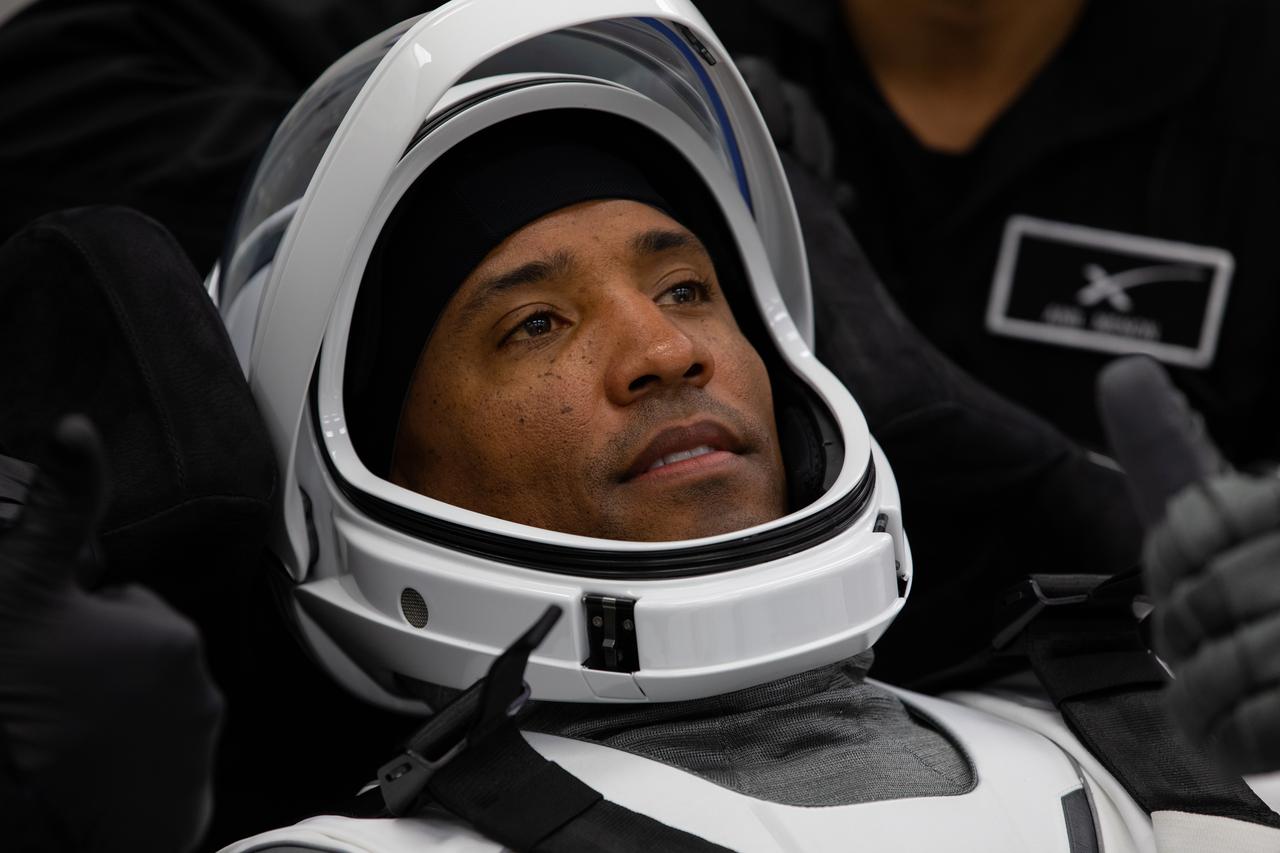
Inside the crew suit-up room in the Neil Armstrong Operations and Checkout Building at NASA’s Kennedy Space Center in Florida, on Nov. 15, 2020, NASA astronaut Victor Glover, pilot, dons a SpaceX spacesuit in preparation for NASA SpaceX’s Crew-1 mission. Crew-1 is the first regular crew mission of a U.S. commercial spacecraft with astronauts to the International Space Station as part of NASA’s Commercial Crew Program. The SpaceX Crew Dragon Resilience capsule will launch atop the company’s Falcon 9 rocket from Launch Complex 39A to the space station for a six-month science mission.
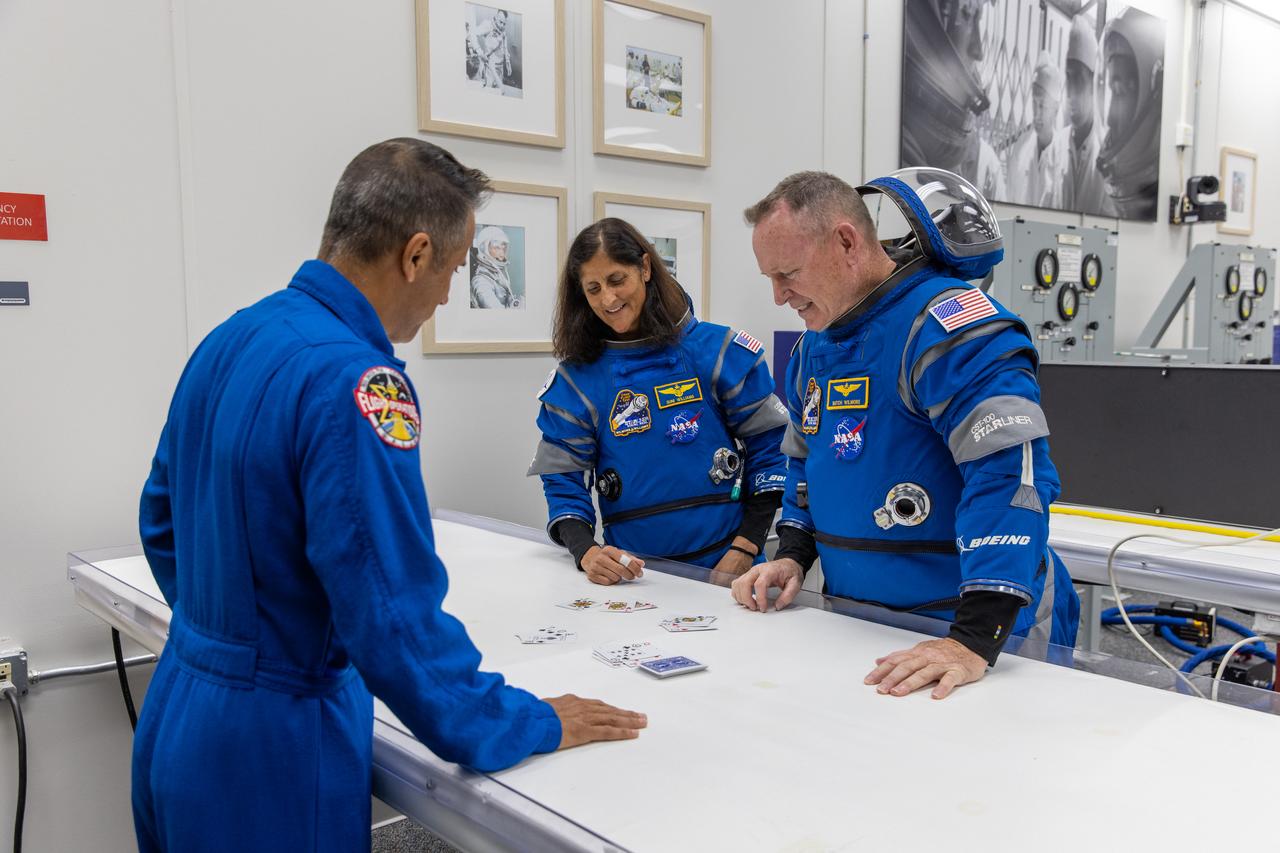
After suit-up and final fit checks during the first launch attempt of NASA’s Boeing Crew Flight Test, NASA astronauts Butch Wilmore and Suni Williams participate in a traditional game of cards inside the Neil A. Armstrong Operations and Checkout Building at NASA’s Kennedy Space Center in Florida on Monday, May 6, 2024. As part of the agency’s Commercial Crew Program, the first crewed launch to the International Space Station aboard Boeing’s Starliner spacecraft atop a United Launch Alliance Atlas V rocket from Space Launch Complex-41 at nearby Cape Canaveral Space Force Station was targeted for 10:34 p.m. ET but scrubbed for the day.

Inside the Neil Armstrong Operations and Checkout Building high bay at NASA's Kennedy Space Center in Florida, from left, technicians Kenny Leidner, Diamond ScharSenstine, Russ Novak and Darlene Beville with ASRC Federal, inspect AVOCAT block bonding on the Artemis II heat shield on July 2, 2020. The heat shield is one of the most critical elements of Orion and will protect the capsule and astronauts during reentry through Earth’s atmosphere. Artemis II is the first crewed mission in a series of missions to the Moon and on to Mars. Artemis II will confirm all of the Orion spacecraft’s systems operate as designed in the actual environment of deep space with astronauts aboard. As part of the Artemis Program, NASA will send the first woman and next man to the Moon by 2024.
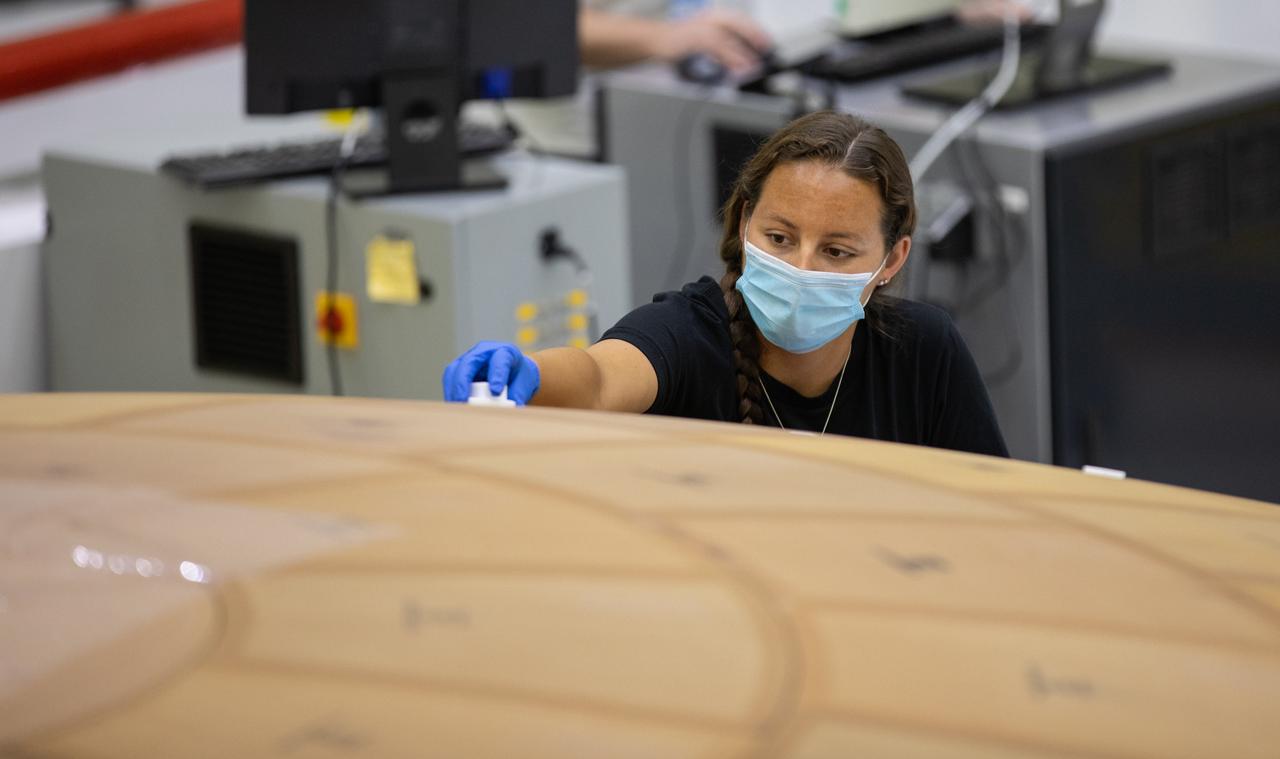
Inside the Neil Armstrong Operations and Checkout Building high bay at NASA's Kennedy Space Center in Florida, technician Diamond ScharSenstine with ASRC Federal, inspects AVCOAT block bonding on the Artemis II heat shield on July 2, 2020. The heat shield is one of the most critical elements of Orion and will protect the capsule and astronauts during reentry through Earth’s atmosphere. Artemis II is the first crewed mission in a series of missions to the Moon and on to Mars. Artemis II will confirm all of the Orion spacecraft’s systems operate as designed in the actual environment of deep space with astronauts aboard. As part of the Artemis Program, NASA will send the first woman and next man to the Moon by 2024.
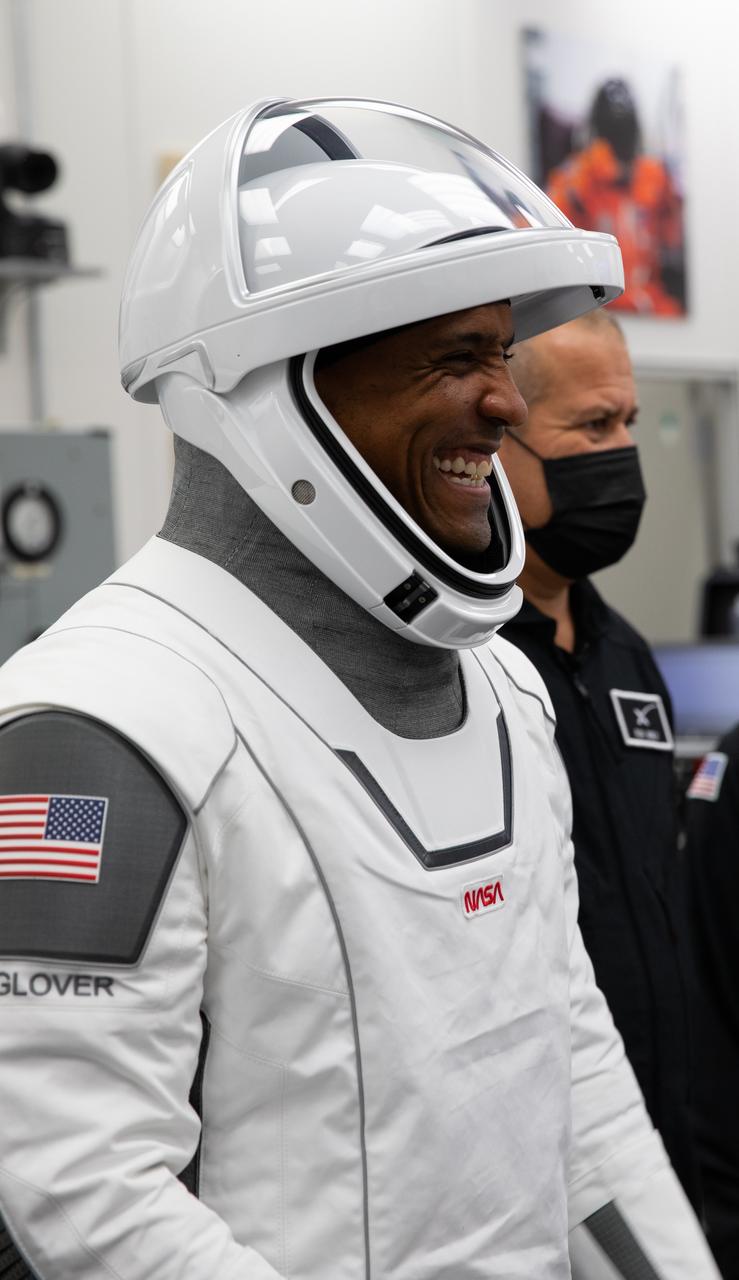
Inside the crew suit-up room in the Neil Armstrong Operations and Checkout Building at NASA’s Kennedy Space Center in Florida, on Nov. 15, 2020, NASA astronaut Victor Glover, pilot, is suited up in a SpaceX spacesuit in preparation for NASA SpaceX’s Crew-1 mission. Crew-1 is the first regular crew mission of a U.S. commercial spacecraft with astronauts to the International Space Station as part of NASA’s Commercial Crew Program. The SpaceX Crew Dragon Resilience capsule will launch atop the company’s Falcon 9 rocket from Launch Complex 39A to the space station for a six-month science mission.
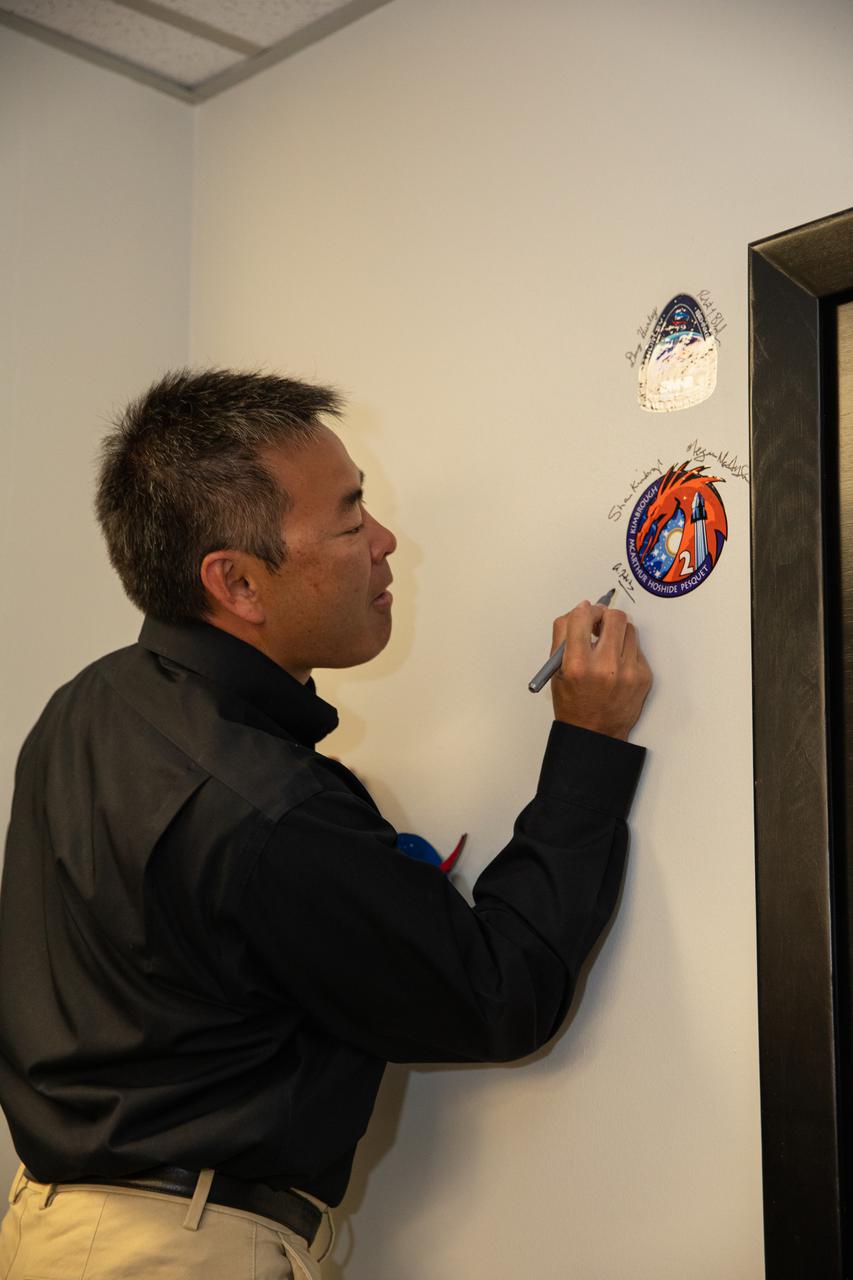
JAXA astronaut Akihiko Hoshide signs his name inside the Astronaut Crew Quarters in the Neil Armstrong Operations and Checkout Building at NASA’s Kennedy Space Center in Florida on April 23, 2021. NASA SpaceX’s Crew-2 astronauts will have breakfast before suiting up for the mission. Crew-2 is the second regular crew mission of a U.S. commercial spacecraft with astronauts to the International Space Station as part of NASA’s Commercial Crew Program. The SpaceX Crew Dragon Endeavour will launch atop the company’s Falcon 9 rocket from Launch Complex 39A to the space station for a six-month science mission.
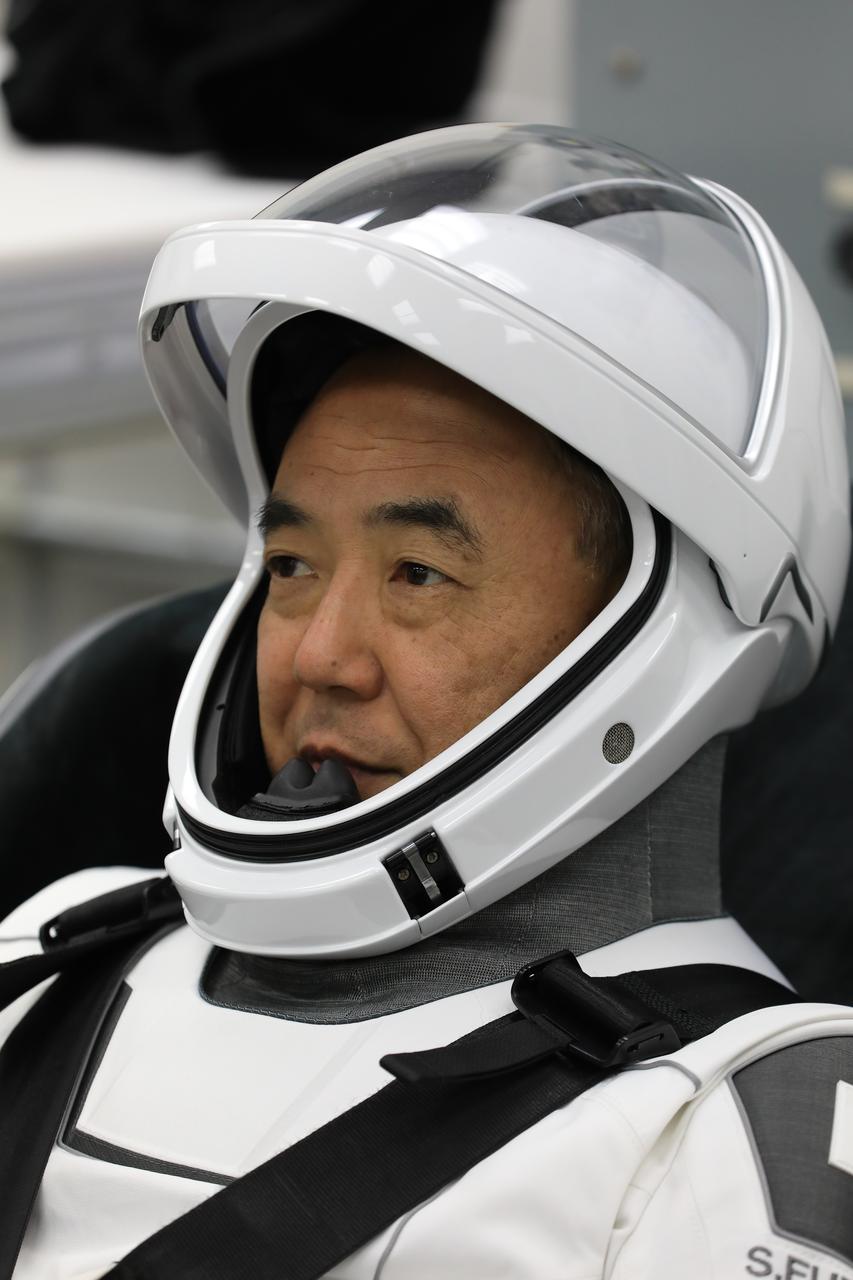
JAXA (Japan Aerospace Exploration Agency) astronaut Satoshi Furukawa is photographed on Tuesday, Aug. 22, 2023, in a SpaceX spacesuit inside the crew suit-up room in the Neil A. Armstrong Operations and Checkout Building at NASA’s Kennedy Space Center in Florida during a countdown dress rehearsal. The Crew-7 crew will launch to the International Space Station aboard SpaceX’s Dragon spacecraft and Falcon 9 rocket. Launch is targeted for 3:49 a.m. EDT Friday, Aug. 25, 2023, from Kennedy’s Launch Complex 39A. Crew-7 is the seventh crew rotation mission with SpaceX to the station, and the eighth flight of Dragon with people as part of the agency’s Commercial Crew Program.
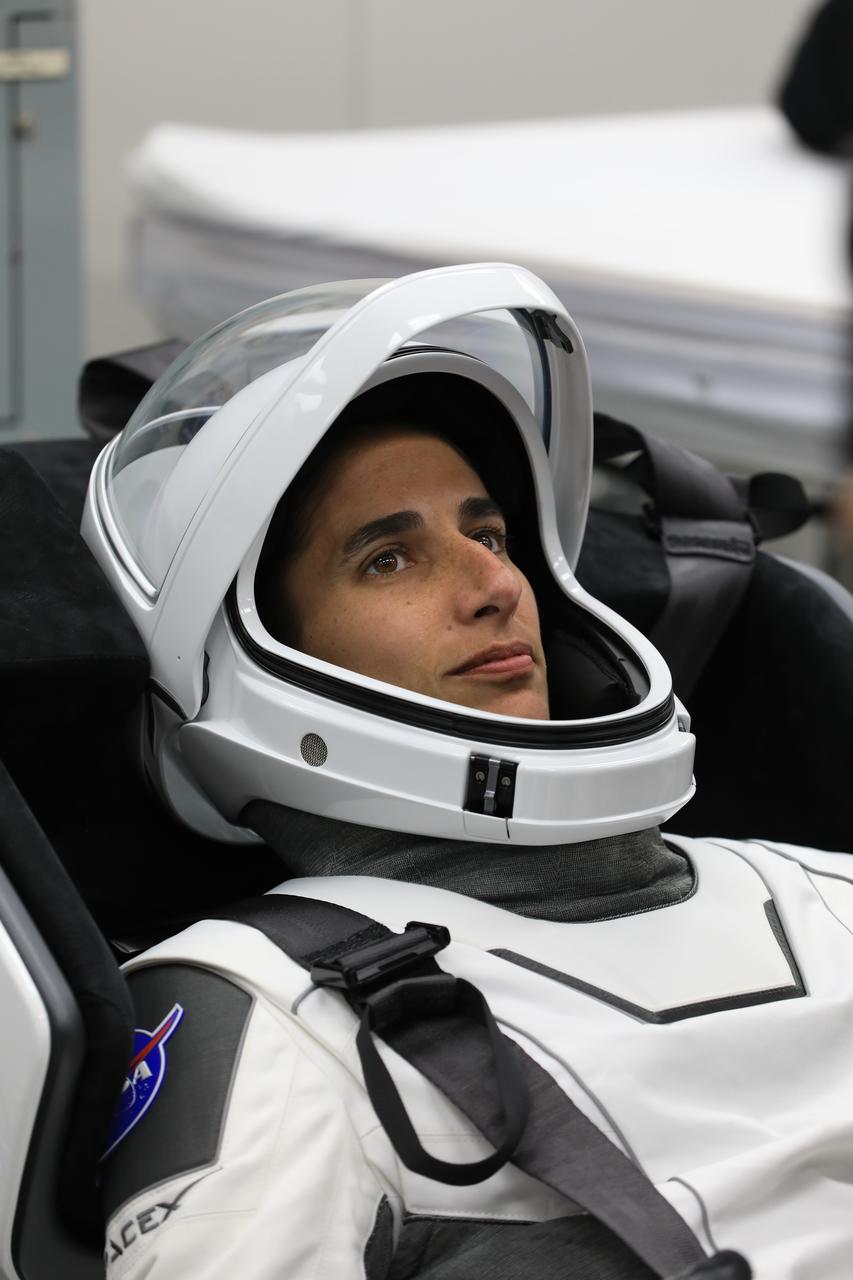
NASA astronaut Jasmin Moghbeli is photographed on Tuesday, Aug. 22, 2023, in a SpaceX spacesuit inside the crew suit-up room in the Neil A. Armstrong Operations and Checkout Building at NASA’s Kennedy Space Center in Florida during a countdown dress rehearsal. The Crew-7 crew will launch to the International Space Station aboard SpaceX’s Dragon spacecraft and Falcon 9 rocket. Launch is targeted for 3:49 a.m. EDT Friday, Aug. 25, 2023, from Kennedy’s Launch Complex 39A. Crew-7 is the seventh crew rotation mission with SpaceX to the station, and the eighth flight of Dragon with people as part of the agency’s Commercial Crew Program.
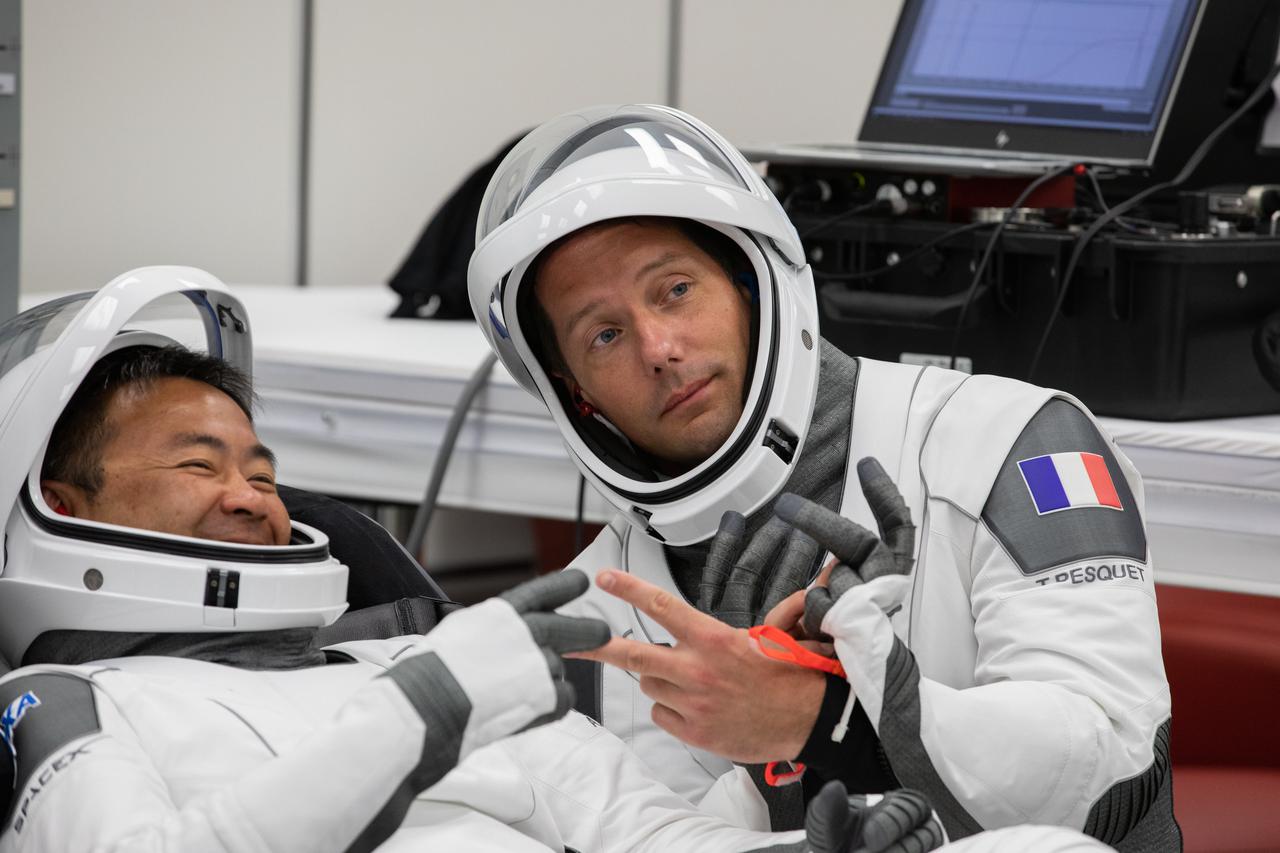
From left, JAXA astronaut Akihiko Hoshide and ESA astronaut Thomas Pesquet relax inside the crew suit-up room in the Neil Armstrong Operations and Checkout Building at NASA’s Kennedy Space Center in Florida, on April 23, 2021. NASA astronauts Shane Kimbrough and Megan McArthur will join Hoshide and Pesquet in heading to the International Space Station on NASA’s SpaceX Crew-2 mission. SpaceX’s Crew Dragon Endeavour will launch on the company’s Falcon 9 rocket from Kennedy’s Launch Complex 39A today at 5:49 a.m. EDT.
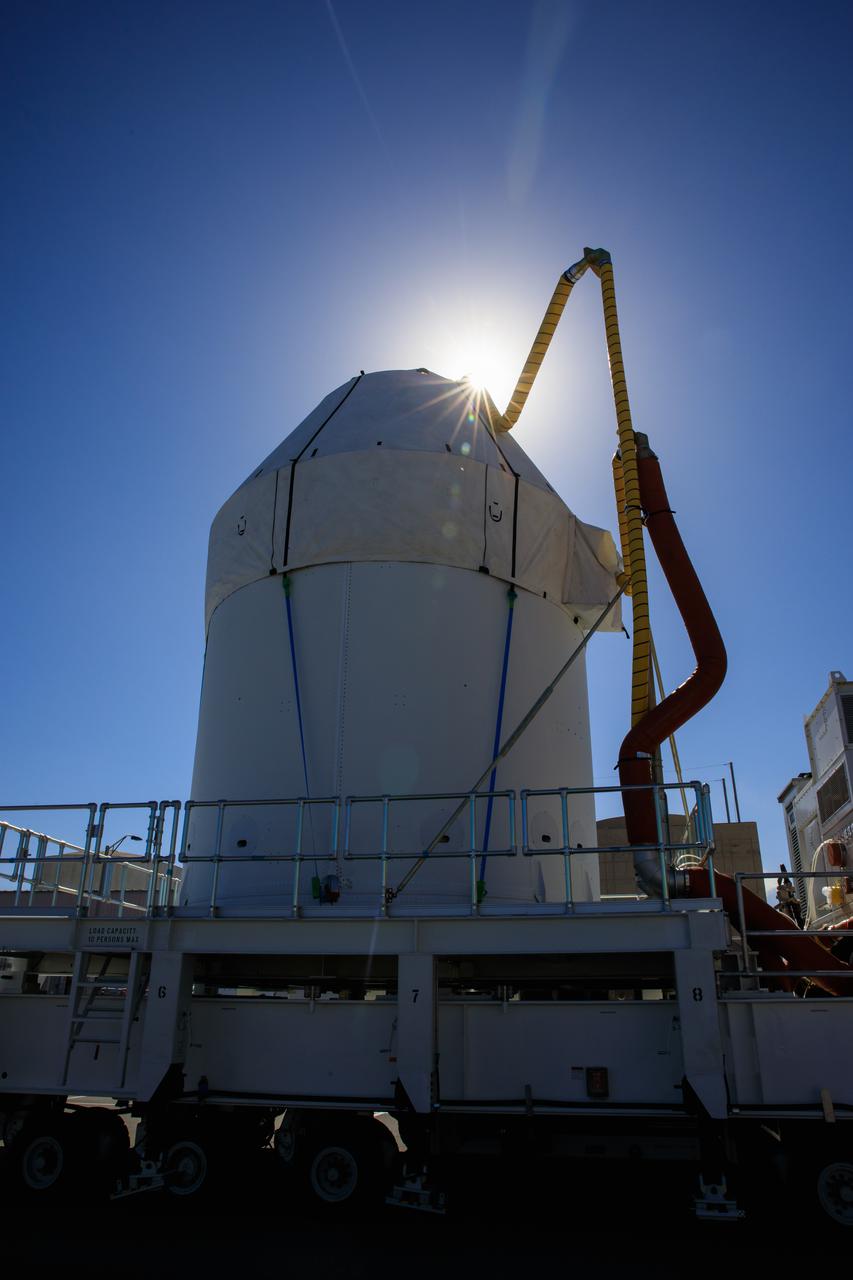
A close-up view of Orion secured atop a transport vehicle as it departs from its home at the Neil Armstrong Operations and Checkout Building at NASA’s Kennedy Space Center in Florida on Jan.16, 2021. Orion’s next stop will be the Multi-Payload Processing Facility where it will undergo ground processing with the Exploration Ground Systems team taking over ground processing ahead of the Artemis I launch.
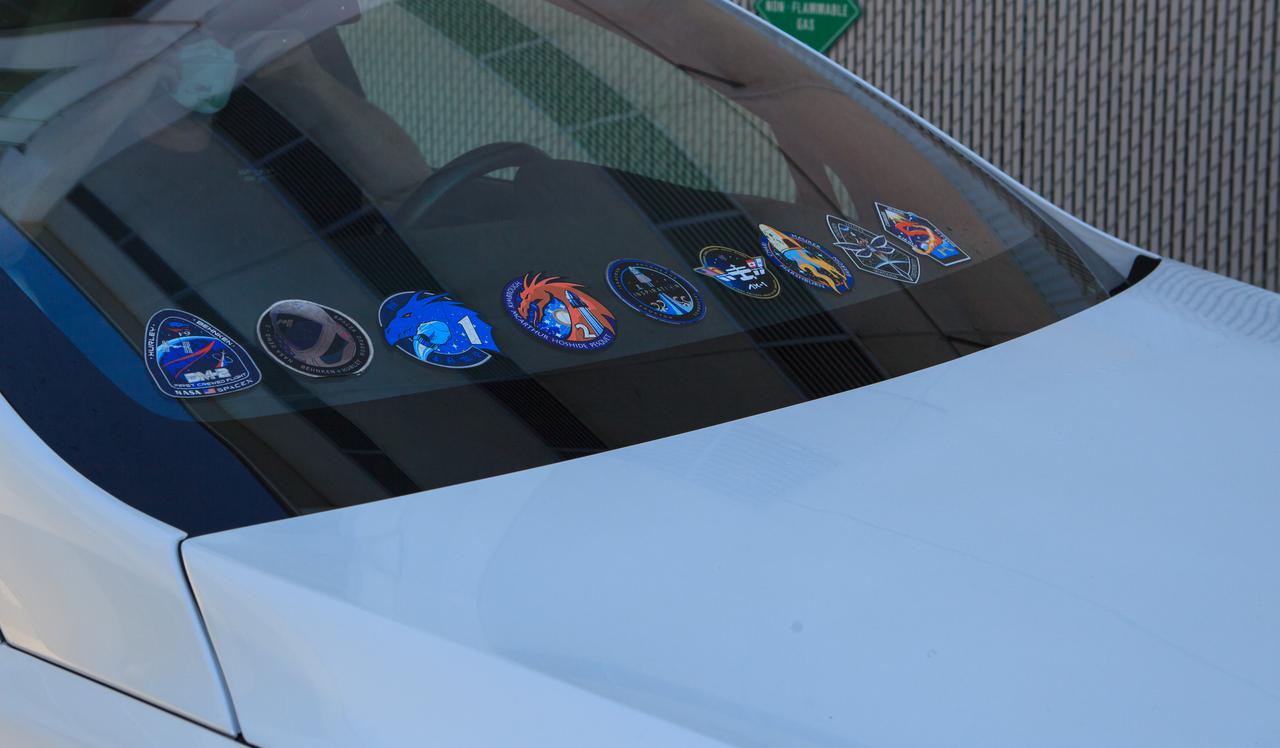
Seen here are all the mission stickers for crewed launches under NASA’s Commercial Crew Program (CCP) that were placed on one of the Tesla Model X cars that carry astronauts from the Neil A. Armstrong Operations and Checkout Building to Launch Complex 39A at the agency’s Kennedy Space Center in Florida. NASA’s SpaceX Crew-5 astronauts participated in a countdown dress rehearsal on Oct. 2, 2022, in preparation for the upcoming Crew-5 launch. SpaceX’s Crew Dragon Endurance spacecraft will carry NASA astronauts Nicole Aunapu Mann and Josh Cassada, Roscosmos cosmonaut Anna Kikina, and JAXA (Japan Aerospace Exploration Agency) astronaut Koichi Wakata to the International Space Station for a science expedition mission as part of the agency’s CCP. Liftoff of the SpaceX Falcon 9 rocket is targeted for noon EDT on Oct. 5, 2022, from Kennedy’s Launch Complex 39A.
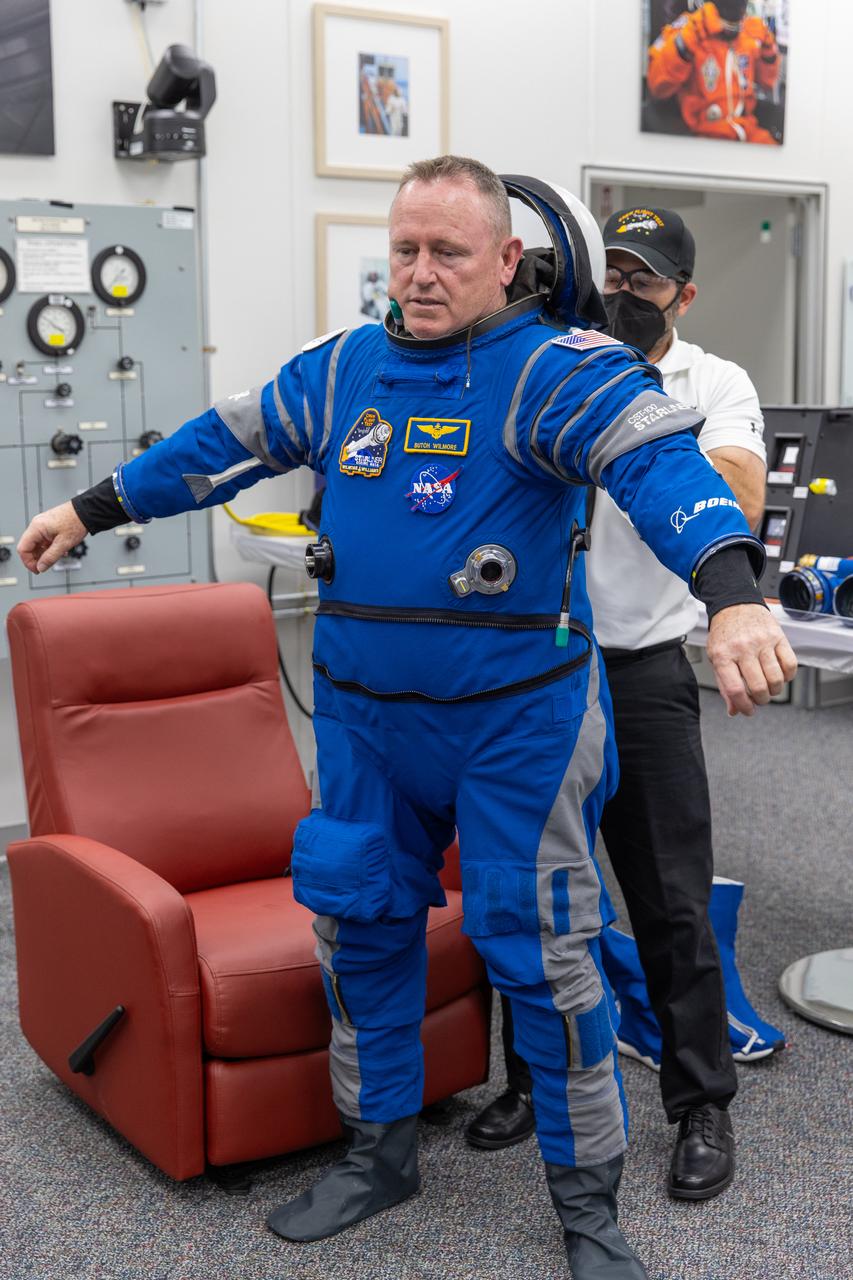
During the first launch attempt of NASA’s Boeing Crew Flight Test, NASA astronaut Butch Wilmore performs checks of his Boeing spacesuit in the crew suit-up room inside the Neil A. Armstrong Operations and Checkout Building at NASA’s Kennedy Space Center in Florida on Monday, May 6, 2024. As part of the agency’s Commercial Crew Program, the first crewed launch to the International Space Station aboard Boeing’s Starliner spacecraft atop a United Launch Alliance Atlas V rocket from Space Launch Complex-41 at nearby Cape Canaveral Space Force Station was targeted for 10:34 p.m. ET but scrubbed for the day.
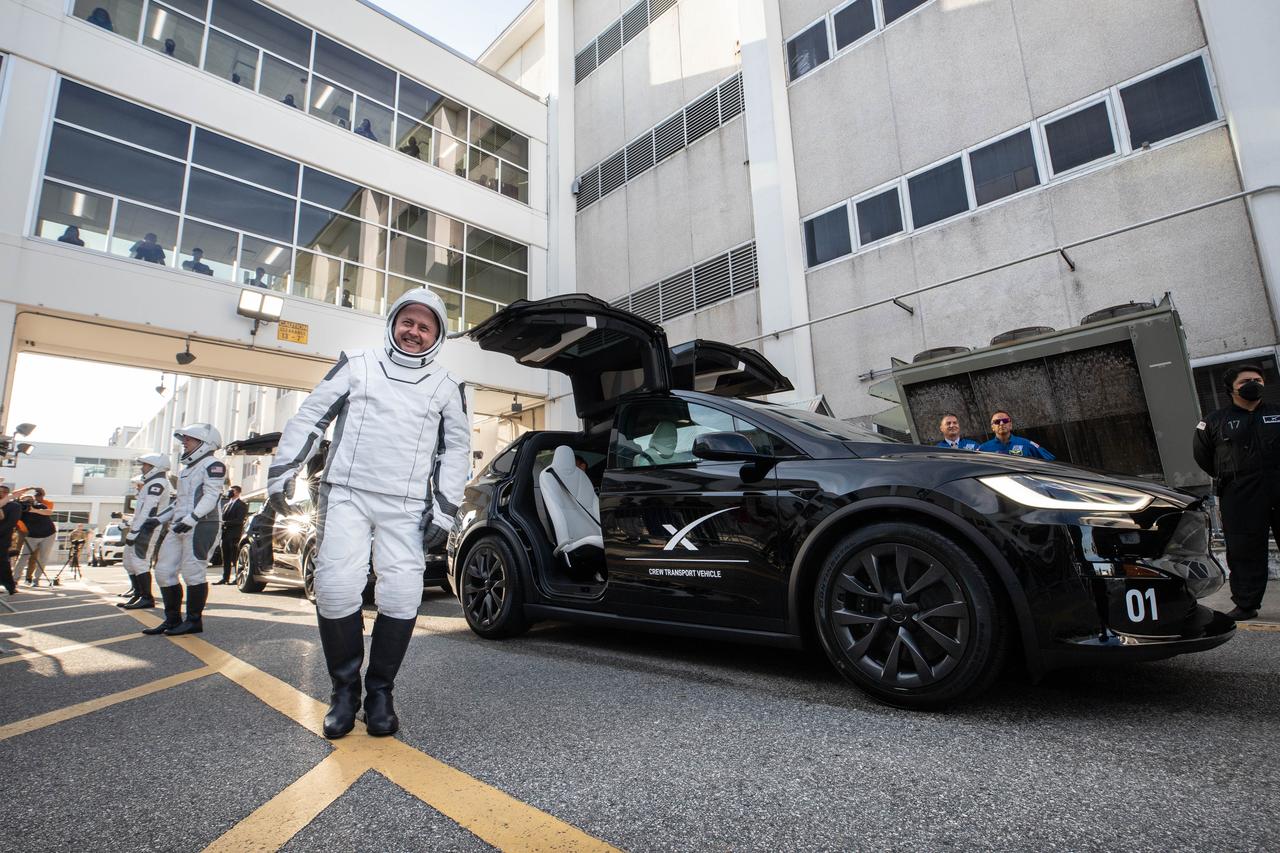
From right to left NASA astronauts Mike Fincke and Zena Cardman, along with JAXA (Japan Aerospace Exploration Agency) astronaut Kimiya Yui and Roscosmos cosmonaut Oleg Platonov walk out of the Neil A. Armstrong Operations and Checkout Building at the agency’s Kennedy Space Center in Florida on Friday, Aug. 1, 2025, during the second attempt of NASA’s SpaceX Crew-11 mission to the International Space Station. The crew is scheduled to lift off aboard SpaceX’s Dragon spacecraft and Falcon 9 rocket for its second attempt at 11:43 a.m. EDT from Launch Complex 39A at NASA Kennedy.
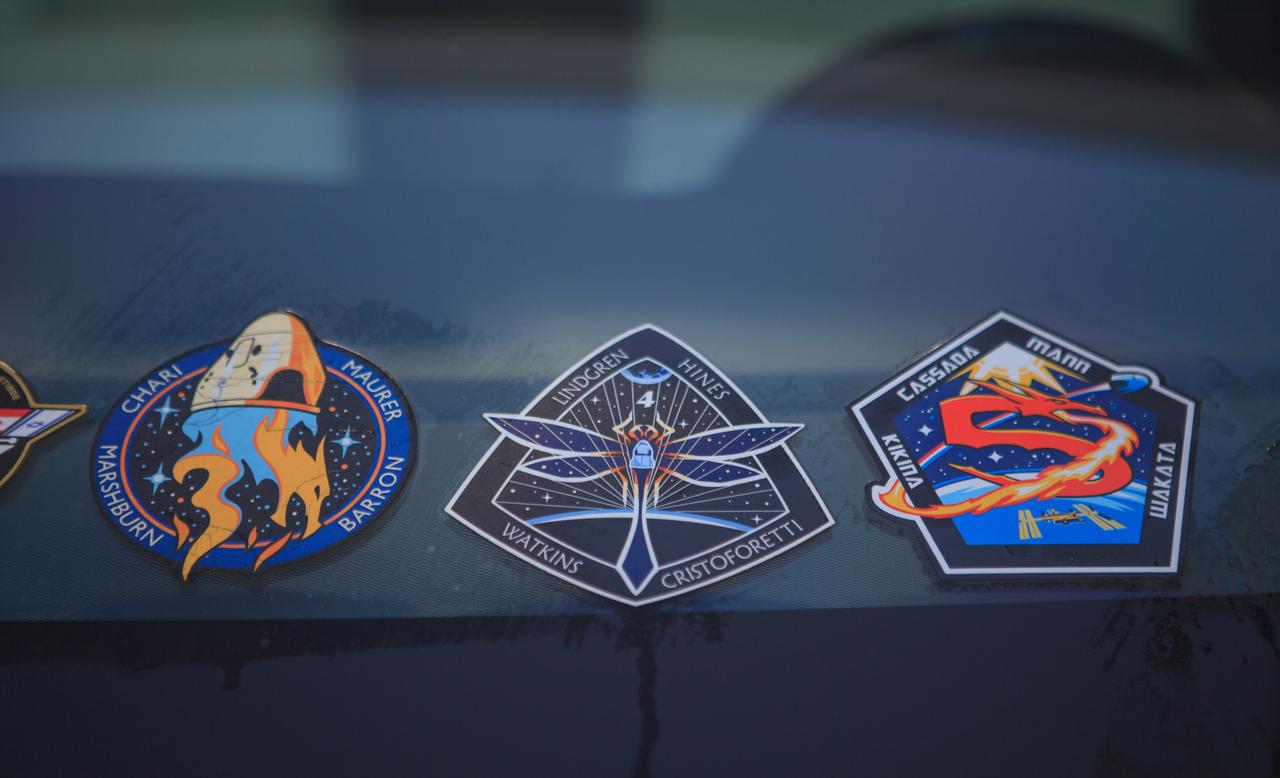
Seen here is a close-up view of stickers for NASA’s SpaceX Crew-3, Crew-4, and Crew-5 missions that were placed on one of the Tesla Model X cars that carry astronauts from the Neil A. Armstrong Operations and Checkout Building to Launch Complex 39A at the agency’s Kennedy Space Center in Florida. NASA’s SpaceX Crew-5 astronauts participated in a countdown dress rehearsal on Oct. 2, 2022, in preparation for the upcoming Crew-5 launch. SpaceX’s Crew Dragon Endurance spacecraft will carry NASA astronauts Nicole Aunapu Mann and Josh Cassada, Roscosmos cosmonaut Anna Kikina, and JAXA (Japan Aerospace Exploration Agency) astronaut Koichi Wakata to the International Space Station for a science expedition mission as part of the agency’s Commercial Crew Program. Liftoff of the SpaceX Falcon 9 rocket is targeted for noon EDT on Oct. 5, 2022, from Kennedy’s Launch Complex 39A.
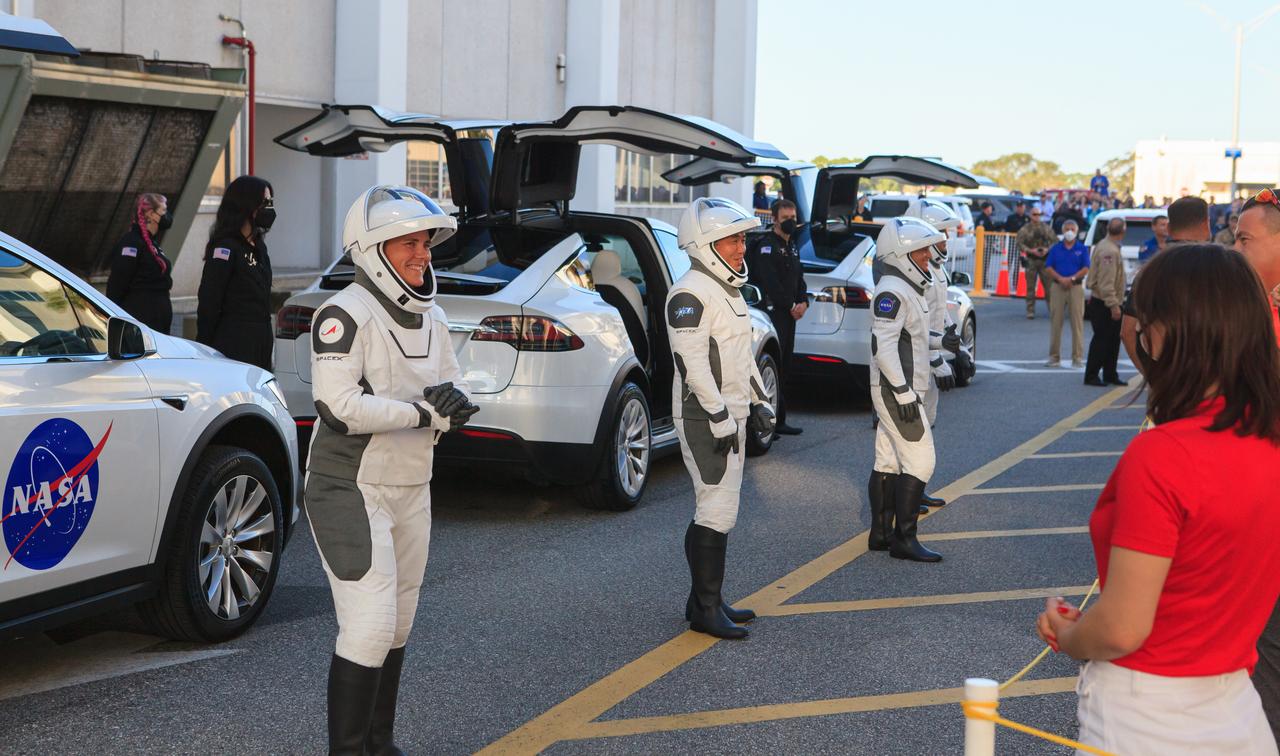
NASA’s SpaceX Crew-5 say goodbye to friends and family after exiting the Neil A. Armstrong Operations and Checkout Building at NASA’s Kennedy Space Center in Florida on Oct. 5, 2022. From left are Mission Specialists Anna Kikina, Roscosmos cosmonaut, and Koichi Wakata, of JAXA (Japan Aerospace Exploration Agency), and NASA astronauts Nicole Mann, spacecraft commander, and Josh Cassada, pilot. They will board two Tesla vehicles for the trip to Kennedy’s Launch Complex 39A, where they will launch to the International Space Station aboard SpaceX’s Dragon Endurance spacecraft for a science expedition mission as part of NASA’s Commercial Crew Program. SpaceX’s Falcon 9 rocket lifted off at noon EDT.
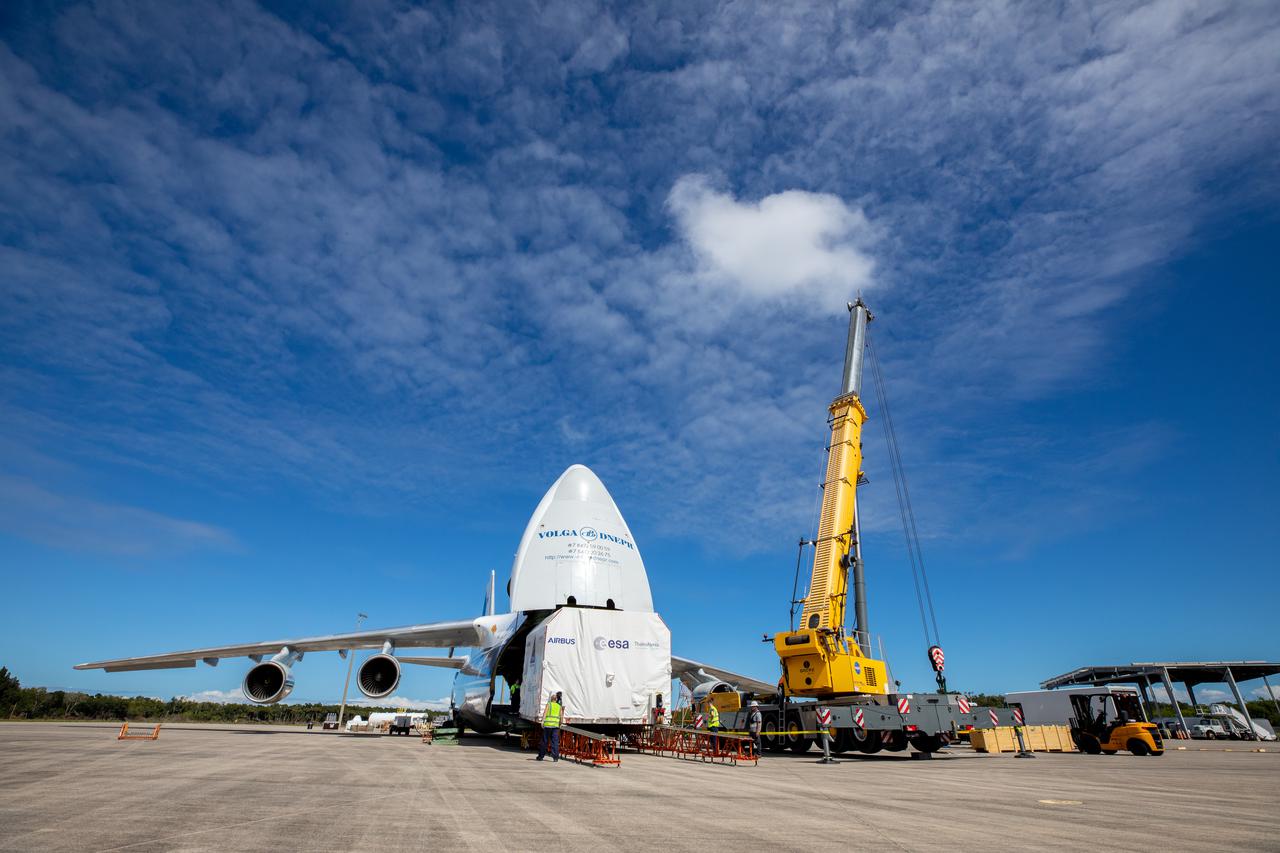
The European Service Module (ESM) for NASA’s Orion spacecraft arrived at the Launch and Landing Facility at NASA’s Kennedy Space Center in Florida on Thursday, Oct. 14, 2021, and was offloaded. Making the journey from the Airbus Facility in Bremen, Germany, aboard a Russian Antonov aircraft, the ESM will be transferred to Kennedy’s Neil A. Armstrong Operations and Checkout Facility. There, teams from NASA and Lockheed Martin will integrate the service module with the crew module adapter and crew module, already housed in the facility. The powerhouse that will fuel and propel Orion in space, the ESM will be used for Artemis II, the first Artemis mission flying crew aboard Orion. Teams with the European Space Agency and Airbus built the service module.
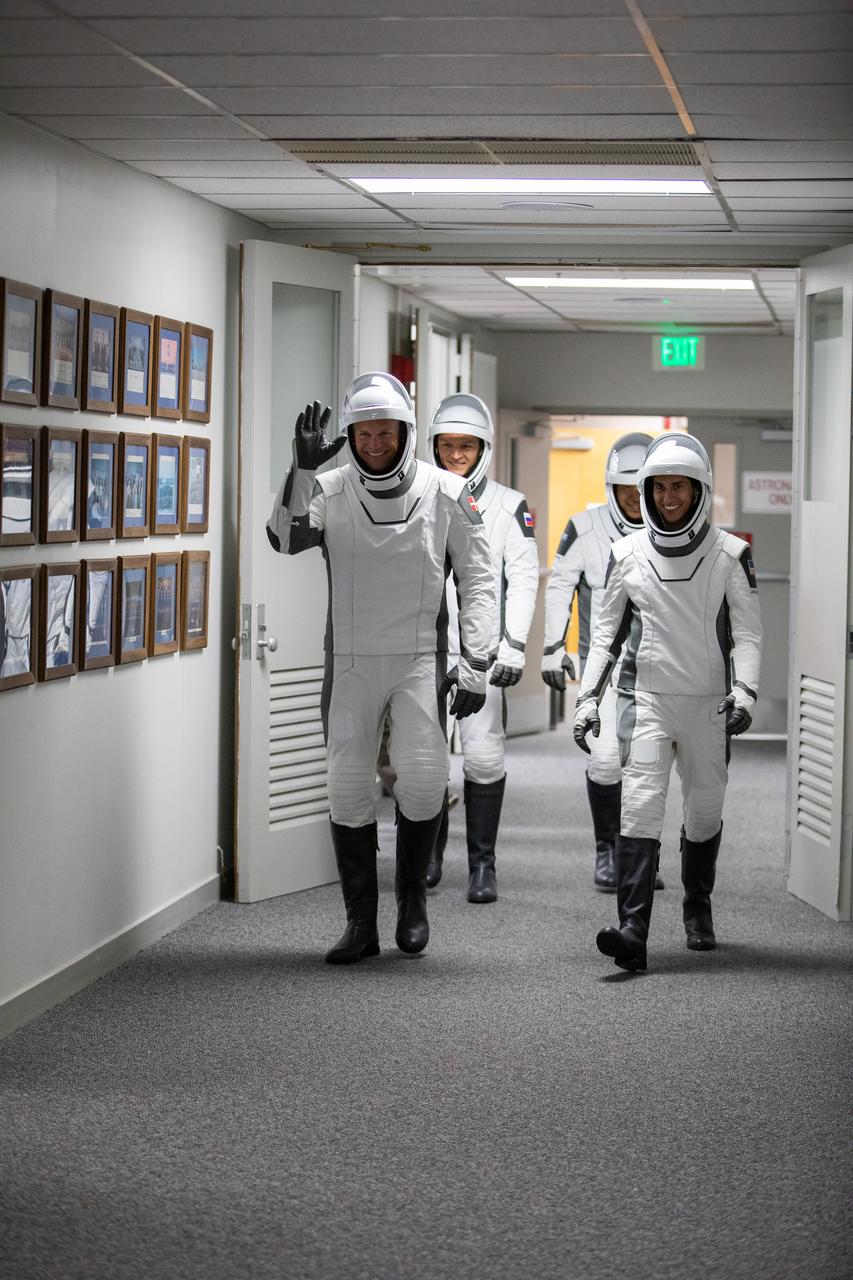
NASA’s SpaceX Crew-7 crew members walk down the hallway of the Neil A. Armstrong Operations and Checkout Building on Saturday, Aug. 26, 2023, at the agency’s Kennedy Space Center in Florida. From left, front to back, are ESA (European Space Agency) astronaut Andreas Mogensen, NASA astronaut Jasmin Moghbeli, Roscosmos cosmonaut Konstantin Borisov, and JAXA (Japan Aerospace Exploration Agency) astronaut Satoshi Furukawa. They will board two Tesla vehicles for the trip to Kennedy’s Launch Complex 39A, where they will launch to the International Space Station aboard SpaceX’s Dragon spacecraft and Falcon 9 rocket. Liftoff is at 3:27 a.m. EDT.
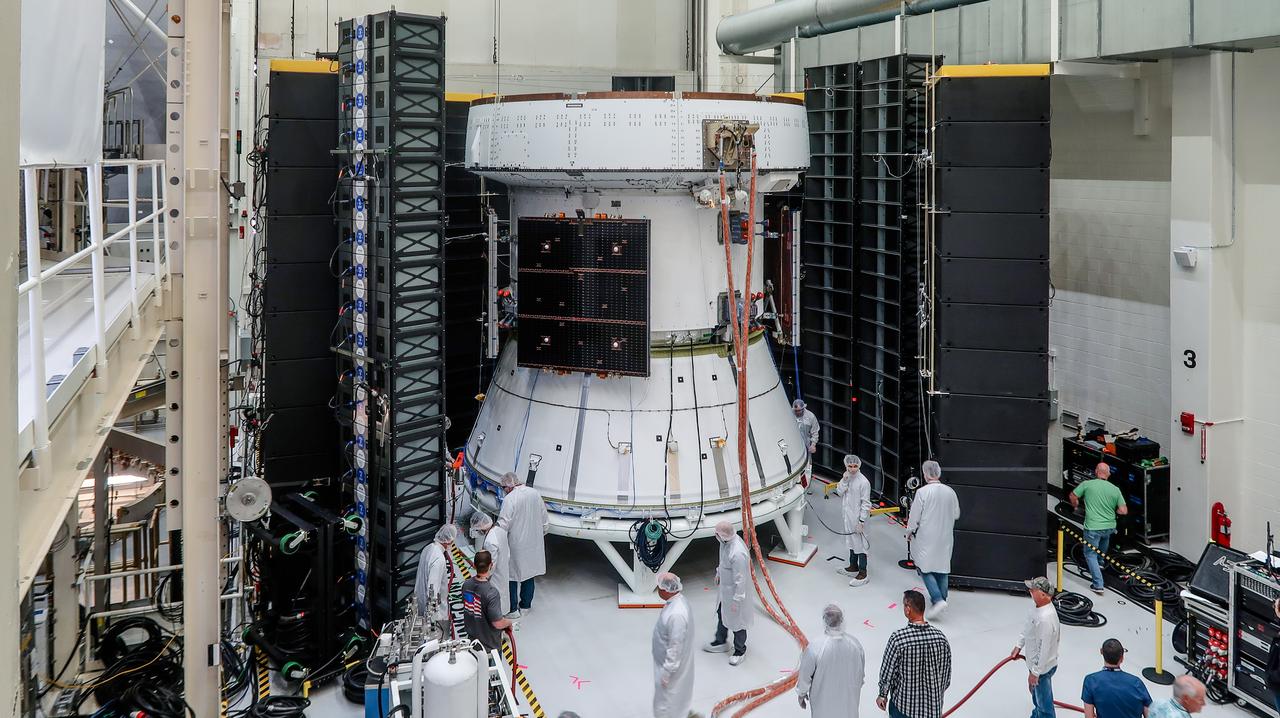
The European Service Module for the Artemis II mission is photographed inside the Neil Armstrong Operations and Checkout Building at NASA's Kennedy Space Center in Florida earlier this month. The Service Module successfully completed a round of acoustic tests to ensure it can withstand the speed and vibration it will experience during launch and throughout the mission. Artemis II will be the first crewed flight test of the Space Launch System rocket and Orion spacecraft. The service module will provide the power necessary to propel Orion on a trip around the Moon, including the in-space maneuvering capability and other commodities necessary to sustain crew for the duration of the mission.
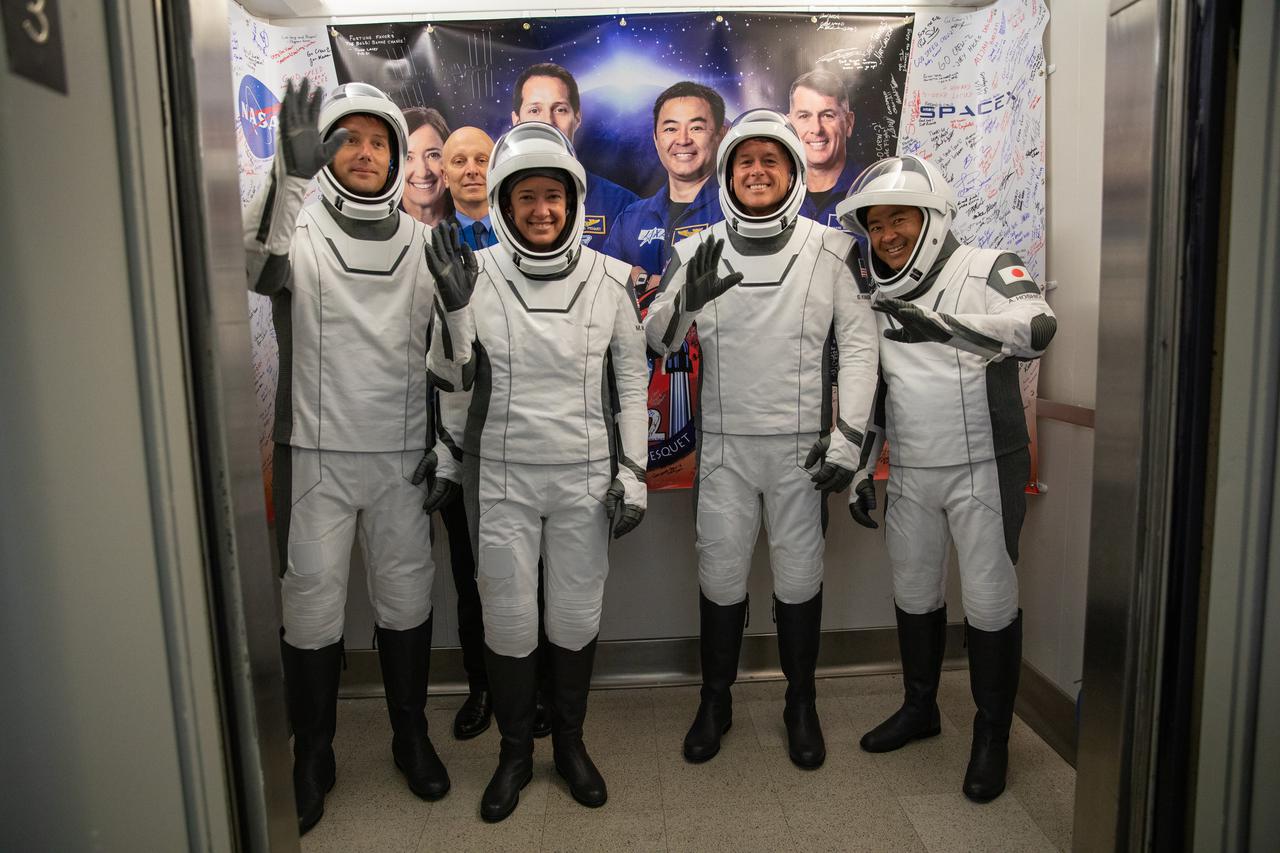
From left, ESA astronaut Thomas Pesquet, NASA astronaut Megan McArthur, NASA astronaut Shane Kimbrough and JAXA astronaut Akihiko Hoshide enter the elevator inside the Neil Armstrong Operations and Checkout Building at NASA’s Kennedy Space Center in Florida, on April 23, 2021. The four astronauts will head to the International Space Station on NASA’s SpaceX Crew-2 mission. SpaceX’s Crew Dragon Endeavour will launch on the company’s Falcon 9 rocket from Kennedy’s Launch Complex 39A today at 5:49 a.m. EDT.
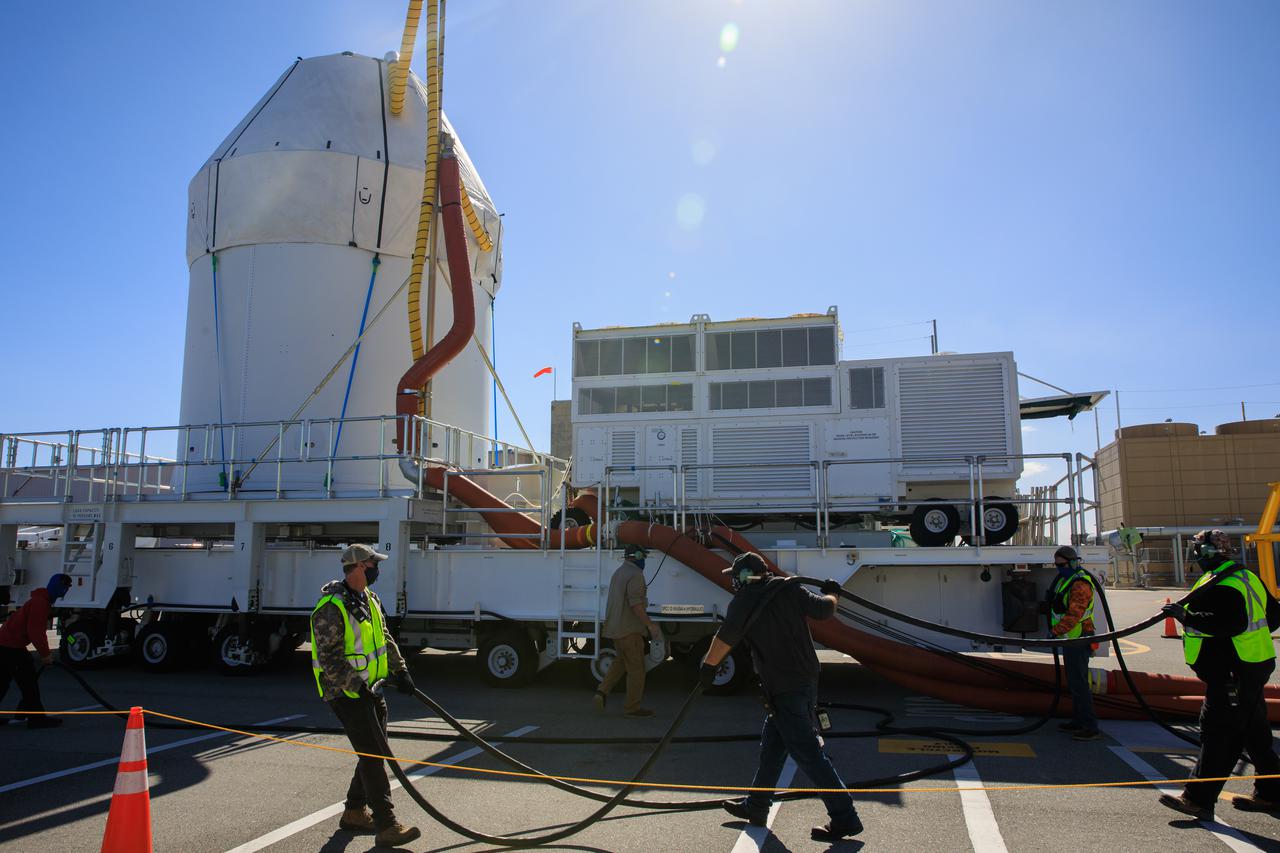
A close-up view of Orion secured atop a transport vehicle as it departs from its home at the Neil Armstrong Operations and Checkout Building at NASA’s Kennedy Space Center in Florida on Jan.16, 2021. Orion’s next stop will be the Multi-Payload Processing Facility where it will undergo ground processing with the Exploration Ground Systems team taking over ground processing ahead of the Artemis I launch.
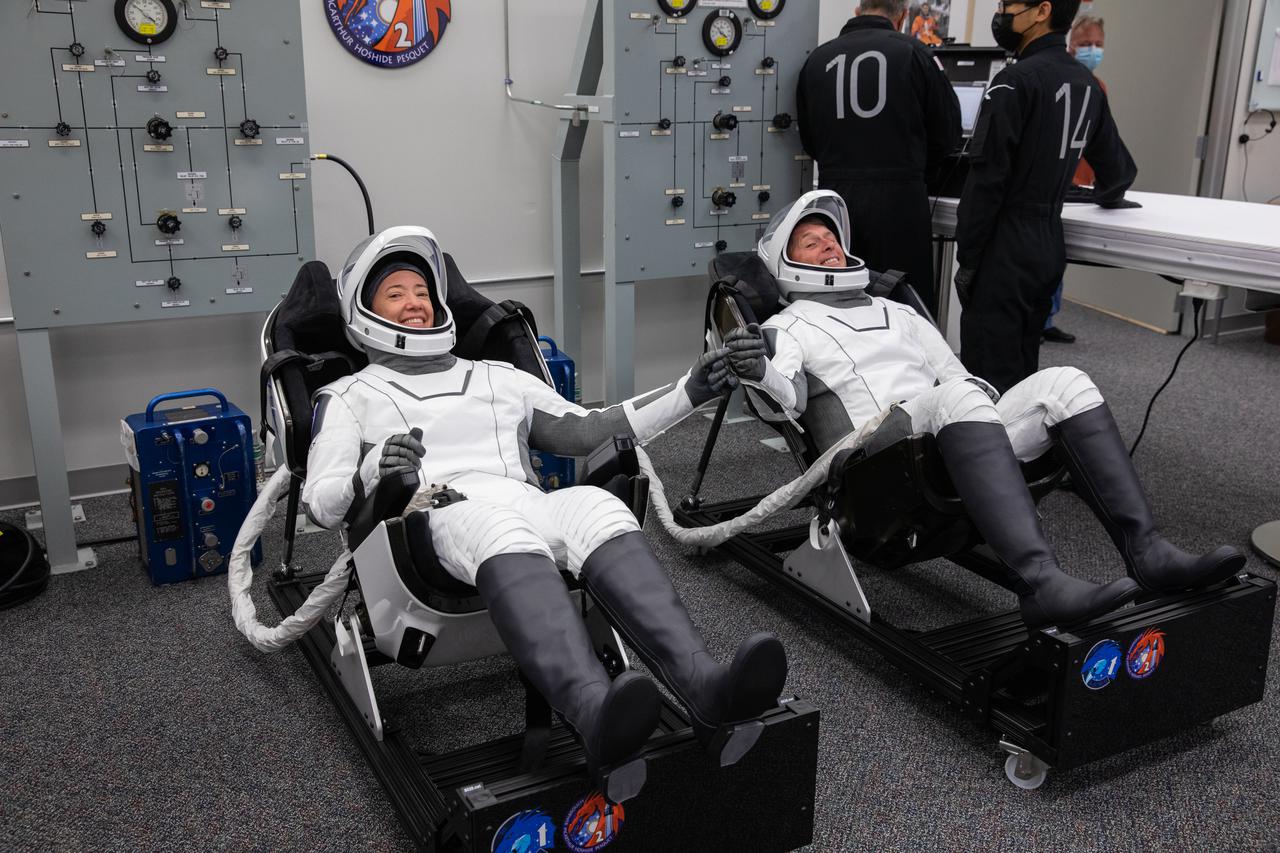
NASA astronauts Megan McArthur, left, and Shane Kimbrough are seated inside the crew suit-up room in the Neil Armstrong Operations and Checkout Building at NASA’s Kennedy Space Center in Florida, on April 23, 2021. McArthur and Kimbrough, along with ESA astronaut Thomas Pesquet and JAXA astronaut Akihiko Hoshide, will head to the International Space Station on NASA’s SpaceX Crew-2 mission. SpaceX’s Crew Dragon Endeavour will launch on the company’s Falcon 9 rocket from Kennedy’s Launch Complex 39A today at 5:49 a.m. EDT.
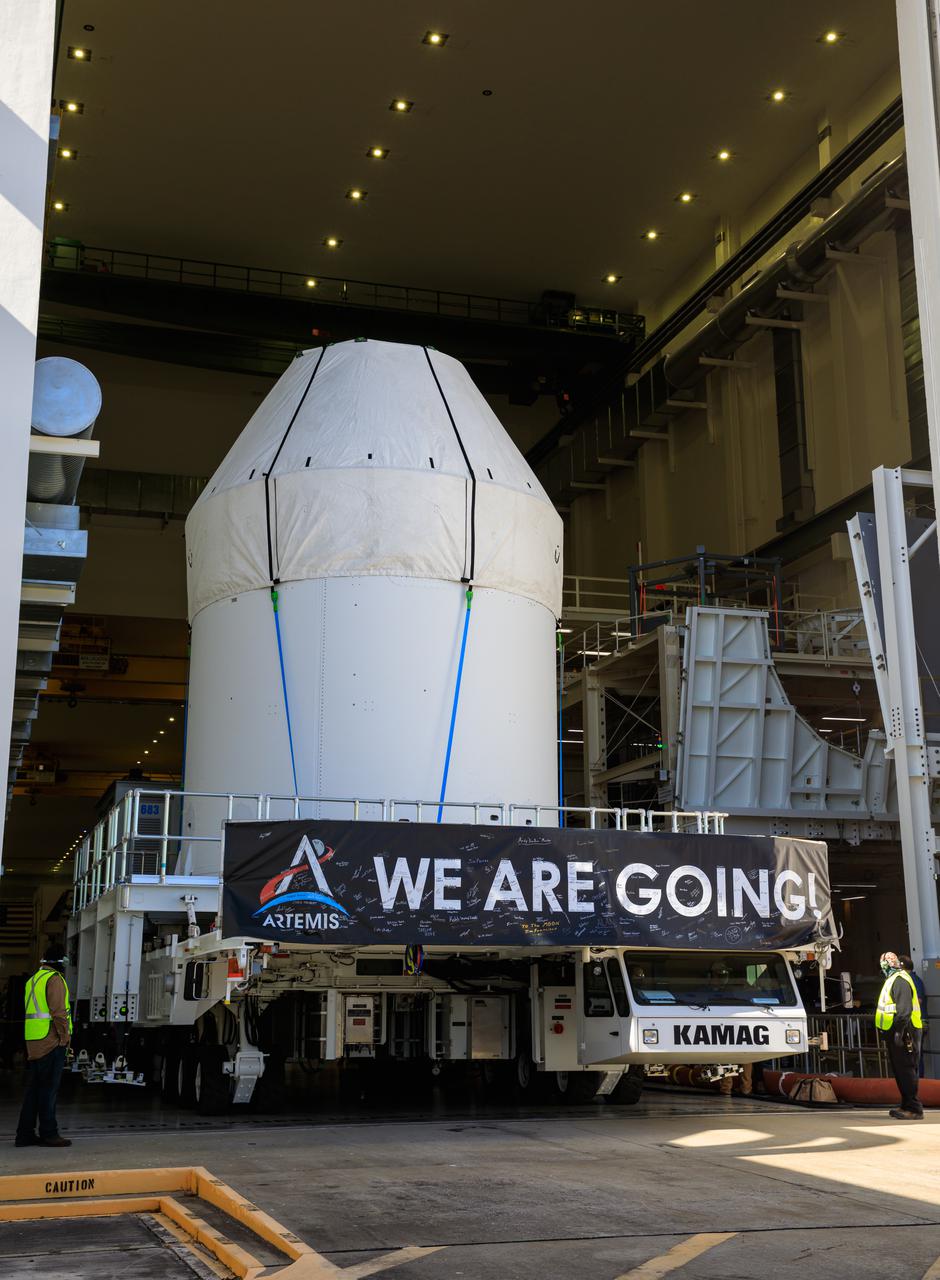
Orion is buttoned up as it sits atop a transport vehicle ready to depart from its home at the Neil Armstrong Operations and Checkout Building at NASA’s Kennedy Space Center in Florida on Jan.16, 2021. Orion will begin its trek to the Multi-Payload Processing Facility. There it will undergo ground processing with the Exploration Ground Systems team taking over ground processing ahead of the Artemis I launch.
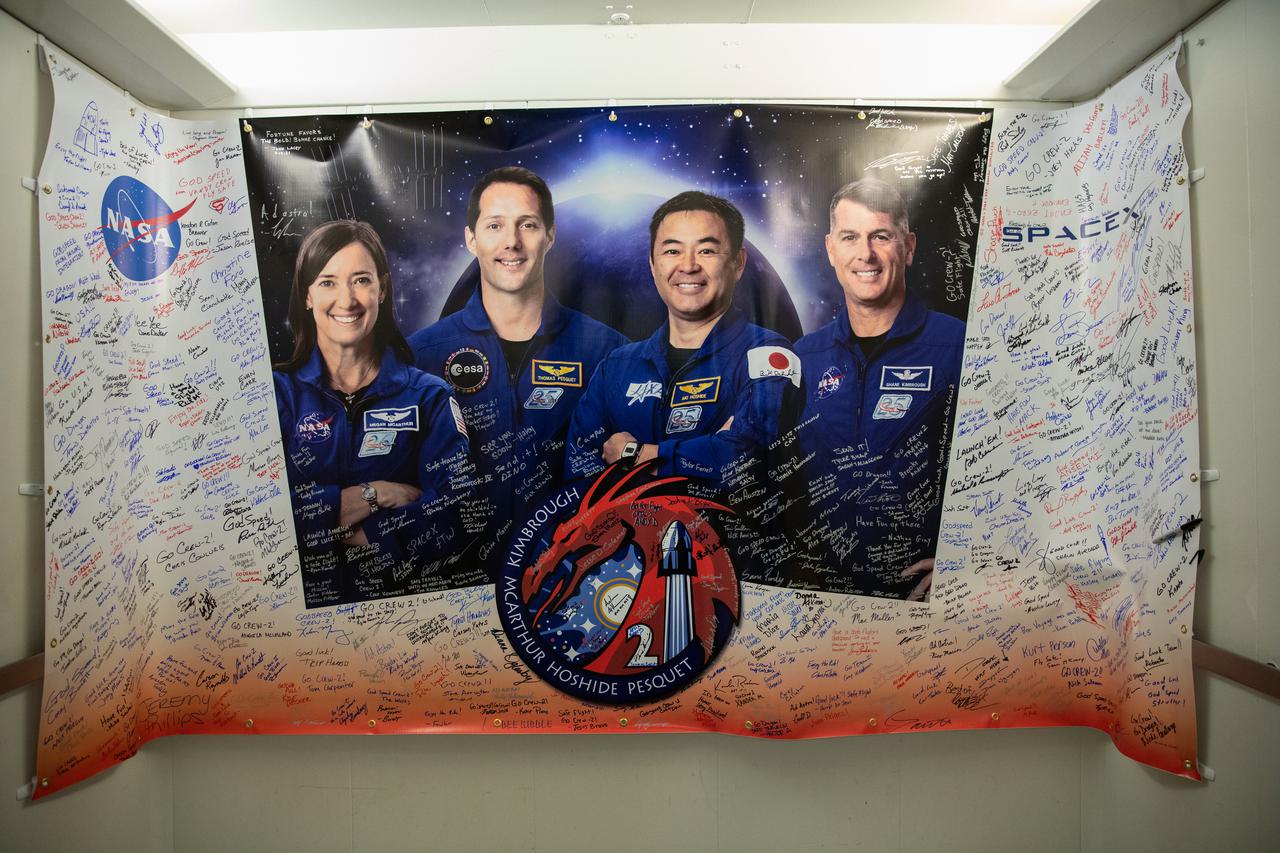
A signed banner hangs in the elevator inside the Astronaut Crew Quarters at the Neil Armstrong Operations and Checkout Building (O&C) at NASA’s Kennedy Space Center in Florida on April 23, 2021. NASA astronauts Shane Kimbrough and Megan McArthur, along with JAXA astronaut Akihiko Hoshide and ESA astronaut Thomas Pesquet, will exit the O&C and board two Tesla vehicles for the trip to Launch Complex 39A. Crew-2 is the second regular crew mission of a U.S. commercial spacecraft with astronauts to the International Space Station as part of NASA’s Commercial Crew Program. The SpaceX Crew Dragon Endeavour will launch atop the company’s Falcon 9 rocket from Pad 39A to the space station for a six-month science mission.
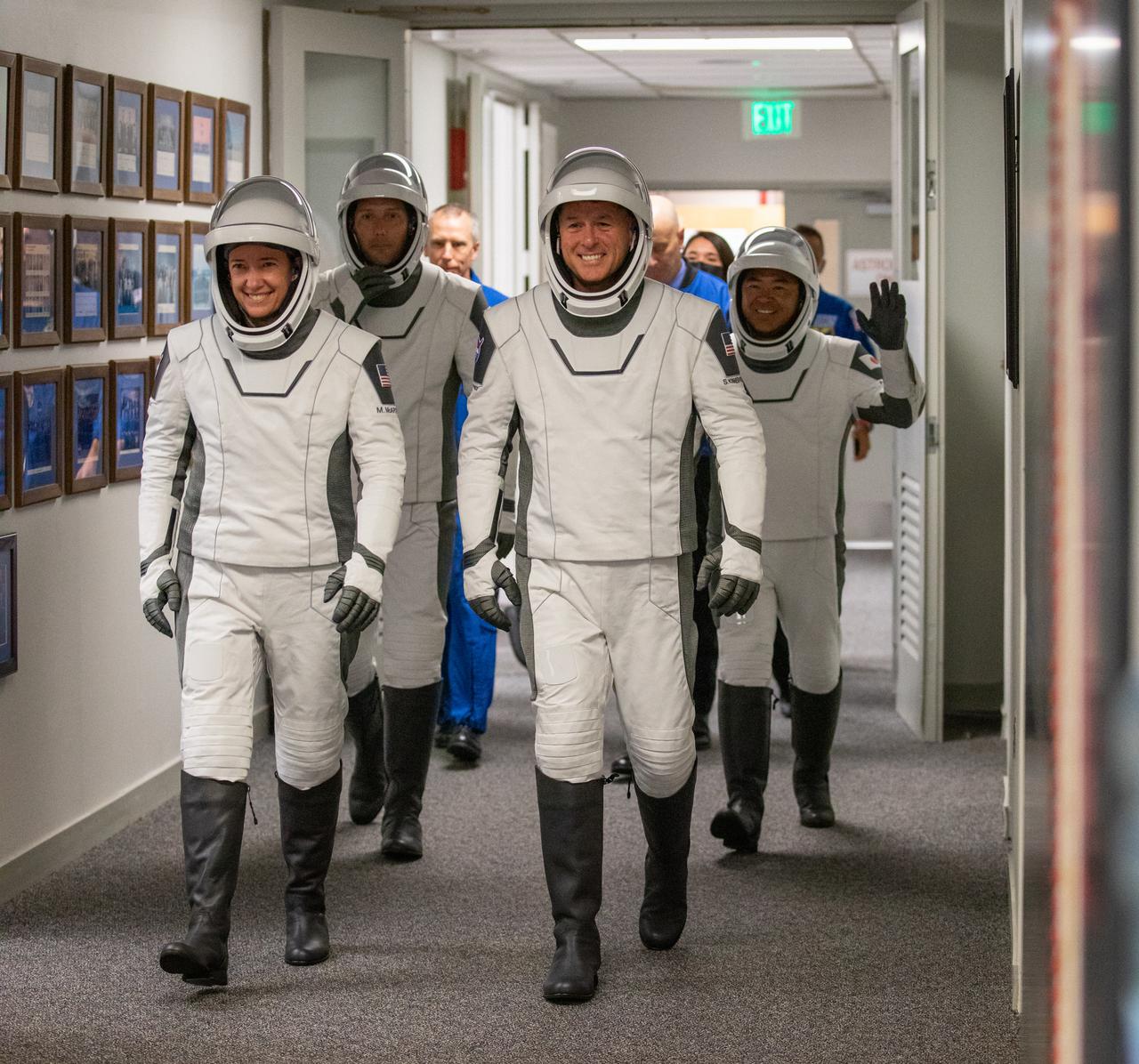
NASA SpaceX’s Crew-2 astronauts walk through the Astronaut Crew Quarters inside the Neil Armstrong Operations and Checkout Building at NASA’s Kennedy Space Center in Florida on April 23, 2021. In front, from left, are NASA astronaut Megan McArthur, pilot, and NASA astronaut Shane Kimbrough, spacecraft commander. Behind them, from left, are ESA astronaut Thomas Pesquet, mission specialist, and JAXA astronaut Akihiko Hoshide, mission specialist. They will board two Tesla vehicles for the trip to Kennedy’s Launch Complex 39A. Crew-2 is the second regular crew mission of a U.S. commercial spacecraft with astronauts to the International Space Station as part of NASA’s Commercial Crew Program. The SpaceX Crew Dragon Endeavour will launch atop the company’s Falcon 9 rocket from Pad 39A to the space station for a six-month science mission.
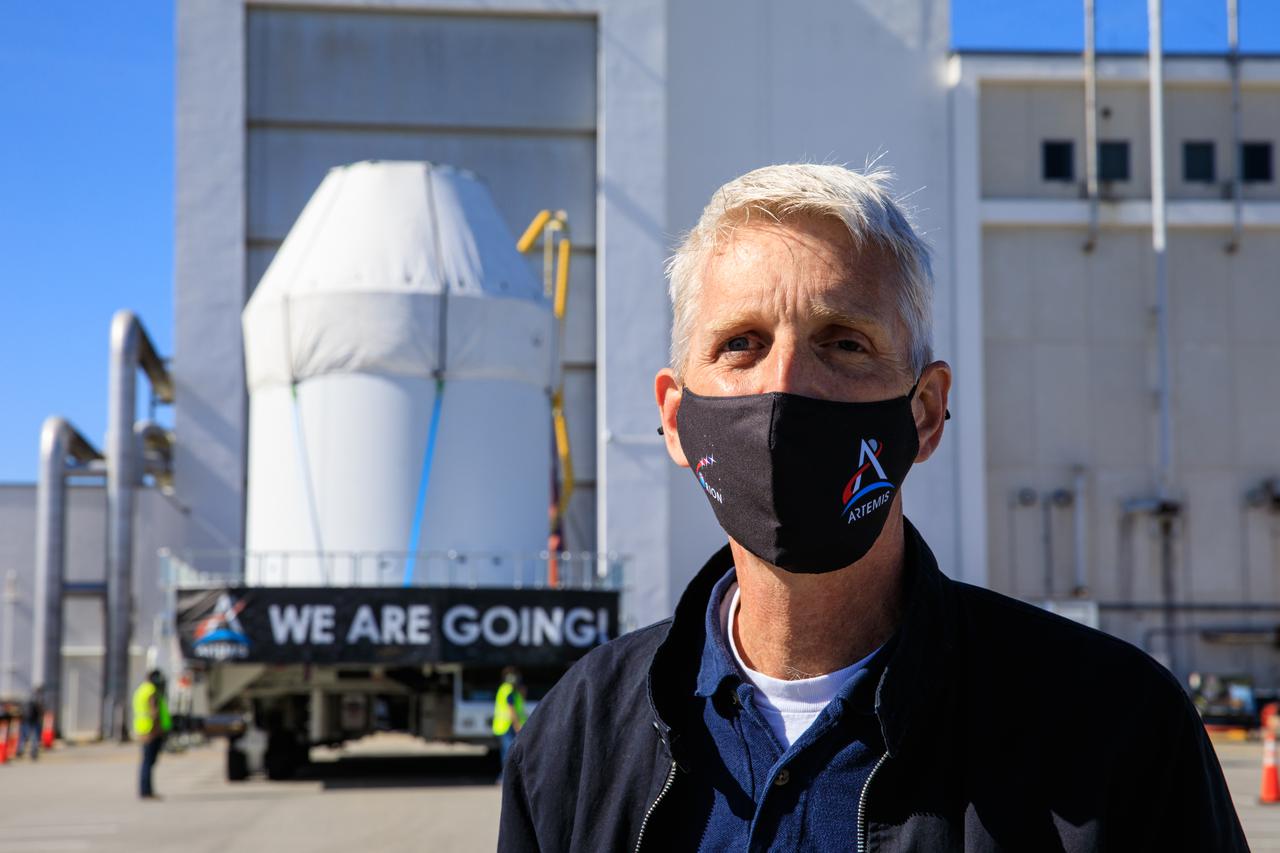
Orion sits atop a transport vehicle as it departs from its home at the Neil Armstrong Operations and Checkout Building at NASA’s Kennedy Space Center in Florida on Jan.16, 2021. In view is Scott Wilson, manager of production operations for NASA’s Orion Program. Orion will begin its trek to the Multi-Payload Processing Facility. There it will undergo ground processing with the Exploration Ground Systems team taking over ground processing ahead of the Artemis I launch.
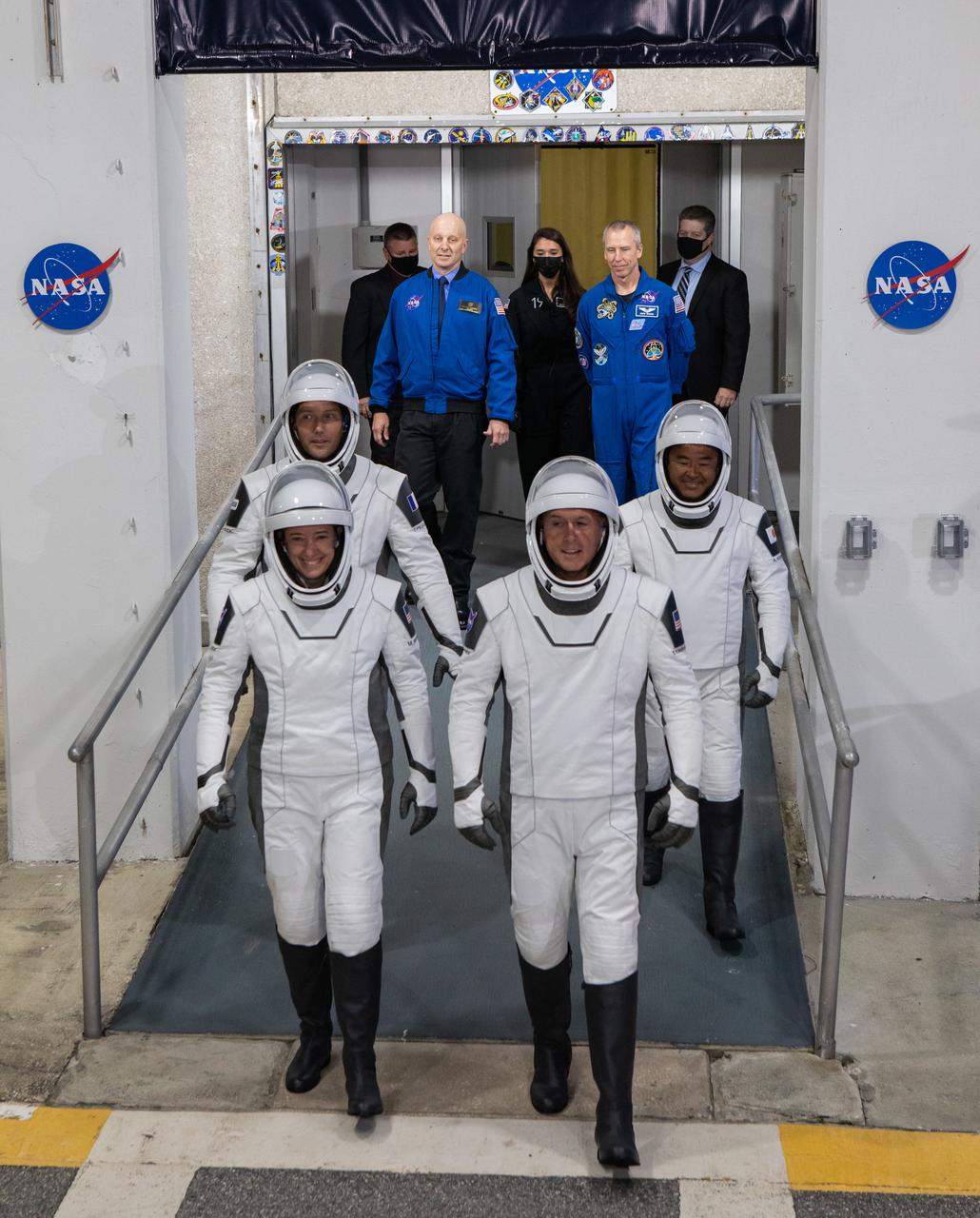
NASA SpaceX’s Crew-2 astronauts emerge from the Neil Armstrong Operations and Checkout Building at NASA’s Kennedy Space Center in Florida on April 23, 2021. In front, from left, are NASA astronaut Megan McArthur, pilot, and NASA astronaut Shane Kimbrough, spacecraft commander. Behind them, from left, are ESA astronaut Thomas Pesquet, mission specialist, and JAXA astronaut Akihiko Hoshide, mission specialist. They will board two Tesla vehicles for the trip to Kennedy’s Launch Complex 39A. Crew-2 is the second regular crew mission of a U.S. commercial spacecraft with astronauts to the International Space Station as part of NASA’s Commercial Crew Program. The SpaceX Crew Dragon Endeavour will launch atop the company’s Falcon 9 rocket from Pad 39A to the space station for a six-month science mission.
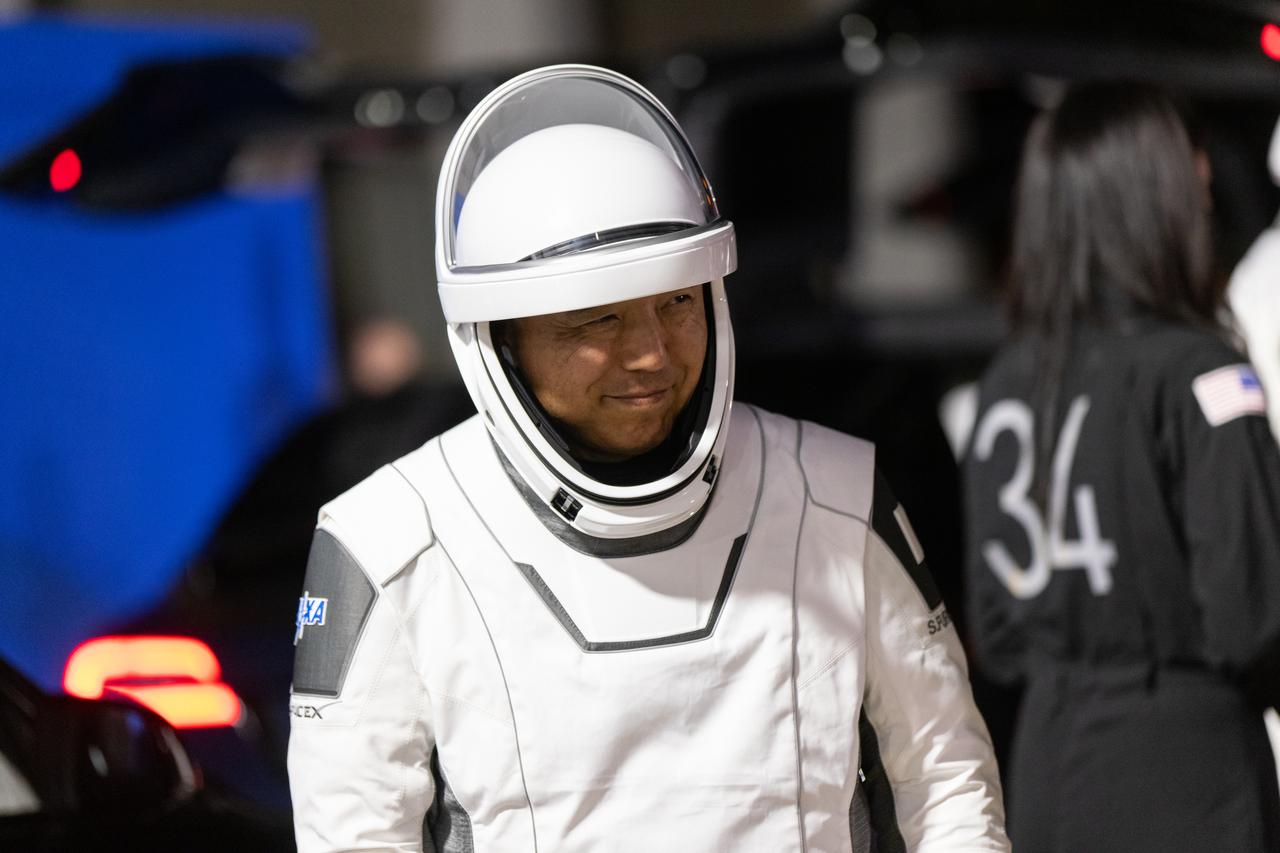
NASA’s SpaceX Crew-7 JAXA (Japan Aerospace Exploration Agency) astronaut Satoshi Furukawa smiles outside of the Neil Armstrong Operations and Checkout Building at NASA’s Kennedy Space Center in Florida on Saturday, Aug. 26, 2023. Furukawa and his crewmates are preparing to get into the customized Tesla Model X vehicles that will transport them to Kennedy’s Launch Complex 39A. SpaceX’s Dragon spacecraft, powered by the company’s Falcon 9 rocket, will carry the four-person crew – which includes NASA astronaut Jasmin Moghbeli, ESA (European Space Agency) astronaut Andreas Mogensen, and Roscosmos cosmonaut Konstantin Borisov – to the International Space Station as part of NASA’s Commercial Crew Program. Crew-7 is scheduled to launch at 3:27 a.m. EDT.
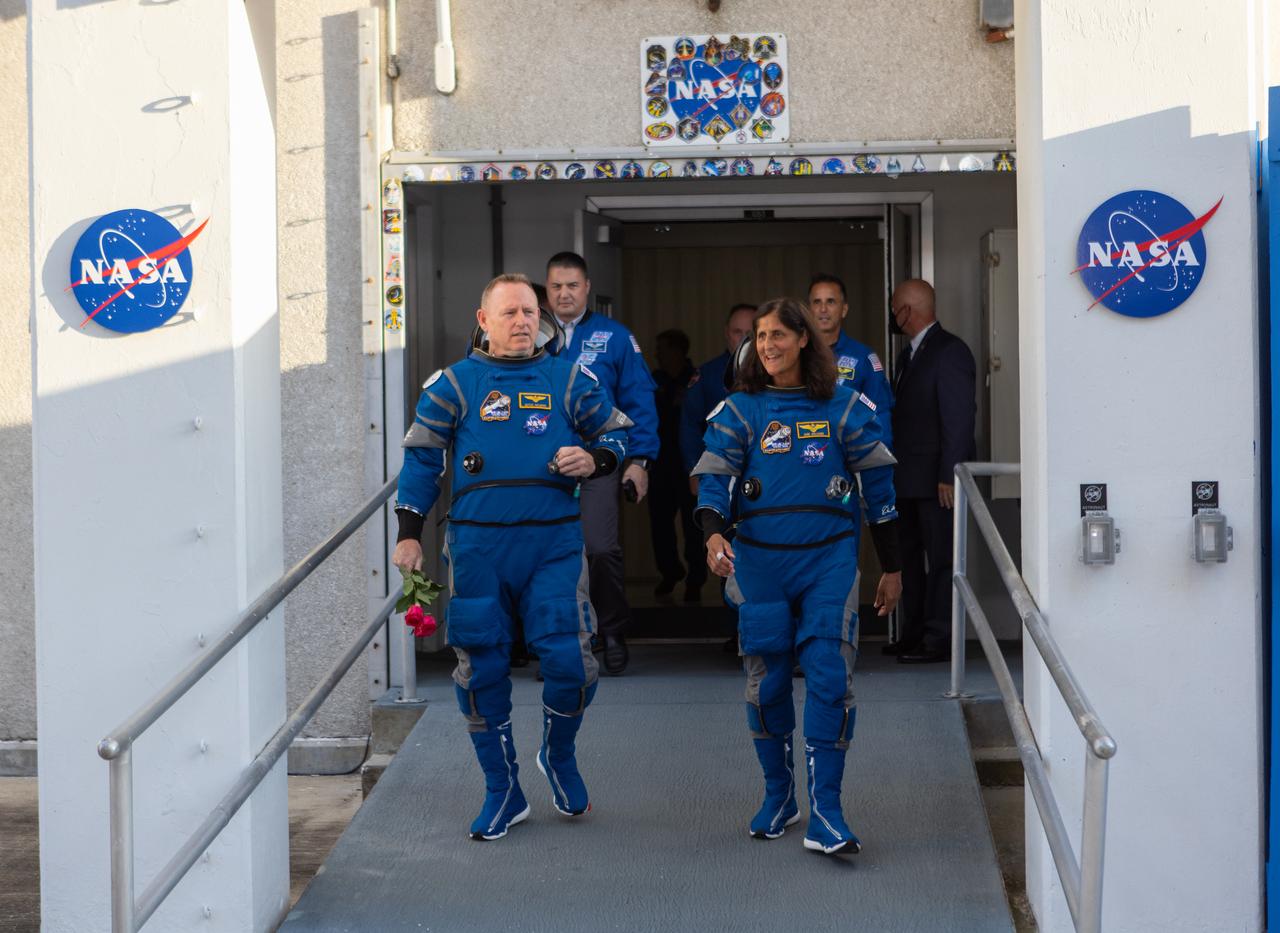
During the first launch attempt of NASA’s Boeing Crew Flight Test, NASA astronauts Butch Wilmore and Suni Williams walk out of the Neil A. Armstrong Operations and Checkout Building on Monday, May 6, 2024, at the agency’s Kennedy Space Center in Florida. As part of the agency’s Commercial Crew Program, the first crewed launch to the International Space Station aboard Boeing’s Starliner spacecraft atop a United Launch Alliance Atlas V rocket from Space Launch Complex-41 at nearby Cape Canaveral Space Force Station was targeted for 10:34 p.m. ET but scrubbed for the day.
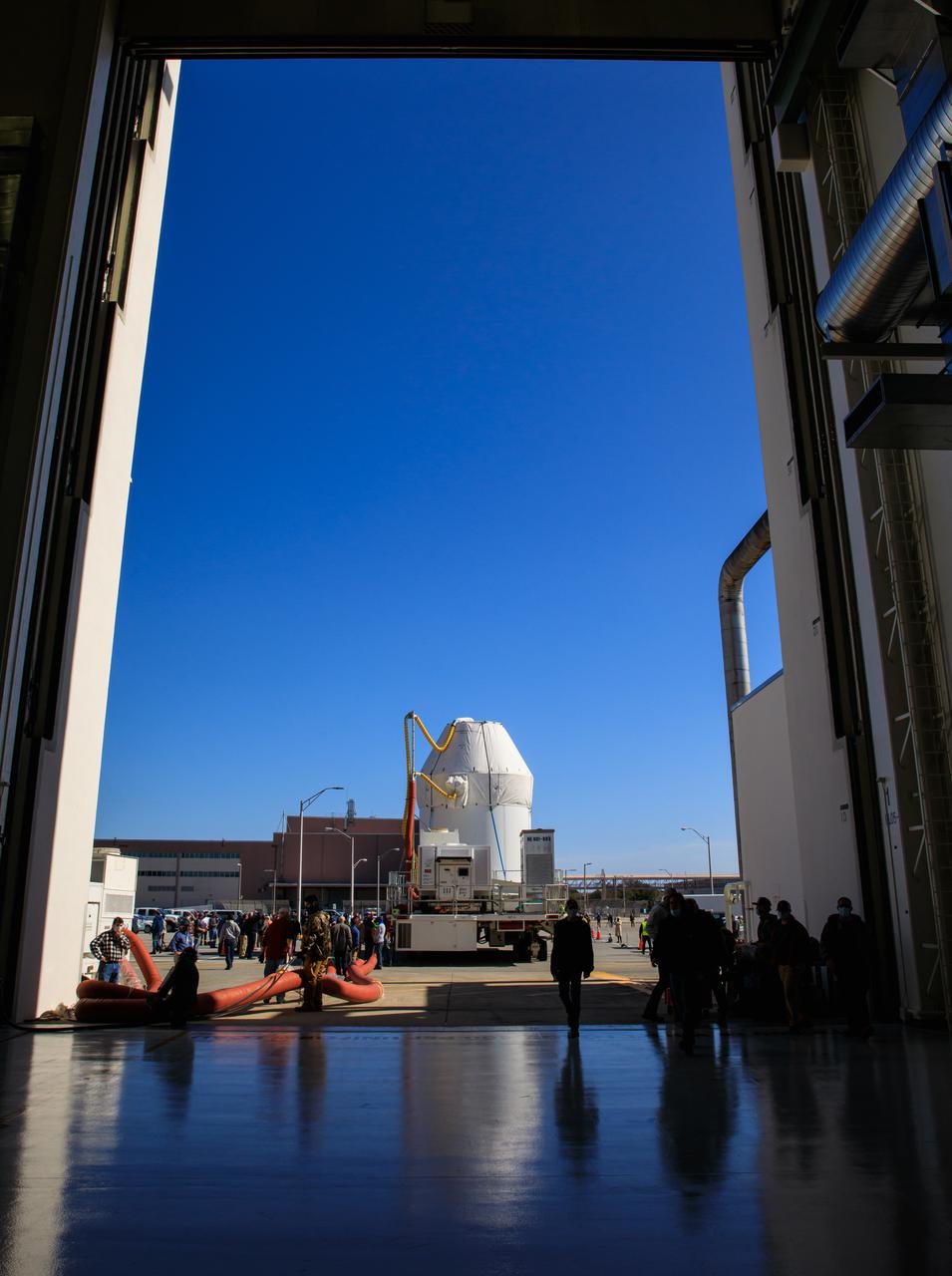
Orion sits atop a transport vehicle as it departs from its home at the Neil Armstrong Operations and Checkout Building at NASA’s Kennedy Space Center in Florida on Jan.16, 2021. Orion will begin its trek to the Multi-Payload Processing Facility. There it will undergo ground processing with the Exploration Ground Systems team taking over ground processing ahead of the Artemis I launch.

NASA’s SpaceX Crew-7 Roscosmos cosmonaut Konstantin Borisov relaxes in the suit-up room in the Astronaut Crew Quarters inside Kennedy Space Center’s Neil A. Armstrong Operations and Checkout Building a few hours before launch. A team of SpaceX suit technicians assisted the crew as they put on their custom-fitted spacesuits and checked the suits for leaks. Konstantin, along with NASA astronaut Jasmin Moghbeli, ESA (European Space Agency) astronaut Andreas Mogensen, and JAXA (Japan Aerospace Exploration Agency) astronaut Satoshi Furukawa, will launch aboard SpaceX’s Dragon spacecraft and Falcon 9 rocket to the International Space Station as part of NASA’s Commercial Crew Program. Launch is at 3:27 a.m. EDT Saturday, Aug. 26, from Kennedy’s Launch Complex 39A.
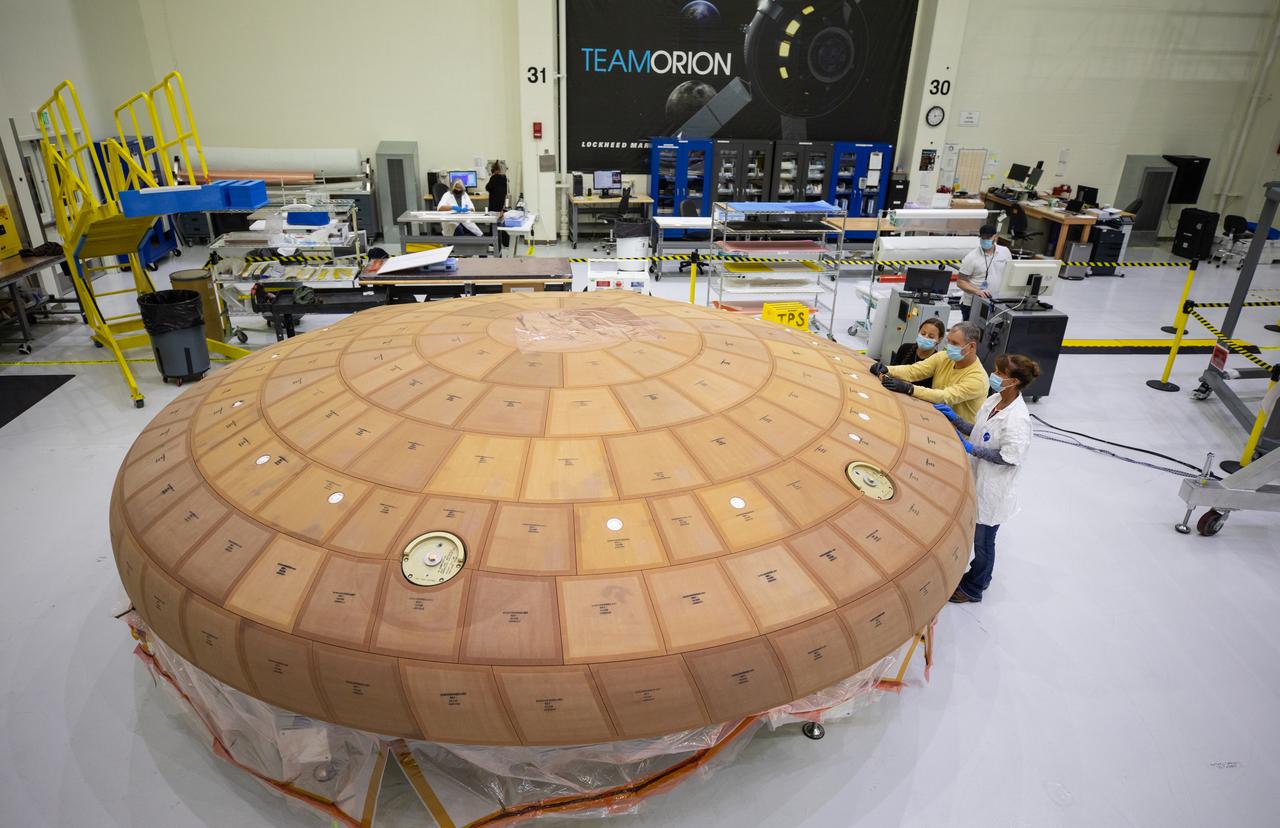
Inside the Neil Armstrong Operations and Checkout Building high bay at NASA's Kennedy Space Center in Florida, from left, technicians Diamond ScharSenstine, Kenny Leidner, Russ Novak and Darlene Beville, all with ASRC Federal, inspect AVCOAT block bonding on the Artemis II heat shield on July 2, 2020. The heat shield is one of the most critical elements of Orion and will protect the capsule and astronauts during reentry through Earth’s atmosphere. Artemis II is the first crewed mission in a series of missions to the Moon and on to Mars. Artemis II will confirm all of the Orion spacecraft’s systems operate as designed in the actual environment of deep space with astronauts aboard. As part of the Artemis Program, NASA will send the first woman and next man to the Moon by 2024.
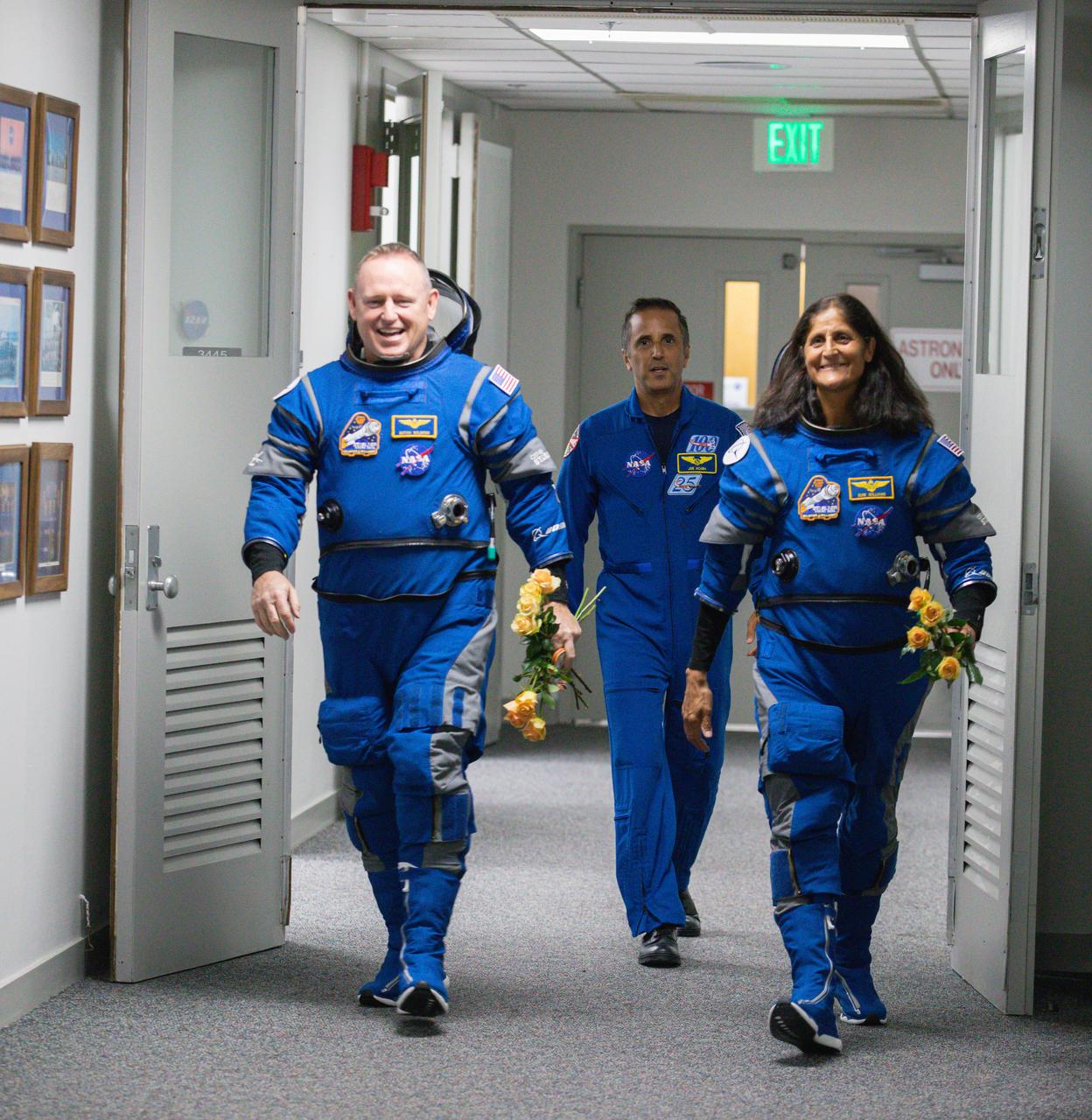
Live launch coverage of NASA’s Boeing Crew Flight Test mission, beginning with a summarized video of astronaut suit-up inside the iconic Neil Armstrong Operations and Checkout building at NASA’s Kennedy Space Center in Florida and continuing through launch from Space Launch Complex-41 at nearby Cape Canaveral Space Force Station. Boeing’s Starliner spacecraft, named Calypso, launched at 10:52 a.m. EDT Wednesday, June 5, on a United Launch Alliance Atlas V rocket, carrying NASA astronauts Butch Wilmore and Suni Williams to the International Space Station as part of the agency’s Commercial Crew Program. Starliner is scheduled to dock to the orbiting laboratory at about 12:15 p.m. EDT Thursday, June 6.
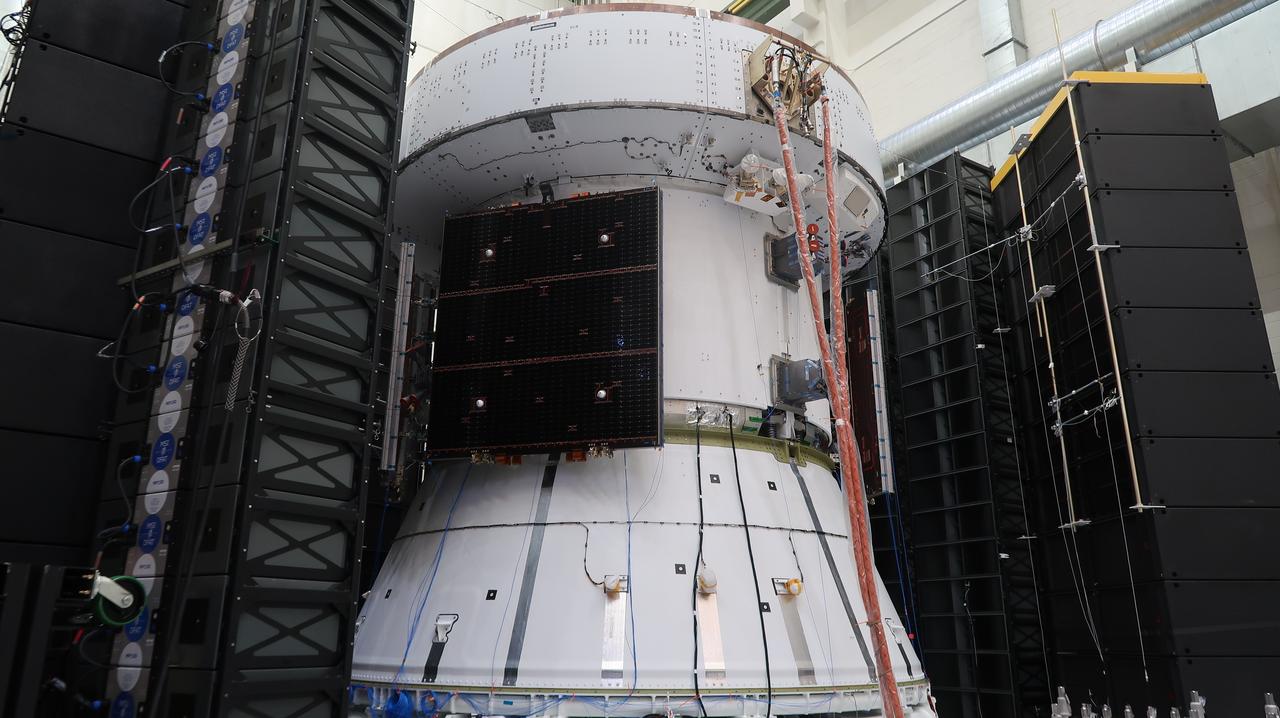
The European Service Module for the Artemis II mission is photographed inside the Neil Armstrong Operations and Checkout Building at NASA's Kennedy Space Center in Florida earlier this month. The Service Module successfully completed a round of acoustic tests to ensure it can withstand the speed and vibration it will experience during launch and throughout the mission. Artemis II will be the first crewed flight test of the Space Launch System rocket and Orion spacecraft. The service module will provide the power necessary to propel Orion on a trip around the Moon, including the in-space maneuvering capability and other commodities necessary to sustain crew for the duration of the mission.
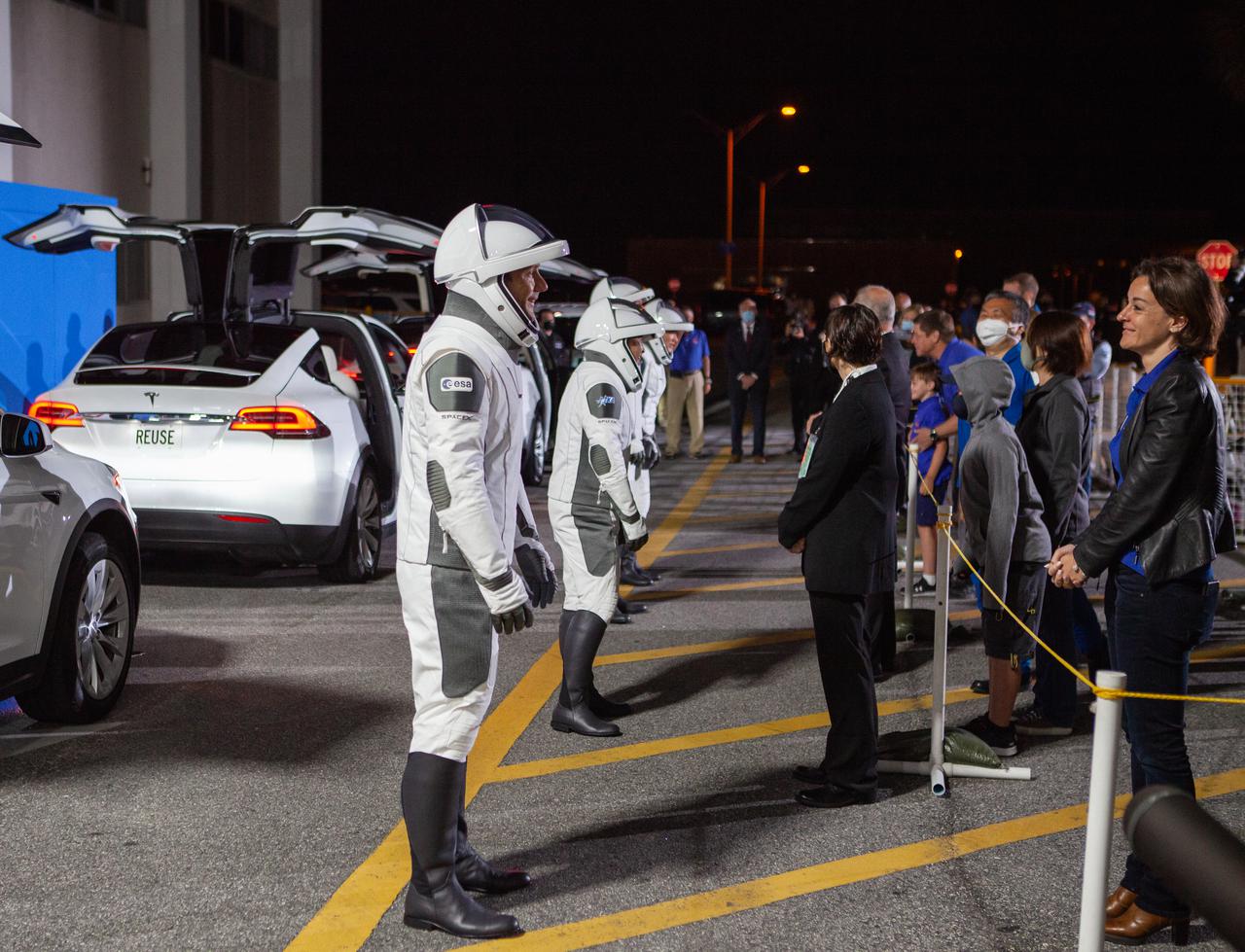
NASA SpaceX’s Crew-2 astronauts say goodbye to their families outside of the Neil Armstrong Operations and Checkout Building at NASA’s Kennedy Space Center in Florida on April 23, 2021. NASA astronauts Shane Kimbrough and Megan McArthur, ESA astronaut Thomas Pesquet, and JAXA astronaut Akihiko Hoshide will then board two Tesla vehicles for the trip to Kennedy’s Launch Complex 39A. Crew-2 is the second regular crew mission of a U.S. commercial spacecraft with astronauts to the International Space Station as part of NASA’s Commercial Crew Program. The SpaceX Crew Dragon Endeavour will launch atop the company’s Falcon 9 rocket from Pad 39A to the space station for a six-month science mission.
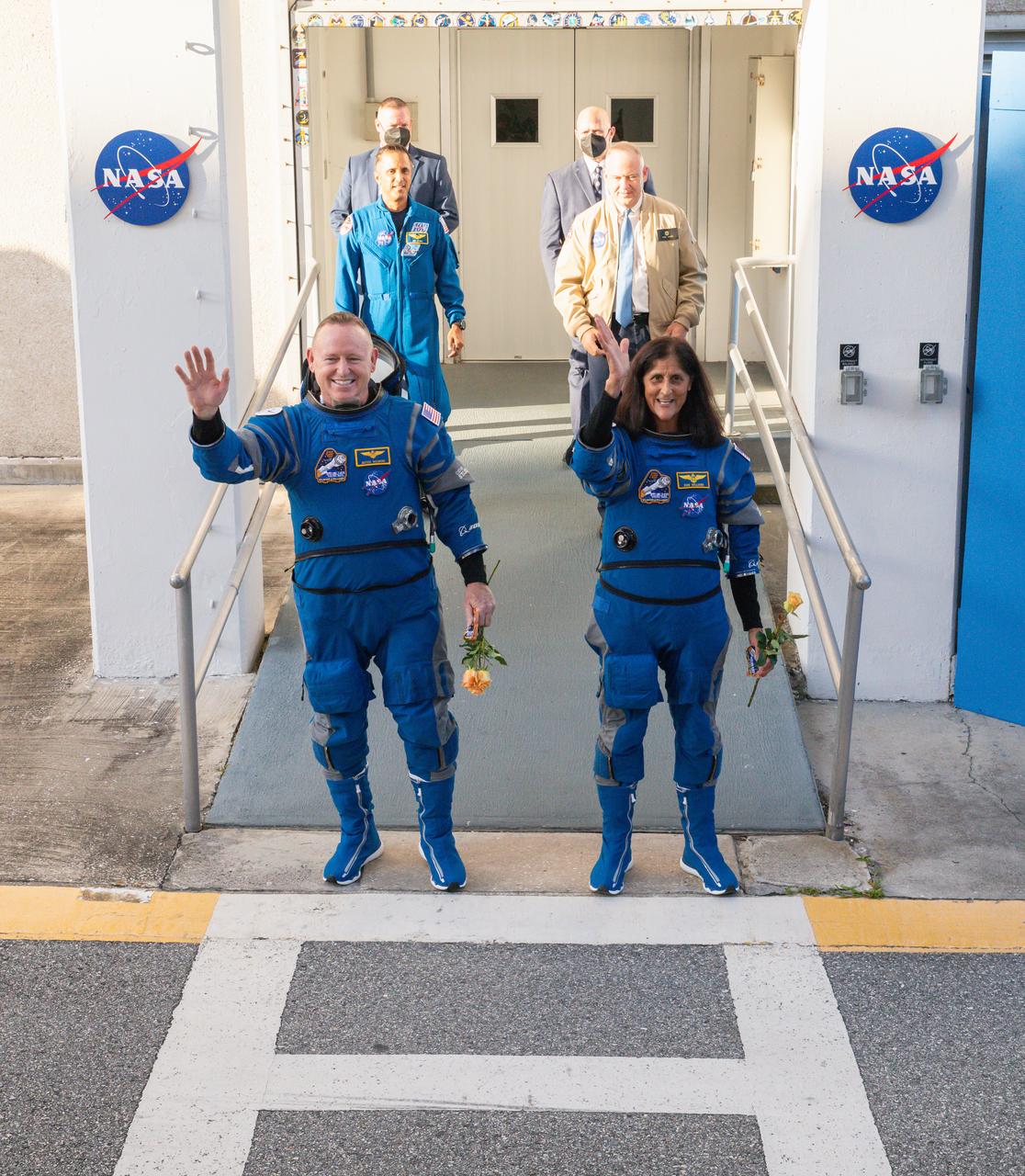
NASA’s Boeing Crew Flight Test astronauts Butch Wilmore and Suni Williams walk out of the Neil A. Armstrong Operations and Checkout Building on Wednesday, June 5, 2024, at the agency’s Kennedy Space Center in Florida. The crew members are on their way to load up into Boeing’s Astrovan for the trip to the launch pad of Space Launch Complex-41 at nearby Cape Canaveral Space Force Station, where they will launch to the International Space Station aboard Boeing’s Starliner spacecraft atop a United Launch Alliance Atlas V rocket at 10:52 a.m. EDT.
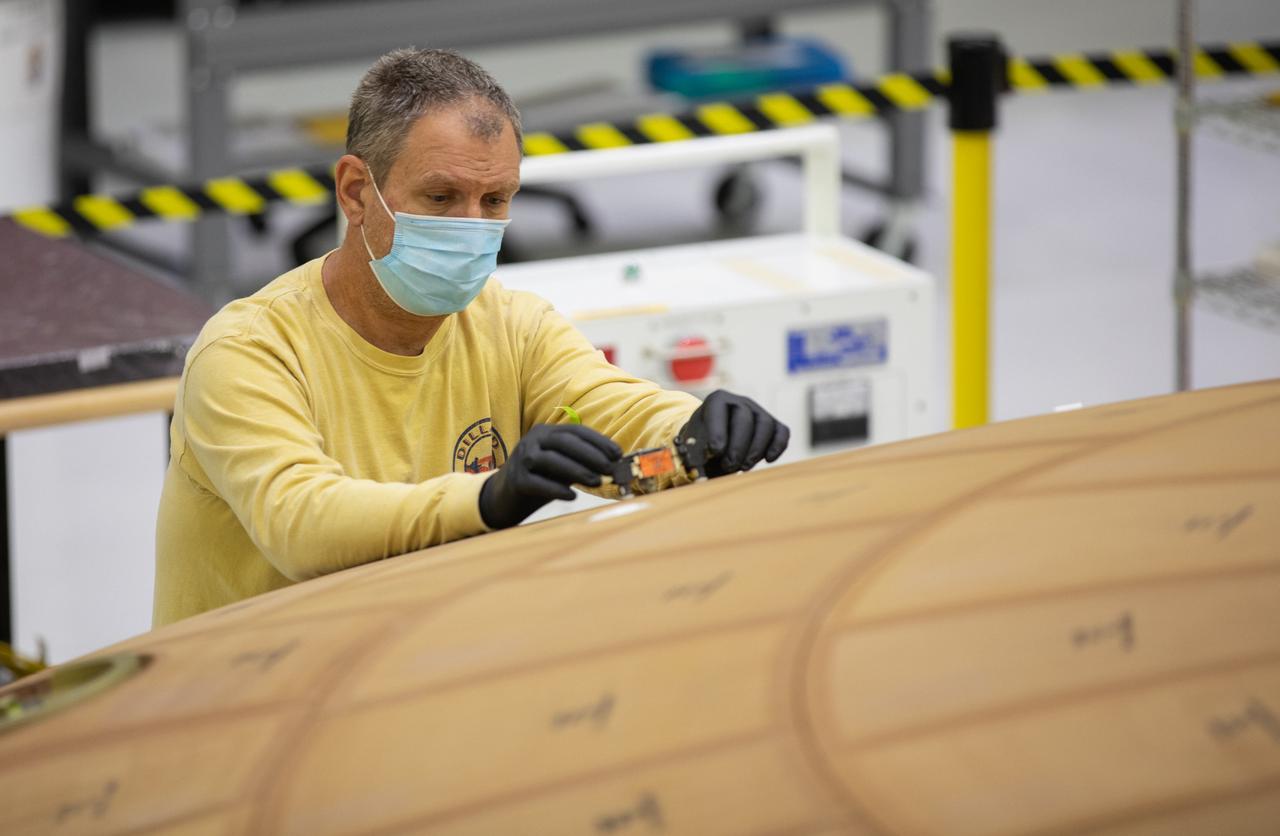
Inside the Neil Armstrong Operations and Checkout Building high bay at NASA's Kennedy Space Center in Florida, technician Kenny Leidner with ASRC Federal, inspects AVCOAT block bonding on the Artemis II heat shield on July 2, 2020. The heat shield is one of the most critical elements of Orion and will protect the capsule and astronauts during reentry through Earth’s atmosphere. Artemis II is the first crewed mission in a series of missions to the Moon and on to Mars. Artemis II will confirm all of the Orion spacecraft’s systems operate as designed in the actual environment of deep space with astronauts aboard. As part of the Artemis Program, NASA will send the first woman and next man to the Moon by 2024.
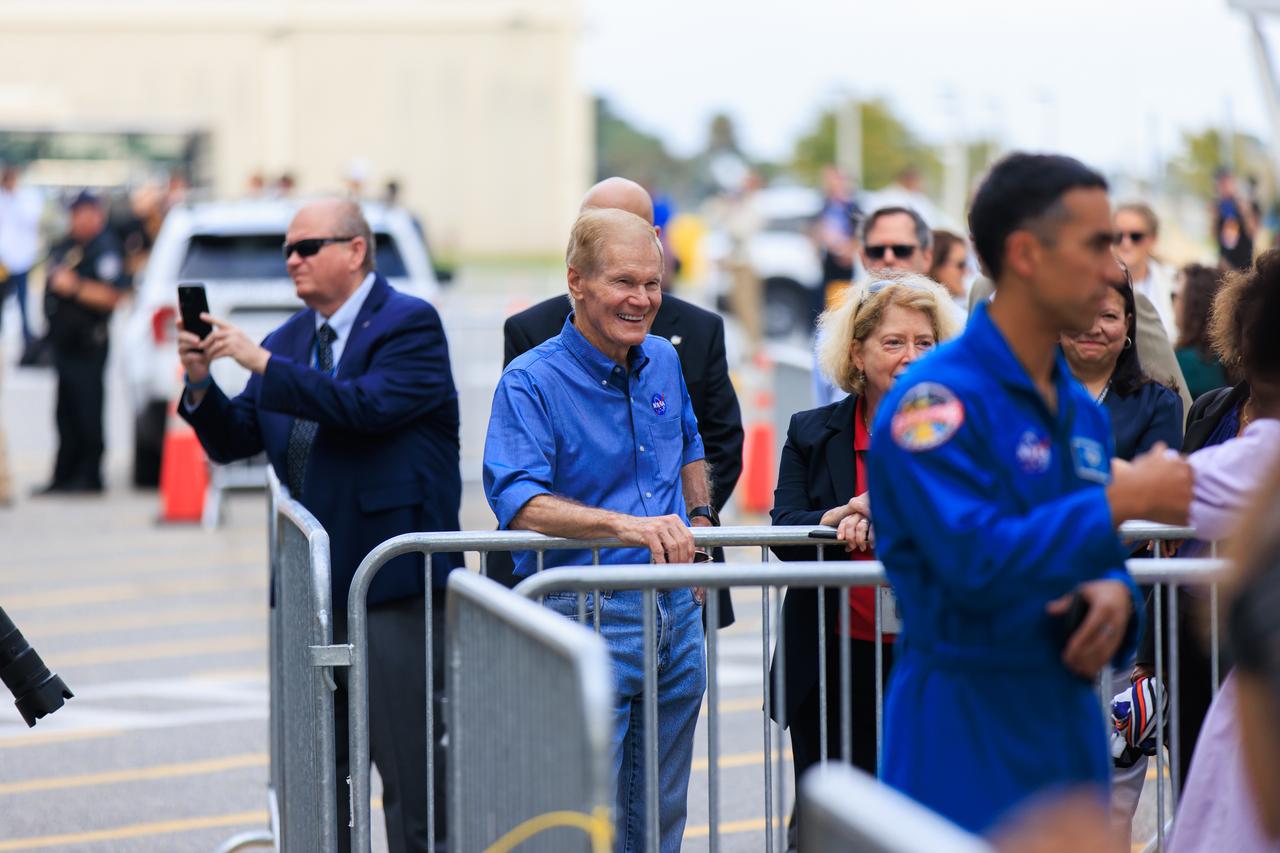
NASA Administrator Bill Nelson greets NASA’s SpaceX Crew-9 crew members as they walk out of the Neil A. Armstrong Operations and Checkout Building at the agency’s Kennedy Space Center in Florida ahead of launch on Saturday, Sept. 28, 2024. NASA astronaut Nick Hague and Roscosmos cosmonaut Aleksandr Gorbunov will launch to the International Space Station aboard SpaceX’s Dragon spacecraft and Falcon 9 rocket. Launch is targeted for 1:17 p.m. EDT from Space Launch Complex-40 at Cape Canaveral Space Force Station in Florida. Crew-9 is the ninth crew rotation mission with SpaceX to the space station as part of the agency’s Commercial Crew Program.
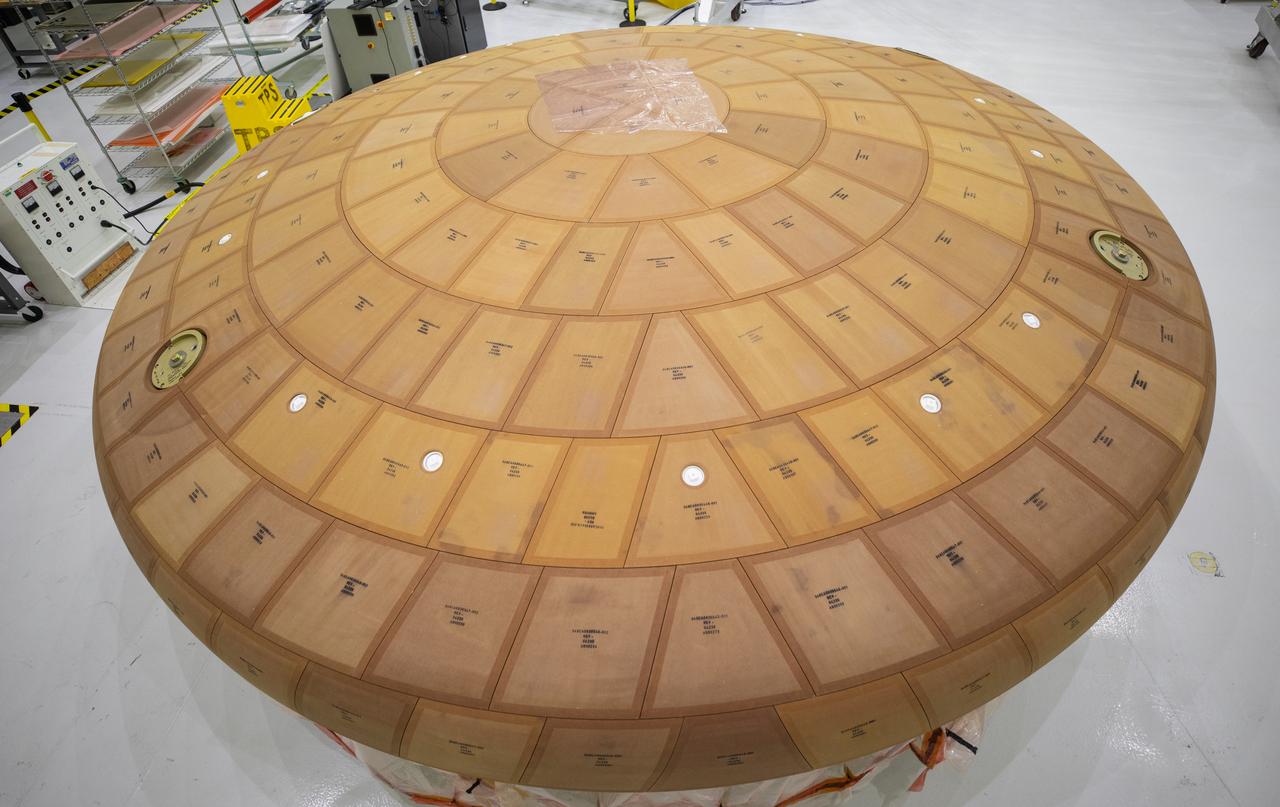
Inside the Neil Armstrong Operations and Checkout Building high bay at NASA's Kennedy Space Center in Florida, the AVOCAT block bonding is complete on the Artemis II heat shield on July 2, 2020. The heat shield is one of the most critical elements of Orion and will protect the capsule and astronauts during reentry through Earth’s atmosphere. Artemis II is the first crewed mission in a series of missions to the Moon and on to Mars. Artemis II will confirm all of the Orion spacecraft’s systems operate as designed in the actual environment of deep space with astronauts aboard. As part of the Artemis Program, NASA will send the first woman and next man to the Moon by 2024.
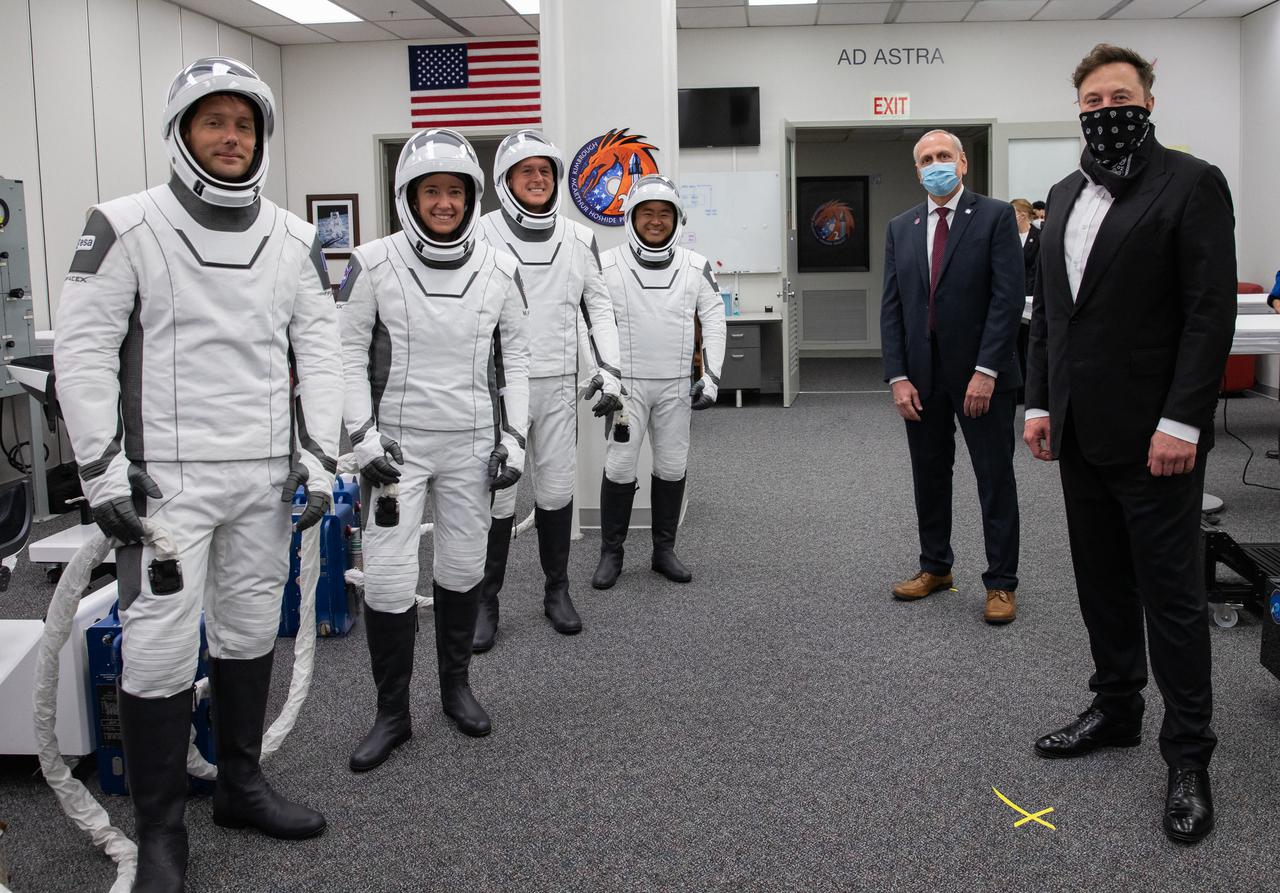
SpaceX CEO and founder Elon Musk and NASA acting administrator Steve Jurczyk visit with from left, ESA astronaut Thomas Pesquet, NASA astronaut Megan McArthur, NASA astronaut Shane Kimbrough and JAXA astronaut Akihiko Hoshide inside the crew suit-up room in the Neil Armstrong Operations and Checkout Building at NASA’s Kennedy Space Center in Florida, on April 23, 2021. The four astronauts will head to the International Space Station on NASA’s SpaceX Crew-2 mission. SpaceX’s Crew Dragon Endeavour will launch on the company’s Falcon 9 rocket from Kennedy’s Launch Complex 39A today at 5:49 a.m. EDT.
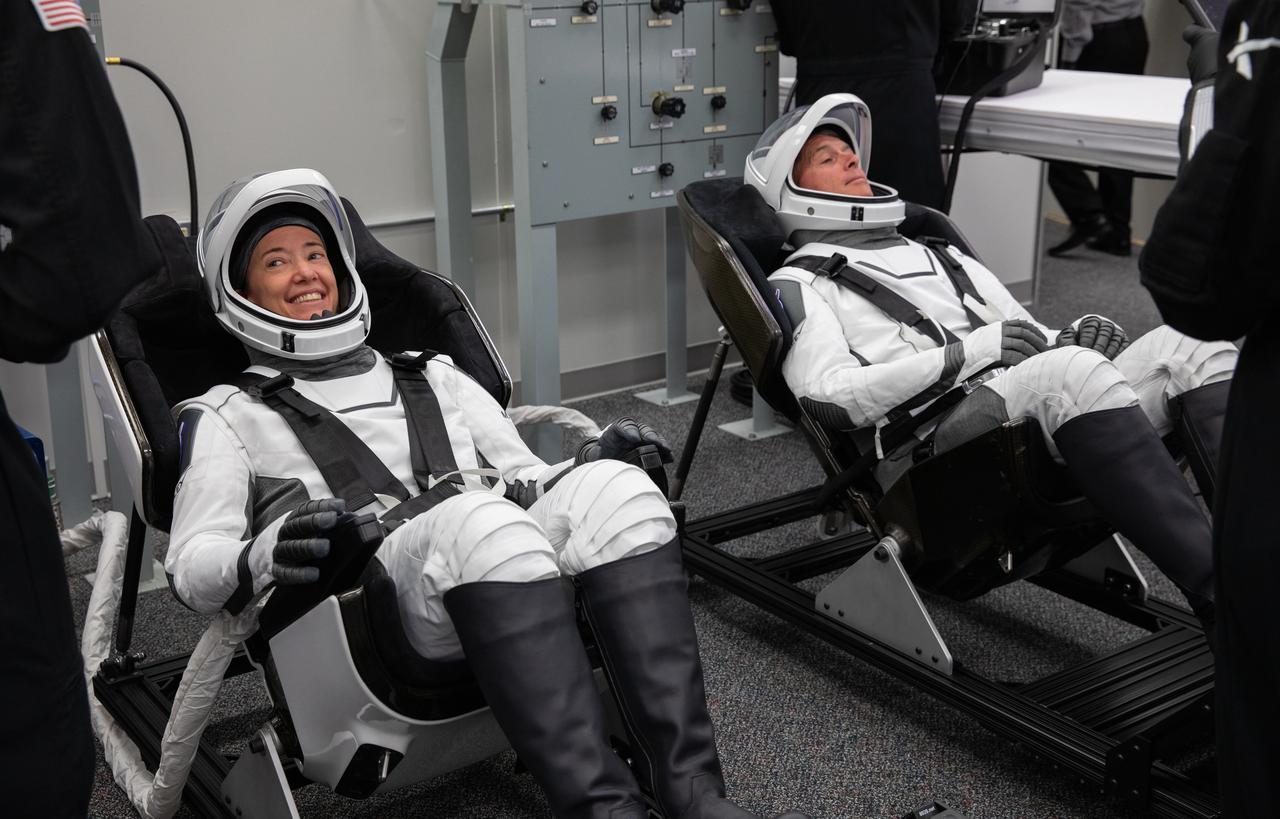
NASA astronauts Megan McArthur, left, and Shane Kimbrough are seated inside the crew suit-up room in the Neil Armstrong Operations and Checkout Building at NASA’s Kennedy Space Center in Florida, on April 23, 2021. McArthur and Kimbrough, along with ESA astronaut Thomas Pesquet and JAXA astronaut Akihiko Hoshide, will head to the International Space Station on NASA’s SpaceX Crew-2 mission. SpaceX’s Crew Dragon Endeavour will launch on the company’s Falcon 9 rocket from Kennedy’s Launch Complex 39A today at 5:49 a.m. EDT.
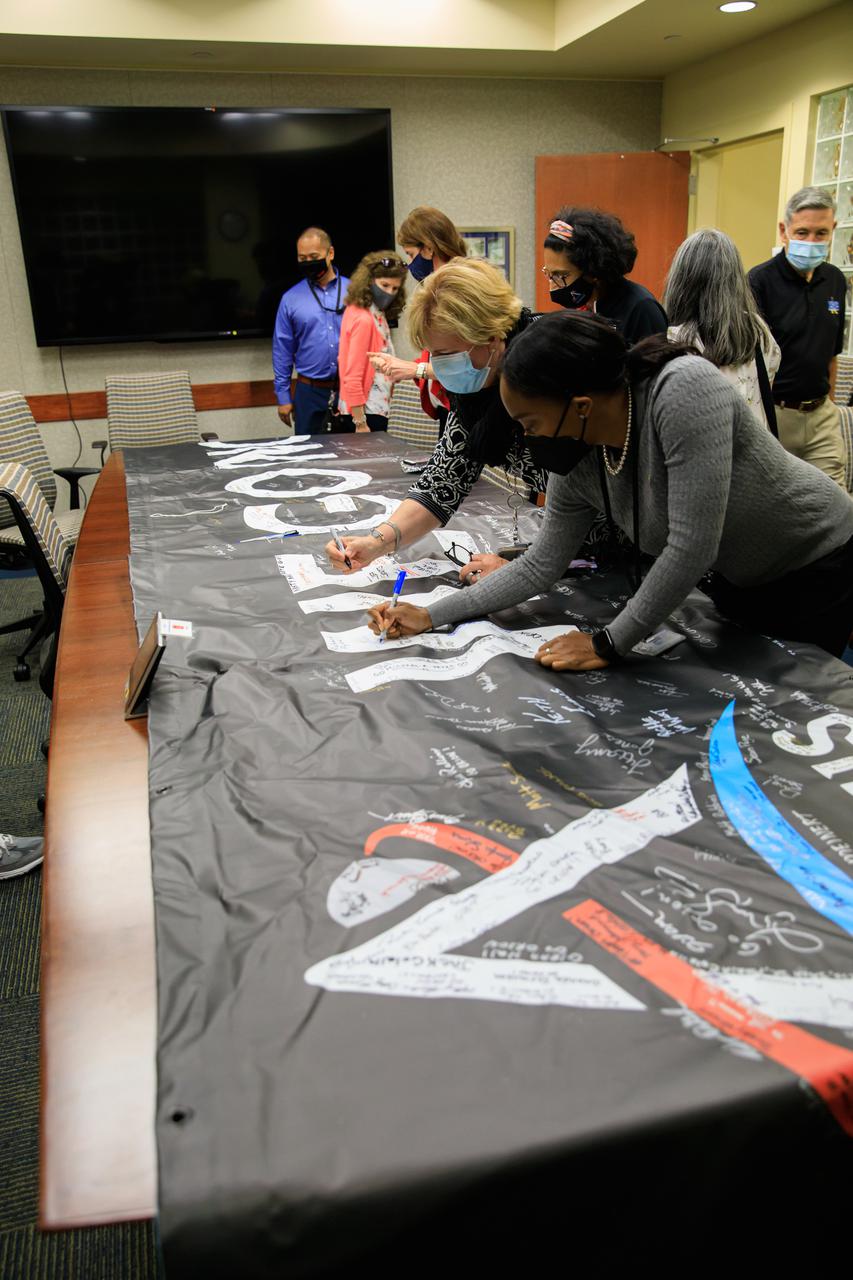
Senior leaders with Kennedy Space Center in Florida, familiarize newly appointed officials from NASA Headquarters with the center’s facilities during a tour on April 19, 2021. The group is inside the Neil Armstrong Operations and Checkout Building signing an Artemis banner. Artemis I will be the first integrated test of SLS and Orion and will pave the way for landing the first woman and first person of color on the lunar surface. It will be a proving ground for deep space exploration, leading the agency’s efforts under the Artemis program for a sustainable presence on the Moon and preparing for human missions to Mars.
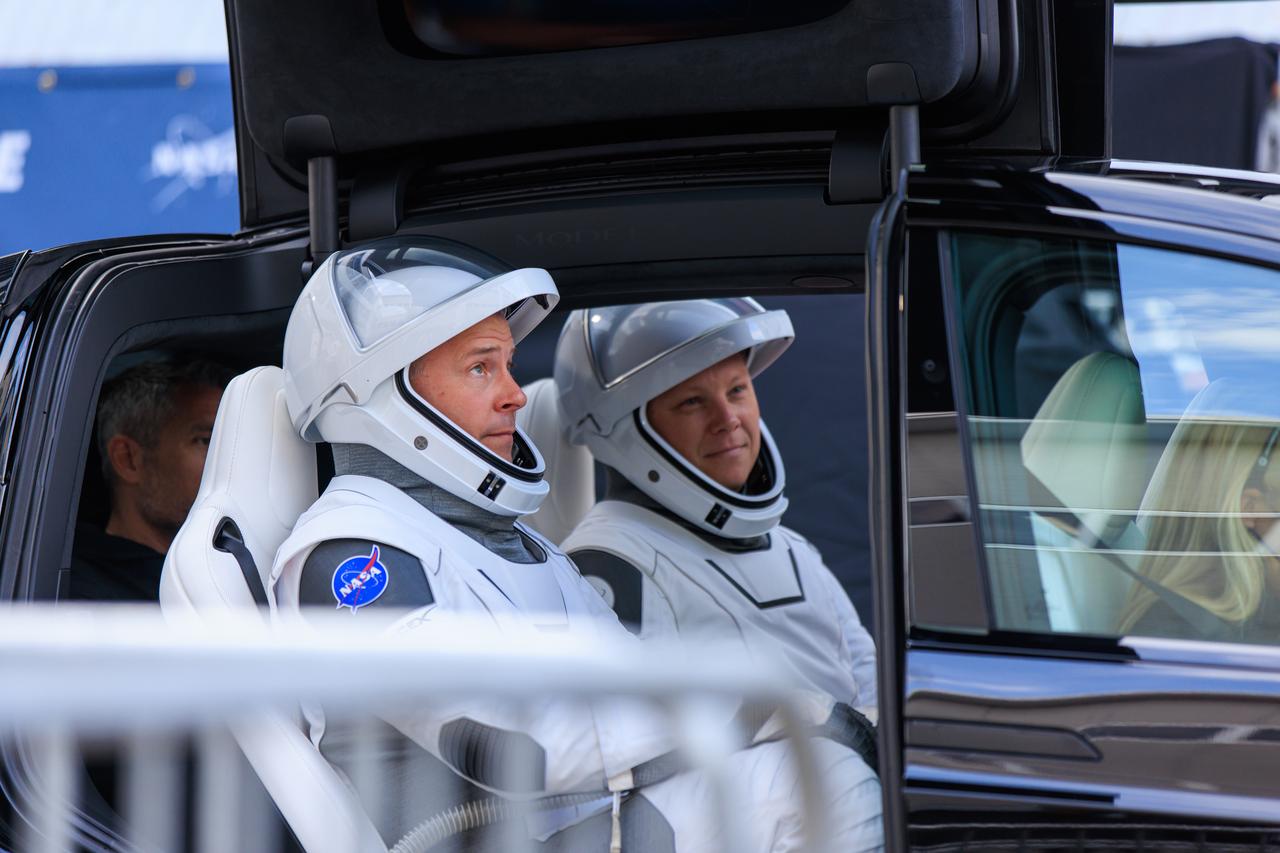
NASA astronaut Nick Hague (left) and Roscosmos cosmonaut Aleksandr Gorbunov make the journey from the Neil A. Armstrong Operations and Checkout Building at the agency’s Kennedy Space Center in Florida to Space Launch Complex-40 at nearby Cape Canaveral Space Force Station ahead of launch on Saturday, Sept. 28, 2024. Hague and Gorbunov will launch to the International Space Station aboard SpaceX’s Dragon spacecraft and Falcon 9 rocket. Launch is targeted for 1:17 p.m. EDT for the ninth crew rotation mission with SpaceX to the space station as part of the agency’s Commercial Crew Program.
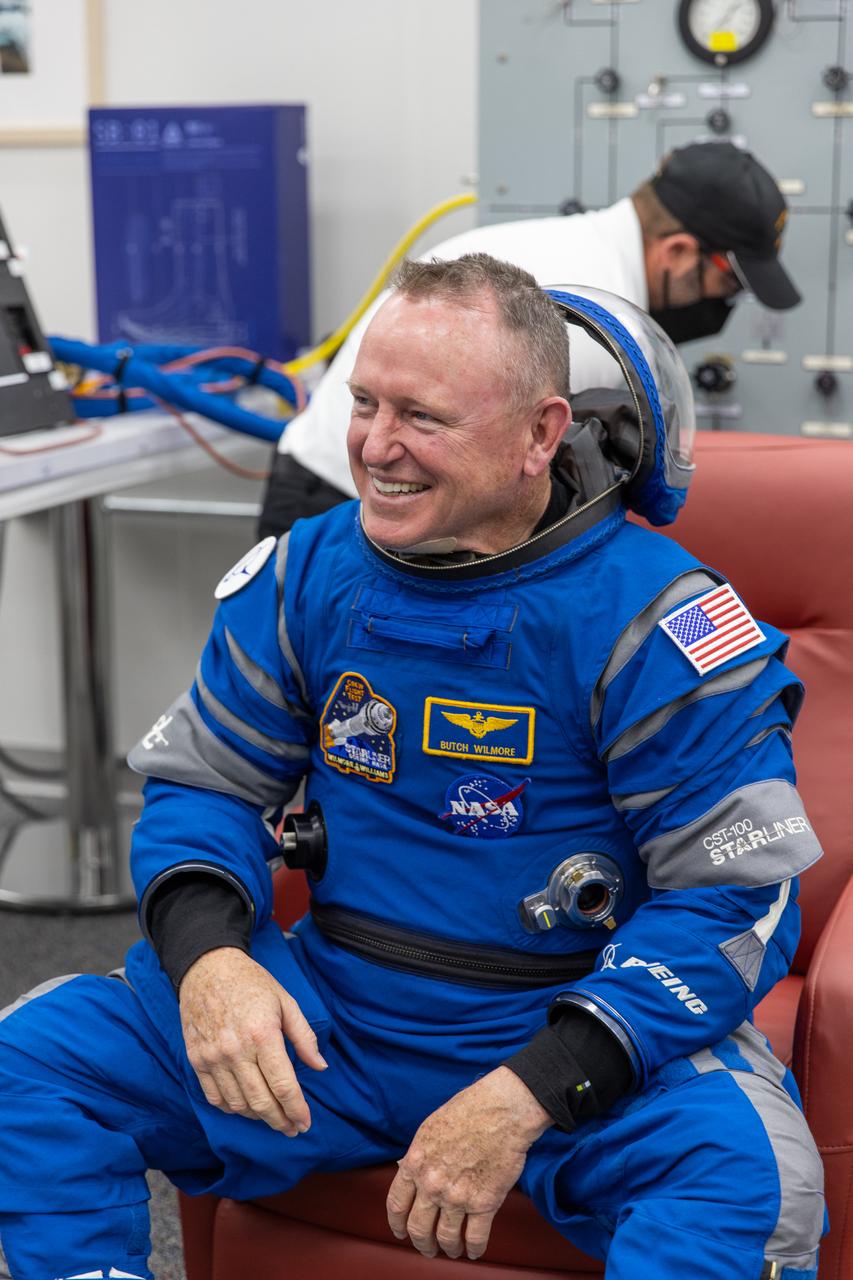
During the first launch attempt of NASA’s Boeing Crew Flight Test, NASA astronaut Butch Wilmore is photographed inside the crew suit-up room in the Neil A. Armstrong Operations and Checkout Building at NASA’s Kennedy Space Center in Florida on Monday, May 6, 2024. As part of the agency’s Commercial Crew Program, the first crewed launch to the International Space Station aboard Boeing’s Starliner spacecraft atop a United Launch Alliance Atlas V rocket from Space Launch Complex-41 at nearby Cape Canaveral Space Force Station was targeted for 10:34 p.m. ET but scrubbed for the day.
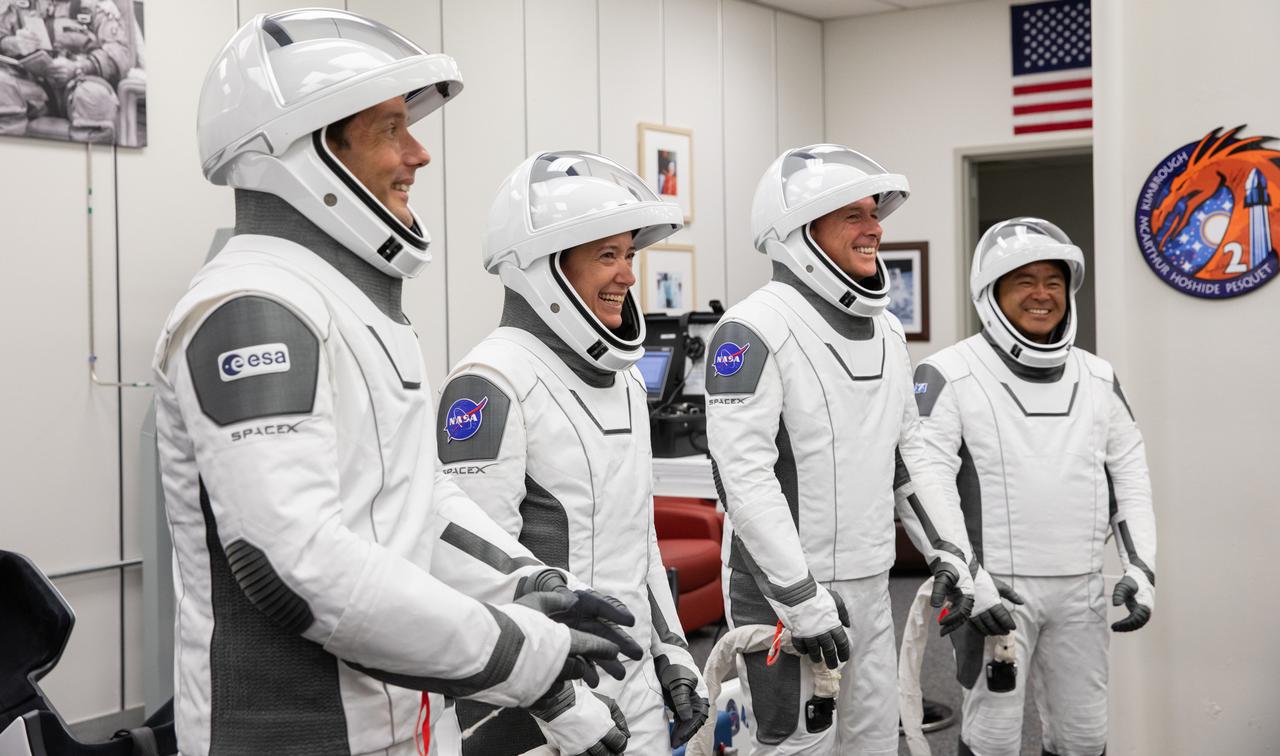
From left, ESA astronaut Thomas Pesquet, NASA astronaut Megan McArthur, NASA astronaut Shane Kimbrough and JAXA astronaut Akihiko Hoshide share a laugh inside the crew suit-up room in the Neil Armstrong Operations and Checkout Building at NASA’s Kennedy Space Center in Florida, on April 23, 2021. The four astronauts will head to the International Space Station on NASA’s SpaceX Crew-2 mission. SpaceX’s Crew Dragon Endeavour will launch on the company’s Falcon 9 rocket from Kennedy’s Launch Complex 39A today at 5:49 a.m. EDT.
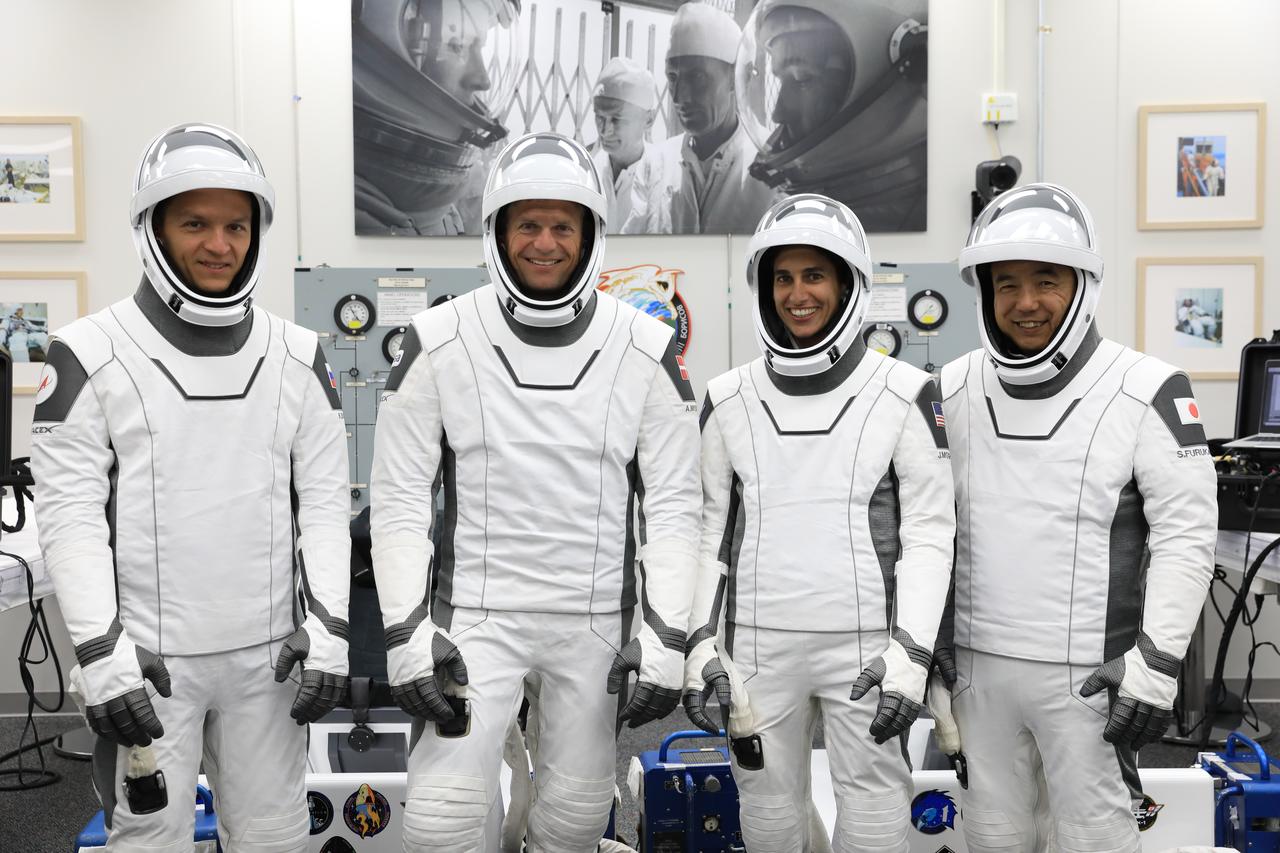
NASA’s SpaceX Crew-7 crew members participate in a countdown dress rehearsal at the agency’s Kennedy Space Center in Florida on Tuesday, Aug. 22, 2023, to prepare for the upcoming mission launch. In their SpaceX spacesuits inside the crew suit-up room in the Neil A. Armstrong Operations and Checkout Building are, from left, Roscosmos cosmonaut Konstantin Borisov, ESA (European Space Agency) astronaut Andreas Mogensen, NASA astronaut Jasmin Moghbeli, and JAXA (Japan Aerospace Exploration Agency) astronaut Satoshi Furukawa. The crew will launch to the International Space Station aboard the SpaceX’s Dragon spacecraft and Falcon 9 rocket. Liftoff is targeted for 3:49 a.m. EDT Friday, Aug. 25, 2023, from Kennedy’s Launch Complex 39A.
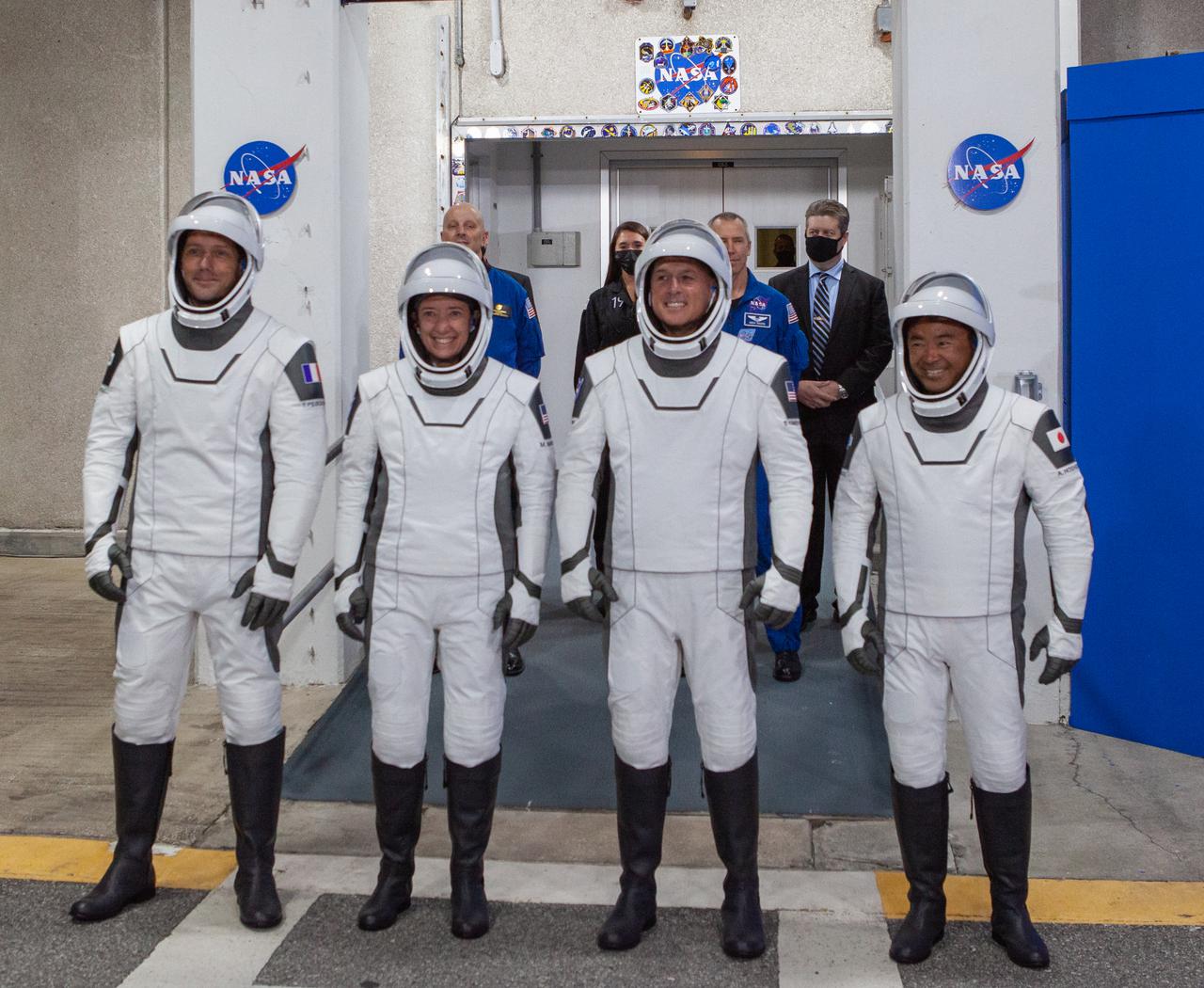
NASA SpaceX’s Crew-2 astronauts emerge from the Neil Armstrong Operations and Checkout Building at NASA’s Kennedy Space Center in Florida on April 23, 2021. From left are ESA astronaut Thomas Pesquet, mission specialist; NASA astronaut Megan McArthur, pilot; NASA astronaut Shane Kimbrough, spacecraft commander; and JAXA astronaut Akihiko Hoshide, mission specialist. They will board two Tesla vehicles for the trip to Kennedy’s Launch Complex 39A. Crew-2 is the second regular crew mission of a U.S. commercial spacecraft with astronauts to the International Space Station as part of NASA’s Commercial Crew Program. The SpaceX Crew Dragon Endeavour will launch atop the company’s Falcon 9 rocket from Pad 39A to the space station for a six-month science mission.
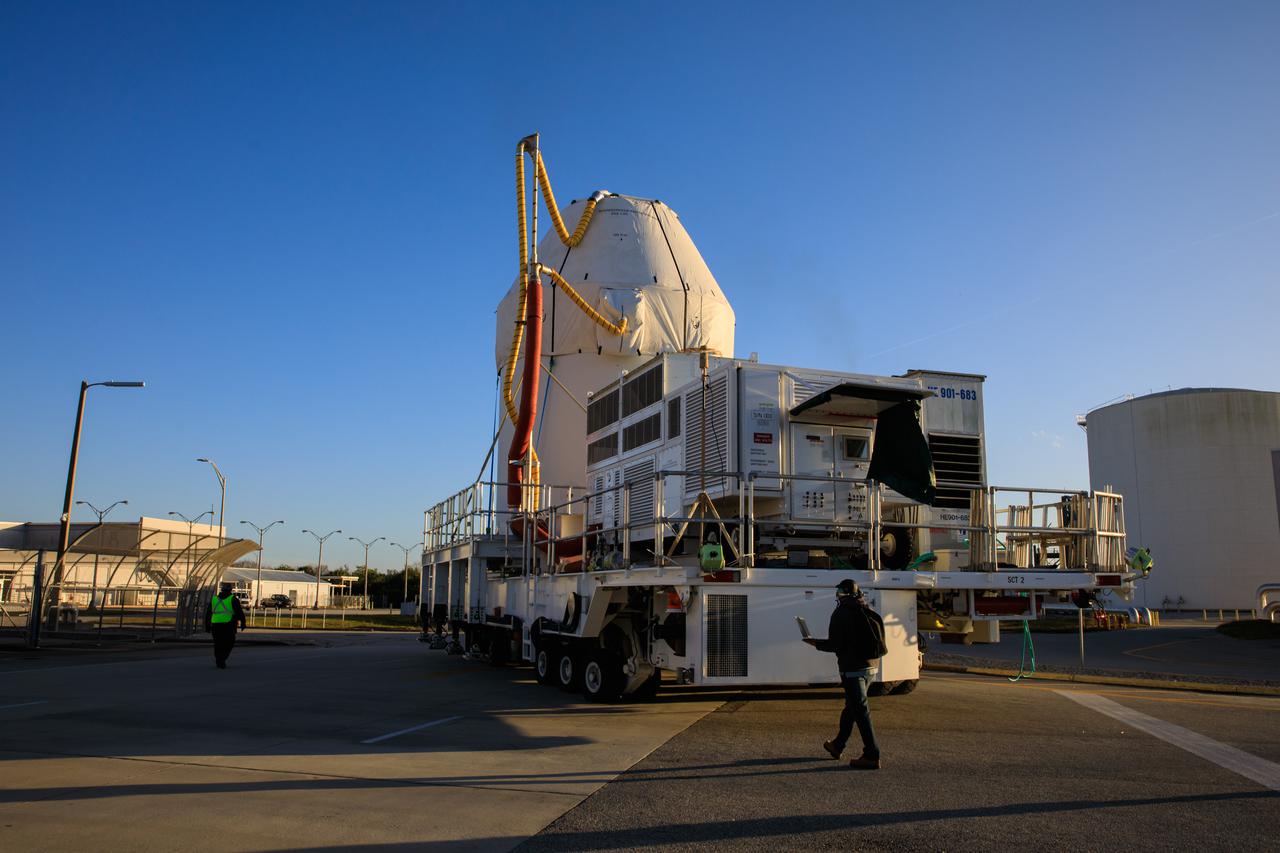
Orion sits atop a transport vehicle as it departs from its home at the Neil Armstrong Operations and Checkout Building at NASA’s Kennedy Space Center in Florida on Jan.16, 2021. Orion’s next stop will be the Multi-Payload Processing Facility where it will undergo ground processing with the Exploration Ground Systems team taking over ground processing ahead of the Artemis I launch.
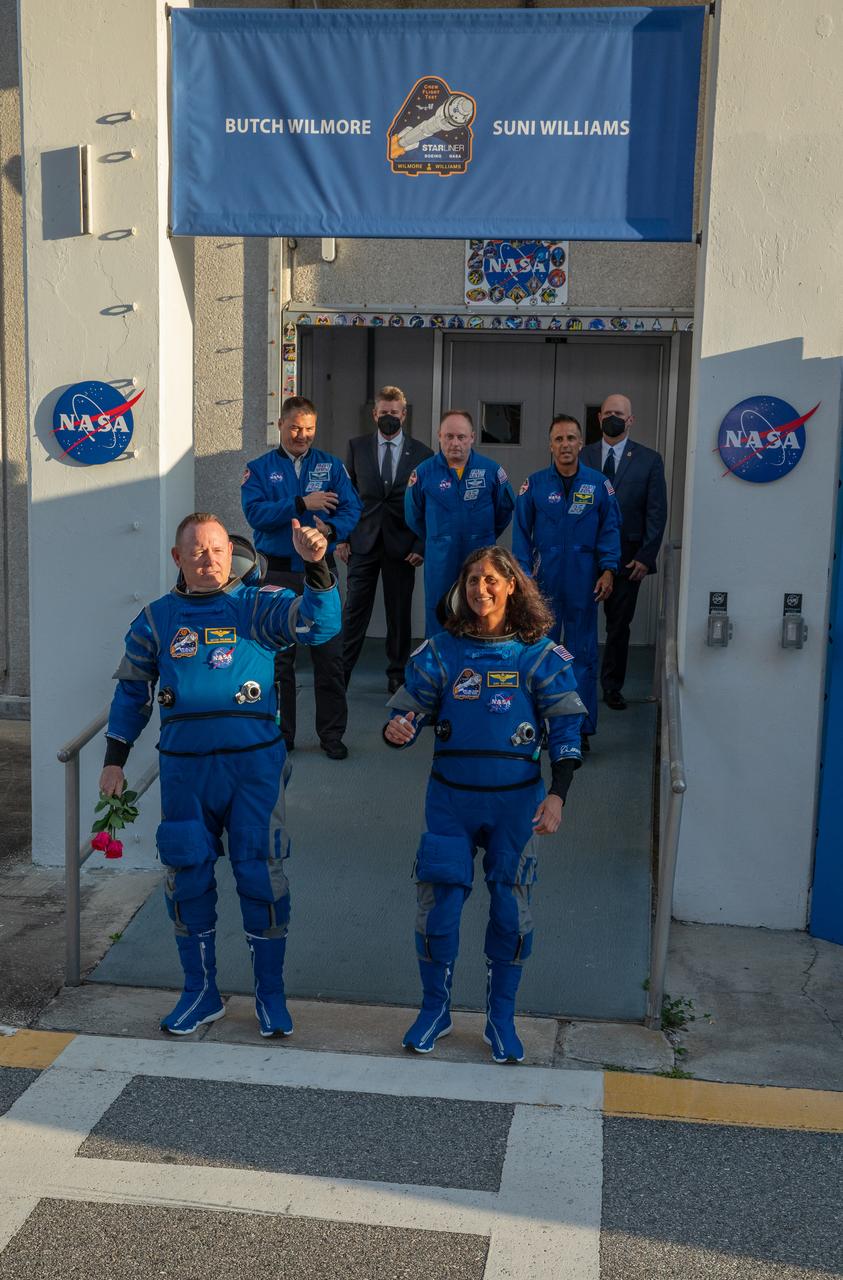
During the first launch attempt of NASA’s Boeing Crew Flight Test, NASA astronauts Butch Wilmore and Suni Williams walk out of the Neil A. Armstrong Operations and Checkout Building on Monday, May 6, 2024, at the agency’s Kennedy Space Center in Florida. As part of the agency’s Commercial Crew Program, the first crewed launch to the International Space Station aboard Boeing’s Starliner spacecraft atop a United Launch Alliance Atlas V rocket from Space Launch Complex-41 at nearby Cape Canaveral Space Force Station was targeted for 10:34 p.m. ET but scrubbed for the day.
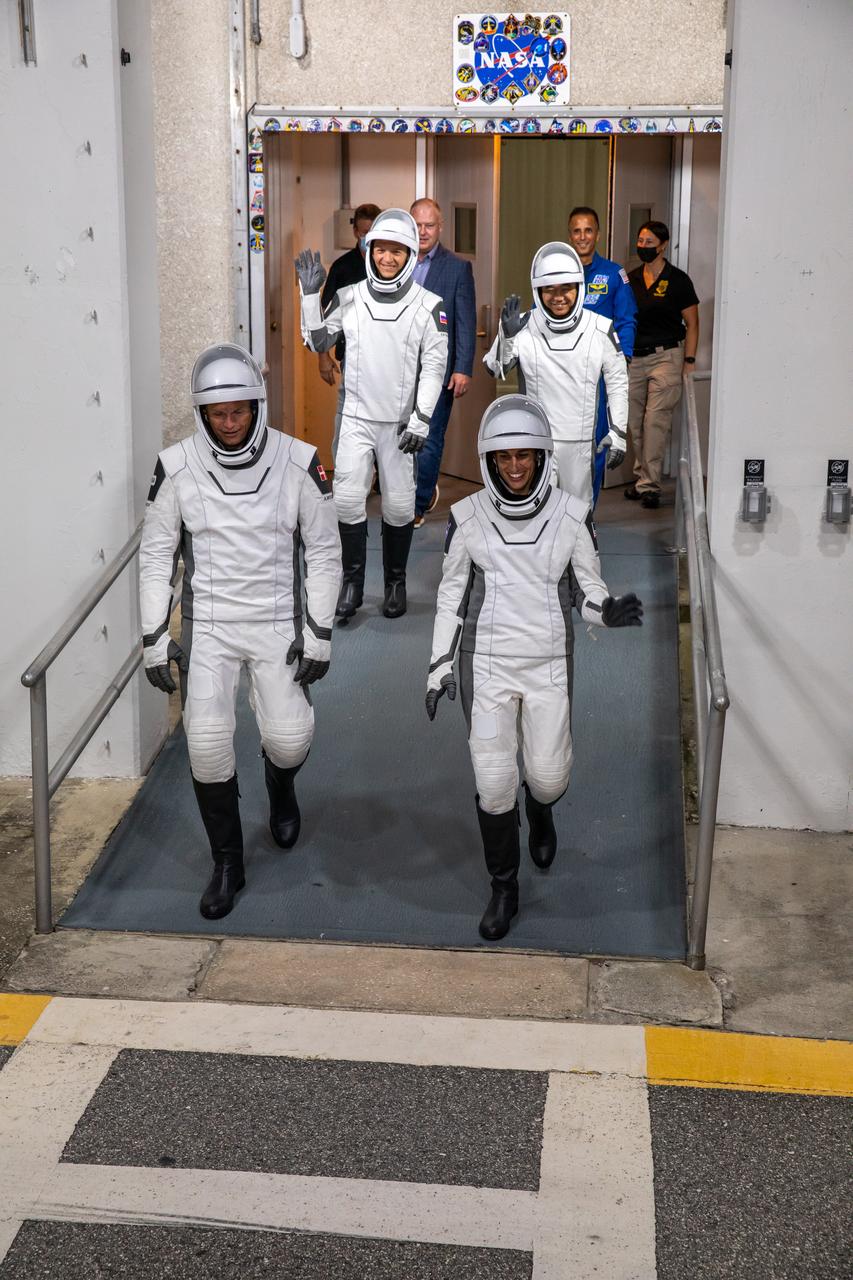
NASA’s SpaceX Crew-7 crew members walk out of the Neil A. Armstrong Operations and Checkout Building on Tuesday, Aug. 22, 2023, at the agency’s Kennedy Space Center in Florida. They were participating in a countdown dress rehearsal to prepare for the upcoming mission launch. From left (front to back) are ESA (European Space Agency) astronaut Andreas Mogensen, NASA astronaut Jasmin Moghbeli, Roscosmos cosmonaut Konstantin Borisov, and JAXA (Japan Aerospace Exploration Agency) astronaut Satoshi Furukawa. The crew will launch to the International Space Station aboard SpaceX’s Dragon spacecraft on the company’s Falcon 9 rocket. Liftoff is targeted for 3:49 a.m. EDT Friday, Aug. 25, 2023, from Kennedy’s Launch Complex 39A.