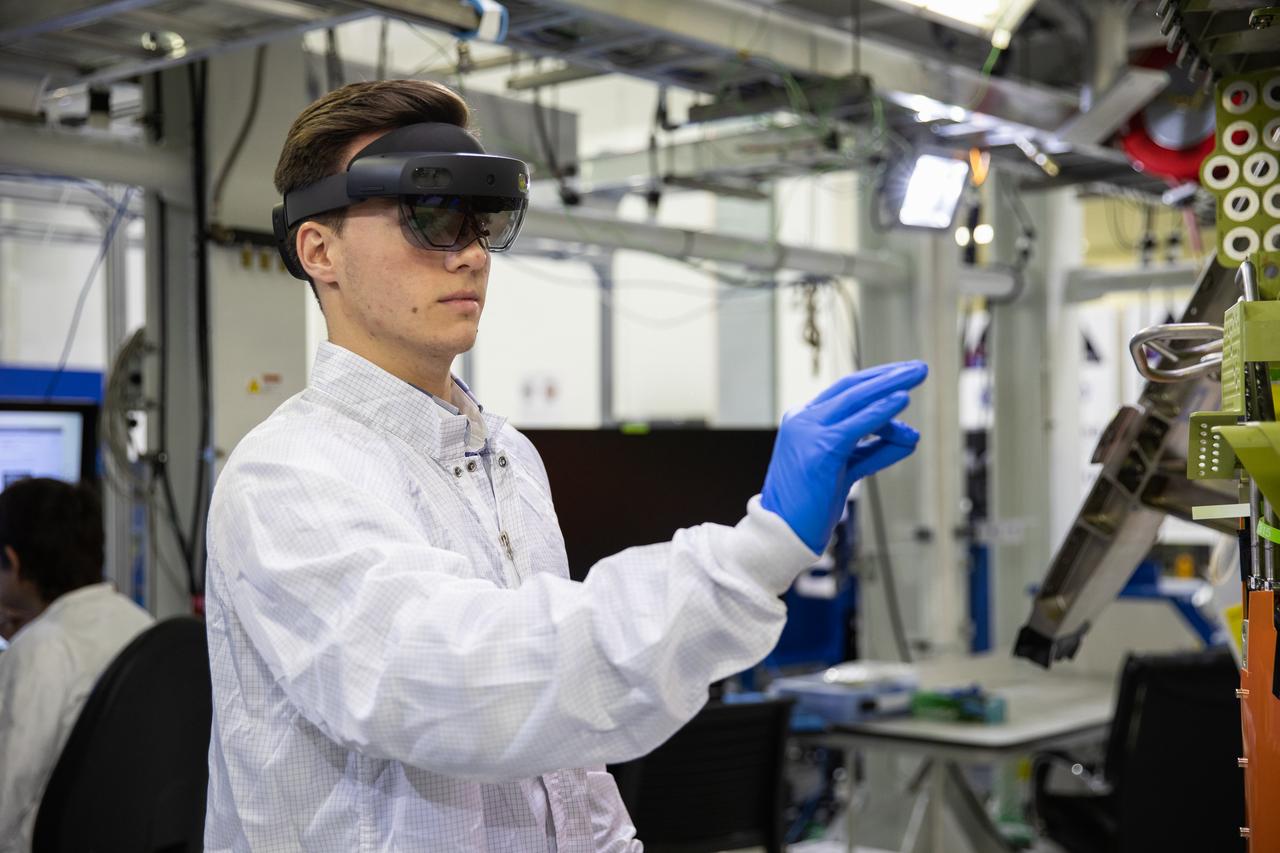
Michael Maxwell, with Lockheed Martin’s augmented reality team, wears a pair of augmented reality (AR) goggles to work on the crew module for NASA’s Artemis II mission inside the high bay of the Neil Armstrong Operations and Checkout Building at the agency’s Kennedy Space Center in Florida on March 18, 2020. Orion manufacturer Lockheed Martin provided the goggles to technicians to help place tapes where components will be installed on the crew module adapter for Artemis II, the first crewed mission aboard the spacecraft. Using the AR goggles saves significant labor and time to complete tasks. Manufactured by Microsoft, the goggles, called HoloLens2, are the second version used by Lockheed.
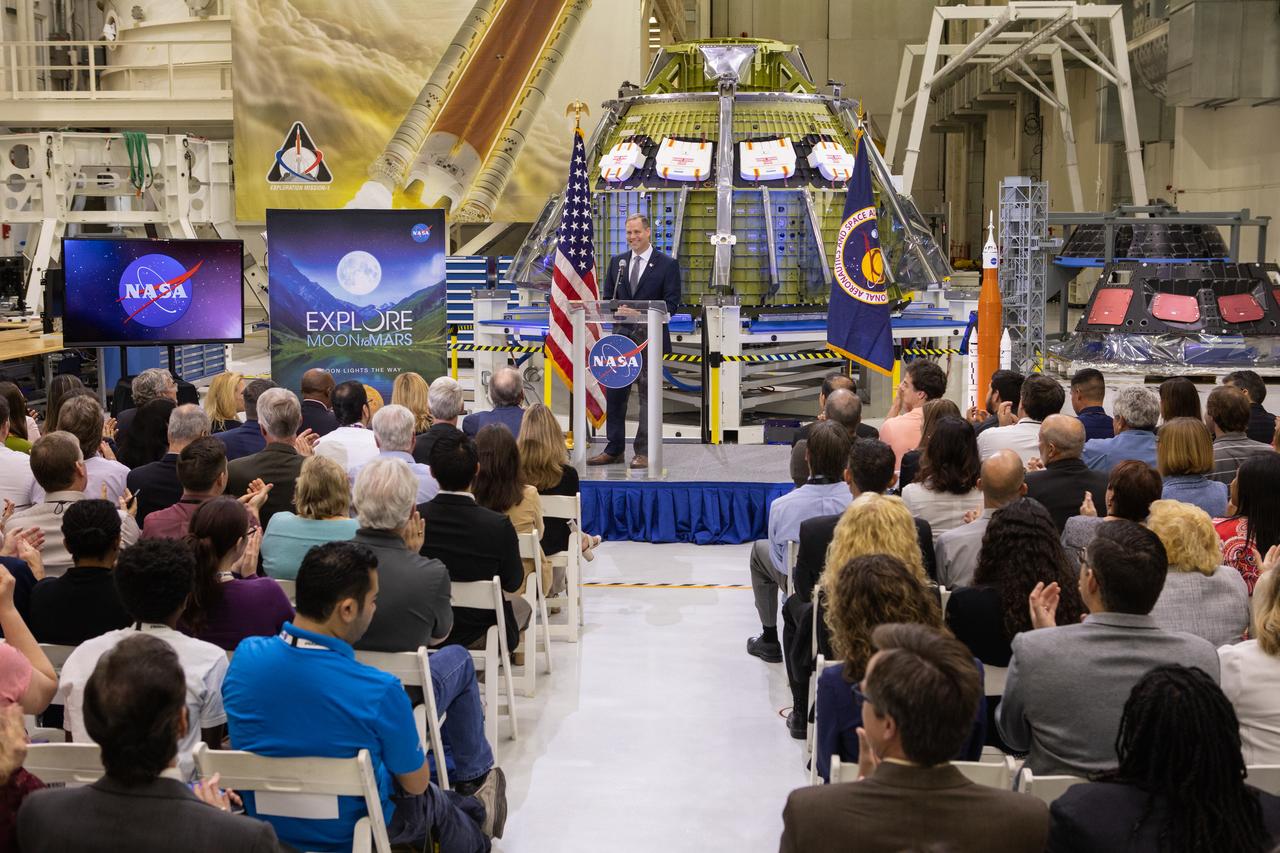
NASA Administrator Jim Bridenstine speaks to NASA workers across the nation and members of the news media, during a Moon to Mars event in the Neil Armstrong Operations and Checkout Building high bay on March 11, 2019. Behind him is the Orion crew module for Exploration Mission-2. The event followed the delivery of President Trump’s fiscal year 2020 budget proposal to U.S. Congress, which includes funding for the agency’s Moon to Mars initiative and Gateway lunar outpost. Bridenstine presented a closer look at America’s work to return astronauts to the Moon in a sustainable way and continue exploration to Mars.
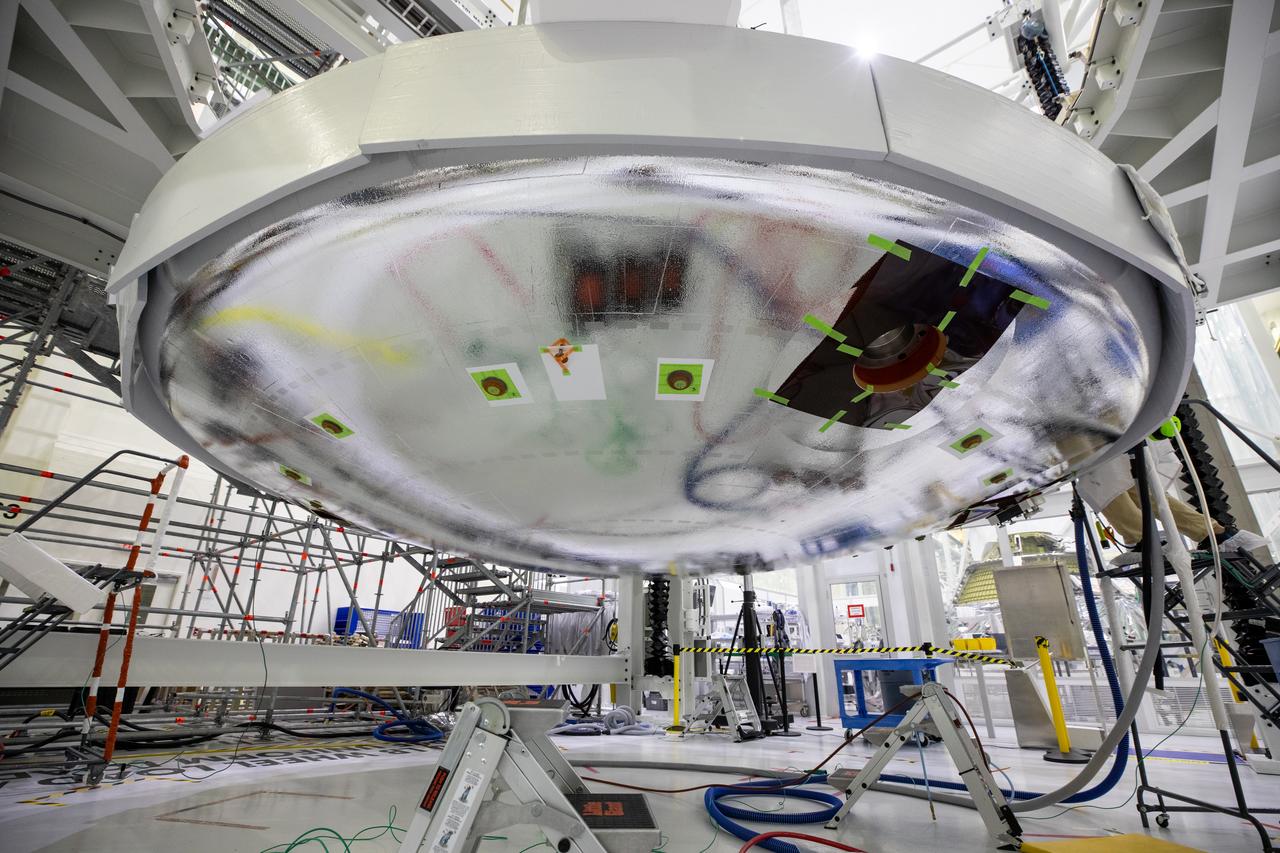
Teams install the heat shield on the Artemis II Orion spacecraft inside the high bay of the Neil Armstrong Operations and Checkout Building at NASA’s Kennedy Space Center in Florida on June 22, 2023. The 16.5-foot-wide shield will ensure the safe return of the astronauts on board as the spacecraft travels at speeds of about 25,000 miles per hour and experiences outside temperatures of nearly 5,000 degrees Fahrenheit. Artemis II will be the first mission with astronauts under Artemis that will test and check out all of Orion’s systems needed for future crewed missions.
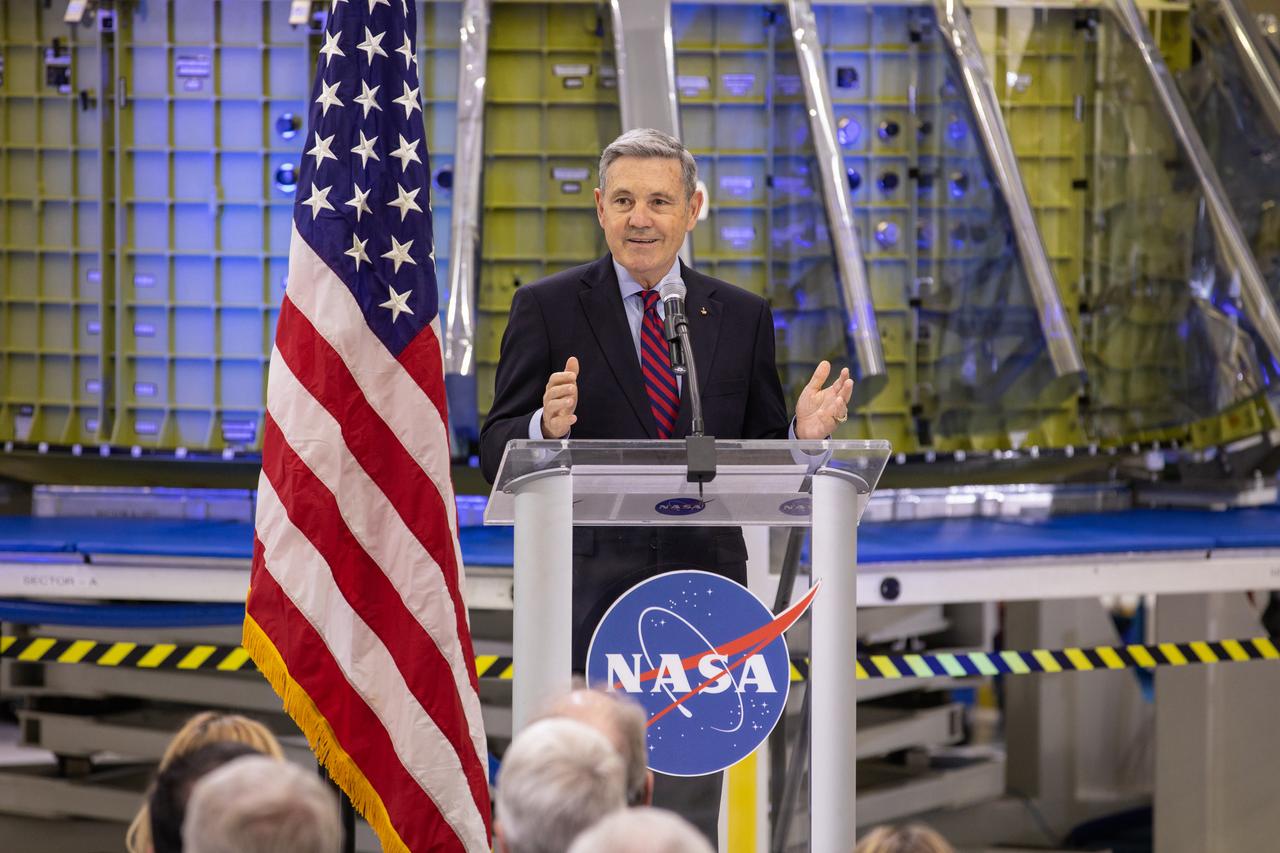
Bob Cabana, director of NASA’s Kennedy Space Center in Florida, speaks toNASA workers and members of the news media, during a Moon to Mars event in the Neil Armstrong Operations and Checkout Building high bay on March 11, 2019. The event followed the delivery of President Trump’s fiscal year 2020 budget proposal to U.S. Congress, which includes funding for the agency’s Moon to Mars initiative and Gateway lunar outpost.
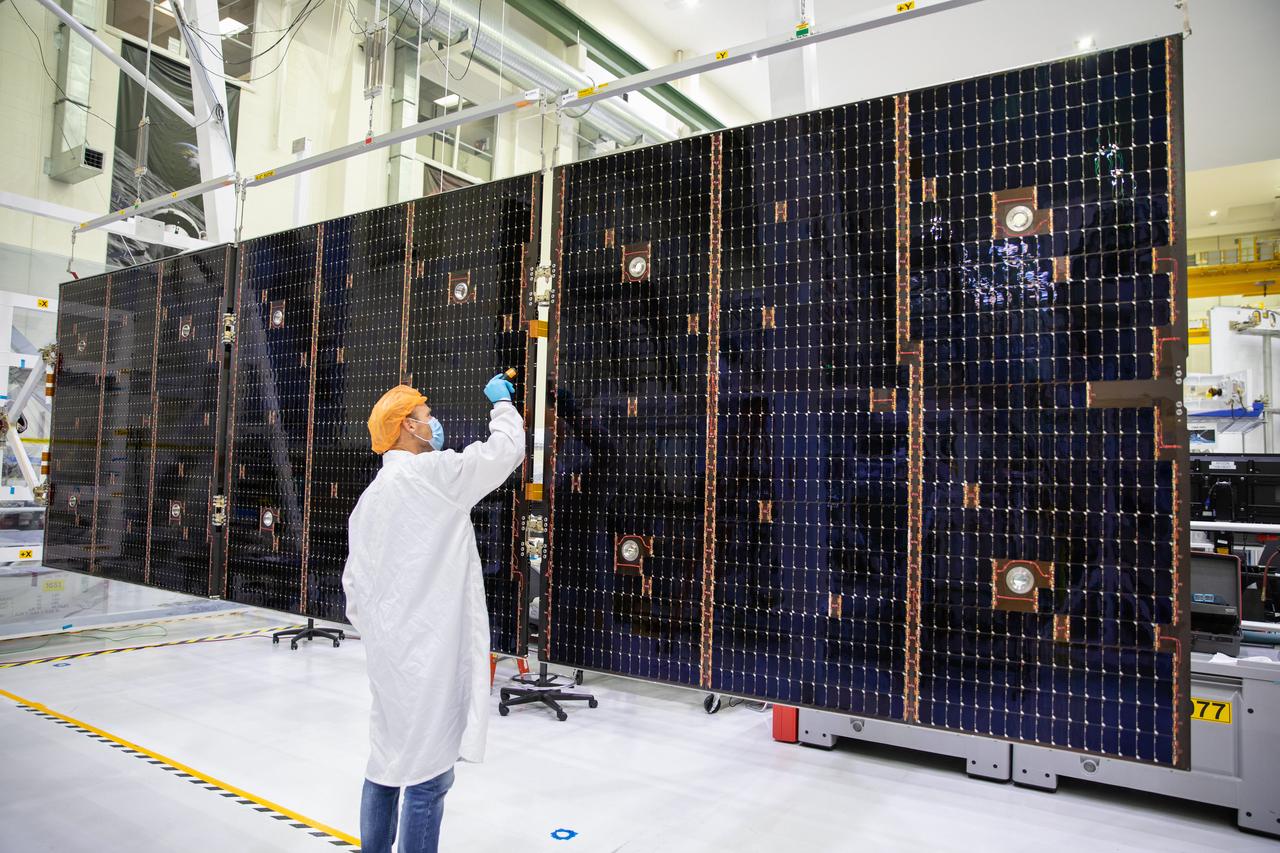
Inside the Neil Armstrong Operations and Checkout Building high bay at NASA’s Kennedy Space Center in Florida, in preparation for installation on the Artemis I spacecraft, technicians have extended one of the Artemis I solar array wings for inspection on Sept. 10, 2020, to confirm that it unfurled properly and all of the mechanisms functioned as expected. The solar array is one of four panels that will generate 11 kilowatts of power and span about 63 feet. The array is a component of Orion’s service module, which is provided by the European Space Agency and built by Airbus Defence and Space to supply Orion’s power, propulsion, air and water. The first in a series of increasingly complex missions, Artemis I will test the Orion spacecraft and Space Launch System as an integrated system ahead of crewed flights to the Moon. Under the Artemis program, NASA will land the first woman and the next man on the Moon in 2024.

Artemis II pilot Victor Glover poses inside the Neil Armstrong Operations and Checkout Building at NASA’s Kennedy Space Center in Florida on Aug. 8, 2023. The Artemis II Orion crew module is undergoing acoustic testing ahead of integration with the European Service Module. Artemis II is the first crewed mission on NASA’s path to establishing a long-term lunar presence for science and exploration under Artemis.
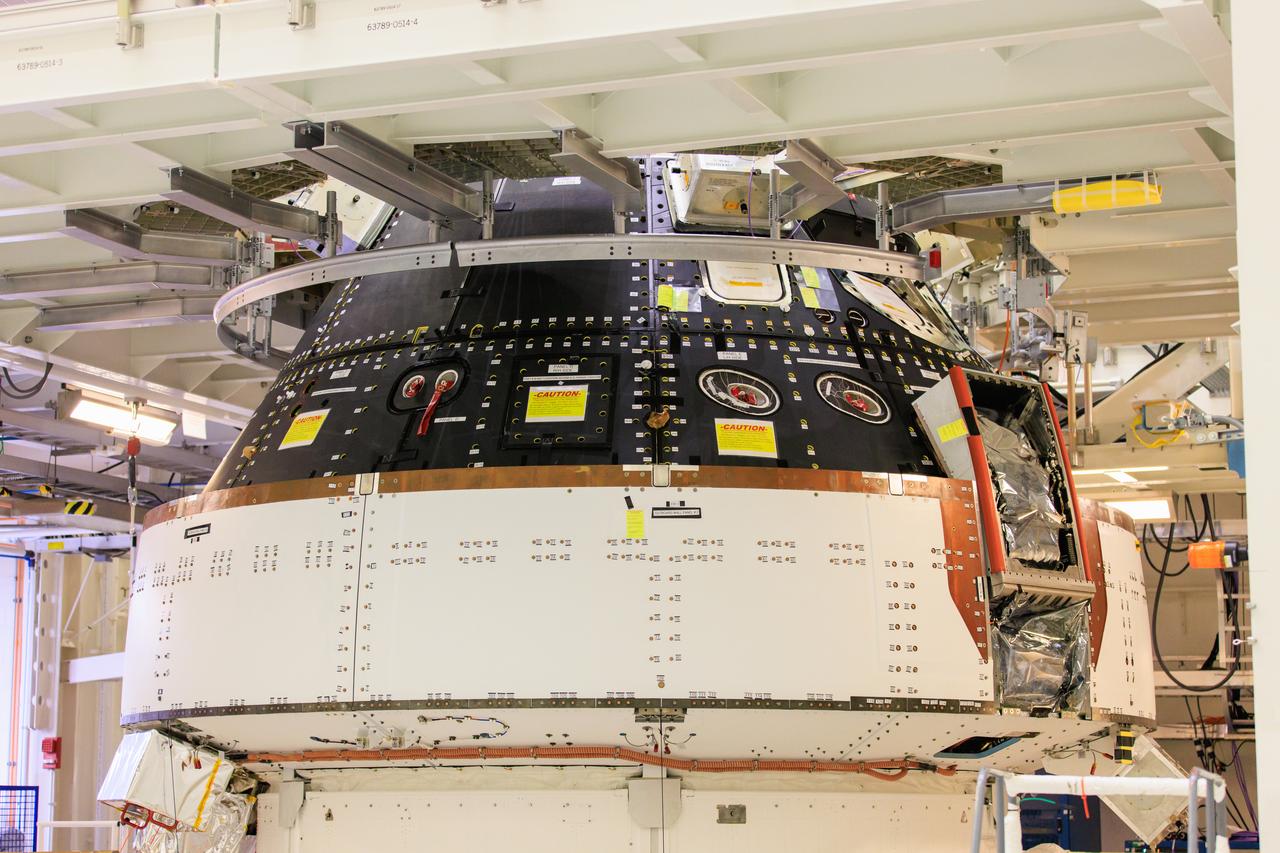
The Orion spacecraft for NASA’s Artemis II mission is photographed inside the Final Assembly and System Testing cell at the Neil Armstrong Operations and Checkout Building at NASA’s Kennedy Space Center in Florida on Friday, March 15, 2024. Four astronauts will venture around the Moon in the Orion spacecraft on Artemis II, the first crewed mission on NASA's path to establishing a long-term presence at the Moon for science and exploration through the Artemis campaign.
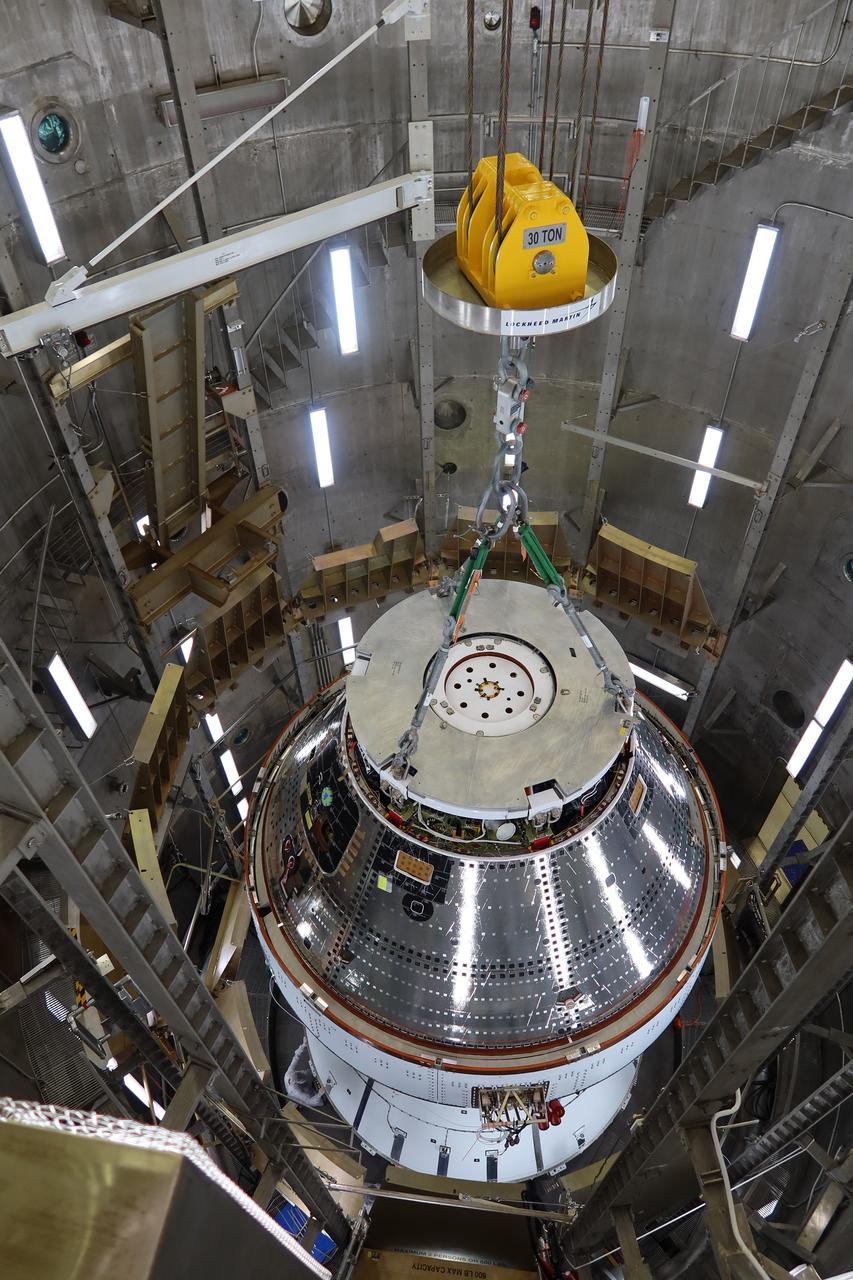
A team wearing bunny suits inside the Operations and Checkout Building at NASA's Kennedy Space Center in Florida on Saturday, April 27, 2024 prepare the Artemis II Orion spacecraft to be lifted by a 30 ton crane out of a vacuum chamber following a series of electromagnetic compatibility and interference testing.
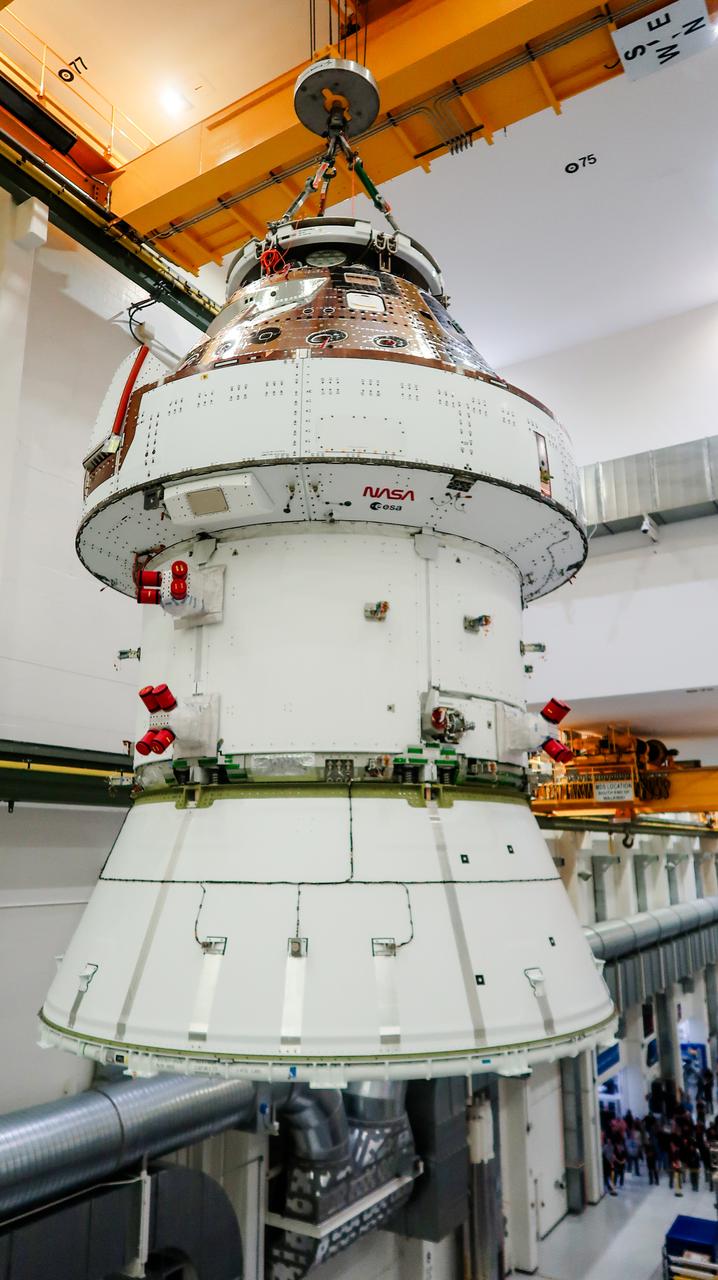
On April 4, 2024, a team lifts the Artemis II Orion spacecraft into a vacuum chamber inside the Operations and Checkout Building at NASA's Kennedy Space Center in Florida, where it will undergo electromagnetic compatibility and interference testing.
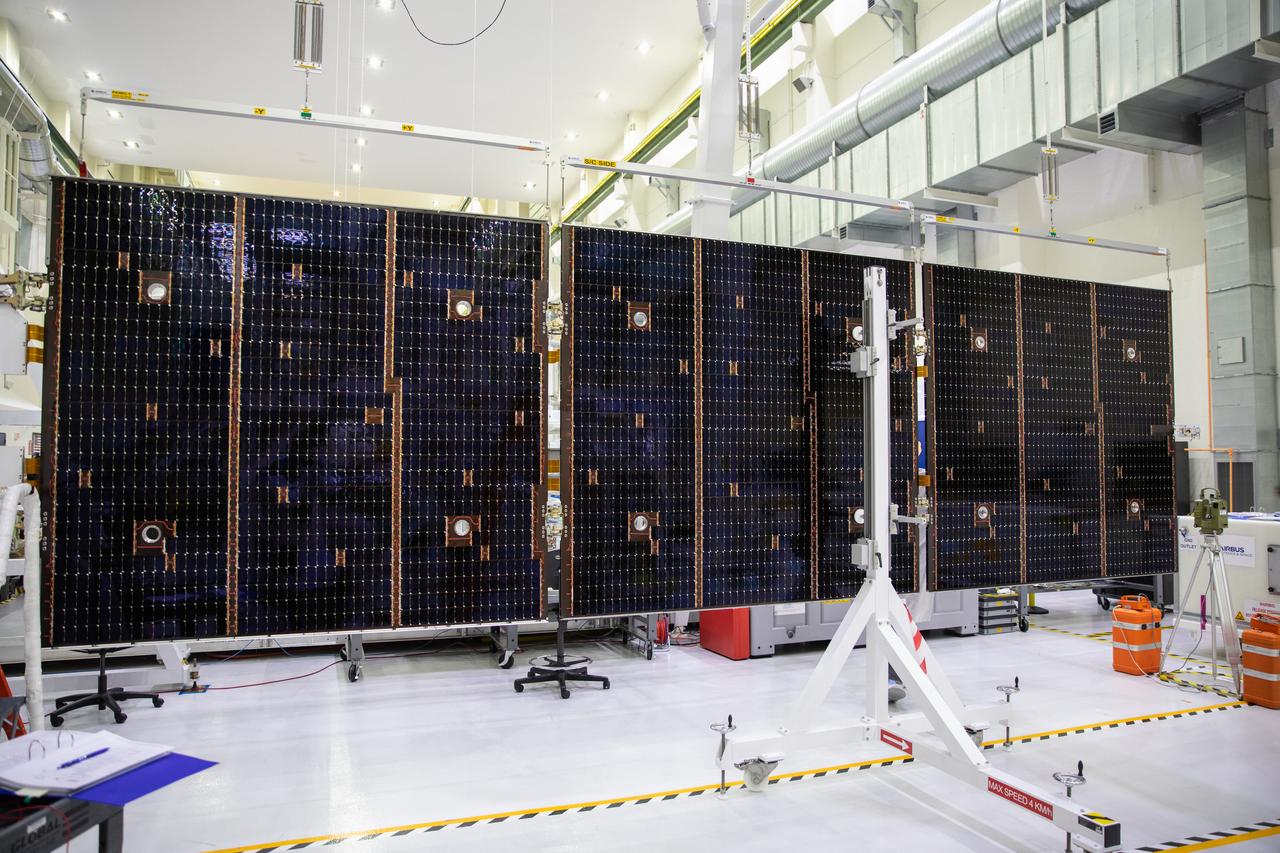
Inside the Neil Armstrong Operations and Checkout Building high bay at NASA’s Kennedy Space Center in Florida, in preparation for installation on the Artemis I spacecraft, technicians have extended one of the Artemis I solar array wings for inspection on Sept. 10, 2020, to confirm that it unfurled properly and all of the mechanisms functioned as expected. The solar array is one of four panels that will generate 11 kilowatts of power and span about 63 feet. The array is a component of Orion’s service module, which is provided by the European Space Agency and built by Airbus Defence and Space to supply Orion’s power, propulsion, air and water. The first in a series of increasingly complex missions, Artemis I will test the Orion spacecraft and Space Launch System as an integrated system ahead of crewed flights to the Moon. Under the Artemis program, NASA will land the first woman and the next man on the Moon in 2024.
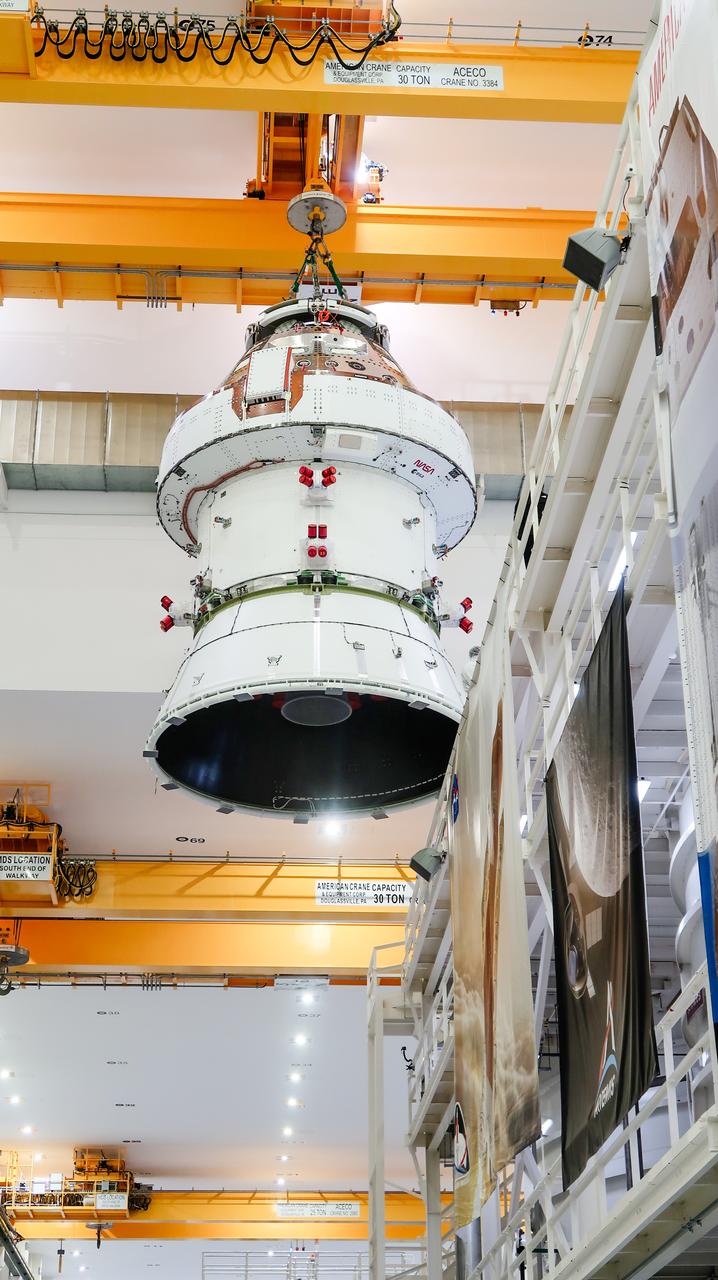
On April 4, 2024, a team lifts the Artemis II Orion spacecraft into a vacuum chamber inside the Operations and Checkout Building at NASA's Kennedy Space Center in Florida, where it will undergo electromagnetic compatibility and interference testing.

NASA’s Orion spacecraft, wrapped up for shipping, arrives at Kennedy Space Center’s Launch and Landing Facility runway for loading into the agency’s Super Guppy aircraft on Nov. 21, 2019. The spacecraft’s crew and service modules are flying from the Florida spaceport to NASA’s Plum Brook Station in Sandusky, Ohio, for full thermal vacuum testing. In this unique facility, the crew and service modules will be put through extensive testing to ensure they can survive the rigors of launch, space travel, re-entry and splashdown. The Orion spacecraft will launch atop the agency's Space Launch System rocket on Artemis I.

Jennifer Solano, with Lockheed Martin at Kennedy Space Center in Florida, wears a pair of augmented reality (AR) goggles to work on crew module hardware for NASA’s Artemis II mission inside the high bay of the Neil Armstrong Operations and Checkout Building at Kennedy on March 18, 2020. Orion manufacturer Lockheed Martin provided the goggles to technicians to help place tapes where components will be installed on Orion for Artemis II, the first crewed mission aboard the spacecraft. Using the AR goggles saves significant labor and time to complete tasks. Manufactured by Microsoft, the goggles, called HoloLens2, are the second version used by Lockheed.
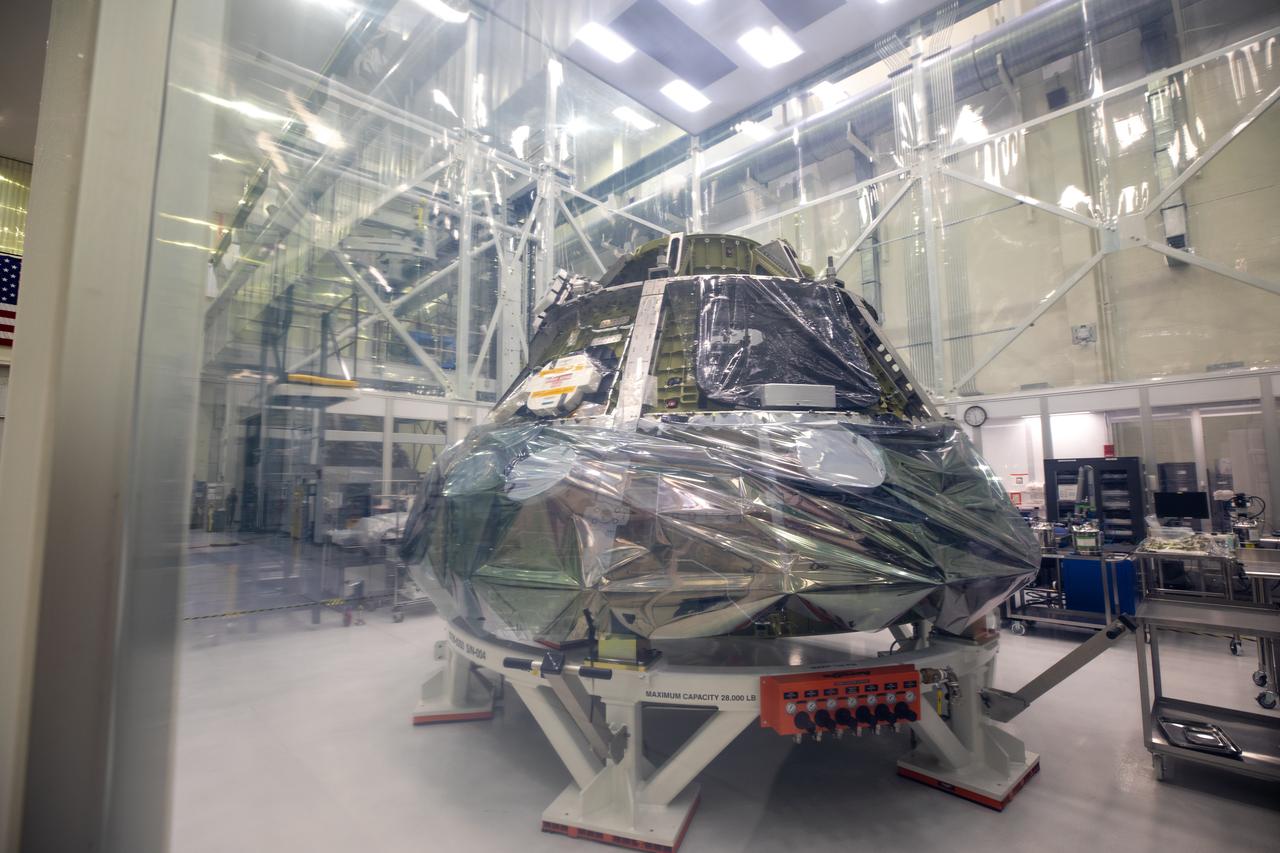
The Orion spacecraft for the Artemis III mission is in view inside a clean room in the high bay of the Neil Armstrong Operations and Checkout Building at NASA’s Kennedy Space Center in Florida on June 22, 2023. The Orion spacecraft is being prepared for its launch atop the Space Launch System rocket on Artemis III, which will send astronauts, including the first woman and first person of color, on a mission to the surface of the Moon.
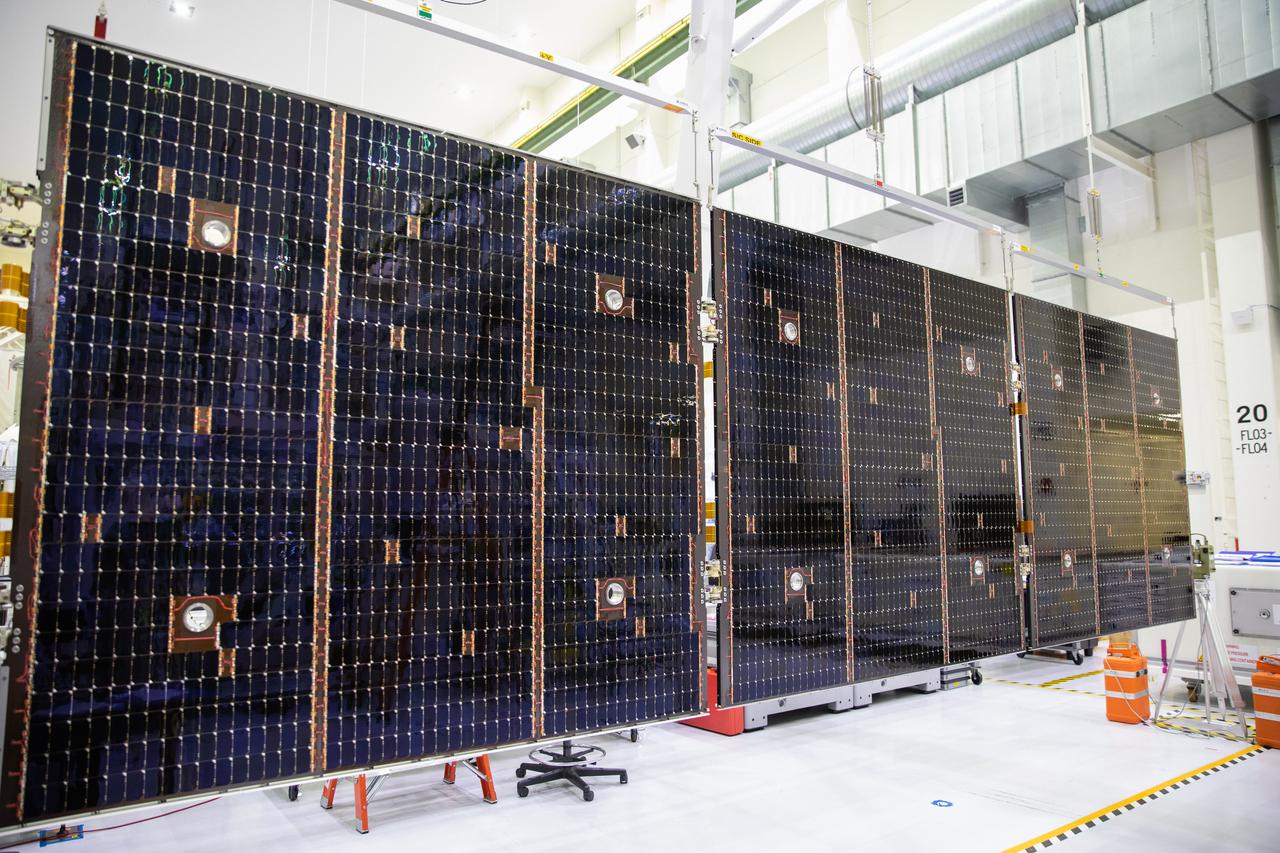
Inside the Neil Armstrong Operations and Checkout Building high bay at NASA’s Kennedy Space Center in Florida, in preparation for installation on the Artemis I spacecraft, technicians have extended one of the Artemis I solar array wings for inspection on Sept. 10, 2020, to confirm that it unfurled properly and all of the mechanisms functioned as expected. The solar array is one of four panels that will generate 11 kilowatts of power and span about 63 feet. The array is a component of Orion’s service module, which is provided by the European Space Agency and built by Airbus Defence and Space to supply Orion’s power, propulsion, air and water. The first in a series of increasingly complex missions, Artemis I will test the Orion spacecraft and Space Launch System as an integrated system ahead of crewed flights to the Moon. Under the Artemis program, NASA will land the first woman and the next man on the Moon in 2024.
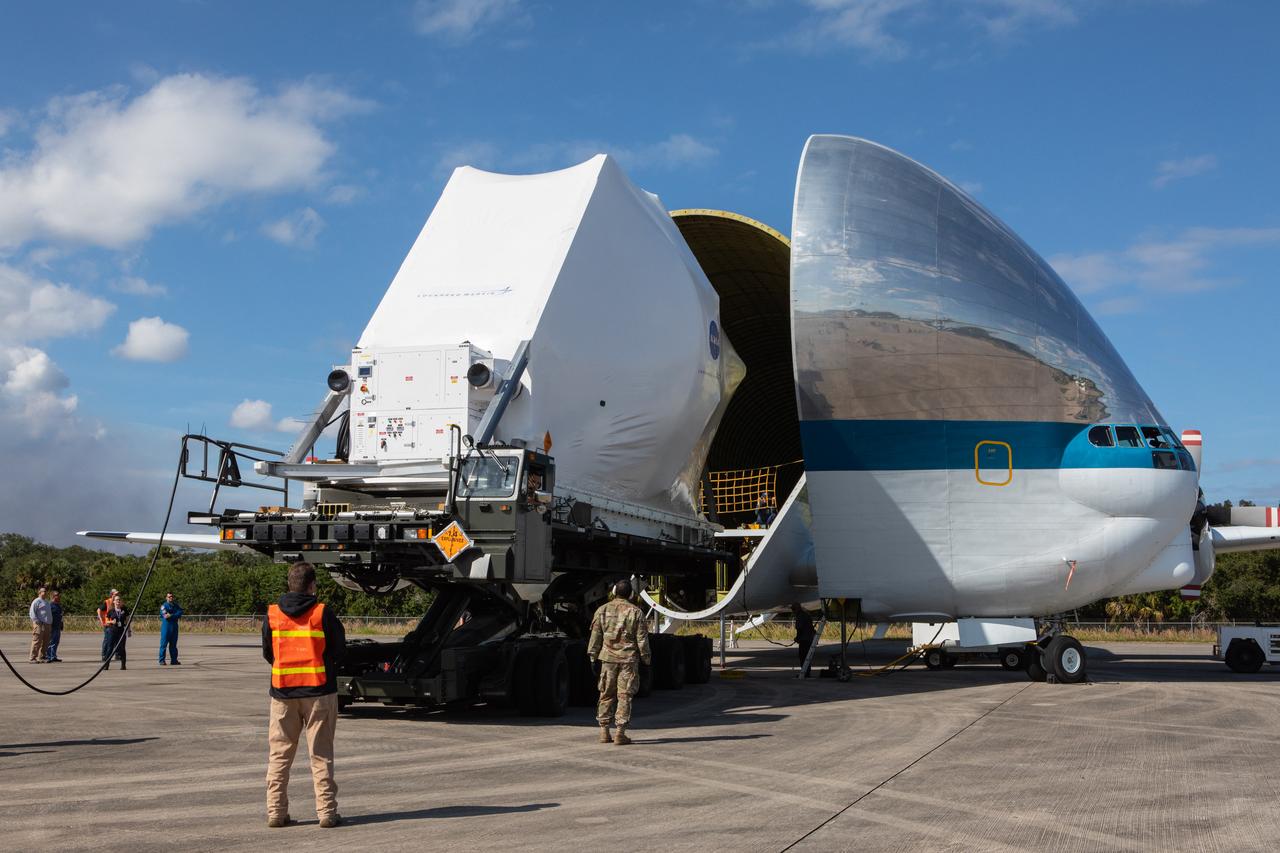
NASA’s Orion spacecraft, wrapped up for shipping, is moved into position for loading into the agency’s Super Guppy aircraft at the Launch and Landing Facility runway at Kennedy Space Center in Florida on Nov. 21, 2019. The spacecraft’s crew and service modules are flying to NASA’s Plum Brook Station in Sandusky, Ohio, for full thermal vacuum testing. In this unique facility, the crew and service modules will be put through extensive testing to ensure they can survive the rigors of launch, space travel, re-entry and splashdown. The Orion spacecraft will launch atop the agency's Space Launch System rocket on Artemis I.

On April 4, 2024, a team lifts the Artemis II Orion spacecraft into a vacuum chamber inside the Operations and Checkout Building at NASA's Kennedy Space Center in Florida, where it will undergo electromagnetic compatibility and interference testing.
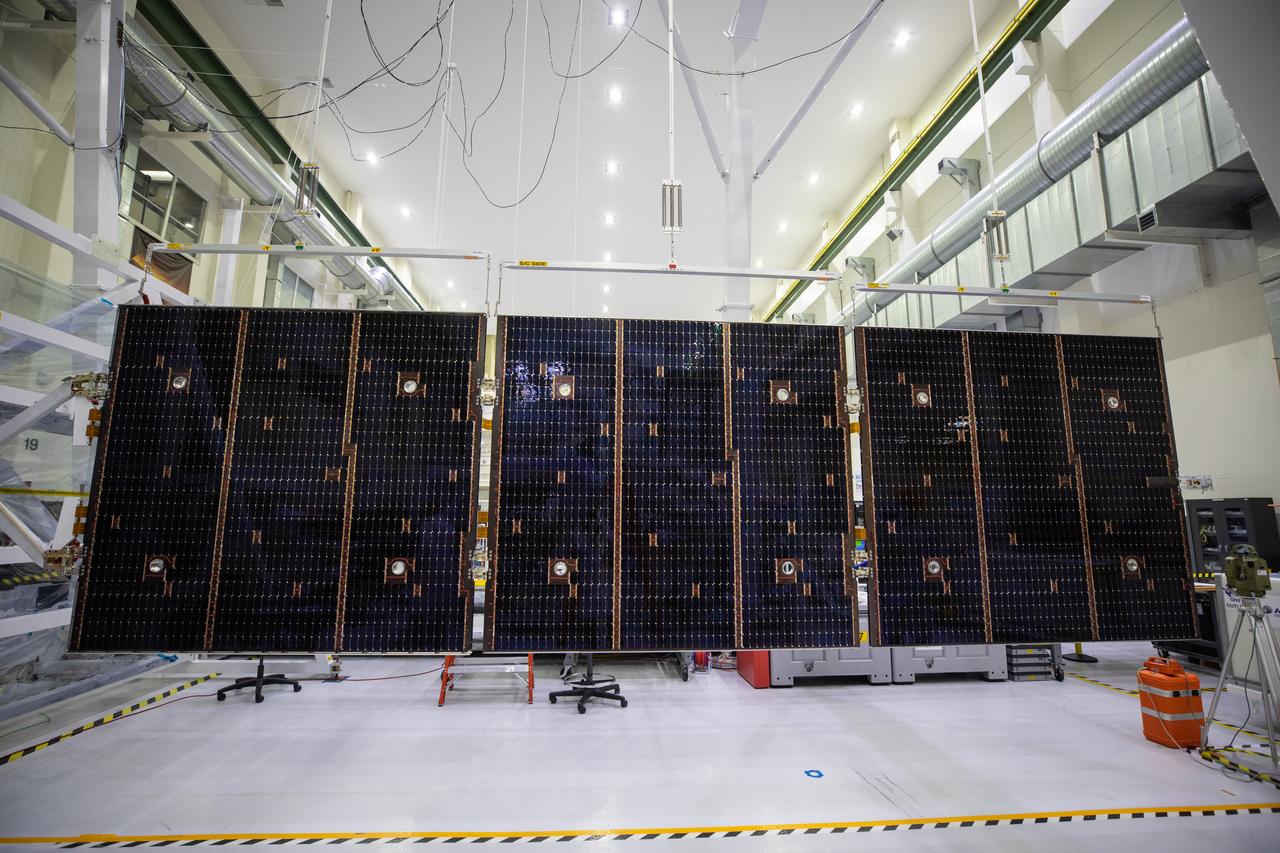
Inside the Neil Armstrong Operations and Checkout Building high bay at NASA’s Kennedy Space Center in Florida, in preparation for installation on the Artemis I spacecraft, technicians have extended one of the Artemis I solar array wings for inspection on Sept. 10, 2020, to confirm that it unfurled properly and all of the mechanisms functioned as expected. The solar array is one of four panels that will generate 11 kilowatts of power and span about 63 feet. The array is a component of Orion’s service module, which is provided by the European Space Agency and built by Airbus Defence and Space to supply Orion’s power, propulsion, air and water. The first in a series of increasingly complex missions, Artemis I will test the Orion spacecraft and Space Launch System as an integrated system ahead of crewed flights to the Moon. Under the Artemis program, NASA will land the first woman and the next man on the Moon in 2024.
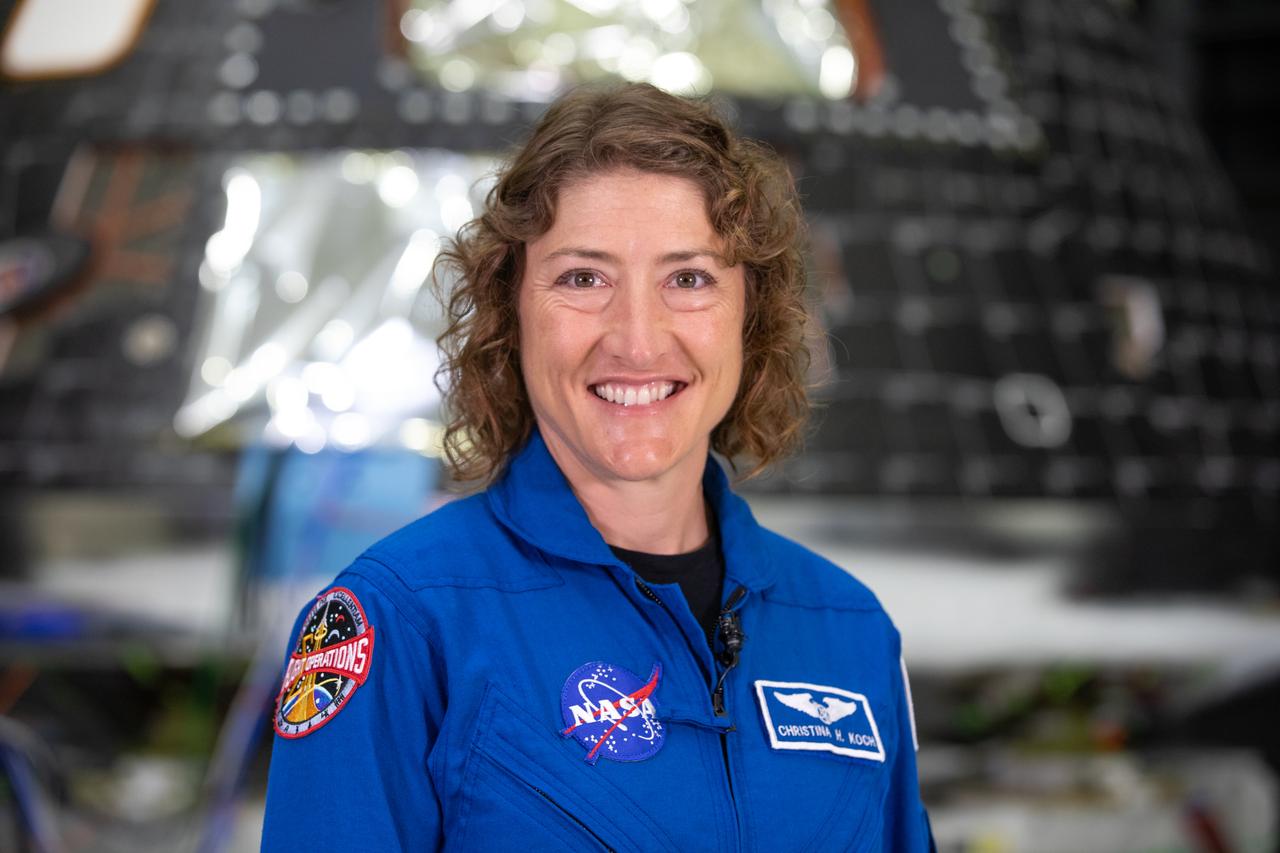
Artemis II mission specialist Christina Hammock Koch poses inside the Neil Armstrong Operations and Checkout Building at NASA’s Kennedy Space Center in Florida on Aug. 8, 2023. The Artemis II Orion crew module is undergoing acoustic testing ahead of integration with the European Service Module. Artemis II is the first crewed mission on NASA’s path to establishing a long-term lunar presence for science and exploration under Artemis.
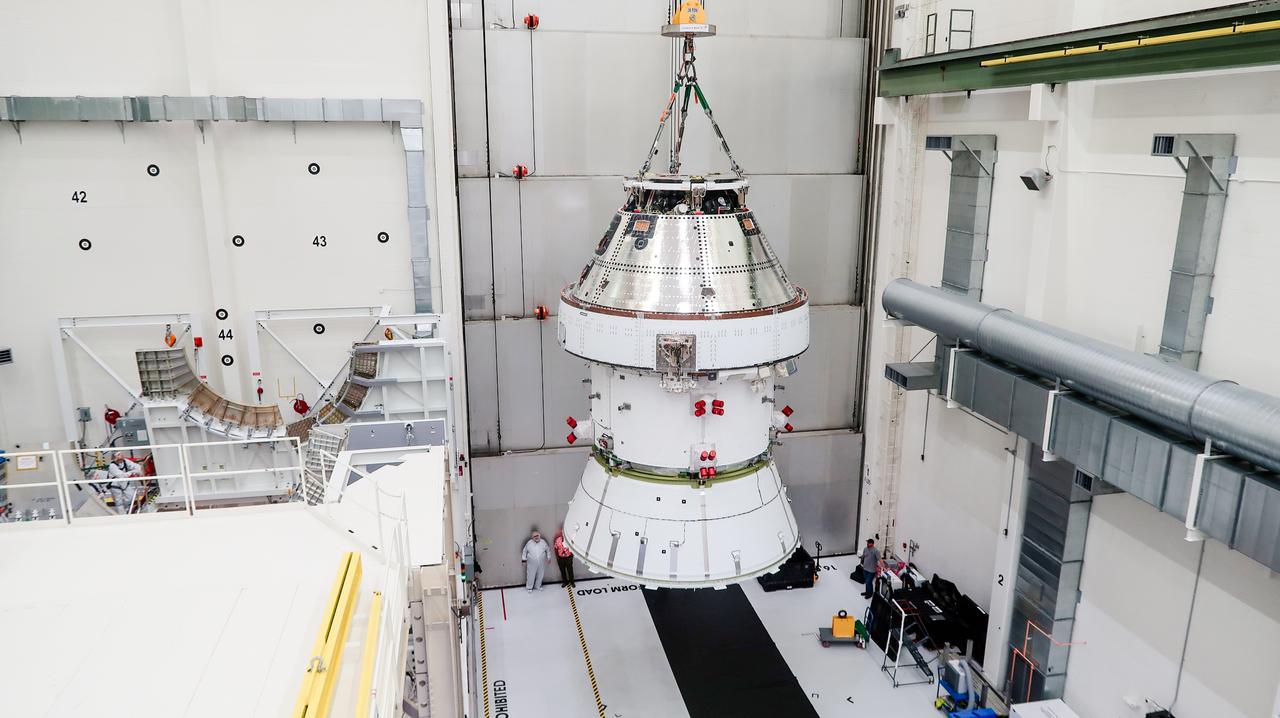
On April 4, 2024, a team lifts the Artemis II Orion spacecraft into a vacuum chamber inside the Operations and Checkout Building at NASA's Kennedy Space Center in Florida, where it will undergo electromagnetic compatibility and interference testing.
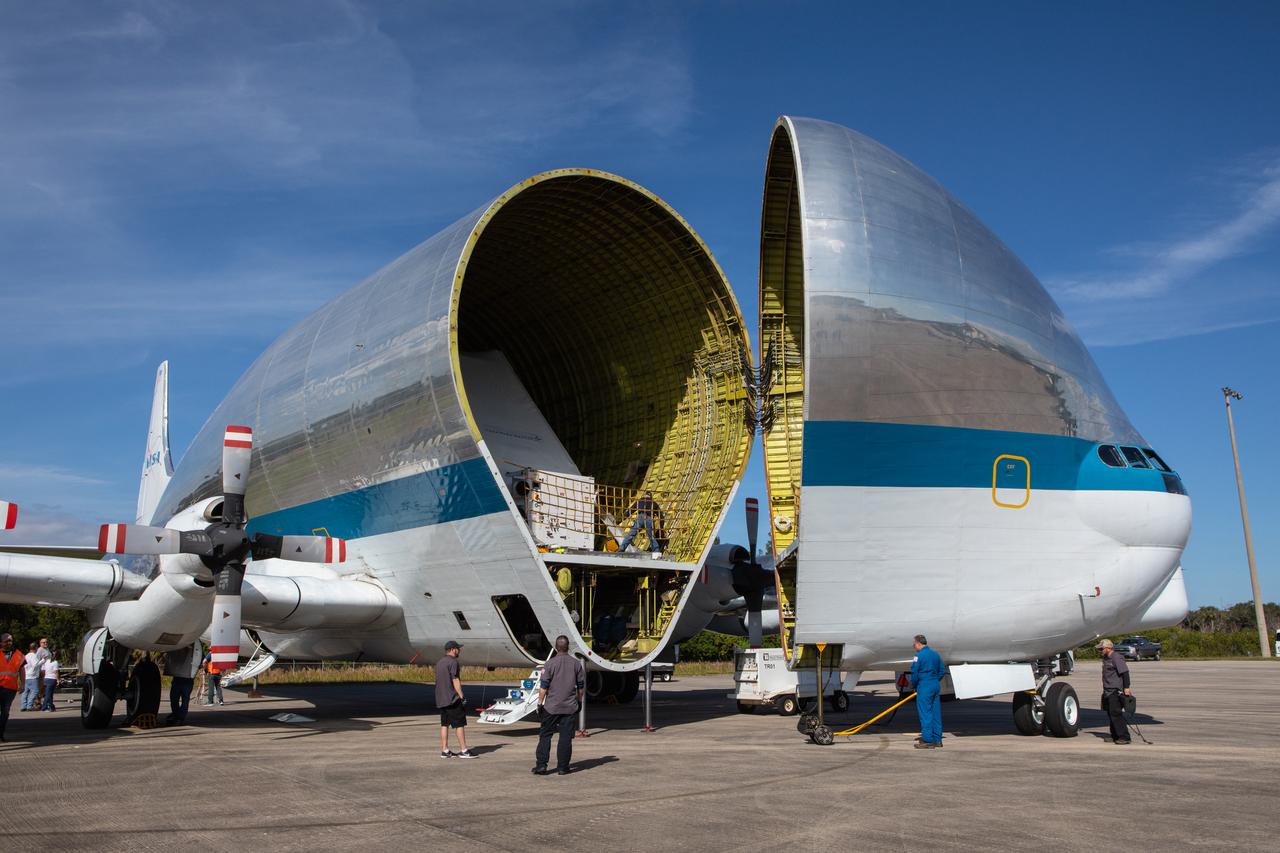
NASA’s Orion spacecraft is loaded into the agency’s Super Guppy aircraft at the Launch and Landing Facility runway at Kennedy Space Center in Florida on Nov. 21, 2019. The spacecraft’s crew and service modules are flying to NASA’s Plum Brook Station in Sandusky, Ohio, for full thermal vacuum testing. In this unique facility, the crew and service modules will be put through extensive testing to ensure they can survive the rigors of launch, space travel, re-entry and splashdown. The Orion spacecraft will launch atop the agency's Space Launch System rocket on Artemis I.
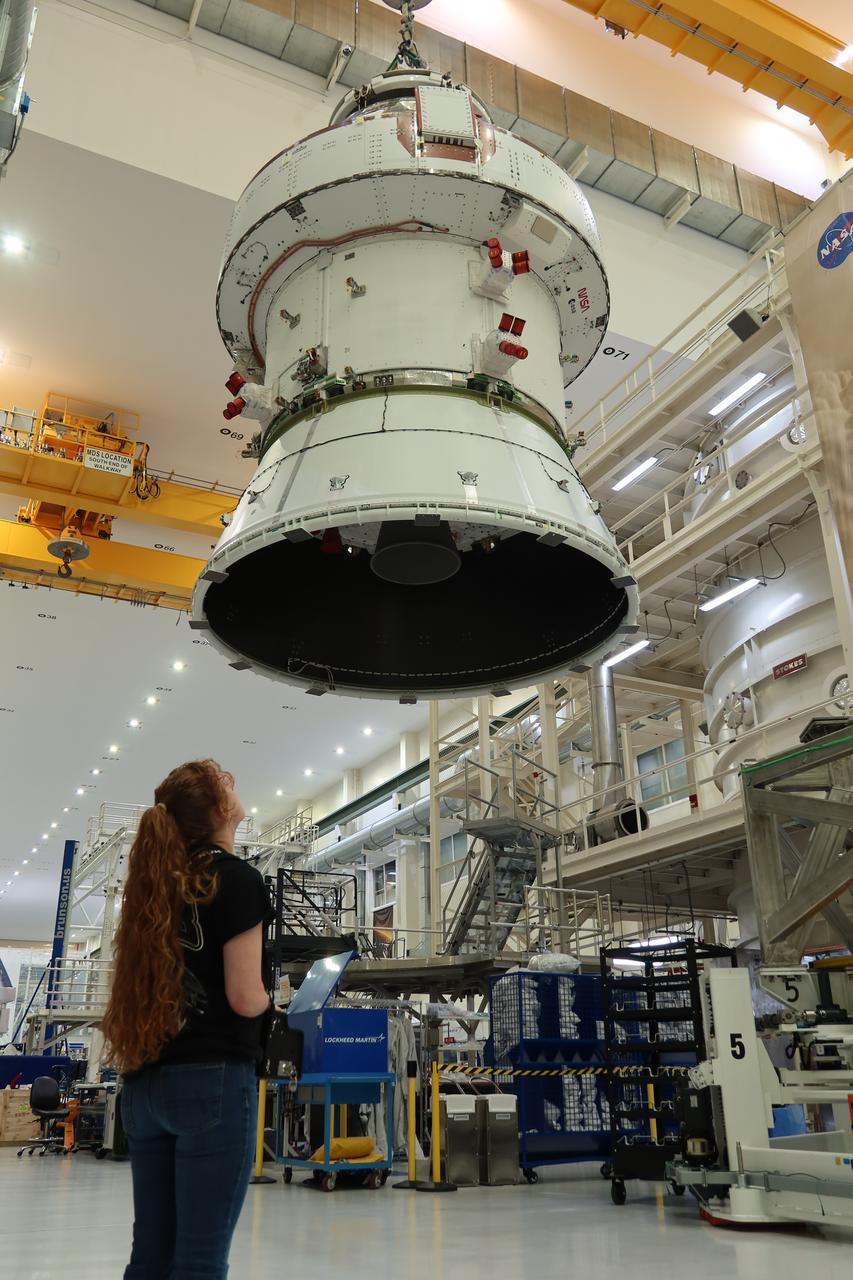
The Orion spacecraft crew module for NASA’s Artemis II mission is viewed by crane operator Rebekah Tolatovicz as it is transferred across the Neil A. Armstrong Operations and Checkout Building at NASA’s Kennedy Space Center in Florida on Saturday, April 27, 2024, following a series of electromagnetic compatibility and interference testing.
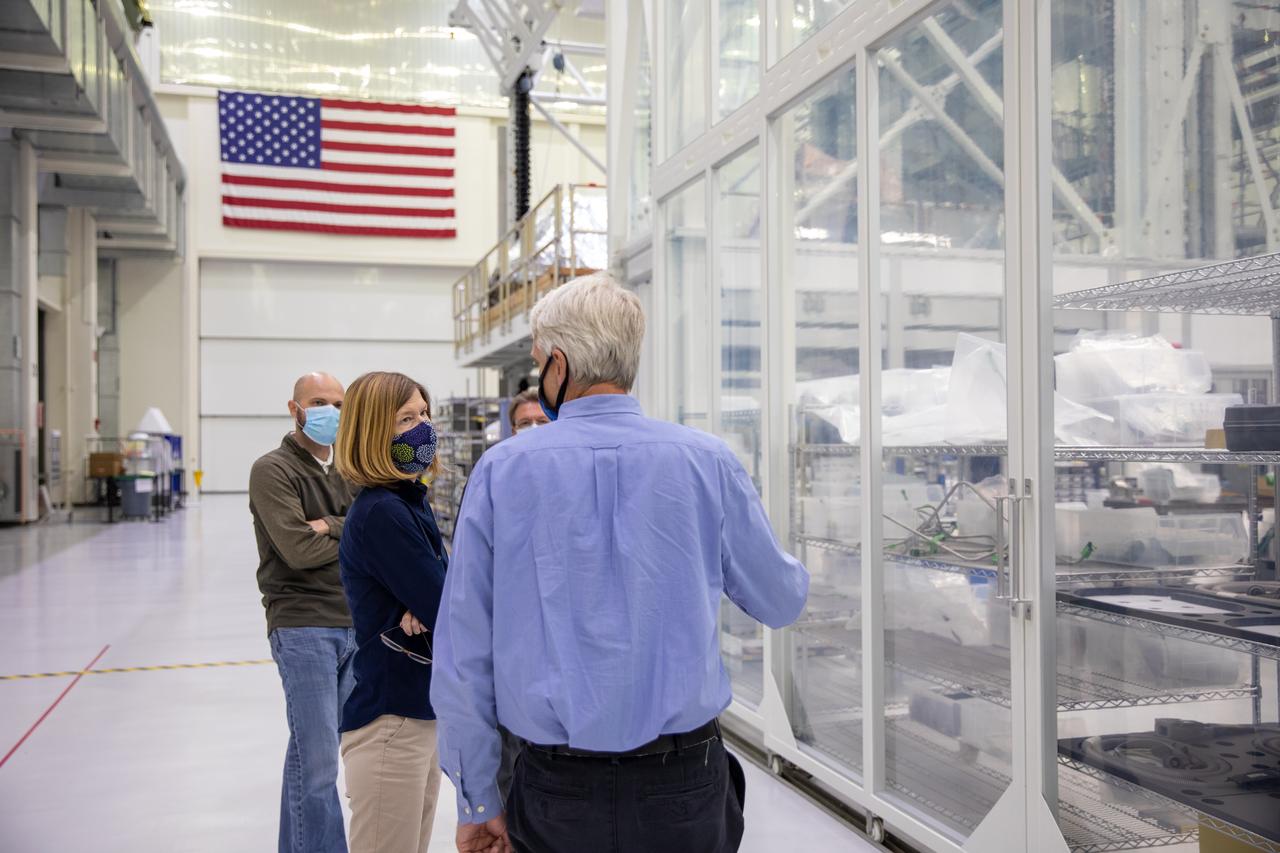
Senior managers from Orion, NASA, and Lockheed Martin view the Artemis II crew module inside a clean room during a visit to the Neil Armstrong Operations and Checkout Building high bay at NASA’s Kennedy Space Center in Florida on Nov. 5, 2020. From left are Jim Skaggs, senior manager of Kennedy Operations for Lockheed Martin; Kathy Lueders, associate administrator of NASA’s Human Exploration and Operations Mission Directorate; and Scott Wilson, manager, Orion Production Office. Artemis II will be the first crewed flight test of the Space Launch System rocket and the Orion spacecraft. Under the Artemis program, NASA is planning to land the first woman and the next man on the lunar surface by 2024.

On April 4, 2024, a team lifts the Artemis II Orion spacecraft into a vacuum chamber inside the Operations and Checkout Building at NASA's Kennedy Space Center in Florida, where it will undergo electromagnetic compatibility and interference testing.
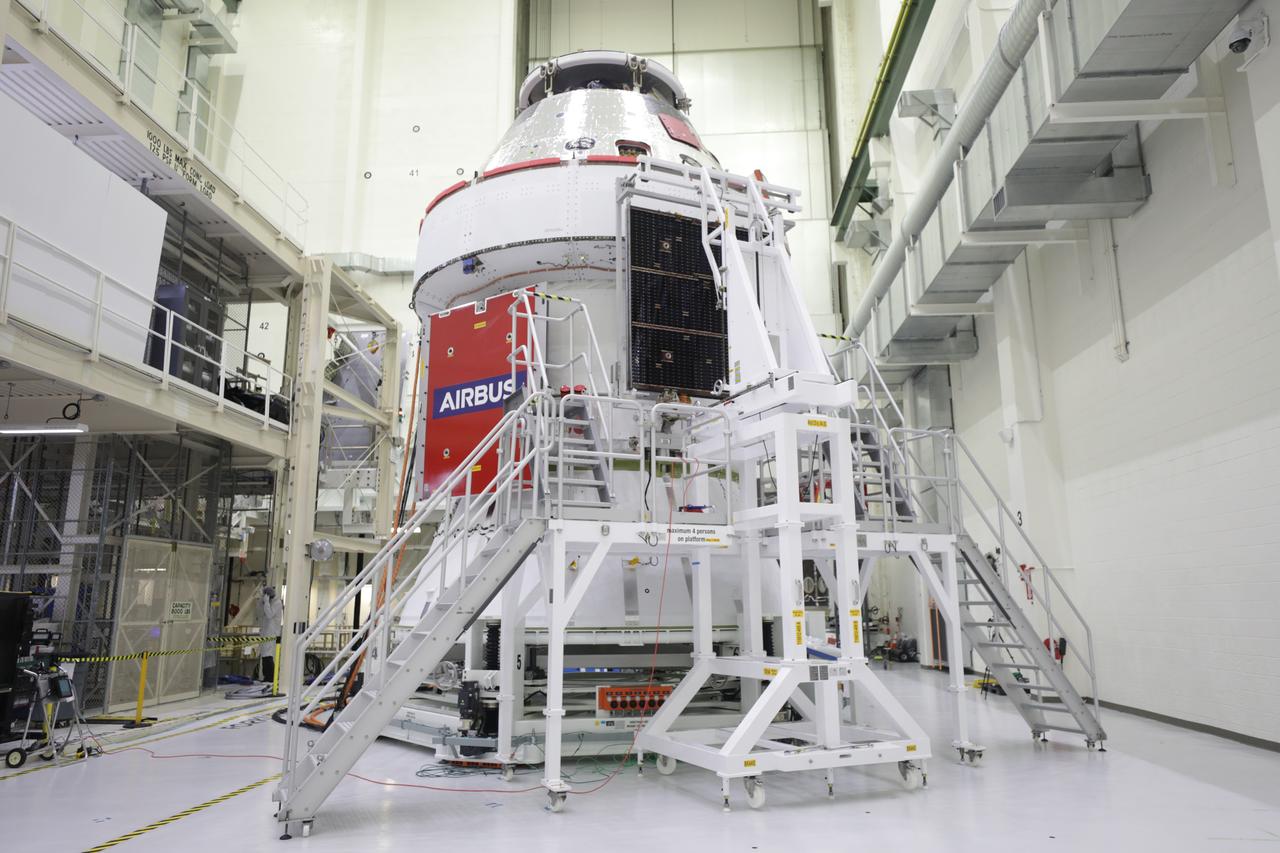
The final of four solar array wings is shown being installed prior to receiving its protective covering on the Orion spacecraft for Artemis I inside the Neil Armstrong Operations and Checkout Building high bay at NASA’s Kennedy Space Center in Florida on Sept. 30, 2020. The solar arrays were extended, inspected, and then retracted, before installation on the spacecraft. Each solar array panel will generate 11 kilowatts of power and span about 63 feet. The array is a component of Orion’s service module, which is provided by the European Space Agency and built by Airbus Defence and Space to supply Orion’s power, propulsion, air and water. The first in a series of increasingly complex missions, Artemis I will test the Orion spacecraft and Space Launch System as an integrated system ahead of crewed flights to the Moon. Under the Artemis program, NASA will land the first woman and the next man on the Moon in 2024.
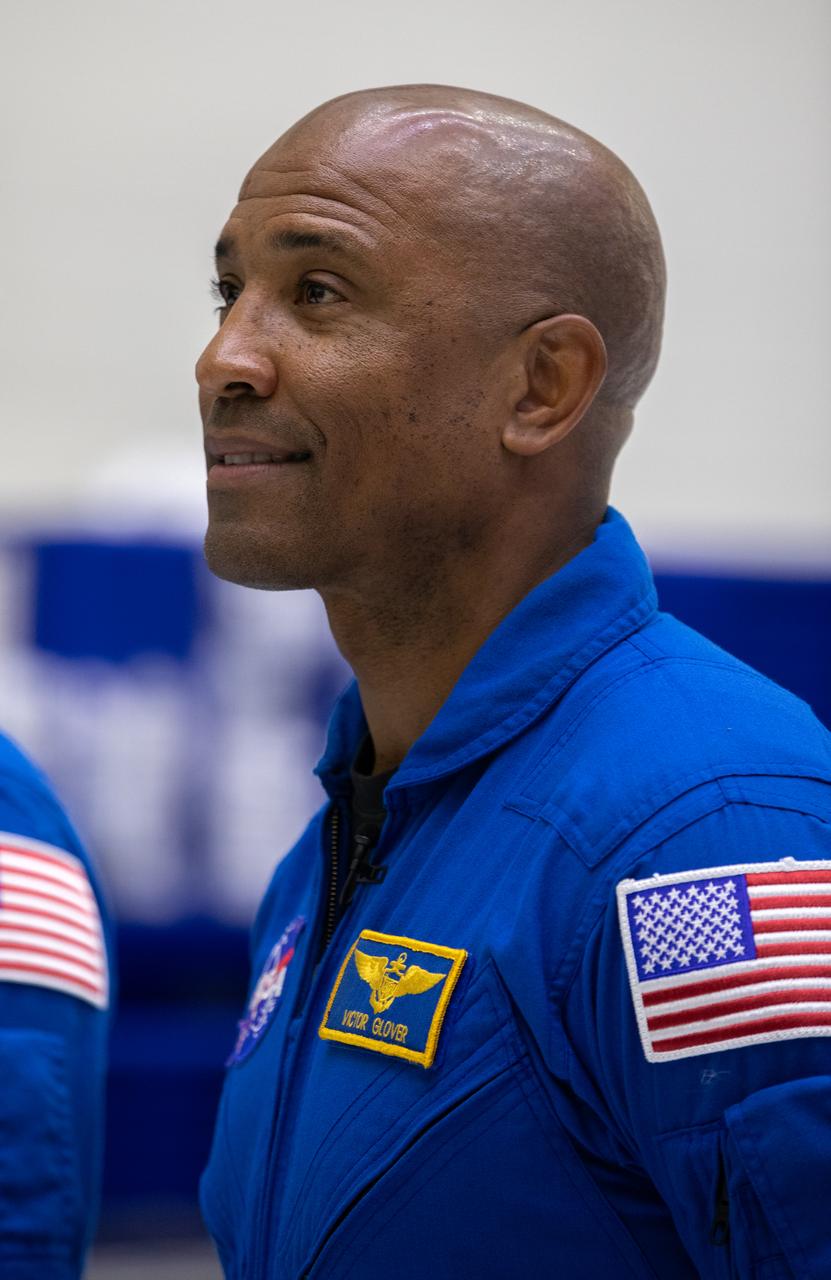
Artemis II mission pilot Victor Glover smiles inside the Neil Armstrong Operations and Checkout Building at NASA’s Kennedy Space Center in Florida on Aug. 8, 2023. The Artemis II Orion crew module is undergoing acoustic testing ahead of integration with the European Service Module. Artemis II is the first crewed mission on NASA’s path to establishing a long-term lunar presence for science and exploration under Artemis.

A team wearing bunny suits inside the Operations and Checkout Building at NASA's Kennedy Space Center in Florida on Saturday, April 27, 2024 prepare the Artemis II Orion spacecraft to be lifted by a 30 ton crane out of a vacuum chamber following a series of electromagnetic compatibility and interference testing.
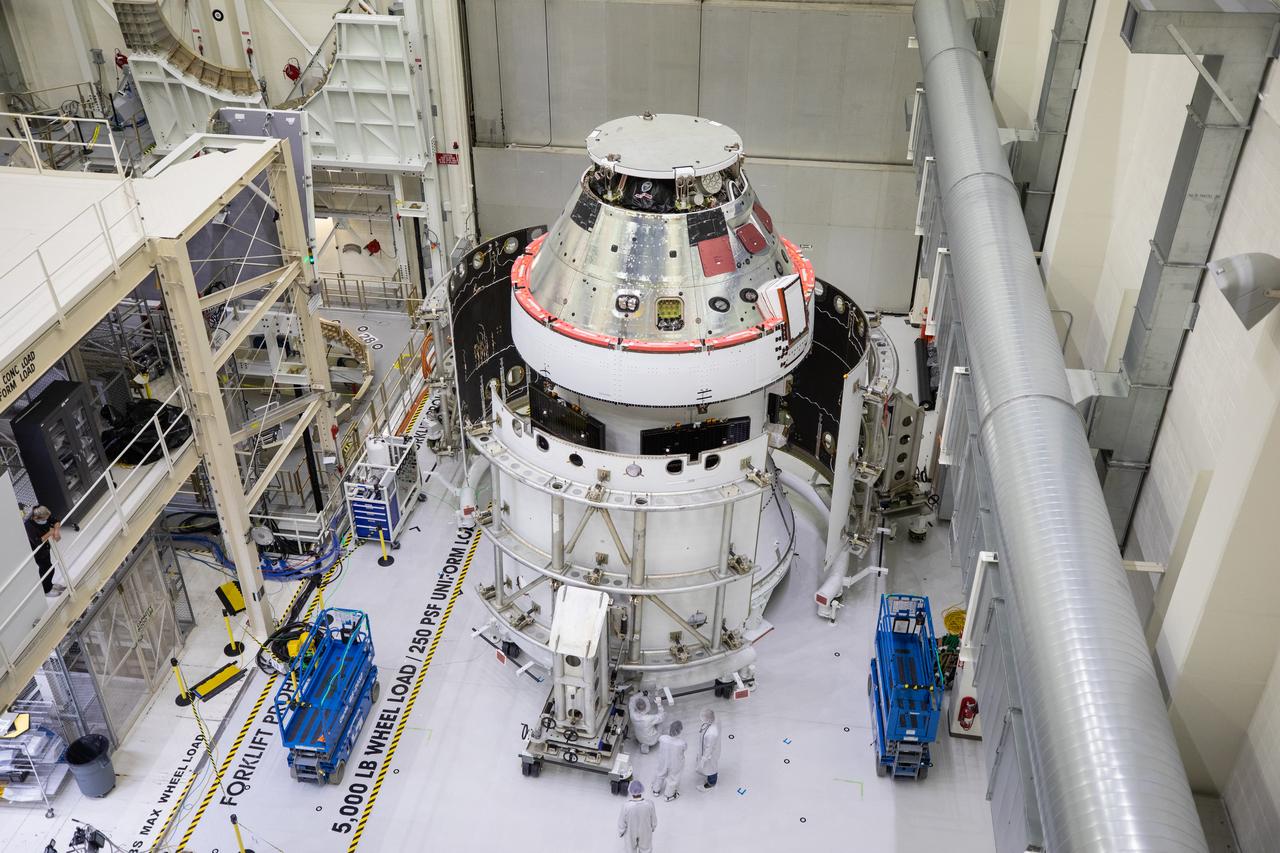
Shown is an overhead view of three spacecraft adapter jettison fairing panels fitted onto Orion’s European Service Module (ESM) on Oct. 13, 2020, inside the Neil Armstrong Operations and Checkout Building (O&C) at NASA’s Kennedy Space Center in Florida. The panels were inspected and moved into place for installation by technicians with Lockheed Martin. Recently, teams from across the globe installed the four solar array wings, which are housed inside the protective covering of the fairings. Once secured, they will encapsulate the ESM to protect it from harsh environments such as heat, wind, and acoustics as the spacecraft is propelled out of Earth’s atmosphere atop the Space Launch System (SLS) rocket during NASA’s Artemis I mission.
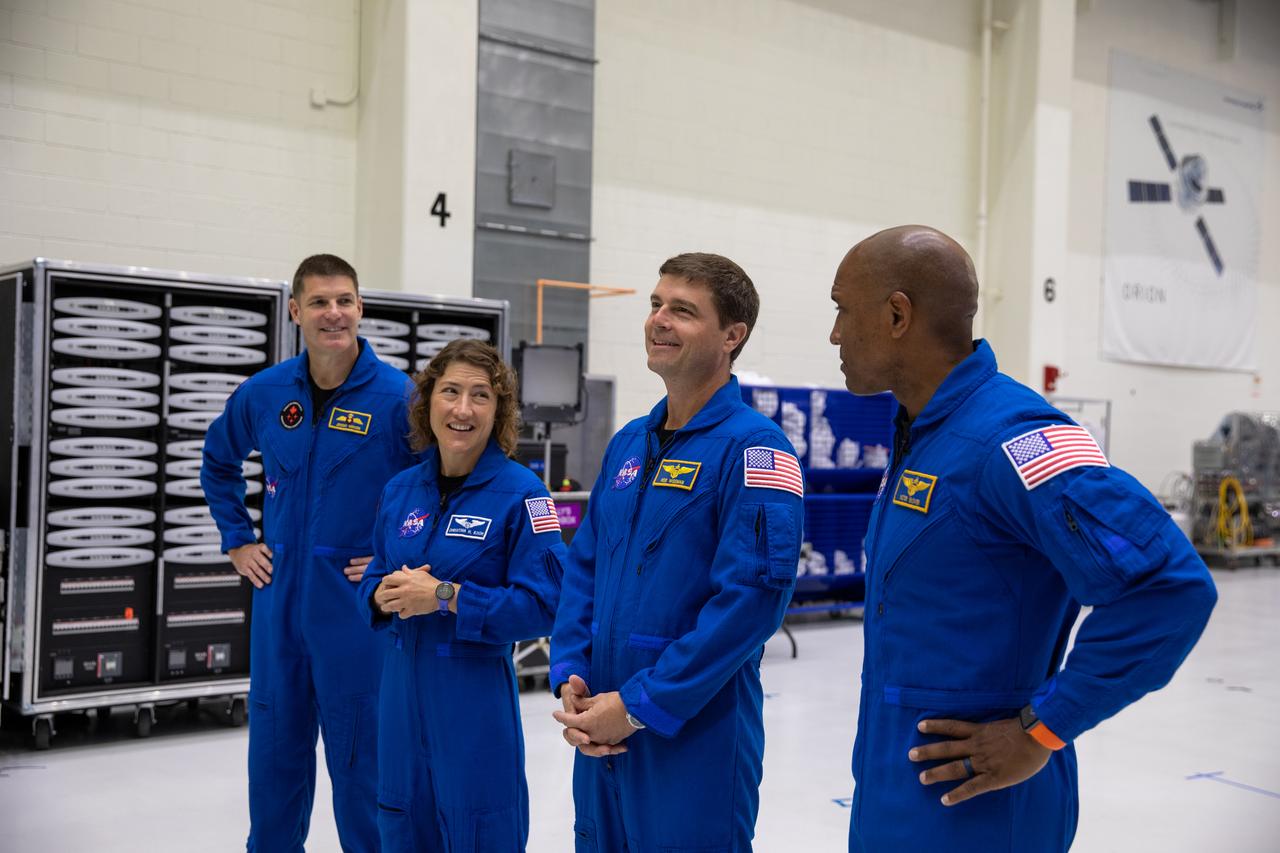
Artemis II crew members, shown inside the Neil Armstrong Operations and Checkout Building at NASA’s Kennedy Space Center in Florida, check out their Orion crew module on Aug. 8, 2023. From left are: Jeremy Hansen, mission specialist; Christina Hammock Koch, mission specialist; Reid Wiseman, commander; and Victor Glover, pilot. The crew module is undergoing acoustic testing ahead of integration with the European Service Module. Artemis II is the first crewed mission on NASA’s path to establishing a long-term lunar presence for science and exploration under Artemis.

Artemis II crew members, shown inside the Neil Armstrong Operations and Checkout Building at NASA’s Kennedy Space Center in Florida, check out their Orion crew module on Aug. 8, 2023. From left are: Victor Glover, pilot; Reid Wiseman, commander; Christina Hammock Koch, mission specialist; and Jeremy Hansen, mission specialist. The crew module is undergoing acoustic testing ahead of integration with the European Service Module. Artemis II is the first crewed mission on NASA’s path to establishing a long-term lunar presence for science and exploration under Artemis.
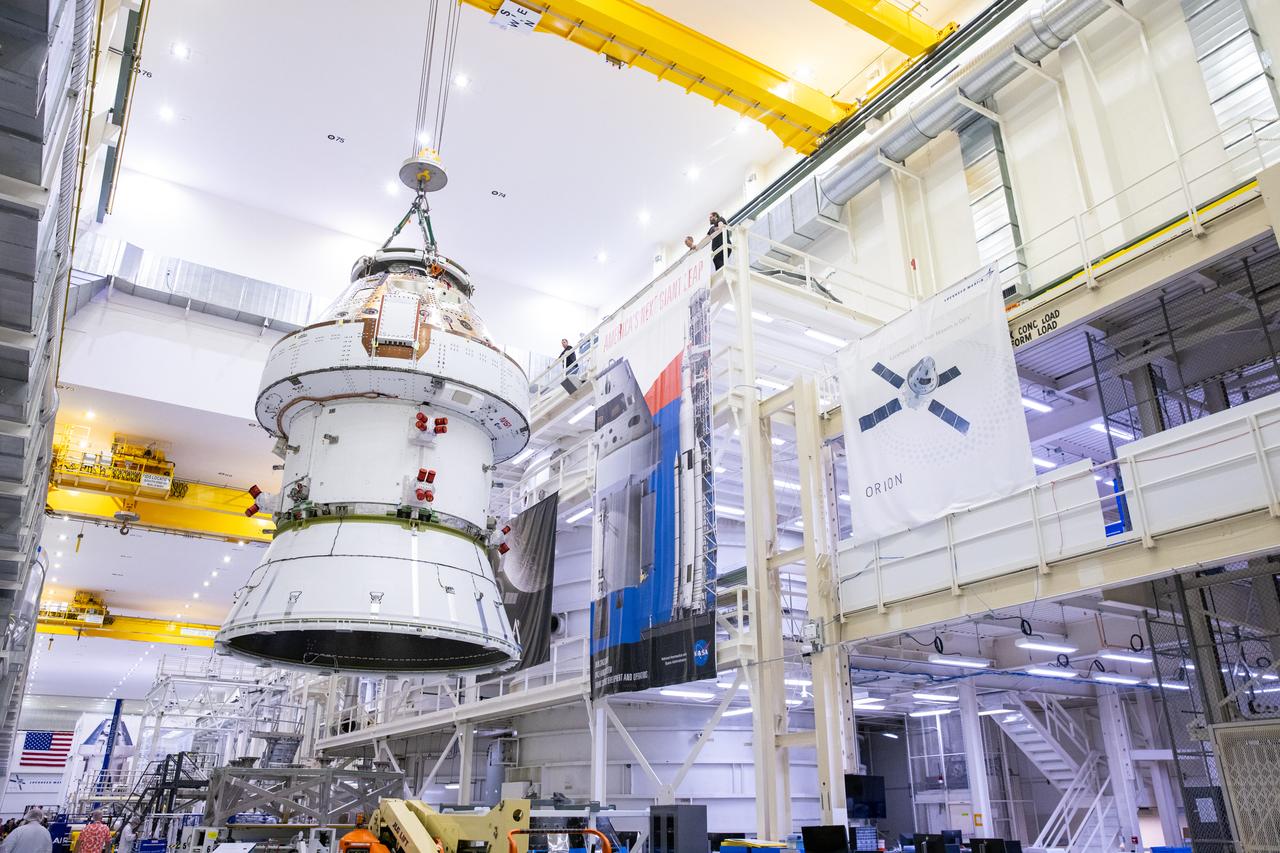
On April 4, 2024, teams lift the Artemis II Orion spacecraft into a vacuum chamber inside the Operations and Checkout Building at NASA's Kennedy Space Center in Florida, where it will undergo electromagnetic compatibility and interference testing.
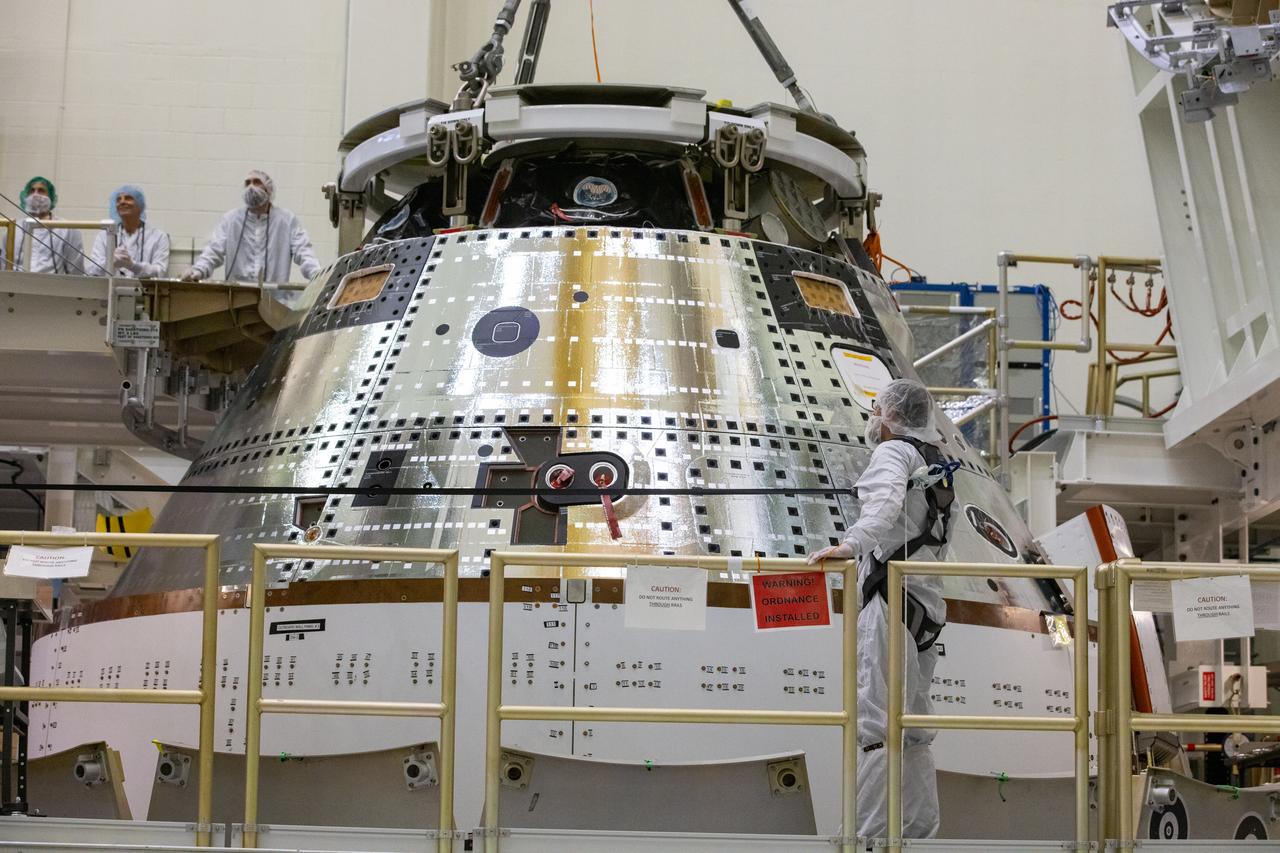
On April 4, 2024, technicians examine the Artemis II Orion spacecraft after a team lifts it into a vacuum chamber inside the Operations and Checkout Building at NASA's Kennedy Space Center in Florida, where it will undergo electromagnetic compatibility and interference testing.
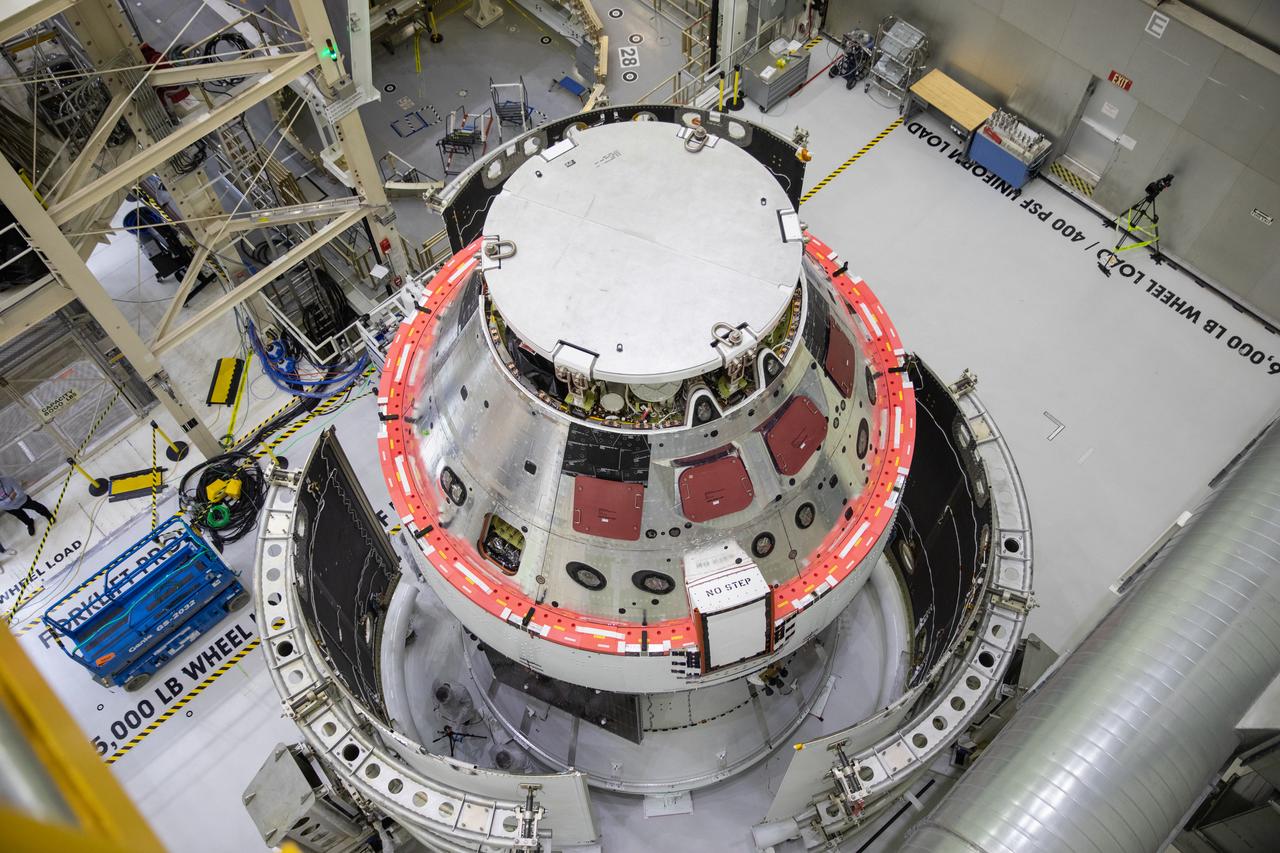
Shown is an overhead view of three spacecraft adapter jettison fairing panels fitted onto Orion’s European Service Module (ESM) on Oct. 13, 2020, inside the Neil Armstrong Operations and Checkout Building (O&C) at NASA’s Kennedy Space Center in Florida. The panels were inspected and moved into place for installation by technicians with Lockheed Martin. Recently, teams from across the globe installed the four solar array wings, which are housed inside the protective covering of the fairings. Once secured, they will encapsulate the ESM to protect it from harsh environments such as heat, wind, and acoustics as the spacecraft is propelled out of Earth’s atmosphere atop the Space Launch System (SLS) rocket during NASA’s Artemis I mission.
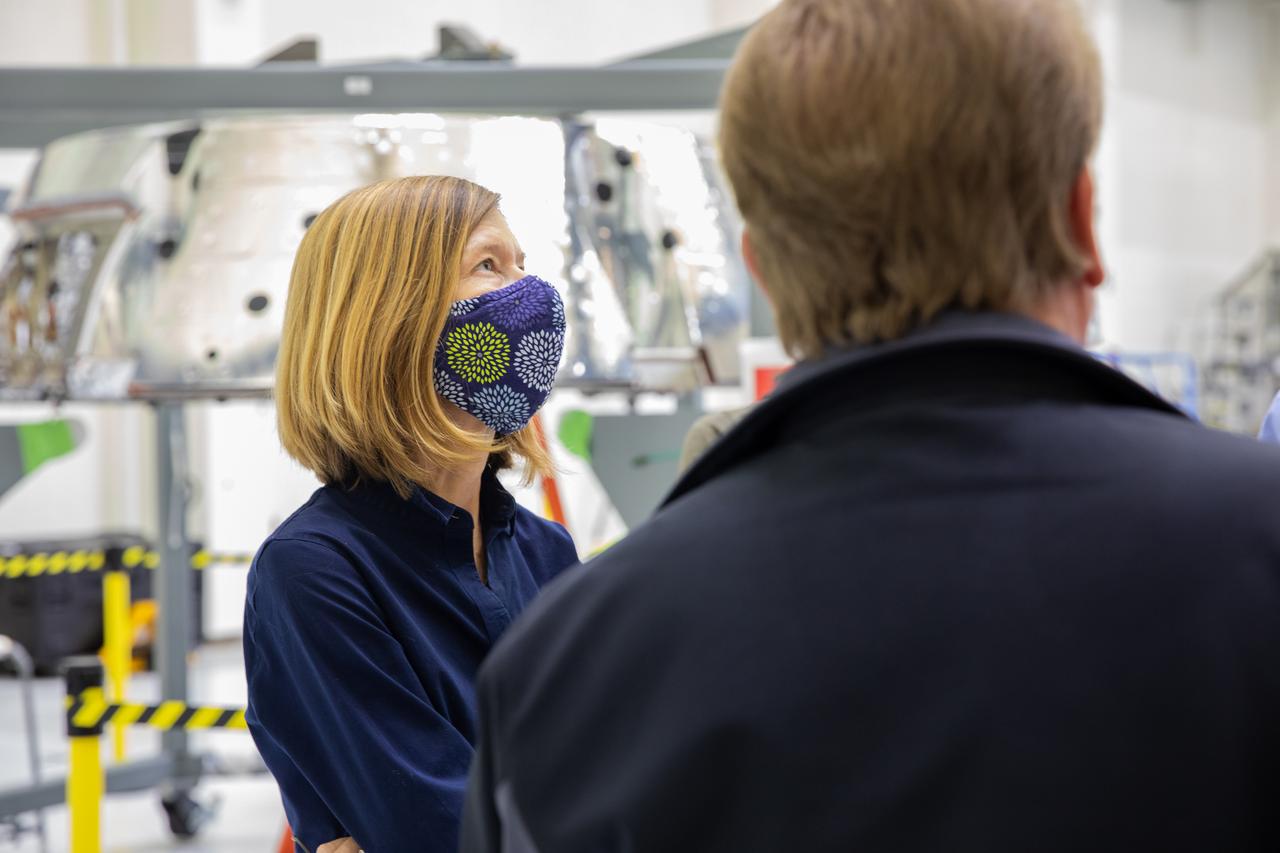
Kathy Lueders, associate administrator of NASA’s Human Exploration and Operations Mission Directorate, visits the Neil Armstrong Operations and Checkout Building high bay at the agency’s Kennedy Space Center in Florida on Nov. 5, 2020. In the background is the Orion spacecraft’s forward bay cover for Artemis I. The first in a series of increasingly complex missions, Artemis I will test the Space Launch System rocket and Orion spacecraft as an integrated system prior to crewed flights to the Moon. Under the Artemis program, NASA is planning to land the first woman and the next man on the lunar surface by 2024.
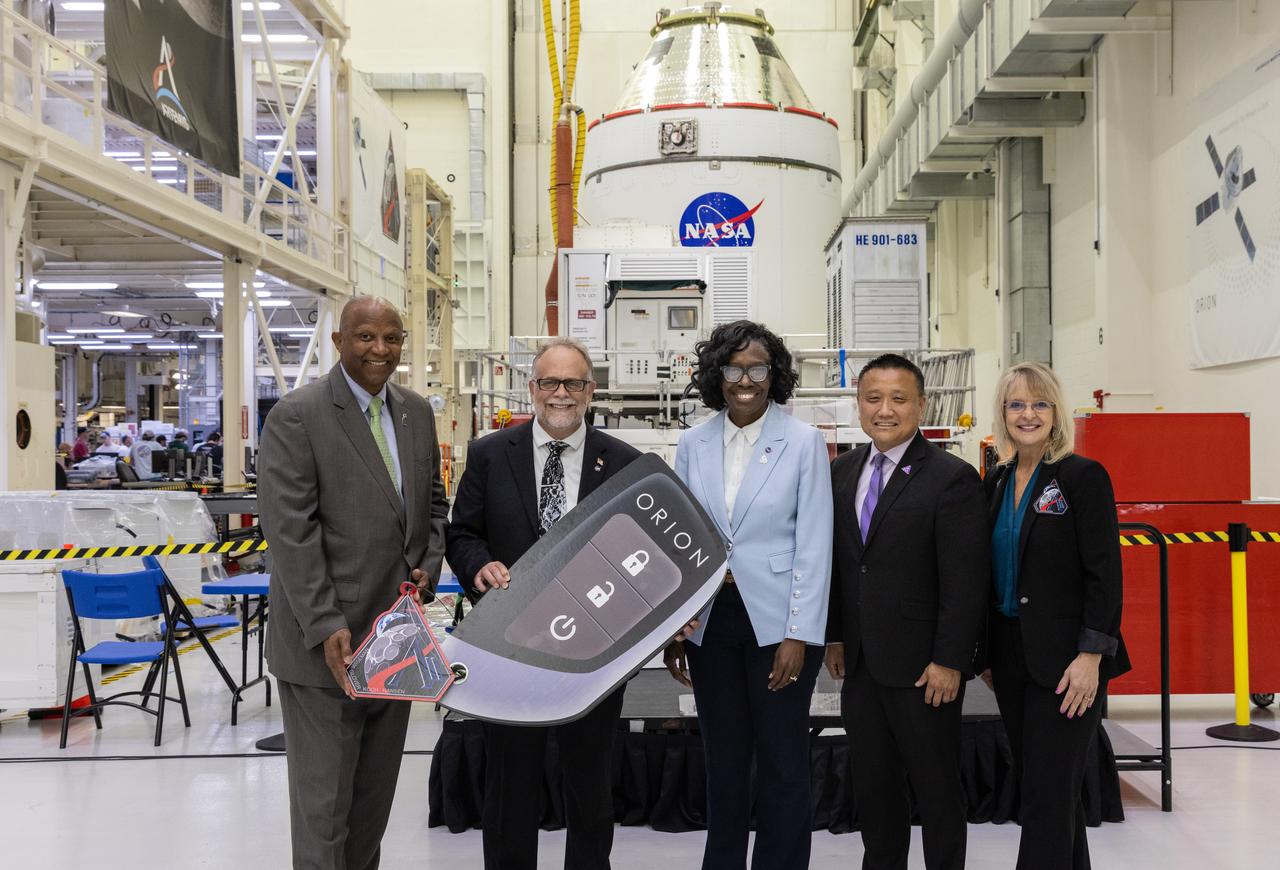
From left, Kelvin Manning, acting center director, NASA’s Kennedy Space Center; Shawn Quinn, Exploration Ground Systems program manager; Lakiesha Hawkins, assistant deputy associate administrator, Moon to Mars Program office; Howard Hu, Orion program manager; Debbie Korth, Orion deputy program manager, participate in a handover ceremony of NASA’s Artemis II Orion spacecraft to crews with the agency’s Exploration Ground Systems Program at the Neil A. Armstrong Operations and Checkout Building at NASA’s Kennedy Space Center in Florida on Thursday, May 1, 2025. The spacecraft will be transported to the Multi-Payload Processing Facility to undergo fueling and processing for prelaunch operations. The Artemis II test flight is the first crewed flight under NASA’s Artemis campaign and is another step toward missions on the lunar surface and helping the agency prepare for future human missions to Mars.
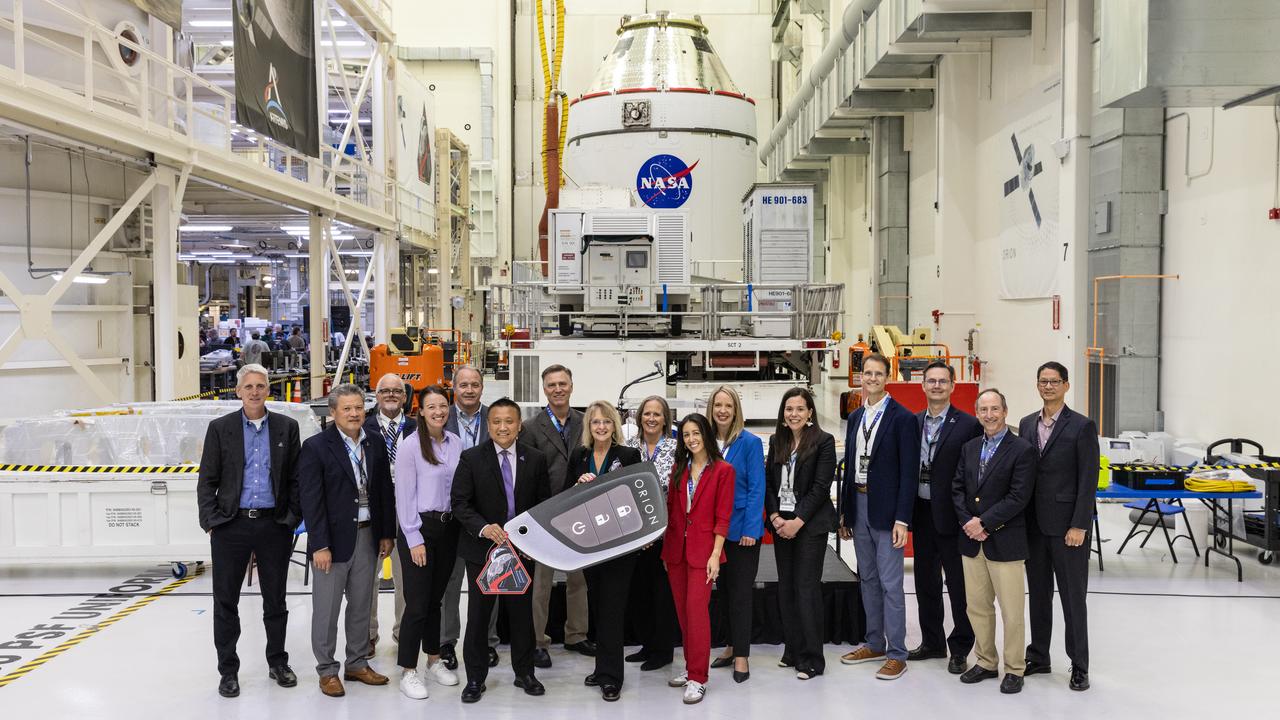
Teams with NASA’s Exploration Ground Systems, Orion, and Lockheed Martin participate in a handover ceremony of NASA’s Artemis II Orion spacecraft to crews with the agency’s Exploration Ground Systems Program at the Neil A. Armstrong Operations and Checkout Building at NASA’s Kennedy Space Center in Florida on Thursday, May 1, 2025. The spacecraft will be transported to the Multi-Payload Processing Facility to undergo fueling and processing for prelaunch operations. The Artemis II test flight is the first crewed flight under NASA’s Artemis campaign and is another step toward missions on the lunar surface and helping the agency prepare for future human missions to Mars.
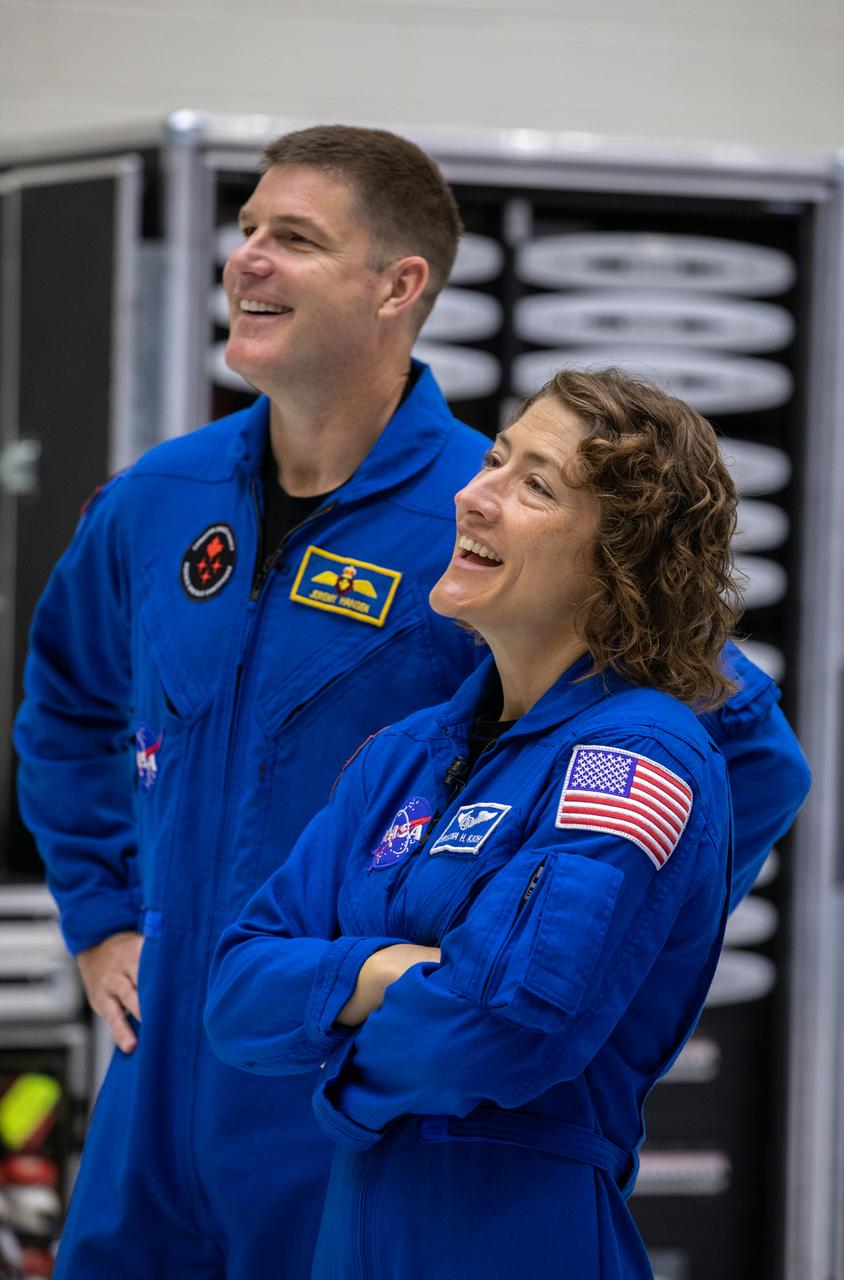
Artemis II crew members Jeremy Hansen, left, and Christina Hammock Koch enjoy a laugh inside the Neil Armstrong Operations and Checkout Building at NASA’s Kennedy Space Center in Florida on Aug. 8, 2023. The Artemis II Orion crew module is undergoing acoustic testing ahead of integration with the European Service Module. Artemis II is the first crewed mission on NASA’s path to establishing a long-term lunar presence for science and exploration under Artemis.
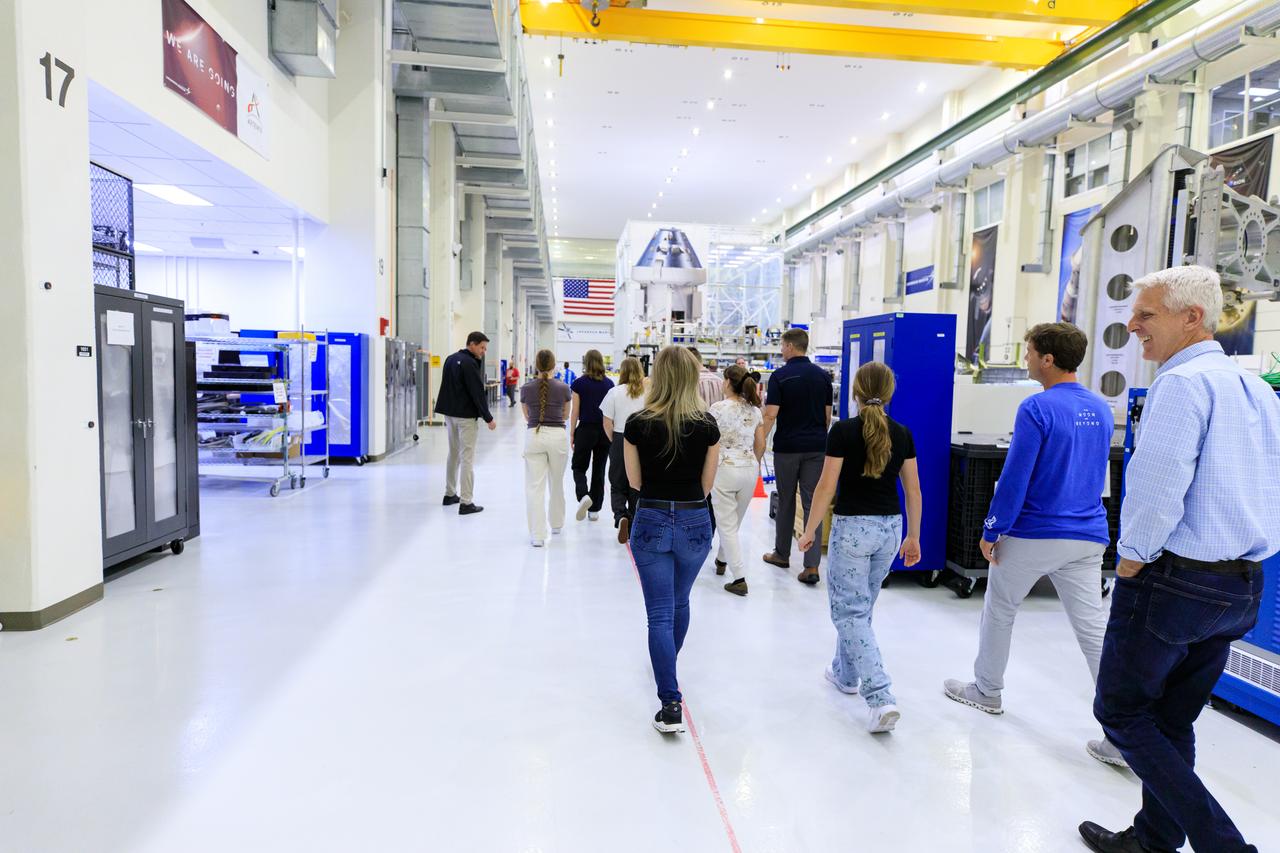
Nathan Varn, far left, Program Director Orion Productions for Lockheed Martin, and Scott Wilson, far right, NASA’s Division Chief, Orion Production Operations Office, lead a tour for Artemis II crew members and their families of the Neil A. Armstrong Operations and Checkout Building at NASA’s Kennedy Space Center in Florida, on Friday, March 15, 2024. Artemis II Commander Reid Wiseman and Artemis II Mission Specialist Jeremy Hansen toured the facility with their families and viewed the Orion crew modules, including the spacecraft that will take them, along with Artemis II Pilot Victor Glover and Artemis II Mission Specialist Christina Hammock Koch, around the Moon and back during the Artemis II mission.
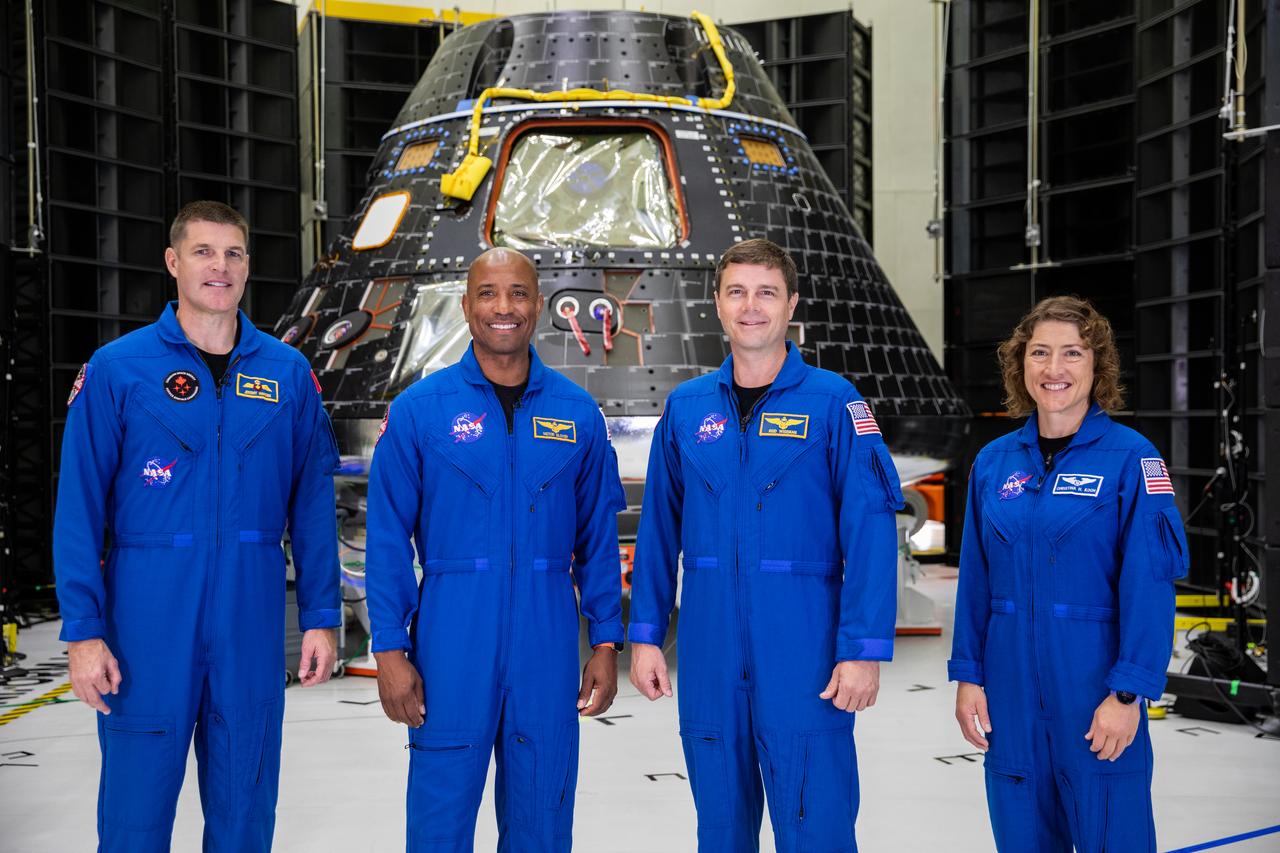
Artemis II crew members, shown inside the Neil Armstrong Operations and Checkout Building at NASA’s Kennedy Space Center in Florida, stand in front of their Orion crew module on Aug. 8, 2023. From left are: Jeremy Hansen, mission specialist; Victor Glover, pilot; Reid Wiseman, commander; and Christina Hammock Koch, mission specialist. The crew module is undergoing acoustic testing ahead of integration with the European Service Module. Artemis II is the first crewed mission on NASA’s path to establishing a long-term lunar presence for science and exploration under Artemis.
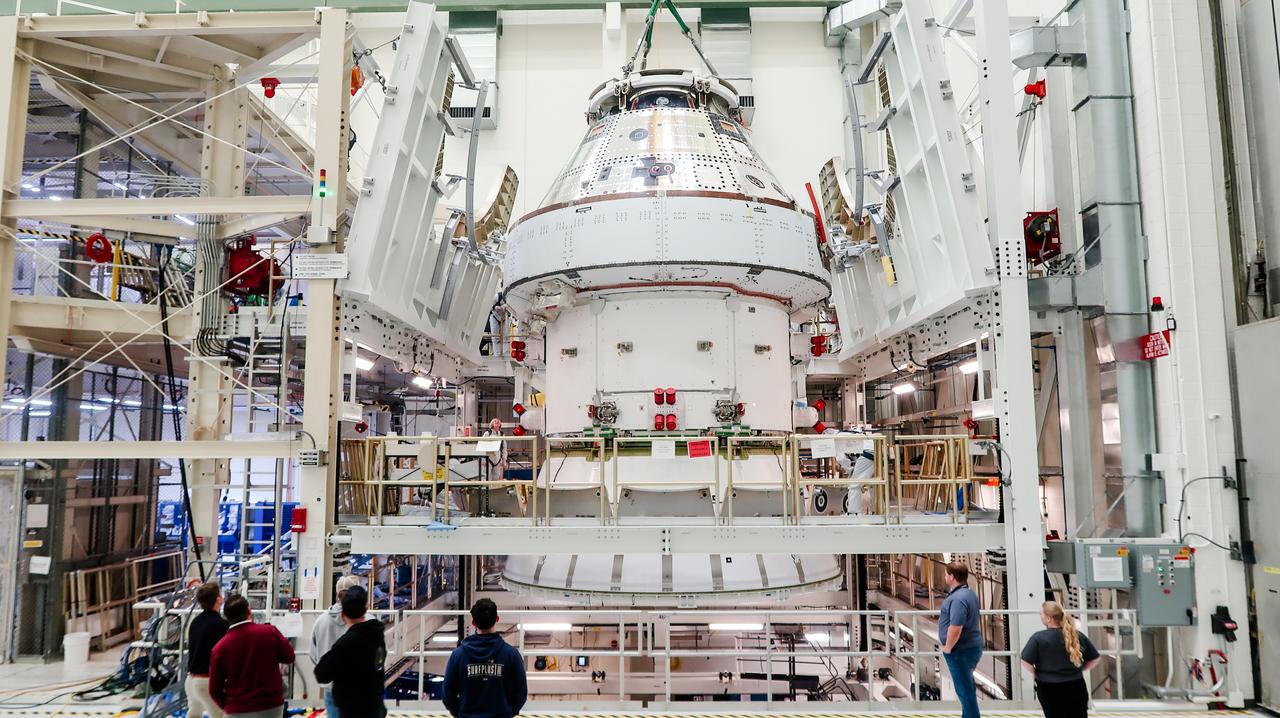
On April 4, 2024, a team lifts the Artemis II Orion spacecraft into a vacuum chamber inside the Operations and Checkout Building at NASA's Kennedy Space Center in Florida, where it will undergo electromagnetic compatibility and interference testing.
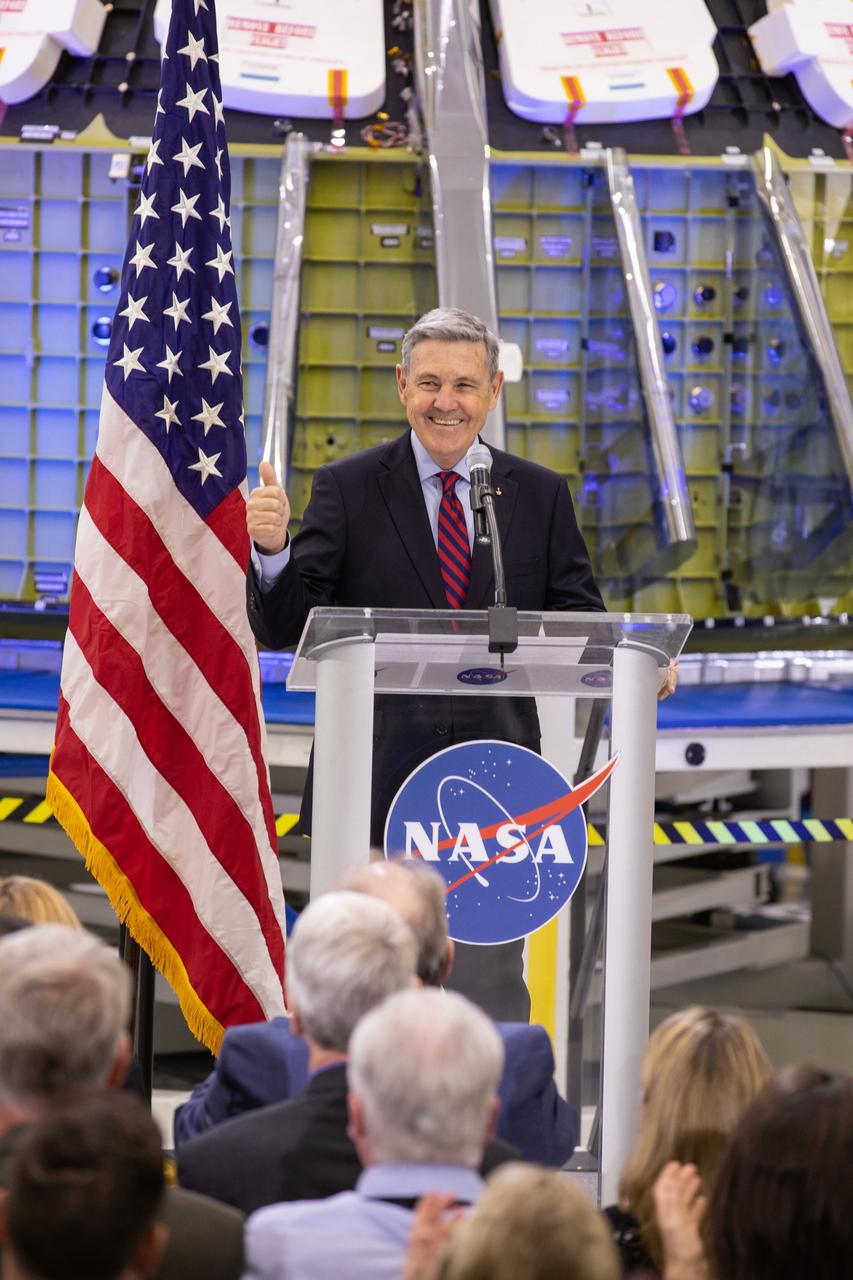
Bob Cabana, director of NASA’s Kennedy Space Center in Florida, gives a thumbs up as he speaks to NASA workers and members of the news media, during a Moon to Mars event in the Neil Armstrong Operations and Checkout Building high bay on March 11, 2019. The event followed the delivery of President Trump’s fiscal year 2020 budget proposal to U.S. Congress, which includes funding for the agency’s Moon to Mars initiative and Gateway lunar outpost.
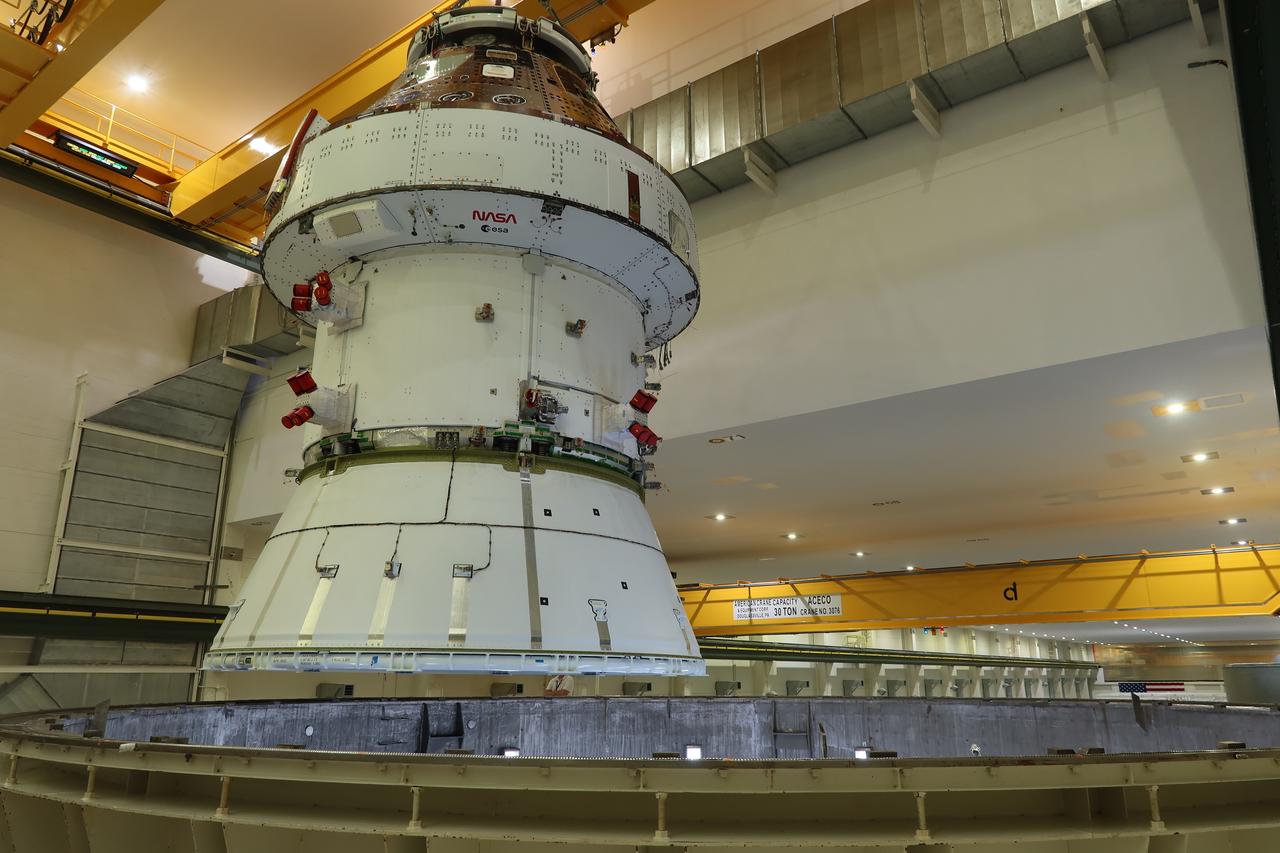
The Orion spacecraft crew for NASA’s Artemis II mission is photographed being transferred across the Neil Armstrong Operations and Checkout Building at NASA’s Kennedy Space Center in Florida on Saturday, April 27, 2024 following a series of electromagnetic compatibility and interference testing.

Shown inside the Neil Armstrong Operations and Checkout Building at NASA’s Kennedy Space Center in Florida on Aug. 8, 2023, is the Orion crew module for NASA’s Artemis III mission.
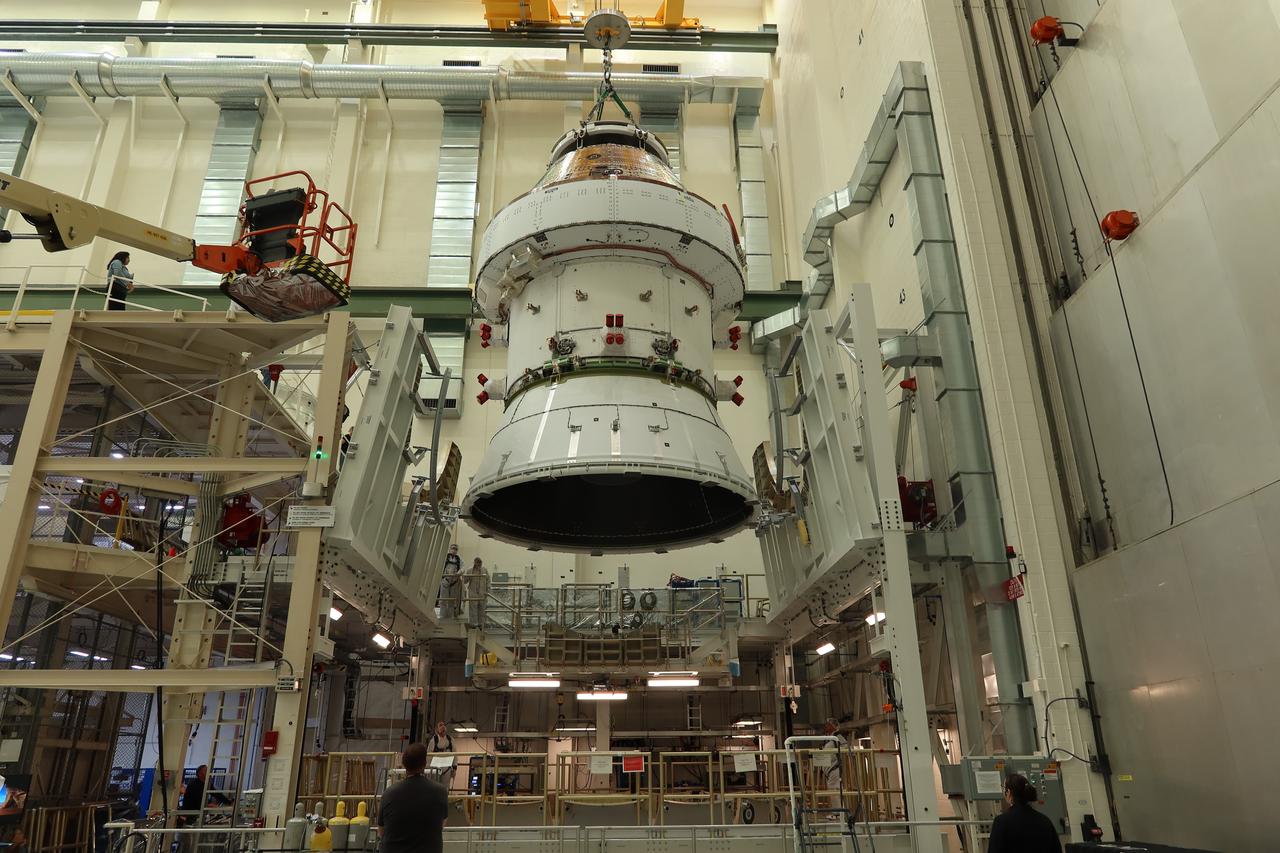
The Orion spacecraft crew module for NASA’s Artemis II mission is photographed being lowered inside the Final Assembly and System Testing cell by a 30 ton crane at the Neil Armstrong Operations and Checkout Building at NASA’s Kennedy Space Center in Florida on Saturday, April 27, 2024. Four astronauts will venture around the Moon in the Orion spacecraft on Artemis II, the first crewed mission on NASA's path to establishing a long-term presence at the Moon for science and exploration through the Artemis campaign.
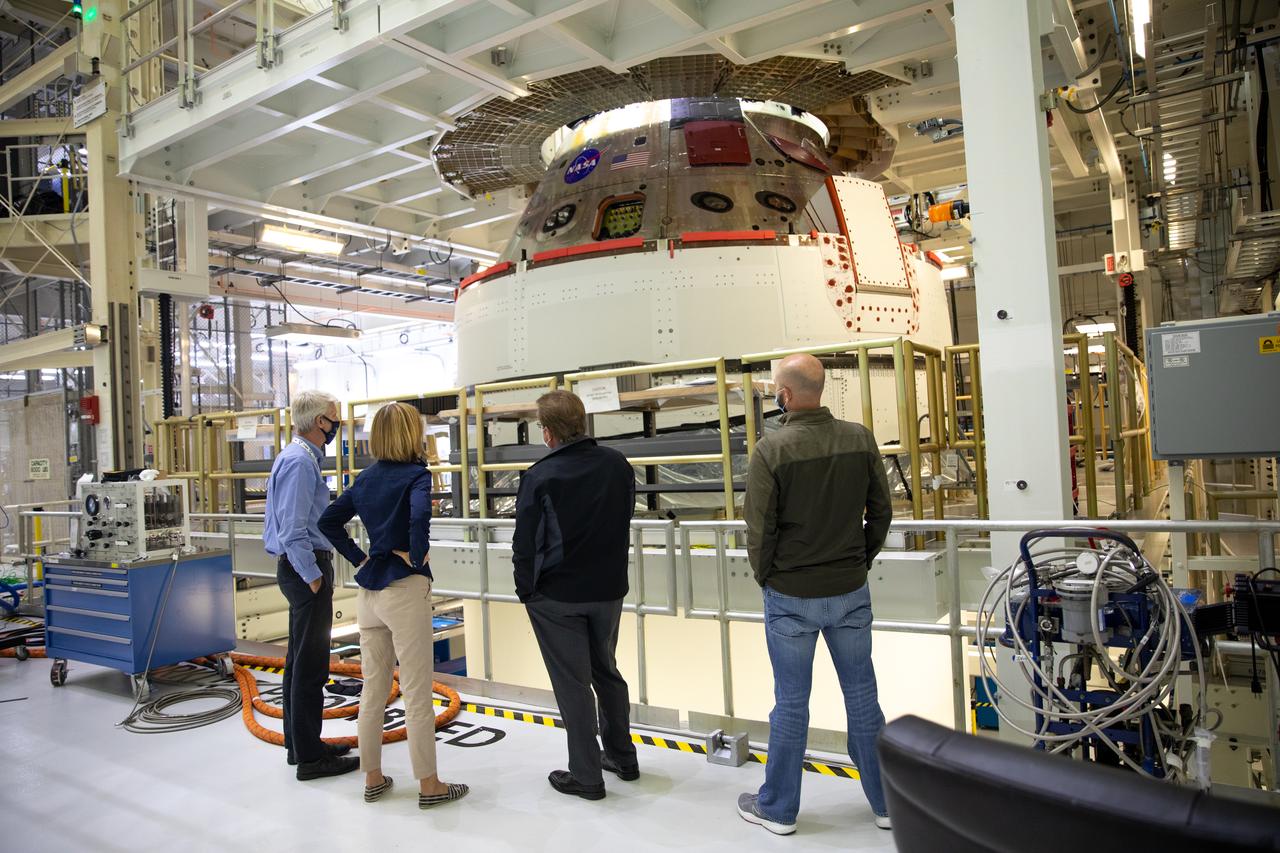
Senior managers from Orion, NASA, and Lockheed Martin view the Artemis I spacecraft during a visit to the Neil Armstrong Operations and Checkout Building high bay at NASA’s Kennedy Space Center in Florida on Nov. 5, 2020. From left are Scott Wilson, manager, Orion Production Office; Kathy Lueders, associate administrator of NASA’s Human Exploration and Operations Mission Directorate; Jules Schneider, director of Assembly, Test, and Launch Operations for Lockheed Martin; and Jim Skaggs, senior manager of Kennedy Operations for Lockheed Martin. The first in a series of increasingly complex missions, Artemis I will test the Space Launch System rocket and Orion spacecraft as an integrated system prior to crewed flights to the Moon. Under the Artemis program, NASA is planning to land the first woman and the next man on the lunar surface by 2024.
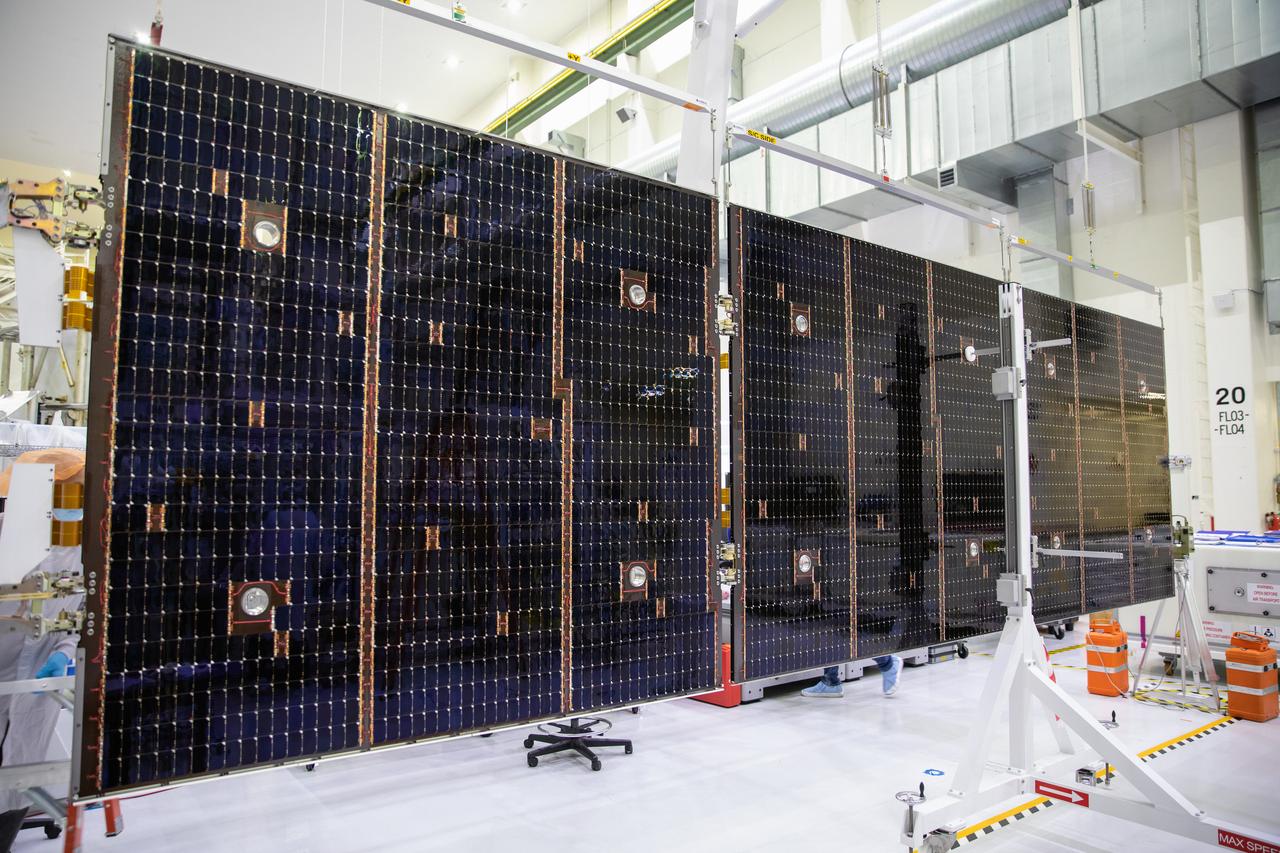
Inside the Neil Armstrong Operations and Checkout Building high bay at NASA’s Kennedy Space Center in Florida, in preparation for installation on the Artemis I spacecraft, technicians have extended one of the Artemis I solar array wings for inspection on Sept. 10, 2020, to confirm that it unfurled properly and all of the mechanisms functioned as expected. The solar array is one of four panels that will generate 11 kilowatts of power and span about 63 feet. The array is a component of Orion’s service module, which is provided by the European Space Agency and built by Airbus Defence and Space to supply Orion’s power, propulsion, air and water. The first in a series of increasingly complex missions, Artemis I will test the Orion spacecraft and Space Launch System as an integrated system ahead of crewed flights to the Moon. Under the Artemis program, NASA will land the first woman and the next man on the Moon in 2024.
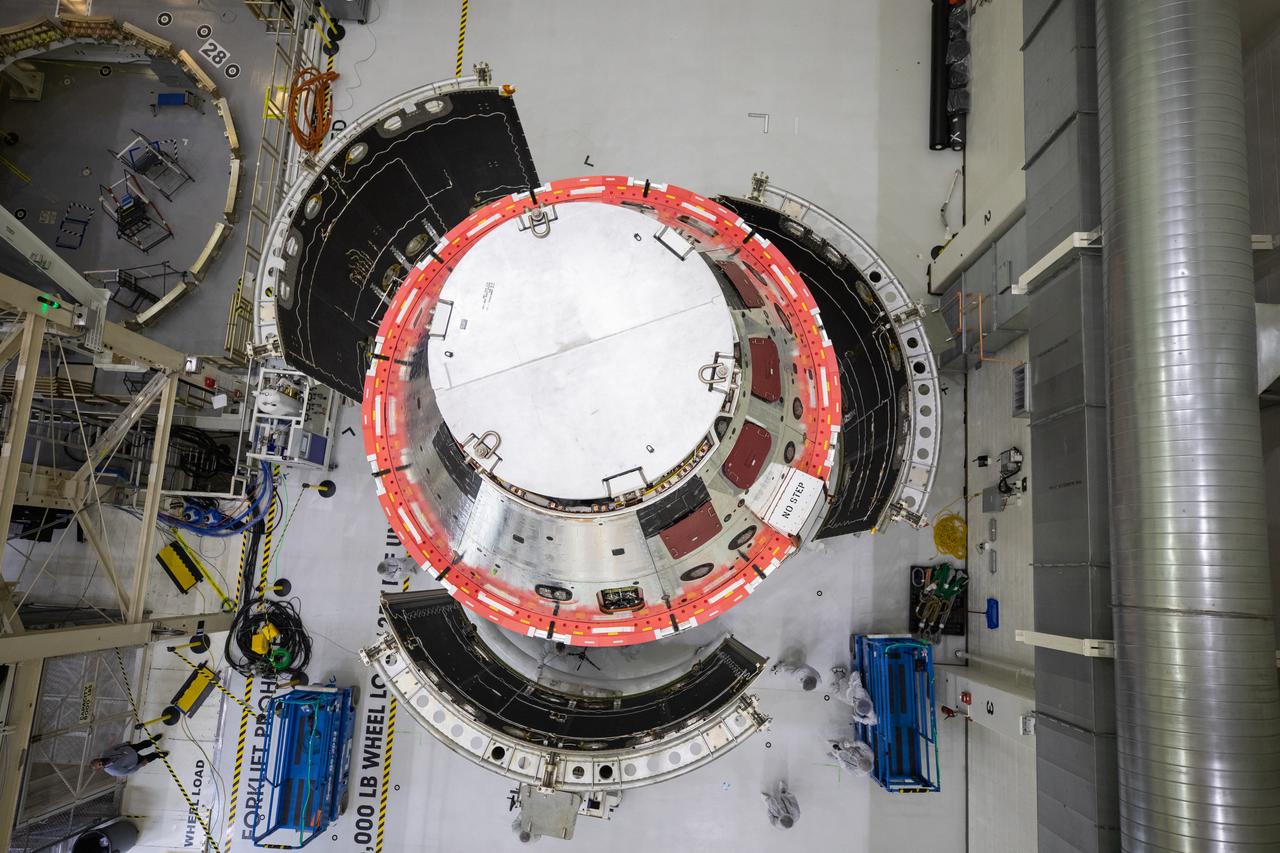
Shown is an overhead view of three spacecraft adapter jettison fairing panels fitted onto Orion’s European Service Module (ESM) on Oct. 13, 2020, inside the Neil Armstrong Operations and Checkout Building (O&C) at NASA’s Kennedy Space Center in Florida. The panels were inspected and moved into place for installation by technicians with Lockheed Martin. Recently, teams from across the globe installed the four solar array wings, which are housed inside the protective covering of the fairings. Once secured, they will encapsulate the ESM to protect it from harsh environments such as heat, wind, and acoustics as the spacecraft is propelled out of Earth’s atmosphere atop the Space Launch System (SLS) rocket during NASA’s Artemis I mission.
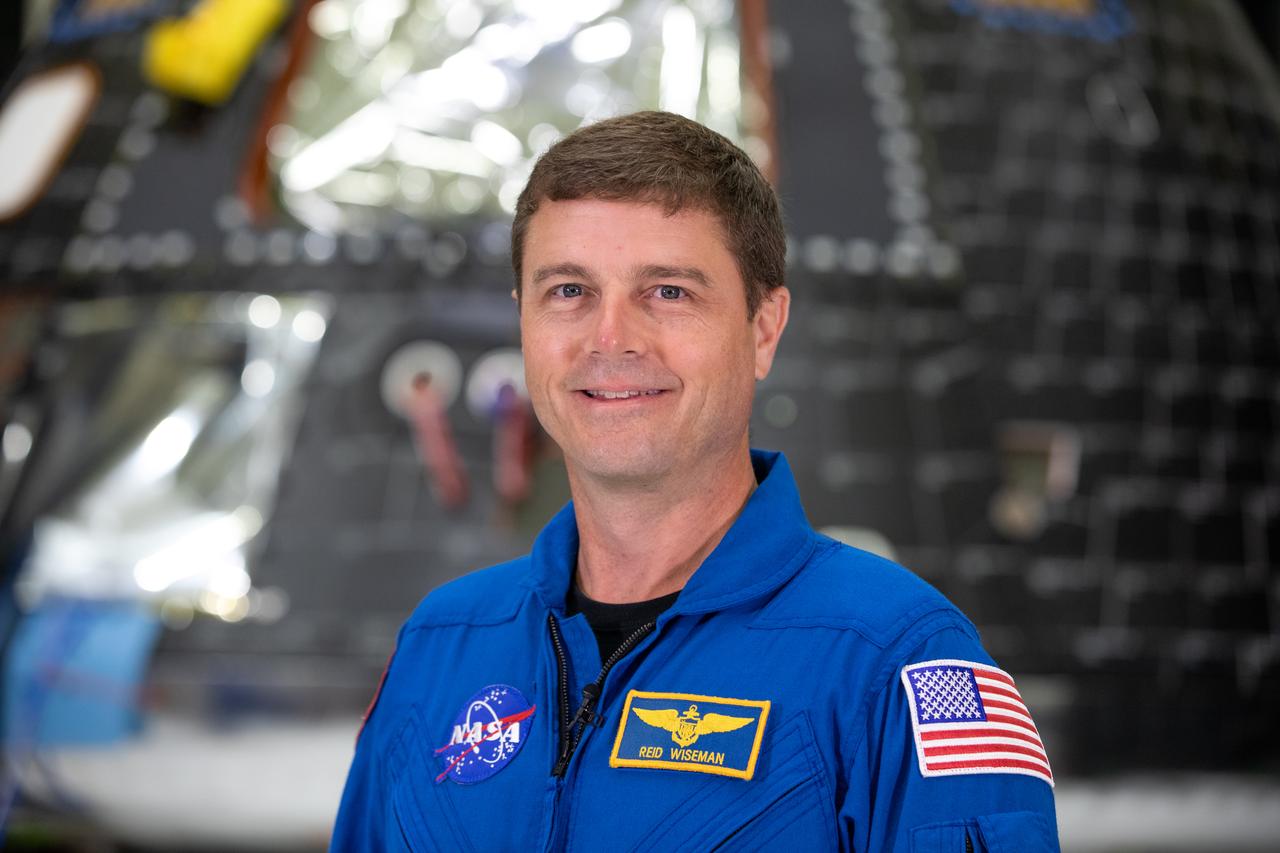
Artemis II mission commander Reid Wiseman poses inside the Neil Armstrong Operations and Checkout Building at NASA’s Kennedy Space Center in Florida on Aug. 8, 2023. The Artemis II Orion crew module is undergoing acoustic testing ahead of integration with the European Service Module. Artemis II is the first crewed mission on NASA’s path to establishing a long-term lunar presence for science and exploration under Artemis.
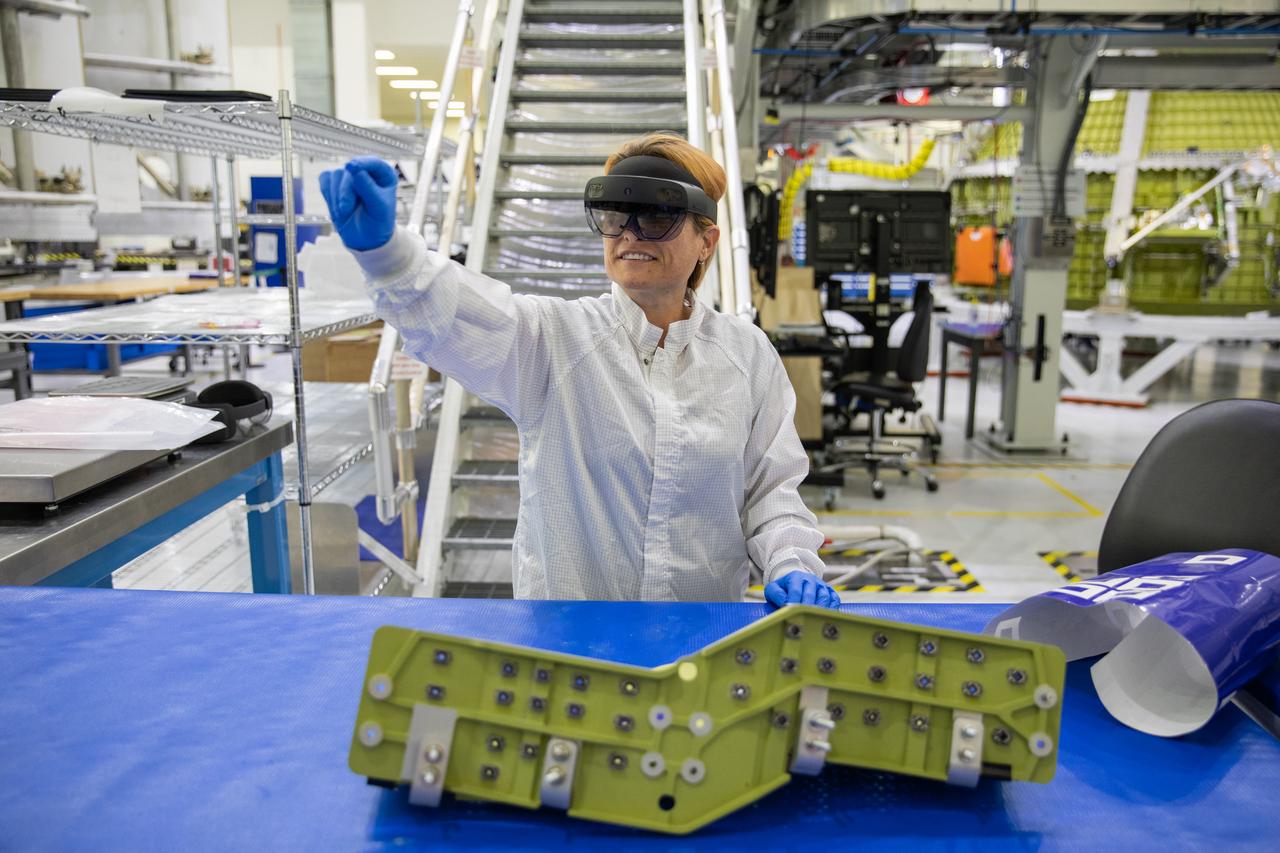
Jennifer Solano, with Lockheed Martin at NASA’s Kennedy Space Center in Florida, demonstrates a pair of augmented reality (AR) goggles as she works on crew module hardware for the agency’s Artemis II mission inside the high bay of the Neil Armstrong Operations and Checkout Building at Kennedy on March 18, 2020. Orion manufacturer Lockheed Martin provided the goggles to technicians to help place tapes where components will be installed on Orion for Artemis II, the first crewed mission aboard the spacecraft. Using the AR goggles saves significant labor and time to complete tasks. Manufactured by Microsoft, the goggles, called HoloLens2, are the second version used by Lockheed.
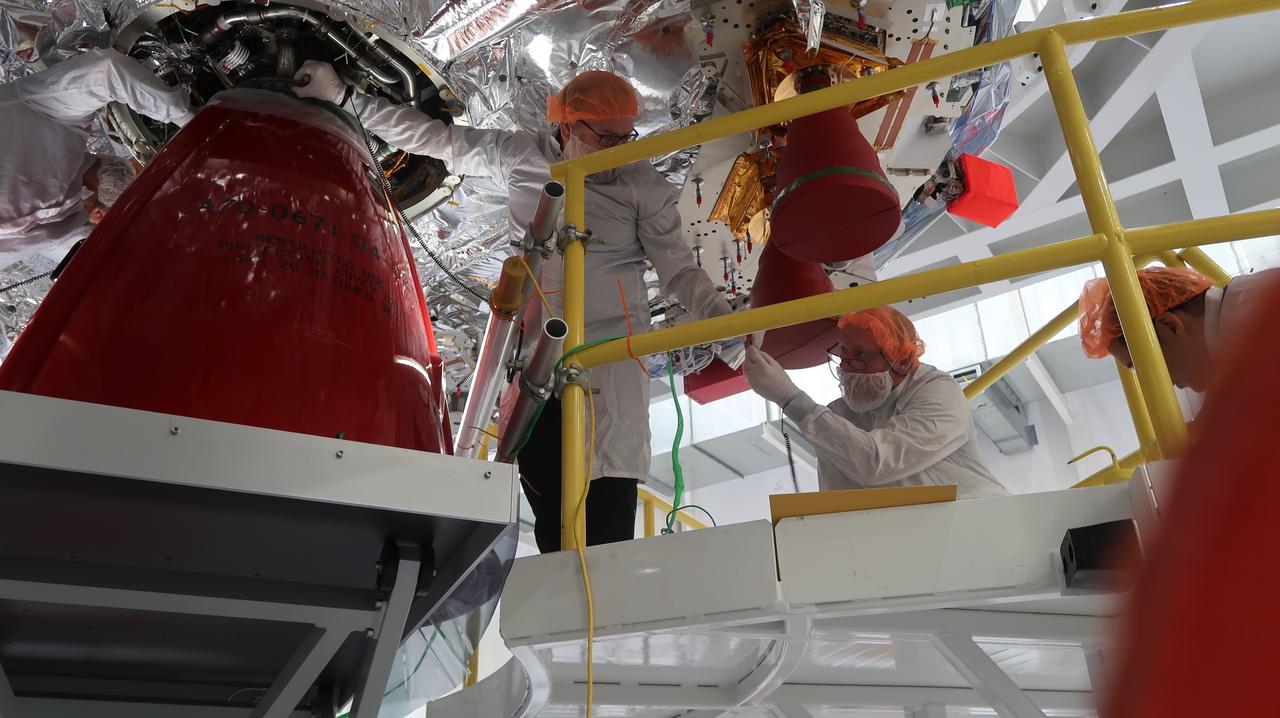
Technicians at NASA’s Kennedy Space Center in Florida install the orbital maneuvering system engine nozzle and heat shield for the Artemis II European Service Module inside the Neil Armstrong Operations and Checkout Building on Jan. 14, 2023. Artemis II will be the first crewed flight test of the Space Launch System rocket and Orion spacecraft. The service module will provide the power necessary to propel Orion on a trip around the Moon, including the in-space maneuvering capability and other commodities necessary to sustain crew for the duration of the mission.
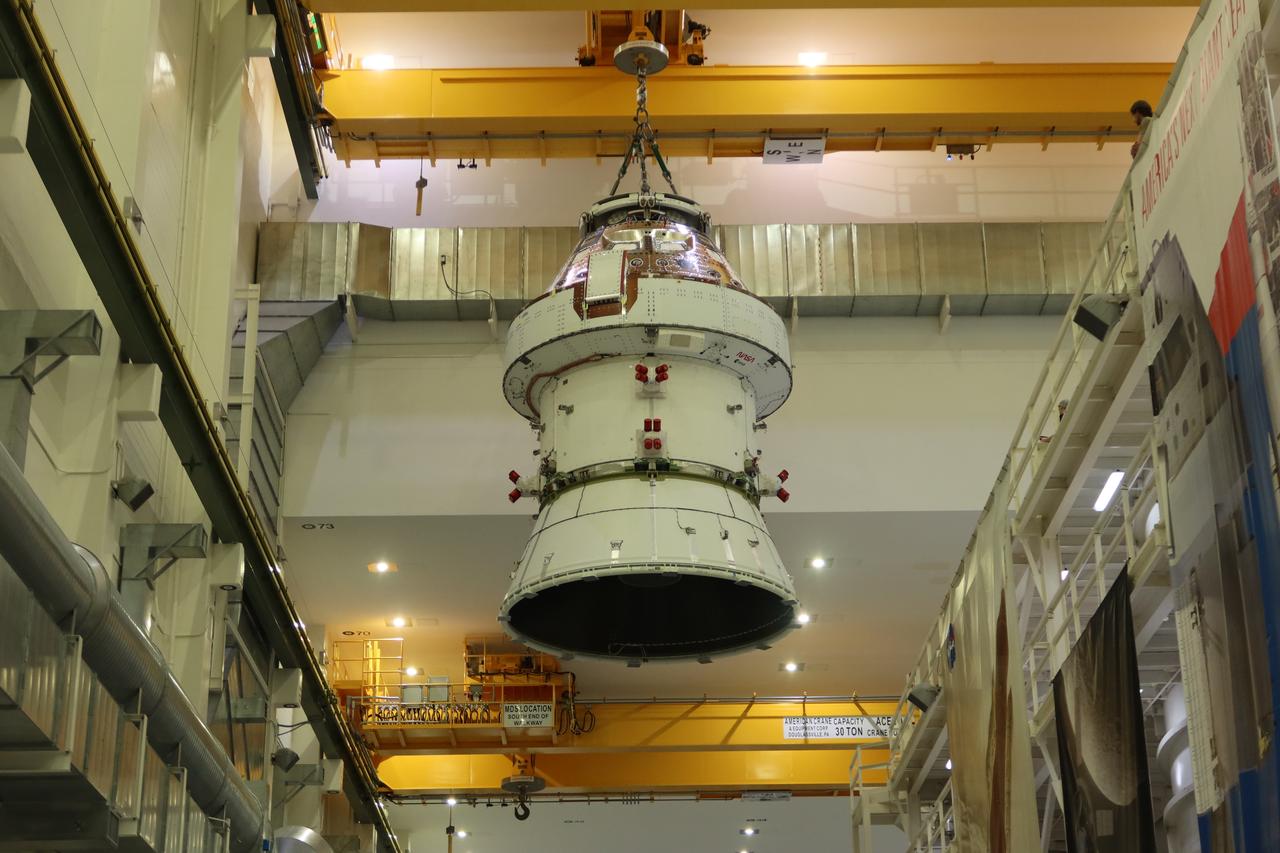
The Orion spacecraft crew for NASA’s Artemis II mission is photographed being transferred across the Neil Armstrong Operations and Checkout Building at NASA’s Kennedy Space Center in Florida on Saturday, April 27, 2024 following a series of electromagnetic compatibility and interference testing.
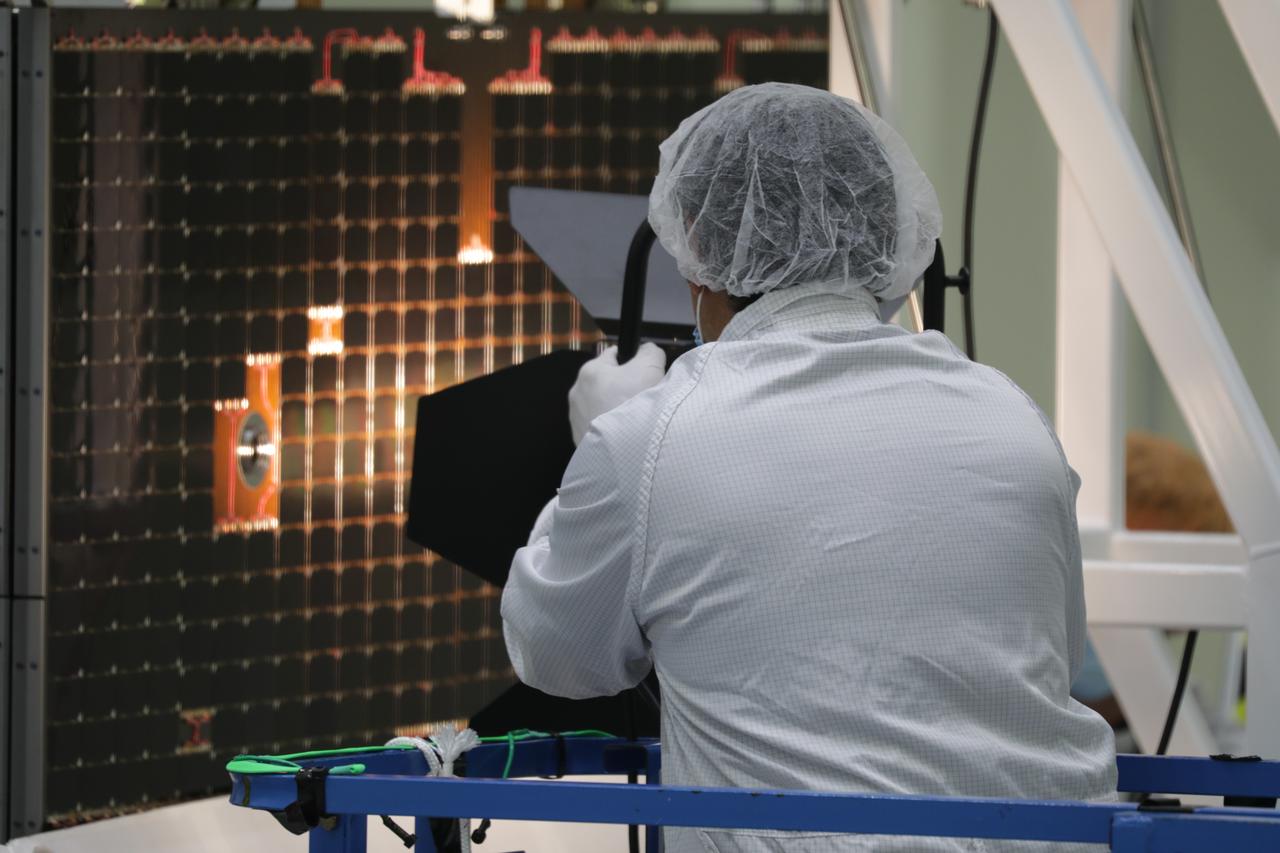
A Lockheed Martin technician is shown assisting with lighting one of the solar array wing panels as part of an illumination test during installation on the Orion spacecraft for Artemis I inside the Neil Armstrong Operations and Checkout Building high bay at NASA’s Kennedy Space Center in Florida on Sept. 30, 2020. The solar arrays were extended, inspected, and then retracted, before installation on the spacecraft. Each solar array panel will generate 11 kilowatts of power and span about 63 feet. The array is a component of Orion’s service module, which is provided by the European Space Agency and built by Airbus Defence and Space to supply Orion’s power, propulsion, air and water. The first in a series of increasingly complex missions, Artemis I will test the Orion spacecraft and Space Launch System as an integrated system ahead of crewed flights to the Moon. Under the Artemis program, NASA will land the first woman and the next man on the Moon in 2024.
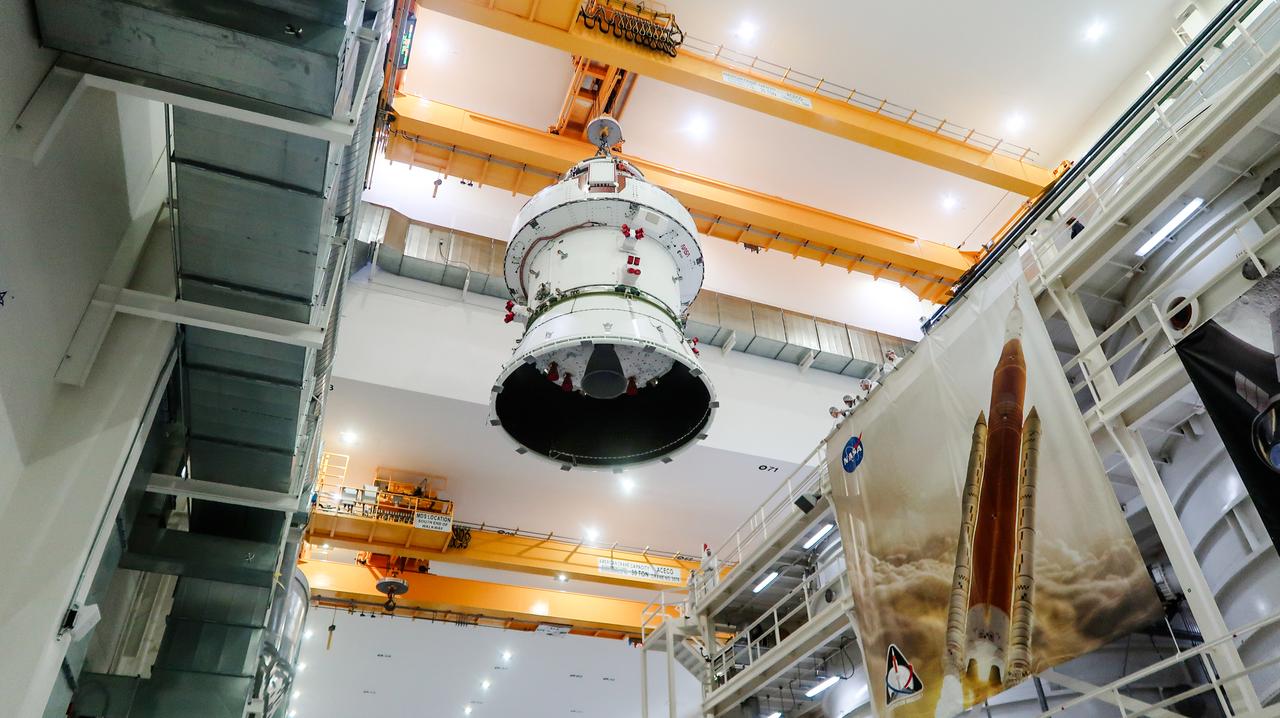
On April 4, 2024, a team lifts the Artemis II Orion spacecraft into a vacuum chamber inside the Operations and Checkout Building at NASA's Kennedy Space Center in Florida, where it will undergo electromagnetic compatibility and interference testing.
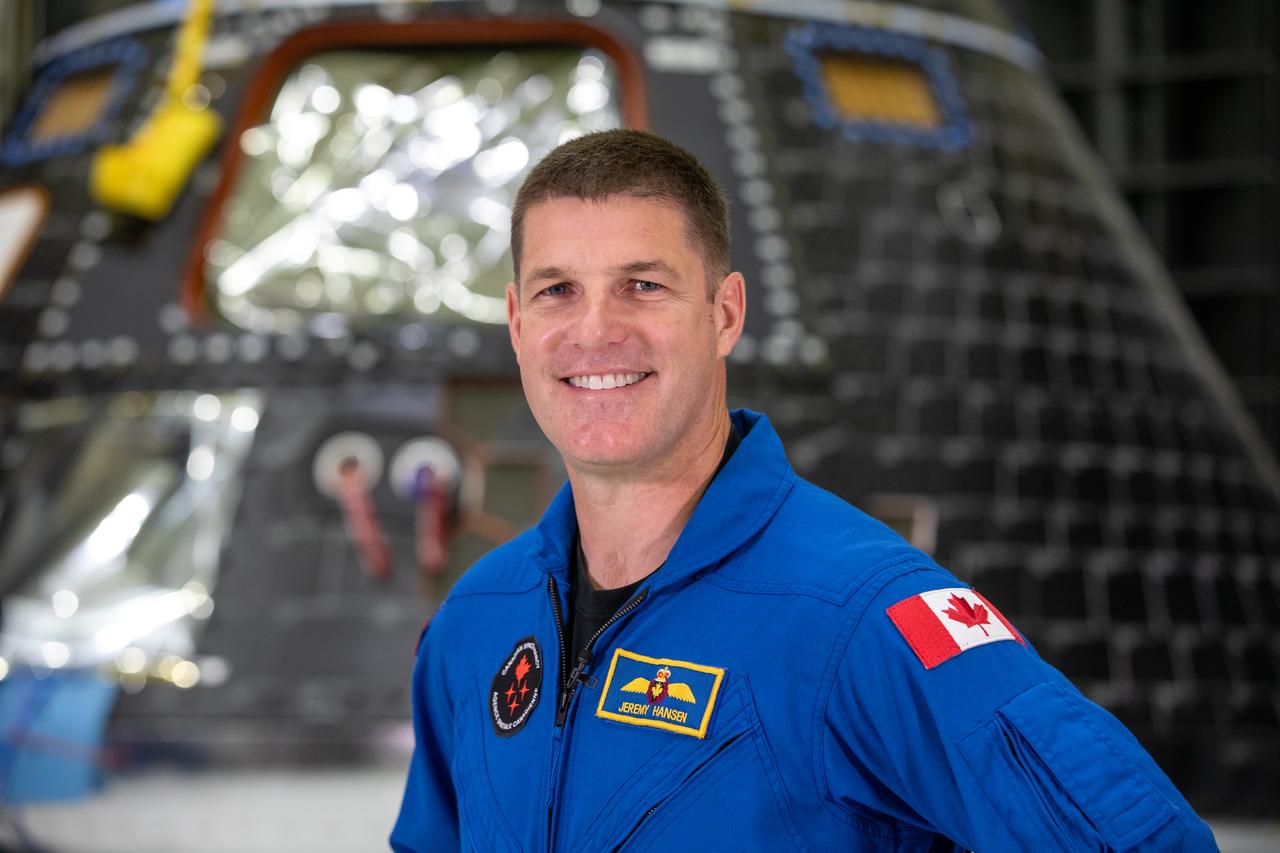
Artemis II mission specialist Jeremy Hansen poses inside the Neil Armstrong Operations and Checkout Building at NASA’s Kennedy Space Center in Florida on Aug. 8, 2023. The Artemis II Orion crew module is undergoing acoustic testing ahead of integration with the European Service Module. Artemis II is the first crewed mission on NASA’s path to establishing a long-term lunar presence for science and exploration under Artemis.
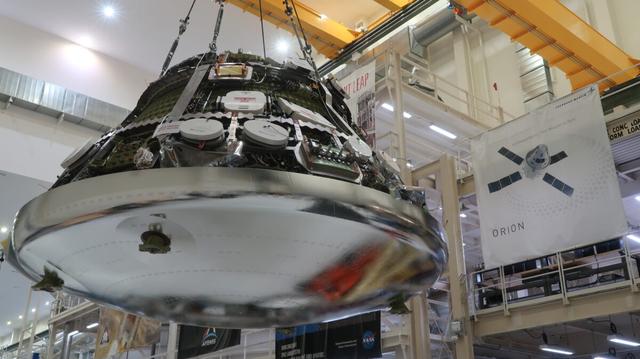
Engineers connect the Orion crew and service modules for the Artemis II mission on Oct. 19, 2023, inside the Neil Armstrong Operations and Checkout Building at NASA’s Kennedy Space Center in Florida. With the crew and service modules integrated, the team will power up the combined crew and service module for the first time. After power on tests are complete, Orion will begin altitude chamber testing, which will put the spacecraft through conditions as close as possible to the environment it will experience in the vacuum of deep space. The crew and service modules are the two major components of Orion that will fly NASA astronauts Reid Wiseman, Victor Glover, and Christina Koch, along with CSA (Canadian Space Agency) astronaut Jeremy Hansen on a mission around the Moon and bring them home safely.
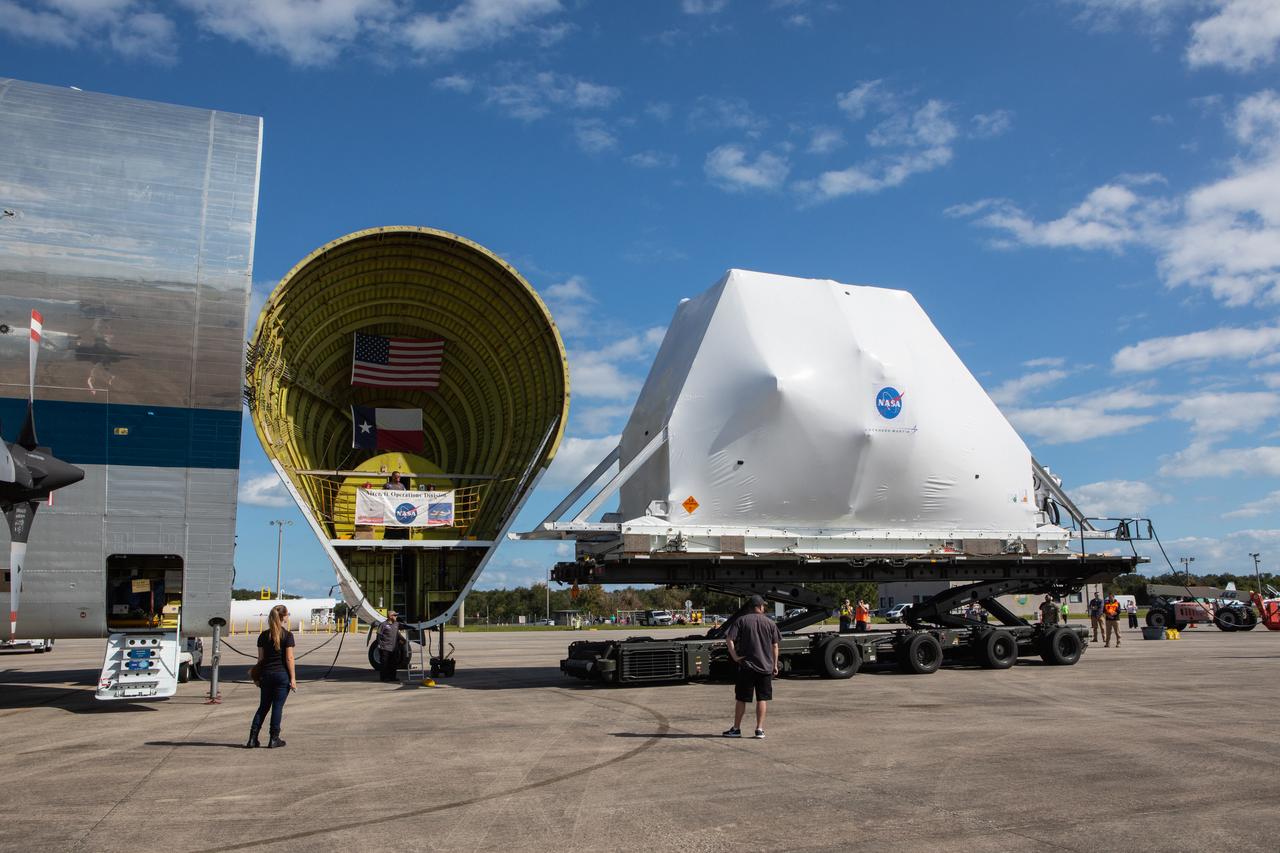
NASA’s Orion spacecraft, wrapped up for shipping, arrives at Kennedy Space Center’s Launch and Landing Facility runway for loading into the agency’s Super Guppy aircraft on Nov. 21, 2019. The spacecraft’s crew and service modules are flying from the Florida spaceport to NASA’s Plum Brook Station in Sandusky, Ohio, for full thermal vacuum testing. In this unique facility, the crew and service modules will be put through extensive testing to ensure they can survive the rigors of launch, space travel, re-entry and splashdown. The Orion spacecraft will launch atop the agency's Space Launch System rocket on Artemis I.
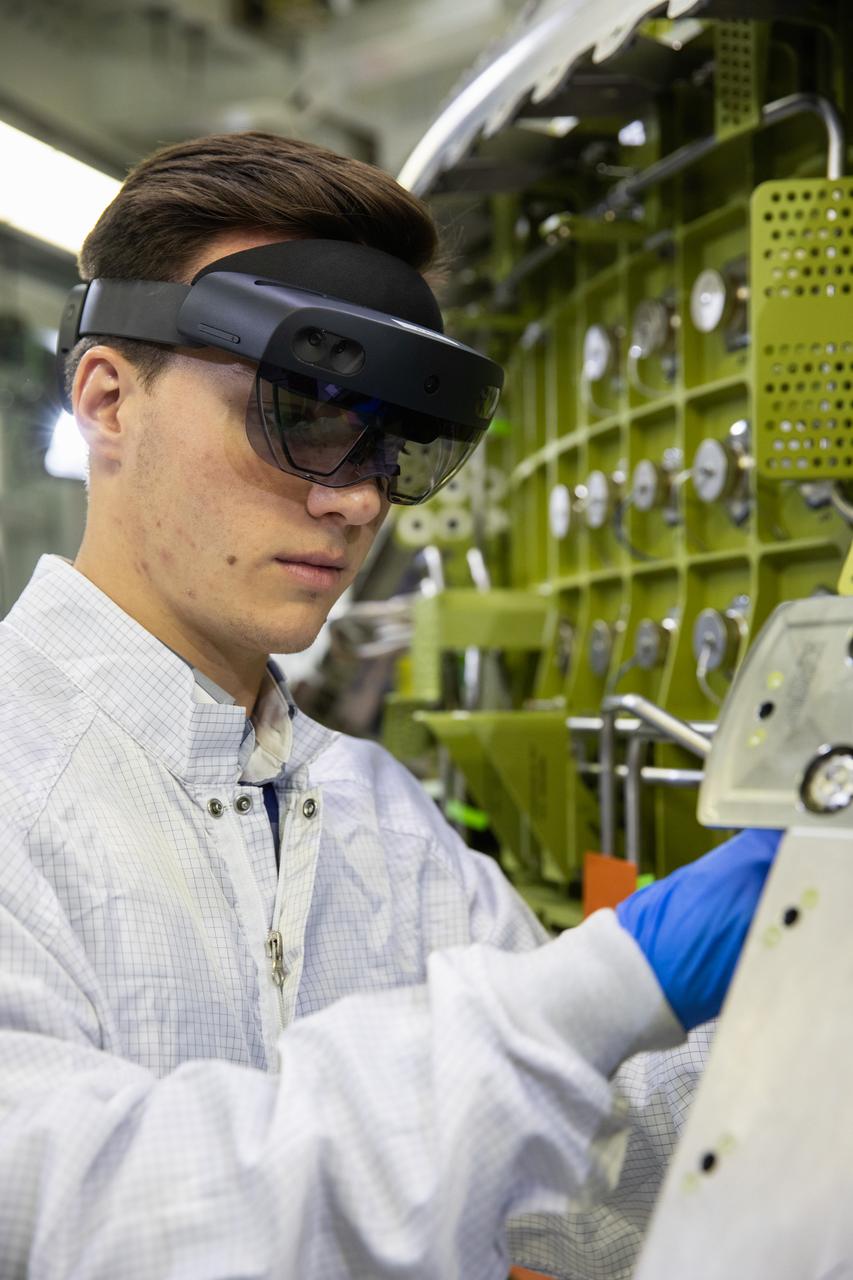
Michael Maxwell, with Lockheed Martin’s augmented reality team, wears a pair of augmented reality (AR) goggles to work on the crew module for NASA’s Artemis II mission inside the high bay of the Neil Armstrong Operations and Checkout Building at the agency’s Kennedy Space Center in Florida on March 18, 2020. Orion manufacturer Lockheed Martin provided the goggles to technicians to help place tapes where components will be installed on the crew module adapter for Artemis II, the first crewed mission aboard the spacecraft. Using the AR goggles saves significant labor and time to complete tasks. Manufactured by Microsoft, the goggles, called HoloLens2, are the second version used by Lockheed.
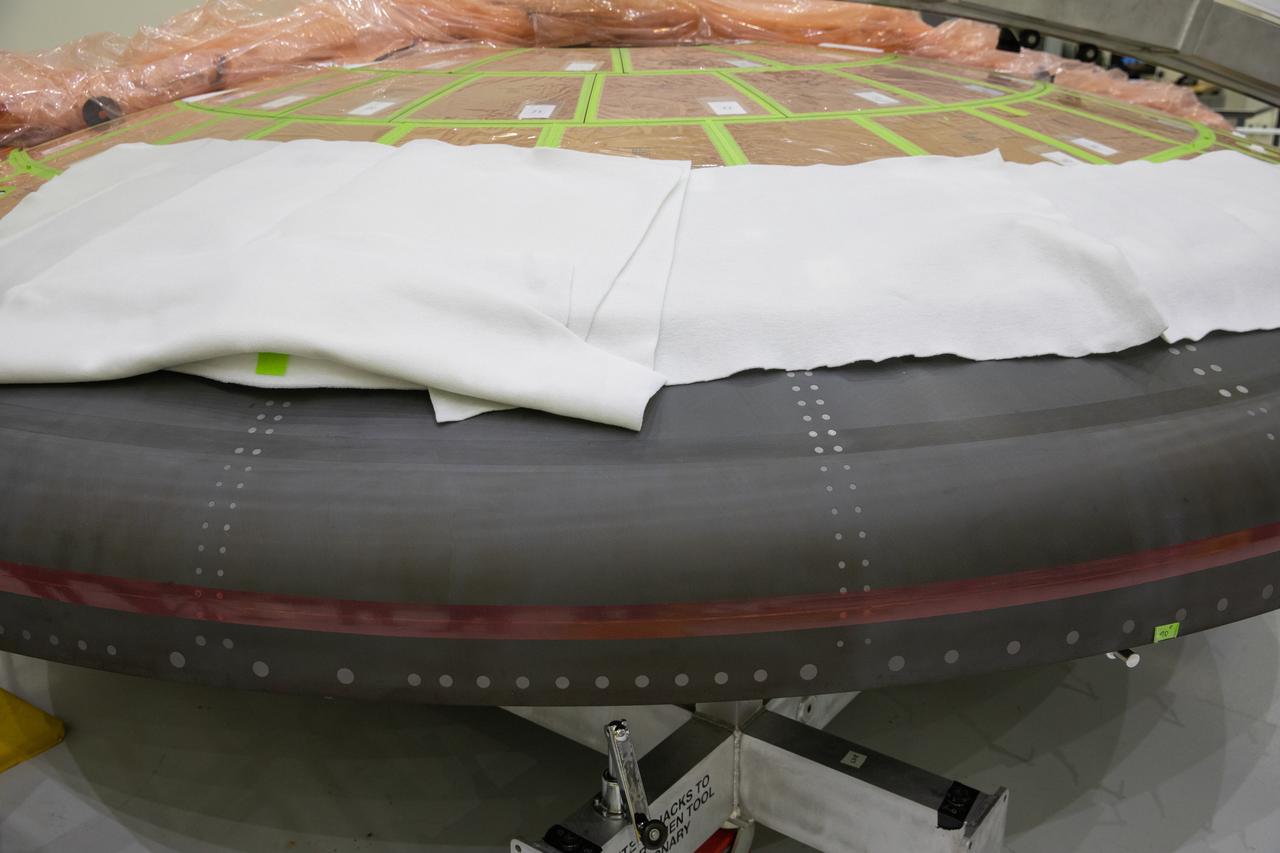
The heat shield for NASA’s Artemis II mission is in view inside the Neil Armstrong Operations and Checkout Building at the agency’s Kennedy Space Center in Florida on March 18, 2020. Using augmented reality (AR) goggles, technicians are completing the work on the heat shield. Orion manufacturer Lockheed Martin provided the goggles to technicians to help place tapes where components will be installed on the crew module, heat shield and other components for Artemis II, the first crewed mission aboard the spacecraft. Using the AR goggles saves significant labor and time to complete tasks. Manufactured by Microsoft, the goggles, called HoloLens2, are the second version used by Lockheed.
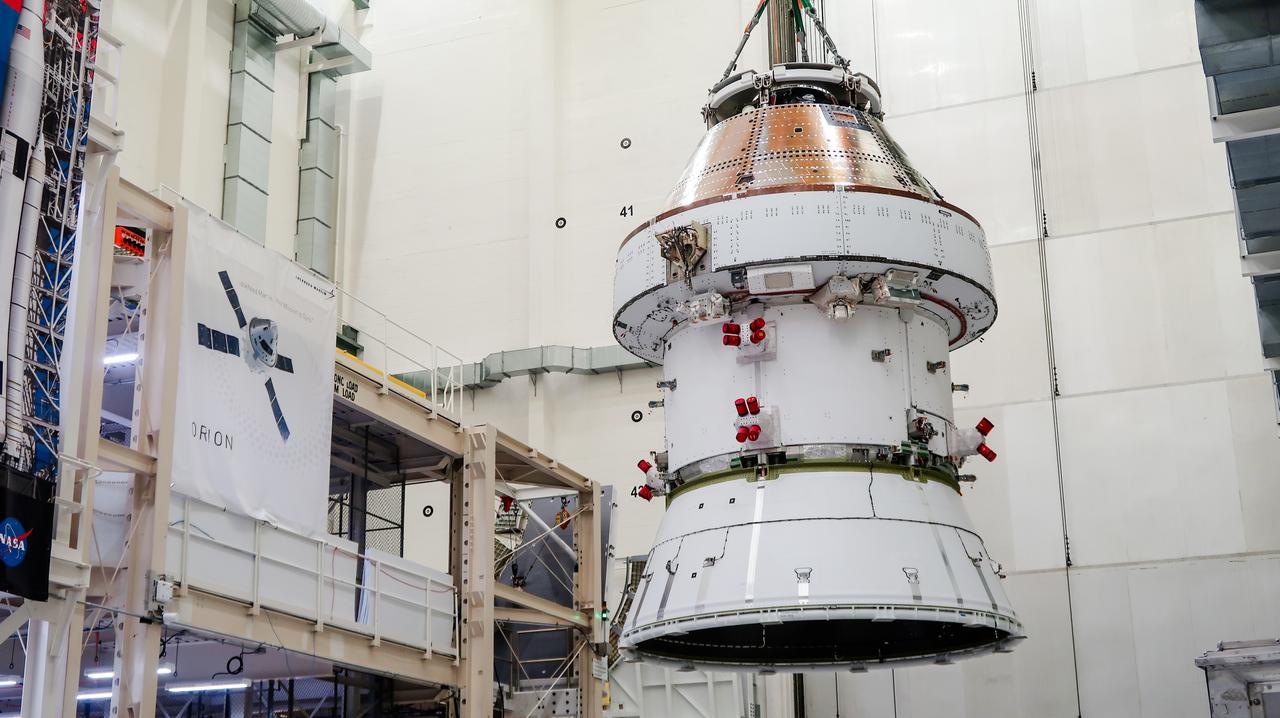
On April 4, 2024, a team lifts the Artemis II Orion spacecraft into a vacuum chamber inside the Operations and Checkout Building at NASA's Kennedy Space Center in Florida, where it will undergo electromagnetic compatibility and interference testing.

Artemis II crew members, shown inside the Neil Armstrong Operations and Checkout Building at NASA’s Kennedy Space Center in Florida, stand in front of their Orion crew module with NASA Deputy Administrator Pam Melroy on Aug. 8, 2023. From left are: Reid Wiseman, commander; Victor Glover, pilot; Christina Hammock Koch, mission specialist; and Jeremy Hansen, mission specialist. The crew module is undergoing acoustic testing ahead of integration with the European Service Module. Artemis II is the first crewed mission on NASA’s path to establishing a long-term lunar presence for science and exploration under Artemis.
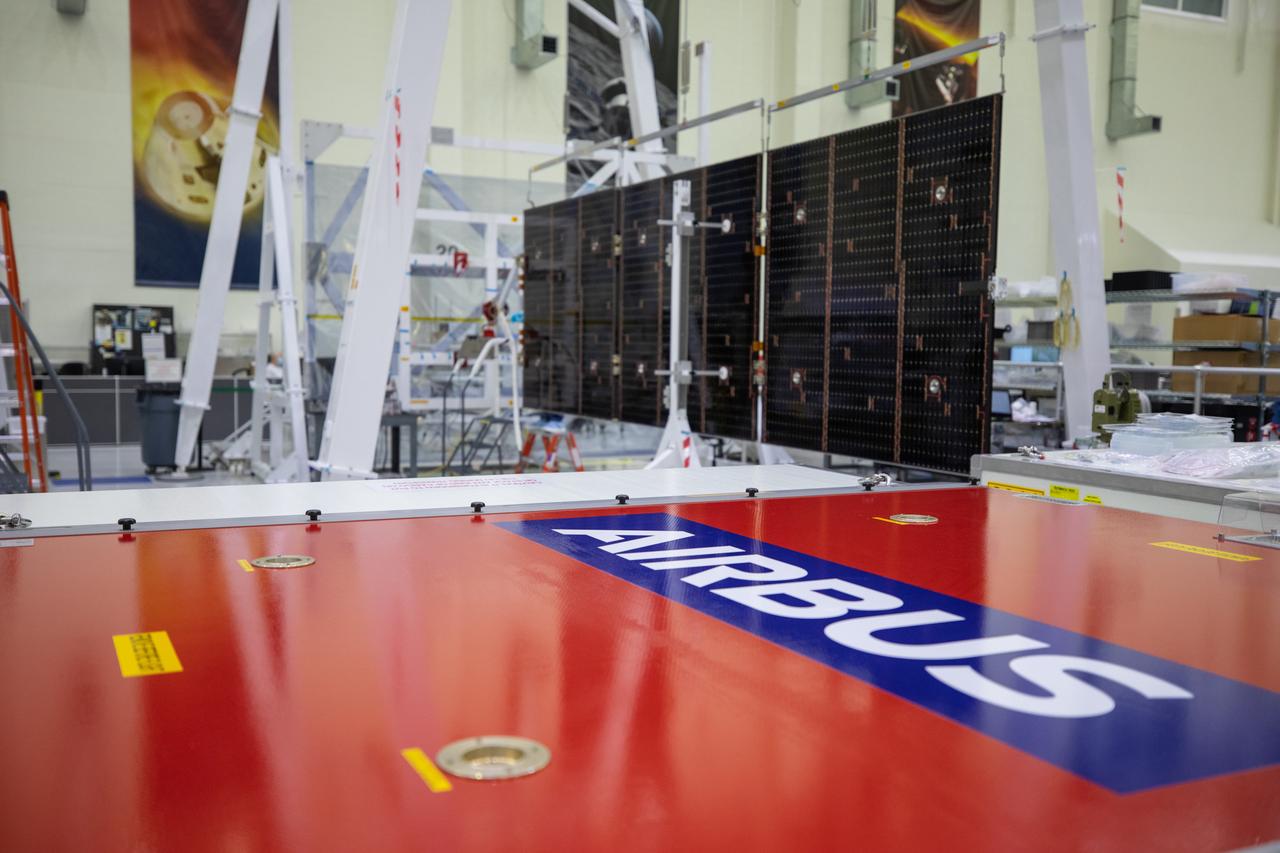
Inside the Neil Armstrong Operations and Checkout Building high bay at NASA’s Kennedy Space Center in Florida, in preparation for installation on the Artemis I spacecraft, technicians have extended one of the Artemis I solar array wings for inspection on Sept. 10, 2020, to confirm that it unfurled properly and all of the mechanisms functioned as expected. The solar array is one of four panels that will generate 11 kilowatts of power and span about 63 feet. The array is a component of Orion’s service module, which is provided by the European Space Agency and built by Airbus Defence and Space to supply Orion’s power, propulsion, air and water. The first in a series of increasingly complex missions, Artemis I will test the Orion spacecraft and Space Launch System as an integrated system ahead of crewed flights to the Moon. Under the Artemis program, NASA will land the first woman and the next man on the Moon in 2024.
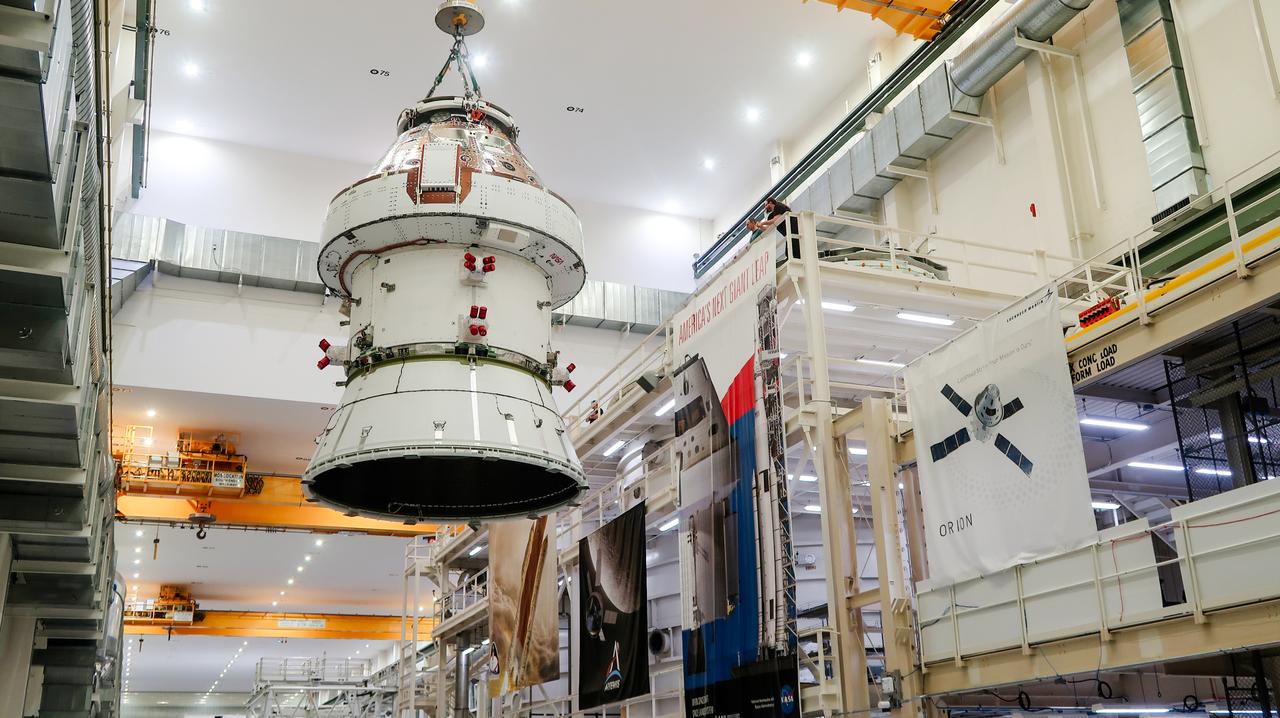
On April 4, 2024, a team lifts the Artemis II Orion spacecraft into a vacuum chamber inside the Operations and Checkout Building at NASA's Kennedy Space Center in Florida, where it will undergo electromagnetic compatibility and interference testing.
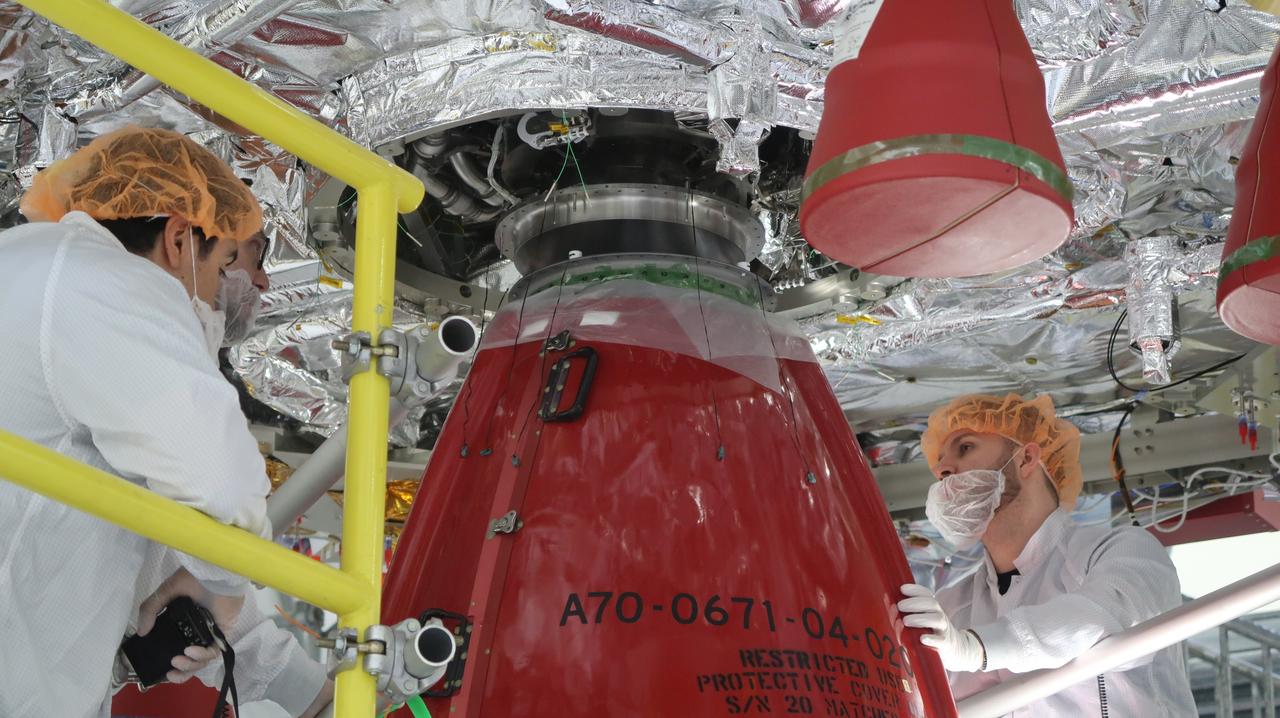
Technicians at NASA’s Kennedy Space Center in Florida install the orbital maneuvering system engine nozzle and heat shield for the Artemis II European Service Module inside the Neil Armstrong Operations and Checkout Building on Jan. 14, 2023. Artemis II will be the first crewed flight test of the Space Launch System rocket and Orion spacecraft. The service module will provide the power necessary to propel Orion on a trip around the Moon, including the in-space maneuvering capability and other commodities necessary to sustain crew for the duration of the mission.

Technicians at NASA’s Kennedy Space Center in Florida begin installing the orbital maneuvering system engine nozzle and heat shield for the Artemis II European Service Module inside the Neil Armstrong Operations and Checkout Building on Jan. 13, 2023. Artemis II will be the first crewed flight test of the Space Launch System rocket and Orion spacecraft. The service module will provide the power necessary to propel Orion on a trip around the Moon, including the in-space maneuvering capability and other commodities necessary to sustain crew for the duration of the mission.
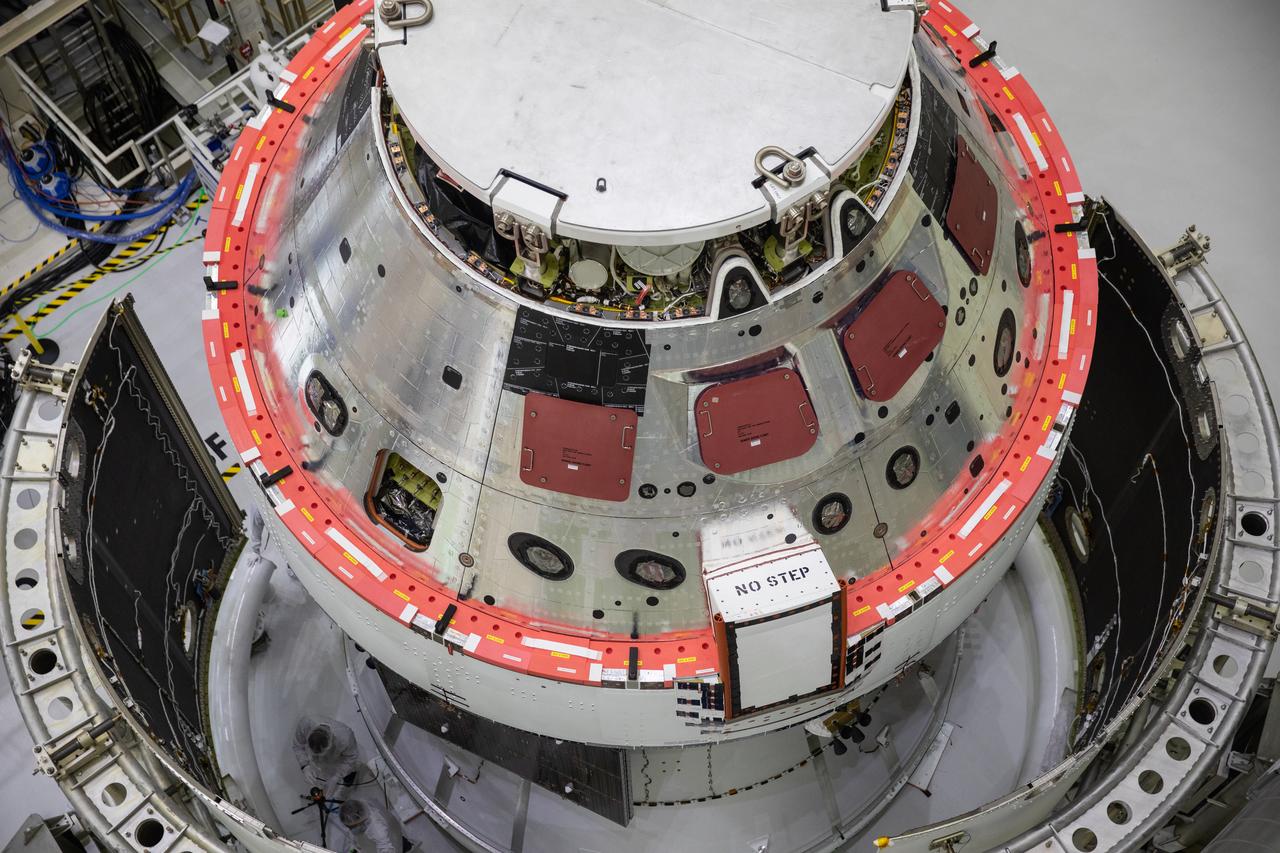
Shown is an overhead view of three spacecraft adapter jettison fairing panels fitted onto Orion’s European Service Module (ESM) on Oct. 13, 2020, inside the Neil Armstrong Operations and Checkout Building (O&C) at NASA’s Kennedy Space Center in Florida. The panels were inspected and moved into place for installation by technicians with Lockheed Martin. Recently, teams from across the globe installed the four solar array wings, which are housed inside the protective covering of the fairings. Once secured, they will encapsulate the ESM to protect it from harsh environments such as heat, wind, and acoustics as the spacecraft is propelled out of Earth’s atmosphere atop the Space Launch System (SLS) rocket during NASA’s Artemis I mission.
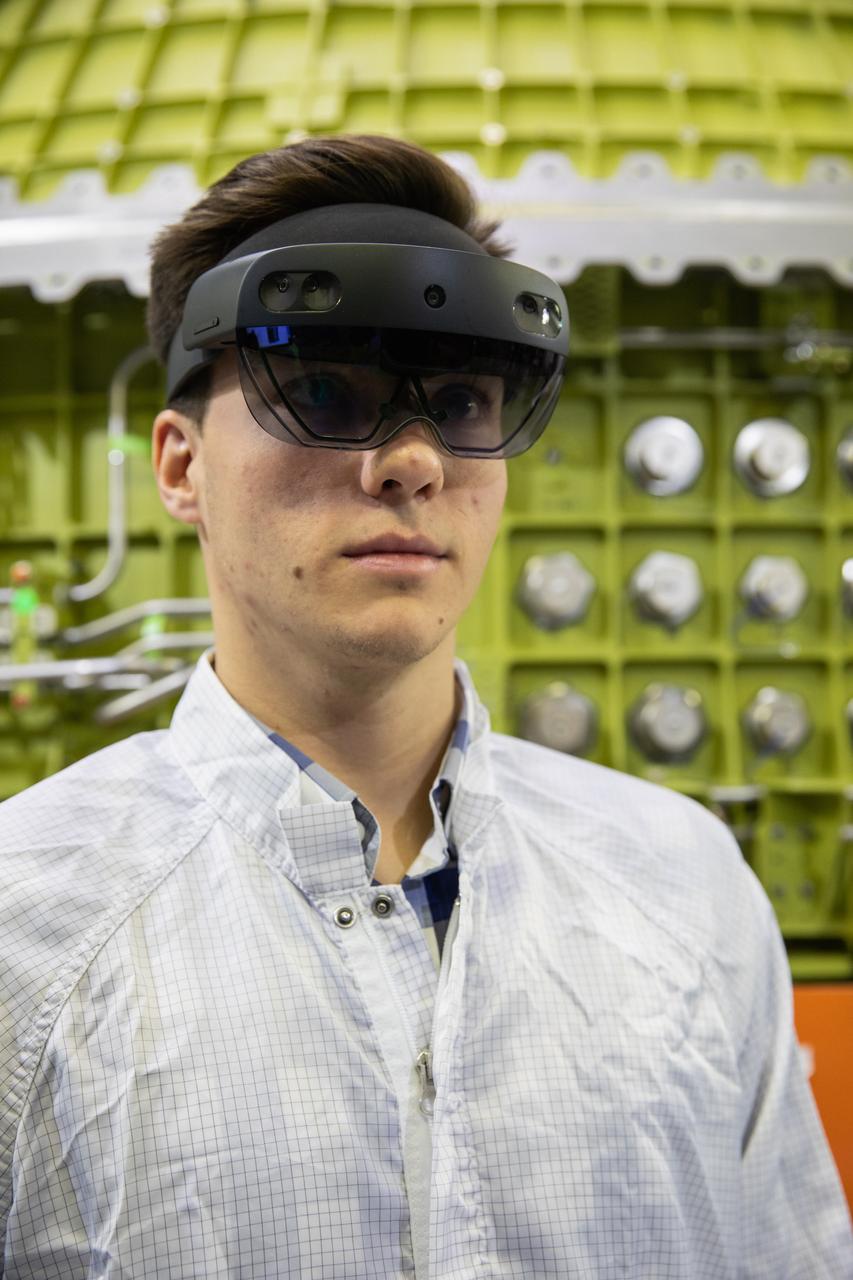
Michael Maxwell, with Lockheed Martin’s augmented reality team, wears a pair of augmented reality (AR) goggles to work on the crew module for NASA’s Artemis II mission inside the high bay of the Neil Armstrong Operations and Checkout Building at the agency’s Kennedy Space Center in Florida on March 18, 2020. Orion manufacturer Lockheed Martin provided the goggles to technicians to help place tapes where components will be installed on the crew module adapter for Artemis II, the first crewed mission aboard the spacecraft. Using the AR goggles saves significant labor and time to complete tasks. Manufactured by Microsoft, the goggles, called HoloLens2, are the second version used by Lockheed.
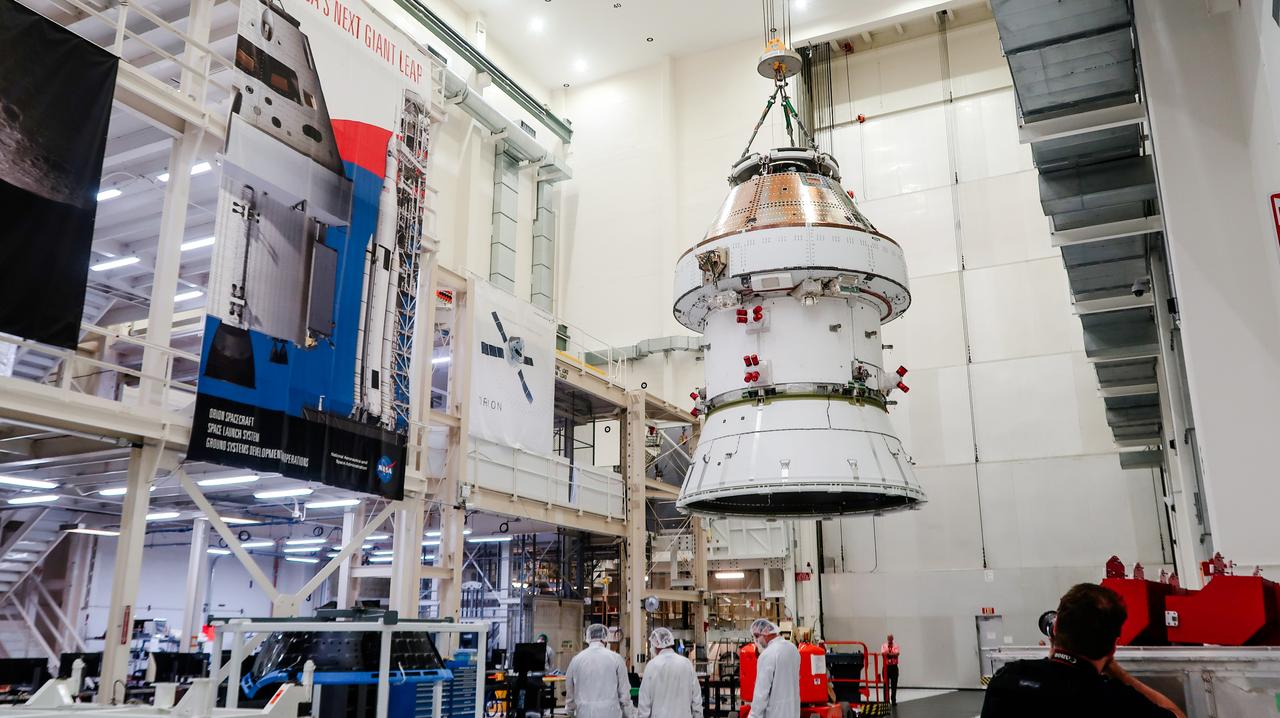
On April 4, 2024, a team lifts the Artemis II Orion spacecraft into a vacuum chamber inside the Operations and Checkout Building at NASA's Kennedy Space Center in Florida, where it will undergo electromagnetic compatibility and interference testing.
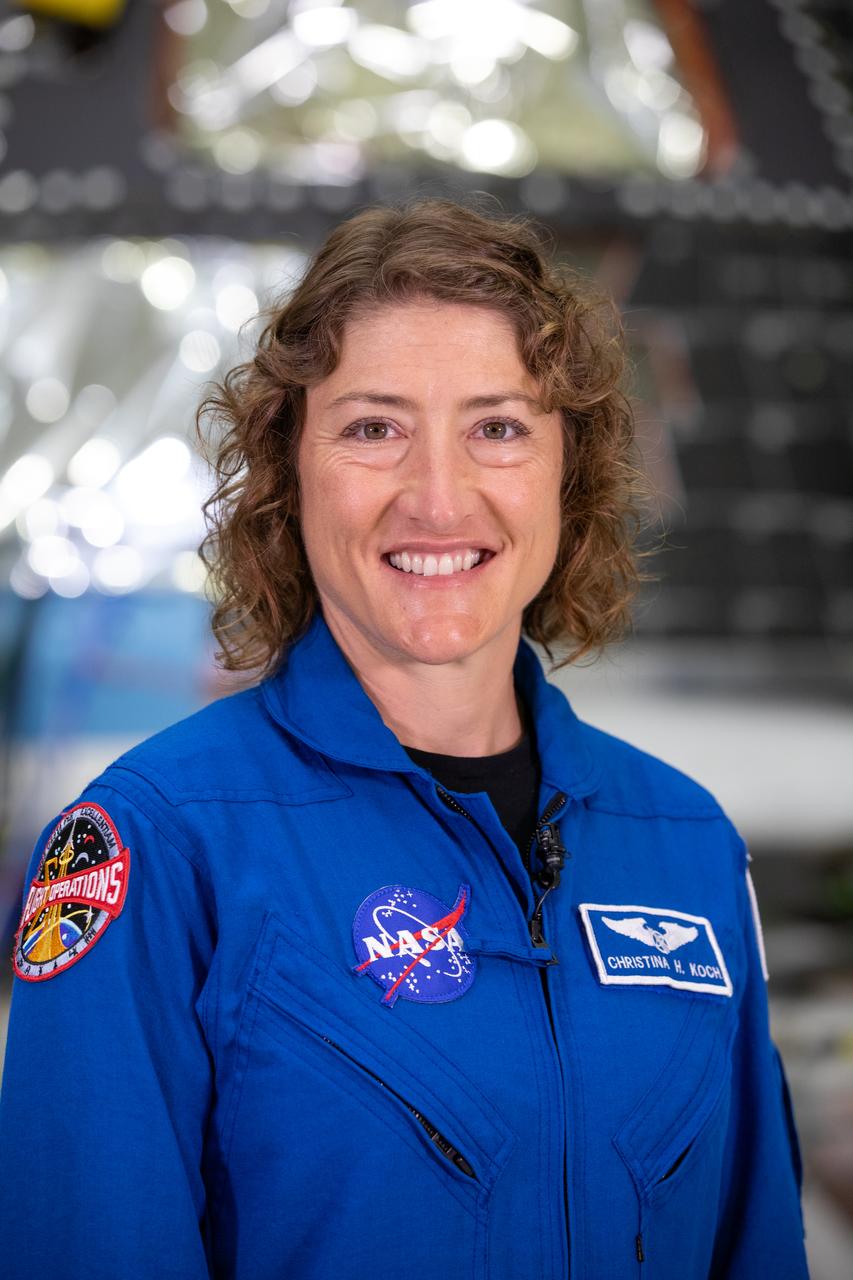
Artemis II mission specialist Christina Hammock Koch poses inside the Neil Armstrong Operations and Checkout Building at NASA’s Kennedy Space Center in Florida on Aug. 8, 2023. The Artemis II Orion crew module is undergoing acoustic testing ahead of integration with the European Service Module. Artemis II is the first crewed mission on NASA’s path to establishing a long-term lunar presence for science and exploration under Artemis.
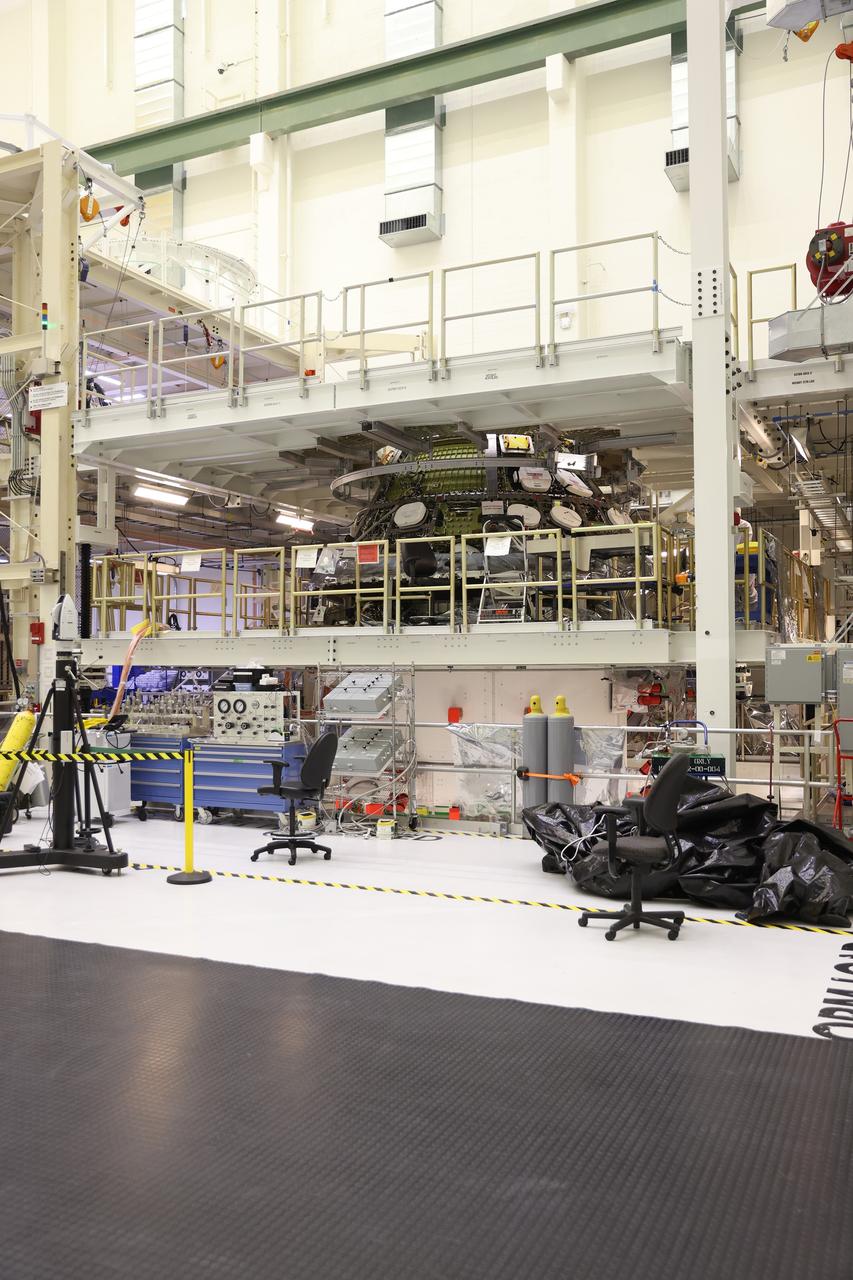
Engineers connect the Orion crew and service modules for the Artemis II mission on Oct. 19, 2023, inside the Neil Armstrong Operations and Checkout Building at NASA’s Kennedy Space Center in Florida. With the crew and service modules integrated, the team will power up the combined crew and service module for the first time. After power on tests are complete, Orion will begin altitude chamber testing, which will put the spacecraft through conditions as close as possible to the environment it will experience in the vacuum of deep space. The crew and service modules are the two major components of Orion that will fly NASA astronauts Reid Wiseman, Victor Glover, and Christina Koch, along with CSA (Canadian Space Agency) astronaut Jeremy Hansen on a mission around the Moon and bring them home safely.
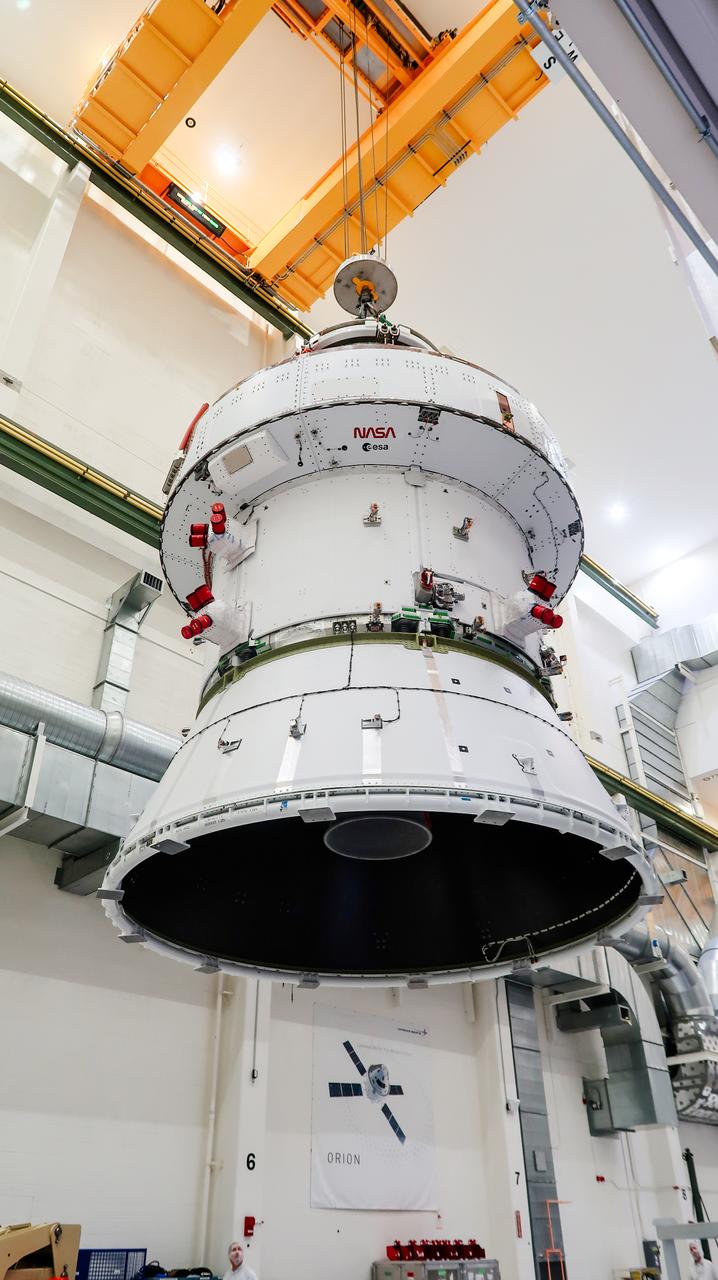
On April 4, 2024, a team lifts the Artemis II Orion spacecraft into a vacuum chamber inside the Operations and Checkout Building at NASA's Kennedy Space Center in Florida, where it will undergo electromagnetic compatibility and interference testing.
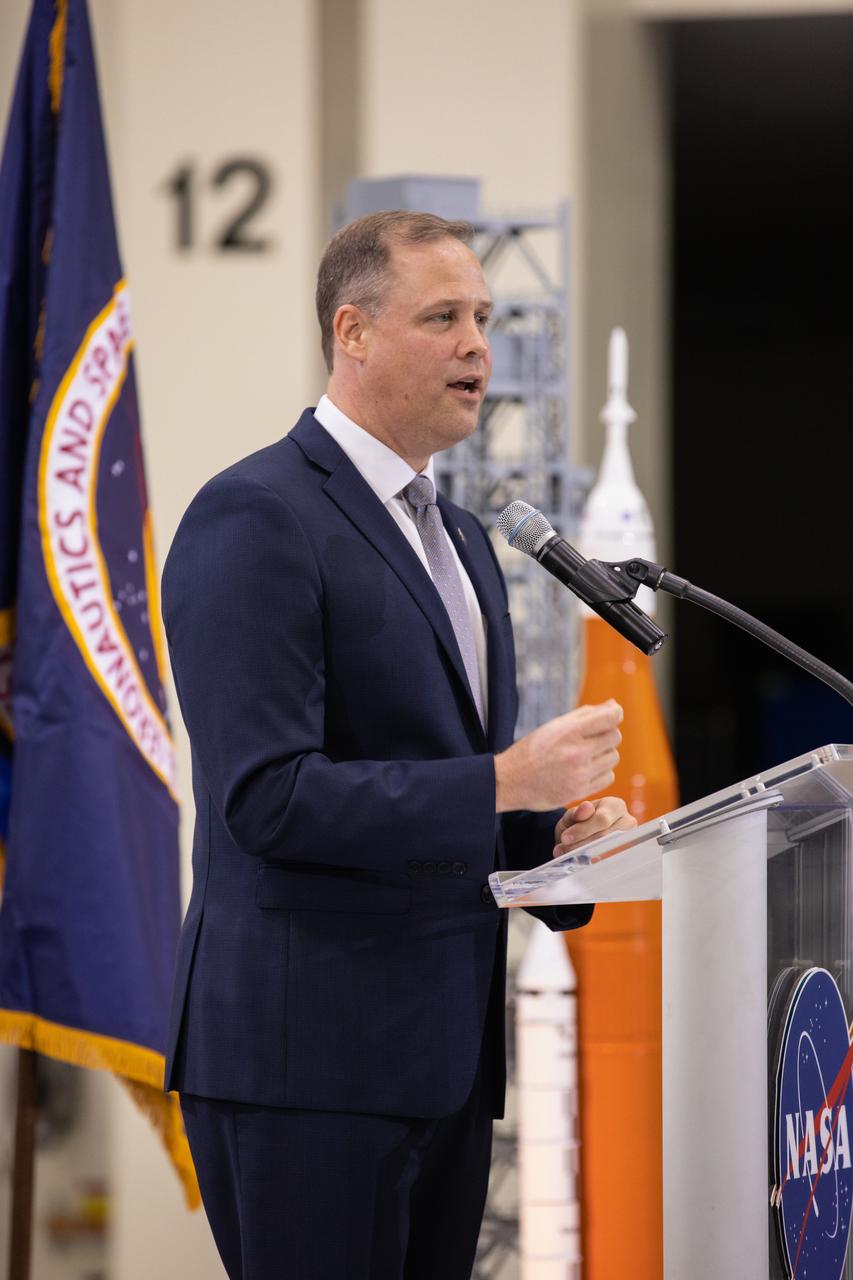
NASA Administrator Jim Bridenstine speaks to NASA workers across the nation and members of the news media, during a Moon to Mars event in the Neil Armstrong Operations and Checkout Building high bay on March 11, 2019. The event followed the delivery of President Trump’s fiscal year 2020 budget proposal to U.S. Congress, which includes funding for the agency’s Moon to Mars initiative and Gateway lunar outpost. Bridenstine presented a closer look at America’s work to return astronauts to the Moon in a sustainable way and continue exploration to Mars.

The transport carrier containing the European Service Module for NASA’s Artemis III mission arrives at the Neil A. Armstrong Operations and Checkout Building at NASA’s Kennedy Space Center in Florida on Tuesday, Sept. 3, 2024. The European Service Module, which is assembled by Airbus in Bremen, Germany, from parts made in 10 European countries and the United States, acts as the driving force behind Orion for deep space exploration, providing essential propulsion, thermal control, and electrical power.
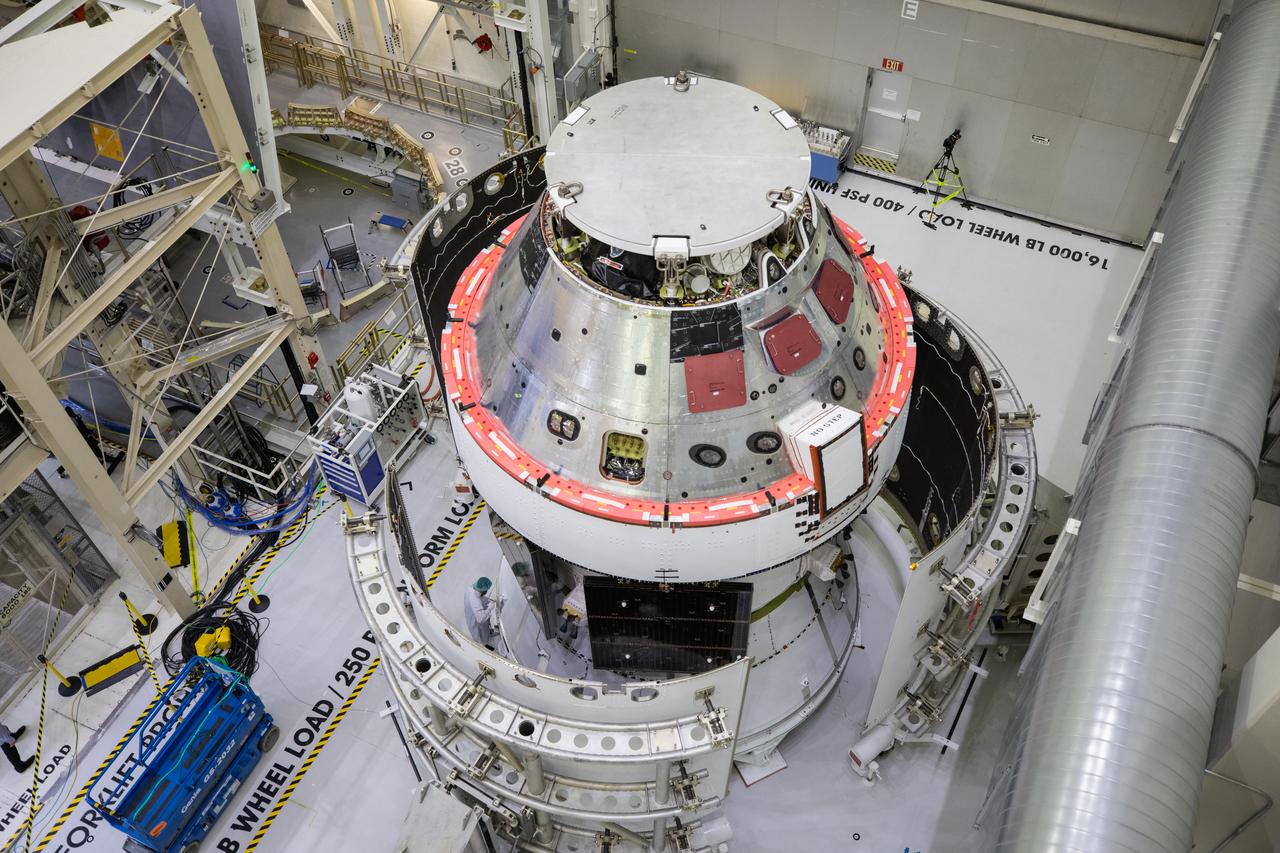
Shown is an overhead view of three spacecraft adapter jettison fairing panels fitted onto Orion’s European Service Module (ESM) on Oct. 13, 2020, inside the Neil Armstrong Operations and Checkout Building (O&C) at NASA’s Kennedy Space Center in Florida. The panels were inspected and moved into place for installation by technicians with Lockheed Martin. Recently, teams from across the globe installed the four solar array wings, which are housed inside the protective covering of the fairings. Once secured, they will encapsulate the ESM to protect it from harsh environments such as heat, wind, and acoustics as the spacecraft is propelled out of Earth’s atmosphere atop the Space Launch System (SLS) rocket during NASA’s Artemis I mission.

Artemis II crew members, shown inside the Neil Armstrong Operations and Checkout Building at NASA’s Kennedy Space Center in Florida, stand in front of their Orion crew module with NASA Deputy Administrator Pam Melroy on Aug. 8, 2023. From left are: Reid Wiseman, commander; Victor Glover, pilot; Christina Hammock Koch, mission specialist; and Jeremy Hansen, mission specialist. The crew module is undergoing acoustic testing ahead of integration with the European Service Module. Artemis II is the first crewed mission on NASA’s path to establishing a long-term lunar presence for science and exploration under Artemis.
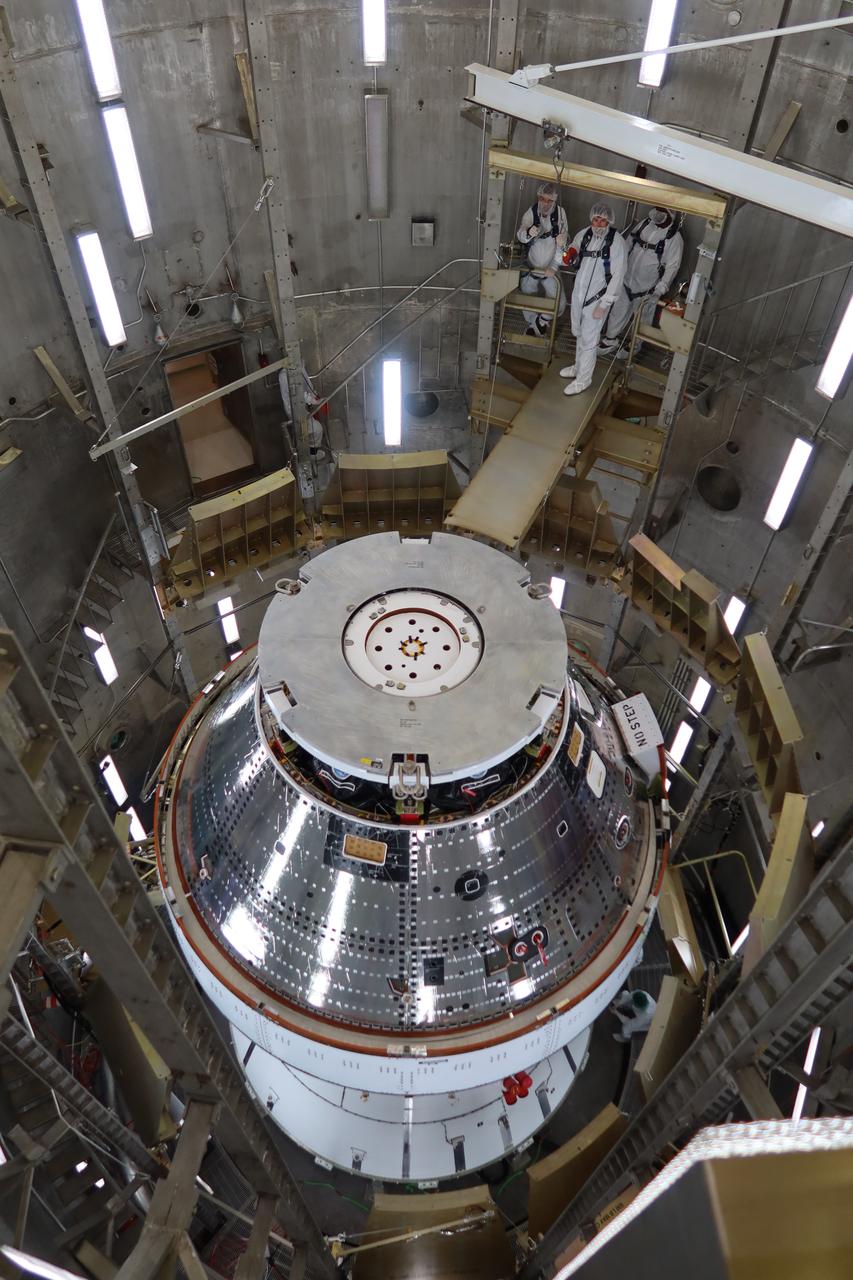
A team wearing bunny suits inside the Operations and Checkout Building at NASA's Kennedy Space Center in Florida on Saturday, April 27, 2024 prepare the Artemis II Orion spacecraft to be lifted by a 30 ton crane out of a vacuum chamber following a series of electromagnetic compatibility and interference testing.
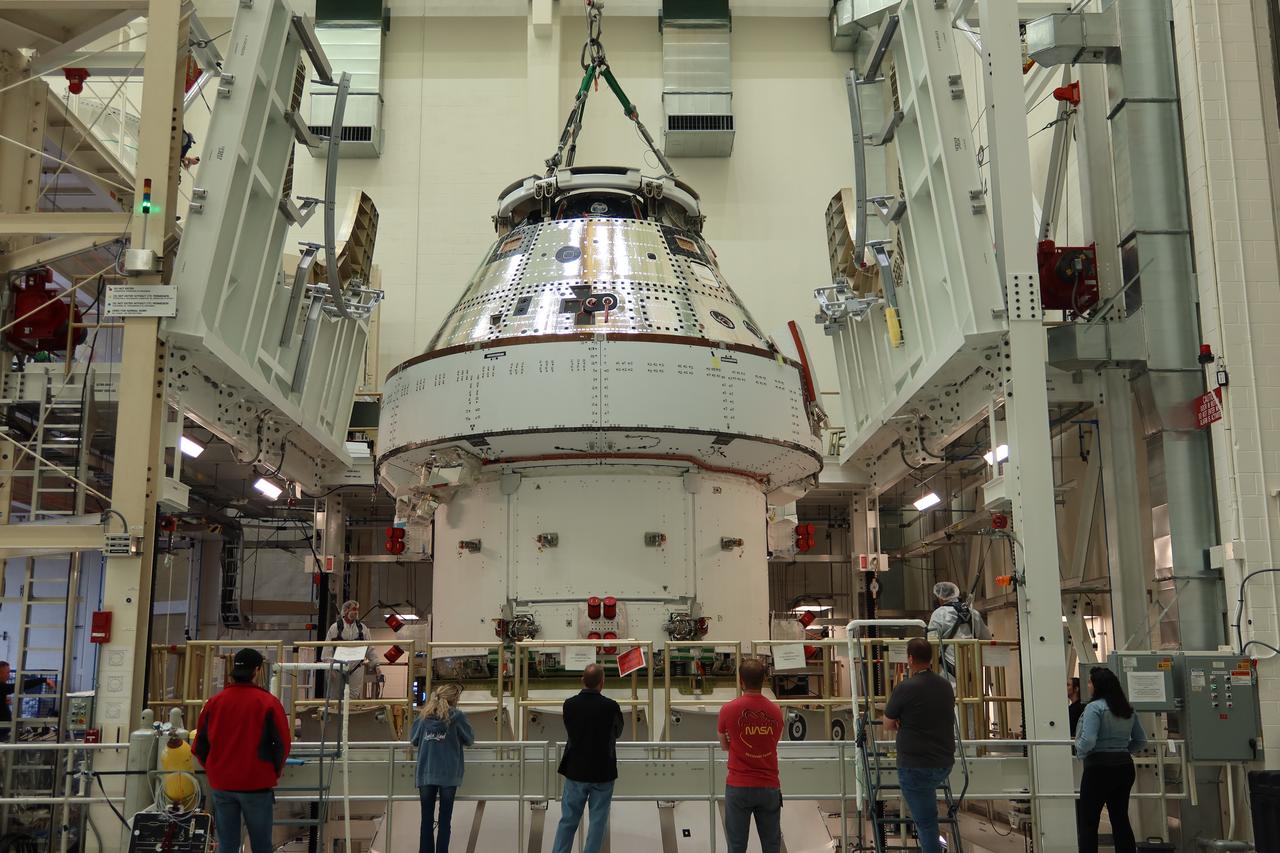
The Orion spacecraft crew module for NASA’s Artemis II mission is photographed being lowered inside the Final Assembly and System Testing cell by a 30 ton crane at the Neil Armstrong Operations and Checkout Building at NASA’s Kennedy Space Center in Florida on Saturday, April 27, 2024. Four astronauts will venture around the Moon in the Orion spacecraft on Artemis II, the first crewed mission on NASA's path to establishing a long-term presence at the Moon for science and exploration through the Artemis campaign.
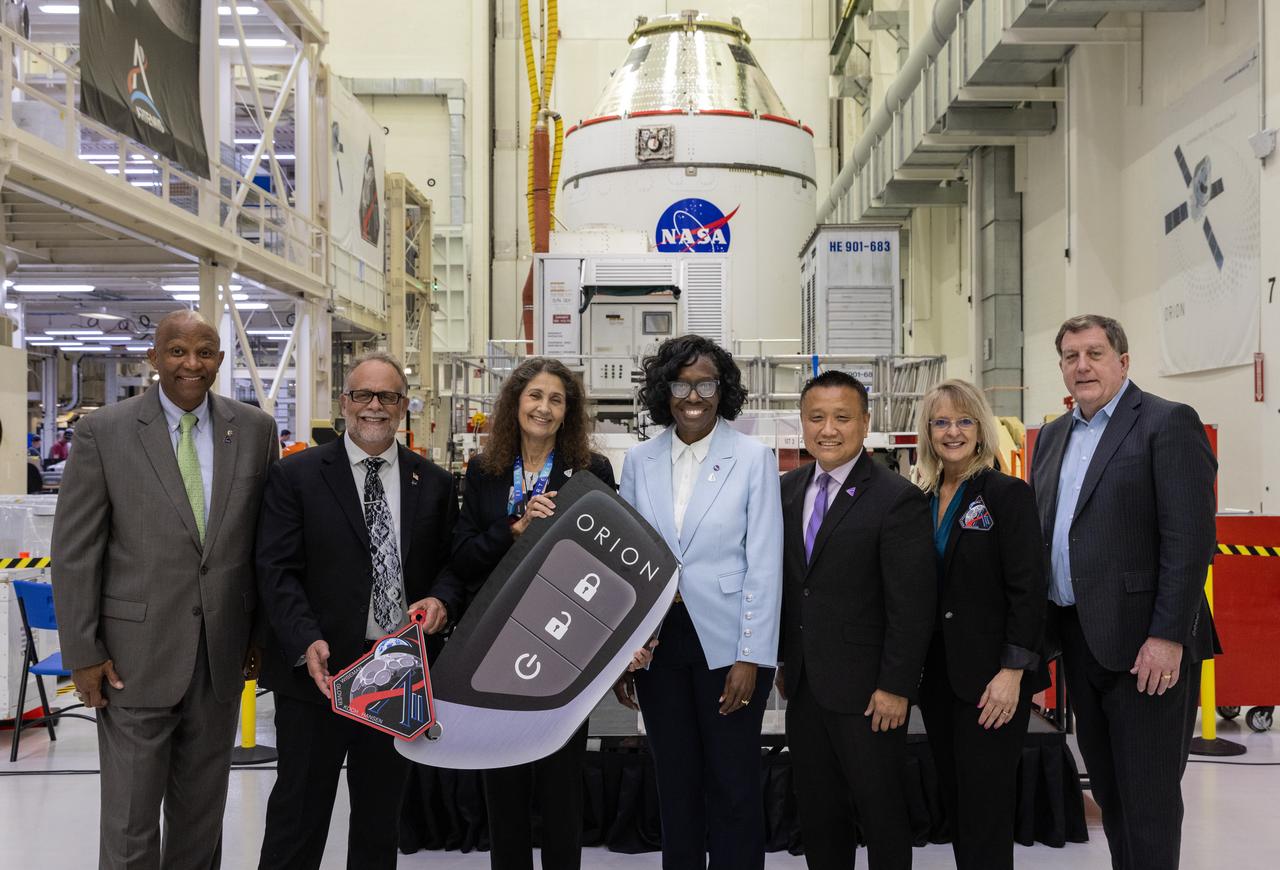
From left, Kelvin Manning, acting center director, NASA’s Kennedy Space Center; Shawn Quinn, Exploration Ground Systems program manager; Lorna Kenna, Amentum Vice President and program manager; Lakiesha Hawkins, assistant deputy associate administrator, Moon to Mars Program office; Howard Hu, Orion program manager; Debbie Korth, Orion deputy program manager; Keith Shireman Lockheed Martin Vice President of Lunar Exploration Campaign, participate in a handover ceremony of NASA’s Artemis II Orion spacecraft to crews with the agency’s Exploration Ground Systems Program at the Neil A. Armstrong Operations and Checkout Building at NASA’s Kennedy Space Center in Florida on Thursday, May 1, 2025. The spacecraft will be transported to the Multi-Payload Processing Facility to undergo fueling and processing for prelaunch operations. The Artemis II test flight is the first crewed flight under NASA’s Artemis campaign and is another step toward missions on the lunar surface and helping the agency prepare for future human missions to Mars.
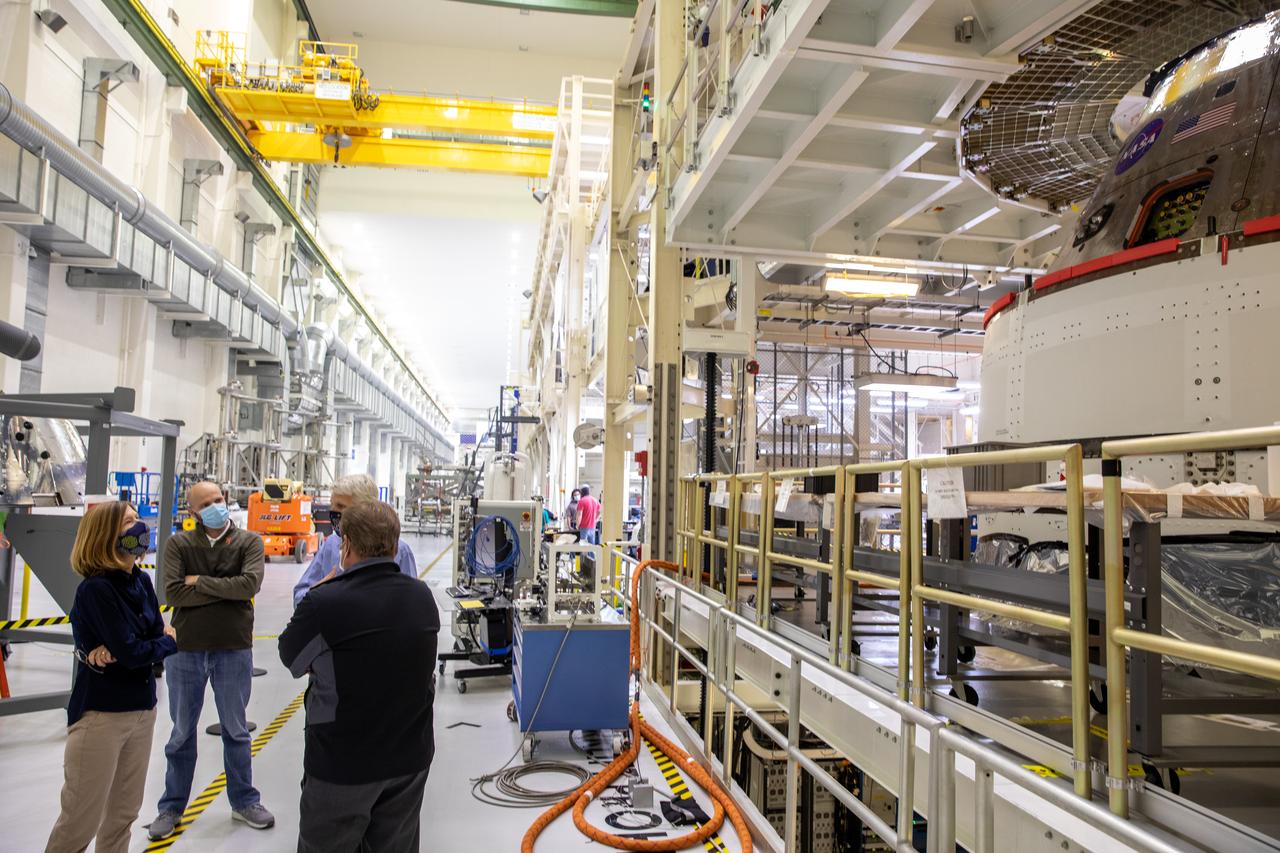
Kathy Lueders, far left, associate administrator of NASA’s Human Exploration and Operations Mission Directorate, views the Artemis I spacecraft during a visit to the Neil Armstrong Operations and Checkout Building high bay at the agency’s Kennedy Space Center in Florida on Nov. 5, 2020. To her right is Jules Schneider, director of Assembly, Test, and Launch Operations for Lockheed Martin; and to her left is Jim Skaggs, senior manager of Kennedy Operations for Lockheed Martin. In between Schneider and Skaggs is Scott Wilson, manager of the Orion Production Office at Kennedy. The first in a series of increasingly complex missions, Artemis I will test the Space Launch System rocket and Orion spacecraft as an integrated system prior to crewed flights to the Moon. Under the Artemis program, NASA is planning to land the first woman and the next man on the lunar surface by 2024.
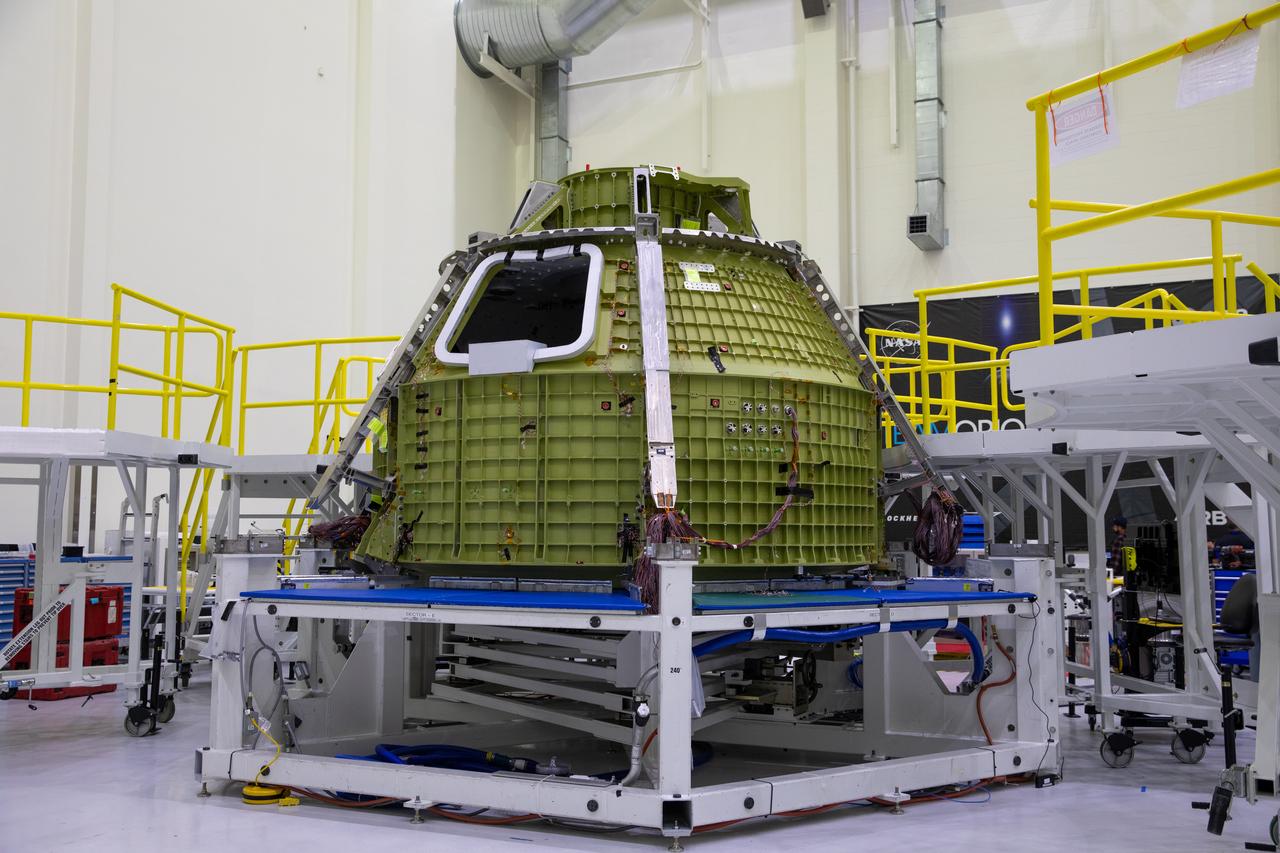
Shown inside the Neil Armstrong Operations and Checkout Building at NASA’s Kennedy Space Center in Florida on Aug. 8, 2023, is the Orion crew module for NASA’s Artemis IV mission.
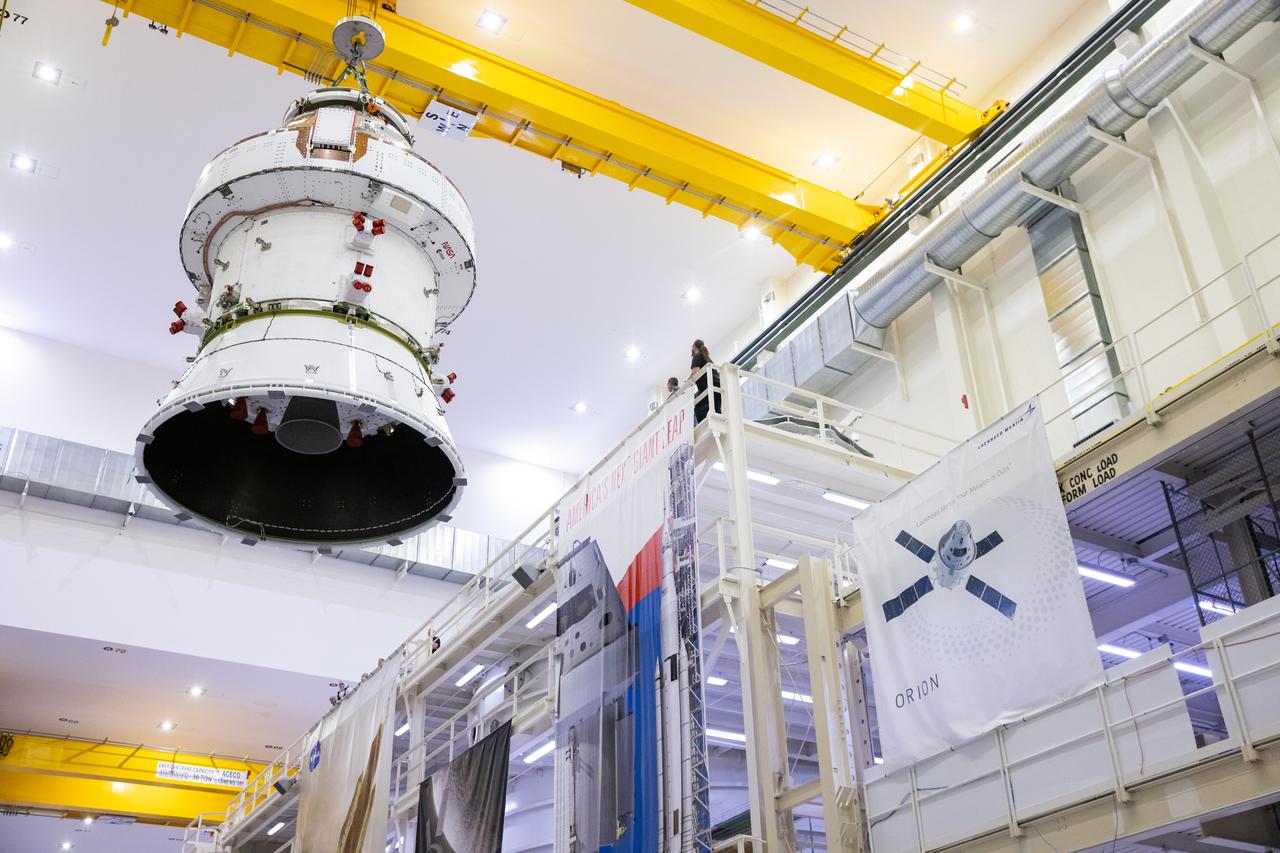
On April 4, 2024, teams lift the Artemis II Orion spacecraft into a vacuum chamber inside the Operations and Checkout Building at NASA's Kennedy Space Center in Florida, where it will undergo electromagnetic compatibility and interference testing.
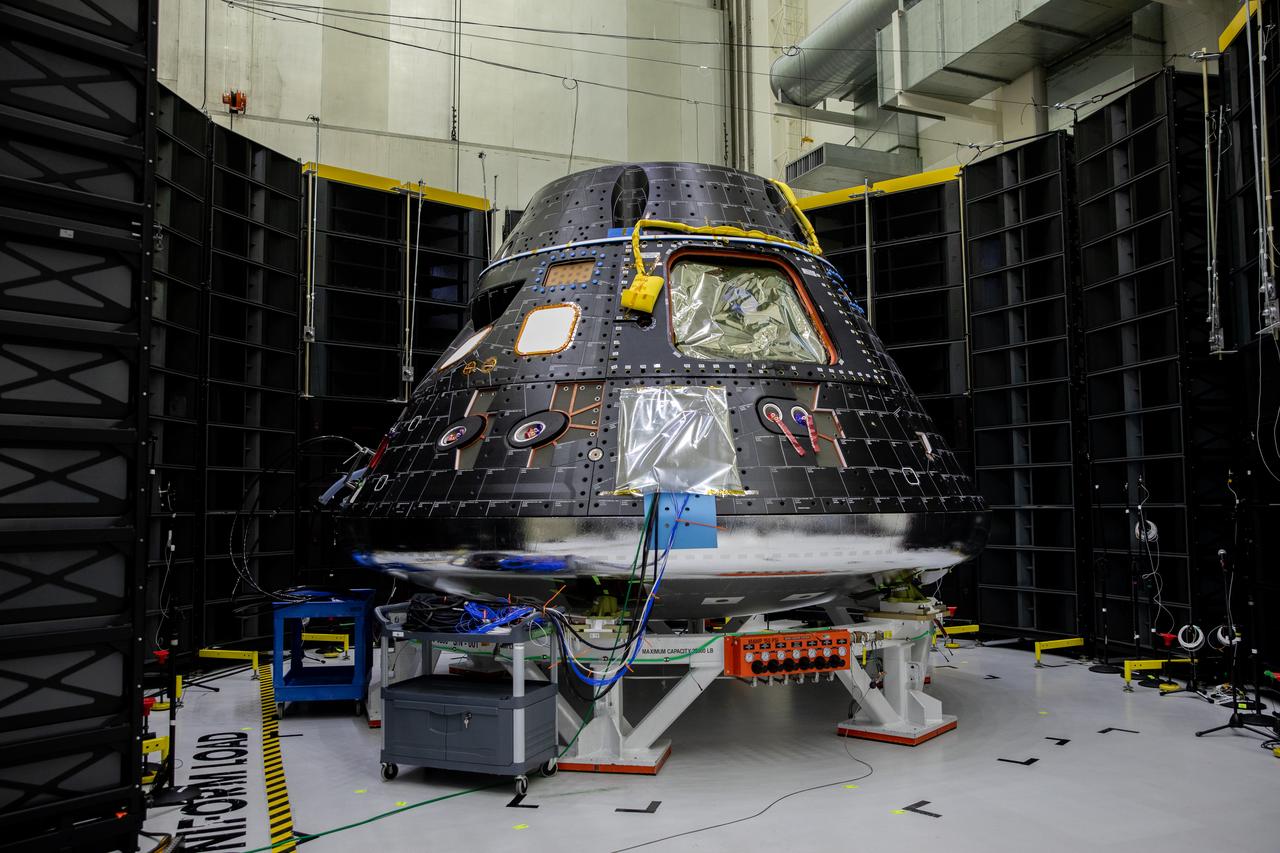
Shown inside the Neil Armstrong Operations and Checkout Building at NASA’s Kennedy Space Center in Florida on Aug. 8, 2023, is the Orion crew module for NASA’s Artemis II mission. The crew features Reid Wiseman, commander; Victor Glover, pilot; Christina Hammock Koch, mission specialist; and Jeremy Hansen, mission specialist. Artemis II is the first crewed mission on NASA’s path to establishing a long-term lunar presence for science and exploration under Artemis.
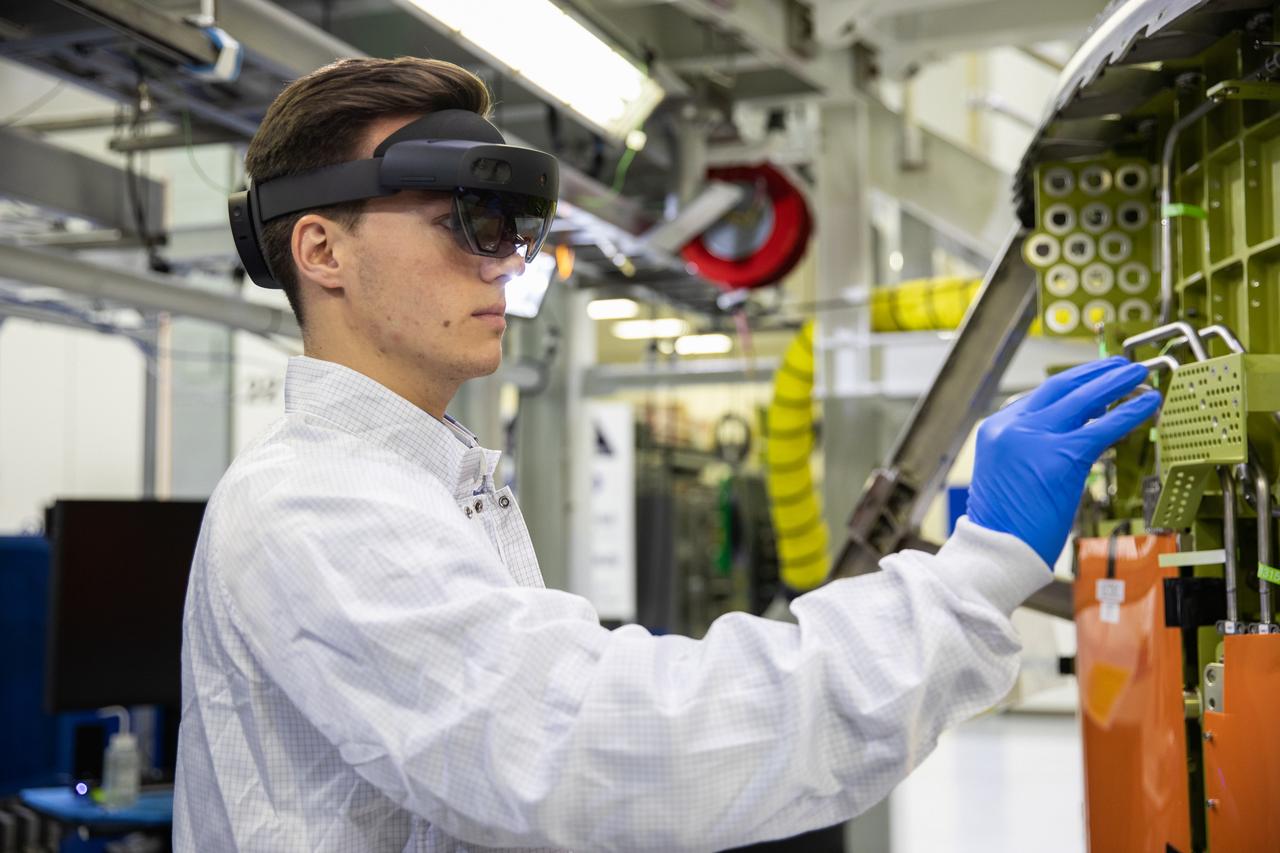
Michael Maxwell, with Lockheed Martin’s augmented reality team, wears a pair of augmented reality (AR) goggles to work on the crew module for NASA’s Artemis II mission inside the high bay of the Neil Armstrong Operations and Checkout Building at the agency’s Kennedy Space Center in Florida on March 18, 2020. Orion manufacturer Lockheed Martin provided the goggles to technicians to help place tapes where components will be installed on the crew module adapter for Artemis II, the first crewed mission aboard the spacecraft. Using the AR goggles saves significant labor and time to complete tasks. Manufactured by Microsoft, the goggles, called HoloLens2, are the second version used by Lockheed.
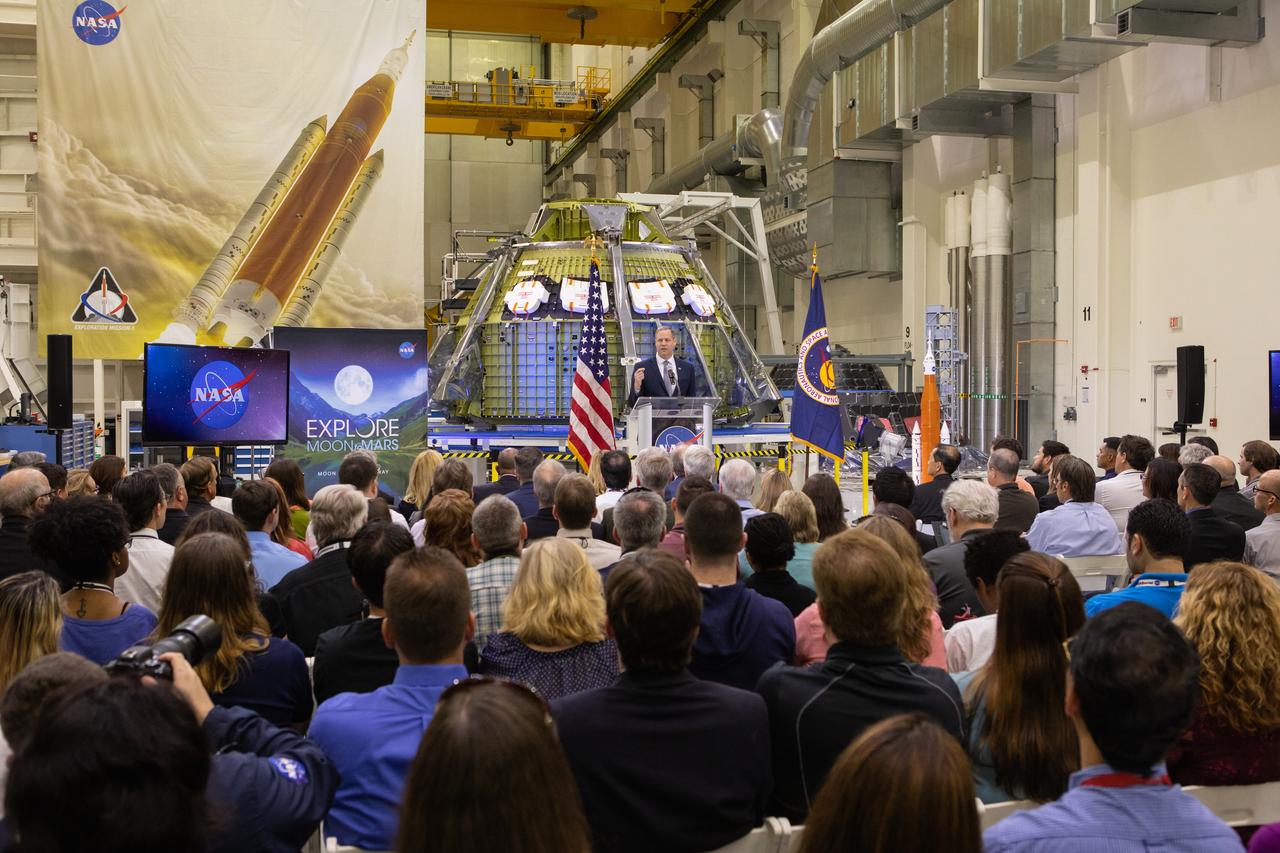
NASA Administrator Jim Bridenstine speaks to NASA workers across the nation and members of the news media, during a Moon to Mars event in the Neil Armstrong Operations and Checkout Building high bay on March 11, 2019. The event followed the delivery of President Trump’s fiscal year 2020 budget proposal to U.S. Congress, which includes funding for the agency’s Moon to Mars initiative and Gateway lunar outpost. Bridenstine presented a closer look at America’s work to return astronauts to the Moon in a sustainable way and continue exploration to Mars.
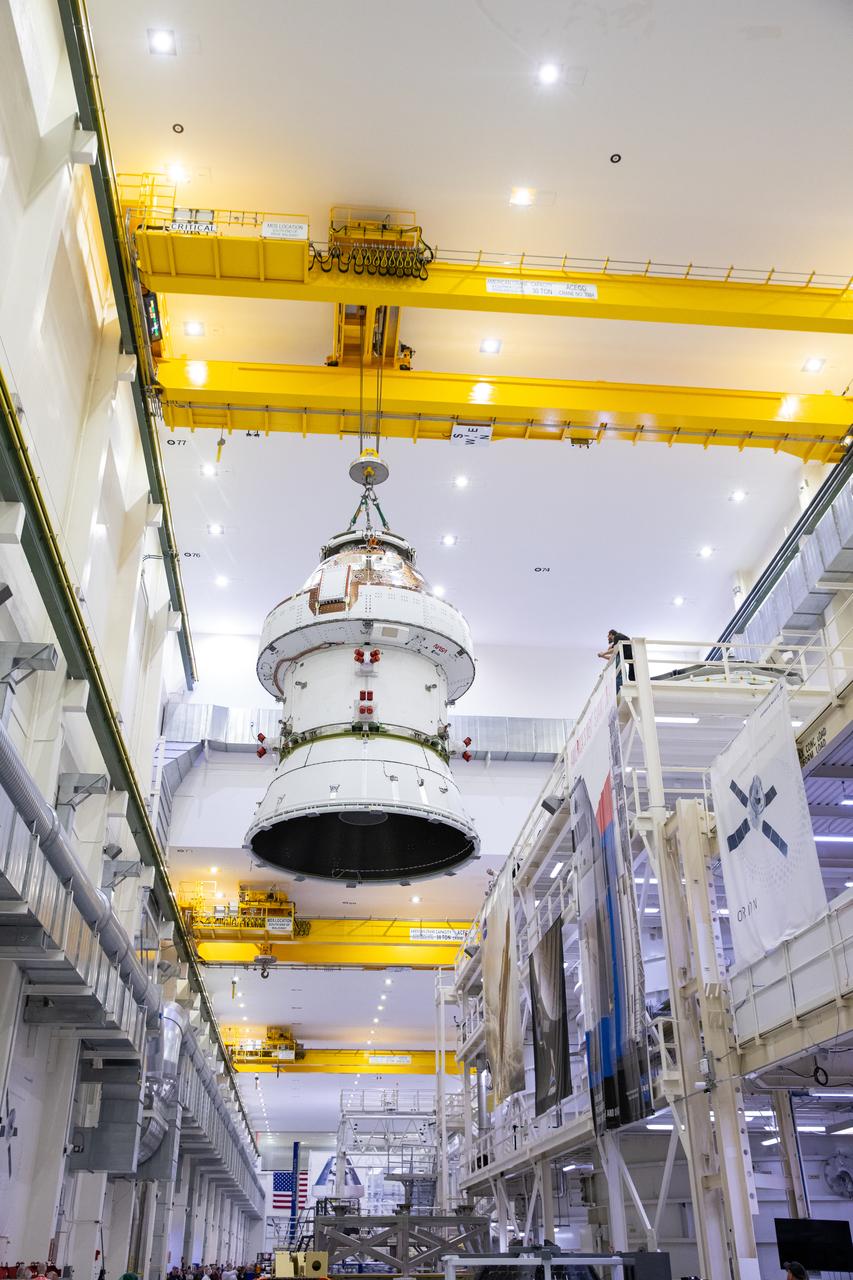
On April 4, 2024, teams lift the Artemis II Orion spacecraft into a vacuum chamber inside the Operations and Checkout Building at NASA's Kennedy Space Center in Florida, where it will undergo electromagnetic compatibility and interference testing.
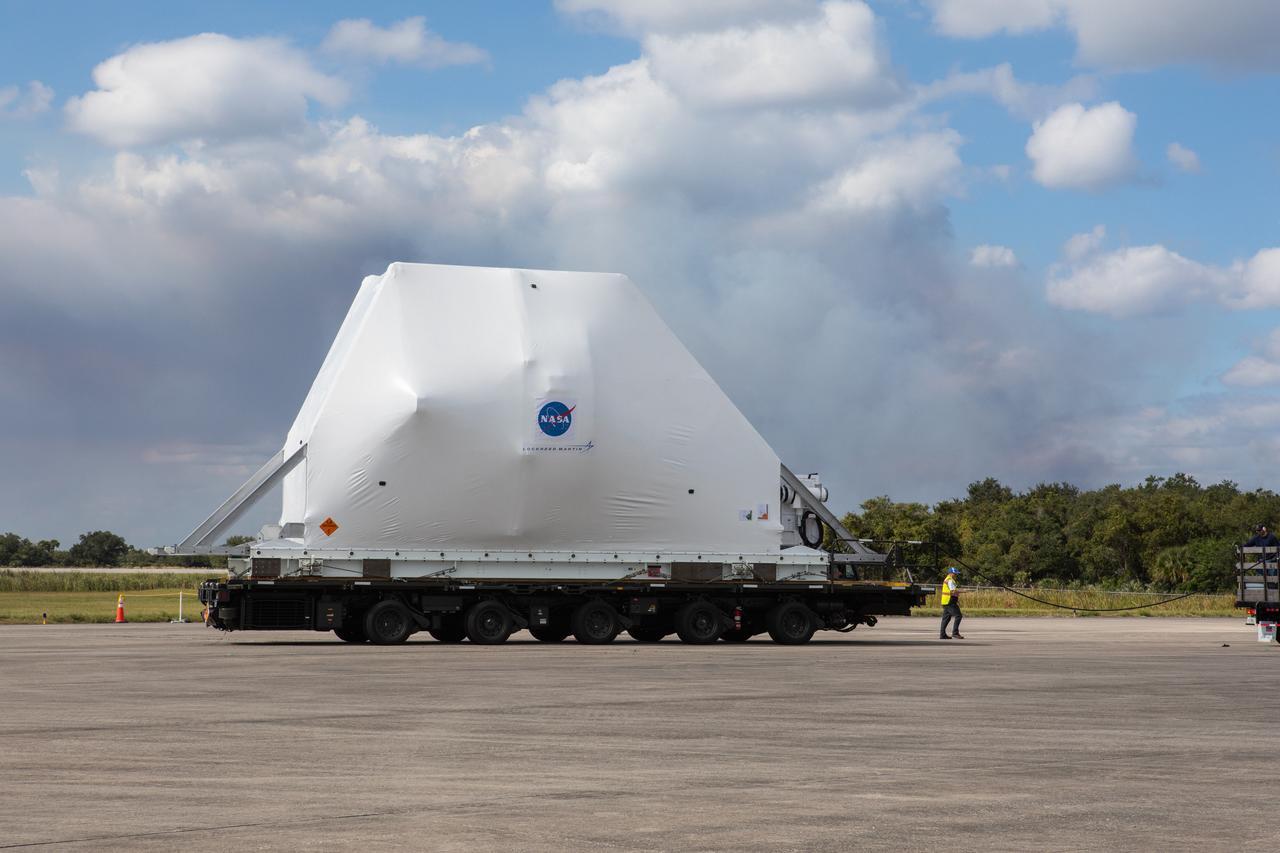
NASA’s Orion spacecraft, wrapped up for shipping, arrives at Kennedy Space Center’s Launch and Landing Facility runway for loading into the agency’s Super Guppy aircraft on Nov. 21, 2019. The spacecraft’s crew and service modules are flying from the Florida spaceport to NASA’s Plum Brook Station in Sandusky, Ohio, for full thermal vacuum testing. In this unique facility, the crew and service modules will be put through extensive testing to ensure they can survive the rigors of launch, space travel, re-entry and splashdown. The Orion spacecraft will launch atop the agency's Space Launch System rocket on Artemis I.
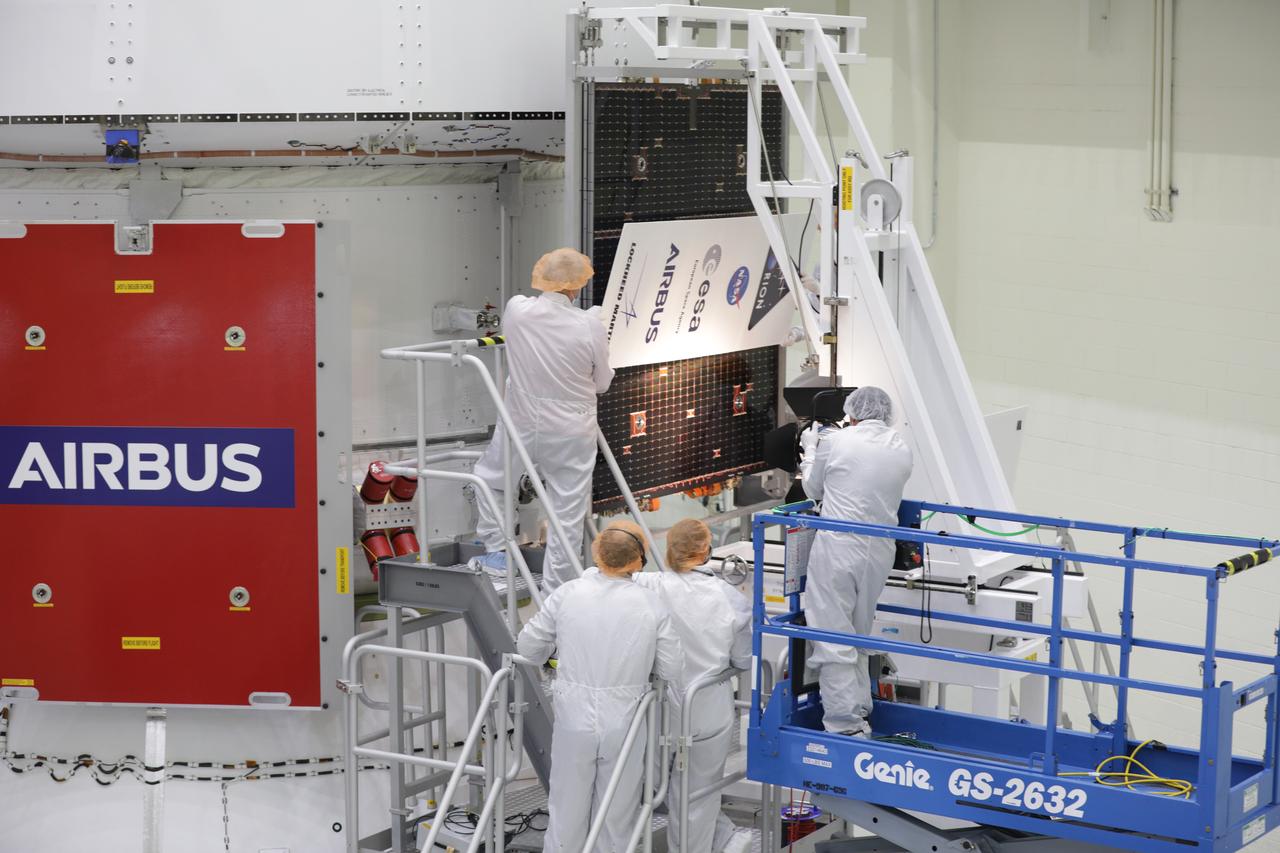
Technicians with the European Space Agency and Airbus/Airbus Netherlands are shown performing an illumination test on one of the solar array wing panels during installation on the Orion spacecraft for Artemis I inside the Neil Armstrong Operations and Checkout Building high bay at NASA’s Kennedy Space Center in Florida on Sept. 30, 2020. The solar arrays were extended, inspected, and then retracted, before installation on the spacecraft. Each solar array panel will generate 11 kilowatts of power and span about 63 feet. The array is a component of Orion’s service module, which is provided by the European Space Agency and built by Airbus Defence and Space to supply Orion’s power, propulsion, air and water. The first in a series of increasingly complex missions, Artemis I will test the Orion spacecraft and Space Launch System as an integrated system ahead of crewed flights to the Moon. Under the Artemis program, NASA will land the first woman and the next man on the Moon in 2024.
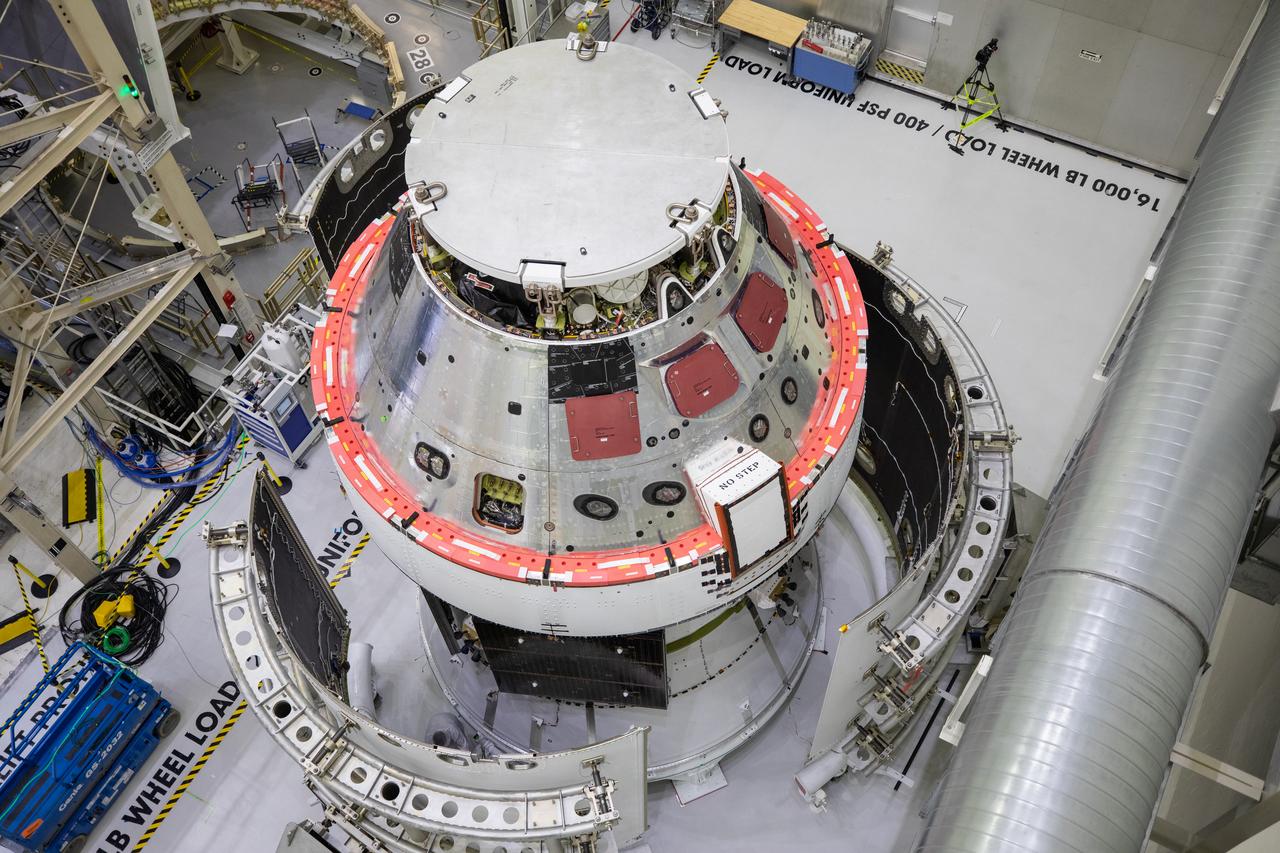
Shown is an overhead view of three spacecraft adapter jettison fairing panels fitted onto Orion’s European Service Module (ESM) on Oct. 13, 2020, inside the Neil Armstrong Operations and Checkout Building (O&C) at NASA’s Kennedy Space Center in Florida. The panels were inspected and moved into place for installation by technicians with Lockheed Martin. Recently, teams from across the globe installed the four solar array wings, which are housed inside the protective covering of the fairings. Once secured, they will encapsulate the ESM to protect it from harsh environments such as heat, wind, and acoustics as the spacecraft is propelled out of Earth’s atmosphere atop the Space Launch System (SLS) rocket during NASA’s Artemis I mission.
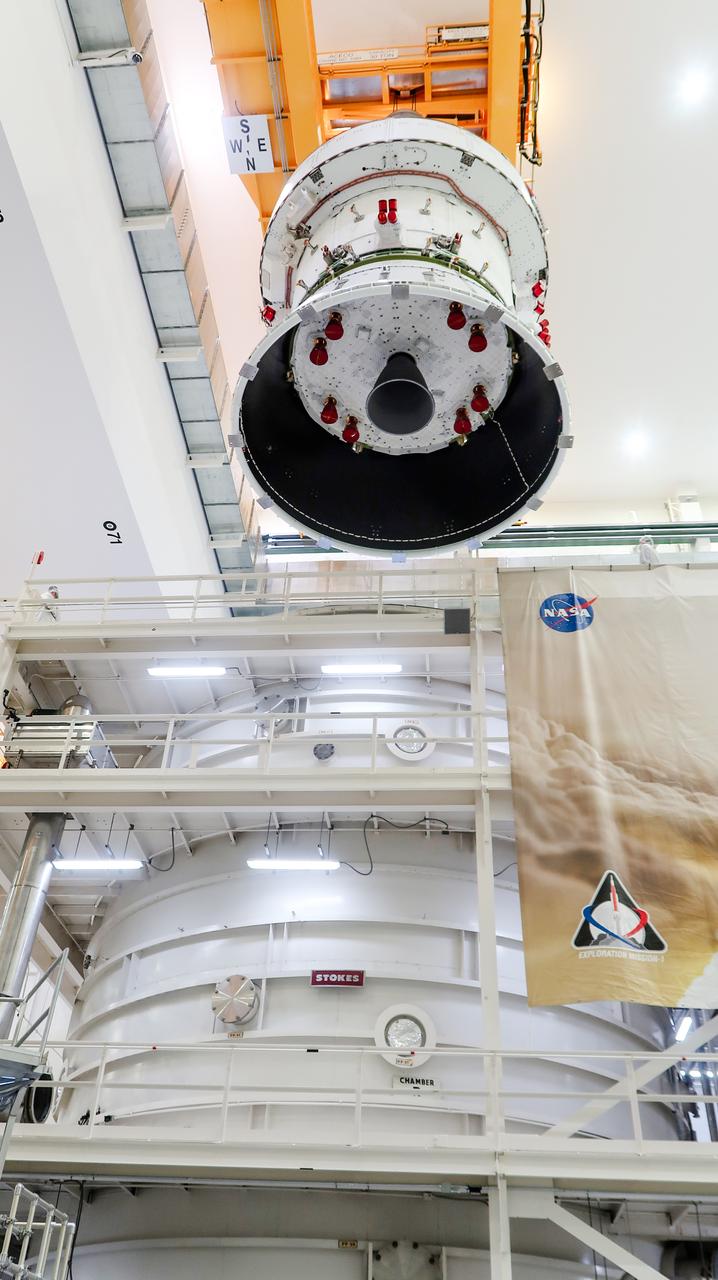
On April 4, 2024, a team lifts the Artemis II Orion spacecraft into a vacuum chamber inside the Operations and Checkout Building at NASA's Kennedy Space Center in Florida, where it will undergo electromagnetic compatibility and interference testing.
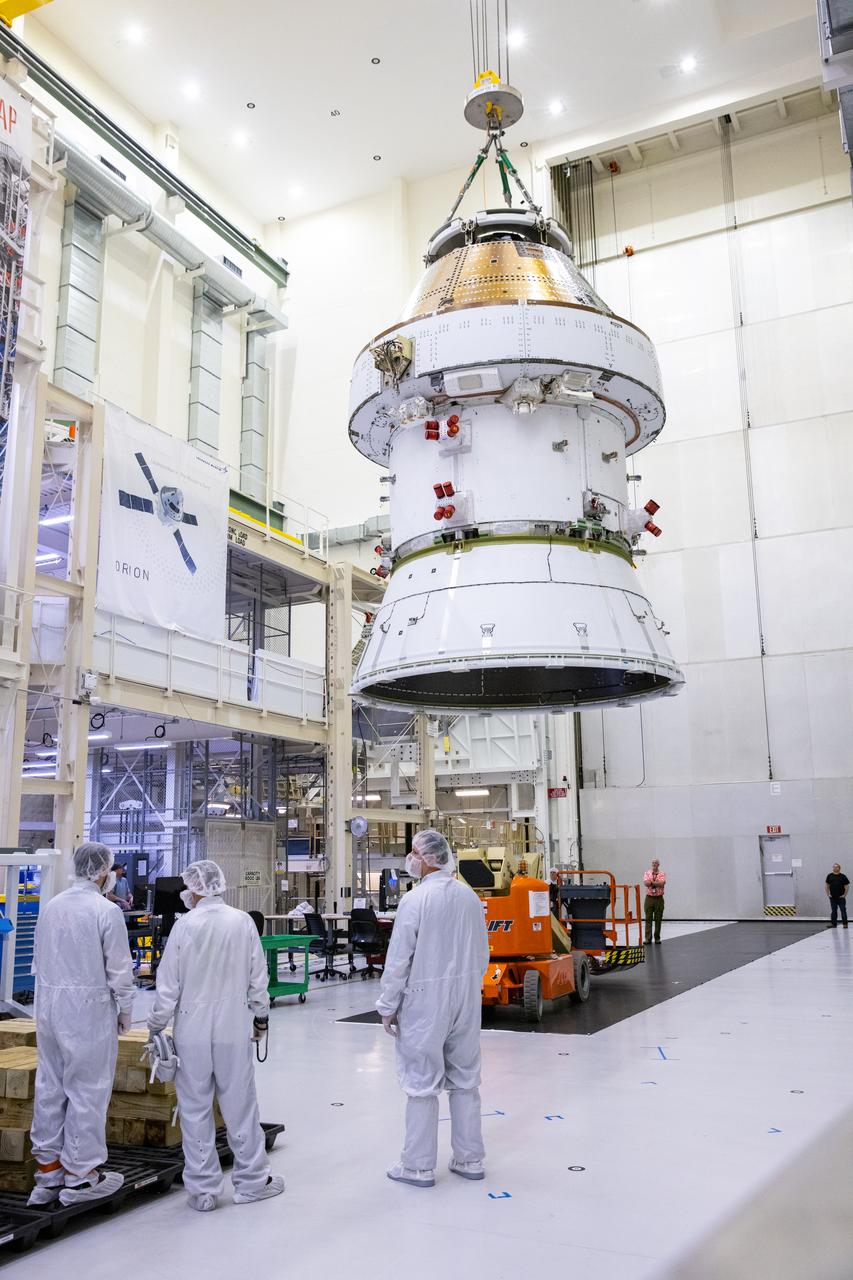
On April 4, 2024, technicians monitor as teams lift the Artemis II Orion spacecraft into a vacuum chamber inside the Operations and Checkout Building at NASA's Kennedy Space Center in Florida, where it will undergo electromagnetic compatibility and interference testing.
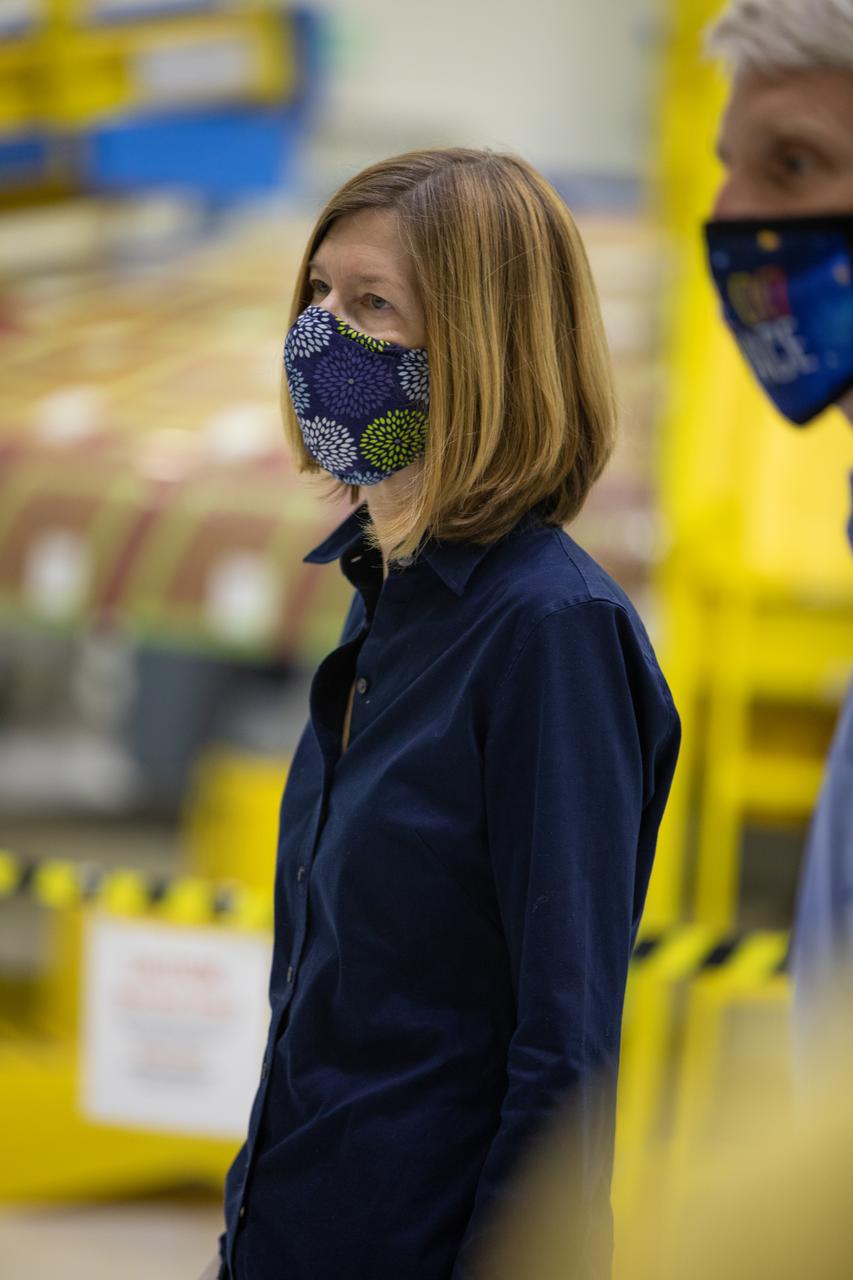
Kathy Lueders, associate administrator of NASA’s Human Exploration and Operations Mission Directorate, visits the Neil Armstrong Operations and Checkout (O&C) Building high bay at the agency’s Kennedy Space Center in Florida on Nov. 5, 2020. While at the O&C, Lueders and senior managers of Orion and Lockheed Martin had the opportunity to view the Artemis I and II spacecraft. In the background is the heat shield for Artemis II. The first in a series of increasingly complex missions, Artemis I will test the Space Launch System rocket and Orion spacecraft as an integrated system prior to crewed flights to the Moon. Under the Artemis program, NASA is planning to land the first woman and the next man on the lunar surface by 2024.

Inside the Neil Armstrong Operations and Checkout Building high bay at NASA’s Kennedy Space Center in Florida, in preparation for installation on the Artemis I spacecraft, technicians have extended one of the Artemis I solar array wings for inspection on Sept. 10, 2020, to confirm that it unfurled properly and all of the mechanisms functioned as expected. The solar array is one of four panels that will generate 11 kilowatts of power and span about 63 feet. The array is a component of Orion’s service module, which is provided by the European Space Agency and built by Airbus Defence and Space to supply Orion’s power, propulsion, air and water. The first in a series of increasingly complex missions, Artemis I will test the Orion spacecraft and Space Launch System as an integrated system ahead of crewed flights to the Moon. Under the Artemis program, NASA will land the first woman and the next man on the Moon in 2024.
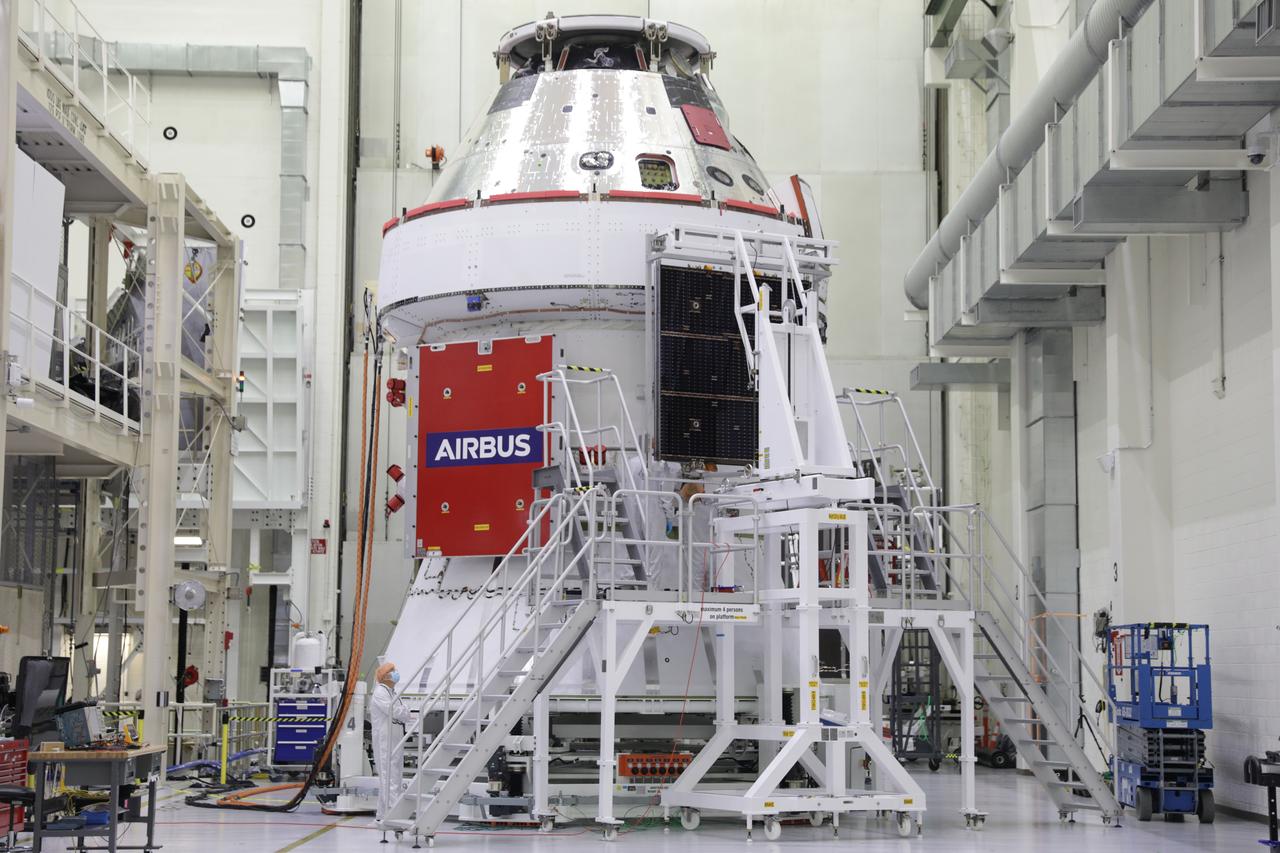
The final of four solar array wings is shown being installed prior to receiving its protective covering on the Orion spacecraft for Artemis I inside the Neil Armstrong Operations and Checkout Building high bay at NASA’s Kennedy Space Center in Florida on Sept. 30, 2020. The solar arrays were extended, inspected, and then retracted, before installation on the spacecraft. Each solar array panel will generate 11 kilowatts of power and span about 63 feet. The array is a component of Orion’s service module, which is provided by the European Space Agency and built by Airbus Defence and Space to supply Orion’s power, propulsion, air and water. The first in a series of increasingly complex missions, Artemis I will test the Orion spacecraft and Space Launch System as an integrated system ahead of crewed flights to the Moon. Under the Artemis program, NASA will land the first woman and the next man on the Moon in 2024.
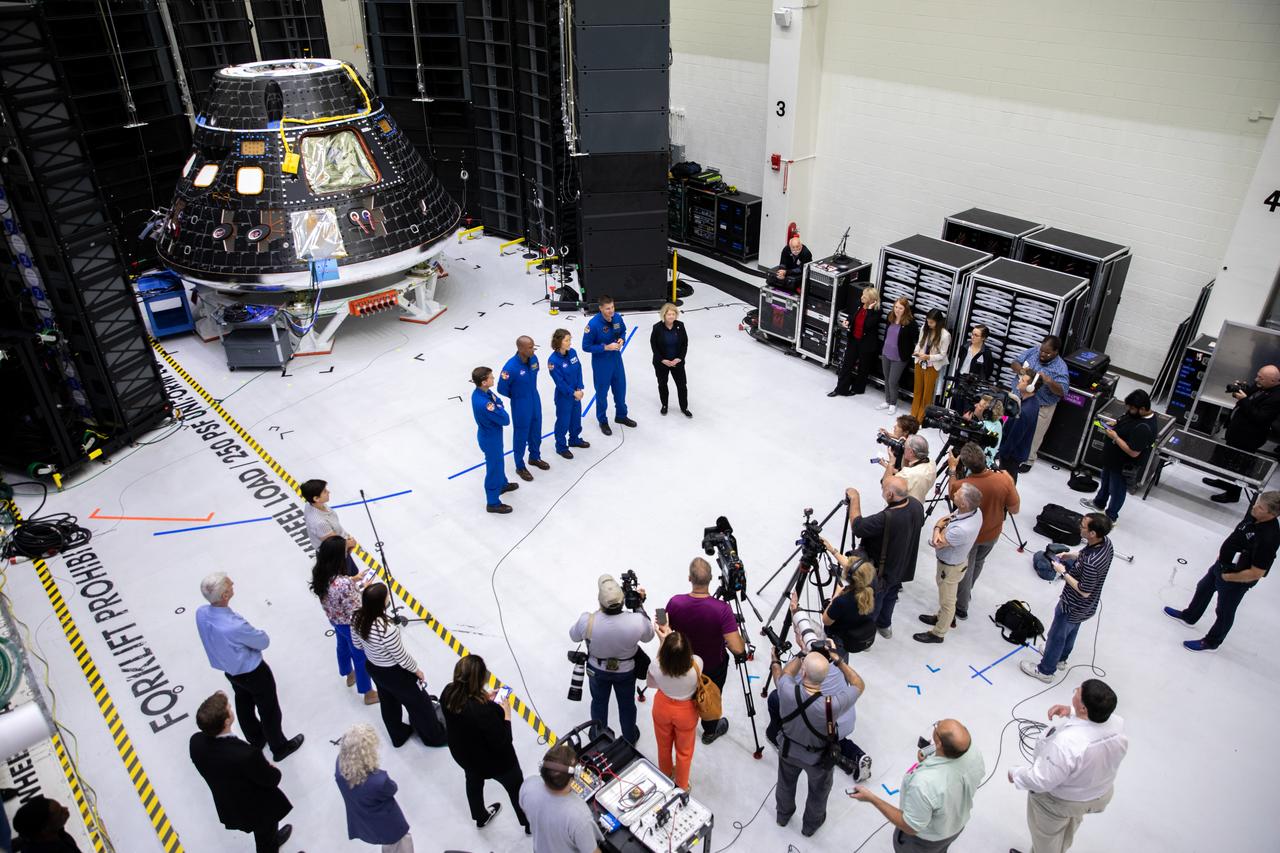
Artemis II crew members, shown inside the Neil Armstrong Operations and Checkout Building at NASA’s Kennedy Space Center in Florida, stand in front of their Orion crew module with NASA Deputy Administrator Pam Melroy during a media event on Aug. 8, 2023. From left are: Reid Wiseman, commander; Victor Glover, pilot; Christina Hammock Koch, mission specialist; and Jeremy Hansen, mission specialist. The crew module is undergoing acoustic testing ahead of integration with the European Service Module. Artemis II is the first crewed mission on NASA’s path to establishing a long-term lunar presence for science and exploration under Artemis.
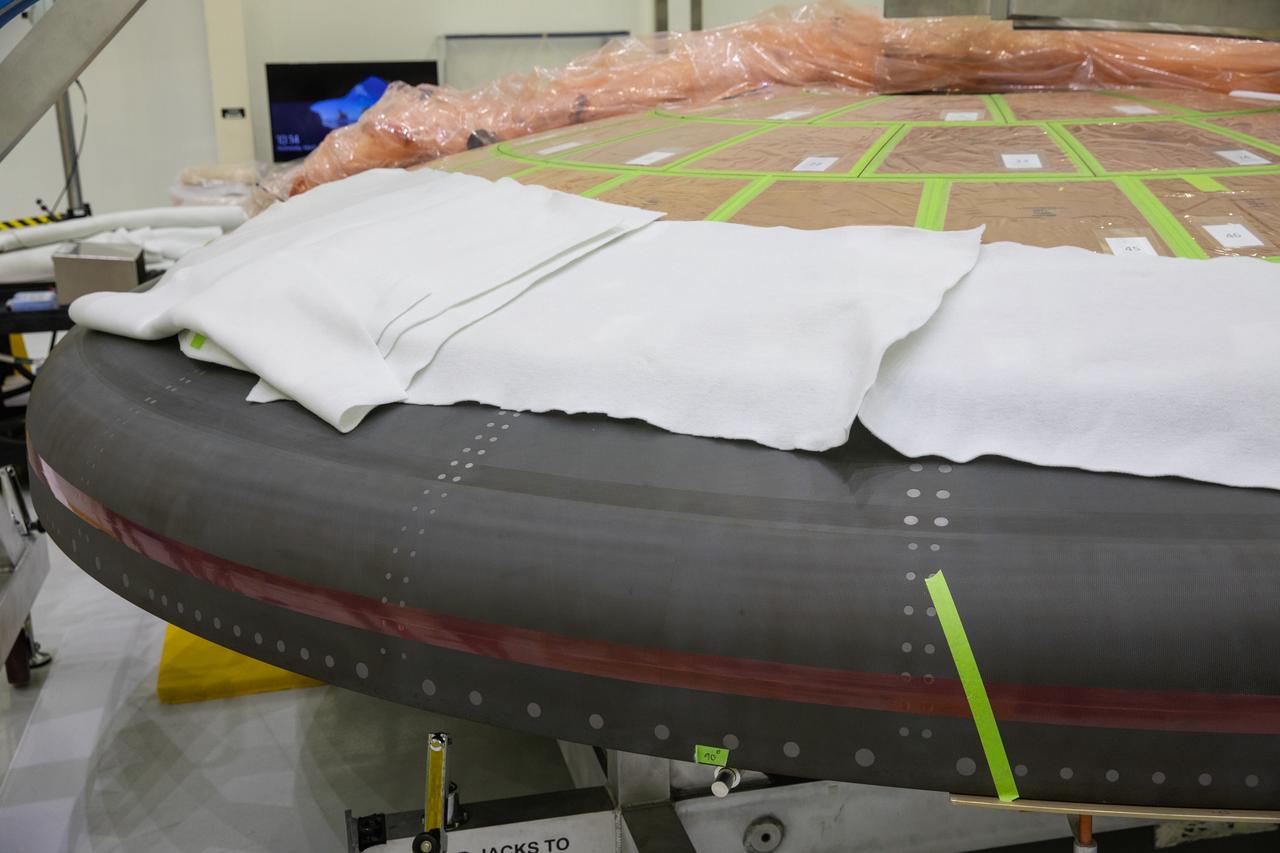
The heat shield for NASA’s Artemis II mission is in view inside the Neil Armstrong Operations and Checkout Building at the agency’s Kennedy Space Center in Florida on March 18, 2020. Using augmented reality (AR) goggles, technicians are completing the work on the heat shield. Orion manufacturer Lockheed Martin provided the goggles to technicians to help place tapes where components will be installed on the crew module, heat shield and other components for Artemis II, the first crewed mission aboard the spacecraft. Using the AR goggles saves significant labor and time to complete tasks. Manufactured by Microsoft, the goggles, called HoloLens2, are the second version used by Lockheed.
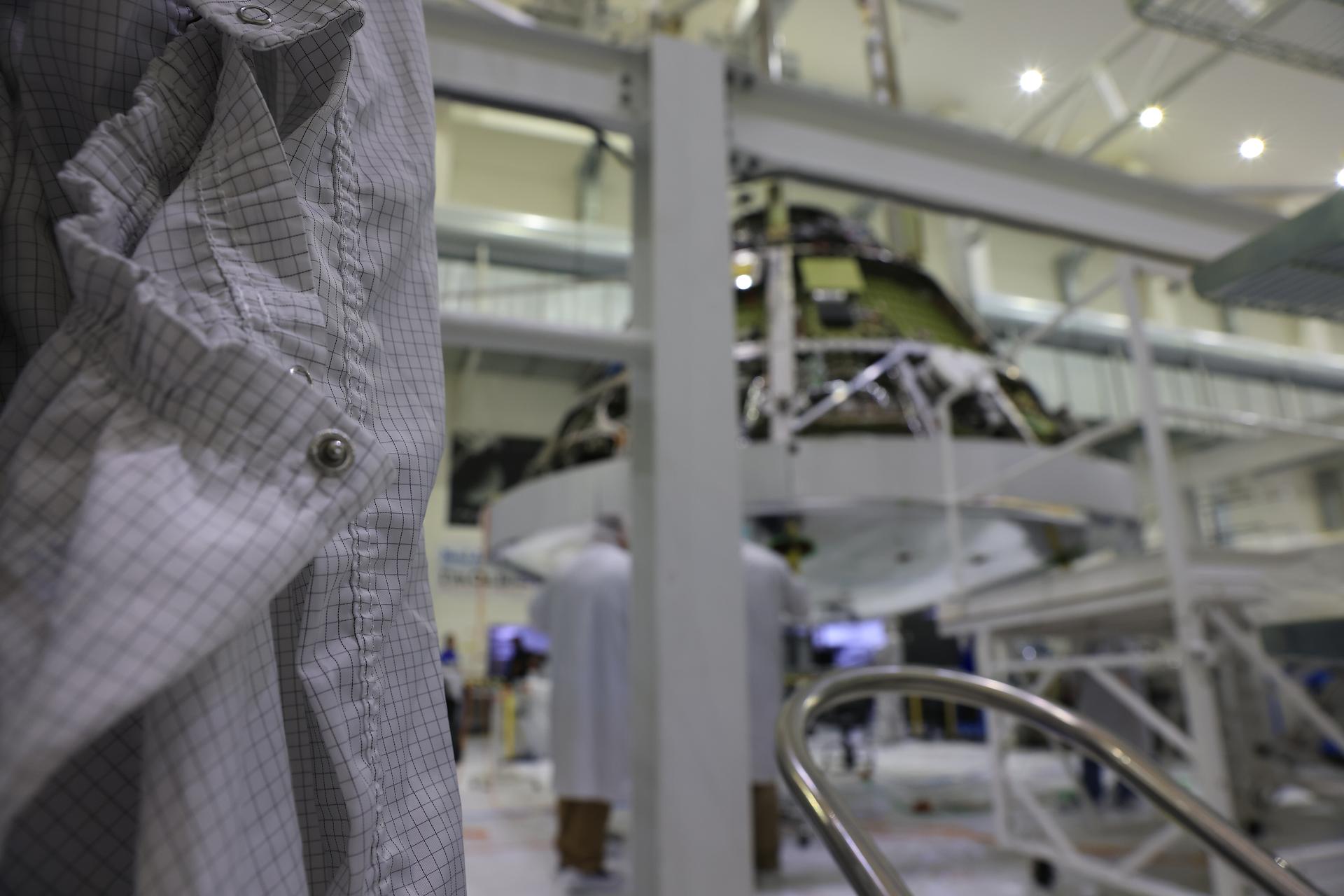
Teams work to complete the installation of the heat shield on the Artemis III Orion spacecraft inside the high bay of the Neil A. Armstrong Operations and Checkout Building at NASA’s Kennedy Space Center in Florida on Monday, July 6, 2026. Orion’s heat shield consists of 186 blocks of an ablative material called Avcoat, with each block meticulously and individually inspected. The heat shield is responsible for protecting the astronauts from the extreme temperatures as they reenter Earth’s atmosphere at the end of the mission.
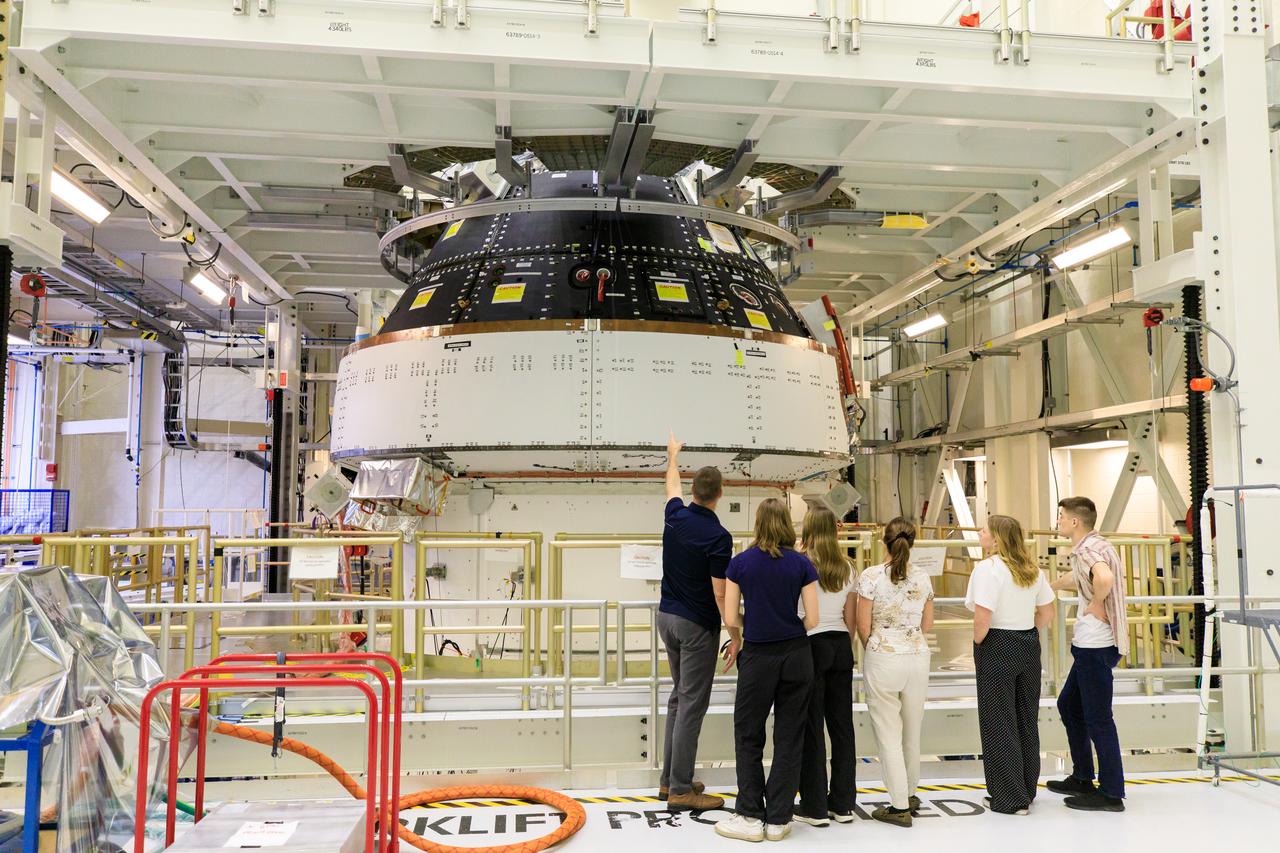
Artemis II Mission Specialist Jeremy Hansen and his family view the Orion spacecraft for Artemis II during a tour of the Neil A. Armstrong Operations and Checkout Building at NASA’s Kennedy Space Center in Florida, on Friday, March 15, 2024. Along with Artemis II Commander Reid Wiseman, Hansen toured the facility with family members and viewed the Orion crew modules, including the spacecraft that will take them, along with Artemis II Pilot Victor Glover and Artemis II Mission Specialist Christina Hammock Koch, around the Moon and back during the Artemis II mission.
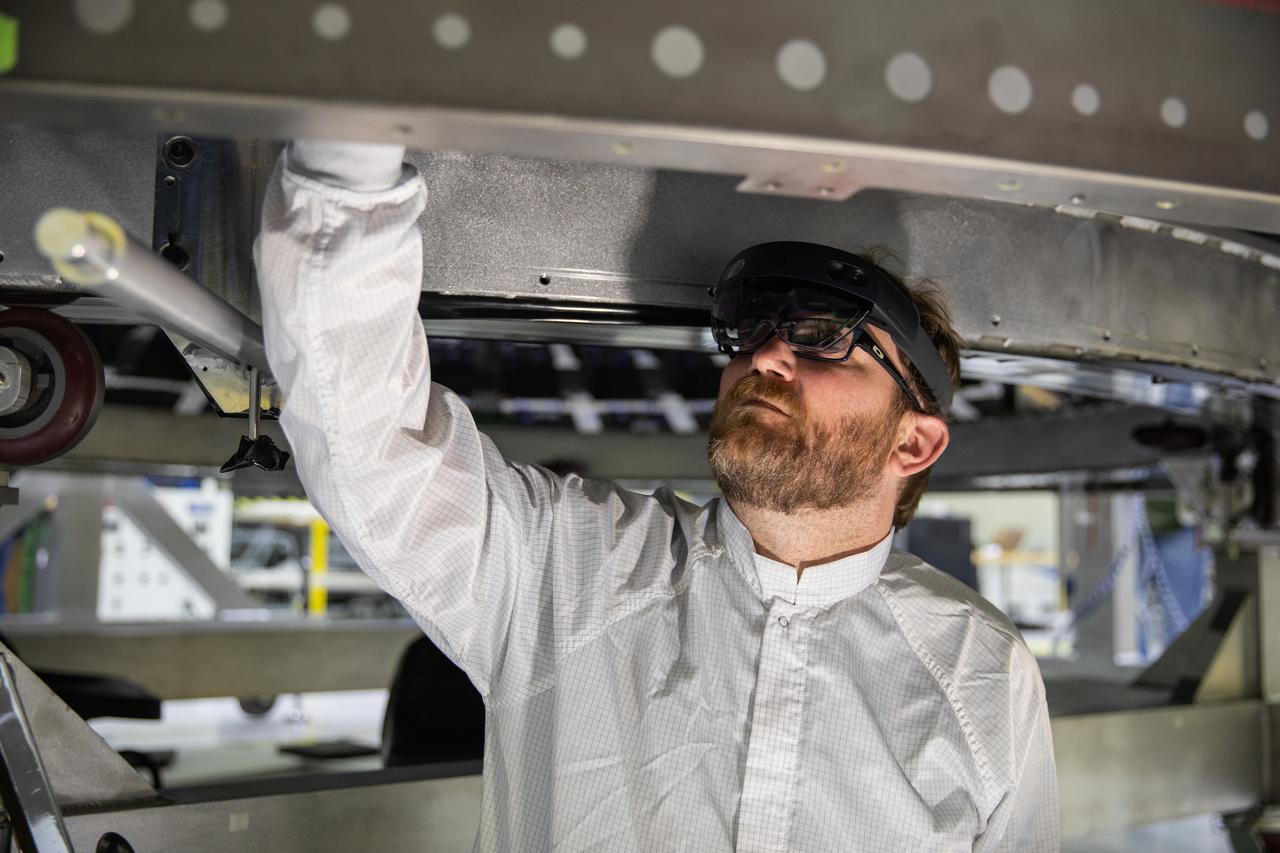
Eric Nolan, a technician with ASRC Federal Data Solutions, wears a pair of augmented reality (AR) goggles as he works on the heat shield for the crew module for NASA’s Artemis II mission inside the high bay of the Neil Armstrong Operations and Checkout Building at the agency’s Kennedy Space Center in Florida on March 18, 2020. Orion manufacturer Lockheed Martin provided the goggles to technicians to help place tapes where components will be installed on Orion for Artemis II, the first crewed mission aboard the spacecraft. Using the AR goggles saves significant labor and time to complete tasks. Manufactured by Microsoft, the goggles, called HoloLens2, are the second version used by Lockheed.
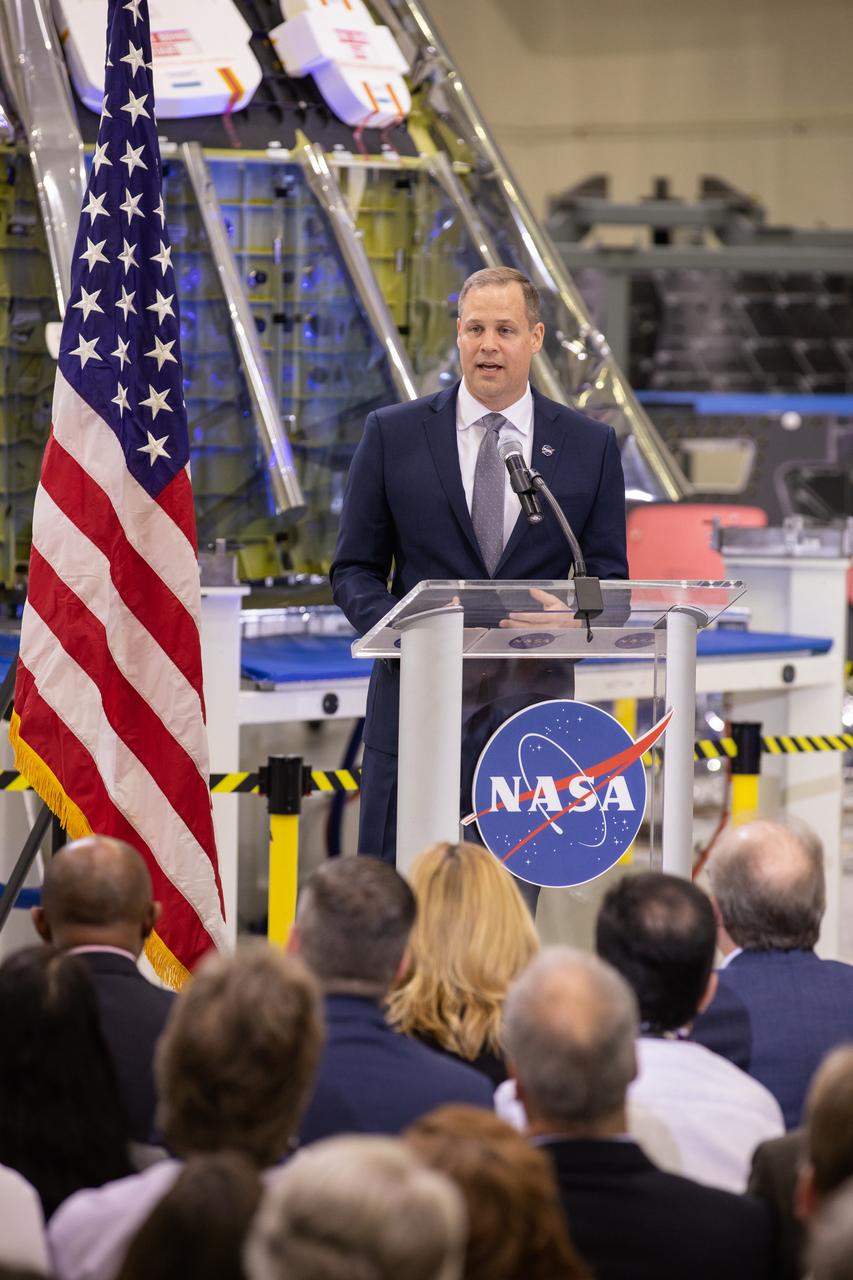
NASA Administrator Jim Bridenstine speaks to NASA workers across the nation and members of the news media, during a Moon to Mars event in the Neil Armstrong Operations and Checkout Building high bay on March 11, 2019. Behind him is the Orion crew module for Exploration Mission-2. The event followed the delivery of President Trump’s fiscal year 2020 budget proposal to U.S. Congress, which includes funding for the agency’s Moon to Mars initiative and Gateway lunar outpost. Bridenstine presented a closer look at America’s work to return astronauts to the Moon in a sustainable way and continue exploration to Mars.
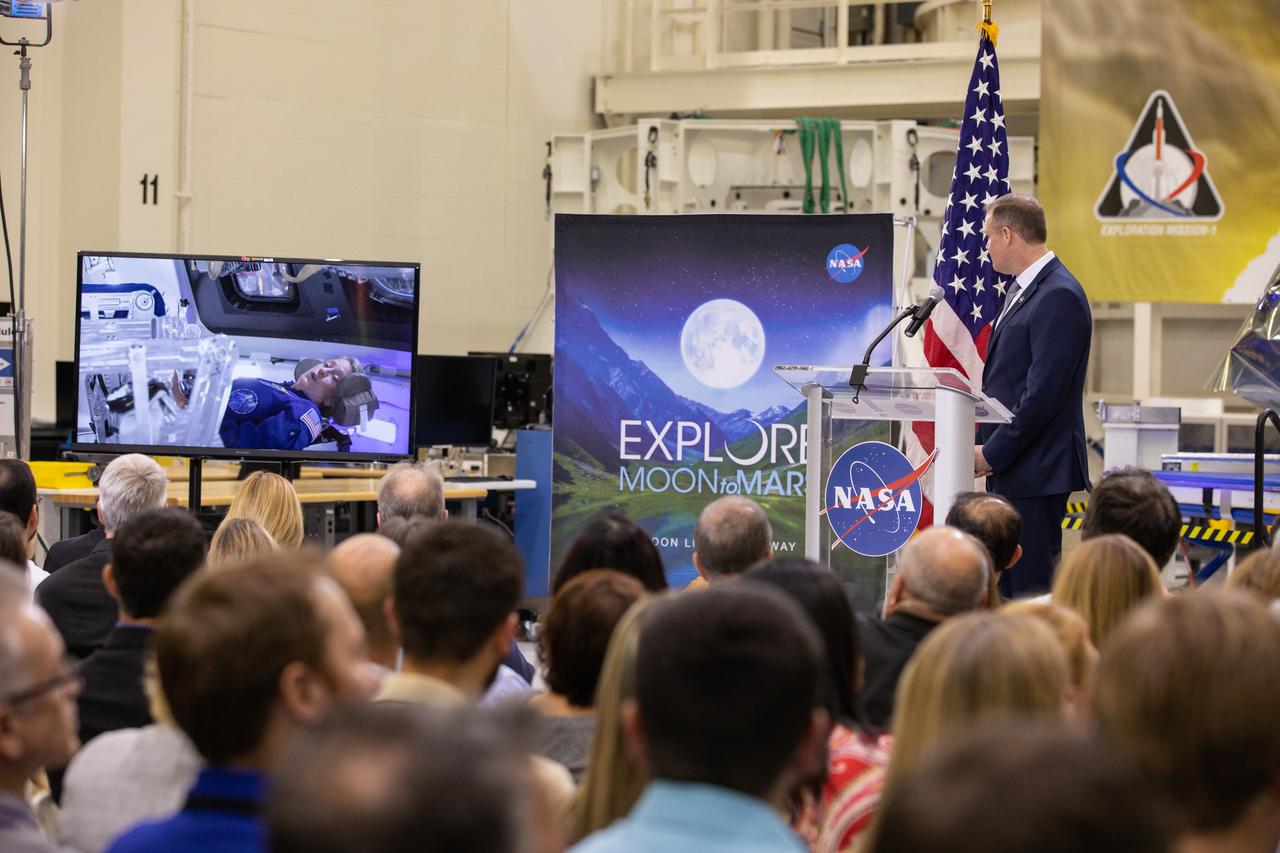
During a Moon to Mars event March 11, 2019, in the Neil Armstrong Operations and Checkout Building high bay at Kennedy Space Center in Florida, NASA Administrator Jim Bridenstine speaks to astronaut Karen Nyberg, on screen. Nyberg is in a test version of the Orion crew module at the agency’s Johnson Space Center in Houston. Bridenstine spoke to NASA workers across the nation and members of the news media, following the delivery of President Trump’s fiscal year 2020 budget proposal to U.S. Congress, which includes funding for the agency’s Moon to Mars initiative and Gateway lunar outpost. Bridenstine presented a closer look at America’s work to return astronauts to the Moon in a sustainable way and continue exploration to Mars.
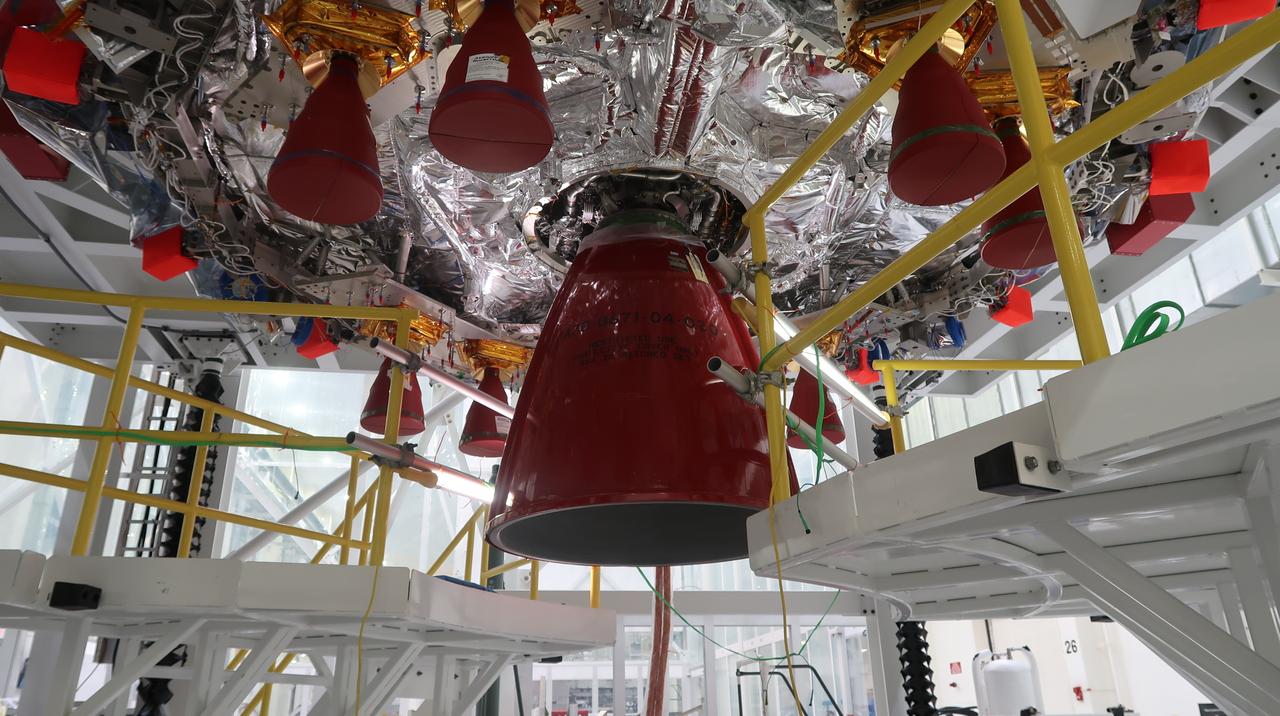
Technicians at NASA’s Kennedy Space Center in Florida finish installing the orbital maneuvering system engine nozzle and heat shield for the Artemis II European Service Module inside the Neil Armstrong Operations and Checkout Building on Jan. 16, 2023. Artemis II will be the first crewed flight test of the Space Launch System rocket and Orion spacecraft. The service module will provide the power necessary to propel Orion on a trip around the Moon, including the in-space maneuvering capability and other commodities necessary to sustain crew for the duration of the mission.