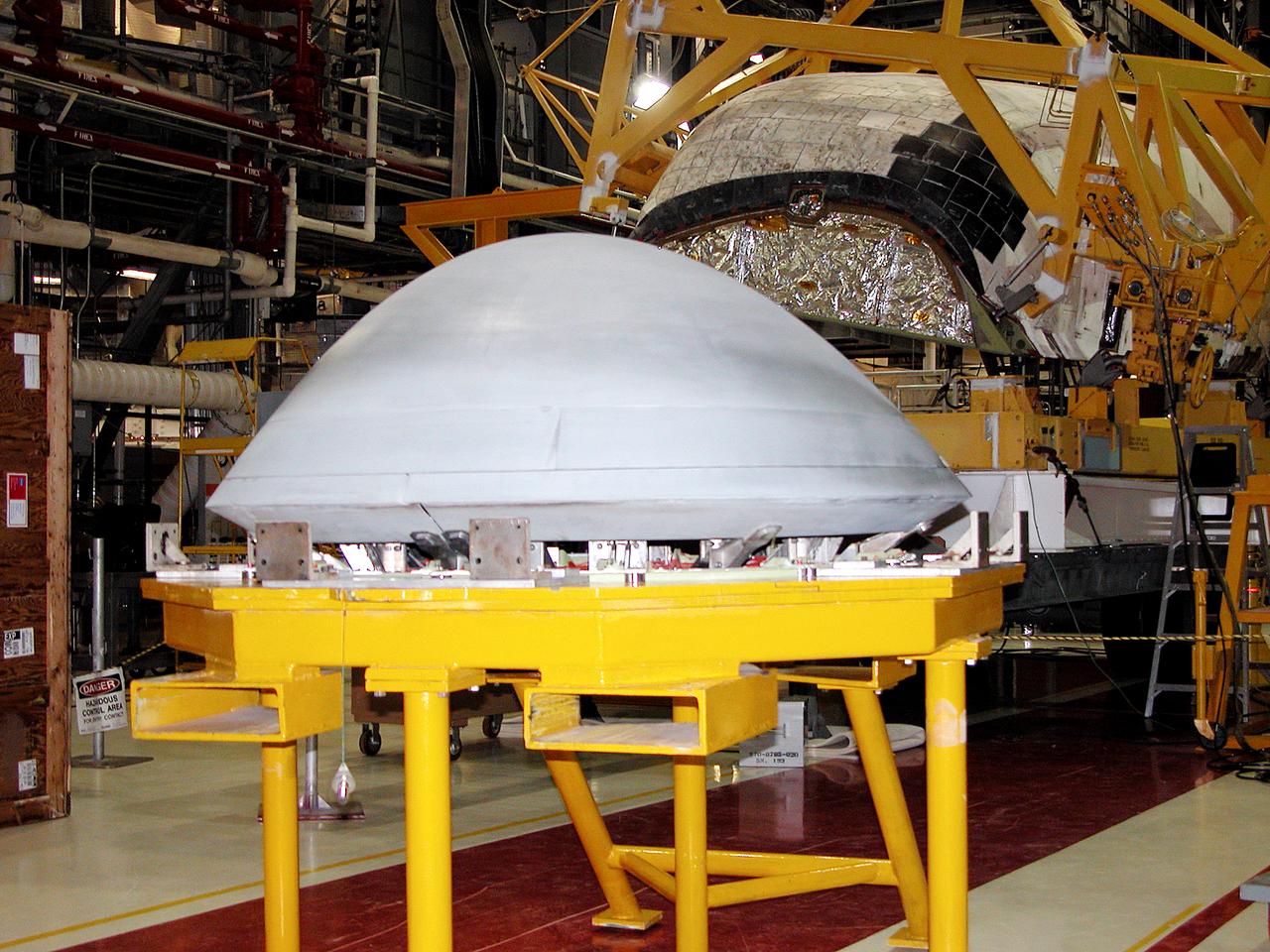
In the Orbiter Processing Facility, the nose cap (foreground) removed from Atlantis (behind) waits to be shipped to the original manufacturing company, Vought in Ft. Worth, Texas, a subsidiary of Lockheed Martin, to undergo non-destructive testing such as CAT scan and thermography.
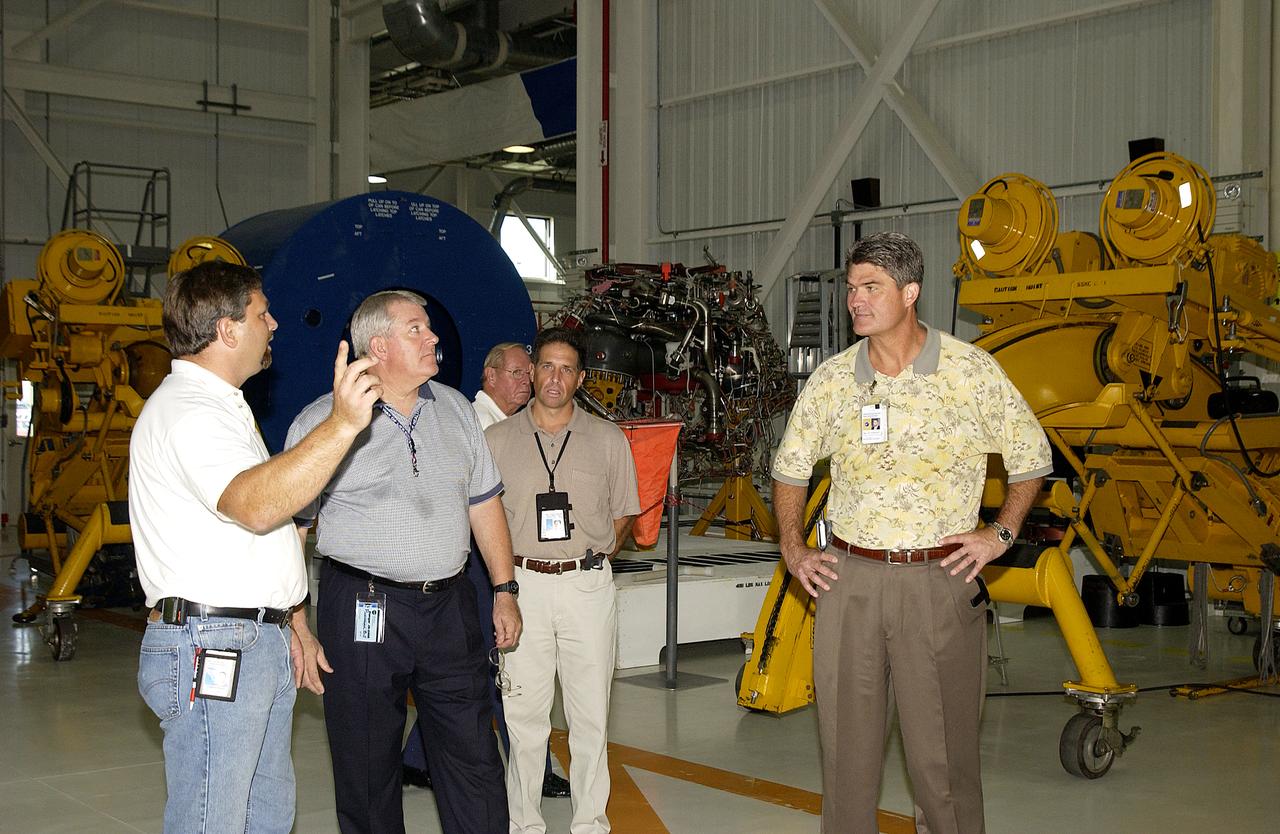
Shuttle Program Manager Bill Parsons, right, is briefed on Orbiter Major Modifications (OMM) that were recently completed on Discovery. From left are a Boeing representative; Bill Pickavance, vice president and deputy program manager, Florida operations, United Space Alliance (USA); and Mark Nappi, deputy associate program manager, ground operations, USA. The OMM work ranged from wiring, control panels and black boxes to gaseous and fluid systems tubing and components. These systems were deserviced, disassembled, inspected, modified, reassembled, checked out and reserviced, as were most other systems onboard. The work included the installation of the Multifunction Electronic Display Subsystem (MEDS) - a state-of-the-art “glass cockpit.”
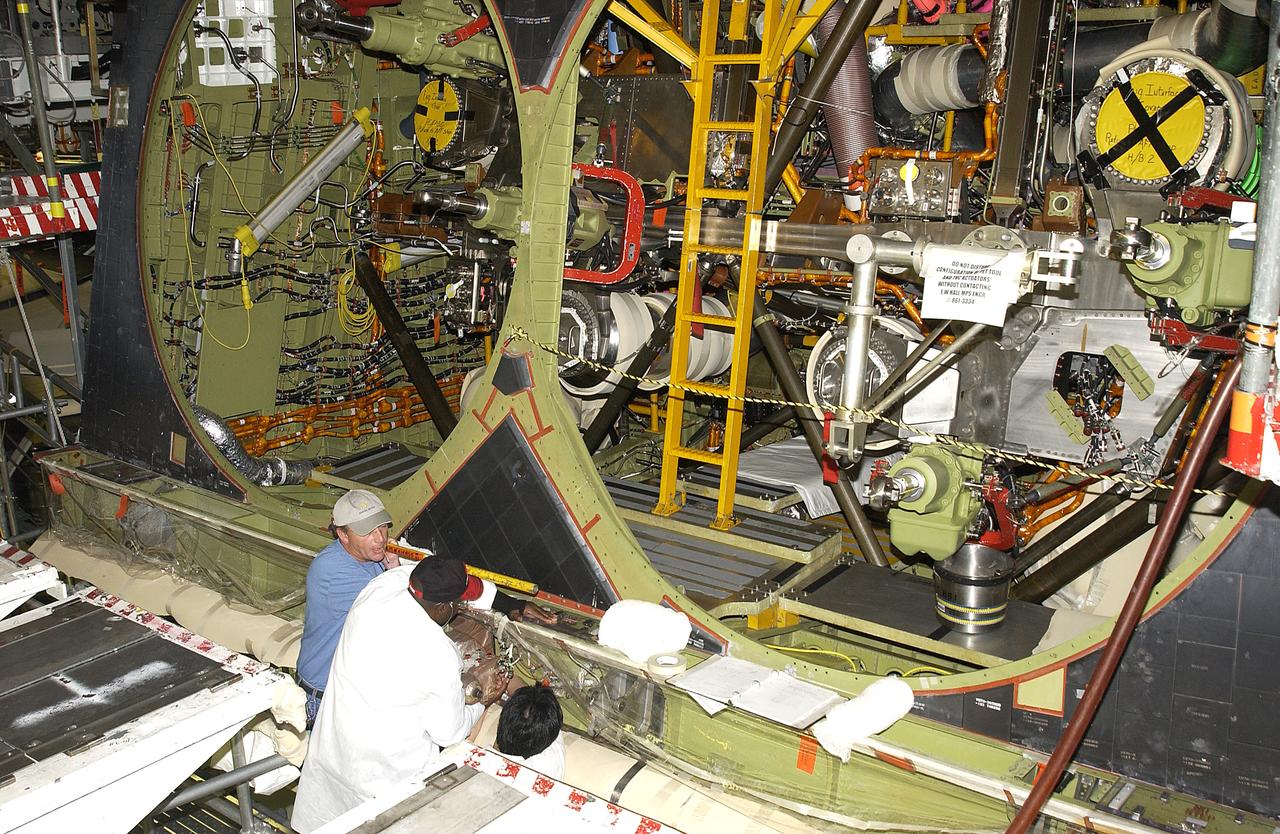
In the Orbiter Processing Facility, Tim Chastain (left) and John Peterson (right), with United Space Alliance, prepare to remove the body flap actuator from the orbiter Endeavour. The work is part of return to flight activities on the orbiter fleet.
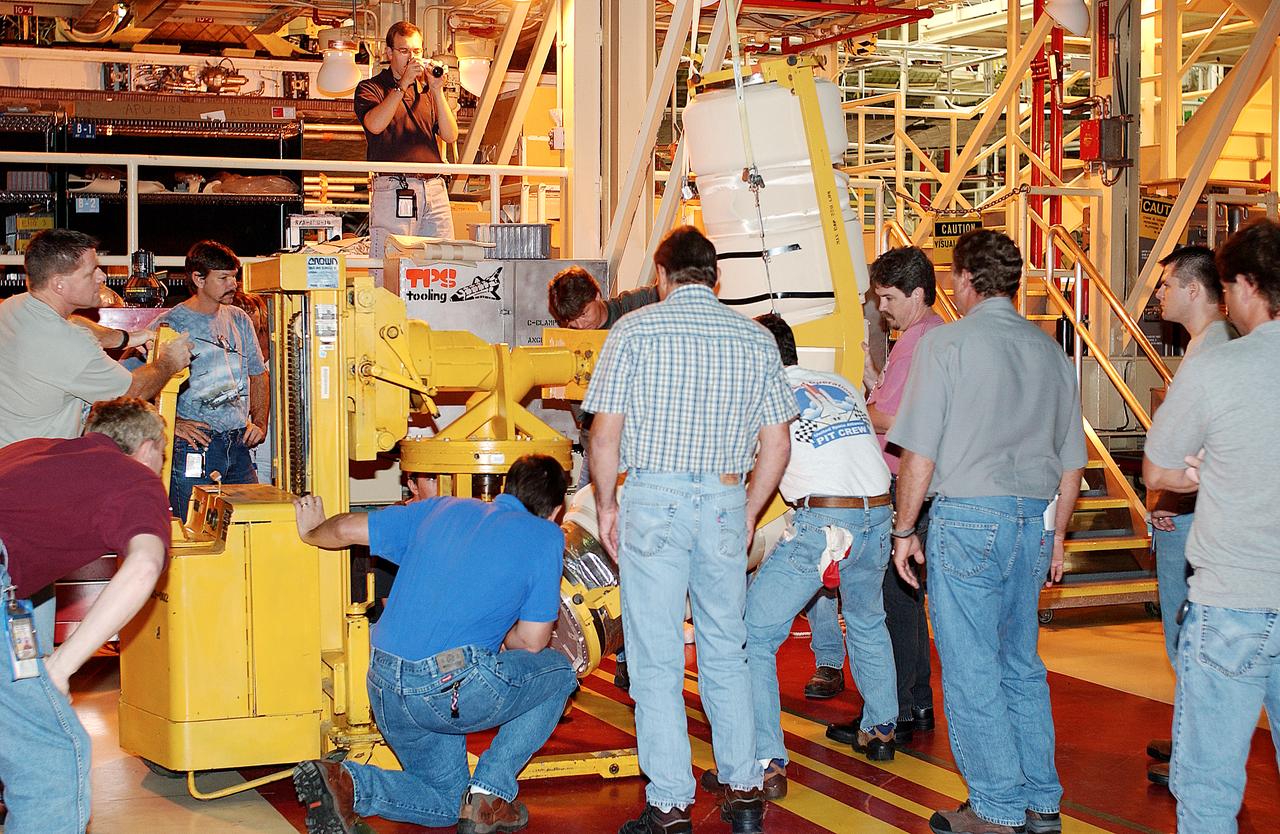
In the Orbiter Processing Facility, workers prepare to install the liquid oxygen feedline for the 17-inch disconnect on orbiter Discovery. The 17-inch liquid oxygen and liquid hydrogen disconnects provide the propellant feed interface from the external tank to the orbiter main propulsion system and the three Shuttle main engines.
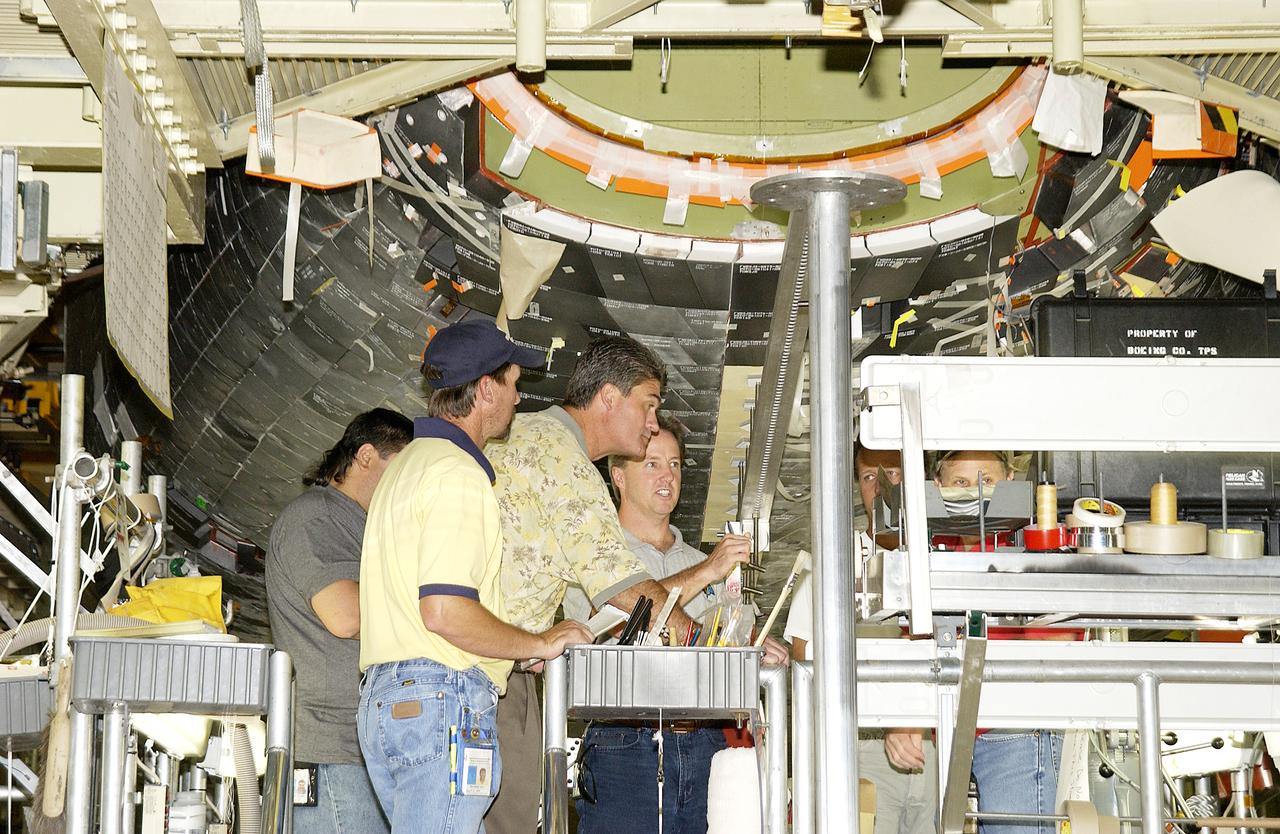
United Space Alliance workers explain tile installation around Discovery’s nose landing gear to Shuttle Program Manager Bill Parsons (center). Discovery has been undergoing Orbiter Major Modifications. The OMM work ranged from wiring, control panels and black boxes to gaseous and fluid systems tubing and components. These systems were deserviced, disassembled, inspected, modified, reassembled, checked out and reserviced, as were most other systems onboard. The work included the installation of the Multifunction Electronic Display Subsystem (MEDS) - a state-of-the-art “glass cockpit.”
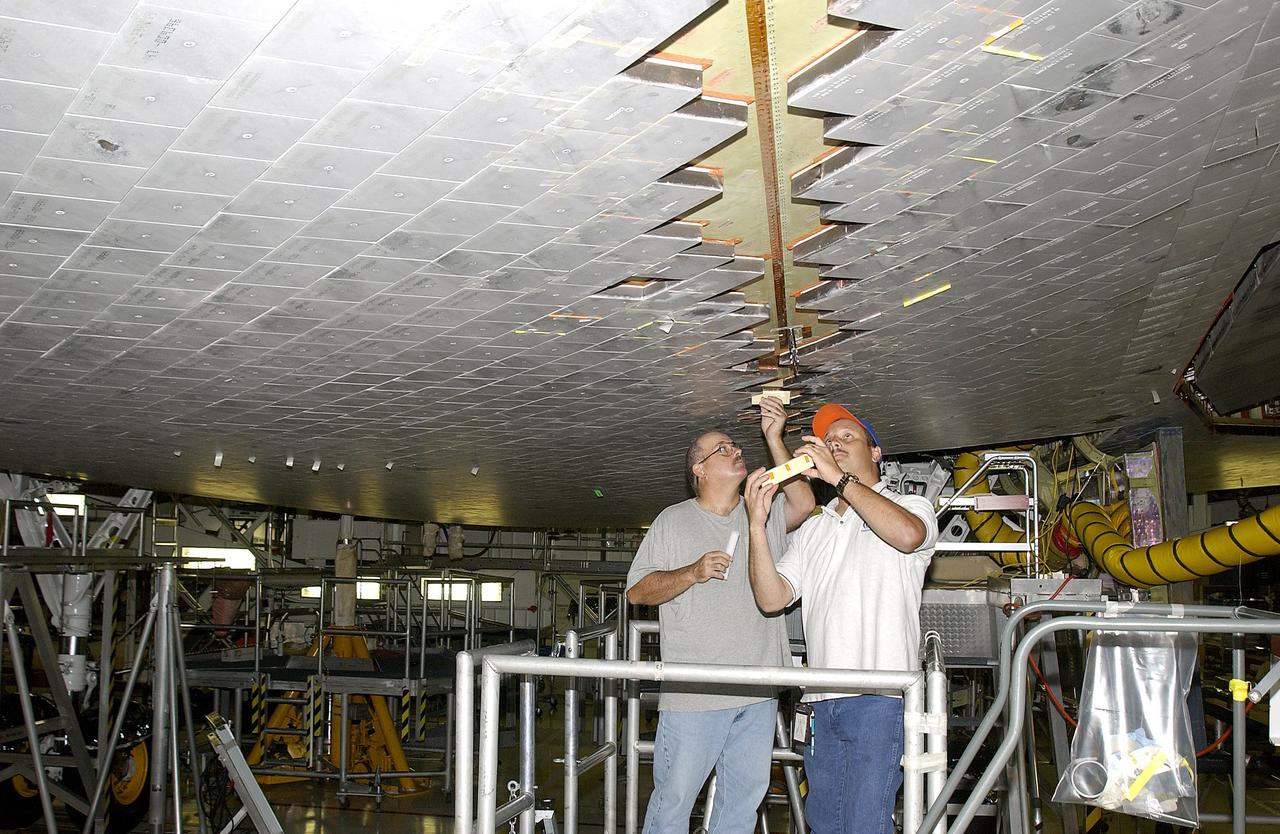
In the Orbiter Processing Facility, David Sanborn and Rick Cady, with United Space Alliance, check tiles on the underside of Endeavour. Tile check is part of routine maintenance and return to flight activities on the orbiter fleet.
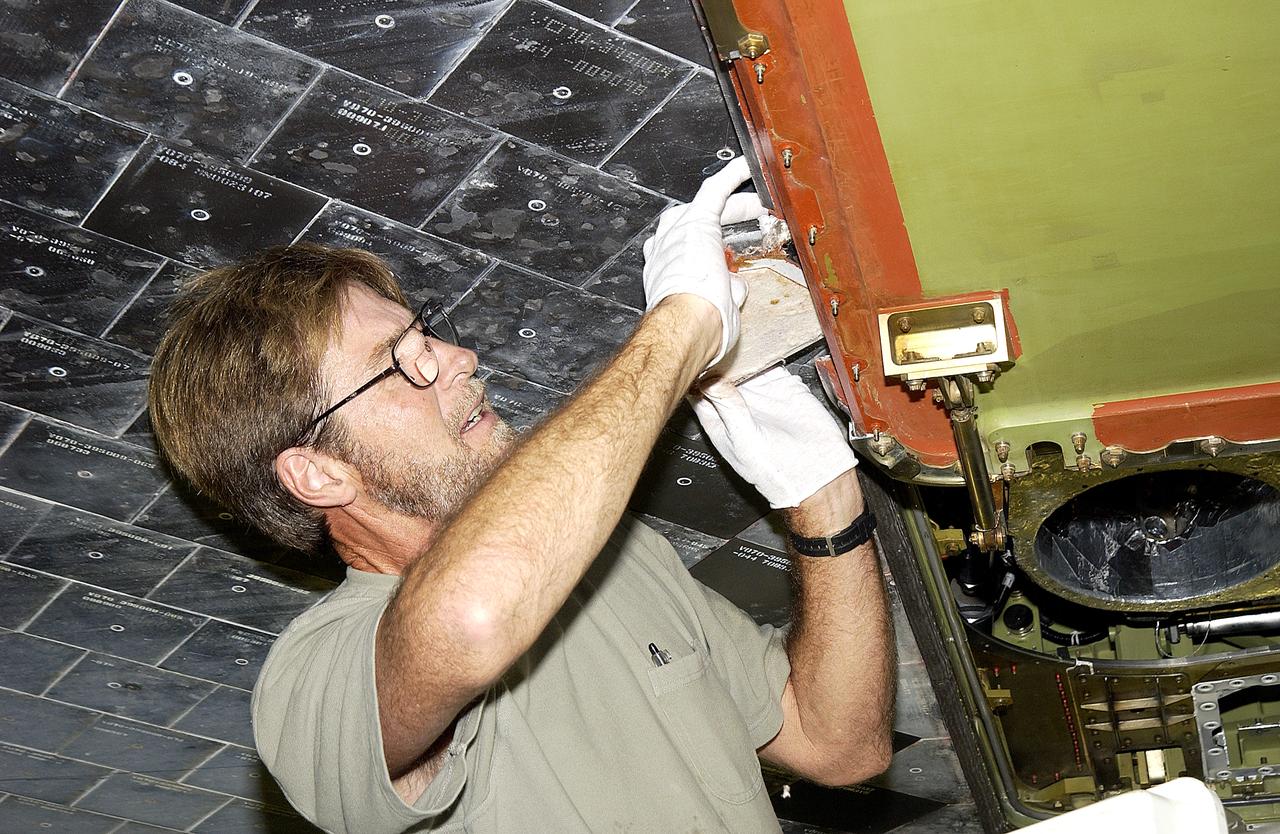
In the Orbiter Processing Facility, Harrell Watts, with United Space Alliance, removes a tile from the thermal barrier around the umbilical areas, the external tank attach points, on the underside of Atlantis. The umbilical areas are closed off after ET separation by a door, seen here. The exposed area of each closed door is covered with reusable surface insulation.
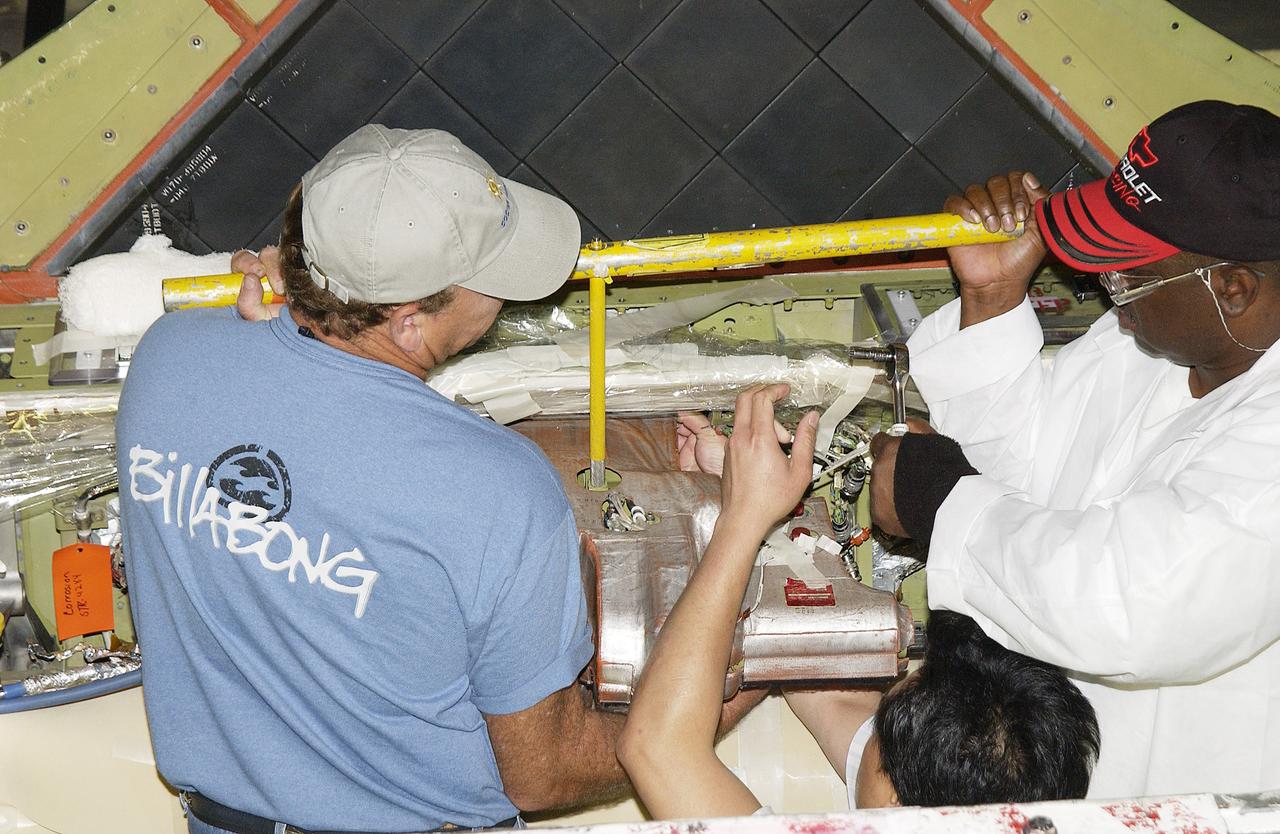
In the Orbiter Processing Facility, (from left) Tim Chastain, Sang Huynh and John Peterson, with United Space Alliance, work at removing the body flap actuator from the orbiter Endeavour. The work is part of return to flight activities on the orbiter fleet.
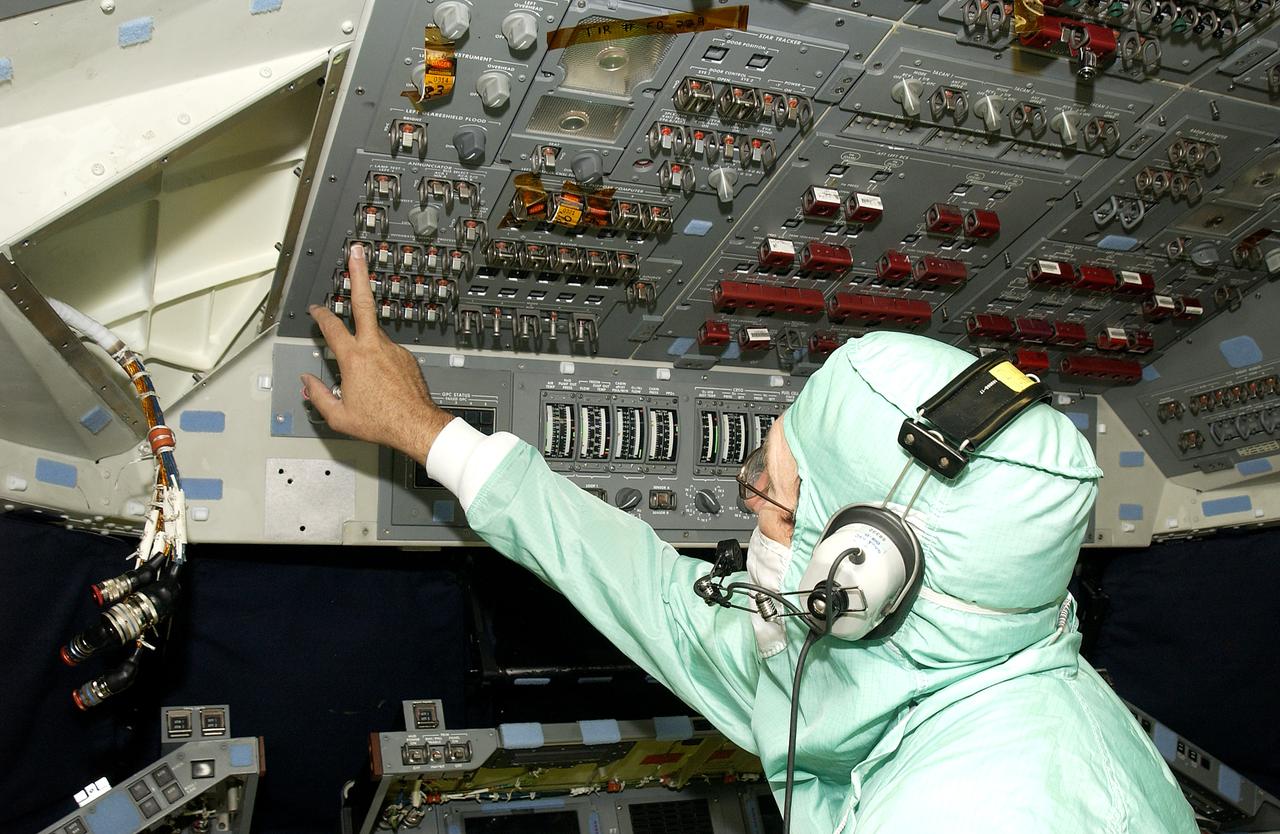
During power-up of the orbiter Discovery in the Orbiter Processing Facility, a technician moves a circuit reset on the cockpit console. Discovery has been undergoing Orbiter Major Modifications in the past year, ranging from wiring, control panels and black boxes to gaseous and fluid systems tubing and components. These systems were deserviced, disassembled, inspected, modified, reassembled, checked out and reserviced, as were most other systems onboard. The work includes the installation of the Multifunction Electronic Display Subsystem (MEDS) - a state-of-the-art “glass cockpit.”
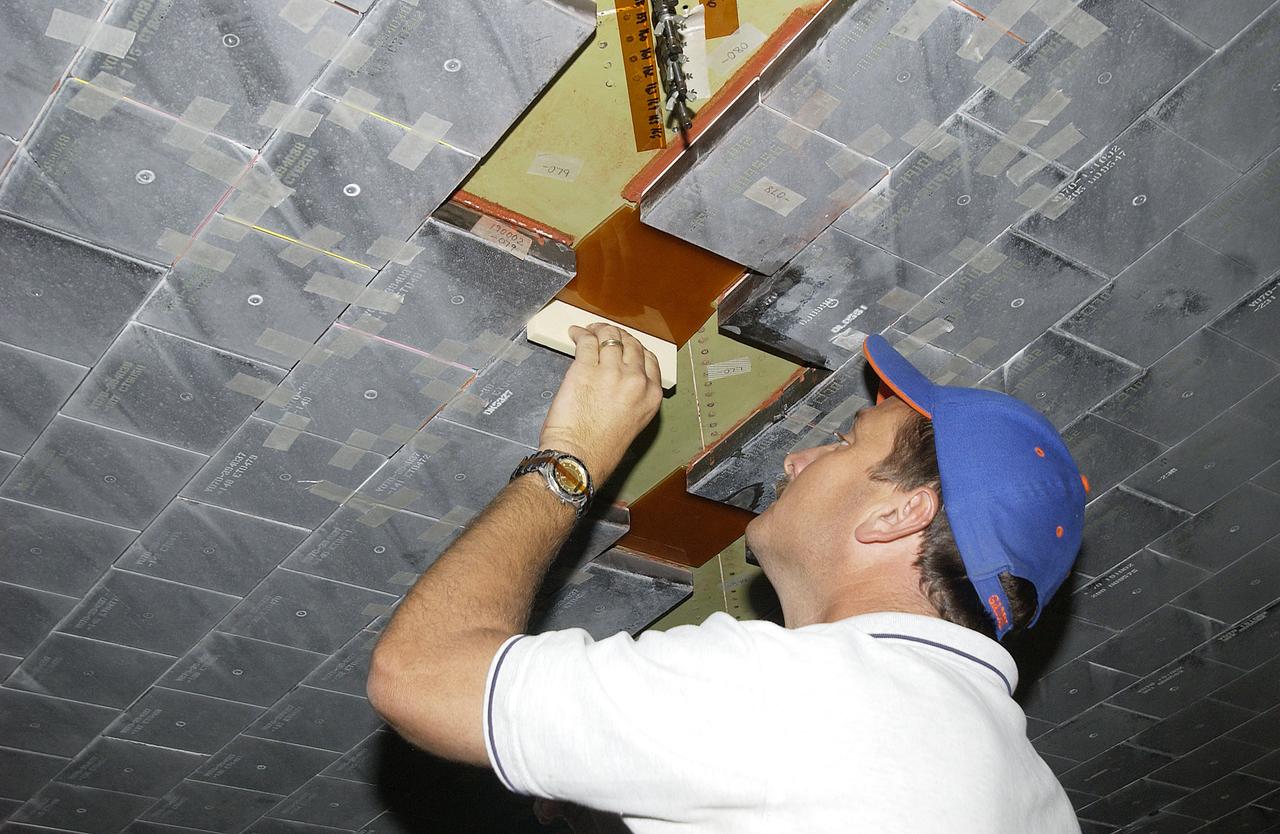
In the Orbiter Processing Facility, Rick Cady, with United Space Alliance, removes a tile from Endeavour. Tile check is part of routine maintenance and return to flight activities on the orbiter fleet.

In the Orbiter Processing Facility, Harrell Watts (left), with United Space Alliance, removes a tile from the thermal barrier around the umbilical areas, the external tank attach points, on the underside of Atlantis. The umbilical areas are closed off after ET separation by a door, seen here. The exposed area of each closed door is covered with reusable surface insulation.
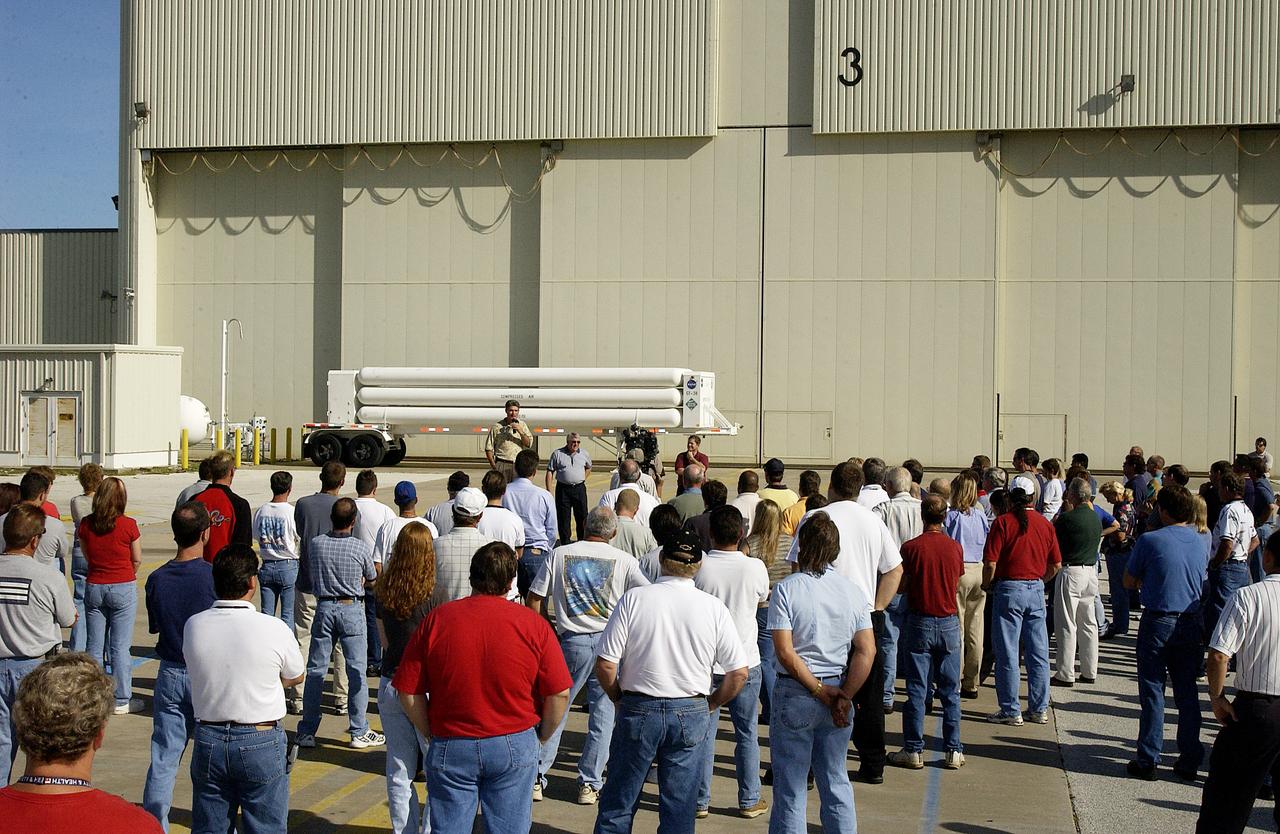
Shuttle Program Manager Bill Parsons praises the Discovery processing team for their successful power-up of the vehicle after Orbiter Major Modifications (OMM). The OMM work ranged from wiring, control panels and black boxes to gaseous and fluid systems tubing and components. These systems were deserviced, disassembled, inspected, modified, reassembled, checked out and reserviced, as were most other systems onboard. The work included the installation of the Multifunction Electronic Display Subsystem (MEDS) - a state-of-the-art “glass cockpit.”
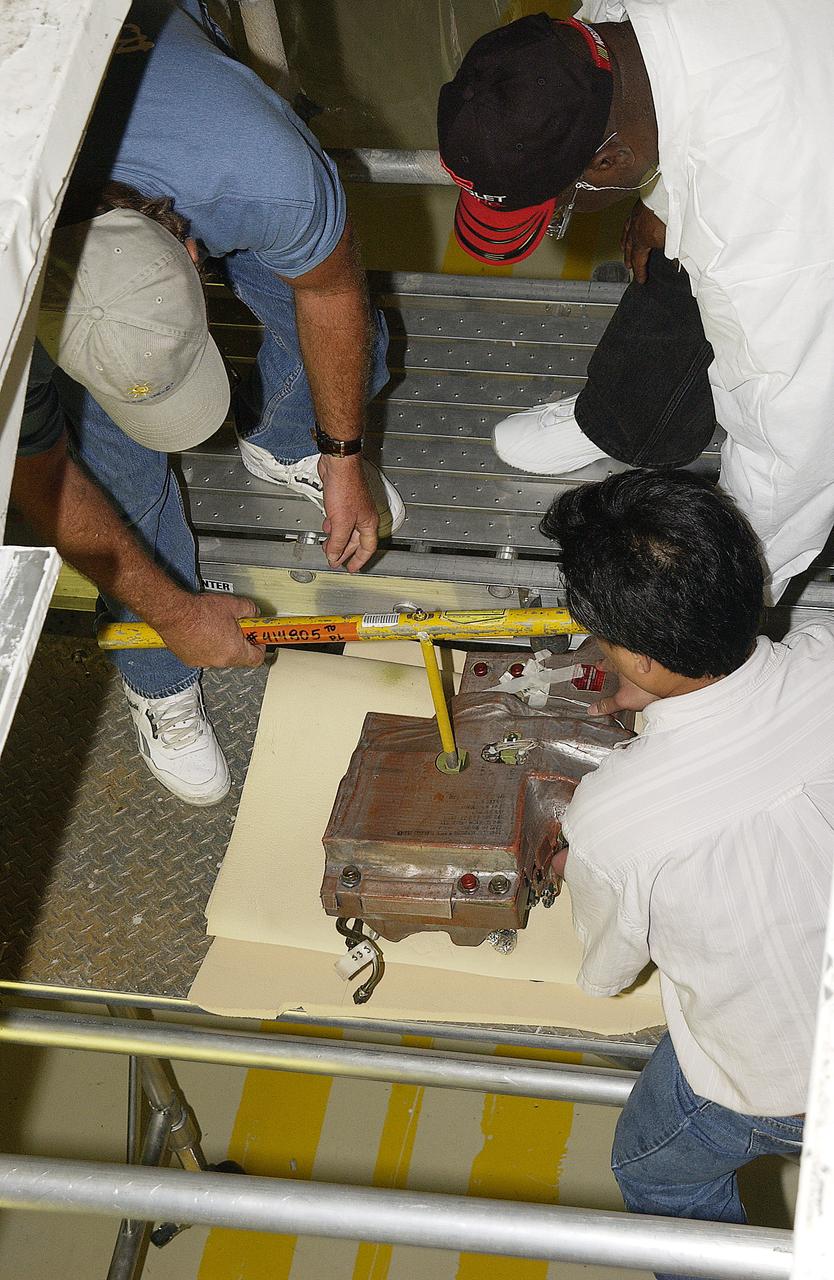
(Clockwise from left), in the Orbiter Processing Facility, Tim Chastain, John Peterson and Sang Huynh, with United Space Alliance, work at removing the body flap actuator from the orbiter Endeavour. The work is part of return to flight activities on the orbiter fleet.
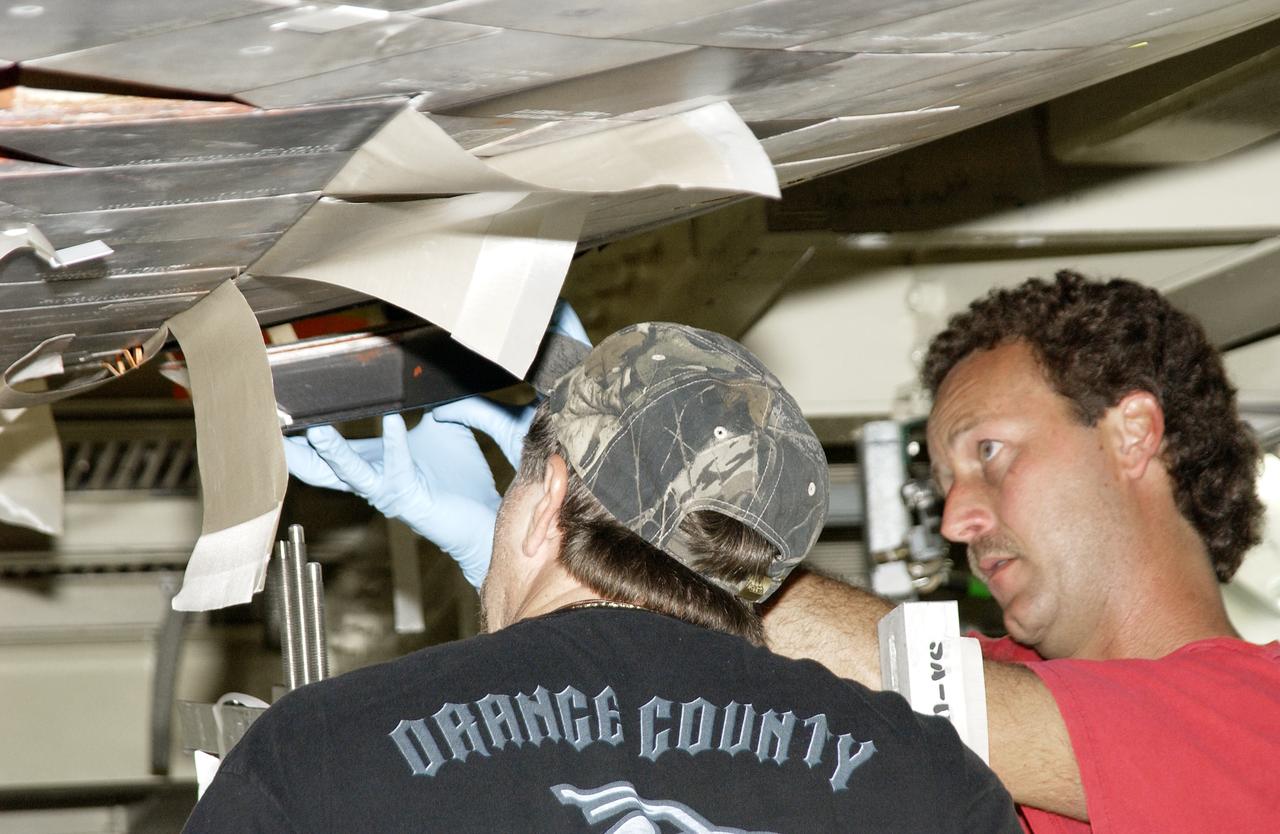
Workers make a tile-fit check on the underside of the orbiter Discovery in the Orbiter Processing Facility. The vehicle has undergone Orbiter Major Modifications in the past year, a process that includes the tile check.
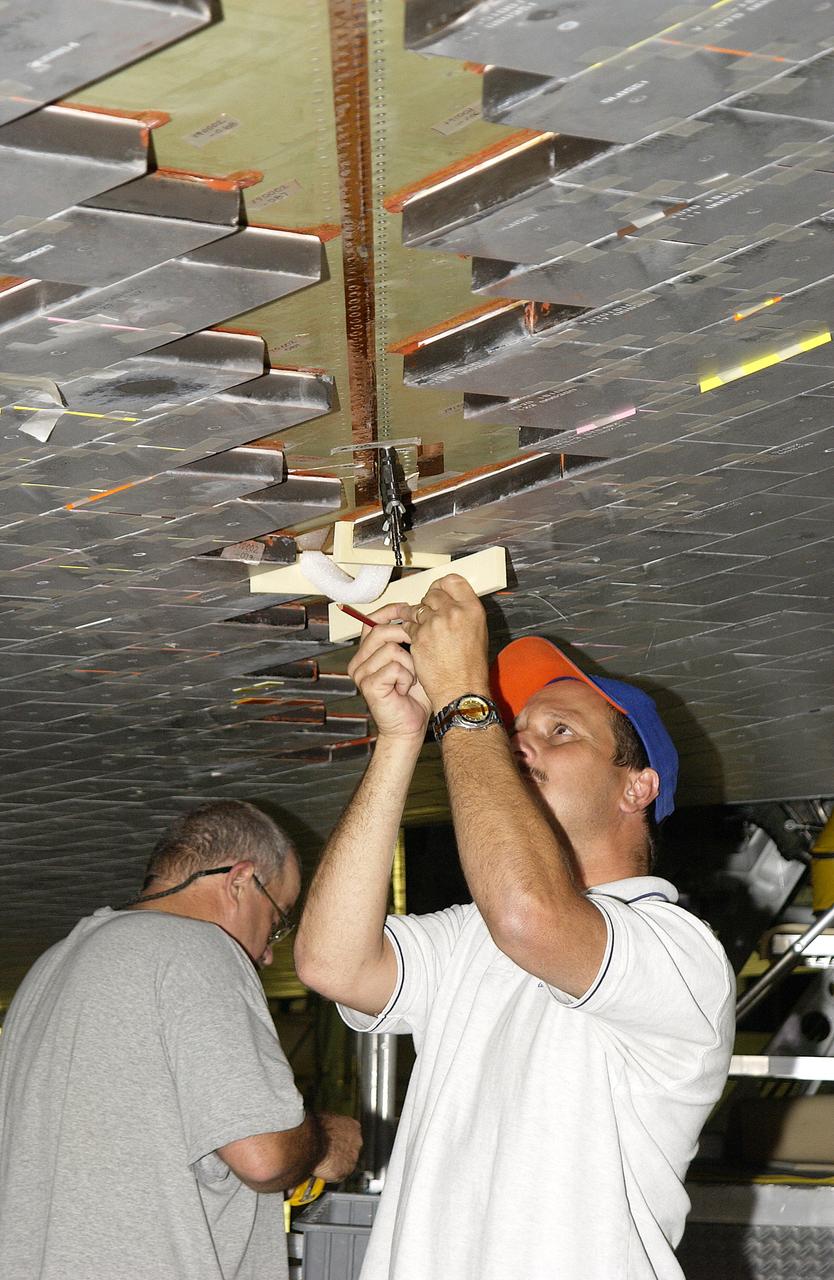
In the Orbiter Processing Facility, David Sanborn and Rick Cady, with United Space Alliance, check tiles on the underside of Endeavour. Tile check is part of routine maintenance and return to flight activities on the orbiter fleet.
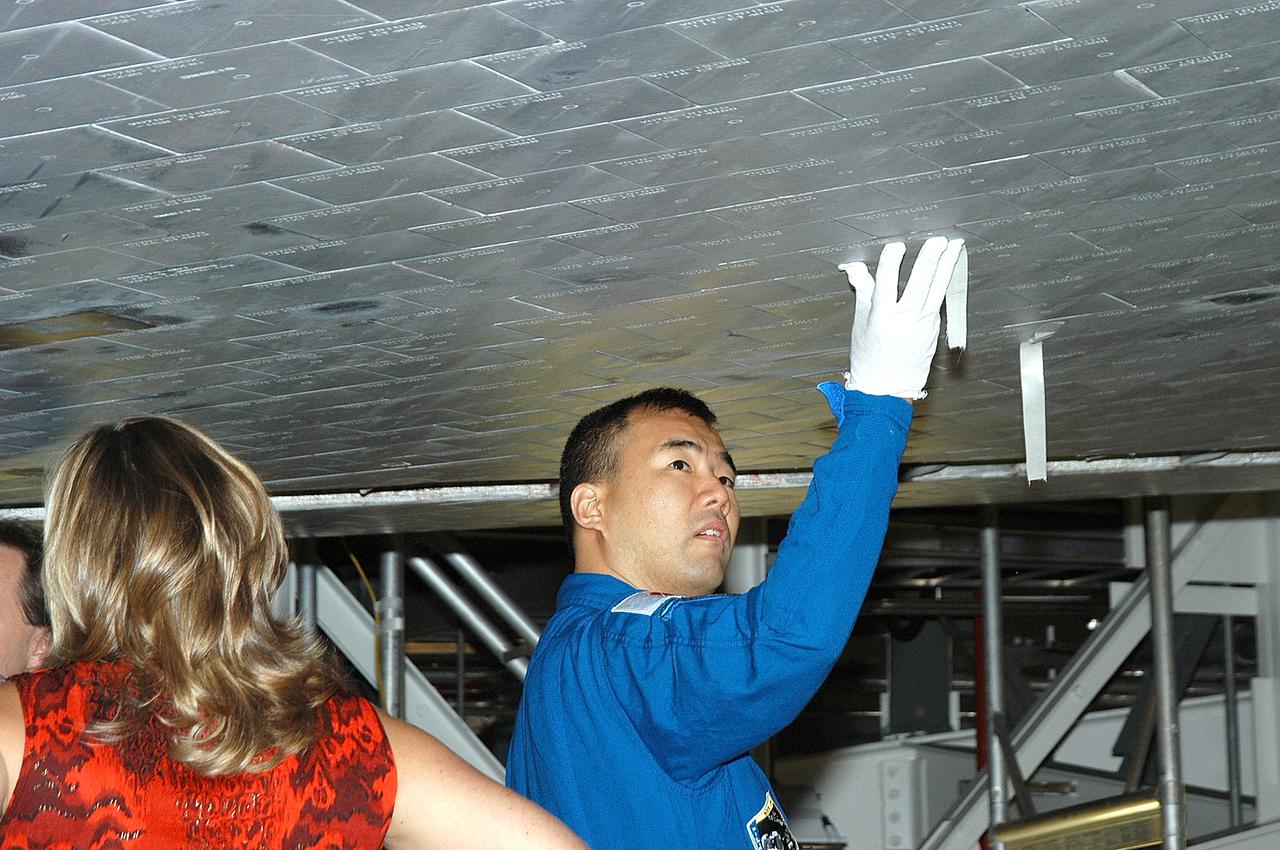
In the Orbiter Processing Facility, STS-114 Mission Specialist Soichi Noguchi takes a close look at the some of the tiles underneath Atlantis. Noguchi is with the Japan Aerospace Exploration Agency, JAXA. The STS-114 crew is at KSC to take part in crew equipment and orbiter familiarization.
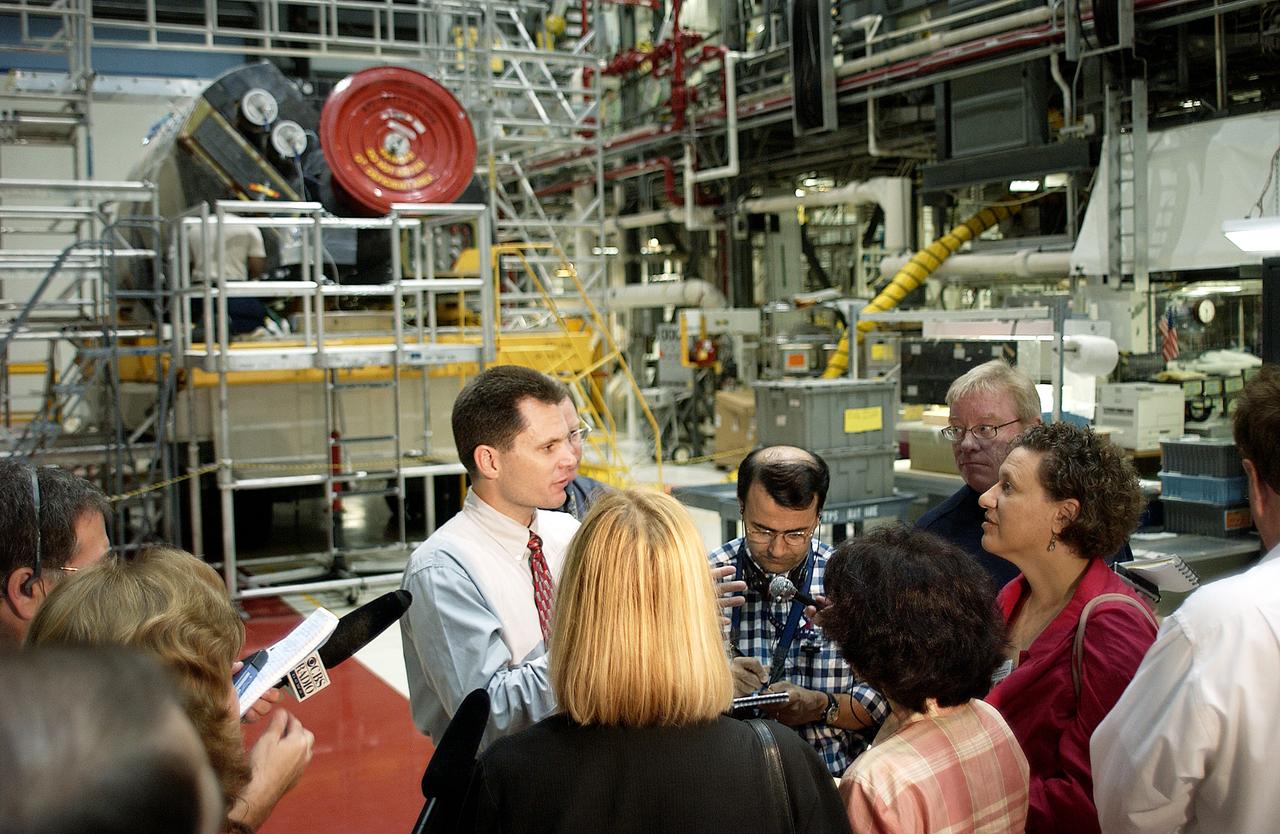
The media gather around NASA Vehicle Manager Scott Thurston (white shirt, center) who talks about some of the work being done on the orbiter Atlantis as it is being prepared for Return to Flight in the Orbiter Processing Facility. Both local and national reporters representing print and TV networks were able to see work in progress on Atlantis, including the reinstallation of the Reinforced Carbon-Carbon panels on the orbiter’s wing leading edge; wiring inspections; and checks of the engines in the Orbital Maneuvering System.
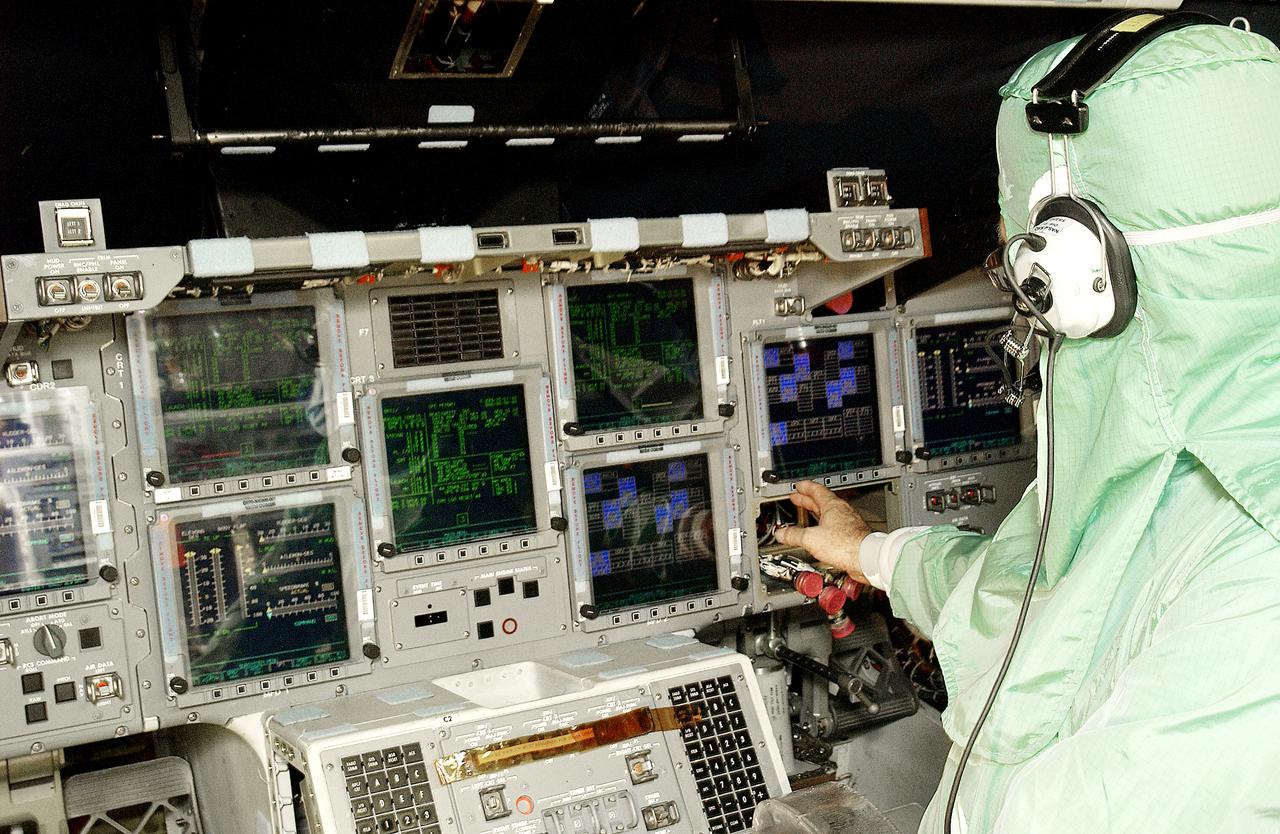
During power-up of the orbiter Discovery in the Orbiter Processing Facility, a technician adjusts a monitor on the console. Discovery has been undergoing Orbiter Major Modifications in the past year, ranging from wiring, control panels and black boxes to gaseous and fluid systems tubing and components. These systems were deserviced, disassembled, inspected, modified, reassembled, checked out and reserviced, as were most other systems onboard. The work includes the installation of the Multifunction Electronic Display Subsystem (MEDS) - a state-of-the-art “glass cockpit.”
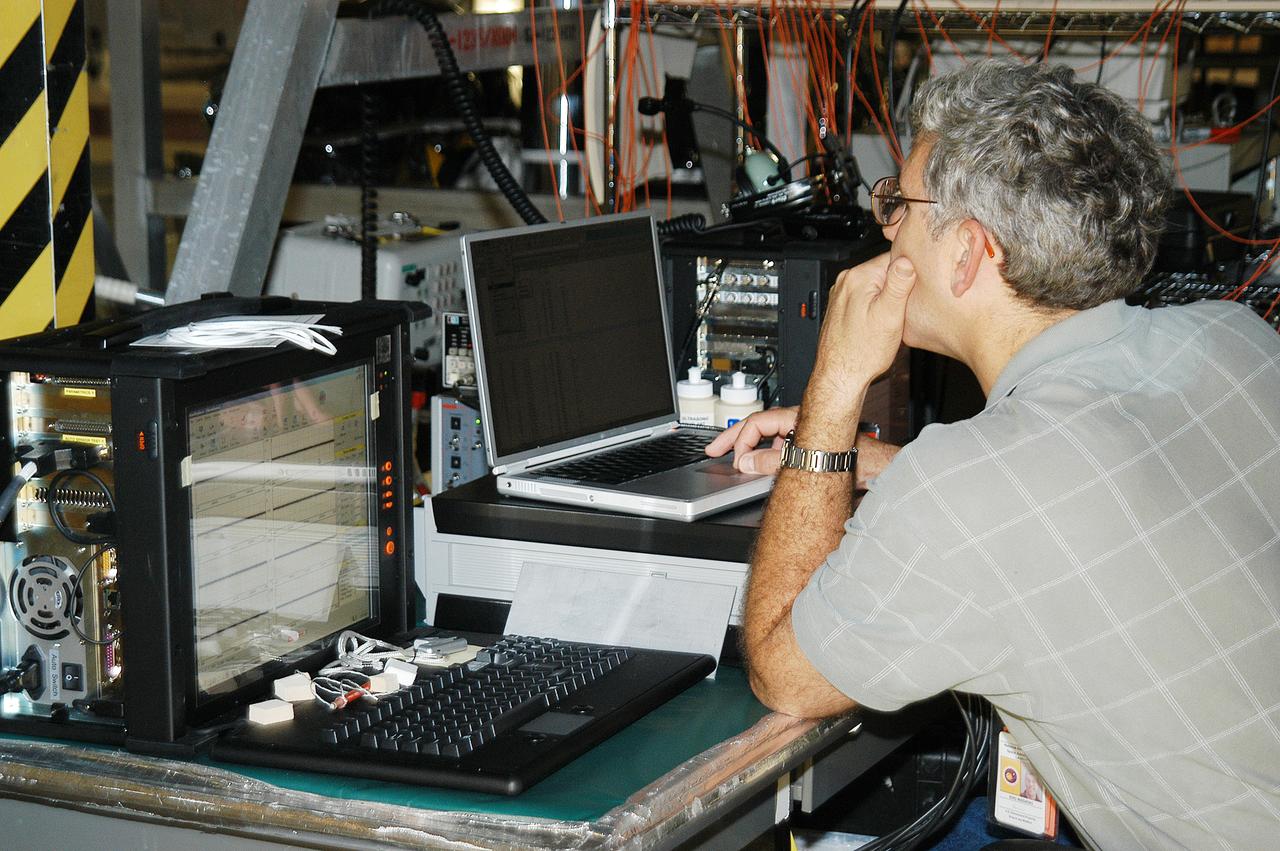
In the Orbiter Processing Facility, Eric Madaras, NASA-Langley Research Center, conducts impulse tests on the right wing leading edge (WLE) of Space Shuttle Endeavour. The tests monitor how sound impulses propagate through the WLE area. The data collected will be analyzed to explore the possibility of adding new instrumentation to the wing that could automatically detect debris or micrometeroid impacts on the Shuttle while in flight. The study is part of the initiative ongoing at KSC and around the agency to return the orbiter fleet to flight status.
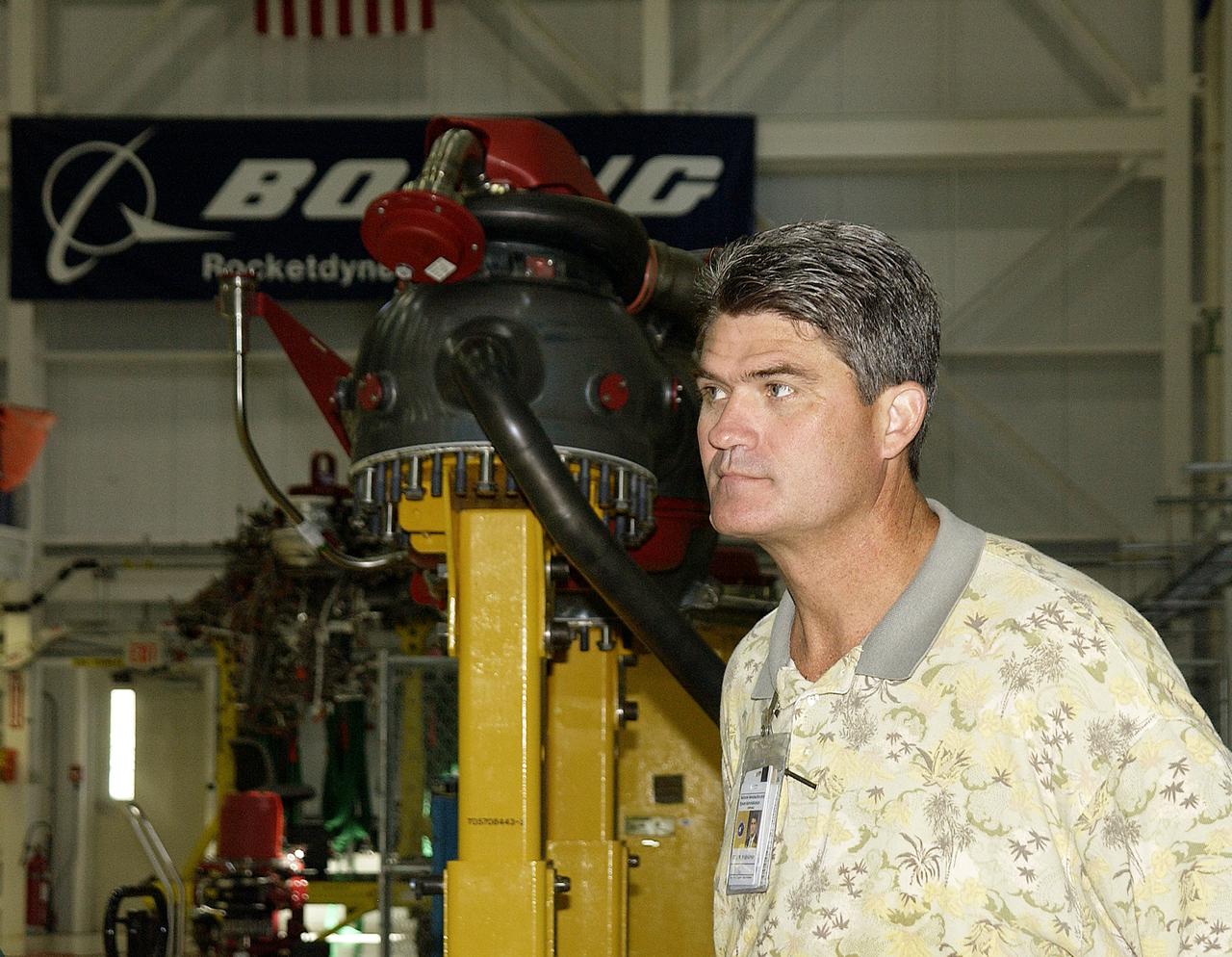
In the Orbiter Processing Facility, Shuttle Program Manager Bill Parsons, center, is briefed on Orbiter Major Modifications (OMM) that were recently completed on Discovery. The OMM work ranged from wiring, control panels and black boxes to gaseous and fluid systems tubing and components. These systems were deserviced, disassembled, inspected, modified, reassembled, checked out and reserviced, as were most other systems onboard. The work included the installation of the Multifunction Electronic Display Subsystem (MEDS) - a state-of-the-art “glass cockpit.”
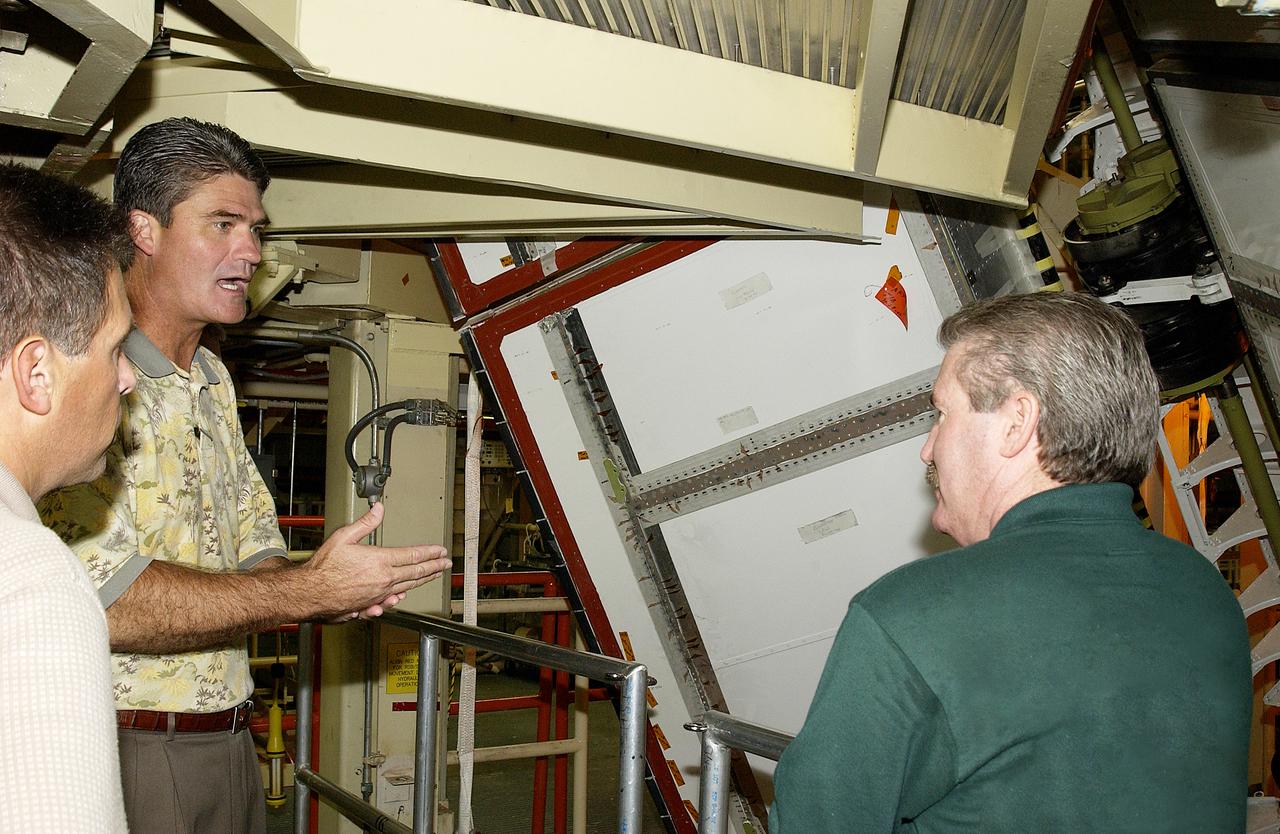
Mark McGee (right) shows the bead blasting completed on the rudder speed brake on orbiter Discovery to Shuttle Program Manager Bill Parsons (center). McGee is manager, Orbiter Processing Facility, with United Space Alliance. At left is Mark Nappi, deputy associate program manager, ground operations, USA. The work was part of Orbiter Major Modifications (OMM) that were recently completed on Discovery. The OMM work ranged from wiring, control panels and black boxes to gaseous and fluid systems tubing and components. These systems were deserviced, disassembled, inspected, modified, reassembled, checked out and reserviced, as were most other systems onboard. The work included the installation of the Multifunction Electronic Display Subsystem (MEDS) - a state-of-the-art “glass cockpit.”