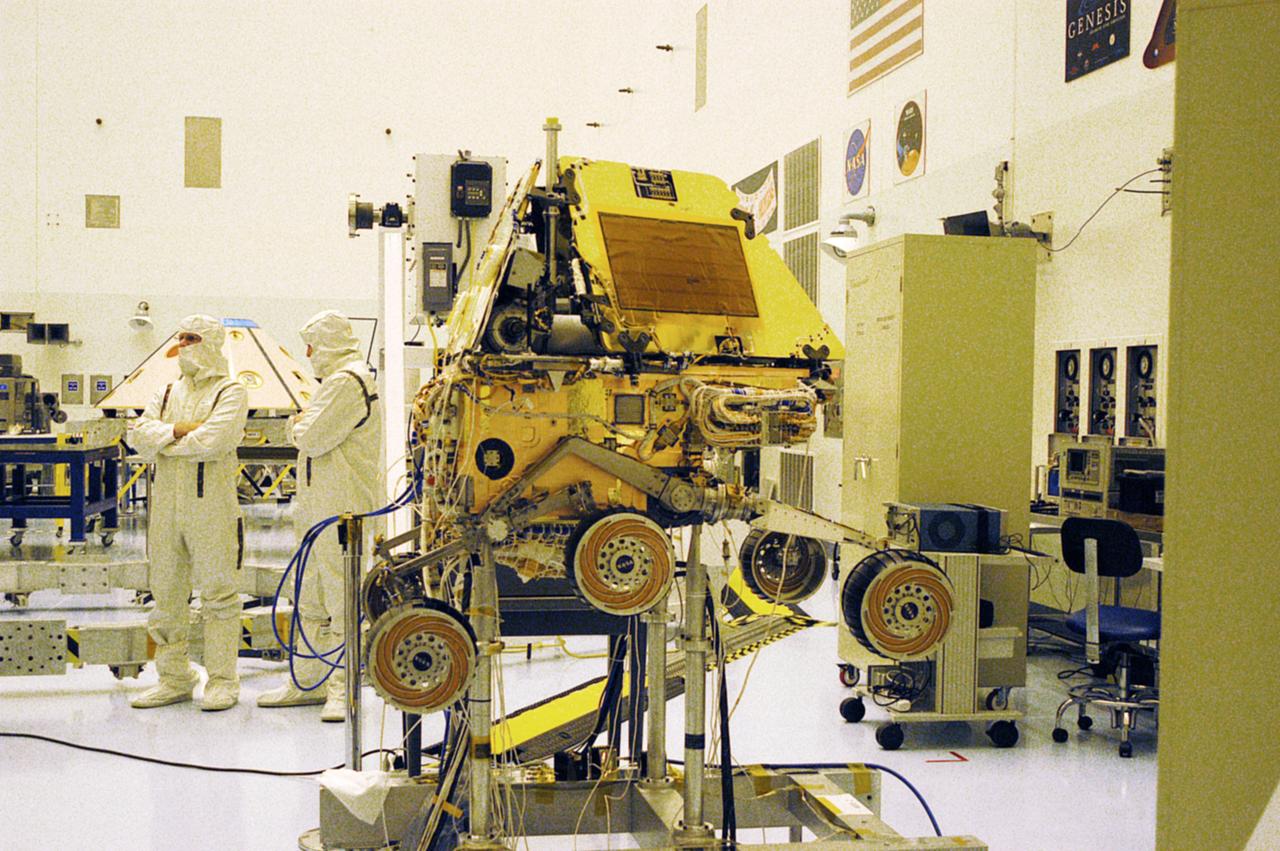
In the Payload Hazardous Servicing Facility resides one of the Mars Exploration Rovers, MER-2. MER-1 and MER-2, their aeroshells and landers will undergo a full mission simulation before being integrated. After spin balance testing, each spacecraft will be mated to a solid propellant upper stage booster that will propel the spacecraft out of Earth orbit. Approximately 10 days before launch they will be transported to the launch pad for mating with their respective Boeing Delta II rockets. The rovers will serve as robotic geologists to seek answers about the evolution of Mars, particularly for a history of water. The rovers are identical to each other, but will land at different regions of Mars. Launch of the first rover is scheduled for May 30 from Cape Canaveral Air Force Station. The second will follow June 25.
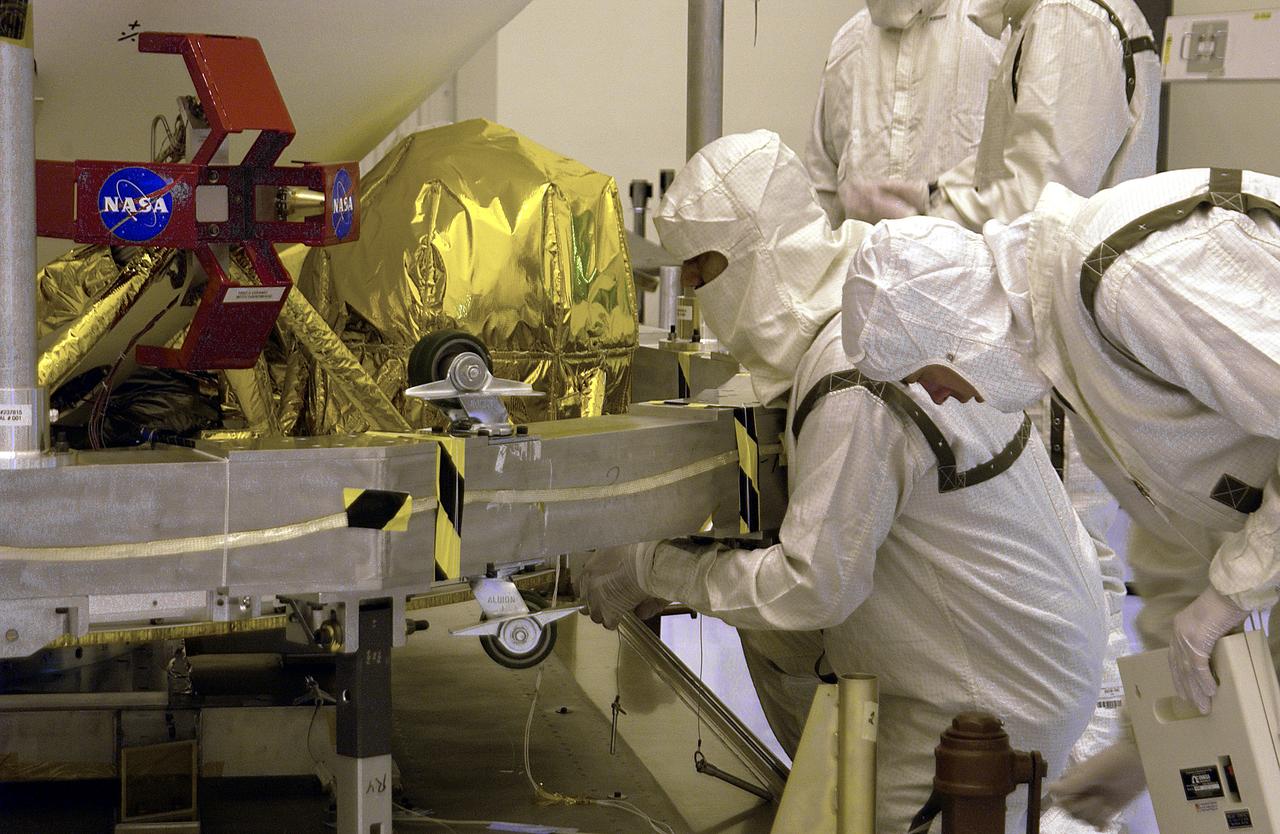
In the Payload Hazardous Servicing Facility, workers prepare the Mars Exploration Rover (MER) aeroshell for transfer to a rotation stand. Set to launch in 2003, the MER Mission will consist of two identical rovers designed to cover roughly 110 yards (100 meters) each Martian day. Each rover will carry five scientific instruments that will allow it to search for evidence of liquid water that may have been present in the planet's past. The rovers will be identical to each other, but will land at different regions of Mars. The first rover has a launch window opening May 30, and the second rover a window opening June 25, 2003.
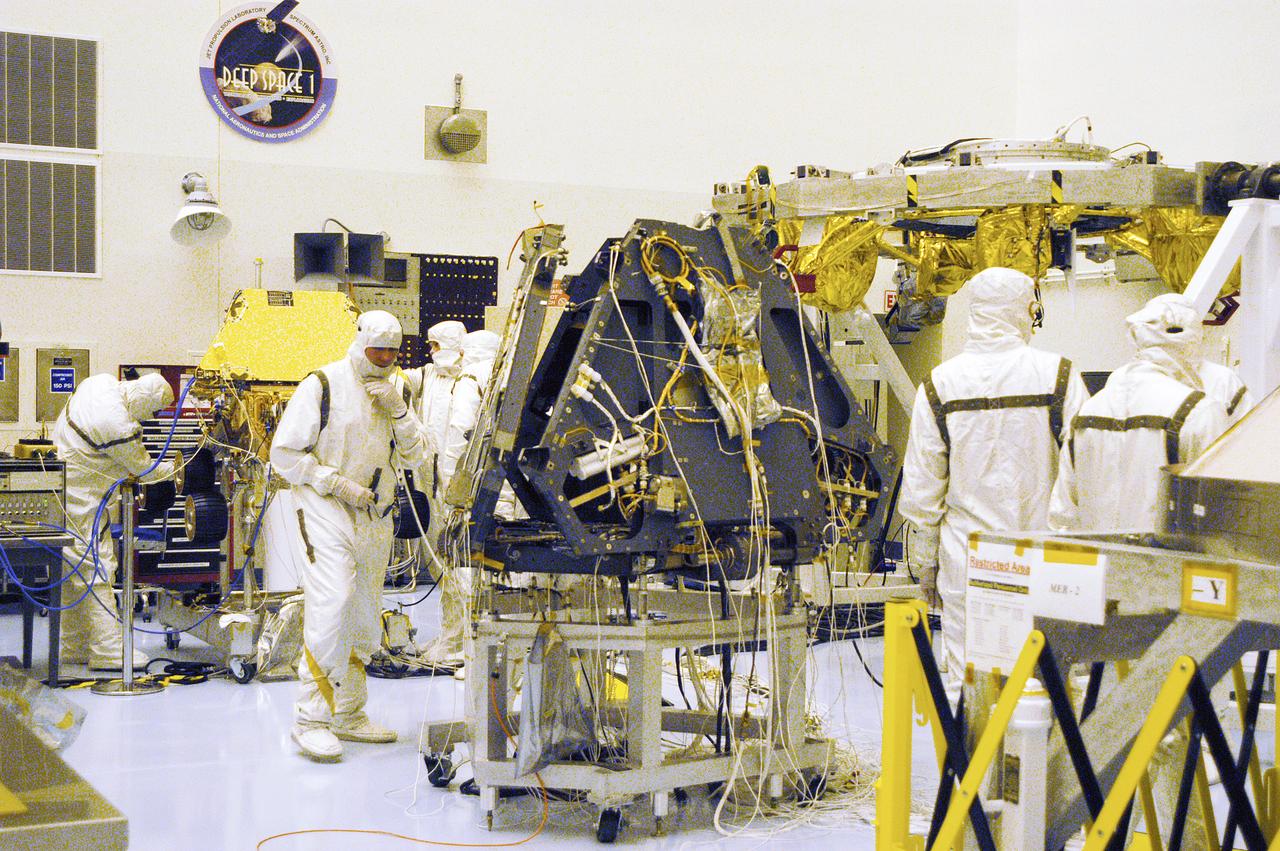
Technicians in the Payload Hazardous Servicing Facility work on components of the Mars Exploration Rovers. In the center is a lander. MER-1 and MER-2, their aeroshells and landers will undergo a full mission simulation before being integrated. After spin balance testing, each spacecraft will be mated to a solid propellant upper stage booster that will propel the spacecraft out of Earth orbit. Approximately 10 days before launch they will be transported to the launch pad for mating with their respective Boeing Delta II rockets. The rovers will serve as robotic geologists to seek answers about the evolution of Mars, particularly for a history of water. The rovers are identical to each other, but will land at different regions of Mars. Launch of the first rover is scheduled for May 30 from Cape Canaveral Air Force Station. The second will follow June 25.

Components of the two Mars Exploration Rovers (MER) reside in the Payload Hazardous Servicing Facility. At right MER-2. At left is a lander. In the background is one of the aeroshells. MER-1 and MER-2, their aeroshells and landers will undergo a full mission simulation before being integrated. After spin balance testing, each spacecraft will be mated to a solid propellant upper stage booster that will propel the spacecraft out of Earth orbit. Approximately 10 days before launch they will be transported to the launch pad for mating with their respective Boeing Delta II rockets. The rovers will serve as robotic geologists to seek answers about the evolution of Mars, particularly for a history of water. The rovers are identical to each other, but will land at different regions of Mars. Launch of the first rover is scheduled for May 30 from Cape Canaveral Air Force Station. The second will follow June 25.
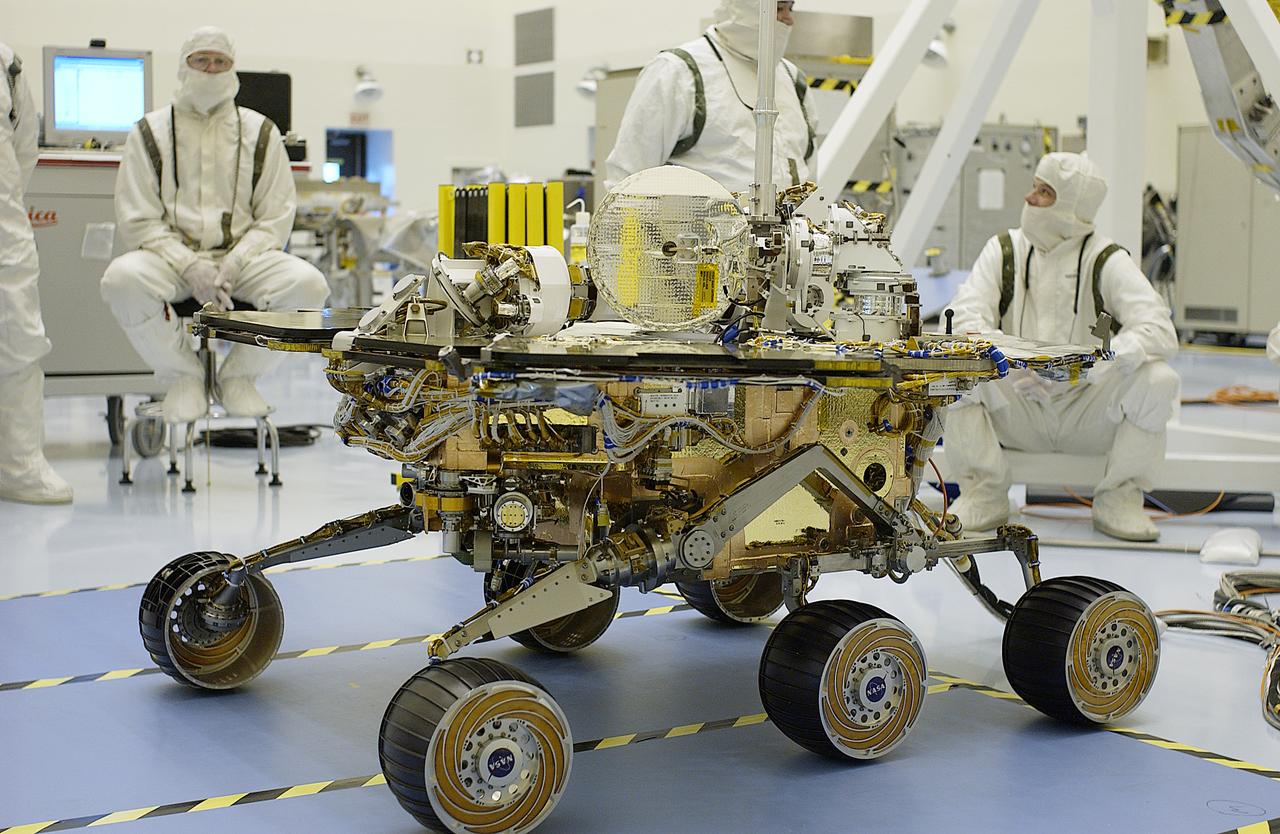
The solar arrays on the Mars Exploration Rover-2 (MER-2) are fully opened during a test in the Payload Hazardous Servicing Facility. Set to launch in Spring 2003, the MER Mission will consist of two identical rovers designed to cover roughly 110 yards each Martian day. Each rover will carry five scientific instruments that will allow it to search for evidence of liquid water that may have been present in the planet's past. The rovers will be identical to each other, but will land at different regions of Mars. The first rover has a launch window opening May 30, and the second rover a window opening June 25, 2003.
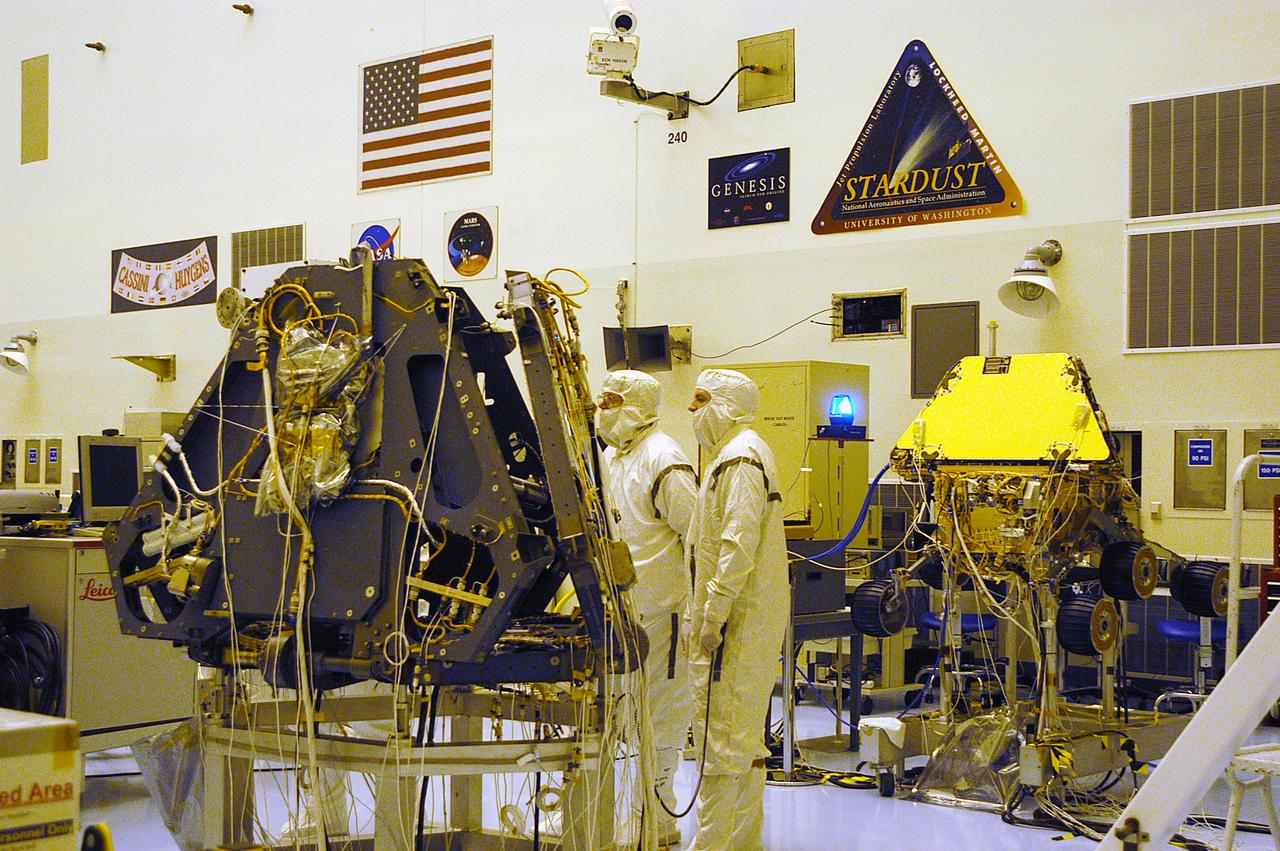
Technicians in the Payload Hazardous Servicing Facility look over the Mars Exploration Rover -2. MER-1 and MER-2, their aeroshells and landers will undergo a full mission simulation before being integrated. After spin balance testing, each spacecraft will be mated to a solid propellant upper stage booster that will propel the spacecraft out of Earth orbit. Approximately 10 days before launch they will be transported to the launch pad for mating with their respective Boeing Delta II rockets. The rovers will serve as robotic geologists to seek answers about the evolution of Mars, particularly for a history of water. The rovers are identical to each other, but will land at different regions of Mars. Launch of the first rover is scheduled for May 30 from Cape Canaveral Air Force Station. The second will follow June 25.