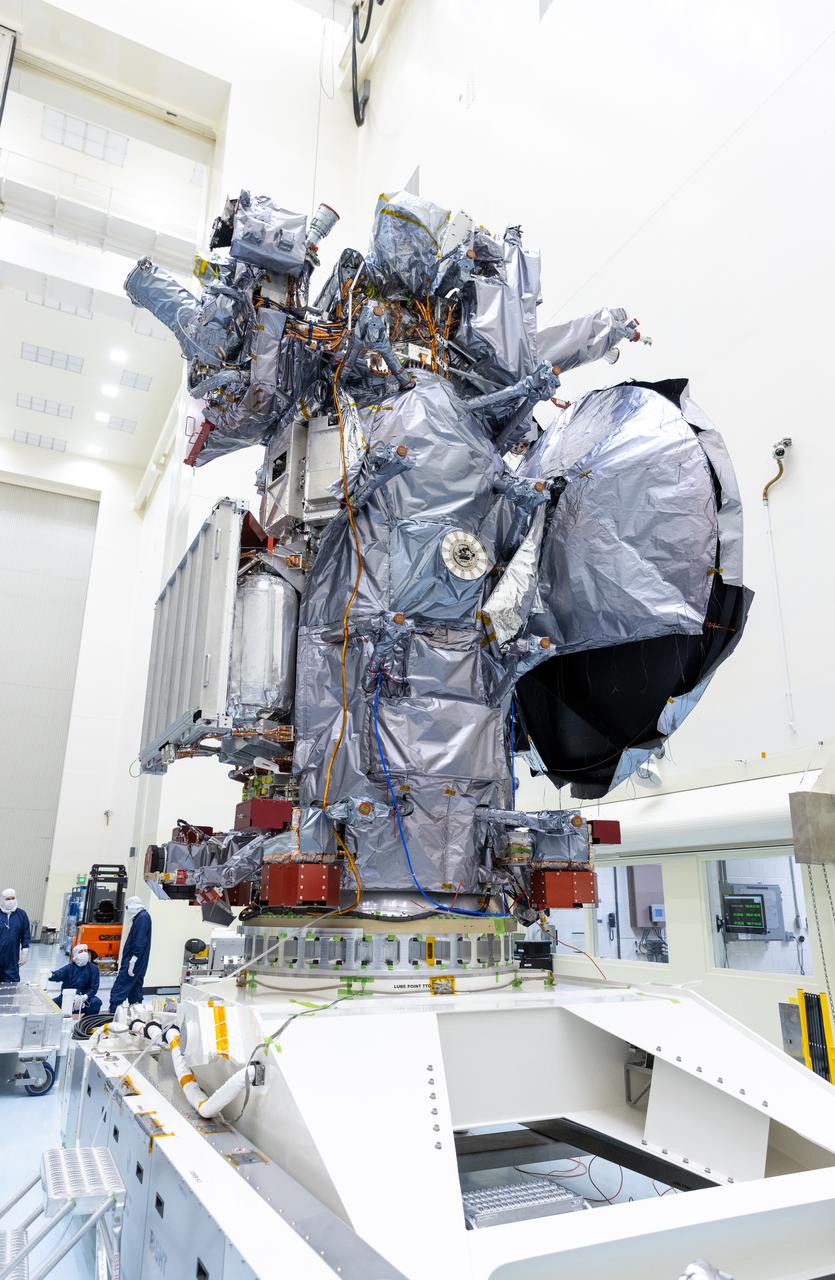
Technicians prepare to install the nearly 10 feet (3 meters) wide dish-shaped high-gain antenna to NASA’s Europa Clipper, a spacecraft to study Jupiter’s icy moon, at the agency’s Payload Hazardous Servicing Facility at Kennedy Space Center in Florida on Tuesday, June 18, 2024. The spacecraft will perform a series of flybys of the Jupiter moon Europa to gather data on its atmosphere, icy crust, and the ocean underneath, and the high-gain antenna will send the research data to scientists on Earth to determine if the moon can support habitable condition. The Europa Clipper spacecraft is scheduled to launch atop a SpaceX Falcon Heavy rocket from Kennedy’s Launch Complex 39A no earlier than October 2024.
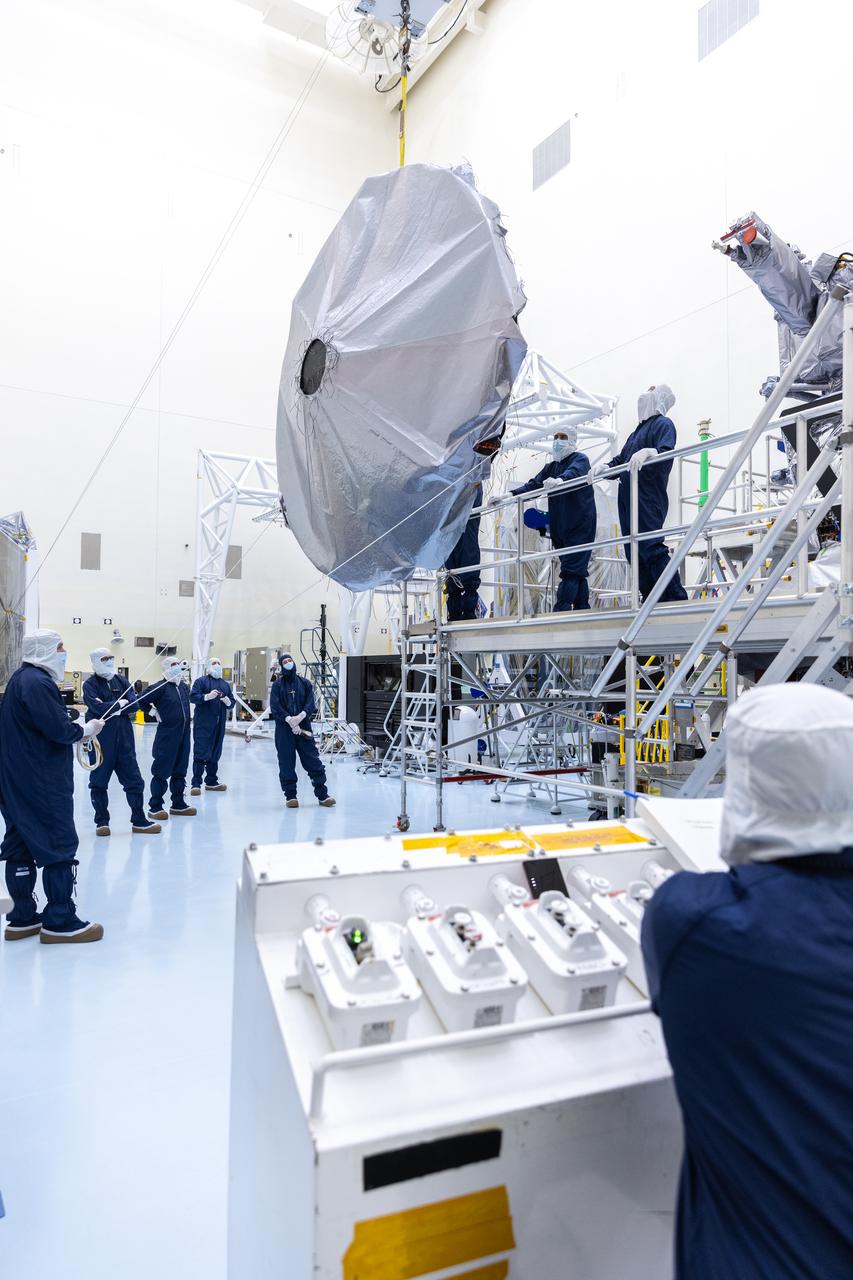
Technicians prepare to install the nearly 10 feet (3 meters) wide dish-shaped high-gain antenna to NASA’s Europa Clipper, a spacecraft to study Jupiter’s icy moon, at the agency’s Payload Hazardous Servicing Facility at Kennedy Space Center in Florida on Monday, June 17, 2024. The spacecraft will perform a series of flybys of the Jupiter moon Europa to gather data on its atmosphere, icy crust, and the ocean underneath, and the high-gain antenna will send the research data to scientists on Earth to determine if the moon can support habitable condition. The Europa Clipper spacecraft is scheduled to launch atop a SpaceX Falcon Heavy rocket from Kennedy’s Launch Complex 39A no earlier than October 2024.
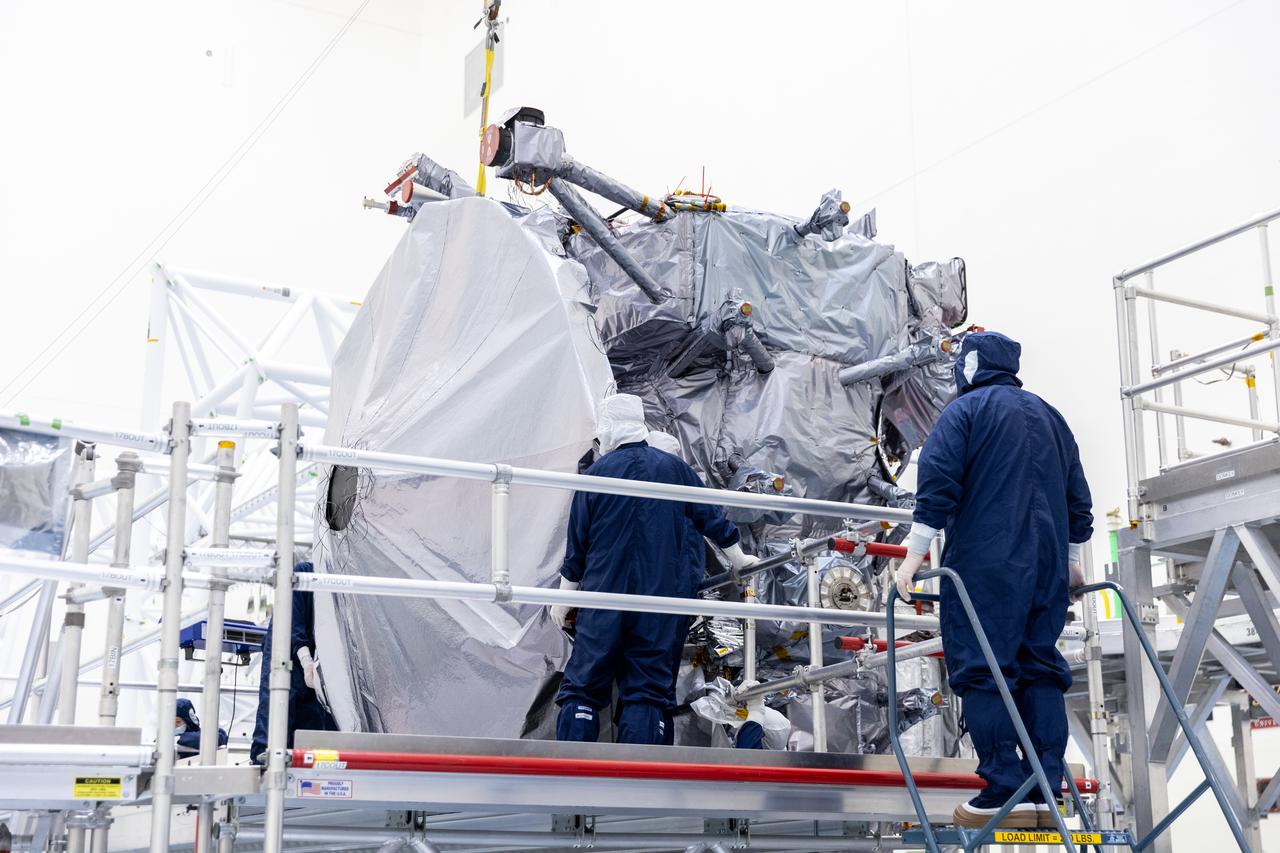
Technicians prepare to install the nearly 10 feet (3 meters) wide dish-shaped high-gain antenna to NASA’s Europa Clipper, a spacecraft to study Jupiter’s icy moon, at the agency’s Payload Hazardous Servicing Facility at Kennedy Space Center in Florida on Monday, June 17, 2024. The spacecraft will perform a series of flybys of the Jupiter moon Europa to gather data on its atmosphere, icy crust, and the ocean underneath, and the high-gain antenna will send the research data to scientists on Earth to determine if the moon can support habitable condition. The Europa Clipper spacecraft is scheduled to launch atop a SpaceX Falcon Heavy rocket from Kennedy’s Launch Complex 39A no earlier than October 2024.
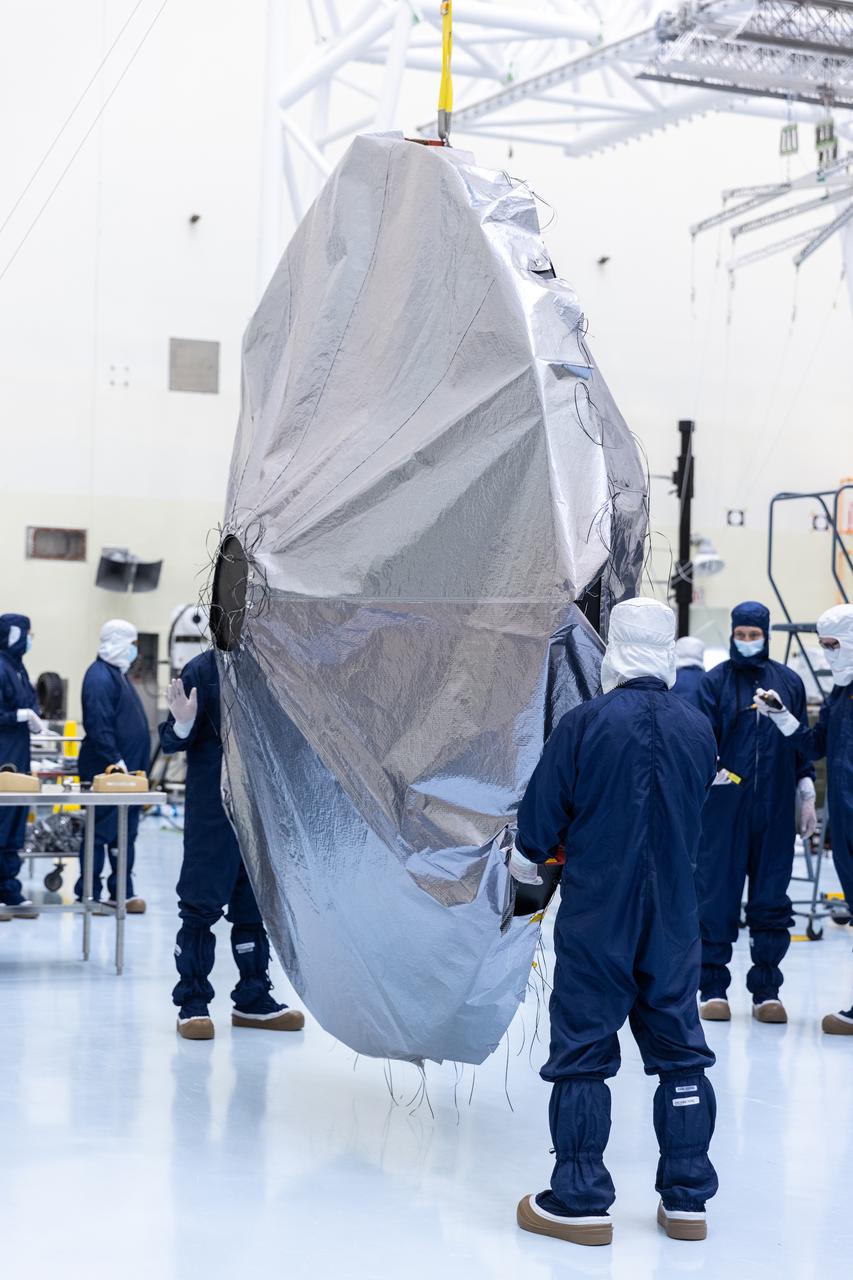
Technicians prepare to install the nearly 10 feet (3 meters) wide dish-shaped high-gain antenna to NASA’s Europa Clipper, a spacecraft to study Jupiter’s icy moon, at the agency’s Payload Hazardous Servicing Facility at Kennedy Space Center in Florida on Monday, June 17, 2024. The spacecraft will perform a series of flybys of the Jupiter moon Europa to gather data on its atmosphere, icy crust, and the ocean underneath, and the high-gain antenna will send the research data to scientists on Earth to determine if the moon can support habitable condition. The Europa Clipper spacecraft is scheduled to launch atop a SpaceX Falcon Heavy rocket from Kennedy’s Launch Complex 39A no earlier than October 2024.
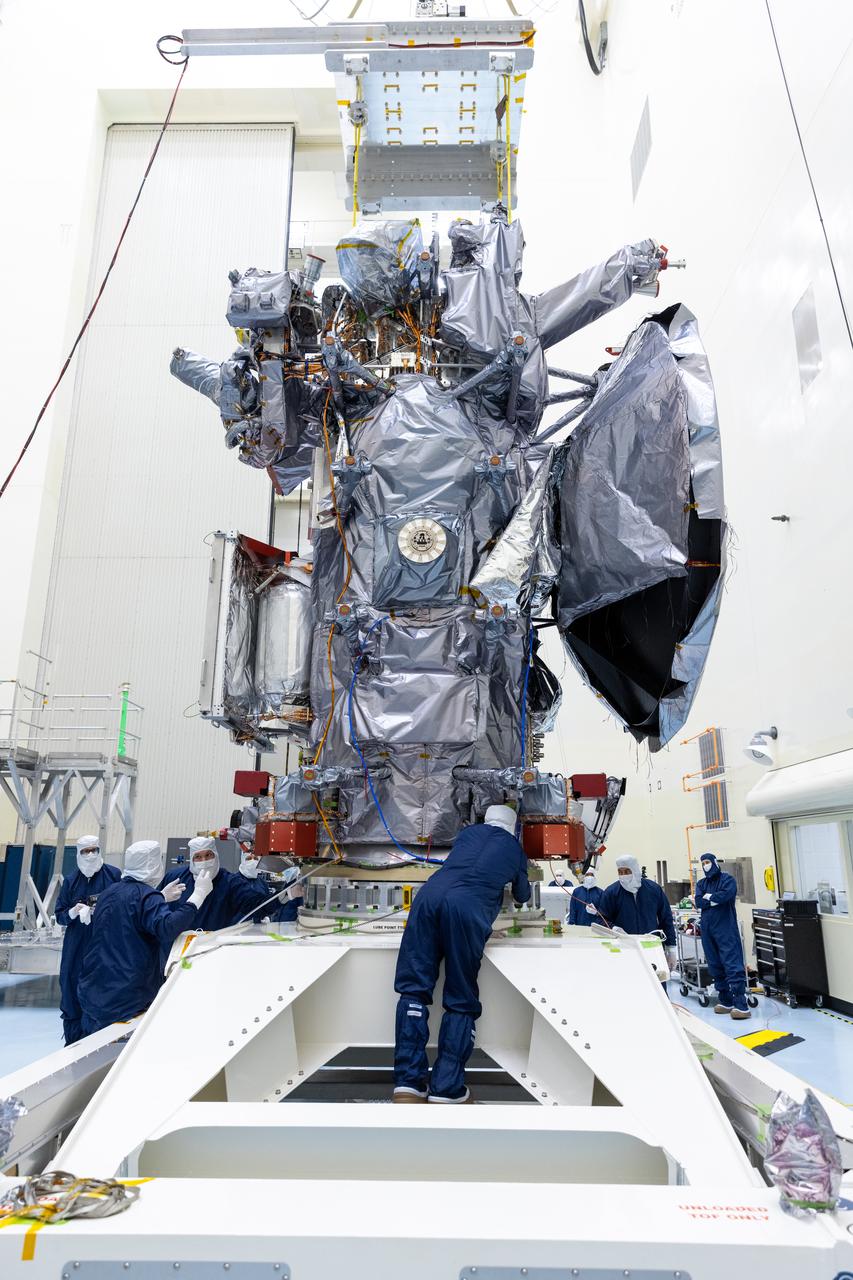
Technicians prepare to install the nearly 10 feet (3 meters) wide dish-shaped high-gain antenna to NASA’s Europa Clipper, a spacecraft to study Jupiter’s icy moon, at the agency’s Payload Hazardous Servicing Facility at Kennedy Space Center in Florida on Tuesday, June 18, 2024. The spacecraft will perform a series of flybys of the Jupiter moon Europa to gather data on its atmosphere, icy crust, and the ocean underneath, and the high-gain antenna will send the research data to scientists on Earth to determine if the moon can support habitable condition. The Europa Clipper spacecraft is scheduled to launch atop a SpaceX Falcon Heavy rocket from Kennedy’s Launch Complex 39A no earlier than October 2024.
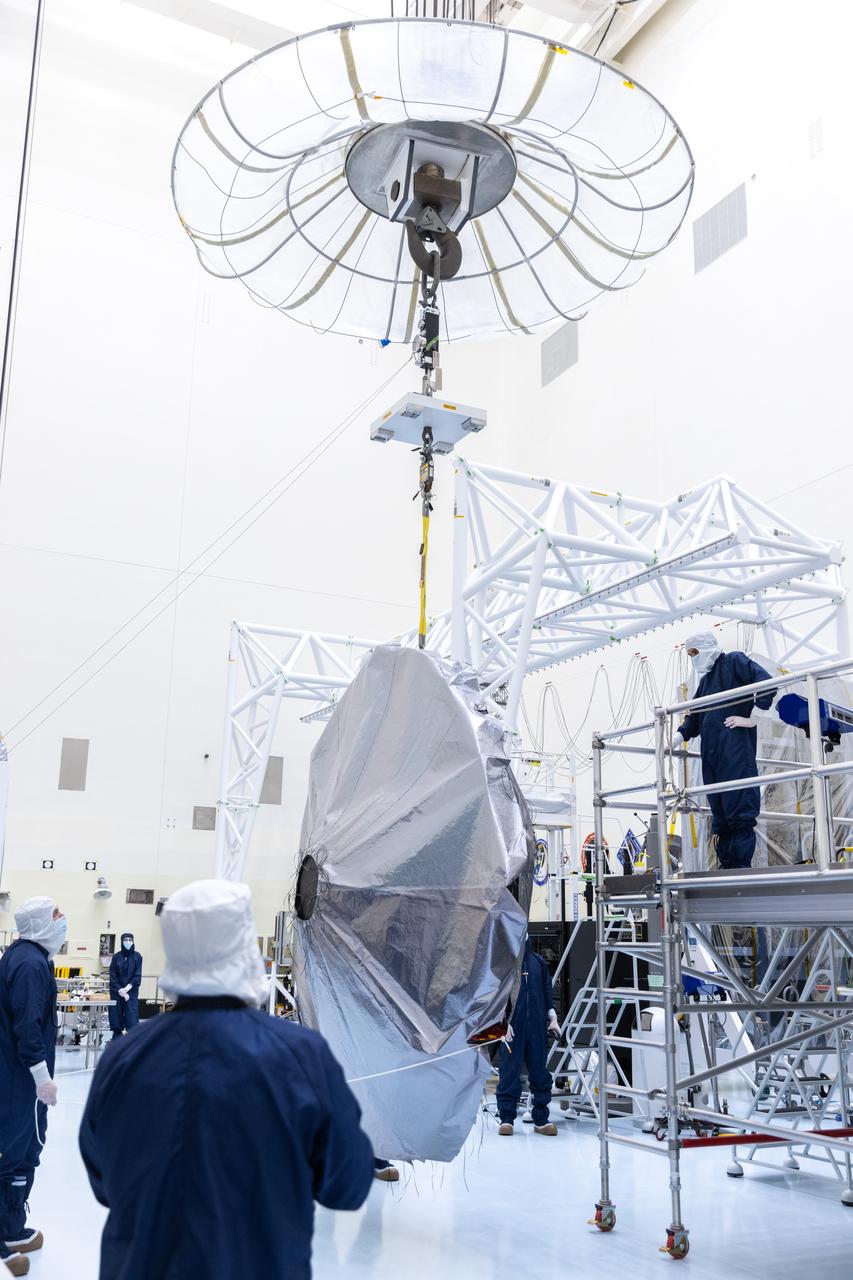
Technicians prepare to install the nearly 10 feet (3 meters) wide dish-shaped high-gain antenna to NASA’s Europa Clipper, a spacecraft to study Jupiter’s icy moon, at the agency’s Payload Hazardous Servicing Facility at Kennedy Space Center in Florida on Monday, June 17, 2024. The spacecraft will perform a series of flybys of the Jupiter moon Europa to gather data on its atmosphere, icy crust, and the ocean underneath, and the high-gain antenna will send the research data to scientists on Earth to determine if the moon can support habitable condition. The Europa Clipper spacecraft is scheduled to launch atop a SpaceX Falcon Heavy rocket from Kennedy’s Launch Complex 39A no earlier than October 2024.
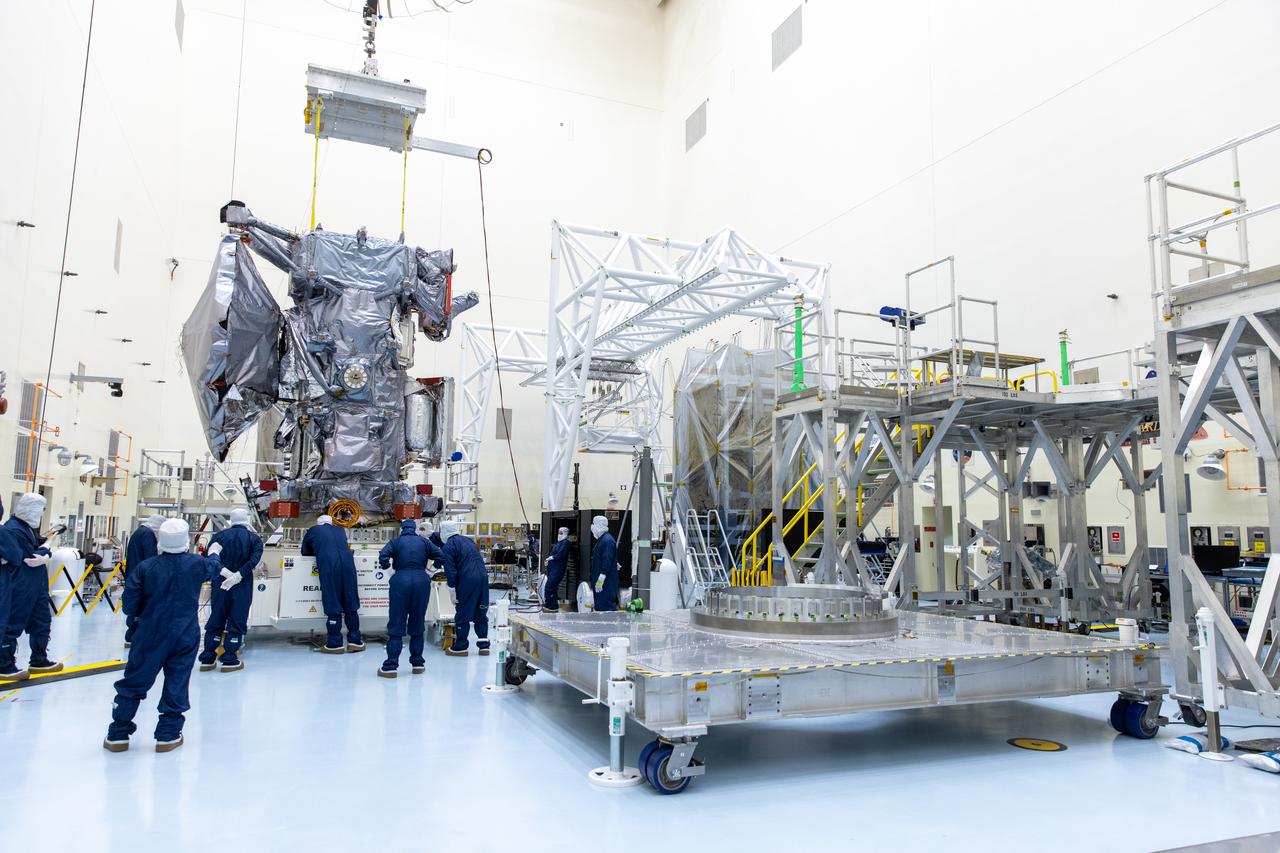
Technicians prepare to install the nearly 10 feet (3 meters) wide dish-shaped high-gain antenna to NASA’s Europa Clipper, a spacecraft to study Jupiter’s icy moon, at the agency’s Payload Hazardous Servicing Facility at Kennedy Space Center in Florida on Tuesday, June 18, 2024. The spacecraft will perform a series of flybys of the Jupiter moon Europa to gather data on its atmosphere, icy crust, and the ocean underneath, and the high-gain antenna will send the research data to scientists on Earth to determine if the moon can support habitable condition. The Europa Clipper spacecraft is scheduled to launch atop a SpaceX Falcon Heavy rocket from Kennedy’s Launch Complex 39A no earlier than October 2024.
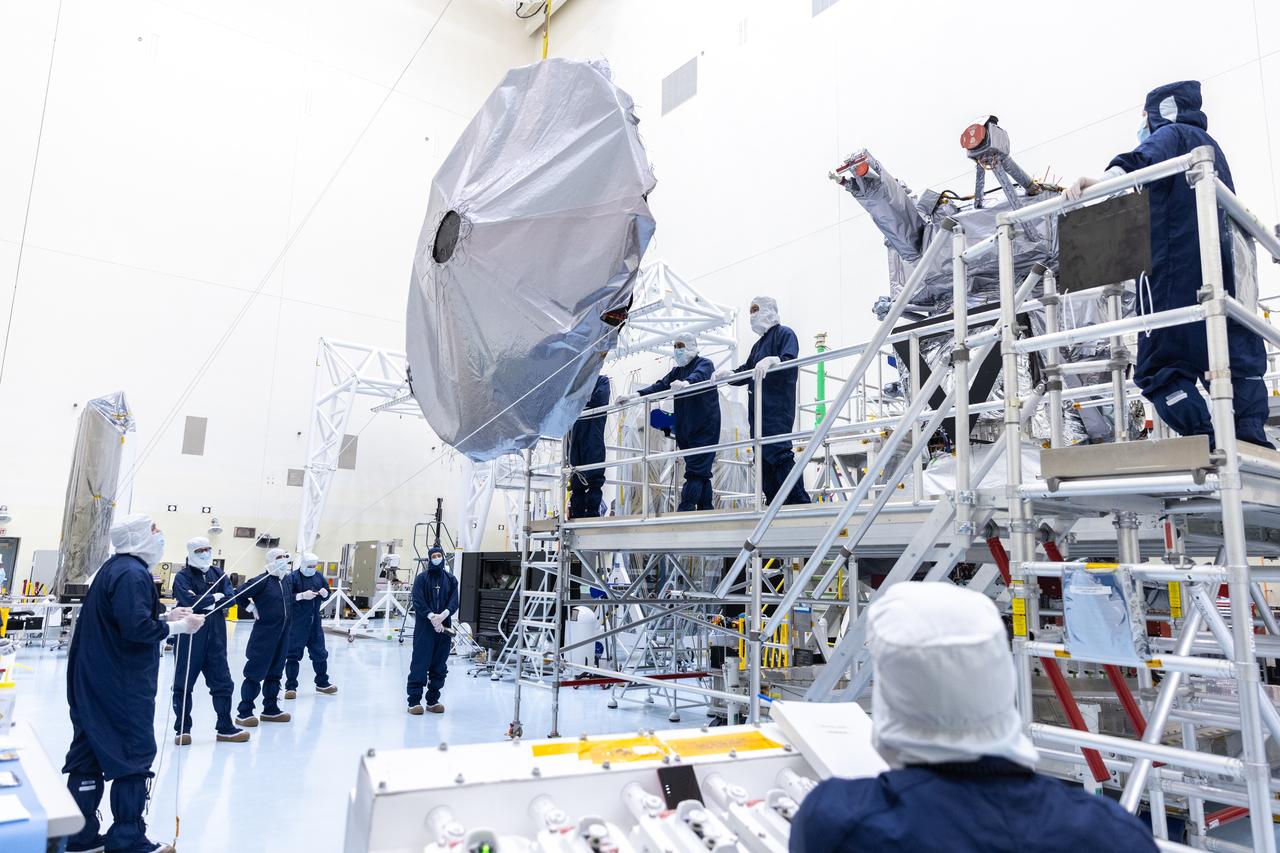
Technicians prepare to install the nearly 10 feet (3 meters) wide dish-shaped high-gain antenna to NASA’s Europa Clipper, a spacecraft to study Jupiter’s icy moon, at the agency’s Payload Hazardous Servicing Facility at Kennedy Space Center in Florida on Monday, June 17, 2024. The spacecraft will perform a series of flybys of the Jupiter moon Europa to gather data on its atmosphere, icy crust, and the ocean underneath, and the high-gain antenna will send the research data to scientists on Earth to determine if the moon can support habitable condition. The Europa Clipper spacecraft is scheduled to launch atop a SpaceX Falcon Heavy rocket from Kennedy’s Launch Complex 39A no earlier than October 2024.
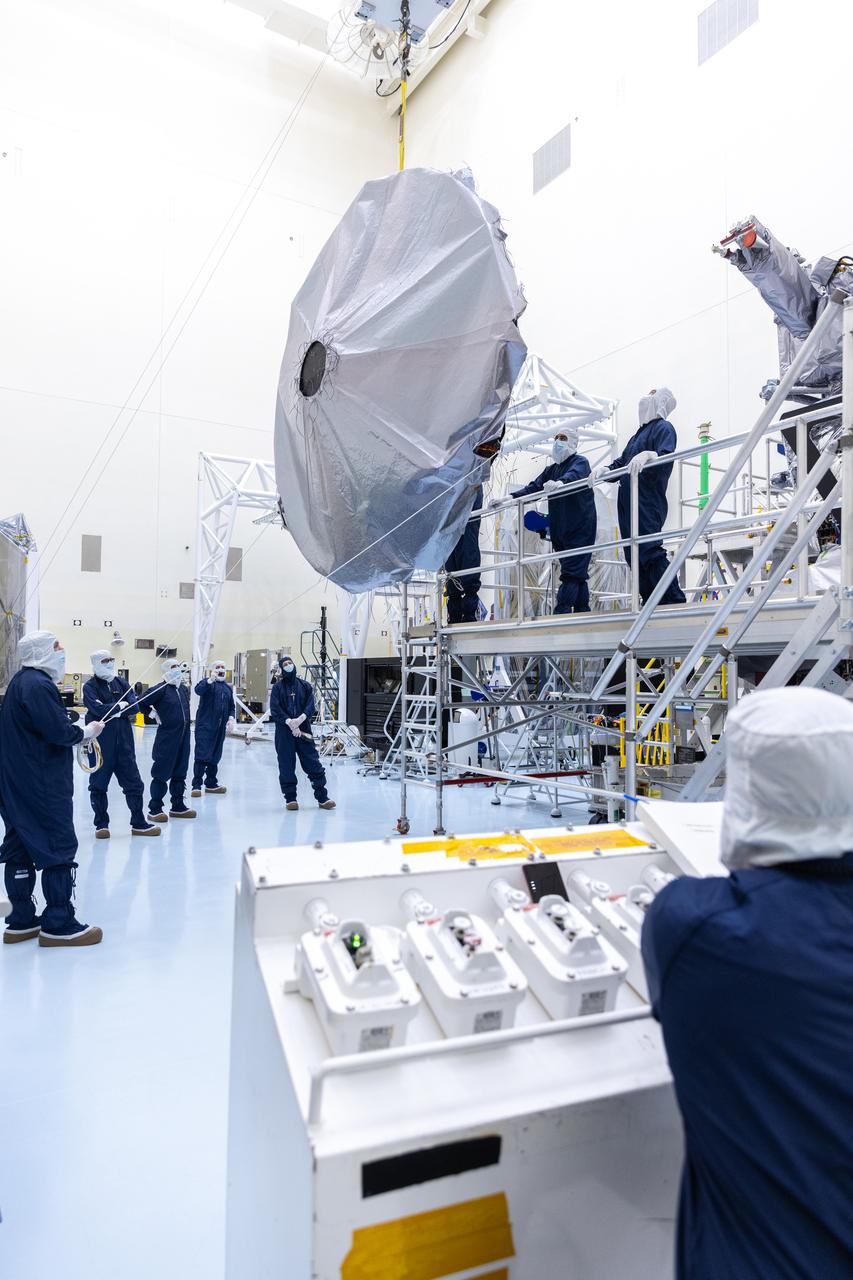
Technicians prepare to install the nearly 10 feet (3 meters) wide dish-shaped high-gain antenna to NASA’s Europa Clipper, a spacecraft to study Jupiter’s icy moon, at the agency’s Payload Hazardous Servicing Facility at Kennedy Space Center in Florida on Monday, June 17, 2024. The spacecraft will perform a series of flybys of the Jupiter moon Europa to gather data on its atmosphere, icy crust, and the ocean underneath, and the high-gain antenna will send the research data to scientists on Earth to determine if the moon can support habitable condition. The Europa Clipper spacecraft is scheduled to launch atop a SpaceX Falcon Heavy rocket from Kennedy’s Launch Complex 39A no earlier than October 2024.
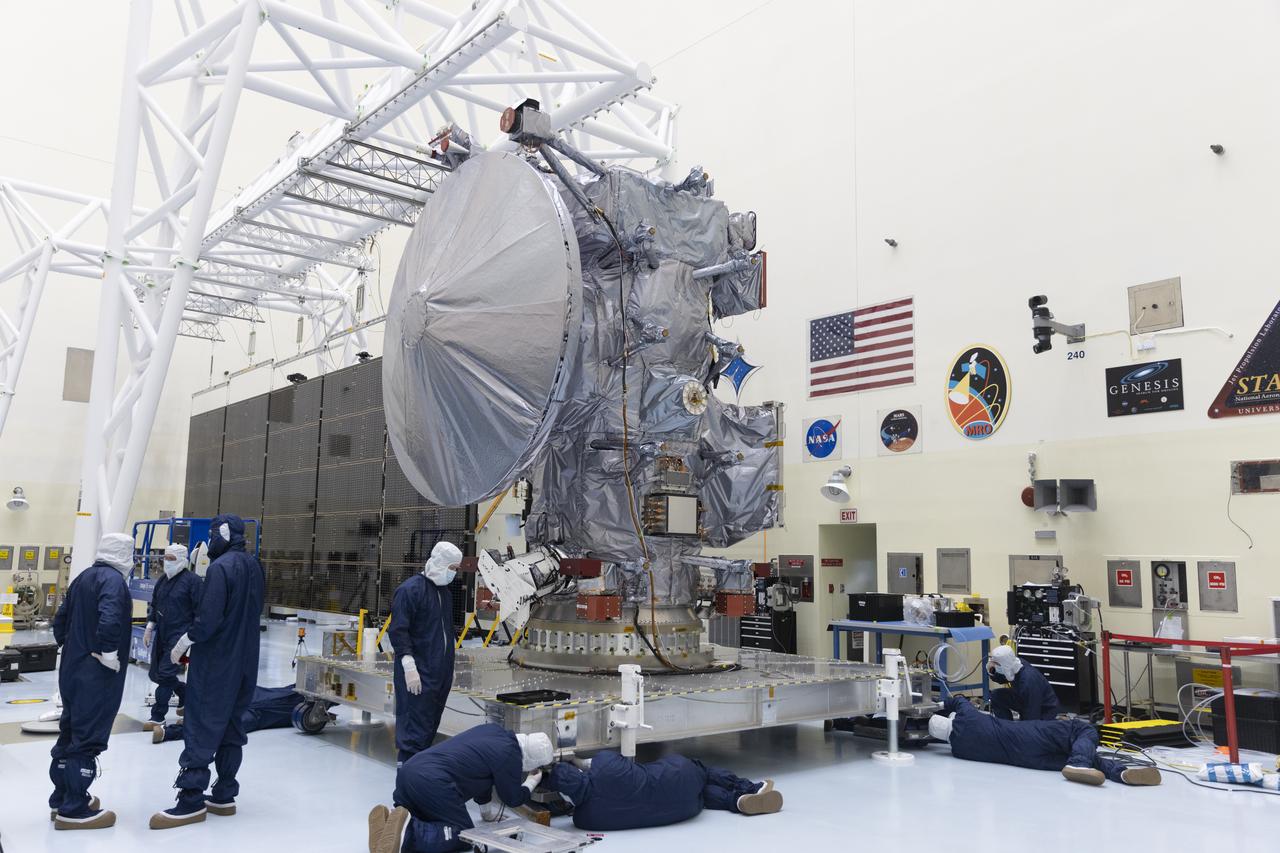
Technicians move NASA’s Europa Clipper spacecraft inside the Payload Hazardous Servicing Facility to accommodate installation of its five-panel solar array at the agency’s Kennedy Space Center in Florida on Thursday, Aug. 1, 2024. After moving the spacecraft, the team had to precisely align the spacecraft in preparation for the installation. The huge arrays – spanning more than 100 feet when fully deployed, or about the length of a basketball court – will collect sunlight to power the spacecraft as it flies multiple times around Jupiter’s icy moon, Europa, conducting science investigations to determine its potential to support life.
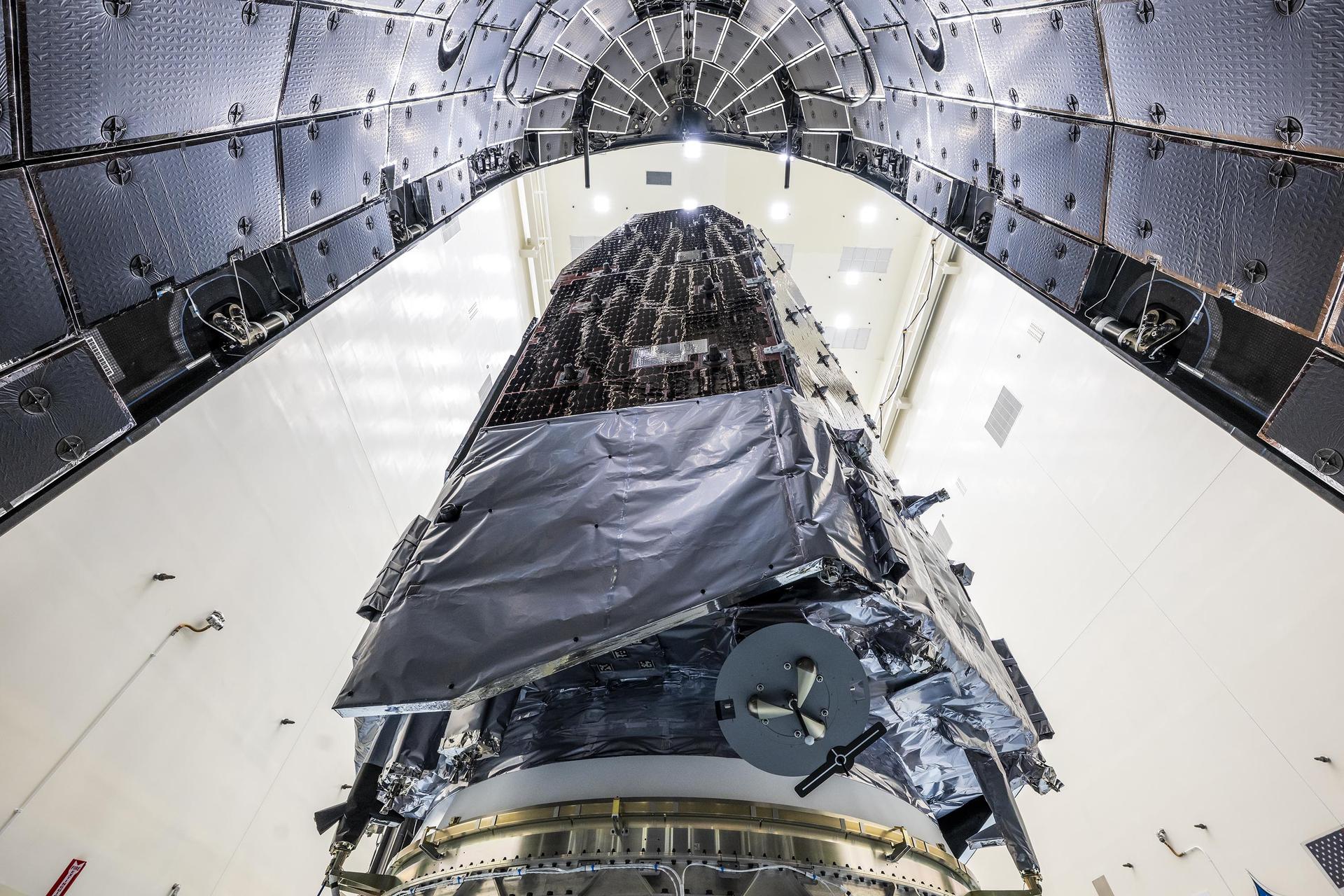
Teams inside the Payload Hazardous Servicing Facility at NASA’s Kennedy Space Center in Florida encapsulate the agency’s Nancy Grace Roman Space Telescope within the payload fairing on Friday, Aug. 21, 2026, ahead of mating to a SpaceX Falcon Heavy rocket. Encapsulation shields the spacecraft during rollout, ascent, and the early phases of flight. Roman will investigate dark energy and dark matter, conduct a statistical census of planetary systems, and enable a broad range of additional astrophysics research. Liftoff from Launch Complex 39A at Kennedy is targeted for no earlier than Sunday, Aug. 30, 2026.