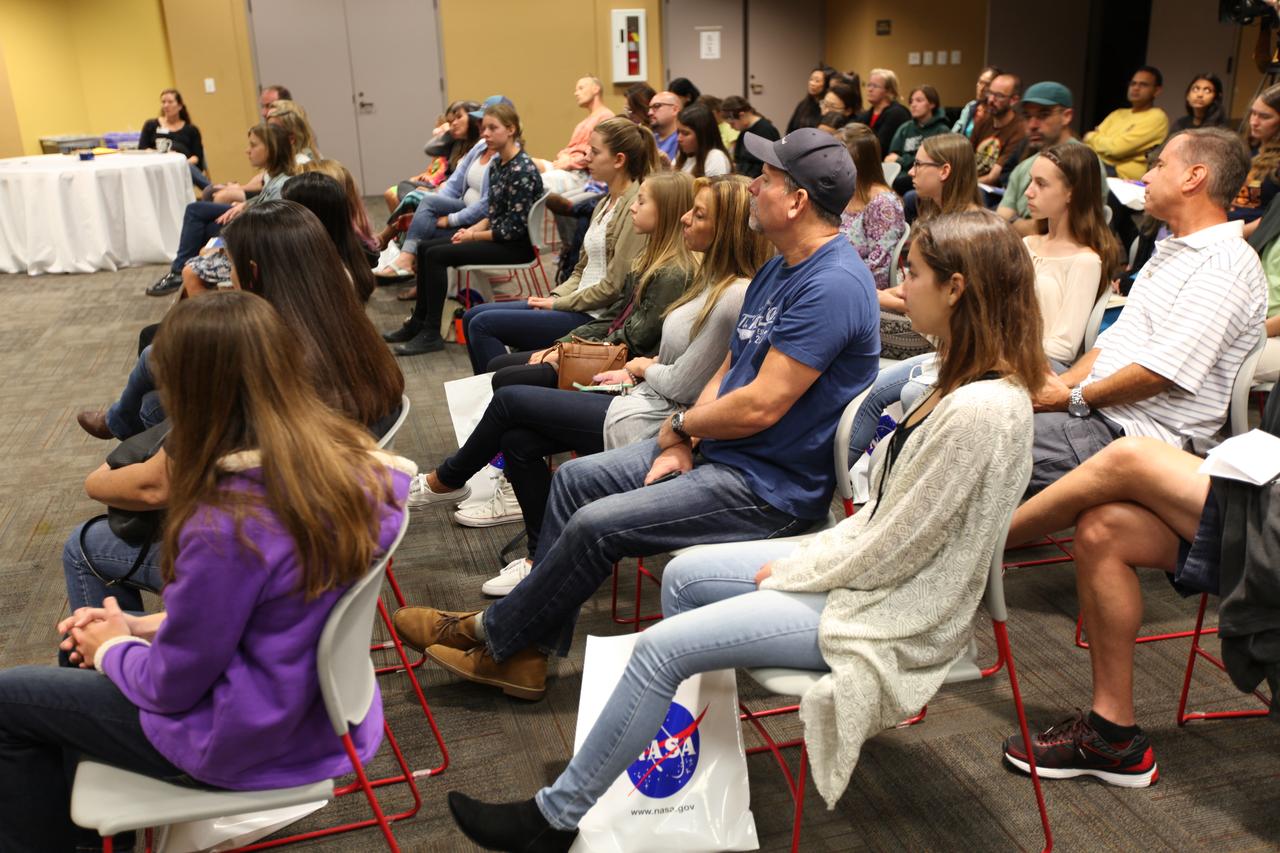
NASA’s Ground Systems Development and Operations Program (GSDO) participates in a “Be Wise” program at the Reuben H. Fleet Science Center in San Diego, California. Participants listen to a presentation by engineers from the agency’s Kennedy Space Center in Florida. GSDO participated in several outreach events to students and the general public before the start of the Orion Underway Recovery Test 5 (URT-5) using a test version of the Orion crew module in the Pacific Ocean. URT-5 will allow NASA and the U.S. Navy to demonstrate and evaluate the recovery processes, procedures, hardware and personnel necessary for recovery of the Orion crew module on its return from a deep space mission. Orion is the exploration spacecraft designed to carry astronauts to destinations not yet explored by humans, including an asteroid and NASA’s Journey to Mars. It will have emergency abort capability, sustain the crew during space travel and provide safe re-entry from deep space return velocities. Orion is scheduled to launch atop NASA’s Space Launch System rocket in 2018. For more information, visit http://www.nasa.gov/orion.
Melissa Jones, right, Landing and Recovery director with NASA’s Ground Systems Development and Operations Program speaks to visitors to the Reuben H. Fleet Science Center in San Diego, California, during a “Genius in the House” event. GSDO participated in several outreach events to students and the general public before the start of the Orion Underway Recovery Test 5 (URT-5) using a test version of the Orion crew module in the Pacific Ocean off the coast of California. URT-5 will allow NASA, Orion manufacturer Lockheed Martin and the U.S. Navy to demonstrate and evaluate the recovery processes, procedures, hardware and personnel necessary for recovery of the Orion crew module on its return from a deep space mission. Orion is the exploration spacecraft designed to carry astronauts to destinations not yet explored by humans, including an asteroid and NASA’s Journey to Mars. It will have emergency abort capability, sustain the crew during space travel and provide safe re-entry from deep space return velocities. Orion is scheduled to launch atop NASA’s Space Launch System rocket in 2018. For more information, visit http://www.nasa.gov/orion.
NASA’s Ground Systems Development and Operations Program (GSDO) participated in the “Genius in the House” event at the Reuben H. Fleet Science Center in San Diego, California. GSDO participated in several outreach events to students and the general public before the start of the Orion Underway Recovery Test 5 (URT-5) using a test version of the Orion crew module in the Pacific Ocean off the coast of California. URT-5 will allow NASA, Orion manufacturer Lockheed Martin and the U.S. Navy to demonstrate and evaluate the recovery processes, procedures, hardware and personnel necessary for recovery of the Orion crew module on its return from a deep space mission. Orion is the exploration spacecraft designed to carry astronauts to destinations not yet explored by humans, including an asteroid and NASA’s Journey to Mars. It will have emergency abort capability, sustain the crew during space travel and provide safe re-entry from deep space return velocities. Orion is scheduled to launch atop NASA’s Space Launch System rocket in 2018. For more information, visit http://www.nasa.gov/orion.
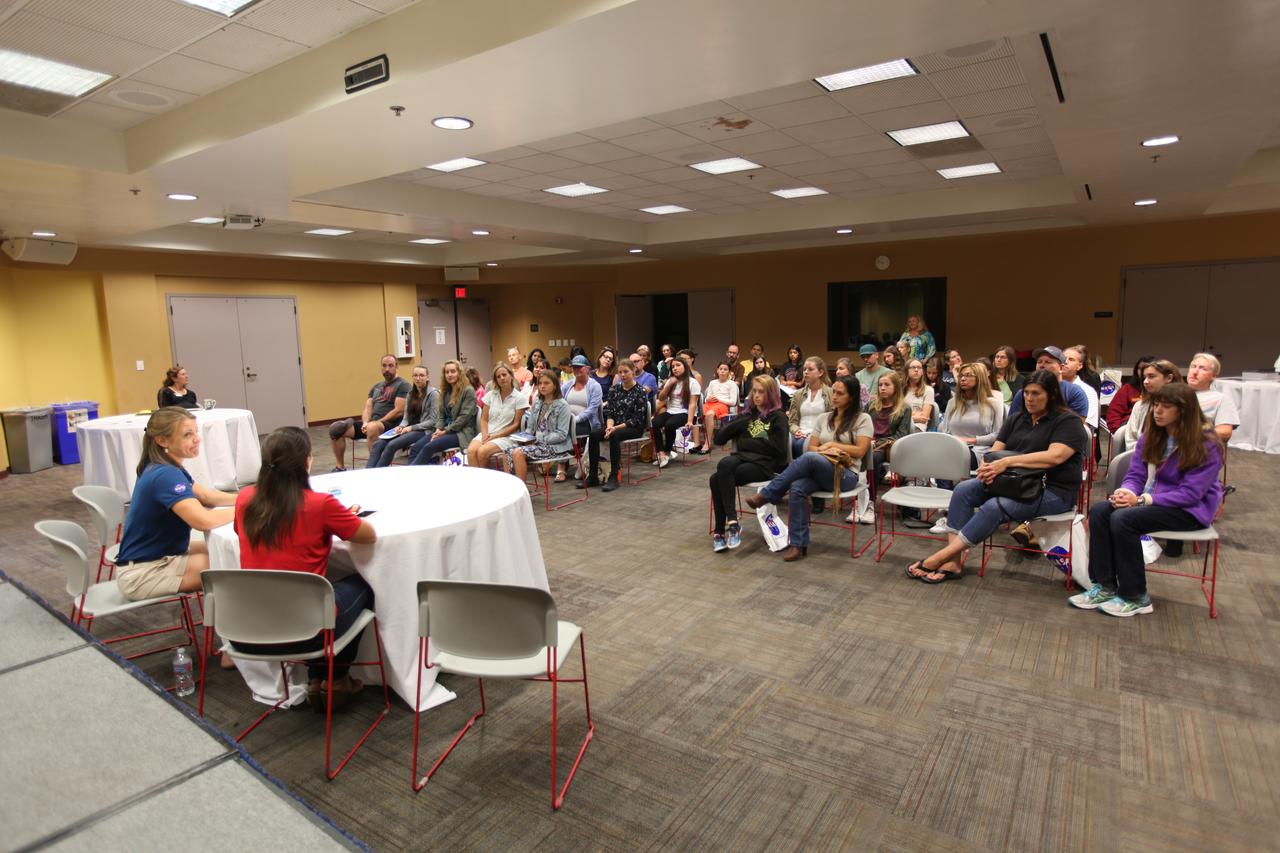
NASA’s Ground Systems Development and Operations Program (GSDO) participates in a “Be Wise” program at the Reuben H. Fleet Science Center in San Diego, California. At the front table, from left are GSDO engineers Carla Koch and Janet Gobaira from the agency’s Kennedy Space Center in Florida. GSDO participated in several outreach events to students and the general public before the start of the Orion Underway Recovery Test 5 (URT-5) using a test version of the Orion crew module in the Pacific Ocean. URT-5 will allow NASA and the U.S. Navy to demonstrate and evaluate the recovery processes, procedures, hardware and personnel necessary for recovery of the Orion crew module on its return from a deep space mission. Orion is the exploration spacecraft designed to carry astronauts to destinations not yet explored by humans, including an asteroid and NASA’s Journey to Mars. It will have emergency abort capability, sustain the crew during space travel and provide safe re-entry from deep space return velocities. Orion is scheduled to launch atop NASA’s Space Launch System rocket in 2018. For more information, visit http://www.nasa.gov/orion.
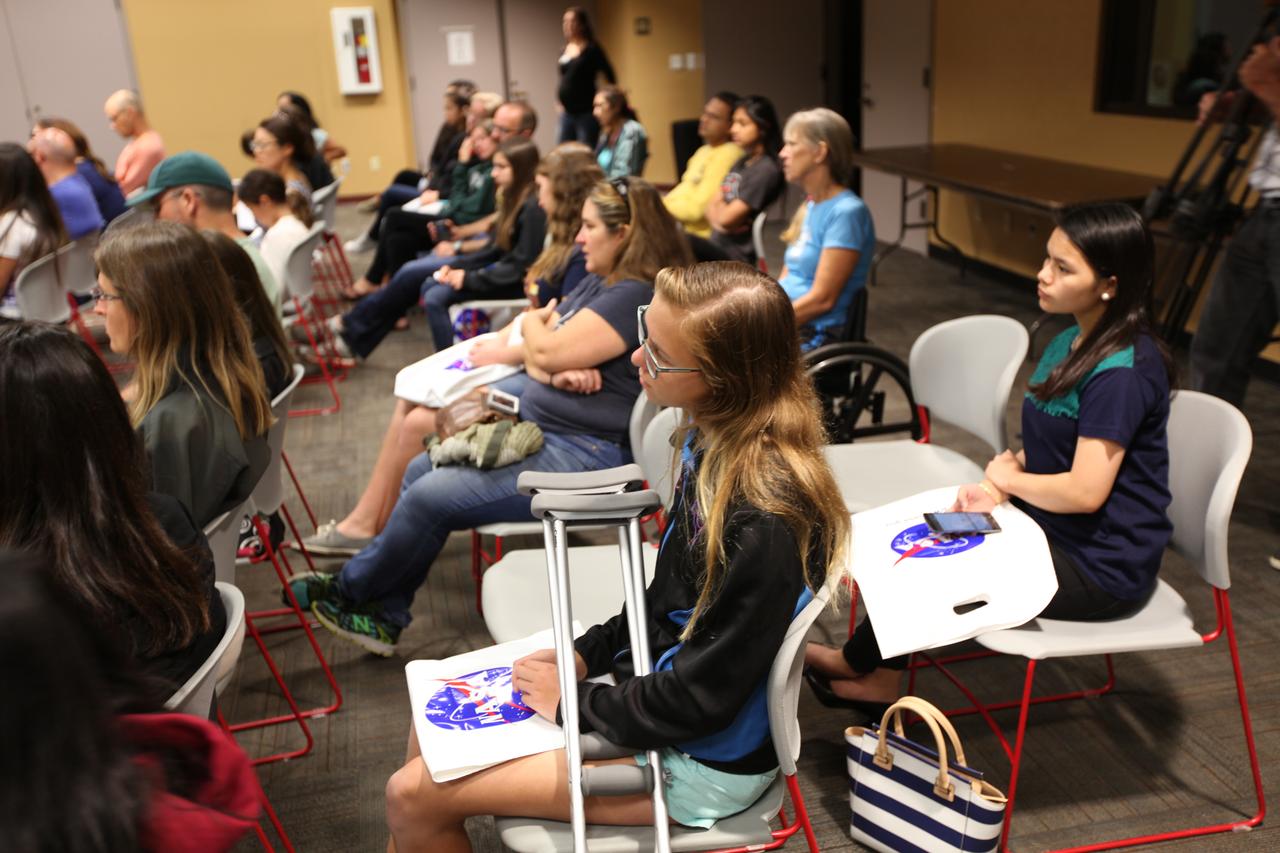
NASA’s Ground Systems Development and Operations Program (GSDO) participates in a “Be Wise” program at the Reuben H. Fleet Science Center in San Diego, California. Participants listen to a presentation by engineers from the agency’s Kennedy Space Center in Florida. GSDO participated in several outreach events to students and the general public before the start of the Orion Underway Recovery Test 5 (URT-5) using a test version of the Orion crew module in the Pacific Ocean. URT-5 will allow NASA and the U.S. Navy to demonstrate and evaluate the recovery processes, procedures, hardware and personnel necessary for recovery of the Orion crew module on its return from a deep space mission. Orion is the exploration spacecraft designed to carry astronauts to destinations not yet explored by humans, including an asteroid and NASA’s Journey to Mars. It will have emergency abort capability, sustain the crew during space travel and provide safe re-entry from deep space return velocities. Orion is scheduled to launch atop NASA’s Space Launch System rocket in 2018. For more information, visit http://www.nasa.gov/orion.
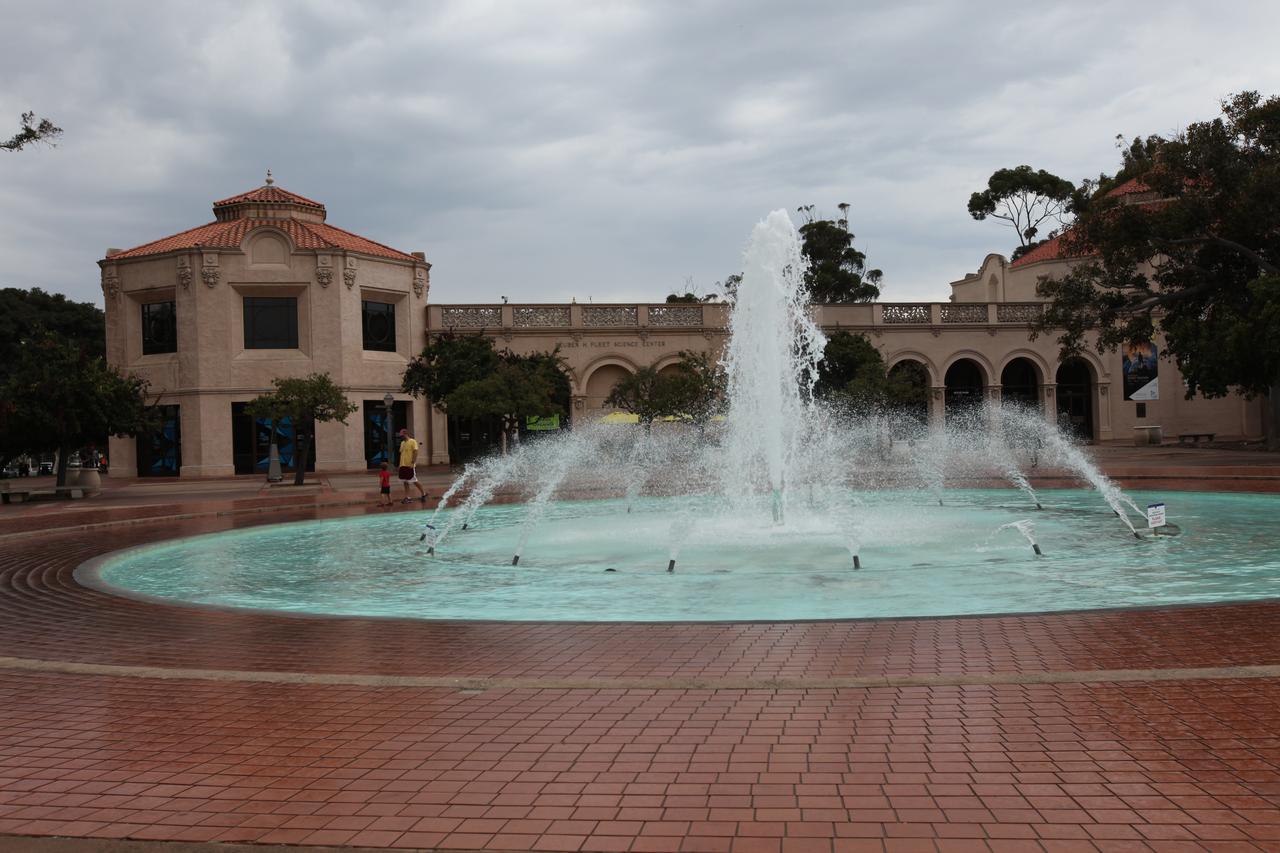
A water fountain marks the entrance to the Reuben H. Fleet Science Center in San Diego, California. NASA’s Ground Systems Development and Operations Program (GSDO) is participating in a “Be Wise” program at the science center before the start of the Orion Underway Recovery Test 5 (URT-5) using a test version of the Orion crew module in the Pacific Ocean. URT-5 will allow NASA and the U.S. Navy to demonstrate and evaluate the recovery processes, procedures, hardware and personnel necessary for recovery of the Orion crew module on its return from a deep space mission. Orion is the exploration spacecraft designed to carry astronauts to destinations not yet explored by humans, including an asteroid and NASA’s Journey to Mars. It will have emergency abort capability, sustain the crew during space travel and provide safe re-entry from deep space return velocities. Orion is scheduled to launch atop NASA’s Space Launch System rocket in 2018. For more information, visit http://www.nasa.gov/orion.
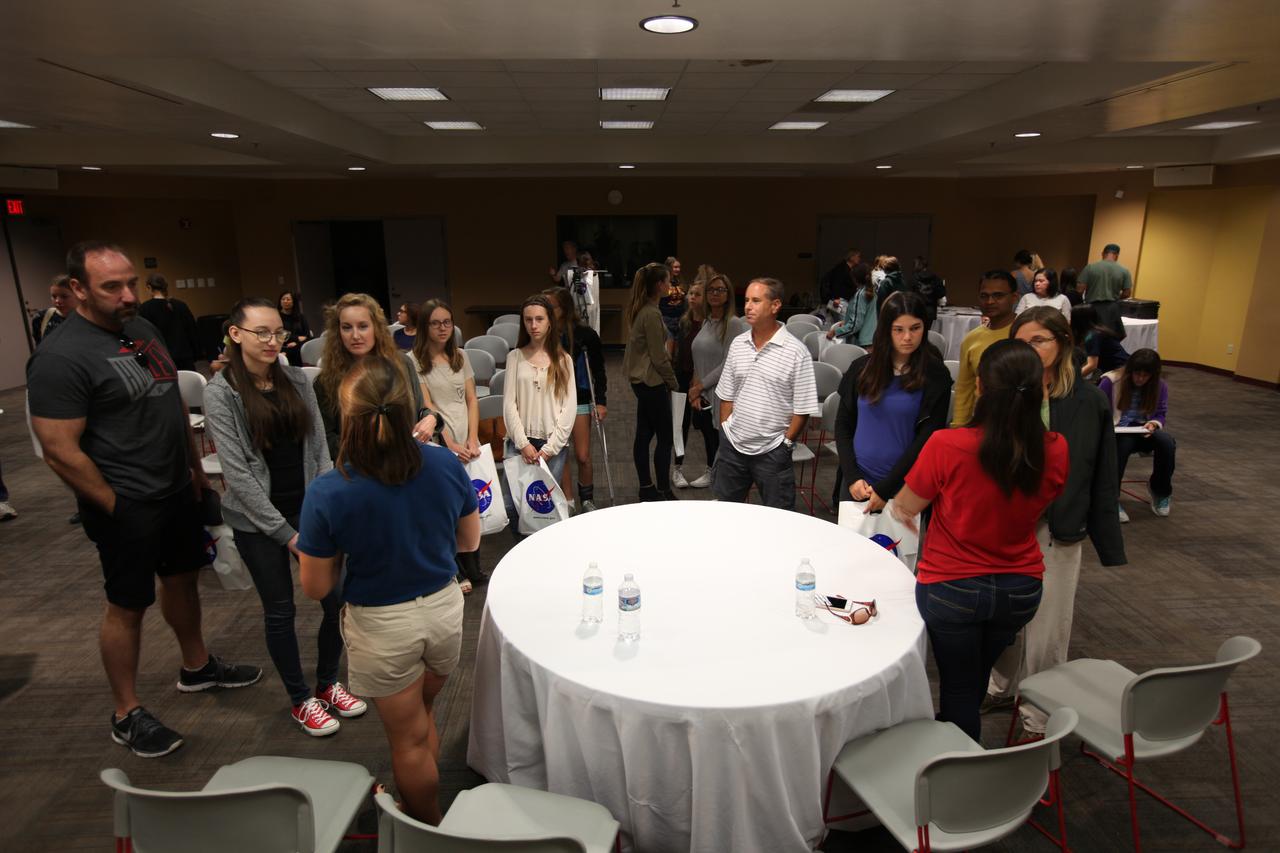
NASA’s Ground Systems Development and Operations Program (GSDO) participates in a “Be Wise” program at the Reuben H. Fleet Science Center in San Diego, California. Carla Koch, left, and Janet Gobaira, engineers from Kennedy Space Center in Florida, talk with participants after the program. GSDO participated in several outreach events to students and the general public before the start of the Orion Underway Recovery Test 5 (URT-5) using a test version of the Orion crew module in the Pacific Ocean. URT-5 will allow NASA and the U.S. Navy to demonstrate and evaluate the recovery processes, procedures, hardware and personnel necessary for recovery of the Orion crew module on its return from a deep space mission. Orion is the exploration spacecraft designed to carry astronauts to destinations not yet explored by humans, including an asteroid and NASA’s Journey to Mars. It will have emergency abort capability, sustain the crew during space travel and provide safe re-entry from deep space return velocities. Orion is scheduled to launch atop NASA’s Space Launch System rocket in 2018. For more information, visit http://www.nasa.gov/orion.
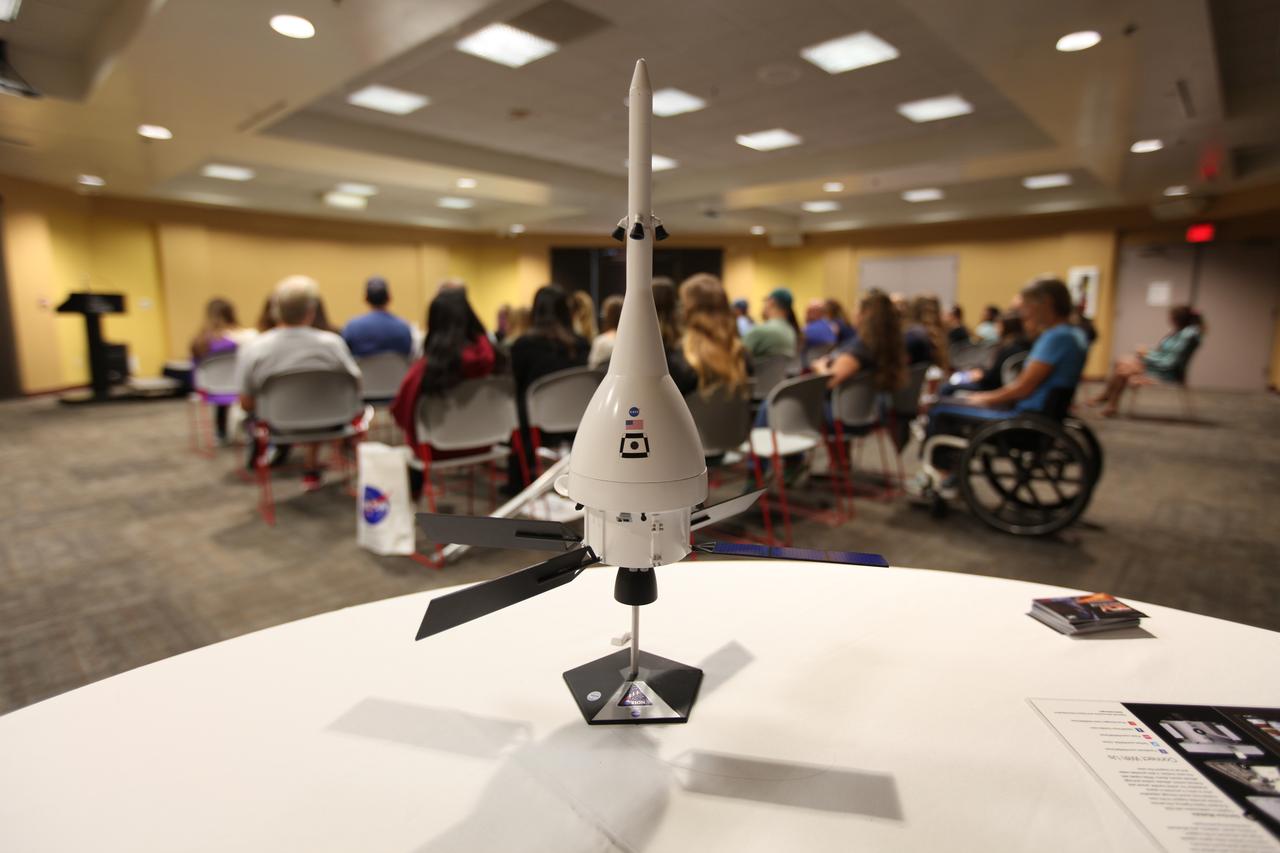
A model of NASA’s Orion spacecraft with the Launch Abort System is on display at the Reuben H. Fleet Science Center in San Diego, California. The agency’s Ground Systems Development and Operations Program is participating in a “Be Wise” program at the science center. GSDO is preparing for Orion Underway Recovery Test 5 (URT-5) using a test version of the Orion crew module in the Pacific Ocean. URT-5 will allow NASA and the U.S. Navy to demonstrate and evaluate the recovery processes, procedures, hardware and personnel necessary for recovery of the Orion crew module on its return from a deep space mission. Orion is the exploration spacecraft designed to carry astronauts to destinations not yet explored by humans, including an asteroid and NASA’s Journey to Mars. It will have emergency abort capability, sustain the crew during space travel and provide safe re-entry from deep space return velocities. Orion is scheduled to launch atop NASA’s Space Launch System rocket in 2018. For more information, visit http://www.nasa.gov/orion.
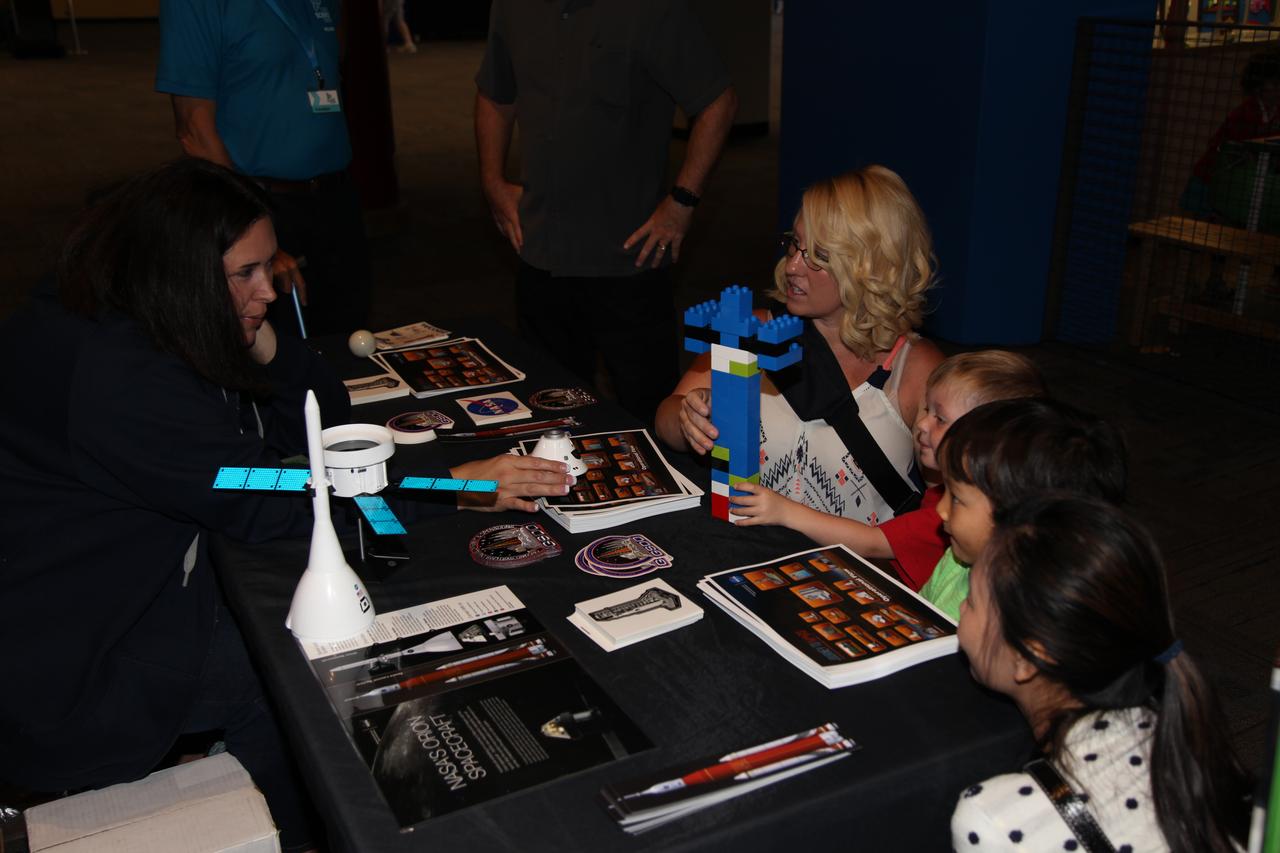
Melissa Jones, left, Landing and Recovery director with NASA’s Ground Systems Development and Operations Program speaks to visitors to the Reuben H. Fleet Science Center in San Diego, California, during a “Genius in the House” event. GSDO participated in several outreach events to students and the general public before the start of the Orion Underway Recovery Test 5 (URT-5) using a test version of the Orion crew module in the Pacific Ocean off the coast of California. URT-5 will allow NASA, Orion manufacturer Lockheed Martin and the U.S. Navy to demonstrate and evaluate the recovery processes, procedures, hardware and personnel necessary for recovery of the Orion crew module on its return from a deep space mission. Orion is the exploration spacecraft designed to carry astronauts to destinations not yet explored by humans, including an asteroid and NASA’s Journey to Mars. It will have emergency abort capability, sustain the crew during space travel and provide safe re-entry from deep space return velocities. Orion is scheduled to launch atop NASA’s Space Launch System rocket in 2018. For more information, visit http://www.nasa.gov/orion.
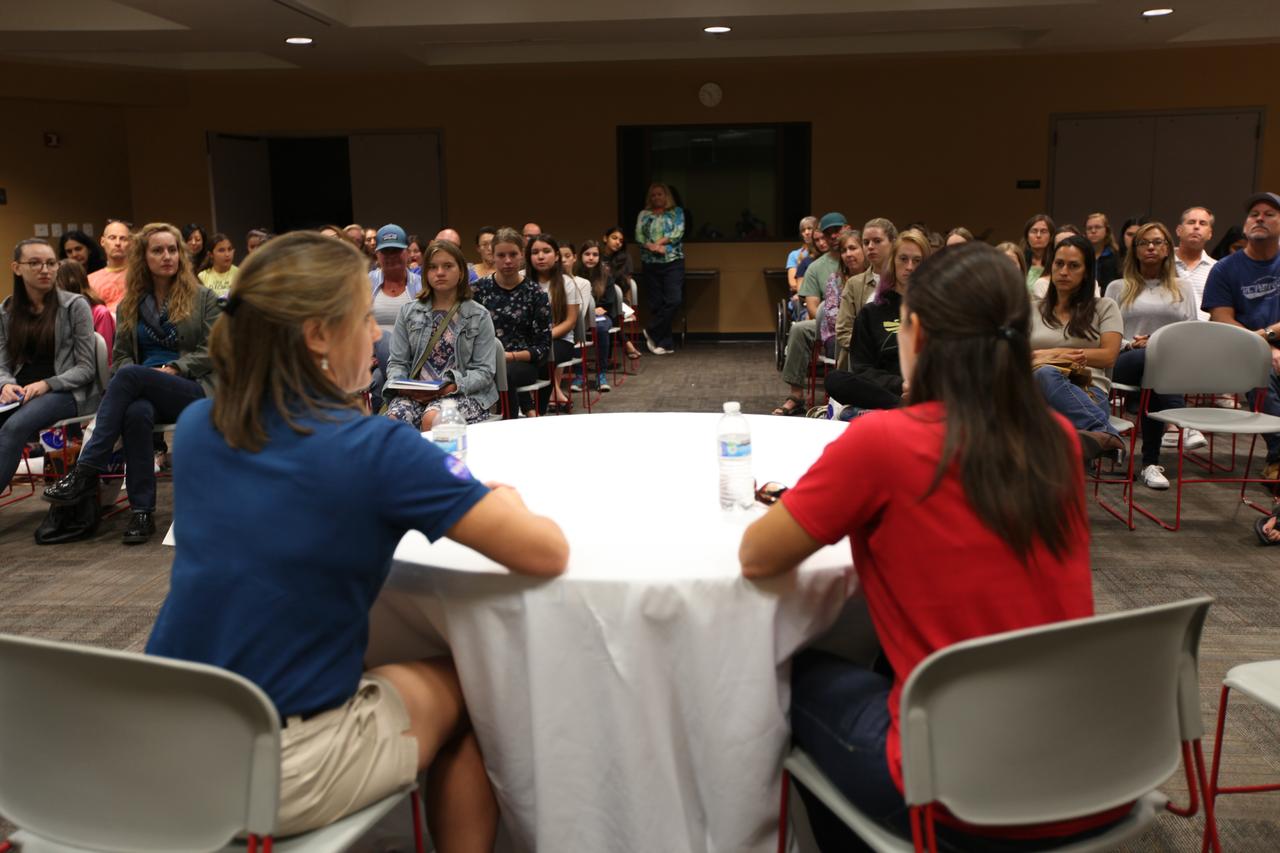
NASA’s Ground Systems Development and Operations Program (GSDO) participates in a “Be Wise” program at the Reuben H. Fleet Science Center in San Diego, California. At the front table, from left are GSDO engineers Carla Koch and Janet Gobaira from the agency’s Kennedy Space Center in Florida. GSDO participated in several outreach events to students and the general public before the start of the Orion Underway Recovery Test 5 (URT-5) using a test version of the Orion crew module in the Pacific Ocean. URT-5 will allow NASA and the U.S. Navy to demonstrate and evaluate the recovery processes, procedures, hardware and personnel necessary for recovery of the Orion crew module on its return from a deep space mission. Orion is the exploration spacecraft designed to carry astronauts to destinations not yet explored by humans, including an asteroid and NASA’s Journey to Mars. It will have emergency abort capability, sustain the crew during space travel and provide safe re-entry from deep space return velocities. Orion is scheduled to launch atop NASA’s Space Launch System rocket in 2018. For more information, visit http://www.nasa.gov/orion.
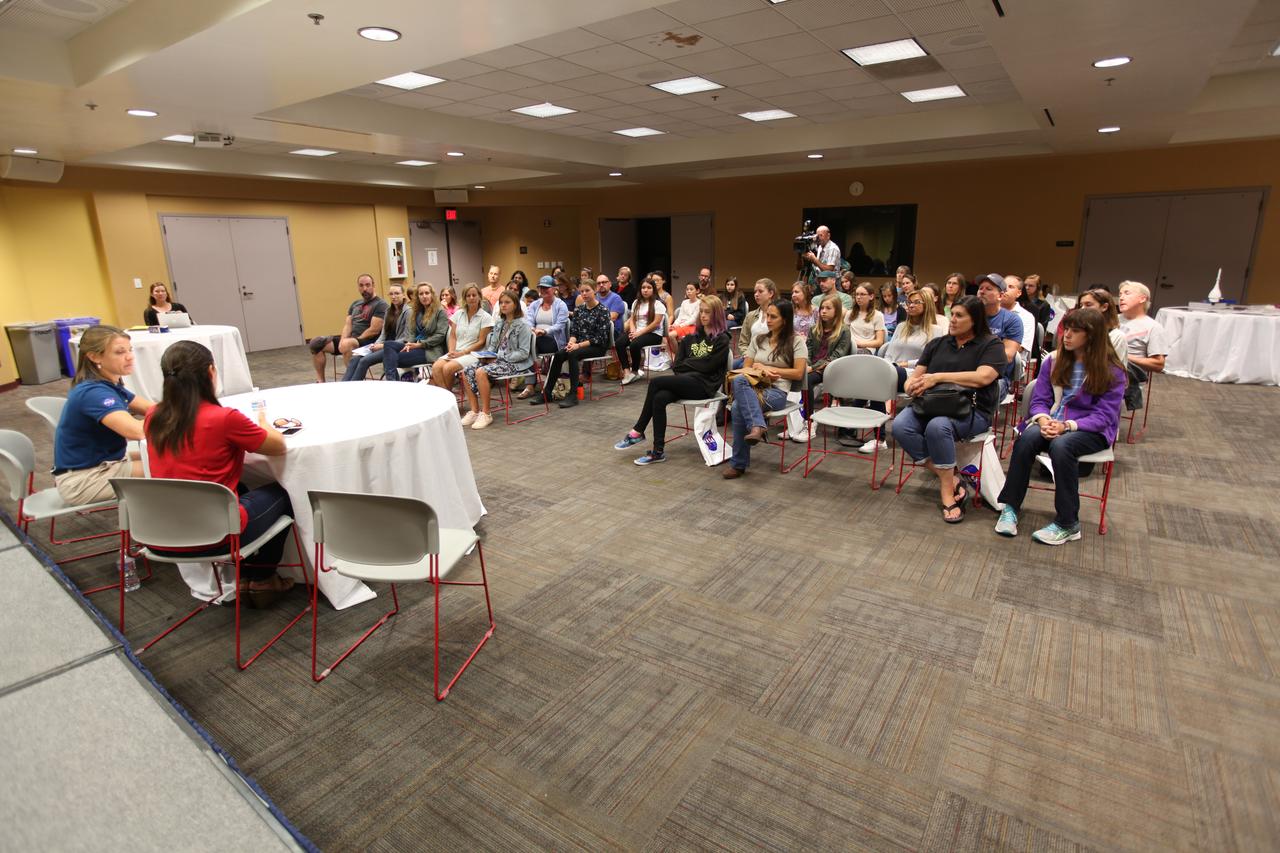
NASA’s Ground Systems Development and Operations Program (GSDO) participate in a “Be Wise” program at the Reuben H. Fleet Science Center in San Diego, California. At the front table, from left are GSDO engineers Carla Koch and Janet Gobaira from the agency’s Kennedy Space Center in Florida. GSDO participated in several outreach events to students and the general public before the start of the Orion Underway Recovery Test 5 (URT-5) using a test version of the Orion crew module in the Pacific Ocean. URT-5 will allow NASA and the U.S. Navy to demonstrate and evaluate the recovery processes, procedures, hardware and personnel necessary for recovery of the Orion crew module on its return from a deep space mission. Orion is the exploration spacecraft designed to carry astronauts to destinations not yet explored by humans, including an asteroid and NASA’s Journey to Mars. It will have emergency abort capability, sustain the crew during space travel and provide safe re-entry from deep space return velocities. Orion is scheduled to launch atop NASA’s Space Launch System rocket in 2018. For more information, visit http://www.nasa.gov/orion.
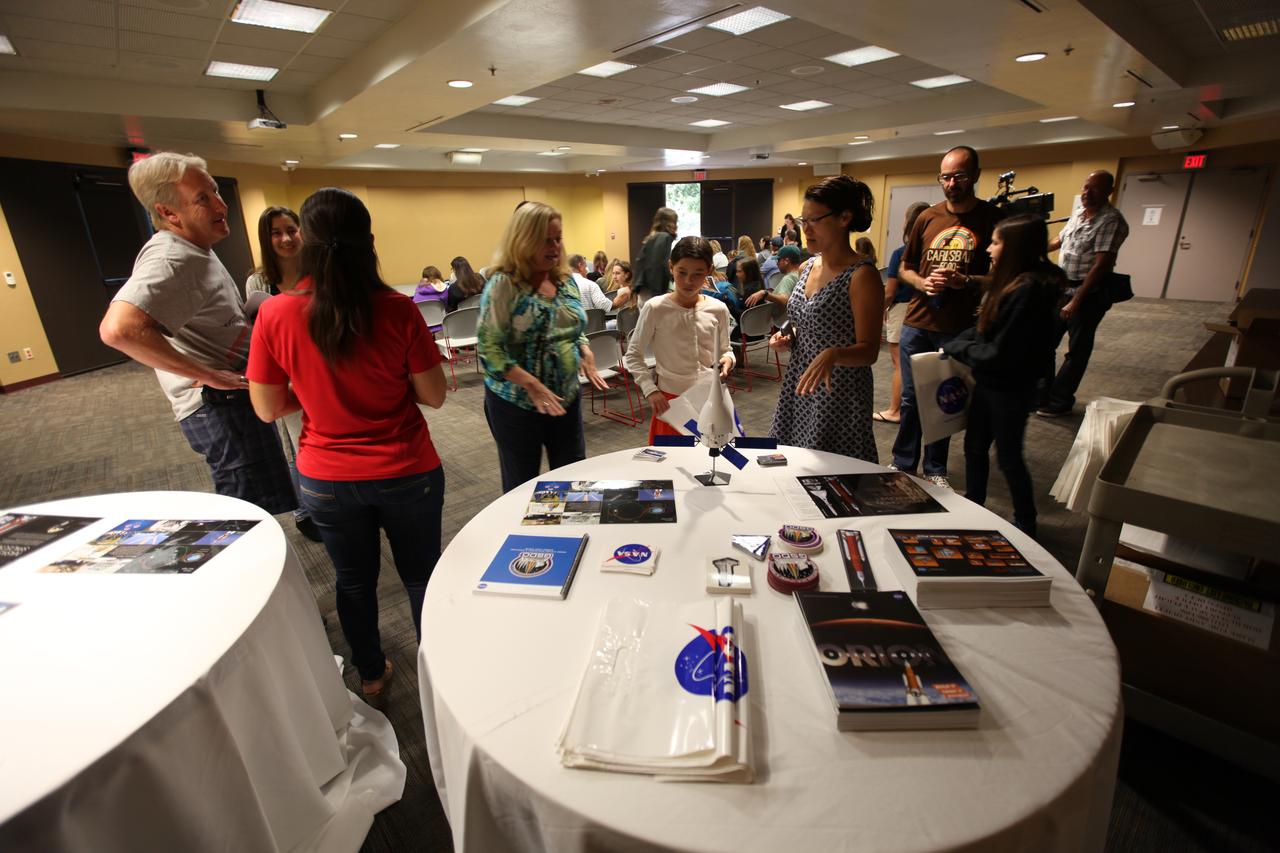
Representatives from NASA’s Ground Systems Development and Operations Program (GSDO) prepare for a “Be Wise” program at the Reuben H. Fleet Science Center in San Diego, California. GSDO participated in several outreach events to students and the general public before the start of the Orion Underway Recovery Test 5 (URT-5) using a test version of the Orion crew module in the Pacific Ocean. URT-5 will allow NASA and the U.S. Navy to demonstrate and evaluate the recovery processes, procedures, hardware and personnel necessary for recovery of the Orion crew module on its return from a deep space mission. Orion is the exploration spacecraft designed to carry astronauts to destinations not yet explored by humans, including an asteroid and NASA’s Journey to Mars. It will have emergency abort capability, sustain the crew during space travel and provide safe re-entry from deep space return velocities. Orion is scheduled to launch atop NASA’s Space Launch System rocket in 2018. For more information, visit http://www.nasa.gov/orion.
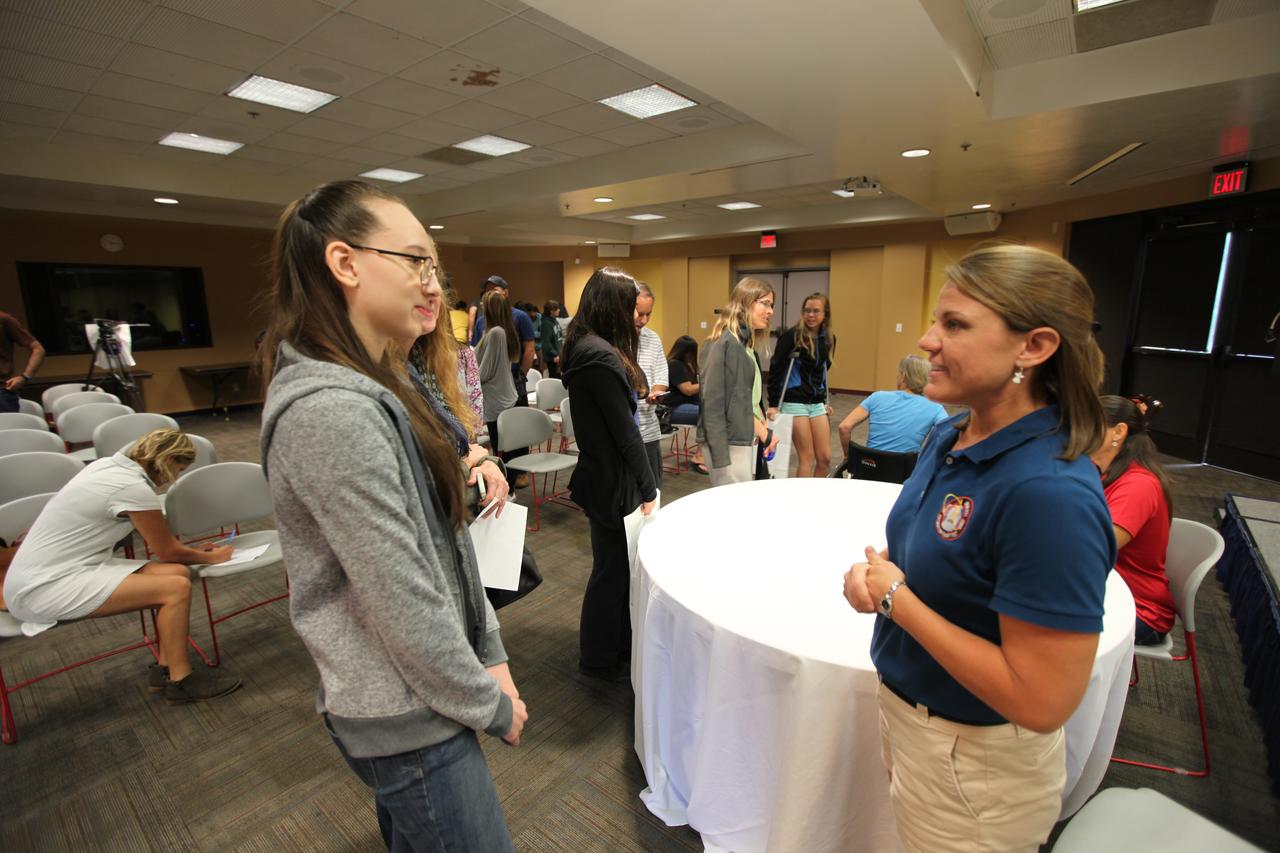
NASA’s Ground Systems Development and Operations Program (GSDO) participates in a “Be Wise” program at the Reuben H. Fleet Science Center in San Diego, California. Carla Koch, right, GSDO engineer from the agency’s Kennedy Space Center in Florida, talks with a student after the program. GSDO participated in several outreach events to students and the general public before the start of the Orion Underway Recovery Test 5 (URT-5) using a test version of the Orion crew module in the Pacific Ocean. URT-5 will allow NASA and the U.S. Navy to demonstrate and evaluate the recovery processes, procedures, hardware and personnel necessary for recovery of the Orion crew module on its return from a deep space mission. Orion is the exploration spacecraft designed to carry astronauts to destinations not yet explored by humans, including an asteroid and NASA’s Journey to Mars. It will have emergency abort capability, sustain the crew during space travel and provide safe re-entry from deep space return velocities. Orion is scheduled to launch atop NASA’s Space Launch System rocket in 2018. For more information, visit http://www.nasa.gov/orion.
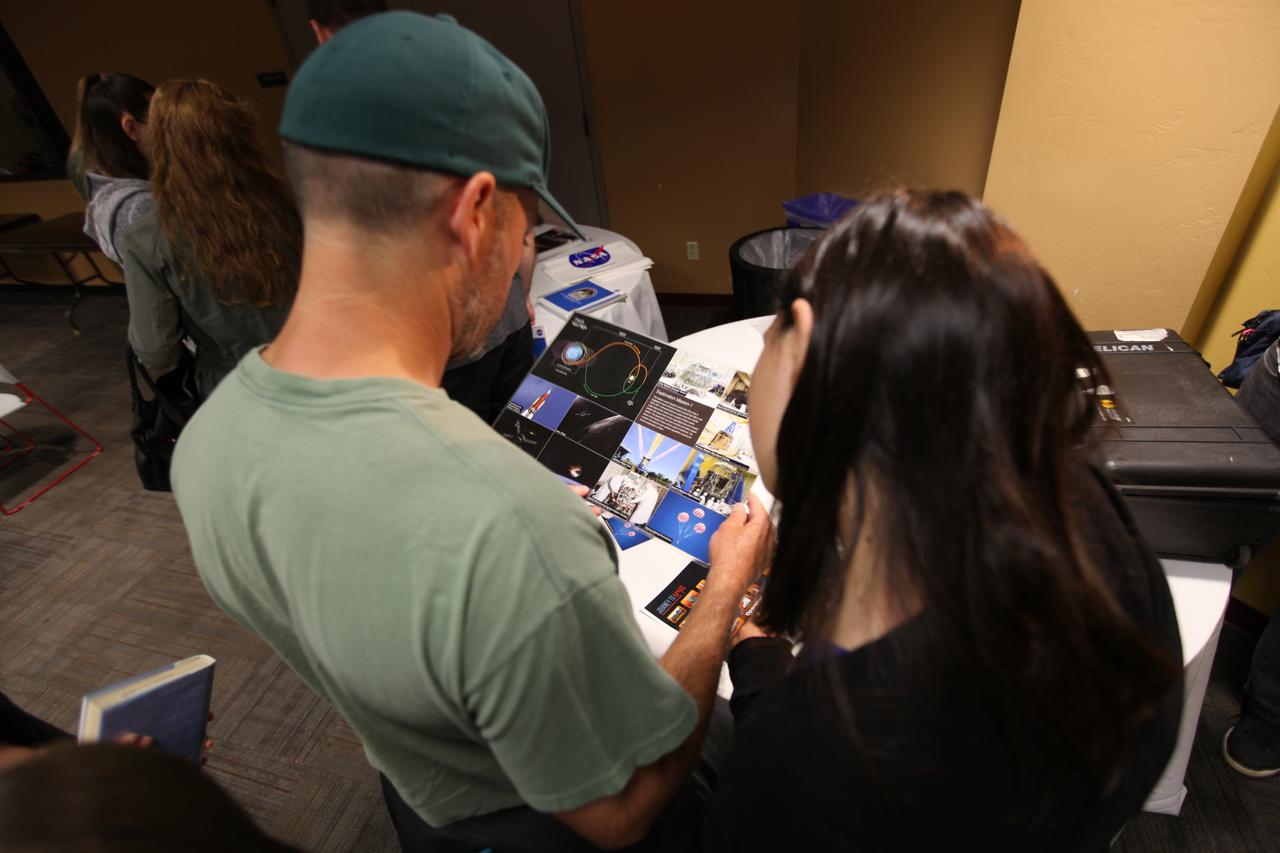
NASA’s Ground Systems Development and Operations Program (GSDO) participates in a “Be Wise” program at the Reuben H. Fleet Science Center in San Diego, California. Participants picked up material about Orion and Exploration Mission 1 after the program. GSDO participated in several outreach events to students and the general public before the start of the Orion Underway Recovery Test 5 (URT-5) using a test version of the Orion crew module in the Pacific Ocean. URT-5 will allow NASA and the U.S. Navy to demonstrate and evaluate the recovery processes, procedures, hardware and personnel necessary for recovery of the Orion crew module on its return from a deep space mission. Orion is the exploration spacecraft designed to carry astronauts to destinations not yet explored by humans, including an asteroid and NASA’s Journey to Mars. It will have emergency abort capability, sustain the crew during space travel and provide safe re-entry from deep space return velocities. Orion is scheduled to launch atop NASA’s Space Launch System rocket in 2018. For more information, visit http://www.nasa.gov/orion.
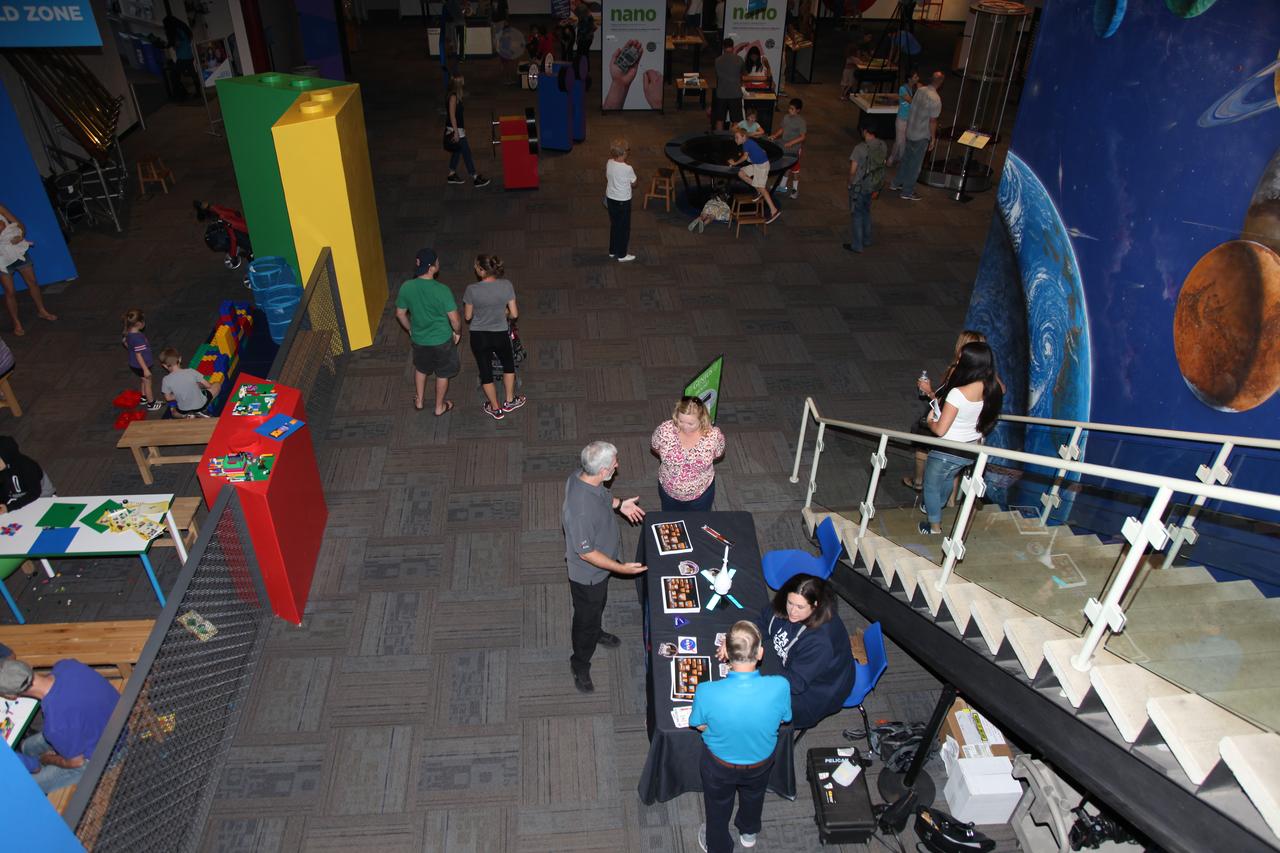
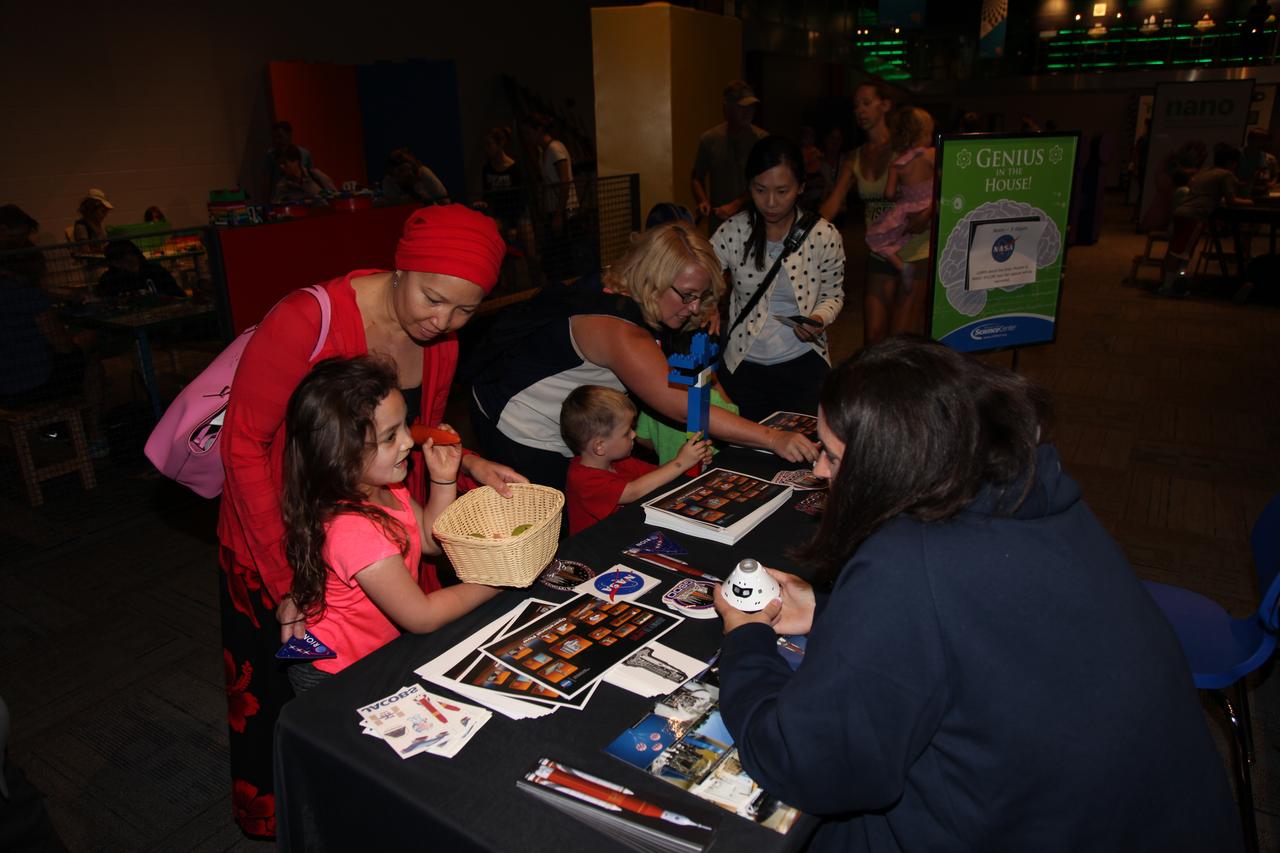
Visitors talk to representatives from NASA’s Ground Systems Development and Operations Program (GSDO) at the Reuben H. Fleet Science Center in San Diego, California. Melissa Jones, seated in blue, GSDO Landing and Recovery director, speaks to visitors during the “Genius in the House” event. GSDO participated in outreach events before the start of the Orion Underway Recovery Test 5 (URT-5) using a test version of the Orion crew module in the Pacific Ocean off the coast of California. URT-5 will allow NASA, Orion manufacturer Lockheed Martin and the U.S. Navy to demonstrate and evaluate the recovery processes, procedures, hardware and personnel necessary for recovery of the Orion crew module on its return from a deep space mission. Orion is the exploration spacecraft designed to carry astronauts to destinations not yet explored by humans, including an asteroid and NASA’s Journey to Mars. It will have emergency abort capability, sustain the crew during space travel and provide safe re-entry from deep space return velocities. Orion is scheduled to launch atop NASA’s Space Launch System rocket in 2018. For more information, visit http://www.nasa.gov/orion.
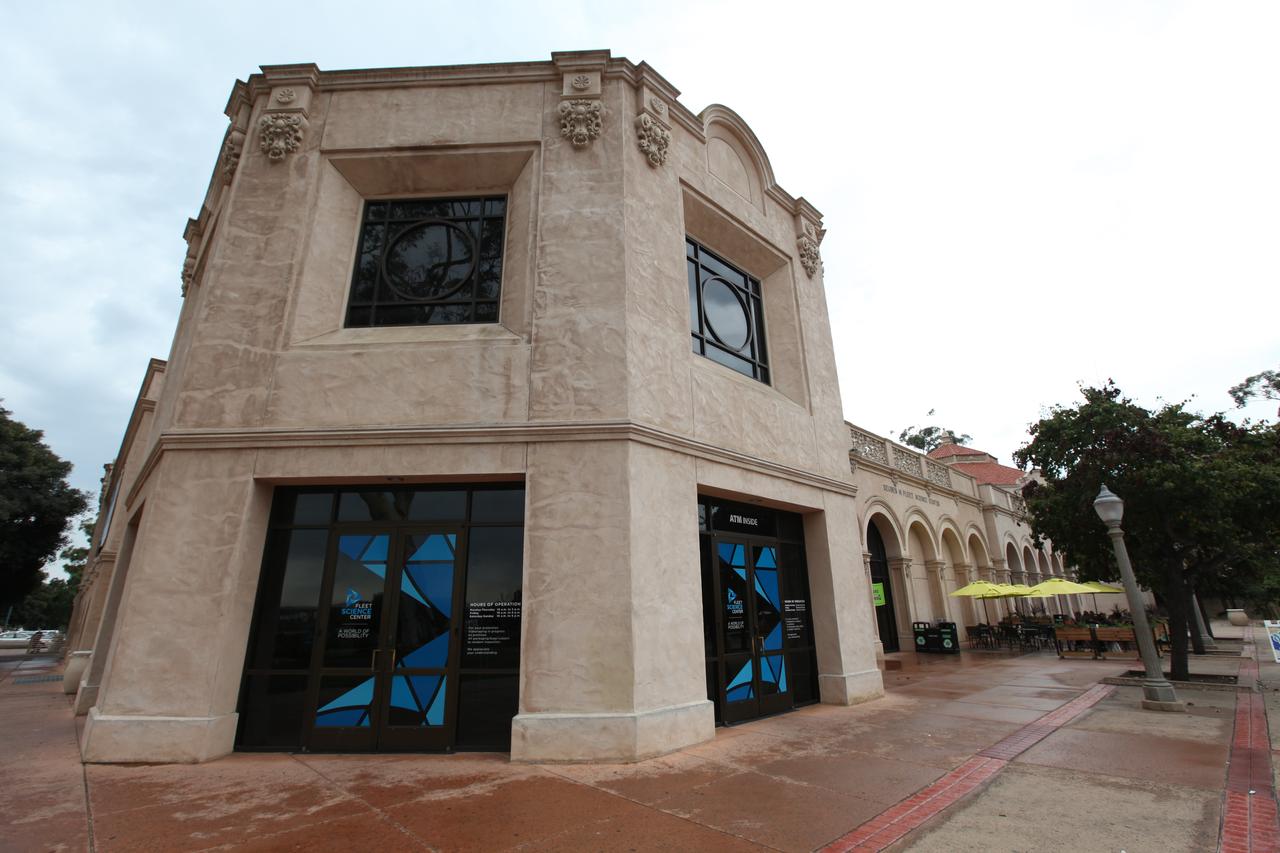
NASA’s Ground Systems Development and Operations Program (GSDO) is participating in a “Be Wise” program at the Reuben H. Fleet Science Center in San Diego, California, before the start of the Orion Underway Recovery Test 5 (URT-5) using a test version of the Orion crew module in the Pacific Ocean. URT-5 will allow NASA and the U.S. Navy to demonstrate and evaluate the recovery processes, procedures, hardware and personnel necessary for recovery of the Orion crew module on its return from a deep space mission. Orion is the exploration spacecraft designed to carry astronauts to destinations not yet explored by humans, including an asteroid and NASA’s Journey to Mars. It will have emergency abort capability, sustain the crew during space travel and provide safe re-entry from deep space return velocities. Orion is scheduled to launch atop NASA’s Space Launch System rocket in 2018.
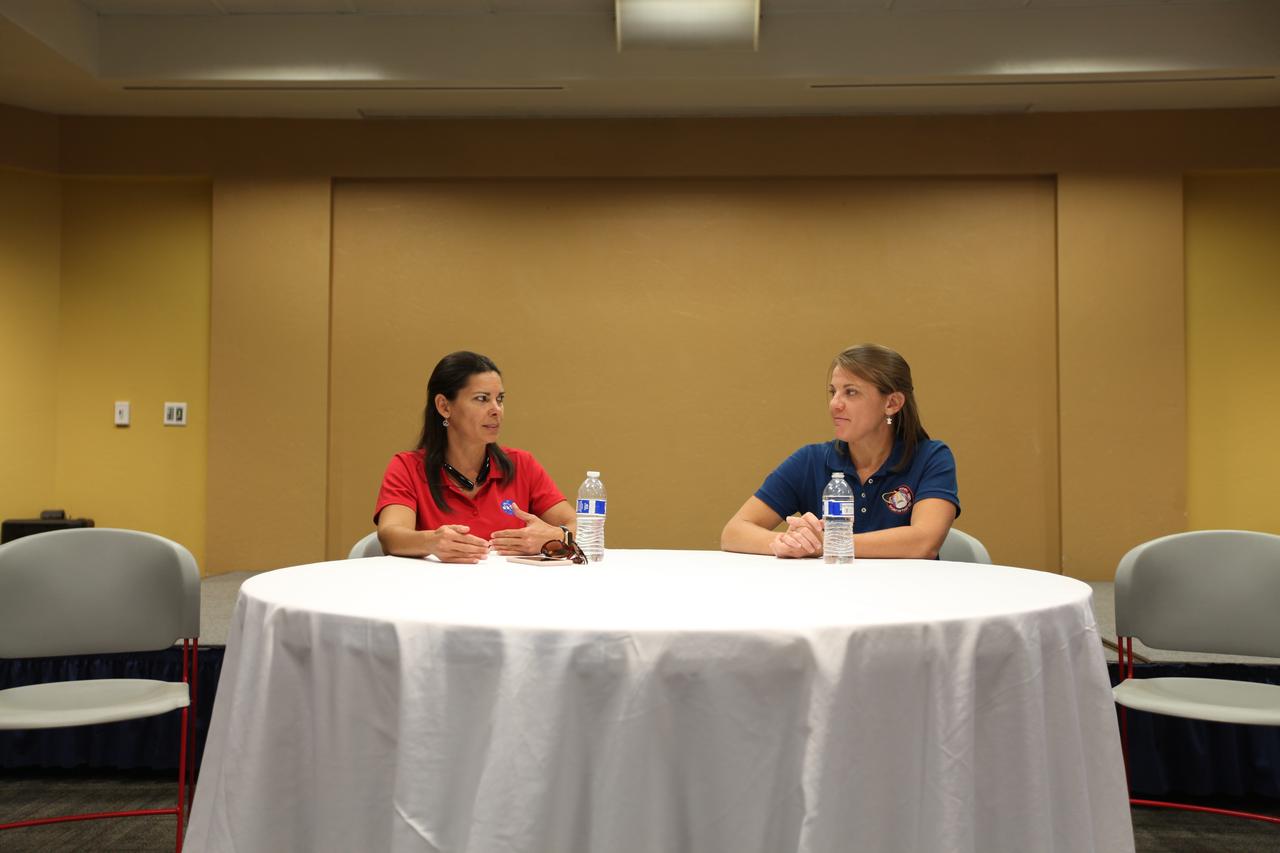
NASA’s Ground Systems Development and Operations Program (GSDO) participates in a “Be Wise” program at the Reuben H. Fleet Science Center in San Diego, California. From left, are GSDO engineers Janet Gobaira and Carla Koch from the agency’s Kennedy Space Center in Florida. GSDO participated in several outreach events to students and the general public before the start of the Orion Underway Recovery Test 5 (URT-5) using a test version of the Orion crew module in the Pacific Ocean. URT-5 will allow NASA and the U.S. Navy to demonstrate and evaluate the recovery processes, procedures, hardware and personnel necessary for recovery of the Orion crew module on its return from a deep space mission. Orion is the exploration spacecraft designed to carry astronauts to destinations not yet explored by humans, including an asteroid and NASA’s Journey to Mars. It will have emergency abort capability, sustain the crew during space travel and provide safe re-entry from deep space return velocities. Orion is scheduled to launch atop NASA’s Space Launch System rocket in 2018. For more information, visit http://www.nasa.gov/orion.
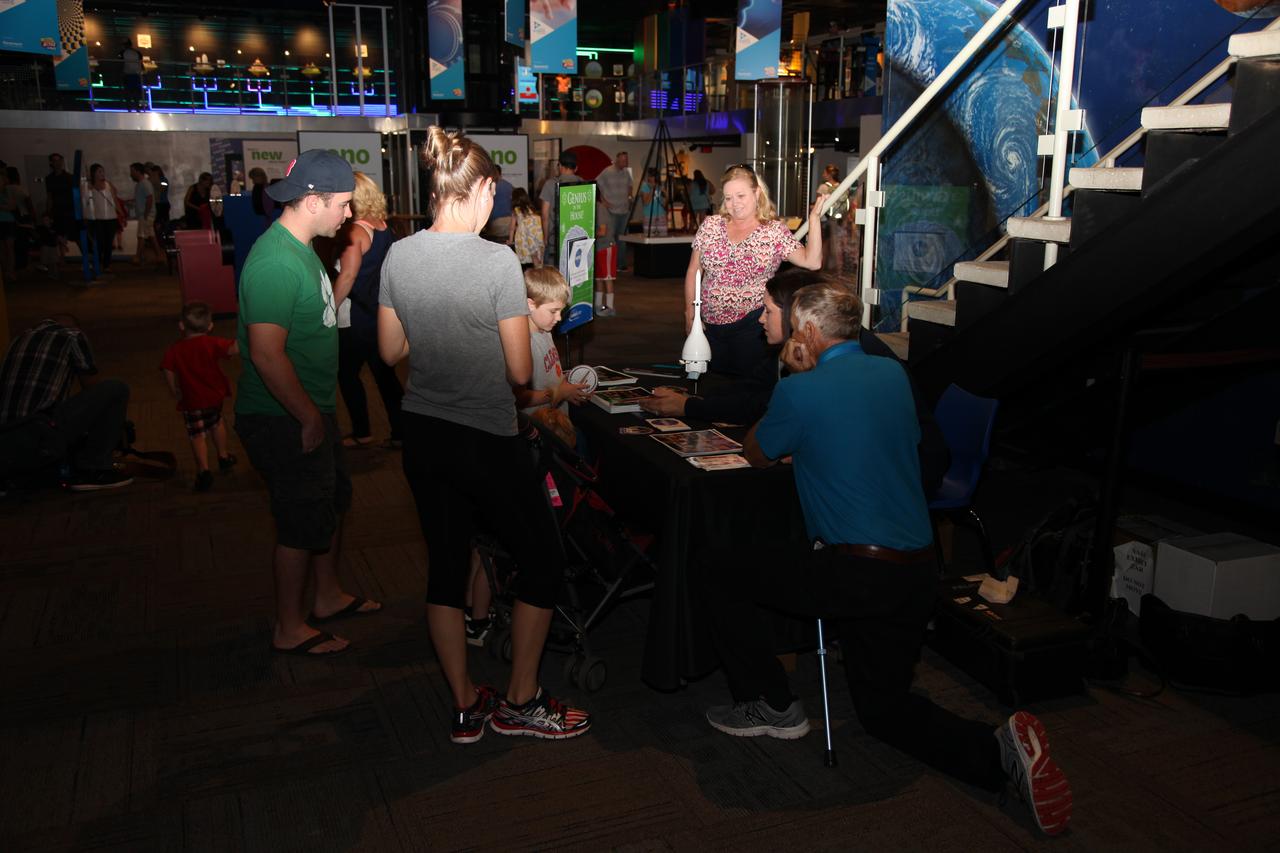
Visitors talk to representatives from NASA’s Ground Systems Development and Operations Program (GSDO) at the Reuben H. Fleet Science Center in San Diego, California. GSDO participated in the “Genius in the House” event at the science center before the start of the Orion Underway Recovery Test 5 (URT-5) using a test version of the Orion crew module in the Pacific Ocean off the coast of California. URT-5 will allow NASA, Orion manufacturer Lockheed Martin and the U.S. Navy to demonstrate and evaluate the recovery processes, procedures, hardware and personnel necessary for recovery of the Orion crew module on its return from a deep space mission. Orion is the exploration spacecraft designed to carry astronauts to destinations not yet explored by humans, including an asteroid and NASA’s Journey to Mars. It will have emergency abort capability, sustain the crew during space travel and provide safe re-entry from deep space return velocities. Orion is scheduled to launch atop NASA’s Space Launch System rocket in 2018. For more information, visit http://www.nasa.gov/orion.