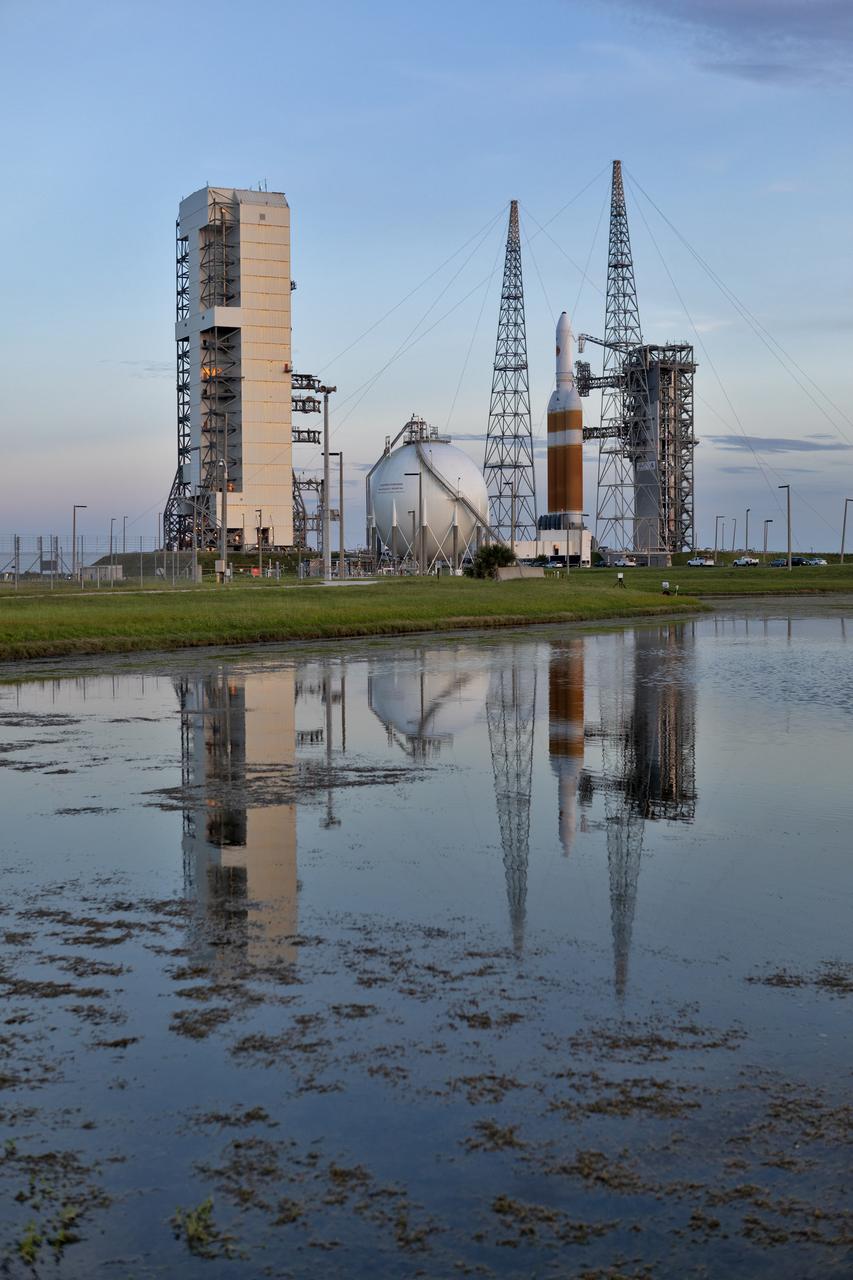
On Friday, Aug. 10, 2018, at Cape Canaveral Air Force Station in Florida, the United Launch Alliance Delta IV Heavy rocket that will boost NASA's Parker Solar Probe is reflected in a nearby pond during rollback of the Mobile Service Tower gantry at Space Launch Complex 37. Parker Solar Probe will perform the closest-ever observations of a star when it travels through the Sun's atmosphere, called the corona. The probe will rely on measurements and imaging to revolutionize our understanding of the corona and the Sun-Earth connection.

On Friday, Aug. 10, 2018, at Cape Canaveral Air Force Station in Florida, the United Launch Alliance Delta IV Heavy rocket stands ready to boost NASA's Parker Solar Probe on a mission to study the Sun following rollback of the Mobile Service Tower gantry at Space Launch Complex 37. Parker Solar Probe will perform the closest-ever observations of a star when it travels through the Sun's atmosphere, called the corona. The probe will rely on measurements and imaging to revolutionize our understanding of the corona and the Sun-Earth connection.On Friday, Aug. 10, 2018, at Cape Canaveral Air Force Station in Florida, the United Launch Alliance Delta IV Heavy rocket stands ready to boost NASA's Parker Solar Probe on a mission to study the Sun following rollback of the Mobile Service Tower. Parker Solar Probe will perform the closest-ever observations of a star when it travels through the Sun's atmosphere, called the corona. The probe will rely on measurements and imaging to revolutionize our understanding of the corona and the Sun-Earth connection.
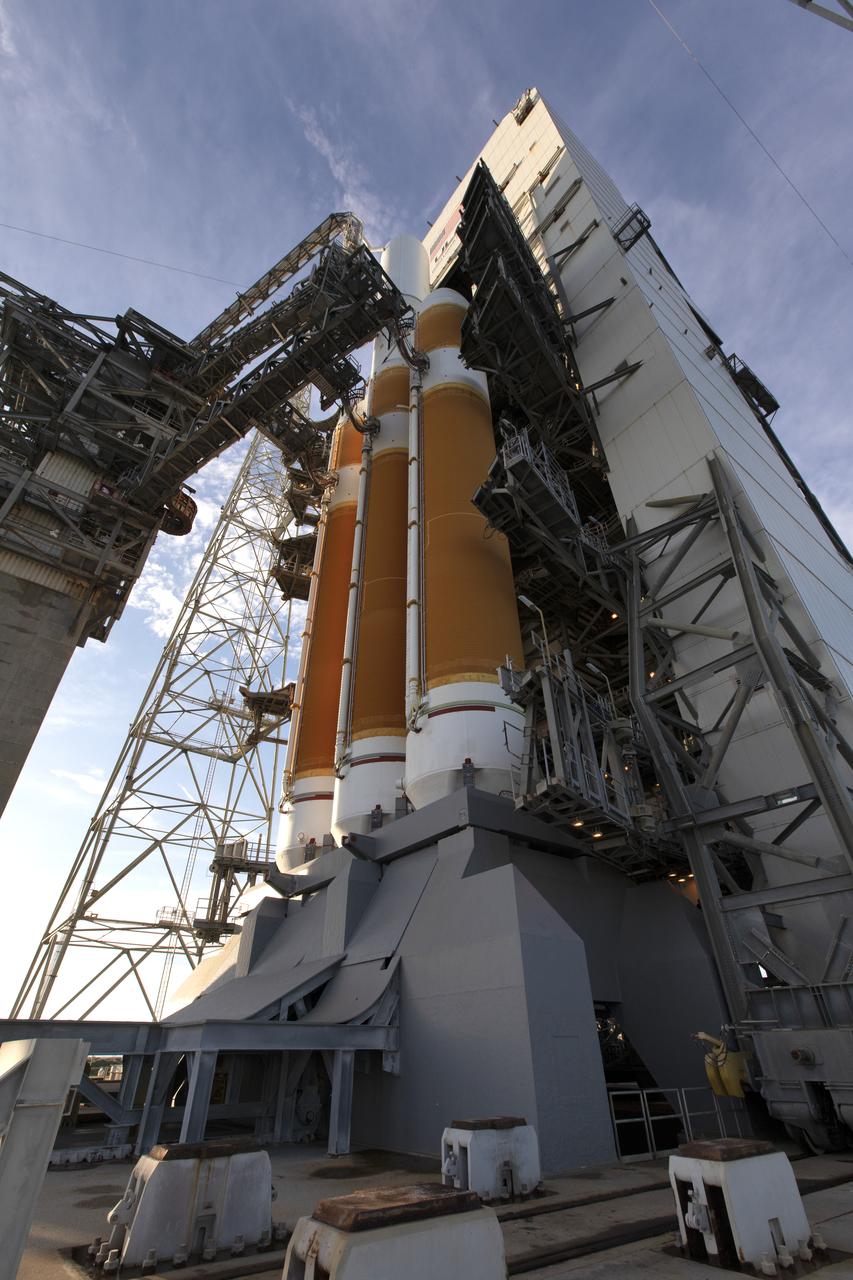
On Friday, Aug. 10, 2018, at Cape Canaveral Air Force Station in Florida, the Mobile Service Tower gantry at Space Launch Complex 37 rolls away from the United Launch Alliance Delta IV Heavy rocket waiting to boost NASA's Parker Solar Probe on a mission to study the Sun. Parker Solar Probe will perform the closest-ever observations of a star when it travels through the Sun's atmosphere, called the corona. The probe will rely on measurements and imaging to revolutionize our understanding of the corona and the Sun-Earth connection.
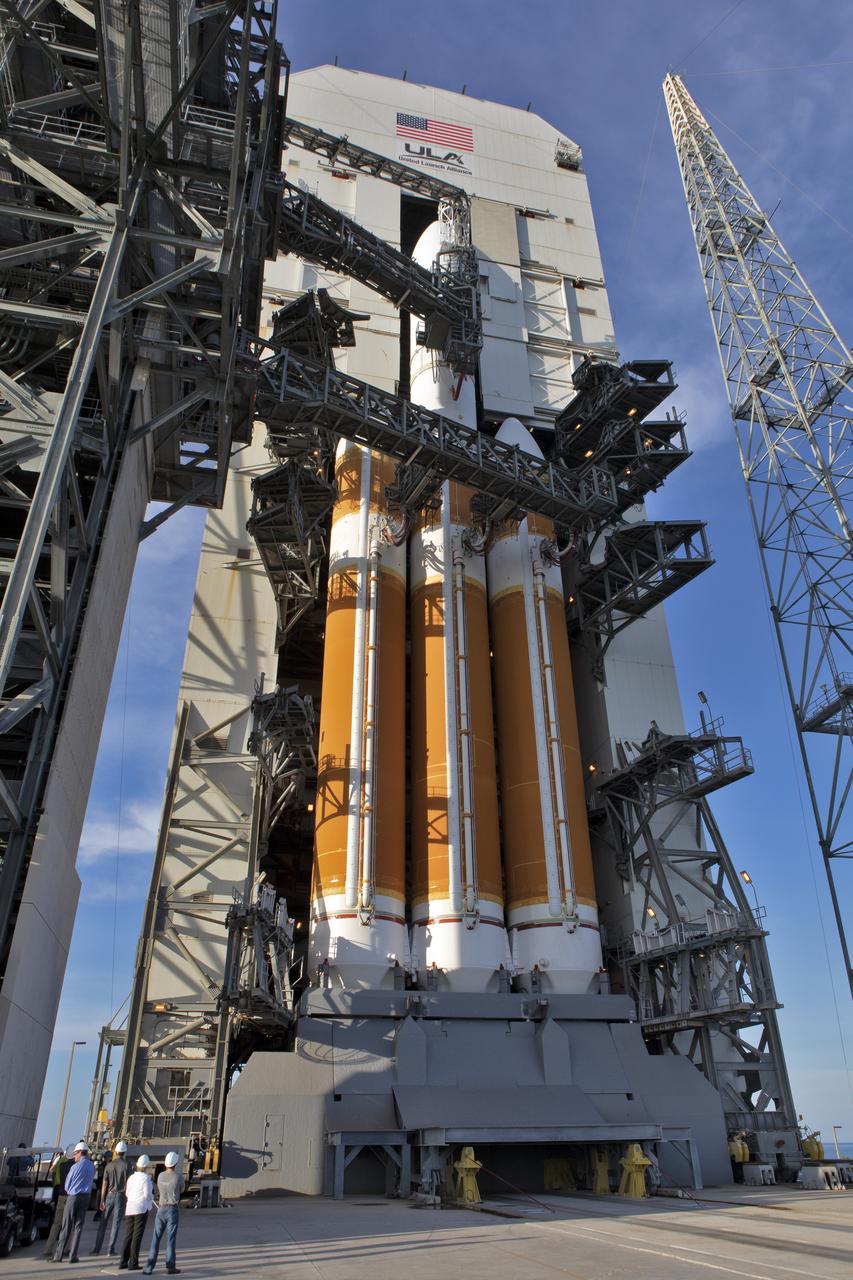
On Friday, Aug. 10, 2018, at Cape Canaveral Air Force Station in Florida, the Mobile Service Tower gantry begins to roll back at Space Launch Complex 37, where the United Launch Alliance Delta IV Heavy rocket now stands ready to boost NASA's Parker Solar Probe on a mission to study the Sun. Parker Solar Probe will perform the closest-ever observations of a star when it travels through the Sun's atmosphere, called the corona. The probe will rely on measurements and imaging to revolutionize our understanding of the corona and the Sun-Earth connection.
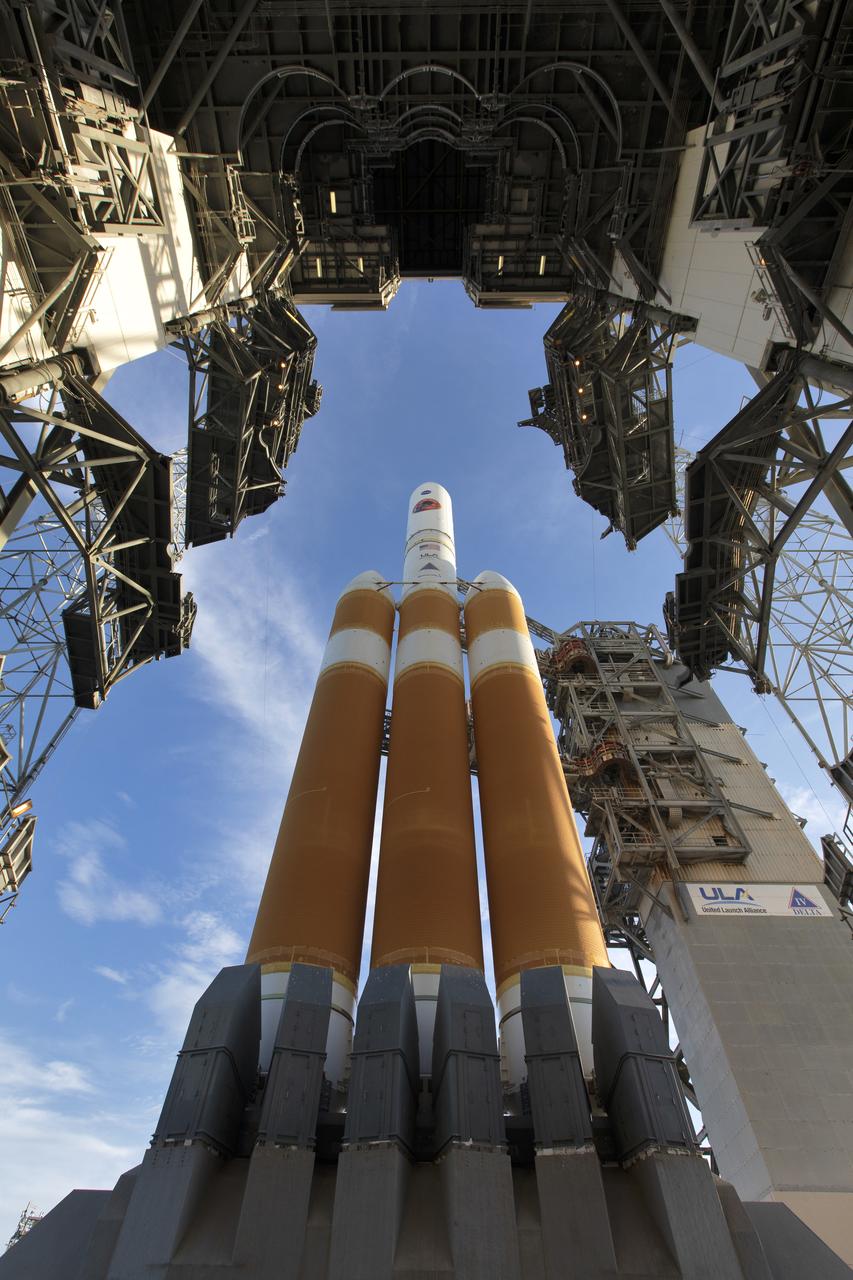
The United Launch Alliance Delta IV Heavy rocket that will launch NASA’s Parker Solar Probe on a mission to study to Sun is seen as the Mobile Service Tower gantry at Space Launch Complex 37 rolls back on Friday, Aug. 10, 2018, at Cape Canaveral Air Force Station in Florida. Parker Solar Probe will perform the closest-ever observations of a star when it travels through the Sun's atmosphere, called the corona. The probe will rely on measurements and imaging to revolutionize our understanding of the corona and the Sun-Earth connection.
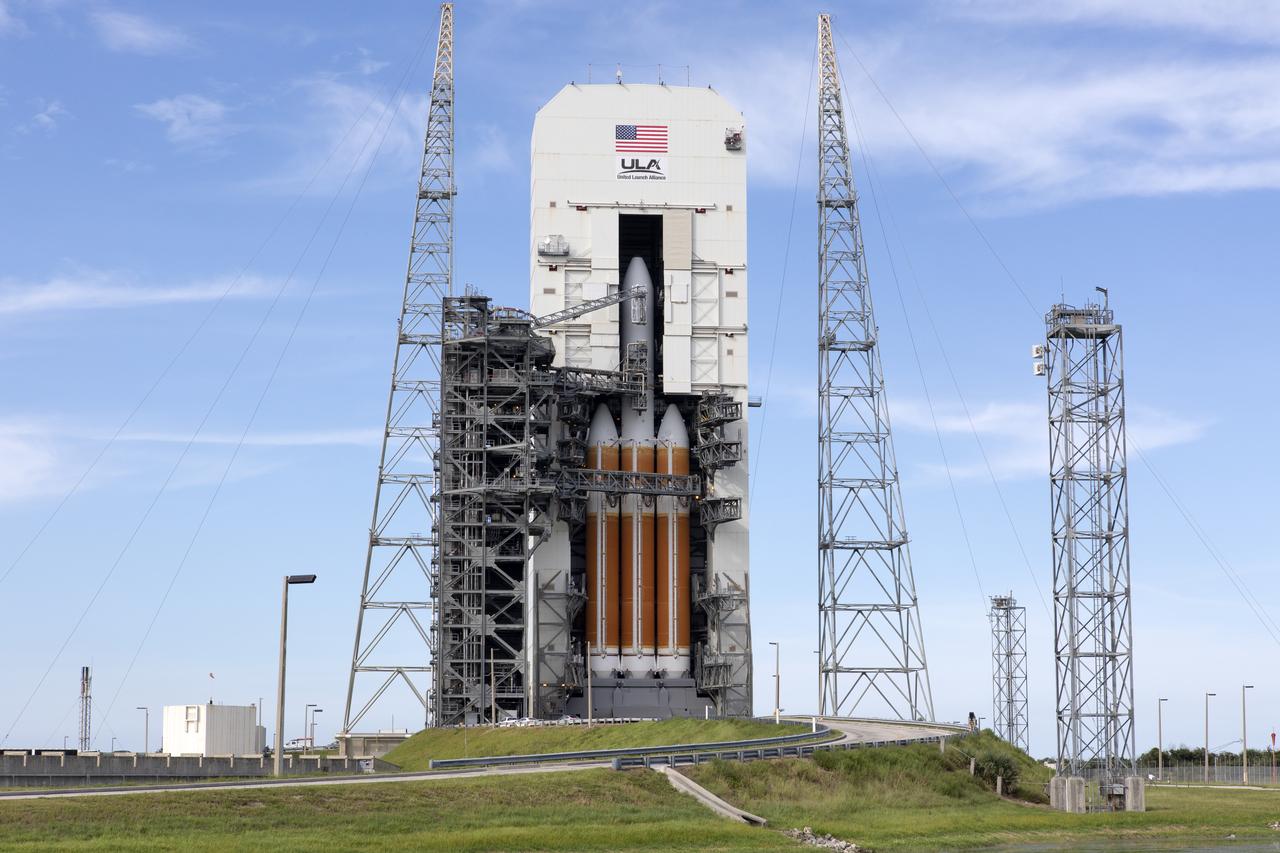
On Friday, Aug. 10, 2018, at Cape Canaveral Air Force Station in Florida, the Mobile Service Tower gantry begins to roll back at Space Launch Complex 37, where the United Launch Alliance Delta IV Heavy rocket stands ready to boost NASA's Parker Solar Probe on a mission to study the Sun. Parker Solar Probe will perform the closest-ever observations of a star when it travels through the Sun's atmosphere, called the corona. The probe will rely on measurements and imaging to revolutionize our understanding of the corona and the Sun-Earth connection.
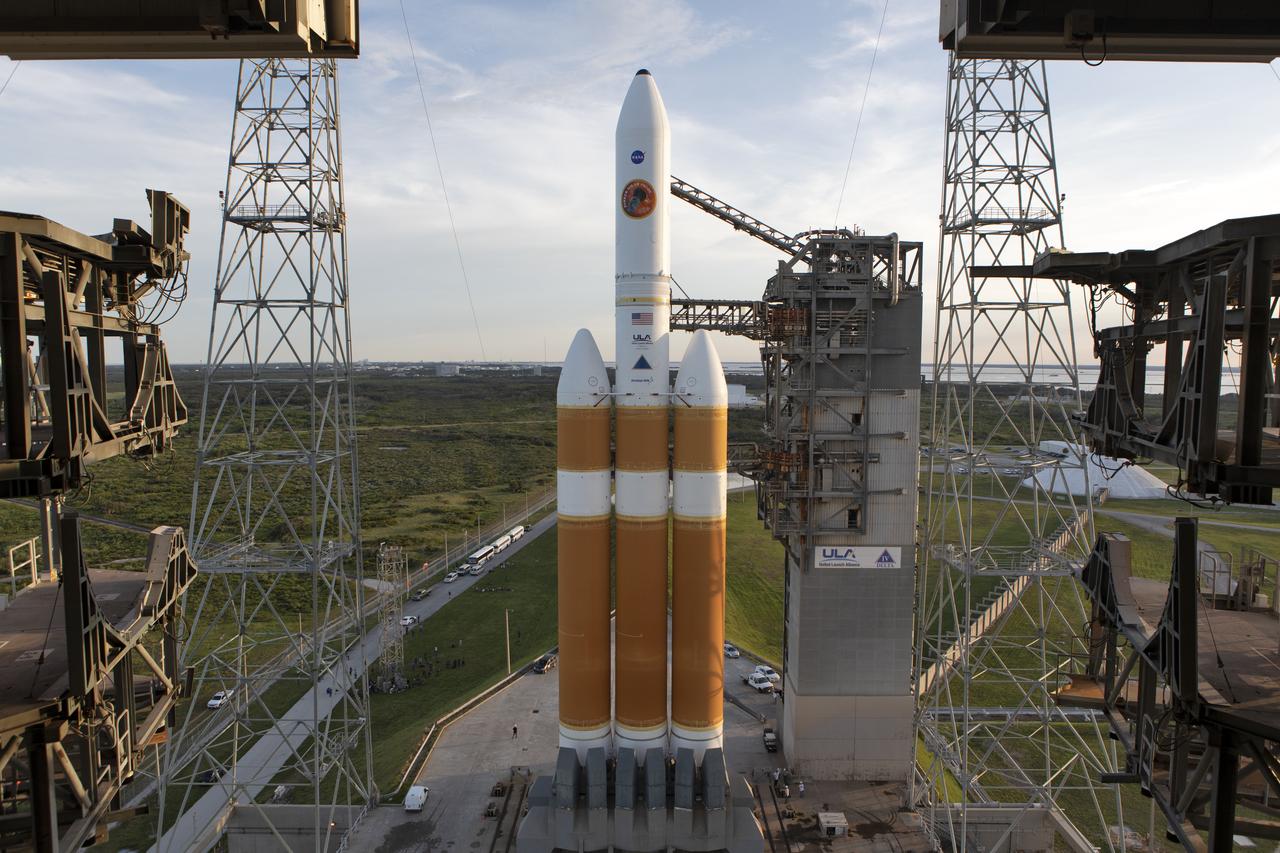
The United Launch Alliance Delta IV Heavy rocket that will launch NASA’s Parker Solar Probe on a mission to study to Sun is seen as the Mobile Service Tower gantry at Space Launch Complex 37 rolls back on Friday, Aug. 10, 2018, at Cape Canaveral Air Force Station in Florida. Parker Solar Probe will perform the closest-ever observations of a star when it travels through the Sun's atmosphere, called the corona. The probe will rely on measurements and imaging to revolutionize our understanding of the corona and the Sun-Earth connection.
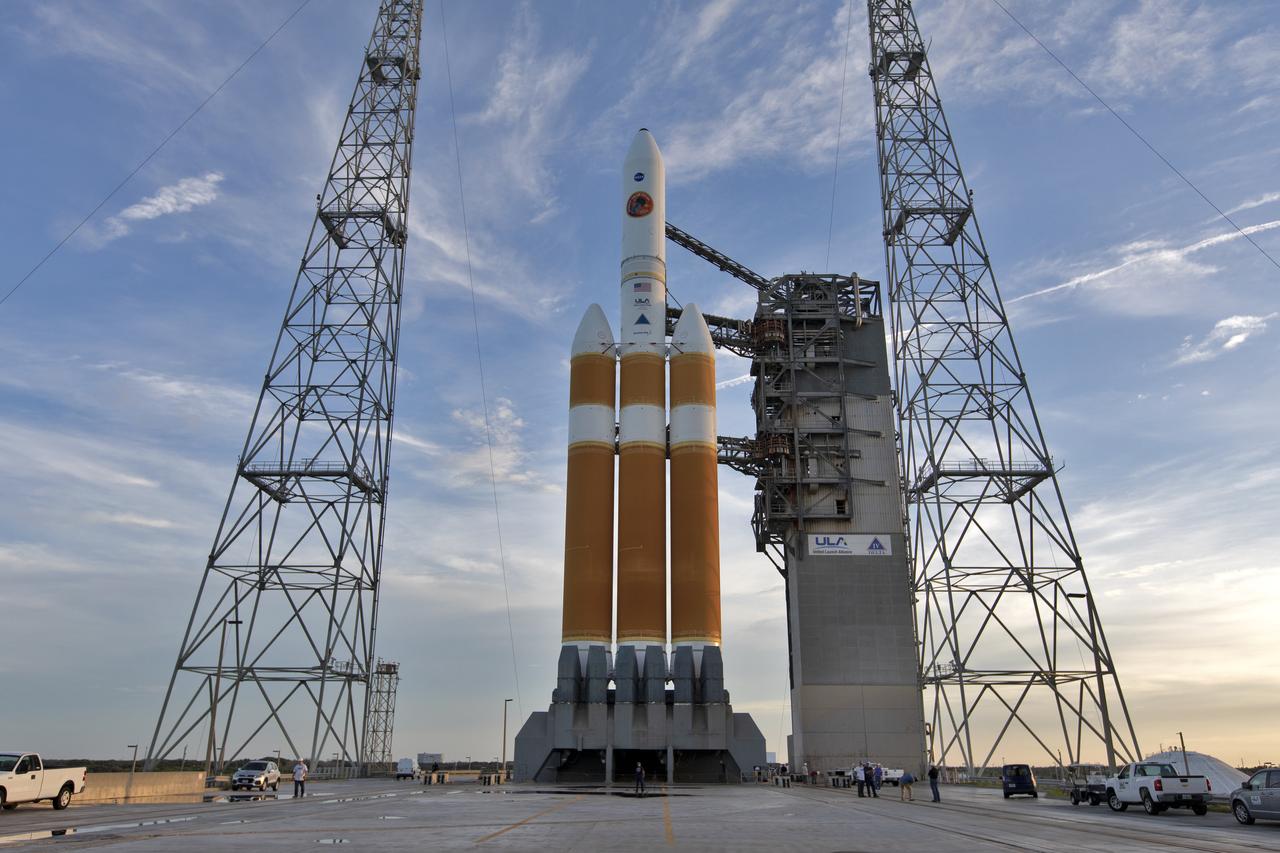
On Friday, Aug. 10, 2018, at Cape Canaveral Air Force Station in Florida, the United Launch Alliance Delta IV Heavy rocket stands ready to boost NASA's Parker Solar Probe on a mission to study the Sun following rollback of the Mobile Service Tower gantry at Space Launch Complex 37. Parker Solar Probe will perform the closest-ever observations of a star when it travels through the Sun's atmosphere, called the corona. The probe will rely on measurements and imaging to revolutionize our understanding of the corona and the Sun-Earth connection.
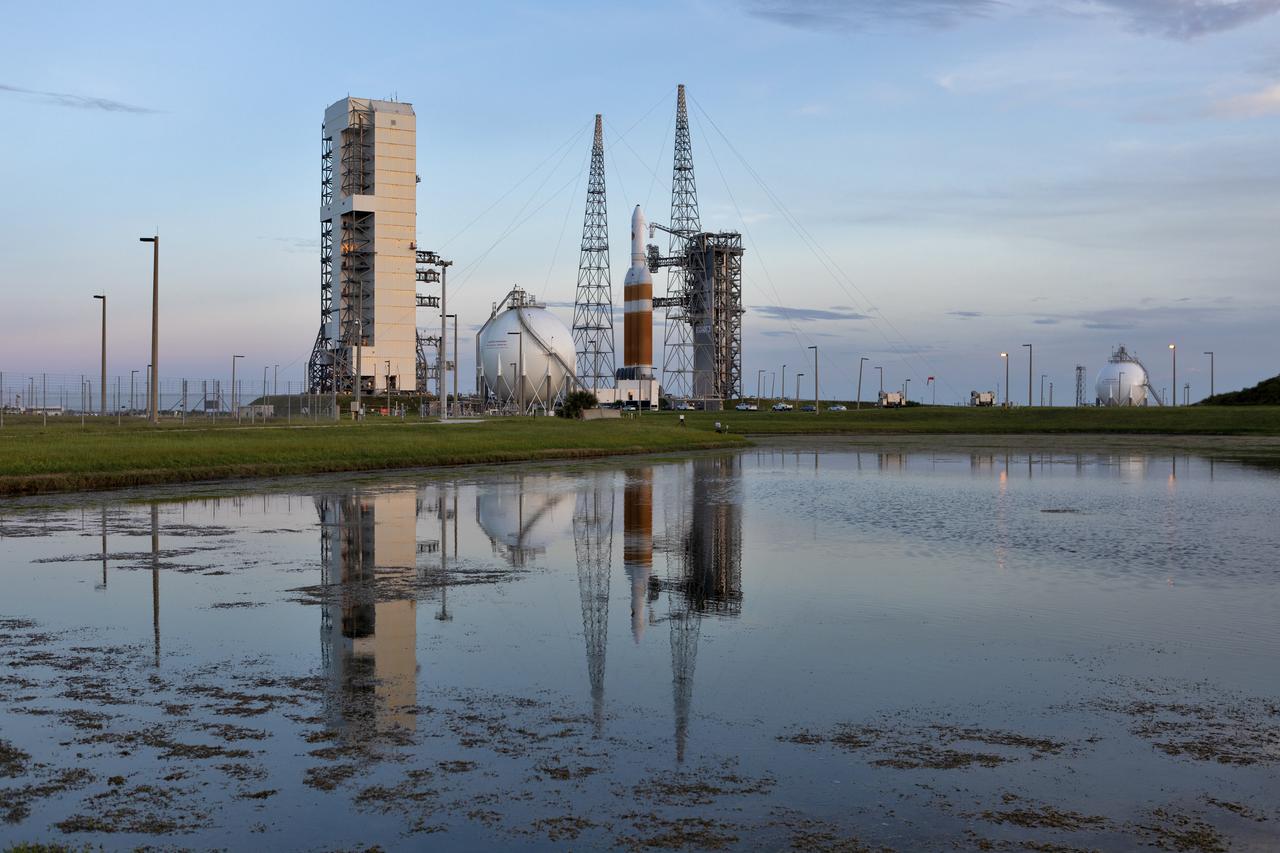
On Friday, Aug. 10, 2018, at Cape Canaveral Air Force Station in Florida, the United Launch Alliance Delta IV Heavy rocket that will boost NASA's Parker Solar Probe is reflected in a nearby pond during rollback of the Mobile Service Tower gantry at Space Launch Complex 37. Parker Solar Probe will perform the closest-ever observations of a star when it travels through the Sun's atmosphere, called the corona. The probe will rely on measurements and imaging to revolutionize our understanding of the corona and the Sun-Earth connection.
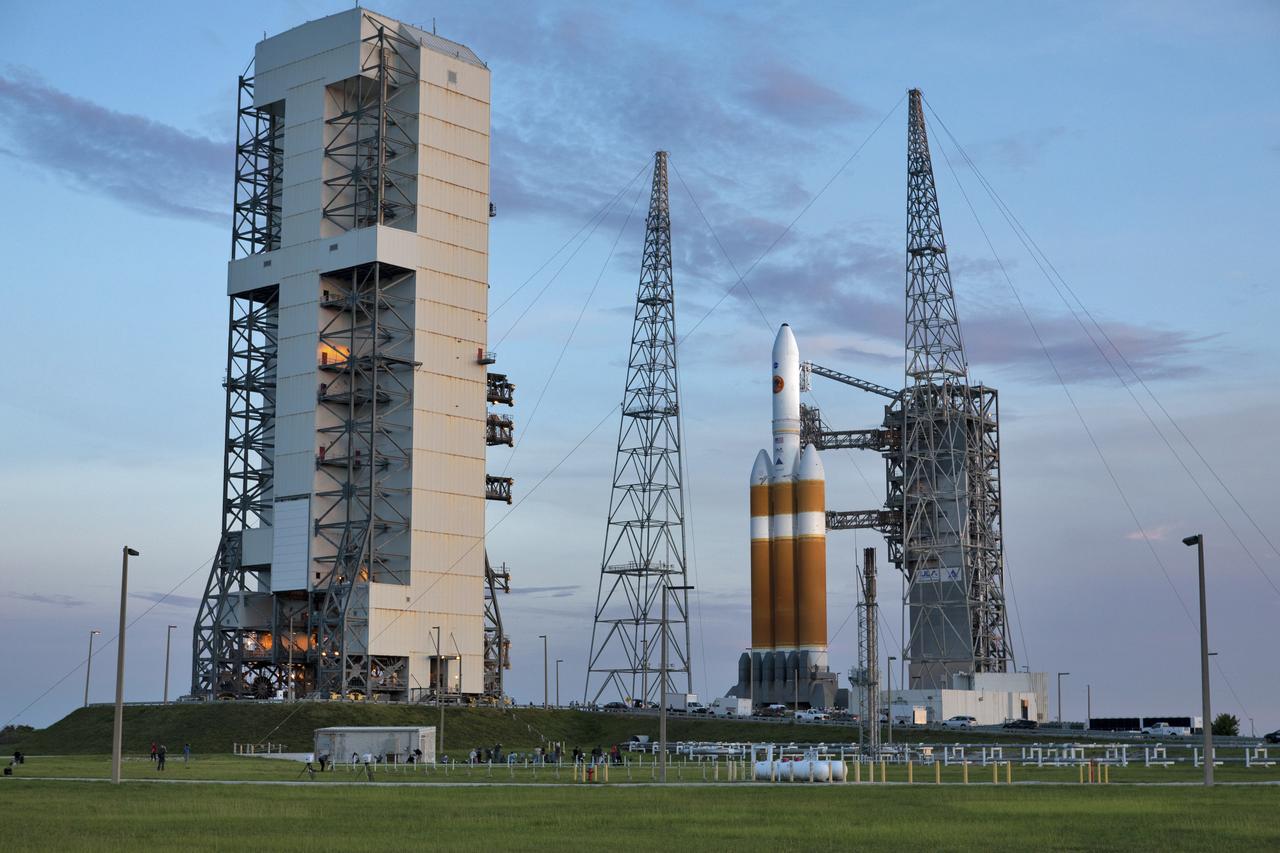
On Friday, Aug. 10, 2018, at Cape Canaveral Air Force Station in Florida, the United Launch Alliance Delta IV Heavy rocket stands ready to boost NASA's Parker Solar Probe on a mission to study the Sun following rollback of the Mobile Service Tower gantry at Space Launch Complex 37. Parker Solar Probe will perform the closest-ever observations of a star when it travels through the Sun's atmosphere, called the corona. The probe will rely on measurements and imaging to revolutionize our understanding of the corona and the Sun-Earth connection.
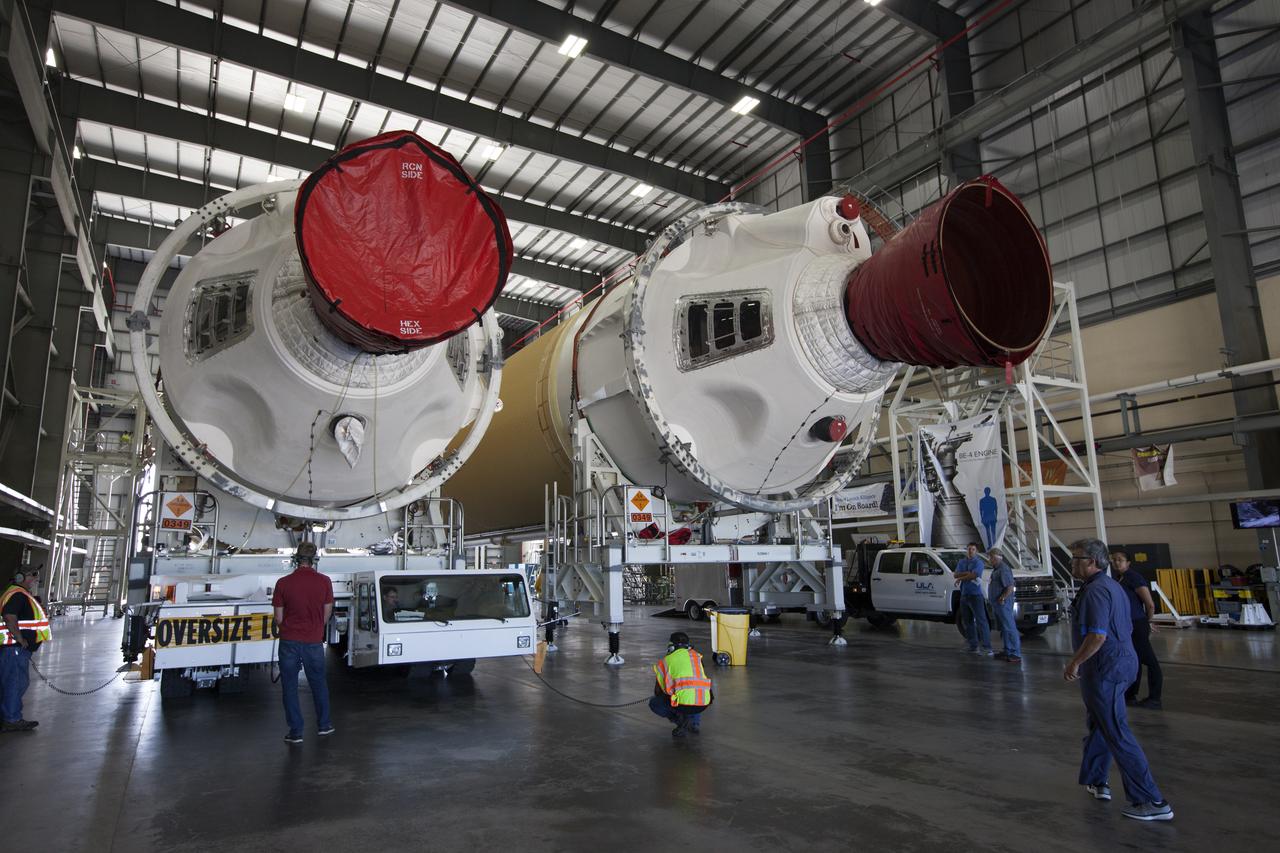
A United Launch Alliance Delta IV Heavy common booster core is placed beside an additional core inside Cape Canaveral Air Force Station's Launch Complex 37 Horizontal Processing Facility. The Delta IV Heavy will launch NASA's upcoming Parker Solar Probe mission. The mission will perform the closest-ever observations of a star when it travels through the Sun's atmosphere, called the corona. The probe will rely on measurements and imaging to revolutionize our understanding of the corona and the Sun-Earth connection. Liftoff atop the Delta IV Heavy rocket is scheduled to take place from Cape Canaveral's Space Launch Complex 37 in summer 2018.
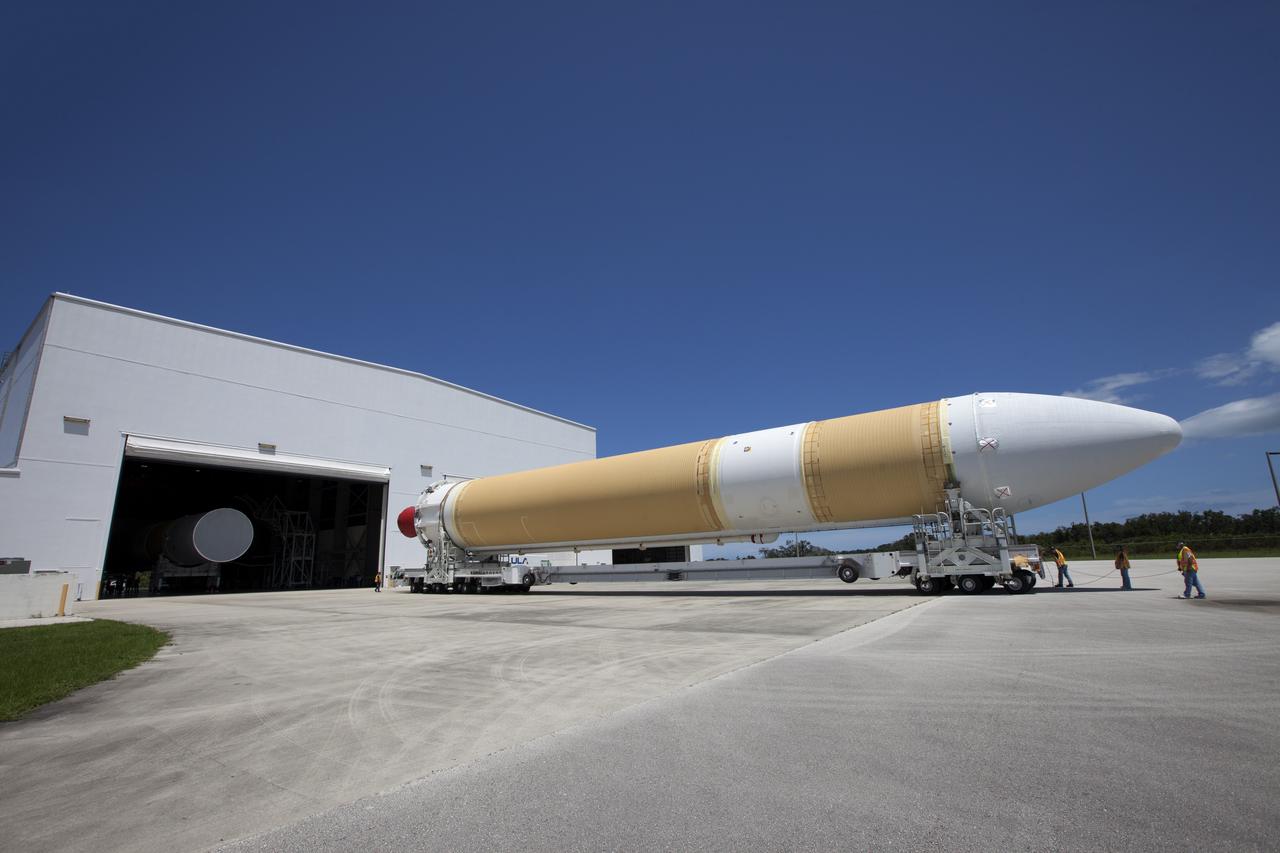
A United Launch Alliance Delta IV Heavy common booster core arrives by truck at Cape Canaveral Air Force Station's Launch Complex 37 Horizontal Processing Facility. The Delta IV Heavy will launch NASA's upcoming Parker Solar Probe mission. The mission will perform the closest-ever observations of a star when it travels through the Sun's atmosphere, called the corona. The probe will rely on measurements and imaging to revolutionize our understanding of the corona and the Sun-Earth connection. Liftoff atop the Delta IV Heavy rocket is scheduled to take place from Cape Canaveral's Space Launch Complex 37 in summer 2018.
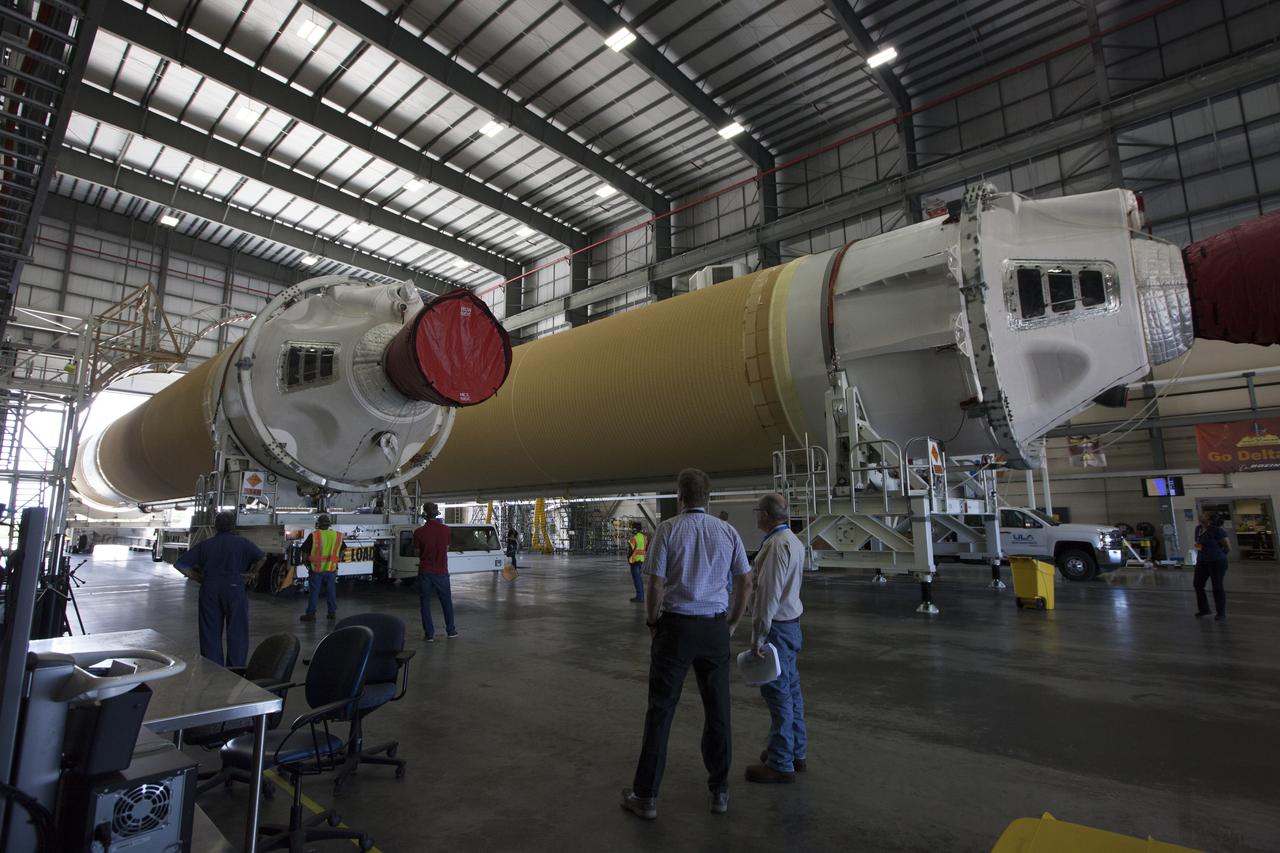
A United Launch Alliance Delta IV Heavy common booster core is transported by truck into Cape Canaveral Air Force Station's Launch Complex 37 Horizontal Processing Facility. The Delta IV Heavy will launch NASA's upcoming Parker Solar Probe mission. The mission will perform the closest-ever observations of a star when it travels through the Sun's atmosphere, called the corona. The probe will rely on measurements and imaging to revolutionize our understanding of the corona and the Sun-Earth connection. Liftoff atop the Delta IV Heavy rocket is scheduled to take place from Cape Canaveral's Space Launch Complex 37 in summer 2018.
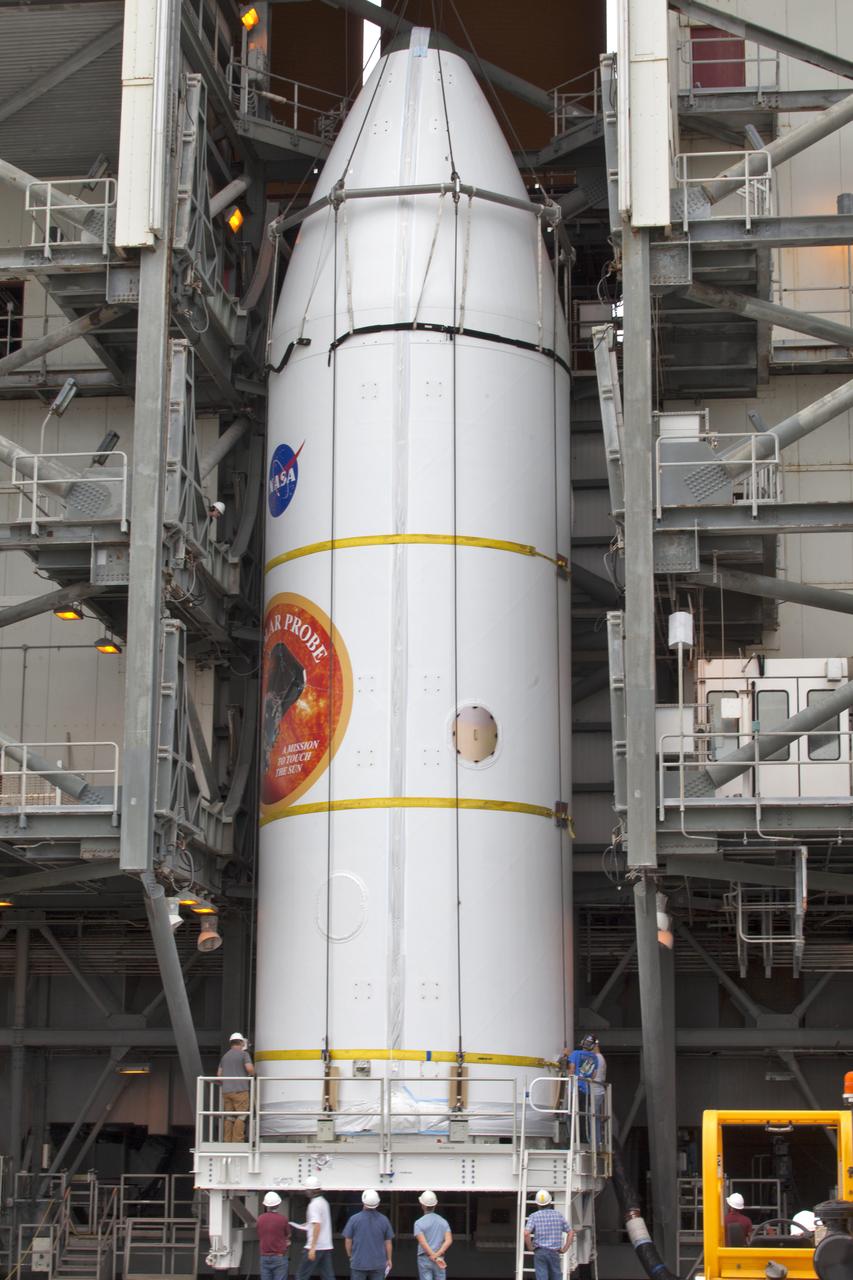
Encapsulated in its payload fairing, NASA's Parker Solar Probe is prepared to be lifted for mating to a United Launch Alliance Delta IV Heavy rocket at Cape Canaveral Air Force Station's Space Launch Complex 37 on Tuesday, July 31, 2018. The Parker Solar Probe is being prepared for a mission to perform the closest-ever observations of a star when it travels through the Sun's atmosphere, called the corona. The probe will rely on measurements and imaging to revolutionize our understanding of the corona and the Sun-Earth connection.
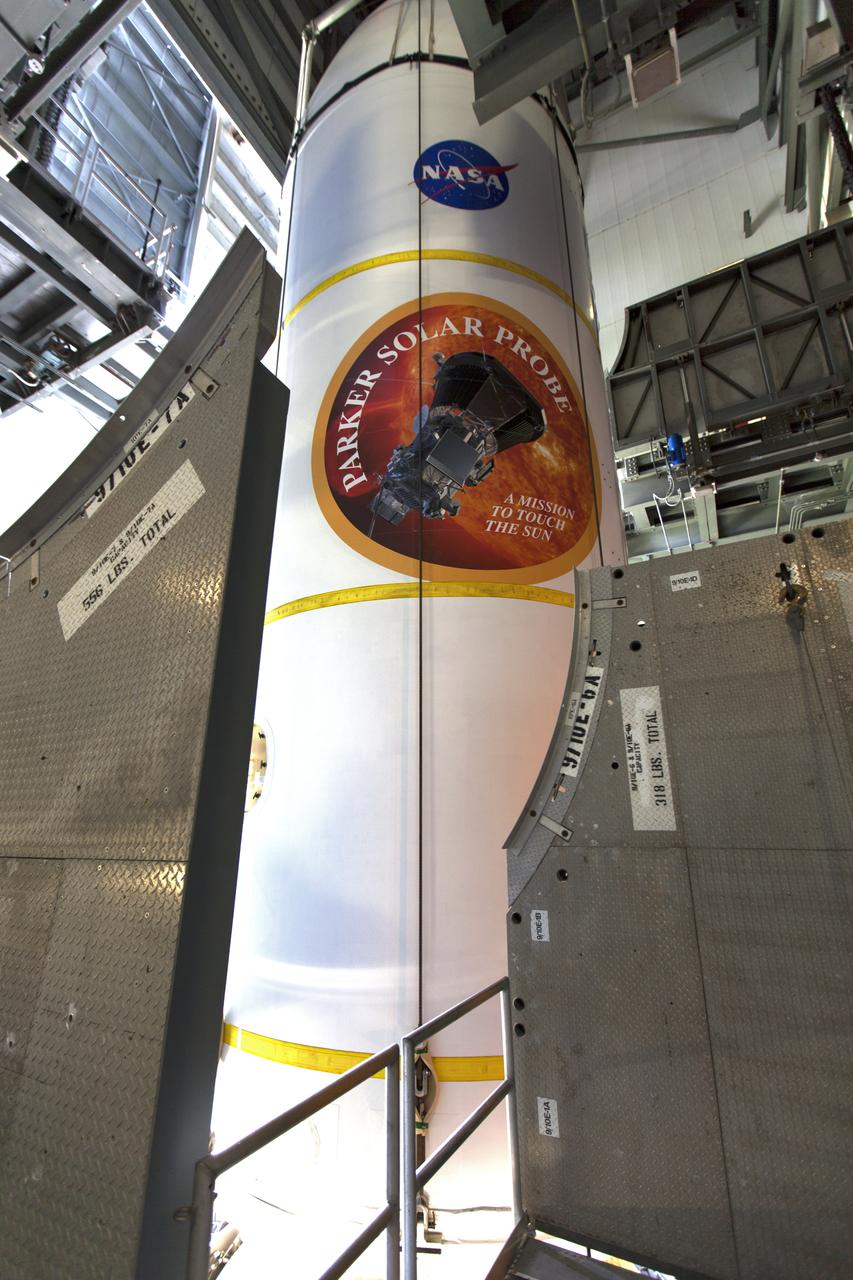
Encapsulated in its payload fairing, NASA's Parker Solar Probe is lifted by a crane for mating to a United Launch Alliance Delta IV Heavy rocket at Cape Canaveral Air Force Station's Space Launch Complex 37 on Tuesday, July 31, 2018. The Parker Solar Probe is being prepared for a mission to perform the closest-ever observations of a star when it travels through the Sun's atmosphere, called the corona. The probe will rely on measurements and imaging to revolutionize our understanding of the corona and the Sun-Earth connection.
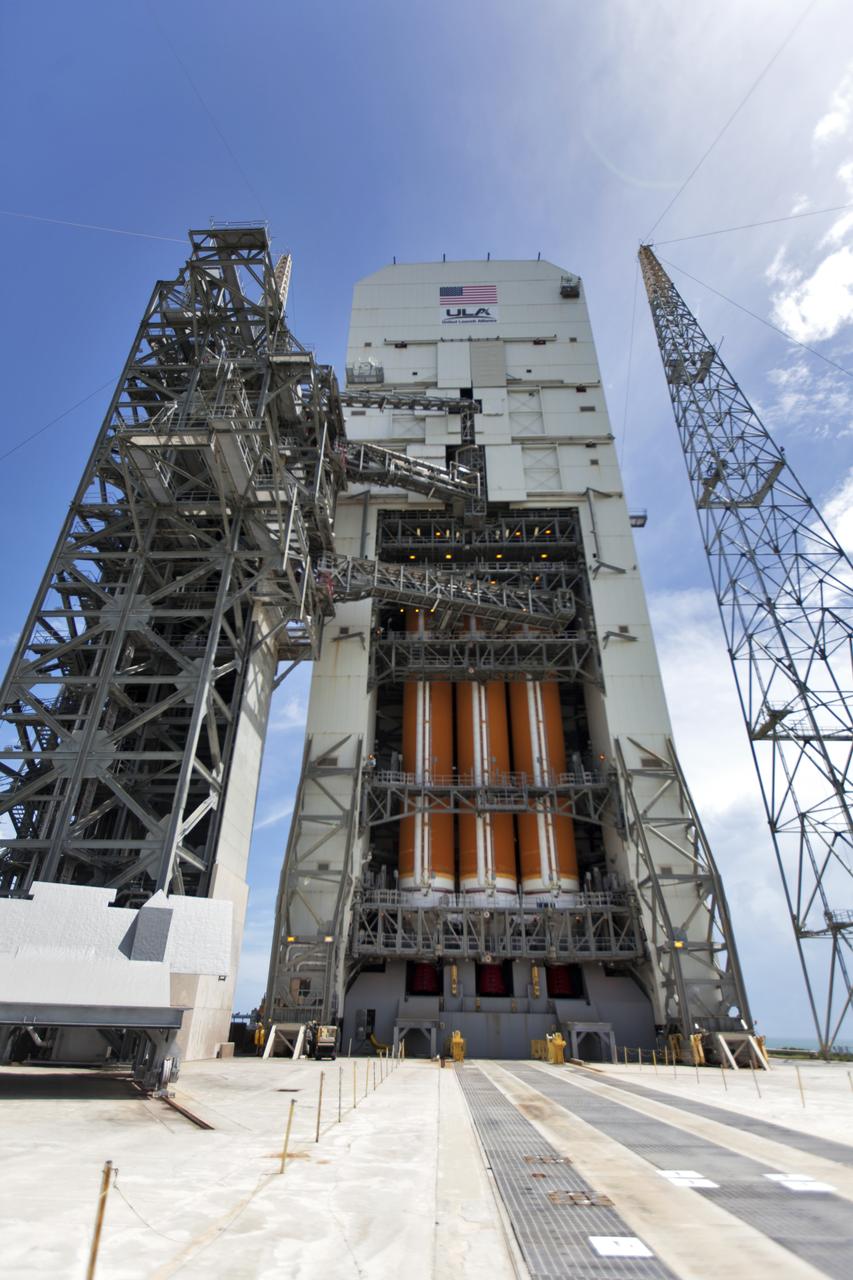
Encapsulated in its payload fairing, NASA's Parker Solar Probe has been mated to a United Launch Alliance Delta IV Heavy rocket at Cape Canaveral Air Force Station's Space Launch Complex 37 on Tuesday, July 31, 2018. The Parker Solar Probe is being prepared for a mission to perform the closest-ever observations of a star when it travels through the Sun's atmosphere, called the corona. The probe will rely on measurements and imaging to revolutionize our understanding of the corona and the Sun-Earth connection.
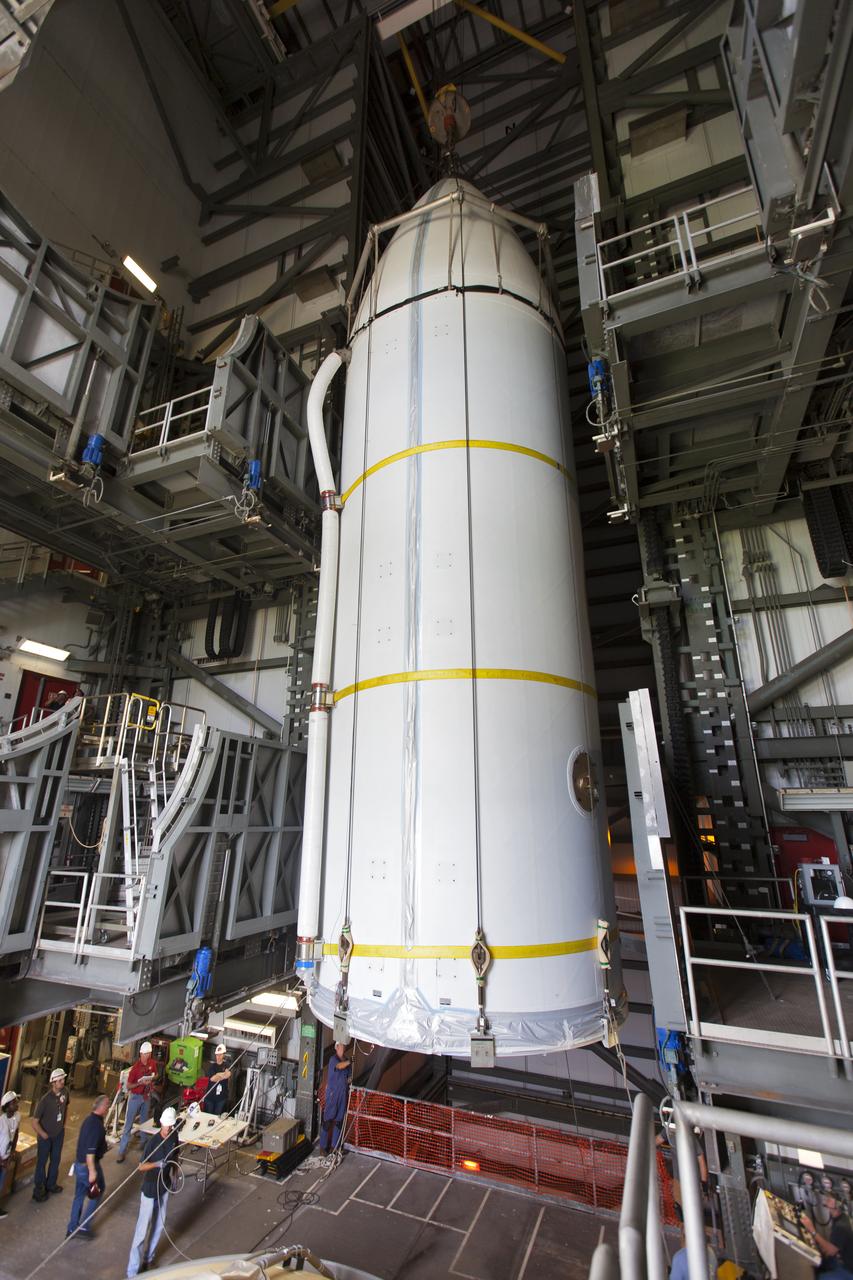
Encapsulated in its payload fairing, NASA's Parker Solar Probe is lifted by a crane for mating to a United Launch Alliance Delta IV Heavy rocket at Cape Canaveral Air Force Station's Space Launch Complex 37 on Tuesday, July 31, 2018. The Parker Solar Probe is being prepared for a mission to perform the closest-ever observations of a star when it travels through the Sun's atmosphere, called the corona. The probe will rely on measurements and imaging to revolutionize our understanding of the corona and the Sun-Earth connection.
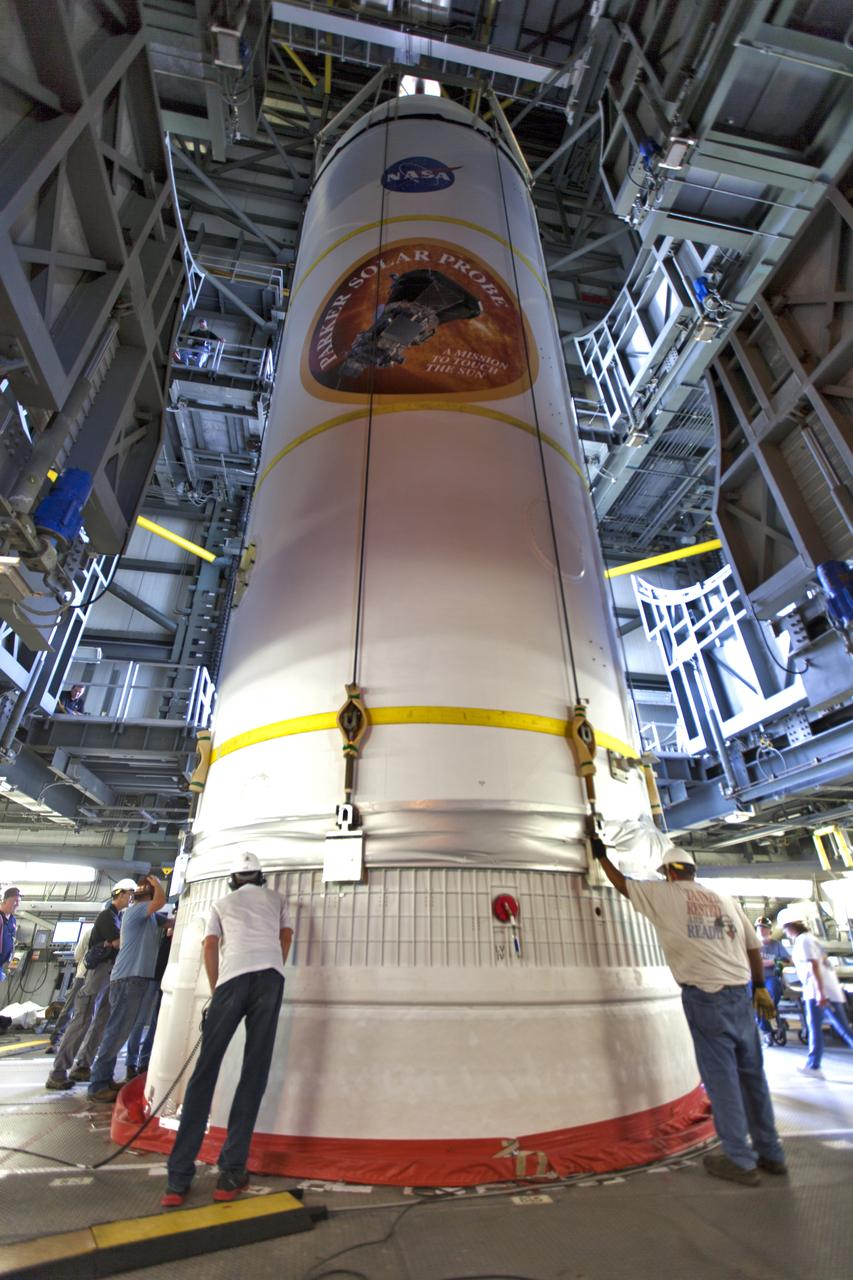
Encapsulated in its payload fairing, NASA's Parker Solar Probe is mated to a United Launch Alliance Delta IV Heavy rocket at Cape Canaveral Air Force Station's Space Launch Complex 37 on Tuesday, July 31, 2018. The Parker Solar Probe is being prepared for a mission to perform the closest-ever observations of a star when it travels through the Sun's atmosphere, called the corona. The probe will rely on measurements and imaging to revolutionize our understanding of the corona and the Sun-Earth connection.

Encapsulated in its payload fairing, NASA's Parker Solar Probe is prepared to be lifted for mating to a United Launch Alliance Delta IV Heavy rocket at Cape Canaveral Air Force Station's Space Launch Complex 37 on Tuesday, July 31, 2018. The Parker Solar Probe is being prepared for a mission to perform the closest-ever observations of a star when it travels through the Sun's atmosphere, called the corona. The probe will rely on measurements and imaging to revolutionize our understanding of the corona and the Sun-Earth connection.
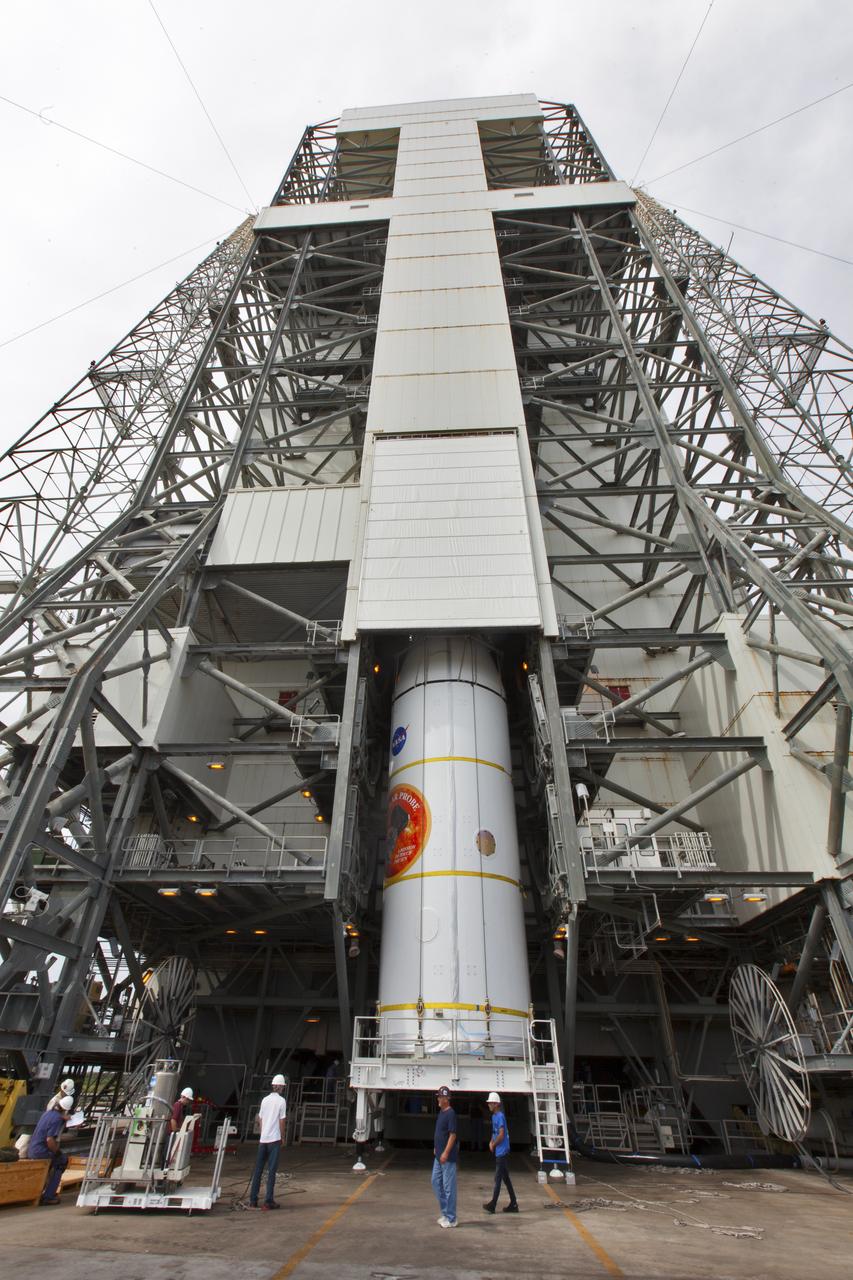
Encapsulated in its payload fairing, NASA's Parker Solar Probe is prepared to be lifted for mating to a United Launch Alliance Delta IV Heavy rocket at Cape Canaveral Air Force Station's Space Launch Complex 37 on Tuesday, July 31, 2018. The Parker Solar Probe is being prepared for a mission to perform the closest-ever observations of a star when it travels through the Sun's atmosphere, called the corona. The probe will rely on measurements and imaging to revolutionize our understanding of the corona and the Sun-Earth connection.
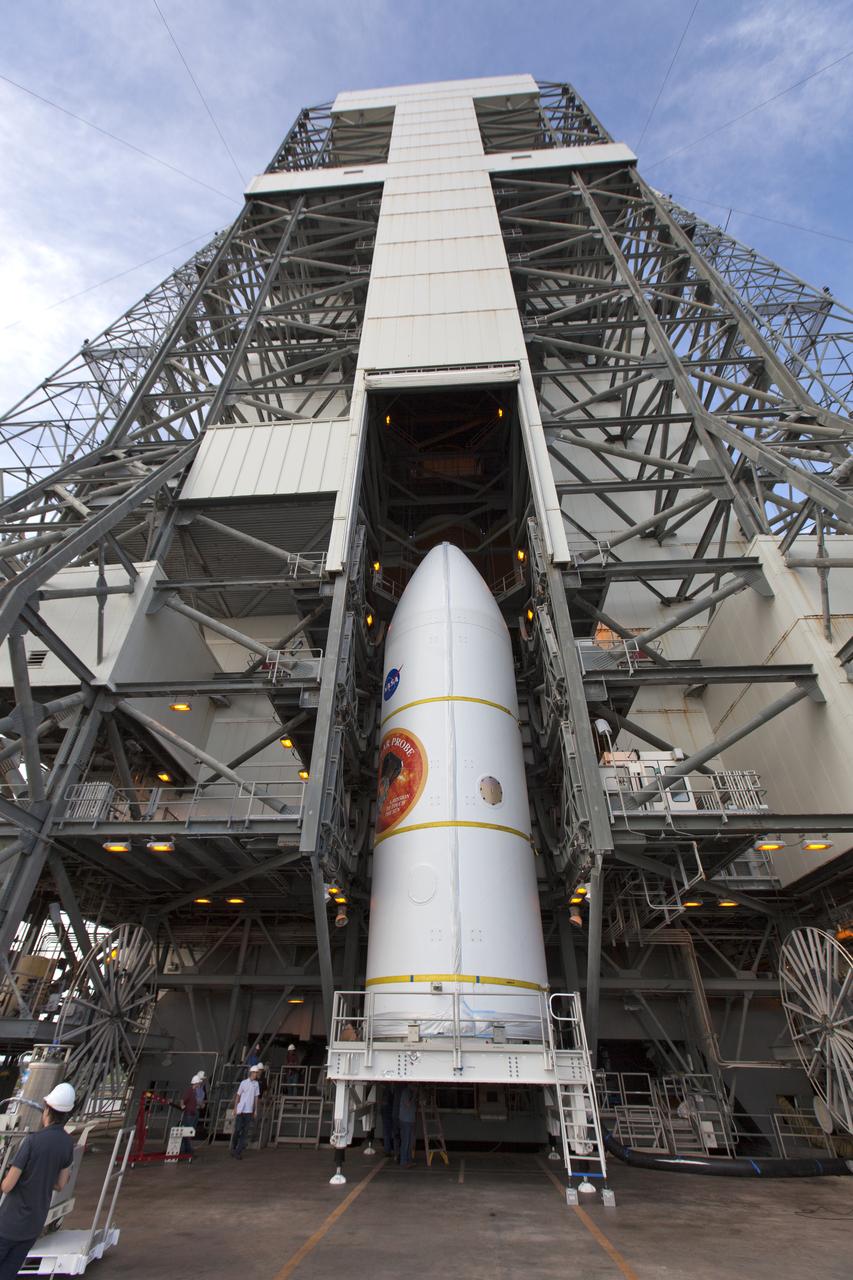
Encapsulated in its payload fairing, NASA's Parker Solar Probe is prepared to be lifted for mating to a United Launch Alliance Delta IV Heavy rocket at Cape Canaveral Air Force Station's Space Launch Complex 37 on Tuesday, July 31, 2018. The Parker Solar Probe is being prepared for a mission to perform the closest-ever observations of a star when it travels through the Sun's atmosphere, called the corona. The probe will rely on measurements and imaging to revolutionize our understanding of the corona and the Sun-Earth connection.