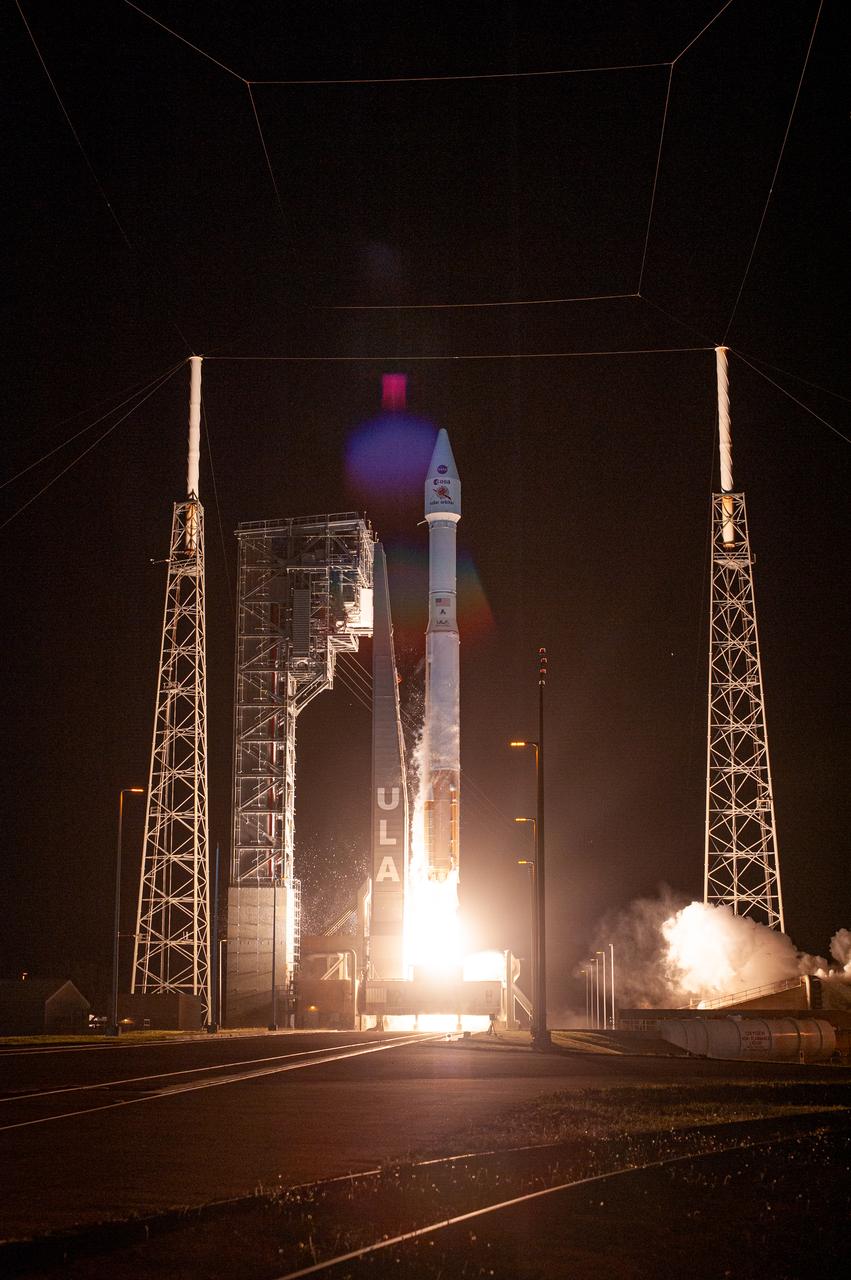
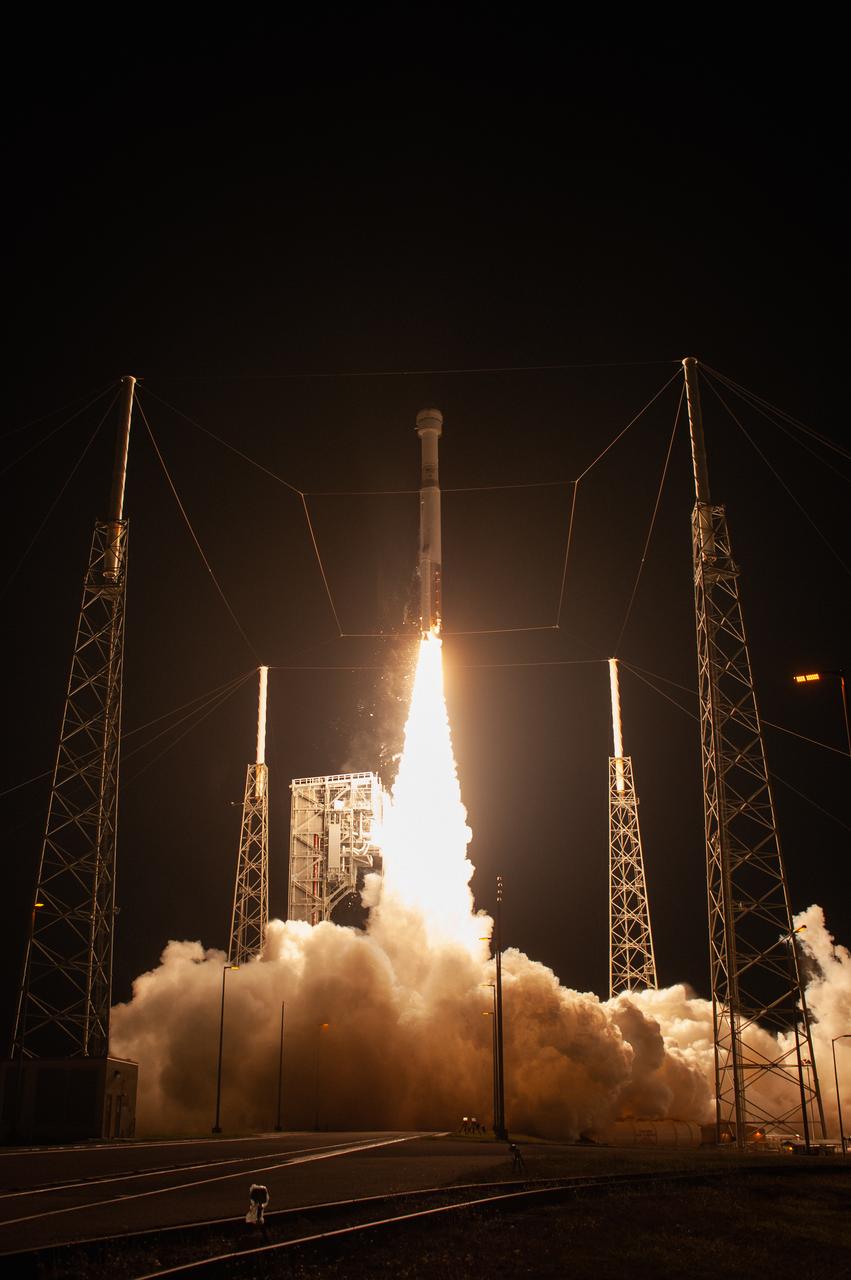
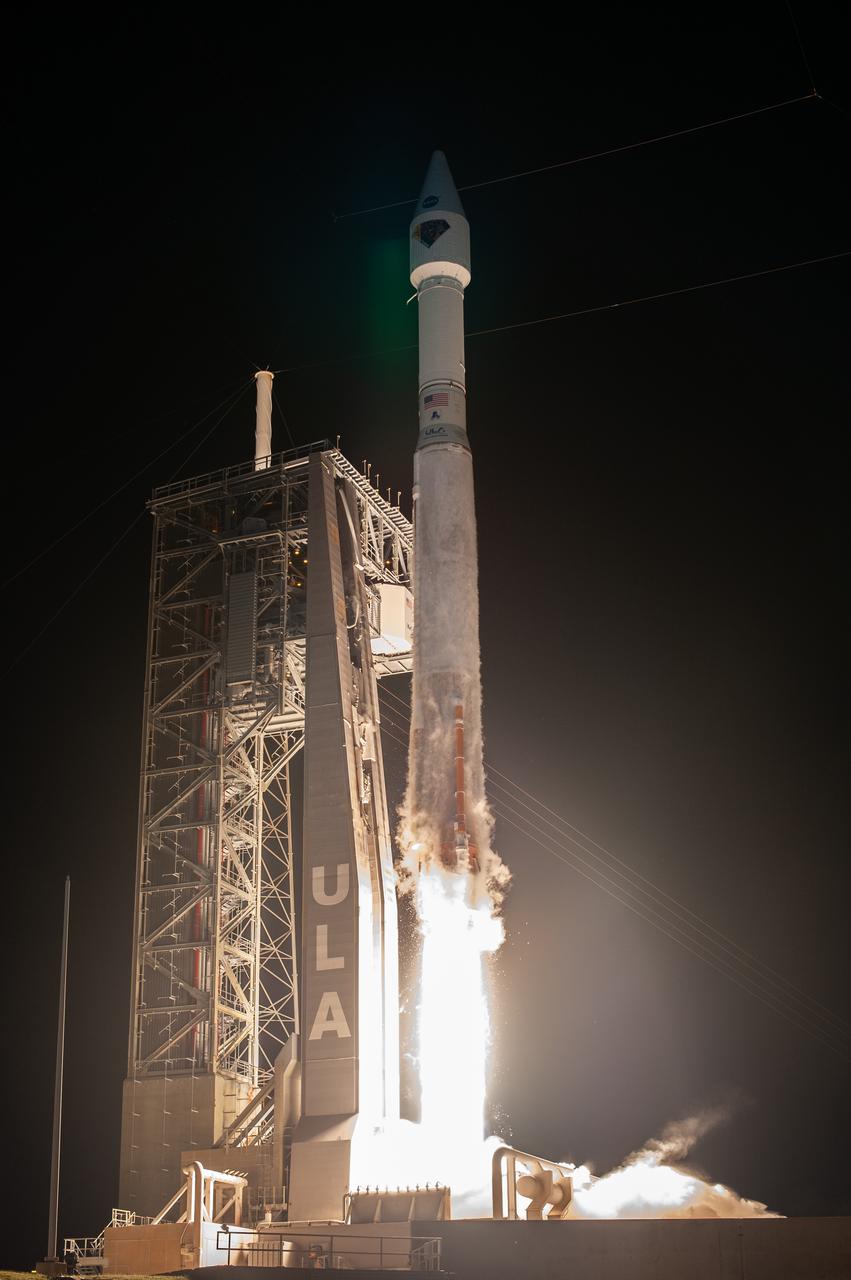
The United Launch Alliance Atlas V rocket, carrying the Solar Orbiter, lifts off Space Launch Complex 41 at Cape Canaveral Air Force Station in Florida at 11:03 p.m. EST, on Feb. 9, 2020. Solar Orbiter is an international cooperative mission between ESA (European Space Agency) and NASA. The mission aims to study the Sun, its outer atmosphere and solar wind. The spacecraft will provide the first images of the Sun’s poles. The spacecraft was developed by Airbus Defence and Space. NASA’s Launch Services Program based at Kennedy managed the launch.
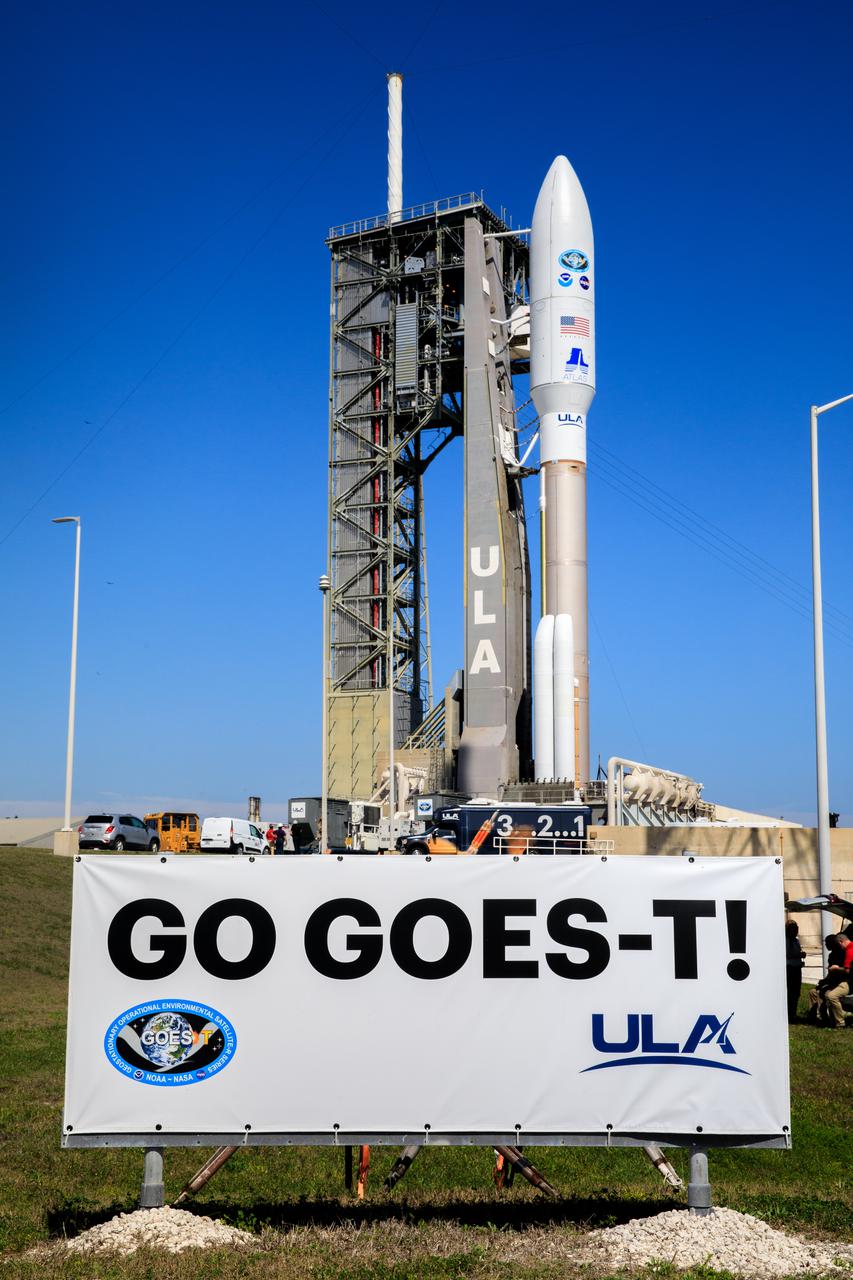
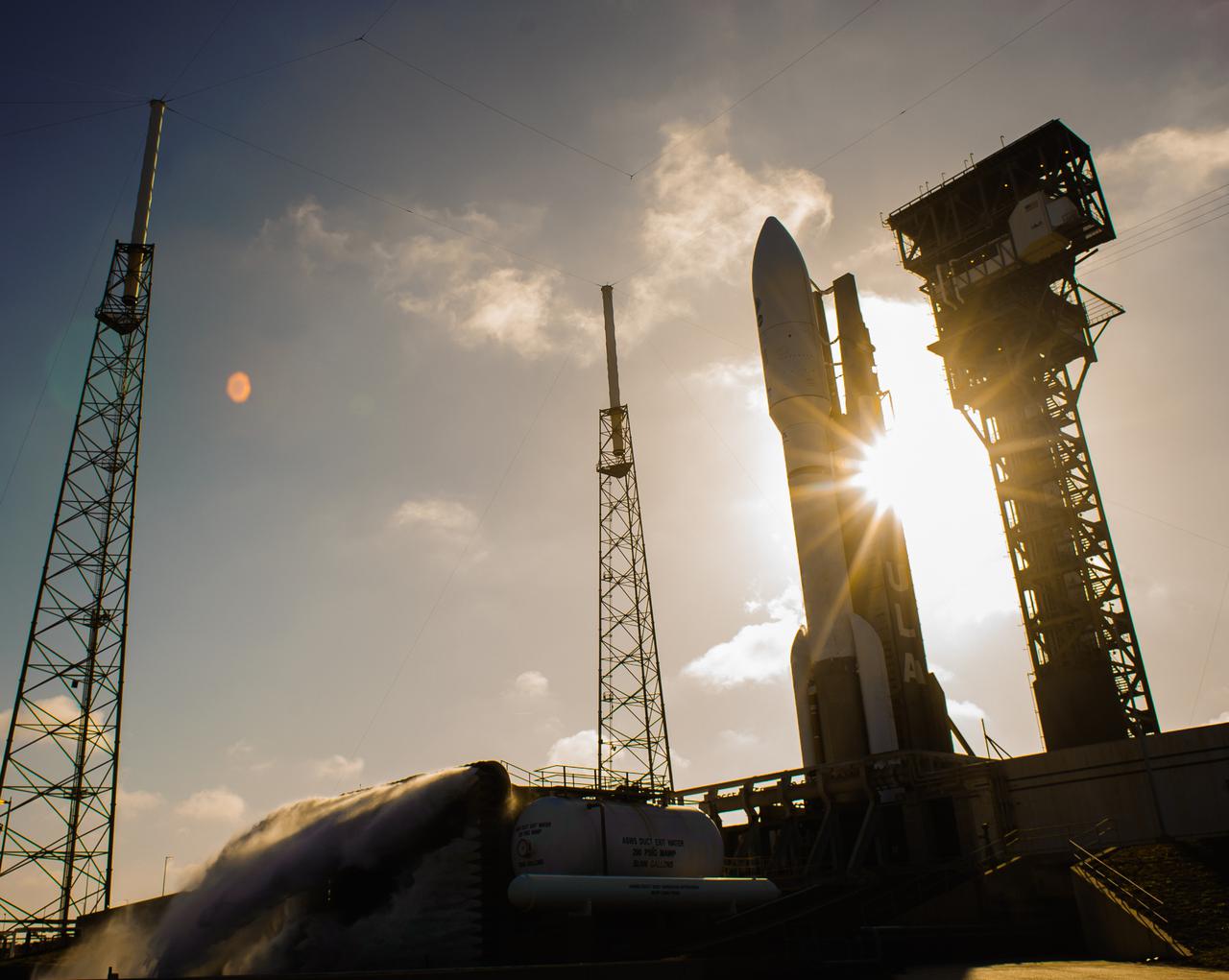
A United Launch Alliance Atlas V 541 rocket carrying the National Oceanic and Atmospheric Administration’s (NOAA) Geostationary Operational Environmental Satellite-T (GOES-T), is secured on the pad at Space Launch Complex 41 at Cape Canaveral Space Force Station in Florida on Feb. 28, 2022. GOES-T will lift off atop the Atlas V from SLC-41 on March 1, 2022, at 4:38 p.m. GOES-T is the third satellite in the GOES-R series that will continue to help meteorologists observe and predict local weather events that affect public safety. GOES-T will be renamed GOES-18 once it reaches geostationary orbit. GOES-18 will go into operational service as GOES West to provide critical data for the U.S. West Coast, Alaska, Hawaii, Mexico, Central America, and the Pacific Ocean. The launch is managed by NASA’s Launch Services Program based at Kennedy Space Center in Florida, America’s multi-user spaceport.
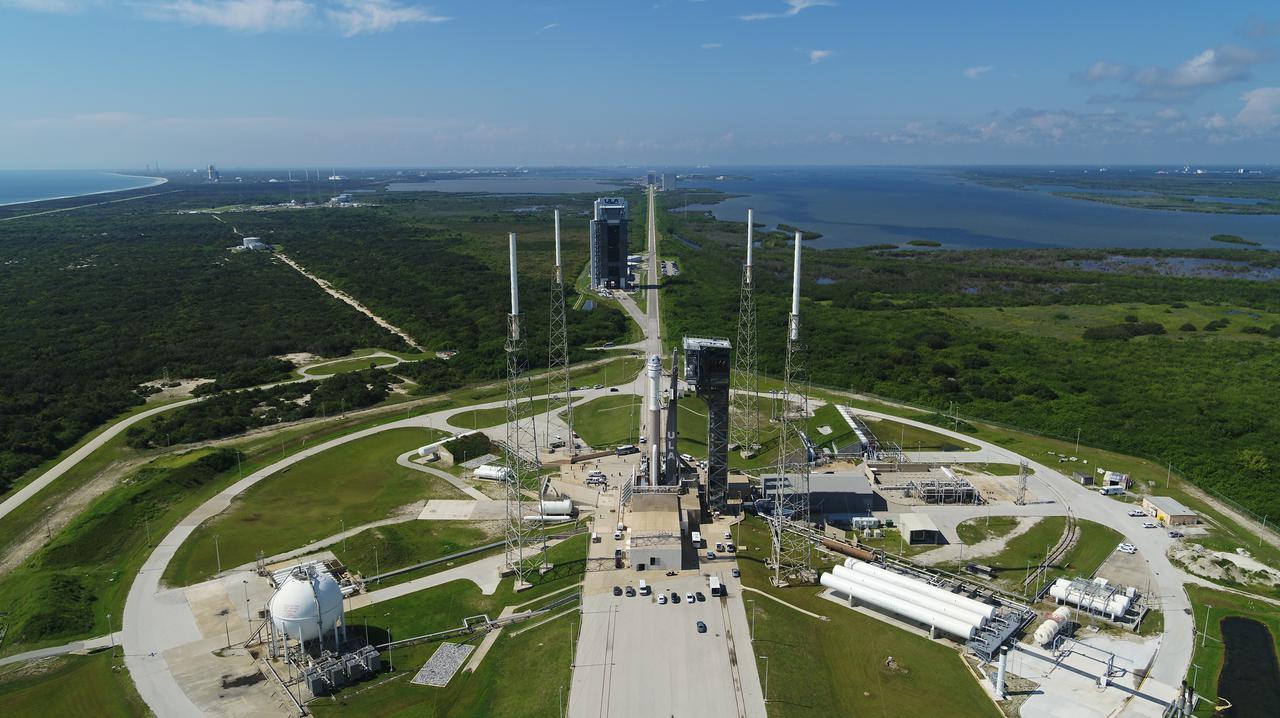
On July 29, 2021, Boeing’s CST-100 Starliner spacecraft and the United Launch Alliance Atlas V rocket rolled out of the Vertical Integration Facility to the launch pad at Space Launch Complex-41 on Cape Canaveral Space Force Station in Florida. Starliner will launch on the Atlas V for Boeing’s second uncrewed Orbital Flight Test (OFT-2) for NASA’s Commercial Crew Program. OFT-2 is an important uncrewed mission designed to test the end-to-end capabilities of the new system for NASA’s Commercial Crew Program.
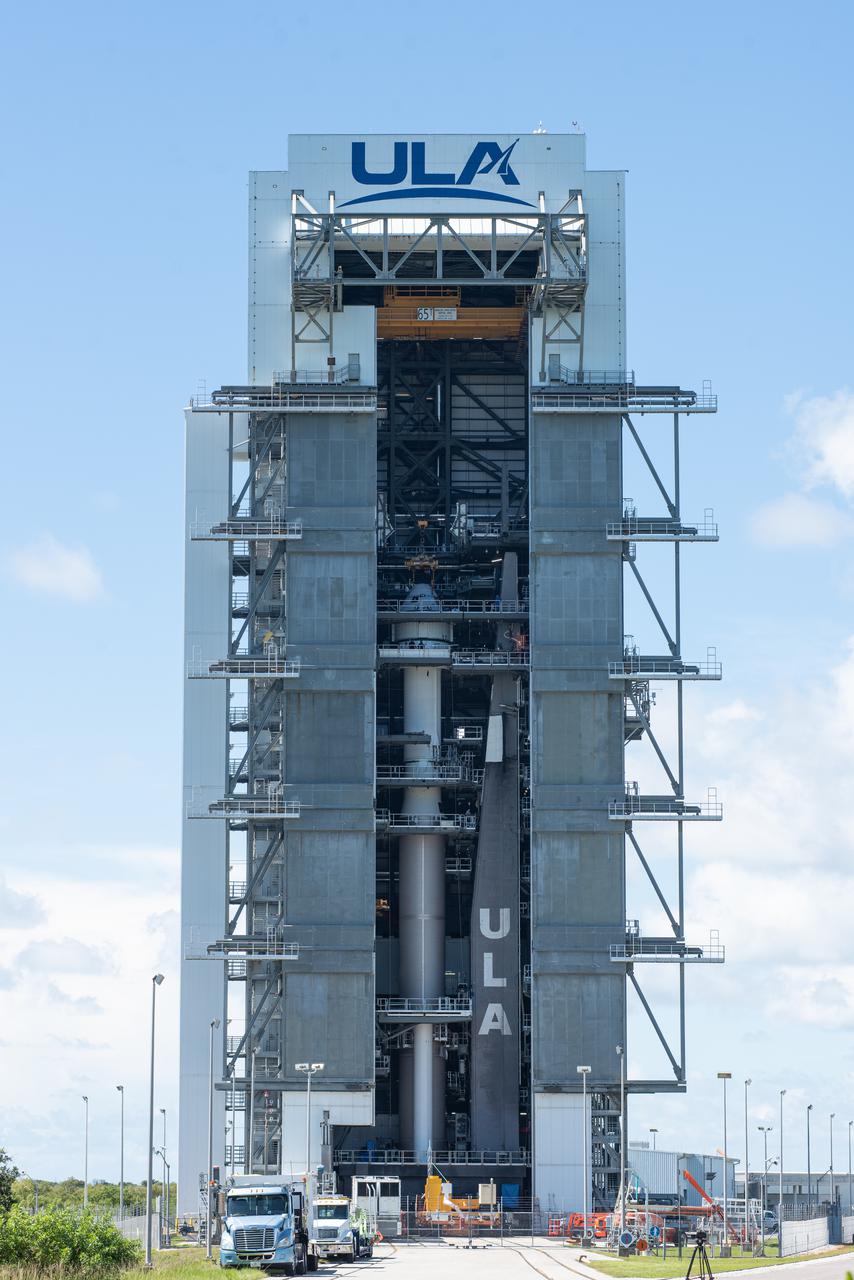
Boeing’s CST-100 Starliner spacecraft is secured atop a United Launch Alliance Atlas V rocket at the Vertical Integration Facility at Space Launch Complex-41 at Florida’s Cape Canaveral Space Force Station on July 17, 2021. Starliner will launch on the Atlas V for Boeing’s second Orbital Flight Test (OFT-2) for NASA’s Commercial Crew Program. The spacecraft rolled out from Boeing’s Commercial Crew and Cargo Processing Facility at NASA’s Kennedy Space Center earlier in the day.
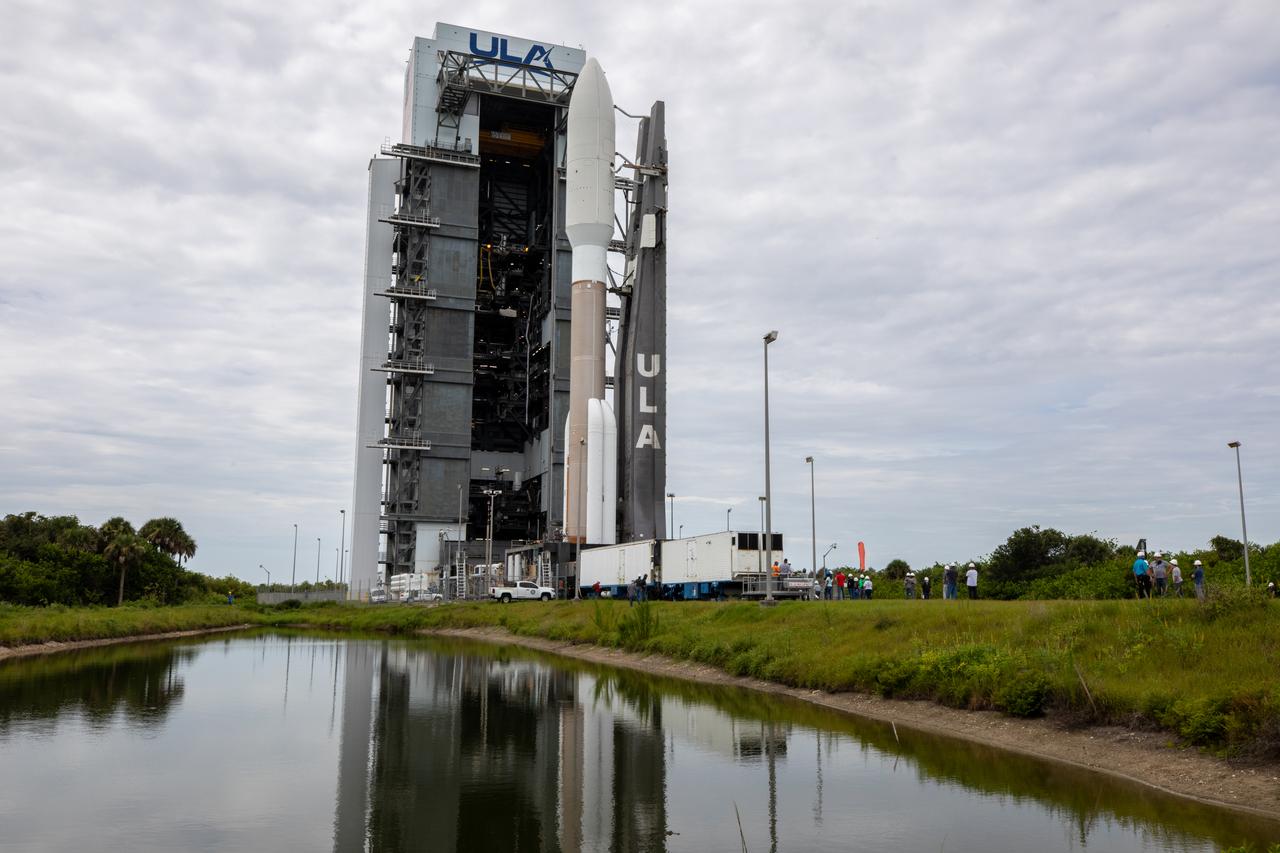
The United Launch Alliance Atlas V 541 rocket, carrying NASA’s Mars Perseverance rover and Ingenuity helicopter, rolls out from the Vertical Integration Facility and moves along to the launch pad at Space Launch Complex 41 at Cape Canaveral Air Force Station on July 28, 2020. First motion was at 10:24 a.m. EDT. Launch of the Mars 2020 mission is scheduled for July 30. The rover is part of NASA’s Mars Exploration Program, a long-term effort of robotic exploration of the Red Planet. The rover will search for habitable conditions in the ancient past and signs of past microbial life on Mars. The Launch Services Program at Kennedy is responsible for launch management.
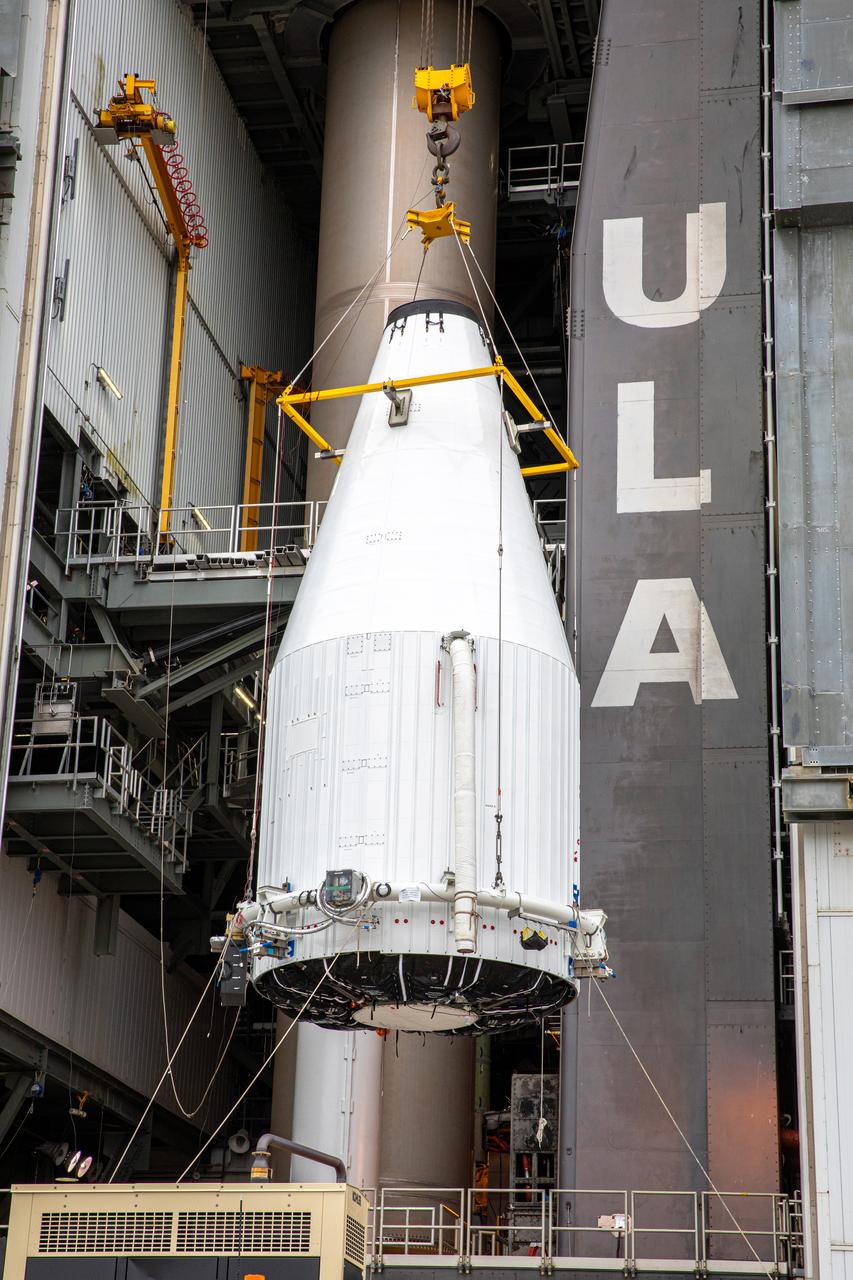
The United Launch Alliance Atlas V payload fairing, containing the Solar Orbiter spacecraft, is hoisted up by crane at the Vertical Integration Facility at Space Launch Complex 41 on Cape Canaveral Air Force Station in Florida on Jan. 31, 2020. The payload fairing will be mated to the Atlas V rocket. Solar Orbiter is an international cooperative mission between ESA (European Space Agency) and NASA. The mission aims to study the Sun, its outer atmosphere and solar wind. The spacecraft will provide the first images of the Sun’s poles. NASA’s Launch Services Program based at Kennedy is managing the launch. The spacecraft has been developed by Airbus Defence and Space. Solar Orbiter will launch in February 2020 aboard the Atlas V rocket.
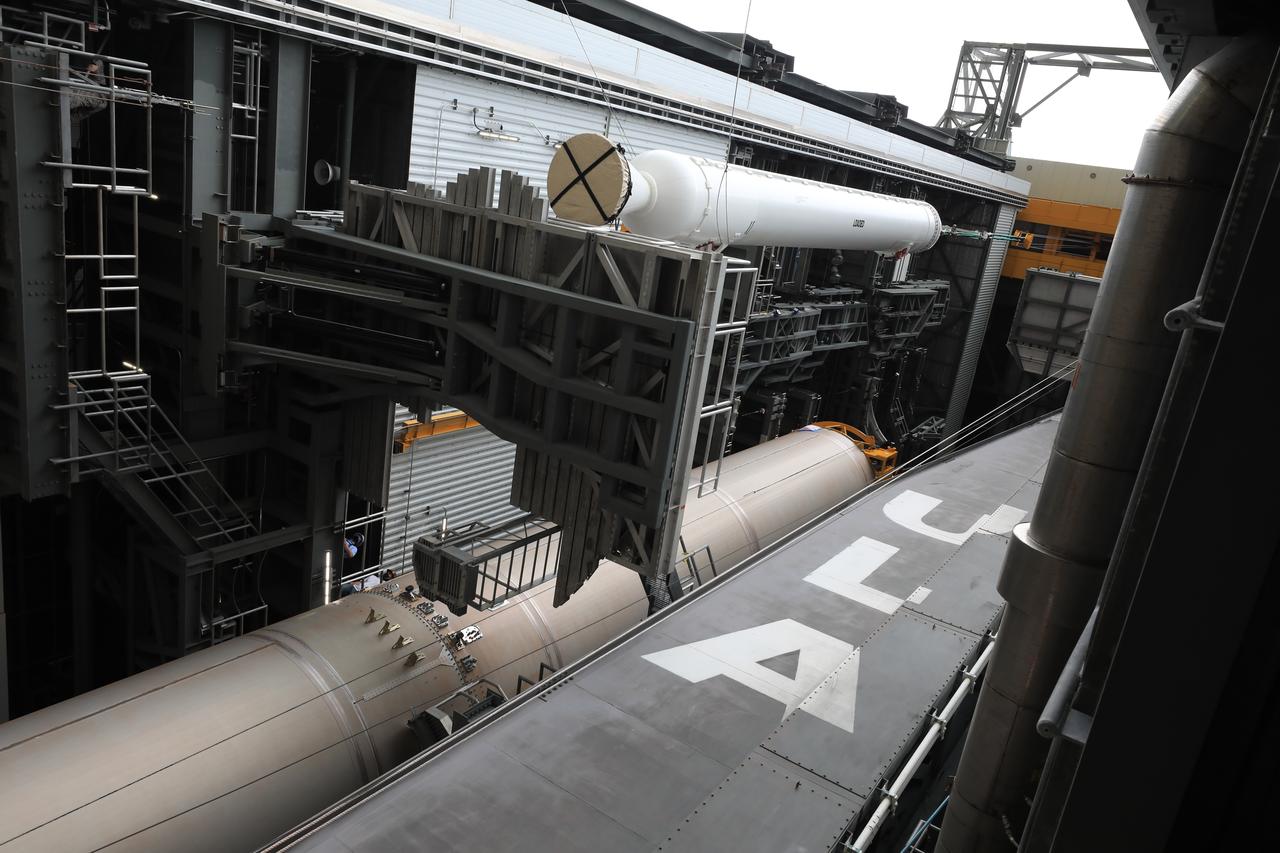
Inside the Vertical Integration Facility at Space Launch Complex 41 at Cape Canaveral Air Force Station in Florida, the second of four solid rocket boosters (SRB) for the United Launch Alliance Atlas V 541 rocket is lifted up by crane on June 3, 2020. The SRB will be mated to the Atlas V booster. NASA’s Mars 2020 mission with the Perseverance rover is scheduled to launch on July 20, 2020, atop the Atlas V rocket from Pad 41. The rover is part of NASA’s Mars Exploration Program, a long-term effort of robotic exploration of the Red Planet. The rover’s seven instruments will search for habitable conditions in the ancient past and signs of past microbial life on Mars. The Launch Services Program at Kennedy is responsible for launch management.
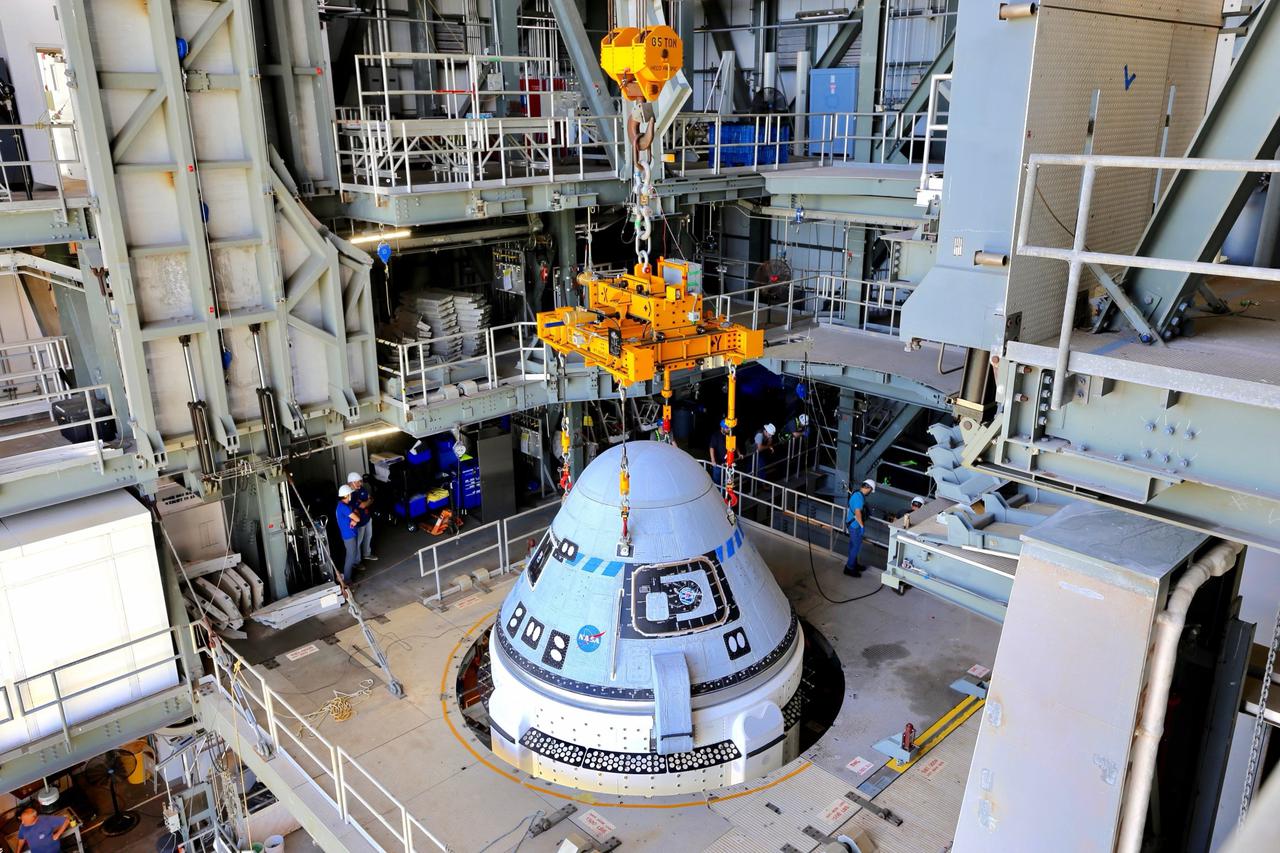
Boeing’s CST-100 Starliner spacecraft is secured atop a United Launch Alliance Atlas V rocket at the Vertical Integration Facility at Space Launch Complex-41 at Florida’s Cape Canaveral Space Force Station on July 17, 2021. Starliner will launch on the Atlas V for Boeing’s second Orbital Flight Test (OFT-2) for NASA’s Commercial Crew Program. The spacecraft rolled out from Boeing’s Commercial Crew and Cargo Processing Facility at NASA’s Kennedy Space Center earlier in the day.
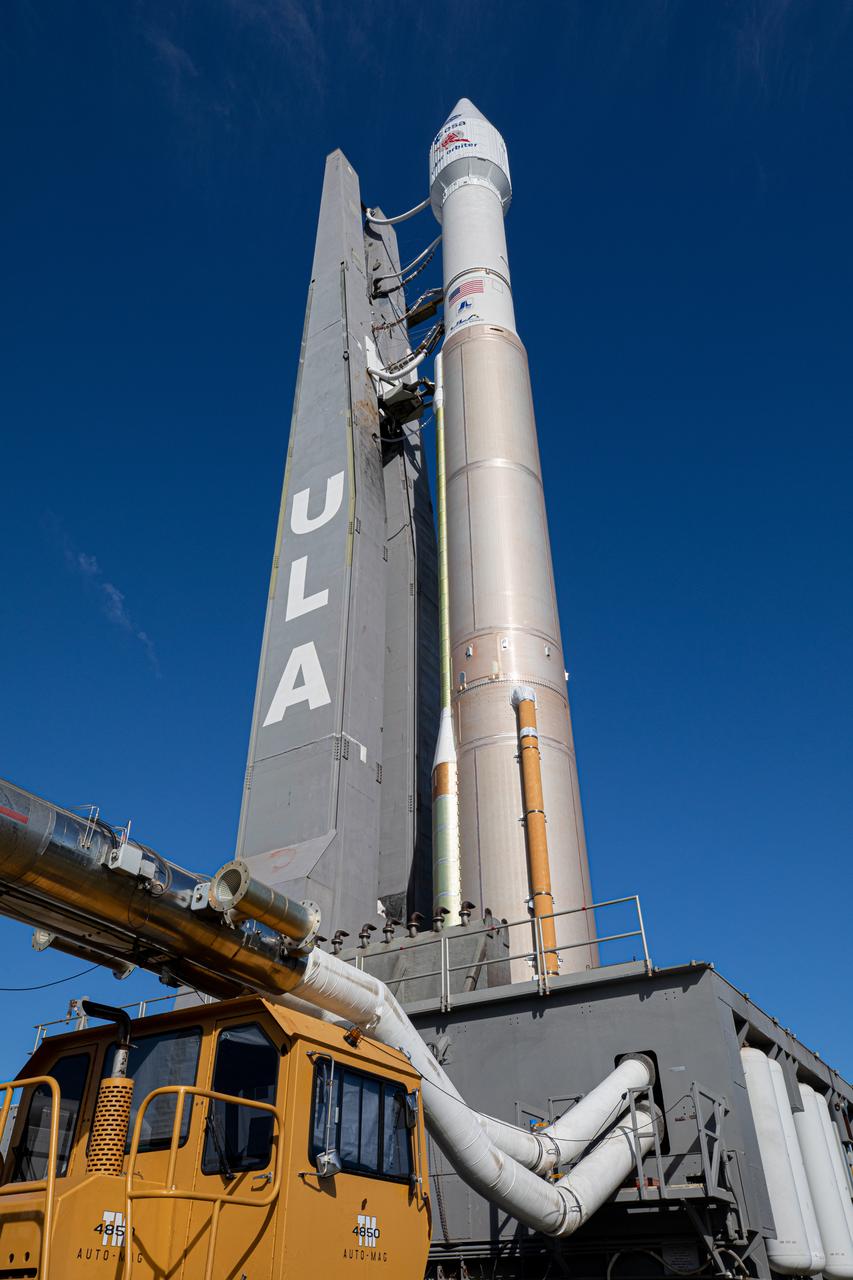
After departing the Vertical Integration Facility, the United Launch Alliance Atlas V rocket with the Solar Orbiter spacecraft moves slowly toward the launch pad at Space Launch Complex 41 on Cape Canaveral Air Force Station in Florida on Feb. 8, 2020. Solar Orbiter is an international cooperative mission between ESA (European Space Agency) and NASA. The mission aims to study the Sun, its outer atmosphere and solar wind. The spacecraft will provide the first images of the Sun’s poles. NASA’s Launch Services Program based at Kennedy is managing the launch. The spacecraft has been developed by Airbus Defence and Space. Solar Orbiter will launch Feb. 9, 2020 aboard the Atlas V rocket.
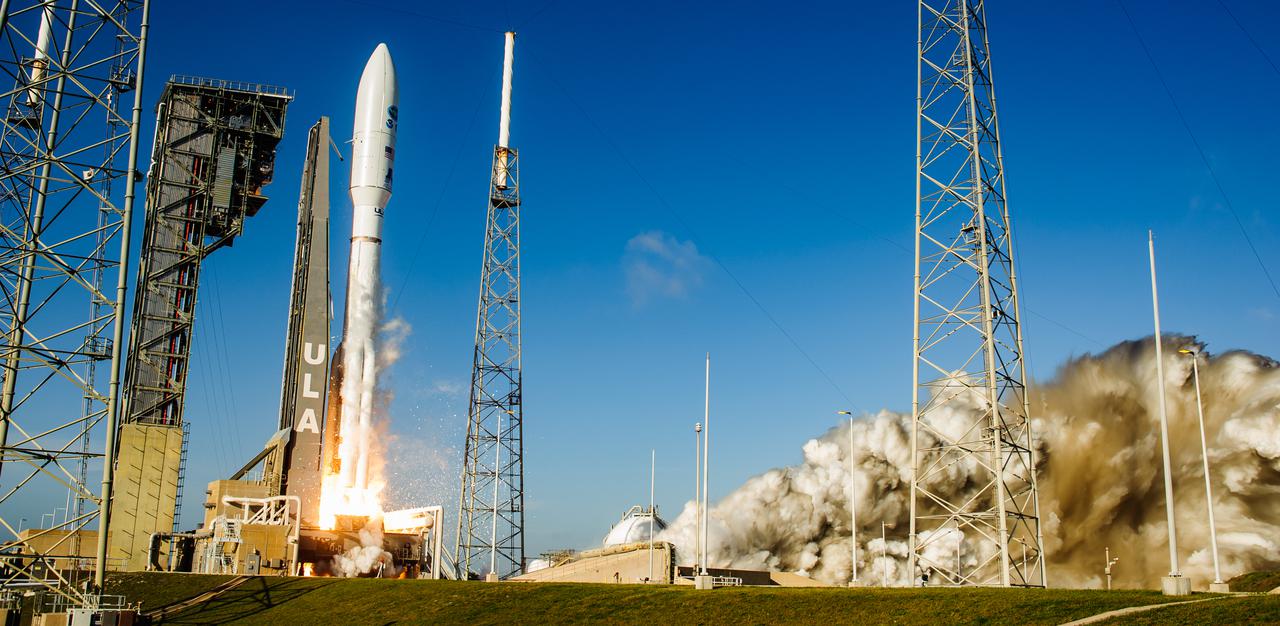
A United Launch Alliance Atlas V 541 rocket, carrying the National Oceanic and Atmospheric Administration’s (NOAA) Geostationary Operational Environmental Satellite-T (GOES-T), lifts off from Space Launch Complex 41 at Cape Canaveral Space Force Station in Florida on March 1, 2022. Liftoff was at 4:38 p.m. EST. GOES-T is the third satellite in the GOES-R series that will continue to help meteorologists observe and predict local weather events that affect public safety. GOES-T will be renamed GOES-18 once it reaches geostationary orbit. GOES-18 will go into operational service as GOES West to provide critical data for the U.S. West Coast, Alaska, Hawaii, Mexico, Central America, and the Pacific Ocean. The launch was managed by NASA’s Launch Services Program based at Kennedy Space Center in Florida, America’s multi-user spaceport.
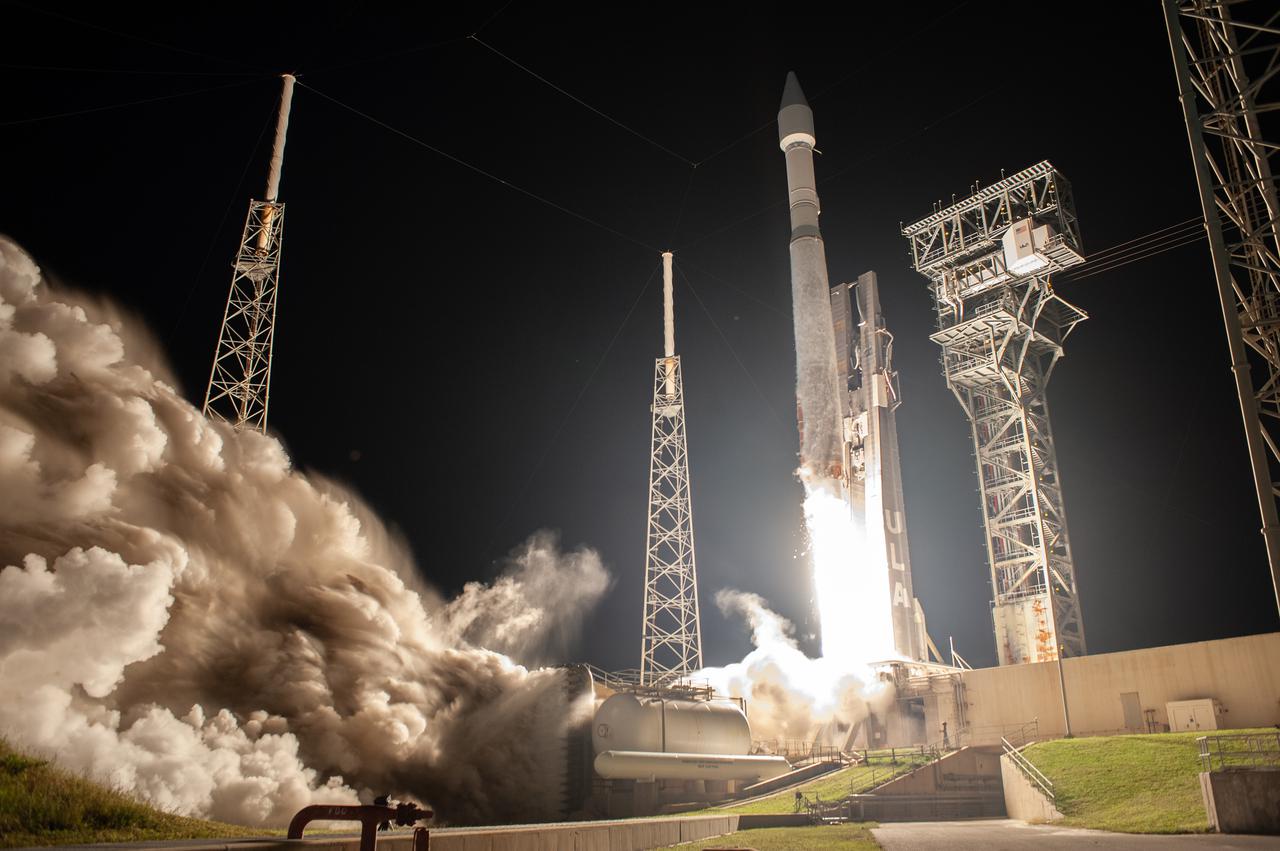
A United Launch Alliance V 401 rocket, with NASA’s Lucy spacecraft atop, powers off the pad at Cape Canaveral Space Force Station’s Space Launch Complex 41 in Florida at 5:34 a.m. EDT on Saturday, Oct. 16, 2021. The launch was managed by NASA’s Launch Services Program, based at Kennedy Space Center. Lucy will embark on a 12-year primary mission to explore a record-breaking number of asteroids, including the Jupiter Trojan asteroids. Named after a fossilized human ancestor whose skeleton provided discoverers insight into humanity’s evolution, the Lucy mission will do much of the same, providing scientists and researchers a look into the origins of our solar system.
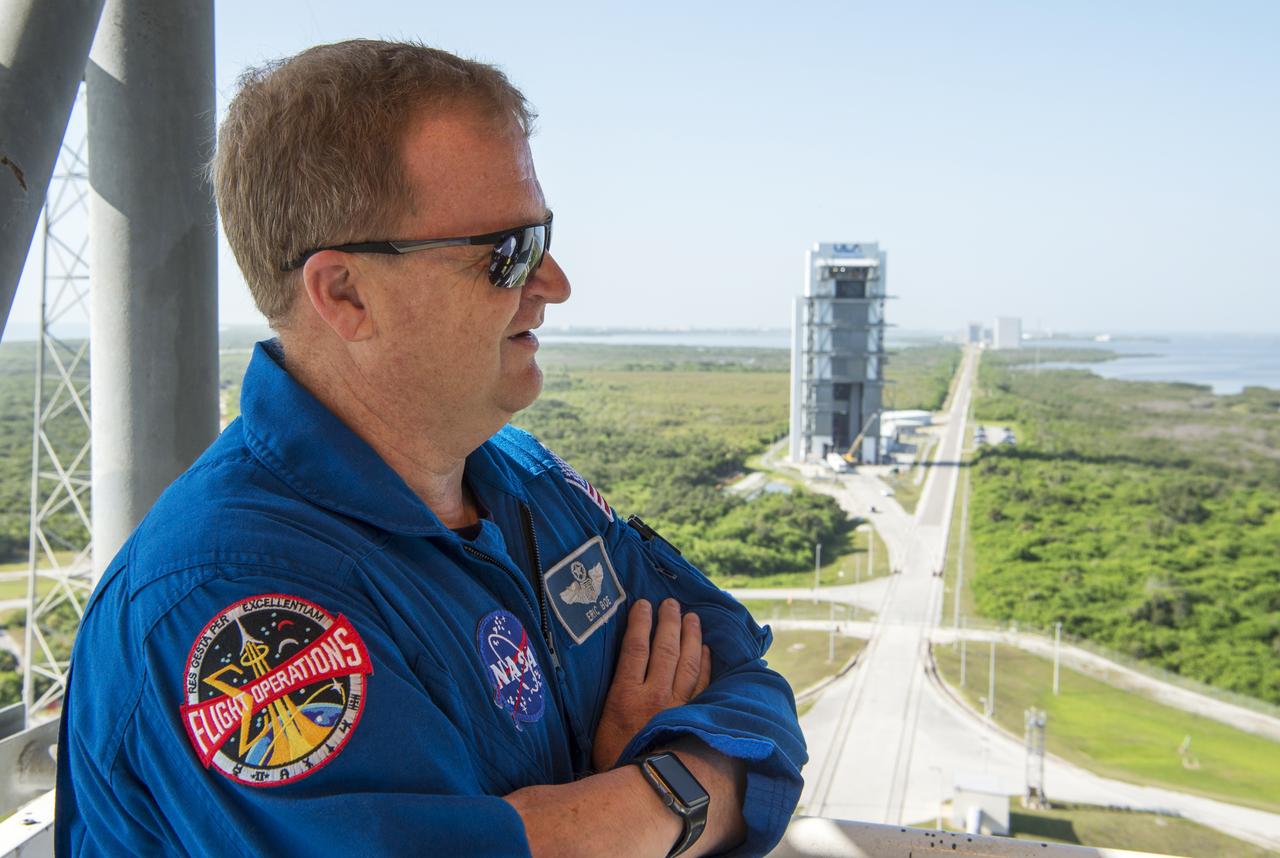
NASA astronaut Eric Boe takes in the view during an August 2018 visit to Kennedy Space Center (KSC) in Florida. Boe was joined on the trip by fellow commercial crew astronauts Nicole Mann, Suni Williams, Josh Cassada and Chris Ferguson shortly after they were officially assigned to fly on Boeing’s CST-100 Starliner. The astronauts stopped by Boeing’s Commercial Crew and Cargo Processing Facility (C3PF) at KSC and Space Launch Complex 41 at Cape Canaveral Air Force Station to view progress on the Starliner and the launch pad. Boe, Ferguson and Mann will fly on Starliner in Boeing’s upcoming Crew Flight Test to the International Space Station (ISS). Cassada and Williams are assigned to Boeing’s first operational mission to the ISS. Photo credit: Boeing
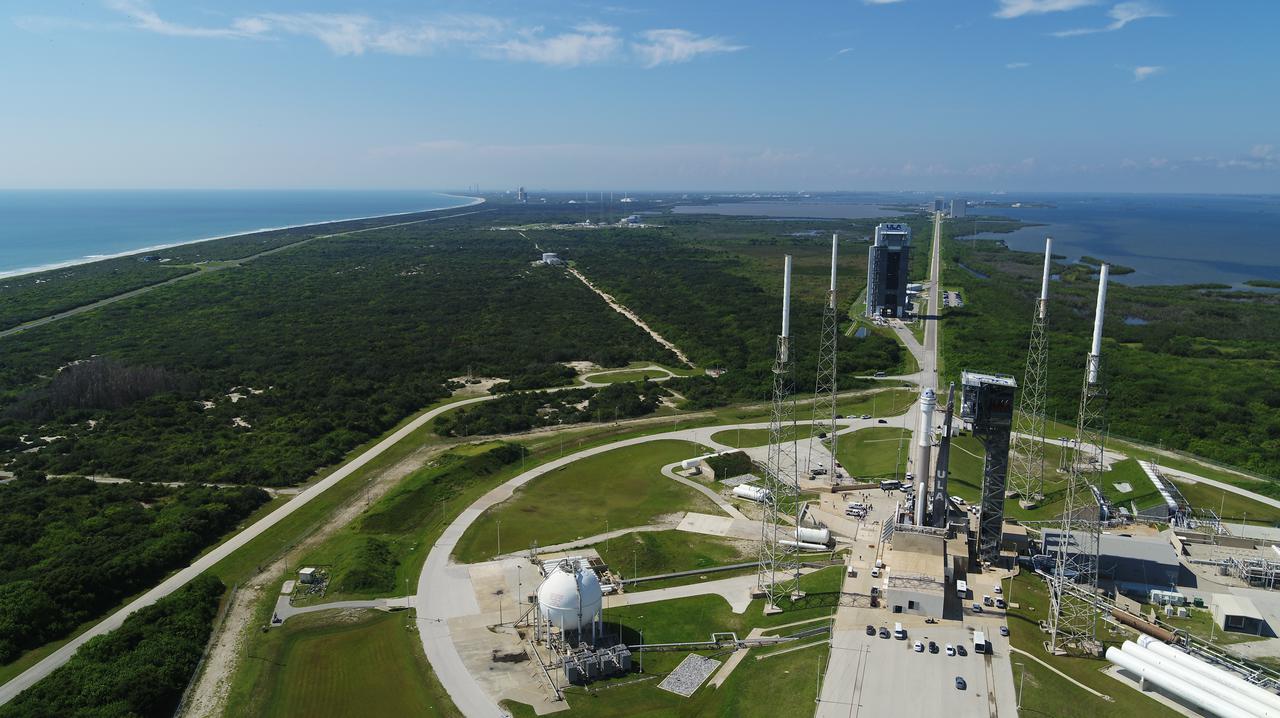
On July 29, 2021, Boeing’s CST-100 Starliner spacecraft and the United Launch Alliance Atlas V rocket rolled out of the Vertical Integration Facility to the launch pad at Space Launch Complex-41 on Cape Canaveral Space Force Station in Florida. Starliner will launch on the Atlas V for Boeing’s second uncrewed Orbital Flight Test (OFT-2) for NASA’s Commercial Crew Program. OFT-2 is an important uncrewed mission designed to test the end-to-end capabilities of the new system for NASA’s Commercial Crew Program.
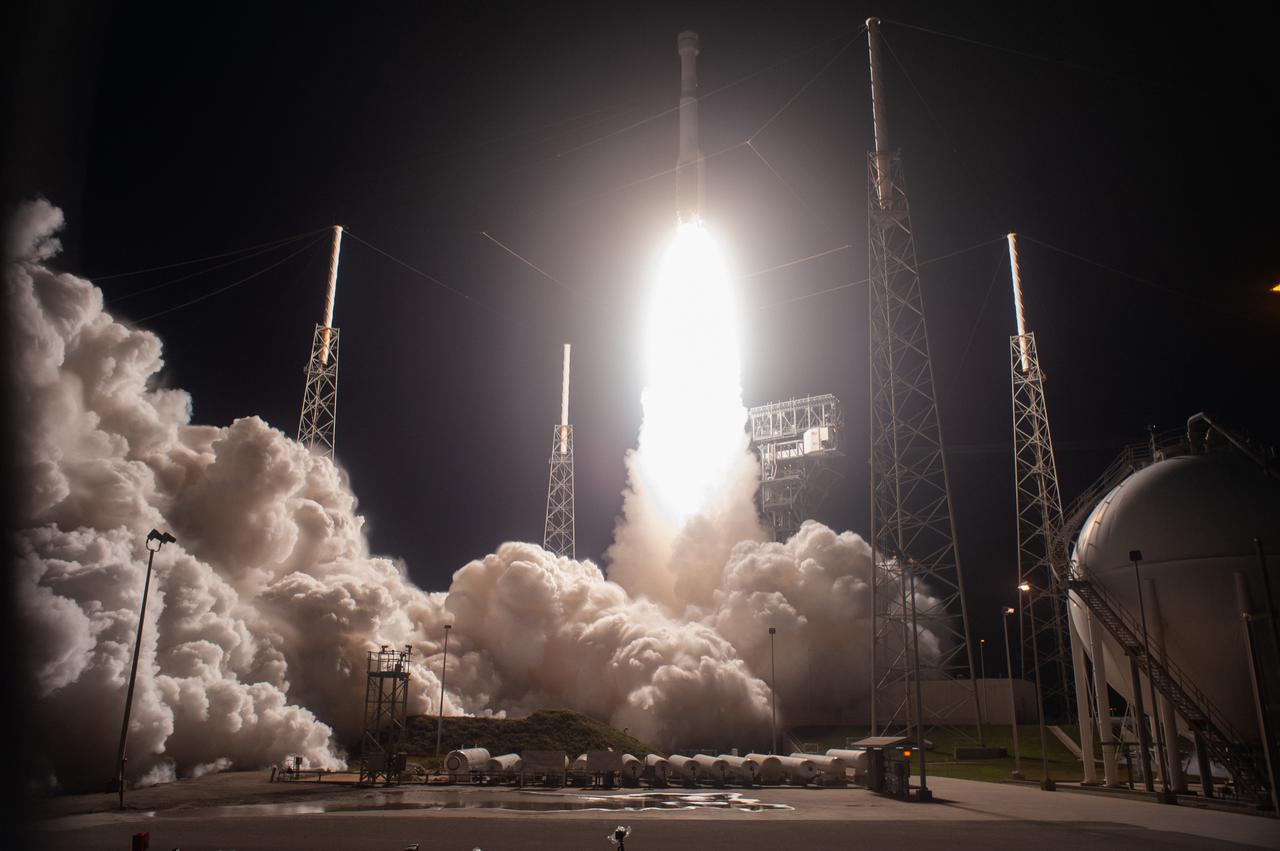
A two-stage United Launch Alliance Atlas V rocket lifts off from Space Launch Complex 41 at Cape Canaveral Air Force Station in Florida for Boeing’s Orbital Flight Test, Dec. 20, 2019. Liftoff occurred at 6:36 a.m. EST. The uncrewed Orbital Flight Test is the Starliner’s first flight for NASA’s Commercial Crew Program.
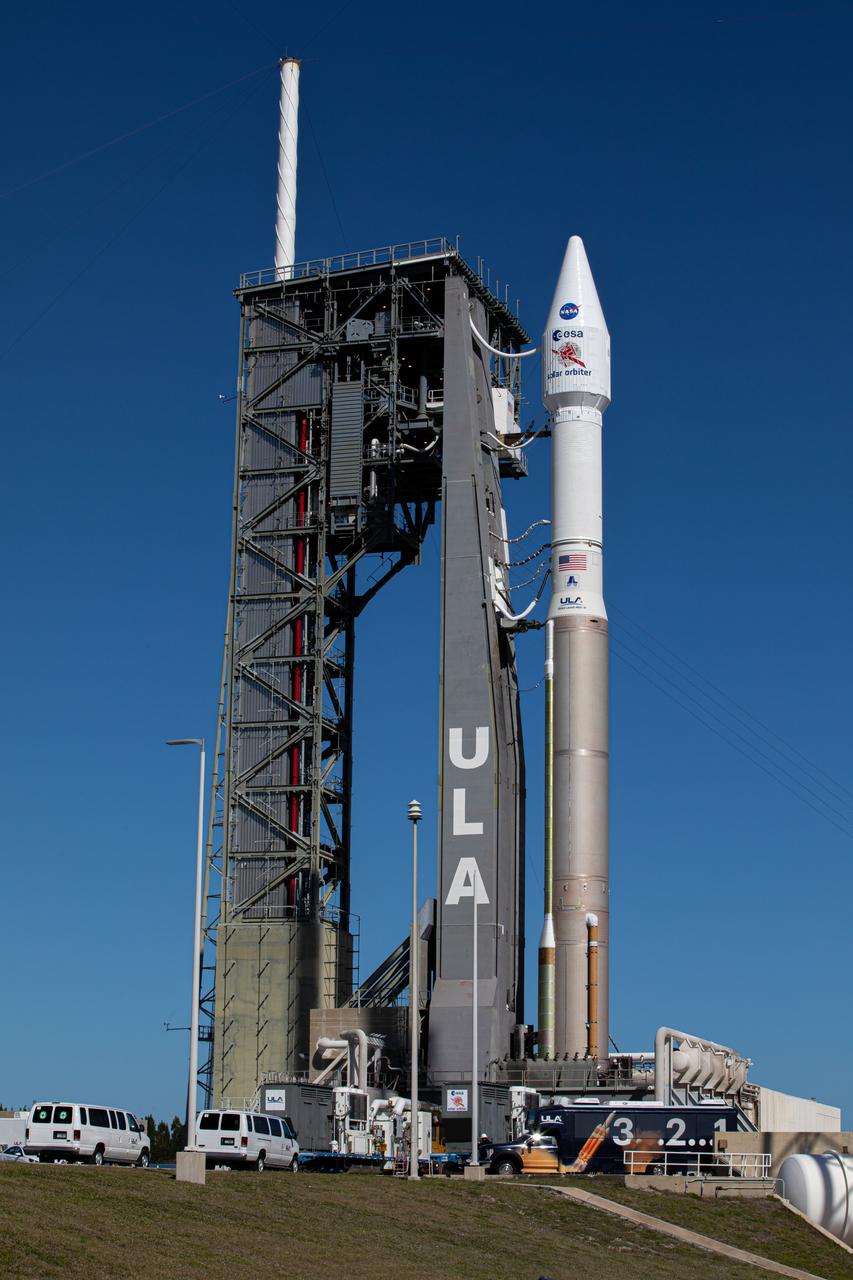
The United Launch Alliance Atlas V rocket with the Solar Orbiter spacecraft arrives at the launch pad at Space Launch Complex 41 on Cape Canaveral Air Force Station in Florida on Feb. 8, 2020. Solar Orbiter is an international cooperative mission between ESA (European Space Agency) and NASA. The mission aims to study the Sun, its outer atmosphere and solar wind. The spacecraft will provide the first images of the Sun’s poles. NASA’s Launch Services Program based at Kennedy is managing the launch. The spacecraft has been developed by Airbus Defence and Space. Solar Orbiter will launch Feb. 9, 2020 aboard the Atlas V rocket.
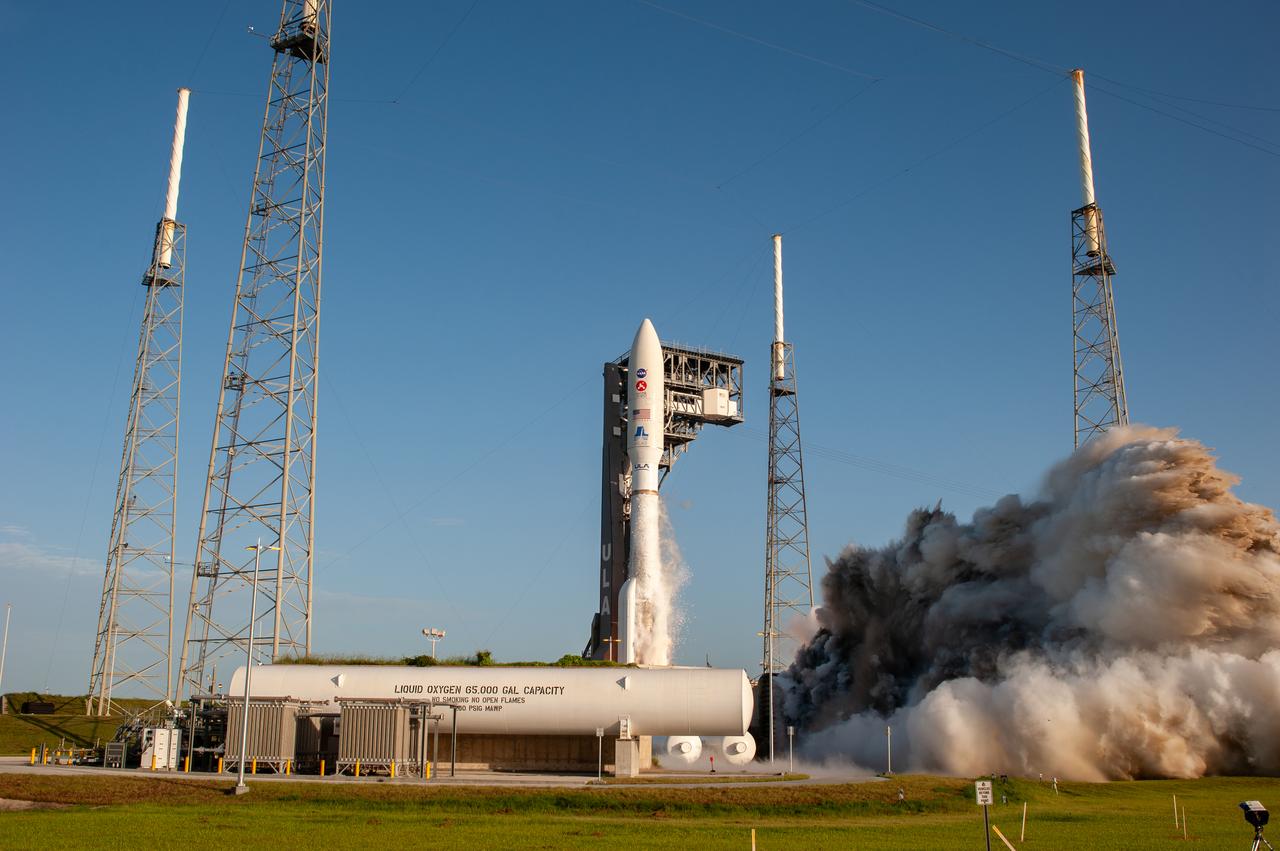
With blue sky as a backdrop, a United Launch Alliance Atlas V 541 rocket lifts off from Space Launch Complex 41 at Cape Canaveral Air Force Station in Florida on July 30, 2020, at 7:50 a.m. EDT, carrying NASA’s Mars Perseverance rover and Ingenuity helicopter. The rover is part of NASA’s Mars Exploration Program, a long-term effort of robotic exploration of the Red Planet. The rover’s seven instruments will search for habitable conditions in the ancient past and signs of past microbial life on Mars. The Launch Services Program at Kennedy is responsible for launch management.
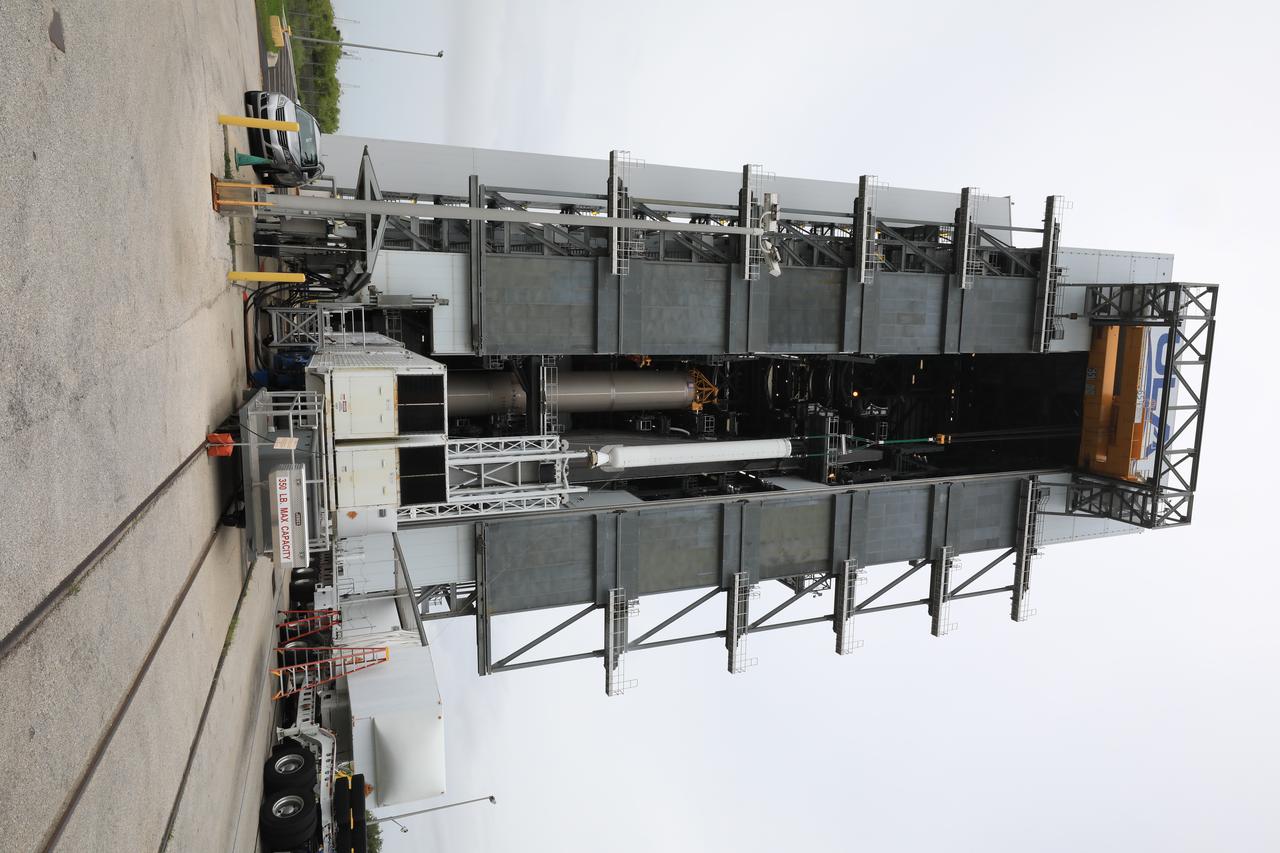
A crane is used to lift the second of four solid rocket boosters (SRB) for the United Launch Alliance Atlas V 541 rocket into the Vertical Integration Facility (VIF) at Space Launch Complex 41 at Cape Canaveral Air Force Station (CCAFS) in Florida on June 3, 2020. The SRB will be lifted up and mated to the Atlas V booster in the VIF. NASA’s Mars 2020 mission with the Perseverance rover is scheduled to launch on July 20, 2020, atop the Atlas V rocket from Pad 41. The rover is part of NASA’s Mars Exploration Program, a long-term effort of robotic exploration of the Red Planet. The rover’s seven instruments will search for habitable conditions in the ancient past and signs of past microbial life on Mars. The Launch Services Program at Kennedy is responsible for launch management.
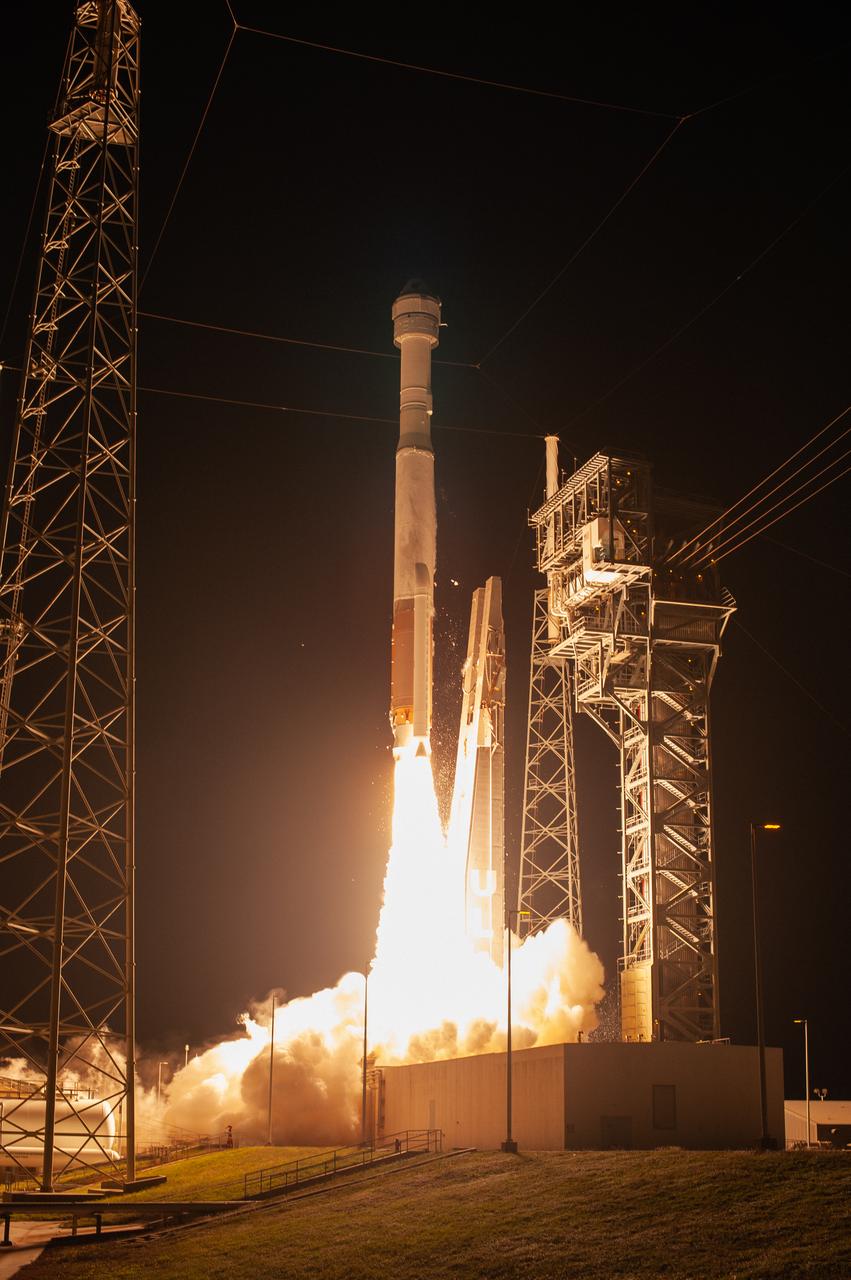
A two-stage United Launch Alliance Atlas V rocket lifts off from Space Launch Complex 41 at Cape Canaveral Air Force Station in Florida for Boeing’s Orbital Flight Test, Dec. 20, 2019. Liftoff occurred at 6:36 a.m. EST. The uncrewed Orbital Flight Test is the Starliner’s first flight for NASA’s Commercial Crew Program.
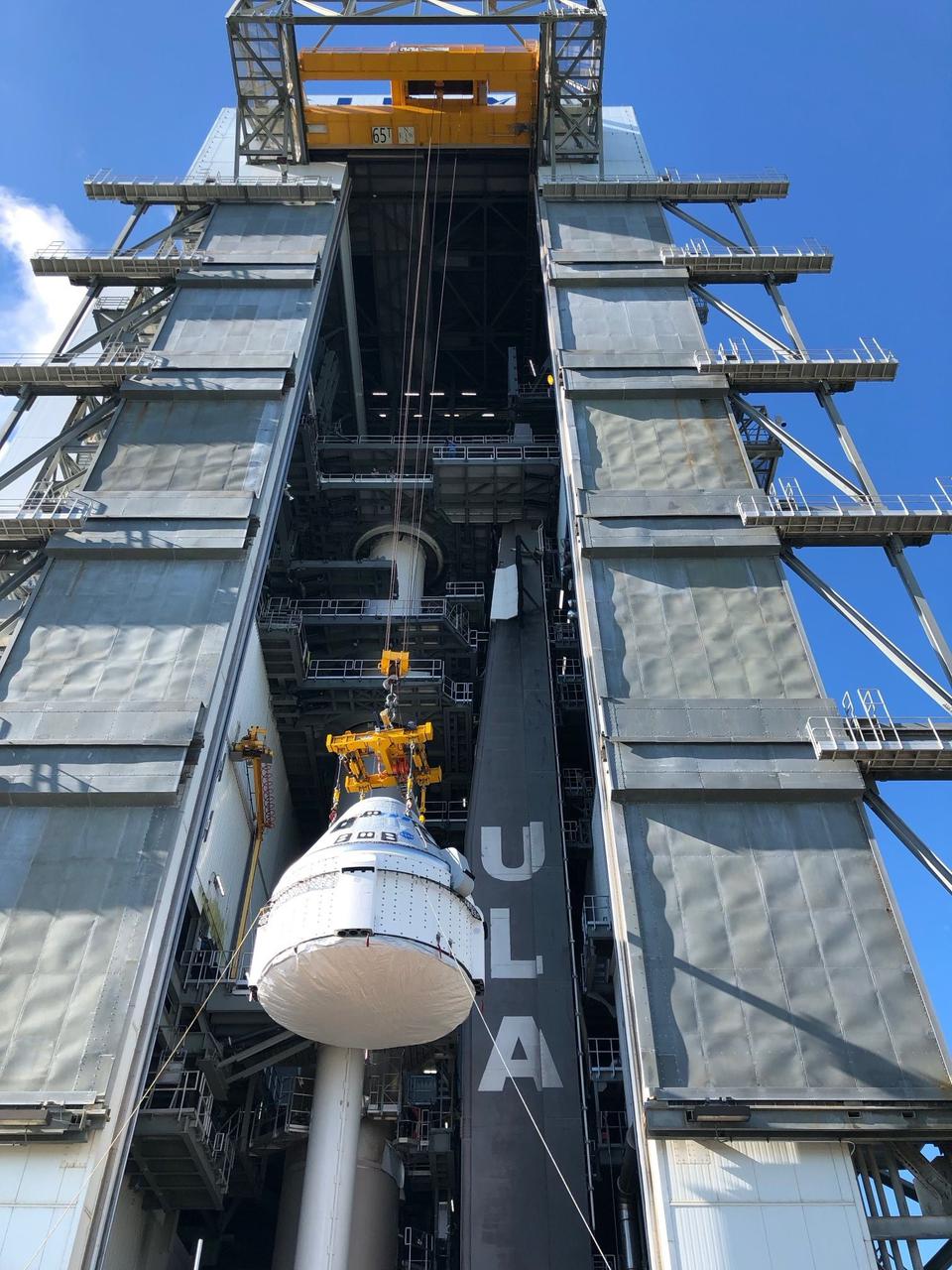
Boeing’s CST-100 Starliner spacecraft is lifted at the Vertical Integration Facility at Space Launch Complex-41 at Florida’s Cape Canaveral Space Force Station on July 17, 2021. Starliner will be secured atop a United Launch Alliance Atlas V rocket for Boeing’s Orbital Flight Test to the International Space Station for NASA’s Commercial Crew Program. The spacecraft rolled out from Boeing’s Commercial Crew and Cargo Processing Facility at NASA’s Kennedy Space Center earlier in the day.
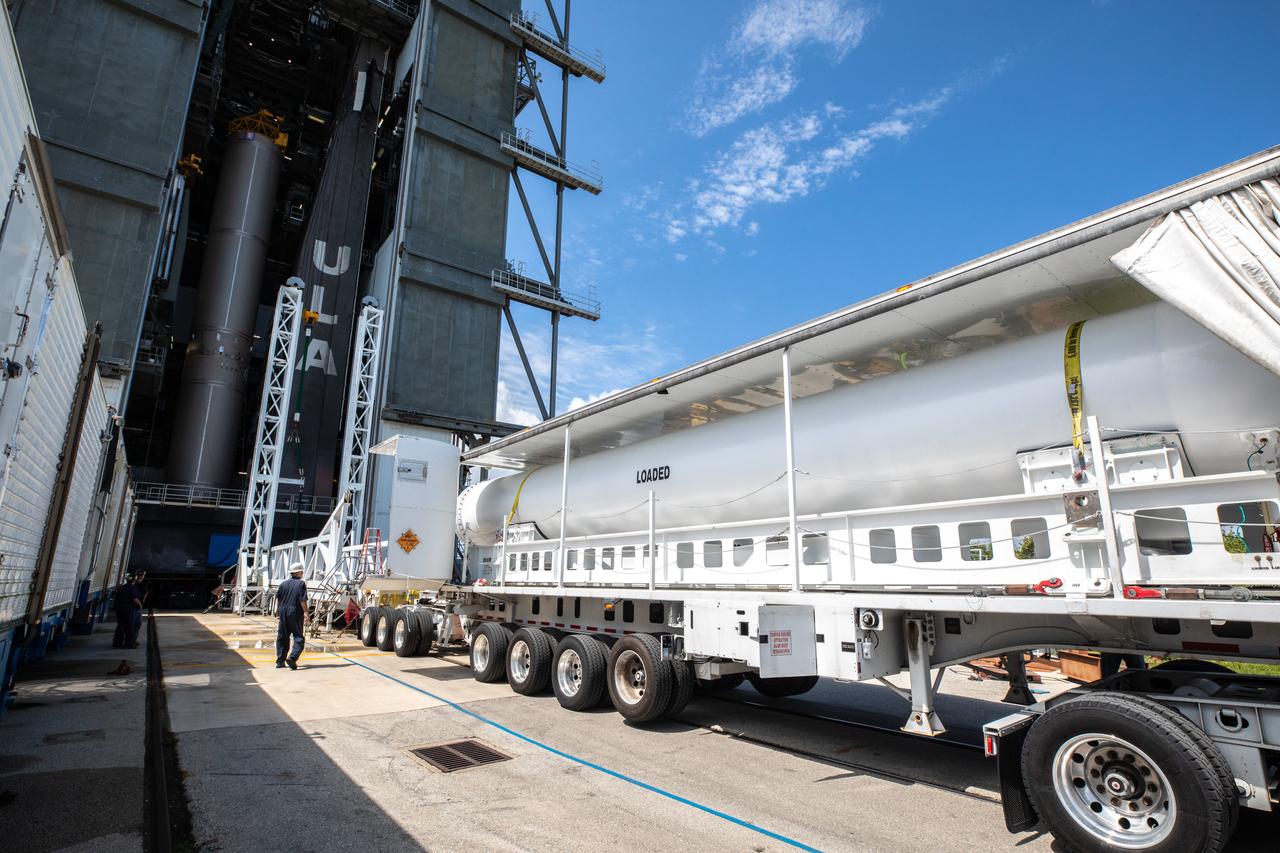
The first solid rocket booster (SRB) for the United Launch Alliance Atlas V 541 rocket for NASA’s Mars 2020 mission with the Perseverance rover arrives at the Vertical Integration Facility (VIF) at Space Launch Complex 41 at Cape Canaveral Air Force Station (CCAFS) in Florida on May 29, 2020. The SRB will be prepared for lift and mating to the Atlas V booster in the VIF. The Mars Perseverance rover is scheduled to launch in mid-July atop the Atlas V rocket from Pad 41. The rover is part of NASA’s Mars Exploration Program, a long-term effort of robotic exploration of the Red Planet. The rover will search for habitable conditions in the ancient past and signs of past microbial life on Mars. The Launch Services Program at Kennedy is responsible for launch management.
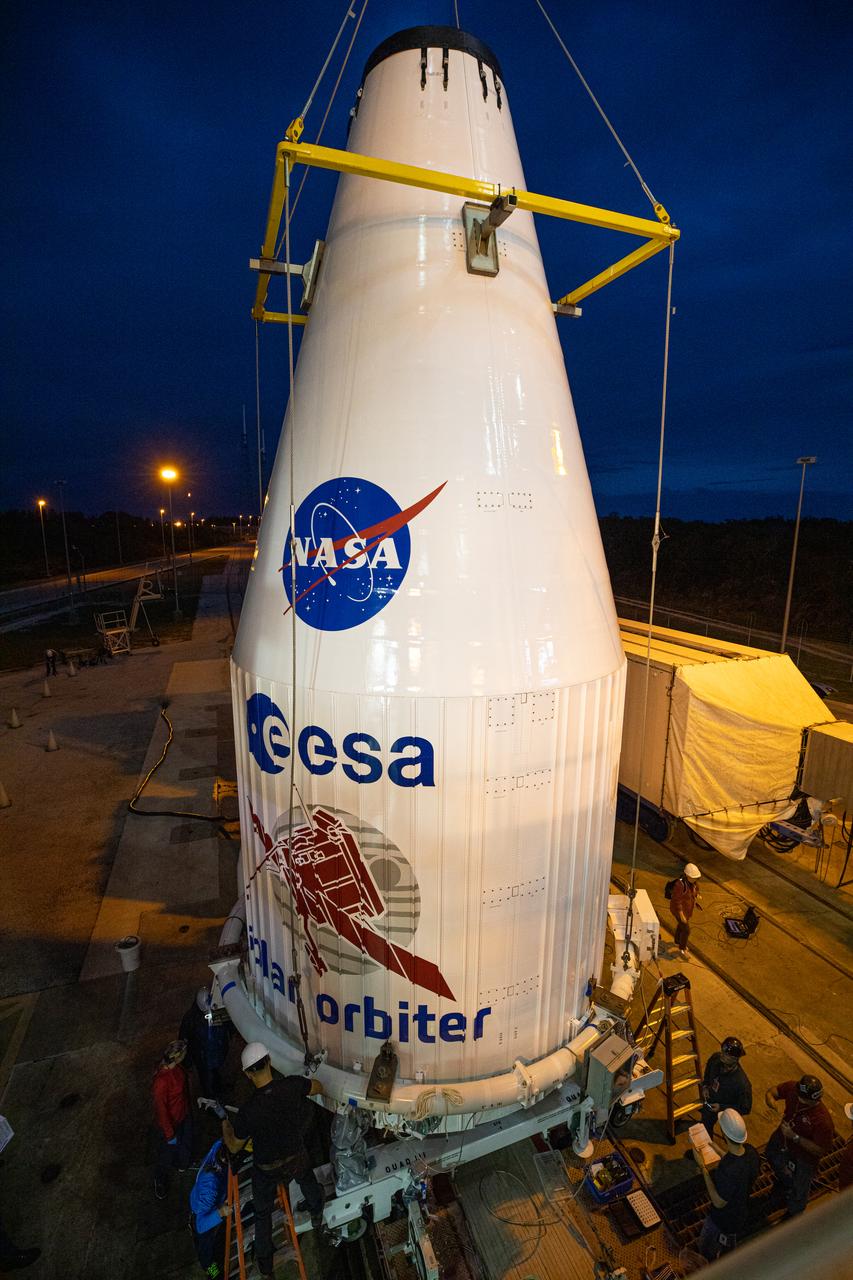
The United Launch Alliance Atlas V payload fairing, containing the Solar Orbiter spacecraft, is hoisted up by crane at the Vertical Integration Facility at Space Launch Complex 41 on Cape Canaveral Air Force Station in Florida on Jan. 31, 2020. The payload fairing will be mated to the Atlas V rocket. Solar Orbiter is an international cooperative mission between ESA (European Space Agency) and NASA. The mission aims to study the Sun, its outer atmosphere and solar wind. The spacecraft will provide the first images of the Sun’s poles. NASA’s Launch Services Program based at Kennedy is managing the launch. The spacecraft has been developed by Airbus Defence and Space. Solar Orbiter will launch in February 2020 aboard the Atlas V rocket.
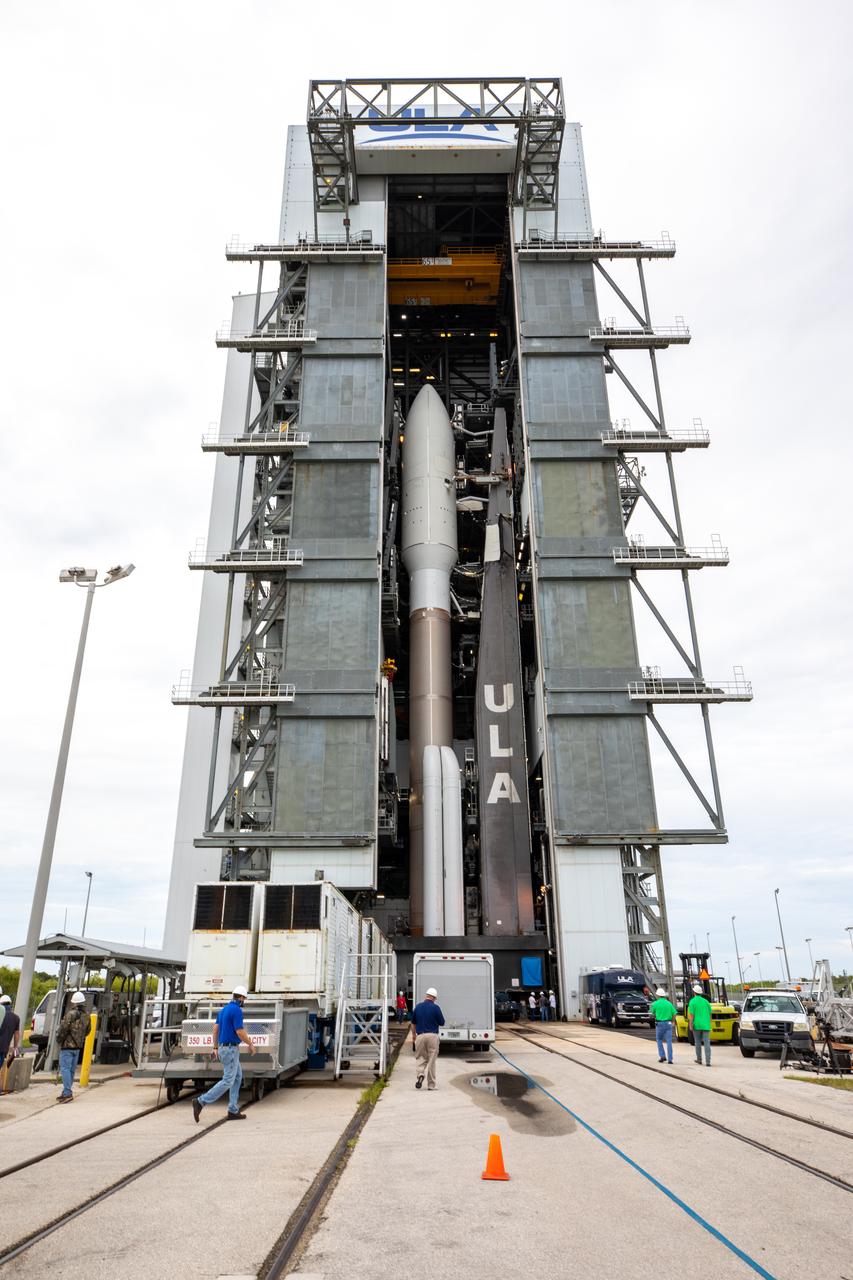
The United Launch Alliance Atlas V 541 rocket, carrying NASA’s Mars Perseverance rover and Ingenuity helicopter, begins rollout from the Vertical Integration Facility to the launch pad at Space Launch Complex 41 at Cape Canaveral Air Force Station on July 28, 2020. First motion was at 10:24 a.m. EDT. Launch of the Mars 2020 mission is scheduled for July 30. The rover is part of NASA’s Mars Exploration Program, a long-term effort of robotic exploration of the Red Planet. The rover will search for habitable conditions in the ancient past and signs of past microbial life on Mars. The Launch Services Program at Kennedy is responsible for launch management.
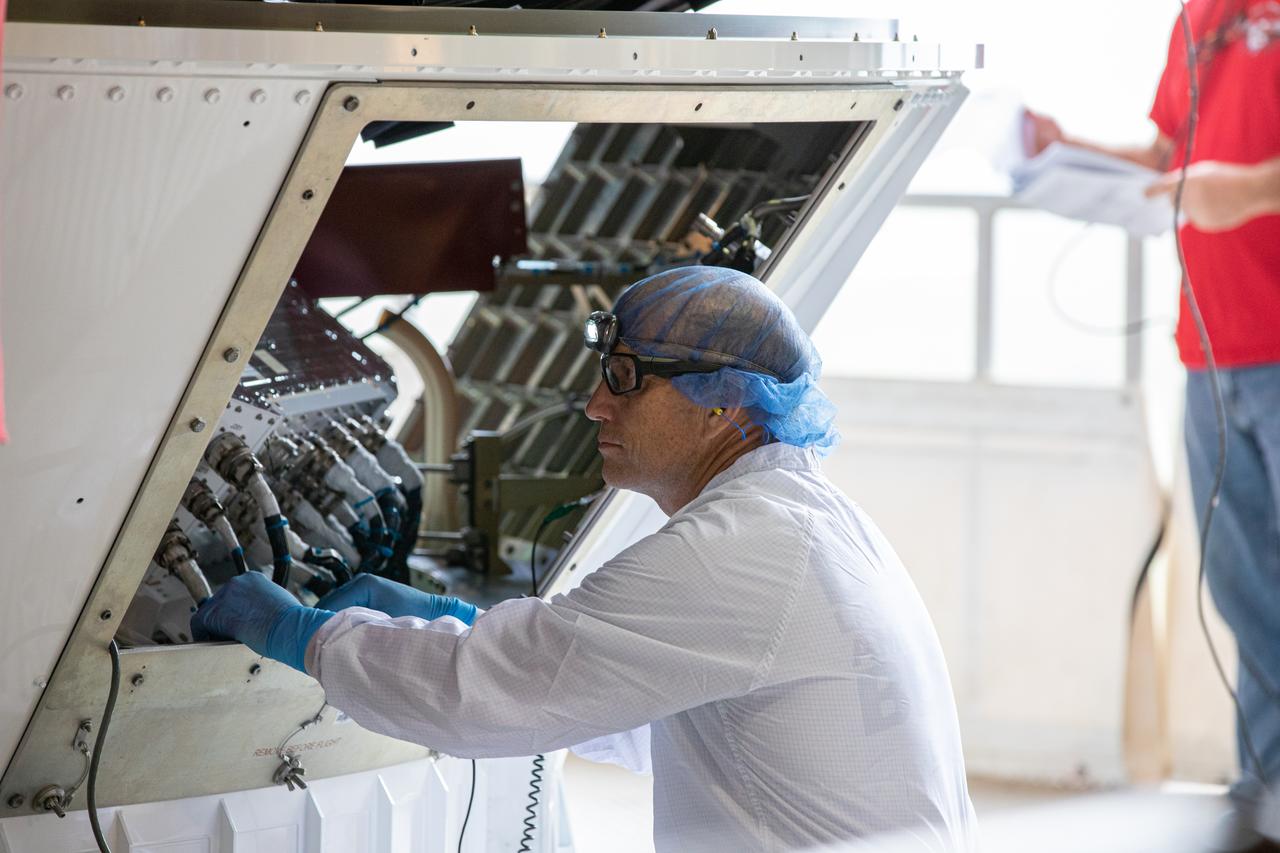
High up in the Vertical Integration Facility at Space Launch Complex 41 on Cape Canaveral Air Force Station in Florida, a worker helps complete mate operations of the United Launch Alliance Atlas V payload fairing, containing the Solar Orbiter spacecraft, to the Atlas V rocket on Jan. 31, 2020. Solar Orbiter is an international cooperative mission between ESA (European Space Agency) and NASA. The mission aims to study the Sun, its outer atmosphere and solar wind. The spacecraft will provide the first images of the Sun’s poles. NASA’s Launch Services Program based at Kennedy is managing the launch. The spacecraft has been developed by Airbus Defence and Space. Solar Orbiter will launch in February 2020 aboard the Atlas V rocket.
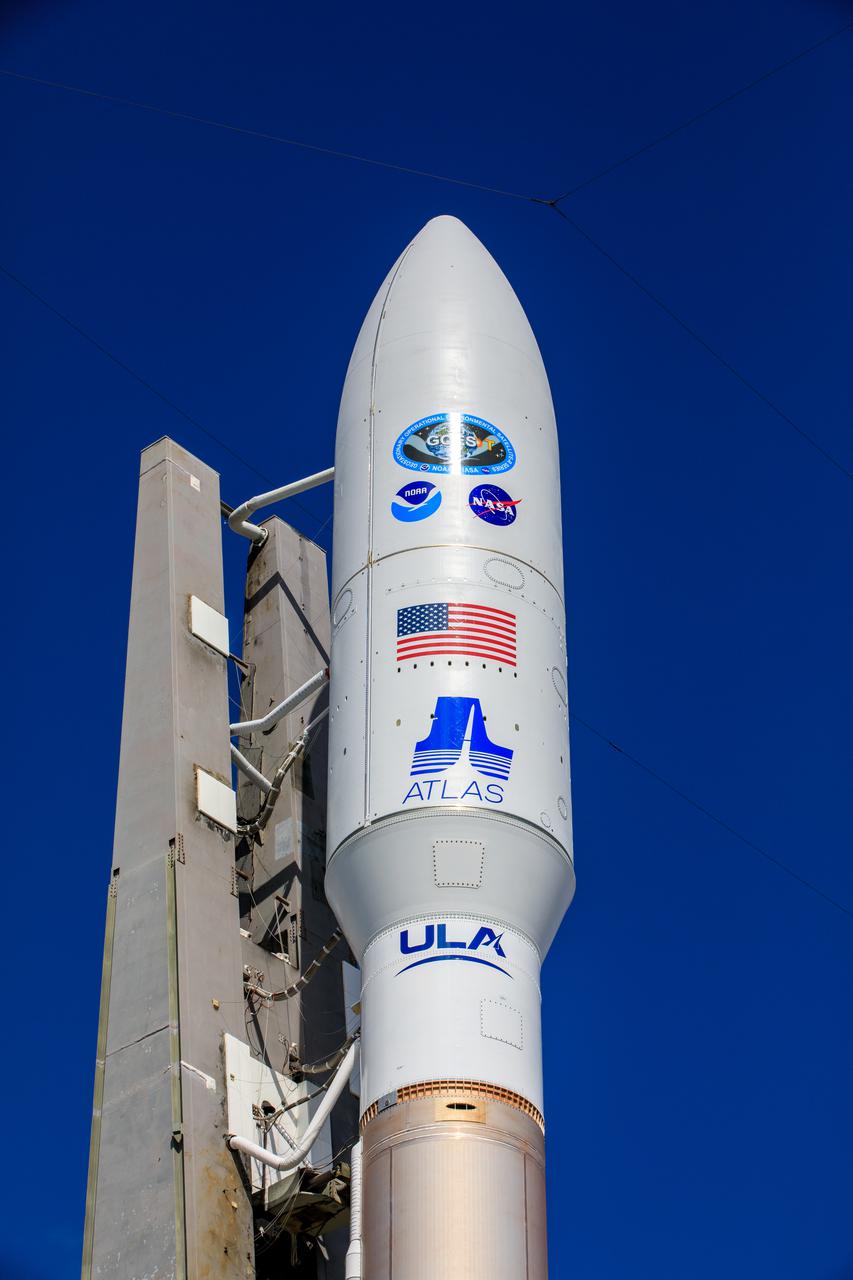
A United Launch Alliance Atlas V 541 rocket carrying the National Oceanic and Atmospheric Administration’s (NOAA) Geostationary Operational Environmental Satellite-T (GOES-T), arrives at Space Launch Complex 41 at Cape Canaveral Space Force Station in Florida on Feb. 28, 2022. GOES-T will lift off atop the Atlas V from SLC-41 on March 1, 2022, at 4:38 p.m. GOES-T is the third satellite in the GOES-R series that will continue to help meteorologists observe and predict local weather events that affect public safety. GOES-T will be renamed GOES-18 once it reaches geostationary orbit. GOES-18 will go into operational service as GOES West to provide critical data for the U.S. West Coast, Alaska, Hawaii, Mexico, Central America, and the Pacific Ocean. The launch is managed by NASA’s Launch Services Program based at Kennedy Space Center in Florida, America’s multi-user spaceport.
A two-stage United Launch Alliance Atlas V rocket lifts off from Space Launch Complex 41 at Cape Canaveral Air Force Station in Florida for Boeing’s Orbital Flight Test, Dec. 20, 2019. Liftoff occurred at 6:36 a.m. EST. The uncrewed Orbital Flight Test is the Starliner’s first flight for NASA’s Commercial Crew Program.
A United Launch Alliance Atlas V 541 rocket, carrying the National Oceanic and Atmospheric Administration’s (NOAA) Geostationary Operational Environmental Satellite-T (GOES-T), is in view before liftoff from Space Launch Complex 41 at Cape Canaveral Space Force Station in Florida on March 1, 2022. Liftoff was at 4:38 p.m. EST. GOES-T is the third satellite in the GOES-R series that will continue to help meteorologists observe and predict local weather events that affect public safety. GOES-T will be renamed GOES-18 once it reaches geostationary orbit. GOES-18 will go into operational service as GOES West to provide critical data for the U.S. West Coast, Alaska, Hawaii, Mexico, Central America, and the Pacific Ocean. The launch was managed by NASA’s Launch Services Program based at Kennedy Space Center in Florida, America’s multi-user spaceport.
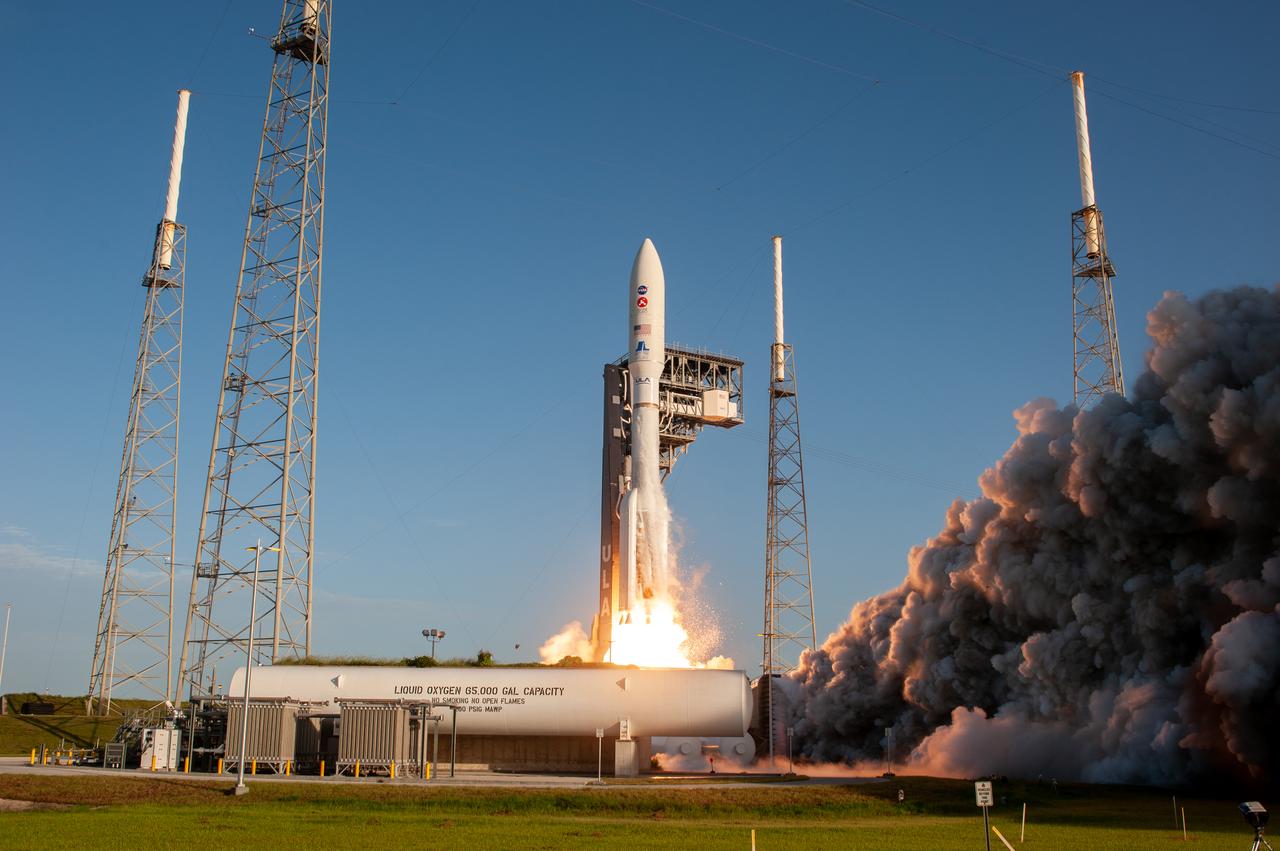
With blue sky as a backdrop, a United Launch Alliance Atlas V 541 rocket lifts off from Space Launch Complex 41 at Cape Canaveral Air Force Station in Florida on July 30, 2020, at 7:50 a.m. EDT, carrying NASA’s Mars Perseverance rover and Ingenuity helicopter. The rover is part of NASA’s Mars Exploration Program, a long-term effort of robotic exploration of the Red Planet. The rover’s seven instruments will search for habitable conditions in the ancient past and signs of past microbial life on Mars. The Launch Services Program at Kennedy is responsible for launch management.

A United Launch Alliance V 401 rocket, with NASA’s Lucy spacecraft atop, powers off the pad at Cape Canaveral Space Force Station’s Space Launch Complex 41 in Florida at 5:34 a.m. EDT on Saturday, Oct. 16, 2021. The launch was managed by NASA’s Launch Services Program, based at Kennedy Space Center. Lucy will embark on a 12-year primary mission to explore a record-breaking number of asteroids, including the Jupiter Trojan asteroids. Named after a fossilized human ancestor whose skeleton provided discoverers insight into humanity’s evolution, the Lucy mission will do much of the same, providing scientists and researchers a look into the origins of our solar system.
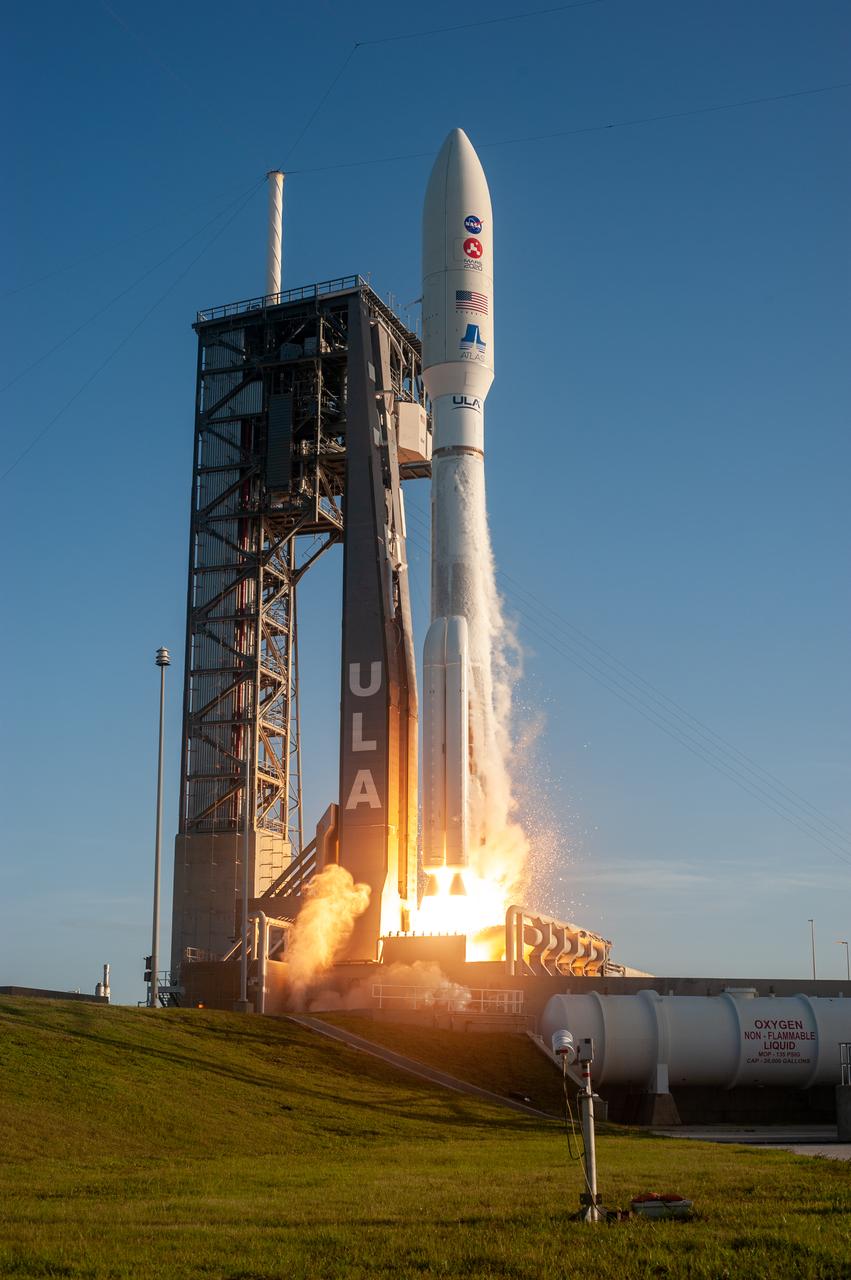
A United Launch Alliance Atlas V 541 rocket lifts off from Space Launch Complex 41 at Cape Canaveral Air Force Station in Florida on July 30, 2020, at 7:50 a.m. EDT, carrying NASA’s Mars Perseverance rover and Ingenuity helicopter. The rover is part of NASA’s Mars Exploration Program, a long-term effort of robotic exploration of the Red Planet. The rover’s seven instruments will search for habitable conditions in the ancient past and signs of past microbial life on Mars. The Launch Services Program at Kennedy is responsible for launch management.
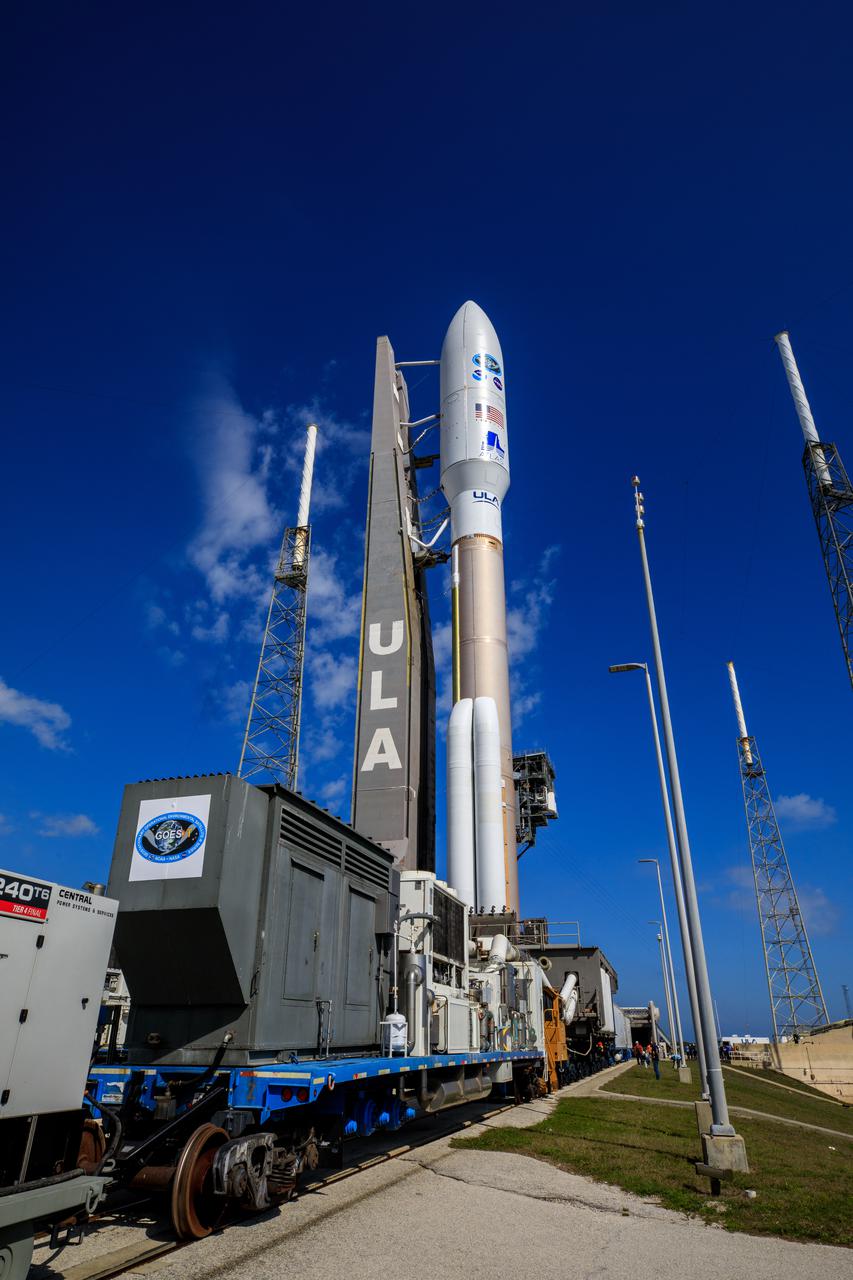
A United Launch Alliance Atlas V 541 rocket carrying the National Oceanic and Atmospheric Administration’s (NOAA) Geostationary Operational Environmental Satellite-T (GOES-T), arrives at Space Launch Complex 41 at Cape Canaveral Space Force Station in Florida on Feb. 28, 2022. GOES-T will lift off atop the Atlas V from SLC-41 on March 1, 2022, at 4:38 p.m. GOES-T is the third satellite in the GOES-R series that will continue to help meteorologists observe and predict local weather events that affect public safety. GOES-T will be renamed GOES-18 once it reaches geostationary orbit. GOES-18 will go into operational service as GOES West to provide critical data for the U.S. West Coast, Alaska, Hawaii, Mexico, Central America, and the Pacific Ocean. The launch is managed by NASA’s Launch Services Program based at Kennedy Space Center in Florida, America’s multi-user spaceport.
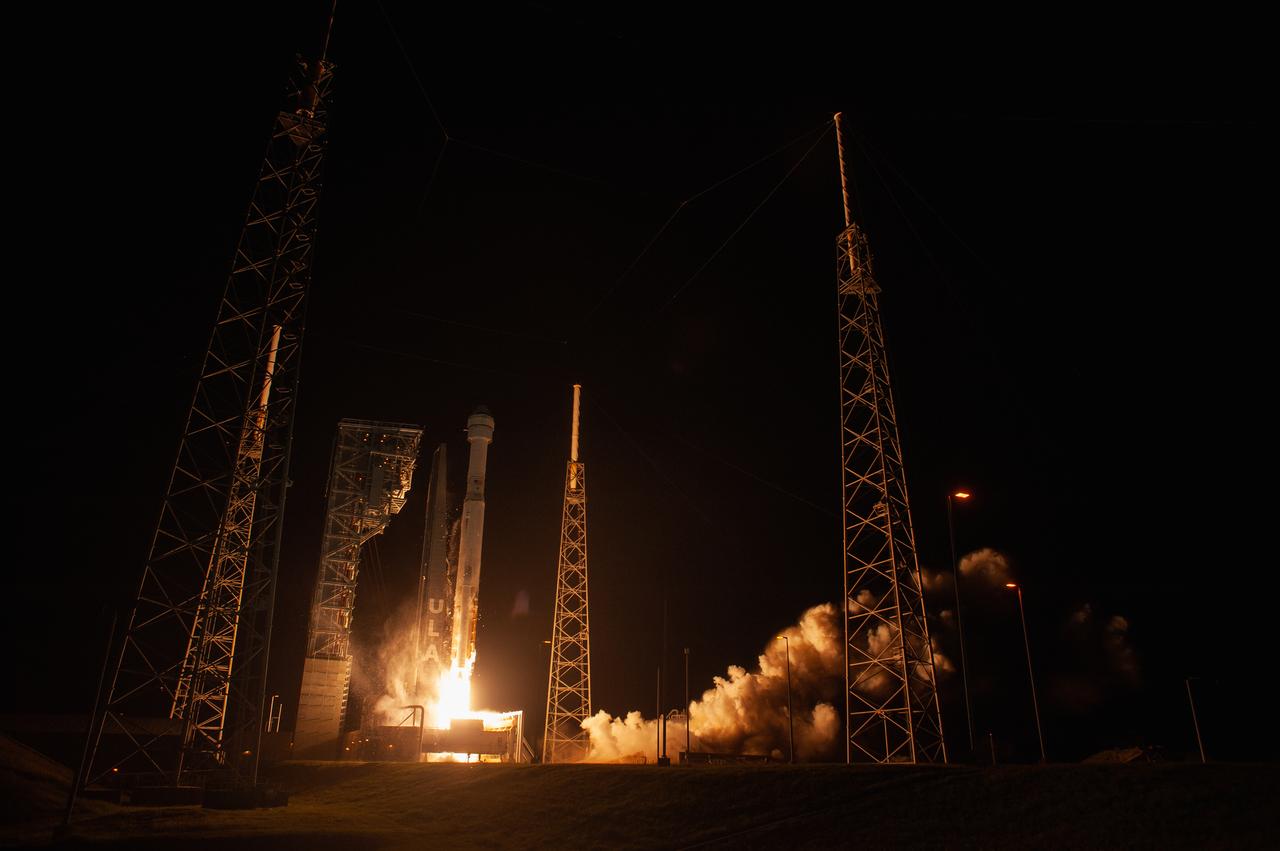
A two-stage United Launch Alliance Atlas V rocket lifts off from Space Launch Complex 41 at Cape Canaveral Air Force Station in Florida for Boeing’s Orbital Flight Test, Dec. 20, 2019. Liftoff occurred at 6:36 a.m. EST. The uncrewed Orbital Flight Test is the Starliner’s first flight for NASA’s Commercial Crew Program.
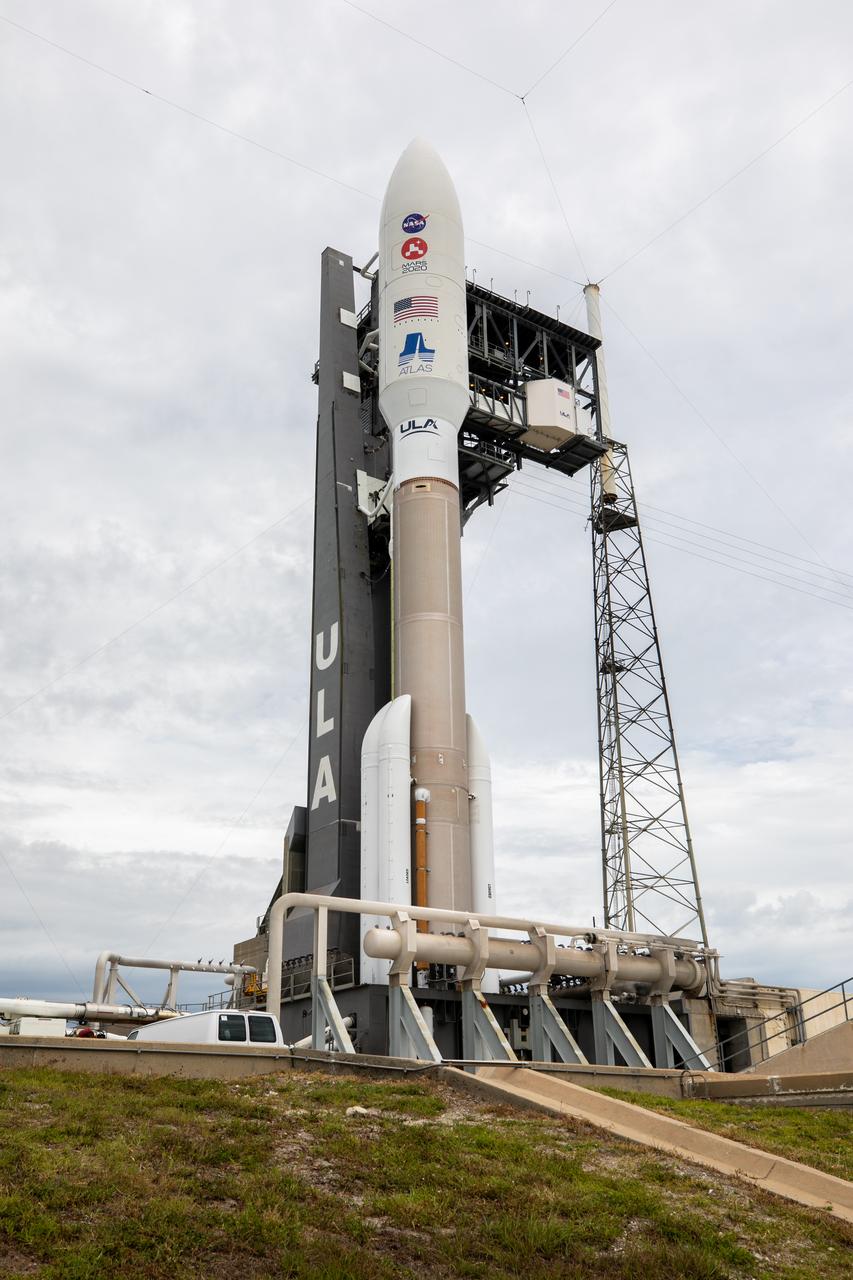
The United Launch Alliance Atlas V 541 rocket, carrying NASA’s Mars Perseverance rover and Ingenuity helicopter, arrives at the launch pad at Space Launch Complex 41 at Cape Canaveral Air Force Station on July 28, 2020. First motion from the Vertical Integration Facility was at 10:24 a.m. EDT. Launch of the Mars 2020 mission is scheduled for July 30. The rover is part of NASA’s Mars Exploration Program, a long-term effort of robotic exploration of the Red Planet. The rover will search for habitable conditions in the ancient past and signs of past microbial life on Mars. The Launch Services Program at Kennedy is responsible for launch management.
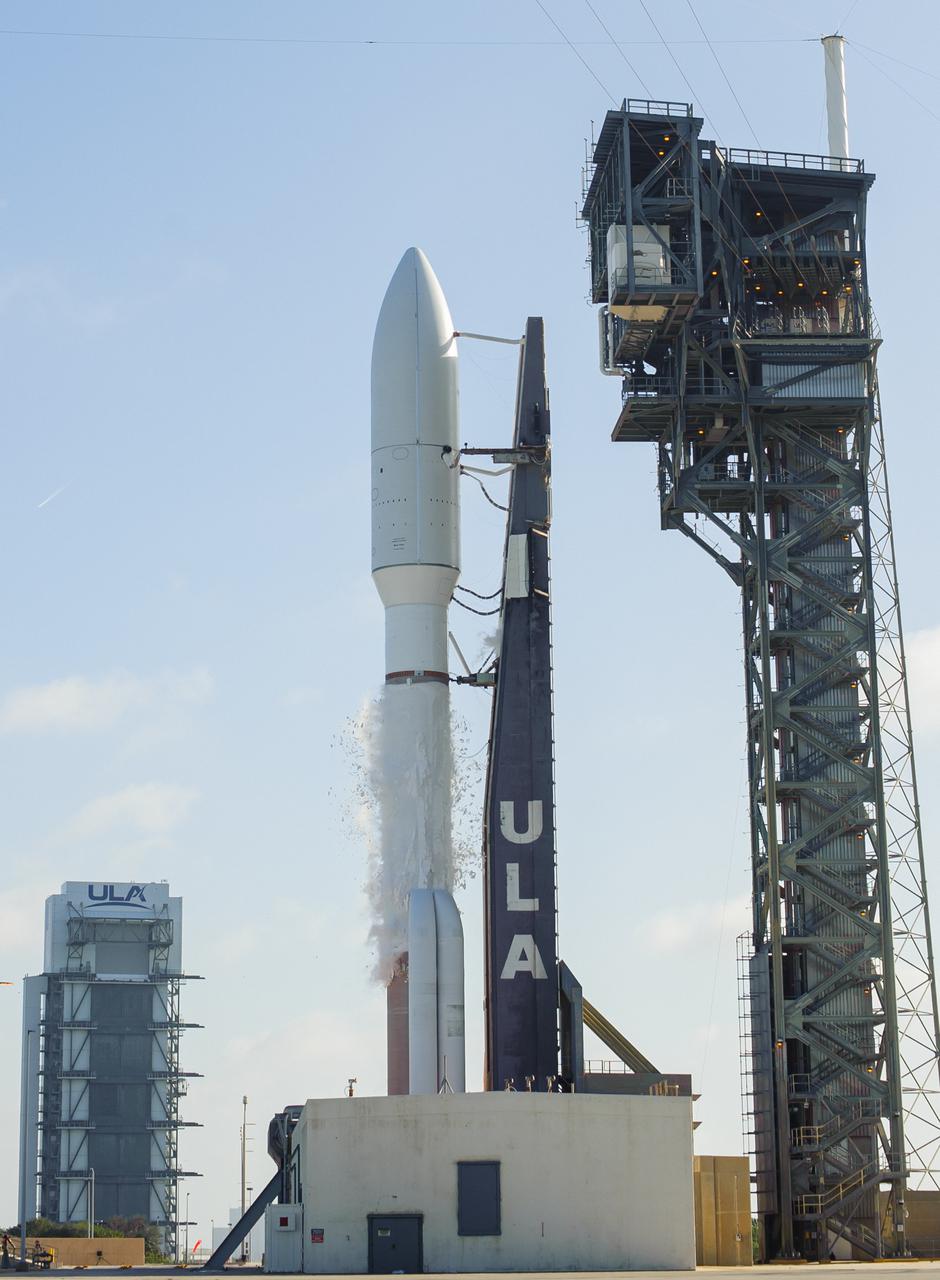
A United Launch Alliance Atlas V 541 rocket, carrying the National Oceanic and Atmospheric Administration’s (NOAA) Geostationary Operational Environmental Satellite-T (GOES-T), lifts off from Space Launch Complex 41 at Cape Canaveral Space Force Station in Florida on March 1, 2022. Liftoff was at 4:38 p.m. EST. GOES-T is the third satellite in the GOES-R series that will continue to help meteorologists observe and predict local weather events that affect public safety. GOES-T will be renamed GOES-18 once it reaches geostationary orbit. GOES-18 will go into operational service as GOES West to provide critical data for the U.S. West Coast, Alaska, Hawaii, Mexico, Central America, and the Pacific Ocean. The launch was managed by NASA’s Launch Services Program based at Kennedy Space Center in Florida, America’s multi-user spaceport.
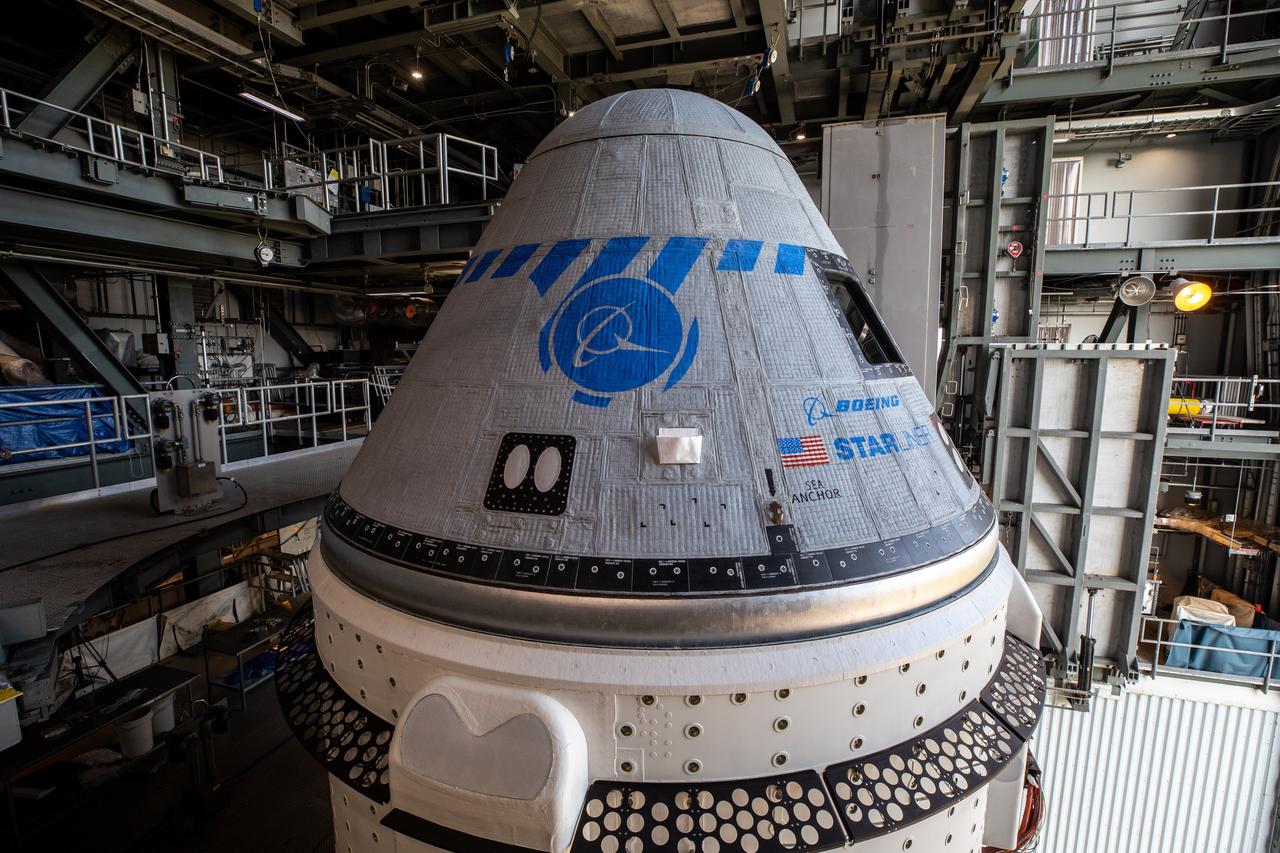
Boeing’s CST-100 Starliner spacecraft sits atop a United Launch Alliance Atlas V rocket during rollout from the Vertical Integration Facility to the launch pad at Space Launch Complex-41 on Cape Canaveral Space Force Station in Florida on May 18, 2022. Starliner will launch on the Atlas V for Boeing’s Orbital Flight Test (OFT-2) for NASA’s Commercial Crew Program at 6:54 p.m. EDT on Thursday, May 19. OFT-2 is an important uncrewed flight test designed to test the end-to-end capabilities of the system to help the agency certify Starliner to carry astronauts to and from the International Space Station.
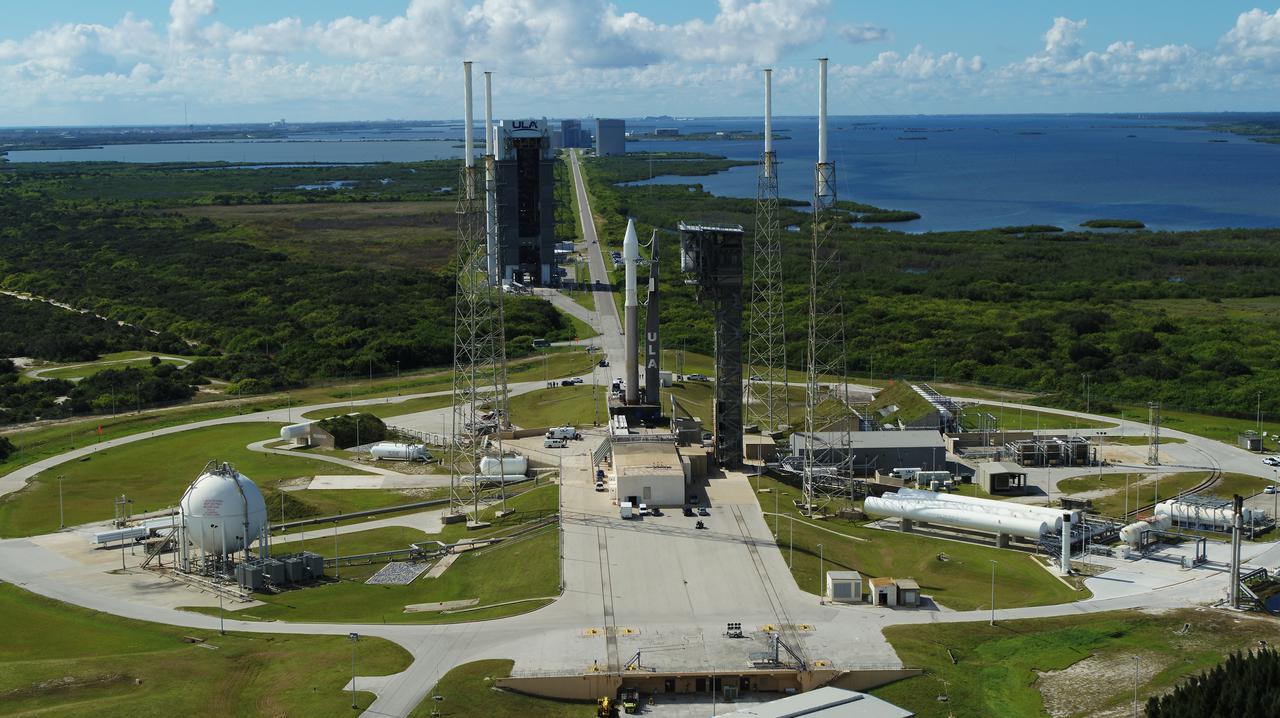
A United Launch Alliance V 401 rocket, with NASA’s Lucy spacecraft atop, arrives at Cape Canaveral Space Force Station’s Space Launch Complex 41 after making the short trek from the Vertical Integration Facility on Thursday, Oct. 14, 2021, in preparation for its targeted 5:34 a.m. EDT liftoff on Saturday, Oct. 16. NASA’s Launch Services Program, based at Kennedy Space Center, is managing the launch. During its 12-year primary mission, Lucy will explore a record-breaking number of asteroids, flying by one asteroid in the solar system’s main belt and seven Trojan asteroids. Additionally, Lucy’s path will circle back to Earth three times for gravity assists, making it the first spacecraft ever to return to the vicinity of Earth from the outer solar system.
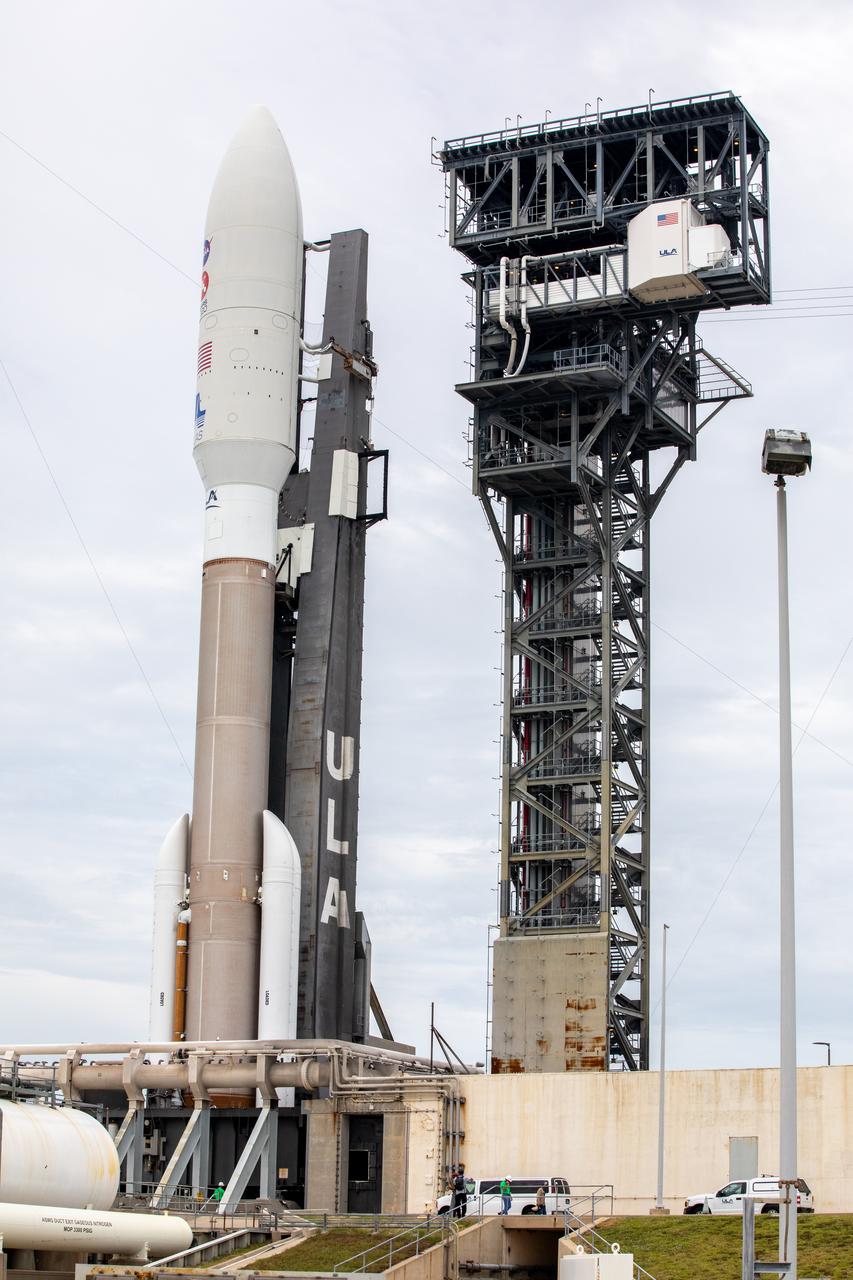
The United Launch Alliance Atlas V 541 rocket, carrying NASA’s Mars Perseverance rover and Ingenuity helicopter, arrives at the launch pad at Space Launch Complex 41 at Cape Canaveral Air Force Station on July 28, 2020. First motion from the Vertical Integration Facility was at 10:24 a.m. EDT. Launch of the Mars 2020 mission is scheduled for July 30. The rover is part of NASA’s Mars Exploration Program, a long-term effort of robotic exploration of the Red Planet. The rover will search for habitable conditions in the ancient past and signs of past microbial life on Mars. The Launch Services Program at Kennedy is responsible for launch management.
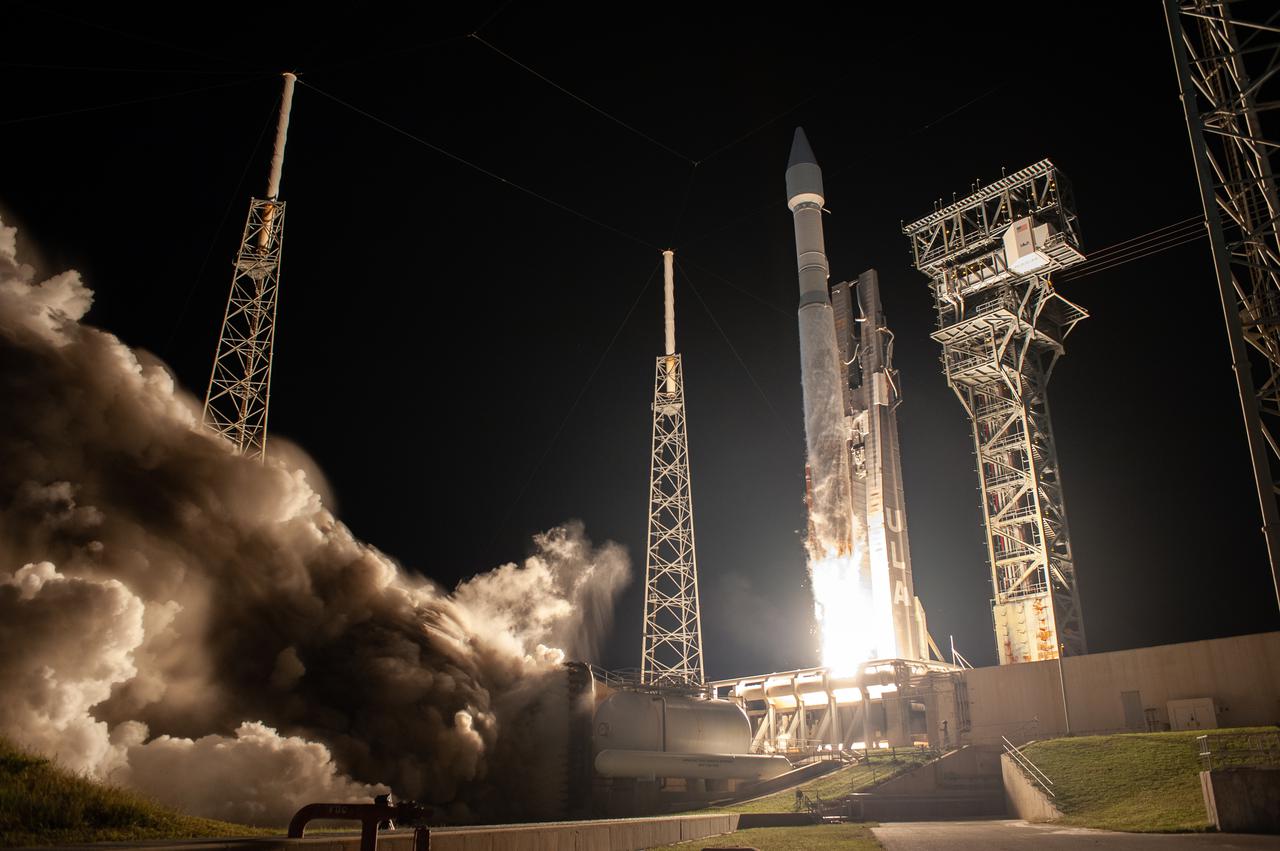
A United Launch Alliance V 401 rocket, with NASA’s Lucy spacecraft atop, powers off the pad at Cape Canaveral Space Force Station’s Space Launch Complex 41 in Florida at 5:34 a.m. EDT on Saturday, Oct. 16, 2021. The launch was managed by NASA’s Launch Services Program, based at Kennedy Space Center. Lucy will embark on a 12-year primary mission to explore a record-breaking number of asteroids, including the Jupiter Trojan asteroids. Named after a fossilized human ancestor whose skeleton provided discoverers insight into humanity’s evolution, the Lucy mission will do much of the same, providing scientists and researchers a look into the origins of our solar system.
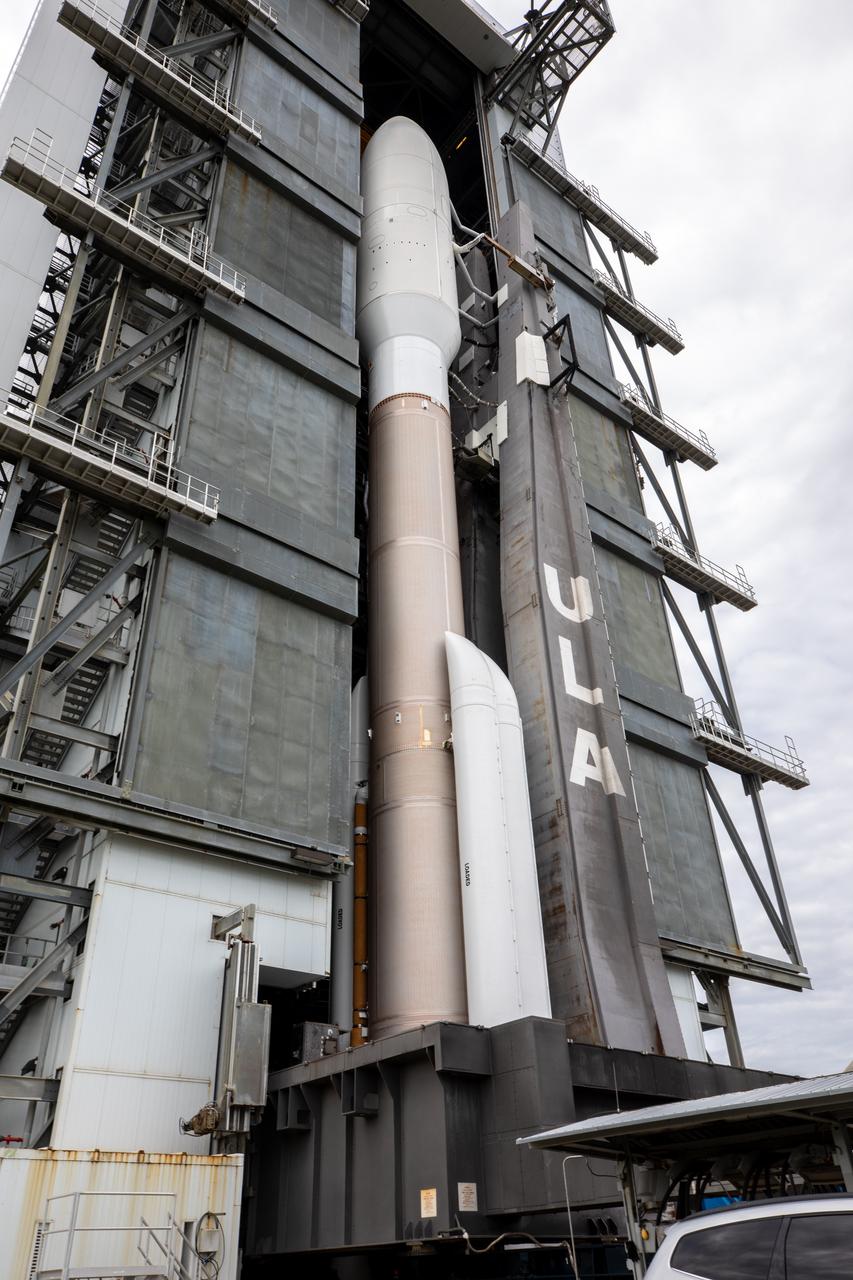
The United Launch Alliance Atlas V 541 rocket, carrying NASA’s Mars Perseverance rover and Ingenuity helicopter, begins rollout from the Vertical Integration Facility to the launch pad at Space Launch Complex 41 at Cape Canaveral Air Force Station on July 28, 2020. First motion was at 10:24 a.m. EDT. Launch of the Mars 2020 mission is scheduled for July 30. The rover is part of NASA’s Mars Exploration Program, a long-term effort of robotic exploration of the Red Planet. The rover will search for habitable conditions in the ancient past and signs of past microbial life on Mars. The Launch Services Program at Kennedy is responsible for launch management.
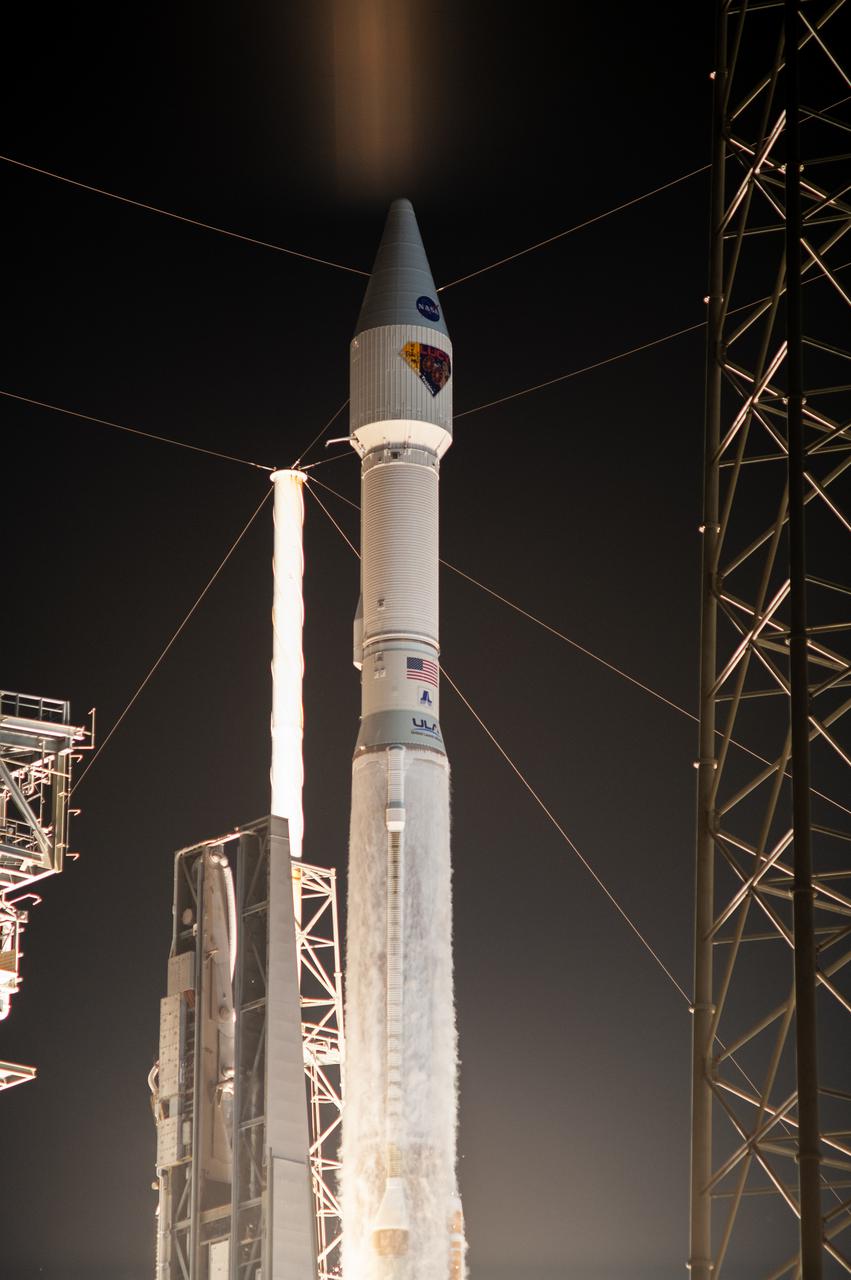
A United Launch Alliance V 401 rocket, with NASA’s Lucy spacecraft atop, powers off the pad at Cape Canaveral Space Force Station’s Space Launch Complex 41 in Florida at 5:34 a.m. EDT on Saturday, Oct. 16, 2021. The launch was managed by NASA’s Launch Services Program, based at Kennedy Space Center. Lucy will embark on a 12-year primary mission to explore a record-breaking number of asteroids, including the Jupiter Trojan asteroids. Named after a fossilized human ancestor whose skeleton provided discoverers insight into humanity’s evolution, the Lucy mission will do much of the same, providing scientists and researchers a look into the origins of our solar system.
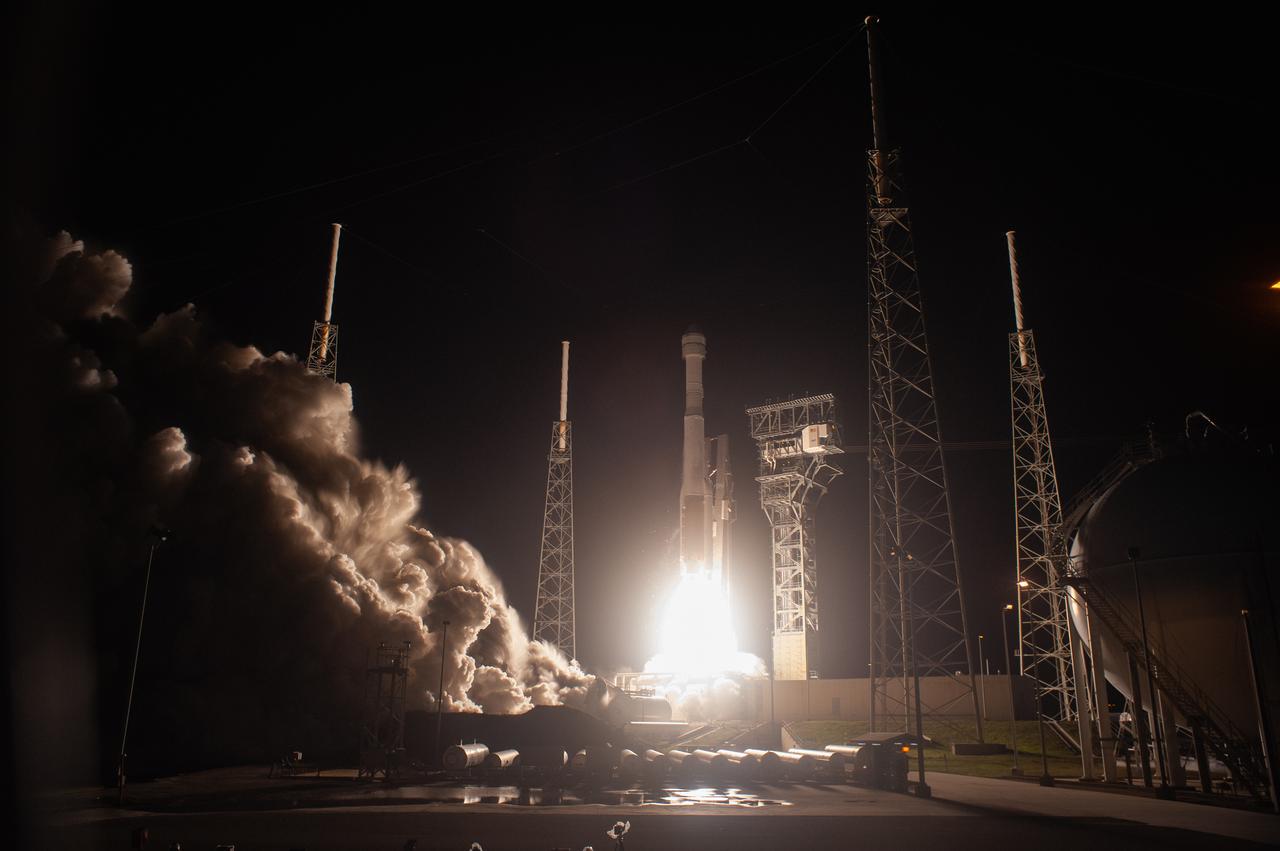
A two-stage United Launch Alliance Atlas V rocket lifts off from Space Launch Complex 41 at Cape Canaveral Air Force Station in Florida for Boeing’s Orbital Flight Test, Dec. 20, 2019. Liftoff occurred at 6:36 a.m. EST. The uncrewed Orbital Flight Test is the Starliner’s first flight for NASA’s Commercial Crew Program.
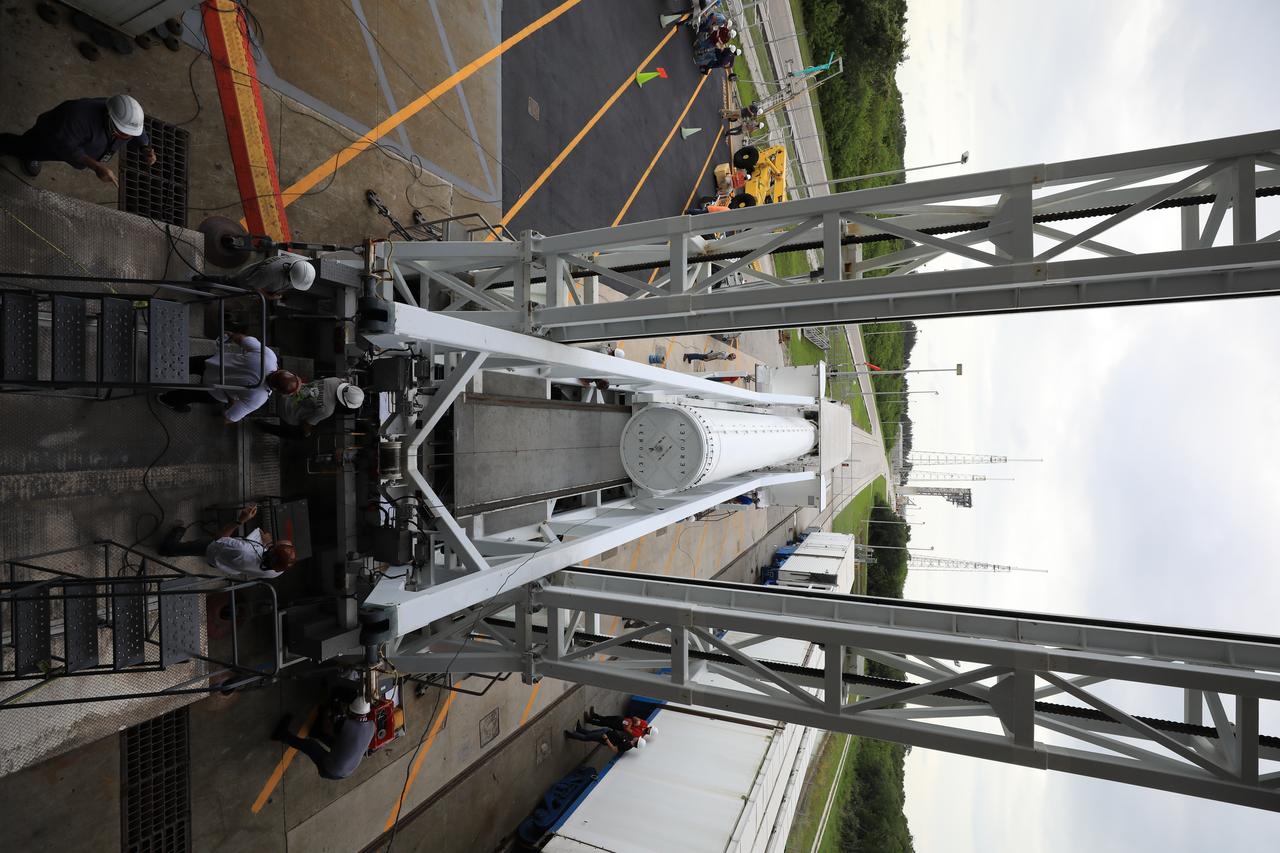
The second of four solid rocket boosters (SRB) for the United Launch Alliance Atlas V 541 rocket for NASA’s Mars 2020 mission with the Perseverance rover arrives at the Vertical Integration Facility (VIF) at Space Launch Complex 41 at Cape Canaveral Air Force Station (CCAFS) in Florida on June 3, 2020. The SRB will be prepared for lift and mating to the Atlas V booster in the VIF. The Mars Perseverance rover is scheduled to launch on July 20, 2020, atop the Atlas V rocket from Pad 41. The rover is part of NASA’s Mars Exploration Program, a long-term effort of robotic exploration of the Red Planet. The rover’s seven instruments will search for habitable conditions in the ancient past and signs of past microbial life on Mars. The Launch Services Program at Kennedy is responsible for launch management.
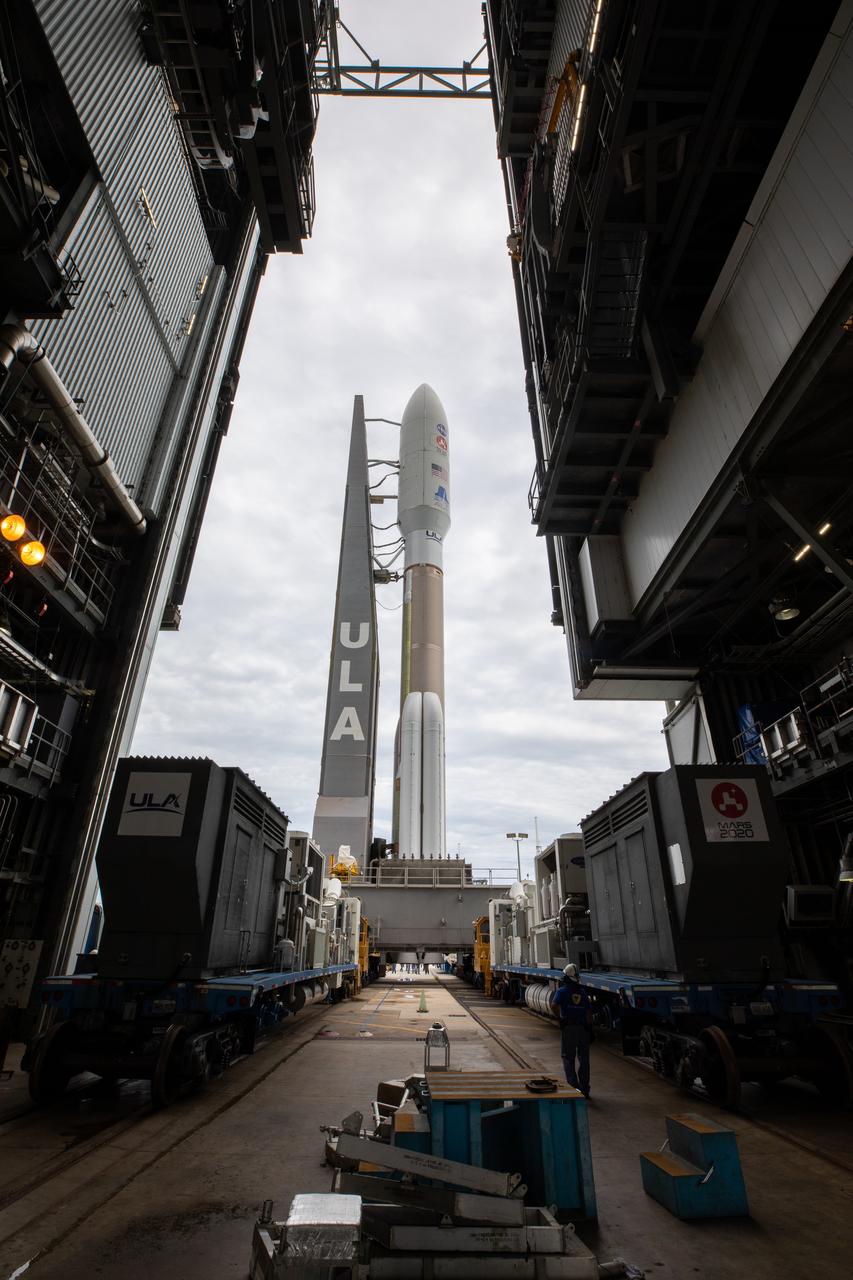
The United Launch Alliance Atlas V 541 rocket, carrying NASA’s Mars Perseverance rover and Ingenuity helicopter, rolls out from the Vertical Integration Facility and moves along to the launch pad at Space Launch Complex 41 at Cape Canaveral Air Force Station on July 28, 2020. First motion was at 10:24 a.m. EDT. Launch of the Mars 2020 mission is scheduled for July 30. The rover is part of NASA’s Mars Exploration Program, a long-term effort of robotic exploration of the Red Planet. The rover will search for habitable conditions in the ancient past and signs of past microbial life on Mars. The Launch Services Program at Kennedy is responsible for launch management.
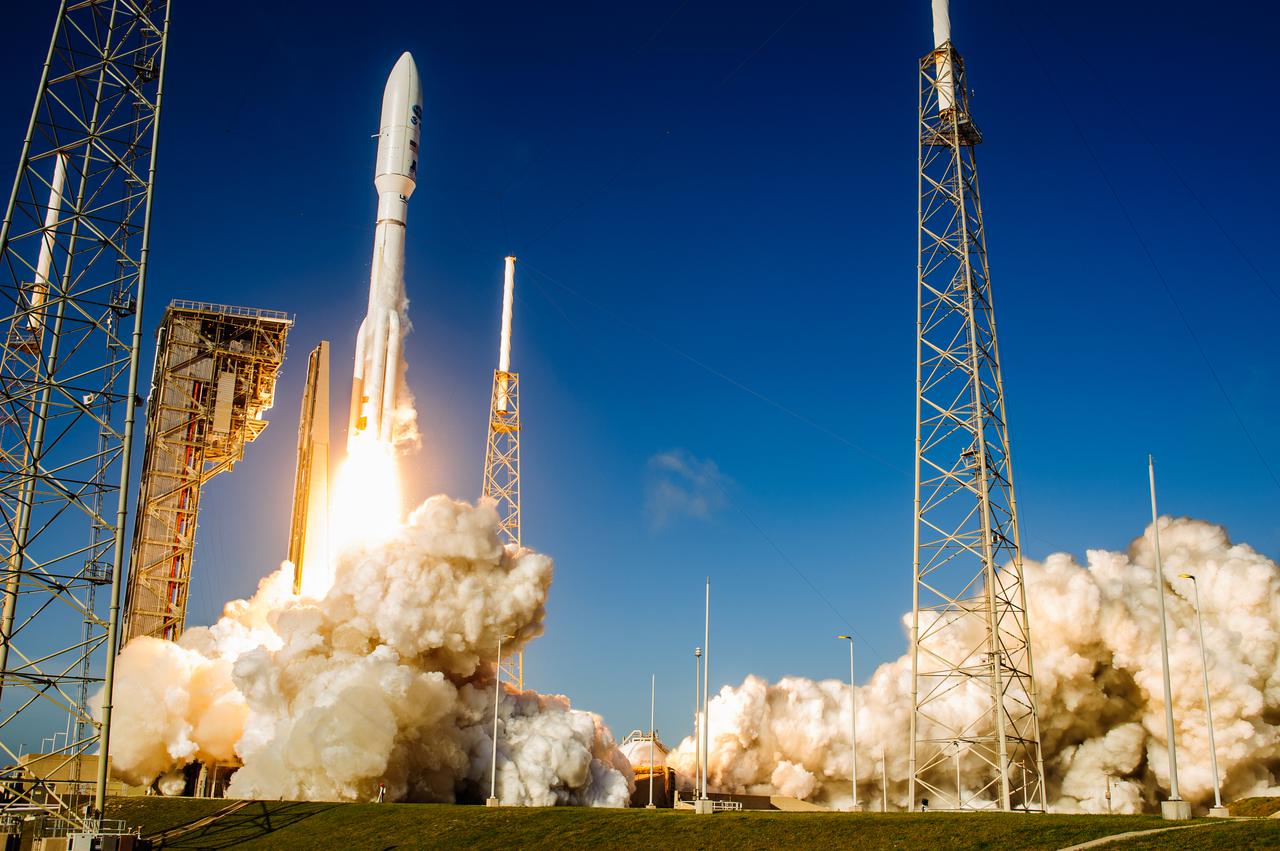
A United Launch Alliance Atlas V 541 rocket, carrying the National Oceanic and Atmospheric Administration’s (NOAA) Geostationary Operational Environmental Satellite-T (GOES-T), lifts off from Space Launch Complex 41 at Cape Canaveral Space Force Station in Florida on March 1, 2022. Liftoff was at 4:38 p.m. EST. GOES-T is the third satellite in the GOES-R series that will continue to help meteorologists observe and predict local weather events that affect public safety. GOES-T will be renamed GOES-18 once it reaches geostationary orbit. GOES-18 will go into operational service as GOES West to provide critical data for the U.S. West Coast, Alaska, Hawaii, Mexico, Central America, and the Pacific Ocean. The launch was managed by NASA’s Launch Services Program based at Kennedy Space Center in Florida, America’s multi-user spaceport.
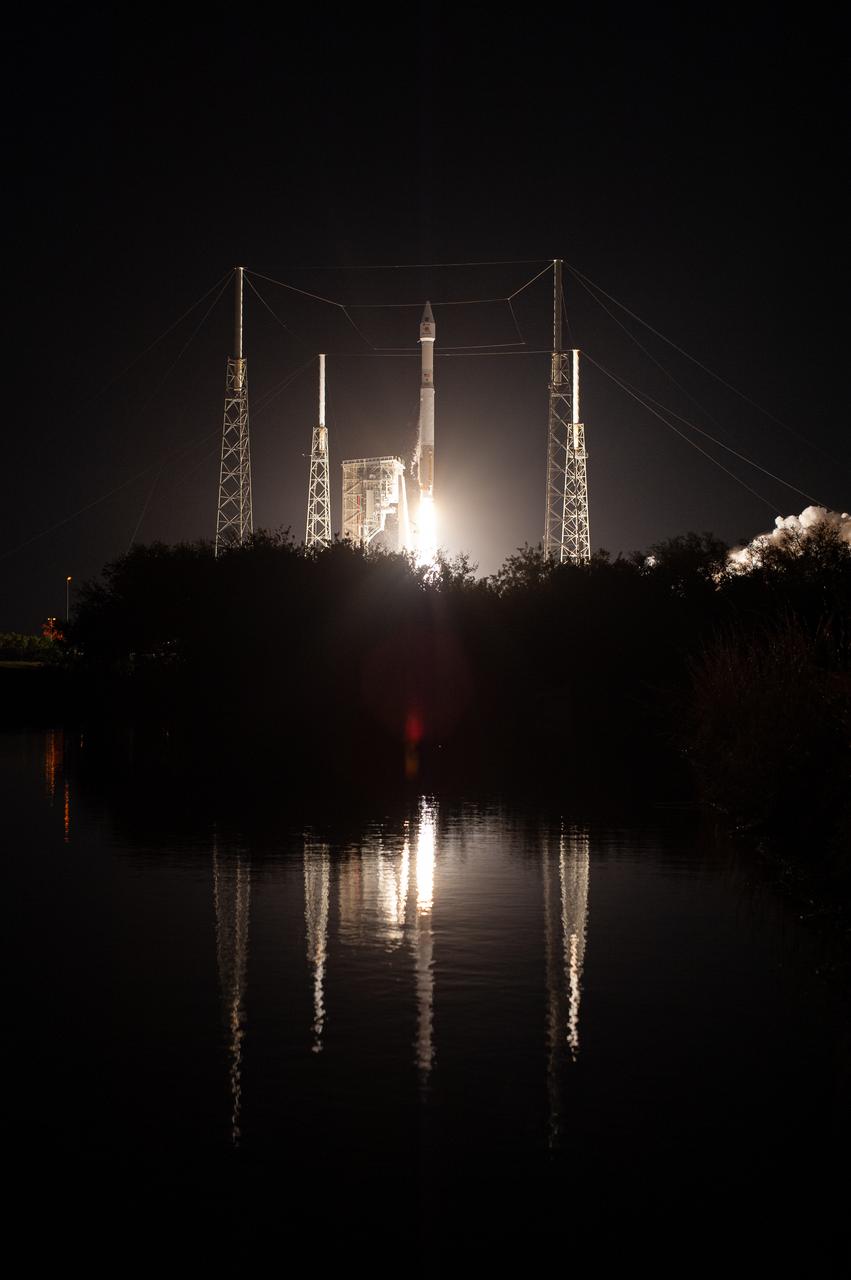
The United Launch Alliance Atlas V rocket, carrying the Solar Orbiter, lifts off Space Launch Complex 41 at Cape Canaveral Air Force Station in Florida at 11:03 p.m. EST, on Feb. 9, 2020. Solar Orbiter is an international cooperative mission between ESA (European Space Agency) and NASA. The mission aims to study the Sun, its outer atmosphere and solar wind. The spacecraft will provide the first images of the Sun’s poles. The spacecraft was developed by Airbus Defence and Space. NASA’s Launch Services Program based at Kennedy managed the launch.
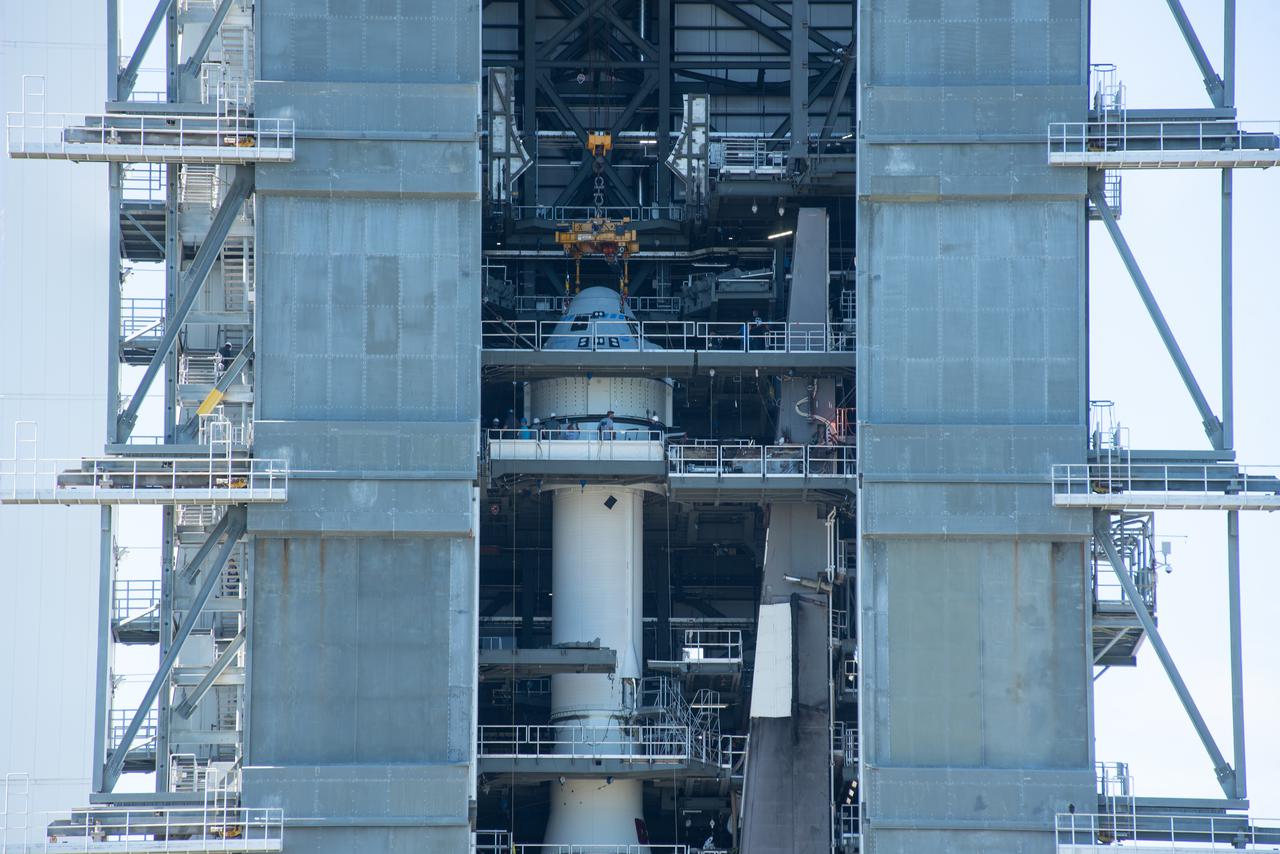
Boeing’s CST-100 Starliner spacecraft is secured atop a United Launch Alliance Atlas V rocket at the Vertical Integration Facility at Space Launch Complex-41 at Florida’s Cape Canaveral Space Force Station on July 17, 2021. Starliner will launch on the Atlas V for Boeing’s second Orbital Flight Test (OFT-2) for NASA’s Commercial Crew Program. The spacecraft rolled out from Boeing’s Commercial Crew and Cargo Processing Facility at NASA’s Kennedy Space Center earlier in the day.
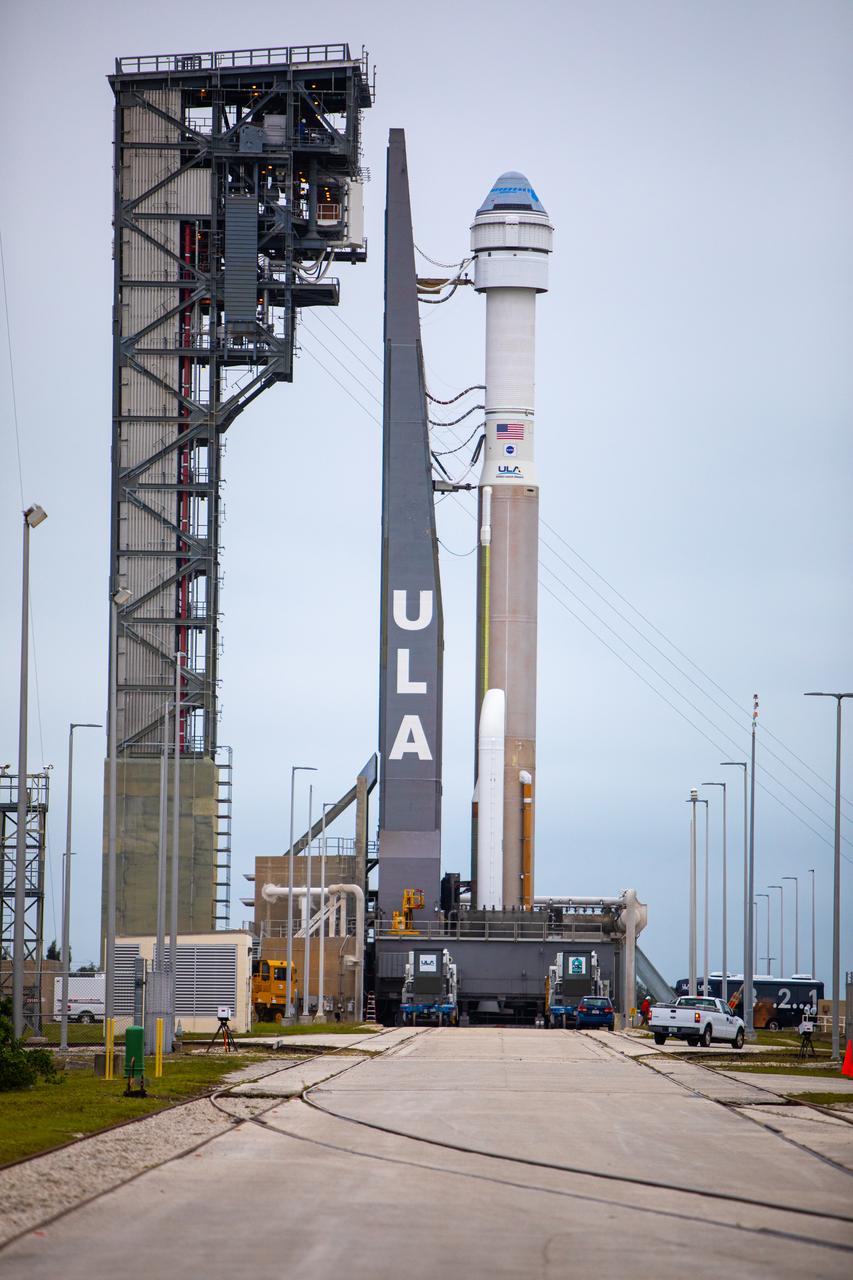
A United Launch Alliance Atlas V rocket, topped by Boeing’s CST-100 Starliner spacecraft, stands on the launch pad at Space Launch Complex 41 at Florida’s Cape Canaveral Air Force Station, Dec. 18, 2019, after rolling from the Vertical Integration Facility. Boeing’s uncrewed Orbital Flight Test will be the Starliner’s first flight to the International Space Station for NASA’s Commercial Crew Program.

The United Launch Alliance Atlas V payload fairing, containing the Solar Orbiter spacecraft, is hoisted up by crane at the Vertical Integration Facility at Space Launch Complex 41 on Cape Canaveral Air Force Station in Florida on Jan. 31, 2020. The payload fairing will be mated to the Atlas V rocket. Solar Orbiter is an international cooperative mission between ESA (European Space Agency) and NASA. The mission aims to study the Sun, its outer atmosphere and solar wind. The spacecraft will provide the first images of the Sun’s poles. NASA’s Launch Services Program based at Kennedy is managing the launch. The spacecraft has been developed by Airbus Defence and Space. Solar Orbiter will launch in February 2020 aboard the Atlas V rocket.
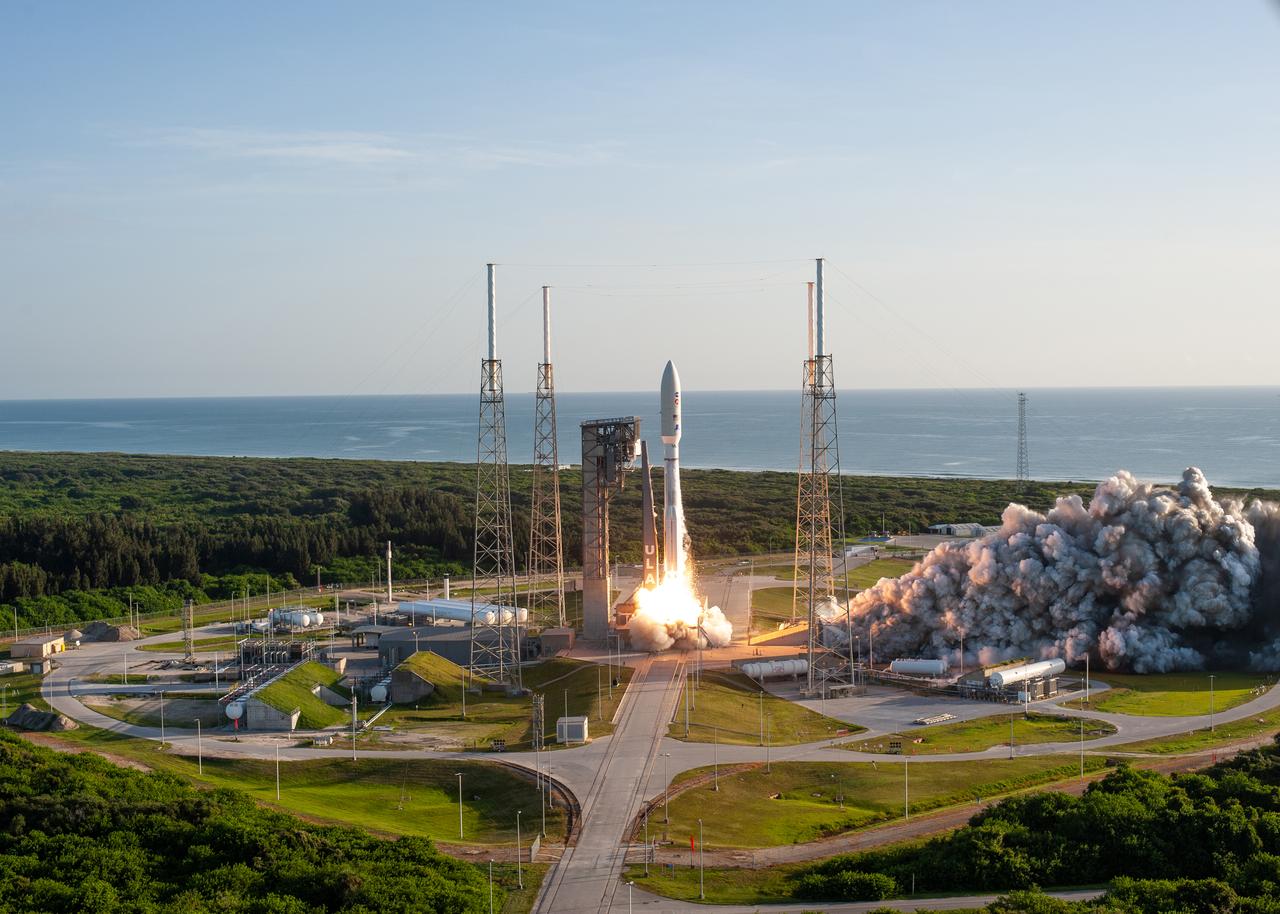
A United Launch Alliance Atlas V 541 rocket lifts off from Space Launch Complex 41 at Cape Canaveral Air Force Station in Florida on July 30, 2020, at 7:50 a.m. EDT, carrying NASA’s Mars Perseverance rover and Ingenuity helicopter. The rover is part of NASA’s Mars Exploration Program, a long-term effort of robotic exploration of the Red Planet. The rover’s seven instruments will search for habitable conditions in the ancient past and signs of past microbial life on Mars. The Launch Services Program at Kennedy is responsible for launch management.
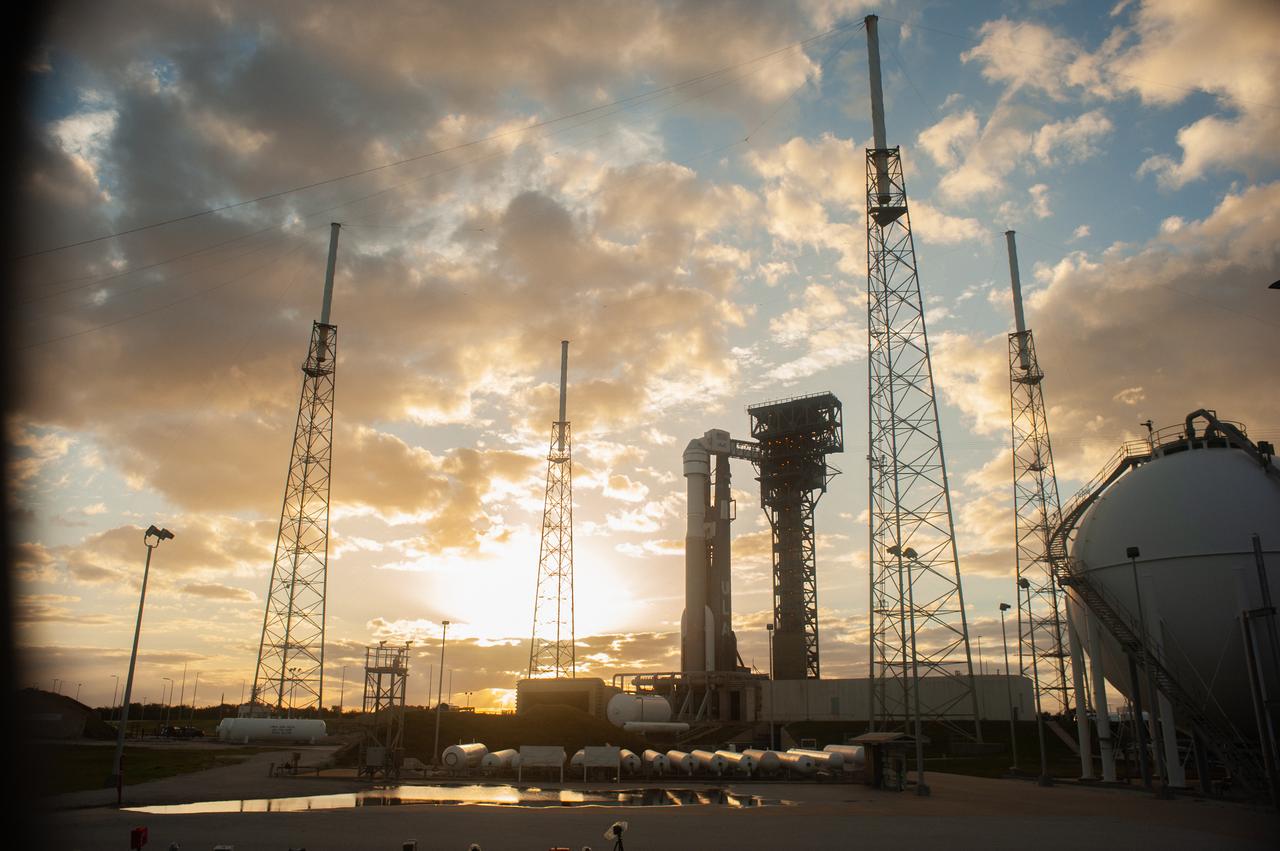
A two-stage United Launch Alliance Atlas V rocket lifts off from Space Launch Complex 41 at Cape Canaveral Air Force Station in Florida for Boeing’s Orbital Flight Test, Dec. 20, 2019. Liftoff occurred at 6:36 a.m. EST. The uncrewed Orbital Flight Test is the Starliner’s first flight for NASA’s Commercial Crew Program.
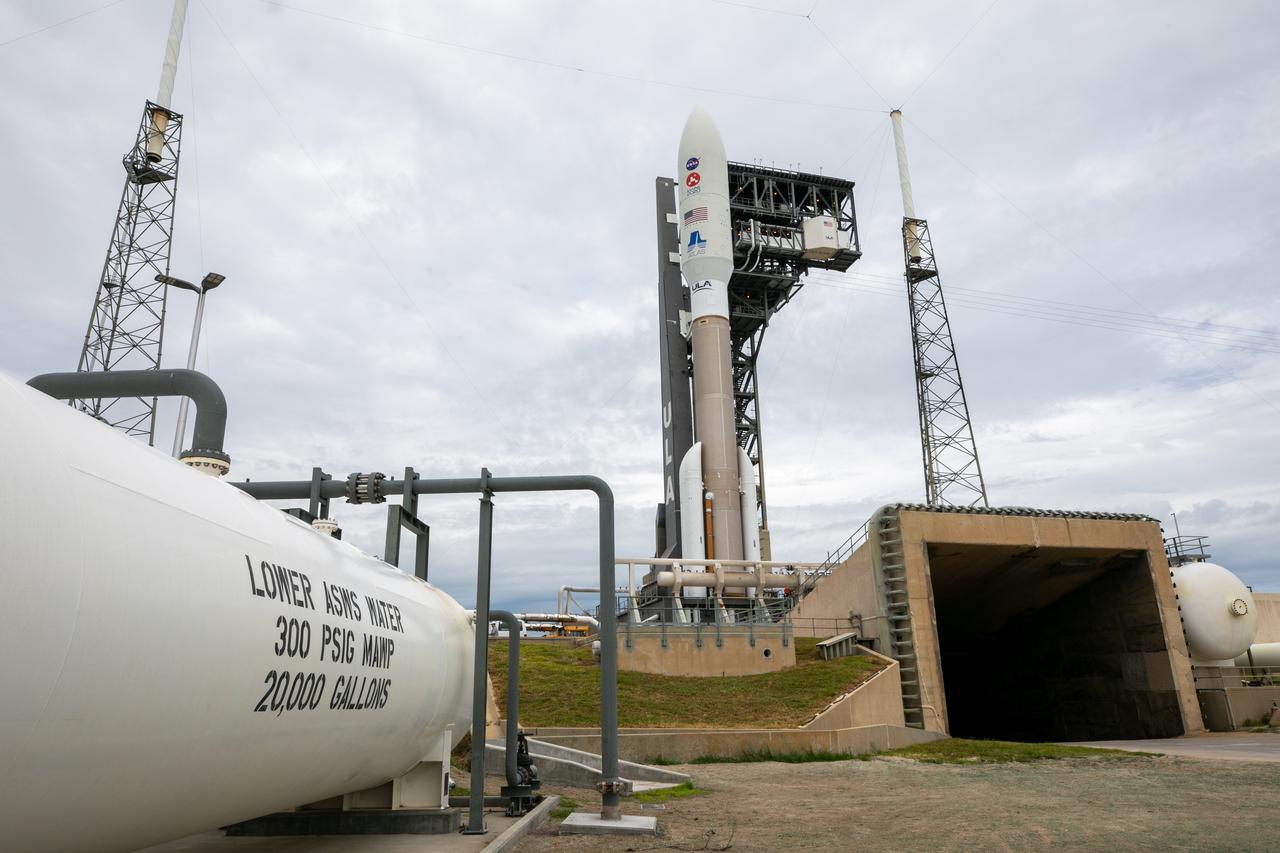
The United Launch Alliance Atlas V 541 rocket, carrying NASA’s Mars Perseverance rover and Ingenuity helicopter, arrives at the launch pad at Space Launch Complex 41 at Cape Canaveral Air Force Station on July 28, 2020. First motion from the Vertical Integration Facility was at 10:24 a.m. EDT. Launch of the Mars 2020 mission is scheduled for July 30. The rover is part of NASA’s Mars Exploration Program, a long-term effort of robotic exploration of the Red Planet. The rover will search for habitable conditions in the ancient past and signs of past microbial life on Mars. The Launch Services Program at Kennedy is responsible for launch management.
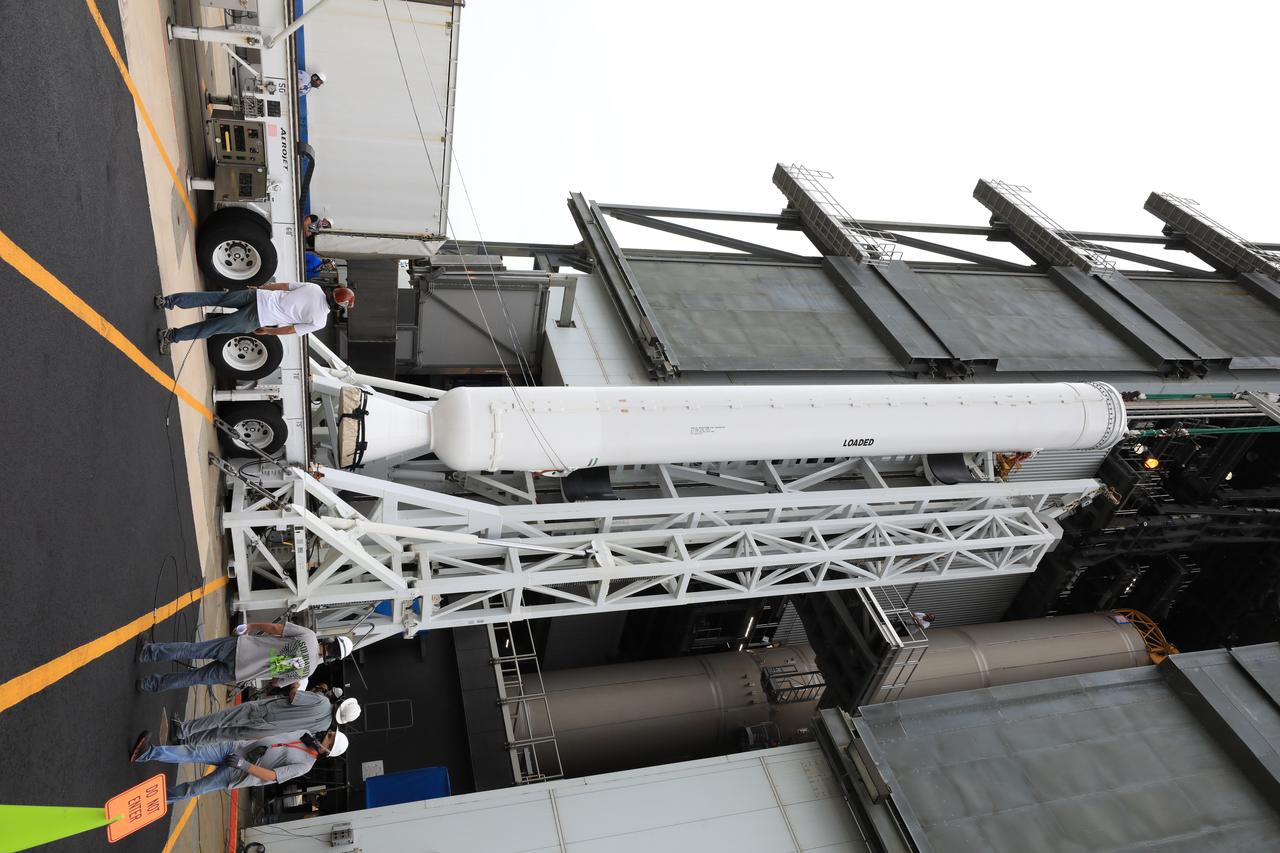
A crane is attached to the second of four solid rocket boosters (SRB) for the United Launch Alliance Atlas V 541 rocket to lift it into the Vertical Integration Facility (VIF) at Space Launch Complex 41 at Cape Canaveral Air Force Station (CCAFS) in Florida on June 3, 2020. The SRB will be lifted up and mated to the Atlas V booster in the VIF. NASA’s Mars 2020 mission with the Perseverance rover is scheduled to launch on July 20, 2020, atop the Atlas V rocket from Pad 41. The rover is part of NASA’s Mars Exploration Program, a long-term effort of robotic exploration of the Red Planet. The rover’s seven instruments will search for habitable conditions in the ancient past and signs of past microbial life on Mars. The Launch Services Program at Kennedy is responsible for launch management.
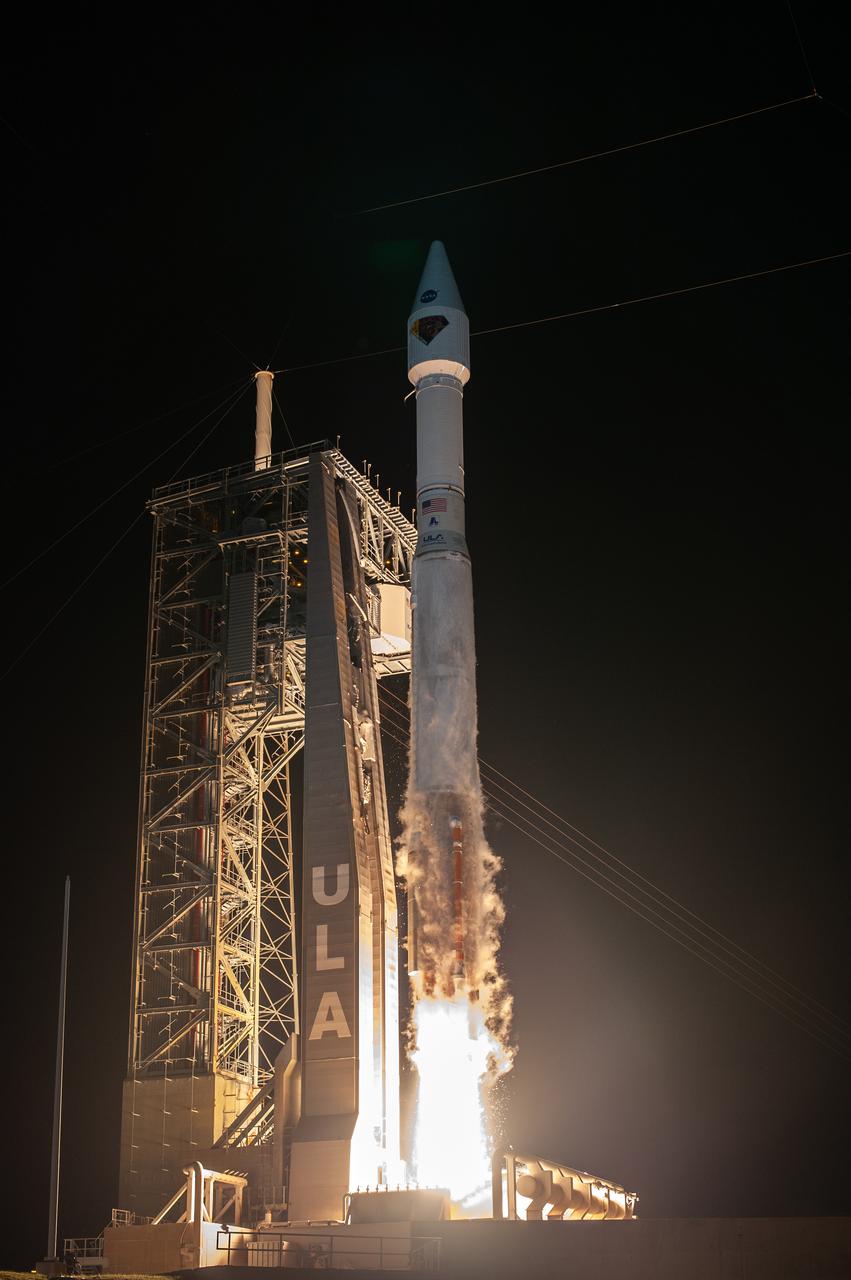
A United Launch Alliance V 401 rocket, with NASA’s Lucy spacecraft atop, powers off the pad at Cape Canaveral Space Force Station’s Space Launch Complex 41 in Florida at 5:34 a.m. EDT on Saturday, Oct. 16, 2021. The launch was managed by NASA’s Launch Services Program, based at Kennedy Space Center. Lucy will embark on a 12-year primary mission to explore a record-breaking number of asteroids, including the Jupiter Trojan asteroids. Named after a fossilized human ancestor whose skeleton provided discoverers insight into humanity’s evolution, the Lucy mission will do much of the same, providing scientists and researchers a look into the origins of our solar system.
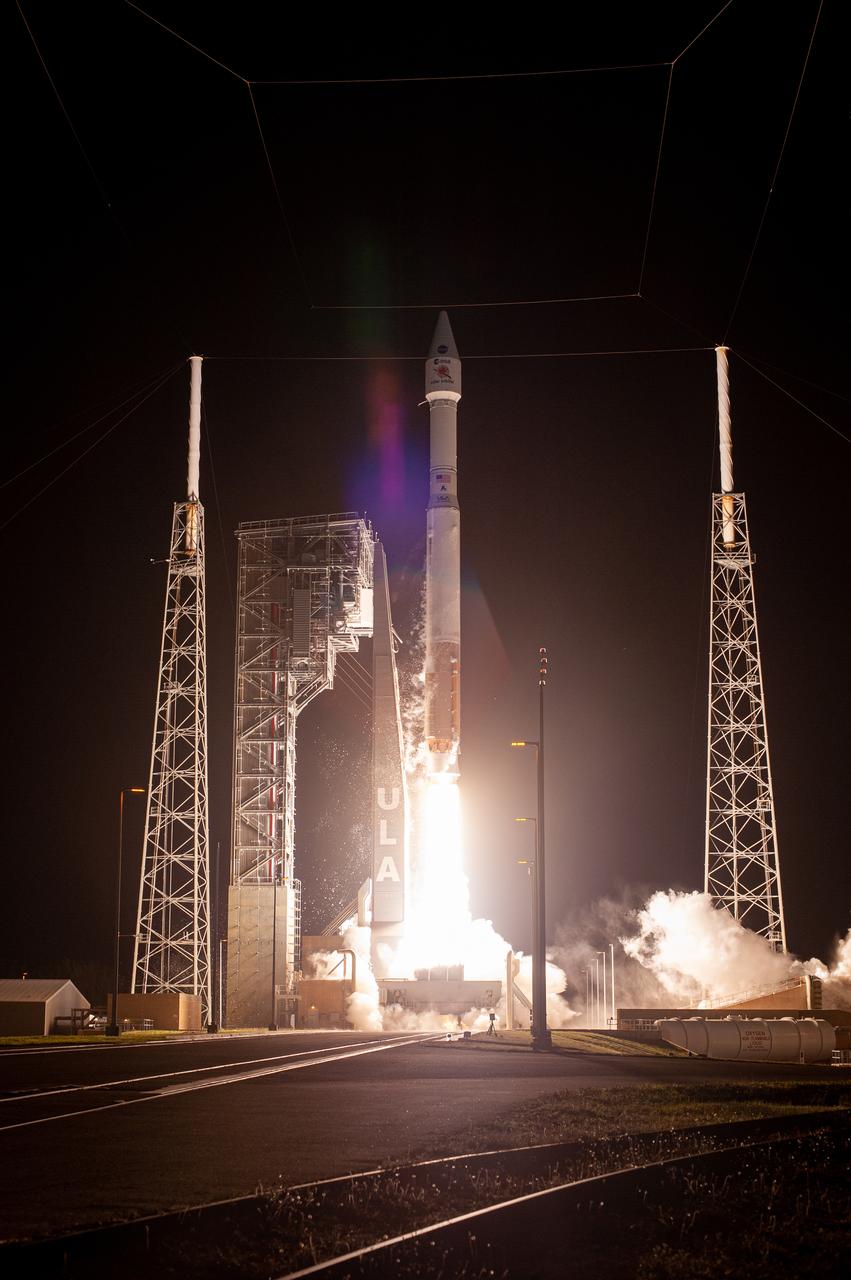
The United Launch Alliance Atlas V rocket, carrying the Solar Orbiter, lifts off Space Launch Complex 41 at Cape Canaveral Air Force Station in Florida at 11:03 p.m. EST, on Feb. 9, 2020. Solar Orbiter is an international cooperative mission between ESA (European Space Agency) and NASA. The mission aims to study the Sun, its outer atmosphere and solar wind. The spacecraft will provide the first images of the Sun’s poles. The spacecraft was developed by Airbus Defence and Space. NASA’s Launch Services Program based at Kennedy managed the launch.
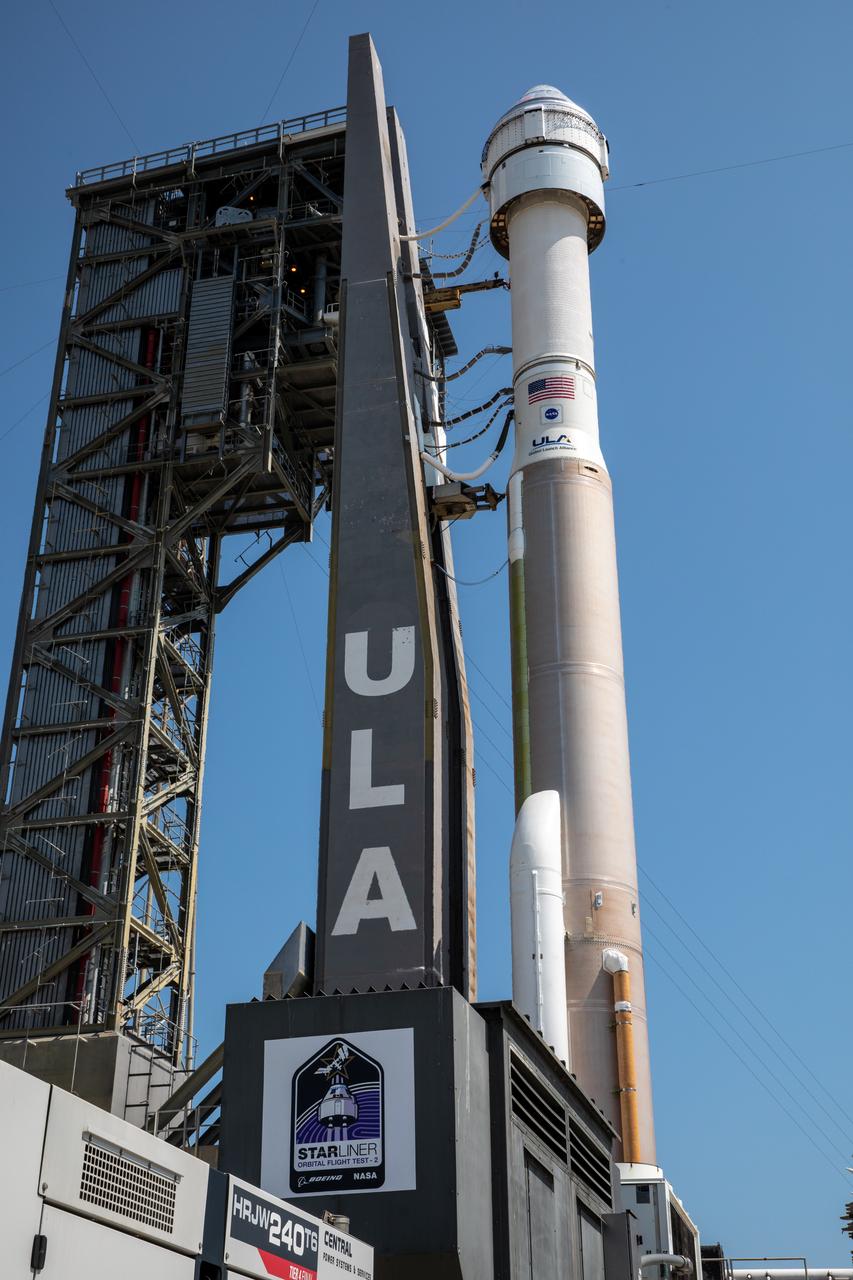
On May 18, 2022, Boeing’s CST-100 Starliner spacecraft and the United Launch Alliance Atlas V rocket roll out from the Vertical Integration Facility to the launch pad at Space Launch Complex-41 on Cape Canaveral Space Force Station in Florida. Starliner will launch on the Atlas V for Boeing’s Orbital Flight Test (OFT-2) for NASA’s Commercial Crew Program at 6:54 p.m. EDT on Thursday, May 19. OFT-2 is an important uncrewed flight test designed to test the end-to-end capabilities of the system to help the agency certify Starliner to carry astronauts to and from the International Space Station.
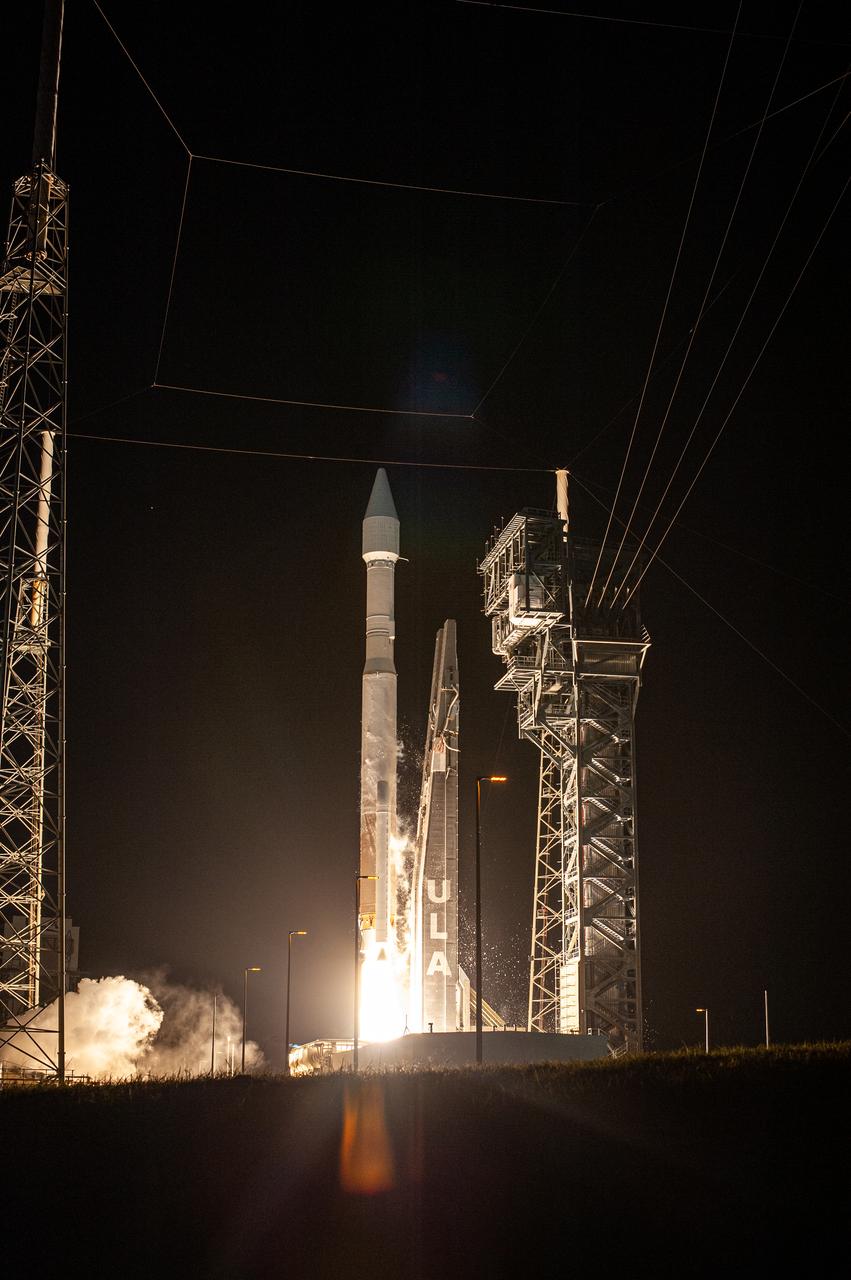
The United Launch Alliance Atlas V rocket, carrying the Solar Orbiter, lifts off Space Launch Complex 41 at Cape Canaveral Air Force Station in Florida at 11:03 p.m. EST, on Feb. 9, 2020. Solar Orbiter is an international cooperative mission between ESA (European Space Agency) and NASA. The mission aims to study the Sun, its outer atmosphere and solar wind. The spacecraft will provide the first images of the Sun’s poles. The spacecraft was developed by Airbus Defence and Space. NASA’s Launch Services Program based at Kennedy managed the launch.
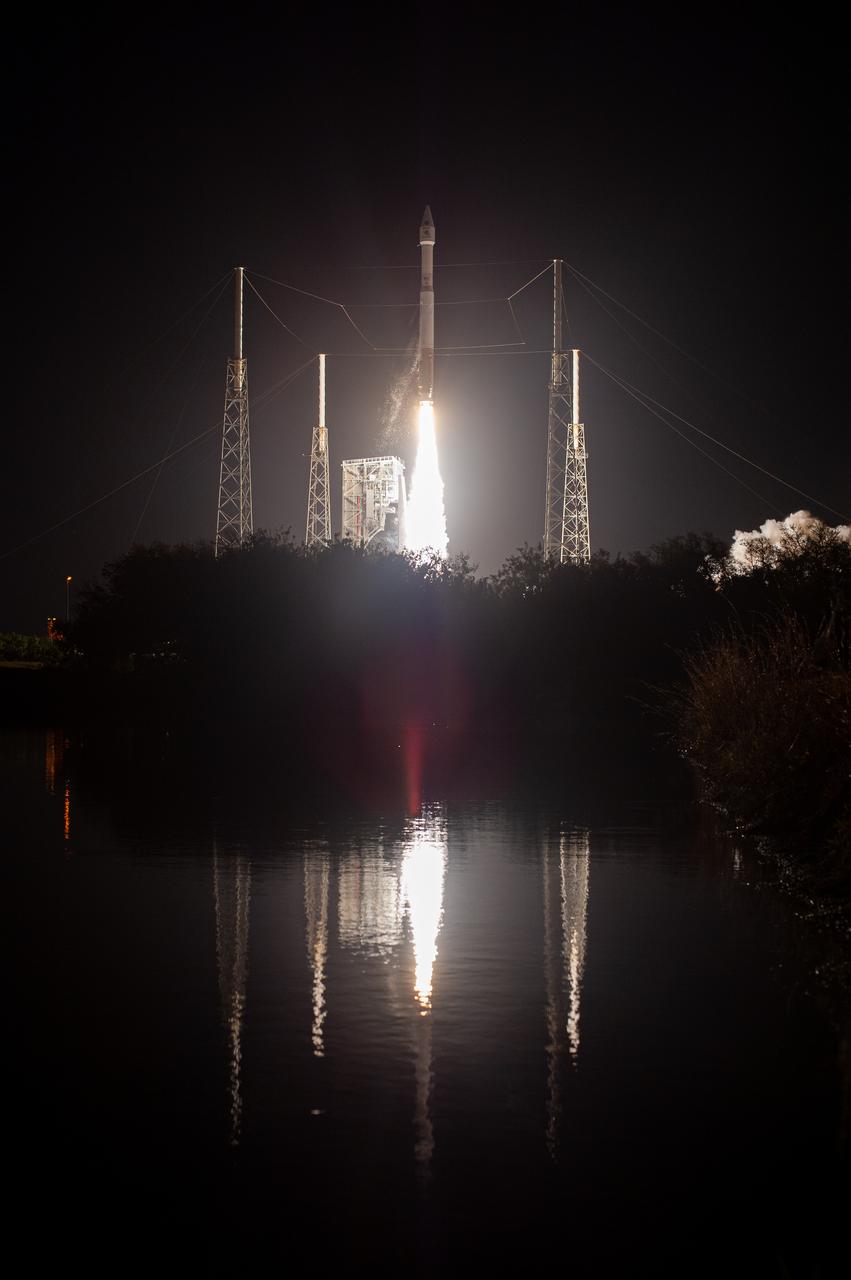
The United Launch Alliance Atlas V rocket, carrying the Solar Orbiter, lifts off Space Launch Complex 41 at Cape Canaveral Air Force Station in Florida at 11:03 p.m. EST, on Feb. 9, 2020. Solar Orbiter is an international cooperative mission between ESA (European Space Agency) and NASA. The mission aims to study the Sun, its outer atmosphere and solar wind. The spacecraft will provide the first images of the Sun’s poles. The spacecraft was developed by Airbus Defence and Space. NASA’s Launch Services Program based at Kennedy managed the launch.
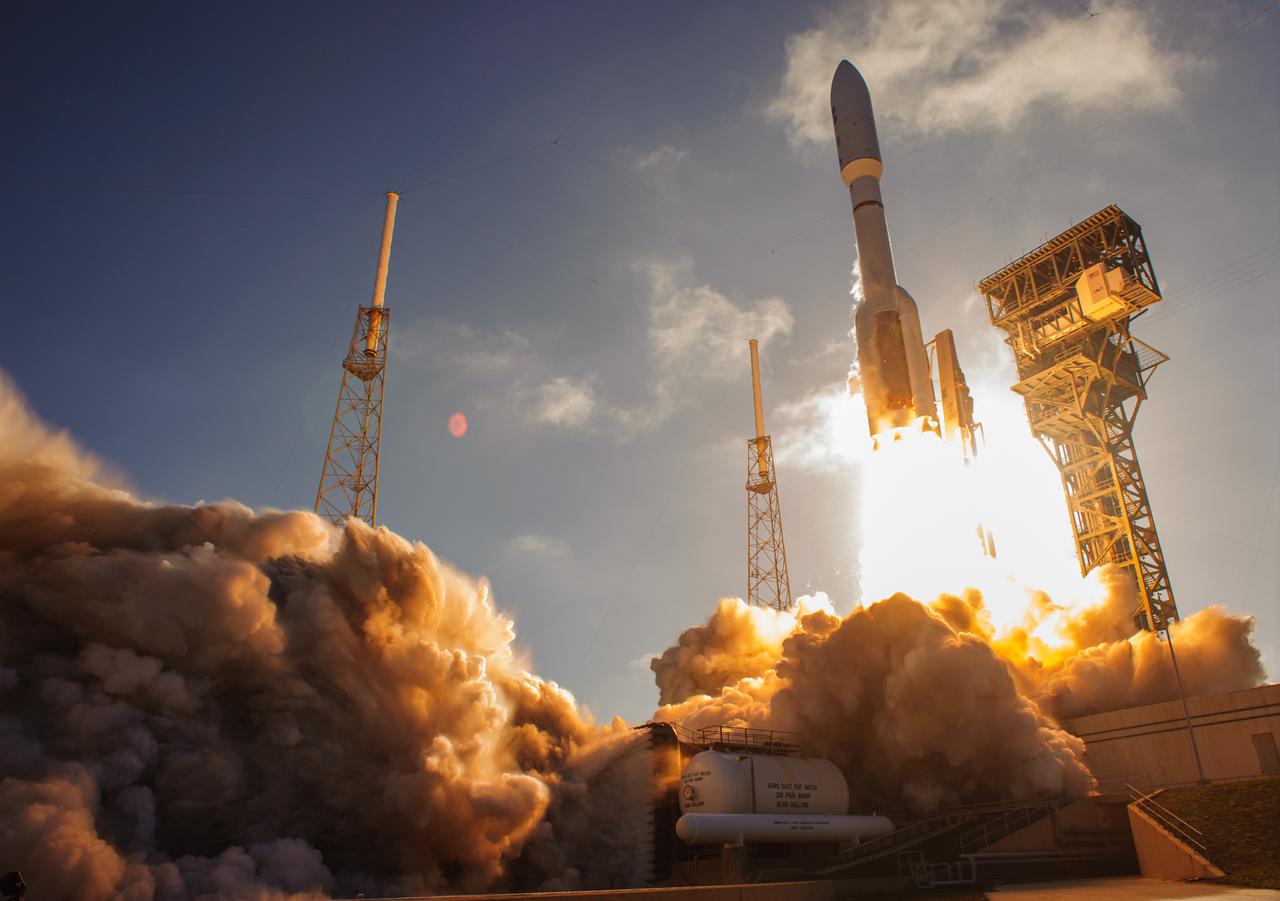
A United Launch Alliance Atlas V 541 rocket, carrying the National Oceanic and Atmospheric Administration’s (NOAA) Geostationary Operational Environmental Satellite-T (GOES-T), lifts off from Space Launch Complex 41 at Cape Canaveral Space Force Station in Florida on March 1, 2022. Liftoff was at 4:38 p.m. EST. GOES-T is the third satellite in the GOES-R series that will continue to help meteorologists observe and predict local weather events that affect public safety. GOES-T will be renamed GOES-18 once it reaches geostationary orbit. GOES-18 will go into operational service as GOES West to provide critical data for the U.S. West Coast, Alaska, Hawaii, Mexico, Central America, and the Pacific Ocean. The launch was managed by NASA’s Launch Services Program based at Kennedy Space Center in Florida, America’s multi-user spaceport.
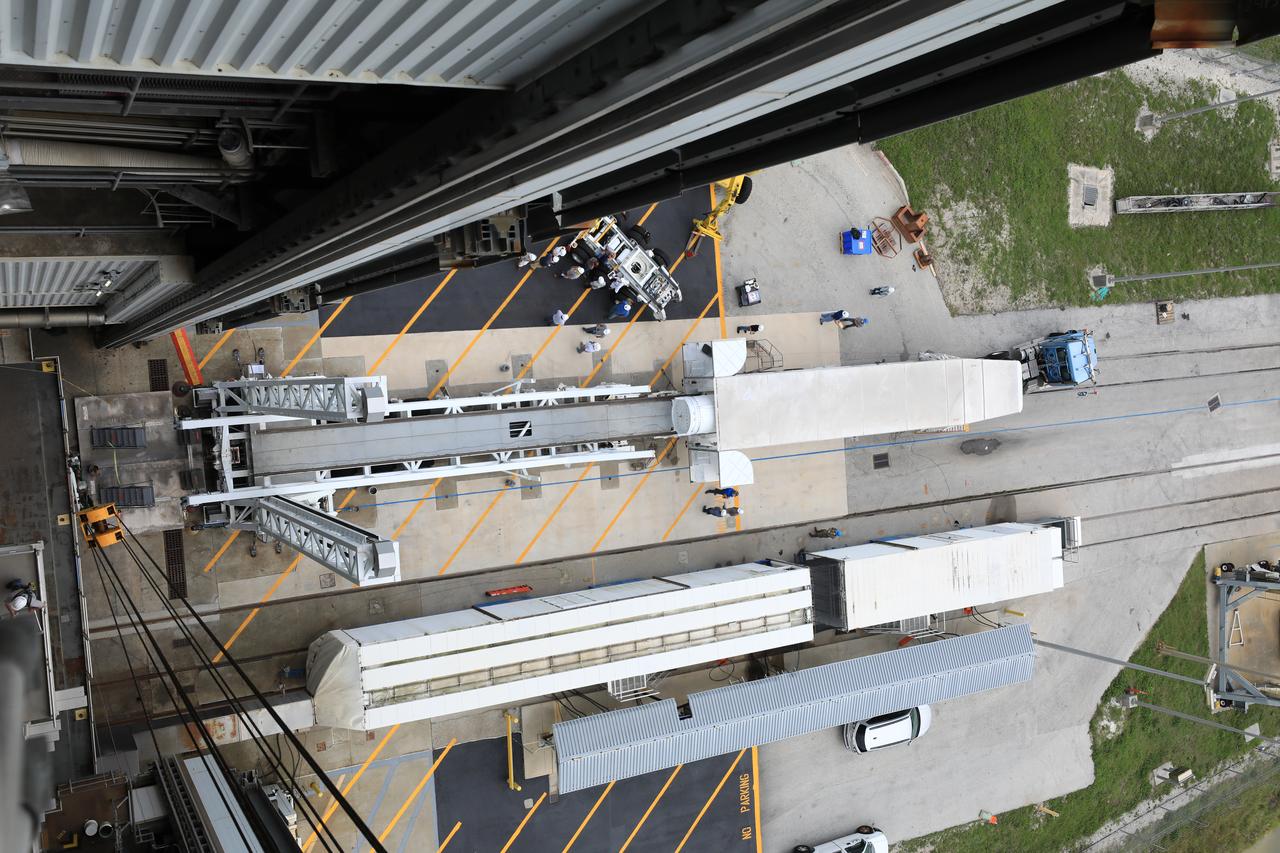
The second of four solid rocket boosters (SRB) for the United Launch Alliance Atlas V 541 rocket for NASA’s Mars 2020 mission with the Perseverance rover arrives at the Vertical Integration Facility (VIF) at Space Launch Complex 41 at Cape Canaveral Air Force Station (CCAFS) in Florida on June 3, 2020. The SRB will be prepared for lift and mating to the Atlas V booster in the VIF. The Mars Perseverance rover is scheduled to launch on July 20, 2020, atop the Atlas V rocket from Pad 41. The rover is part of NASA’s Mars Exploration Program, a long-term effort of robotic exploration of the Red Planet. The rover’s seven instruments will search for habitable conditions in the ancient past and signs of past microbial life on Mars. The Launch Services Program at Kennedy is responsible for launch management.
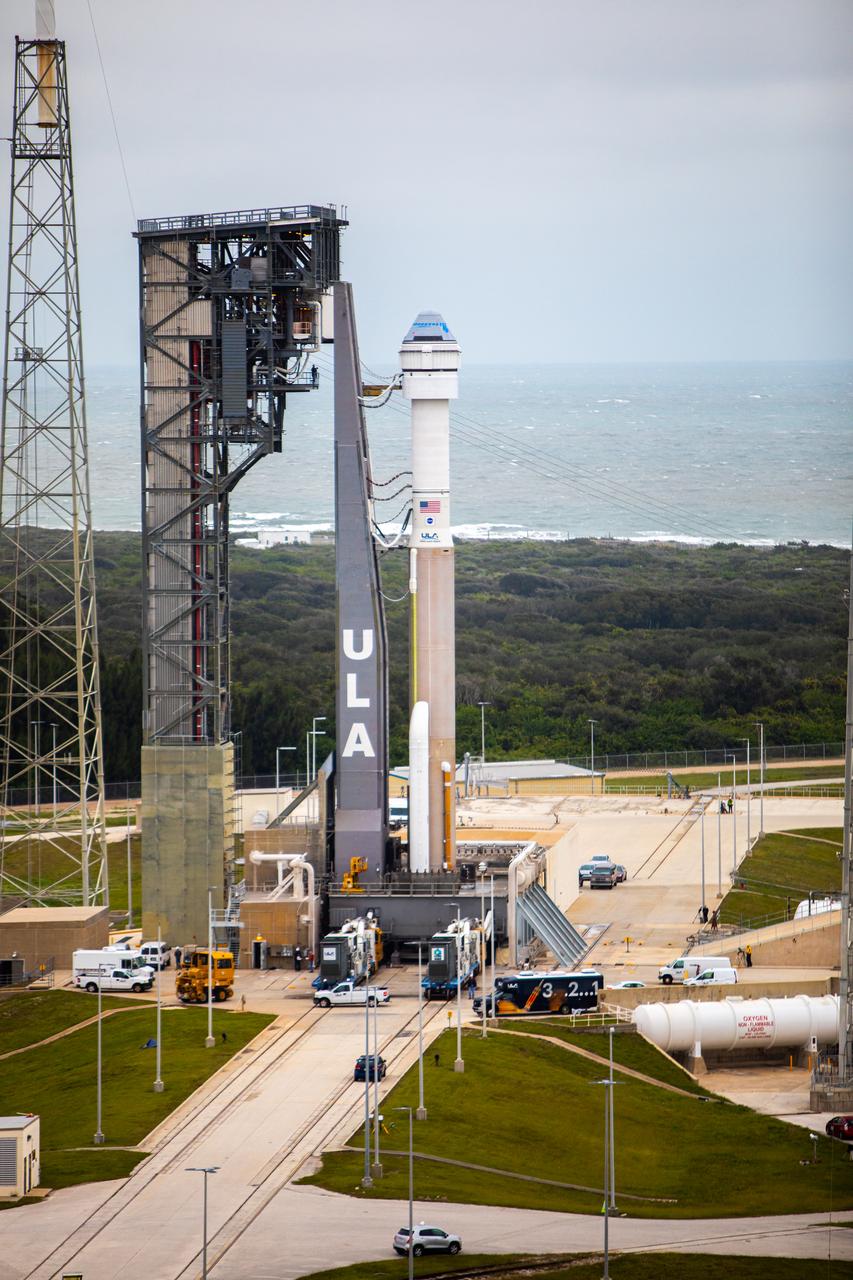
A United Launch Alliance Atlas V rocket, topped by Boeing’s CST-100 Starliner spacecraft, stands on the launch pad at Space Launch Complex 41 at Florida’s Cape Canaveral Air Force Station, Dec. 18, 2019, after rolling from the Vertical Integration Facility. Boeing’s uncrewed Orbital Flight Test will be the Starliner’s first flight to the International Space Station for NASA’s Commercial Crew Program.
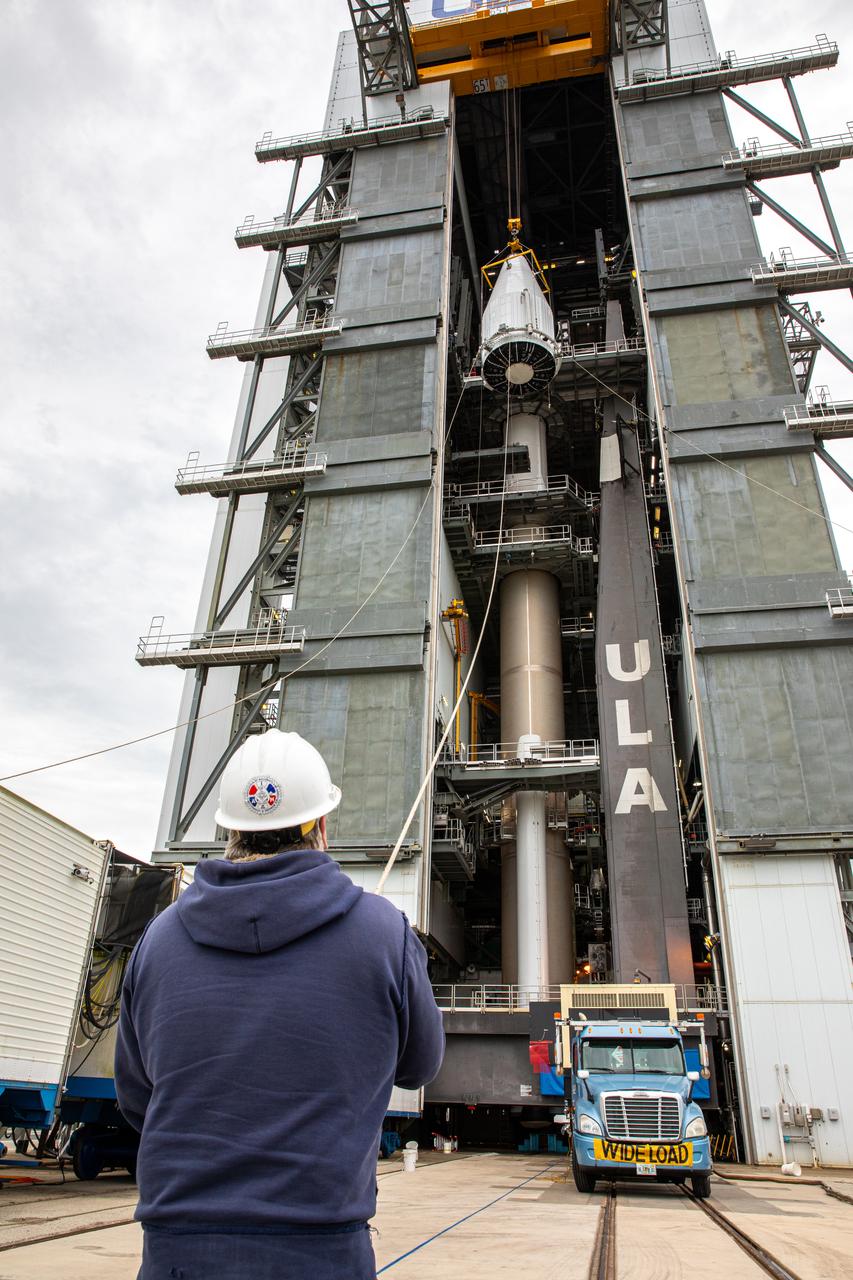
The United Launch Alliance Atlas V payload fairing, containing the Solar Orbiter spacecraft, is hoisted up by crane at the Vertical Integration Facility at Space Launch Complex 41 on Cape Canaveral Air Force Station in Florida on Jan. 31, 2020. The payload fairing will be mated to the Atlas V rocket. Solar Orbiter is an international cooperative mission between ESA (European Space Agency) and NASA. The mission aims to study the Sun, its outer atmosphere and solar wind. The spacecraft will provide the first images of the Sun’s poles. NASA’s Launch Services Program based at Kennedy is managing the launch. The spacecraft has been developed by Airbus Defence and Space. Solar Orbiter will launch in February 2020 aboard the Atlas V rocket.
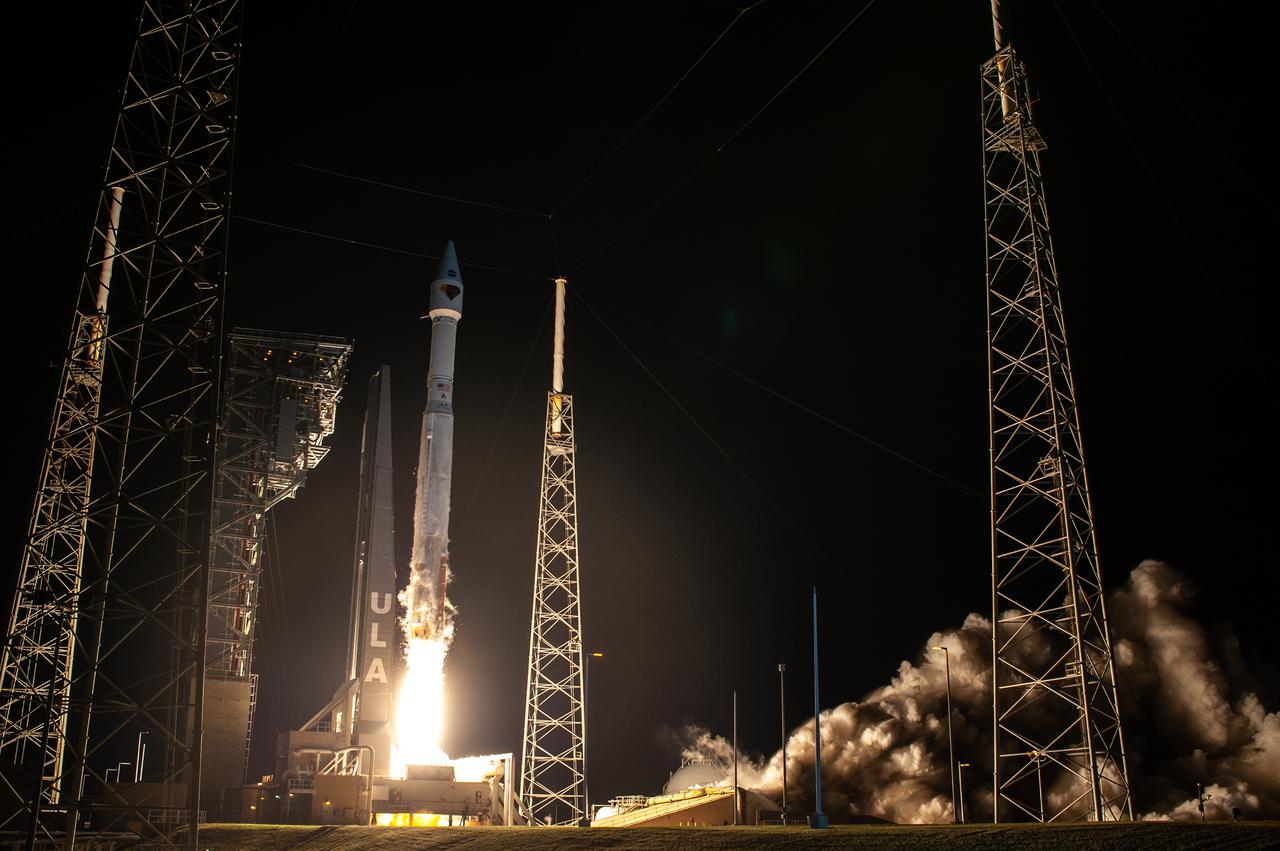
A United Launch Alliance V 401 rocket, with NASA’s Lucy spacecraft atop, powers off the pad at Cape Canaveral Space Force Station’s Space Launch Complex 41 in Florida at 5:34 a.m. EDT on Saturday, Oct. 16, 2021. The launch was managed by NASA’s Launch Services Program, based at Kennedy Space Center. Lucy will embark on a 12-year primary mission to explore a record-breaking number of asteroids, including the Jupiter Trojan asteroids. Named after a fossilized human ancestor whose skeleton provided discoverers insight into humanity’s evolution, the Lucy mission will do much of the same, providing scientists and researchers a look into the origins of our solar system.
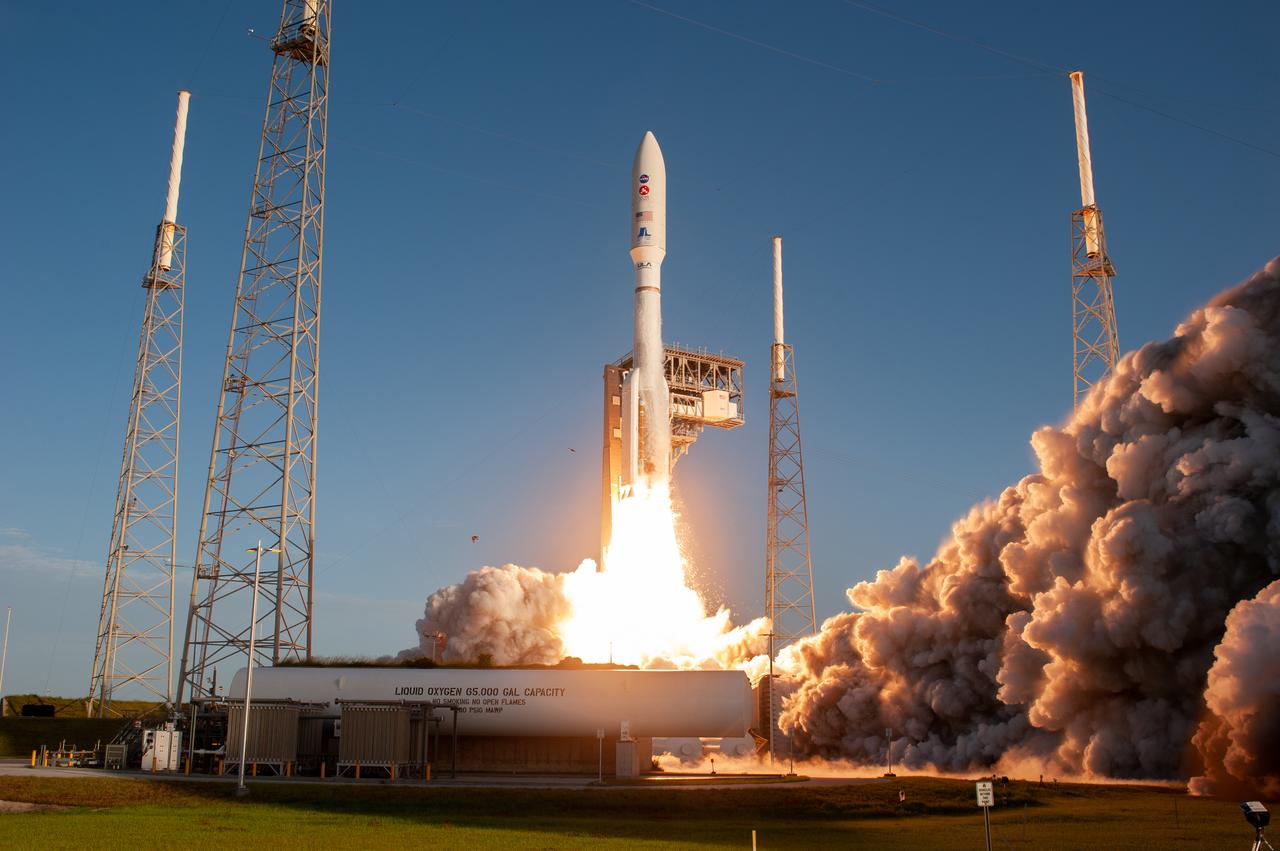
With blue sky as a backdrop, a United Launch Alliance Atlas V 541 rocket lifts off from Space Launch Complex 41 at Cape Canaveral Air Force Station in Florida on July 30, 2020, at 7:50 a.m. EDT, carrying NASA’s Mars Perseverance rover and Ingenuity helicopter. The rover is part of NASA’s Mars Exploration Program, a long-term effort of robotic exploration of the Red Planet. The rover’s seven instruments will search for habitable conditions in the ancient past and signs of past microbial life on Mars. The Launch Services Program at Kennedy is responsible for launch management.
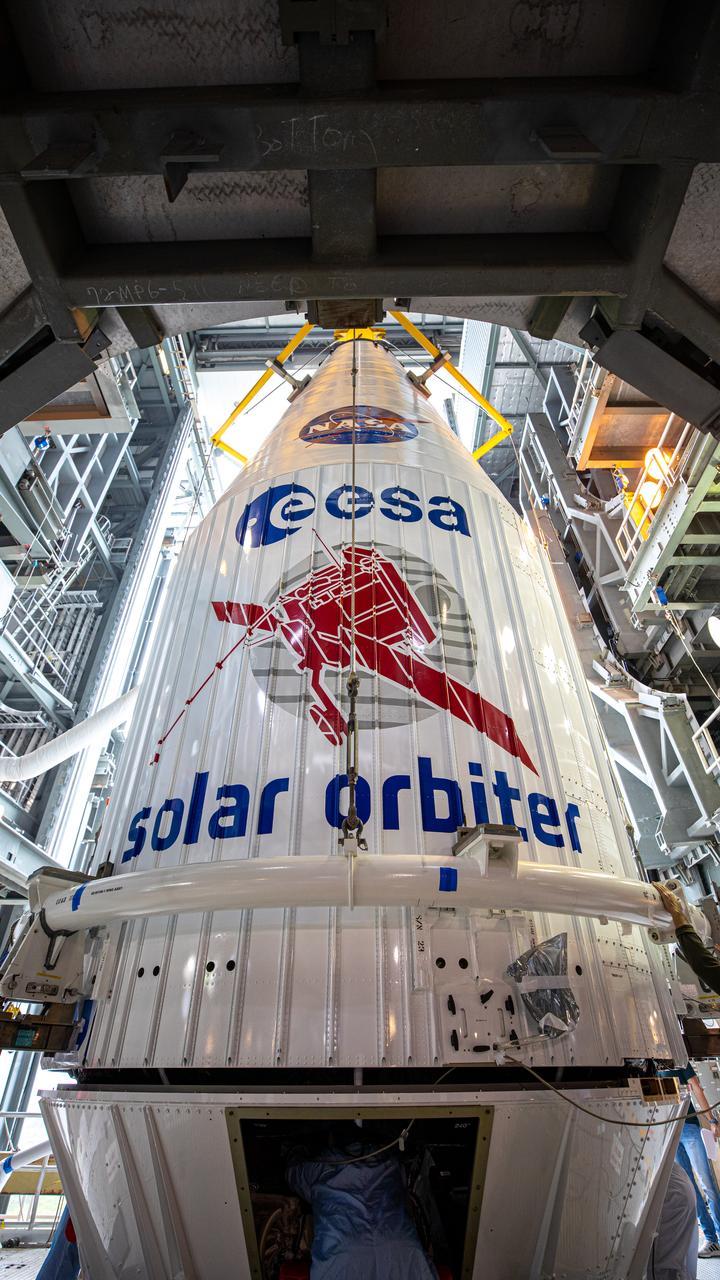
The United Launch Alliance Atlas V payload fairing, containing the Solar Orbiter spacecraft, is being secured on top of the company’s Atlas V rocket inside the Vertical Integration Facility at Space Launch Complex 41 on Cape Canaveral Air Force Station in Florida on Jan. 31, 2020. Solar Orbiter is an international cooperative mission between ESA (European Space Agency) and NASA. The mission aims to study the Sun, its outer atmosphere and solar wind. The spacecraft will provide the first images of the Sun’s poles. NASA’s Launch Services Program based at Kennedy is managing the launch. The spacecraft has been developed by Airbus Defence and Space. Solar Orbiter will launch in February 2020 aboard the Atlas V rocket.
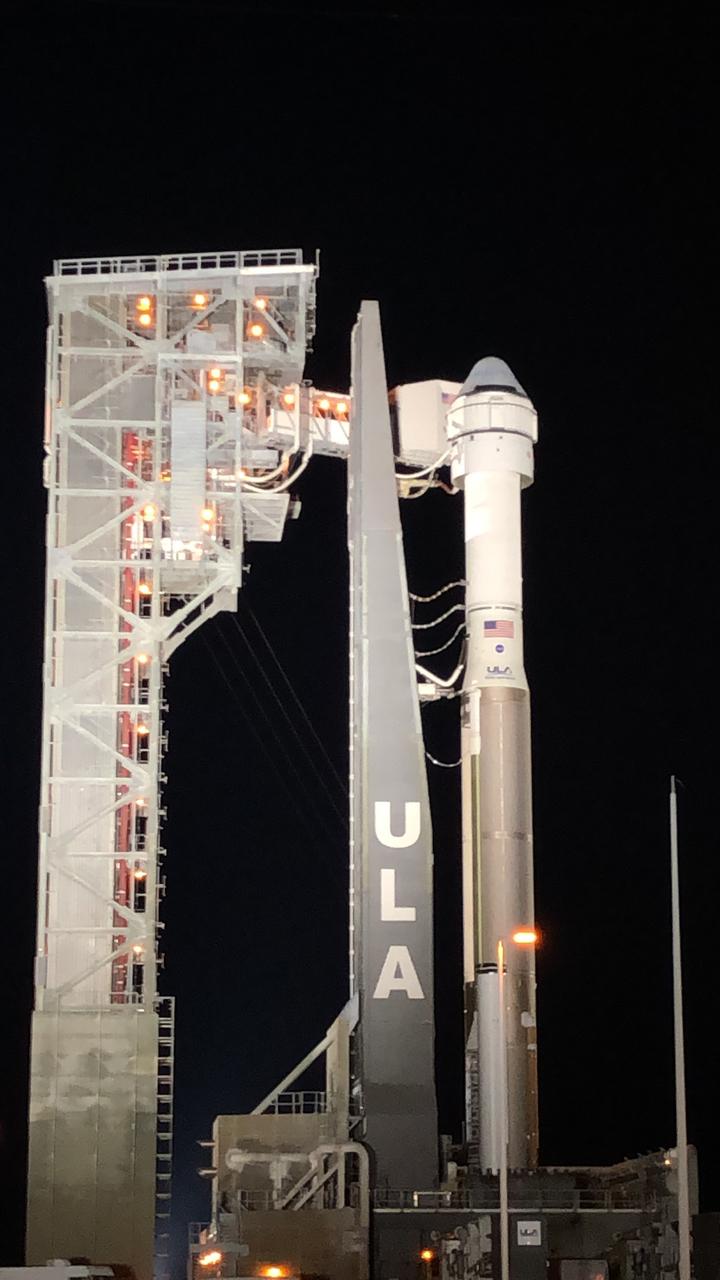
A United Launch Alliance Atlas V rocket, topped by the Boeing CST-100 Starliner spacecraft, stand on Space Launch Complex 41 at Florida’s Cape Canaveral Air Force Station on Dec. 3, 2019. The vehicle was in place on the launch pad in preparation for Boeing’s wet dress rehearsal ahead of the upcoming Orbital Flight Test, an uncrewed mission to the International Space Station for NASA’s Commercial Crew Program.
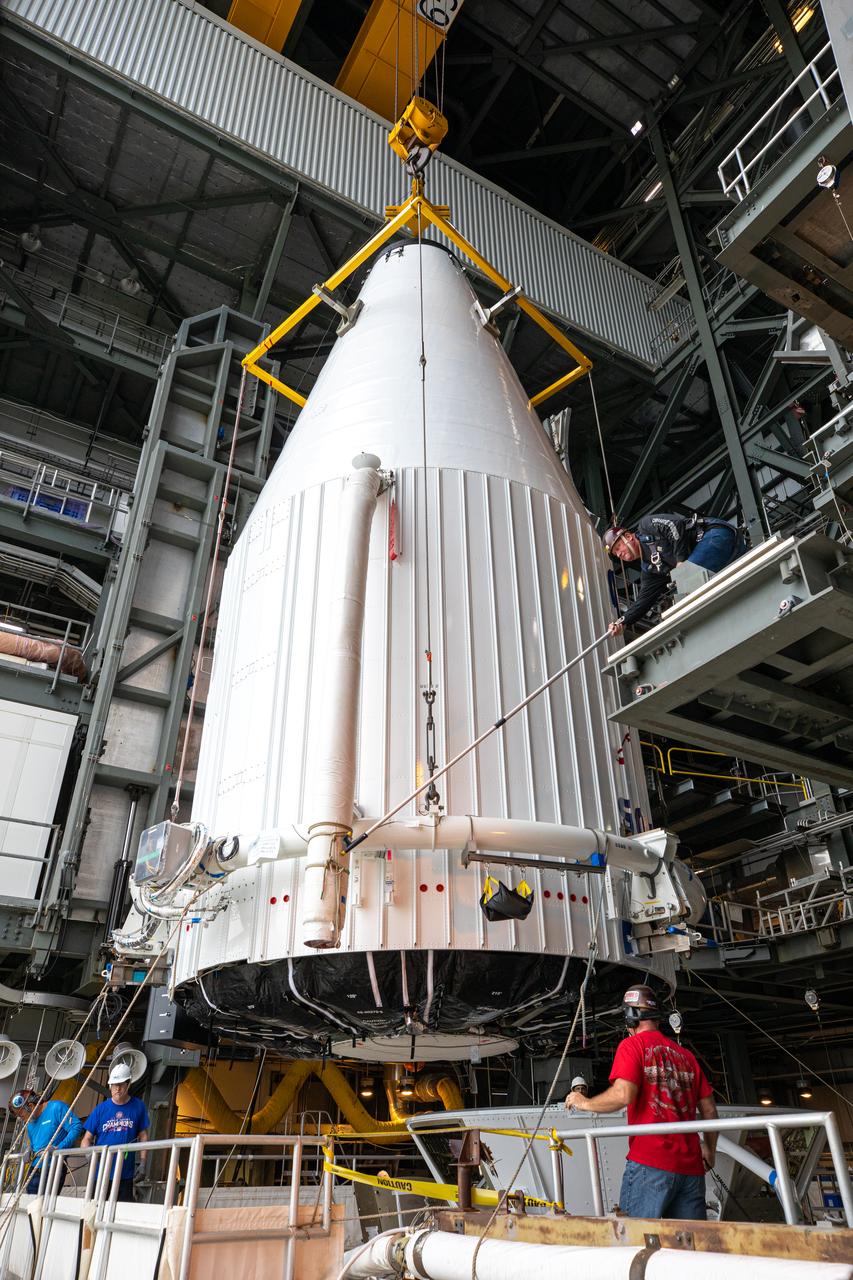
The United Launch Alliance Atlas V payload fairing, containing the Solar Orbiter spacecraft, is moved into the Vertical Integration Facility at Space Launch Complex 41 on Cape Canaveral Air Force Station in Florida on Jan. 31, 2020. The payload fairing will be lowered and mated to the Atlas V rocket. Solar Orbiter is an international cooperative mission between ESA (European Space Agency) and NASA. The mission aims to study the Sun, its outer atmosphere and solar wind. The spacecraft will provide the first images of the Sun’s poles. NASA’s Launch Services Program based at Kennedy is managing the launch. The spacecraft has been developed by Airbus Defence and Space. Solar Orbiter will launch in February 2020 aboard the Atlas V rocket.
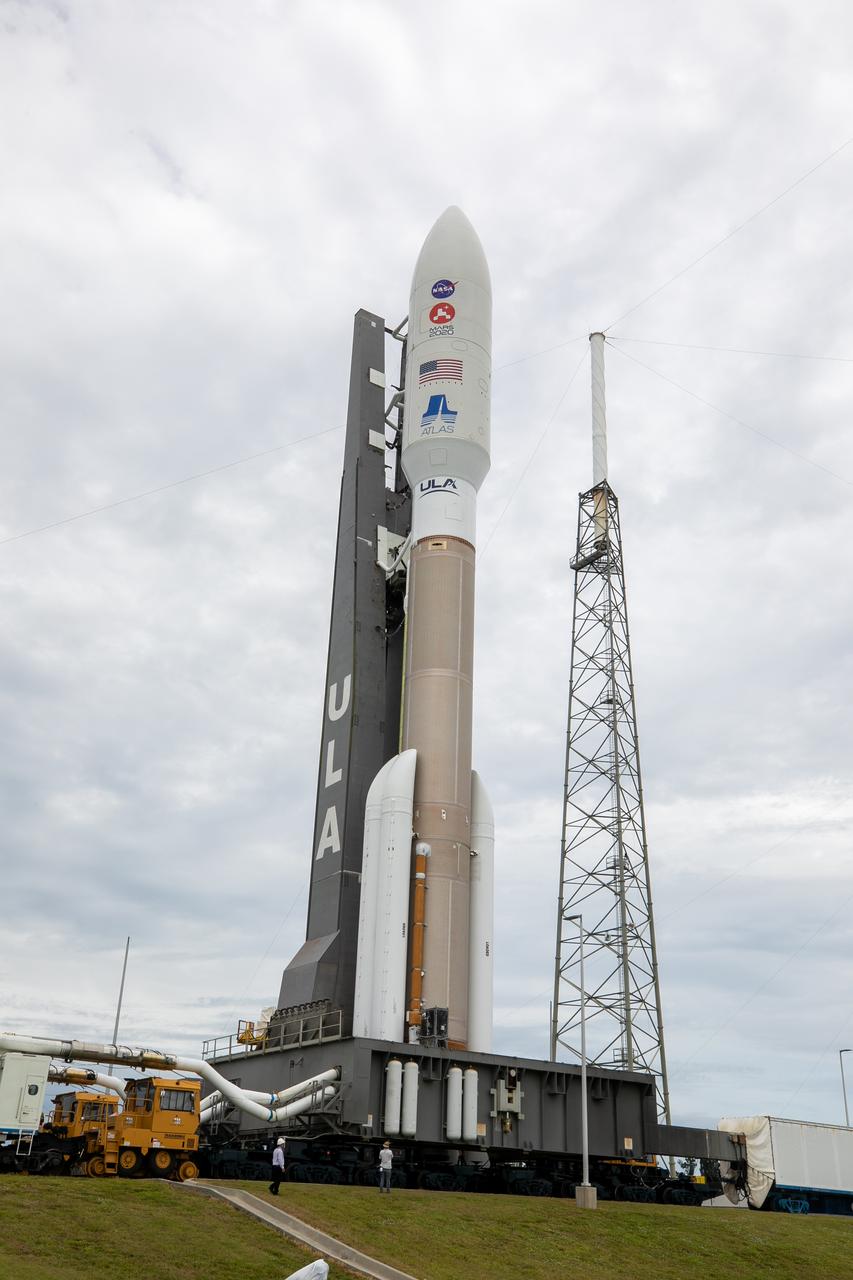
The United Launch Alliance Atlas V 541 rocket, carrying NASA’s Mars Perseverance rover and Ingenuity helicopter, rolls along to the launch pad at Space Launch Complex 41 at Cape Canaveral Air Force Station on July 28, 2020. First motion was at 10:24 a.m. EDT. Launch of the Mars 2020 mission is scheduled for July 30. The rover is part of NASA’s Mars Exploration Program, a long-term effort of robotic exploration of the Red Planet. The rover will search for habitable conditions in the ancient past and signs of past microbial life on Mars. The Launch Services Program at Kennedy is responsible for launch management.
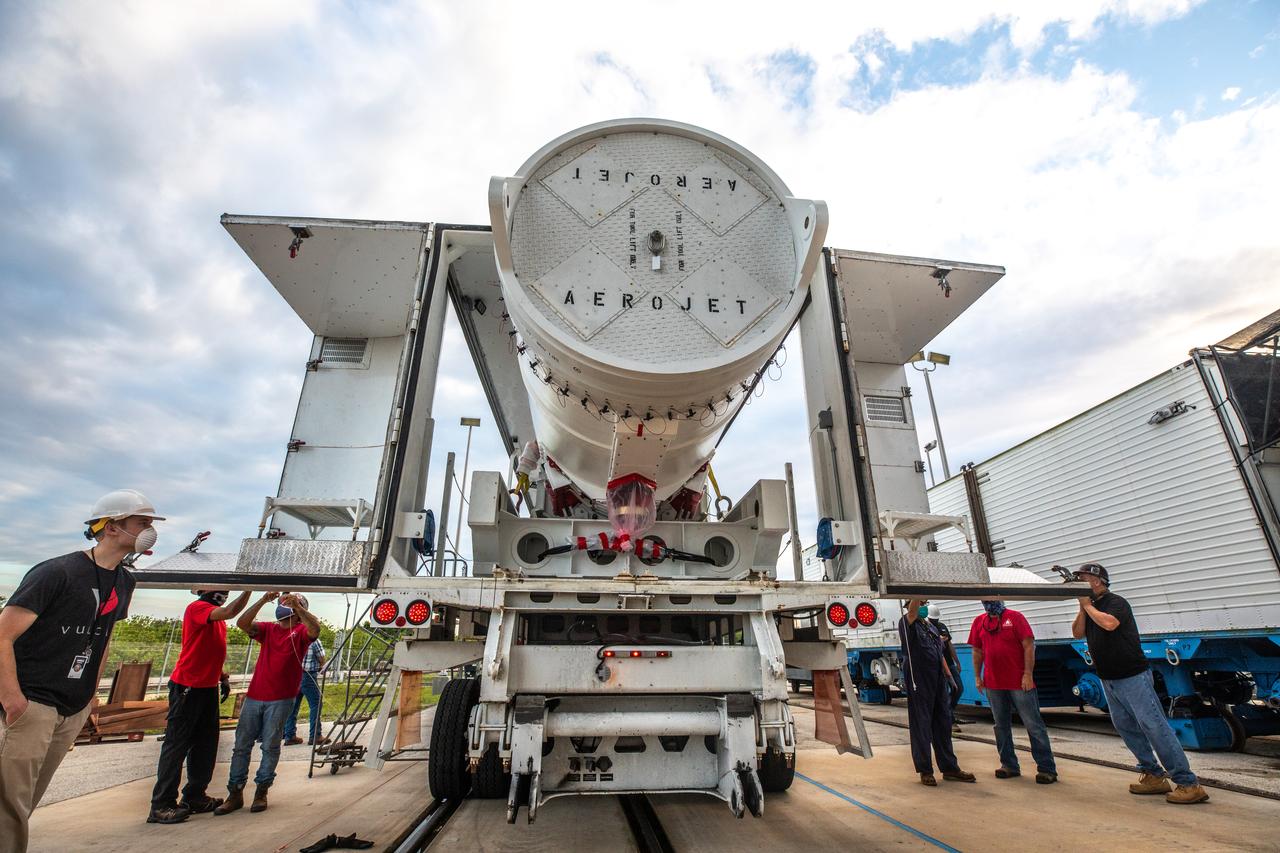
The first solid rocket booster (SRB) for the United Launch Alliance Atlas V 541 rocket for NASA’s Mars 2020 mission with the Perseverance rover arrives near the Vertical Integration Facility (VIF) at Space Launch Complex 41 at Cape Canaveral Air Force Station (CCAFS) in Florida on May 29, 2020. The SRB will be prepared for lift and mating to the Atlas V booster in the VIF. The Mars Perseverance rover is scheduled to launch in mid-July atop the Atlas V rocket from Pad 41. The rover is part of NASA’s Mars Exploration Program, a long-term effort of robotic exploration of the Red Planet. The rover will search for habitable conditions in the ancient past and signs of past microbial life on Mars. The Launch Services Program at Kennedy is responsible for launch management.

In this view from above, the United Launch Alliance Atlas V payload fairing, containing the Solar Orbiter spacecraft, is hoisted up by crane at the Vertical Integration Facility at Space Launch Complex 41 on Cape Canaveral Air Force Station in Florida on Jan. 31, 2020. The payload fairing will be mated to the Atlas V rocket. Solar Orbiter is an international cooperative mission between ESA (European Space Agency) and NASA. The mission aims to study the Sun, its outer atmosphere and solar wind. The spacecraft will provide the first images of the Sun’s poles. NASA’s Launch Services Program based at Kennedy is managing the launch. The spacecraft has been developed by Airbus Defence and Space. Solar Orbiter will launch in February 2020 aboard the Atlas V rocket.
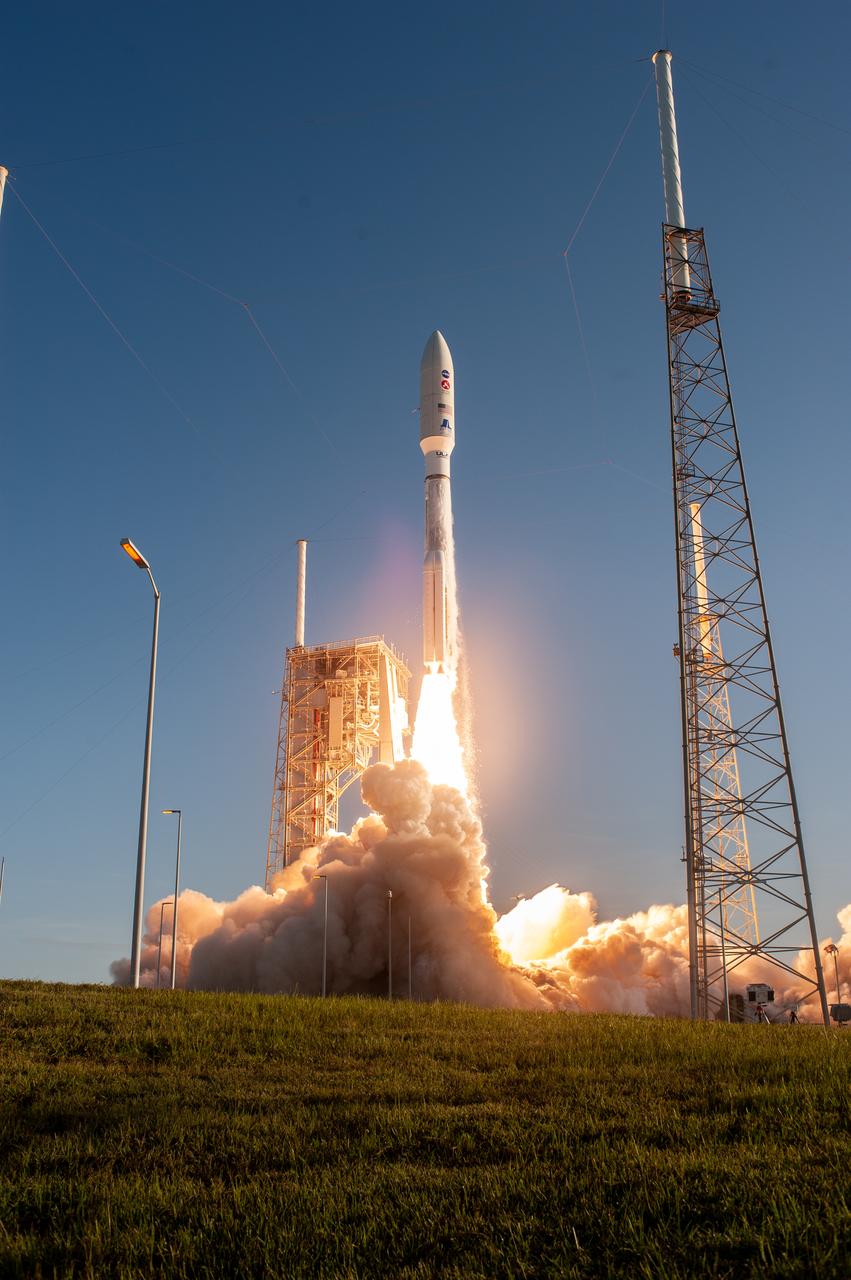
A United Launch Alliance Atlas V 541 rocket lifts off from Space Launch Complex 41 at Cape Canaveral Air Force Station in Florida on July 30, 2020, at 7:50 a.m. EDT, carrying NASA’s Mars Perseverance rover and Ingenuity helicopter. The rover is part of NASA’s Mars Exploration Program, a long-term effort of robotic exploration of the Red Planet. The rover’s seven instruments will search for habitable conditions in the ancient past and signs of past microbial life on Mars. The Launch Services Program at Kennedy is responsible for launch management.
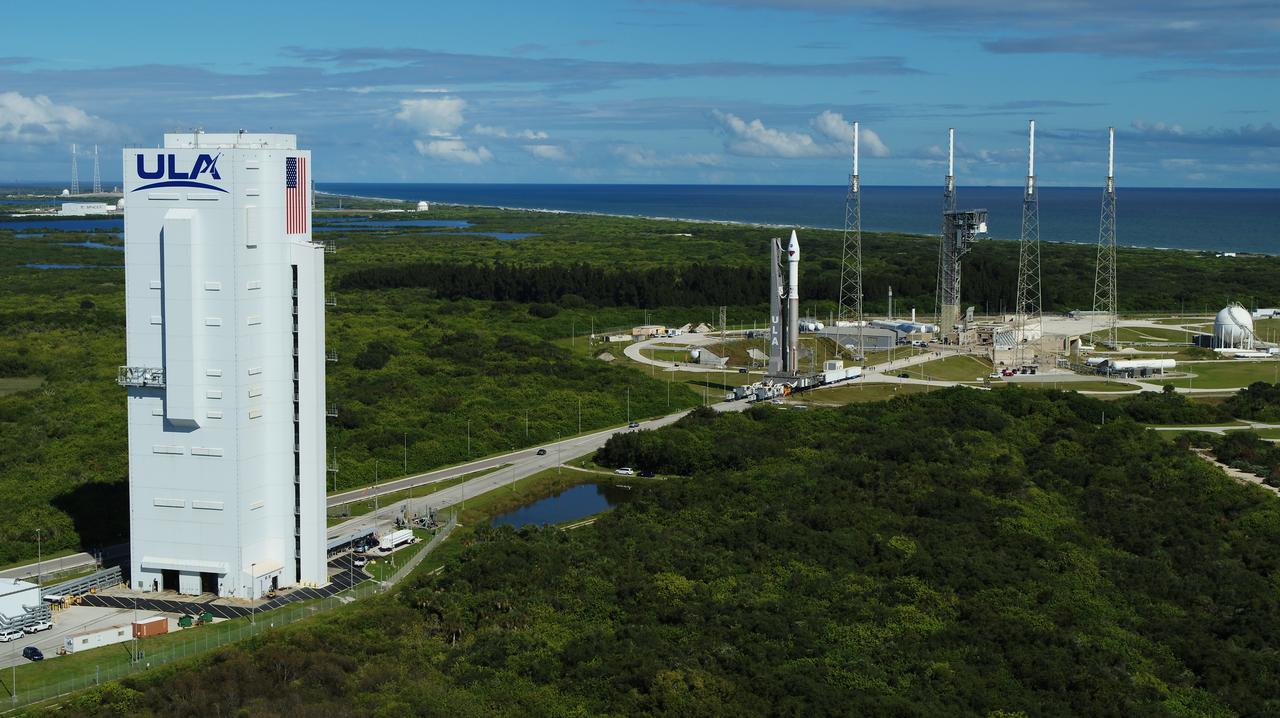
A United Launch Alliance V 401 rocket, with NASA’s Lucy spacecraft atop, makes its way from Cape Canaveral Space Force Station’s Vertical Integration Facility to Space Launch Complex 41 on Thursday, Oct. 14, 2021, in preparation for its targeted 5:34 a.m. EDT liftoff on Saturday, Oct. 16. NASA’s Launch Services Program, based at Kennedy Space Center, is managing the launch. During its 12-year primary mission, Lucy will explore a record-breaking number of asteroids, flying by one asteroid in the solar system’s main belt and seven Trojan asteroids. Additionally, Lucy’s path will circle back to Earth three times for gravity assists, making it the first spacecraft ever to return to the vicinity of Earth from the outer solar system.
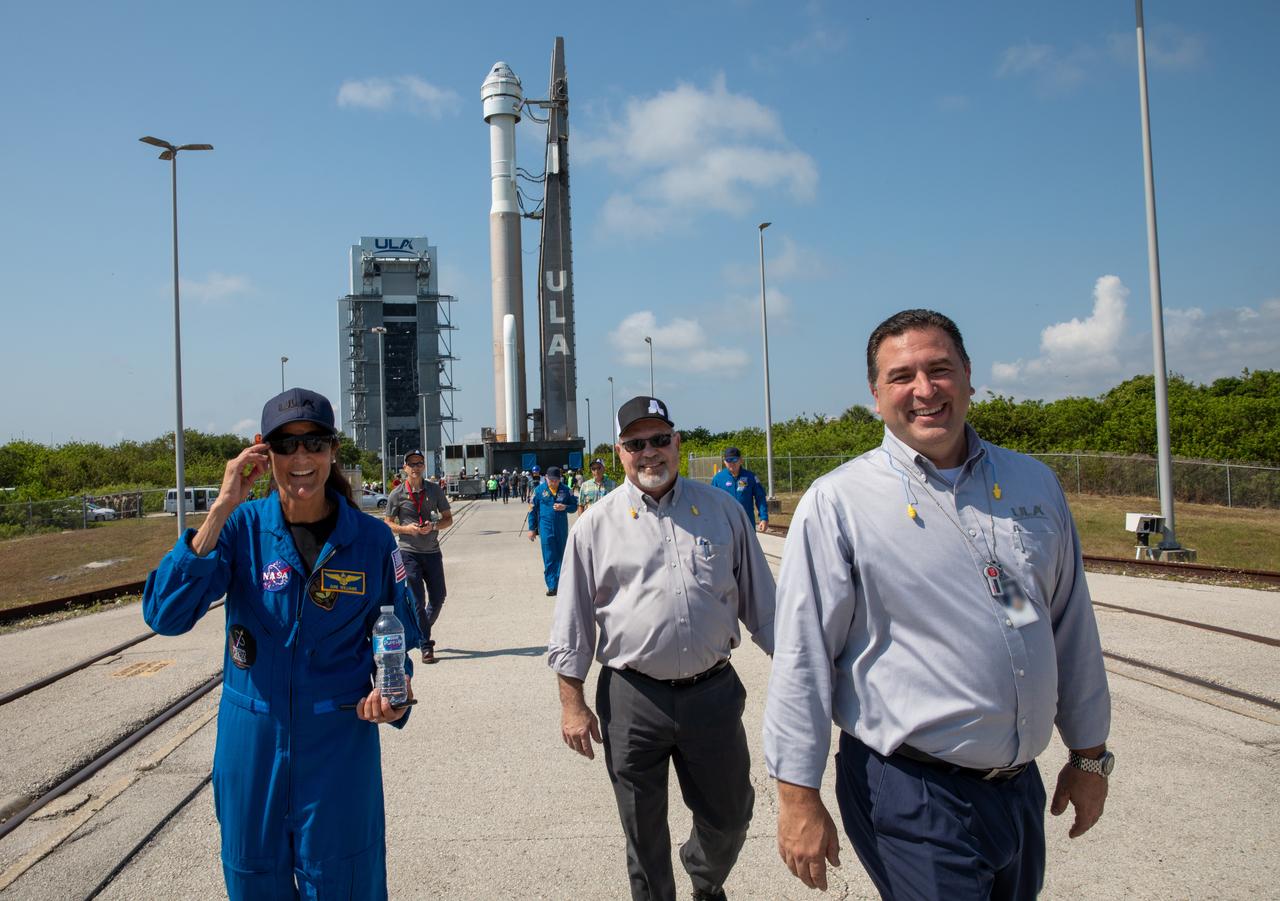
NASA astronaut Suni Williams, left, watches as a United Launch Alliance Atlas V rocket with Boeing’s CST-100 Starliner spacecraft aboard is rolled out of the Vertical Integration Facility to the launch pad at Space Launch Complex 41 ahead of the Orbital Flight Test-2 (OFT-2), Wednesday, May 18, 2022 at Cape Canaveral Space Force Station in Florida. Starliner is targeted to launch at 6:54 p.m. EDT on Thursday, May 19. OFT-2 is an important uncrewed flight test designed to test the end-to-end capabilities of the system to help the agency certify Starliner to carry astronauts to and from the International Space Station.
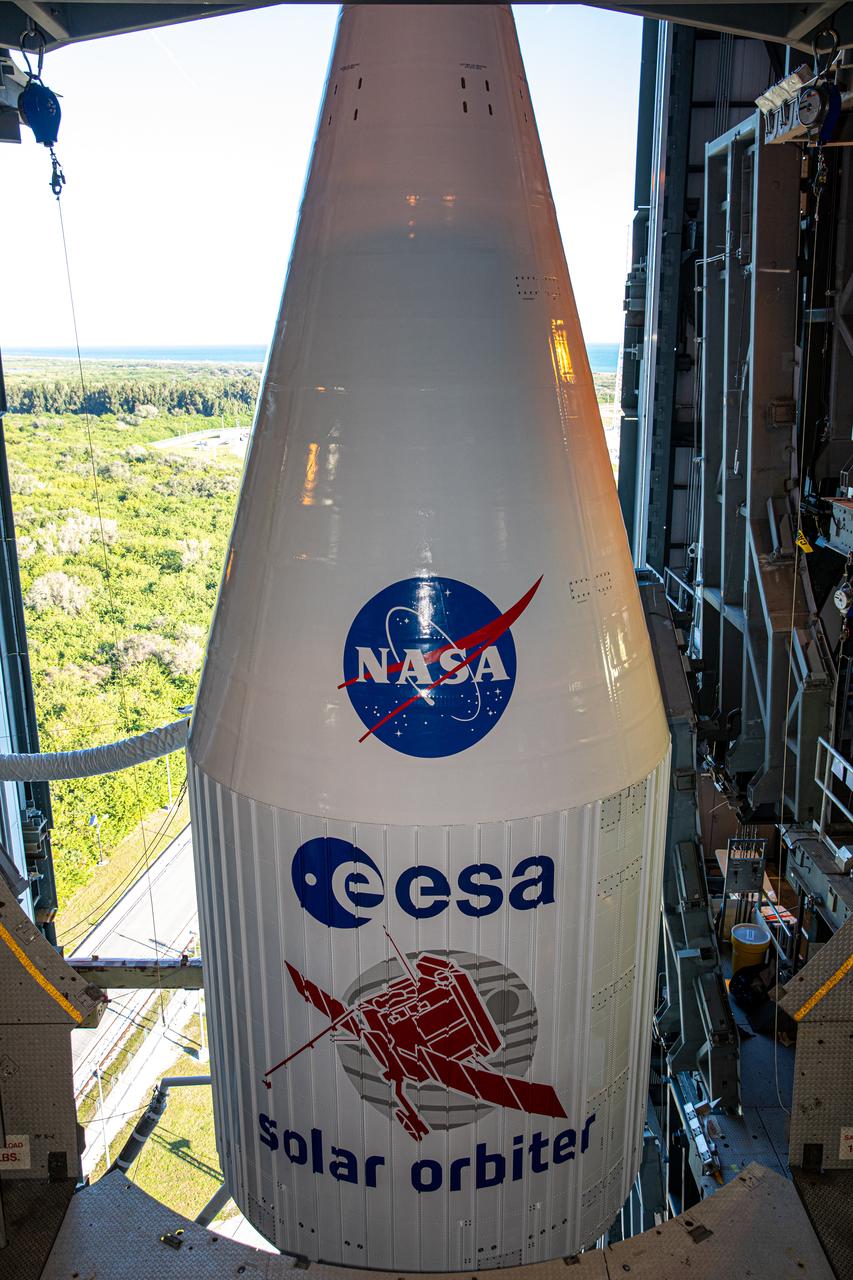
The Solar Orbiter spacecraft, secured inside the payload fairing, is photographed atop a United Launch Alliance Atlas V rocket inside the Vertical Integration Facility on Cape Canaveral Air Force Station in Florida prior to beginning its roll to the launch pad at Space Launch Complex 41 on Feb. 8, 2020. Solar Orbiter is an international cooperative mission between ESA (European Space Agency) and NASA. The mission aims to study the Sun, its outer atmosphere and solar wind. The spacecraft will provide the first images of the Sun’s poles. NASA’s Launch Services Program based at Kennedy is managing the launch. The spacecraft has been developed by Airbus Defence and Space. Solar Orbiter will launch Feb. 9, 2020 aboard the Atlas V rocket.
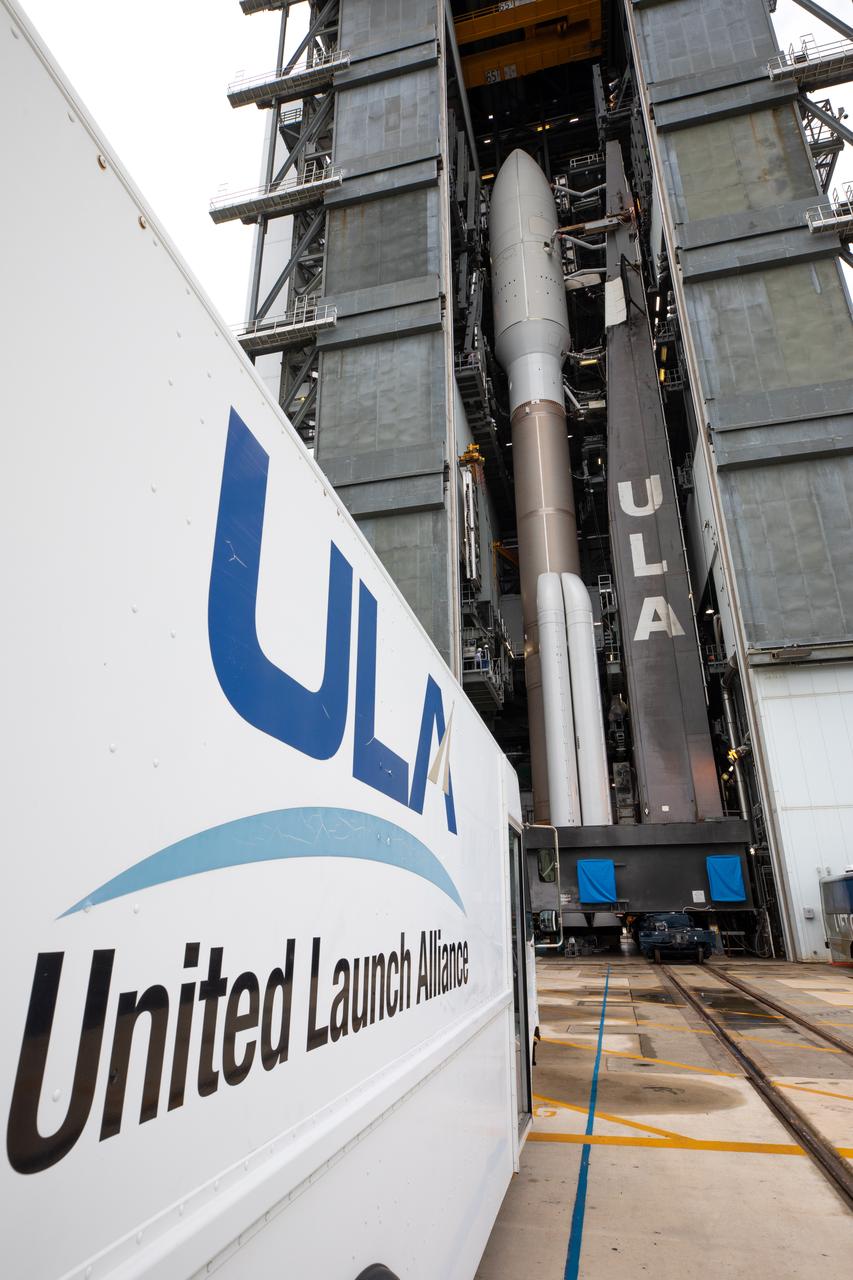
The United Launch Alliance Atlas V 541 rocket, carrying NASA’s Mars Perseverance rover and Ingenuity helicopter, begins rollout from the Vertical Integration Facility to the launch pad at Space Launch Complex 41 at Cape Canaveral Air Force Station on July 28, 2020. First motion was at 10:24 a.m. EDT. Launch of the Mars 2020 mission is scheduled for July 30. The rover is part of NASA’s Mars Exploration Program, a long-term effort of robotic exploration of the Red Planet. The rover will search for habitable conditions in the ancient past and signs of past microbial life on Mars. The Launch Services Program at Kennedy is responsible for launch management.
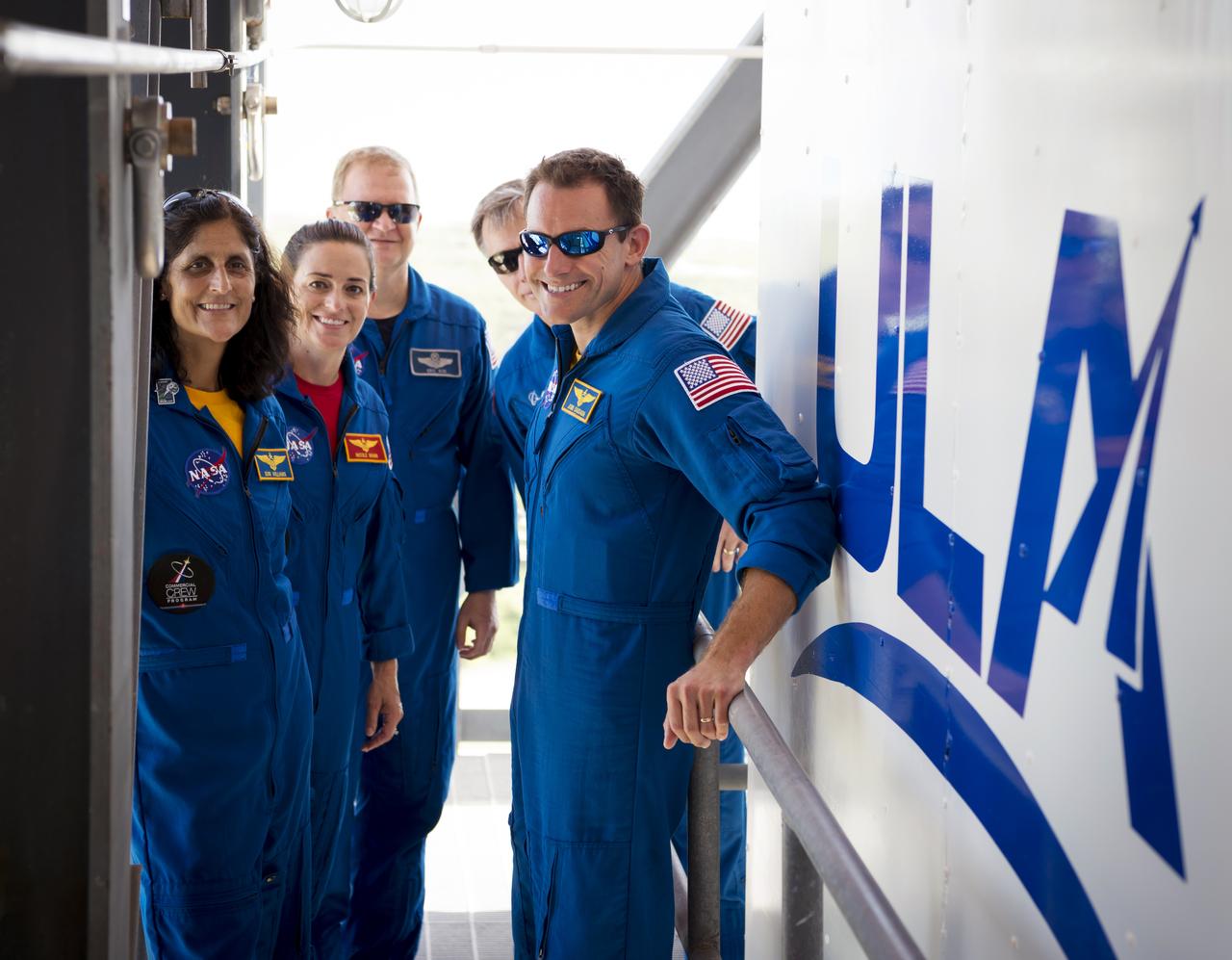
From left, commercial crew astronauts Suni Williams, Nicole Mann, Eric Boe, Chris Ferguson and Josh Cassada visit Kennedy Space Center (KSC) in Florida shortly after they were officially assigned to fly on Boeing’s CST-100 Starliner. The astronauts stopped by Boeing’s Commercial Crew and Cargo Processing Facility (C3PF) at Kennedy and Space Launch Complex 41 at Cape Canaveral Air Force Station to view progress on the Starliner and the launch pad. Boe, Ferguson and Mann will fly on Starliner in Boeing’s upcoming Crew Flight Test to the International Space Station (ISS). Cassada and Williams are assigned to Boeing’s first operational mission to the ISS. Photo credit: Boeing
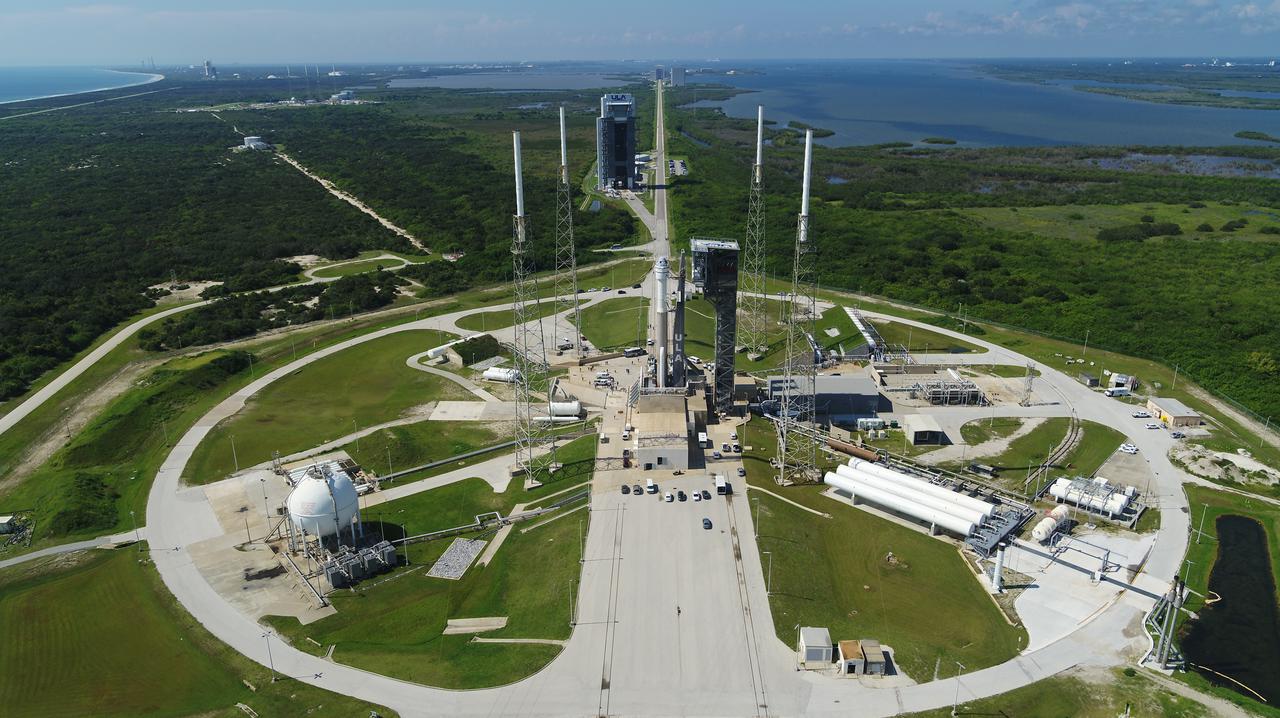
On July 29, 2021, Boeing’s CST-100 Starliner spacecraft and the United Launch Alliance Atlas V rocket rolled out of the Vertical Integration Facility to the launch pad at Space Launch Complex-41 on Cape Canaveral Space Force Station in Florida. Starliner will launch on the Atlas V for Boeing’s second uncrewed Orbital Flight Test (OFT-2) for NASA’s Commercial Crew Program. OFT-2 is an important uncrewed mission designed to test the end-to-end capabilities of the new system for NASA’s Commercial Crew Program.
A United Launch Alliance V 401 rocket, with NASA’s Lucy spacecraft atop, powers off the pad at Cape Canaveral Space Force Station’s Space Launch Complex 41 in Florida at 5:34 a.m. EDT on Saturday, Oct. 16, 2021. The launch was managed by NASA’s Launch Services Program, based at Kennedy Space Center. Lucy will embark on a 12-year primary mission to explore a record-breaking number of asteroids, including the Jupiter Trojan asteroids. Named after a fossilized human ancestor whose skeleton provided discoverers insight into humanity’s evolution, the Lucy mission will do much of the same, providing scientists and researchers a look into the origins of our solar system.
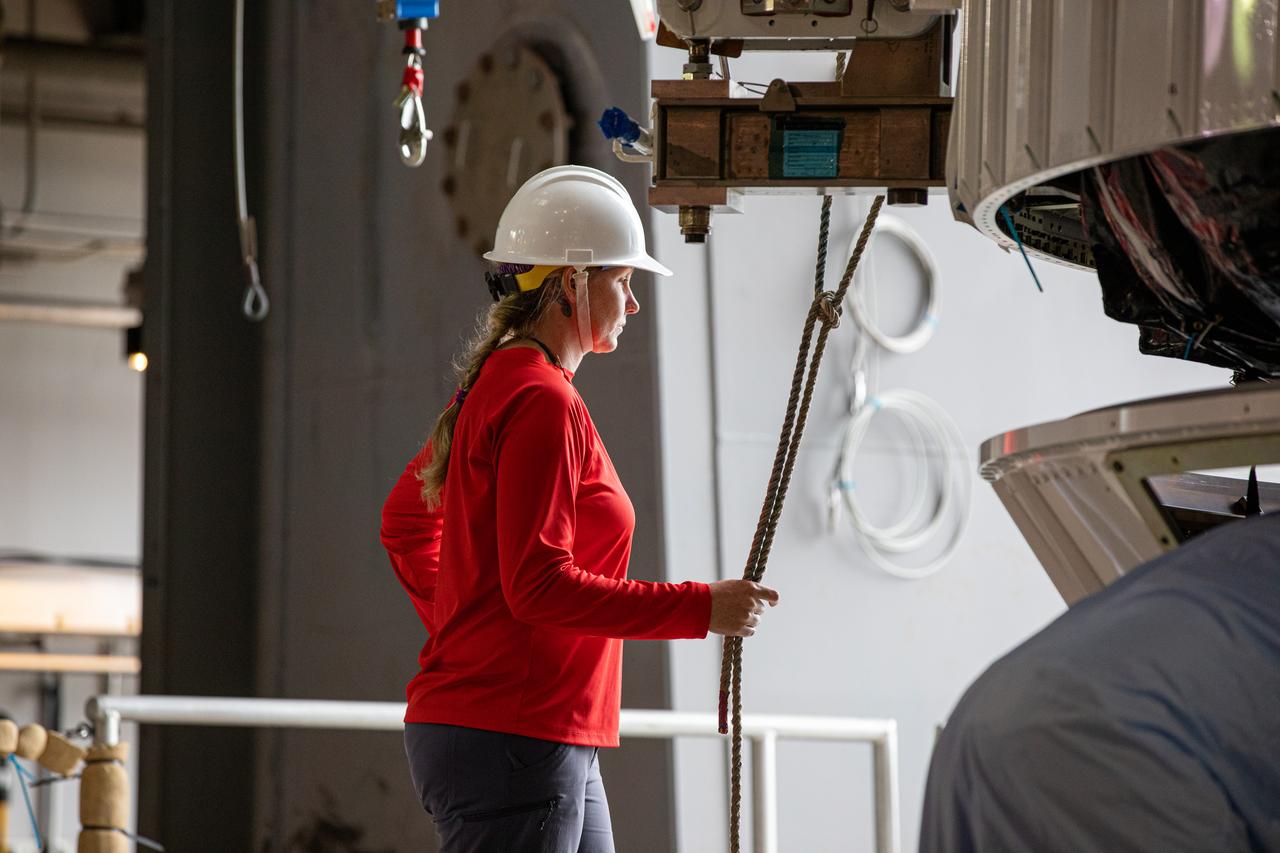
High up in the Vertical Integration Facility at Space Launch Complex 41 on Cape Canaveral Air Force Station in Florida, a worker watches as the United Launch Alliance Atlas V payload fairing, containing the Solar Orbiter spacecraft, is lowered onto the Atlas V rocket on Jan. 31, 2020. Solar Orbiter is an international cooperative mission between ESA (European Space Agency) and NASA. The mission aims to study the Sun, its outer atmosphere and solar wind. The spacecraft will provide the first images of the Sun’s poles. NASA’s Launch Services Program based at Kennedy is managing the launch. The spacecraft has been developed by Airbus Defence and Space. Solar Orbiter will launch in February 2020 aboard the Atlas V rocket.
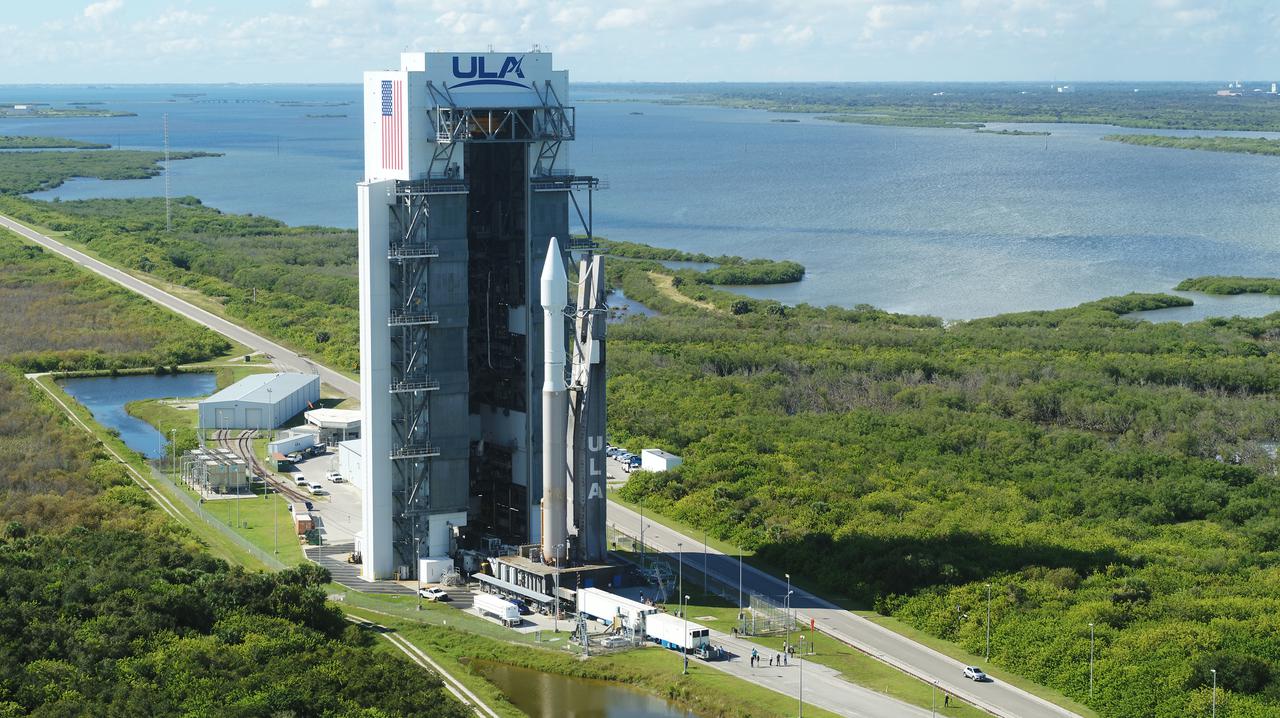
A United Launch Alliance V 401 rocket, with NASA’s Lucy spacecraft atop, leaves Cape Canaveral Space Force Station’s Vertical Integration Facility en route to Space Launch Complex 41 on Thursday, Oct. 14, 2021, in preparation for its targeted 5:34 a.m. EDT liftoff on Saturday, Oct. 16. NASA’s Launch Services Program, based at Kennedy Space Center, is managing the launch. During its 12-year primary mission, Lucy will explore a record-breaking number of asteroids, flying by one asteroid in the solar system’s main belt and seven Trojan asteroids. Additionally, Lucy’s path will circle back to Earth three times for gravity assists, making it the first spacecraft ever to return to the vicinity of Earth from the outer solar system.
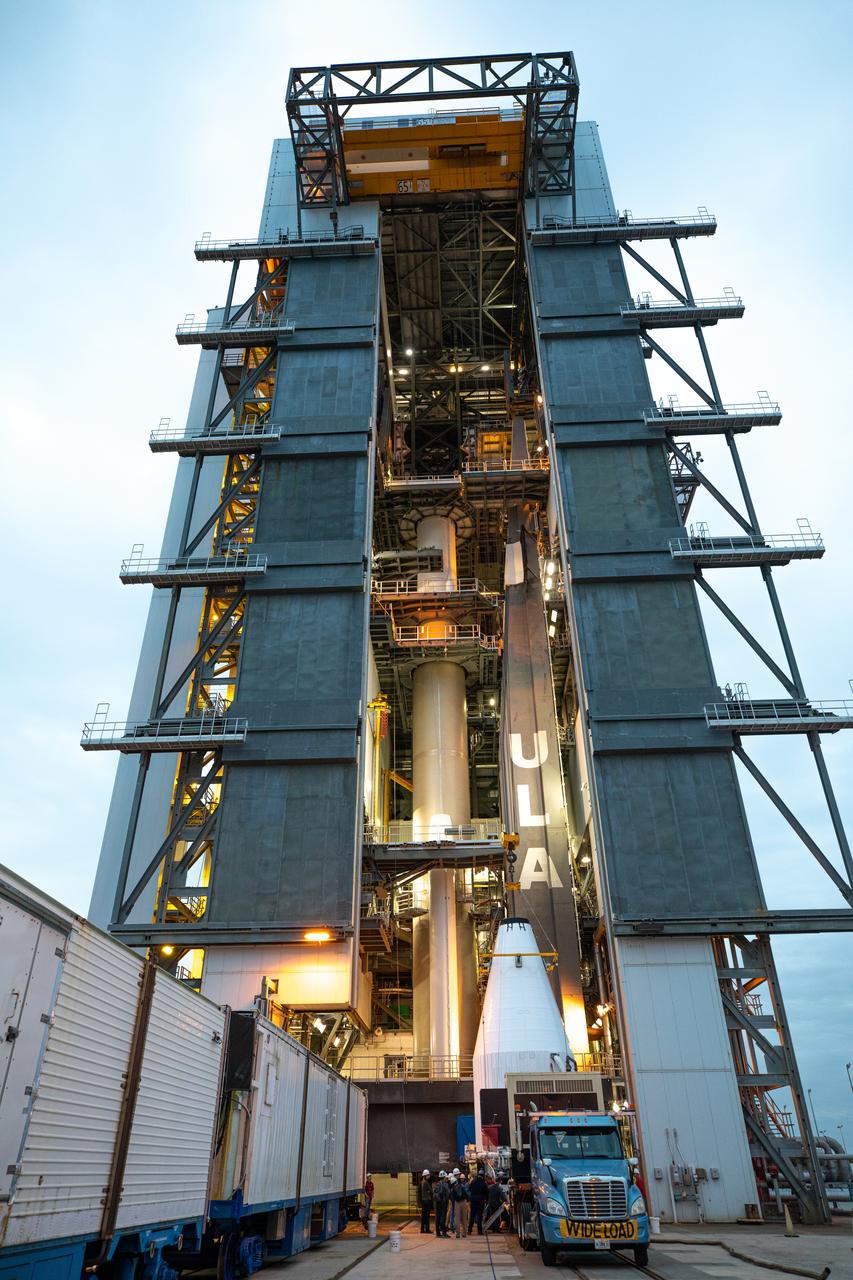
The United Launch Alliance Atlas V payload fairing, containing the Solar Orbiter spacecraft, is hoisted up by crane at the Vertical Integration Facility at Space Launch Complex 41 on Cape Canaveral Air Force Station in Florida on Jan. 31, 2020. The payload fairing will be mated to the Atlas V rocket. Solar Orbiter is an international cooperative mission between ESA (European Space Agency) and NASA. The mission aims to study the Sun, its outer atmosphere and solar wind. The spacecraft will provide the first images of the Sun’s poles. NASA’s Launch Services Program based at Kennedy is managing the launch. The spacecraft has been developed by Airbus Defence and Space. Solar Orbiter will launch in February 2020 aboard the Atlas V rocket.
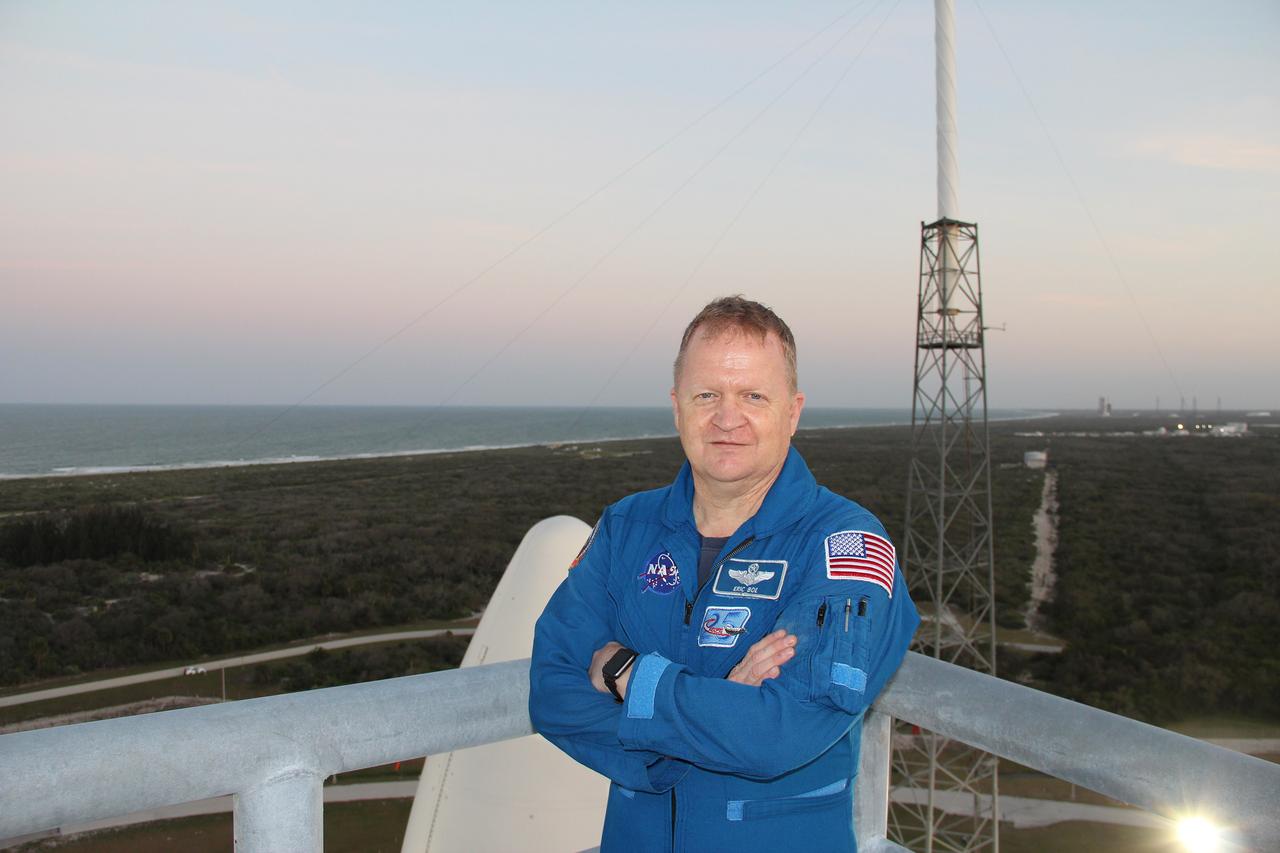
NASA astronaut Eric Boe, one of four astronauts working with the agency’s Commercial Crew Program, checked out the Crew Access Tower at Space Launch Complex 41. Boe is standing on the tower's uppermost level. Visible behind his right arm is the aerodynamic enclosure designed to protect NOAA's Geostationary Operational Environmental Satellite-S during launch – which successfully occurred March 1. To Boe’s left, one of four protective lightning masts is in view. Accompanied by NASA, Boeing and United Launch Alliance engineers, Boe inspected the launch tower to establish whether spotlight and lighting conditions will be acceptable after dark. The survey was required to ensure crew members will have suitable visibility as they prepare to board Boeing’s Starliner spacecraft and launch on missions such as the Crew Flight Test to the International Space Station, targeted for later this year.
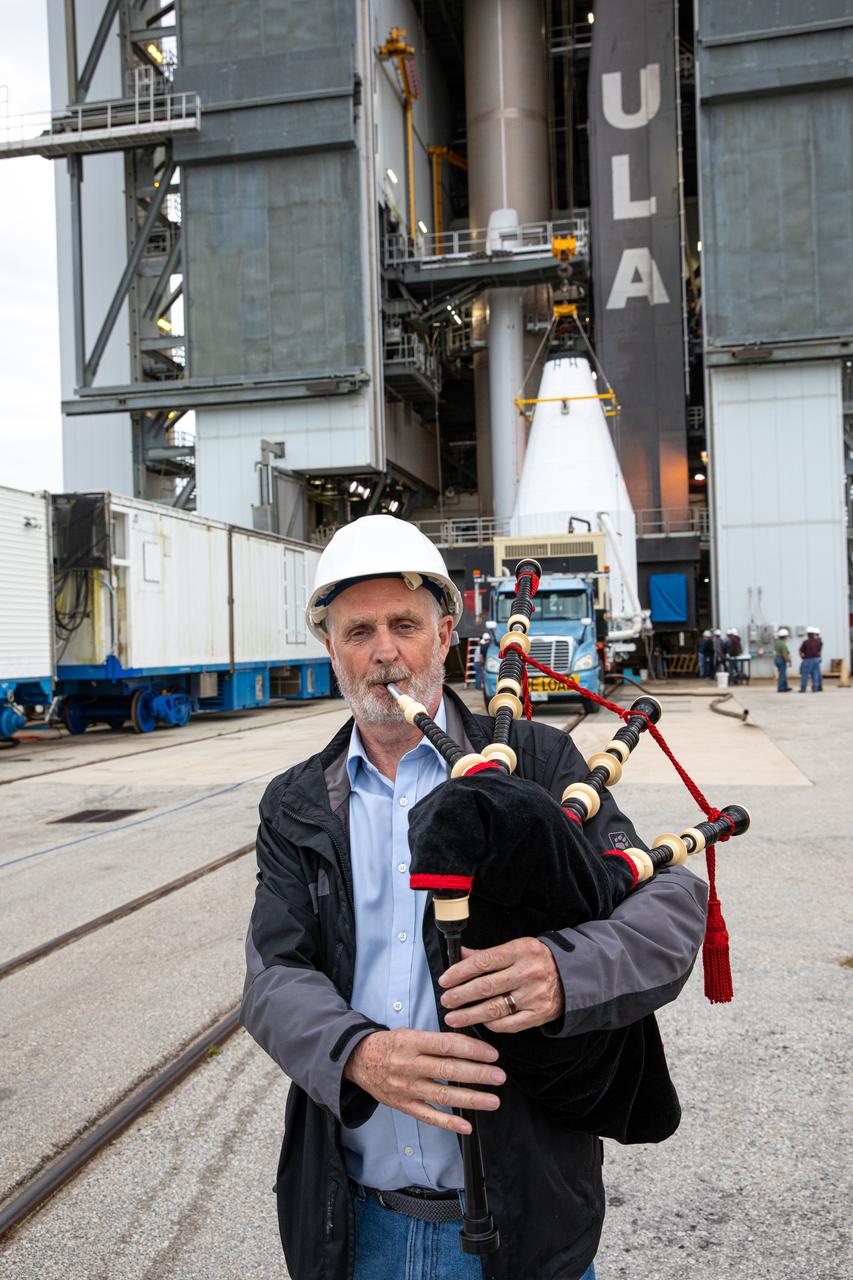
An Airbus Defence and Space worker plays the bagpipes at the Vertical Integration Facility at Space Launch Complex 41 on Cape Canaveral Air Force Station in Florida on Jan. 31, 2020. It is a tradition for the company to play the bagpipes during spacecraft mate to rocket. In the background, a crane lifts the United Launch Alliance payload fairing, containing the Solar Orbiter spacecraft, for mating to the company’s Atlas V rocket. Solar Orbiter is an international cooperative mission between ESA (European Space Agency) and NASA. The mission aims to study the Sun, its outer atmosphere and solar wind. The spacecraft will provide the first images of the Sun’s poles. NASA’s Launch Services Program based at Kennedy is managing the launch. The spacecraft has been developed by Airbus Defence and Space. Solar Orbiter will launch in February 2020 aboard the Atlas V rocket.

An Airbus Defence and Space worker plays the bagpipes at the Vertical Integration Facility at Space Launch Complex 41 on Cape Canaveral Air Force Station in Florida on Jan. 31, 2020. It is a tradition for the company to play the bagpipes during spacecraft mate to rocket. In the background, a crane lifts the United Launch Alliance payload fairing, containing the Solar Orbiter spacecraft, for mating to the company’s Atlas V rocket. Solar Orbiter is an international cooperative mission between ESA (European Space Agency) and NASA. The mission aims to study the Sun, its outer atmosphere and solar wind. The spacecraft will provide the first images of the Sun’s poles. NASA’s Launch Services Program based at Kennedy is managing the launch. The spacecraft has been developed by Airbus Defence and Space. Solar Orbiter will launch in February 2020 aboard the Atlas V rocket.
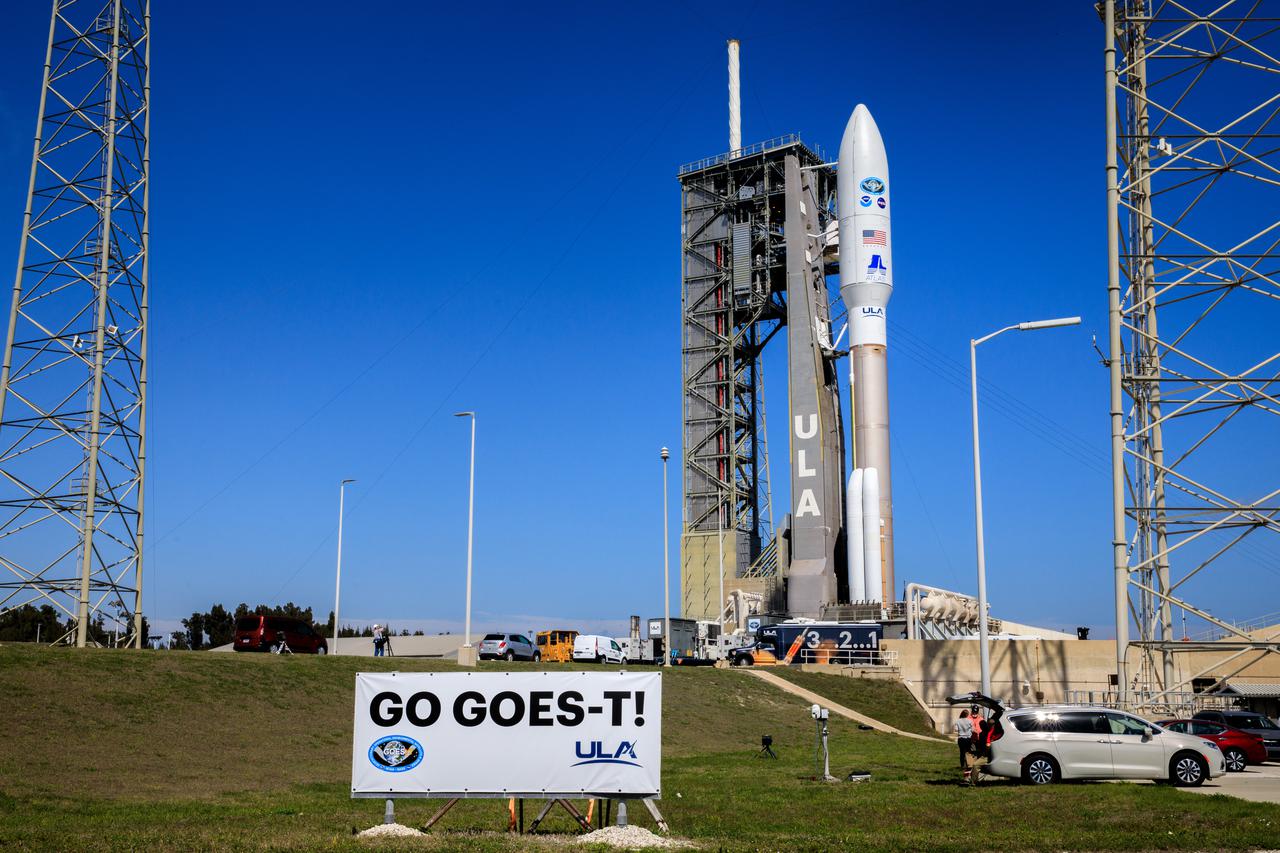
A United Launch Alliance Atlas V 541 rocket carrying the National Oceanic and Atmospheric Administration’s (NOAA) Geostationary Operational Environmental Satellite-T (GOES-T), is secured on the pad at Space Launch Complex 41 at Cape Canaveral Space Force Station in Florida on Feb. 28, 2022. GOES-T will lift off atop the Atlas V from SLC-41 on March 1, 2022, at 4:38 p.m. GOES-T is the third satellite in the GOES-R series that will continue to help meteorologists observe and predict local weather events that affect public safety. GOES-T will be renamed GOES-18 once it reaches geostationary orbit. GOES-18 will go into operational service as GOES West to provide critical data for the U.S. West Coast, Alaska, Hawaii, Mexico, Central America, and the Pacific Ocean. The launch is managed by NASA’s Launch Services Program based at Kennedy Space Center in Florida, America’s multi-user spaceport.
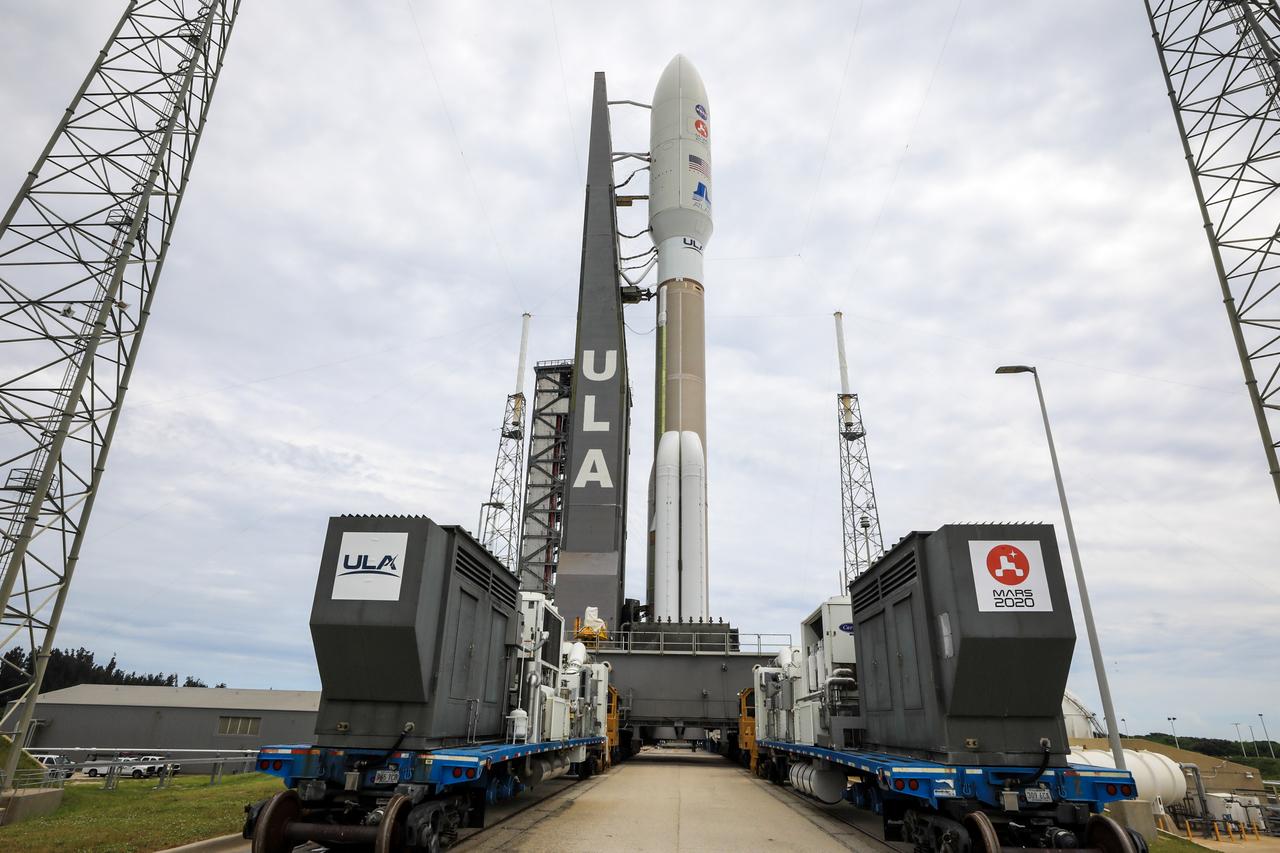
The United Launch Alliance Atlas V 541 rocket, carrying NASA’s Mars Perseverance rover and Ingenuity helicopter, rolls along to the launch pad at Space Launch Complex 41 at Cape Canaveral Air Force Station on July 28, 2020. First motion was at 10:24 a.m. EDT. Launch of the Mars 2020 mission is scheduled for July 30. The rover is part of NASA’s Mars Exploration Program, a long-term effort of robotic exploration of the Red Planet. The rover will search for habitable conditions in the ancient past and signs of past microbial life on Mars. The Launch Services Program at Kennedy is responsible for launch management.

NASA Administrator Jim Bridenstine, at left, and Tory Bruno, CEO of United Launch Alliance (ULA), watch the rollout of the ULA Atlas V 541 rocket, carrying NASA’s Mars Perseverance rover and Ingenuity helicopter, as it rolls along to the launch pad at Space Launch Complex 41 at Cape Canaveral Air Force Station on July 28, 2020. First motion was at 10:24 a.m. EDT. Launch of the Mars 2020 mission is scheduled for July 30. The rover is part of NASA’s Mars Exploration Program, a long-term effort of robotic exploration of the Red Planet. The rover will search for habitable conditions in the ancient past and signs of past microbial life on Mars. The Launch Services Program at Kennedy is responsible for launch management.
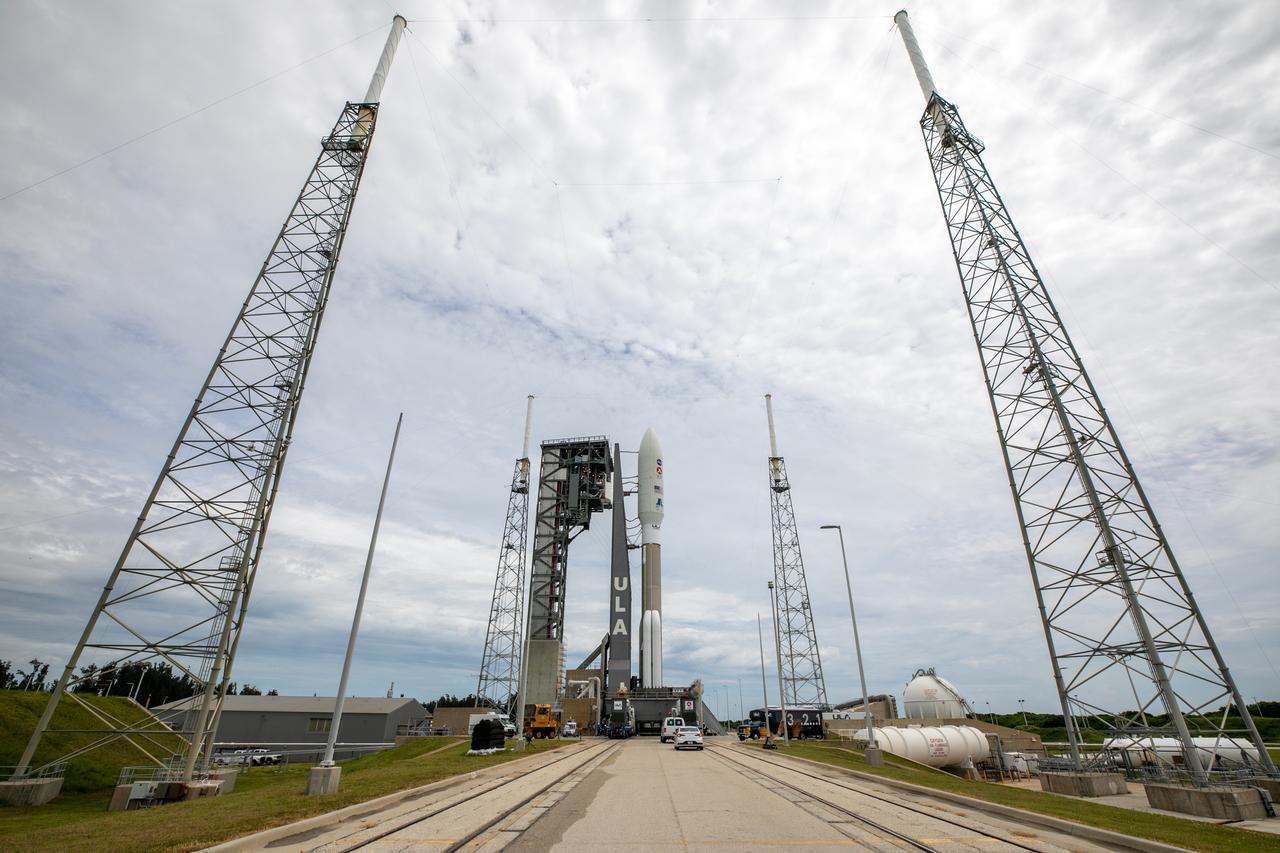
The United Launch Alliance Atlas V 541 rocket, carrying NASA’s Mars Perseverance rover and Ingenuity helicopter, arrives at the launch pad at Space Launch Complex 41 at Cape Canaveral Air Force Station on July 28, 2020. First motion from the Vertical Integration Facility was at 10:24 a.m. EDT. Launch of the Mars 2020 mission is scheduled for July 30. The rover is part of NASA’s Mars Exploration Program, a long-term effort of robotic exploration of the Red Planet. The rover will search for habitable conditions in the ancient past and signs of past microbial life on Mars. The Launch Services Program at Kennedy is responsible for launch management.
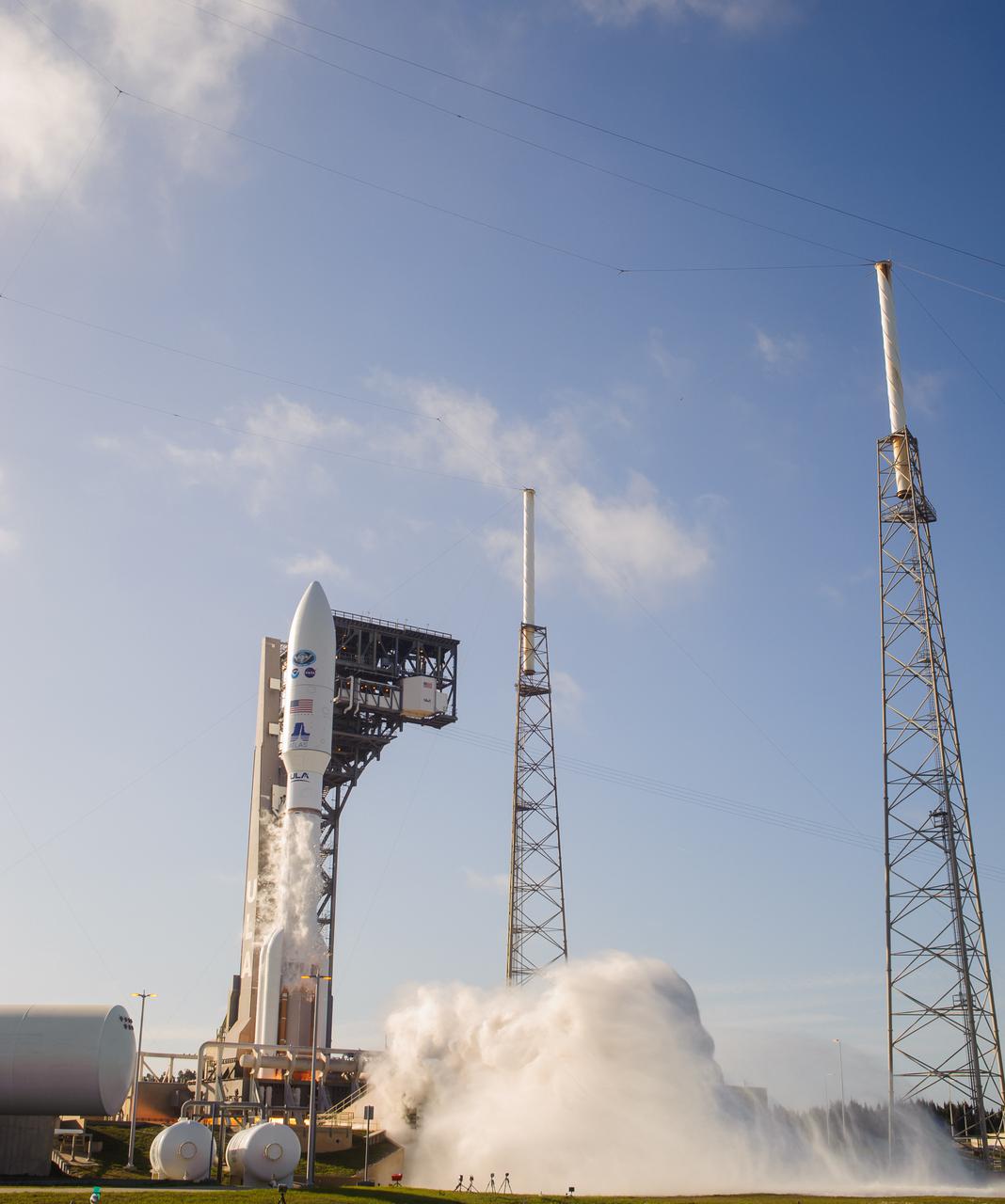
A United Launch Alliance Atlas V 541 rocket, carrying the National Oceanic and Atmospheric Administration’s (NOAA) Geostationary Operational Environmental Satellite-T (GOES-T), lifts off from Space Launch Complex 41 at Cape Canaveral Space Force Station in Florida on March 1, 2022. Liftoff was at 4:38 p.m. EST. GOES-T is the third satellite in the GOES-R series that will continue to help meteorologists observe and predict local weather events that affect public safety. GOES-T will be renamed GOES-18 once it reaches geostationary orbit. GOES-18 will go into operational service as GOES West to provide critical data for the U.S. West Coast, Alaska, Hawaii, Mexico, Central America, and the Pacific Ocean. The launch was managed by NASA’s Launch Services Program based at Kennedy Space Center in Florida, America’s multi-user spaceport.
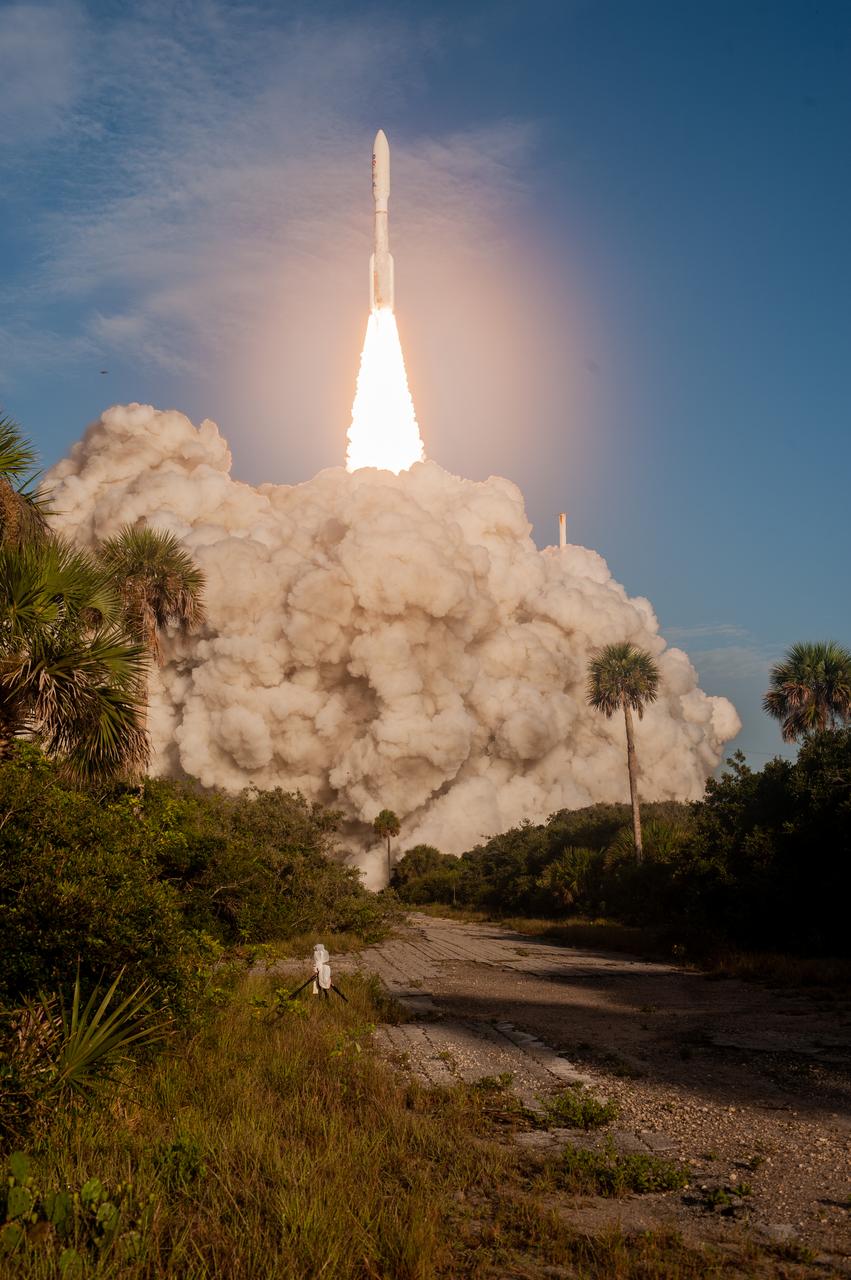
A United Launch Alliance Atlas V 541 rocket lifts off from Space Launch Complex 41 at Cape Canaveral Air Force Station in Florida on July 30, 2020, at 7:50 a.m. EDT, carrying NASA’s Mars Perseverance rover and Ingenuity helicopter. The rover is part of NASA’s Mars Exploration Program, a long-term effort of robotic exploration of the Red Planet. The rover’s seven instruments will search for habitable conditions in the ancient past and signs of past microbial life on Mars. The Launch Services Program at Kennedy is responsible for launch management.
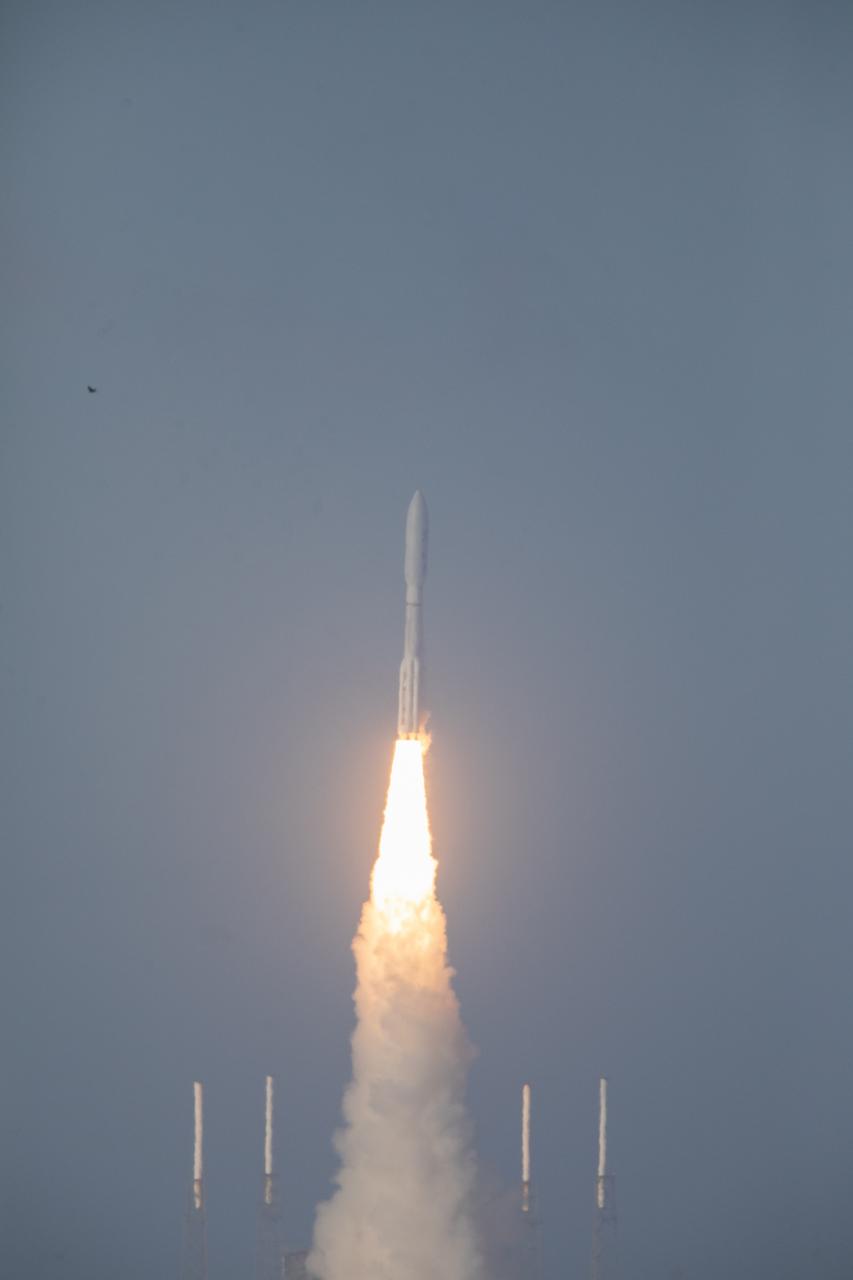
A United Launch Alliance Atlas V 541 rocket, carrying the National Oceanic and Atmospheric Administration’s (NOAA) Geostationary Operational Environmental Satellite-T (GOES-T), soars upward after lifting off from Space Launch Complex 41 at Cape Canaveral Space Force Station in Florida on March 1, 2022. Liftoff was at 4:38 p.m. EST. GOES-T is the third satellite in the GOES-R series that will continue to help meteorologists observe and predict local weather events that affect public safety. GOES-T will be renamed GOES-18 once it reaches geostationary orbit. GOES-18 will go into operational service as GOES West to provide critical data for the U.S. West Coast, Alaska, Hawaii, Mexico, Central America, and the Pacific Ocean. The launch was managed by NASA’s Launch Services Program based at Kennedy Space Center in Florida, America’s multi-user spaceport.
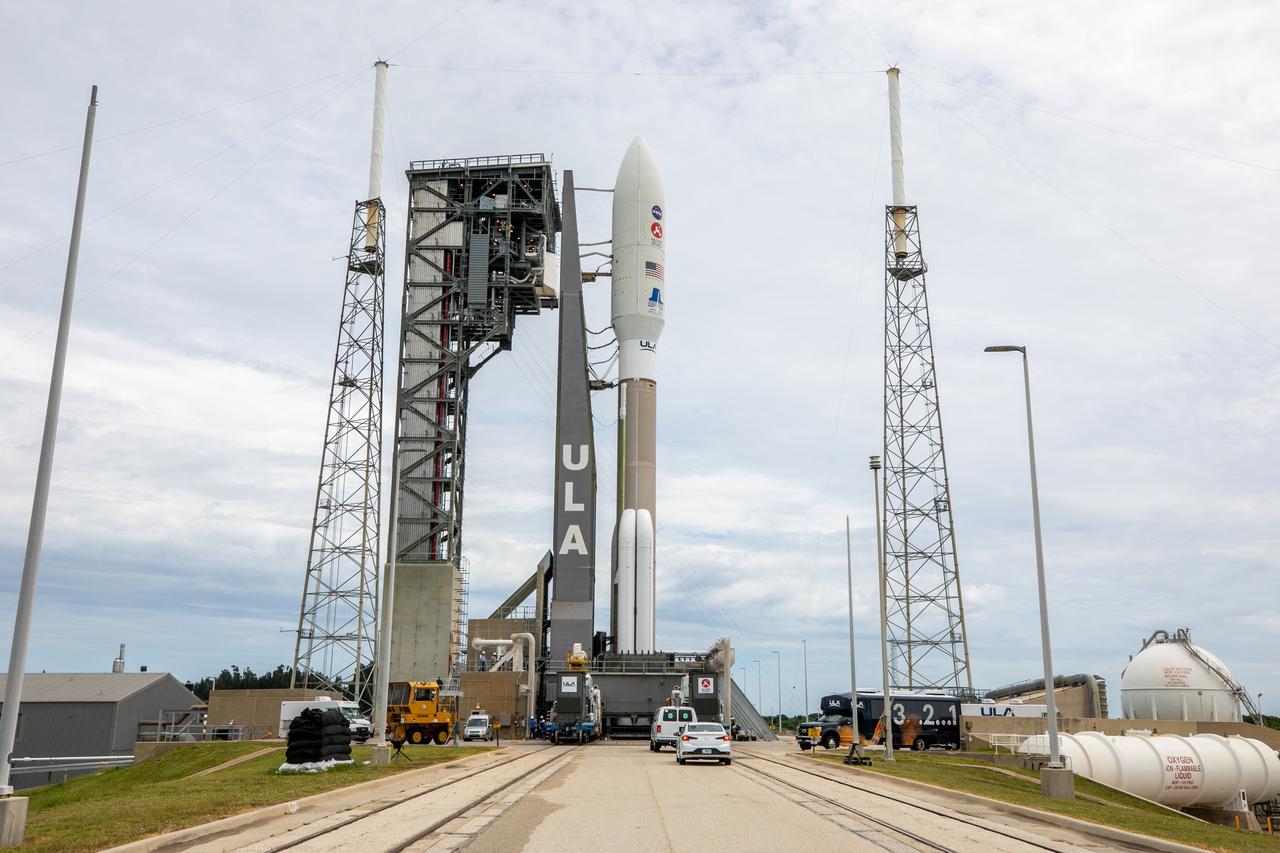
The United Launch Alliance Atlas V 541 rocket, carrying NASA’s Mars Perseverance rover and Ingenuity helicopter, arrives at the launch pad at Space Launch Complex 41 at Cape Canaveral Air Force Station on July 28, 2020. First motion from the Vertical Integration Facility was at 10:24 a.m. EDT. Launch of the Mars 2020 mission is scheduled for July 30. The rover is part of NASA’s Mars Exploration Program, a long-term effort of robotic exploration of the Red Planet. The rover will search for habitable conditions in the ancient past and signs of past microbial life on Mars. The Launch Services Program at Kennedy is responsible for launch management.
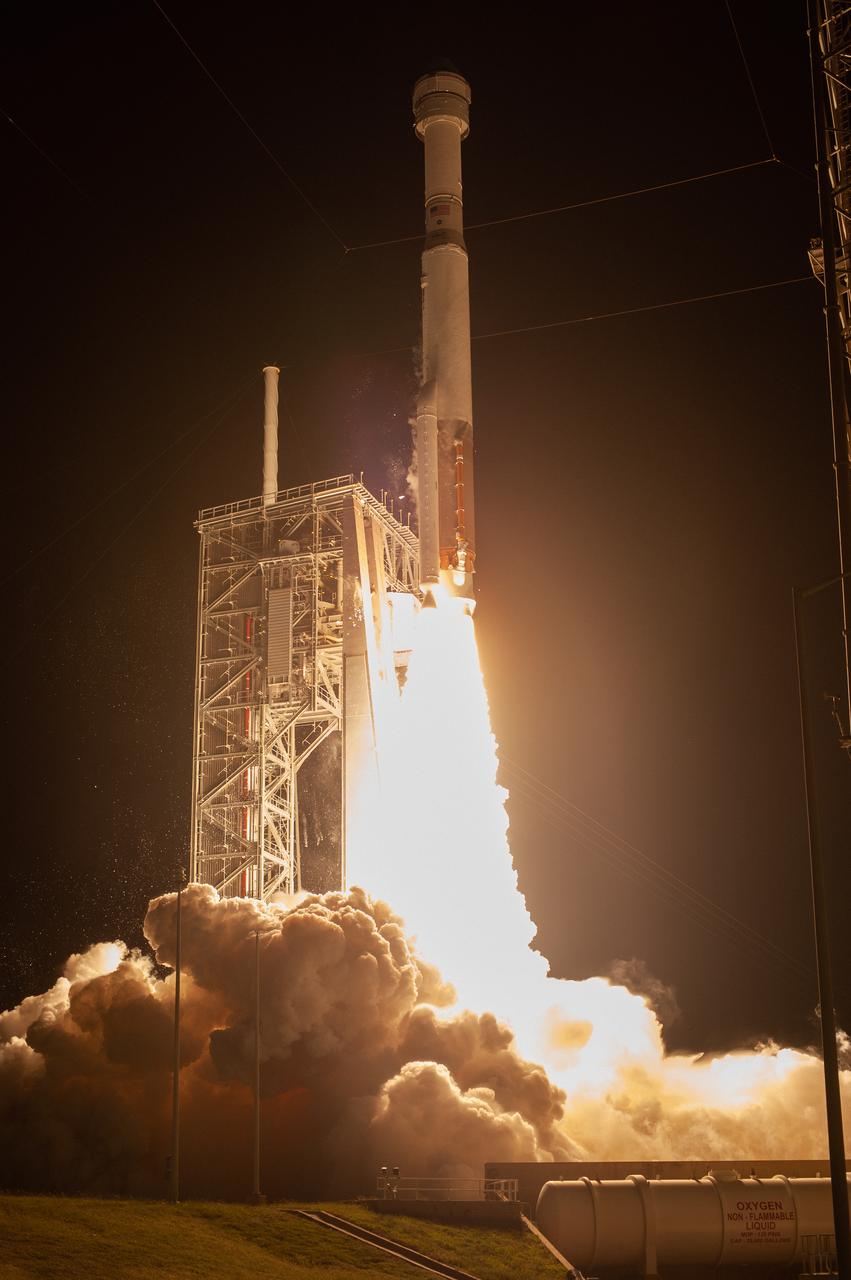
A two-stage United Launch Alliance Atlas V rocket lifts off from Space Launch Complex 41 at Cape Canaveral Air Force Station in Florida for Boeing’s Orbital Flight Test, Dec. 20, 2019. Liftoff occurred at 6:36 a.m. EST. The uncrewed Orbital Flight Test is the Starliner’s first flight for NASA’s Commercial Crew Program.
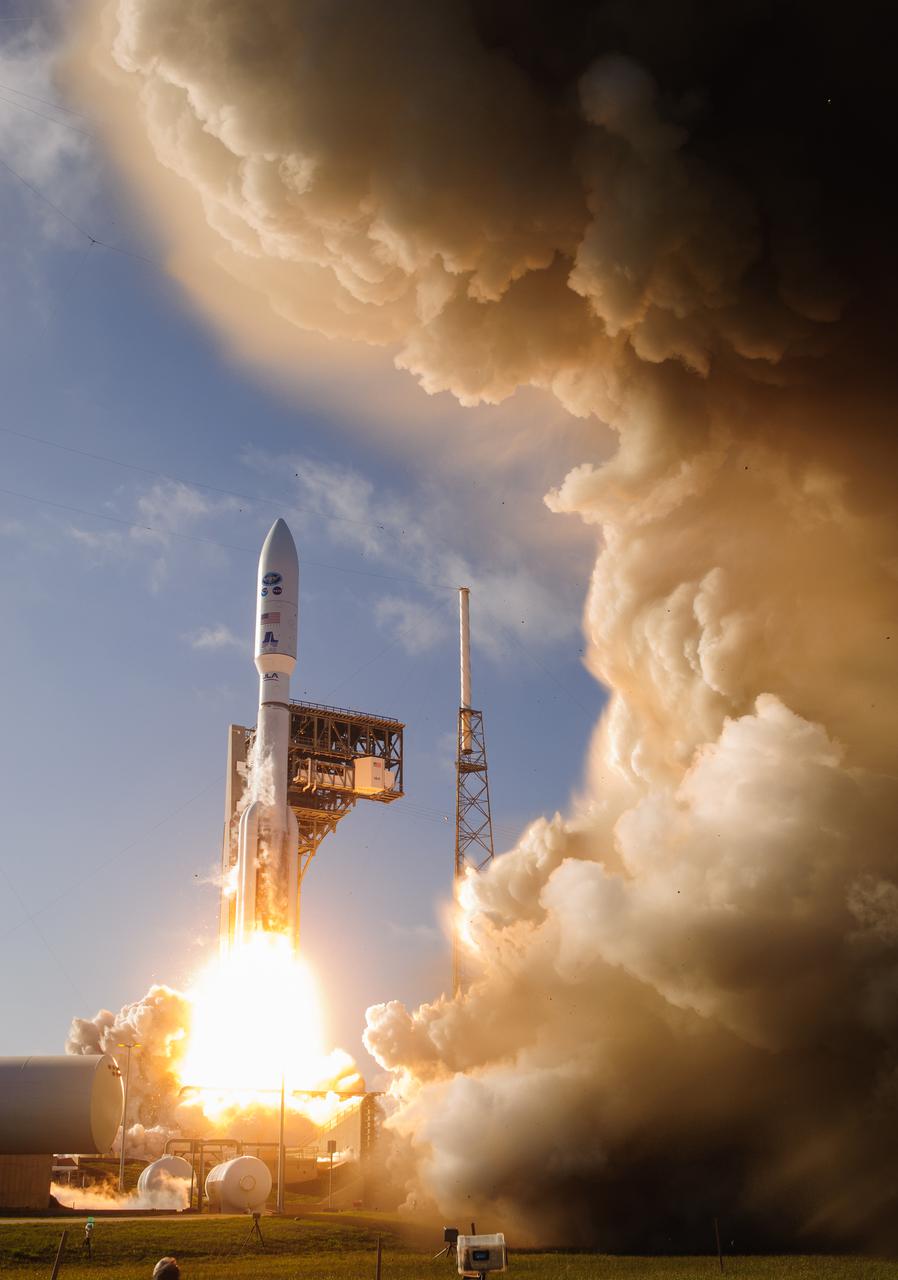
A United Launch Alliance Atlas V 541 rocket, carrying the National Oceanic and Atmospheric Administration’s (NOAA) Geostationary Operational Environmental Satellite-T (GOES-T), lifts off from Space Launch Complex 41 at Cape Canaveral Space Force Station in Florida on March 1, 2022. Liftoff was at 4:38 p.m. EST. GOES-T is the third satellite in the GOES-R series that will continue to help meteorologists observe and predict local weather events that affect public safety. GOES-T will be renamed GOES-18 once it reaches geostationary orbit. GOES-18 will go into operational service as GOES West to provide critical data for the U.S. West Coast, Alaska, Hawaii, Mexico, Central America, and the Pacific Ocean. The launch was managed by NASA’s Launch Services Program based at Kennedy Space Center in Florida, America’s multi-user spaceport.
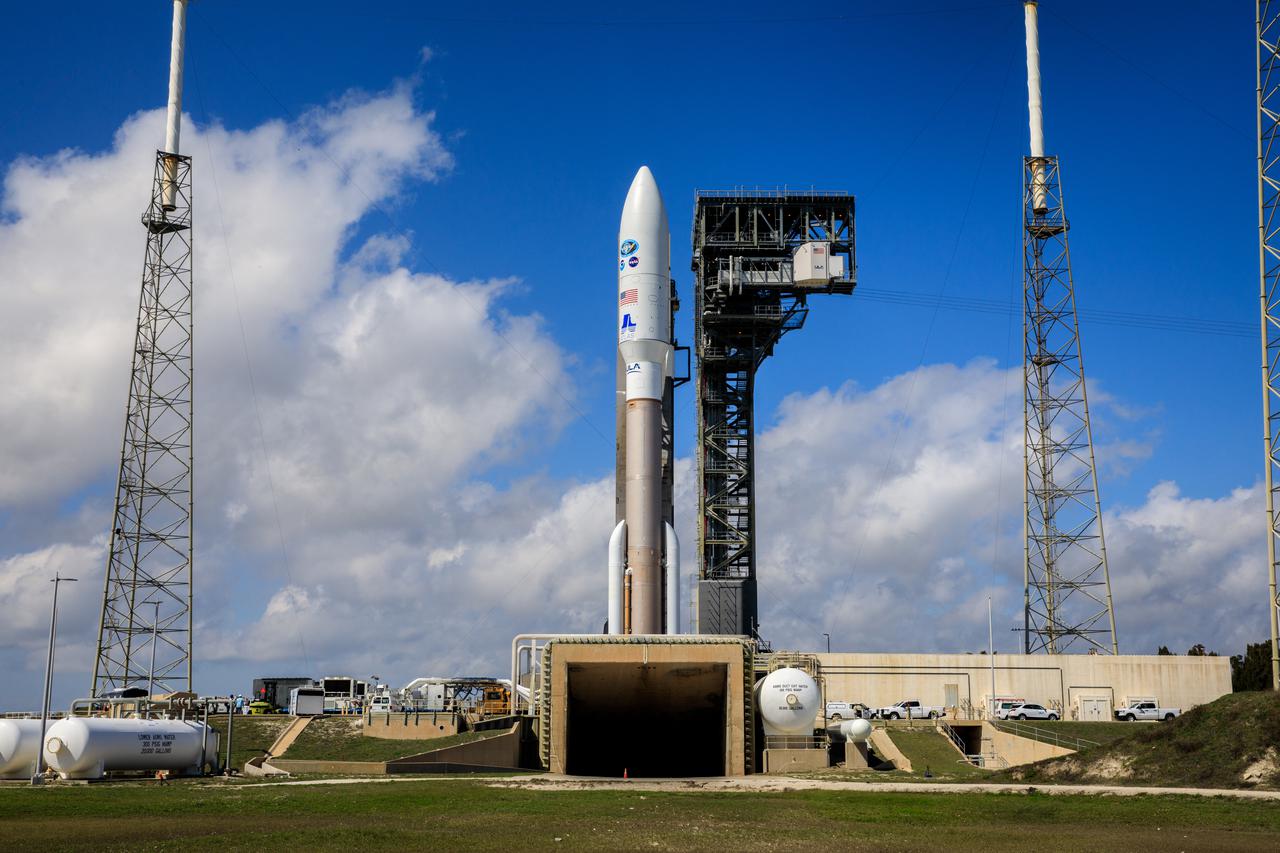
A United Launch Alliance Atlas V 541 rocket carrying the National Oceanic and Atmospheric Administration’s (NOAA) Geostationary Operational Environmental Satellite-T (GOES-T), is secured on the pad at Space Launch Complex 41 at Cape Canaveral Space Force Station in Florida on Feb. 28, 2022. GOES-T will lift off atop the Atlas V from SLC-41 on March 1, 2022, at 4:38 p.m. GOES-T is the third satellite in the GOES-R series that will continue to help meteorologists observe and predict local weather events that affect public safety. GOES-T will be renamed GOES-18 once it reaches geostationary orbit. GOES-18 will go into operational service as GOES West to provide critical data for the U.S. West Coast, Alaska, Hawaii, Mexico, Central America, and the Pacific Ocean. The launch is managed by NASA’s Launch Services Program based at Kennedy Space Center in Florida, America’s multi-user spaceport.
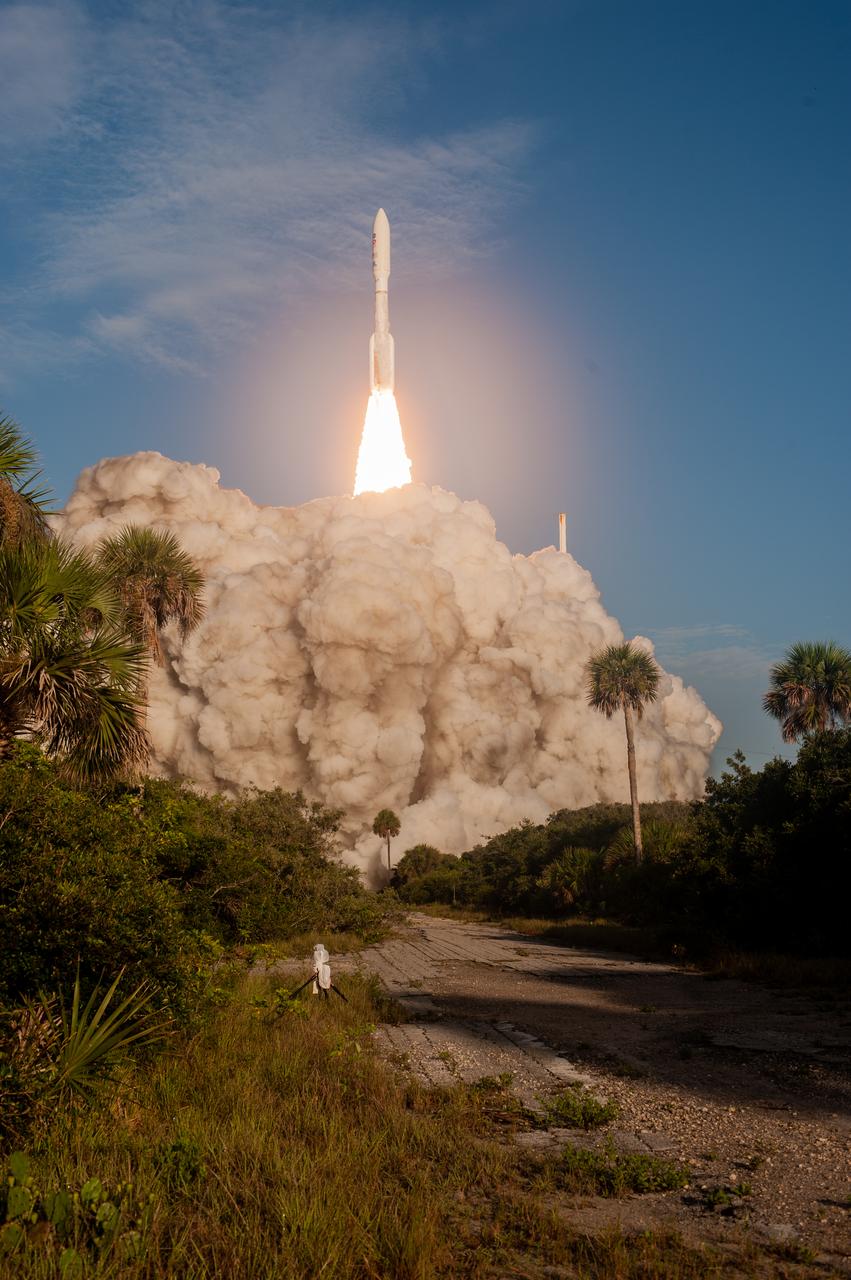
A United Launch Alliance Atlas V 541 rocket lifts off from Space Launch Complex 41 at Cape Canaveral Air Force Station in Florida on July 30, 2020, at 7:50 a.m. EDT, carrying NASA’s Mars Perseverance rover and Ingenuity helicopter. The rover is part of NASA’s Mars Exploration Program, a long-term effort of robotic exploration of the Red Planet. The rover’s seven instruments will search for habitable conditions in the ancient past and signs of past microbial life on Mars. The Launch Services Program at Kennedy is responsible for launch management.
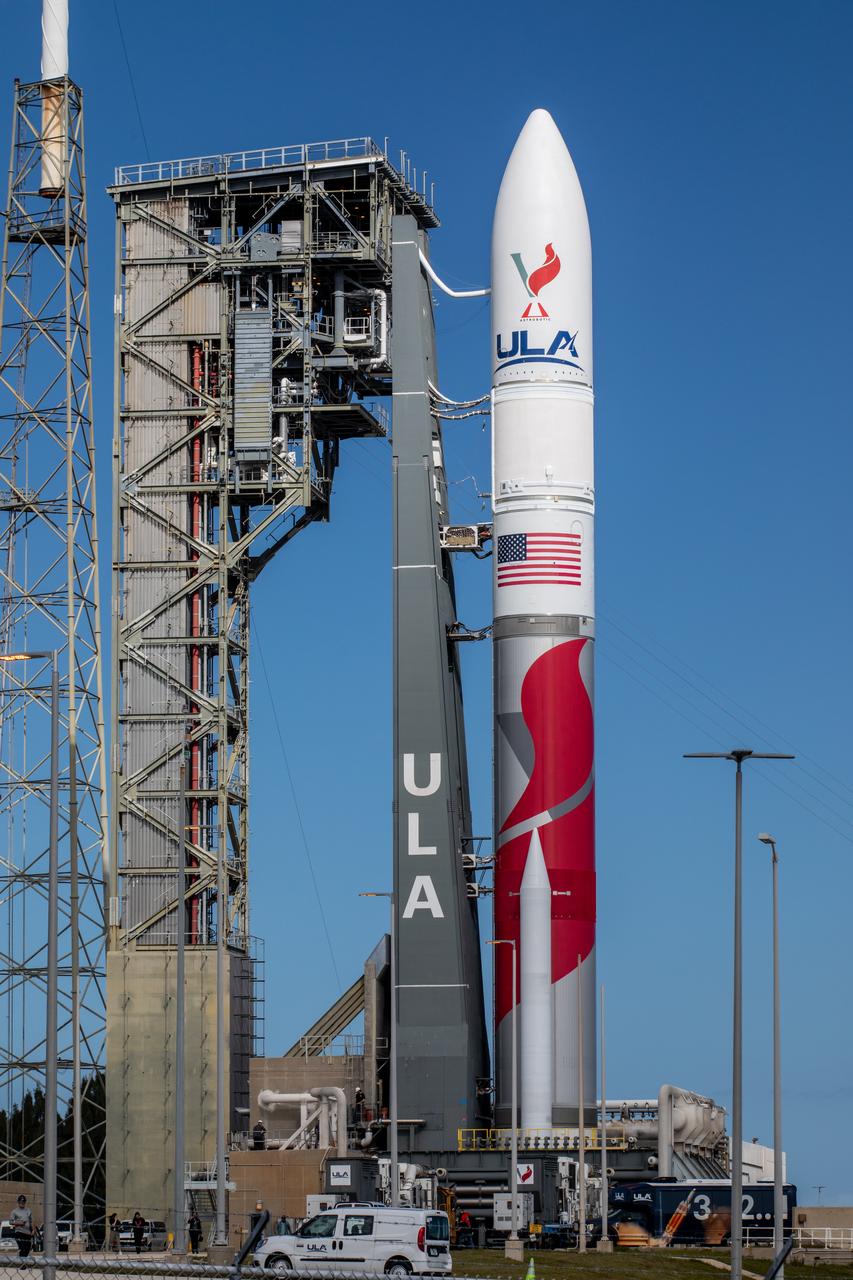
On Friday, Jan. 5, 2024, United Launch Alliance’s Vulcan rocket carrying Astrobotic’s Peregrine lunar lander is rolled out of the Vertical Integration Facility to the launch pad at Space Launch Complex 41 on Cape Canaveral Space Force Station in Florida in advance of a planned lift off at 2:18 a.m. EST Monday, Jan. 8, 2024. Astrobotic’s Peregrine Mission One will carry NASA and commercial payloads to the Moon to study the lunar exosphere, thermal properties, and hydrogen abundance of the lunar regolith, magnetic fields, and the radiation environment of the lunar surface.
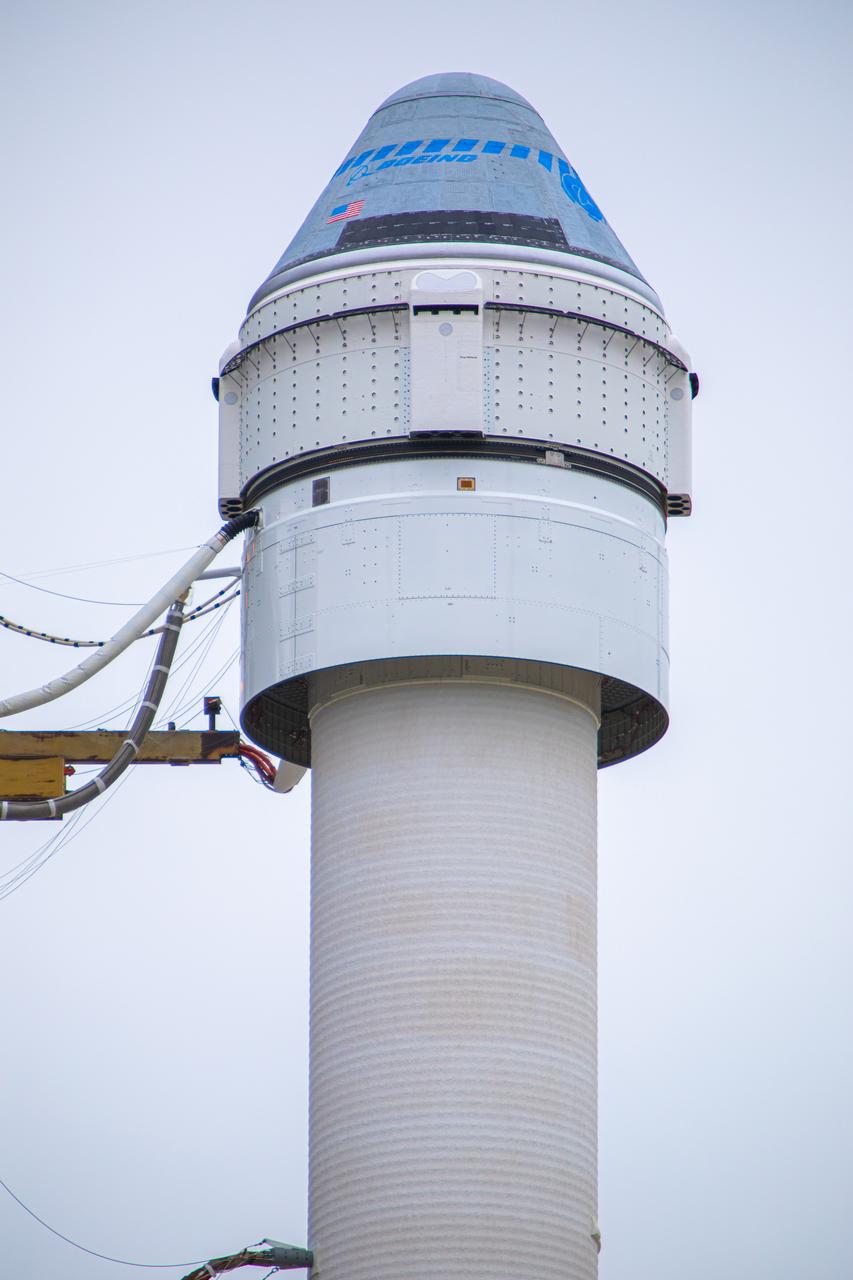
A United Launch Alliance Atlas V rocket, topped by Boeing’s CST-100 Starliner spacecraft, stands on the launch pad at Space Launch Complex 41 at Florida’s Cape Canaveral Air Force Station, Dec. 18, 2019, after rolling from the Vertical Integration Facility. Boeing’s uncrewed Orbital Flight Test will be the Starliner’s first flight to the International Space Station for NASA’s Commercial Crew Program.
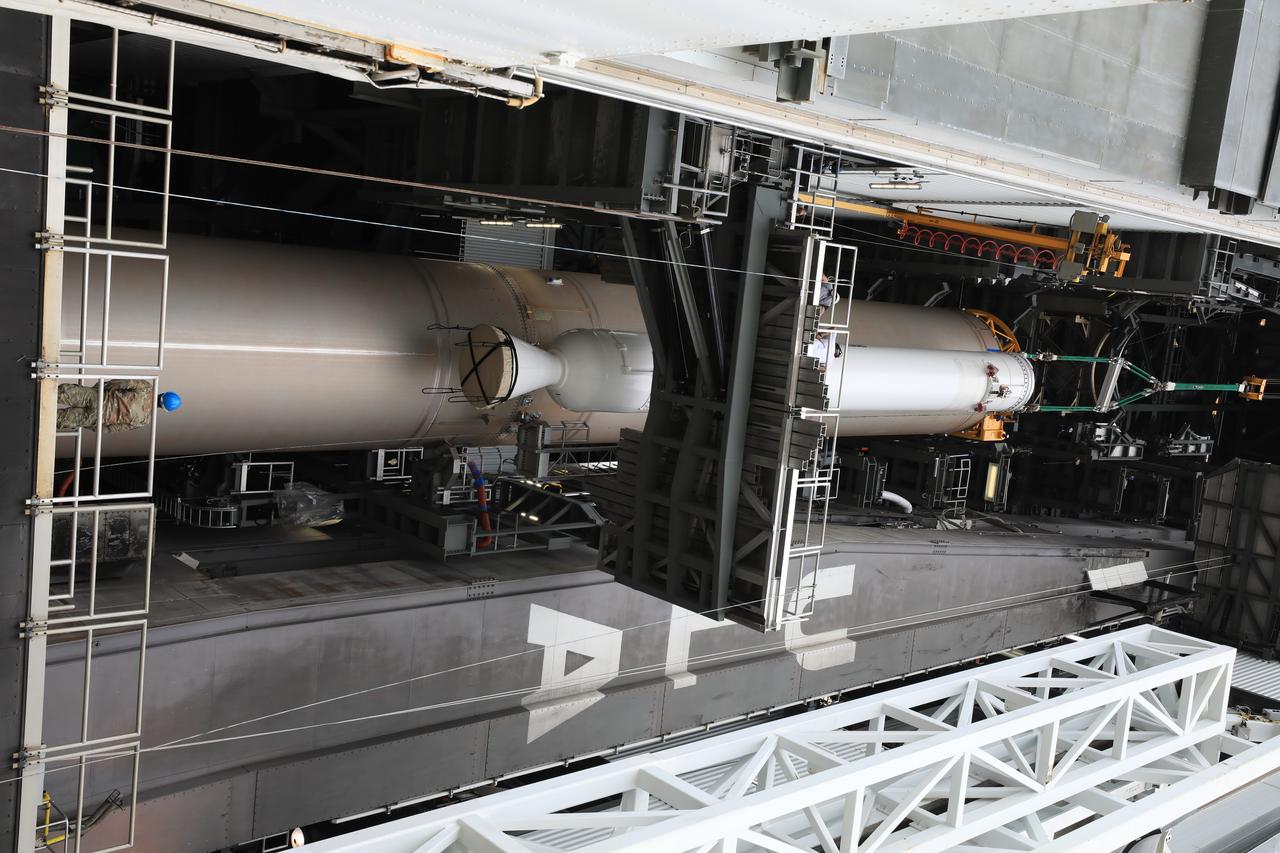
Inside the Vertical Integration Facility at Space Launch Complex 41 at Cape Canaveral Air Force Station in Florida, the second of four solid rocket boosters (SRB) for the United Launch Alliance Atlas V 541 rocket is lifted up by crane on June 3, 2020. The SRB will be mated to the Atlas V booster. NASA’s Mars 2020 mission with the Perseverance rover is scheduled to launch on July 20, 2020, atop the Atlas V rocket from Pad 41. The rover is part of NASA’s Mars Exploration Program, a long-term effort of robotic exploration of the Red Planet. The rover’s seven instruments will search for habitable conditions in the ancient past and signs of past microbial life on Mars. The Launch Services Program at Kennedy is responsible for launch management.
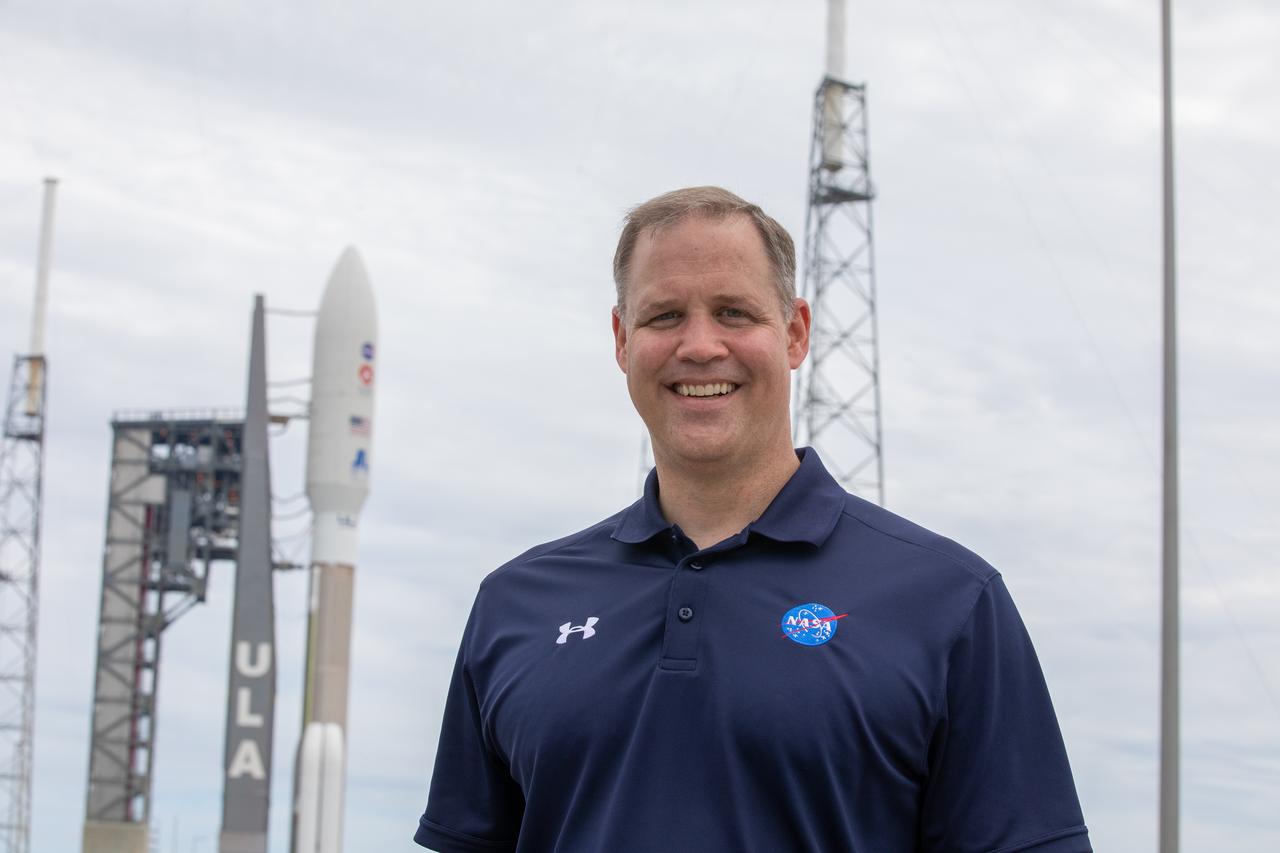
NASA Administrator Jim Bridenstine attends the rollout of the United Launch Alliance Atlas V 541 rocket, carrying NASA’s Mars Perseverance rover and Ingenuity helicopter, as it rolls along to the launch pad at Space Launch Complex 41 at Cape Canaveral Air Force Station on July 28, 2020. First motion was at 10:24 a.m. EDT. Launch of the Mars 2020 mission is scheduled for July 30. The rover is part of NASA’s Mars Exploration Program, a long-term effort of robotic exploration of the Red Planet. The rover will search for habitable conditions in the ancient past and signs of past microbial life on Mars. The Launch Services Program at Kennedy is responsible for launch management.

A close-up view of the first-stage engines as the United Launch Alliance Atlas V 541 rocket, carrying the National Oceanic and Atmospheric Administration’s (NOAA) Geostationary Operational Environmental Satellite-T (GOES-T), lifts off from Space Launch Complex 41 at Cape Canaveral Space Force Station in Florida on March 1, 2022. Liftoff was at 4:38 p.m. EST. GOES-T is the third satellite in the GOES-R series that will continue to help meteorologists observe and predict local weather events that affect public safety. GOES-T will be renamed GOES-18 once it reaches geostationary orbit. GOES-18 will go into operational service as GOES West to provide critical data for the U.S. West Coast, Alaska, Hawaii, Mexico, Central America, and the Pacific Ocean. The launch was managed by NASA’s Launch Services Program based at Kennedy Space Center in Florida, America’s multi-user spaceport.
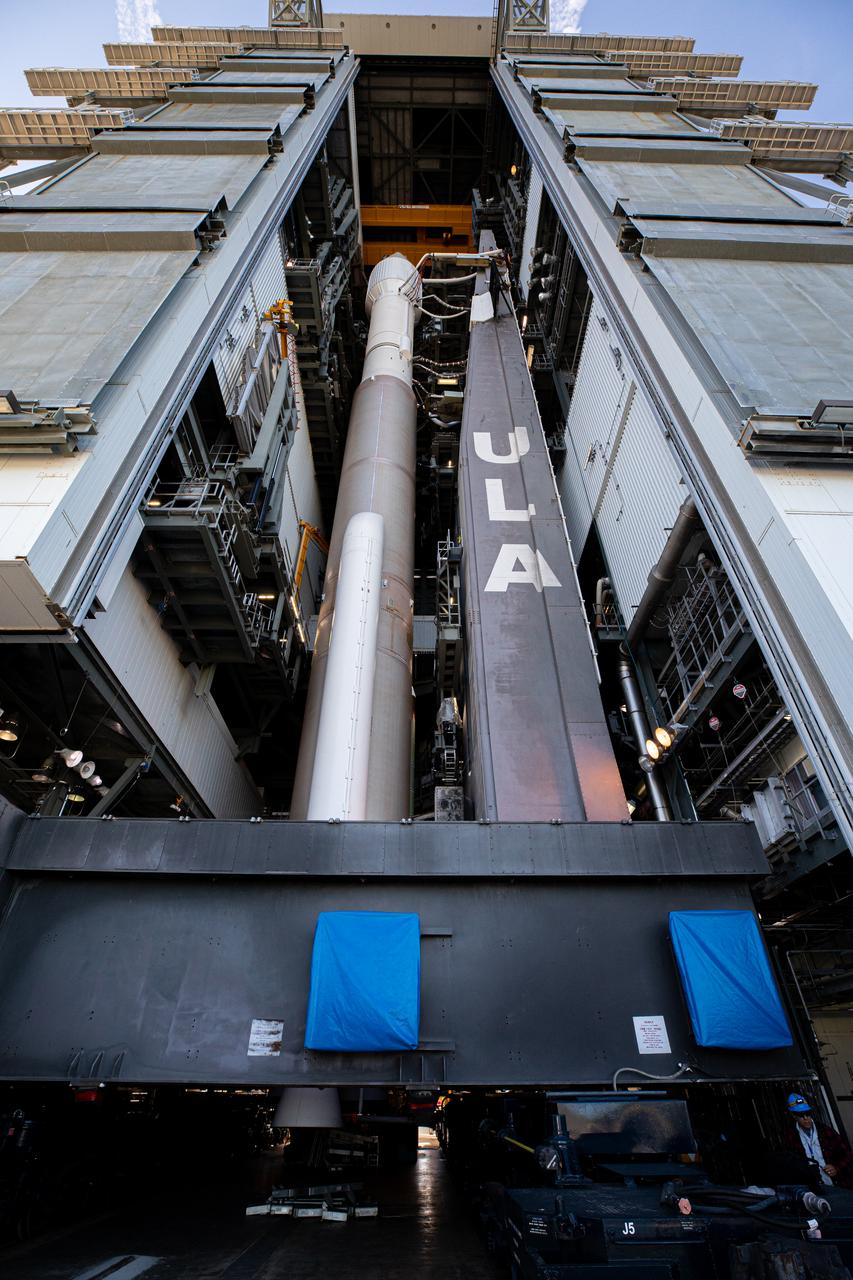
The United Launch Alliance Atlas V rocket with the Solar Orbiter spacecraft begins rollout from the Vertical Integration Facility to the launch pad at Space Launch Complex 41 on Cape Canaveral Air Force Station in Florida on Feb. 8, 2020. Solar Orbiter is an international cooperative mission between ESA (European Space Agency) and NASA. The mission aims to study the Sun, its outer atmosphere and solar wind. The spacecraft will provide the first images of the Sun’s poles. NASA’s Launch Services Program based at Kennedy is managing the launch. The spacecraft has been developed by Airbus Defence and Space. Solar Orbiter will launch Feb. 9, 2020 aboard the Atlas V rocket.