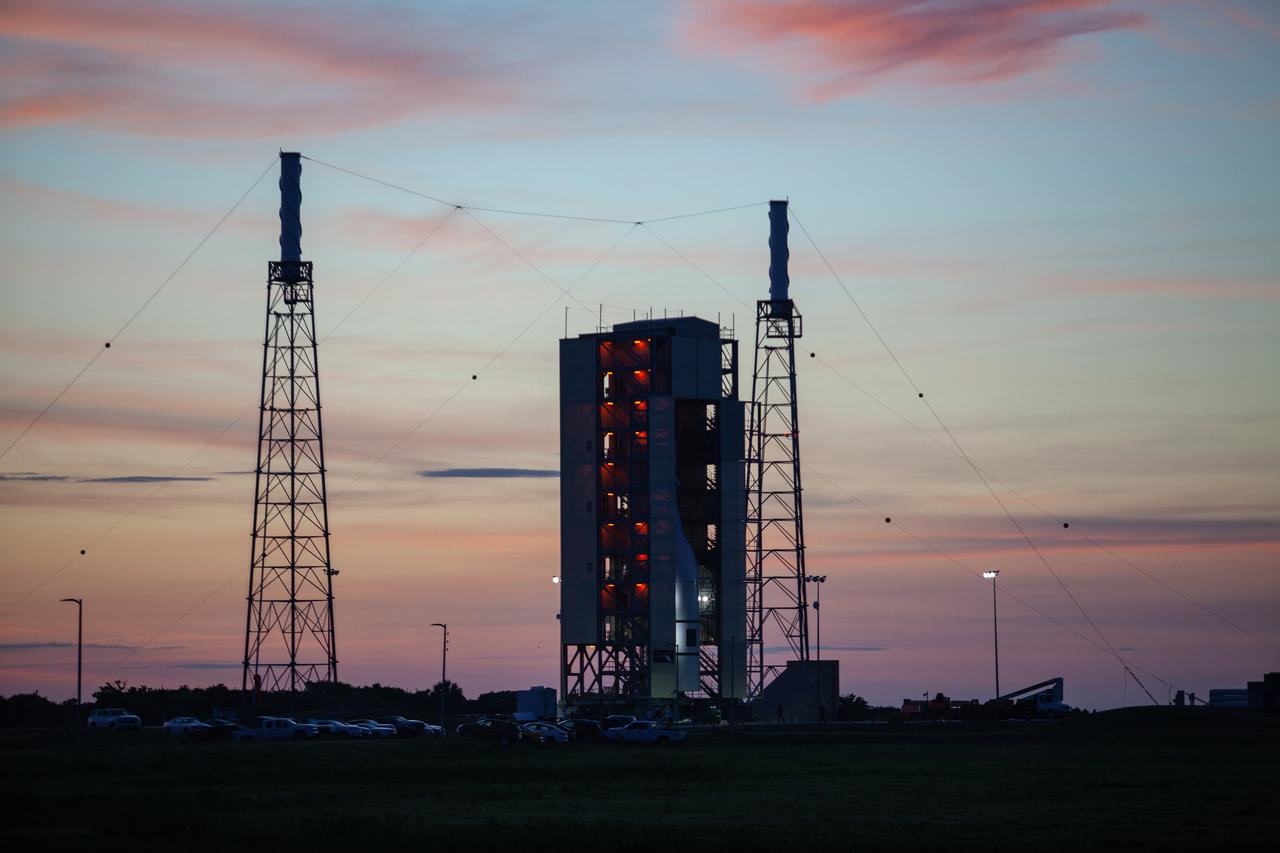
A sunrise view of Launch Complex 46 at Cape Canaveral Air Force Station in Florida on July 1, 2019. A fully functional Launch Abort System (LAS) mated to a test version of the Orion spacecraft are on a Northrop Grumman provided booster on the pad for launch on NASA’s Ascent Abort-2 (AA-2) flight test on July 2, 2019. The vertical integration facility surrounding the test vehicle begins to roll back from the pad. During AA-2, the booster will send the LAS and Orion to an altitude of 31,000 feet, traveling at more than 1,000 mph. The LAS’ three motors will work together to pull the crew module away from the booster and prepare it for splashdown in the Atlantic Ocean. The flight test will prove that the abort system can pull crew to safety in the unlikely event of an emergency during ascent.
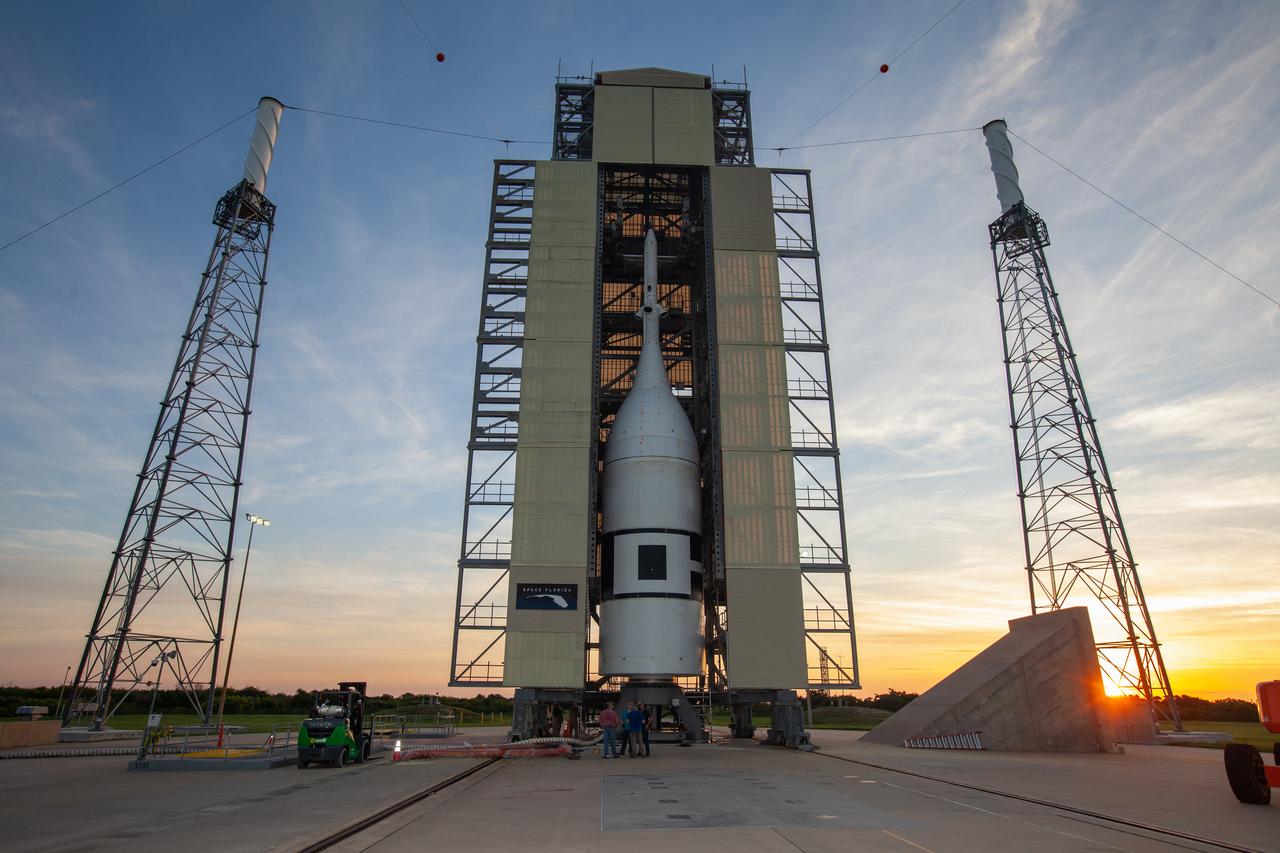
In the early morning on July 1, 2019, the vertical integration facility surrounding the Ascent Abort-2 (AA-2) test vehicle begins to rollback at Launch Pad 46 at Cape Canaveral Air Force Station in Florida. A fully functional Launch Abort System (LAS) mated to a test version of the Orion spacecraft are on a Northrop Grumman provided booster on the pad for launch on NASA’s AA-2 flight test on July 2, 2019. During AA-2, the booster will send the LAS and Orion to an altitude of 31,000 feet, traveling at more than 1,000 mph. The LAS’ three motors will work together to pull the crew module away from the booster and prepare it for splashdown in the Atlantic Ocean. The flight test will prove that the abort system can pull crew to safety in the unlikely event of an emergency during ascent.
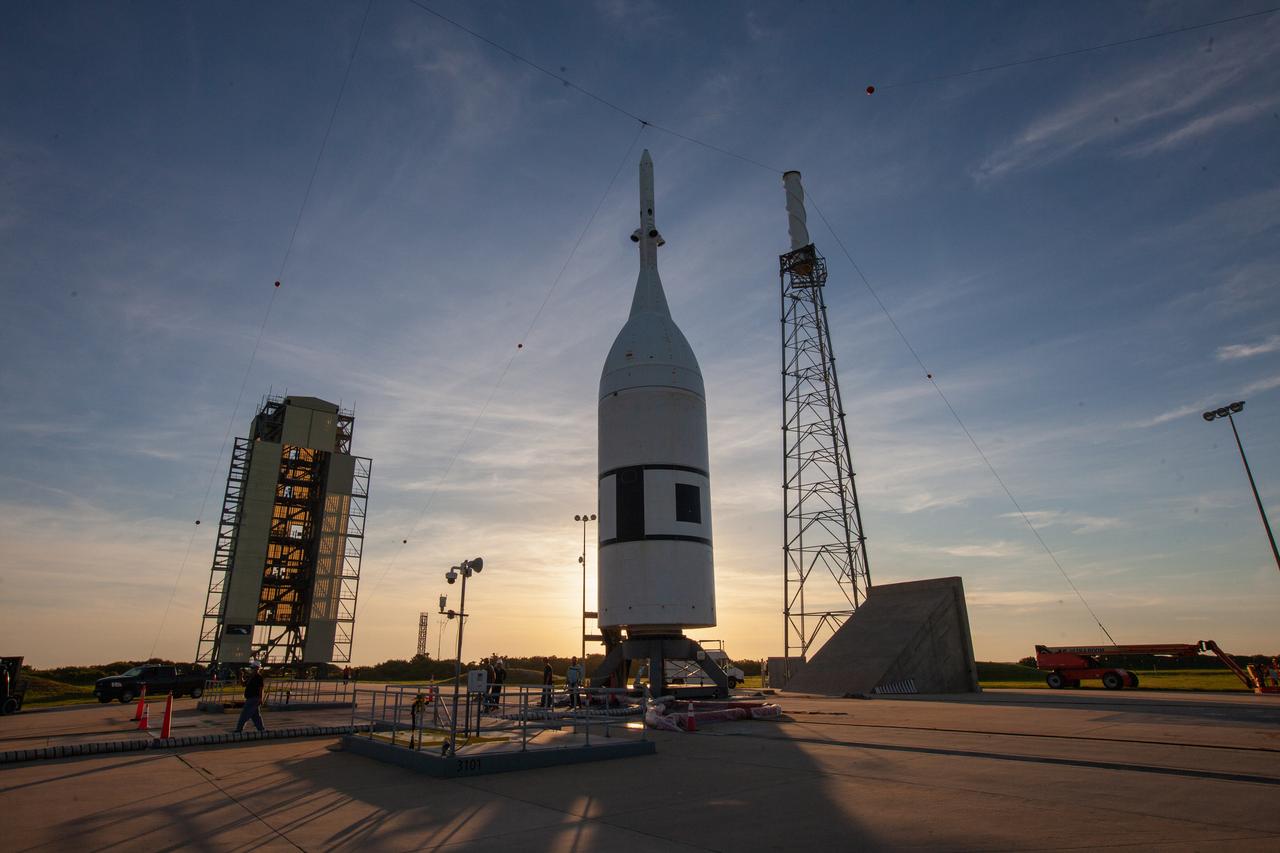
The Ascent Abort-2 test vehicle is secured on the pad at Launch Complex 46 at Cape Canaveral Air Force Station in Florida after rollback of the vertical integration facility on July 1, 2019. A fully functional Launch Abort System (LAS) mated to a test version of the Orion spacecraft are on a Northrop Grumman provided booster on the pad for launch on NASA’s AA-2 flight test on July 2, 2019. During AA-2, the booster will send the LAS and Orion to an altitude of 31,000 feet, traveling at more than 1,000 mph. The LAS’ three motors will work together to pull the crew module away from the booster and prepare it for splashdown in the Atlantic Ocean. The flight test will prove that the abort system can pull crew to safety in the unlikely event of an emergency during ascent.
In the early morning on July 1, 2019, the vertical integration facility surrounding the Ascent Abort-2 (AA-2) test vehicle begins to rollback at Launch Pad 46 at Cape Canaveral Air Force Station in Florida. A fully functional Launch Abort System (LAS) mated to a test version of the Orion spacecraft are on a Northrop Grumman provided booster on the pad for launch on NASA’s AA-2 flight test on July 2, 2019. During AA-2, the booster will send the LAS and Orion to an altitude of 31,000 feet, traveling at more than 1,000 mph. The LAS’ three motors will work together to pull the crew module away from the booster and prepare it for splashdown in the Atlantic Ocean. The flight test will prove that the abort system can pull crew to safety in the unlikely event of an emergency during ascent.
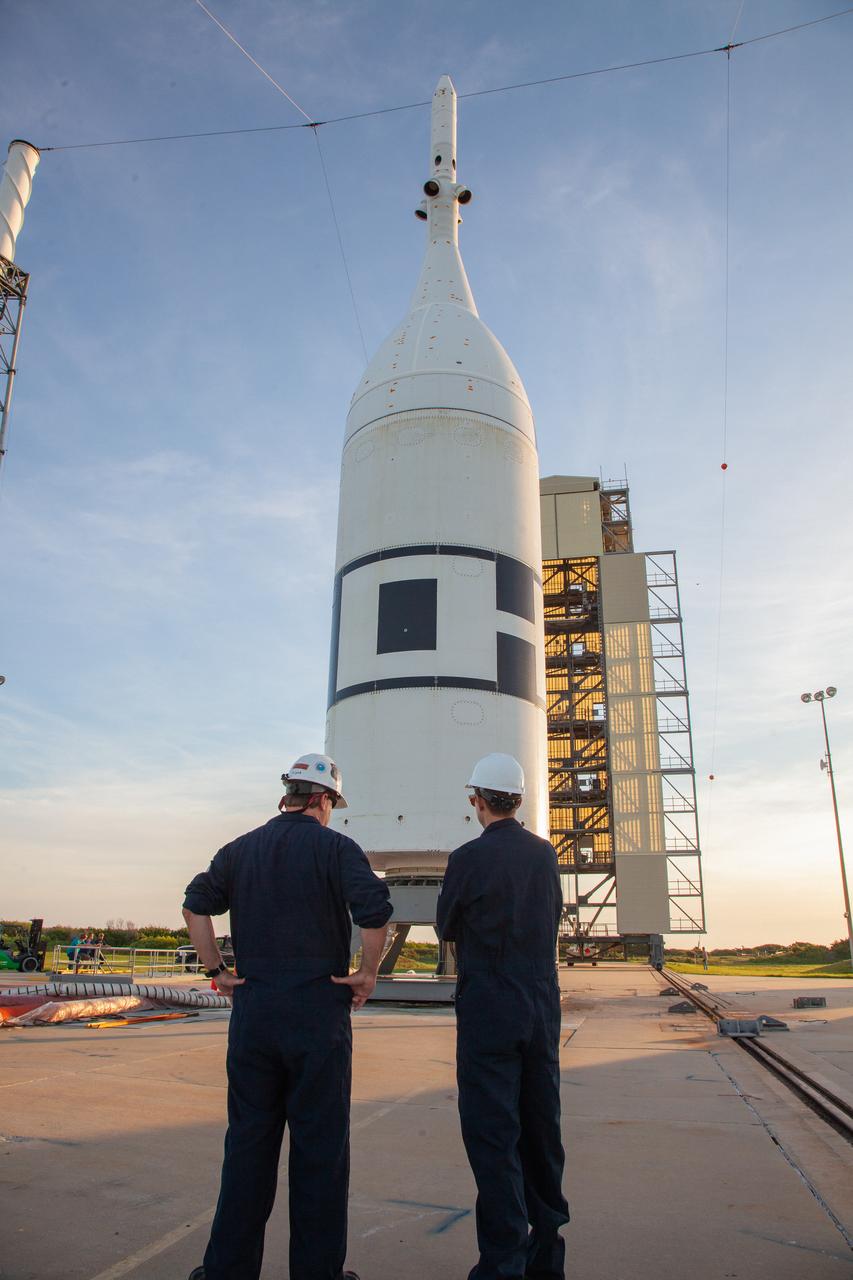
The Ascent Abort-2 test vehicle is secured on the pad at Launch Complex 46 at Cape Canaveral Air Force Station in Florida after rollback of the vertical integration facility on July 1, 2019. A fully functional Launch Abort System (LAS) mated to a test version of the Orion spacecraft are on a Northrop Grumman provided booster on the pad for launch on NASA’s AA-2 flight test on July 2, 2019. During AA-2, the booster will send the LAS and Orion to an altitude of 31,000 feet, traveling at more than 1,000 mph. The LAS’ three motors will work together to pull the crew module away from the booster and prepare it for splashdown in the Atlantic Ocean. The flight test will prove that the abort system can pull crew to safety in the unlikely event of an emergency during ascent.
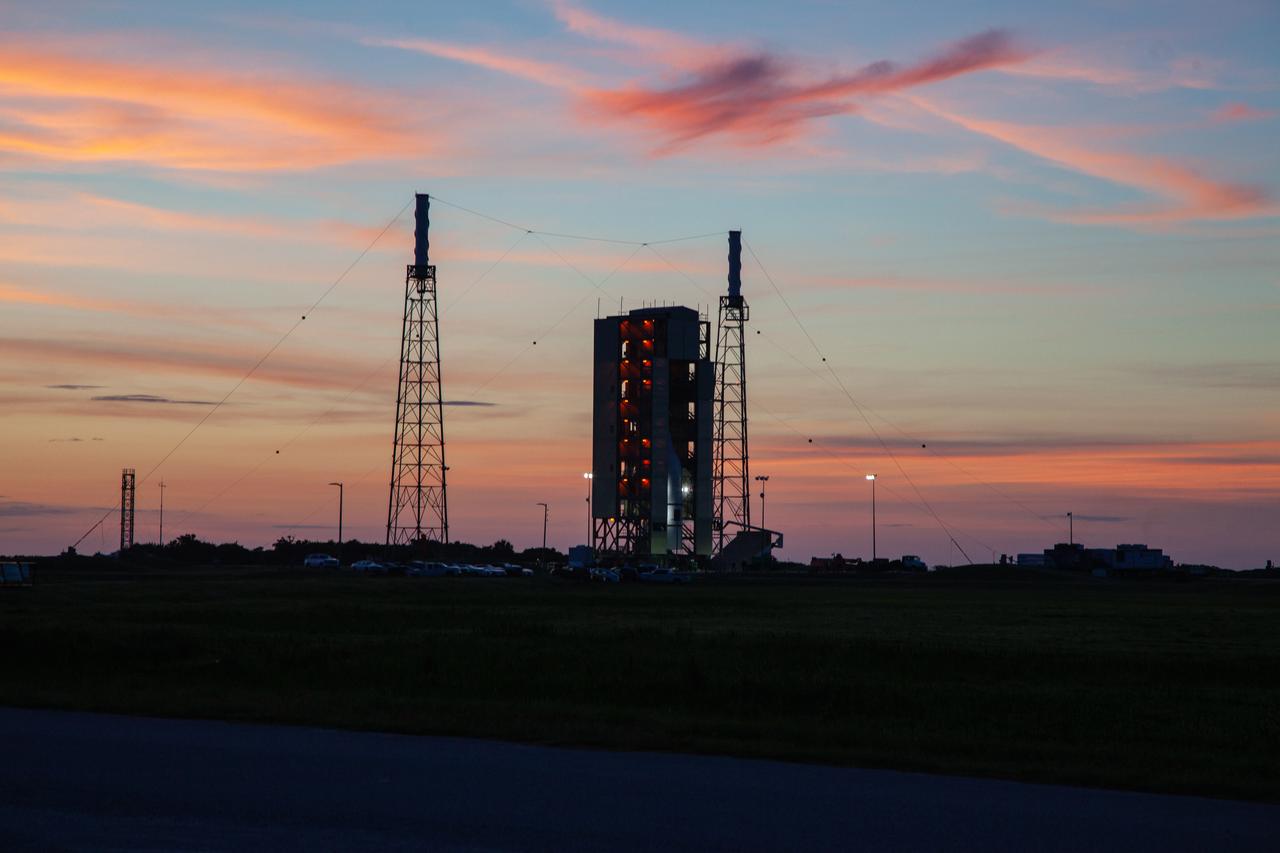
A sunrise view of Launch Complex 46 at Cape Canaveral Air Force Station in Florida on July 1, 2019. A fully functional Launch Abort System (LAS) mated to a test version of the Orion spacecraft are on a Northrop Grumman provided booster on the pad for launch on NASA’s Ascent Abort-2 (AA-2) flight test on July 2, 2019. The vertical integration facility surrounding the test vehicle will begin to roll back from the pad. During AA-2, the booster will send the LAS and Orion to an altitude of 31,000 feet, traveling at more than 1,000 mph. The LAS’ three motors will work together to pull the crew module away from the booster and prepare it for splashdown in the Atlantic Ocean. The flight test will prove that the abort system can pull crew to safety in the unlikely event of an emergency during ascent.
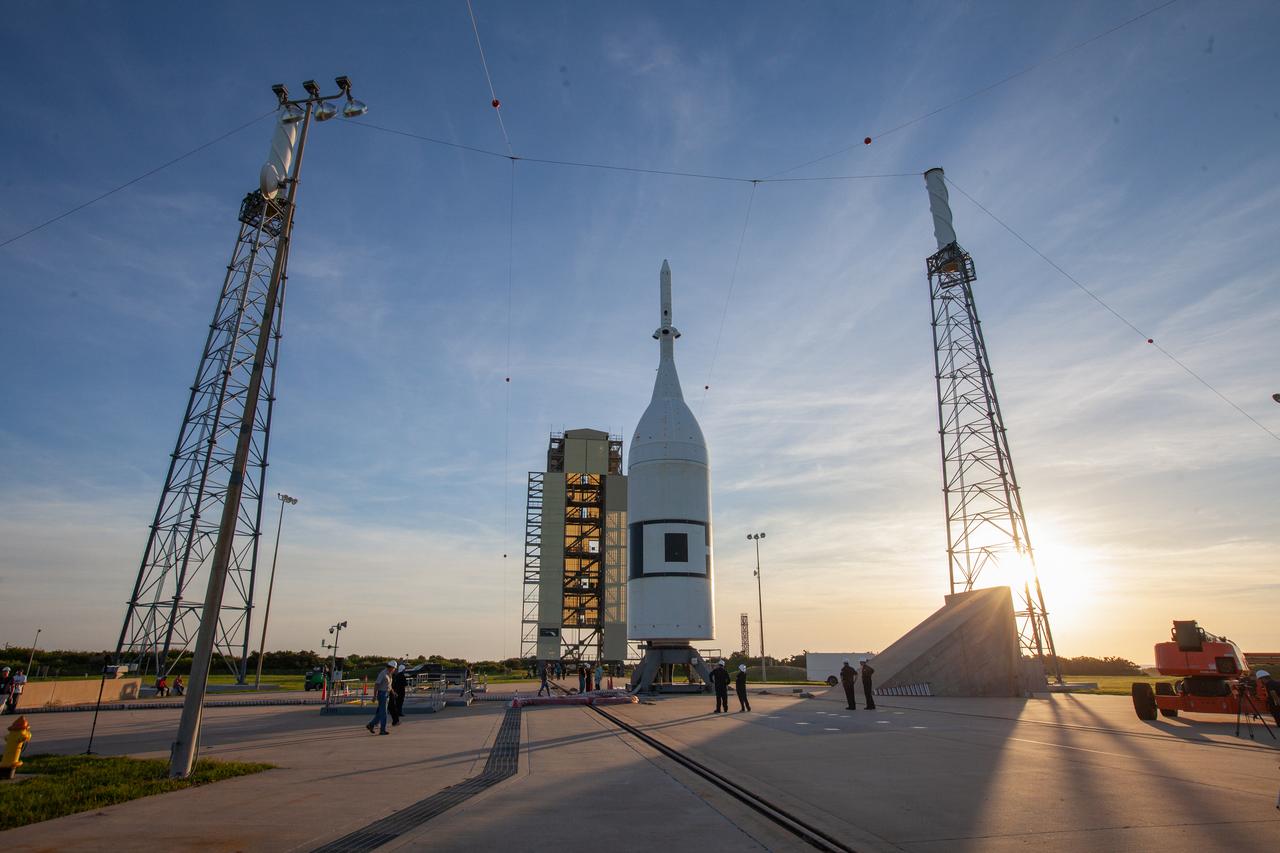
The Ascent Abort-2 test vehicle is secured on the pad at Launch Complex 46 at Cape Canaveral Air Force Station in Florida after rollback of the vertical integration facility on July 1, 2019. A fully functional Launch Abort System (LAS) mated to a test version of the Orion spacecraft are on a Northrop Grumman provided booster on the pad for launch on NASA’s AA-2 flight test on July 2, 2019. During AA-2, the booster will send the LAS and Orion to an altitude of 31,000 feet, traveling at more than 1,000 mph. The LAS’ three motors will work together to pull the crew module away from the booster and prepare it for splashdown in the Atlantic Ocean. The flight test will prove that the abort system can pull crew to safety in the unlikely event of an emergency during ascent.
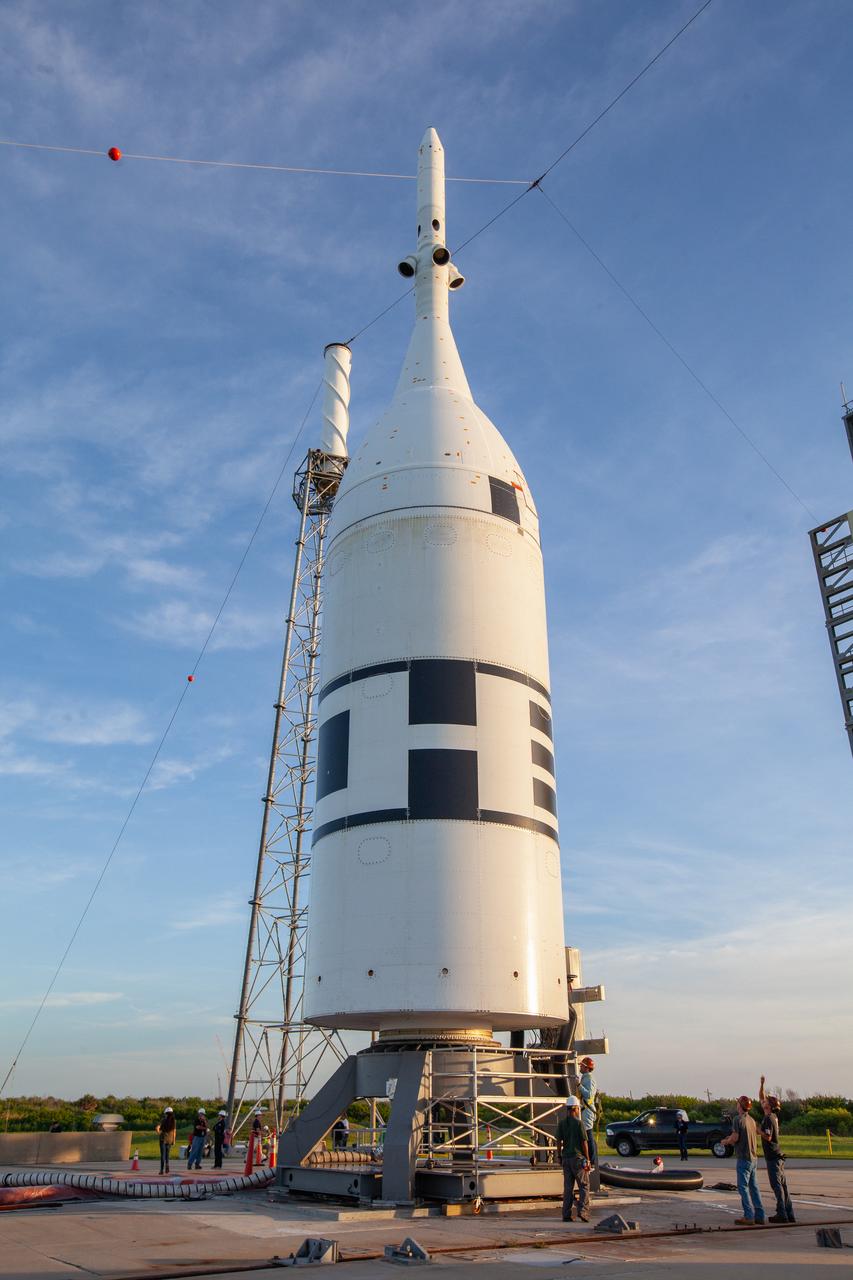
The Ascent Abort-2 test vehicle is secured on the pad at Launch Complex 46 at Cape Canaveral Air Force Station in Florida after rollback of the vertical integration facility on July 1, 2019. A fully functional Launch Abort System (LAS) mated to a test version of the Orion spacecraft are on a Northrop Grumman provided booster on the pad for launch on NASA’s AA-2 flight test on July 2, 2019. During AA-2, the booster will send the LAS and Orion to an altitude of 31,000 feet, traveling at more than 1,000 mph. The LAS’ three motors will work together to pull the crew module away from the booster and prepare it for splashdown in the Atlantic Ocean. The flight test will prove that the abort system can pull crew to safety in the unlikely event of an emergency during ascent.
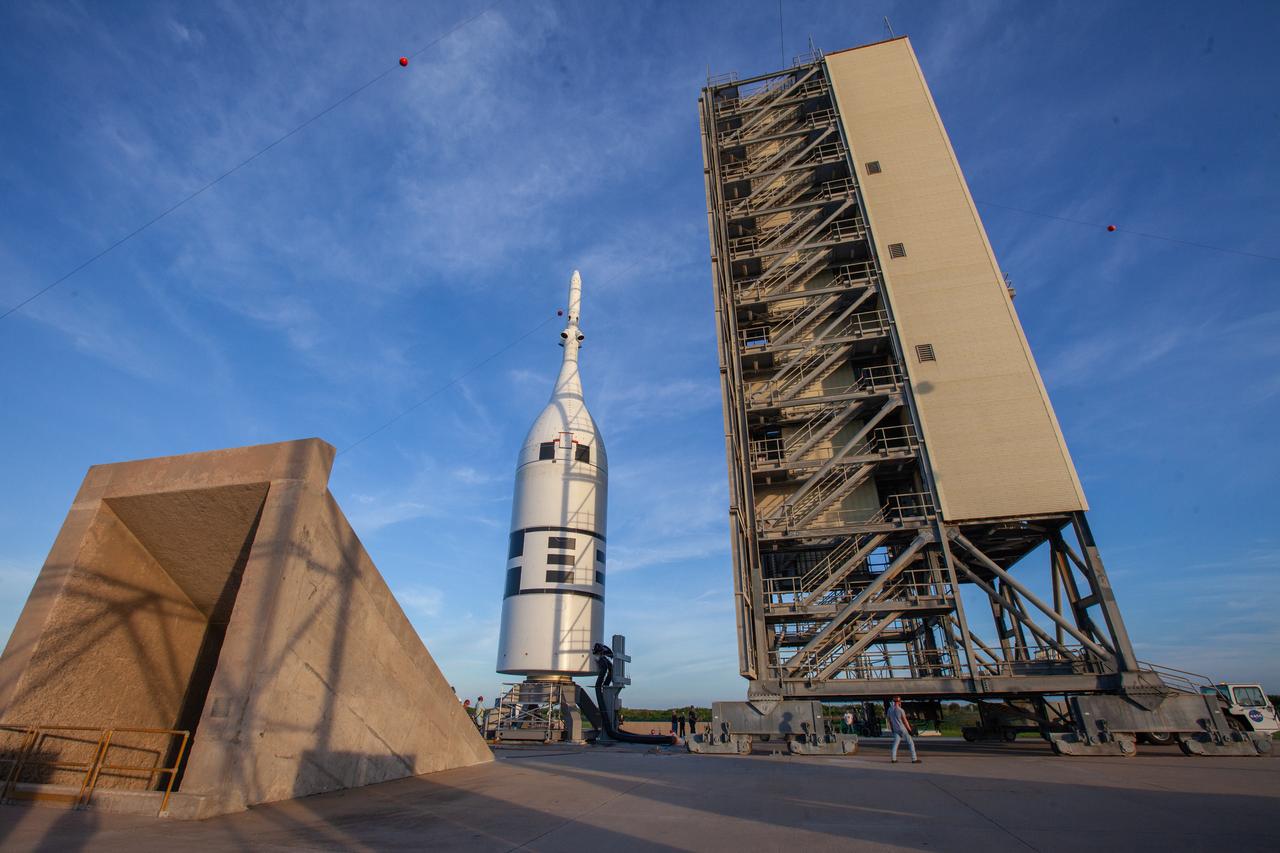
At Launch Complex 46 at Cape Canaveral Air Force Station in Florida, the vertical integration facility rolls back from the Ascent Abort-2 test vehicle on July 1, 2019. A fully functional Launch Abort System (LAS) mated to a test version of the Orion spacecraft are on a Northrop Grumman provided booster on the pad for launch on NASA’s AA-2 flight test on July 2, 2019. During AA-2, the booster will send the LAS and Orion to an altitude of 31,000 feet, traveling at more than 1,000 mph. The LAS’ three motors will work together to pull the crew module away from the booster and prepare it for splashdown in the Atlantic Ocean. The flight test will prove that the abort system can pull crew to safety in the unlikely event of an emergency during ascent.
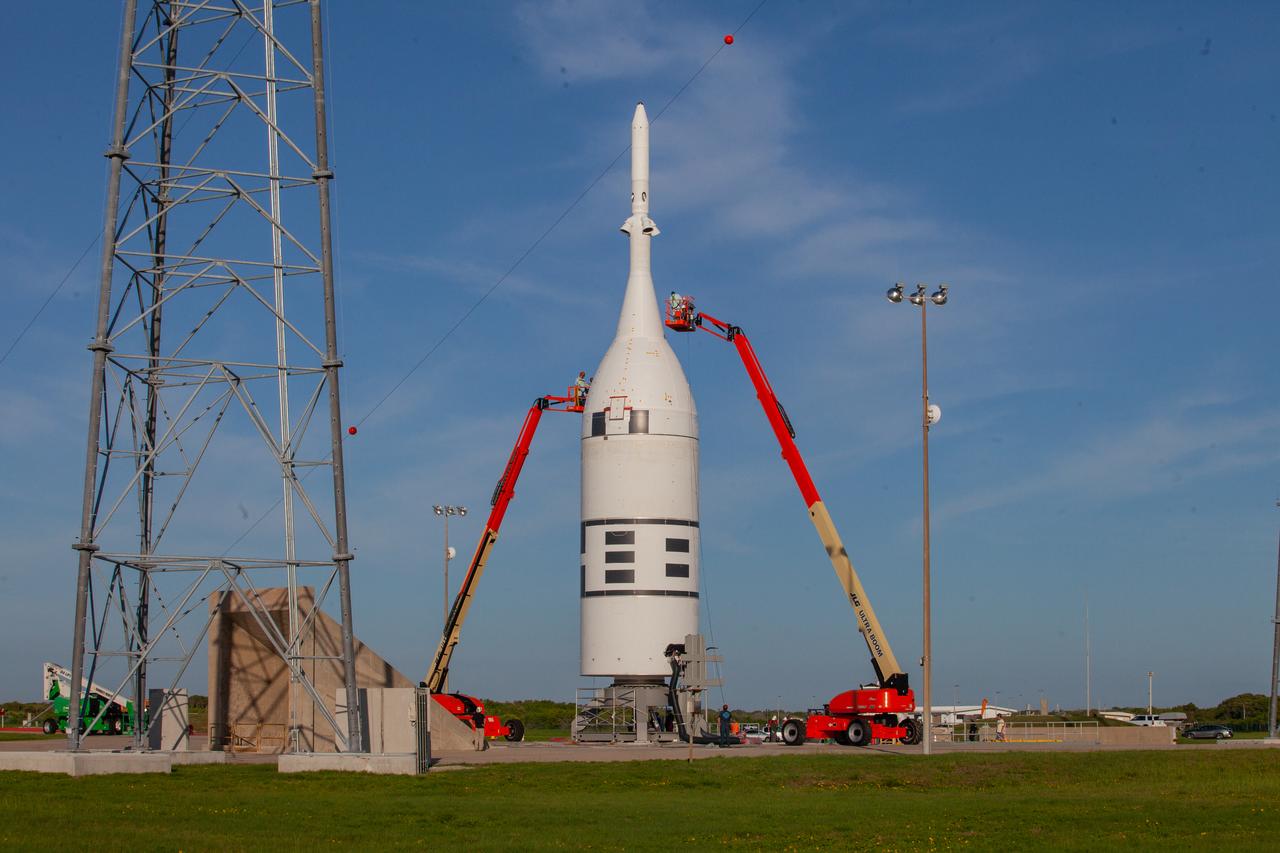
On July 1, 2019, workers prepare the Ascent Abort-2 (AA-2) test vehicle for launch at Launch Complex 46 at Cape Canaveral Air Force Station in Florida after rollback of the integration facility. A fully functional Launch Abort System (LAS) mated to a test version of the Orion spacecraft are on a Northrop Grumman provided booster on the pad for launch on NASA’s AA-2 flight test on July 2, 2019. During AA-2, the booster will send the LAS and Orion to an altitude of 31,000 feet, traveling at more than 1,000 mph. The LAS’ three motors will work together to pull the crew module away from the booster and prepare it for splashdown in the Atlantic Ocean. The flight test will prove that the abort system can pull crew to safety in the unlikely event of an emergency during ascent.
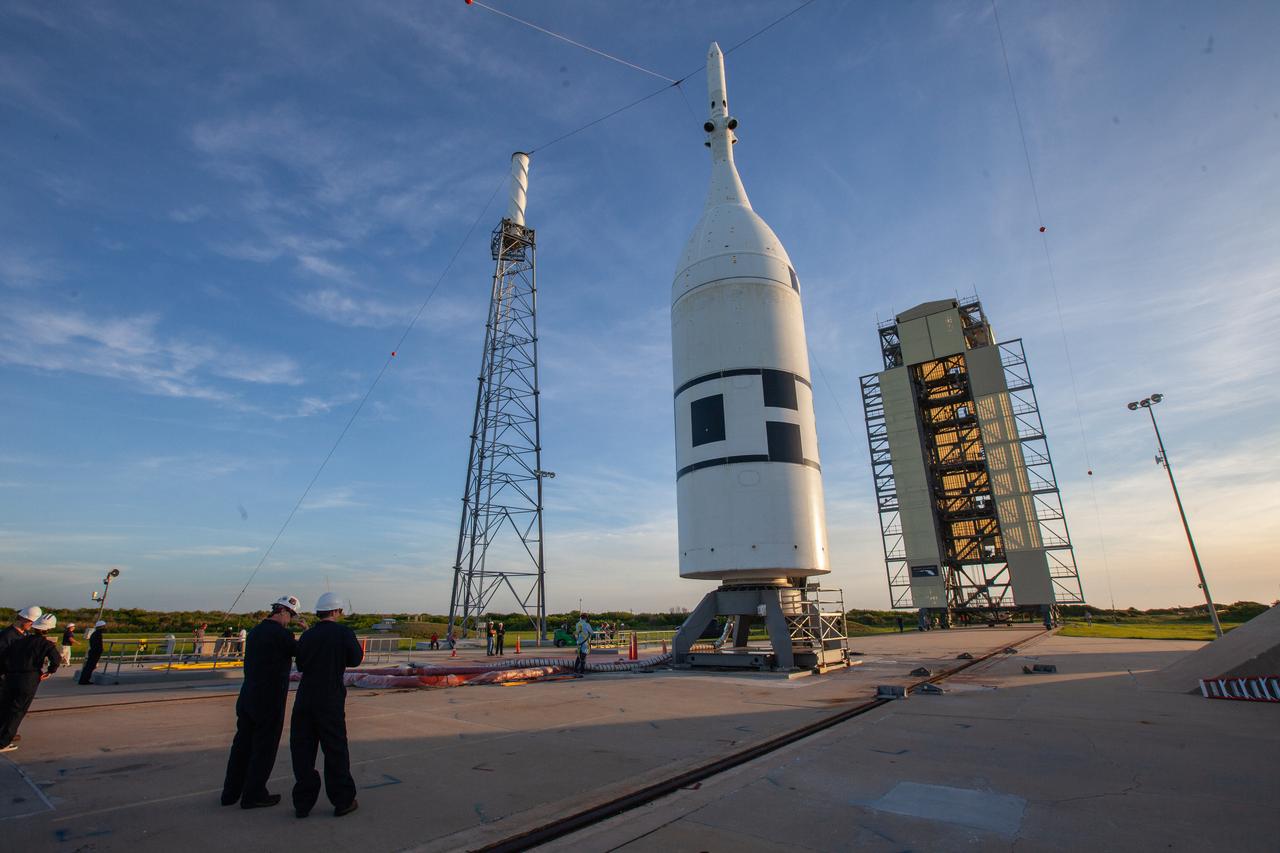
The Ascent Abort-2 test vehicle is secured on the pad at Launch Complex 46 at Cape Canaveral Air Force Station in Florida after rollback of the vertical integration facility on July 1, 2019. A fully functional Launch Abort System (LAS) mated to a test version of the Orion spacecraft are on a Northrop Grumman provided booster on the pad for launch on NASA’s AA-2 flight test on July 2, 2019. During AA-2, the booster will send the LAS and Orion to an altitude of 31,000 feet, traveling at more than 1,000 mph. The LAS’ three motors will work together to pull the crew module away from the booster and prepare it for splashdown in the Atlantic Ocean. The flight test will prove that the abort system can pull crew to safety in the unlikely event of an emergency during ascent.
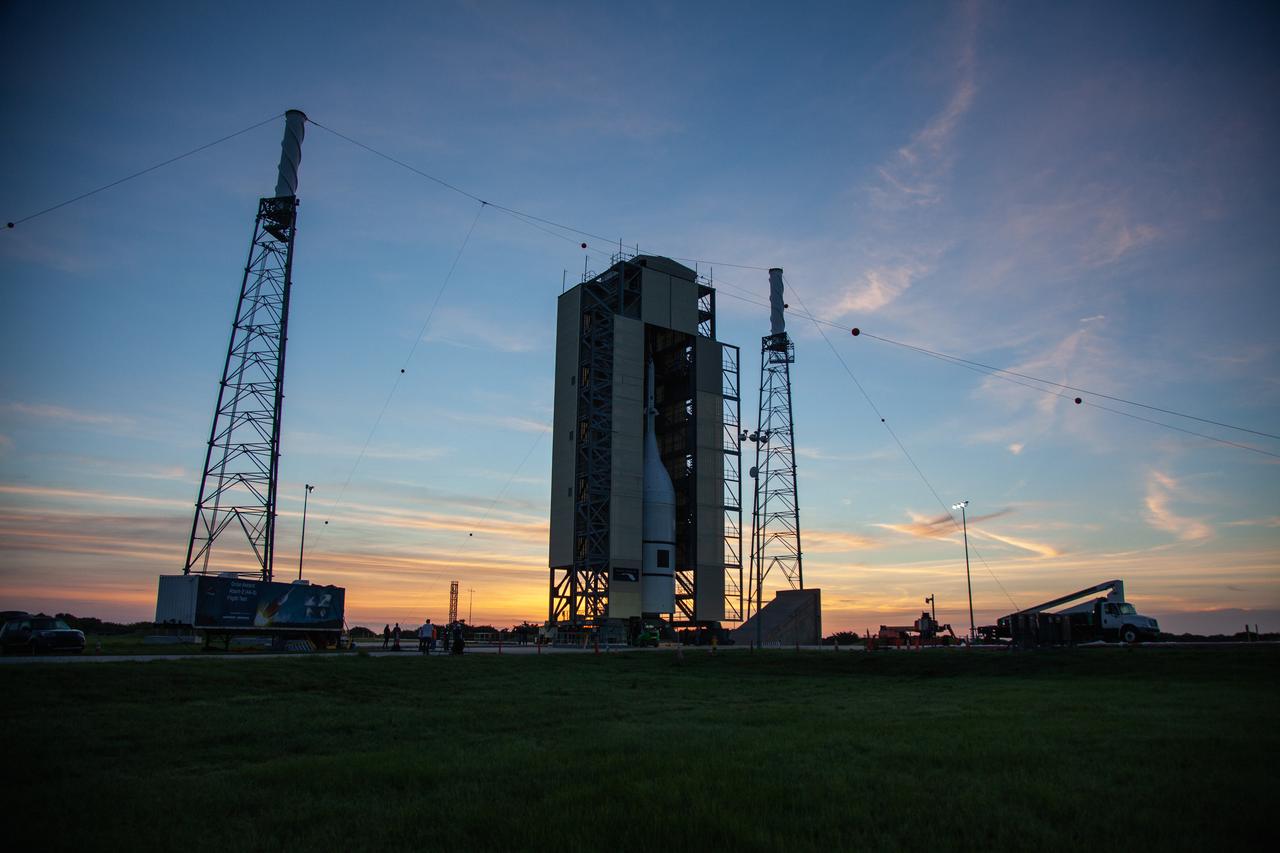
In the early morning on July 1, 2019, the vertical integration facility surrounding the Ascent Abort-2 (AA-2) test vehicle begins to rollback at Launch Pad 46 at Cape Canaveral Air Force Station in Florida. A fully functional Launch Abort System (LAS) mated to a test version of the Orion spacecraft are on a Northrop Grumman provided booster on the pad for launch on NASA’s AA-2 flight test on July 2, 2019. During AA-2, the booster will send the LAS and Orion to an altitude of 31,000 feet, traveling at more than 1,000 mph. The LAS’ three motors will work together to pull the crew module away from the booster and prepare it for splashdown in the Atlantic Ocean. The flight test will prove that the abort system can pull crew to safety in the unlikely event of an emergency during ascent.
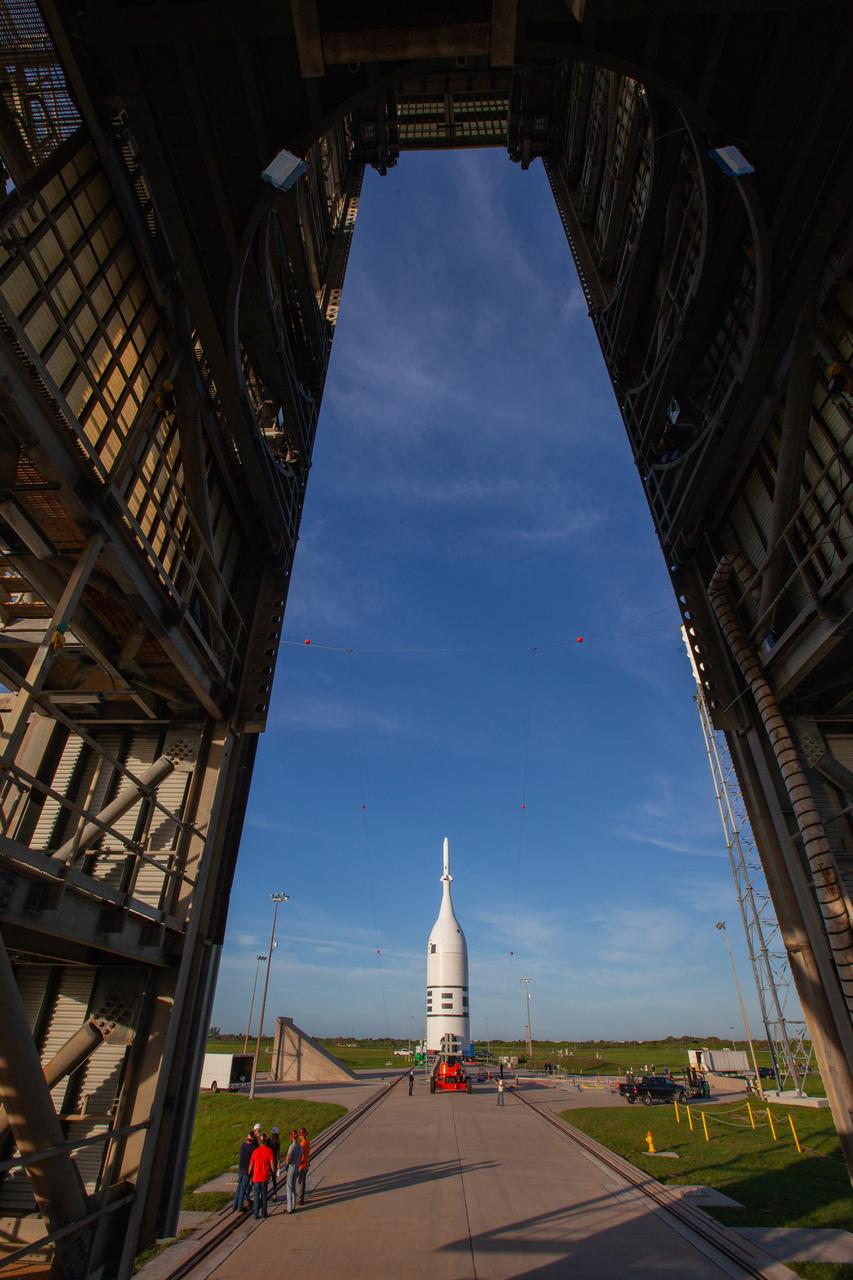
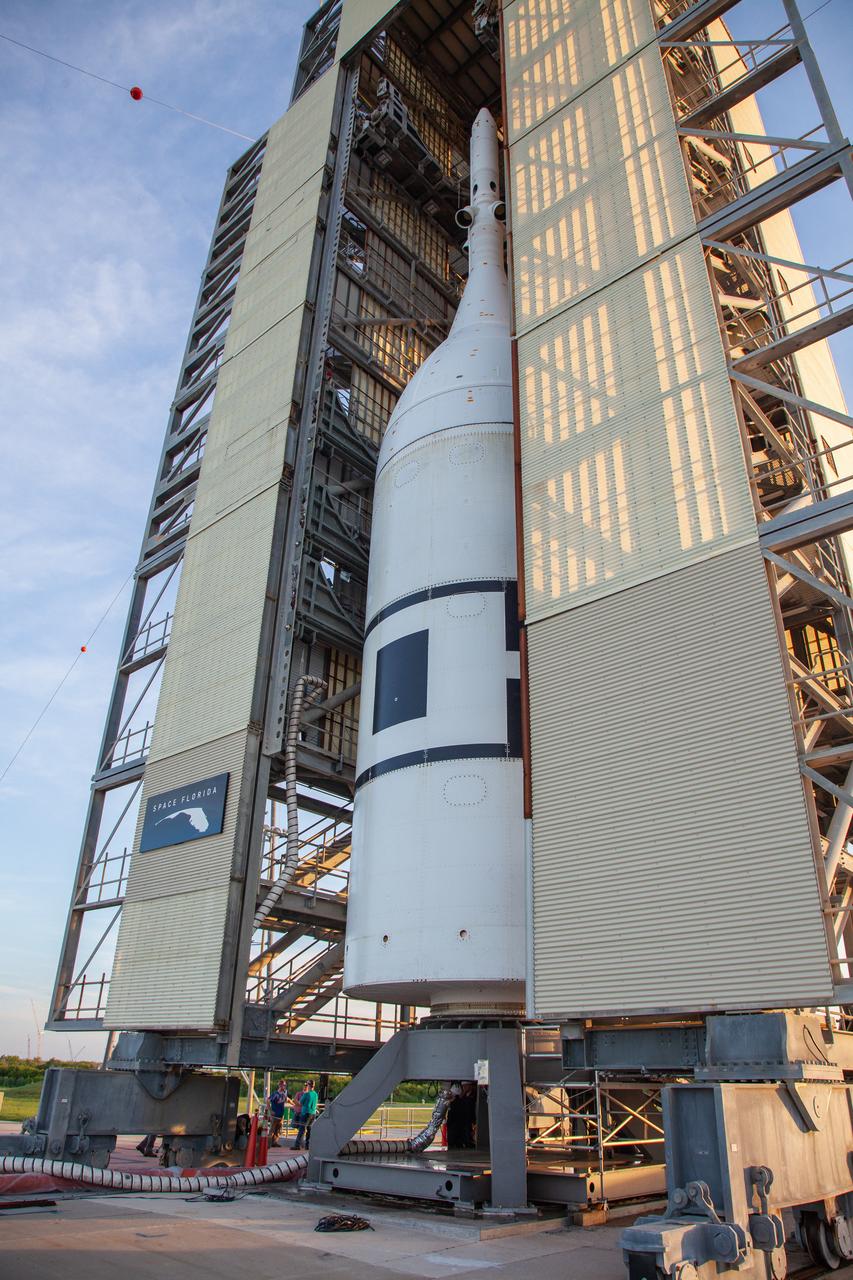
A view of the Ascent Abort-2 (AA-2) test vehicle from inside the vertical integration facility at Launch Complex 46 at Cape Canaveral Air Force Station in Florida after rollback of the integration facility on July 1, 2019. A fully functional Launch Abort System (LAS) mated to a test version of the Orion spacecraft are on a Northrop Grumman provided booster on the pad for launch on NASA’s AA-2 flight test on July 2, 2019. During AA-2, the booster will send the LAS and Orion to an altitude of 31,000 feet, traveling at more than 1,000 mph. The LAS’ three motors will work together to pull the crew module away from the booster and prepare it for splashdown in the Atlantic Ocean. The flight test will prove that the abort system can pull crew to safety in the unlikely event of an emergency during ascent.
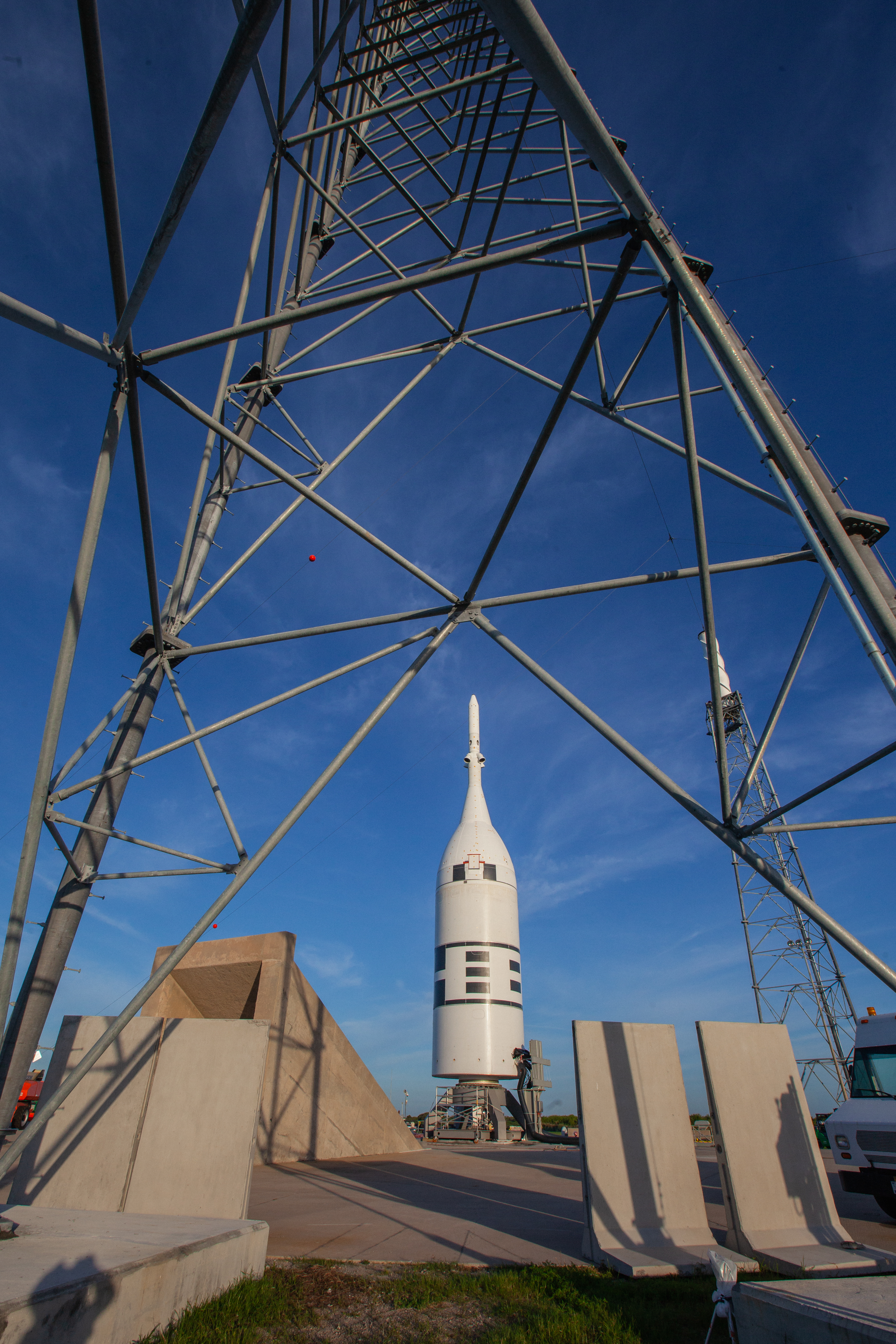
With a view of a lightning tower in the foreground, the Ascent Abort-2 test vehicle is in view on the pad at Launch Complex 46 at Cape Canaveral Air Force Station in Florida after rollback of the vertical integration facility on July 1, 2019. A fully functional Launch Abort System (LAS) mated to a test version of the Orion spacecraft are on a Northrop Grumman provided booster on the pad for launch on NASA’s AA-2 flight test on July 2, 2019. During AA-2, the booster will send the LAS and Orion to an altitude of 31,000 feet, traveling at more than 1,000 mph. The LAS’ three motors will work together to pull the crew module away from the booster and prepare it for splashdown in the Atlantic Ocean. The flight test will prove that the abort system can pull crew to safety in the unlikely event of an emergency during ascent.

The test version of Orion attached to the Launch Abort System for the Ascent Abort-2 (AA-2) flight test arrives at Space Launch Complex 46 at Cape Canaveral Air Force Station in Florida on May 23, 2019. The flight test article will be hoisted up and moved inside the vertical integration facility for stacking atop the booster. The booster was procured by the U.S. Air Force and manufactured by Northrop Grumman. During AA-2, targeted for July 2, the LAS with Orion will launch on the booster more than six miles in altitude, where Orion’s launch abort system will pull the capsule and its crew away to safety if an emergency occurs during ascent on the Space Launch System rocket. AA-2 is a critical safety test that helps pave the way for Artemis missions near the Moon, and will enable astronauts to set foot on the lunar surface by 2024.
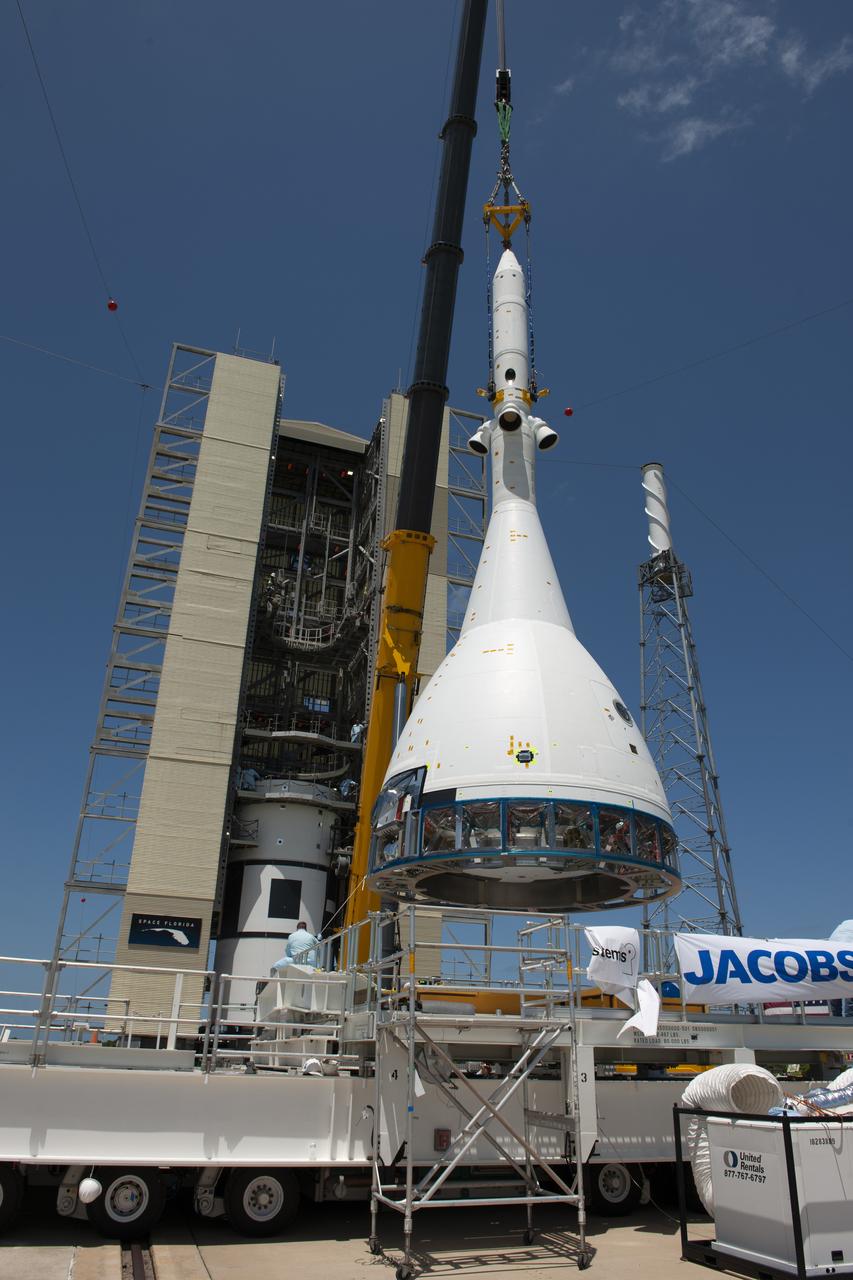
The test version of Orion attached to the Launch Abort System for the Ascent Abort-2 (AA-2) flight test is hoisted up by crane at Space Launch Complex 46 at Cape Canaveral Air Force Station in Florida on May 23, 2019. The flight test article will be moved inside the vertical integration facility for stacking atop the booster. The booster was procured by the U.S. Air Force and manufactured by Northrop Grumman. During AA-2, targeted for July 2, the LAS with Orion will launch on the booster more than six miles in altitude, where Orion’s launch abort system will pull the capsule and its crew away to safety if an emergency occurs during ascent on the Space Launch System rocket. AA-2 is a critical safety test that helps pave the way for Artemis missions near the Moon, and will enable astronauts to set foot on the lunar surface by 2024.
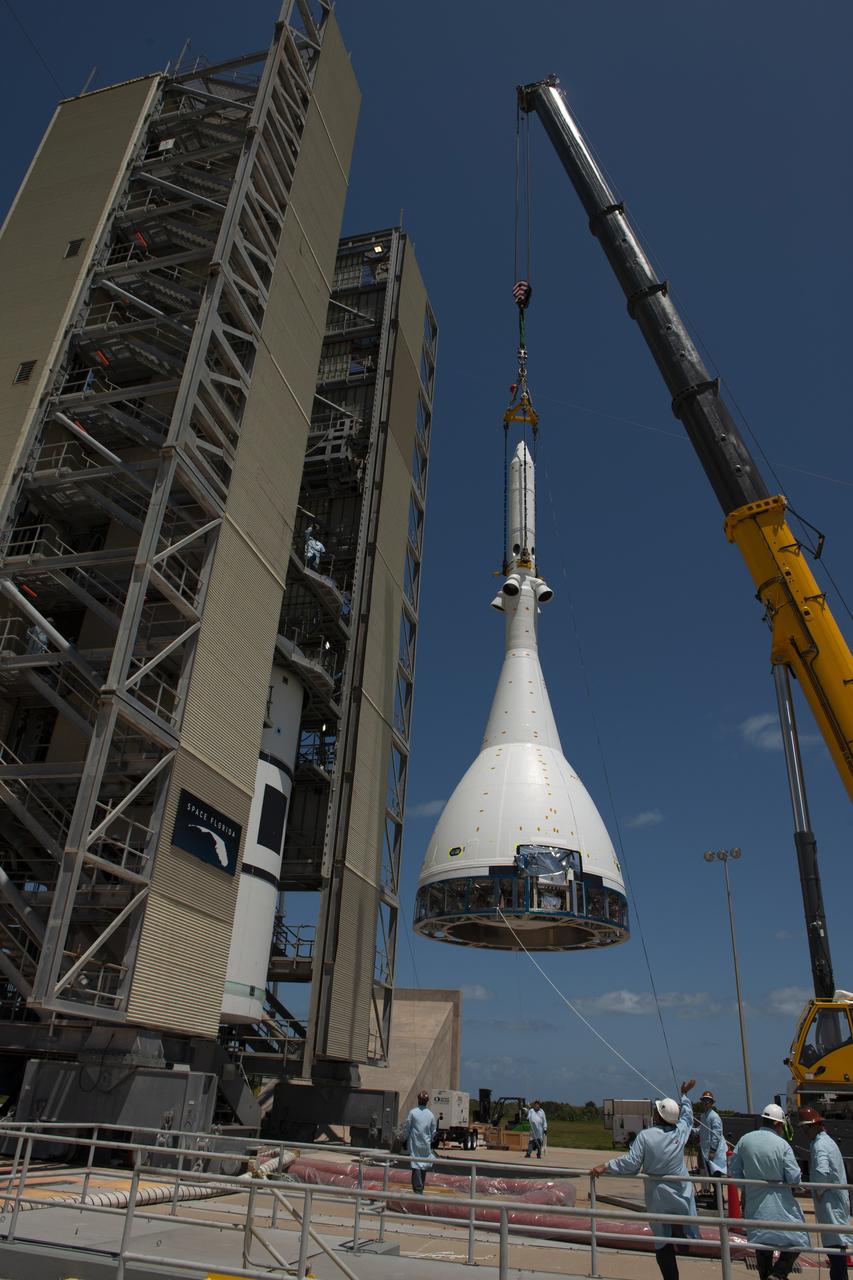
The test version of Orion attached to the Launch Abort System for the Ascent Abort-2 (AA-2) flight test is hoisted up by crane at Space Launch Complex 46 at Cape Canaveral Air Force Station in Florida on May 23, 2019. The flight test article will be moved inside the vertical integration facility for stacking atop the booster. The booster was procured by the U.S. Air Force and manufactured by Northrop Grumman. During AA-2, targeted for July 2, the LAS with Orion will launch on the booster more than six miles in altitude, where Orion’s launch abort system will pull the capsule and its crew away to safety if an emergency occurs during ascent on the Space Launch System rocket. AA-2 is a critical safety test that helps pave the way for Artemis missions near the Moon, and will enable astronauts to set foot on the lunar surface by 2024.
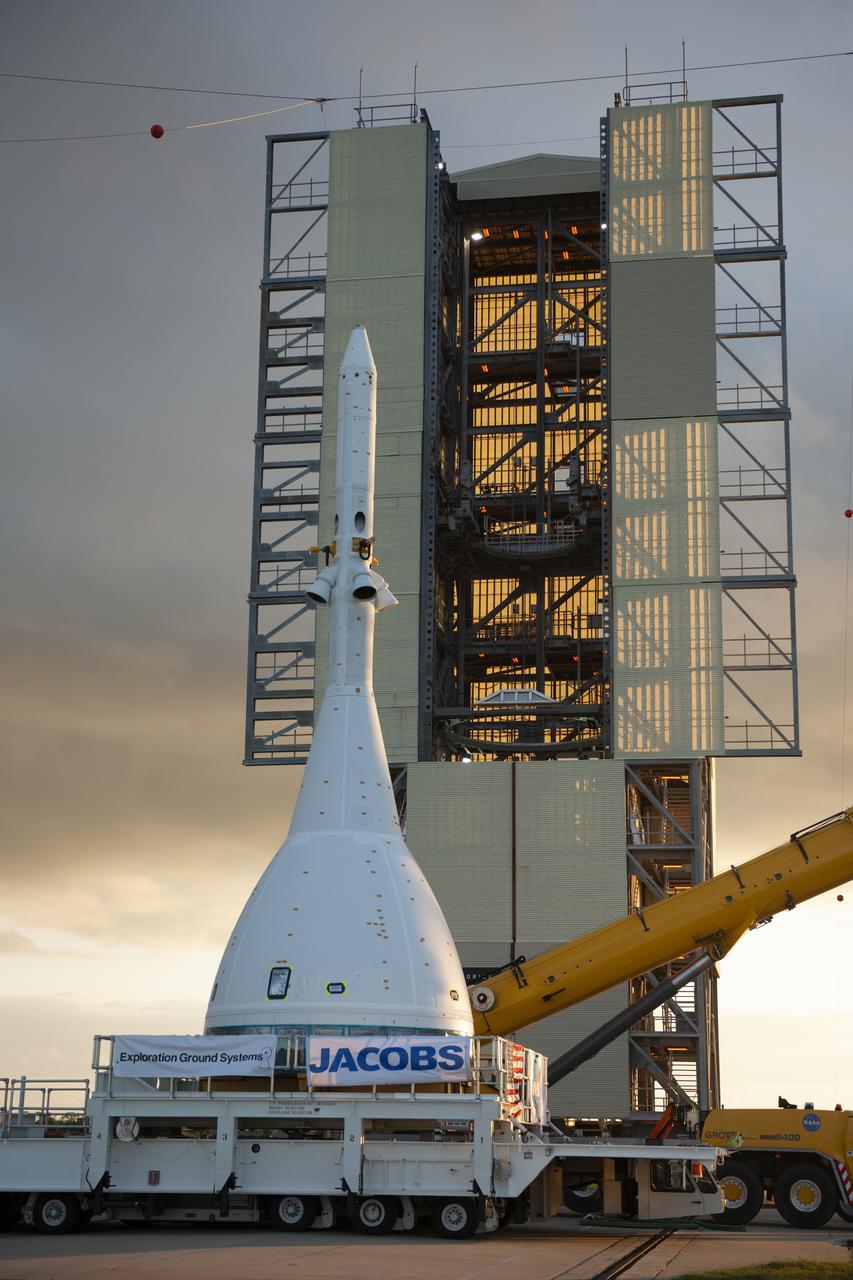
The test version of Orion attached to the Launch Abort System for the Ascent Abort-2 (AA-2) flight test arrives at Space Launch Complex 46 at Cape Canaveral Air Force Station in Florida on May 23, 2019. The flight test article will be hoisted up and moved inside the vertical integration facility for stacking atop the booster. The booster was procured by the U.S. Air Force and manufactured by Northrop Grumman. During AA-2, targeted for July 2, the LAS with Orion will launch on the booster more than six miles in altitude, where Orion’s launch abort system will pull the capsule and its crew away to safety if an emergency occurs during ascent on the Space Launch System rocket. AA-2 is a critical safety test that helps pave the way for Artemis missions near the Moon, and will enable astronauts to set foot on the lunar surface by 2024.
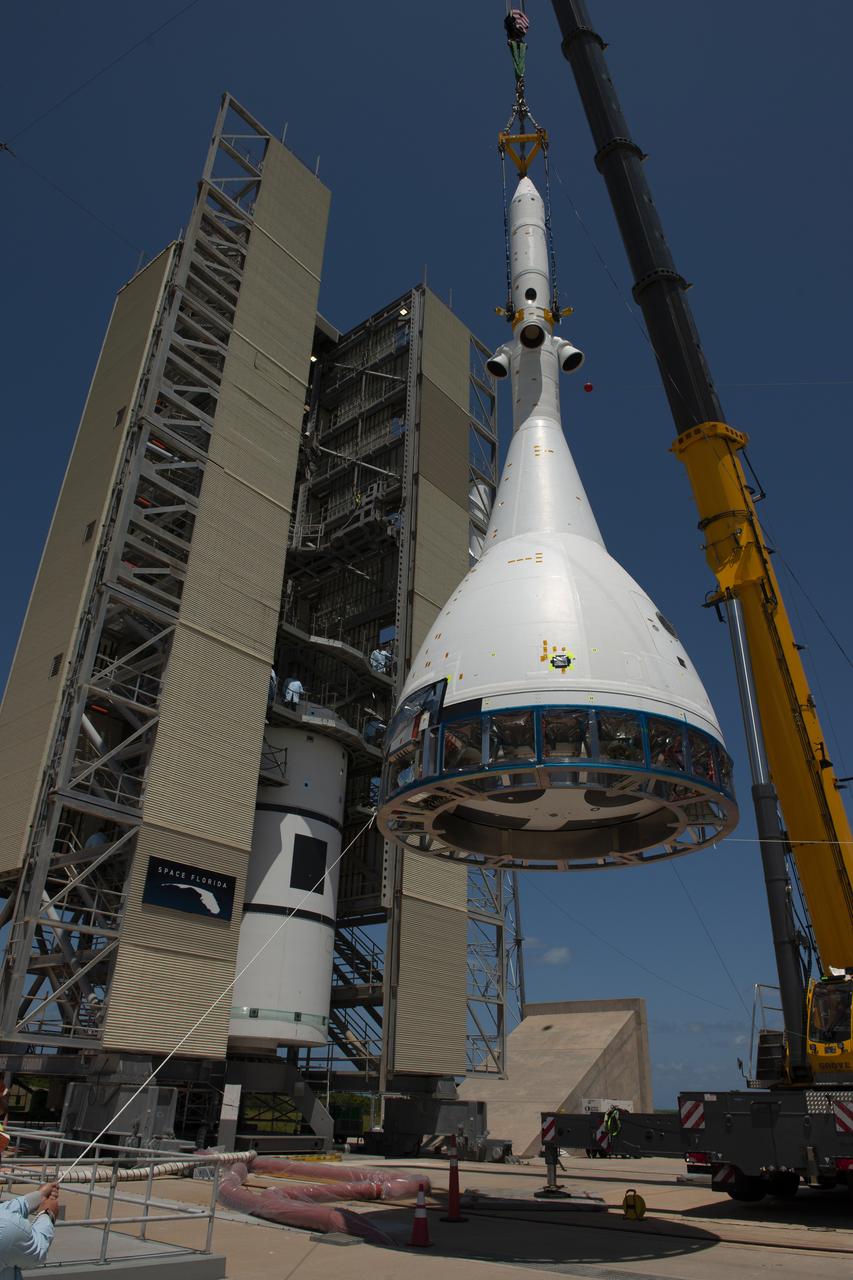
The test version of Orion attached to the Launch Abort System for the Ascent Abort-2 (AA-2) flight test is hoisted up by crane at Space Launch Complex 46 at Cape Canaveral Air Force Station in Florida on May 23, 2019. The flight test article will be moved inside the vertical integration facility for stacking atop the booster. The booster was procured by the U.S. Air Force and manufactured by Northrop Grumman. During AA-2, targeted for July 2, the LAS with Orion will launch on the booster more than six miles in altitude, where Orion’s launch abort system will pull the capsule and its crew away to safety if an emergency occurs during ascent on the Space Launch System rocket. AA-2 is a critical safety test that helps pave the way for Artemis missions near the Moon, and will enable astronauts to set foot on the lunar surface by 2024.
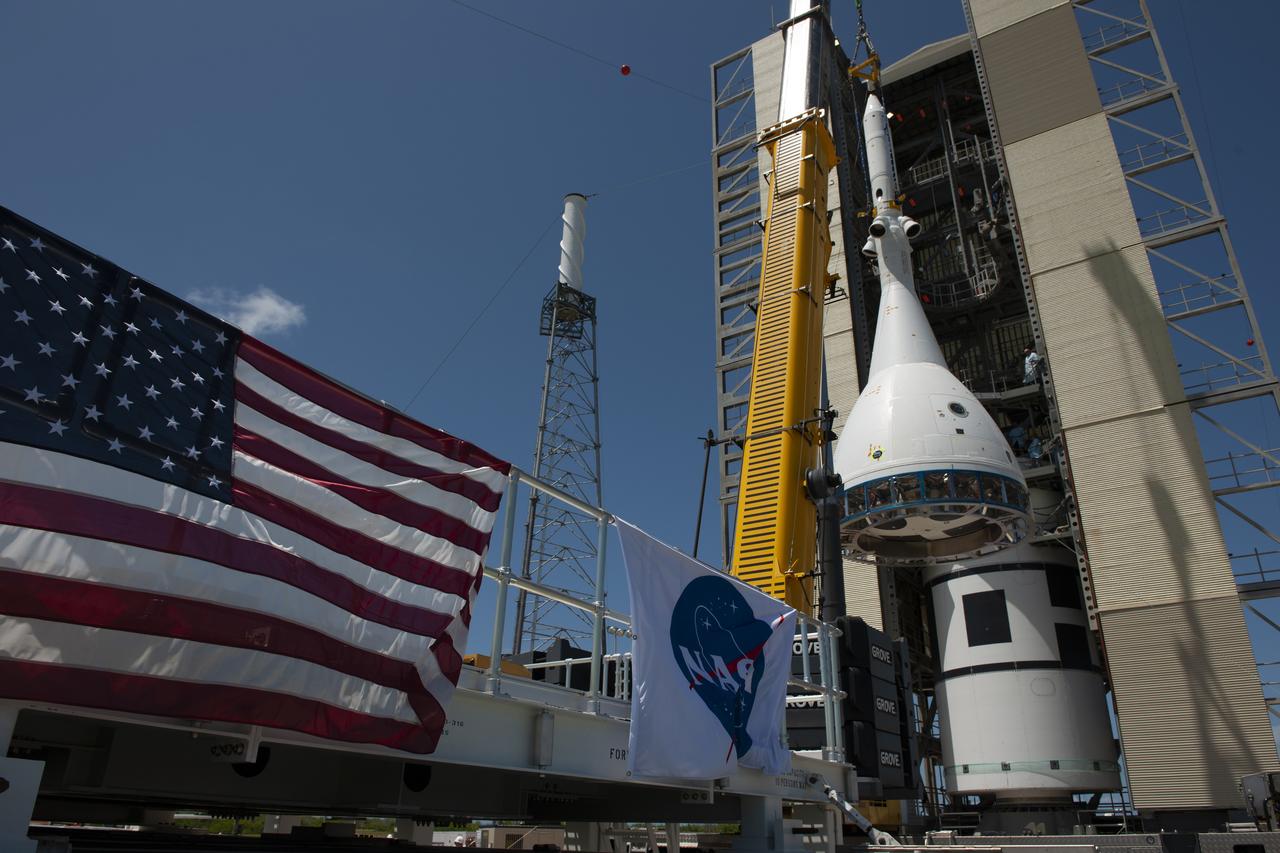
The test version of Orion attached to the Launch Abort System for the Ascent Abort-2 (AA-2) flight test is moved by crane into the vertical integration facility at Space Launch Complex 46 at Cape Canaveral Air Force Station in Florida on May 23, 2019. The flight test article will be stacked atop the booster, which was procured by the U.S. Air Force and manufactured by Northrop Grumman. During AA-2, targeted for July 2, the LAS with Orion will launch on the booster more than six miles in altitude, where Orion’s launch abort system will pull the capsule and its crew away to safety if an emergency occurs during ascent on the Space Launch System rocket. AA-2 is a critical safety test that helps pave the way for Artemis missions near the Moon, and will enable astronauts to set foot on the lunar surface by 2024.
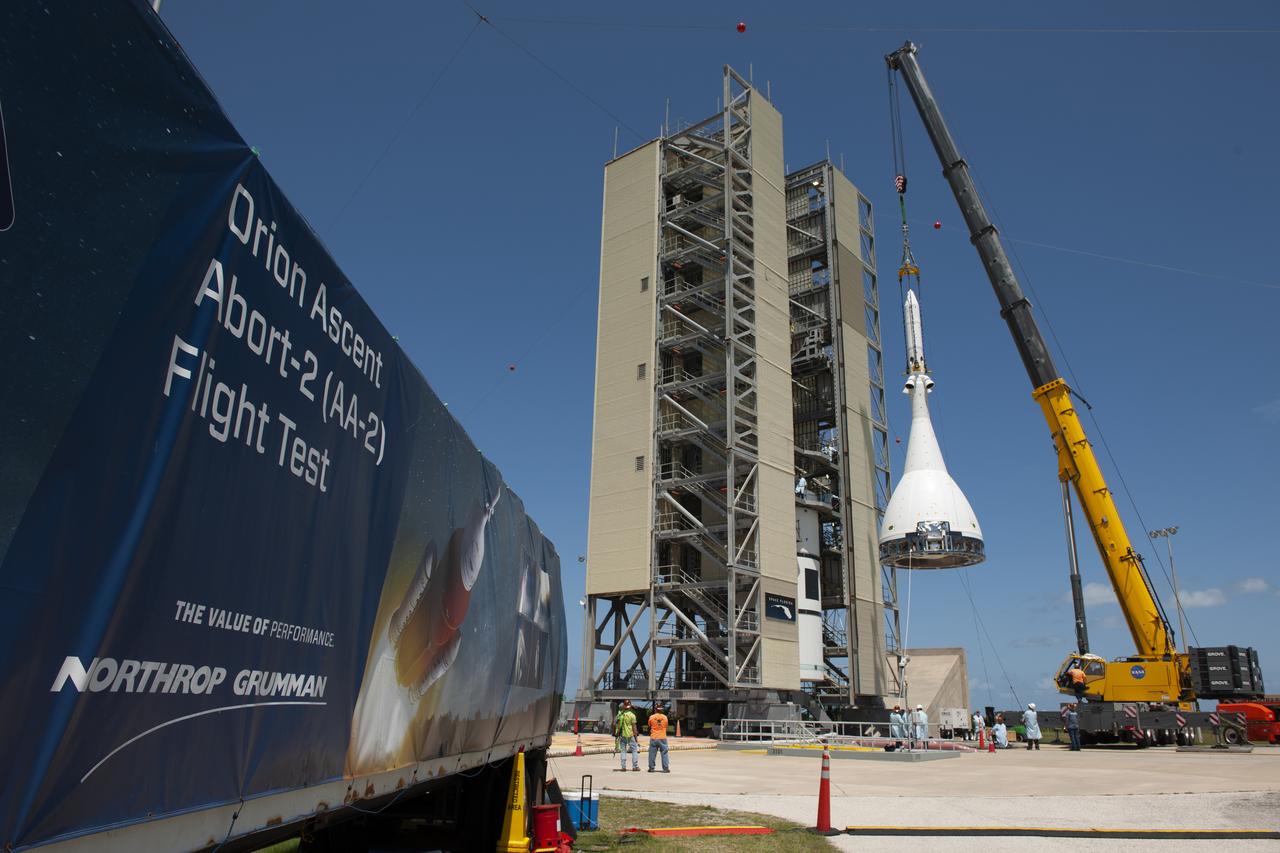
The test version of Orion attached to the Launch Abort System for the Ascent Abort-2 (AA-2) flight test is moved by crane into the vertical integration facility at Space Launch Complex 46 at Cape Canaveral Air Force Station in Florida on May 23, 2019. The flight test article will be stacked atop the booster, which was procured by the U.S. Air Force and manufactured by Northrop Grumman. During AA-2, targeted for July 2, the LAS with Orion will launch on the booster more than six miles in altitude, where Orion’s launch abort system will pull the capsule and its crew away to safety if an emergency occurs during ascent on the Space Launch System rocket. AA-2 is a critical safety test that helps pave the way for Artemis missions near the Moon, and will enable astronauts to set foot on the lunar surface by 2024.
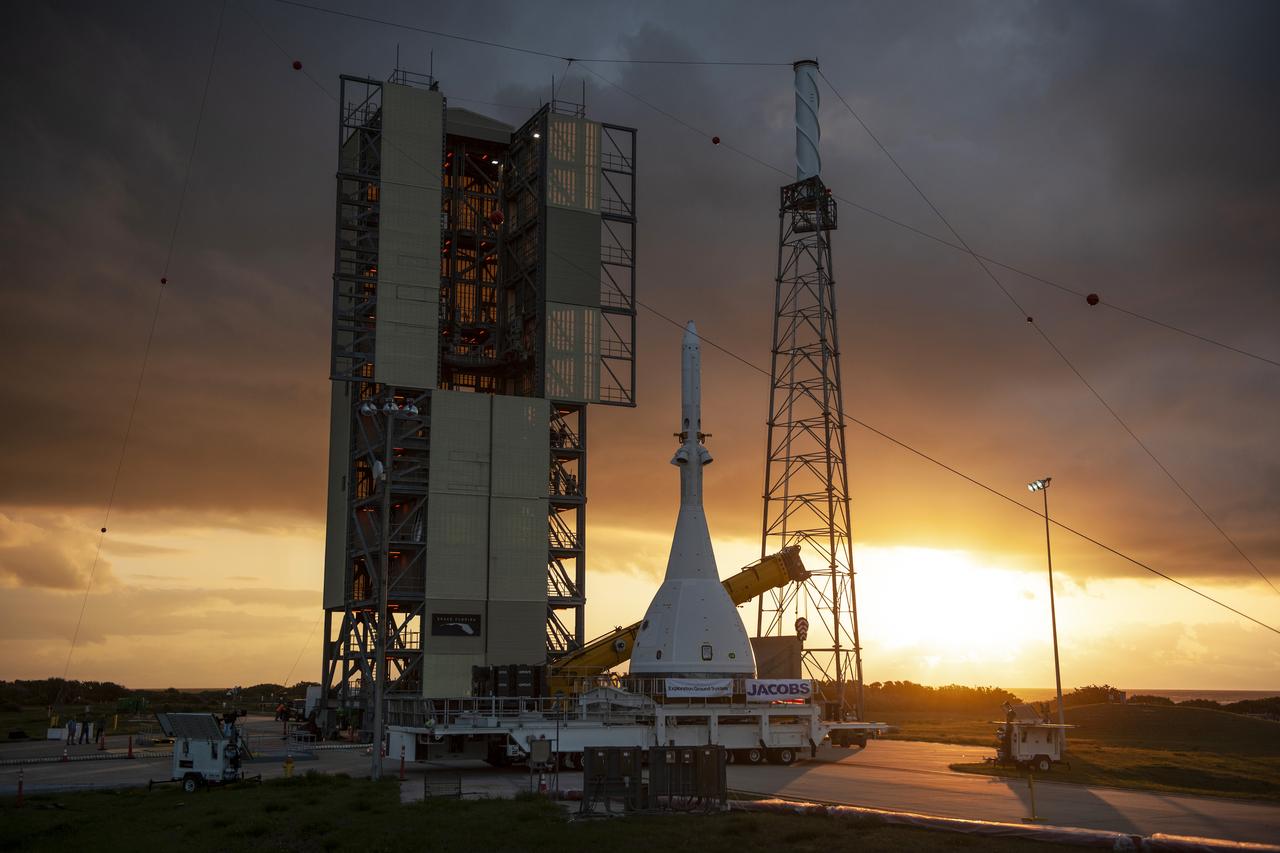
The test version of Orion attached to the Launch Abort System for the Ascent Abort-2 (AA-2) flight test arrives at Space Launch Complex 46 at Cape Canaveral Air Force Station in Florida on May 23, 2019. The flight test article will be hoisted up and moved inside the vertical integration facility for stacking atop the booster. The booster was procured by the U.S. Air Force and manufactured by Northrop Grumman. During AA-2, targeted for July 2, the LAS with Orion will launch on the booster more than six miles in altitude, where Orion’s launch abort system will pull the capsule and its crew away to safety if an emergency occurs during ascent on the Space Launch System rocket. AA-2 is a critical safety test that helps pave the way for Artemis missions near the Moon, and will enable astronauts to set foot on the lunar surface by 2024.