
The Mars 2020 rover arrives at the Launch and Landing Facility, formerly known as the Shuttle Landing Facility, at NASA’s Kennedy Space Center on Feb. 12, 2020. The rover was delivered to the Florida spaceport on a C-17 aircraft, making a cross-country trip that started at NASA’s Jet Propulsion Laboratory in Pasadena, California. The mission, targeted for mid-July 2020, will launch aboard an Atlas V 541 rocket from Cape Canaveral Air Force Station. NASA’s Launch Services Program based at Kennedy is managing the launch.
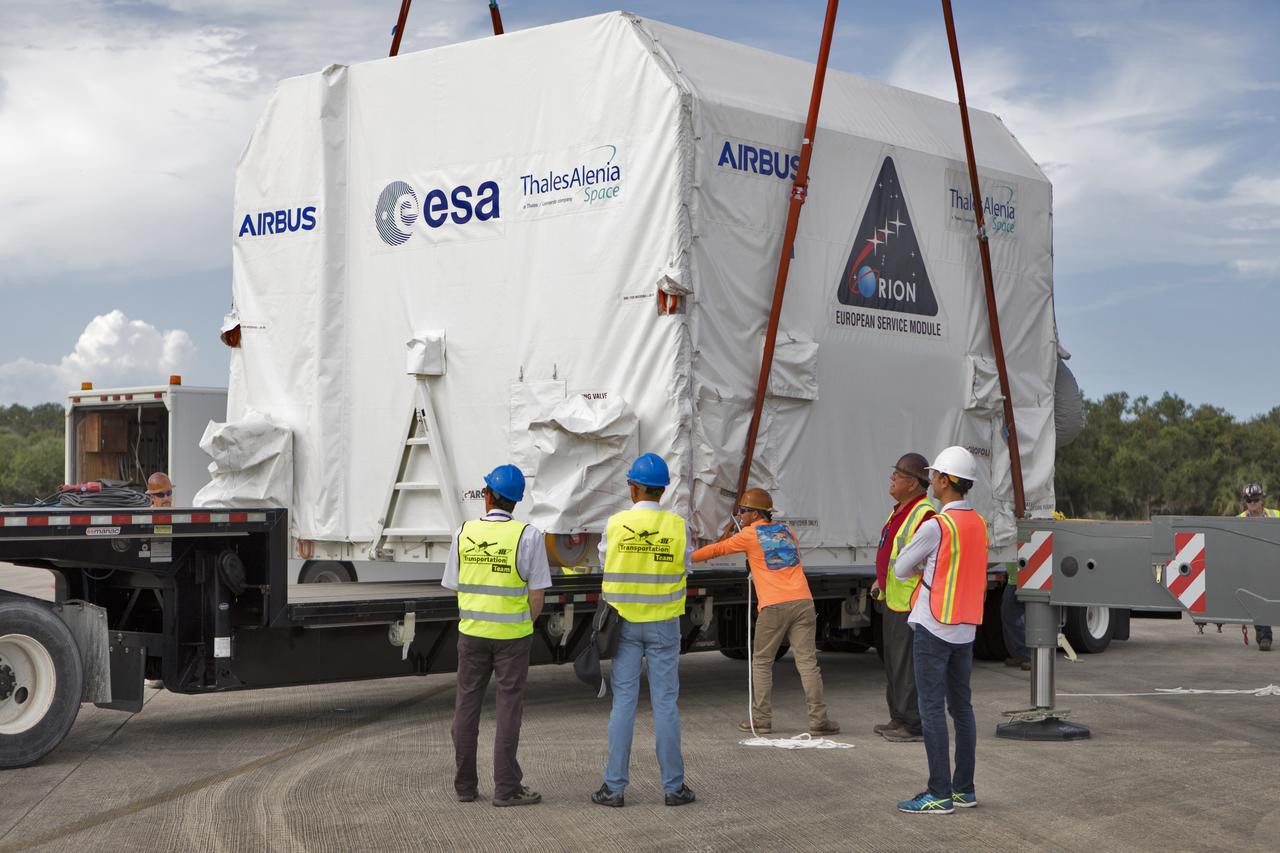
A crane lowers the shipping container holding the European Service Module (ESM) onto a flatbed truck at the Shuttle Landing Facility at NASA's Kennedy Space Center in Florida on Nov. 6, 2018. The ESM, built by the European Space Agency, will supply the main propulsion system and power to the Orion spacecraft for Exploration Mission-1 (EM-1), a mission to the Moon. The ESM also will house air and water for astronauts on future missions. EM-1 will be an uncrewed flight test that will provide a foundation for human deep space exploration to destinations beyond Earth orbit. EM-1 will be the first integrated test of NASA's Space Launch System, Orion and the ground systems at Kennedy.
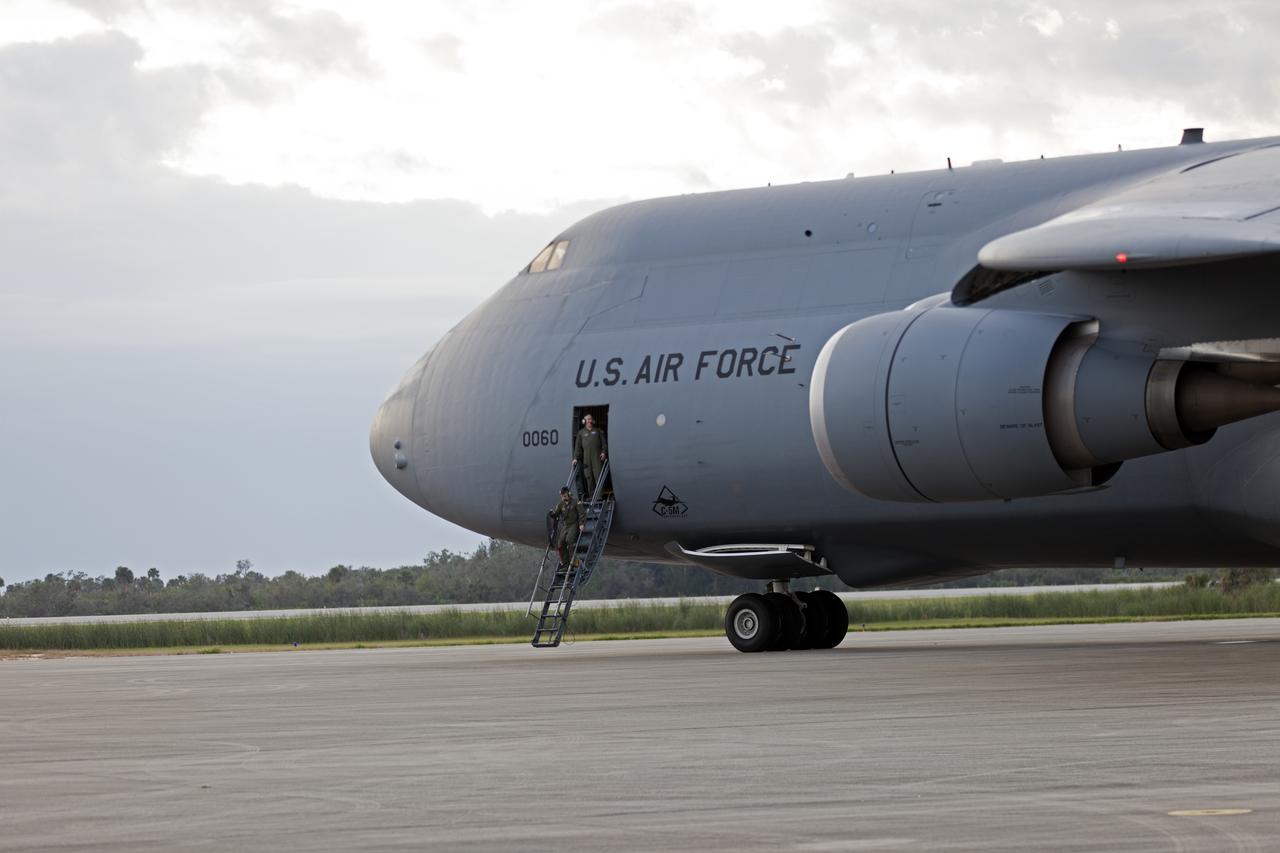
A C-5 transport aircraft arrives at the Shuttle Landing Facility at NASA's Kennedy Space Center in Florida, carrying the Geostationary Operation Environmental Satellite-S (GOES-S). The satellite will be offloaded and transported to the Astrotech Space Operations facility in Titusville, Florida. GOES-S is the second in a series of four advanced geostationary weather satellites. The GOES-R series - consisting of the GOES-R, GOES-S, GOES-T and GOES-U spacecraft - will significantly improve the detection and observation of environmental phenomena that directly affect public safety, protection of property and the nation's economic health and prosperity. GOES-S is slated to launch March 1, 2018 aboard a United Launch Alliance Atlas V rocket from Cape Canaveral Air Force Station in Florida.
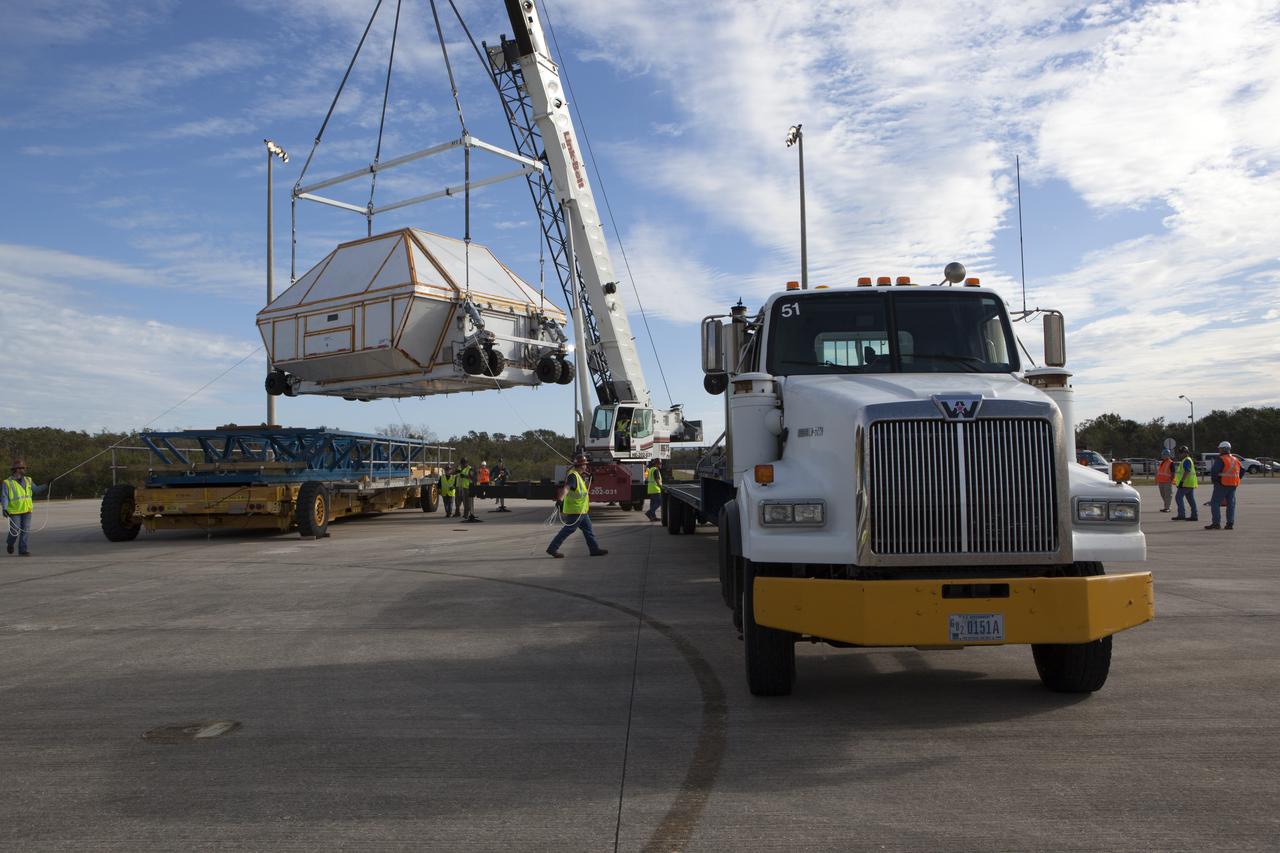
After arriving at the Shuttle Landing Facility operated by Space Florida at NASA's Kennedy Space Center in Florida, the agency's Super Guppy aircraft was opened and the container holding the Orion crew module structural test article (STA) was offloaded. A crane has lifted the container for placement on a transporter. The test article will be moved to the Neil Armstrong Operations and Checkout Building high bay for further testing. The Orion spacecraft will launch atop NASA’s Space Launch System rocket on EM-1, its first deep space mission, in late 2018.
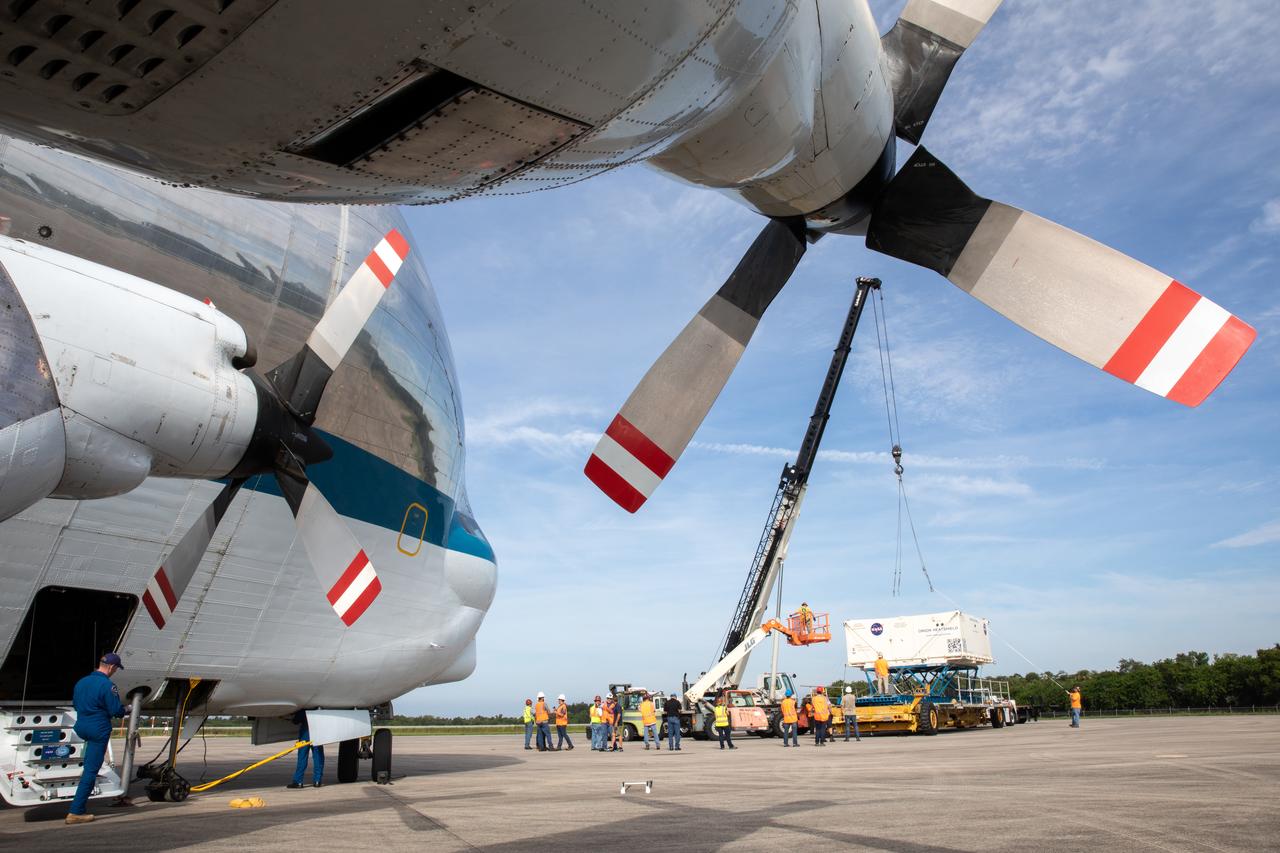
The shipping container carrying the heat shield for Orion’s Artemis 2 mission, NASA’s first crewed mission, has been unloaded from NASA’s Super Guppy aircraft at the agency’s Kennedy Space Center Shuttle Landing Facility in Florida on July 9, 2019. The heat shield, measuring roughly 16 feet in diameter, will protect astronauts upon re-entry on the second mission of Artemis. The heat shield arrived from Lockheed Martin’s manufacturing facility near Denver. It will be delivered to the Neil Armstrong Operations and Checkout facility high bay. The heat shield is a base titanium truss structure. Over the next several months, technicians will apply Avcoat, an ablative material that will provide the thermal protection. Artemis 2 will confirm all of the spacecraft’s systems operate as designed in the actual environment of deep space with astronauts aboard.
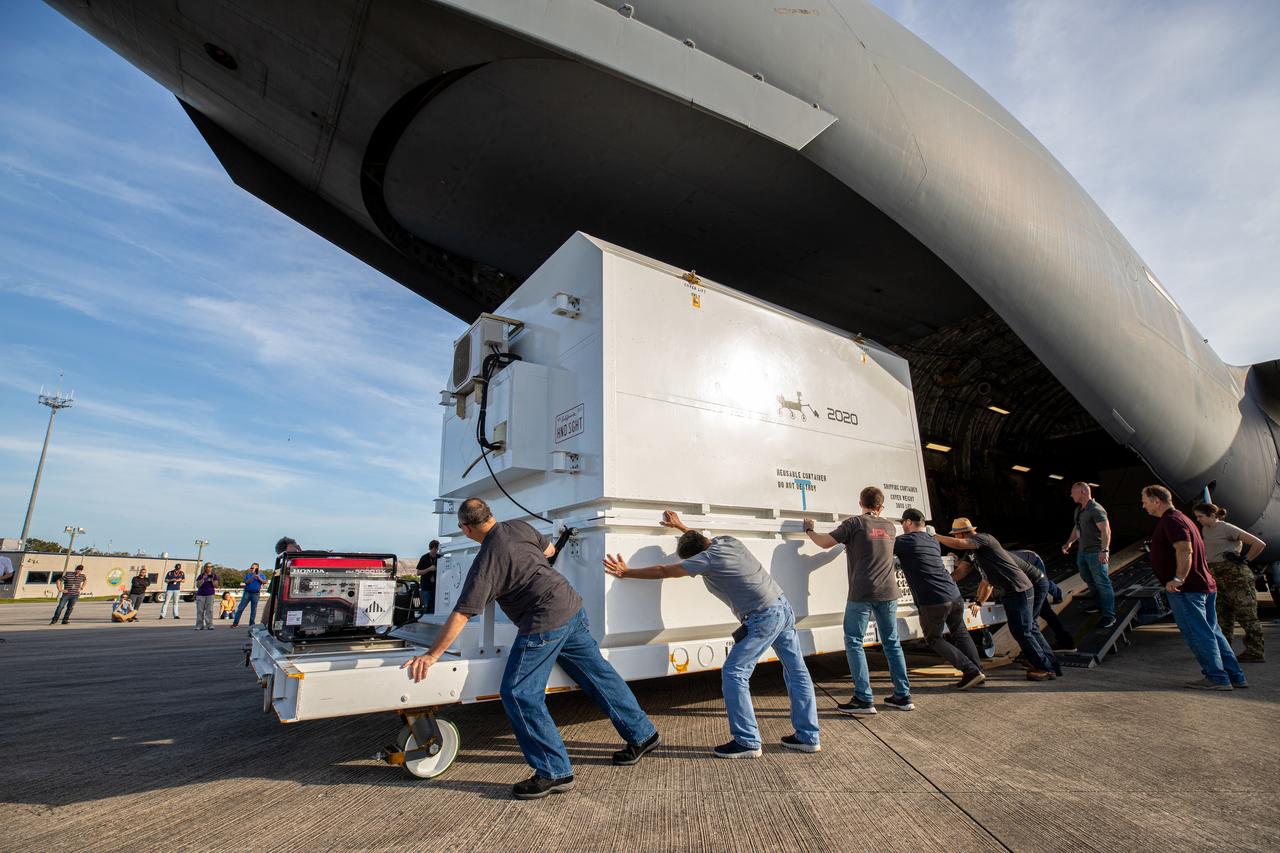
The Mars 2020 rover is offloaded from a C-17 aircraft at the Launch and Landing Facility, formerly known as the Shuttle Landing Facility, at NASA’s Kennedy Space Center on Feb. 12, 2020. The rover made a cross-country trip to the Florida spaceport that started at NASA’s Jet Propulsion Laboratory in Pasadena, California. The mission, targeted for mid-July 2020, will launch aboard an Atlas V 541 rocket from Cape Canaveral Air Force Station. NASA’s Launch Services Program based at Kennedy is managing the launch.
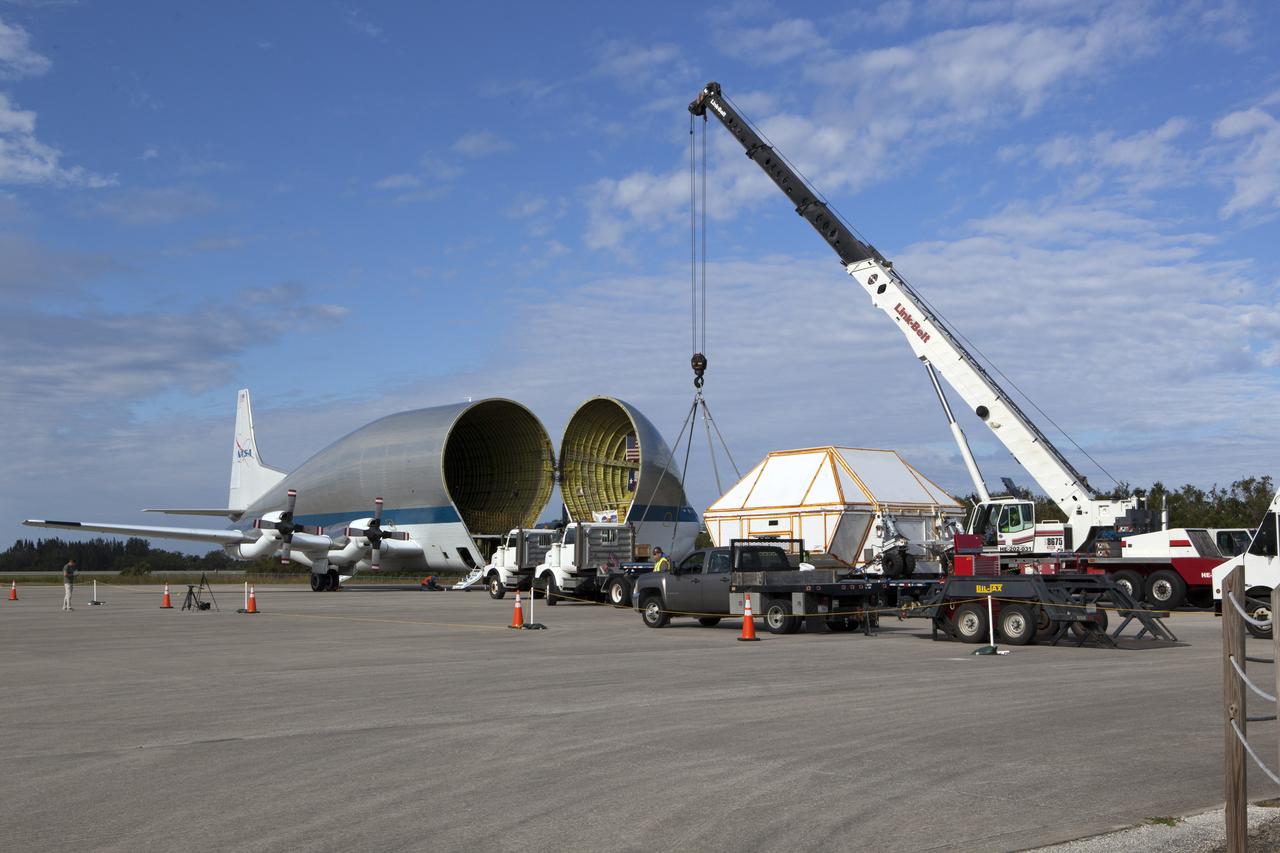
After arriving at the Shuttle Landing Facility operated by Space Florida at NASA's Kennedy Space Center in Florida, the agency's Super Guppy aircraft was opened and the container holding the Orion crew module structural test article (STA) was offloaded. A crane was used to lower the container onto a transporter. The test article will be moved to the Neil Armstrong Operations and Checkout Building high bay for further testing. The Orion spacecraft will launch atop NASA’s Space Launch System rocket on EM-1, its first deep space mission, in late 2018.
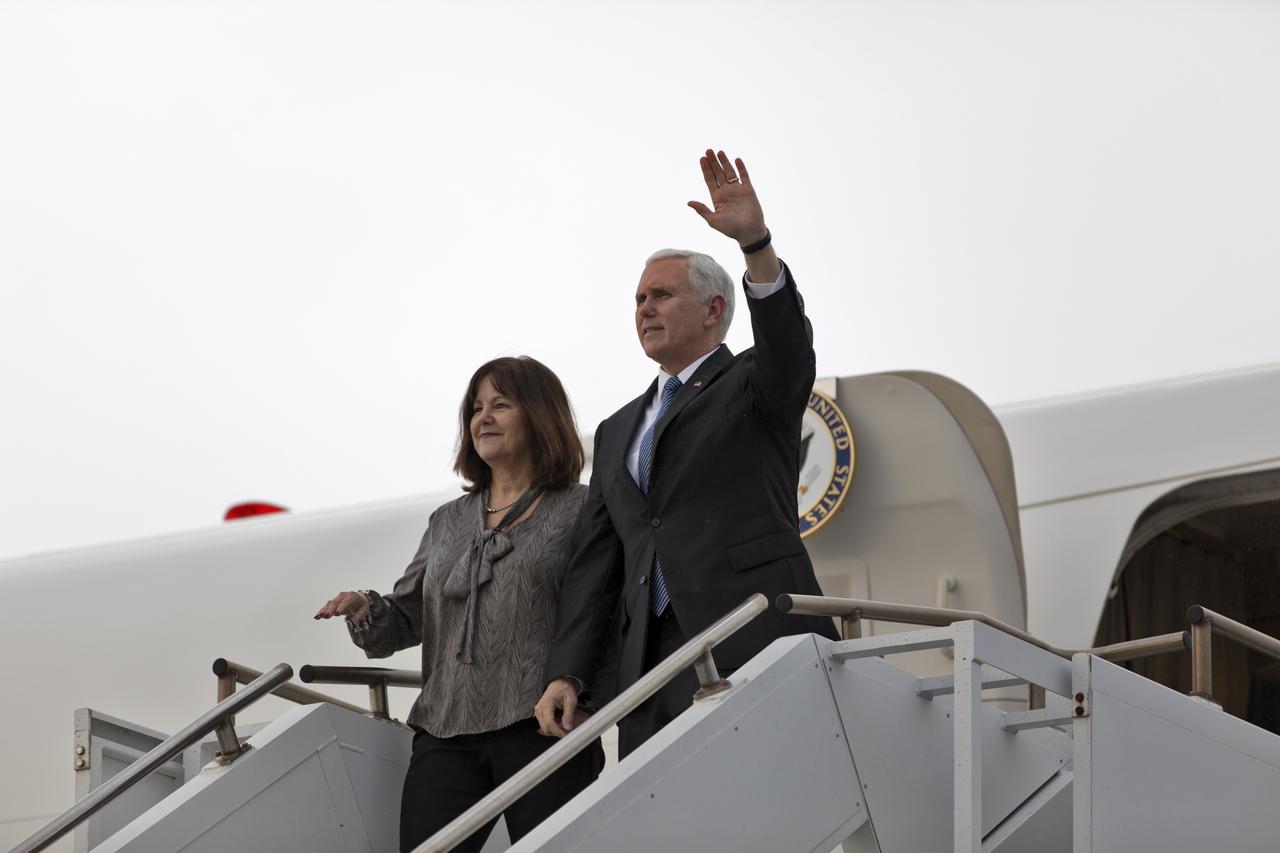
Vice President Mike Pence and his wife, Karen, step off Air Force Two on the Shuttle Landing Facility at NASA's Kennedy Space Center in Florida, on Feb. 20, 2018. During his visit, Pence will chair a meeting of the National Space Council in the high bay of the center's Space Station Processing Facility. The council's role is to advise the president regarding national space policy and strategy, and review the nation's long-range goals for space activities.
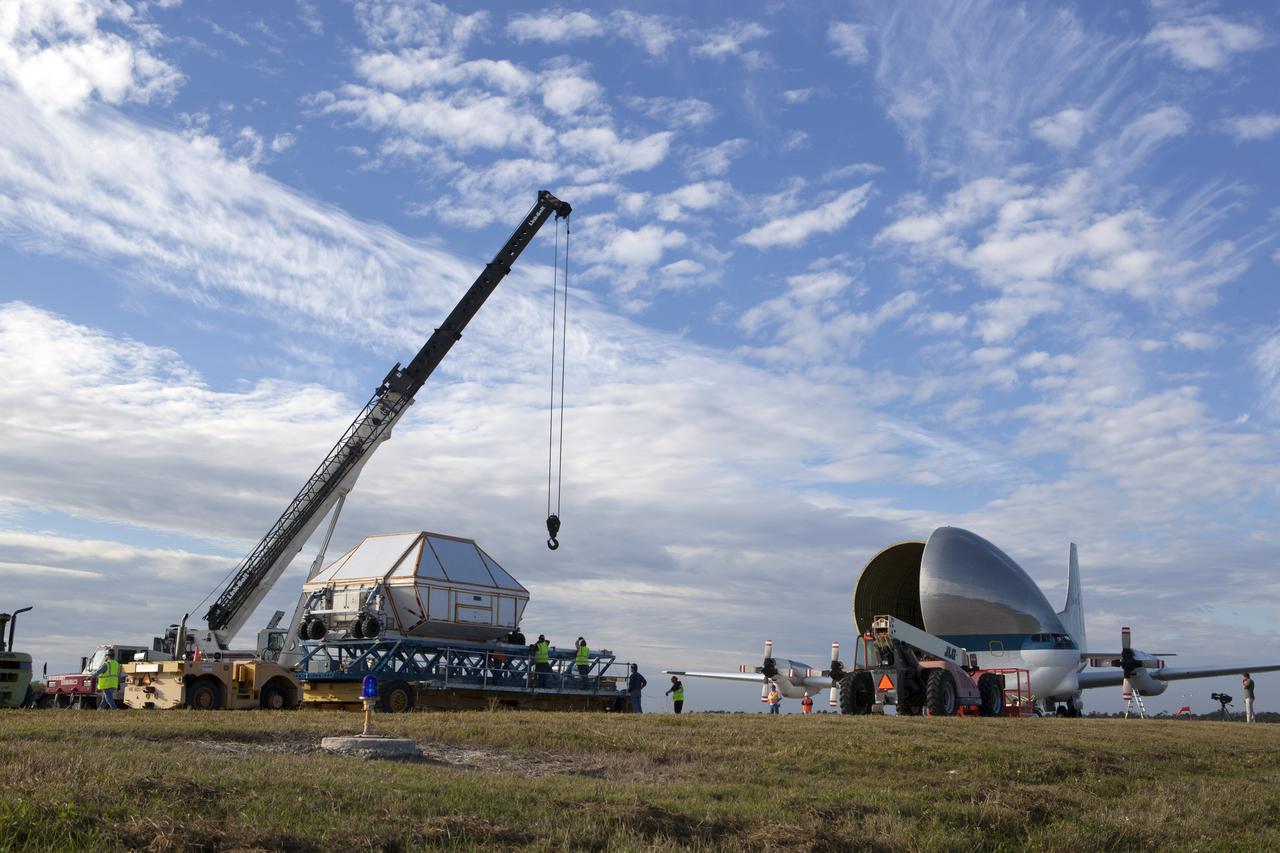
After arriving at the Shuttle Landing Facility operated by Space Florida at NASA's Kennedy Space Center in Florida, the agency's Super Guppy aircraft was opened and the container holding the Orion crew module structural test article (STA) was offloaded. The test article will be transported to the Neil Armstrong Operations and Checkout Building high bay for further testing. The Orion spacecraft will launch atop NASA’s Space Launch System rocket on EM-1, its first deep space mission, in late 2018.
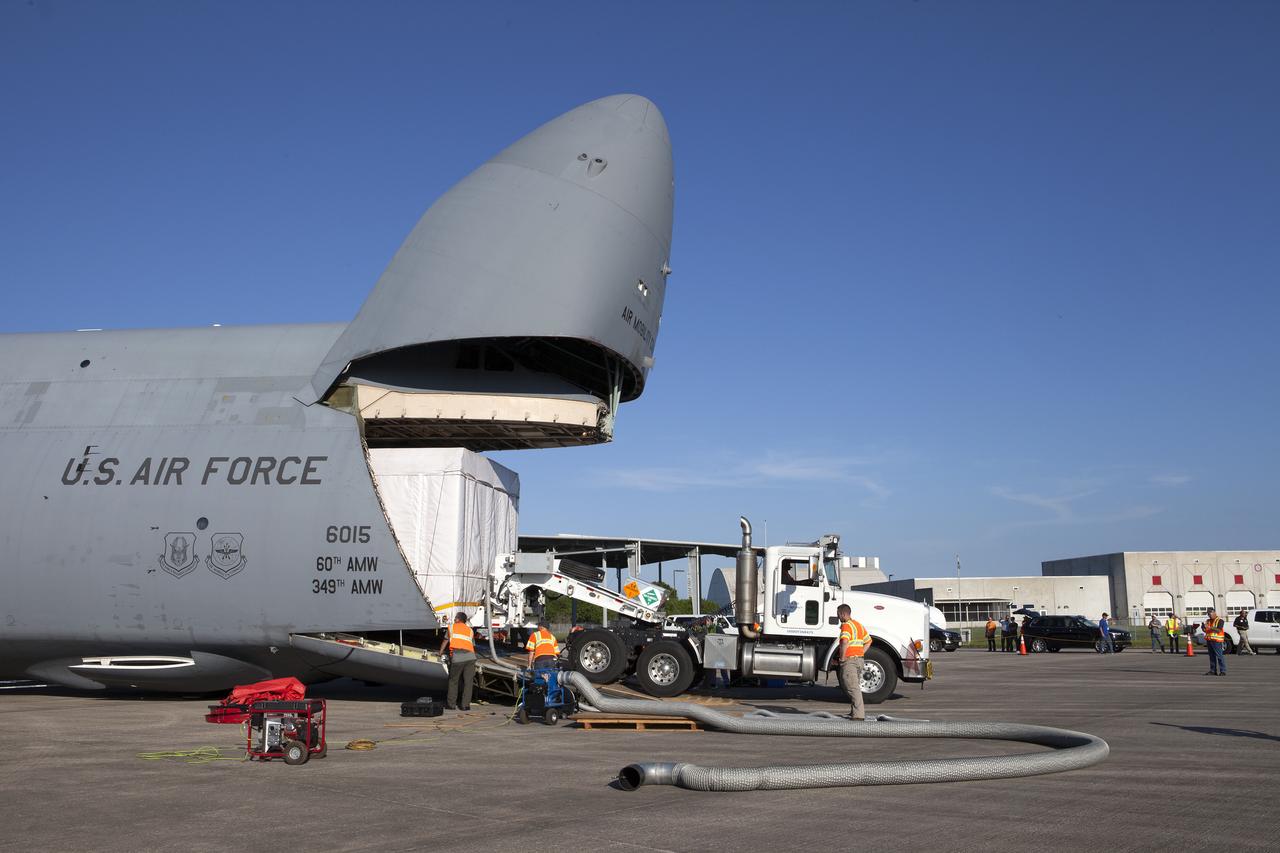
A truck with a specialized transporter drives out of the cargo hold of an Air Force C-5 Galaxy transport plane at the Shuttle Landing Facility at NASA's Kennedy Space Center in Florida to deliver the GOES-R spacecraft for launch processing. The GOES series are weather satellites operated by NOAA to enhance forecasts. The spacecraft is to launch aboard a United Launch Alliance Atlas V rocket in November.
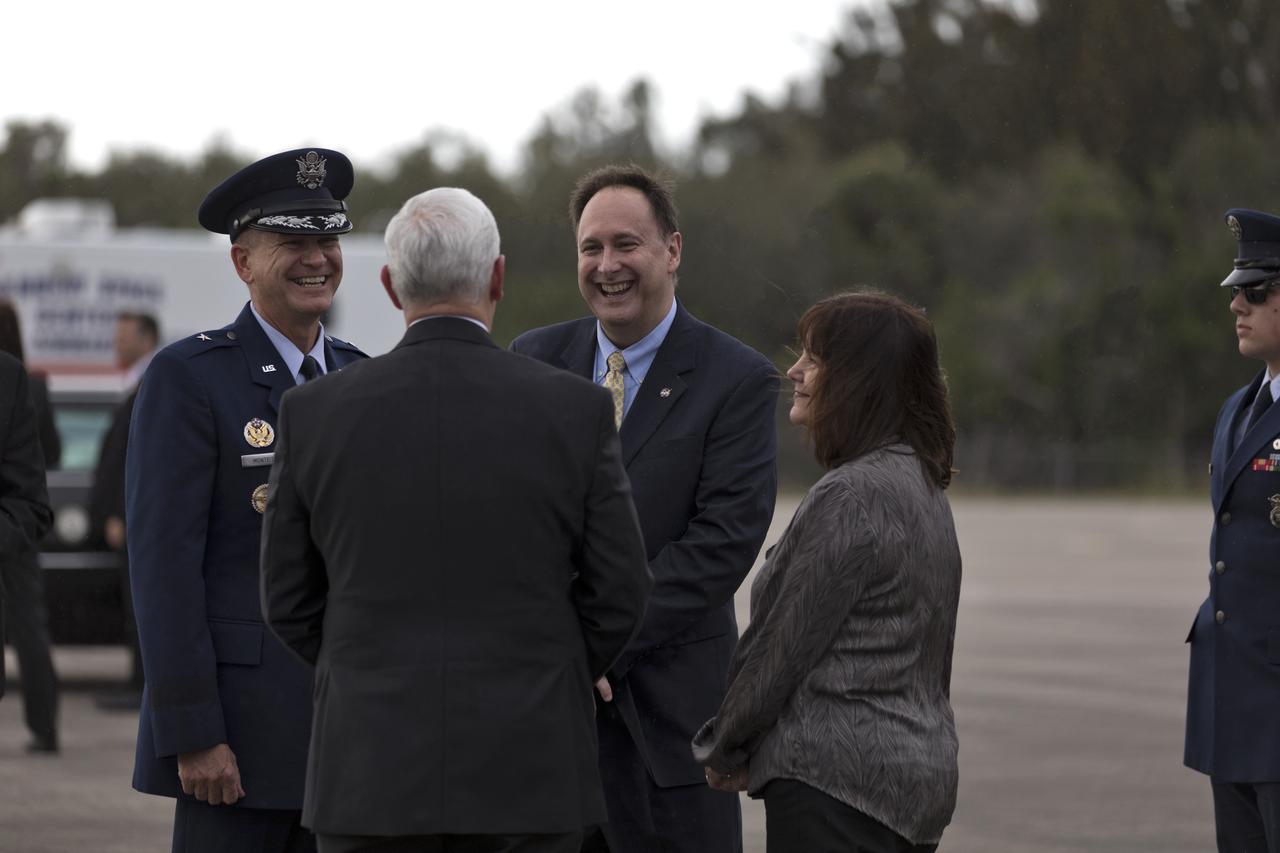
Acting NASA Administrator Robert Lightfoot, center, greets Vice President Mike Pence and his wife, Karen, at the Shuttle Landing Facility at the agency's Kennedy Space Center in Florida, on Feb. 20, 2018. During his visit, Pence will chair a meeting of the National Space Council in the high bay of the center's Space Station Processing Facility. The council's role is to advise the president regarding national space policy and strategy, and review the nation's long-range goals for space activities.
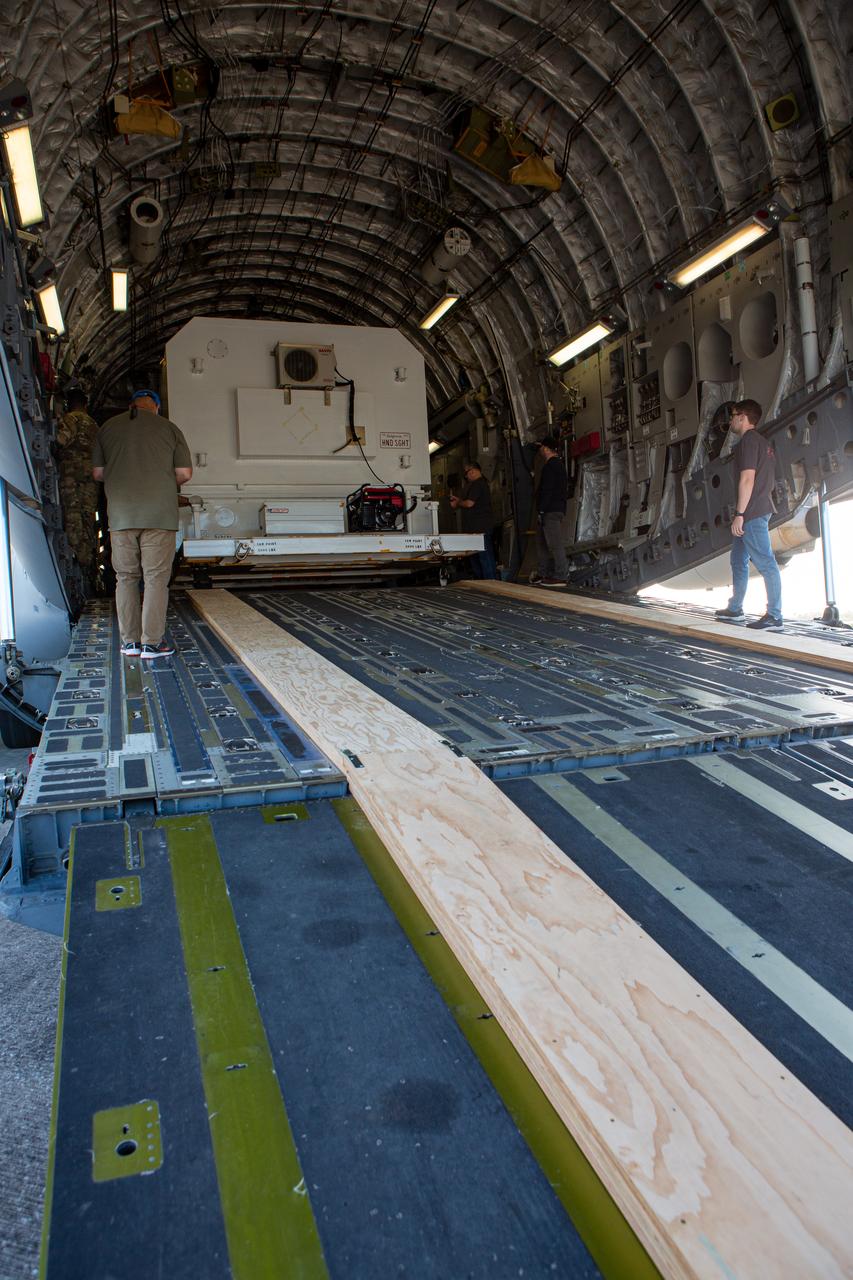
The Mars 2020 rover arrives at the Launch and Landing Facility, formerly known as the Shuttle Landing Facility, at NASA’s Kennedy Space Center on Feb. 12, 2020. The rover was delivered to the Florida spaceport on a C-17 aircraft, making a cross-country trip that started at NASA’s Jet Propulsion Laboratory in Pasadena, California. The mission, targeted for mid-July 2020, will launch aboard an Atlas V 541 rocket from Cape Canaveral Air Force Station. NASA’s Launch Services Program based at Kennedy is managing the launch.
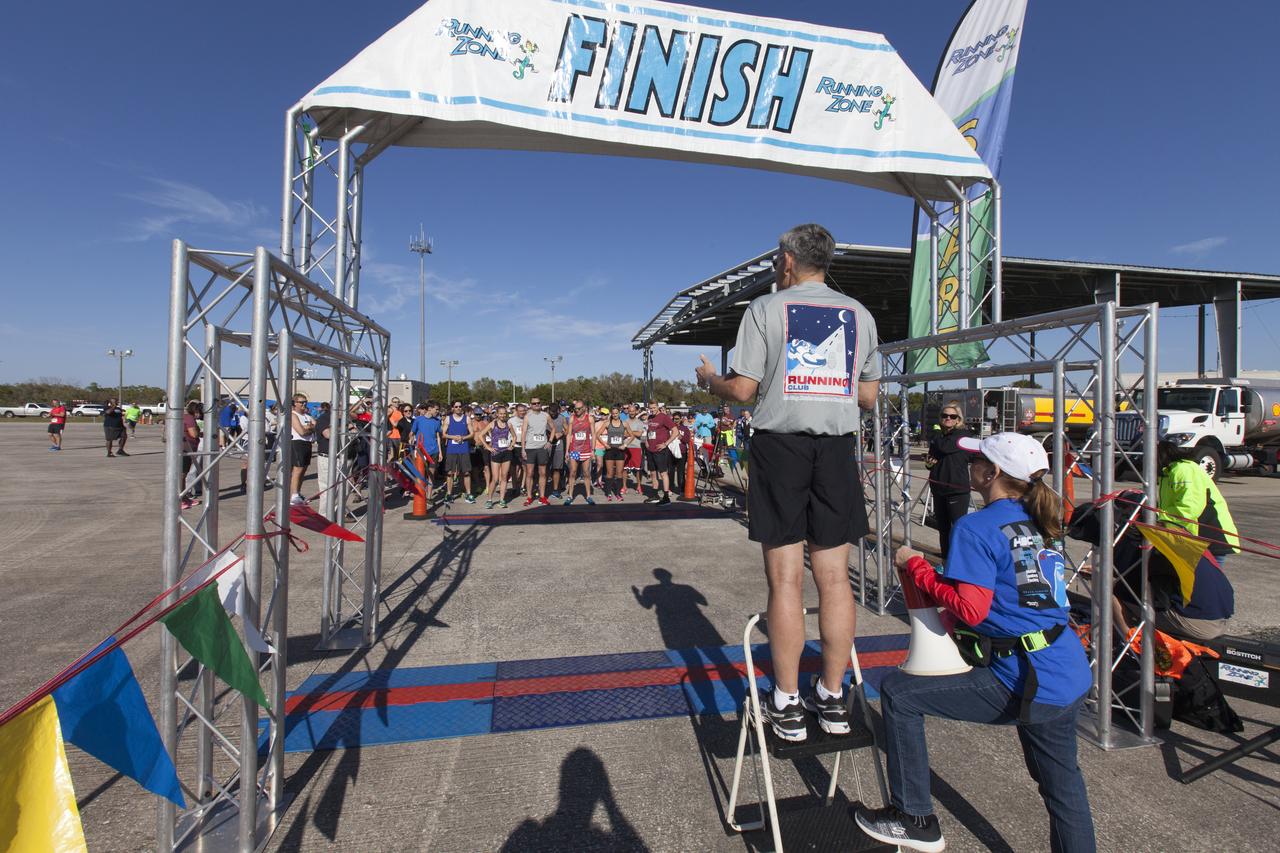
From his vantage point atop a stepladder near the finish line, Kennedy Space Center Director Bob Cabana speaks to center employees and guests before the KSC Walk Run on the Shuttle Landing Facility runway. The annual event, part of Kennedy’s Safety and Health Days, offers 10K, 5K and 2-mile options in the spirit of friendly competition.
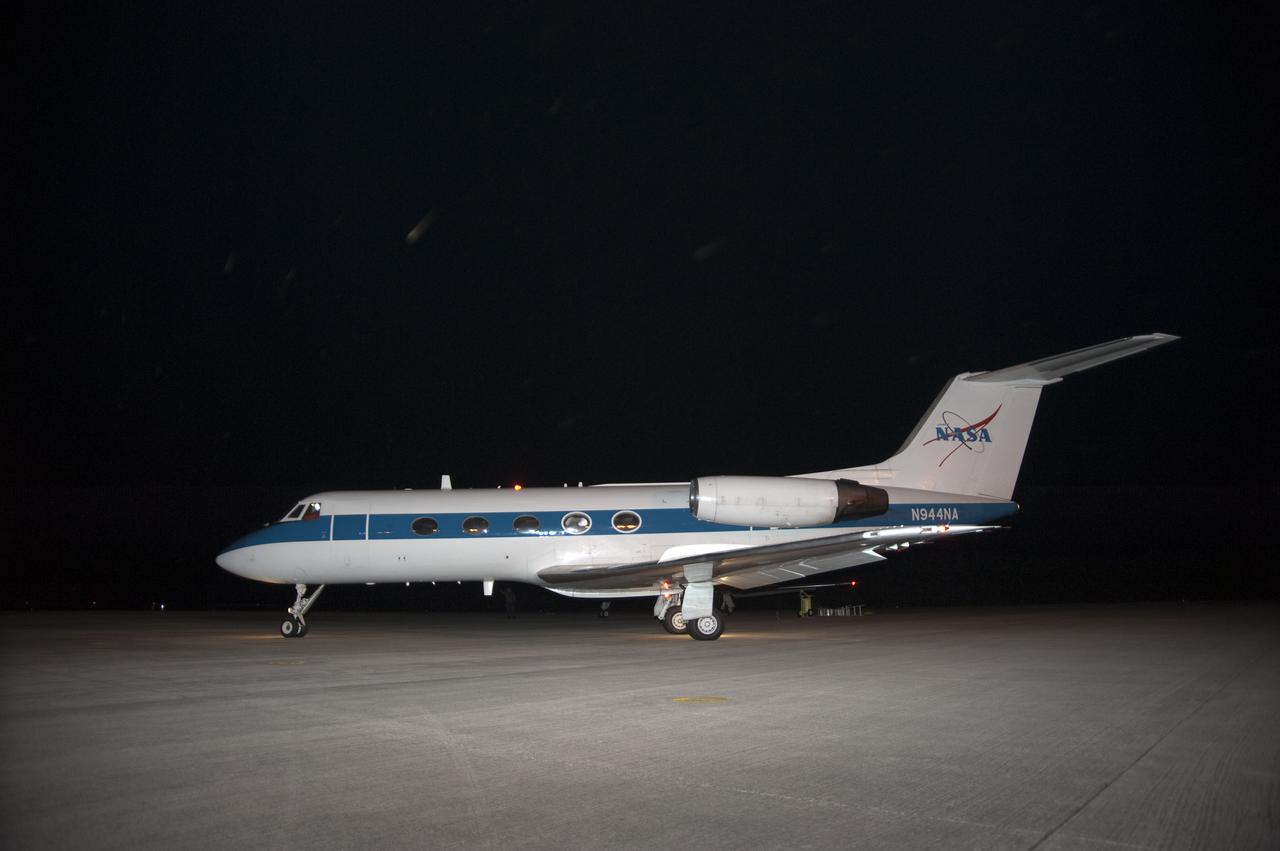
STS-131 TCDT - Suited STA's
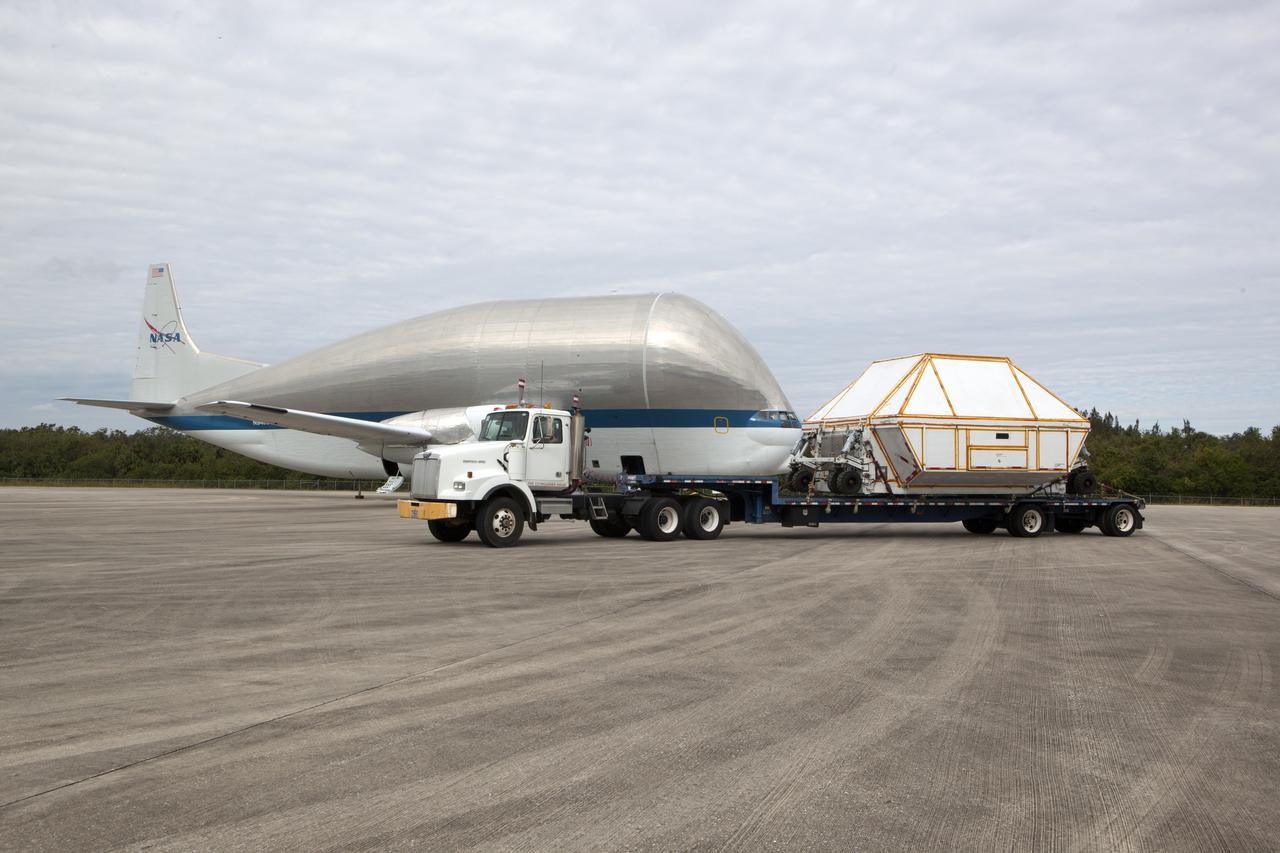
After arriving at the Shuttle Landing Facility operated by Space Florida at NASA's Kennedy Space Center in Florida, the agency's Super Guppy aircraft was opened and the container holding the Orion crew module structural test article (STA) was offloaded. A crane was used to lower the container for placement on a transporter. The Super Guppy has been closed. The test article will be moved to the Neil Armstrong Operations and Checkout Building high bay for further testing. The Orion spacecraft will launch atop NASA’s Space Launch System rocket on EM-1, its first deep space mission, in late 2018.
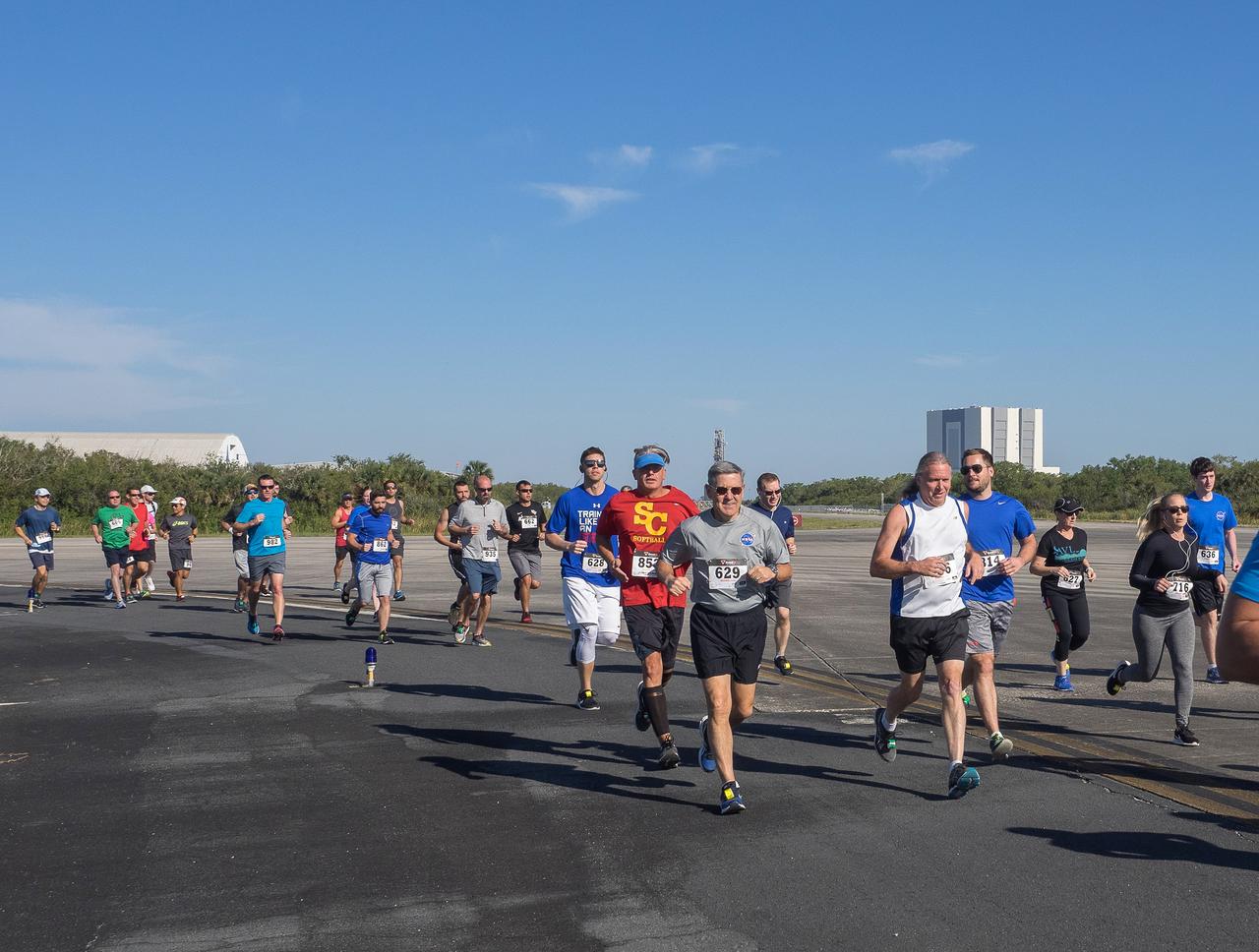
Kennedy Space Center Director Bob Cabana, center, is joined by a large group of center employees and guests as they participate in the KSC Walk Run on the Shuttle Landing Facility runway. The annual event, part of Kennedy’s Safety and Health Days, offers 10K, 5K and 2-mile options in the spirit of friendly competition.
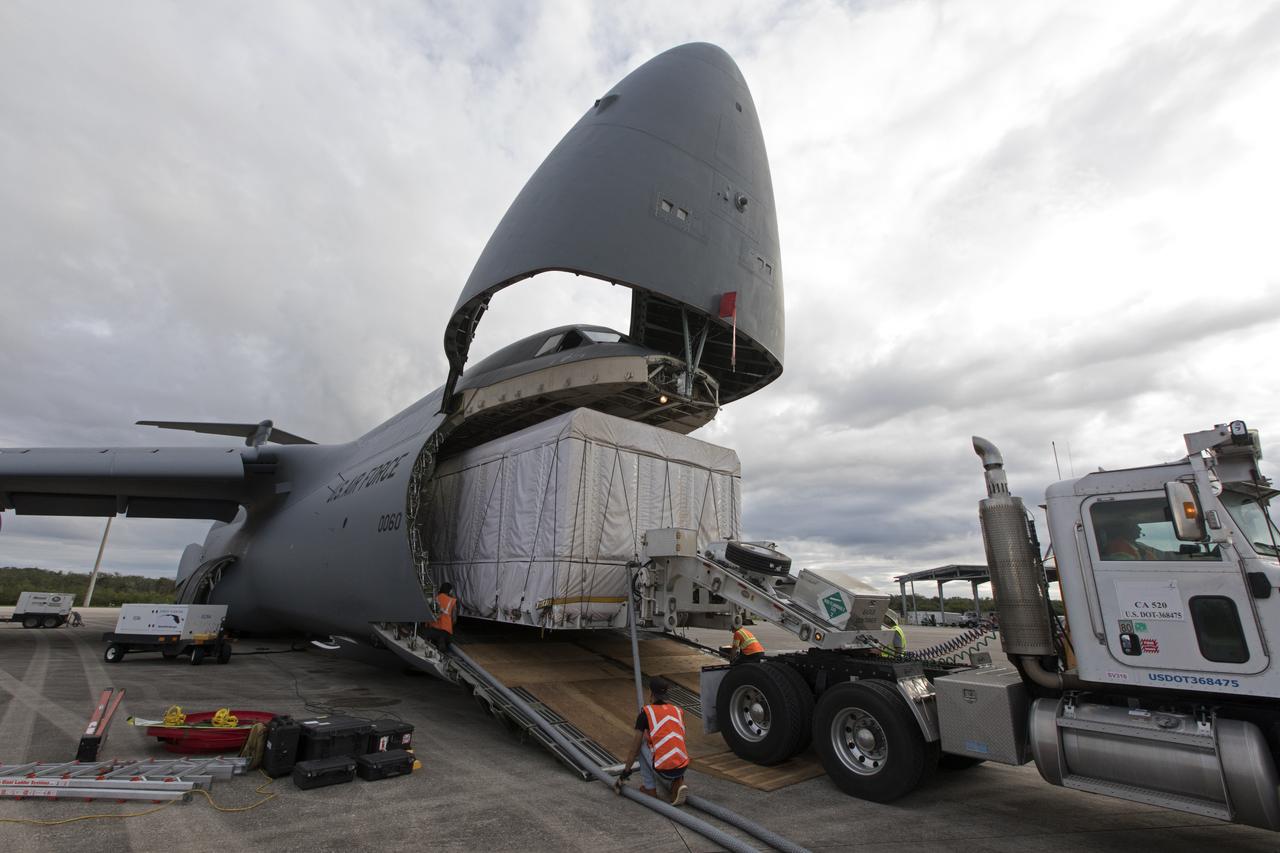
NOAA's Geostationary Operation Environmental Satellite-S (GOES-S) is being offloaded from a C-5 transport aircraft at the Shuttle Landing Facility at NASA's Kennedy Space Center in Florida. The satellite will be transported to the Astrotech Space Operations facility in Titusville, Florida to prepare it for launch. GOES-S is the second in a series of four advanced geostationary weather satellites. The GOES-R series - consisting of the GOES-R, GOES-S, GOES-T and GOES-U spacecraft - will significantly improve the detection and observation of environmental phenomena that directly affect public safety, protection of property and the nation's economic health and prosperity. GOES-S is slated to launch March 1, 2018 aboard a United Launch Alliance Atlas V rocket from Cape Canaveral Air Force Station in Florida.
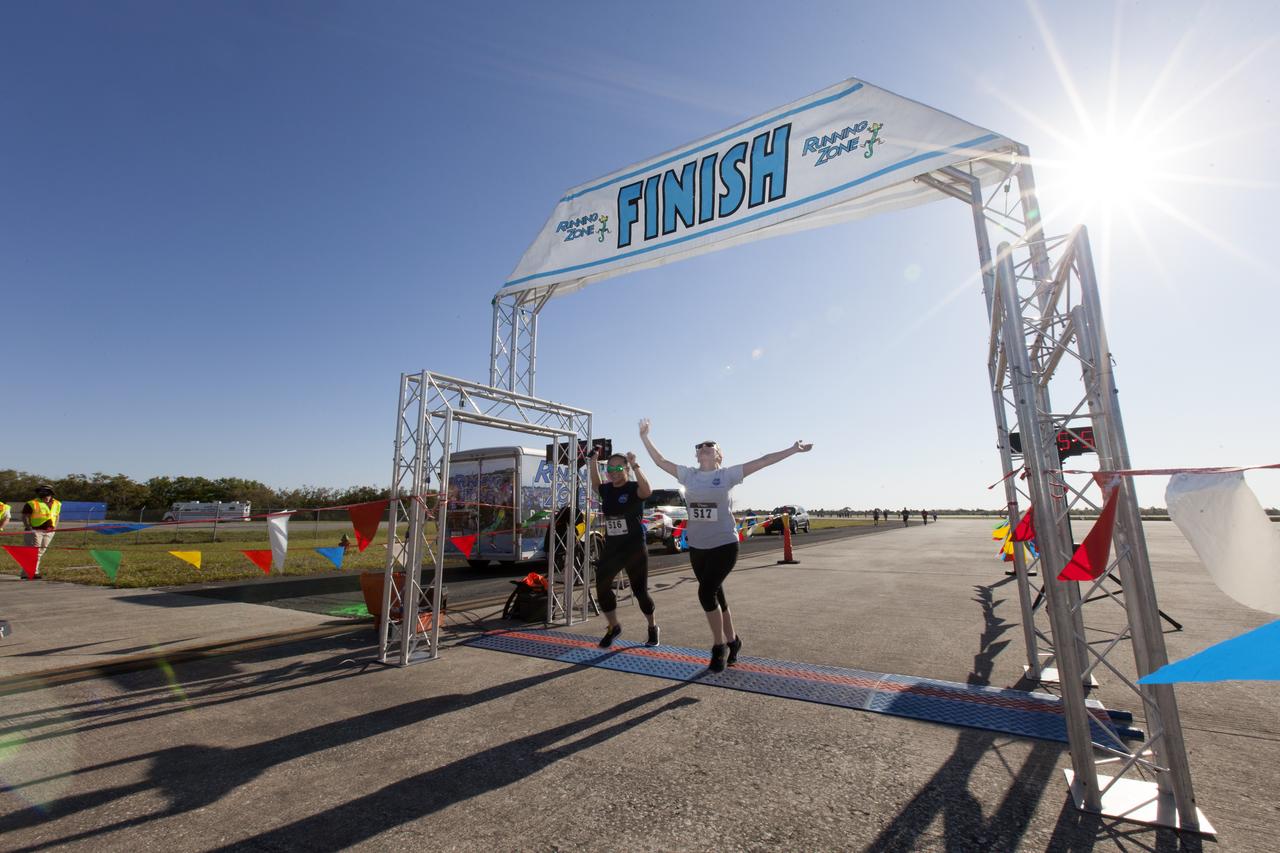
Kennedy Space Center employees and guests cross the finish line during the KSC Walk Run on the Shuttle Landing Facility runway. The annual event, part of Kennedy’s Safety and Health Days, offers 10K, 5K and 2-mile options in the spirit of friendly competition.
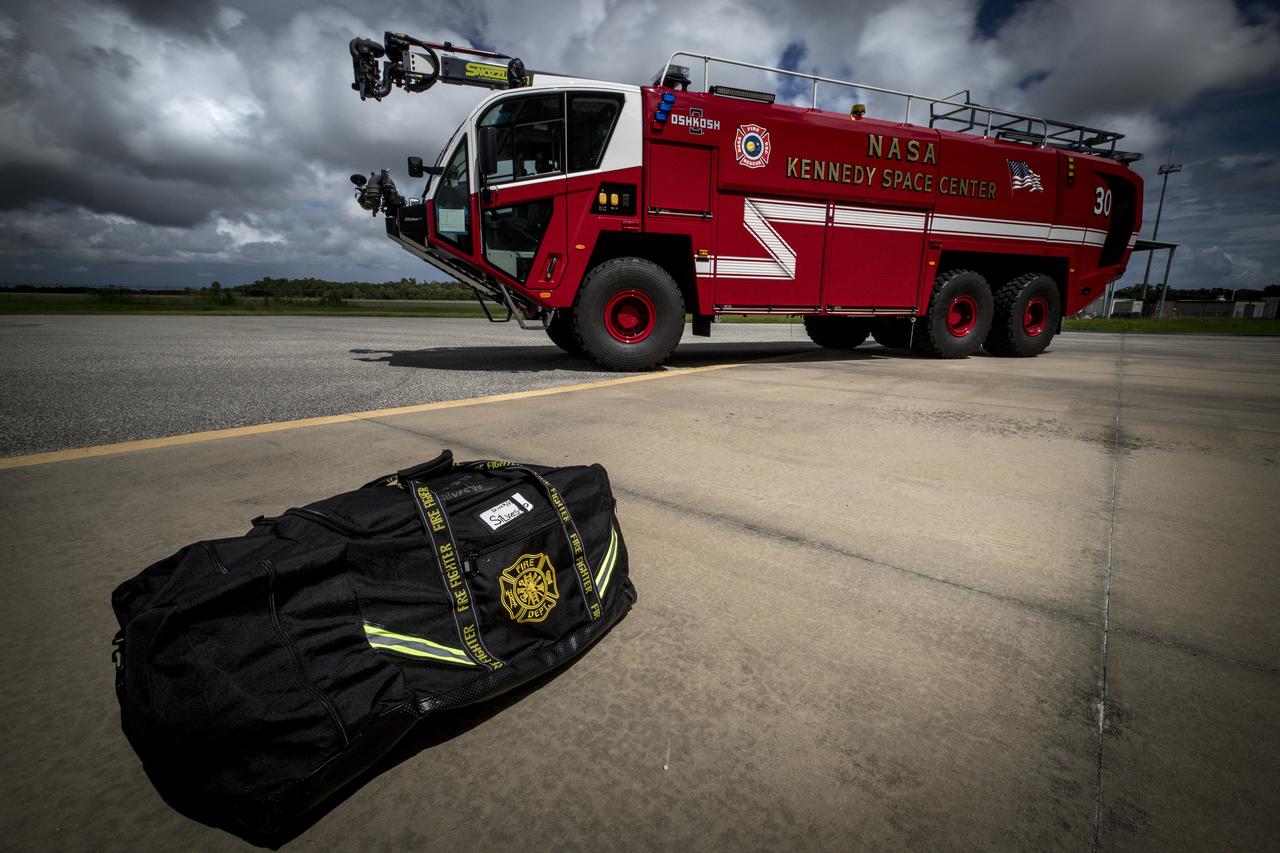
A new Aircraft Rescue and Fire Fighting vehicle is photographed in front of Fire Station No. 2 near the Shuttle Landing Facility runway at NASA’s Kennedy Space Center in Florida. The state-of-the-art truck replaces a 28-year-old vehicle. Kennedy is upgrading its fleet of emergency vehicles to enhance its safety and security posture at the growing, multi-user spaceport.
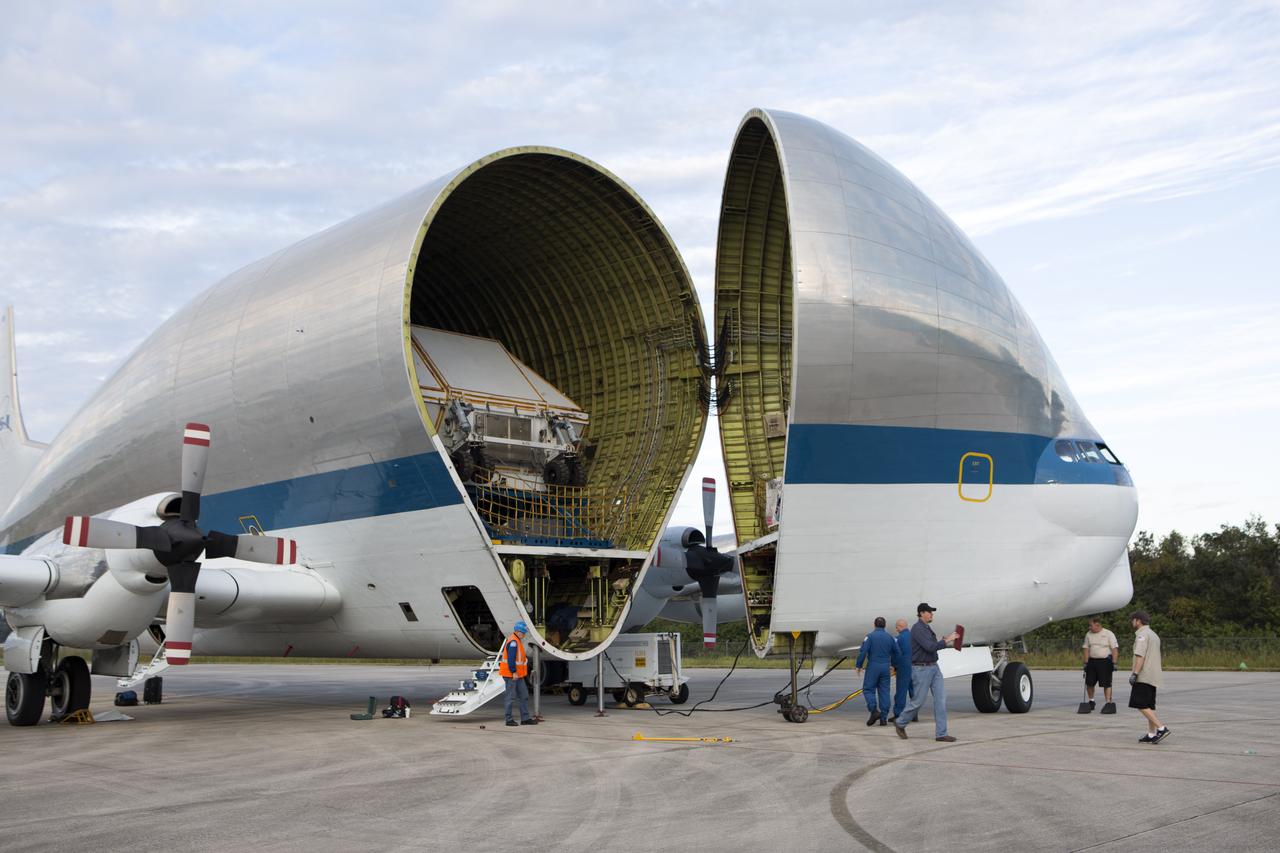
NASA’s Super Guppy aircraft, carrying the Orion crew module structural test article (STA), arrived at the Shuttle Landing Facility operated by Space Florida at NASA’s Kennedy Space Center in Florida. The unique aircraft is being opened to offload the STA. The test article will be transported to the Neil Armstrong Operations and Checkout Building high bay for further testing. The Orion spacecraft will launch atop NASA’s Space Launch System rocket on EM-1, its first deep space mission, in late 2018.
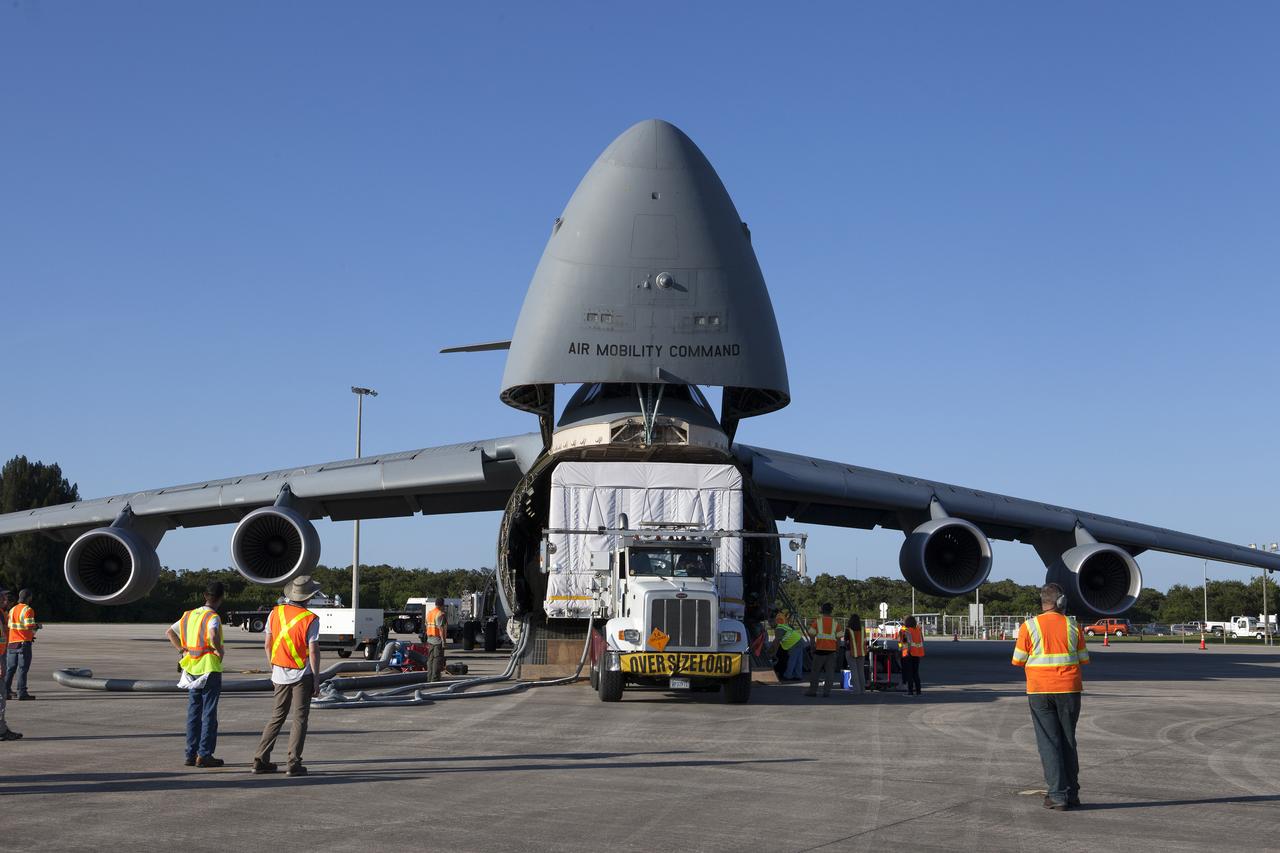
A truck with a specialized transporter drives out of the cargo hold of an Air Force C-5 Galaxy transport plane at the Shuttle Landing Facility at NASA's Kennedy Space Center in Florida to deliver the GOES-R spacecraft for launch processing. The GOES series are weather satellites operated by NOAA to enhance forecasts. The spacecraft is to launch aboard a United Launch Alliance Atlas V rocket in November.
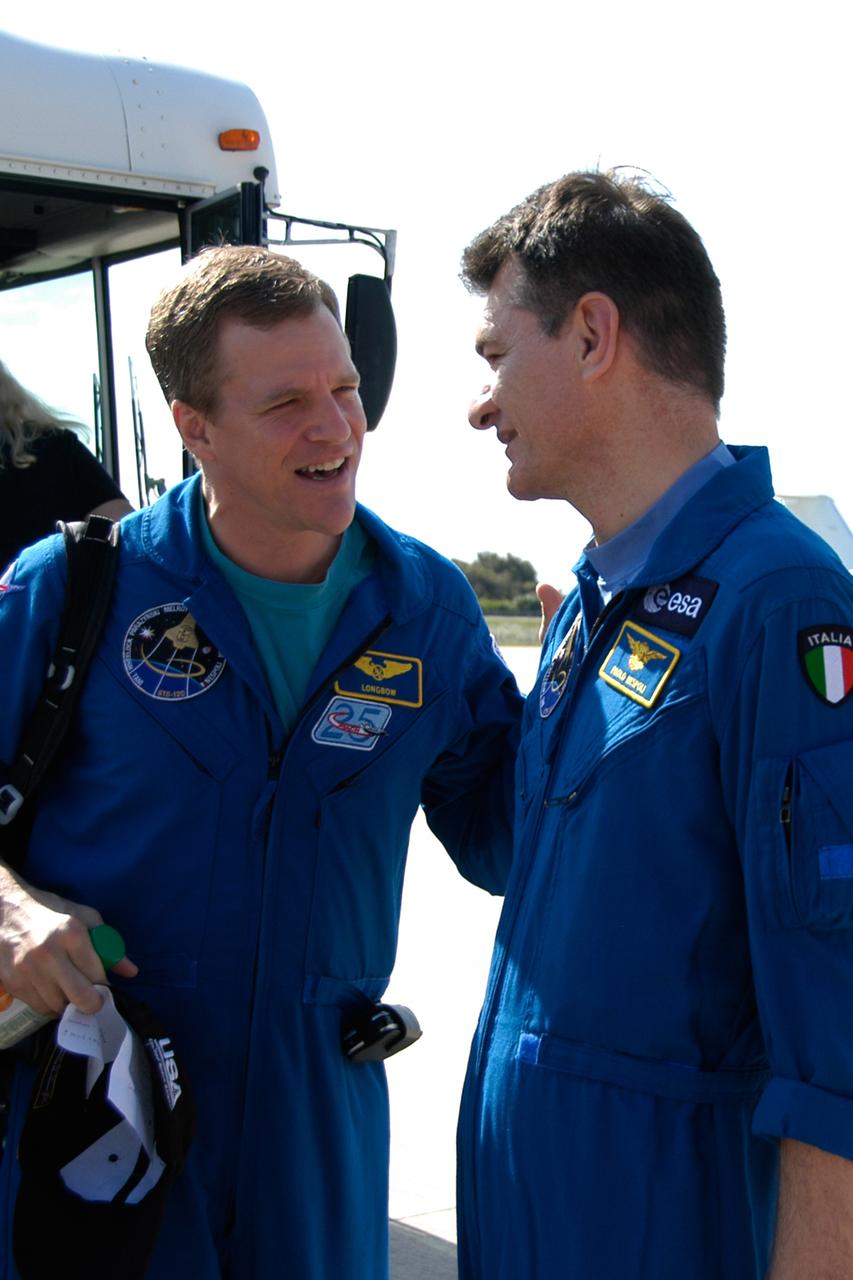
STS-120 Mission Specialists Scott Parazynski (left) and Paolo Nespoli talk before their return to flight to Houston. A welcoming ceremony for the crew is planned at NASA's Hangar 276 on the south end of Ellington Field in Texas. On the 15-day mission, the STS-120 crew continued the construction of the station with the installation of the Harmony Node 2 module and the relocation of the P6 truss. They landed Nov. 7 at NASA's Kennedy Space Center.
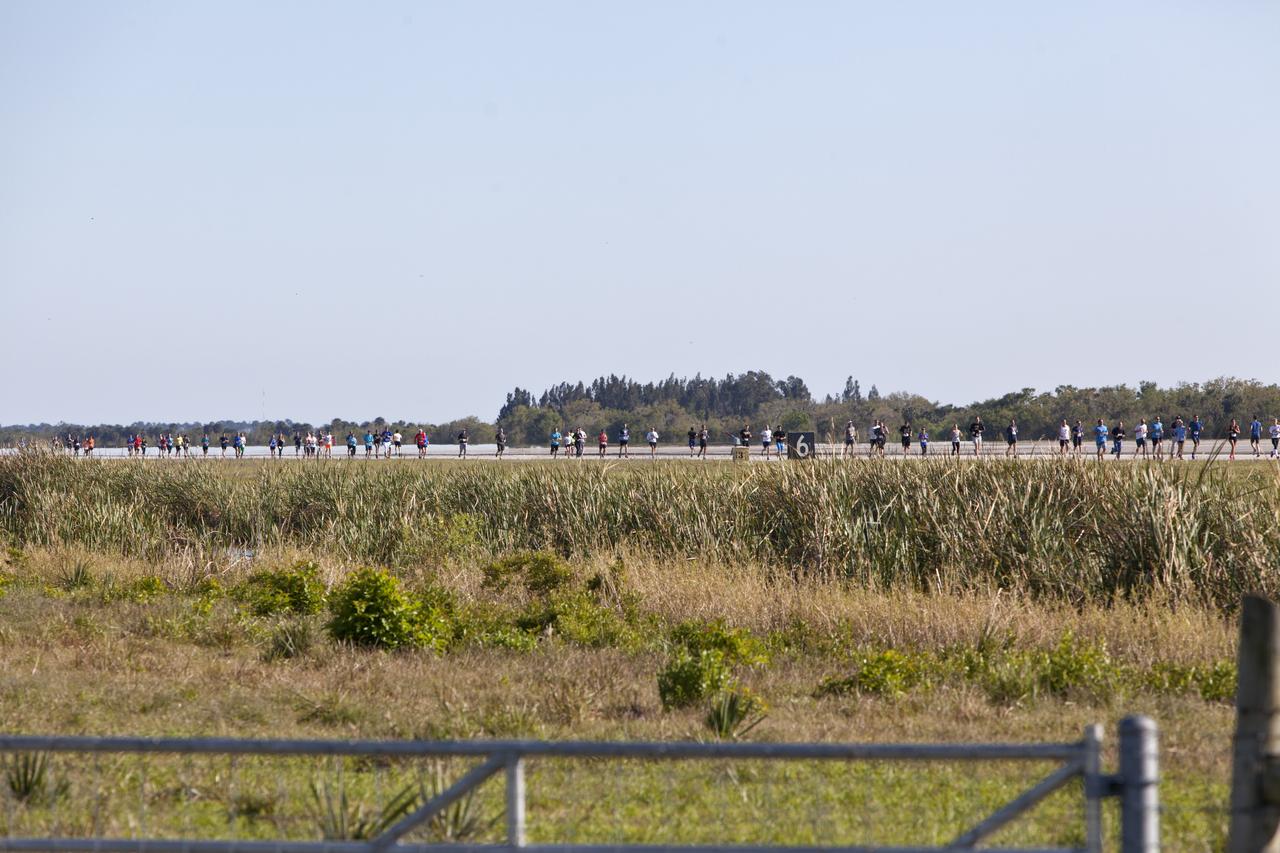
A line of Kennedy Space Center employees and guests stretches down the Shuttle Landing Facility Runway during the KSC Walk Run. The annual event, part of Kennedy’s Safety and Health Days, offers 10K, 5K and 2-mile options in the spirit of friendly competition.
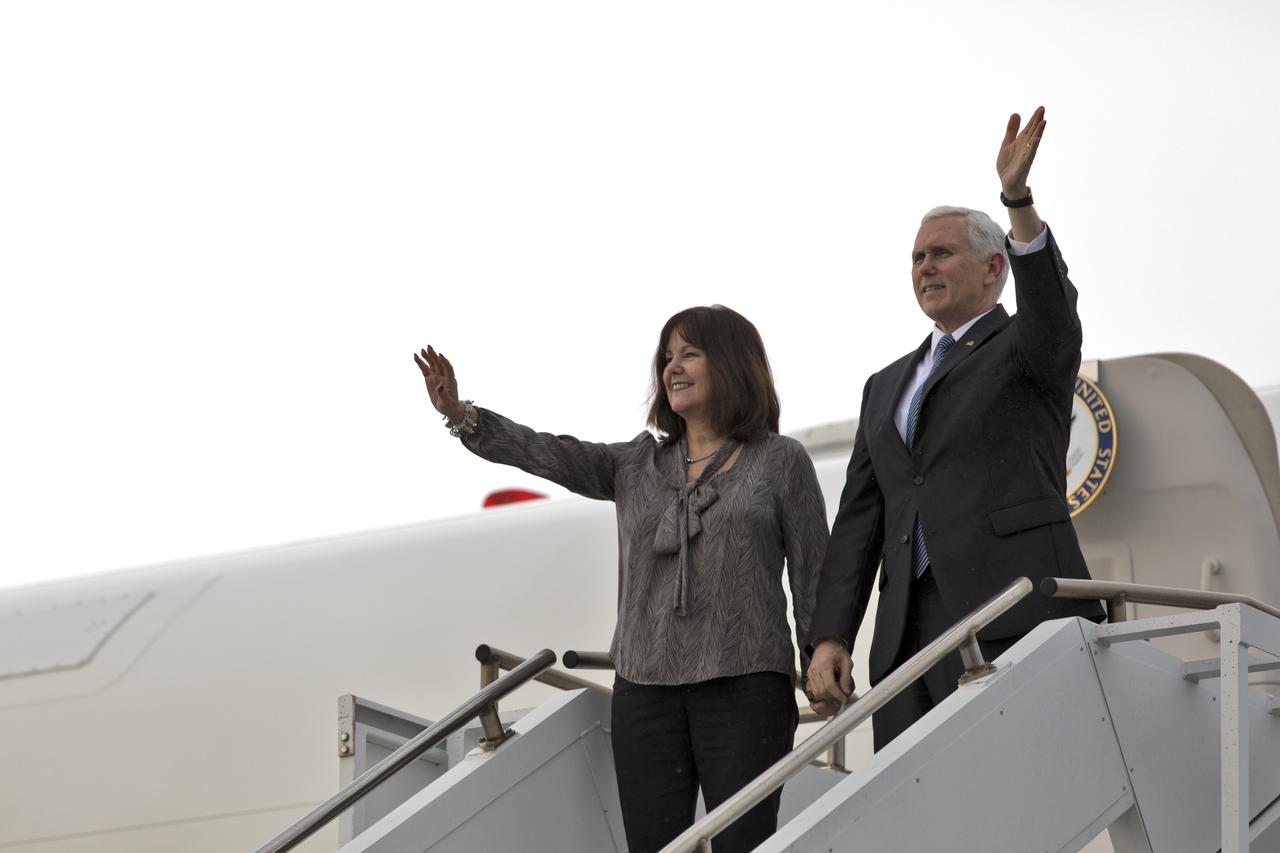
Vice President Mike Pence and his wife, Karen, step off Air Force Two on the Shuttle Landing Facility at NASA's Kennedy Space Center in Florida, on Feb. 20, 2018. During his visit, Pence will chair a meeting of the National Space Council in the high bay of the center's Space Station Processing Facility. The council's role is to advise the president regarding national space policy and strategy, and review the nation's long-range goals for space activities.
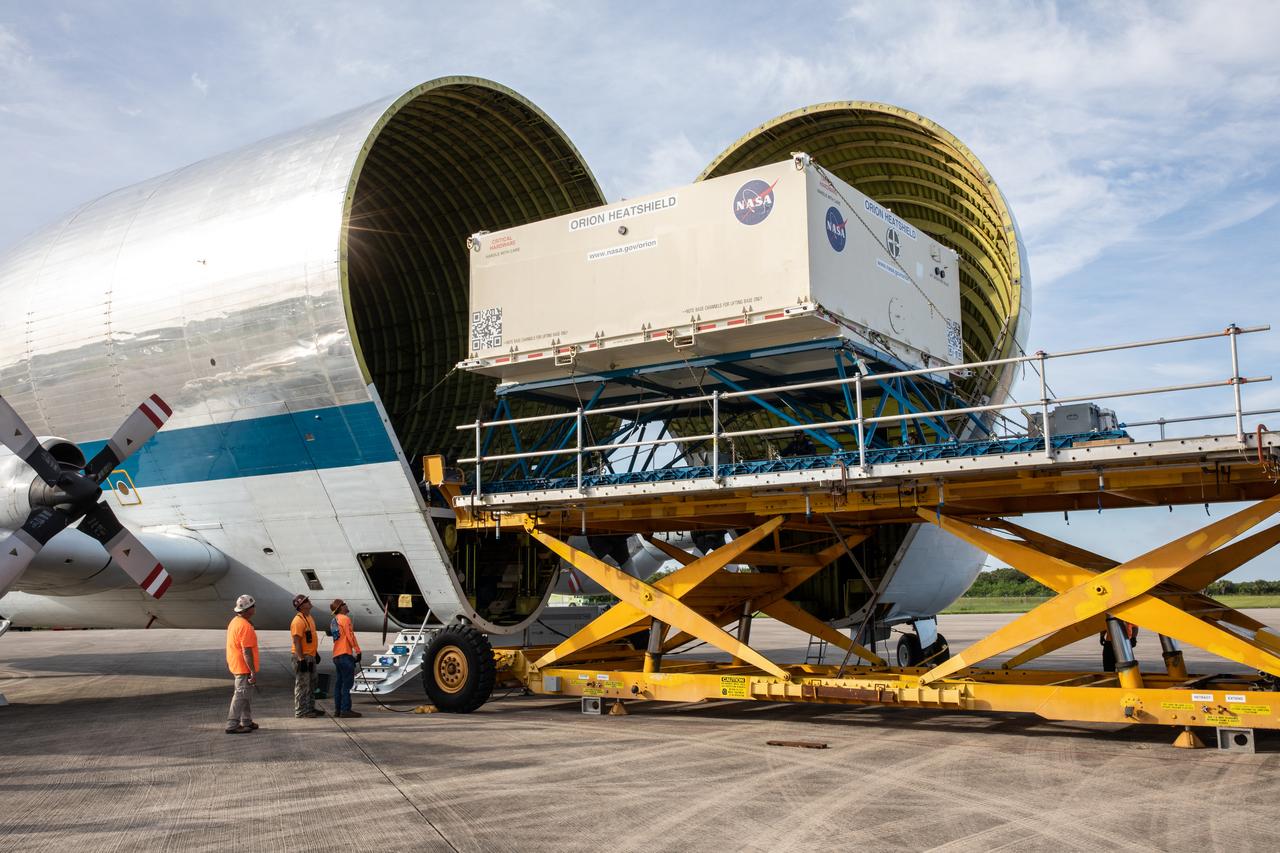
The shipping container carrying the heat shield for Orion’s Artemis 2 mission, NASA’s first crewed mission, is unloaded from NASA’s Super Guppy aircraft at the agency’s Kennedy Space Center Shuttle Landing Facility in Florida on July 9, 2019. The heat shield, measuring roughly 16 feet in diameter, will protect astronauts upon re-entry on the second mission of Artemis. The heat shield arrived from Lockheed Martin’s manufacturing facility near Denver. It will be delivered to the Neil Armstrong Operations and Checkout facility high bay. The heat shield is a base titanium truss structure. Over the next several months, technicians will apply Avcoat, an ablative material that will provide the thermal protection. Artemis 2 will confirm all of the spacecraft’s systems operate as designed in the actual environment of deep space with astronauts aboard.
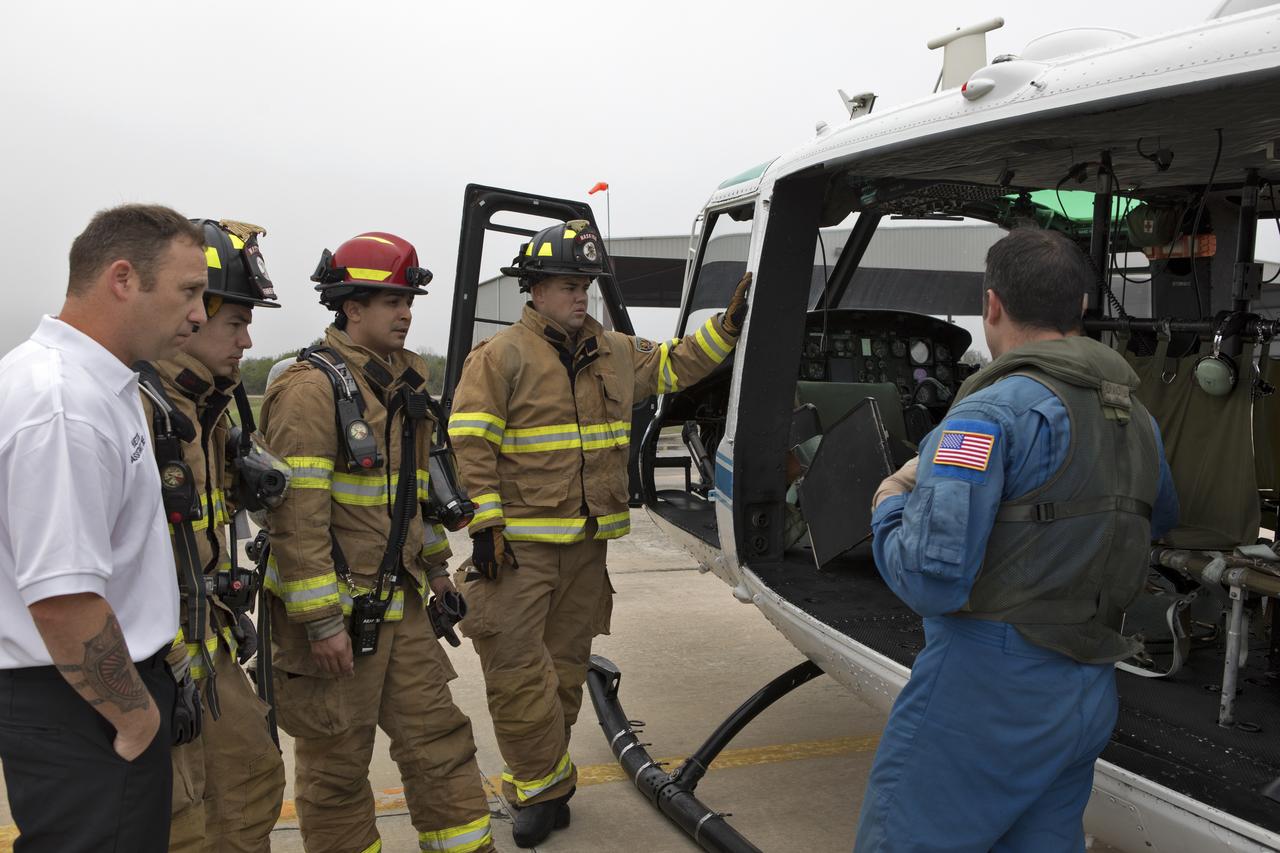
NASA Kennedy Space Center's Flight Operations team reviews procedures before beginning a rehearsal of a helicopter crash-landing to test new and updated emergency procedures. Called the Aircraft Mishap Preparedness and Contingency Plan, the operation was designed to validate several updated techniques the center's first responders would follow, should they ever need to rescue a crew in case of a real accident. The mishap exercise took place at the center's Shuttle Landing Facility.
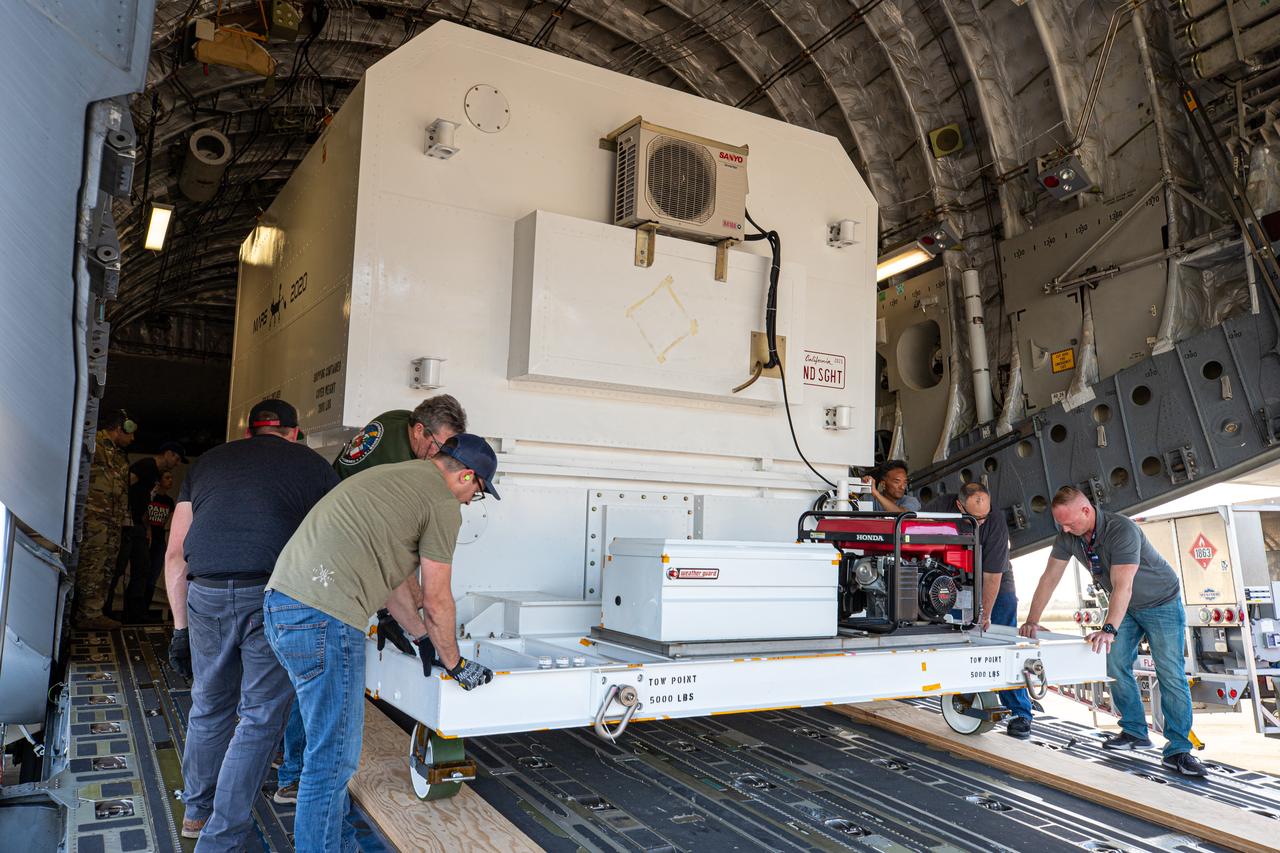
The Mars 2020 rover is offloaded from a C-17 aircraft at the Launch and Landing Facility, formerly known as the Shuttle Landing Facility, at NASA’s Kennedy Space Center on Feb. 12, 2020. The rover made a cross-country trip to the Florida spaceport that started at NASA’s Jet Propulsion Laboratory in Pasadena, California. The mission, targeted for mid-July 2020, will launch aboard an Atlas V 541 rocket from Cape Canaveral Air Force Station. NASA’s Launch Services Program based at Kennedy is managing the launch.
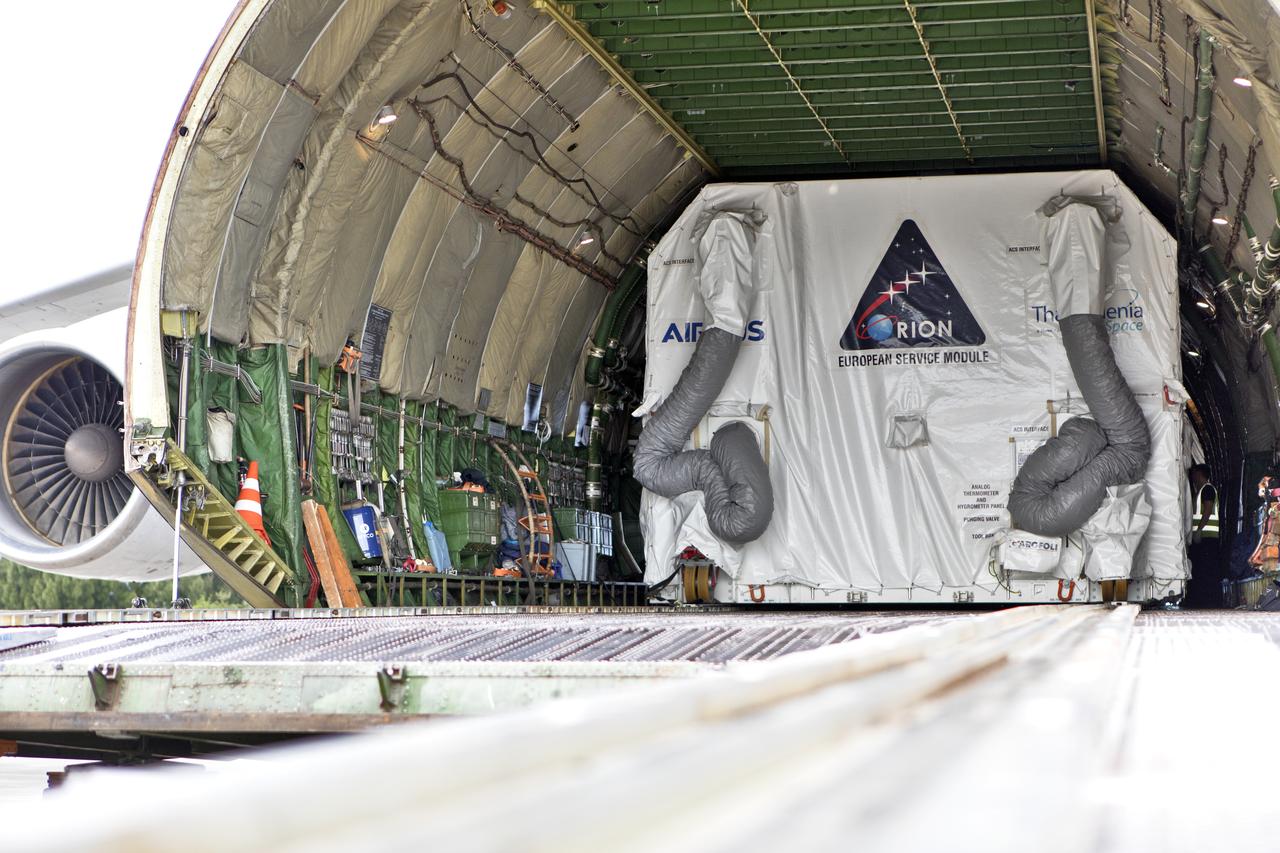
The shipping container holding the European Service Module (ESM) is in view inside the cargo hold of the Antonov cargo aircraft at the Shuttle Landing Facility at NASA's Kennedy Space Center in Florida on Nov. 6, 2018. The ESM for Exploration Mission-1 (EM-1) will be offloaded from the cargo hold. The ESM, built by the European Space Agency, will supply the main propulsion system and power to the Orion spacecraft for Exploration Mission-1 (EM-1), a mission to the Moon. The ESM also will house air and water for astronauts on future missions. EM-1 will be an uncrewed flight test that will provide a foundation for human deep space exploration to destinations beyond Earth orbit. EM-1 will be the first integrated test of NASA's Space Launch System, Orion and the ground systems at Kennedy.
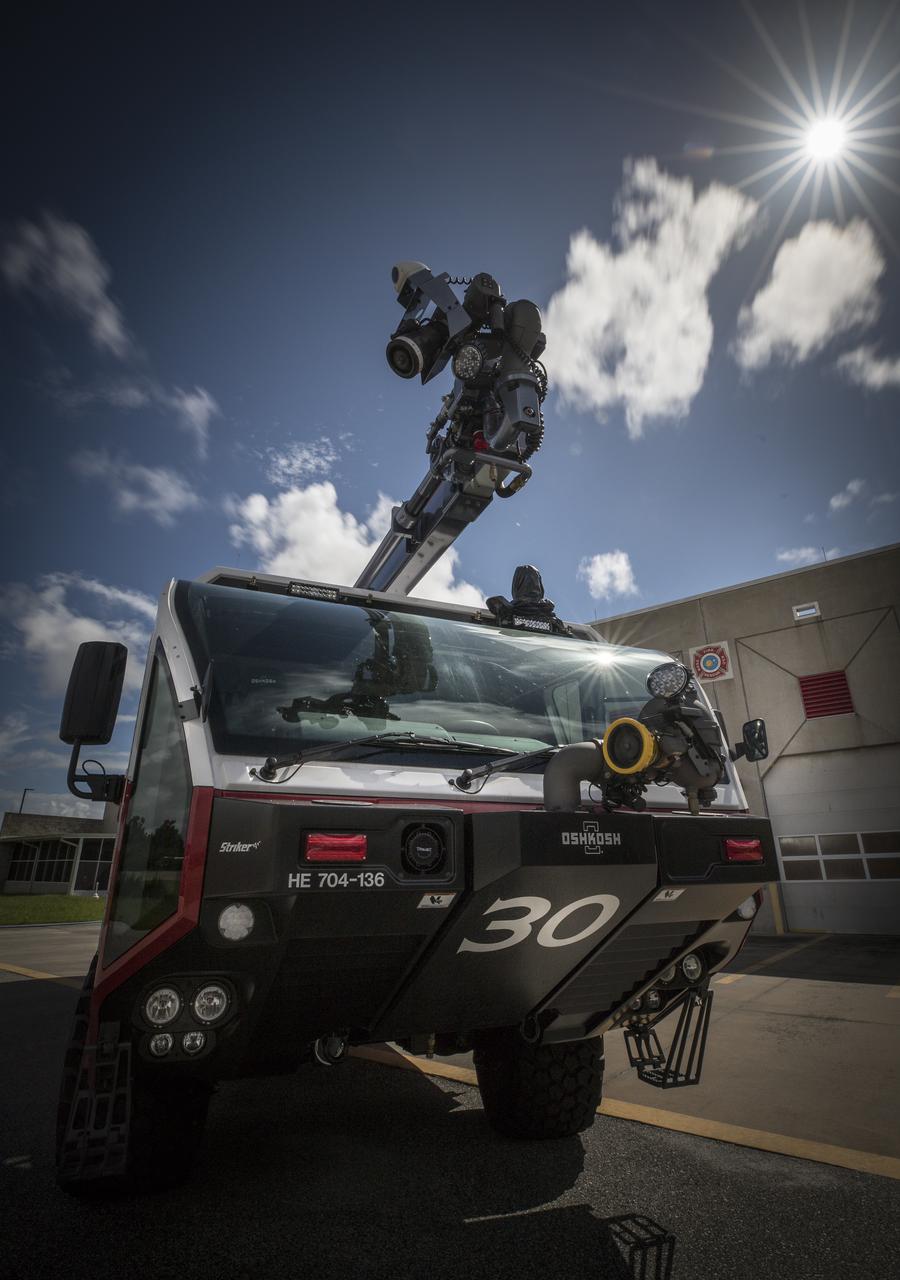
A new Aircraft Rescue and Fire Fighting vehicle is photographed in front of Fire Station No. 2 near the Shuttle Landing Facility runway at NASA’s Kennedy Space Center in Florida. The state-of-the-art truck replaces a 28-year-old vehicle. Kennedy is upgrading its fleet of emergency vehicles to enhance its safety and security posture at the growing, multi-user spaceport.
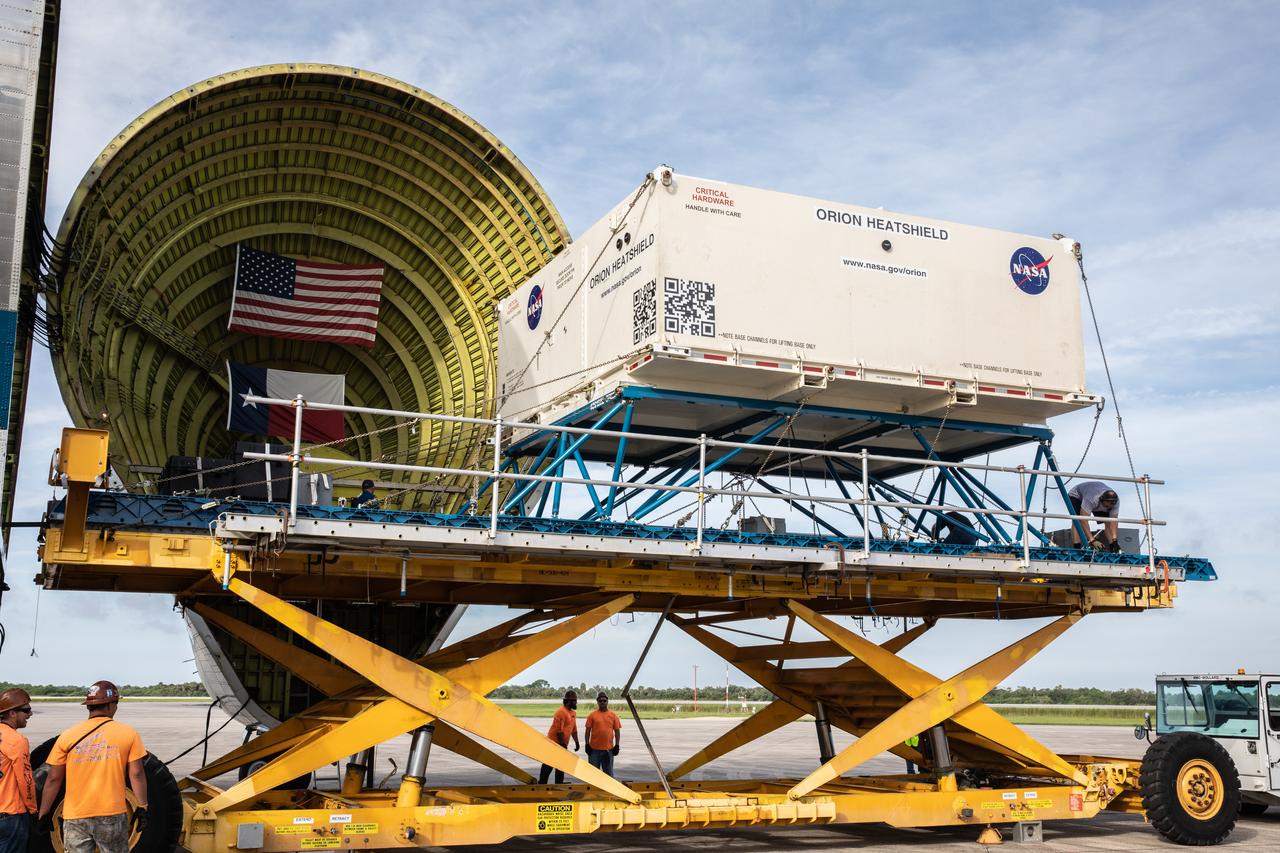
The shipping container carrying the heat shield for Orion’s Artemis 2 mission, NASA’s first crewed mission, is unloaded from NASA’s Super Guppy aircraft at the agency’s Kennedy Space Center Shuttle Landing Facility in Florida on July 9, 2019. The heat shield, measuring roughly 16 feet in diameter, will protect astronauts upon re-entry on the second mission of Artemis. The heat shield arrived from Lockheed Martin’s manufacturing facility near Denver. It will be delivered to the Neil Armstrong Operations and Checkout facility high bay. The heat shield is a base titanium truss structure. Over the next several months, technicians will apply Avcoat, an ablative material that will provide the thermal protection. Artemis 2 will confirm all of the spacecraft’s systems operate as designed in the actual environment of deep space with astronauts aboard.
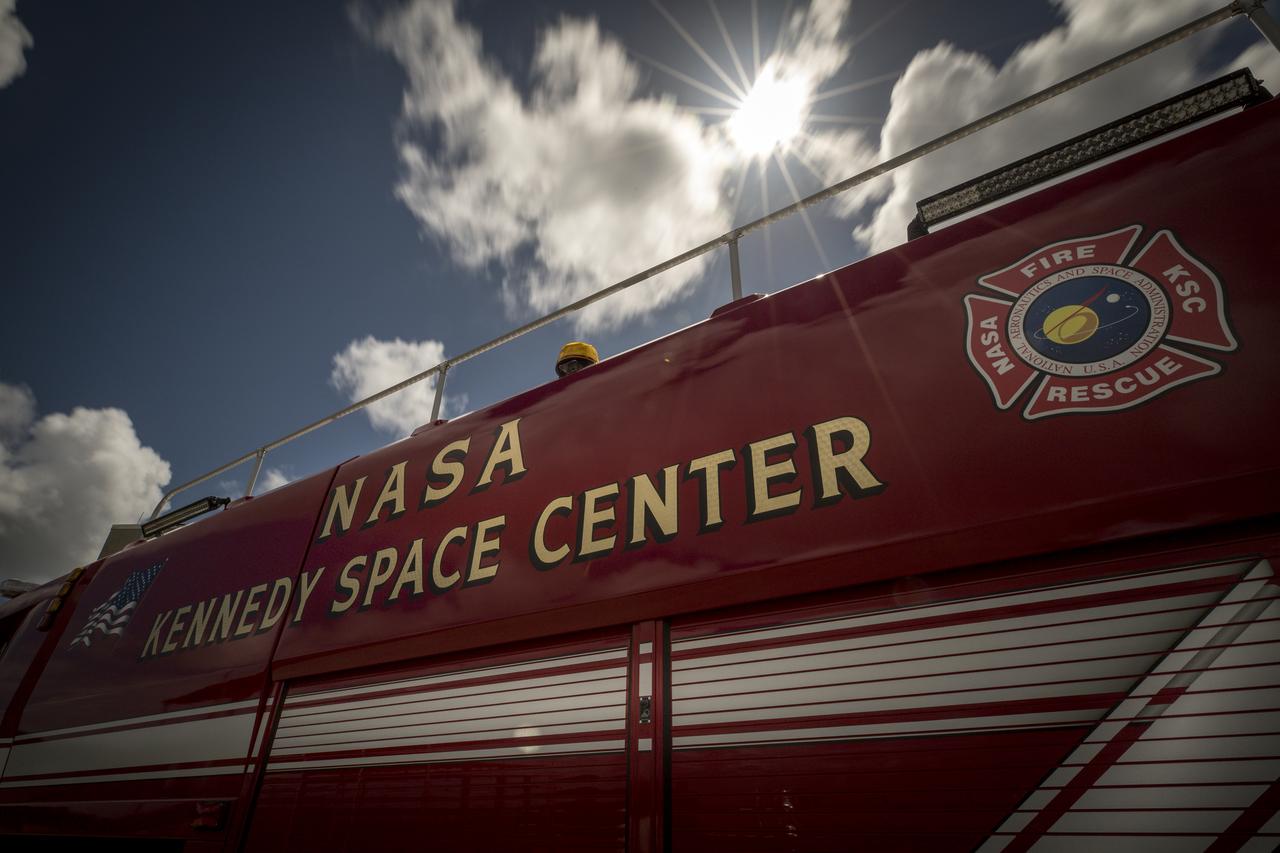
A new Aircraft Rescue and Fire Fighting vehicle is photographed in front of Fire Station No. 2 near the Shuttle Landing Facility runway at NASA’s Kennedy Space Center in Florida. The state-of-the-art truck replaces a 28-year-old vehicle. Kennedy is upgrading its fleet of emergency vehicles to enhance its safety and security posture at the growing, multi-user spaceport.
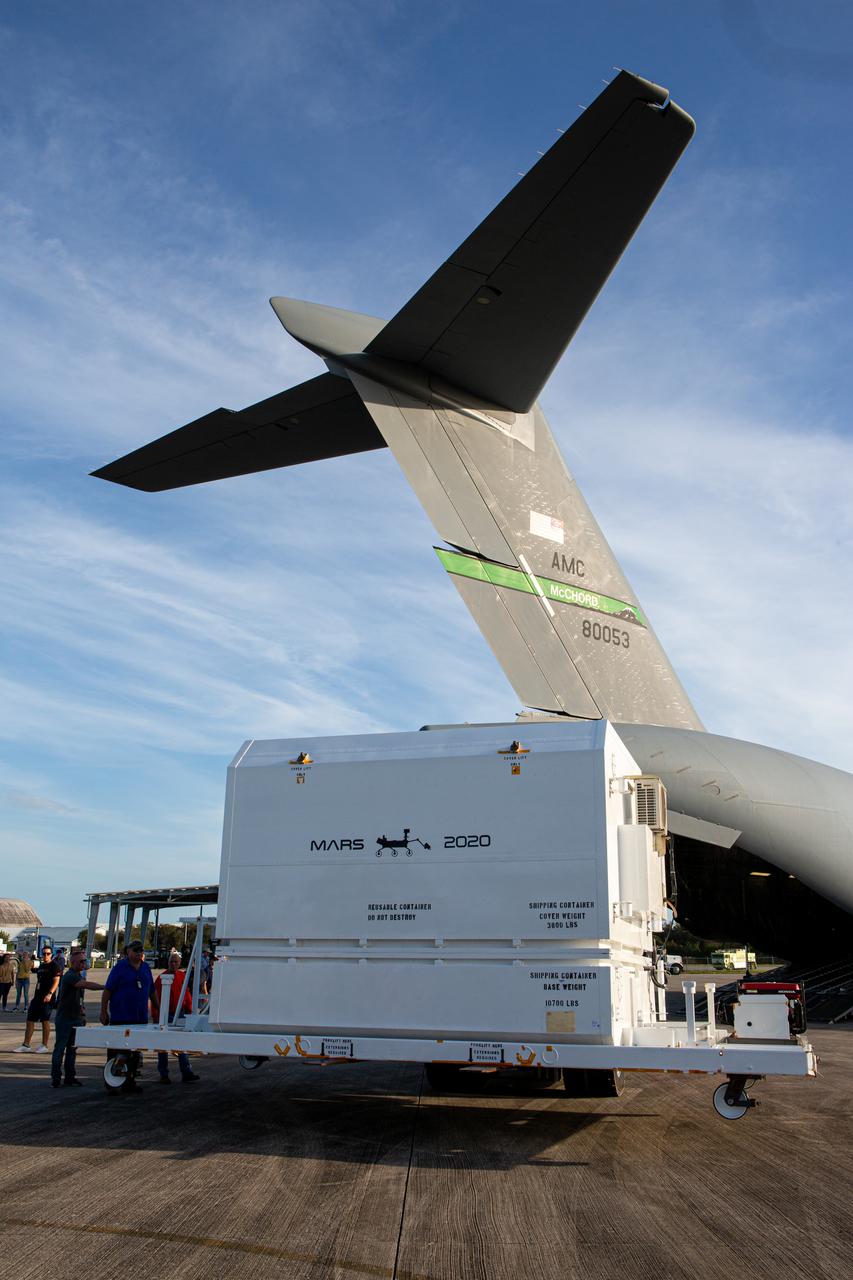
The Mars 2020 rover is pictured outside of the C-17 aircraft that delivered it to the Launch and Landing Facility, formerly known as the Shuttle Landing Facility, at NASA’s Kennedy Space Center in Florida on Feb. 12, 2020. The rover made a cross-country trip that started at NASA’s Jet Propulsion Laboratory in Pasadena, California. The mission, targeted for mid-July 2020, will launch aboard an Atlas V 541 rocket from Cape Canaveral Air Force Station. NASA’s Launch Services Program based at Kennedy is managing the launch.
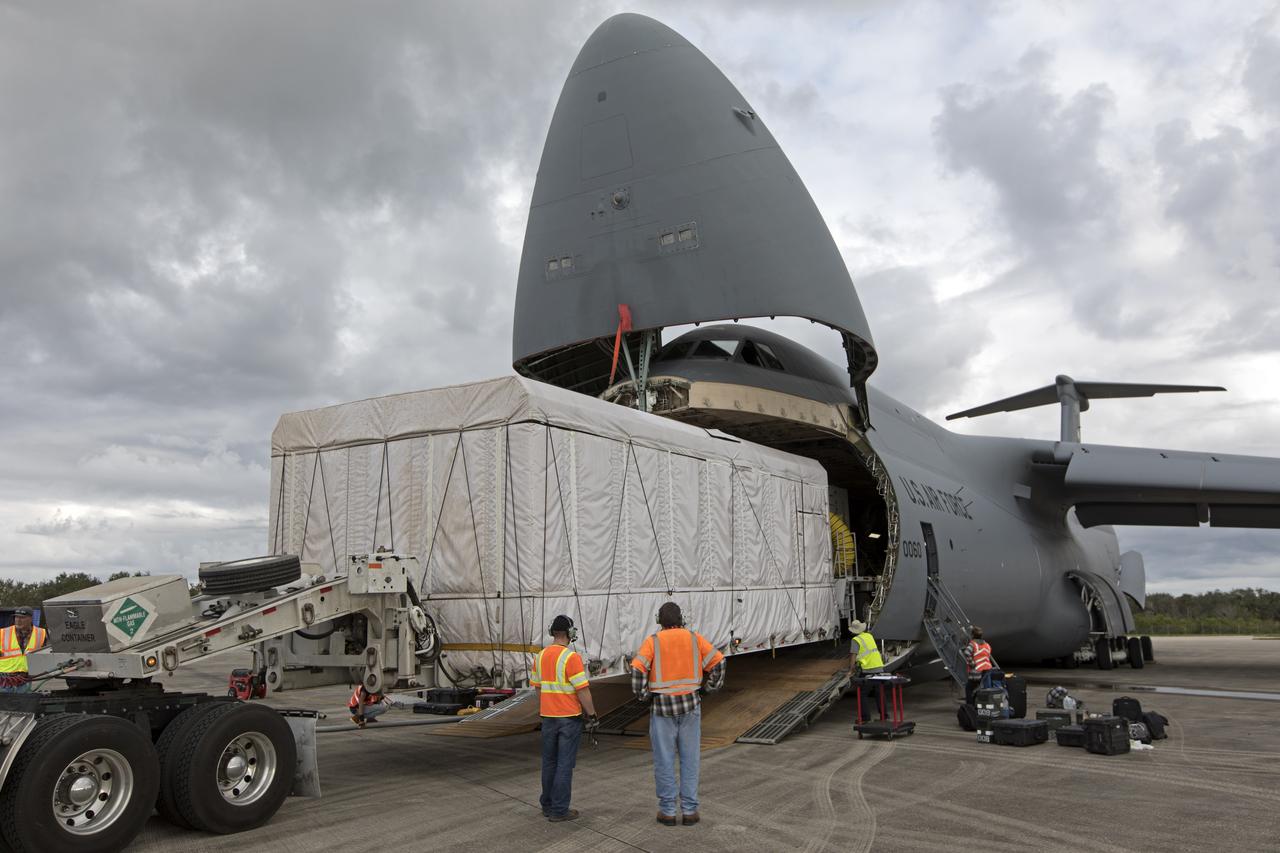
NOAA's Geostationary Operation Environmental Satellite-S (GOES-S) is being offloaded from a C-5 transport aircraft onto the flatbed of a heavy-lift truck at the Shuttle Landing Facility at NASA's Kennedy Space Center in Florida. The satellite will be transported to the Astrotech Space Operations facility in Titusville, Florida to prepare it for launch. GOES-S is the second in a series of four advanced geostationary weather satellites. The GOES-R series - consisting of the GOES-R, GOES-S, GOES-T and GOES-U spacecraft - will significantly improve the detection and observation of environmental phenomena that directly affect public safety, protection of property and the nation's economic health and prosperity. GOES-S is slated to launch March 1, 2018 aboard a United Launch Alliance Atlas V rocket from Cape Canaveral Air Force Station in Florida.
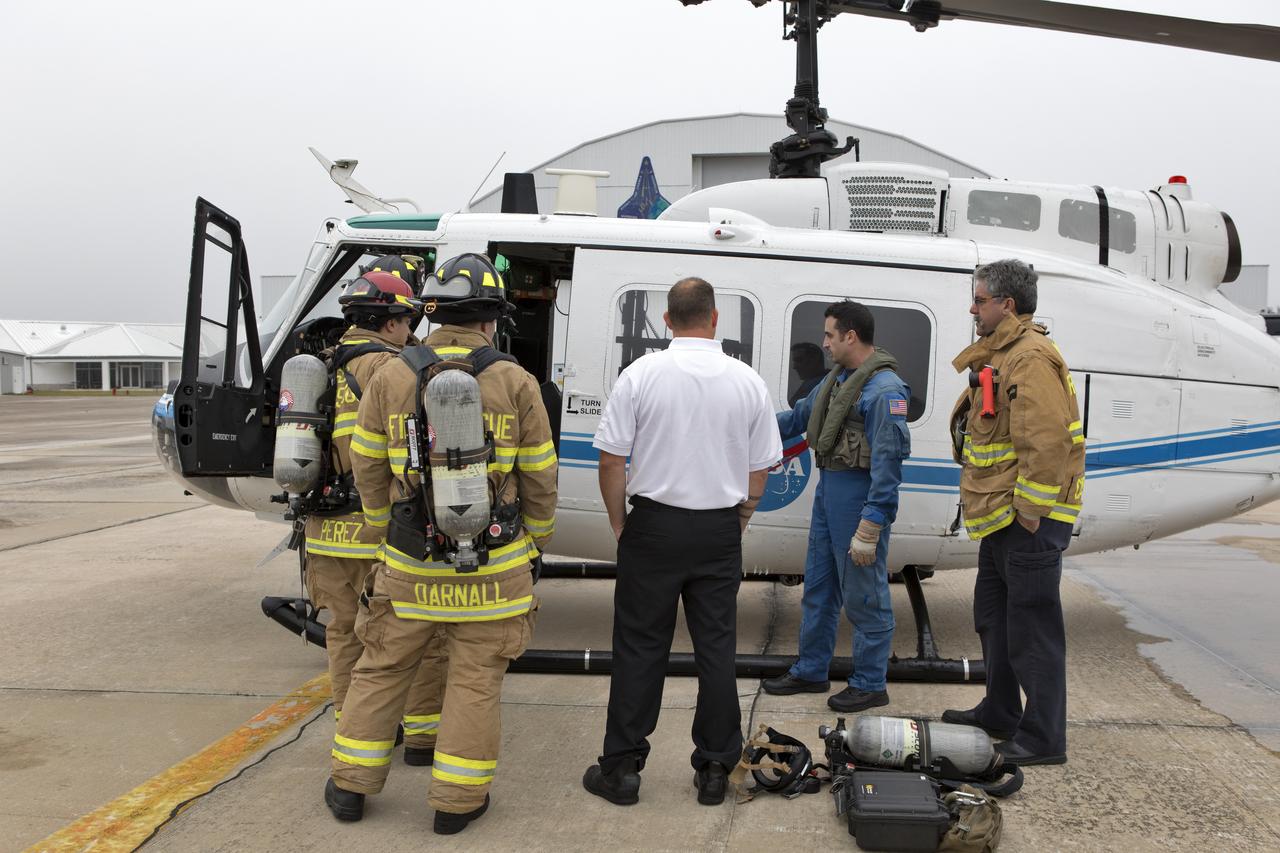
NASA Kennedy Space Center's Flight Operations team reviews procedures before beginning a rehearsal of a helicopter crash-landing to test new and updated emergency procedures. Called the Aircraft Mishap Preparedness and Contingency Plan, the operation was designed to validate several updated techniques the center's first responders would follow, should they ever need to rescue a crew in case of a real accident. The mishap exercise took place at the center's Shuttle Landing Facility.
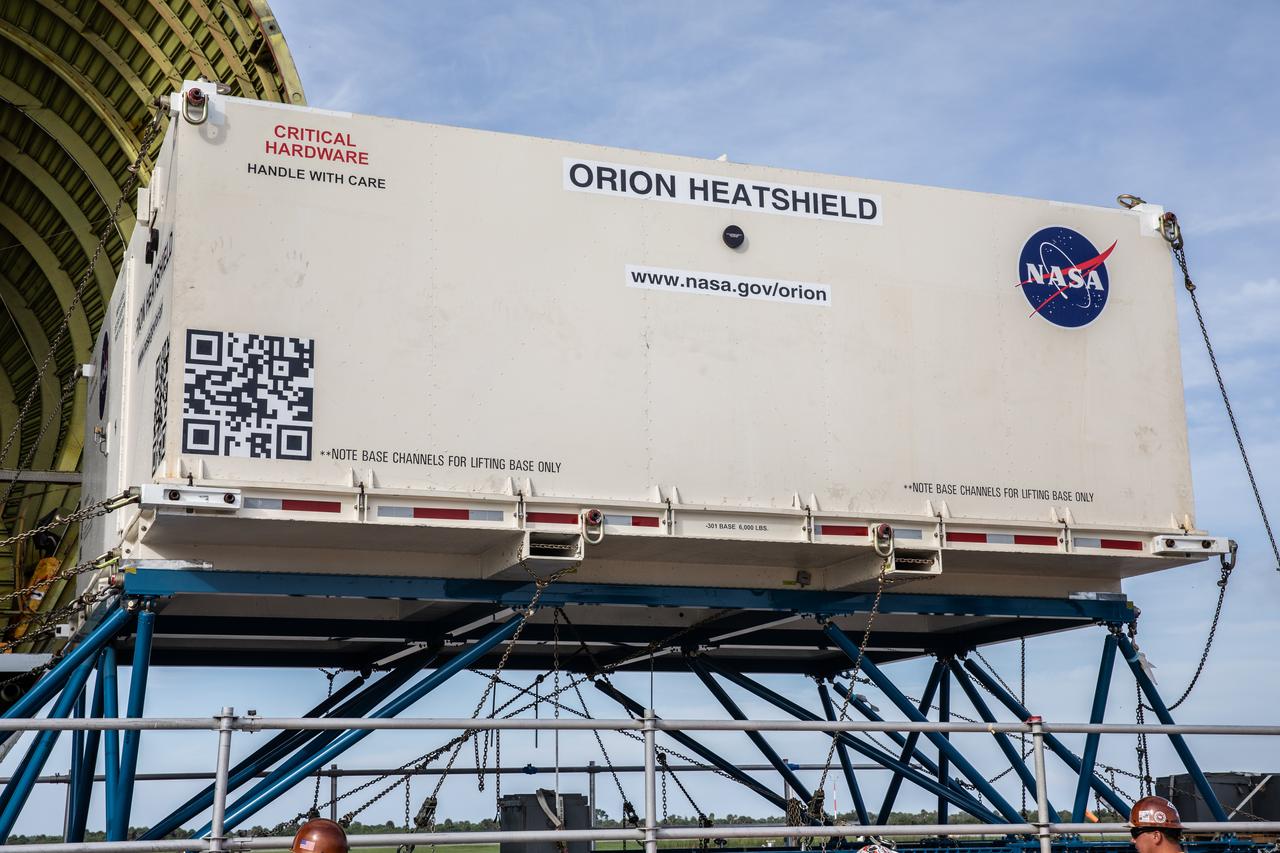
The shipping container carrying the heat shield for Orion’s Artemis 2 mission, NASA’s first crewed mission, is unloaded from NASA’s Super Guppy aircraft at the agency’s Kennedy Space Center Shuttle Landing Facility in Florida on July 9, 2019. The heat shield, measuring roughly 16 feet in diameter, will protect astronauts upon re-entry on the second mission of Artemis. The heat shield arrived from Lockheed Martin’s manufacturing facility near Denver. It will be delivered to the Neil Armstrong Operations and Checkout facility high bay. The heat shield is a base titanium truss structure. Over the next several months, technicians will apply Avcoat, an ablative material that will provide the thermal protection. Artemis 2 will confirm all of the spacecraft’s systems operate as designed in the actual environment of deep space with astronauts aboard.
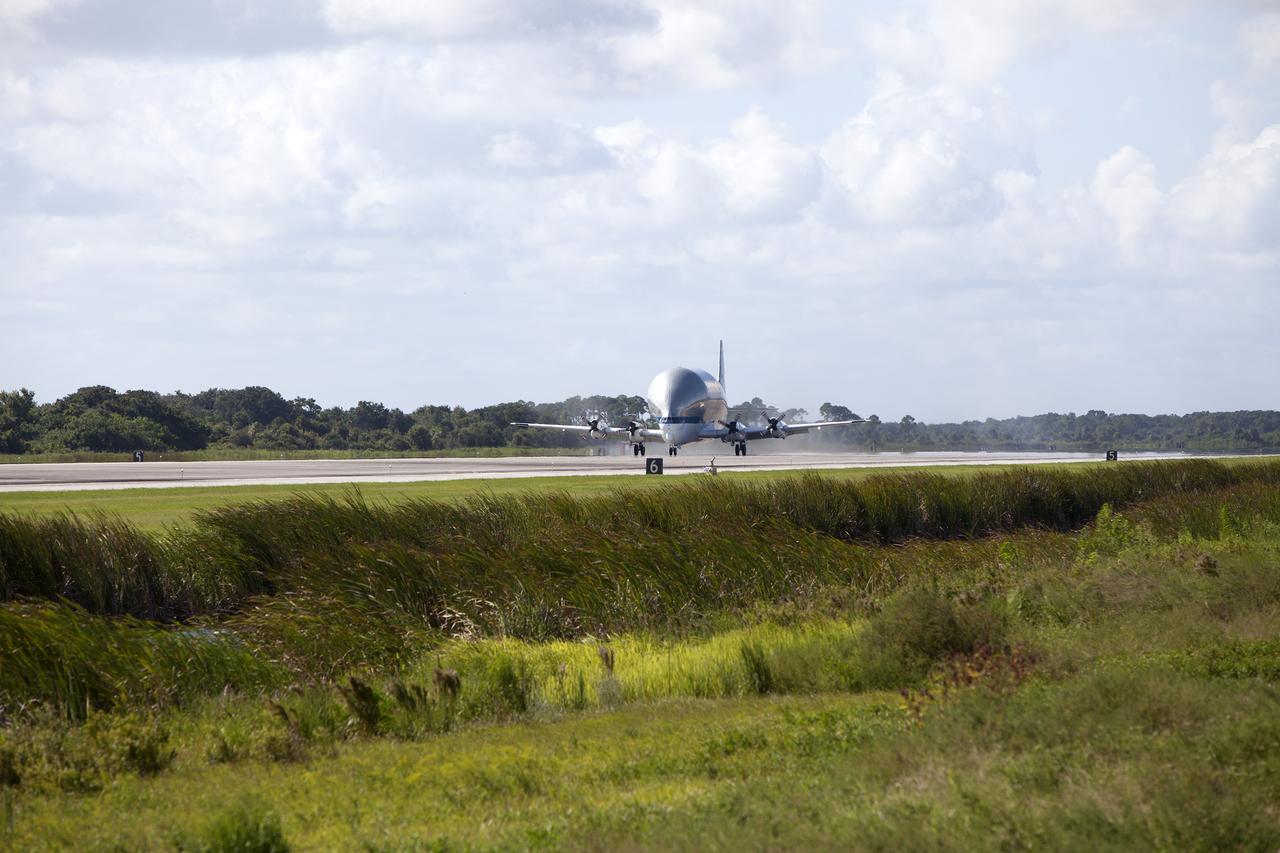
NASA’s Super Guppy aircraft touches down at the Shuttle Landing Facility, managed and operated by Space Florida, at the agency’s Kennedy Space Center in Florida, carrying the heat shield for Exploration Mission 1 (EM-1). The heat shield will be offloaded and transported to the Neil Armstrong Operations and Checkout Building high bay for processing. The heat shield arrived from manufacturer Lockheed Martin in Denver. The Orion spacecraft will launch atop NASA’s Space Launch System rocket on EM-1, an uncrewed test flight, in 2018.
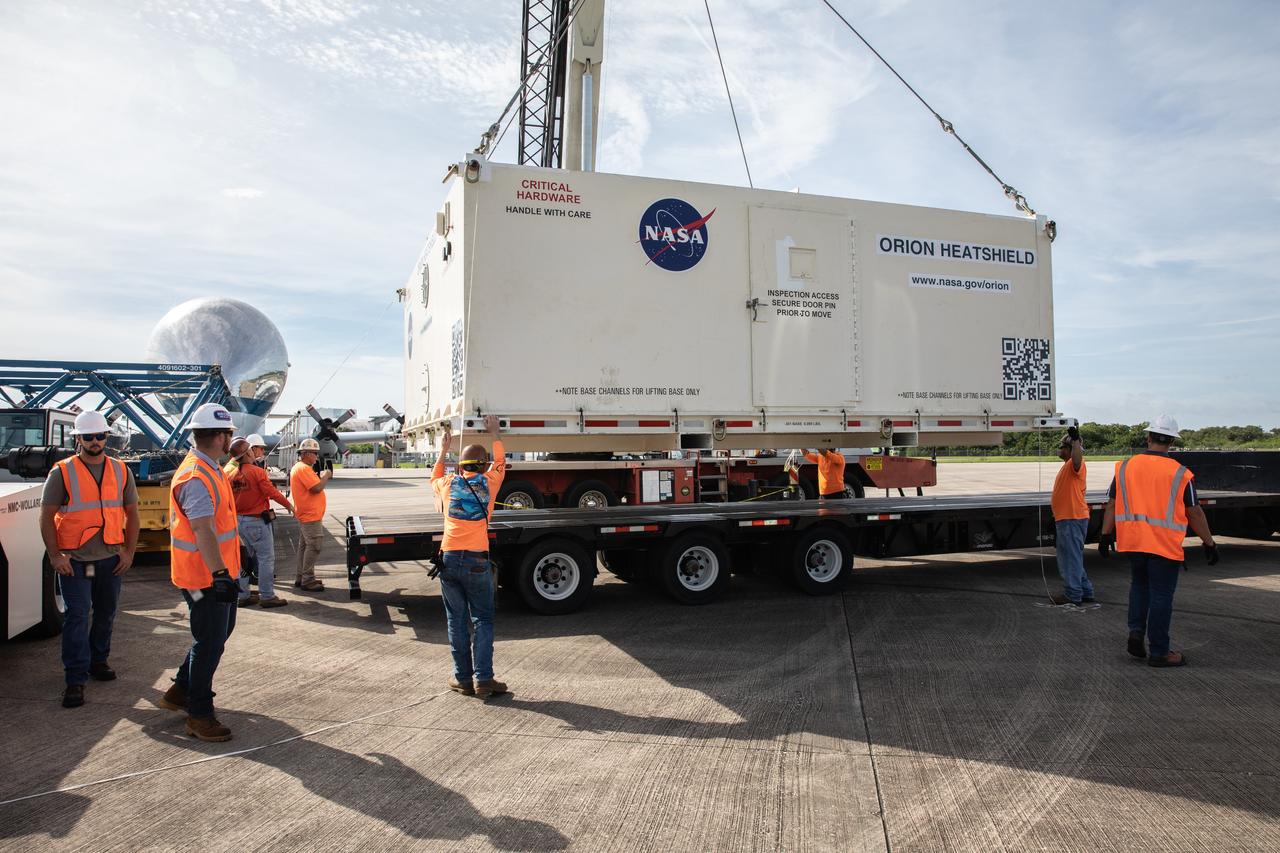
Technicians help secure the shipping container carrying the heat shield for Orion’s Artemis 2 mission, NASA’s first crewed mission, onto a transporter at the agency’s Kennedy Space Center Shuttle Landing Facility in Florida on July 9, 2019. The heat shield, measuring roughly 16 feet in diameter, will protect astronauts upon re-entry on the second mission of Artemis. The heat shield arrived from Lockheed Martin’s manufacturing facility near Denver aboard NASA’s Super Guppy Aircraft. It will be delivered to the Neil Armstrong Operations and Checkout facility high bay. The heat shield is a base titanium truss structure. Over the next several months, technicians will apply Avcoat, an ablative material that will provide the thermal protection. Artemis 2 will confirm all of the spacecraft’s systems operate as designed in the actual environment of deep space with astronauts aboard.
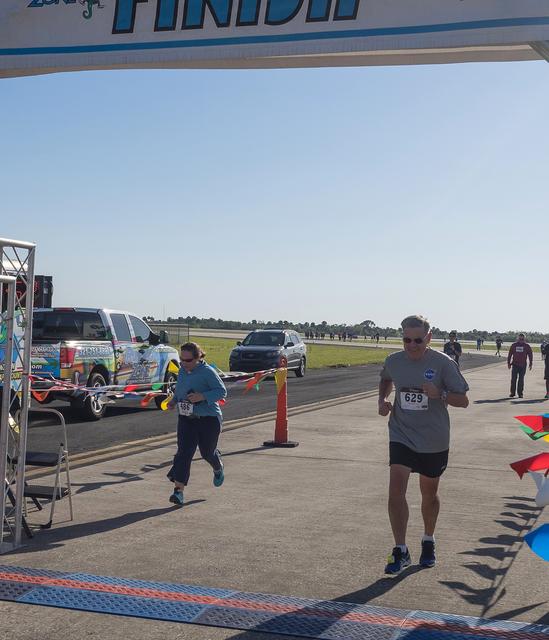
Kennedy Space Center Director Bob Cabana approaches the finish line at the KSC Walk Run on the Shuttle Landing Facility runway. The annual event, part of Kennedy’s Safety and Health Days, offers 10K, 5K and 2-mile options in the spirit of friendly competition.
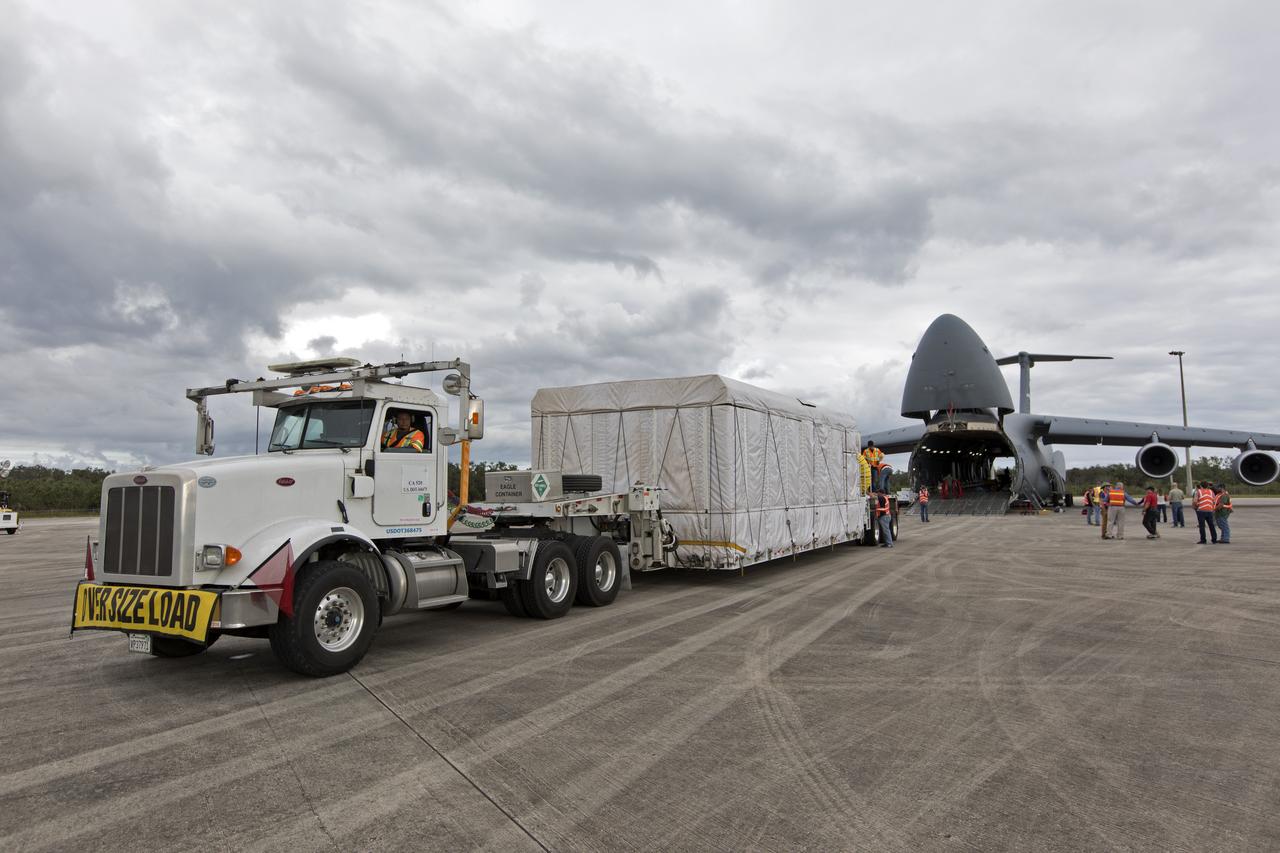
NOAA's Geostationary Operation Environmental Satellite-S (GOES-S) has been offloaded from a C-5 transport aircraft and secured onto the flatbed of a heavy-lift truck at the Shuttle Landing Facility at NASA's Kennedy Space Center in Florida. The satellite will be transported to the Astrotech Space Operations facility in Titusville, Florida to prepare it for launch. GOES-S is the second in a series of four advanced geostationary weather satellites. The GOES-R series - consisting of the GOES-R, GOES-S, GOES-T and GOES-U spacecraft - will significantly improve the detection and observation of environmental phenomena that directly affect public safety, protection of property and the nation's economic health and prosperity. GOES-S is slated to launch March 1, 2018 aboard a United Launch Alliance Atlas V rocket from Cape Canaveral Air Force Station in Florida.
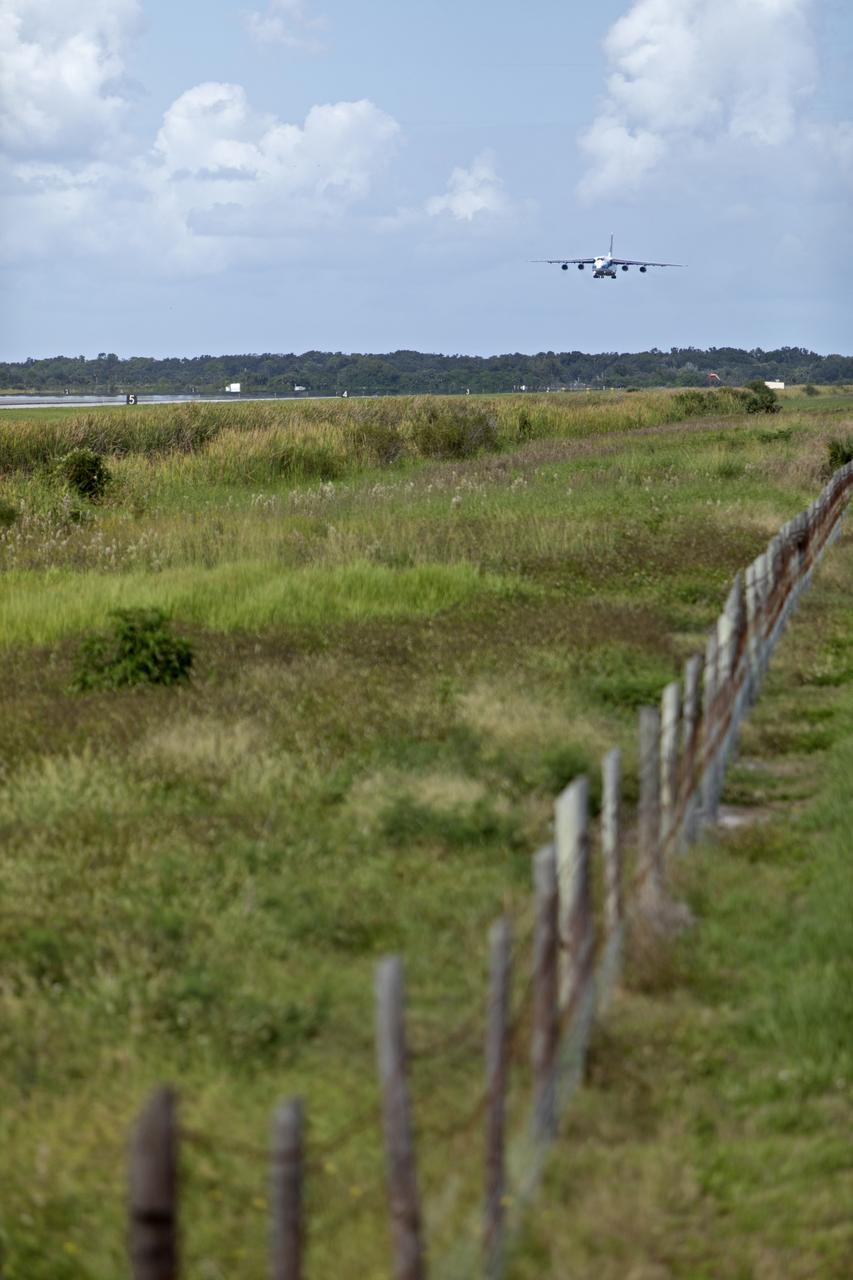
The Antonov cargo aircraft descends toward the Shuttle Landing Facility at NASA's Kennedy Space Center in Florida on Nov. 6, 2018, carrying the European Service Module (ESM) for Exploration Mission-1 (EM-1). The ESM, built by the European Space Agency, will supply the main propulsion system and power to the Orion spacecraft for Exploration Mission-1 (EM-1), a mission to the Moon. The ESM also will house air and water for astronauts on future missions. EM-1 will be an uncrewed flight test that will provide a foundation for human deep space exploration to destinations beyond Earth orbit. EM-1 will be the first integrated test of NASA's Space Launch System, Orion and the ground systems at Kennedy.
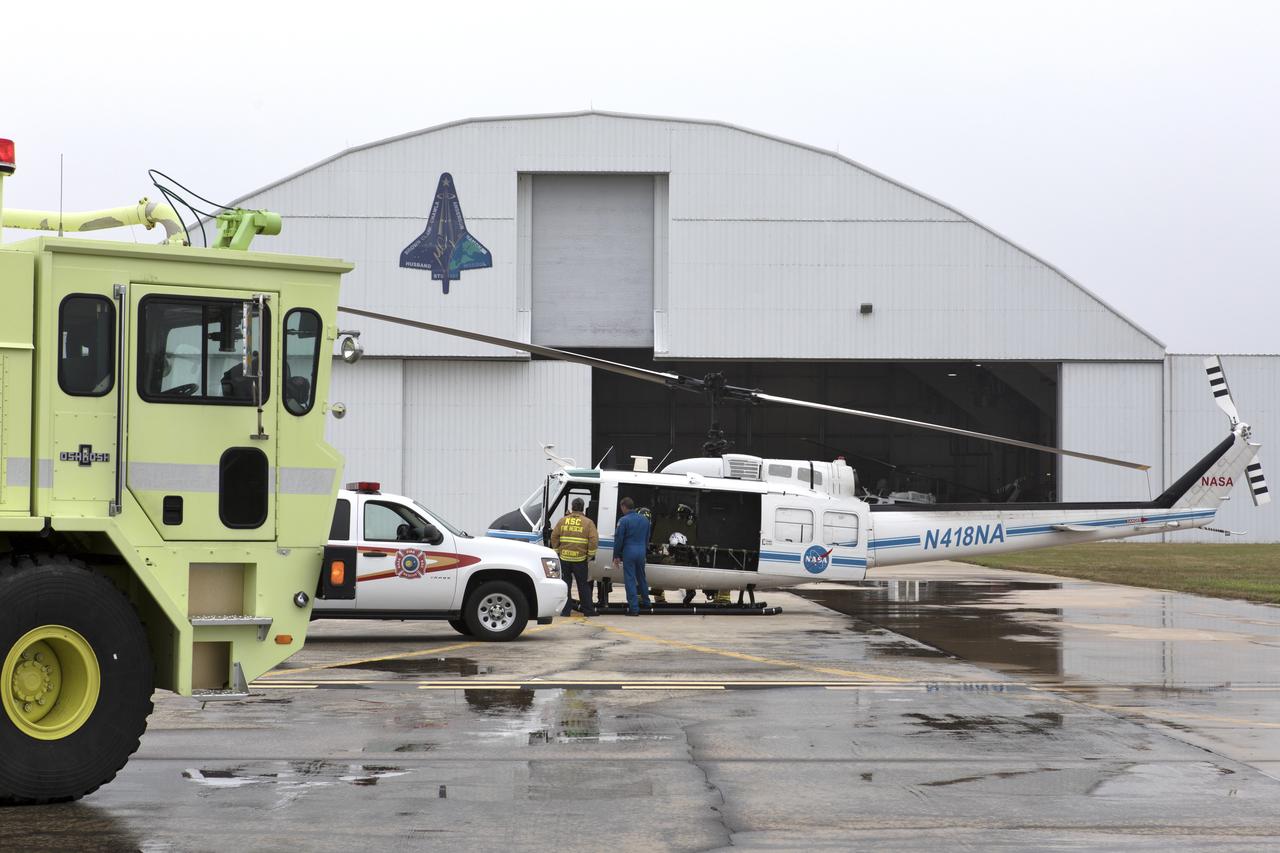
Members of NASA Kennedy Space Center's Flight Operations team prepare for a rehearsal of a helicopter crash-landing to test new and updated emergency procedures. Called the Aircraft Mishap Preparedness and Contingency Plan, the operation was designed to validate several updated techniques the center's first responders would follow, should they ever need to rescue a crew in case of a real accident. The mishap exercise took place at the center's Shuttle Landing Facility.
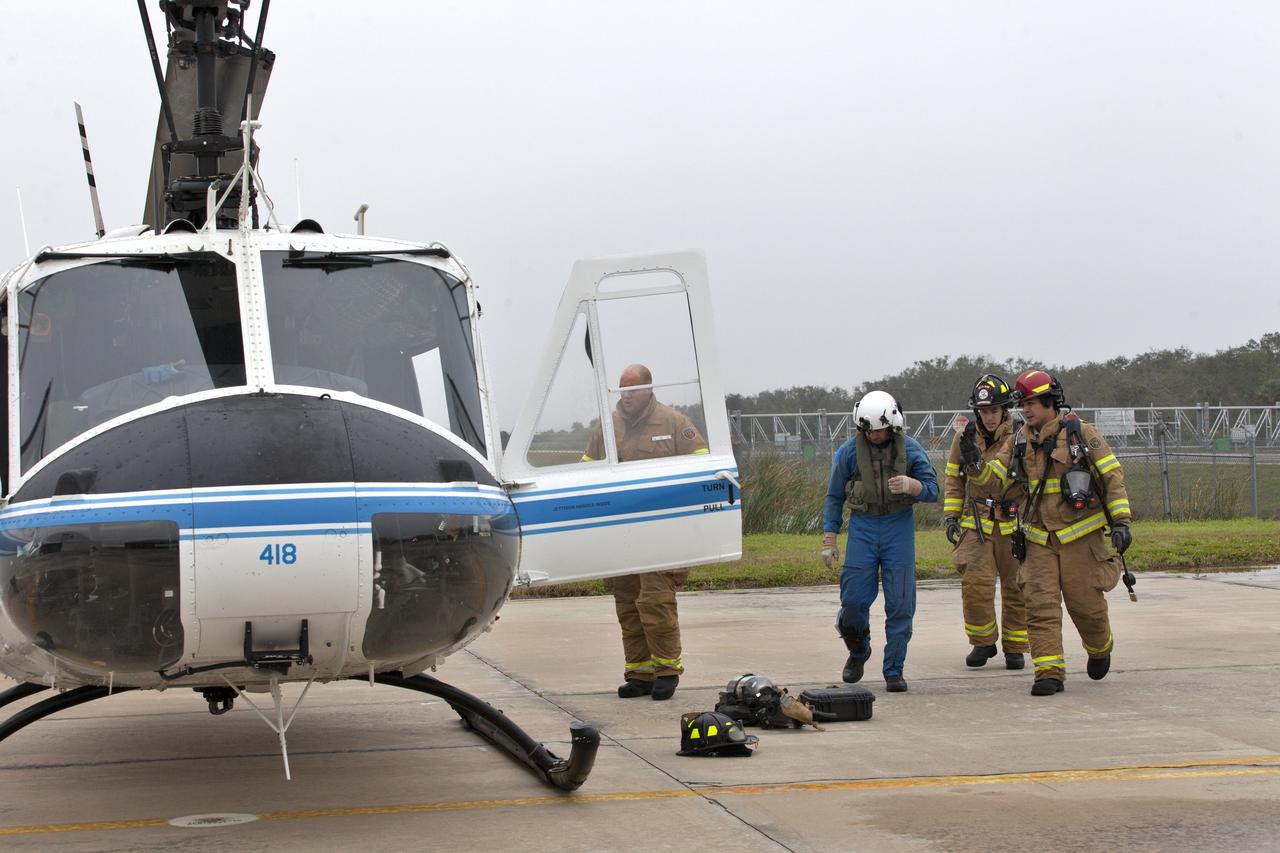
Members of NASA Kennedy Space Center's Flight Operations team participate in a rehearsal of a helicopter crash-landing to test new and updated emergency procedures. Called the Aircraft Mishap Preparedness and Contingency Plan, the operation was designed to validate several updated techniques the center's first responders would follow, should they ever need to rescue a crew in case of a real accident. The mishap exercise took place at the center's Shuttle Landing Facility.
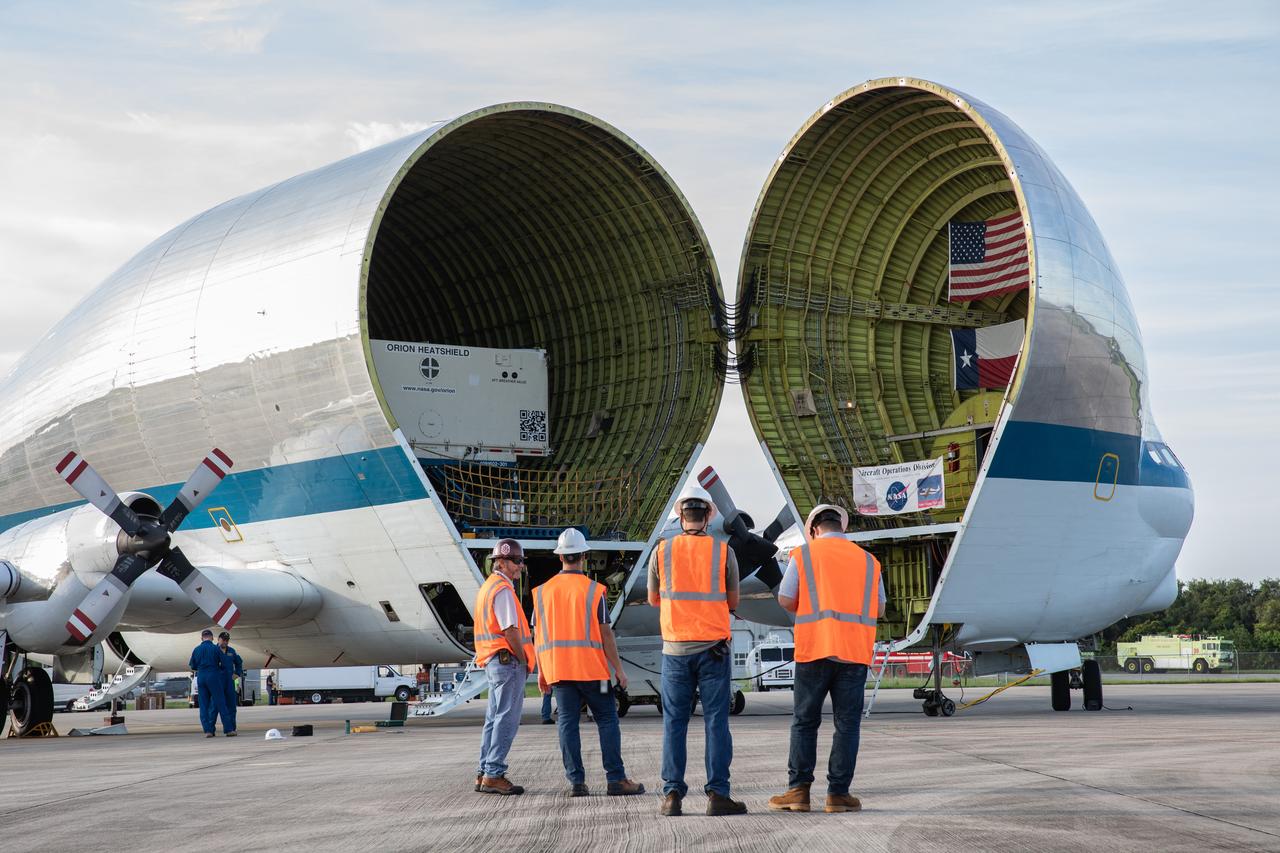
The heat shield for Orion’s Artemis 2 mission, NASA’s first crewed mission, arrives in its shipping container aboard NASA’s Super Guppy aircraft at the agency’s Kennedy Space Center Shuttle Landing Facility in Florida on July 9, 2019. The heat shield, measuring roughly 16 feet in diameter, will protect astronauts upon re-entry on the second mission of Artemis. The heat shield arrived from Lockheed Martin’s manufacturing facility near Denver. It will be offloaded and delivered to the Neil Armstrong Operations and Checkout facility high bay. The heat shield is a base titanium truss structure. Over the next several months, technicians will apply Avcoat, an ablative material that will provide the thermal protection. Artemis 2 will confirm all of the spacecraft’s systems operate as designed in the actual environment of deep space with astronauts aboard.
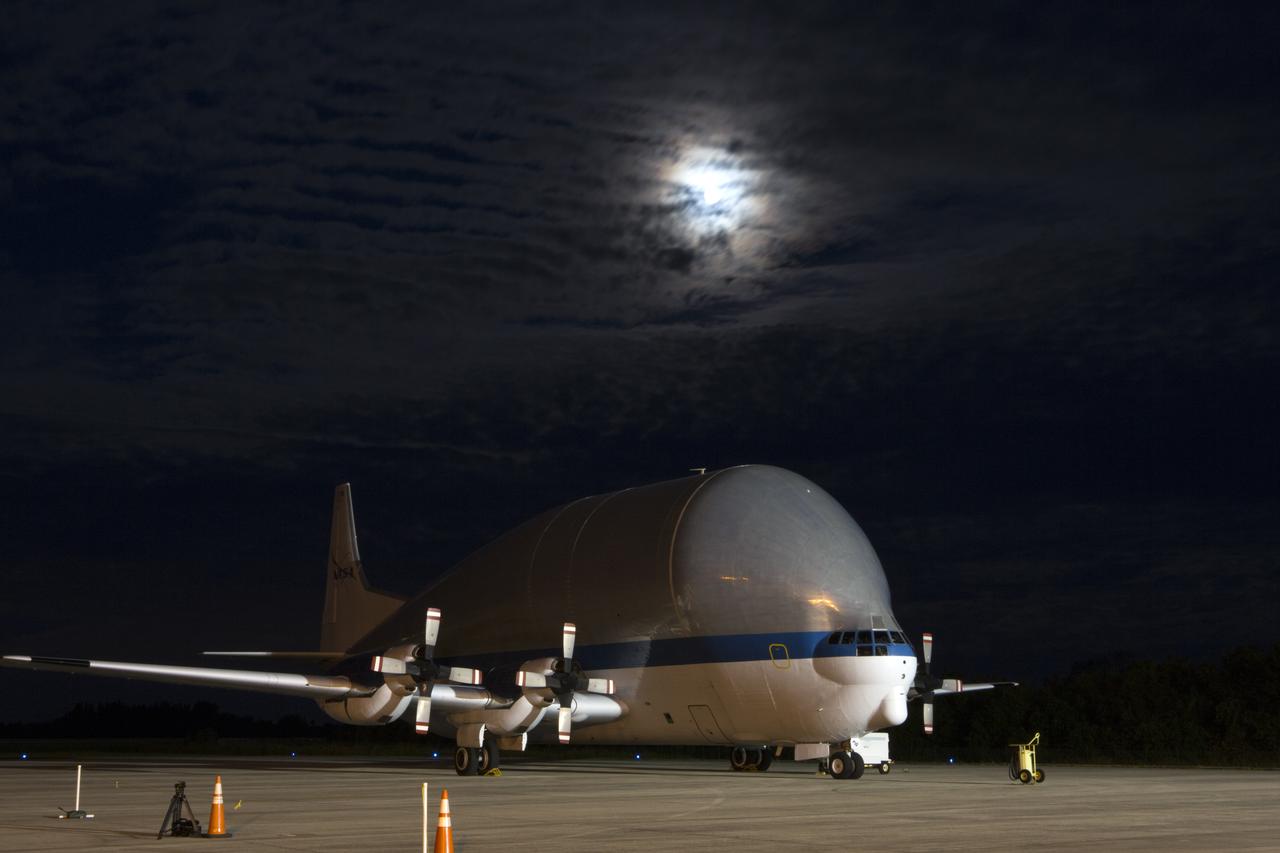
NASA’s Super Guppy aircraft, carrying the Orion crew module structural test article (STA), arrives at the Shuttle Landing Facility operated by Space Florida at NASA’s Kennedy Space Center in Florida. The STA will be offloaded and transported to the Neil Armstrong Operations and Checkout Building high bay for further testing. The Orion spacecraft will launch atop NASA’s Space Launch System rocket on EM-1, its first deep space mission, in late 2018.

A truck with a specialized transporter drives out of the cargo hold of an Air Force C-5 Galaxy transport plane at the Shuttle Landing Facility at NASA's Kennedy Space Center in Florida to deliver the GOES-R spacecraft for launch processing. The GOES series are weather satellites operated by NOAA to enhance forecasts. The spacecraft is to launch aboard a United Launch Alliance Atlas V rocket in November.
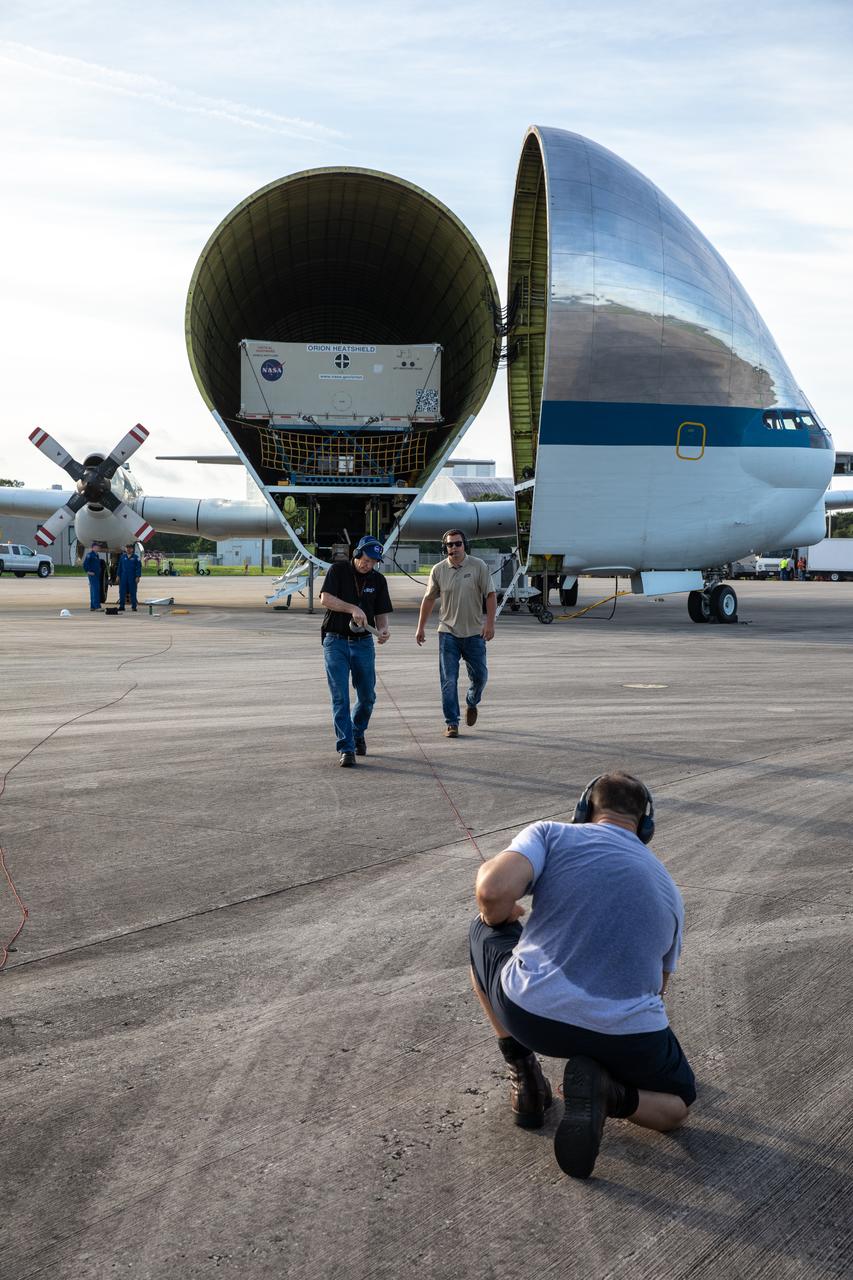
The heat shield for Orion’s Artemis 2 mission, NASA’s first crewed mission, arrives in its shipping container aboard NASA’s Super Guppy aircraft at the agency’s Kennedy Space Center Shuttle Landing Facility in Florida on July 9, 2019. The heat shield, measuring roughly 16 feet in diameter, will protect astronauts upon re-entry on the second mission of Artemis. The heat shield arrived from Lockheed Martin’s manufacturing facility near Denver. It will be offloaded and delivered to the Neil Armstrong Operations and Checkout facility high bay. The heat shield is a base titanium truss structure. Over the next several months, technicians will apply Avcoat, an ablative material that will provide the thermal protection. Artemis 2 will confirm all of the spacecraft’s systems operate as designed in the actual environment of deep space with astronauts aboard.
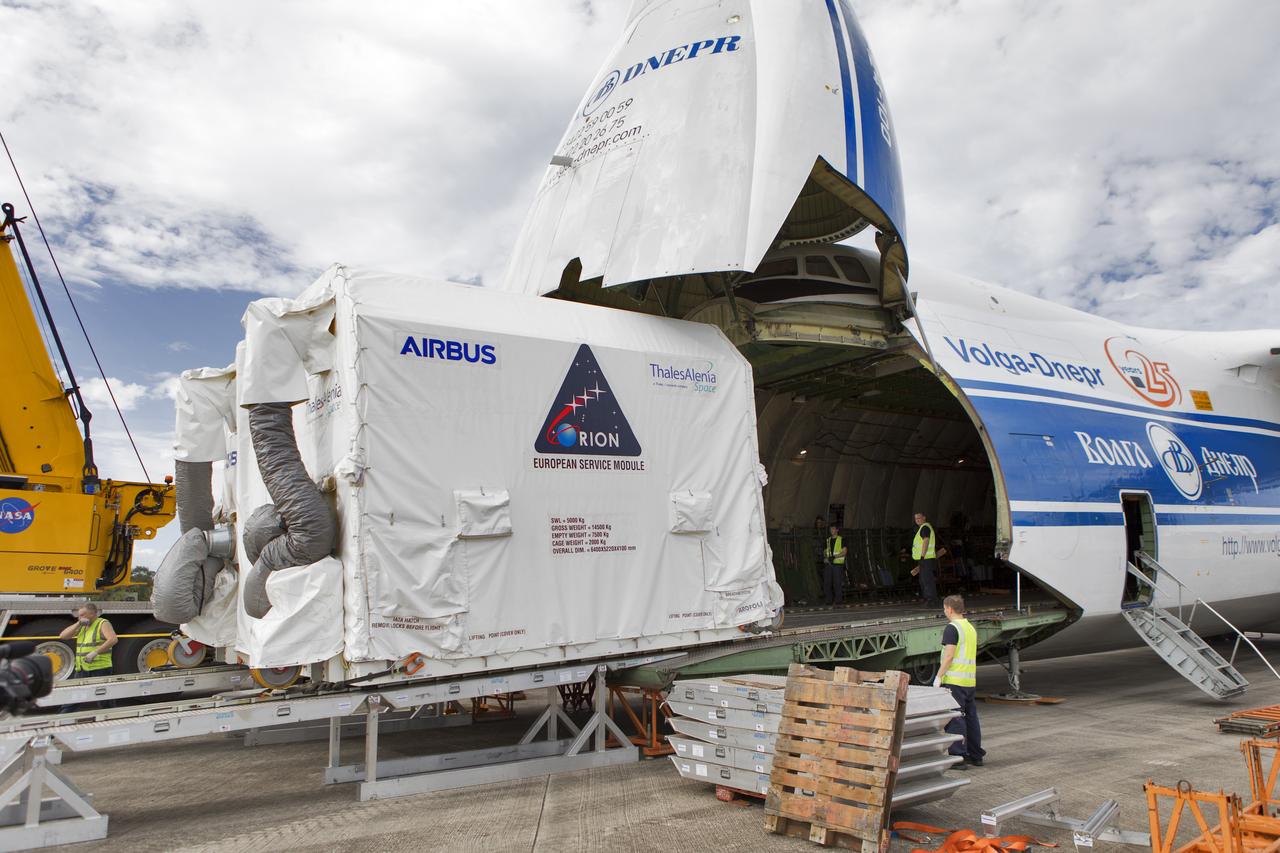
The shipping container holding the European Service Module (ESM) is moved out of the cargo hold of the Antonov cargo aircraft at the Shuttle Landing Facility at NASA's Kennedy Space Center in Florida on Nov. 6, 2018. The ESM, built by the European Space Agency, will supply the main propulsion system and power to the Orion spacecraft for Exploration Mission-1 (EM-1), a mission to the Moon. The ESM also will house air and water for astronauts on future missions. EM-1 will be an uncrewed flight test that will provide a foundation for human deep space exploration to destinations beyond Earth orbit. EM-1 will be the first integrated test of NASA's Space Launch System, Orion and the ground systems at Kennedy.
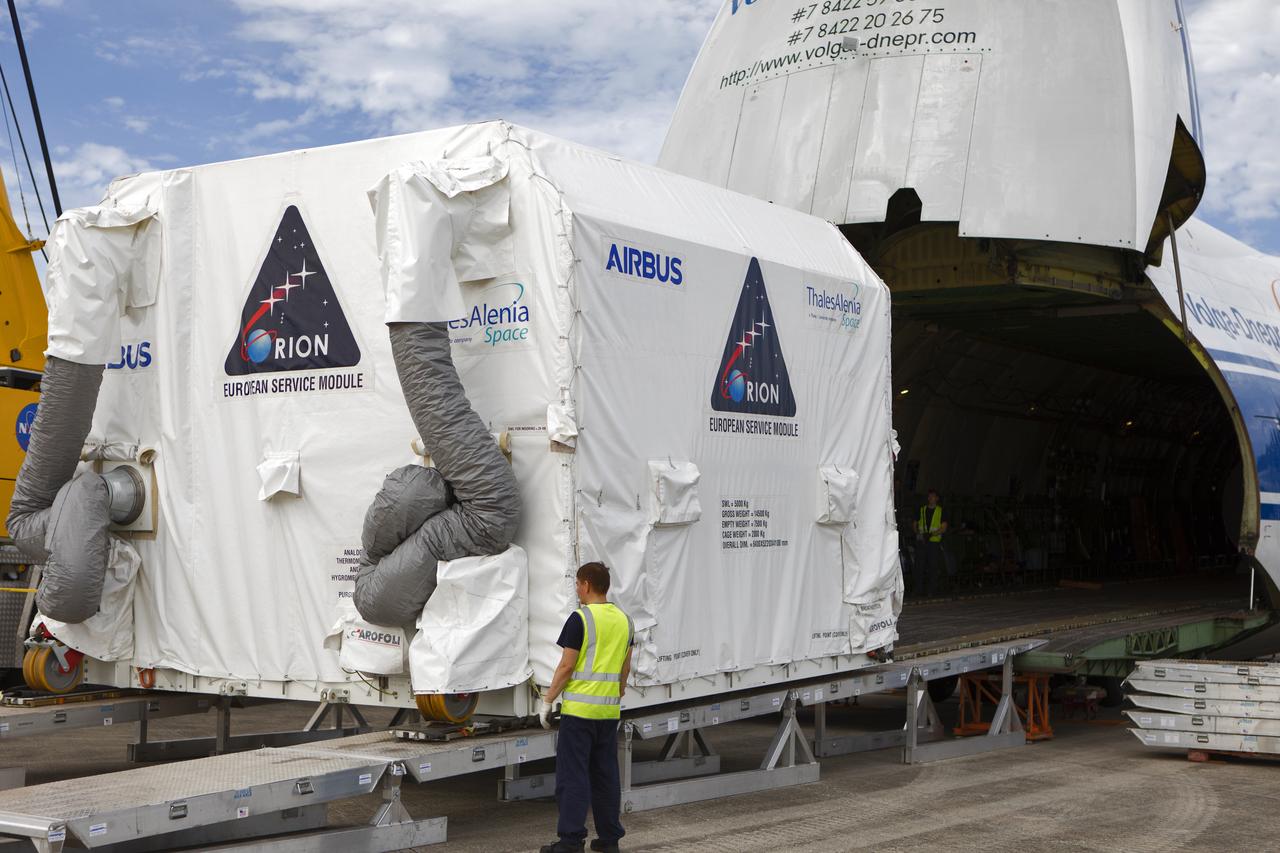
The shipping container holding the European Service Module (ESM) is moved out of the cargo hold of the Antonov cargo aircraft at the Shuttle Landing Facility at NASA's Kennedy Space Center in Florida on Nov. 6, 2018. The ESM, built by the European Space Agency, will supply the main propulsion system and power to the Orion spacecraft for Exploration Mission-1 (EM-1), a mission to the Moon. The ESM also will house air and water for astronauts on future missions. EM-1 will be an uncrewed flight test that will provide a foundation for human deep space exploration to destinations beyond Earth orbit. EM-1 will be the first integrated test of NASA's Space Launch System, Orion and the ground systems at Kennedy.
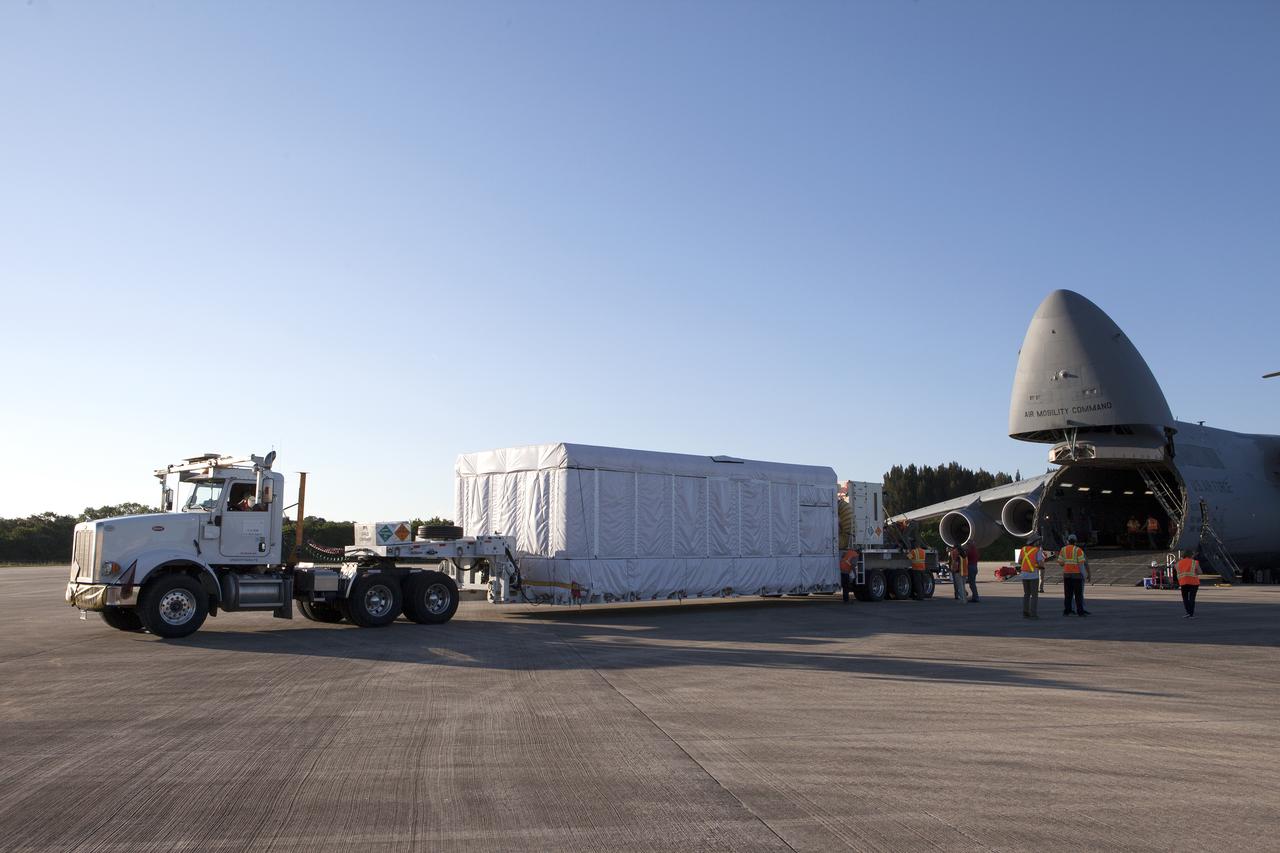
A truck with a specialized transporter drives away from an Air Force C-5 Galaxy transport plane at the Shuttle Landing Facility at NASA's Kennedy Space Center in Florida to deliver the GOES-R spacecraft for launch processing. The GOES series are weather satellites operated by NOAA to enhance forecasts. The spacecraft is to launch aboard a United Launch Alliance Atlas V rocket in November.
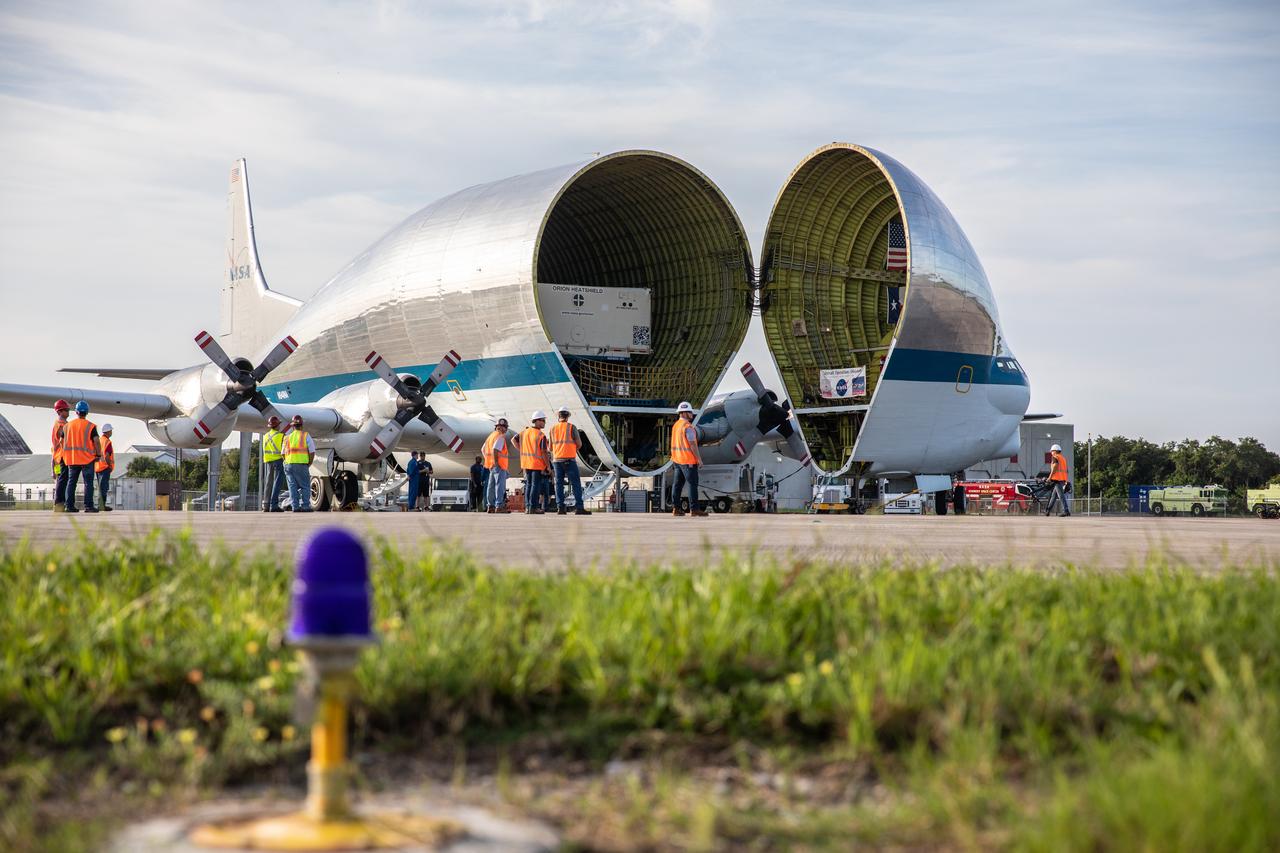
The heat shield for Orion’s Artemis 2 mission, NASA’s first crewed mission, arrives in its shipping container aboard NASA’s Super Guppy aircraft at the agency’s Kennedy Space Center Shuttle Landing Facility in Florida on July 9, 2019. The heat shield, measuring roughly 16 feet in diameter, will protect astronauts upon re-entry on the second mission of Artemis. The heat shield arrived from Lockheed Martin’s manufacturing facility near Denver. It will be offloaded and delivered to the Neil Armstrong Operations and Checkout facility high bay. The heat shield is a base titanium truss structure. Over the next several months, technicians will apply Avcoat, an ablative material that will provide the thermal protection. Artemis 2 will confirm all of the spacecraft’s systems operate as designed in the actual environment of deep space with astronauts aboard.
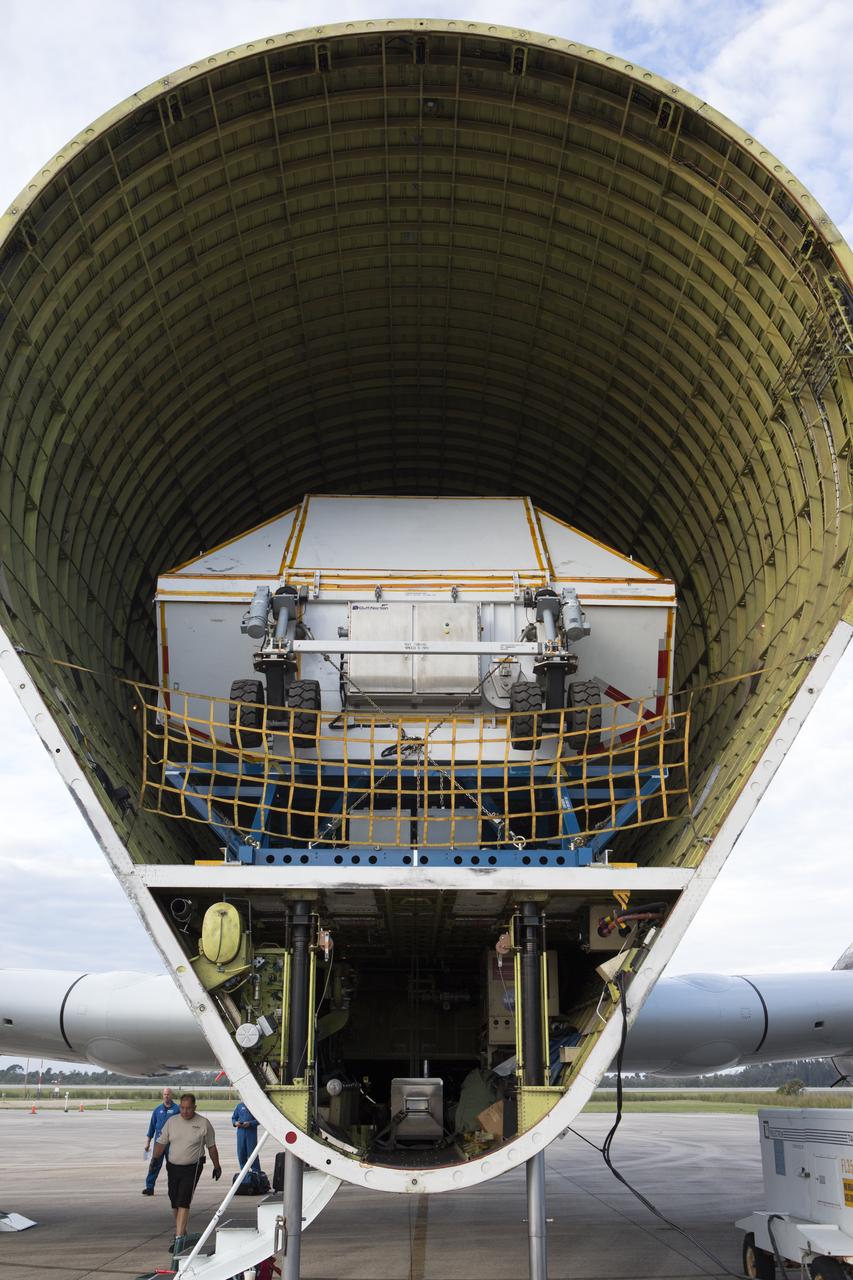
NASA’s Super Guppy aircraft, carrying the Orion crew module structural test article, arrived at the Shuttle Landing Facility operated by Space Florida at NASA’s Kennedy Space Center in Florida. The unique aircraft has been opened to reveal the container holding the STA. The test article will be transported to the Neil Armstrong Operations and Checkout Building high bay for further testing. The Orion spacecraft will launch atop NASA’s Space Launch System rocket on EM-1, its first deep space mission, in late 2018.
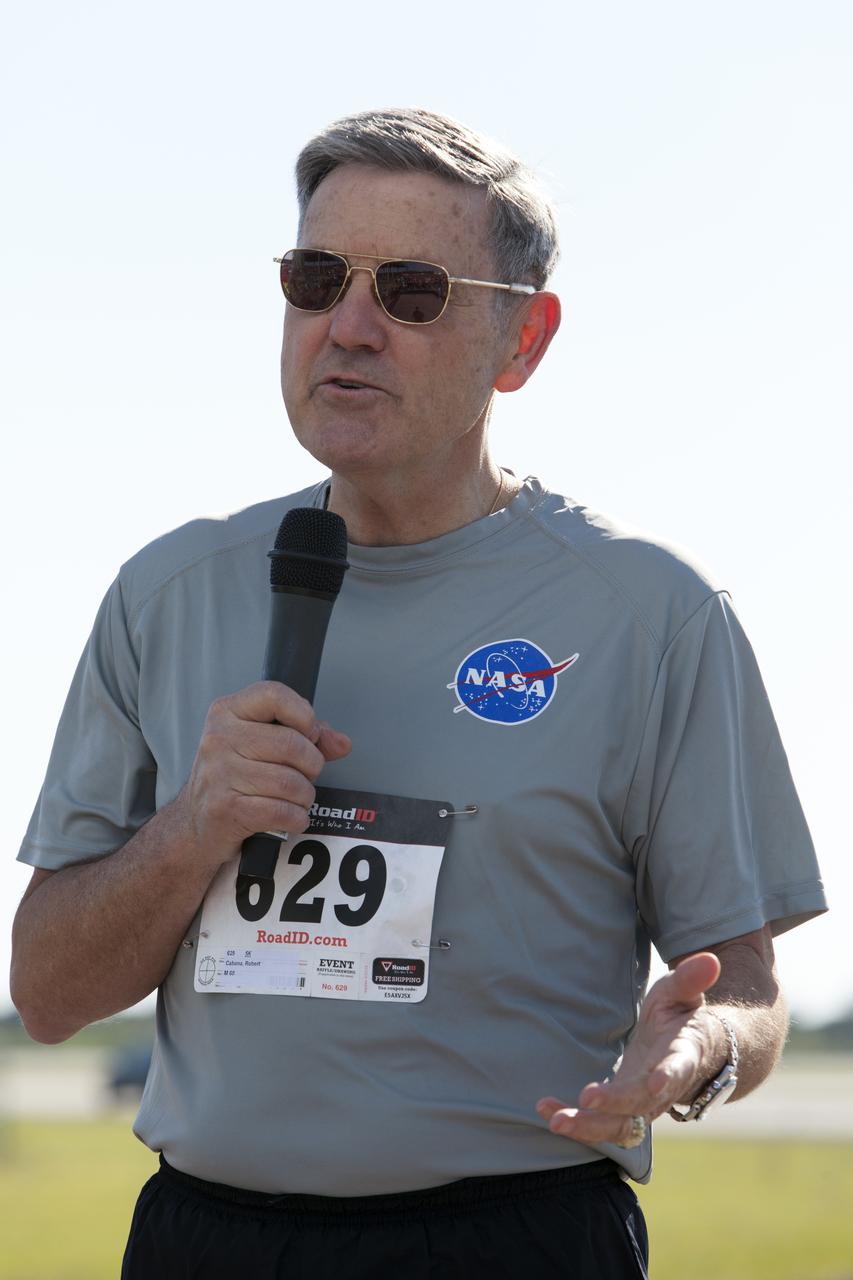
Kennedy Space Center Director Bob Cabana speaks to center employees and guests before the KSC Walk Run on the Shuttle Landing Facility runway. The annual event, part of Kennedy’s Safety and Health Days, offers 10K, 5K and 2-mile options in the spirit of friendly competition.
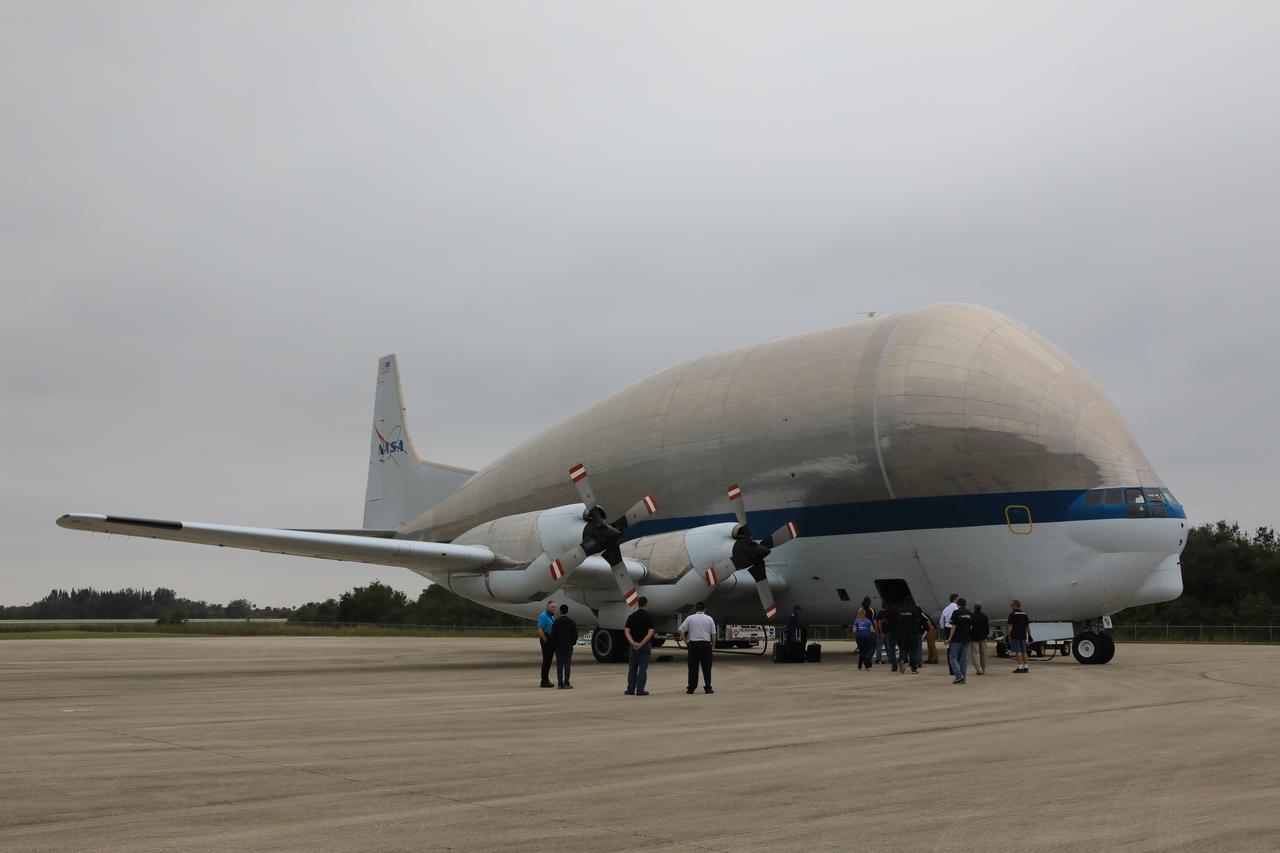
NASA’s Super Guppy aircraft arrives on the tarmac after touching down at the Shuttle Landing Facility at the agency’s Kennedy Space Center in Florida. The guppy is carrying the Orion crew module structural test article (STA). The STA will be offloaded and transported to the Neil Armstrong Operations and Checkout Building high bay for further testing. Photo credit: NASA/Kim Shiflett
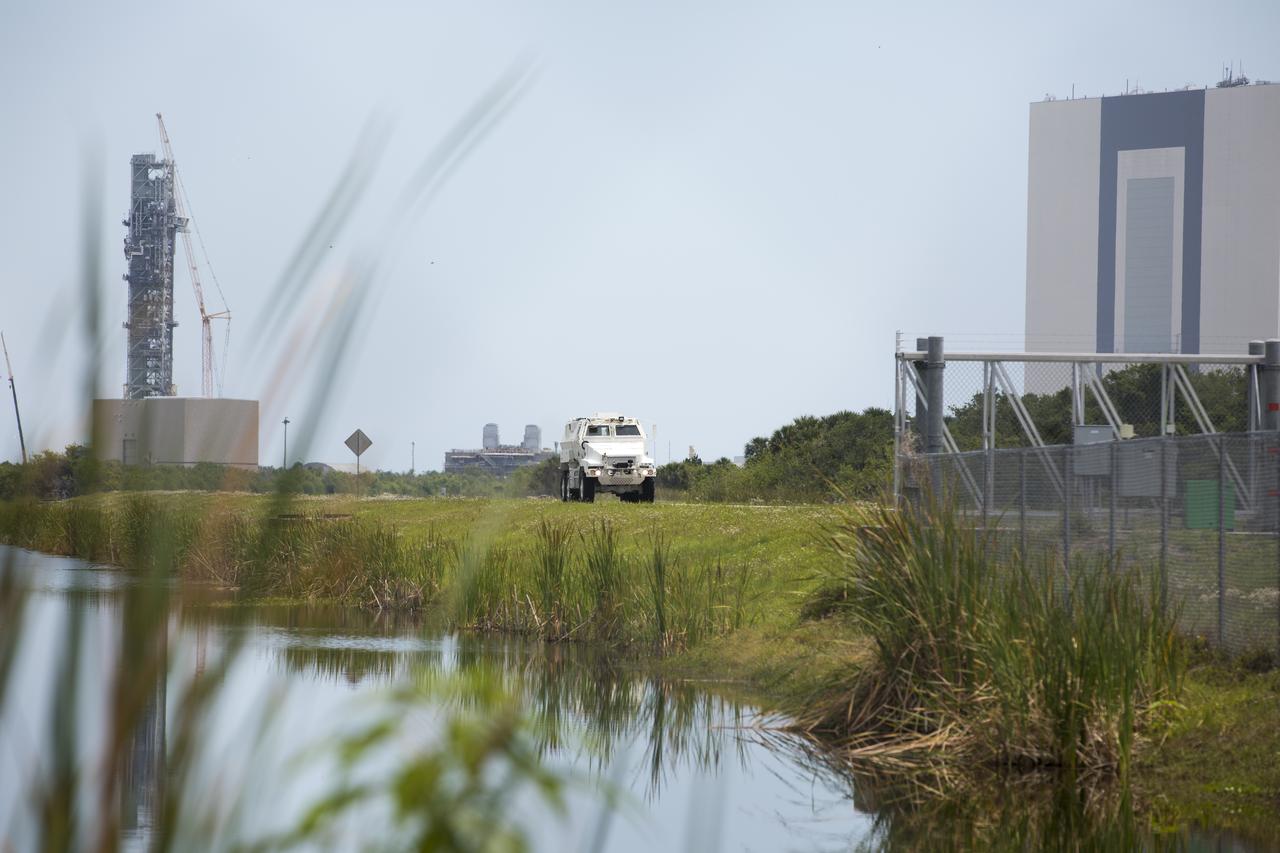
An MRAP armored vehicle goes through a training run on the Shuttle Landing Facility to support NASA's Commercial Crew Program at the agency's Kennedy Space Center in Florida. The 45,000-pound mine-resistant. The MRAP offers a mobile bunker for astronauts and ground crews in the unlikely event they have to get away from the launch pad quickly in an emergency.
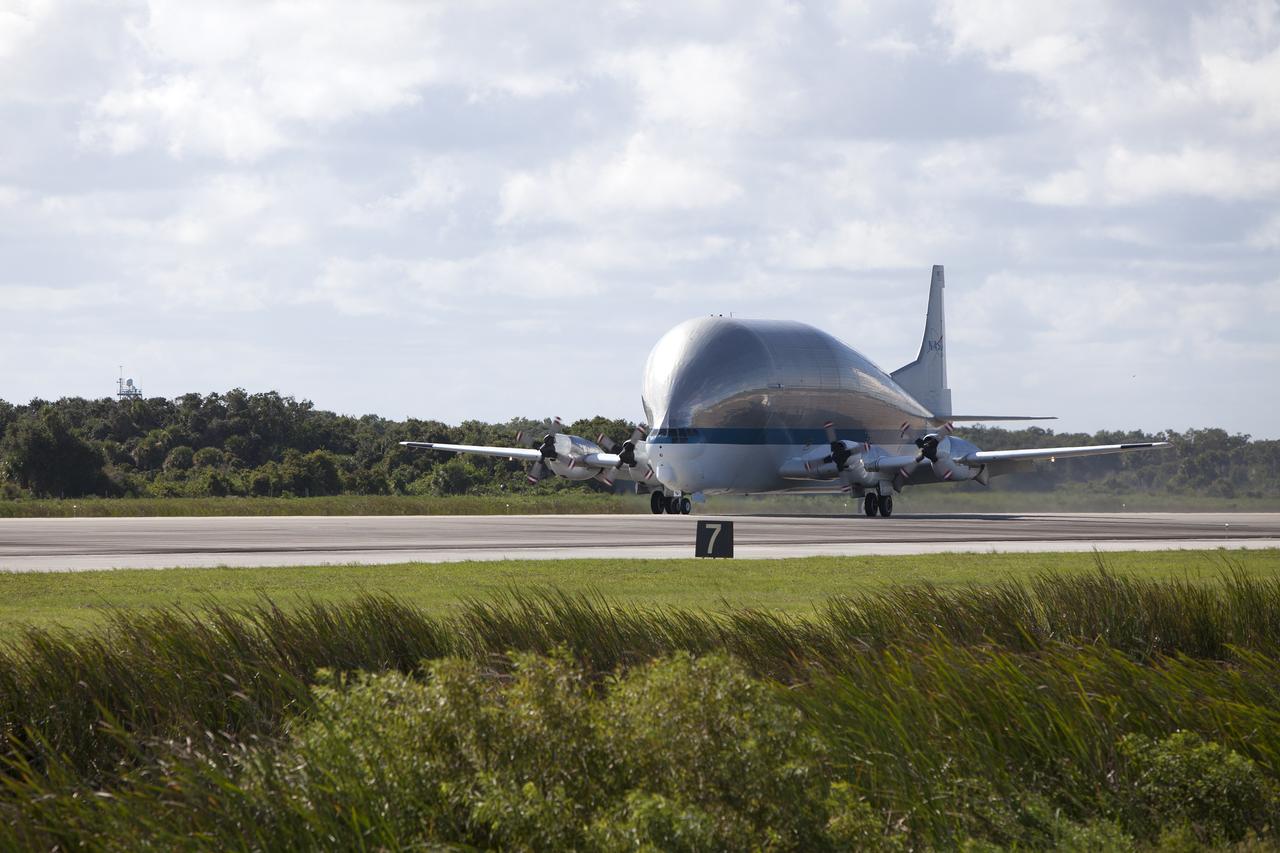
NASA’s Super Guppy aircraft touched down at the Shuttle Landing Facility, managed and operated by Space Florida, at the agency’s Kennedy Space Center in Florida, carrying the heat shield for Exploration Mission 1 (EM-1). The heat shield will be offloaded and transported to the Neil Armstrong Operations and Checkout Building high bay for processing. The heat shield arrived from manufacturer Lockheed Martin in Denver. The Orion spacecraft will launch atop NASA’s Space Launch System rocket on EM-1, an uncrewed test flight, in 2018.
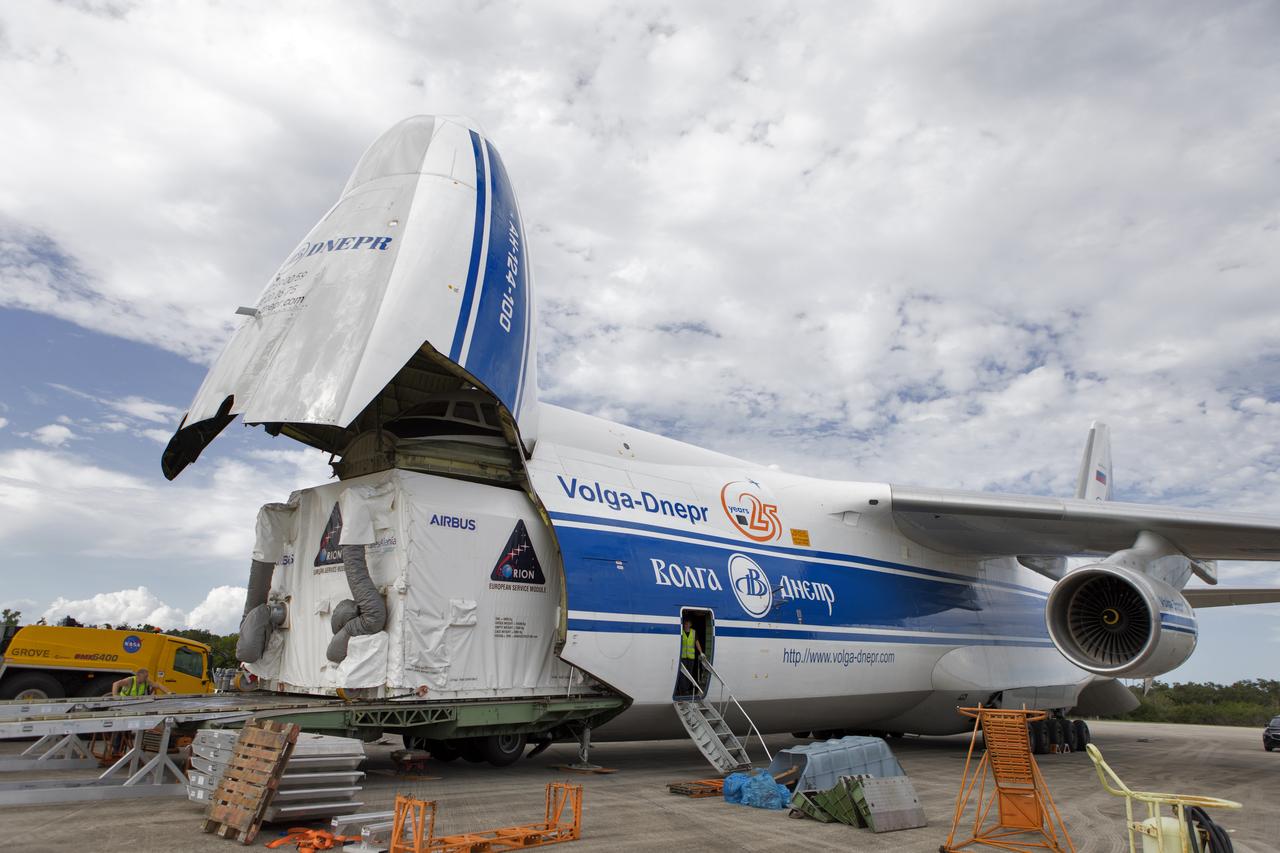
The shipping container holding the European Service Module (ESM) is moved out of the cargo hold of the Antonov cargo aircraft at the Shuttle Landing Facility at NASA's Kennedy Space Center in Florida on Nov. 6, 2018. The ESM, built by the European Space Agency, will supply the main propulsion system and power to the Orion spacecraft for Exploration Mission-1 (EM-1), a mission to the Moon. The ESM also will house air and water for astronauts on future missions. EM-1 will be an uncrewed flight test that will provide a foundation for human deep space exploration to destinations beyond Earth orbit. EM-1 will be the first integrated test of NASA's Space Launch System, Orion and the ground systems at Kennedy.
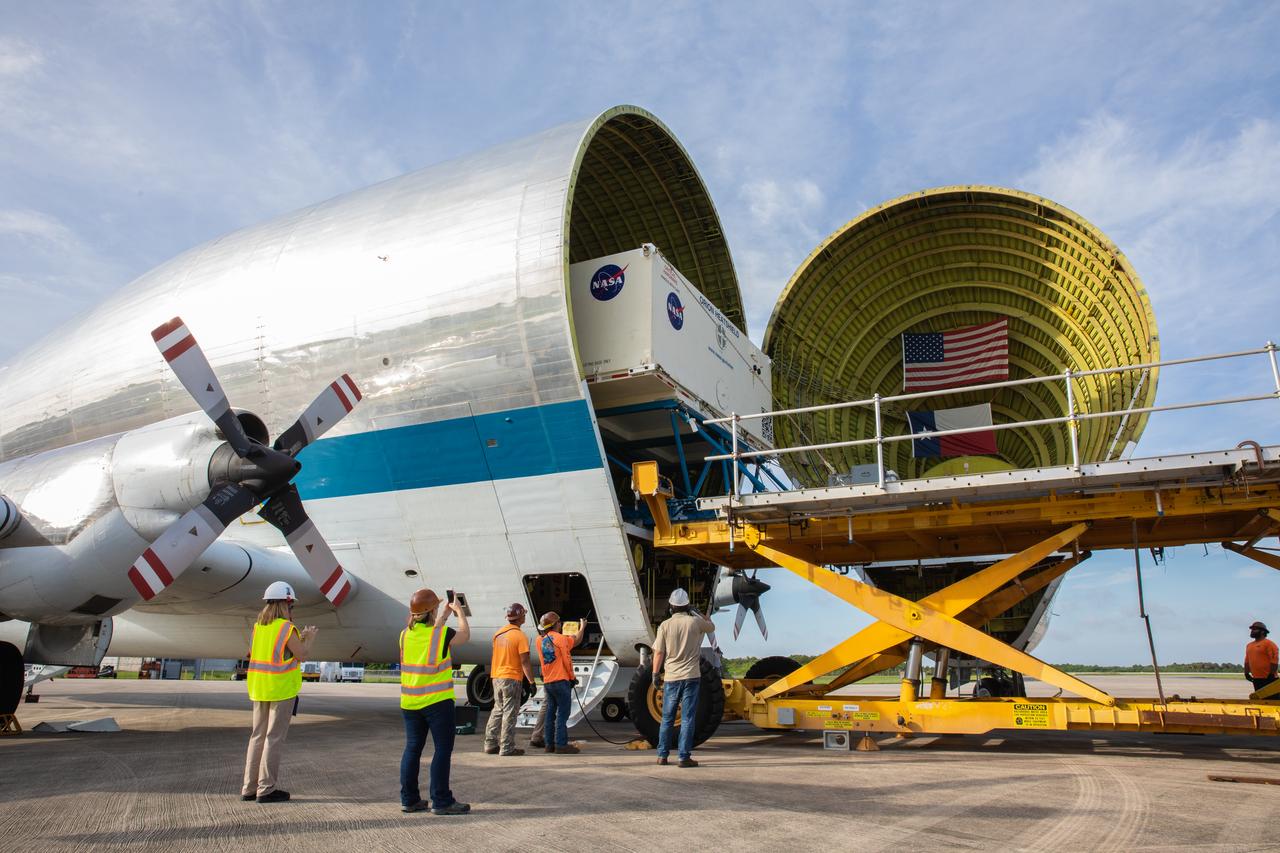
Preparations are underway to unload the heat shield for Orion’s Artemis 2 mission, NASA’s first crewed mission, in its shipping container from NASA’s Super Guppy aircraft at the agency’s Kennedy Space Center Shuttle Landing Facility in Florida on July 9, 2019. The heat shield, measuring roughly 16 feet in diameter, will protect astronauts upon re-entry on the second mission of Artemis. The heat shield arrived from Lockheed Martin’s manufacturing facility near Denver. It will be delivered to the Neil Armstrong Operations and Checkout facility high bay. The heat shield is a base titanium truss structure. Over the next several months, technicians will apply Avcoat, an ablative material that will provide the thermal protection. Artemis 2 will confirm all of the spacecraft’s systems operate as designed in the actual environment of deep space with astronauts aboard.
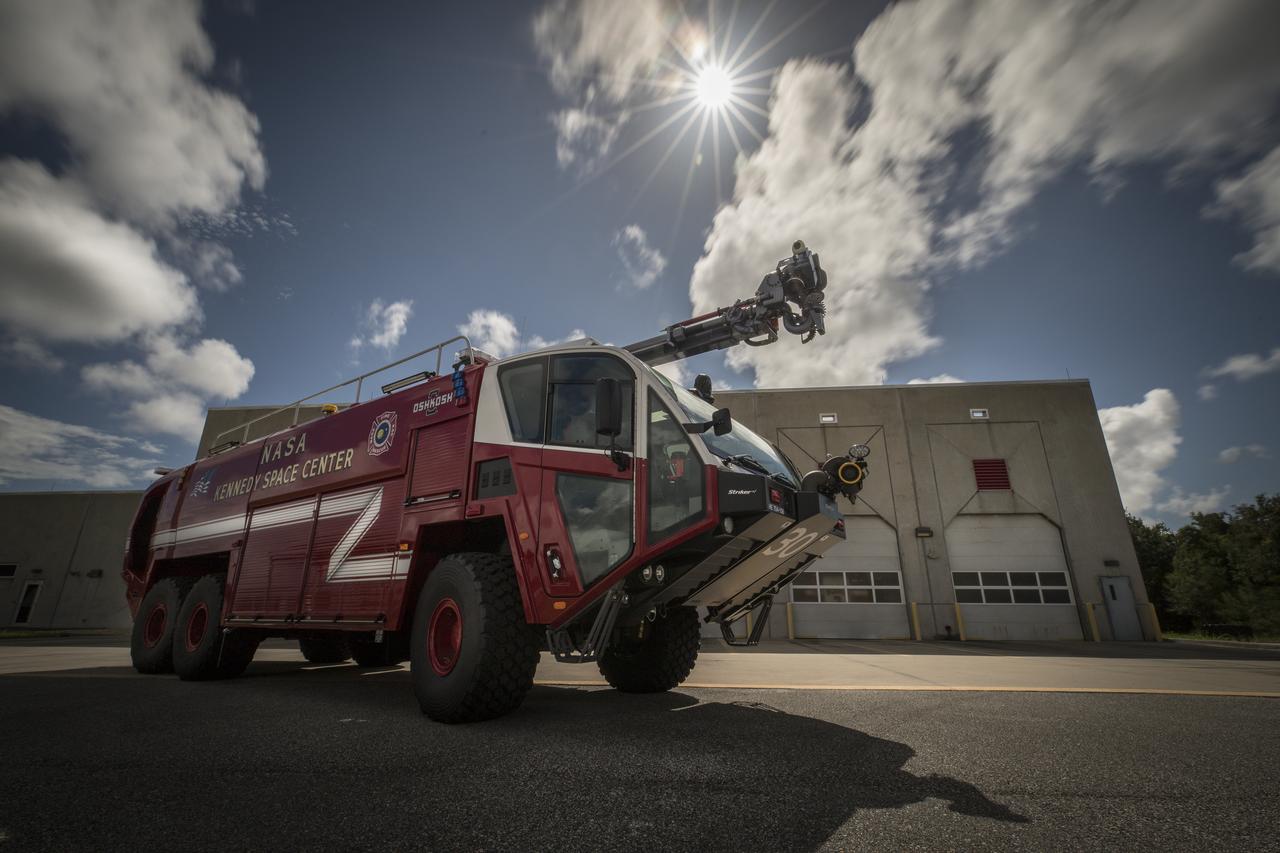
A new Aircraft Rescue and Fire Fighting vehicle is photographed in front of Fire Station No. 2 near the Shuttle Landing Facility runway at NASA’s Kennedy Space Center in Florida. The state-of-the-art truck replaces a 28-year-old vehicle. Kennedy is upgrading its fleet of emergency vehicles to enhance its safety and security posture at the growing, multi-user spaceport.

Members of NASA Kennedy Space Center's Flight Operations team prepare for a rehearsal of a helicopter crash-landing to test new and updated emergency procedures. Called the Aircraft Mishap Preparedness and Contingency Plan, the operation was designed to validate several updated techniques the center's first responders would follow, should they ever need to rescue a crew in case of a real accident. The mishap exercise took place at the center's Shuttle Landing Facility.
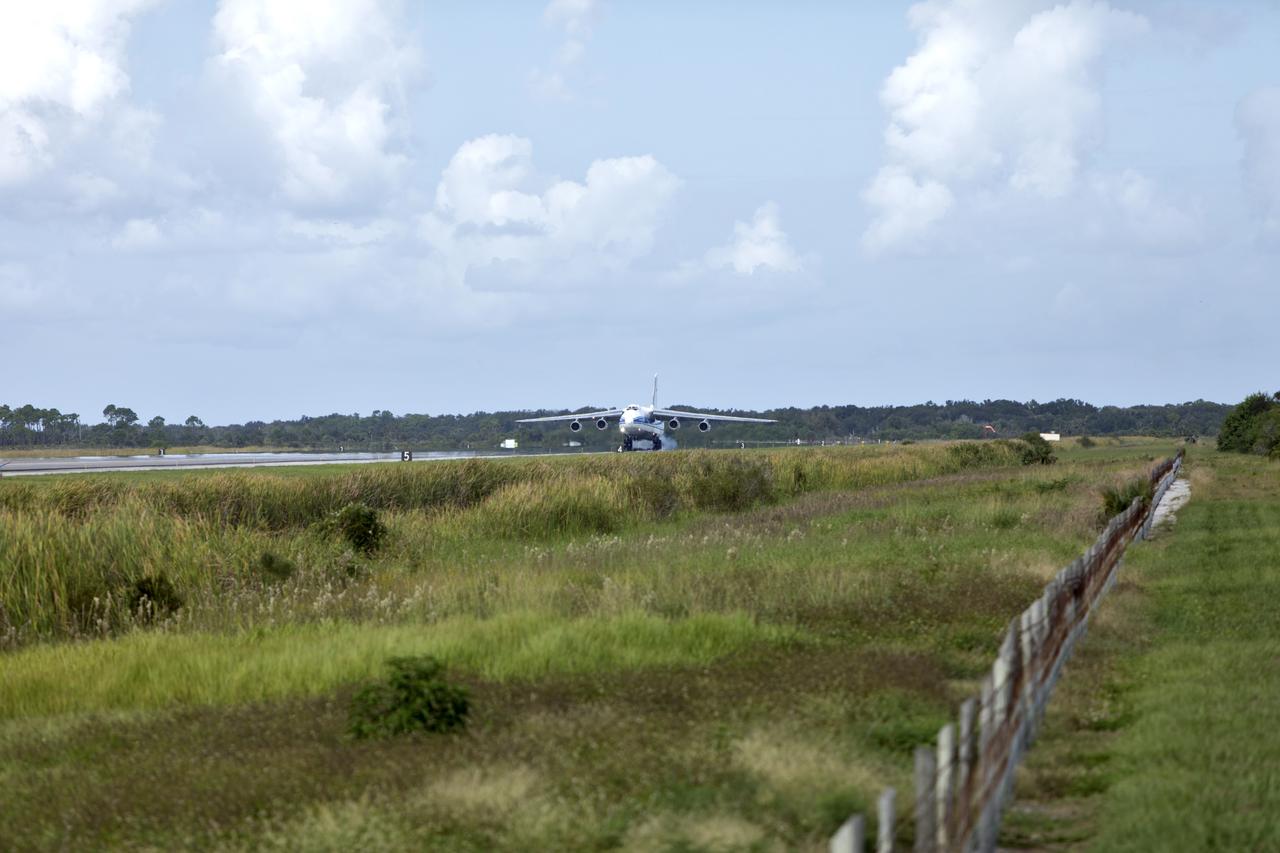
The Antonov cargo aircraft touches down at the Shuttle Landing Facility at NASA's Kennedy Space Center in Florida on Nov. 6, 2018, carrying the European Service Module (ESM) for Exploration Mission-1 (EM-1). The ESM, built by the European Space Agency, will supply the main propulsion system and power to the Orion spacecraft for Exploration Mission-1 (EM-1), a mission to the Moon. The ESM also will house air and water for astronauts on future missions. EM-1 will be an uncrewed flight test that will provide a foundation for human deep space exploration to destinations beyond Earth orbit. EM-1 will be the first integrated test of NASA's Space Launch System, Orion and the ground systems at Kennedy.
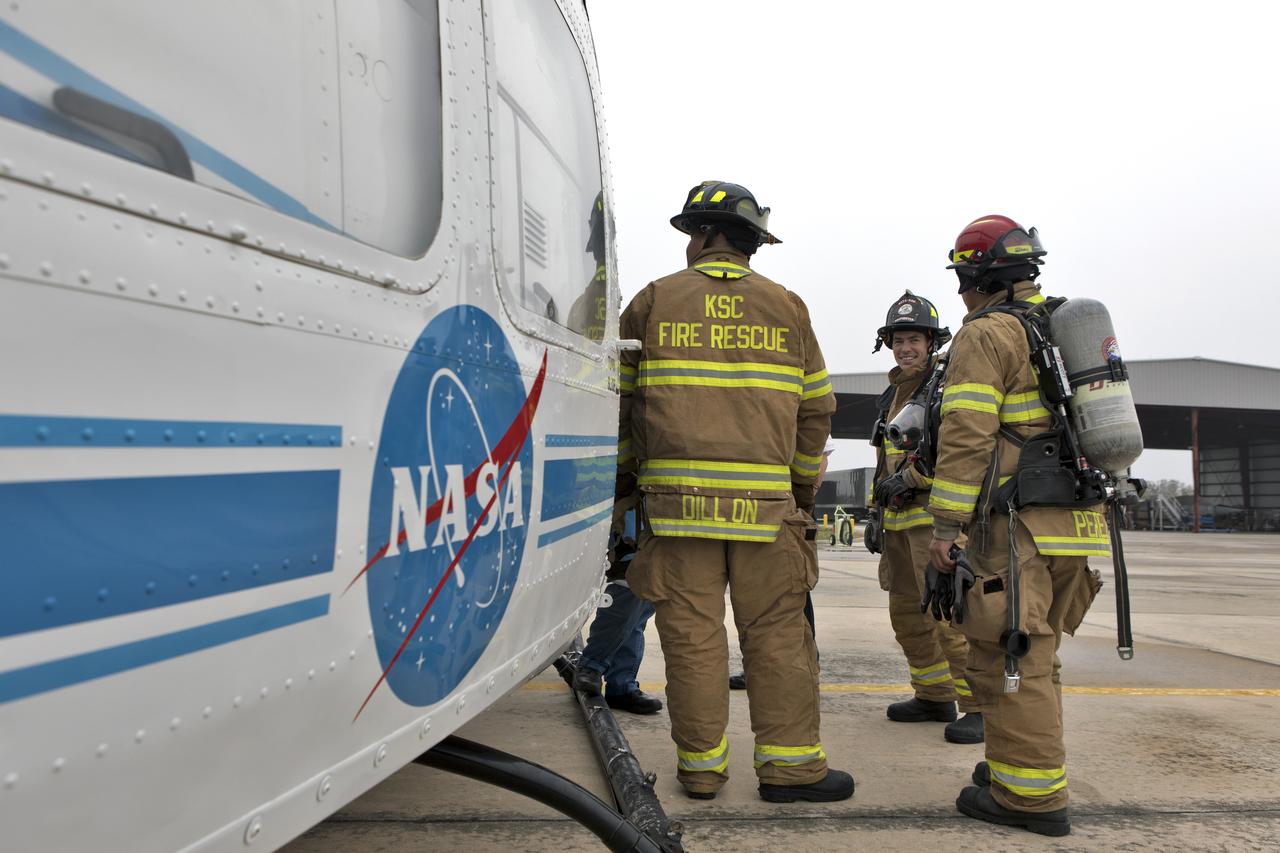
Members of NASA Kennedy Space Center's Flight Operations team prepare for a rehearsal of a helicopter crash-landing to test new and updated emergency procedures. Called the Aircraft Mishap Preparedness and Contingency Plan, the operation was designed to validate several updated techniques the center's first responders would follow, should they ever need to rescue a crew in case of a real accident. The mishap exercise took place at the center's Shuttle Landing Facility.
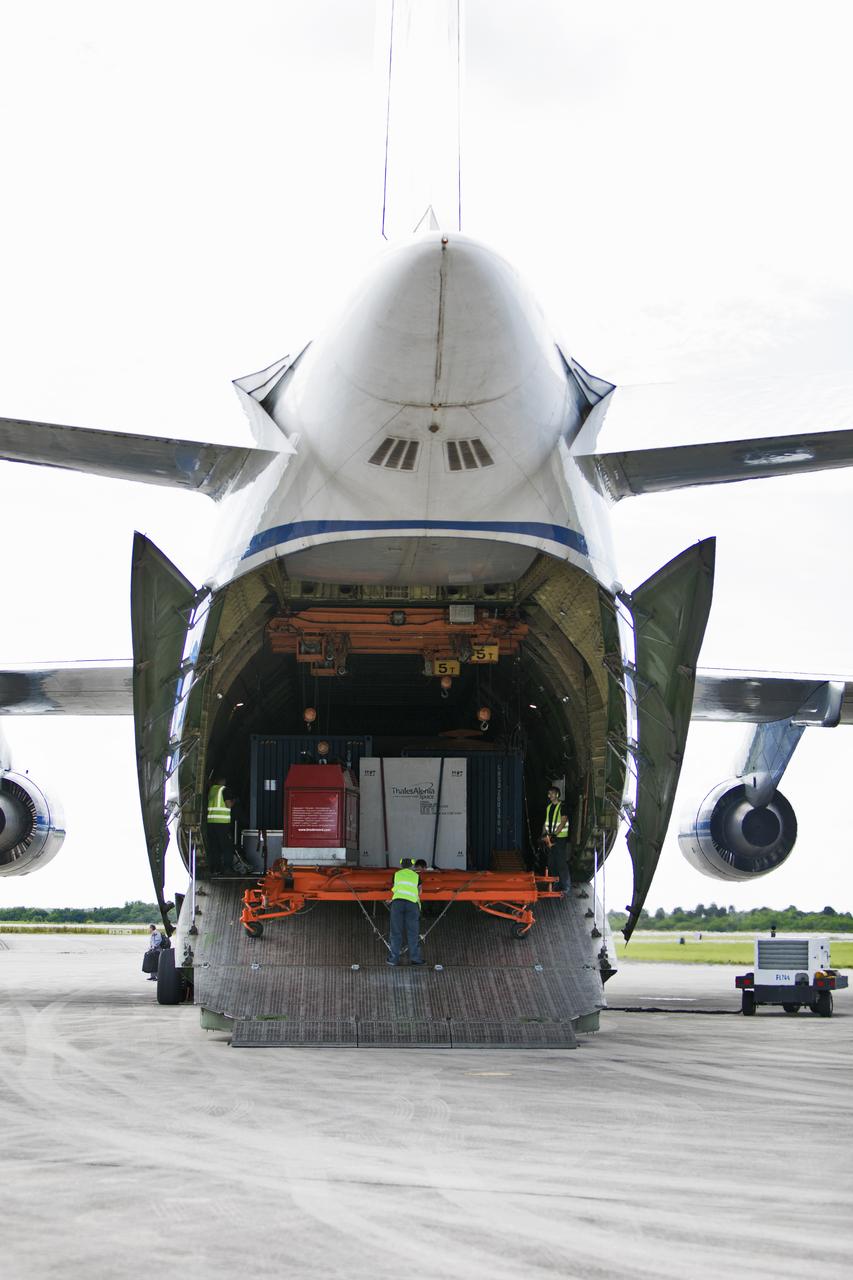
The Antonov cargo aircraft is open on the tarmac at the Shuttle Landing Facility at NASA's Kennedy Space Center in Florida on Nov. 6, 2018. The European Service Module (ESM) for Exploration Mission-1 (EM-1) will be offloaded from the cargo hold. The ESM, built by the European Space Agency, will supply the main propulsion system and power to the Orion spacecraft for Exploration Mission-1 (EM-1), a mission to the Moon. The ESM also will house air and water for astronauts on future missions. EM-1 will be an uncrewed flight test that will provide a foundation for human deep space exploration to destinations beyond Earth orbit. EM-1 will be the first integrated test of NASA's Space Launch System, Orion and the ground systems at Kennedy.
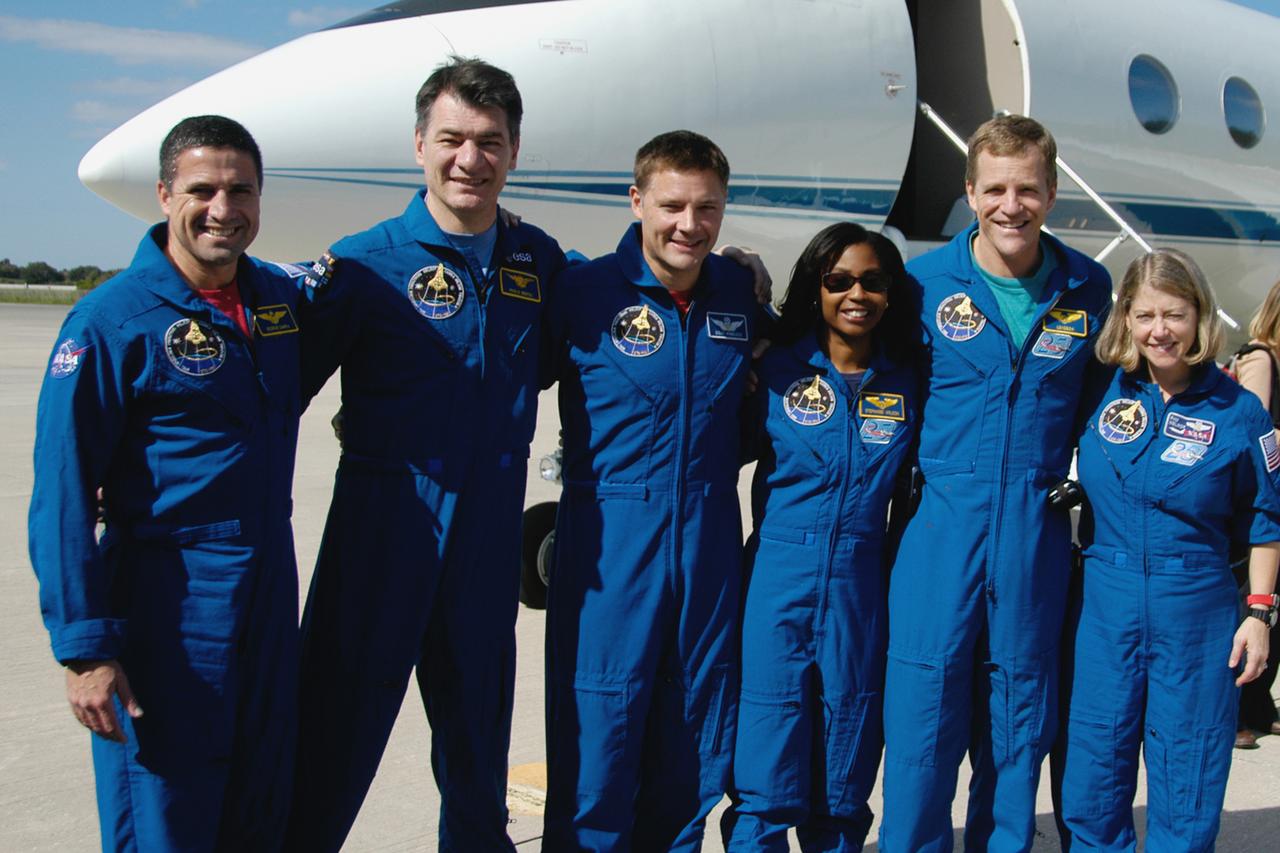
The STS-120 crew members are ready for their return to flight to Houston. From left are Pilot George Zamka, Mission Specialists Paolo Nespoli, Doug Wheelock, Stephanie Wilson and Scott Parazynski, and Commander Pamela Melroy. A welcoming ceremony for the crew is planned at NASA's Hangar 276 on the south end of Ellington Field in Texas. On the 15-day mission, the STS-120 crew continued the construction of the station with the installation of the Harmony Node 2 module and the relocation of the P6 truss. They landed Nov. 7 at NASA's Kennedy Space Center.
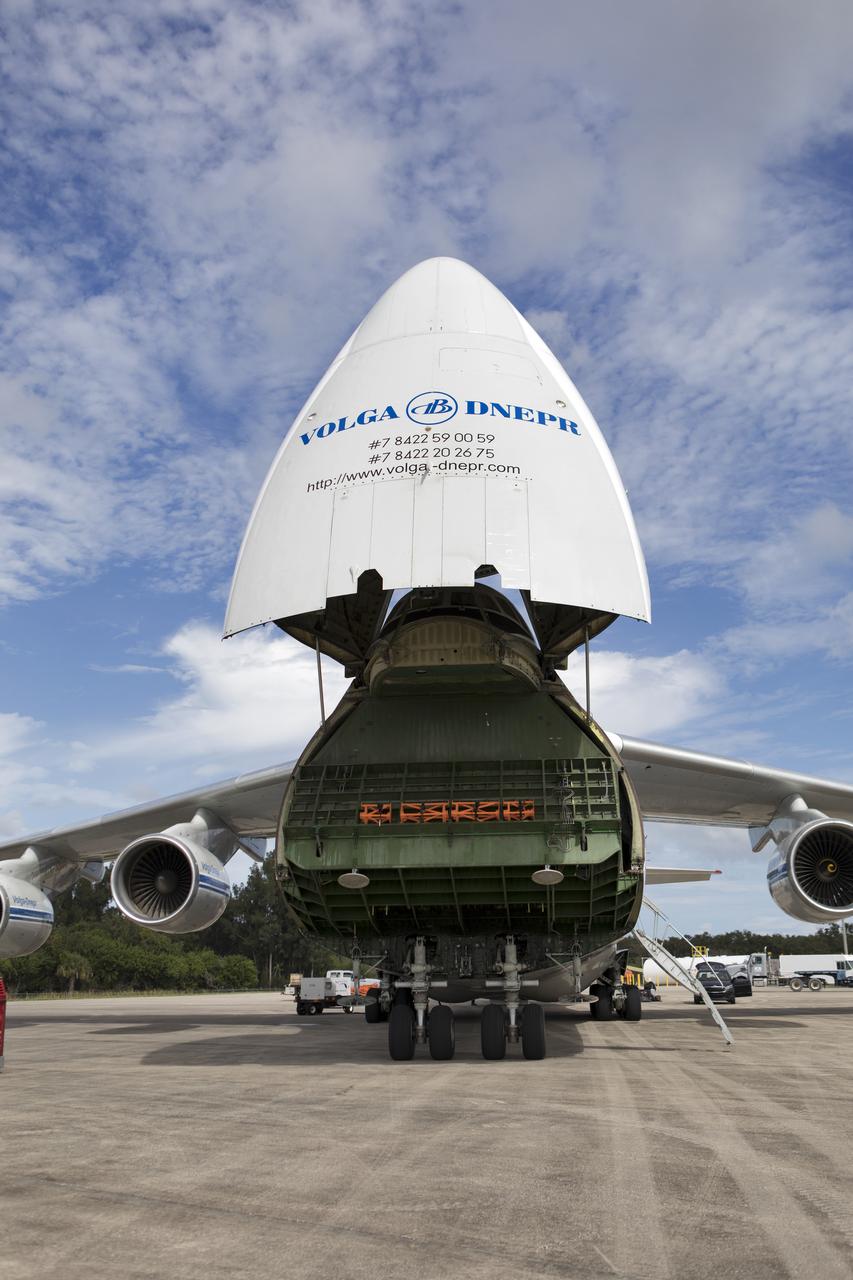
The Antonov cargo aircraft is open on the tarmac at the Shuttle Landing Facility at NASA's Kennedy Space Center in Florida on Nov. 6, 2018. The European Service Module (ESM) for Exploration Mission-1 (EM-1) will be offloaded from the cargo hold. The ESM, built by the European Space Agency, will supply the main propulsion system and power to the Orion spacecraft for Exploration Mission-1 (EM-1), a mission to the Moon. The ESM also will house air and water for astronauts on future missions. EM-1 will be an uncrewed flight test that will provide a foundation for human deep space exploration to destinations beyond Earth orbit. EM-1 will be the first integrated test of NASA's Space Launch System, Orion and the ground systems at Kennedy.
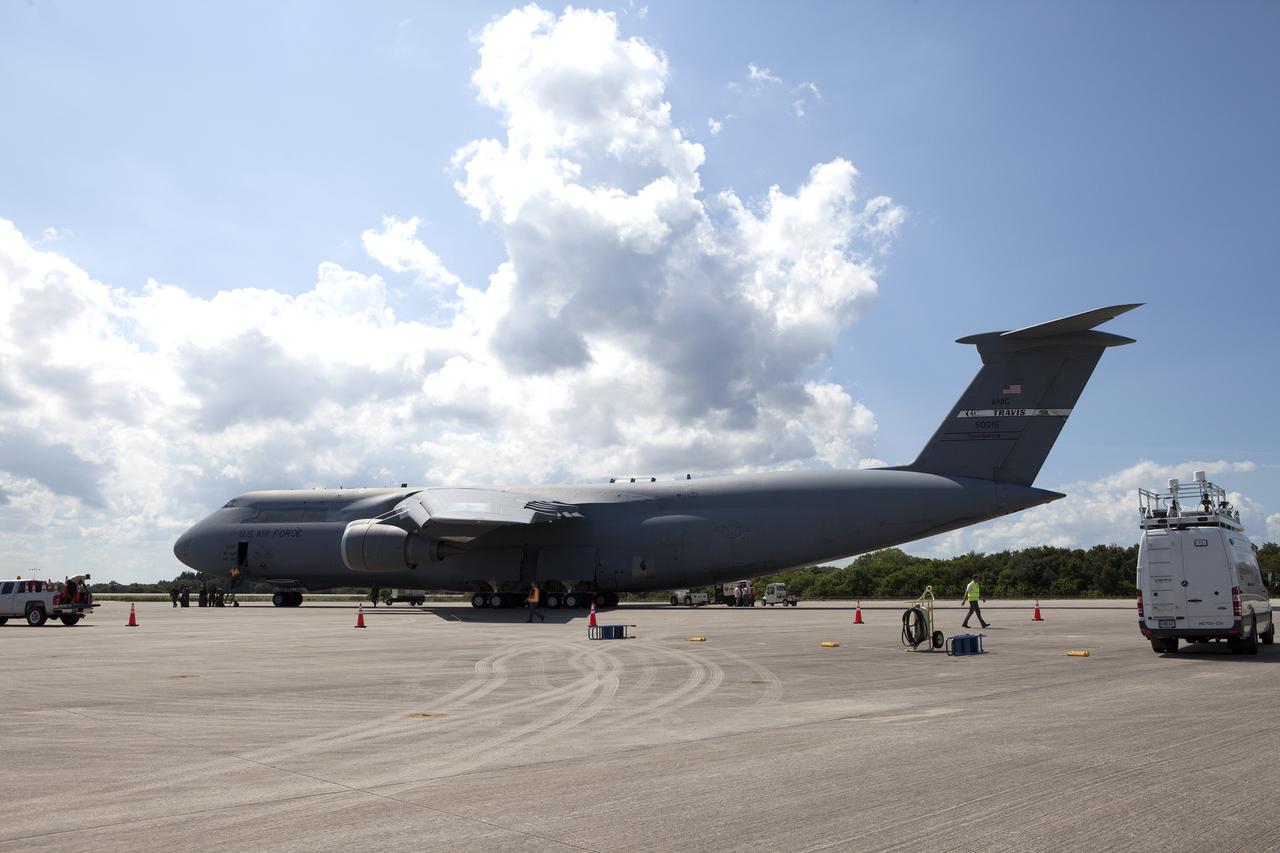
An Air Force C-5 Galaxy transport plane rolls to a stop at the Shuttle Landing Facility at NASA's Kennedy Space Center in Florida to deliver the GOES-R spacecraft for launch processing. The GOES series are weather satellites operated by NOAA to enhance forecasts. The spacecraft is to launch aboard a United Launch Alliance Atlas V rocket in November.
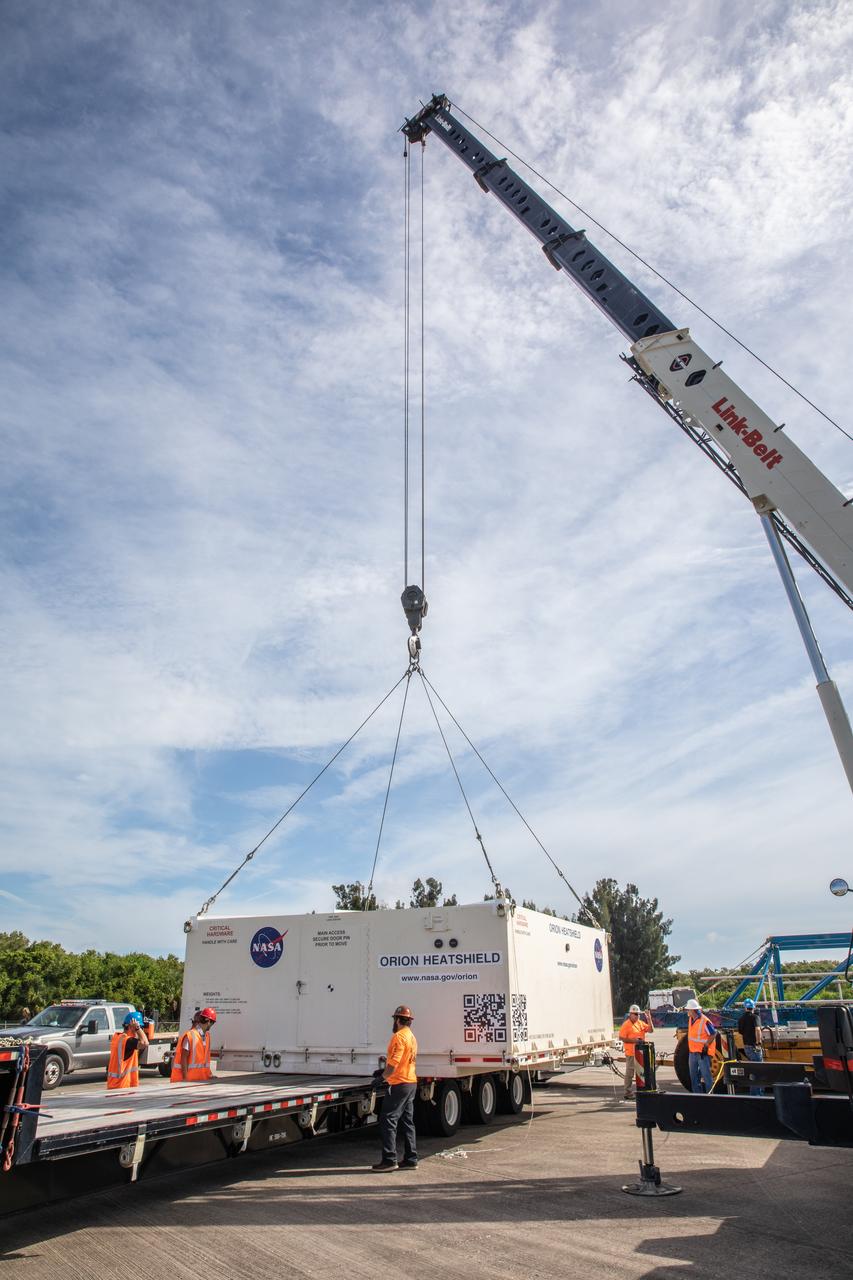
Technicians help secure the shipping container carrying the heat shield for Orion’s Artemis 2 mission, NASA’s first crewed mission, onto a transporter at the agency’s Kennedy Space Center Shuttle Landing Facility in Florida on July 9, 2019. The heat shield, measuring roughly 16 feet in diameter, will protect astronauts upon re-entry on the second mission of Artemis. The heat shield arrived from Lockheed Martin’s manufacturing facility near Denver aboard NASA’s Super Guppy Aircraft. It will be delivered to the Neil Armstrong Operations and Checkout facility high bay. The heat shield is a base titanium truss structure. Over the next several months, technicians will apply Avcoat, an ablative material that will provide the thermal protection. Artemis 2 will confirm all of the spacecraft’s systems operate as designed in the actual environment of deep space with astronauts aboard.
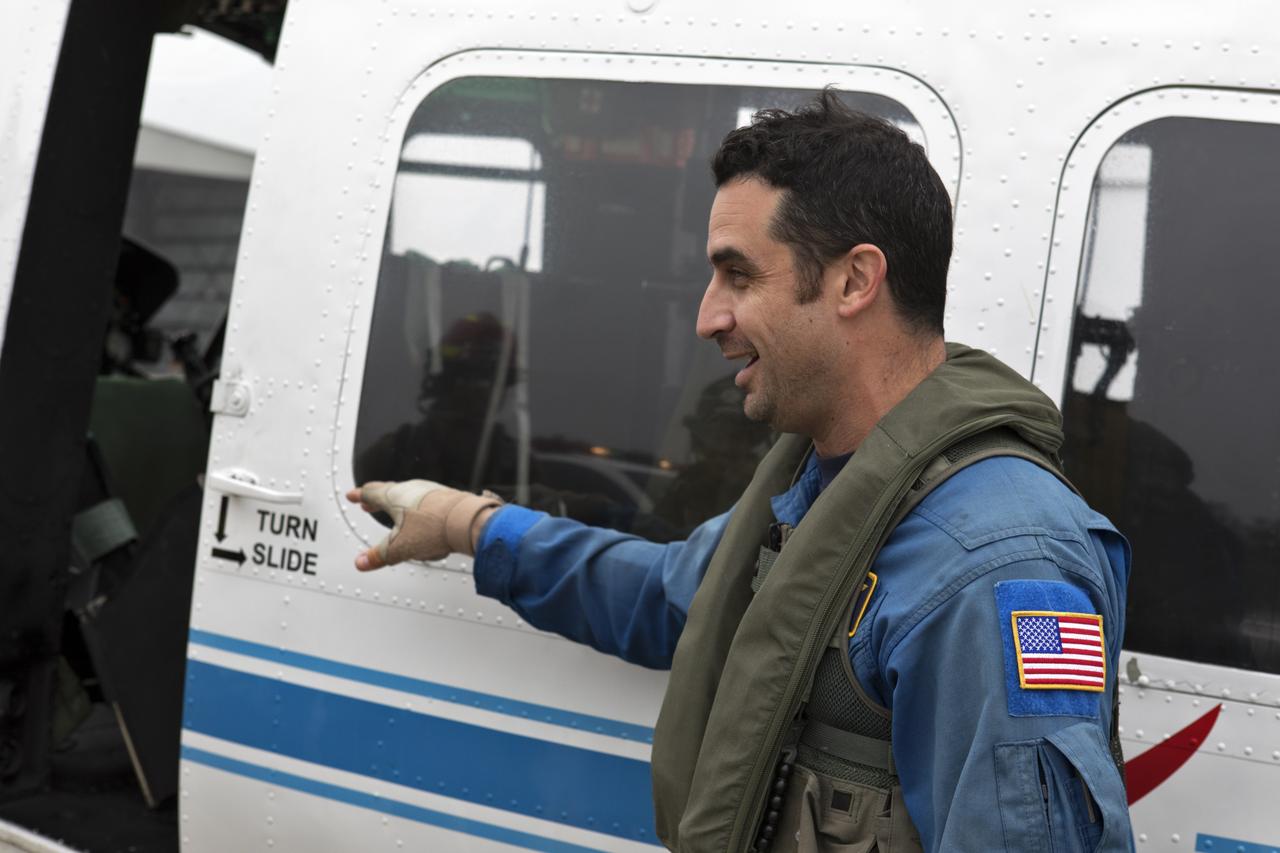
A member of NASA Kennedy Space Center's Flight Operations team prepares for a rehearsal of a helicopter crash-landing to test new and updated emergency procedures. Called the Aircraft Mishap Preparedness and Contingency Plan, the operation was designed to validate several updated techniques the center's first responders would follow, should they ever need to rescue a crew in case of a real accident. The mishap exercise took place at the center's Shuttle Landing Facility.
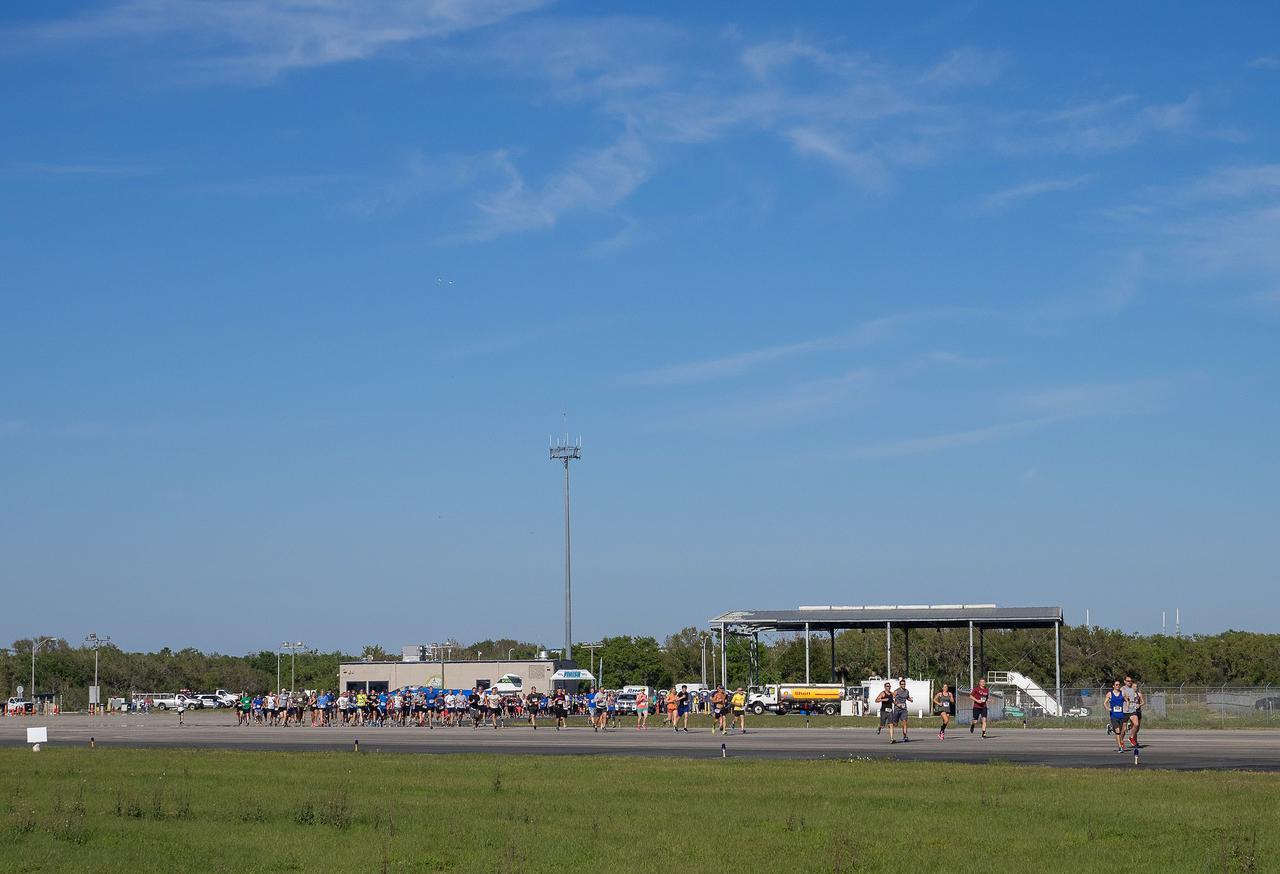
Kennedy Space Center employees and guests are off to a running start at the KSC Walk Run on the Shuttle Landing Facility runway. The annual event, part of Kennedy’s Safety and Health Days, offers 10K, 5K and 2-mile options in the spirit of friendly competition.

Members of NASA Kennedy Space Center's Flight Operations team participate in a rehearsal of a helicopter crash-landing to test new and updated emergency procedures. Called the Aircraft Mishap Preparedness and Contingency Plan, the operation was designed to validate several updated techniques the center's first responders would follow, should they ever need to rescue a crew in case of a real accident. The mishap exercise took place at the center's Shuttle Landing Facility.
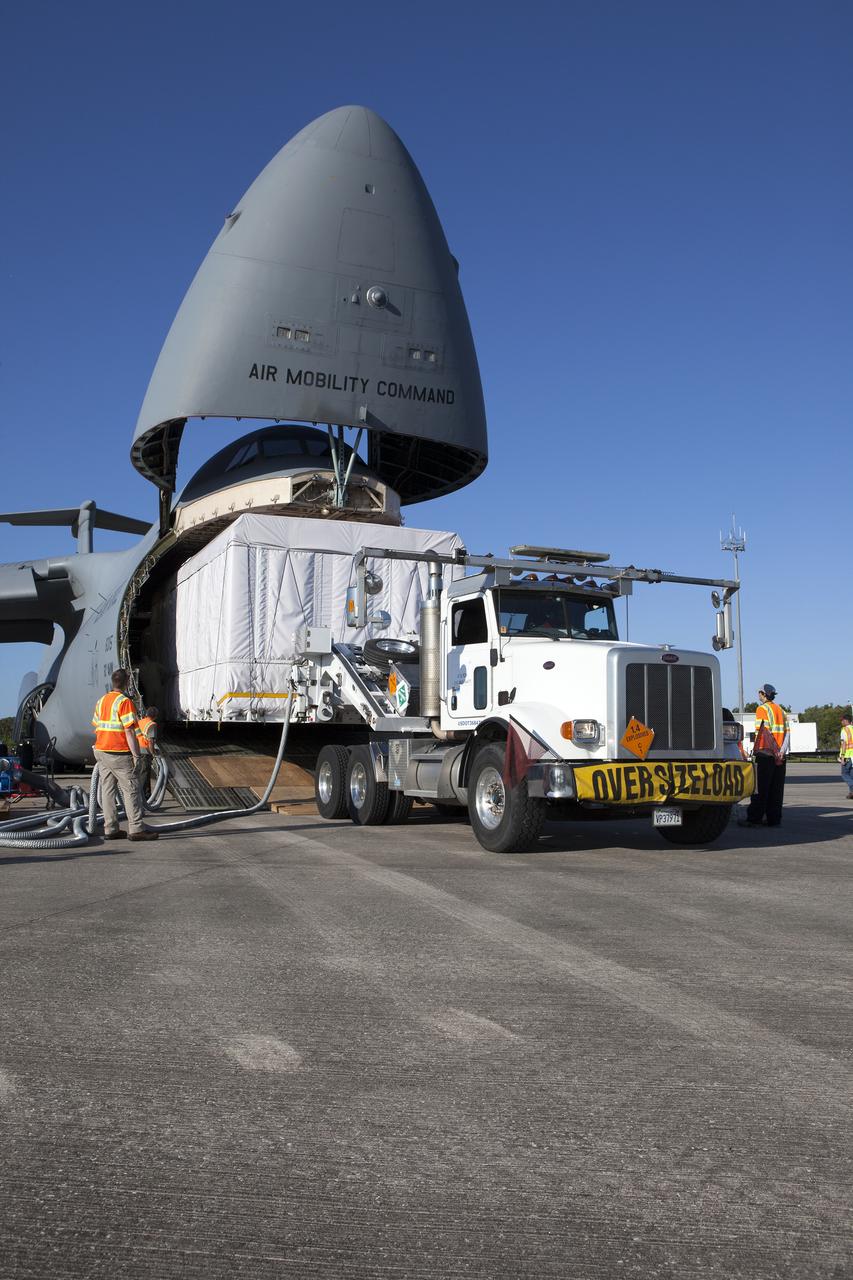
A truck with a specialized transporter drives out of the cargo hold of an Air Force C-5 Galaxy transport plane at the Shuttle Landing Facility at NASA's Kennedy Space Center in Florida to deliver the GOES-R spacecraft for launch processing. The GOES series are weather satellites operated by NOAA to enhance forecasts. The spacecraft is to launch aboard a United Launch Alliance Atlas V rocket in November.
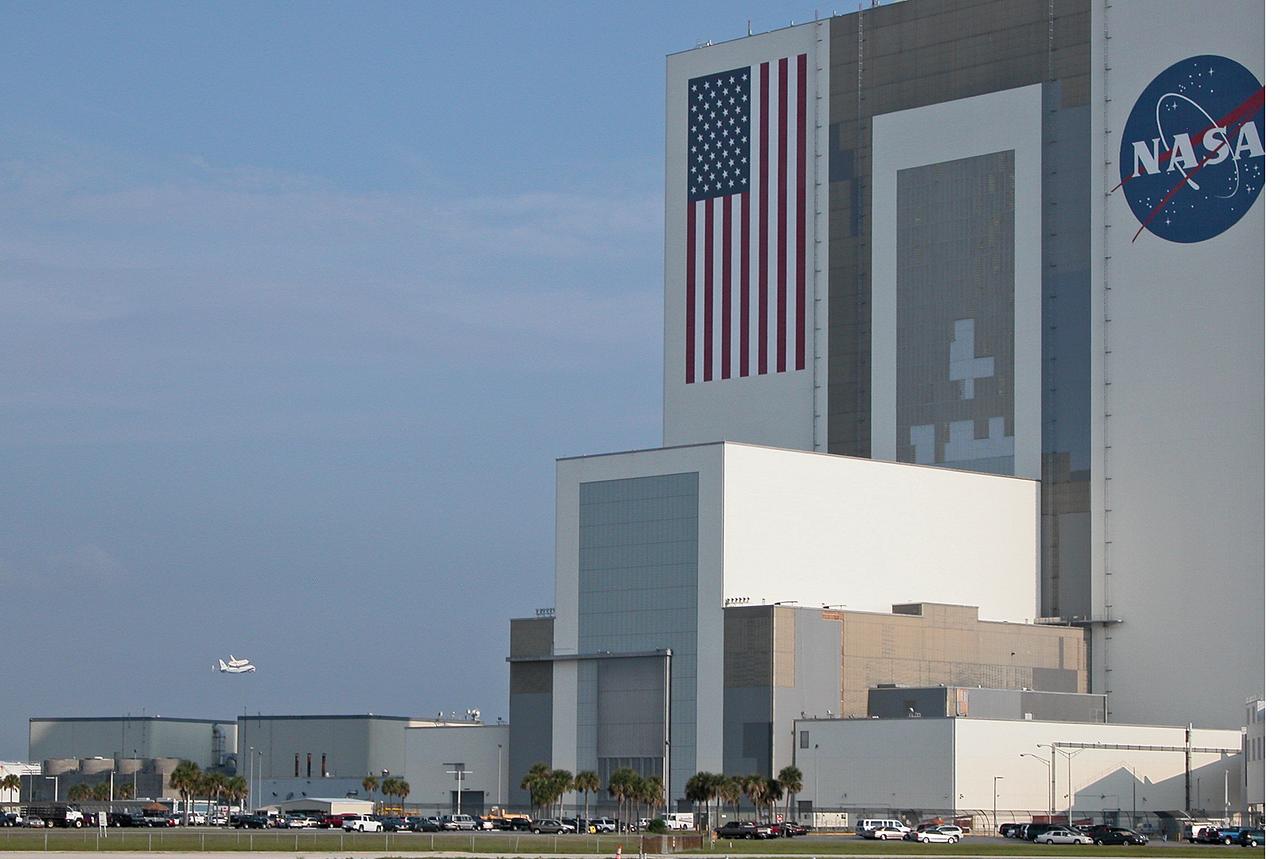
Through broken clouds, the shuttle carrier aircraft, or SCA, and its passenger Atlantis ease their way past the Vehicle Assembly Building, at right, for a landing at the KSC Shuttle Landing Facility, known as the SLF. The aircraft is a modified Boeing 747 jetliner. Atlantis landed at Edwards Air Force Base in California to end mission STS-117. The return to KSC began July 1 and took three days after stops across the country for fuel. The last stop was at Ft. Campbell in Kentucky. Weather conditions over the last leg postponed the return trip until July 3. Touchdown was at 8:27 a.m. EDT. Atlantis will be removed from the back of the SCA via the mate/demate device at the SLF. It will then be towed to the Orbiter Processing Facility to begin processing for its next launch, mission STS-122 in December.
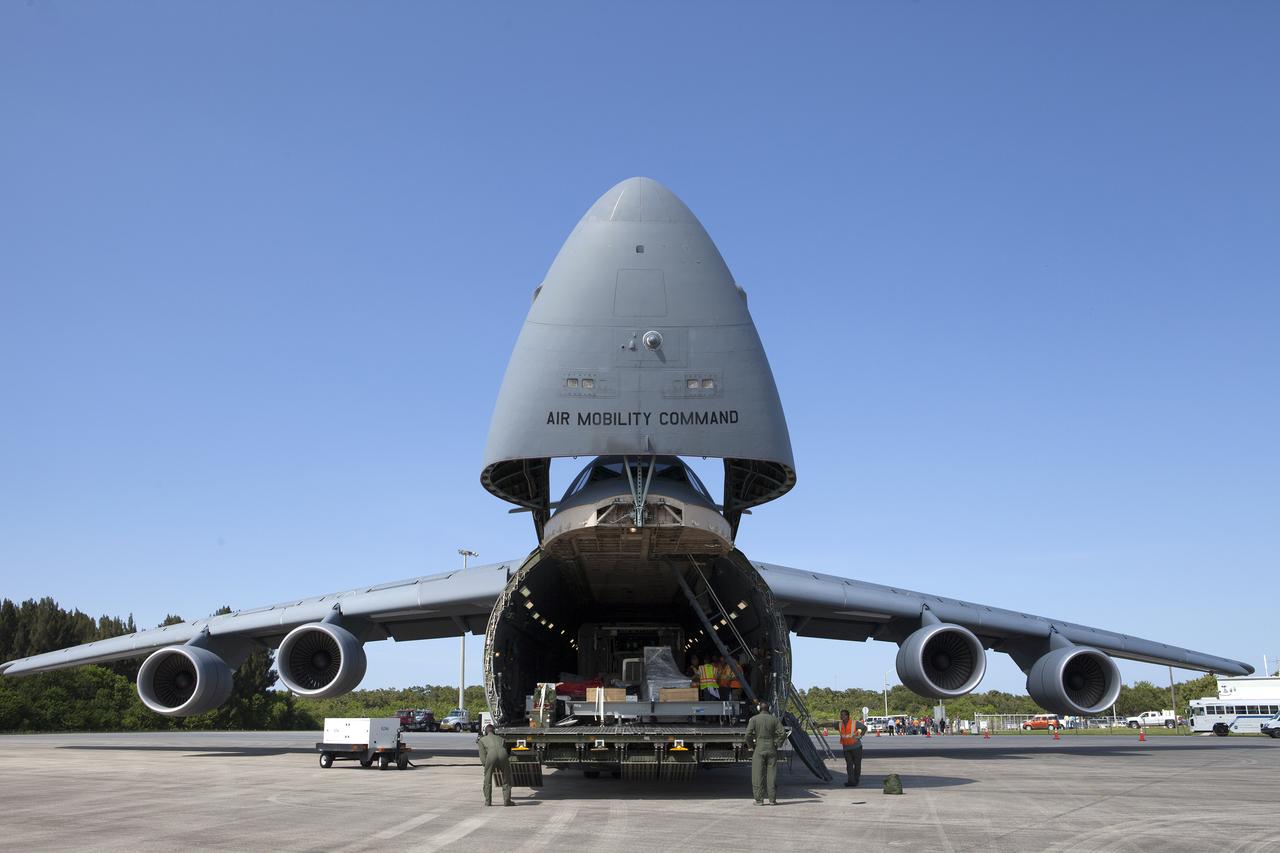
An Air Force C-5 Galaxy transport plane opens its nose section at the Shuttle Landing Facility at NASA's Kennedy Space Center in Florida to deliver the GOES-R spacecraft for launch processing. The GOES series are weather satellites operated by NOAA to enhance forecasts. The spacecraft is to launch aboard a United Launch Alliance Atlas V rocket in November.
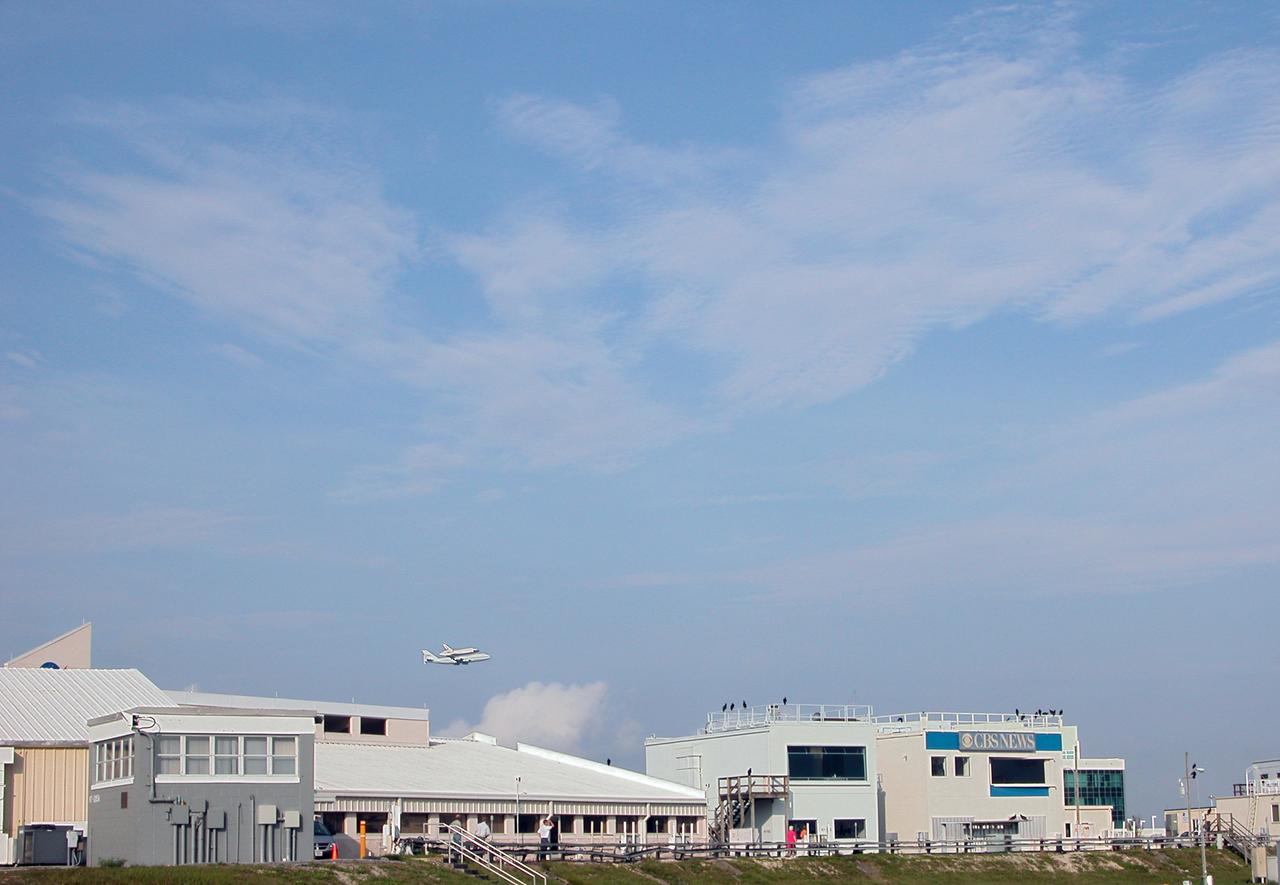
On a morning where broken clouds filled the sky of Central Florida, the shuttle carrier aircraft, or SCA, and its passenger Atlantis ease their way past the NASA News Center for a landing at the KSC Shuttle Landing Facility, known as the SLF. The aircraft is a modified Boeing 747 jetliner Atlantis landed at Edwards Air Force Base in California to end mission STS-117. The return to KSC began July 1 and took three days after stops across the country for fuel. The last stop was at Ft. Campbell in Kentucky. Weather conditions over the last leg postponed the return trip until July 3. Touchdown was at 8:27 a.m. EDT. Atlantis will be removed from the back of the SCA via the mate/demate device at the SLF. It will then be towed to the Orbiter Processing Facility to begin processing for its next launch, mission STS-122 in December.
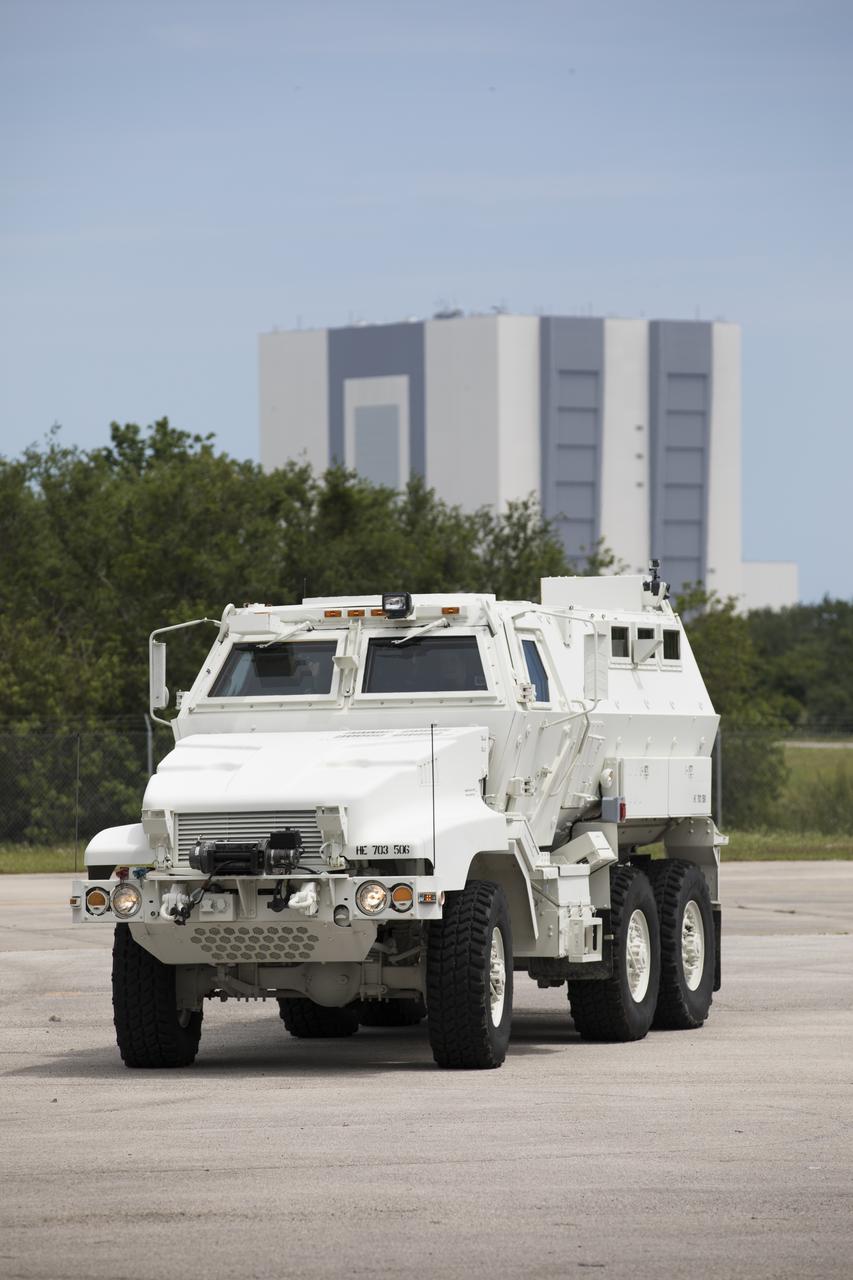
An MRAP armored vehicle goes through a training run on the Shuttle Landing Facility to support NASA's Commercial Crew Program at the agency's Kennedy Space Center in Florida. The 45,000-pound mine-resistant ambush protected vehicle, or MRAP, was originally designed for military applications. The MRAP offers a mobile bunker for astronauts and ground crews in the unlikely event they have to get away from the launch pad quickly in an emergency.
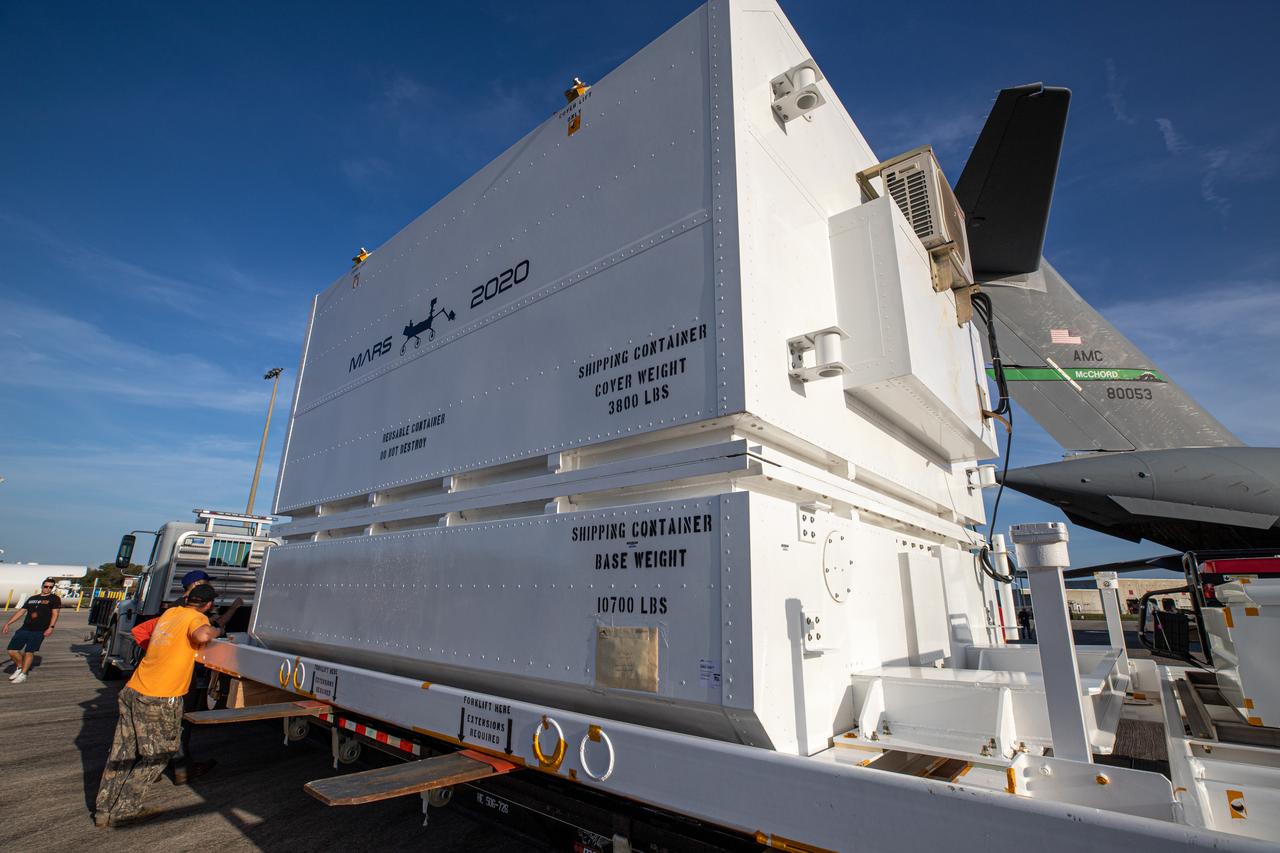
The Mars 2020 rover is offloaded from a C-17 aircraft at the Launch and Landing Facility, formerly known as the Shuttle Landing Facility, at NASA’s Kennedy Space Center on Feb. 12, 2020. The rover made a cross-country trip to the Florida spaceport that started at NASA’s Jet Propulsion Laboratory in Pasadena, California. The mission, targeted for mid-July 2020, will launch aboard an Atlas V 541 rocket from Cape Canaveral Air Force Station. NASA’s Launch Services Program based at Kennedy is managing the launch.
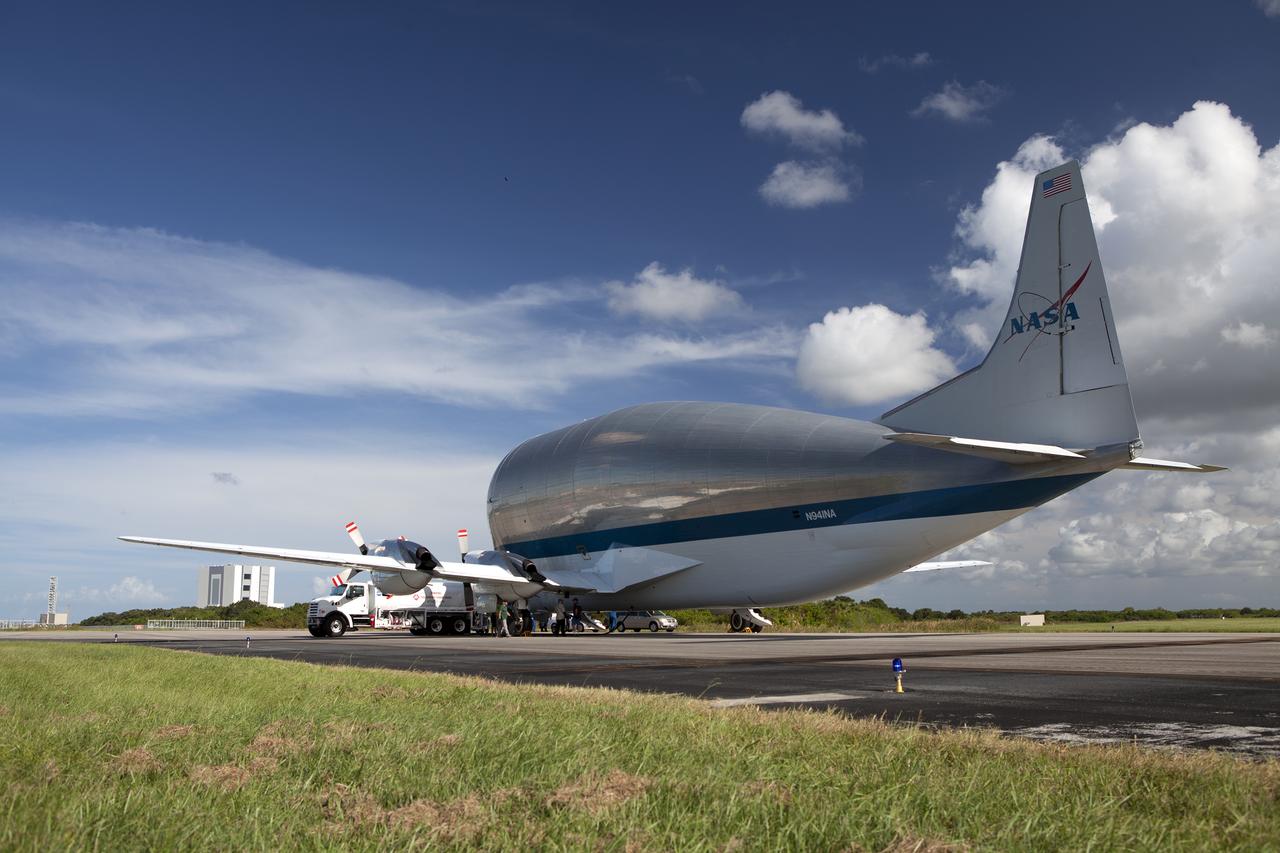
NASA’s Super Guppy aircraft touched and came to a stop at the Shuttle Landing Facility, managed and operated by Space Florida, at the agency’s Kennedy Space Center in Florida, carrying the heat shield for Exploration Mission 1 (EM-1). The heat shield will be offloaded and transported to the Neil Armstrong Operations and Checkout Building high bay for processing. The heat shield arrived from manufacturer Lockheed Martin in Denver. The Orion spacecraft will launch atop NASA’s Space Launch System rocket on EM-1, an uncrewed test flight, in 2018.
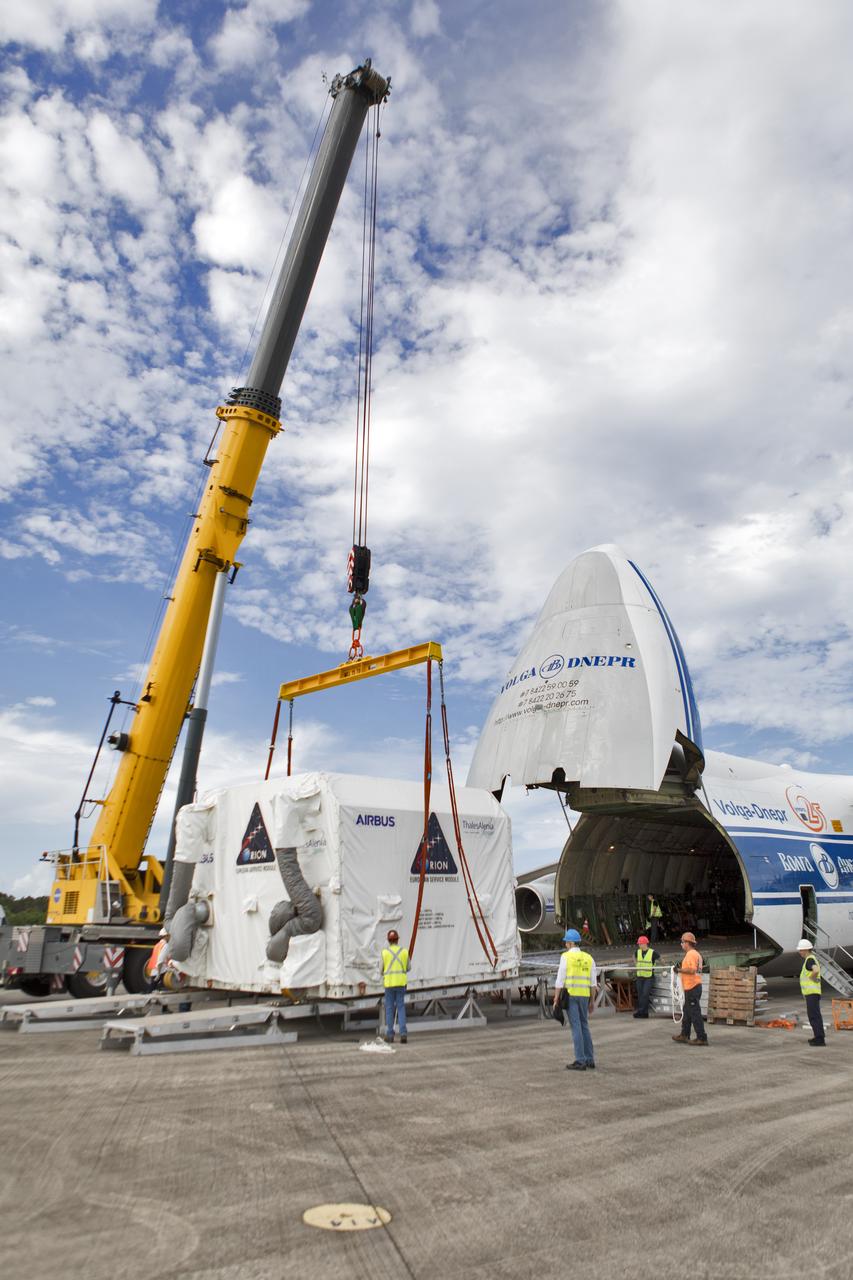
A crane is attached to the shipping container holding the European Service Module (ESM) after it was moved out of the cargo hold of the Antonov cargo aircraft at the Shuttle Landing Facility at NASA's Kennedy Space Center in Florida on Nov. 6, 2018. The ESM, built by the European Space Agency, will supply the main propulsion system and power to the Orion spacecraft for Exploration Mission-1 (EM-1), a mission to the Moon. The ESM also will house air and water for astronauts on future missions. EM-1 will be an uncrewed flight test that will provide a foundation for human deep space exploration to destinations beyond Earth orbit. EM-1 will be the first integrated test of NASA's Space Launch System, Orion and the ground systems at Kennedy.
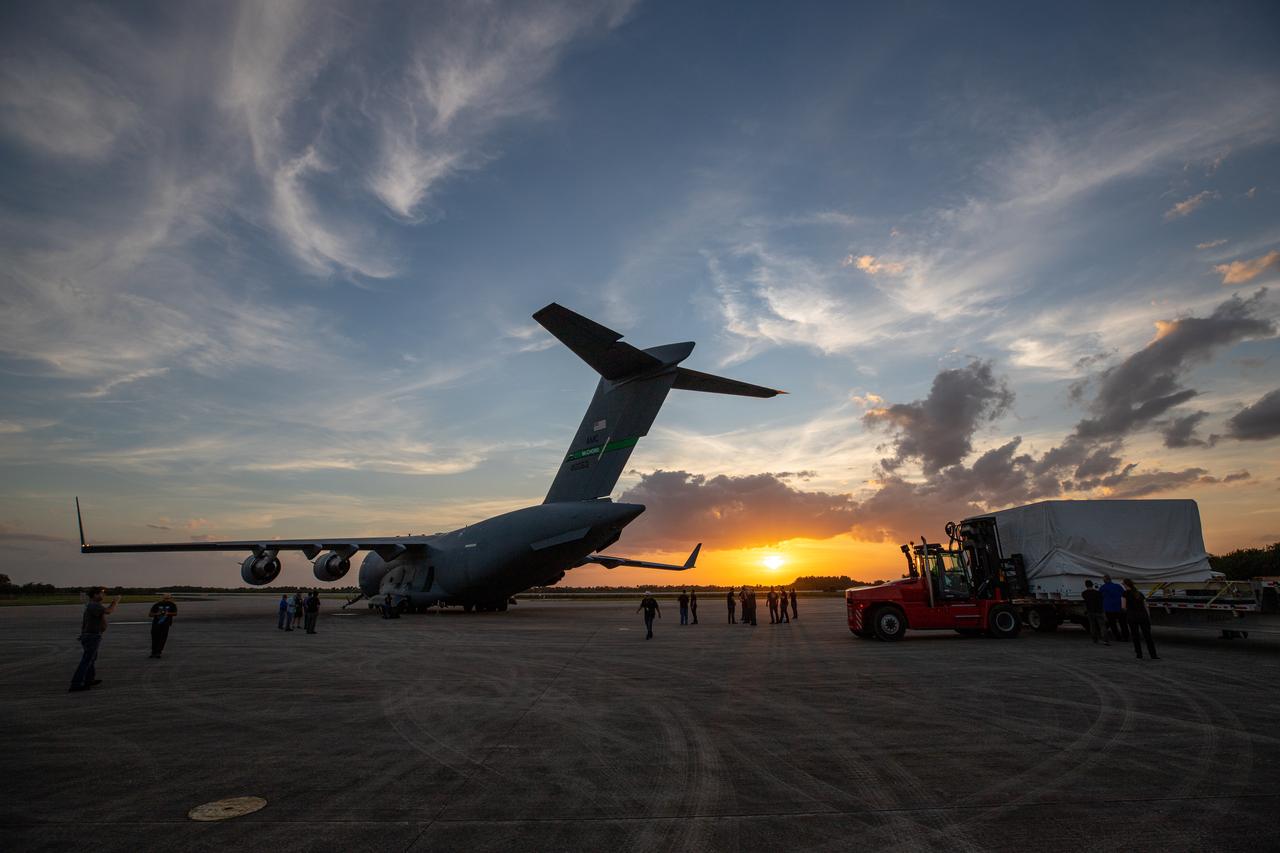
The C-17 aircraft that delivered the Mars 2020 rover sits at the Launch and Landing Facility, formerly known as the Shuttle Landing Facility, at NASA’s Kennedy Space Center on Feb. 12, 2020. The rover made a cross-country trip to the Florida spaceport that started at NASA’s Jet Propulsion Laboratory in Pasadena, California. The mission, targeted for mid-July 2020, will launch aboard an Atlas V 541 rocket from Cape Canaveral Air Force Station. NASA’s Launch Services Program based at Kennedy is managing the launch.
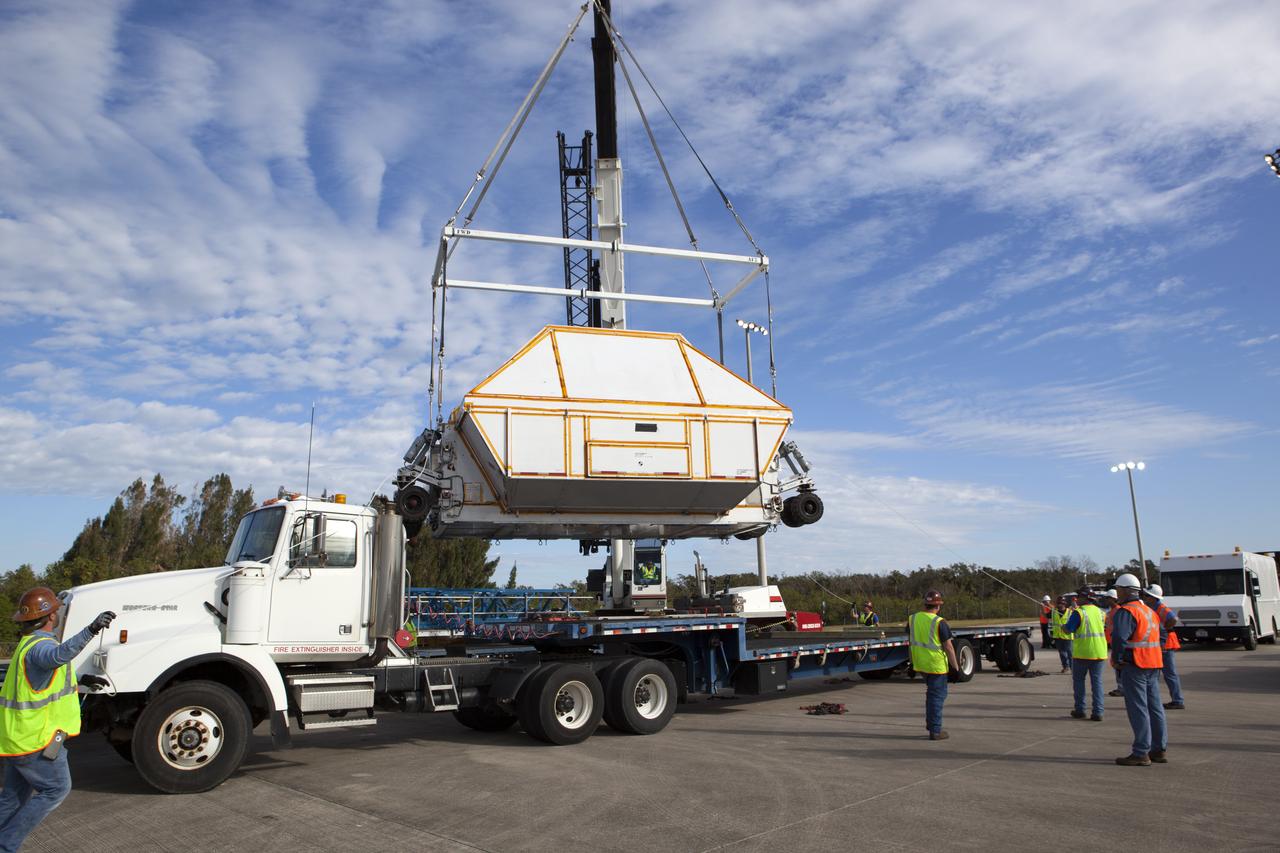
After arriving at the Shuttle Landing Facility operated by Space Florida at NASA's Kennedy Space Center in Florida, the agency's Super Guppy aircraft was opened and the container holding the Orion crew module structural test article (STA) was offloaded. A crane is used to lower the container for placement on a transporter. The test article will be moved to the Neil Armstrong Operations and Checkout Building high bay for further testing. The Orion spacecraft will launch atop NASA’s Space Launch System rocket on EM-1, its first deep space mission, in late 2018.
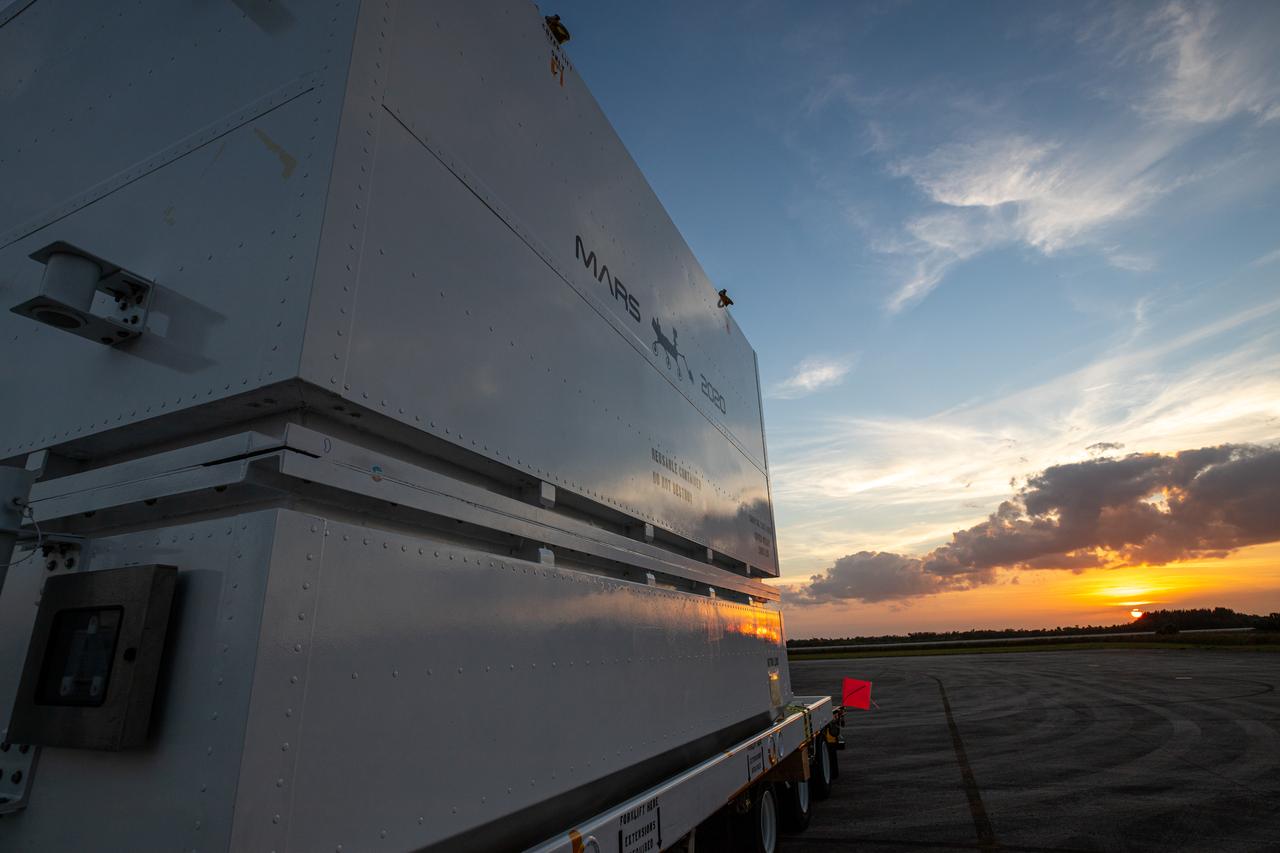
The Mars 2020 is pictured at the Launch and Landing Facility, formerly known as the Shuttle Landing Facility, at NASA’s Kennedy Space Center on Feb. 12, 2020. The rover was delivered to the Florida spaceport on a C-17 aircraft, making a cross-country trip that started at NASA’s Jet Propulsion Laboratory in Pasadena, California. The mission, targeted for mid-July 2020, will launch aboard an Atlas V 541 rocket from Cape Canaveral Air Force Station. NASA’s Launch Services Program based at Kennedy is managing the launch.
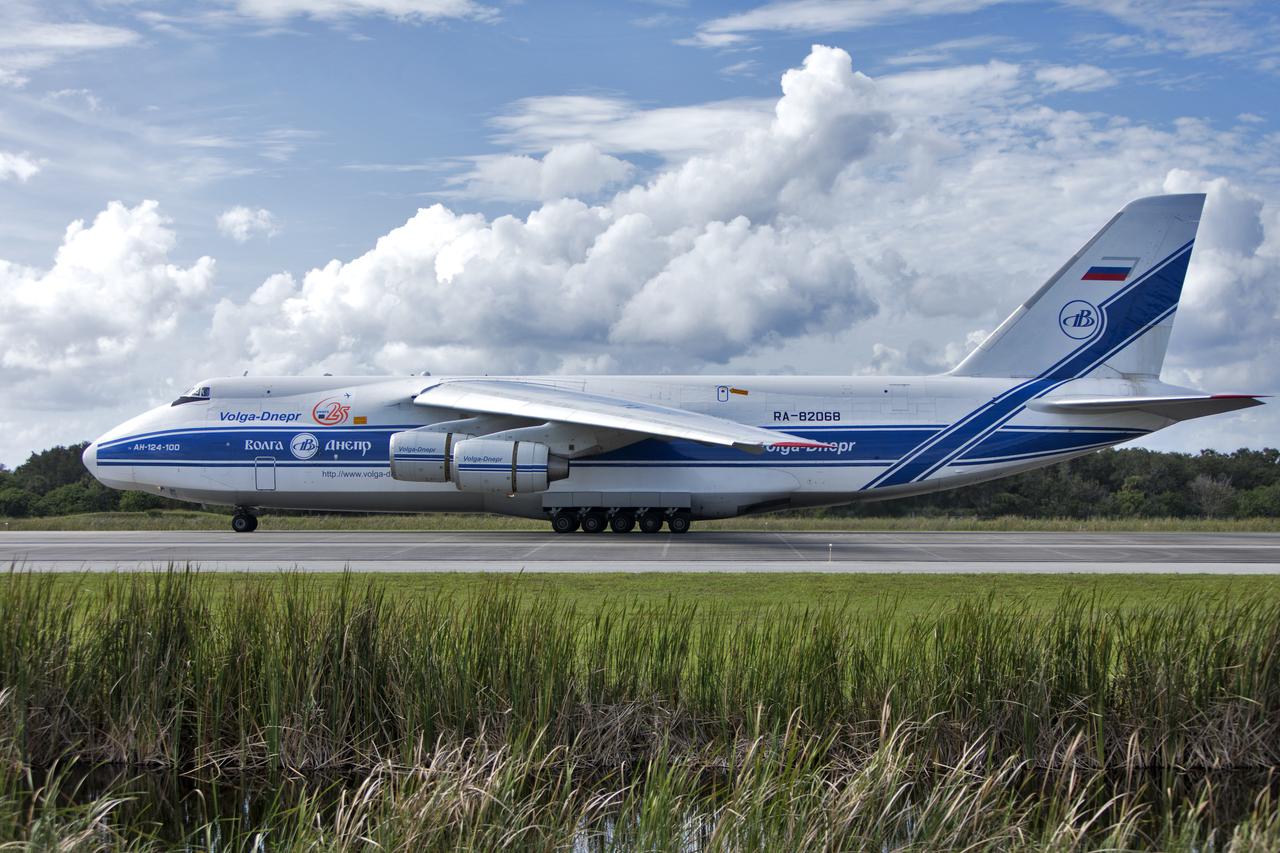
The Antonov cargo aircraft arrives at the Shuttle Landing Facility at NASA's Kennedy Space Center in Florida on Nov. 6, 2018, carrying the European Service Module (ESM) for Exploration Mission-1 (EM-1). The ESM, built by the European Space Agency, will supply the main propulsion system and power to the Orion spacecraft for Exploration Mission-1 (EM-1), a mission to the Moon. The ESM also will house air and water for astronauts on future missions. EM-1 will be an uncrewed flight test that will provide a foundation for human deep space exploration to destinations beyond Earth orbit. EM-1 will be the first integrated test of NASA's Space Launch System, Orion and the ground systems at Kennedy.

A new Aircraft Rescue and Fire Fighting vehicle is photographed in front of Fire Station No. 2 near the Shuttle Landing Facility runway at NASA’s Kennedy Space Center in Florida. The state-of-the-art truck replaces a 28-year-old vehicle. Kennedy is upgrading its fleet of emergency vehicles to enhance its safety and security posture at the growing, multi-user spaceport.
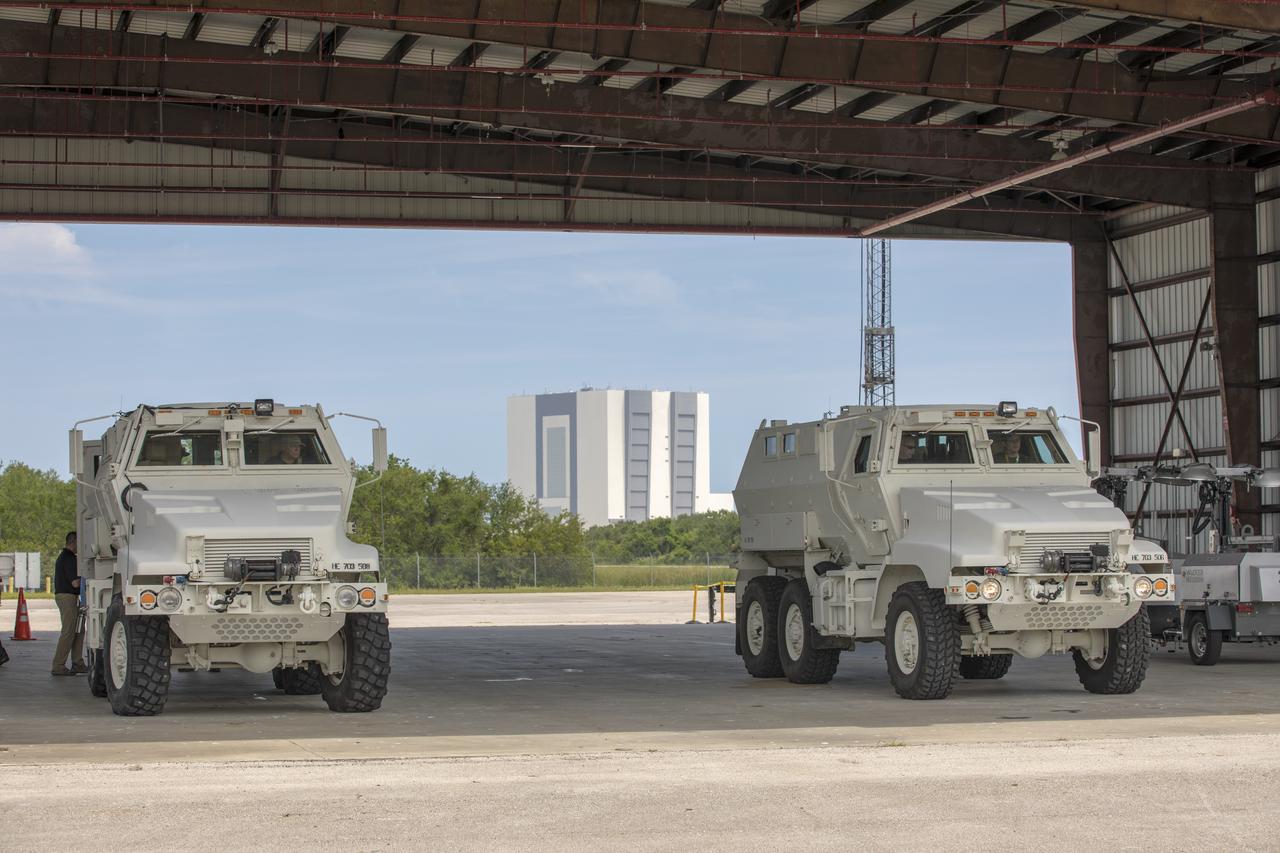
Inside a Shuttle Landing Facility hangar at NASA's Kennedy Space Center in Florida, two MRAP armored vehicles are prepared for a training drive to support the agency's Commercial Crew Program. The 45,000-pound mine-resistant ambush protected vehicle, or MRAP, was originally designed for military applications. The MRAP offers a mobile bunker for astronauts and ground crews in the unlikely event they have to get away from the launch pad quickly in an emergency.
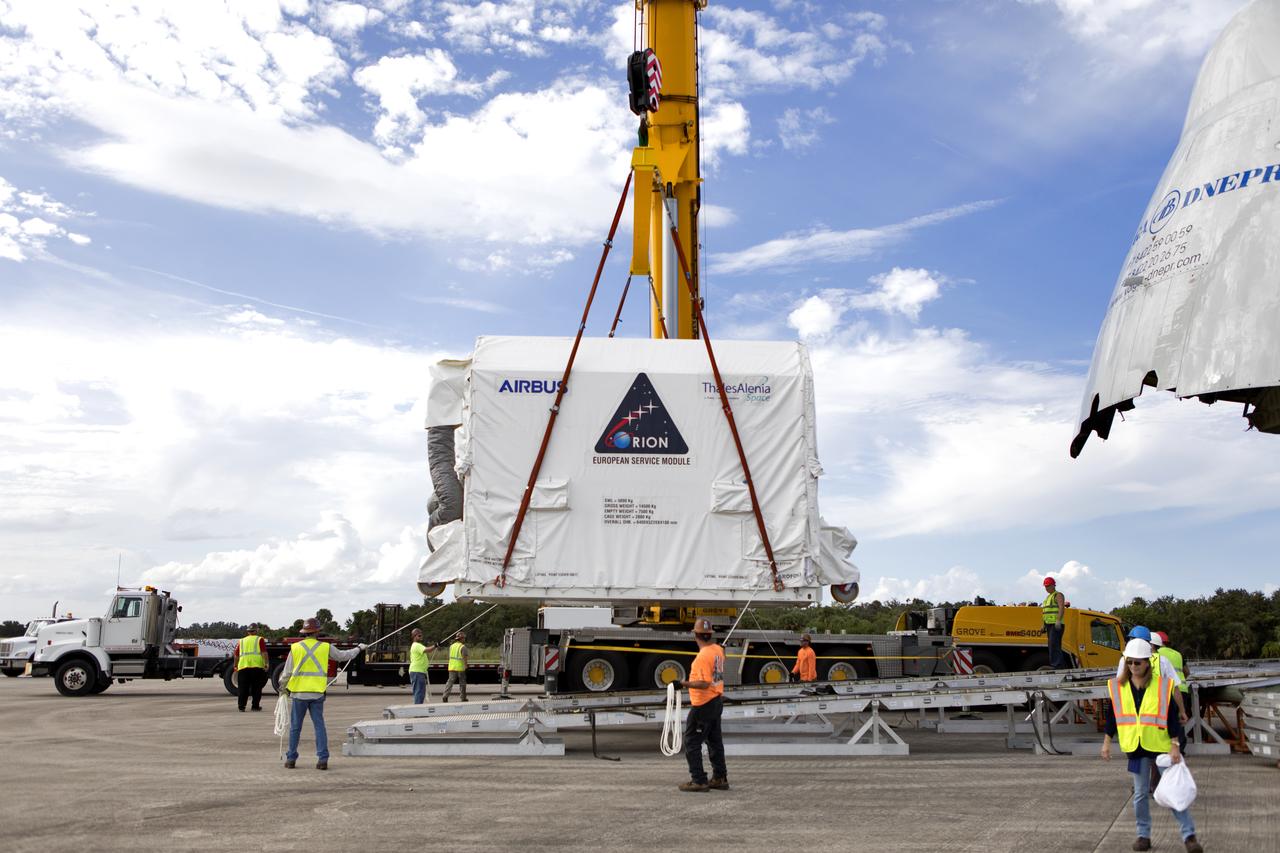
A crane lifts the shipping container holding the European Service Module (ESM) after it was moved out of the cargo hold of the Antonov cargo aircraft at the Shuttle Landing Facility at NASA's Kennedy Space Center in Florida on Nov. 6, 2018. The ESM, built by the European Space Agency, will supply the main propulsion system and power to the Orion spacecraft for Exploration Mission-1 (EM-1), a mission to the Moon. The ESM also will house air and water for astronauts on future missions. EM-1 will be an uncrewed flight test that will provide a foundation for human deep space exploration to destinations beyond Earth orbit. EM-1 will be the first integrated test of NASA's Space Launch System, Orion and the ground systems at Kennedy.
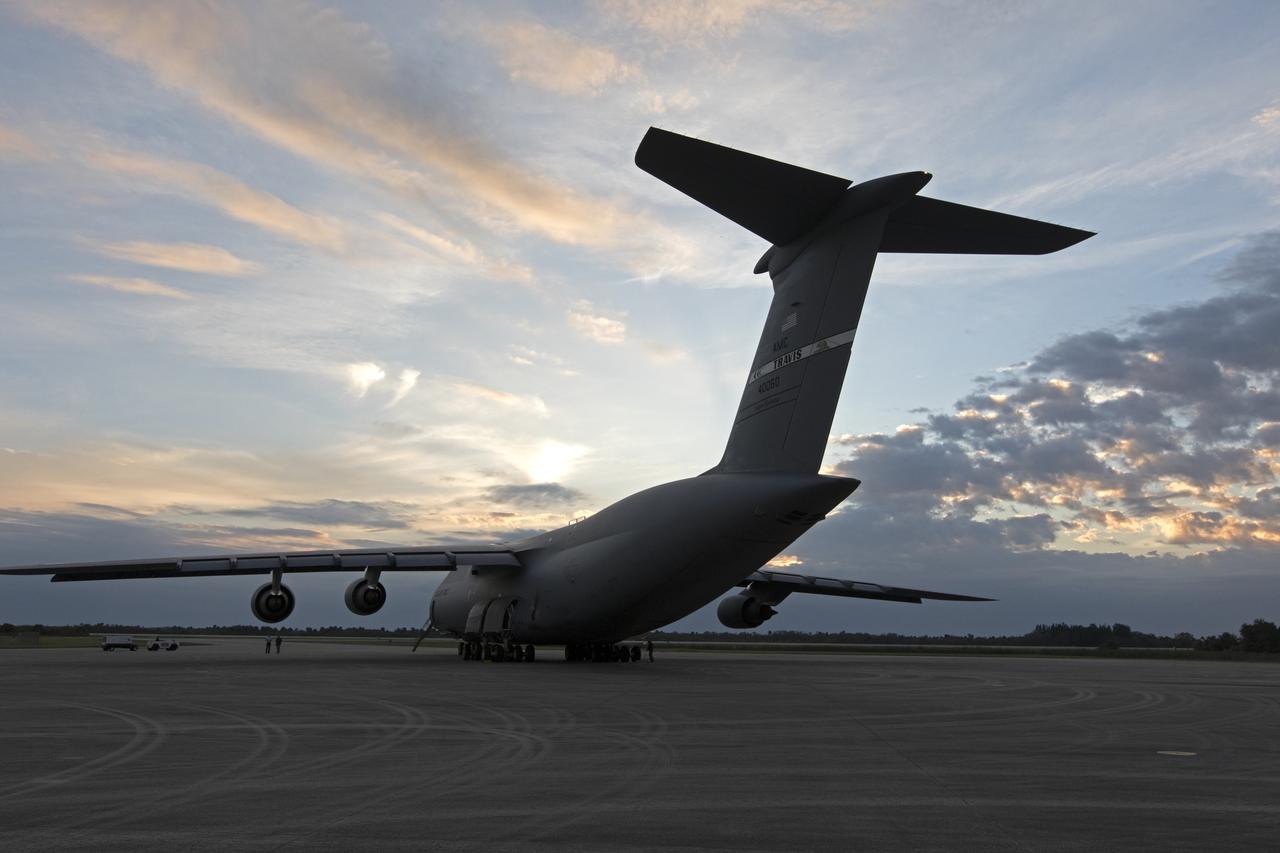
A C-5 transport aircraft arrives at the Shuttle Landing Facility at NASA's Kennedy Space Center in Florida, carrying the Geostationary Operation Environmental Satellite-S (GOES-S). The satellite will be offloaded and transported to the Astrotech Space Operations facility in Titusville, Florida. GOES-S is the second in a series of four advanced geostationary weather satellites. The GOES-R series - consisting of the GOES-R, GOES-S, GOES-T and GOES-U spacecraft - will significantly improve the detection and observation of environmental phenomena that directly affect public safety, protection of property and the nation's economic health and prosperity. GOES-S is slated to launch March 1, 2018 aboard a United Launch Alliance Atlas V rocket from Cape Canaveral Air Force Station in Florida.
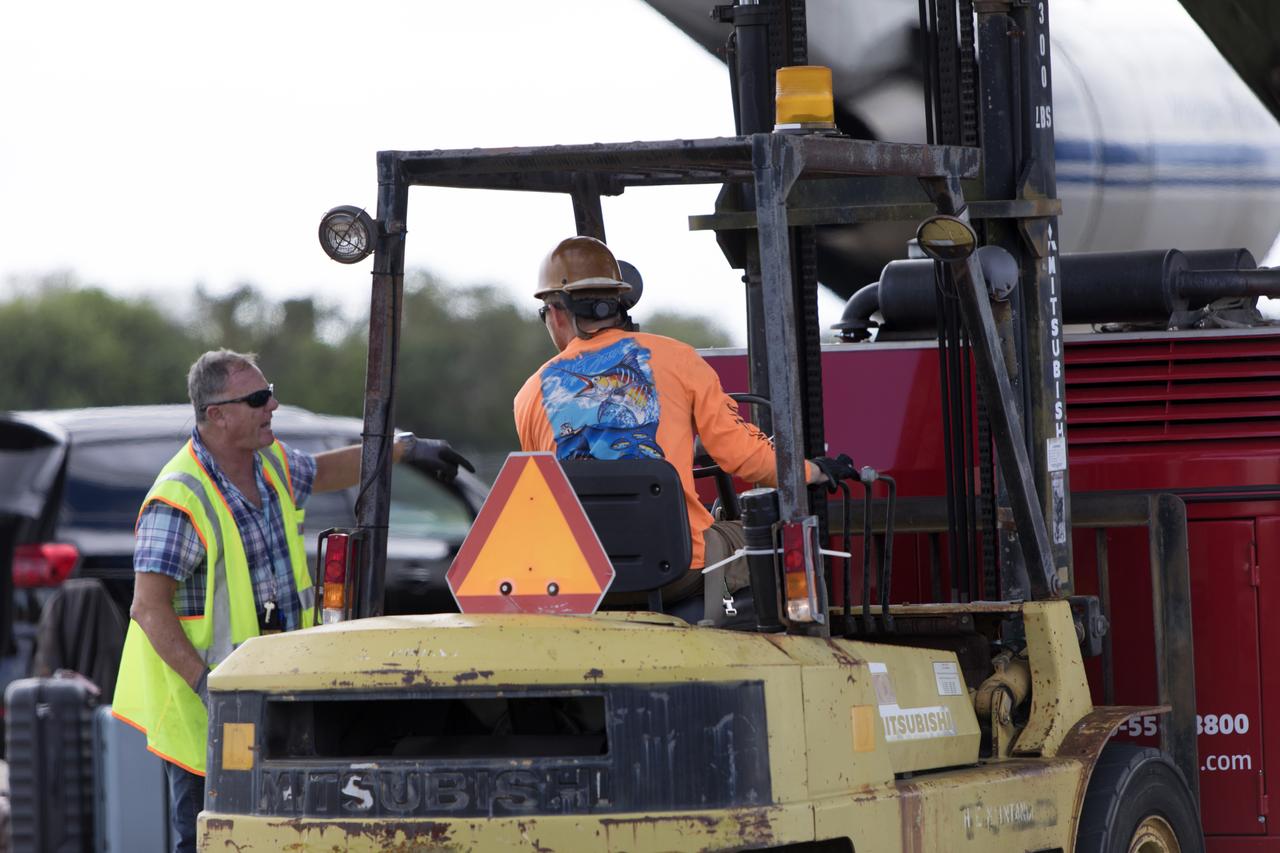
Technicians operate a forklift to lift the European Service Module (ESM) out of the cargo hold of the Antonov cargo aircraft at the Shuttle Landing Facility at NASA's Kennedy Space Center in Florida on Nov. 6, 2018. The ESM, built by the European Space Agency, will supply the main propulsion system and power to the Orion spacecraft for Exploration Mission-1 (EM-1), a mission to the Moon. The ESM also will house air and water for astronauts on future missions. EM-1 will be an uncrewed flight test that will provide a foundation for human deep space exploration to destinations beyond Earth orbit. EM-1 will be the first integrated test of NASA's Space Launch System, Orion and the ground systems at Kennedy.
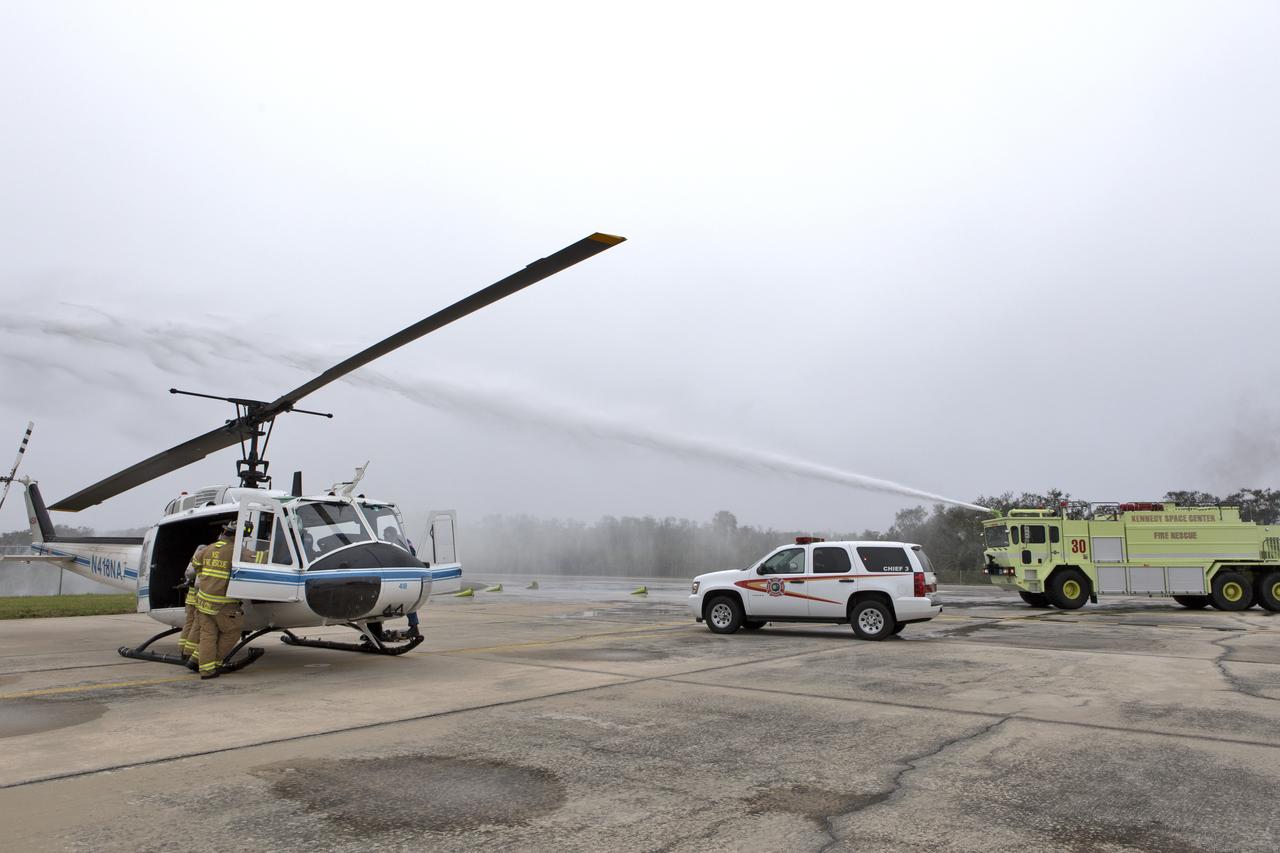
An Aircraft Mishap Preparedness and Contingency Plan is underway at the Shuttle Landing Facility at NASA's Kennedy Space Center in Florida. The center's Flight Operations rehearsed a helicopter crash-landing to test new and updated emergency procedures. The operation was designed to validate several updated techniques the center's first responders would follow, should they ever need to rescue a crew in case of a real accident. The mishap exercise took place at the center's Shuttle Landing Facility.
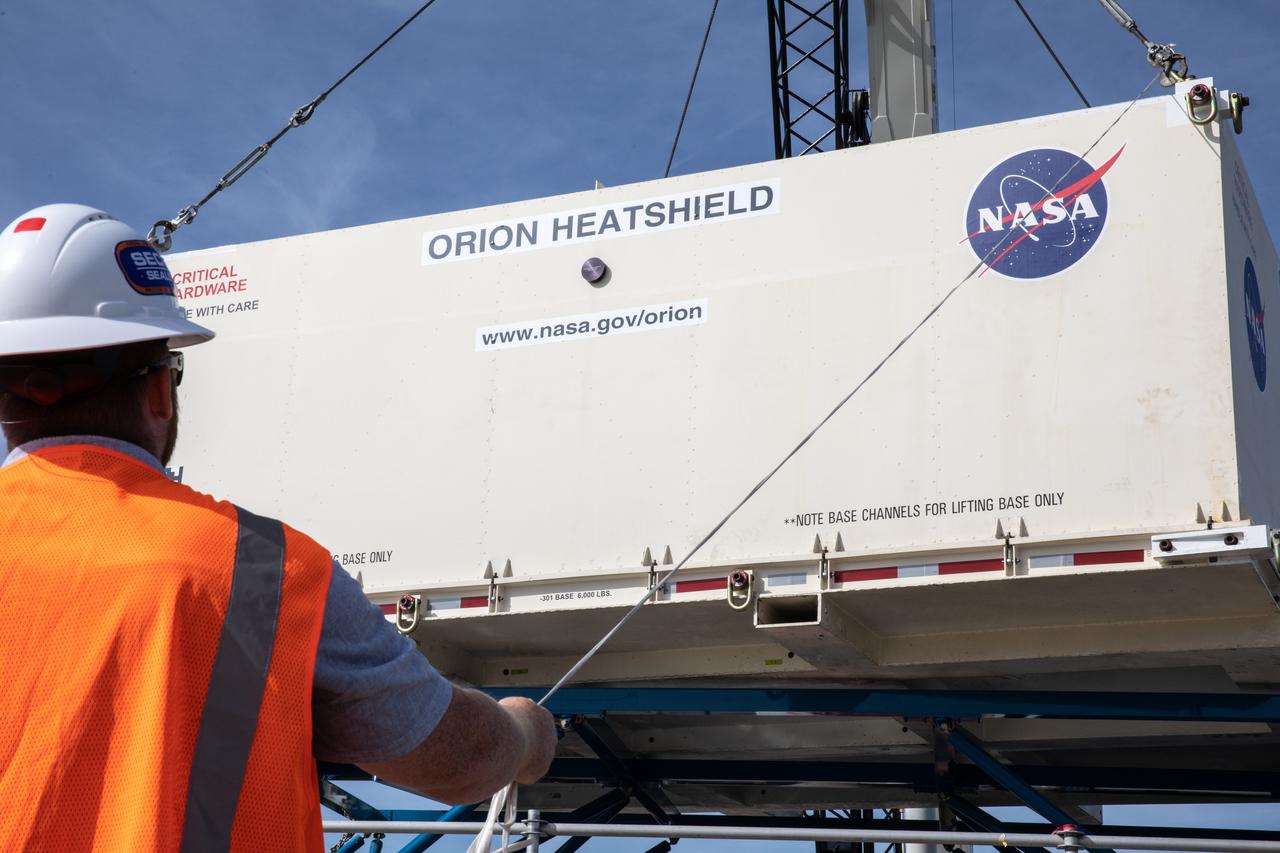
Technicians help secure the shipping container carrying the heat shield for Orion’s Artemis 2 mission, NASA’s first crewed mission, onto a transporter at the agency’s Kennedy Space Center Shuttle Landing Facility in Florida on July 9, 2019. The heat shield, measuring roughly 16 feet in diameter, will protect astronauts upon re-entry on the second mission of Artemis. The heat shield arrived from Lockheed Martin’s manufacturing facility near Denver aboard NASA’s Super Guppy Aircraft. It will be delivered to the Neil Armstrong Operations and Checkout facility high bay. The heat shield is a base titanium truss structure. Over the next several months, technicians will apply Avcoat, an ablative material that will provide the thermal protection. Artemis 2 will confirm all of the spacecraft’s systems operate as designed in the actual environment of deep space with astronauts aboard.

A truck with a specialized transporter drives out of the cargo hold of an Air Force C-5 Galaxy transport plane at the Shuttle Landing Facility at NASA's Kennedy Space Center in Florida to deliver the GOES-R spacecraft for launch processing. The GOES series are weather satellites operated by NOAA to enhance forecasts. The spacecraft is to launch aboard a United Launch Alliance Atlas V rocket in November.
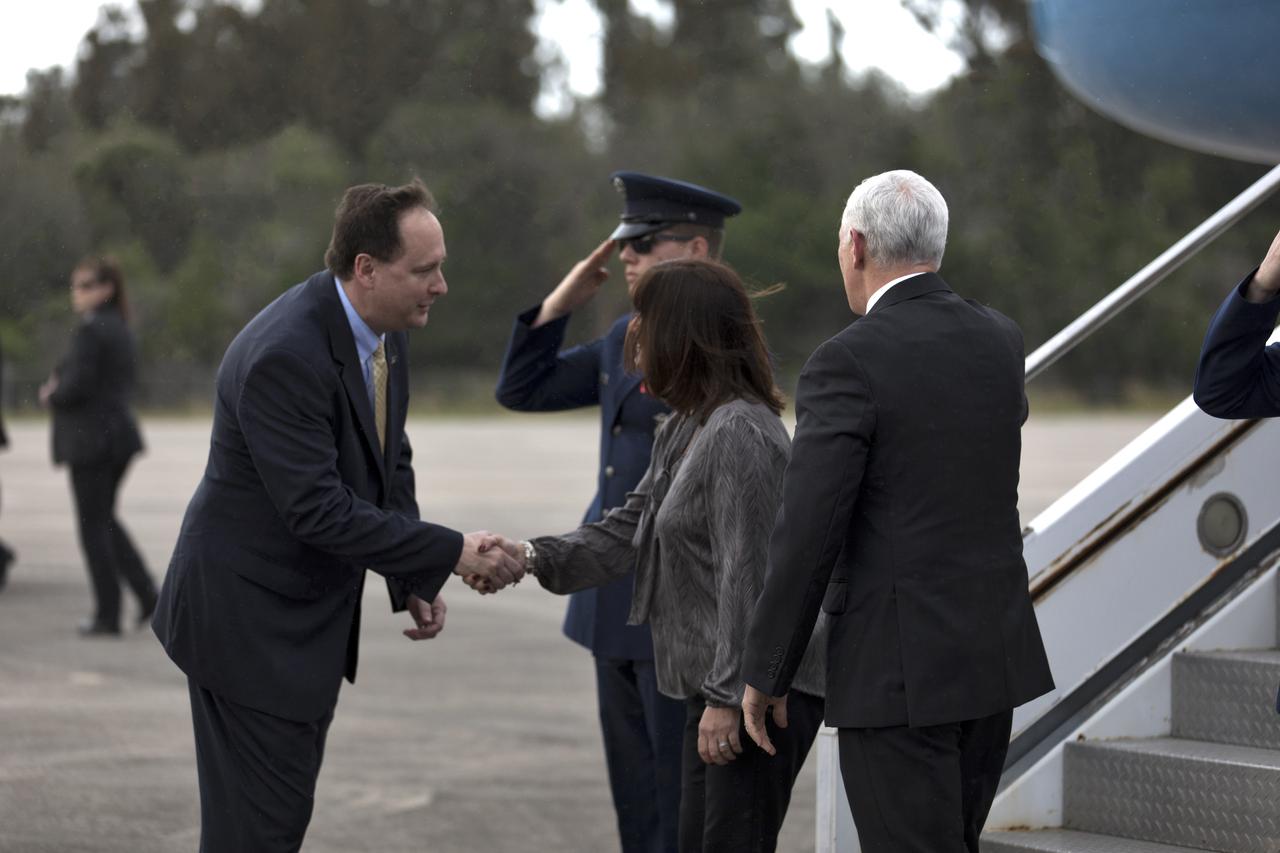
Acting NASA Administrator Robert Lightfoot, left, greets Vice President Mike Pence and his wife, Karen, after their arrival aboard Air Force Two at the Shuttle Landing Facility at NASA's Kennedy Space Center in Florida, on Feb. 20, 2018. During his visit, Pence will chair a meeting of the National Space Council in the high bay of the center's Space Station Processing Facility. The council's role is to advise the president regarding national space policy and strategy, and review the nation's long-range goals for space activities.
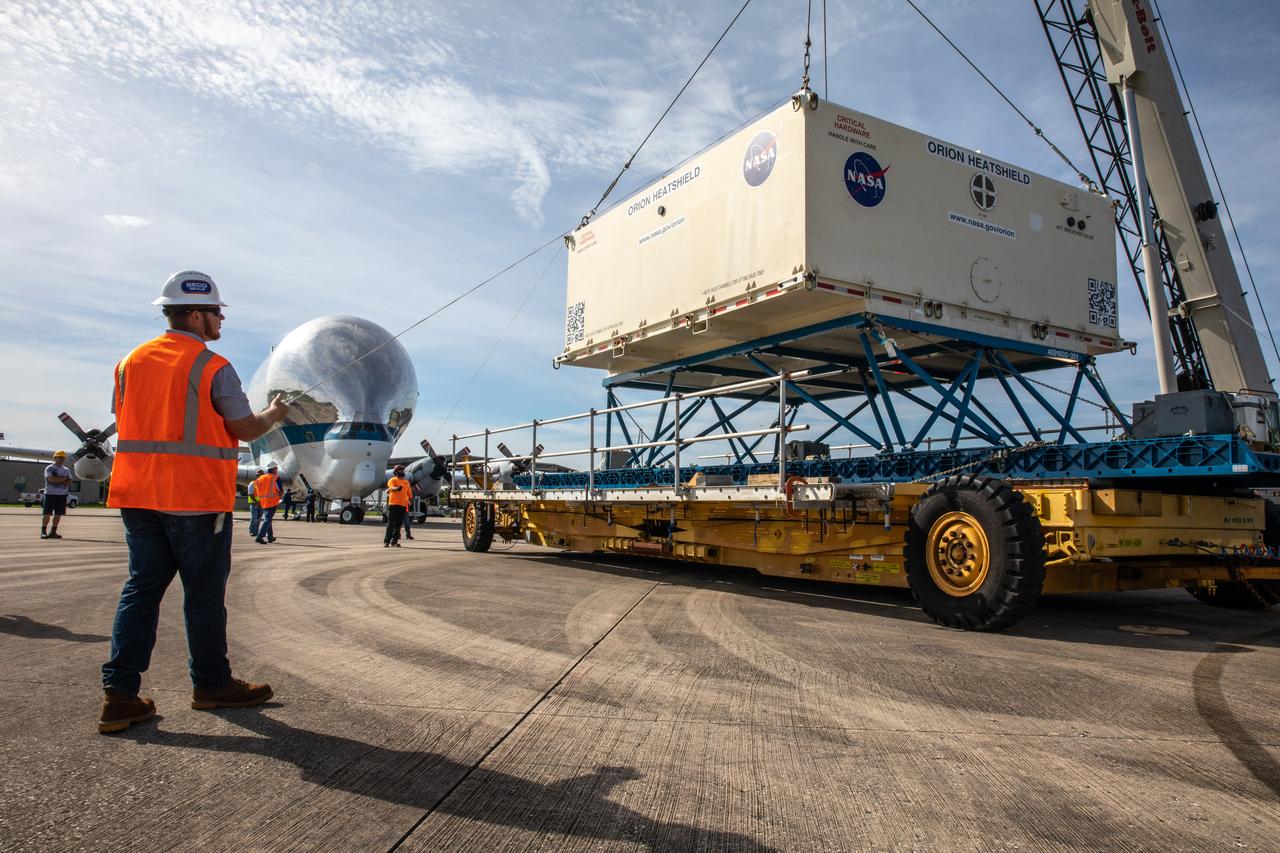
The shipping container carrying the heat shield for Orion’s Artemis 2 mission, NASA’s first crewed mission, is secured onto a transporter at the agency’s Kennedy Space Center Shuttle Landing Facility in Florida on July 9, 2019. The heat shield, measuring roughly 16 feet in diameter, will protect astronauts upon re-entry on the second mission of Artemis. The heat shield arrived from Lockheed Martin’s manufacturing facility near Denver aboard NASA’s Super Guppy Aircraft. It will be delivered to the Neil Armstrong Operations and Checkout facility high bay. The heat shield is a base titanium truss structure. Over the next several months, technicians will apply Avcoat, an ablative material that will provide the thermal protection. Artemis 2 will confirm all of the spacecraft’s systems operate as designed in the actual environment of deep space with astronauts aboard.
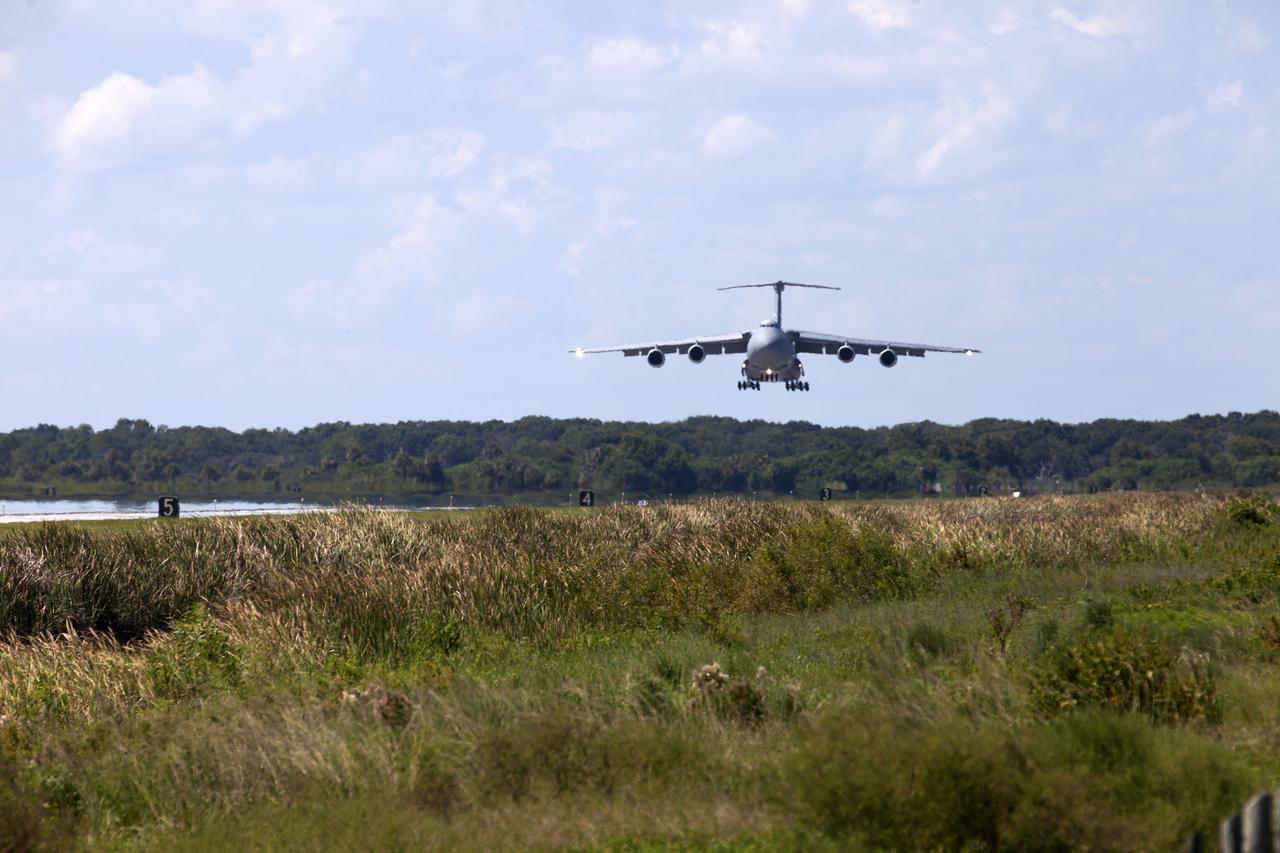
An Air Force C-5 Galaxy transport plane approaches the Shuttle Landing Facility at NASA's Kennedy Space Center in Florida to deliver the GOES-R spacecraft for launch processing. The GOES series are weather satellites operated by NOAA to enhance forecasts. The spacecraft is to launch aboard a United Launch Alliance Atlas V rocket in November.
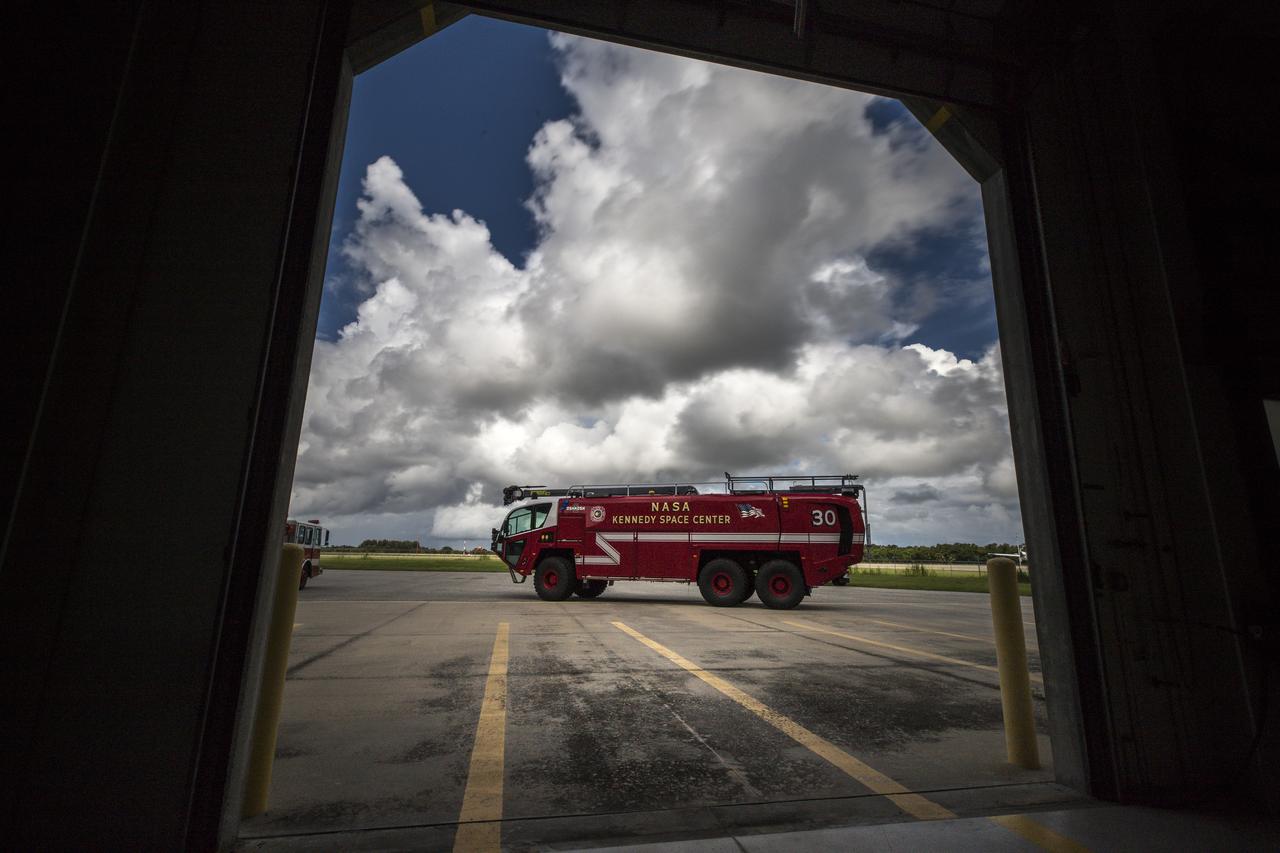
A new Aircraft Rescue and Fire Fighting vehicle is photographed through the open door of Fire Station No. 2 near the Shuttle Landing Facility runway at NASA’s Kennedy Space Center in Florida. The state-of-the-art truck replaces a 28-year-old vehicle. Kennedy is upgrading its fleet of emergency vehicles to enhance its safety and security posture at the growing, multi-user spaceport.
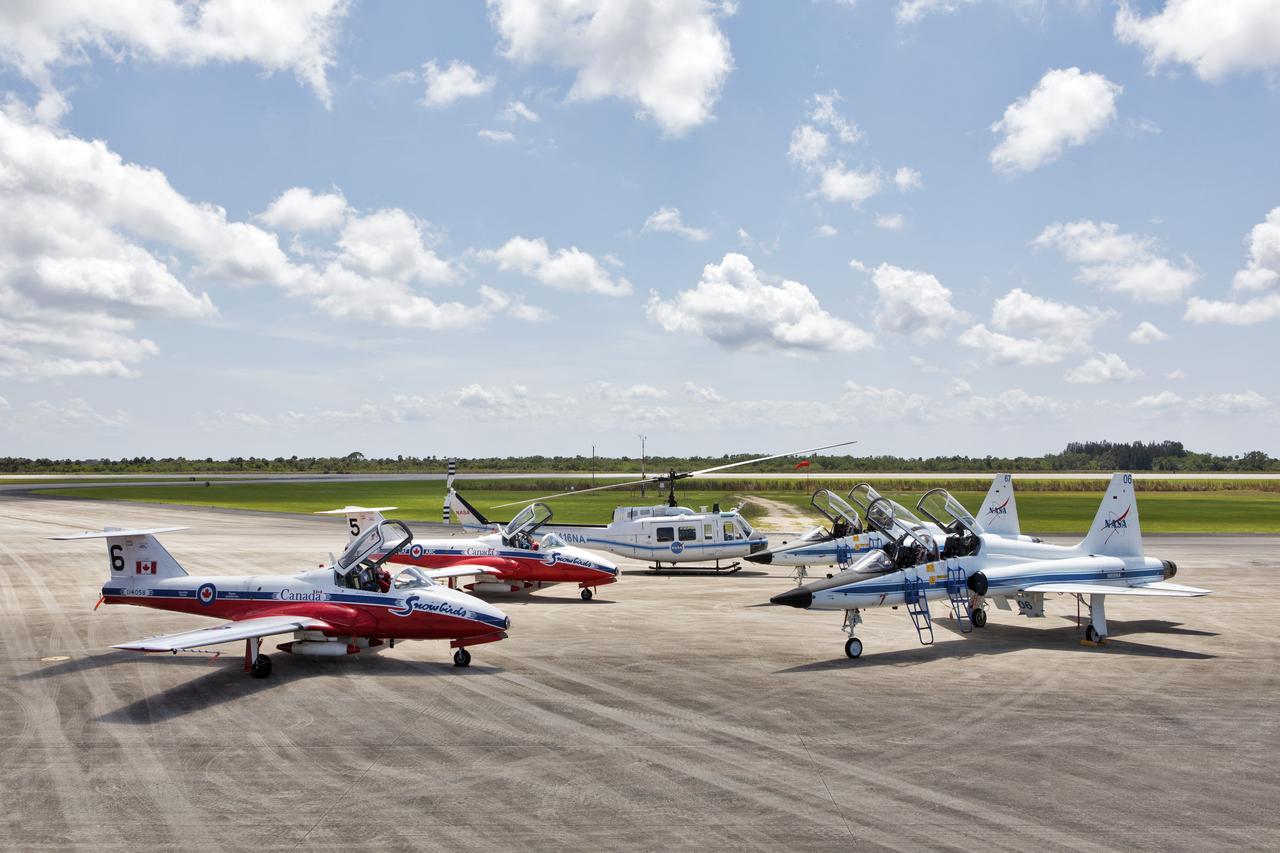
Several types of aircraft are on the tarmac at the Shuttle Landing Facility (SLF) at NASA's Kennedy Space in Florida. From left, are two Canadian Forces Snowbird CF-18 jets, a NASA Huey helicopter, and two NASA T-38 trainer aircraft. The Canadian Forces Snowbirds performed aerial maneuvers over Kennedy and Cape Canaveral Air Force Station during a practice flight on May 9, 2018, between their scheduled air shows.
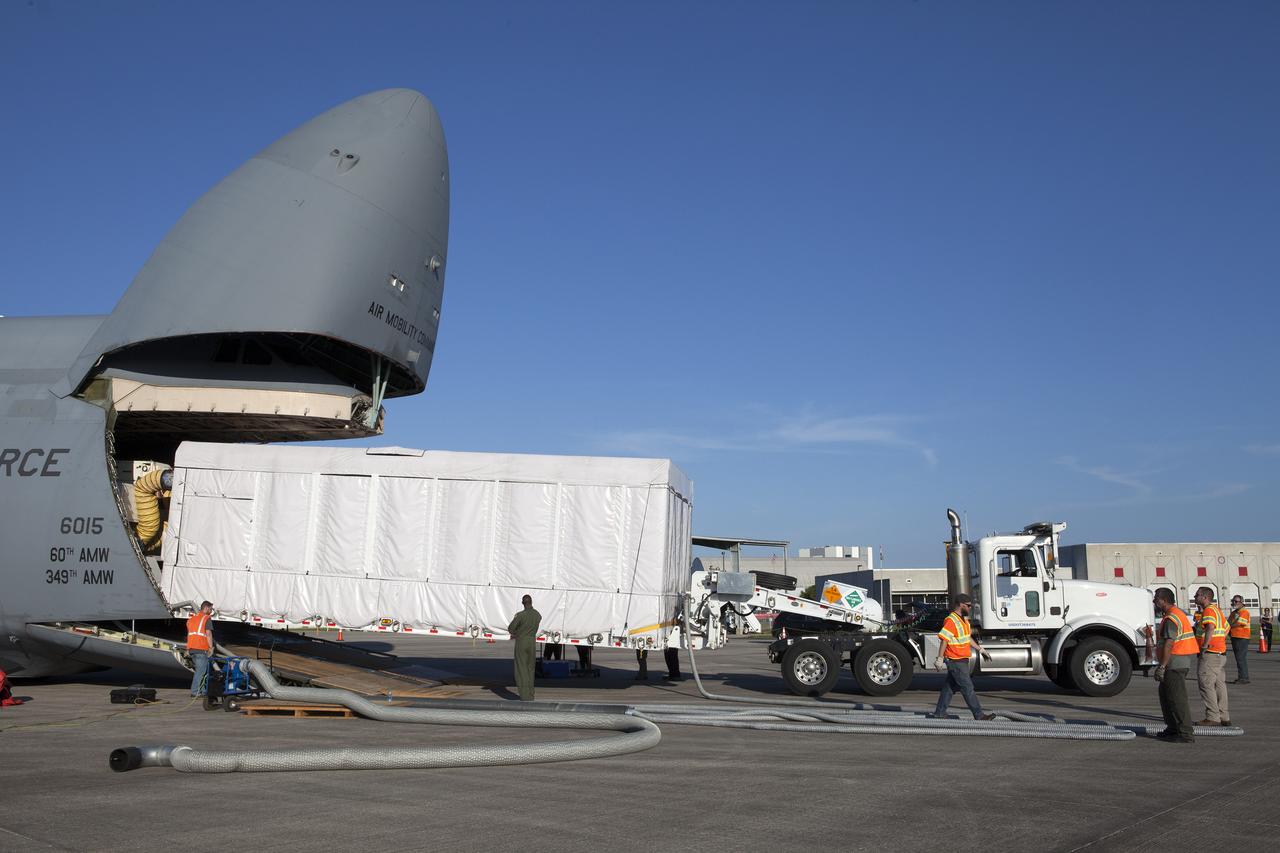
A truck with a specialized transporter drives out of the cargo hold of an Air Force C-5 Galaxy transport plane at the Shuttle Landing Facility at NASA's Kennedy Space Center in Florida to deliver the GOES-R spacecraft for launch processing. The GOES series are weather satellites operated by NOAA to enhance forecasts. The spacecraft is to launch aboard a United Launch Alliance Atlas V rocket in November.
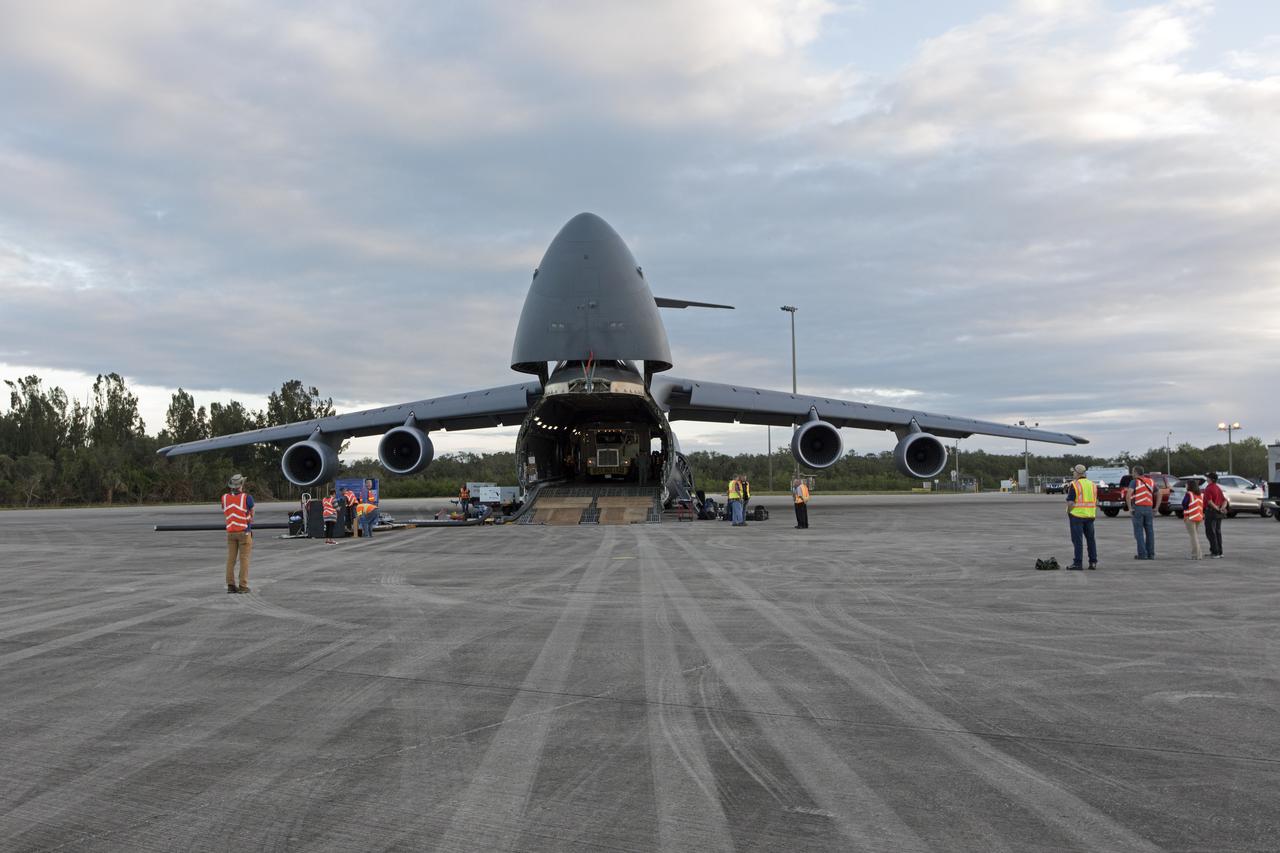
NOAA's Geostationary Operation Environmental Satellite-S (GOES-S) is being offloaded from a C-5 transport aircraft at the Shuttle Landing Facility at NASA's Kennedy Space Center in Florida. The satellite will be transported to the Astrotech Space Operations facility in Titusville, Florida to prepare it for launch. GOES-S is the second in a series of four advanced geostationary weather satellites. The GOES-R series - consisting of the GOES-R, GOES-S, GOES-T and GOES-U spacecraft - will significantly improve the detection and observation of environmental phenomena that directly affect public safety, protection of property and the nation's economic health and prosperity. GOES-S is slated to launch March 1, 2018 aboard a United Launch Alliance Atlas V rocket from Cape Canaveral Air Force Station in Florida.
A line of Kennedy Space Center employees and guests stretches down the Shuttle Landing Facility Runway during the KSC Walk Run. The annual event, part of Kennedy’s Safety and Health Days, offers 10K, 5K and 2-mile options in the spirit of friendly competition.
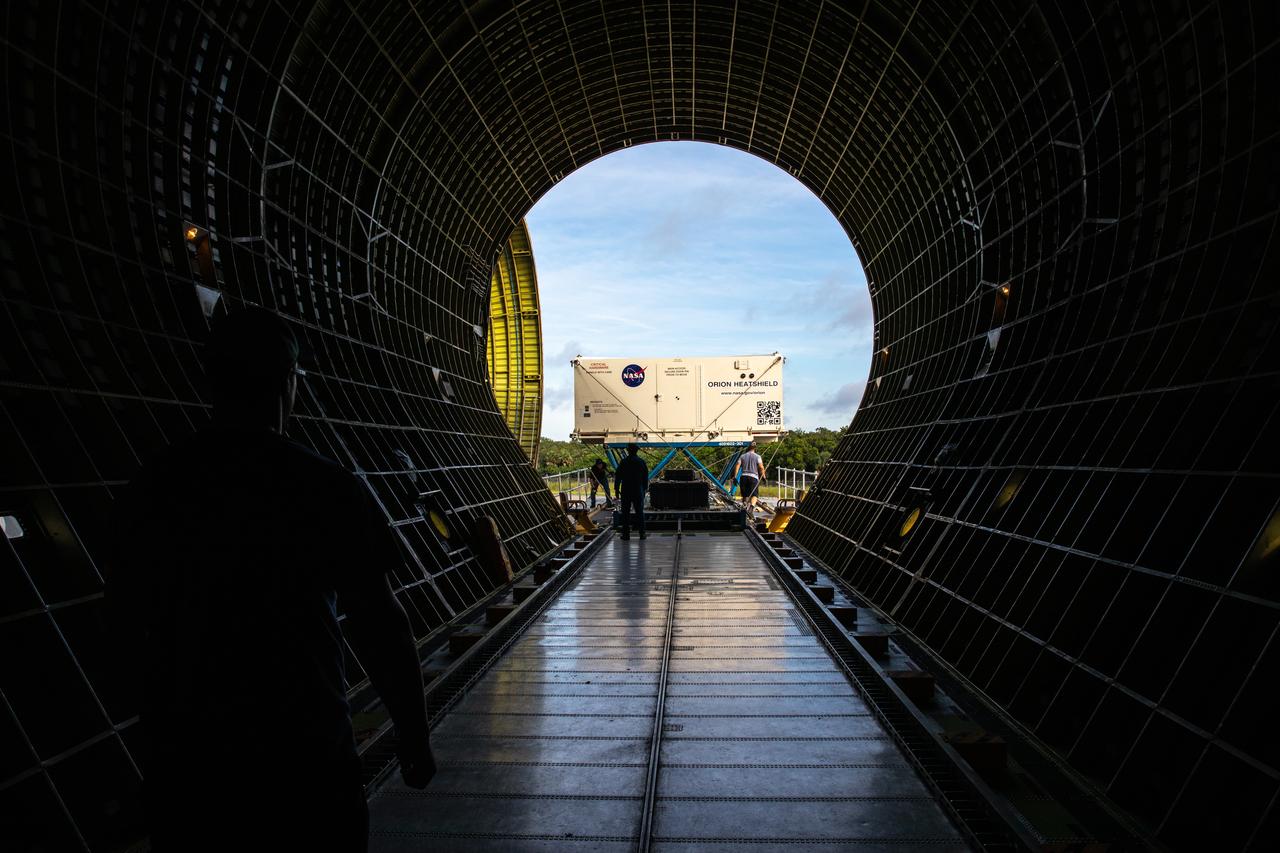
In this view from inside NASA’s Super Guppy aircraft, the shipping container carrying the heat shield for Orion’s Artemis 2 mission, NASA’s first crewed mission, is unloaded from NASA’s Super Guppy aircraft at the agency’s Kennedy Space Center Shuttle Landing Facility in Florida on July 9, 2019. The heat shield, measuring roughly 16 feet in diameter, will protect astronauts upon re-entry on the second mission of Artemis. The heat shield arrived from Lockheed Martin’s manufacturing facility near Denver. It will be delivered to the Neil Armstrong Operations and Checkout facility high bay. The heat shield is a base titanium truss structure. Over the next several months, technicians will apply Avcoat, an ablative material that will provide the thermal protection. Artemis 2 will confirm all of the spacecraft’s systems operate as designed in the actual environment of deep space with astronauts aboard.
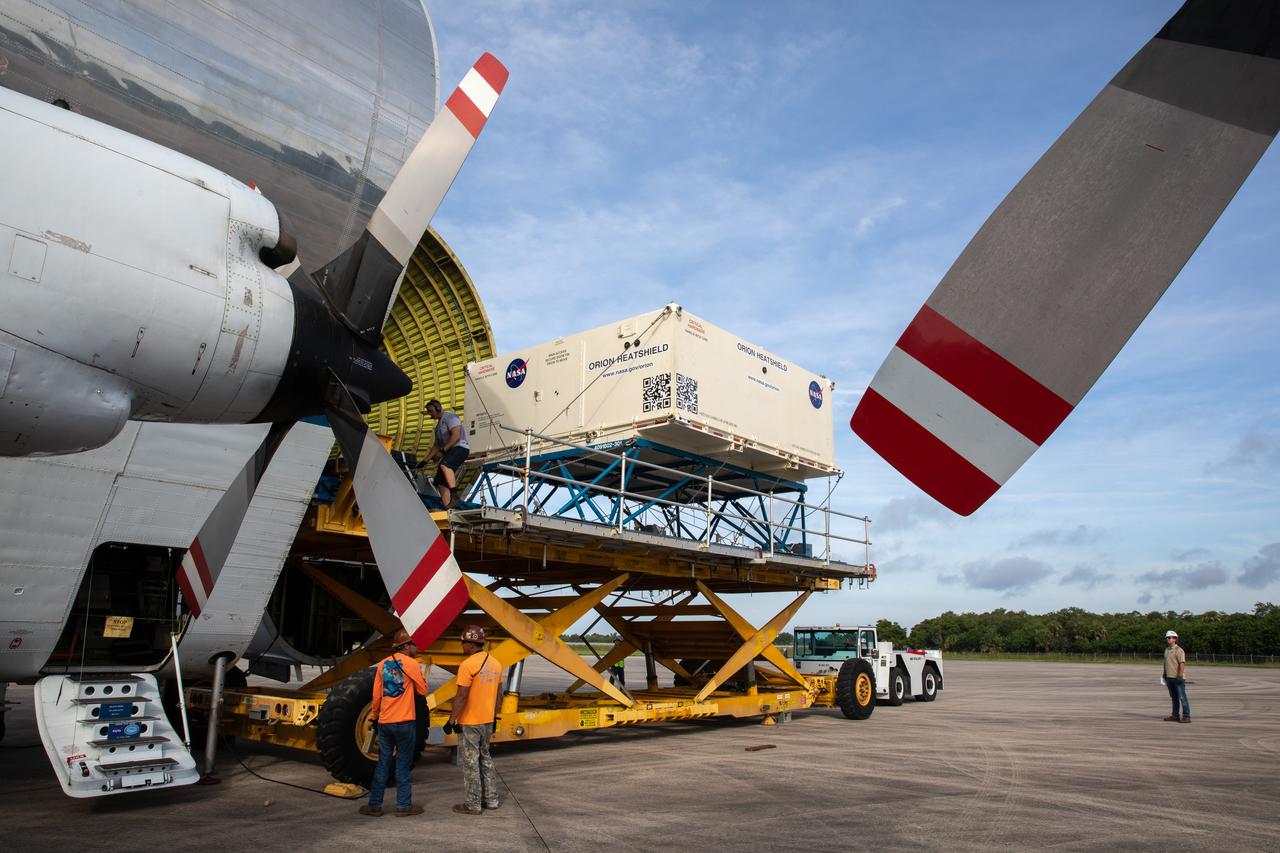
The shipping container carrying the heat shield for Orion’s Artemis 2 mission, NASA’s first crewed mission, is unloaded from NASA’s Super Guppy aircraft at the agency’s Kennedy Space Center Shuttle Landing Facility in Florida on July 9, 2019. The heat shield, measuring roughly 16 feet in diameter, will protect astronauts upon re-entry on the second mission of Artemis. The heat shield arrived from Lockheed Martin’s manufacturing facility near Denver. It will be delivered to the Neil Armstrong Operations and Checkout facility high bay. The heat shield is a base titanium truss structure. Over the next several months, technicians will apply Avcoat, an ablative material that will provide the thermal protection. Artemis 2 will confirm all of the spacecraft’s systems operate as designed in the actual environment of deep space with astronauts aboard.
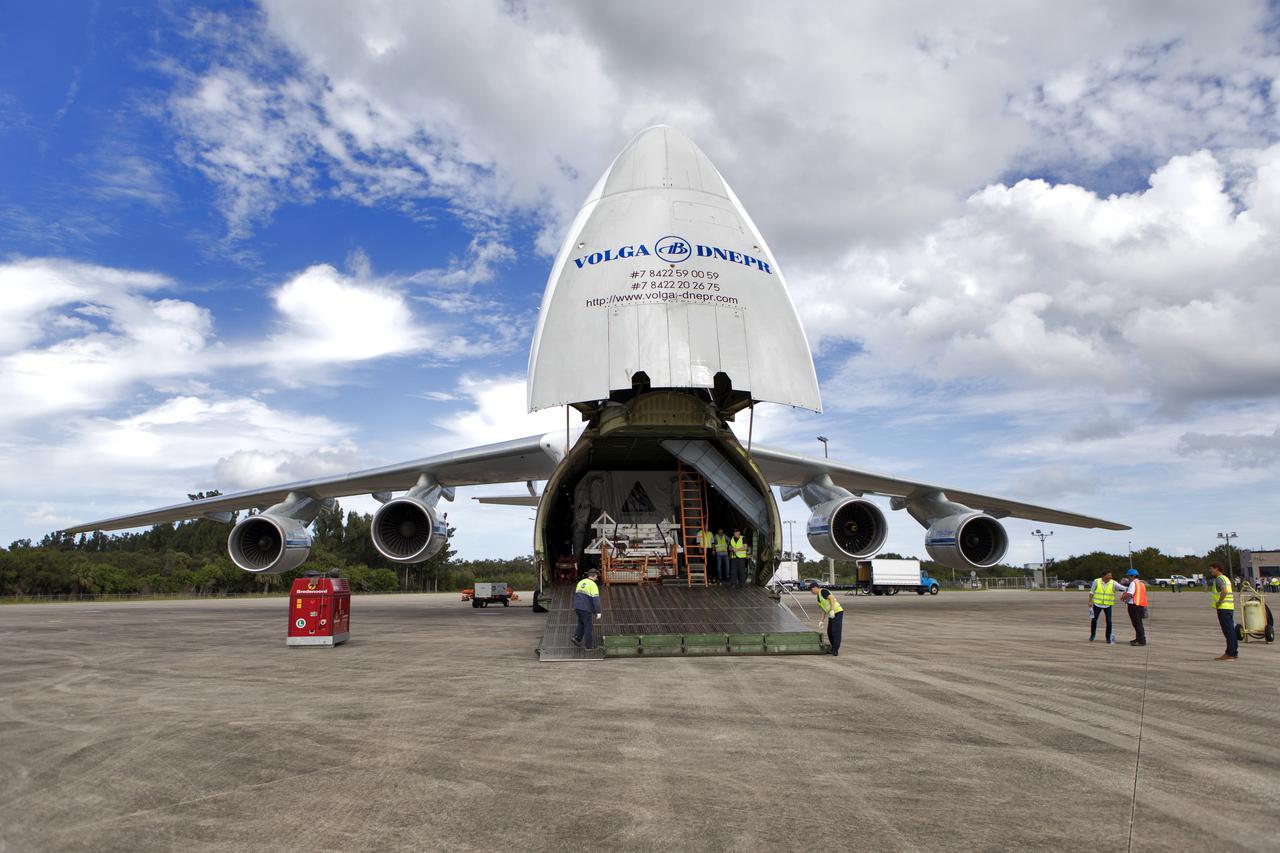
The Antonov cargo aircraft is open on the tarmac at the Shuttle Landing Facility at NASA's Kennedy Space Center in Florida on Nov. 6, 2018. The European Service Module (ESM) for Exploration Mission-1 (EM-1) will be offloaded from the cargo hold. The ESM, built by the European Space Agency, will supply the main propulsion system and power to the Orion spacecraft for Exploration Mission-1 (EM-1), a mission to the Moon. The ESM also will house air and water for astronauts on future missions. EM-1 will be an uncrewed flight test that will provide a foundation for human deep space exploration to destinations beyond Earth orbit. EM-1 will be the first integrated test of NASA's Space Launch System, Orion and the ground systems at Kennedy.