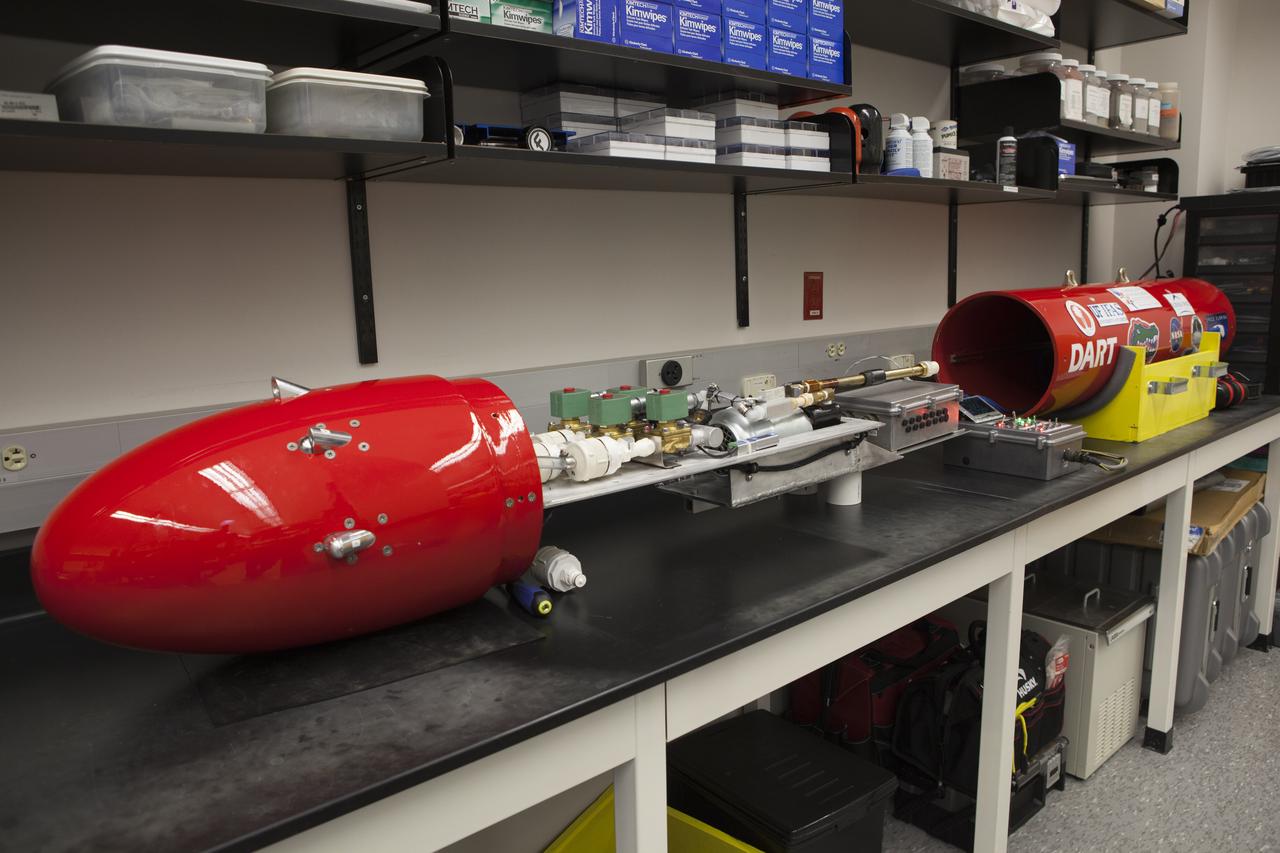
The Dust Atmospheric Recovery Technology, or DART, spacecraft is being assembled in a laboratory inside the Space Life Sciences Lab at NASA’s Kennedy Space Center in Florida. DART will characterize the dust loading and microbial diversity in the atmosphere over Florida during summer months with a special emphasis on their interactions during an African dust storm. DART will be used to collect atmospheric aerosols and suspended microbial cells over Florida and Kennedy. Results will help predict the risks of excessive microbial contamination adhering to spacecraft surfaces.
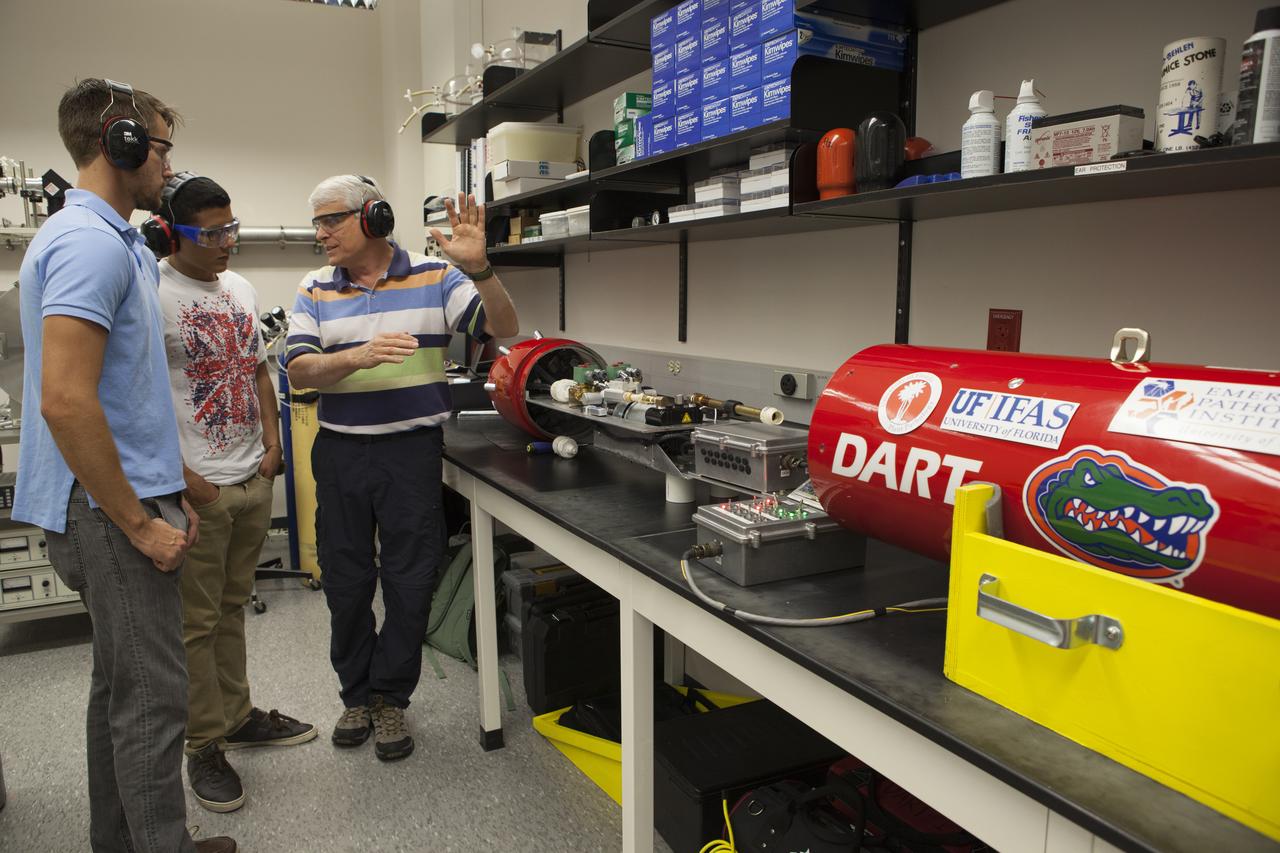
Researchers at NASA’s Kennedy Space Center in Florida check readings on the Dust Atmospheric Recovery Technology, or DART, spacecraft inside a laboratory at the Space Life Sciences Lab. DART will characterize the dust loading and microbial diversity in the atmosphere over Florida during summer months with a special emphasis on their interactions during an African dust storm. DART will be used to collect atmospheric aerosols and suspended microbial cells over Florida and Kennedy. Results will help predict the risks of excessive microbial contamination adhering to spacecraft surfaces.
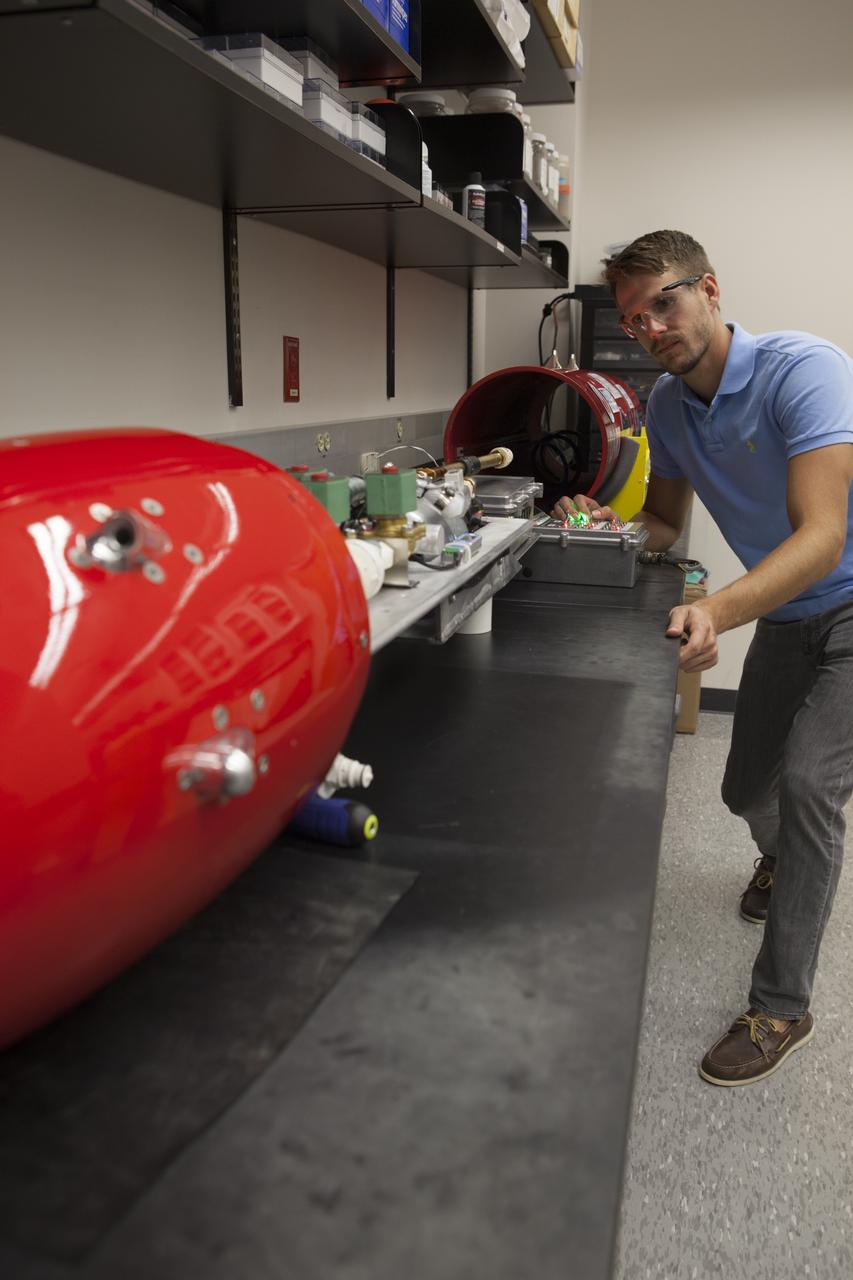
A researcher at NASA’s Kennedy Space Center in Florida checks a reading on the Dust Atmospheric Recovery Technology, or DART, spacecraft inside a laboratory at the Space Life Sciences Lab. DART will characterize the dust loading and microbial diversity in the atmosphere over Florida during summer months with a special emphasis on their interactions during an African dust storm. DART will be used to collect atmospheric aerosols and suspended microbial cells over Florida and Kennedy. Results will help predict the risks of excessive microbial contamination adhering to spacecraft surfaces.
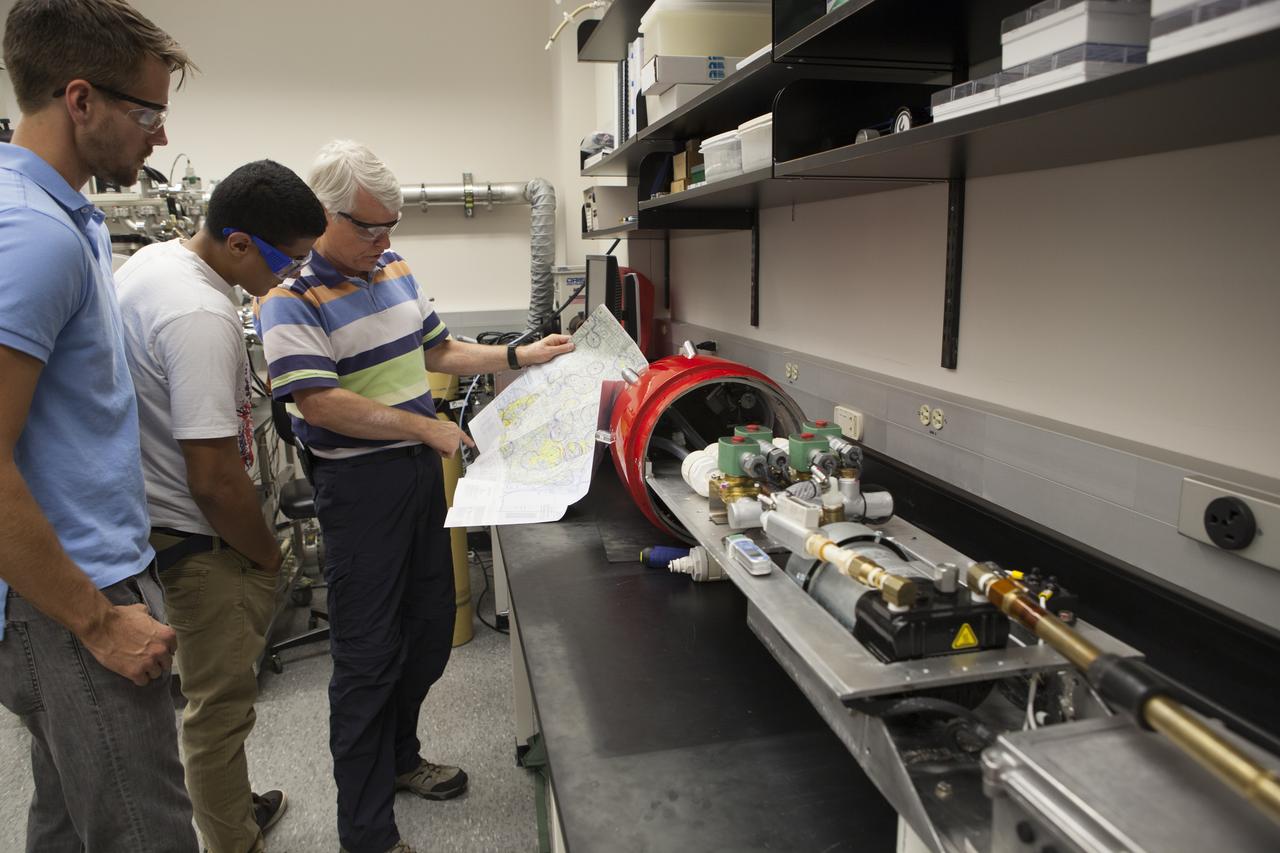
Researchers at NASA’s Kennedy Space Center in Florida check readings on the Dust Atmospheric Recovery Technology, or DART, spacecraft inside a laboratory at the Space Life Sciences Lab. DART will characterize the dust loading and microbial diversity in the atmosphere over Florida during summer months with a special emphasis on their interactions during an African dust storm. DART will be used to collect atmospheric aerosols and suspended microbial cells over Florida and Kennedy. Results will help predict the risks of excessive microbial contamination adhering to spacecraft surfaces.
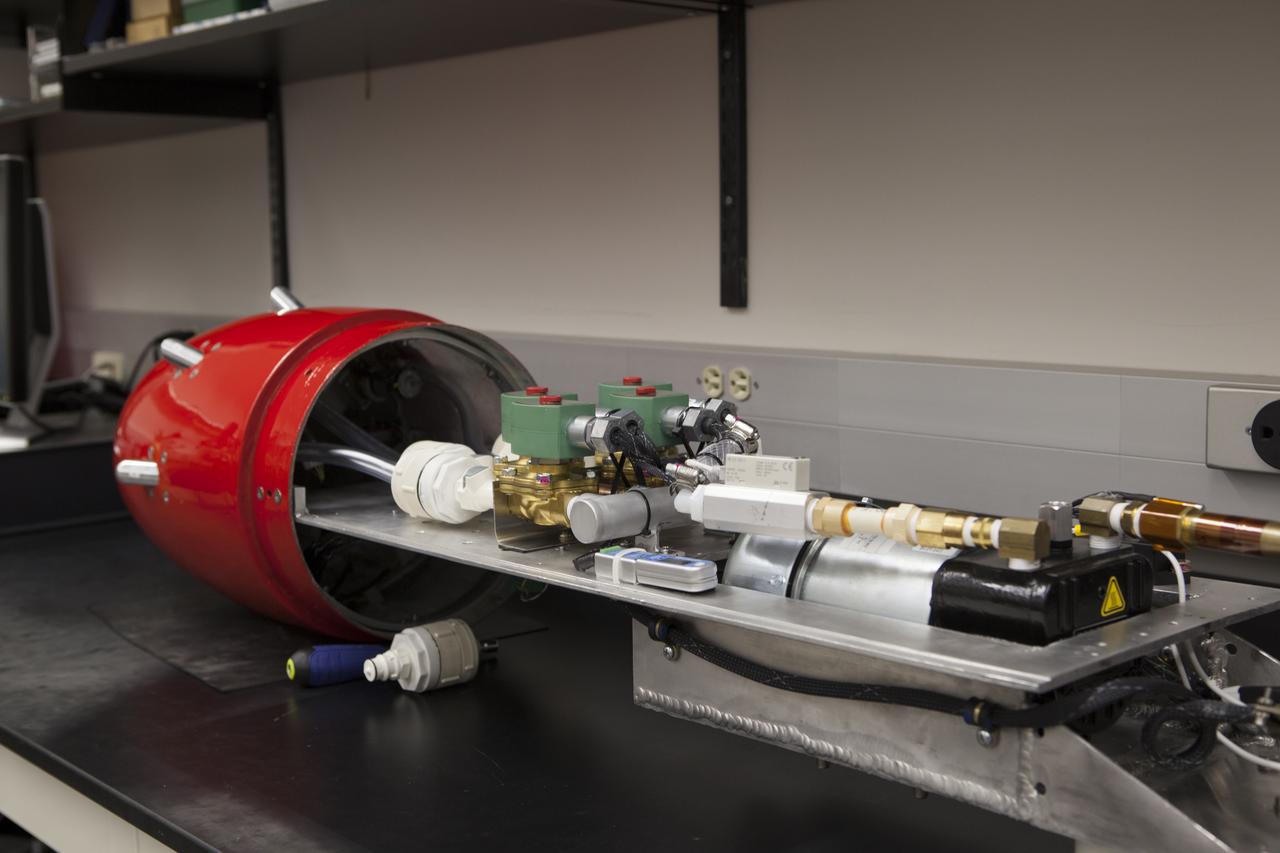
The Dust Atmospheric Recovery Technology, or DART, spacecraft is being assembled in a laboratory inside the Space Life Sciences Lab at NASA’s Kennedy Space Center in Florida. DART will characterize the dust loading and microbial diversity in the atmosphere over Florida during summer months with a special emphasis on their interactions during an African dust storm. DART will be used to collect atmospheric aerosols and suspended microbial cells over Florida and Kennedy. Results will help predict the risks of excessive microbial contamination adhering to spacecraft surfaces.
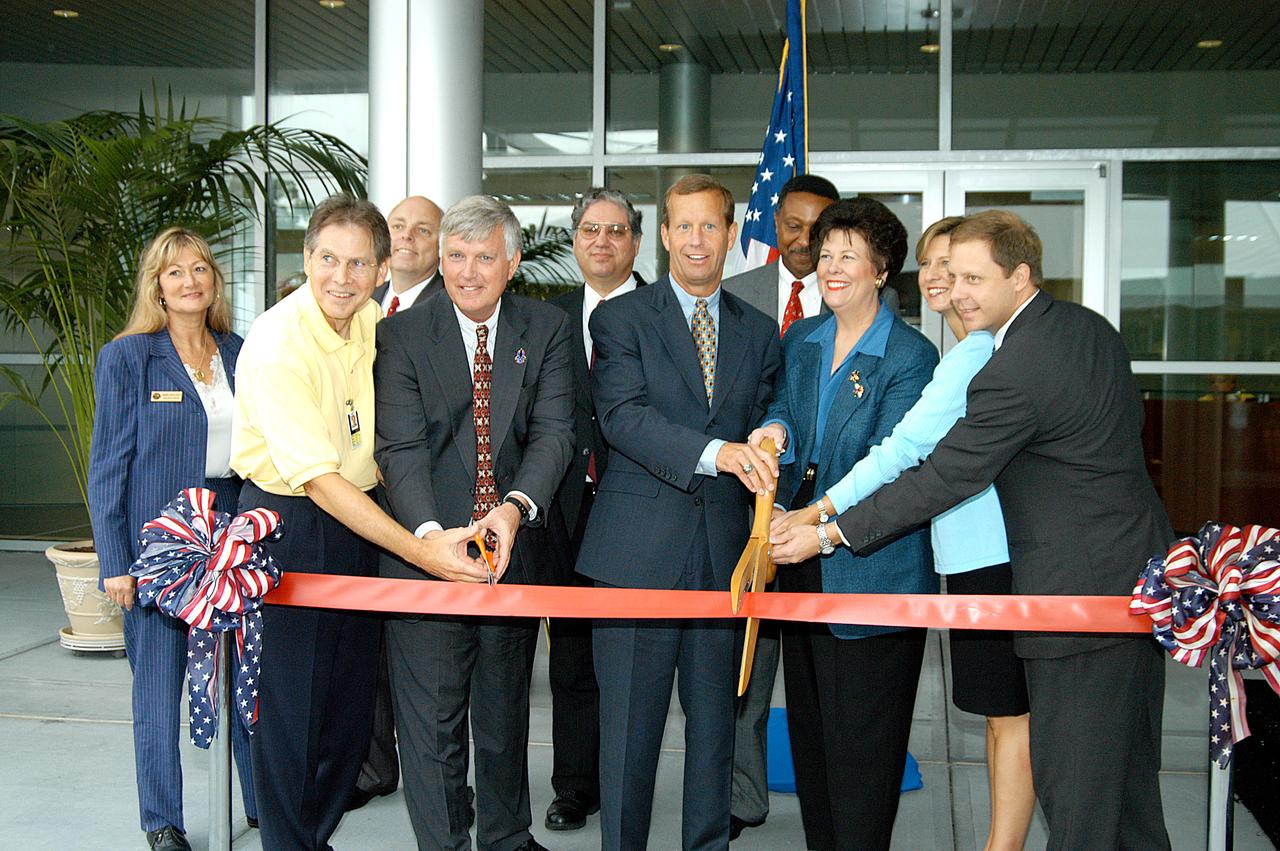
Representatives of the NASA-Kennedy Space Center and the state of Florida prepare to cut the ribbon officially opening the Space Life Sciences Lab at a ceremony at the new lab. In the front row, from left, are Dr. Samuel Durrance, executive director of the Florida Space Research Institute; Jim Kennedy, director of the Kennedy Space Center; Frank T. Brogan, president of the Florida Atlantic University; The Honorable Toni Jennings, lieutenant governor of the state of Florida; and Catherine and Grier Kirkpatrick, children of the late Sen. George Kirkpatrick. In the back row, from left, are Debra Holliday, director for Facilities and Construction, Florida Space Authority; Dan LeBlanc, president and chief operating officer of Delaware North Companies Parks and Resorts at KSC, Inc.; Jose Perez-Morales, NASA Project Manager for the Space Life Sciences Lab; and Capt. Winston E. Scott, executive director of the Florida Space Authority. Completed in August, the facility encompasses more than 100,000 square feet and was formerly known as the Space Experiment Research and Processing Laboratory or SERPL. The state, through the Florida Space Authority, built the research lab which is host to NASA, NASA’s Life Sciences Services contractor Dynamac Corp., Bionetics Corp., and researchers from the University of Florida. Dynamac Corp. leases the facility. The Florida Space Research Institute is responsible for gaining additional tenants from outside the NASA community.
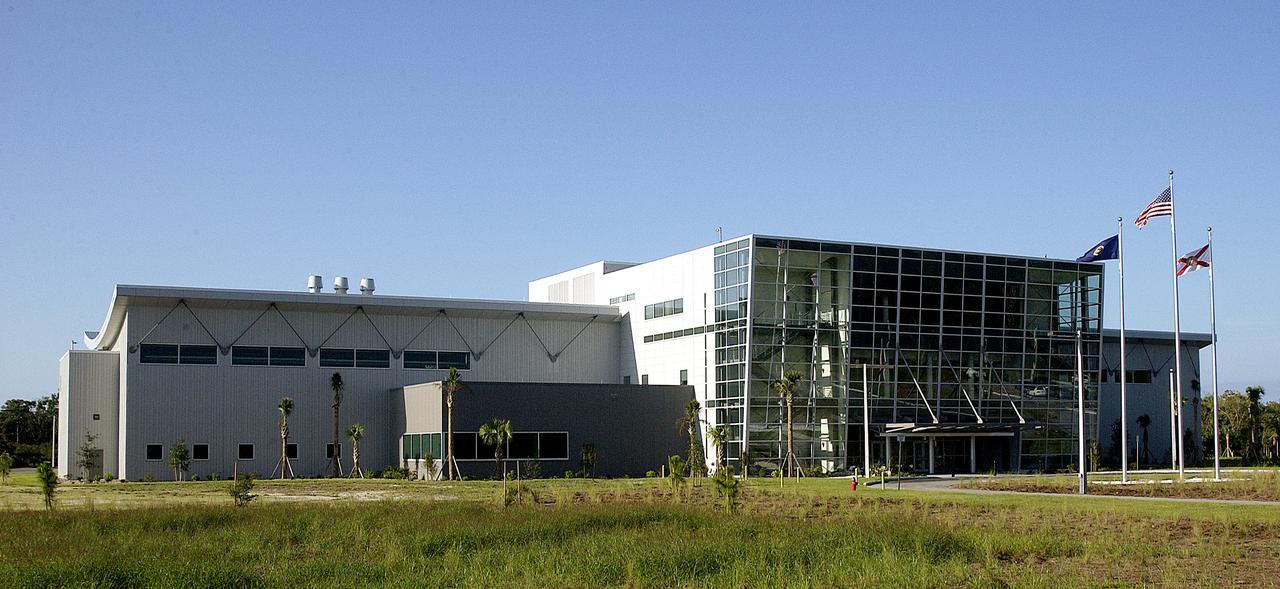
The Space Life Sciences Lab (SLSL), formerly known as the Space Experiment Research and Processing Laboratory (SERPL), is a state-of-the-art facility built for ISS biotechnology research. Developed as a partnership between NASA-KSC and the State of Florida, NASA’s life sciences contractor is the primary tenant of the facility, leasing space to conduct flight experiment processing and NASA-sponsored research. About 20 percent of the facility will be available for use by Florida’s university researchers through the Florida Space Research Institute.
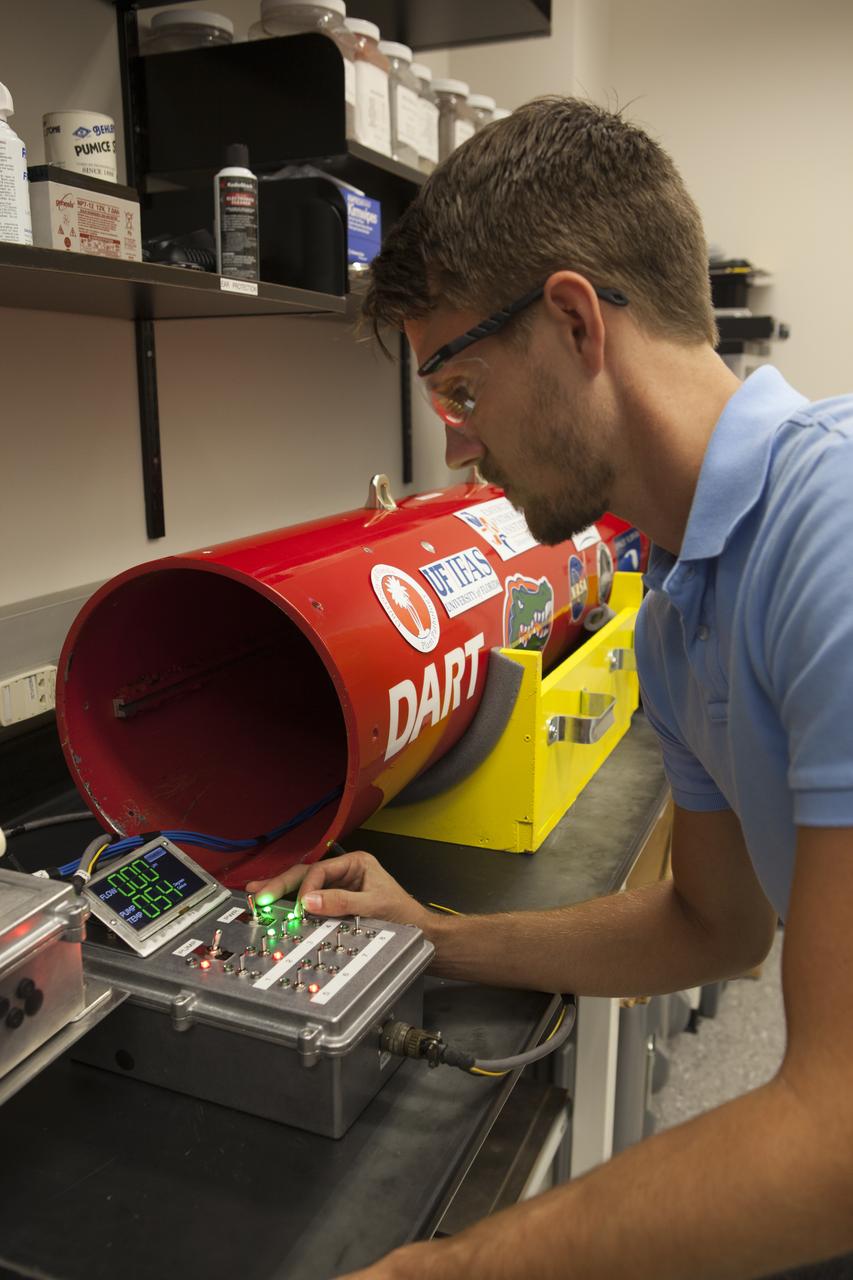
A researcher at NASA’s Kennedy Space Center in Florida checks a reading on the Dust Atmospheric Recovery Technology, or DART, spacecraft inside a laboratory at the Space Life Sciences Lab. DART will characterize the dust loading and microbial diversity in the atmosphere over Florida during summer months with a special emphasis on their interactions during an African dust storm. DART will be used to collect atmospheric aerosols and suspended microbial cells over Florida and Kennedy. Results will help predict the risks of excessive microbial contamination adhering to spacecraft surfaces.
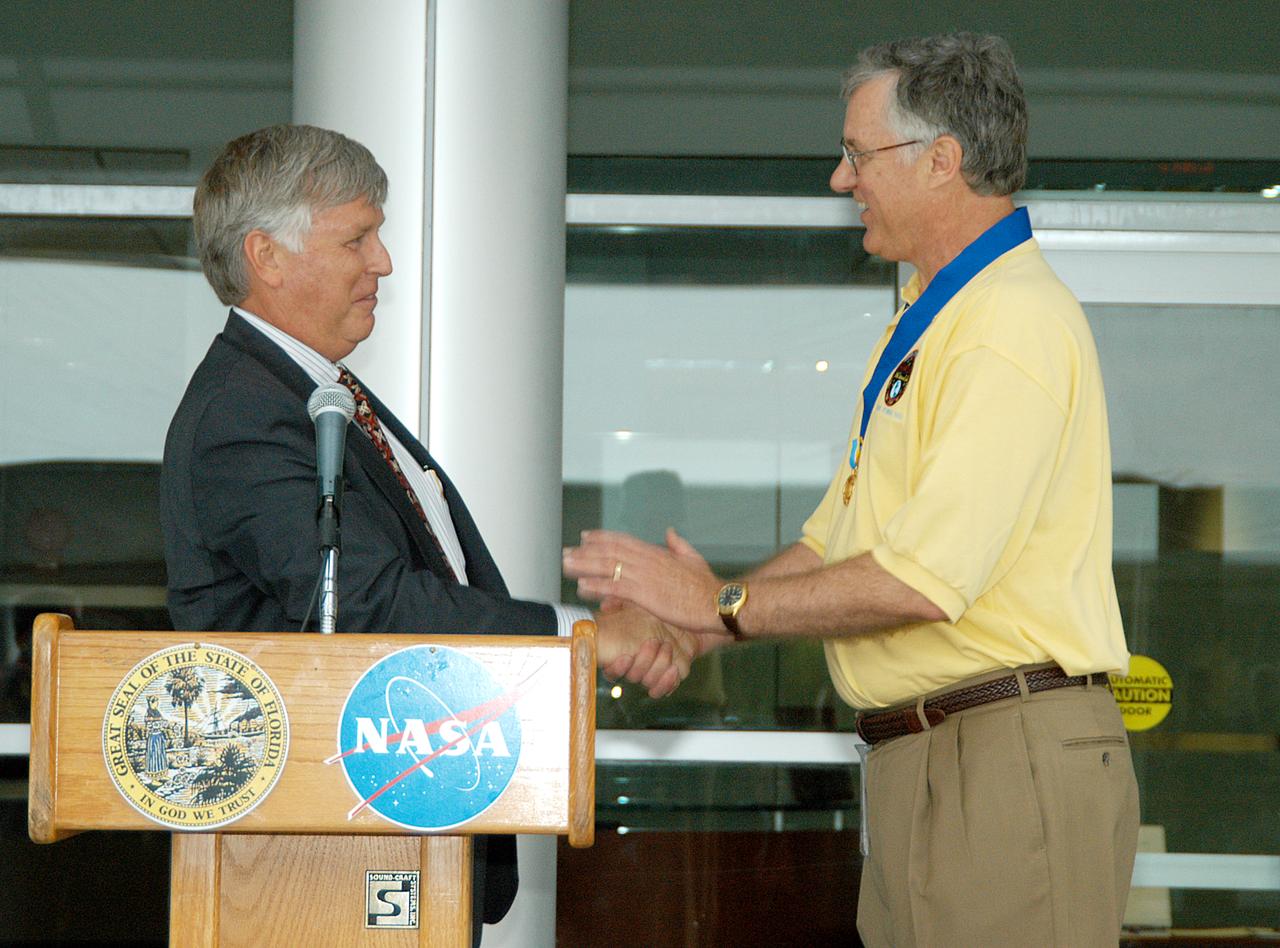
Center Director Jim Kennedy presents a NASA Public Service Award to Douglas Britt of the Dynamac Corp. at a dedication and ribbon-cutting ceremony for the Space Life Sciences Lab hosted by NASA-Kennedy Space Center and the state of Florida at the new lab. Britt received the award for his many years of exceptional service to NASA in managing the Life Sciences contracts at the Kennedy Space Center and his contributions to conceptualization and collaborations that helped make the Space Life Sciences Lab possible. Completed in August, the facility encompasses more than 100,000 square feet and was formerly known as the Space Experiment Research and Processing Laboratory or SERPL. The state, through the Florida Space Authority, built the research lab which is host to NASA, NASA’s Life Sciences Services contractor Dynamac Corp., Bionetics Corp., and researchers from the University of Florida. Dynamac Corp. leases the facility. The Florida Space Research Institute is responsible for gaining additional tenants from outside the NASA community.
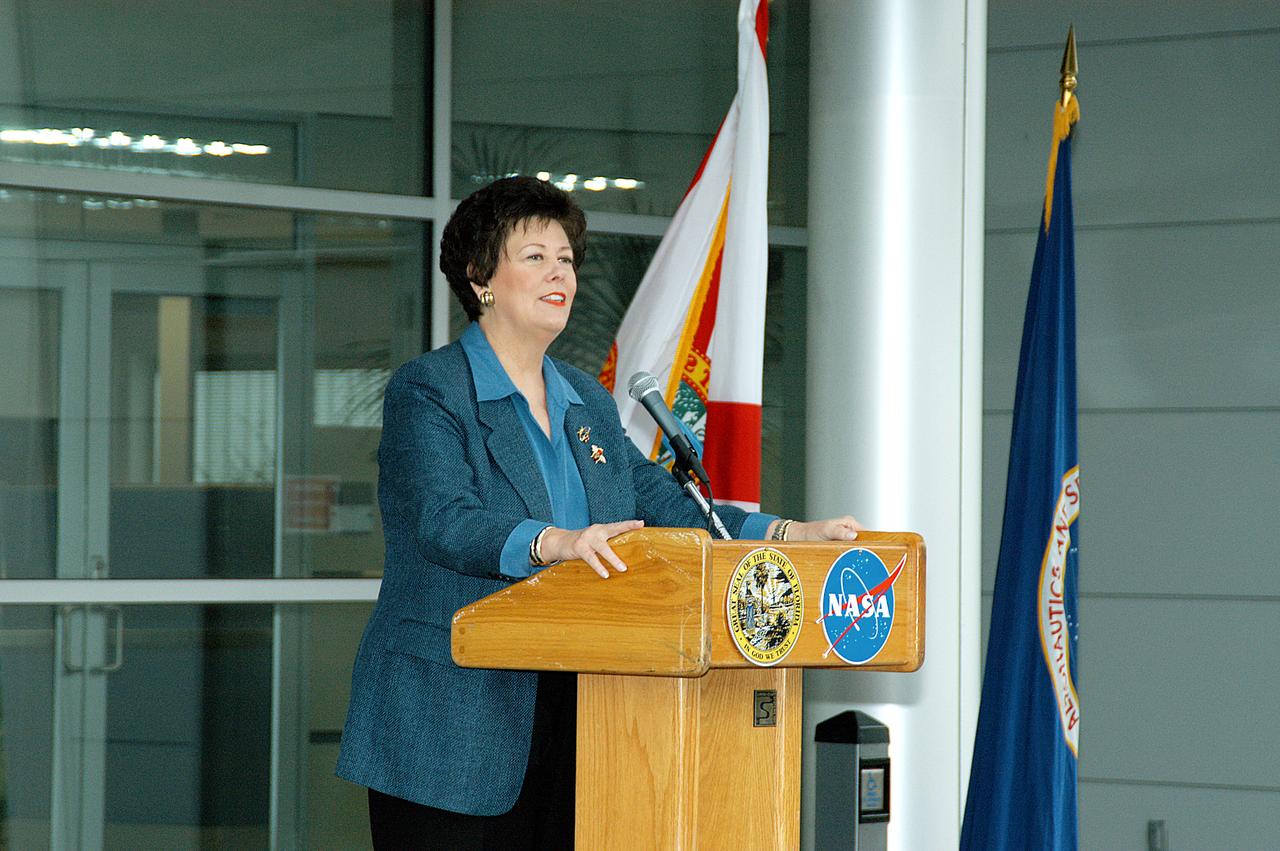
The Honorable Toni Jennings, lieutenant governor of the state of Florida, speaks at a dedication and ribbon-cutting ceremony for the Space Life Sciences Lab hosted by NASA-Kennedy Space Center and the state of Florida at the new lab. Completed in August, the facility encompasses more than 100,000 square feet and was formerly known as the Space Experiment Research and Processing Laboratory or SERPL. The state, through the Florida Space Authority, built the research lab which is host to NASA, NASA’s Life Sciences Services contractor Dynamac Corp., Bionetics Corp., and researchers from the University of Florida. Dynamac Corp. leases the facility. The Florida Space Research Institute is responsible for gaining additional tenants from outside the NASA community.
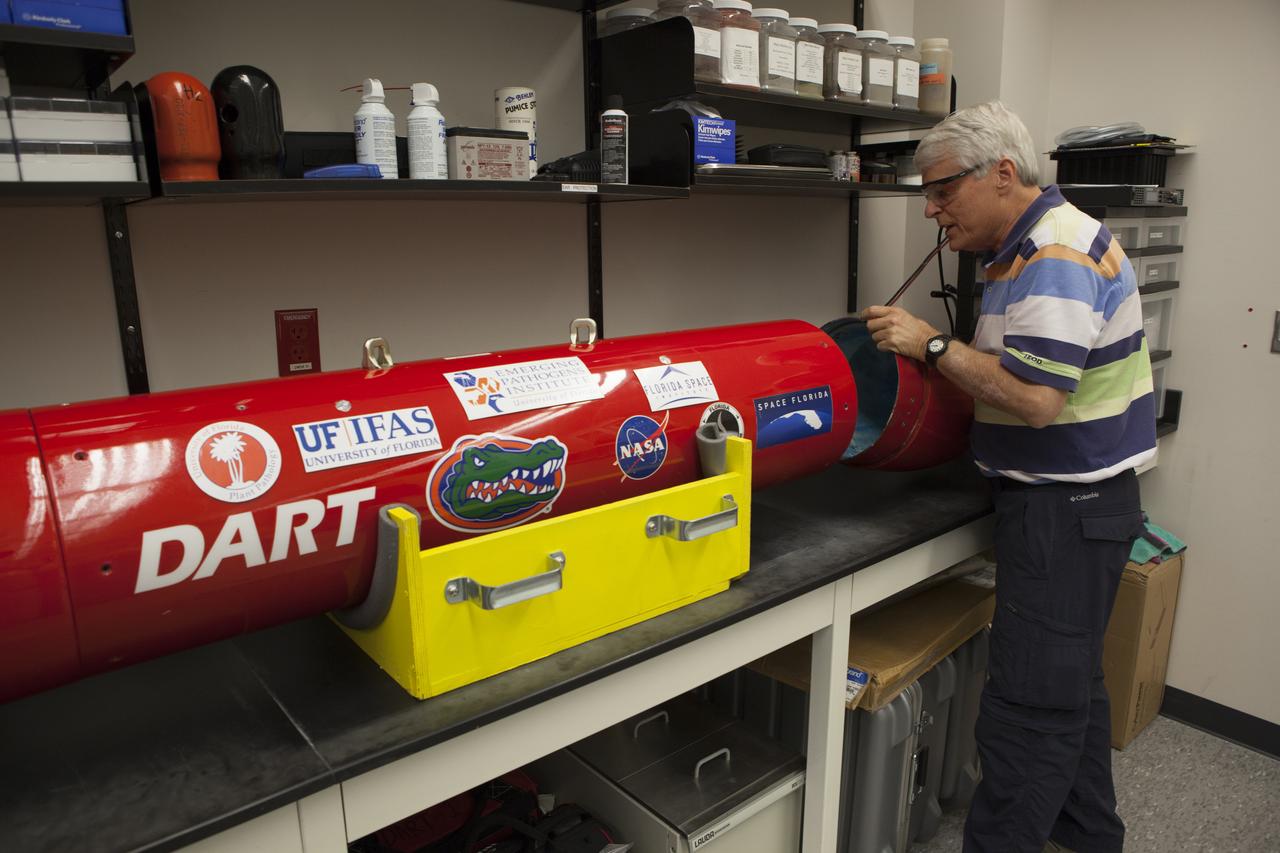
A researcher from the University of Florida in Gainesville, checks the Dust Atmospheric Recovery Technology, or DART, spacecraft in a laboratory inside the Space Life Sciences Lab at NASA’s Kennedy Space Center in Florida. DART will characterize the dust loading and microbial diversity in the atmosphere over Florida during summer months with a special emphasis on their interactions during an African dust storm. DART will be used to collect atmospheric aerosols and suspended microbial cells over Florida and Kennedy. Results will help predict the risks of excessive microbial contamination adhering to spacecraft surfaces.
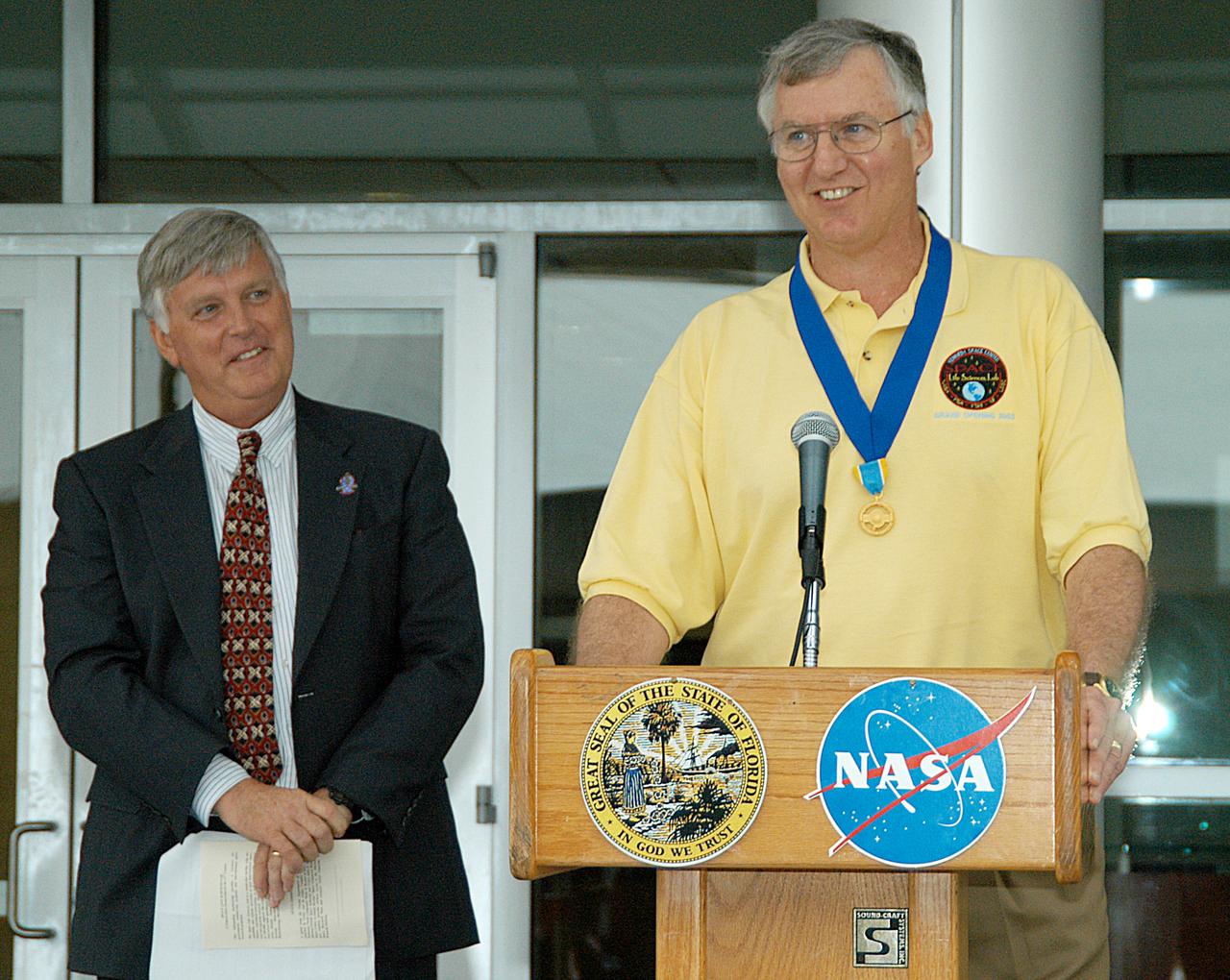
Center Director Jim Kennedy presents a NASA Public Service Award to Douglas Britt of the Dynamac Corp. at a dedication and ribbon-cutting ceremony for the Space Life Sciences Lab hosted by NASA-Kennedy Space Center and the state of Florida at the new lab. Britt received the award for his many years of exceptional service to NASA in managing the Life Sciences contracts at the Kennedy Space Center and his contributions to conceptualization and collaborations that helped make the Space Life Sciences Lab possible. Completed in August, the facility encompasses more than 100,000 square feet and was formerly known as the Space Experiment Research and Processing Laboratory or SERPL. The state, through the Florida Space Authority, built the research lab which is host to NASA, NASA’s Life Sciences Services contractor Dynamac Corp., Bionetics Corp., and researchers from the University of Florida. Dynamac Corp. leases the facility. The Florida Space Research Institute is responsible for gaining additional tenants from outside the NASA community.