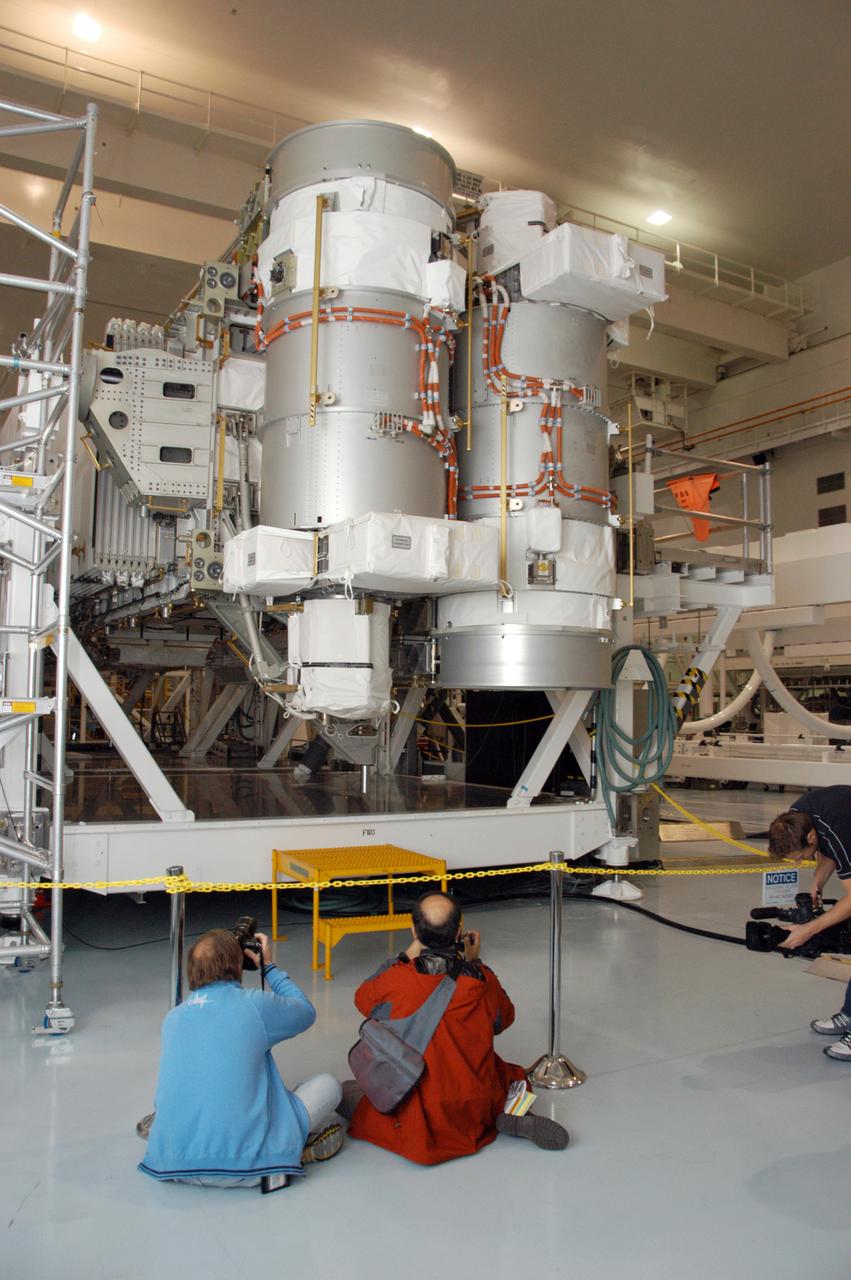
In the Space Station Processing Facility, photographers take advantage of a media showcase to get photos of the S3/S4 integrated truss segment. The starboard 3/4 truss segment will launch aboard Space Shuttle Atlantis on mission STS-117, targeted for March 15. The element will be added to the 11-segment integrated truss structure, the station's backbone. The integrated truss structure eventually will span more than 300 feet. The S3/S4 truss has two large solar arrays and will provide one-fourth of the total power generation for the completed station.
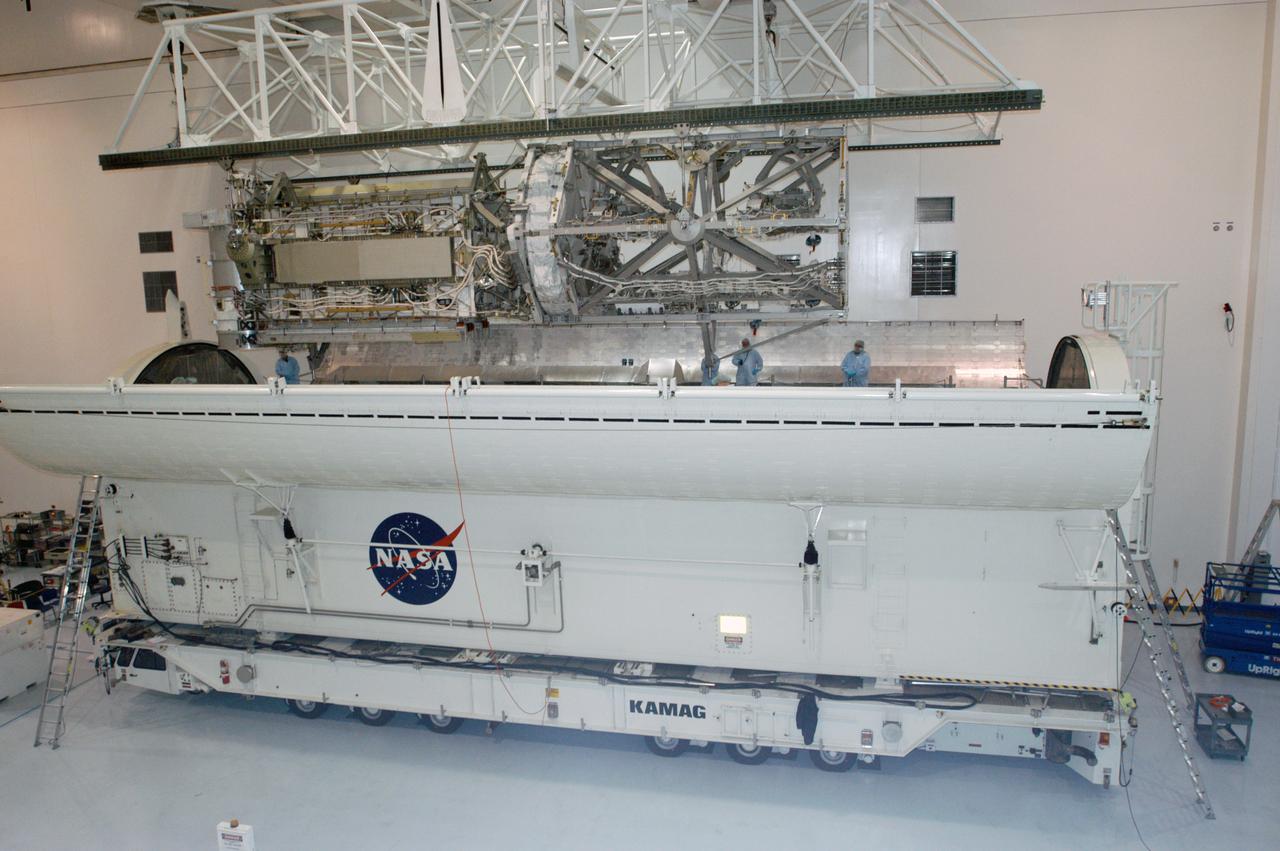
In the Space Station Processing Facility, an overhead crane lowers the S3/S4 integrated truss into the open bay of the payload canister. After it is stowed in the canister, the S3/S4 truss will be transported to the launch pad. The truss is the payload on mission STS-117, targeted for launch on March 15.
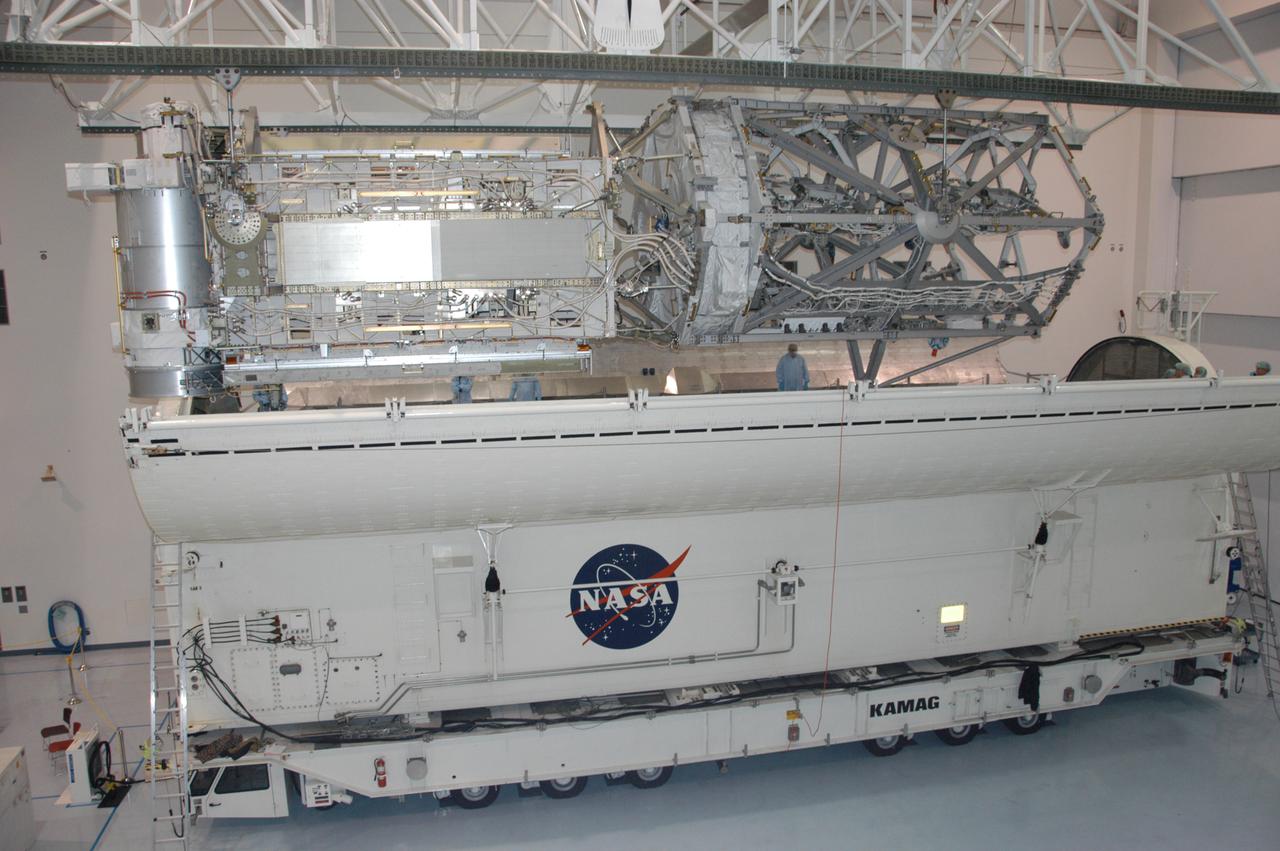
In the Space Station Processing Facility, an overhead crane lowers the S3/S4 integrated truss toward the open doors of the payload canister. After it is stowed in the canister, the S3/S4 truss will be transported to the launch pad. The truss is the payload on mission STS-117, targeted for launch on March 15.
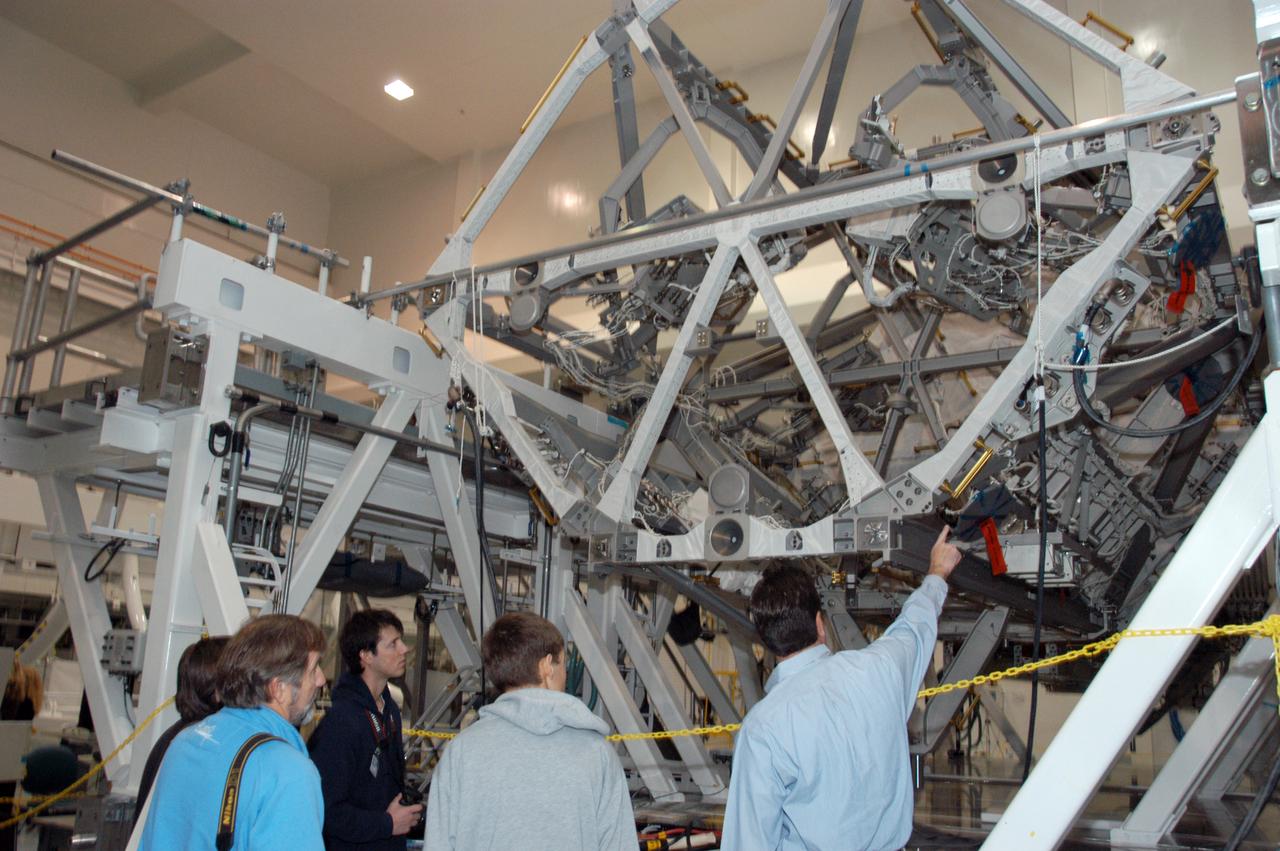
At a media showcase in the Space Station Processing Facility, reporters and photographers get a close look at the S3/S4 integrated truss segment. The starboard 3/4 truss segment will launch aboard Space Shuttle Atlantis on mission STS-117, targeted for March 15. The element will be added to the 11-segment integrated truss structure, the station's backbone. The integrated truss structure eventually will span more than 300 feet. The S3/S4 truss has two large solar arrays and will provide one-fourth of the total power generation for the completed station.
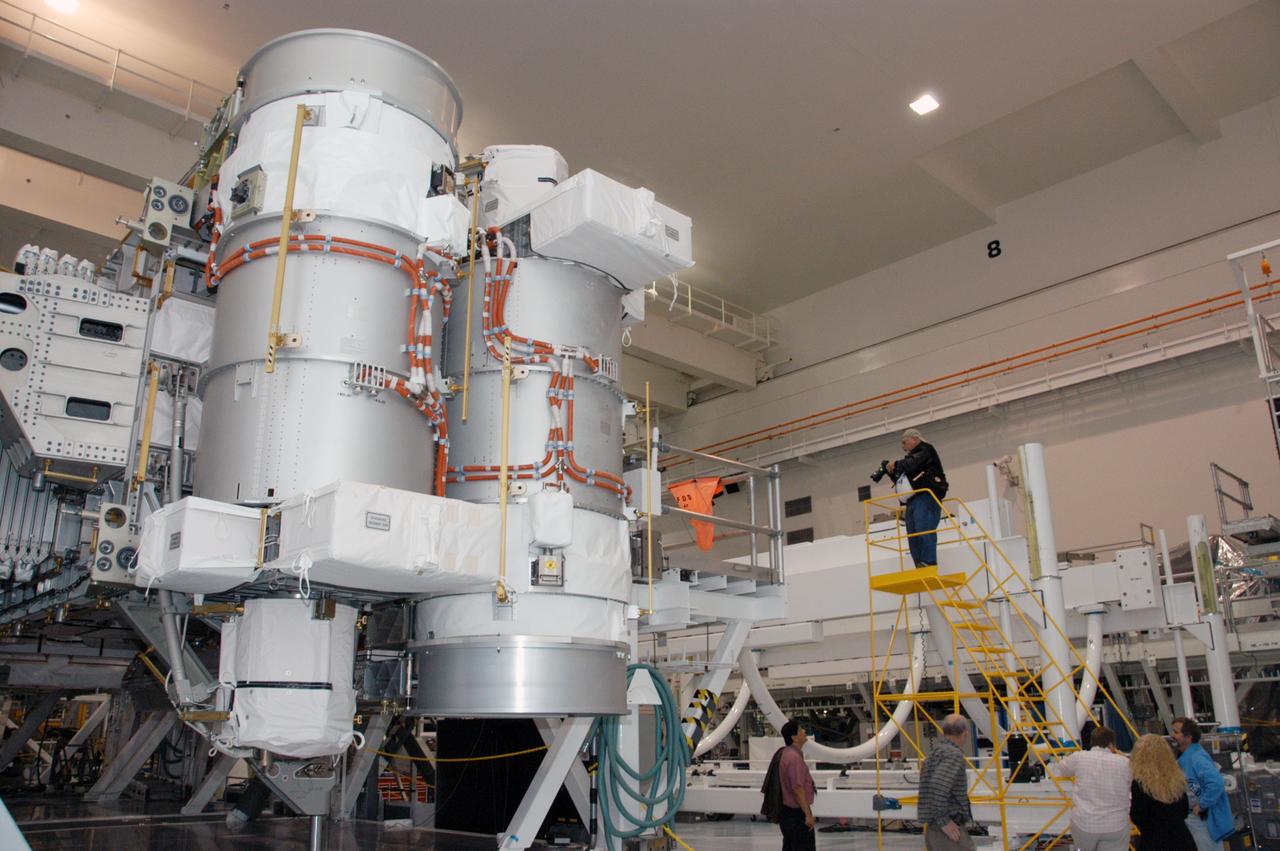
At a media showcase in the Space Station Processing Facility, reporters and photographers get a close look at the S3/S4 integrated truss segment. The starboard 3/4 truss segment will launch aboard Space Shuttle Atlantis on mission STS-117, targeted for March 15. The element will be added to the 11-segment integrated truss structure, the station's backbone. The integrated truss structure eventually will span more than 300 feet. The S3/S4 truss has two large solar arrays and will provide one-fourth of the total power generation for the completed station.
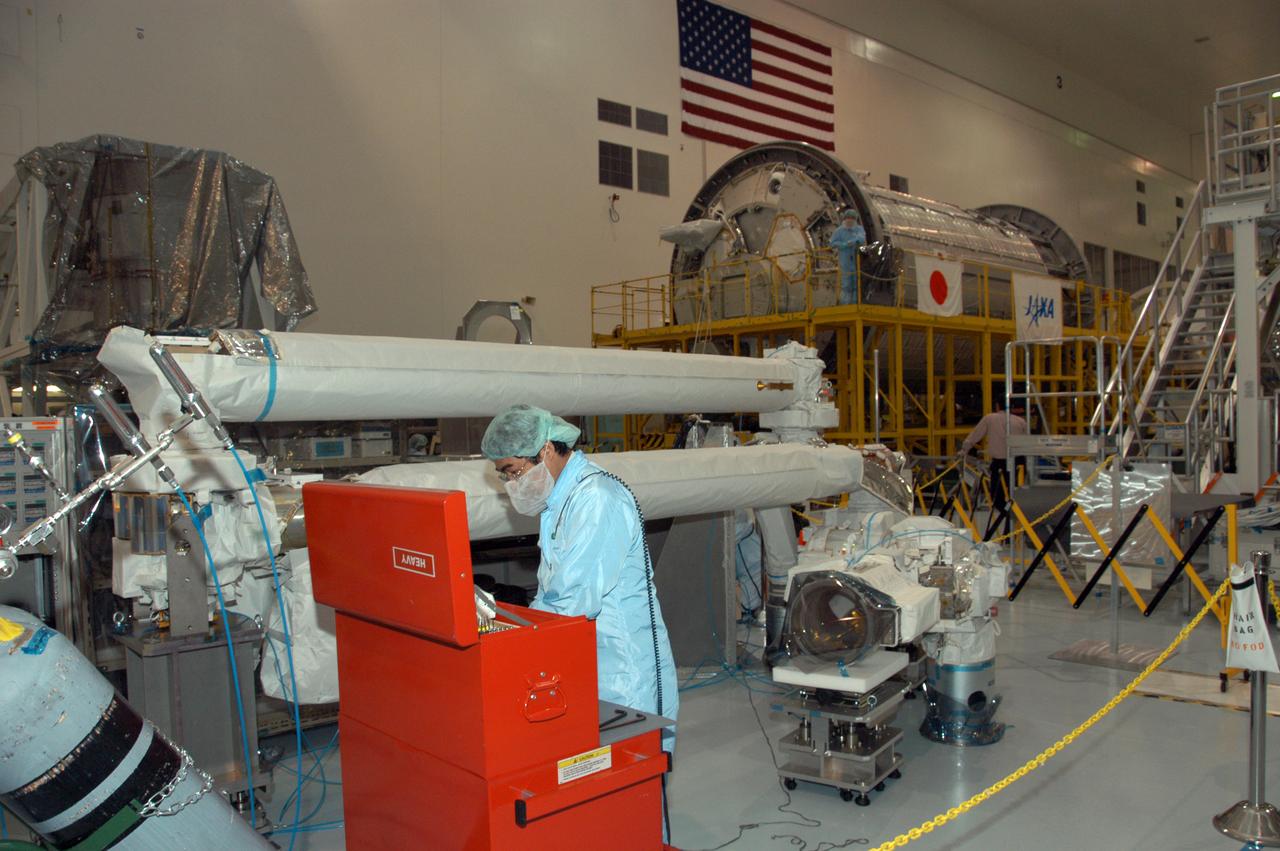
In the Space Station Processing Facility, technicians work on the Japanese remote manipulator system. It is scheduled to fly on a 2008 mission along with the Kibo Japanese Experiment Module Pressurized Module (JEM-PM).

CAPE CANAVERAL, Fla. - In the Space Station Processing Facility at NASA's Kennedy Space Center in Florida, John Carver, a project manager with Jacobs Technology checks the Advanced Plant Experiment, or APEX, experiment as it is being prepared for launch to the International Space Station aboard a SpaceX Dragon spacecraft. Scheduled for launch on March 16 atop a Falcon 9 rocket, Dragon will be marking its fourth trip to the space station. The SpaceX-3 mission is the third of 12 flights contracted by NASA to resupply the orbiting laboratory. For more information, visit http://www.nasa.gov/mission_pages/station/structure/launch/index.html Photo credit: NASA/Kim Shiflett
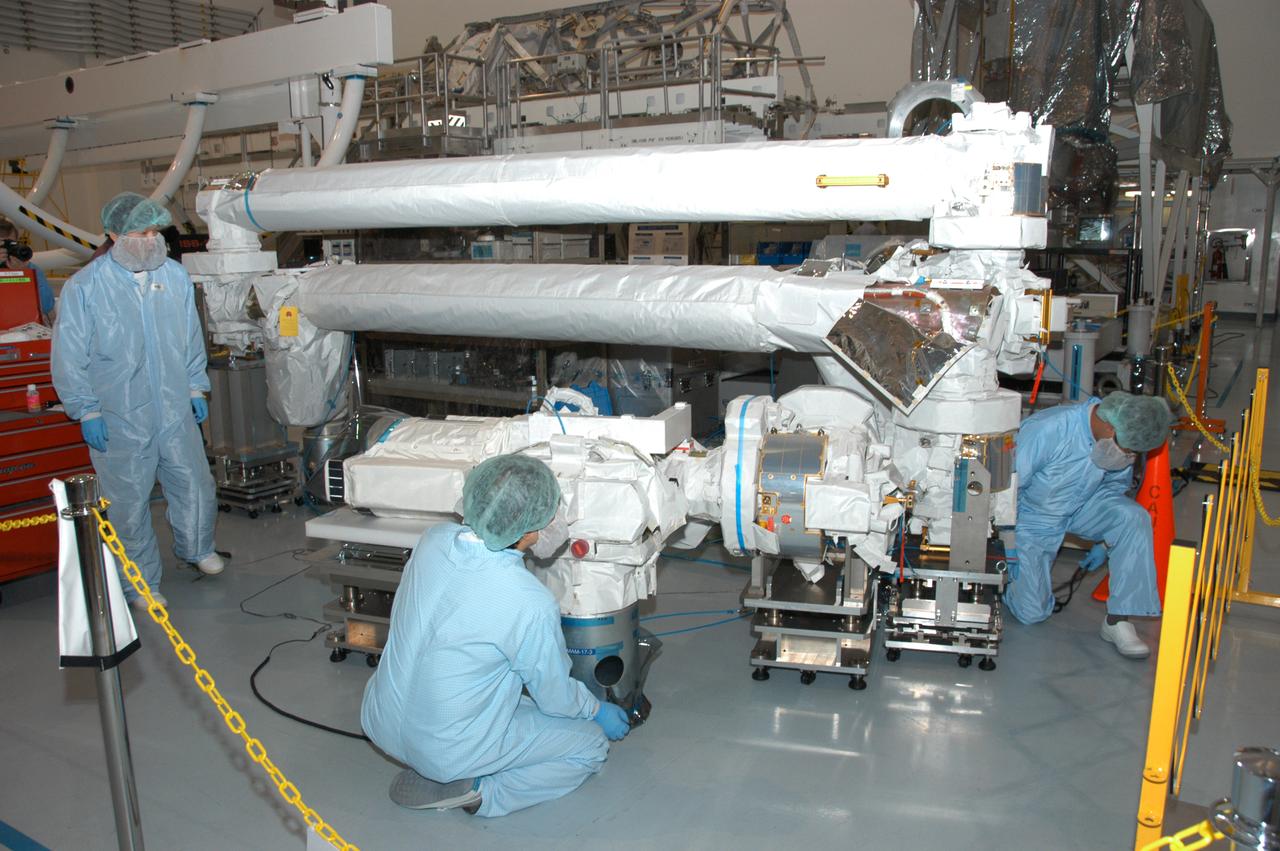
In the Space Station Processing Facility, technicians work on the Japanese remote manipulator system. It is scheduled to fly on a 2008 mission along with the Kibo Japanese Experiment Module Pressurized Module (JEM-PM).
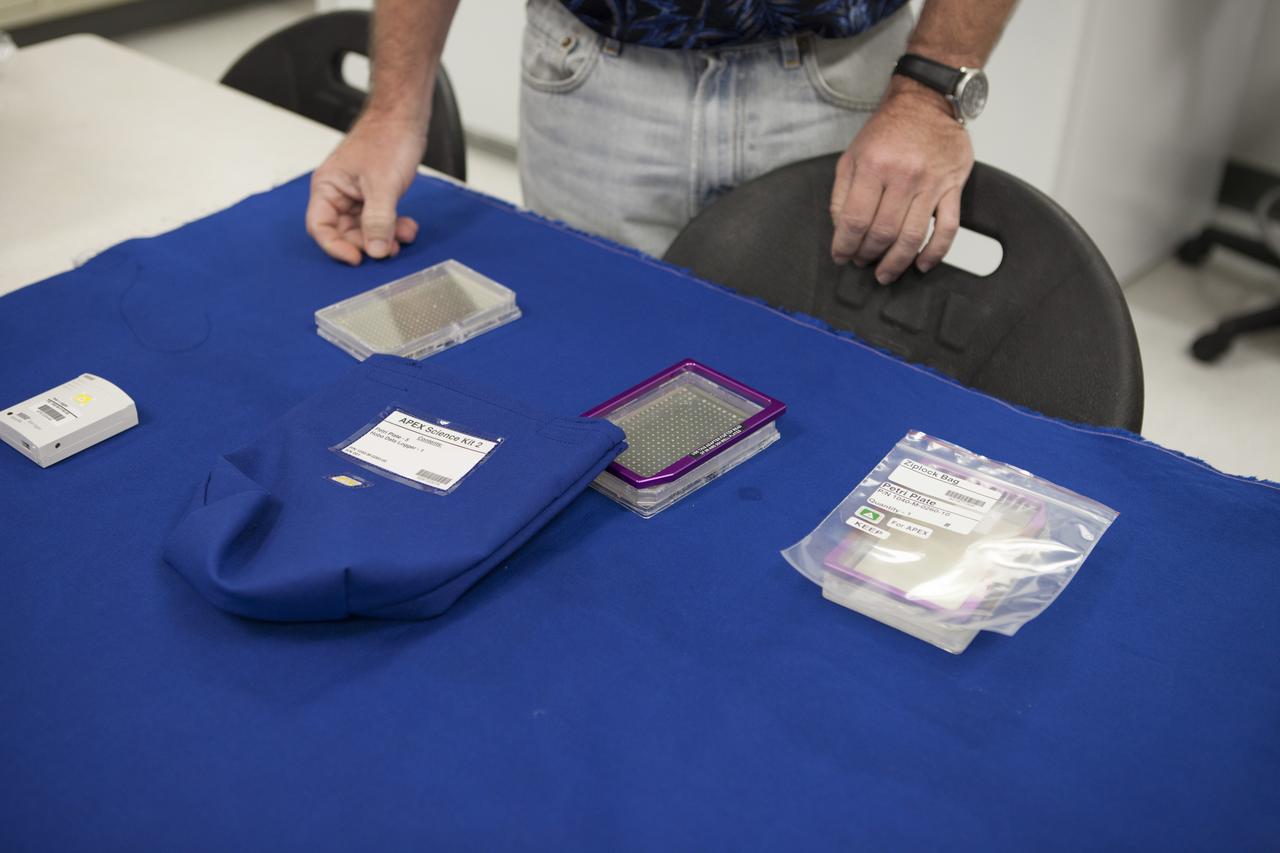
CAPE CANAVERAL, Fla. - In the Space Station Processing Facility at NASA's Kennedy Space Center in Florida, portions of the Advanced Plant Experiment, or APEX, experiment are checked out as it is prepared for launch to the International Space Station aboard a SpaceX Dragon spacecraft. Scheduled for launch on March 16 atop a Falcon 9 rocket, Dragon will be marking its fourth trip to the space station. The SpaceX-3 mission is the third of 12 flights contracted by NASA to resupply the orbiting laboratory. For more information, visit http://www.nasa.gov/mission_pages/station/structure/launch/index.html Photo credit: NASA/Kim Shiflett
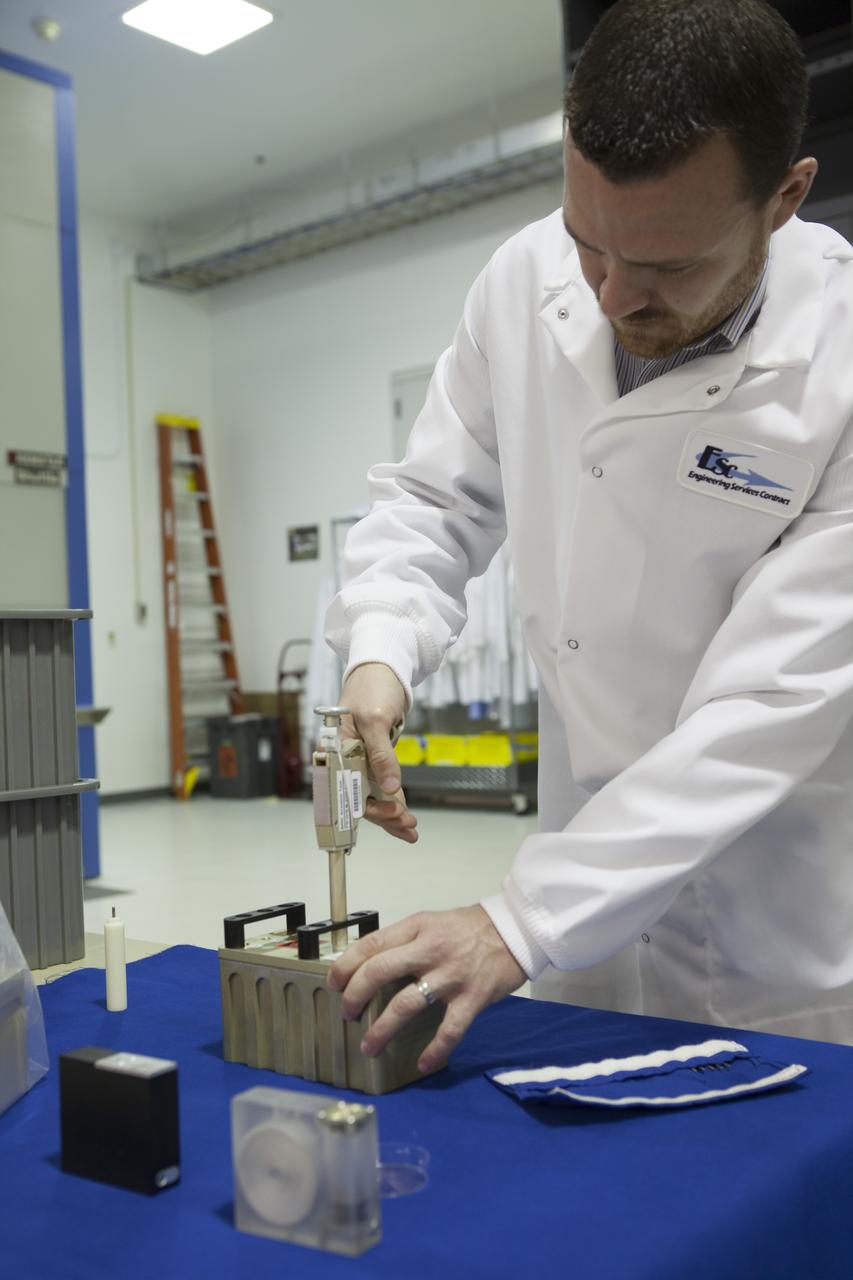
CAPE CANAVERAL, Fla. - In the Space Station Processing Facility at NASA's Kennedy Space Center in Florida, Terry Tullis, a QinetiQ North America mechanical engineer, prepares the Biological Research In Canisters, or BRIC, 18-1 and 18-2 experiments which will be launched to the International Space Station aboard a SpaceX Dragon spacecraft. Scheduled for launch on March 16 atop a Falcon 9 rocket, Dragon will be marking its fourth trip to the space station. The SpaceX-3 mission is the third of 12 flights contracted by NASA to resupply the orbiting laboratory. For more information, visit http://www.nasa.gov/mission_pages/station/structure/launch/index.html Photo credit: NASA/Kim Shiflett

CAPE CANAVERAL, Fla. - In the Space Station Processing Facility at NASA's Kennedy Space Center in Florida, the Biotube experiment is being prepared for launch to the International Space Station aboard a SpaceX Dragon spacecraft. Biotube-MICRO will investigate the potential for magnetic fields to orient plant roots as they grow in microgravity. Scheduled for launch on March 16 atop a Falcon 9 rocket, Dragon will be marking its fourth trip to the space station. The SpaceX-3 mission is the third of 12 flights contracted by NASA to resupply the orbiting laboratory. For more information, visit http://www.nasa.gov/mission_pages/station/structure/launch/index.html Photo credit: NASA/Kim Shiflett
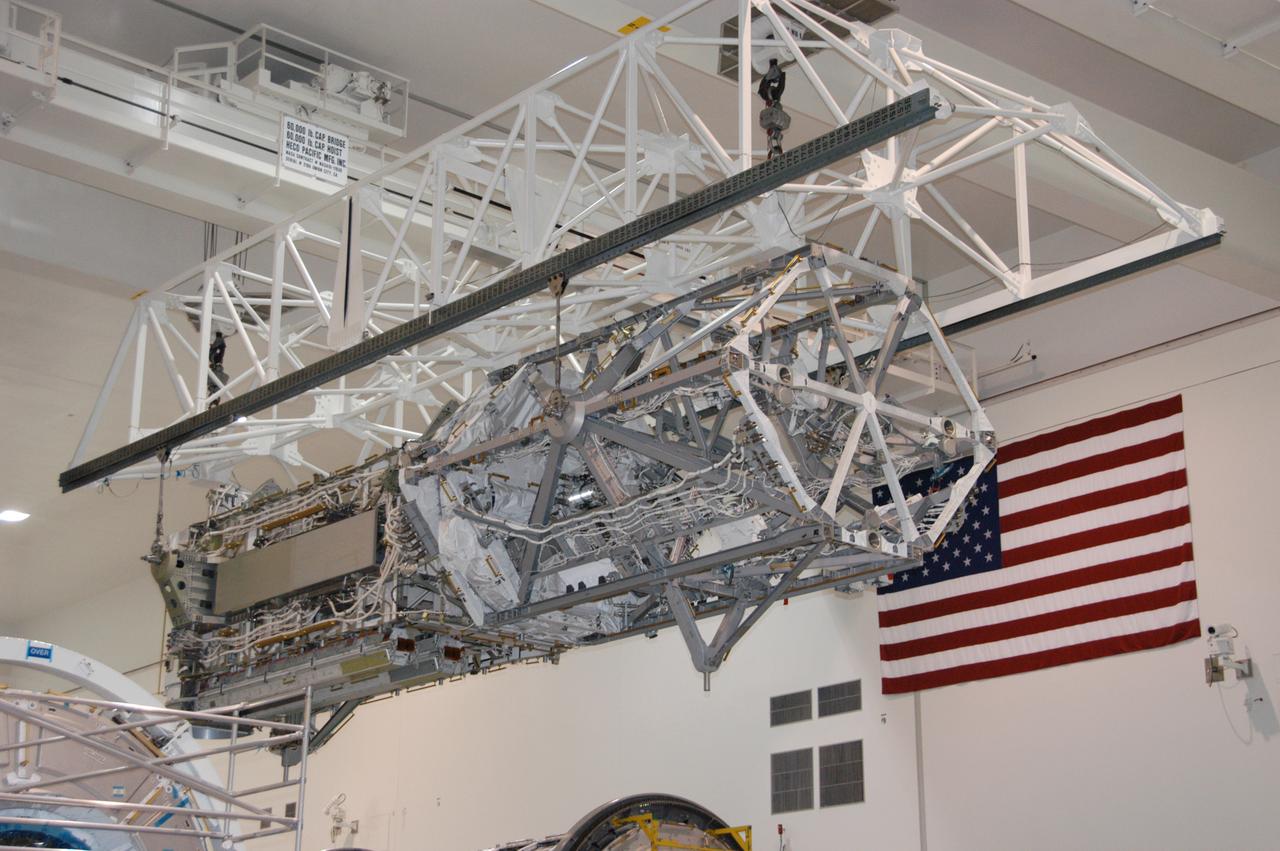
In the Space Station Processing Facility, an overhead crane moves the S3/S4 integrated truss to a payload canister. After it is stowed in the canister, the S3/S4 truss will be transported to the launch pad. The truss is the payload on mission STS-117, targeted for launch on March 15.
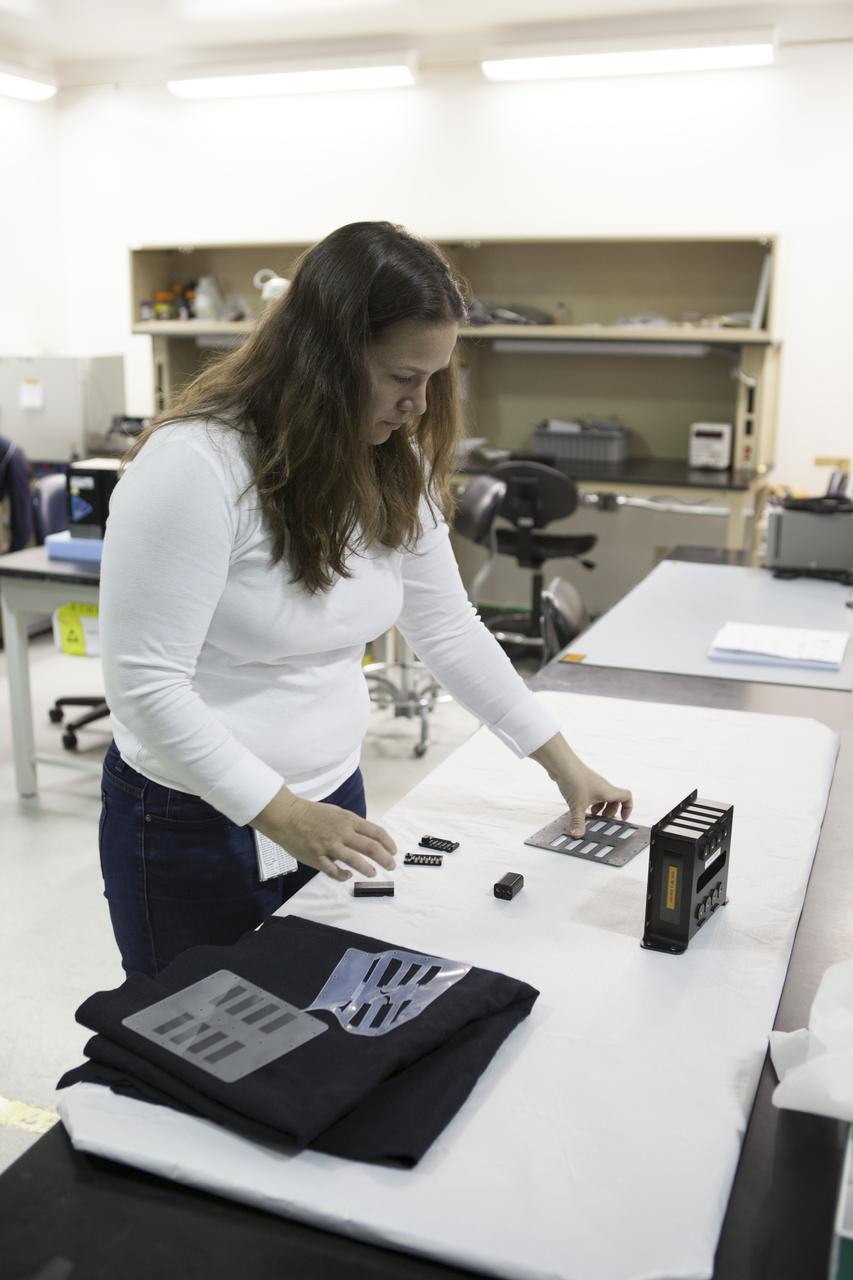
CAPE CANAVERAL, Fla. - In the Space Station Processing Facility at NASA's Kennedy Space Center in Florida, Allison Caron, a QinetiQ mechanical engineer, checks out part of the Biotube experiment which will be launched to the International Space Station aboard a SpaceX Dragon spacecraft. Scheduled for launch on March 16 atop a Falcon 9 rocket, Dragon will be marking its fourth trip to the space station. The SpaceX-3 mission is the third of 12 flights contracted by NASA to resupply the orbiting laboratory. For more information, visit http://www.nasa.gov/mission_pages/station/structure/launch/index.html Photo credit: NASA/Kim Shiflett
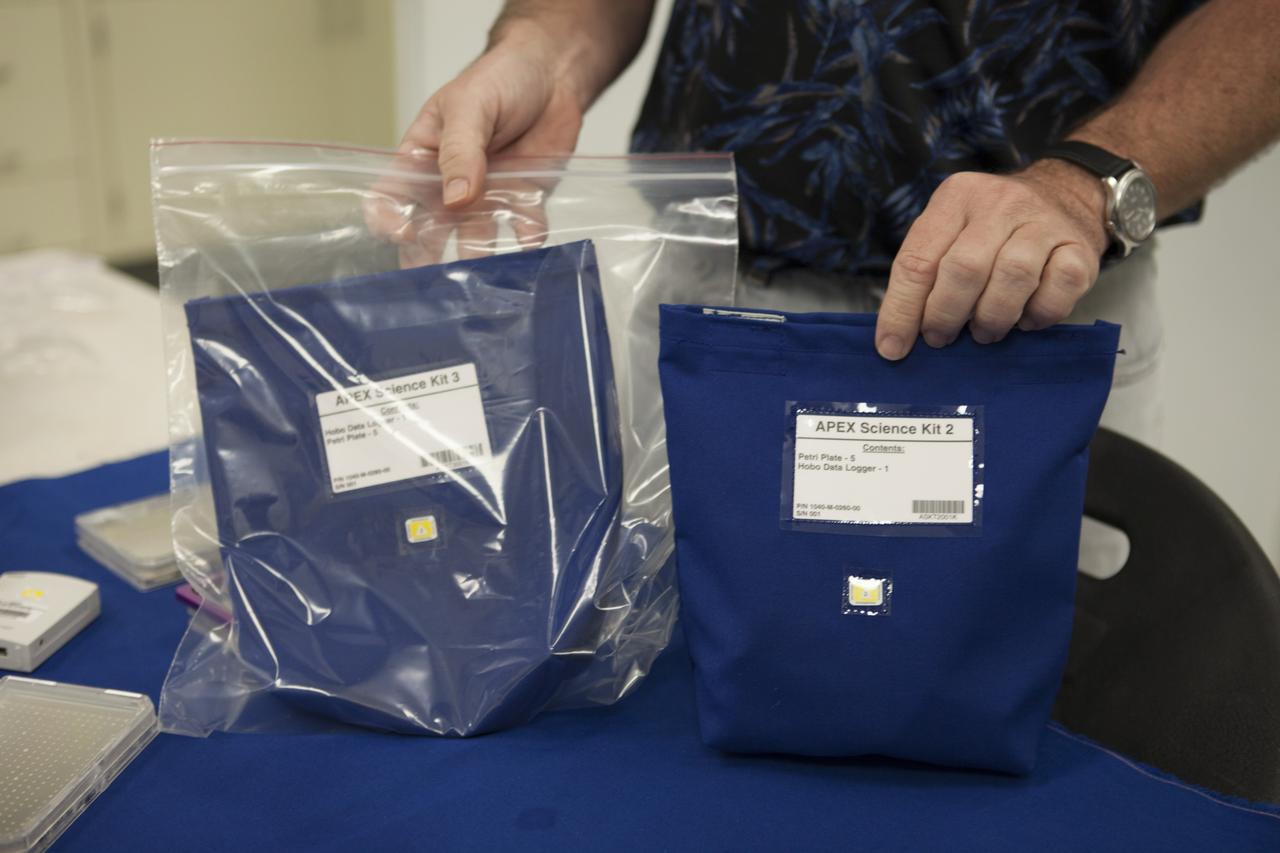
CAPE CANAVERAL, Fla. - In the Space Station Processing Facility at NASA's Kennedy Space Center in Florida, portions of the Advanced Plant Experiment, or APEX, experiment are checked out as it is prepared for launch to the International Space Station aboard a SpaceX Dragon spacecraft. Scheduled for launch on March 16 atop a Falcon 9 rocket, Dragon will be marking its fourth trip to the space station. The SpaceX-3 mission is the third of 12 flights contracted by NASA to resupply the orbiting laboratory. For more information, visit http://www.nasa.gov/mission_pages/station/structure/launch/index.html Photo credit: NASA/Kim Shiflett
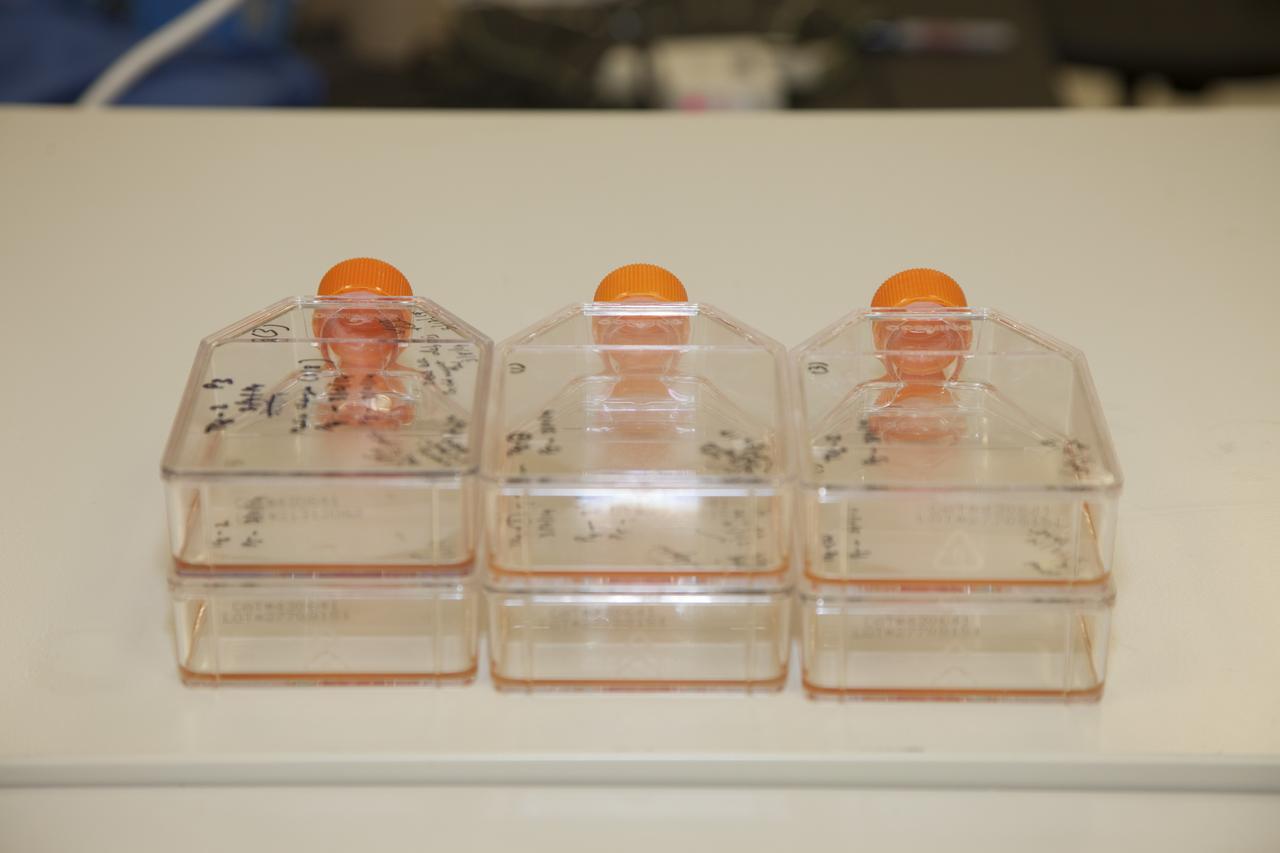
CAPE CANAVERAL, Fla. - In the Space Station Processing Facility at NASA's Kennedy Space Center in Florida, the University Research-1 payload developed by Texas Southern University in Houston is being prepared for loading aboard the SpaceX Dragon spacecraft for launch to the International Space Station. The experiment involves an investigation of countermeasures involving research into the efficacy of benzofuran-2-carboxylic acid derivatives as pharmacological countermeasures in mitigating the adverse effects of space flight and the International Space Station radiation environment on the immune system. Scheduled for launch on March 16 atop a Falcon 9 rocket, Dragon will be marking its fourth trip to the space station. The SpaceX-3 mission is the third of 12 flights contracted by NASA to resupply the orbiting laboratory. For more information, visit http://www.nasa.gov/mission_pages/station/structure/launch/index.html Photo credit: NASA/Kim Shiflett

CAPE CANAVERAL, Fla. - In the Space Station Processing Facility at NASA's Kennedy Space Center in Florida, a portion of the Advanced Plant Experiment, or APEX, experiment is checked out as it is prepared for launch to the International Space Station aboard a SpaceX Dragon spacecraft. Scheduled for launch on March 16 atop a Falcon 9 rocket, Dragon will be marking its fourth trip to the space station. The SpaceX-3 mission is the third of 12 flights contracted by NASA to resupply the orbiting laboratory. For more information, visit http://www.nasa.gov/mission_pages/station/structure/launch/index.html Photo credit: NASA/Kim Shiflett

CAPE CANAVERAL, Fla. - In the Space Station Processing Facility at NASA's Kennedy Space Center in Florida, QinetiQ North America Project Manager Carole Miller, left, works with Allison Caron, a QinetiQ mechanical engineer in preparing the Biotube experiment which will be launched to the International Space Station aboard a SpaceX Dragon spacecraft. Scheduled for launch on March 16 atop a Falcon 9 rocket, Dragon will be marking its fourth trip to the space station. The SpaceX-3 mission is the third of 12 flights contracted by NASA to resupply the orbiting laboratory. For more information, visit http://www.nasa.gov/mission_pages/station/structure/launch/index.html Photo credit: NASA/Kim Shiflett
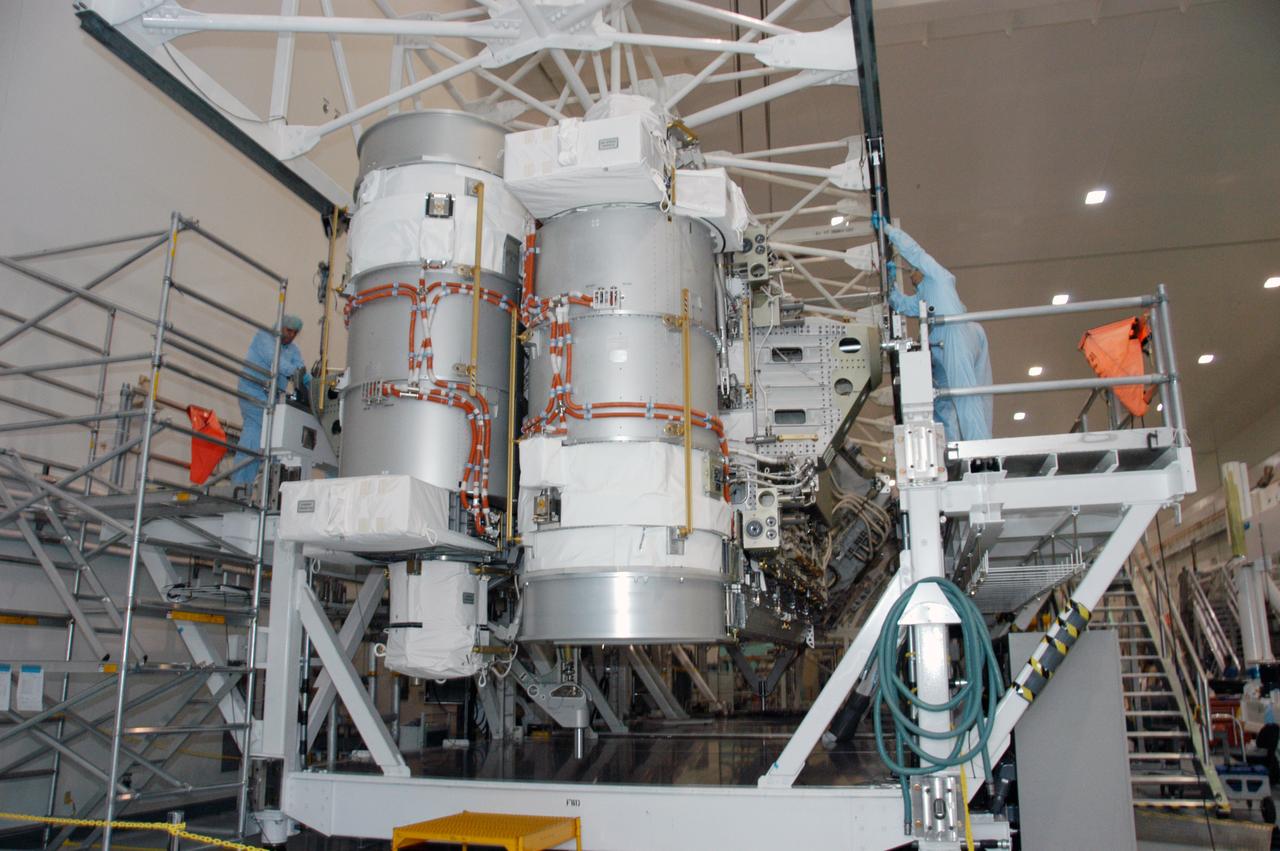
In the Space Station Processing Facility, workers attach an overhead crane to the S3/S4 integrated truss in order to move it to the payload canister. After it is stowed in the canister, the S3/S4 truss will be transported to the launch pad. The truss is the payload on mission STS-117, targeted for launch on March 15.
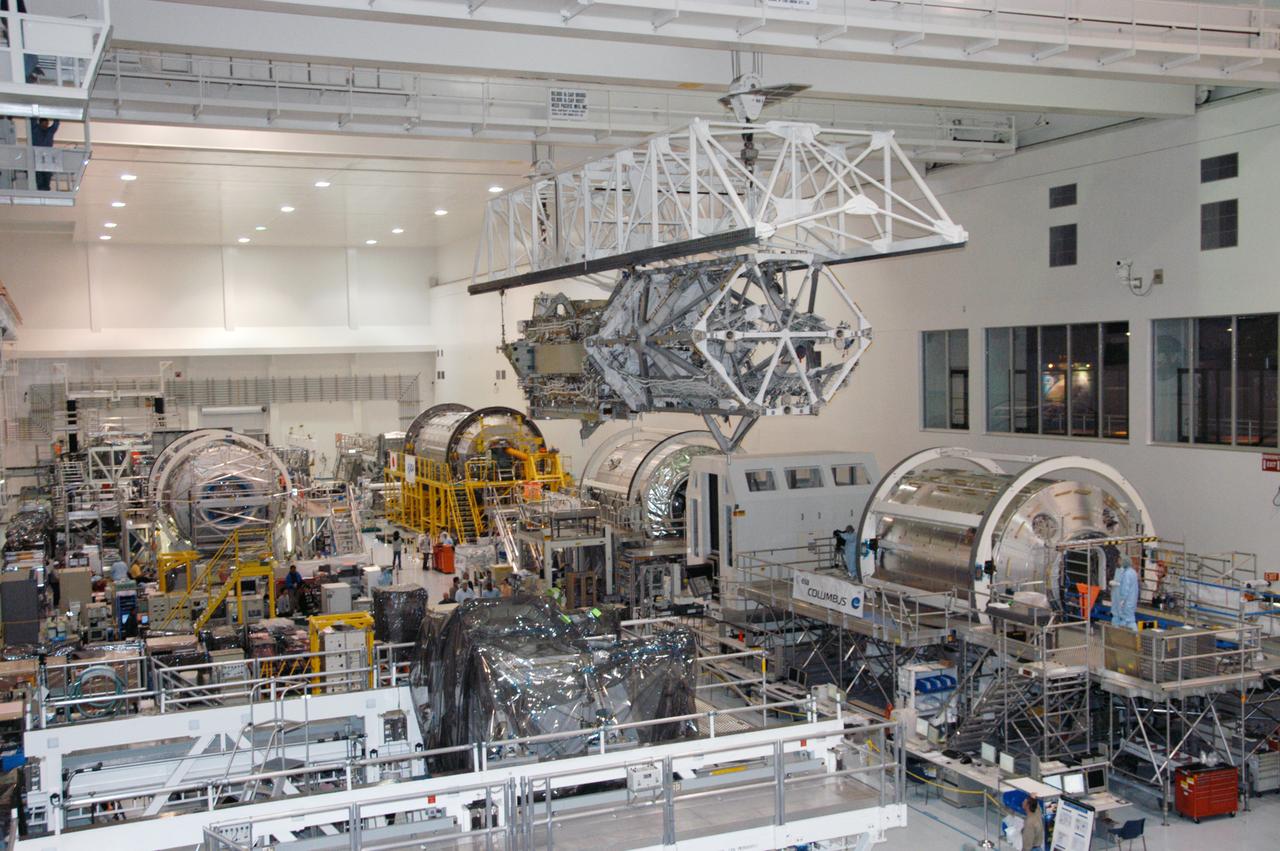
In the Space Station Processing Facility, an overhead crane moves the S3/S4 integrated truss above the floor to a payload canister. Several space station modules can be seen at various points on the floor. After it is stowed in the canister, the S3/S4 truss will be transported to the launch pad. The truss is the payload on mission STS-117, targeted for launch on March 15.
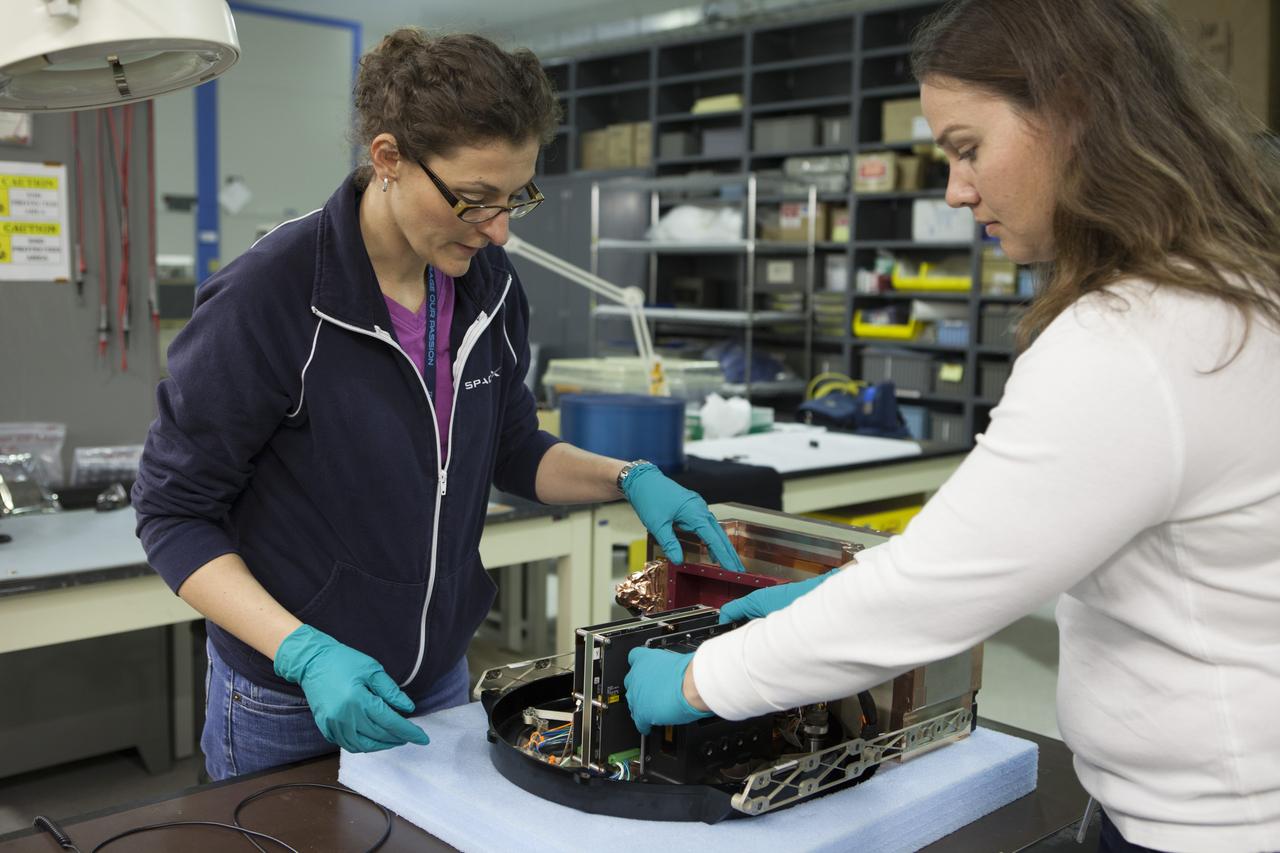
CAPE CANAVERAL, Fla. - In the Space Station Processing Facility at NASA's Kennedy Space Center in Florida, QinetiQ North America Project Manager Carole Miller, left, works with Allison Caron, a QinetiQ mechanical engineer in preparing the Biotube experiment which will be launched to the International Space Station aboard a SpaceX Dragon spacecraft. Scheduled for launch on March 16 atop a Falcon 9 rocket, Dragon will be marking its fourth trip to the space station. The SpaceX-3 mission is the third of 12 flights contracted by NASA to resupply the orbiting laboratory. For more information, visit http://www.nasa.gov/mission_pages/station/structure/launch/index.html Photo credit: NASA/Kim Shiflett

CAPE CANAVERAL, Fla. - In the Space Station Processing Facility at NASA's Kennedy Space Center in Florida, the Biological Research In Canisters, or BRIC, 18-1 and 18-2 experiments are prepared for launch to the International Space Station aboard a SpaceX Dragon spacecraft. Scheduled for launch on March 16 atop a Falcon 9 rocket, Dragon will be marking its fourth trip to the space station. The SpaceX-3 mission is the third of 12 flights contracted by NASA to resupply the orbiting laboratory. For more information, visit http://www.nasa.gov/mission_pages/station/structure/launch/index.html Photo credit: NASA/Kim Shiflett
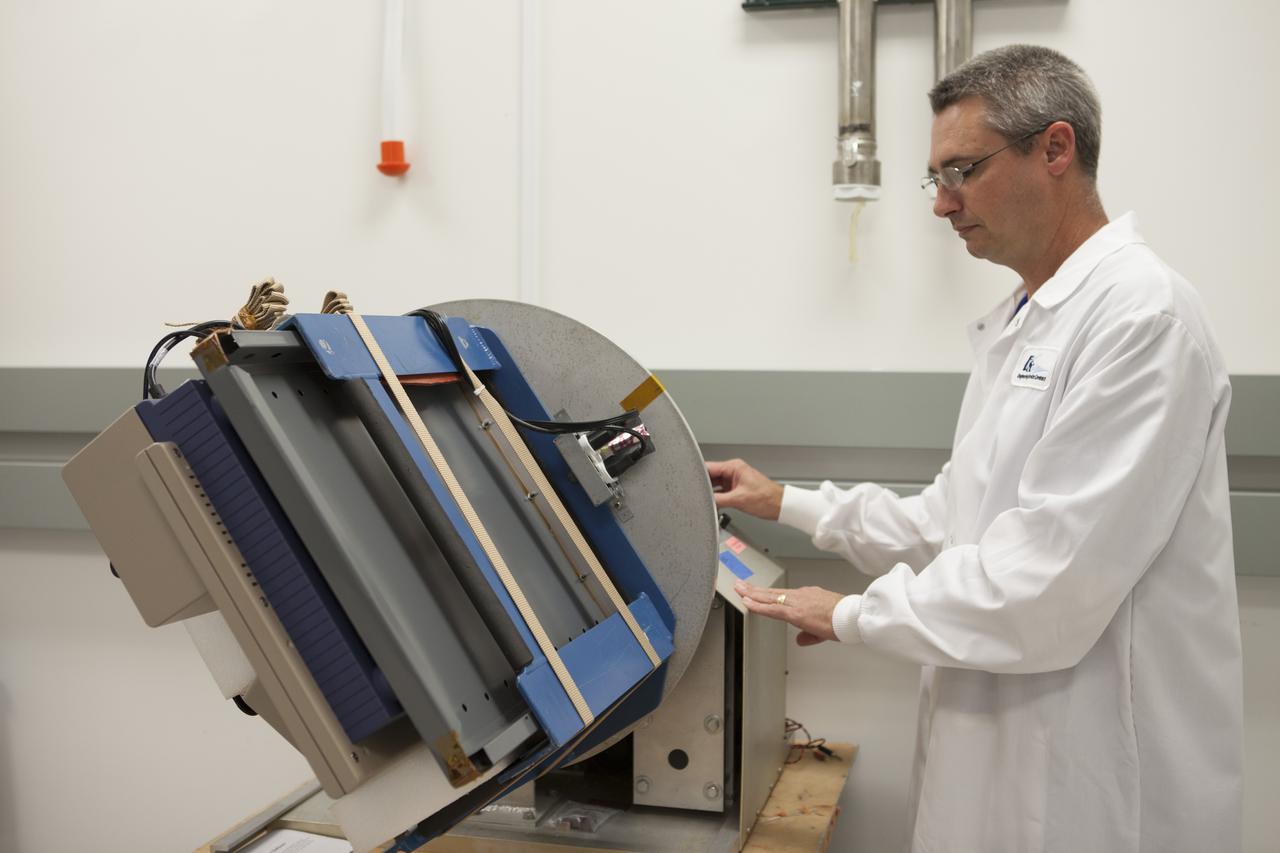
CAPE CANAVERAL, Fla. - In the Space Station Processing Facility at NASA's Kennedy Space Center in Florida, Donald Houzer, a QinetiQ North America mechanical technician checks out the Advanced Plant Experiment, or APEX, experiment as it is being prepared for launch to the International Space Station aboard a SpaceX Dragon spacecraft. Scheduled for launch on March 16 atop a Falcon 9 rocket, Dragon will be marking its fourth trip to the space station. The SpaceX-3 mission is the third of 12 flights contracted by NASA to resupply the orbiting laboratory. For more information, visit http://www.nasa.gov/mission_pages/station/structure/launch/index.html Photo credit: NASA/Kim Shiflett
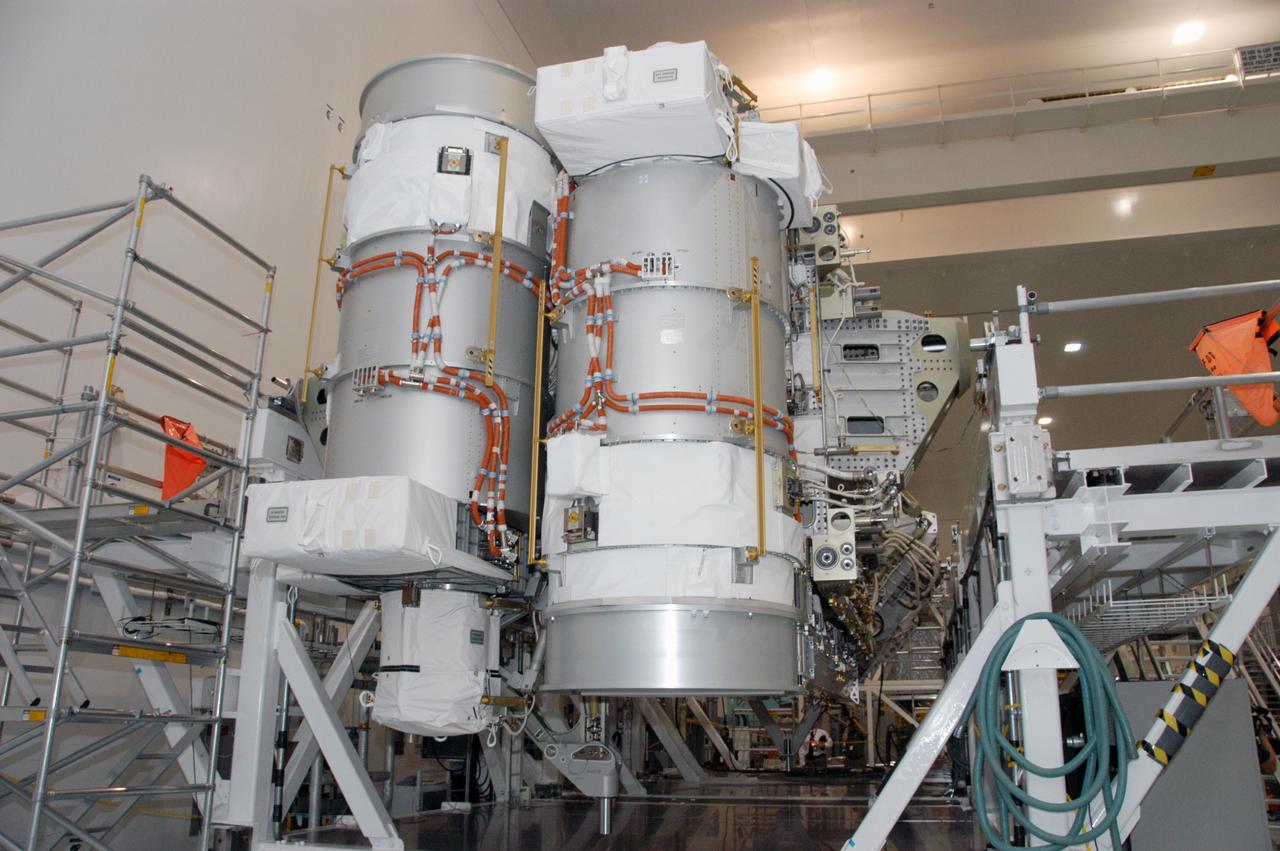
In the Space Station Processing Facility, the S3/S4 integrated truss segment is on display for the media. The starboard 3/4 truss segment will launch aboard Space Shuttle Atlantis on mission STS-117, targeted for March 15. The element will be added to the 11-segment integrated truss structure, the station's backbone. The integrated truss structure eventually will span more than 300 feet. The S3/S4 truss has two large solar arrays and will provide one-fourth of the total power generation for the completed station.
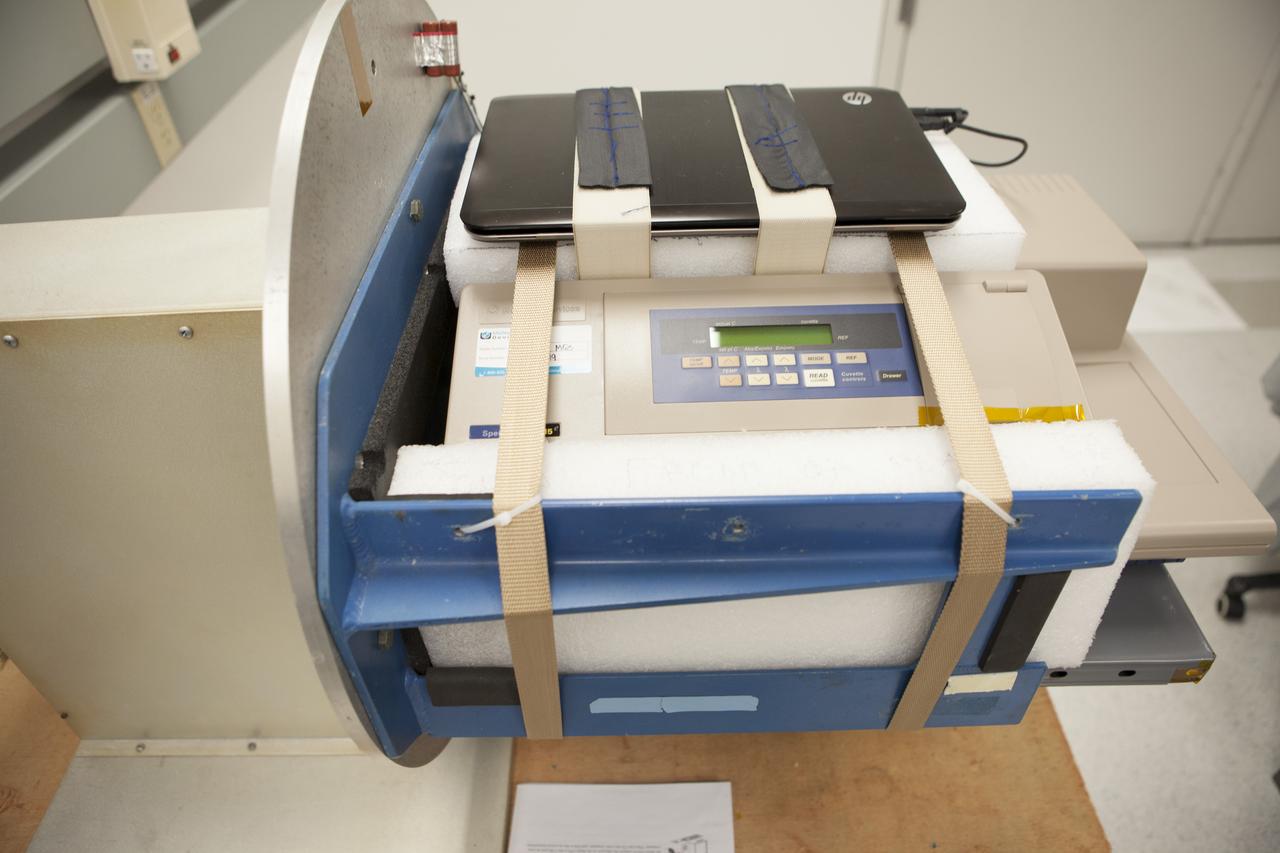
CAPE CANAVERAL, Fla. - In the Space Station Processing Facility at NASA's Kennedy Space Center in Florida, equipment supporting the Advanced Plant Experiment, or APEX, experiment is being prepared for launch to the International Space Station aboard a SpaceX Dragon spacecraft. The APEX investigation examines white spruce, picea glauca, to understand the influence of gravity on plant physiology, growth, and on the genetics of wood formation. Scheduled for launch on March 16 atop a Falcon 9 rocket, Dragon will be marking its fourth trip to the space station. The SpaceX-3 mission is the third of 12 flights contracted by NASA to resupply the orbiting laboratory. For more information, visit http://www.nasa.gov/mission_pages/station/structure/launch/index.html Photo credit: NASA/Kim Shiflett
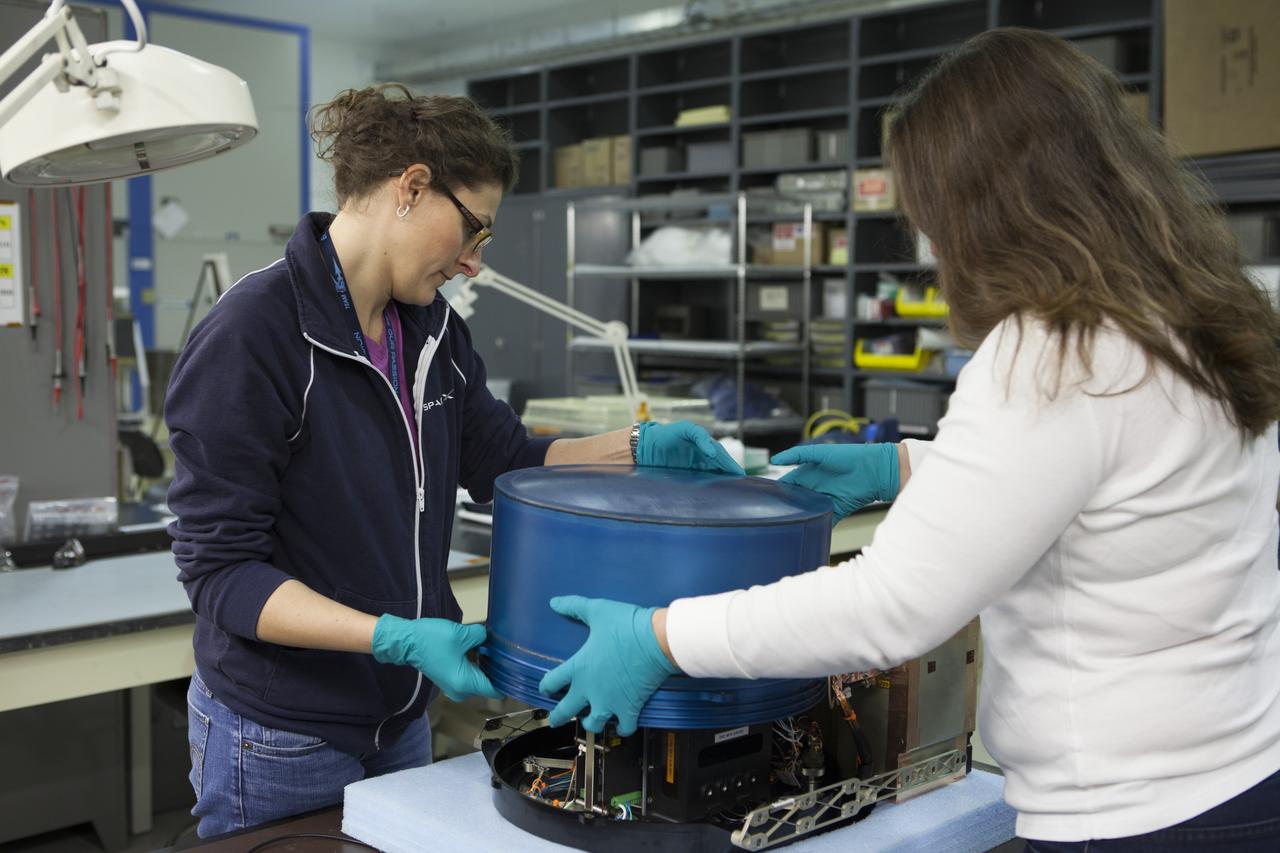
CAPE CANAVERAL, Fla. - In the Space Station Processing Facility at NASA's Kennedy Space Center in Florida, QinetiQ North America Project Manager Carole Miller, left, works with Allison Caron, a QinetiQ mechanical engineer in preparing the Biotube experiment which will be launched to the International Space Station aboard a SpaceX Dragon spacecraft. Scheduled for launch on March 16 atop a Falcon 9 rocket, Dragon will be marking its fourth trip to the space station. The SpaceX-3 mission is the third of 12 flights contracted by NASA to resupply the orbiting laboratory. For more information, visit http://www.nasa.gov/mission_pages/station/structure/launch/index.html Photo credit: NASA/Kim Shiflett
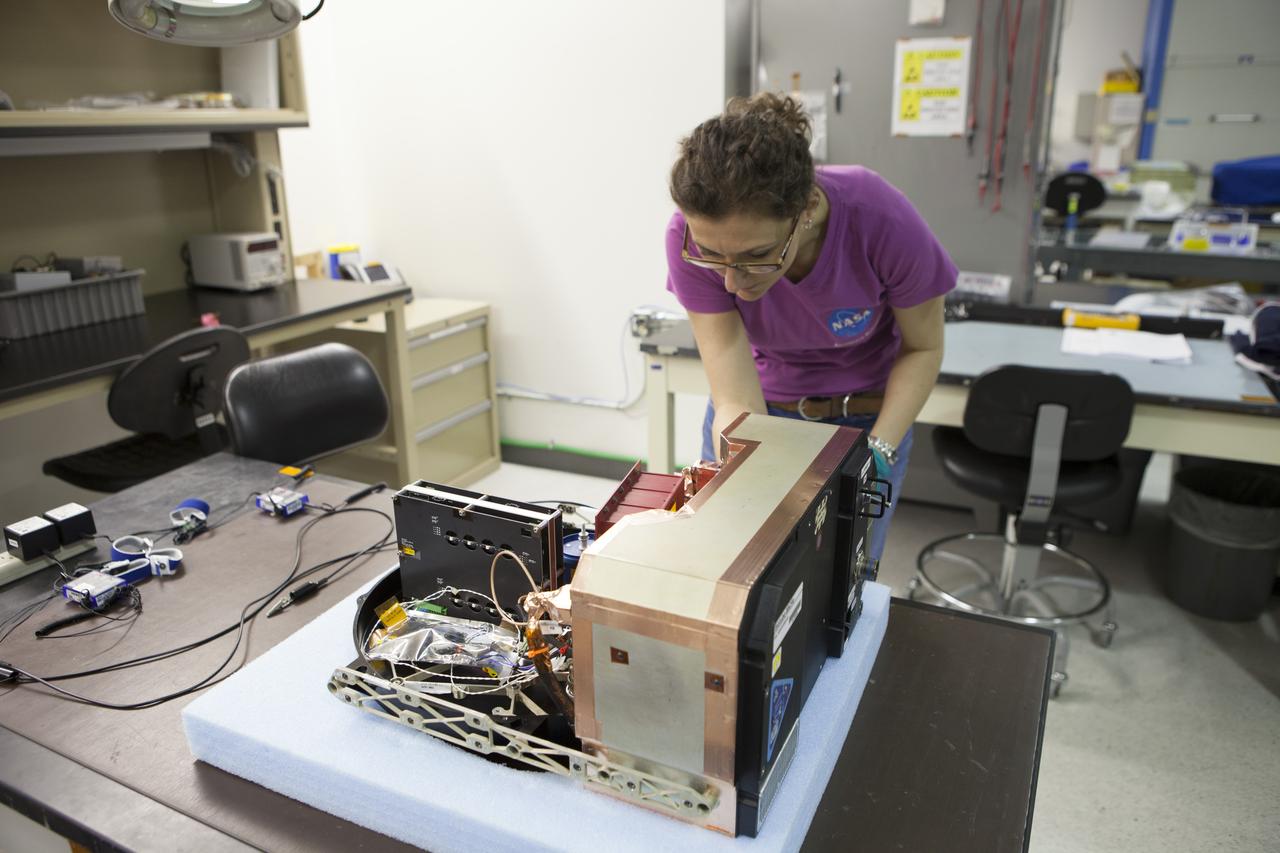
CAPE CANAVERAL, Fla. - In the Space Station Processing Facility at NASA's Kennedy Space Center in Florida, QinetiQ North America Project Manager Carole Miller prepares the Biotube experiment which will be launched to the International Space Station aboard a SpaceX Dragon spacecraft. Scheduled for launch on March 16 atop a Falcon 9 rocket, Dragon will be marking its fourth trip to the space station. The SpaceX-3 mission is the third of 12 flights contracted by NASA to resupply the orbiting laboratory. For more information, visit http://www.nasa.gov/mission_pages/station/structure/launch/index.html Photo credit: NASA/Kim Shiflett
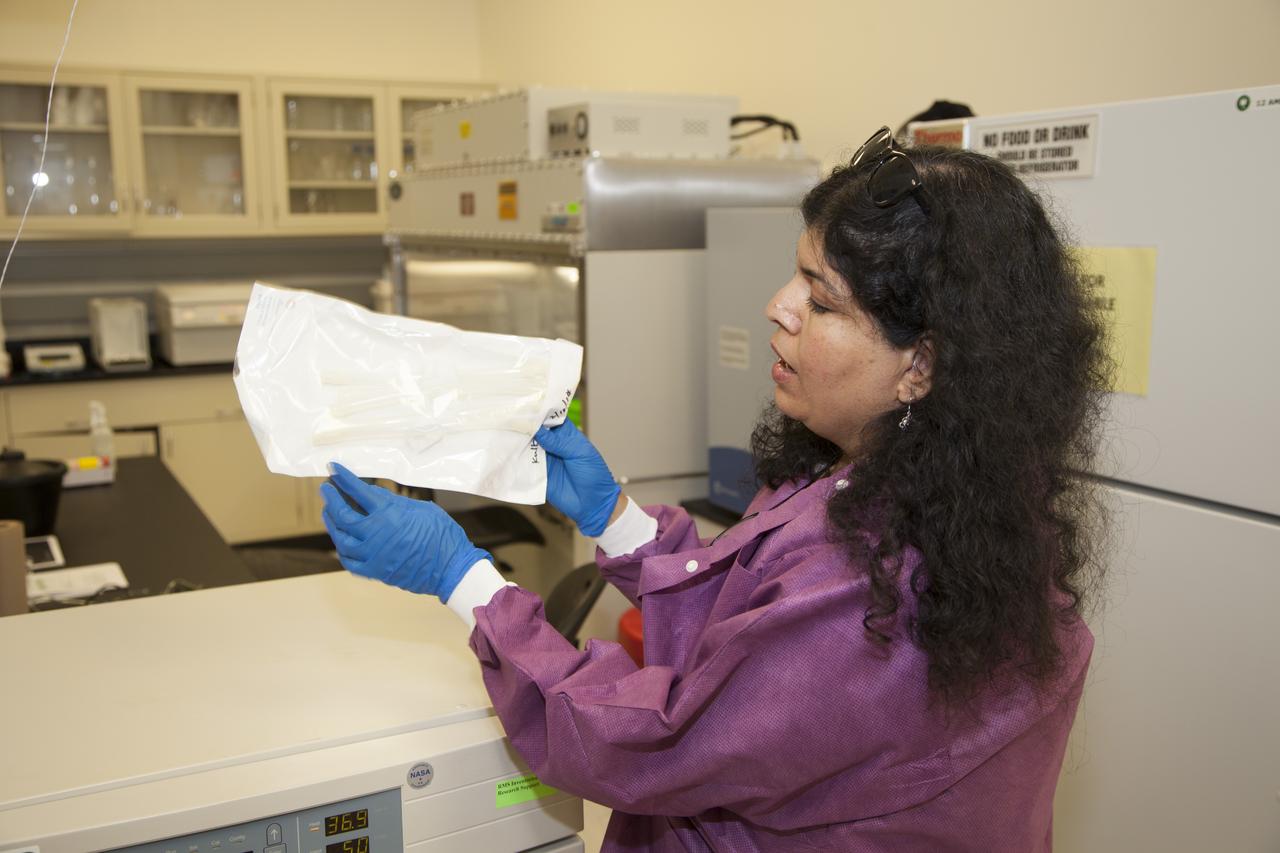
CAPE CANAVERAL, Fla. - In the Space Station Processing Facility at NASA's Kennedy Space Center in Florida, the University Research-1 payload developed by Texas Southern University in Houston is being prepared for loading aboard the SpaceX Dragon spacecraft for launch to the International Space Station. The experiment involves an investigation of countermeasures involving research into the efficacy of benzofuran-2-carboxylic acid derivatives as pharmacological countermeasures in mitigating the adverse effects of space flight and the International Space Station radiation environment on the immune system. Scheduled for launch on March 16 atop a Falcon 9 rocket, Dragon will be marking its fourth trip to the space station. The SpaceX-3 mission is the third of 12 flights contracted by NASA to resupply the orbiting laboratory. For more information, visit http://www.nasa.gov/mission_pages/station/structure/launch/index.html Photo credit: NASA/Kim Shiflett
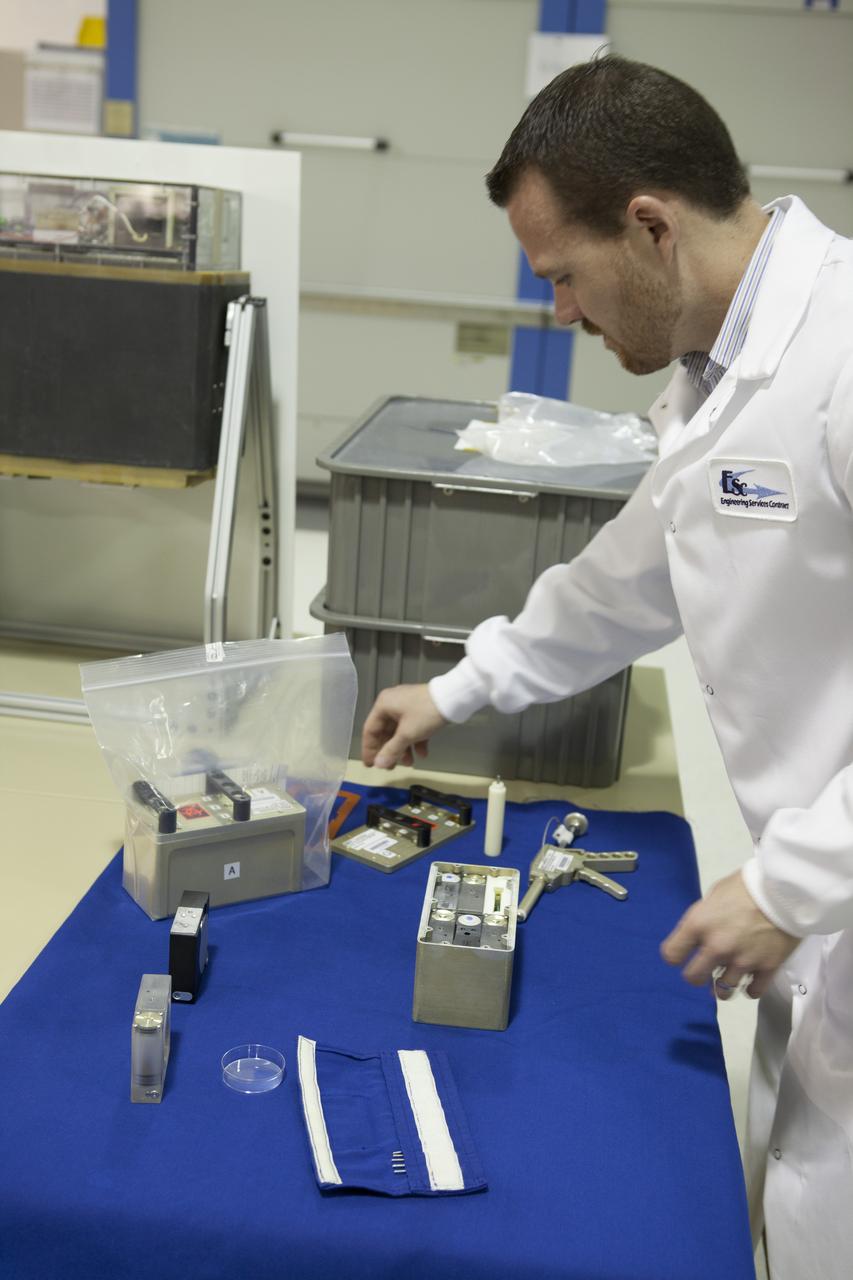
CAPE CANAVERAL, Fla. - In the Space Station Processing Facility at NASA's Kennedy Space Center in Florida, Terry Tullis, a QinetiQ North America mechanical engineer, prepares the Biological Research In Canisters, or BRIC, 18-1 and 18-2 experiments which will be launched to the International Space Station aboard a SpaceX Dragon spacecraft. Scheduled for launch on March 16 atop a Falcon 9 rocket, Dragon will be marking its fourth trip to the space station. The SpaceX-3 mission is the third of 12 flights contracted by NASA to resupply the orbiting laboratory. For more information, visit http://www.nasa.gov/mission_pages/station/structure/launch/index.html Photo credit: NASA/Kim Shiflett
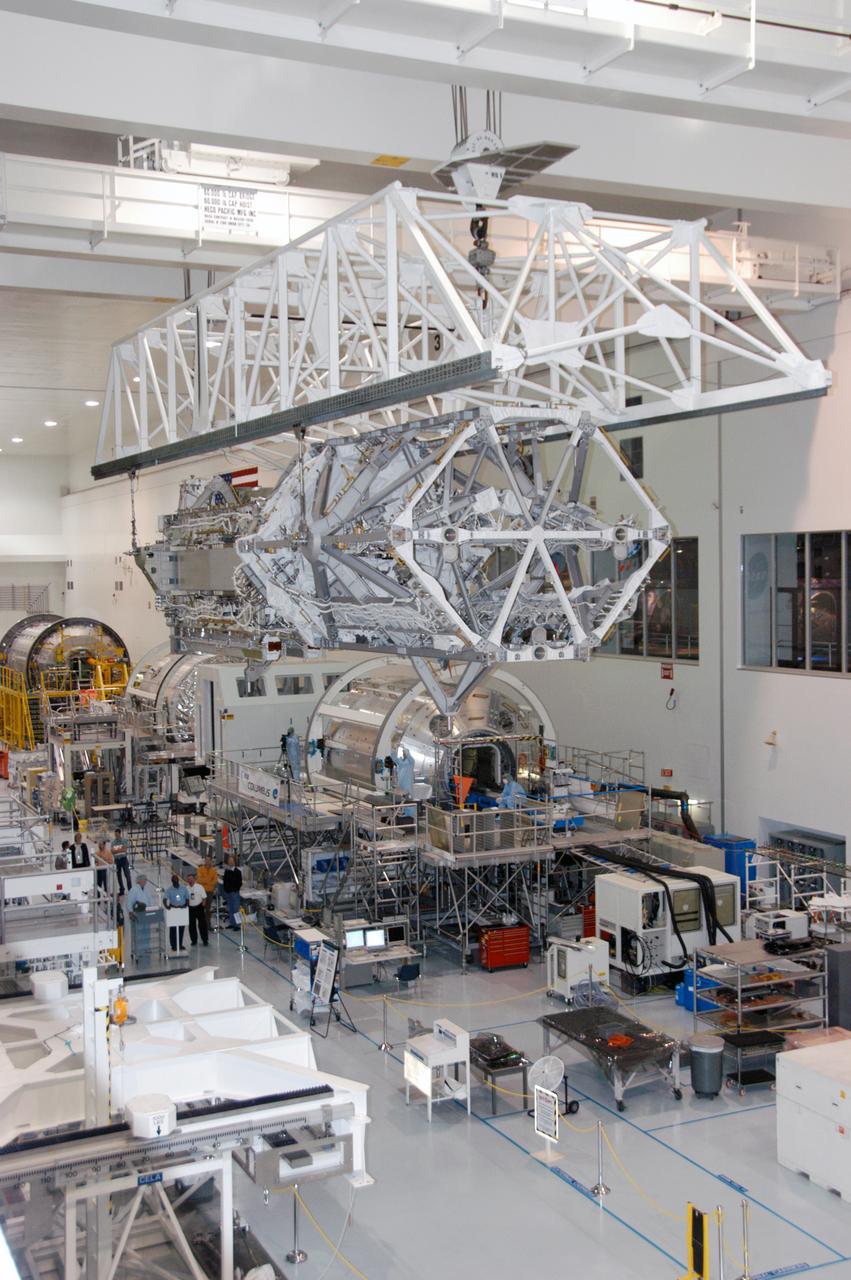
In the Space Station Processing Facility, an overhead crane moves the S3/S4 integrated truss above the floor to a payload canister. Several space station modules can be seen at various points on the floor. After it is stowed in the canister, the S3/S4 truss will be transported to the launch pad. The truss is the payload on mission STS-117, targeted for launch on March 15.
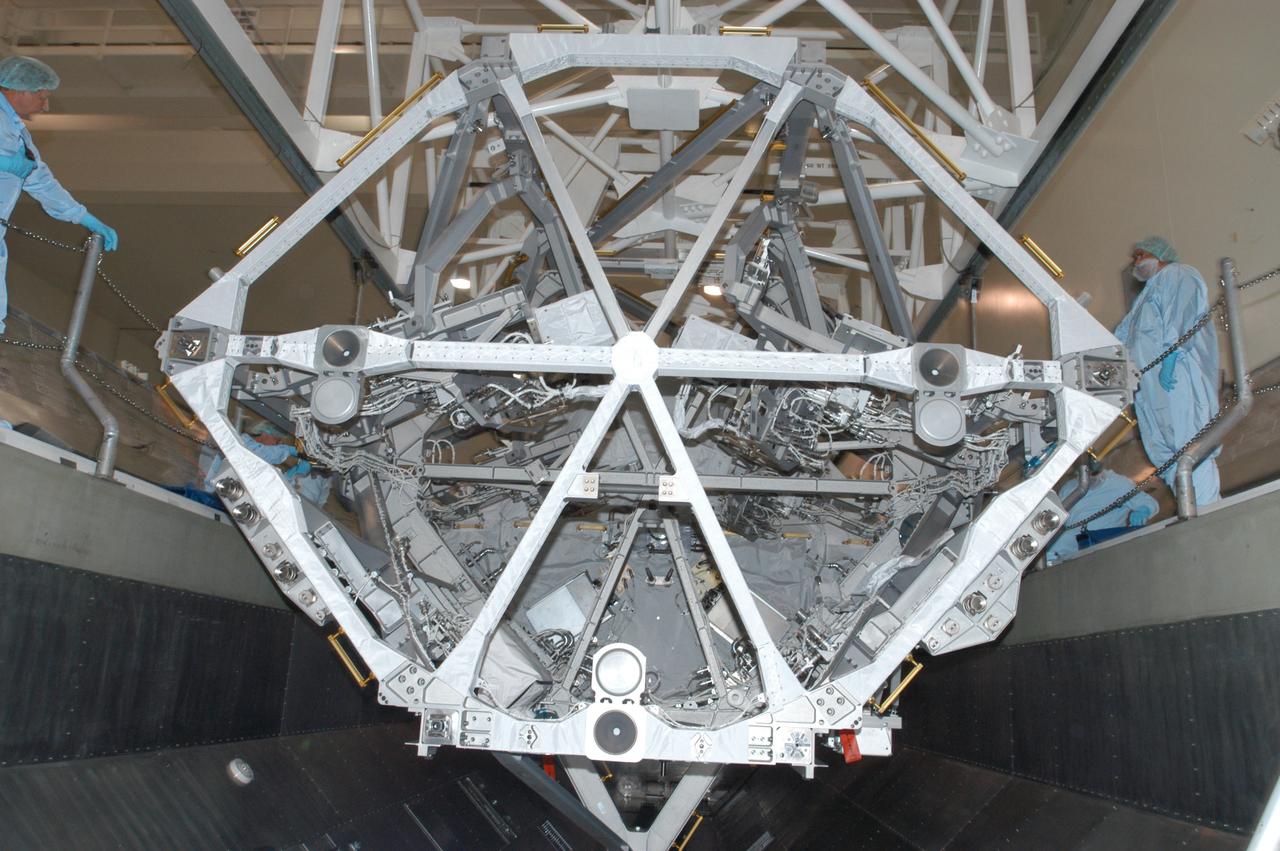
In the Space Station Processing Facility, an overhead crane settles the S3/S4 integrated truss into the payload canister. After it is stowed in the canister, the S3/S4 truss will be transported to the launch pad. The truss is the payload on mission STS-117, targeted for launch on March 15.
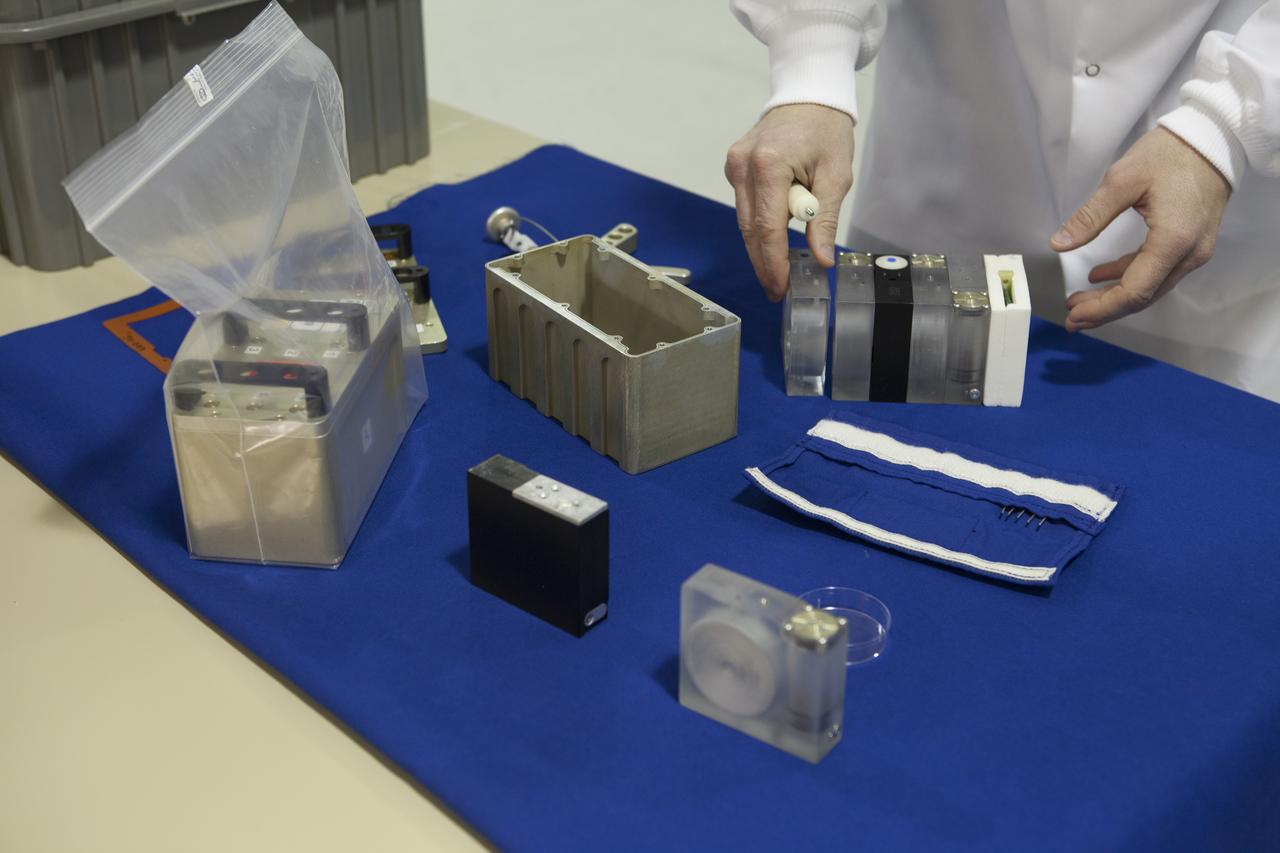
CAPE CANAVERAL, Fla. - In the Space Station Processing Facility at NASA's Kennedy Space Center in Florida, the Biological Research In Canisters, or BRIC, 18-1 and 18-2 experiments are prepared for launch to the International Space Station aboard a SpaceX Dragon spacecraft. Scheduled for launch on March 16 atop a Falcon 9 rocket, Dragon will be marking its fourth trip to the space station. The SpaceX-3 mission is the third of 12 flights contracted by NASA to resupply the orbiting laboratory. For more information, visit http://www.nasa.gov/mission_pages/station/structure/launch/index.html Photo credit: NASA/Kim Shiflett
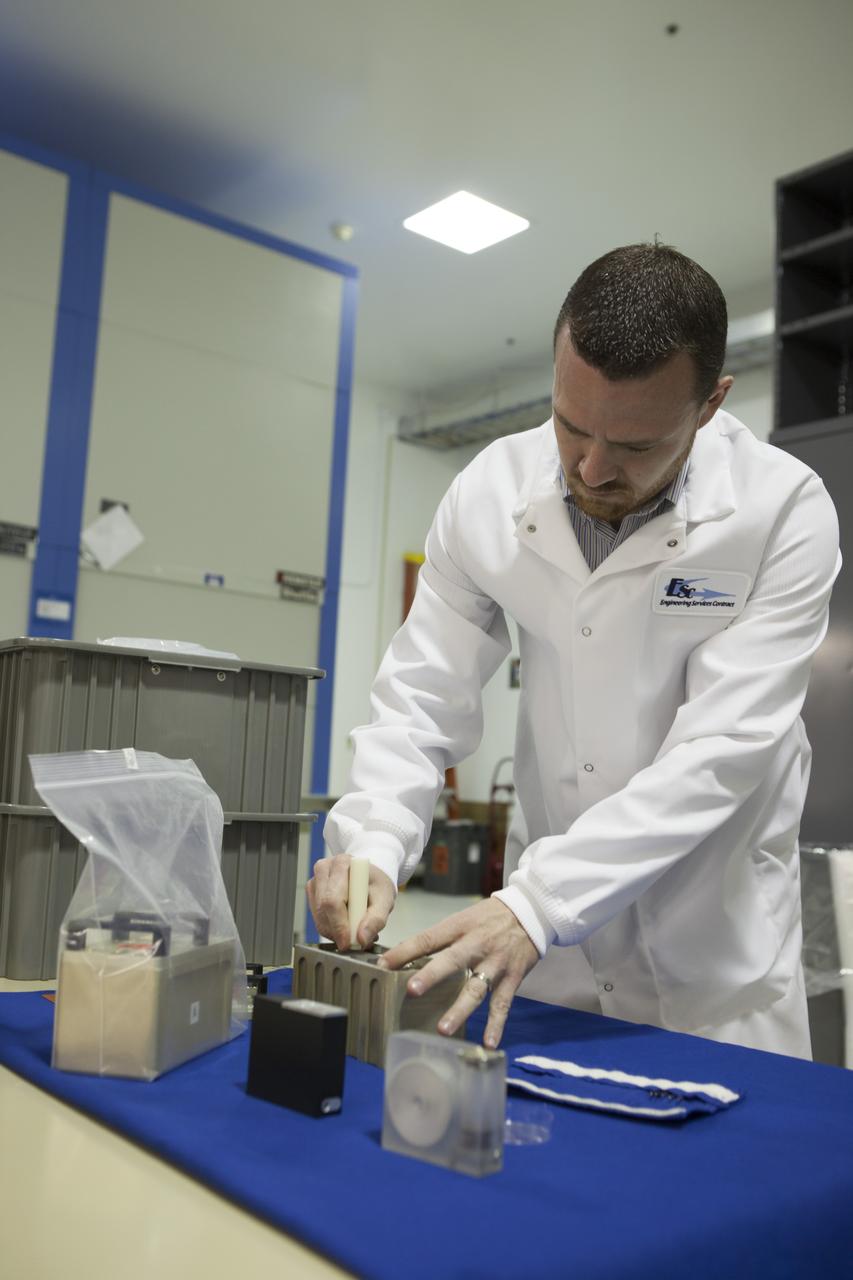
CAPE CANAVERAL, Fla. - In the Space Station Processing Facility at NASA's Kennedy Space Center in Florida, Terry Tullis, a QinetiQ North America mechanical engineer, prepares the Biological Research In Canisters, or BRIC, 18-1 and 18-2 experiments which will be launched to the International Space Station aboard a SpaceX Dragon spacecraft. Scheduled for launch on March 16 atop a Falcon 9 rocket, Dragon will be marking its fourth trip to the space station. The SpaceX-3 mission is the third of 12 flights contracted by NASA to resupply the orbiting laboratory. For more information, visit http://www.nasa.gov/mission_pages/station/structure/launch/index.html Photo credit: NASA/Kim Shiflett
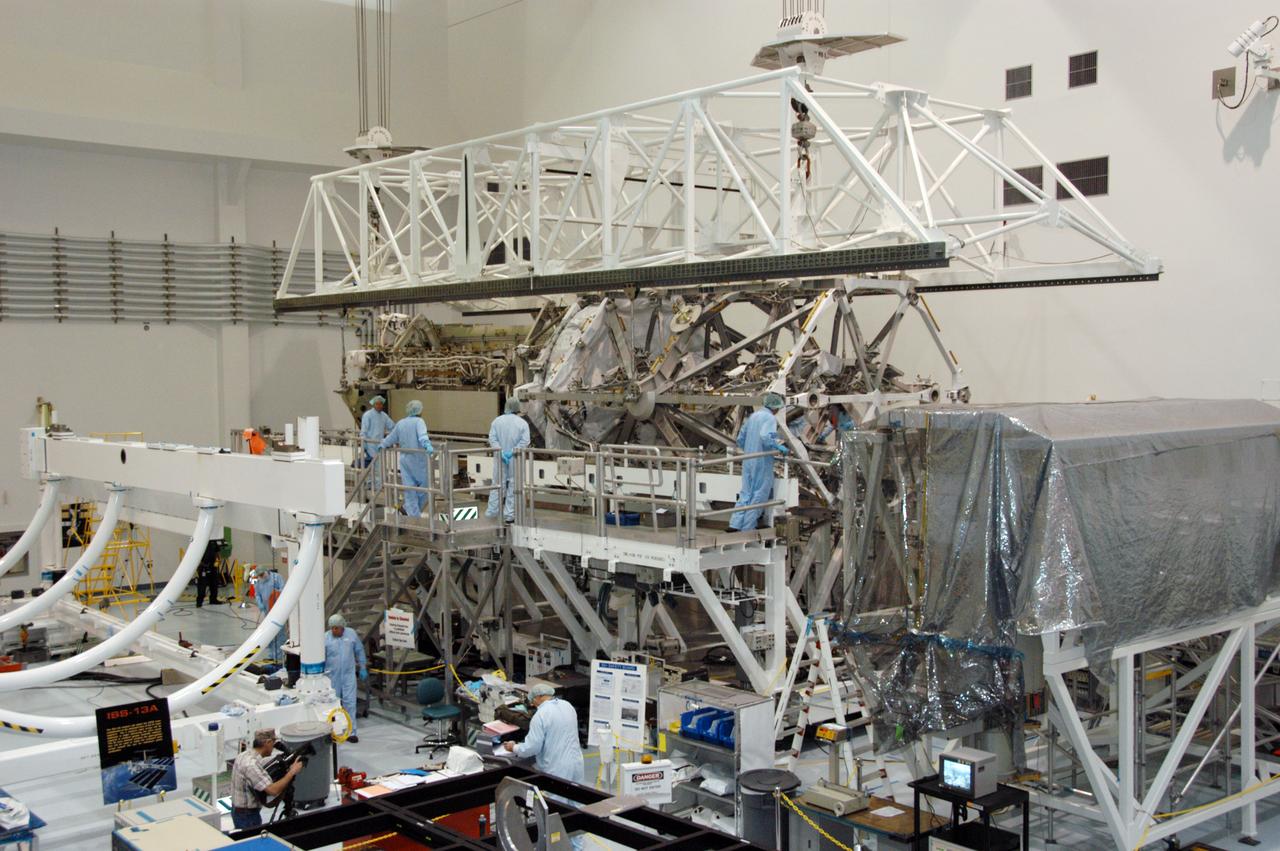
In the Space Station Processing Facility, workers attach an overhead crane to the S3/S4 integrated truss in order to move it to the payload canister. After it is stowed in the canister, the S3/S4 truss will be transported to the launch pad. The truss is the payload on mission STS-117, targeted for launch on March 15.
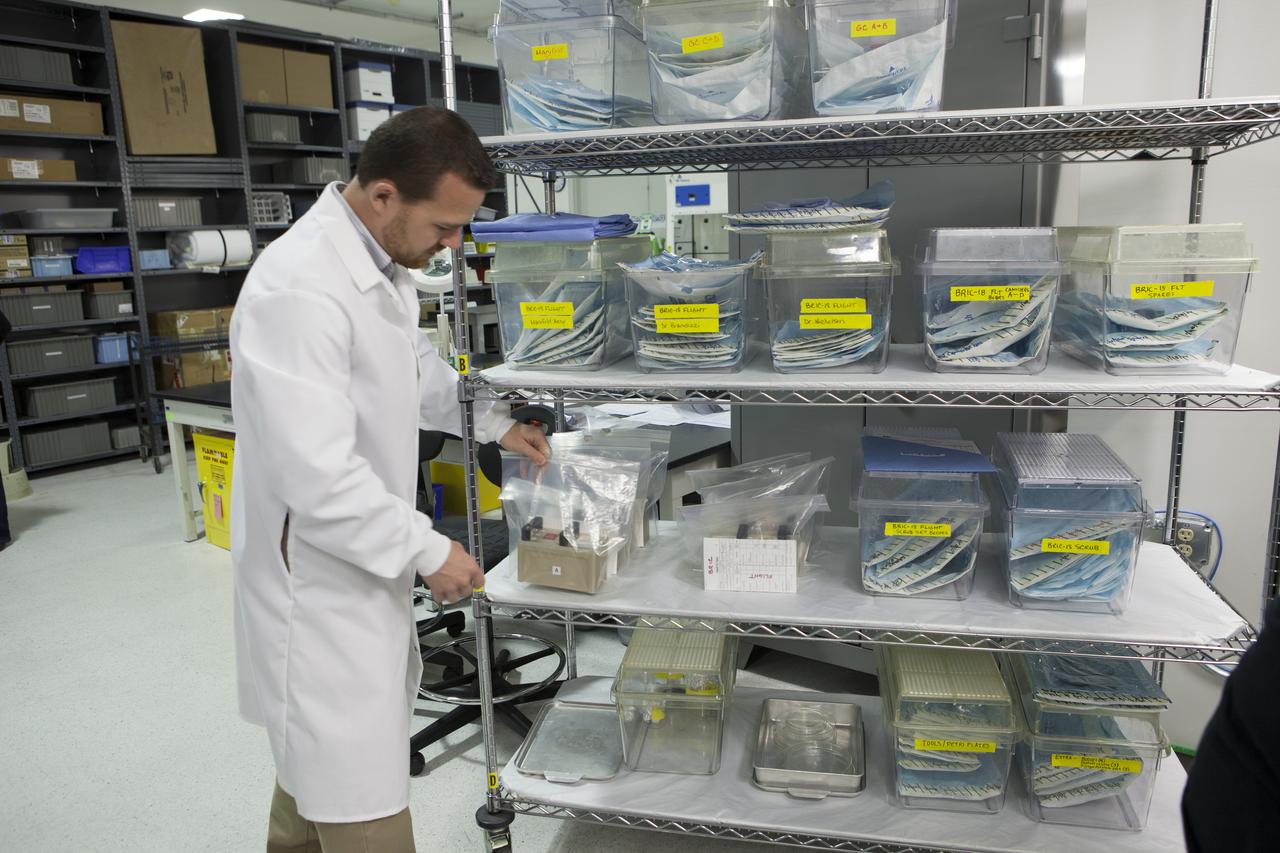
CAPE CANAVERAL, Fla. - In the Space Station Processing Facility at NASA's Kennedy Space Center in Florida, Terry Tullis, a QinetiQ North America mechanical engineer, places the Biological Research In Canisters, or BRIC, 18-1 and 18-2 experiments with others to be launched to the International Space Station aboard a SpaceX Dragon spacecraft. Scheduled for launch on March 16 atop a Falcon 9 rocket, Dragon will be marking its fourth trip to the space station. The SpaceX-3 mission is the third of 12 flights contracted by NASA to resupply the orbiting laboratory. For more information, visit http://www.nasa.gov/mission_pages/station/structure/launch/index.html Photo credit: NASA/Kim Shiflett
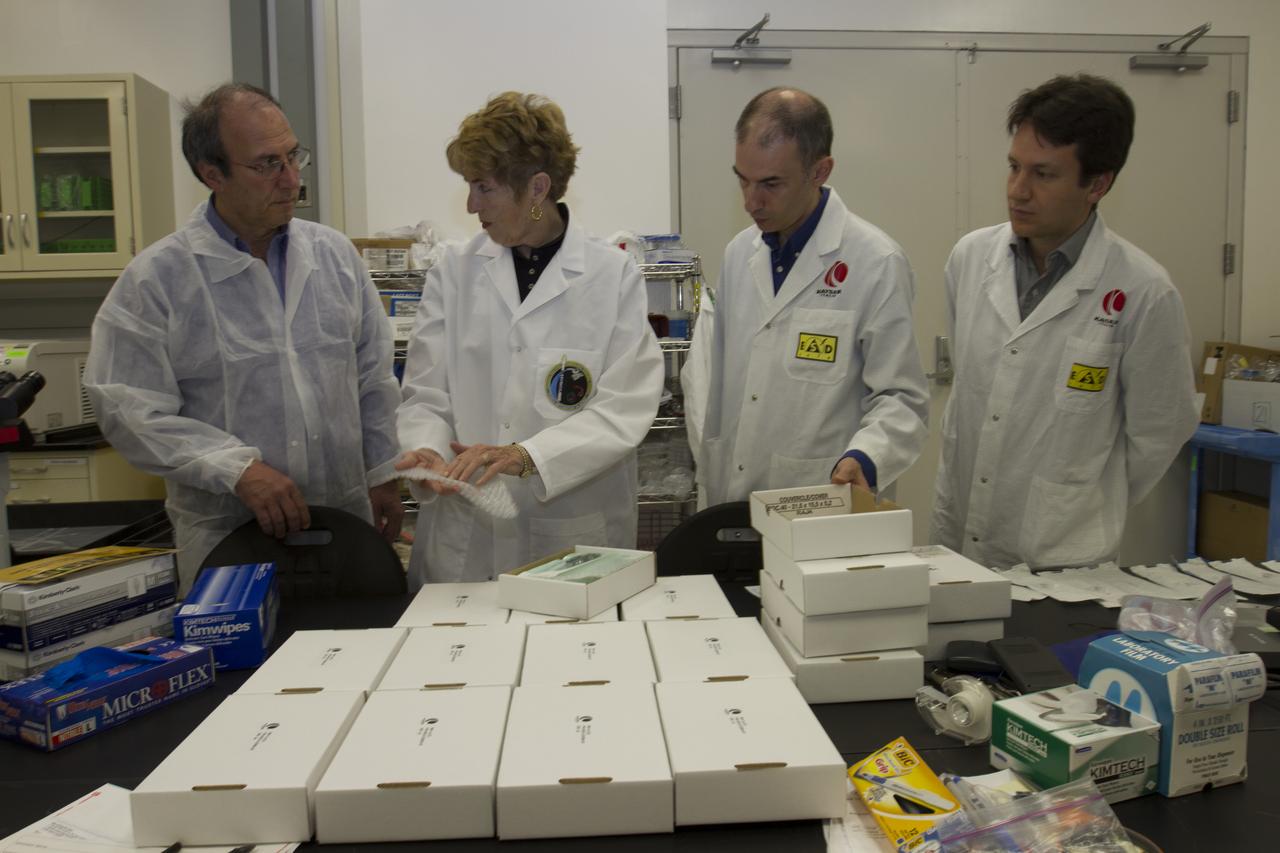
CAPE CANAVERAL, Fla. - Researcher and former NASA payload specialist Millie Hughes-Fulford, of the Hughes-Fulford Laboratory, San Francisco, Calif., accepts the European Space Agency ESA T-cell experiment flight units being handed over in a Space Station Processing Facility laboratory at NASA's Kennedy Space Center in Florida. From left are Raimondo Fortezza of ESA, Hughes-Fulford, and Pier Luigi Ganga and Fabio Creati of Kayser Italia, manufacturer of the hardware. The immunology experiment will launch on SpaceX-3 and focus on the effects of microgravity on early T-cell signaling pathways. Current work aims to identify and compare the gene expression of microRNAs miRNAs during T-cell activation under normal gravity and in microgravity, and compare those patterns to changes seen in aging populations. The experiment will be the first flown on SpaceX funded by the National Institutes of Health. Dr. Hughes-Fulford flew aboard space shuttle mission STS-40 in June 1991, the first Spacelab mission dedicated to biomedical studies. For more information on the T-cell experiment, visit http://hughesfulfordlab.com and http://www.nasa.gov/ames/research/space-biosciences/t-cell-activation-in-aging-spacex-3/. Photo credit: NASA/Cory Huston
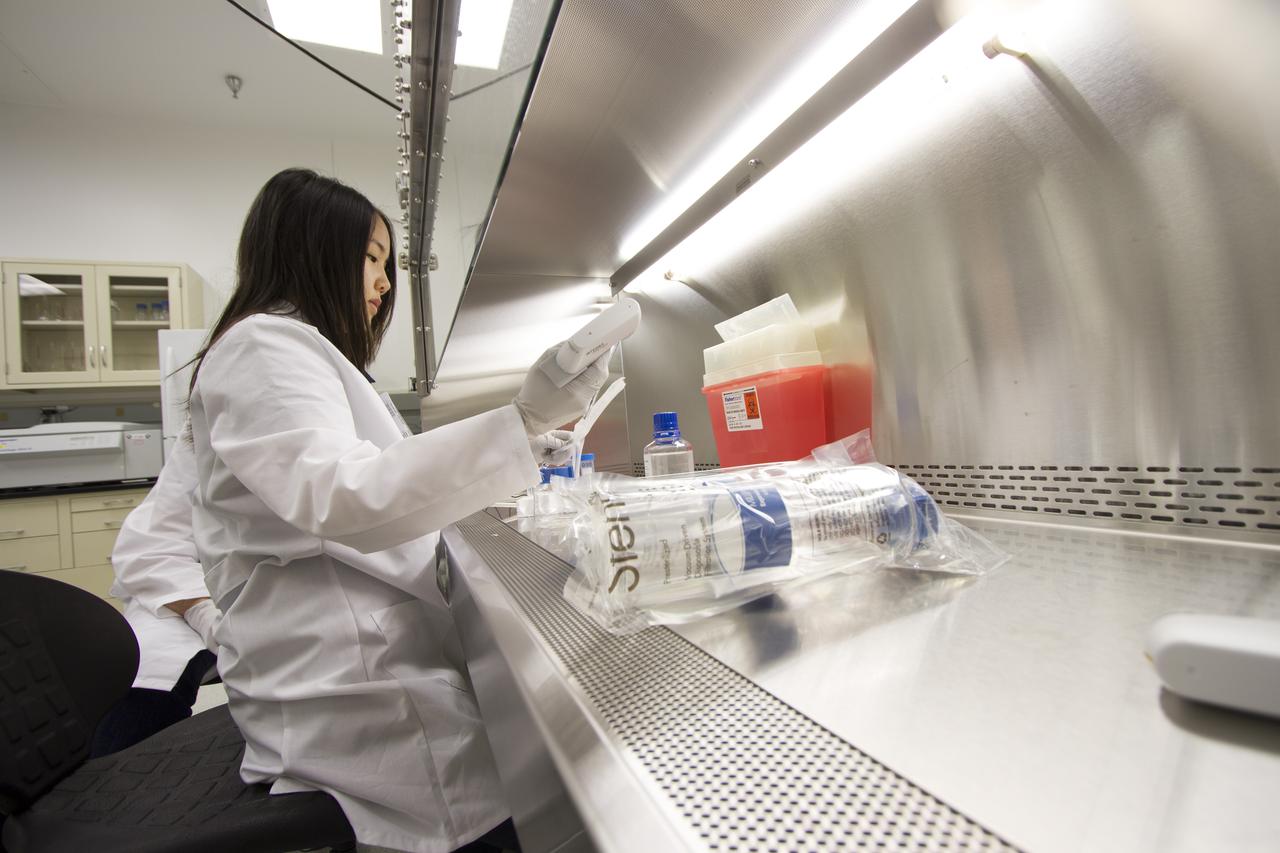
CAPE CANAVERAL, Fla. - T-cell science team member Miya Yoshida, of the Hughes-Fulford Laboratory in San Francisco, Calif., works in a biosafety hood during preflight experiment preparations in the Space Station Processing Facility at NASA's Kennedy Space Center in Florida. The immunology experiment will launch on SpaceX-3 and focus on the effects of microgravity on early T-cell signaling pathways. Current work aims to identify and compare the gene expression of microRNAs miRNAs during T-cell activation under normal gravity and in microgravity, and compare those patterns to changes seen in aging populations. The experiment will be the first flown on SpaceX funded by the National Institutes of Health. Dr. Hughes-Fulford flew aboard space shuttle mission STS-40 in June 1991, the first Spacelab mission dedicated to biomedical studies. For more information on the T-cell experiment, visit http://hughesfulfordlab.com and http://www.nasa.gov/ames/research/space-biosciences/t-cell-activation-in-aging-spacex-3/. Photo credit: NASA/Cory Huston
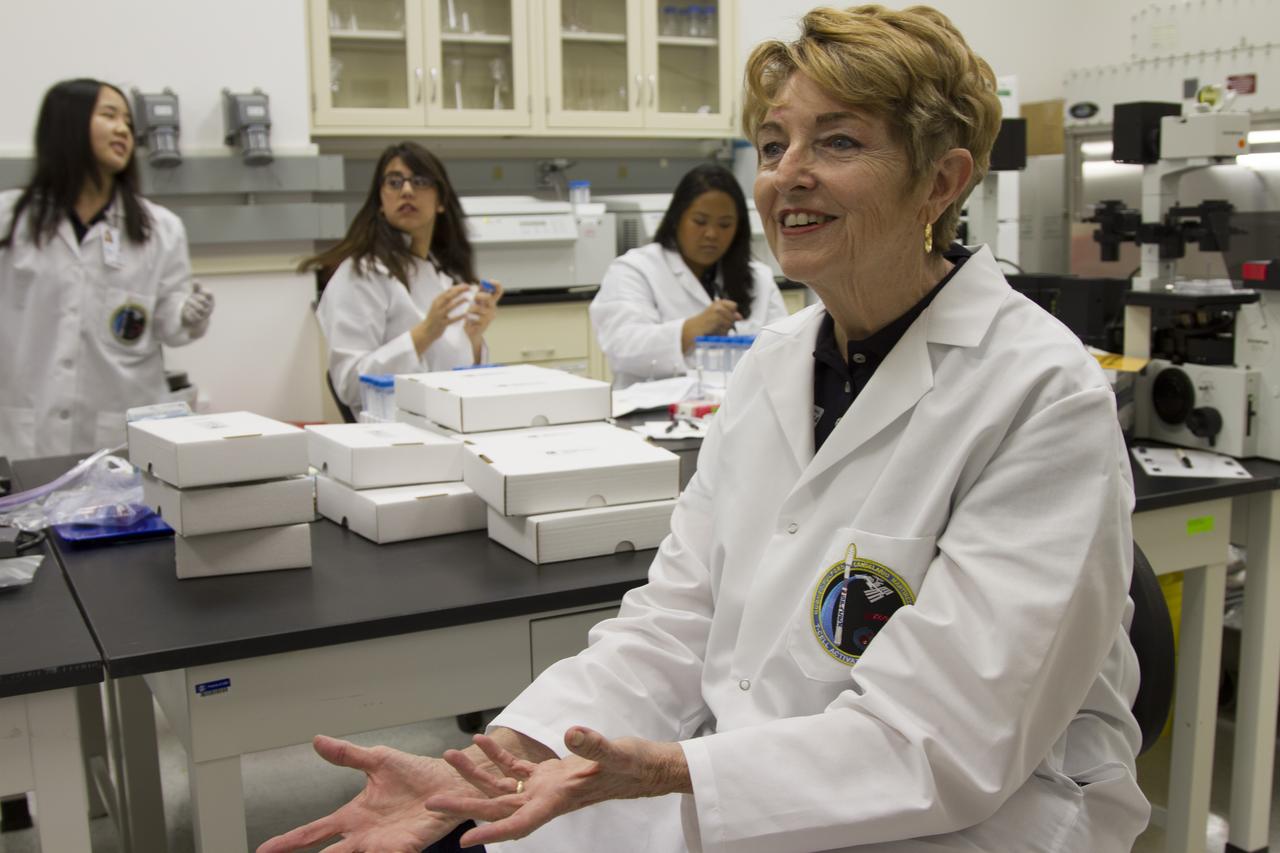
CAPE CANAVERAL, Fla. - Researcher and principal investigator Dr. Millie Hughes-Fulford, of the Hughes-Fulford Laboratory, San Francisco, Calif., discusses her laboratory's T-cell experiment and the impact the research may have on aging adults and their immune systems with an interviewer in the Space Station Processing Facility. From left, T-cell science team members Miya Yoshida, Emily Martinez and Tara Candelario are at work preparing for launch in the background. The immunology experiment will launch on SpaceX-3 and focus on the effects of microgravity on early T-cell signaling pathways. Current work aims to identify and compare the gene expression of microRNAs miRNAs during T-cell activation under normal gravity and in microgravity, and compare those patterns to changes seen in aging populations. The experiment will be the first flown on SpaceX funded by the National Institutes of Health. Dr. Hughes-Fulford flew aboard space shuttle mission STS-40 in June 1991, the first Spacelab mission dedicated to biomedical studies. For more information on the T-cell experiment, visit http://hughesfulfordlab.com and http://www.nasa.gov/ames/research/space-biosciences/t-cell-activation-in-aging-spacex-3/. Photo credit: NASA/Cory Huston
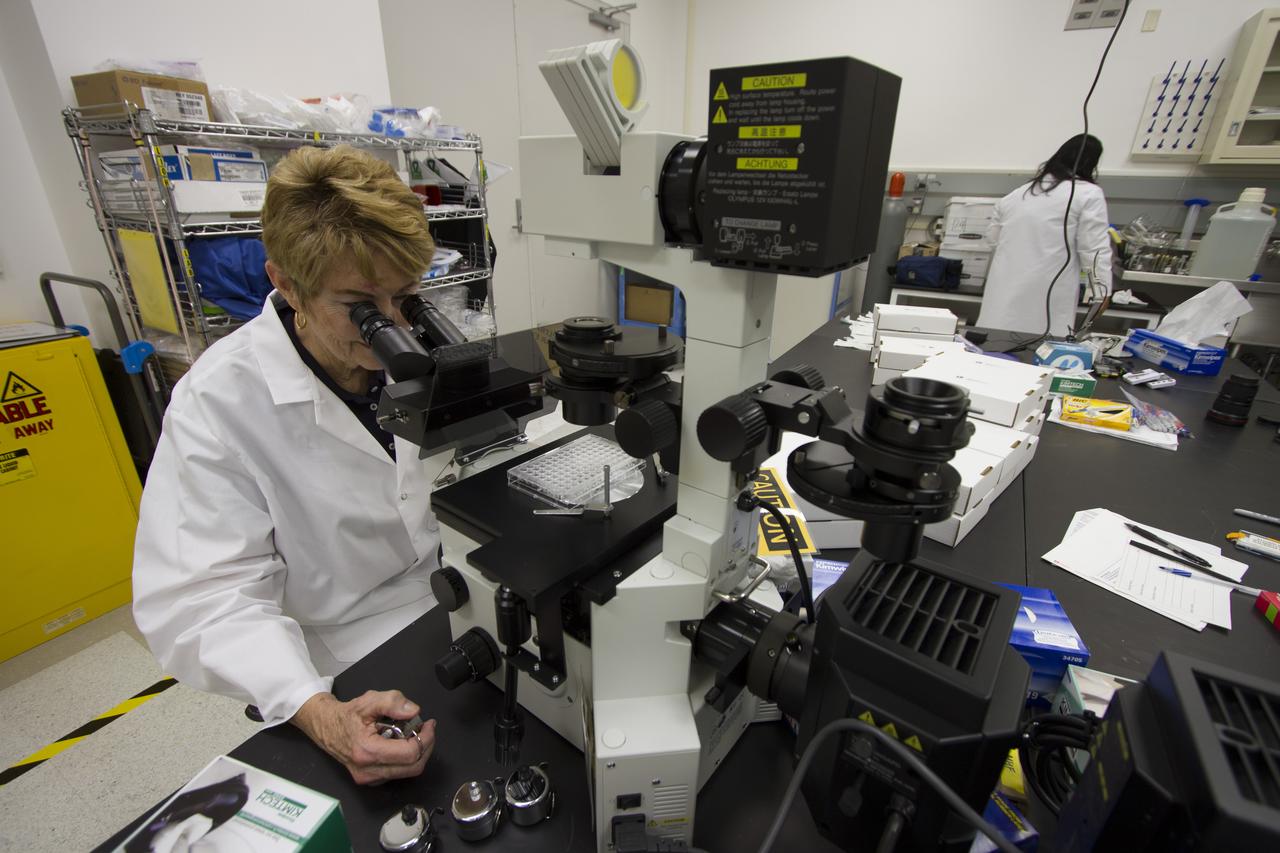
CAPE CANAVERAL, Fla. - Researcher and principal investigator Dr. Millie Hughes-Fulford, of the Hughes-Fulford Laboratory, San Francisco, Calif., at the microscope, examines T-cells as part of preflight experiment operations in the Space Station Processing Facility at NASA's Kennedy Space Center in Florida. The immunology experiment will launch on SpaceX-3 and focus on the effects of microgravity on early T-cell signaling pathways. Current work aims to identify and compare the gene expression of microRNAs miRNAs during T-cell activation under normal gravity and in microgravity, and compare those patterns to changes seen in aging populations. The experiment will be the first flown on SpaceX funded by the National Institutes of Health. Dr. Hughes-Fulford flew aboard space shuttle mission STS-40 in June 1991, the first Spacelab mission dedicated to biomedical studies. For more information on the T-cell experiment, visit http://hughesfulfordlab.com and http://www.nasa.gov/ames/research/space-biosciences/t-cell-activation-in-aging-spacex-3/. Photo credit: NASA/Cory Huston
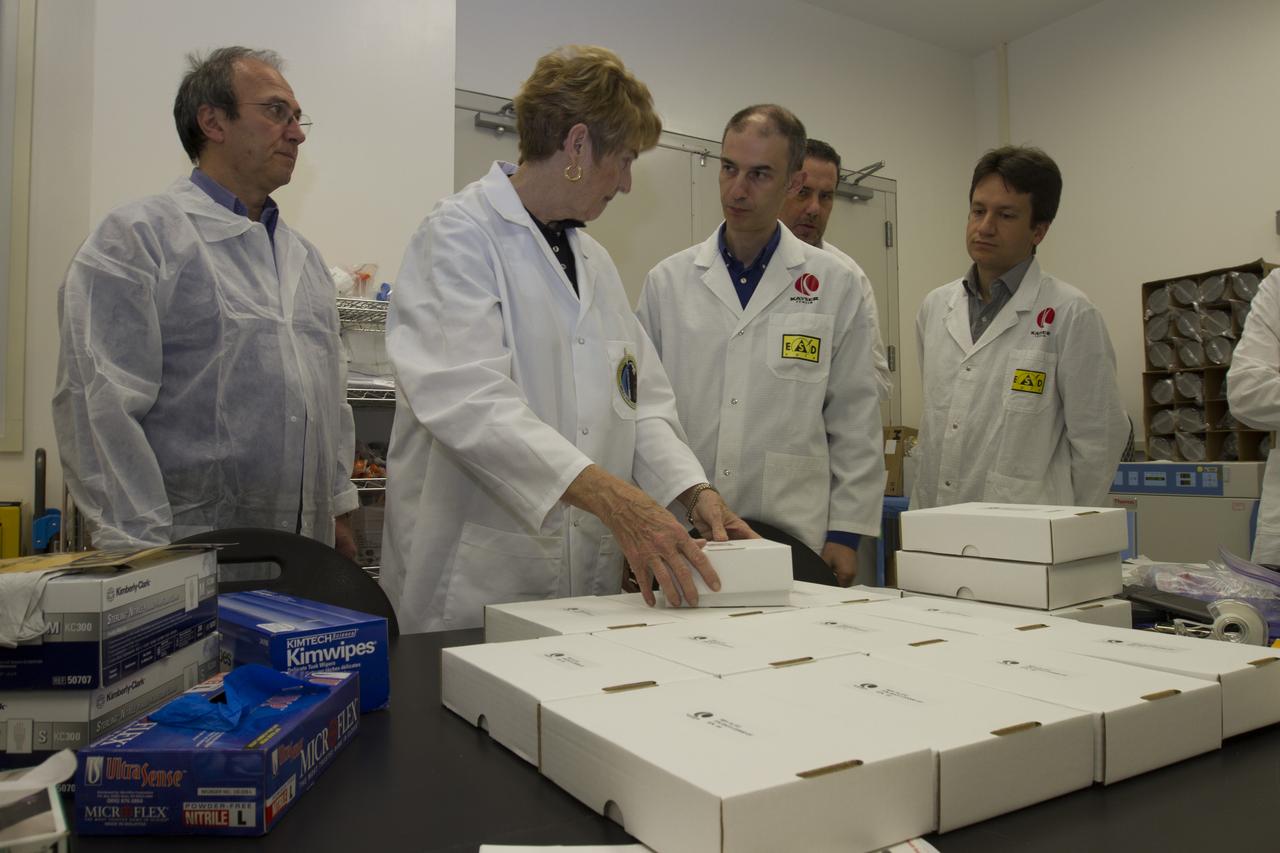
CAPE CANAVERAL, Fla. - Researcher and former NASA payload specialist Millie Hughes-Fulford, of the Hughes-Fulford Laboratory, San Francisco, Calif., accepts the European Space Agency ESA T-cell experiment flight units being handed over in a Space Station Processing Facility laboratory at NASA's Kennedy Space Center in Florida. From left are Raimondo Fortezza of ESA, Hughes-Fulford, and Pier Luigi Ganga, Marco Vukich and Fabio Creati of Kayser Italia, manufacturer of the hardware. The immunology experiment will launch on SpaceX-3 and focus on the effects of microgravity on early T-cell signaling pathways. Current work aims to identify and compare the gene expression of microRNAs miRNAs during T-cell activation under normal gravity and in microgravity, and compare those patterns to changes seen in aging populations. The experiment will be the first flown on SpaceX funded by the National Institutes of Health. Dr. Hughes-Fulford flew aboard space shuttle mission STS-40 in June 1991, the first Spacelab mission dedicated to biomedical studies. For more information on the T-cell experiment, visit http://hughesfulfordlab.com and http://www.nasa.gov/ames/research/space-biosciences/t-cell-activation-in-aging-spacex-3/. Photo credit: NASA/Cory Huston
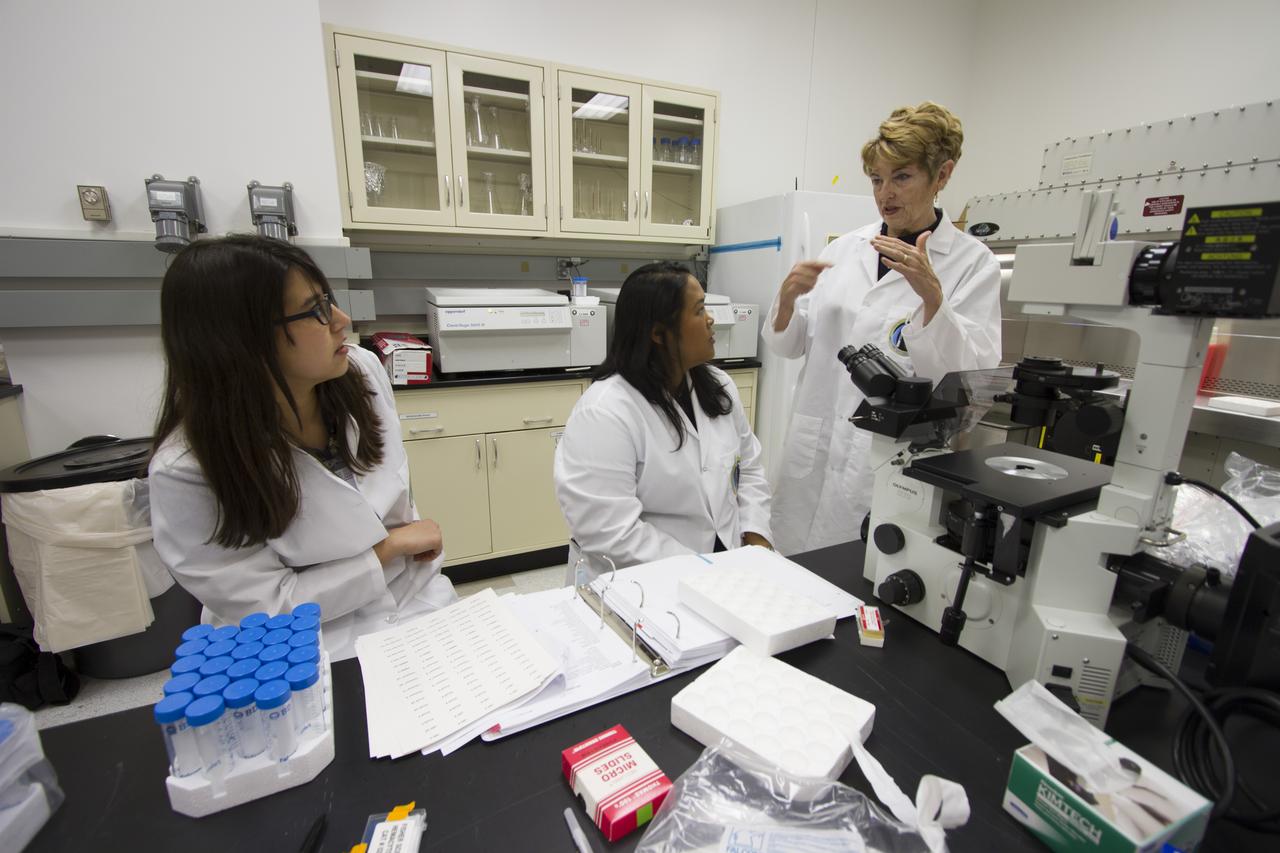
CAPE CANAVERAL, Fla. - Researcher and principal investigator Dr. Millie Hughes-Fulford of the Hughes-Fulford Laboratory, San Francisco, Calif., at right, plans preflight and post-flight experiment operations with T-cell science team members Emily Martinez, left, and Tara Candelario in the Space Station Processing Facility at NASA's Kennedy Space Center in Florida. The immunology experiment will launch on SpaceX-3 and focus on the effects of microgravity on early T-cell signaling pathways. Current work aims to identify and compare the gene expression of microRNAs miRNAs during T-cell activation under normal gravity and in microgravity, and compare those patterns to changes seen in aging populations. The experiment will be the first flown on SpaceX funded by the National Institutes of Health. Dr. Hughes-Fulford flew aboard space shuttle mission STS-40 in June 1991, the first Spacelab mission dedicated to biomedical studies. For more information on the T-cell experiment, visit http://hughesfulfordlab.com and http://www.nasa.gov/ames/research/space-biosciences/t-cell-activation-in-aging-spacex-3/. Photo credit: NASA/Cory Huston
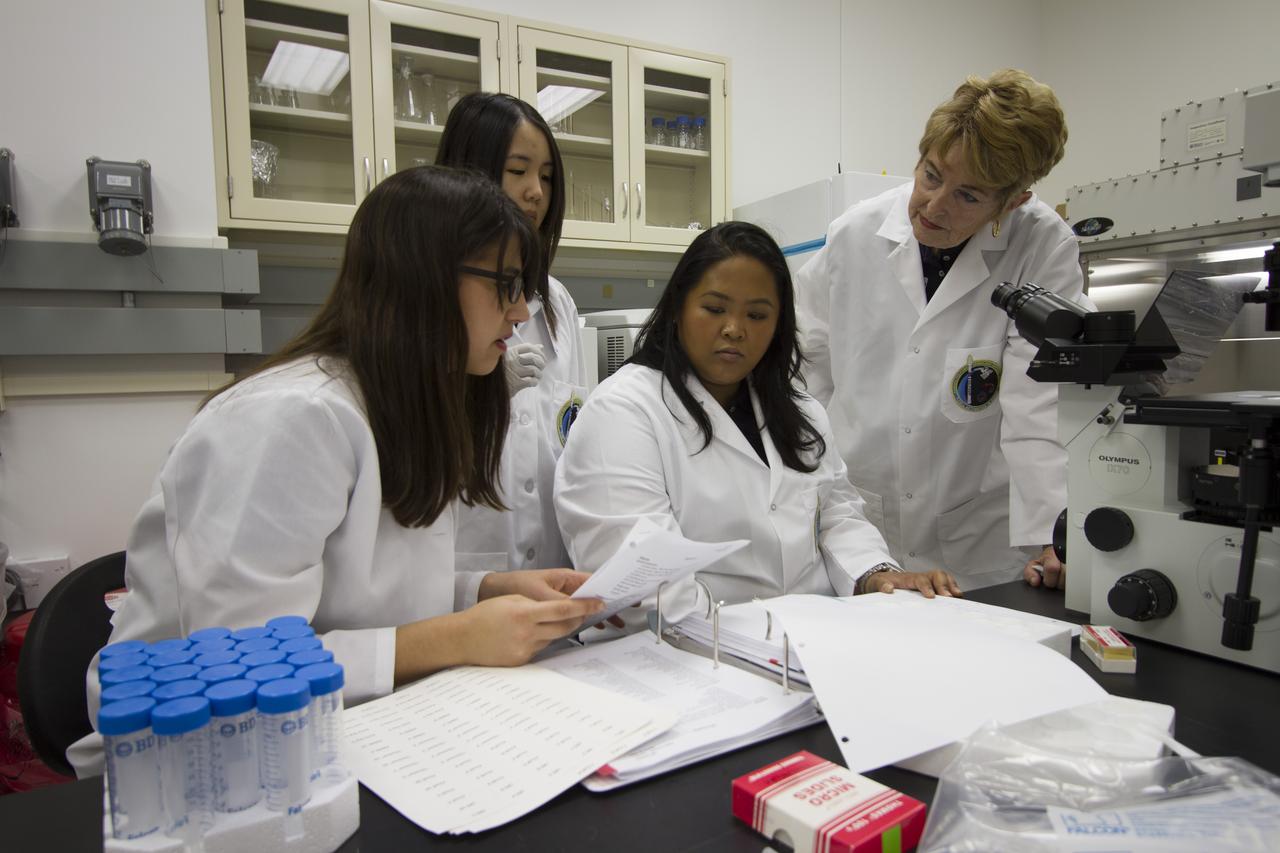
CAPE CANAVERAL, Fla. - From left, T-cell science team members Emily Martinez, Miya Yoshida and Tara Candelario, of the Hughes-Fulford Laboratory, San Francisco, Calif., discuss preflight and post-flight experiment operations with researcher and principal investigator Dr. Millie Hughes-Fulford in the Space Station Processing Facility at NASA's Kennedy Space Center in Florida. The immunology experiment will launch on SpaceX-3 and focus on the effects of microgravity on early T-cell signaling pathways. Current work aims to identify and compare the gene expression of microRNAs miRNAs during T-cell activation under normal gravity and in microgravity, and compare those patterns to changes seen in aging populations. The experiment will be the first flown on SpaceX funded by the National Institutes of Health. Dr. Hughes-Fulford flew aboard space shuttle mission STS-40 in June 1991, the first Spacelab mission dedicated to biomedical studies. For more information on the T-cell experiment, visit http://hughesfulfordlab.com and http://www.nasa.gov/ames/research/space-biosciences/t-cell-activation-in-aging-spacex-3/. Photo credit: NASA/Cory Huston
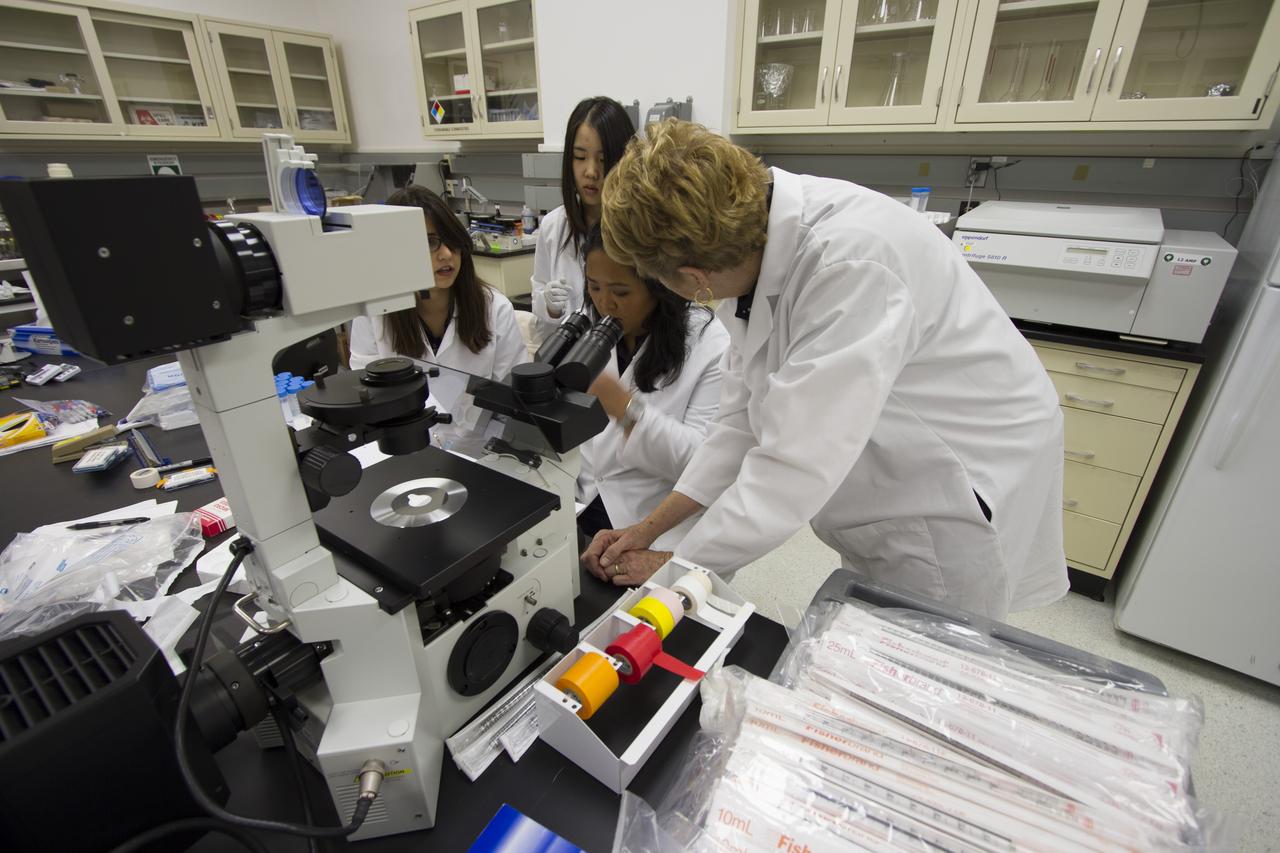
CAPE CANAVERAL, Fla. - T-cell science team member Tara Candelario of the Hughes-Fulford Laboratory, San Francisco, Calif., at the microscope, discusses preflight and post-flight experiment operations with researcher and principal investigator Dr. Millie Hughes-Fulford in the Space Station Processing Facility at NASA's Kennedy Space Center in Florida as T-cell science team members Emily Martinez, left, and Miya Yoshida look on. The immunology experiment will launch on SpaceX-3 and focus on the effects of microgravity on early T-cell signaling pathways. Current work aims to identify and compare the gene expression of microRNAs miRNAs during T-cell activation under normal gravity and in microgravity, and compare those patterns to changes seen in aging populations. The experiment will be the first flown on SpaceX funded by the National Institutes of Health. Dr. Hughes-Fulford flew aboard space shuttle mission STS-40 in June 1991, the first Spacelab mission dedicated to biomedical studies. For more information on the T-cell experiment, visit http://hughesfulfordlab.com and http://www.nasa.gov/ames/research/space-biosciences/t-cell-activation-in-aging-spacex-3/. Photo credit: NASA/Cory Huston
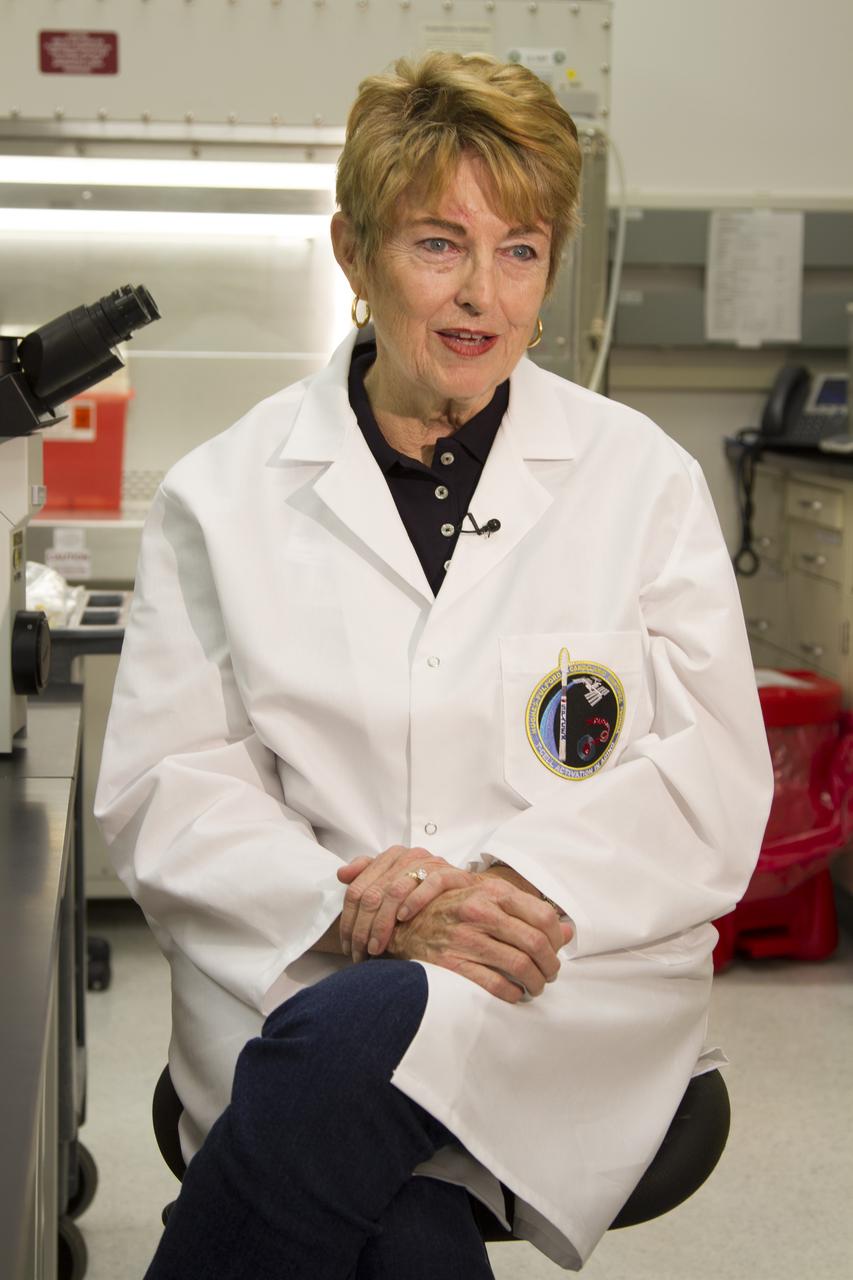
CAPE CANAVERAL, Fla. - Researcher and former NASA payload specialist Millie Hughes-Fulford, of the Hughes-Fulford Laboratory, San Francisco, Calif., discusses her laboratory's T-cell experiment and the impact the research may have on aging adults and their immune systems with an interviewer in the Space Station Processing Facility at NASA's Kennedy Space Center in Florida. The immunology experiment will launch on SpaceX-3 and focus on the effects of microgravity on early T-cell signaling pathways. Current work aims to identify and compare the gene expression of microRNAs miRNAs during T-cell activation under normal gravity and in microgravity, and compare those patterns to changes seen in aging populations. The experiment will be the first flown on SpaceX funded by the National Institutes of Health. Dr. Hughes-Fulford flew aboard space shuttle mission STS-40 in June 1991, the first Spacelab mission dedicated to biomedical studies. For more information on the T-cell experiment, visit http://hughesfulfordlab.com and http://www.nasa.gov/ames/research/space-biosciences/t-cell-activation-in-aging-spacex-3/. Photo credit: NASA/Cory Huston
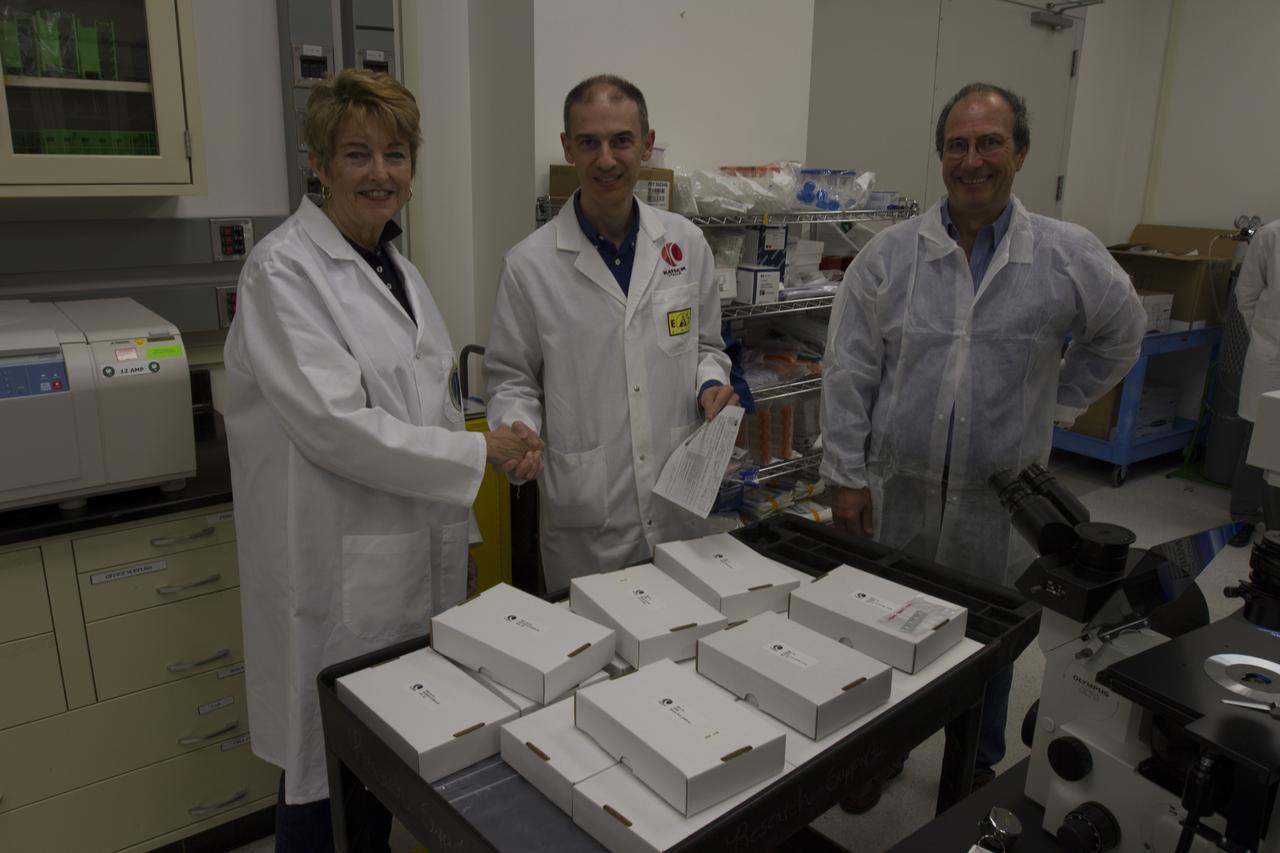
CAPE CANAVERAL, Fla. - Researcher and former NASA payload specialist Millie Hughes-Fulford, of the Hughes-Fulford Laboratory, San Francisco, Calif., accepts the European Space Agency ESA T-cell experiment flight units being handed over in a Space Station Processing Facility laboratory at NASA's Kennedy Space Center in Florida. From left are Hughes-Fulford shaking hands with Pier Luigi Ganga of Kayser Italia, manufacturer of the hardware, with Raimondo Fortezza of ESA looking on. The immunology experiment will launch on SpaceX-3 and focus on the effects of microgravity on early T-cell signaling pathways. Current work aims to identify and compare the gene expression of microRNAs miRNAs during T-cell activation under normal gravity and in microgravity, and compare those patterns to changes seen in aging populations. The experiment will be the first flown on SpaceX funded by the National Institutes of Health. Dr. Hughes-Fulford flew aboard space shuttle mission STS-40 in June 1991, the first Spacelab mission dedicated to biomedical studies. For more information on the T-cell experiment, visit http://hughesfulfordlab.com and http://www.nasa.gov/ames/research/space-biosciences/t-cell-activation-in-aging-spacex-3/. Photo credit: NASA/Cory Huston