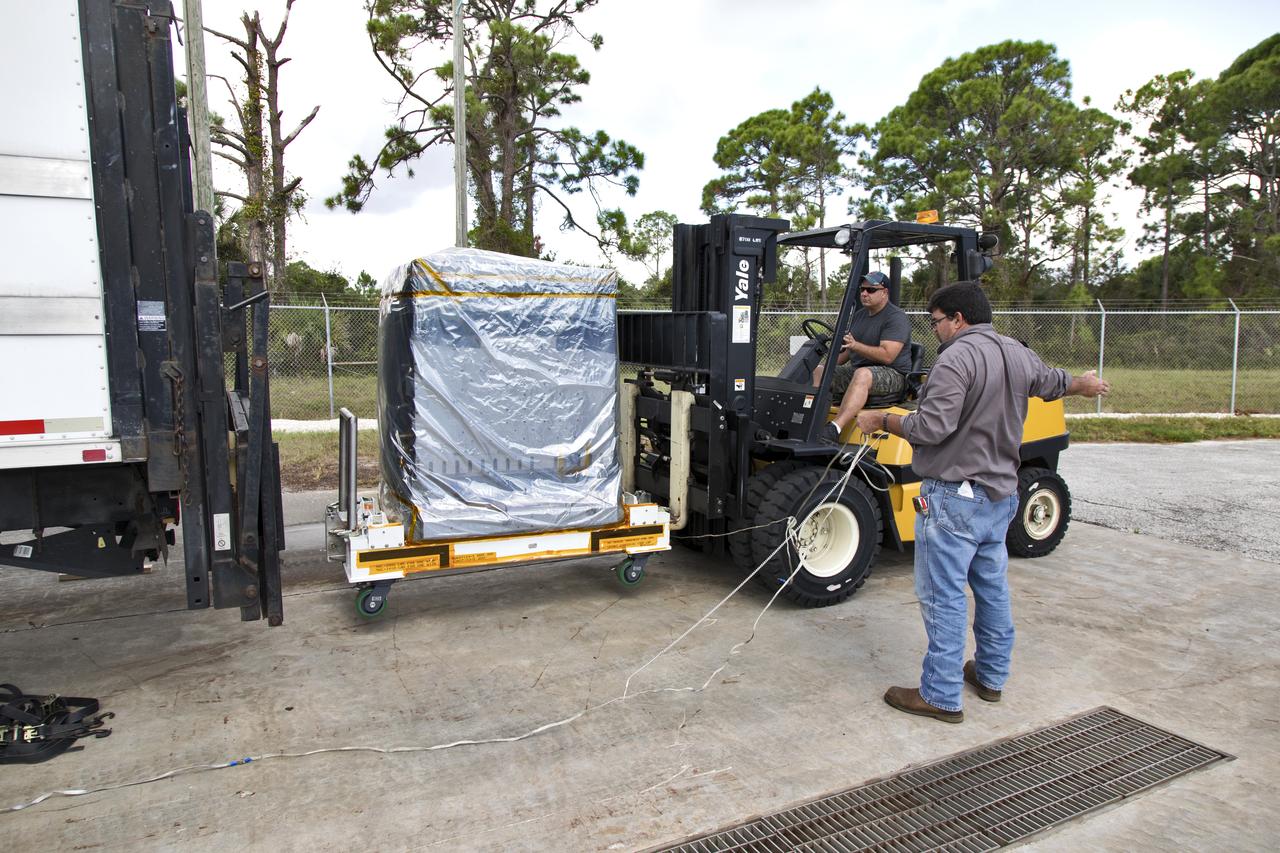
A worker uses a forklift to unload the Robotic Refueling Mission-3 (RRM3) payload from a truck at the Payload Hazardous Servicing Facility on Oct. 3, 2018, at NASA's Kennedy Space Center in Florida. The payload will be carried to the International Space Station on SpaceX's 16th Commercial Resupply Services mission. RRM3 demonstrates the transfer of xenon gas and liquid methane in microgravity, and advances technologies for storing and manipulating these cryogenic fuels robotically. RRM3 also supports development of technology for the Restore-L mission, a robotic spacecraft equipped to service satellites in-orbit.
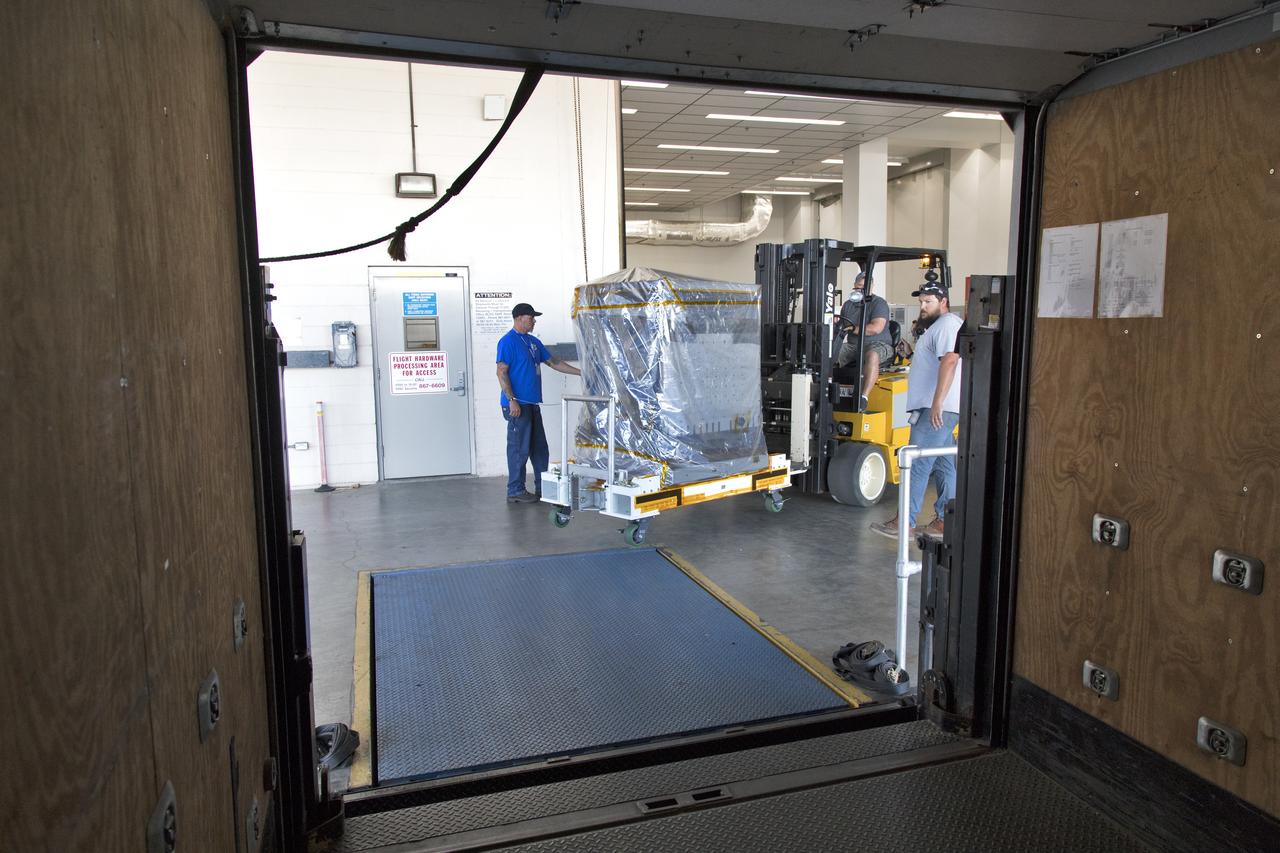
Workers prepare to transfer the Robotic Refueling Mission-3 (RRM3) payload from the Space Station Processing Facility high bay to the Payload Hazardous Servicing Facility on Oct. 3, 2018, at NASA's Kennedy Space Center in Florida. The payload will be carried to the International Space Station on SpaceX's 16th Commercial Resupply Services mission. RRM3 demonstrates the transfer of xenon gas and liquid methane in microgravity, and advances technologies for storing and manipulating these cryogenic fuels robotically. RRM3 also supports development of technology for the Restore-L mission, a robotic spacecraft equipped to service satellites in-orbit.
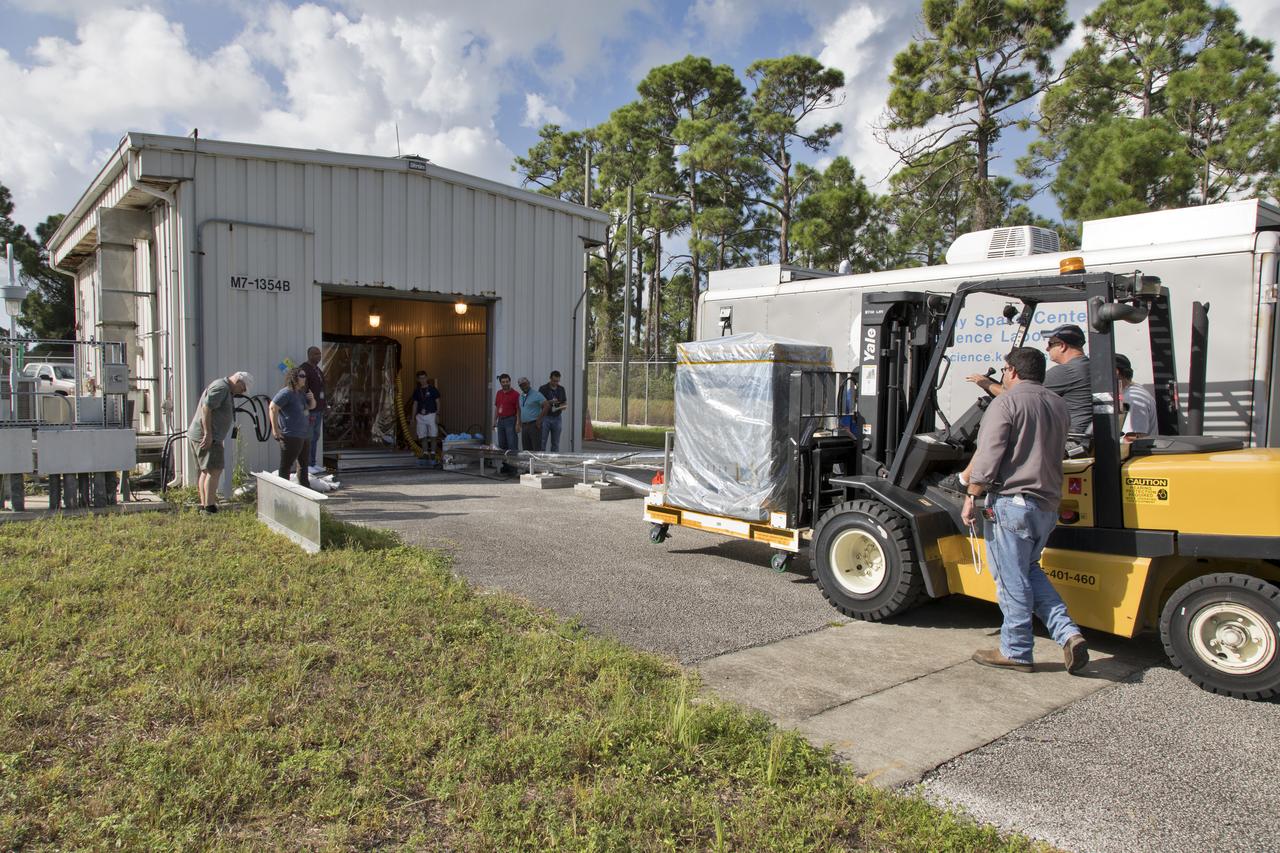
A worker uses a forklift to carry the Robotic Refueling Mission-3 (RRM3) payload to the entrance of the Payload Hazardous Servicing Facility on Oct. 3, 2018, at NASA's Kennedy Space Center in Florida. The payload will be carried to the International Space Station on SpaceX's 16th Commercial Resupply Services mission. RRM3 demonstrates the transfer of xenon gas and liquid methane in microgravity, and advances technologies for storing and manipulating these cryogenic fuels robotically. RRM3 also supports development of technology for the Restore-L mission, a robotic spacecraft equipped to service satellites in-orbit.
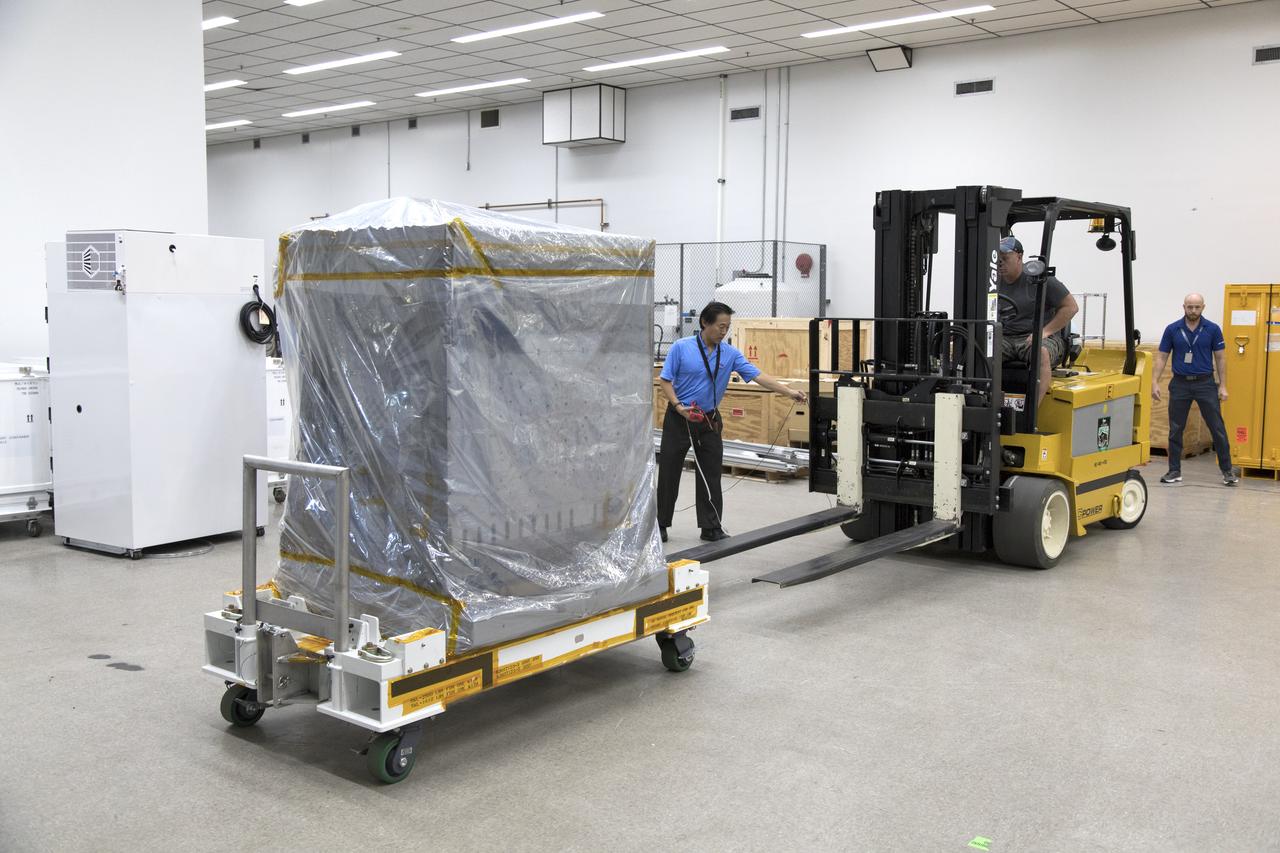
Workers prepare the Robotic Refueling Mission-3 (RRM3) payload to be transferred from the Space Station Processing Facility high bay to the Payload Hazardous Servicing Facility on Oct. 3, 2018, at NASA's Kennedy Space Center in Florida. The payload will be carried to the International Space Station on SpaceX's 16th Commercial Resupply Services mission. RRM3 demonstrates the transfer of xenon gas and liquid methane in microgravity, and advances technologies for storing and manipulating these cryogenic fuels robotically. RRM3 also supports development of technology for the Restore-L mission, a robotic spacecraft equipped to service satellites in-orbit.
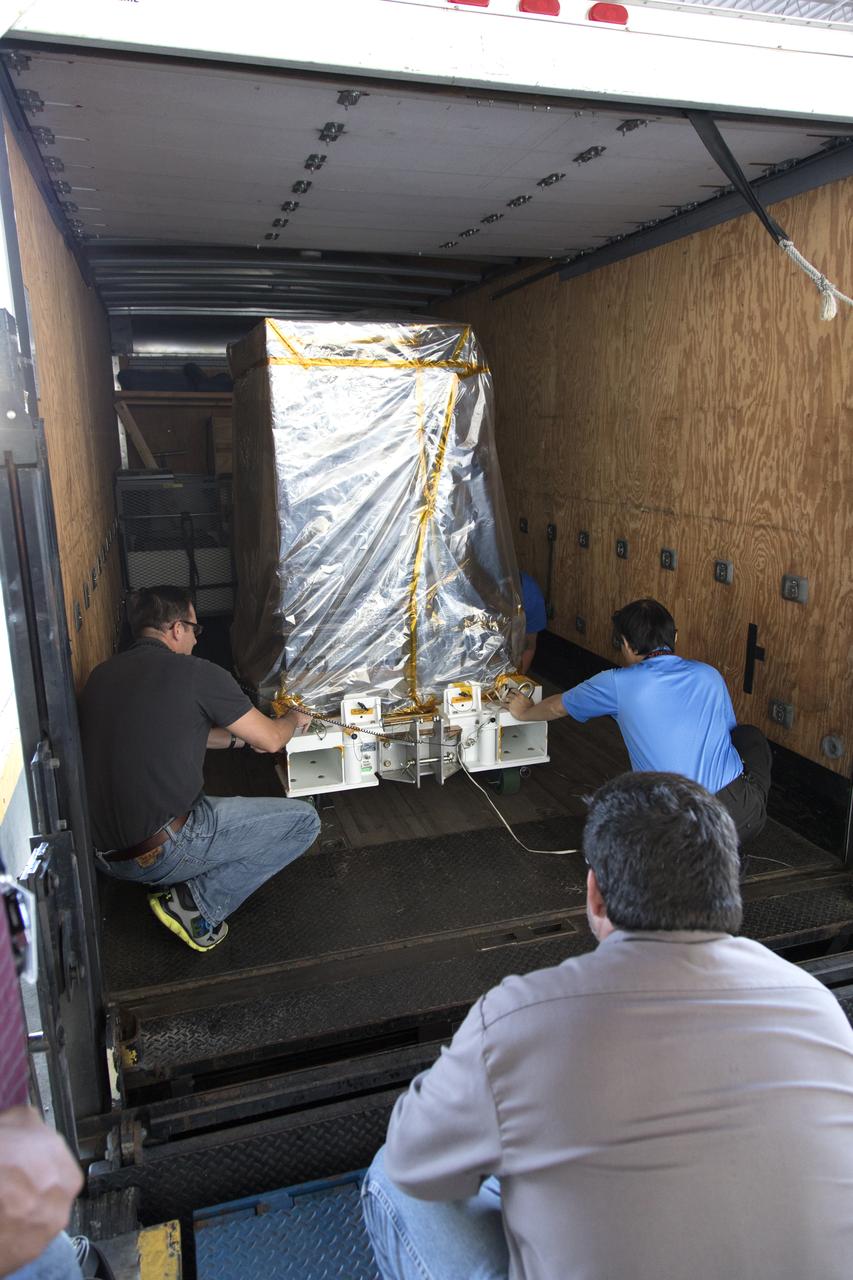
Workers load the Robotic Refueling Mission-3 (RRM3) payload onto a truck at the Space Station Processing Facility for transfer to the Payload Hazardous Servicing Facility on Oct. 3, 2018, at NASA's Kennedy Space Center in Florida. The payload will be carried to the International Space Station on SpaceX's 16th Commercial Resupply Services mission. RRM3 demonstrates the transfer of xenon gas and liquid methane in microgravity, and advances technologies for storing and manipulating these cryogenic fuels robotically. RRM3 also supports development of technology for the Restore-L mission, a robotic spacecraft equipped to service satellites in-orbit.
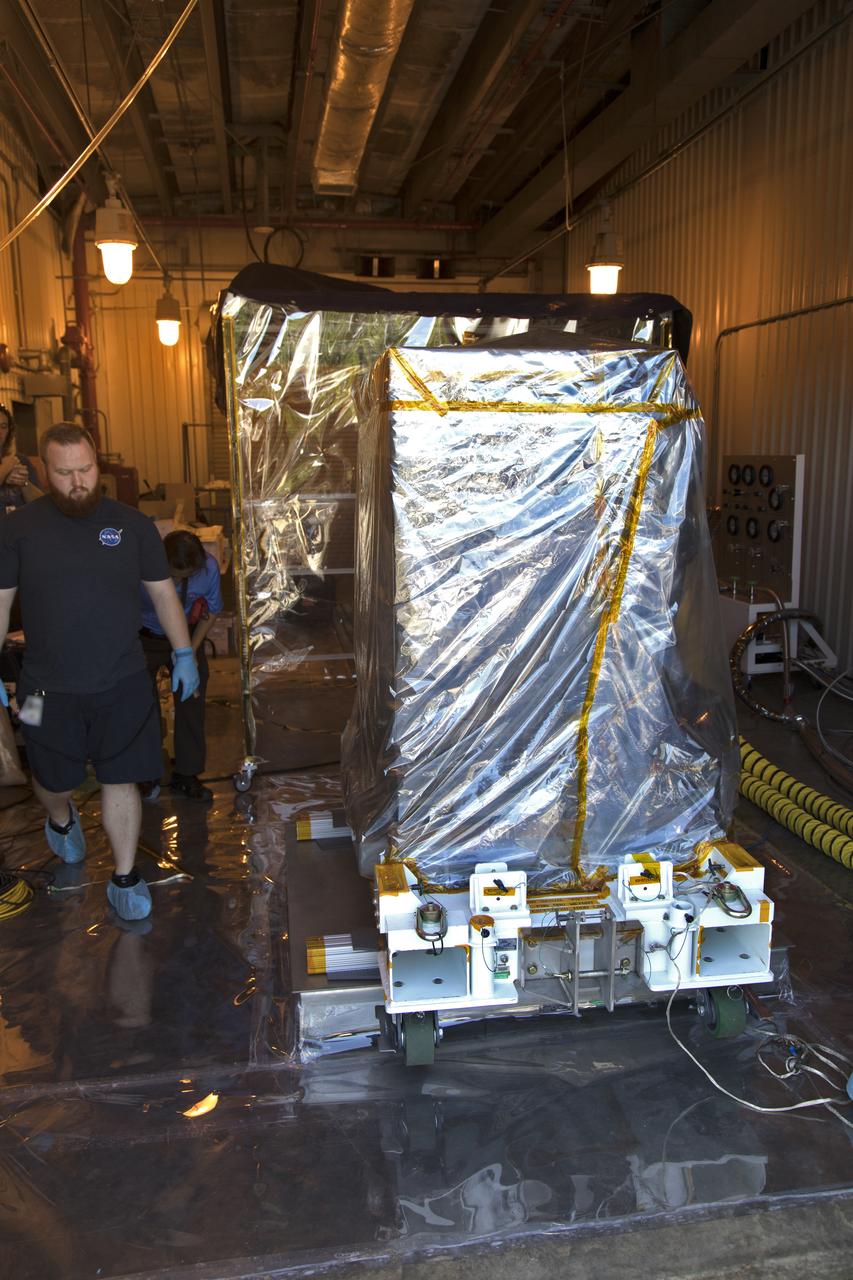
The Robotic Refueling Mission-3 (RRM3) payload is inside the Payload Hazardous Servicing Facility on Oct. 3, 2018, at NASA's Kennedy Space Center in Florida. The payload will be carried to the International Space Station on SpaceX's 16th Commercial Resupply Services mission. RRM3 demonstrates the transfer of xenon gas and liquid methane in microgravity, and advances technologies for storing and manipulating these cryogenic fuels robotically. RRM3 also supports development of technology for the Restore-L mission, a robotic spacecraft equipped to service satellites in-orbit.
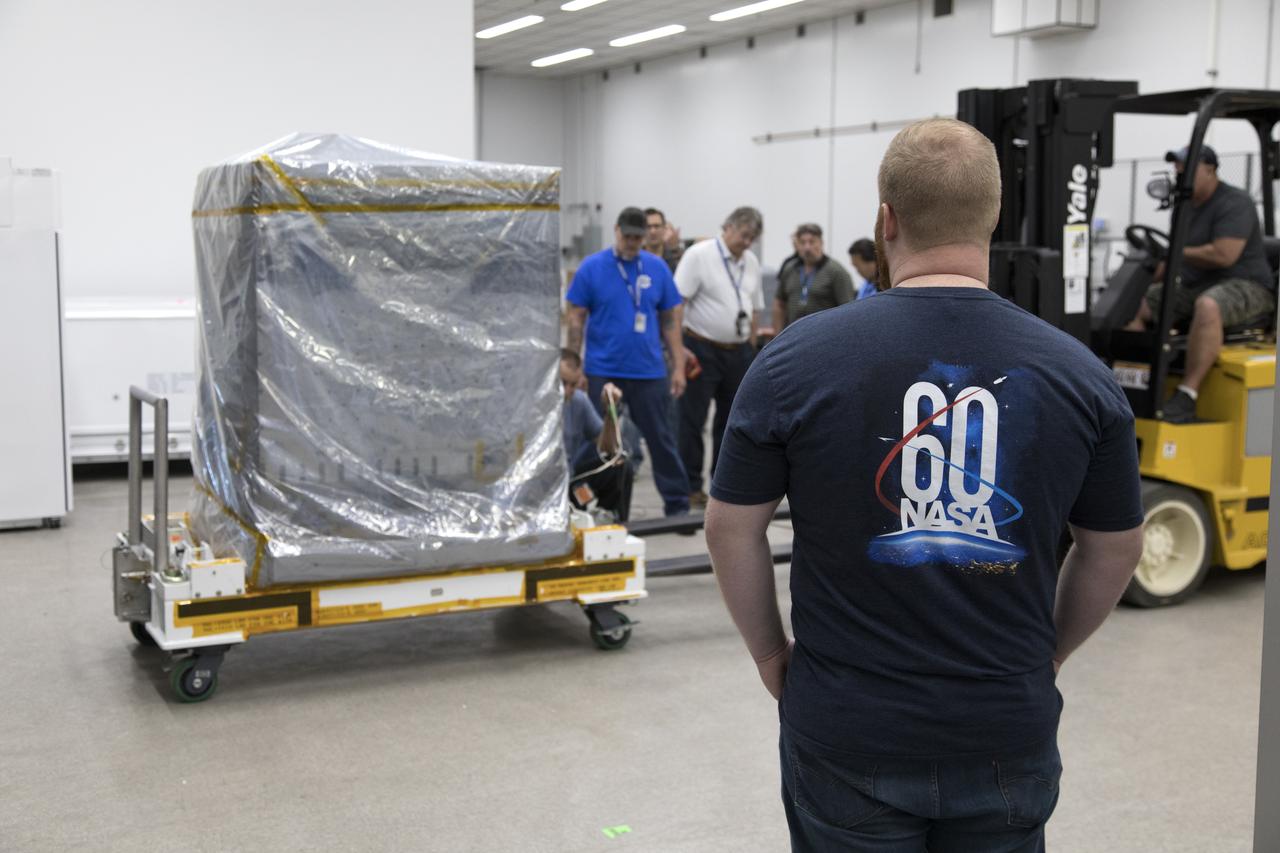
Workers prepare the Robotic Refueling Mission-3 (RRM3) payload to be transferred from the Space Station Processing Facility high bay to the Payload Hazardous Servicing Facility on Oct. 3, 2018, at NASA's Kennedy Space Center in Florida. The payload will be carried to the International Space Station on SpaceX's 16th Commercial Resupply Services mission. RRM3 demonstrates the transfer of xenon gas and liquid methane in microgravity, and advances technologies for storing and manipulating these cryogenic fuels robotically. RRM3 also supports development of technology for the Restore-L mission, a robotic spacecraft equipped to service satellites in-orbit.
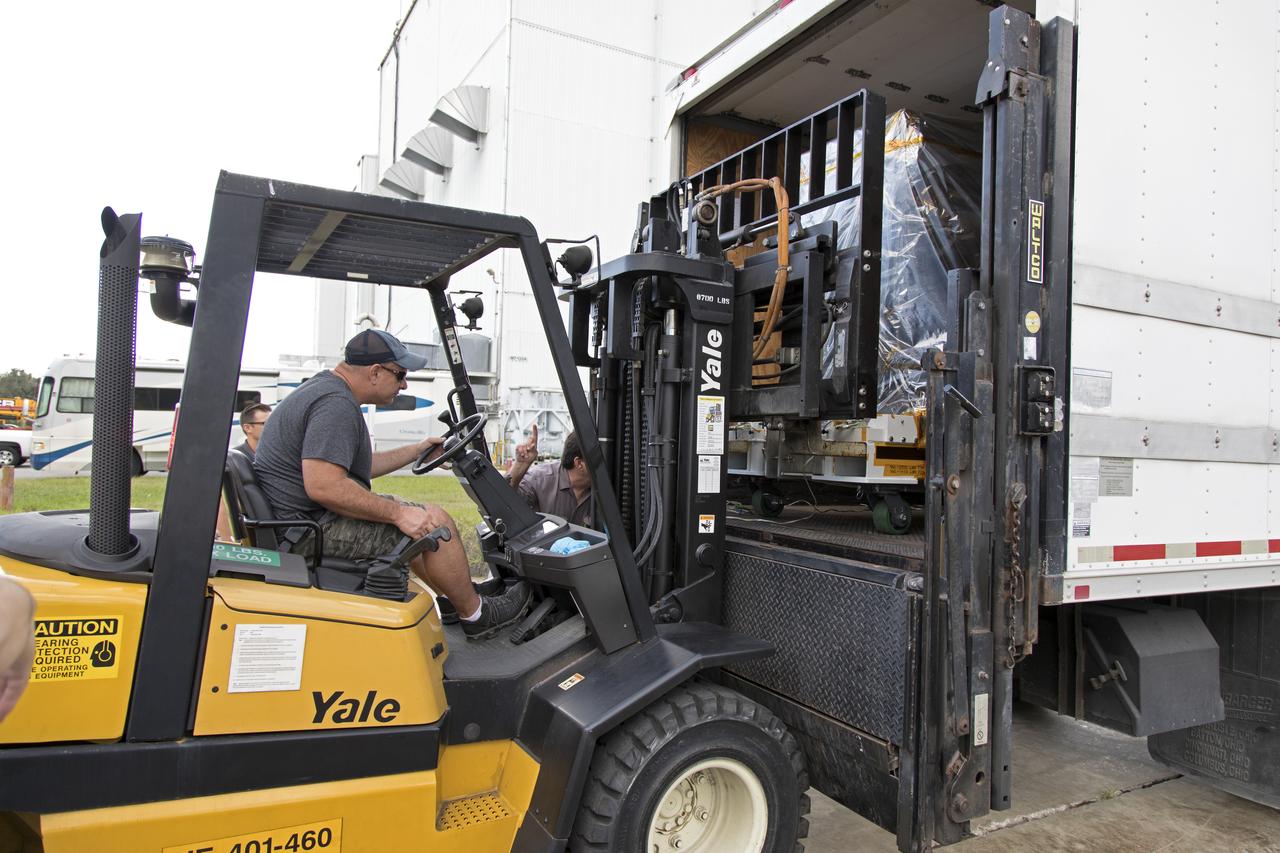
A worker uses a forklift to unload the Robotic Refueling Mission-3 (RRM3) payload from a truck at the Payload Hazardous Servicing Facility on Oct. 3, 2018, at NASA's Kennedy Space Center in Florida. The payload will be carried to the International Space Station on SpaceX's 16th Commercial Resupply Services mission. RRM3 demonstrates the transfer of xenon gas and liquid methane in microgravity, and advances technologies for storing and manipulating these cryogenic fuels robotically. RRM3 also supports development of technology for the Restore-L mission, a robotic spacecraft equipped to service satellites in-orbit.
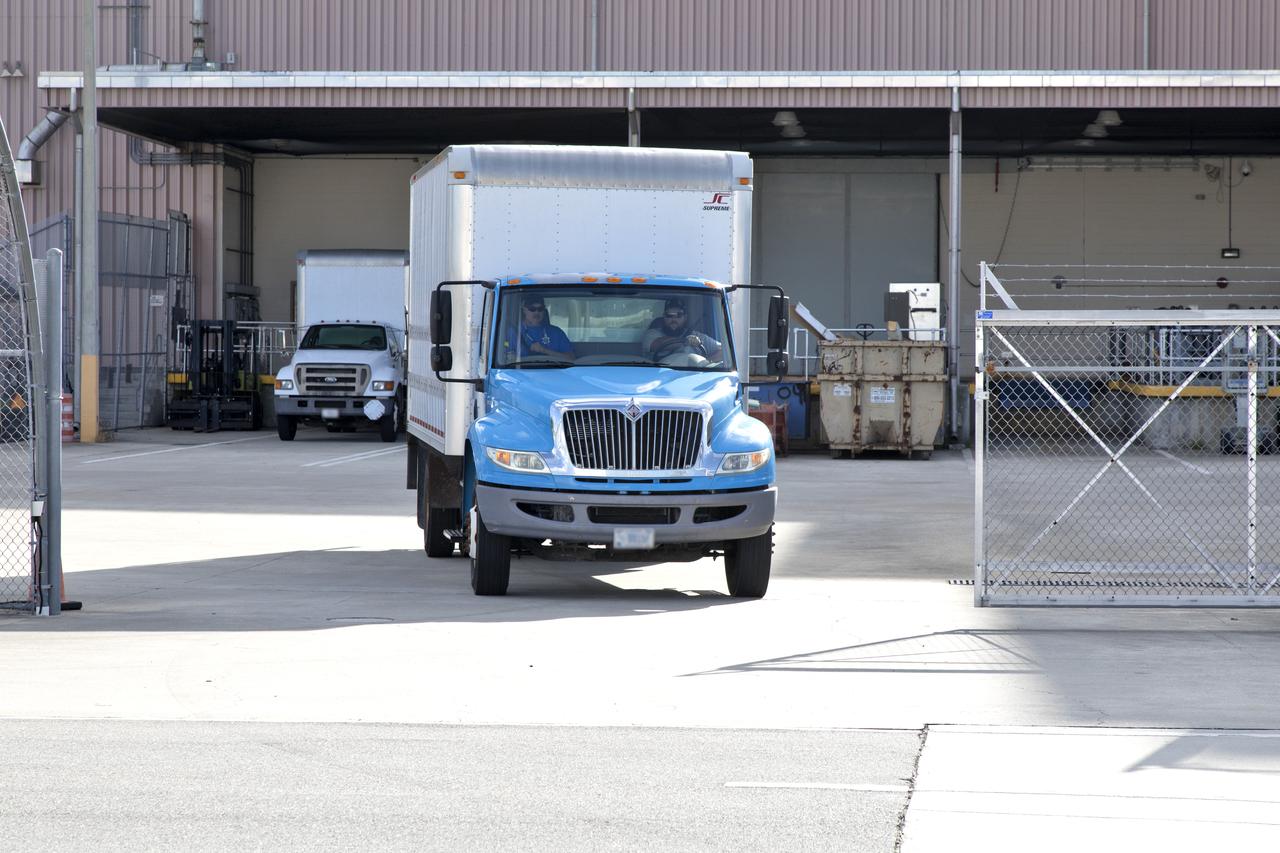
A truck carrying the Robotic Refueling Mission-3 (RRM3) payload departs from the Space Station Processing Facility on its way to the Payload Hazardous Servicing Facility on Oct. 3, 2018, at NASA's Kennedy Space Center in Florida. The payload will be carried to the International Space Station on SpaceX's 16th Commercial Resupply Services mission. RRM3 demonstrates the transfer of xenon gas and liquid methane in microgravity, and advances technologies for storing and manipulating these cryogenic fuels robotically. RRM3 also supports development of technology for the Restore-L mission, a robotic spacecraft equipped to service satellites in-orbit.
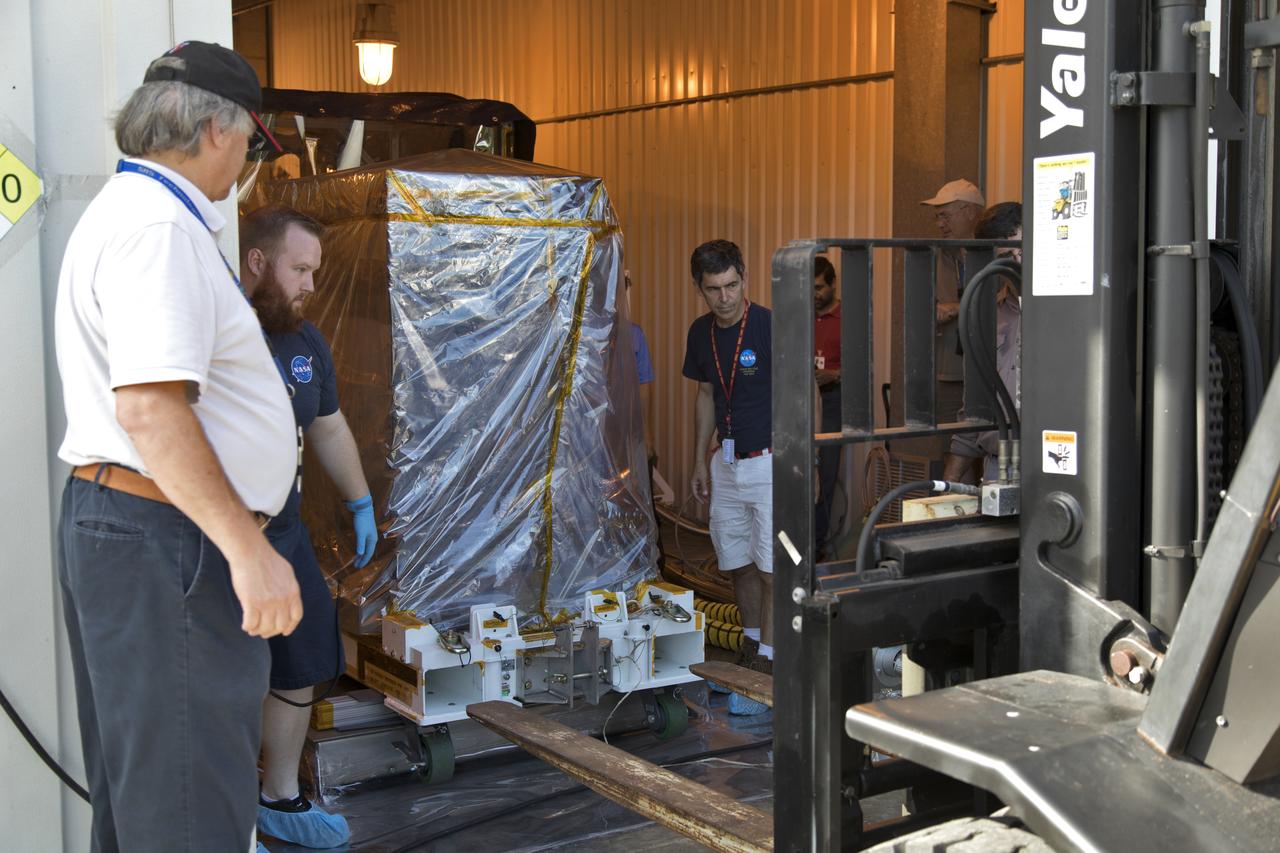
The Robotic Refueling Mission-3 (RRM3) payload is unloaded from a forklift inside the Payload Hazardous Servicing Facility on Oct. 3, 2018, at NASA's Kennedy Space Center in Florida. The payload will be carried to the International Space Station on SpaceX's 16th Commercial Resupply Services mission. RRM3 demonstrates the transfer of xenon gas and liquid methane in microgravity, and advances technologies for storing and manipulating these cryogenic fuels robotically. RRM3 also supports development of technology for the Restore-L mission, a robotic spacecraft equipped to service satellites in-orbit.