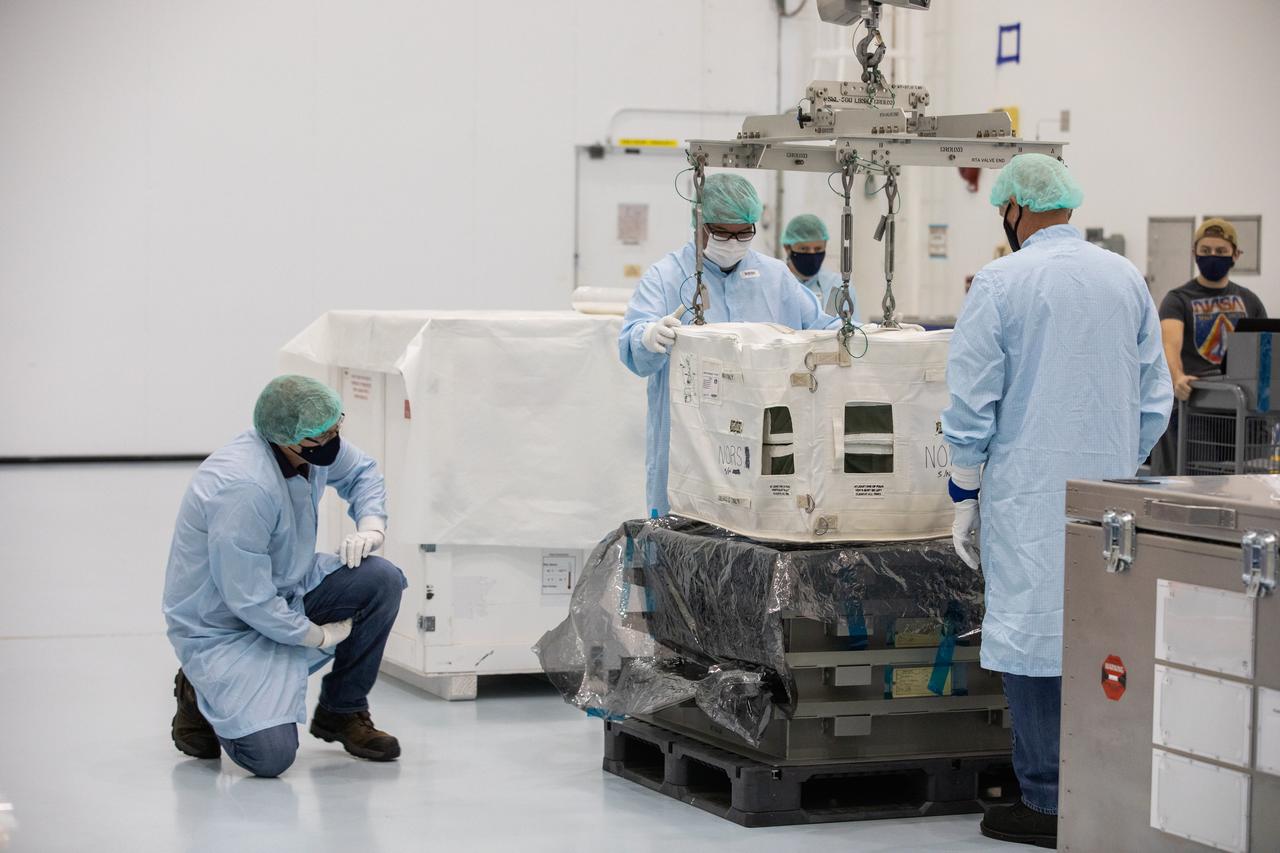
Technicians unpack and inspect a Nitrogen/Oxygen Recharge System (NORS) tank inside the Space Station Processing Facility high bay at NASA’s Kennedy Space Center in Florida on July 16, 2020. The NORS tanks and their support fixtures are designed to connect to the International Space Station’s existing air supply network to refill the previous generation of tanks installed during construction of the space station. These reusable tanks measure 3 feet long and 21 inches in diameter, and weigh about 200 pounds when filled. Once onboard, the tanks will be used to fill the oxygen and nitrogen tanks that supply the needed gases to the space station’s airlock for spacewalks. They could also be used to replenish the atmosphere inside the station. The NORS tanks will launch to the station later in the year on a commercial resupply mission.
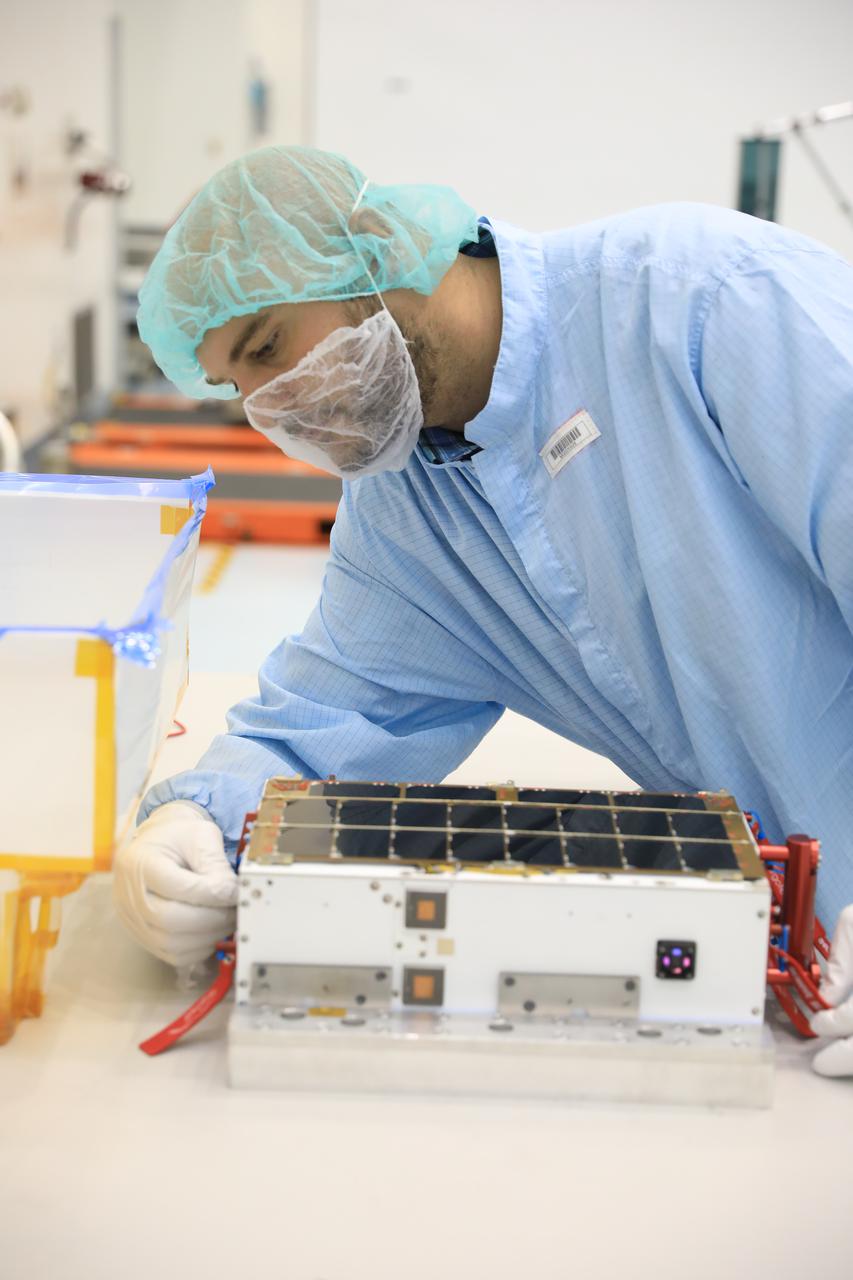
Teams worked on the final processing of their payloads that will fly aboard Artemis I. Housed within the Orion stage adapter, the satellites – called CubeSats – are roughly the size of a large shoe box and weigh no more than 30 pounds. Despite their small size, they enable science and technology experiments that may enhance our understanding of the deep space environment, expand our knowledge of the Moon, and demonstrate new technologies that could be used on future missions.
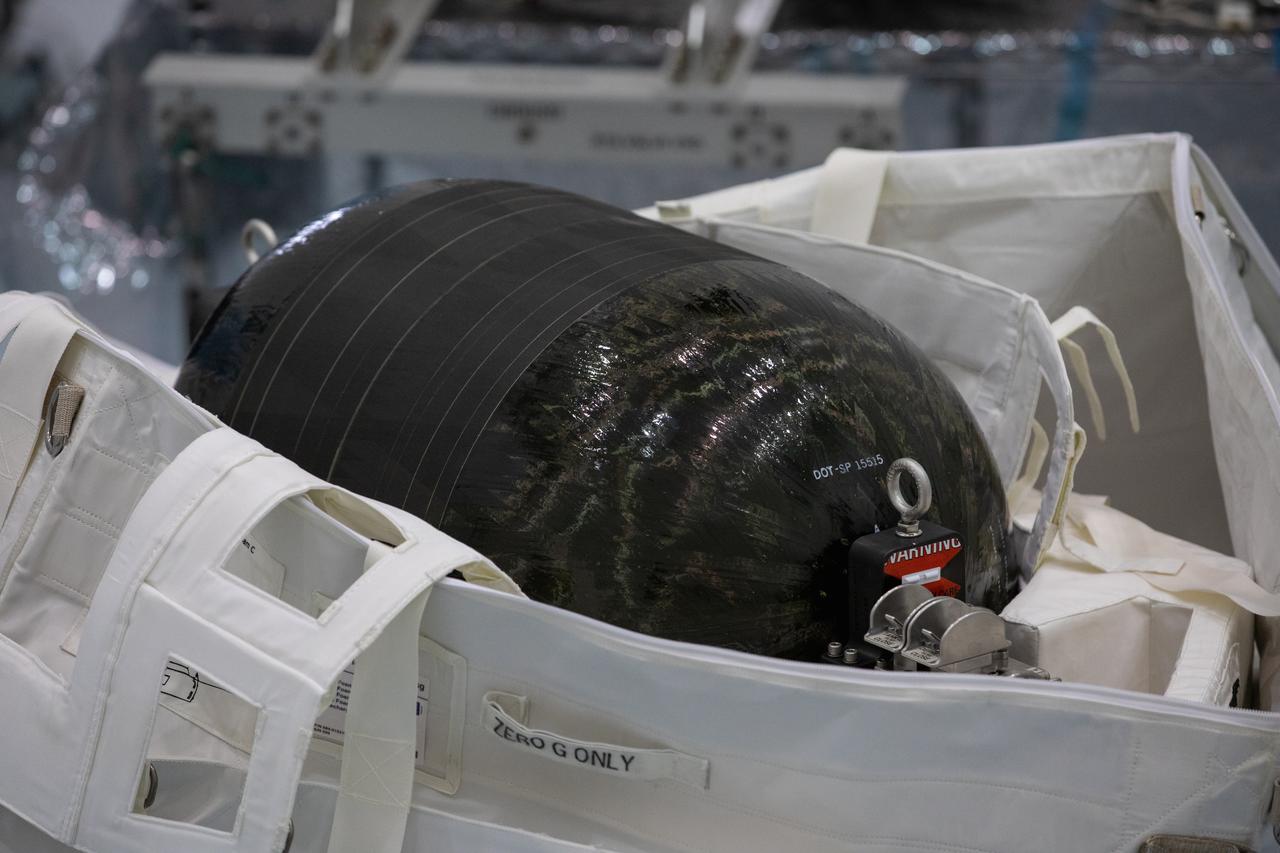
A Nitrogen/Oxygen Recharge System (NORS) tank is unpacked and readied for inspection inside the Space Station Processing Facility high bay at NASA’s Kennedy Space Center in Florida on July 16, 2020. The NORS tanks and their support fixtures are designed to connect to the International Space Station’s existing air supply network to refill the previous generation of tanks installed during construction of the space station. These reusable tanks measure 3 feet long and 21 inches in diameter, and weigh about 200 pounds when filled. Once onboard, the tanks will be used to fill the oxygen and nitrogen tanks that supply the needed gases to the space station’s airlock for spacewalks. They could also be used to replenish the atmosphere inside the station. The NORS tanks will launch to the station later in the year on a commercial resupply mission.
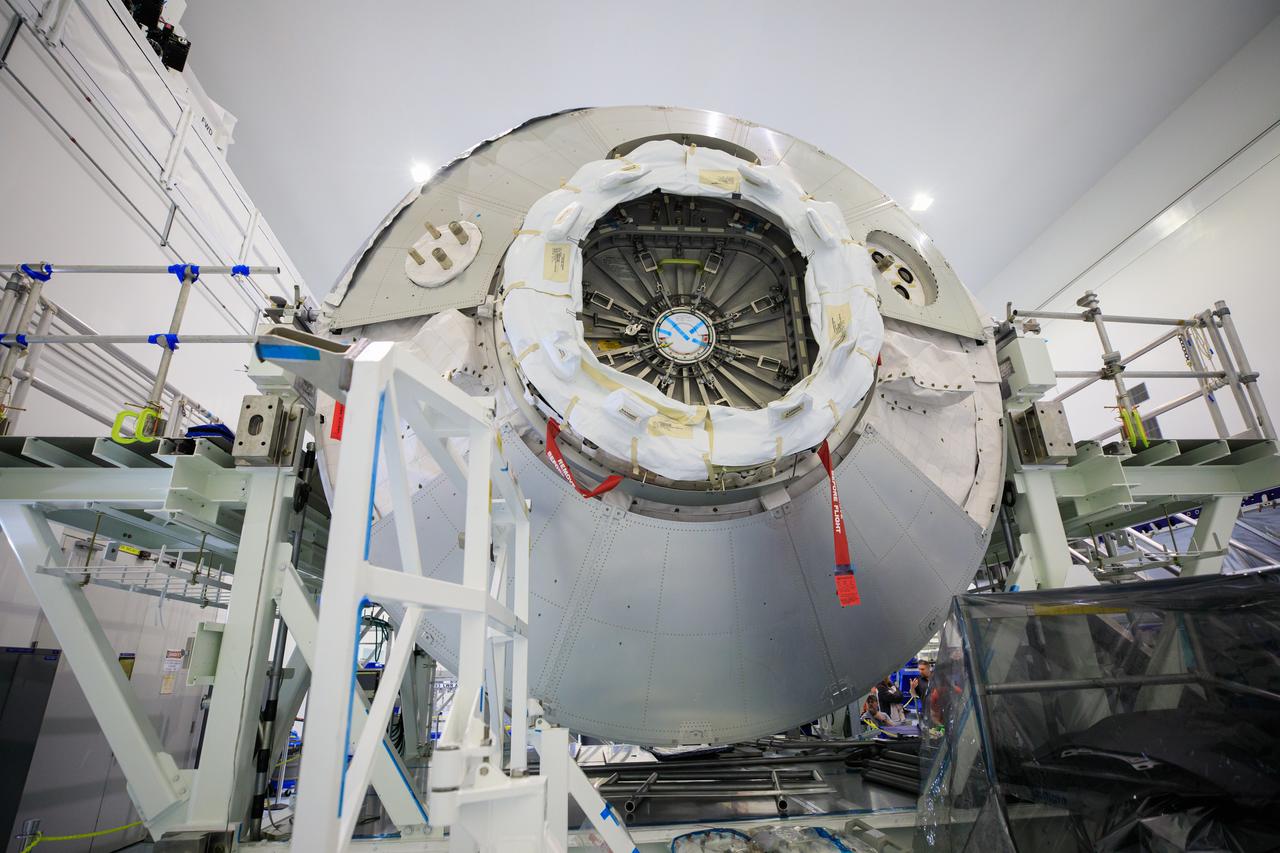
The Multi-Purpose Logistics Module (MPLM), used during the Space Shuttle Program to transfer cargo to and from the International Space Station, is secured in a stand inside the Space Station Processing Facility high bay at NASA’s Kennedy Space Center in Florida on April 20, 2023. The MPLM is being prepared for transport to Ellington Field in Houston, where it will then be transported by road to Axiom’s facility near Ellington to be utilized to further commercialization of space. Three MPLMs were built by Thales Alenia Space Italia (TASI) for the Italian Space Agency (ASI) and named after Italian masters (Leonardo, Raffaello, and Donatello). Only two ever flew to the space station, Leonardo and Raffaello, with Axiom intending to use Raffaello as a future element that will attach to a segment being built by the company for addition to the space station.
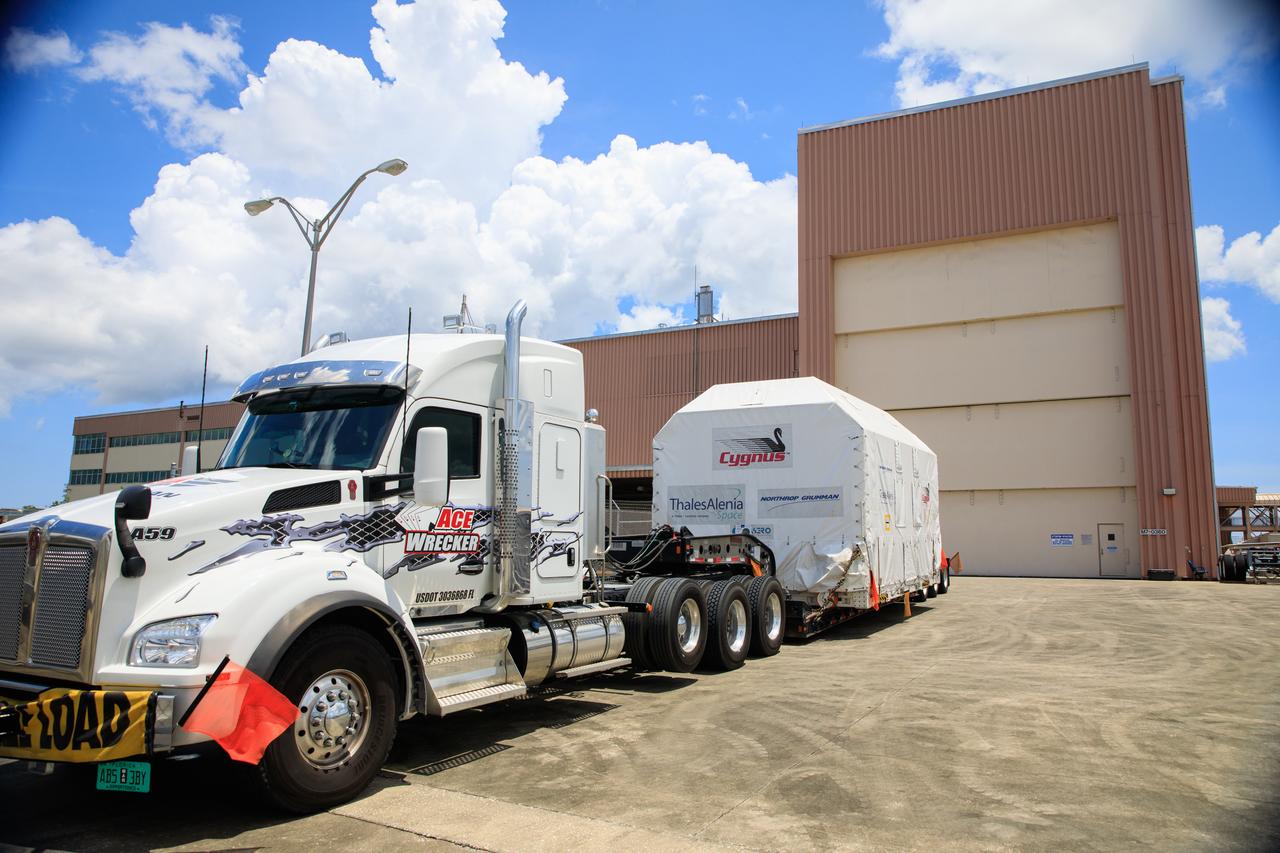
The Northrop Grumman Cygnus spacecraft's pressurized cargo module (PCM) arrives at the Space Station Processing Facility of NASA's Kennedy Space Center in Florida on Aug. 2, 2023. The PCM is sealed in an environmentally controlled shipping container, pulled in by truck on a flatbed trailer. Cygnus will launch later this year atop a SpaceX Falcon 9 rocket from Cape Canaveral Space Force Station’s Space Launch Complex 40 to the International Space Station. Cygnus will undergo prelaunch processing at Kennedy before it is transported to SpaceX’s integration facility.
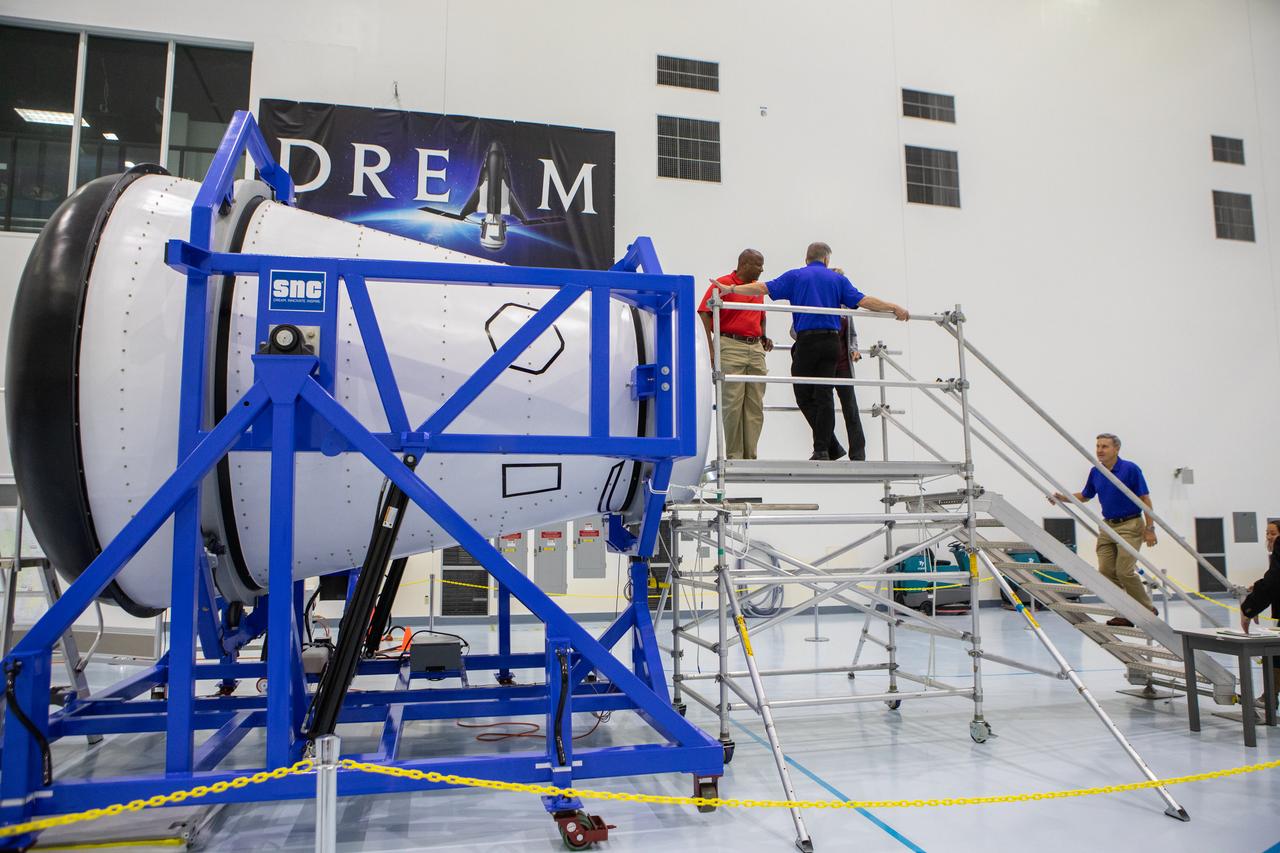
A mockup of the cargo logistics module for Sierra Nevada Corporation’s Dream Chaser, the company’s reusable spaceplane, arrived at the Space Station Processing Facility (SSPF) at NASA’s Kennedy Space Center in Florida in August. On Sept. 20, 2019, senior leadership had the opportunity to view the cargo module in the SSPF high bay. From left are Kelvin Manning, Kennedy associate director, technical; Steve Lindsey, vice president, Space Exploration Systems, Sierra Nevada Corporation; behind Lindsey is Kennedy Deputy Director Janet Petro; and ascending the stairs is Kennedy Center Director Bob Cabana. The SSPF is providing support for current and future NASA and commercial provider programs, including Commercial Resupply Services, Artemis 1, sending the first woman and next man to the Moon, and deep space destinations including Mars.
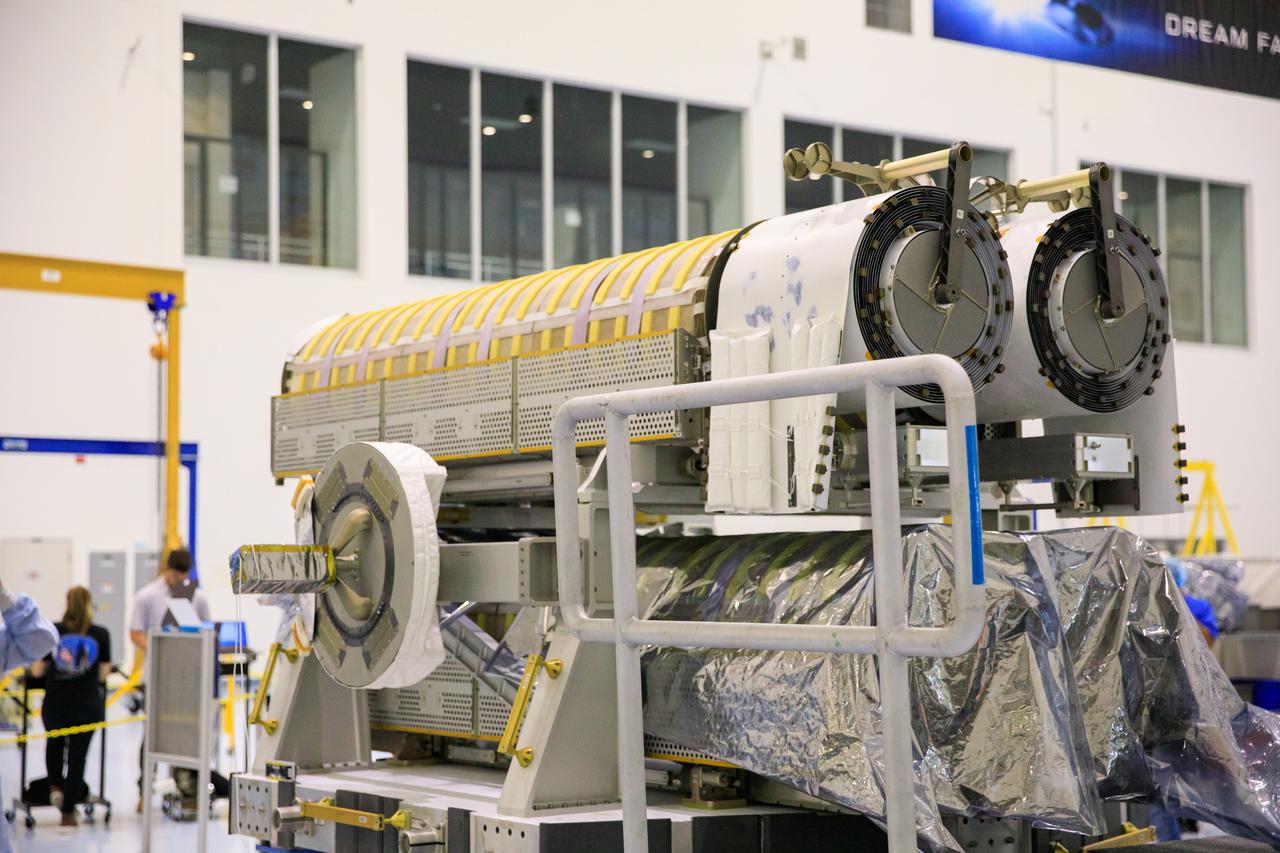
Inside the Space Station Processing Facility high bay at NASA's Kennedy Space Center in Florida, a set of International Space Station Roll Out Solar Arrays (iROSA) have been secured onto a platform on March 23, 2023. They are being prepared for delivery to the space station aboard SpaceX’s Dragon cargo carrier on the company’s 28th commercial resupply services (CRS-28) mission to the space station. iROSA is a new type of solar panel that rolls open in space and is more compact than current rigid panel designs.
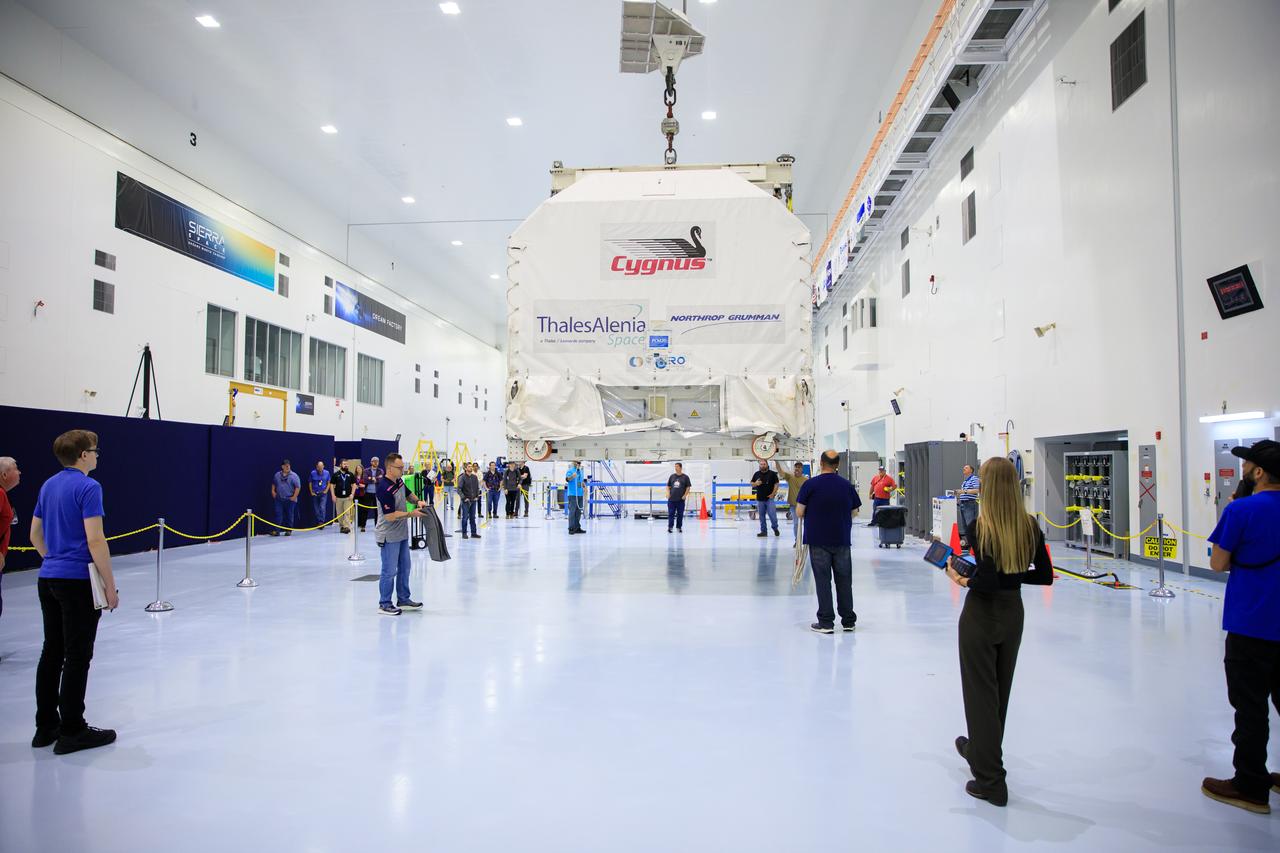
The Northrop Grumman Cygnus spacecraft’s pressurized cargo module (PCM) for the company’s 20th commercial resupply mission is lifted and moved by crane in its environmentally controlled shipping container inside the high bay in the Space Station Processing Facility at NASA's Kennedy Space Center in Florida on Aug. 2, 2023. Cygnus will launch later this year atop a SpaceX Falcon 9 rocket from Cape Canaveral Space Force Station’s Space Launch Complex 40 to the International Space Station. Cygnus will undergo prelaunch processing at Kennedy before it is transported to SpaceX’s integration facility.
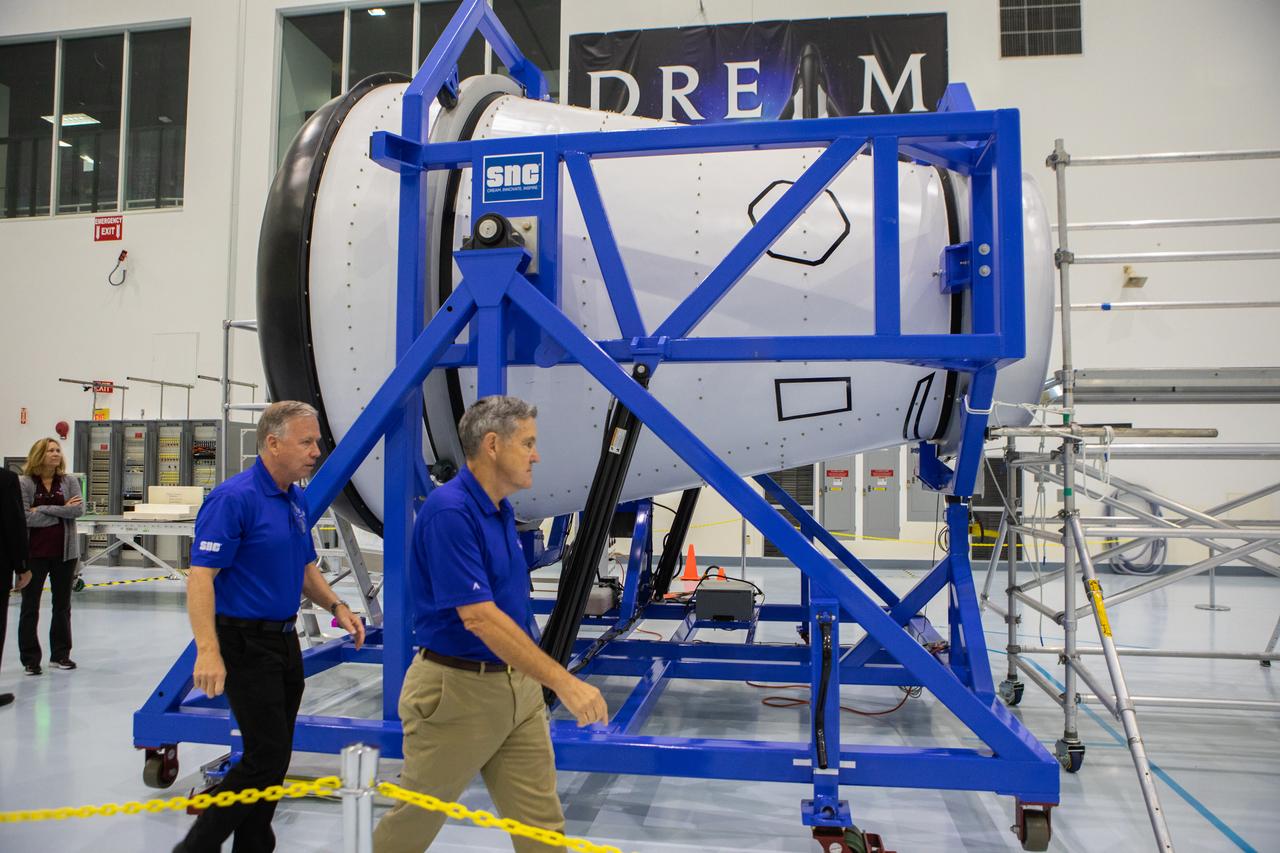
A mockup of the cargo logistics module for Sierra Nevada Corporation’s Dream Chaser, the company’s reusable spaceplane, arrived at the Space Station Processing Facility (SSPF) at NASA’s Kennedy Space Center in Florida in August. On Sept. 20, 2019, senior leadership had the opportunity to view the cargo module in the SSPF high bay. Kennedy Center Director Bob Cabana, at right, views the cargo module with Steve Lindsey, vice president, Space Exploration Systems, Sierra Nevada Corporation. The SSPF is providing support for current and future NASA and commercial provider programs, including Commercial Resupply Services, Artemis 1, sending the first woman and next man to the Moon, and deep space destinations including Mars.
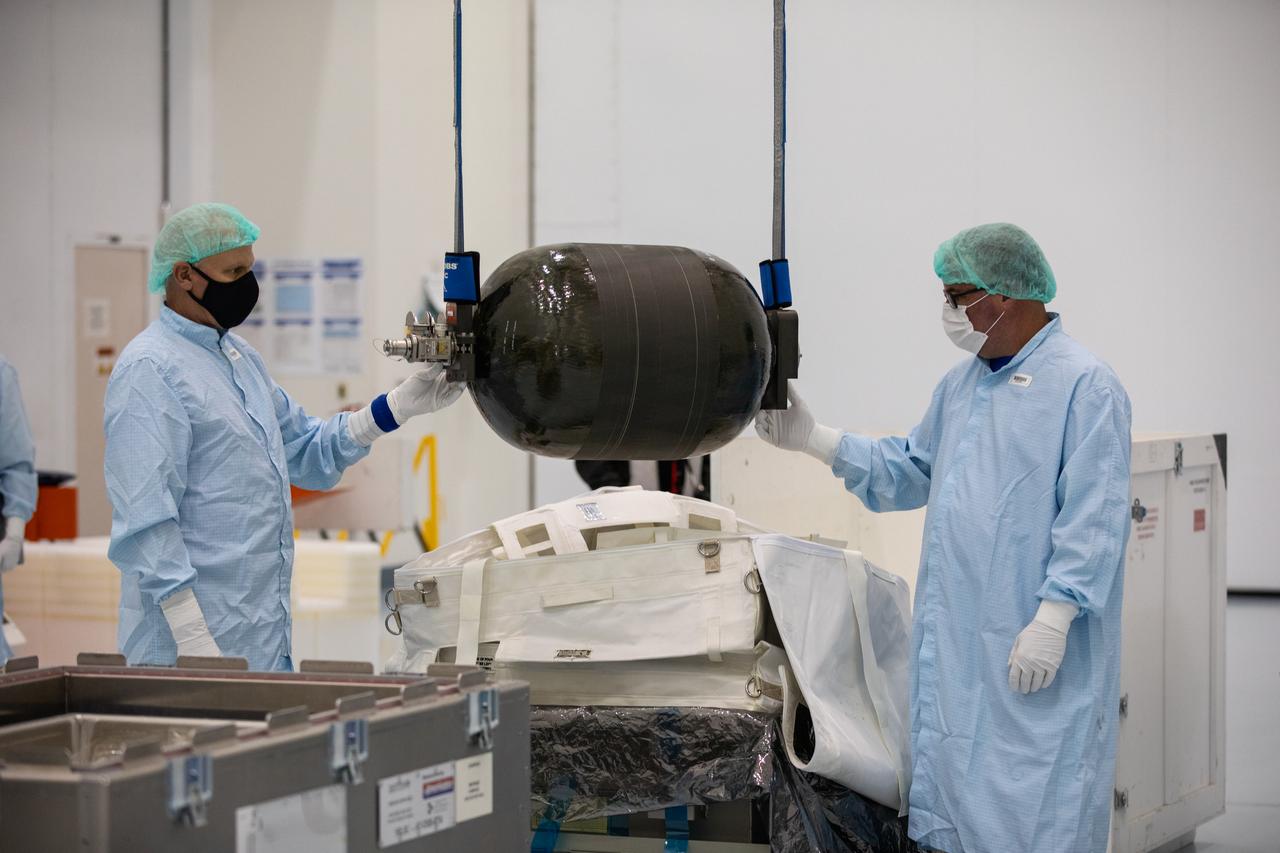
Technicians unpack and inspect a Nitrogen/Oxygen Recharge System (NORS) tank inside the Space Station Processing Facility high bay at NASA’s Kennedy Space Center in Florida on July 16, 2020. The NORS tanks and their support fixtures are designed to connect to the International Space Station’s existing air supply network to refill the previous generation of tanks installed during construction of the space station. These reusable tanks measure 3 feet long and 21 inches in diameter, and weigh about 200 pounds when filled. Once onboard, the tanks will be used to fill the oxygen and nitrogen tanks that supply the needed gases to the space station’s airlock for spacewalks. They could also be used to replenish the atmosphere inside the station. The NORS tanks will launch to the station later in the year on a commercial resupply mission.
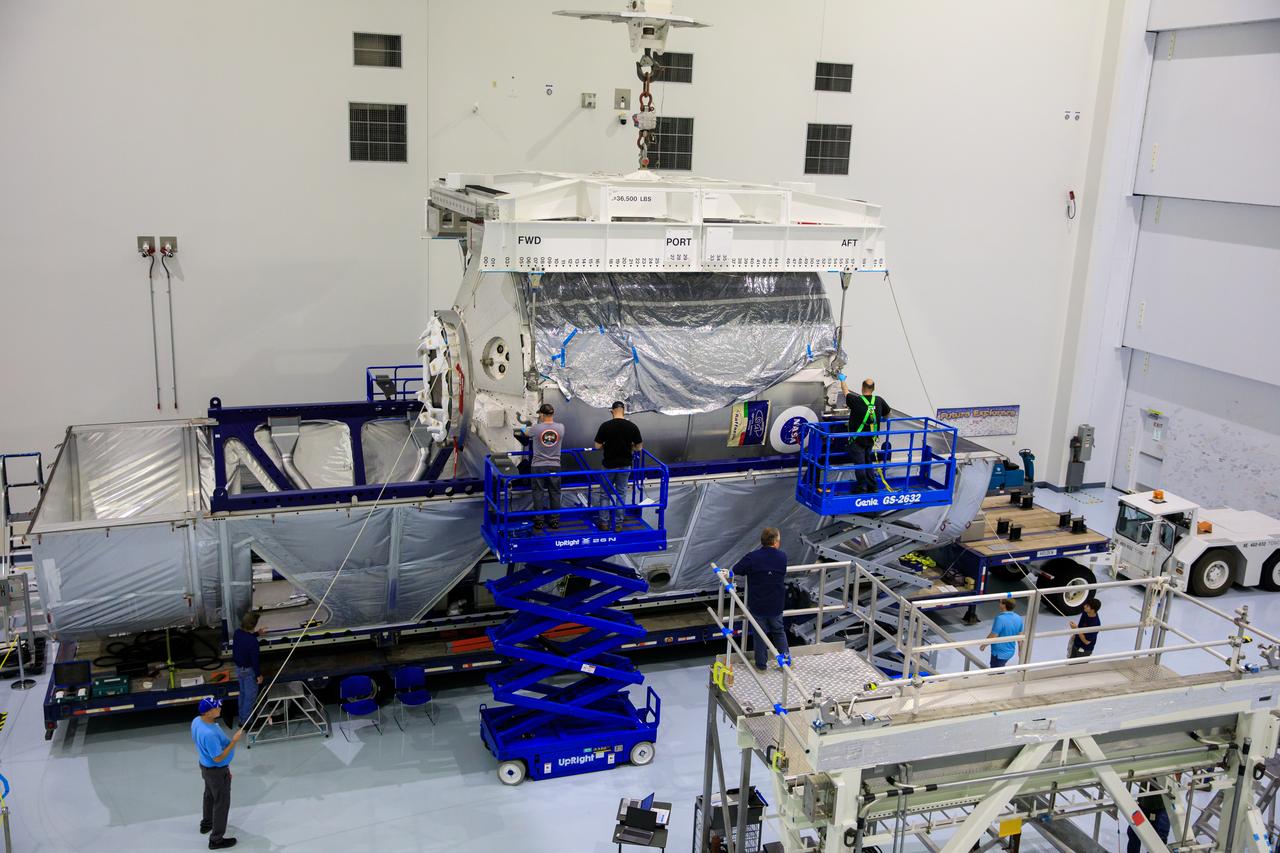
The Multi-Purpose Logistics Module (MPLM), used during the Space Shuttle Program to transfer cargo to and from the International Space Station, is lowered by crane into its transport container inside the Space Station Processing Facility high bay at NASA’s Kennedy Space Center in Florida on April 20, 2023. The MPLM is being prepared for transport to Ellington Field in Houston, where it will then be transported by road to Axiom’s facility near Ellington to be utilized to further commercialization of space. Three MPLMs were built by Thales Alenia Space Italia (TASI) for the Italian Space Agency (ASI) and named after Italian masters (Leonardo, Raffaello, and Donatello). Only two ever flew to the space station, Leonardo and Raffaello, with Axiom intending to use Raffaello as a future element that will attach to a segment being built by the company for addition to the space station.
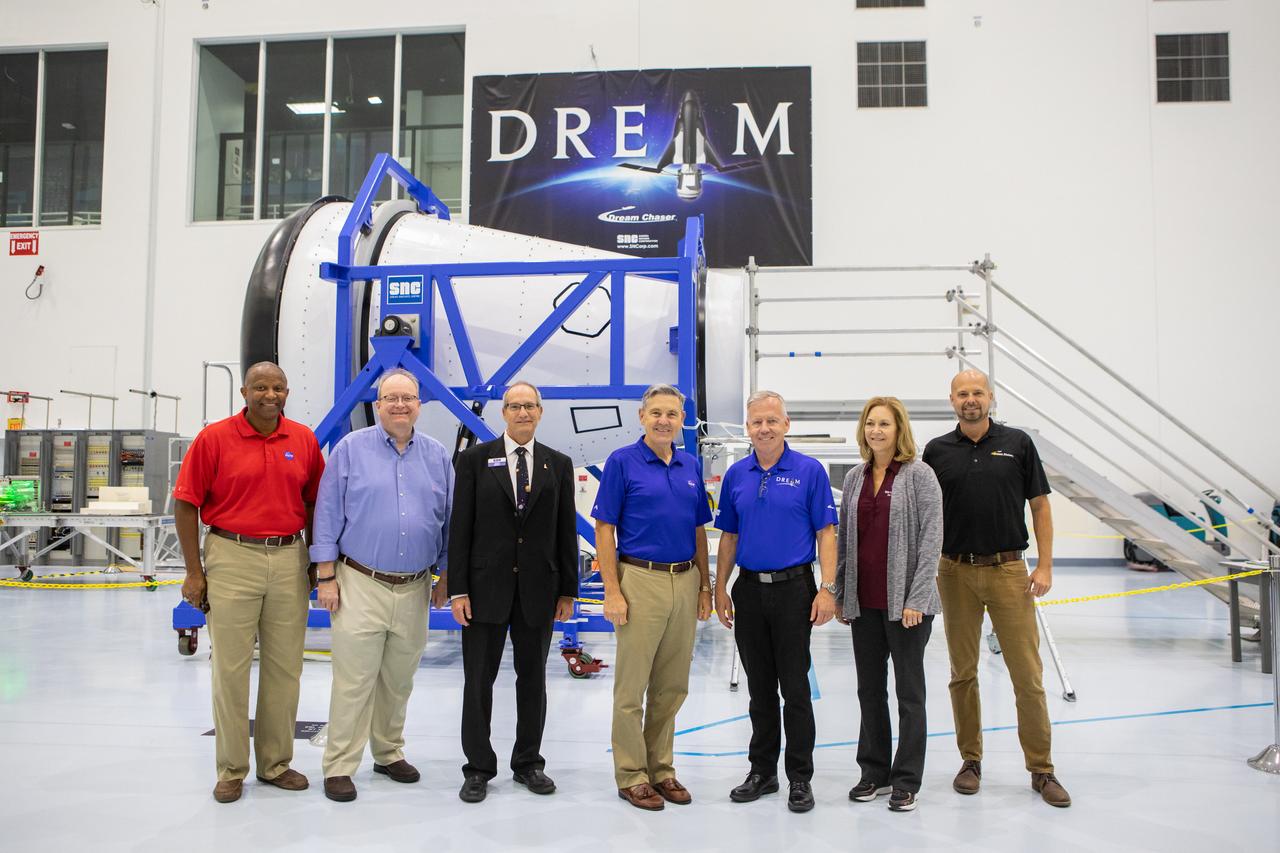
A mockup of the cargo logistics module for Sierra Nevada Corporation’s Dream Chaser, the company’s reusable spaceplane, arrived at the Space Station Processing Facility (SSPF) at NASA’s Kennedy Space Center in Florida in August. On Sept. 20, 2019, senior leadership had the opportunity to view the cargo module in the SSPF high bay. From left are Kelvin Manning, Kennedy associate director, technical; Burt Summerfield, associate director, management; John Roth, vice president, Business Development Space Systems, Sierra Nevada Corporation; Kennedy Center Director Bob Cabana; Steve Lindsey, vice president, Space Exploration Systems, Sierra Nevada Corporation; Kennedy Deputy Director Janet Petro; and Nate Wood, Sierra Nevada Corporation. The SSPF is providing support for current and future NASA and commercial provider programs, including Commercial Resupply Services, Artemis 1, sending the first woman and next man to the Moon, and deep space destinations including Mars.
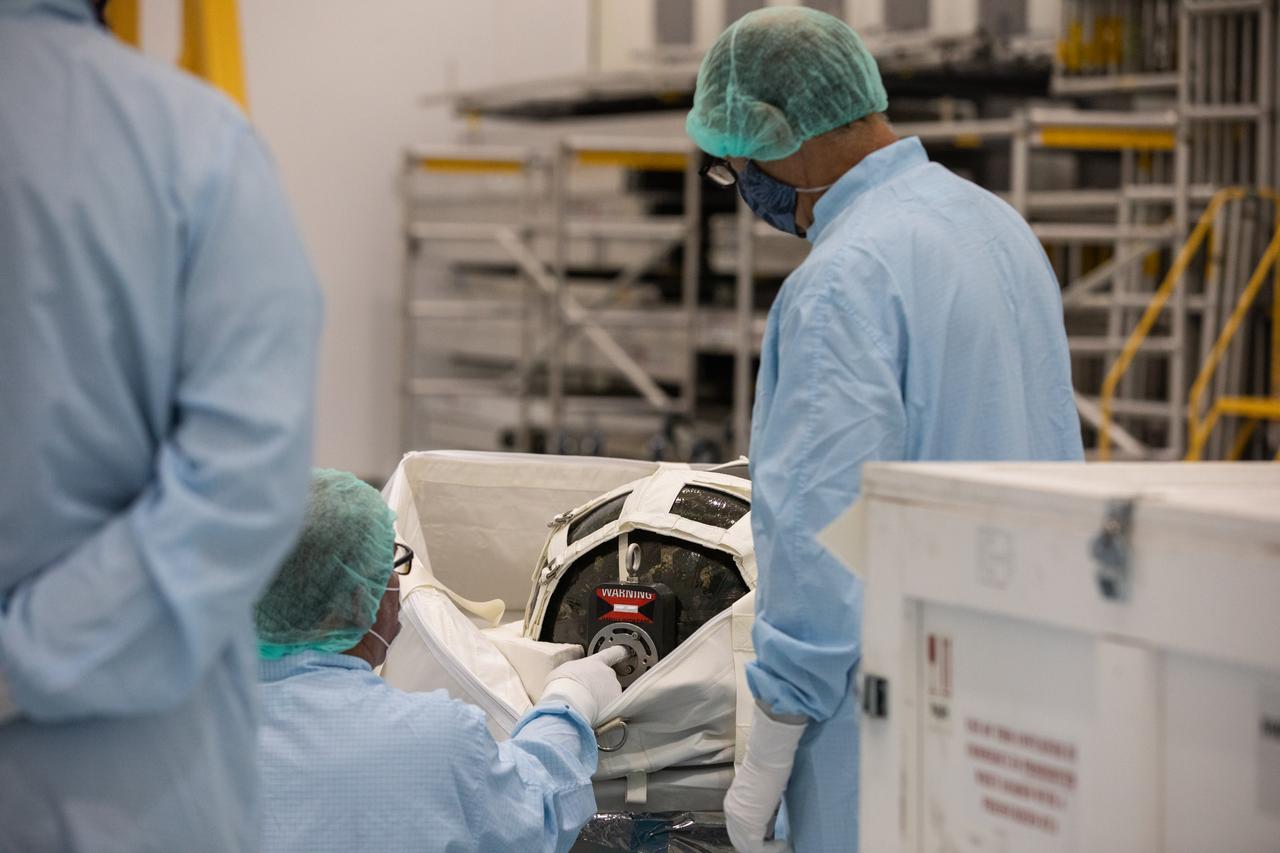
Technicians unpack and inspect a Nitrogen/Oxygen Recharge System (NORS) tank inside the Space Station Processing Facility high bay at NASA’s Kennedy Space Center in Florida on July 16, 2020. The NORS tanks and their support fixtures are designed to connect to the International Space Station’s existing air supply network to refill the previous generation of tanks installed during construction of the space station. These reusable tanks measure 3 feet long and 21 inches in diameter, and weigh about 200 pounds when filled. Once onboard, the tanks will be used to fill the oxygen and nitrogen tanks that supply the needed gases to the space station’s airlock for spacewalks. They could also be used to replenish the atmosphere inside the station. The NORS tanks will launch to the station later in the year on a commercial resupply mission.
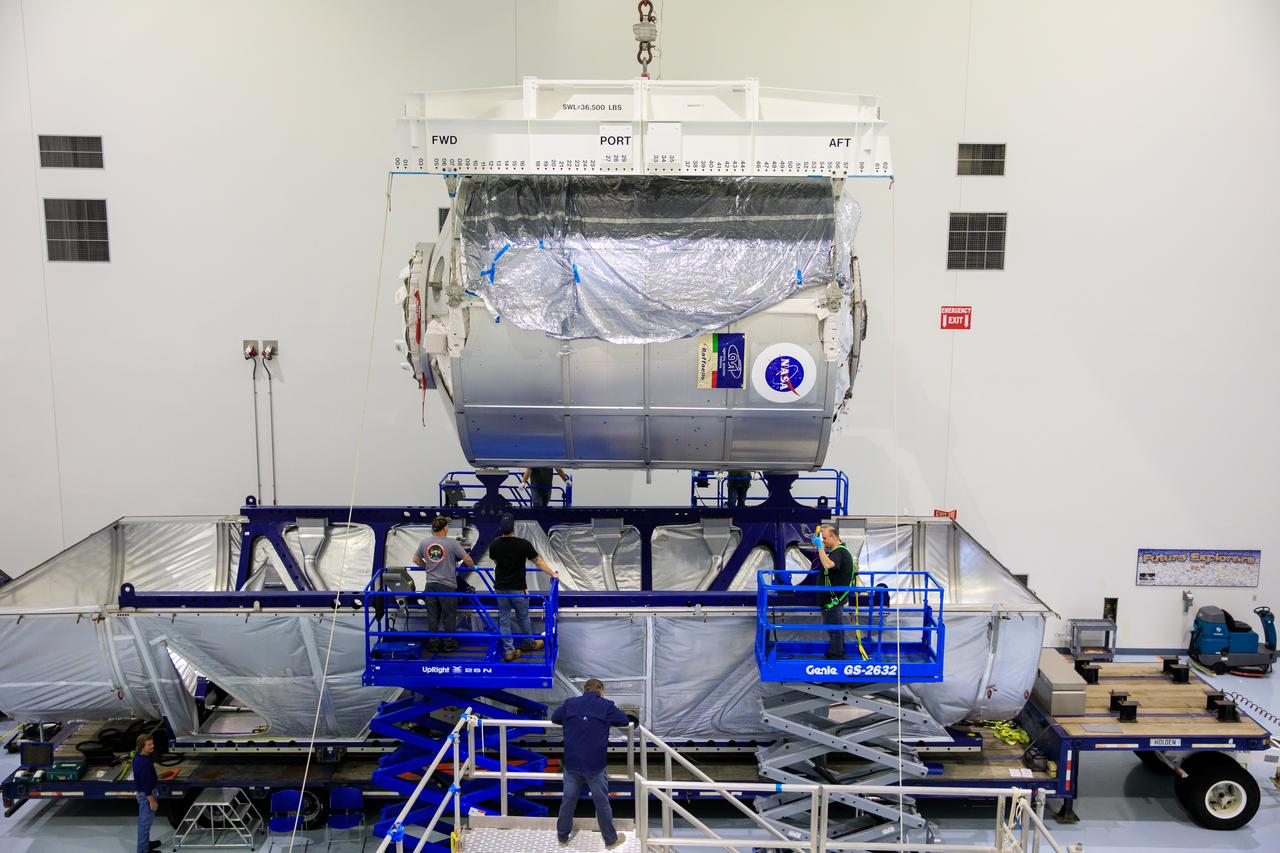
The Multi-Purpose Logistics Module (MPLM), used during the Space Shuttle Program to transfer cargo to and from the International Space Station, is lowered by crane into its transport container inside the Space Station Processing Facility high bay at NASA’s Kennedy Space Center in Florida on April 20, 2023. The MPLM is being prepared for transport to Ellington Field in Houston, where it will then be transported by road to Axiom’s facility near Ellington to be utilized to further commercialization of space. Three MPLMs were built by Thales Alenia Space Italia (TASI) for the Italian Space Agency (ASI) and named after Italian masters (Leonardo, Raffaello, and Donatello). Only two ever flew to the space station, Leonardo and Raffaello, with Axiom intending to use Raffaello as a future element that will attach to a segment being built by the company for addition to the space station.
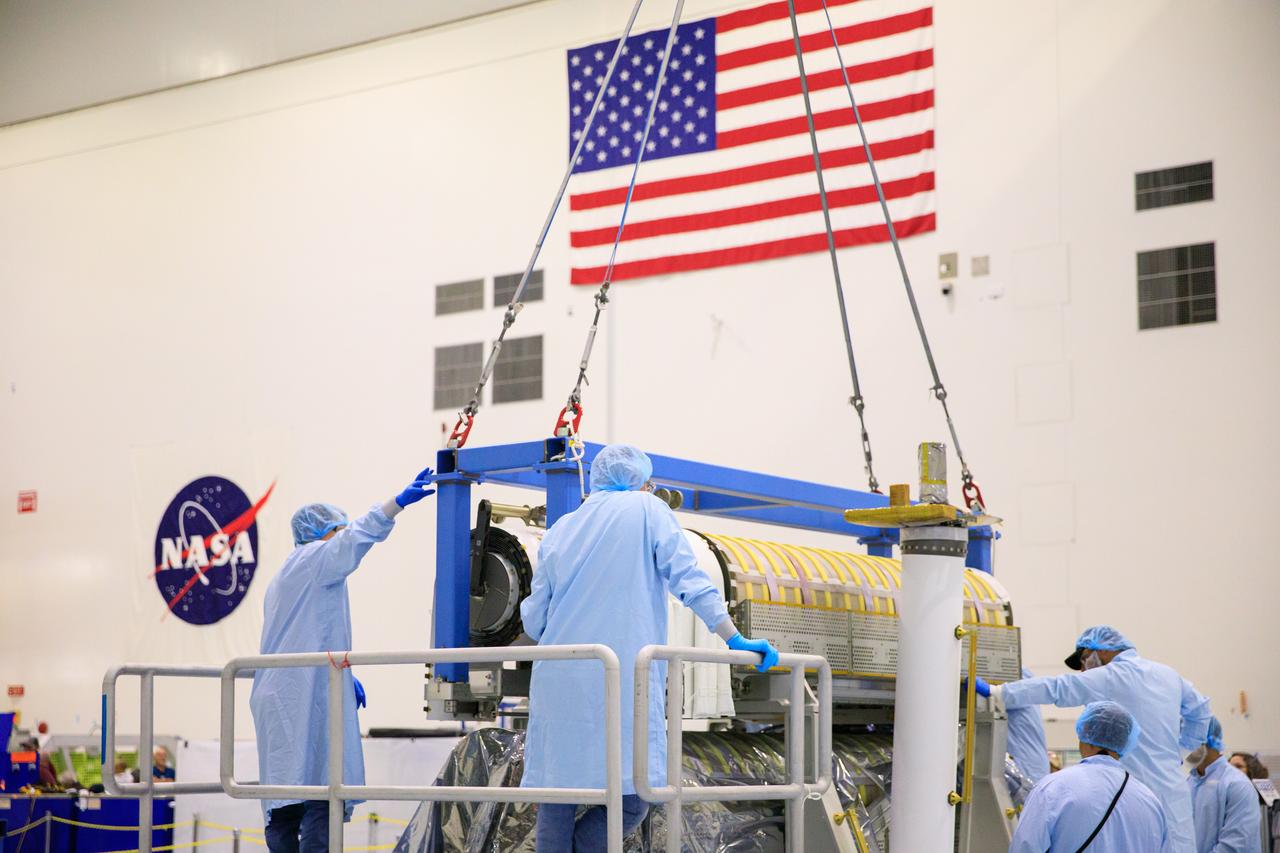
Inside the Space Station Processing Facility high bay at NASA's Kennedy Space Center in Florida, technicians assist as a crane is used to lower a set of International Space Station Roll Out Solar Arrays (iROSA) onto a platform on March 23, 2023. They are being prepared for delivery to the space station aboard SpaceX’s Dragon cargo carrier on the company’s 28th commercial resupply services (CRS-28) mission to the space station. iROSA is a new type of solar panel that rolls open in space and is more compact than current rigid panel designs.
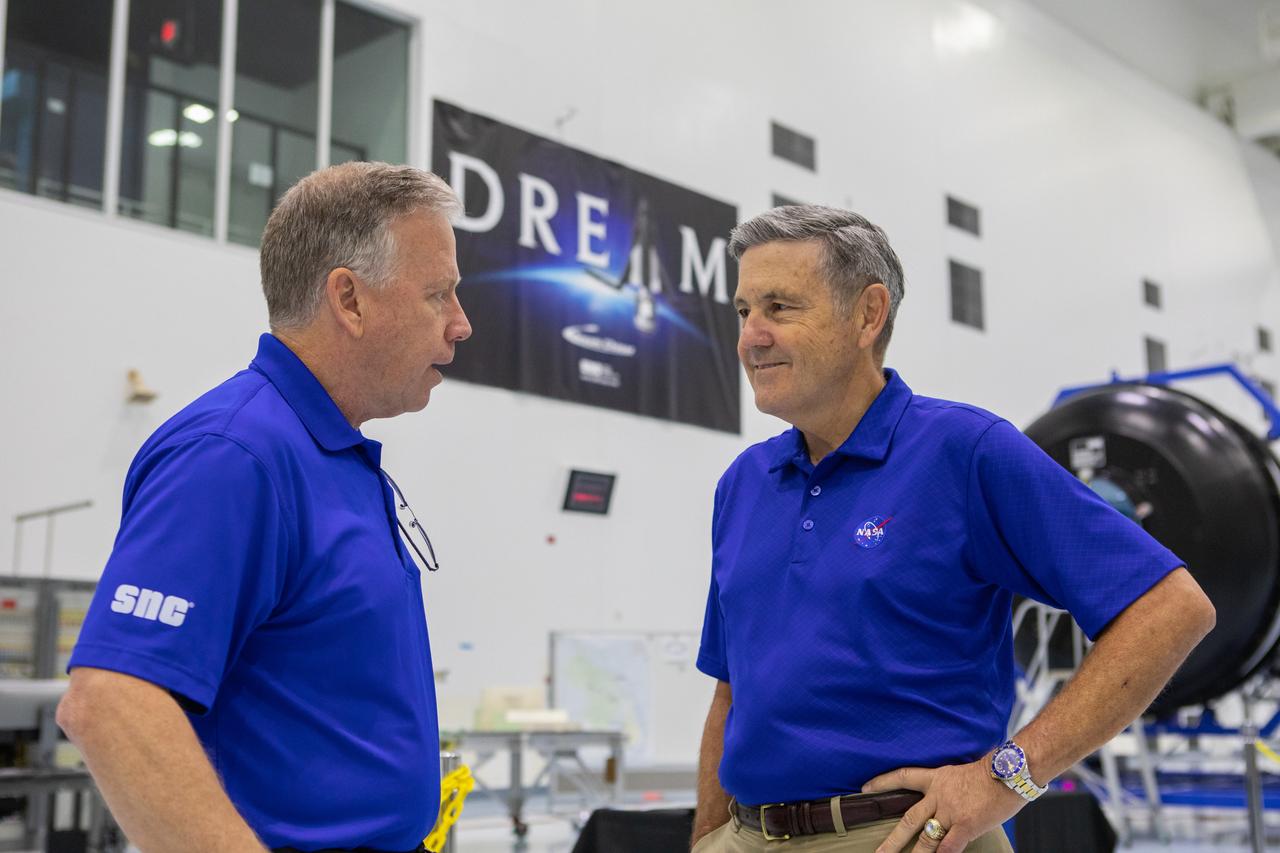
A mockup of the cargo logistics module for Sierra Nevada Corporation’s Dream Chaser, the company’s reusable spaceplane, arrived at the Space Station Processing Facility (SSPF) at NASA’s Kennedy Space Center in Florida in August. On Sept. 20, 2019, senior leadership had the opportunity to view the cargo module in the SSPF high bay. Kennedy Center Director Bob Cabana, at right, speaks with Steve Lindsey, vice president, Space Exploration Systems, Sierra Nevada Corporation. The SSPF is providing support for current and future NASA and commercial provider programs, including Commercial Resupply Services, Artemis 1, sending the first woman and next man to the Moon, and deep space destinations including Mars.
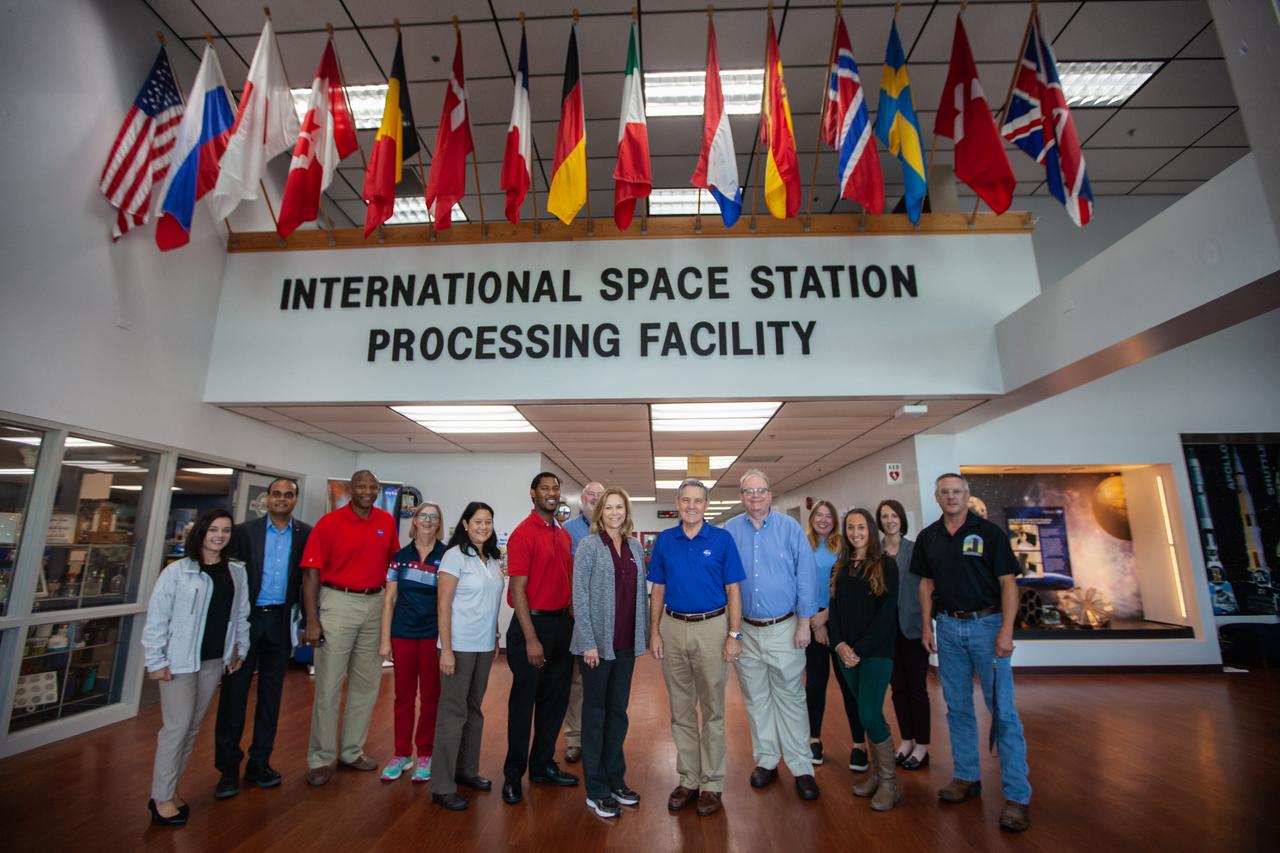
A mockup of the cargo logistics module for Sierra Nevada Corporation’s Dream Chaser, the company’s reusable spaceplane, arrived at the Space Station Processing Facility (SSPF) at NASA’s Kennedy Space Center in Florida in August. On Sept. 20, 2019, senior leadership had the opportunity to view the cargo module in the SSPF high bay. Third from left is Kelvin Manning, Kennedy associate director, technical; fifth from left is Josie Burnett, director of Exploration Research and Technology Programs. In the center are Kennedy Deputy Director Janet Petro and Kennedy Center Director Bob Cabana. Behind Petro is Ronnie Lawson, deputy director of Exploration Research and Technology Programs. To Cabana’s right is Burt Summerfield, associate director, management. At far right is James Wood, chief engineer for the Launch Services Program with the Engineering Directorate. The SSPF is providing support for current and future NASA and commercial provider programs, including Commercial Resupply Services, Artemis 1, sending the first woman and next man to the Moon, and deep space destinations including Mars.
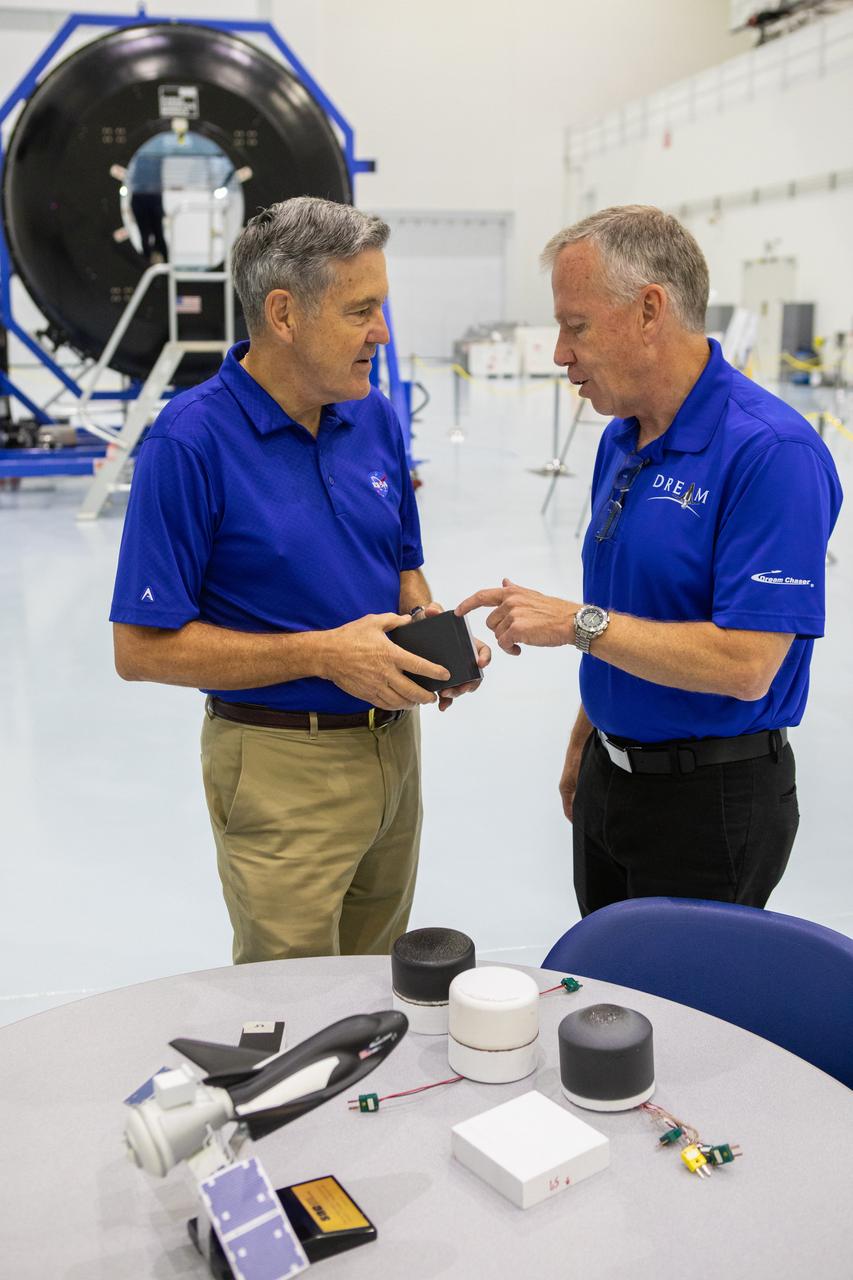
A mockup of the cargo logistics module for Sierra Nevada Corporation’s Dream Chaser, the company’s reusable spaceplane, arrived at the Space Station Processing Facility (SSPF) at NASA’s Kennedy Space Center in Florida in August. On Sept. 20, 2019, senior leadership had the opportunity to view the cargo module in the SSPF high bay. Kennedy Center Director Bob Cabana, left, speaks to Steve Lindsey, vice president, Space Exploration Systems, Sierra Nevada Corporation. The SSPF is providing support for current and future NASA and commercial provider programs, including Commercial Resupply Services, Artemis 1, sending the first woman and next man to the Moon, and deep space destinations including Mars.
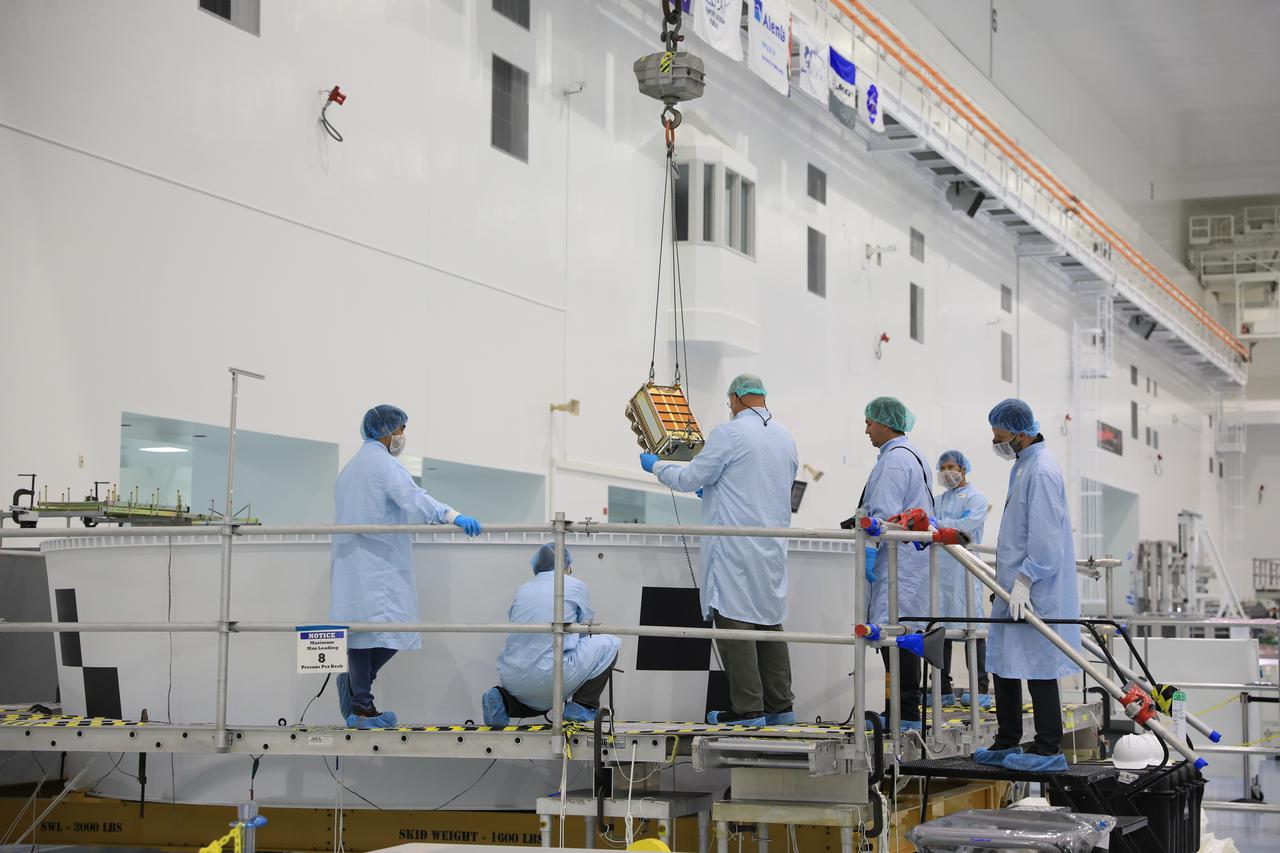
The NEA Scout and Lunar IceCube secondary payloads are the first to be installed in the Space Launch System (SLS) rocket’s Orion stage adapter for the Artemis I mission on July 14 at NASA’s Kennedy Space Center in Florida.
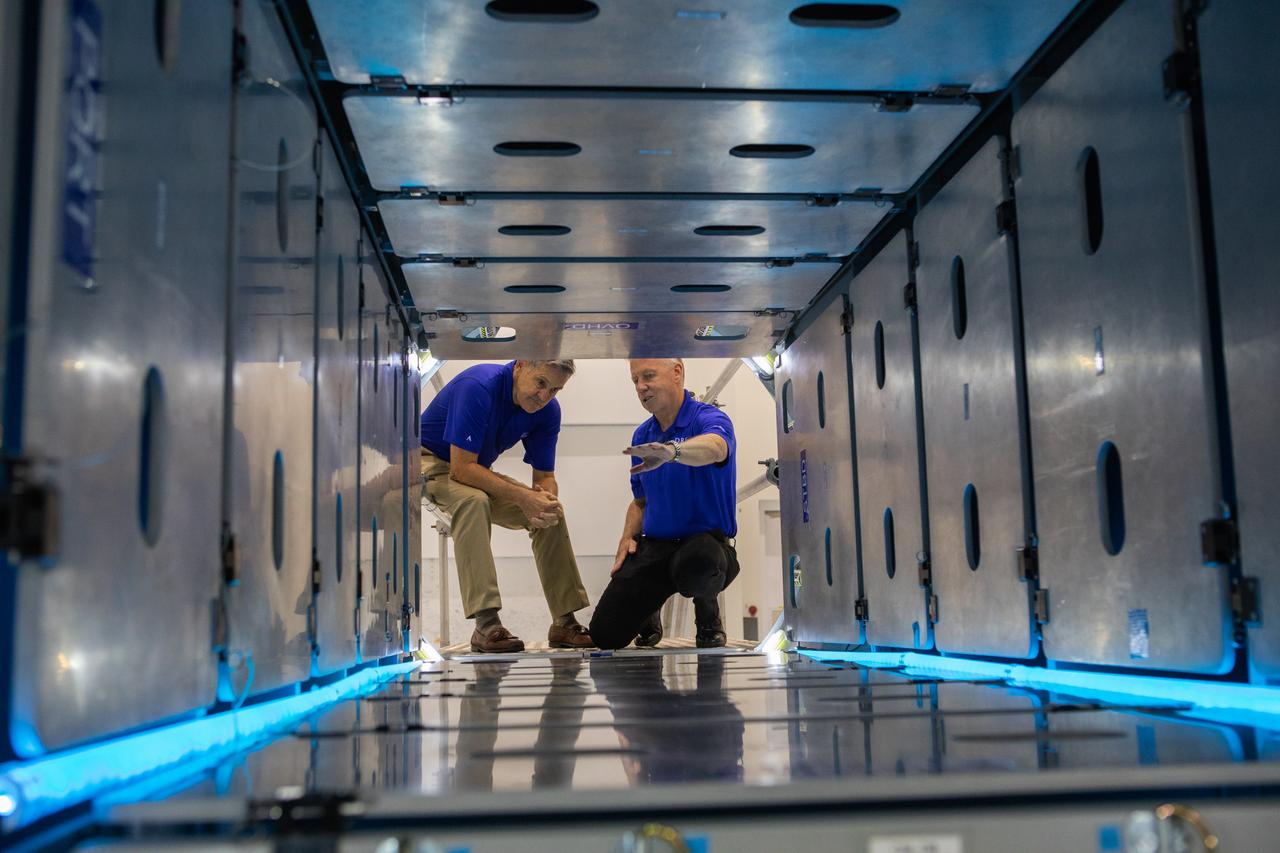
A mockup of the cargo logistics module for Sierra Nevada Corporation’s Dream Chaser, the company’s reusable spaceplane, arrived at the Space Station Processing Facility (SSPF) at NASA’s Kennedy Space Center in Florida in August. On Sept. 20, 2019, senior leadership had the opportunity to view the cargo module in the SSPF high bay. Kennedy Center Director Bob Cabana, views the interior of the cargo module with Steve Lindsey, vice president, Space Exploration Systems, Sierra Nevada Corporation. The SSPF is providing support for current and future NASA and commercial provider programs, including Commercial Resupply Services, Artemis 1, sending the first woman and next man to the Moon, and deep space destinations including Mars.
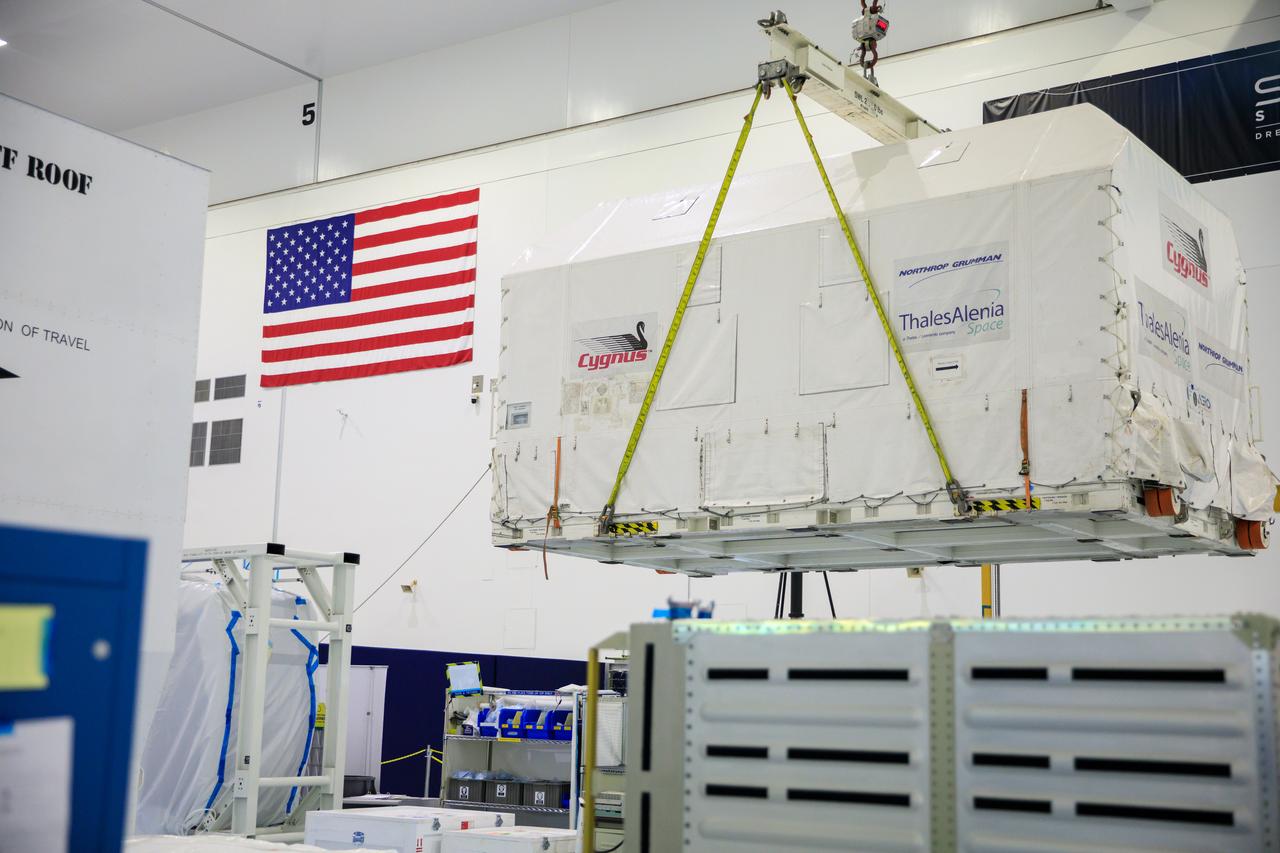
The Northrop Grumman Cygnus spacecraft’s pressurized cargo module (PCM) for the company’s 20th commercial resupply mission is moved by crane in its environmentally controlled shipping container in to the Space Station Processing Facility’s high bay at NASA's Kennedy Space Center in Florida on Aug. 2, 2023. Cygnus will launch later this year atop a SpaceX Falcon 9 rocket from Cape Canaveral Space Force Station’s Space Launch Complex 40 to the International Space Station. Cygnus will undergo prelaunch processing at Kennedy before it is transported to SpaceX’s integration facility.
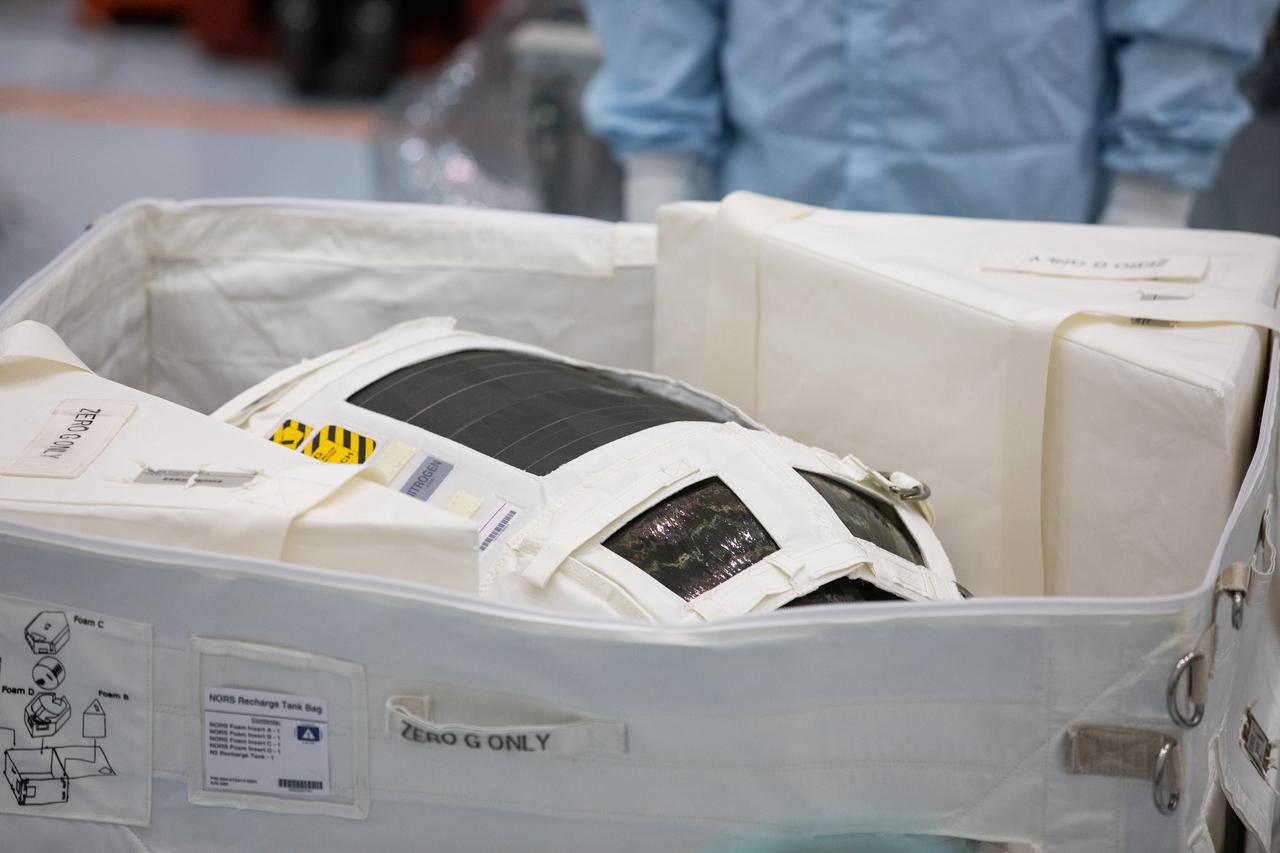
A Nitrogen/Oxygen Recharge System (NORS) tank is unpacked and readied for inspection inside the Space Station Processing Facility high bay at NASA’s Kennedy Space Center in Florida on July 16, 2020. The NORS tanks and their support fixtures are designed to connect to the International Space Station’s existing air supply network to refill the previous generation of tanks installed during construction of the space station. These reusable tanks measure 3 feet long and 21 inches in diameter, and weigh about 200 pounds when filled. Once onboard, the tanks will be used to fill the oxygen and nitrogen tanks that supply the needed gases to the space station’s airlock for spacewalks. They could also be used to replenish the atmosphere inside the station. The NORS tanks will launch to the station later in the year on a commercial resupply mission.

A technicians inspects a Nitrogen/Oxygen Recharge System (NORS) tank inside the Space Station Processing Facility high bay at NASA’s Kennedy Space Center in Florida on July 16, 2020. The NORS tanks and their support fixtures are designed to connect to the International Space Station’s existing air supply network to refill the previous generation of tanks installed during construction of the space station. These reusable tanks measure 3 feet long and 21 inches in diameter, and weigh about 200 pounds when filled. Once onboard, the tanks will be used to fill the oxygen and nitrogen tanks that supply the needed gases to the space station’s airlock for spacewalks. They could also be used to replenish the atmosphere inside the station. The NORS tanks will launch to the station later in the year on a commercial resupply mission.
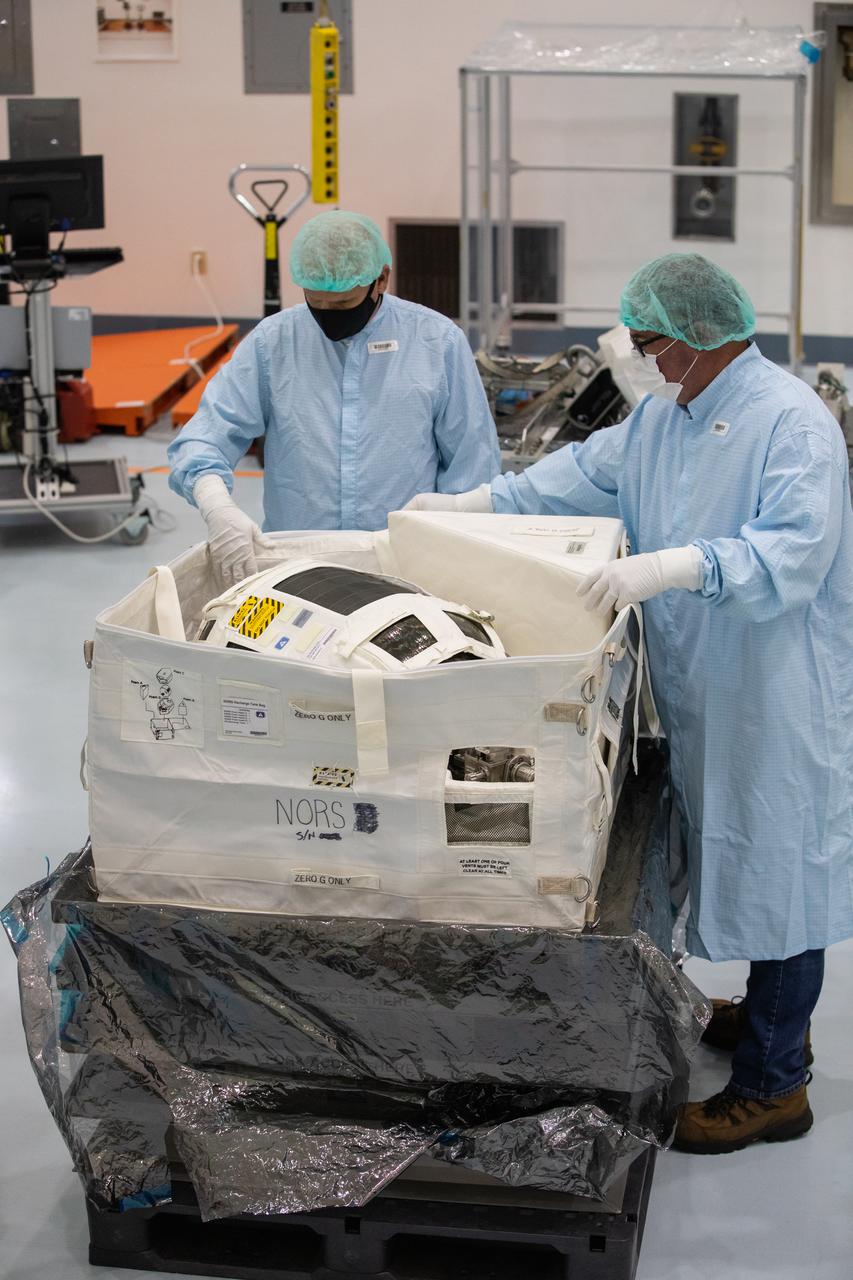
Technicians unpack and inspect a Nitrogen/Oxygen Recharge System (NORS) tank inside the Space Station Processing Facility high bay at NASA’s Kennedy Space Center in Florida on July 16, 2020. The NORS tanks and their support fixtures are designed to connect to the International Space Station’s existing air supply network to refill the previous generation of tanks installed during construction of the space station. These reusable tanks measure 3 feet long and 21 inches in diameter, and weigh about 200 pounds when filled. Once onboard, the tanks will be used to fill the oxygen and nitrogen tanks that supply the needed gases to the space station’s airlock for spacewalks. They could also be used to replenish the atmosphere inside the station. The NORS tanks will launch to the station later in the year on a commercial resupply mission.
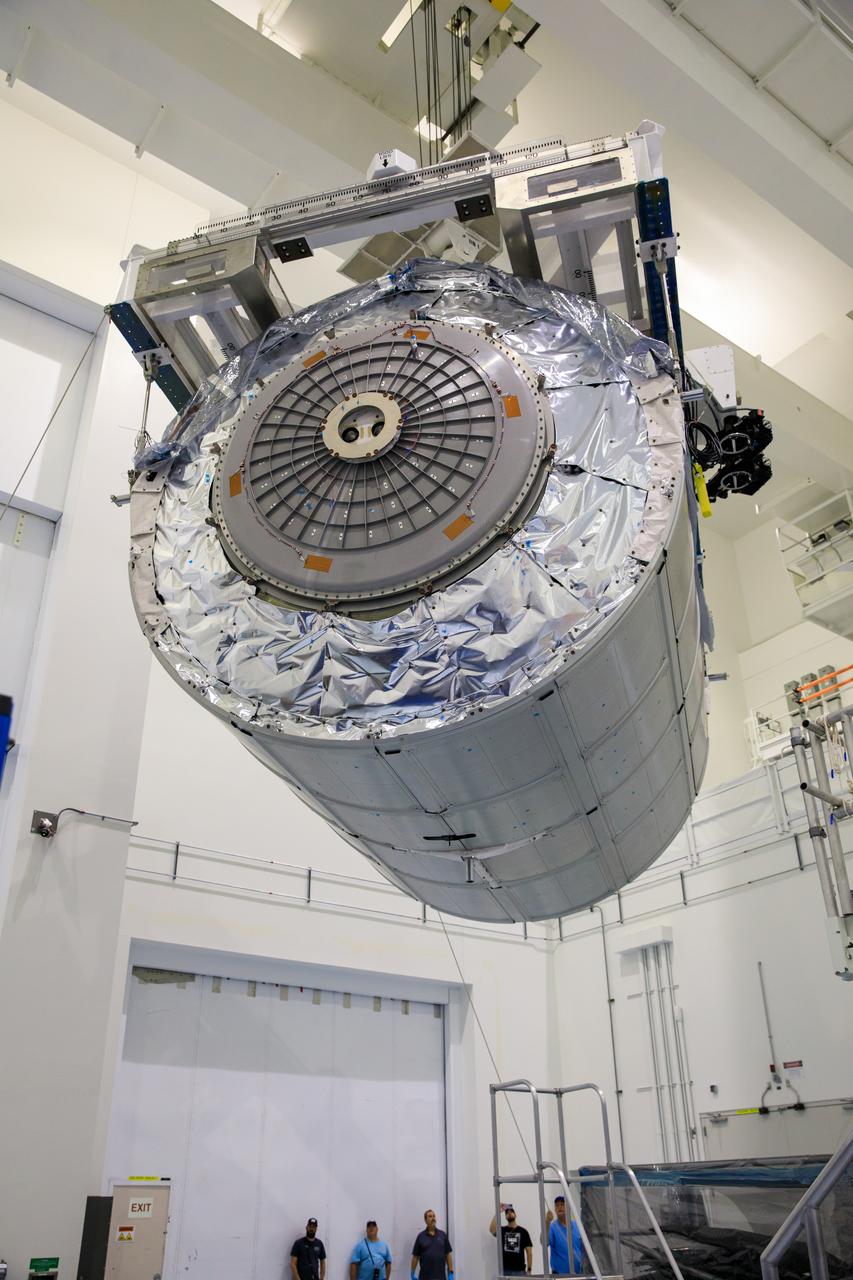
The Multi-Purpose Logistics Module (MPLM), used during the Space Shuttle Program to transfer cargo to and from the International Space Station, is moved by crane inside the Space Station Processing Facility high bay at NASA’s Kennedy Space Center in Florida on April 20, 2023. The MPLM is being prepared for transport to Ellington Field in Houston, where it will then be transported by road to Axiom’s facility near Ellington to be utilized to further commercialization of space. Three MPLMs were built by Thales Alenia Space Italia (TASI) for the Italian Space Agency (ASI) and named after Italian masters (Leonardo, Raffaello, and Donatello). Only two ever flew to the space station, Leonardo and Raffaello, with Axiom intending to use Raffaello as a future element that will attach to a segment being built by the company for addition to the space station.
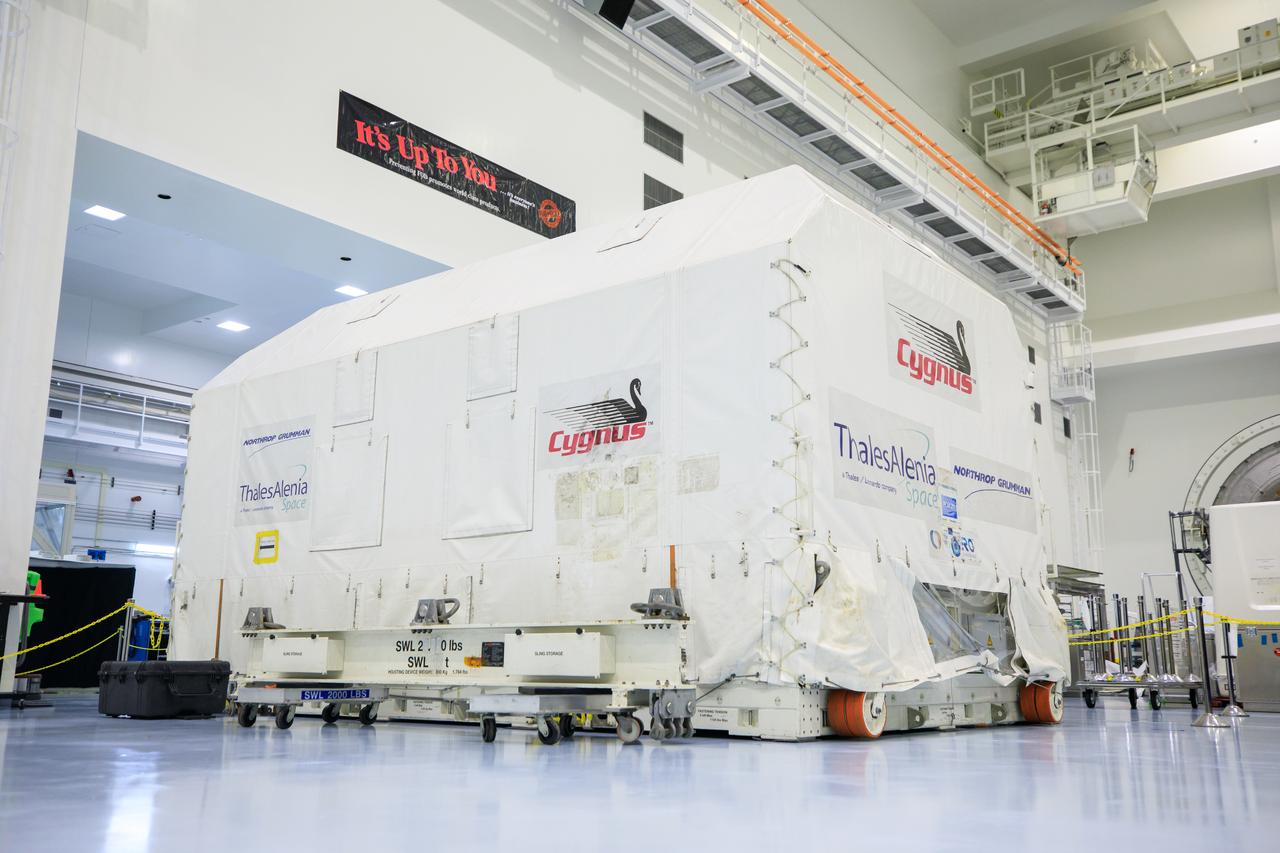
Northrop Grumman’s Cygnus pressurized cargo module for the company’s 20th commercial resupply mission arrives in its environmentally controlled shipping container inside the high bay in the Space Station Processing Facility at NASA's Kennedy Space Center in Florida on Aug. 2, 2023. Cygnus will launch later this year atop a SpaceX Falcon 9 rocket from Cape Canaveral Space Force Station’s Space Launch Complex 40 to the International Space Station. Cygnus will undergo prelaunch processing at Kennedy before it is transported to SpaceX’s integration facility.
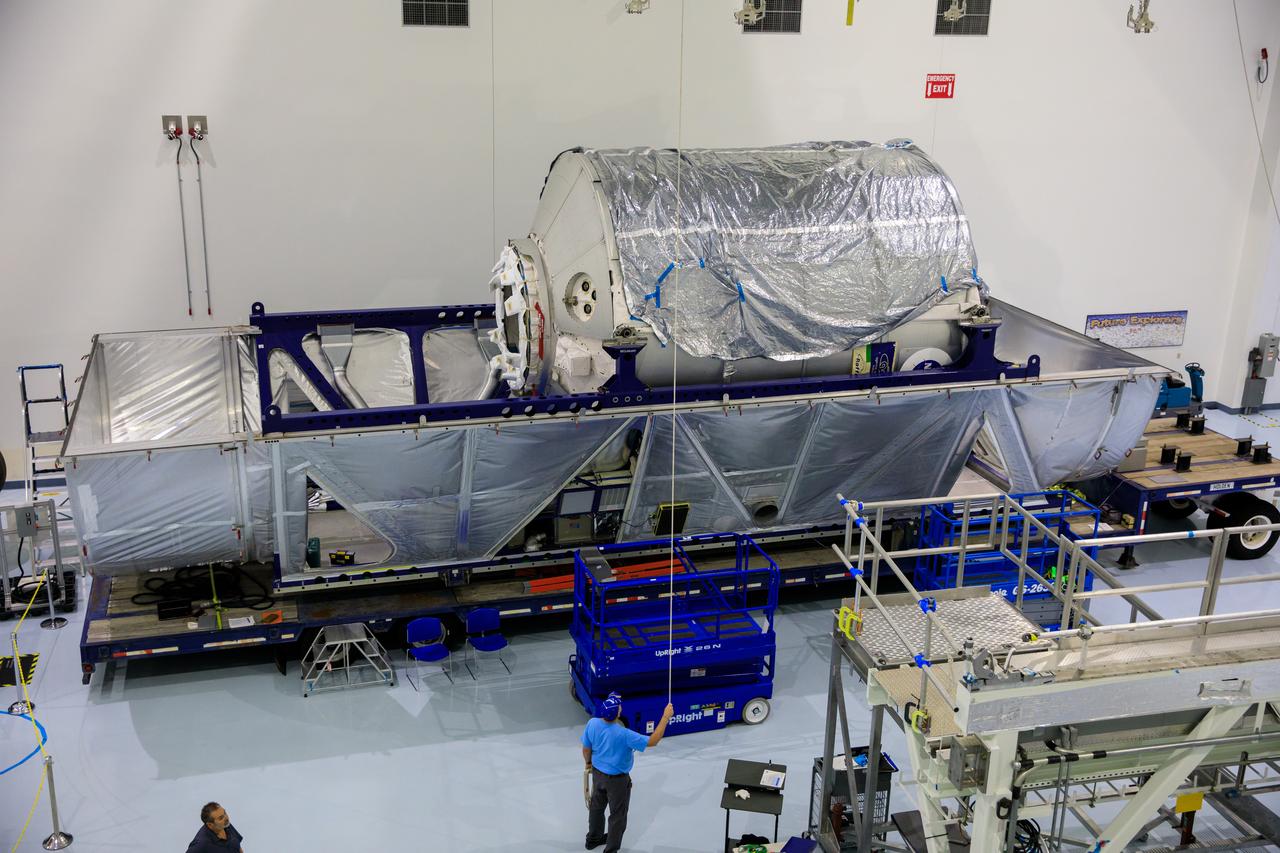
The Multi-Purpose Logistics Module (MPLM), used during the Space Shuttle Program to transfer cargo to and from the International Space Station, is secured in its transport container inside the Space Station Processing Facility high bay at NASA’s Kennedy Space Center in Florida on April 20, 2023. The MPLM is being prepared for transport to Ellington Field in Houston, where it will then be transported by road to Axiom’s facility near Ellington to be utilized to further commercialization of space. Three MPLMs were built by Thales Alenia Space Italia (TASI) for the Italian Space Agency (ASI) and named after Italian masters (Leonardo, Raffaello, and Donatello). Only two ever flew to the space station, Leonardo and Raffaello, with Axiom intending to use Raffaello as a future element that will attach to a segment being built by the company for addition to the space station.
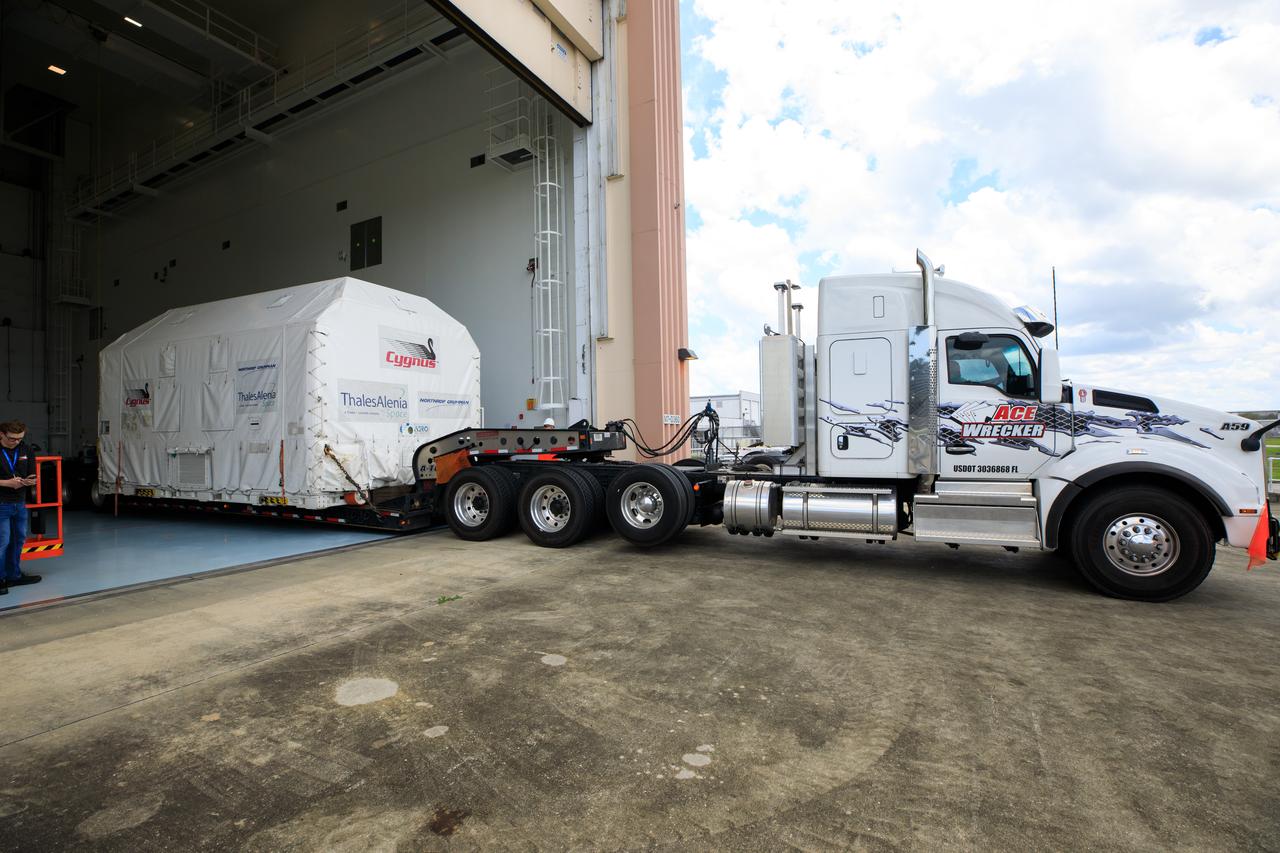
The Northrop Grumman Cygnus spacecraft's pressurized cargo module (PCM) arrives at the Space Station Processing Facility of NASA's Kennedy Space Center in Florida on Aug. 2, 2023. The PCM is sealed in an environmentally controlled shipping container, pulled in by truck on a flatbed trailer. Cygnus will launch later this year atop a SpaceX Falcon 9 rocket from Cape Canaveral Space Force Station’s Space Launch Complex 40 to the International Space Station. Cygnus will undergo prelaunch processing at Kennedy before it is transported to SpaceX’s integration facility.
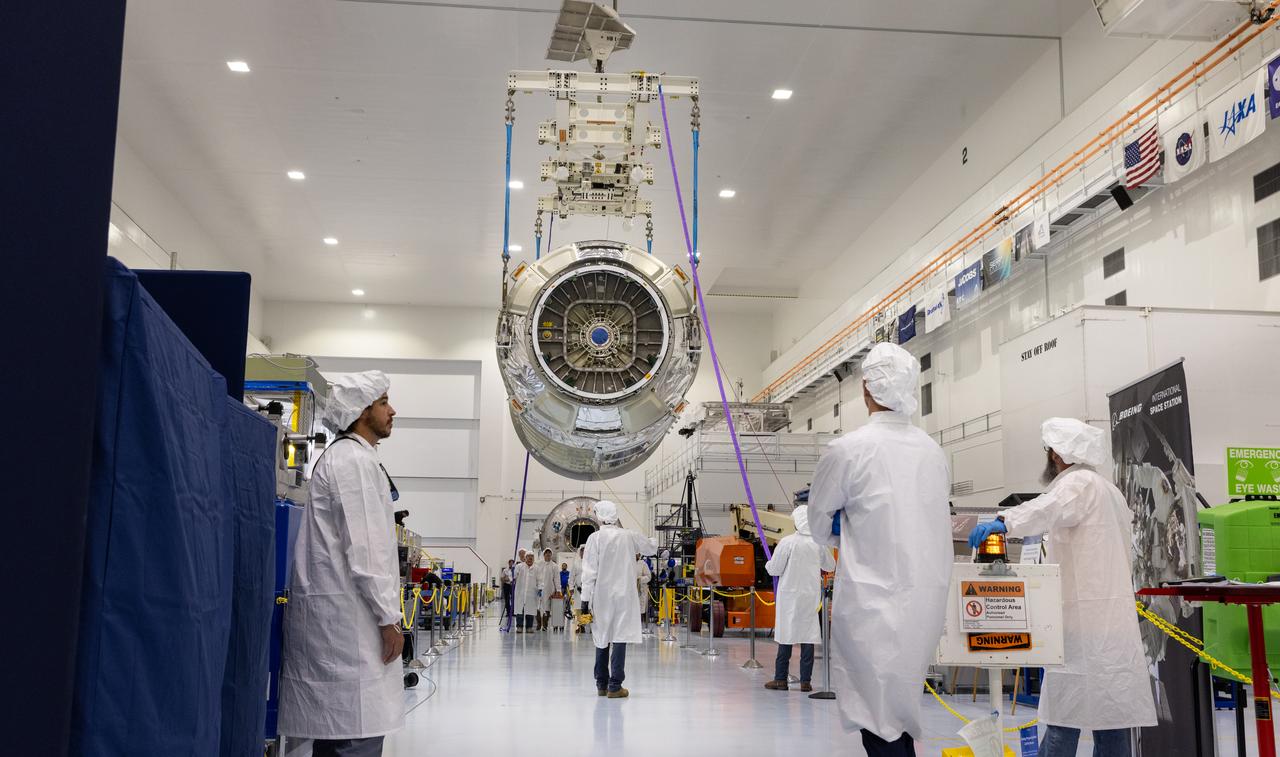
Technicians use a crane to lift Northrop Grumman Cygnus spacecraft’s pressurized cargo module out of the shipping container on Thursday, July 10, 2025, inside the Space Systems Processing Facility at NASA’s Kennedy Space Center in Florida. The new extended Cygnus capsule, scheduled to launch no earlier than fall 2025, will carry supplies, food, and scientific experiments for crew members at the International Space Station as part of the company’s 23rd cargo resupply mission.
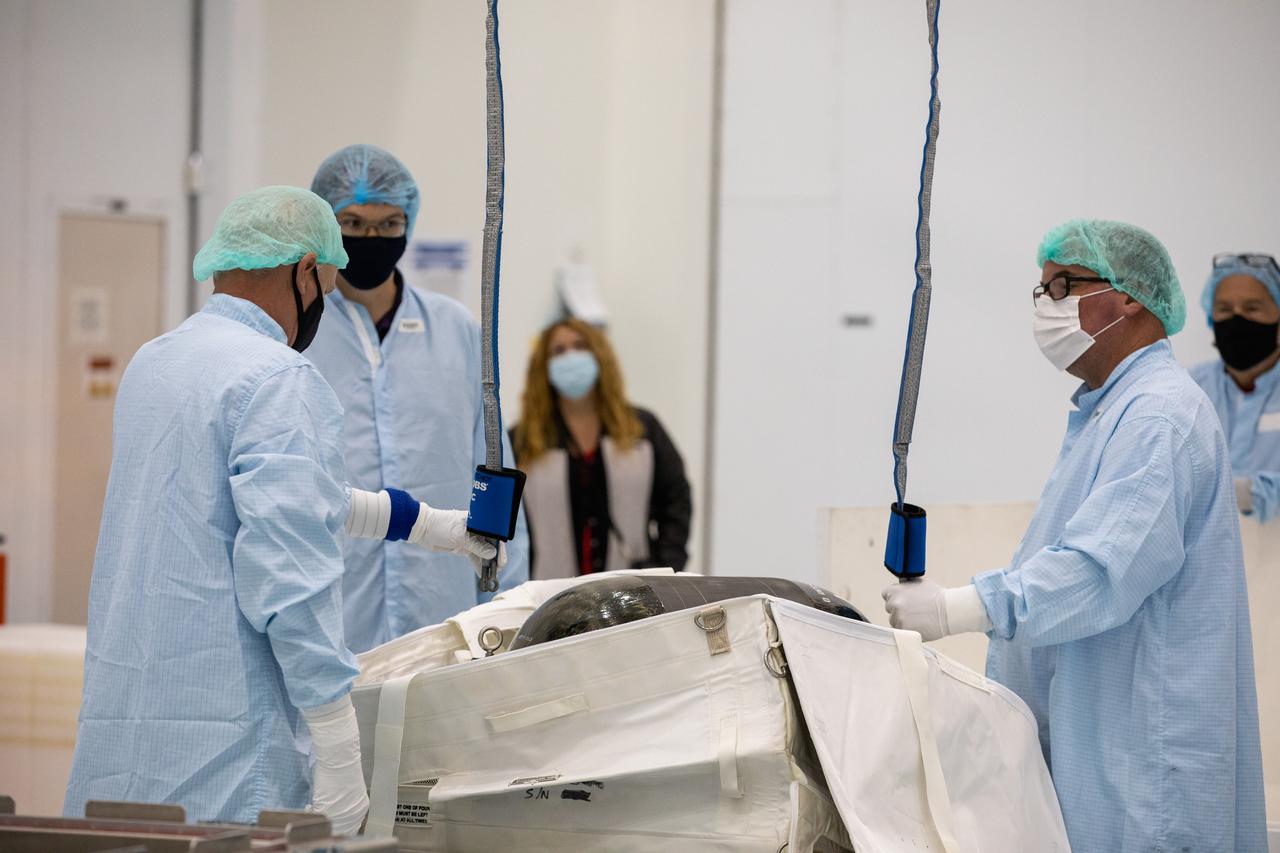
Technicians prepare to unpack and inspect a Nitrogen/Oxygen Recharge System (NORS) tank inside the Space Station Processing Facility high bay at NASA’s Kennedy Space Center in Florida on July 16, 2020. The NORS tanks and their support fixtures are designed to connect to the International Space Station’s existing air supply network to refill the previous generation of tanks installed during construction of the space station. These reusable tanks measure 3 feet long and 21 inches in diameter, and weigh about 200 pounds when filled. Once onboard, the tanks will be used to fill the oxygen and nitrogen tanks that supply the needed gases to the space station’s airlock for spacewalks. They could also be used to replenish the atmosphere inside the station. The NORS tanks will launch to the station later in the year on a commercial resupply mission.
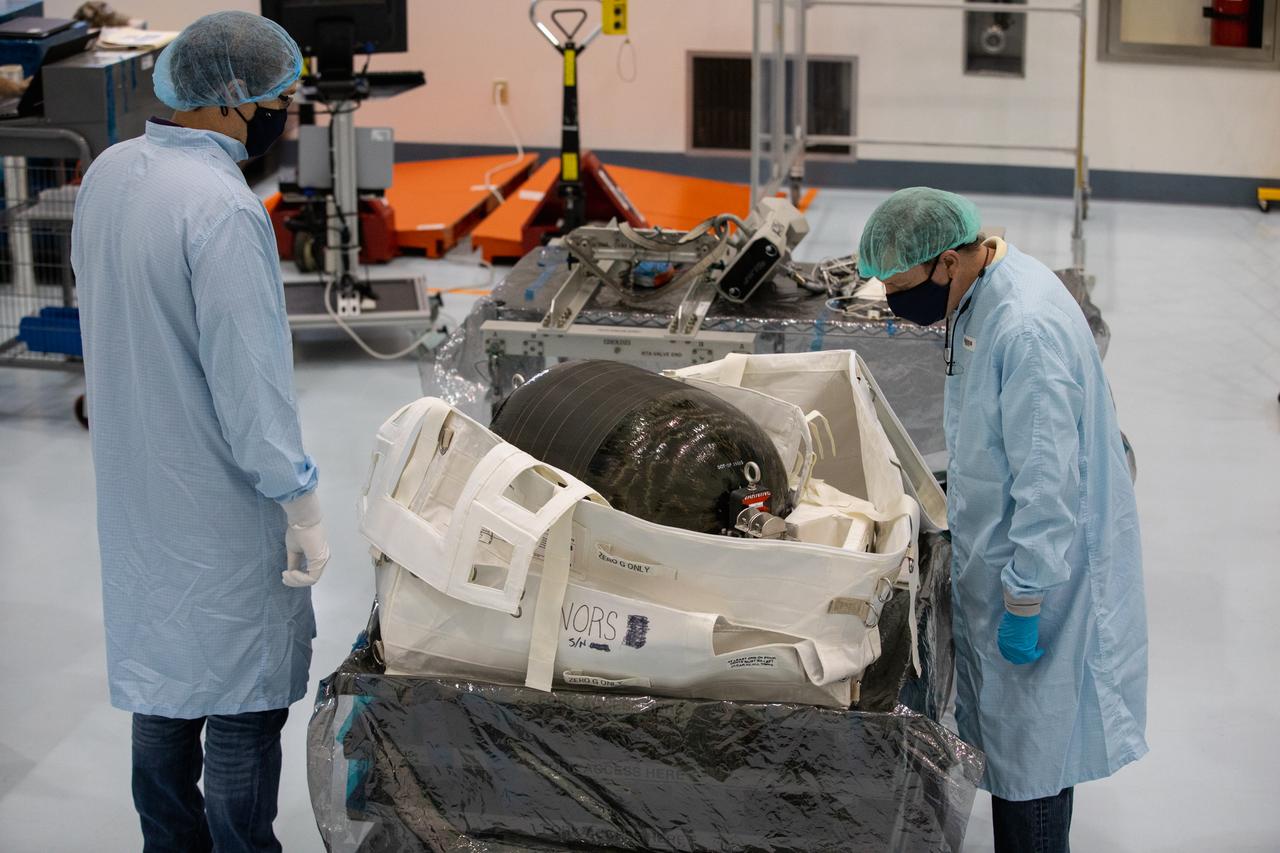
Technicians unpack and inspect a Nitrogen/Oxygen Recharge System (NORS) tank inside the Space Station Processing Facility high bay at NASA’s Kennedy Space Center in Florida on July 16, 2020. The NORS tanks and their support fixtures are designed to connect to the International Space Station’s existing air supply network to refill the previous generation of tanks installed during construction of the space station. These reusable tanks measure 3 feet long and 21 inches in diameter, and weigh about 200 pounds when filled. Once onboard, the tanks will be used to fill the oxygen and nitrogen tanks that supply the needed gases to the space station’s airlock for spacewalks. They could also be used to replenish the atmosphere inside the station. The NORS tanks will launch to the station later in the year on a commercial resupply mission.

Technicians with NASA and Boeing complete attaching the engine section to the boat-tail for the agency’s Artemis III SLS (Space Launch System) rocket inside the high bay of the Space Systems Processing Facility at NASA’s Kennedy Space Center in Florida on Wednesday, Oct. 30, 2024. The engine section is one of five major elements that makes up the SLS rocket’s 212-foot-tall core stage, which house the rocket’s four RS-25 engines and vital systems for mounting, controlling, and delivering fuel from the stage’s two massive liquid propellant tanks to the engines. The boat-tail is designed to protect the bottom end of the core stage and the RS-25 engines.

Technicians use a crane to lift Northrop Grumman Cygnus spacecraft’s pressurized cargo module out of the shipping container on Thursday, July 10, 2025, inside the Space Systems Processing Facility at NASA’s Kennedy Space Center in Florida. The new extended Cygnus capsule, scheduled to launch no earlier than fall 2025, will carry supplies, food, and scientific experiments for crew members at the International Space Station as part of the company’s 23rd cargo resupply mission.
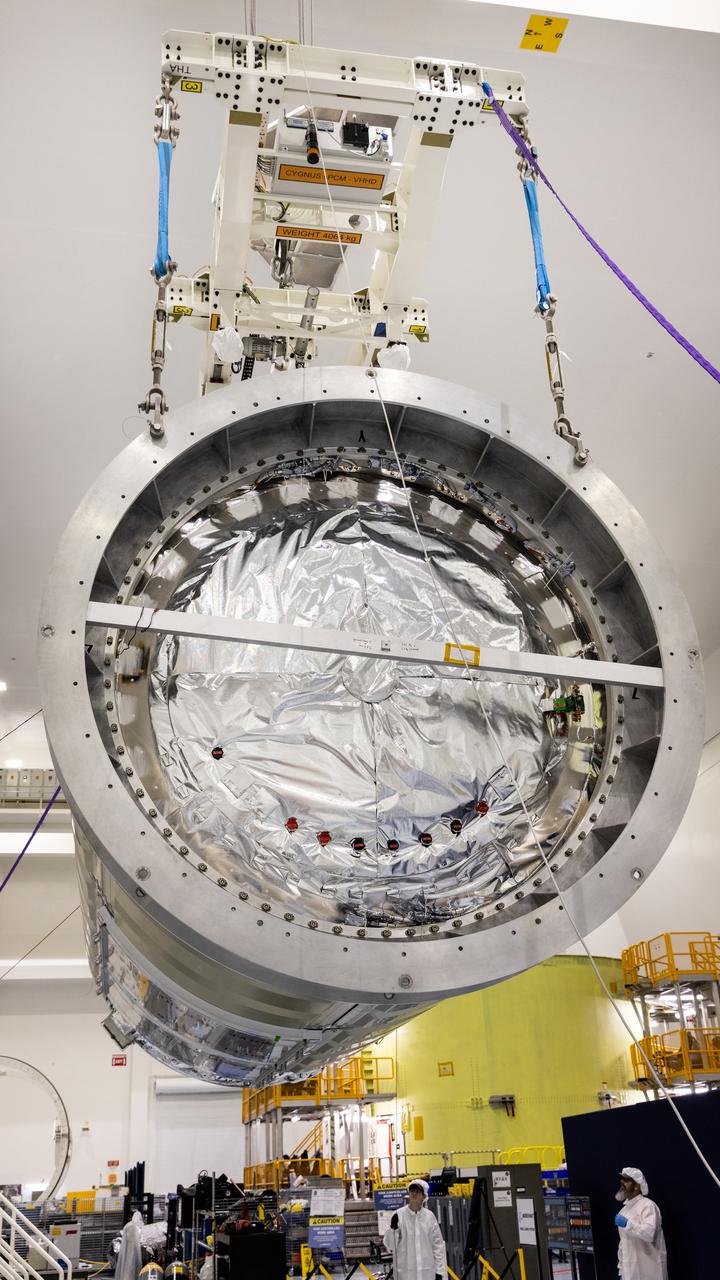
Technicians use a crane to lift Northrop Grumman Cygnus spacecraft’s pressurized cargo module out of the shipping container on Thursday, July 10, 2025, inside the Space Systems Processing Facility at NASA’s Kennedy Space Center in Florida. The new extended Cygnus capsule, scheduled to launch no earlier than fall 2025, will carry supplies, food, and scientific experiments for crew members at the International Space Station as part of the company’s 23rd cargo resupply mission.

Inside the Space Station Processing Facility high bay at NASA's Kennedy Space Center in Florida, technicians assist as a crane is used to lift and stack the third set of two International Space Station Roll Out Solar Arrays (iROSA) onto a platform on March 23, 2023. They are being prepared for delivery to the space station aboard SpaceX’s Dragon cargo carrier on the company’s 28th commercial resupply services (CRS-28) mission to the space station. iROSA is a new type of solar panel that rolls open in space and is more compact than current rigid panel designs.
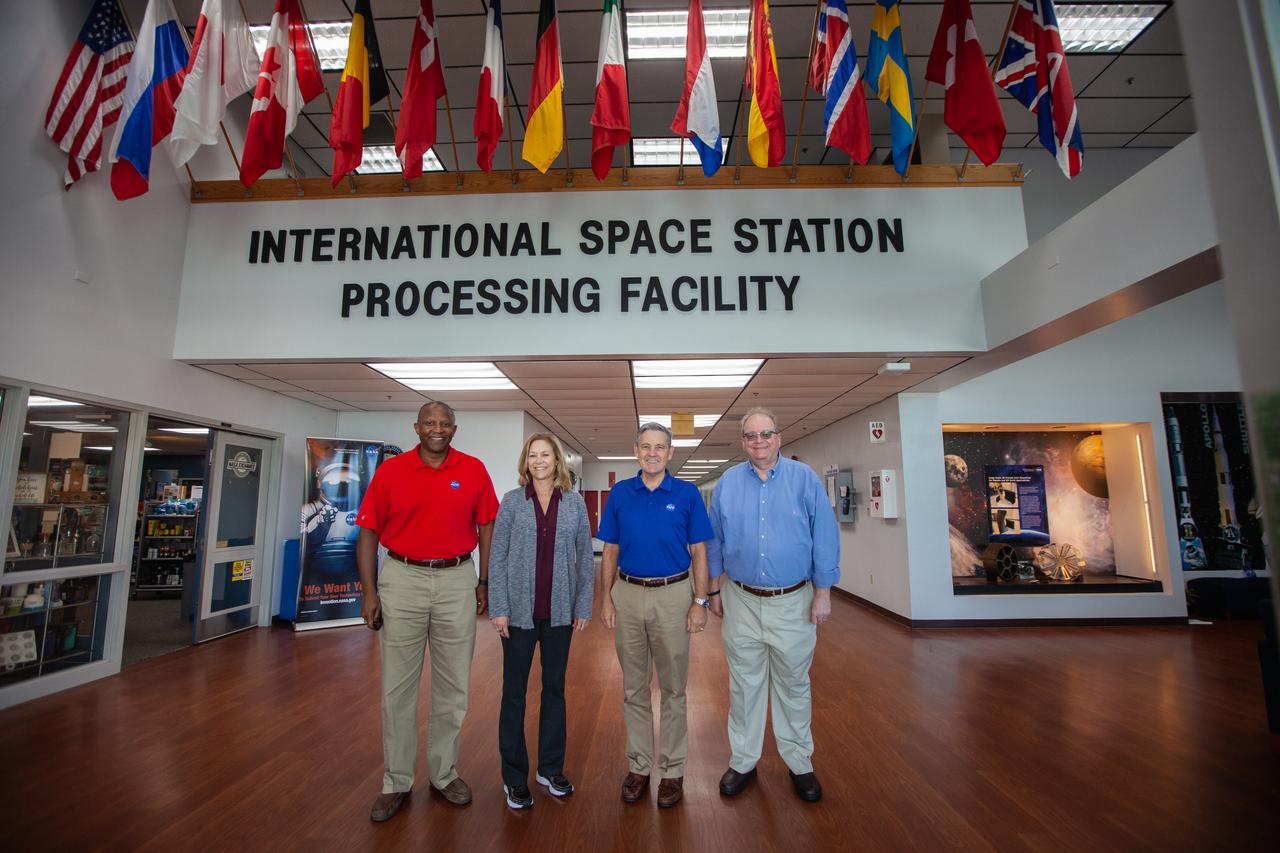
A mockup of the cargo logistics module for Sierra Nevada Corporation’s Dream Chaser, the company’s reusable spaceplane, arrived at the Space Station Processing Facility (SSPF) at NASA’s Kennedy Space Center in Florida in August. On Sept. 20, 2019, senior leadership had the opportunity to view the cargo module in the SSPF high bay. From left, are Kelvin Manning, Kennedy associate director, technical; Kennedy Deputy Director Janet Petro; Kennedy Center Director Bob Cabana; and Burt Summerfield, Kennedy associate director, management. The SSPF is providing support for current and future NASA and commercial provider programs, including Commercial Resupply Services, Artemis 1, sending the first woman and next man to the Moon, and deep space destinations including Mars.
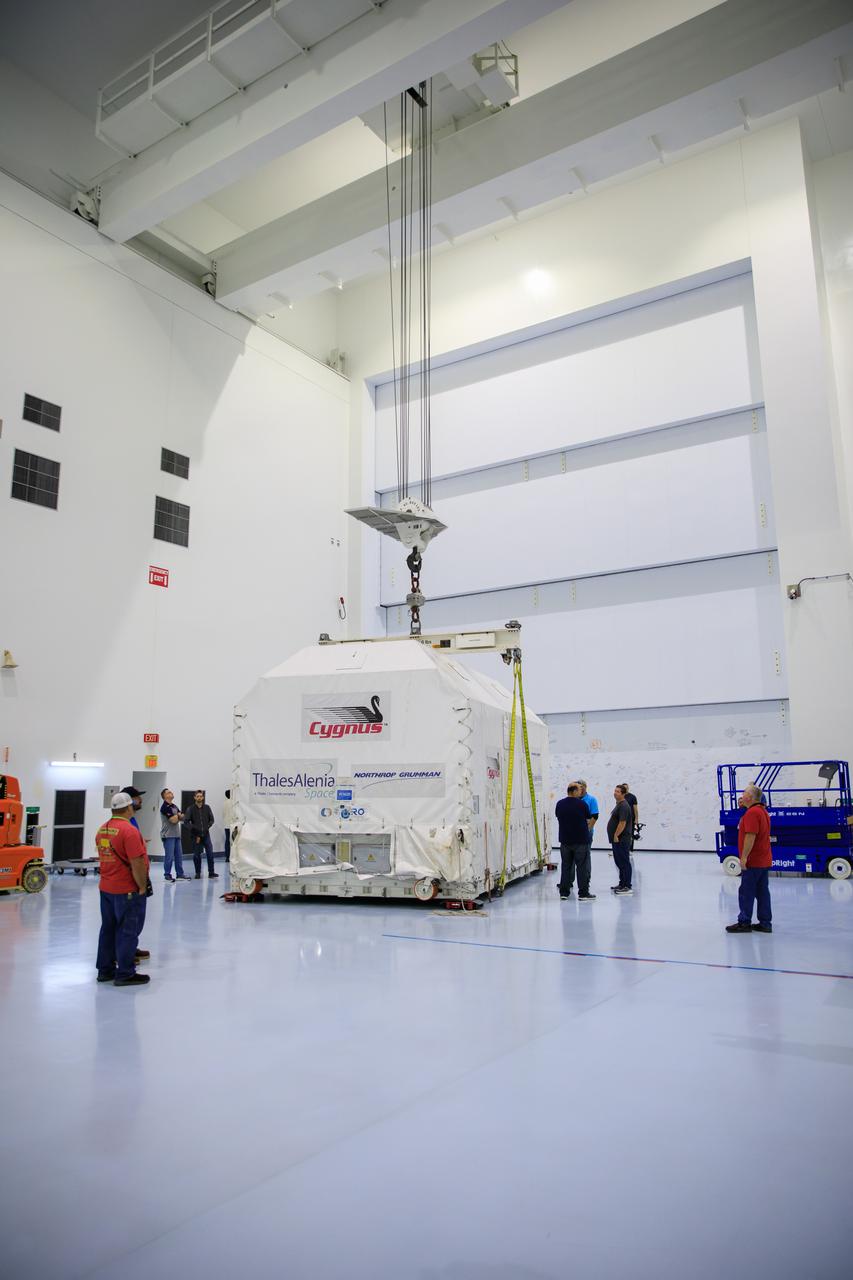
The Cygnus pressurized cargo module for Northrop Grumman’s 20th commercial resupply mission is lowered by crane in its carrier and secured onto a transport base inside the low bay in the Space Station Processing Facility at NASA's Kennedy Space Center in Florida on Aug. 2, 2023. Cygnus will launch later this year atop a SpaceX Falcon 9 rocket from Cape Canaveral Space Force Station’s Space Launch Complex 40 to the International Space Station. Cygnus will undergo prelaunch processing at Kennedy before it is transported to SpaceX’s integration facility.
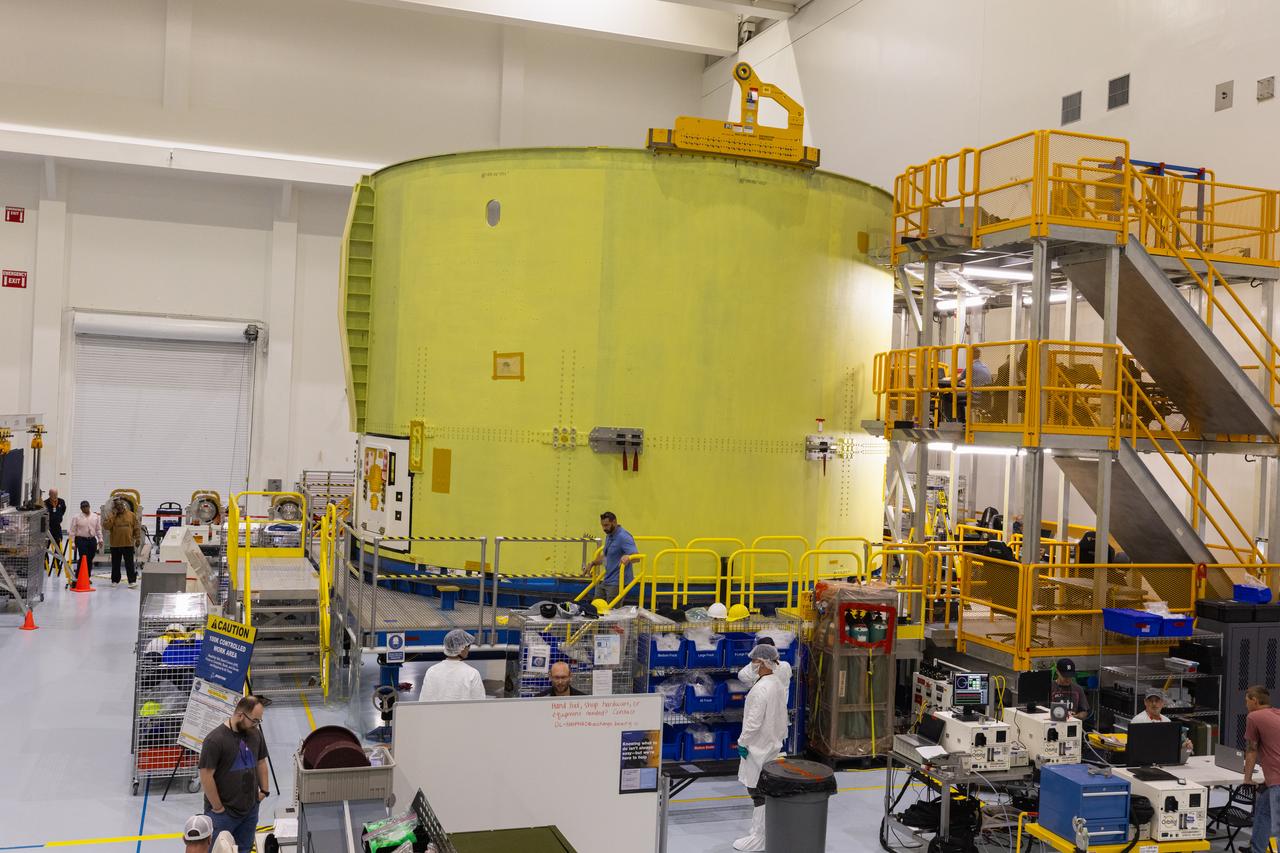
Technicians with NASA and Boeing complete attaching the engine section to the boat-tail for the agency’s Artemis III SLS (Space Launch System) rocket inside the high bay of the Space Systems Processing Facility at NASA’s Kennedy Space Center in Florida on Wednesday, Oct. 30, 2024. The engine section is one of five major elements that makes up the SLS rocket’s 212-foot-tall core stage, which house the rocket’s four RS-25 engines and vital systems for mounting, controlling, and delivering fuel from the stage’s two massive liquid propellant tanks to the engines. The boat-tail is designed to protect the bottom end of the core stage and the RS-25 engines.
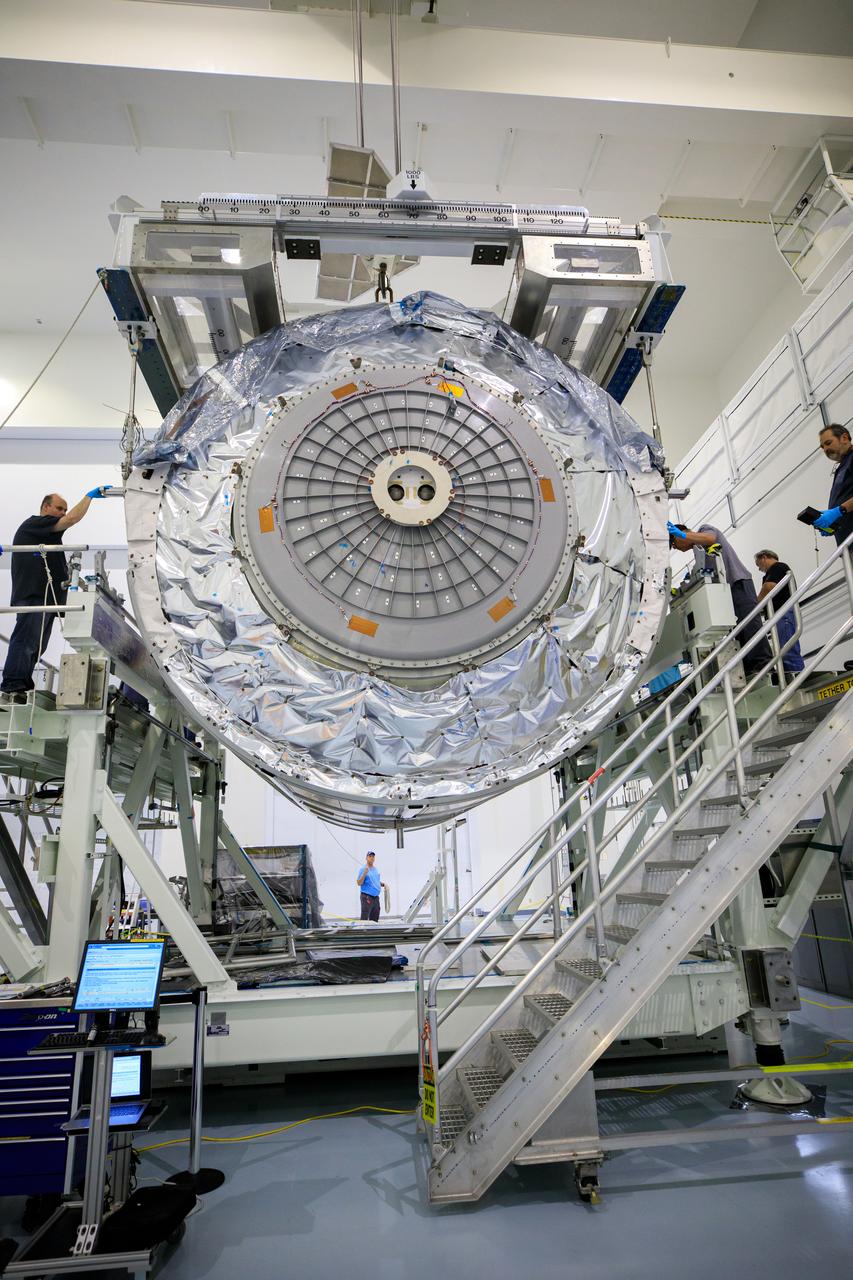
The Multi-Purpose Logistics Module (MPLM), used during the Space Shuttle Program to transfer cargo to and from the International Space Station, is hoisted up by crane inside the Space Station Processing Facility high bay at NASA’s Kennedy Space Center in Florida on April 20, 2023. The MPLM is being prepared for transport to Ellington Field in Houston, where it will then be transported by road to Axiom’s facility near Ellington to be utilized to further commercialization of space. Three MPLMs were built by Thales Alenia Space Italia (TASI) for the Italian Space Agency (ASI) and named after Italian masters (Leonardo, Raffaello, and Donatello). Only two ever flew to the space station, Leonardo and Raffaello, with Axiom intending to use Raffaello as a future element that will attach to a segment being built by the company for addition to the space station.
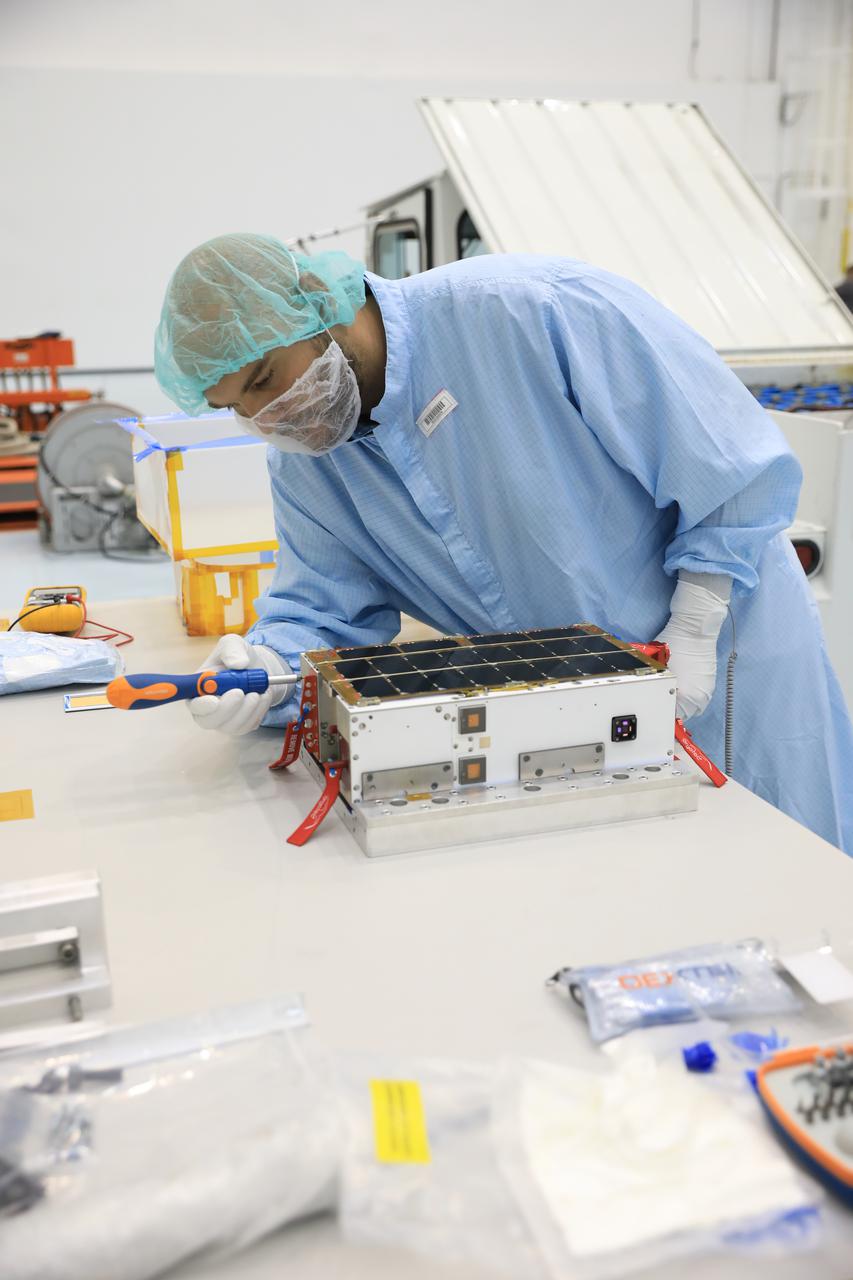
Teams worked on the final processing of their payloads that will fly aboard Artemis I. Housed within the Orion stage adapter, the satellites – called CubeSats – are roughly the size of a large shoe box and weigh no more than 30 pounds. Despite their small size, they enable science and technology experiments that may enhance our understanding of the deep space environment, expand our knowledge of the Moon, and demonstrate new technologies that could be used on future missions.
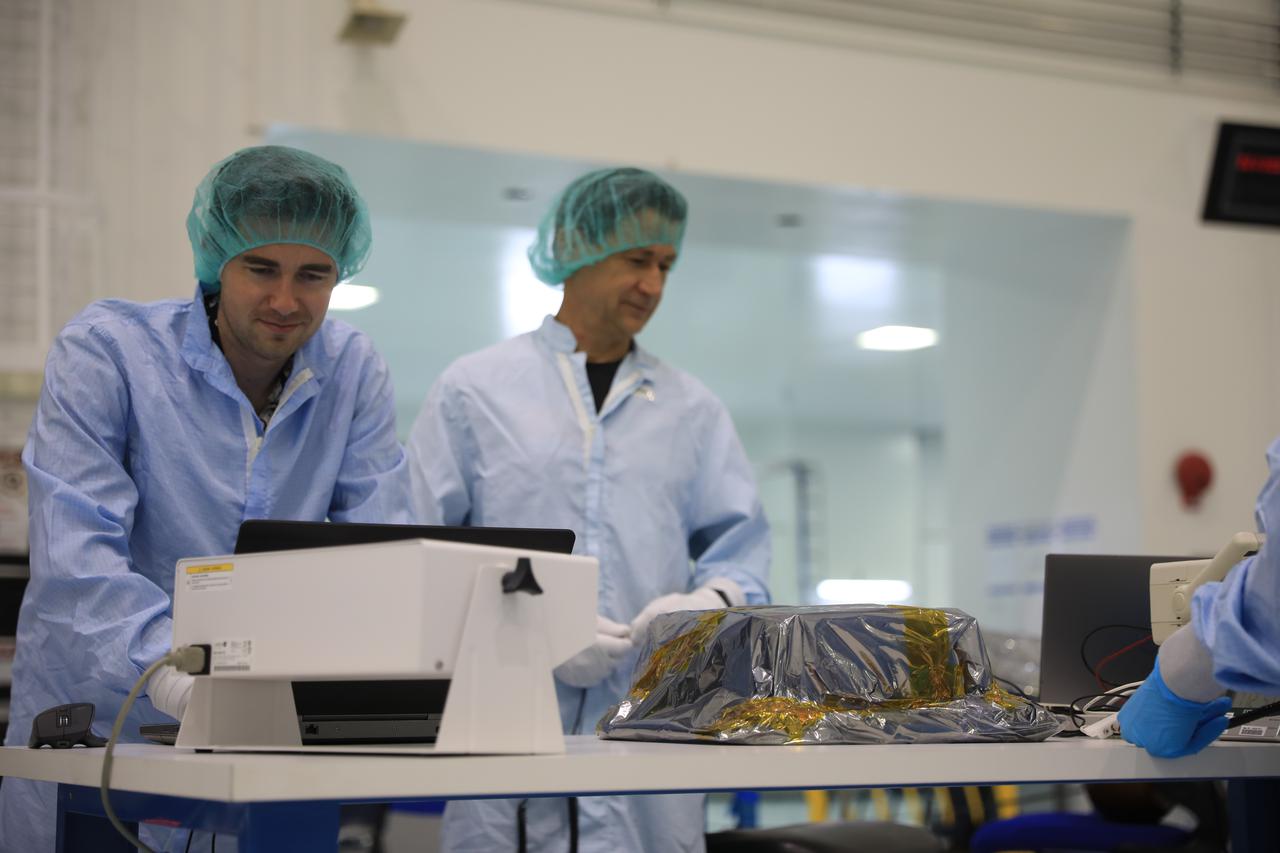
Teams worked on the final processing of their payloads that will fly aboard Artemis I. Housed within the Orion stage adapter, the satellites – called CubeSats – are roughly the size of a large shoe box and weigh no more than 30 pounds. Despite their small size, they enable science and technology experiments that may enhance our understanding of the deep space environment, expand our knowledge of the Moon, and demonstrate new technologies that could be used on future missions.
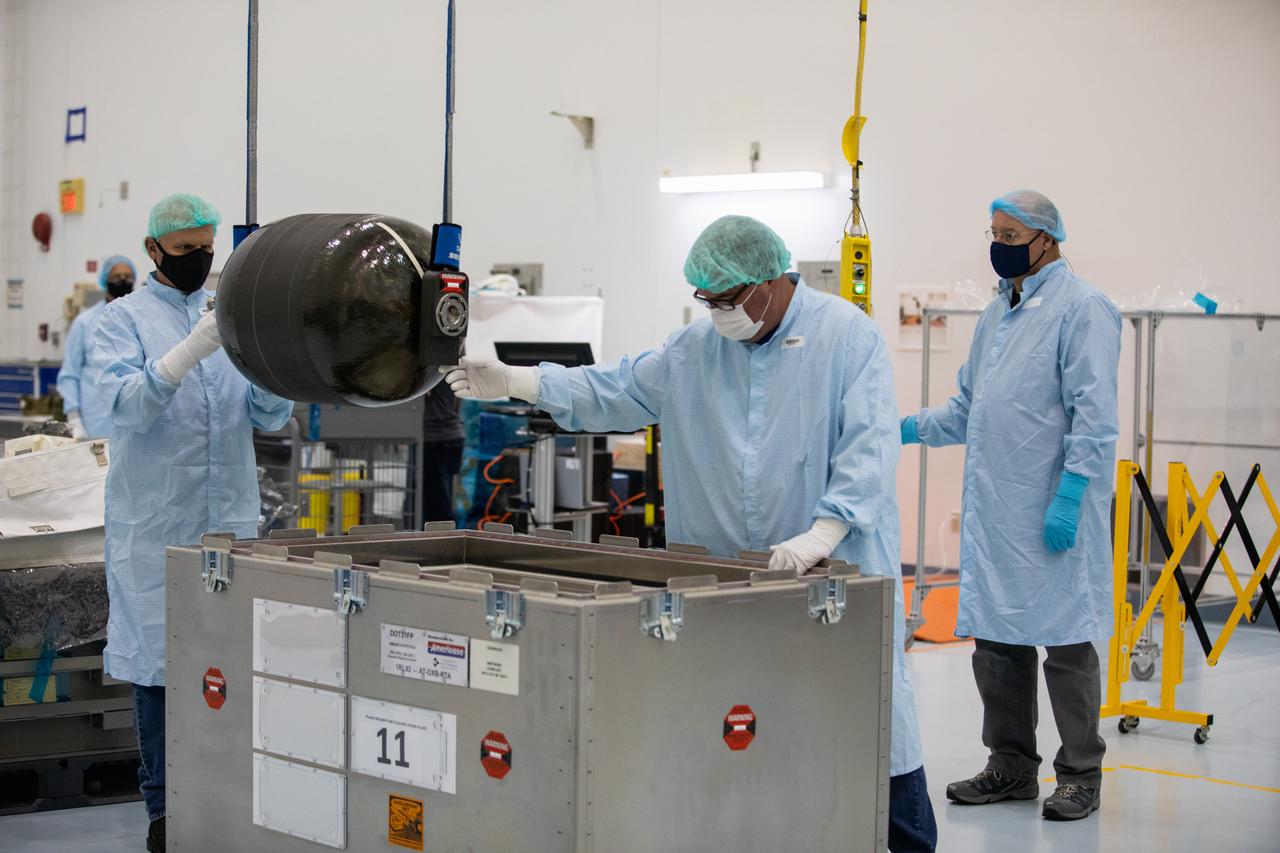
Technicians unpack and inspect a Nitrogen/Oxygen Recharge System (NORS) tank inside the Space Station Processing Facility high bay at NASA’s Kennedy Space Center in Florida on July 16, 2020. The NORS tanks and their support fixtures are designed to connect to the International Space Station’s existing air supply network to refill the previous generation of tanks installed during construction of the space station. These reusable tanks measure 3 feet long and 21 inches in diameter, and weigh about 200 pounds when filled. Once onboard, the tanks will be used to fill the oxygen and nitrogen tanks that supply the needed gases to the space station’s airlock for spacewalks. They could also be used to replenish the atmosphere inside the station. The NORS tanks will launch to the station later in the year on a commercial resupply mission.
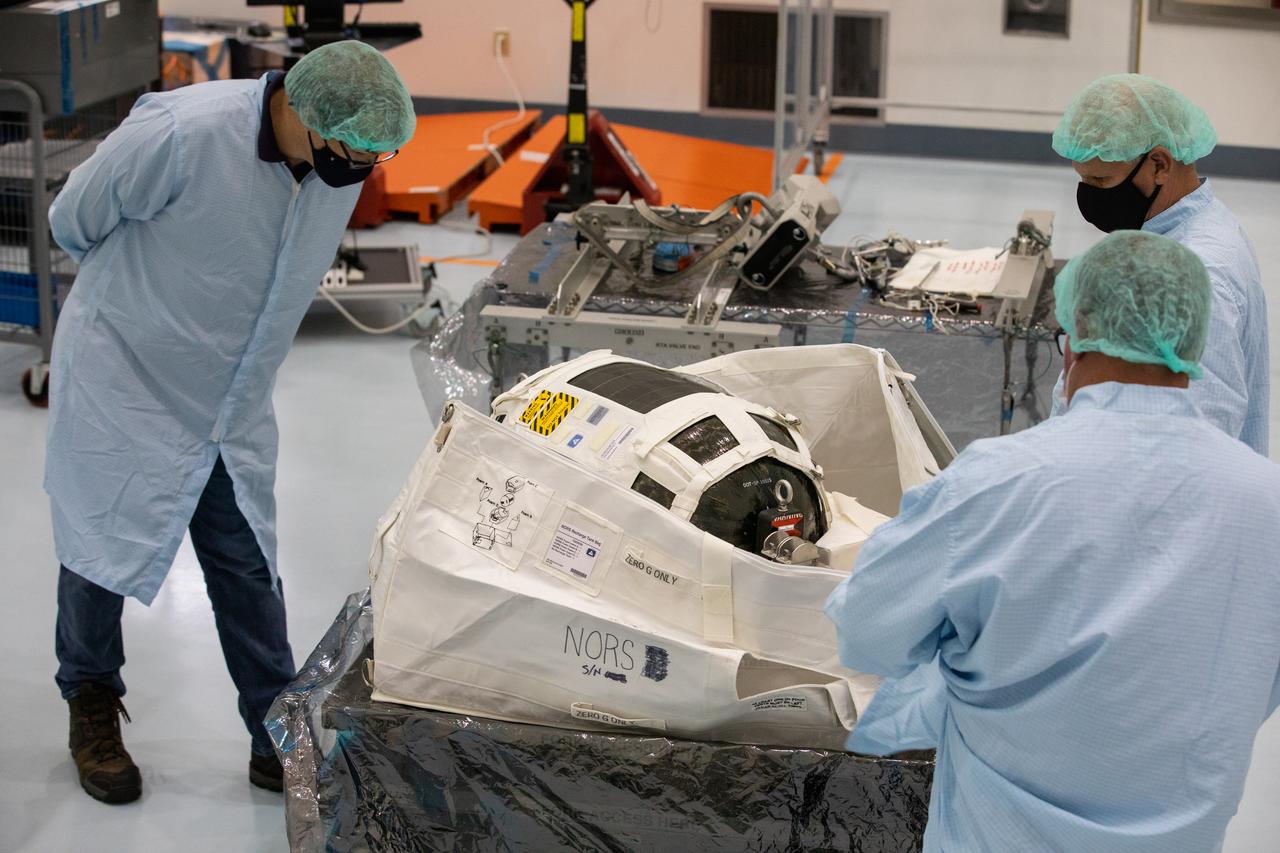
Technicians unpack and inspect a Nitrogen/Oxygen Recharge System (NORS) tank inside the Space Station Processing Facility high bay at NASA’s Kennedy Space Center in Florida on July 16, 2020. The NORS tanks and their support fixtures are designed to connect to the International Space Station’s existing air supply network to refill the previous generation of tanks installed during construction of the space station. These reusable tanks measure 3 feet long and 21 inches in diameter, and weigh about 200 pounds when filled. Once onboard, the tanks will be used to fill the oxygen and nitrogen tanks that supply the needed gases to the space station’s airlock for spacewalks. They could also be used to replenish the atmosphere inside the station. The NORS tanks will launch to the station later in the year on a commercial resupply mission.
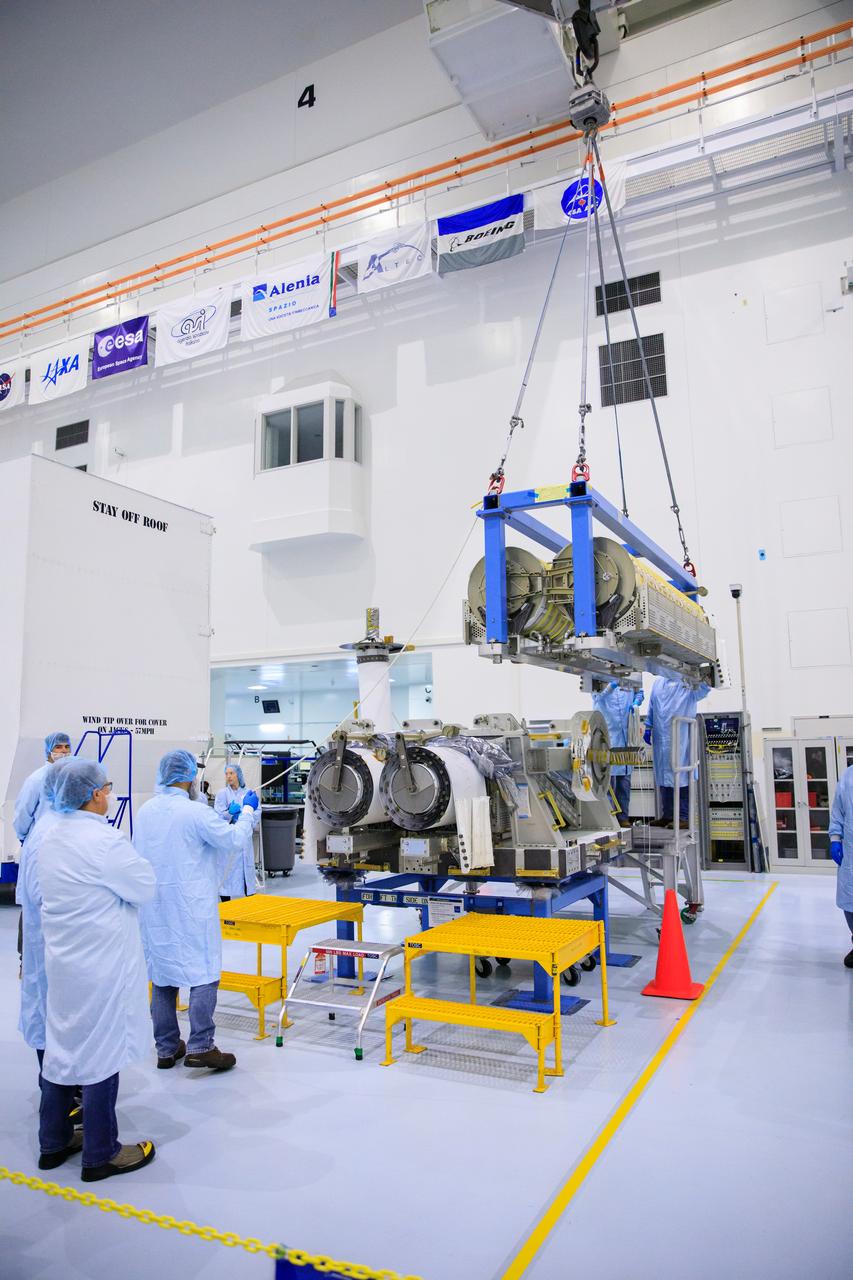
Inside the Space Station Processing Facility high bay at NASA's Kennedy Space Center in Florida, technicians monitor the progress as a crane is used to lift and stack the third set of two International Space Station Roll Out Solar Arrays (iROSA) onto a platform on March 23, 2023. They are being prepared for delivery to the space station aboard SpaceX’s Dragon cargo carrier on the company’s 28th commercial resupply services (CRS-28) mission to the space station. iROSA is a new type of solar panel that rolls open in space and is more compact than current rigid panel designs.
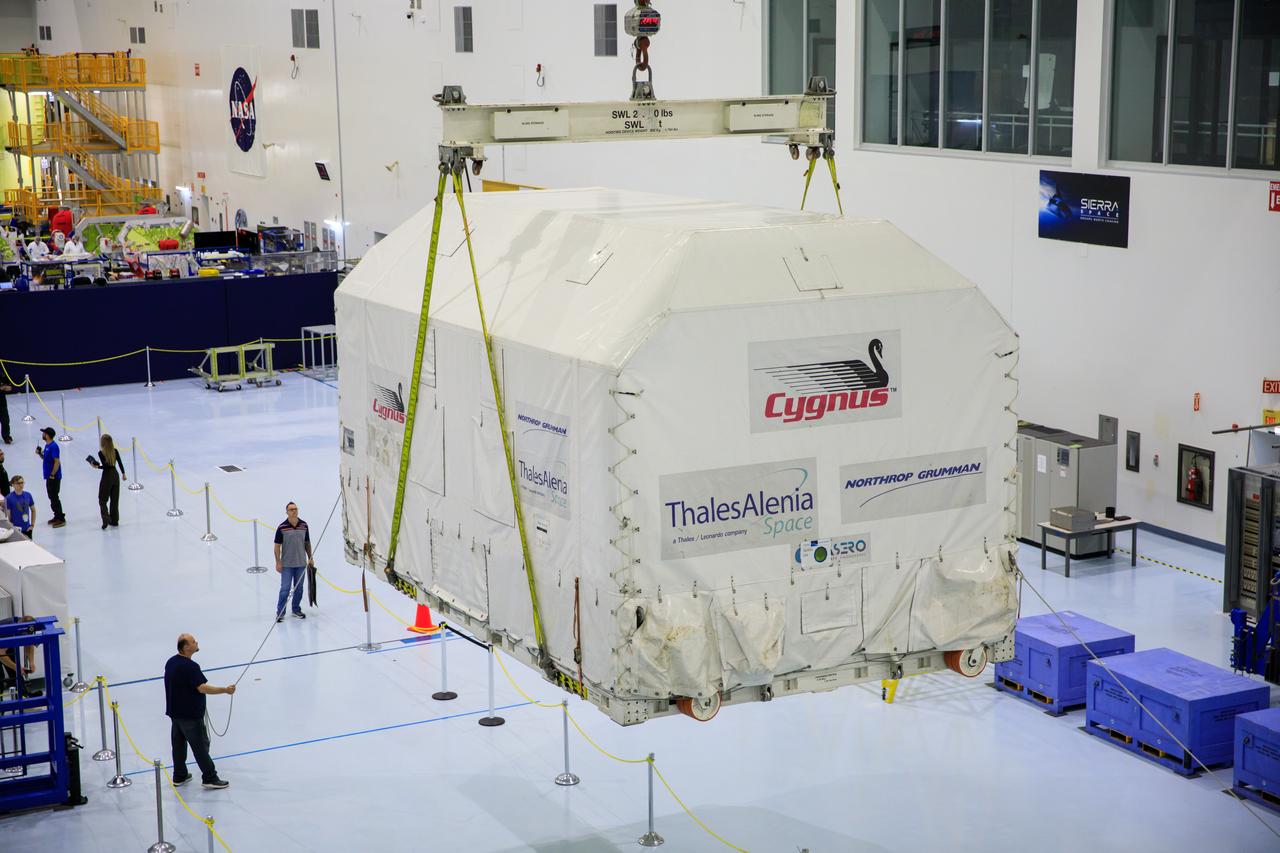
A crane is used to lift the Northrop Grumman Cygnus spacecraft's pressurized cargo module (PCM) off a flatbed truck after arrival at the Space Station Processing Facility of NASA's Kennedy Space Center in Florida on Aug. 2, 2023. The PCM is sealed in an environmentally controlled shipping container. Cygnus will launch later this year atop a SpaceX Falcon 9 rocket from Cape Canaveral Space Force Station’s Space Launch Complex 40 to the International Space Station. Cygnus will undergo prelaunch processing at Kennedy before it is transported to SpaceX’s integration facility.
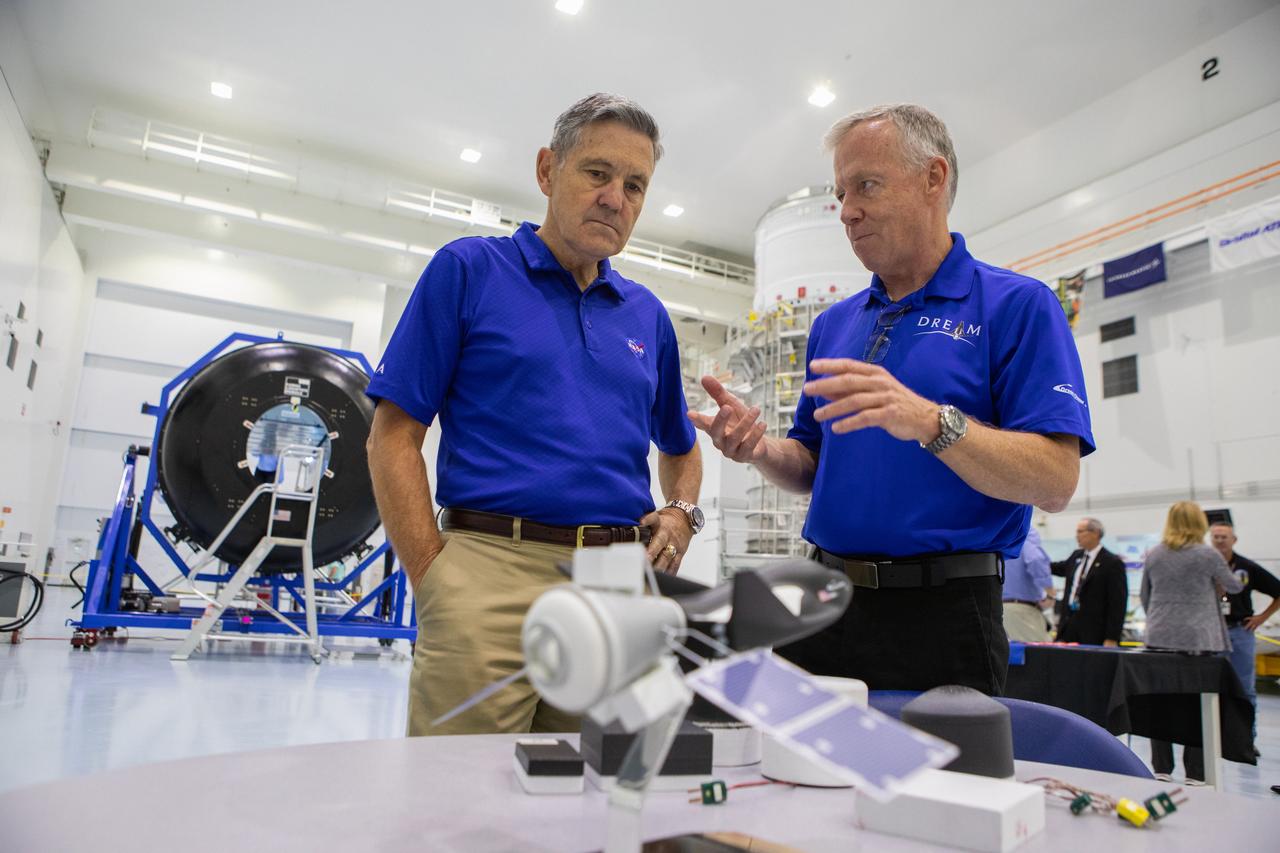
A mockup of the cargo logistics module for Sierra Nevada Corporation’s Dream Chaser, the company’s reusable spaceplane, arrived at the Space Station Processing Facility (SSPF) at NASA’s Kennedy Space Center in Florida in August. On Sept. 20, 2019, senior leadership had the opportunity to view the cargo module in the SSPF high bay. Kennedy Center Director Bob Cabana, left, speaks to Steve Lindsey, vice president, Space Exploration Systems, Sierra Nevada Corporation. The SSPF is providing support for current and future NASA and commercial provider programs, including Commercial Resupply Services, Artemis 1, sending the first woman and next man to the Moon, and deep space destinations including Mars.

A Nitrogen/Oxygen Recharge System (NORS) tank is unpacked and readied for inspection inside the Space Station Processing Facility high bay at NASA’s Kennedy Space Center in Florida on July 16, 2020. The NORS tanks and their support fixtures are designed to connect to the International Space Station’s existing air supply network to refill the previous generation of tanks installed during construction of the space station. These reusable tanks measure 3 feet long and 21 inches in diameter, and weigh about 200 pounds when filled. Once onboard, the tanks will be used to fill the oxygen and nitrogen tanks that supply the needed gases to the space station’s airlock for spacewalks. They could also be used to replenish the atmosphere inside the station. The NORS tanks will launch to the station later in the year on a commercial resupply mission.
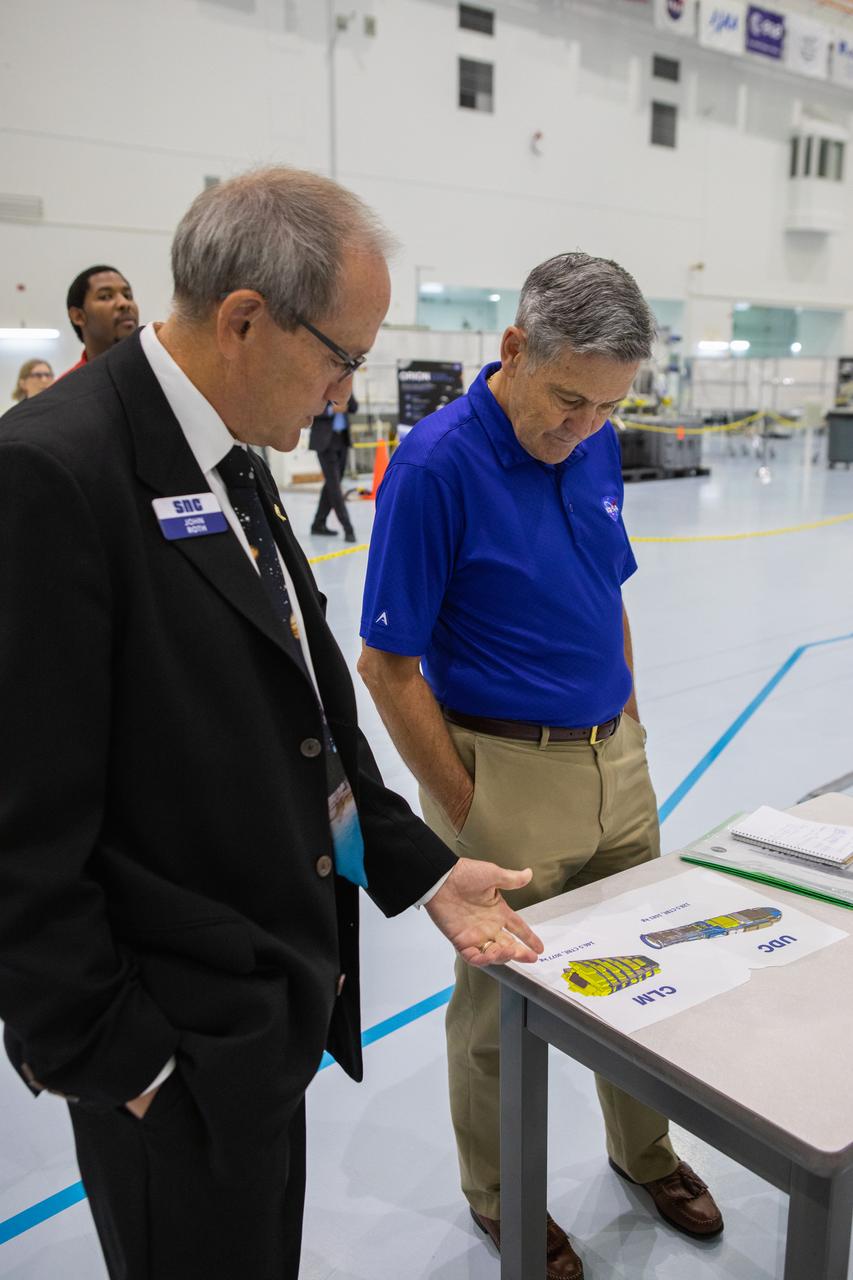
A mockup of the cargo logistics module for Sierra Nevada Corporation’s Dream Chaser, the company’s reusable spaceplane, arrived at the Space Station Processing Facility (SSPF) at NASA’s Kennedy Space Center in Florida in August. On Sept. 20, 2019, senior leadership had the opportunity to view the cargo module in the SSPF high bay. Kennedy Center Director Bob Cabana, at right, listens to John Roth, vice president, Business Development Space Systems, Sierra Nevada Corporation. The SSPF is providing support for current and future NASA and commercial provider programs, including Commercial Resupply Services, Artemis 1, sending the first woman and next man to the Moon, and deep space destinations including Mars.
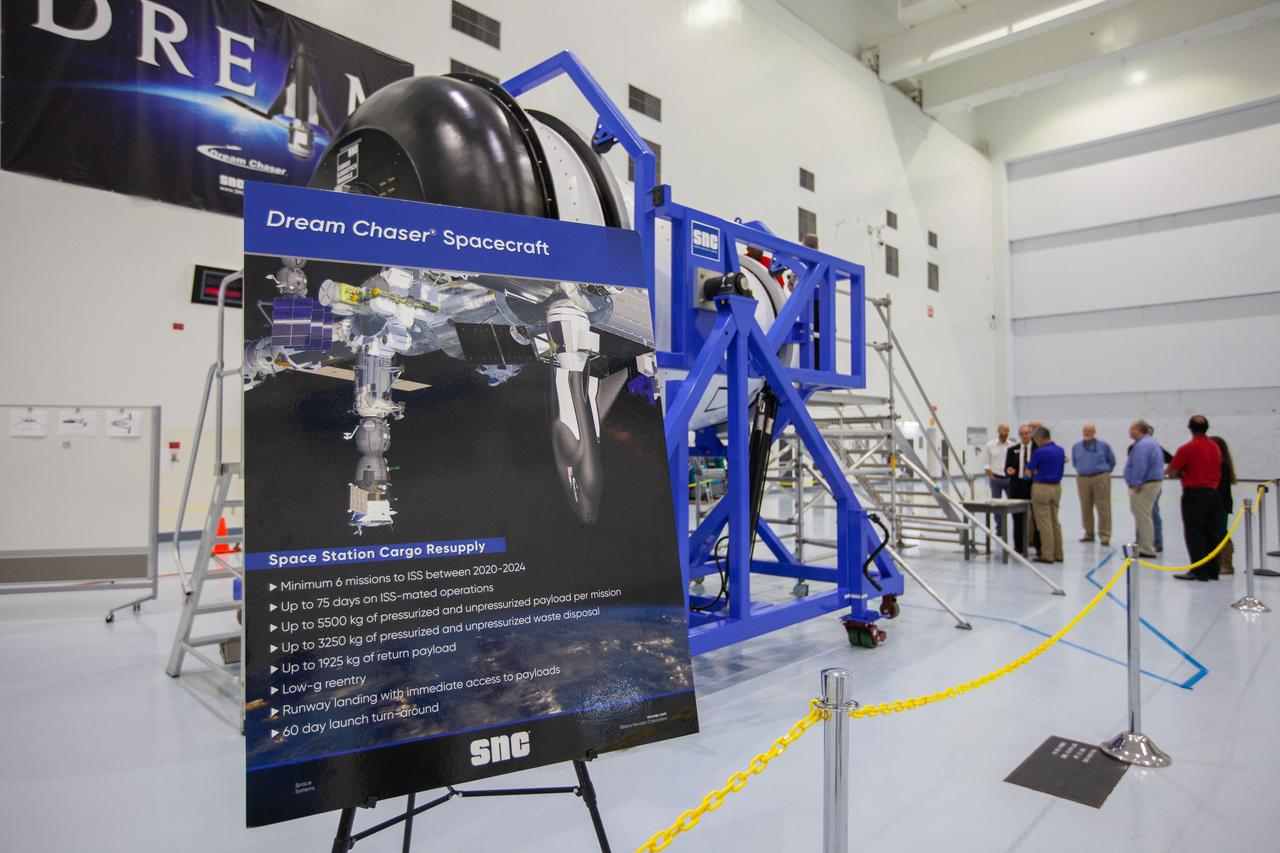
A mockup of the cargo logistics module for Sierra Nevada Corporation’s Dream Chaser, the company’s reusable spaceplane, arrived at the Space Station Processing Facility (SSPF) at NASA’s Kennedy Space Center in Florida in August. On Sept. 20, 2019, senior leadership had the opportunity to view the cargo module in the SSPF high bay. The SSPF is providing support for current and future NASA and commercial provider programs, including Commercial Resupply Services, Artemis 1, sending the first woman and next man to the Moon, and deep space destinations including Mars.
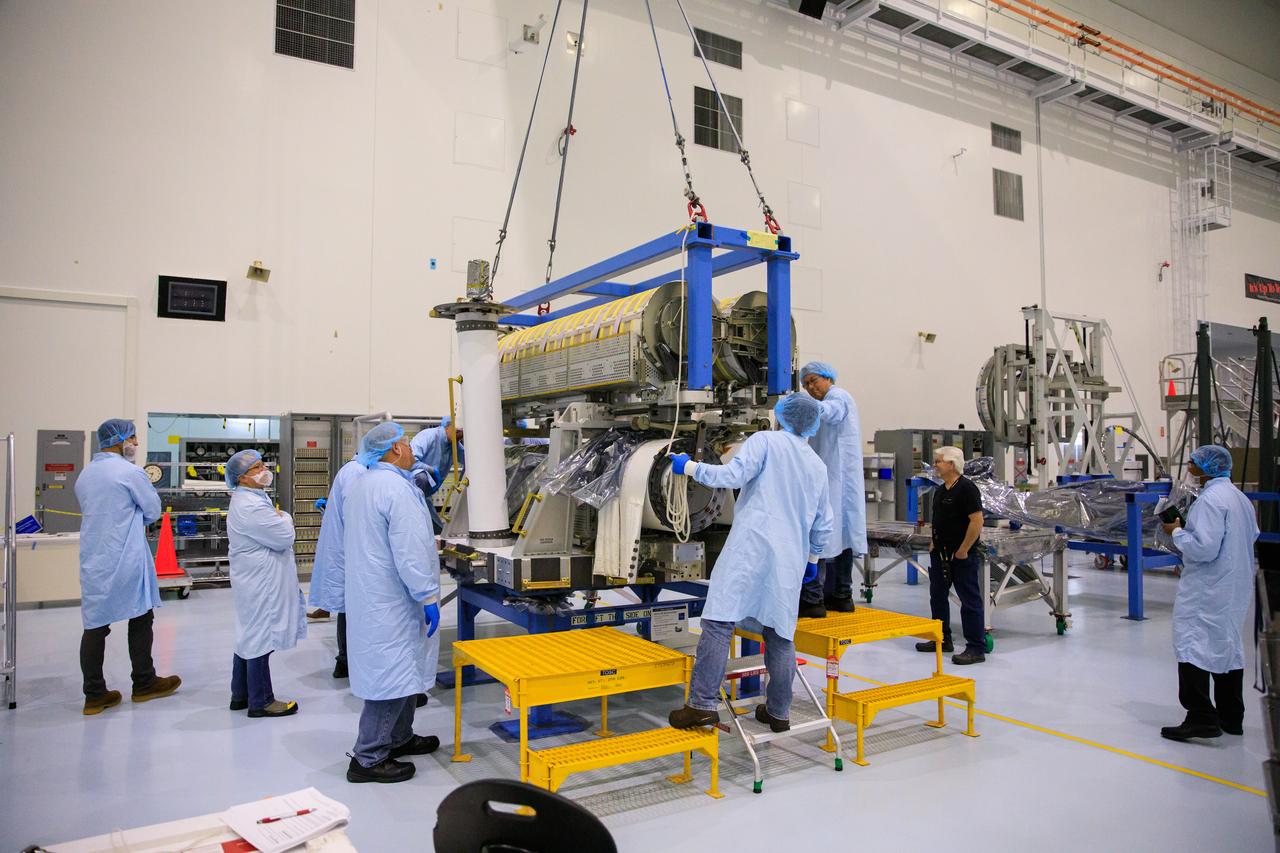
Inside the Space Station Processing Facility high bay at NASA's Kennedy Space Center in Florida, technicians assist as a crane is used to lower a set of International Space Station Roll Out Solar Arrays (iROSA) onto a platform on March 23, 2023. They are being prepared for delivery to the space station aboard SpaceX’s Dragon cargo carrier on the company’s 28th commercial resupply services (CRS-28) mission to the space station. iROSA is a new type of solar panel that rolls open in space and is more compact than current rigid panel designs.
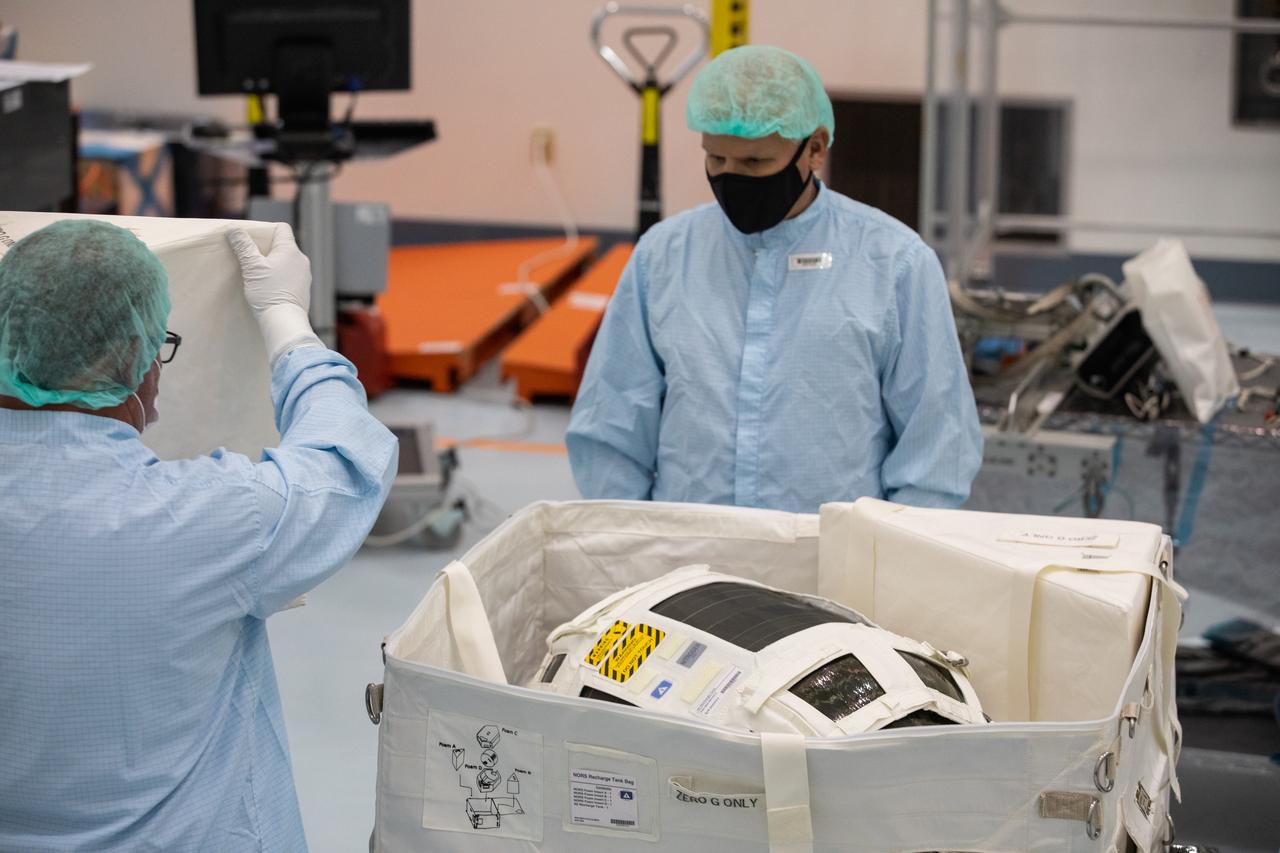
Technicians unpack and inspect a Nitrogen/Oxygen Recharge System (NORS) tank inside the Space Station Processing Facility high bay at NASA’s Kennedy Space Center in Florida on July 16, 2020. The NORS tanks and their support fixtures are designed to connect to the International Space Station’s existing air supply network to refill the previous generation of tanks installed during construction of the space station. These reusable tanks measure 3 feet long and 21 inches in diameter, and weigh about 200 pounds when filled. Once onboard, the tanks will be used to fill the oxygen and nitrogen tanks that supply the needed gases to the space station’s airlock for spacewalks. They could also be used to replenish the atmosphere inside the station. The NORS tanks will launch to the station later in the year on a commercial resupply mission.
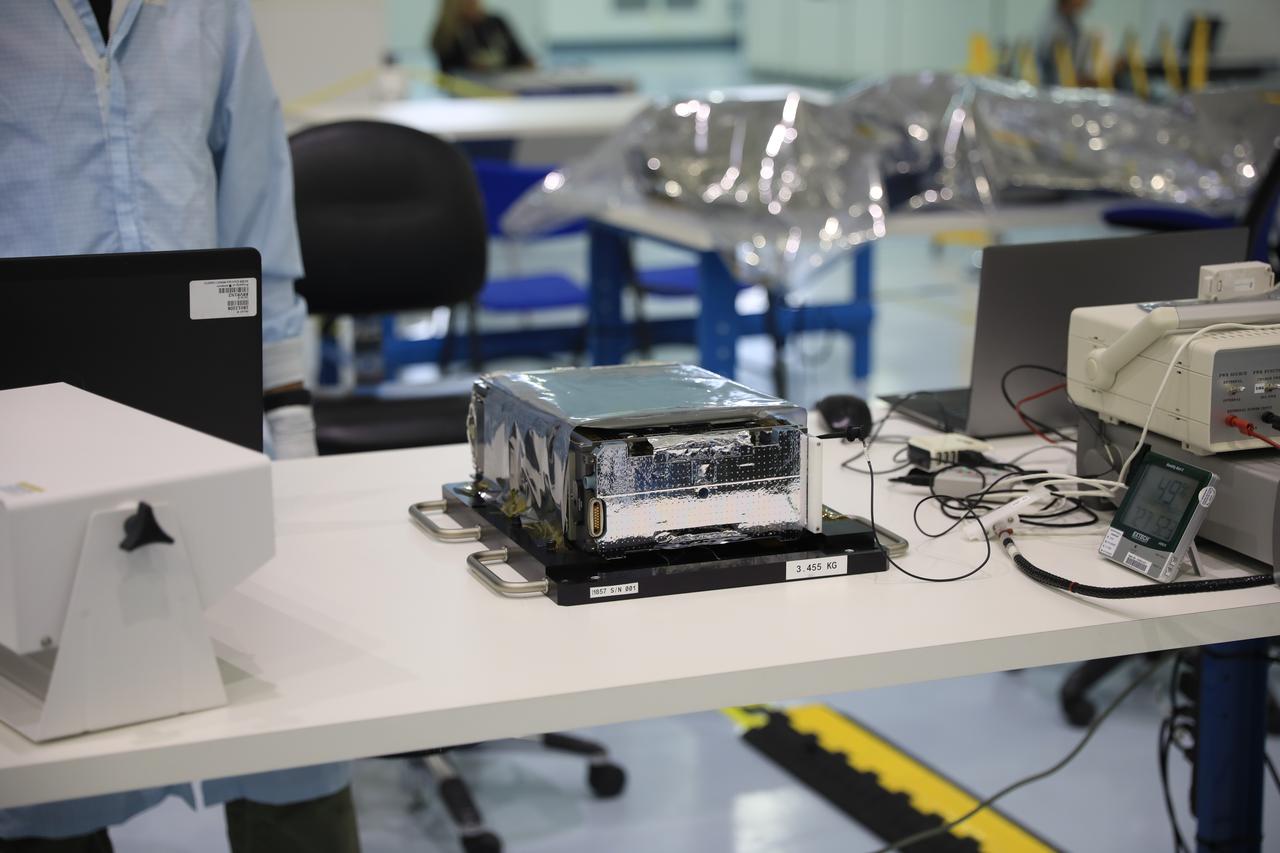
Teams worked on the final processing of their payloads that will fly aboard Artemis I. Housed within the Orion stage adapter, the satellites – called CubeSats – are roughly the size of a large shoe box and weigh no more than 30 pounds. Despite their small size, they enable science and technology experiments that may enhance our understanding of the deep space environment, expand our knowledge of the Moon, and demonstrate new technologies that could be used on future missions.

Technicians with NASA and Boeing complete attaching the engine section to the boat-tail for the agency’s Artemis III SLS (Space Launch System) rocket inside the high bay of the Space Systems Processing Facility at NASA’s Kennedy Space Center in Florida on Wednesday, Oct. 30, 2024. The engine section is one of five major elements that makes up the SLS rocket’s 212-foot-tall core stage, which house the rocket’s four RS-25 engines and vital systems for mounting, controlling, and delivering fuel from the stage’s two massive liquid propellant tanks to the engines. The boat-tail is designed to protect the bottom end of the core stage and the RS-25 engines.
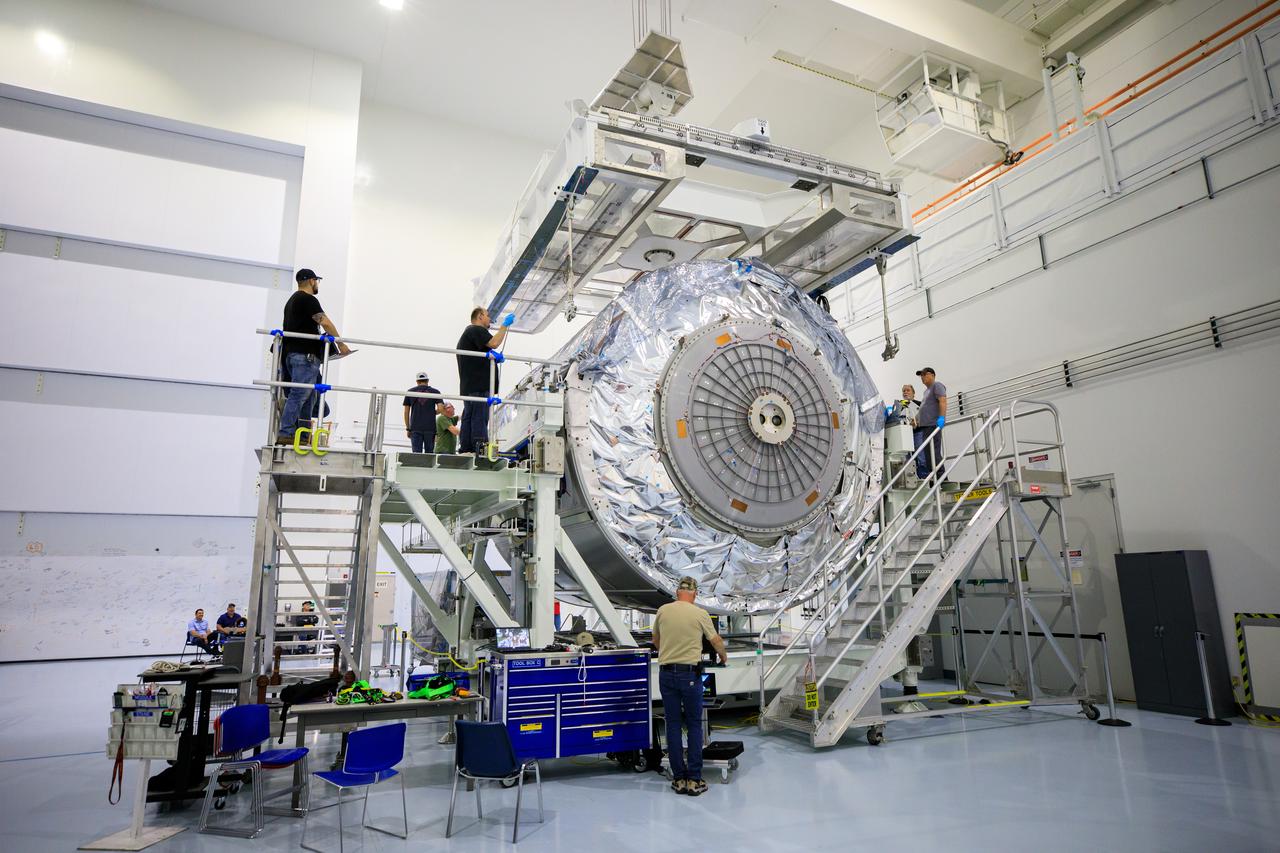
The Multi-Purpose Logistics Module (MPLM), used during the Space Shuttle Program to transfer cargo to and from the International Space Station, is lifted by crane inside the Space Station Processing Facility high bay at NASA’s Kennedy Space Center in Florida on April 20, 2023. The MPLM is being prepared for transport to Ellington Field in Houston, where it will then be transported by road to Axiom’s facility near Ellington to be utilized to further commercialization of space. Three MPLMs were built by Thales Alenia Space Italia (TASI) for the Italian Space Agency (ASI) and named after Italian masters (Leonardo, Raffaello, and Donatello). Only two ever flew to the space station, Leonardo and Raffaello, with Axiom intending to use Raffaello as a future element that will attach to a segment being built by the company for addition to the space station.
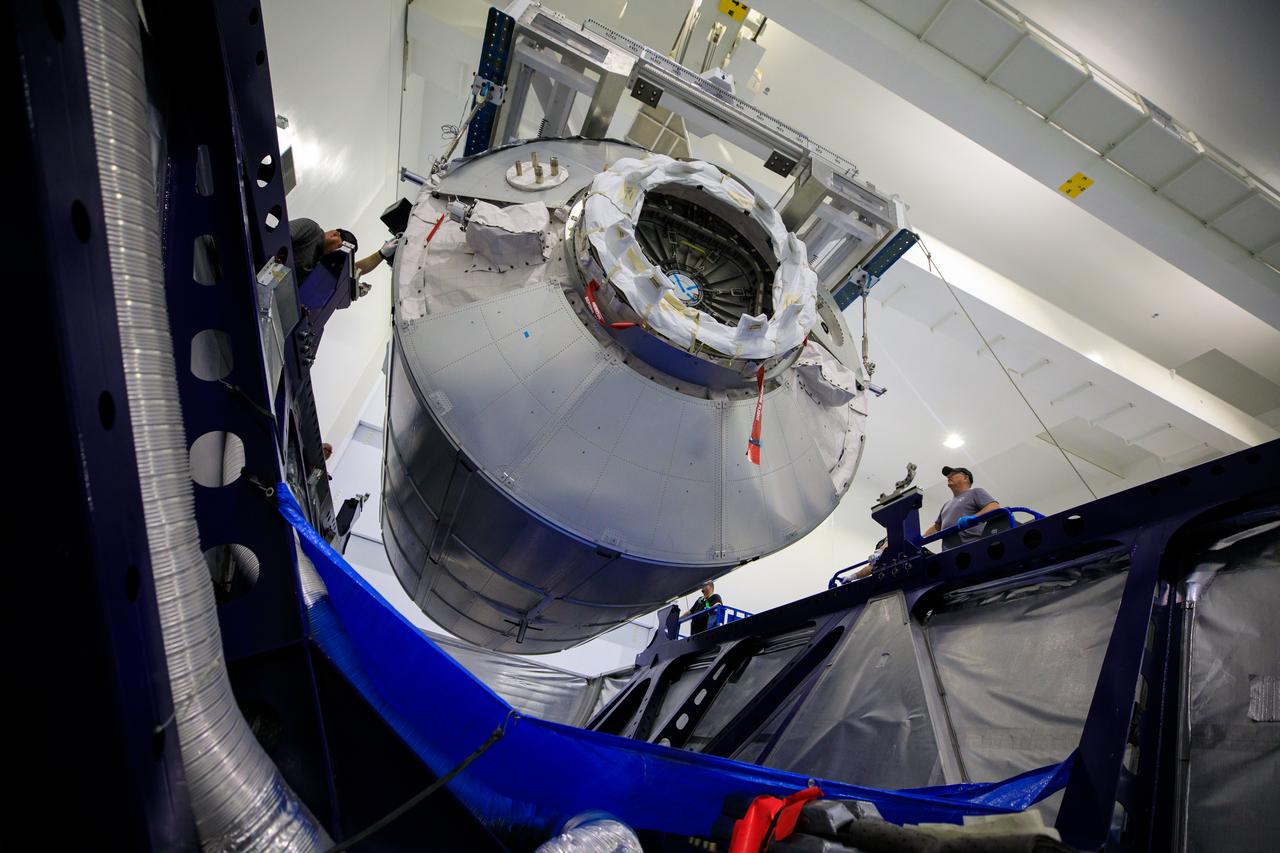
The Multi-Purpose Logistics Module (MPLM), used during the Space Shuttle Program to transfer cargo to and from the International Space Station, is lowered by crane into its transport container inside the Space Station Processing Facility high bay at NASA’s Kennedy Space Center in Florida on April 20, 2023. The MPLM is being prepared for transport to Ellington Field in Houston, where it will then be transported by road to Axiom’s facility near Ellington to be utilized to further commercialization of space. Three MPLMs were built by Thales Alenia Space Italia (TASI) for the Italian Space Agency (ASI) and named after Italian masters (Leonardo, Raffaello, and Donatello). Only two ever flew to the space station, Leonardo and Raffaello, with Axiom intending to use Raffaello as a future element that will attach to a segment being built by the company for addition to the space station.
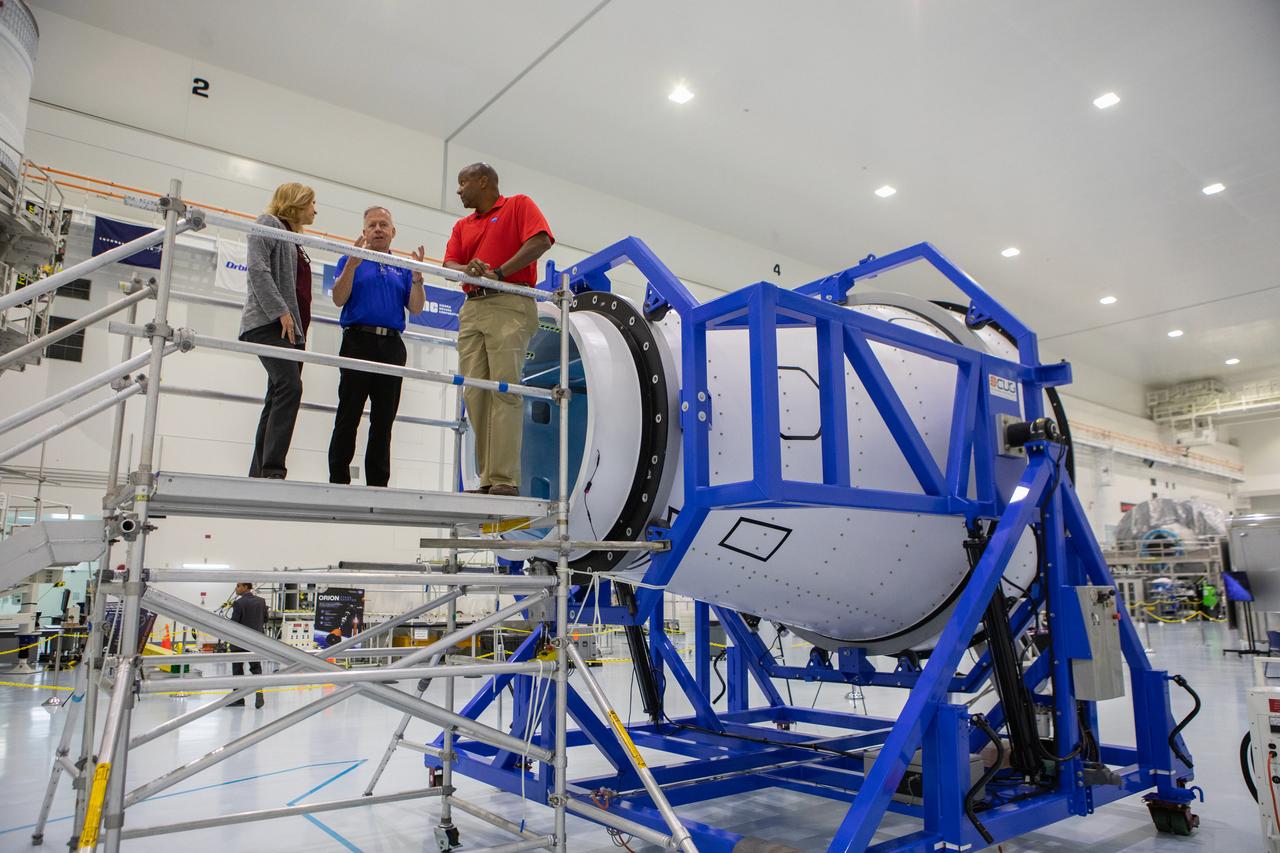
A mockup of the cargo logistics module for Sierra Nevada Corporation’s Dream Chaser, the company’s reusable spaceplane, arrived at the Space Station Processing Facility (SSPF) at NASA’s Kennedy Space Center in Florida in August. On Sept. 20, 2019, senior leadership had the opportunity to view the cargo module in the SSPF high bay. From left are Kennedy Deputy Director Janet Petro; Steve Lindsey, vice president, Space Exploration Systems, Sierra Nevada Corporation; and Kelvin Manning, Kennedy associate director, technical. The SSPF is providing support for current and future NASA and commercial provider programs, including Commercial Resupply Services, Artemis 1, sending the first woman and next man to the Moon, and deep space destinations including Mars.
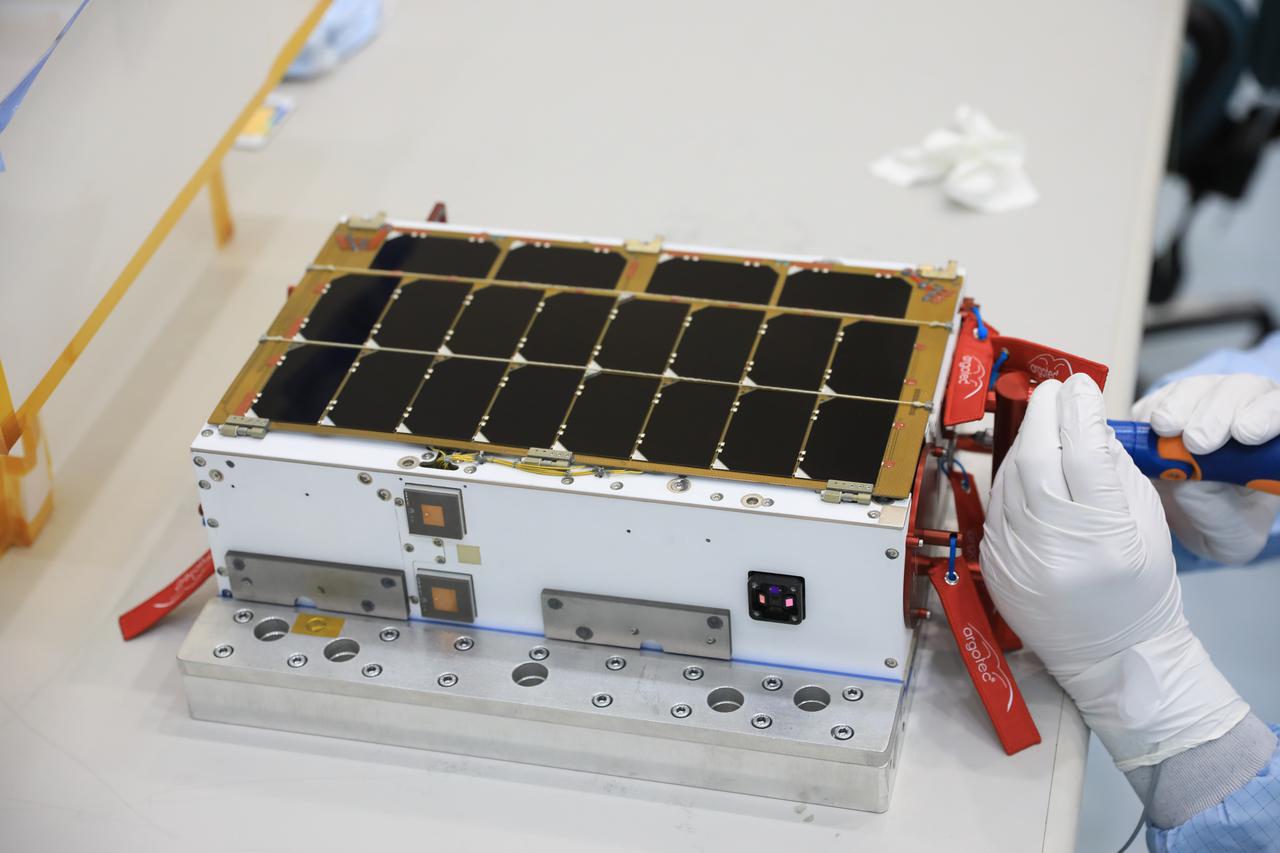
Teams worked on the final processing of their payloads that will fly aboard Artemis I. Housed within the Orion stage adapter, the satellites – called CubeSats – are roughly the size of a large shoe box and weigh no more than 30 pounds. Despite their small size, they enable science and technology experiments that may enhance our understanding of the deep space environment, expand our knowledge of the Moon, and demonstrate new technologies that could be used on future missions.
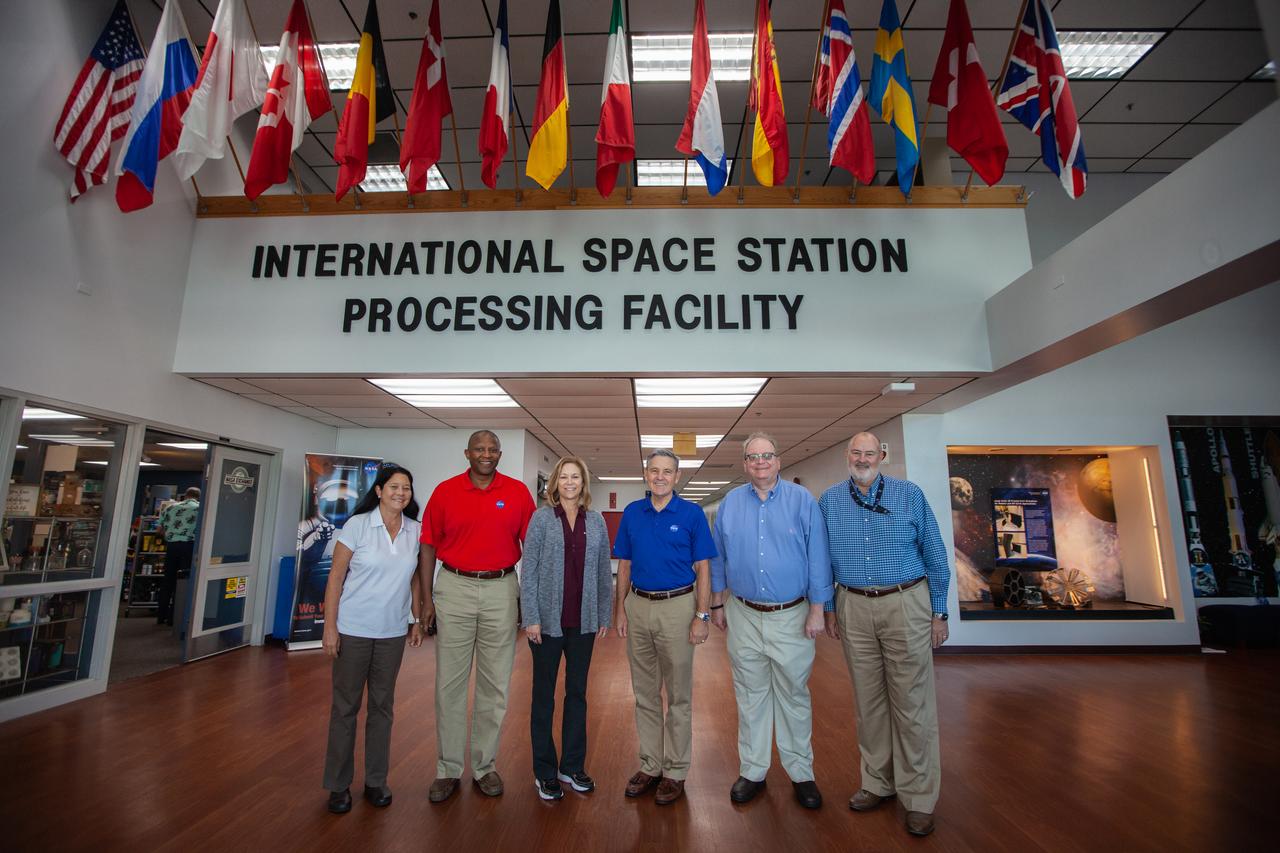
A mockup of the cargo logistics module for Sierra Nevada Corporation’s Dream Chaser, the company’s reusable spaceplane, arrived at the Space Station Processing Facility (SSPF) at NASA’s Kennedy Space Center in Florida in August. On Sept. 20, 2019, senior leadership had the opportunity to view the cargo module in the SSPF high bay. From left, are Josie Burnett, director of Exploration Research and Technology Programs; Kelvin Manning, Kennedy associate director, technical; Kennedy Deputy Director Janet Petro; Kennedy Center Director Bob Cabana; Burt Summerfield, Kennedy associate director, management; and Ronnie Lawson, deputy director of Exploration Research and Technology Programs. The SSPF is providing support for current and future NASA and commercial provider programs, including Commercial Resupply Services, Artemis 1, sending the first woman and next man to the Moon, and deep space destinations including Mars.
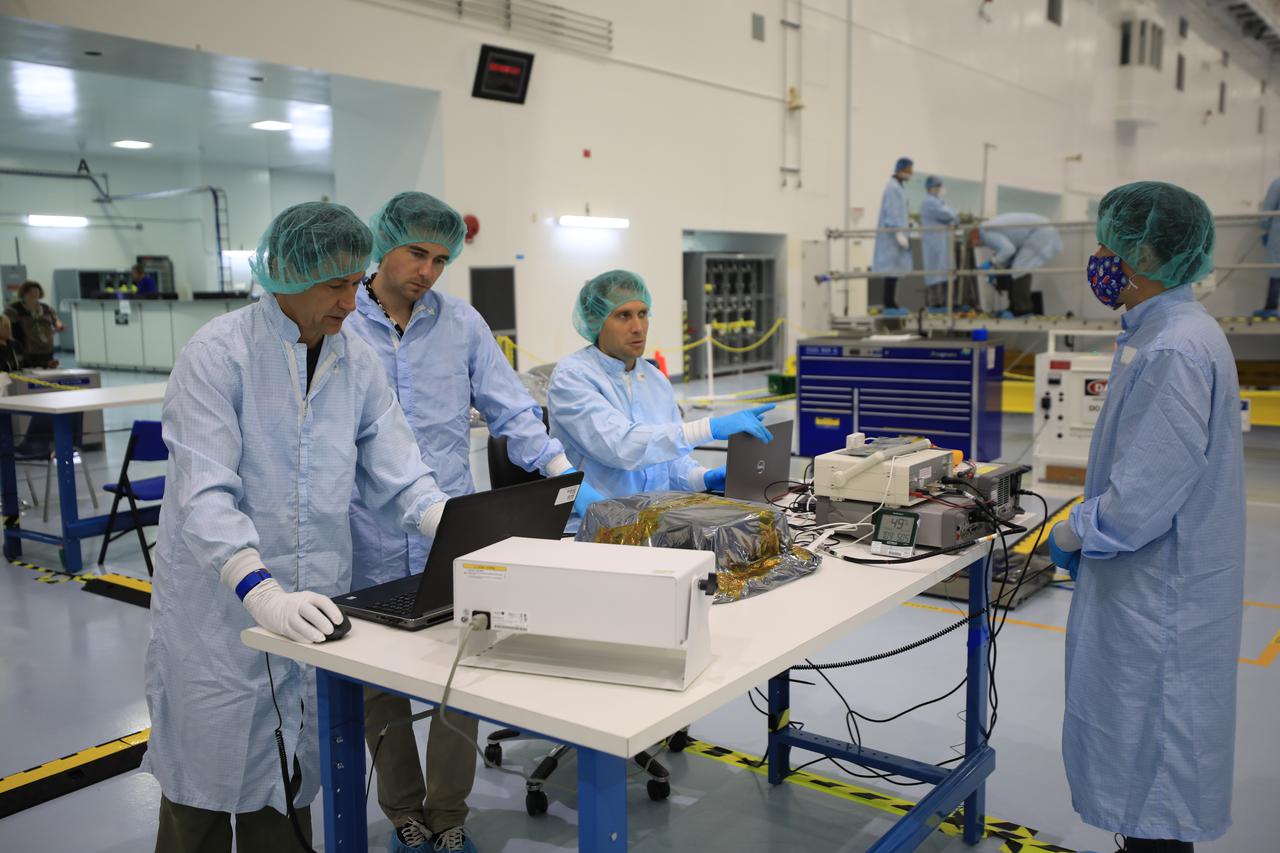
Teams worked on the final processing of their payloads that will fly aboard Artemis I. Housed within the Orion stage adapter, the satellites – called CubeSats – are roughly the size of a large shoe box and weigh no more than 30 pounds. Despite their small size, they enable science and technology experiments that may enhance our understanding of the deep space environment, expand our knowledge of the Moon, and demonstrate new technologies that could be used on future missions.

A mockup of the cargo logistics module for Sierra Nevada Corporation’s Dream Chaser, the company’s reusable spaceplane, arrived at the Space Station Processing Facility (SSPF) at NASA’s Kennedy Space Center in Florida in August. On Sept. 20, 2019, senior leadership had the opportunity to view the cargo module in the SSPF high bay. From left are Kelvin Manning, Kennedy associate director, technical; Steve Lindsey, vice president, Space Exploration Systems, Sierra Nevada Corporation; Kennedy Deputy Director Janet Petro; and Kennedy Center Director Bob Cabana. The SSPF is providing support for current and future NASA and commercial provider programs, including Commercial Resupply Services, Artemis 1, sending the first woman and next man to the Moon, and deep space destinations including Mars.
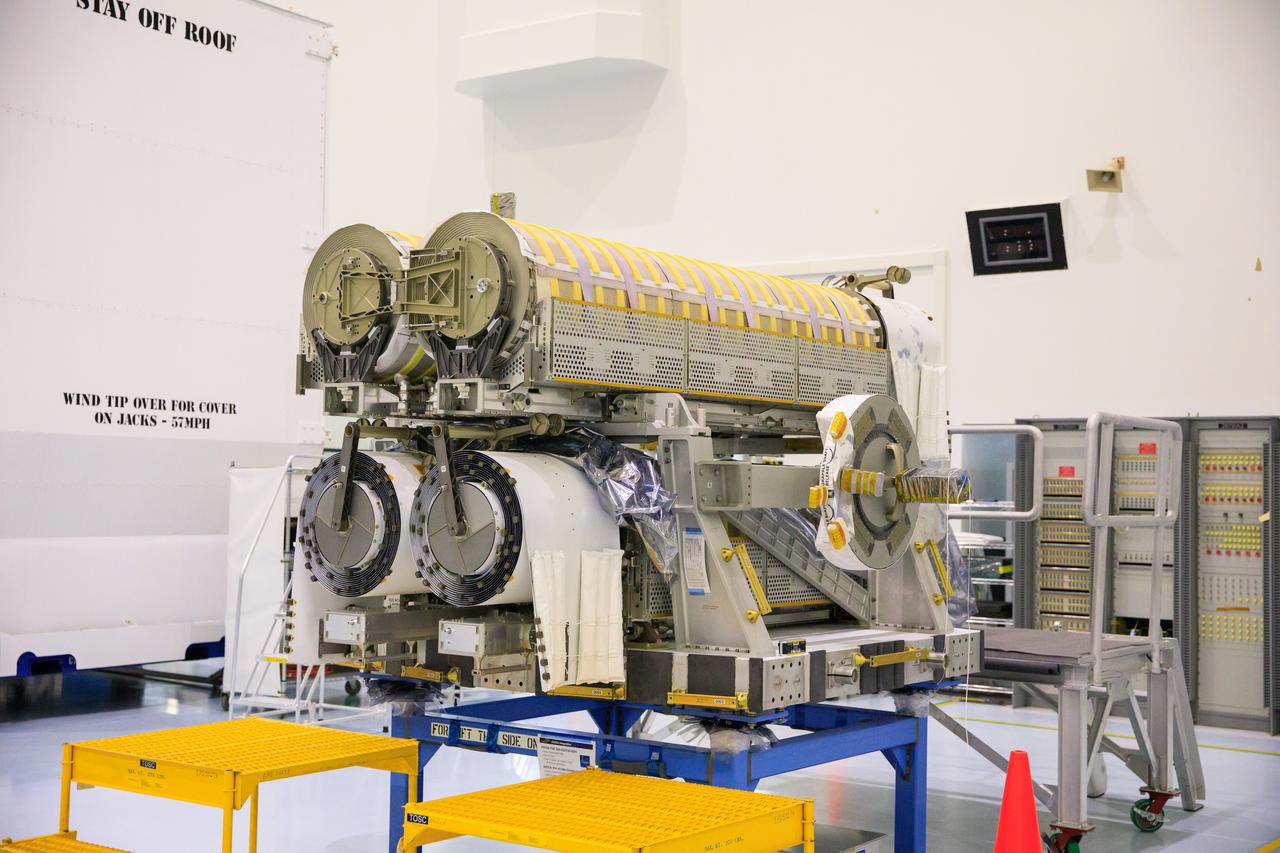
Inside the Space Station Processing Facility high bay at NASA's Kennedy Space Center in Florida, a set of International Space Station Roll Out Solar Arrays (iROSA) have been secured onto a platform on March 23, 2023. They are being prepared for delivery to the space station aboard SpaceX’s Dragon cargo carrier on the company’s 28th commercial resupply services (CRS-28) mission to the space station. iROSA is a new type of solar panel that rolls open in space and is more compact than current rigid panel designs.