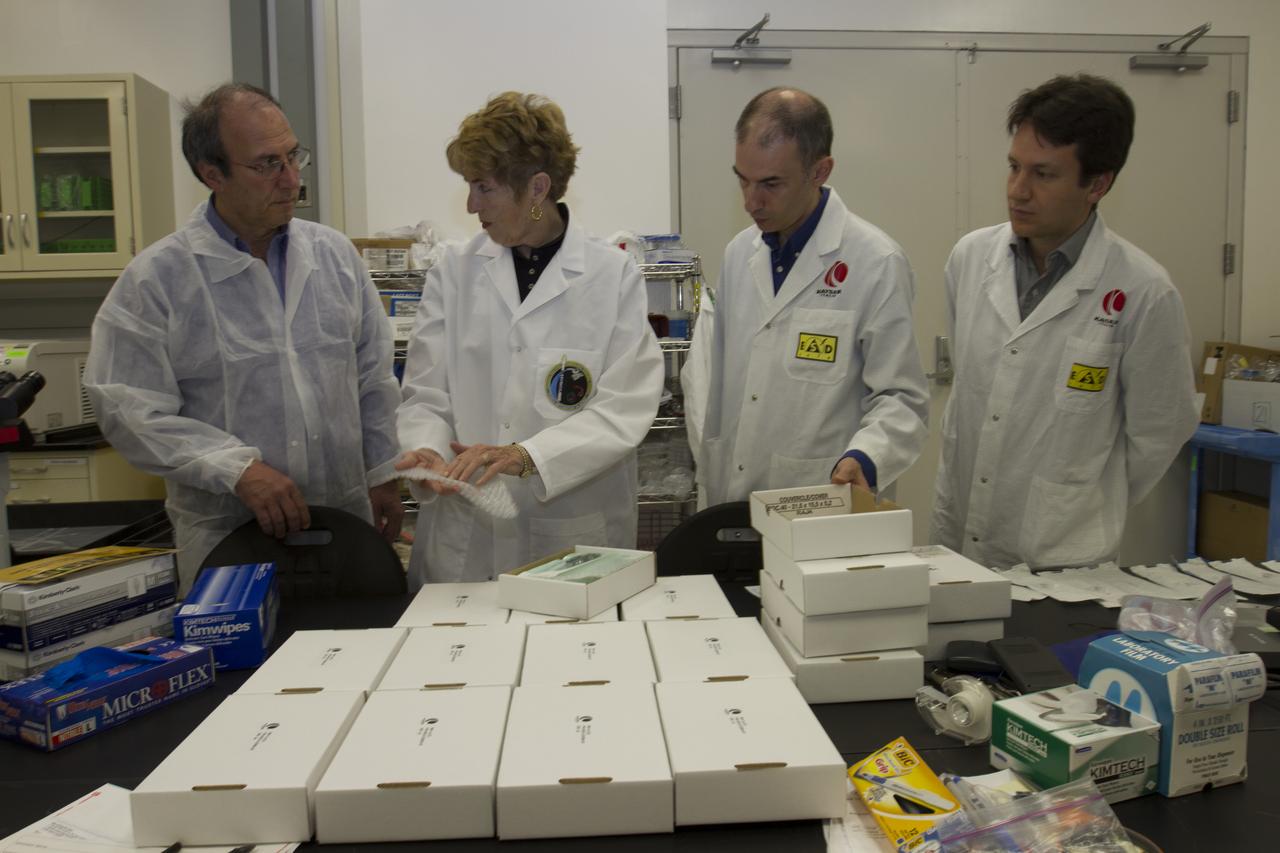
CAPE CANAVERAL, Fla. - Researcher and former NASA payload specialist Millie Hughes-Fulford, of the Hughes-Fulford Laboratory, San Francisco, Calif., accepts the European Space Agency ESA T-cell experiment flight units being handed over in a Space Station Processing Facility laboratory at NASA's Kennedy Space Center in Florida. From left are Raimondo Fortezza of ESA, Hughes-Fulford, and Pier Luigi Ganga and Fabio Creati of Kayser Italia, manufacturer of the hardware. The immunology experiment will launch on SpaceX-3 and focus on the effects of microgravity on early T-cell signaling pathways. Current work aims to identify and compare the gene expression of microRNAs miRNAs during T-cell activation under normal gravity and in microgravity, and compare those patterns to changes seen in aging populations. The experiment will be the first flown on SpaceX funded by the National Institutes of Health. Dr. Hughes-Fulford flew aboard space shuttle mission STS-40 in June 1991, the first Spacelab mission dedicated to biomedical studies. For more information on the T-cell experiment, visit http://hughesfulfordlab.com and http://www.nasa.gov/ames/research/space-biosciences/t-cell-activation-in-aging-spacex-3/. Photo credit: NASA/Cory Huston
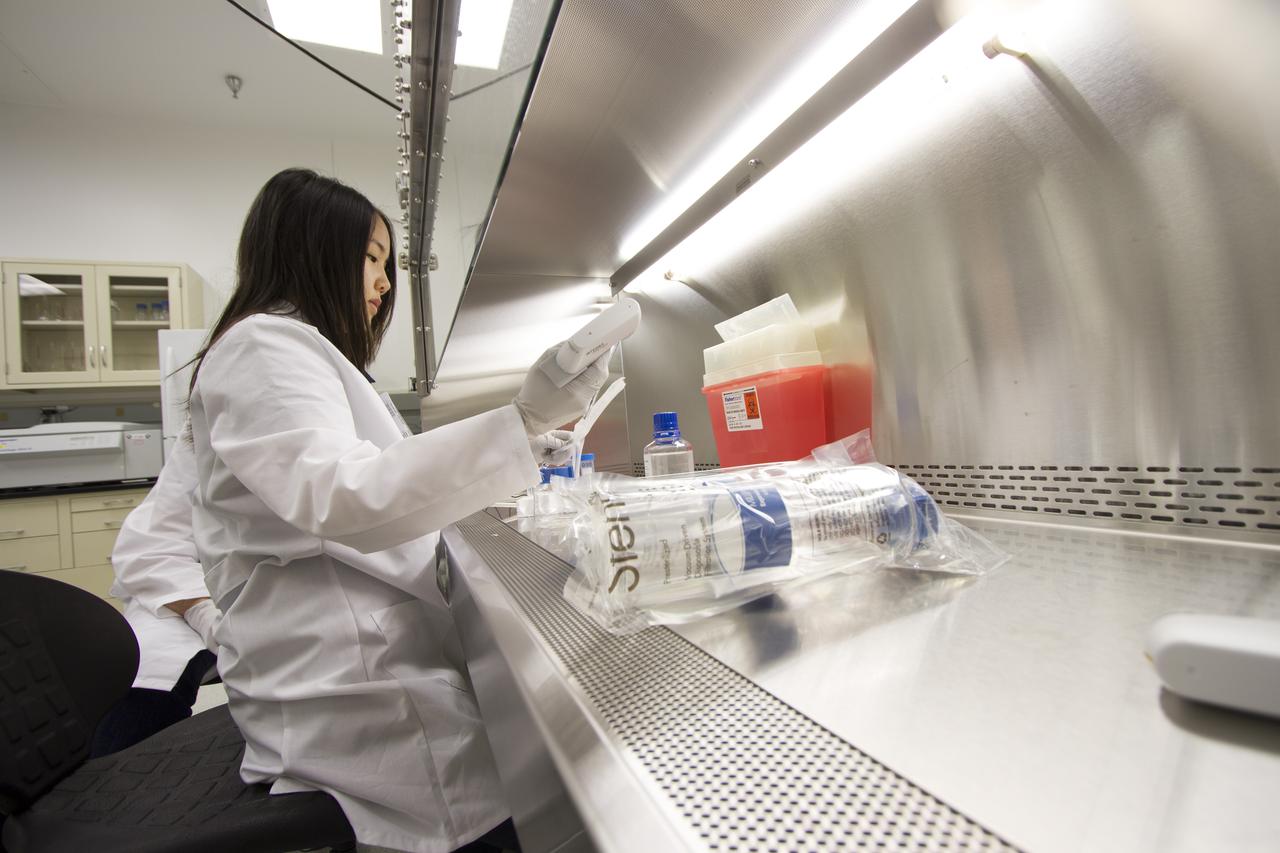
CAPE CANAVERAL, Fla. - T-cell science team member Miya Yoshida, of the Hughes-Fulford Laboratory in San Francisco, Calif., works in a biosafety hood during preflight experiment preparations in the Space Station Processing Facility at NASA's Kennedy Space Center in Florida. The immunology experiment will launch on SpaceX-3 and focus on the effects of microgravity on early T-cell signaling pathways. Current work aims to identify and compare the gene expression of microRNAs miRNAs during T-cell activation under normal gravity and in microgravity, and compare those patterns to changes seen in aging populations. The experiment will be the first flown on SpaceX funded by the National Institutes of Health. Dr. Hughes-Fulford flew aboard space shuttle mission STS-40 in June 1991, the first Spacelab mission dedicated to biomedical studies. For more information on the T-cell experiment, visit http://hughesfulfordlab.com and http://www.nasa.gov/ames/research/space-biosciences/t-cell-activation-in-aging-spacex-3/. Photo credit: NASA/Cory Huston
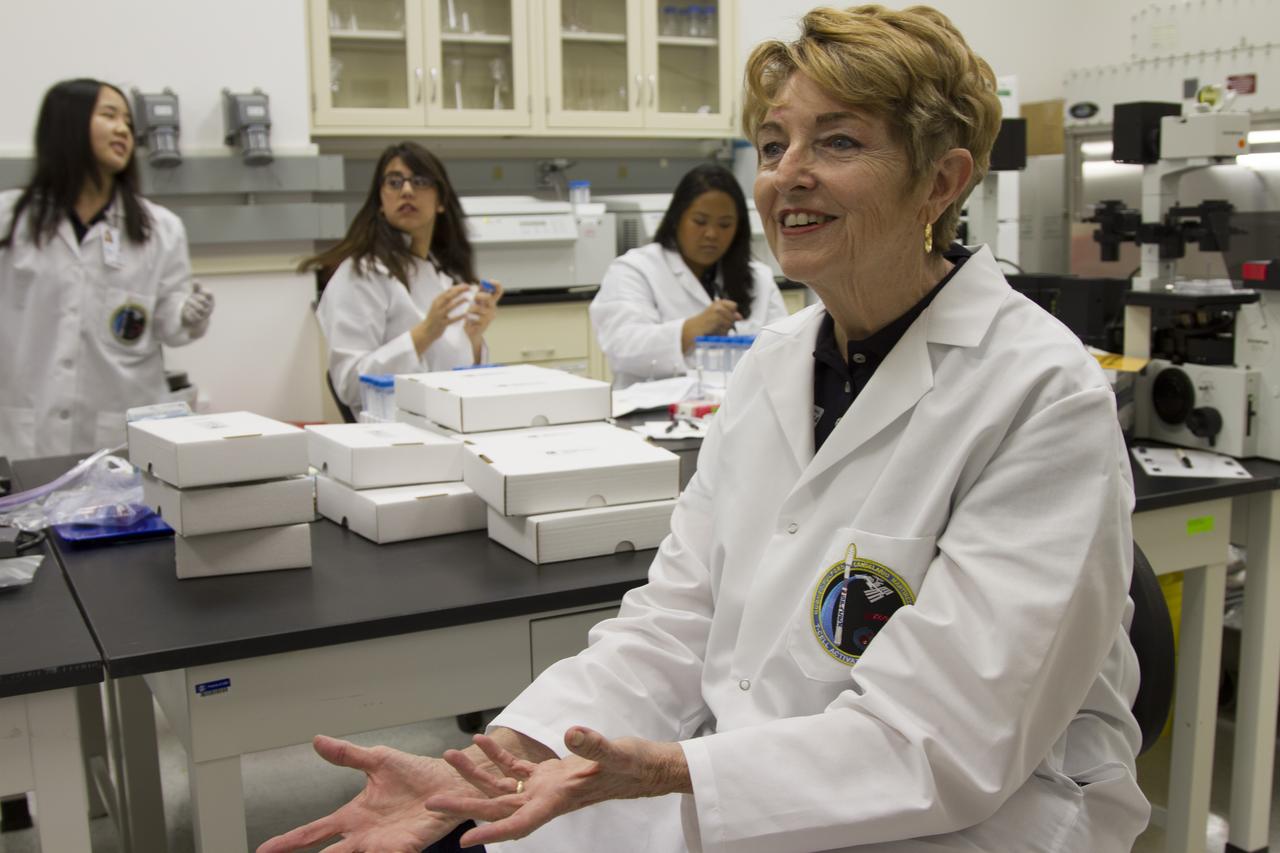
CAPE CANAVERAL, Fla. - Researcher and principal investigator Dr. Millie Hughes-Fulford, of the Hughes-Fulford Laboratory, San Francisco, Calif., discusses her laboratory's T-cell experiment and the impact the research may have on aging adults and their immune systems with an interviewer in the Space Station Processing Facility. From left, T-cell science team members Miya Yoshida, Emily Martinez and Tara Candelario are at work preparing for launch in the background. The immunology experiment will launch on SpaceX-3 and focus on the effects of microgravity on early T-cell signaling pathways. Current work aims to identify and compare the gene expression of microRNAs miRNAs during T-cell activation under normal gravity and in microgravity, and compare those patterns to changes seen in aging populations. The experiment will be the first flown on SpaceX funded by the National Institutes of Health. Dr. Hughes-Fulford flew aboard space shuttle mission STS-40 in June 1991, the first Spacelab mission dedicated to biomedical studies. For more information on the T-cell experiment, visit http://hughesfulfordlab.com and http://www.nasa.gov/ames/research/space-biosciences/t-cell-activation-in-aging-spacex-3/. Photo credit: NASA/Cory Huston
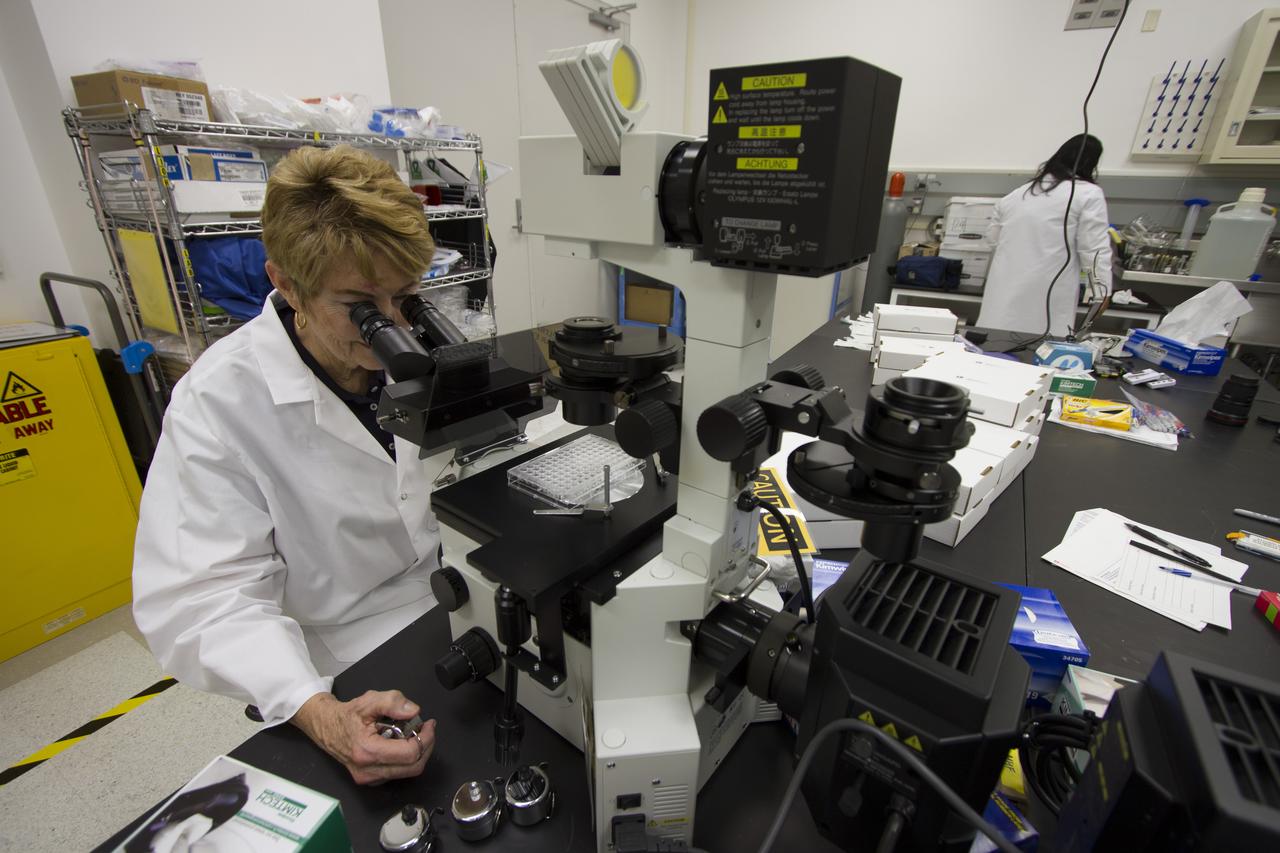
CAPE CANAVERAL, Fla. - Researcher and principal investigator Dr. Millie Hughes-Fulford, of the Hughes-Fulford Laboratory, San Francisco, Calif., at the microscope, examines T-cells as part of preflight experiment operations in the Space Station Processing Facility at NASA's Kennedy Space Center in Florida. The immunology experiment will launch on SpaceX-3 and focus on the effects of microgravity on early T-cell signaling pathways. Current work aims to identify and compare the gene expression of microRNAs miRNAs during T-cell activation under normal gravity and in microgravity, and compare those patterns to changes seen in aging populations. The experiment will be the first flown on SpaceX funded by the National Institutes of Health. Dr. Hughes-Fulford flew aboard space shuttle mission STS-40 in June 1991, the first Spacelab mission dedicated to biomedical studies. For more information on the T-cell experiment, visit http://hughesfulfordlab.com and http://www.nasa.gov/ames/research/space-biosciences/t-cell-activation-in-aging-spacex-3/. Photo credit: NASA/Cory Huston
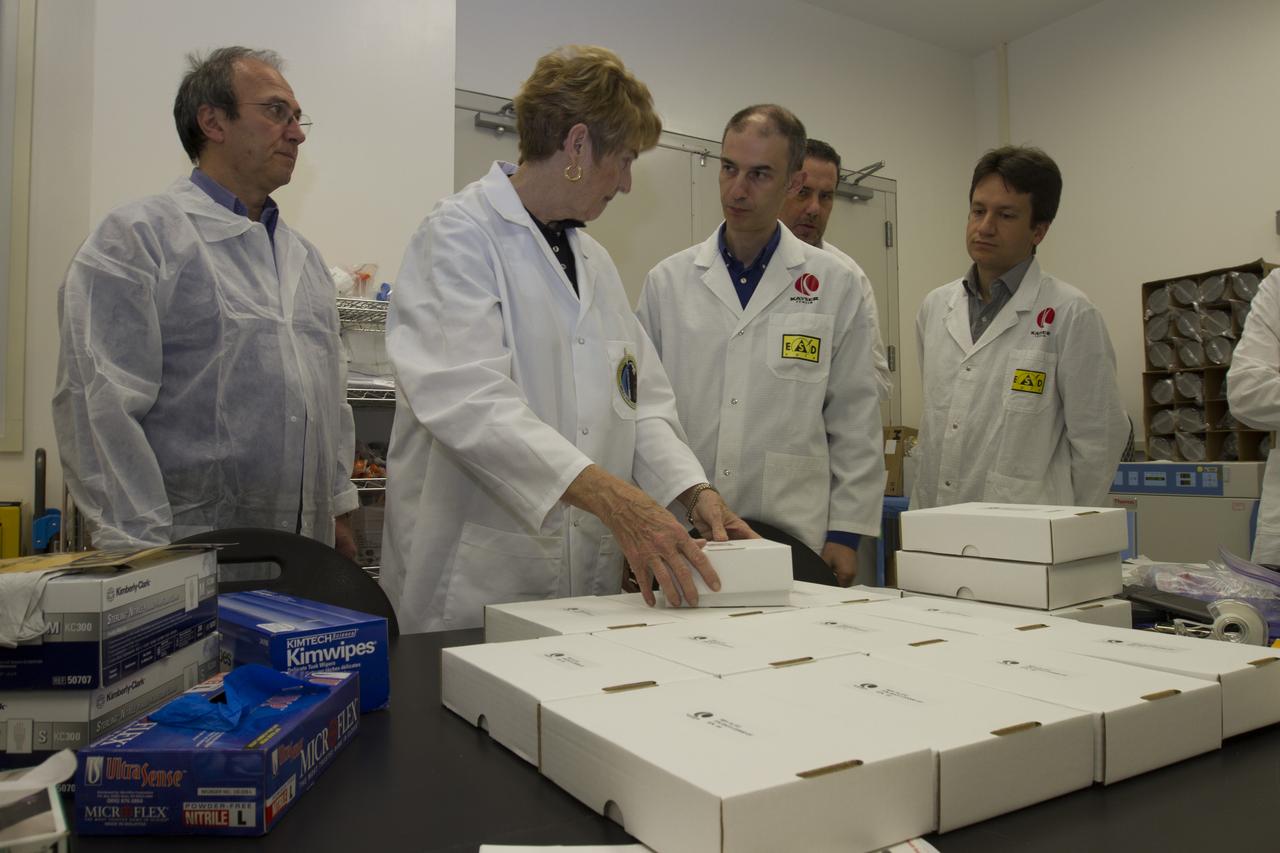
CAPE CANAVERAL, Fla. - Researcher and former NASA payload specialist Millie Hughes-Fulford, of the Hughes-Fulford Laboratory, San Francisco, Calif., accepts the European Space Agency ESA T-cell experiment flight units being handed over in a Space Station Processing Facility laboratory at NASA's Kennedy Space Center in Florida. From left are Raimondo Fortezza of ESA, Hughes-Fulford, and Pier Luigi Ganga, Marco Vukich and Fabio Creati of Kayser Italia, manufacturer of the hardware. The immunology experiment will launch on SpaceX-3 and focus on the effects of microgravity on early T-cell signaling pathways. Current work aims to identify and compare the gene expression of microRNAs miRNAs during T-cell activation under normal gravity and in microgravity, and compare those patterns to changes seen in aging populations. The experiment will be the first flown on SpaceX funded by the National Institutes of Health. Dr. Hughes-Fulford flew aboard space shuttle mission STS-40 in June 1991, the first Spacelab mission dedicated to biomedical studies. For more information on the T-cell experiment, visit http://hughesfulfordlab.com and http://www.nasa.gov/ames/research/space-biosciences/t-cell-activation-in-aging-spacex-3/. Photo credit: NASA/Cory Huston
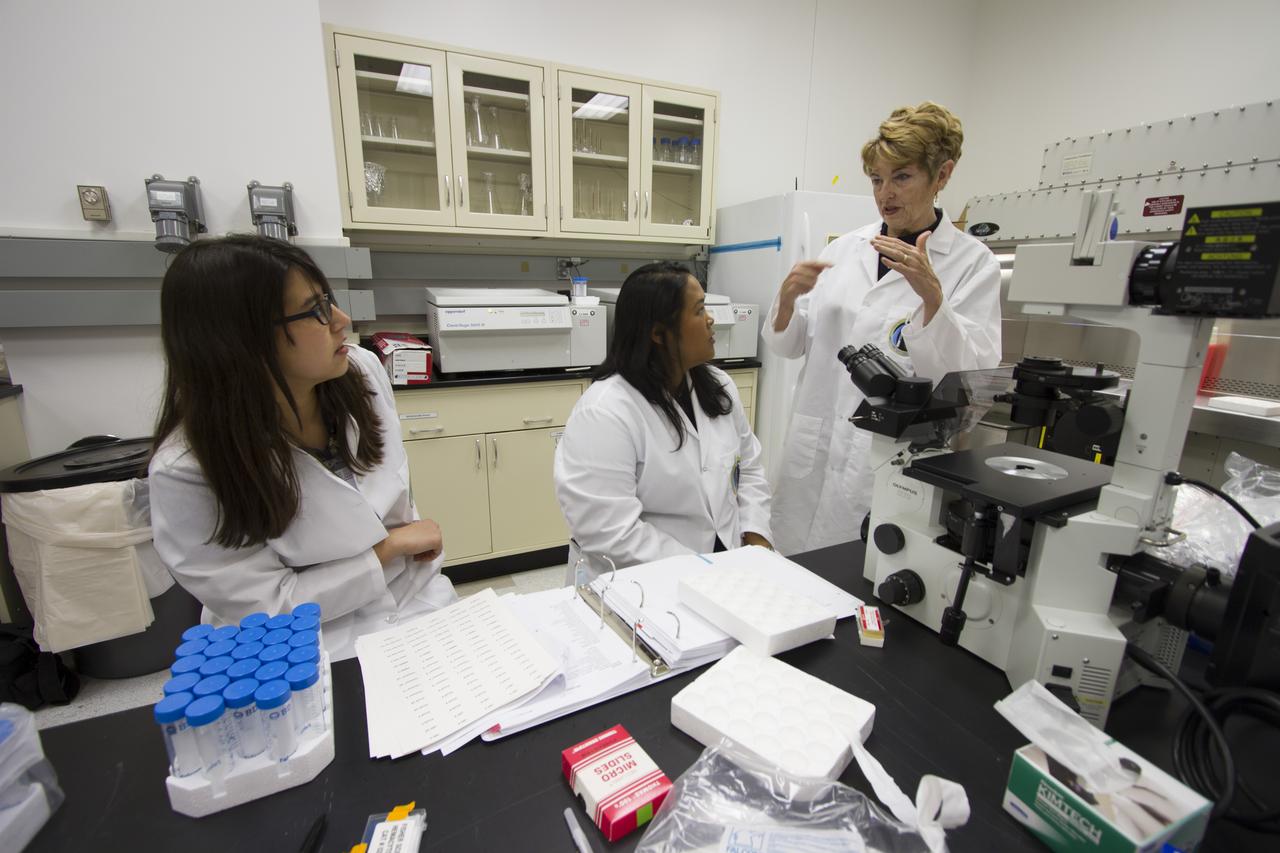
CAPE CANAVERAL, Fla. - Researcher and principal investigator Dr. Millie Hughes-Fulford of the Hughes-Fulford Laboratory, San Francisco, Calif., at right, plans preflight and post-flight experiment operations with T-cell science team members Emily Martinez, left, and Tara Candelario in the Space Station Processing Facility at NASA's Kennedy Space Center in Florida. The immunology experiment will launch on SpaceX-3 and focus on the effects of microgravity on early T-cell signaling pathways. Current work aims to identify and compare the gene expression of microRNAs miRNAs during T-cell activation under normal gravity and in microgravity, and compare those patterns to changes seen in aging populations. The experiment will be the first flown on SpaceX funded by the National Institutes of Health. Dr. Hughes-Fulford flew aboard space shuttle mission STS-40 in June 1991, the first Spacelab mission dedicated to biomedical studies. For more information on the T-cell experiment, visit http://hughesfulfordlab.com and http://www.nasa.gov/ames/research/space-biosciences/t-cell-activation-in-aging-spacex-3/. Photo credit: NASA/Cory Huston
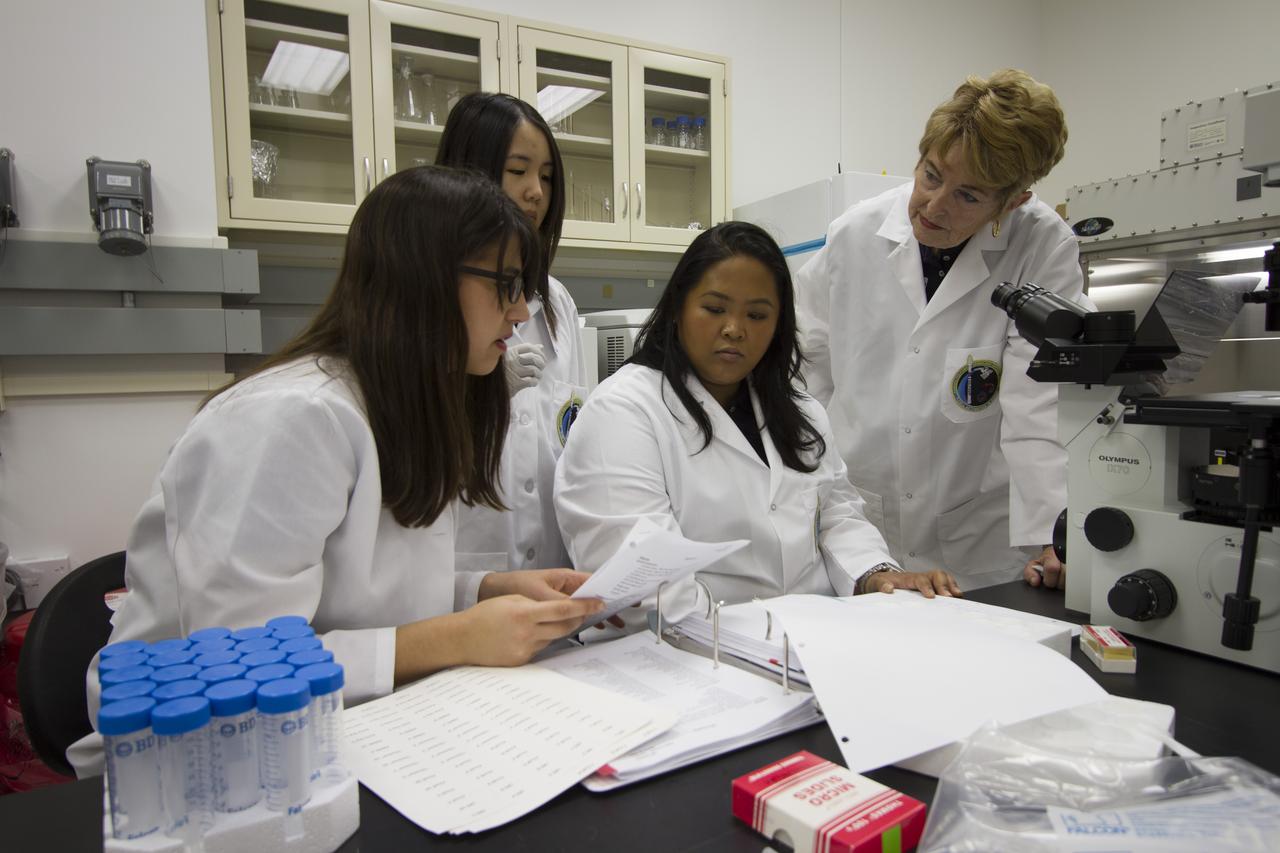
CAPE CANAVERAL, Fla. - From left, T-cell science team members Emily Martinez, Miya Yoshida and Tara Candelario, of the Hughes-Fulford Laboratory, San Francisco, Calif., discuss preflight and post-flight experiment operations with researcher and principal investigator Dr. Millie Hughes-Fulford in the Space Station Processing Facility at NASA's Kennedy Space Center in Florida. The immunology experiment will launch on SpaceX-3 and focus on the effects of microgravity on early T-cell signaling pathways. Current work aims to identify and compare the gene expression of microRNAs miRNAs during T-cell activation under normal gravity and in microgravity, and compare those patterns to changes seen in aging populations. The experiment will be the first flown on SpaceX funded by the National Institutes of Health. Dr. Hughes-Fulford flew aboard space shuttle mission STS-40 in June 1991, the first Spacelab mission dedicated to biomedical studies. For more information on the T-cell experiment, visit http://hughesfulfordlab.com and http://www.nasa.gov/ames/research/space-biosciences/t-cell-activation-in-aging-spacex-3/. Photo credit: NASA/Cory Huston
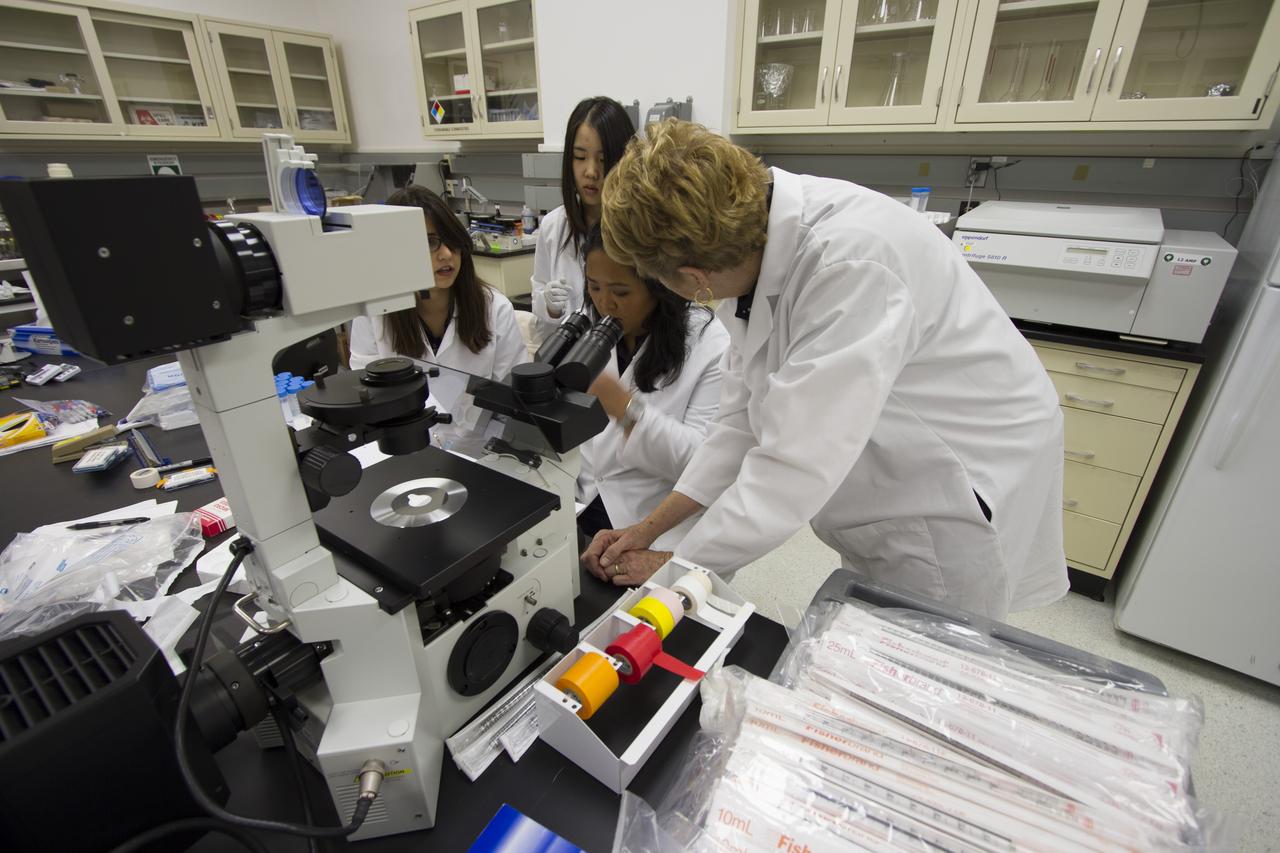
CAPE CANAVERAL, Fla. - T-cell science team member Tara Candelario of the Hughes-Fulford Laboratory, San Francisco, Calif., at the microscope, discusses preflight and post-flight experiment operations with researcher and principal investigator Dr. Millie Hughes-Fulford in the Space Station Processing Facility at NASA's Kennedy Space Center in Florida as T-cell science team members Emily Martinez, left, and Miya Yoshida look on. The immunology experiment will launch on SpaceX-3 and focus on the effects of microgravity on early T-cell signaling pathways. Current work aims to identify and compare the gene expression of microRNAs miRNAs during T-cell activation under normal gravity and in microgravity, and compare those patterns to changes seen in aging populations. The experiment will be the first flown on SpaceX funded by the National Institutes of Health. Dr. Hughes-Fulford flew aboard space shuttle mission STS-40 in June 1991, the first Spacelab mission dedicated to biomedical studies. For more information on the T-cell experiment, visit http://hughesfulfordlab.com and http://www.nasa.gov/ames/research/space-biosciences/t-cell-activation-in-aging-spacex-3/. Photo credit: NASA/Cory Huston
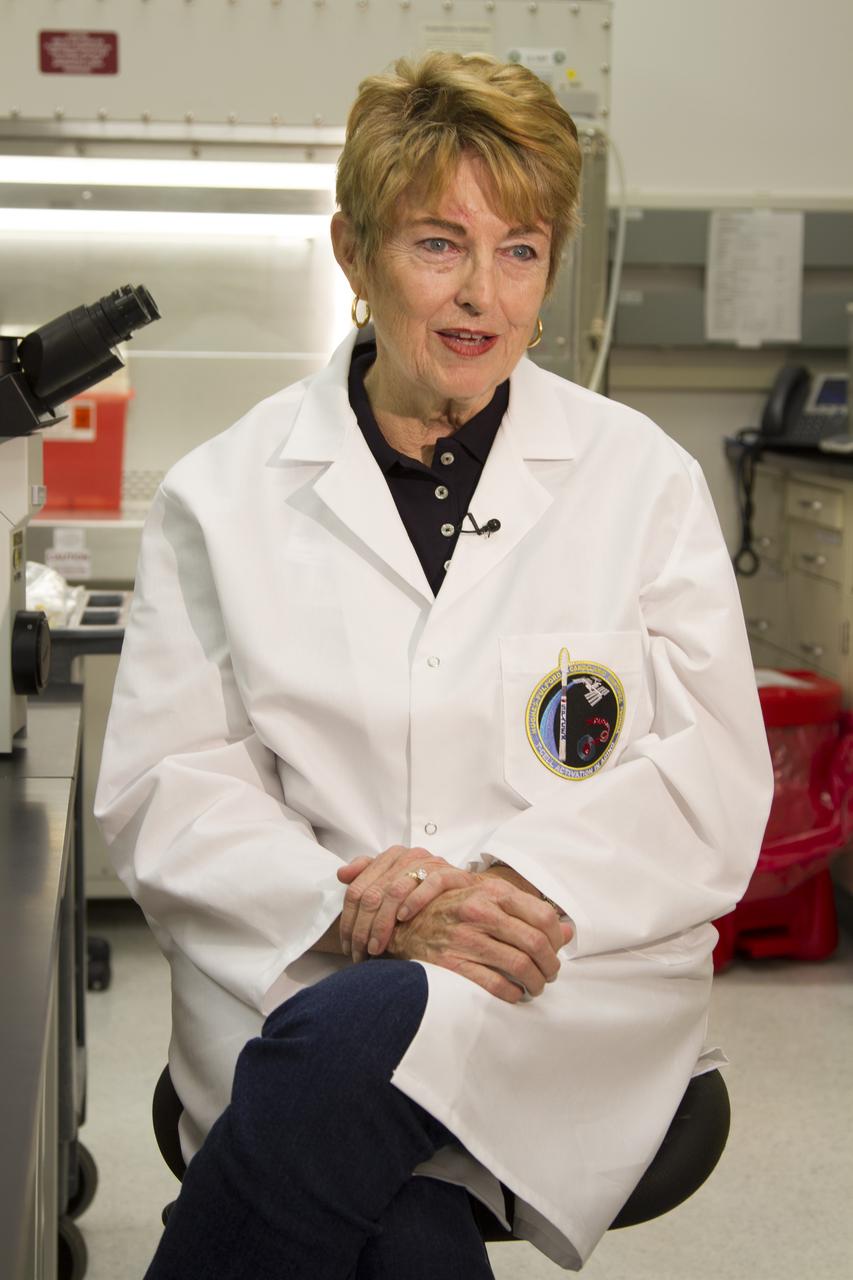
CAPE CANAVERAL, Fla. - Researcher and former NASA payload specialist Millie Hughes-Fulford, of the Hughes-Fulford Laboratory, San Francisco, Calif., discusses her laboratory's T-cell experiment and the impact the research may have on aging adults and their immune systems with an interviewer in the Space Station Processing Facility at NASA's Kennedy Space Center in Florida. The immunology experiment will launch on SpaceX-3 and focus on the effects of microgravity on early T-cell signaling pathways. Current work aims to identify and compare the gene expression of microRNAs miRNAs during T-cell activation under normal gravity and in microgravity, and compare those patterns to changes seen in aging populations. The experiment will be the first flown on SpaceX funded by the National Institutes of Health. Dr. Hughes-Fulford flew aboard space shuttle mission STS-40 in June 1991, the first Spacelab mission dedicated to biomedical studies. For more information on the T-cell experiment, visit http://hughesfulfordlab.com and http://www.nasa.gov/ames/research/space-biosciences/t-cell-activation-in-aging-spacex-3/. Photo credit: NASA/Cory Huston
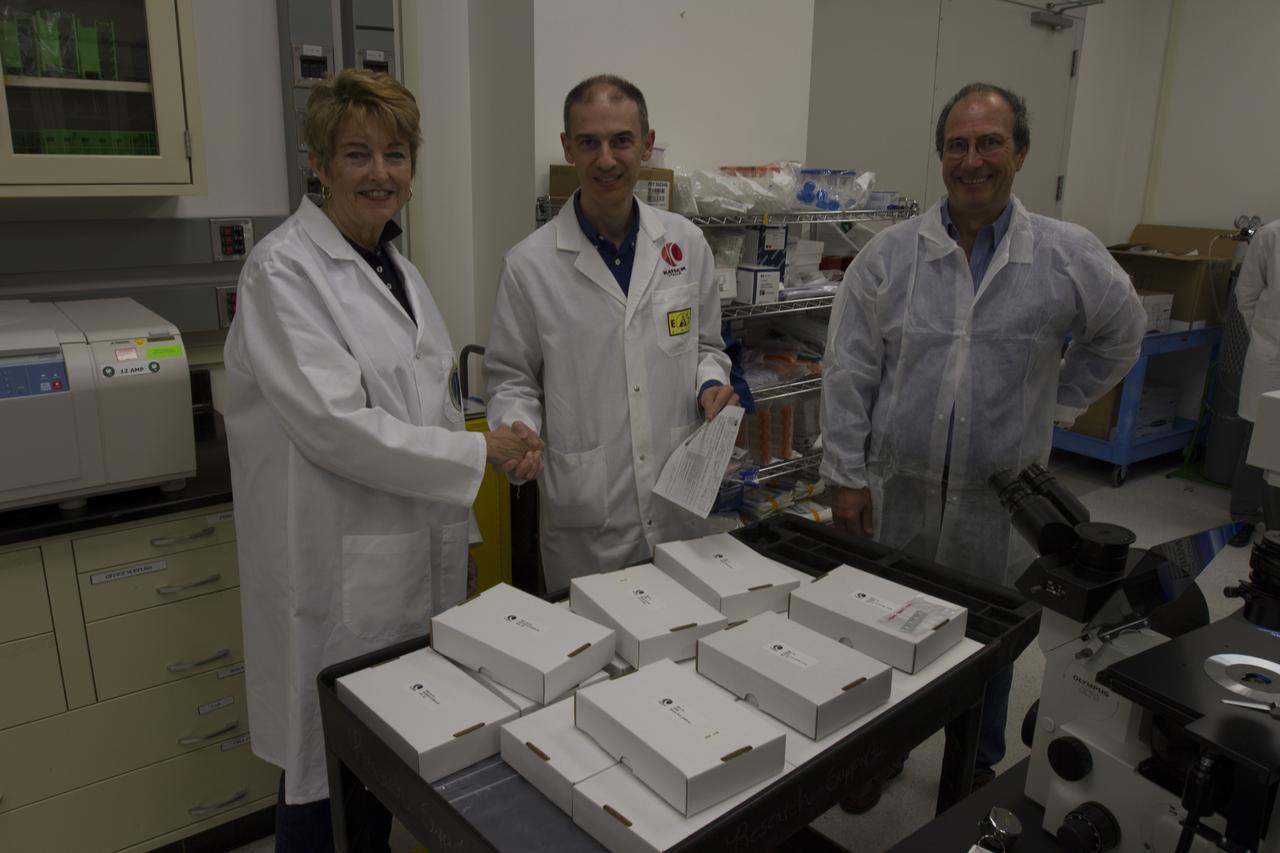
CAPE CANAVERAL, Fla. - Researcher and former NASA payload specialist Millie Hughes-Fulford, of the Hughes-Fulford Laboratory, San Francisco, Calif., accepts the European Space Agency ESA T-cell experiment flight units being handed over in a Space Station Processing Facility laboratory at NASA's Kennedy Space Center in Florida. From left are Hughes-Fulford shaking hands with Pier Luigi Ganga of Kayser Italia, manufacturer of the hardware, with Raimondo Fortezza of ESA looking on. The immunology experiment will launch on SpaceX-3 and focus on the effects of microgravity on early T-cell signaling pathways. Current work aims to identify and compare the gene expression of microRNAs miRNAs during T-cell activation under normal gravity and in microgravity, and compare those patterns to changes seen in aging populations. The experiment will be the first flown on SpaceX funded by the National Institutes of Health. Dr. Hughes-Fulford flew aboard space shuttle mission STS-40 in June 1991, the first Spacelab mission dedicated to biomedical studies. For more information on the T-cell experiment, visit http://hughesfulfordlab.com and http://www.nasa.gov/ames/research/space-biosciences/t-cell-activation-in-aging-spacex-3/. Photo credit: NASA/Cory Huston