jsc2024e055755 (July 25, 2024) -- Location: San Diego Convention Center, San Diego, CA Subject: Coverage of NASA panel Exploring the Moon: the Artemis Generation with NASA’s chief technologist, NASA astronaut Stan Love, and representatives from the Artemis campaign and Gateway lunar space station. Photo Credit: NASA
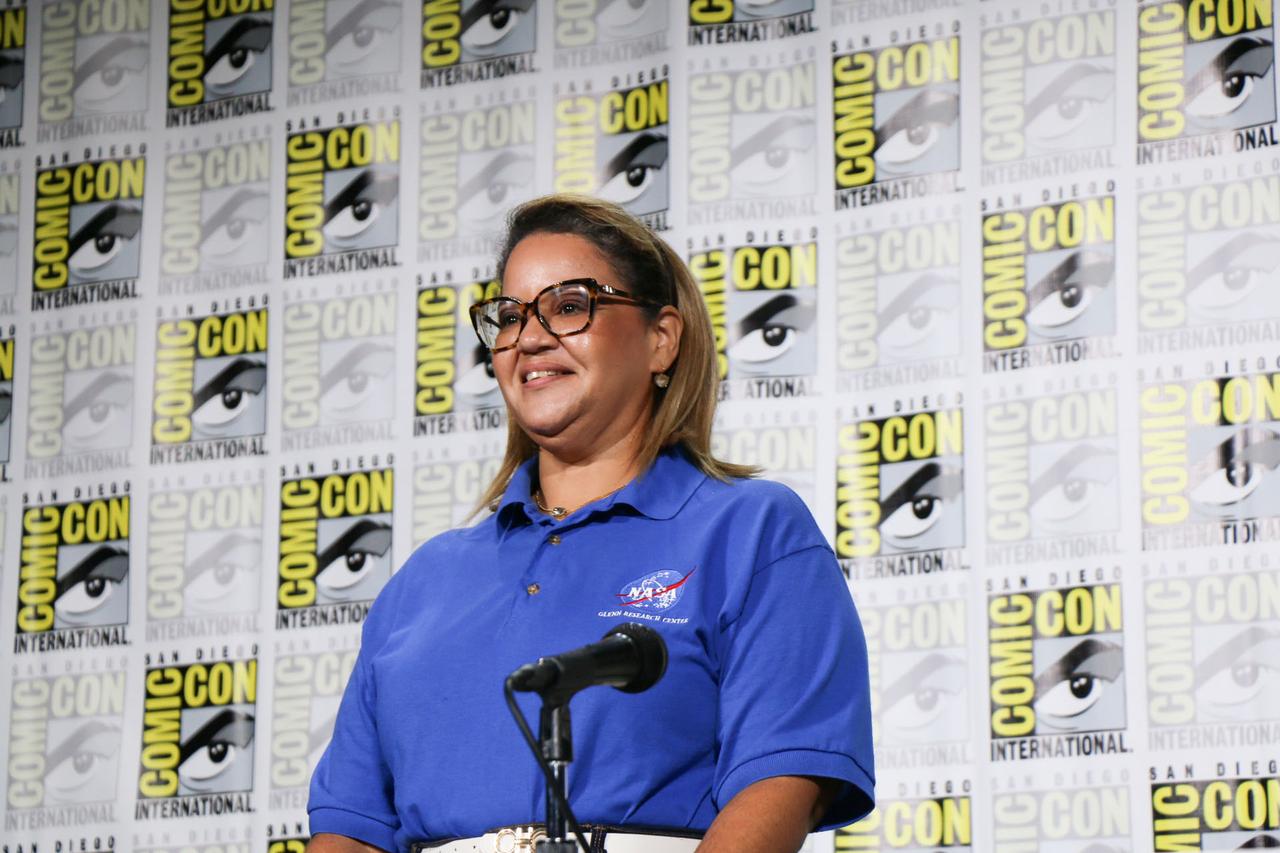
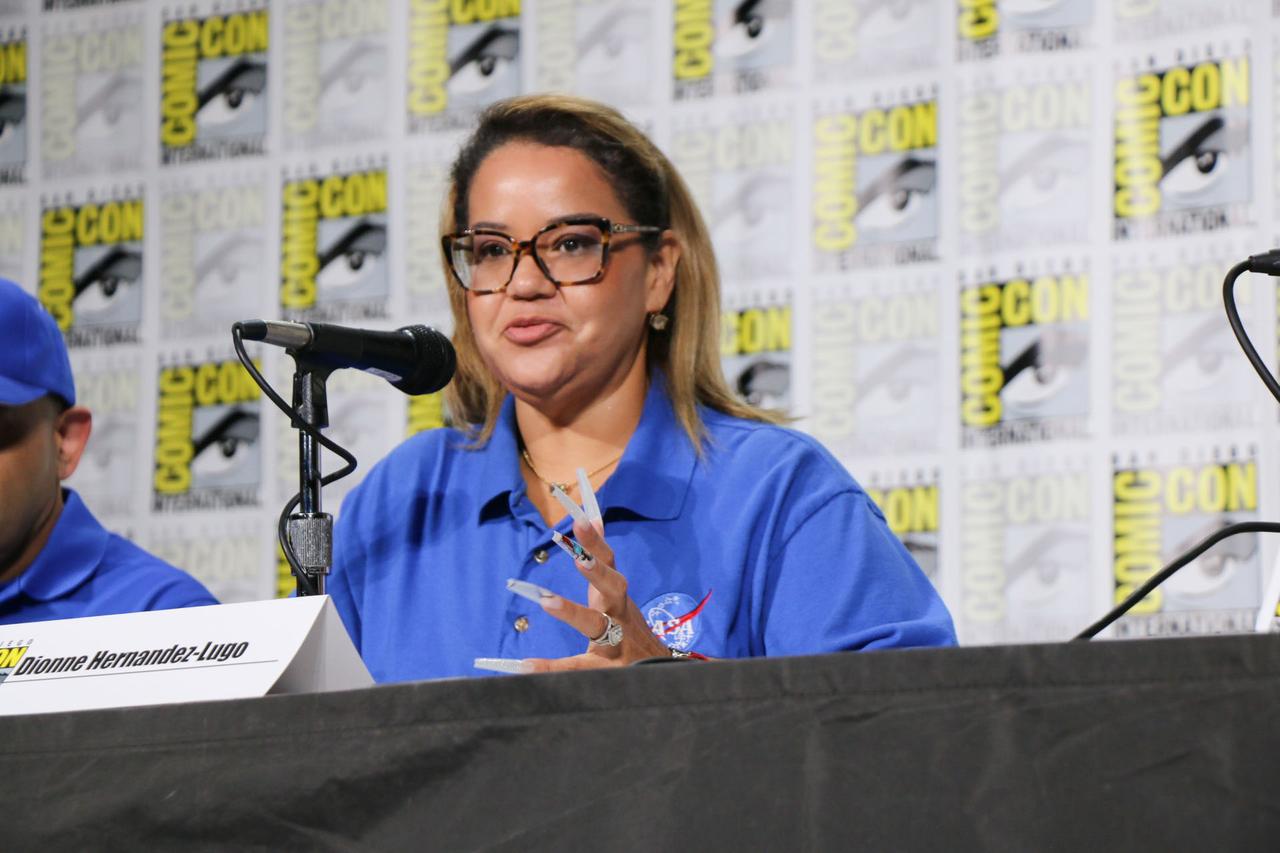
jsc2024e055753 (July 25, 2024) -- Dionne Hernandez-Lugo of the Gateway Program speaks about the pivotal role Gateway will play in the Artemis missions during the "Exploring the Moon: The Artemis Generation" panel at San Diego Comic-Con 2024. Photo Credit: NASA

jsc2024e055754 (July 25, 2024) -- Dionne Hernandez-Lugo of the Gateway Program speaks about the pivotal role Gateway will play in the Artemis missions during the "Exploring the Moon: The Artemis Generation" panel at San Diego Comic-Con 2024. Photo Credit: NASA
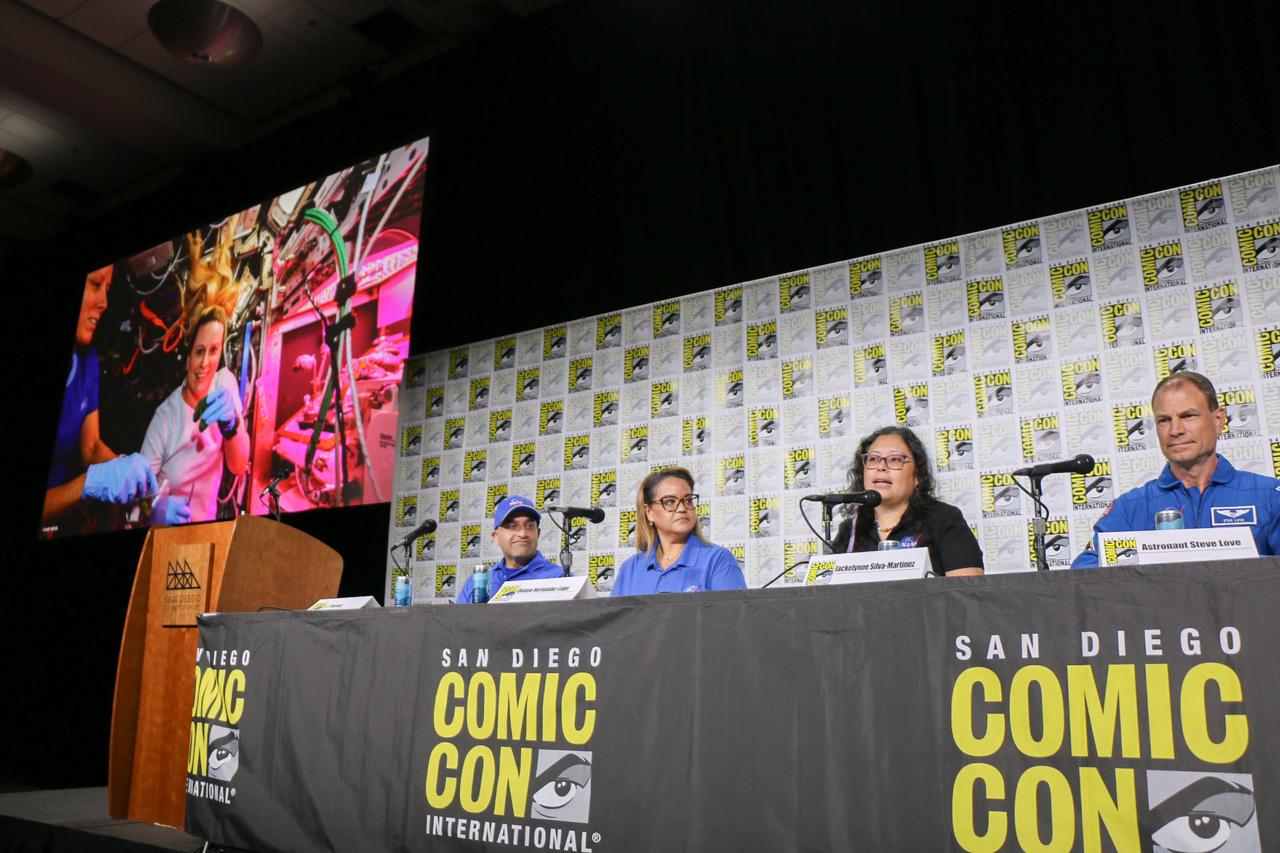
jsc2024e055756 (July 25, 2024) -- NASA panelists Dionne Hernandez-Lugo, Jackelynne Silva-Martinez, A.C. Charania, and Astronaut Stan Love discuss the Artemis program and Gateway's role in lunar exploration during the "Exploring the Moon: The Artemis Generation" panel at San Diego Comic-Con 2024. The event captivated a full house of space exploration enthusiasts. Photo Credit: NASA
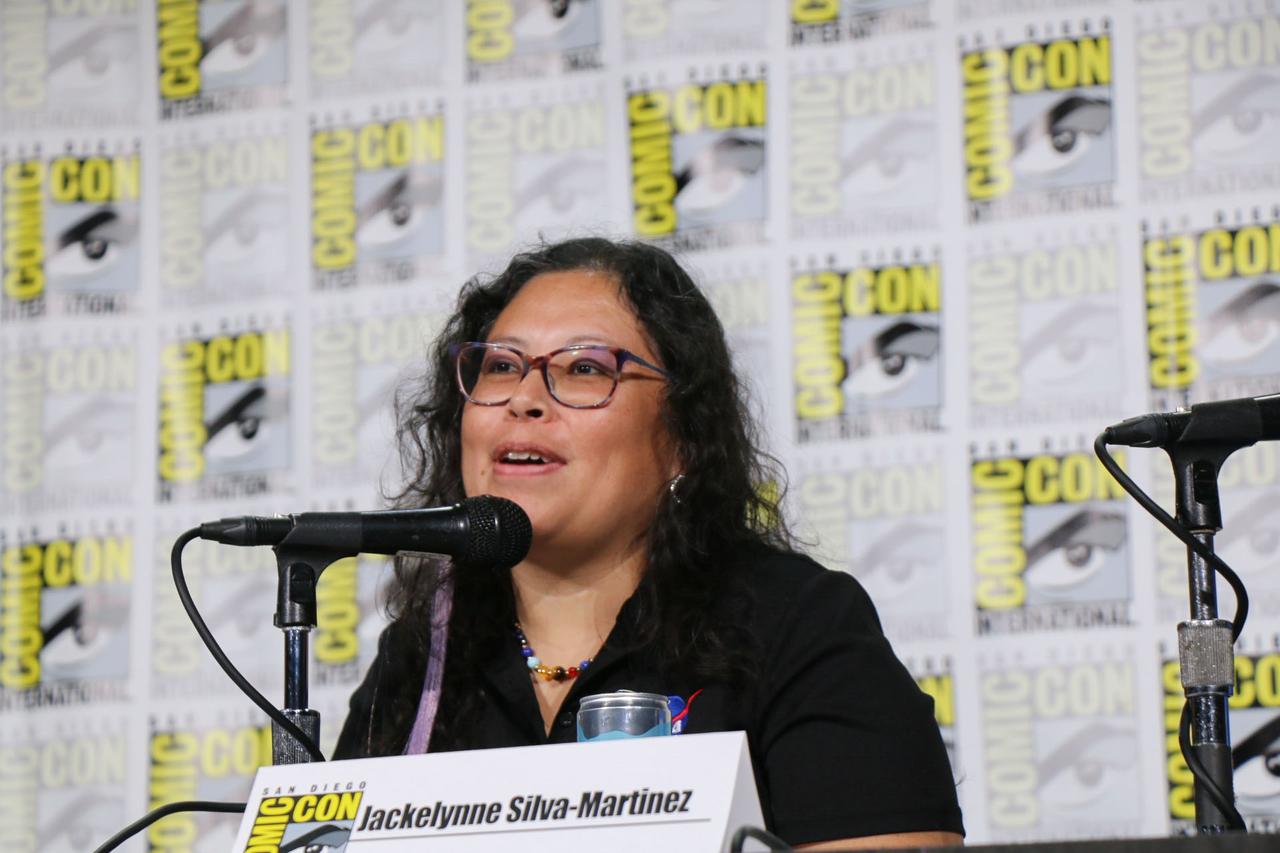
jsc2024e055757 (July 25, 2024) -- Jackelynne Silva-Martinez of NASA Human Health and Performance shares insights on the health and safety measures for astronauts in the Artemis missions during the "Exploring the Moon: The Artemis Generation" panel at San Diego Comic-Con 2024. Photo Credit: NASA
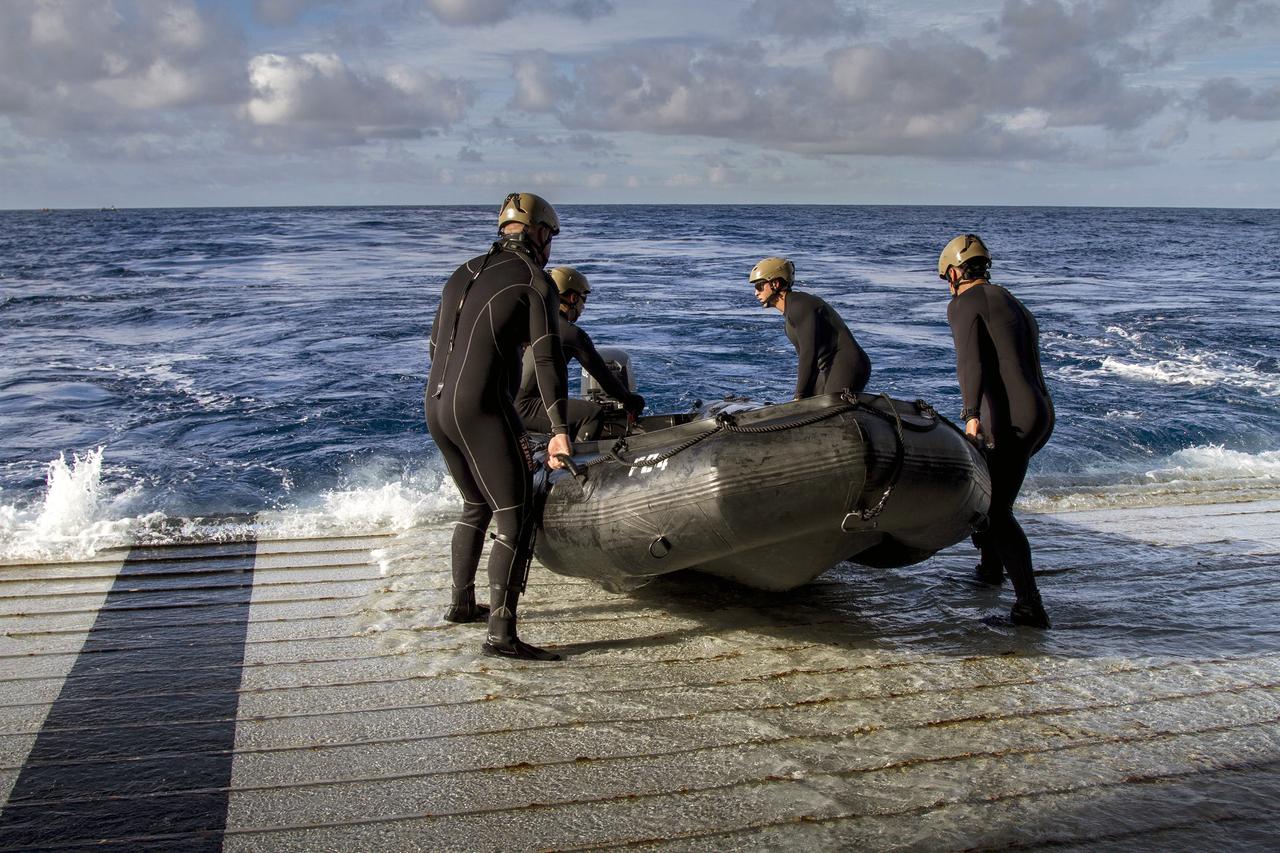
SAN DIEGO, Calif. – On the third day of preparations for recovery of Orion after its splashdown in the Pacific Ocean, U.S. Navy Divers prepare to embark from the well deck of the USS Anchorage in a rigid hull Zodiac boat about 600 miles off the coast of Baja, California. NASA, Lockheed Martin and U.S. Navy personnel are preparing for recovery of the crew module, forward bay cover and parachutes on its return from space and splashdown in the Pacific Ocean. The Ground Systems Development and Operations Program is leading the recovery efforts. The first unpiloted flight test of Orion is scheduled to launch Dec. 4 atop a United Launch Alliance Delta IV Heavy rocket. During its two-orbit, 4.5-hour flight, Orion will venture 3,600 miles in altitude and travel nearly 60,000 miles before returning to Earth for a splashdown in the Pacific Ocean. For more information, visit http://www.nasa.gov/orion. Photo credit: NASA/Cory Huston
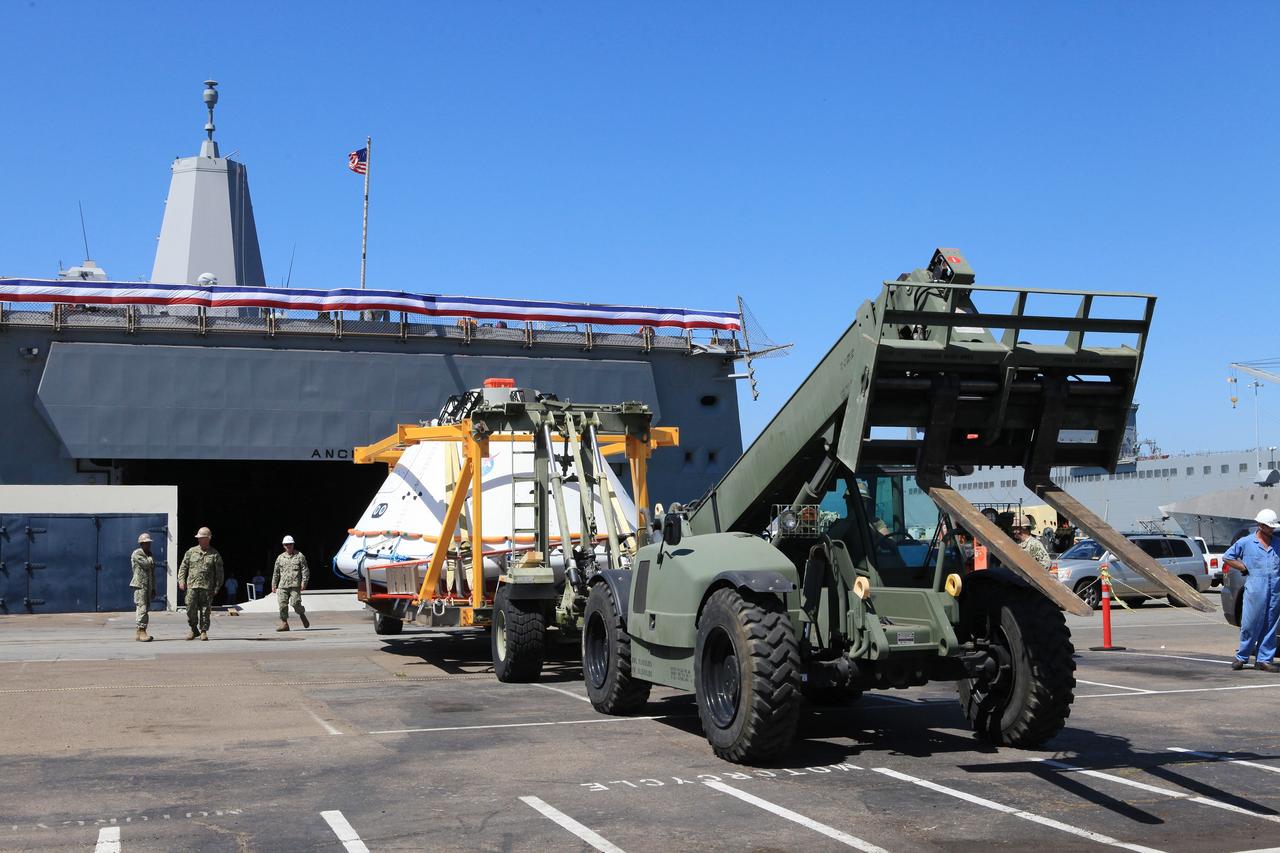
SAN DIEGO, Calif. – The USS Anchorage has docked at Naval Base San Diego after completion of the Orion Underway Recovery Test 2 in the Pacific Ocean. The Orion boilerplate test vehicle has been offloaded from the well deck of the ship. NASA, Lockheed Martin and the U.S. Navy conducted the test on the Orion boilerplate test vehicle to prepare for recovery of the Orion crew module on its return from a deep space mission. The underway recovery test allowed the team to demonstrate and evaluate the recovery processes, procedures, new hardware and personnel in open waters. The Ground Systems Development and Operations Program conducted the underway recovery test. Orion is the exploration spacecraft designed to carry astronauts to destinations not yet explored by humans, including an asteroid and Mars. It will have emergency abort capability, sustain the crew during space travel and provide safe re-entry from deep space return velocities. The first unpiloted test flight of the Orion is scheduled to launch in 2014 atop a Delta IV rocket and in 2017 on NASA’s Space Launch System rocket. For more information, visit http://www.nasa.gov/orion. Photo credit: NASA/Kim Shiflett
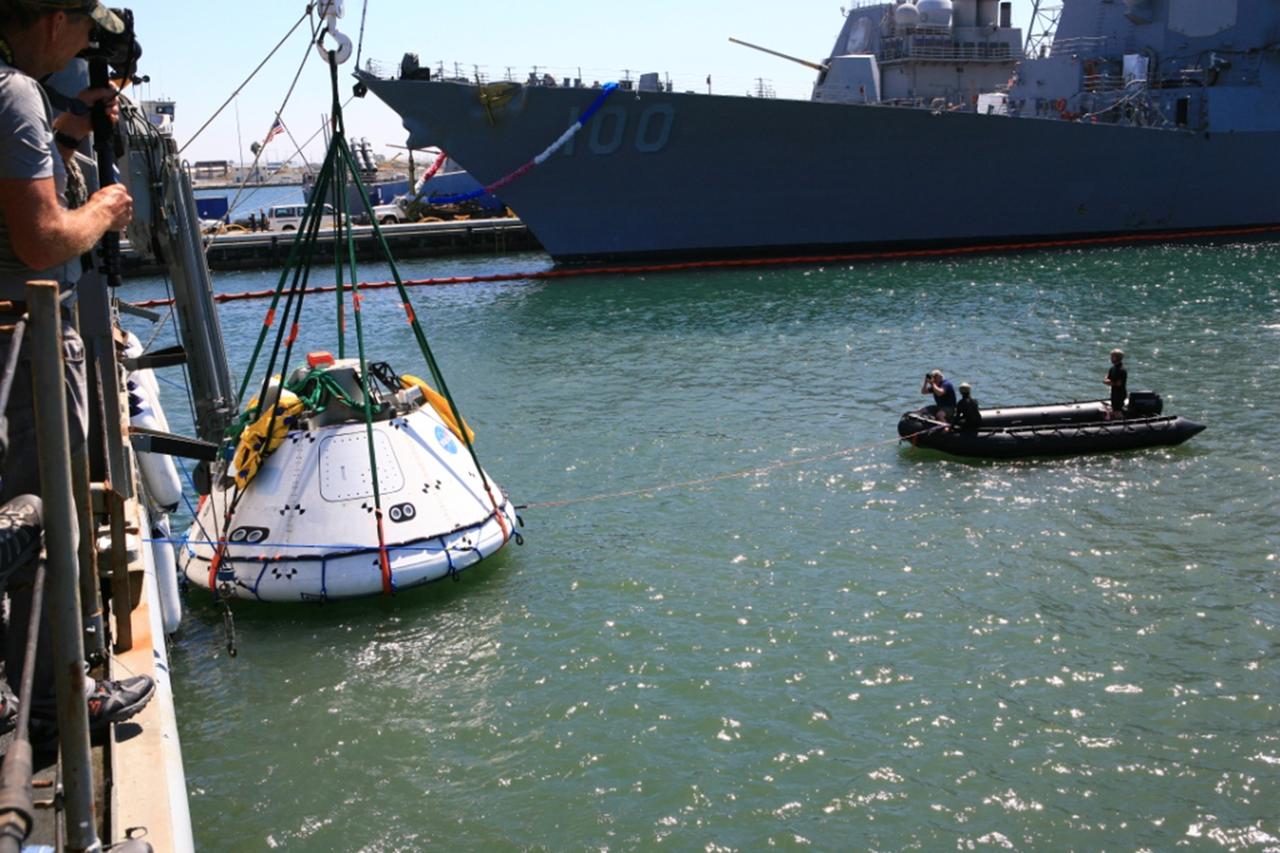
SAN DIEGO, Calif. – The Orion boilerplate test vehicle has been lowered into the water with a stationary crane from the USS Salvor, a safeguard-class rescue and salvage ship, during the first day of Underway Recovery Test 4A at Naval Base San Diego in California. U.S. Navy personnel in a Zodiac boat practice procedures to tether the test vehicle. The ship will head out to sea for four days to test crew module crane recovery operations. NASA, Lockheed Martin and the U.S. Navy are conducting the test to prepare for recovery of the Orion crew module on its return from a deep space mission. The underway recovery test will allow the teams to demonstrate and evaluate the recovery processes, procedures, new hardware and personnel in open waters. The Ground Systems Development and Operations Program is conducting the underway recovery test. Orion is the exploration spacecraft designed to carry astronauts to destinations not yet explored by humans, including an asteroid and Mars. It will have emergency abort capability, sustain the crew during space travel and provide safe re-entry from deep space return velocities. The first unpiloted test flight of the Orion is scheduled to launch in December 2014 atop a United Launch Alliance Delta IV rocket and in 2018 on NASA’s Space Launch System rocket. For more information, visit http://www.nasa.gov/orion. Photo credit: Kim Shiflett
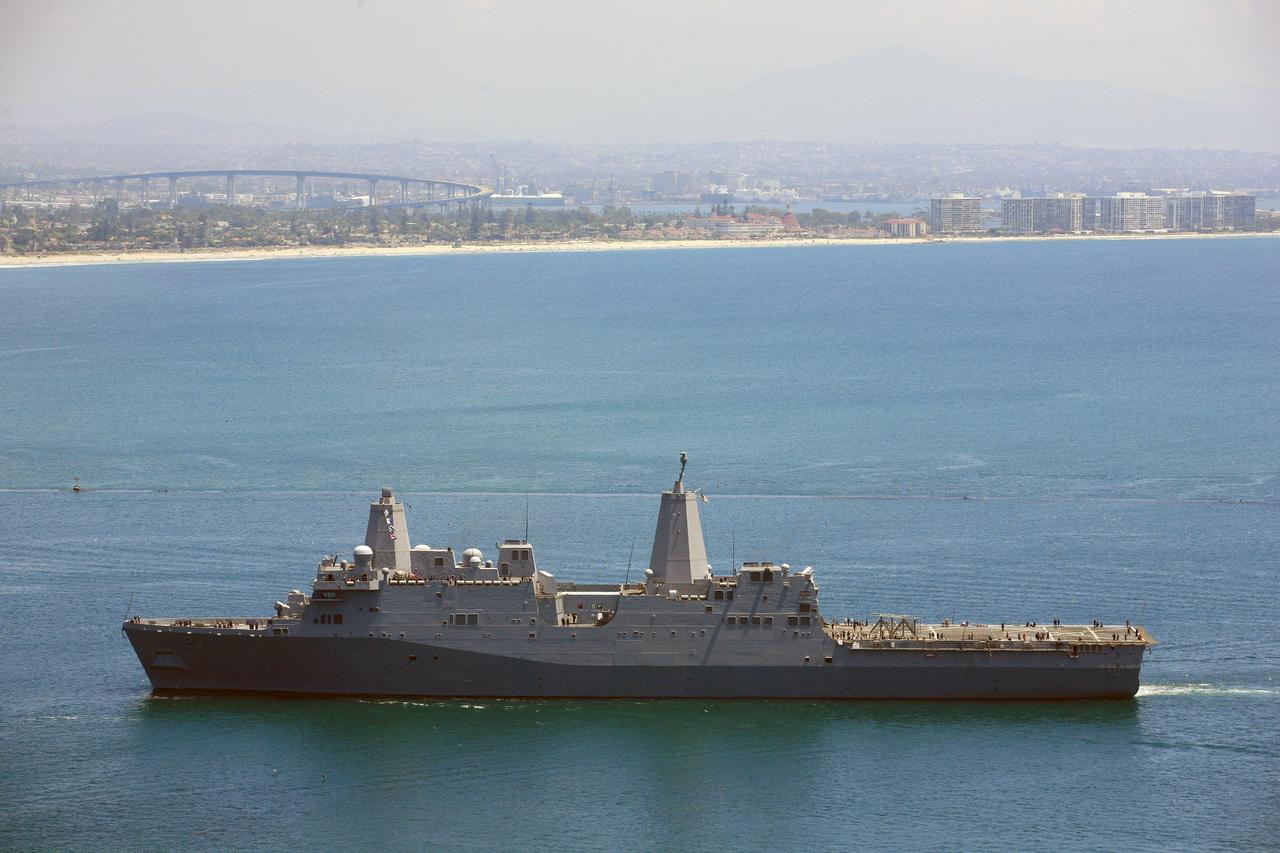
SAN DIEGO, Calif. – The USS Anchorage returns to the Naval Base San Diego after completion of the Orion Underway Recovery Test 2 in the Pacific Ocean. NASA, Lockheed Martin and the U.S. Navy conducted the test on the Orion boilerplate test vehicle to prepare for recovery of the Orion crew module on its return from a deep space mission. The underway recovery test allowed the team to demonstrate and evaluate the recovery processes, procedures, new hardware and personnel in open waters. The Ground Systems Development and Operations Program conducted the underway recovery test. Orion is the exploration spacecraft designed to carry astronauts to destinations not yet explored by humans, including an asteroid and Mars. It will have emergency abort capability, sustain the crew during space travel and provide safe re-entry from deep space return velocities. The first unpiloted test flight of the Orion is scheduled to launch in 2014 atop a Delta IV rocket and in 2017 on NASA’s Space Launch System rocket. For more information, visit http://www.nasa.gov/orion. Photo credit: NASA/Kim Shiflett
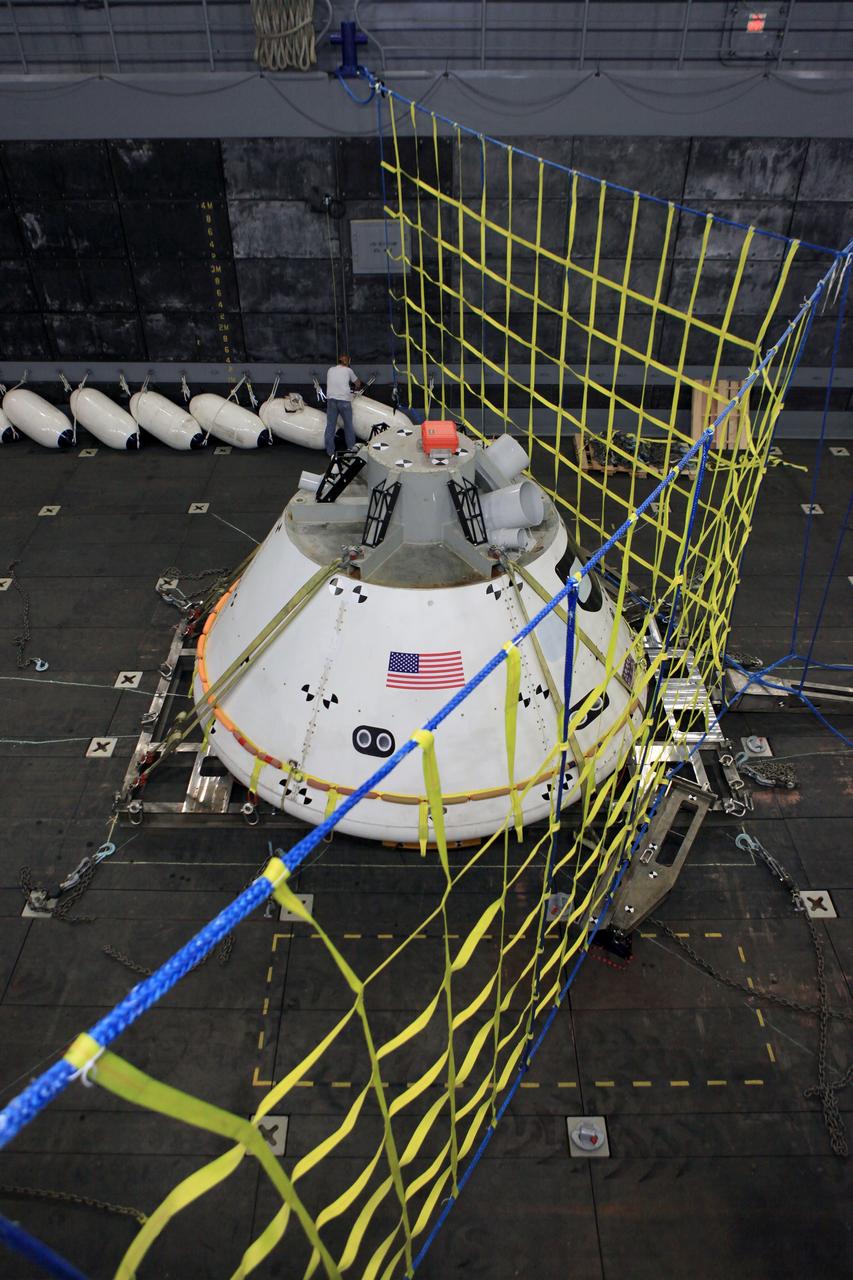
SAN DIEGO, Calif. – The Orion boilerplate test vehicle is secured on its cradle in the well deck of the U.S. Navy's USS Anchorage in preparation for Underway Recovery Test 2 in the Pacific Ocean off the coast of San Diego. A safety barrier has been installed near the test vehicle to keep it from moving further into the well deck as it fills with water. NASA, Lockheed Martin and the U.S. Navy will conduct the test to prepare for recovery of the Orion crew module on its return from a deep space mission. The underway recovery test will allow the team to demonstrate and evaluate the recovery processes, procedures, new hardware and personnel in open waters. The Ground Systems Development and Operations Program is conducting the underway recovery test. Orion is the exploration spacecraft designed to carry astronauts to destinations not yet explored by humans, including an asteroid and Mars. It will have emergency abort capability, sustain the crew during space travel and provide safe re-entry from deep space return velocities. The first unpiloted test flight of the Orion is scheduled to launch in 2014 atop a Delta IV rocket and in 2017 on NASA’s Space Launch System rocket. For more information, visit http://www.nasa.gov/orion. Photo credit: NASA/Kim Shiflett
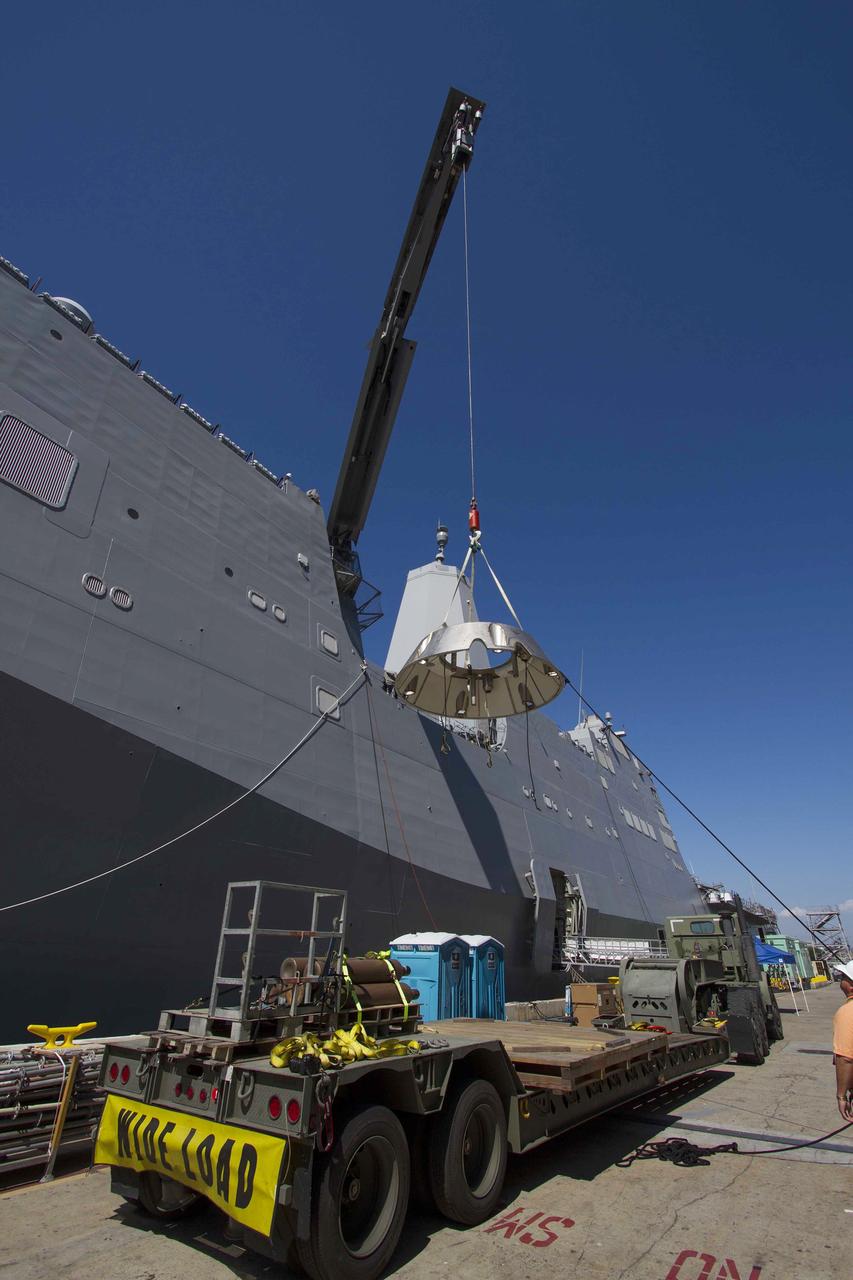
SAN DIEGO, Calif. – The USS Anchorage is docked at Naval Base San Diego during loading operations in its well deck for Orion Underway Recovery Test 3. A crane is used to lift the Orion forward bay cover for loading on the ship. The ship will head out to sea, off the coast of San Diego, in search of conditions to support test needs for a full dress rehearsal of recovery operations. NASA, Lockheed Martin and U.S. Navy personnel will conduct tests in the Pacific Ocean to prepare for recovery of the Orion crew module on its return from a deep space mission. The test will allow the teams to demonstrate and evaluate the recovery processes, procedures, new hardware and personnel in open waters. The Ground Systems Development and Operations Program is conducting the underway recovery tests. Orion is the exploration spacecraft designed to carry astronauts to destinations not yet explored by humans, including an asteroid and Mars. It will have emergency abort capability, sustain the crew during space travel and provide safe re-entry from deep space return velocities. The first unpiloted test flight of Orion is scheduled to launch in 2014 atop a United Launch Alliance Delta IV Heavy rocket and in 2018 on NASA’s Space Launch System rocket. For more information, visit http://www.nasa.gov/orion. Photo credit: NASA/Cory Huston
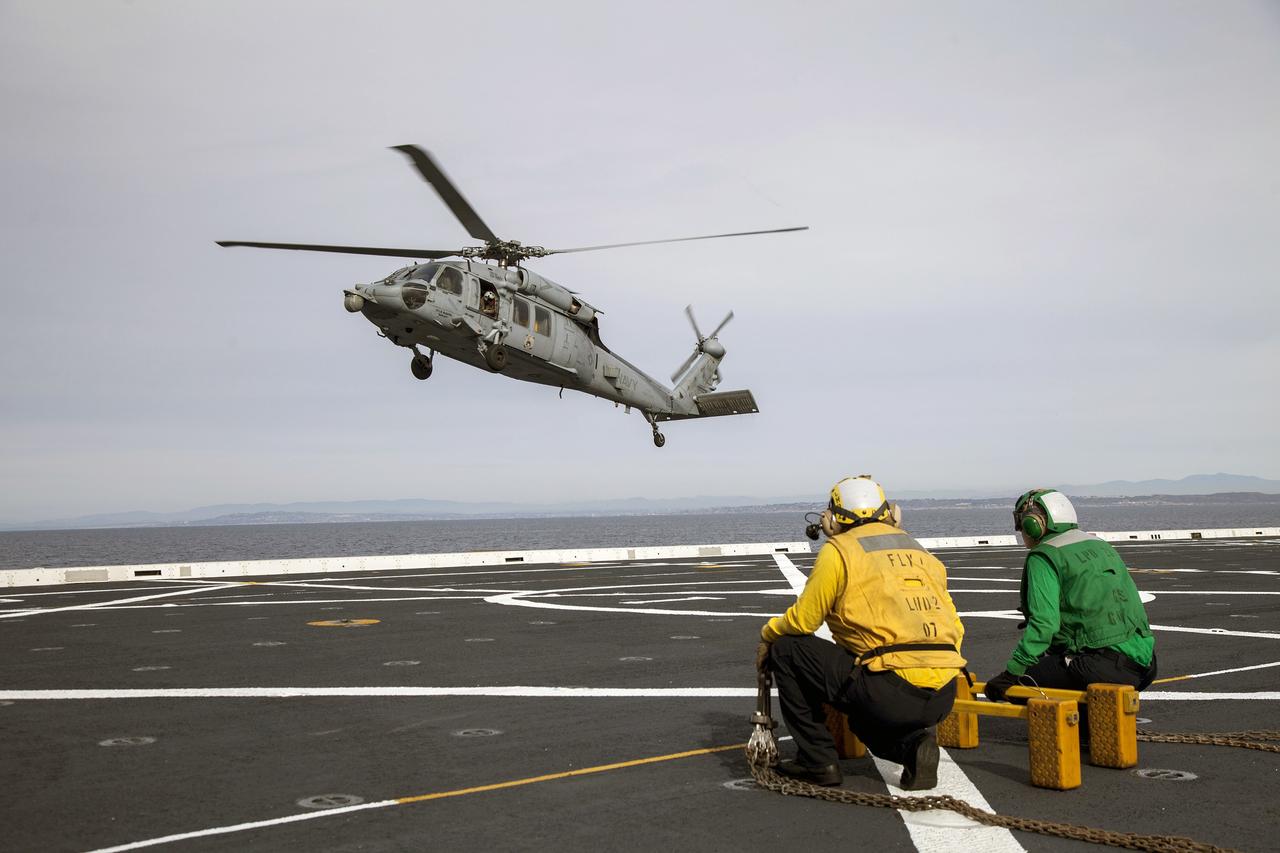
SAN DIEGO, Calif. – An H60-S Seahawk helicopter lands on the deck of the USS Anchorage in the Pacific Ocean off the coast of California. NASA and the U.S. Navy are heading out to sea ahead of Orion's flight test to prepare for recovery of the crew module, forward bay cover and parachutes on its return from space and splashdown in the Pacific Ocean. The Ground Systems Development and Operations Program is leading the recovery efforts. The first unpiloted flight test of Orion is scheduled to launch this week atop a United Launch Alliance Delta IV Heavy rocket. During its two-orbit, 4.5-hour flight, Orion will venture 3,600 miles in altitude and travel nearly 60,000 miles before returning to Earth for a splashdown in the Pacific Ocean. For more information, visit http://www.nasa.gov/orion. Photo credit: NASA/Cory Huston
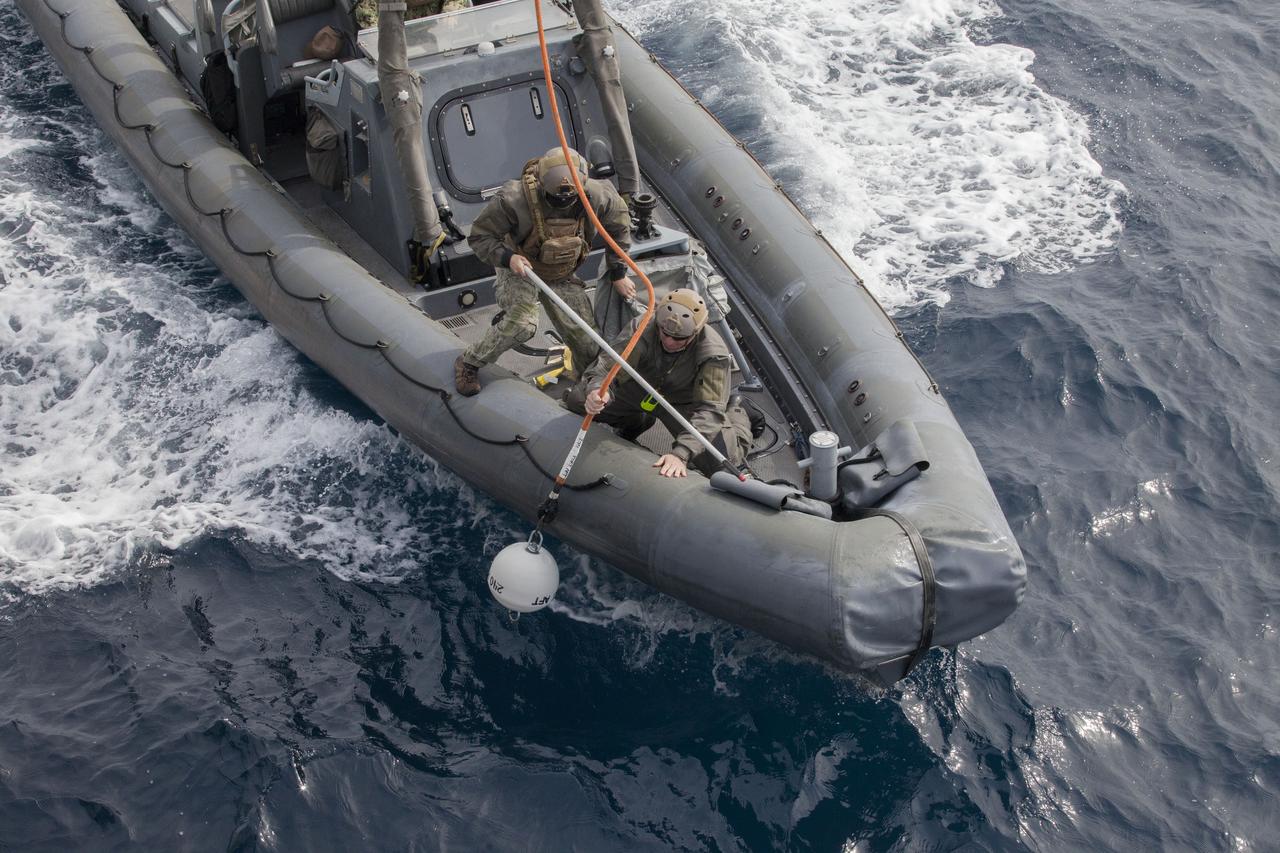
U.S. Navy divers and other personnel in a rigid hull inflatable boat lift a tether line attached to a float from the water during Underway Recovery Test 5 in the Pacific Ocean off the coast of California. NASA's Ground Systems Development and Operations Program and the U.S. Navy are conducting a series of tests using the USS San Diego's well deck, the test module, various watercraft and equipment to prepare for recovery of Orion on its return from deep space missions. The testing will allow the team to demonstrate and evaluate recovery processes, procedures, hardware and personnel in open waters. Orion is the exploration spacecraft designed to carry astronauts to destinations not yet explored by humans, including an asteroid and NASA's Journey to Mars. It will have emergency abort capability, sustain the crew during space travel and provide safe re-entry from deep space return velocities. Orion is scheduled to launch on NASA's Space Launch System in late 2018. For more information, visit http://www.nasa.gov/orion.

Melissa Jones, Landing and Recovery director with NASA's Ground Systems Development and Operations Program (GSDO) speaks to the recovery team during wrap up of Underway Recovery Test 5 aboard the USS San Diego. GSDO and the U.S. Navy practiced recovery techniques using the well deck of the ship and a test version of the Orion crew module in the Pacific Ocean off the coast of California to prepare for recovery of Orion on its return from deep space missions. The testing allowed the team to demonstrate and evaluate recovery processes, procedures, hardware and personnel in open waters. Orion is the exploration spacecraft designed to carry astronauts to destinations not yet explored by humans, including an asteroid and NASA's Journey to Mars. It will have emergency abort capability, sustain the crew during space travel and provide safe re-entry from deep space return velocities. Orion is scheduled to launch on NASA's Space Launch System in late 2018. For more information, visit http://www.nasa.gov/orion.

A sunrise colors the sky as another day of Underway Recovery Test 5 begins on the USS San Diego in the Pacific Ocean off the coast of California. The ships crane is used to pick up a rigid hull inflatable boat and lower it into the water. NASA's Ground Systems Development and Operations Program and the U.S. Navy are practicing recovery techniques using the well deck of the ship and a test version of the Orion crew module to prepare for recovery of Orion on its return from deep space missions. The testing will allow the team to demonstrate and evaluate recovery processes, procedures, hardware and personnel in open waters. Orion is the exploration spacecraft designed to carry astronauts to destinations not yet explored by humans, including an asteroid and NASA's Journey to Mars. It will have emergency abort capability, sustain the crew during space travel and provide safe re-entry from deep space return velocities. Orion is scheduled to launch on NASA's Space Launch System in late 2018. For more information, visit http://www.nasa.gov/orion.
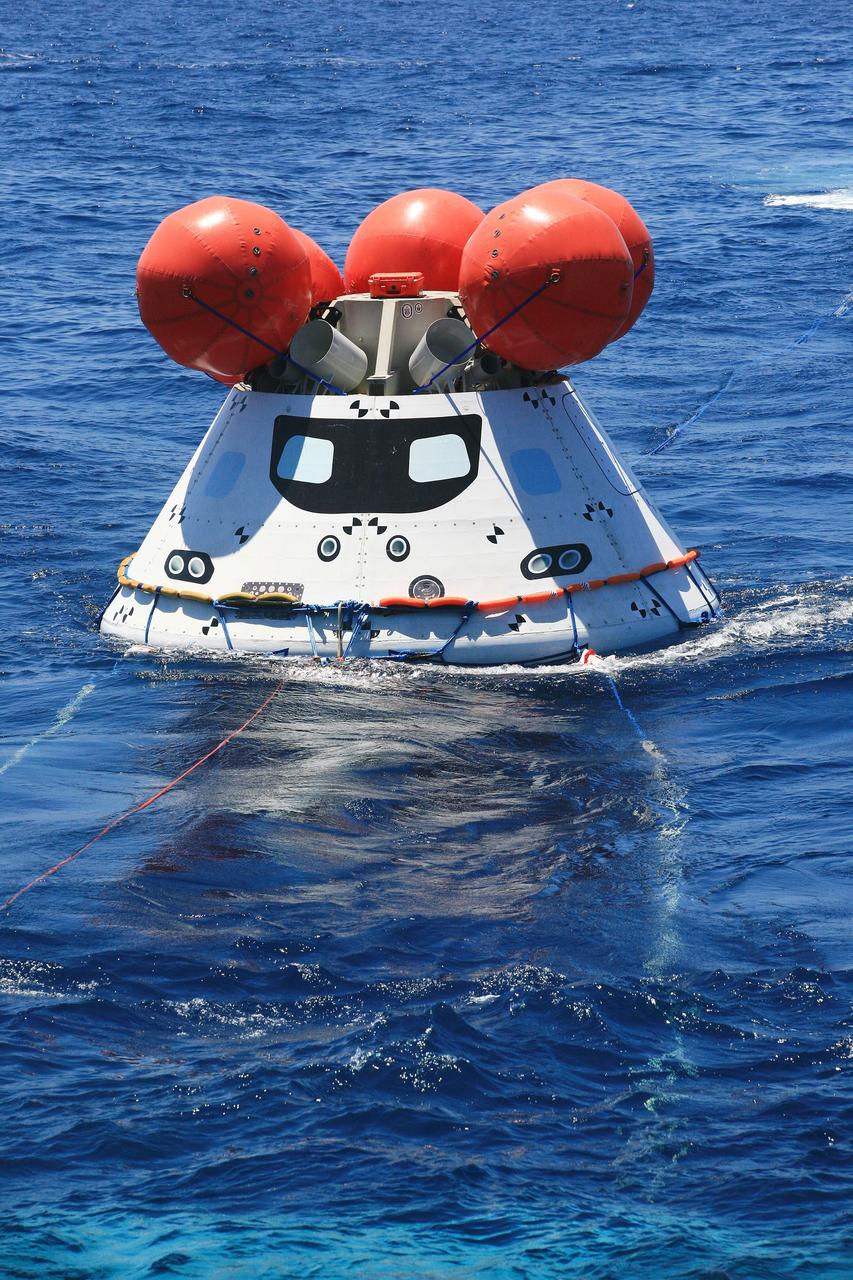
SAN DIEGO, Calif. – The tethered Orion boilerplate test vehicle floats in the Pacific Ocean off the coast of San Diego during a portion of Underway Recovery Test 2. The U.S. Navy’s USS Anchorage is on station nearby. The testing is being conducted to prepare for recovery of the Orion crew module on its return from a deep-space mission. The underway recovery test will allow the team to demonstrate and evaluate the recovery processes, procedures, new hardware and personnel in open waters. The Ground Systems Development and Operations Program is conducting the underway recovery test. Orion is the exploration spacecraft designed to carry astronauts to destinations not yet explored by humans, including an asteroid and Mars. It will have emergency abort capability, sustain the crew during space travel and provide safe re-entry from deep-space return velocities. The first unpiloted test flight of the Orion is scheduled to launch in 2014 atop a Delta IV rocket and in 2017 on NASA’s Space Launch System rocket. For more information, visit http://www.nasa.gov/orion. Photo credit: NASA/Kim Shiflett
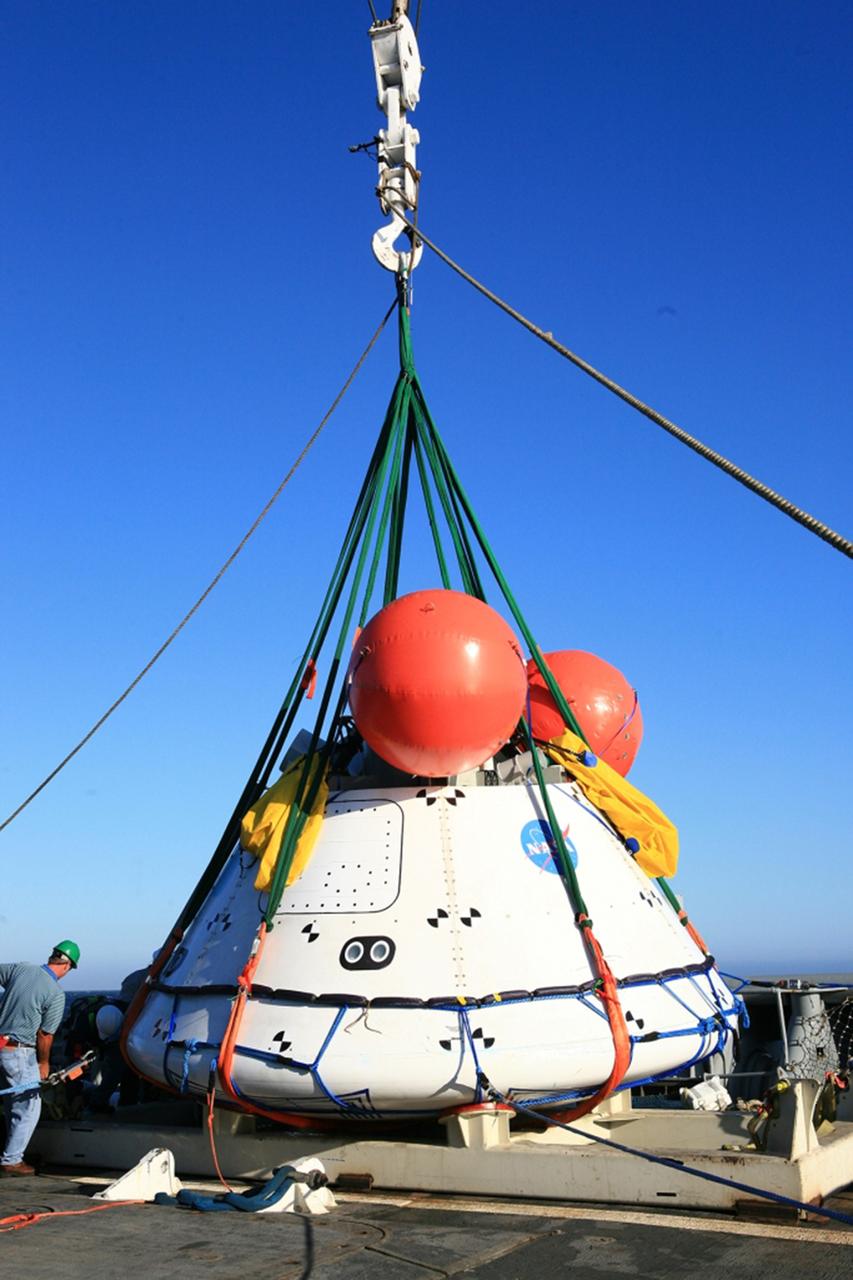
SAN DIEGO, Calif. – On the third day of Underway Recovery Test 4A in the Pacific Ocean, the Orion boilerplate test vehicle has been lifted out of the water and placed in a cradle in the USS Salvor, a safeguard-class rescue and salvage ship, using a stationary crane. NASA, Lockheed Martin and the U.S. Navy are testing crane recovery operations to prepare for recovery of the Orion crew module on its return from a deep space mission. The underway recovery test allows the teams to demonstrate and evaluate the recovery processes, procedures, new hardware and personnel in open waters. The Ground Systems Development and Operations Program is conducting the underway recovery test. Orion is the exploration spacecraft designed to carry astronauts to destinations not yet explored by humans, including an asteroid and Mars. It will have emergency abort capability, sustain the crew during space travel and provide safe re-entry from deep space return velocities. The first unpiloted test flight of the Orion is scheduled to launch in December 2014 atop a United Launch Alliance Delta IV Heavy rocket and in 2018 on NASA’s Space Launch System rocket. For more information, visit http://www.nasa.gov/orion. Photo credit: NASA/Kim Shiflett
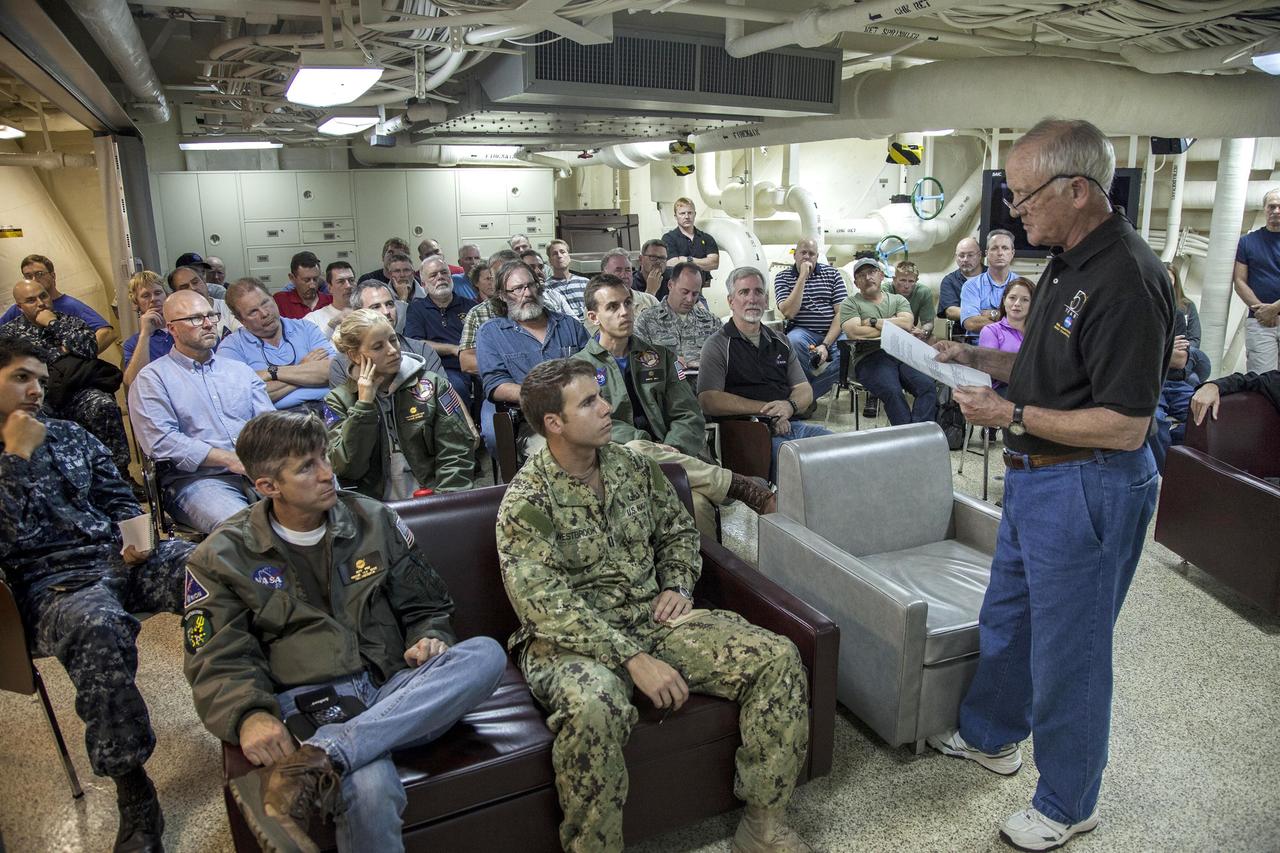
SAN DIEGO, Calif. – NASA, Lockheed Martin and U.S. Navy personnel listen to former space shuttle flight director and mission operations executive Milt Heflin during Orion recovery preparations aboard the USS Anchorage in the Pacific Ocean. Heflin was on prime recovery ships during the splashdowns and post-landing activities of Apollo 8, 10, 16 and 17, each of the three Skylab missions and the Apollo-Soyuz Test Project. NASA and the U.S. Navy are preparing for recovery of the Orion crew module, forward bay cover and parachutes on its return from space and splashdown in the Pacific Ocean. The Ground Systems Development and Operations Program is leading the recovery efforts. The first unpiloted flight test of Orion is scheduled to launch this week atop a United Launch Alliance Delta IV Heavy rocket. During its two-orbit, 4.5-hour flight, Orion will venture 3,600 miles in altitude and travel nearly 60,000 miles before returning to Earth for a splashdown in the Pacific Ocean. For more information, visit http://www.nasa.gov/orion. Photo credit: NASA/Cory Huston
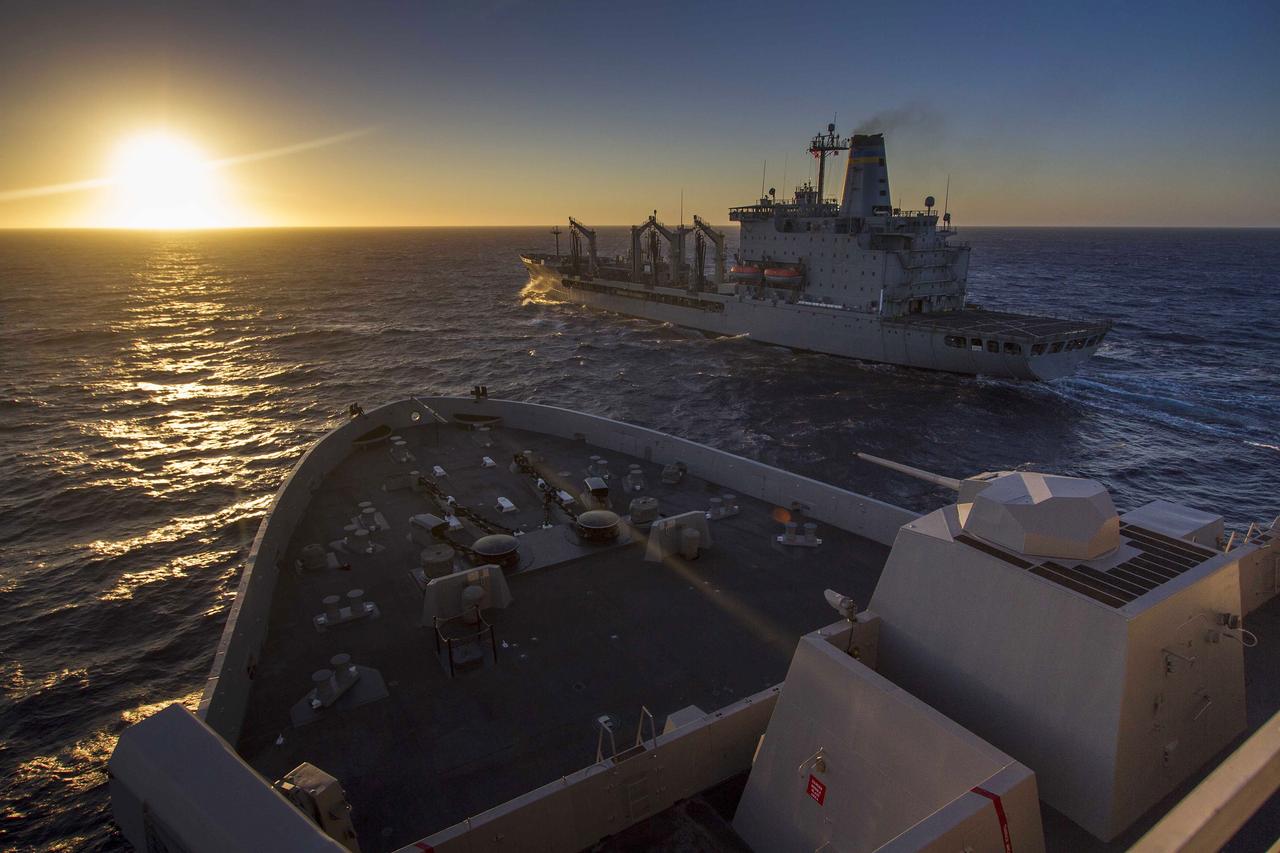
SAN DIEGO, Calif. – The USNS Yukon, in the foreground, is stationed nearby the USS Anchorage, during the third day of Orion Underway Recovery Test 3 in the Pacific Ocean. The Yukon provides underway replenishment of fuel to ships at sea. U.S. Navy divers and other personnel completed a day of practicing recovery of the Orion boilerplate test vehicle. NASA, Lockheed Martin and U.S. Navy personnel are conducting the recovery test using the test vehicle to prepare for recovery of the Orion crew module on its return from a deep space mission. The test allows the teams to demonstrate and evaluate the recovery processes, procedures, hardware and personnel in open waters. The Ground Systems Development and Operations Program is conducting the underway recovery tests. Orion is the exploration spacecraft designed to carry astronauts to destinations not yet explored by humans, including an asteroid and Mars. It will have emergency abort capability, sustain the crew during space travel and provide safe re-entry from deep space return velocities. The first unpiloted test flight of Orion is scheduled to launch in 2014 atop a United Launch Alliance Delta IV Heavy rocket and in 2018 on NASA’s Space Launch System rocket. For more information, visit http://www.nasa.gov/orion. Photo credit: NASA/Cory Huston
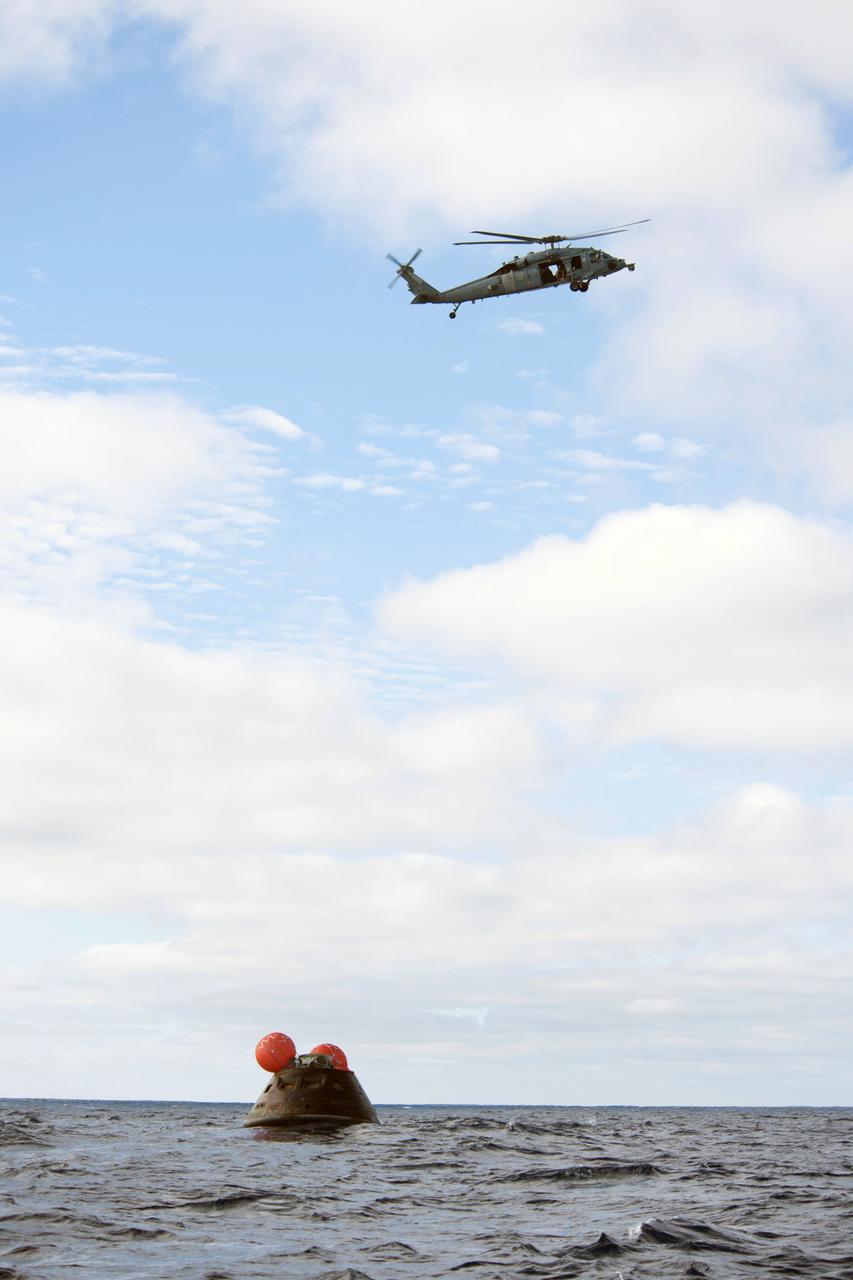
SAN DIEGO, Calif. -- NASA's Orion spacecraft floats in the Pacific Ocean after splashdown from its first flight test in Earth orbit. An H60-S Seahawk helicopter hovers above to communicate the spacecraft's location back to the USS Anchorage. NASA, the U.S. Navy and Lockheed Martin are coordinating efforts to recover Orion and secure the spacecraft in the well deck of the USS Anchorage. Orion completed a two-orbit, four-and-a-half hour mission, to test systems critical to crew safety, including the launch abort system, the heat shield and the parachute system. The Ground Systems Development and Operations Program is leading the recovery efforts. For more information, visit www.nasa.gov/orion Photo credit: NASA/Tony Gray
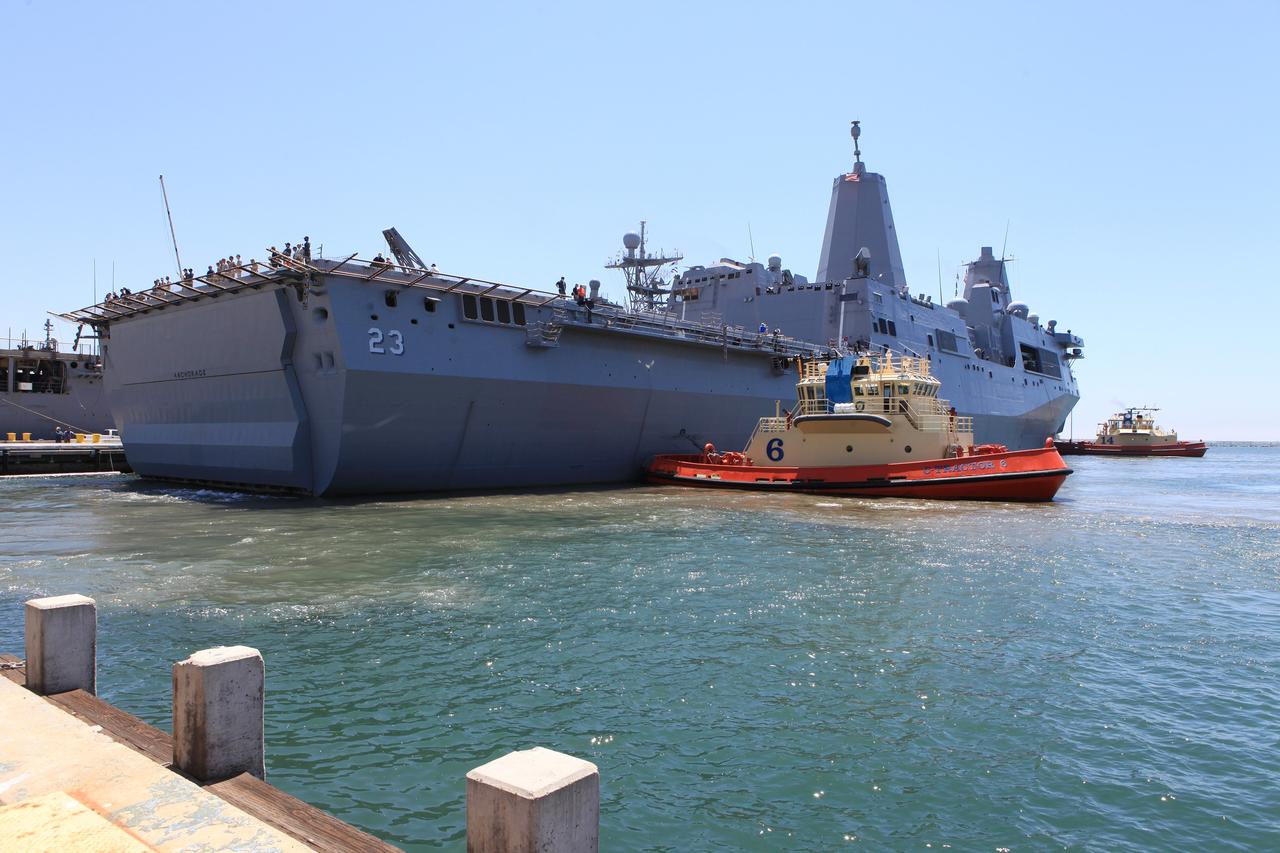
SAN DIEGO, Calif. – The USS Anchorage returns to Naval Base San Diego after completion of the Orion Underway Recovery Test 2 in the Pacific Ocean. Two tugboats help guide the ship into port. NASA, Lockheed Martin and the U.S. Navy conducted the test on the Orion boilerplate test vehicle to prepare for recovery of the Orion crew module on its return from a deep space mission. The underway recovery test allowed the team to demonstrate and evaluate the recovery processes, procedures, new hardware and personnel in open waters. The Ground Systems Development and Operations Program conducted the underway recovery test. Orion is the exploration spacecraft designed to carry astronauts to destinations not yet explored by humans, including an asteroid and Mars. It will have emergency abort capability, sustain the crew during space travel and provide safe re-entry from deep space return velocities. The first unpiloted test flight of the Orion is scheduled to launch in 2014 atop a Delta IV rocket and in 2017 on NASA’s Space Launch System rocket. For more information, visit http://www.nasa.gov/orion. Photo credit: NASA/Kim Shiflett
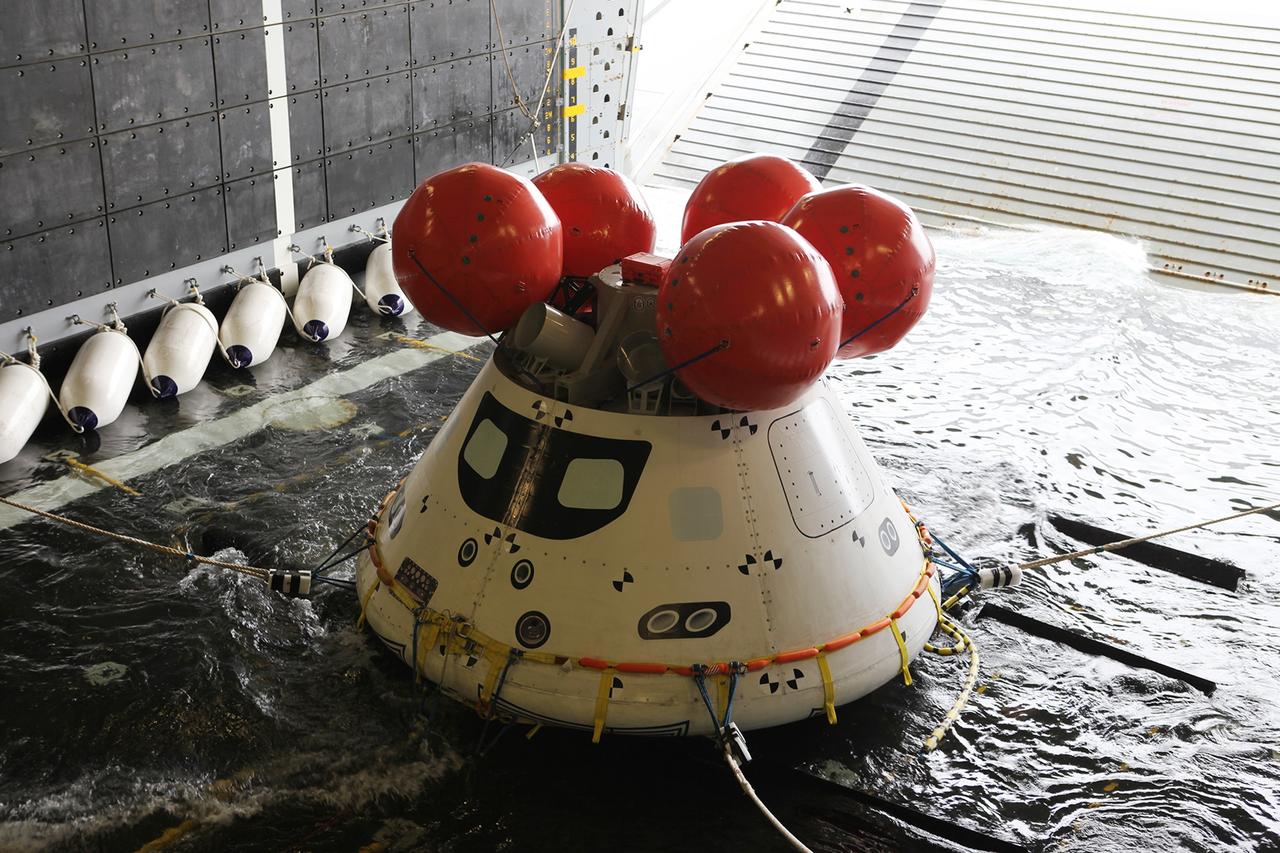
SAN DIEGO, Calif. – Inside the well deck of the U.S. Navy's USS Anchorage, the Orion boilerplate test vehicle rests on its cradle as water fills around before the start of an evolution for the Underway Recovery Test 2. NASA, Lockheed Martin and the U.S. Navy are conducting the test in the Pacific Ocean off the coast of San Diego to prepare for recovery of the Orion crew module on its return from a deep space mission. The underway recovery test will allow the team to demonstrate and evaluate the recovery processes, procedures, new hardware and personnel in open waters. The Ground Systems Development and Operations Program is conducting the underway recovery test. Orion is the exploration spacecraft designed to carry astronauts to destinations not yet explored by humans, including an asteroid and Mars. It will have emergency abort capability, sustain the crew during space travel and provide safe re-entry from deep space return velocities. The first unpiloted test flight of the Orion is scheduled to launch in 2014 atop a Delta IV rocket and in 2017 on NASA’s Space Launch System rocket. For more information, visit http://www.nasa.gov/orion. Photo credit: NASA/Kim Shiflett

SAN DIEGO, Calif. – NASA, Lockheed Martin and U.S. Navy personnel review recovery procedures on the USS Anchorage in the Pacific Ocean near the Orion recovery site ahead of the first flight test. The team is preparing for recovery of the crew module, forward bay cover and parachutes on its return from space and splashdown in the Pacific Ocean. The Ground Systems Development and Operations Program is leading the recovery efforts. The first unpiloted flight test of Orion is scheduled to launch this week atop a United Launch Alliance Delta IV Heavy rocket. During its two-orbit, 4.5-hour flight, Orion will venture 3,600 miles in altitude and travel nearly 60,000 miles before returning to Earth for a splashdown in the Pacific Ocean. For more information, visit http://www.nasa.gov/orion. Photo credit: NASA/Cory Huston
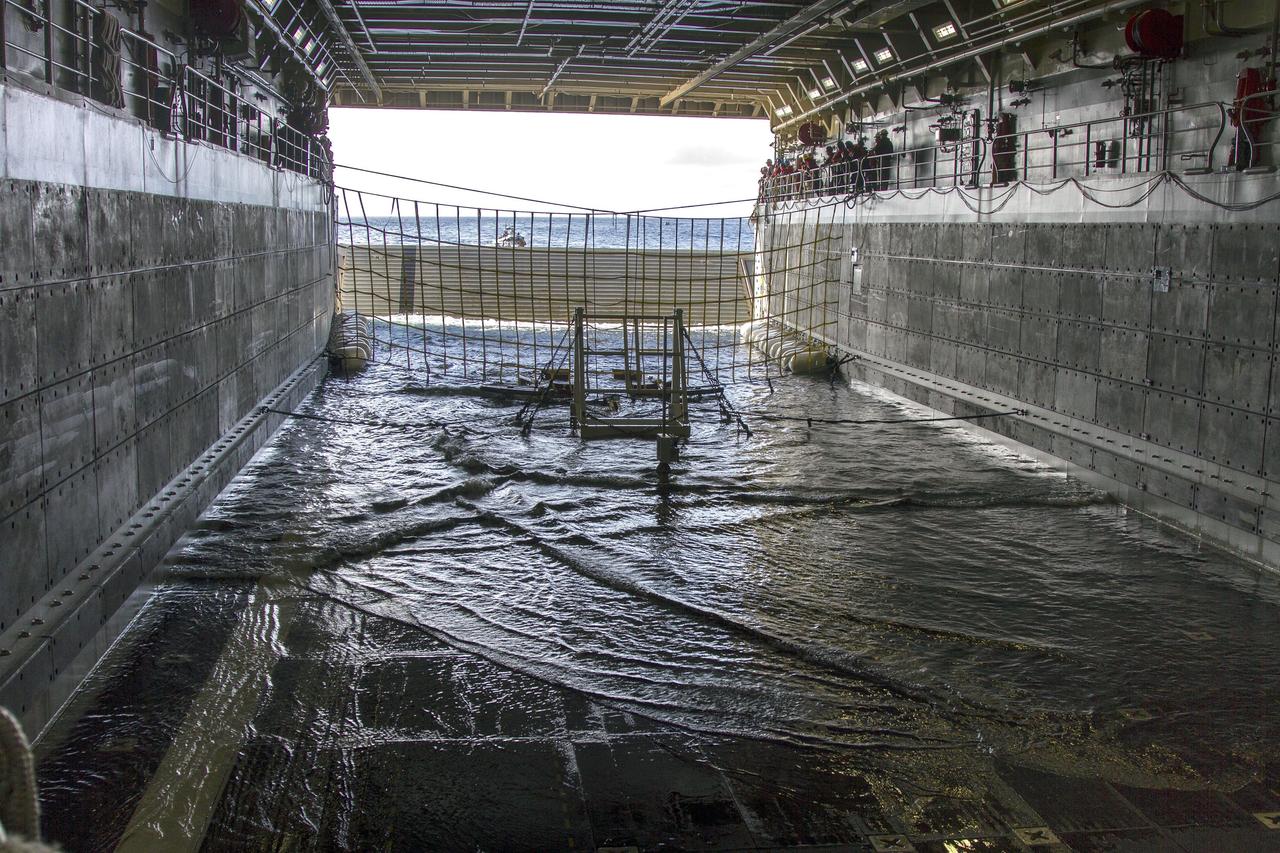
SAN DIEGO, Calif. – On the third day of preparations for recovery of Orion after its splashdown in the Pacific Ocean, the well deck of the USS Anchorage has been filled with water and recovery hardware is in place. The ship is about 600 miles off the coast of Baja, California. NASA, Lockheed Martin and U.S. Navy personnel are preparing for recovery of the crew module, forward bay cover and parachutes on its return from space and splashdown in the Pacific Ocean. The Ground Systems Development and Operations Program is leading the recovery efforts. The first unpiloted flight test of Orion is scheduled to launch Dec. 4 atop a United Launch Alliance Delta IV Heavy rocket. During its two-orbit, 4.5-hour flight, Orion will venture 3,600 miles in altitude and travel nearly 60,000 miles before returning to Earth for a splashdown in the Pacific Ocean. For more information, visit http://www.nasa.gov/orion. Photo credit: NASA/Cory Huston
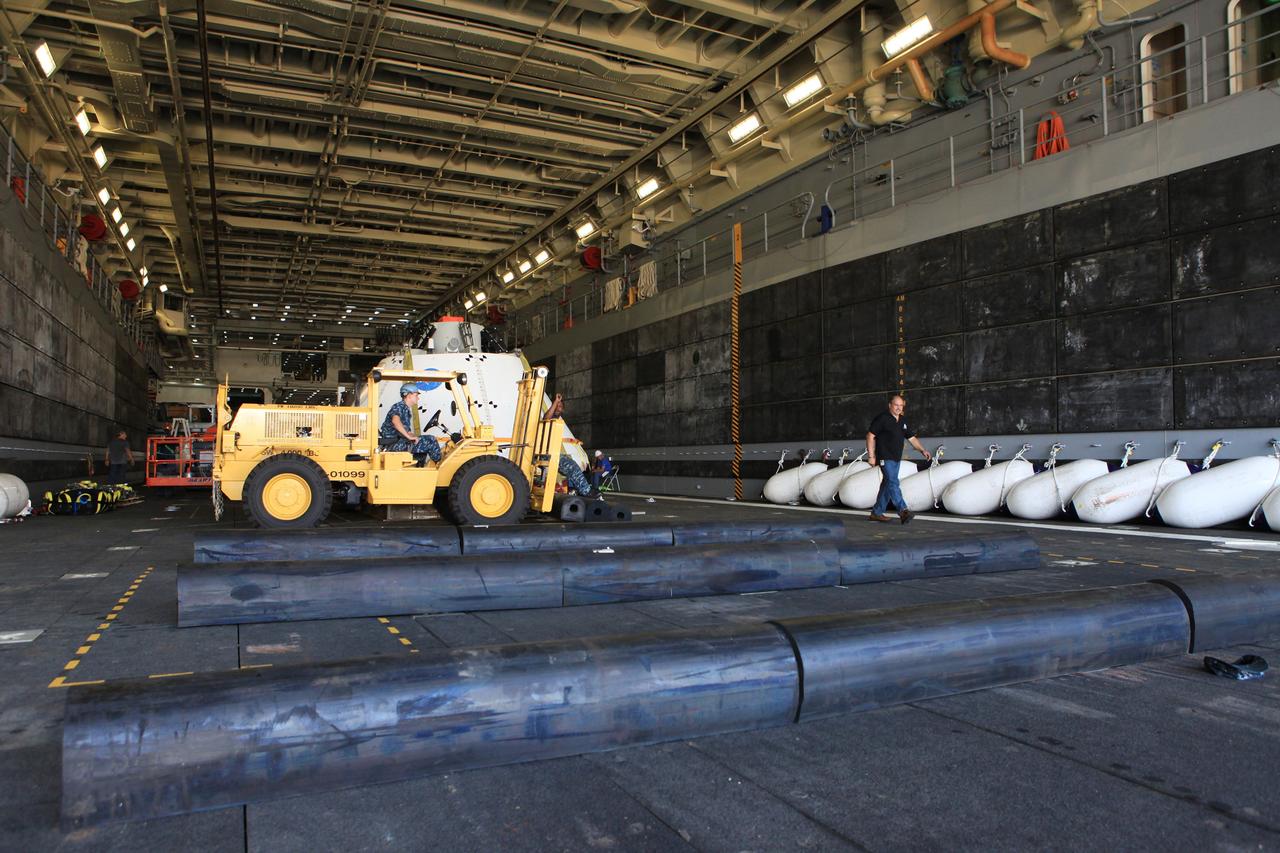
SAN DIEGO, Calif. – At the U.S. Naval Base San Diego in California, the Orion boilerplate test vehicle and cradle have been positioned in the well deck of the USS Anchorage in preparation for Underway Recovery Test 2. A worker moves a piece of the handling fixture that was removed from around the test vehicle. NASA, Lockheed Martin and the U.S. Navy will conduct tests in the Pacific Ocean to prepare for recovery of the Orion crew module on its return from a deep space mission. The second underway recovery test will allow the teams to demonstrate and evaluate the recovery processes, procedures, new hardware and personnel in open waters. The Ground Systems Development and Operations Program is conducting the underway recovery tests. Orion is the exploration spacecraft designed to carry astronauts to destinations not yet explored by humans, including an asteroid and Mars. It will have emergency abort capability, sustain the crew during space travel and provide safe re-entry from deep space return velocities. The first unpiloted test flight of the Orion is scheduled to launch in 2014 atop a Delta IV rocket and in 2017 on NASA’s Space Launch System rocket. For more information, visit http://www.nasa.gov/orion. Photo credit: NASA/Kim Shiflett
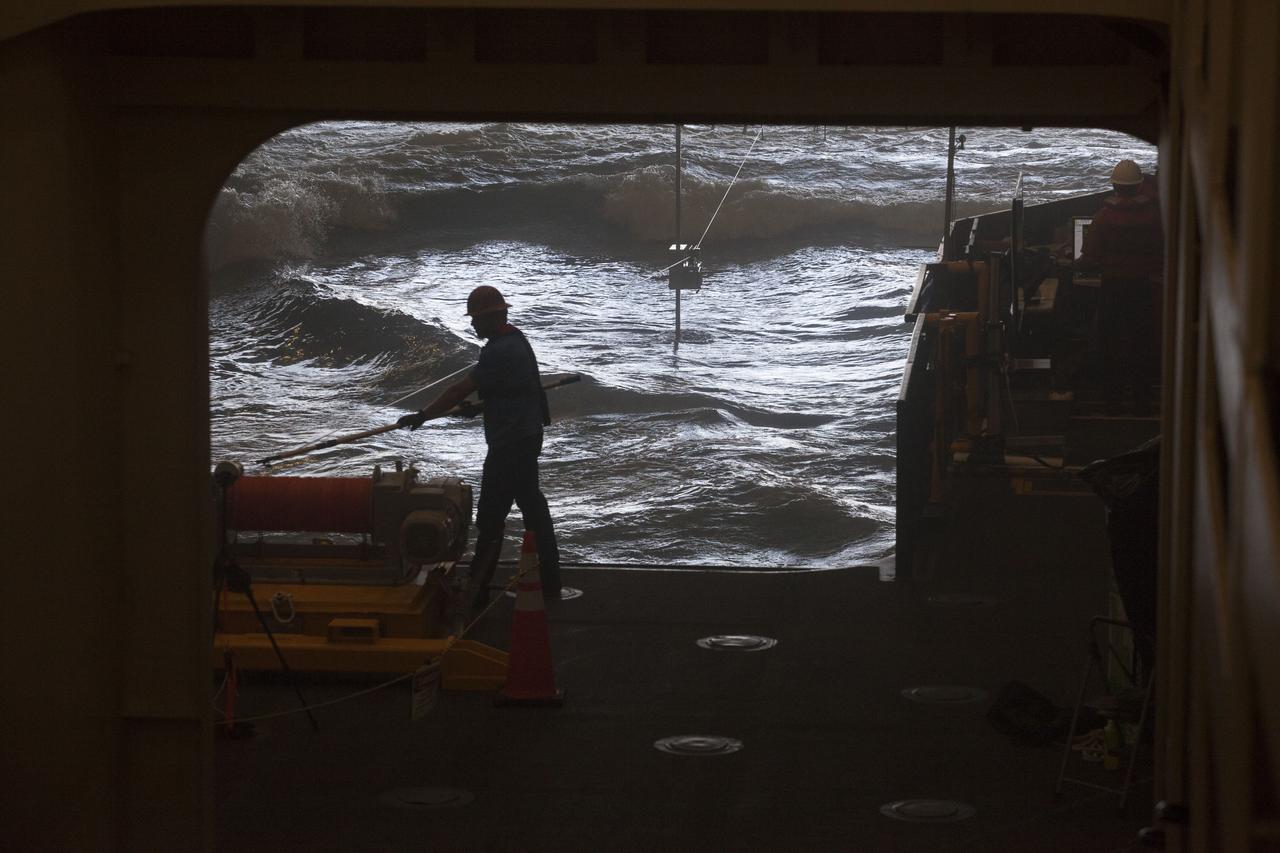
Inside the well deck of the USS San Diego, a winch operator prepares for Underway Recovery Test 5 in the Pacific Ocean off the coast of California. NASA's Ground Systems Development and Operations Program and the U.S. Navy are practicing recovery techniques to prepare for recovery of Orion on its return from deep space missions. The testing will allow the team to demonstrate and evaluate recovery processes, procedures, hardware and personnel in open waters. Orion is the exploration spacecraft designed to carry astronauts to destinations not yet explored by humans, including an asteroid and NASA's Journey to Mars. It will have emergency abort capability, sustain the crew during space travel and provide safe re-entry from deep space return velocities. Orion is scheduled to launch on NASA's Space Launch System in late 2018. For more information, visit http://www.nasa.gov/orion.
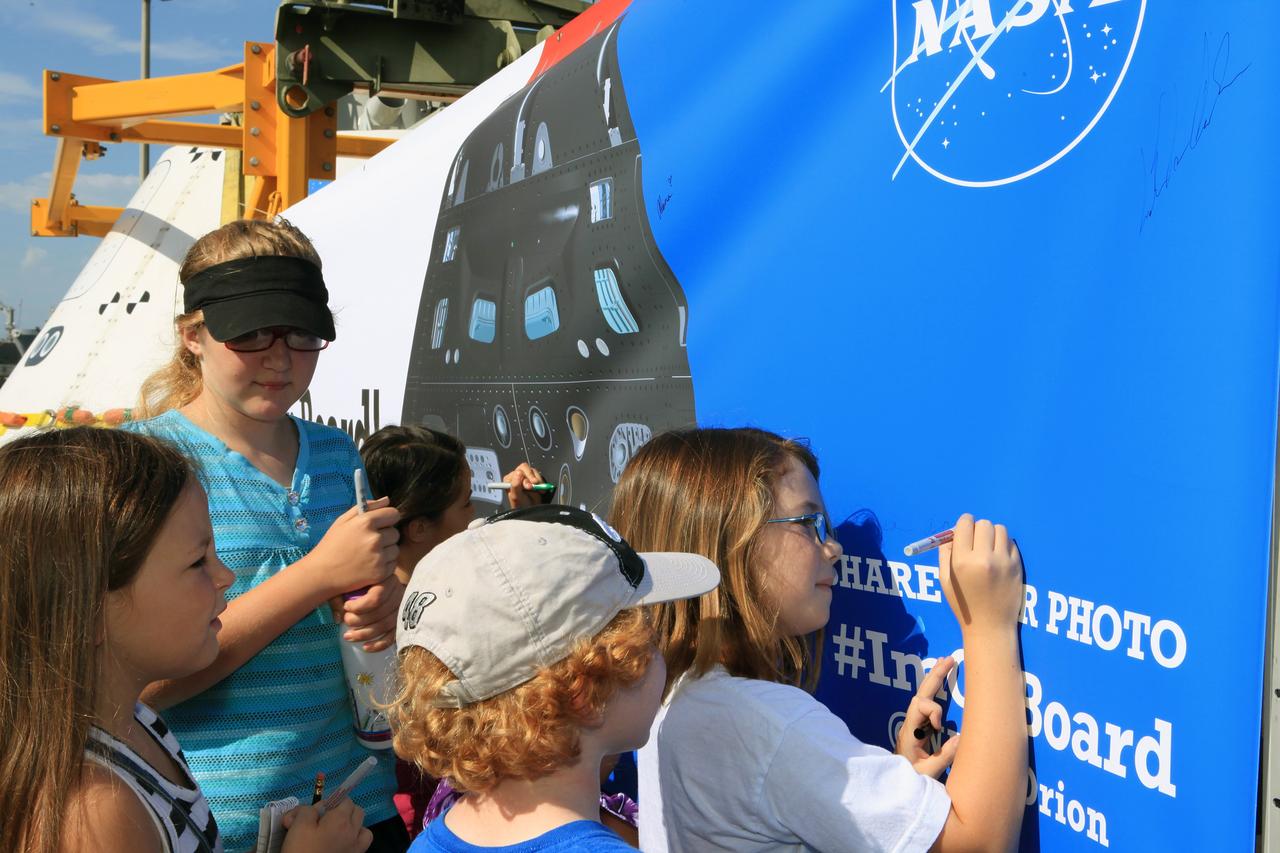
SAN DIEGO, Calif. – At the U.S. Naval Base San Diego in California, children sign a banner near the Orion boilerplate test vehicle during an outreach event at the naval base. The USS Anchorage is being prepared for the Orion Underway Recovery Test 2. The test vehicle and other hardware will be loaded into the well deck of the ship and head out to sea in the Pacific Ocean off the coast of San Diego. NASA, Lockheed Martin and the U.S. Navy will conduct the test to prepare for recovery of the Orion crew module, forward bay cover and parachutes on its return from a deep space mission. The underway recovery test will allow the teams to demonstrate and evaluate the recovery processes, procedures, new support hardware and personnel in open waters. The Ground Systems Development and Operations Program will conduct the underway recovery tests. Orion is the exploration spacecraft designed to carry astronauts to destinations not yet explored by humans, including an asteroid and Mars. It will have emergency abort capability, sustain the crew during space travel and provide safe re-entry from deep space return velocities. The first unpiloted test flight of the Orion is scheduled to launch in 2014 atop a Delta IV rocket and in 2017 on NASA’s Space Launch System rocket. For more information, visit http://www.nasa.gov/orion. Photo credit: NASA/Kim Shiflett
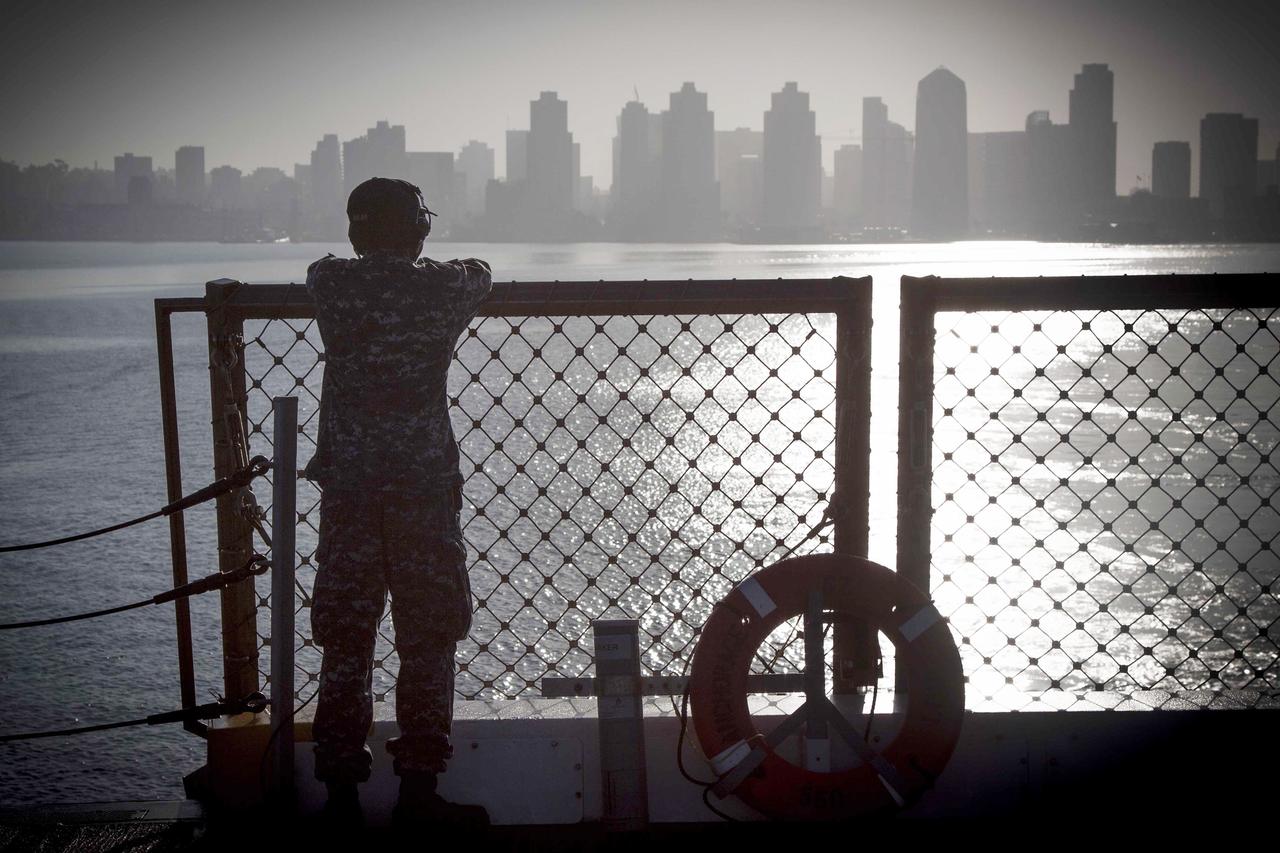
SAN DIEGO, Calif. – A member of the U.S. Navy watches the San Diego skyline from the deck of the USS Anchorage as the ship departs Naval Base San Diego on the first day of Orion Underway Recovery Test 3. The ship is heading out to sea, off the coast of San Diego, in search of conditions to support test needs for a full dress rehearsal of recovery operations. NASA, Lockheed Martin and U.S. Navy personnel will conduct tests in the Pacific Ocean to prepare for recovery of the Orion crew module on its return from a deep space mission. The test will allow the teams to demonstrate and evaluate the recovery processes, procedures, hardware and personnel in open waters. The Ground Systems Development and Operations Program is conducting the underway recovery tests. Orion is the exploration spacecraft designed to carry astronauts to destinations not yet explored by humans, including an asteroid and Mars. It will have emergency abort capability, sustain the crew during space travel and provide safe re-entry from deep space return velocities. The first unpiloted test flight of Orion is scheduled to launch in 2014 atop a United Launch Alliance Delta IV Heavy rocket and in 2018 on NASA’s Space Launch System rocket. For more information, visit http://www.nasa.gov/orion. Photo credit: NASA/Cory Huston

SAN DIEGO, Calif. – During the third day of Orion Underway Recovery Test 4A, NASA and U.S. Navy personnel prepare the Orion boilerplate test vehicle to be lowered by stationary crane from the USS Salvor, a safeguard-class rescue and salvage ship, into the Pacific Ocean. NASA, Lockheed Martin and the U.S. Navy are conducting the test to prepare for recovery of the Orion crew module on its return from a deep space mission. The underway recovery test allows the teams to demonstrate and evaluate the recovery processes, procedures, new hardware and personnel in open waters. The Ground Systems Development and Operations Program is conducting the underway recovery test. Orion is the exploration spacecraft designed to carry astronauts to destinations not yet explored by humans, including an asteroid and Mars. It will have emergency abort capability, sustain the crew during space travel and provide safe re-entry from deep space return velocities. The first unpiloted test flight of the Orion is scheduled to launch in December 2014 atop a United Launch Alliance Delta IV Heavy rocket and in 2018 on NASA’s Space Launch System rocket. For more information, visit http://www.nasa.gov/orion. Photo credit: NASA/Kim Shiflett
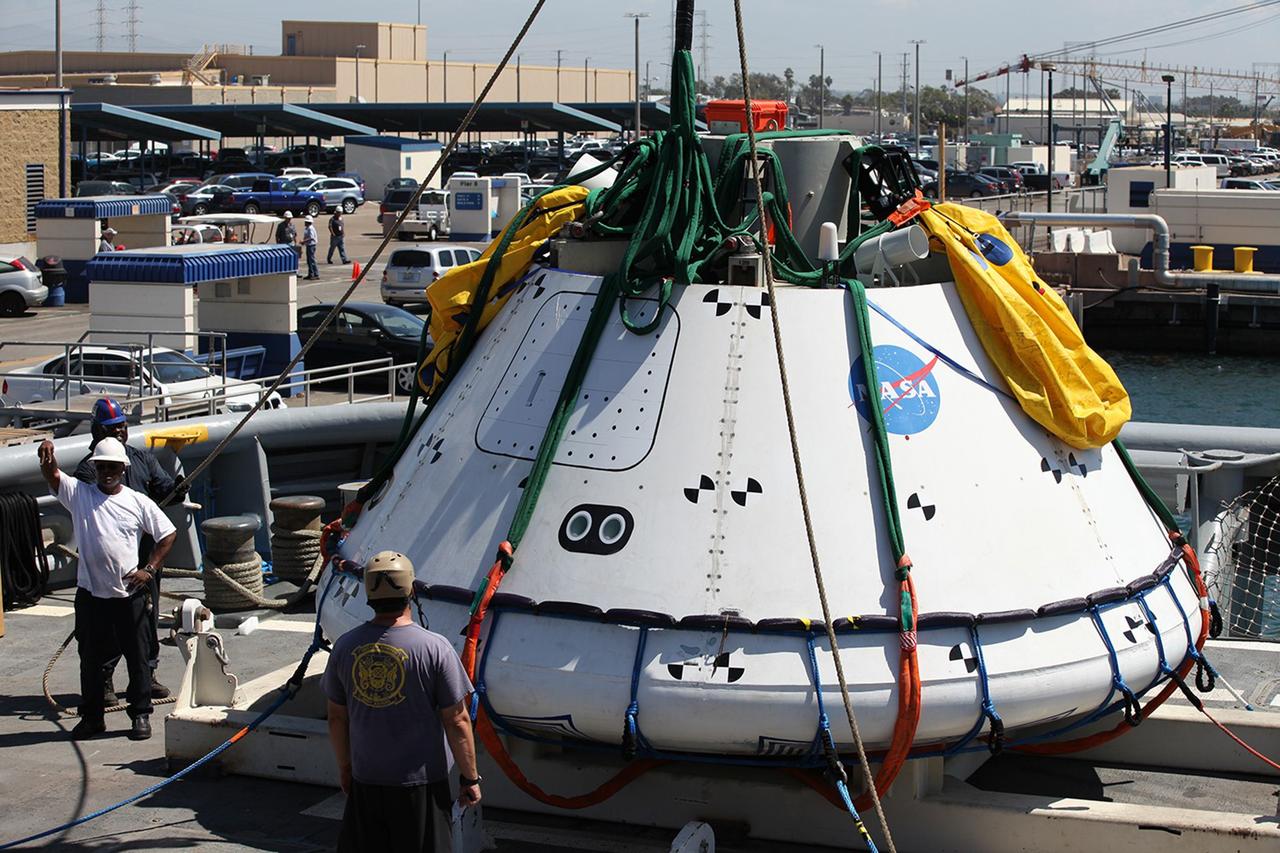
SAN DIEGO, Calif. – At Naval Base San Diego in California, U.S. Navy personnel prepare the Orion boilerplate test vehicle to be lifted by stationary crane from the USS Salvor, a safeguard-class rescue and salvage ship, and lowered into the water during the first day of Underway Recovery Test 4A. The ship will head out to sea for four days to test crew module crane recovery operations. NASA, Lockheed Martin and the U.S. Navy are conducting the test to prepare for recovery of the Orion crew module on its return from a deep space mission. The underway recovery test will allow the teams to demonstrate and evaluate the recovery processes, procedures, new hardware and personnel in open waters. The Ground Systems Development and Operations Program is conducting the underway recovery test. Orion is the exploration spacecraft designed to carry astronauts to destinations not yet explored by humans, including an asteroid and Mars. It will have emergency abort capability, sustain the crew during space travel and provide safe re-entry from deep space return velocities. The first unpiloted test flight of the Orion is scheduled to launch in December 2014 atop a United Launch Alliance Delta IV rocket and in 2018 on NASA’s Space Launch System rocket. For more information, visit http://www.nasa.gov/orion. Photo credit: Kim Shiflett
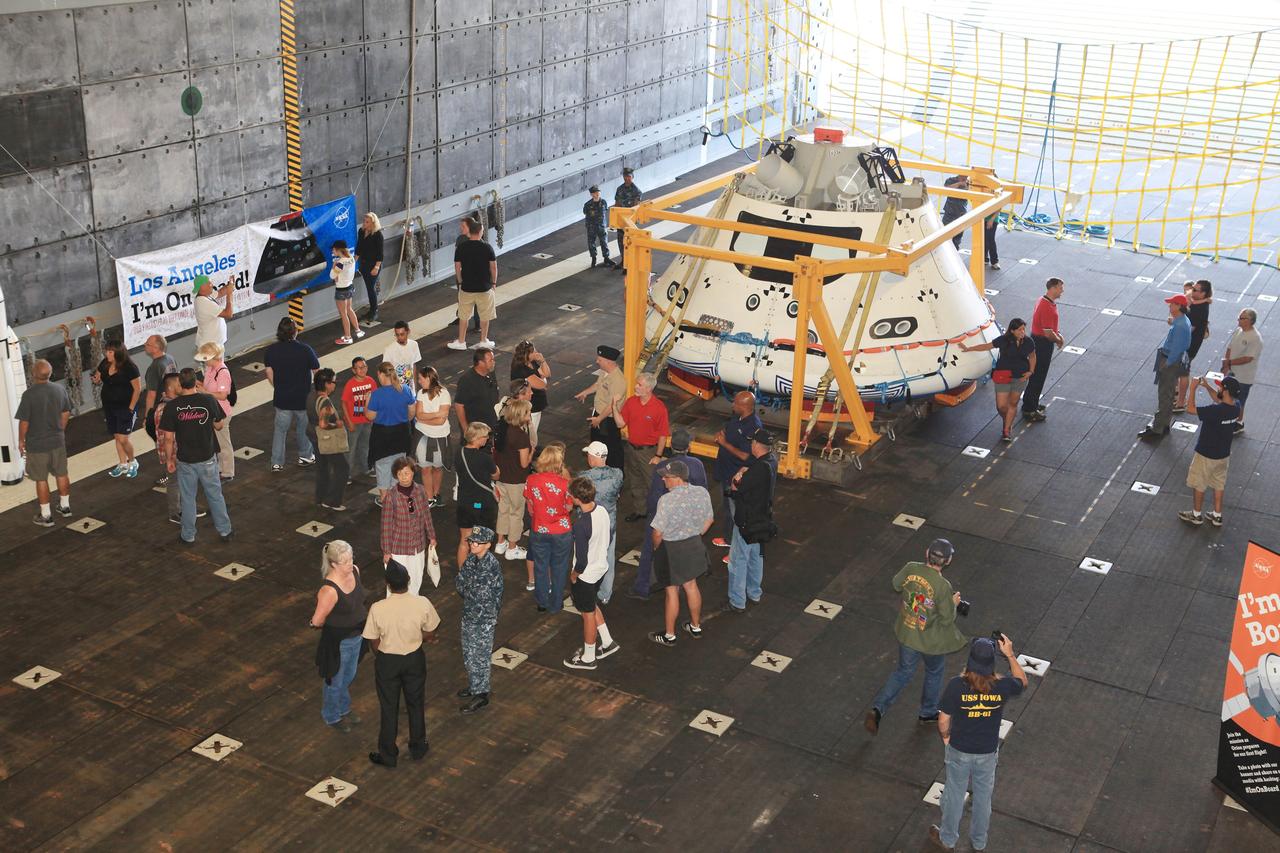
LOS ANGELES, Calif. – Andy Quiett, Detachment 3 deputy operations lead for the Orion program and DoD liaison for NASA, answers questions about the Orion boilerplate test vehicle from visitors touring the well deck of the USS Anchorage during the Science, Technology, Engineering and Mathematics, or STEM, Expo for L.A. Navy Days at the Port of Los Angeles in California. A combined team from NASA’s Ground Systems Development and Operations Program and the U.S. Navy were in San Diego to practice recovering Orion from the ocean, as they will do in December following the spacecraft's first trip to space during Exploration Flight Test-1. Orion is the exploration spacecraft designed to carry astronauts to destinations not yet explored by humans, including an asteroid and Mars. It will have emergency abort capability, sustain the crew during space travel and provide safe re-entry from deep-space return velocities. The first unpiloted test flight of the Orion is scheduled to launch in 2014 atop a Delta IV rocket and in 2017 on NASA’s Space Launch System rocket. For more information, visit http://www.nasa.gov/orion. Photo credit: NASA/Kim Shiflett
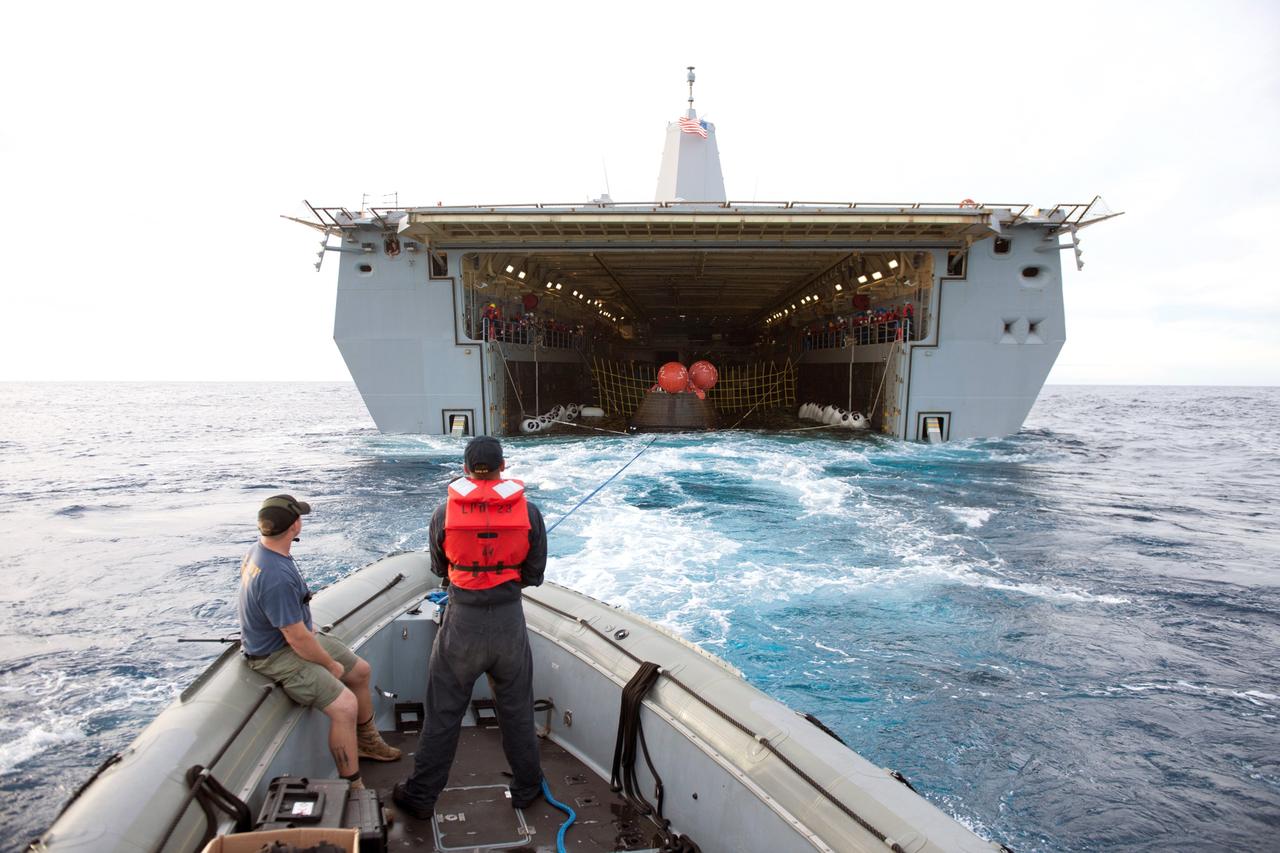
SAN DIEGO, Calif. -- U.S. Navy personnel aboard a rigid hull inflatable boat help recover NASA's Orion spacecraft following its splashdown in the Pacific Ocean after its first flight test in Earth orbit. Orion is towed into the flooded well deck of the USS Anchorage. NASA, the U.S. Navy and Lockheed Martin coordinated efforts to recover Orion, the forward bay cover and main parachutes. Orion completed a two-orbit, four-and-a-half hour mission, to test systems critical to crew safety, including the launch abort system, the heat shield and the parachute system. The Ground Systems Development and Operations Program is leading the recovery efforts. For more information, visit www.nasa.gov/orion Photo credit: NASA/Tony Gray
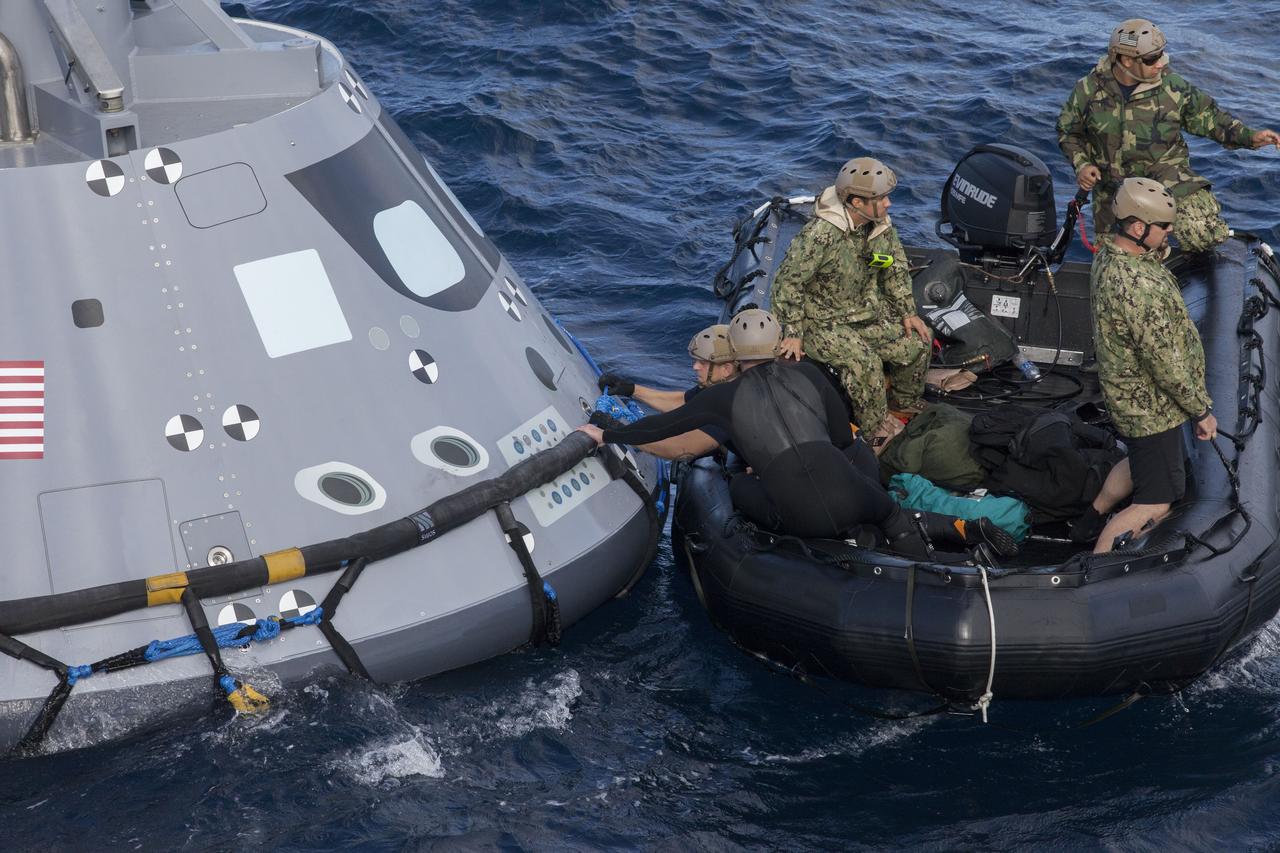
U.S. Navy divers and other personnel in a Zodiac boat secure a harness around a test version of the Orion crew module during Underway Recovery Test 5 in the Pacific Ocean off the coast of California. Tether lines will be attached to the test module to help guide it back to the well deck of the USS San Diego. NASA's Ground Systems Development and Operations Program and the U.S. Navy are practicing recovery techniques to prepare for recovery of Orion on its return from deep space missions. The testing will allow the team to demonstrate and evaluate recovery processes, procedures, hardware and personnel in open waters. Orion is the exploration spacecraft designed to carry astronauts to destinations not yet explored by humans, including an asteroid and NASA's Journey to Mars. It will have emergency abort capability, sustain the crew during space travel and provide safe re-entry from deep space return velocities. Orion is scheduled to launch on NASA's Space Launch System in late 2018. For more information, visit http://www.nasa.gov/orion.
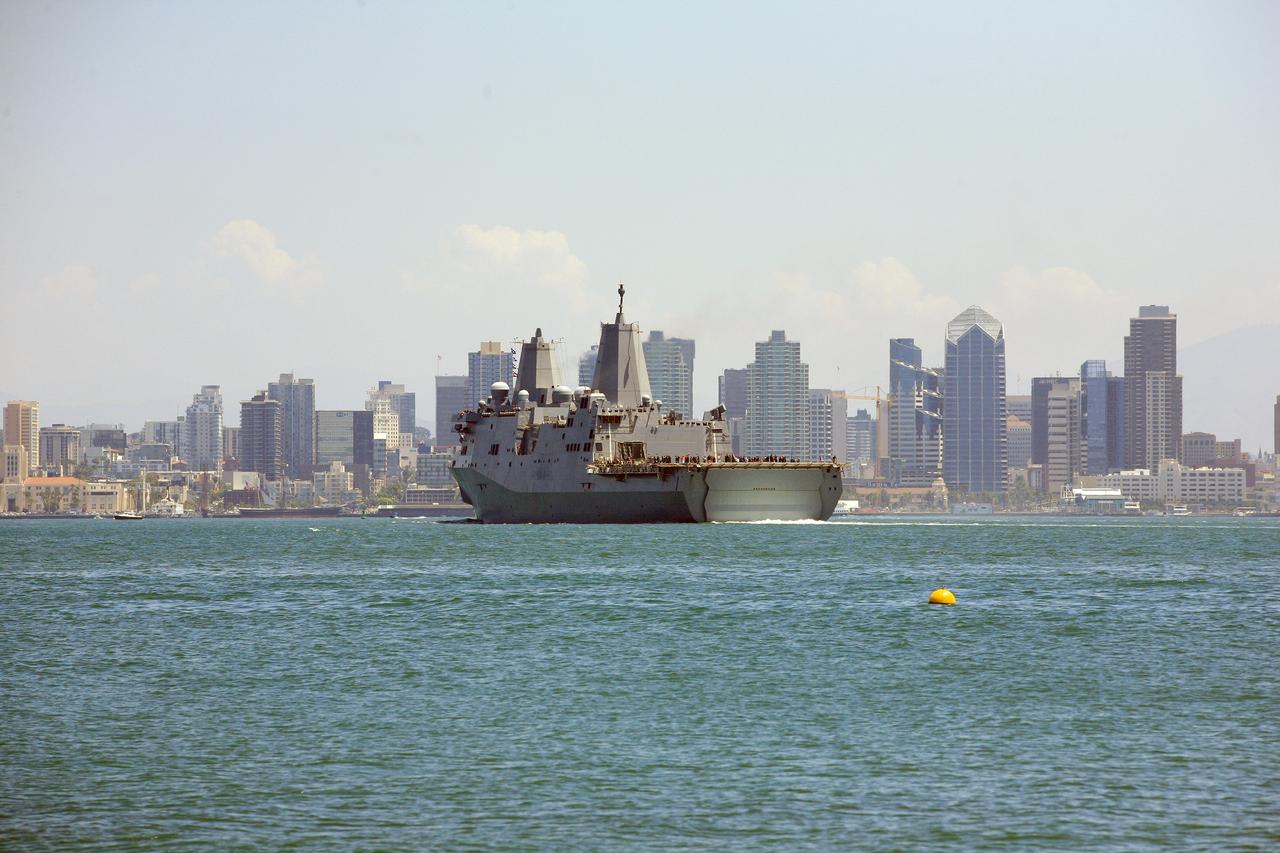
SAN DIEGO, Calif. – The USS Anchorage returns to Naval Base San Diego after completion of the Orion Underway Recovery Test 2 in the Pacific Ocean. The ship is framed by the skyline of the city of San Diego. NASA, Lockheed Martin and the U.S. Navy conducted the test on the Orion boilerplate test vehicle to prepare for recovery of the Orion crew module on its return from a deep space mission. The underway recovery test allowed the team to demonstrate and evaluate the recovery processes, procedures, new hardware and personnel in open waters. The Ground Systems Development and Operations Program conducted the underway recovery test. Orion is the exploration spacecraft designed to carry astronauts to destinations not yet explored by humans, including an asteroid and Mars. It will have emergency abort capability, sustain the crew during space travel and provide safe re-entry from deep space return velocities. The first unpiloted test flight of the Orion is scheduled to launch in 2014 atop a Delta IV rocket and in 2017 on NASA’s Space Launch System rocket. For more information, visit http://www.nasa.gov/orion. Photo credit: NASA/Kim Shiflett
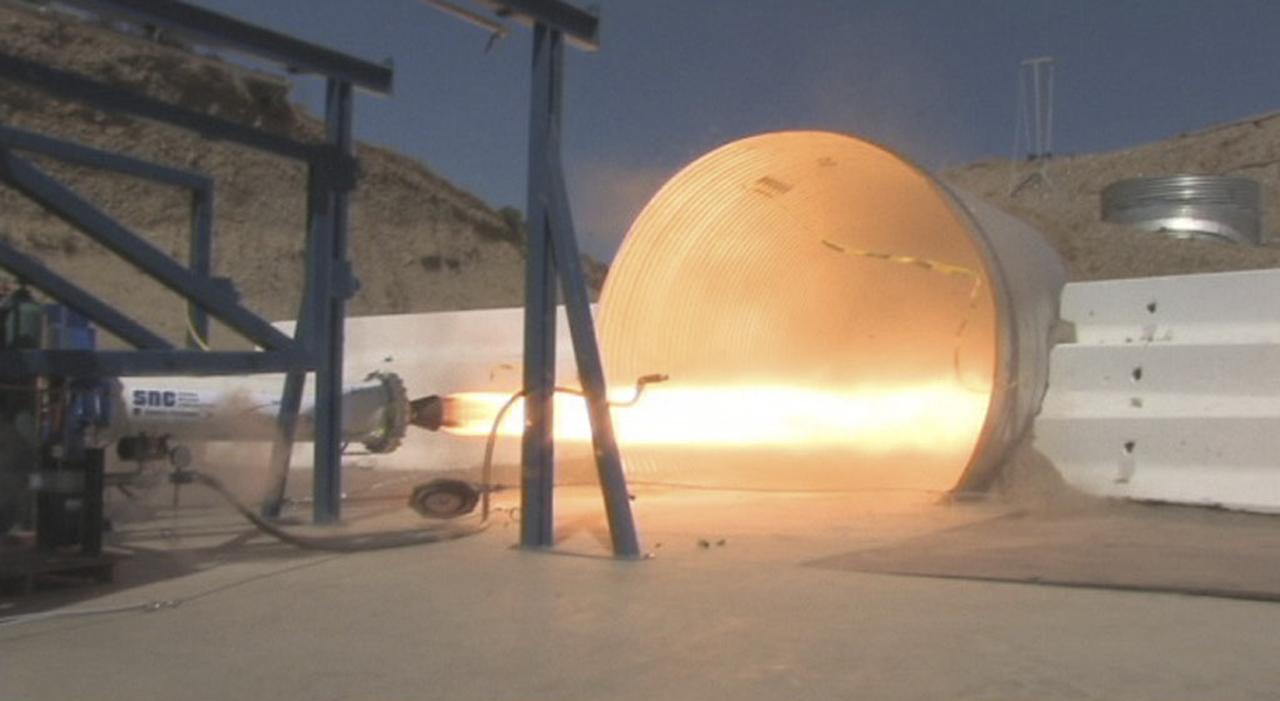
POWAY, Calif. – During NASA's Commercial Crew Development Round 1 CCDev1 activities, the rocket motor under development by Sierra Nevada Corp. for its Dream Chaser spacecraft successfully fires at the company's rocket test facility located near San Diego. NASA team members reviewed the motor's system and then watched it fire three times in one day, including one firing under vacuum ignition conditions. The tests, which simulated a complete nominal mission profile, demonstrated the multiple restart capability of Sierra Nevada's hybrid rocket. Two of the company's designed and developed hybrid rocket motors will be used as the main propulsion system on the Dream Chaser after launching aboard an Atlas V rocket. Dream Chaser is one of five systems NASA invested in during CCDev1 in order to aid in the innovation and development of American-led commercial capabilities for crew transportation and rescue services to and from the International Space Station and other low Earth orbit destinations. In 2011, NASA's Commercial Crew Program CCP entered into another funded Space Act Agreement with Sierra Nevada for the second round of commercial crew development CCDev2) so the company could further develop its Dream Chaser spacecraft for NASA transportation services. For information about CCP, visit www.nasa.gov/commercialcrew. Photo credit: Sierra Nevada Corp.
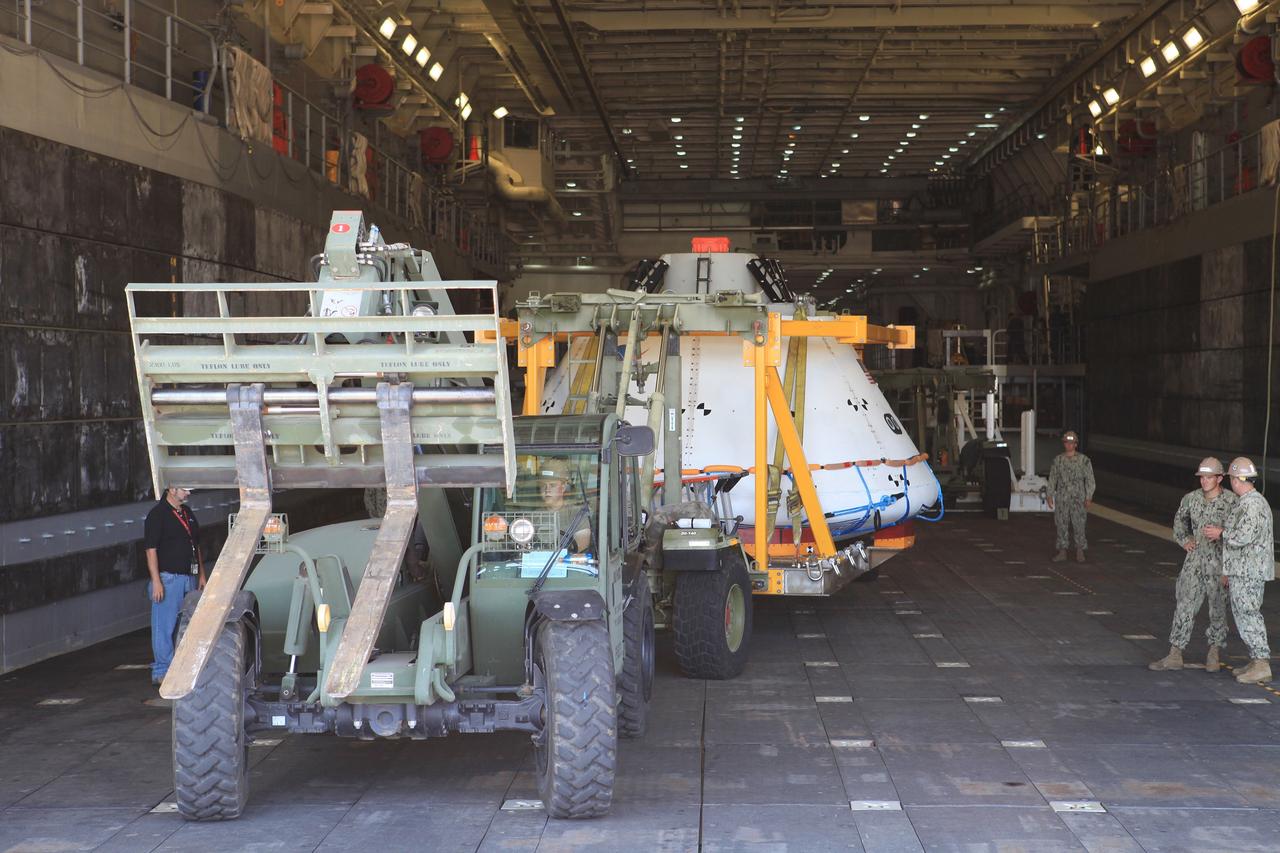
SAN DIEGO, Calif. – The USS Anchorage has docked at Naval Base San Diego after completion of the Orion Underway Recovery Test 2 in the Pacific Ocean. The Orion boilerplate test vehicle is being offloaded from the well deck of the ship. NASA, Lockheed Martin and the U.S. Navy conducted the test on the Orion boilerplate test vehicle to prepare for recovery of the Orion crew module on its return from a deep space mission. The underway recovery test allowed the team to demonstrate and evaluate the recovery processes, procedures, new hardware and personnel in open waters. The Ground Systems Development and Operations Program conducted the underway recovery test. Orion is the exploration spacecraft designed to carry astronauts to destinations not yet explored by humans, including an asteroid and Mars. It will have emergency abort capability, sustain the crew during space travel and provide safe re-entry from deep space return velocities. The first unpiloted test flight of the Orion is scheduled to launch in 2014 atop a Delta IV rocket and in 2017 on NASA’s Space Launch System rocket. For more information, visit http://www.nasa.gov/orion. Photo credit: NASA/Kim Shiflett
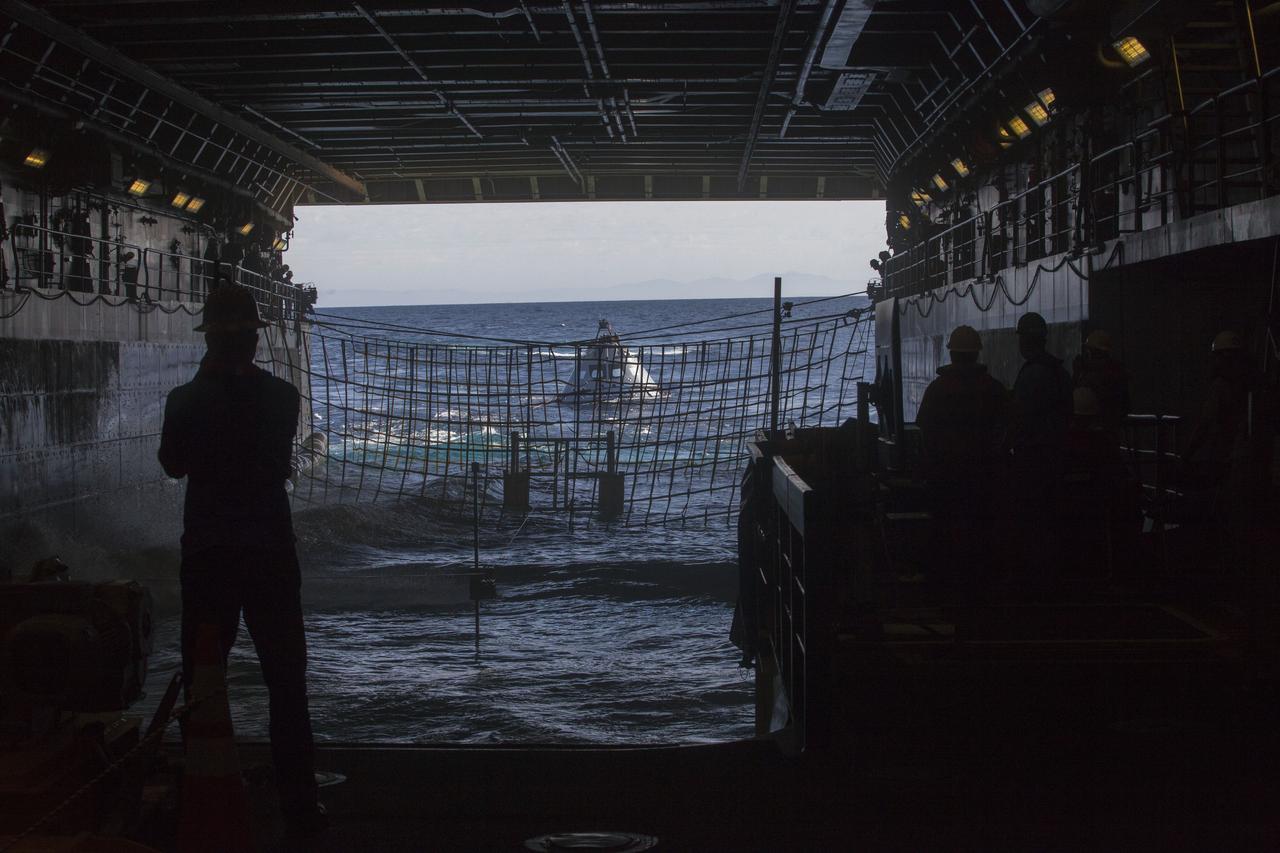
A test version of the Orion crew module floats outside the well deck of the USS San Diego during Underway Recovery Test 5 in the Pacific Ocean off the coast of California. NASA's Ground Systems Development and Operations Program and the U.S. Navy are conducting a series of tests using the ship's well deck, several watercraft, support equipment and personnel to prepare for recovery of Orion on its return from deep space missions. The testing will allow the team to demonstrate and evaluate recovery processes, procedures, hardware and personnel in open waters. Orion is the exploration spacecraft designed to carry astronauts to destinations not yet explored by humans, including an asteroid and NASA's Journey to Mars. It will have emergency abort capability, sustain the crew during space travel and provide safe re-entry from deep space return velocities. Orion is scheduled to launch on NASA's Space Launch System in late 2018. For more information, visit http://www.nasa.gov/orion.
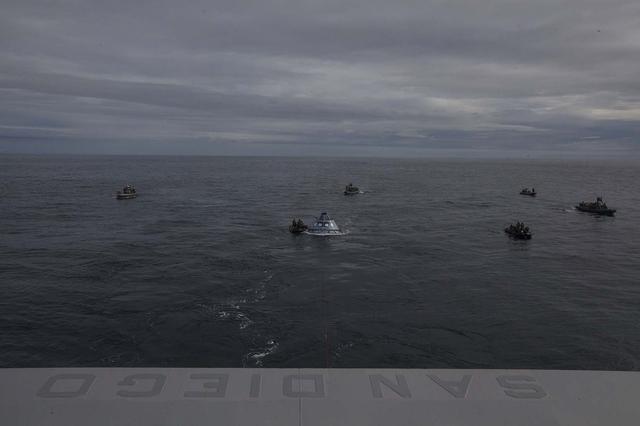
U.S. Navy divers and other personnel in several rigid hull inflatable and Zodiac boats have surrounded a test version of the Orion crew module during Underway Recovery Test 5 in the Pacific Ocean off the coast of California. An orange winch line has been attached to the test module to pull it into the well deck of the USS San Diego. NASA's Ground Systems Development and Operations Program and the U.S. Navy are conducting a series of tests using the Navy ship, various watercraft and equipment to practice for recovery of Orion on its return from deep space missions. The testing allows the team to demonstrate and evaluate recovery processes, procedures, hardware and personnel in open waters. Orion is the exploration spacecraft designed to carry astronauts to destinations not yet explored by humans, including an asteroid and NASA's Journey to Mars. It will have emergency abort capability, sustain the crew during space travel and provide safe re-entry from deep space return velocities. Orion is scheduled to launch on NASA's Space Launch System in late 2018. For more information, visit http://www.nasa.gov/orion.
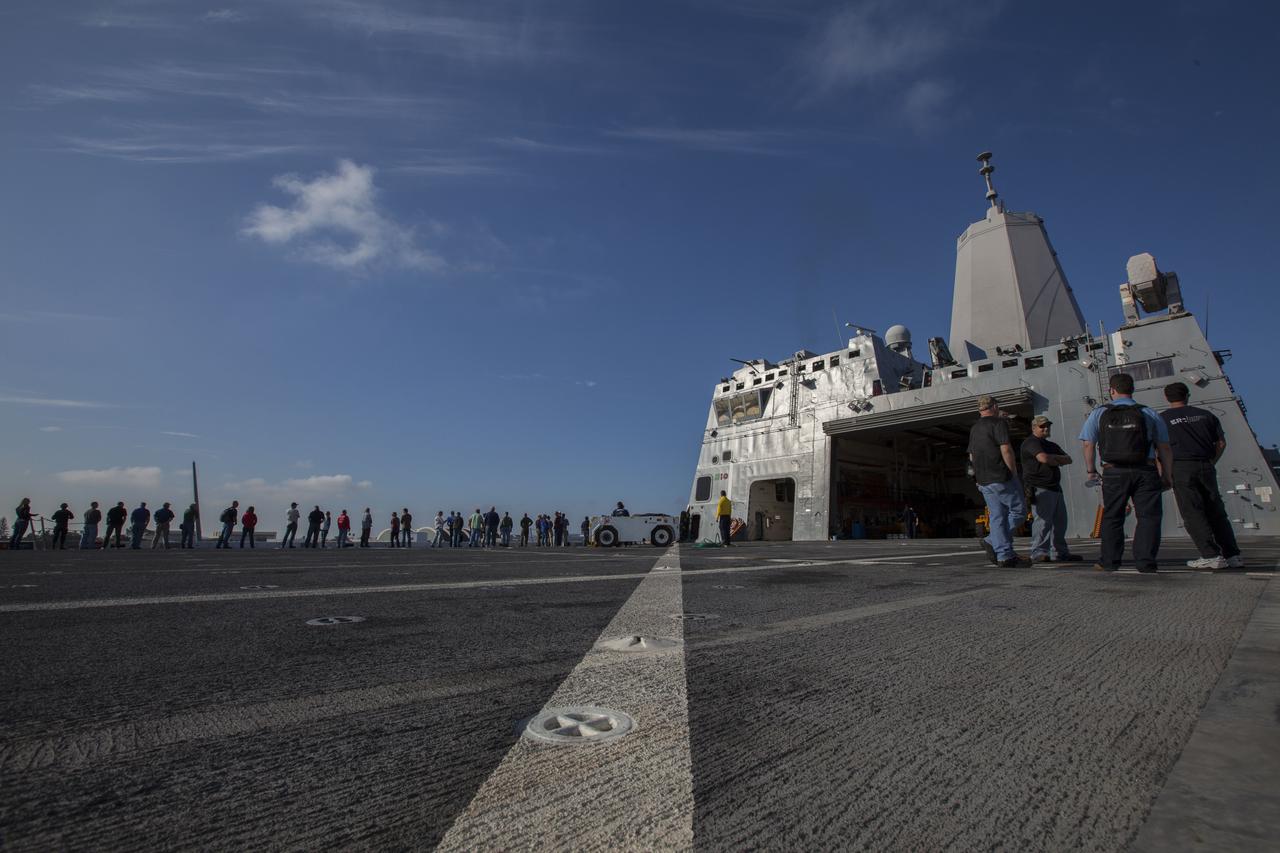
The USS San Diego departs Naval Base San Diego in California on its way out to sea in the Pacific Ocean for the Orion Underway Recovery Test 5. NASA's Ground Systems Development and Operations Program and the U.S. Navy will practice recovery techniques using the well deck of the ship and a test version of the Orion crew module to prepare for recovery of Orion on its return from deep space missions. The testing will allow the team to demonstrate and evaluate recovery processes, procedures, hardware and personnel in open waters. Orion is the exploration spacecraft designed to carry astronauts to destinations not yet explored by humans, including an asteroid and NASA's Journey to Mars. It will have emergency abort capability, sustain the crew during space travel and provide safe re-entry from deep space return velocities. Orion is scheduled to launch on NASA's Space Launch System in late 2018. For more information, visit http://www.nasa.gov/orion.
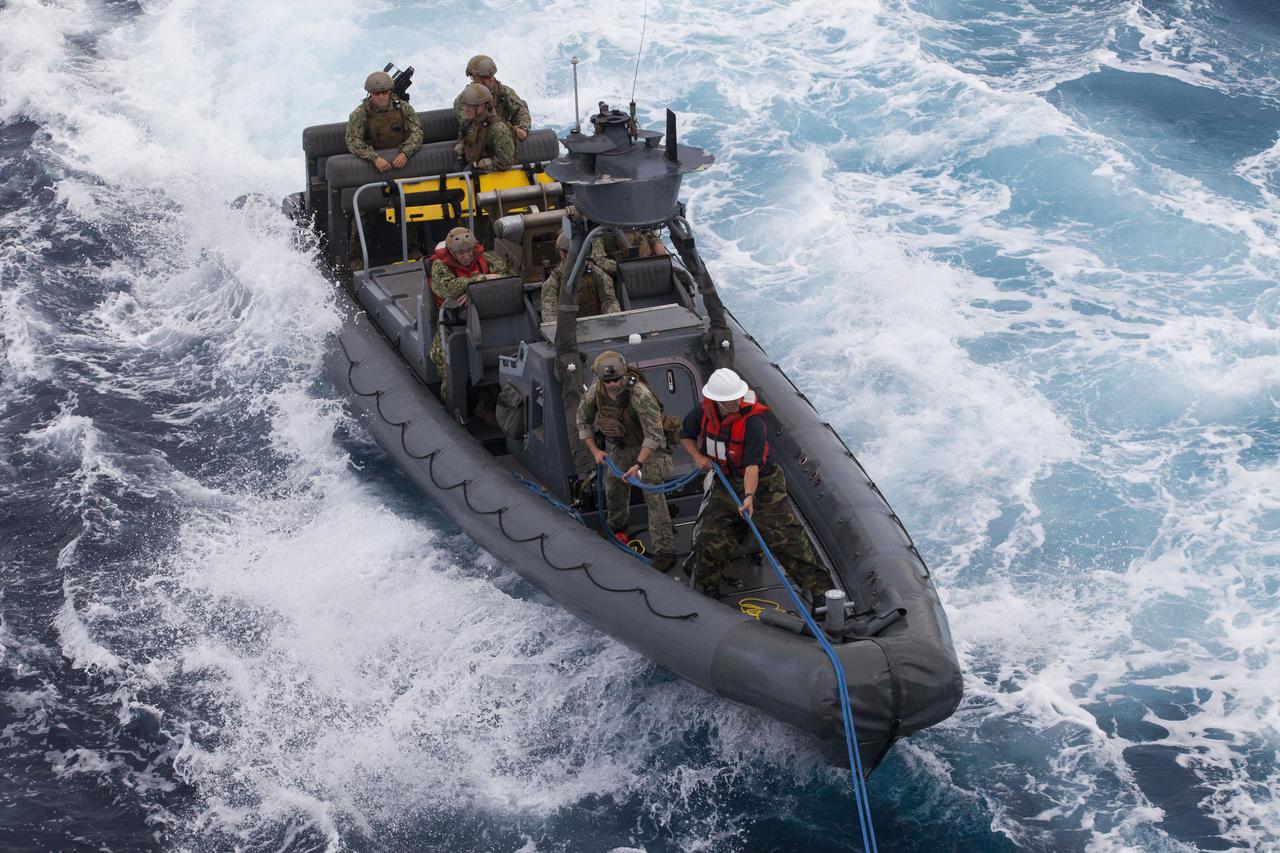
U.S. Navy divers and other personnel in a rigid hull inflatable boat are handling tether lines attached to a test version of the Orion crew module during Underway Recovery Test 5 in the Pacific Ocean off the coast of California. NASA's Ground Systems Development and Operations Program and the U.S. Navy are conducting a series of tests using the well deck of the USS San Diego, several watercraft and personnel to prepare for recovery of Orion on its return from deep space missions. The testing will allow the team to demonstrate and evaluate recovery processes, procedures, hardware and personnel in open waters. Orion is the exploration spacecraft designed to carry astronauts to destinations not yet explored by humans, including an asteroid and NASA's Journey to Mars. It will have emergency abort capability, sustain the crew during space travel and provide safe re-entry from deep space return velocities. Orion is scheduled to launch on NASA's Space Launch System in late 2018. For more information, visit http://www.nasa.gov/orion.
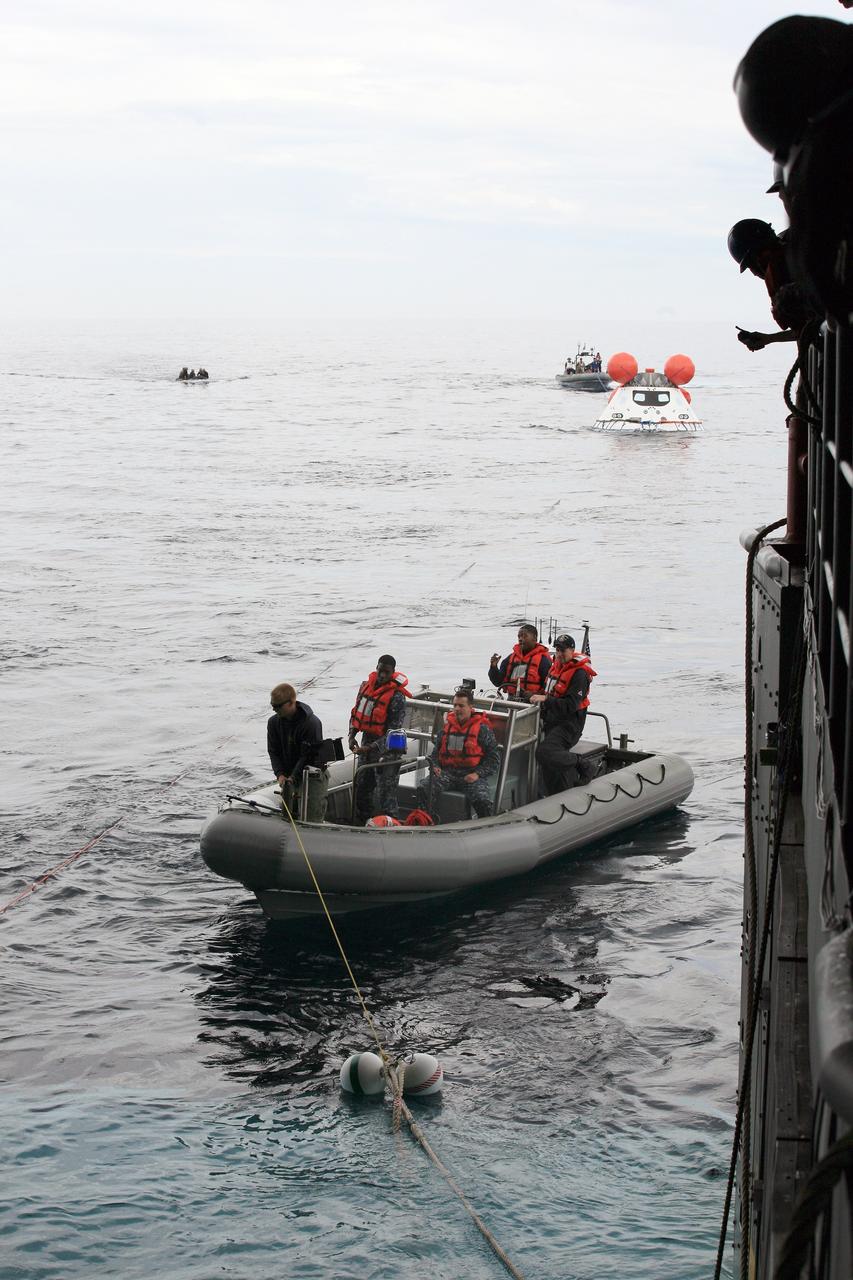
SAN DIEGO, Calif. – U.S. Navy personnel in a rigid hull inflatable boat use tether lines to bring the Orion boilerplate test vehicle back to the USS Anchorage during a portion of Underway Recovery Test 2 in the Pacific Ocean off the coast of San Diego. Behind the test vehicle is another rigid hull inflatable boat. To the far left are U.S. Navy divers in a Zodiac boat. NASA, Lockheed Martin and the U.S. Navy are conducting the test to prepare for recovery of the Orion crew module on its return from a deep space mission. The underway recovery test will allow the team to demonstrate and evaluate the recovery processes, procedures, new hardware and personnel in open waters. The Ground Systems Development and Operations Program is conducting the underway recovery test. Orion is the exploration spacecraft designed to carry astronauts to destinations not yet explored by humans, including an asteroid and Mars. It will have emergency abort capability, sustain the crew during space travel and provide safe re-entry from deep space return velocities. The first unpiloted test flight of the Orion is scheduled to launch in 2014 atop a Delta IV rocket and in 2017 on NASA’s Space Launch System rocket. For more information, visit http://www.nasa.gov/orion. Photo credit: NASA/Kim Shiflett
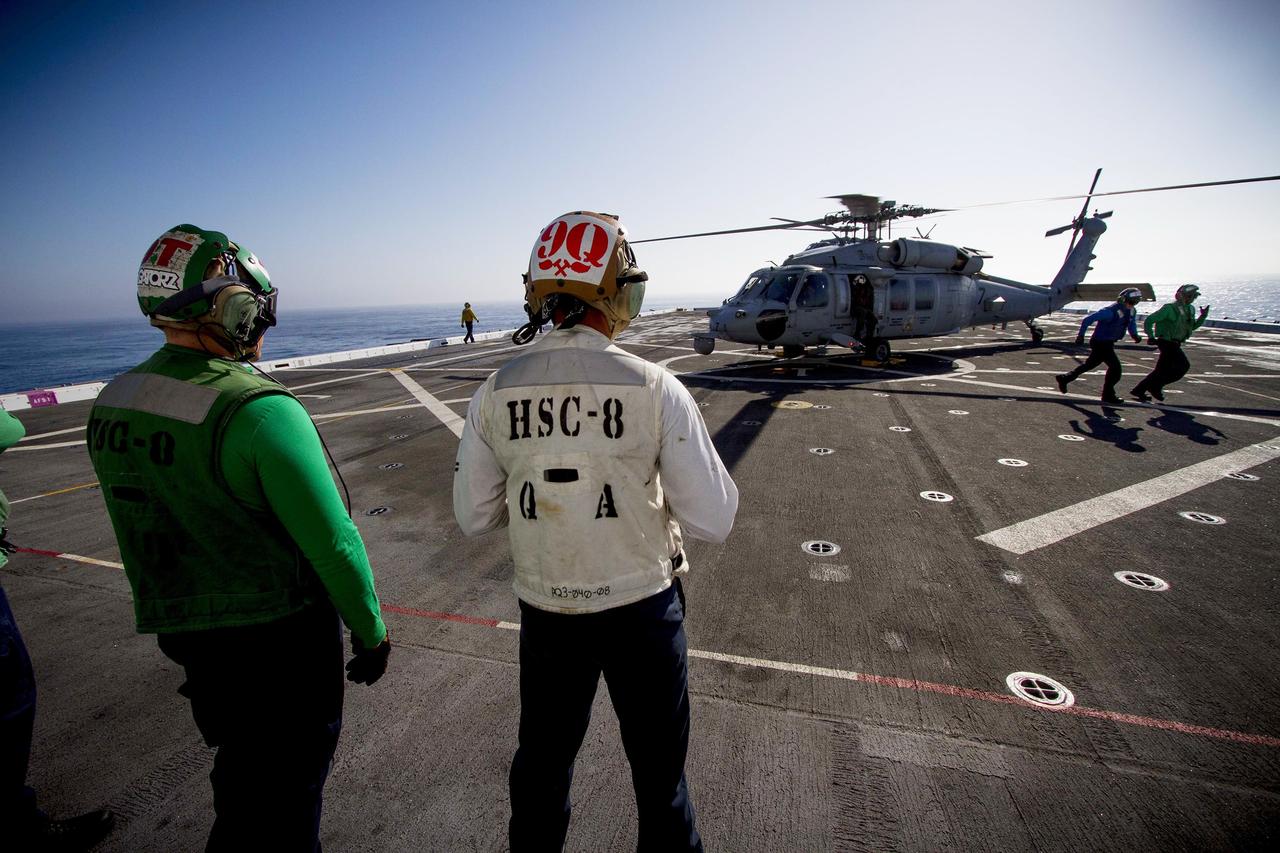
SAN DIEGO, Calif. – Helicopter Sea Combat Squadron 8, or HSC 8, prepare an H60-S Seahawk for flight on the deck of the USS Anchorage during the first day of Orion Underway Recovery Test 3 activities in the Pacific Ocean. NASA, Lockheed Martin and U.S. Navy personnel are conducting recovery tests to prepare for recovery of the Orion crew module on its return from a deep space mission. The test will allow the teams to demonstrate and evaluate the recovery processes, procedures, hardware and personnel in open waters. The Ground Systems Development and Operations Program is conducting the underway recovery tests. Orion is the exploration spacecraft designed to carry astronauts to destinations not yet explored by humans, including an asteroid and Mars. It will have emergency abort capability, sustain the crew during space travel and provide safe re-entry from deep space return velocities. The first unpiloted test flight of Orion is scheduled to launch in 2014 atop a United Launch Alliance Delta IV Heavy rocket and in 2018 on NASA’s Space Launch System rocket. For more information, visit http://www.nasa.gov/orion. Photo credit: NASA/Cory Huston
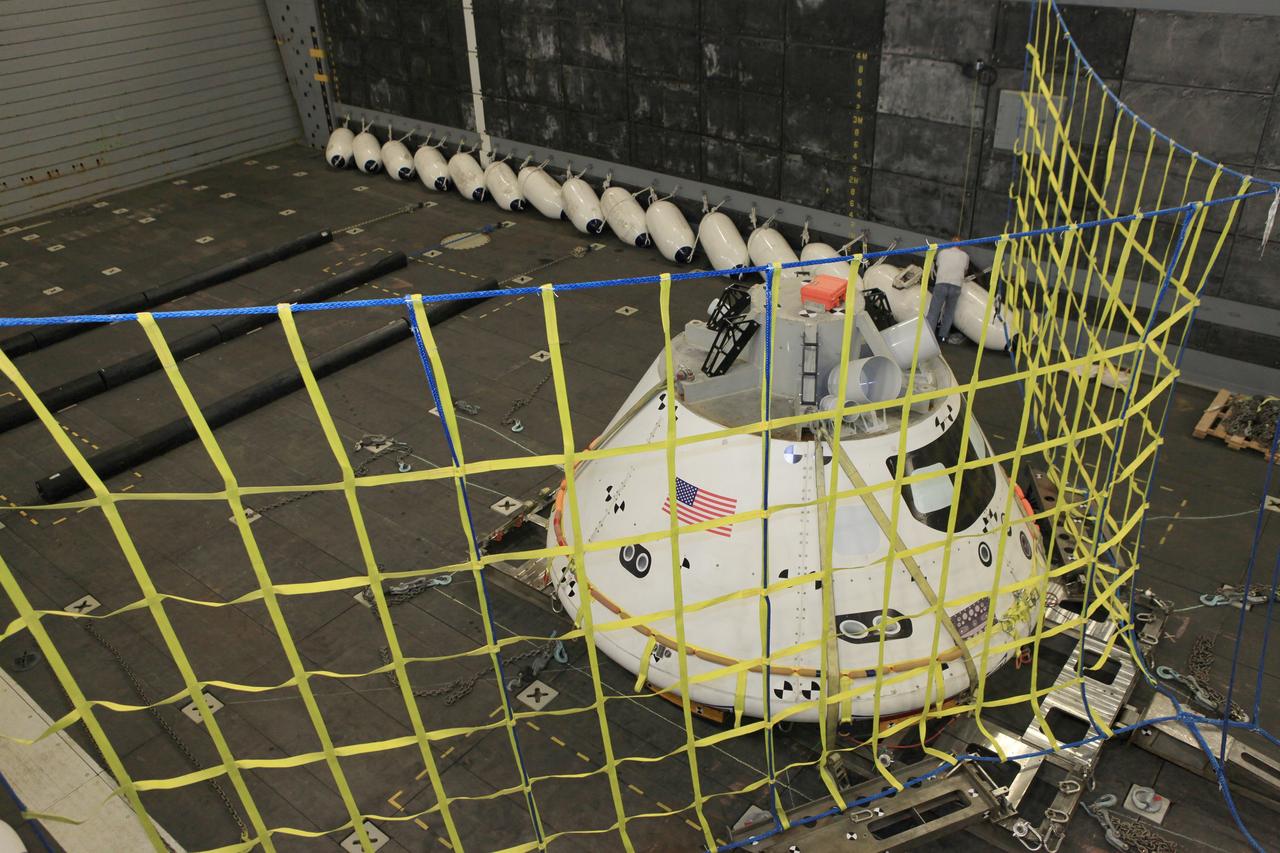
SAN DIEGO, Calif. – The Orion boilerplate test vehicle is secured on its cradle in the well deck of the U.S. Navy's USS Anchorage in preparation for Underway Recovery Test 2 in the Pacific Ocean off the coast of San Diego. A safety barrier has been installed near the test vehicle to keep it from going further into the well deck as it fills with water. NASA, Lockheed Martin and the U.S. Navy will conduct the test to prepare for recovery of the Orion crew module on its return from a deep space mission. The underway recovery test will allow the team to demonstrate and evaluate the recovery processes, procedures, new hardware and personnel in open waters. The Ground Systems Development and Operations Program is conducting the underway recovery test. Orion is the exploration spacecraft designed to carry astronauts to destinations not yet explored by humans, including an asteroid and Mars. It will have emergency abort capability, sustain the crew during space travel and provide safe re-entry from deep space return velocities. The first unpiloted test flight of the Orion is scheduled to launch in 2014 atop a Delta IV rocket and in 2017 on NASA’s Space Launch System rocket. For more information, visit http://www.nasa.gov/orion. Photo credit: NASA/Kim Shiflett
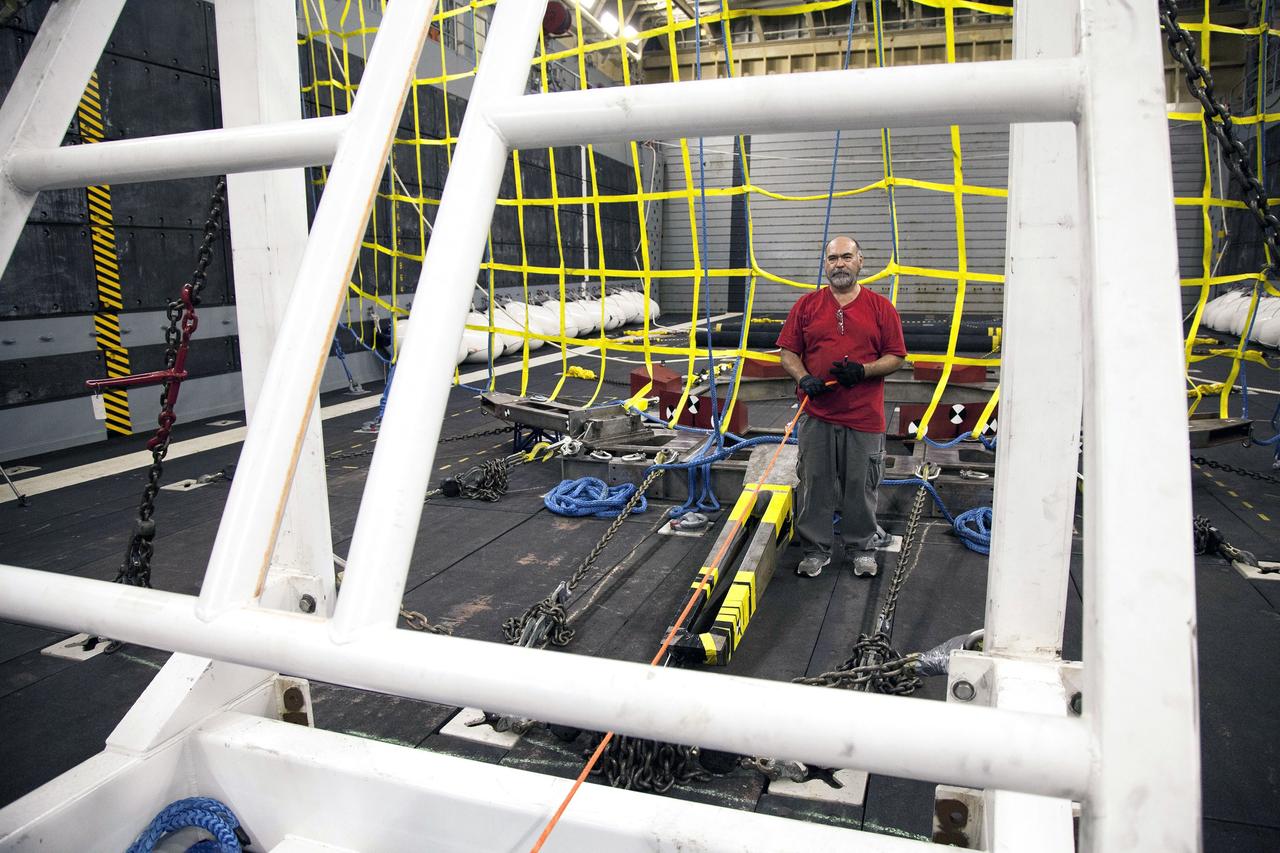
SAN DIEGO, Calif. – NASA, Lockheed Martin and U.S. Navy personnel are preparing the well deck of the USS Anchorage in the Pacific Ocean near the Orion recovery site ahead of the first flight test. The team is preparing for recovery of the crew module, forward bay cover and parachutes on its return from space and splashdown in the Pacific Ocean. The Ground Systems Development and Operations Program is leading the recovery efforts. The first unpiloted flight test of Orion is scheduled to launch this week atop a United Launch Alliance Delta IV Heavy rocket. During its two-orbit, 4.5-hour flight, Orion will venture 3,600 miles in altitude and travel nearly 60,000 miles before returning to Earth for a splashdown in the Pacific Ocean. For more information, visit http://www.nasa.gov/orion. Photo credit: NASA/Cory Huston
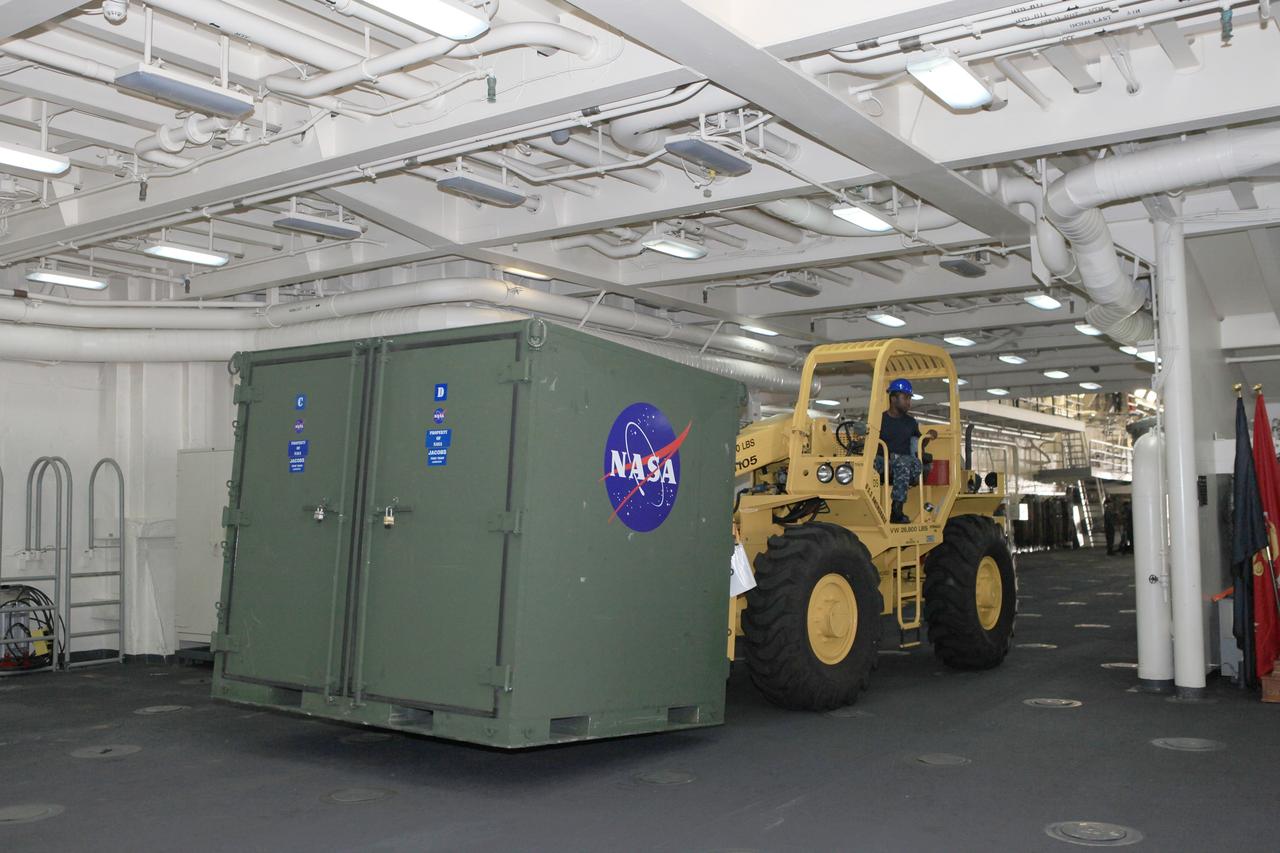
SAN DIEGO, Calif. – The USS Anchorage has returned to Naval Base San Diego after completion of the Orion Underway Recovery Test 2 in the Pacific Ocean. U.S. Navy personnel use a forklift to carry support equipment out of the ship's well deck. NASA, Lockheed Martin and the U.S. Navy conducted the test on the Orion boilerplate test vehicle to prepare for recovery of the Orion crew module on its return from a deep space mission. The underway recovery test allowed the team to demonstrate and evaluate the recovery processes, procedures, new hardware and personnel in open waters. The Ground Systems Development and Operations Program conducted the underway recovery test. Orion is the exploration spacecraft designed to carry astronauts to destinations not yet explored by humans, including an asteroid and Mars. It will have emergency abort capability, sustain the crew during space travel and provide safe re-entry from deep space return velocities. The first unpiloted test flight of the Orion is scheduled to launch in 2014 atop a Delta IV rocket and in 2017 on NASA’s Space Launch System rocket. For more information, visit http://www.nasa.gov/orion. Photo credit: NASA/Kim Shiflett
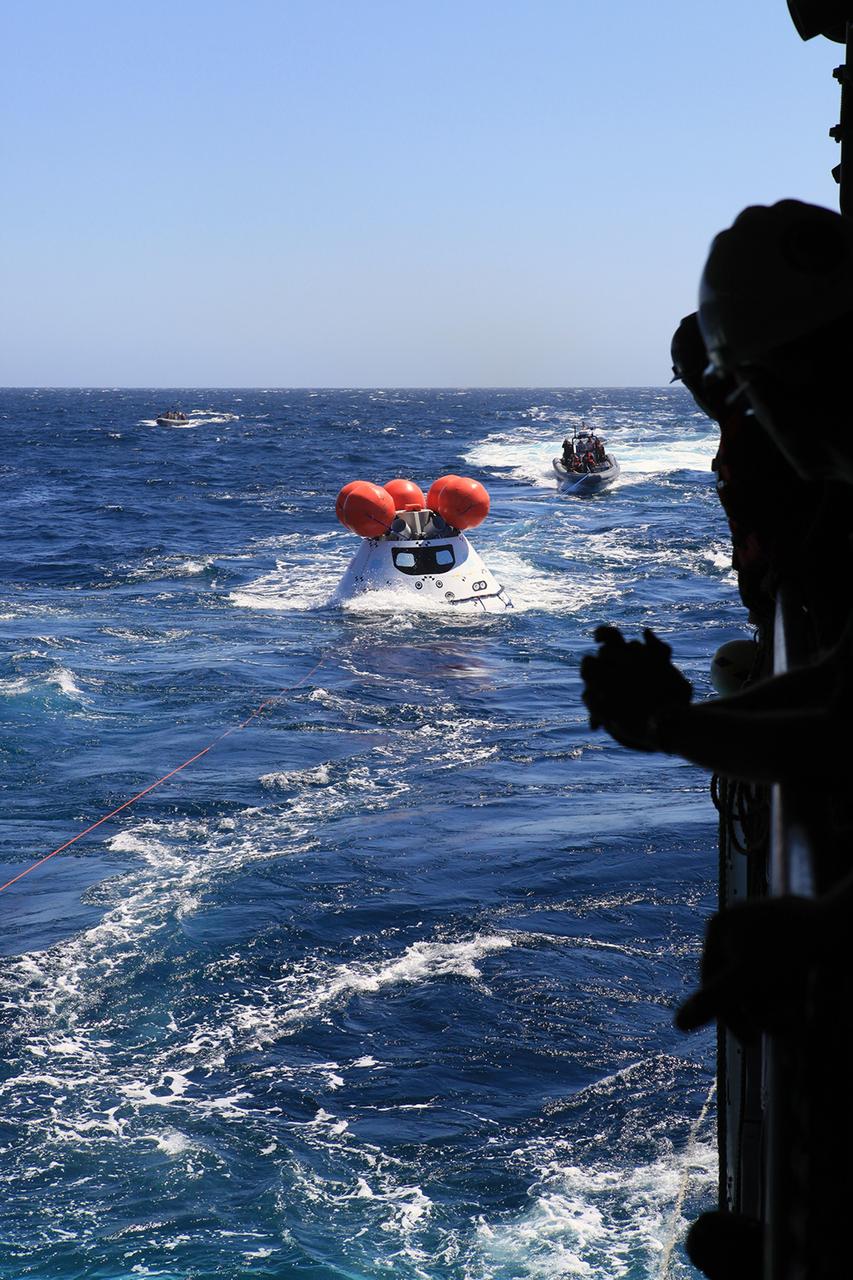
SAN DIEGO, Calif. – During the third day of Orion Underway Recovery Test 3 on the USS Anchorage in the Pacific Ocean, U.S. Navy personnel in a rigid hull inflatable boat use tether lines attached to the test vehicle to practice the recovery process. NASA, Lockheed Martin and U.S. Navy personnel are conducting recovery tests using the Orion boilerplate test vehicle to prepare for recovery of the Orion crew module on its return from a deep space mission. The test allows the teams to demonstrate and evaluate the recovery processes, procedures, hardware and personnel in open waters. The Ground Systems Development and Operations Program is conducting the underway recovery tests. Orion is the exploration spacecraft designed to carry astronauts to destinations not yet explored by humans, including an asteroid and Mars. It will have emergency abort capability, sustain the crew during space travel and provide safe re-entry from deep space return velocities. The first unpiloted test flight of Orion is scheduled to launch in 2014 atop a United Launch Alliance Delta IV Heavy rocket and in 2018 on NASA’s Space Launch System rocket. For more information, visit http://www.nasa.gov/orion. Photo credit: NASA/Kim Shiflett
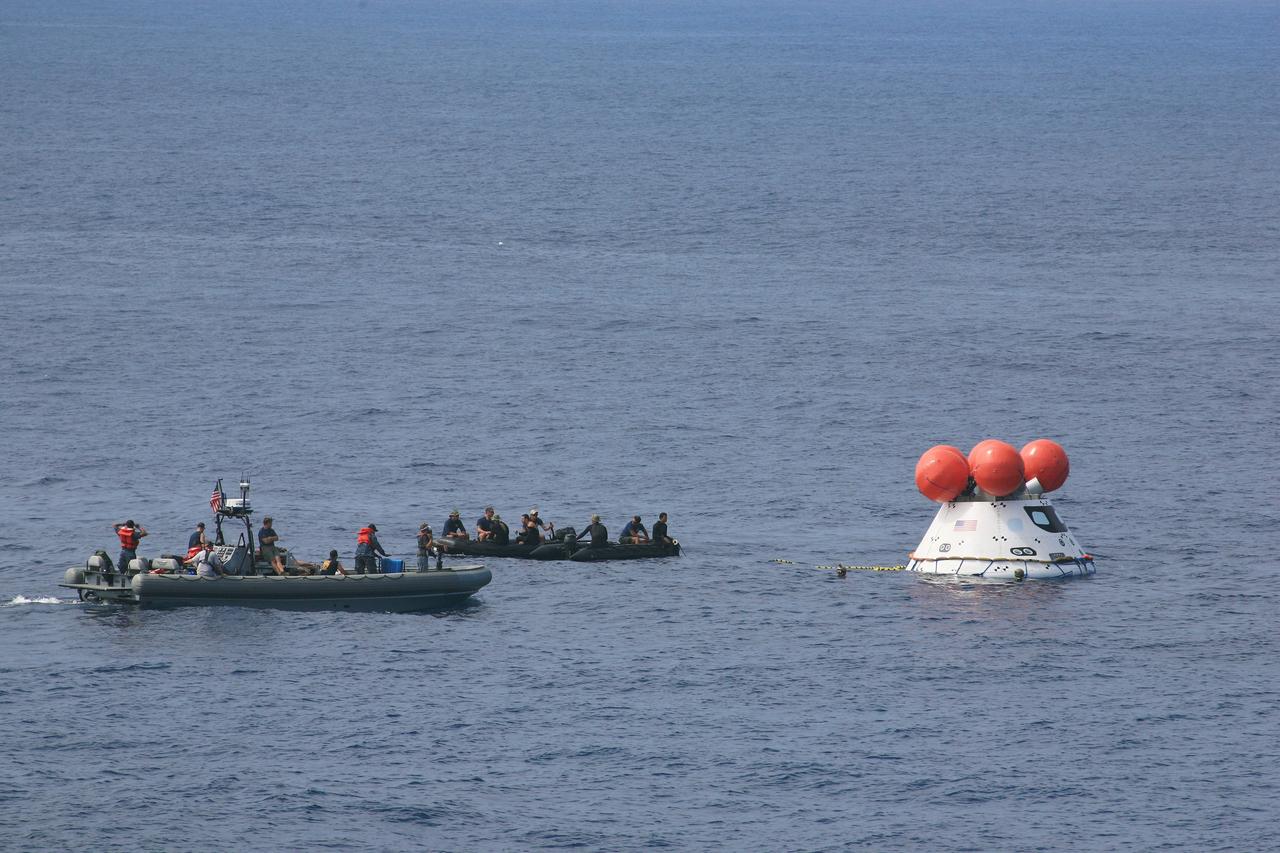
SAN DIEGO, Calif. – U.S. Navy personnel in a rigid hull inflatable boat and U.S. Navy divers in a Zodiac boat attach tether lines to NASA’s Orion boilerplate test vehicle as it floats in the Pacific Ocean off the coast of San Diego during a portion of the Underway Recovery Test 2. The U.S. Navy’s USS Anchorage is ready for recovery nearby. The testing is being conducted to prepare for recovery of the Orion crew module on its return from a deep-space mission. The underway recovery test will allow the team to demonstrate and evaluate the recovery processes, procedures, new hardware and personnel in open waters. The Ground Systems Development and Operations Program is conducting the underway recovery test. Orion is the exploration spacecraft designed to carry astronauts to destinations not yet explored by humans, including an asteroid and Mars. It will have emergency abort capability, sustain the crew during space travel and provide safe re-entry from deep-space return velocities. The first unpiloted test flight of the Orion is scheduled to launch in 2014 atop a Delta IV rocket and in 2017 on NASA’s Space Launch System rocket. For more information, visit http://www.nasa.gov/orion. Photo credit: NASA/Kim Shiflett
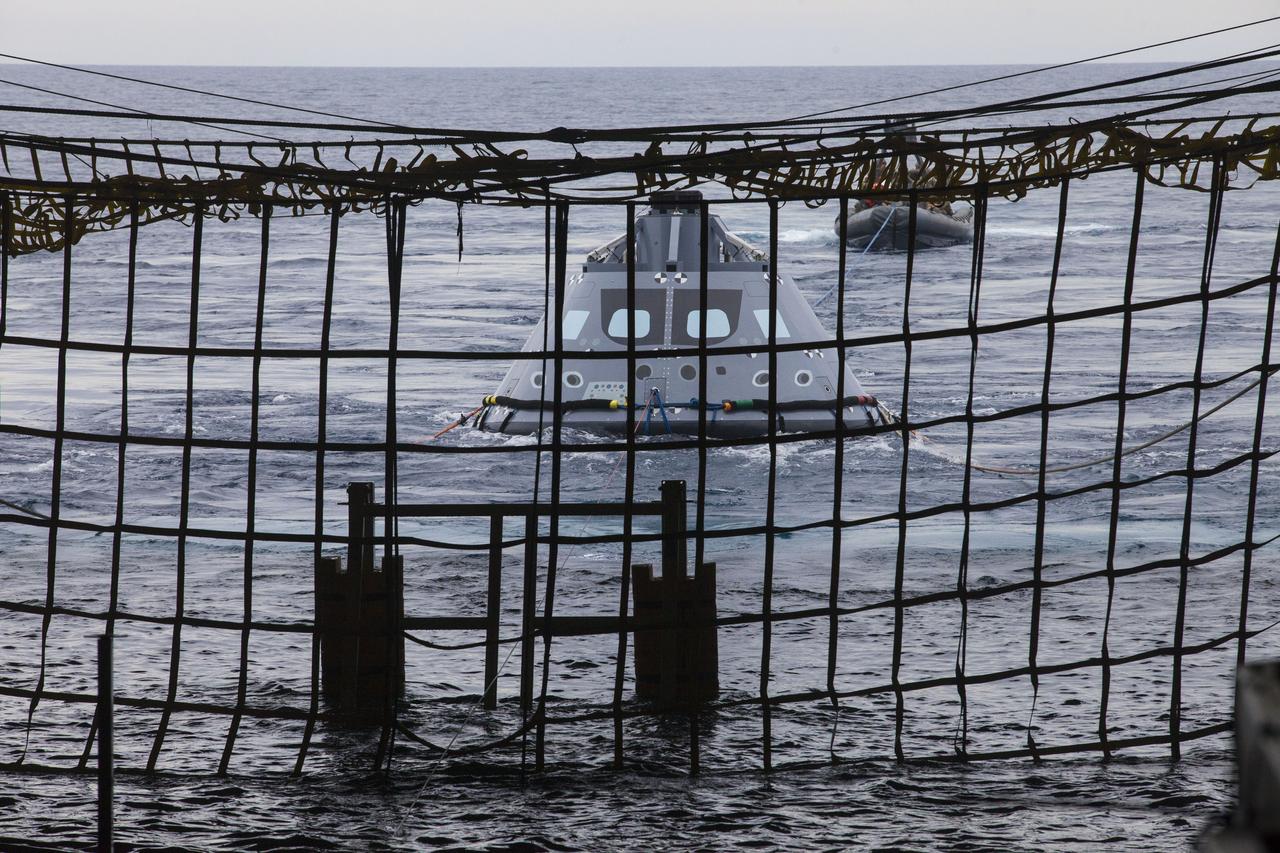
A test version of the Orion crew module is guided into the well deck of the USS San Diego during Underway Recovery Test 5 in the Pacific Ocean off the coast of California. Tether lines have been attached to the crew module by U. S. Navy divers and other personnel in a rigid hull inflatable boat. NASA's Ground Systems Development and Operations Program and the U.S. Navy are practicing recovery techniques to prepare for recovery of Orion on its return from deep space missions. The testing will allow the team to demonstrate and evaluate recovery processes, procedures, hardware and personnel in open waters. Orion is the exploration spacecraft designed to carry astronauts to destinations not yet explored by humans, including an asteroid and NASA's Journey to Mars. It will have emergency abort capability, sustain the crew during space travel and provide safe re-entry from deep space return velocities. Orion is scheduled to launch on NASA's Space Launch System in late 2018. For more information, visit http://www.nasa.gov/orion.
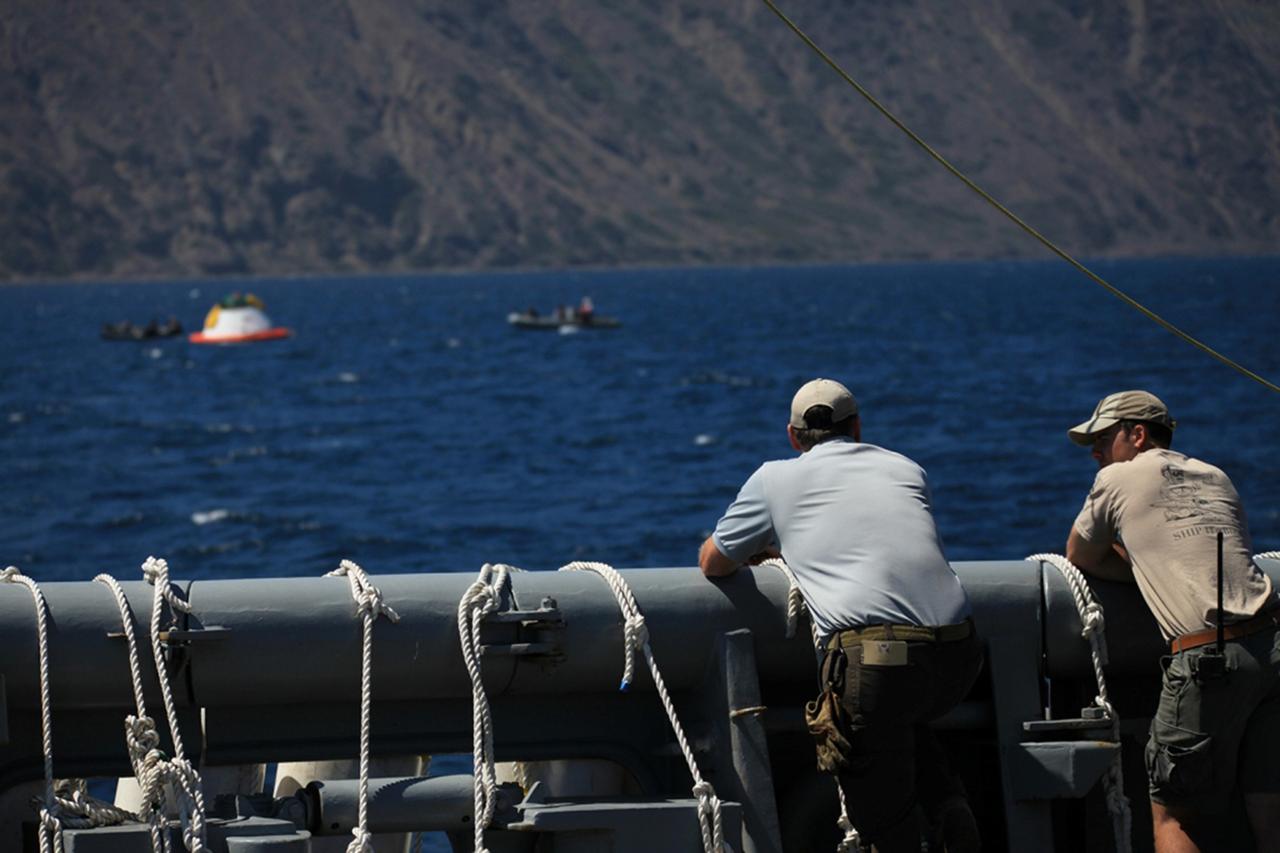
SAN DIEGO, Calif. – The Orion boilerplate test vehicle floats in the Pacific Ocean during Underway Recovery Test 4A. Orion was lowered into the water with a stationary crane from the USS Salvor, a safeguard-class rescue and salvage ship. Nearby, U.S. Navy personnel in a Zodiac boat and rigid hull inflatable boat prepare to practice procedures to tether and retrieve the test vehicle. NASA, Lockheed Martin and the U.S. Navy are conducting crane recovery tests to prepare for recovery of the Orion crew module on its return from a deep space mission. The underway recovery test will allow the teams to demonstrate and evaluate the recovery processes, procedures, new hardware and personnel in open waters. The Ground Systems Development and Operations Program is conducting the underway recovery test. Orion is the exploration spacecraft designed to carry astronauts to destinations not yet explored by humans, including an asteroid and Mars. It will have emergency abort capability, sustain the crew during space travel and provide safe re-entry from deep space return velocities. The first unpiloted test flight of the Orion is scheduled to launch in December 2014 atop a United Launch Alliance Delta IV Heavy rocket and in 2018 on NASA’s Space Launch System rocket. For more information, visit http://www.nasa.gov/orion. Photo credit: Kim Shiflett

SAN DIEGO, Calif. – U.S. Navy personnel in two rigid hull inflatable boats use tether lines to help guide the Orion boilerplate test vehicle during a portion of Underway Recovery Test 2 in the Pacific Ocean off the coast of San Diego. Orion was prepared for the test in the well deck of the USS Anchorage. The bright orange stabilizers help keep the test vehicle floating upright if needed. NASA, Lockheed Martin and the U.S. Navy are conducting the test to prepare for recovery of the Orion crew module on its return from a deep space mission. The underway recovery test will allow the team to demonstrate and evaluate the recovery processes, procedures, new hardware and personnel in open waters. The Ground Systems Development and Operations Program is conducting the underway recovery test. Orion is the exploration spacecraft designed to carry astronauts to destinations not yet explored by humans, including an asteroid and Mars. It will have emergency abort capability, sustain the crew during space travel and provide safe re-entry from deep space return velocities. The first unpiloted test flight of the Orion is scheduled to launch in 2014 atop a Delta IV rocket and in 2017 on NASA’s Space Launch System rocket. For more information, visit http://www.nasa.gov/orion. Photo credit: NASA/Kim Shiflett

LOS ANGELES, Calif. – Andy Quiett, Detachment 3 deputy operations lead for the Orion program and DoD liaison for NASA, answers questions about the Orion boilerplate test vehicle from visitors touring the well deck of the USS Anchorage during the Science, Technology, Engineering and Mathematics, or STEM, Expo for L.A. Navy Days at the Port of Los Angeles in California. A combined team from NASA’s Ground Systems Development and Operations Program and the U.S. Navy were in San Diego to practice recovering Orion from the ocean, as they will do in December following the spacecraft's first trip to space during Exploration Flight Test-1. Orion is the exploration spacecraft designed to carry astronauts to destinations not yet explored by humans, including an asteroid and Mars. It will have emergency abort capability, sustain the crew during space travel and provide safe re-entry from deep-space return velocities. The first unpiloted test flight of the Orion is scheduled to launch in 2014 atop a Delta IV rocket and in 2017 on NASA’s Space Launch System rocket. For more information, visit http://www.nasa.gov/orion. Photo credit: NASA/Kim Shiflett
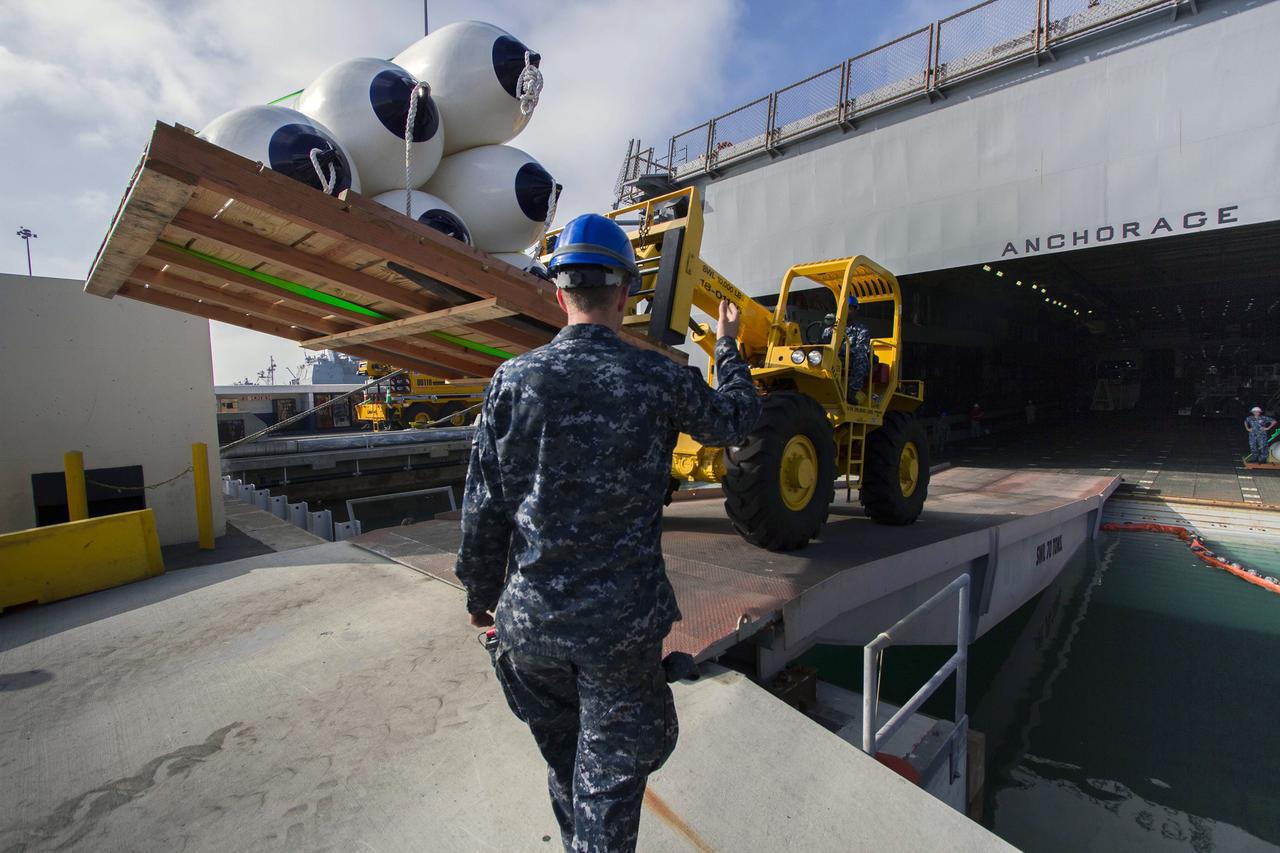
SAN DIEGO, Calif. – Support equipment is being offloaded from the well deck of the USS Anchorage at Naval Base San Diego following completion of Underway Recovery Test 3 on the Orion boilerplate test vehicle in the Pacific Ocean. NASA, Lockheed Martin and U.S. Navy personnel conducted the recovery test using the test vehicle to prepare for recovery of the Orion crew module on its return from a deep space mission. The test allowed the teams to demonstrate and evaluate the recovery processes, procedures, hardware and personnel in open waters. The Ground Systems Development and Operations Program conducted the underway recovery tests. Orion is the exploration spacecraft designed to carry astronauts to destinations not yet explored by humans, including an asteroid and Mars. It will have emergency abort capability, sustain the crew during space travel and provide safe re-entry from deep space return velocities. The first unpiloted test flight of Orion is scheduled to launch in 2014 atop a United Launch Alliance Delta IV Heavy rocket and in 2018 on NASA’s Space Launch System rocket. For more information, visit http://www.nasa.gov/orion. Photo credit: NASA/Cory Huston

SAN DIEGO, Calif. – The USS Anchorage has returned to Naval Base San Diego after completion of the Orion Underway Recovery Test 2 in the Pacific Ocean. U.S. Navy personnel help guide support equipment out of the ship's well deck. NASA, Lockheed Martin and the U.S. Navy conducted the test on the Orion boilerplate test vehicle to prepare for recovery of the Orion crew module on its return from a deep space mission. The underway recovery test allowed the team to demonstrate and evaluate the recovery processes, procedures, new hardware and personnel in open waters. The Ground Systems Development and Operations Program conducted the underway recovery test. Orion is the exploration spacecraft designed to carry astronauts to destinations not yet explored by humans, including an asteroid and Mars. It will have emergency abort capability, sustain the crew during space travel and provide safe re-entry from deep space return velocities. The first unpiloted test flight of the Orion is scheduled to launch in 2014 atop a Delta IV rocket and in 2017 on NASA’s Space Launch System rocket. For more information, visit http://www.nasa.gov/orion. Photo credit: NASA/Kim Shiflett
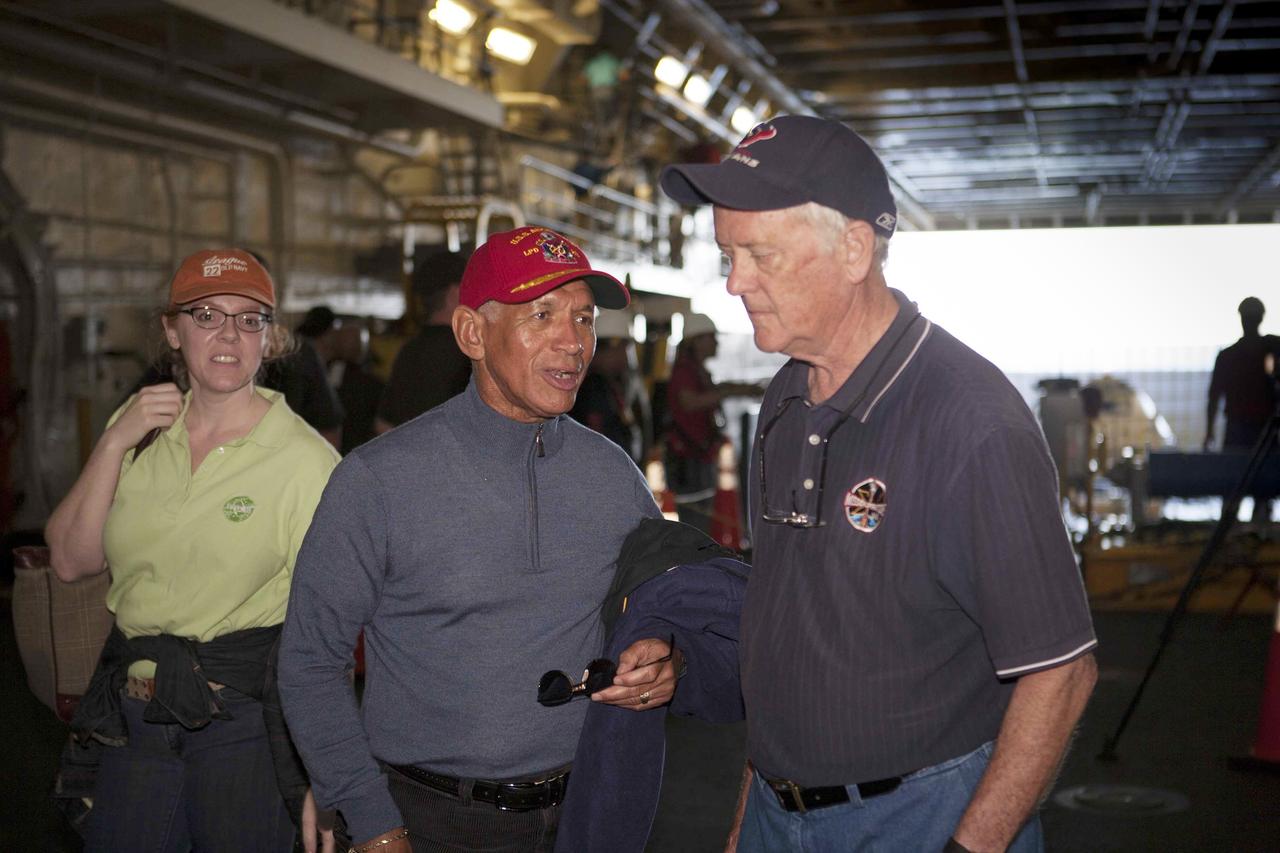
SAN DIEGO, Calif. – NASA Administrator Charlie Bolden, center, talks to Milt Heflin on the USS Anchorage on the first day of Orion Underway Recovery Test 3. Heflin was a former space shuttle flight director and Mission Operations executive with experience as a recovery engineer for several Apollo, Skylab and Apollo-Soyuz Test Project missions. At left is Brandi Dean, NASA Public Affairs Office. The ship will head out to sea, off the coast of San Diego, in search of conditions to support test needs for a full dress rehearsal of recovery operations. NASA, Lockheed Martin and U.S. Navy personnel will conduct tests in the Pacific Ocean to prepare for recovery of the Orion crew module on its return from a deep space mission. The test will allow the teams to demonstrate and evaluate the recovery processes, procedures, hardware and personnel in open waters. The Ground Systems Development and Operations Program is conducting the underway recovery tests. Orion is the exploration spacecraft designed to carry astronauts to destinations not yet explored by humans, including an asteroid and Mars. It will have emergency abort capability, sustain the crew during space travel and provide safe re-entry from deep space return velocities. The first unpiloted test flight of Orion is scheduled to launch in 2014 atop a United Launch Alliance Delta IV Heavy rocket and in 2018 on NASA’s Space Launch System rocket. For more information, visit http://www.nasa.gov/orion. Photo credit: NASA/Cory Huston
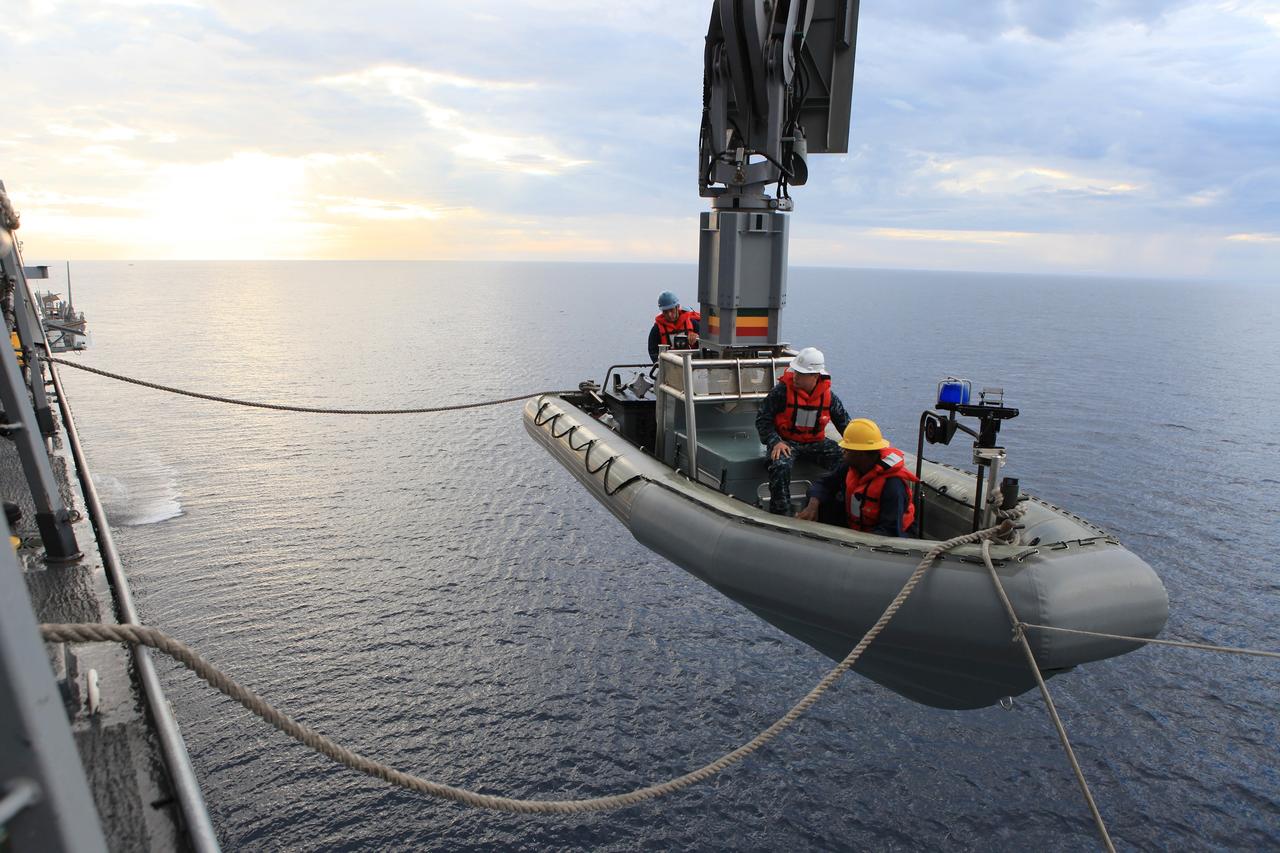
SAN DIEGO, Calif. – U.S. Navy personnel in a rigid hull inflatable boat watch as a crane moves them away from the USS Anchorage during a portion of the Orion Underway Recovery Test 2 in the Pacific Ocean off the coast of San Diego. NASA, Lockheed Martin and the U.S. Navy are conducting the test on the Orion boilerplate test vehicle to prepare for recovery of the Orion crew module on its return from a deep space mission. The underway recovery test will allow the team to demonstrate and evaluate the recovery processes, procedures, new hardware and personnel in open waters. The Ground Systems Development and Operations Program is conducting the underway recovery test. Orion is the exploration spacecraft designed to carry astronauts to destinations not yet explored by humans, including an asteroid and Mars. It will have emergency abort capability, sustain the crew during space travel and provide safe re-entry from deep space return velocities. The first unpiloted test flight of the Orion is scheduled to launch in 2014 atop a Delta IV rocket and in 2017 on NASA’s Space Launch System rocket. For more information, visit http://www.nasa.gov/orion. Photo credit: NASA/Kim Shiflett
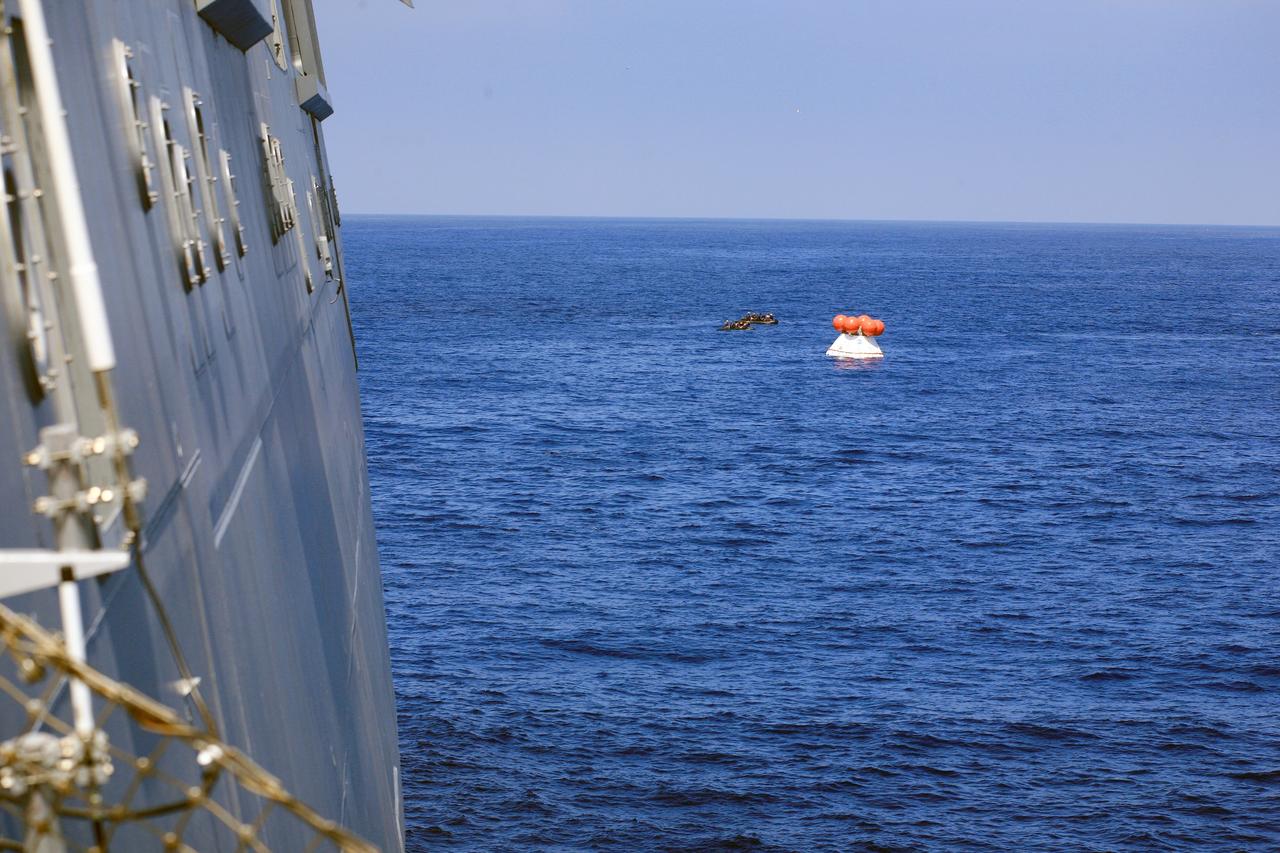
SAN DIEGO, Calif. – NASA’s Orion boilerplate test vehicle floats in the Pacific Ocean off the coast of San Diego as U.S. Navy personnel practice attaching it to tether lines during a portion of the Underway Recovery Test 2. The U.S. Navy’s USS Anchorage is ready for recovery nearby. The testing is being conducted to prepare for recovery of the Orion crew module on its return from a deep-space mission. The underway recovery test will allow the team to demonstrate and evaluate the recovery processes, procedures, new hardware and personnel in open waters. The Ground Systems Development and Operations Program is conducting the underway recovery test. Orion is the exploration spacecraft designed to carry astronauts to destinations not yet explored by humans, including an asteroid and Mars. It will have emergency abort capability, sustain the crew during space travel and provide safe re-entry from deep-space return velocities. The first unpiloted test flight of the Orion is scheduled to launch in 2014 atop a Delta IV rocket and in 2017 on NASA’s Space Launch System rocket. For more information, visit http://www.nasa.gov/orion. Photo credit: NASA/Kim Shiflett
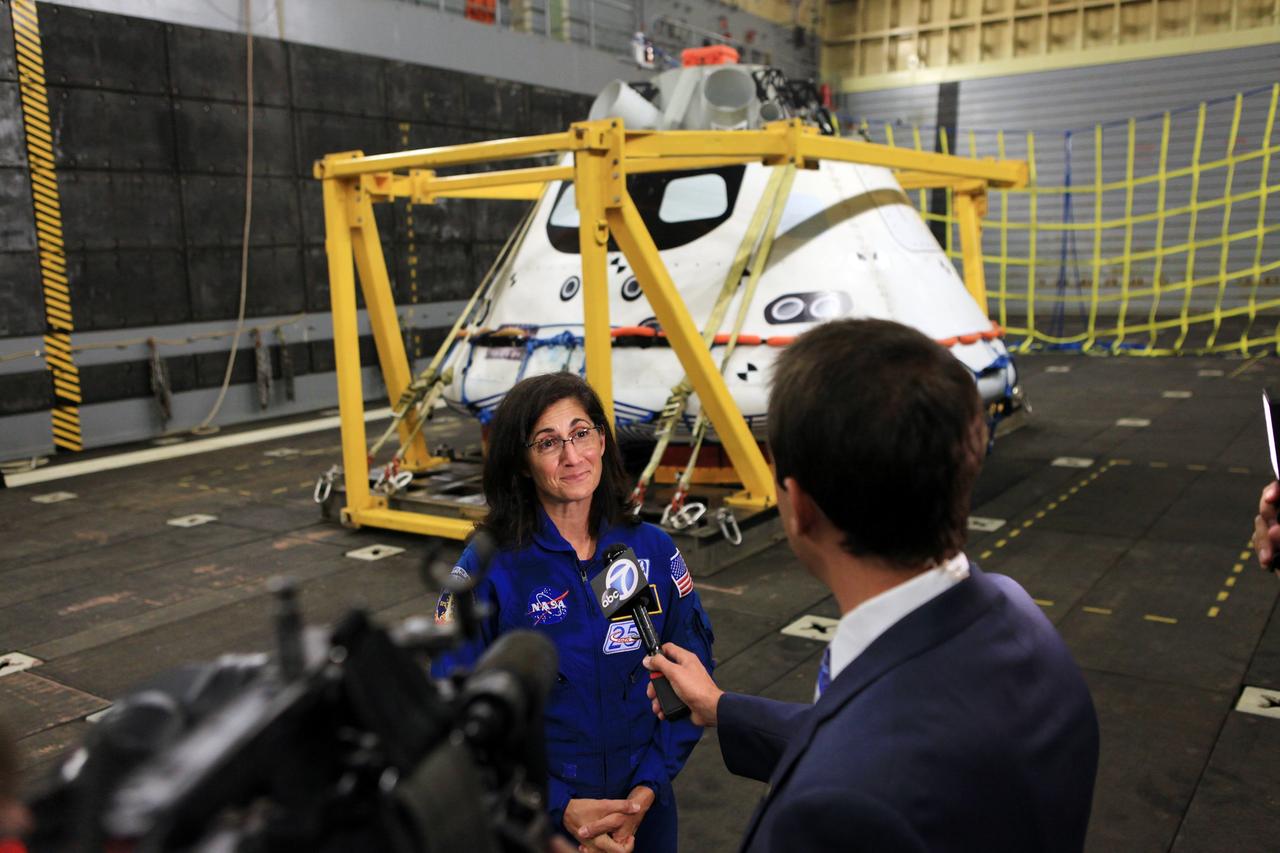
LOS ANGELES, Calif. – NASA astronaut Nicole Stott talks with a reporter in the well deck of the USS Anchorage during L.A. Navy Days in Los Angeles. NASA, Lockheed Martin and the U.S. Navy completed Underway Recovery Test 2 on the Orion boilerplate test vehicle in the Pacific Ocean off the coast of San Diego to prepare for recovery of the Orion crew module on its return from a deep space mission. The underway recovery test allowed the teams to demonstrate and evaluate the recovery processes, procedures, new hardware and personnel in open waters The Ground Systems Development and Operations Program conducted the underway recovery test. Orion is the exploration spacecraft designed to carry astronauts to destinations not yet explored by humans, including an asteroid and Mars. It will have emergency abort capability, sustain the crew during space travel and provide safe re-entry from deep space return velocities. The first unpiloted test flight of the Orion is scheduled to launch in 2014 atop a Delta IV rocket and in 2017 on NASA’s Space Launch System rocket. For more information, visit http://www.nasa.gov/orion. Photo credit: Kim Shiflett

SAN DIEGO, Calif. – A view from inside the well deck of the U.S. Navy’s USS Anchorage, reveals the Orion boilerplate test article floating in the Pacific Ocean off the coast of San Diego during a portion of Underway Recovery Test 2. U.S. Navy personnel in three rigid hull inflatable boats are nearby. NASA, Lockheed Martin and the U.S. Navy are conducting the test to prepare for recovery of the Orion crew module on its return from a deep space mission. The underway recovery test will allow the team to demonstrate and evaluate the recovery processes, procedures, new hardware and personnel in open waters. The Ground Systems Development and Operations Program is conducting the underway recovery test. Orion is the exploration spacecraft designed to carry astronauts to destinations not yet explored by humans, including an asteroid and Mars. It will have emergency abort capability, sustain the crew during space travel and provide safe re-entry from deep space return velocities. The first unpiloted test flight of the Orion is scheduled to launch in 2014 atop a Delta IV rocket and in 2017 on NASA’s Space Launch System rocket. For more information, visit http://www.nasa.gov/orion. Photo credit: NASA/Kim Shiflett
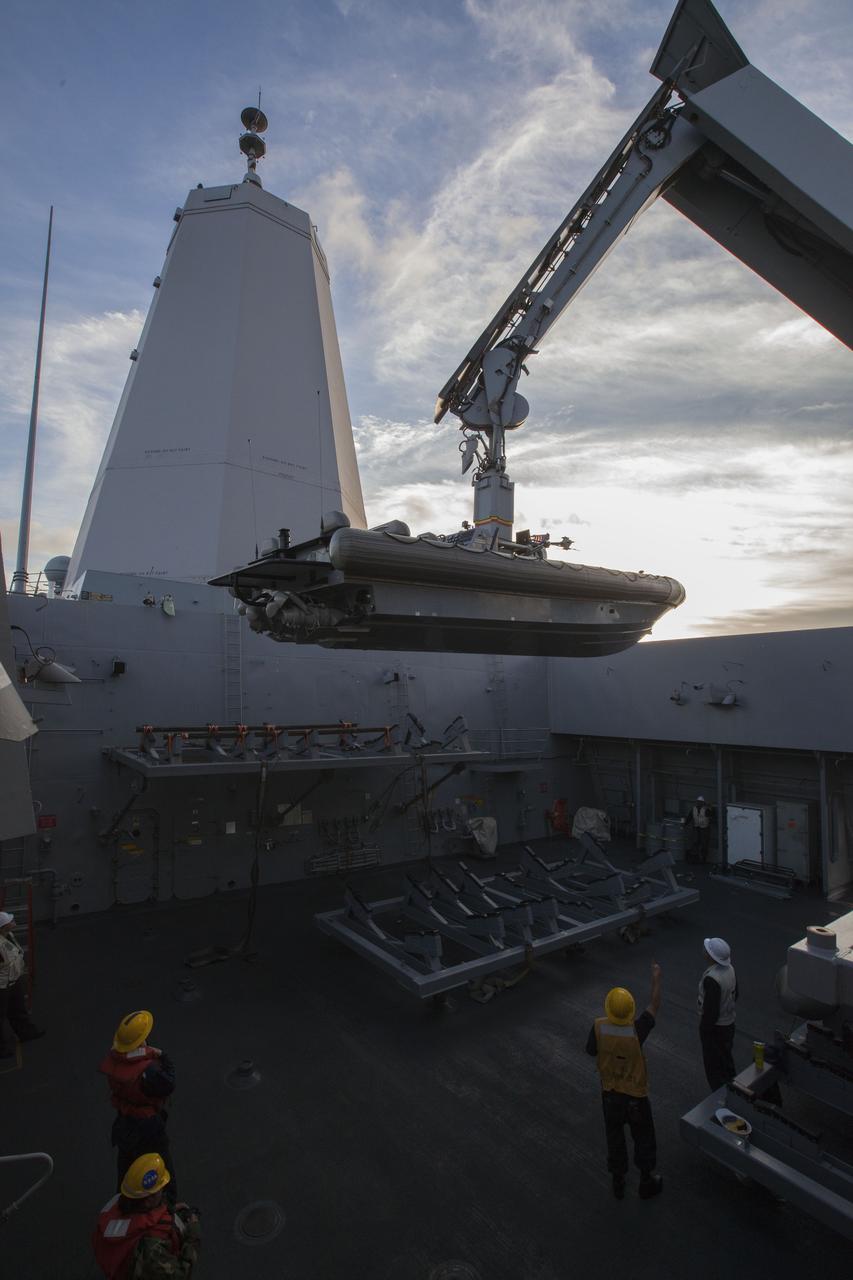
Aboard the USS San Diego, the ship's crane picks up a rigid hull inflatable boat to lower it to the water for use during Underway Recovery Test 5 in the Pacific Ocean off the coast of California. NASA's Ground Systems Development and Operations Program and the U.S. Navy are using the well deck of the USS San Diego, a test version of the Orion crew module, and several small watercraft to practice recovery techniques to prepare for recovery of Orion on its return from deep space missions. The testing will allow the team to demonstrate and evaluate recovery processes, procedures, hardware and personnel in open waters. Orion is the exploration spacecraft designed to carry astronauts to destinations not yet explored by humans, including an asteroid and NASA's Journey to Mars. It will have emergency abort capability, sustain the crew during space travel and provide safe re-entry from deep space return velocities. Orion is scheduled to launch on NASA's Space Launch System in late 2018. For more information, visit http://www.nasa.gov/orion.
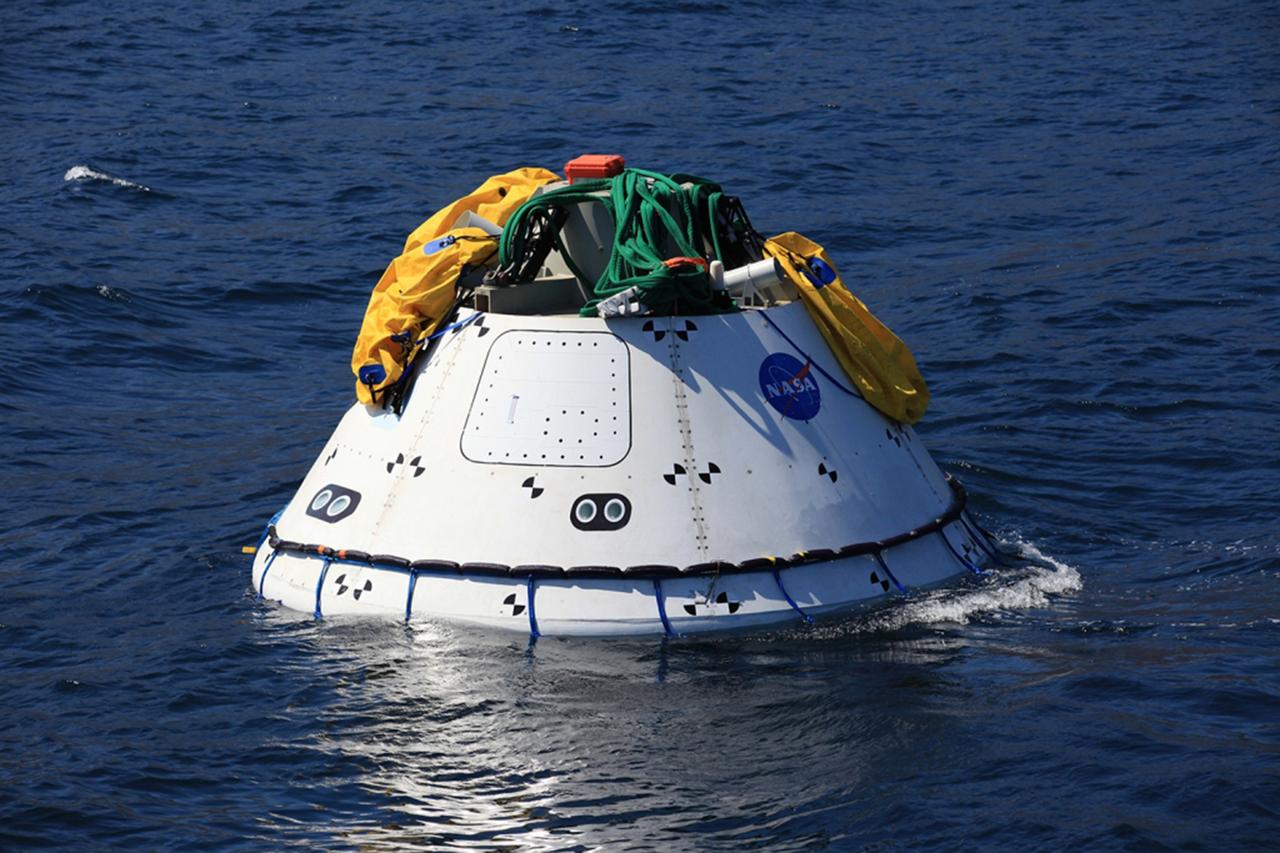
SAN DIEGO, Calif. – The Orion boilerplate test vehicle floats in the Pacific Ocean during Underway Recovery Test 4A. Orion was lowered into the water with a stationary crane from the USS Salvor, a safeguard-class rescue and salvage ship. NASA, Lockheed Martin and the U.S. Navy are conducting the test to prepare for recovery of the Orion crew module on its return from a deep space mission. The underway recovery test will allow the teams to demonstrate and evaluate the recovery processes, procedures, new hardware and personnel in open waters. The Ground Systems Development and Operations Program is conducting the underway recovery test. Orion is the exploration spacecraft designed to carry astronauts to destinations not yet explored by humans, including an asteroid and Mars. It will have emergency abort capability, sustain the crew during space travel and provide safe re-entry from deep space return velocities. The first unpiloted test flight of the Orion is scheduled to launch in December 2014 atop a United Launch Alliance Delta IV Heavy rocket and in 2018 on NASA’s Space Launch System rocket. For more information, visit http://www.nasa.gov/orion. Photo credit: Kim Shiflett
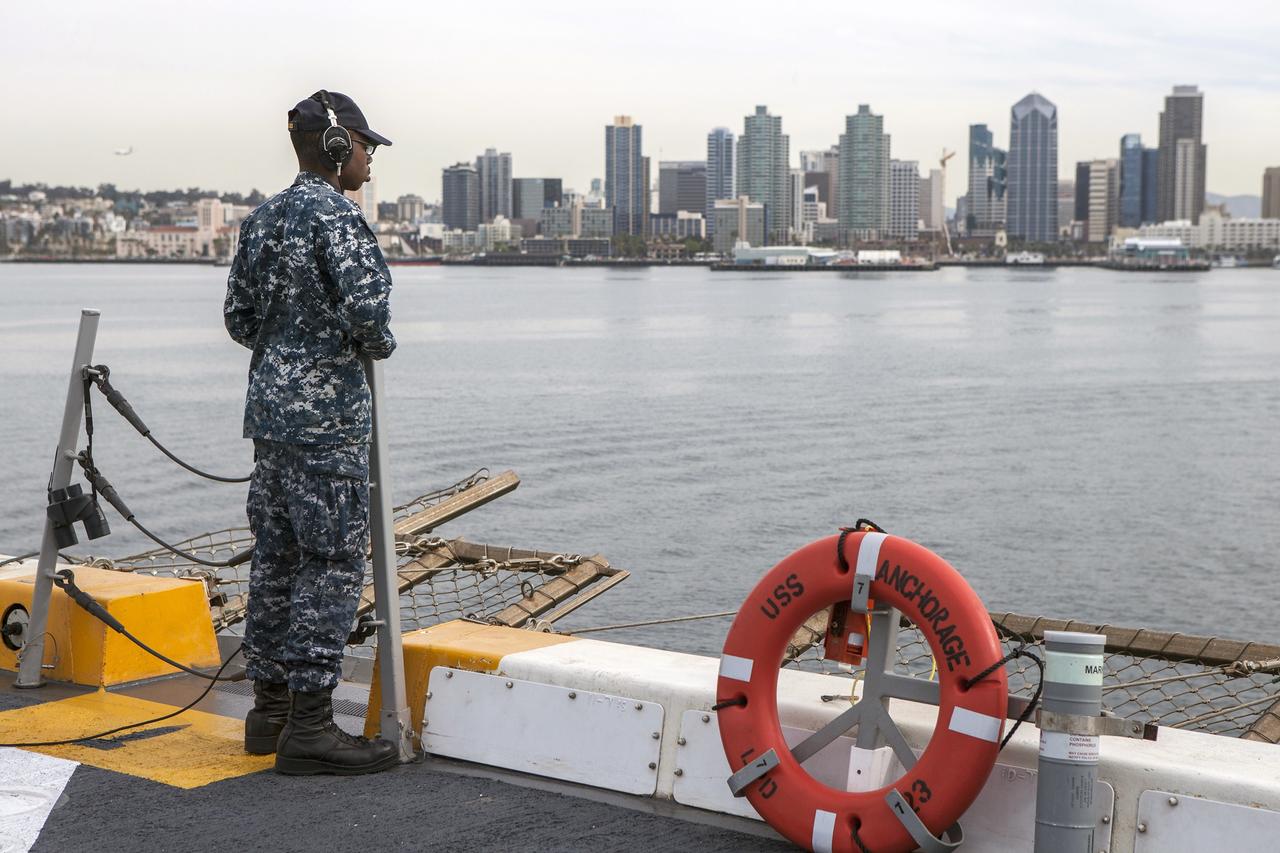
SAN DIEGO, Calif. – U.S. Navy personnel are stationed on the deck of the USS Anchorage as the ship departs Naval Base San Diego in California. NASA and the U.S. Navy are heading out to sea ahead of Orion's flight test to prepare for recovery of the crew module, forward bay cover and parachutes on its return from space and splashdown in the Pacific Ocean. The Ground Systems Development and Operations Program is leading the recovery efforts. The first unpiloted flight test of Orion is scheduled to launch this week atop a United Launch Alliance Delta IV Heavy rocket. During its two-orbit, 4.5-hour flight, Orion will venture 3,600 miles in altitude and travel nearly 60,000 miles before returning to Earth for a splashdown in the Pacific Ocean. For more information, visit http://www.nasa.gov/orion. Photo credit: NASA/Cory Huston
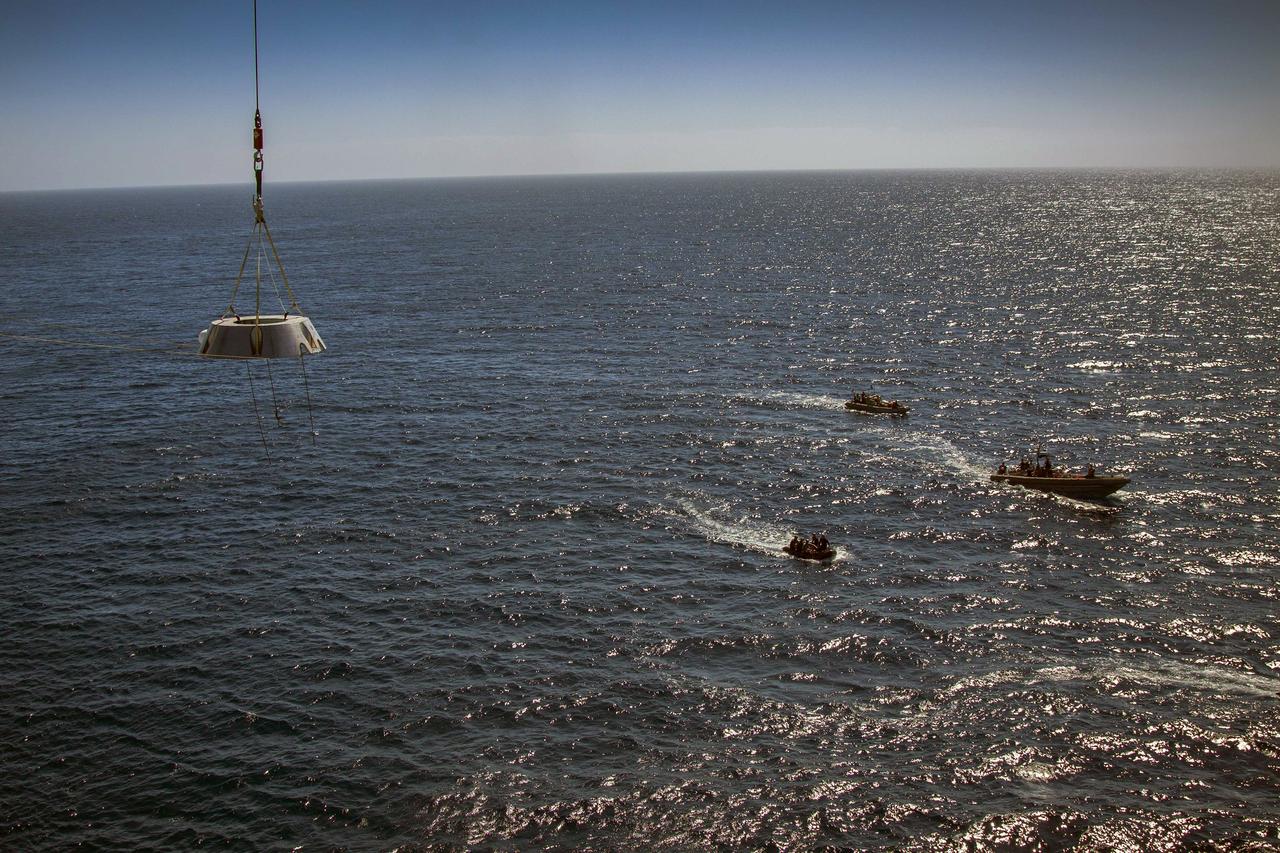
SAN DIEGO, Calif. – A mock-up of the Orion forward bay cover is lowered by crane from the USS Anchorage into the water during the second day of Orion Underway Recovery Test 3 in the Pacific Ocean. Nearby, U.S. navy divers in two Zodiac boats and other team members in a rigid hull inflatable boat, wait to practice recovery procedures. NASA, Lockheed Martin and U.S. Navy personnel are conducting the recovery test using the Orion boilerplate test vehicle and mock-up forward bay cover to prepare for recovery of the Orion crew module on its return from a deep space mission. The test allows the teams to demonstrate and evaluate the recovery processes, procedures, hardware and personnel in open waters. The Ground Systems Development and Operations Program is conducting the underway recovery tests. Orion is the exploration spacecraft designed to carry astronauts to destinations not yet explored by humans, including an asteroid and Mars. It will have emergency abort capability, sustain the crew during space travel and provide safe re-entry from deep space return velocities. The first unpiloted test flight of Orion is scheduled to launch in 2014 atop a United Launch Alliance Delta IV Heavy rocket and in 2018 on NASA’s Space Launch System rocket. For more information, visit http://www.nasa.gov/orion. Photo credit: NASA/Cory Huston
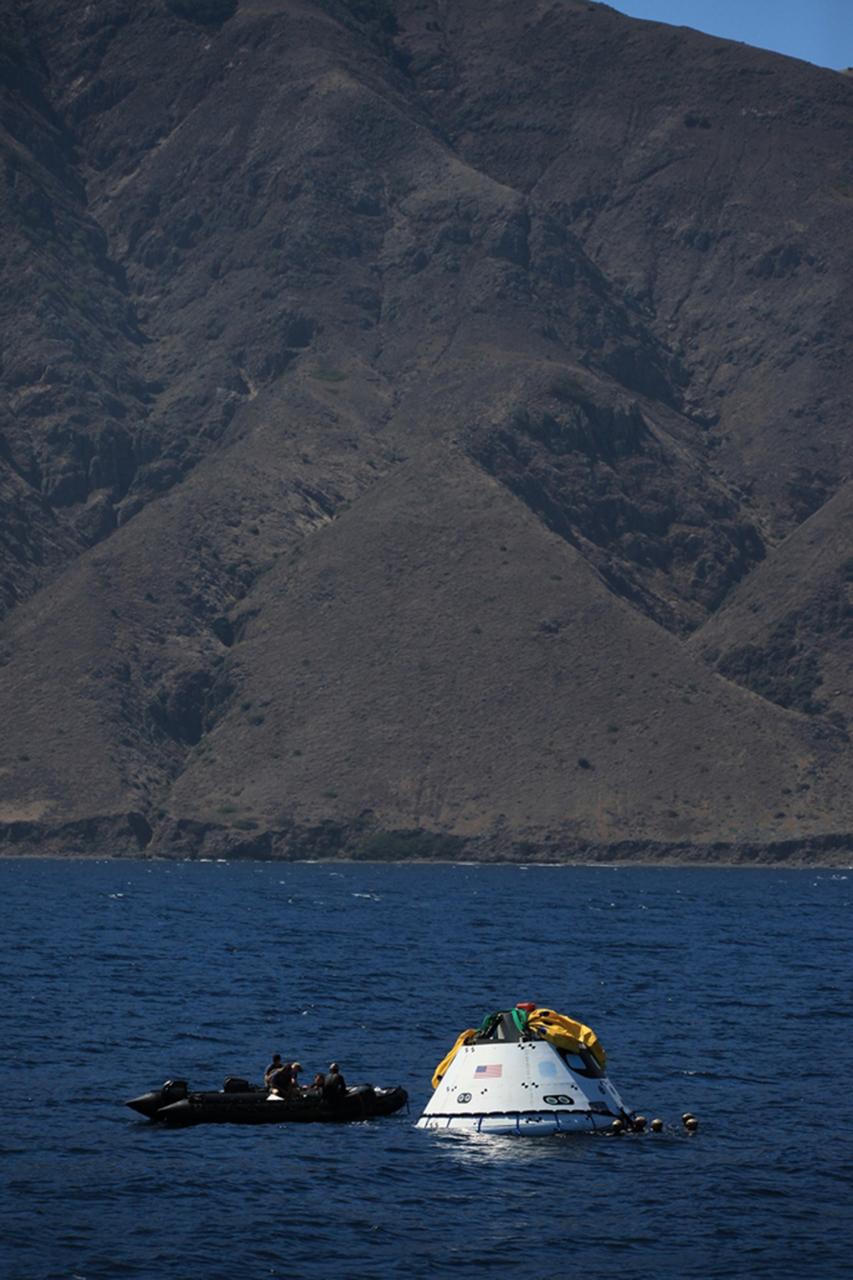
SAN DIEGO, Calif. – The Orion boilerplate test vehicle floats in the Pacific Ocean during Underway Recovery Test 4A. Orion was lowered into the water with a stationary crane from the USS Salvor, a safeguard-class rescue and salvage ship. Nearby, U.S. Navy personnel in a Zodiac boat prepare to practice procedures to tether and retrieve the test vehicle. NASA, Lockheed Martin and the U.S. Navy are conducting crane recovery tests to prepare for recovery of the Orion crew module on its return from a deep space mission. The underway recovery test will allow the teams to demonstrate and evaluate the recovery processes, procedures, new hardware and personnel in open waters. The Ground Systems Development and Operations Program is conducting the underway recovery test. Orion is the exploration spacecraft designed to carry astronauts to destinations not yet explored by humans, including an asteroid and Mars. It will have emergency abort capability, sustain the crew during space travel and provide safe re-entry from deep space return velocities. The first unpiloted test flight of the Orion is scheduled to launch in December 2014 atop a United Launch Alliance Delta IV Heavy rocket and in 2018 on NASA’s Space Launch System rocket. For more information, visit http://www.nasa.gov/orion. Photo credit: Kim Shiflett
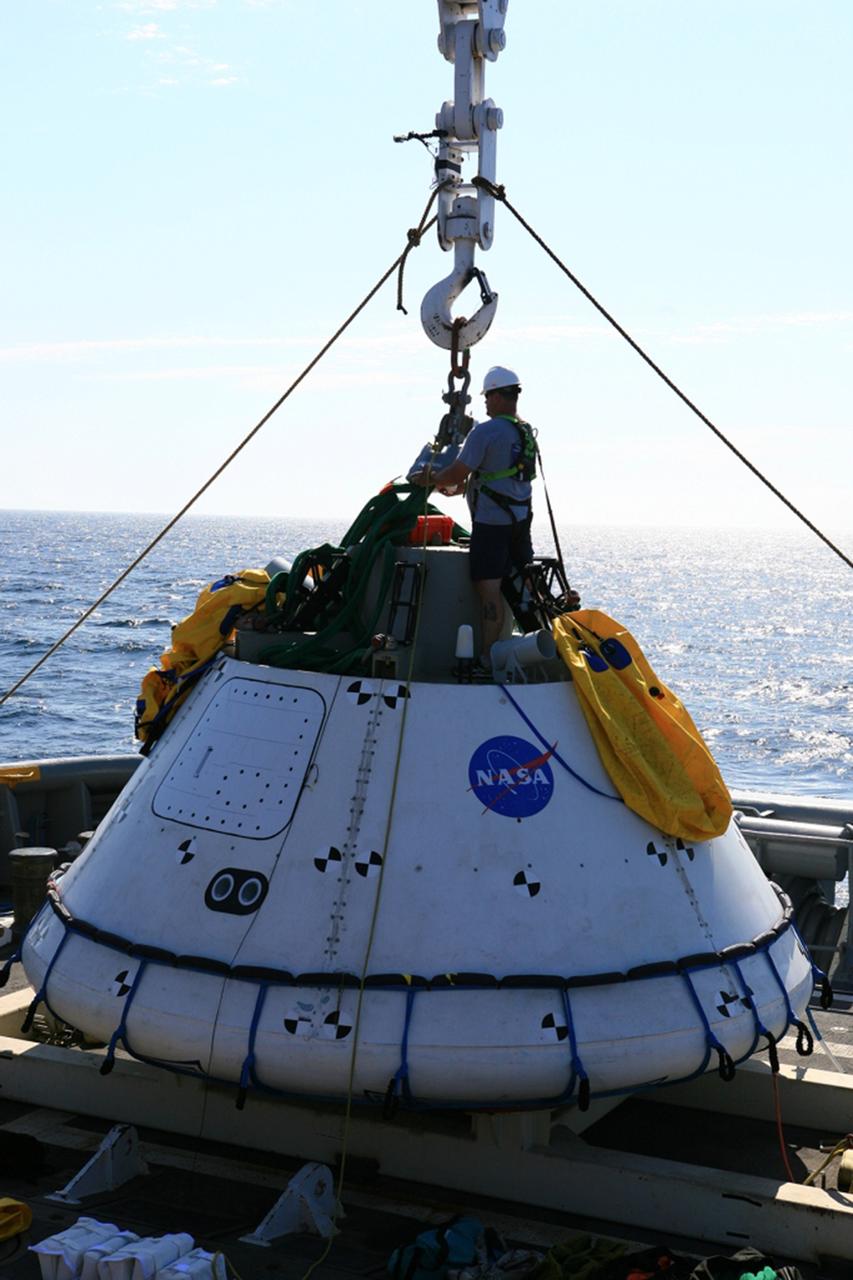
SAN DIEGO, Calif. – On board the USS Salvor, a safeguard-class rescue and salvage ship, U.S. Navy personnel check the stationary crane attached to the Orion boilerplate test vehicle during Underway Recovery Test 4A in the Pacific Ocean. The test vehicle will be lifted up and lowered into the water to test crew module crane recovery operations. NASA, Lockheed Martin and the U.S. Navy are conducting the test to prepare for recovery of the Orion crew module on its return from a deep space mission. The underway recovery test will allow the teams to demonstrate and evaluate the recovery processes, procedures, new hardware and personnel in open waters. The Ground Systems Development and Operations Program is conducting the underway recovery test. Orion is the exploration spacecraft designed to carry astronauts to destinations not yet explored by humans, including an asteroid and Mars. It will have emergency abort capability, sustain the crew during space travel and provide safe re-entry from deep space return velocities. The first unpiloted test flight of the Orion is scheduled to launch in December 2014 atop a United Launch Alliance Delta IV Heavy rocket and in 2018 on NASA’s Space Launch System rocket. For more information, visit http://www.nasa.gov/orion. Photo credit: Kim Shiflett
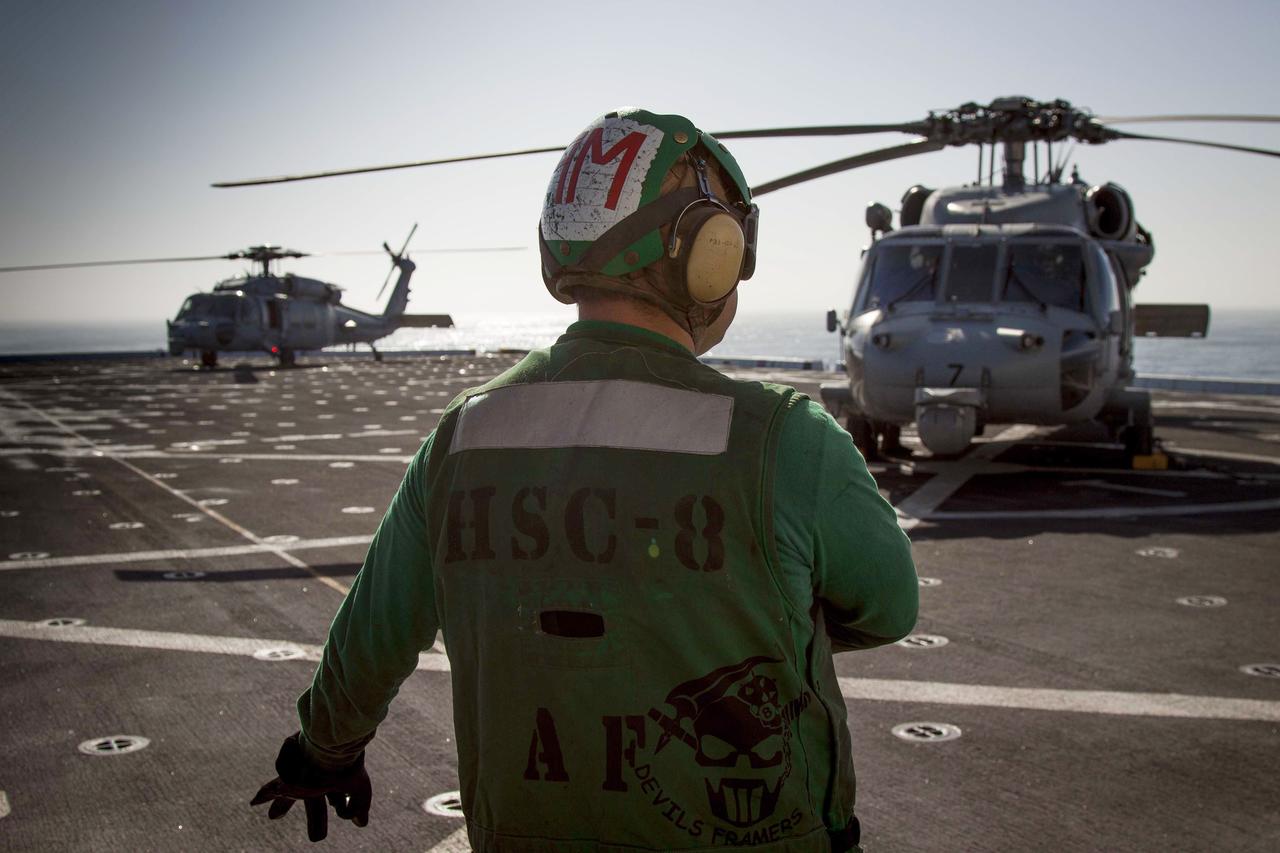
SAN DIEGO, Calif. – Helicopter Sea Combat Squadron 8, or HSC 8, prepare two H60-S helicopters for flight on the deck of the USS Anchorage during the first day of Orion Underway Recovery Test 3. The helicopters will be used during recovery of the Orion boilerplate test article. NASA, Lockheed Martin and U.S. Navy personnel are conducting recovery tests to prepare for recovery of the Orion crew module on its return from a deep space mission. The test will allow the teams to demonstrate and evaluate the recovery processes, procedures, hardware and personnel in open waters. The Ground Systems Development and Operations Program is conducting the underway recovery tests. Orion is the exploration spacecraft designed to carry astronauts to destinations not yet explored by humans, including an asteroid and Mars. It will have emergency abort capability, sustain the crew during space travel and provide safe re-entry from deep space return velocities. The first unpiloted test flight of Orion is scheduled to launch in 2014 atop a United Launch Alliance Delta IV Heavy rocket and in 2018 on NASA’s Space Launch System rocket. For more information, visit http://www.nasa.gov/orion. Photo credit: NASA/Cory Huston
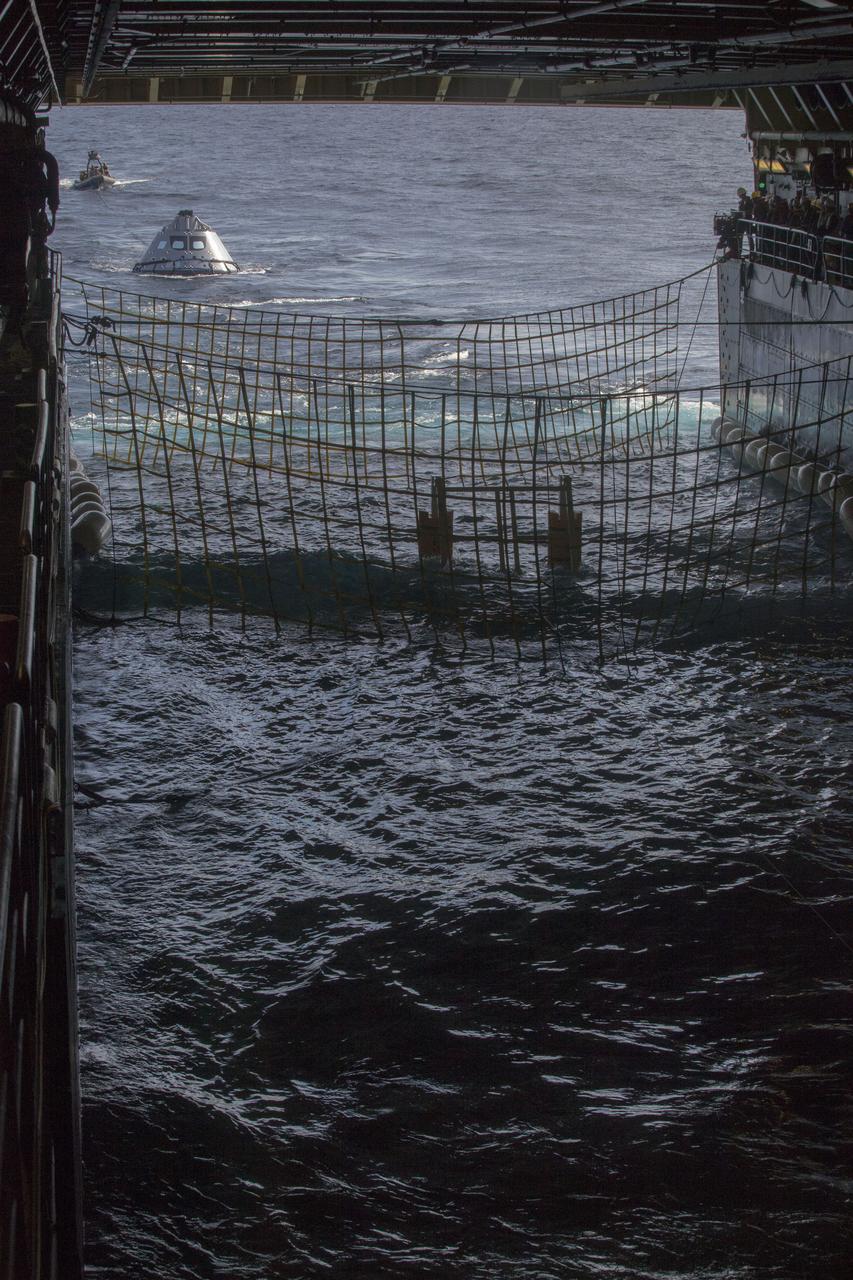
A test version of the Orion crew module floats outside the well deck of the USS San Diego during Orion Underway Recovery Test 5 in the Pacific Ocean off the coast of California. In the distance are U.S. Navy divers in a rigid hull inflatable boat. NASA's Ground Systems Development and Operations Program and the U.S. Navy are practicing recovery techniques using the well deck of the ship and the test version of the crew module to prepare for recovery of Orion on its return from deep space missions. The testing will allow the team to demonstrate and evaluate recovery processes, procedures, hardware and personnel in open waters. Orion is the exploration spacecraft designed to carry astronauts to destinations not yet explored by humans, including an asteroid and NASA's Journey to Mars. It will have emergency abort capability, sustain the crew during space travel and provide safe re-entry from deep space return velocities. Orion is scheduled to launch on NASA's Space Launch System in late 2018. For more information, visit http://www.nasa.gov/orion.

SAN DIEGO, Calif. – At the U.S. Naval Base San Diego in California, the Orion boilerplate test vehicle and support hardware are loaded in the well deck of the USS Anchorage for Underway Recovery Test 2. NASA, Lockheed Martin and the U.S. Navy will conduct tests in the Pacific Ocean to prepare for recovery of the Orion crew module, forward bay cover and parachutes on its return from a deep space mission. The second underway recovery test will allow the teams to demonstrate and evaluate the recovery processes, procedures, new hardware and personnel in open waters. The Ground Systems Development and Operations Program is conducting the underway recovery tests. Orion is the exploration spacecraft designed to carry astronauts to destinations not yet explored by humans, including an asteroid and Mars. It will have emergency abort capability, sustain the crew during space travel and provide safe re-entry from deep space return velocities. The first unpiloted test flight of the Orion is scheduled to launch in 2014 atop a Delta IV rocket and in 2017 on NASA’s Space Launch System rocket. For more information, visit http://www.nasa.gov/orion. Photo credit: NASA/Kim Shiflett
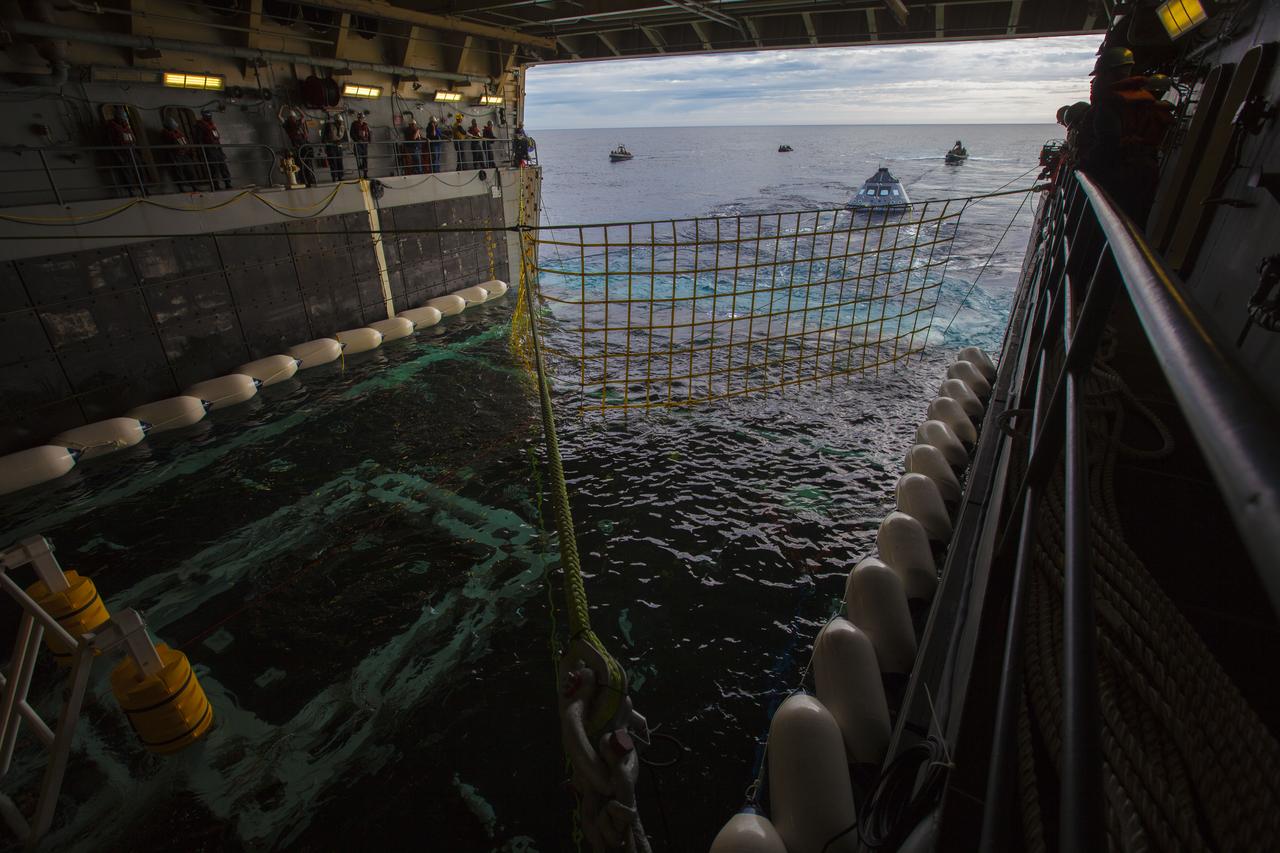
A test version of the Orion crew module is guided toward the flooded well deck of the USS San Diego during Underway Recovery Test 5. NASA's Ground Systems Development and Operations Program and the U.S. Navy are conducting a series of tests using the ship's well deck, the test module, various watercraft and equipment to prepare for recovery of Orion on its return from deep space missions. The test will allow the team to demonstrate and evaluate recovery processes, procedures, hardware and personnel in open waters. Orion is the exploration spacecraft designed to carry astronauts to destinations not yet explored by humans, including an asteroid and NASA's Journey to Mars. It will have emergency abort capability, sustain the crew during space travel and provide safe re-entry from deep space return velocities. Orion is scheduled to launch on NASA's Space Launch System in late 2018. For more information, visit http://www.nasa.gov/orion.

SAN DIEGO, Calif. – The Orion boilerplate test vehicle floats in the Pacific Ocean off the coast of San Diego during a portion of Underway Recovery Test 2. U.S. Navy divers in a Zodiac boat are practicing techniques to attach a lifting sling to the test vehicle. NASA, Lockheed Martin and the U.S. Navy are conducting the test from the USS Anchorage to prepare for recovery of the Orion crew module on its return from a deep space mission. The underway recovery test will allow the team to demonstrate and evaluate the recovery processes, procedures, new hardware and personnel in open waters. The Ground Systems Development and Operations Program is conducting the underway recovery test. Orion is the exploration spacecraft designed to carry astronauts to destinations not yet explored by humans, including an asteroid and Mars. It will have emergency abort capability, sustain the crew during space travel and provide safe re-entry from deep space return velocities. The first unpiloted test flight of the Orion is scheduled to launch in 2014 atop a Delta IV rocket and in 2017 on NASA’s Space Launch System rocket. For more information, visit http://www.nasa.gov/orion. Photo credit: NASA/Kim Shiflett
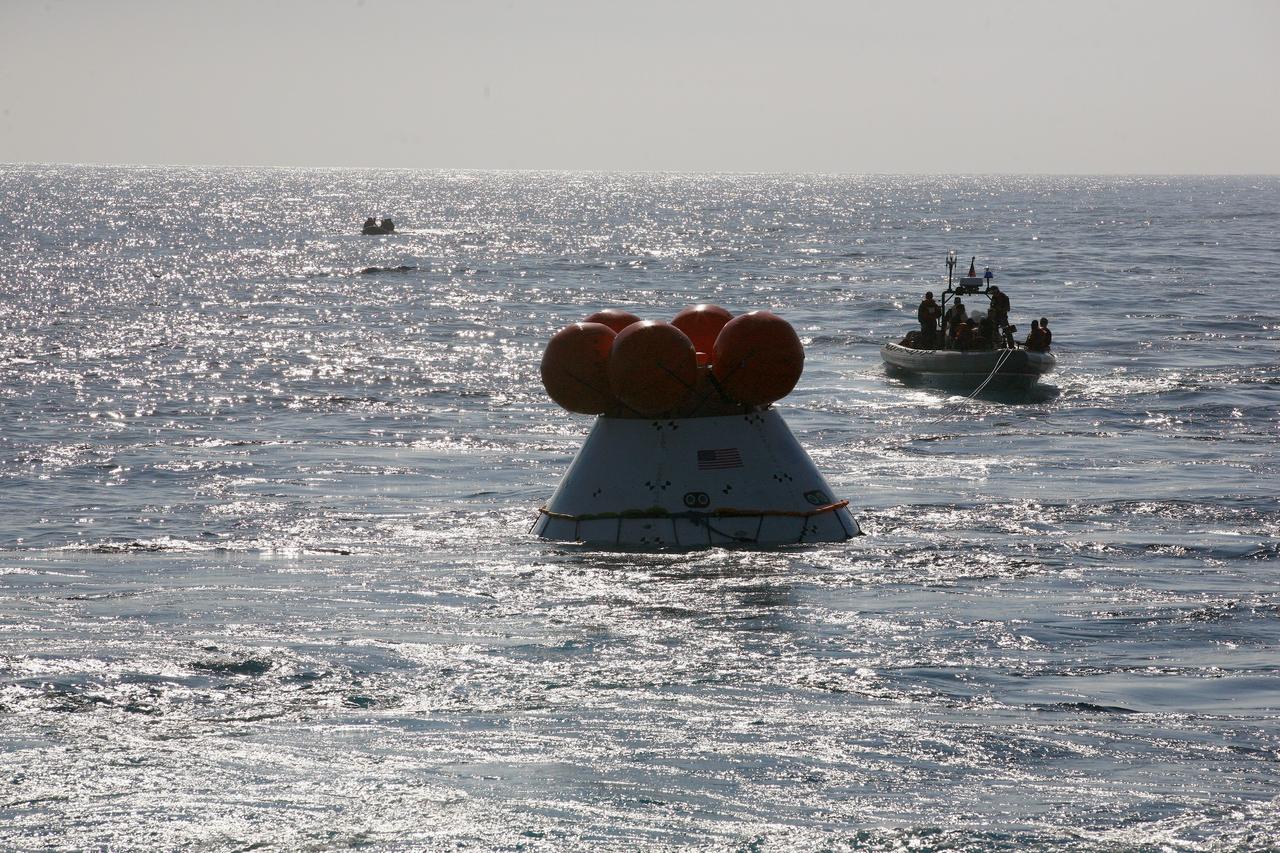
SAN DIEGO, Calif. – The Orion boilerplate test vehicle floats freely in the Pacific Ocean off the coast of San Diego during a portion of the Underway Recovery Test 2. Nearby, U.S. Navy personnel in a rigid hull inflatable boat monitor Orion. The testing is being conducted to prepare for recovery of the Orion crew module on its return from a deep-space mission. The underway recovery test will allow the team to demonstrate and evaluate the recovery processes, procedures, new hardware and personnel in open waters. The Ground Systems Development and Operations Program is conducting the underway recovery test. Orion is the exploration spacecraft designed to carry astronauts to destinations not yet explored by humans, including an asteroid and Mars. It will have emergency abort capability, sustain the crew during space travel and provide safe re-entry from deep-space return velocities. The first unpiloted test flight of the Orion is scheduled to launch in 2014 atop a Delta IV rocket and in 2017 on NASA’s Space Launch System rocket. For more information, visit http://www.nasa.gov/orion. Photo credit: NASA/Kim Shiflett
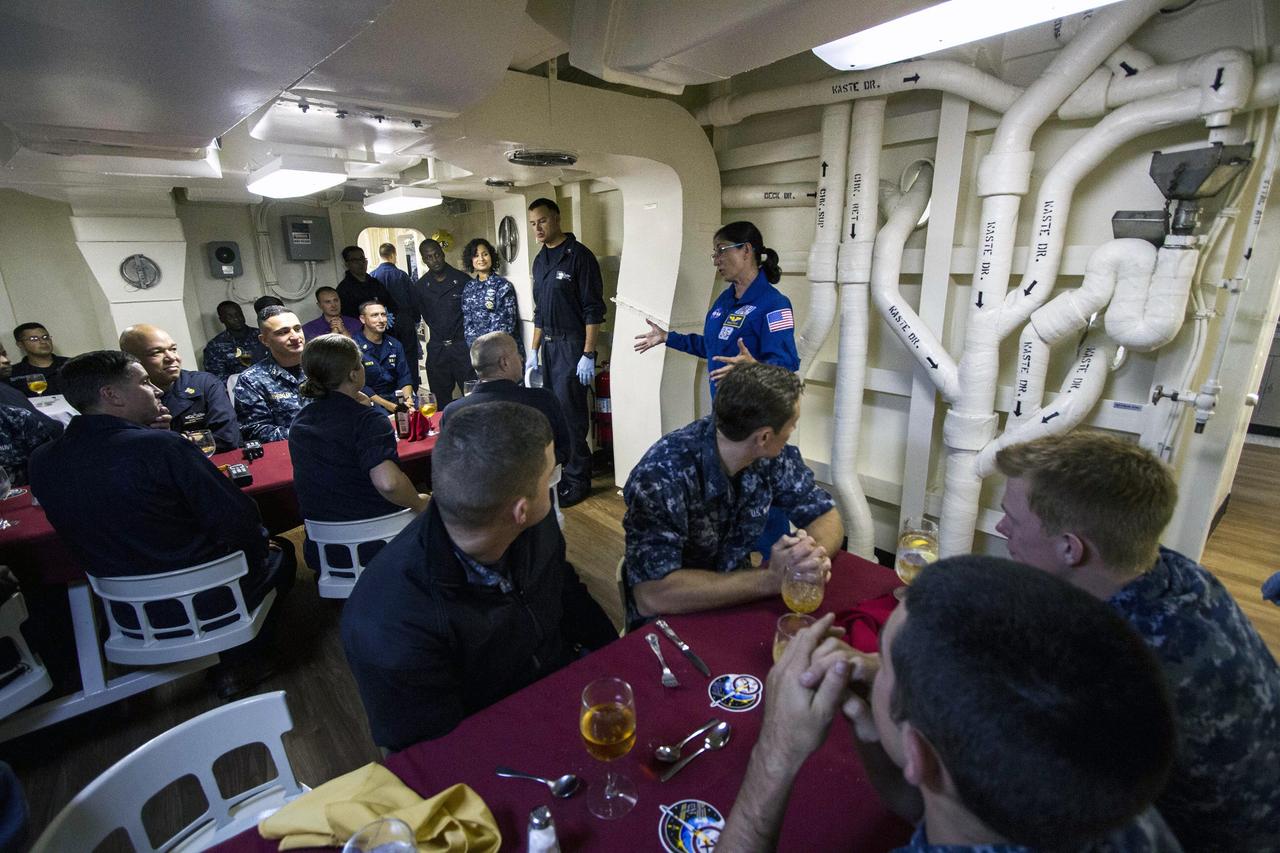
SAN DIEGO, Calif. – NASA astronaut Nicole Stott talks to members of the U.S. Navy inside the USS Anchorage during the Orion Underway Recovery Test 3 mission simulation day in the Pacific Ocean. The Orion boilerplate test vehicle is secured in the well deck of the ship. NASA, Lockheed Martin and U.S. Navy personnel are conducting the recovery test using the test vehicle to prepare for recovery of the Orion crew module on its return from a deep space mission. The test allows the teams to demonstrate and evaluate the recovery processes, procedures, hardware and personnel in open waters. The Ground Systems Development and Operations Program is conducting the underway recovery tests. Orion is the exploration spacecraft designed to carry astronauts to destinations not yet explored by humans, including an asteroid and Mars. It will have emergency abort capability, sustain the crew during space travel and provide safe re-entry from deep space return velocities. The first unpiloted test flight of Orion is scheduled to launch in 2014 atop a United Launch Alliance Delta IV Heavy rocket and in 2018 on NASA’s Space Launch System rocket. For more information, visit http://www.nasa.gov/orion. Photo credit: NASA/Cory Huston
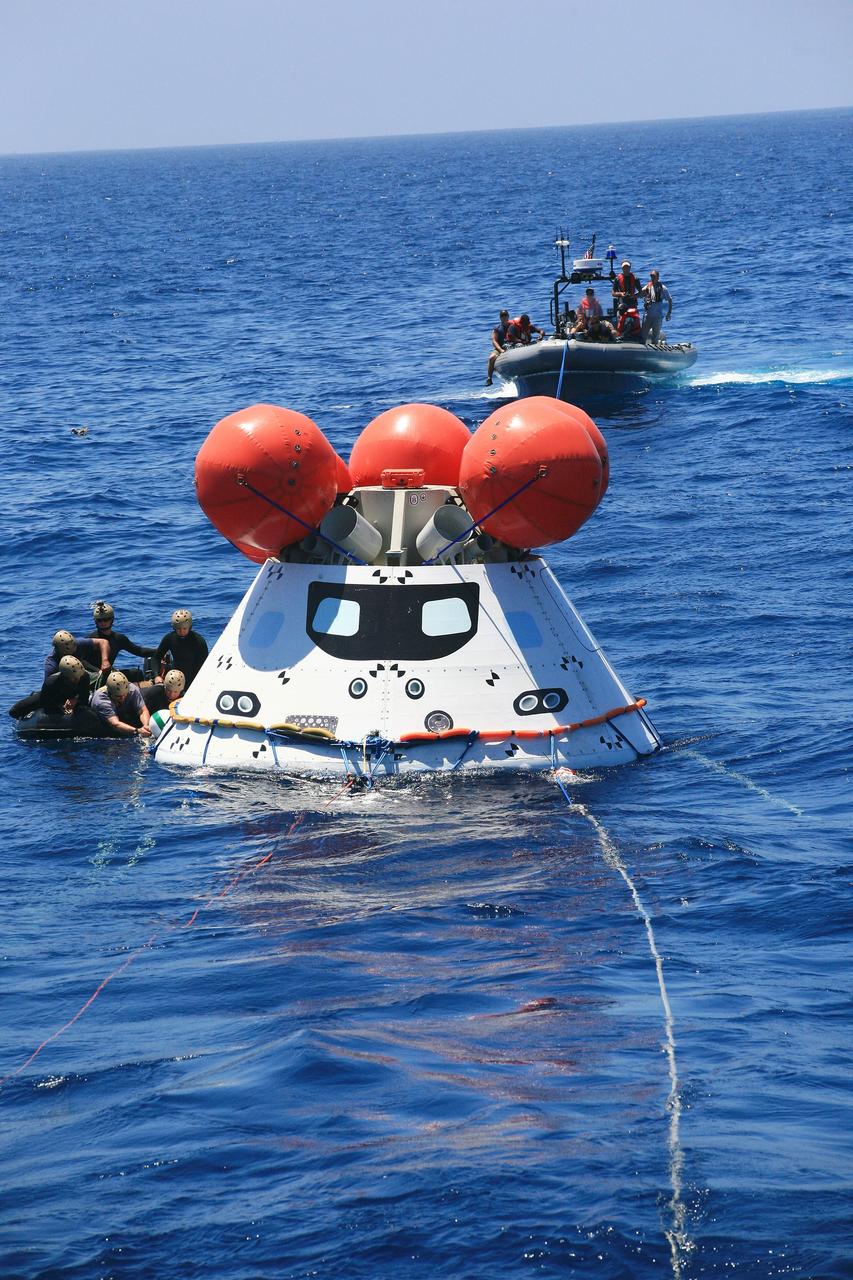
SAN DIEGO, Calif. – U.S. Navy divers in a Zodiac boat attach tether lines to NASA’s Orion boilerplate test article as it floats in the Pacific Ocean off the coast of San Diego during a portion of the Underway Recovery Test 2. U.S. Navy personnel in a rigid hull inflatable boat also support the testing from a distance. The U.S. Navy’s USS Anchorage is on station nearby. The testing is being conducted to prepare for recovery of the Orion crew module on its return from a deep-space mission. The underway recovery test will allow the team to demonstrate and evaluate the recovery processes, procedures, new hardware and personnel in open waters. The Ground Systems Development and Operations Program is conducting the underway recovery test. Orion is the exploration spacecraft designed to carry astronauts to destinations not yet explored by humans, including an asteroid and Mars. It will have emergency abort capability, sustain the crew during space travel and provide safe re-entry from deep-space return velocities. The first unpiloted test flight of the Orion is scheduled to launch in 2014 atop a Delta IV rocket and in 2017 on NASA’s Space Launch System rocket. For more information, visit http://www.nasa.gov/orion. Photo credit: NASA/Kim Shiflett
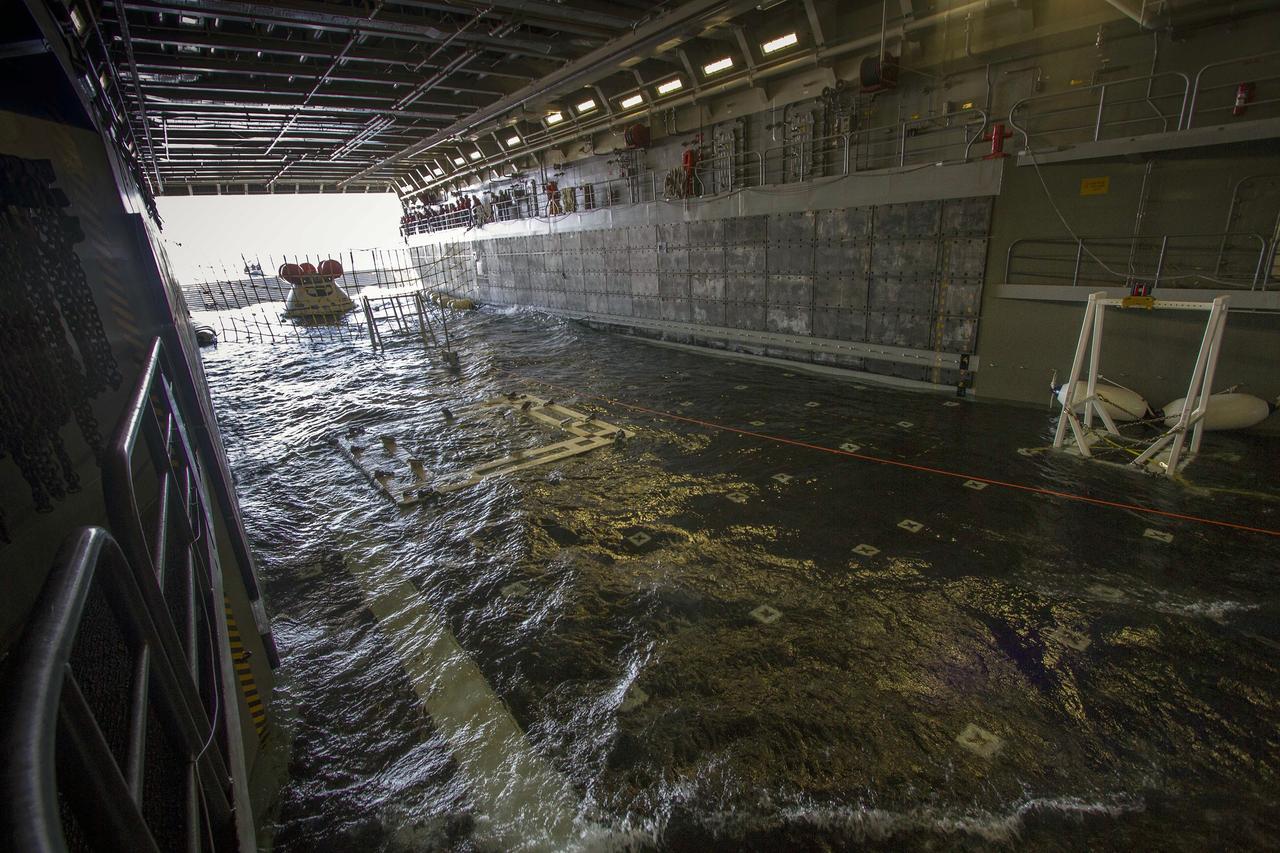
SAN DIEGO, Calif. – The Orion boilerplate test vehicle awaits release from the water-filled well deck of the USS Anchorage during the third day of Orion Underway Recovery Test 3 in the Pacific Ocean. NASA, Lockheed Martin and U.S. Navy personnel are conducting the recovery test using the test vehicle to prepare for recovery of the Orion crew module on its return from a deep space mission. The test allows the teams to demonstrate and evaluate the recovery processes, procedures, hardware and personnel in open waters. The Ground Systems Development and Operations Program is conducting the underway recovery tests. Orion is the exploration spacecraft designed to carry astronauts to destinations not yet explored by humans, including an asteroid and Mars. It will have emergency abort capability, sustain the crew during space travel and provide safe re-entry from deep space return velocities. The first unpiloted test flight of Orion is scheduled to launch in 2014 atop a United Launch Alliance Delta IV Heavy rocket and in 2018 on NASA’s Space Launch System rocket. For more information, visit http://www.nasa.gov/orion. Photo credit: NASA/Cory Huston
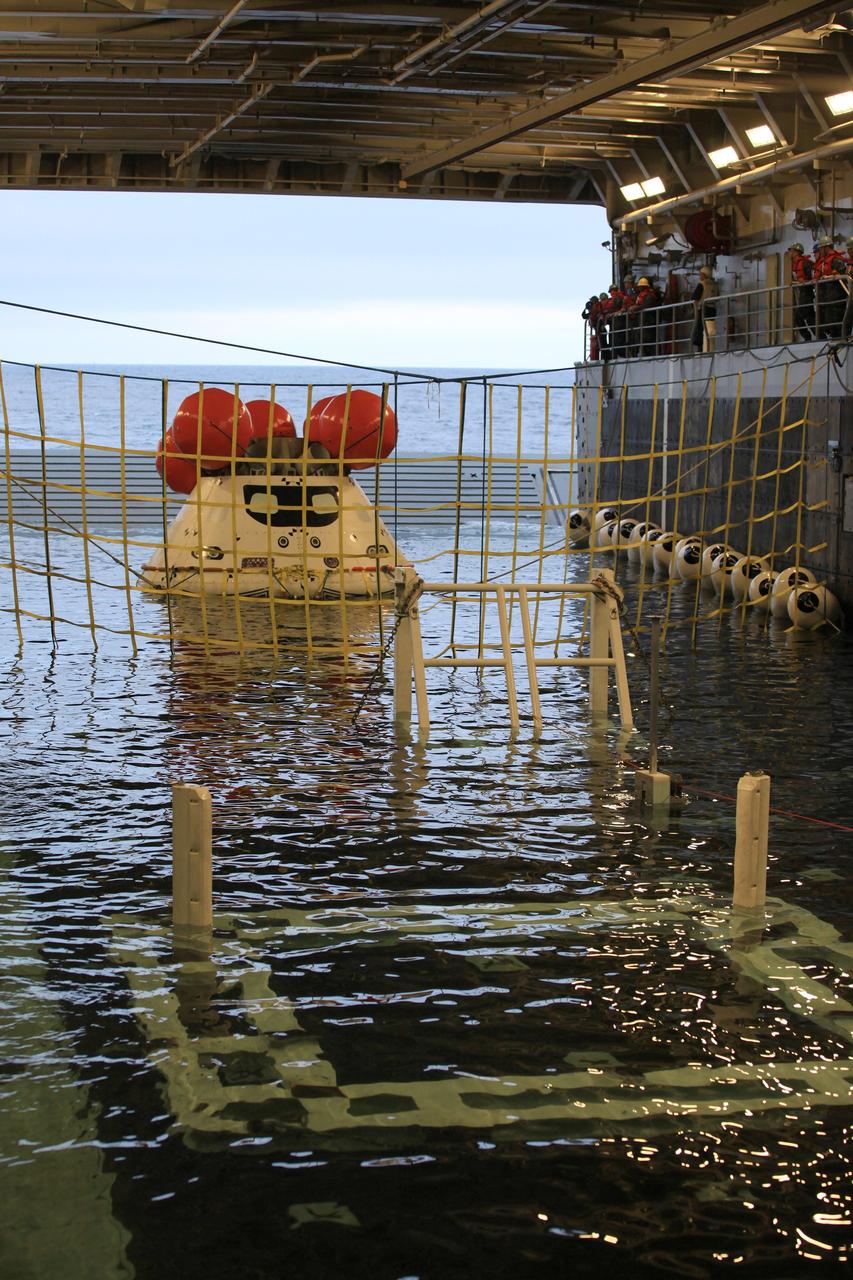
SAN DIEGO, Calif. – Inside the U.S. Navy’s USS Anchorage, the well deck has filled with water around the Orion boilerplate test vehicle in preparation for a portion of Underway Recovery Test 2 in the Pacific Ocean off the coast of San Diego. Tether lines are attached to the test vehicle to control it and a safety barrier has been installed to prevent Orion from going further in the well deck. NASA, Lockheed Martin and the U.S. Navy will conduct the test to prepare for recovery of the Orion crew module on its return from a deep space mission. The underway recovery test will allow the team to demonstrate and evaluate the recovery processes, procedures, new hardware and personnel in open waters. The Ground Systems Development and Operations Program is conducting the underway recovery test. Orion is the exploration spacecraft designed to carry astronauts to destinations not yet explored by humans, including an asteroid and Mars. It will have emergency abort capability, sustain the crew during space travel and provide safe re-entry from deep space return velocities. The first unpiloted test flight of the Orion is scheduled to launch in 2014 atop a Delta IV rocket and in 2017 on NASA’s Space Launch System rocket. For more information, visit http://www.nasa.gov/orion. Photo credit: NASA/Kim Shiflett
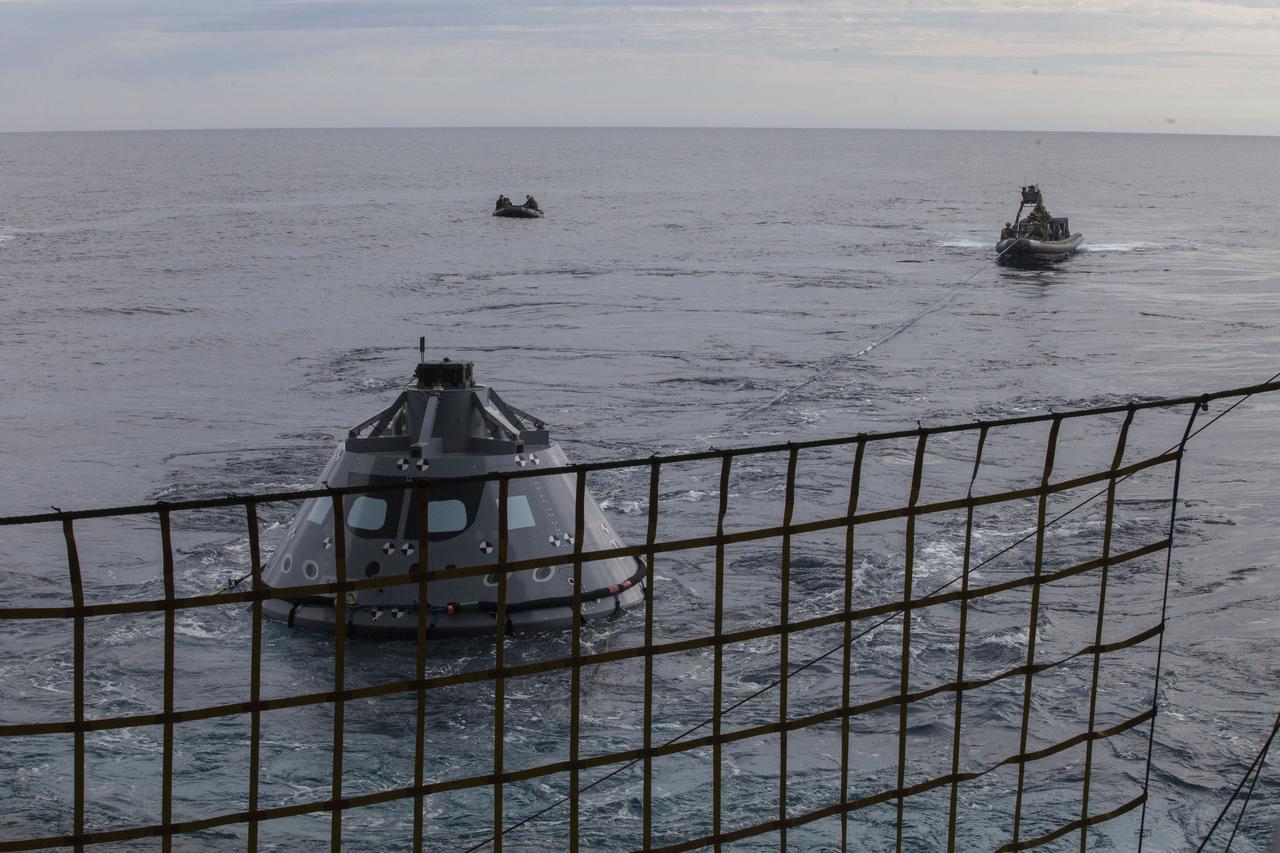
U.S. Navy divers and other personnel in a rigid hull inflatable boat are handling tether lines attached to a test version of the Orion crew module during Underway Recovery Test 5 in the Pacific Ocean off the coast of California. U.S. Navy divers in a smaller watercraft called a Zodiac boat are farther away. NASA's Ground Systems Development and Operations Program and the U.S. Navy are conducting a series of tests using the well deck of the USS San Diego, several watercraft and personnel to prepare for recovery of Orion on its return from deep space missions. The testing will allow the team to demonstrate and evaluate recovery processes, procedures, hardware and personnel in open waters. Orion is the exploration spacecraft designed to carry astronauts to destinations not yet explored by humans, including an asteroid and NASA's Journey to Mars. It will have emergency abort capability, sustain the crew during space travel and provide safe re-entry from deep space return velocities. Orion is scheduled to launch on NASA's Space Launch System in late 2018. For more information, visit http://www.nasa.gov/orion.
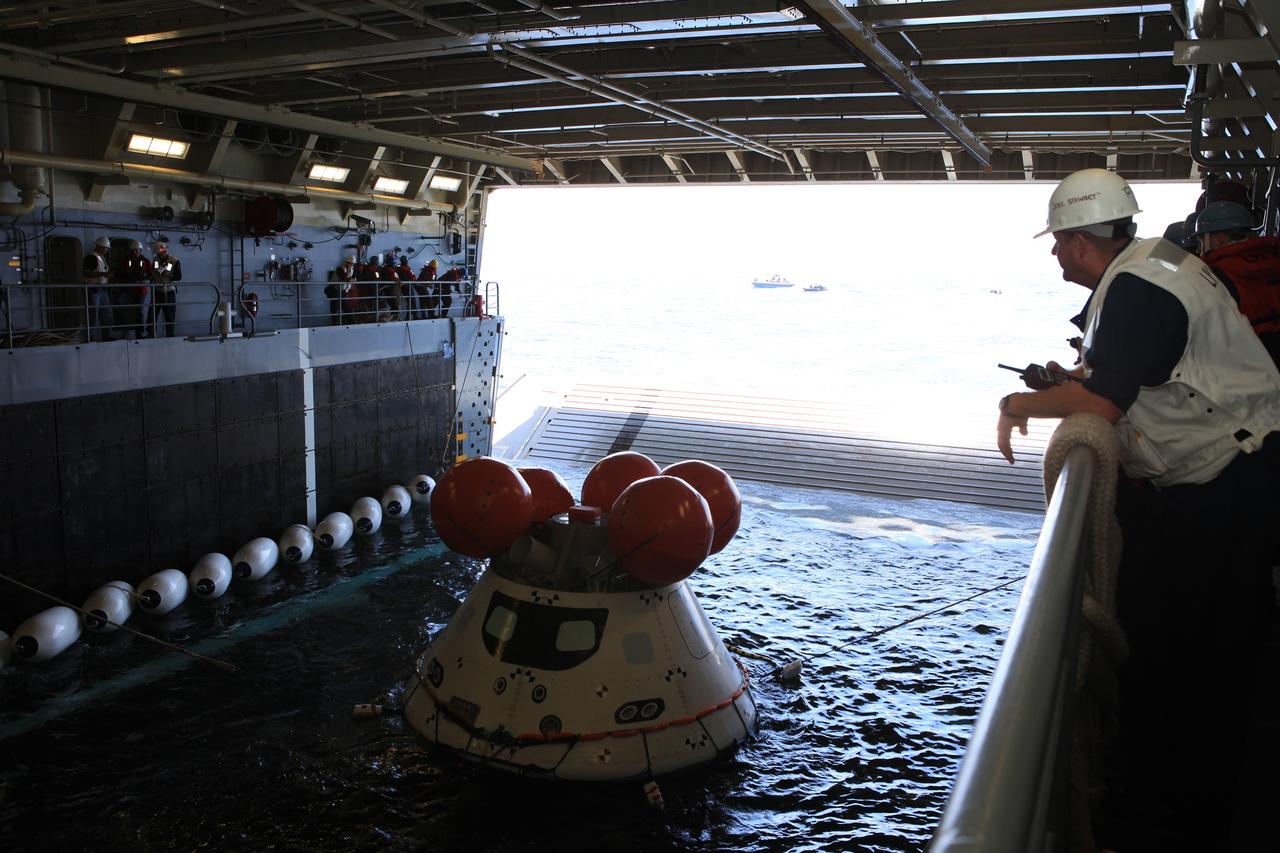
SAN DIEGO, Calif. – NASA, Lockheed Martin and U.S. Navy personnel prepare to release the Orion boilerplate test vehicle from the well deck of the USS Anchorage during a portion of the Orion Underway Recovery Test 2 in the Pacific Ocean off the coast of San Diego. The testing is being conducted to prepare for recovery of the Orion crew module on its return from a deep-space mission. The underway recovery test will allow the team to demonstrate and evaluate the recovery processes, procedures, new hardware and personnel in open waters. The Ground Systems Development and Operations Program is conducting the underway recovery test. Orion is the exploration spacecraft designed to carry astronauts to destinations not yet explored by humans, including an asteroid and Mars. It will have emergency abort capability, sustain the crew during space travel and provide safe re-entry from deep-space return velocities. The first unpiloted test flight of the Orion is scheduled to launch in 2014 atop a Delta IV rocket and in 2017 on NASA’s Space Launch System rocket. For more information, visit http://www.nasa.gov/orion. Photo credit: NASA/Kim Shiflett
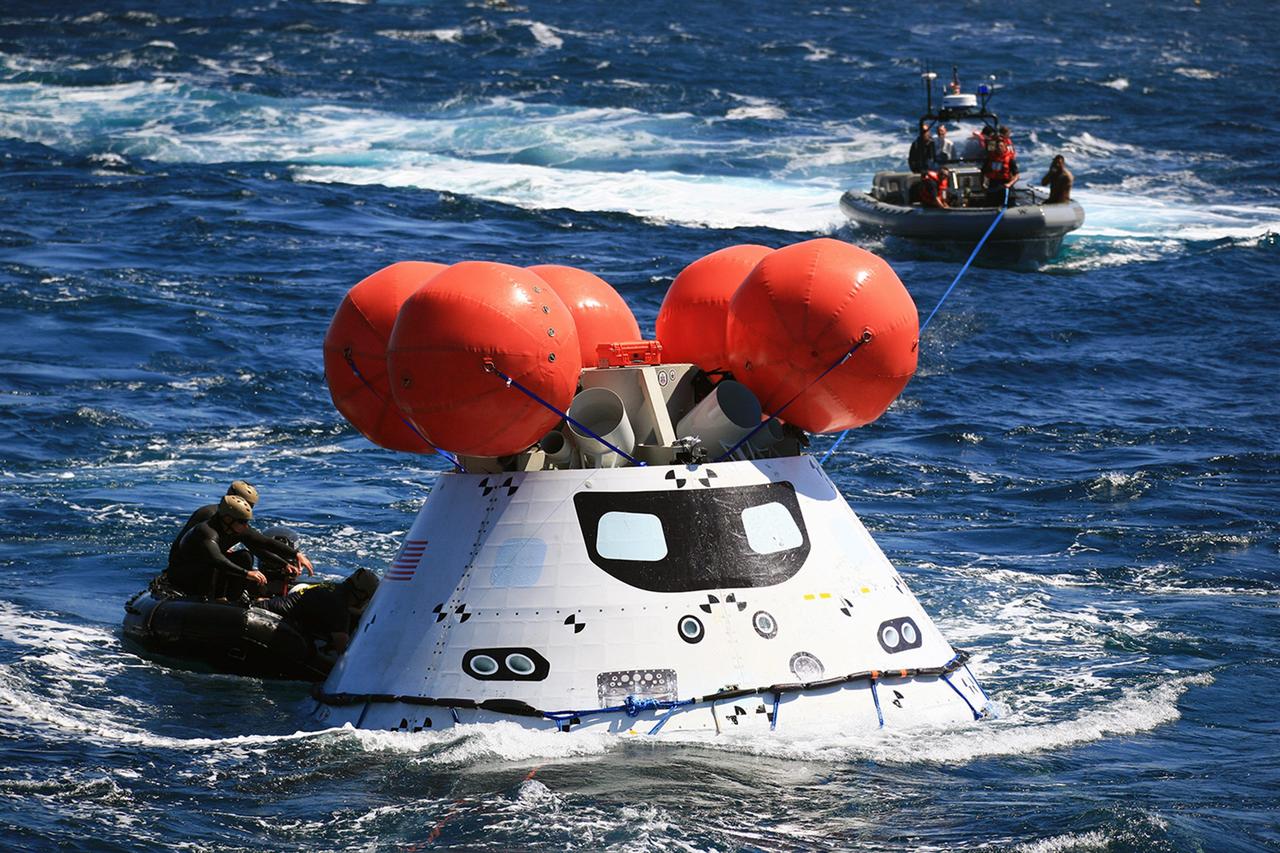
SAN DIEGO, Calif. – The Orion boilerplate test vehicle floats in the Pacific Ocean, a distance away from the USS Anchorage, during the third day of Orion Underway Recovery Test 3. The orange stabilizers inflated on top help keep the test vehicle floating upright. U.S. Navy divers in a Zodiac boat, at left, and other team members in a rigid hull inflatable boat prepare the test vehicle for return to the ship. NASA, Lockheed Martin and U.S. Navy personnel are conducting the recovery test using the test vehicle to prepare for recovery of the Orion crew module on its return from a deep space mission. The test allows the teams to demonstrate and evaluate the recovery processes, procedures, hardware and personnel in open waters. The Ground Systems Development and Operations Program is conducting the underway recovery tests. Orion is the exploration spacecraft designed to carry astronauts to destinations not yet explored by humans, including an asteroid and Mars. It will have emergency abort capability, sustain the crew during space travel and provide safe re-entry from deep space return velocities. The first unpiloted test flight of Orion is scheduled to launch in 2014 atop a United Launch Alliance Delta IV Heavy rocket and in 2018 on NASA’s Space Launch System rocket. For more information, visit http://www.nasa.gov/orion. Photo credit: NASA/Kim Shiflett
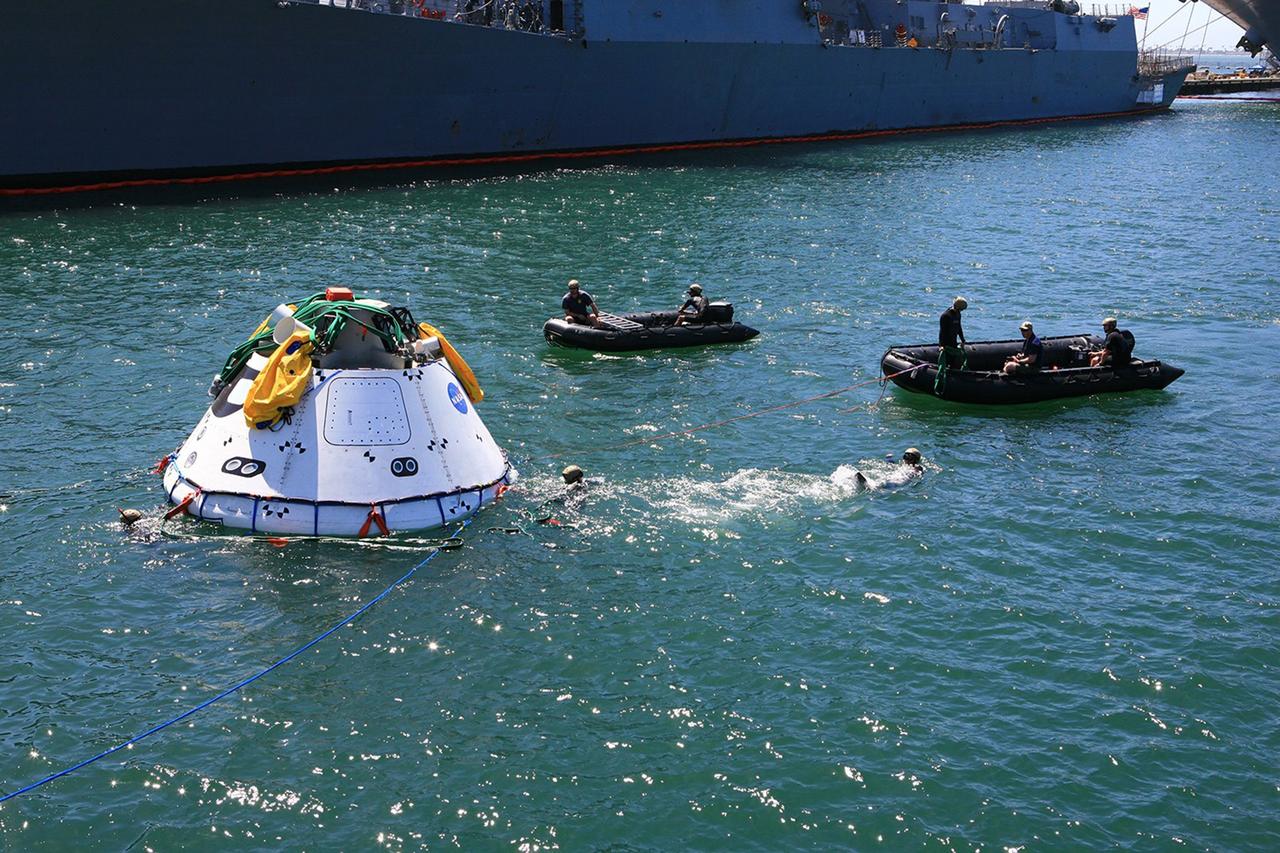
SAN DIEGO, Calif. – The Orion boilerplate test vehicle has been lowered into the water with a stationary crane from the USS Salvor, a safeguard-class rescue and salvage ship, during the first day of Underway Recovery Test 4A at Naval Base San Diego in California. U.S. Navy personnel in two Zodiac boats practice procedures to tether and retrieve the test vehicle. The ship will head out to sea for four days to test crew module crane recovery operations. NASA, Lockheed Martin and the U.S. Navy are conducting the test to prepare for recovery of the Orion crew module on its return from a deep space mission. The underway recovery test will allow the teams to demonstrate and evaluate the recovery processes, procedures, new hardware and personnel in open waters. The Ground Systems Development and Operations Program is conducting the underway recovery test. Orion is the exploration spacecraft designed to carry astronauts to destinations not yet explored by humans, including an asteroid and Mars. It will have emergency abort capability, sustain the crew during space travel and provide safe re-entry from deep space return velocities. The first unpiloted test flight of the Orion is scheduled to launch in December 2014 atop a United Launch Alliance Delta IV rocket and in 2018 on NASA’s Space Launch System rocket. For more information, visit http://www.nasa.gov/orion. Photo credit: Kim Shiflett
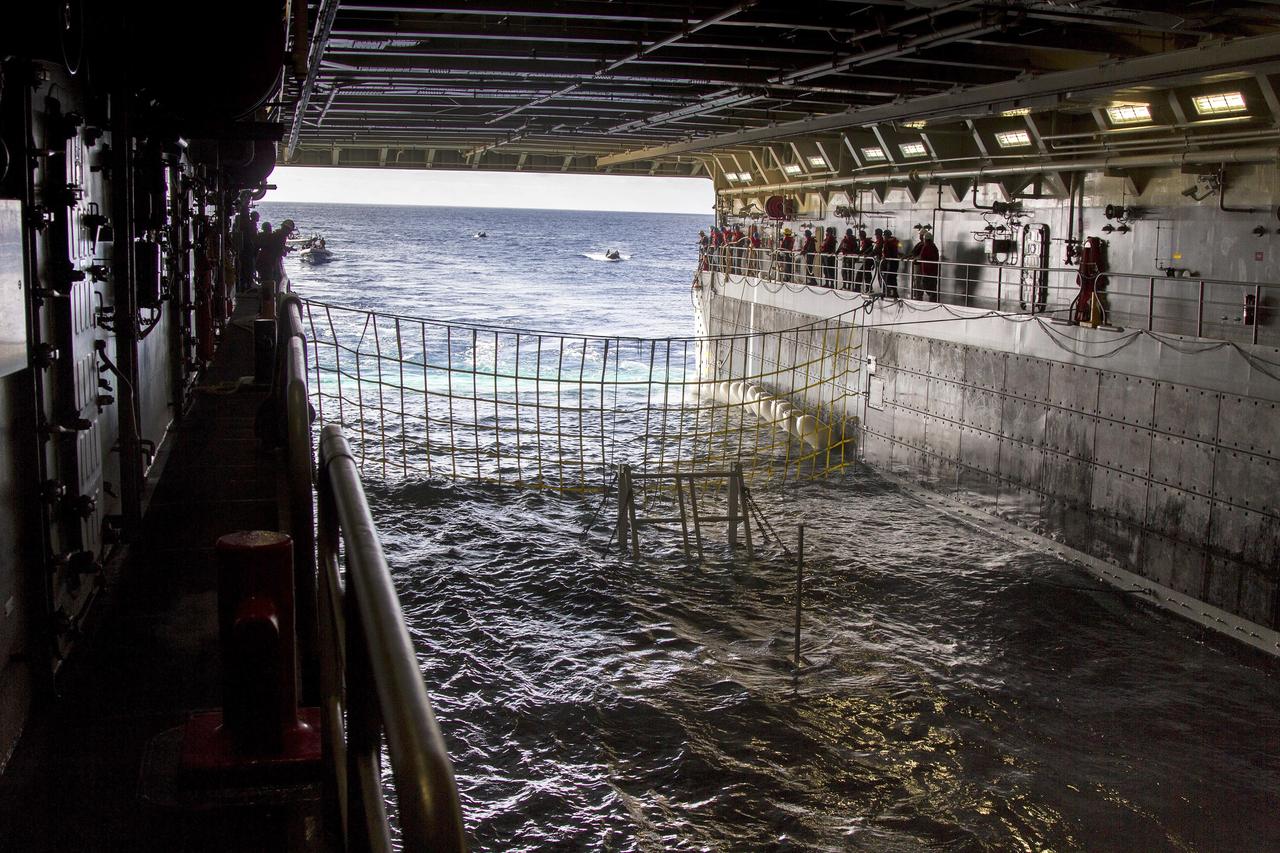
SAN DIEGO, Calif. – On the third day of preparations for recovery of Orion after its splashdown in the Pacific Ocean, the well deck of the USS Anchorage has been filled with water and recovery hardware is in place. U.S. Navy divers have embarked from ship to practice recovery procedures in rigid hull inflatable boats and Zodiac boats. NASA, Lockheed Martin and U.S. Navy personnel are preparing for recovery of the crew module, forward bay cover and parachutes on its return from space and splashdown in the Pacific Ocean. The Ground Systems Development and Operations Program is leading the recovery efforts. The first unpiloted flight test of Orion is scheduled to launch Dec. 4 atop a United Launch Alliance Delta IV Heavy rocket. During its two-orbit, 4.5-hour flight, Orion will venture 3,600 miles in altitude and travel nearly 60,000 miles before returning to Earth for a splashdown in the Pacific Ocean. For more information, visit http://www.nasa.gov/orion. Photo credit: NASA/Cory Huston
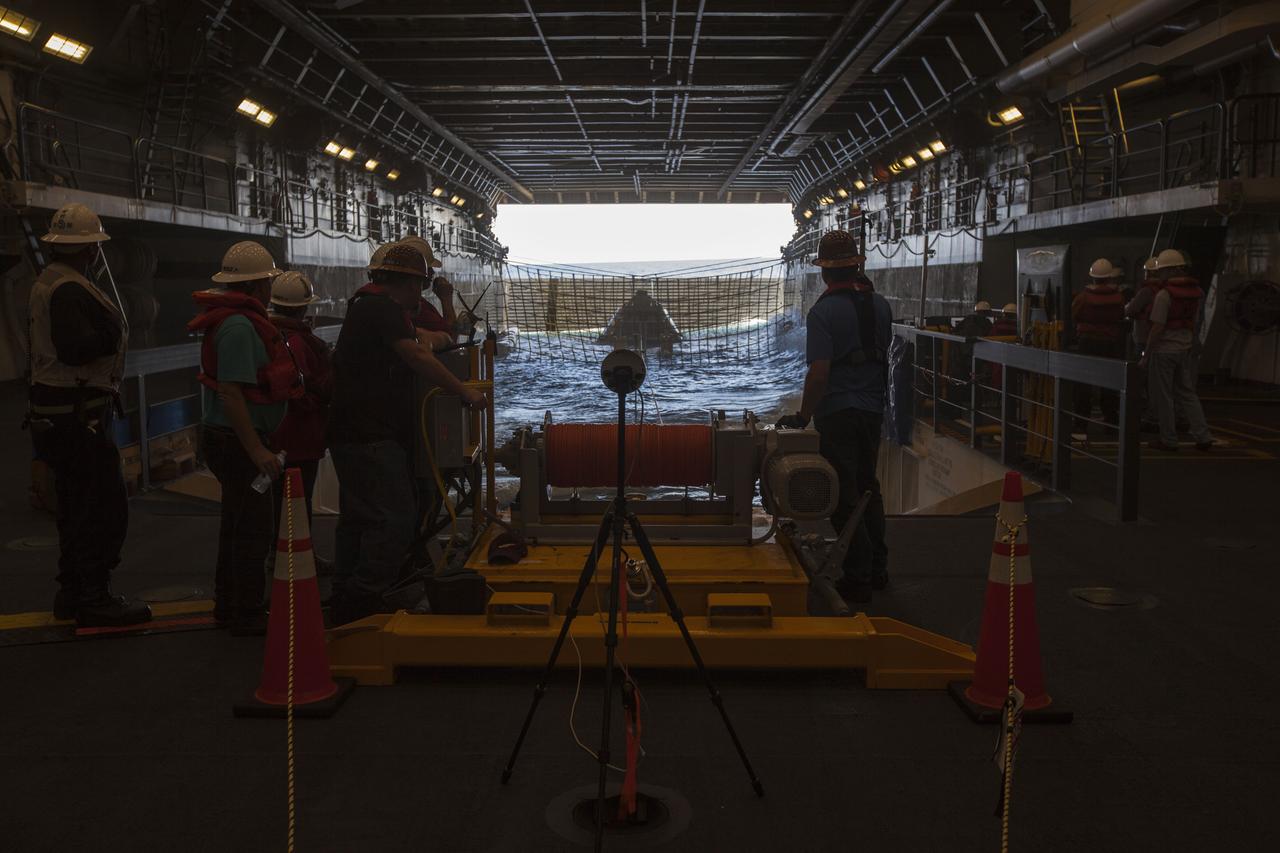
Winch team operators help guide a test version of the Orion crew module in the flooded well deck of the USS San Diego during Underway Recovery Test 5 in the Pacific Ocean off the coast of California. NASA's Ground Systems Development and Operations Program and the U.S. Navy are conducting a series of tests using the ship's well deck, the test module, various watercraft and equipment to prepare for recovery of Orion on its return from deep space missions. The testing will allow the team to demonstrate and evaluate recovery processes, procedures, hardware and personnel in open waters. Orion is the exploration spacecraft designed to carry astronauts to destinations not yet explored by humans, including an asteroid and NASA's Journey to Mars. It will have emergency abort capability, sustain the crew during space travel and provide safe re-entry from deep space return velocities. Orion is scheduled to launch on NASA's Space Launch System in late 2018. For more information, visit http://www.nasa.gov/orion.
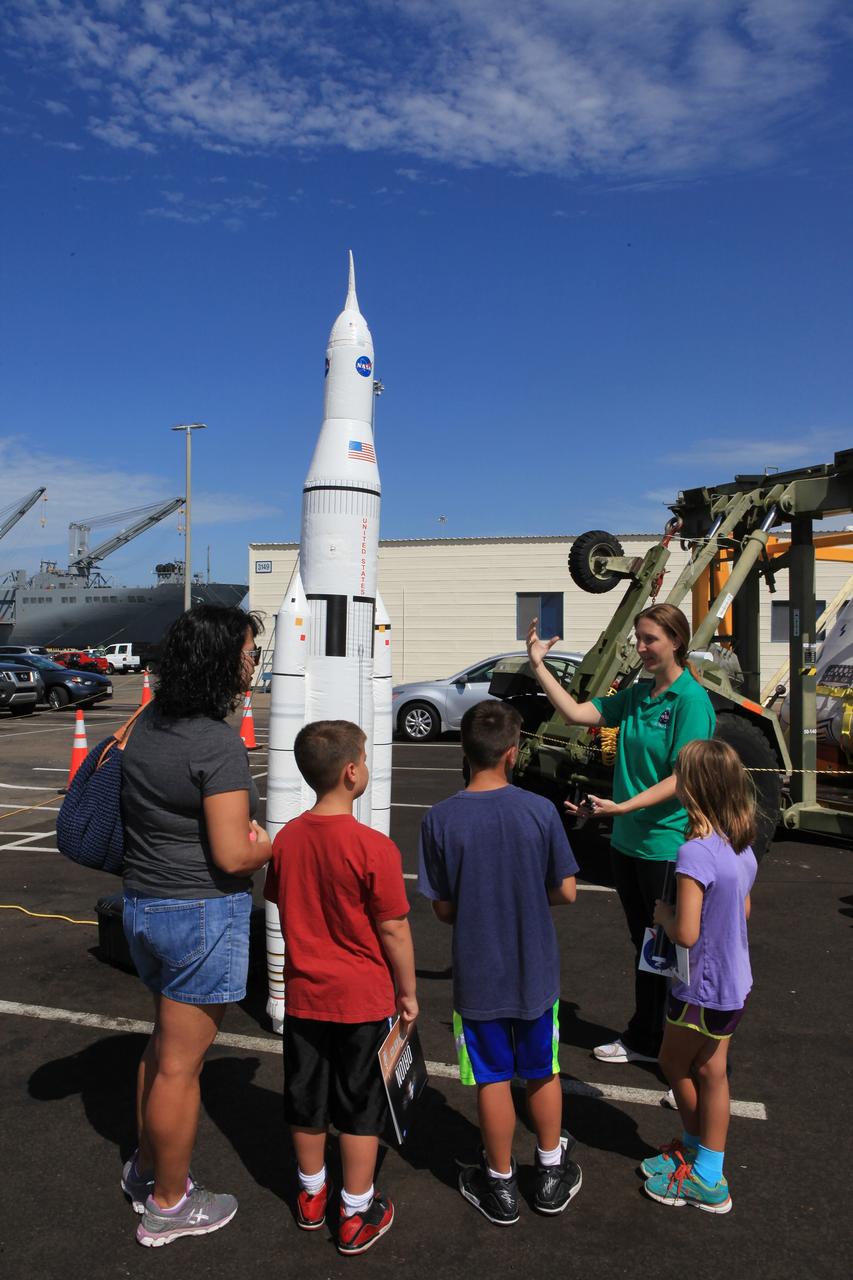
SAN DIEGO, Calif. – At the U.S. Naval Base San Diego in California, NASA Public Affairs Officer Amber Philman describes the Space Launch System and Orion spacecraft to visitors during an outreach event at the naval base. The USS Anchorage is being prepared for the Orion Underway Recovery Test 2. The Orion boilerplate test vehicle and other hardware will be loaded into the well deck of the ship and head out to sea in the Pacific Ocean off the coast of San Diego. NASA, Lockheed Martin and the U.S. Navy will conduct the test to prepare for recovery of the Orion crew module, forward bay cover and parachutes on its return from a deep space mission. The underway recovery test will allow the teams to demonstrate and evaluate the recovery processes, procedures, new support hardware and personnel in open waters. The Ground Systems Development and Operations Program will conduct the underway recovery tests. Orion is the exploration spacecraft designed to carry astronauts to destinations not yet explored by humans, including an asteroid and Mars. It will have emergency abort capability, sustain the crew during space travel and provide safe re-entry from deep space return velocities. The first unpiloted test flight of the Orion is scheduled to launch in 2014 atop a Delta IV rocket and in 2017 on NASA’s Space Launch System rocket. For more information, visit http://www.nasa.gov/orion. Photo credit: NASA/Kim Shiflett
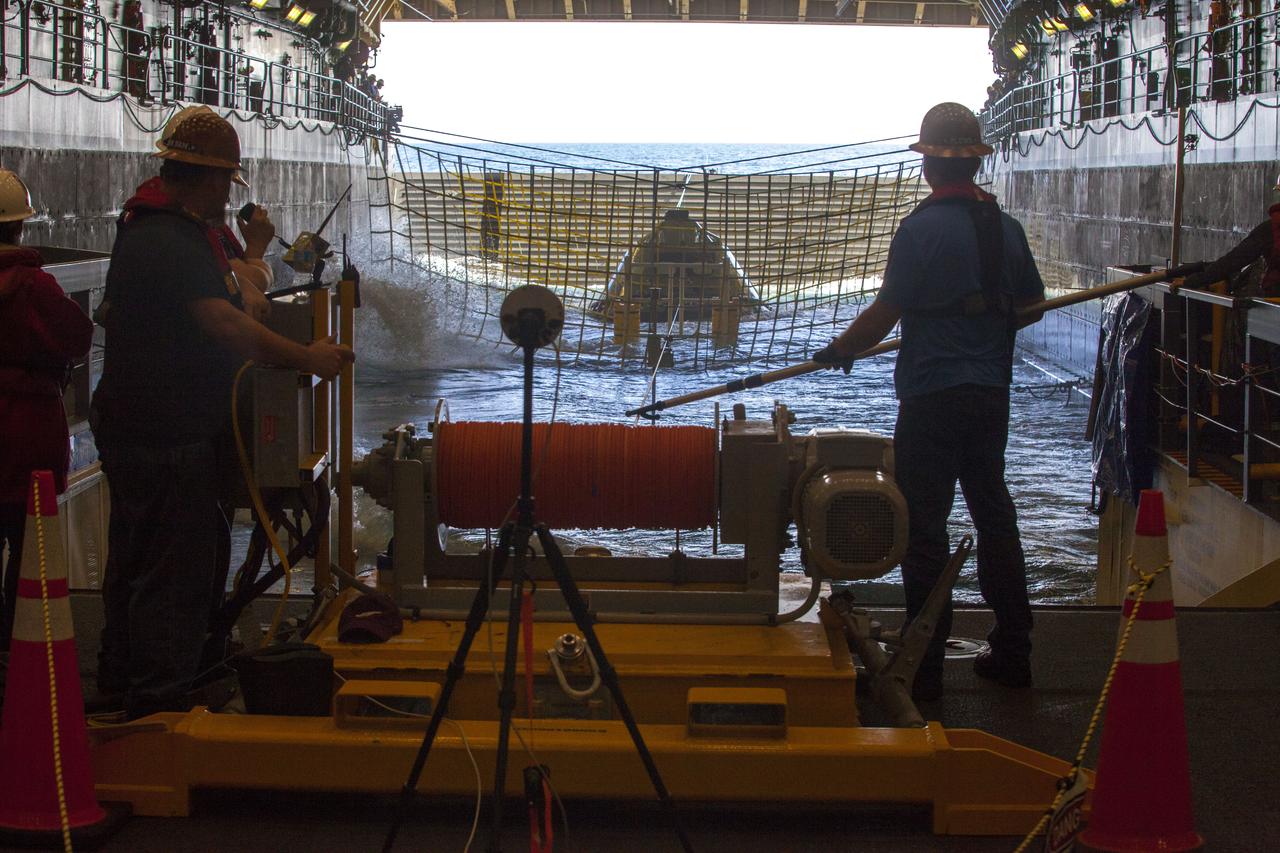
Winch team operators help guide a test version of the Orion crew module into the flooded well deck of the USS San Diego during Underway Recovery Test 5 in the Pacific Ocean off the coast of California. NASA's Ground Systems Development and Operations Program and the U.S. Navy are conducting a series of tests to prepare for recovery of Orion on its return from deep space missions. The testing will allow the team to demonstrate and evaluate recovery processes, procedures, hardware and personnel in open waters. Orion is the exploration spacecraft designed to carry astronauts to destinations not yet explored by humans, including an asteroid and NASA's Journey to Mars. It will have emergency abort capability, sustain the crew during space travel and provide safe re-entry from deep space return velocities. Orion is scheduled to launch on NASA's Space Launch System in late 2018. For more information, visit http://www.nasa.gov/orion.
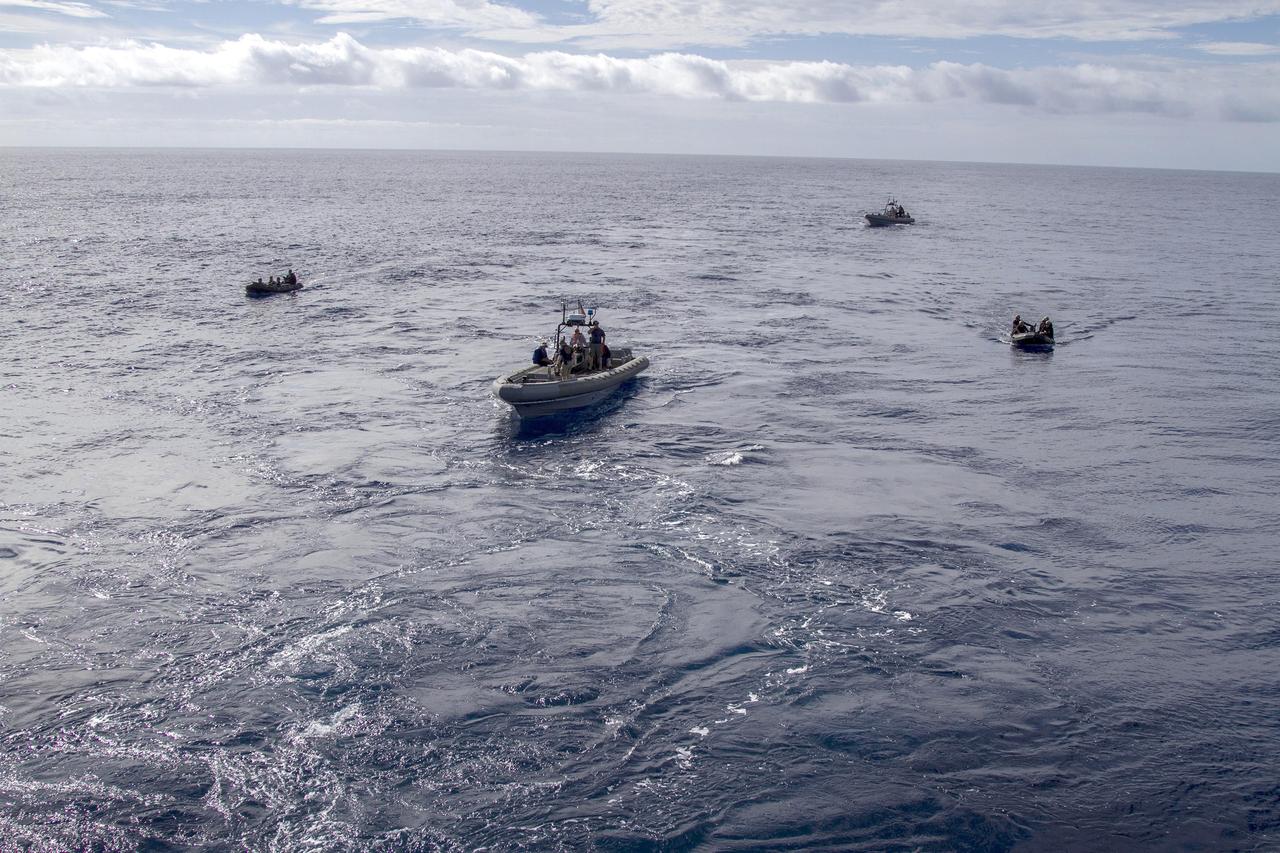
SAN DIEGO, Calif. – On the third day of preparations for recovery of Orion, U.S. Navy divers in two rigid hull inflatable boats and two Zodiac boats practice recovery procedures nearby the USS Anchorage in the Pacific Ocean about 600 miles off the coast of Baja, California. NASA, Lockheed Martin and U.S. Navy personnel are preparing for recovery of the Orion crew module, forward bay cover and parachutes after its return from space and splashdown in the Pacific Ocean. The Ground Systems Development and Operations Program is leading the recovery efforts. The first unpiloted flight test of Orion is scheduled to launch Dec. 4 atop a United Launch Alliance Delta IV Heavy rocket. During its two-orbit, 4.5-hour flight, Orion will venture 3,600 miles in altitude and travel nearly 60,000 miles before returning to Earth for a splashdown in the Pacific Ocean. For more information, visit http://www.nasa.gov/orion. Photo credit: NASA/Cory Huston
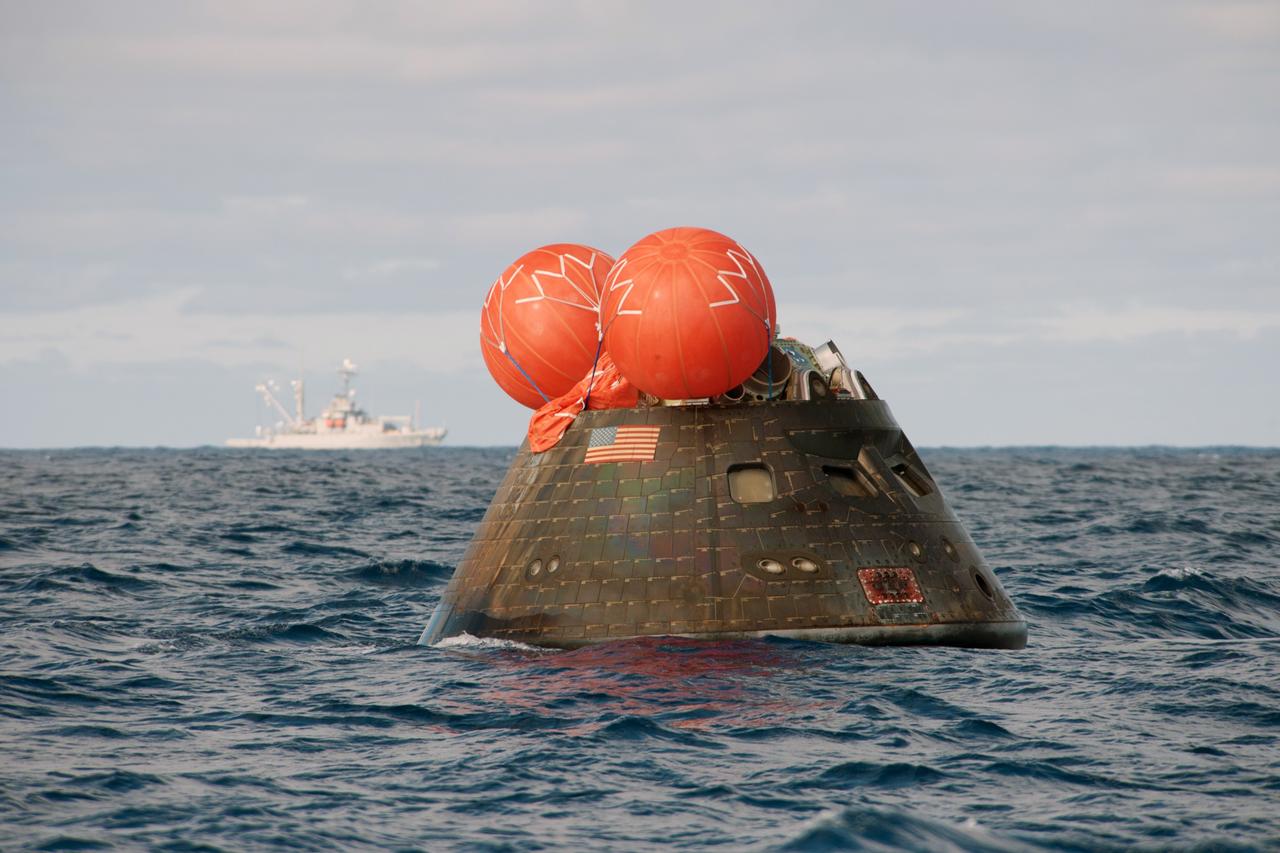
SAN DIEGO, Calif. -- NASA's Orion spacecraft floats in the Pacific Ocean after splashdown from its first flight test in Earth orbit. In the background is the USNS Salvor. This U.S. Navy salvage ship was there as a backup in case it was needed. NASA, the U.S. Navy and Lockheed Martin are coordinating efforts to recover Orion and secure the spacecraft in the well deck of the USS Anchorage. Orion completed a two-orbit, four-and-a-half hour mission, to test systems critical to crew safety, including the launch abort system, the heat shield and the parachute system. The Ground Systems Development and Operations Program is leading the recovery efforts. For more information, visit www.nasa.gov/orion Photo credit: NASA/Tony Gray
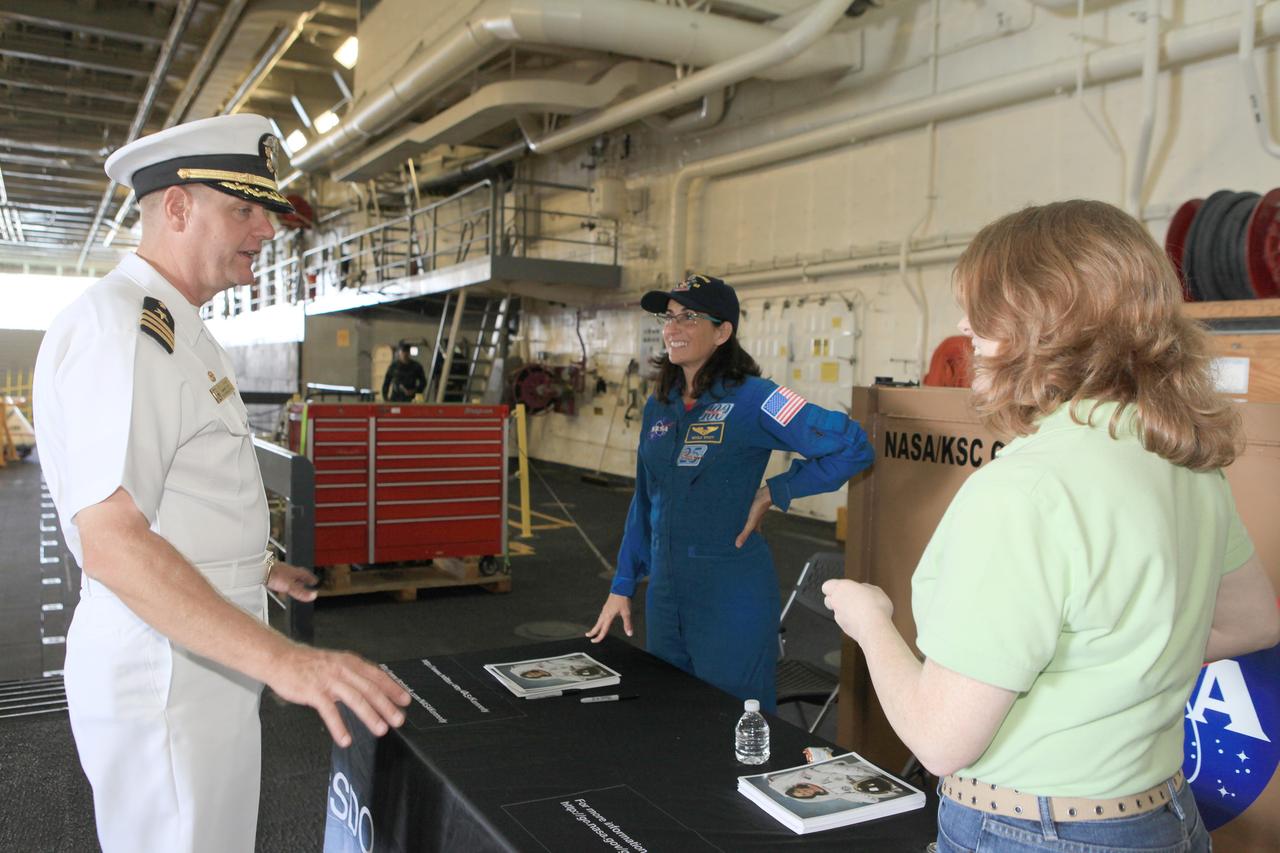
LOS ANGELES, Calif. – NASA astronaut Nicole Stott prepares for the Science, Technology, Engineering and Mathematics, or STEM, Expo for L.A. Navy Days in the well deck of the USS Anchorage at the Port of Los Angeles in California. At left, is Commanding Officer Joel G. Stewart, USS Anchorage. Visitors will have the opportunity to meet Stott and view the Orion boilerplate test vehicle secured in its recovery cradle. NASA, Lockheed Martin and the U.S. Navy completed Underway Recovery Test 2 in the Pacific Ocean off the coast of San Diego to prepare for recovery of the Orion crew module on its return from a deep space mission. The underway recovery test allowed the teams to demonstrate and evaluate the recovery processes, procedures, new hardware and personnel in open waters. The Ground Systems Development and Operations Program conducted the underway recovery test. Orion is the exploration spacecraft designed to carry astronauts to destinations not yet explored by humans, including an asteroid and Mars. It will have emergency abort capability, sustain the crew during space travel and provide safe re-entry from deep space return velocities. The first unpiloted test flight of the Orion is scheduled to launch in 2014 on Exploration Flight Test-1, or EFT-1, atop a Delta IV rocket and in 2017 on NASA’s Space Launch System rocket. For more information, visit http://www.nasa.gov/orion. Photo credit: Kim Shiflett
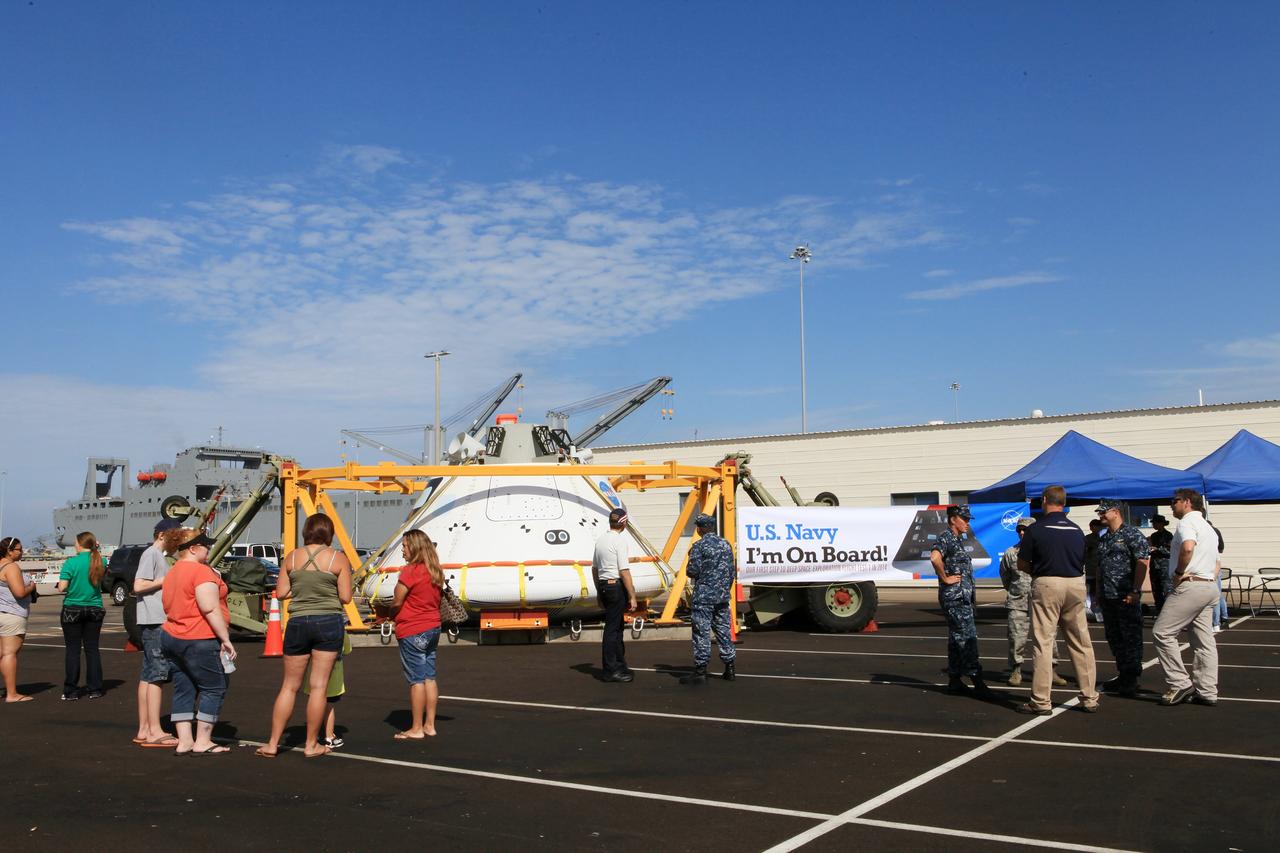
SAN DIEGO, Calif. – At the U.S. Naval Base San Diego in California, visitors talk with U.S. Navy personnel and view the Orion boilerplate test vehicle during an outreach event at the naval base. The USS Anchorage is being prepared for the Orion Underway Recovery Test 2. The test vehicle and other hardware will be loaded into the well deck of the ship and head out to sea in the Pacific Ocean off the coast of San Diego. NASA, Lockheed Martin and the U.S. Navy will conduct the test to prepare for recovery of the Orion crew module, forward bay cover and parachutes on its return from a deep space mission. The underway recovery test will allow the teams to demonstrate and evaluate the recovery processes, procedures, new support hardware and personnel in open waters. The Ground Systems Development and Operations Program will conduct the underway recovery tests. Orion is the exploration spacecraft designed to carry astronauts to destinations not yet explored by humans, including an asteroid and Mars. It will have emergency abort capability, sustain the crew during space travel and provide safe re-entry from deep space return velocities. The first unpiloted test flight of the Orion is scheduled to launch in 2014 atop a Delta IV rocket and in 2017 on NASA’s Space Launch System rocket. For more information, visit http://www.nasa.gov/orion. Photo credit: NASA/Kim Shiflett
SAN DIEGO, Calif. – The sun sets into the Pacific Ocean off the coast of San Diego following the Orion Underway Recovery Test 2. The testing is being conducted to prepare for recovery of the Orion crew module on its return from a deep-space mission. The underway recovery test will allow the team to demonstrate and evaluate the recovery processes, procedures, new hardware and personnel in open waters. The Ground Systems Development and Operations Program is conducting the underway recovery test. Orion is the exploration spacecraft designed to carry astronauts to destinations not yet explored by humans, including an asteroid and Mars. It will have emergency abort capability, sustain the crew during space travel and provide safe re-entry from deep-space return velocities. The first unpiloted test flight of the Orion is scheduled to launch in 2014 atop a Delta IV rocket and in 2017 on NASA’s Space Launch System rocket. For more information, visit http://www.nasa.gov/orion. Photo credit: NASA/Kim Shiflett
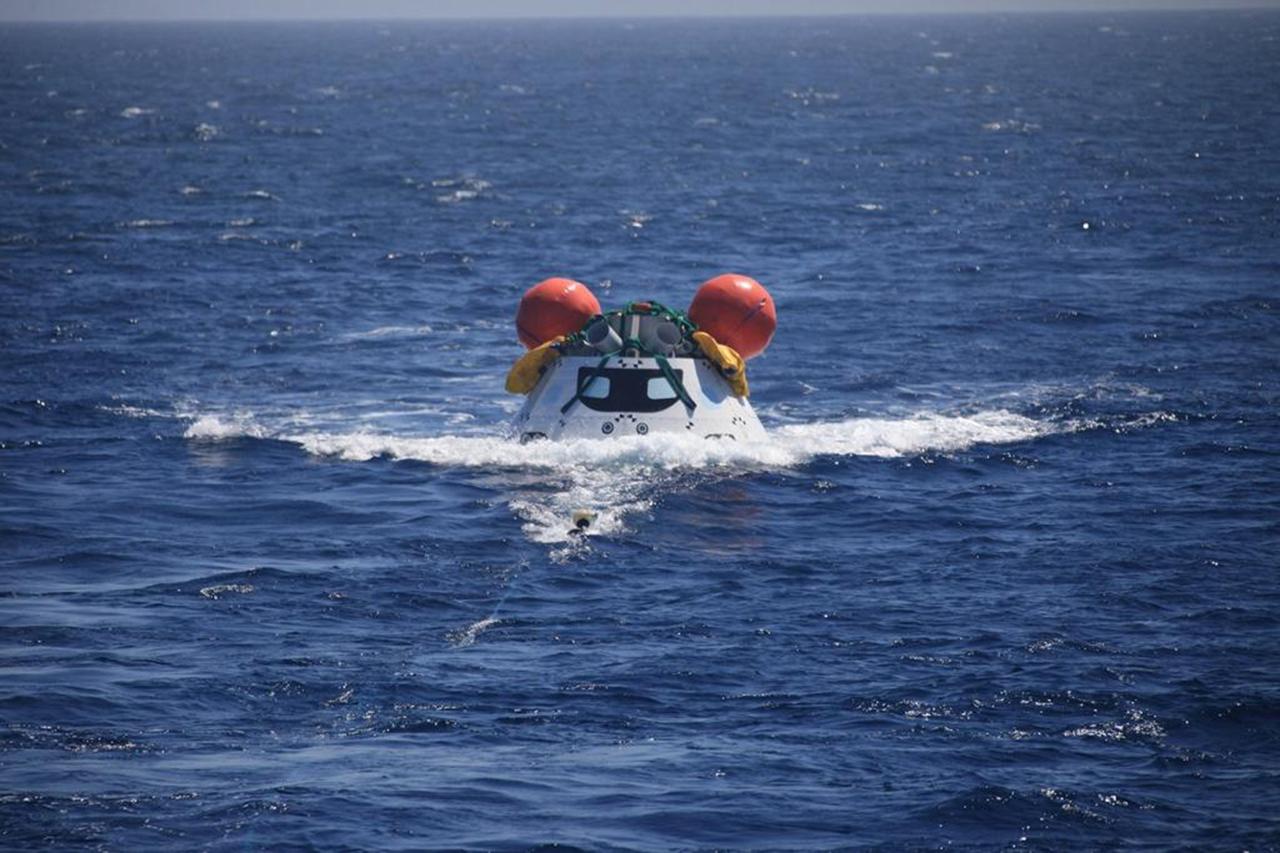
SAN DIEGO, Calif. – The Orion boilerplate test vehicle floats in the Pacific Ocean during the third day of Underway Recovery Test 4A. Orion was lowered into the water from the USS Salvor, a safeguard-class rescue and salvage ship, using a stationary crane. Tether lines were attached to the test vehicle from the ship for a towing test. NASA, Lockheed Martin and the U.S. Navy are conducting the test to prepare for recovery of the Orion crew module on its return from a deep space mission. The underway recovery test allows the teams to demonstrate and evaluate the recovery processes, procedures, new hardware and personnel in open waters. The Ground Systems Development and Operations Program is conducting the underway recovery test. Orion is the exploration spacecraft designed to carry astronauts to destinations not yet explored by humans, including an asteroid and Mars. It will have emergency abort capability, sustain the crew during space travel and provide safe re-entry from deep space return velocities. The first unpiloted test flight of the Orion is scheduled to launch in December 2014 atop a United Launch Alliance Delta IV Heavy rocket and in 2018 on NASA’s Space Launch System rocket. For more information, visit http://www.nasa.gov/orion. Photo credit: NASA/Kim Shiflett

SAN DIEGO, Calif. – An H60-S helicopter takes off from the deck of the USS Anchorage during the first day of Orion Underway Recovery Test 3 activities in the Pacific Ocean. NASA, Lockheed Martin and U.S. Navy personnel are conducting recovery tests to prepare for recovery of the Orion crew module on its return from a deep space mission. The test will allow the teams to demonstrate and evaluate the recovery processes, procedures, hardware and personnel in open waters. The Ground Systems Development and Operations Program is conducting the underway recovery tests. Orion is the exploration spacecraft designed to carry astronauts to destinations not yet explored by humans, including an asteroid and Mars. It will have emergency abort capability, sustain the crew during space travel and provide safe re-entry from deep space return velocities. The first unpiloted test flight of Orion is scheduled to launch in 2014 atop a United Launch Alliance Delta IV Heavy rocket and in 2018 on NASA’s Space Launch System rocket. For more information, visit http://www.nasa.gov/orion. Photo credit: NASA/Cory Huston
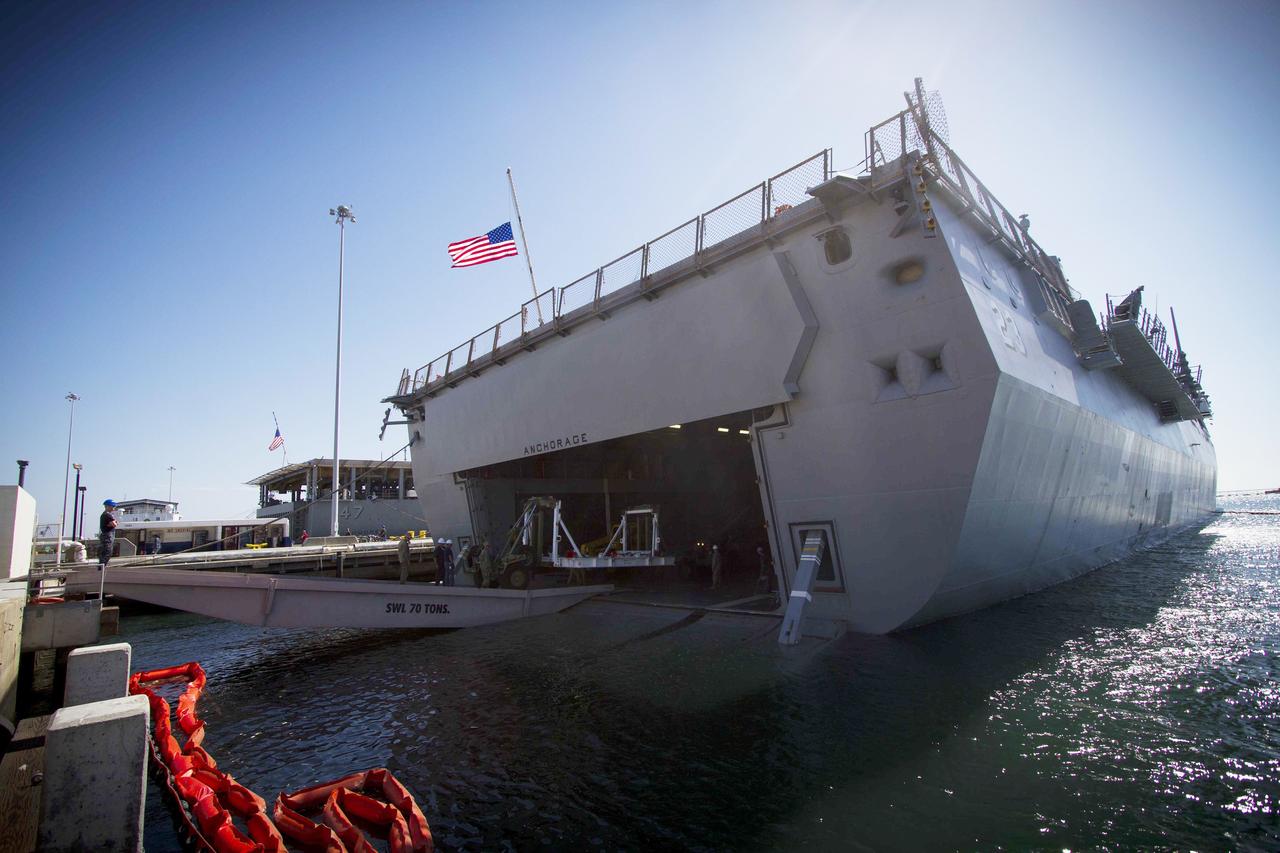
SAN DIEGO, Calif. – The USS Anchorage is docked at Naval Base San Diego during loading operations in its well deck for Orion Underway Recovery Test 3. The ship will head out to sea, off the coast of San Diego, in search of conditions to support test needs for a full dress rehearsal of recovery operations. NASA, Lockheed Martin and U.S. Navy personnel will conduct tests in the Pacific Ocean to prepare for recovery of the Orion crew module on its return from a deep space mission. The test will allow the teams to demonstrate and evaluate the recovery processes, procedures, new hardware and personnel in open waters. The Ground Systems Development and Operations Program is conducting the underway recovery tests. Orion is the exploration spacecraft designed to carry astronauts to destinations not yet explored by humans, including an asteroid and Mars. It will have emergency abort capability, sustain the crew during space travel and provide safe re-entry from deep space return velocities. The first unpiloted test flight of Orion is scheduled to launch in 2014 atop a United Launch Alliance Delta IV Heavy rocket and in 2018 on NASA’s Space Launch System rocket. For more information, visit http://www.nasa.gov/orion. Photo credit: NASA/Cory Huston
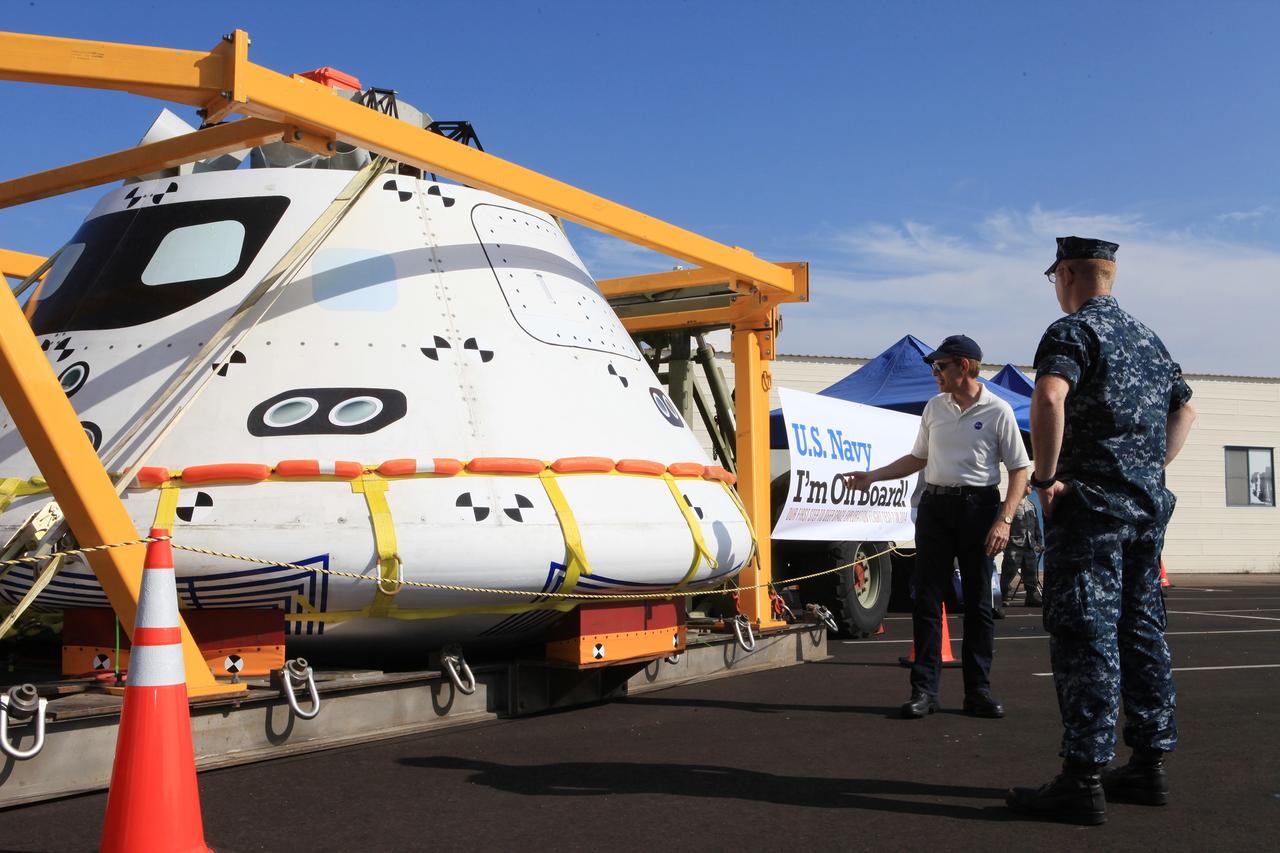
SAN DIEGO, Calif. – At the U.S. Naval Base San Diego in California, NASA's Orion boilerplate test vehicle is on display during an outreach event at the naval base. The USS Anchorage is being prepared for the Orion Underway Recovery Test 2. The Orion boilerplate test vehicle and other hardware will be loaded into the well deck of the ship and head out to sea in the Pacific Ocean off the coast of San Diego. NASA, Lockheed Martin and the U.S. Navy will conduct the test to prepare for recovery of the Orion crew module, forward bay cover and parachutes on its return from a deep space mission. The underway recovery test will allow the teams to demonstrate and evaluate the recovery processes, procedures, new support hardware and personnel in open waters. The Ground Systems Development and Operations Program will conduct the underway recovery tests. Orion is the exploration spacecraft designed to carry astronauts to destinations not yet explored by humans, including an asteroid and Mars. It will have emergency abort capability, sustain the crew during space travel and provide safe re-entry from deep space return velocities. The first unpiloted test flight of the Orion is scheduled to launch in 2014 atop a Delta IV rocket and in 2017 on NASA’s Space Launch System rocket. For more information, visit http://www.nasa.gov/orion. Photo credit: NASA/Kim Shiflett
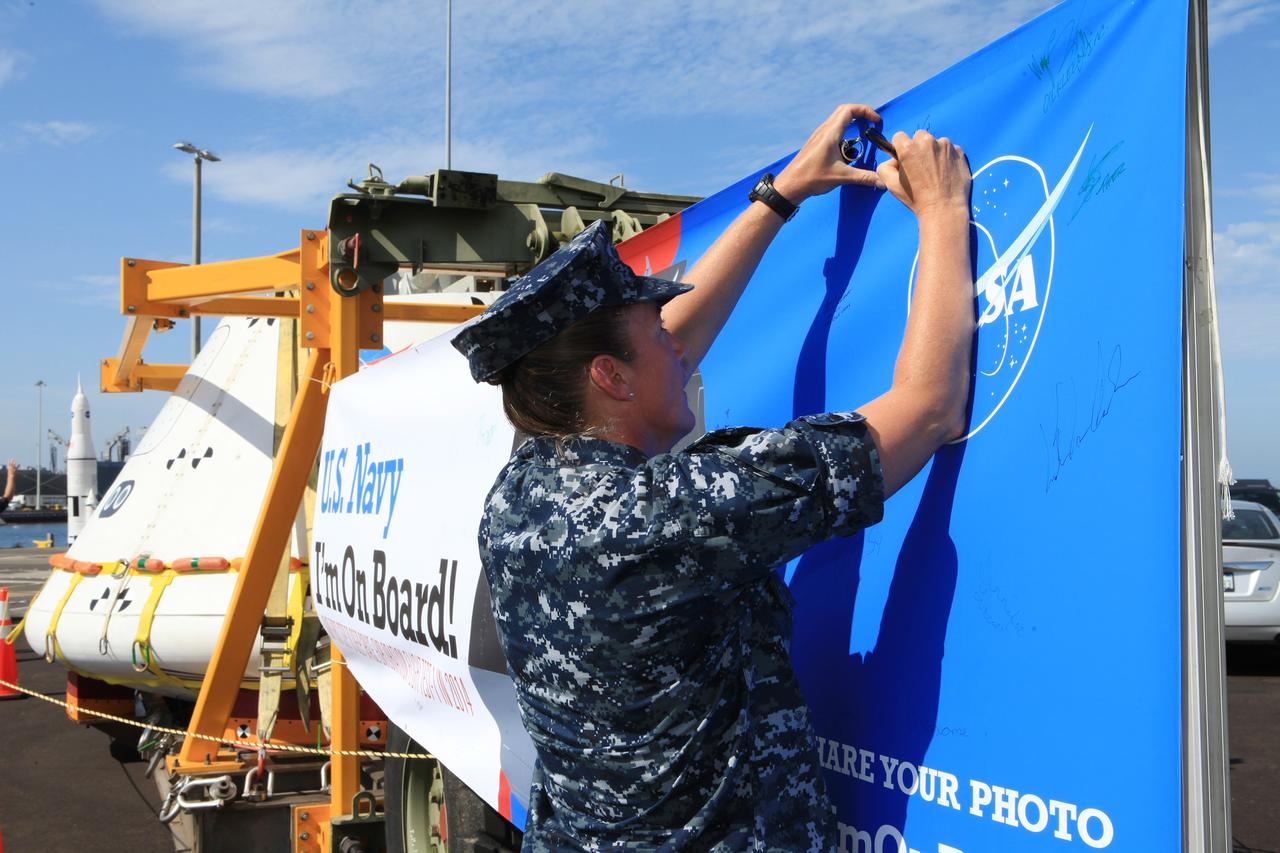
SAN DIEGO, Calif. – At the U.S. Naval Base San Diego in California, former NASA astronaut Heidi Piper signs the banner near the Orion boilerplate test vehicle during an outreach event at the naval base. The USS Anchorage is being prepared for the Orion Underway Recovery Test 2. The test vehicle and other hardware will be loaded into the well deck of the ship and head out to sea in the Pacific Ocean off the coast of San Diego. NASA, Lockheed Martin and the U.S. Navy will conduct the test to prepare for recovery of the Orion crew module, forward bay cover and parachutes on its return from a deep space mission. The underway recovery test will allow the teams to demonstrate and evaluate the recovery processes, procedures, new support hardware and personnel in open waters. The Ground Systems Development and Operations Program will conduct the underway recovery tests. Orion is the exploration spacecraft designed to carry astronauts to destinations not yet explored by humans, including an asteroid and Mars. It will have emergency abort capability, sustain the crew during space travel and provide safe re-entry from deep space return velocities. The first unpiloted test flight of the Orion is scheduled to launch in 2014 atop a Delta IV rocket and in 2017 on NASA’s Space Launch System rocket. For more information, visit http://www.nasa.gov/orion. Photo credit: NASA/Kim Shiflett
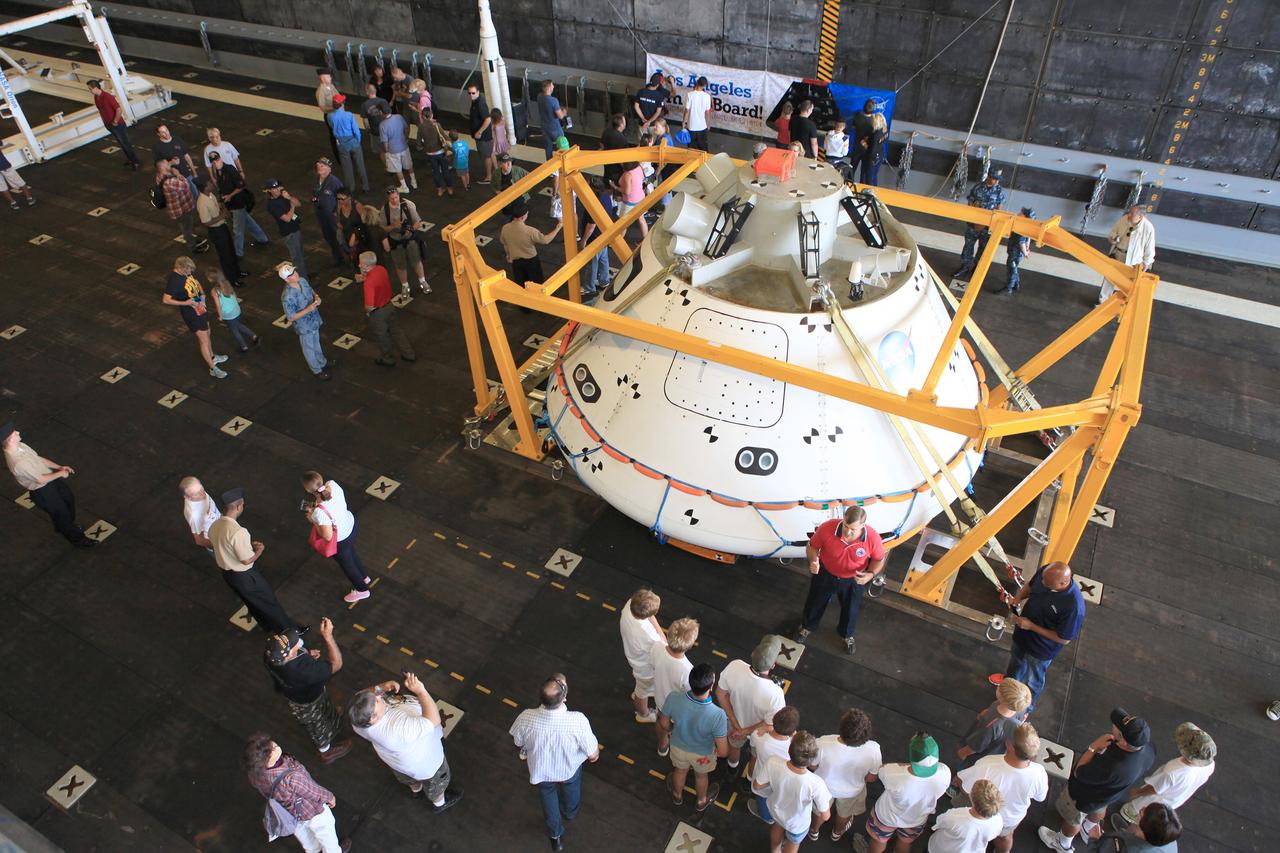
LOS ANGELES, Calif. – Andy Quiett, Detachment 3 deputy operations lead for the Orion program and DoD liaison for NASA, answers questions about the Orion boilerplate test vehicle from visitors touring the well deck of the USS Anchorage during the Science, Technology, Engineering and Mathematics, or STEM, Expo for L.A. Navy Days at the Port of Los Angeles in California. A combined team from NASA’s Ground Systems Development and Operations Program and the U.S. Navy were in San Diego to practice recovering Orion from the ocean, as they will do in December following the spacecraft's first trip to space during Exploration Flight Test-1. Orion is the exploration spacecraft designed to carry astronauts to destinations not yet explored by humans, including an asteroid and Mars. It will have emergency abort capability, sustain the crew during space travel and provide safe re-entry from deep-space return velocities. The first unpiloted test flight of the Orion is scheduled to launch in 2014 atop a Delta IV rocket and in 2017 on NASA’s Space Launch System rocket. For more information, visit http://www.nasa.gov/orion. Photo credit: NASA/Kim Shiflett
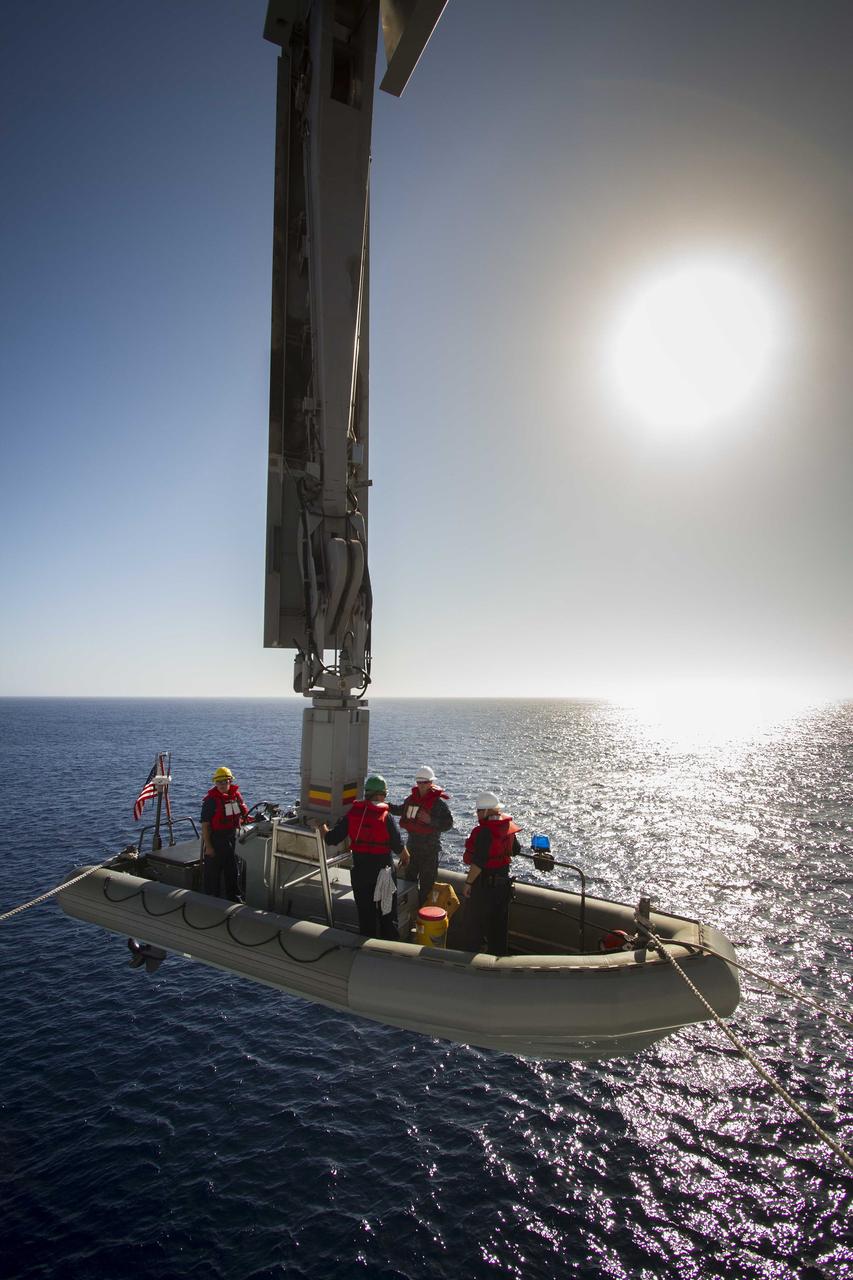
SAN DIEGO, Calif. – A rigid hull inflatable boat, with U.S. Navy personnel aboard, is being lowered into the water from the USS Anchorage on the second day of Orion Underway Recovery Test 3 in the Pacific Ocean. NASA, Lockheed Martin and U.S. Navy personnel are conducting recovery tests using the Orion boilerplate test vehicle to prepare for recovery of the Orion crew module on its return from a deep space mission. The test allows the teams to demonstrate and evaluate the recovery processes, procedures, hardware and personnel in open waters. The Ground Systems Development and Operations Program is conducting the underway recovery tests. Orion is the exploration spacecraft designed to carry astronauts to destinations not yet explored by humans, including an asteroid and Mars. It will have emergency abort capability, sustain the crew during space travel and provide safe re-entry from deep space return velocities. The first unpiloted test flight of Orion is scheduled to launch in 2014 atop a United Launch Alliance Delta IV Heavy rocket and in 2018 on NASA’s Space Launch System rocket. For more information, visit http://www.nasa.gov/orion. Photo credit: NASA/Cory Huston
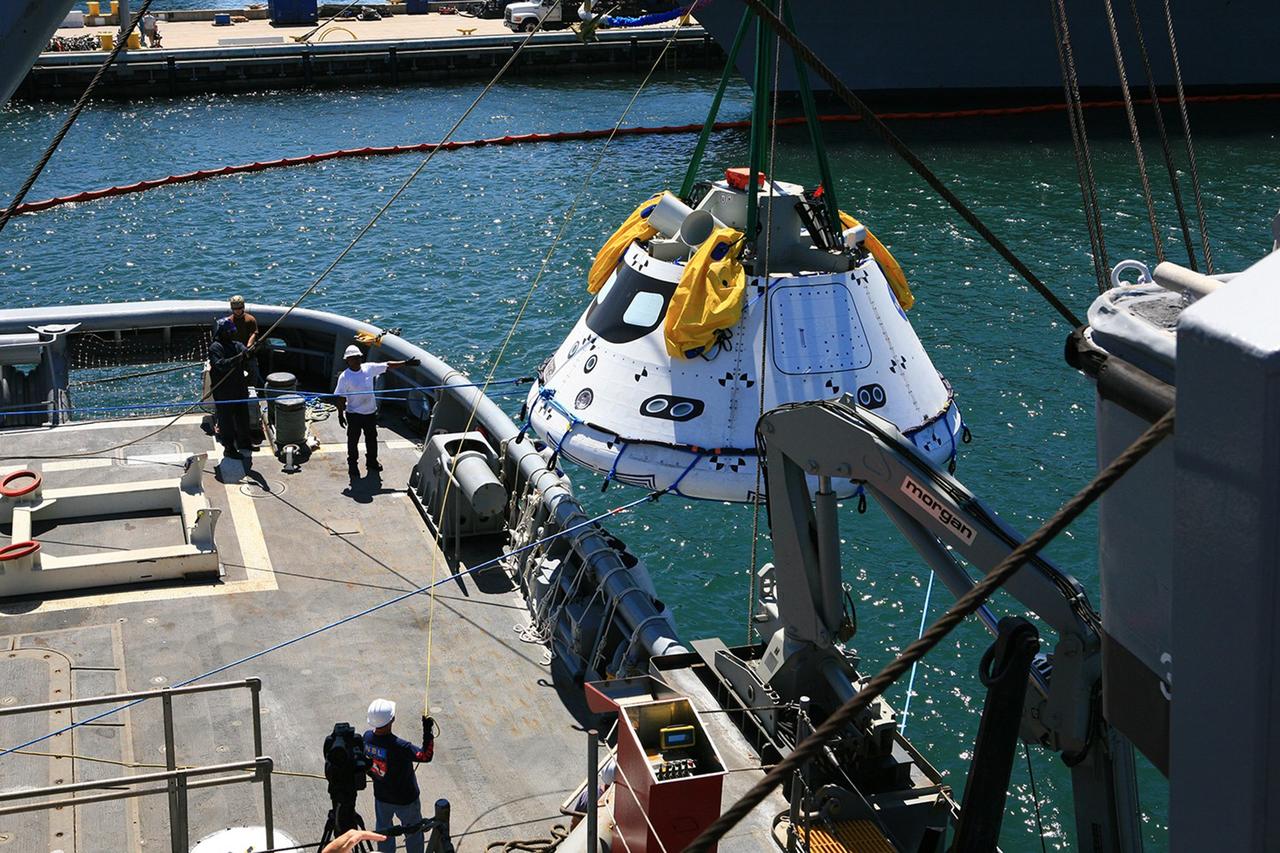
SAN DIEGO, Calif. – The Orion boilerplate test vehicle is lifted with a stationary crane during the first day of Underway Recovery Test 4A aboard the USS Salvor, a safeguard-class rescue and salvage ship, at Naval Base San Diego in California. The ship will head out to sea for four days to test crew module crane recovery operations. NASA, Lockheed Martin and the U.S. Navy are conducting the test to prepare for recovery of the Orion crew module on its return from a deep space mission. The underway recovery test will allow the teams to demonstrate and evaluate the recovery processes, procedures, new hardware and personnel in open waters. The Ground Systems Development and Operations Program is conducting the underway recovery test. Orion is the exploration spacecraft designed to carry astronauts to destinations not yet explored by humans, including an asteroid and Mars. It will have emergency abort capability, sustain the crew during space travel and provide safe re-entry from deep space return velocities. The first unpiloted test flight of the Orion is scheduled to launch in December 2014 atop a United Launch Alliance Delta IV rocket and in 2018 on NASA’s Space Launch System rocket. For more information, visit http://www.nasa.gov/orion. Photo credit: Kim Shiflett

SAN DIEGO, Calif. – A weather balloon is released on the deck of the USS Anchorage during mission simulation day for Orion Underway Recovery Test 3 in the Pacific Ocean. The Orion boilerplate test vehicle is secured in the well deck of the ship. NASA, Lockheed Martin and U.S. Navy personnel are conducting the recovery test using the test vehicle to prepare for recovery of the Orion crew module on its return from a deep space mission. The test allows the teams to demonstrate and evaluate the recovery processes, procedures, hardware and personnel in open waters. The Ground Systems Development and Operations Program is conducting the underway recovery tests. Orion is the exploration spacecraft designed to carry astronauts to destinations not yet explored by humans, including an asteroid and Mars. It will have emergency abort capability, sustain the crew during space travel and provide safe re-entry from deep space return velocities. The first unpiloted test flight of Orion is scheduled to launch in 2014 atop a United Launch Alliance Delta IV Heavy rocket and in 2018 on NASA’s Space Launch System rocket. For more information, visit http://www.nasa.gov/orion. Photo credit: NASA/Cory Huston
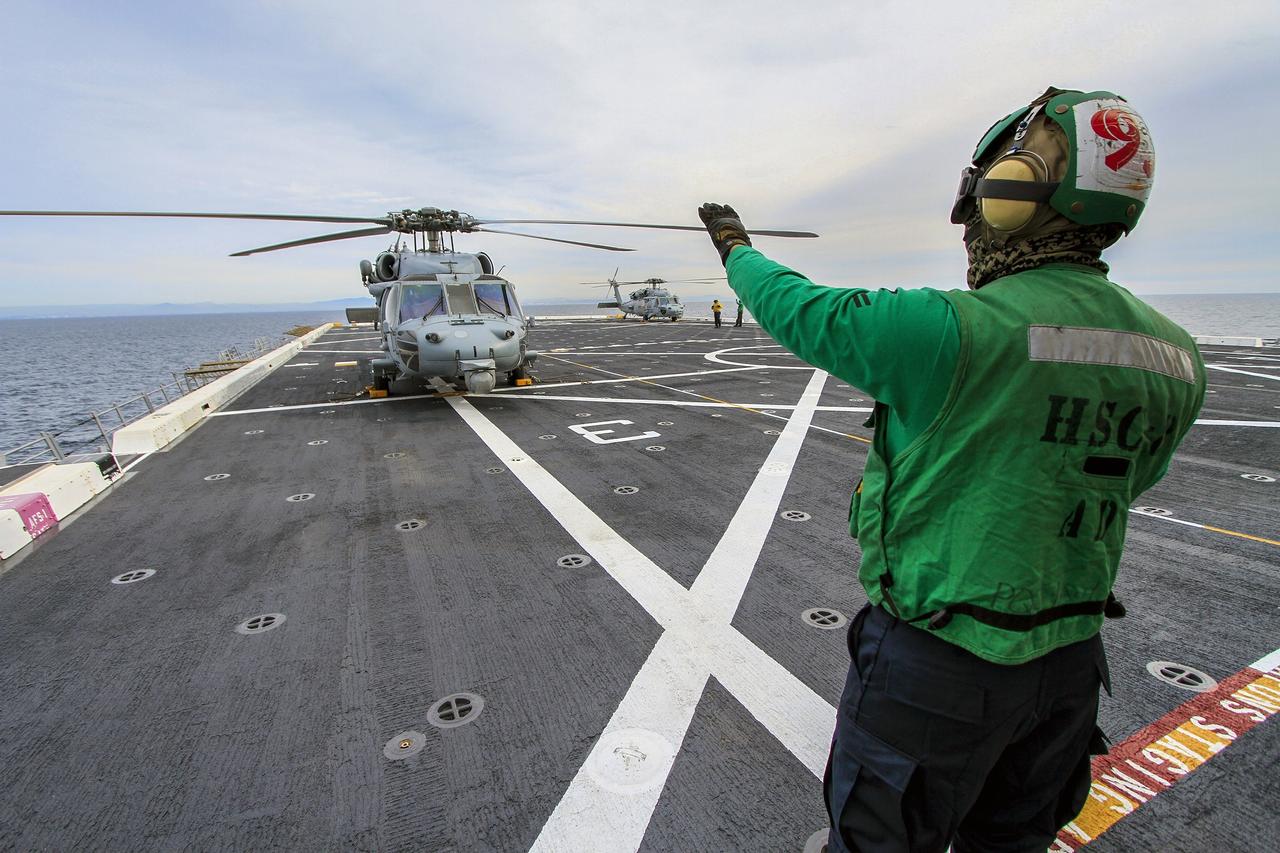
SAN DIEGO, Calif. – A member of the Helicopter Sea Combat Squadron 8 signals to the pilot in an H60-S Seahawk helicopter on the deck of the USS Anchorage as the ship departs Naval Base San Diego in California for the open waters of the Pacific Ocean. NASA and the U.S. Navy are making preparations ahead of Orion's flight test for recovery of the crew module, forward bay cover and parachutes on its return from space and splashdown in the Pacific Ocean. The Ground Systems Development and Operations Program is leading the recovery efforts. The first unpiloted flight test of Orion is scheduled to launch this week atop a United Launch Alliance Delta IV Heavy rocket. During its two-orbit, 4.5-hour flight, Orion will venture 3,600 miles in altitude and travel nearly 60,000 miles before returning to Earth for a splashdown in the Pacific Ocean. For more information, visit http://www.nasa.gov/orion. Photo credit: NASA/Cory Huston
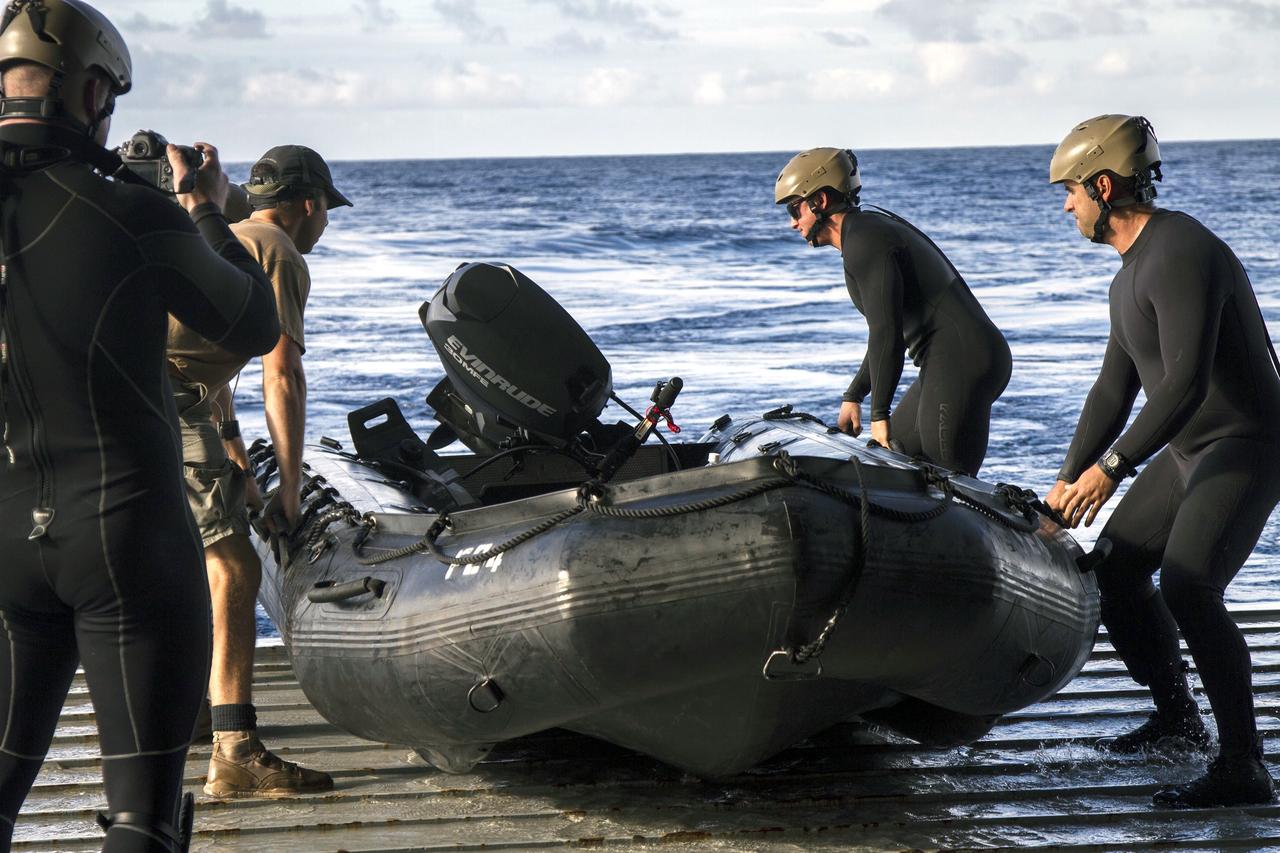
SAN DIEGO, Calif. – On the third day of preparations for recovery of Orion after its splashdown in the Pacific Ocean, U.S. Navy Divers prepare to embark from the well deck of the USS Anchorage in a rigid hull Zodiac boat about 600 miles off the coast of Baja, California. NASA, Lockheed Martin and U.S. Navy personnel are preparing for recovery of the crew module, forward bay cover and parachutes on its return from space and splashdown in the Pacific Ocean. The Ground Systems Development and Operations Program is leading the recovery efforts. The first unpiloted flight test of Orion is scheduled to launch Dec. 4 atop a United Launch Alliance Delta IV Heavy rocket. During its two-orbit, 4.5-hour flight, Orion will venture 3,600 miles in altitude and travel nearly 60,000 miles before returning to Earth for a splashdown in the Pacific Ocean. For more information, visit http://www.nasa.gov/orion. Photo credit: NASA/Cory Huston
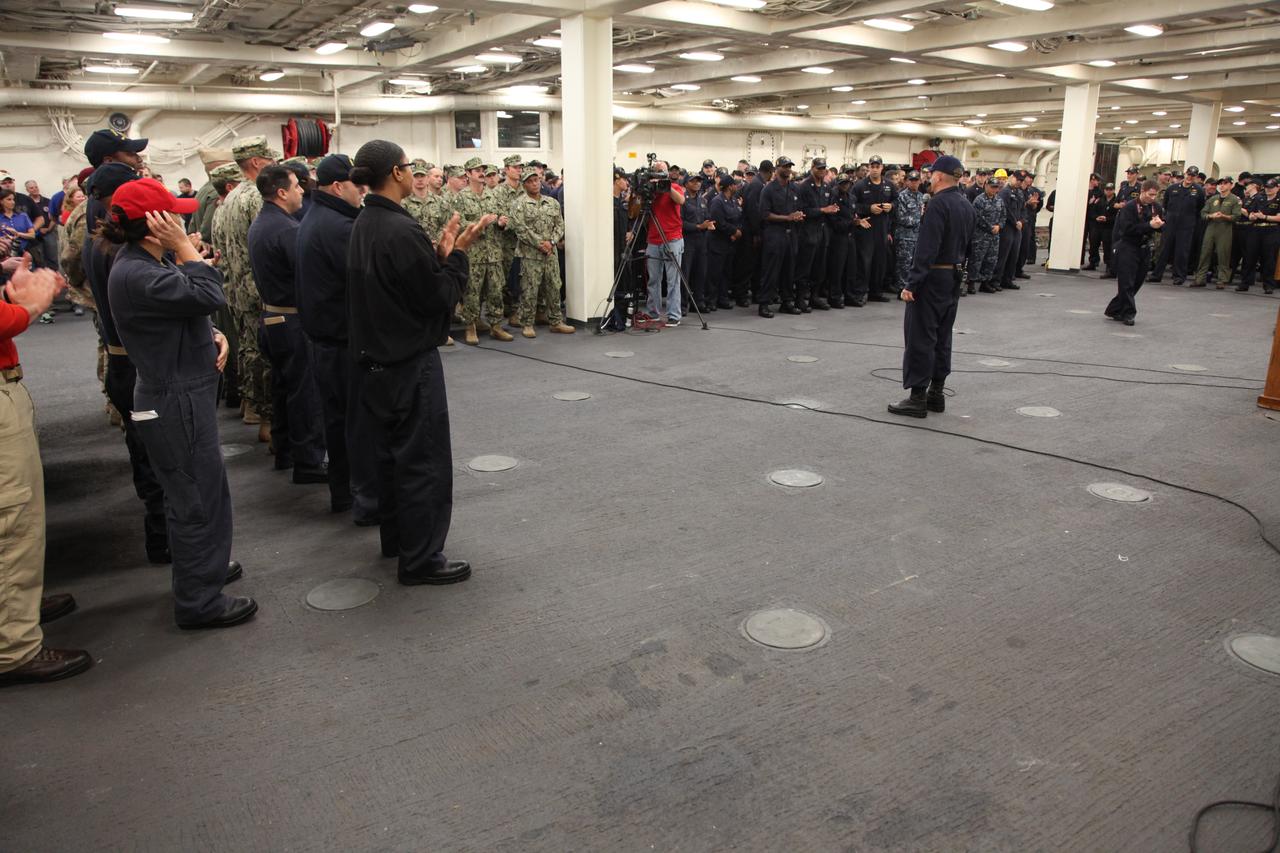
Orion Underway Recovery Test 5 team members gather in the USS San Diego during wrap up of the series of tests. NASA's Ground Systems Development and Operations Program and the U.S. Navy practiced recovery techniques in the Pacific Ocean off the coast of California over several days, using the well deck of the ship and a test version of the Orion crew module to prepare for recovery of Orion on its return from deep space missions. The testing allowed the team to demonstrate and evaluate recovery processes, procedures, hardware and personnel in open waters. Orion is the exploration spacecraft designed to carry astronauts to destinations not yet explored by humans, including an asteroid and NASA's Journey to Mars. It will have emergency abort capability, sustain the crew during space travel and provide safe re-entry from deep space return velocities. Orion is scheduled to launch on NASA's Space Launch System in late 2018. For more information, visit http://www.nasa.gov/orion.

SAN DIEGO, Calif. – At the U.S. Naval Base San Diego in California, the Orion boilerplate test vehicle and cradle have been positioned in the well deck of the USS Anchorage in preparation for Underway Recovery Test 2. NASA, Lockheed Martin and the U.S. Navy will conduct tests in the Pacific Ocean to prepare for recovery of the Orion crew module on its return from a deep space mission. The second underway recovery test will allow the teams to demonstrate and evaluate the recovery processes, procedures, new hardware and personnel in open waters. The Ground Systems Development and Operations Program is conducting the underway recovery tests. Orion is the exploration spacecraft designed to carry astronauts to destinations not yet explored by humans, including an asteroid and Mars. It will have emergency abort capability, sustain the crew during space travel and provide safe re-entry from deep space return velocities. The first unpiloted test flight of the Orion is scheduled to launch in 2014 atop a Delta IV rocket and in 2017 on NASA’s Space Launch System rocket. For more information, visit http://www.nasa.gov/orion. Photo credit: NASA/Kim Shiflett