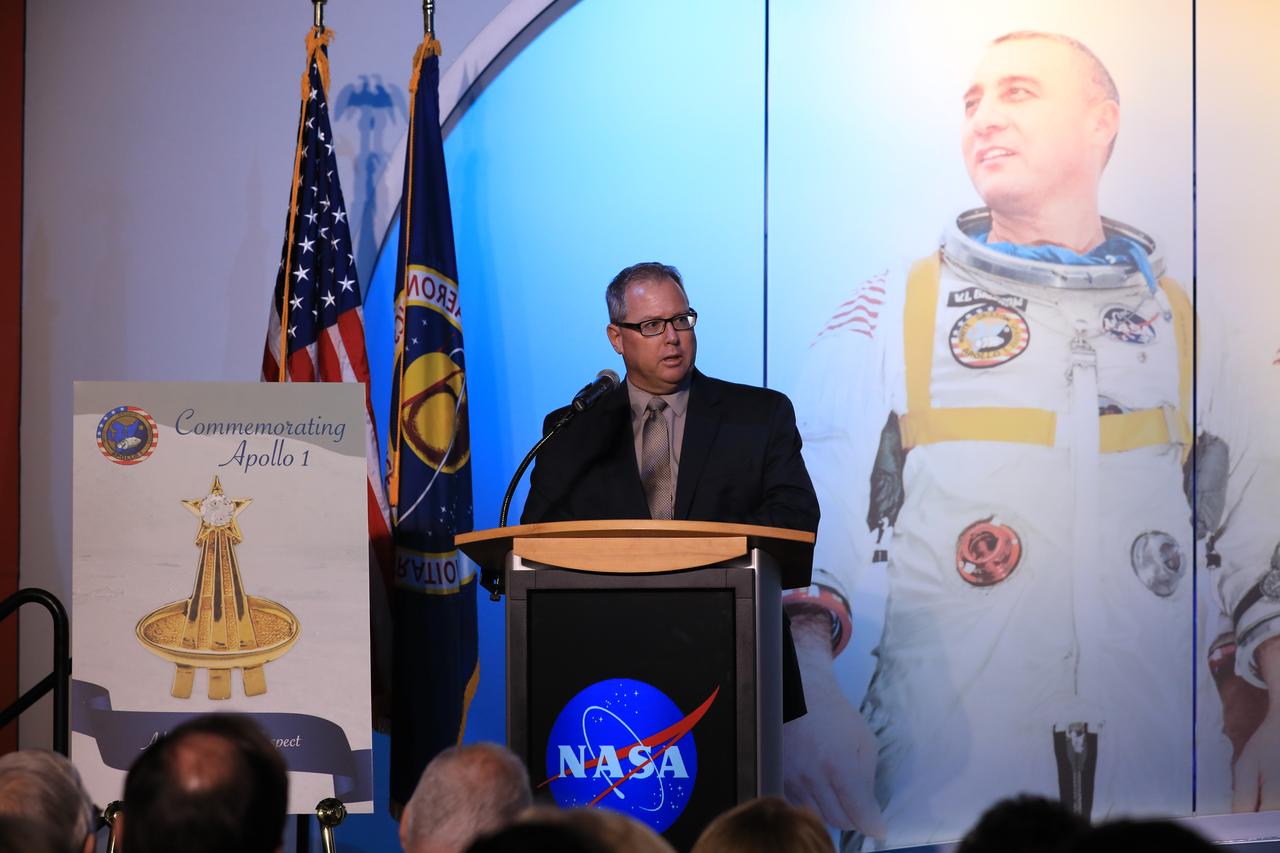
Therrin Protze, Chief Operating Officer, Delaware North Corporation Parks & Resorts at KSC, Inc., speaks during the opening of the tribute exhibition to the Apollo 1 astronauts who perished in a fire at the launch pad on Jan. 27, 1967, during training for the mission. The tribute highlights the lives and careers of astronauts Gus Grissom, Ed White II and Roger Chaffee who were lost during the fire. The tribute at the Apollo/Saturn V Center at NASA's Kennedy Space Center opened Jan. 27, 2017, 50 years after the crew of three was lost. It features numerous items recalling the lives of the three astronauts. The tribute also includes the three-part hatch to the spacecraft itself, the first time any part of the Apollo 1 spacecraft has been displayed publicly. A version of the hatch after it was redesigned is also showcased as an example of improvements NASA made throughout the agency and to the Apollo spacecraft that would later carry astronauts to the moon.
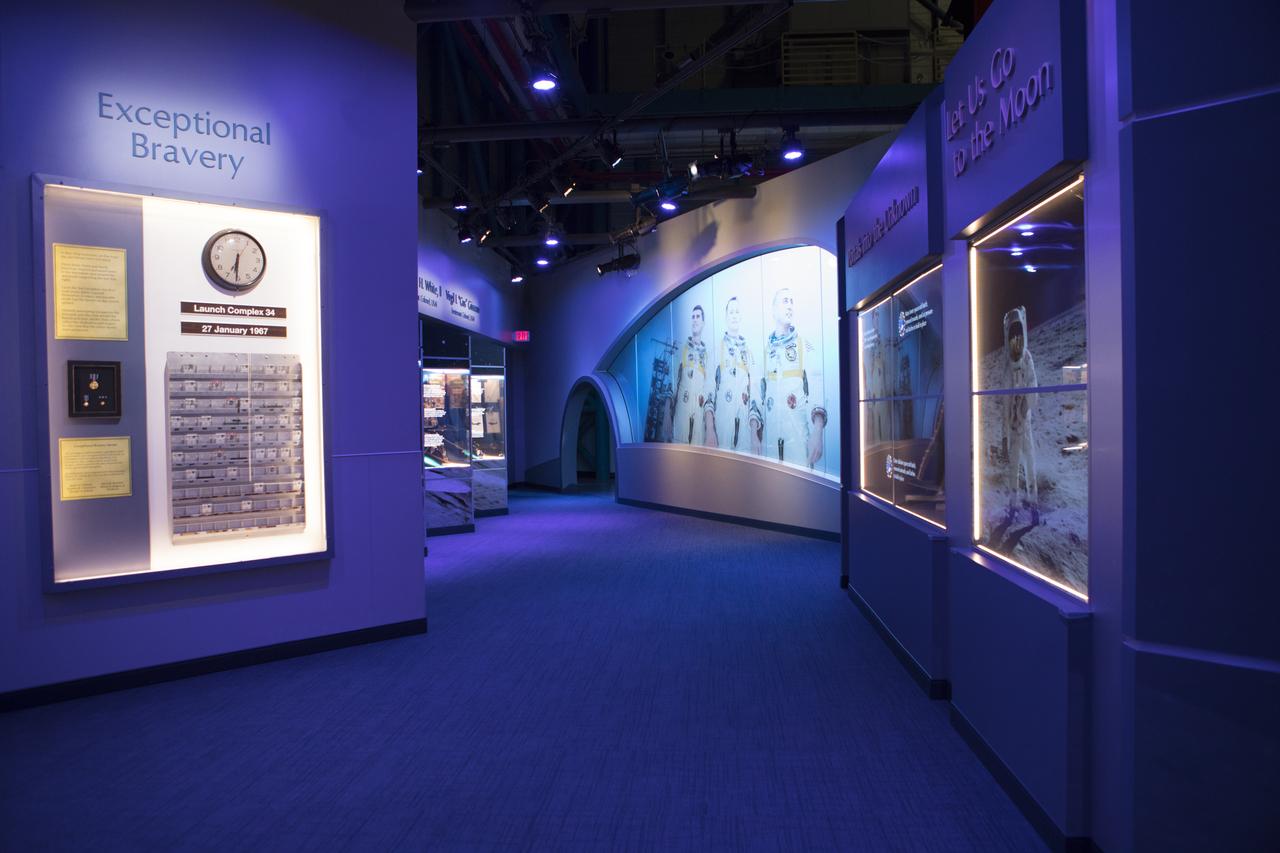
The new tribute to the crew of Apollo 1 who perished in a fire at the launch pad on Jan. 27, 1967, during training for the mission is shown looking down the length of the area. The tribute highlights the lives and careers of astronauts Gus Grissom, Ed White II and Roger Chaffee who were lost during the fire. The tribute at the Apollo/Saturn V Center at NASA's Kennedy Space Center opened Jan. 27, 2017, 50 years after the crew of three was lost. It features numerous items recalling the lives of the three astronauts. The tribute also includes the three-part hatch to the spacecraft itself, the first time any part of the Apollo 1 spacecraft has been displayed publicly. A version of the hatch after it was redesigned is also showcased as an example of improvements NASA made throughout the agency and to the Apollo spacecraft that would later carry astronauts to the moon.
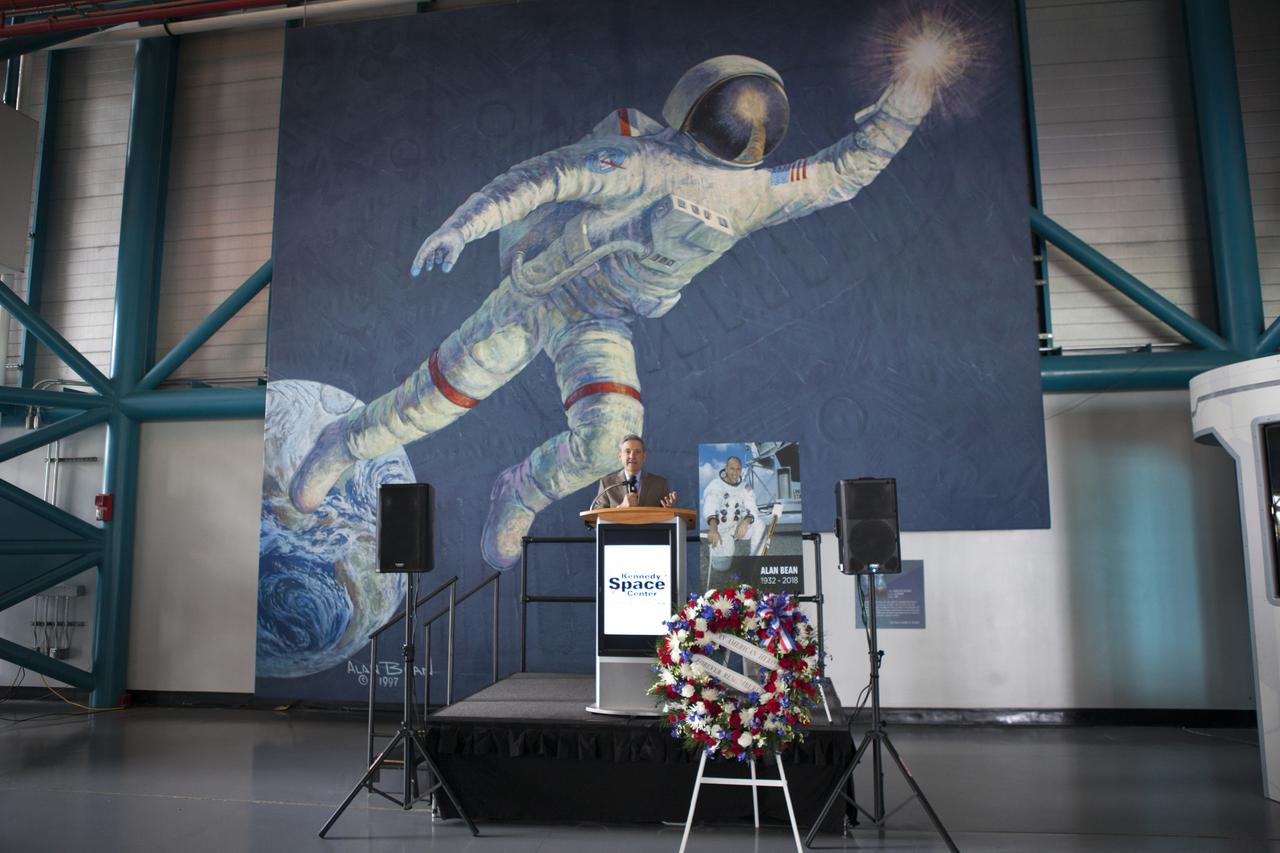
A memorial wreath placed in the Apollo-Saturn V Center of the Kennedy Space Center Visitor Complex on Wednesday, May 30, 2018, honors former NASA astronaut Alan Bean. He was the fourth person to walk on the Moon as lunar module pilot on Apollo 12 in November 1969. He went on to command the 59-day Skylab 3 mission in 1973. In the background is a large mural of a painting by Bean who became an accomplished artist after leaving NASA. He died in Houston on May 26, 2018, at the age of 86.
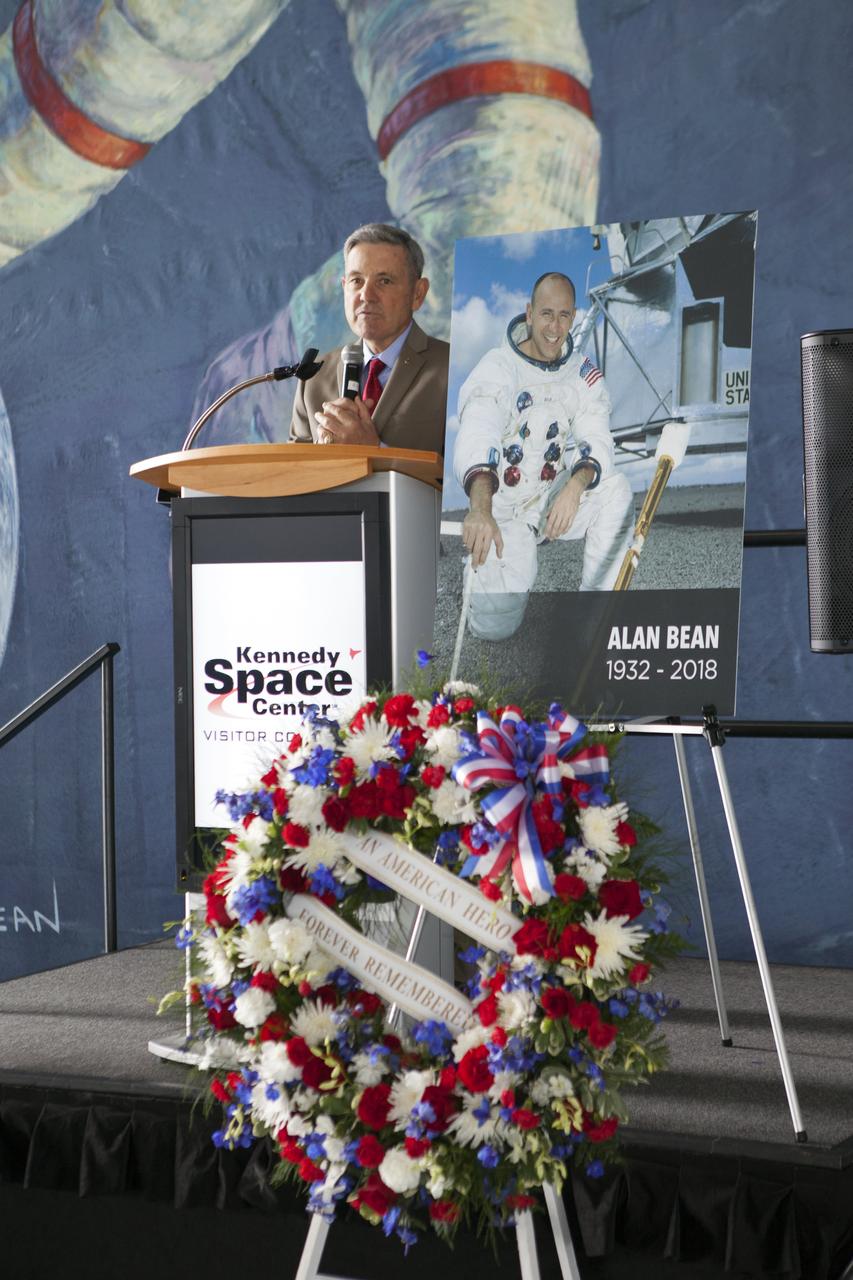
Kennedy Space Center Director Bob Cabana speaks to guests in the Apollo-Saturn V Center at the spaceport's visitor complex on Wednesday, May 30, 2018. The ceremony is honoring the memory of former NASA astronaut Alan Bean. As lunar module pilot on Apollo 12, Bean was the fourth person to walk on the Moon in November 1969. He went on to command the 59-day Skylab 3 mission in 1973. He died in Houston on May 26, 2018, at the age of 86.
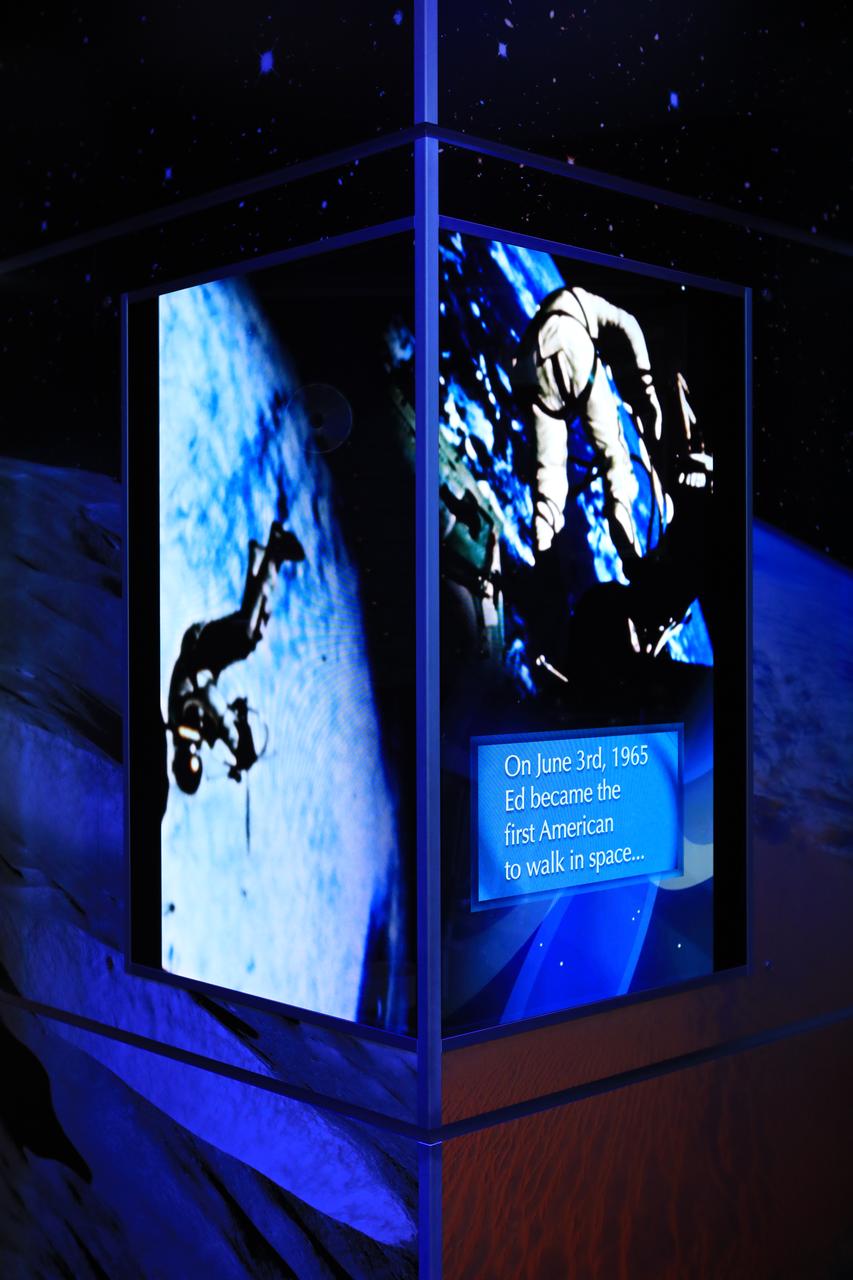
A display case dedicated to astronaut Ed White II is shown inside the new tribute to the crew of Apollo 1 who perished in a fire at the launch pad on Jan. 27, 1967, during training for the mission. Gus Grissom, White and Roger Chaffee were lost during the fire. The tribute at the Apollo/Saturn V Center at NASA's Kennedy Space Center opened Jan. 27, 2017, 50 years after the crew of three was lost. It features numerous items recalling the lives of the three astronauts. It also includes the three-part hatch to the spacecraft itself, the first time any part of the Apollo 1 spacecraft has been displayed publicly. A version of the hatch after it was redesigned is also showcased as an example of improvements NASA made throughout the agency and to the Apollo spacecraft that would later carry astronauts to the moon.
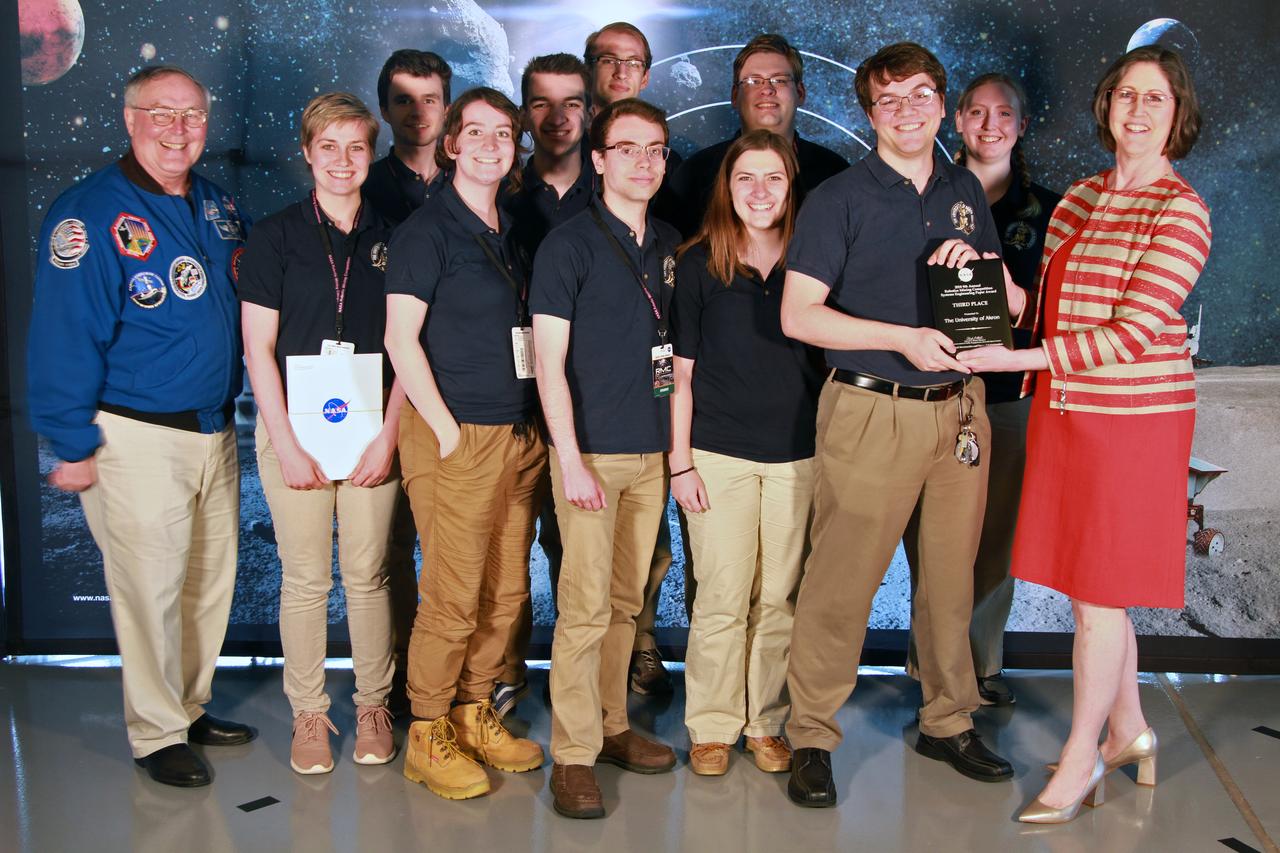
NASA's 9th Annual Robotic Mining Competition concludes with an awards ceremony May 18, 2018, at the Apollo/Saturn V Center at the Kennedy Space Center Visitor Complex in Florida. The team from The University of Akron received third place for their Systems Engineering Paper. At left is retired NASA astronaut Jerry Ross. At right is Jonette Stecklein, lead systems engineering paper judge. More than 40 student teams from colleges and universities around the U.S. participated in the competition, May 14-18, by using their mining robots to dig in a supersized sandbox filled with BP-1, or simulated lunar soil, gravel and rocks, and participate in other competition requirements. The Robotic Mining Competition is a NASA Human Exploration and Operations Mission Directorate project designed to encourage students in science, technology, engineering and math, or STEM fields. The project provides a competitive environment to foster innovative ideas and solutions that could be used on NASA's deep space missions.
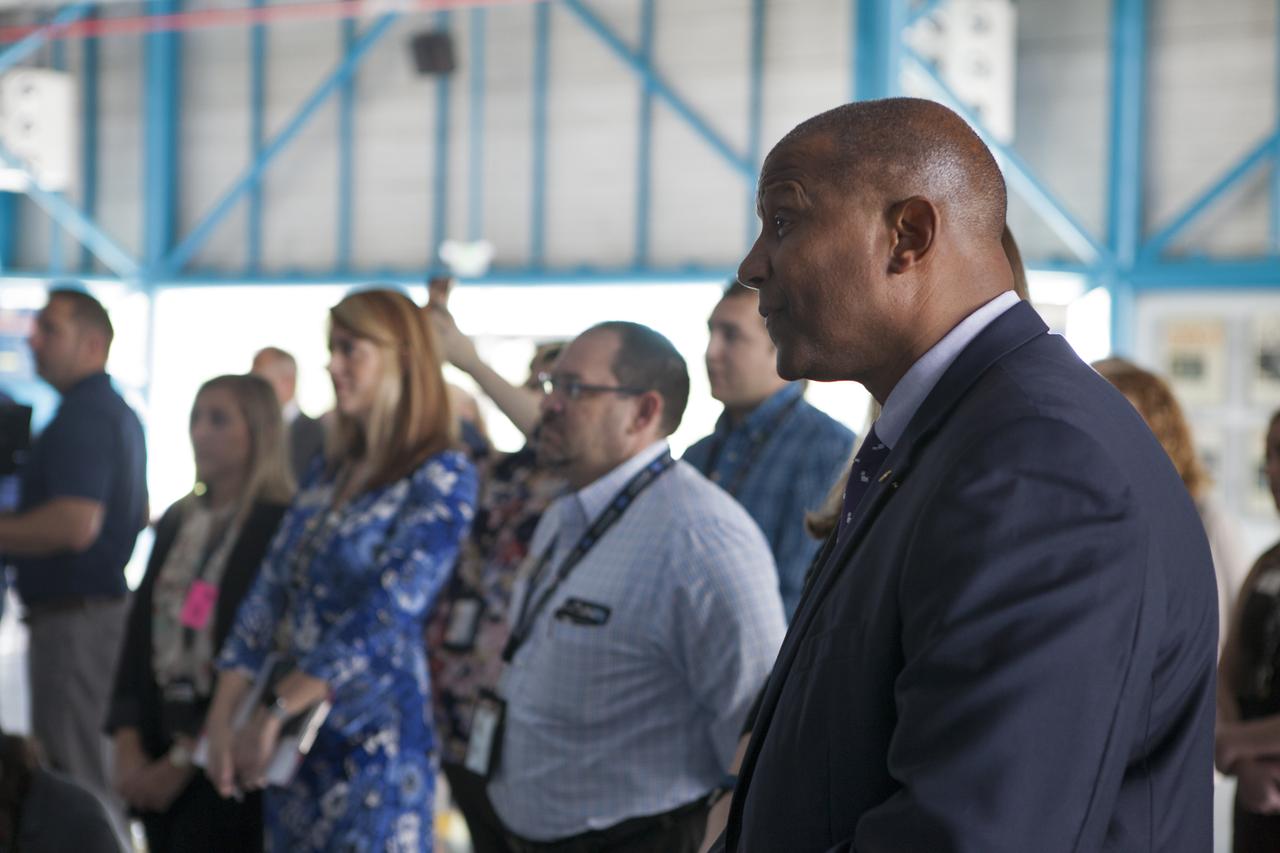
Associate Kennedy Space Center Director Kelvin Manning joins guests in a ceremony on Wednesday, May 30, 2018, honoring former NASA astronaut Alan Bean. As lunar module pilot on Apollo 12, Bean was the fourth person to walk on the Moon in November 1969. He went on to command the 59-day Skylab 3 mission in 1973. He died in Houston on May 26, 2018, at the age of 86.
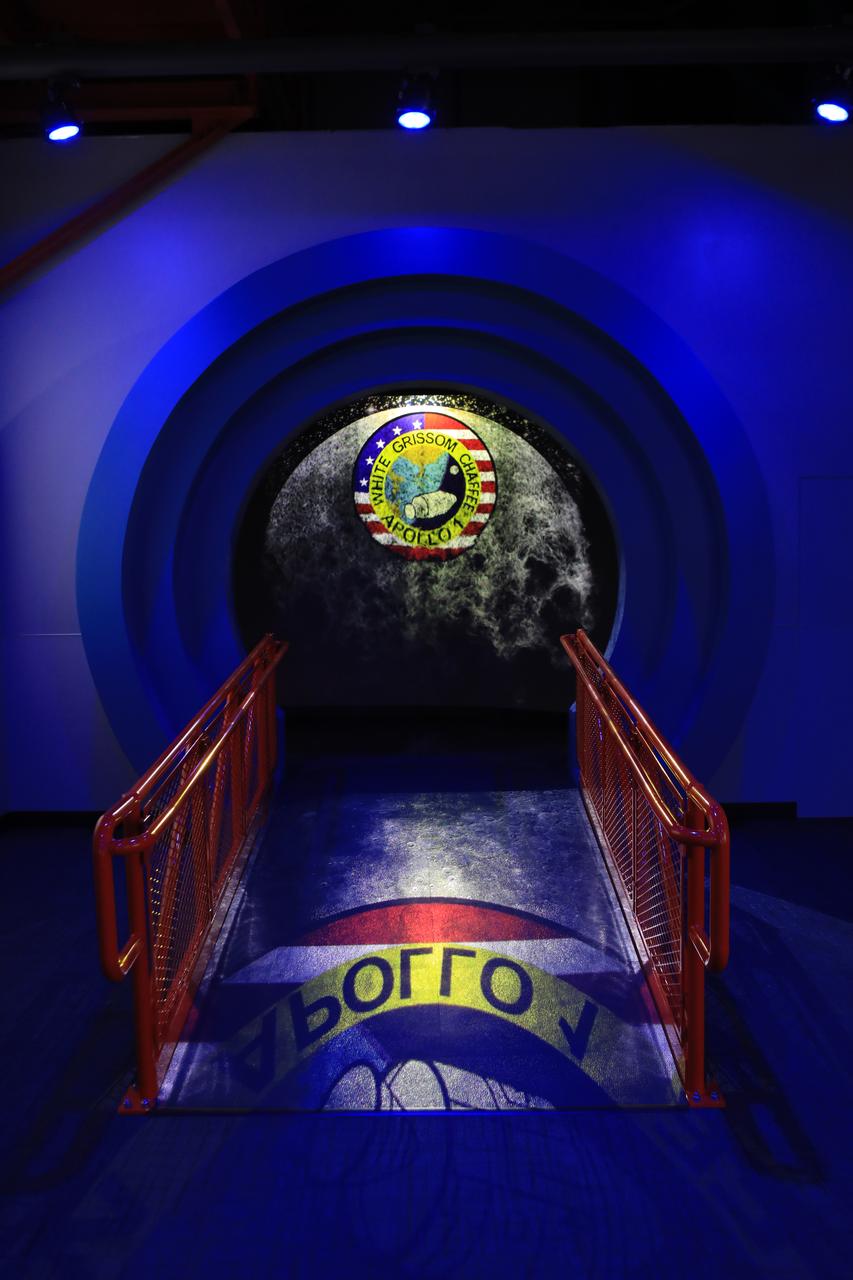
A gateway featuring the Apollo 1 mission logo over the moon is shown inside the new tribute to the crew of Apollo 1 who perished in a fire at the launch pad on Jan. 27, 1967, during training for the mission. Astronauts Gus Grissom, Ed White II and Roger Chaffee were lost during the fire. The tribute at the Apollo/Saturn V Center at NASA's Kennedy Space Center opened Jan. 27, 2017, 50 years after the crew of three was lost. It features numerous items recalling the lives of the three astronauts. The tribute also includes the three-part hatch to the spacecraft itself, the first time any part of the Apollo 1 spacecraft has been displayed publicly. A version of the hatch after it was redesigned is also showcased as an example of improvements NASA made throughout the agency and to the Apollo spacecraft that would later carry astronauts to the moon.
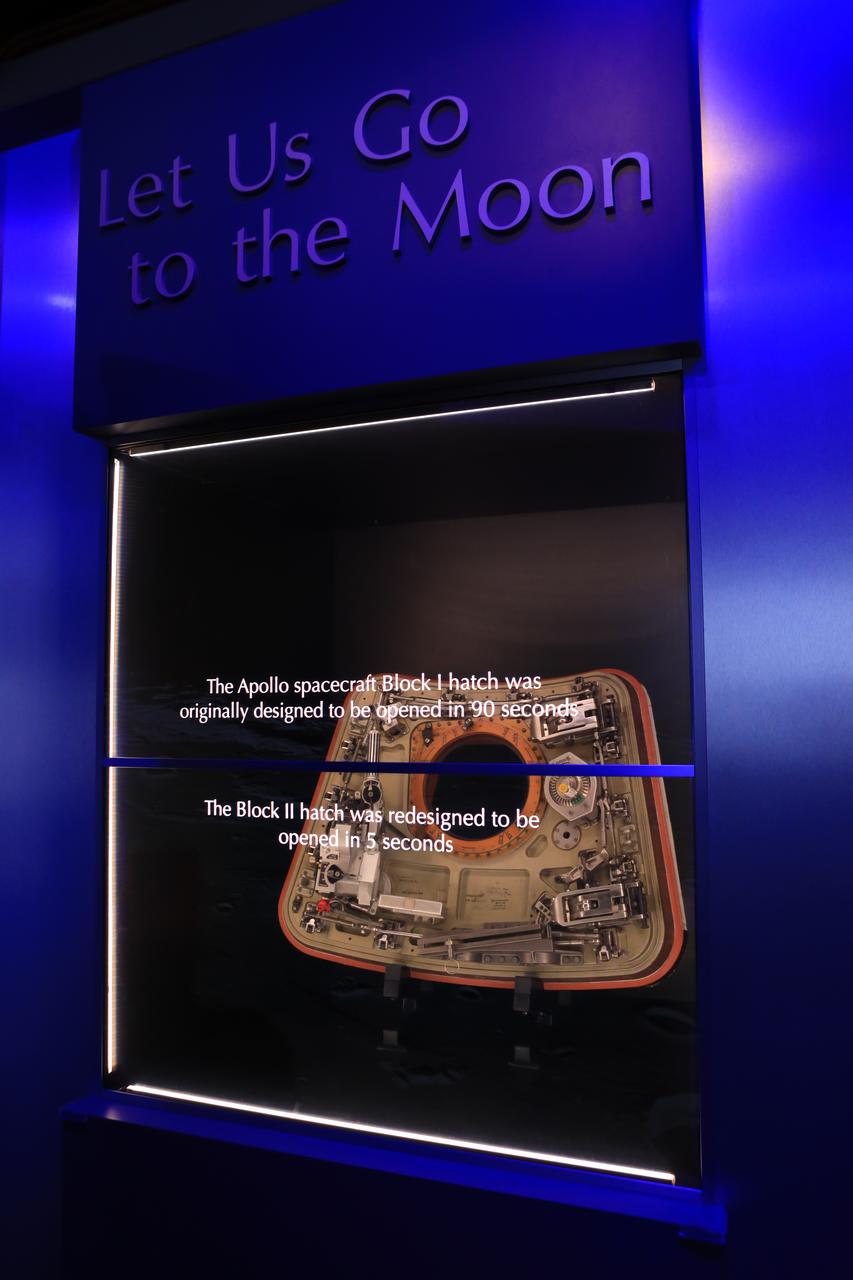
A redesigned hatch for an Apollo spacecraft is shown inside the new tribute to the crew of Apollo 1 who perished in a fire at the launch pad on Jan. 27, 1967, during training for the mission. Astronauts Gus Grissom, Ed White II and Roger Chaffee were lost during the fire. The tribute at the Apollo/Saturn V Center at NASA's Kennedy Space Center opened Jan. 27, 2017, 50 years after the crew of three was lost. It features numerous items recalling the lives of the three astronauts. The tribute also includes the three-part hatch to the spacecraft itself, the first time any part of the Apollo 1 spacecraft has been displayed publicly. The version of the hatch after it was redesigned was also showcased as an example of improvements NASA made throughout the agency and to the Apollo spacecraft that would later carry astronauts to the moon.
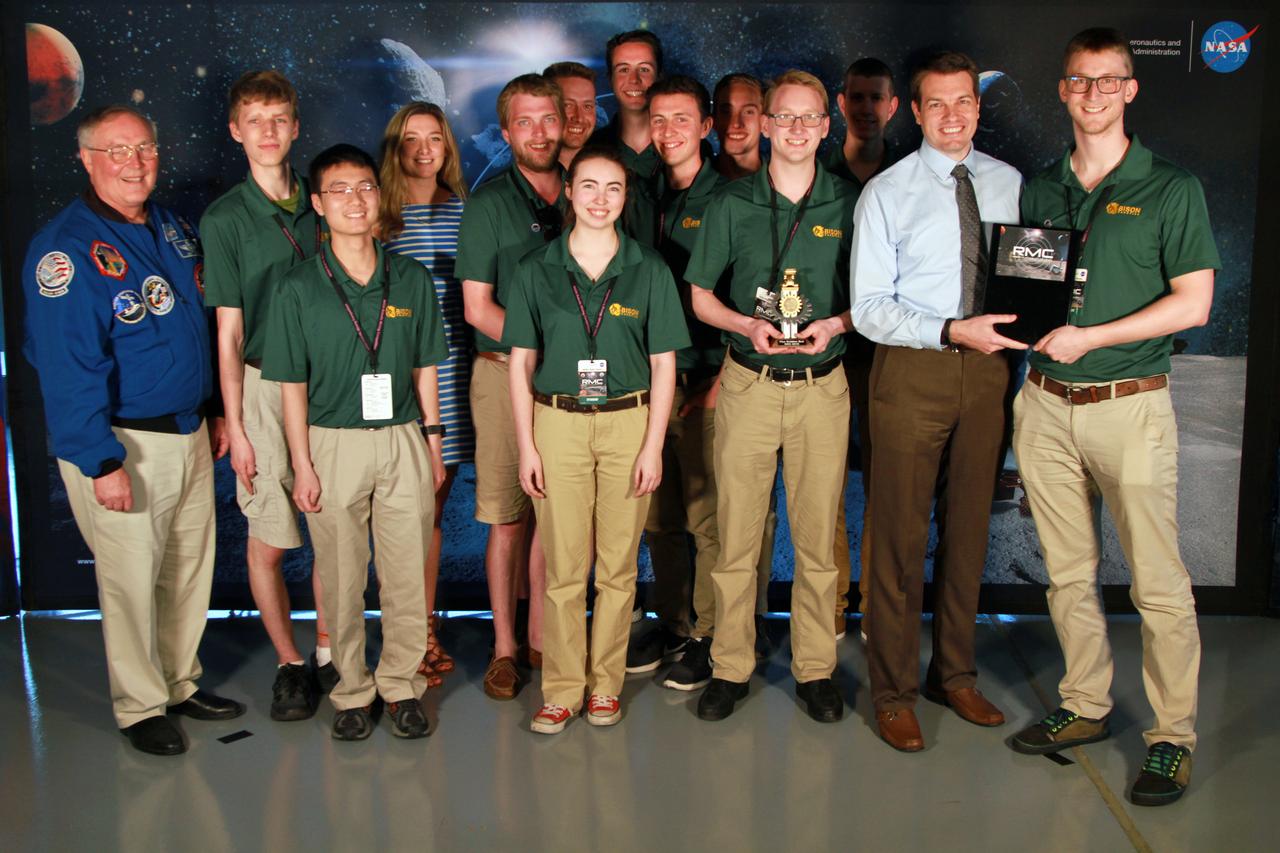
NASA's 9th Annual Robotic Mining Competition concludes with an awards ceremony May 18, 2018, at the Apollo/Saturn V Center at the Kennedy Space Center Visitor Complex in Florida. The team from North Dakota University in collaboration with James Madison University received first place in the Slide Presentation and Demonstration award category. At left is retired NASA astronaut Jerry Ross. At right is Daniel Hull, lead presentation judge. More than 40 student teams from colleges and universities around the U.S. participated in the competition, May 14-18, by using their mining robots to dig in a supersized sandbox filled with BP-1, or simulated lunar soil, gravel and rocks, and participate in other competition requirements. The Robotic Mining Competition is a NASA Human Exploration and Operations Mission Directorate project designed to encourage students in science, technology, engineering and math, or STEM fields. The project provides a competitive environment to foster innovative ideas and solutions that could be used on NASA's deep space missions.
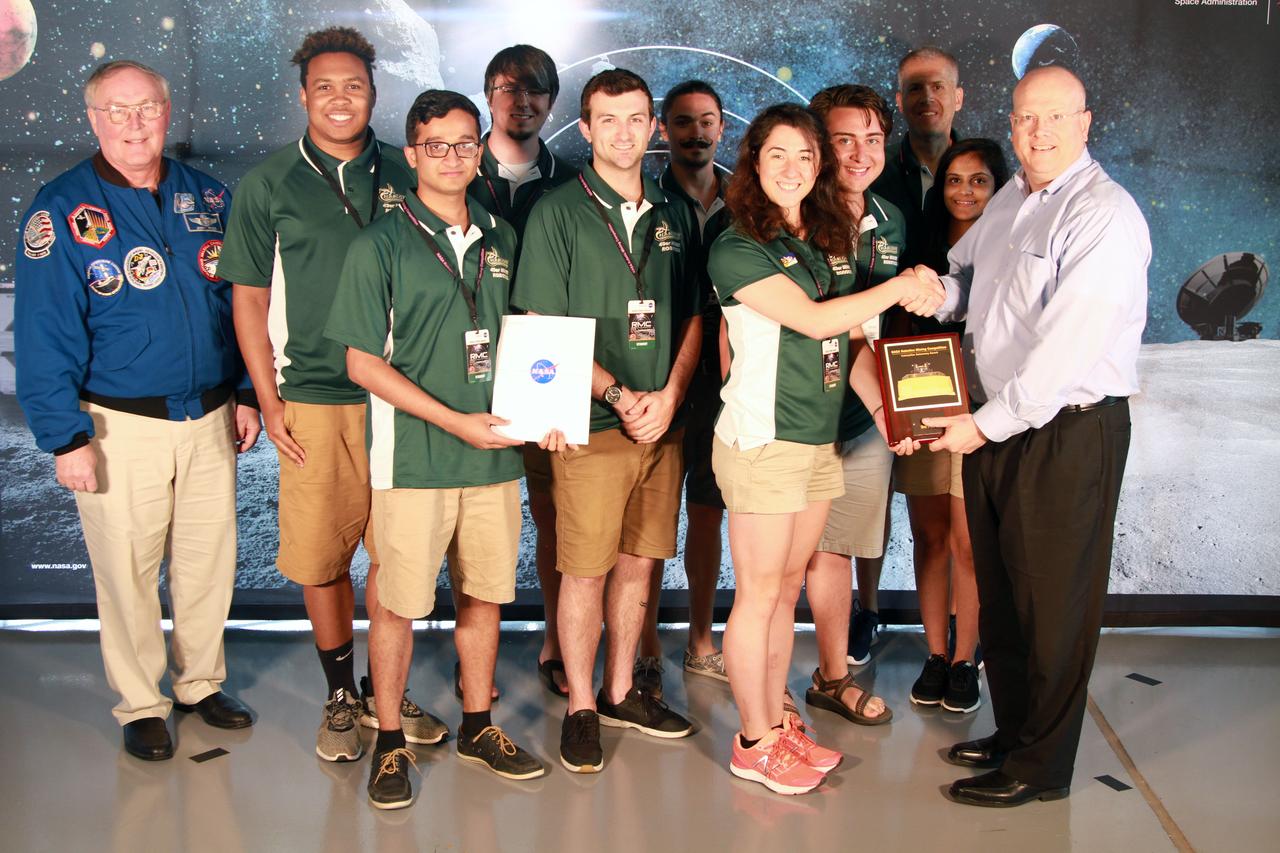
NASA's 9th Annual Robotic Mining Competition concludes with an awards ceremony May 18, 2018, at the Apollo/Saturn V Center at the Kennedy Space Center Visitor Complex in Florida. The team from the University of North Carolina at Charlotte received third place in the Caterpillar Award for Autonomy. At left is retired NASA astronaut Jerry Ross. At right is Eric Reiners, program manager with the Innovation & Technology Development Division of Caterpillar Inc. More than 40 student teams from colleges and universities around the U.S. participated in the competition, May 14-18, by using their mining robots to dig in a supersized sandbox filled with BP-1, or simulated lunar soil, gravel and rocks, and participate in other competition requirements. The Robotic Mining Competition is a NASA Human Exploration and Operations Mission Directorate project designed to encourage students in science, technology, engineering and math, or STEM fields. The project provides a competitive environment to foster innovative ideas and solutions that could be used on NASA's deep space missions.
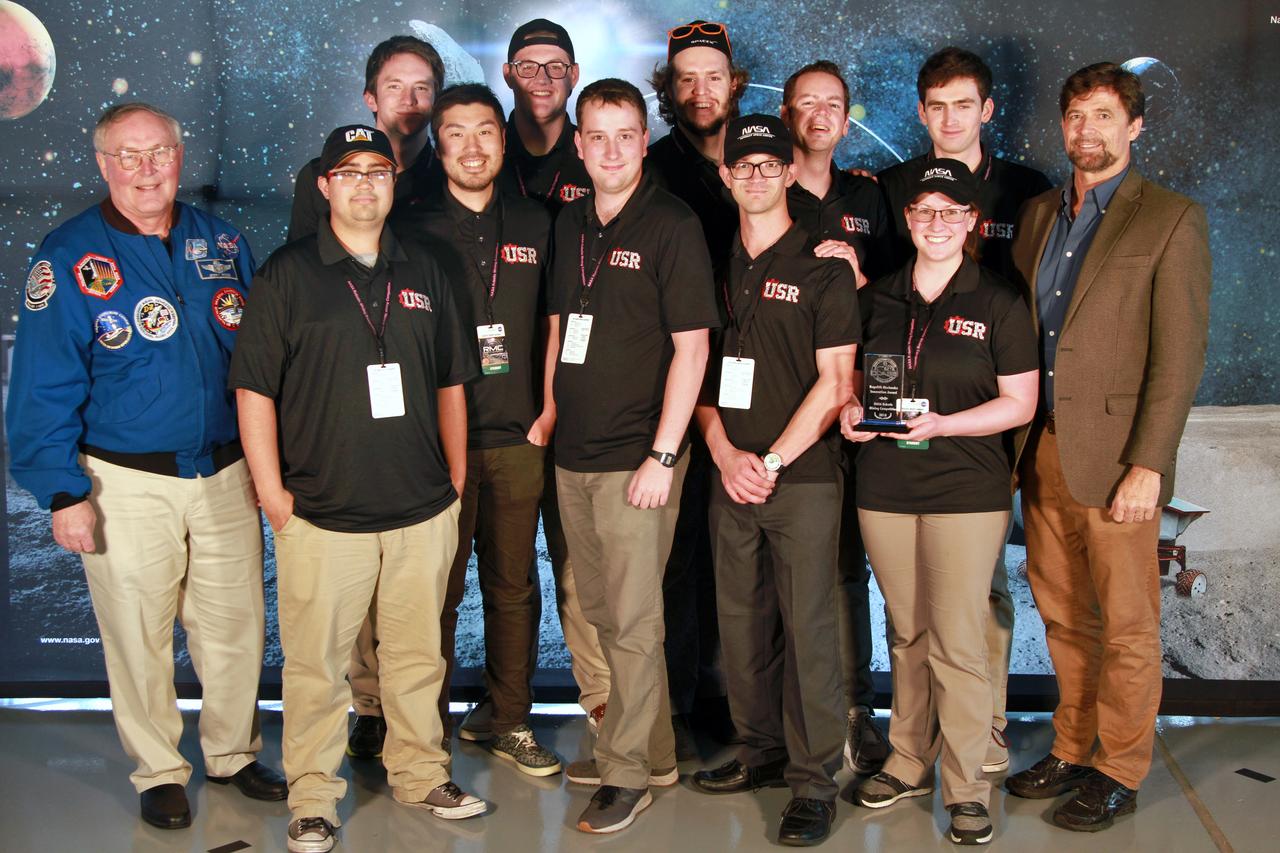
NASA's 9th Annual Robotic Mining Competition concludes with an awards ceremony May 18, 2018, at the Apollo/Saturn V Center at the Kennedy Space Center Visitor Complex in Florida. The Utah Student Robotics team from The University of Utah received The Regolith Mechanics Award for the best example of a real granular innovation that identified a specific regolith mechanics problem and intentionally improved their robot design to deal with it. At left is retired NASA astronaut Jerry Ross. At right is Phil Metzger, mining judge. More than 40 student teams from colleges and universities around the U.S. participated in the competition, May 14-18, by using their mining robots to dig in a supersized sandbox filled with BP-1, or simulated lunar soil, gravel and rocks, and participate in other competition requirements. The Robotic Mining Competition is a NASA Human Exploration and Operations Mission Directorate project designed to encourage students in science, technology, engineering and math, or STEM fields. The project provides a competitive environment to foster innovative ideas and solutions that could be used on NASA's deep space missions.
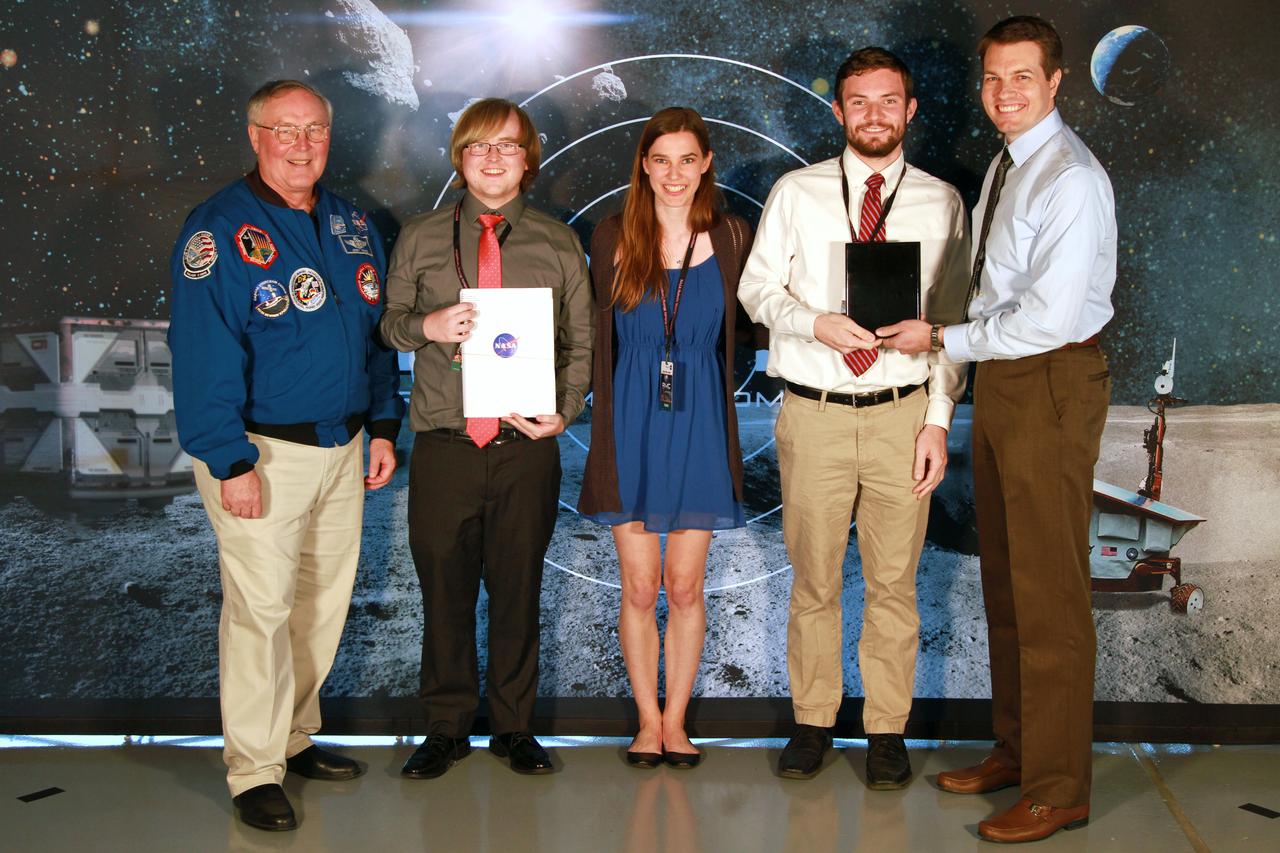
NASA's 9th Annual Robotic Mining Competition concludes with an awards ceremony May 18, 2018, at the Apollo/Saturn V Center at the Kennedy Space Center Visitor Complex in Florida. The University of Alabama Team Astrobotics received third place in the Slide Presentation and Demonstration award category. At left is retired NASA astronaut Jerry Ross. At right is Daniel Hull, lead presentation judge. More than 40 student teams from colleges and universities around the U.S. participated in the competition, May 14-18, by using their mining robots to dig in a supersized sandbox filled with BP-1, or simulated lunar soil, gravel and rocks, and participate in other competition requirements. The Robotic Mining Competition is a NASA Human Exploration and Operations Mission Directorate project designed to encourage students in science, technology, engineering and math, or STEM fields. The project provides a competitive environment to foster innovative ideas and solutions that could be used on NASA's deep space missions.
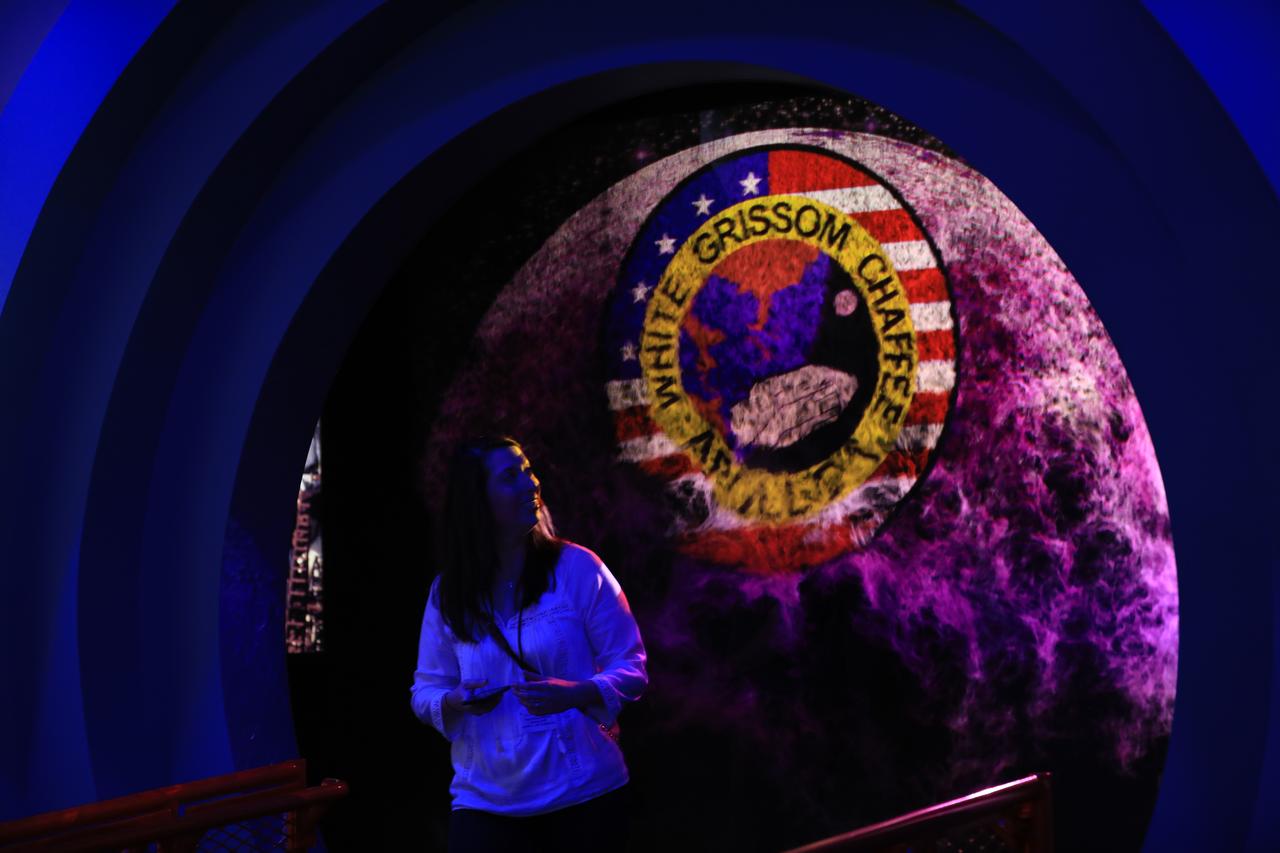
Guests observe the gateway of the newly opened Apollo 1 tribute at the Apollo/Saturn V Center at NASA's Kennedy Space Center opened Jan. 27, 2017. Astronauts Gus Grissom, Ed White II and Chaffee perished in a fire at the launch pad on Jan. 27, 1967, during training for the mission. The tribute highlights the lives and careers of the astronauts. The tribute features numerous items recalling the lives of the three astronauts. The tribute also includes the three-part hatch to the spacecraft itself, the first time any part of the Apollo 1 spacecraft has been displayed publicly. A version of the hatch after it was redesigned is also showcased as an example of improvements NASA made throughout the agency and to the Apollo spacecraft that would later carry astronauts to the moon.
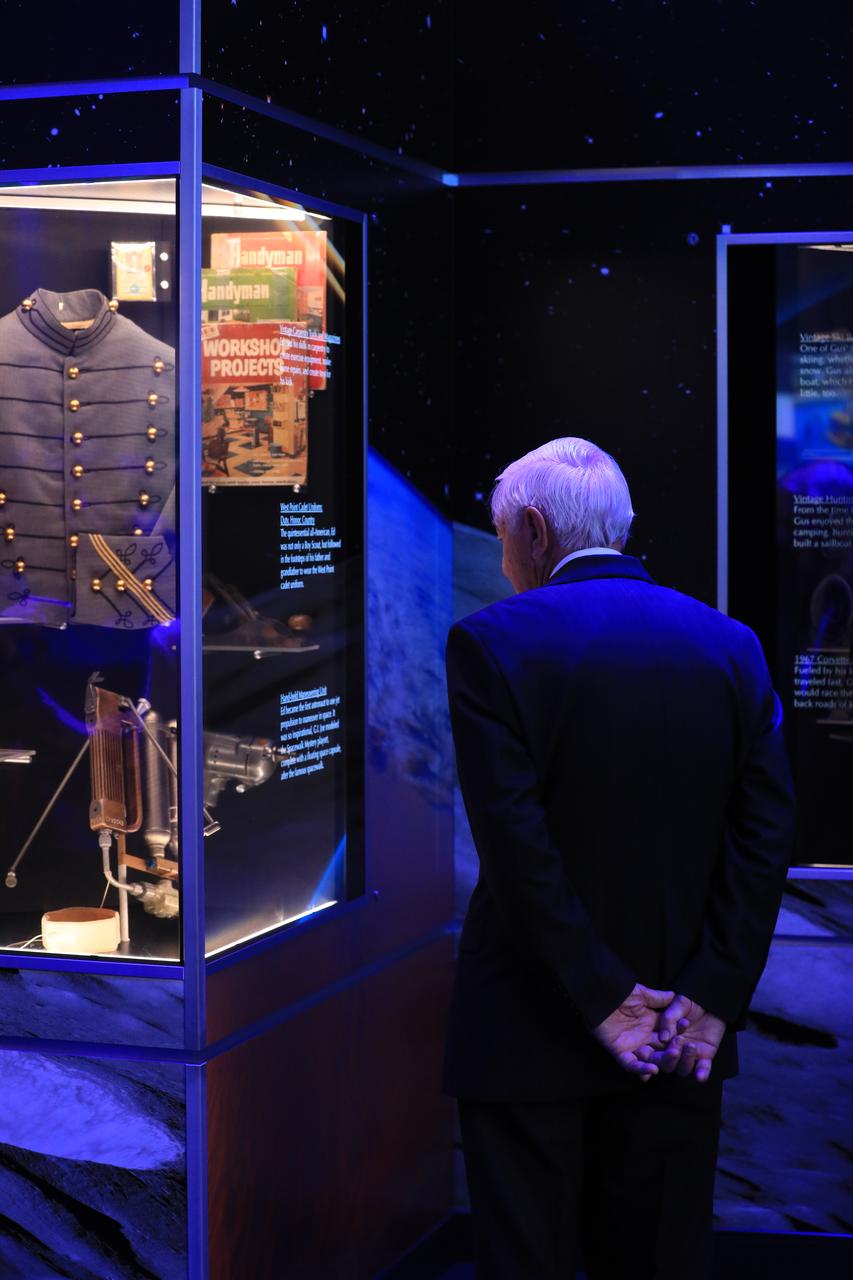
Lowell Grissom, brother of Gus Grissom, observes areas of the newly opened Apollo 1 tribute at the Apollo/Saturn V Center at NASA's Kennedy Space Center opened Jan. 27, 2017. Astronauts Gus Grissom, Ed White II and Chaffee perished in a fire at the launch pad on Jan. 27, 1967, during training for the mission. The tribute highlights the lives and careers of the astronauts. The tribute features numerous items recalling the lives of the three astronauts. The tribute also includes the three-part hatch to the spacecraft itself, the first time any part of the Apollo 1 spacecraft has been displayed publicly. A version of the hatch after it was redesigned is also showcased as an example of improvements NASA made throughout the agency and to the Apollo spacecraft that would later carry astronauts to the moon.
NASA's 9th Annual Robotic Mining Competition concludes with an awards ceremony May 18, 2018, at the Apollo/Saturn V Center at the Kennedy Space Center Visitor Complex in Florida. The team from Case Western Reserve University received third place in the Slide Presentation and Demonstration award category. At left is retired NASA astronaut Jerry Ross. At right is Daniel Hull, lead presentation judge. More than 40 student teams from colleges and universities around the U.S. participated in the competition, May 14-18, by using their mining robots to dig in a supersized sandbox filled with BP-1, or simulated lunar soil, gravel and rocks, and participate in other competition requirements. The Robotic Mining Competition is a NASA Human Exploration and Operations Mission Directorate project designed to encourage students in science, technology, engineering and math, or STEM fields. The project provides a competitive environment to foster innovative ideas and solutions that could be used on NASA's deep space missions.
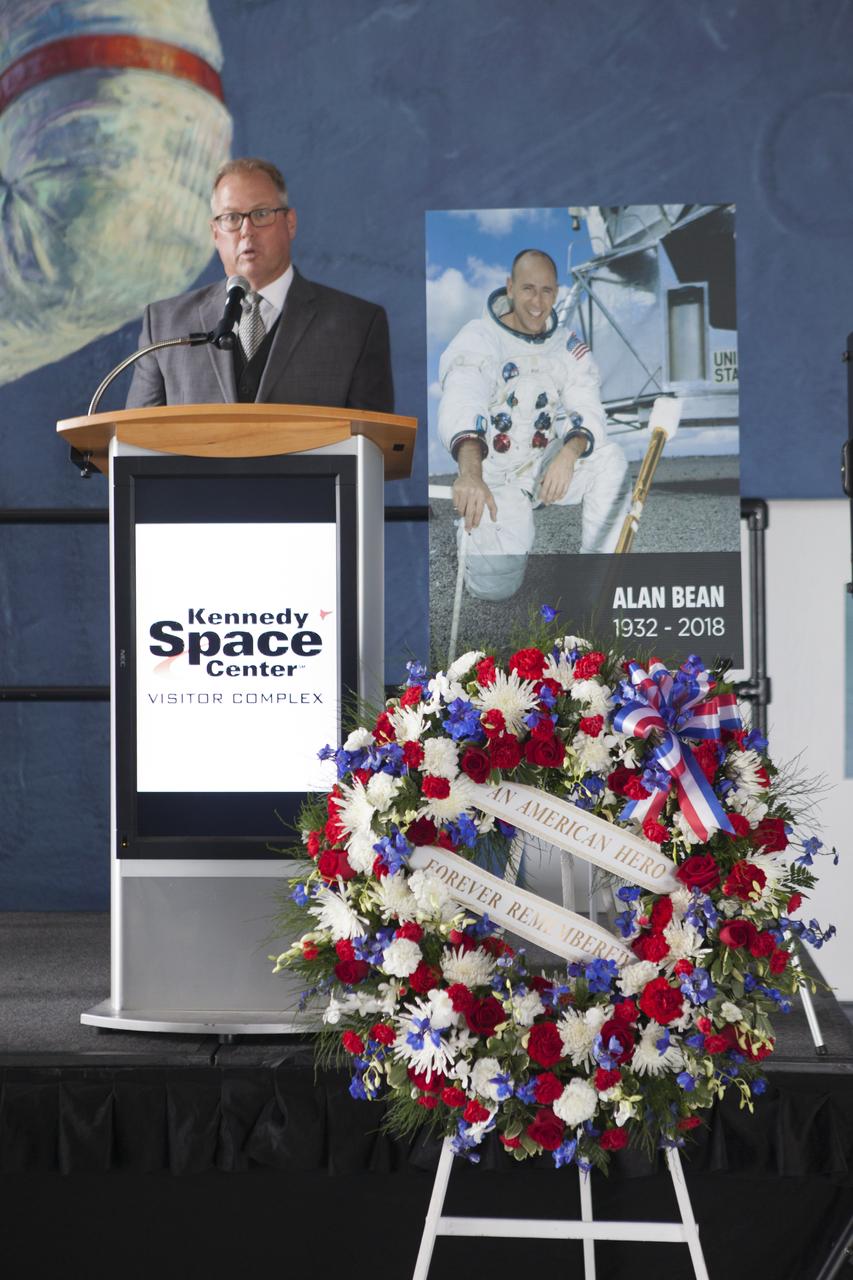
Therrin Protze, COO at the Kennedy Space Center Visitor Complex, speaks in the Apollo-Saturn V Center during a ceremony on Wednesday, May 30, 2018, honoring former NASA astronaut Alan Bean. As lunar module pilot on Apollo 12, Bean was the fourth person to walk on the Moon in November 1969. He went on to command the 59-day Skylab 3 mission in 1973. He died in Houston on May 26, 2018, at the age of 86.
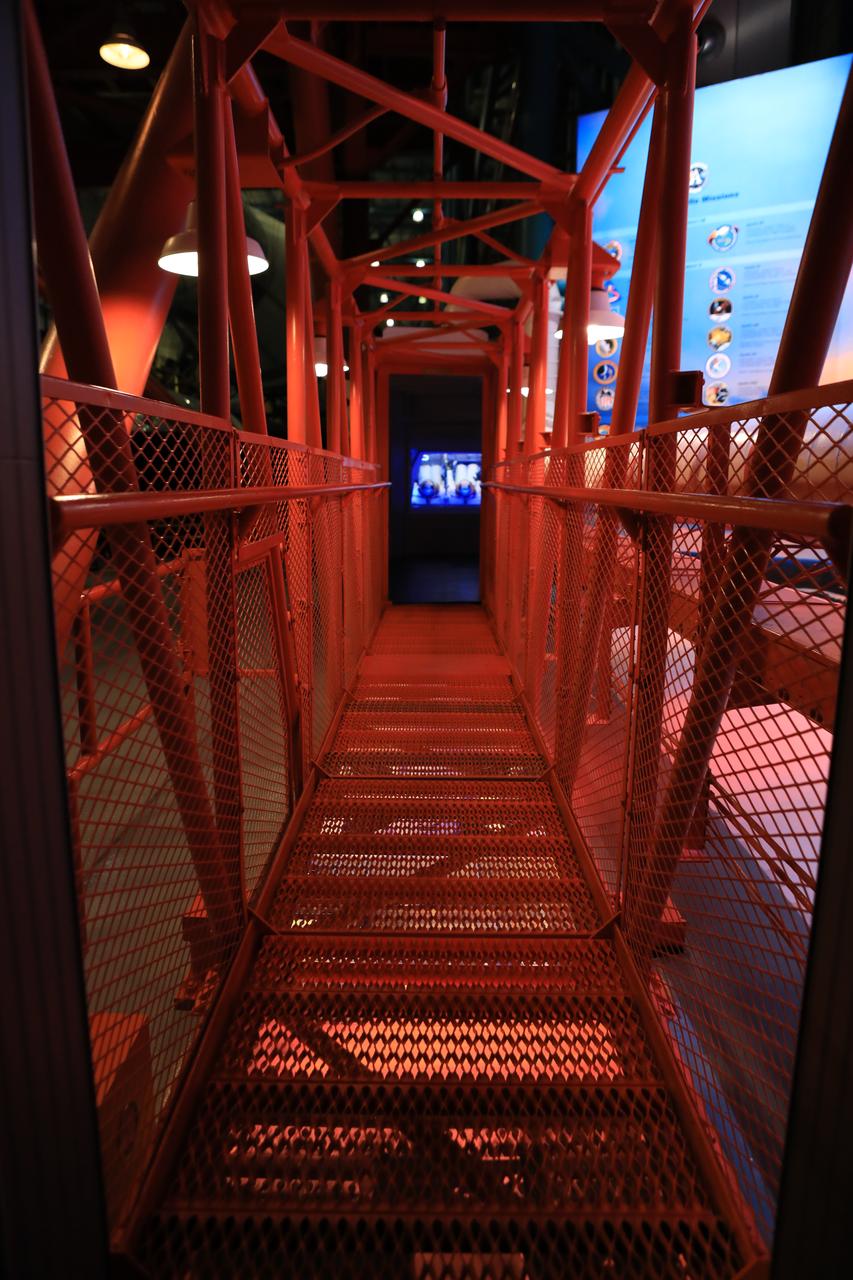
The crew access arm that astronauts walked across to reach the Apollo spacecraft for missions to the moon serves as the exit for the new tribute to the crew of Apollo 1 who perished in a fire at the launch pad on Jan. 27, 1967, during training for the mission. The tribute highlights the lives and careers of astronauts Gus Grissom, Ed White II and Roger Chaffee who were lost during the fire. The tribute at the Apollo/Saturn V Center at NASA's Kennedy Space Center opened Jan. 27, 2017, 50 years after the crew of three was lost. It features numerous items recalling the lives of the three astronauts. The tribute also includes the three-part hatch to the spacecraft itself, the first time any part of the Apollo 1 spacecraft has been displayed publicly. A version of the hatch after it was redesigned is also showcased as an example of improvements NASA made throughout the agency and to the Apollo spacecraft that would later carry astronauts to the moon.
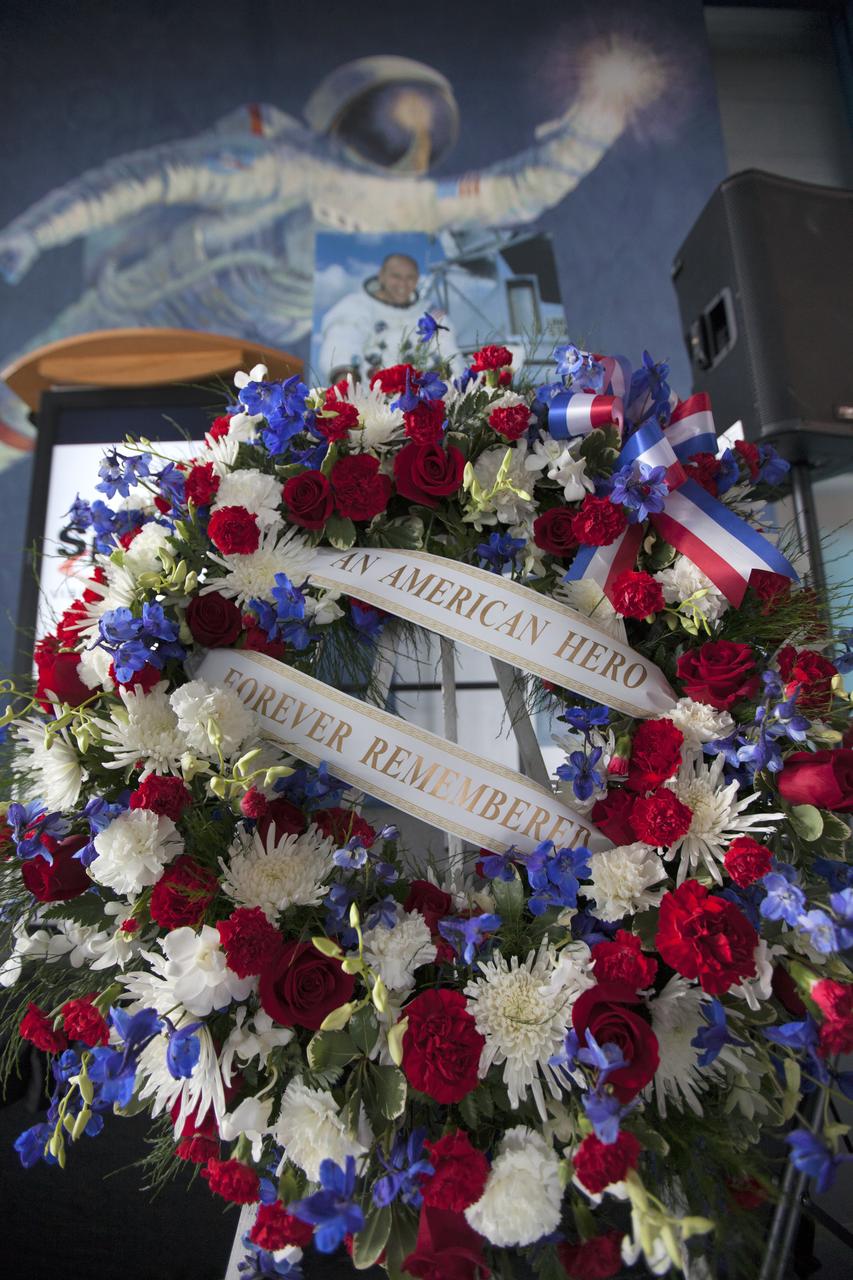
A memorial wreath placed in the Apollo-Saturn V Center of the Kennedy Space Center Visitor Complex on Wednesday, May 30, 2018, honors former NASA astronaut Alan Bean. He was the fourth person to walk on the Moon as lunar module pilot on Apollo 12 in November 1969. He went on to command the 59-day Skylab 3 mission in 1973. He died in Houston on May 26, 2018, at the age of 86.
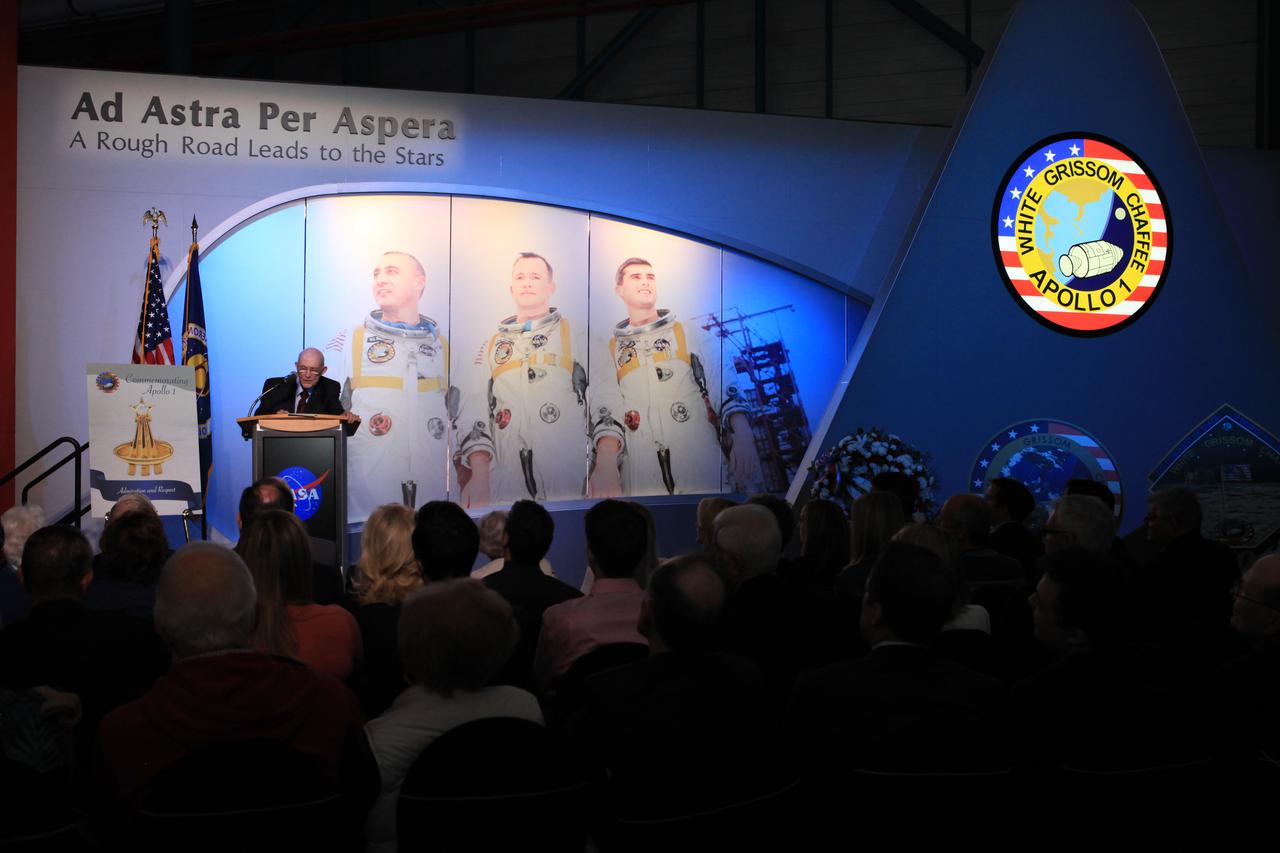
Former Gemini and Apollo astronaut Tom Stafford speaks during the opening of the tribute exhibition to the Apollo 1 astronauts who perished in a fire at the launch pad on Jan. 27, 1967, during training for the mission. The tribute highlights the lives and careers of astronauts Gus Grissom, Ed White II and Roger Chaffee who were lost during the fire. The tribute at the Apollo/Saturn V Center at NASA's Kennedy Space Center opened Jan. 27, 2017, 50 years after the crew of three was lost. It features numerous items recalling the lives of the three astronauts. The tribute also includes the three-part hatch to the spacecraft itself, the first time any part of the Apollo 1 spacecraft has been displayed publicly. A version of the hatch after it was redesigned is also showcased as an example of improvements NASA made throughout the agency and to the Apollo spacecraft that would later carry astronauts to the moon.
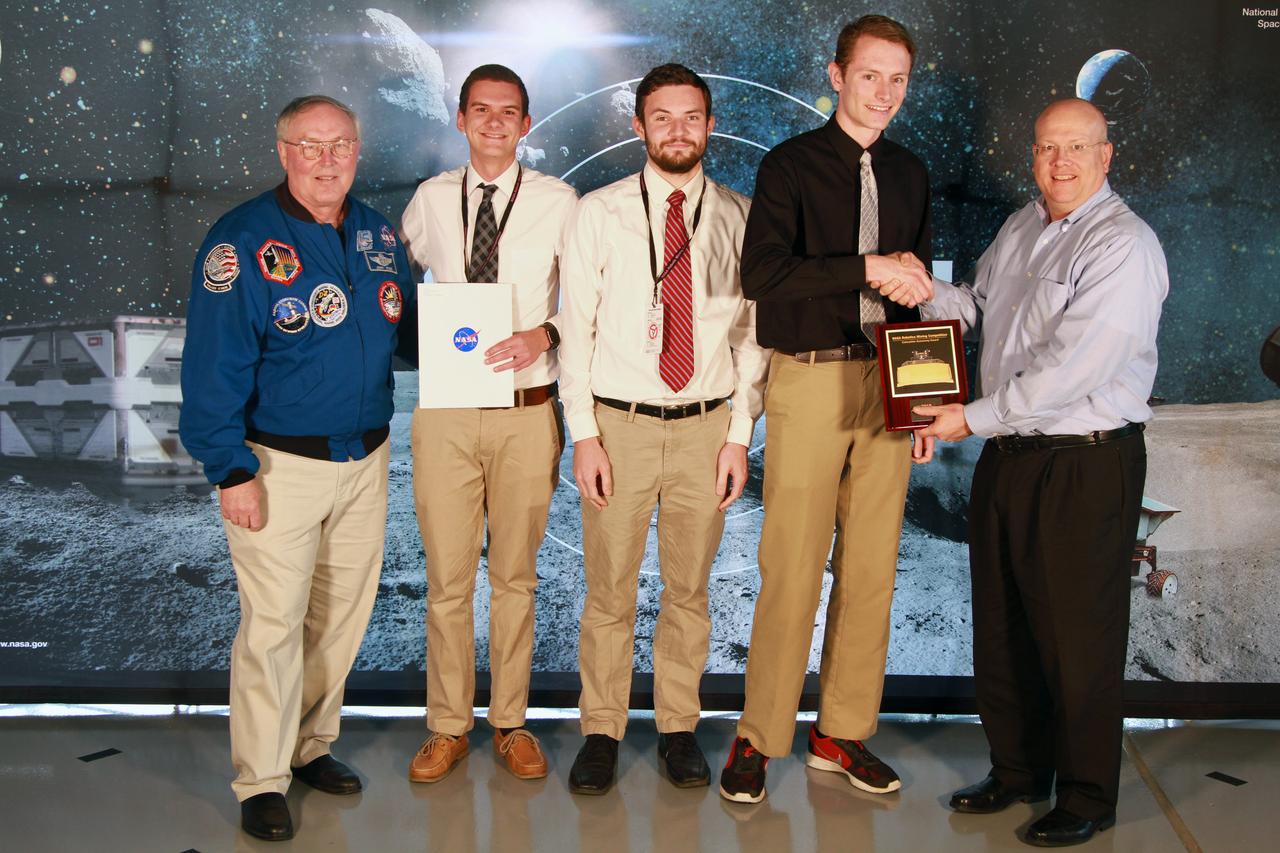
NASA's 9th Annual Robotic Mining Competition concludes with an awards ceremony May 18, 2018, at the Apollo/Saturn V Center at the Kennedy Space Center Visitor Complex in Florida. The University of Alabama Team Astrobotics received first place in the Caterpillar Award for Autonomy. At left is retired NASA astronaut Jerry Ross. At right is Eric Reiners, program manager with the Innovation & Technology Development Division of Caterpillar Inc. More than 40 student teams from colleges and universities around the U.S. participated in the competition, May 14-18, by using their mining robots to dig in a supersized sandbox filled with BP-1, or simulated lunar soil, gravel and rocks, and participate in other competition requirements. The Robotic Mining Competition is a NASA Human Exploration and Operations Mission Directorate project designed to encourage students in science, technology, engineering and math, or STEM fields. The project provides a competitive environment to foster innovative ideas and solutions that could be used on NASA's deep space missions.
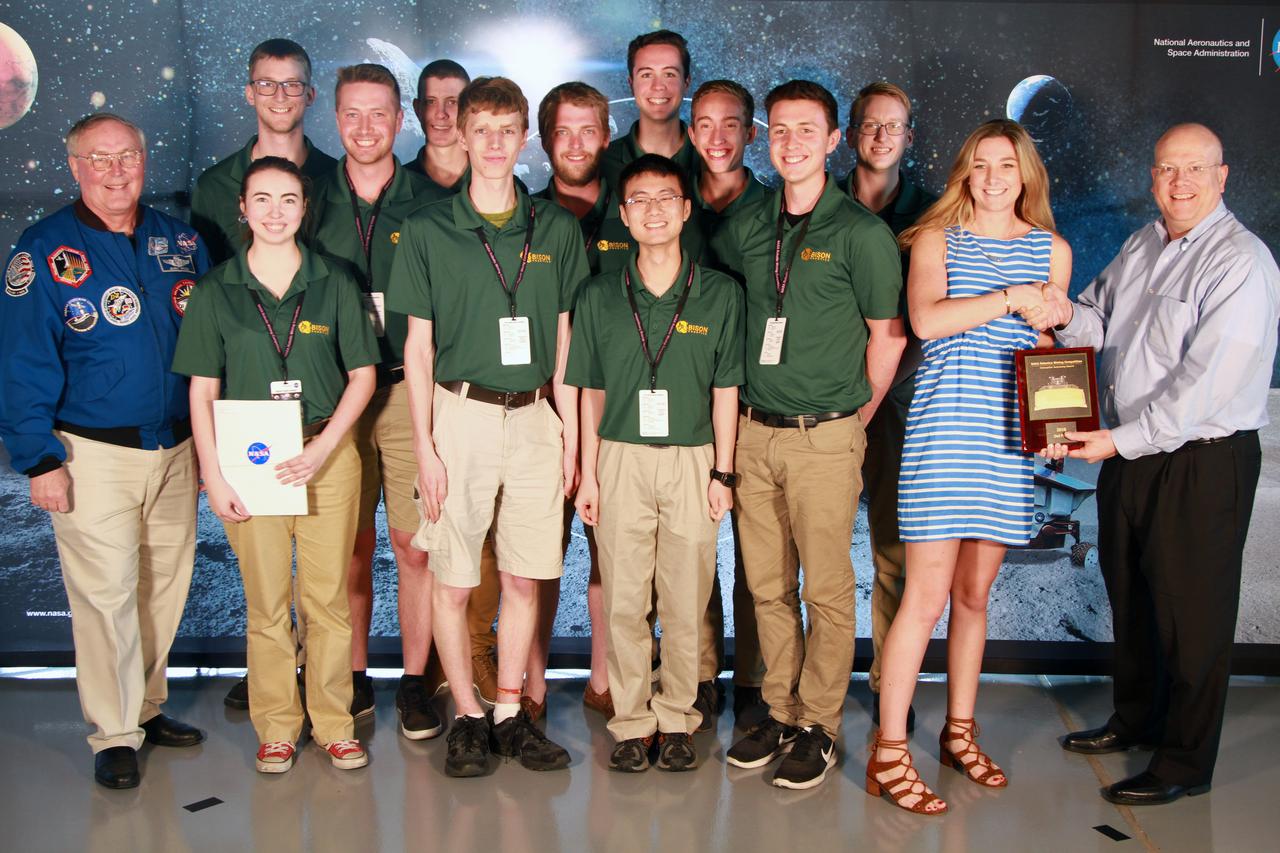
NASA's 9th Annual Robotic Mining Competition concludes with an awards ceremony May 18, 2018, at the Apollo/Saturn V Center at the Kennedy Space Center Visitor Complex in Florida. The team from North Dakota State University in collaboration with James Madison University received second place in the Caterpillar Award for Autonomy. At left is retired NASA astronaut Jerry Ross. At right is Eric Reiners, program manager with the Innovation & Technology Development Division of Caterpillar Inc. More than 40 student teams from colleges and universities around the U.S. participated in the competition, May 14-18, by using their mining robots to dig in a supersized sandbox filled with BP-1, or simulated lunar soil, gravel and rocks, and participate in other competition requirements. The Robotic Mining Competition is a NASA Human Exploration and Operations Mission Directorate project designed to encourage students in science, technology, engineering and math, or STEM fields. The project provides a competitive environment to foster innovative ideas and solutions that could be used on NASA's deep space missions.
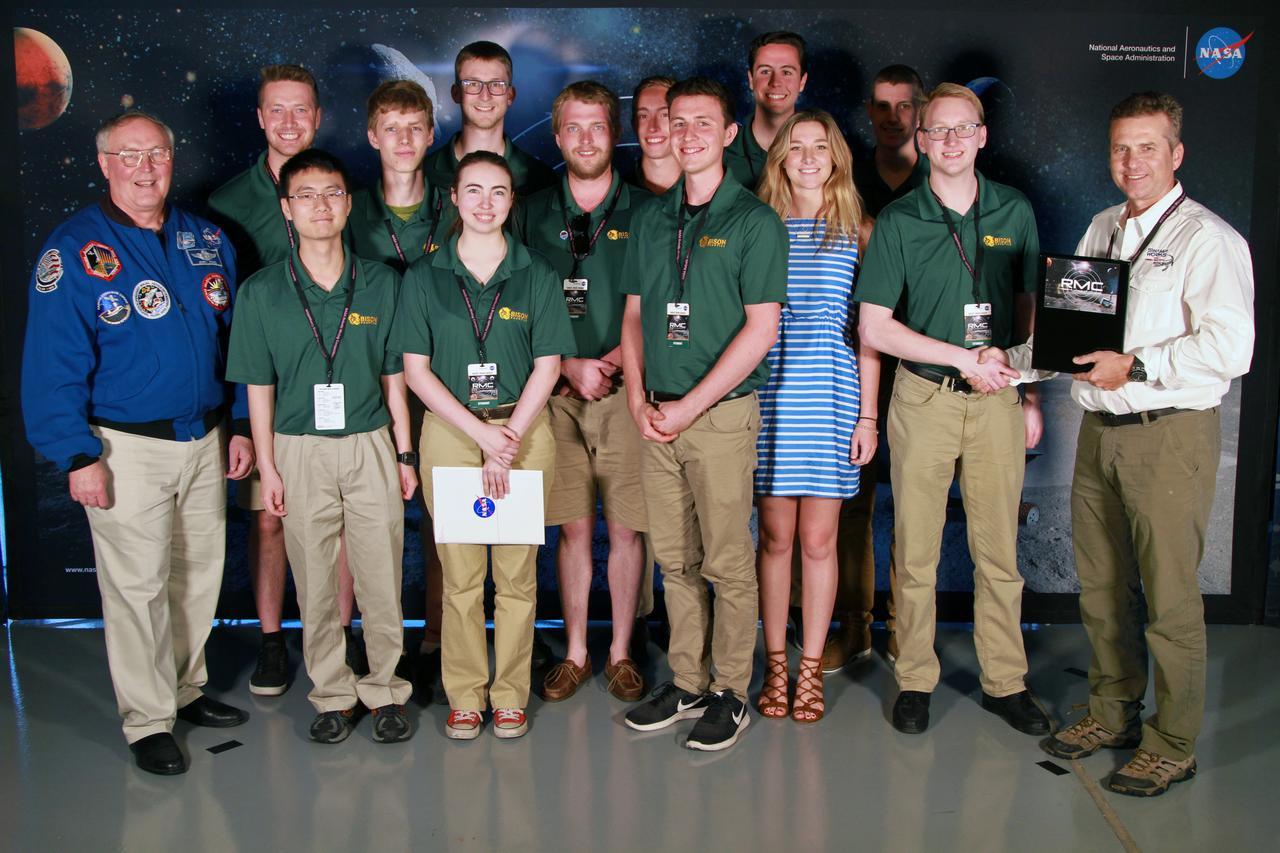
NASA's 9th Annual Robotic Mining Competition concludes with an awards ceremony May 18, 2018, at the Apollo/Saturn V Center at the Kennedy Space Center Visitor Complex in Florida. The team from North Dakota University in collaboration with James Madison University received second place in the On-Site Mining Award. At left is retired NASA astronaut Jerry Ross. At right is Rob Mueller, lead mining judge. More than 40 student teams from colleges and universities around the U.S. participated in the competition, May 14-18, by using their mining robots to dig in a supersized sandbox filled with BP-1, or simulated lunar soil, gravel and rocks, and participate in other competition requirements. The Robotic Mining Competition is a NASA Human Exploration and Operations Mission Directorate project designed to encourage students in science, technology, engineering and math, or STEM fields. The project provides a competitive environment to foster innovative ideas and solutions that could be used on NASA's deep space missions.
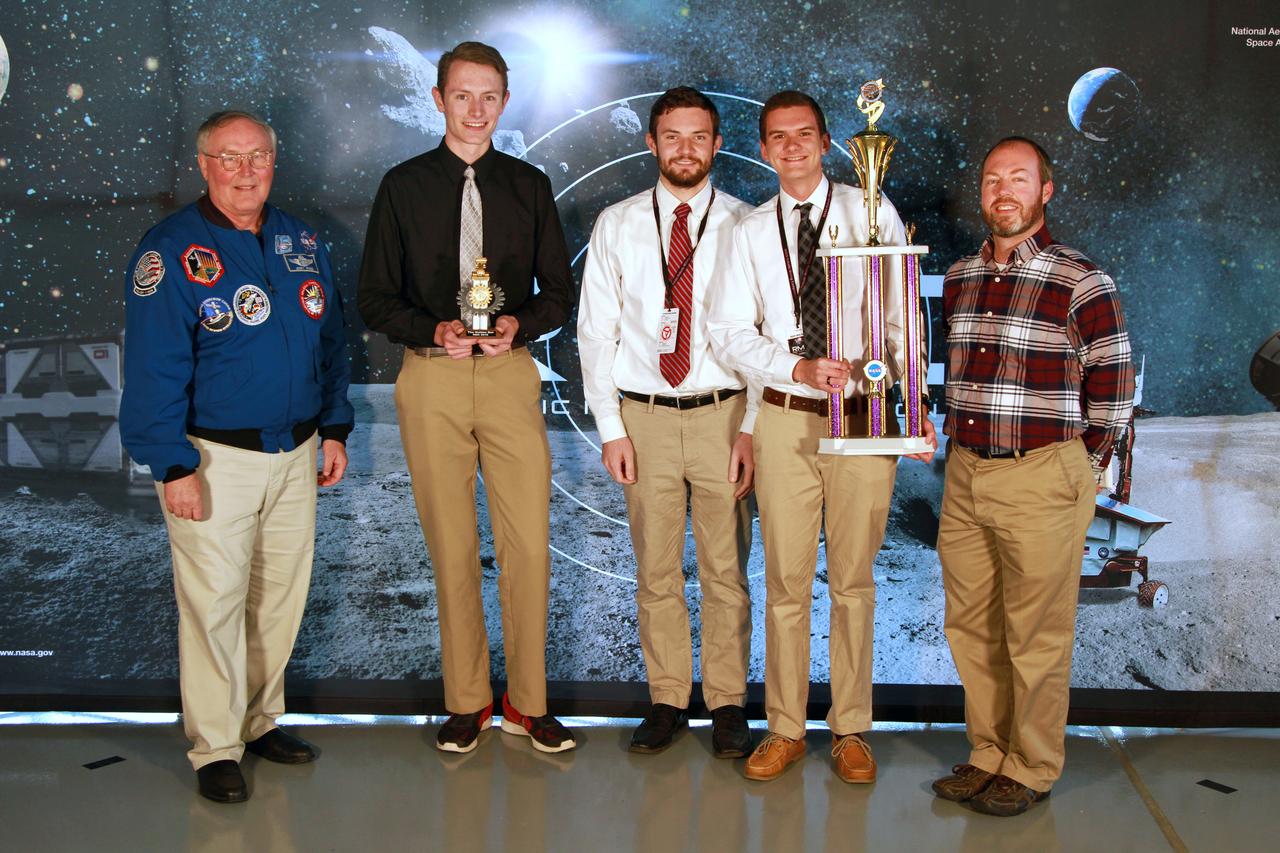
NASA's 9th Annual Robotic Mining Competition concludes with an awards ceremony May 18, 2018, at the Apollo/Saturn V Center at the Kennedy Space Center Visitor Complex in Florida. The University of Alabama Team Astrobotics received the Efficient Use of Communications Power Award. At left is retired NASA astronaut Jerry Ross. At right is Kurt Leucht, a NASA engineer in Swamp Works and event emcee. More than 40 student teams from colleges and universities around the U.S. participated in the competition, May 14-18, by using their mining robots to dig in a supersized sandbox filled with BP-1, or simulated lunar soil, gravel and rocks, and participate in other competition requirements. The Robotic Mining Competition is a NASA Human Exploration and Operations Mission Directorate project designed to encourage students in science, technology, engineering and math, or STEM fields. The project provides a competitive environment to foster innovative ideas and solutions that could be used on NASA's deep space missions.
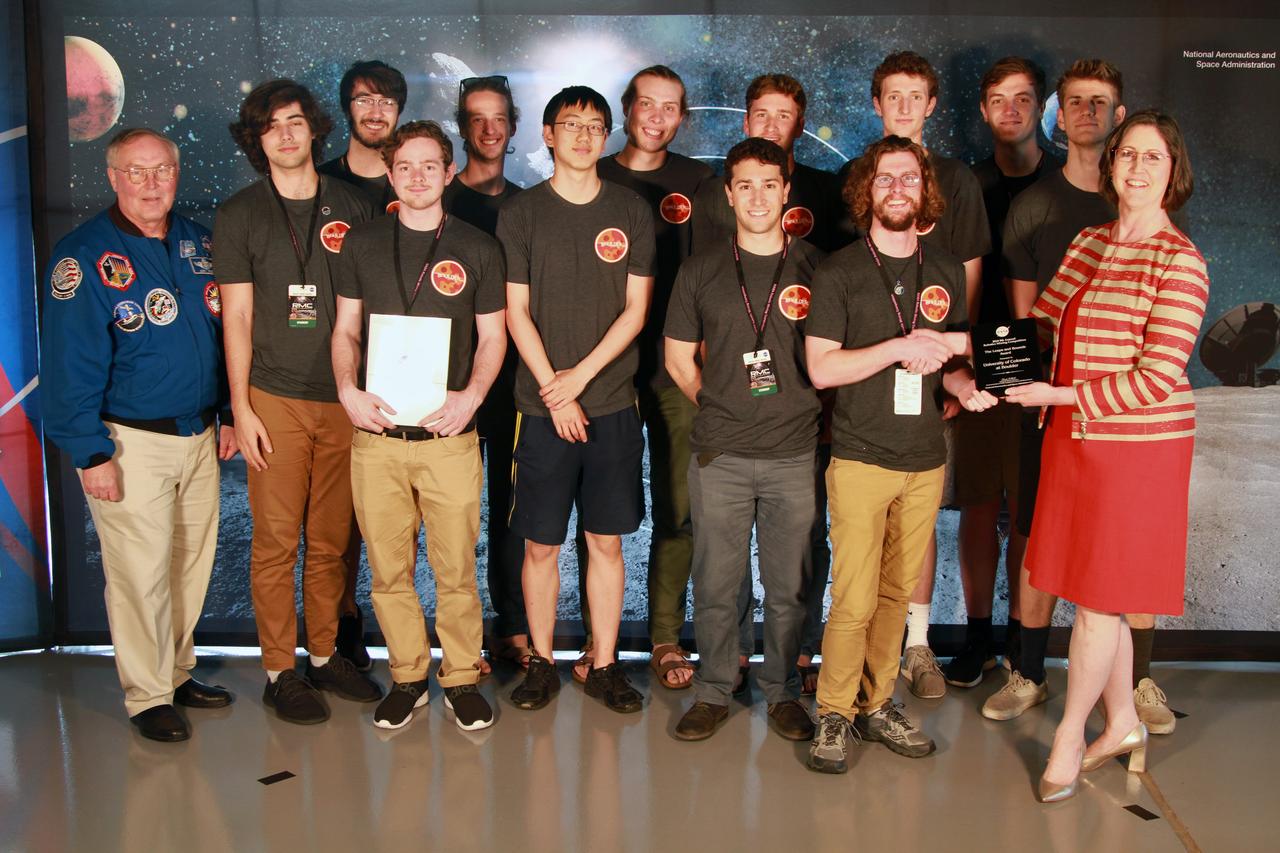
NASA's 9th Annual Robotic Mining Competition concludes with an awards ceremony May 18, 2018, at the Apollo/Saturn V Center at the Kennedy Space Center Visitor Complex in Florida. The team from the University of Colorado Boulder received the Leaps and Bounds Award for the most improvement in their Systems Engineering Paper. At left is retired NASA astronaut Jerry Ross. At right is Jonette Stecklein, lead systems engineering paper judge. More than 40 student teams from colleges and universities around the U.S. participated in the competition, May 14-18, by using their mining robots to dig in a supersized sandbox filled with BP-1, or simulated lunar soil, gravel and rocks, and participate in other competition requirements. The Robotic Mining Competition is a NASA Human Exploration and Operations Mission Directorate project designed to encourage students in science, technology, engineering and math, or STEM fields. The project provides a competitive environment to foster innovative ideas and solutions that could be used on NASA's deep space missions.
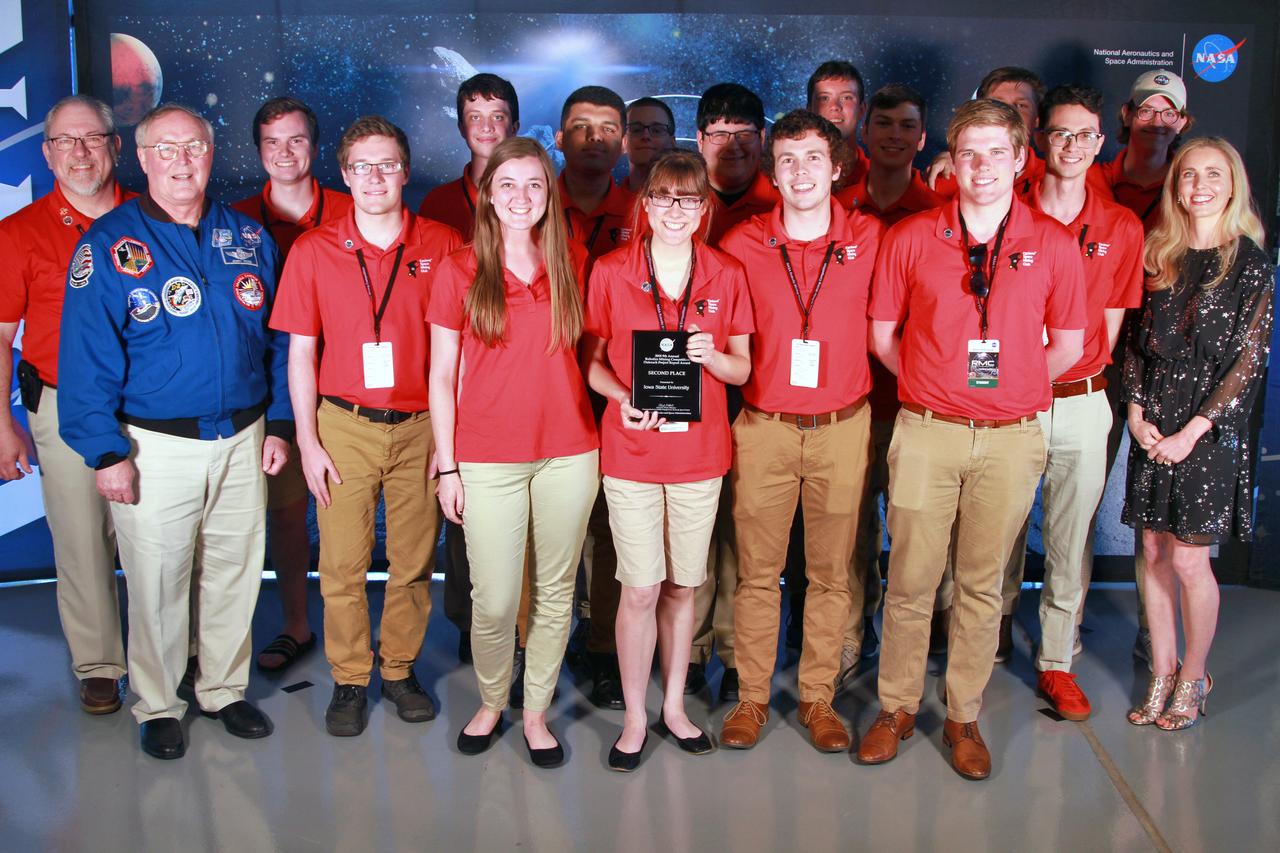
NASA's 9th Annual Robotic Mining Competition concludes with an awards ceremony May 18, 2018, at the Apollo/Saturn V Center at the Kennedy Space Center Visitor Complex in Florida. The team from Iowa State University received second place in the Outreach Project category. At left is retired NASA astronaut Jerry Ross. At right is Bethanne Hull, NASA Education specialist and lead Outreach Project judge. More than 40 student teams from colleges and universities around the U.S. participated in the competition, May 14-18, by using their mining robots to dig in a supersized sandbox filled with BP-1, or simulated lunar soil, gravel and rocks, and participate in other competition requirements. The Robotic Mining Competition is a NASA Human Exploration and Operations Mission Directorate project designed to encourage students in science, technology, engineering and math, or STEM fields. The project provides a competitive environment to foster innovative ideas and solutions that could be used on NASA's deep space missions.

A display case dedicated to astronaut Gus Grissom is shown inside the new tribute to the crew of Apollo 1 who perished in a fire at the launch pad on Jan. 27, 1967, during training for the mission. Grissom, Ed White II and Roger Chaffee were lost during the fire. The tribute at the Apollo/Saturn V Center at NASA's Kennedy Space Center opened Jan. 27, 2017, 50 years after the crew of three was lost. It features numerous items recalling the lives of the three astronauts. It also includes the three-part hatch to the spacecraft itself, the first time any part of the Apollo 1 spacecraft has been displayed publicly. A version of the hatch after it was redesigned is also showcased as an example of improvements NASA made throughout the agency and to the Apollo spacecraft that would later carry astronauts to the moon.
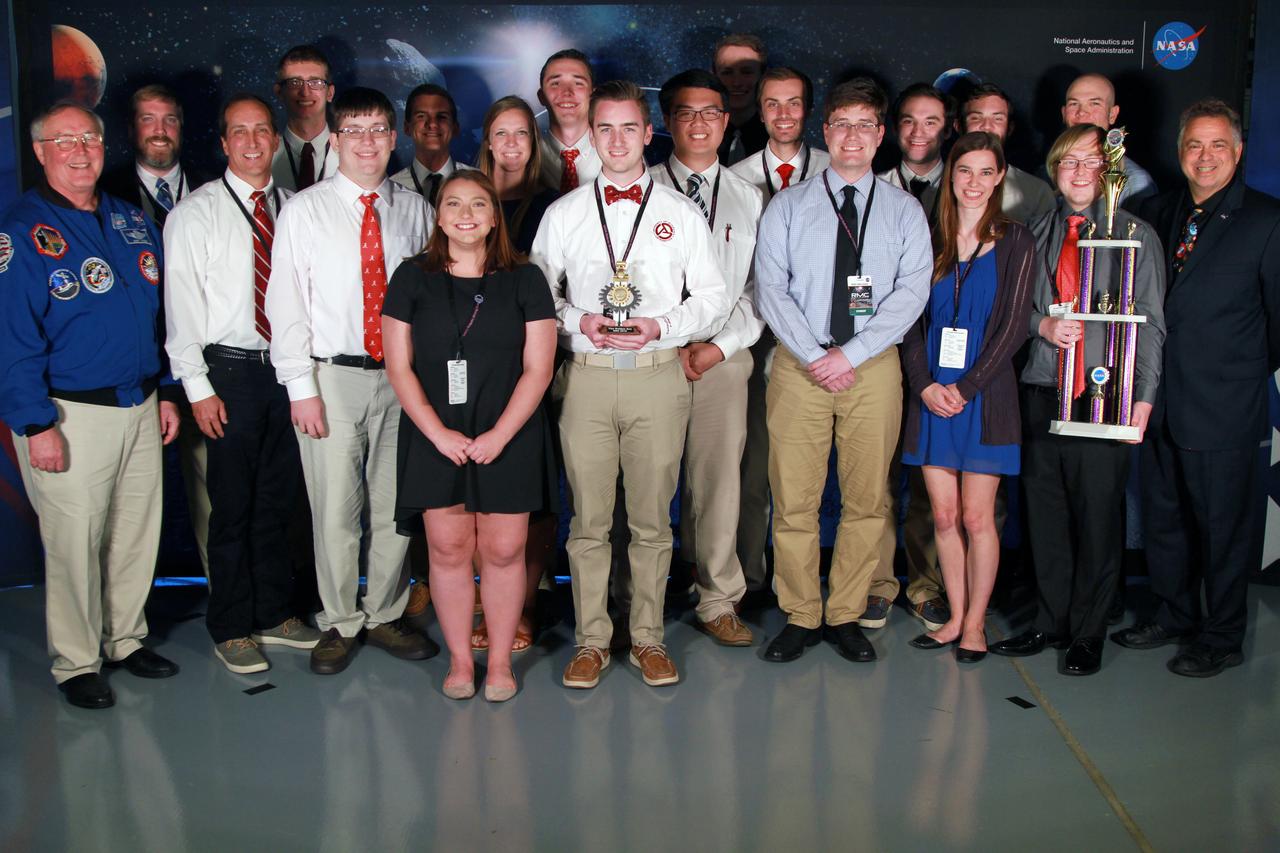
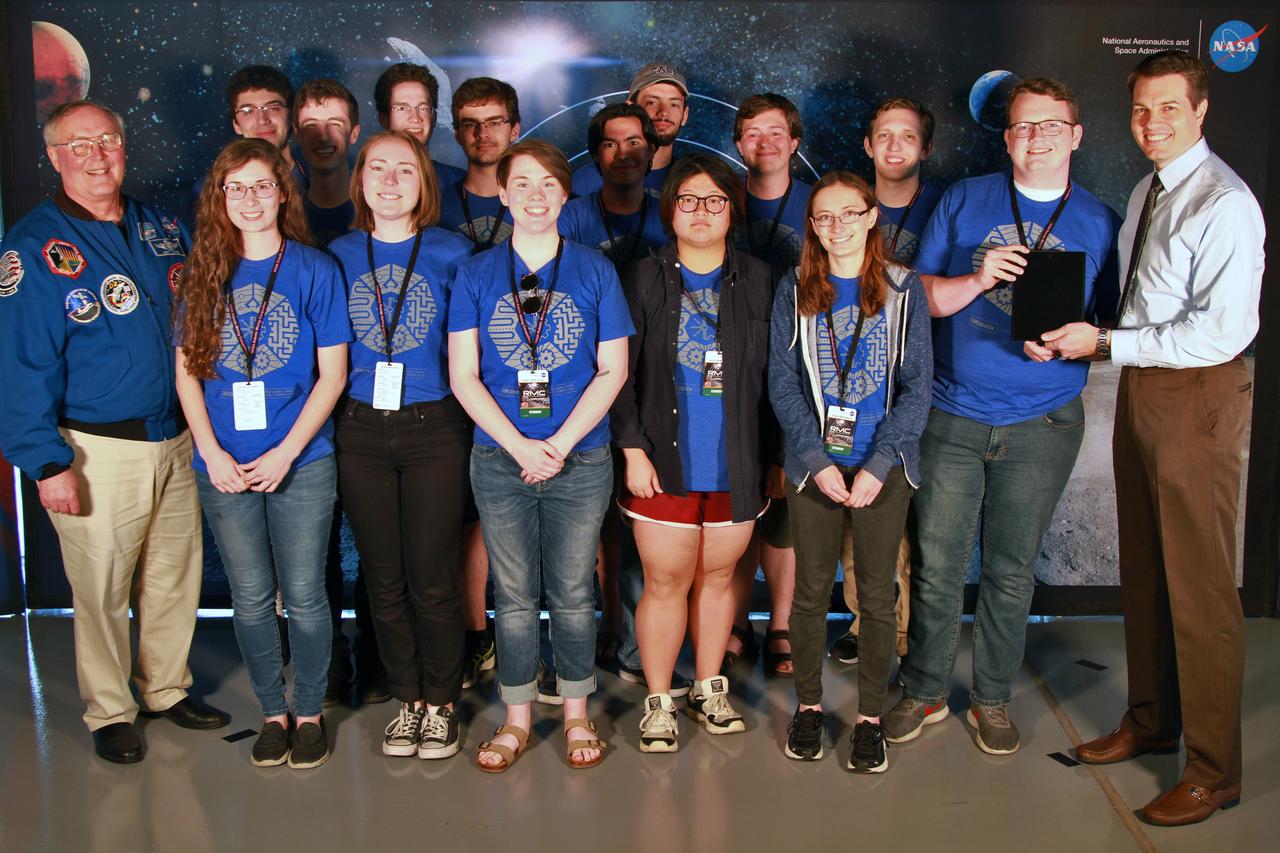
NASA's 9th Annual Robotic Mining Competition concludes with an awards ceremony May 18, 2018, at the Apollo/Saturn V Center at the Kennedy Space Center Visitor Complex in Florida. The University of Alabama Team Astrobotics received the top award, the Joe Kosmo Award for Excellence, which is given to the team that scores the most points during the competition. At far left in front is retired NASA astronaut Jerry Ross. At far right is Richard Johanboeke, NASA education specialist and project manager for the Robotic Mining Competition. More than 40 student teams from colleges and universities around the U.S. participated in the competition, May 14-18, by using their mining robots to dig in a supersized sandbox filled with BP-1, or simulated lunar soil, gravel and rocks, and participate in other competition requirements. The Robotic Mining Competition is a NASA Human Exploration and Operations Mission Directorate project designed to encourage students in science, technology, engineering and math, or STEM fields. The project provides a competitive environment to foster innovative ideas and solutions that could be used on NASA's deep space missions.
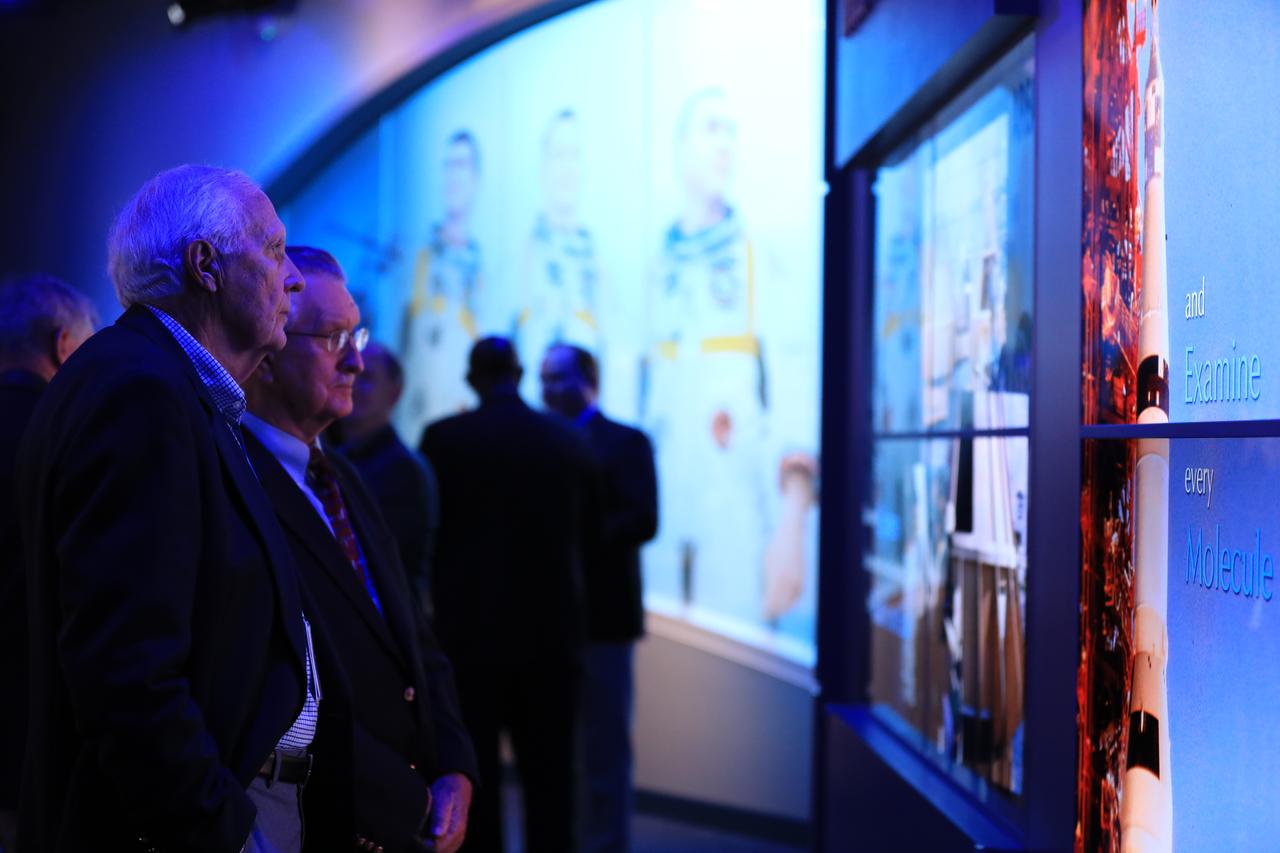
Guests observe areas of the newly opened Apollo 1 tribute at the Apollo/Saturn V Center at NASA's Kennedy Space Center opened Jan. 27, 2017. Astronauts Gus Grissom, Ed White II and Chaffee perished in a fire at the launch pad on Jan. 27, 1967, during training for the mission. The tribute highlights the lives and careers of the astronauts. The tribute features numerous items recalling the lives of the three astronauts. The tribute also includes the three-part hatch to the spacecraft itself, the first time any part of the Apollo 1 spacecraft has been displayed publicly. A version of the hatch after it was redesigned is also showcased as an example of improvements NASA made throughout the agency and to the Apollo spacecraft that would later carry astronauts to the moon.
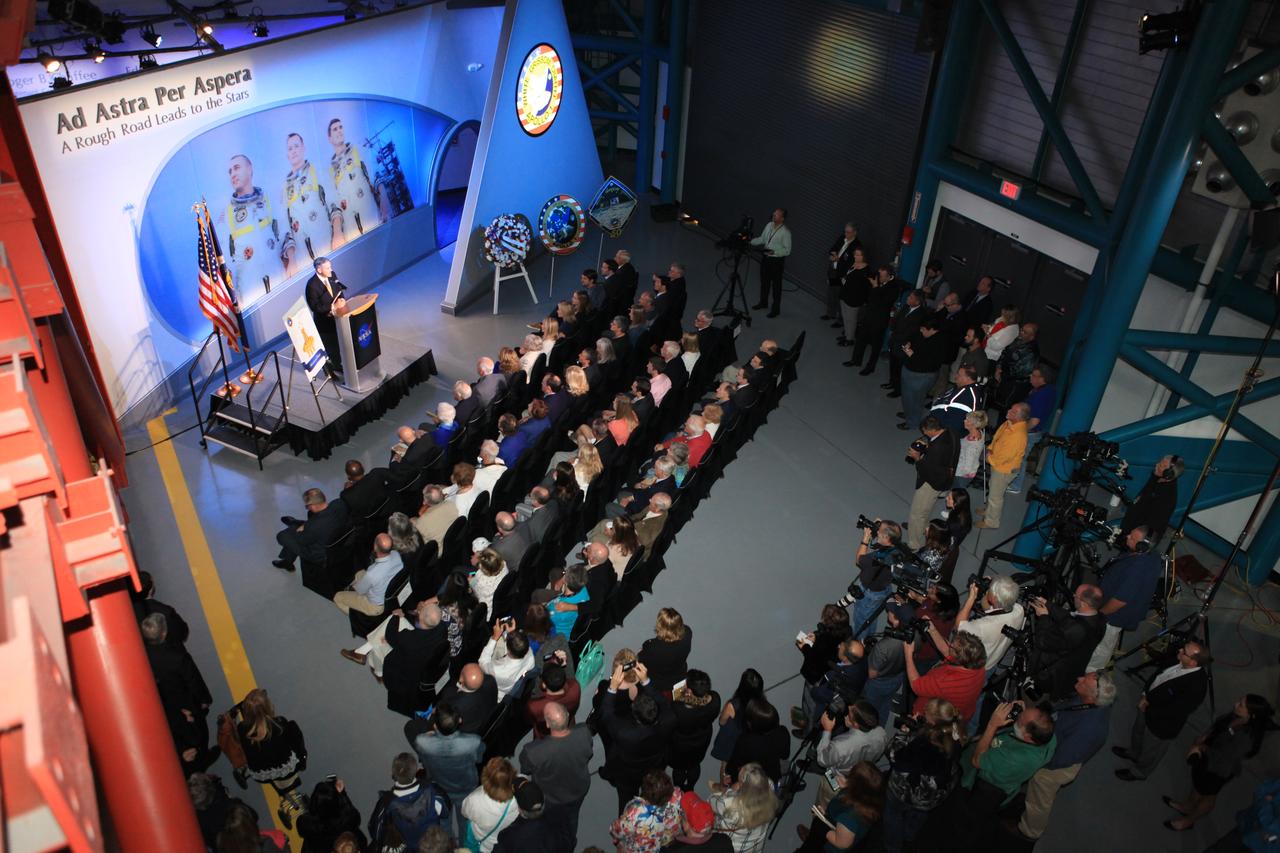
Former astronaut Bob Cabana, director of NASA's Kennedy Space Center in Florida, speaks during the opening of the tribute exhibition to the Apollo 1 astronauts who perished in a fire at the launch pad on Jan. 27, 1967, during training for the mission. The tribute highlights the lives and careers of astronauts Gus Grissom, Ed White II and Roger Chaffee who were lost during the fire. The tribute at the Apollo/Saturn V Center at NASA's Kennedy Space Center opened Jan. 27, 2017, 50 years after the crew of three was lost. It features numerous items recalling the lives of the three astronauts. The tribute also includes the three-part hatch to the spacecraft itself, the first time any part of the Apollo 1 spacecraft has been displayed publicly. A version of the hatch after it was redesigned is also showcased as an example of improvements NASA made throughout the agency and to the Apollo spacecraft that would later carry astronauts to the moon.
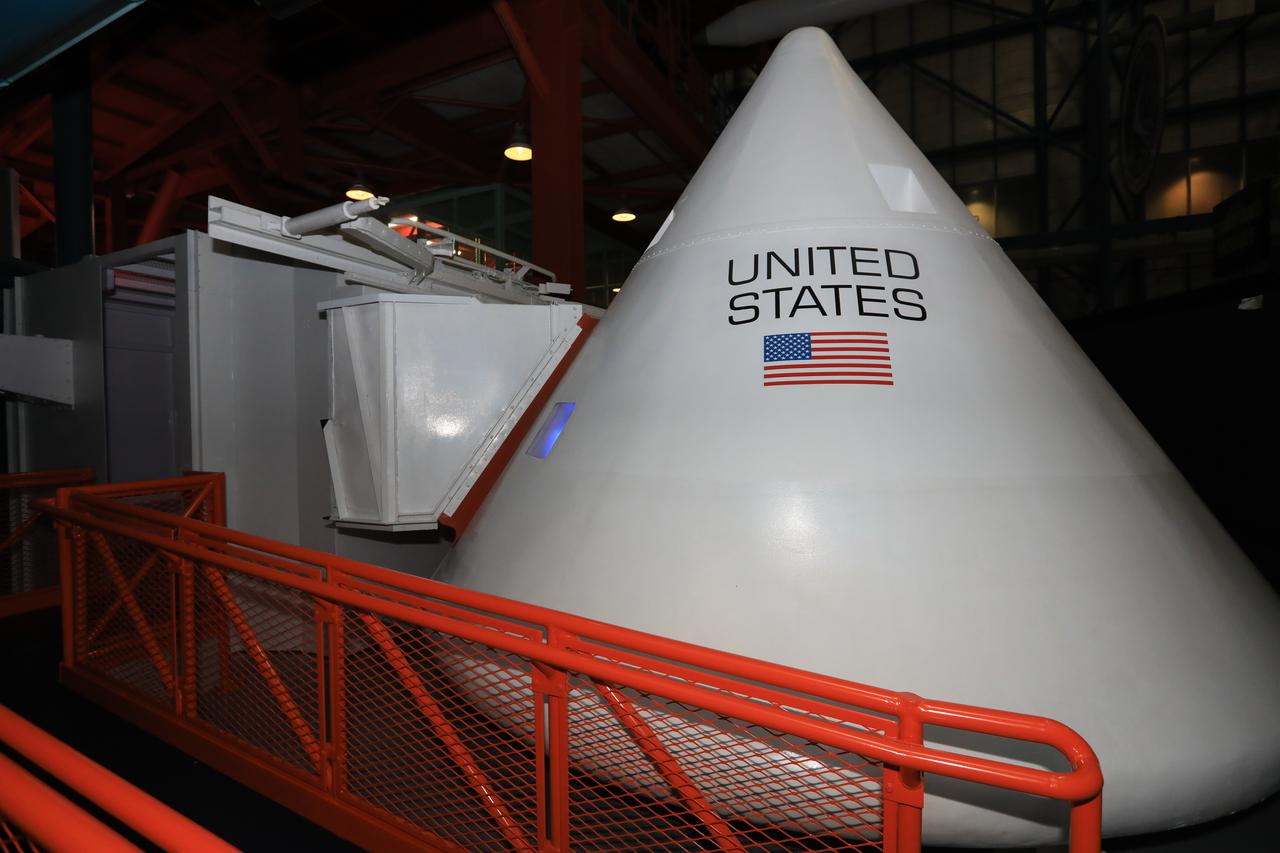
An Apollo spacecraft mockup marks the capstone of the new tribute to the crew of Apollo 1 who perished in a fire at the launch pad on Jan. 27, 1967, during training for the mission. The tribute highlights the lives and careers of astronauts Gus Grissom, Ed White II and Roger Chaffee who were lost during the fire. The tribute at the Apollo/Saturn V Center at NASA's Kennedy Space Center opened Jan. 27, 2017, 50 years after the crew of three was lost. It features numerous items recalling the lives of the three astronauts. The tribute also includes the three-part hatch to the spacecraft itself, the first time any part of the Apollo 1 spacecraft has been displayed publicly. A version of the hatch after it was redesigned is also showcased as an example of improvements NASA made throughout the agency and to the Apollo spacecraft that would later carry astronauts to the moon.
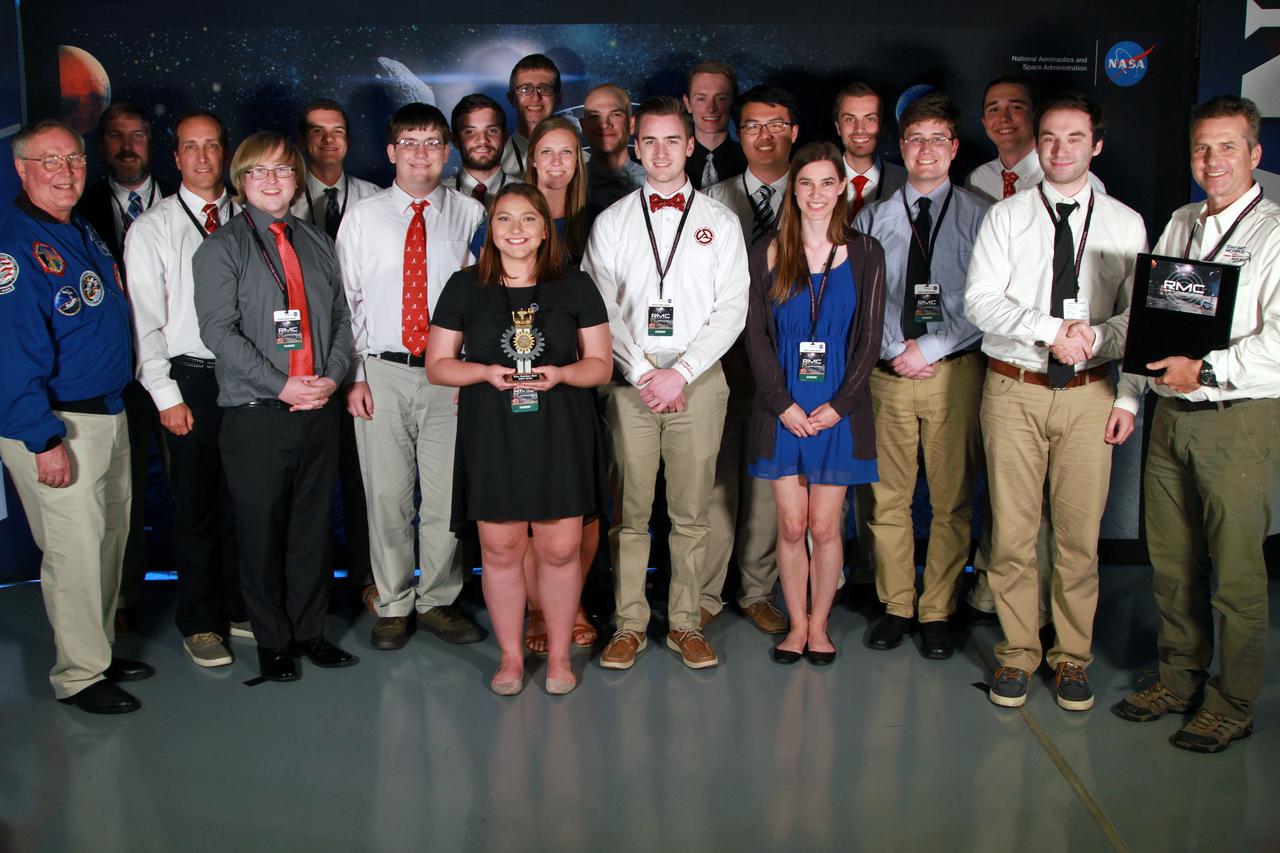
NASA's 9th Annual Robotic Mining Competition concludes with an awards ceremony May 18, 2018, at the Apollo/Saturn V Center at the Kennedy Space Center Visitor Complex in Florida. The University of Alabama Team Astrobotics received first place in the On-Site Mining Award. At left is retired NASA astronaut Jerry Ross. At right is Rob Mueller, lead mining judge. More than 40 student teams from colleges and universities around the U.S. participated in the competition, May 14-18, by using their mining robots to dig in a supersized sandbox filled with BP-1, or simulated lunar soil, gravel and rocks, and participate in other competition requirements. The Robotic Mining Competition is a NASA Human Exploration and Operations Mission Directorate project designed to encourage students in science, technology, engineering and math, or STEM fields. The project provides a competitive environment to foster innovative ideas and solutions that could be used on NASA's deep space missions.
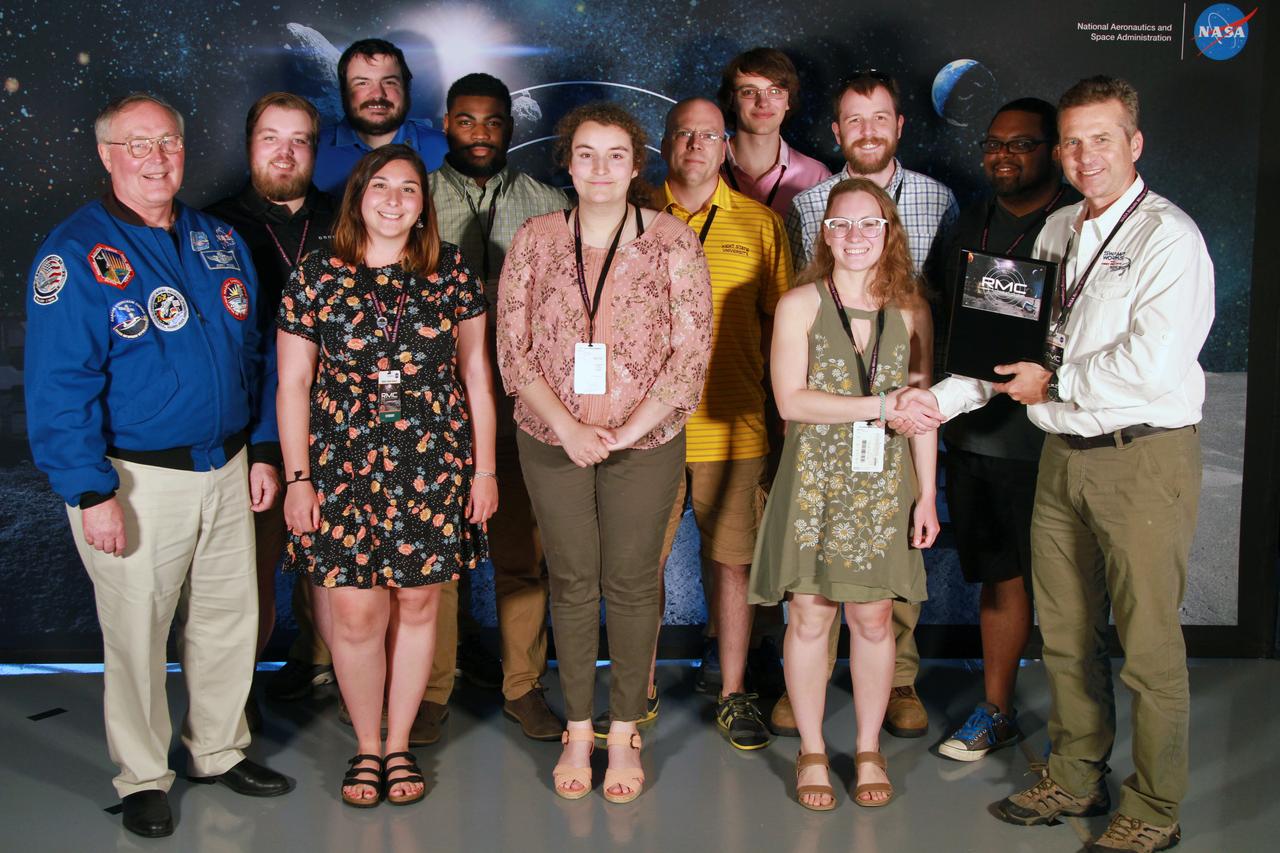
NASA's 9th Annual Robotic Mining Competition concludes with an awards ceremony May 18, 2018, at the Apollo/Saturn V Center at the Kennedy Space Center Visitor Complex in Florida. The team from Kent State University received third place in the On-Site Mining Award. At left is retired NASA astronaut Jerry Ross. At right is Rob Mueller, lead mining judge. More than 40 student teams from colleges and universities around the U.S. participated in the competition, May 14-18, by using their mining robots to dig in a supersized sandbox filled with BP-1, or simulated lunar soil, gravel and rocks, and participate in other competition requirements. The Robotic Mining Competition is a NASA Human Exploration and Operations Mission Directorate project designed to encourage students in science, technology, engineering and math, or STEM fields. The project provides a competitive environment to foster innovative ideas and solutions that could be used on NASA's deep space missions.
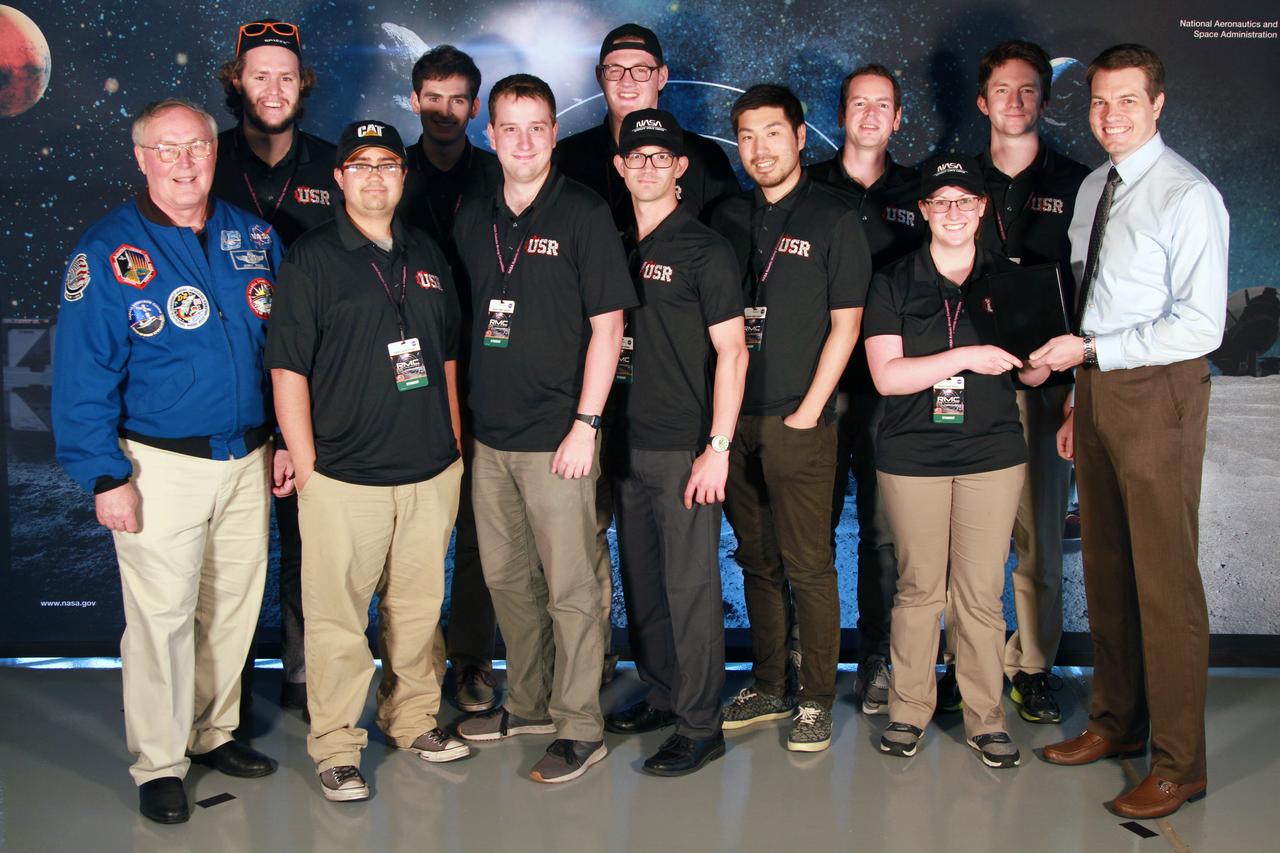
NASA's 9th Annual Robotic Mining Competition concludes with an awards ceremony May 18, 2018, at the Apollo/Saturn V Center at the Kennedy Space Center Visitor Complex in Florida. The Utah Student Robotics team from The University of Utah received second place in the Slide Presentation and Demonstration award category. At left is retired NASA astronaut Jerry Ross. At right is Daniel Hull, lead presentation judge. More than 40 student teams from colleges and universities around the U.S. participated in the competition, May 14-18, by using their mining robots to dig in a supersized sandbox filled with BP-1, or simulated lunar soil, gravel and rocks, and participate in other competition requirements. The Robotic Mining Competition is a NASA Human Exploration and Operations Mission Directorate project designed to encourage students in science, technology, engineering and math, or STEM fields. The project provides a competitive environment to foster innovative ideas and solutions that could be used on NASA's deep space missions.
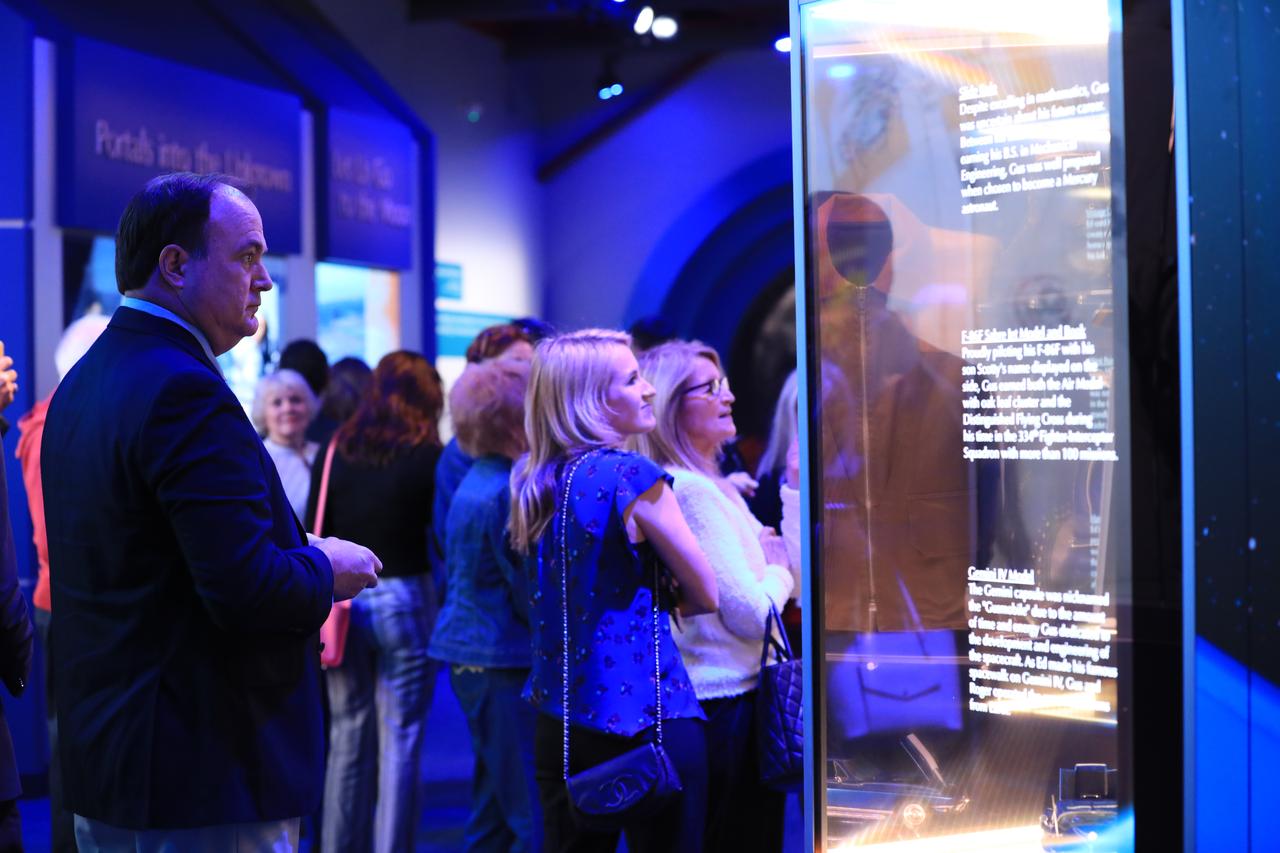
The Apollo 1 tribute at the Apollo/Saturn V Center at NASA's Kennedy Space Center opened Jan. 27, 2017. Astronauts Gus Grissom, Ed White II and Chaffee perished in a fire at the launch pad on Jan. 27, 1967, during training for the mission. The tribute highlights the lives and careers of the astronauts. The tribute features numerous items recalling the lives of the three astronauts. The tribute also includes the three-part hatch to the spacecraft itself, the first time any part of the Apollo 1 spacecraft has been displayed publicly. A version of the hatch after it was redesigned is also showcased as an example of improvements NASA made throughout the agency and to the Apollo spacecraft that would later carry astronauts to the moon.
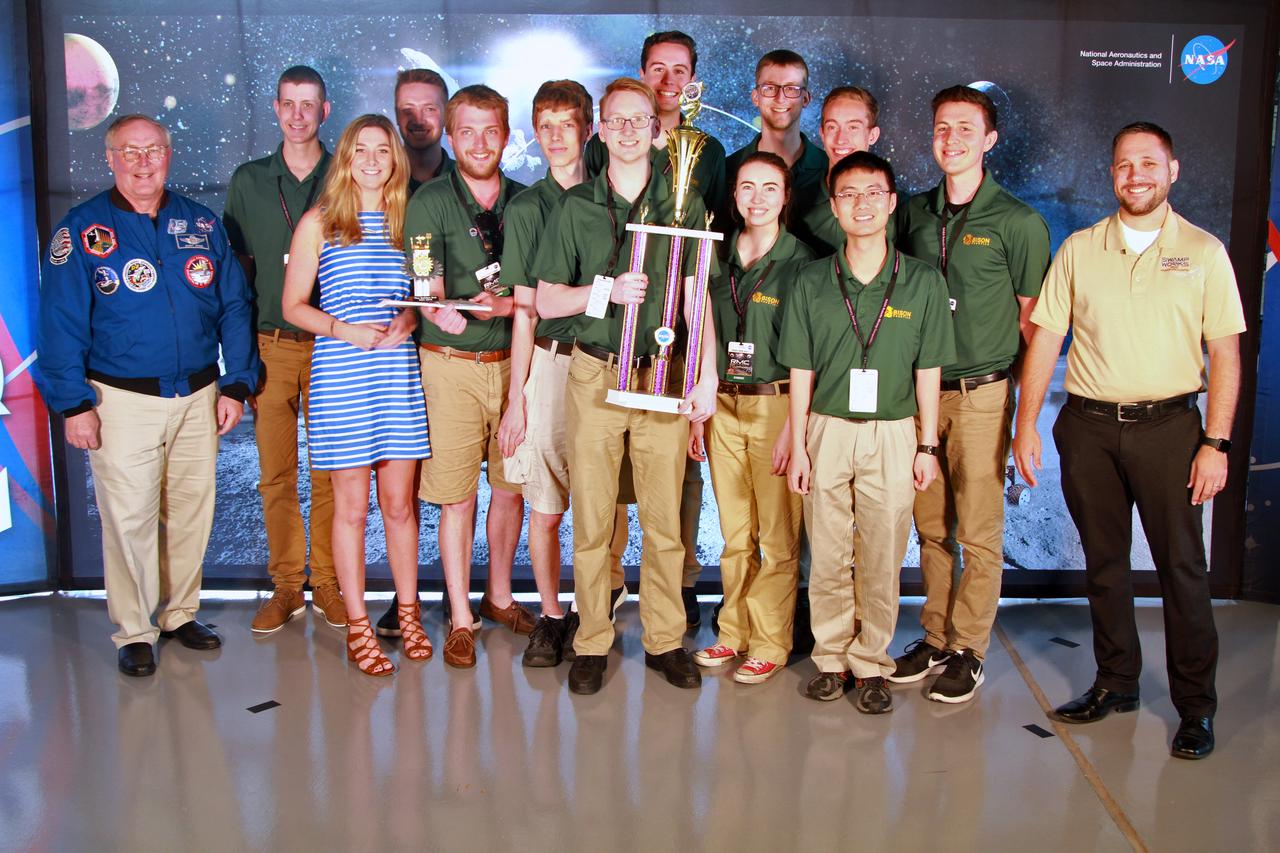
NASA's 9th Annual Robotic Mining Competition concludes with an awards ceremony May 18, 2018, at the Apollo/Saturn V Center at the Kennedy Space Center Visitor Complex in Florida. The team from North Dakota State University in collaboration with James Madison University received the IEEE Judges' Innovation Award for the most innovative design of a mining robot. At left is retired NASA astronaut Jerry Ross. At right is Michael Johansen, mining judge. More than 40 student teams from colleges and universities around the U.S. participated in the competition, May 14-18, by using their mining robots to dig in a supersized sandbox filled with BP-1, or simulated lunar soil, gravel and rocks, and participate in other competition requirements. The Robotic Mining Competition is a NASA Human Exploration and Operations Mission Directorate project designed to encourage students in science, technology, engineering and math, or STEM fields. The project provides a competitive environment to foster innovative ideas and solutions that could be used on NASA's deep space missions.
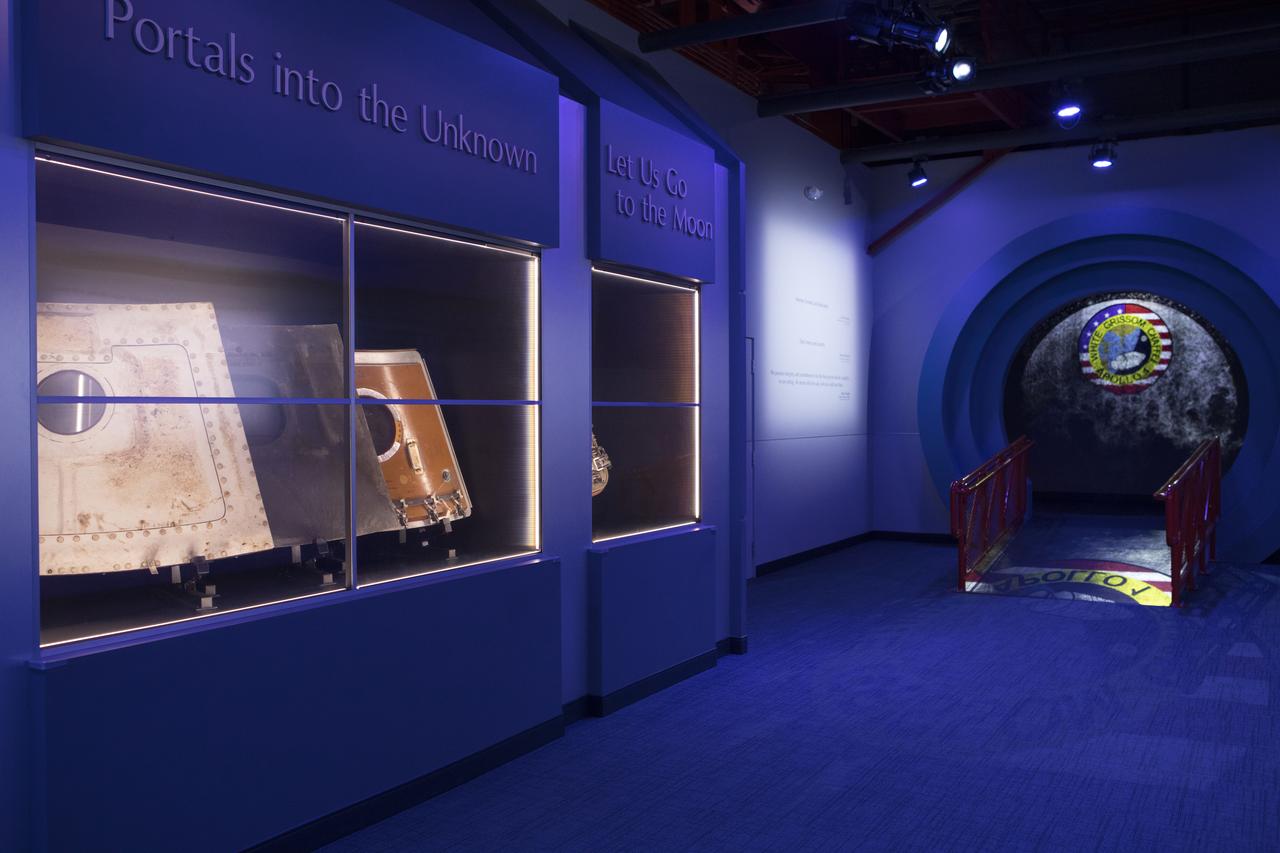
The three-part hatch that was in place on the Apollo 1 spacecraft is shown in a tribute to the crew of Apollo 1 who perished in a fire at the launch pad on Jan. 27, 1967, during training for the mission. This is the first time any part of the Apollo 1 spacecraft has been displayed publicly. The tribute highlights the lives and careers of astronauts Gus Grissom, Ed White II and Roger Chaffee who were lost during the fire. The tribute at the Apollo/Saturn V Center at NASA's Kennedy Space Center opened Jan. 27, 2017, 50 years after the crew of three was lost. It features numerous items recalling the lives of the three astronauts. A version of the hatch after it was redesigned is also showcased as an example of improvements NASA made throughout the agency and to the Apollo spacecraft that would later carry astronauts to the moon.
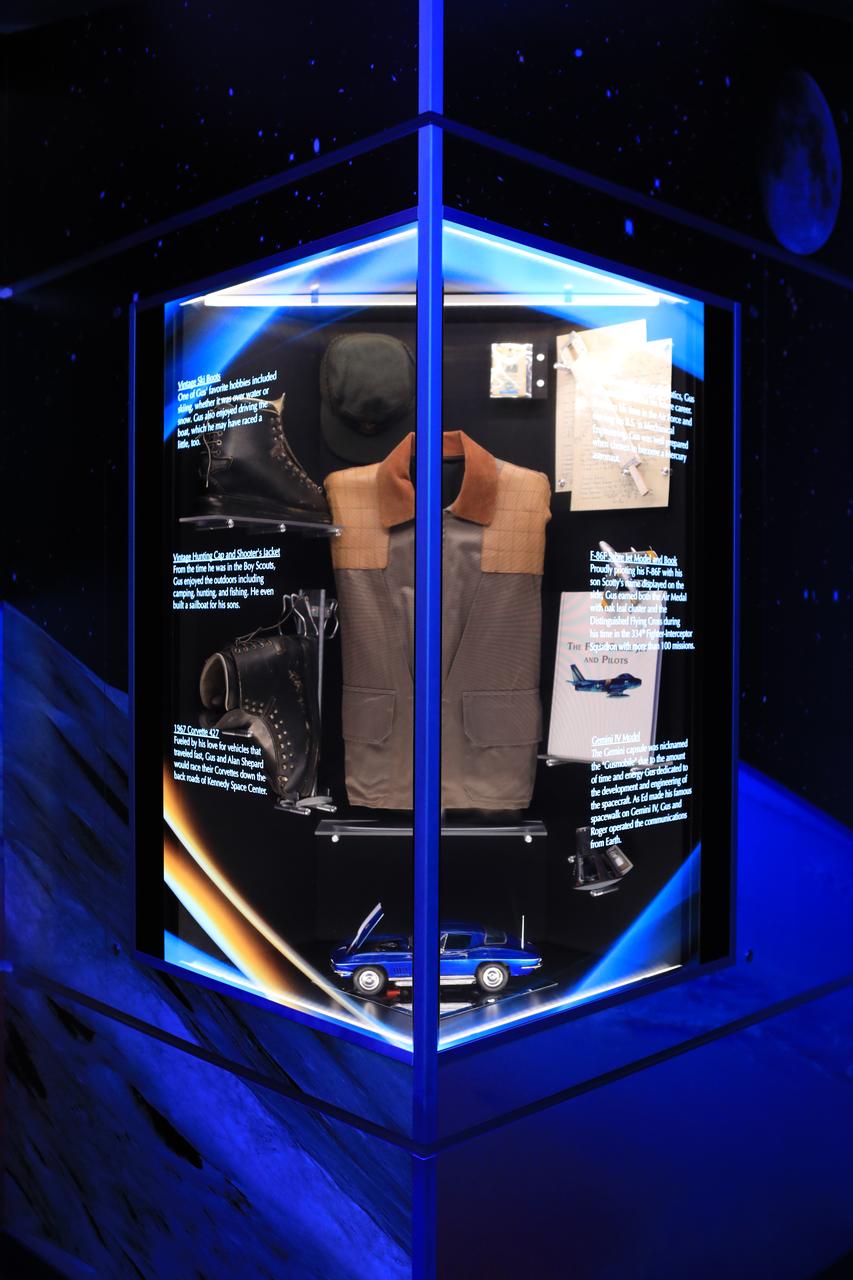
A display case dedicated to astronaut Gus Grissom is shown inside the new tribute to the crew of Apollo 1 who perished in a fire at the launch pad on Jan. 27, 1967, during training for the mission. Grissom, Ed White II and Roger Chaffee were lost during the fire. The tribute at the Apollo/Saturn V Center at NASA's Kennedy Space Center opened Jan. 27, 2017, 50 years after the crew of three was lost. It features numerous items recalling the lives of the three astronauts. It also includes the three-part hatch to the spacecraft itself, the first time any part of the Apollo 1 spacecraft has been displayed publicly. A version of the hatch after it was redesigned is also showcased as an example of improvements NASA made throughout the agency and to the Apollo spacecraft that would later carry astronauts to the moon.
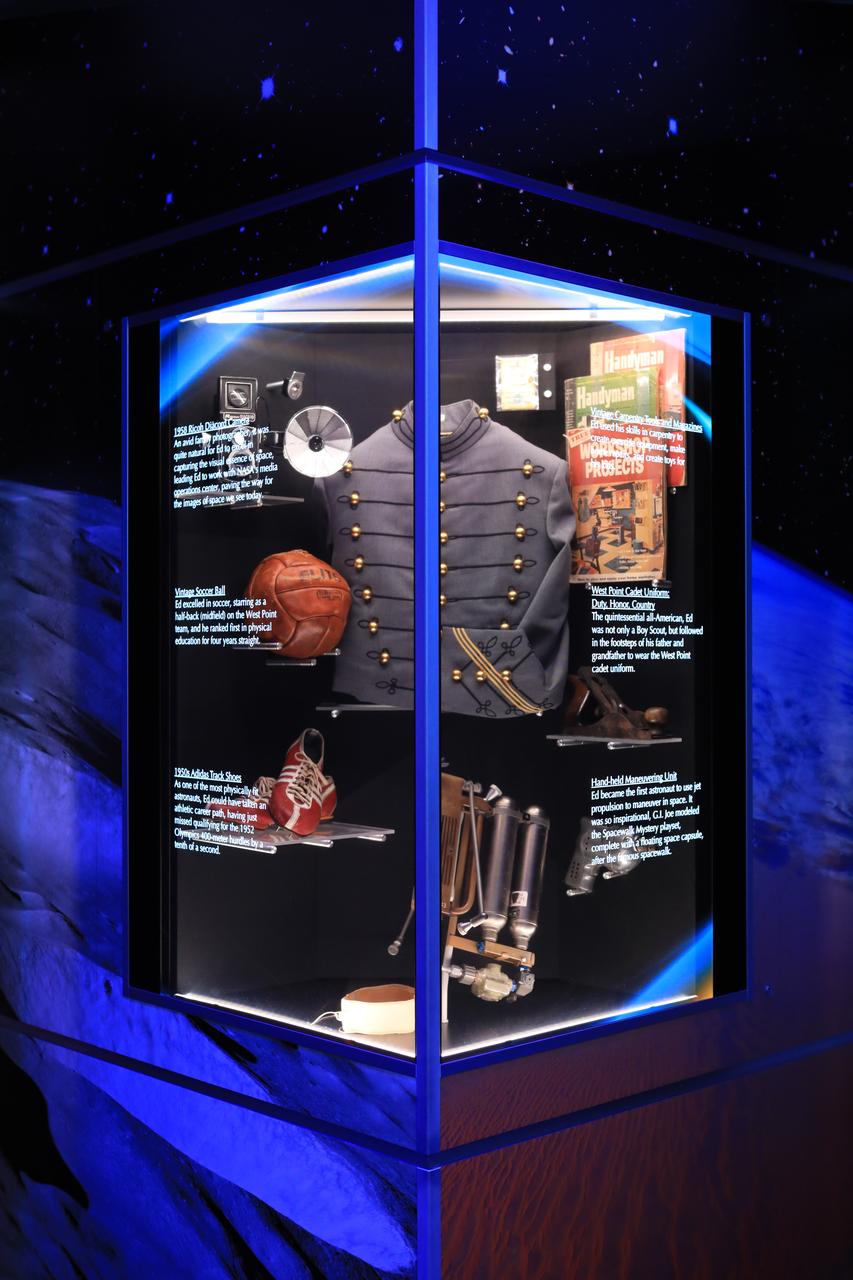
A display case dedicated to astronaut Ed White II is shown inside the new tribute to the crew of Apollo 1 who perished in a fire at the launch pad on Jan. 27, 1967, during training for the mission. Gus Grissom, White and Roger Chaffee were lost during the fire. The tribute at the Apollo/Saturn V Center at NASA's Kennedy Space Center opened Jan. 27, 2017, 50 years after the crew of three was lost. It features numerous items recalling the lives of the three astronauts. It also includes the three-part hatch to the spacecraft itself, the first time any part of the Apollo 1 spacecraft has been displayed publicly. A version of the hatch after it was redesigned is also showcased as an example of improvements NASA made throughout the agency and to the Apollo spacecraft that would later carry astronauts to the moon.
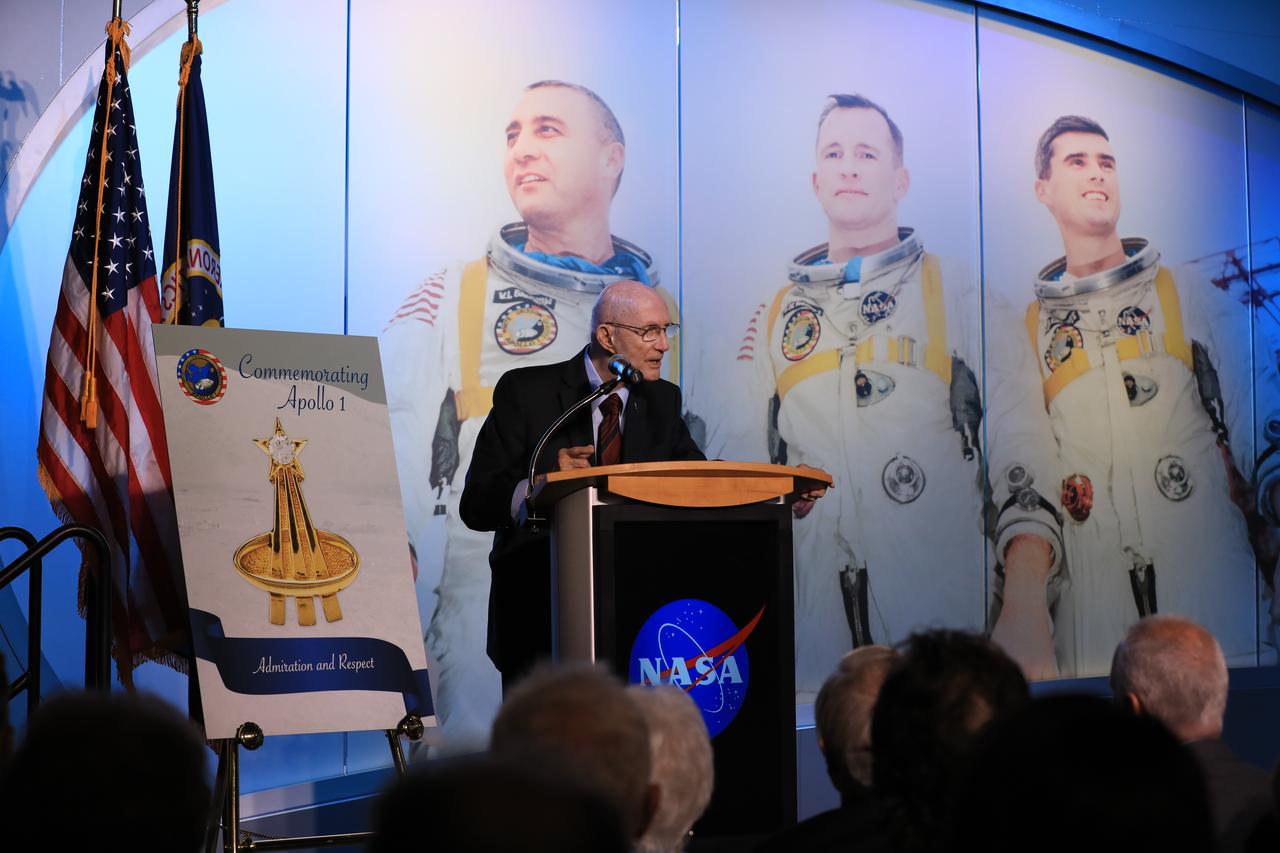
Former Gemini and Apollo astronaut Tom Stafford speaks during the opening of the tribute exhibition to the Apollo 1 astronauts who perished in a fire at the launch pad on Jan. 27, 1967, during training for the mission. The tribute highlights the lives and careers of astronauts Gus Grissom, Ed White II and Roger Chaffee who were lost during the fire. The tribute at the Apollo/Saturn V Center at NASA's Kennedy Space Center opened Jan. 27, 2017, 50 years after the crew of three was lost. It features numerous items recalling the lives of the three astronauts. The tribute also includes the three-part hatch to the spacecraft itself, the first time any part of the Apollo 1 spacecraft has been displayed publicly. A version of the hatch after it was redesigned is also showcased as an example of improvements NASA made throughout the agency and to the Apollo spacecraft that would later carry astronauts to the moon.
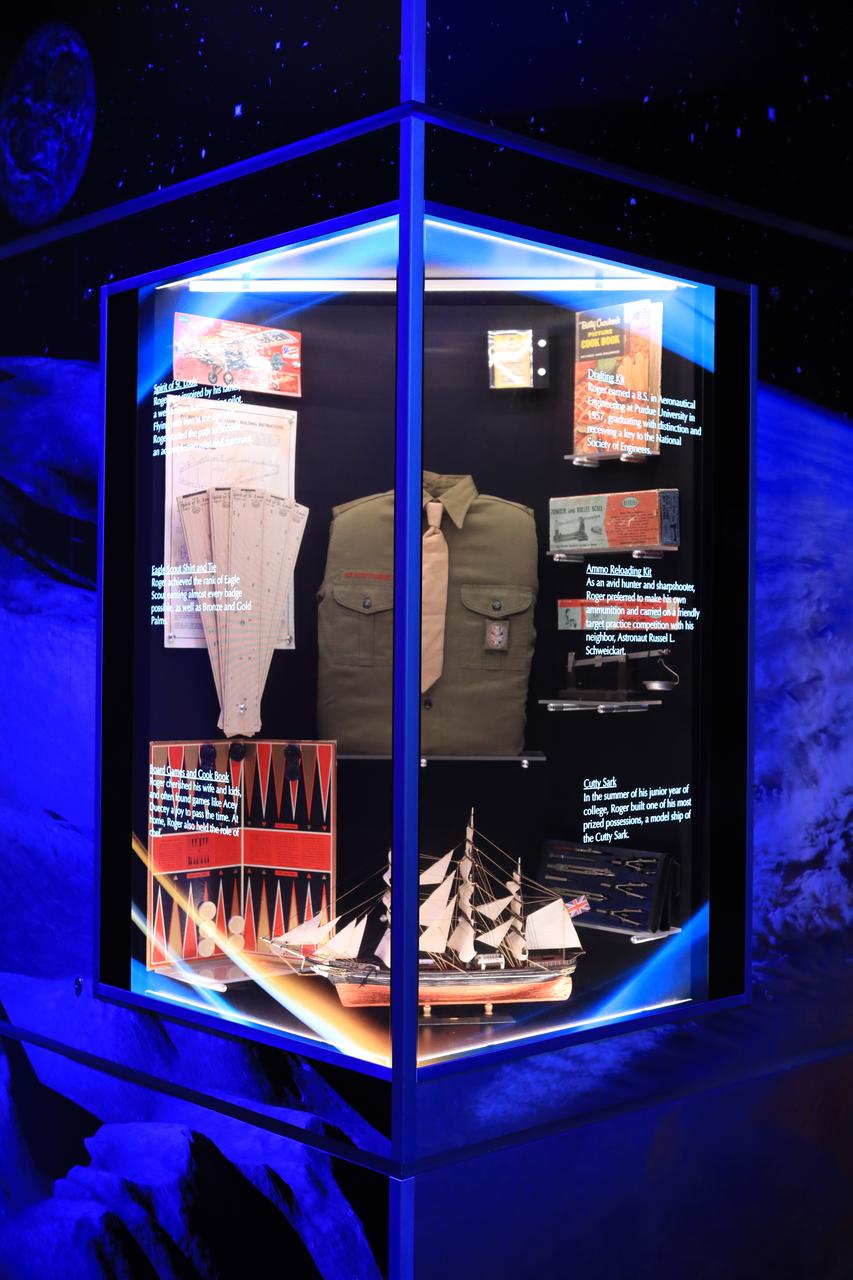
A display case dedicated to astronaut Roger Chaffee is shown inside the new tribute to the crew of Apollo 1 who perished in a fire at the launch pad on Jan. 27, 1967, during training for the mission. Gus Grissom, Ed White II and Chaffee were lost during the fire. The tribute at the Apollo/Saturn V Center at NASA's Kennedy Space Center opened Jan. 27, 2017, 50 years after the crew of three was lost. It features numerous items recalling the lives of the three astronauts. It also includes the three-part hatch to the spacecraft itself, the first time any part of the Apollo 1 spacecraft has been displayed publicly. A version of the hatch after it was redesigned is also showcased as an example of improvements NASA made throughout the agency and to the Apollo spacecraft that would later carry astronauts to the moon.
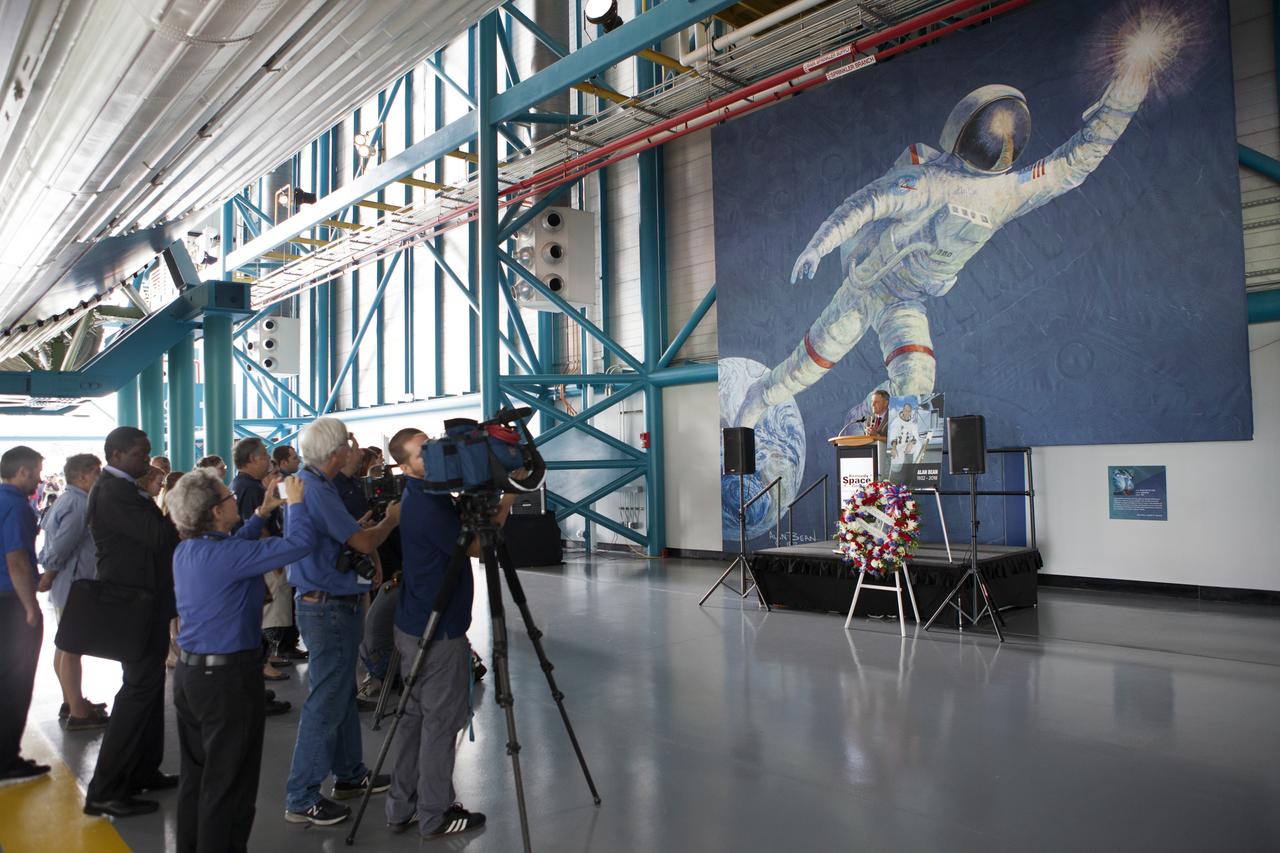
Members of the news media assemble to cover a ceremony on Wednesday, May 30, 2018, during which a memorial wreath is placed in the Apollo-Saturn V Center of the Kennedy Space Center Visitor Complex honoring former NASA astronaut Alan Bean. In the background is a large mural of a painting by Alan Bean who became an accomplished artist after leaving NASA. Bean was the fourth person to walk on the Moon as lunar module pilot on Apollo 12 in November 1969. He went on to command the 59-day Skylab 3 mission in 1973. He died in Houston on May 26, 2018, at the age of 86.
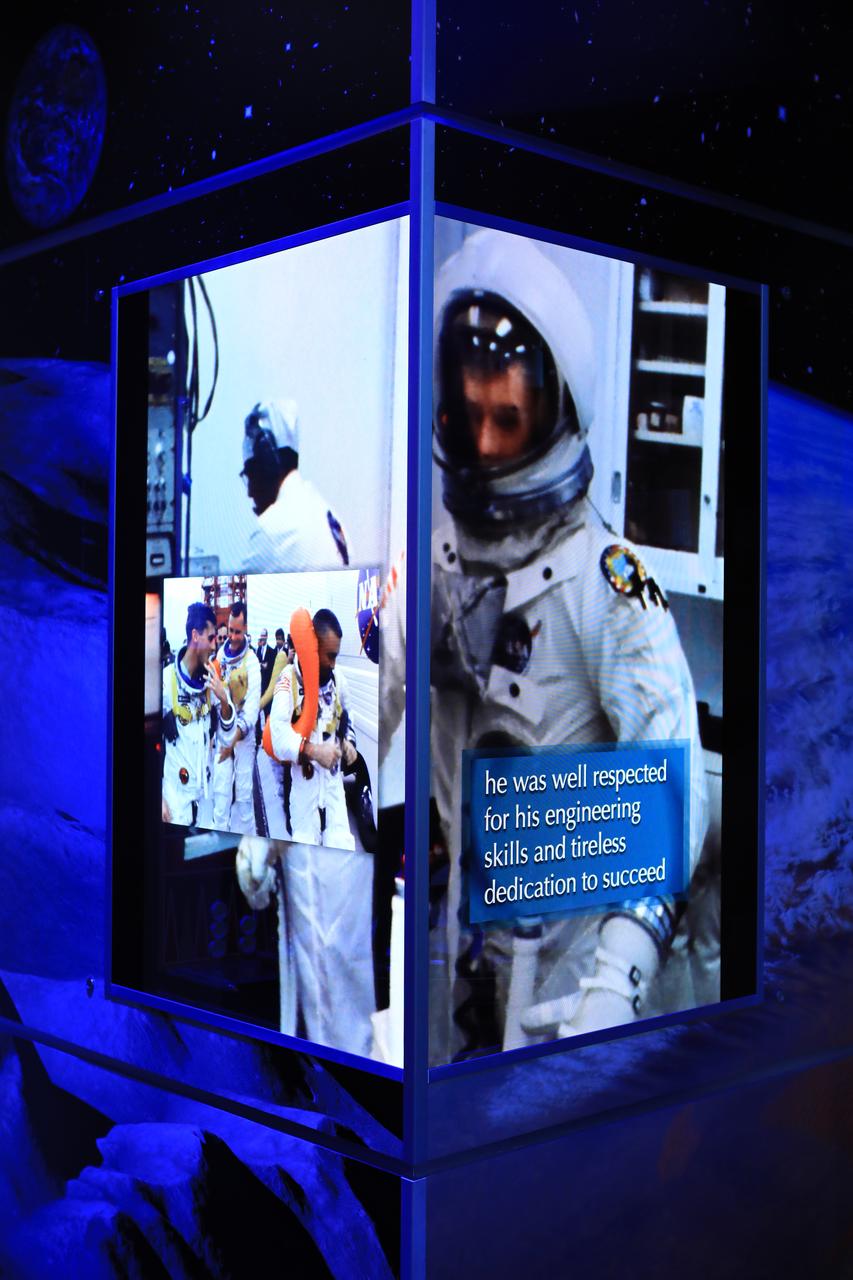
A display case dedicated to astronaut Roger Chaffee is shown inside the new tribute to the crew of Apollo 1 who perished in a fire at the launch pad on Jan. 27, 1967, during training for the mission. Gus Grissom, Ed White II and Chaffee were lost during the fire. The tribute at the Apollo/Saturn V Center at NASA's Kennedy Space Center opened Jan. 27, 2017, 50 years after the crew of three was lost. It features numerous items recalling the lives of the three astronauts. It also includes the three-part hatch to the spacecraft itself, the first time any part of the Apollo 1 spacecraft has been displayed publicly. A version of the hatch after it was redesigned is also showcased as an example of improvements NASA made throughout the agency and to the Apollo spacecraft that would later carry astronauts to the moon.
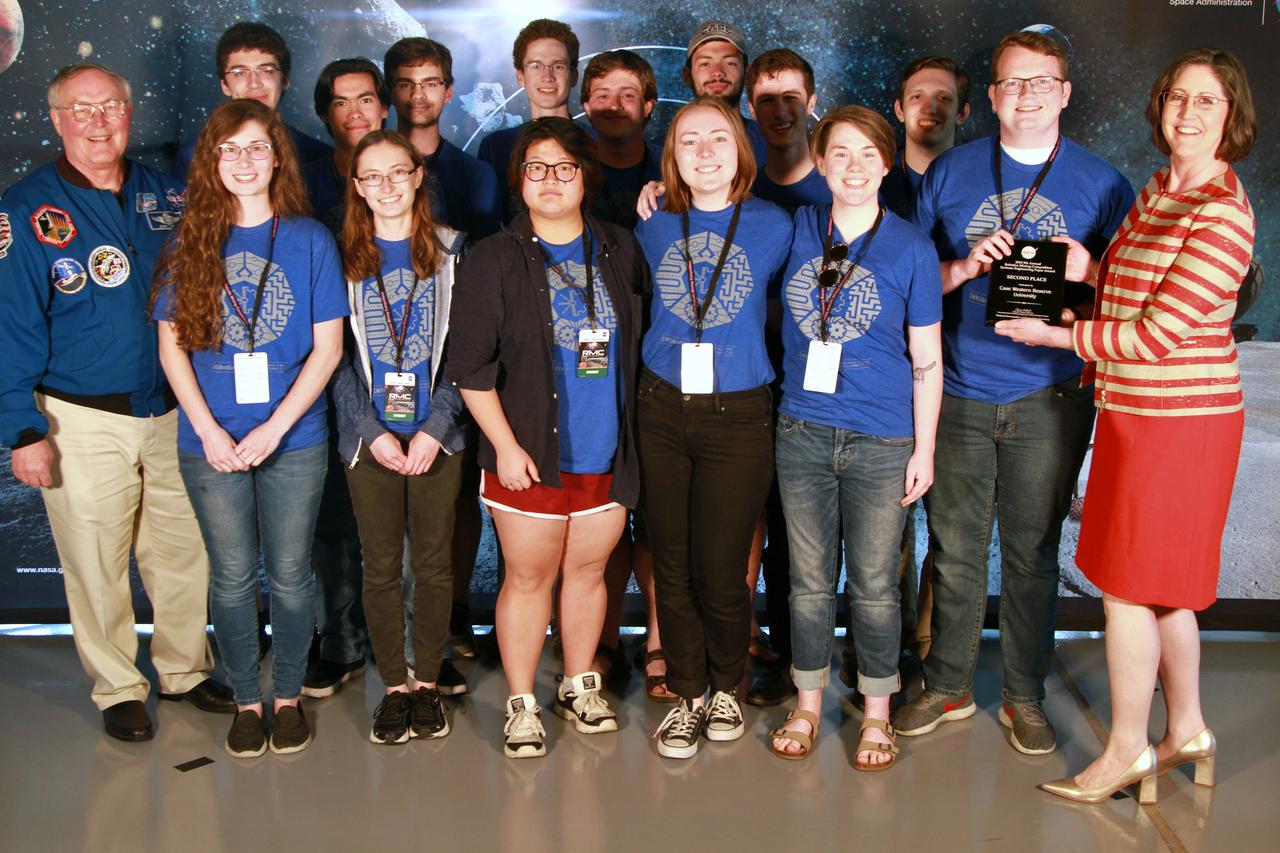
NASA's 9th Annual Robotic Mining Competition concludes with an awards ceremony May 18, 2018, at the Apollo/Saturn V Center at the Kennedy Space Center Visitor Complex in Florida. The team from Case Western Reserve University received second place for their Systems Engineering Paper. At left is retired NASA astronaut Jerry Ross. At right is Jonette Stecklein, lead systems engineering paper judge. More than 40 student teams from colleges and universities around the U.S. participated in the competition, May 14-18, by using their mining robots to dig in a supersized sandbox filled with BP-1, or simulated lunar soil, gravel and rocks, and participate in other competition requirements. The Robotic Mining Competition is a NASA Human Exploration and Operations Mission Directorate project designed to encourage students in science, technology, engineering and math, or STEM fields. The project provides a competitive environment to foster innovative ideas and solutions that could be used on NASA's deep space missions.
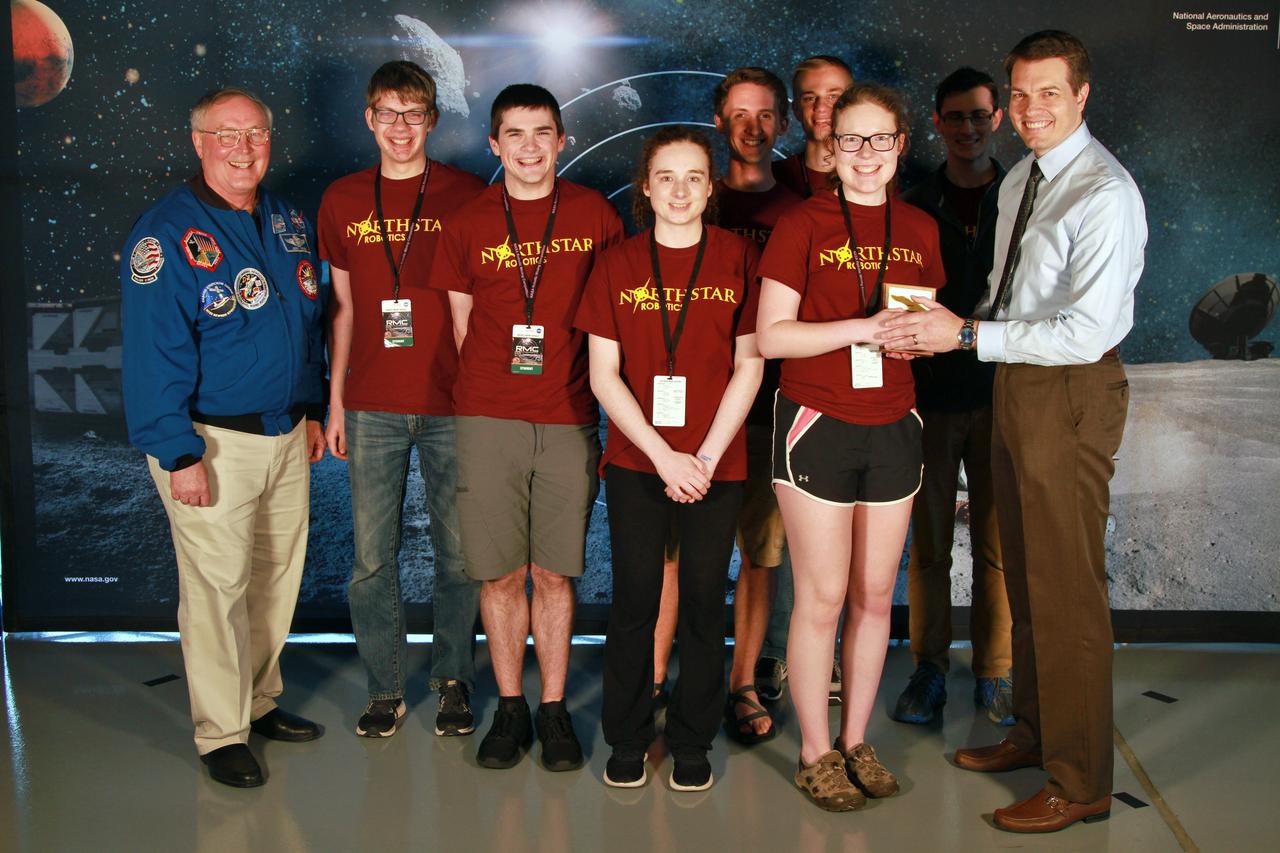
NASA's 9th Annual Robotic Mining Competition concludes with an awards ceremony May 18, 2018, at the Apollo/Saturn V Center at the Kennedy Space Center Visitor Complex in Florida. Team Northstar Robotics from the University of Minnesota - Twin Cities received the Golden E-Stop Award for their robot's safety system. At left is retired NASA astronaut Jerry Ross. At right is Daniel Hull, lead presentation judge. More than 40 student teams from colleges and universities around the U.S. participated in the competition, May 14-18, by using their mining robots to dig in a supersized sandbox filled with BP-1, or simulated lunar soil, gravel and rocks, and participate in other competition requirements. The Robotic Mining Competition is a NASA Human Exploration and Operations Mission Directorate project designed to encourage students in science, technology, engineering and math, or STEM fields. The project provides a competitive environment to foster innovative ideas and solutions that could be used on NASA's deep space missions.
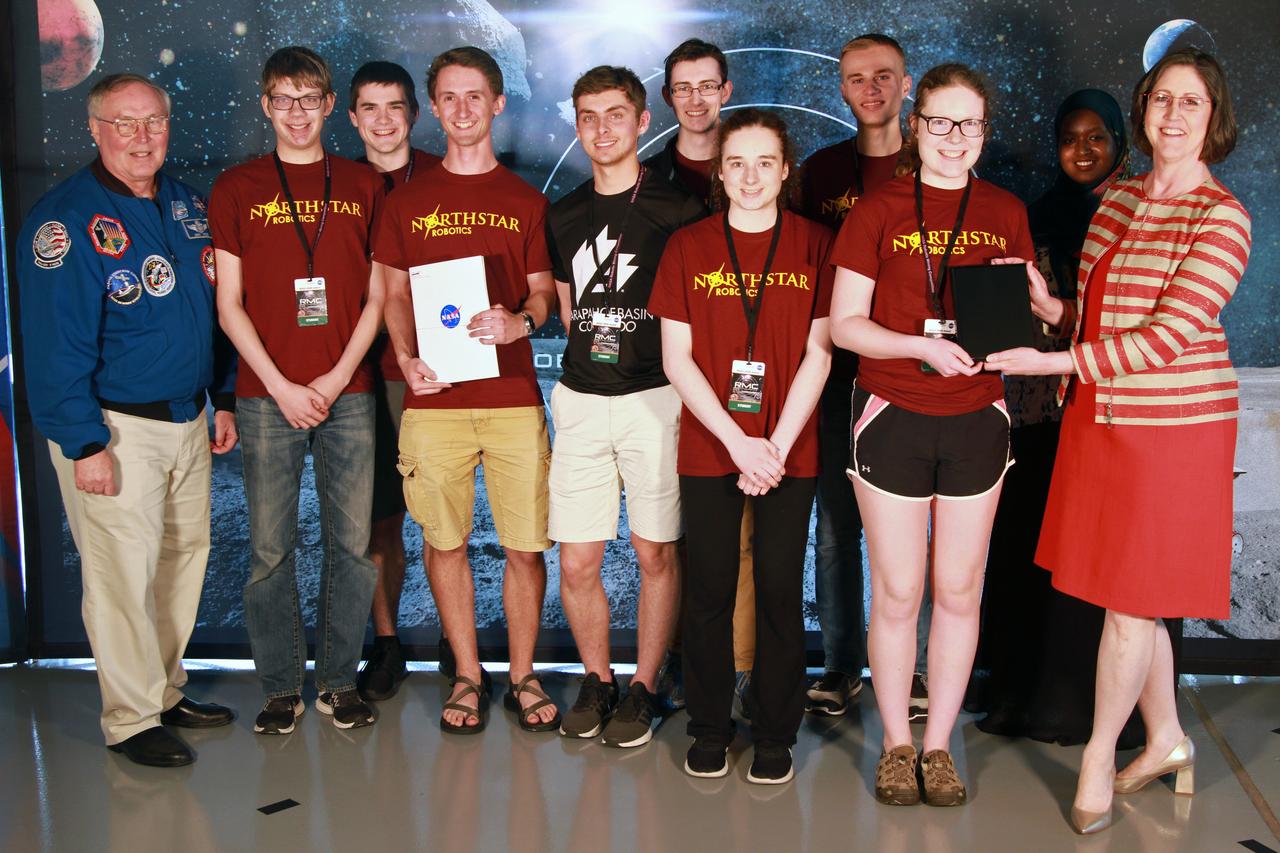
NASA's 9th Annual Robotic Mining Competition concludes with an awards ceremony May 18, 2018, at the Apollo/Saturn V Center at the Kennedy Space Center Visitor Complex in Florida. Team Northstar Robotics from the University of Minnesota - Twin Cities received an honorable mention award for their Systems Engineering Paper. At left is retired NASA astronaut Jerry Ross. At right is Jonette Stecklein, lead systems engineering paper judge. More than 40 student teams from colleges and universities around the U.S. participated in the competition, May 14-18, by using their mining robots to dig in a supersized sandbox filled with BP-1, or simulated lunar soil, gravel and rocks, and participate in other competition requirements. The Robotic Mining Competition is a NASA Human Exploration and Operations Mission Directorate project designed to encourage students in science, technology, engineering and math, or STEM fields. The project provides a competitive environment to foster innovative ideas and solutions that could be used on NASA's deep space missions.
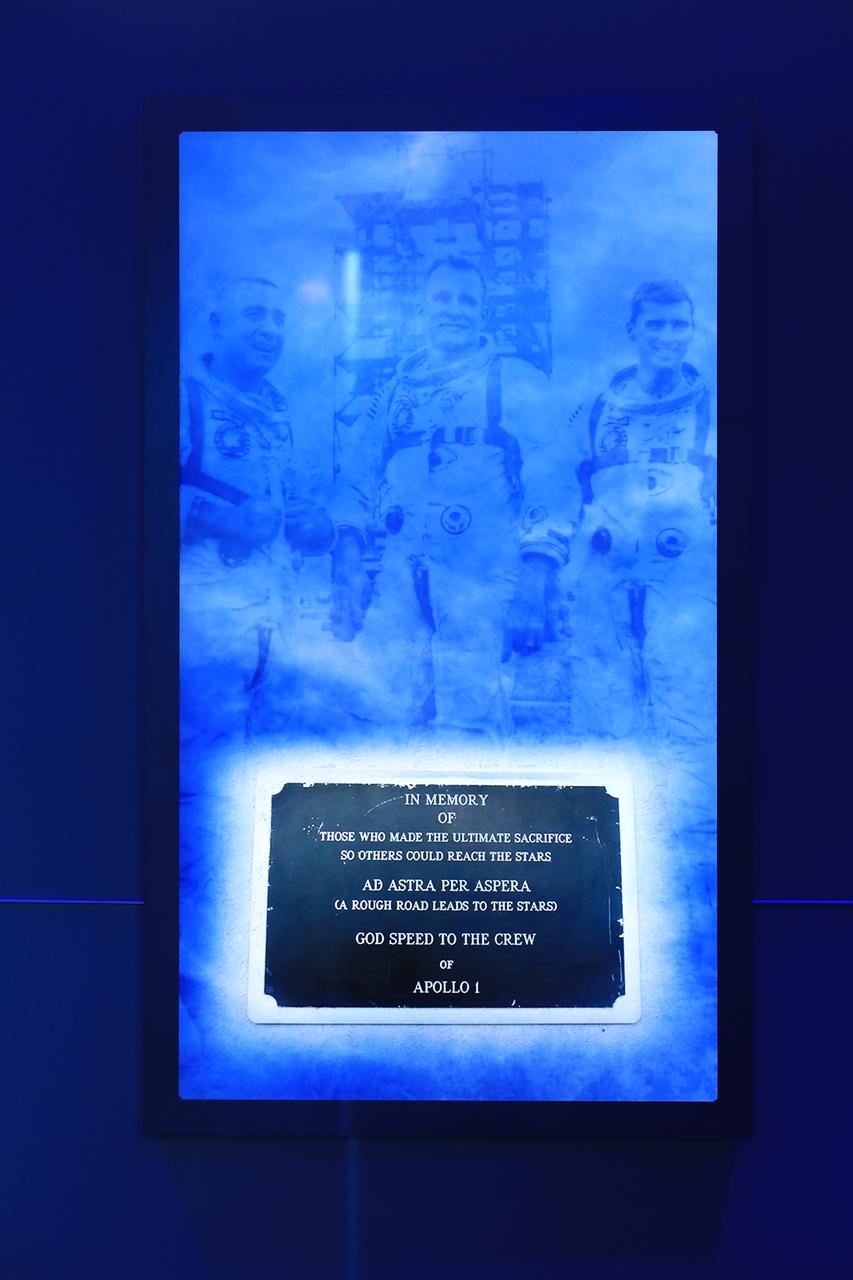
A display screen showing the memorial plaque that is in place at Launch Complex 34 is shown inside the new tribute to the crew of Apollo 1 who perished in a fire at the launch pad on Jan. 27, 1967, during training for the mission. Astronauts Gus Grissom, Ed White II and Roger Chaffee were lost during the fire. The tribute at the Apollo/Saturn V Center at NASA's Kennedy Space Center opened Jan. 27, 2017, 50 years after the crew of three was lost. It features numerous items recalling the lives of the three astronauts. It also includes the three-part hatch to the spacecraft itself, the first time any part of the Apollo 1 spacecraft has been displayed publicly. A version of the hatch after it was redesigned is also showcased as an example of improvements NASA made throughout the agency and to the Apollo spacecraft that would later carry astronauts to the moon.
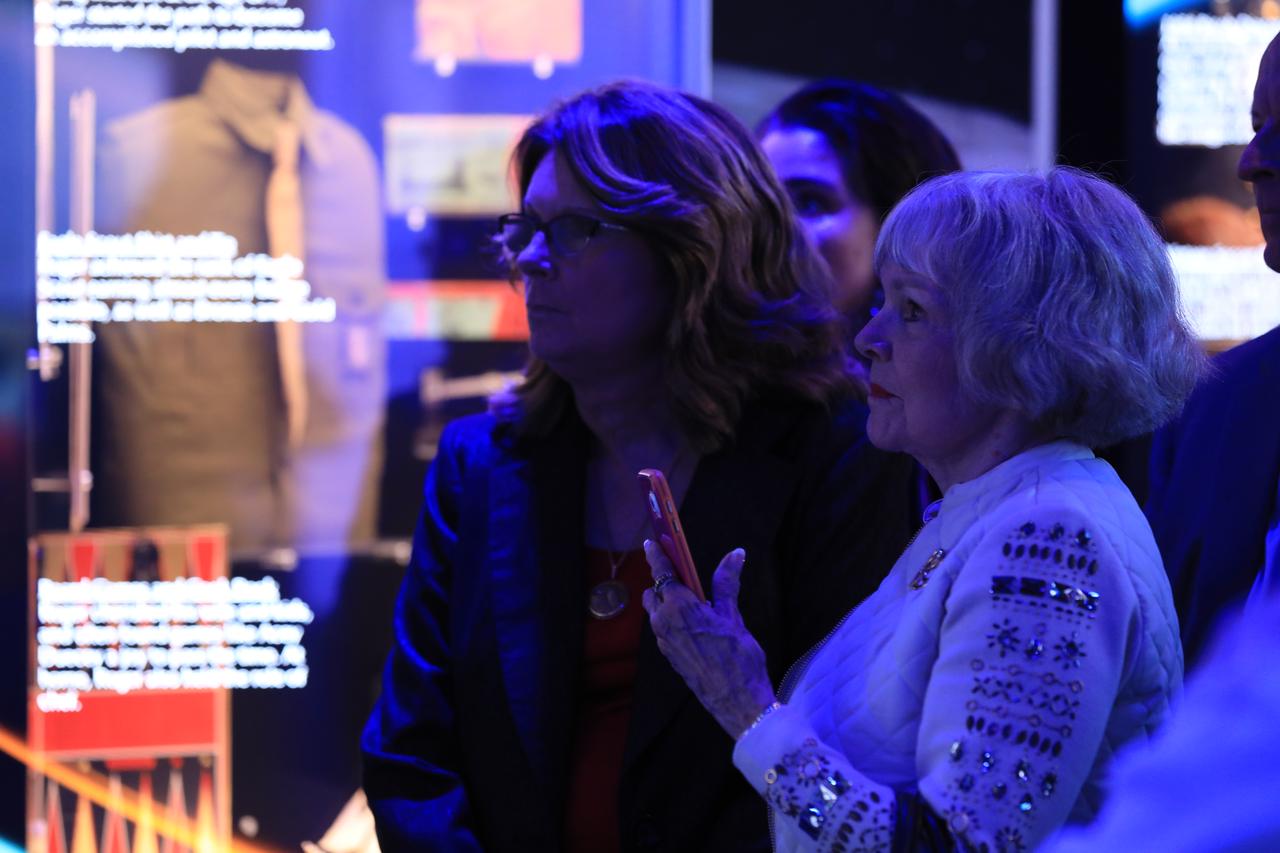
Martha Chaffee and Sheryl Chaffee, widow and daughter of astronaut Roger Chaffee, respectively, look at areas of the newly opened Apollo 1 tribute at the Apollo/Saturn V Center at NASA's Kennedy Space Center opened Jan. 27, 2017. Astronauts Gus Grissom, Ed White II and Chaffee perished in a fire at the launch pad on Jan. 27, 1967, during training for the mission. The tribute highlights the lives and careers of the astronauts. The tribute features numerous items recalling the lives of the three astronauts. The tribute also includes the three-part hatch to the spacecraft itself, the first time any part of the Apollo 1 spacecraft has been displayed publicly. A version of the hatch after it was redesigned is also showcased as an example of improvements NASA made throughout the agency and to the Apollo spacecraft that would later carry astronauts to the moon.
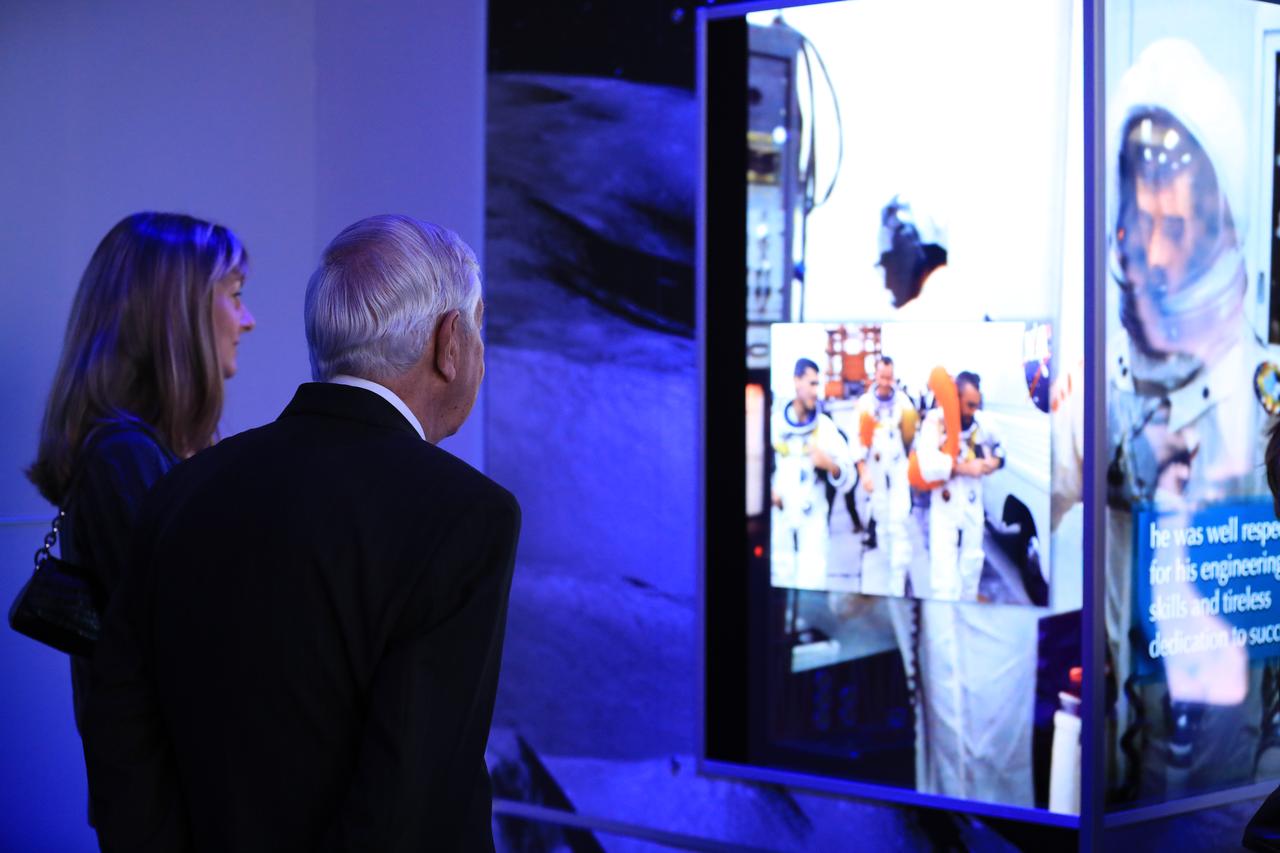
Lowell Grissom, brother of Gus Grissom, and Carly Sparks, granddaughter of Grissom, look at areas of the newly opened Apollo 1 tribute at the Apollo/Saturn V Center at NASA's Kennedy Space Center opened Jan. 27, 2017. Astronauts Gus Grissom, Ed White II and Chaffee perished in a fire at the launch pad on Jan. 27, 1967, during training for the mission. The tribute highlights the lives and careers of the astronauts. The tribute features numerous items recalling the lives of the three astronauts. The tribute also includes the three-part hatch to the spacecraft itself, the first time any part of the Apollo 1 spacecraft has been displayed publicly. A version of the hatch after it was redesigned is also showcased as an example of improvements NASA made throughout the agency and to the Apollo spacecraft that would later carry astronauts to the moon.
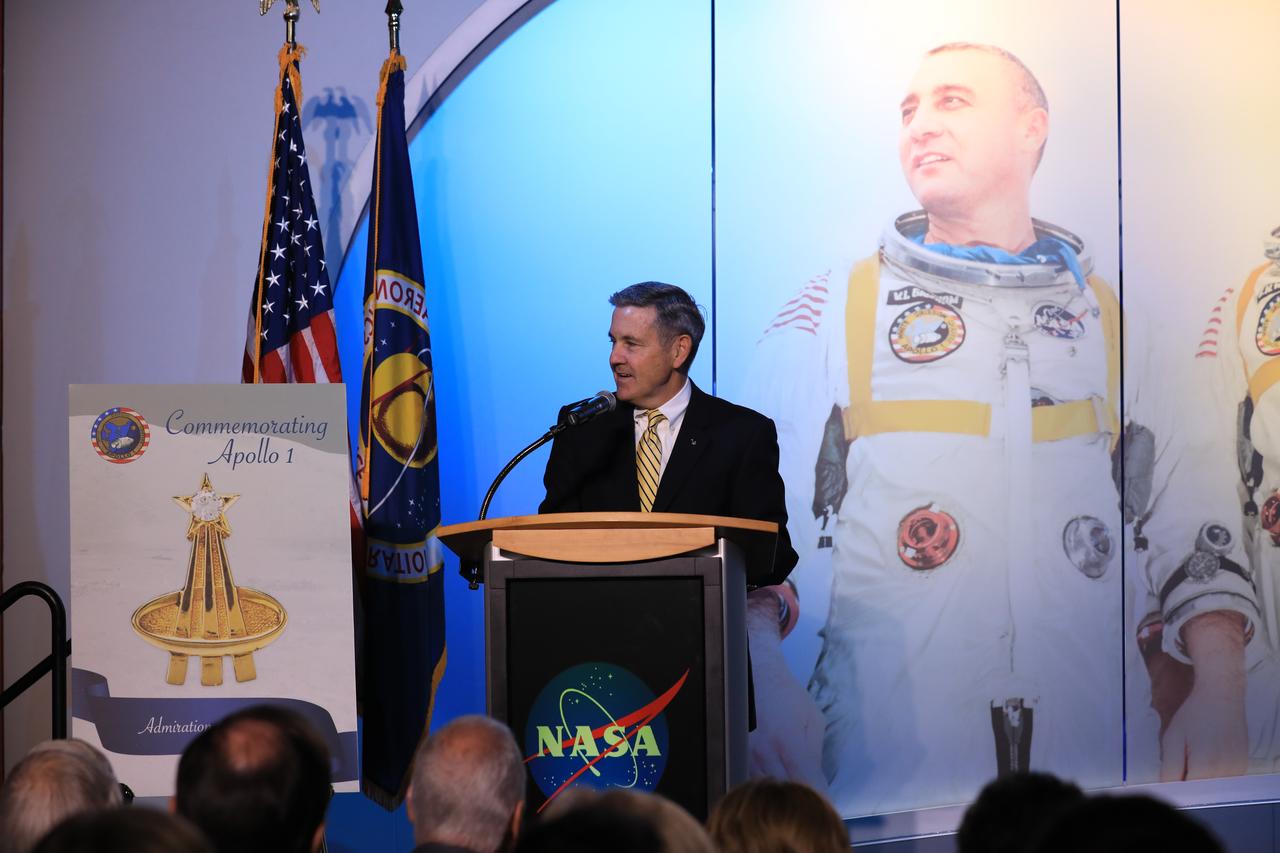
Former astronaut Bob Cabana, director of NASA's Kennedy Space Center in Florida, speaks during the opening of the tribute exhibition to the Apollo 1 astronauts who perished in a fire at the launch pad on Jan. 27, 1967, during training for the mission. The tribute highlights the lives and careers of astronauts Gus Grissom, Ed White II and Roger Chaffee who were lost during the fire. The tribute at the Apollo/Saturn V Center at NASA's Kennedy Space Center opened Jan. 27, 2017, 50 years after the crew of three was lost. It features numerous items recalling the lives of the three astronauts. The tribute also includes the three-part hatch to the spacecraft itself, the first time any part of the Apollo 1 spacecraft has been displayed publicly. A version of the hatch after it was redesigned is also showcased as an example of improvements NASA made throughout the agency and to the Apollo spacecraft that would later carry astronauts to the moon.
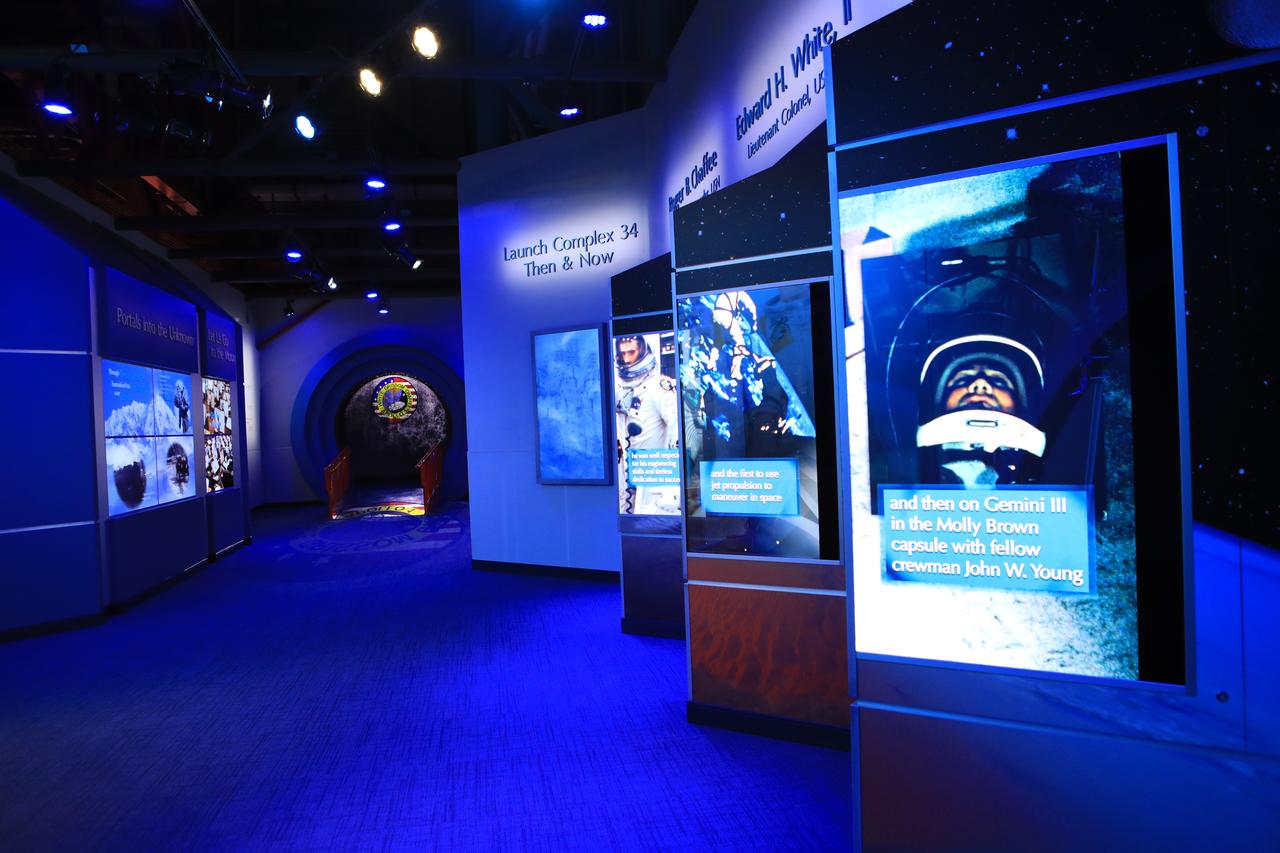
The new tribute to the crew of Apollo 1 who perished in a fire at the launch pad on Jan. 27, 1967, during training for the mission is shown looking down the length of the area. The tribute highlights the lives and careers of astronauts Gus Grissom, Ed White II and Roger Chaffee who were lost during the fire. The tribute at the Apollo/Saturn V Center at NASA's Kennedy Space Center opened Jan. 27, 2017, 50 years after the crew of three was lost. It features numerous items recalling the lives of the three astronauts. The tribute also includes the three-part hatch to the spacecraft itself, the first time any part of the Apollo 1 spacecraft has been displayed publicly. A version of the hatch after it was redesigned is also showcased as an example of improvements NASA made throughout the agency and to the Apollo spacecraft that would later carry astronauts to the moon.
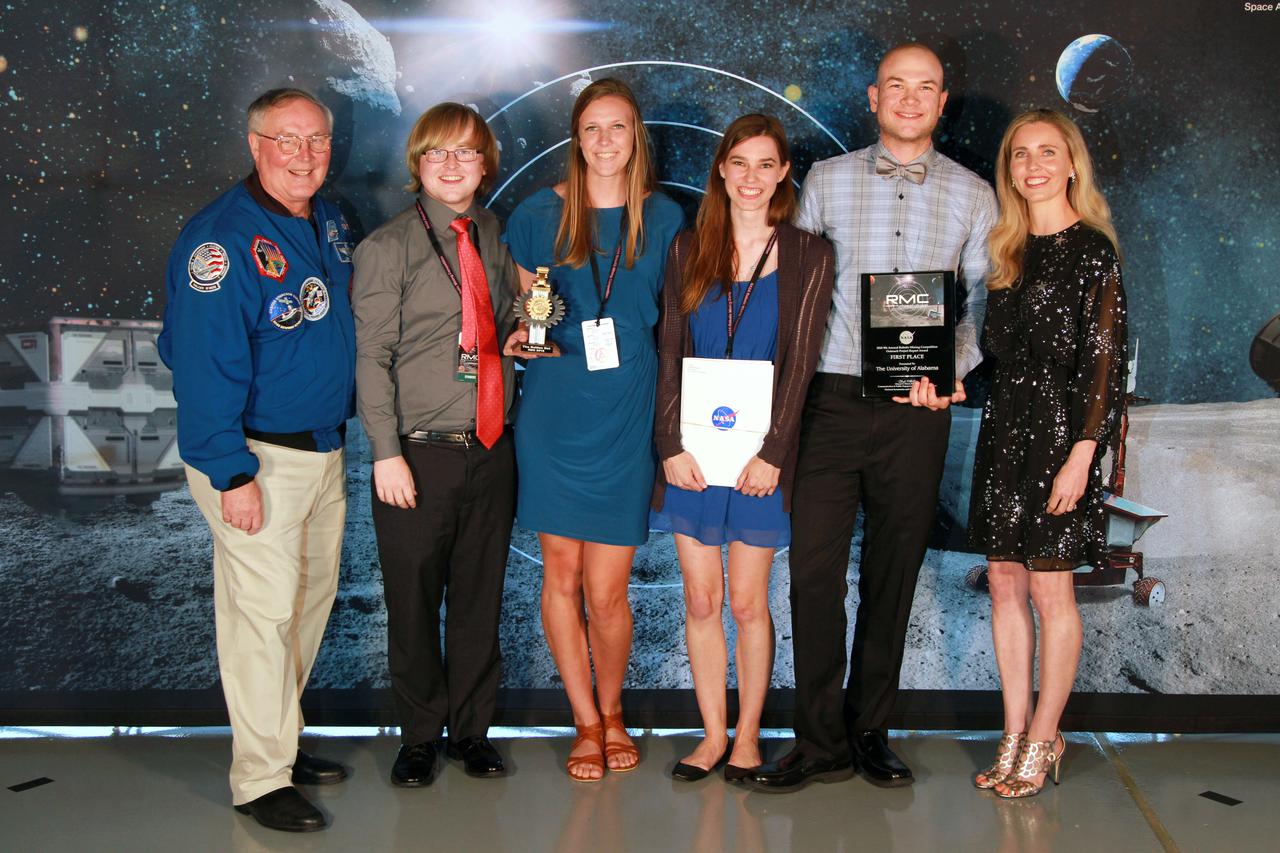
NASA's 9th Annual Robotic Mining Competition concludes with an awards ceremony May 18, 2018, at the Apollo/Saturn V Center at the Kennedy Space Center Visitor Complex in Florida. The University of Alabama Team Astrobotics received first place in the Outreach Project category. At left is retired NASA astronaut Jerry Ross. At right is Bethanne Hull, NASA Education specialist and lead Outreach Project judge. More than 40 student teams from colleges and universities around the U.S. participated in the competition, May 14-18, by using their mining robots to dig in a supersized sandbox filled with BP-1, or simulated lunar soil, gravel and rocks, and participate in other competition requirements. The Robotic Mining Competition is a NASA Human Exploration and Operations Mission Directorate project designed to encourage students in science, technology, engineering and math, or STEM fields. The project provides a competitive environment to foster innovative ideas and solutions that could be used on NASA's deep space missions.
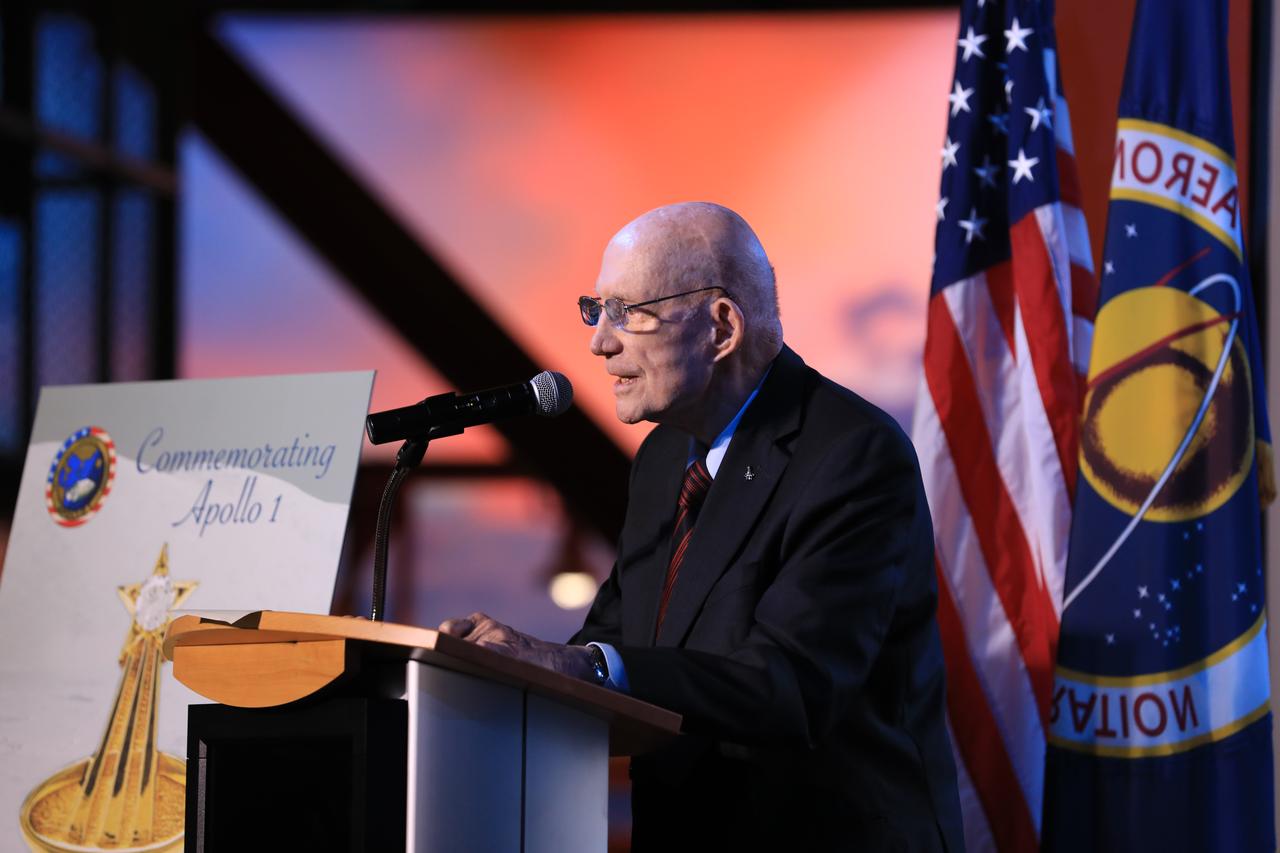
Former Gemini and Apollo astronaut Tom Stafford speaks during the opening of the tribute exhibition to the Apollo 1 astronauts who perished in a fire at the launch pad on Jan. 27, 1967, during training for the mission. The tribute highlights the lives and careers of astronauts Gus Grissom, Ed White II and Roger Chaffee who were lost during the fire. The tribute at the Apollo/Saturn V Center at NASA's Kennedy Space Center opened Jan. 27, 2017, 50 years after the crew of three was lost. It features numerous items recalling the lives of the three astronauts. The tribute also includes the three-part hatch to the spacecraft itself, the first time any part of the Apollo 1 spacecraft has been displayed publicly. A version of the hatch after it was redesigned is also showcased as an example of improvements NASA made throughout the agency and to the Apollo spacecraft that would later carry astronauts to the moon.
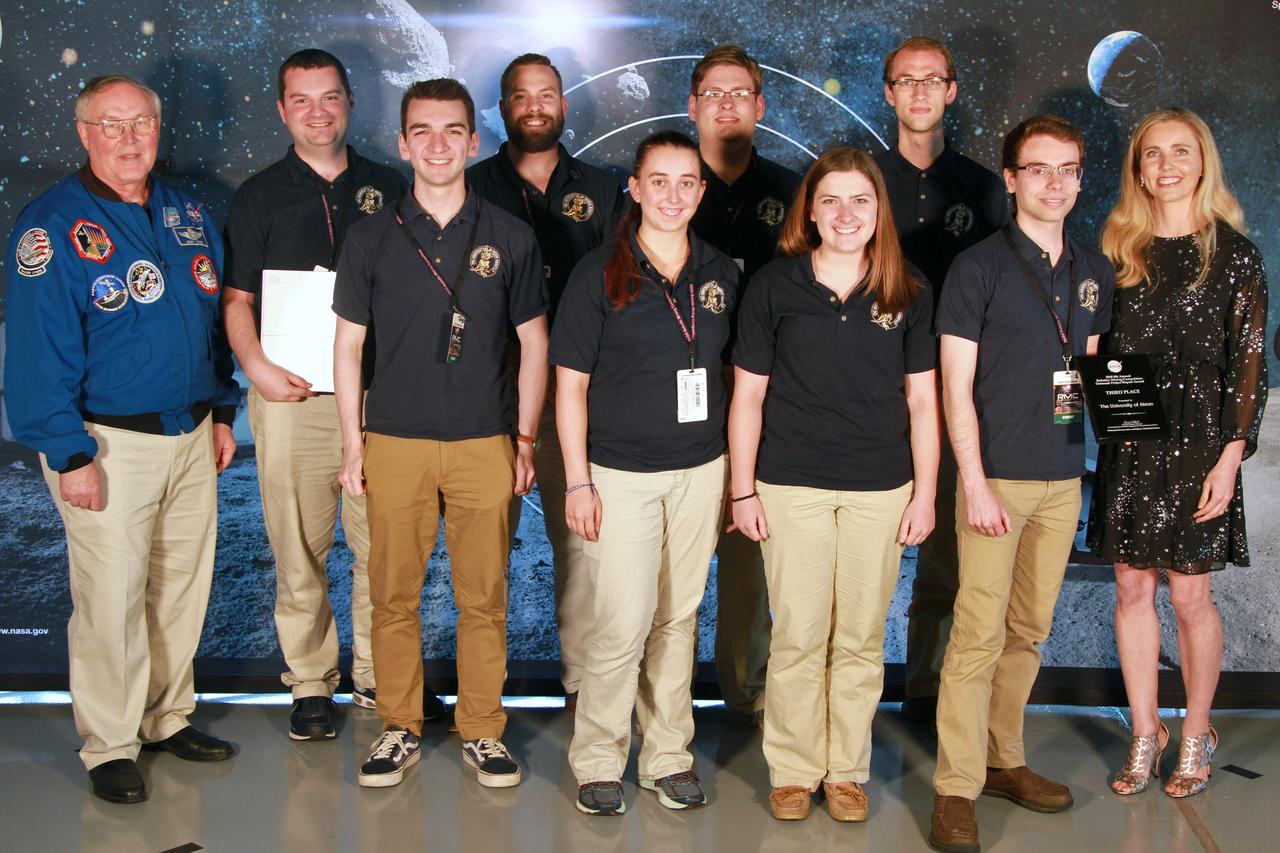
NASA's 9th Annual Robotic Mining Competition concludes with an awards ceremony May 18, 2018, at the Apollo/Saturn V Center at the Kennedy Space Center Visitor Complex in Florida. The team from The University of Akron received third place in the Outreach Project category. At left is retired NASA astronaut Jerry Ross. At right is Bethanne Hull, NASA Education specialist and lead Outreach Project judge. More than 40 student teams from colleges and universities around the U.S. participated in the competition, May 14-18, by using their mining robots to dig in a supersized sandbox filled with BP-1, or simulated lunar soil, gravel and rocks, and participate in other competition requirements. The Robotic Mining Competition is a NASA Human Exploration and Operations Mission Directorate project designed to encourage students in science, technology, engineering and math, or STEM fields. The project provides a competitive environment to foster innovative ideas and solutions that could be used on NASA's deep space missions.
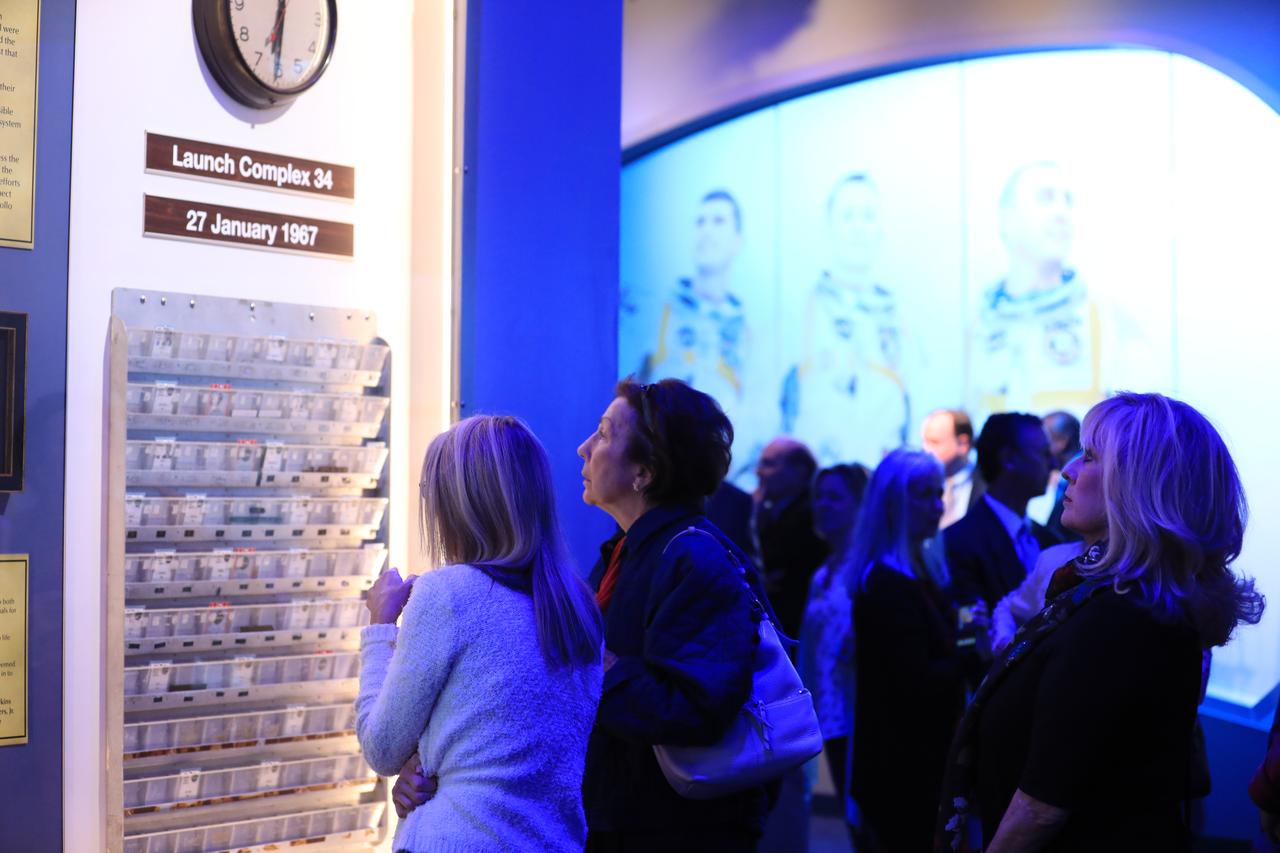
A badge board and badges from launch support staff at Launch Complex 34 is observed inside the Apollo 1 tribute at the Apollo/Saturn V Center at NASA's Kennedy Space Center as it opened Jan. 27, 2017. Astronauts Gus Grissom, Ed White II and Chaffee perished in a fire at the launch pad on Jan. 27, 1967, during training for the mission. The tribute highlights the lives and careers of the astronauts. The tribute features numerous items recalling the lives of the three astronauts. The tribute also includes the three-part hatch to the spacecraft itself, the first time any part of the Apollo 1 spacecraft has been displayed publicly. A version of the hatch after it was redesigned is also showcased as an example of improvements NASA made throughout the agency and to the Apollo spacecraft that would later carry astronauts to the moon.
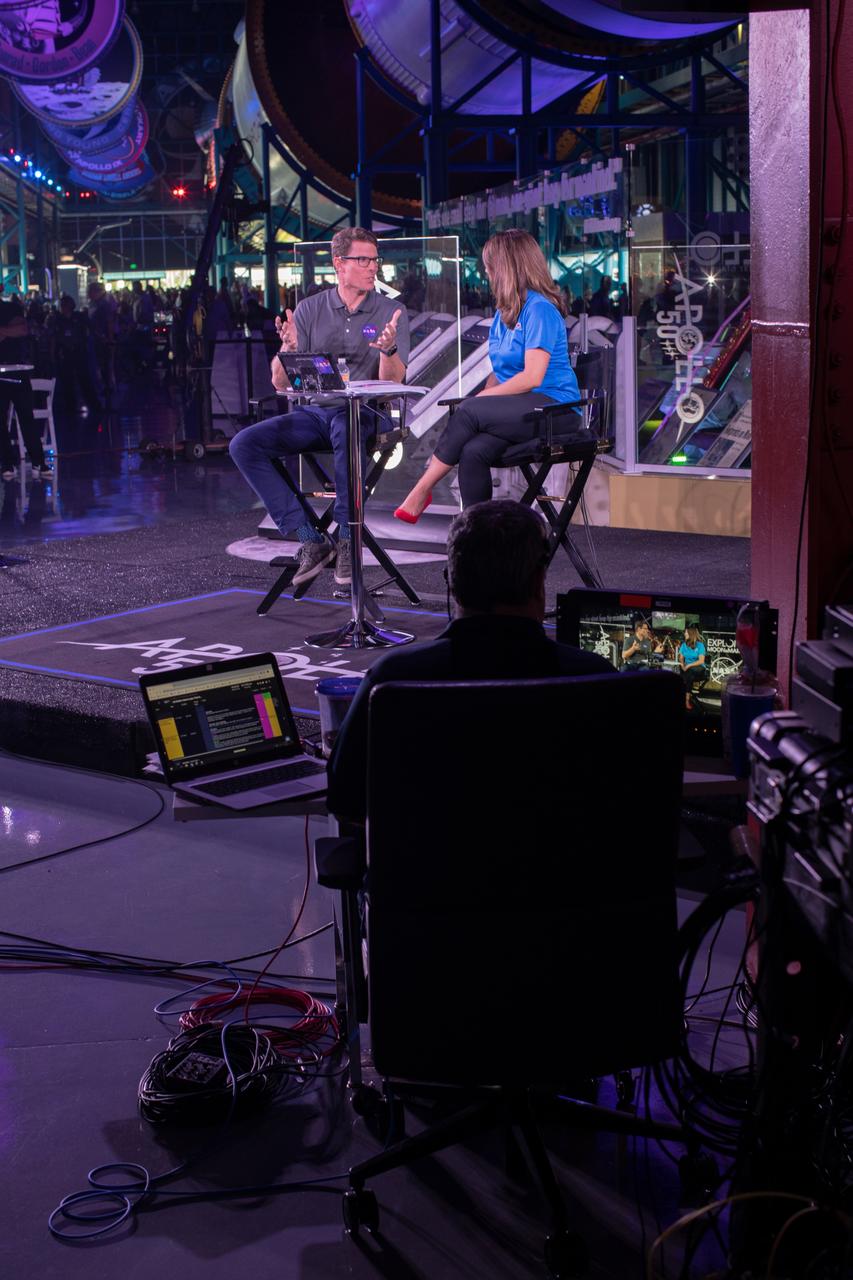
Derrol Nail, left, and Marie Lewis, NASA Office of Communications, host a special Apollo 11 show titled “NASA’s Giant Leaps: Past and Future” on July 19, 2019. The show, which honored the heroes of Apollo and examined NASA’s future plans, was broadcast live from Kennedy Space Center’s Apollo/Saturn V Center in Florida. It featured segments from across the nation, including The National Mall in Washington, NASA’s Johnson Space Center in Houston, Neil Armstrong’s hometown of Wapakoneta, Ohio, and the Apollo 11 command module on display at the Museum of Flight in Seattle.
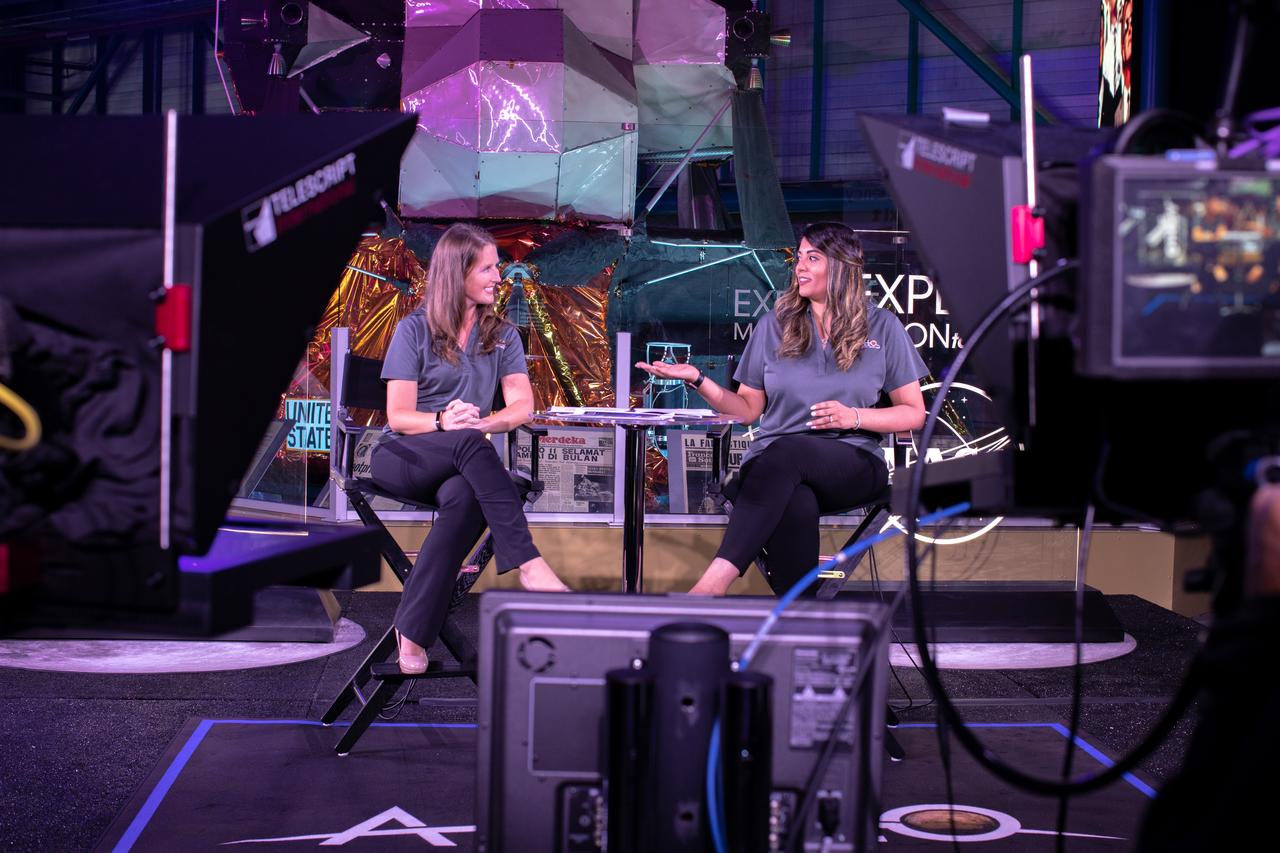
Stephanie Martin, left, NASA Office of Communications, and Nilufar Ramji, NASA Office of STEM Engagement, host a live broadcast of “STEM Forward to the Moon” on July 19, 2019 from Kennedy Space Center’s Apollo/Saturn V Center in Florida. The special program featured kids participating in Moon landing simulations at four museums throughout the country: Cosmosphere in Hutchinson, Kansas; Saint Louis Science Center; Columbia Memorial Space Center in Downey, California; and Arizona Science Center in Phoenix.
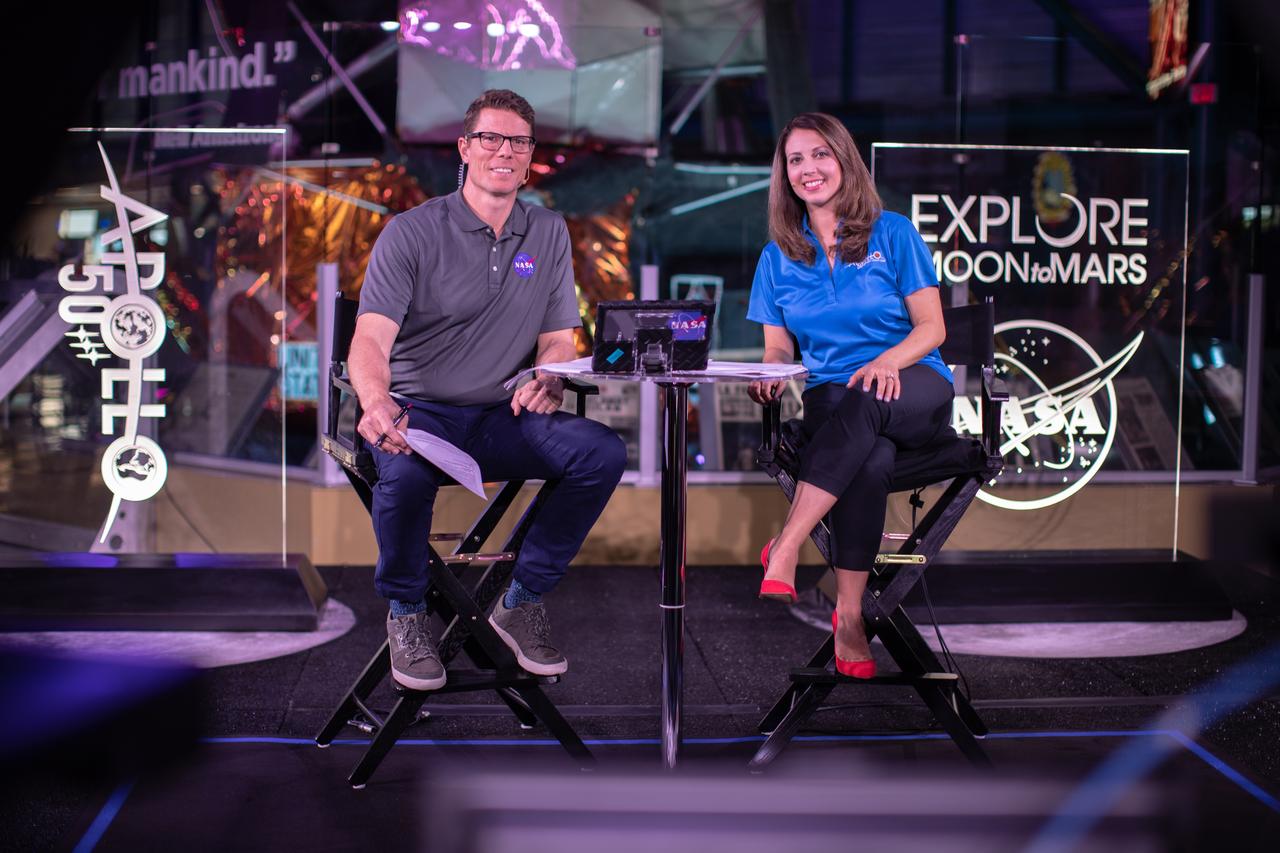
Derrol Nail, left, and Marie Lewis, NASA Office of Communications, host a special Apollo 11 show titled “NASA’s Giant Leaps: Past and Future” on July 19, 2019. The show, which honored the heroes of Apollo and examined NASA’s future plans, was broadcast live from Kennedy Space Center’s Apollo/Saturn V Center in Florida. It featured segments from across the nation, including The National Mall in Washington, NASA’s Johnson Space Center in Houston, Neil Armstrong’s hometown of Wapakoneta, Ohio, and the Apollo 11 command module on display at the Museum of Flight in Seattle.
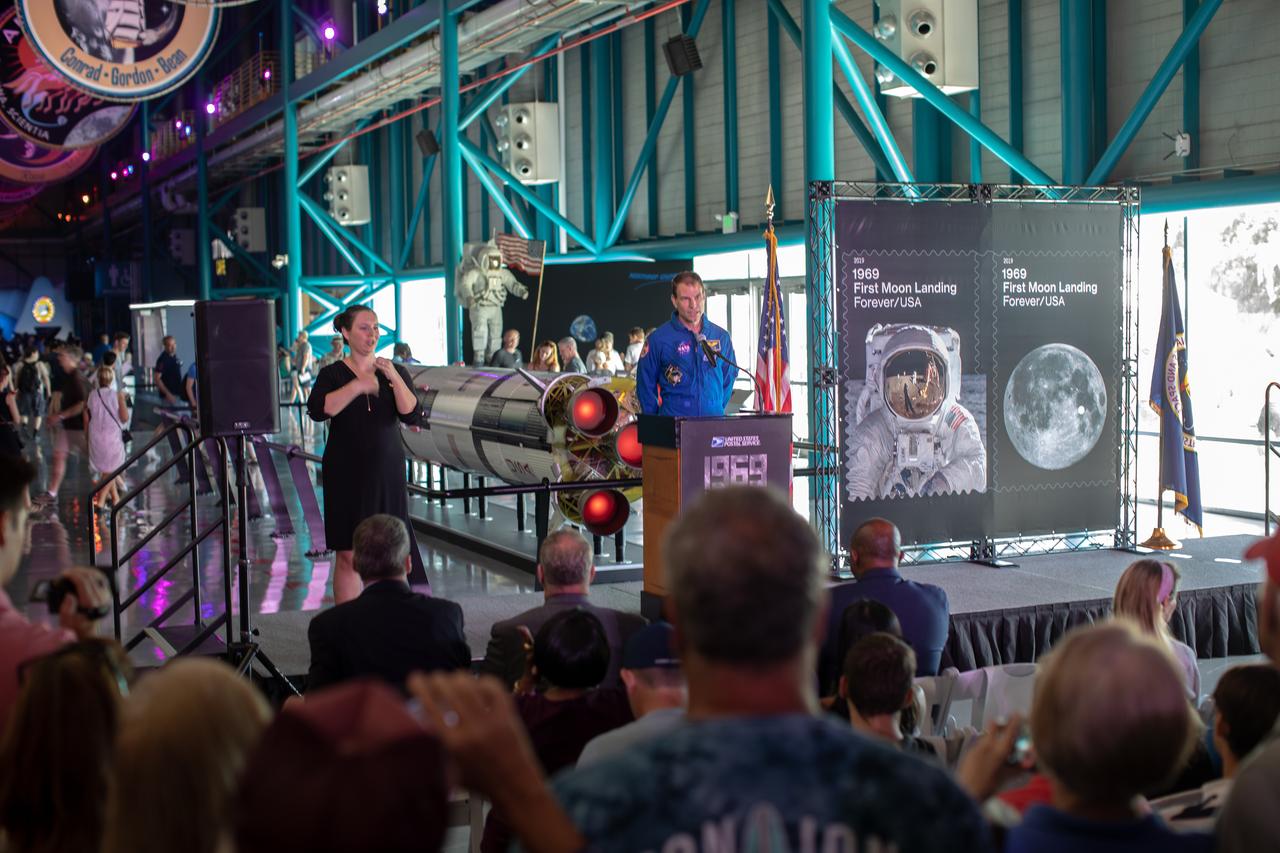
Astronaut Stan Love speaks at Kennedy Space Center’s Apollo/Saturn V Center on Friday, July 19, 2019. Love addressed a crowd at the Florida spaceport during a 50th Anniversary celebration of the Apollo 11 mission. The U.S. Postal Service issued two forever stamps to honor the historic moment. The event marked the first day of issue for the special stamps.
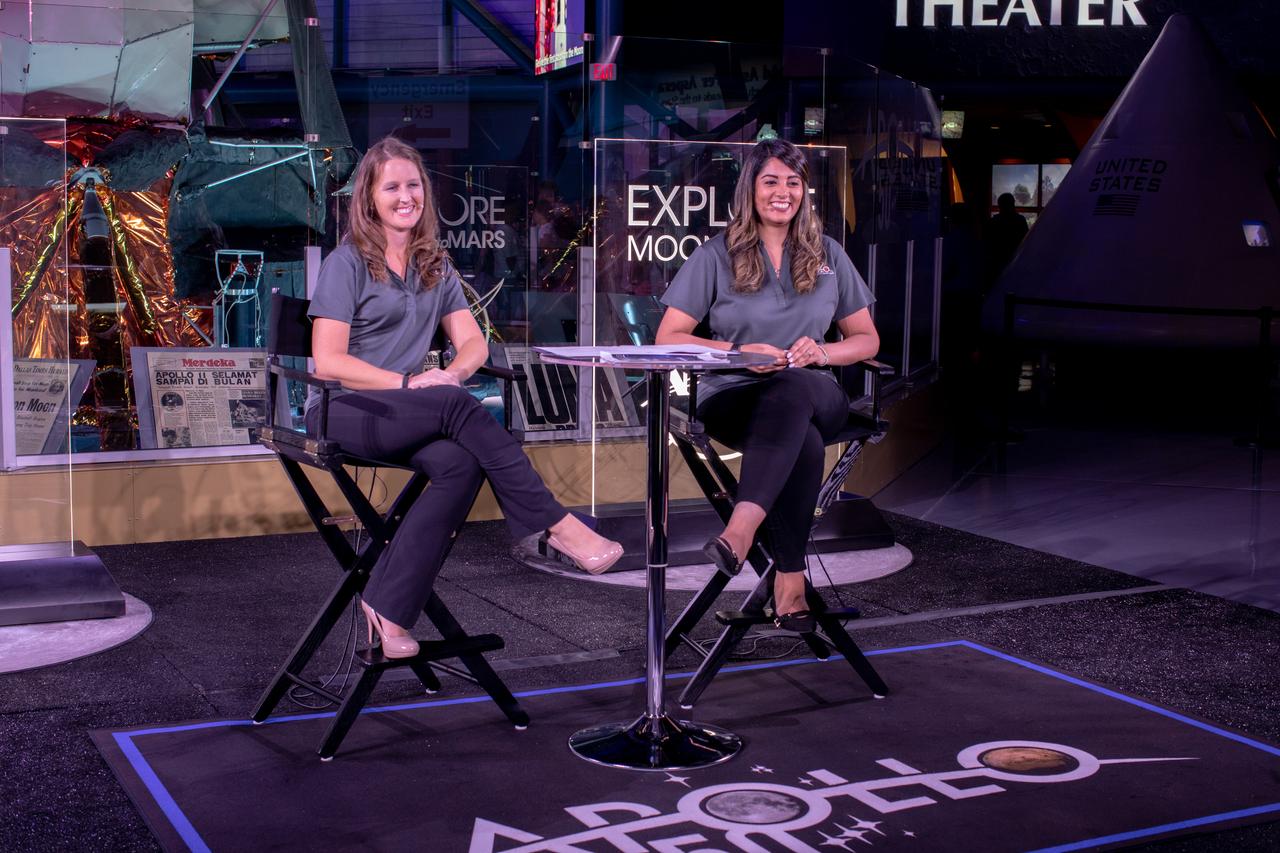
Stephanie Martin, left, NASA Office of Communications, and Nilufar Ramji, NASA Office of STEM Engagement, host a live broadcast of “STEM Forward to the Moon” on July 19, 2019 from Kennedy Space Center’s Apollo/Saturn V Center in Florida. The special program featured kids participating in Moon landing simulations at four museums throughout the country: Cosmosphere in Hutchinson, Kansas; Saint Louis Science Center; Columbia Memorial Space Center in Downey, California; and Arizona Science Center in Phoenix.