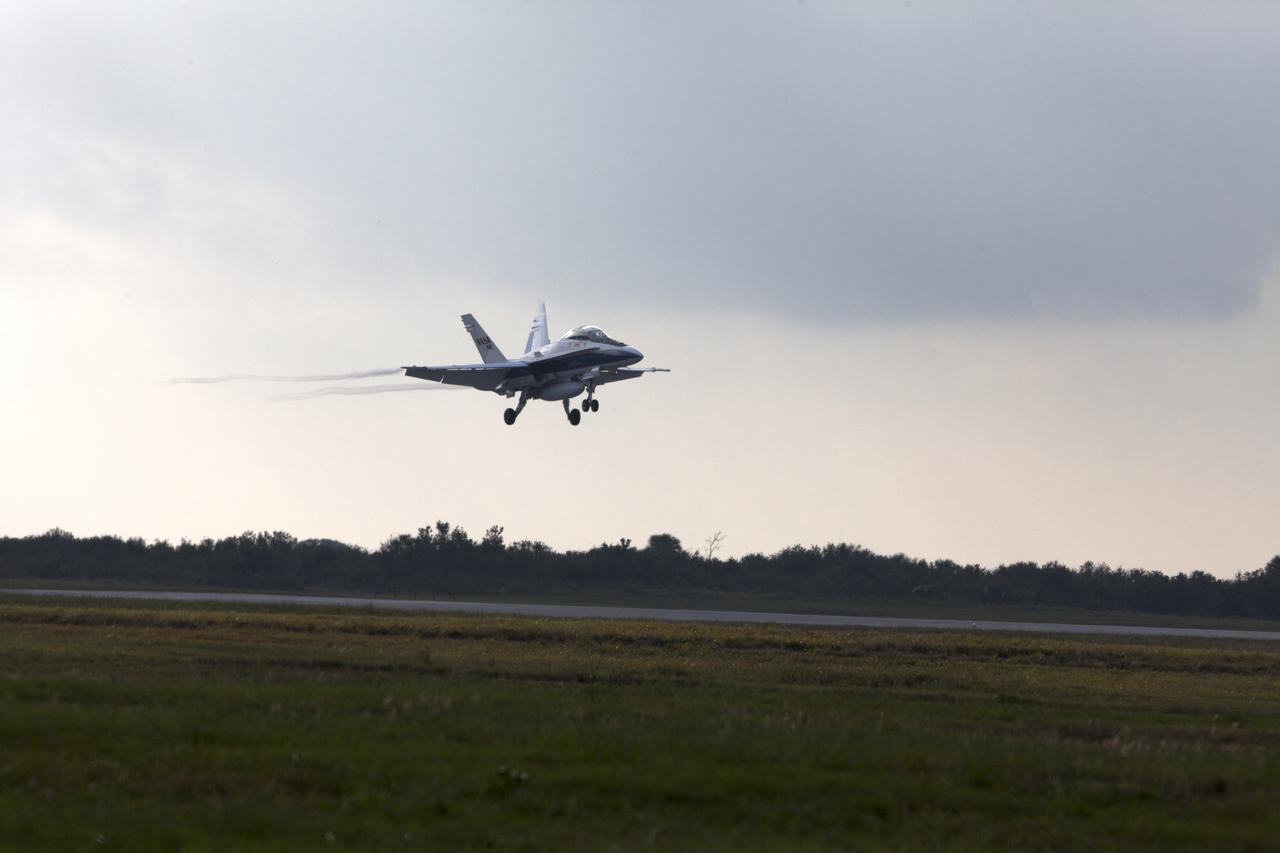
A pathfinder aircraft descends for touchdown at the Skid Strip at Cape Canaveral Air Force Station in Florida. The airplane provided photographic and video imagery of the Orbital ATK L-1011 Stargazer aircraft carrying a Pegasus XL Rocket with eight NASA Cyclone Global Navigation Satellite System, or CYGNSS, spacecraft. With the aircraft flying off shore, the Pegasus rocket was released at 8:37 a.m. EST. Five seconds later, the solid propellant engine ignited and boosted the eight hurricane observatories to orbit. The eight CYGNSS satellites will make frequent and accurate measurements of ocean surface winds throughout the life cycle of tropical storms and hurricanes.
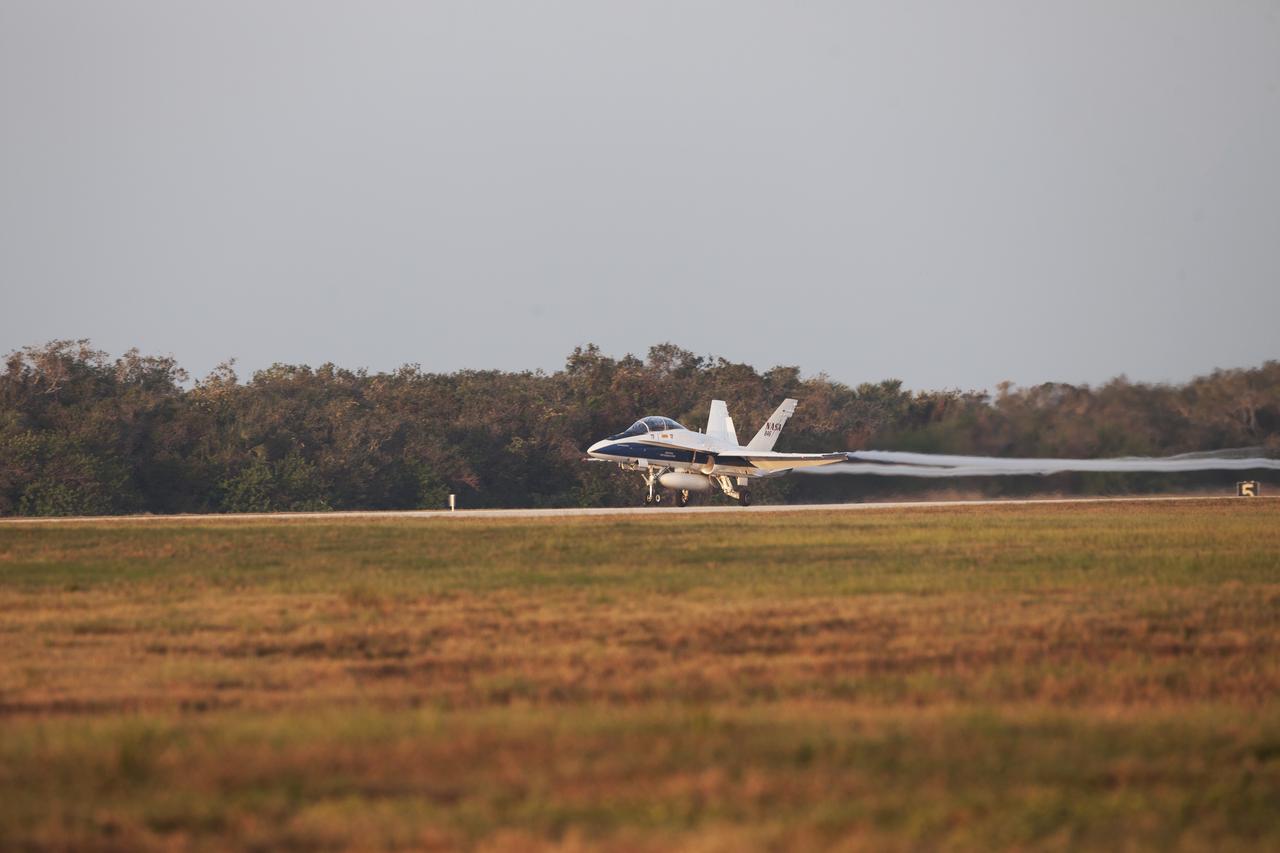
A pathfinder aircraft begins its takeoff from the Skid Strip at Cape Canaveral Air Force Station in Florida. The airplane will provide photographic and video imagery of the Orbital ATK L-1011 Stargazer aircraft carrying a Pegasus XL Rocket with eight NASA Cyclone Global Navigation Satellite System, or CYGNSS, spacecraft. With the aircraft flying off shore, the Pegasus rocket will be released. Five seconds later, the solid propellant engine will ignite and boost the eight hurricane observatories to orbit. The eight CYGNSS satellites will make frequent and accurate measurements of ocean surface winds throughout the life cycle of tropical storms and hurricanes.

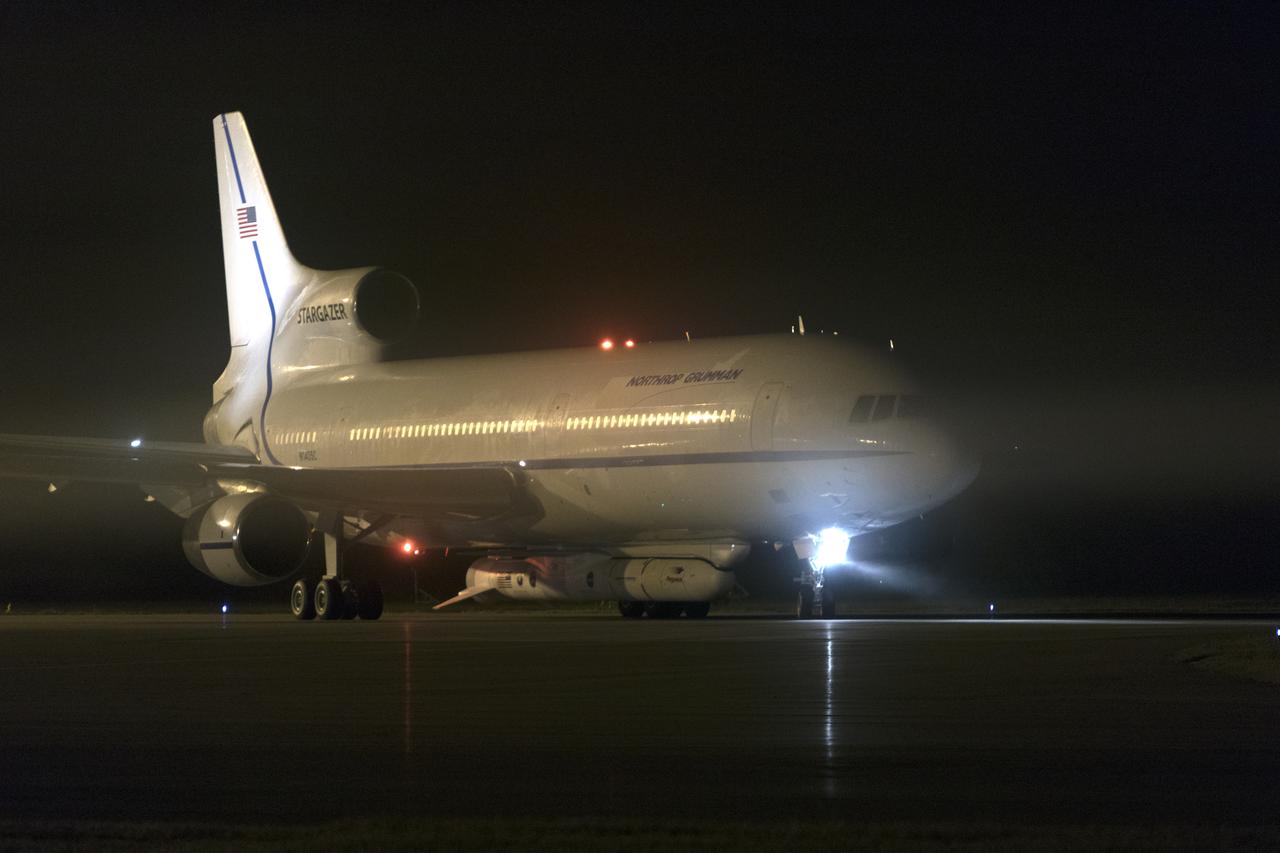
The Orbital ATK L-1011 Stargazer aircraft has arrived at the Skid Strip at Cape Canaveral Air Force Station in Florida. Attached beneath the Stargazer is the Orbital ATK Pegasus XL with NASA's Cyclone Global Navigation Satellite System (CYGNSS) on board. CYGNSS was processed and prepared for its mission at Vandenberg Air Force Base in California. CYGNSS is scheduled for its airborne launch aboard the Pegasus XL rocket from the Skid Strip on Dec. 12. CYGNSS will make frequent and accurate measurements of ocean surface winds throughout the life cycle of tropical storms and hurricanes. The data that CYGNSS provides will enable scientists to probe key air-sea interaction processes that take place near the core of storms, which are rapidly changing and play a critical role in the beginning and intensification of hurricanes.
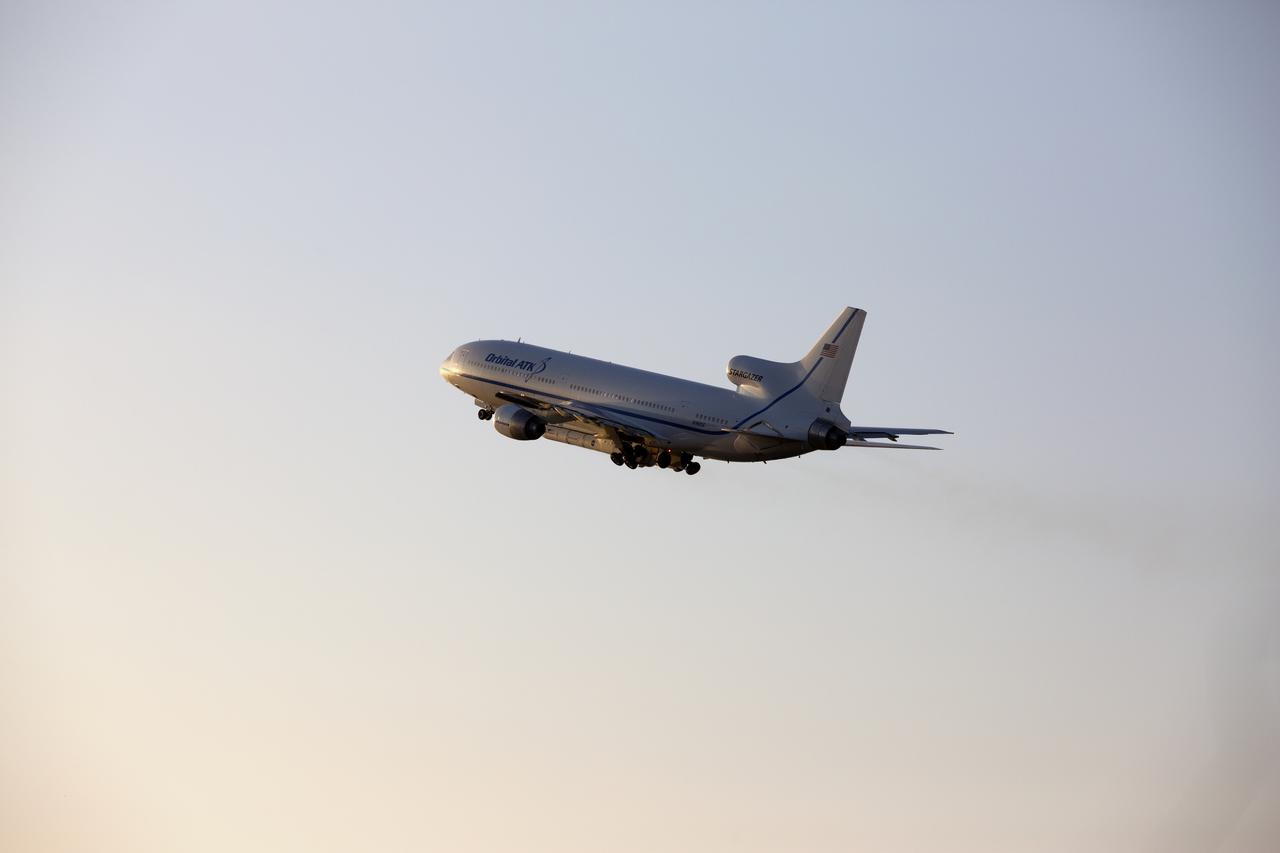
An Orbital ATK L-1011 Stargazer aircraft carrying a Pegasus XL Rocket with eight NASA Cyclone Global Navigation Satellite System, or CYGNSS, soars high after takeoff from the Skid Strip at Cape Canaveral Air Force Station, Florida. With the aircraft flying off shore, the Pegasus rocket will be released. Five seconds later, the solid propellant engine will ignite and boost the eight hurricane observatories to orbit. The eight CYGNSS satellites will make frequent and accurate measurements of ocean surface winds throughout the life cycle of tropical storms and hurricanes. Release of the Pegasus XL rocket is scheduled for 8:40 a.m. EST.
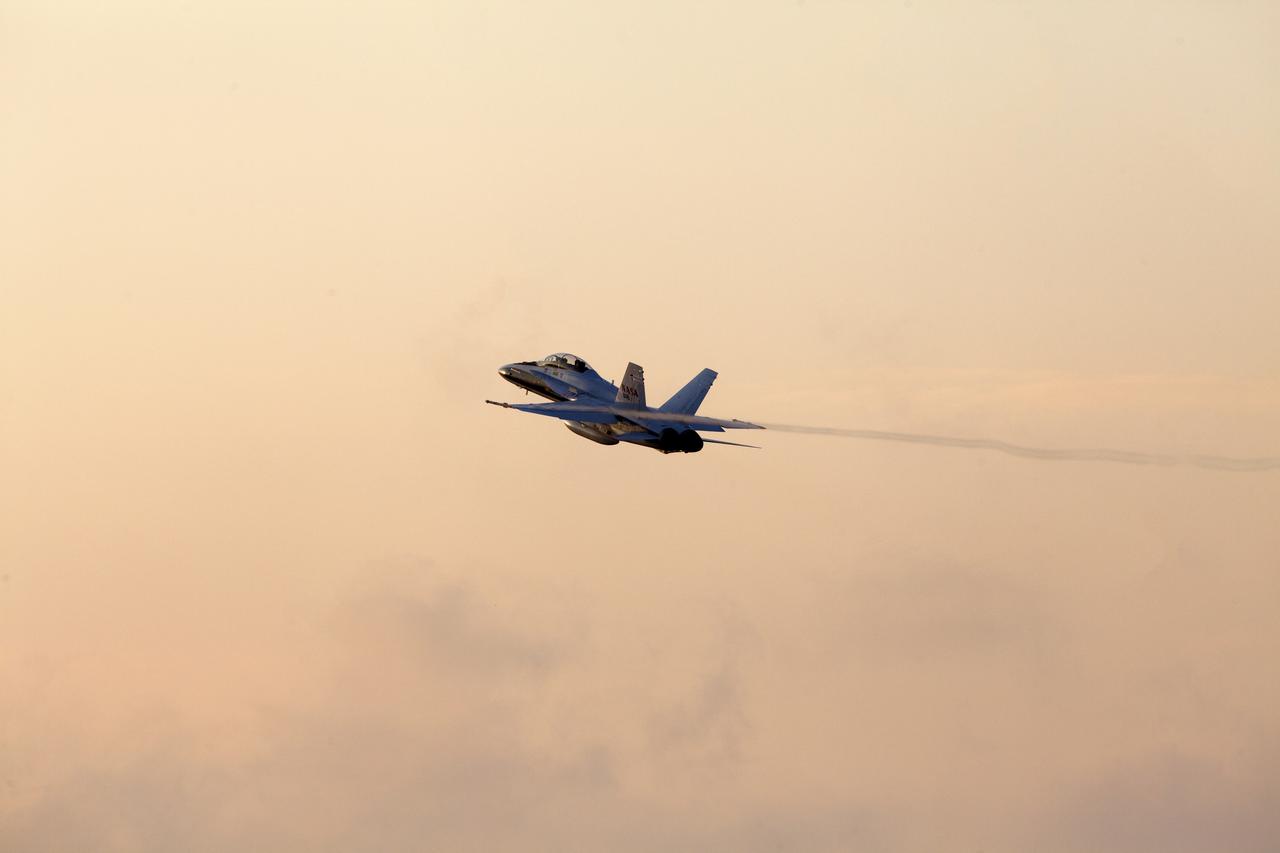
A pathfinder aircraft soars high after takeoff from the Skid Strip at Cape Canaveral Air Force Station in Florida. The airplane will provide photographic and video imagery of the Orbital ATK L-1011 Stargazer aircraft carrying a Pegasus XL Rocket with eight NASA Cyclone Global Navigation Satellite System, or CYGNSS, spacecraft. With the aircraft flying off shore, the Pegasus rocket will be released. Five seconds later, the solid propellant engine will ignite and boost the eight hurricane observatories to orbit. The eight CYGNSS satellites will make frequent and accurate measurements of ocean surface winds throughout the life cycle of tropical storms and hurricanes.
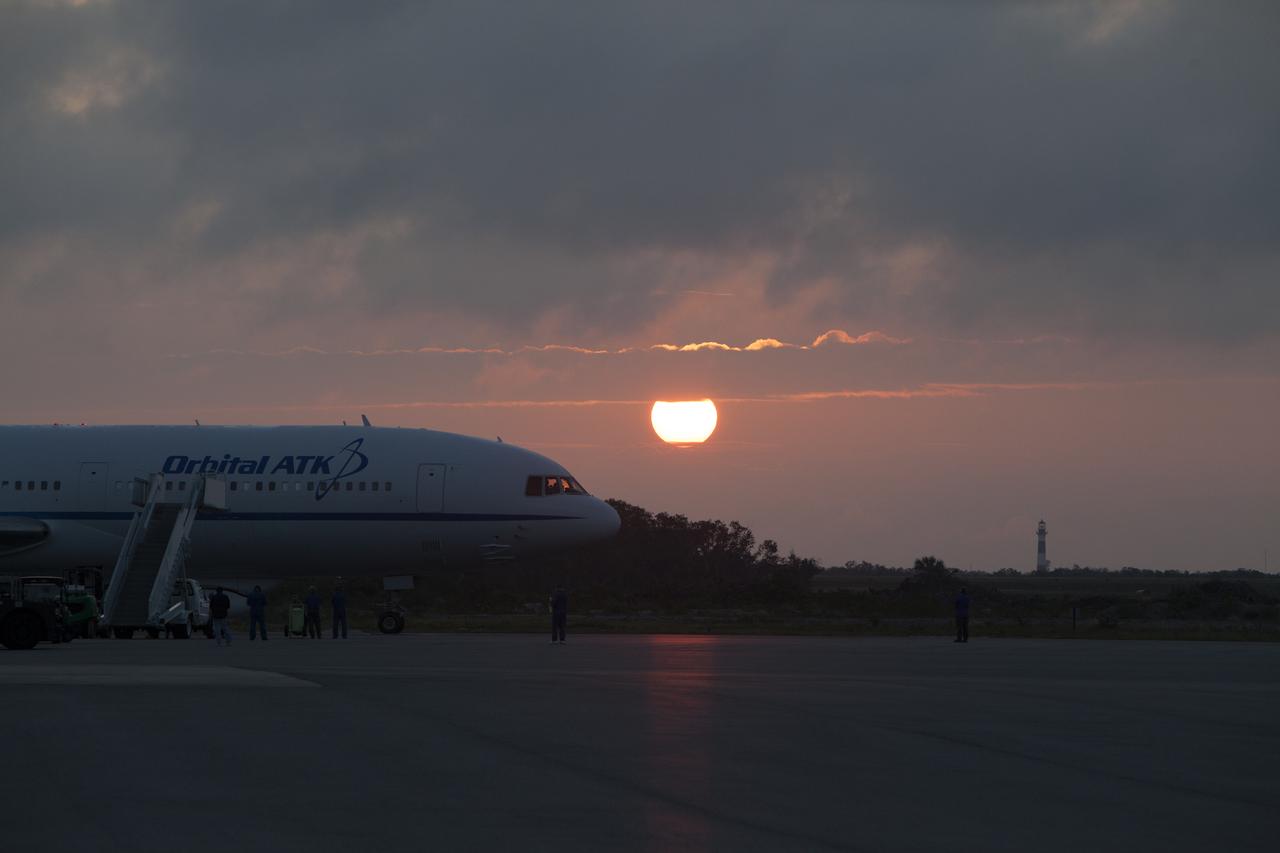
An Orbital ATK L-1011 Stargazer aircraft carrying a Pegasus XL Rocket with eight NASA Cyclone Global Navigation Satellite System, or CYGNSS, spacecraft is being readied for takeoff from the Skid Strip at Cape Canaveral Air Force Station, Florida. With the aircraft flying off shore, the Pegasus rocket will be released. Five seconds later, the solid propellant engine will ignite and boost the eight hurricane observatories to orbit. The eight CYGNSS satellites will make frequent and accurate measurements of ocean surface winds throughout the life cycle of tropical storms and hurricanes.
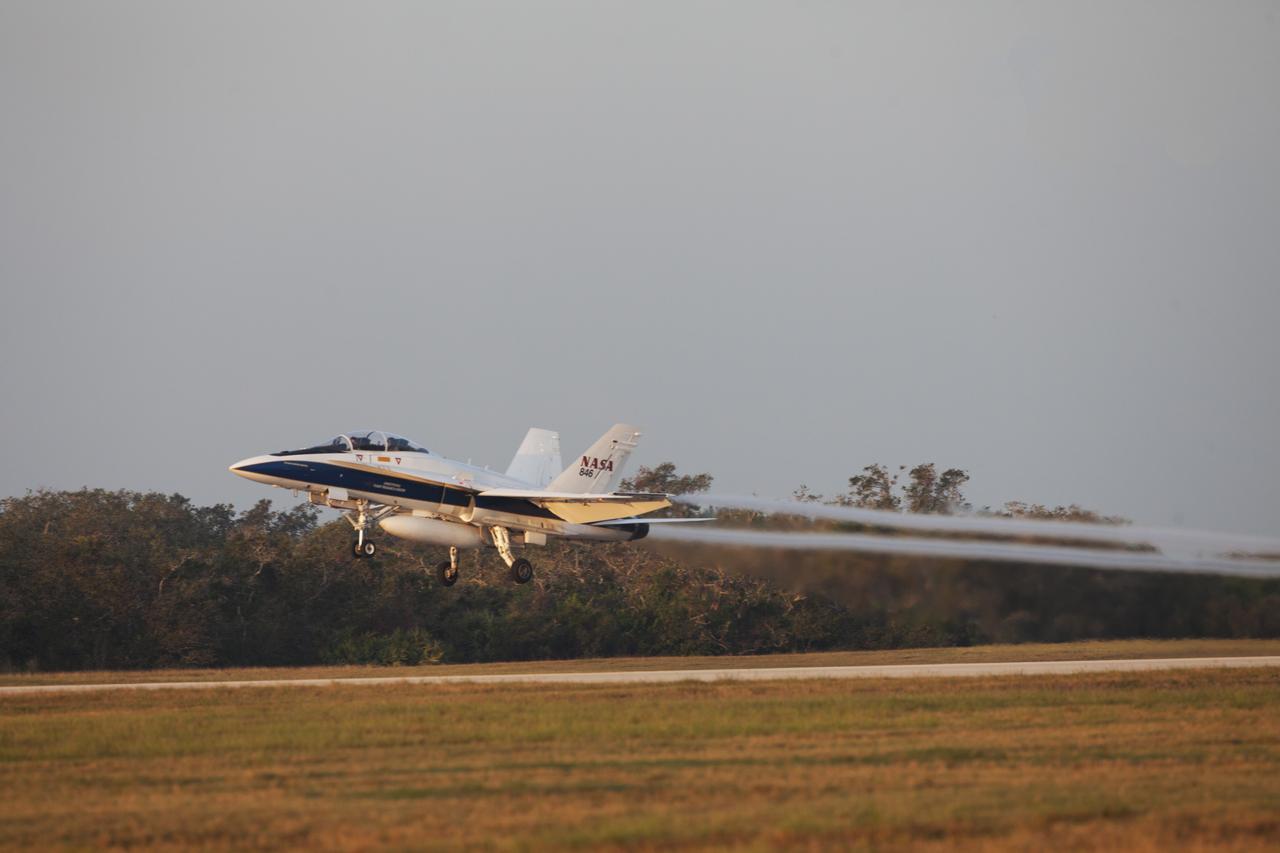
A pathfinder aircraft takes off from the Skid Strip at Cape Canaveral Air Force Station in Florida. The airplane will provide photographic and video imagery of the Orbital ATK L-1011 Stargazer aircraft carrying a Pegasus XL Rocket with eight NASA Cyclone Global Navigation Satellite System, or CYGNSS, spacecraft. With the aircraft flying off shore, the Pegasus rocket will be released. Five seconds later, the solid propellant engine will ignite and boost the eight hurricane observatories to orbit. The eight CYGNSS satellites will make frequent and accurate measurements of ocean surface winds throughout the life cycle of tropical storms and hurricanes.
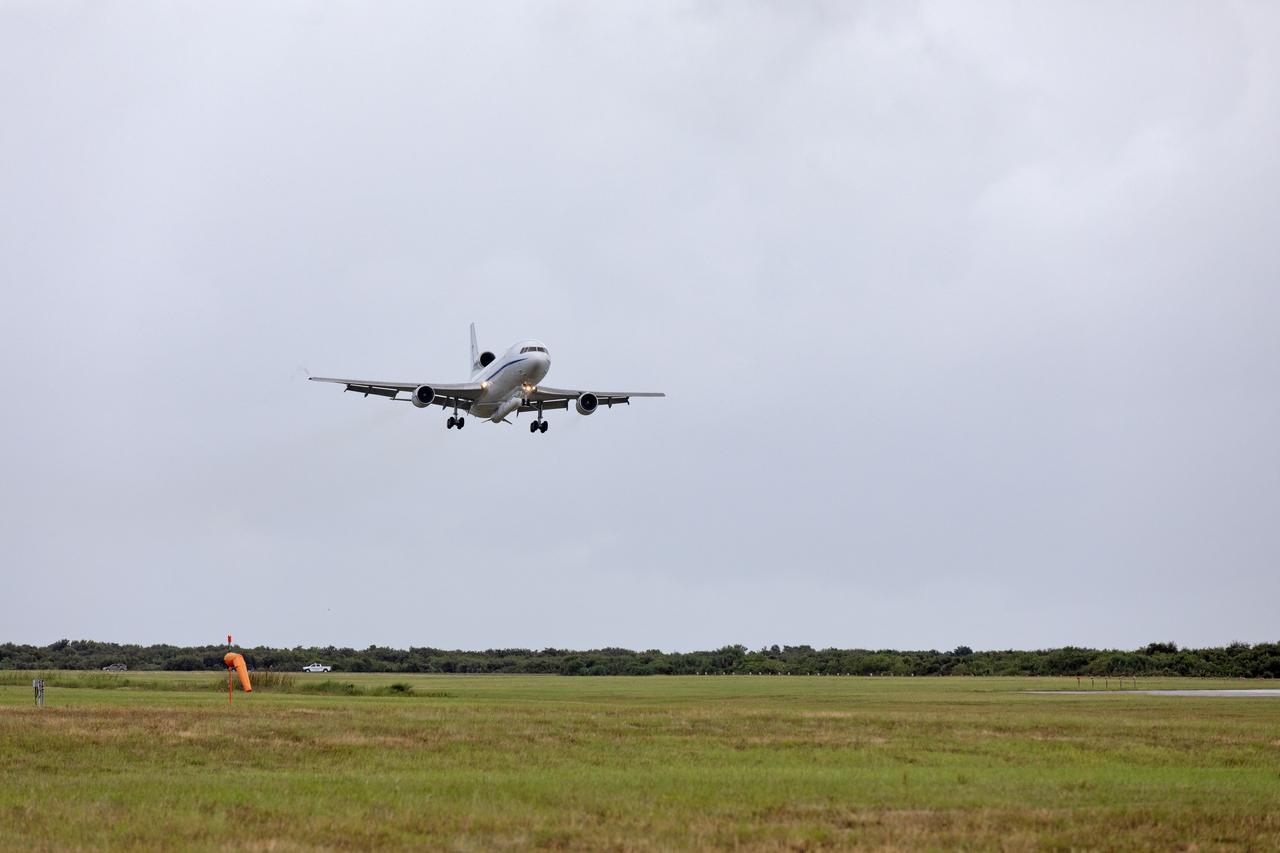
Northrop Grumman's L-1011 Stargazer descends toward the Skid Strip at Cape Canaveral Air Force Station in Florida, on Oct. 19, 2018. The company's Pegasus XL rocket, containing NASA's Ionospheric Connection Explorer (ICON), is attached beneath the aircraft. The Pegasus XL rocket will launch from the Skid Strip. ICON will study the frontier of space - the dynamic zone high in Earth's atmosphere where terrestrial weather from below meets space weather above. The explorer will help determine the physics of Earth's space environment and pave the way for mitigating its effects on our technology and communications systems.
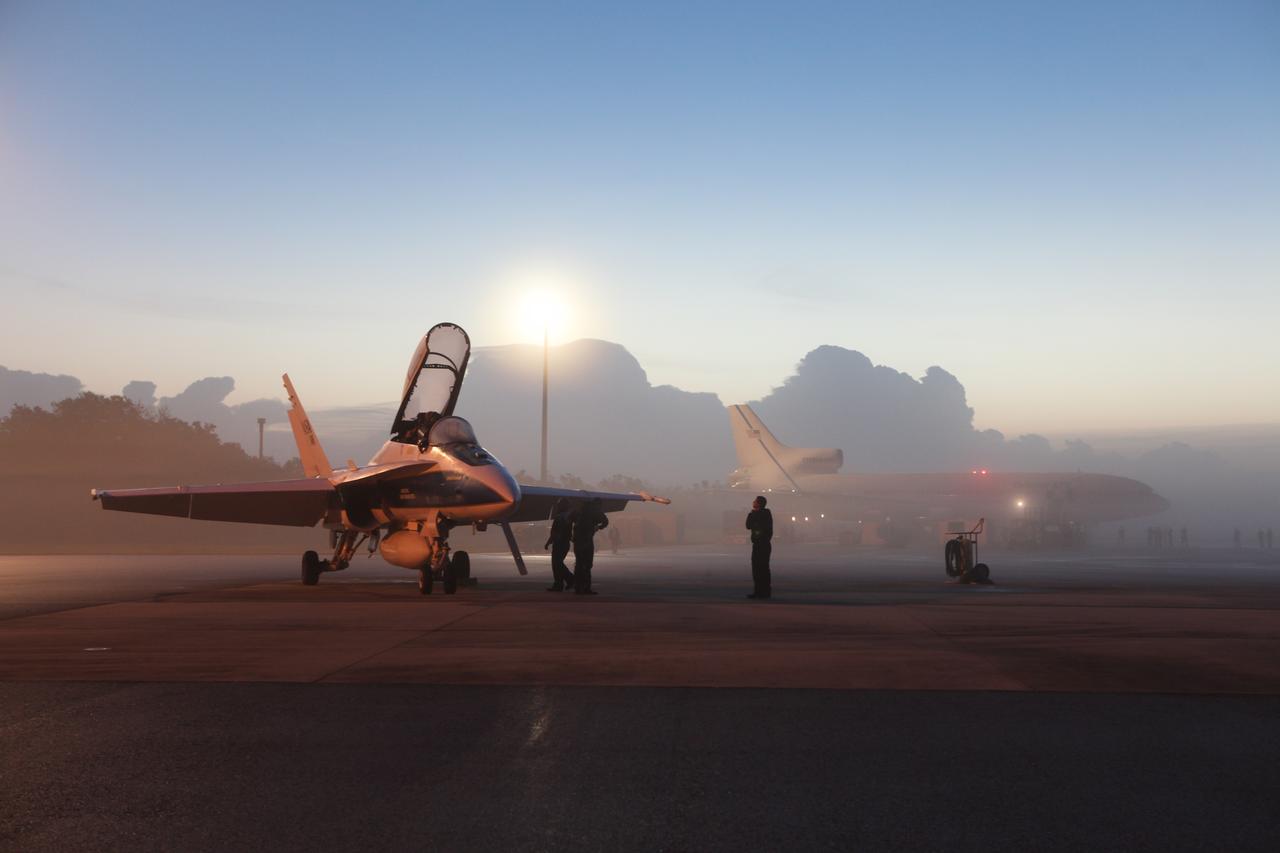
A pathfinder aircraft prepares for takeoff from the Skid Strip at Cape Canaveral Air Force Station in Florida. The airplane will provide photographic and video imagery of the Orbital ATK L-1011 Stargazer aircraft carrying a Pegasus XL Rocket with eight NASA Cyclone Global Navigation Satellite System, or CYGNSS, spacecraft. With the aircraft flying off shore, the Pegasus rocket will be released. Five seconds later, the solid propellant engine will ignite and boost the eight hurricane observatories to orbit. The eight CYGNSS satellites will make frequent and accurate measurements of ocean surface winds throughout the life cycle of tropical storms and hurricanes.
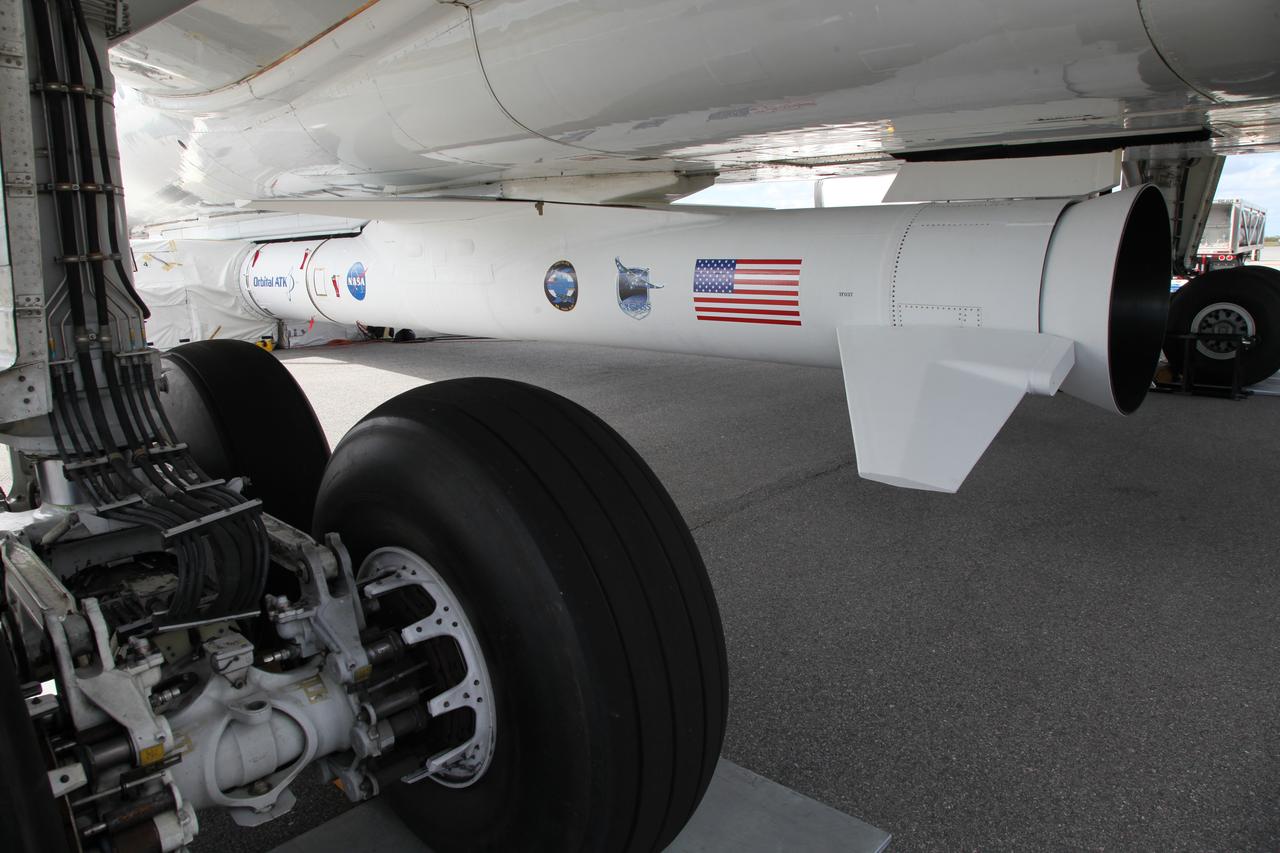
At Cape Canaveral Air Force Station's Skid Strip the Orbital ATK L-1011 Stargazer aircraft is being prepared to launch NASA's Cyclone Global Navigation Satellite System, or CYGNSS, spacecraft. The eight micro satellites are aboard an Orbital ATK Pegasus XL rocket strapped to the underside of the Stargazer. CYGNSS is scheduled for its airborne launch aboard the Pegasus XL rocket from the Skid Strip on Dec. 12. CYGNSS will make frequent and accurate measurements of ocean surface winds throughout the life cycle of tropical storms and hurricanes. The data that CYGNSS provides will enable scientists to probe key air-sea interaction processes that take place near the core of storms, which are rapidly changing and play a critical role in the beginning and intensification of hurricanes.
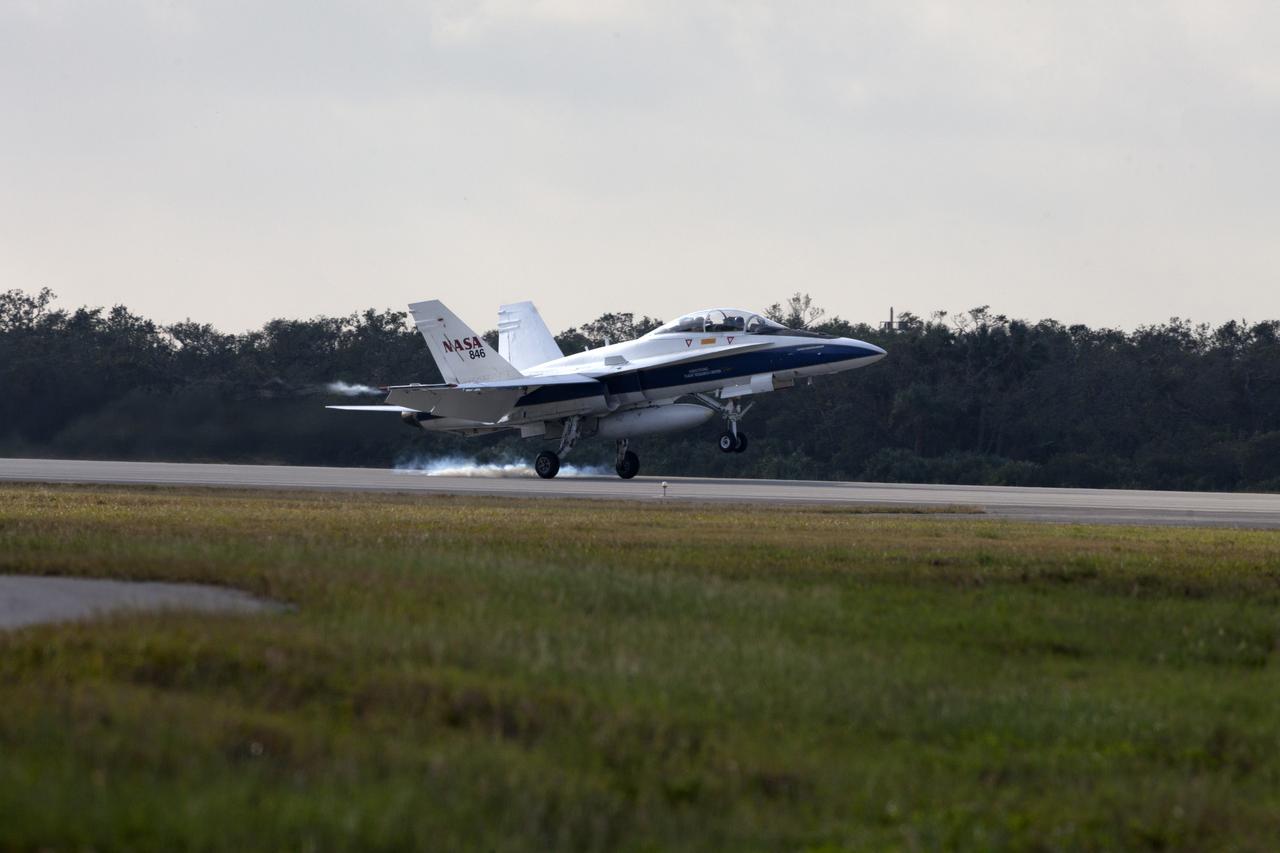
A pathfinder aircraft touches down at the Skid Strip at Cape Canaveral Air Force Station in Florida. The airplane provided photographic and video imagery of the Orbital ATK L-1011 Stargazer aircraft carrying a Pegasus XL Rocket with eight NASA Cyclone Global Navigation Satellite System, or CYGNSS, spacecraft. With the aircraft flying off shore, the Pegasus rocket was released at 8:37 a.m. EST. Five seconds later, the solid propellant engine ignited and boosted the eight hurricane observatories to orbit. The eight CYGNSS satellites will make frequent and accurate measurements of ocean surface winds throughout the life cycle of tropical storms and hurricanes.
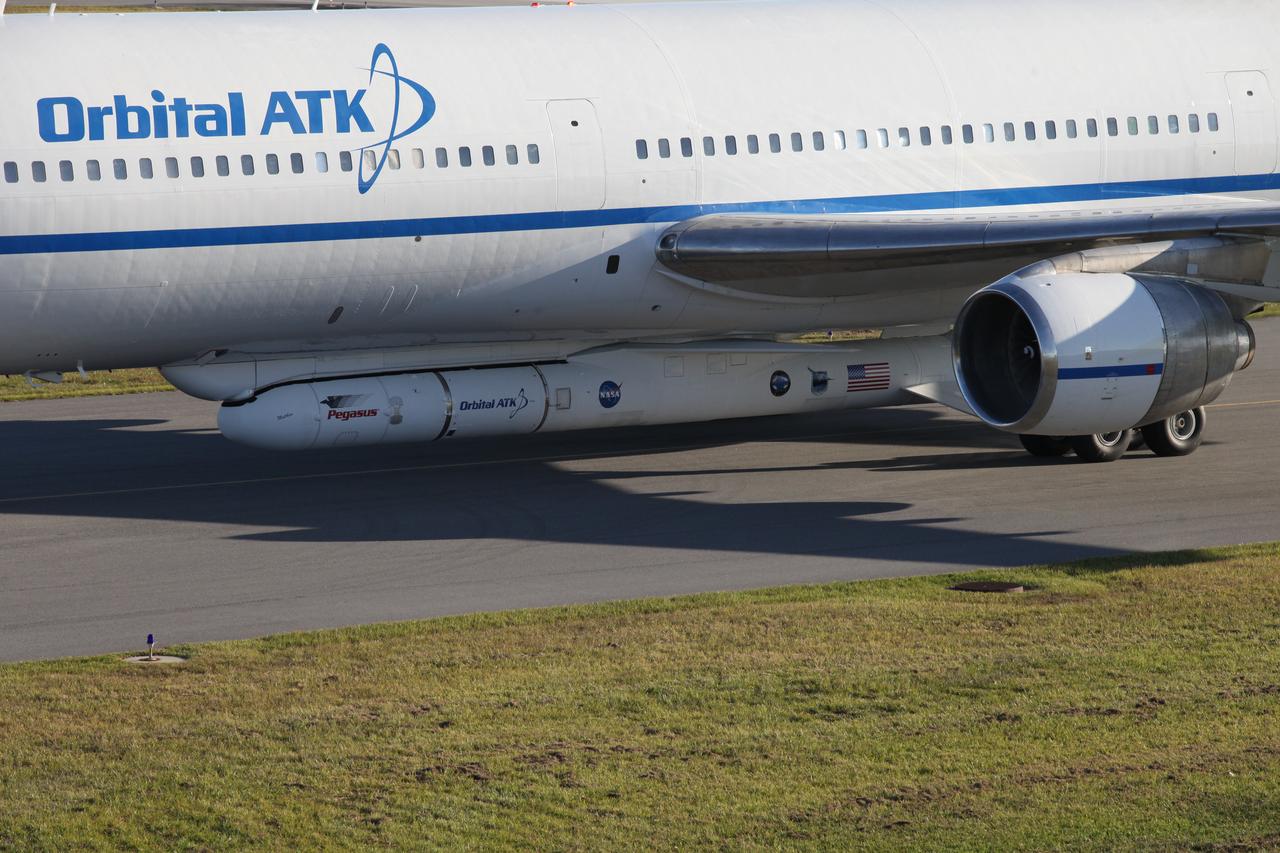
The Orbital ATK L-1011 Stargazer aircraft has arrived at the Skid Strip at Cape Canaveral Air Force Station in Florida. Attached beneath the Stargazer is the Orbital ATK Pegasus XL with NASA's Cyclone Global Navigation Satellite System (CYGNSS) on board. CYGNSS was processed and prepared for its mission at Vandenberg Air Force Base in California. CYGNSS is scheduled for its airborne launch aboard the Pegasus XL rocket from the Skid Strip on Dec. 12. CYGNSS will make frequent and accurate measurements of ocean surface winds throughout the life cycle of tropical storms and hurricanes. The data that CYGNSS provides will enable scientists to probe key air-sea interaction processes that take place near the core of storms, which are rapidly changing and play a critical role in the beginning and intensification of hurricanes.
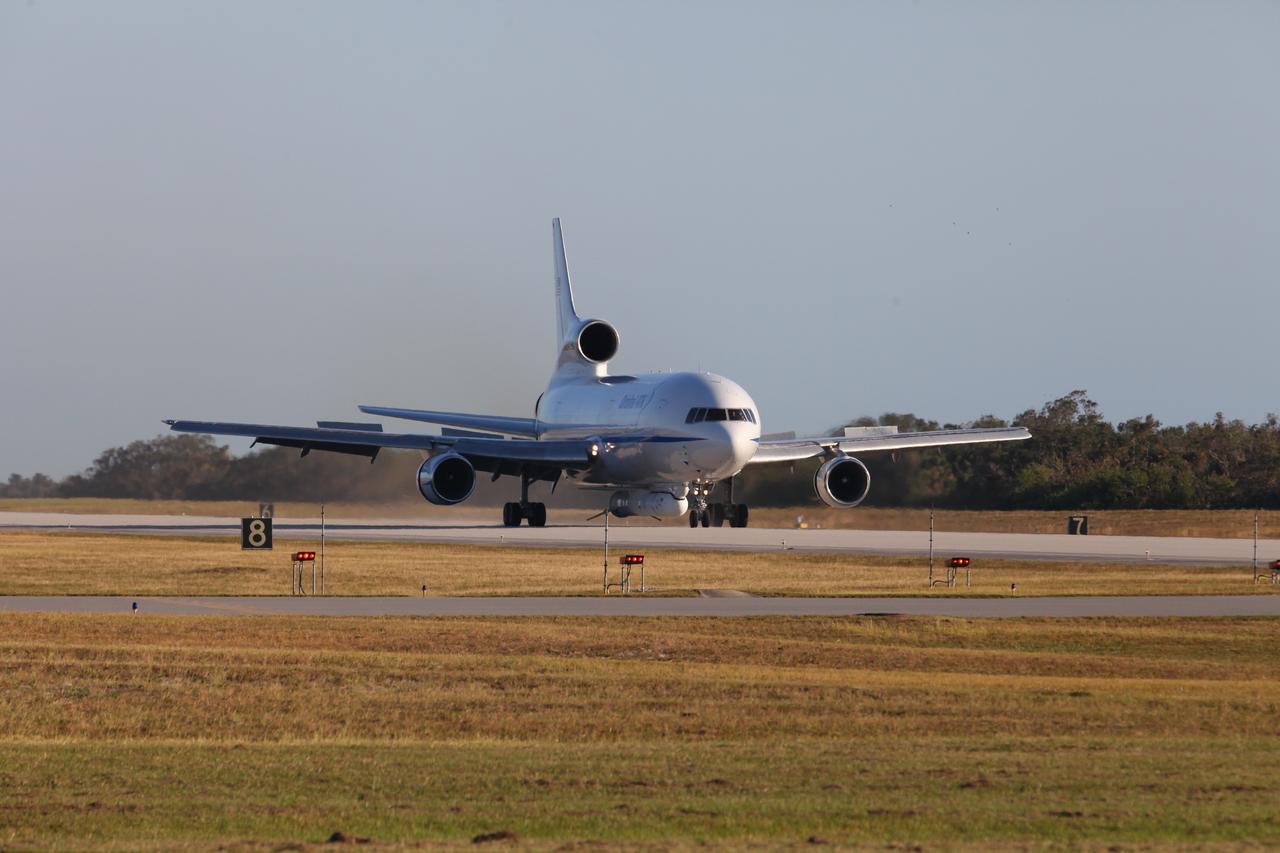
The Orbital ATK L-1011 Stargazer aircraft touches down at 3:57 p.m. EST at the Skid Strip at Cape Canaveral Air Force Station in Florida. Attached beneath the Stargazer is the Orbital ATK Pegasus XL with NASA's Cyclone Global Navigation Satellite System (CYGNSS) on board. CYGNSS was processed and prepared for its mission at Vandenberg Air Force Base in California. CYGNSS is scheduled for its airborne launch aboard the Pegasus XL rocket from the Skid Strip on Dec. 12. CYGNSS will make frequent and accurate measurements of ocean surface winds throughout the life cycle of tropical storms and hurricanes. The data that CYGNSS provides will enable scientists to probe key air-sea interaction processes that take place near the core of storms, which are rapidly changing and play a critical role in the beginning and intensification of hurricanes.
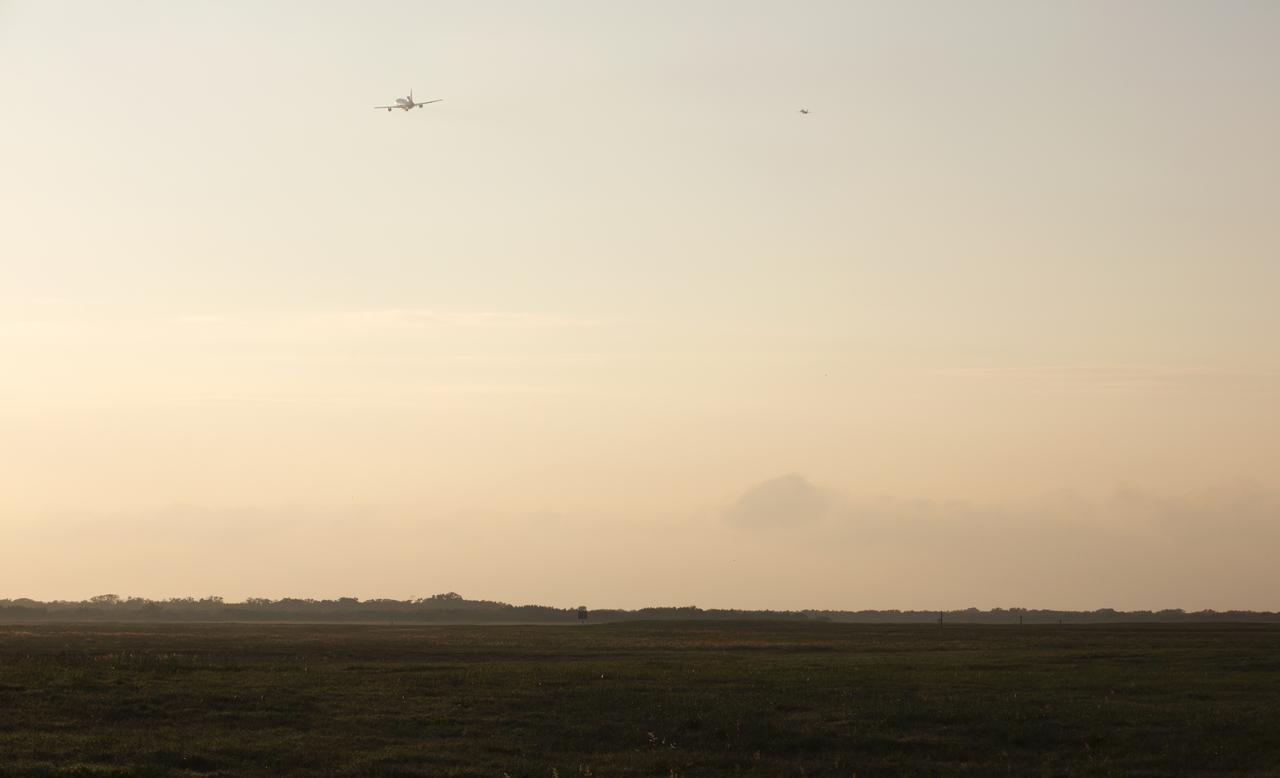
An Orbital ATK L-1011 Stargazer aircraft carrying a Pegasus XL Rocket with eight NASA Cyclone Global Navigation Satellite System, or CYGNSS, soars high after takeoff from the Skid Strip at Cape Canaveral Air Force Station, Florida. With the aircraft flying off shore, the Pegasus rocket will be released. Five seconds later, the solid propellant engine will ignite and boost the eight hurricane observatories to orbit. The eight CYGNSS satellites will make frequent and accurate measurements of ocean surface winds throughout the life cycle of tropical storms and hurricanes. Release of the Pegasus XL rocket is scheduled for 8:40 a.m. EST.
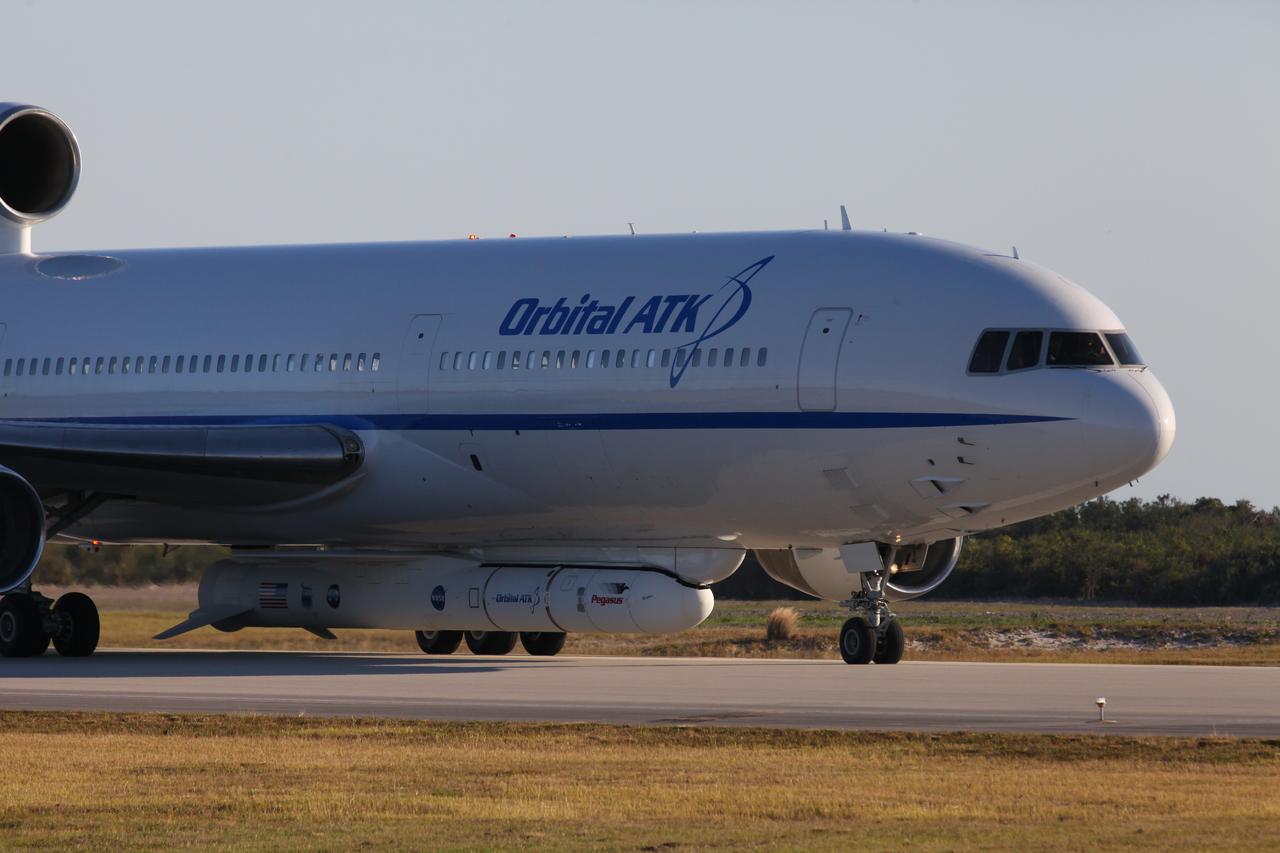
The Orbital ATK L-1011 Stargazer aircraft has arrived at the Skid Strip at Cape Canaveral Air Force Station in Florida. Attached beneath the Stargazer is the Orbital ATK Pegasus XL with NASA's Cyclone Global Navigation Satellite System (CYGNSS) on board. CYGNSS was processed and prepared for its mission at Vandenberg Air Force Base in California. CYGNSS is scheduled for its airborne launch aboard the Pegasus XL rocket from the Skid Strip on Dec. 12. CYGNSS will make frequent and accurate measurements of ocean surface winds throughout the life cycle of tropical storms and hurricanes. The data that CYGNSS provides will enable scientists to probe key air-sea interaction processes that take place near the core of storms, which are rapidly changing and play a critical role in the beginning and intensification of hurricanes.
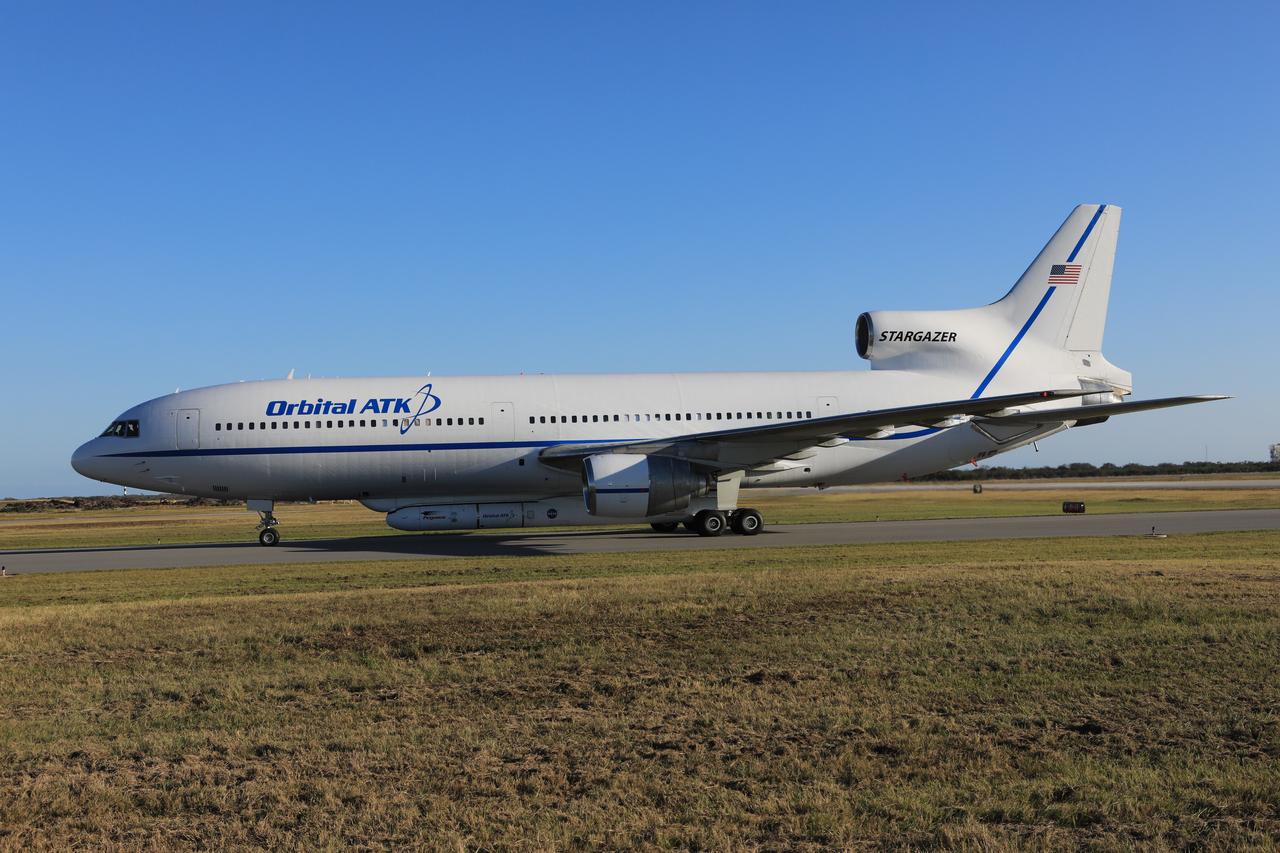
The Orbital ATK L-1011 Stargazer aircraft has arrived at the Skid Strip at Cape Canaveral Air Force Station in Florida. Attached beneath the Stargazer is the Orbital ATK Pegasus XL with NASA's Cyclone Global Navigation Satellite System (CYGNSS) on board. CYGNSS was processed and prepared for its mission at Vandenberg Air Force Base in California. CYGNSS is scheduled for its airborne launch aboard the Pegasus XL rocket from the Skid Strip on Dec. 12. CYGNSS will make frequent and accurate measurements of ocean surface winds throughout the life cycle of tropical storms and hurricanes. The data that CYGNSS provides will enable scientists to probe key air-sea interaction processes that take place near the core of storms, which are rapidly changing and play a critical role in the beginning and intensification of hurricanes.
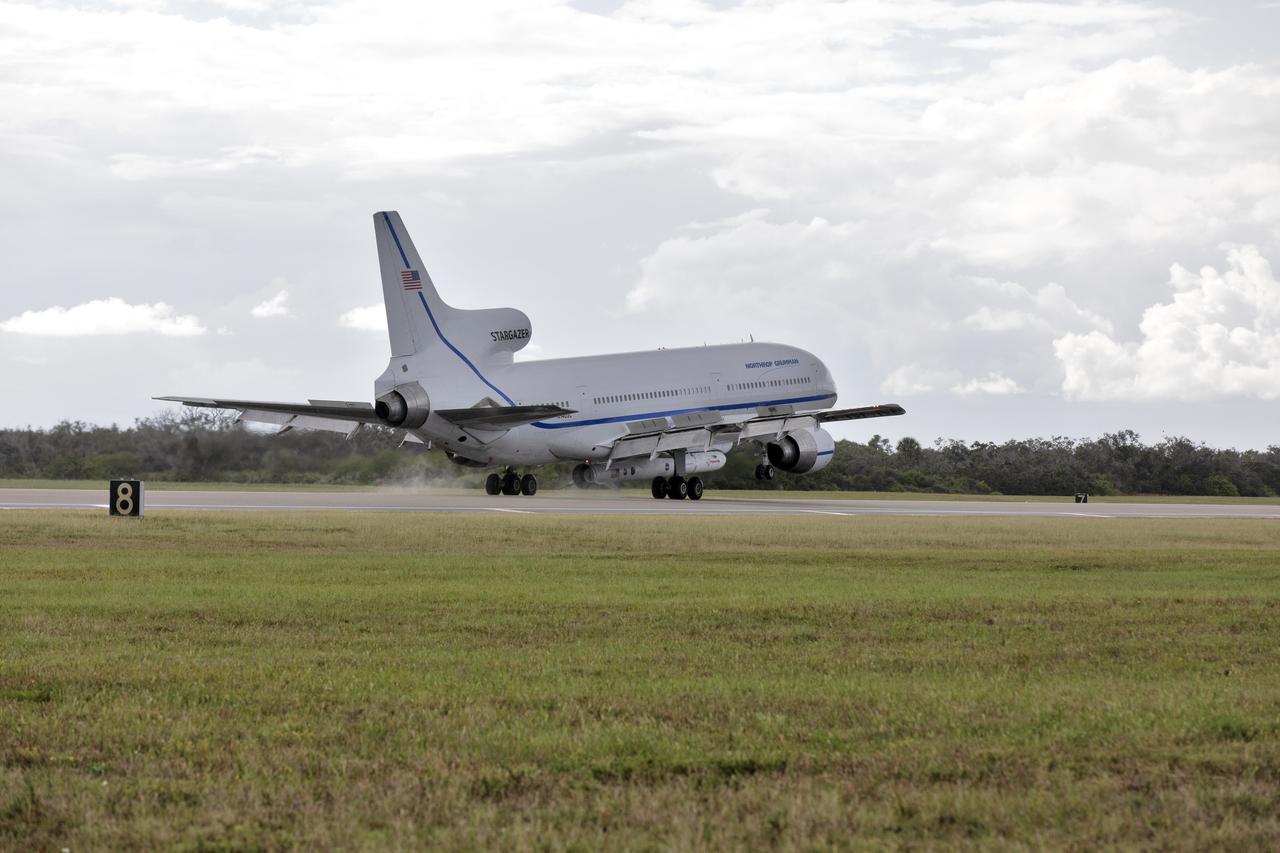
Northrop Grumman's L-1011 Stargazer touches down at the Skid Strip at Cape Canaveral Air Force Station in Florida, on Oct. 19, 2018. The company's Pegasus XL rocket, containing NASA's Ionospheric Connection Explorer (ICON), is attached beneath the aircraft. The Pegasus XL rocket will launch from the Skid Strip. ICON will study the frontier of space - the dynamic zone high in Earth's atmosphere where terrestrial weather from below meets space weather above. The explorer will help determine the physics of Earth's space environment and pave the way for mitigating its effects on our technology and communications systems.
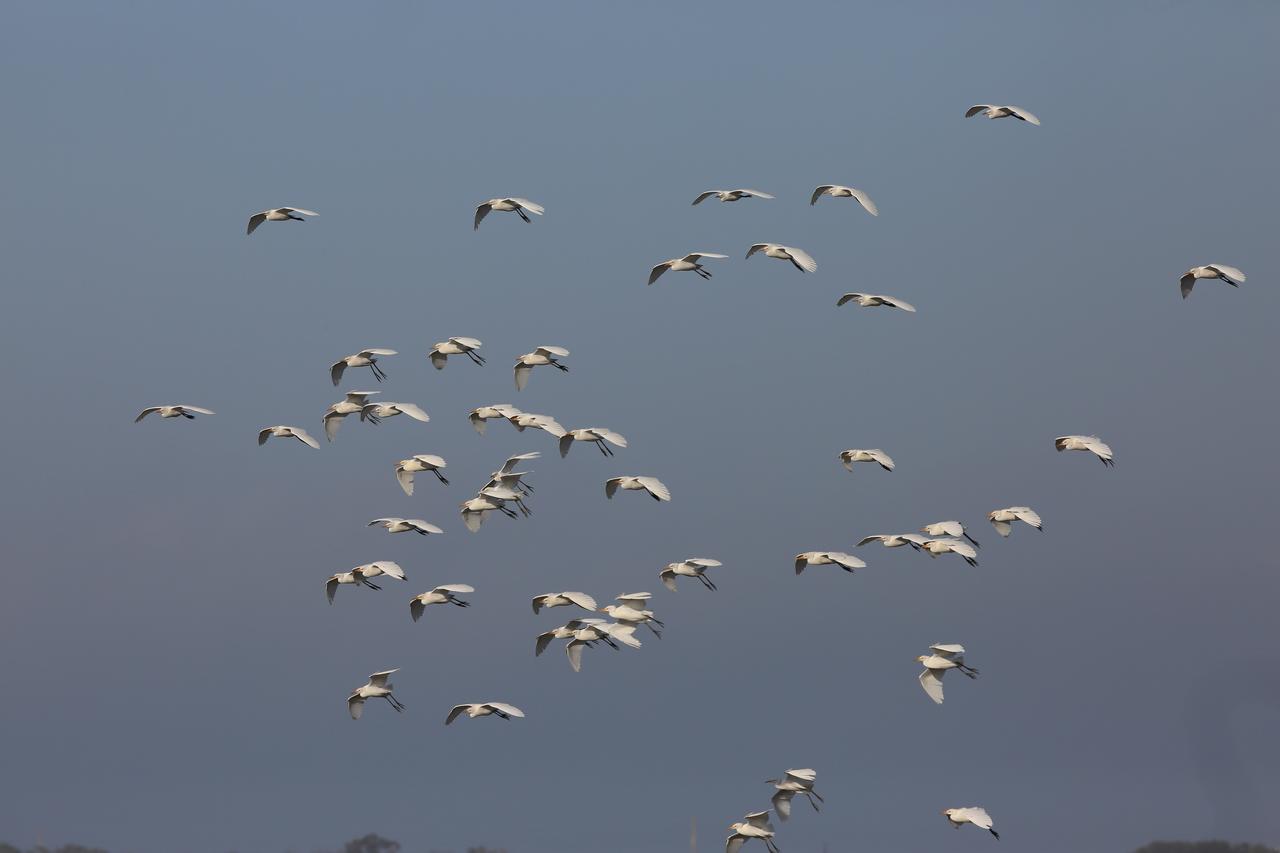
A flock of egrets soars above the Skid Strip at Cape Canaveral Air Force Station, near NASA's Kennedy Space Center in Florida. The center shares a boundary with the Merritt Island National Wildlife Refuge. The refuge is home to more than 65 amphibian and reptile species, along with 330 native and migratory bird species, 25 mammal and 117 fish species.
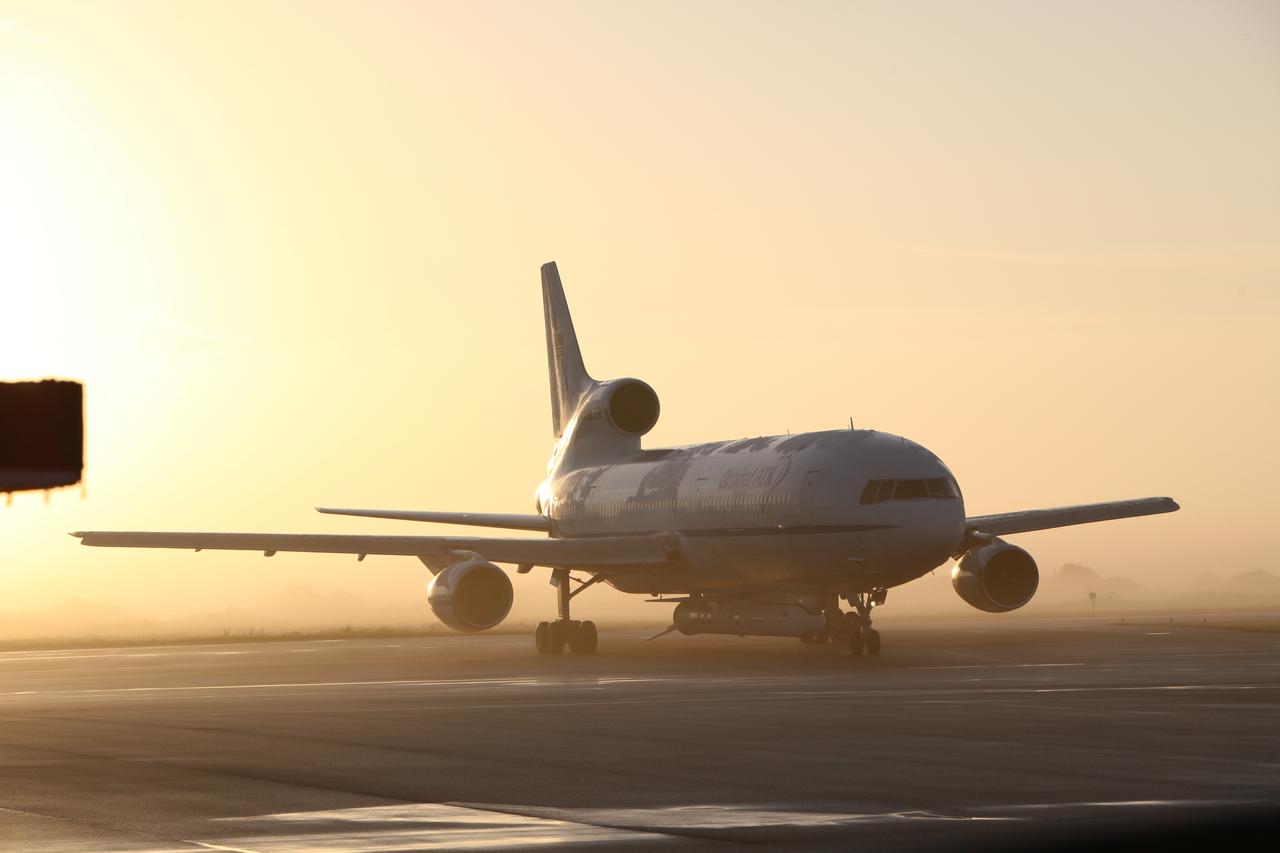
An Orbital ATK L-1011 Stargazer aircraft carrying a Pegasus XL Rocket with eight NASA Cyclone Global Navigation Satellite System, or CYGNSS, spacecraft is ready for takeoff from the Skid Strip at Cape Canaveral Air Force Station, Florida. With the aircraft flying off shore, the Pegasus rocket will be released. Five seconds later, the solid propellant engine will ignite and boost the eight hurricane observatories to orbit. The eight CYGNSS satellites will make frequent and accurate measurements of ocean surface winds throughout the life cycle of tropical storms and hurricanes.
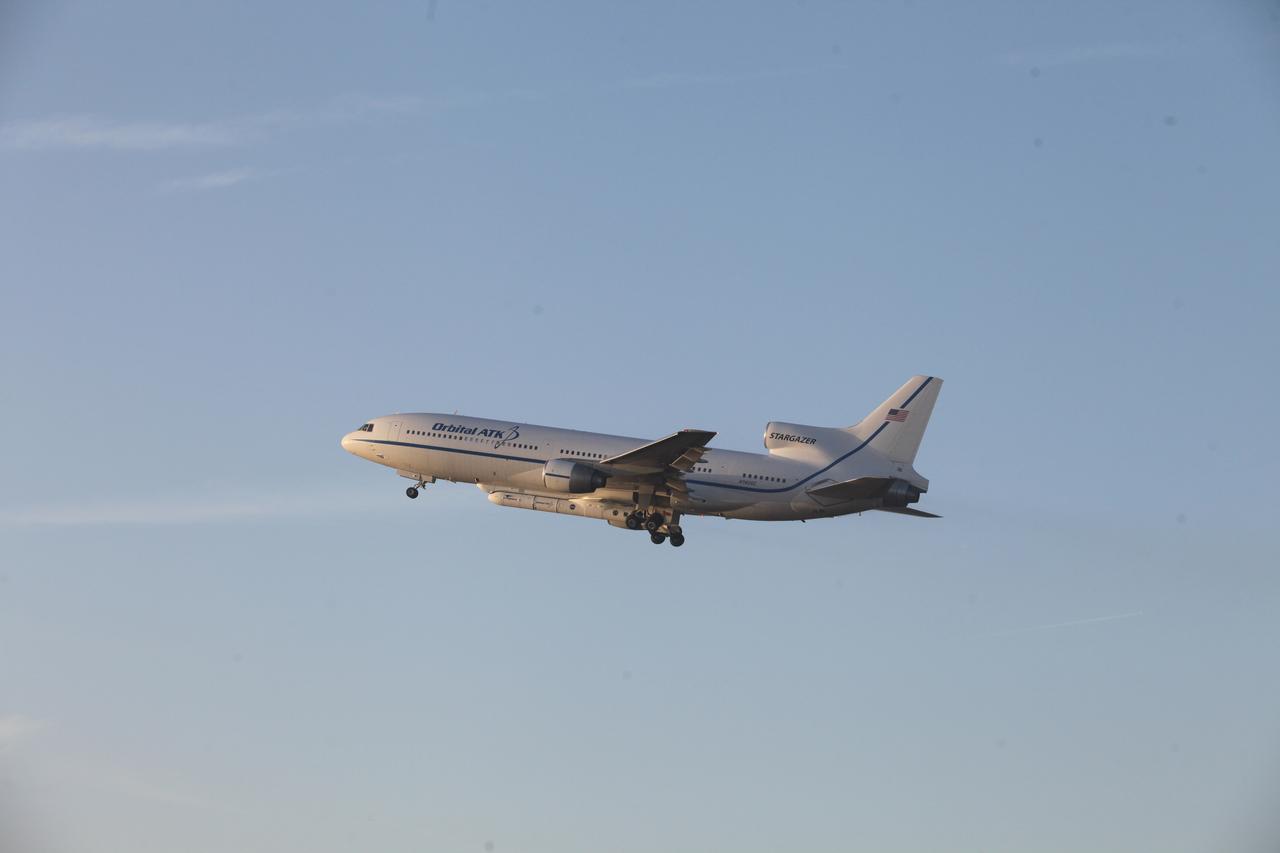
An Orbital ATK L-1011 Stargazer aircraft carrying a Pegasus XL Rocket with eight NASA Cyclone Global Navigation Satellite System, or CYGNSS, spacecraft takes off from the Skid Strip at Cape Canaveral Air Force Station, Florida. With the aircraft flying off shore, the Pegasus rocket will be released. Five seconds later, the solid propellant engine will ignite and boost the eight hurricane observatories to orbit. The eight CYGNSS satellites will make frequent and accurate measurements of ocean surface winds throughout the life cycle of tropical storms and hurricanes.
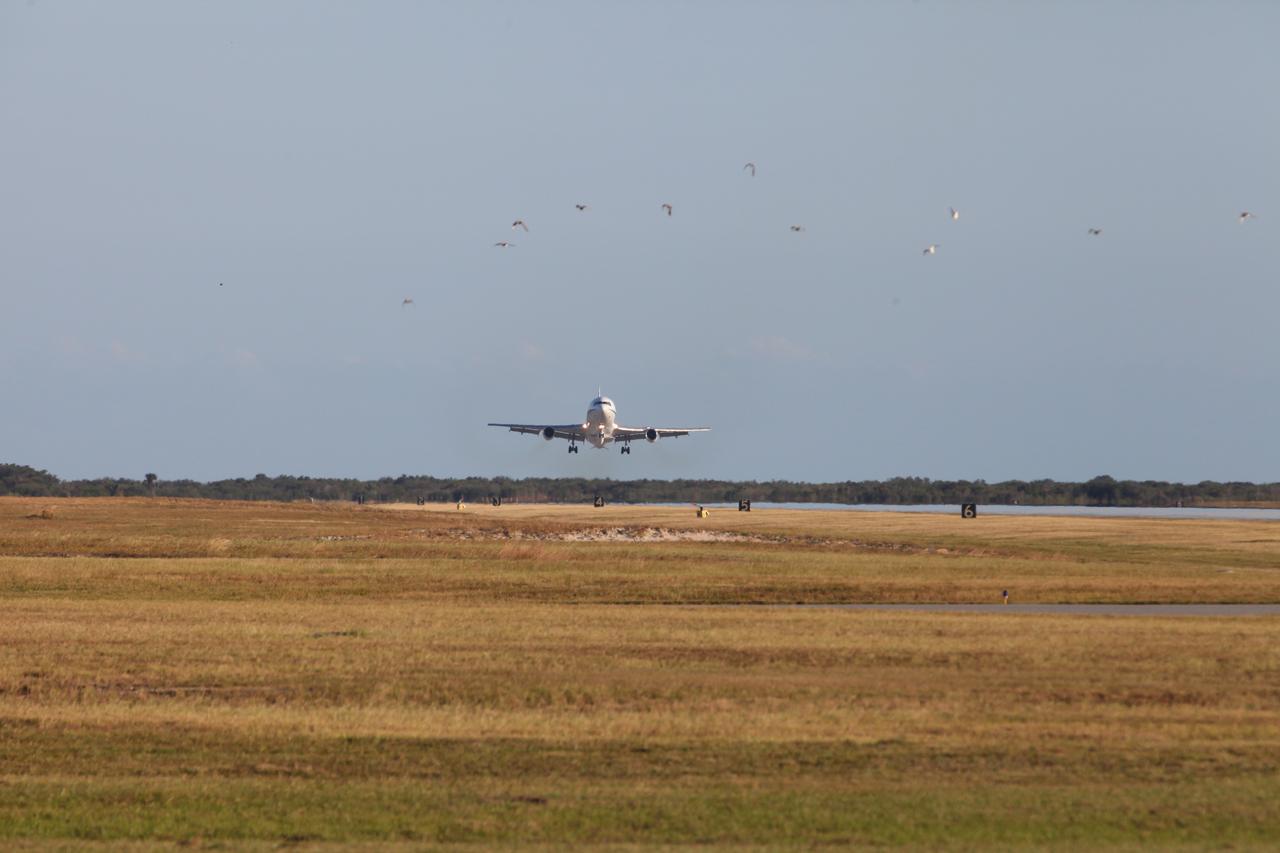
The Orbital ATK L-1011 Stargazer aircraft begins its descent to the Skid Strip at Cape Canaveral Air Force Station in Florida. Attached beneath the Stargazer is the Orbital ATK Pegasus XL with NASA's Cyclone Global Navigation Satellite System (CYGNSS) on board. CYGNSS was processed and prepared for its mission at Vandenberg Air Force Base in California. CYGNSS is scheduled for its airborne launch aboard the Pegasus XL rocket from the Skid Strip on Dec. 12. CYGNSS will make frequent and accurate measurements of ocean surface winds throughout the life cycle of tropical storms and hurricanes. The data that CYGNSS provides will enable scientists to probe key air-sea interaction processes that take place near the core of storms, which are rapidly changing and play a critical role in the beginning and intensification of hurricanes.
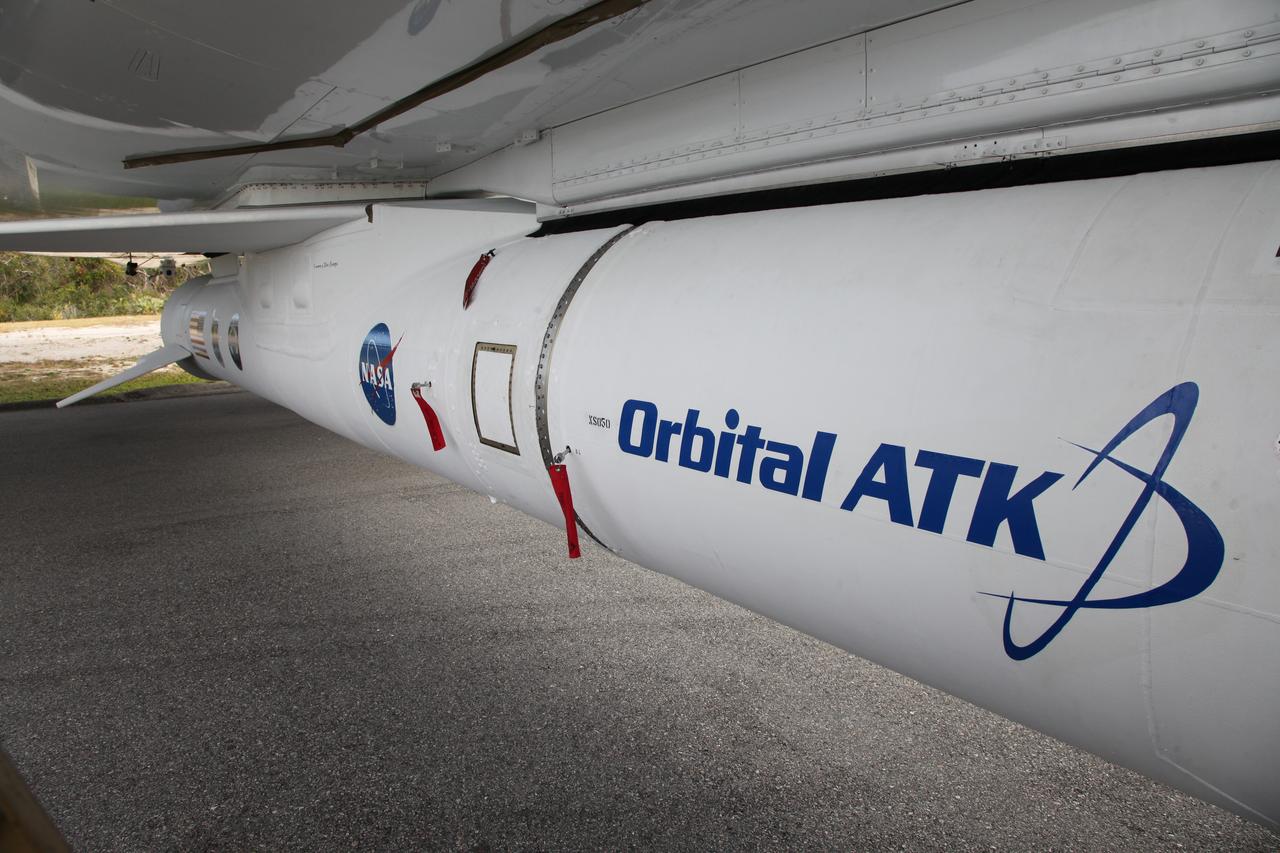
At Cape Canaveral Air Force Station's Skid Strip the Orbital ATK L-1011 Stargazer aircraft is being prepared to launch NASA's Cyclone Global Navigation Satellite System, or CYGNSS, spacecraft. The eight micro satellites are aboard an Orbital ATK Pegasus XL rocket strapped to the underside of the Stargazer. CYGNSS is scheduled for its airborne launch aboard the Pegasus XL rocket from the Skid Strip on Dec. 12. CYGNSS will make frequent and accurate measurements of ocean surface winds throughout the life cycle of tropical storms and hurricanes. The data that CYGNSS provides will enable scientists to probe key air-sea interaction processes that take place near the core of storms, which are rapidly changing and play a critical role in the beginning and intensification of hurricanes.
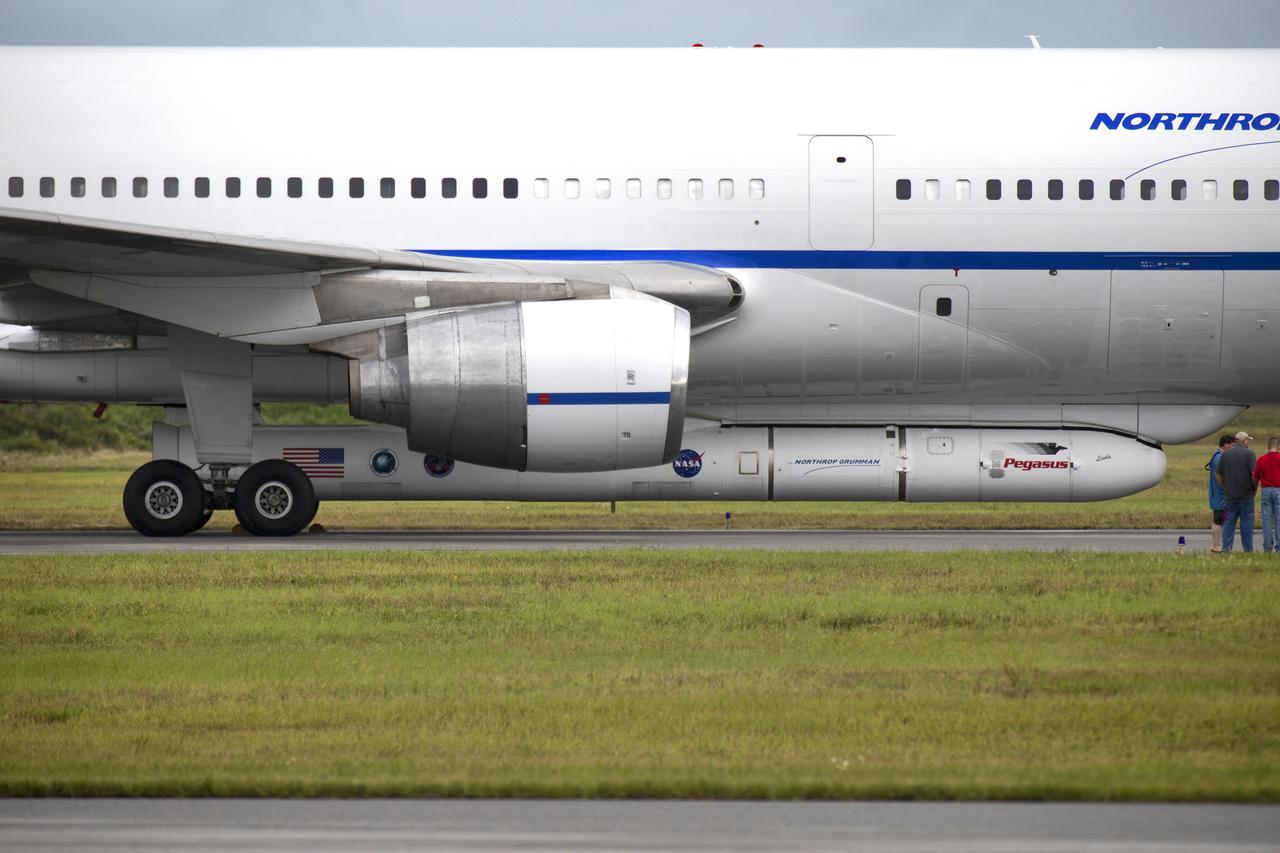
Northrop Grumman's L-1011 is on the tarmac after touching down at the Skid Strip at Cape Canaveral Air Force Station in Florida, on Oct. 19, 2018. The company's Pegasus XL rocket, containing NASA's Ionospheric Connection Explorer (ICON), is in view attached beneath the aircraft. The Pegasus XL rocket will launch from the Skid Strip. ICON will study the frontier of space - the dynamic zone high in Earth's atmosphere where terrestrial weather from below meets space weather above. The explorer will help determine the physics of Earth's space environment and pave the way for mitigating its effects on our technology and communications systems.
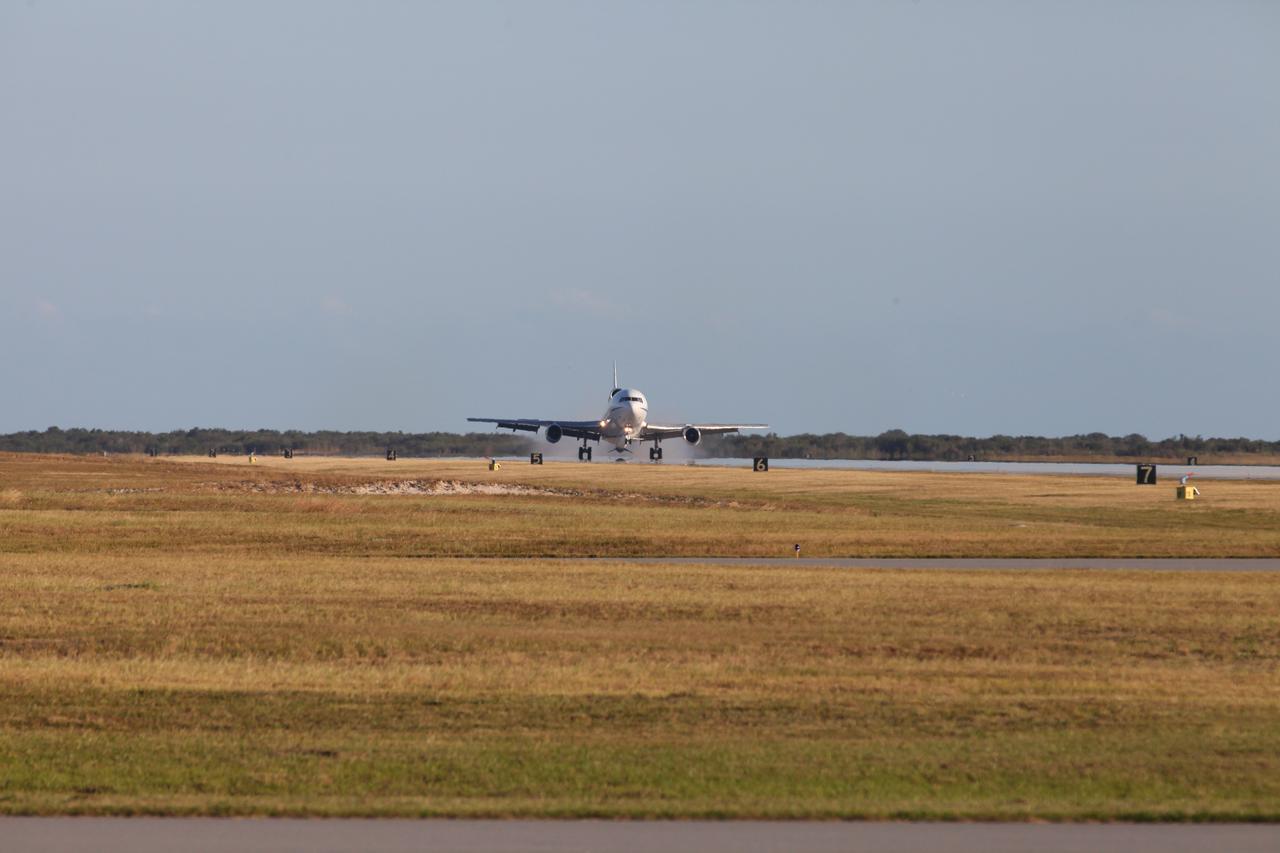
The Orbital ATK L-1011 Stargazer aircraft touches down at 3:57 p.m. EST at the Skid Strip at Cape Canaveral Air Force Station in Florida. Attached beneath the Stargazer is the Orbital ATK Pegasus XL with NASA's Cyclone Global Navigation Satellite System (CYGNSS) on board. CYGNSS was processed and prepared for its mission at Vandenberg Air Force Base in California. CYGNSS is scheduled for its airborne launch aboard the Pegasus XL rocket from the Skid Strip on Dec. 12. CYGNSS will make frequent and accurate measurements of ocean surface winds throughout the life cycle of tropical storms and hurricanes. The data that CYGNSS provides will enable scientists to probe key air-sea interaction processes that take place near the core of storms, which are rapidly changing and play a critical role in the beginning and intensification of hurricanes.
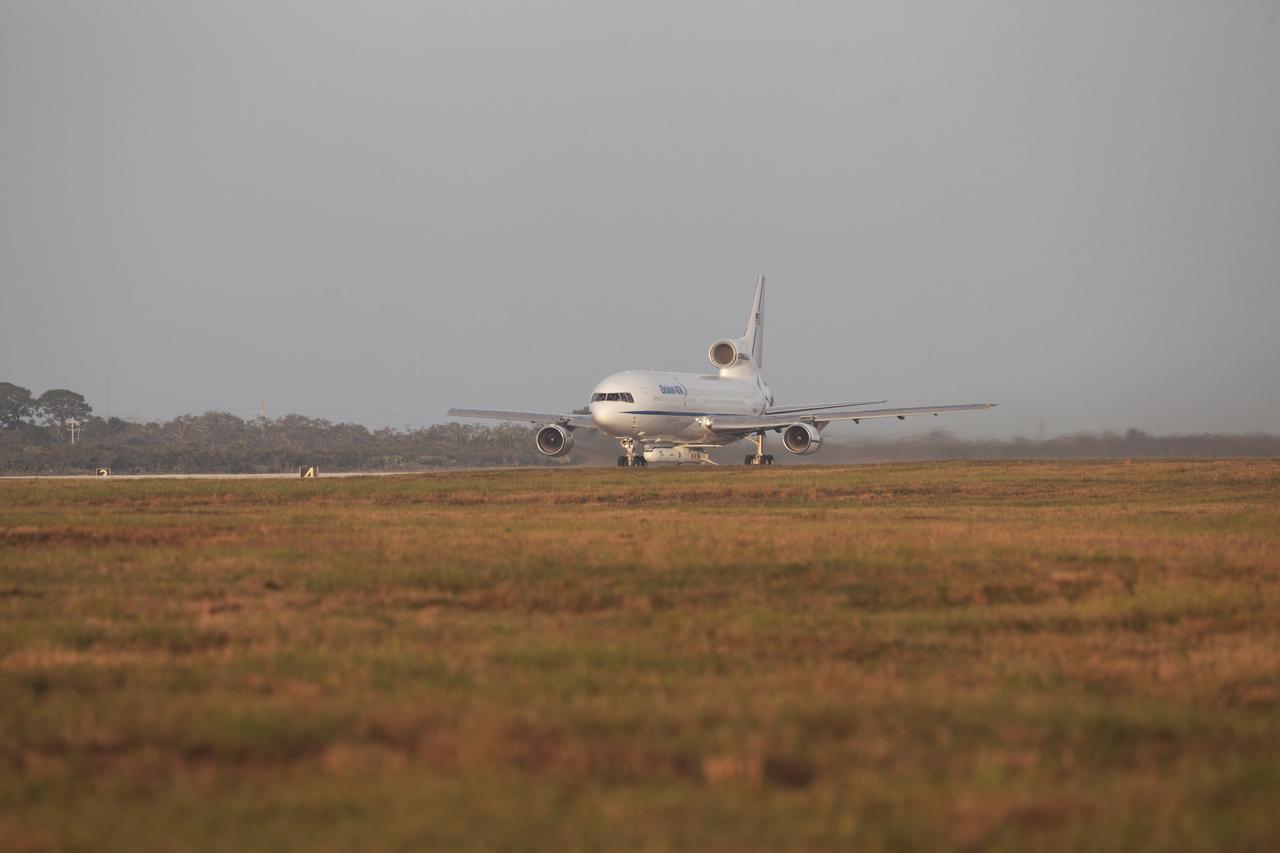
An Orbital ATK L-1011 Stargazer aircraft carrying a Pegasus XL Rocket with eight NASA Cyclone Global Navigation Satellite System, or CYGNSS, spacecraft is ready for takeoff from the Skid Strip at Cape Canaveral Air Force Station, Florida. With the aircraft flying off shore, the Pegasus rocket will be released. Five seconds later, the solid propellant engine will ignite and boost the eight hurricane observatories to orbit. The eight CYGNSS satellites will make frequent and accurate measurements of ocean surface winds throughout the life cycle of tropical storms and hurricanes.
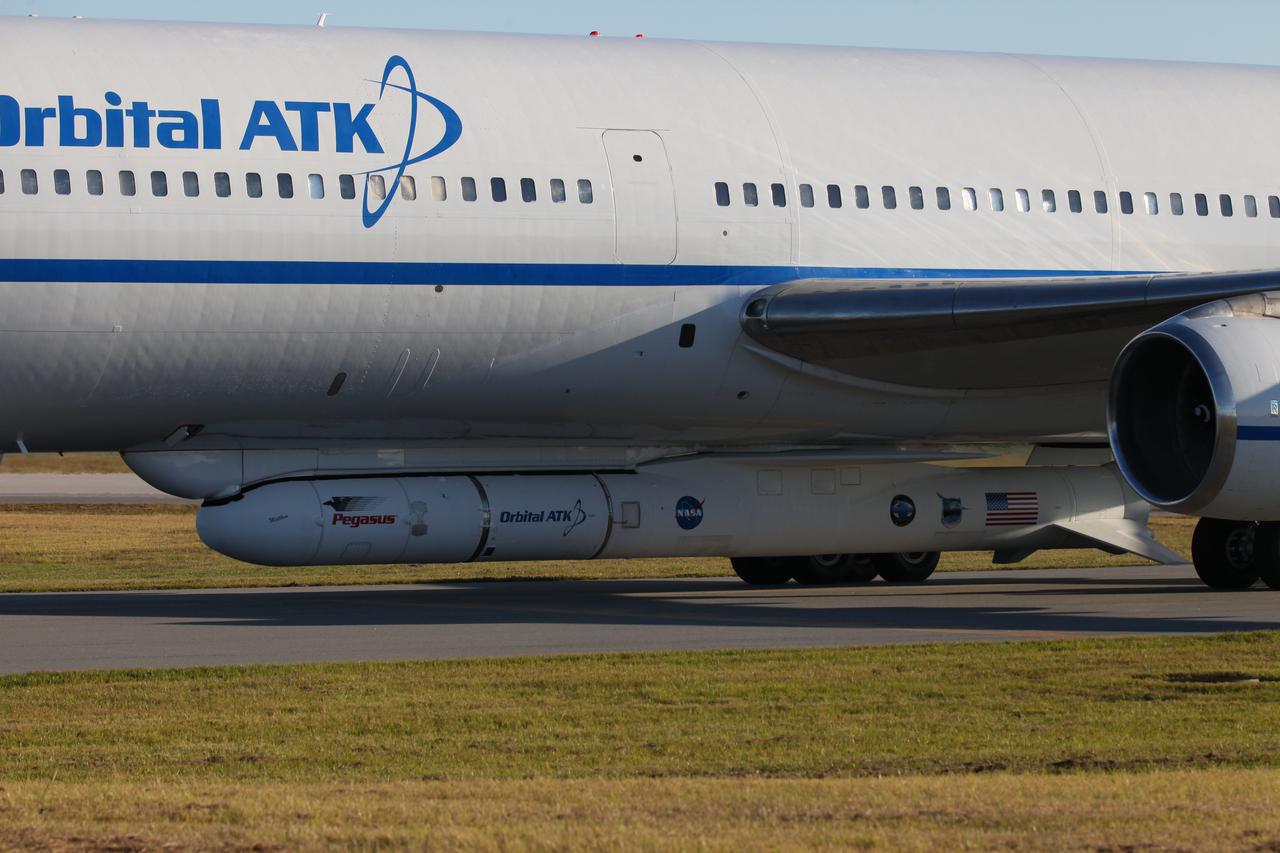
The Orbital ATK L-1011 Stargazer aircraft has arrived at the Skid Strip at Cape Canaveral Air Force Station in Florida. Attached beneath the Stargazer is the Orbital ATK Pegasus XL with NASA's Cyclone Global Navigation Satellite System (CYGNSS) on board. CYGNSS was processed and prepared for its mission at Vandenberg Air Force Base in California. CYGNSS is scheduled for its airborne launch aboard the Pegasus XL rocket from the Skid Strip on Dec. 12. CYGNSS will make frequent and accurate measurements of ocean surface winds throughout the life cycle of tropical storms and hurricanes. The data that CYGNSS provides will enable scientists to probe key air-sea interaction processes that take place near the core of storms, which are rapidly changing and play a critical role in the beginning and intensification of hurricanes.
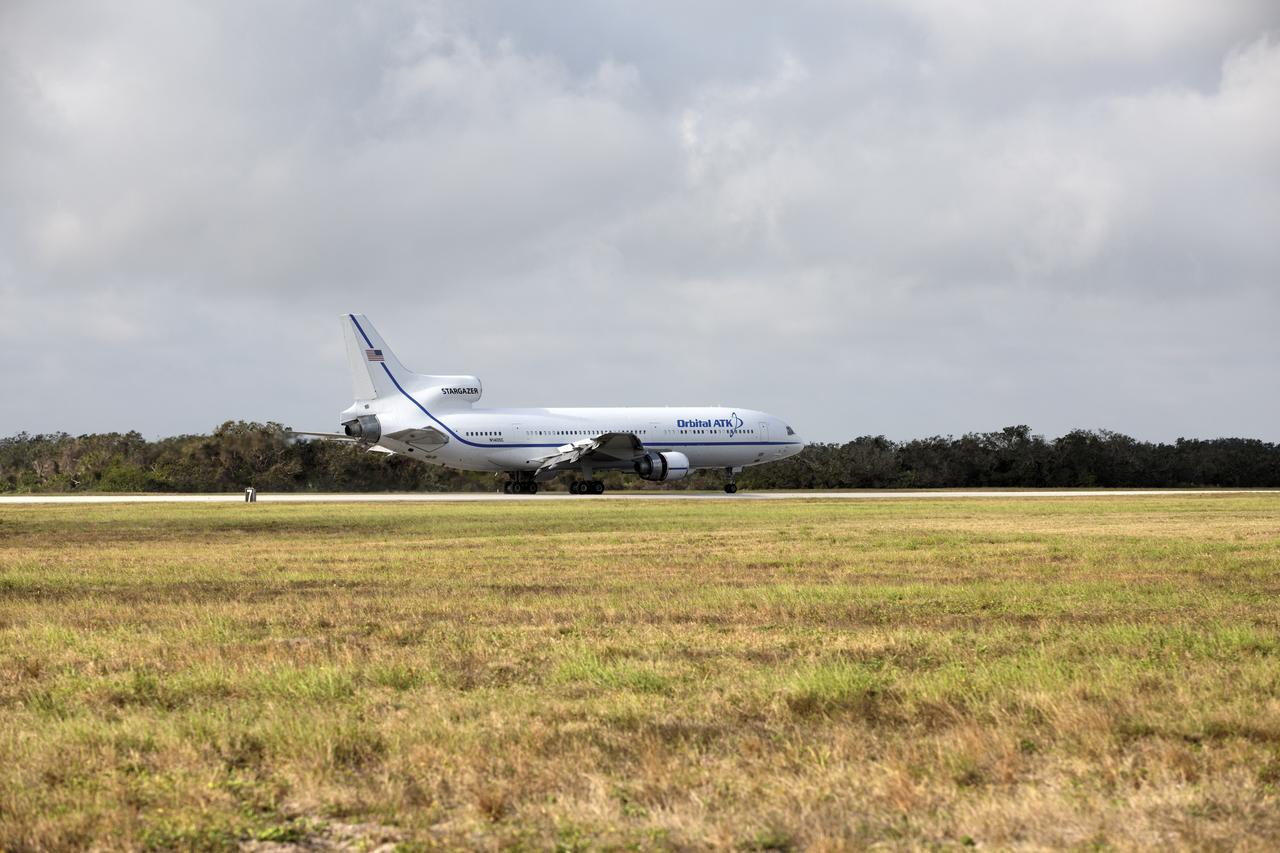
An Orbital ATK L-1011 Stargazer touches down at the Skid Strip at Cape Canaveral Air Force Station in Florida. The aircraft carried a Pegasus XL Rocket with eight NASA Cyclone Global Navigation Satellite System, or CYGNSS, for launch. With the aircraft flying off shore, the Pegasus rocket was released at 8:37 a.m. EST. Five seconds later, the solid propellant engine ignited and boosted the eight hurricane observatories to orbit. The eight CYGNSS satellites will make frequent and accurate measurements of ocean surface winds throughout the life cycle of tropical storms and hurricanes.
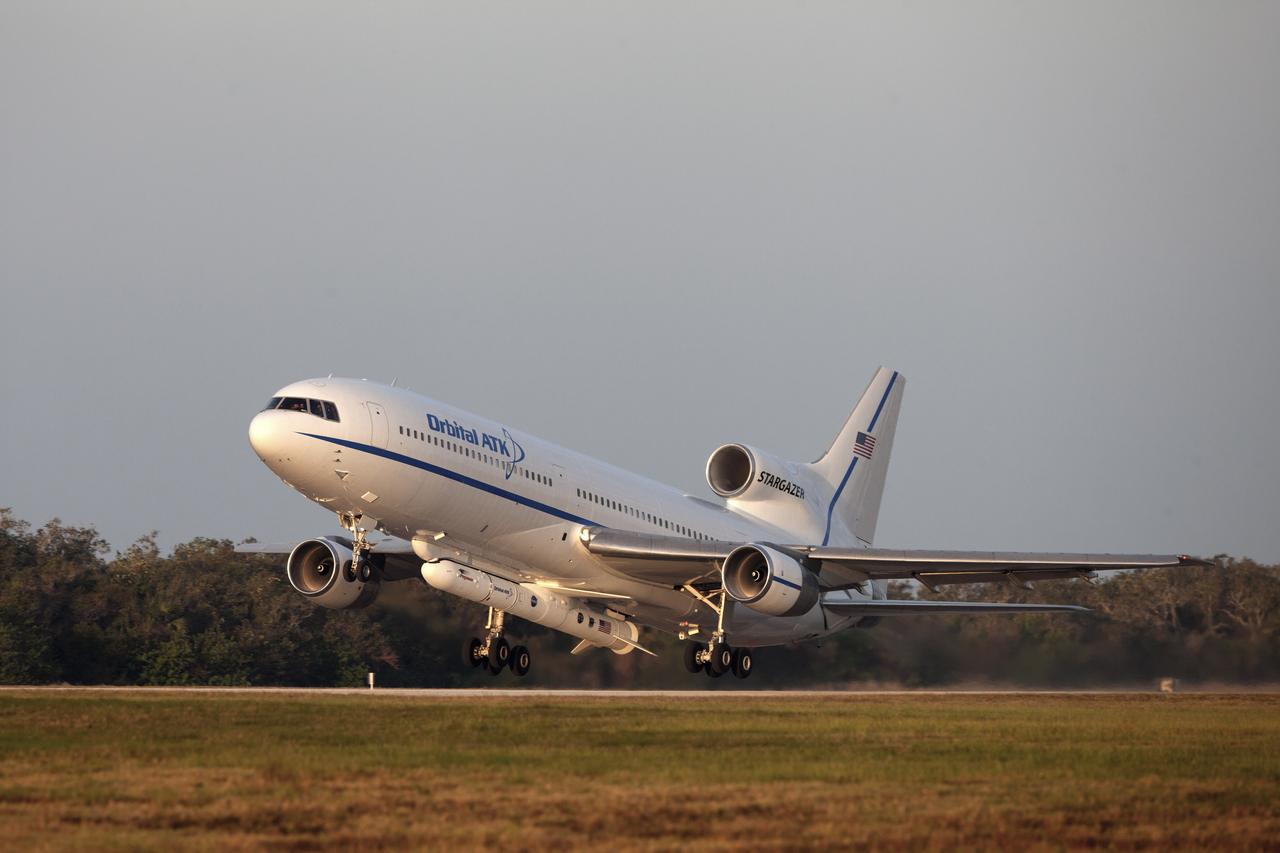
An Orbital ATK L-1011 Stargazer aircraft carrying a Pegasus XL Rocket with eight NASA Cyclone Global Navigation Satellite System, or CYGNSS, spacecraft takes off from the Skid Strip at Cape Canaveral Air Force Station, Florida. With the aircraft flying off shore, the Pegasus rocket will be released. Five seconds later, the solid propellant engine will ignite and boost the eight hurricane observatories to orbit. The eight CYGNSS satellites will make frequent and accurate measurements of ocean surface winds throughout the life cycle of tropical storms and hurricanes.
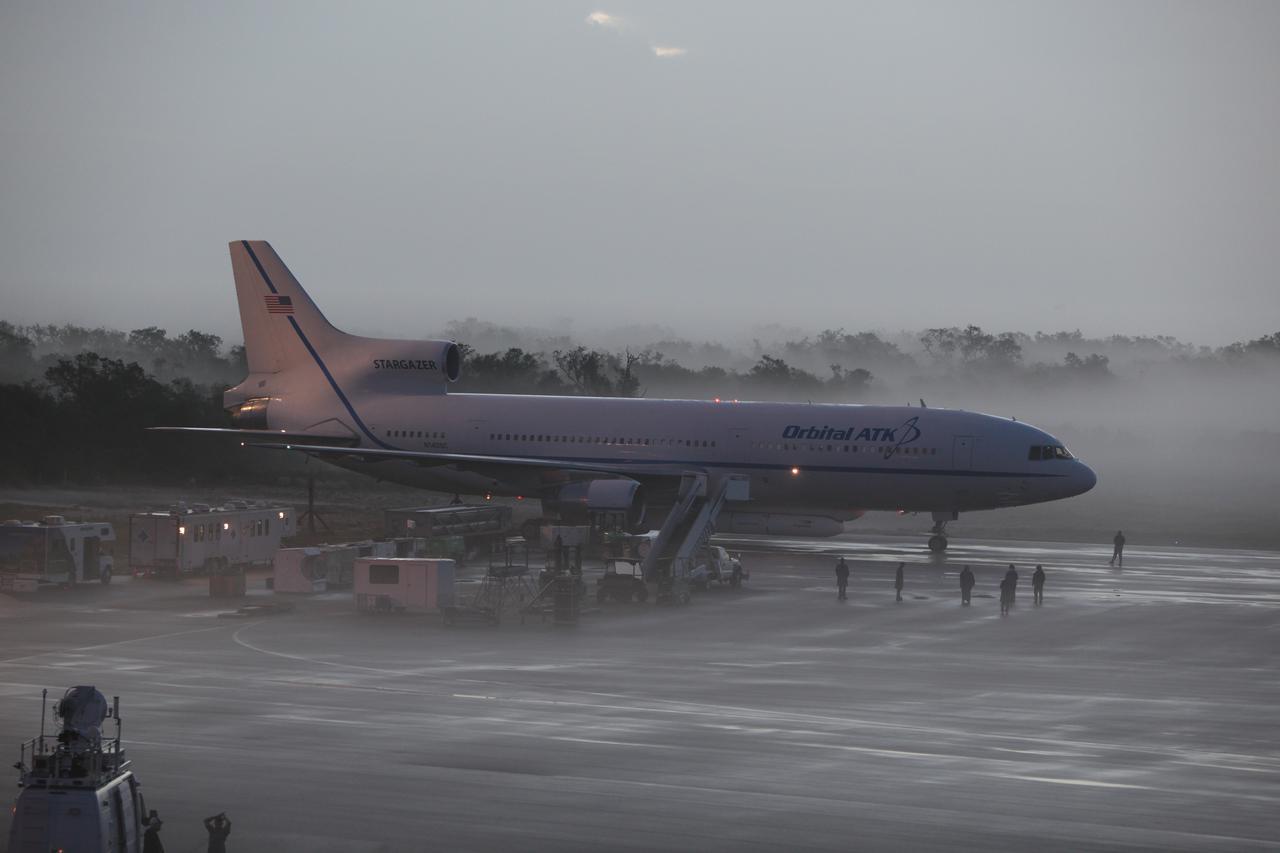
An Orbital ATK L-1011 Stargazer aircraft carrying a Pegasus XL Rocket with eight NASA Cyclone Global Navigation Satellite System, or CYGNSS, spacecraft is ready for takeoff from the Skid Strip at Cape Canaveral Air Force Station, Florida. With the aircraft flying off shore, the Pegasus rocket will be released. Five seconds later, the solid propellant engine will ignite and boost the eight hurricane observatories to orbit. The eight CYGNSS satellites will make frequent and accurate measurements of ocean surface winds throughout the life cycle of tropical storms and hurricanes.
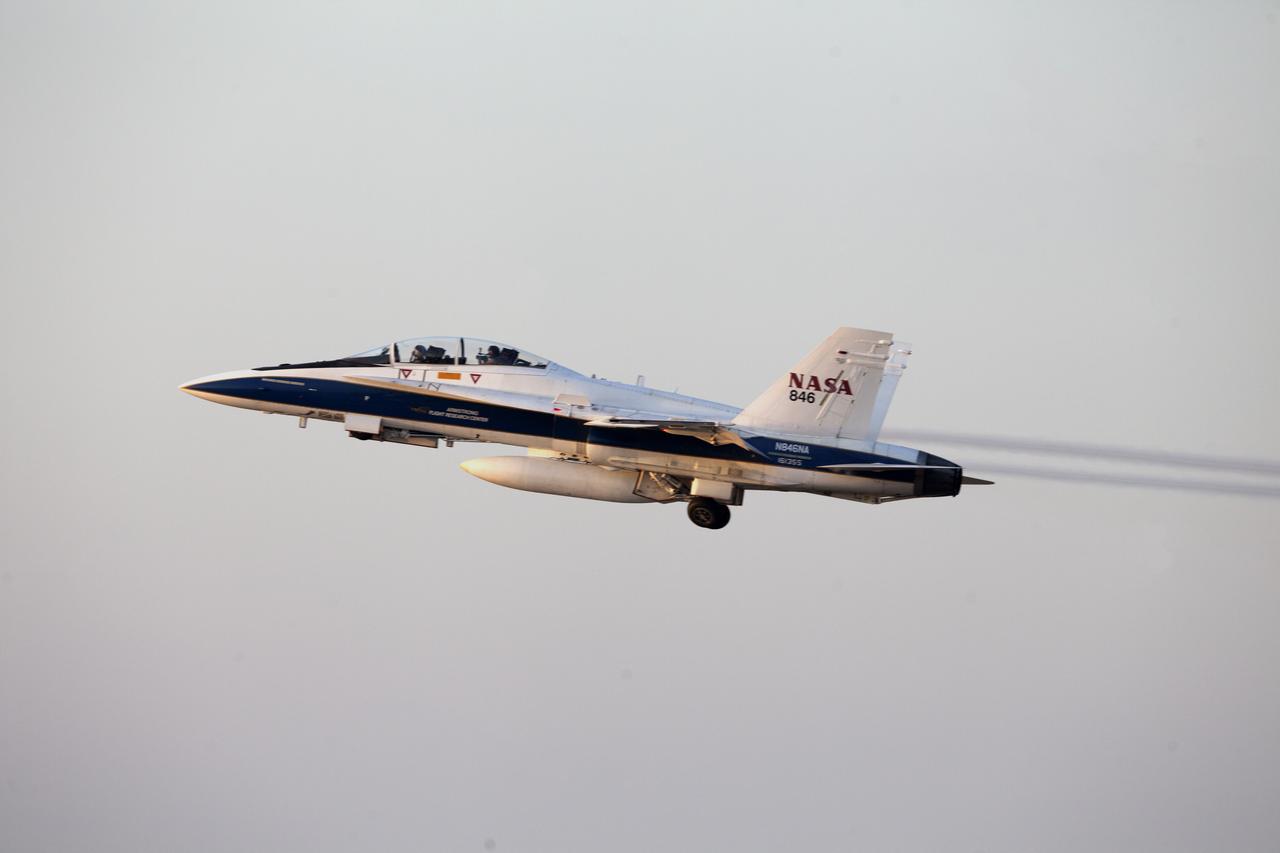
A pathfinder aircraft gains altitude after takeoff from the Skid Strip at Cape Canaveral Air Force Station in Florida. The airplane will provide photographic and video imagery of the Orbital ATK L-1011 Stargazer aircraft carrying a Pegasus XL Rocket with eight NASA Cyclone Global Navigation Satellite System, or CYGNSS, spacecraft. With the aircraft flying off shore, the Pegasus rocket will be released. Five seconds later, the solid propellant engine will ignite and boost the eight hurricane observatories to orbit. The eight CYGNSS satellites will make frequent and accurate measurements of ocean surface winds throughout the life cycle of tropical storms and hurricanes.
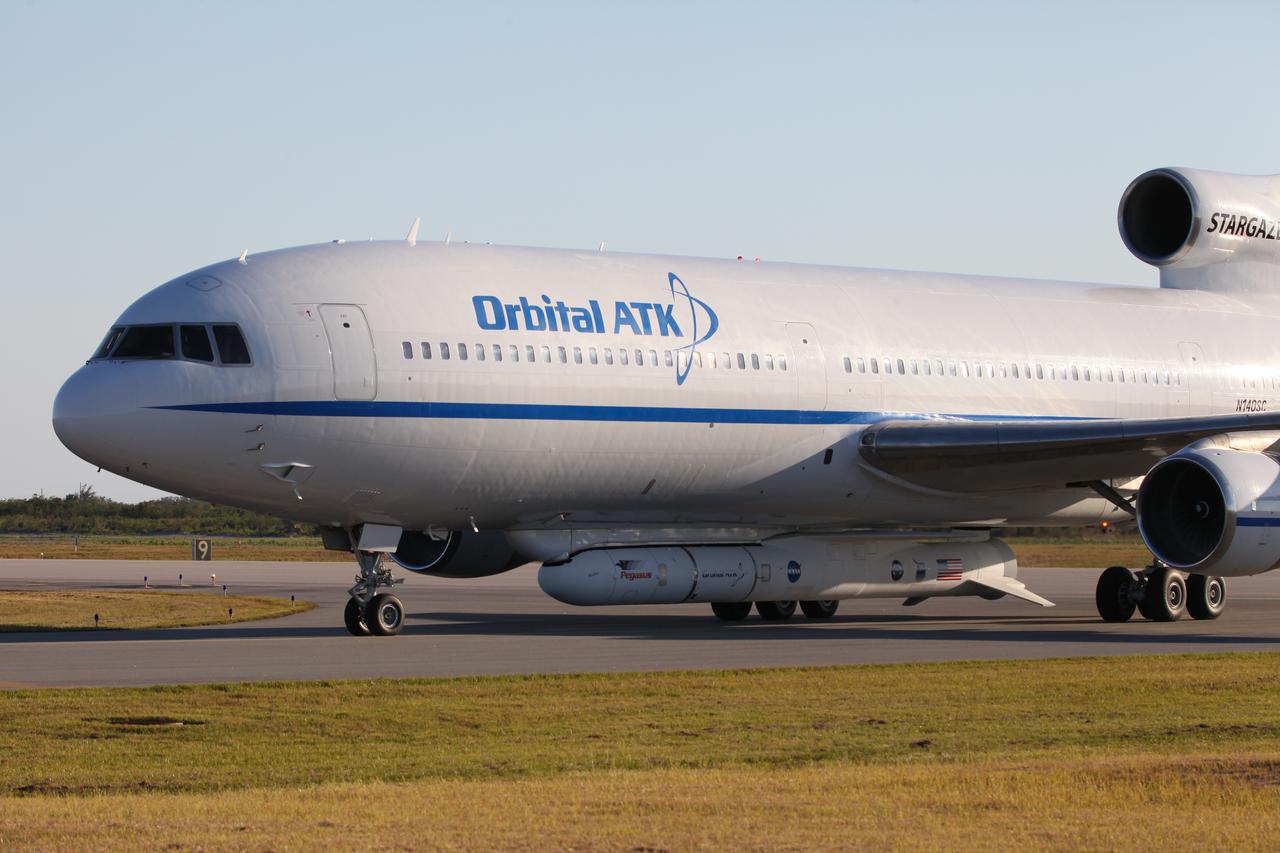
The Orbital ATK L-1011 Stargazer aircraft has arrived at the Skid Strip at Cape Canaveral Air Force Station in Florida. Attached beneath the Stargazer is the Orbital ATK Pegasus XL with NASA's Cyclone Global Navigation Satellite System (CYGNSS) on board. CYGNSS was processed and prepared for its mission at Vandenberg Air Force Base in California. CYGNSS is scheduled for its airborne launch aboard the Pegasus XL rocket from the Skid Strip on Dec. 12. CYGNSS will make frequent and accurate measurements of ocean surface winds throughout the life cycle of tropical storms and hurricanes. The data that CYGNSS provides will enable scientists to probe key air-sea interaction processes that take place near the core of storms, which are rapidly changing and play a critical role in the beginning and intensification of hurricanes.
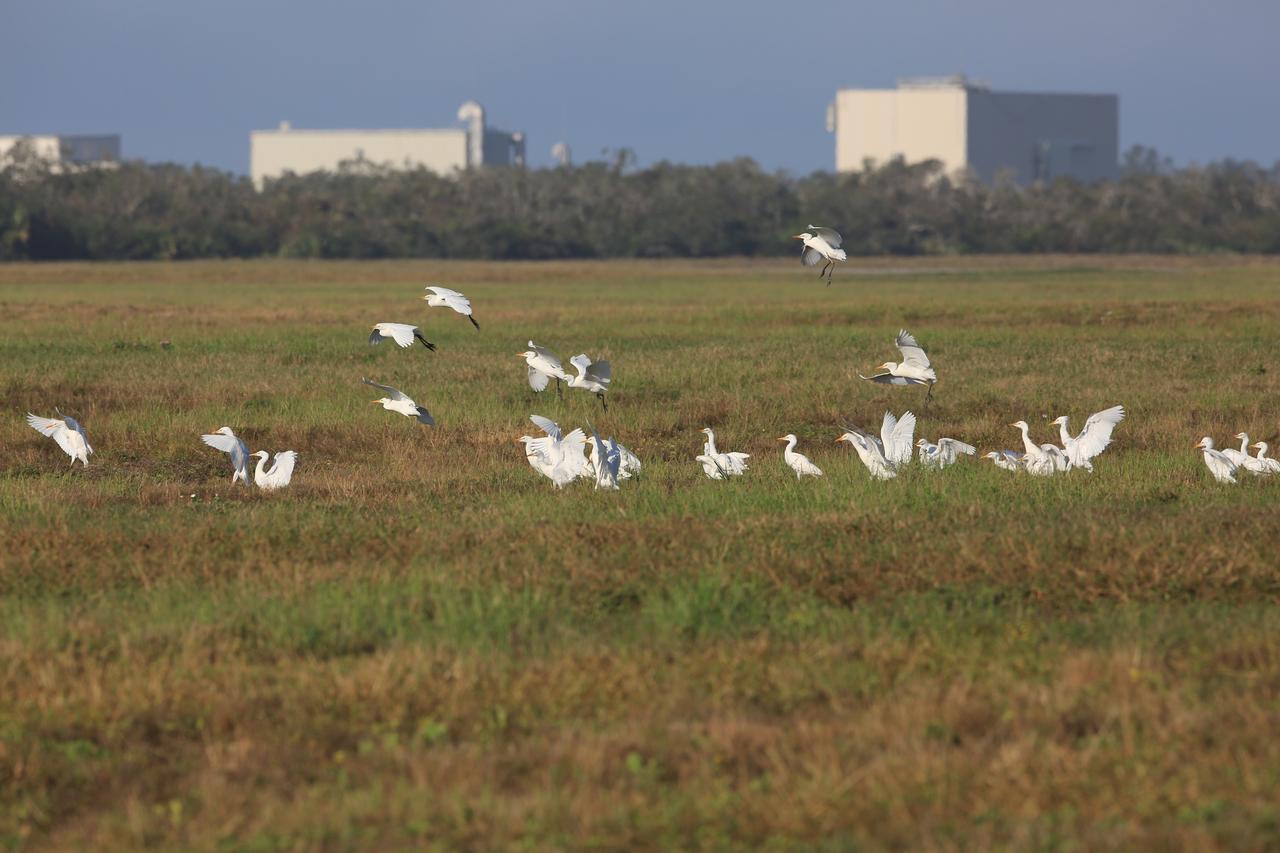
A flock of egrets touches down near the Skid Strip at Cape Canaveral Air Force Station, near NASA's Kennedy Space Center in Florida. The center shares a boundary with the Merritt Island National Wildlife Refuge. The refuge is home to more than 65 amphibian and reptile species, along with 330 native and migratory bird species, 25 mammal and 117 fish species.
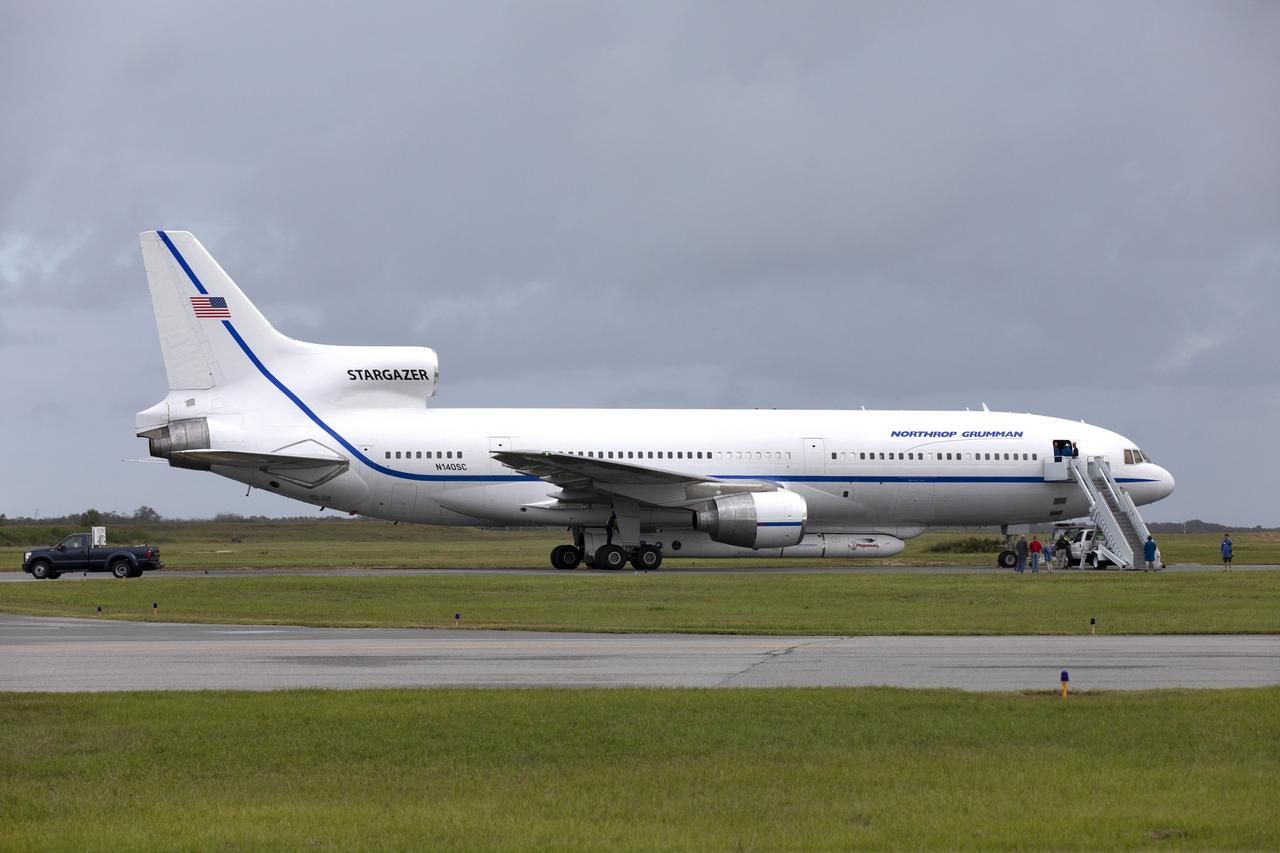
Northrop Grumman's L-1011 is on the tarmac after touching down at the Skid Strip at Cape Canaveral Air Force Station in Florida, on Oct. 19, 2018. The company's Pegasus XL rocket, containing NASA's Ionospheric Connection Explorer (ICON), is attached beneath the aircraft. The Pegasus XL rocket will launch from the Skid Strip. ICON will study the frontier of space - the dynamic zone high in Earth's atmosphere where terrestrial weather from below meets space weather above. The explorer will help determine the physics of Earth's space environment and pave the way for mitigating its effects on our technology and communications systems.
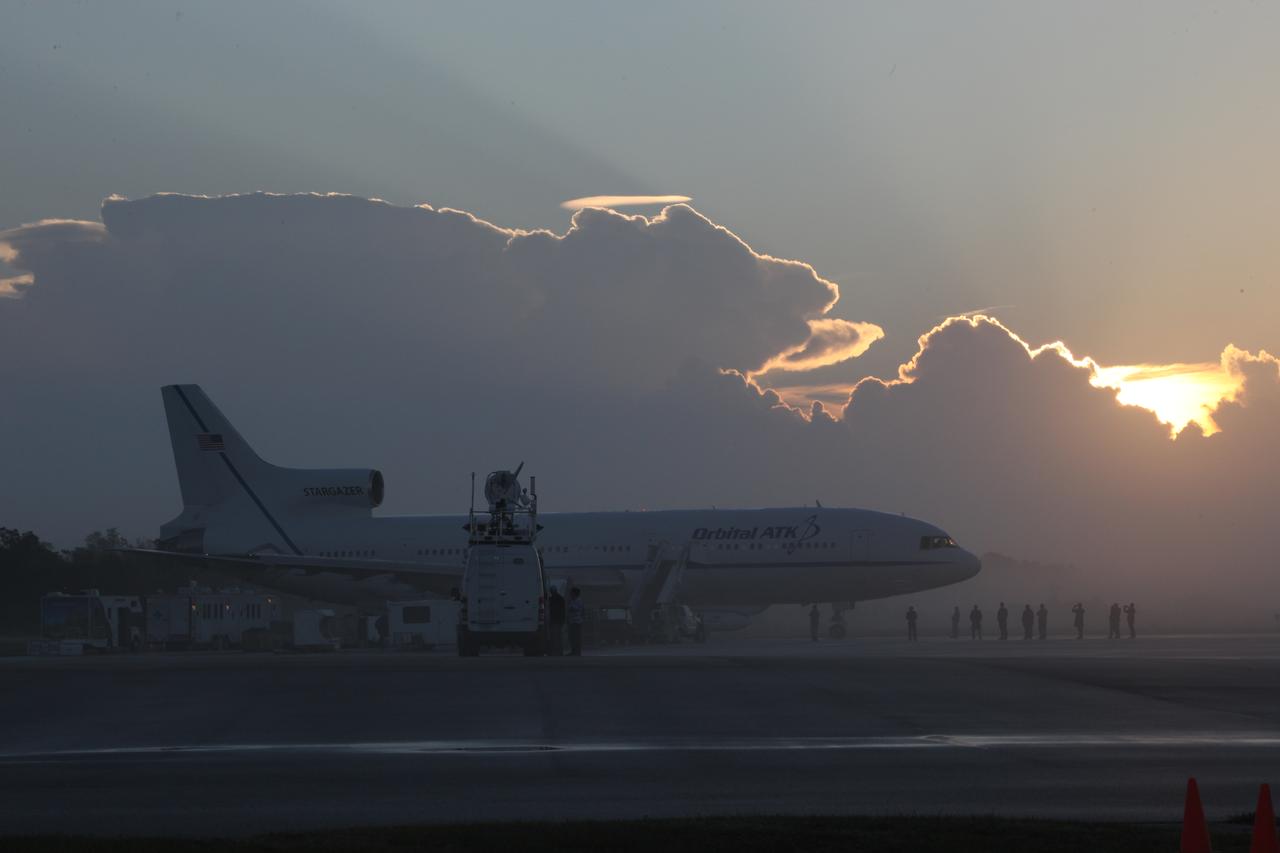
An Orbital ATK L-1011 Stargazer aircraft carrying a Pegasus XL Rocket with eight NASA Cyclone Global Navigation Satellite System, or CYGNSS, spacecraft is ready for takeoff from the Skid Strip at Cape Canaveral Air Force Station, Florida. With the aircraft flying off shore, the Pegasus rocket will be released. Five seconds later, the solid propellant engine will ignite and boost the eight hurricane observatories to orbit. The eight CYGNSS satellites will make frequent and accurate measurements of ocean surface winds throughout the life cycle of tropical storms and hurricanes.
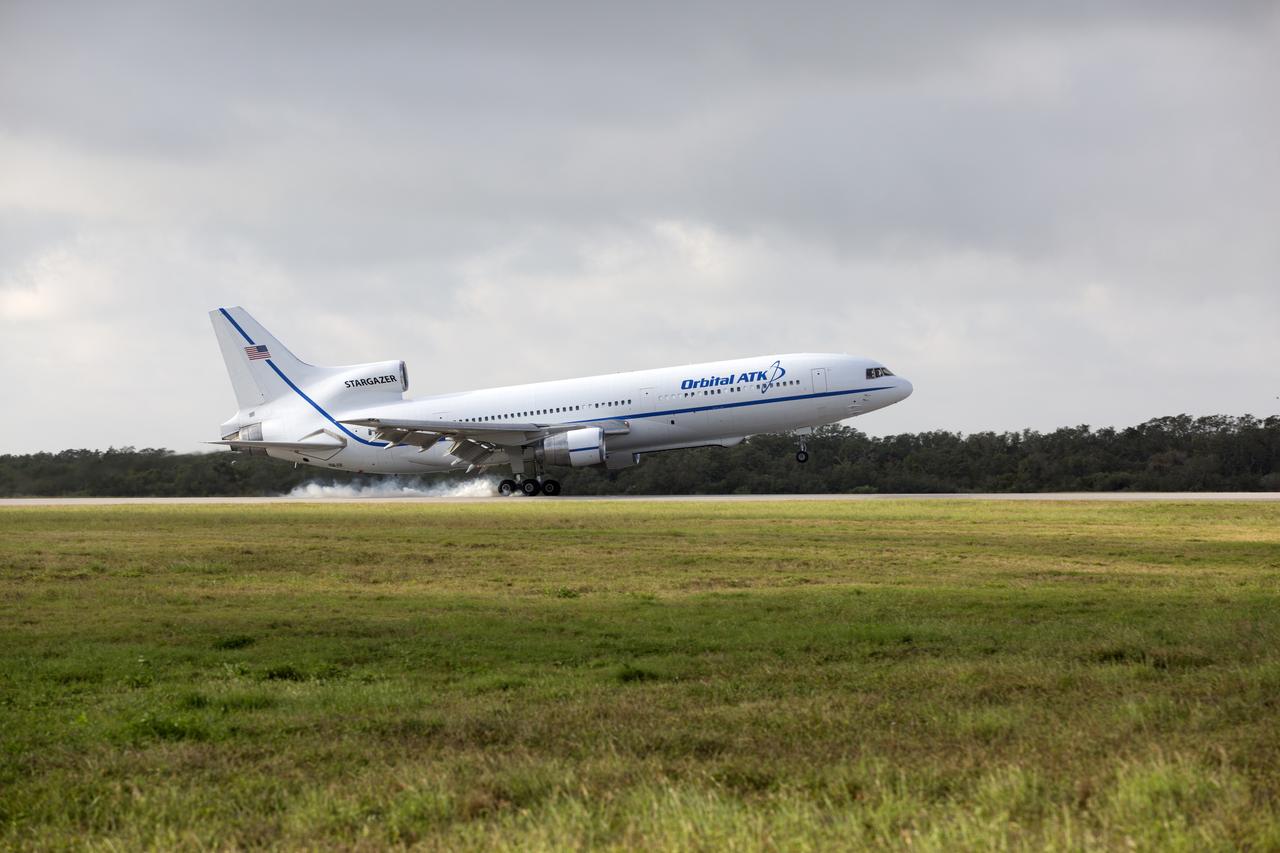
An Orbital ATK L-1011 Stargazer touches down at the Skid Strip at Cape Canaveral Air Force Station in Florida. The aircraft carried a Pegasus XL Rocket with eight NASA Cyclone Global Navigation Satellite System, or CYGNSS, for launch. With the aircraft flying off shore, the Pegasus rocket was released at 8:37 a.m. EST. Five seconds later, the solid propellant engine ignited and boosted the eight hurricane observatories to orbit. The eight CYGNSS satellites will make frequent and accurate measurements of ocean surface winds throughout the life cycle of tropical storms and hurricanes.
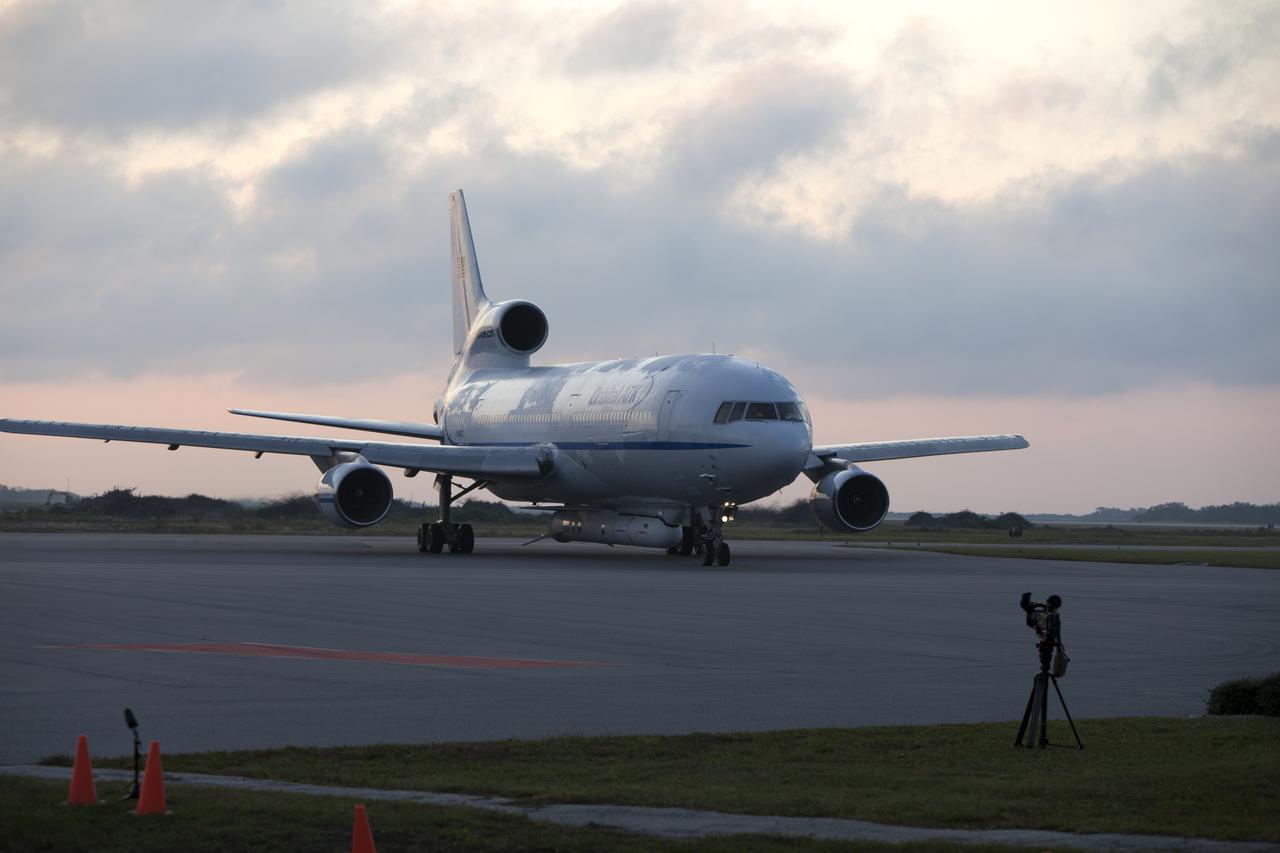
An Orbital ATK L-1011 Stargazer aircraft carrying a Pegasus XL Rocket with eight NASA Cyclone Global Navigation Satellite System, or CYGNSS, spacecraft is ready for takeoff from the Skid Strip at Cape Canaveral Air Force Station, Florida. With the aircraft flying off shore, the Pegasus rocket will be released. Five seconds later, the solid propellant engine will ignite and boost the eight hurricane observatories to orbit. The eight CYGNSS satellites will make frequent and accurate measurements of ocean surface winds throughout the life cycle of tropical storms and hurricanes.
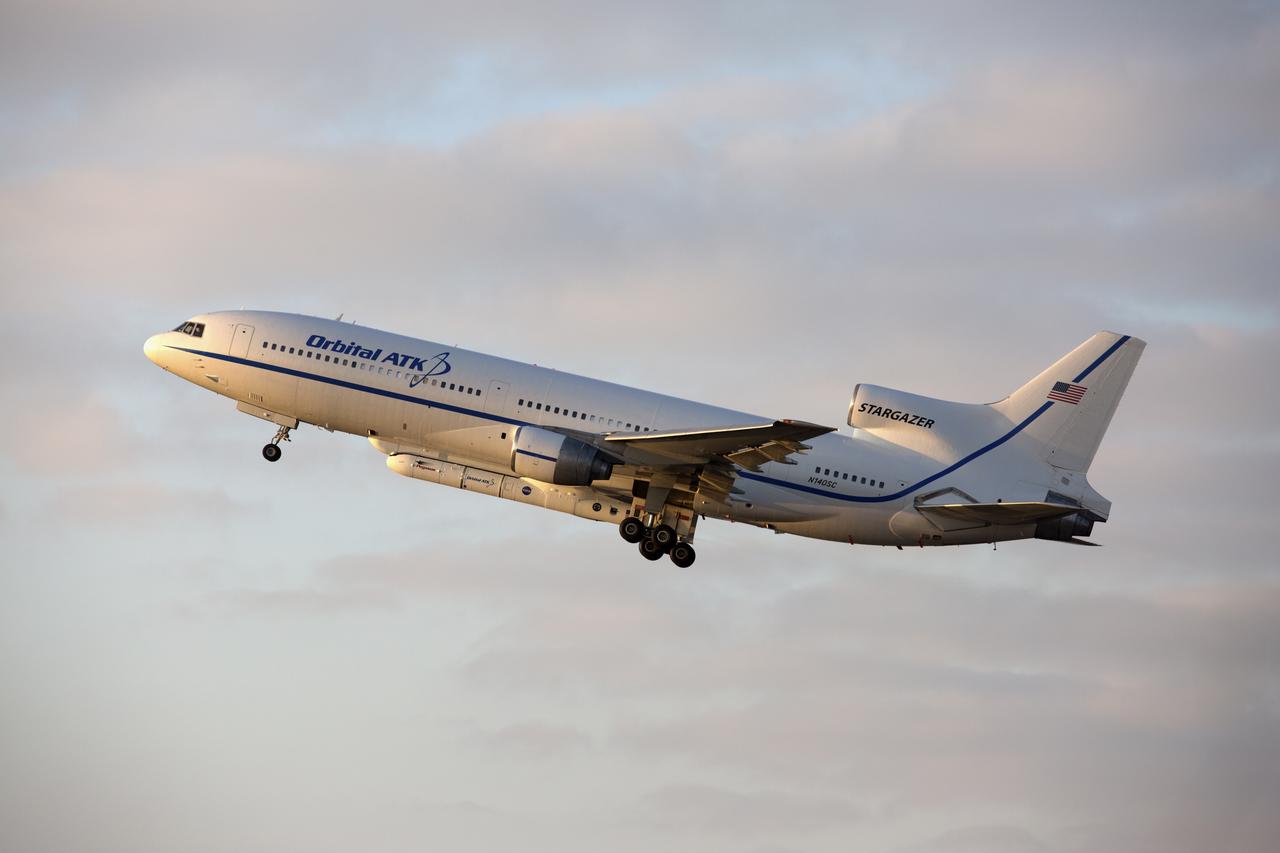
An Orbital ATK L-1011 Stargazer aircraft carrying a Pegasus XL Rocket with eight NASA Cyclone Global Navigation Satellite System, or CYGNSS, soars high after takeoff from the Skid Strip at Cape Canaveral Air Force Station, Florida. With the aircraft flying off shore, the Pegasus rocket will be released. Five seconds later, the solid propellant engine will ignite and boost the eight hurricane observatories to orbit. The eight CYGNSS satellites will make frequent and accurate measurements of ocean surface winds throughout the life cycle of tropical storms and hurricanes. Release of the Pegasus XL rocket is scheduled for 8:40 a.m. EST.
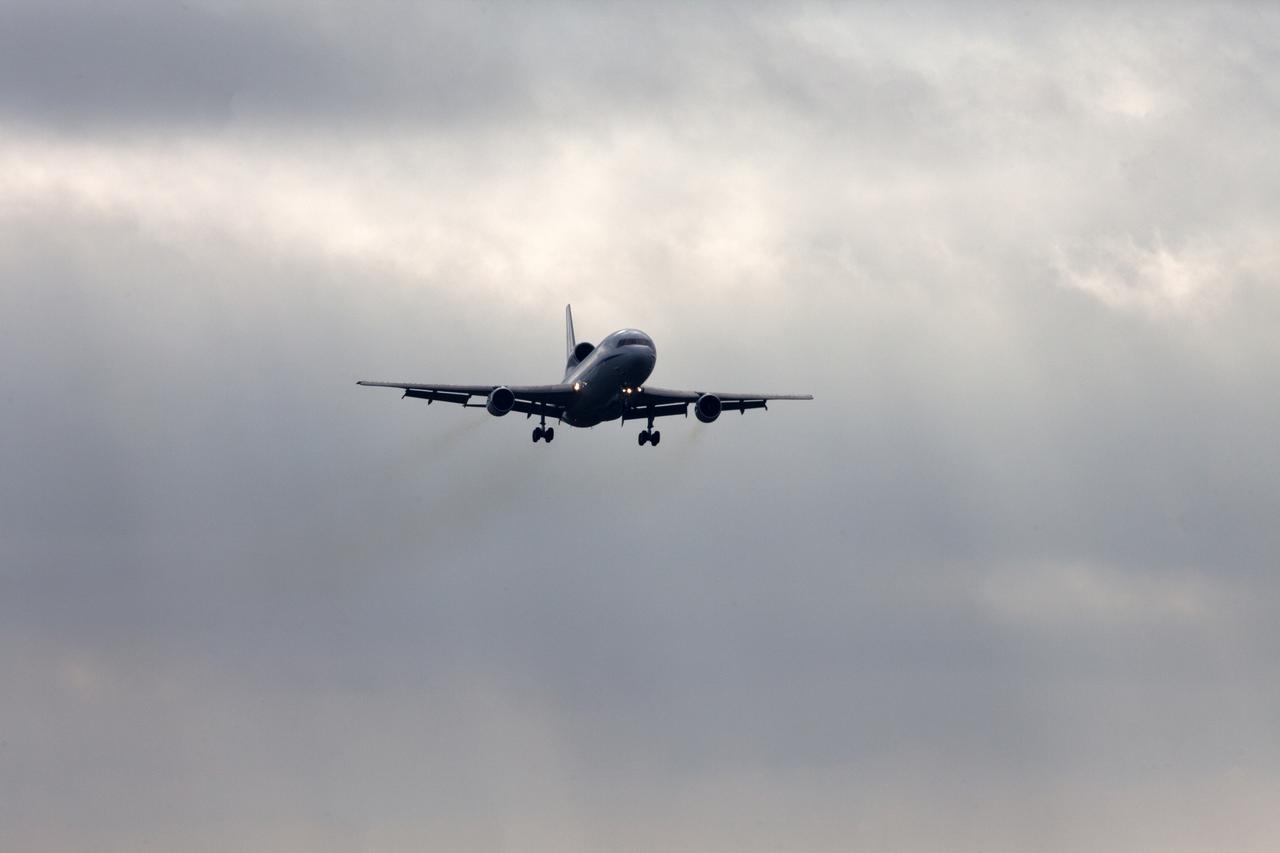
An Orbital ATK L-1011 Stargazer aircraft descends toward the Skid Strip at Cape Canaveral Air Force Station in Florida. The aircraft carried a Pegasus XL Rocket with eight NASA Cyclone Global Navigation Satellite System, or CYGNSS, for launch. With the aircraft flying off shore, the Pegasus rocket was released. Five seconds later, the solid propellant engine ignited and boosted the eight hurricane observatories to orbit. The eight CYGNSS satellites will make frequent and accurate measurements of ocean surface winds throughout the life cycle of tropical storms and hurricanes. Release of the Pegasus XL rocket occurred at 8:37 a.m. EST.
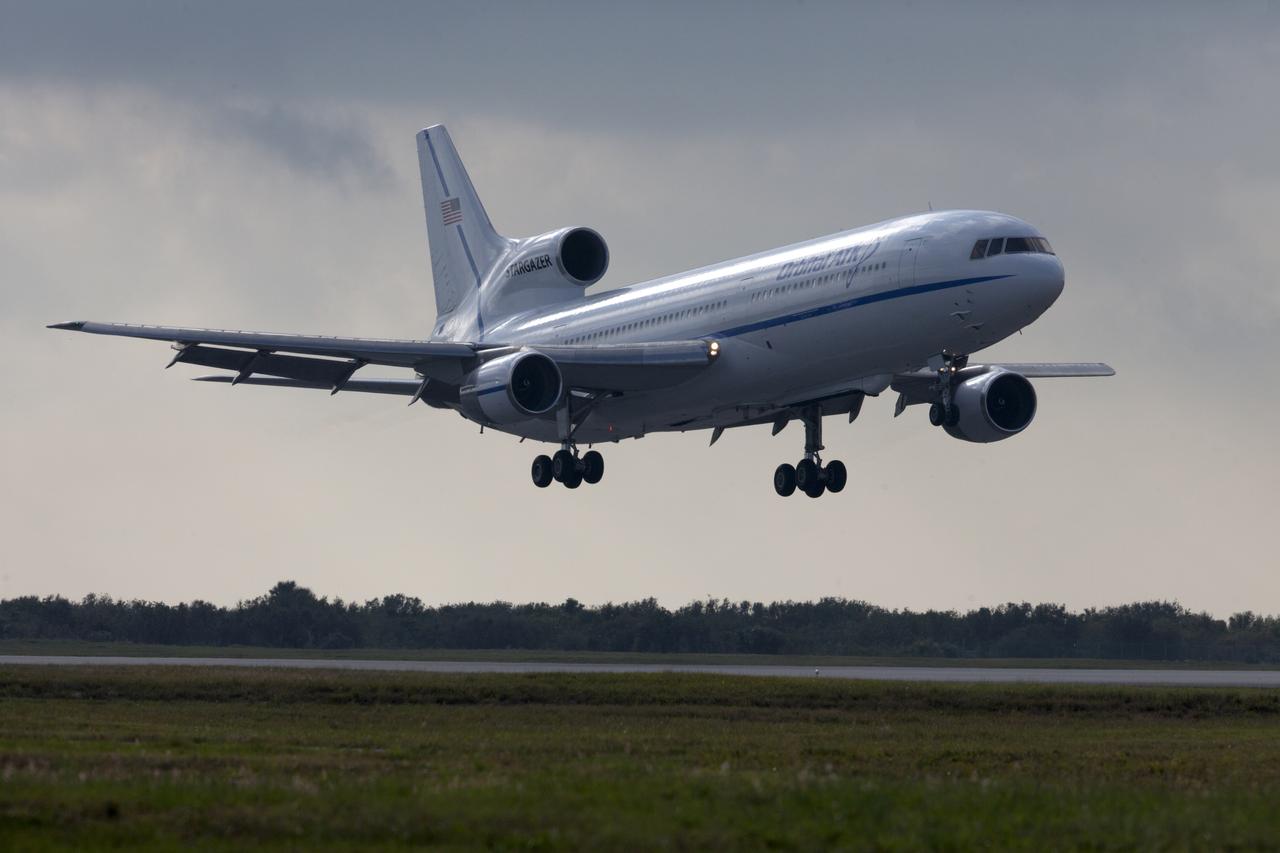
An Orbital ATK L-1011 Stargazer aircraft descends toward the Skid Strip at Cape Canaveral Air Force Station in Florida. The aircraft carried a Pegasus XL Rocket with eight NASA Cyclone Global Navigation Satellite System, or CYGNSS, for launch. With the aircraft flying off shore, the Pegasus rocket was released. Five seconds later, the solid propellant engine ignited and boosted the eight hurricane observatories to orbit. The eight CYGNSS satellites will make frequent and accurate measurements of ocean surface winds throughout the life cycle of tropical storms and hurricanes. Release of the Pegasus XL rocket occurred at 8:37 a.m. EST.
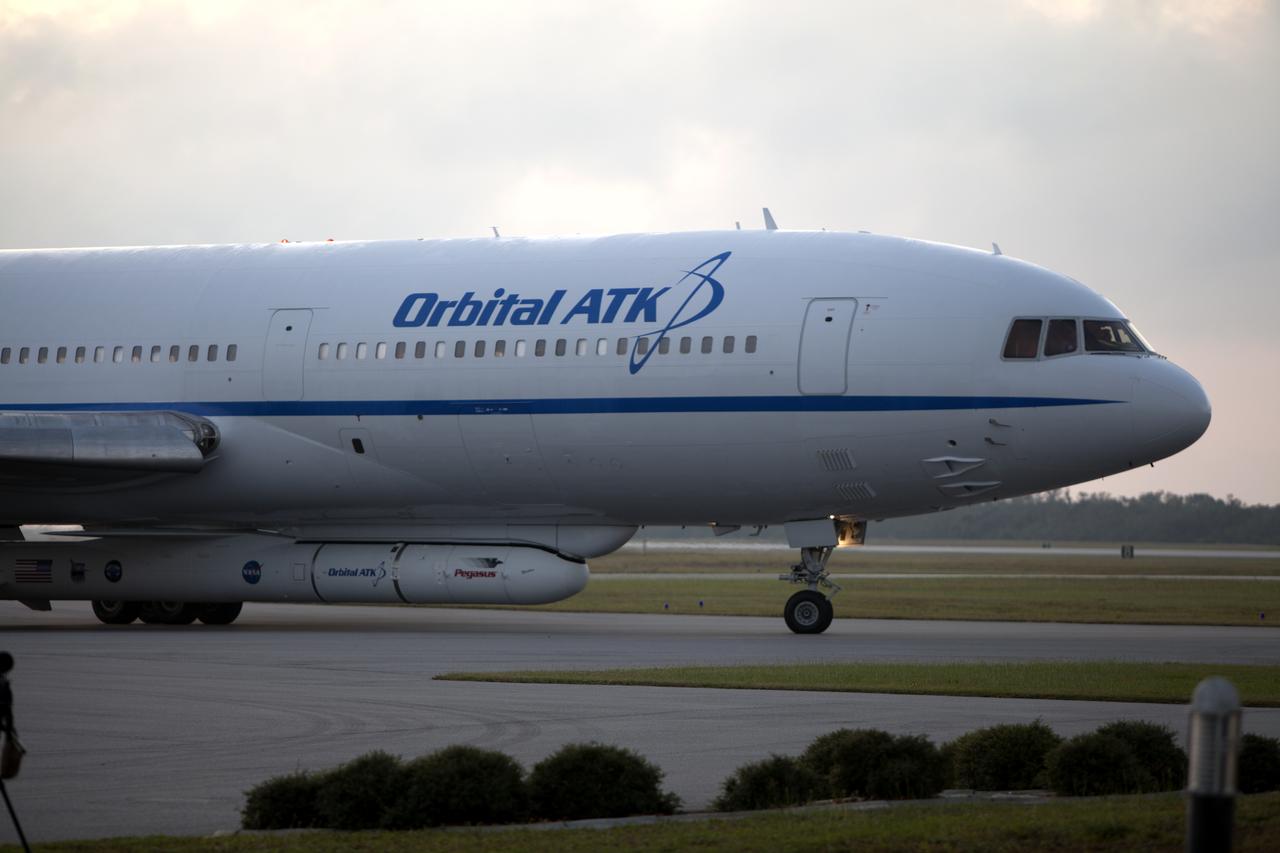
An Orbital ATK L-1011 Stargazer aircraft carrying a Pegasus XL Rocket with eight NASA Cyclone Global Navigation Satellite System, or CYGNSS, spacecraft is ready for takeoff from the Skid Strip at Cape Canaveral Air Force Station, Florida. With the aircraft flying off shore, the Pegasus rocket will be released. Five seconds later, the solid propellant engine will ignite and boost the eight hurricane observatories to orbit. The eight CYGNSS satellites will make frequent and accurate measurements of ocean surface winds throughout the life cycle of tropical storms and hurricanes.
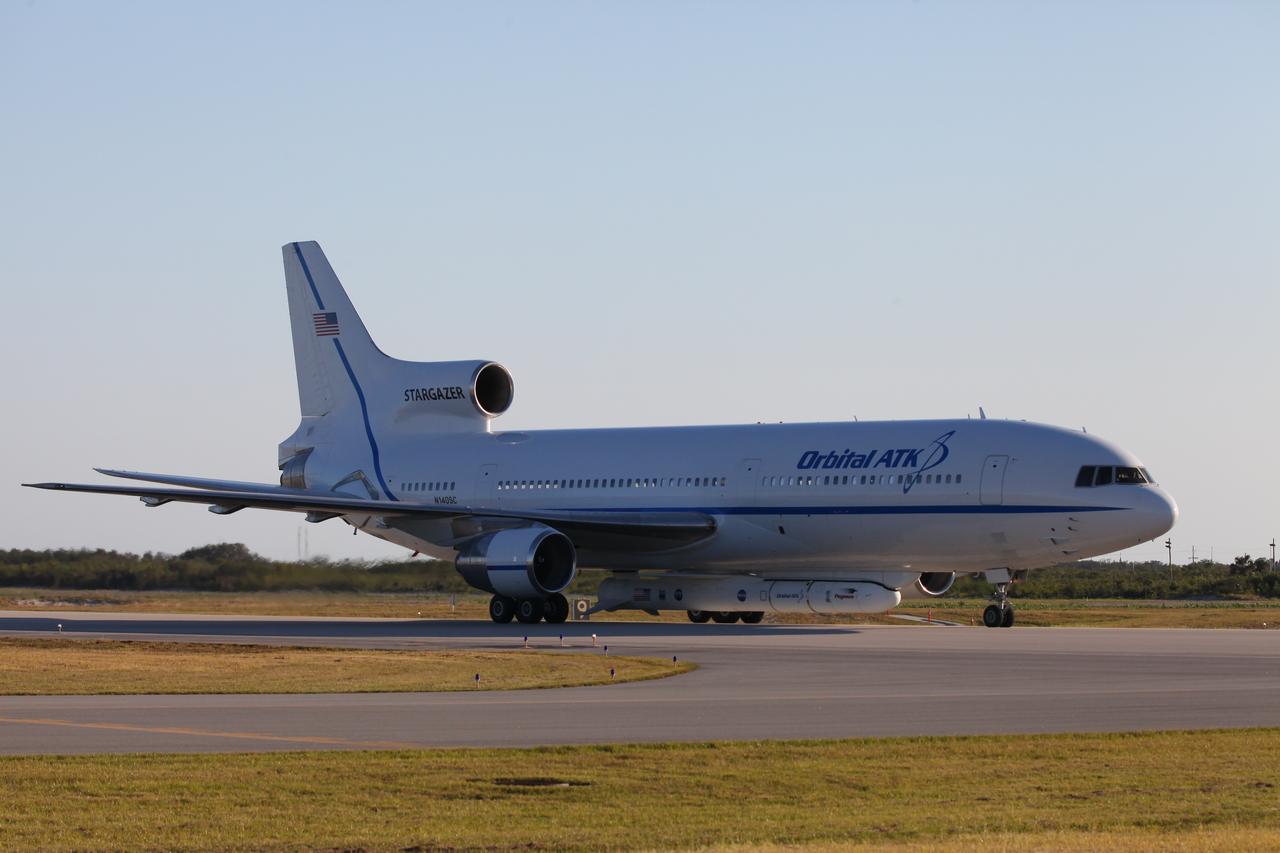
The Orbital ATK L-1011 Stargazer aircraft has arrived at the Skid Strip at Cape Canaveral Air Force Station in Florida. Attached beneath the Stargazer is the Orbital ATK Pegasus XL with NASA's Cyclone Global Navigation Satellite System (CYGNSS) on board. CYGNSS was processed and prepared for its mission at Vandenberg Air Force Base in California. CYGNSS is scheduled for its airborne launch aboard the Pegasus XL rocket from the Skid Strip on Dec. 12. CYGNSS will make frequent and accurate measurements of ocean surface winds throughout the life cycle of tropical storms and hurricanes. The data that CYGNSS provides will enable scientists to probe key air-sea interaction processes that take place near the core of storms, which are rapidly changing and play a critical role in the beginning and intensification of hurricanes.
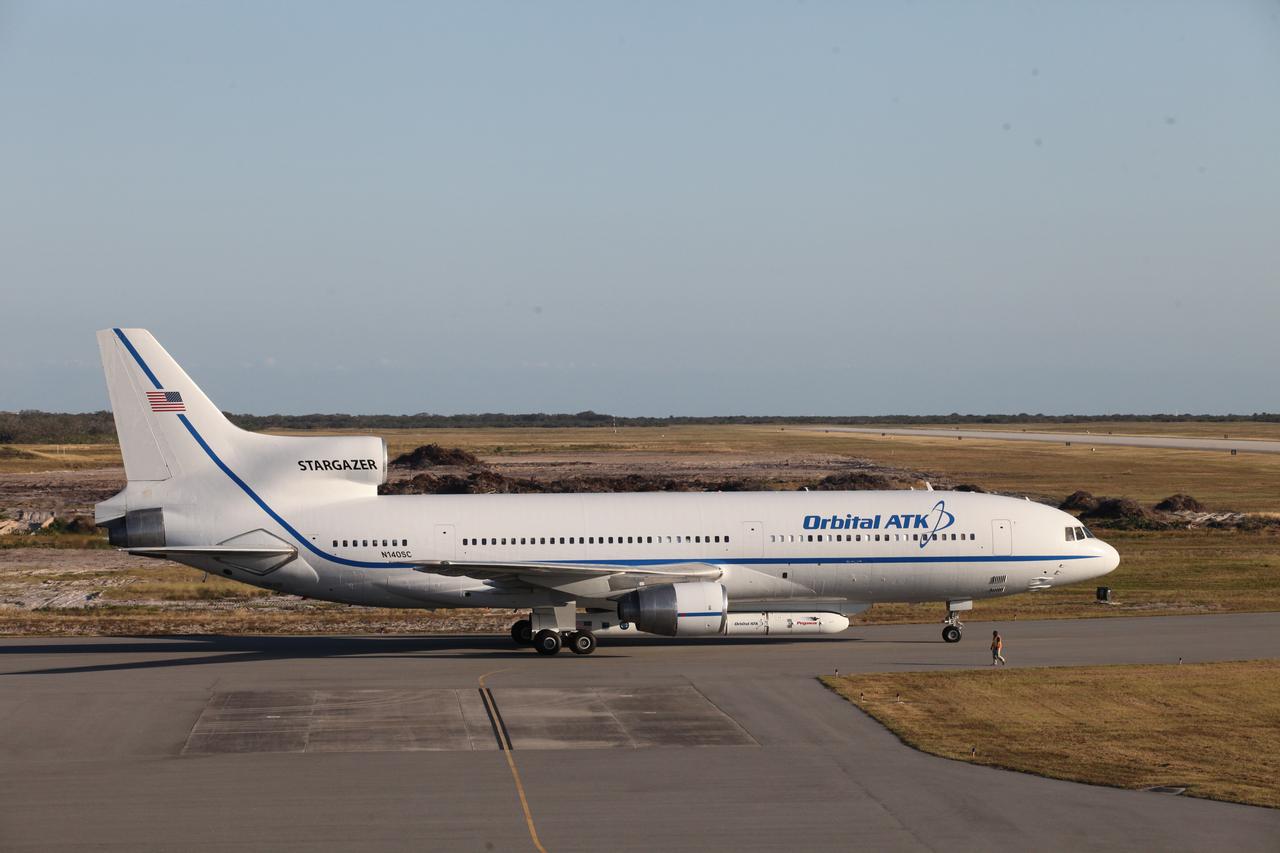
The Orbital ATK L-1011 Stargazer aircraft has arrived at the Skid Strip at Cape Canaveral Air Force Station in Florida. Attached beneath the Stargazer is the Orbital ATK Pegasus XL with NASA's Cyclone Global Navigation Satellite System (CYGNSS) on board. CYGNSS was processed and prepared for its mission at Vandenberg Air Force Base in California. CYGNSS is scheduled for its airborne launch aboard the Pegasus XL rocket from the Skid Strip on Dec. 12. CYGNSS will make frequent and accurate measurements of ocean surface winds throughout the life cycle of tropical storms and hurricanes. The data that CYGNSS provides will enable scientists to probe key air-sea interaction processes that take place near the core of storms, which are rapidly changing and play a critical role in the beginning and intensification of hurricanes.
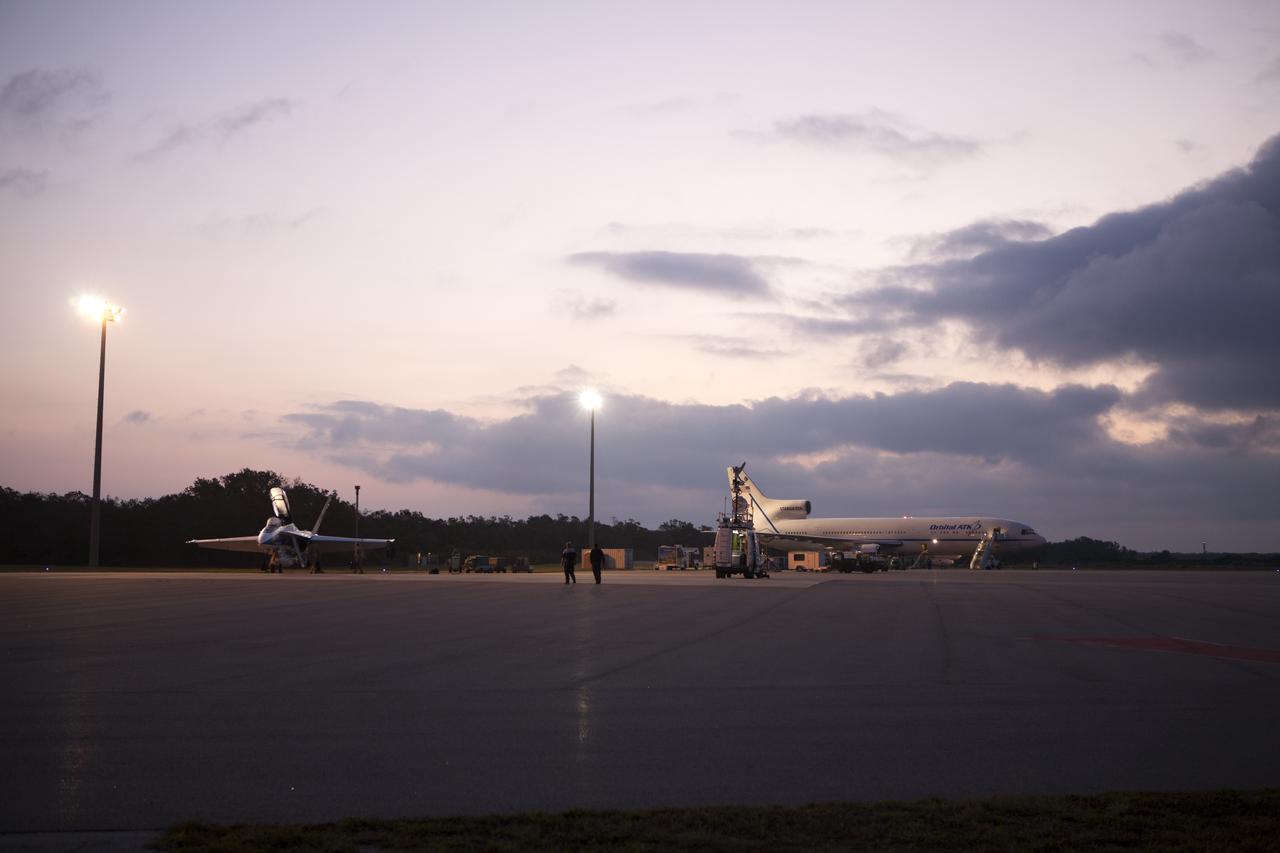
A pathfinder aircraft, at left, prepares for takeoff from the Skid Strip at Cape Canaveral Air Force Station in Florida. The airplane will provide photographic and video imagery of the Orbital ATK L-1011 Stargazer aircraft, in view at right, carrying a Pegasus XL Rocket with eight NASA Cyclone Global Navigation Satellite System, or CYGNSS, spacecraft. With the aircraft flying off shore, the Pegasus rocket will be released. Five seconds later, the solid propellant engine will ignite and boost the eight hurricane observatories to orbit. The eight CYGNSS satellites will make frequent and accurate measurements of ocean surface winds throughout the life cycle of tropical storms and hurricanes.
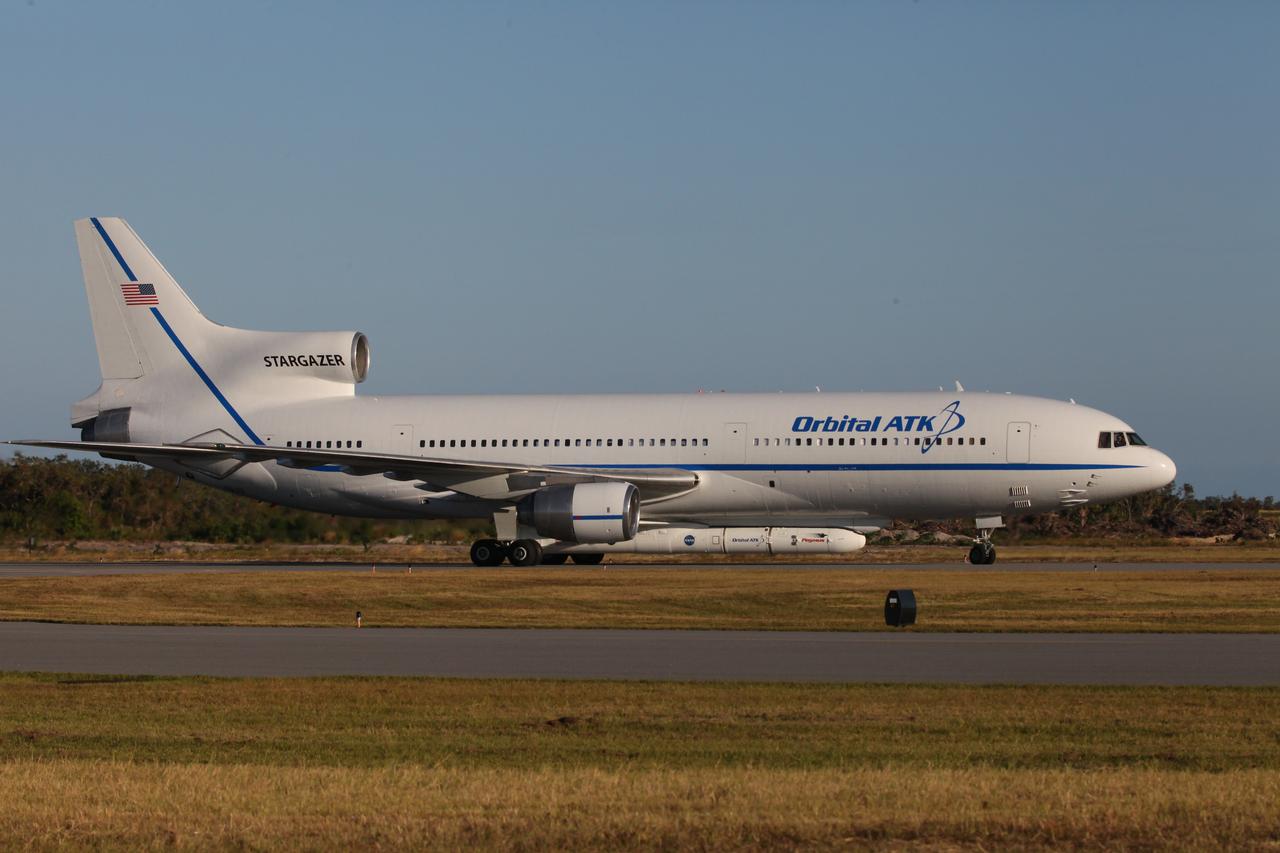
The Orbital ATK L-1011 Stargazer aircraft has arrived at the Skid Strip at Cape Canaveral Air Force Station in Florida. Attached beneath the Stargazer is the Orbital ATK Pegasus XL with NASA's Cyclone Global Navigation Satellite System (CYGNSS) on board. CYGNSS was processed and prepared for its mission at Vandenberg Air Force Base in California. CYGNSS is scheduled for its airborne launch aboard the Pegasus XL rocket from the Skid Strip on Dec. 12. CYGNSS will make frequent and accurate measurements of ocean surface winds throughout the life cycle of tropical storms and hurricanes. The data that CYGNSS provides will enable scientists to probe key air-sea interaction processes that take place near the core of storms, which are rapidly changing and play a critical role in the beginning and intensification of hurricanes.
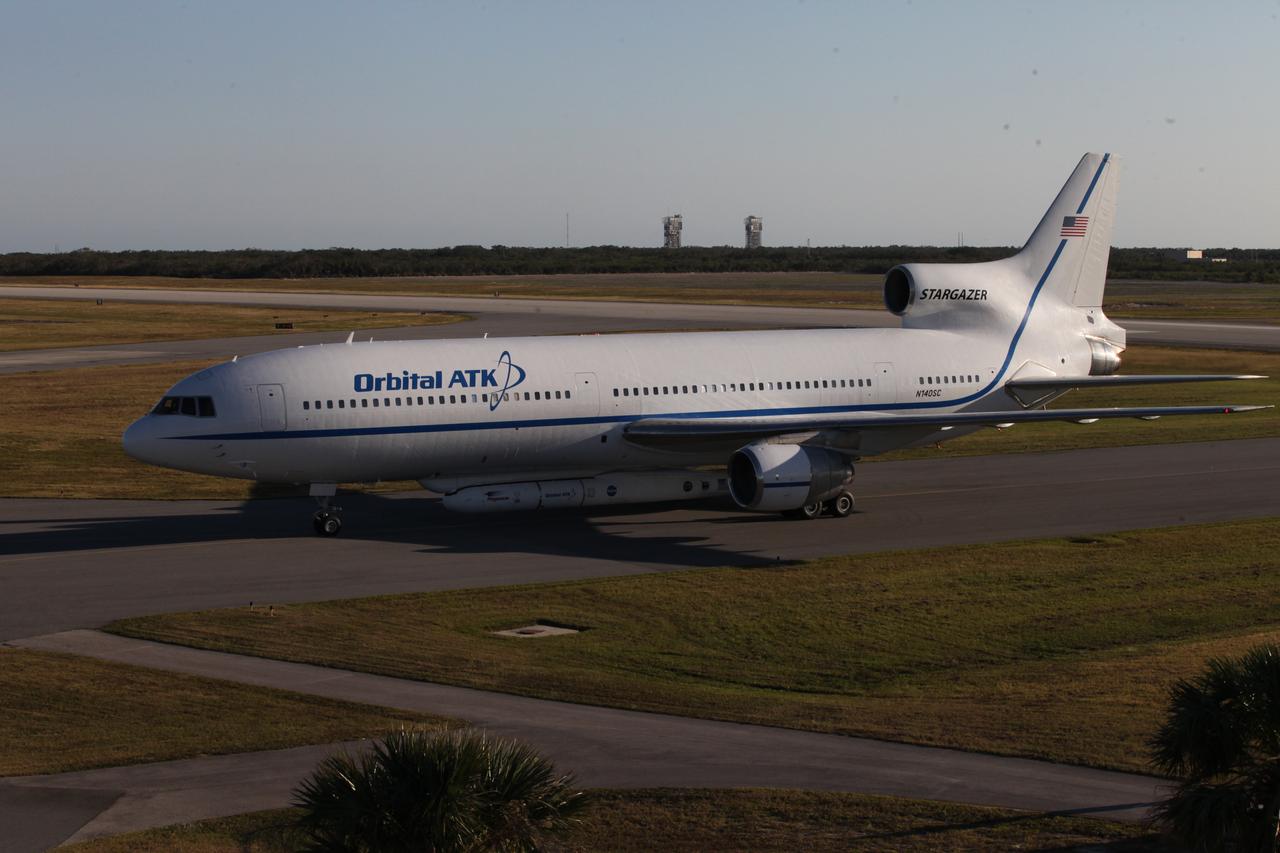
The Orbital ATK L-1011 Stargazer aircraft has arrived at the Skid Strip at Cape Canaveral Air Force Station in Florida. Attached beneath the Stargazer is the Orbital ATK Pegasus XL with NASA's Cyclone Global Navigation Satellite System (CYGNSS) on board. CYGNSS was processed and prepared for its mission at Vandenberg Air Force Base in California. CYGNSS is scheduled for its airborne launch aboard the Pegasus XL rocket from the Skid Strip on Dec. 12. CYGNSS will make frequent and accurate measurements of ocean surface winds throughout the life cycle of tropical storms and hurricanes. The data that CYGNSS provides will enable scientists to probe key air-sea interaction processes that take place near the core of storms, which are rapidly changing and play a critical role in the beginning and intensification of hurricanes.
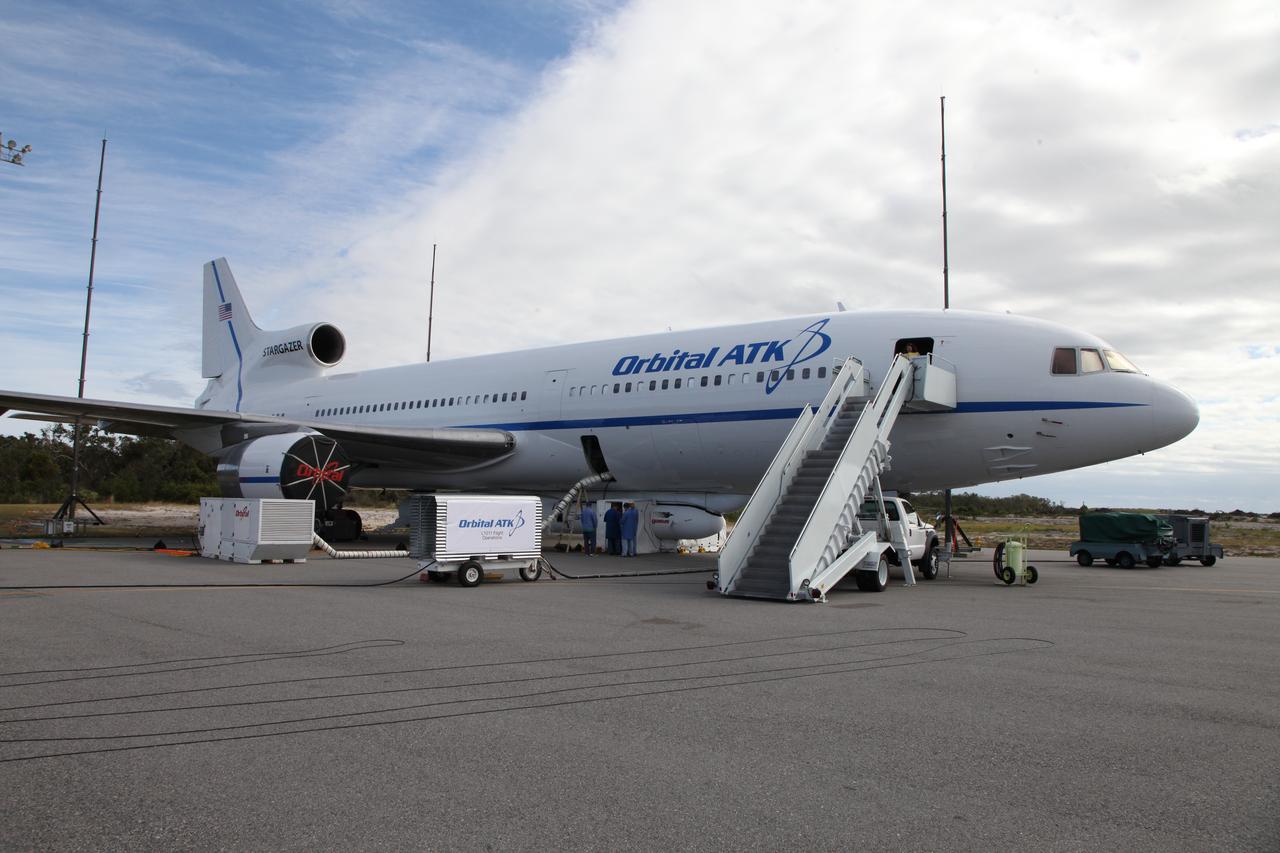
At Cape Canaveral Air Force Station's Skid Strip the Orbital ATK L-1011 Stargazer aircraft is being prepared to launch NASA's Cyclone Global Navigation Satellite System, or CYGNSS, spacecraft. The eight micro satellites are aboard an Orbital ATK Pegasus XL rocket strapped to the underside of the Stargazer. CYGNSS is scheduled for its airborne launch aboard the Pegasus XL rocket from the Skid Strip on Dec. 12. CYGNSS will make frequent and accurate measurements of ocean surface winds throughout the life cycle of tropical storms and hurricanes. The data that CYGNSS provides will enable scientists to probe key air-sea interaction processes that take place near the core of storms, which are rapidly changing and play a critical role in the beginning and intensification of hurricanes.
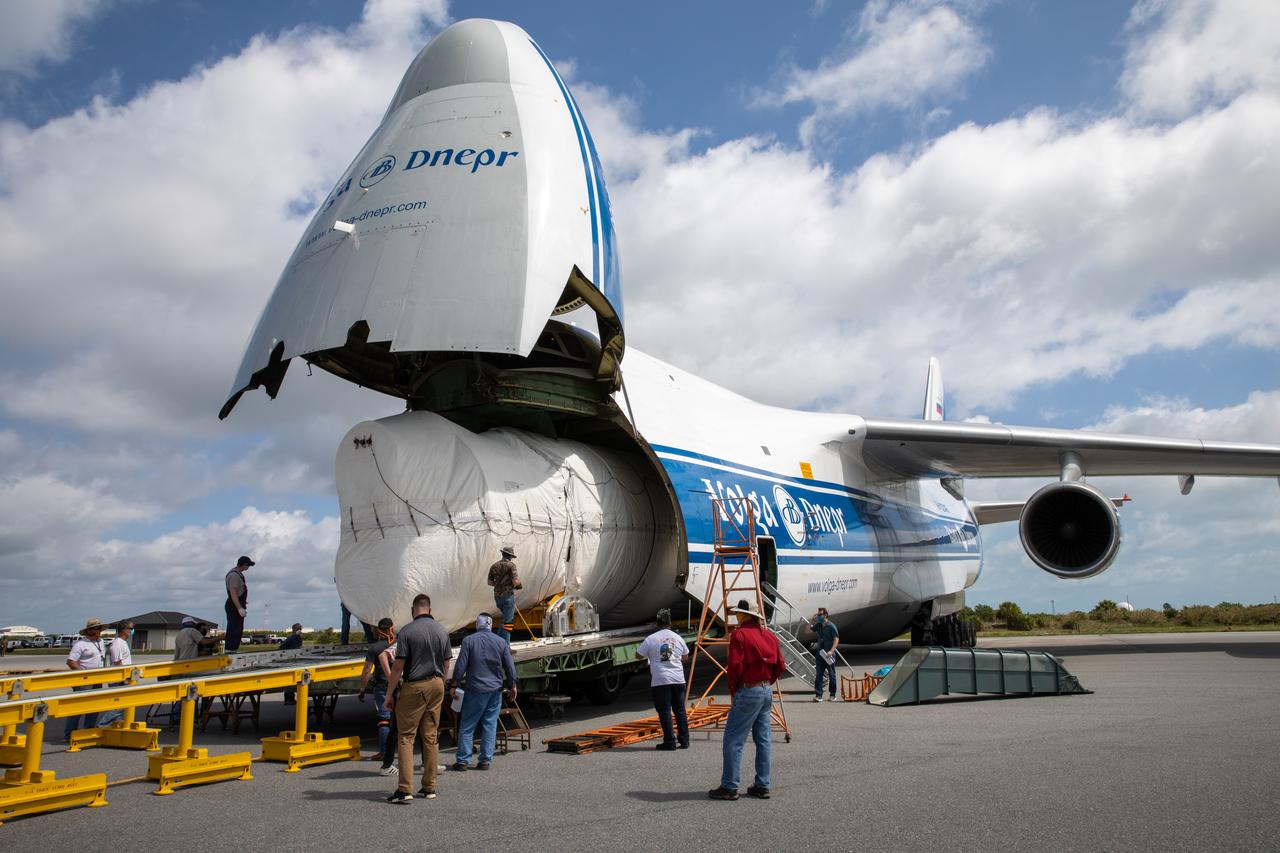
Workers help offload the United Launch Alliance booster for NASA’s Mars Perseverance rover from the Antonov 124 cargo aircraft at the Skid Strip at Cape Canaveral Air Force Station (CCAFS) in Florida on May 19, 2020. The Mars Perseverance rover is scheduled to launch in mid-July atop a United Launch Alliance Atlas V 541 rocket from Pad 41 at CCAFS. The rover is part of NASA’s Mars Exploration Program, a long-term effort of robotic exploration of the Red Planet. The rover will search for habitable conditions in the ancient past and signs of past microbial life on Mars. The Launch Services Program at Kennedy is responsible for launch management.
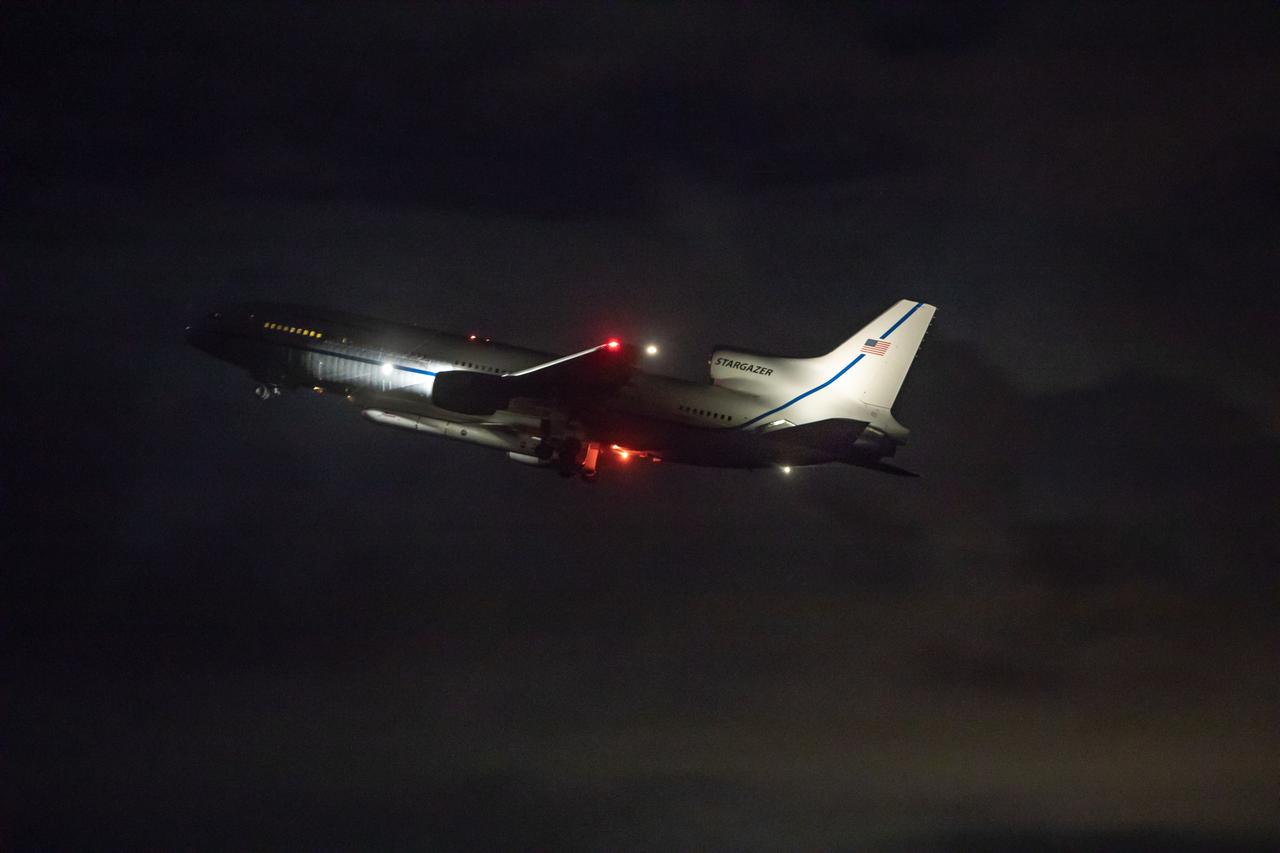
Northrop Grumman’s L-1011 Stargazer aircraft, with the company’s Pegasus XL rocket attached beneath, takes off from the Skid Strip runway at Cape Canaveral Air Force Station in Florida on Oct. 10, 2019. NASA's Ionospheric Connection Explorer (ICON) is secured inside the rocket's payload fairing. The air-launched Pegasus XL was released from the aircraft at 9:59 p.m. EDT to start ICON’s journey to space. The explorer will study the frontier of space - the dynamic zone high in Earth's atmosphere where terrestrial weather from below meets space weather above.
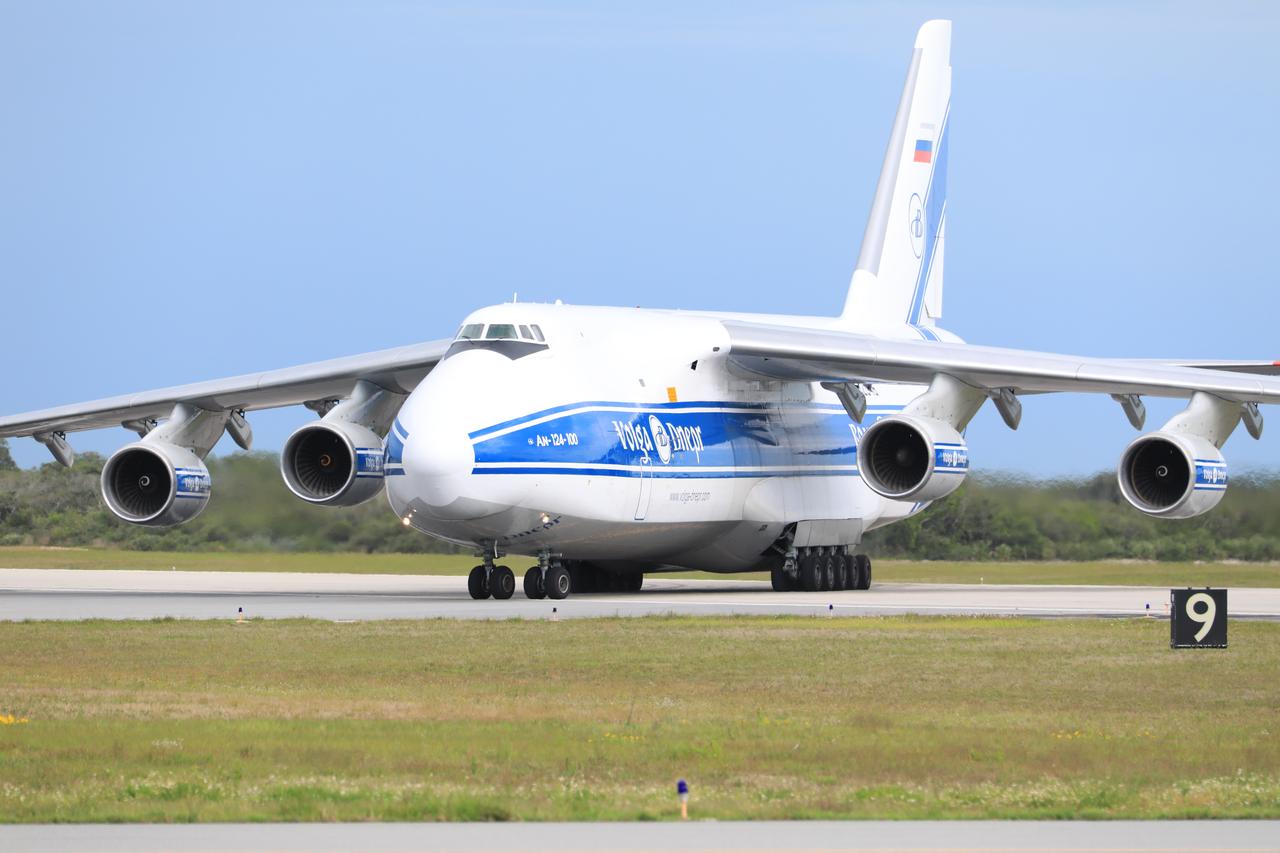
The Antonov 124 cargo aircraft, carrying the United Launch Alliance booster for NASA’s Mars Perseverance rover, taxis off the runway at the Skid Strip at Cape Canaveral Air Force Station (CCAFS) in Florida on May 18, 2020. The Mars Perseverance rover is scheduled to launch in mid-July atop a United Launch Alliance Atlas V 541 rocket from Pad 41 at CCAFS. The rover is part of NASA’s Mars Exploration Program, a long-term effort of robotic exploration of the Red Planet. The rover will search for habitable conditions in the ancient past and signs of past microbial life on Mars. The Launch Services Program at Kennedy is responsible for launch management.
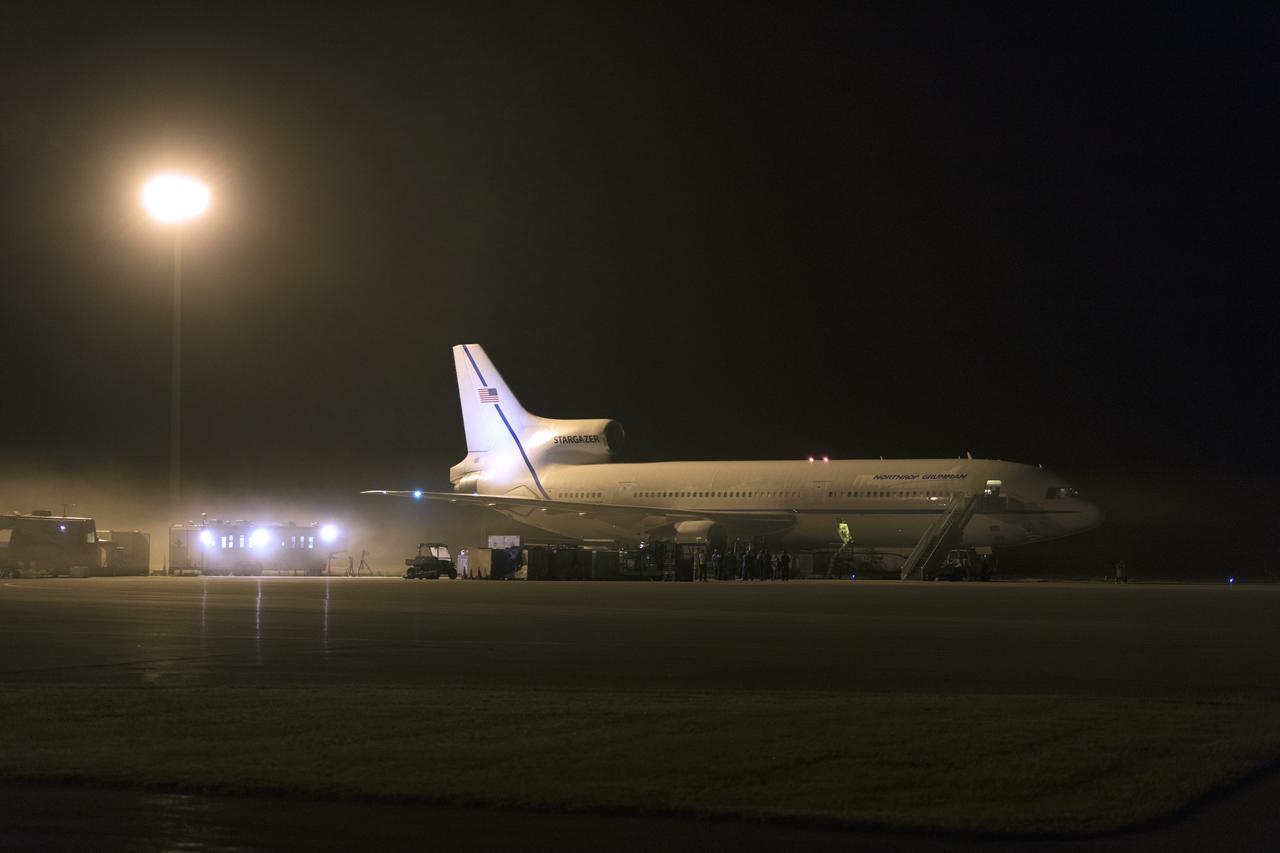
The Northrop Grumman L-1011 Stargazer aircraft, with the Pegasus XL rocket attached beneath, is being prepared for takeoff from the runway at the Skid Strip at Cape Canaveral Air Force Station in Florida on Nov. 7, 2018. NASA's Ionospheric Connection Explorer (ICON) satellite is secured inside the rocket's payload fairing. The Pegasus XL rocket will be carried aloft by the Stargazer. ICON will study the frontier of space - the dynamic zone high in Earth's atmosphere where terrestrial weather from below meets space weather above. The explorer will help determine the physics of Earth's space environment and pave the way for mitigating its effects on our technology, communications systems and society.
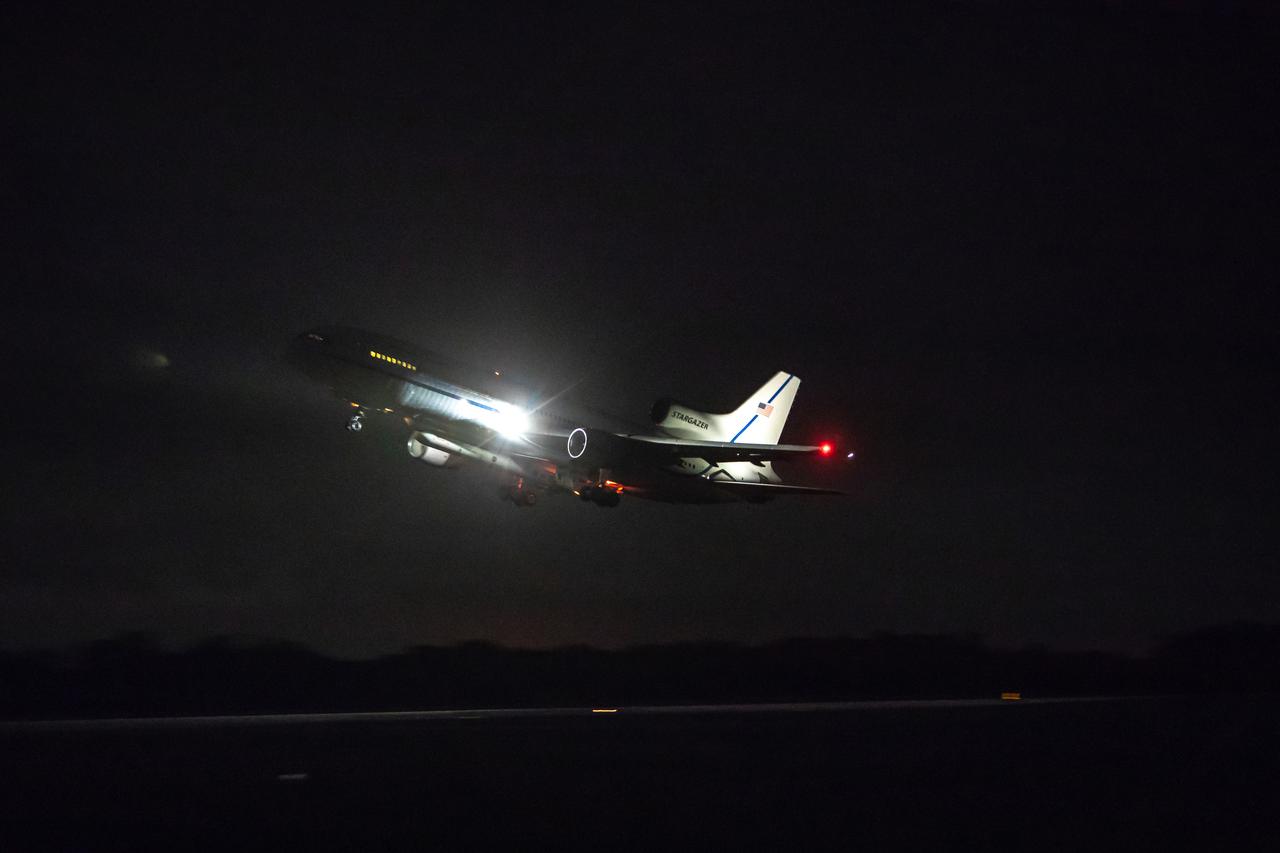
Northrop Grumman’s L-1011 Stargazer aircraft, with the company’s Pegasus XL rocket attached beneath, takes off from the Skid Strip runway at Cape Canaveral Air Force Station in Florida on Oct. 10, 2019. NASA's Ionospheric Connection Explorer (ICON) is secured inside the rocket's payload fairing. The air-launched Pegasus XL was released from the aircraft at 9:59 p.m. EDT to start ICON’s journey to space. The explorer will study the frontier of space - the dynamic zone high in Earth's atmosphere where terrestrial weather from below meets space weather above.
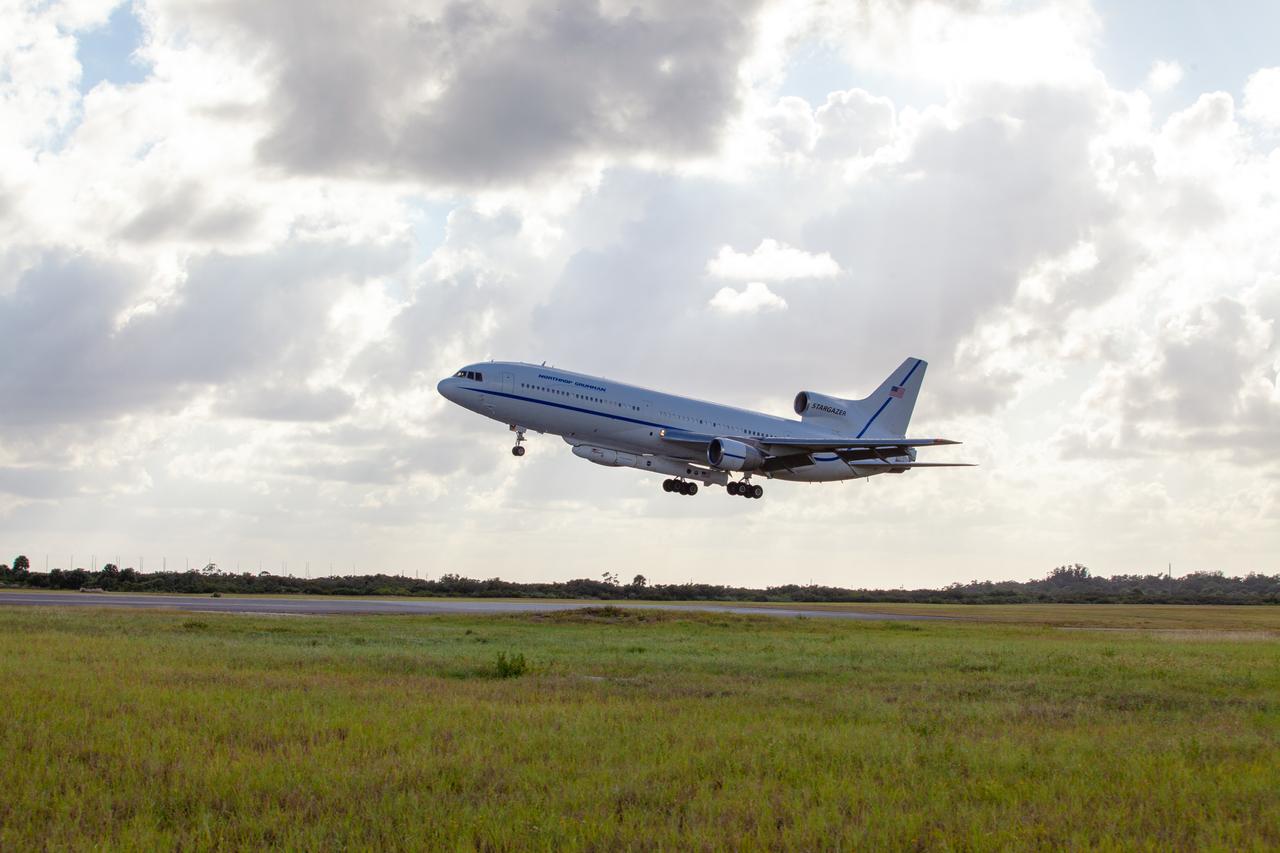
Northrop Grumman's L-1011 Stargazer aircraft descends toward the Skid Strip at Cape Canaveral Air Force Station in Florida on Oct. 1, 2019. The company's Pegasus XL rocket, containing NASA's Ionospheric Connection Explorer (ICON), is attached beneath the aircraft. ICON will study the frontier of space - the dynamic zone high in Earth's atmosphere where terrestrial weather from below meets space weather above.
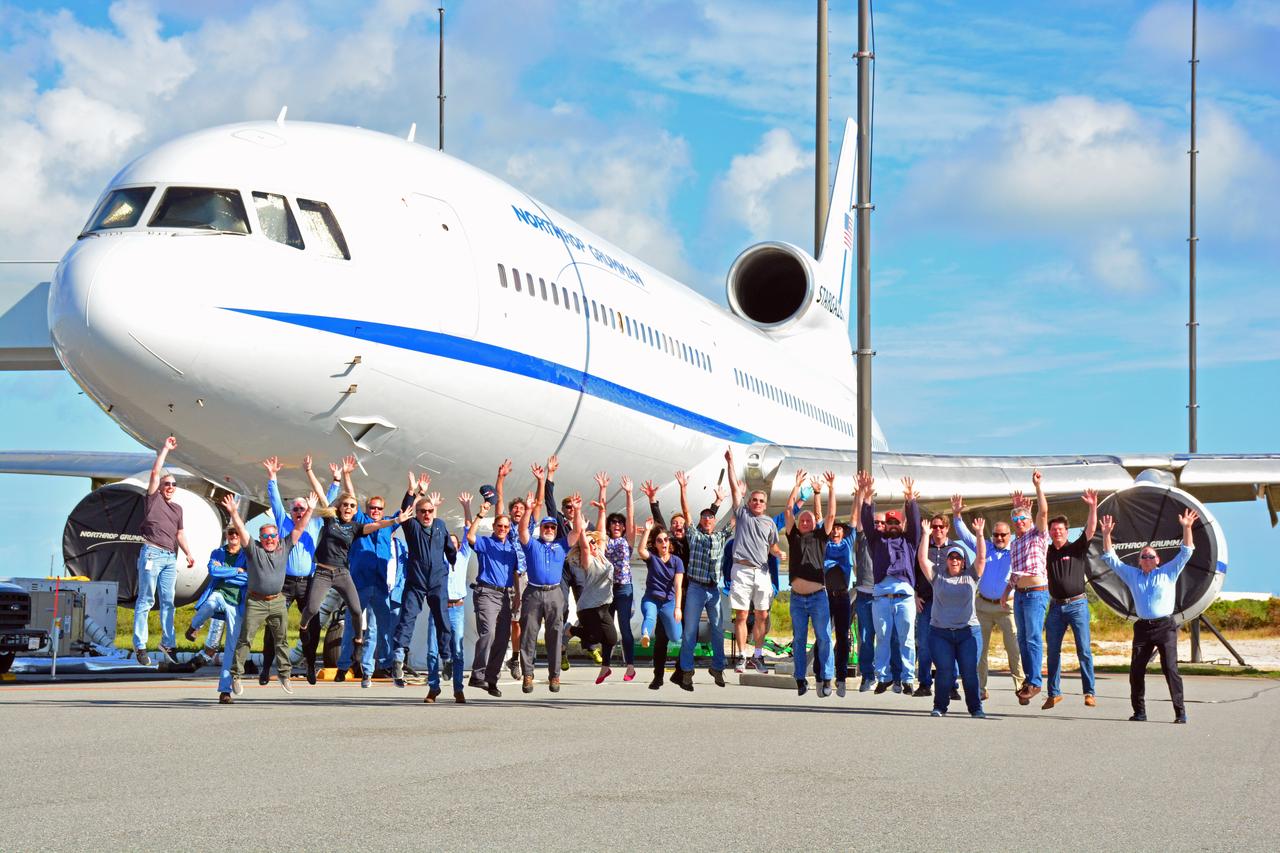
Members of the launch team for NASA’s Ionospheric Connection Explorer (ICON) gather for a joyous group photo in front of the Northrop Grumman L-1011 Stargazer aircraft carrying the Pegasus XL rocket at the Skid Strip at Florida’s Cape Canaveral Air Force Station, Nov. 10, 2019. Hours later, the rocket containing ICON air-launched from beneath the aircraft off the coast of Daytona Beach. ICON will study the frontier of space - the dynamic zone high in Earth's atmosphere where terrestrial weather from below meets space weather above. The explorer will help determine the physics of Earth's space environment and pave the way for mitigating its effects on our technology, communications systems and society.
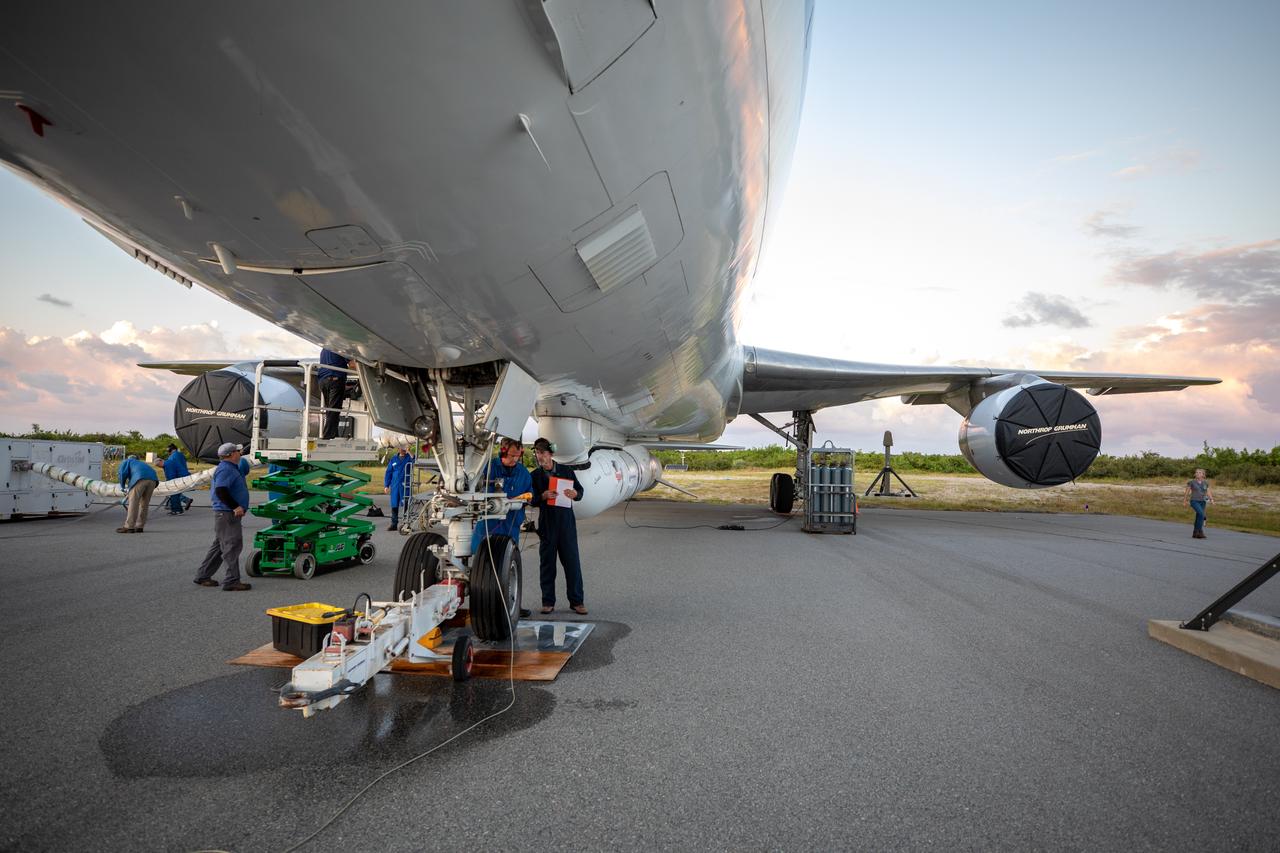
Northrop Grumman's L-1011 Stargazer aircraft has arrived at the Skid Strip at Cape Canaveral Air Force Station in Florida on Oct. 1, 2019. The company's Pegasus XL rocket, containing NASA's Ionospheric Connection Explorer (ICON), is attached beneath the aircraft. ICON will study the frontier of space - the dynamic zone high in Earth's atmosphere where terrestrial weather from below meets space weather above.
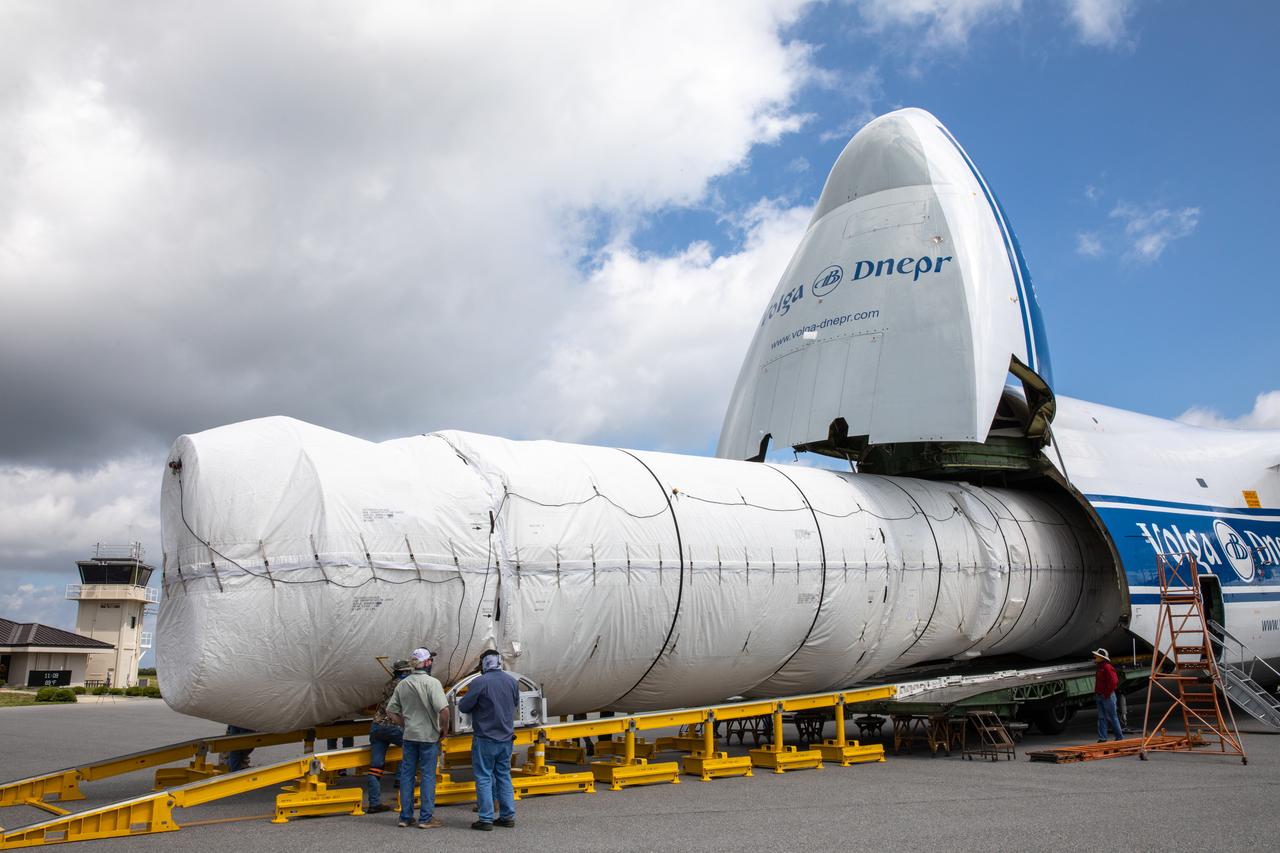
The United Launch Alliance booster for NASA’s Mars Perseverance rover is offloaded from the Antonov 124 cargo aircraft at the Skid Strip at Cape Canaveral Air Force Station (CCAFS) in Florida on May 19, 2020. The Mars Perseverance rover is scheduled to launch in mid-July atop a United Launch Alliance Atlas V 541 rocket from Pad 41 at CCAFS. The rover is part of NASA’s Mars Exploration Program, a long-term effort of robotic exploration of the Red Planet. The rover will search for habitable conditions in the ancient past and signs of past microbial life on Mars. The Launch Services Program at Kennedy is responsible for launch management.
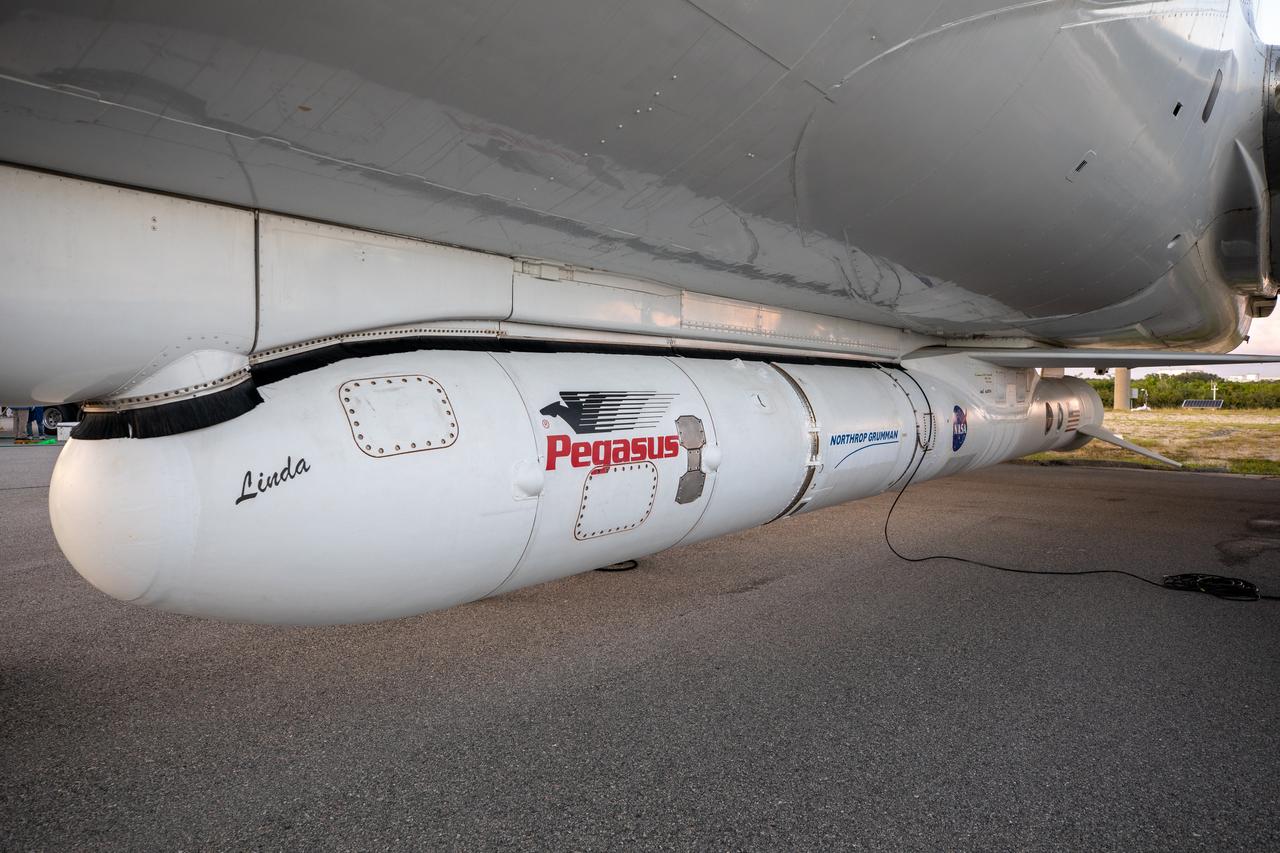
The Northrop Grumman Pegasus XL rocket, carrying NASA’s Ionospheric Connection Explorer (ICON), has arrived at the Skid Strip at Cape Canaveral Air Force Station in Florida on Oct. 1, 2019. The rocket is attached beneath the company’s L-1011 Stargazer aircraft. ICON will study the frontier of space - the dynamic zone high in Earth's atmosphere where terrestrial weather from below meets space weather above.

The Northrop Grumman L-1011 Stargazer aircraft, with the Pegasus XL rocket attached beneath, starts down the runway at the Skid Strip at Cape Canaveral Air Force Station in Florida on Nov. 7, 2018. NASA's Ionospheric Connection Explorer (ICON) is secured inside the rocket's payload fairing. The Pegasus XL rocket will be carried aloft by the Stargazer. ICON will study the frontier of space - the dynamic zone high in Earth's atmosphere where terrestrial weather from below meets space weather above. The explorer will help determine the physics of Earth's space environment and pave the way for mitigating its effects on our technology, communications systems and society.
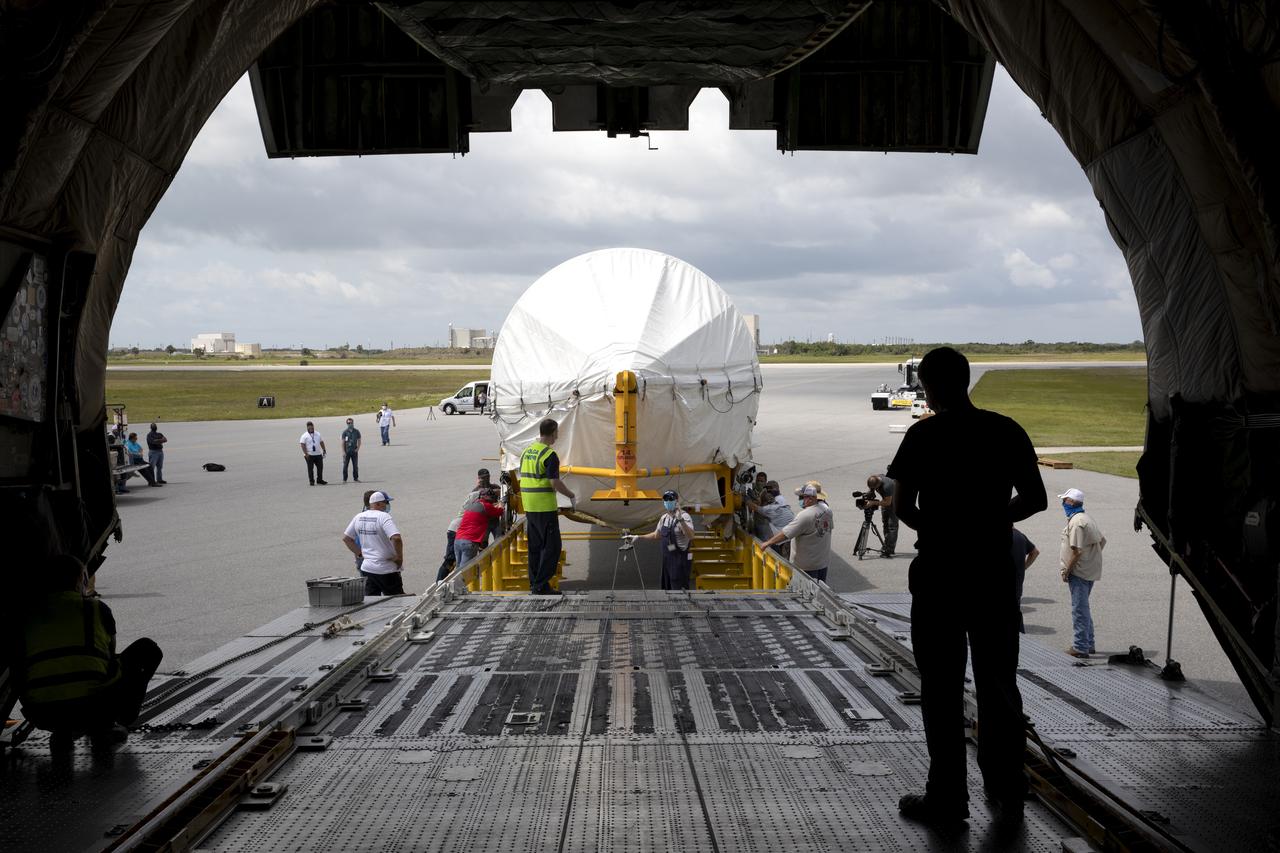
In this view from inside the Antonov 124 cargo aircraft, the United Launch Alliance booster for NASA’s Mars Perseverance rover is offloaded at the Skid Strip at Cape Canaveral Air Force Station (CCAFS) in Florida on May 19, 2020. The Mars Perseverance rover is scheduled to launch in mid-July atop a United Launch Alliance Atlas V 541 rocket from Pad 41 at CCAFS. The rover is part of NASA’s Mars Exploration Program, a long-term effort of robotic exploration of the Red Planet. The rover will search for habitable conditions in the ancient past and signs of past microbial life on Mars. The Launch Services Program at Kennedy is responsible for launch management.
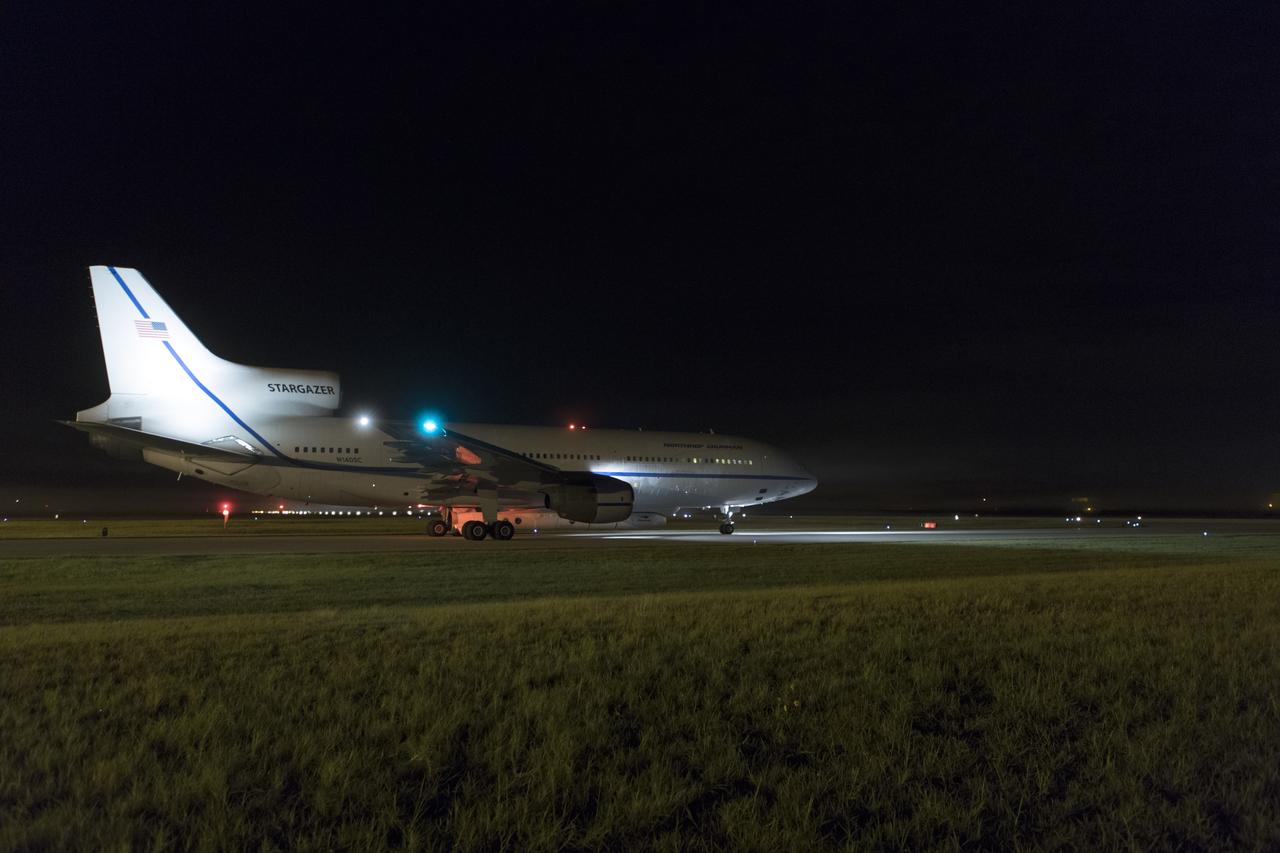
The Northrop Grumman L-1011 Stargazer aircraft, with the Pegasus XL rocket attached beneath, starts down the runway at the Skid Strip at Cape Canaveral Air Force Station in Florida on Nov. 7, 2018. NASA's Ionospheric Connection Explorer (ICON) is secured inside the rocket's payload fairing. The Pegasus XL rocket will be carried aloft by the Stargazer. ICON will study the frontier of space - the dynamic zone high in Earth's atmosphere where terrestrial weather from below meets space weather above. The explorer will help determine the physics of Earth's space environment and pave the way for mitigating its effects on our technology, communications systems and society.

JUNO - CENTAUR STAGE ARRIVAL
JUNO - Atlas V Arrival at Skid Strip
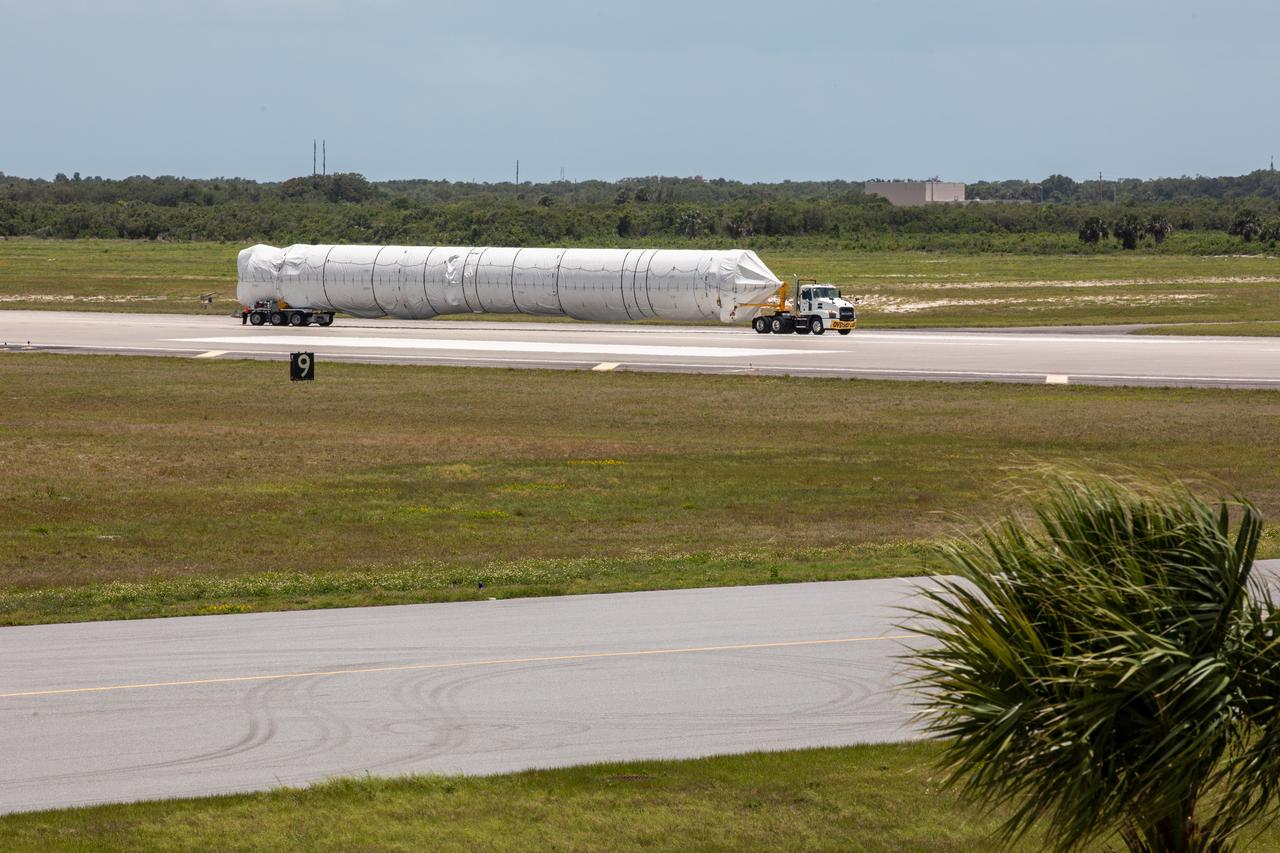
A flatbed truck carrying the United Launch Alliance booster for NASA’s Mars Perseverance rover departs the Skid Strip at Cape Canaveral Air Force Station (CCAFS) in Florida on May 19, 2020. The booster arrived aboard the Antonov 124 cargo aircraft at the Skid Strip on May 18, 2020. The Mars Perseverance rover is scheduled to launch in mid-July atop a United Launch Alliance Atlas V 541 rocket from Pad 41 at CCAFS. The rover is part of NASA’s Mars Exploration Program, a long-term effort of robotic exploration of the Red Planet. The rover will search for habitable conditions in the ancient past and signs of past microbial life on Mars. The Launch Services Program at Kennedy is responsible for launch management.
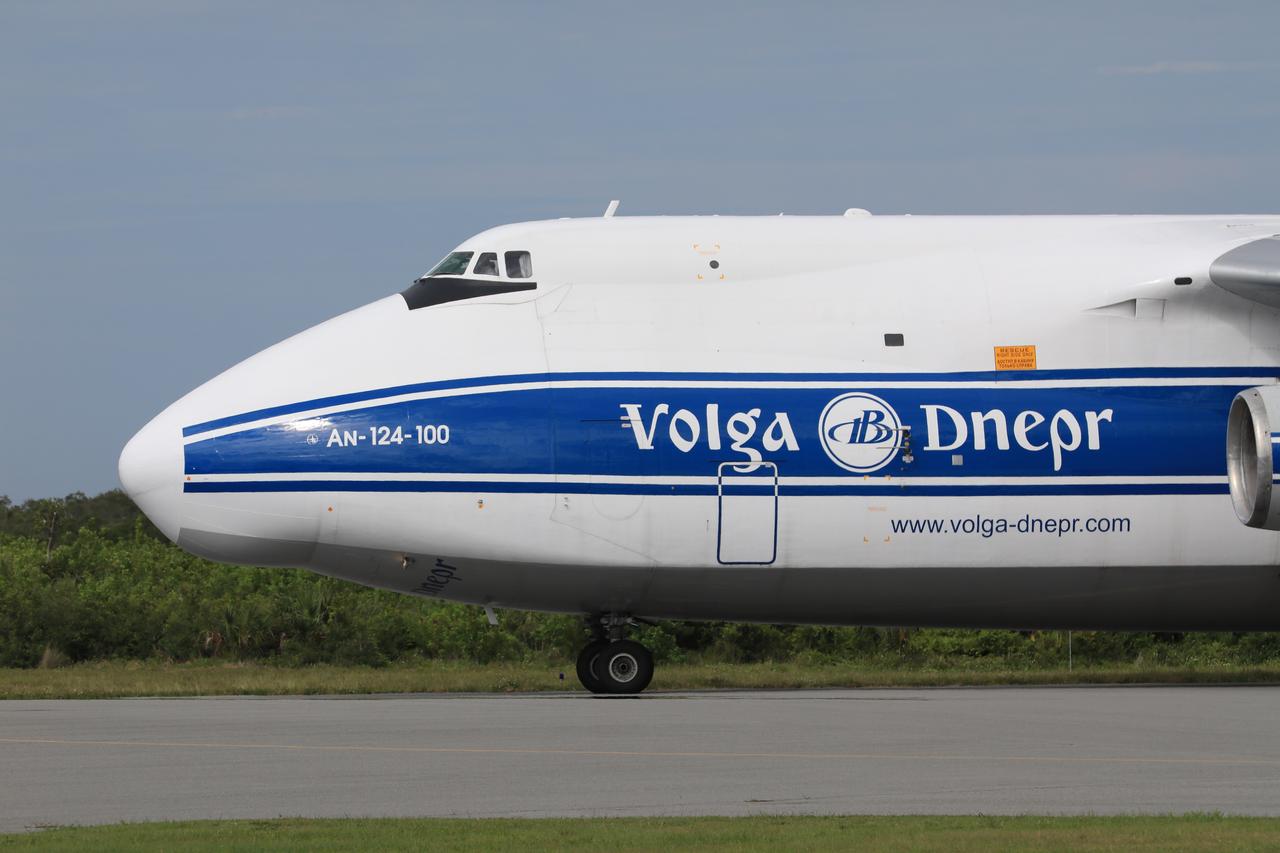
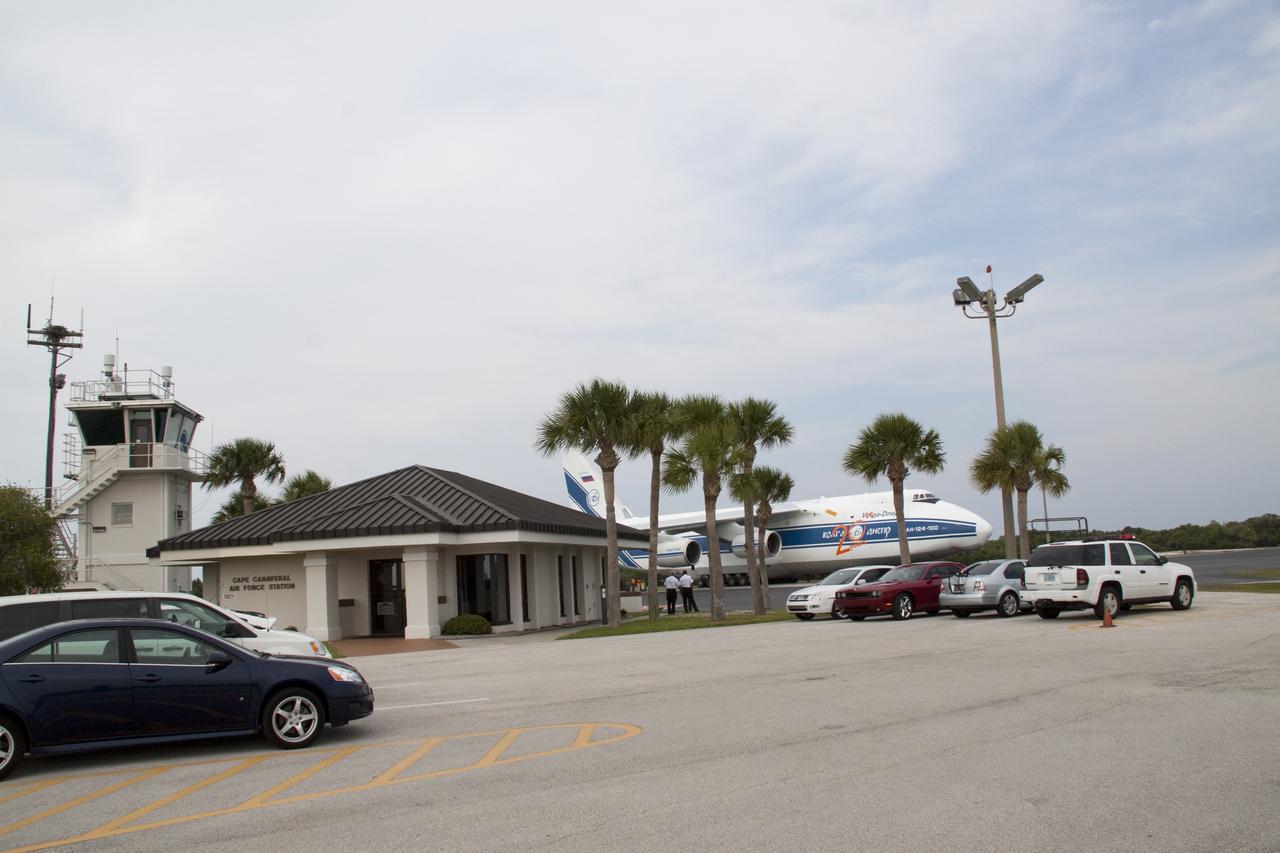
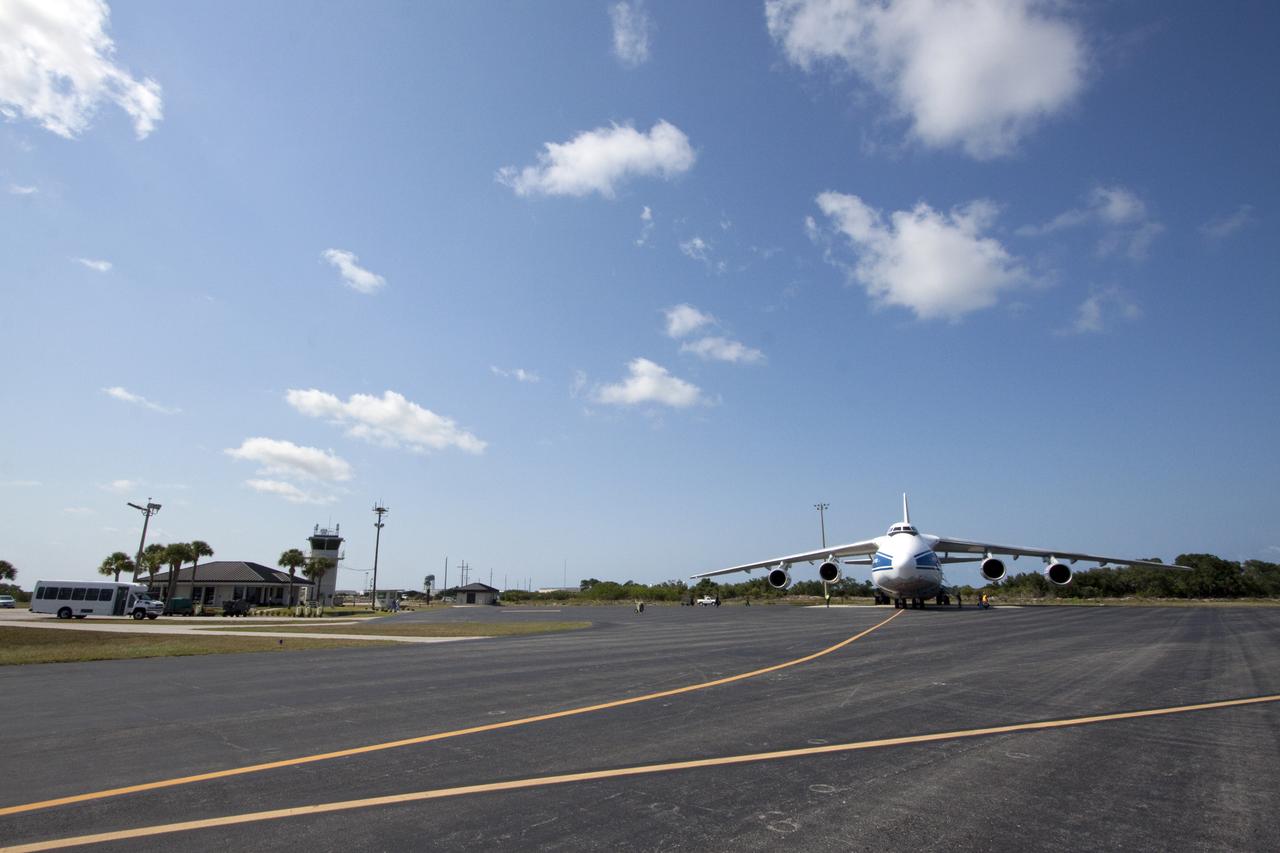
The Antonov 124 cargo aircraft, carrying the United Launch Alliance booster for NASA’s Mars Perseverance rover, taxis off the runway at the Skid Strip at Cape Canaveral Air Force Station (CCAFS) in Florida on May 18, 2020. The Mars Perseverance rover is scheduled to launch in mid-July atop a United Launch Alliance Atlas V 541 rocket from Pad 41 at CCAFS. The rover is part of NASA’s Mars Exploration Program, a long-term effort of robotic exploration of the Red Planet. The rover will search for habitable conditions in the ancient past and signs of past microbial life on Mars. The Launch Services Program at Kennedy is responsible for launch management.
The Northrop Grumman L-1011 Stargazer aircraft, with the Pegasus XL rocket attached beneath, starts down the runway at the Skid Strip at Cape Canaveral Air Force Station in Florida on Nov. 7, 2018. NASA's Ionospheric Connection Explorer (ICON) is secured inside the rocket's payload fairing. The Pegasus XL rocket will be carried aloft by the Stargazer. ICON will study the frontier of space - the dynamic zone high in Earth's atmosphere where terrestrial weather from below meets space weather above. The explorer will help determine the physics of Earth's space environment and pave the way for mitigating its effects on our technology, communications systems and society.
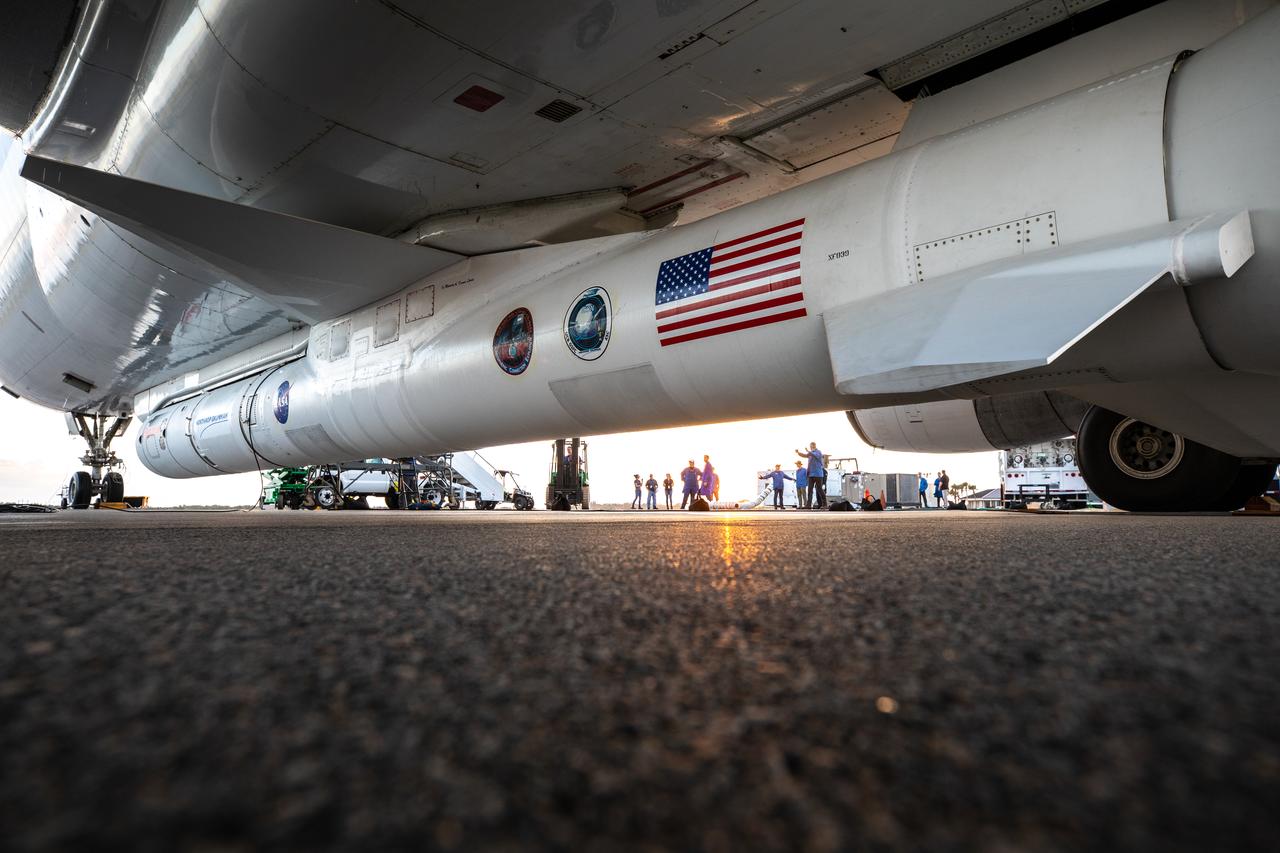
The Northrop Grumman Pegasus XL rocket, carrying NASA’s Ionospheric Connection Explorer (ICON), has arrived at the Skid Strip at Cape Canaveral Air Force Station in Florida on Oct. 1, 2019. The rocket is attached beneath the company’s L-1011 Stargazer aircraft. ICON will study the frontier of space - the dynamic zone high in Earth's atmosphere where terrestrial weather from below meets space weather above.
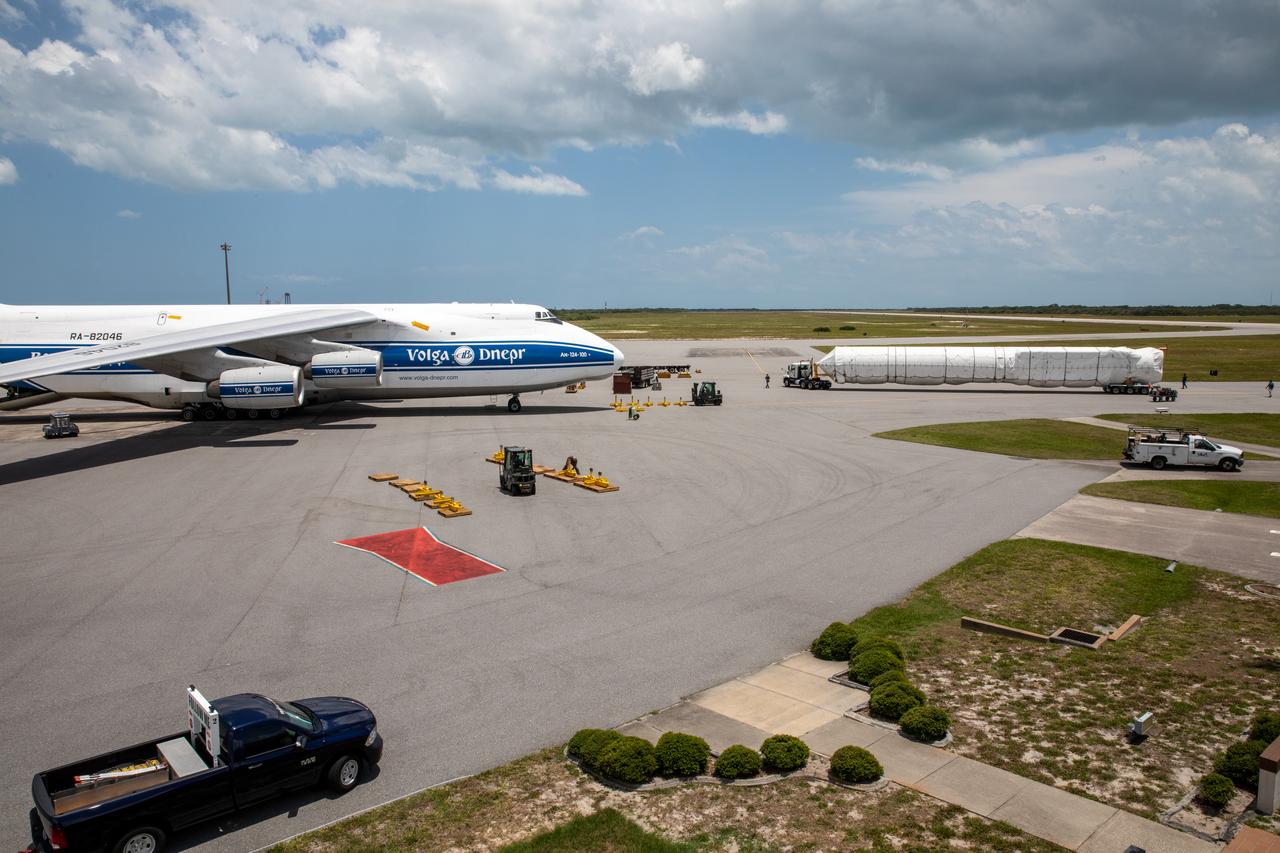
The United Launch Alliance booster for NASA’s Mars Perseverance rover is secured on a flatbed truck after being offloaded from the Antonov 124 cargo aircraft at the Skid Strip at Cape Canaveral Air Force Station (CCAFS) in Florida on May 19, 2020. The Mars Perseverance rover is scheduled to launch in mid-July atop a United Launch Alliance Atlas V 541 rocket from Pad 41 at CCAFS. The rover is part of NASA’s Mars Exploration Program, a long-term effort of robotic exploration of the Red Planet. The rover will search for habitable conditions in the ancient past and signs of past microbial life on Mars. The Launch Services Program at Kennedy is responsible for launch management.
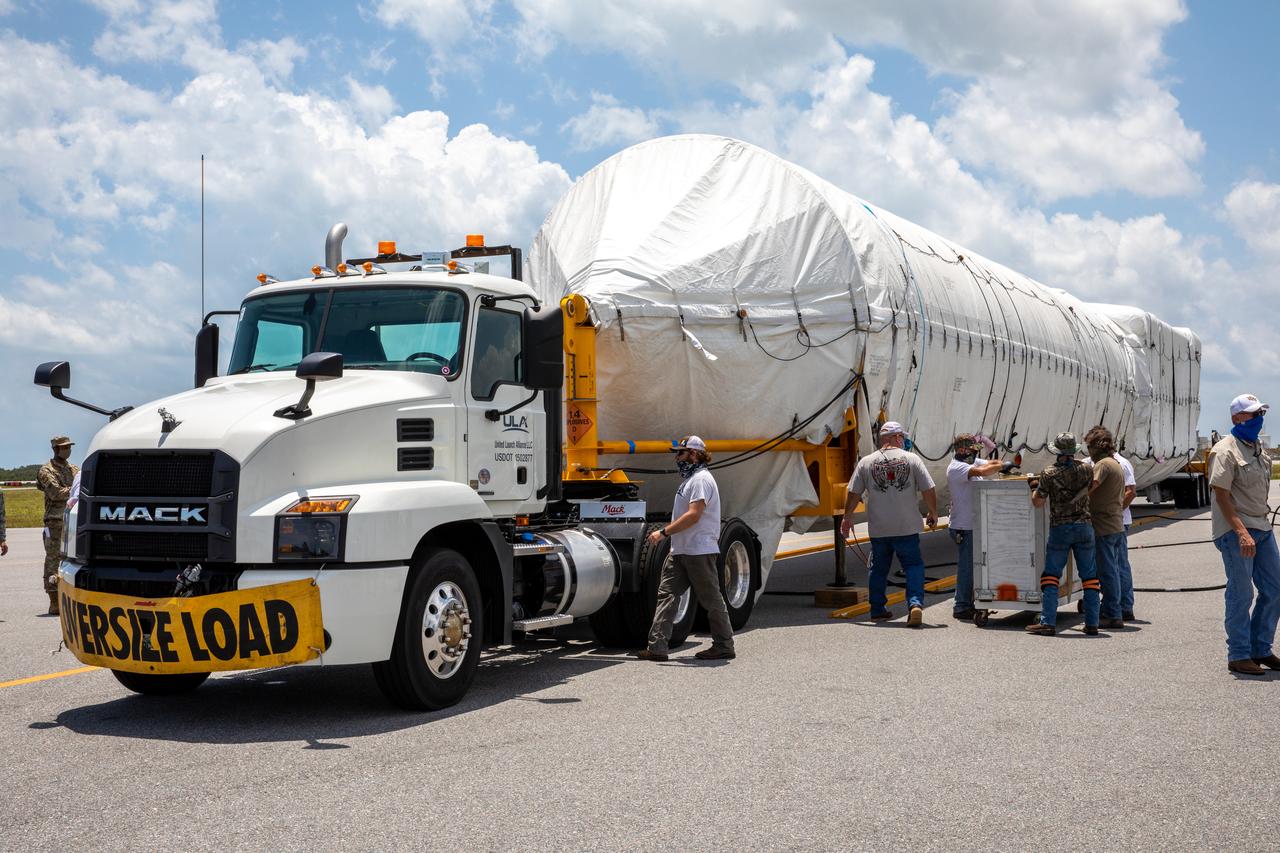
The United Launch Alliance booster for NASA’s Mars Perseverance rover is secured on a flatbed truck after being offloaded from the Antonov 124 cargo aircraft at the Skid Strip at Cape Canaveral Air Force Station (CCAFS) in Florida on May 19, 2020. The Mars Perseverance rover is scheduled to launch in mid-July atop a United Launch Alliance Atlas V 541 rocket from Pad 41 at CCAFS. The rover is part of NASA’s Mars Exploration Program, a long-term effort of robotic exploration of the Red Planet. The rover will search for habitable conditions in the ancient past and signs of past microbial life on Mars. The Launch Services Program at Kennedy is responsible for launch management.
JUNO - CENTAUR STAGE ARRIVAL
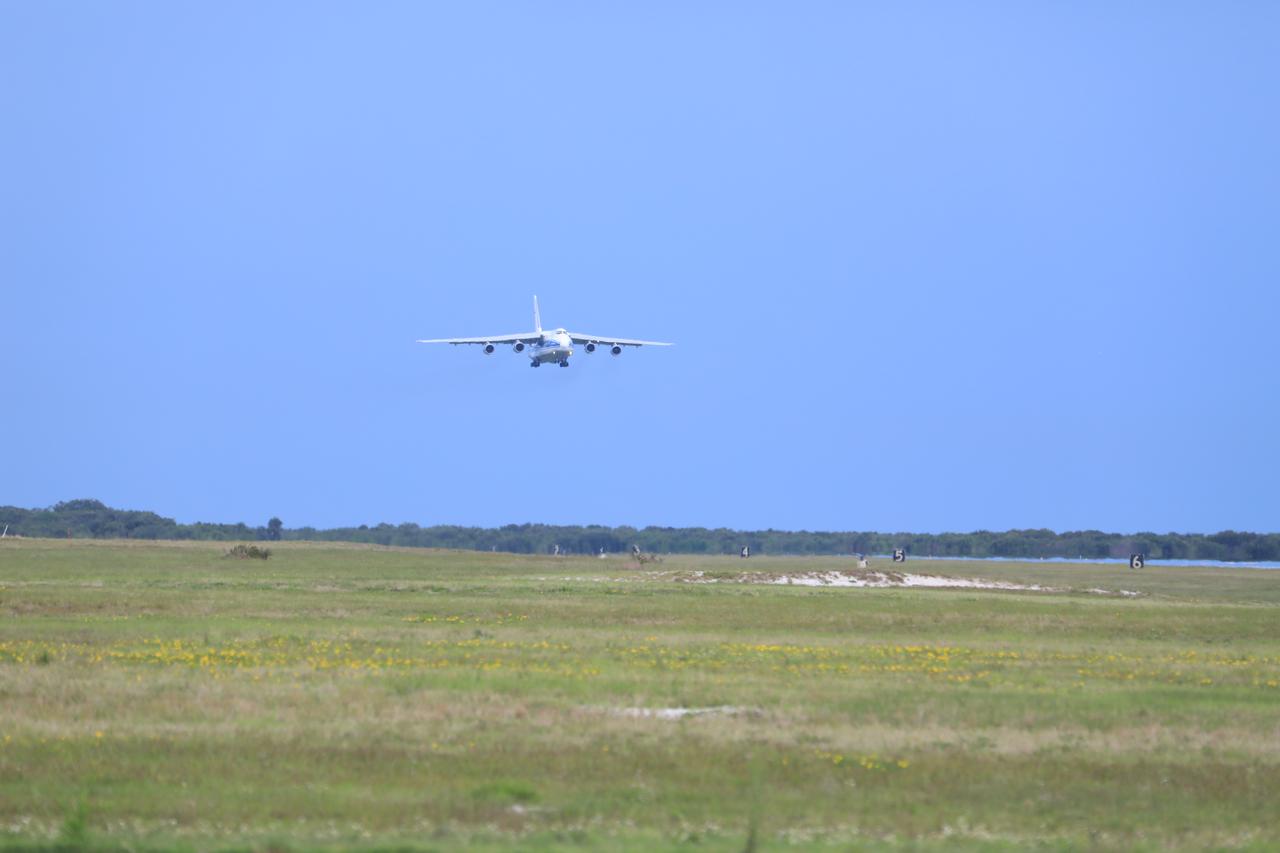
The Antonov 124 cargo aircraft, carrying the United Launch Alliance booster for NASA’s Mars Perseverance rover, descends toward the Skid Strip at Cape Canaveral Air Force Station (CCAFS) in Florida on May 18, 2020. The Mars Perseverance rover is scheduled to launch in mid-July atop a United Launch Alliance Atlas V 541 rocket from Pad 41 at CCAFS. The rover is part of NASA’s Mars Exploration Program, a long-term effort of robotic exploration of the Red Planet. The rover will search for habitable conditions in the ancient past and signs of past microbial life on Mars. The Launch Services Program at Kennedy is responsible for launch management.
JUNO - CENTAUR STAGE ARRIVAL
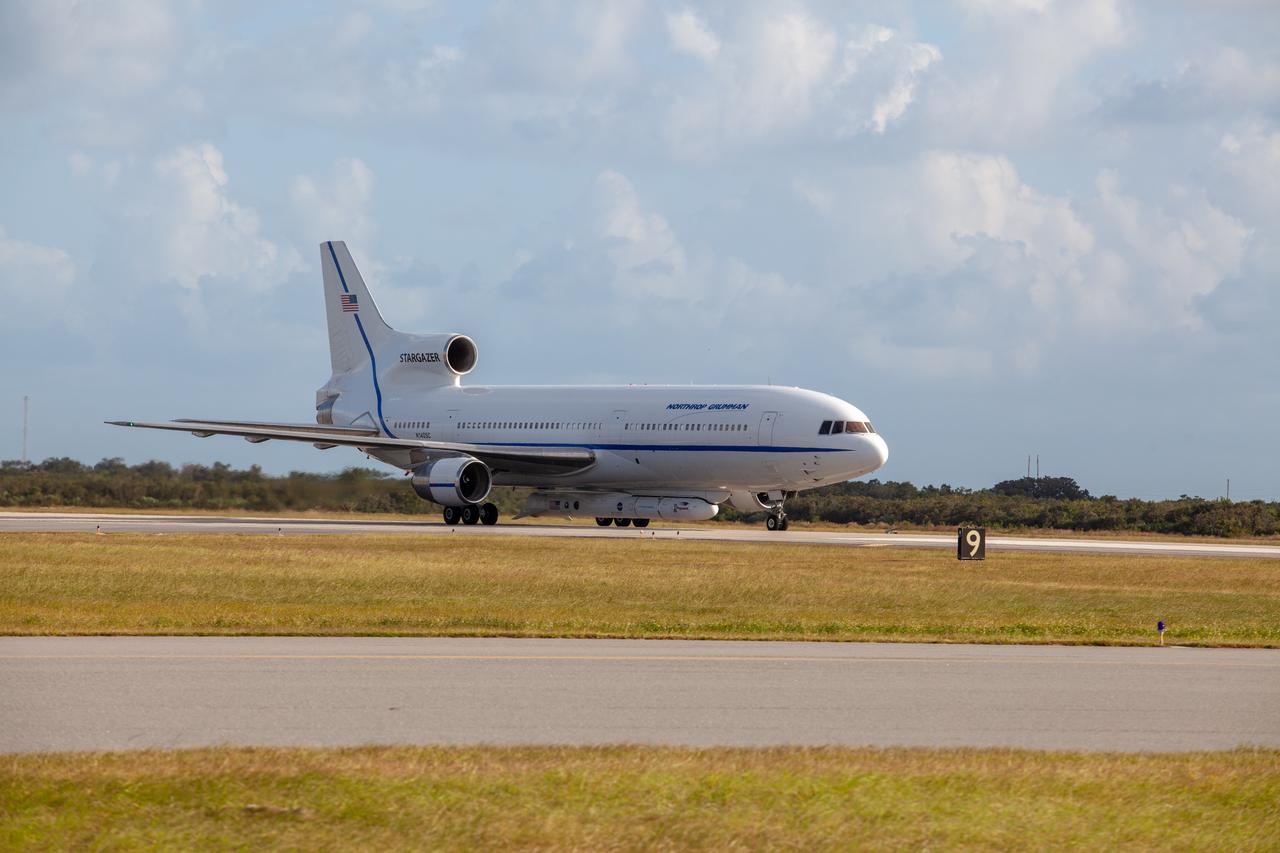
Northrop Grumman's L-1011 Stargazer aircraft has arrived at the Skid Strip at Cape Canaveral Air Force Station in Florida on Oct. 1, 2019. The company's Pegasus XL rocket, containing NASA's Ionospheric Connection Explorer (ICON), is attached beneath the aircraft. ICON will study the frontier of space - the dynamic zone high in Earth's atmosphere where terrestrial weather from below meets space weather above.
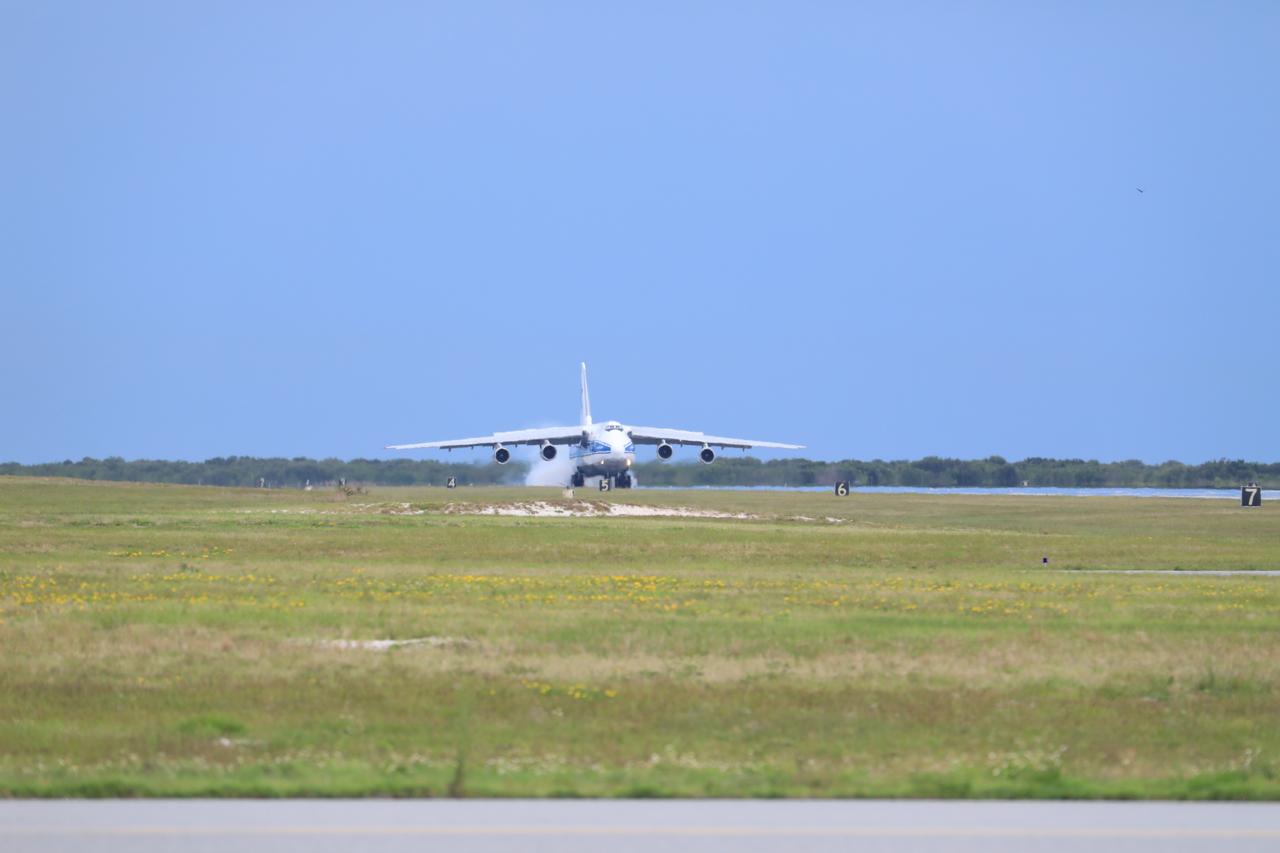
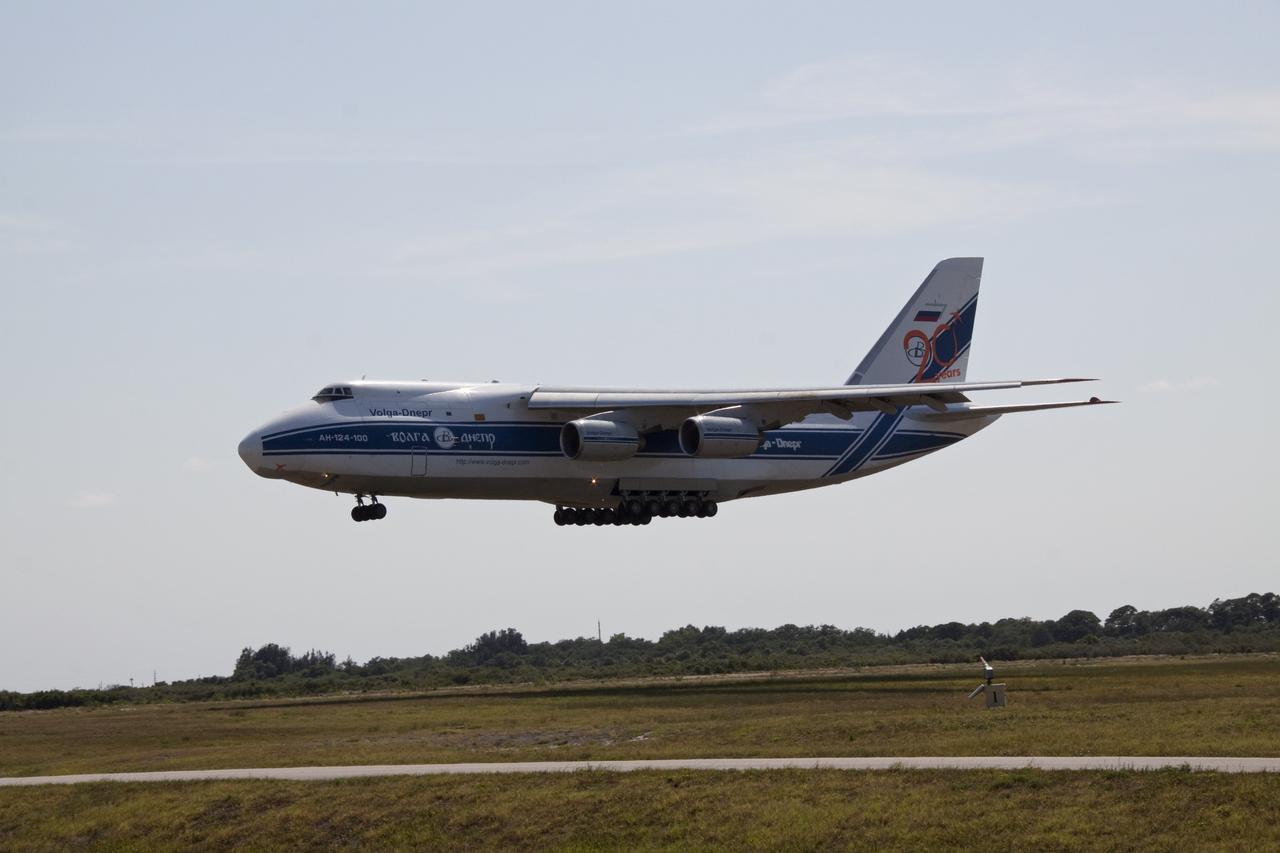
The Antonov 124 cargo aircraft, carrying the United Launch Alliance booster for NASA’s Mars Perseverance rover, touches down on the Skid Strip at Cape Canaveral Air Force Station (CCAFS) in Florida on May 18, 2020. The Mars Perseverance rover is scheduled to launch in mid-July atop a United Launch Alliance Atlas V 541 rocket from Pad 41 at CCAFS. The rover is part of NASA’s Mars Exploration Program, a long-term effort of robotic exploration of the Red Planet. The rover will search for habitable conditions in the ancient past and signs of past microbial life on Mars. The Launch Services Program at Kennedy is responsible for launch management.
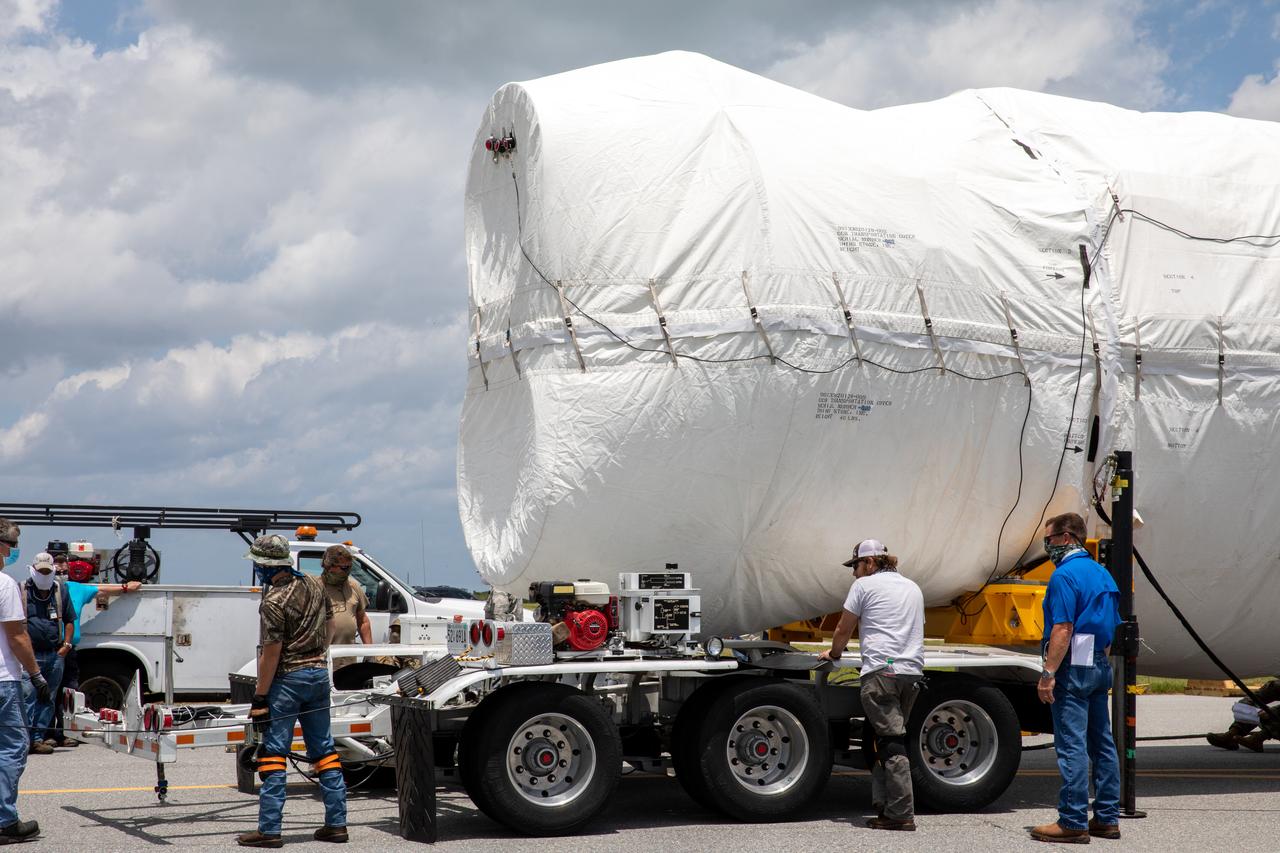
The United Launch Alliance booster for NASA’s Mars Perseverance rover is secured on a flatbed truck after being offloaded from the Antonov 124 cargo aircraft at the Skid Strip at Cape Canaveral Air Force Station (CCAFS) in Florida on May 19, 2020. The Mars Perseverance rover is scheduled to launch in mid-July atop a United Launch Alliance Atlas V 541 rocket from Pad 41 at CCAFS. The rover is part of NASA’s Mars Exploration Program, a long-term effort of robotic exploration of the Red Planet. The rover will search for habitable conditions in the ancient past and signs of past microbial life on Mars. The Launch Services Program at Kennedy is responsible for launch management.
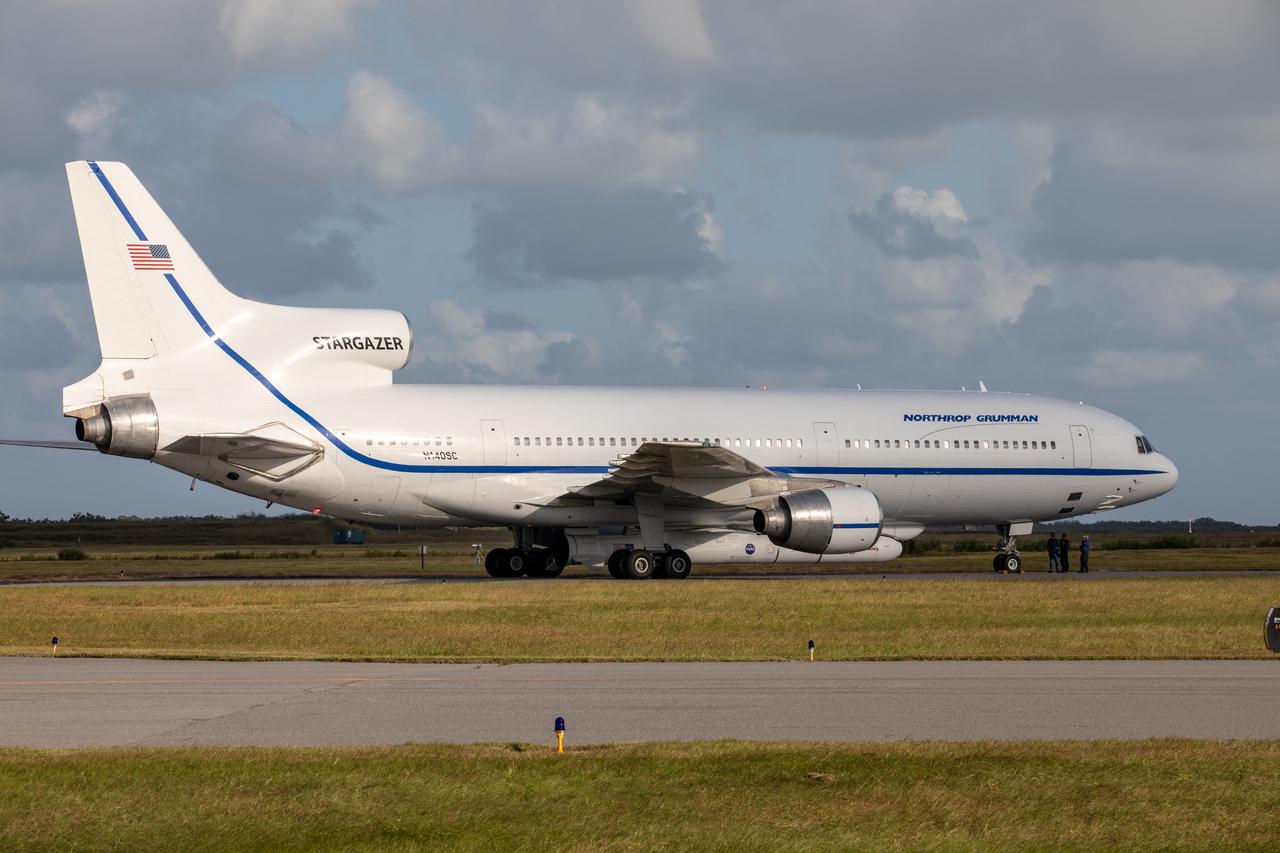
Northrop Grumman's L-1011 Stargazer aircraft has arrived at the Skid Strip at Cape Canaveral Air Force Station in Florida on Oct. 1, 2019. The company's Pegasus XL rocket, containing NASA's Ionospheric Connection Explorer (ICON), is attached beneath the aircraft. ICON will study the frontier of space - the dynamic zone high in Earth's atmosphere where terrestrial weather from below meets space weather above.
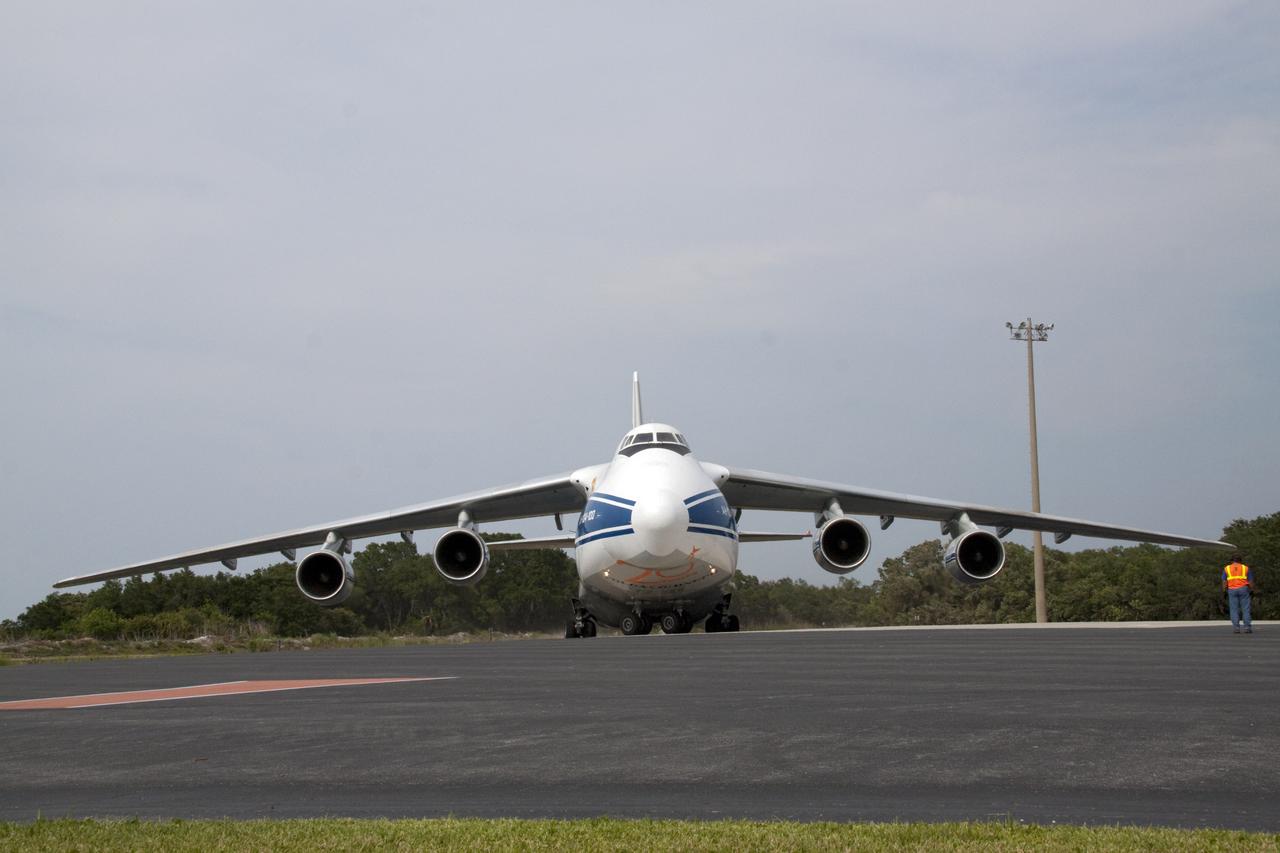
JUNO - Atlas V Arrival at Skid Strip
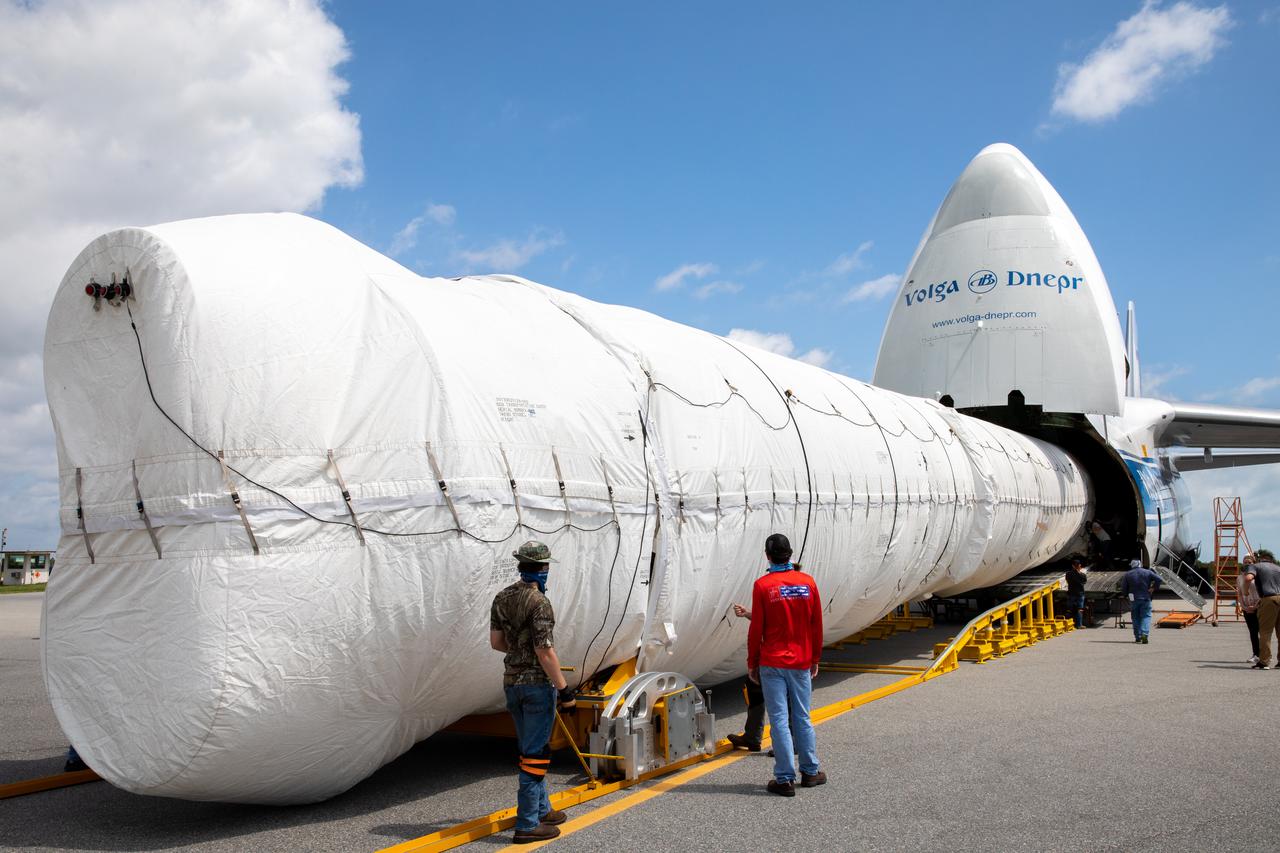
The United Launch Alliance booster for NASA’s Mars Perseverance rover is offloaded from the Antonov 124 cargo aircraft at the Skid Strip at Cape Canaveral Air Force Station (CCAFS) in Florida on May 19, 2020. The Mars Perseverance rover is scheduled to launch in mid-July atop a United Launch Alliance Atlas V 541 rocket from Pad 41 at CCAFS. The rover is part of NASA’s Mars Exploration Program, a long-term effort of robotic exploration of the Red Planet. The rover will search for habitable conditions in the ancient past and signs of past microbial life on Mars. The Launch Services Program at Kennedy is responsible for launch management.
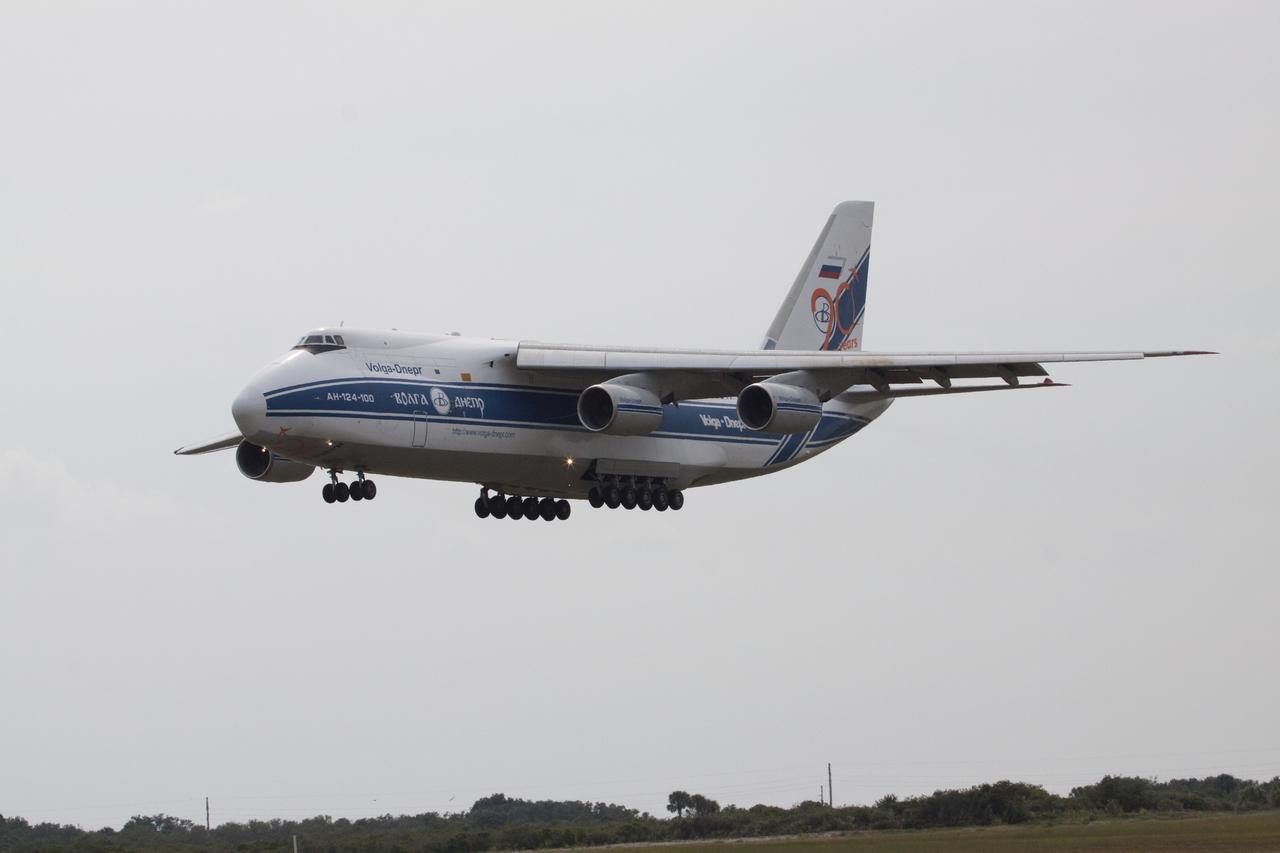
JUNO - Atlas V Arrival at Skid Strip
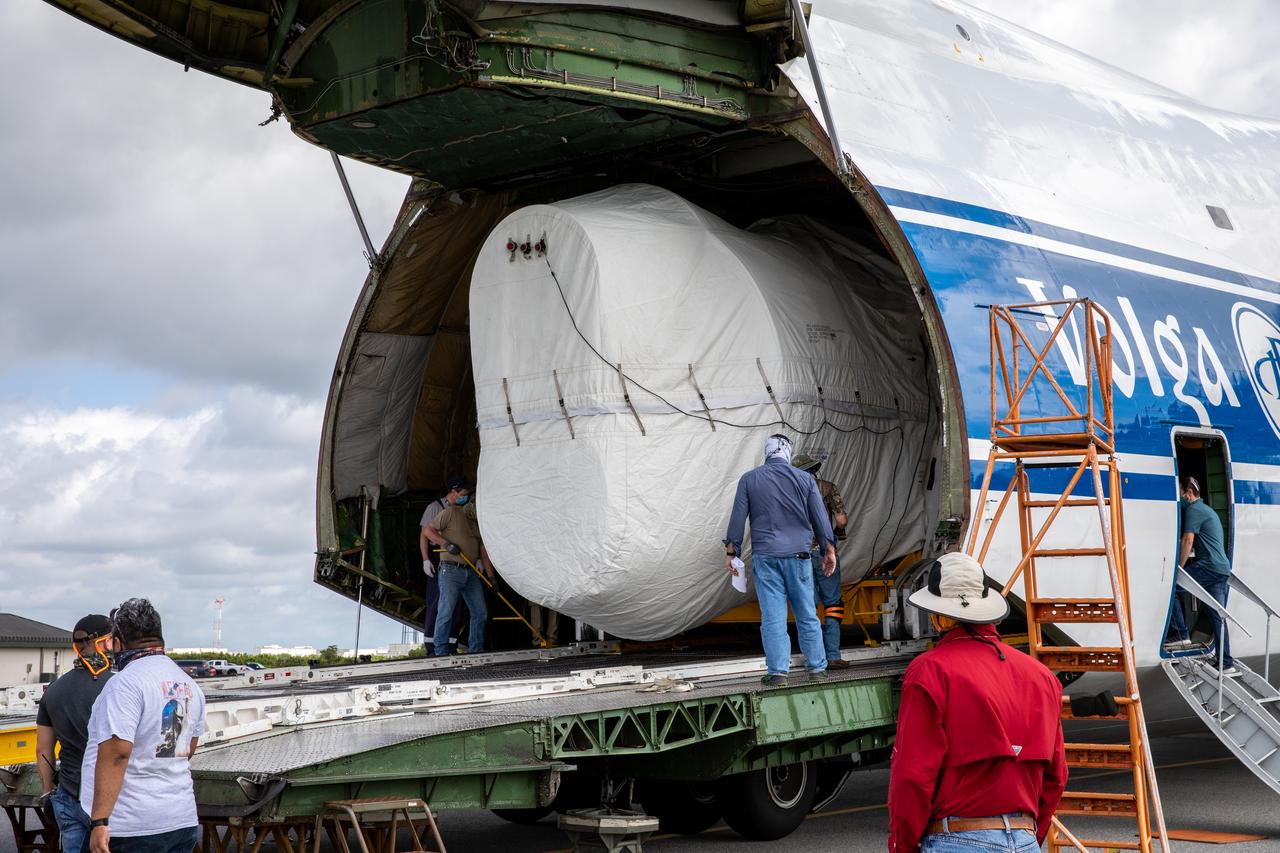
Preparations are underway to offload the United Launch Alliance booster for NASA’s Mars Perseverance rover from the Antonov 124 cargo aircraft at the Skid Strip at Cape Canaveral Air Force Station (CCAFS) in Florida on May 19, 2020. The Mars Perseverance rover is scheduled to launch in mid-July atop a United Launch Alliance Atlas V 541 rocket from Pad 41 at CCAFS. The rover is part of NASA’s Mars Exploration Program, a long-term effort of robotic exploration of the Red Planet. The rover will search for habitable conditions in the ancient past and signs of past microbial life on Mars. The Launch Services Program at Kennedy is responsible for launch management.
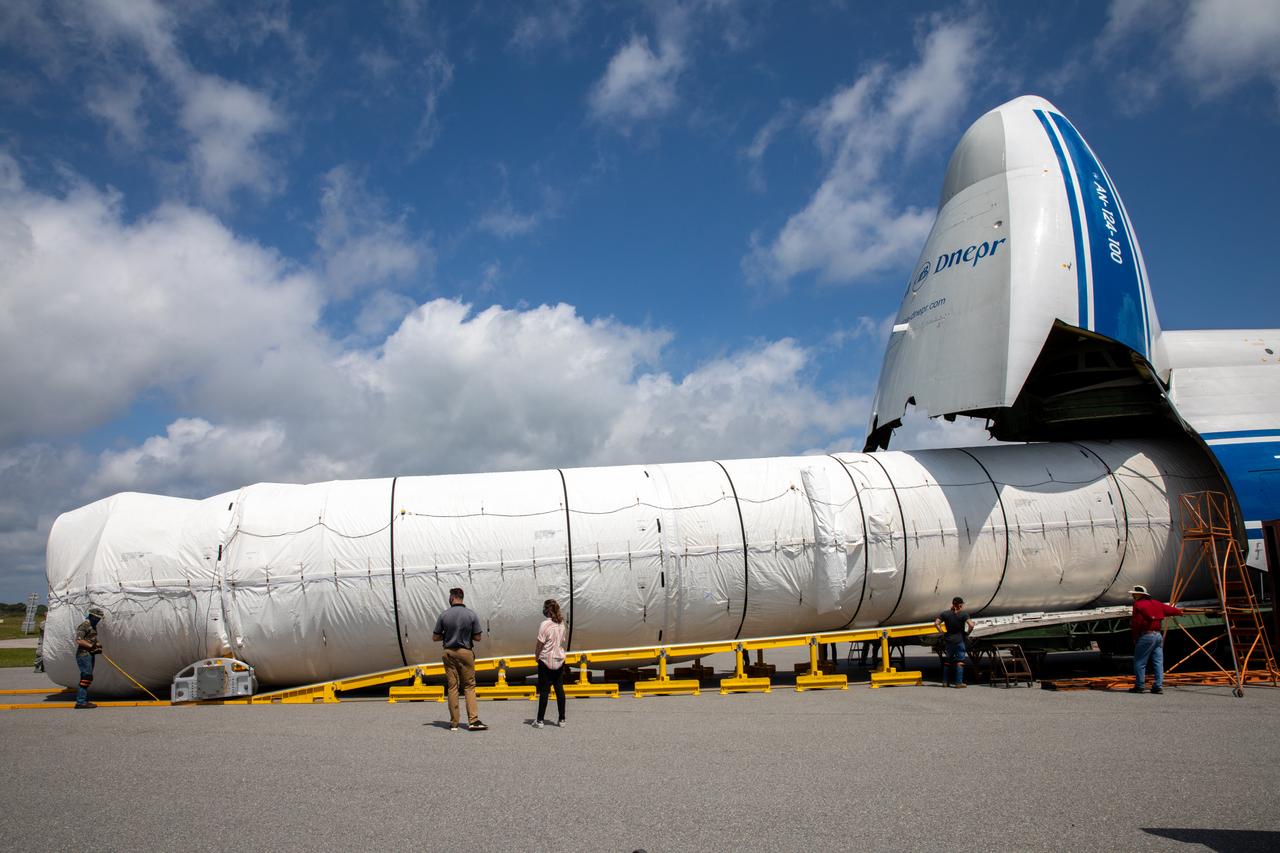
The United Launch Alliance booster for NASA’s Mars Perseverance rover is offloaded from the Antonov 124 cargo aircraft at the Skid Strip at Cape Canaveral Air Force Station (CCAFS) in Florida on May 19, 2020. The Mars Perseverance rover is scheduled to launch in mid-July atop a United Launch Alliance Atlas V 541 rocket from Pad 41 at CCAFS. The rover is part of NASA’s Mars Exploration Program, a long-term effort of robotic exploration of the Red Planet. The rover will search for habitable conditions in the ancient past and signs of past microbial life on Mars. The Launch Services Program at Kennedy is responsible for launch management.
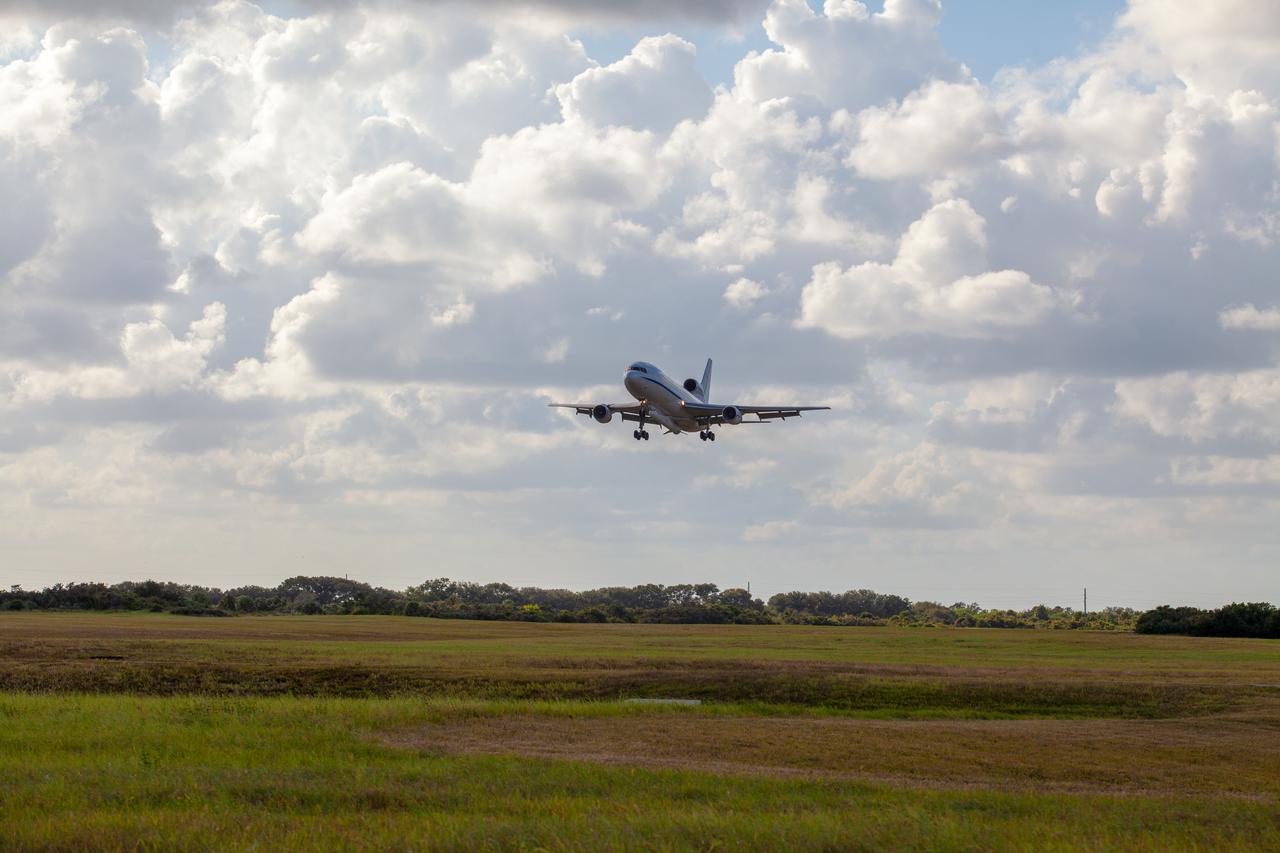
Northrop Grumman's L-1011 Stargazer aircraft descends toward the Skid Strip at Cape Canaveral Air Force Station in Florida on Oct. 1, 2019. The company's Pegasus XL rocket, containing NASA's Ionospheric Connection Explorer (ICON), is attached beneath the aircraft. ICON will study the frontier of space - the dynamic zone high in Earth's atmosphere where terrestrial weather from below meets space weather above.
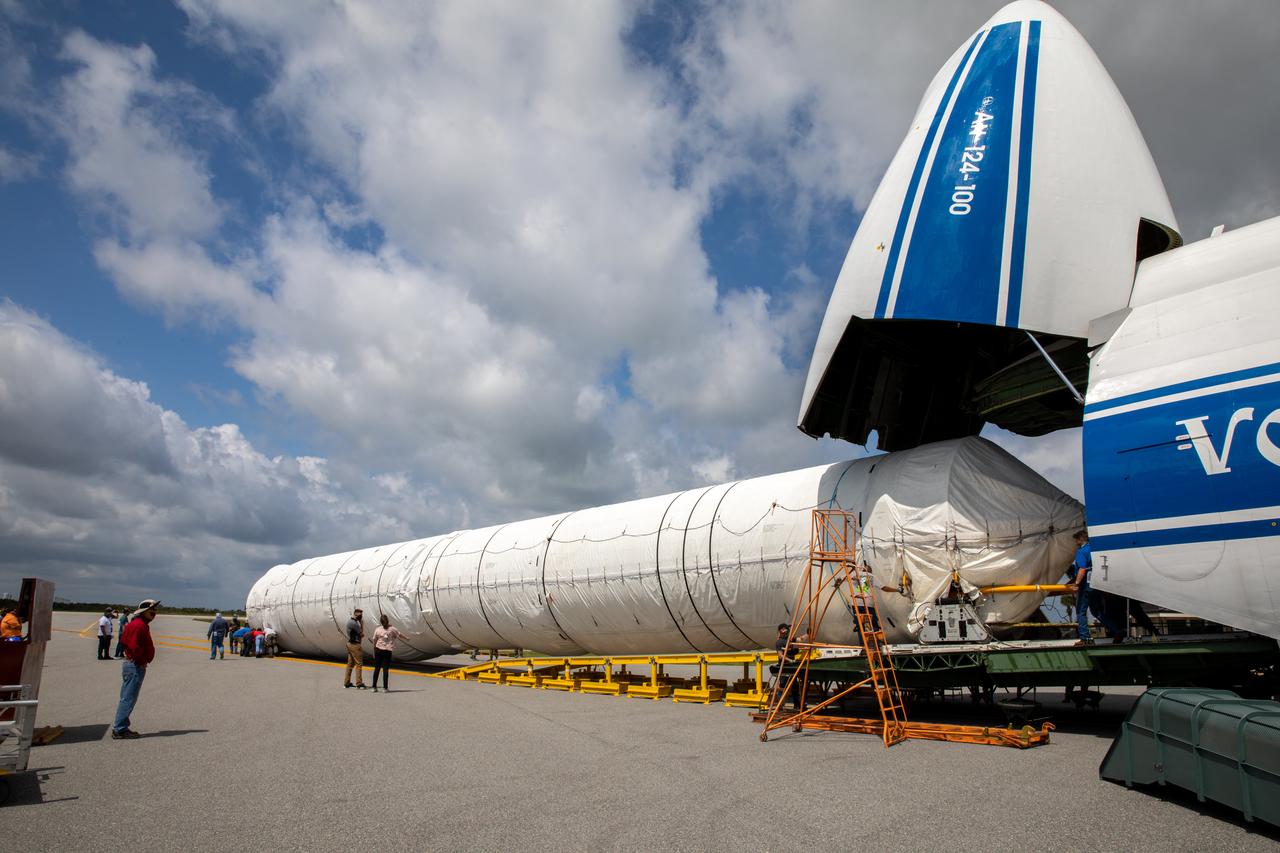
The United Launch Alliance booster for NASA’s Mars Perseverance rover is offloaded from the Antonov 124 cargo aircraft at the Skid Strip at Cape Canaveral Air Force Station (CCAFS) in Florida on May 19, 2020. The Mars Perseverance rover is scheduled to launch in mid-July atop a United Launch Alliance Atlas V 541 rocket from Pad 41 at CCAFS. The rover is part of NASA’s Mars Exploration Program, a long-term effort of robotic exploration of the Red Planet. The rover will search for habitable conditions in the ancient past and signs of past microbial life on Mars. The Launch Services Program at Kennedy is responsible for launch management.
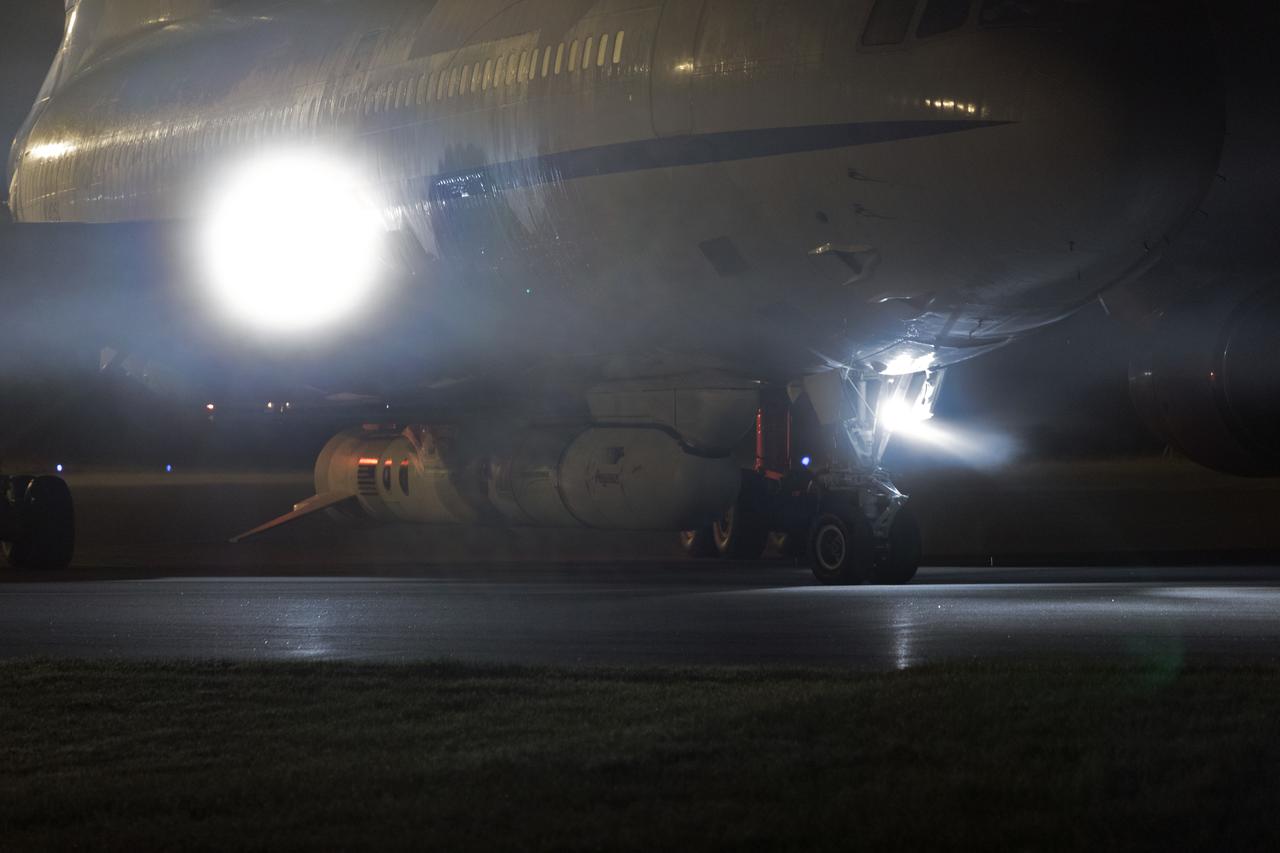
The Northrop Grumman L-1011 Stargazer aircraft, with the Pegasus XL rocket attached beneath, starts down the runway at the Skid Strip at Cape Canaveral Air Force Station in Florida on Nov. 7, 2018. NASA's Ionospheric Connection Explorer (ICON) is secured inside the rocket's payload fairing. The Pegasus XL rocket will be carried aloft by the Stargazer. ICON will study the frontier of space - the dynamic zone high in Earth's atmosphere where terrestrial weather from below meets space weather above. The explorer will help determine the physics of Earth's space environment and pave the way for mitigating its effects on our technology, communications systems and society.
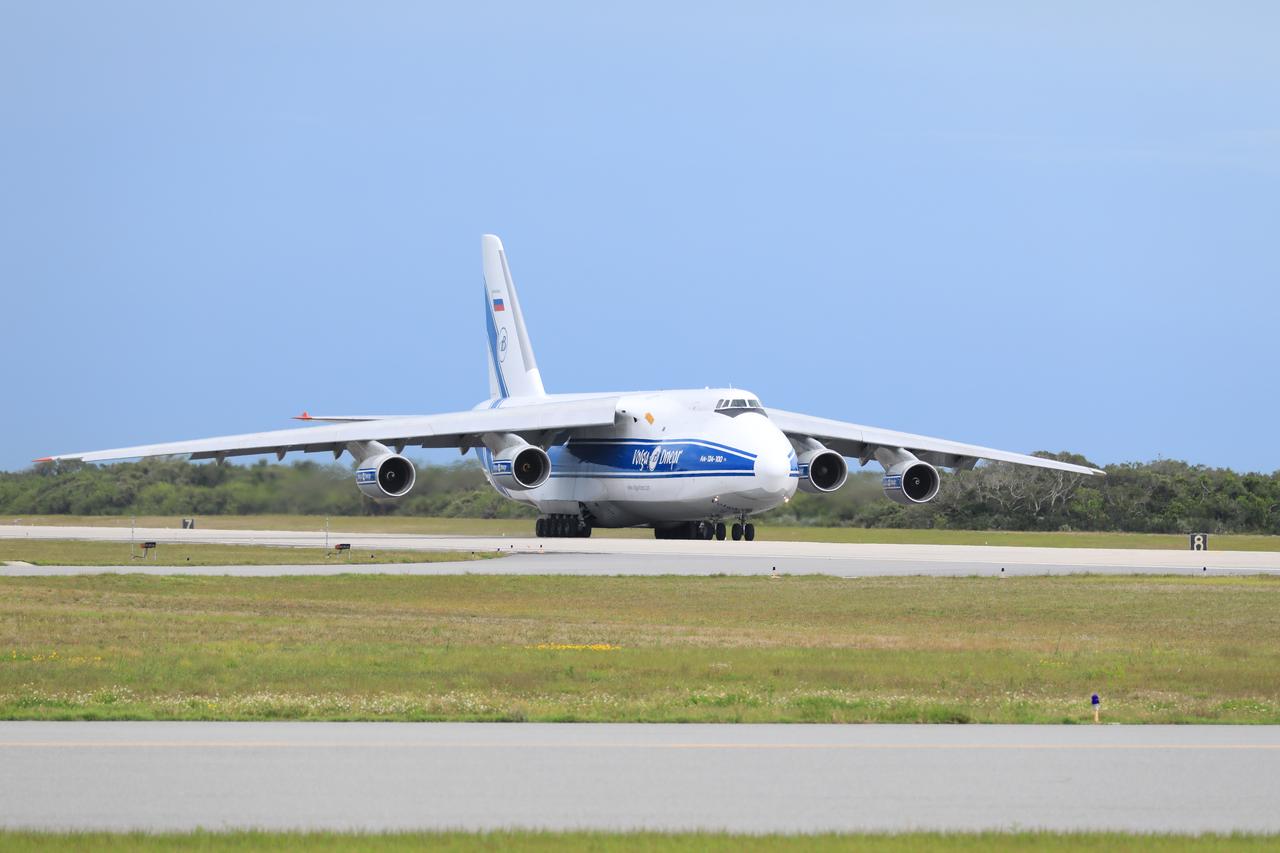
The Antonov 124 cargo aircraft, carrying the United Launch Alliance booster for NASA’s Mars Perseverance rover, touches down on the Skid Strip at Cape Canaveral Air Force Station (CCAFS) in Florida on May 18, 2020. The Mars Perseverance rover is scheduled to launch in mid-July atop a United Launch Alliance Atlas V 541 rocket from Pad 41 at CCAFS. The rover is part of NASA’s Mars Exploration Program, a long-term effort of robotic exploration of the Red Planet. The rover will search for habitable conditions in the ancient past and signs of past microbial life on Mars. The Launch Services Program at Kennedy is responsible for launch management.

The Northrop Grumman L-1011 Stargazer aircraft, with the Pegasus XL rocket attached beneath, starts down the runway at the Skid Strip at Cape Canaveral Air Force Station in Florida on Nov. 7, 2018. NASA's Ionospheric Connection Explorer (ICON) is secured inside the rocket's payload fairing. The Pegasus XL rocket will be carried aloft by the Stargazer. ICON will study the frontier of space - the dynamic zone high in Earth's atmosphere where terrestrial weather from below meets space weather above. The explorer will help determine the physics of Earth's space environment and pave the way for mitigating its effects on our technology, communications systems and society.
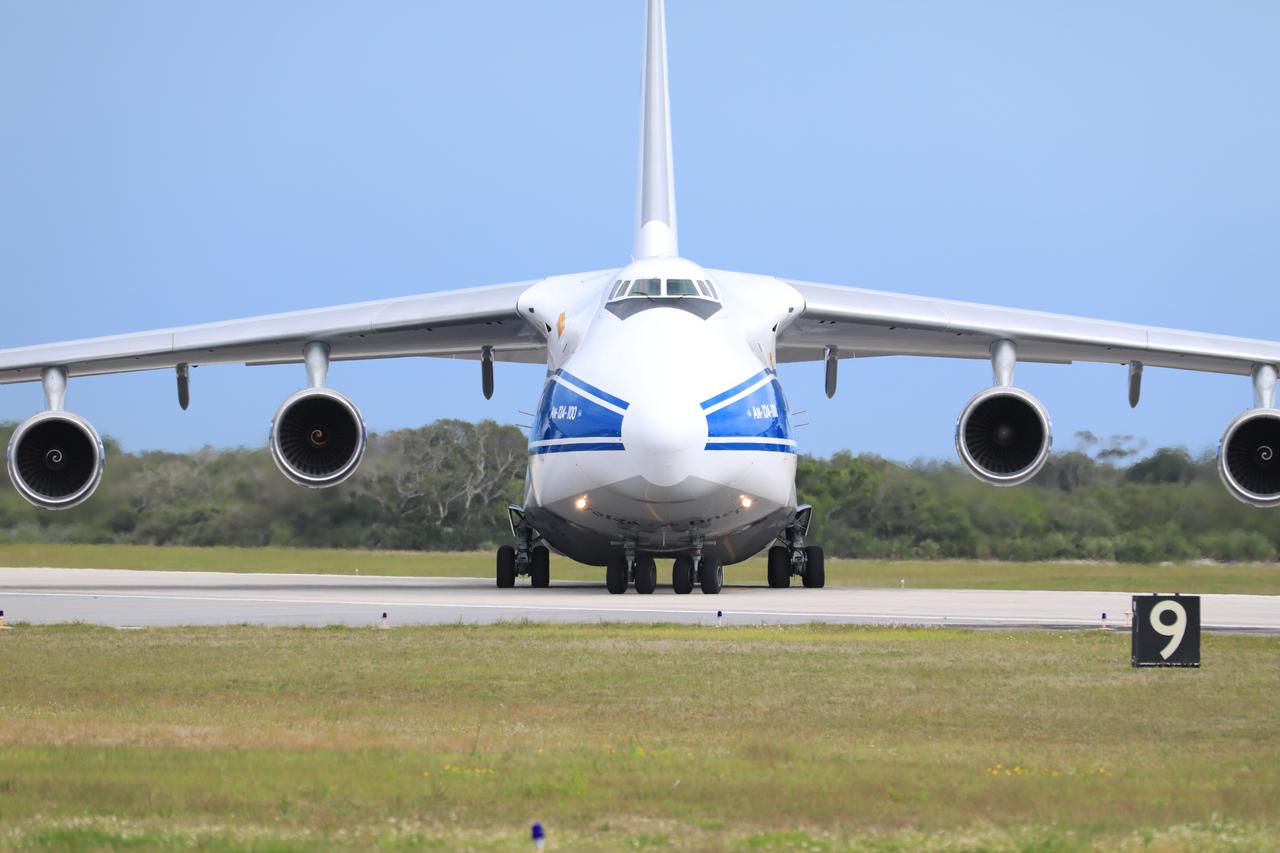
The Antonov 124 cargo aircraft, carrying the United Launch Alliance booster for NASA’s Mars Perseverance rover, taxis off the runway at the Skid Strip at Cape Canaveral Air Force Station (CCAFS) in Florida on May 18, 2020. The Mars Perseverance rover is scheduled to launch in mid-July atop a United Launch Alliance Atlas V 541 rocket from Pad 41 at CCAFS. The rover is part of NASA’s Mars Exploration Program, a long-term effort of robotic exploration of the Red Planet. The rover will search for habitable conditions in the ancient past and signs of past microbial life on Mars. The Launch Services Program at Kennedy is responsible for launch management.
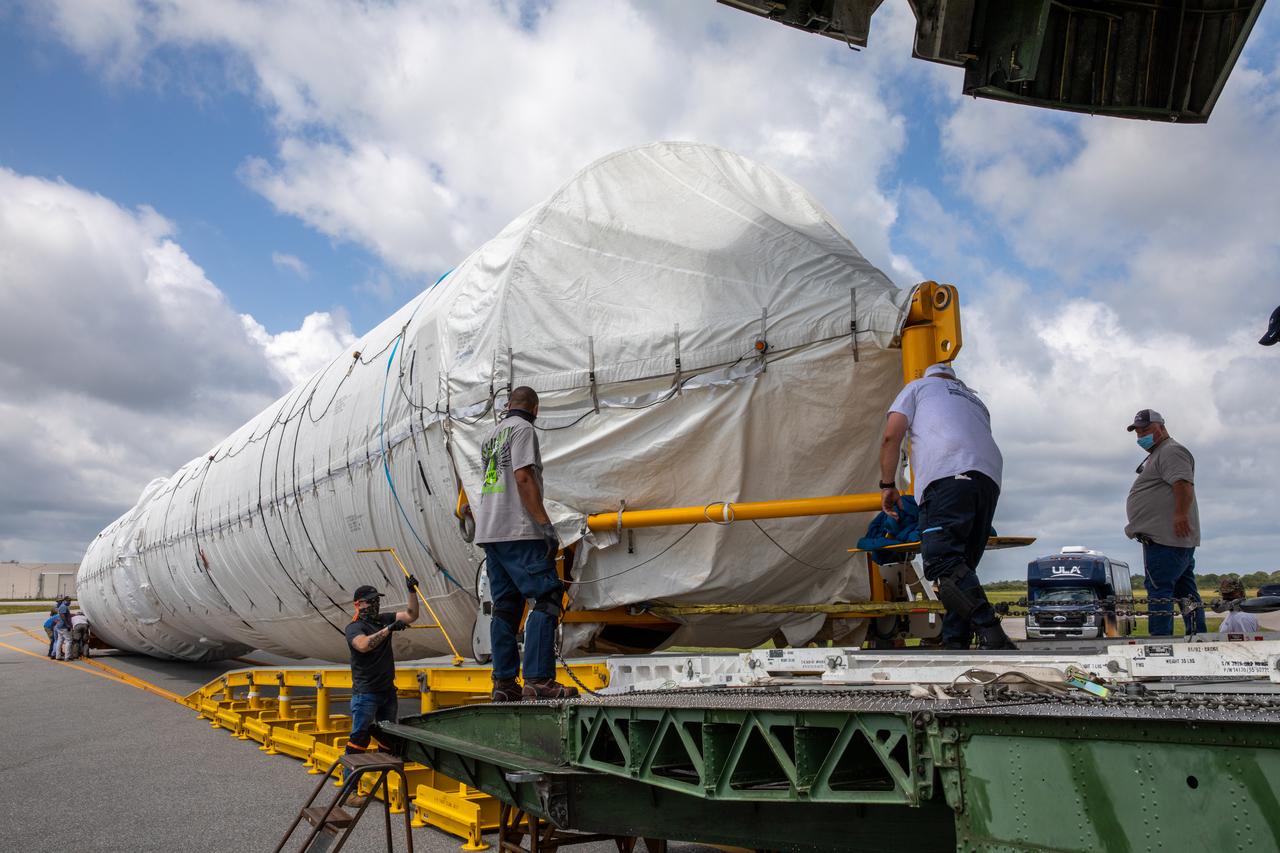
Workers secure the United Launch Alliance booster for NASA’s Mars Perseverance rover as it is offloaded from the Antonov 124 cargo aircraft at the Skid Strip at Cape Canaveral Air Force Station (CCAFS) in Florida on May 19, 2020. The Mars Perseverance rover is scheduled to launch in mid-July atop a United Launch Alliance Atlas V 541 rocket from Pad 41 at CCAFS. The rover is part of NASA’s Mars Exploration Program, a long-term effort of robotic exploration of the Red Planet. The rover will search for habitable conditions in the ancient past and signs of past microbial life on Mars. The Launch Services Program at Kennedy is responsible for launch management.
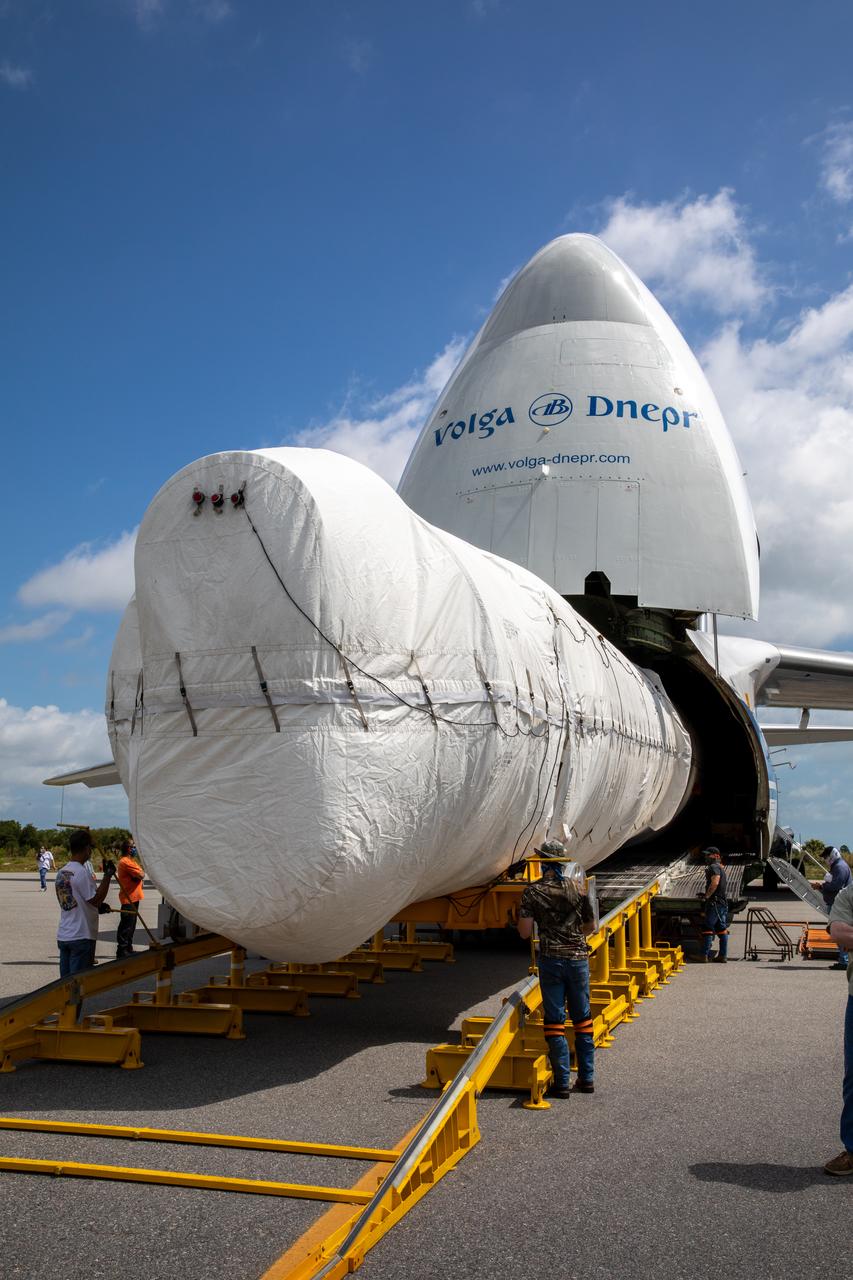
The United Launch Alliance booster for NASA’s Mars Perseverance rover is offloaded from the Antonov 124 cargo aircraft at the Skid Strip at Cape Canaveral Air Force Station (CCAFS) in Florida on May 19, 2020. The Mars Perseverance rover is scheduled to launch in mid-July atop a United Launch Alliance Atlas V 541 rocket from Pad 41 at CCAFS. The rover is part of NASA’s Mars Exploration Program, a long-term effort of robotic exploration of the Red Planet. The rover will search for habitable conditions in the ancient past and signs of past microbial life on Mars. The Launch Services Program at Kennedy is responsible for launch management.

The Antonov 124 cargo aircraft, carrying the United Launch Alliance booster for NASA’s Mars Perseverance rover, taxis off the runway at the Skid Strip at Cape Canaveral Air Force Station (CCAFS) in Florida on May 18, 2020. The Mars Perseverance rover is scheduled to launch in mid-July atop a United Launch Alliance Atlas V 541 rocket from Pad 41 at CCAFS. The rover is part of NASA’s Mars Exploration Program, a long-term effort of robotic exploration of the Red Planet. The rover will search for habitable conditions in the ancient past and signs of past microbial life on Mars. The Launch Services Program at Kennedy is responsible for launch management.
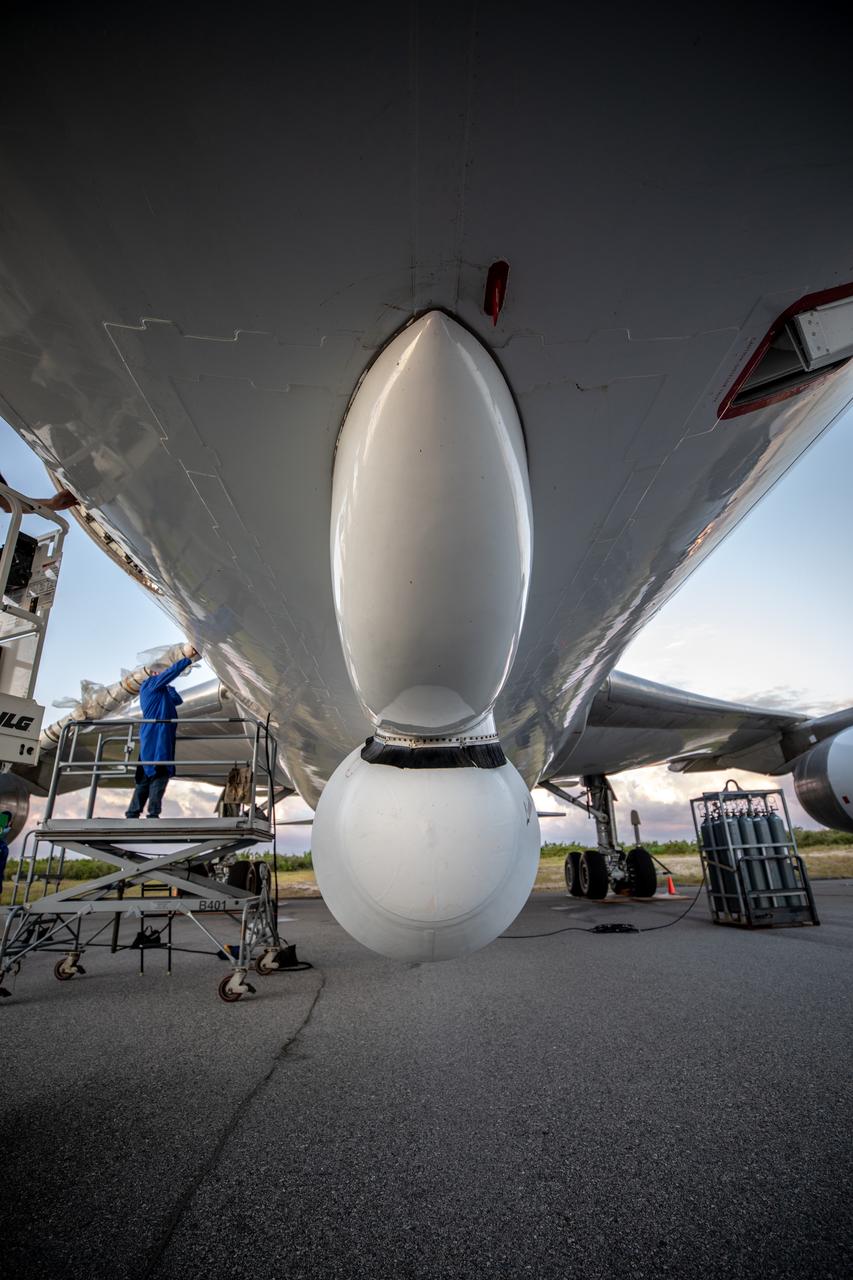
The Northrop Grumman Pegasus XL rocket, carrying NASA’s Ionospheric Connection Explorer (ICON), has arrived at the Skid Strip at Cape Canaveral Air Force Station in Florida on Oct. 1, 2019. The rocket is attached beneath the company’s L-1011 Stargazer aircraft. ICON will study the frontier of space - the dynamic zone high in Earth's atmosphere where terrestrial weather from below meets space weather above.
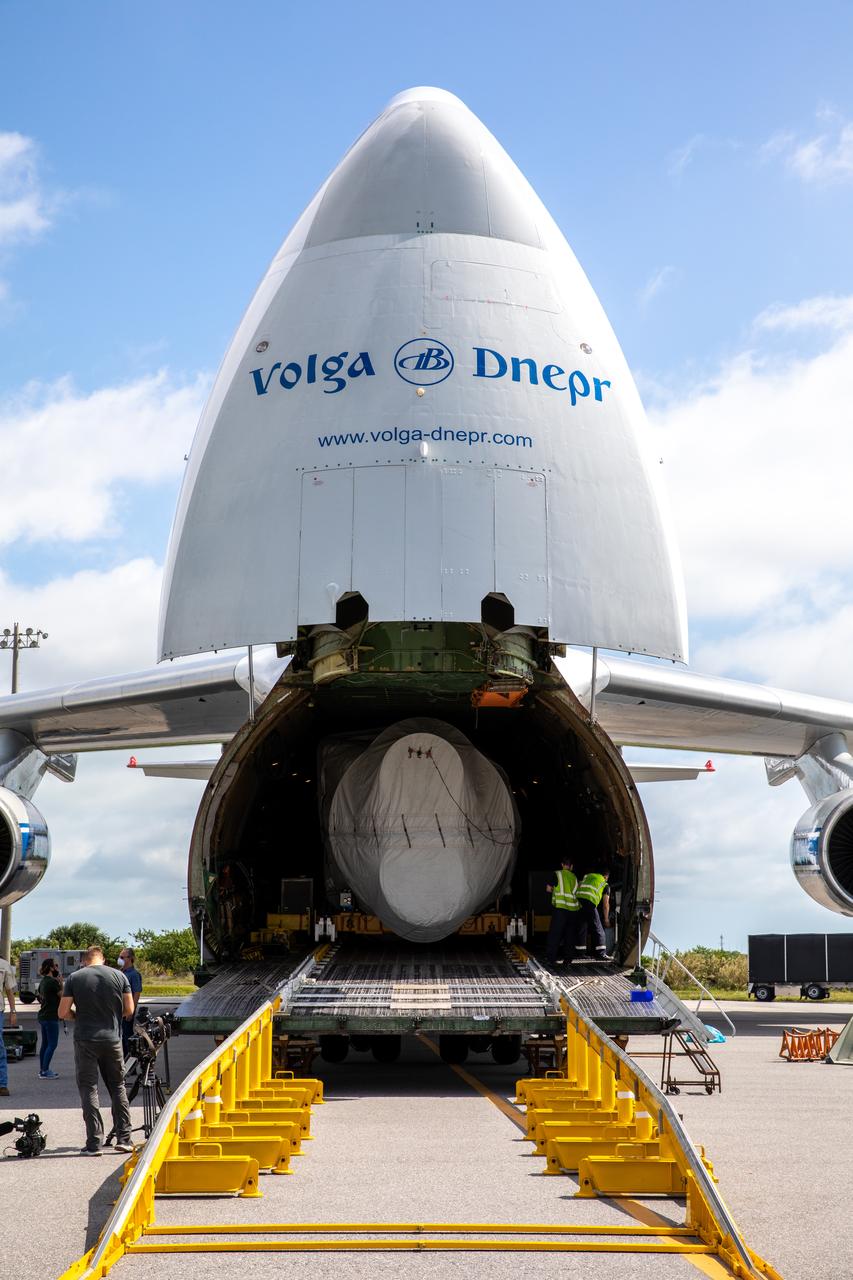
Preparations are underway to offload the United Launch Alliance booster for NASA’s Mars Perseverance rover from the Antonov 124 cargo aircraft at the Skid Strip at Cape Canaveral Air Force Station (CCAFS) in Florida on May 19, 2020. The Mars Perseverance rover is scheduled to launch in mid-July atop a United Launch Alliance Atlas V 541 rocket from Pad 41 at CCAFS. The rover is part of NASA’s Mars Exploration Program, a long-term effort of robotic exploration of the Red Planet. The rover will search for habitable conditions in the ancient past and signs of past microbial life on Mars. The Launch Services Program at Kennedy is responsible for launch management.

The Northrop Grumman Pegasus XL rocket, carrying NASA’s Ionospheric Connection Explorer (ICON), has arrived at the Skid Strip at Cape Canaveral Air Force Station in Florida on Oct. 1, 2019. The rocket is attached beneath the company’s L-1011 Stargazer aircraft. ICON will study the frontier of space - the dynamic zone high in Earth's atmosphere where terrestrial weather from below meets space weather above.
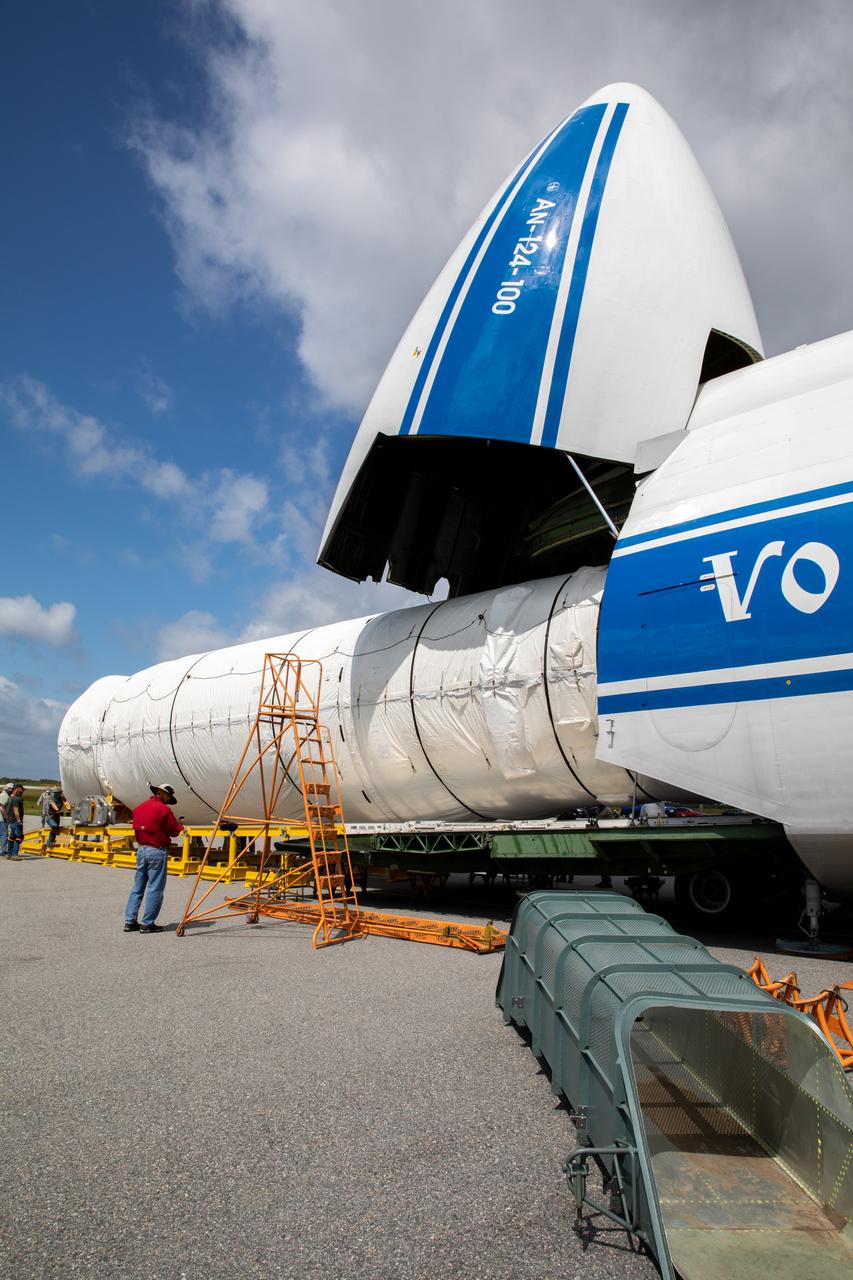
The United Launch Alliance booster for NASA’s Mars Perseverance rover is offloaded from the Antonov 124 cargo aircraft at the Skid Strip at Cape Canaveral Air Force Station (CCAFS) in Florida on May 19, 2020. The Mars Perseverance rover is scheduled to launch in mid-July atop a United Launch Alliance Atlas V 541 rocket from Pad 41 at CCAFS. The rover is part of NASA’s Mars Exploration Program, a long-term effort of robotic exploration of the Red Planet. The rover will search for habitable conditions in the ancient past and signs of past microbial life on Mars. The Launch Services Program at Kennedy is responsible for launch management.
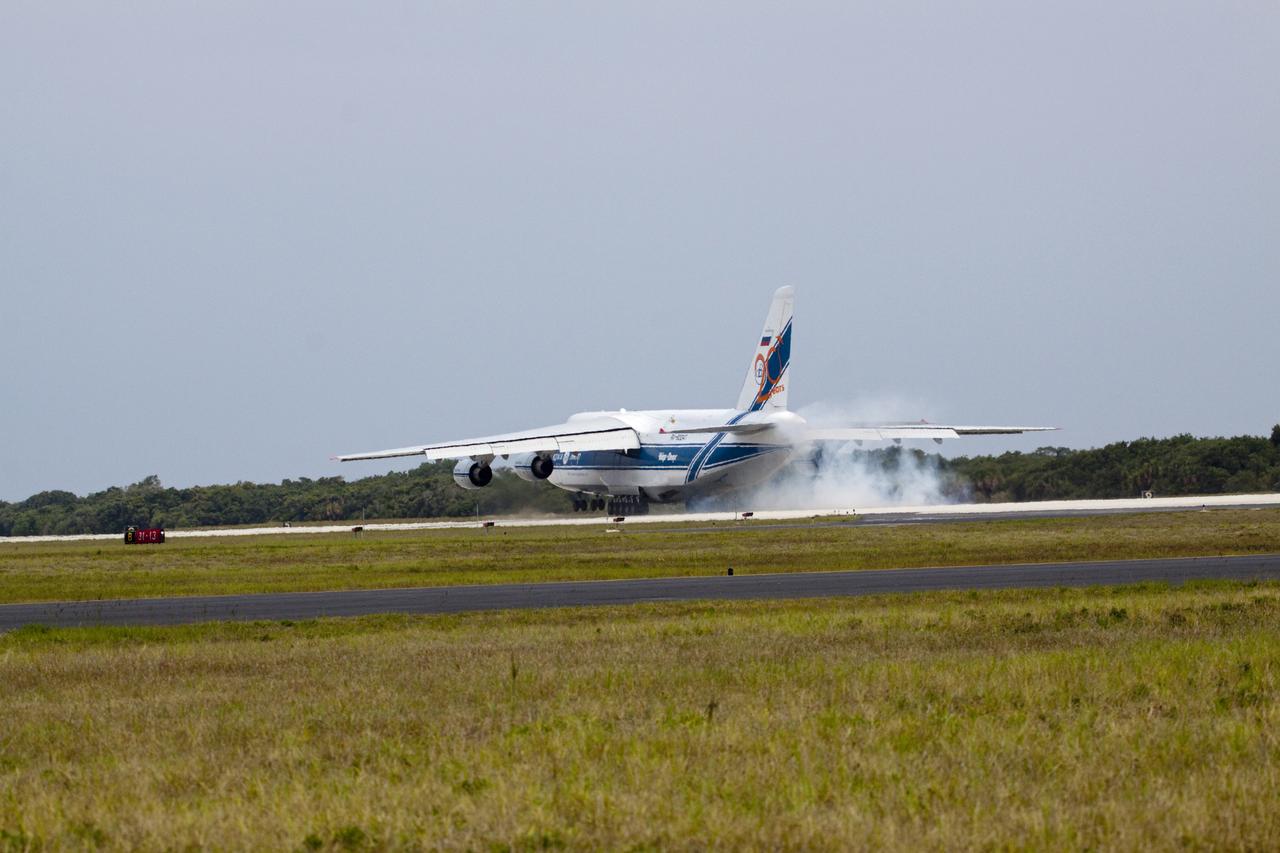
JUNO - Atlas V Arrival at Skid Strip
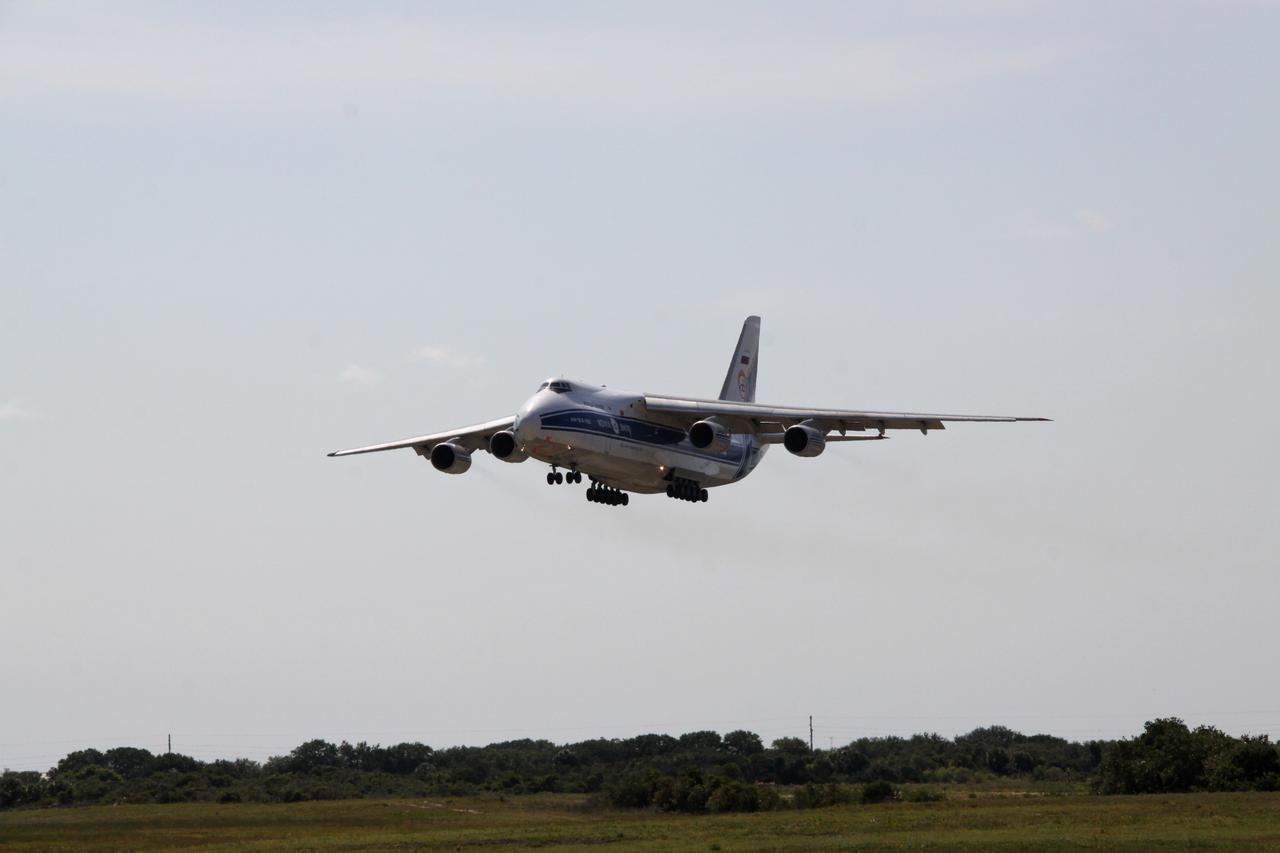
JUNO - CENTAUR STAGE ARRIVAL
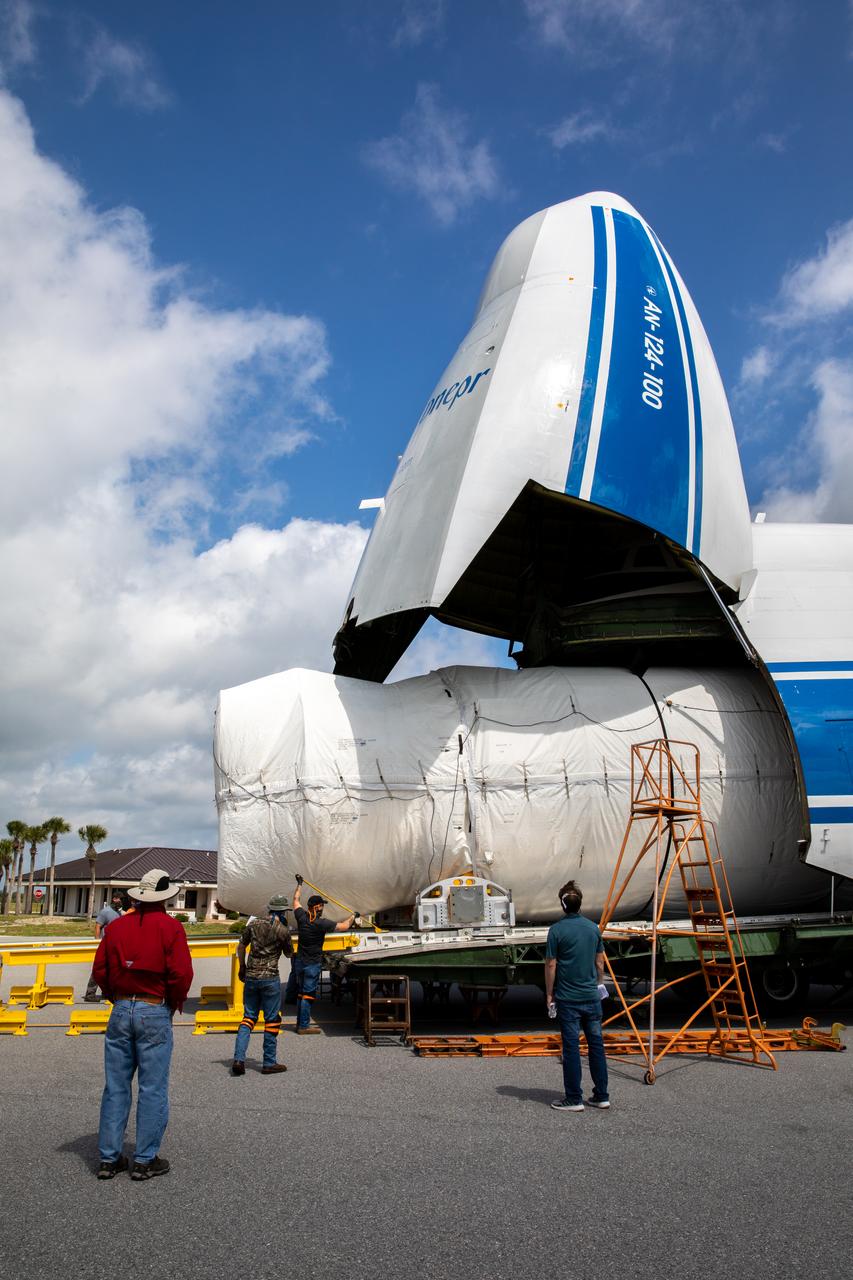
Workers help offload the United Launch Alliance booster for NASA’s Mars Perseverance rover from the Antonov 124 cargo aircraft at the Skid Strip at Cape Canaveral Air Force Station (CCAFS) in Florida on May 19, 2020. The Mars Perseverance rover is scheduled to launch in mid-July atop a United Launch Alliance Atlas V 541 rocket from Pad 41 at CCAFS. The rover is part of NASA’s Mars Exploration Program, a long-term effort of robotic exploration of the Red Planet. The rover will search for habitable conditions in the ancient past and signs of past microbial life on Mars. The Launch Services Program at Kennedy is responsible for launch management.
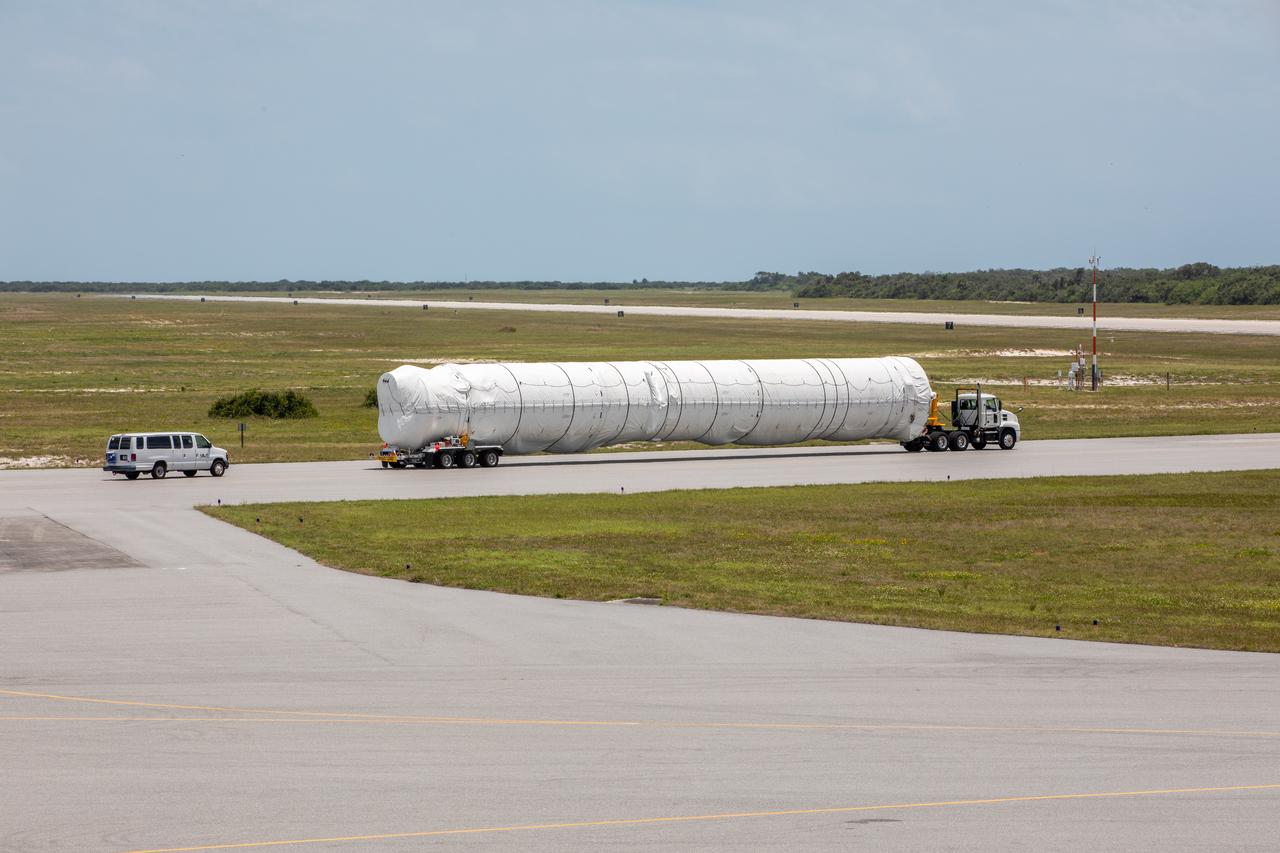
A flatbed truck carrying the United Launch Alliance booster for NASA’s Mars Perseverance rover departs the Skid Strip at Cape Canaveral Air Force Station (CCAFS) in Florida on May 19, 2020. The booster arrived aboard the Antonov 124 cargo aircraft at the Skid Strip on May 18, 2020. The Mars Perseverance rover is scheduled to launch in mid-July atop a United Launch Alliance Atlas V 541 rocket from Pad 41 at CCAFS. The rover is part of NASA’s Mars Exploration Program, a long-term effort of robotic exploration of the Red Planet. The rover will search for habitable conditions in the ancient past and signs of past microbial life on Mars. The Launch Services Program at Kennedy is responsible for launch management.
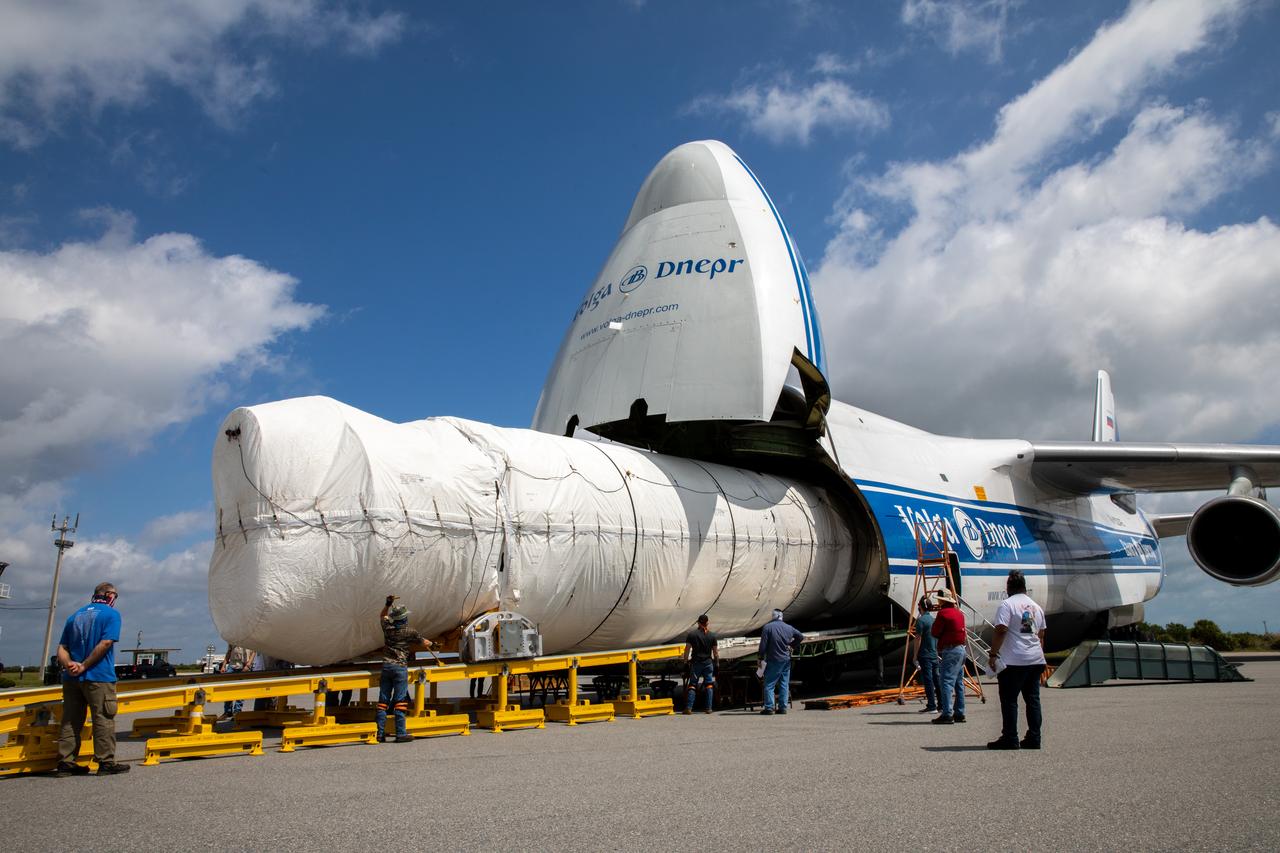
The United Launch Alliance booster for NASA’s Mars Perseverance rover is offloaded from the Antonov 124 cargo aircraft at the Skid Strip at Cape Canaveral Air Force Station (CCAFS) in Florida on May 19, 2020. The Mars Perseverance rover is scheduled to launch in mid-July atop a United Launch Alliance Atlas V 541 rocket from Pad 41 at CCAFS. The rover is part of NASA’s Mars Exploration Program, a long-term effort of robotic exploration of the Red Planet. The rover will search for habitable conditions in the ancient past and signs of past microbial life on Mars. The Launch Services Program at Kennedy is responsible for launch management.