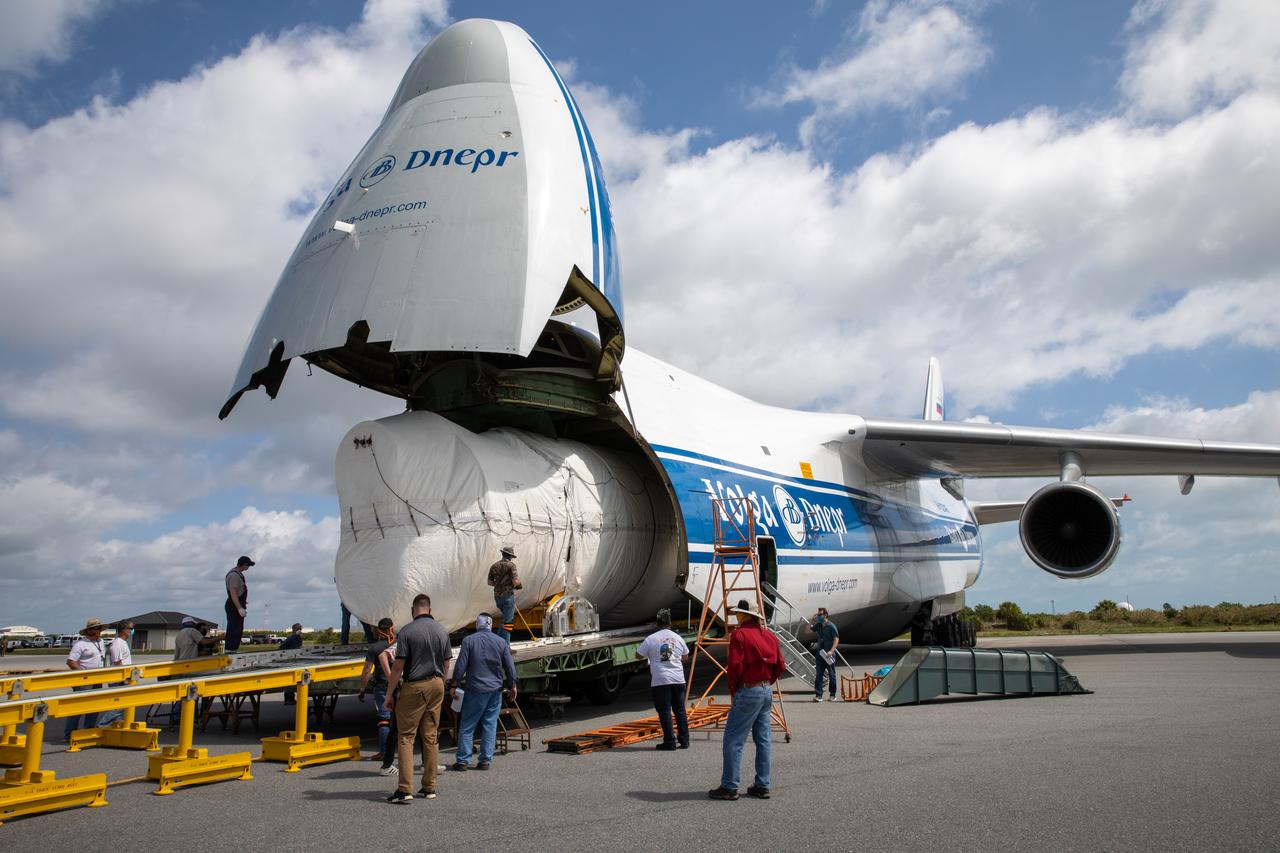
Workers help offload the United Launch Alliance booster for NASA’s Mars Perseverance rover from the Antonov 124 cargo aircraft at the Skid Strip at Cape Canaveral Air Force Station (CCAFS) in Florida on May 19, 2020. The Mars Perseverance rover is scheduled to launch in mid-July atop a United Launch Alliance Atlas V 541 rocket from Pad 41 at CCAFS. The rover is part of NASA’s Mars Exploration Program, a long-term effort of robotic exploration of the Red Planet. The rover will search for habitable conditions in the ancient past and signs of past microbial life on Mars. The Launch Services Program at Kennedy is responsible for launch management.
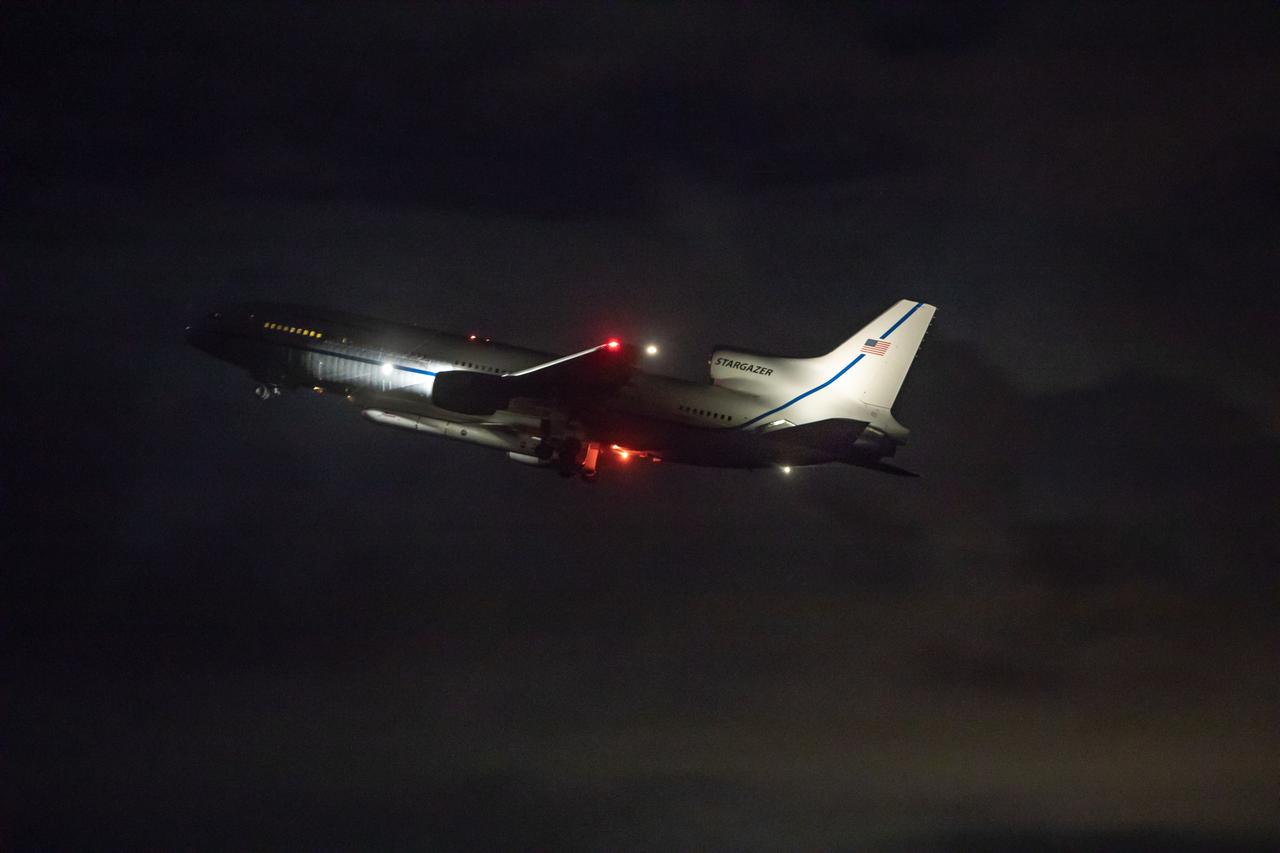
Northrop Grumman’s L-1011 Stargazer aircraft, with the company’s Pegasus XL rocket attached beneath, takes off from the Skid Strip runway at Cape Canaveral Air Force Station in Florida on Oct. 10, 2019. NASA's Ionospheric Connection Explorer (ICON) is secured inside the rocket's payload fairing. The air-launched Pegasus XL was released from the aircraft at 9:59 p.m. EDT to start ICON’s journey to space. The explorer will study the frontier of space - the dynamic zone high in Earth's atmosphere where terrestrial weather from below meets space weather above.
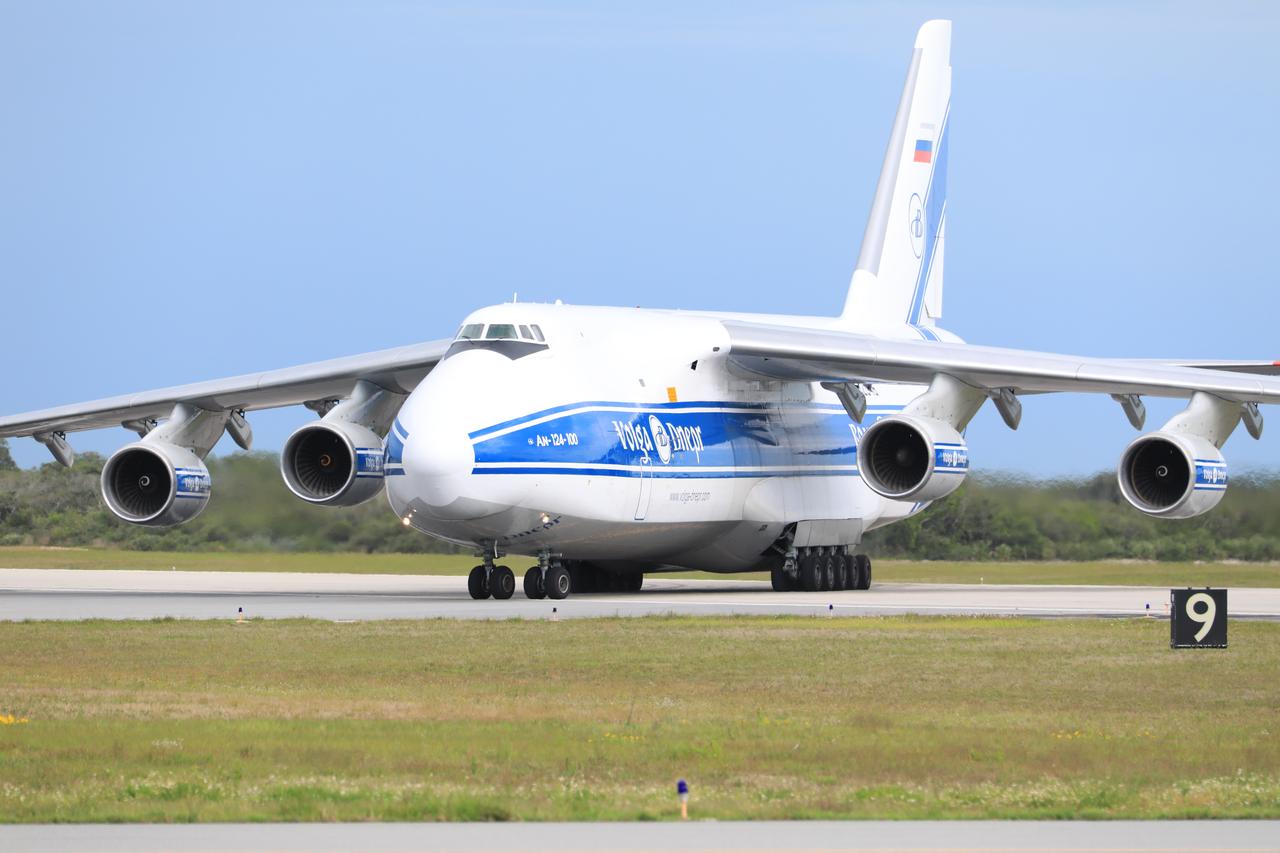
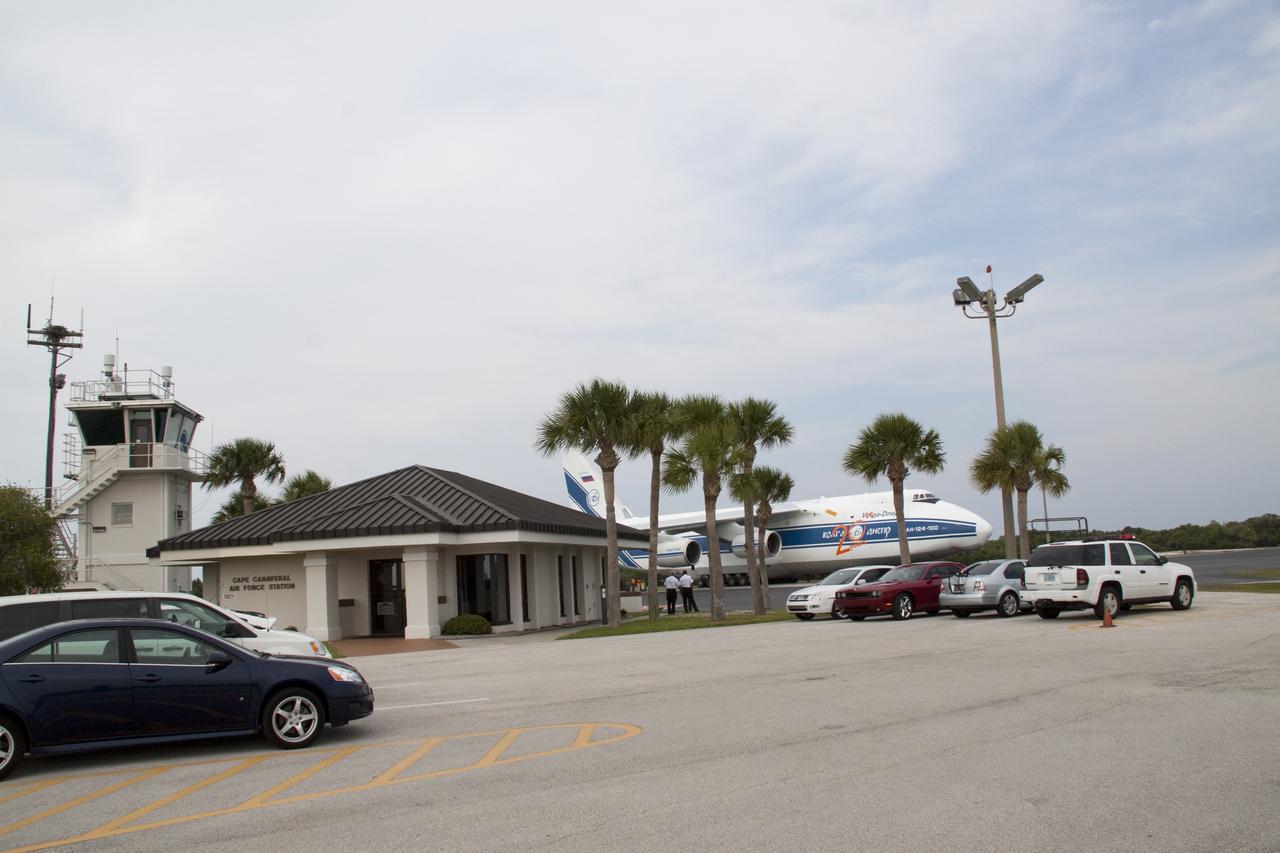
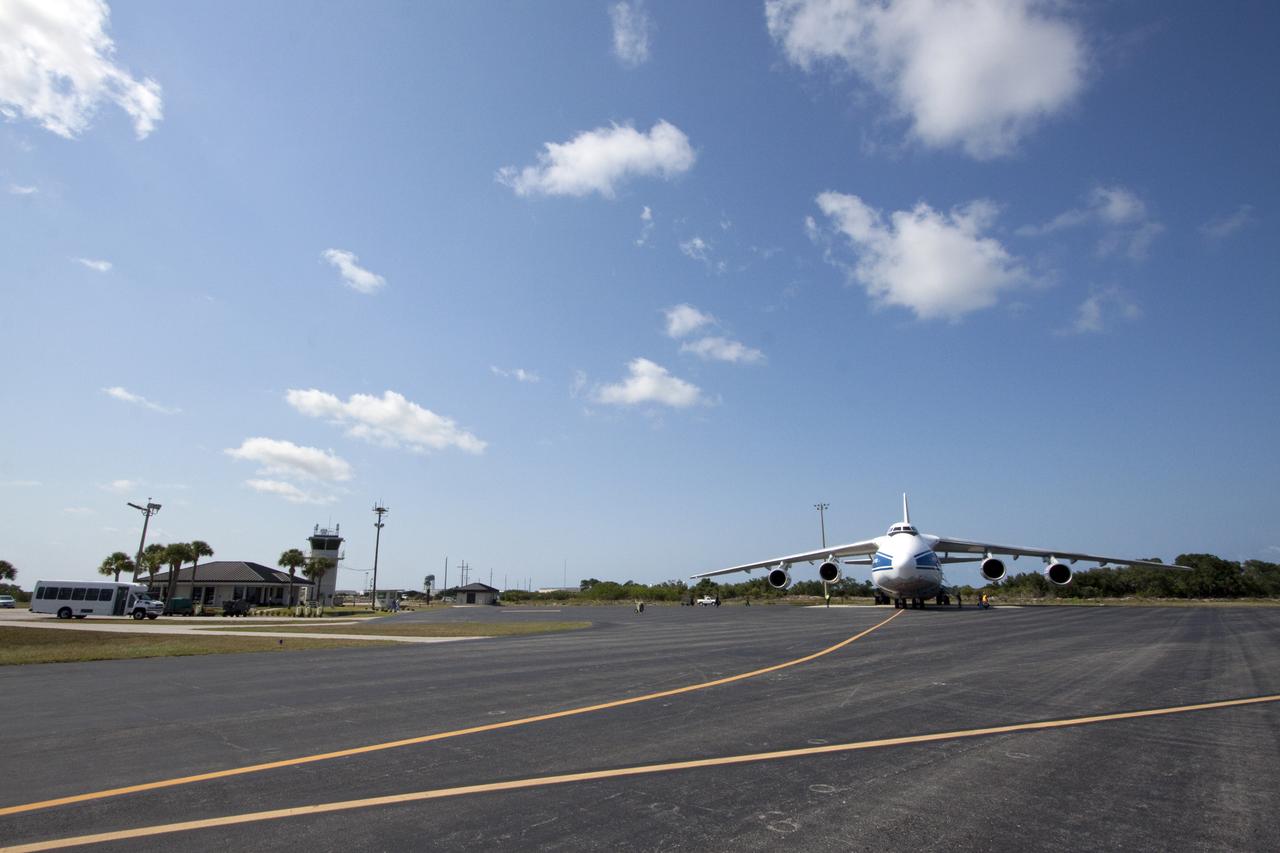
The Antonov 124 cargo aircraft, carrying the United Launch Alliance booster for NASA’s Mars Perseverance rover, taxis off the runway at the Skid Strip at Cape Canaveral Air Force Station (CCAFS) in Florida on May 18, 2020. The Mars Perseverance rover is scheduled to launch in mid-July atop a United Launch Alliance Atlas V 541 rocket from Pad 41 at CCAFS. The rover is part of NASA’s Mars Exploration Program, a long-term effort of robotic exploration of the Red Planet. The rover will search for habitable conditions in the ancient past and signs of past microbial life on Mars. The Launch Services Program at Kennedy is responsible for launch management.
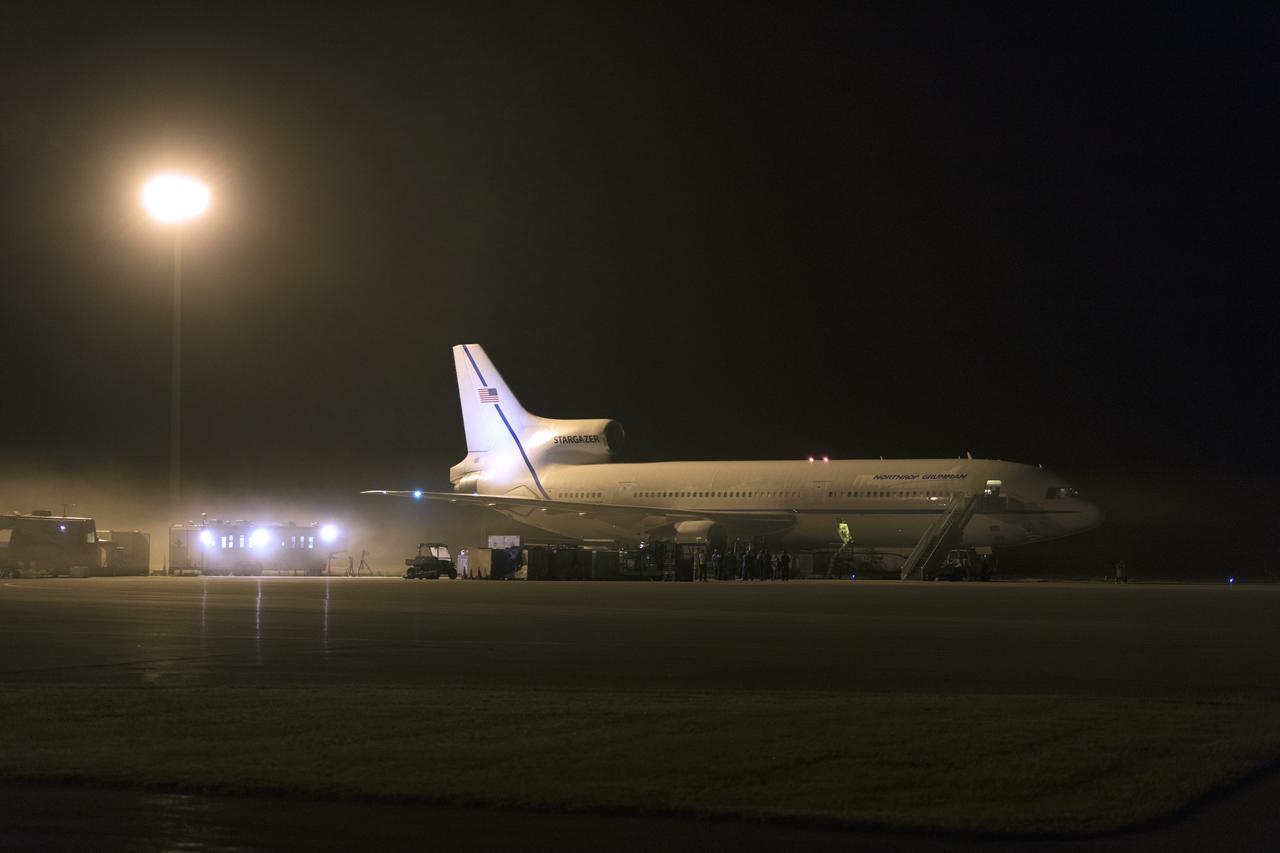
The Northrop Grumman L-1011 Stargazer aircraft, with the Pegasus XL rocket attached beneath, is being prepared for takeoff from the runway at the Skid Strip at Cape Canaveral Air Force Station in Florida on Nov. 7, 2018. NASA's Ionospheric Connection Explorer (ICON) satellite is secured inside the rocket's payload fairing. The Pegasus XL rocket will be carried aloft by the Stargazer. ICON will study the frontier of space - the dynamic zone high in Earth's atmosphere where terrestrial weather from below meets space weather above. The explorer will help determine the physics of Earth's space environment and pave the way for mitigating its effects on our technology, communications systems and society.
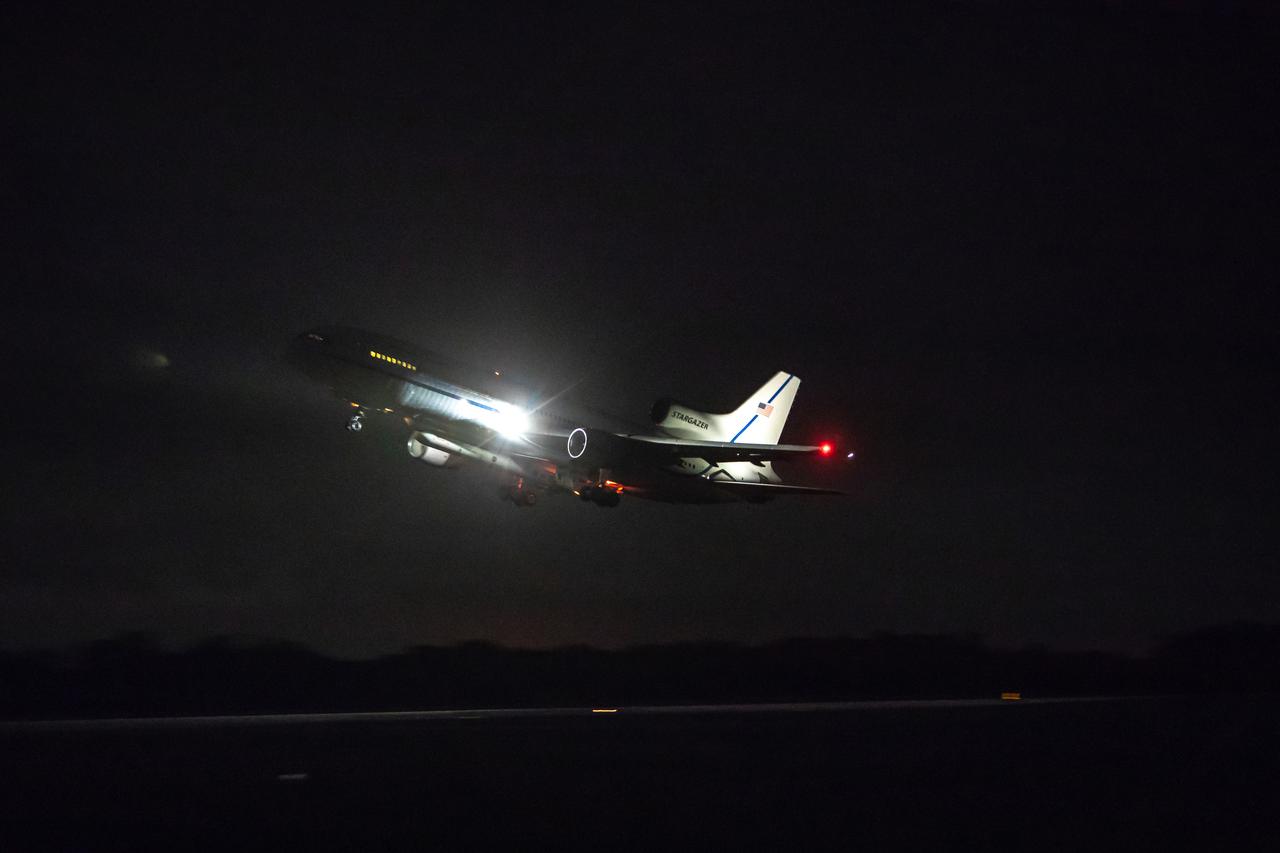
Northrop Grumman’s L-1011 Stargazer aircraft, with the company’s Pegasus XL rocket attached beneath, takes off from the Skid Strip runway at Cape Canaveral Air Force Station in Florida on Oct. 10, 2019. NASA's Ionospheric Connection Explorer (ICON) is secured inside the rocket's payload fairing. The air-launched Pegasus XL was released from the aircraft at 9:59 p.m. EDT to start ICON’s journey to space. The explorer will study the frontier of space - the dynamic zone high in Earth's atmosphere where terrestrial weather from below meets space weather above.
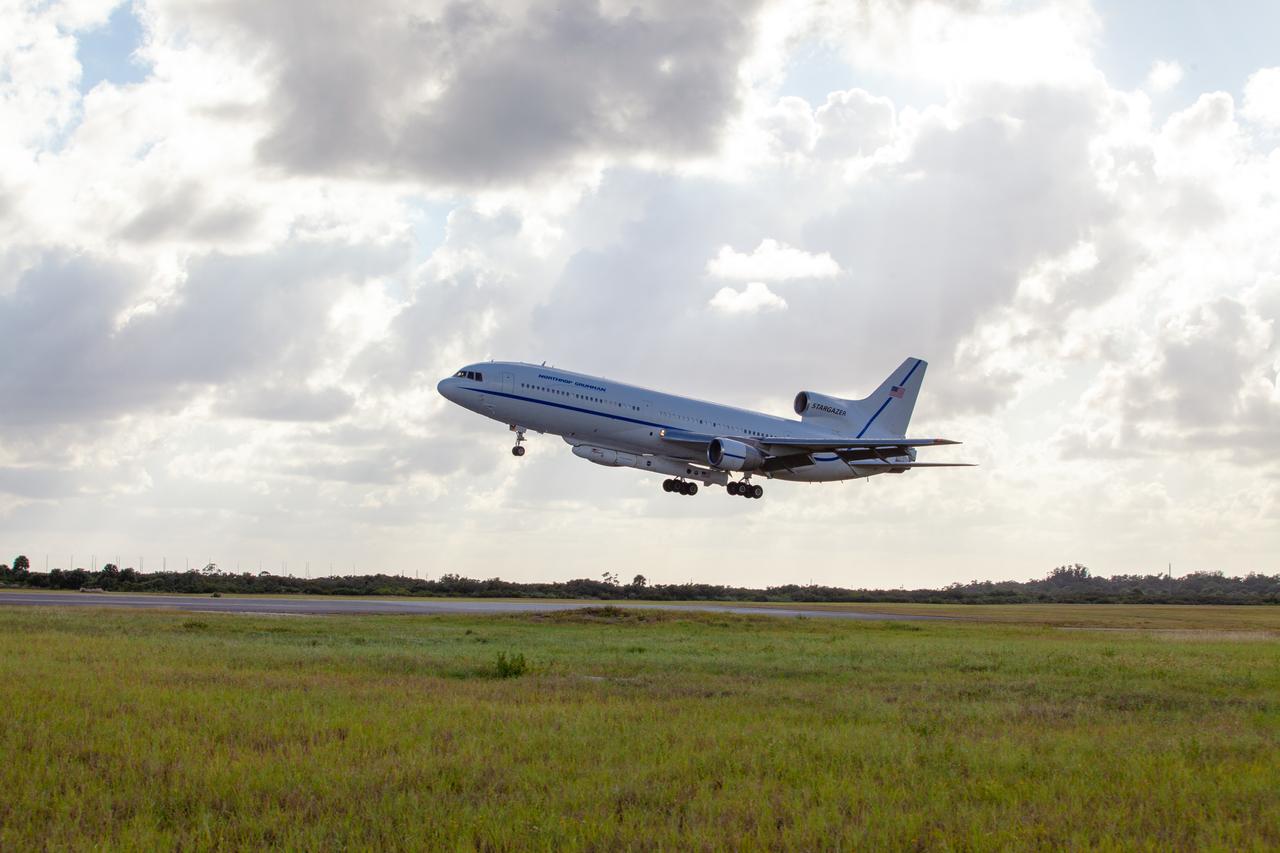
Northrop Grumman's L-1011 Stargazer aircraft descends toward the Skid Strip at Cape Canaveral Air Force Station in Florida on Oct. 1, 2019. The company's Pegasus XL rocket, containing NASA's Ionospheric Connection Explorer (ICON), is attached beneath the aircraft. ICON will study the frontier of space - the dynamic zone high in Earth's atmosphere where terrestrial weather from below meets space weather above.
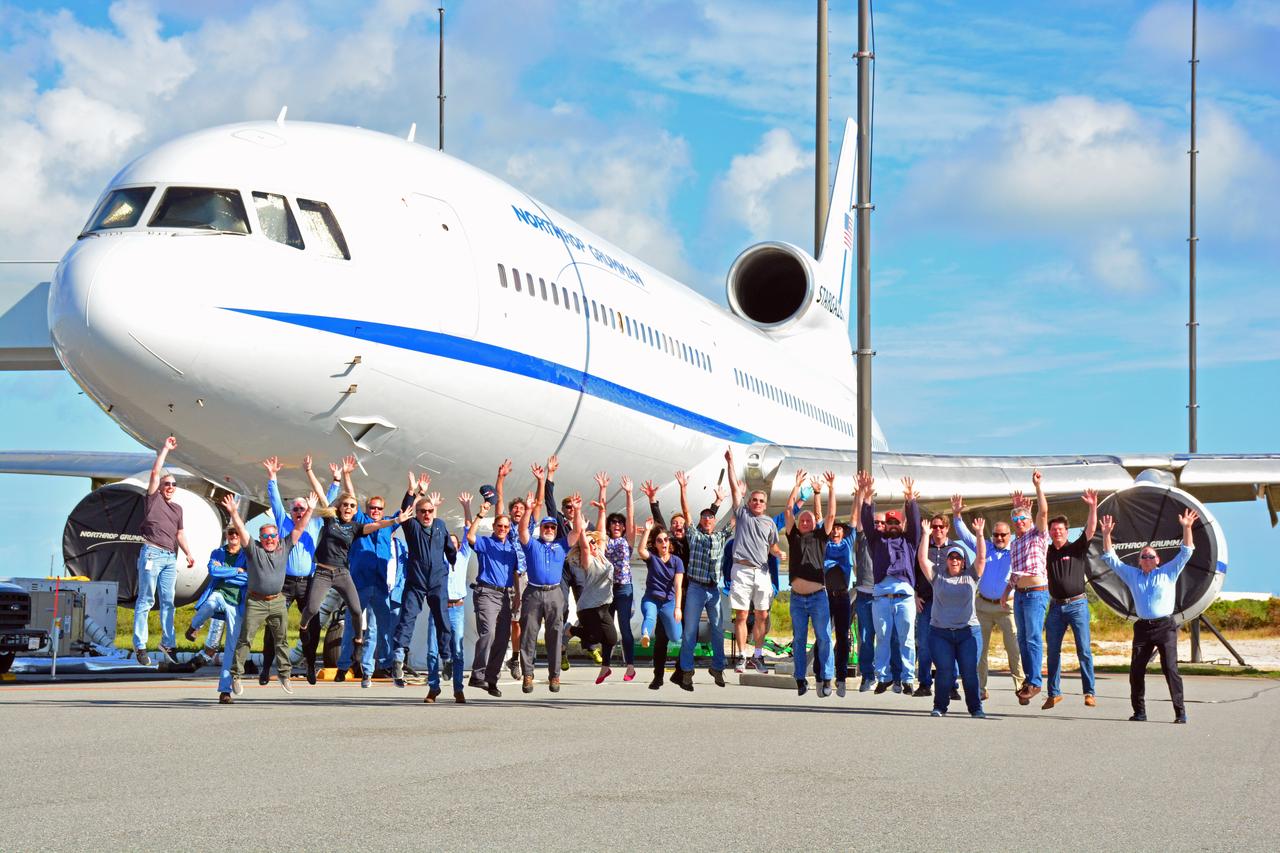
Members of the launch team for NASA’s Ionospheric Connection Explorer (ICON) gather for a joyous group photo in front of the Northrop Grumman L-1011 Stargazer aircraft carrying the Pegasus XL rocket at the Skid Strip at Florida’s Cape Canaveral Air Force Station, Nov. 10, 2019. Hours later, the rocket containing ICON air-launched from beneath the aircraft off the coast of Daytona Beach. ICON will study the frontier of space - the dynamic zone high in Earth's atmosphere where terrestrial weather from below meets space weather above. The explorer will help determine the physics of Earth's space environment and pave the way for mitigating its effects on our technology, communications systems and society.
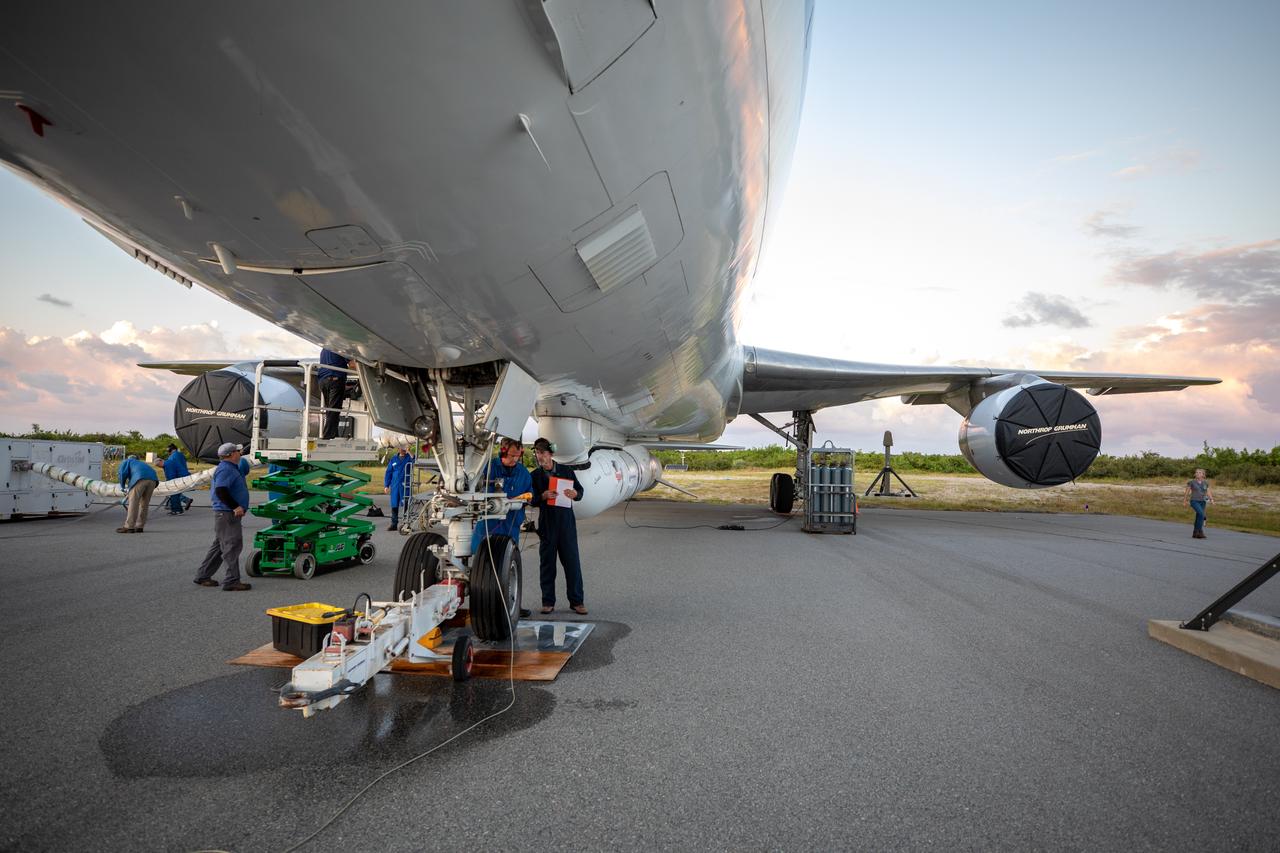
Northrop Grumman's L-1011 Stargazer aircraft has arrived at the Skid Strip at Cape Canaveral Air Force Station in Florida on Oct. 1, 2019. The company's Pegasus XL rocket, containing NASA's Ionospheric Connection Explorer (ICON), is attached beneath the aircraft. ICON will study the frontier of space - the dynamic zone high in Earth's atmosphere where terrestrial weather from below meets space weather above.
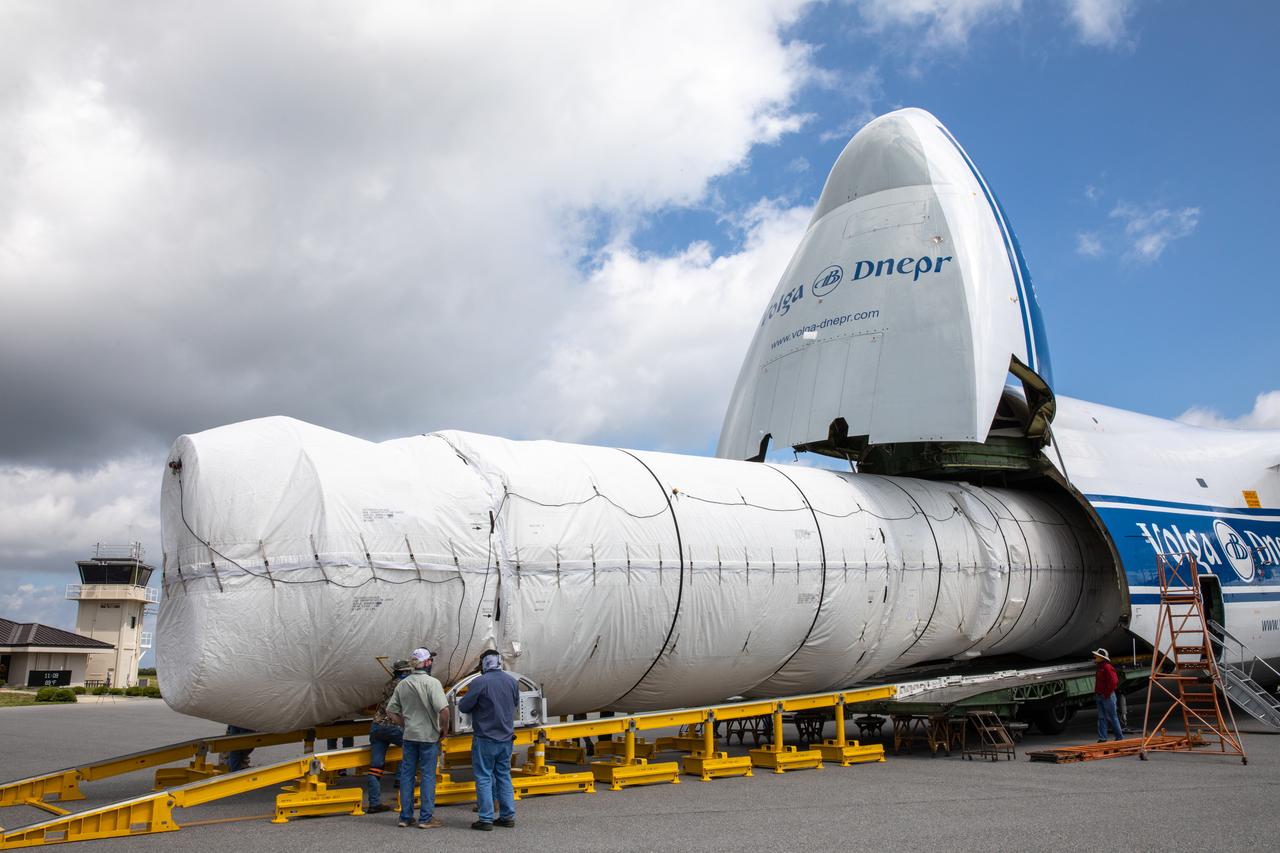
The United Launch Alliance booster for NASA’s Mars Perseverance rover is offloaded from the Antonov 124 cargo aircraft at the Skid Strip at Cape Canaveral Air Force Station (CCAFS) in Florida on May 19, 2020. The Mars Perseverance rover is scheduled to launch in mid-July atop a United Launch Alliance Atlas V 541 rocket from Pad 41 at CCAFS. The rover is part of NASA’s Mars Exploration Program, a long-term effort of robotic exploration of the Red Planet. The rover will search for habitable conditions in the ancient past and signs of past microbial life on Mars. The Launch Services Program at Kennedy is responsible for launch management.
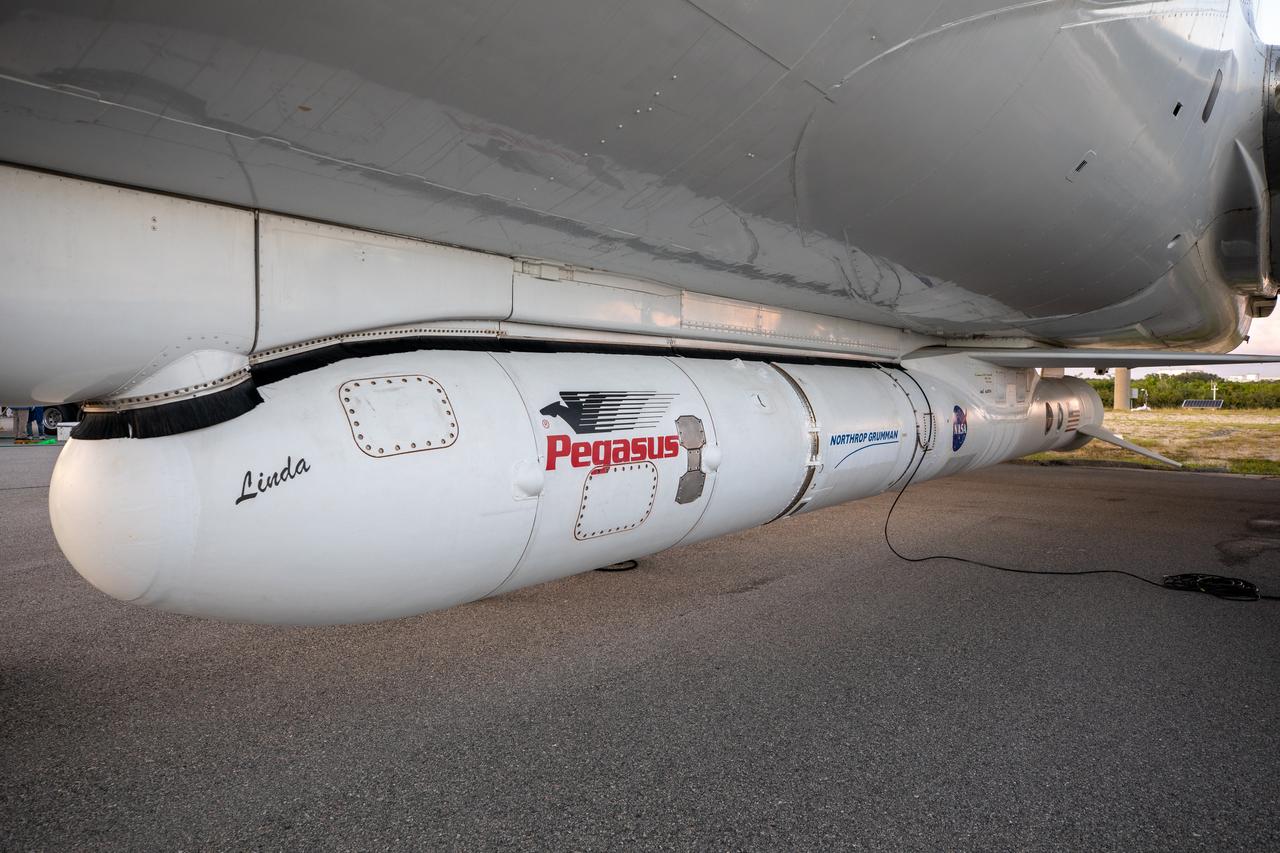
The Northrop Grumman Pegasus XL rocket, carrying NASA’s Ionospheric Connection Explorer (ICON), has arrived at the Skid Strip at Cape Canaveral Air Force Station in Florida on Oct. 1, 2019. The rocket is attached beneath the company’s L-1011 Stargazer aircraft. ICON will study the frontier of space - the dynamic zone high in Earth's atmosphere where terrestrial weather from below meets space weather above.

The Northrop Grumman L-1011 Stargazer aircraft, with the Pegasus XL rocket attached beneath, starts down the runway at the Skid Strip at Cape Canaveral Air Force Station in Florida on Nov. 7, 2018. NASA's Ionospheric Connection Explorer (ICON) is secured inside the rocket's payload fairing. The Pegasus XL rocket will be carried aloft by the Stargazer. ICON will study the frontier of space - the dynamic zone high in Earth's atmosphere where terrestrial weather from below meets space weather above. The explorer will help determine the physics of Earth's space environment and pave the way for mitigating its effects on our technology, communications systems and society.
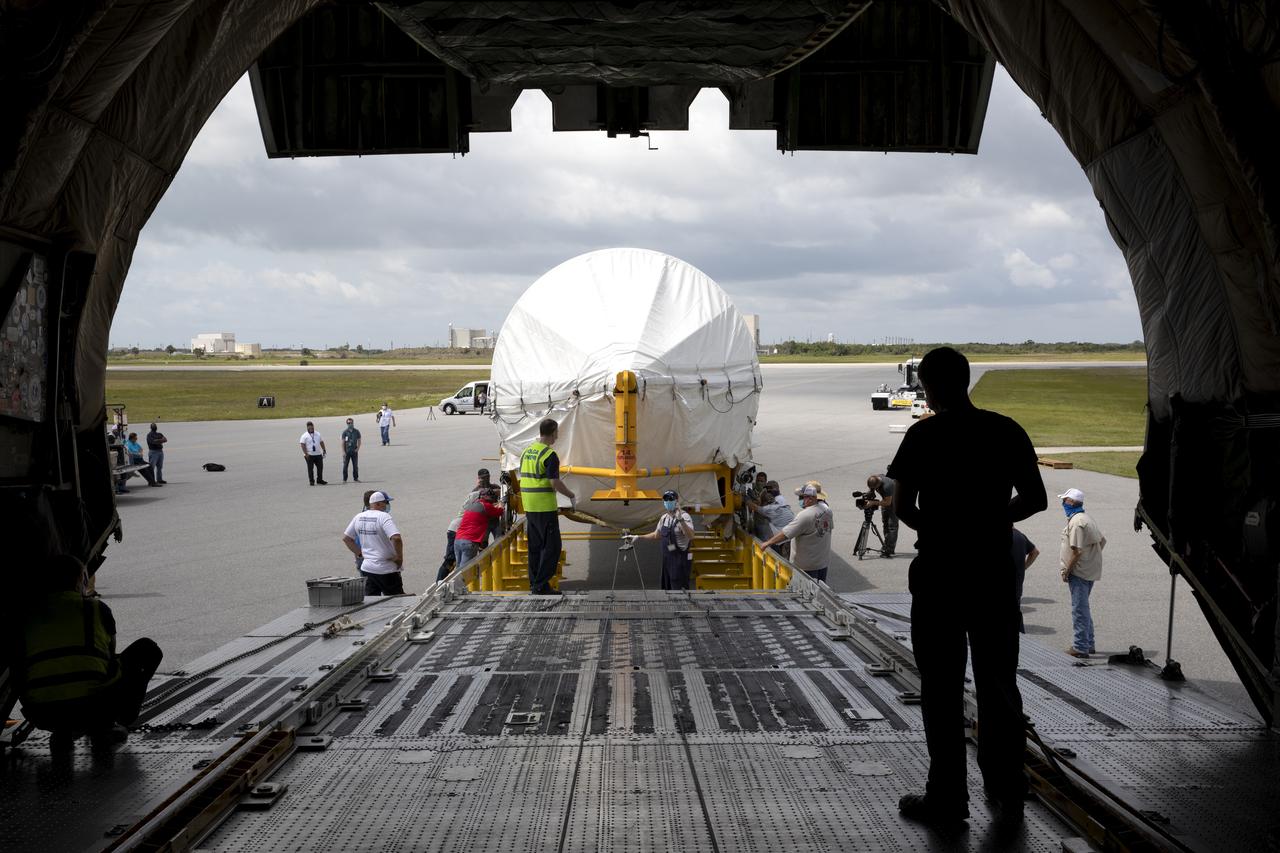
In this view from inside the Antonov 124 cargo aircraft, the United Launch Alliance booster for NASA’s Mars Perseverance rover is offloaded at the Skid Strip at Cape Canaveral Air Force Station (CCAFS) in Florida on May 19, 2020. The Mars Perseverance rover is scheduled to launch in mid-July atop a United Launch Alliance Atlas V 541 rocket from Pad 41 at CCAFS. The rover is part of NASA’s Mars Exploration Program, a long-term effort of robotic exploration of the Red Planet. The rover will search for habitable conditions in the ancient past and signs of past microbial life on Mars. The Launch Services Program at Kennedy is responsible for launch management.
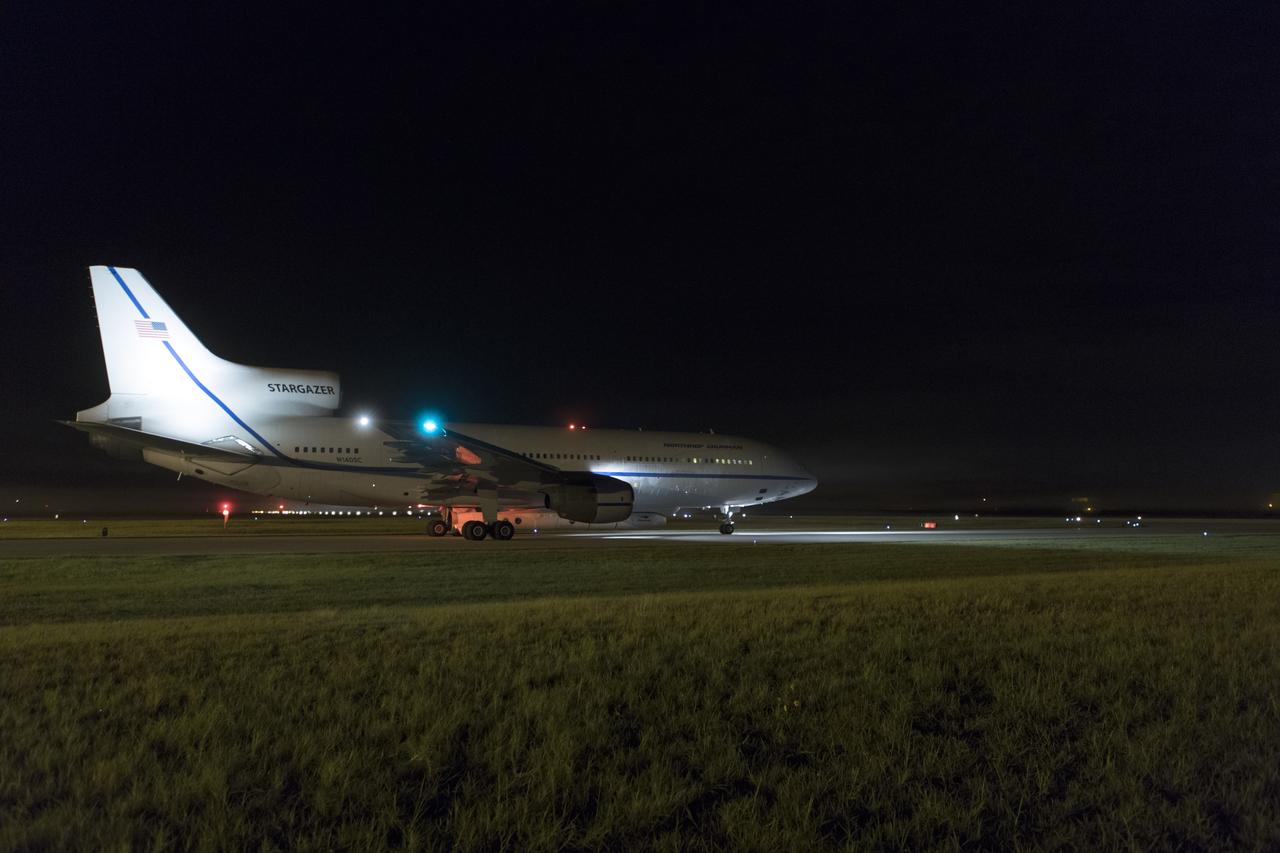
The Northrop Grumman L-1011 Stargazer aircraft, with the Pegasus XL rocket attached beneath, starts down the runway at the Skid Strip at Cape Canaveral Air Force Station in Florida on Nov. 7, 2018. NASA's Ionospheric Connection Explorer (ICON) is secured inside the rocket's payload fairing. The Pegasus XL rocket will be carried aloft by the Stargazer. ICON will study the frontier of space - the dynamic zone high in Earth's atmosphere where terrestrial weather from below meets space weather above. The explorer will help determine the physics of Earth's space environment and pave the way for mitigating its effects on our technology, communications systems and society.

JUNO - CENTAUR STAGE ARRIVAL
JUNO - Atlas V Arrival at Skid Strip
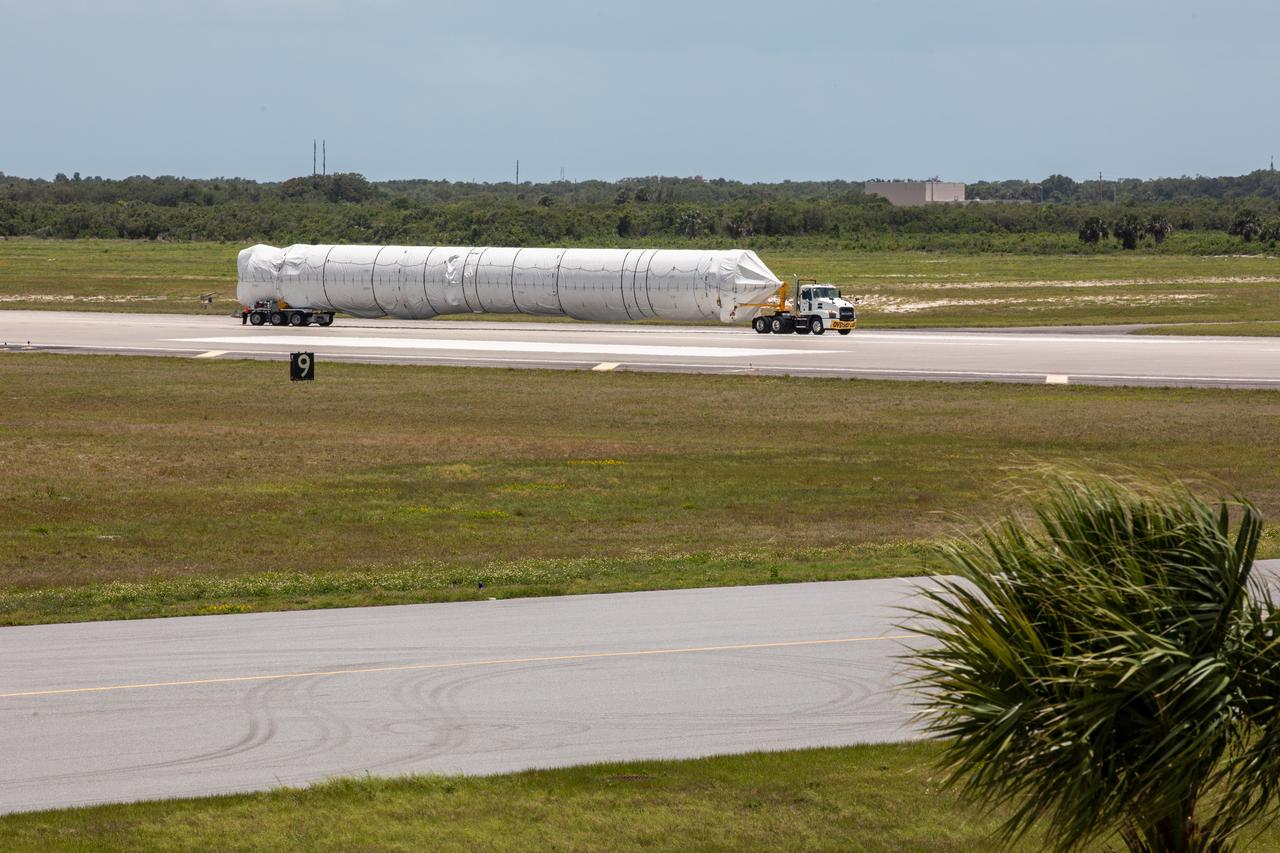
A flatbed truck carrying the United Launch Alliance booster for NASA’s Mars Perseverance rover departs the Skid Strip at Cape Canaveral Air Force Station (CCAFS) in Florida on May 19, 2020. The booster arrived aboard the Antonov 124 cargo aircraft at the Skid Strip on May 18, 2020. The Mars Perseverance rover is scheduled to launch in mid-July atop a United Launch Alliance Atlas V 541 rocket from Pad 41 at CCAFS. The rover is part of NASA’s Mars Exploration Program, a long-term effort of robotic exploration of the Red Planet. The rover will search for habitable conditions in the ancient past and signs of past microbial life on Mars. The Launch Services Program at Kennedy is responsible for launch management.
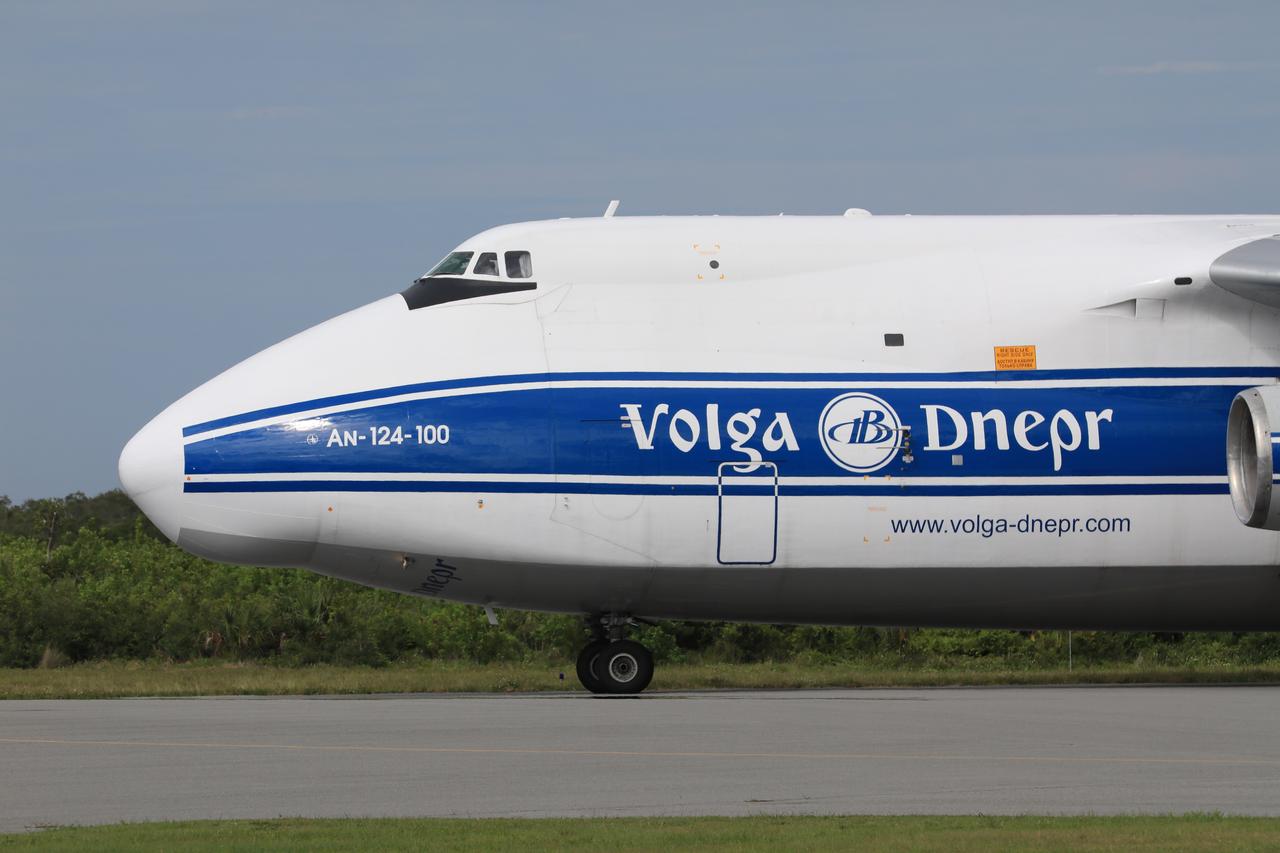
The Antonov 124 cargo aircraft, carrying the United Launch Alliance booster for NASA’s Mars Perseverance rover, taxis off the runway at the Skid Strip at Cape Canaveral Air Force Station (CCAFS) in Florida on May 18, 2020. The Mars Perseverance rover is scheduled to launch in mid-July atop a United Launch Alliance Atlas V 541 rocket from Pad 41 at CCAFS. The rover is part of NASA’s Mars Exploration Program, a long-term effort of robotic exploration of the Red Planet. The rover will search for habitable conditions in the ancient past and signs of past microbial life on Mars. The Launch Services Program at Kennedy is responsible for launch management.
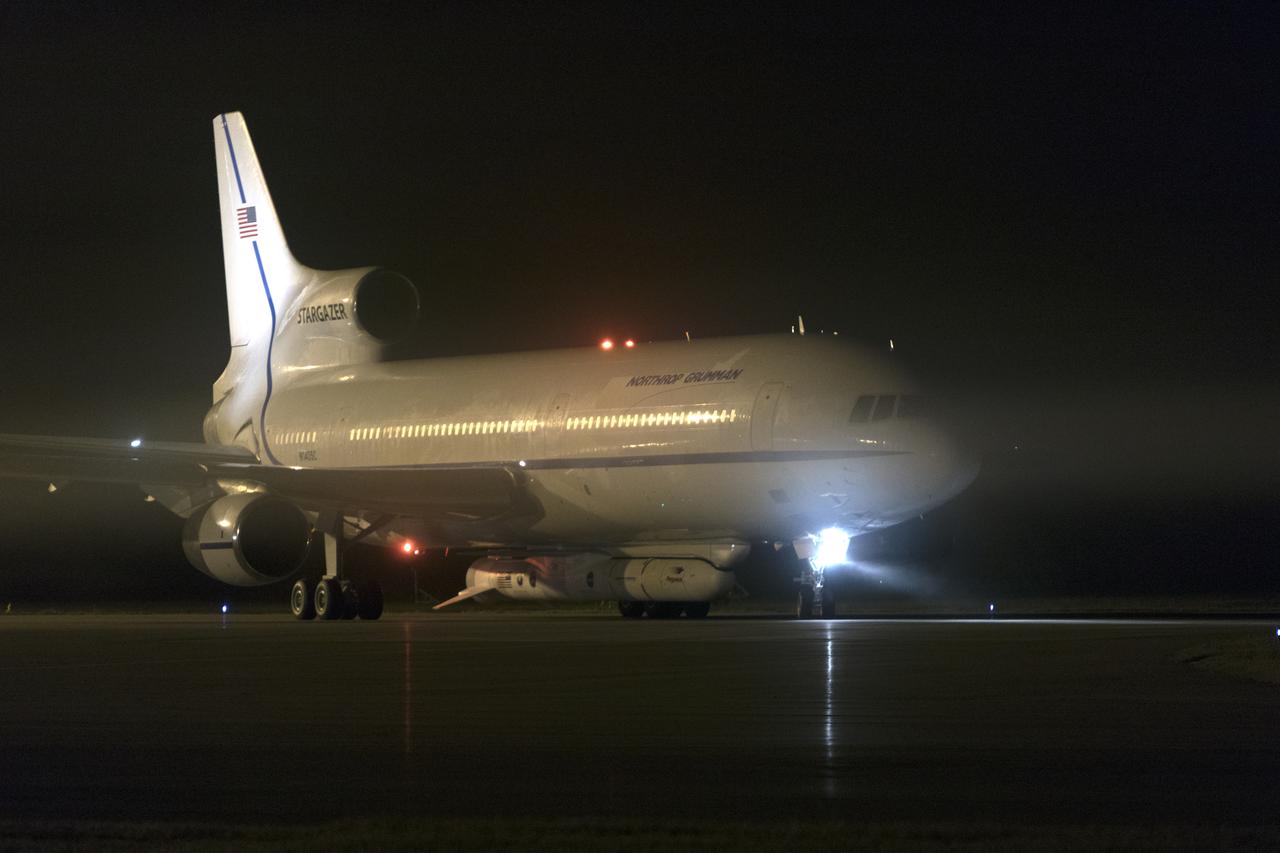
The Northrop Grumman L-1011 Stargazer aircraft, with the Pegasus XL rocket attached beneath, starts down the runway at the Skid Strip at Cape Canaveral Air Force Station in Florida on Nov. 7, 2018. NASA's Ionospheric Connection Explorer (ICON) is secured inside the rocket's payload fairing. The Pegasus XL rocket will be carried aloft by the Stargazer. ICON will study the frontier of space - the dynamic zone high in Earth's atmosphere where terrestrial weather from below meets space weather above. The explorer will help determine the physics of Earth's space environment and pave the way for mitigating its effects on our technology, communications systems and society.
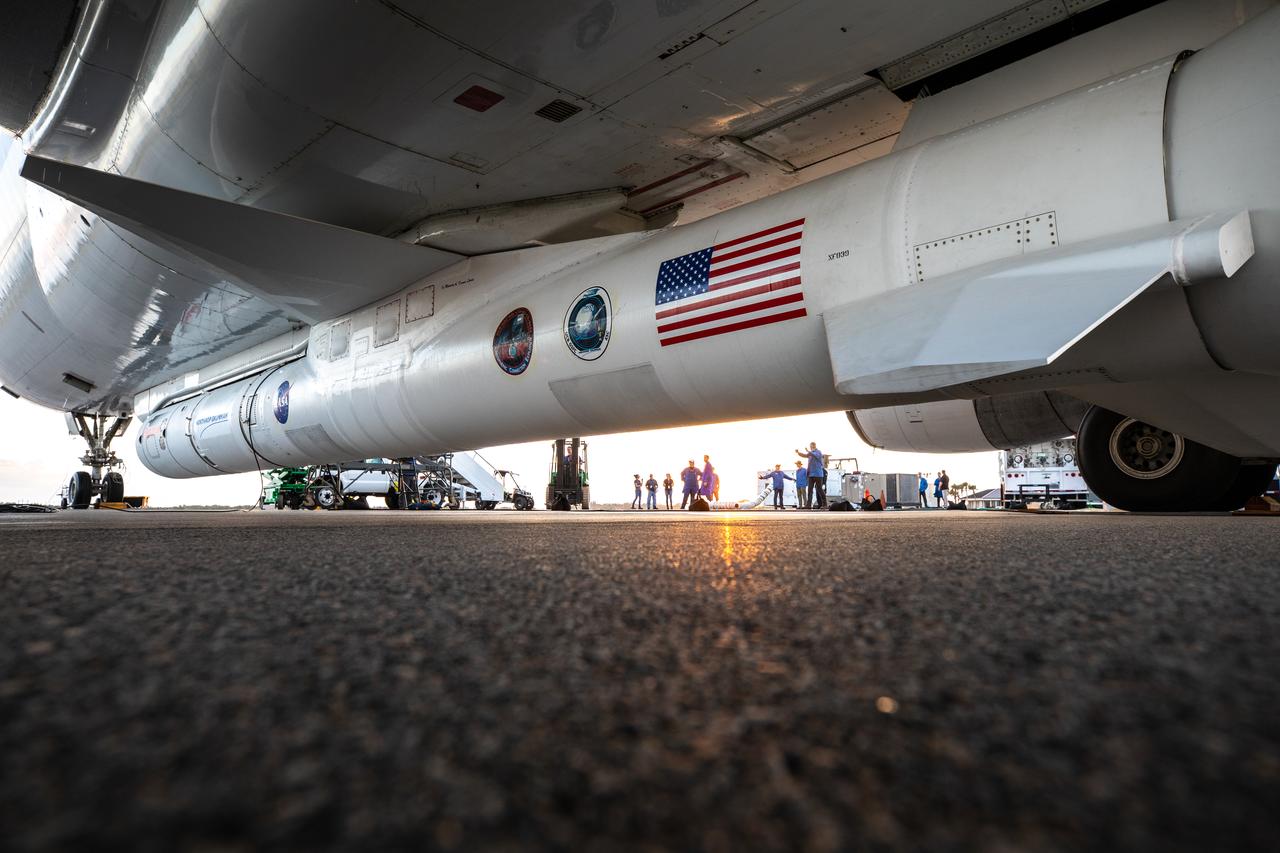
The Northrop Grumman Pegasus XL rocket, carrying NASA’s Ionospheric Connection Explorer (ICON), has arrived at the Skid Strip at Cape Canaveral Air Force Station in Florida on Oct. 1, 2019. The rocket is attached beneath the company’s L-1011 Stargazer aircraft. ICON will study the frontier of space - the dynamic zone high in Earth's atmosphere where terrestrial weather from below meets space weather above.
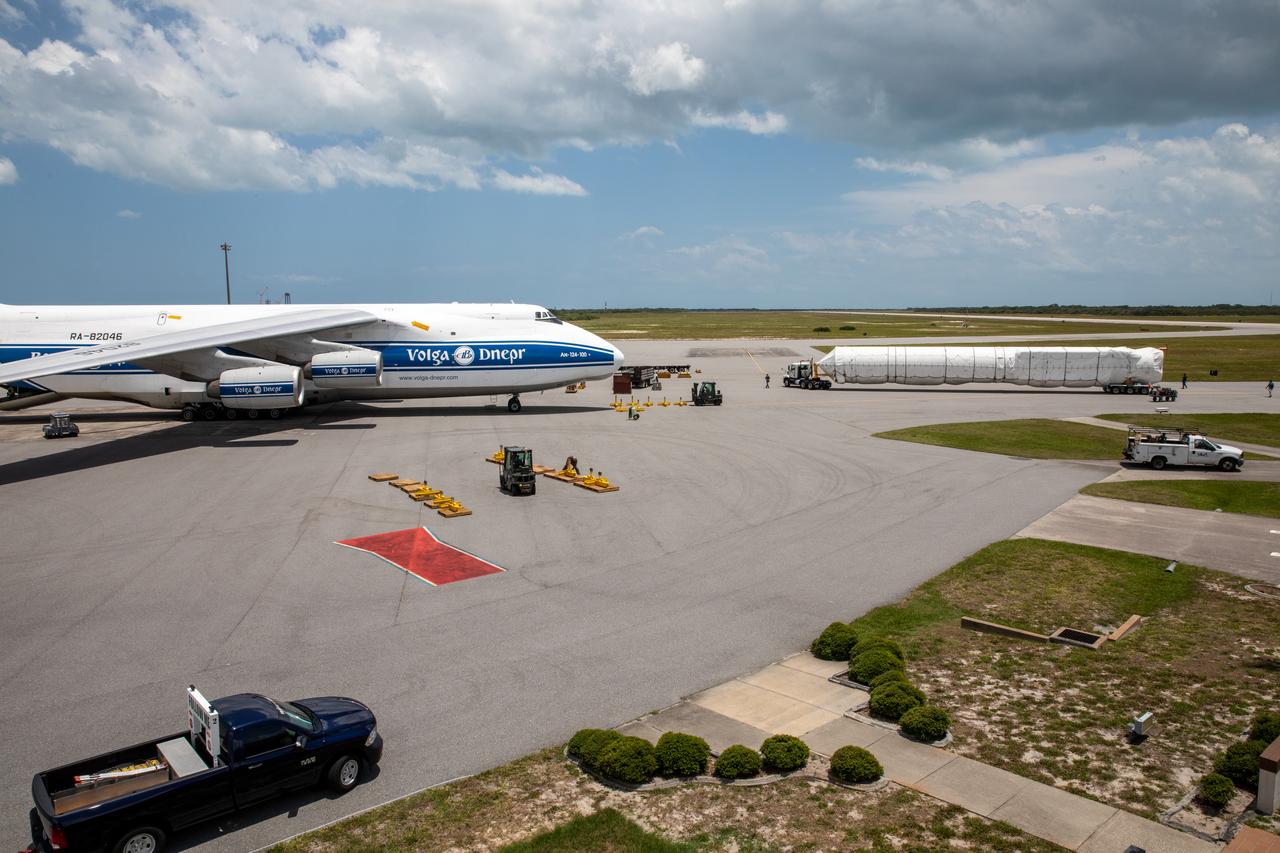
The United Launch Alliance booster for NASA’s Mars Perseverance rover is secured on a flatbed truck after being offloaded from the Antonov 124 cargo aircraft at the Skid Strip at Cape Canaveral Air Force Station (CCAFS) in Florida on May 19, 2020. The Mars Perseverance rover is scheduled to launch in mid-July atop a United Launch Alliance Atlas V 541 rocket from Pad 41 at CCAFS. The rover is part of NASA’s Mars Exploration Program, a long-term effort of robotic exploration of the Red Planet. The rover will search for habitable conditions in the ancient past and signs of past microbial life on Mars. The Launch Services Program at Kennedy is responsible for launch management.
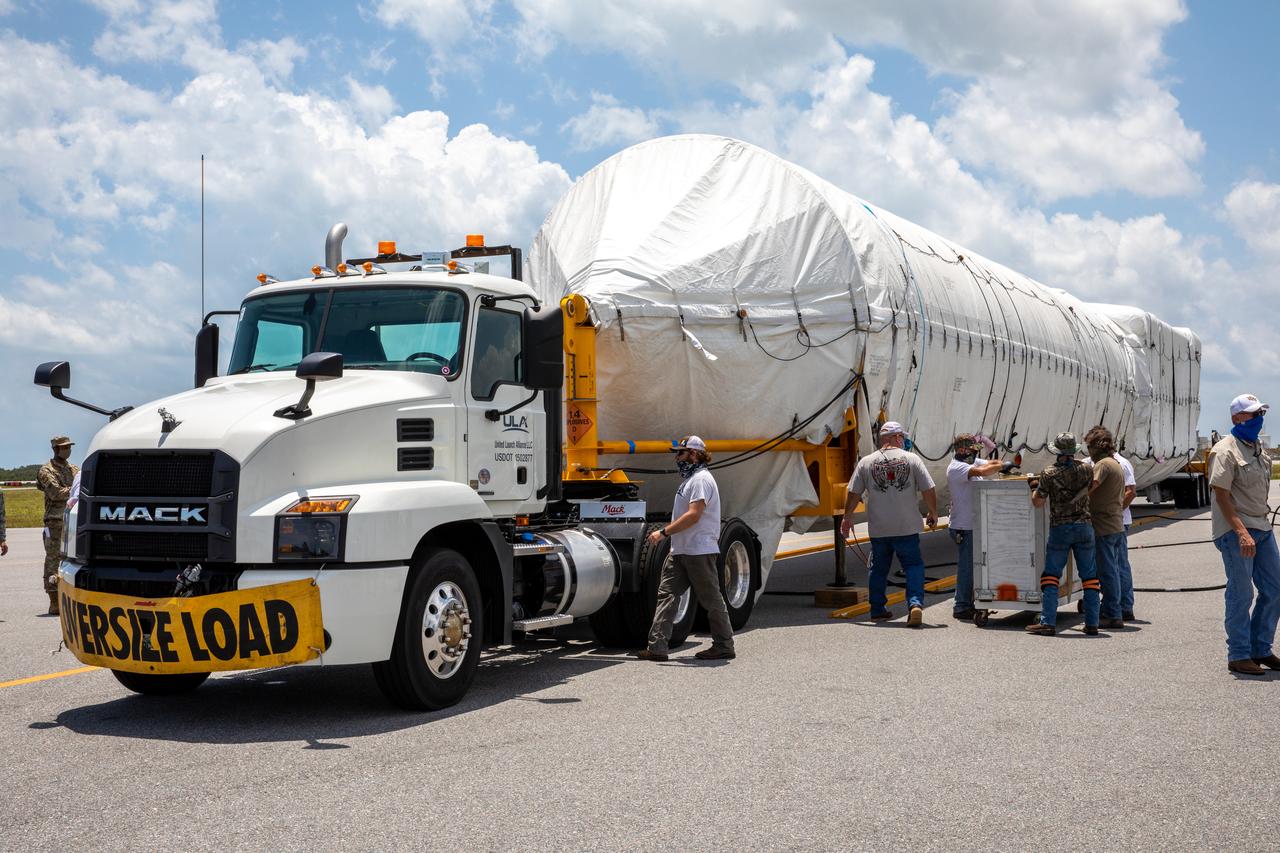
The United Launch Alliance booster for NASA’s Mars Perseverance rover is secured on a flatbed truck after being offloaded from the Antonov 124 cargo aircraft at the Skid Strip at Cape Canaveral Air Force Station (CCAFS) in Florida on May 19, 2020. The Mars Perseverance rover is scheduled to launch in mid-July atop a United Launch Alliance Atlas V 541 rocket from Pad 41 at CCAFS. The rover is part of NASA’s Mars Exploration Program, a long-term effort of robotic exploration of the Red Planet. The rover will search for habitable conditions in the ancient past and signs of past microbial life on Mars. The Launch Services Program at Kennedy is responsible for launch management.
JUNO - CENTAUR STAGE ARRIVAL
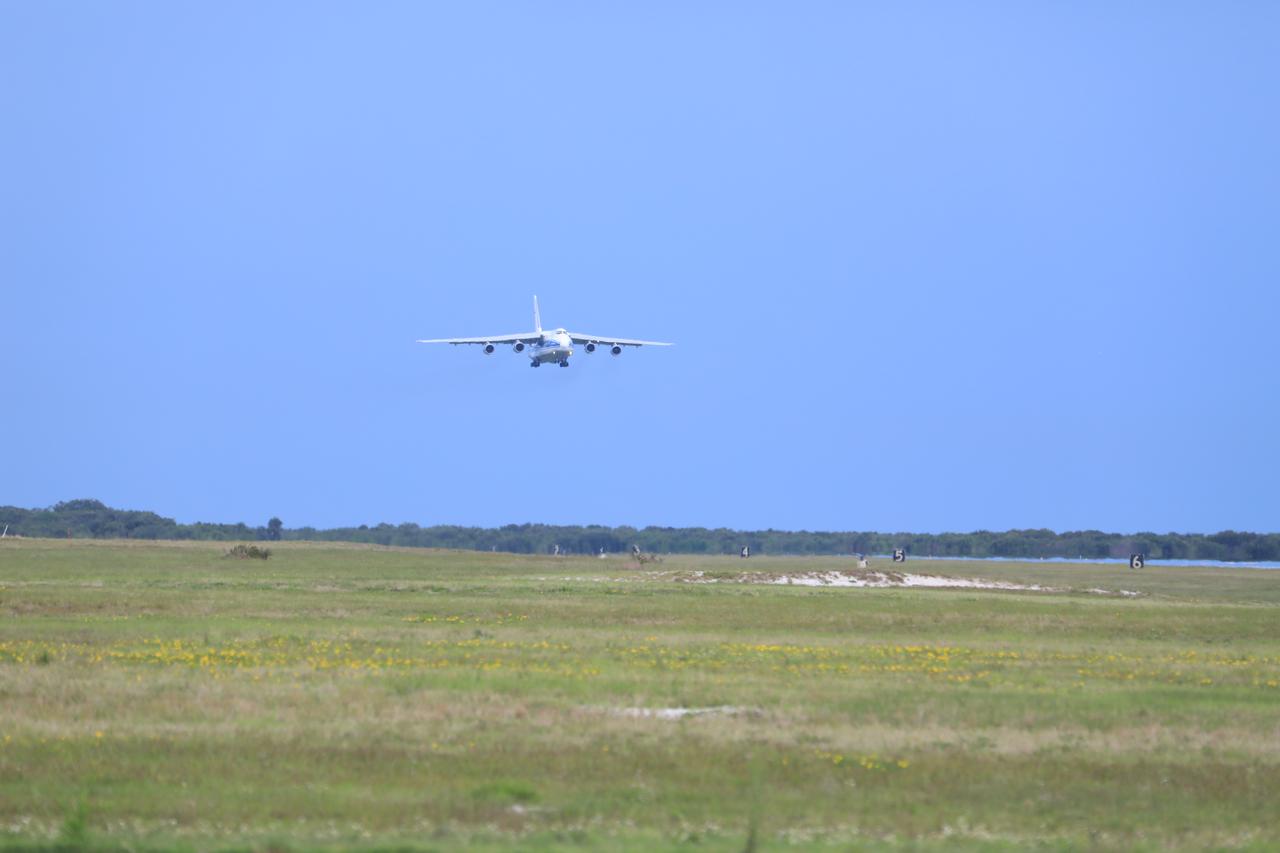
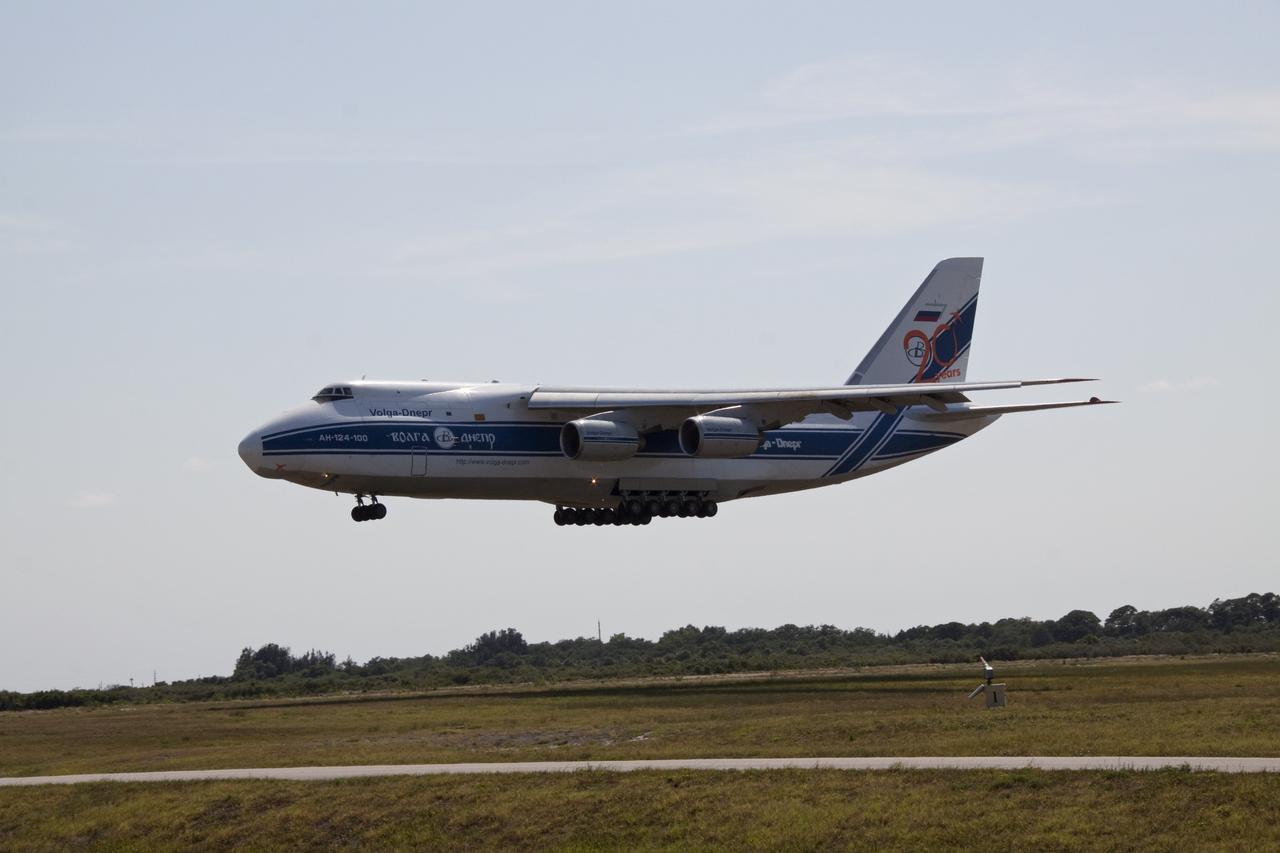
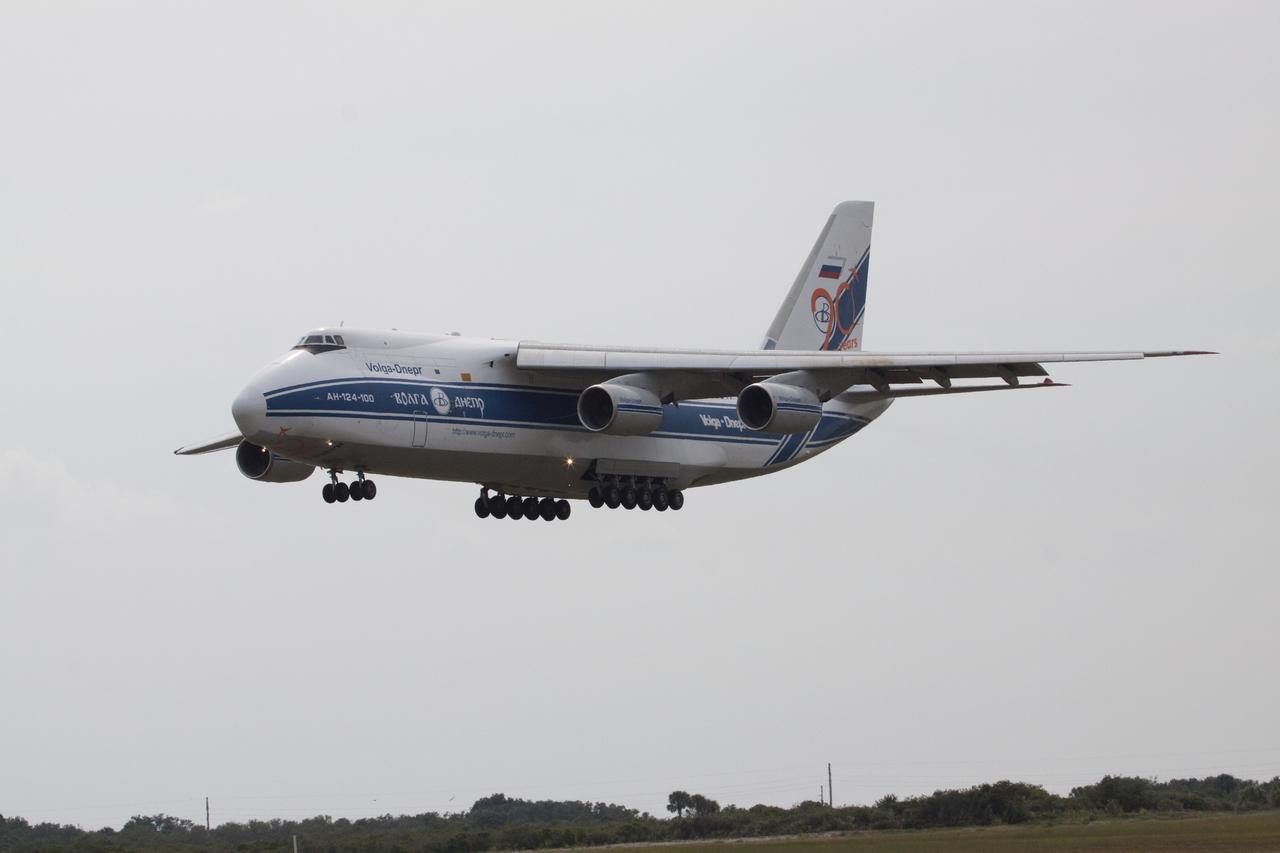
The Antonov 124 cargo aircraft, carrying the United Launch Alliance booster for NASA’s Mars Perseverance rover, descends toward the Skid Strip at Cape Canaveral Air Force Station (CCAFS) in Florida on May 18, 2020. The Mars Perseverance rover is scheduled to launch in mid-July atop a United Launch Alliance Atlas V 541 rocket from Pad 41 at CCAFS. The rover is part of NASA’s Mars Exploration Program, a long-term effort of robotic exploration of the Red Planet. The rover will search for habitable conditions in the ancient past and signs of past microbial life on Mars. The Launch Services Program at Kennedy is responsible for launch management.
JUNO - CENTAUR STAGE ARRIVAL
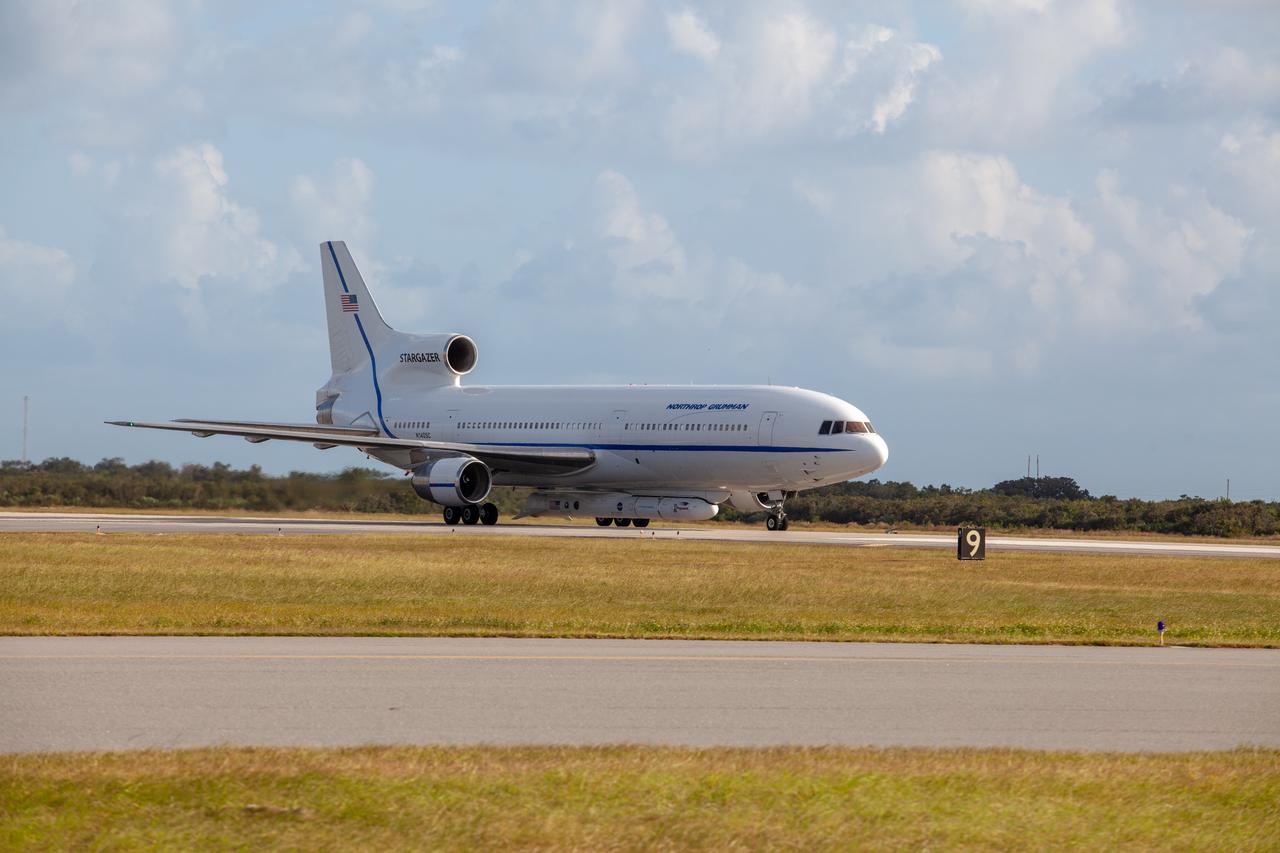
Northrop Grumman's L-1011 Stargazer aircraft has arrived at the Skid Strip at Cape Canaveral Air Force Station in Florida on Oct. 1, 2019. The company's Pegasus XL rocket, containing NASA's Ionospheric Connection Explorer (ICON), is attached beneath the aircraft. ICON will study the frontier of space - the dynamic zone high in Earth's atmosphere where terrestrial weather from below meets space weather above.
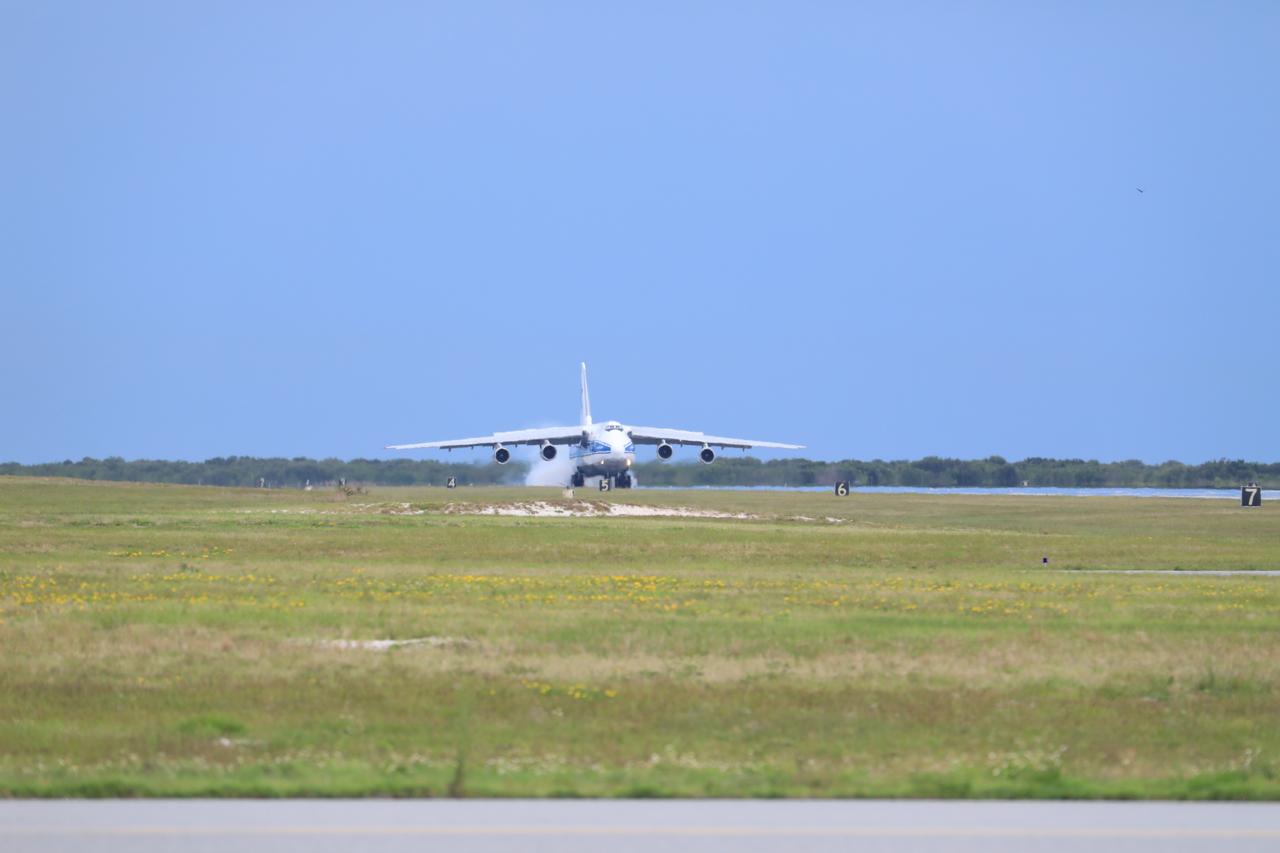
The Antonov 124 cargo aircraft, carrying the United Launch Alliance booster for NASA’s Mars Perseverance rover, touches down on the Skid Strip at Cape Canaveral Air Force Station (CCAFS) in Florida on May 18, 2020. The Mars Perseverance rover is scheduled to launch in mid-July atop a United Launch Alliance Atlas V 541 rocket from Pad 41 at CCAFS. The rover is part of NASA’s Mars Exploration Program, a long-term effort of robotic exploration of the Red Planet. The rover will search for habitable conditions in the ancient past and signs of past microbial life on Mars. The Launch Services Program at Kennedy is responsible for launch management.
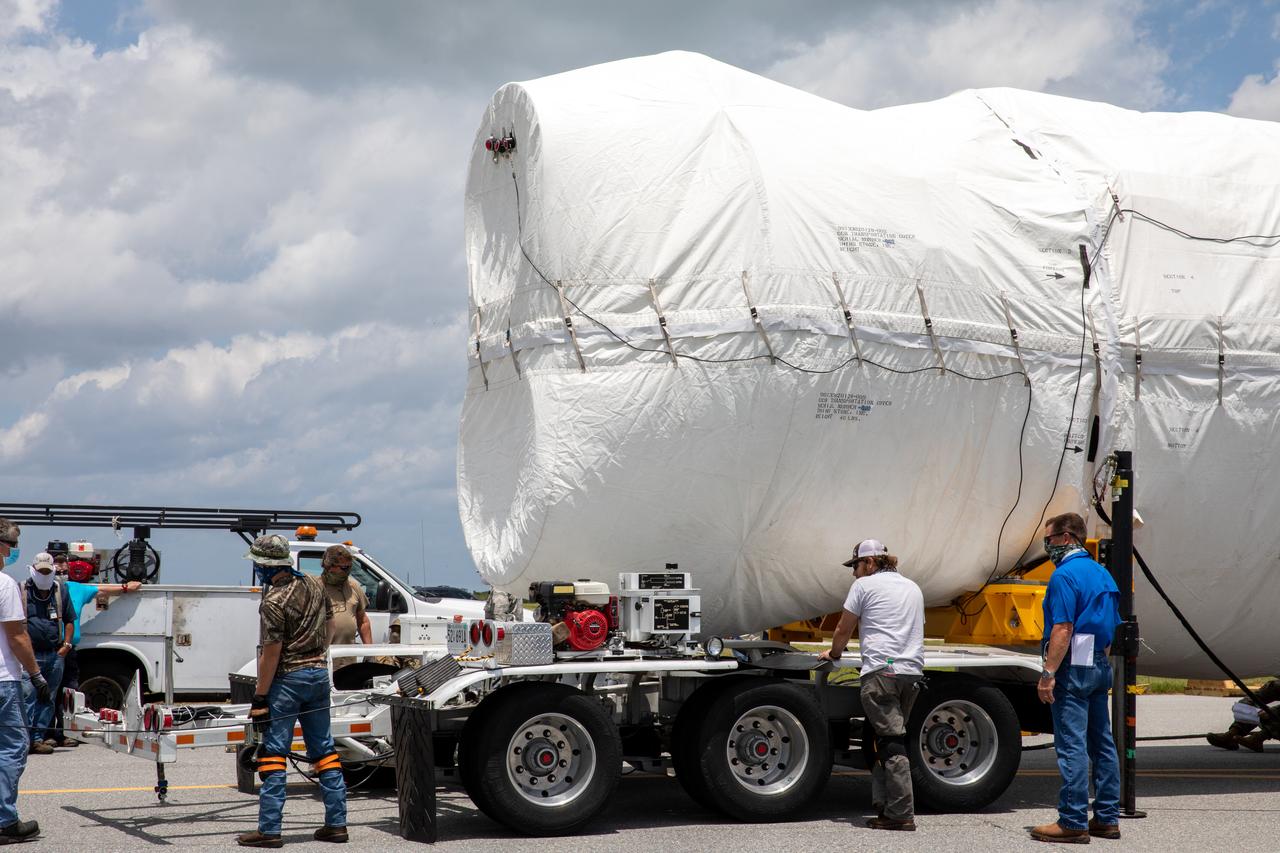
The United Launch Alliance booster for NASA’s Mars Perseverance rover is secured on a flatbed truck after being offloaded from the Antonov 124 cargo aircraft at the Skid Strip at Cape Canaveral Air Force Station (CCAFS) in Florida on May 19, 2020. The Mars Perseverance rover is scheduled to launch in mid-July atop a United Launch Alliance Atlas V 541 rocket from Pad 41 at CCAFS. The rover is part of NASA’s Mars Exploration Program, a long-term effort of robotic exploration of the Red Planet. The rover will search for habitable conditions in the ancient past and signs of past microbial life on Mars. The Launch Services Program at Kennedy is responsible for launch management.
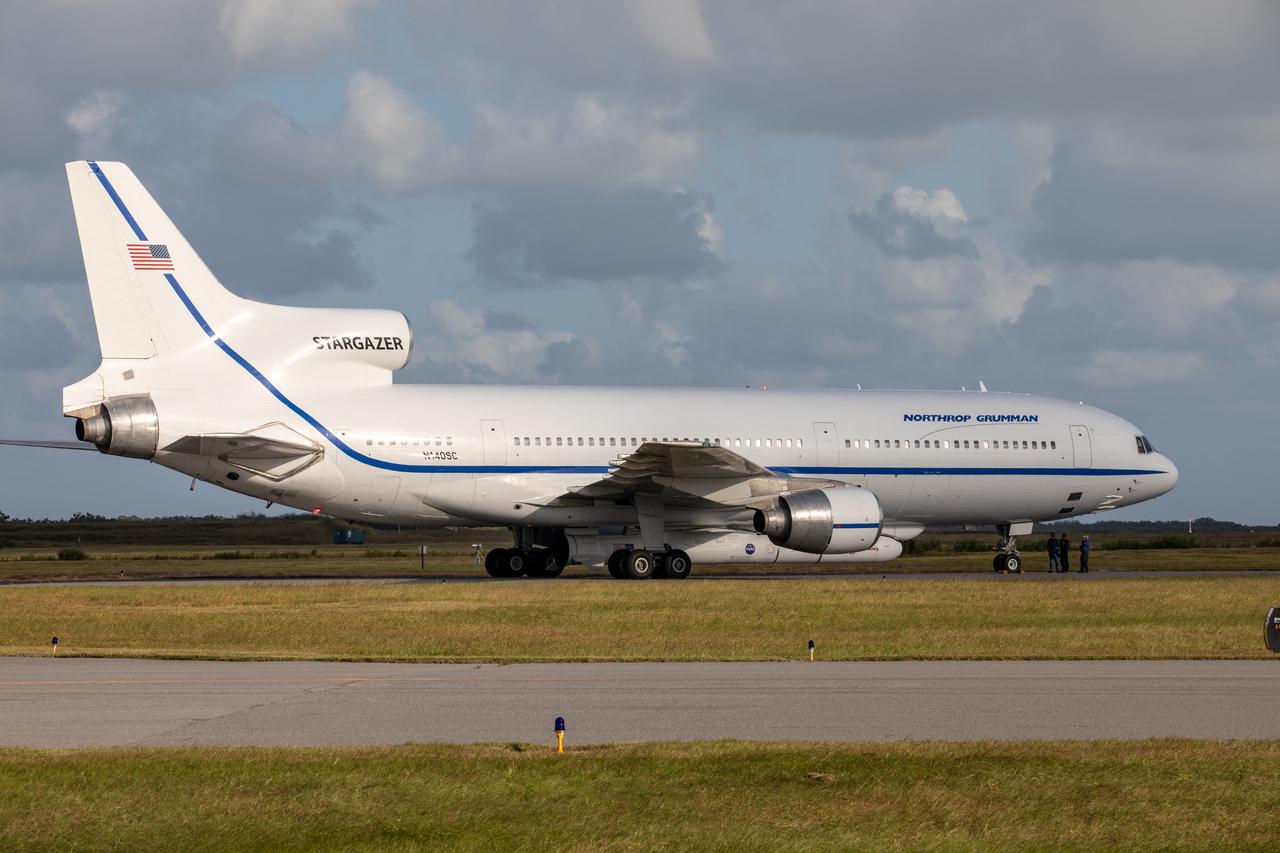
Northrop Grumman's L-1011 Stargazer aircraft has arrived at the Skid Strip at Cape Canaveral Air Force Station in Florida on Oct. 1, 2019. The company's Pegasus XL rocket, containing NASA's Ionospheric Connection Explorer (ICON), is attached beneath the aircraft. ICON will study the frontier of space - the dynamic zone high in Earth's atmosphere where terrestrial weather from below meets space weather above.
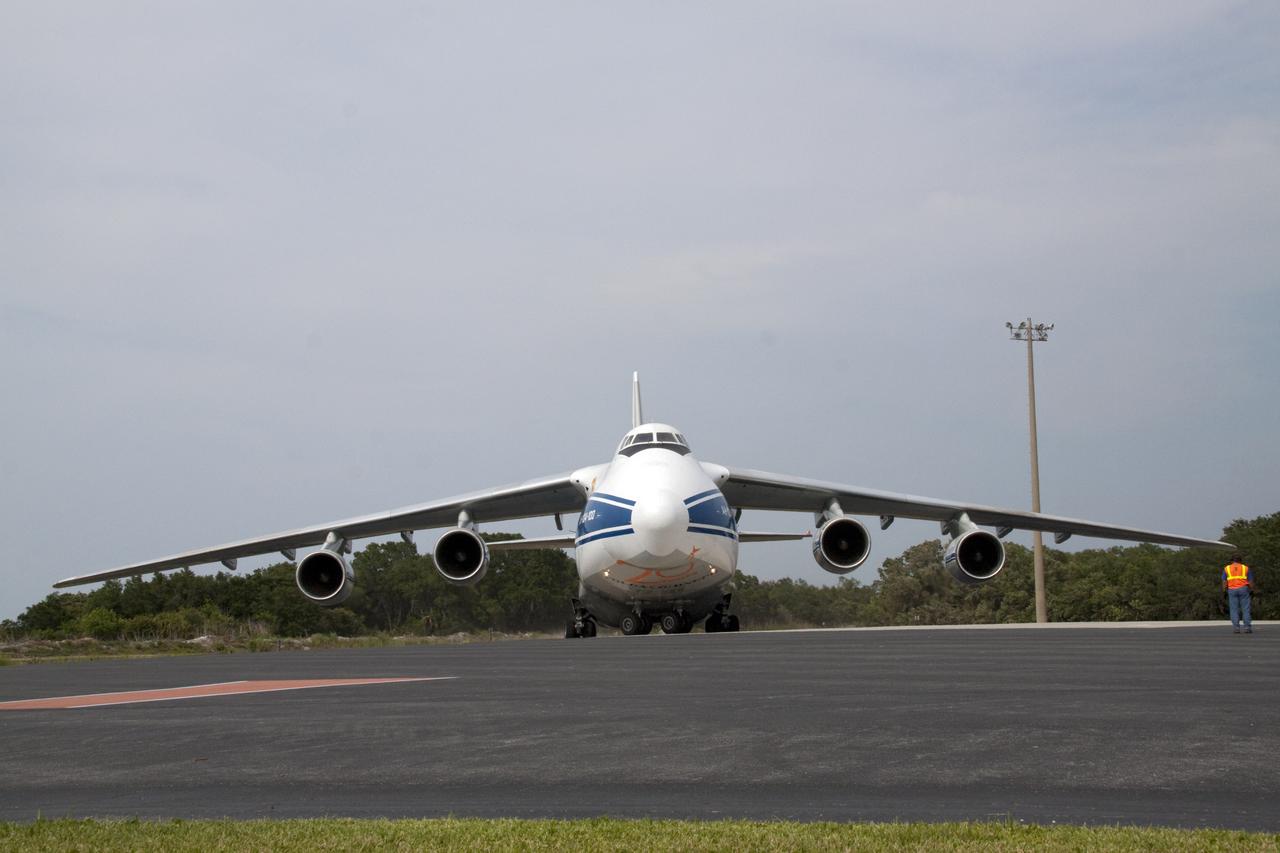
JUNO - Atlas V Arrival at Skid Strip
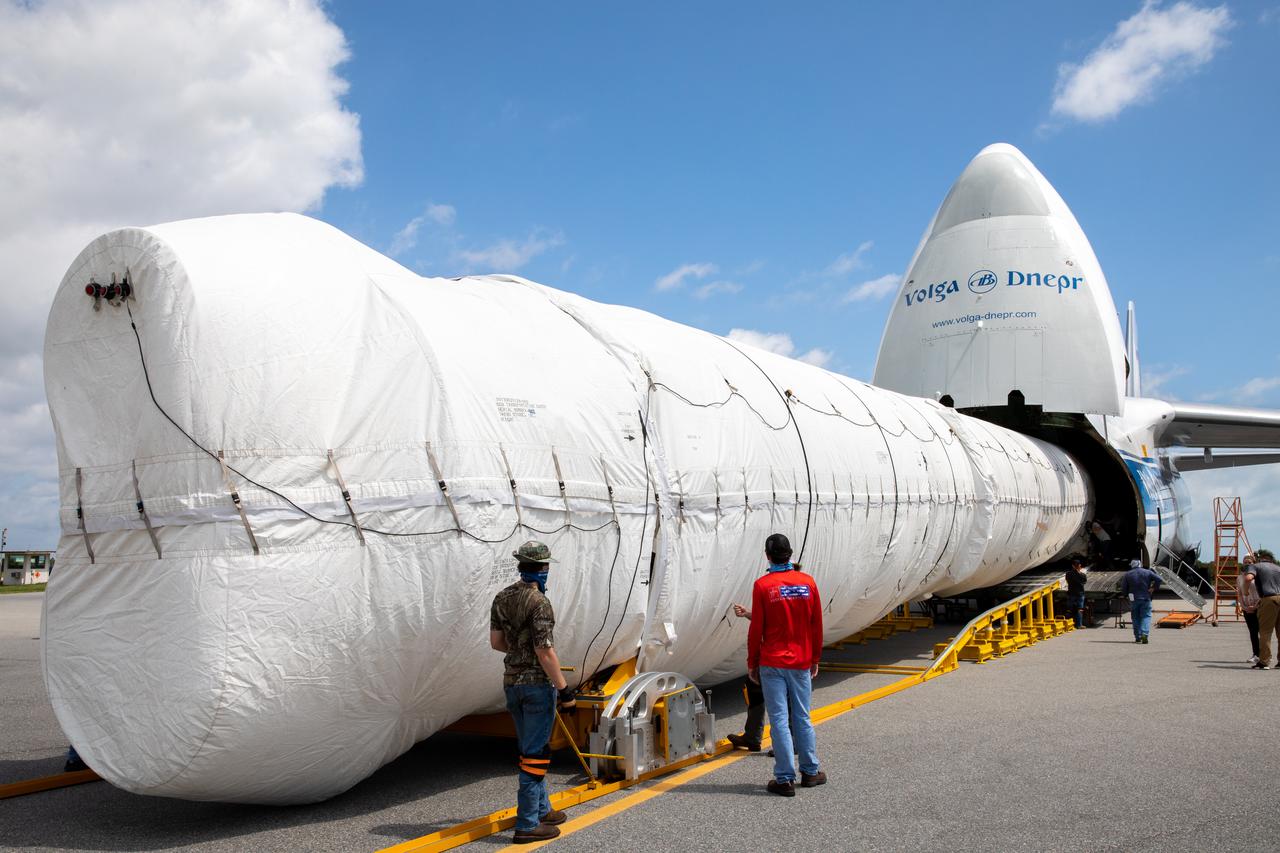
The United Launch Alliance booster for NASA’s Mars Perseverance rover is offloaded from the Antonov 124 cargo aircraft at the Skid Strip at Cape Canaveral Air Force Station (CCAFS) in Florida on May 19, 2020. The Mars Perseverance rover is scheduled to launch in mid-July atop a United Launch Alliance Atlas V 541 rocket from Pad 41 at CCAFS. The rover is part of NASA’s Mars Exploration Program, a long-term effort of robotic exploration of the Red Planet. The rover will search for habitable conditions in the ancient past and signs of past microbial life on Mars. The Launch Services Program at Kennedy is responsible for launch management.
JUNO - Atlas V Arrival at Skid Strip
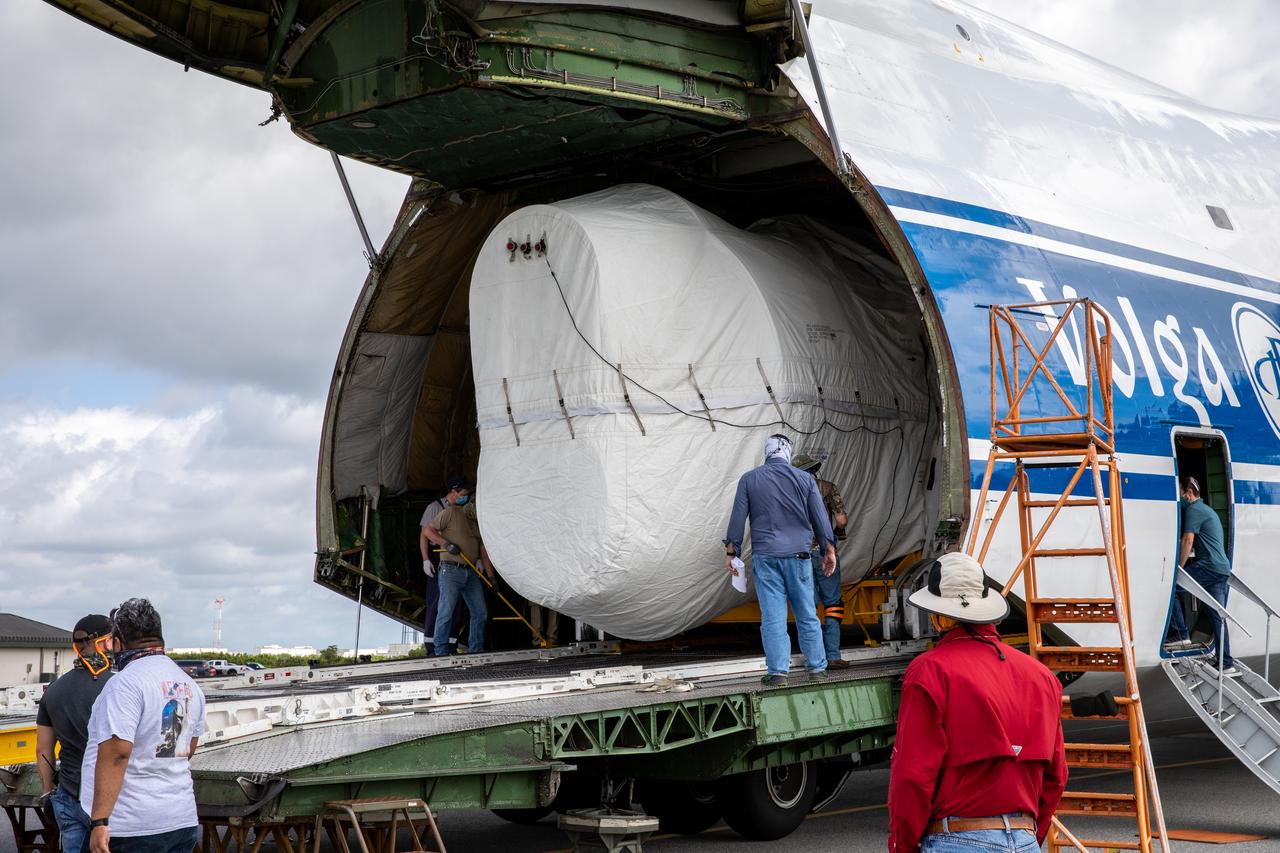
Preparations are underway to offload the United Launch Alliance booster for NASA’s Mars Perseverance rover from the Antonov 124 cargo aircraft at the Skid Strip at Cape Canaveral Air Force Station (CCAFS) in Florida on May 19, 2020. The Mars Perseverance rover is scheduled to launch in mid-July atop a United Launch Alliance Atlas V 541 rocket from Pad 41 at CCAFS. The rover is part of NASA’s Mars Exploration Program, a long-term effort of robotic exploration of the Red Planet. The rover will search for habitable conditions in the ancient past and signs of past microbial life on Mars. The Launch Services Program at Kennedy is responsible for launch management.
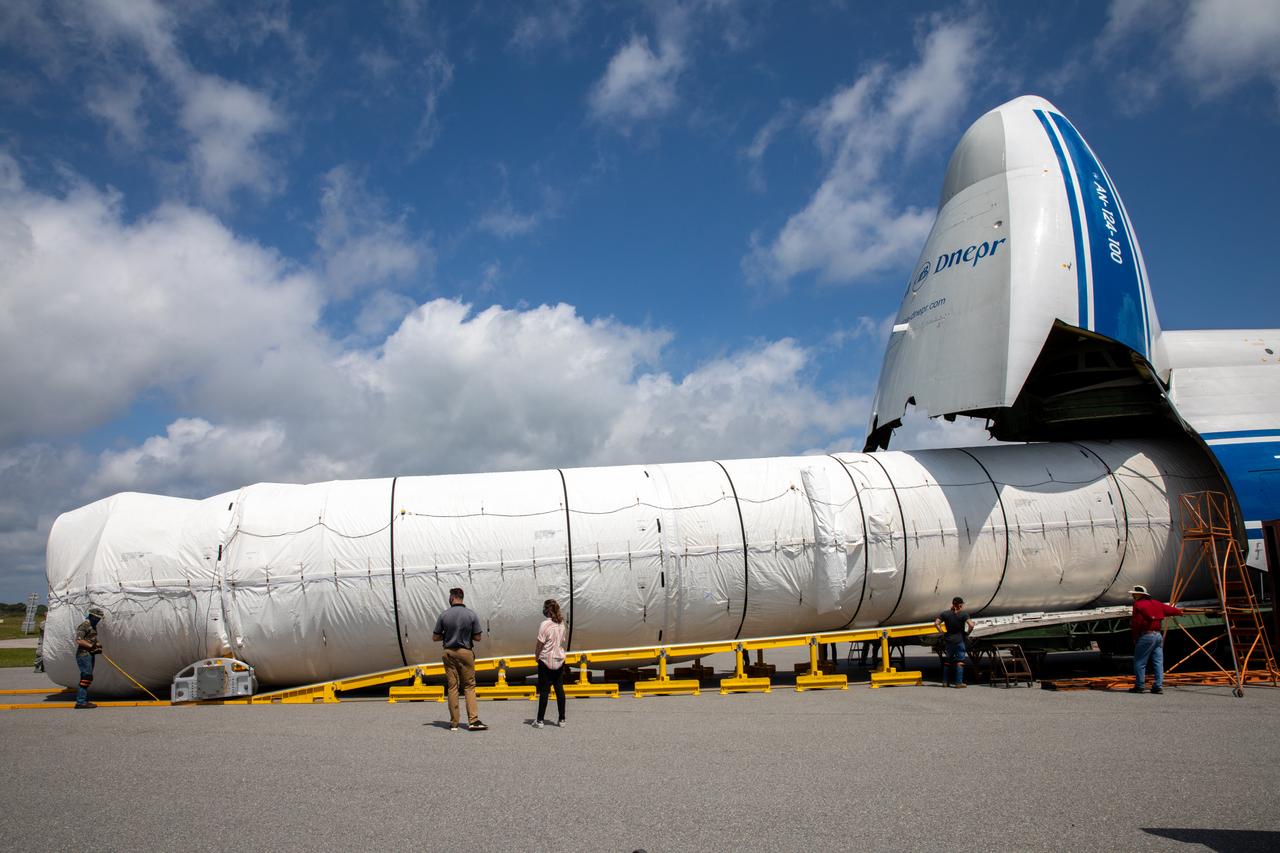
The United Launch Alliance booster for NASA’s Mars Perseverance rover is offloaded from the Antonov 124 cargo aircraft at the Skid Strip at Cape Canaveral Air Force Station (CCAFS) in Florida on May 19, 2020. The Mars Perseverance rover is scheduled to launch in mid-July atop a United Launch Alliance Atlas V 541 rocket from Pad 41 at CCAFS. The rover is part of NASA’s Mars Exploration Program, a long-term effort of robotic exploration of the Red Planet. The rover will search for habitable conditions in the ancient past and signs of past microbial life on Mars. The Launch Services Program at Kennedy is responsible for launch management.
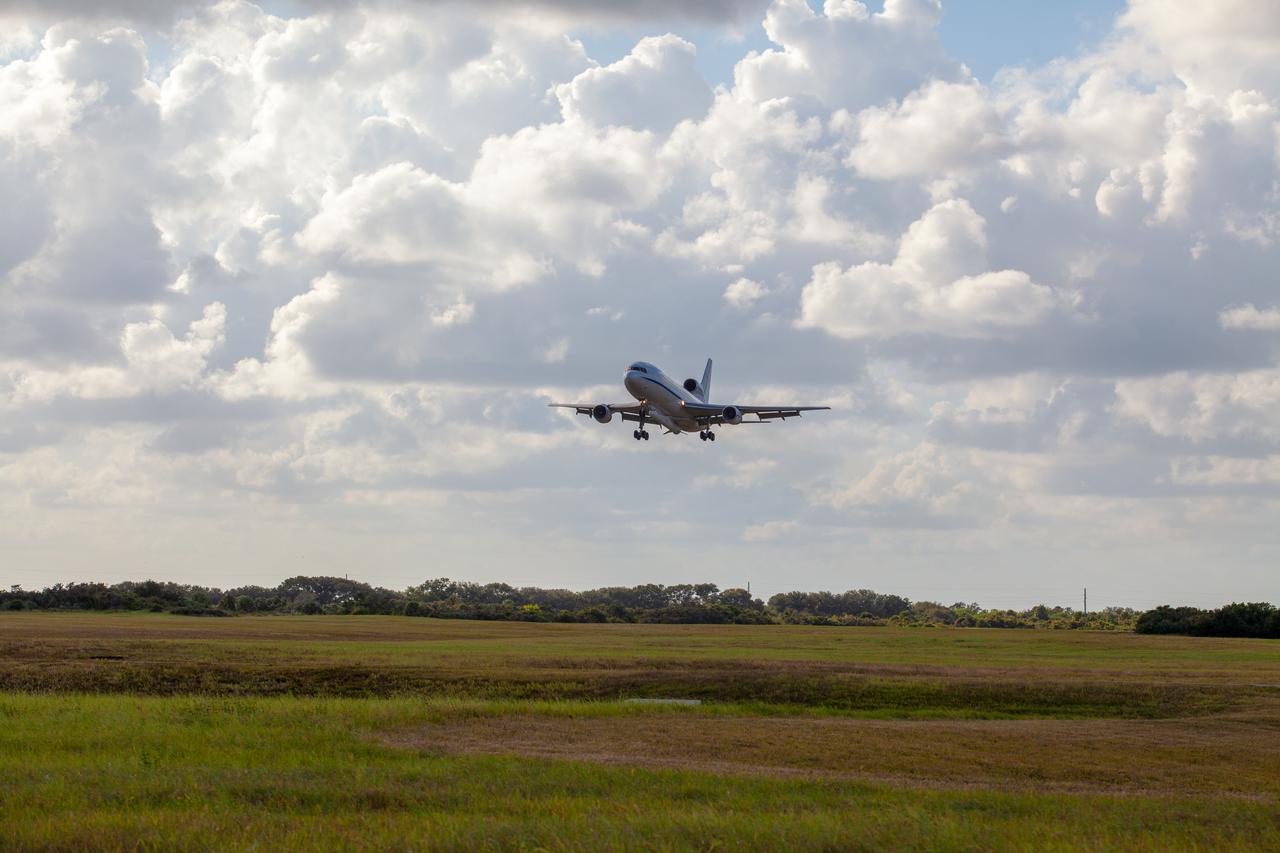
Northrop Grumman's L-1011 Stargazer aircraft descends toward the Skid Strip at Cape Canaveral Air Force Station in Florida on Oct. 1, 2019. The company's Pegasus XL rocket, containing NASA's Ionospheric Connection Explorer (ICON), is attached beneath the aircraft. ICON will study the frontier of space - the dynamic zone high in Earth's atmosphere where terrestrial weather from below meets space weather above.
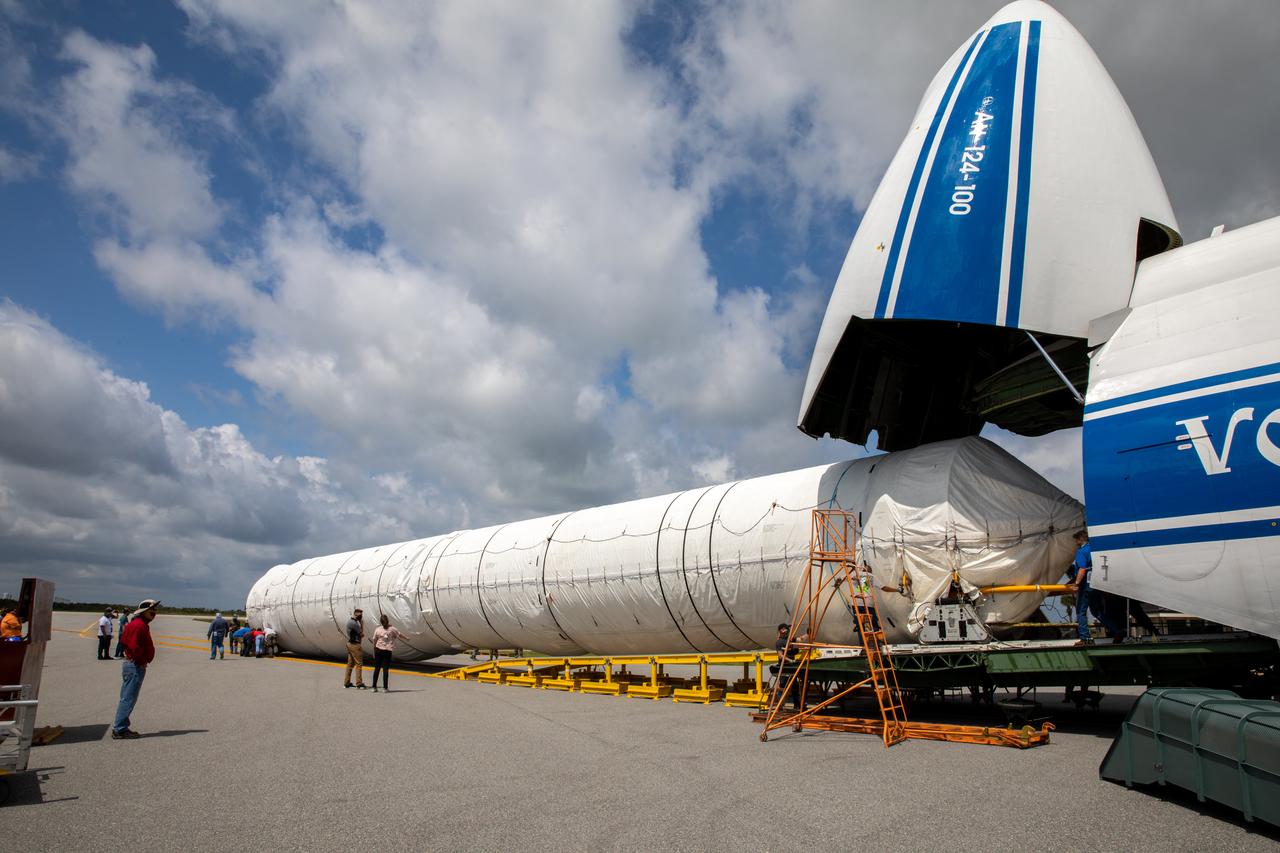
The United Launch Alliance booster for NASA’s Mars Perseverance rover is offloaded from the Antonov 124 cargo aircraft at the Skid Strip at Cape Canaveral Air Force Station (CCAFS) in Florida on May 19, 2020. The Mars Perseverance rover is scheduled to launch in mid-July atop a United Launch Alliance Atlas V 541 rocket from Pad 41 at CCAFS. The rover is part of NASA’s Mars Exploration Program, a long-term effort of robotic exploration of the Red Planet. The rover will search for habitable conditions in the ancient past and signs of past microbial life on Mars. The Launch Services Program at Kennedy is responsible for launch management.
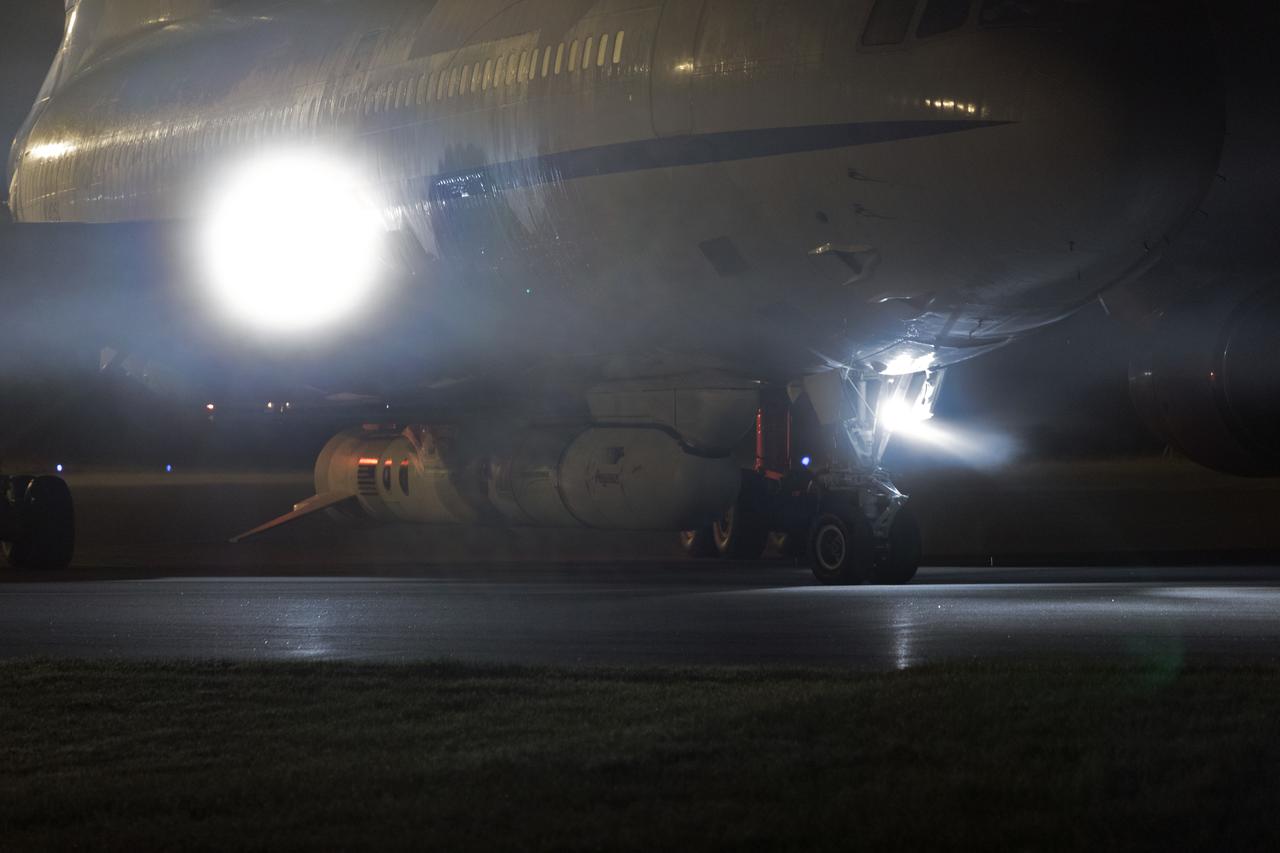
The Northrop Grumman L-1011 Stargazer aircraft, with the Pegasus XL rocket attached beneath, starts down the runway at the Skid Strip at Cape Canaveral Air Force Station in Florida on Nov. 7, 2018. NASA's Ionospheric Connection Explorer (ICON) is secured inside the rocket's payload fairing. The Pegasus XL rocket will be carried aloft by the Stargazer. ICON will study the frontier of space - the dynamic zone high in Earth's atmosphere where terrestrial weather from below meets space weather above. The explorer will help determine the physics of Earth's space environment and pave the way for mitigating its effects on our technology, communications systems and society.
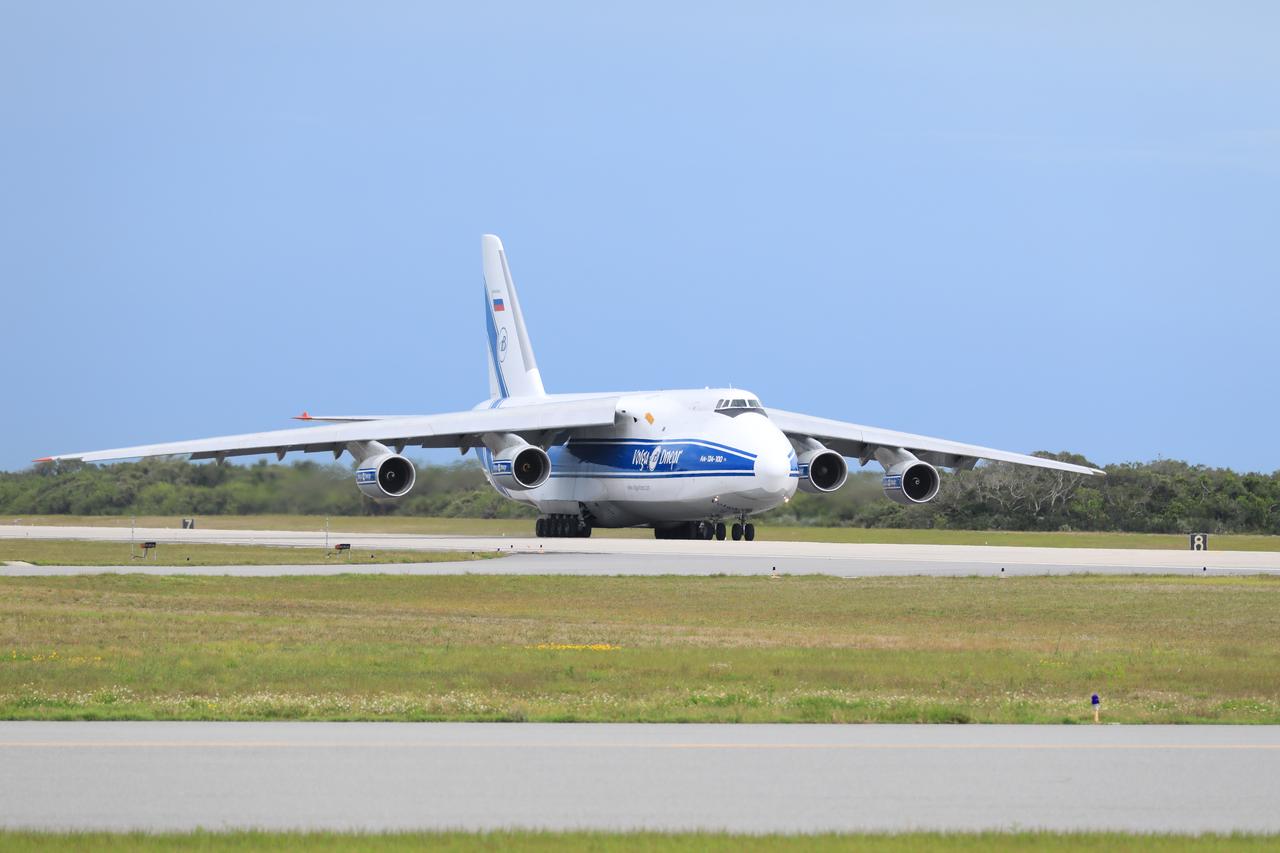
The Antonov 124 cargo aircraft, carrying the United Launch Alliance booster for NASA’s Mars Perseverance rover, touches down on the Skid Strip at Cape Canaveral Air Force Station (CCAFS) in Florida on May 18, 2020. The Mars Perseverance rover is scheduled to launch in mid-July atop a United Launch Alliance Atlas V 541 rocket from Pad 41 at CCAFS. The rover is part of NASA’s Mars Exploration Program, a long-term effort of robotic exploration of the Red Planet. The rover will search for habitable conditions in the ancient past and signs of past microbial life on Mars. The Launch Services Program at Kennedy is responsible for launch management.

The Northrop Grumman L-1011 Stargazer aircraft, with the Pegasus XL rocket attached beneath, starts down the runway at the Skid Strip at Cape Canaveral Air Force Station in Florida on Nov. 7, 2018. NASA's Ionospheric Connection Explorer (ICON) is secured inside the rocket's payload fairing. The Pegasus XL rocket will be carried aloft by the Stargazer. ICON will study the frontier of space - the dynamic zone high in Earth's atmosphere where terrestrial weather from below meets space weather above. The explorer will help determine the physics of Earth's space environment and pave the way for mitigating its effects on our technology, communications systems and society.
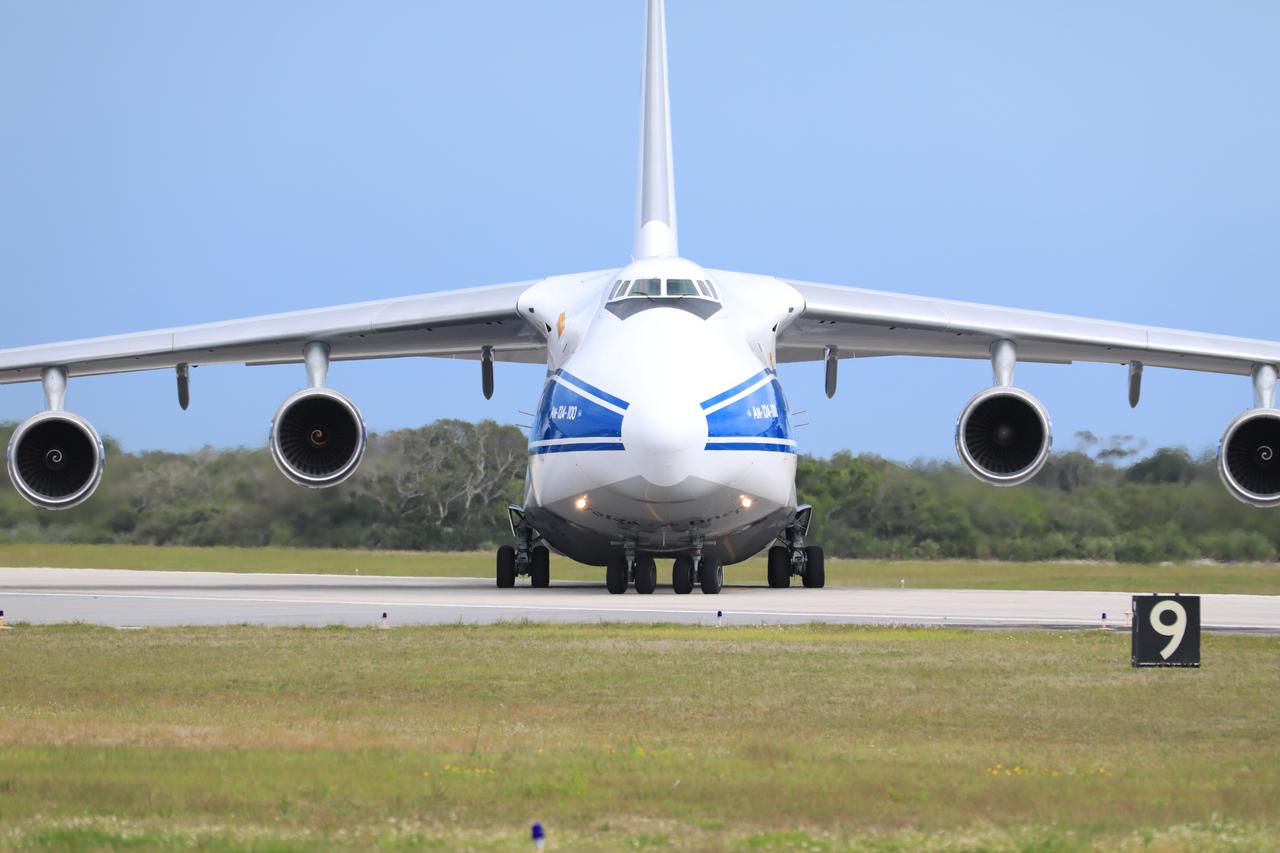
The Antonov 124 cargo aircraft, carrying the United Launch Alliance booster for NASA’s Mars Perseverance rover, taxis off the runway at the Skid Strip at Cape Canaveral Air Force Station (CCAFS) in Florida on May 18, 2020. The Mars Perseverance rover is scheduled to launch in mid-July atop a United Launch Alliance Atlas V 541 rocket from Pad 41 at CCAFS. The rover is part of NASA’s Mars Exploration Program, a long-term effort of robotic exploration of the Red Planet. The rover will search for habitable conditions in the ancient past and signs of past microbial life on Mars. The Launch Services Program at Kennedy is responsible for launch management.
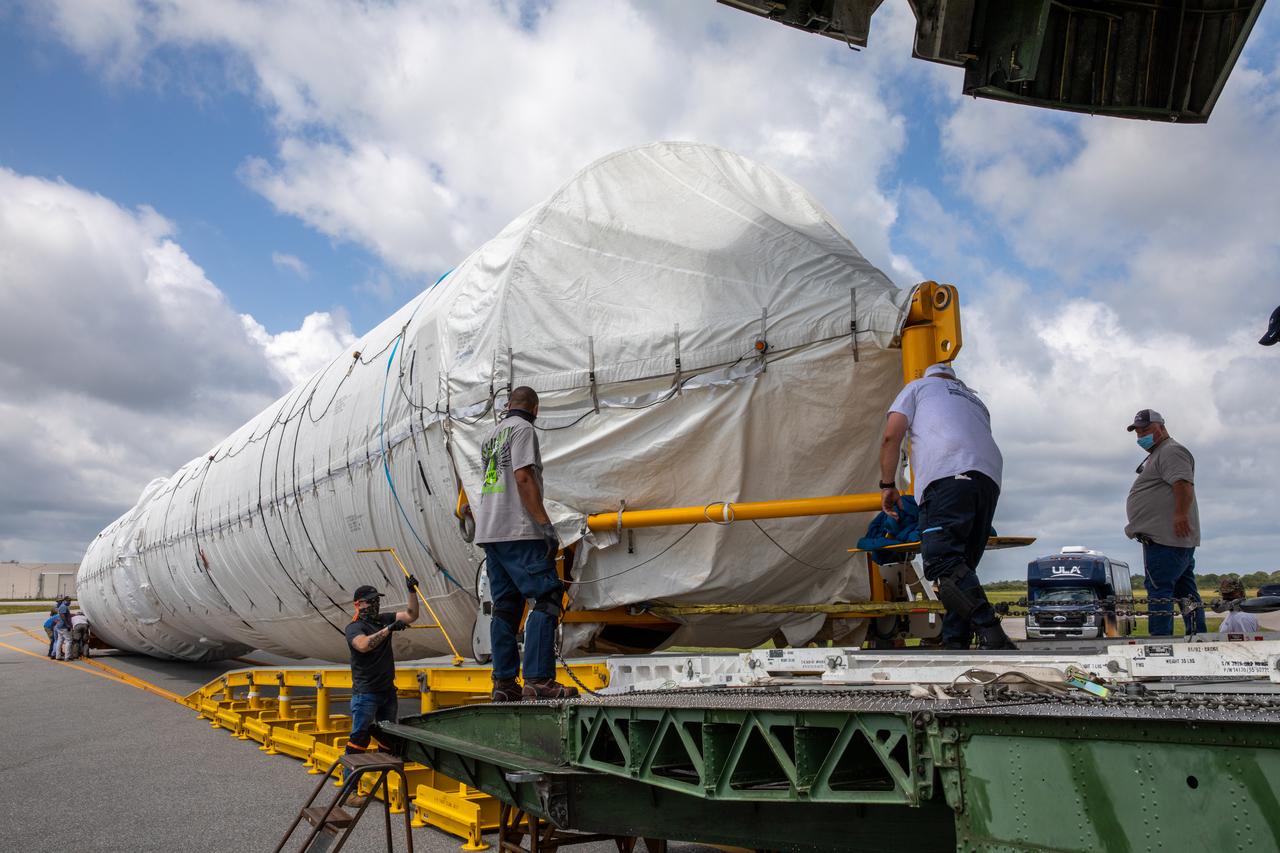
Workers secure the United Launch Alliance booster for NASA’s Mars Perseverance rover as it is offloaded from the Antonov 124 cargo aircraft at the Skid Strip at Cape Canaveral Air Force Station (CCAFS) in Florida on May 19, 2020. The Mars Perseverance rover is scheduled to launch in mid-July atop a United Launch Alliance Atlas V 541 rocket from Pad 41 at CCAFS. The rover is part of NASA’s Mars Exploration Program, a long-term effort of robotic exploration of the Red Planet. The rover will search for habitable conditions in the ancient past and signs of past microbial life on Mars. The Launch Services Program at Kennedy is responsible for launch management.
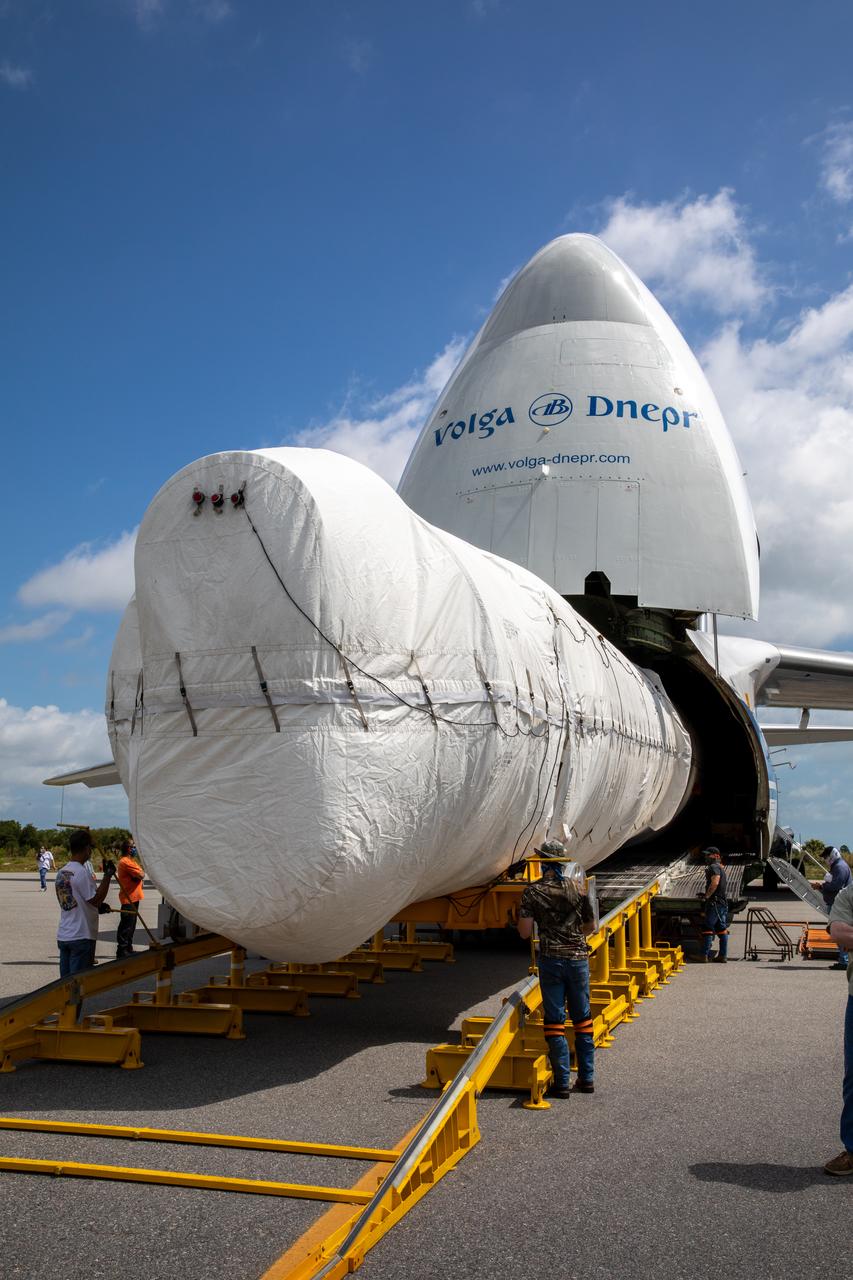
The United Launch Alliance booster for NASA’s Mars Perseverance rover is offloaded from the Antonov 124 cargo aircraft at the Skid Strip at Cape Canaveral Air Force Station (CCAFS) in Florida on May 19, 2020. The Mars Perseverance rover is scheduled to launch in mid-July atop a United Launch Alliance Atlas V 541 rocket from Pad 41 at CCAFS. The rover is part of NASA’s Mars Exploration Program, a long-term effort of robotic exploration of the Red Planet. The rover will search for habitable conditions in the ancient past and signs of past microbial life on Mars. The Launch Services Program at Kennedy is responsible for launch management.
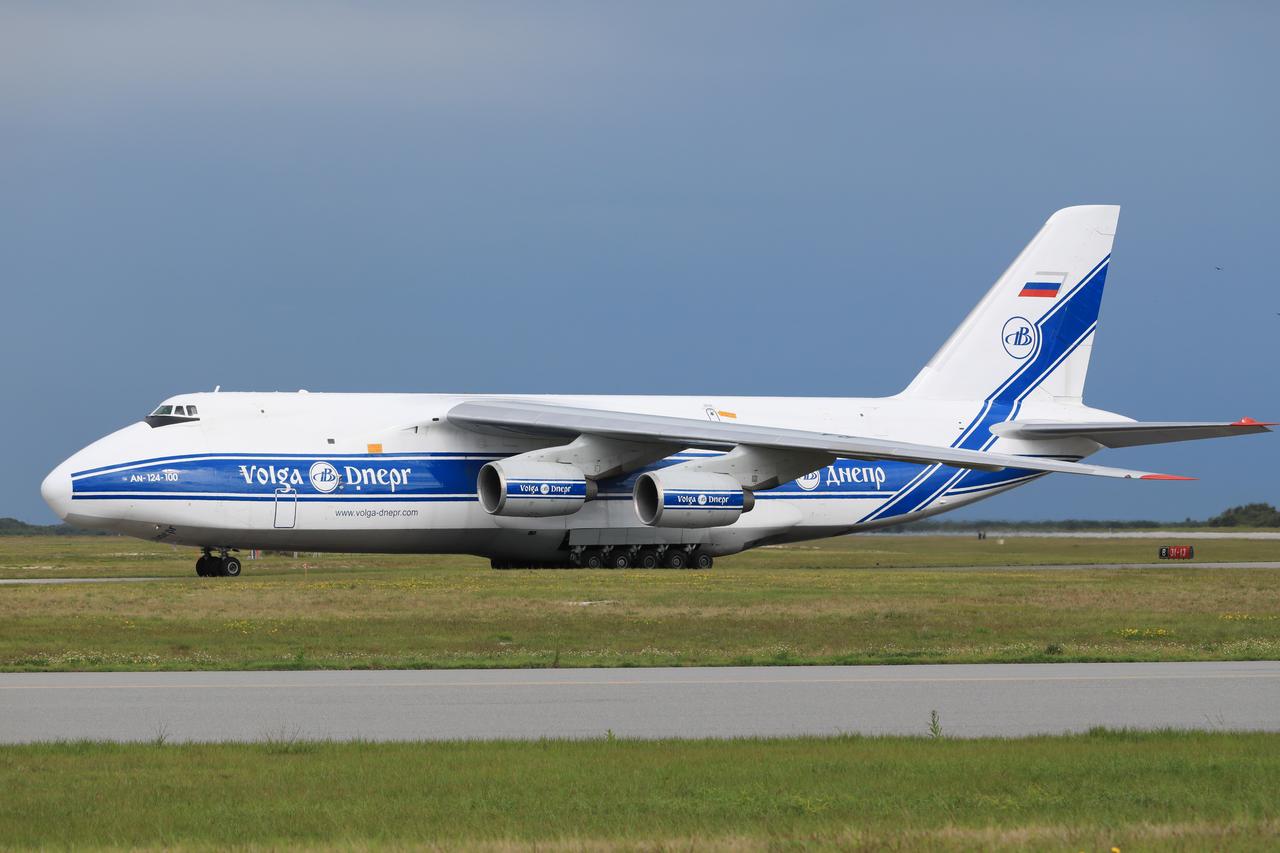
The Antonov 124 cargo aircraft, carrying the United Launch Alliance booster for NASA’s Mars Perseverance rover, taxis off the runway at the Skid Strip at Cape Canaveral Air Force Station (CCAFS) in Florida on May 18, 2020. The Mars Perseverance rover is scheduled to launch in mid-July atop a United Launch Alliance Atlas V 541 rocket from Pad 41 at CCAFS. The rover is part of NASA’s Mars Exploration Program, a long-term effort of robotic exploration of the Red Planet. The rover will search for habitable conditions in the ancient past and signs of past microbial life on Mars. The Launch Services Program at Kennedy is responsible for launch management.
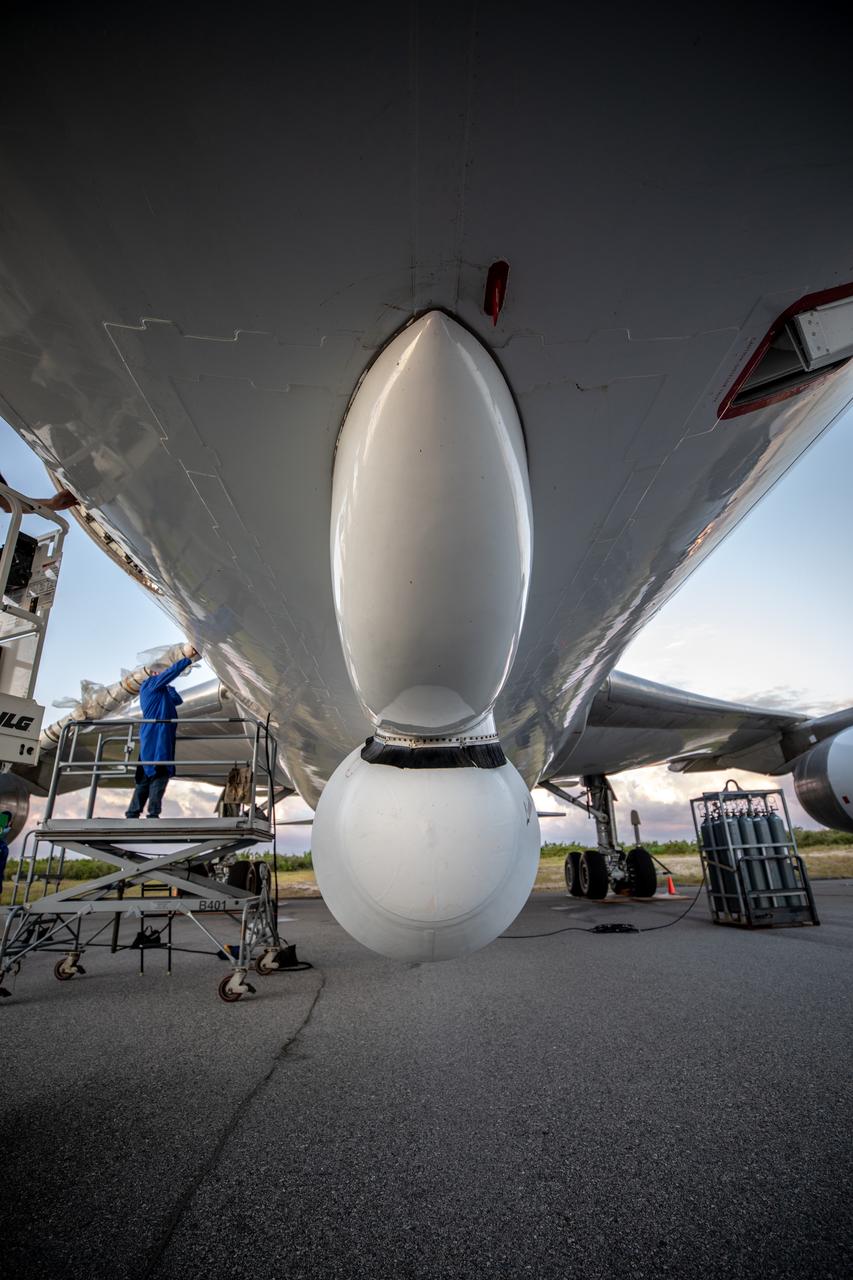
The Northrop Grumman Pegasus XL rocket, carrying NASA’s Ionospheric Connection Explorer (ICON), has arrived at the Skid Strip at Cape Canaveral Air Force Station in Florida on Oct. 1, 2019. The rocket is attached beneath the company’s L-1011 Stargazer aircraft. ICON will study the frontier of space - the dynamic zone high in Earth's atmosphere where terrestrial weather from below meets space weather above.
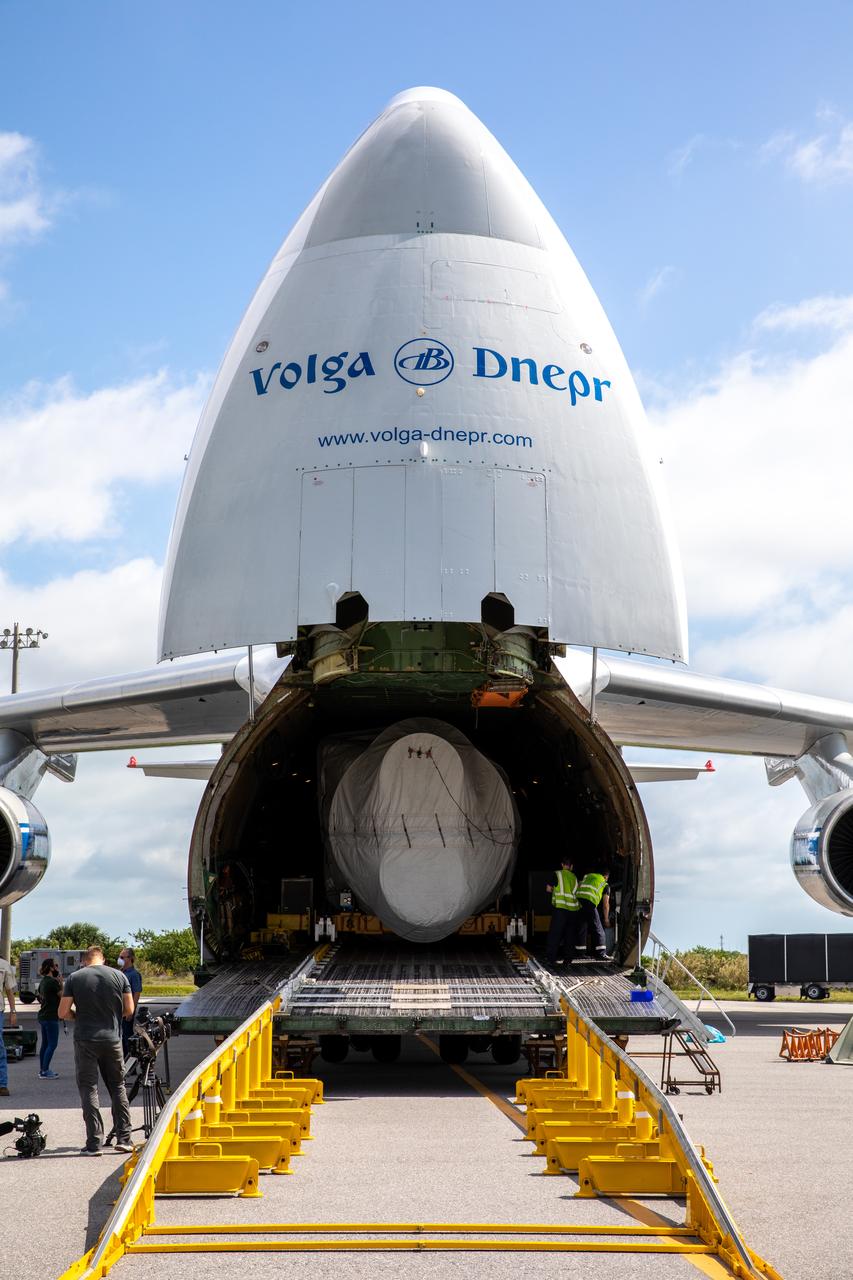
Preparations are underway to offload the United Launch Alliance booster for NASA’s Mars Perseverance rover from the Antonov 124 cargo aircraft at the Skid Strip at Cape Canaveral Air Force Station (CCAFS) in Florida on May 19, 2020. The Mars Perseverance rover is scheduled to launch in mid-July atop a United Launch Alliance Atlas V 541 rocket from Pad 41 at CCAFS. The rover is part of NASA’s Mars Exploration Program, a long-term effort of robotic exploration of the Red Planet. The rover will search for habitable conditions in the ancient past and signs of past microbial life on Mars. The Launch Services Program at Kennedy is responsible for launch management.

The Northrop Grumman Pegasus XL rocket, carrying NASA’s Ionospheric Connection Explorer (ICON), has arrived at the Skid Strip at Cape Canaveral Air Force Station in Florida on Oct. 1, 2019. The rocket is attached beneath the company’s L-1011 Stargazer aircraft. ICON will study the frontier of space - the dynamic zone high in Earth's atmosphere where terrestrial weather from below meets space weather above.
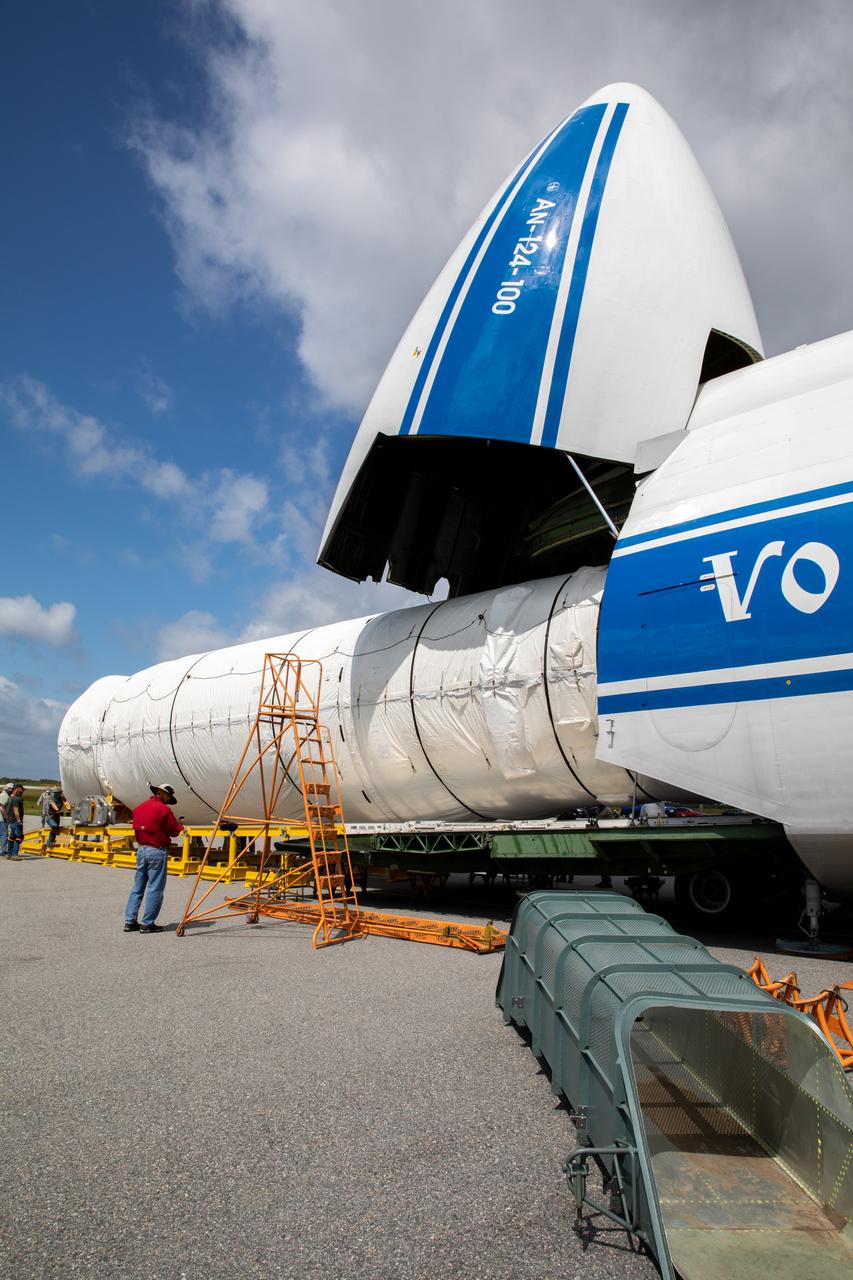
The United Launch Alliance booster for NASA’s Mars Perseverance rover is offloaded from the Antonov 124 cargo aircraft at the Skid Strip at Cape Canaveral Air Force Station (CCAFS) in Florida on May 19, 2020. The Mars Perseverance rover is scheduled to launch in mid-July atop a United Launch Alliance Atlas V 541 rocket from Pad 41 at CCAFS. The rover is part of NASA’s Mars Exploration Program, a long-term effort of robotic exploration of the Red Planet. The rover will search for habitable conditions in the ancient past and signs of past microbial life on Mars. The Launch Services Program at Kennedy is responsible for launch management.
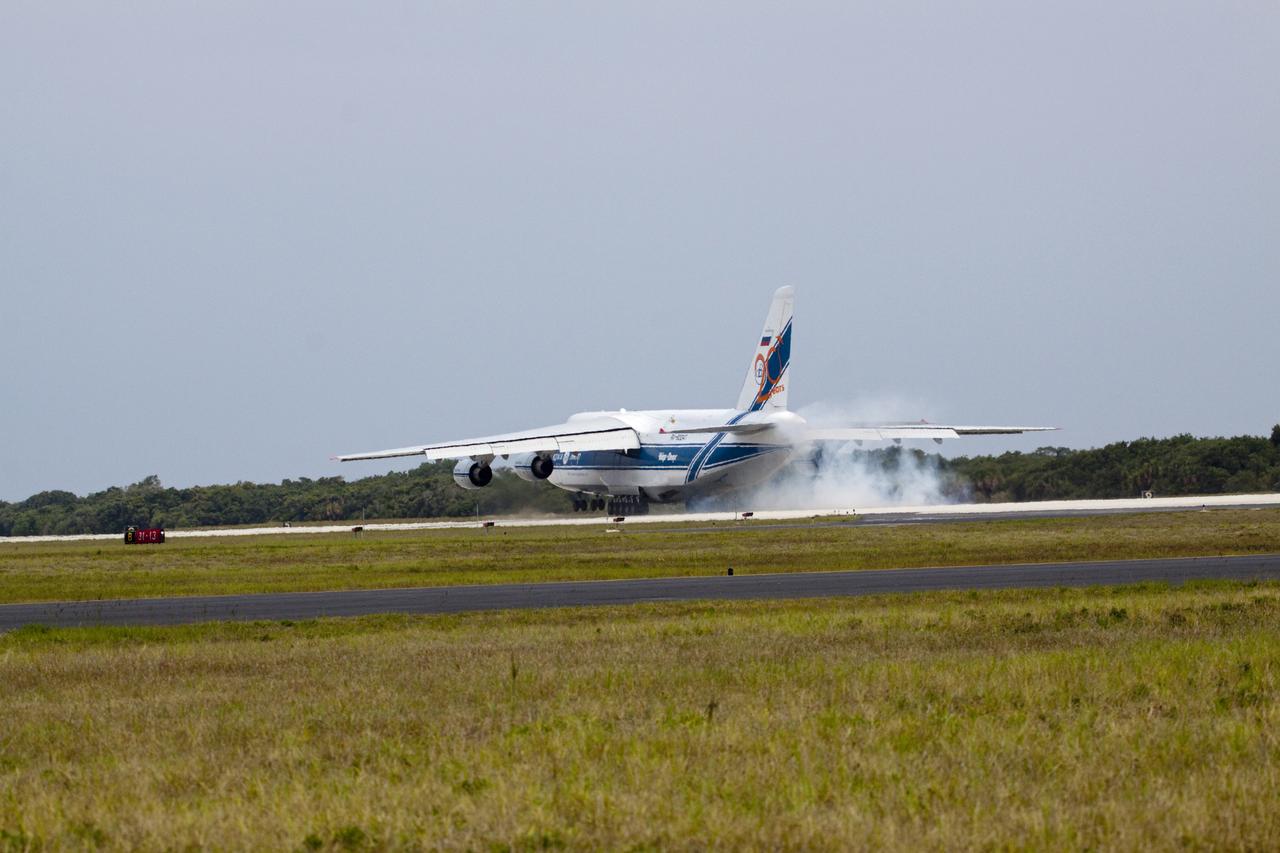
JUNO - Atlas V Arrival at Skid Strip
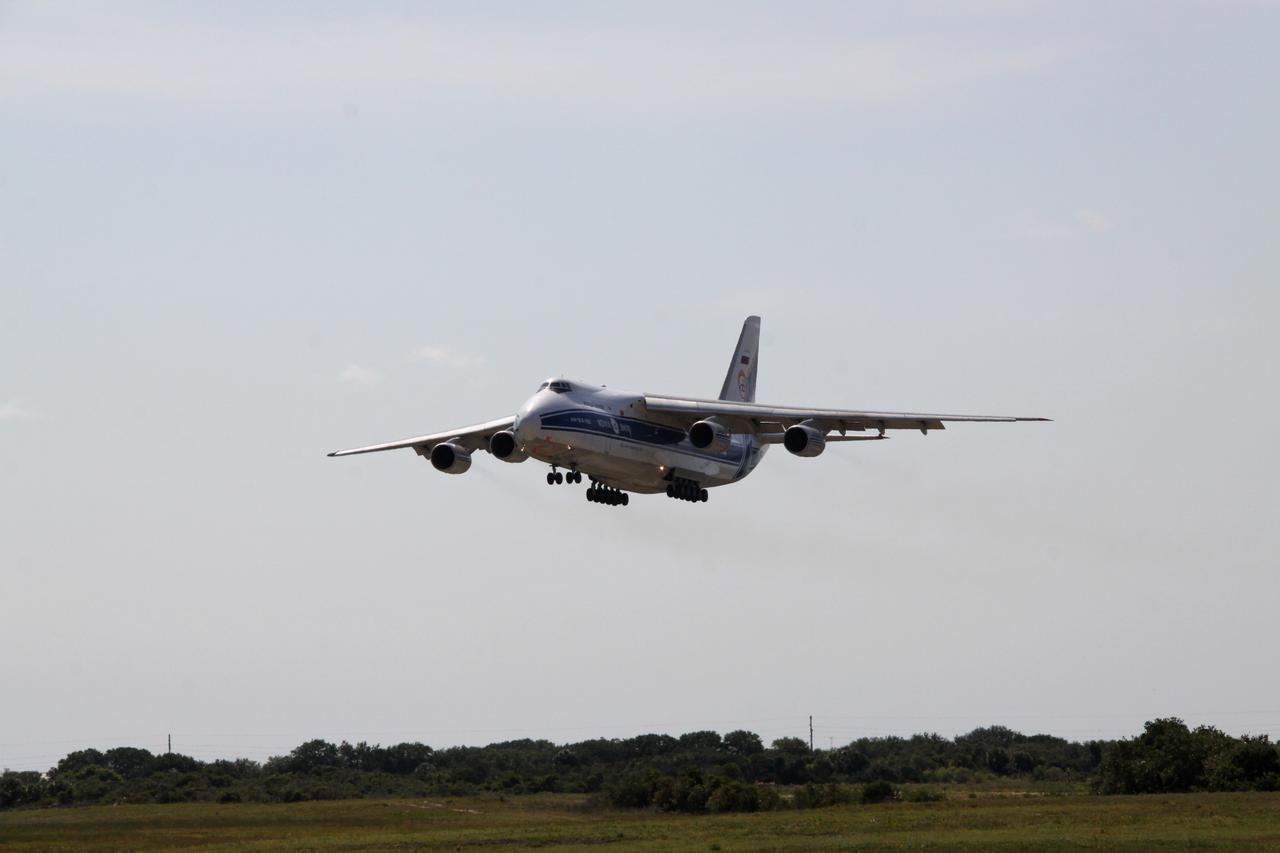
JUNO - CENTAUR STAGE ARRIVAL
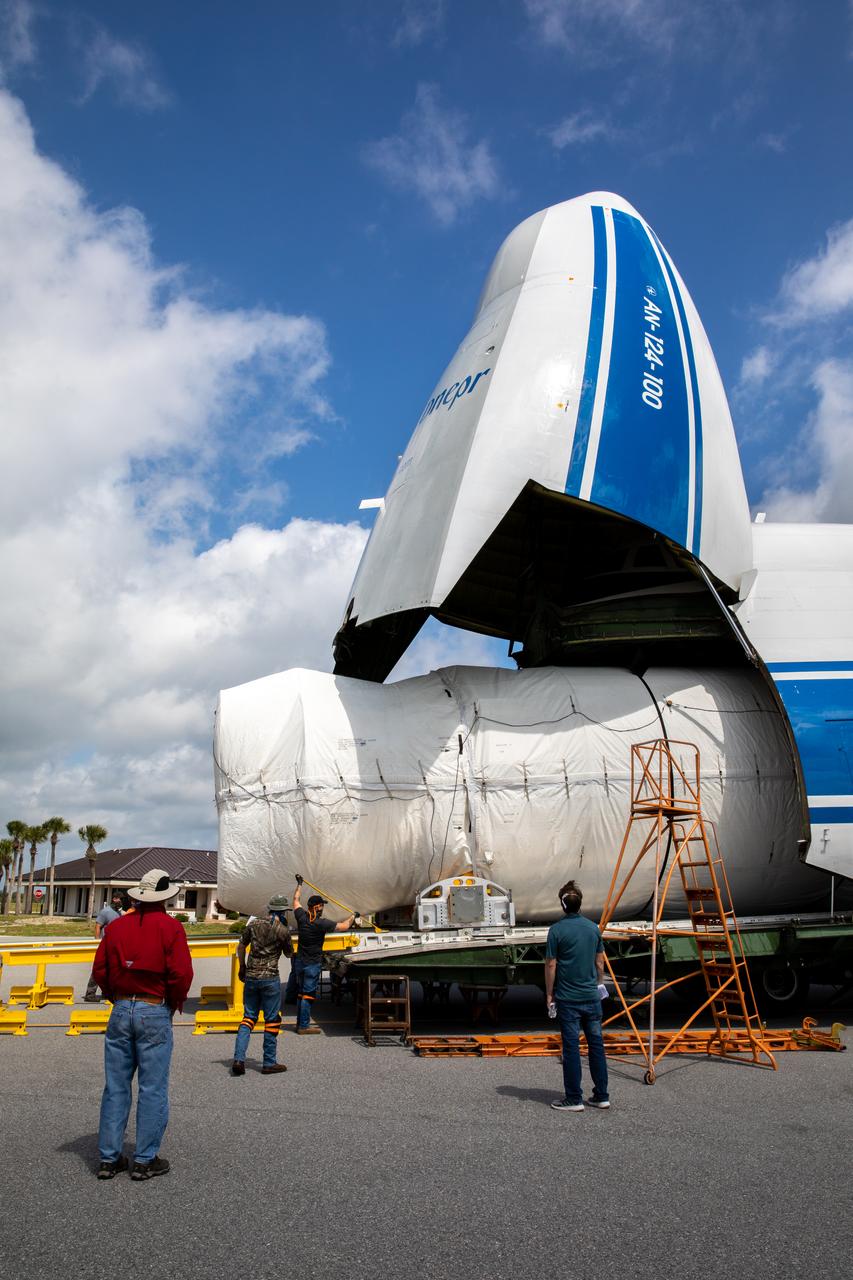
Workers help offload the United Launch Alliance booster for NASA’s Mars Perseverance rover from the Antonov 124 cargo aircraft at the Skid Strip at Cape Canaveral Air Force Station (CCAFS) in Florida on May 19, 2020. The Mars Perseverance rover is scheduled to launch in mid-July atop a United Launch Alliance Atlas V 541 rocket from Pad 41 at CCAFS. The rover is part of NASA’s Mars Exploration Program, a long-term effort of robotic exploration of the Red Planet. The rover will search for habitable conditions in the ancient past and signs of past microbial life on Mars. The Launch Services Program at Kennedy is responsible for launch management.
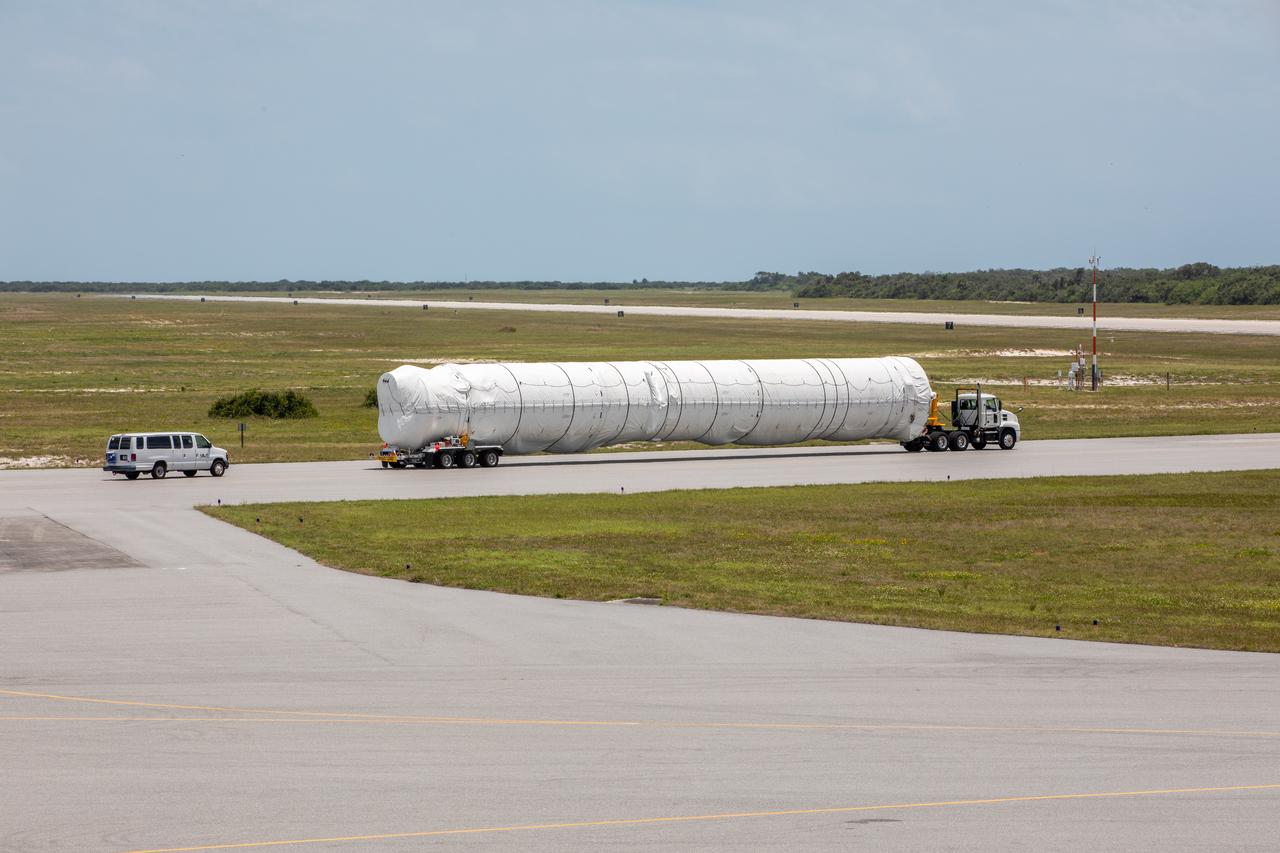
A flatbed truck carrying the United Launch Alliance booster for NASA’s Mars Perseverance rover departs the Skid Strip at Cape Canaveral Air Force Station (CCAFS) in Florida on May 19, 2020. The booster arrived aboard the Antonov 124 cargo aircraft at the Skid Strip on May 18, 2020. The Mars Perseverance rover is scheduled to launch in mid-July atop a United Launch Alliance Atlas V 541 rocket from Pad 41 at CCAFS. The rover is part of NASA’s Mars Exploration Program, a long-term effort of robotic exploration of the Red Planet. The rover will search for habitable conditions in the ancient past and signs of past microbial life on Mars. The Launch Services Program at Kennedy is responsible for launch management.
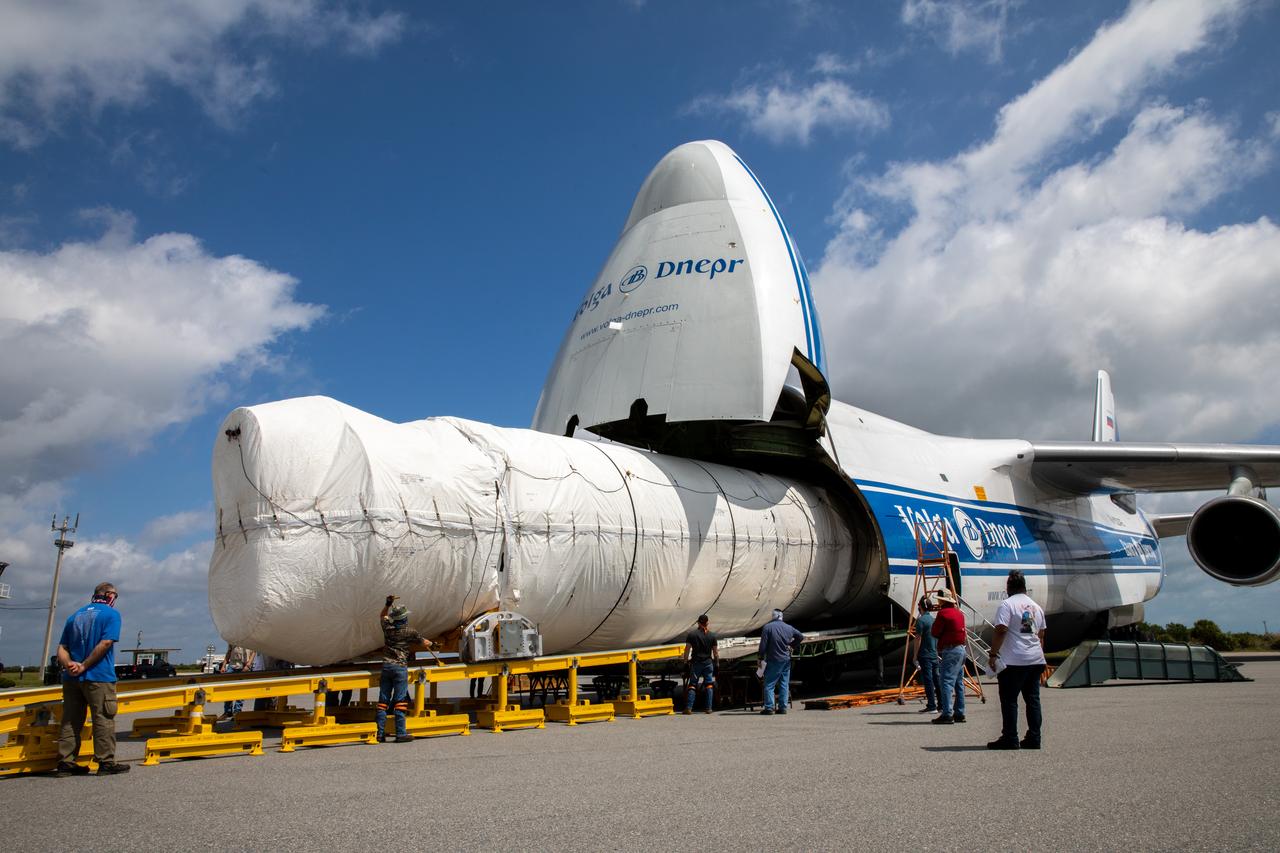
The United Launch Alliance booster for NASA’s Mars Perseverance rover is offloaded from the Antonov 124 cargo aircraft at the Skid Strip at Cape Canaveral Air Force Station (CCAFS) in Florida on May 19, 2020. The Mars Perseverance rover is scheduled to launch in mid-July atop a United Launch Alliance Atlas V 541 rocket from Pad 41 at CCAFS. The rover is part of NASA’s Mars Exploration Program, a long-term effort of robotic exploration of the Red Planet. The rover will search for habitable conditions in the ancient past and signs of past microbial life on Mars. The Launch Services Program at Kennedy is responsible for launch management.