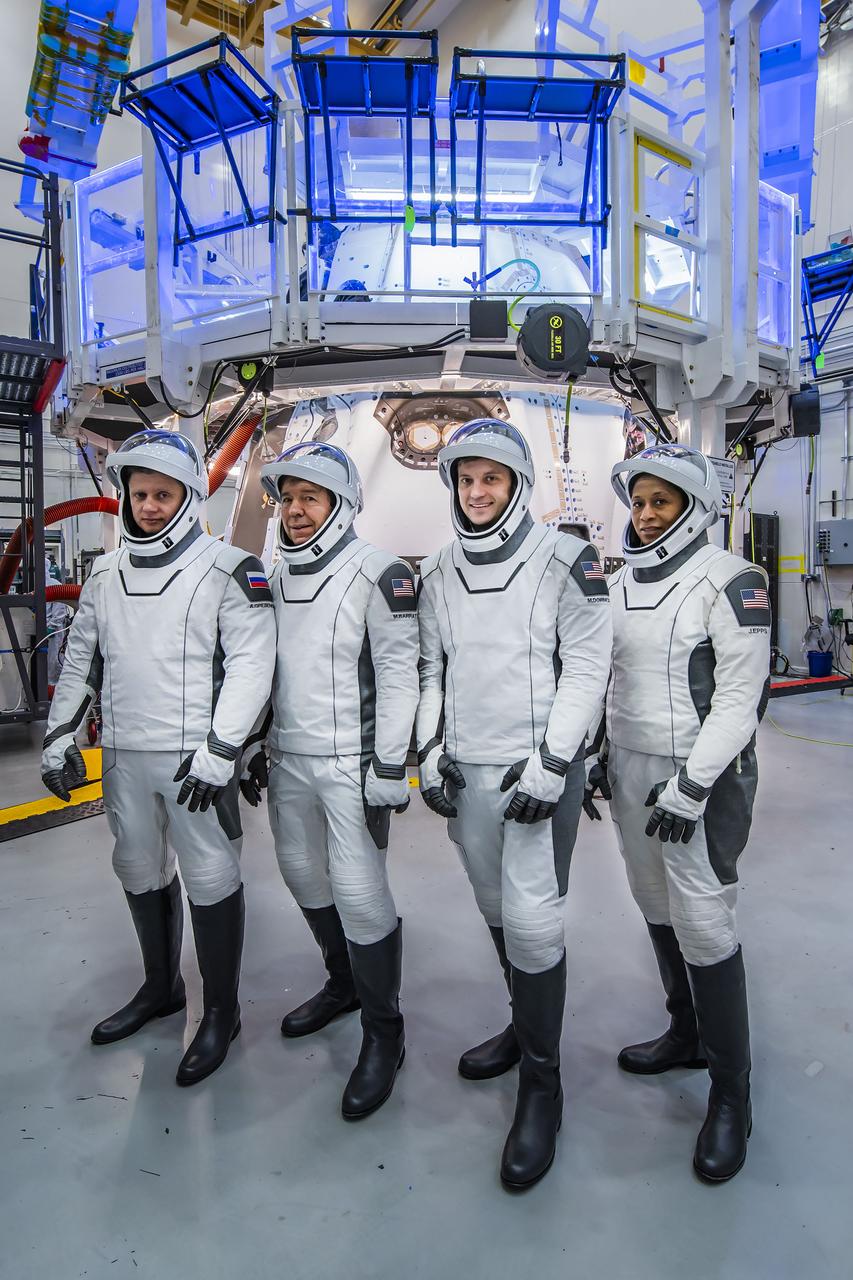
Members of NASA’s SpaceX Crew-8 from right to left, NASA astronauts Jeanette Epps, mission specialist; Matthew Dominick, commander; Michael Barratt, pilot; and Roscosmos cosmonaut Alexander Grebenkin, mission specialist; participate in the Crew Equipment Interface Test at Cape Canaveral Space Force Station in Florida on Friday, Jan. 12, 2024. As part of the agency’s Commercial Crew Program, Crew-8 marks the ninth human spaceflight mission supported by a SpaceX Dragon spacecraft and the eighth crew rotation mission to International Space Station. Crew-8 will launch on a SpaceX Falcon 9 rocket from Launch Complex 39A at NASA’s Kennedy Space Center in Florida no earlier than mid-February 2024.
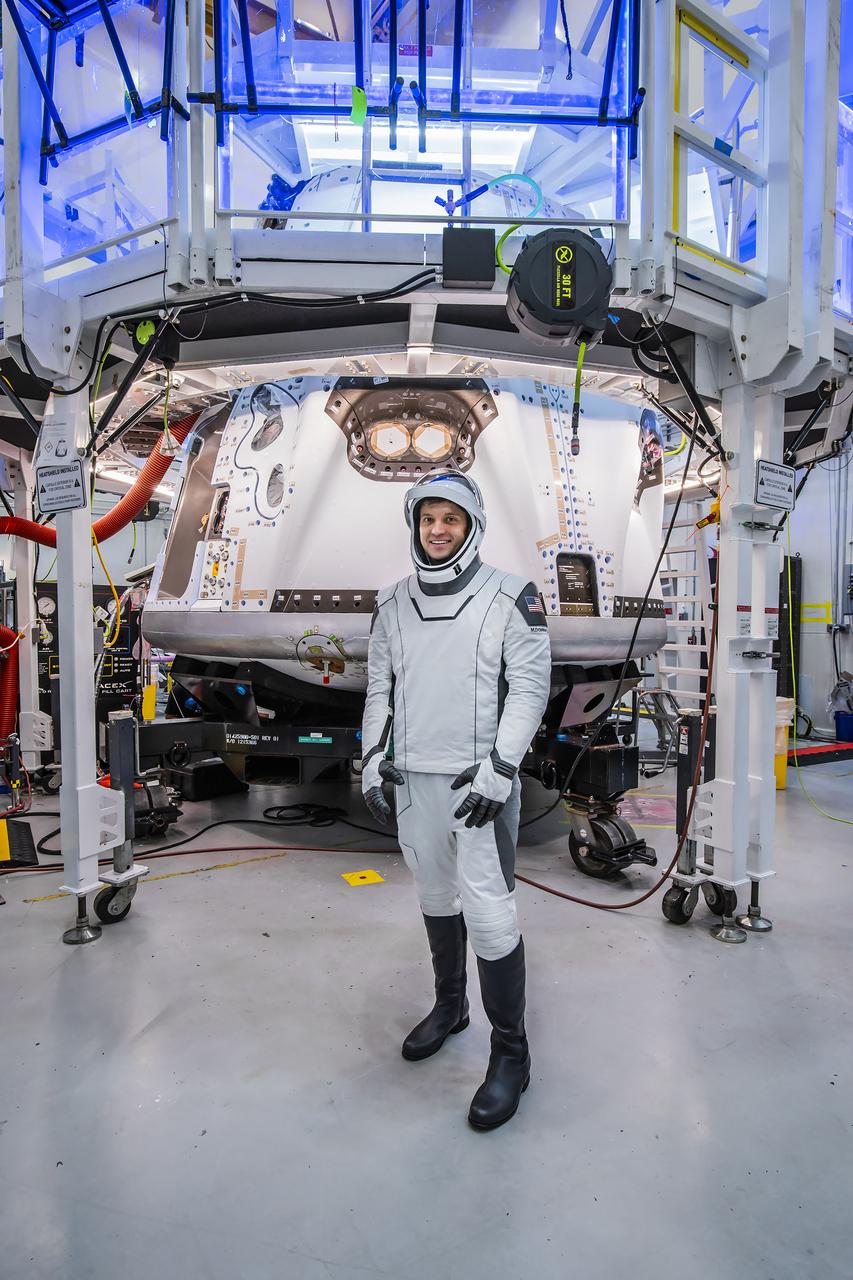
NASA astronaut Matthew Dominick, commander of NASA’s SpaceX Crew-8 mission, is suited up to participate in a Crew Equipment Interface Test (CEIT) at Cape Canaveral Space Force Station in Florida on Friday, Jan. 12, 2024. During the CEIT, the astronauts practice launch and docking in a high-fidelity simulator and getting into position inside SpaceX’s Dragon capsule. As part of the agency’s Commercial Crew Program, Crew-8 marks the ninth human spaceflight mission supported by a SpaceX Dragon spacecraft and the eighth crew rotation mission to International Space Station. Crew-8 will launch on a SpaceX Falcon 9 rocket from Launch Complex 39A at NASA’s Kennedy Space Center in Florida no earlier than mid-February 2024.
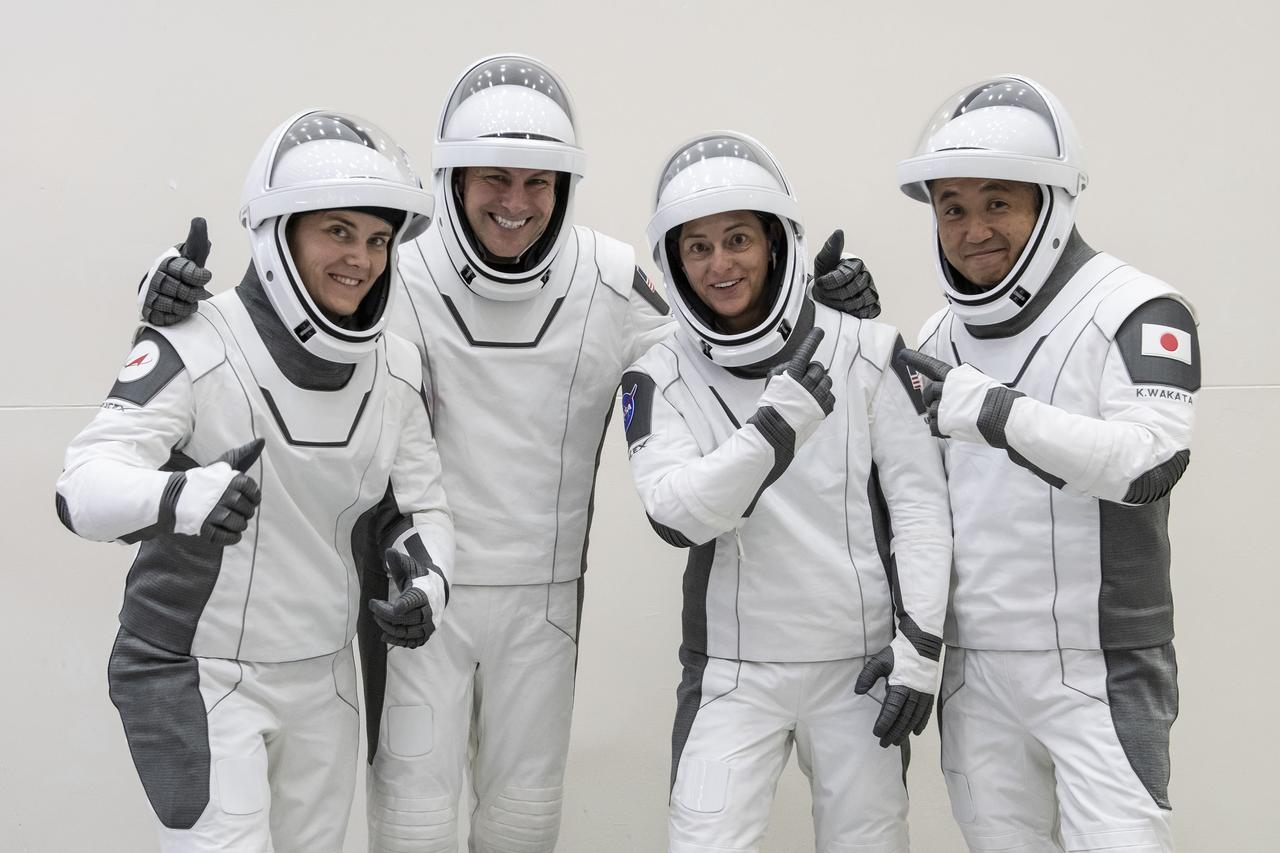
SpaceX Crew-5 astronauts give a thumbs up during a crew equipment interface test (CEIT) at SpaceX headquarters in Hawthorne, California, on Aug. 13, 2022. From left are Anna Kikina, mission specialist; Josh Cassada, pilot; Nicole Mann, spacecraft commander; and Koichi Wakata, mission specialist with JAXA (Japan Aerospace Exploration Agency). During the CEIT, the astronauts practiced launch and docking in a high-fidelity simulator of SpaceX’s Dragon capsule. Each astronaut suited up and practiced getting into position inside the capsule. NASA’s SpaceX Crew-5 will be the fifth crew rotation mission of the company’s human space transportation system and its sixth flight with astronauts to the International Space Station for the agency’s Commercial Crew Program. Crew-5 will launch on the Falcon 9 rocket from Launch Complex 39A at NASA’s Kennedy Space Center in Florida no earlier than Sept. 29, 2022.
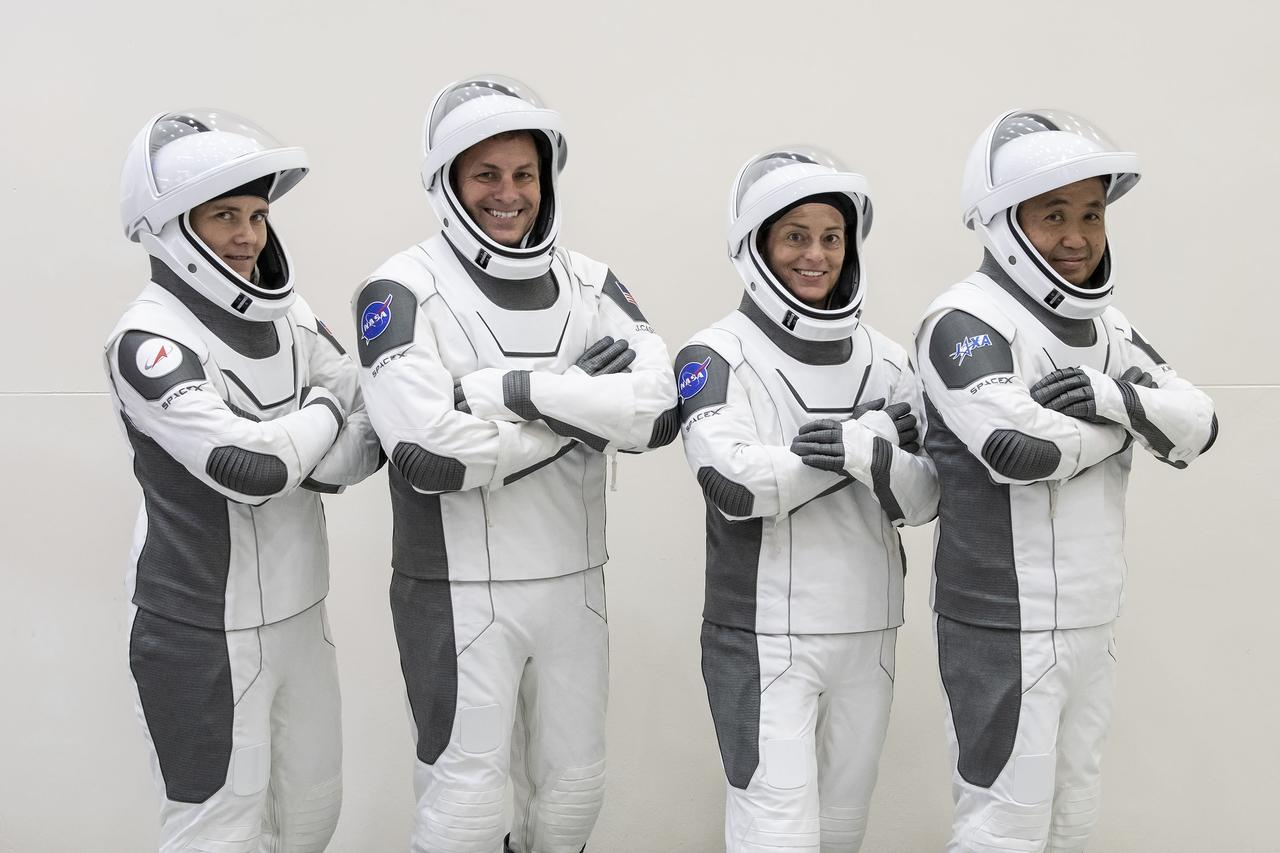
SpaceX Crew-5 astronauts take a break during a crew equipment interface test (CEIT) at SpaceX headquarters in Hawthorne, California, on Aug. 13, 2022. From left are Anna Kikina, mission specialist; Josh Cassada, pilot; Nicole Mann, spacecraft commander; and Koichi Wakata, mission specialist with JAXA (Japan Aerospace Exploration Agency). During the CEIT, the astronauts practiced launch and docking in a high-fidelity simulator of SpaceX’s Dragon capsule. Each astronaut suited up and practiced getting into position inside the capsule. NASA’s SpaceX Crew-5 will be the fifth crew rotation mission of the company’s human space transportation system and its sixth flight with astronauts to the International Space Station for the agency’s Commercial Crew Program. Crew-5 will launch on the Falcon 9 rocket from Launch Complex 39A at NASA’s Kennedy Space Center in Florida no earlier than Sept. 29, 2022.
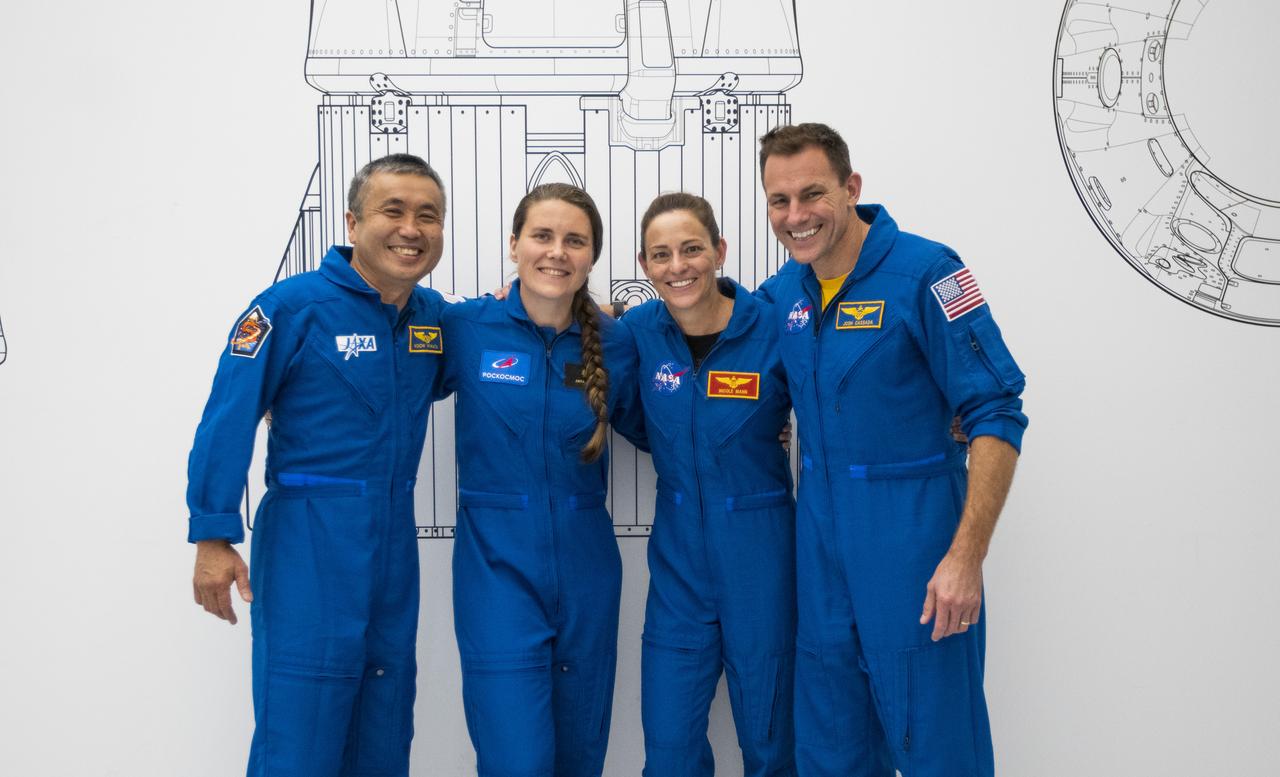
From left, Koichi Wakata, of JAXA (Japan Aerospace Exploration Agency), Roscosmos cosmonaut Anna Kikina, and NASA astronauts Nicole Mann and Josh Cassada will fly aboard NASA’s SpaceX Crew-5 mission. The crew will lift off aboard SpaceX’s Crew Dragon spacecraft – atop the company’s Falcon 9 rocket – from NASA Kennedy Space Center’s Launch Complex 39A in Florida. This marks the fifth crew rotation mission of the company’s human space transportation system, and its sixth flight with astronauts, to the space station for the agency’s Commercial Crew Program.
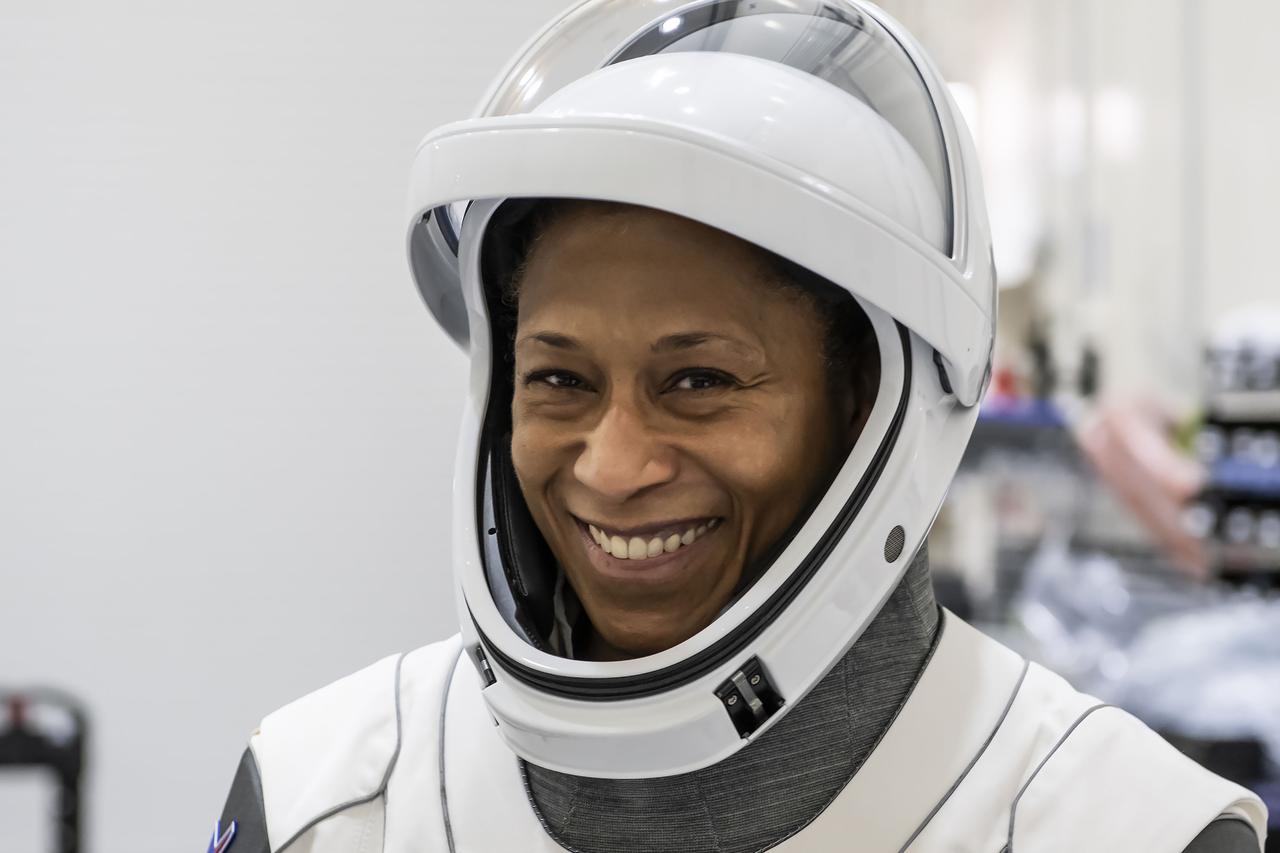
NASA astronaut Jeanette Epps, mission specialist of NASA’s SpaceX Crew-8 mission, is suited up to participate in a Crew Equipment Interface Test (CEIT) at Cape Canaveral Space Force Station in Florida on Friday, Jan. 12, 2024. During the CEIT, the astronauts practice launch and docking in a high-fidelity simulator and getting into position inside SpaceX’s Dragon capsule. As part of the agency’s Commercial Crew Program, Crew-8 marks the ninth human spaceflight mission supported by a SpaceX Dragon spacecraft and the eighth crew rotation mission to International Space Station. Crew-8 will launch on a SpaceX Falcon 9 rocket from Launch Complex 39A at NASA’s Kennedy Space Center in Florida no earlier than mid-February 2024.

SpaceX Crew-5 astronauts are suited up and ready to participate in a crew equipment interface test (CEIT) at SpaceX headquarters in Hawthorne, California, on Aug. 13, 2022. From left are Anna Kikina, mission specialist; Josh Cassada, pilot; Nicole Mann, spacecraft commander; and Koichi Wakata, mission specialist with JAXA (Japan Aerospace Exploration Agency). During the CEIT, the astronauts will practice launch and docking in a high-fidelity simulator of SpaceX’s Dragon capsule. They also will practice getting into position inside the capsule. NASA’s SpaceX Crew-5 will be the fifth crew rotation mission of the company’s human space transportation system and its sixth flight with astronauts to the International Space Station for the agency’s Commercial Crew Program. Crew-5 will launch on the Falcon 9 rocket from Launch Complex 39A at NASA’s Kennedy Space Center in Florida no earlier than Sept. 29, 2022.
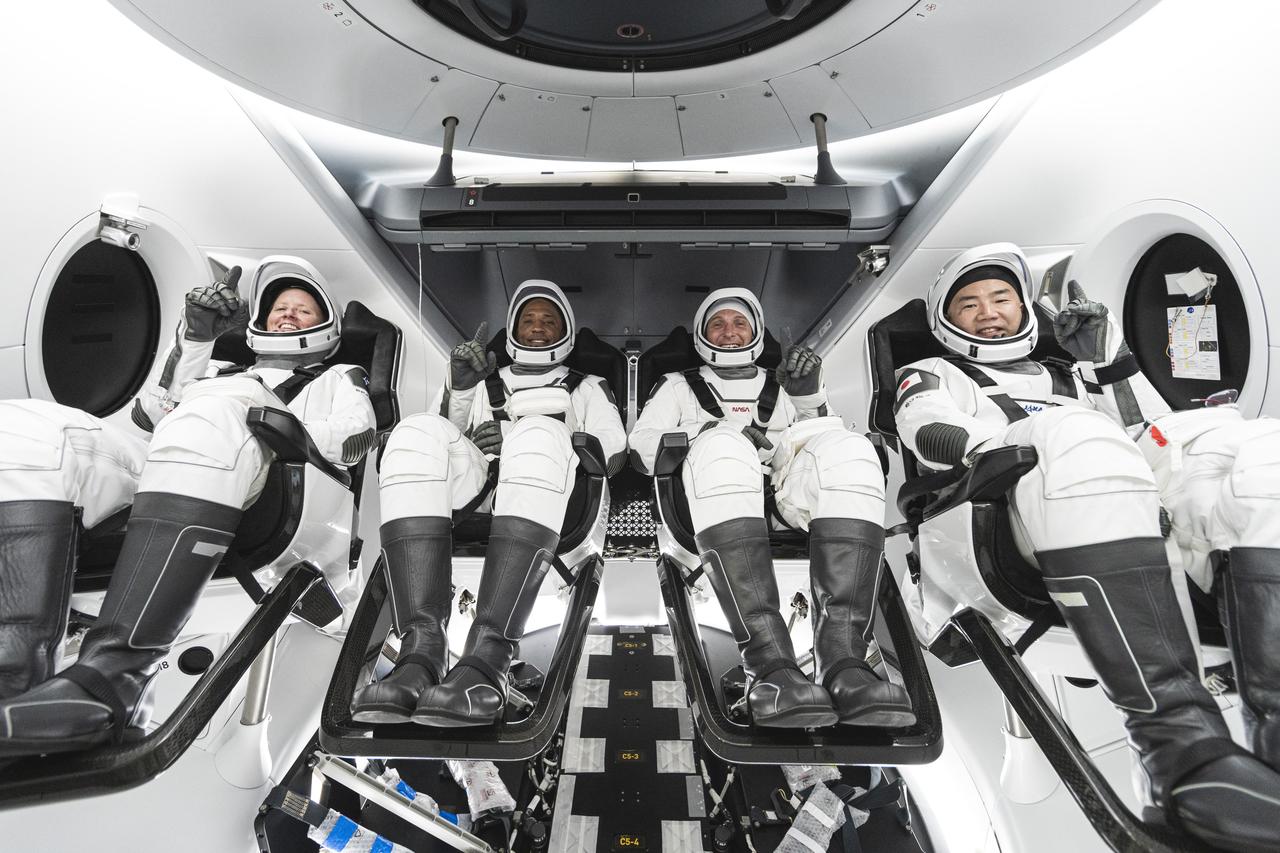
From left, Mission Specialist Shannon Walker, Pilot Victor Glover, Crew Dragon Commander Michael Hopkins – all NASA astronauts – and Japan Aerospace Exploration Agency (JAXA) astronaut and Mission Specialist Soichi Noguchi are seated in SpaceX’s Crew Dragon spacecraft during crew equipment interface training. Walker, Glover, Hopkins, and Noguchi will launch to the International Space Station on the agency’s SpaceX Crew-1 mission. This will be the first operational mission to the orbiting laboratory under NASA’s Commercial Crew Program following the agency’s certification of SpaceX’s crew transportation system. The crew will launch from Kennedy Space Center’s Launch Complex 39A in Florida.
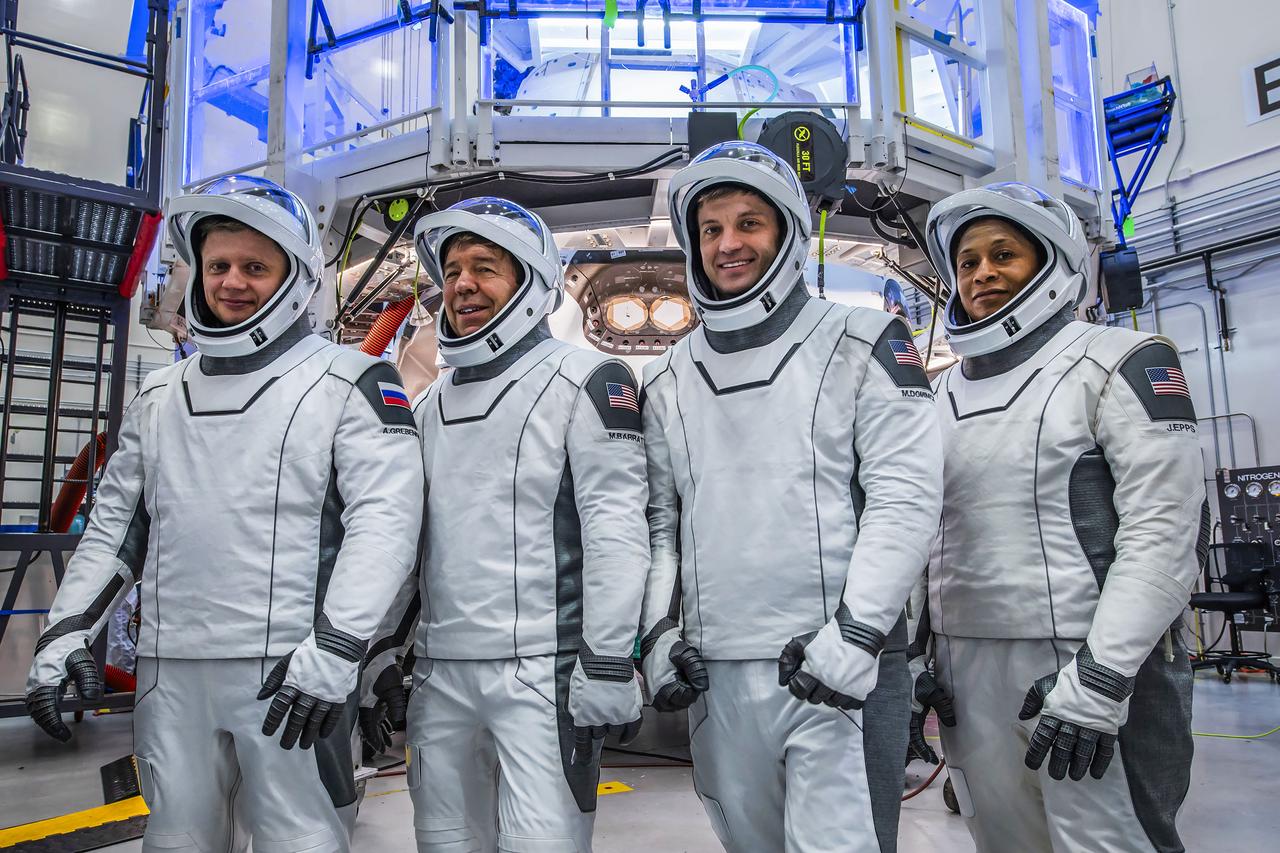
Members of NASA’s SpaceX Crew-8 from right to left, NASA astronauts Jeanette Epps, mission specialist; Matthew Dominick, commander; Michael Barratt, pilot; and Roscosmos cosmonaut Alexander Grebenkin, mission specialist; participate in the Crew Equipment Interface Test at Cape Canaveral Space Force Station in Florida on Friday, Jan. 12, 2024. As part of the agency’s Commercial Crew Program, Crew-8 marks the ninth human spaceflight mission supported by a SpaceX Dragon spacecraft and the eighth crew rotation mission to International Space Station. Crew-8 will launch on a SpaceX Falcon 9 rocket from Launch Complex 39A at NASA’s Kennedy Space Center in Florida no earlier than mid-February 2024.
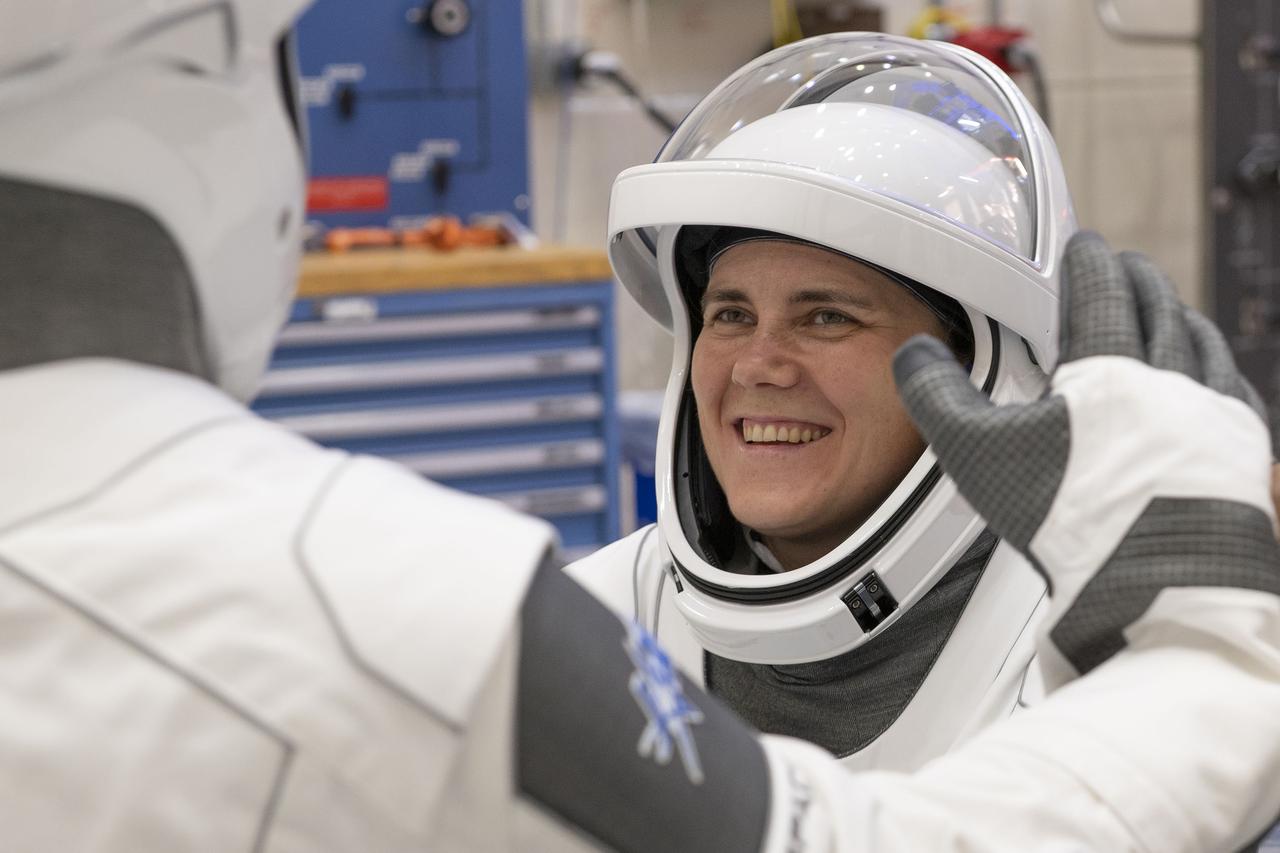
SpaceX Crew-5 astronaut Anna Kikina, mission specialist, gets suited up to participate in a crew equipment interface test (CEIT) at SpaceX headquarters in Hawthorne, California, on Aug. 13, 2022. During the CEIT, the astronauts will practice launch and docking in a high-fidelity simulator of SpaceX’s Dragon capsule. They also will practice getting into position inside the capsule. NASA’s SpaceX Crew-5 will be the fifth crew rotation mission of the company’s human space transportation system and its sixth flight with astronauts to the International Space Station for the agency’s Commercial Crew Program. Crew-5 will launch on the Falcon 9 rocket from Launch Complex 39A at NASA’s Kennedy Space Center in Florida no earlier than Sept. 29, 2022.
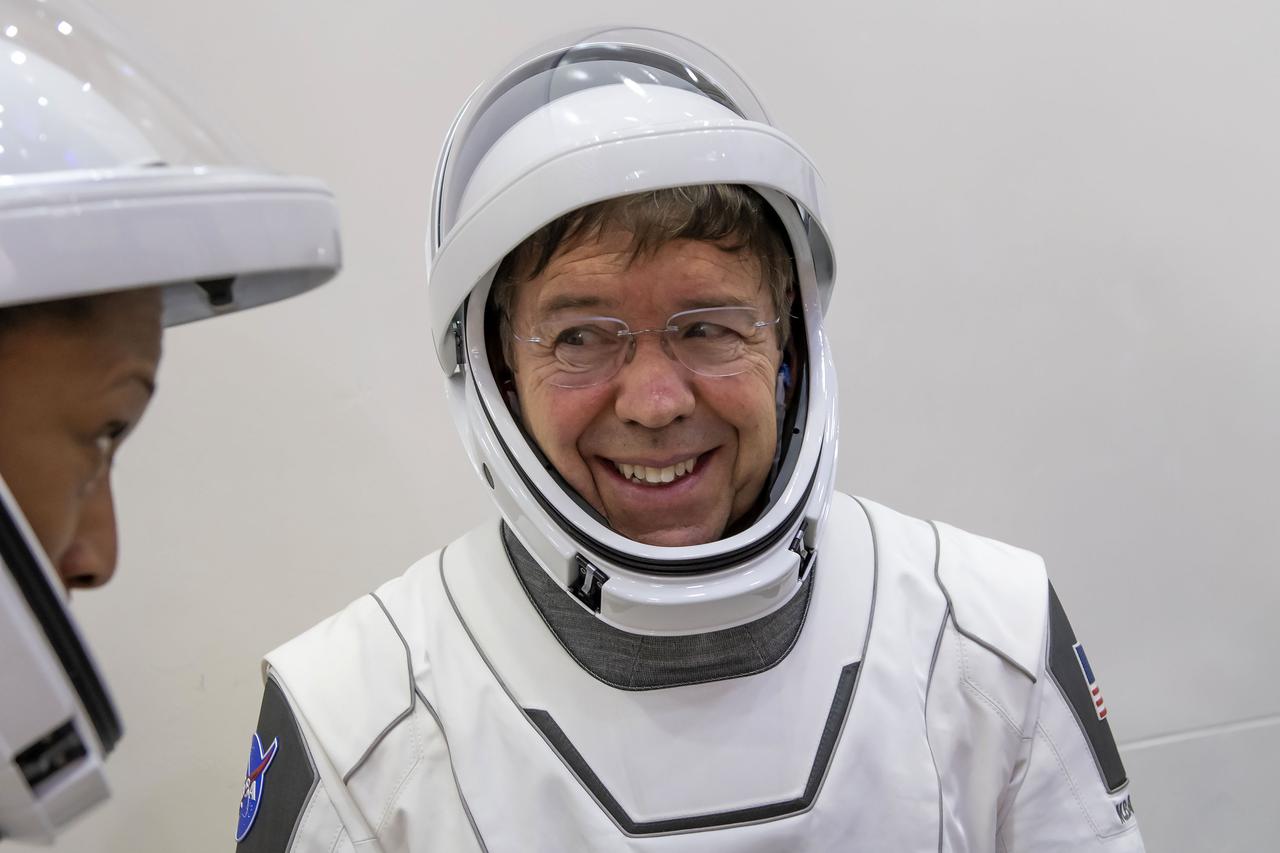
NASA astronaut Michael Barratt, pilot of NASA’s SpaceX Crew-8 mission, is suited up to participate in a Crew Equipment Interface Test (CEIT) at Cape Canaveral Space Force Station in Florida on Friday, Jan. 12, 2024. During the CEIT, the astronauts practice launch and docking in a high-fidelity simulator and getting into position inside SpaceX’s Dragon capsule. As part of the agency’s Commercial Crew Program, Crew-8 marks the ninth human spaceflight mission supported by a SpaceX Dragon spacecraft and the eighth crew rotation mission to International Space Station. Crew-8 will launch on a SpaceX Falcon 9 rocket from Launch Complex 39A at NASA’s Kennedy Space Center in Florida no earlier than mid-February 2024.
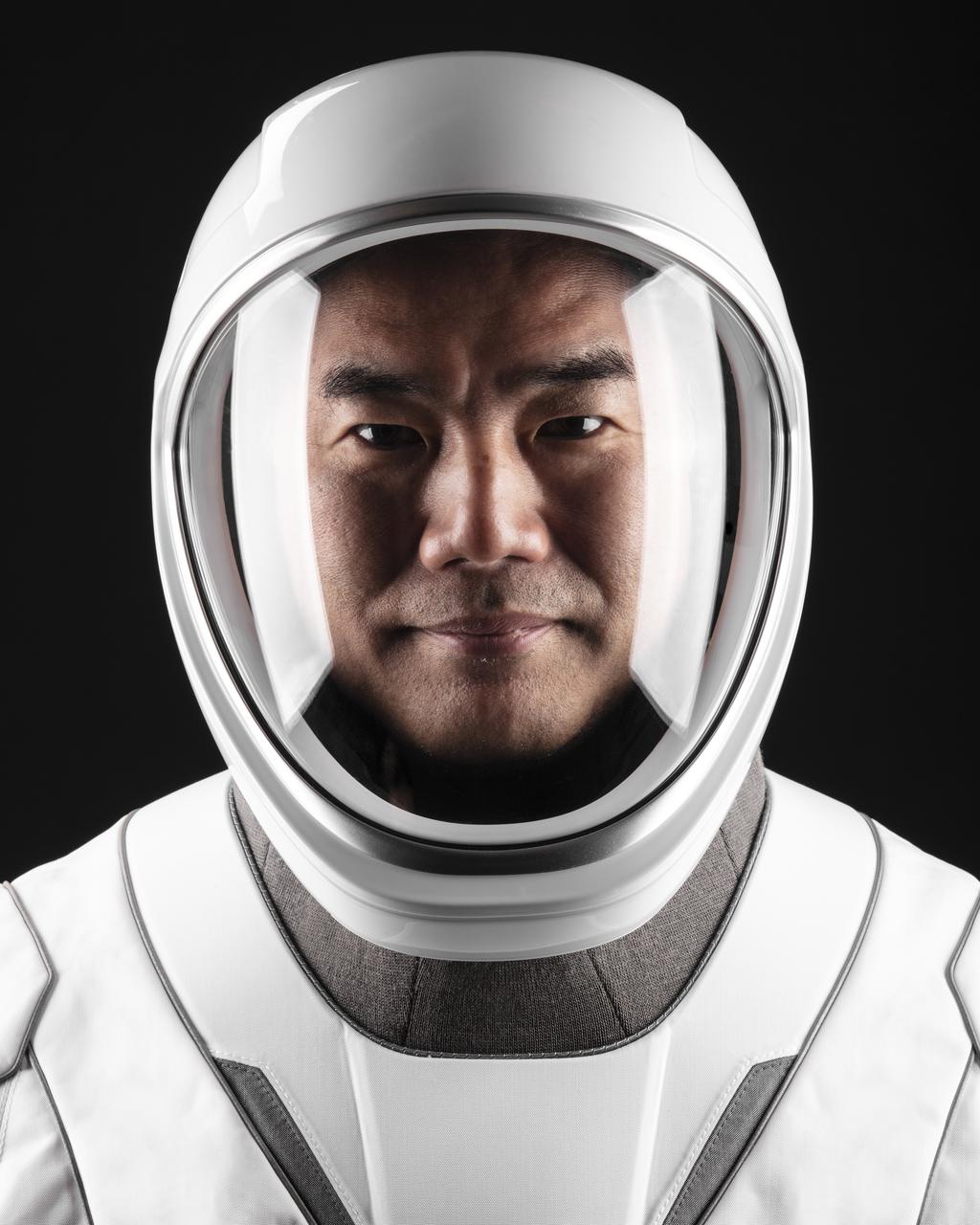
Japan Aerospace Exploration Agency astronaut and Mission Specialist Soichi Noguchi will launch to the International Space Station on the agency’s SpaceX Crew-1 mission. This will be the first operational mission to the orbiting laboratory under NASA’s Commercial Crew Program following the agency’s certification of SpaceX’s crew transportation system. Noguchi, along with crewmates Shannon Walker, Victor Glover, and Michael Hopkins – all NASA astronauts – will launch from Kennedy Space Center’s Launch Complex 39A in Florida.
NASA astronaut and Crew Dragon Commander Michael Hopkins will launch to the International Space Station on the agency’s SpaceX Crew-1 mission. This will be the first operational mission to the orbiting laboratory under NASA’s Commercial Crew Program following the agency’s certification of SpaceX’s crew transportation system. Hopkins, along with crewmates Victor Glover and Shannon Walker – both NASA astronauts – and Japan Aerospace Exploration Agency astronaut Soichi Noguchi, will launch from Kennedy Space Center’s Launch Complex 39A in Florida.
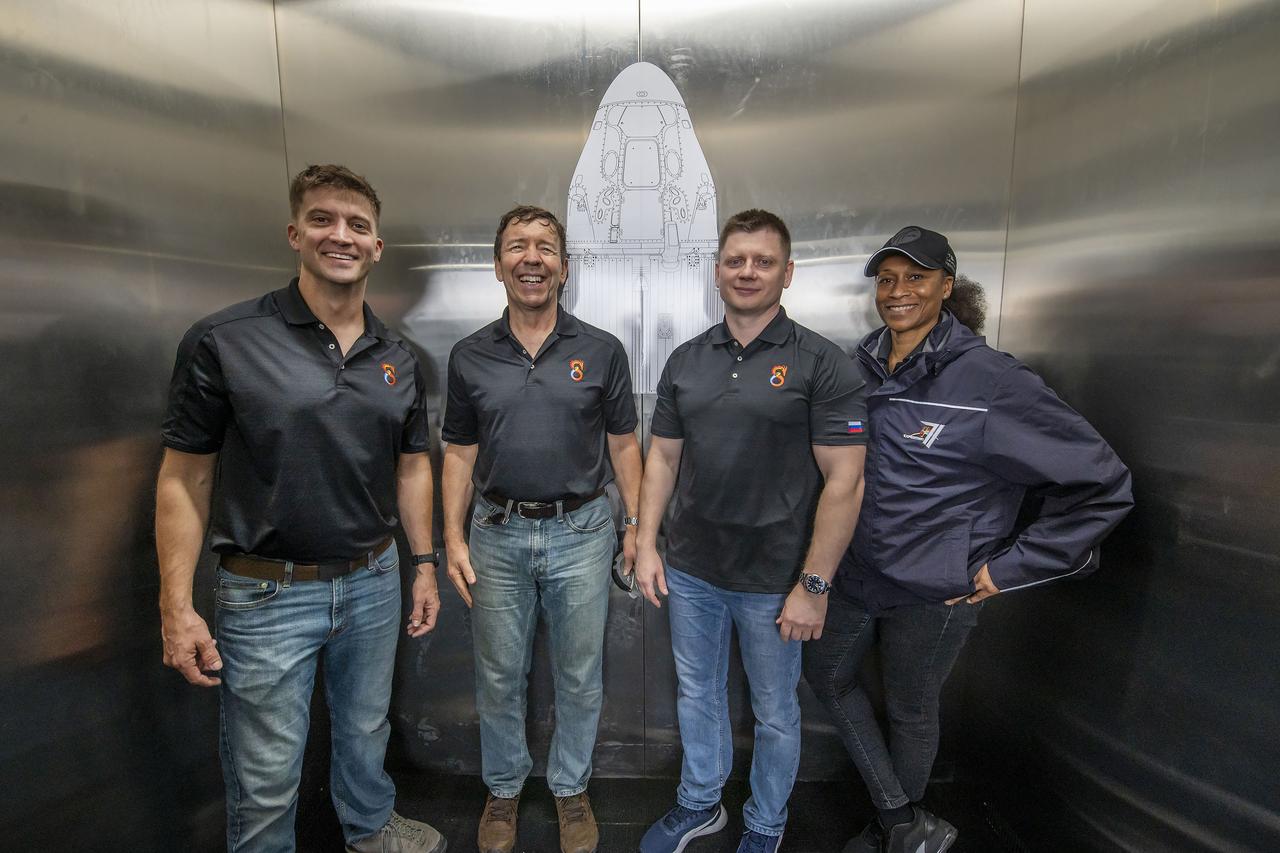
Members of NASA’s SpaceX Crew-8 mission from left to right, NASA astronauts Matthew Dominick, commander; Michael Barratt, pilot; Roscosmos cosmonaut Alexander Grebenkin, mission specialist; and NASA astronaut Jeanette Epps, mission specialist; pose for a photo during Crew Equipment Interface Test activities at Cape Canaveral Space Force Station in Florida on Friday, Jan. 12, 2024. As part of the agency’s Commercial Crew Program, Crew-8 marks the ninth human spaceflight mission supported by a SpaceX Dragon spacecraft and the eighth crew rotation mission to International Space Station. Crew-8 will launch on a SpaceX Falcon 9 rocket from Launch Complex 39A at NASA’s Kennedy Space Center in Florida no earlier than mid-February 2024.
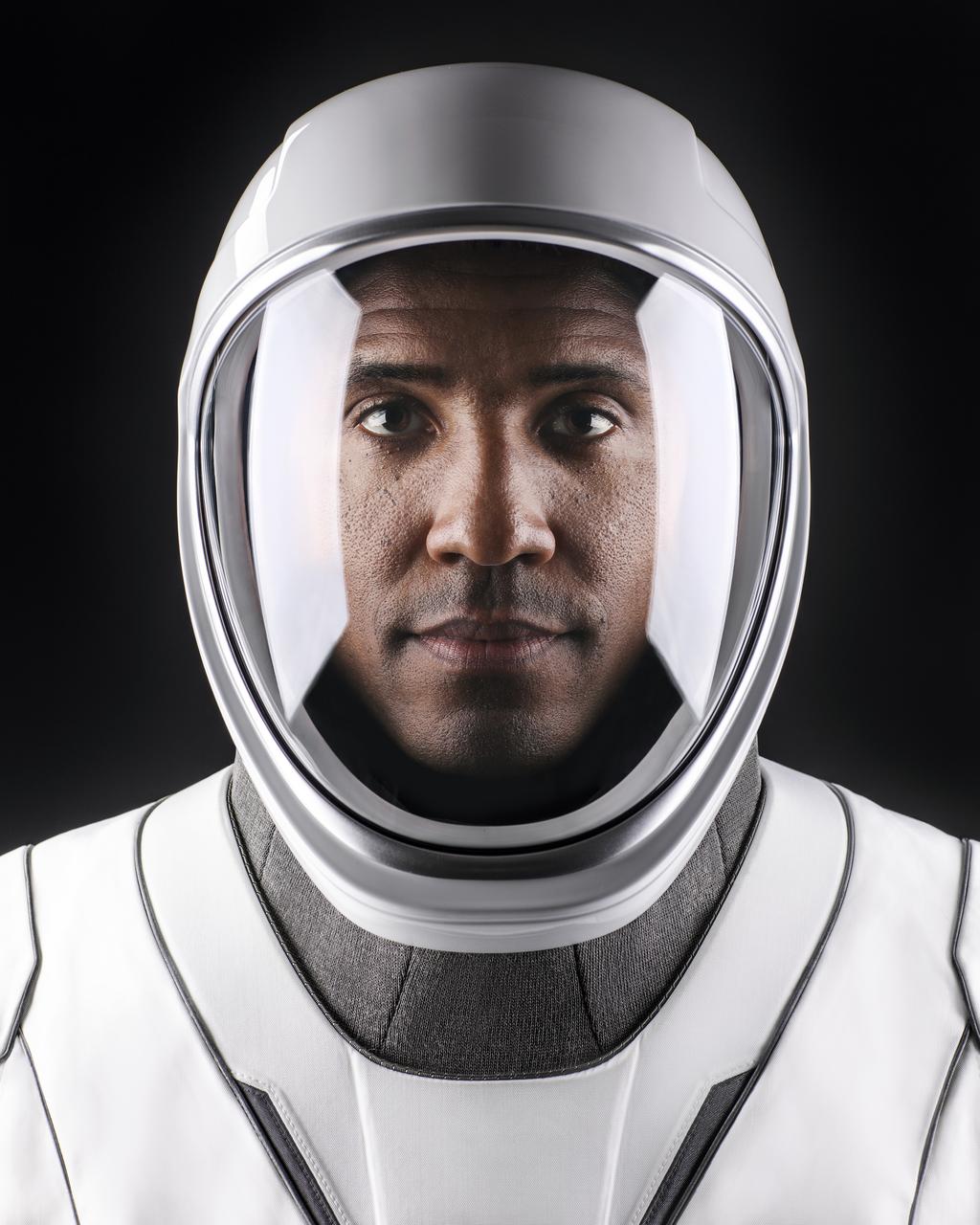
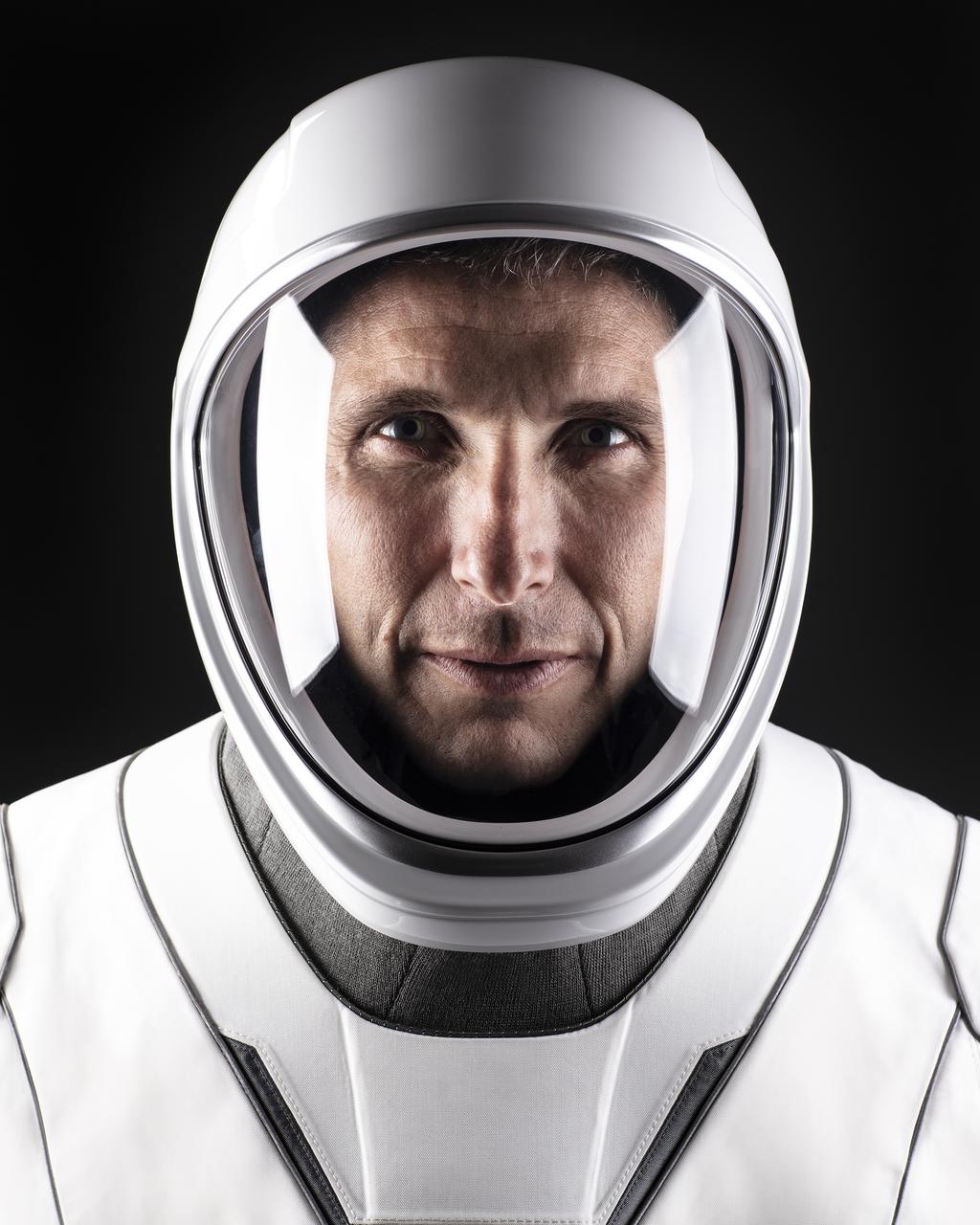
NASA astronaut and Pilot Victor Glover will launch to the International Space Station on the agency’s SpaceX Crew-1 mission. This will be the first operational mission to the orbiting laboratory under NASA’s Commercial Crew Program following the agency’s certification of SpaceX’s crew transportation system. Glover, along with crewmates Michael Hopkins and Shannon Walker – both NASA astronauts – and Japan Aerospace Exploration Agency astronaut Soichi Noguchi, will launch from Kennedy Space Center’s Launch Complex 39A in Florida.
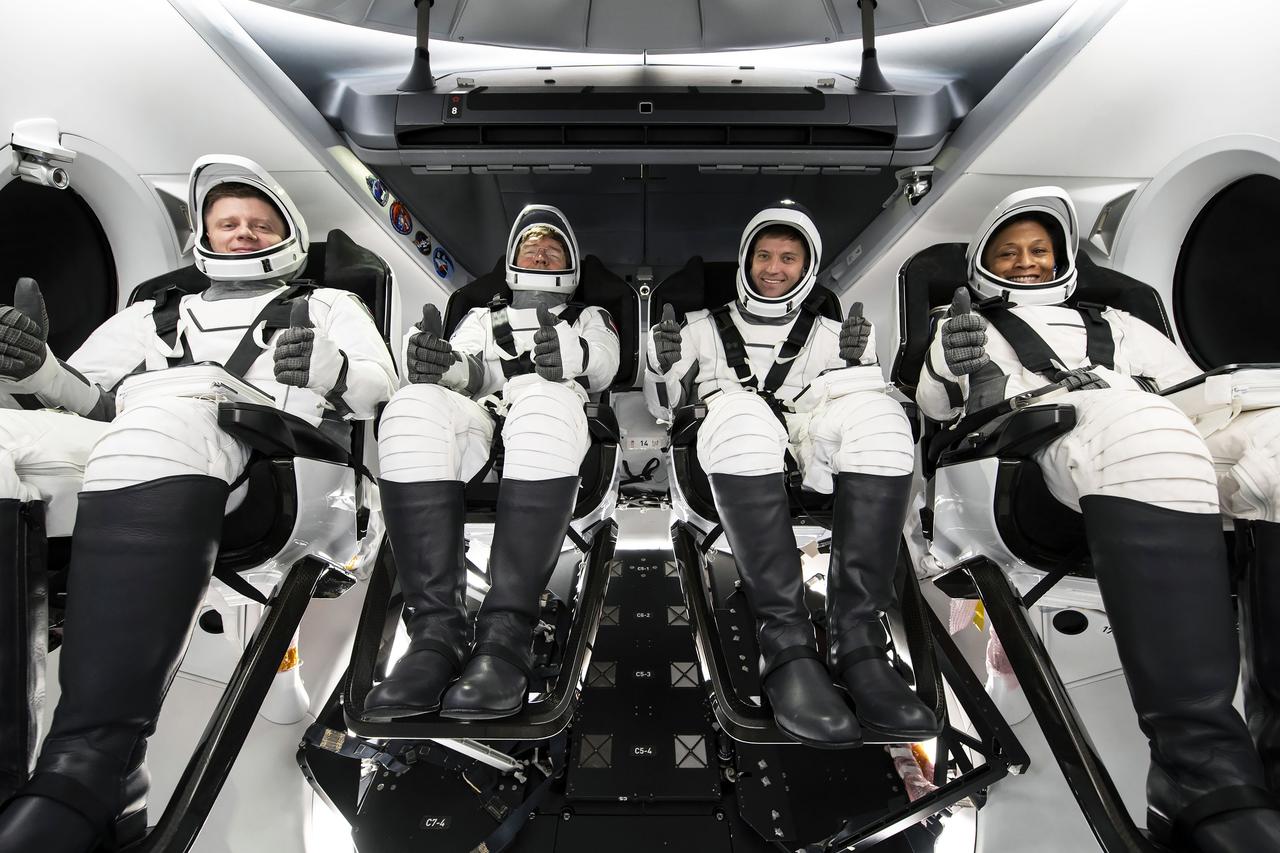
Members of NASA’s SpaceX Crew-8 from right to left, NASA astronauts Jeanette Epps, mission specialist; Matthew Dominick, commander; Michael Barratt, pilot; and Roscosmos cosmonaut Alexander Grebenkin, mission specialist; participate in the Crew Equipment Interface Test at Cape Canaveral Space Force Station in Florida on Friday, Jan. 12, 2024. As part of the agency’s Commercial Crew Program, Crew-8 marks the ninth human spaceflight mission supported by a SpaceX Dragon spacecraft and the eighth crew rotation mission to International Space Station. Crew-8 will launch on a SpaceX Falcon 9 rocket from Launch Complex 39A at NASA’s Kennedy Space Center in Florida no earlier than mid-February 2024.
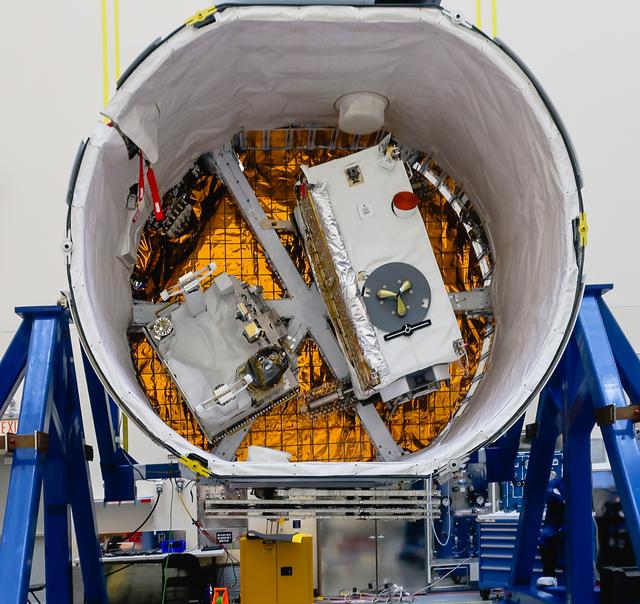
NASA’s Orbiting Carbon Observatory-3 (OCO-3) and Space Test Program-Houston 6 (STP-H6) are in view installed in the truck of SpaceX’s Dragon spacecraft inside the SpaceX facility at NASA’s Kennedy Space Center in Florida on March 23, 2019. OCO-3 and STP-H6 will be delivered to the International Space Station on SpaceX’s 17th Commercial Resupply Services mission (CRS-17) for NASA. STP-H6 is an x-ray communication investigation that will be used to perform a space-based demonstration of a new technology for generating beams of modulated x-rays. This technology may be useful for providing efficient communication to deep space probes, or communicating with hypersonic vehicles where plasma sheaths prevent traditional radio communications. OCO-3 will be robotically installed on the exterior of the space station’s Japanese Experiment Module Exposed Facility Unit, where it will measure and map carbon dioxide from space to provide further understanding of the relationship between carbon and climate. CRS-17 is scheduled to launch from Space Launch Complex 40 on Cape Canaveral Air Force Station in late April.
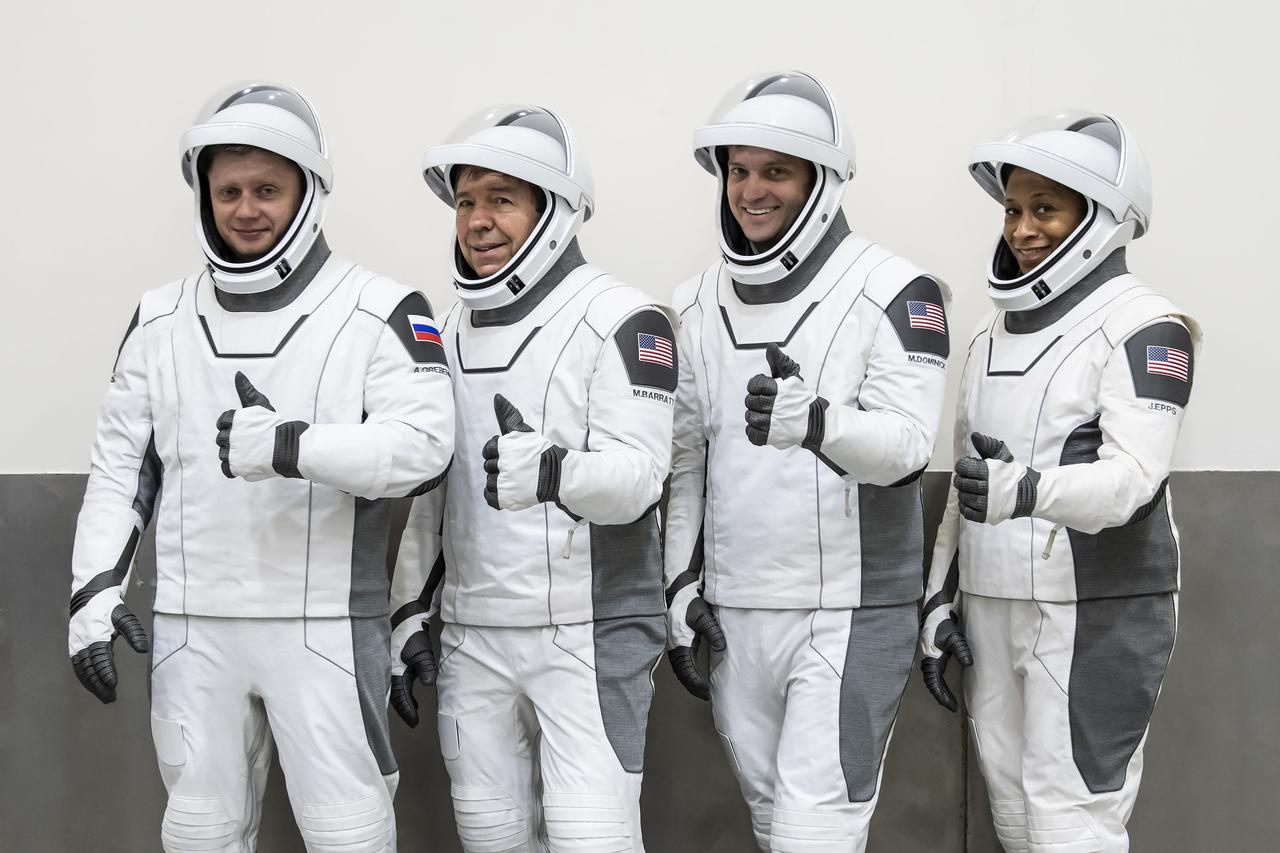
Members of NASA’s SpaceX Crew-8 from right to left, NASA astronauts Jeanette Epps, mission specialist; Matthew Dominick, commander; Michael Barratt, pilot; and Roscosmos cosmonaut Alexander Grebenkin, mission specialist; participate in the Crew Equipment Interface Test at Cape Canaveral Space Force Station in Florida on Friday, Jan. 12, 2024. As part of the agency’s Commercial Crew Program, Crew-8 marks the ninth human spaceflight mission supported by a SpaceX Dragon spacecraft and the eighth crew rotation mission to International Space Station. Crew-8 will launch on a SpaceX Falcon 9 rocket from Launch Complex 39A at NASA’s Kennedy Space Center in Florida no earlier than mid-February 2024.
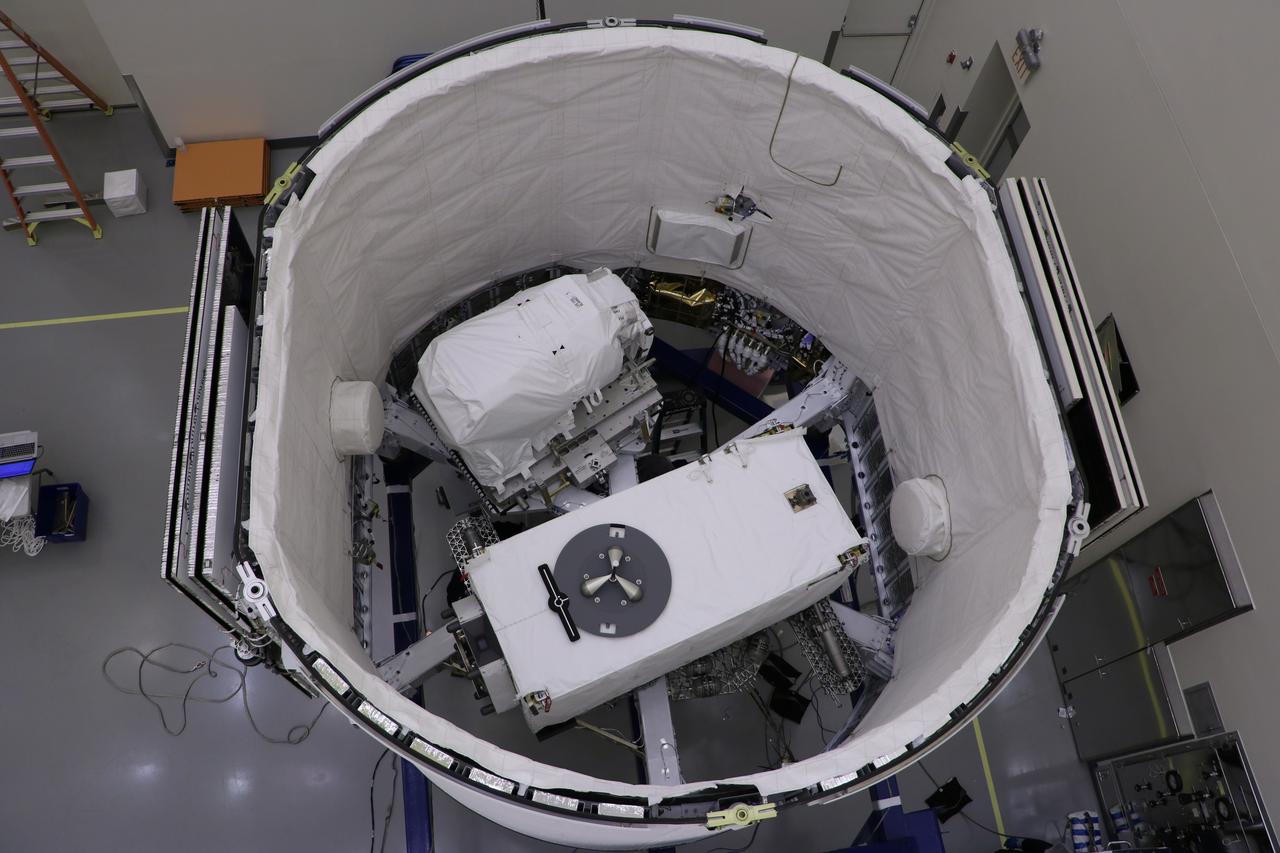
The ECOsystem Spaceborne Thermal Radiometer Experiment on Space Station (ECOSTRESS), pictured at the bottom, and the Latching End Effector (LEE), pictured at the top, are integrated into the unpressurized SpaceX Dragon truck June 2, 2018, at the SpaceX facility on Cape Canaveral Air Force Station in Florida. The payloads will be carried to the International Space Station on SpaceX's 15th Commercial Resupply Services mission. ECOSTRESS will measure the temperature of plants and use that information to better understand how much water plants need and how they respond to stress. The Canadian Space Agency is supplying LEE for the Canadarm2 as a spare to replace a failed unit removed by astronauts during a spacewalk in 2017. Each end of the Canadarm2 robotic arm has an identical LEE, which acts like a "hand" to grapple payloads and visiting cargo spaceships.
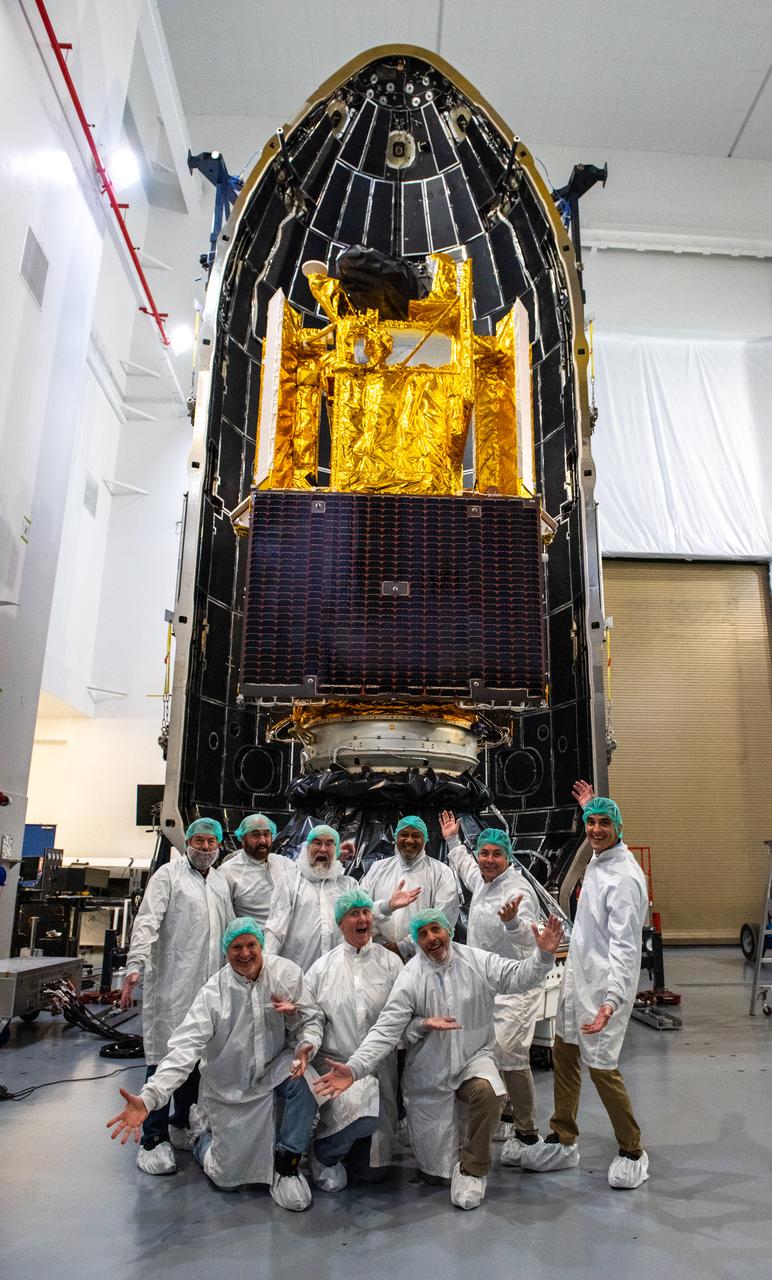
Inside the SpaceX facility at Vandenberg Space Force Base in California, the first half of the SpaceX Falcon 9 payload fairing is moved around the Surface Water and Ocean Topography (SWOT) satellite on Dec. 8, 2022. To mark the milestone, members of the processing team gather in front of the SWOT satellite. A collaboration between NASA and the French space agency Centre National d’Études Spatiales (CNES), with contributions from the Canadian Space Agency and the UK Space Agency, SWOT will be the first satellite to survey nearly all water on Earth’s surface. SWOT is scheduled to lift off aboard the SpaceX Falcon 9 rocket from Vandenberg on Dec. 15, 2022, at 3:46 a.m. PST.
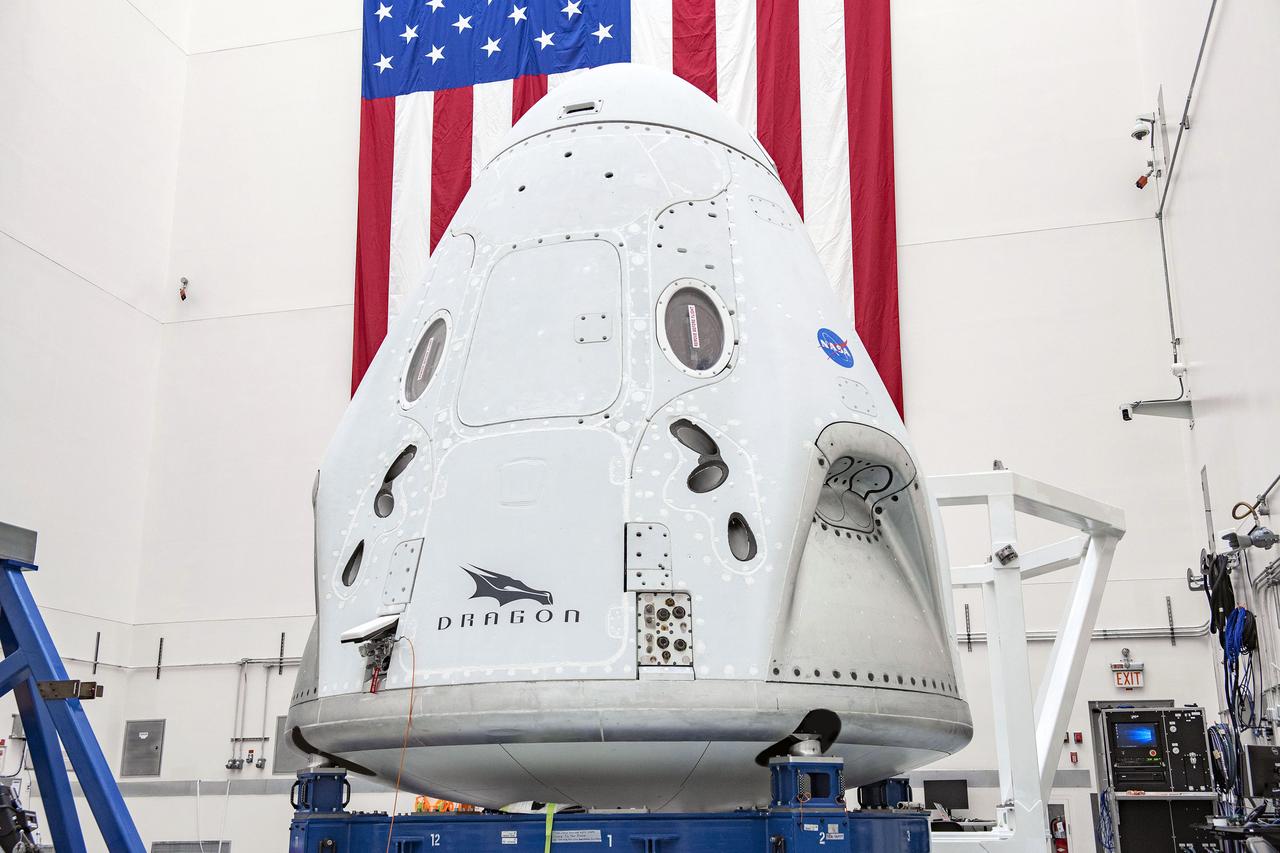
The SpaceX Crew Dragon spacecraft undergoes final processing at Cape Canaveral Air Force Station, Florida, in preparation for the Demo-2 launch with NASA astronauts Bob Behnken and Doug Hurley to the International Space Station for NASA’s Commercial Crew Program. Crew Dragon will carry Behnken and Hurley atop a Falcon 9 rocket, returning crew launches to the space station from U.S. soil for the first time since the Space Shuttle Program ended in 2011.
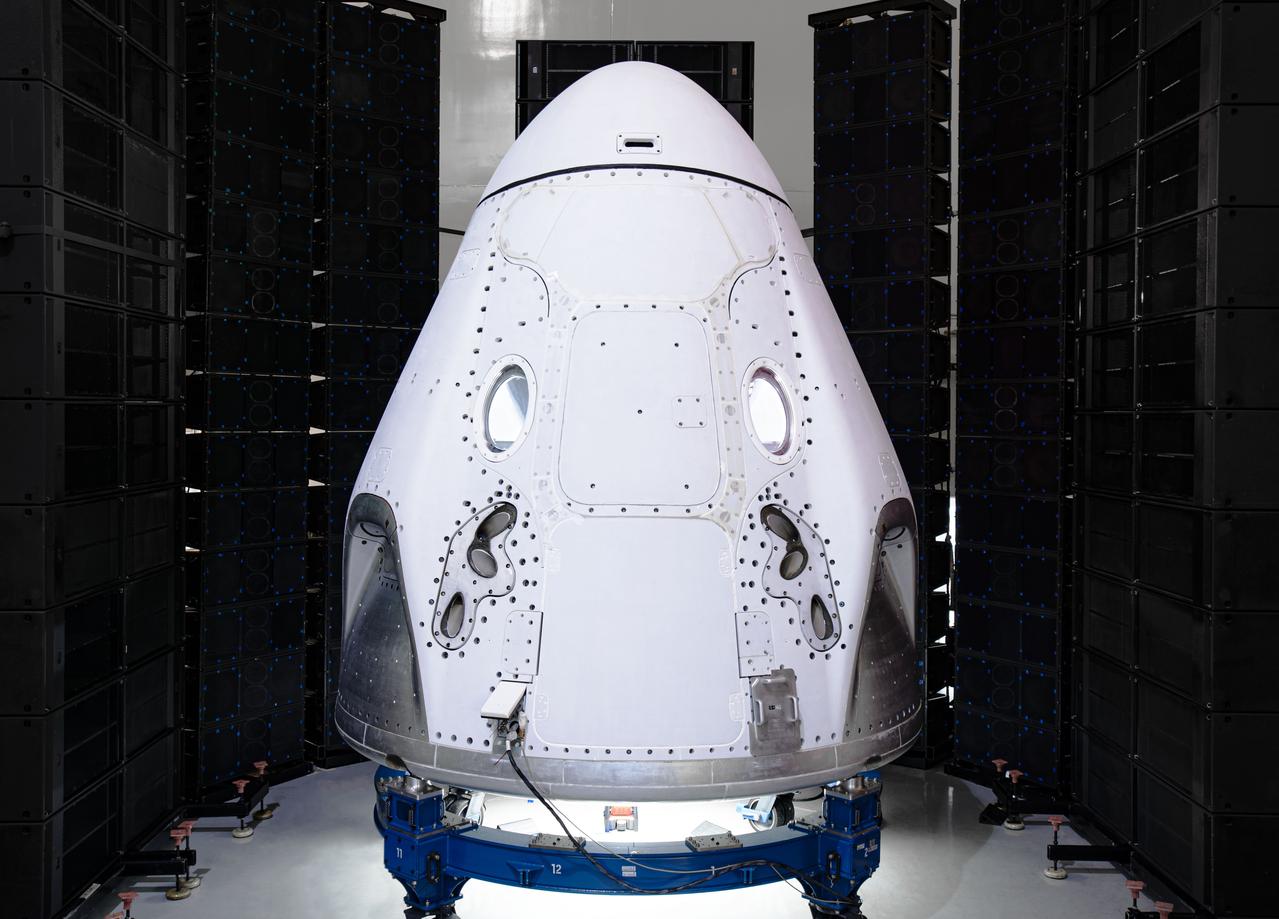
The SpaceX Crew Dragon spacecraft for its first crew launch from American soil arrived at the launch site on Feb. 13, 2020. NASA and SpaceX are preparing for the company’s first flight test with astronauts to the International Space Station as part of the agency’s Commercial Crew Program. The SpaceX Crew Dragon will launch atop a Falcon 9 rocket with NASA astronauts Bob Behnken and Doug Hurley from historic Launch Complex 39A from NASA’s Kennedy Space Center in Florida. The team completed acoustic testing of the spacecraft as part of its final testing and prelaunch processing in a SpaceX facility on nearby Cape Canaveral Air Force Station. Photo credit: SpaceX
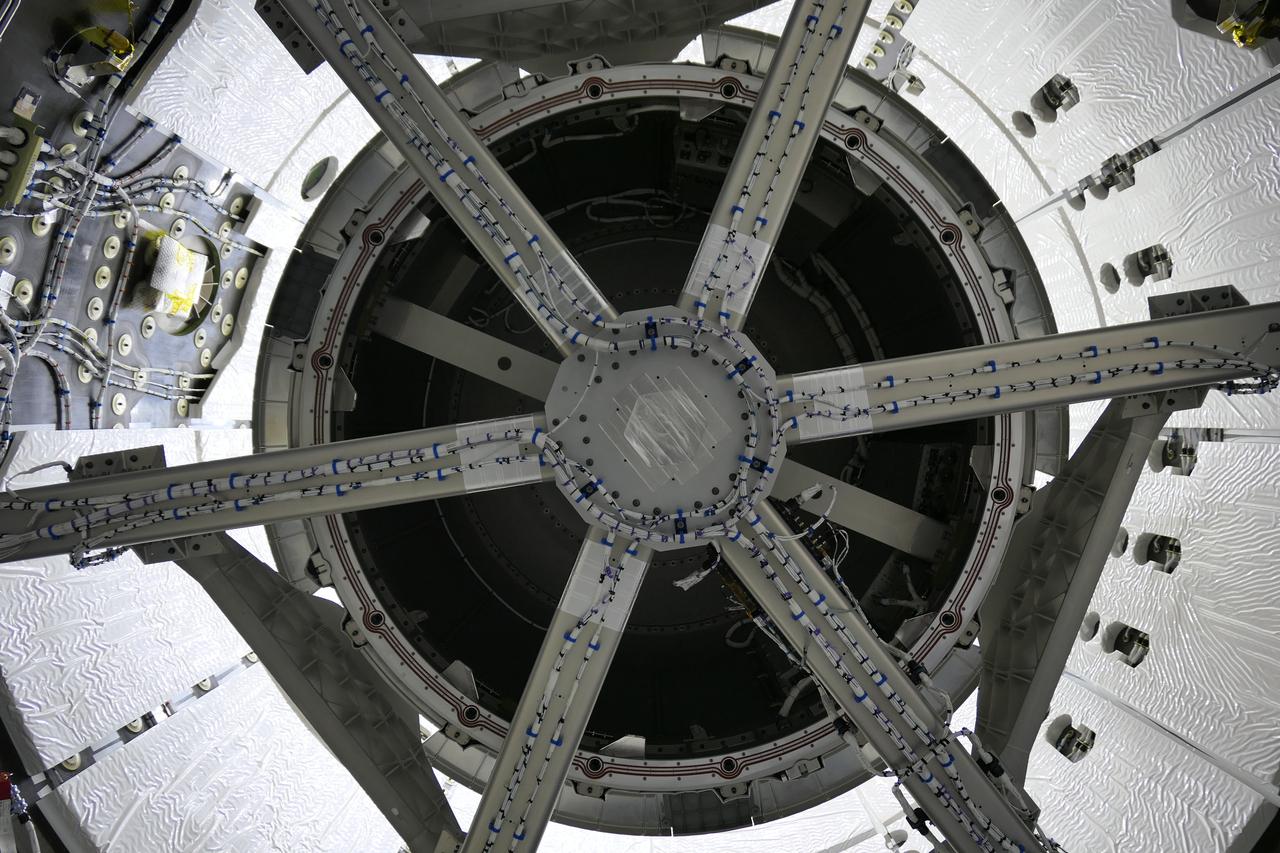
The Nanoracks Bishop Airlock is packed in the Dragon spacecraft’s trunk on Oct. 12, 2020, inside SpaceX’s processing facility at NASA’s Kennedy Space Center in Florida for its ride to the International Space Station aboard the company’s 21st Commercial Resupply Services (CRS-21) mission. The first commercially funded airlock for the orbiting laboratory, it will provide payload hosting, robotics testing, satellite deployment, serve as an outside toolbox for station crew spacewalks, and more. CRS-21 is scheduled to launch on a SpaceX Falcon 9 from Kennedy’s Launch Complex 39A.
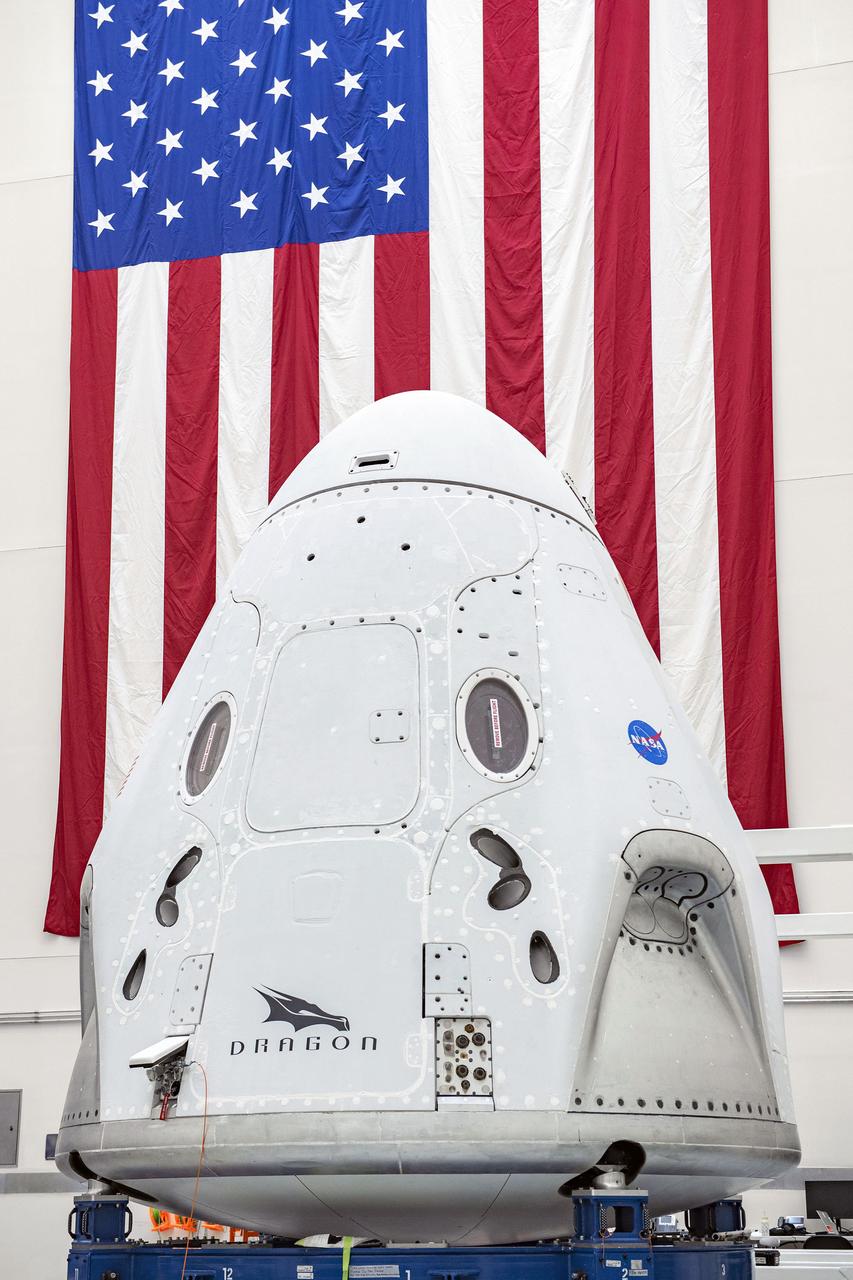
The SpaceX Crew Dragon spacecraft undergoes final processing at Cape Canaveral Air Force Station, Florida, in preparation for the Demo-2 launch with NASA astronauts Bob Behnken and Doug Hurley to the International Space Station for NASA’s Commercial Crew Program. Crew Dragon will carry Behnken and Hurley atop a Falcon 9 rocket, returning crew launches to the space station from U.S. soil for the first time since the Space Shuttle Program ended in 2011.

Inside the SpaceX facility at Vandenberg Space Force Base in California, the first half of the SpaceX Falcon 9 payload fairing is moved around the Surface Water and Ocean Topography (SWOT) satellite on Dec. 8, 2022. To mark the milestone, members of the processing team gather in front of the SWOT satellite. A collaboration between NASA and the French space agency Centre National d’Études Spatiales (CNES), with contributions from the Canadian Space Agency and the UK Space Agency, SWOT will be the first satellite to survey nearly all water on Earth’s surface. SWOT is scheduled to lift off aboard the SpaceX Falcon 9 rocket from Vandenberg on Dec. 15, 2022, at 3:46 a.m. PST.
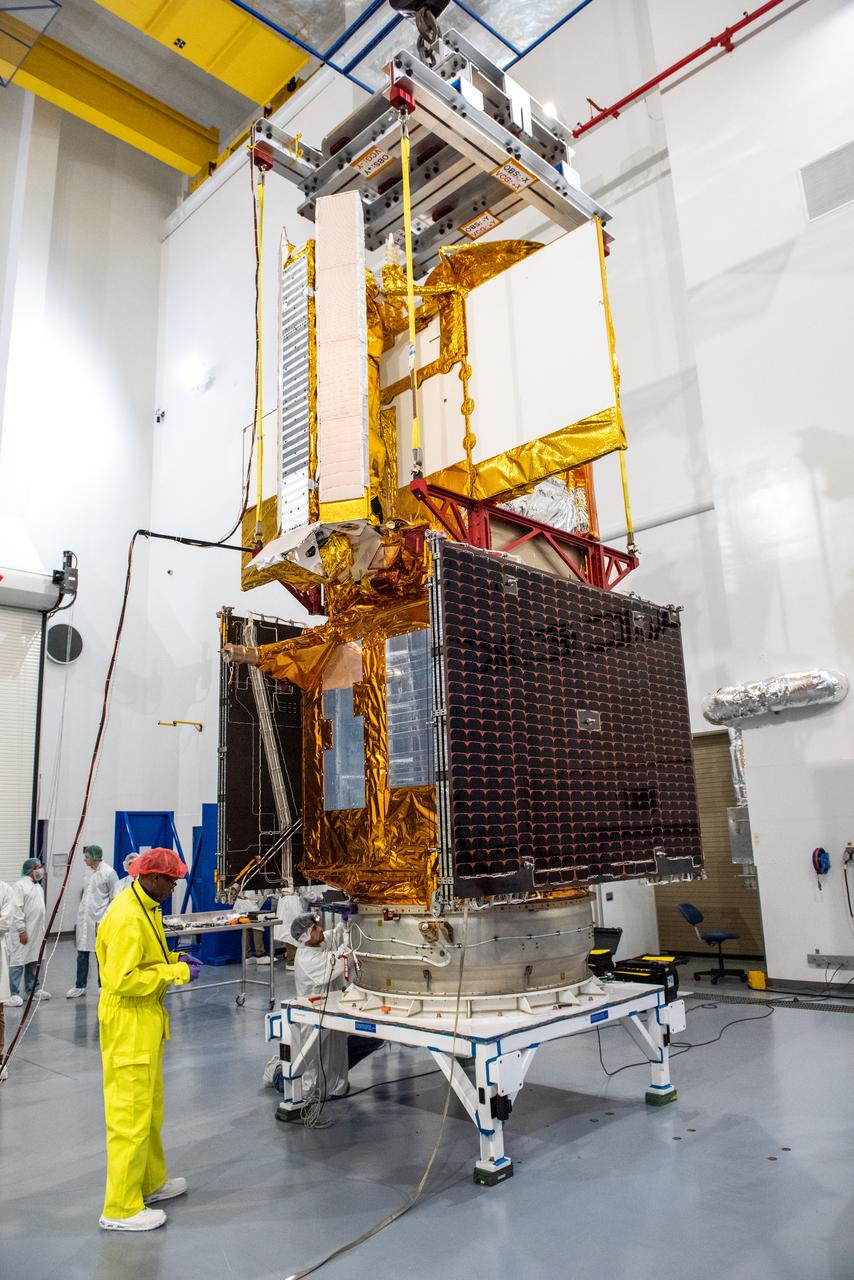
Inside the SpaceX facility at Vandenberg Space Force Base in California, a technician assists as a crane is used to lift the Surface Water and Ocean Topography (SWOT) satellite for mating to the payload adapter on Dec. 5, 2022. A collaboration between NASA and the French space agency Centre National d’Études Spatiales (CNES), with contributions from the Canadian Space Agency and the UK Space Agency, SWOT will be the first satellite to survey nearly all water on Earth’s surface. SWOT is scheduled to lift off aboard the SpaceX Falcon 9 rocket from Vandenberg on Dec. 15, 2022, at 3:46 a.m. PST.
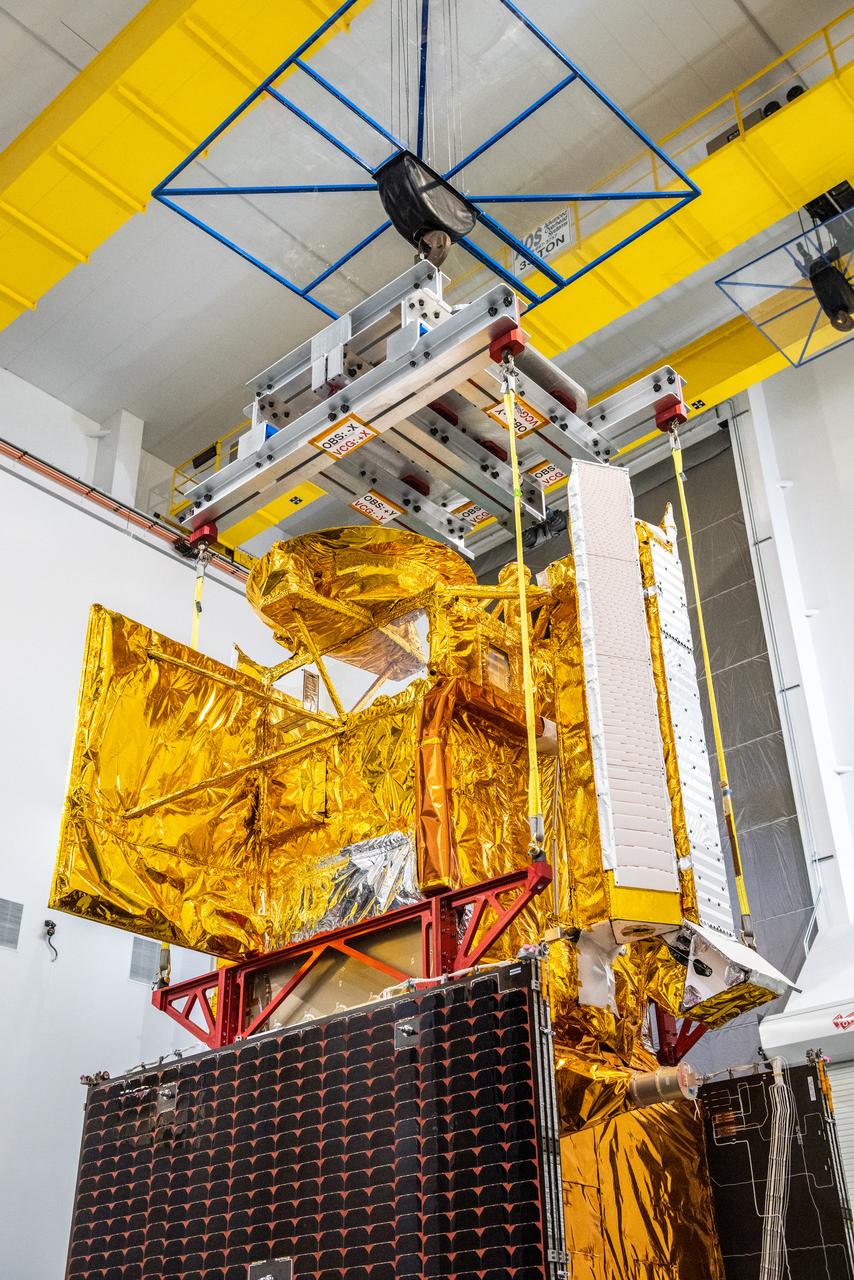
Inside the SpaceX facility at Vandenberg Space Force Base in California, a crane is used to lift the Surface Water and Ocean Topography (SWOT) satellite for mating to the payload adapter on Dec. 5, 2022. A collaboration between NASA and the French space agency Centre National d’Études Spatiales (CNES), with contributions from the Canadian Space Agency and the UK Space Agency, SWOT will be the first satellite to survey nearly all water on Earth’s surface. SWOT is scheduled to lift off aboard the SpaceX Falcon 9 rocket from Vandenberg on Dec. 15, 2022, at 3:46 a.m. PST.
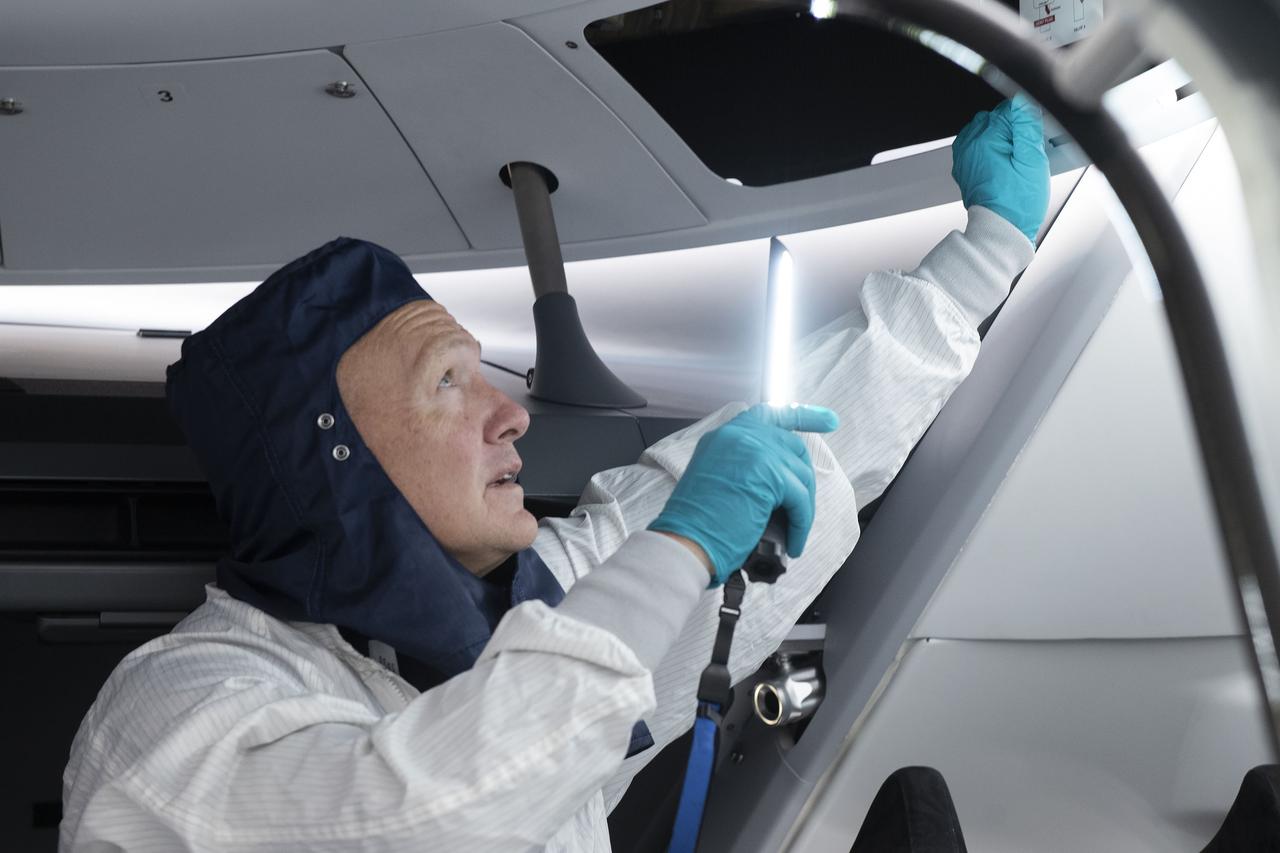
On Monday, March 30, 2020 at a SpaceX processing facility on Cape Canaveral Air Force Station in Florida, SpaceX successfully completed a fully integrated test of critical crew flight hardware ahead of Crew Dragon’s second demonstration mission to the International Space Station for NASA's Commercial Crew Program; the first flight test with astronauts onboard the spacecraft. NASA astronauts Bob Behnken and Doug Hurley participated in the test, which included flight suit leak checks, spacecraft sound verification, display panel and cargo bin inspections, seat hardware rotations, and more.
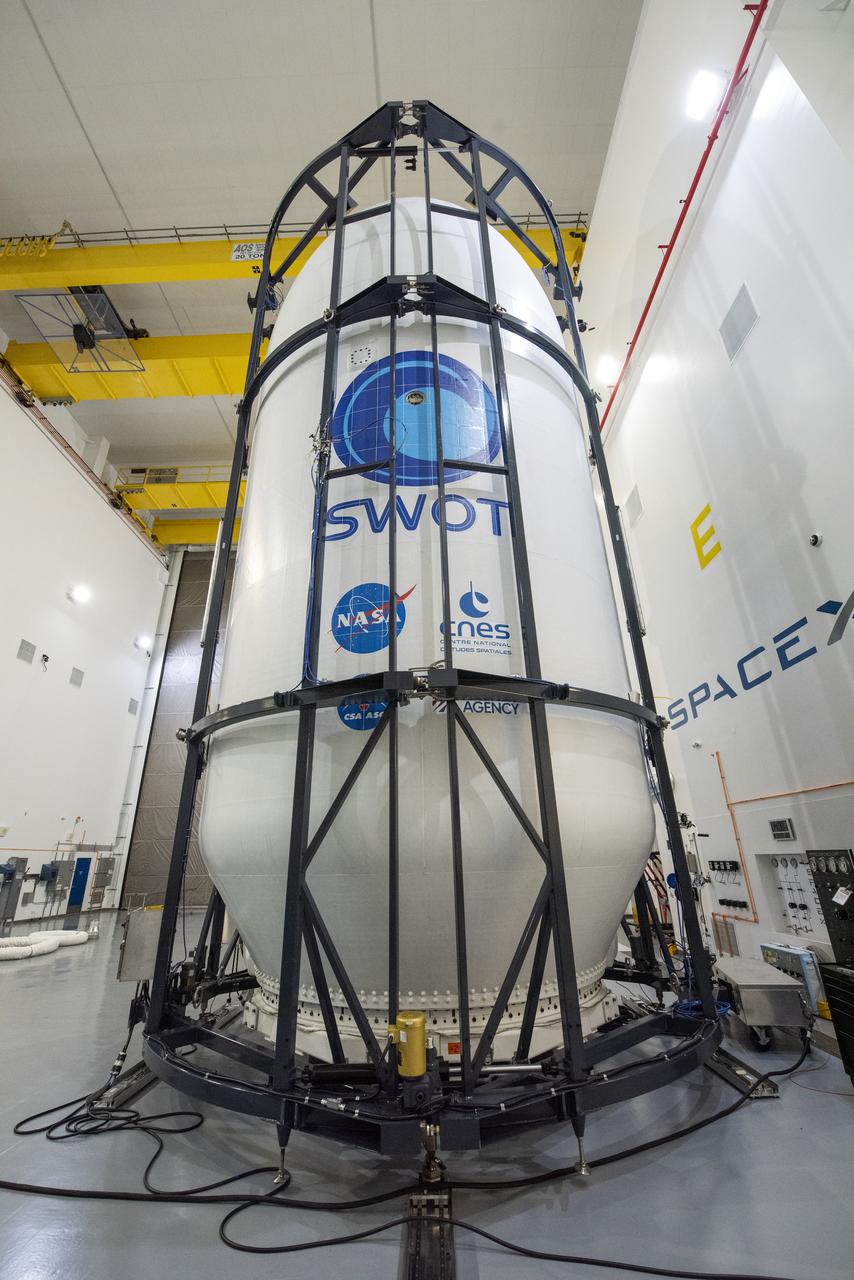
Inside the SpaceX facility at Vandenberg Space Force Base in California, decal fixtures are placed on the SpaceX Falcon 9 payload fairing of the Surface Water and Ocean Topography (SWOT) satellite on Dec. 9, 2022. A collaboration between NASA and the French space agency Centre National d’Études Spatiales (CNES), with contributions from the Canadian Space Agency and the UK Space Agency, SWOT will be the first satellite to survey nearly all water on Earth’s surface. SWOT is scheduled to lift off aboard the SpaceX Falcon 9 rocket from Vandenberg on Dec. 15, 2022, at 3:46 a.m. PST.
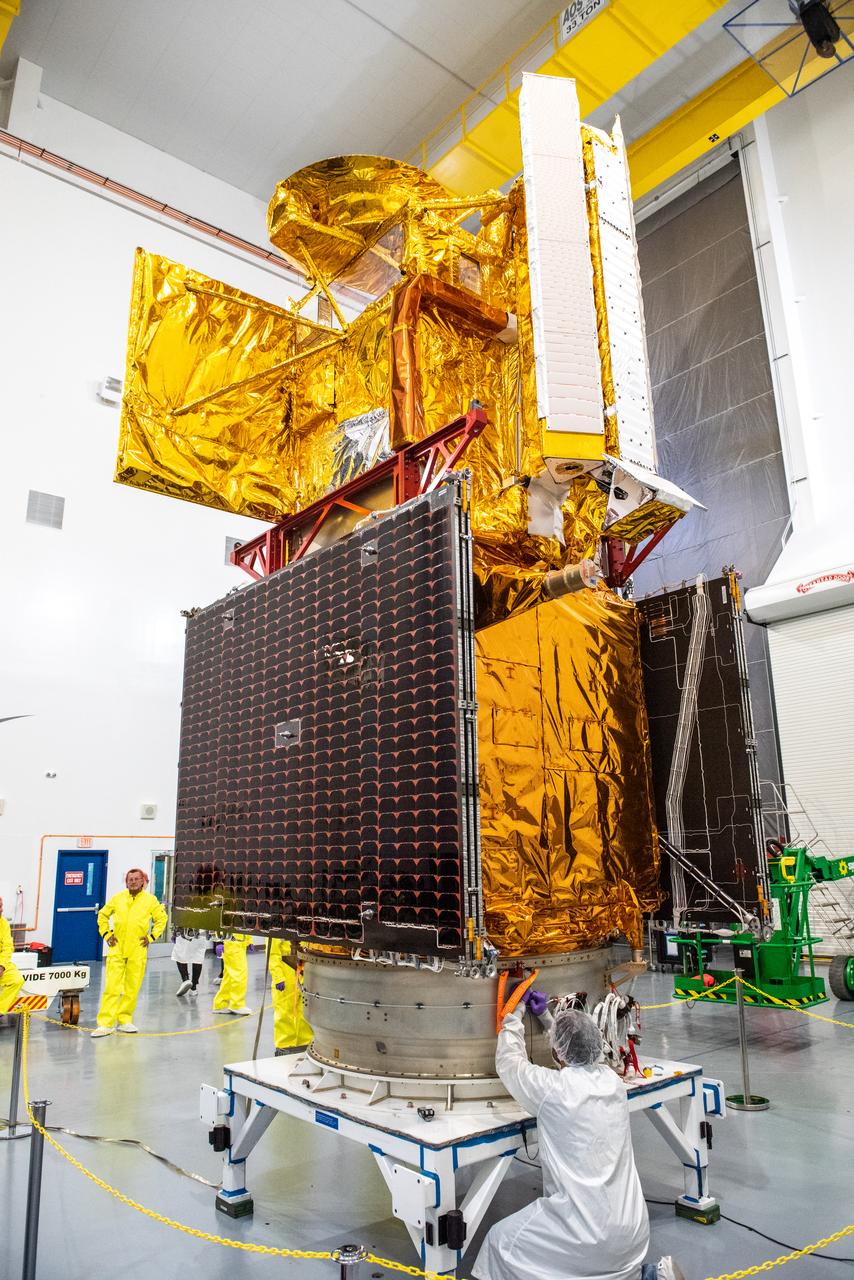
Inside the SpaceX facility at Vandenberg Space Force Base in California, a technician assists as a crane lowers the Surface Water and Ocean Topography (SWOT) satellite onto the payload adapter on Dec. 5, 2022. A collaboration between NASA and the French space agency Centre National d’Études Spatiales (CNES), with contributions from the Canadian Space Agency and the UK Space Agency, SWOT will be the first satellite to survey nearly all water on Earth’s surface. SWOT is scheduled to lift off aboard the SpaceX Falcon 9 rocket from Vandenberg on Dec. 15, 2022, at 3:46 a.m. PST.
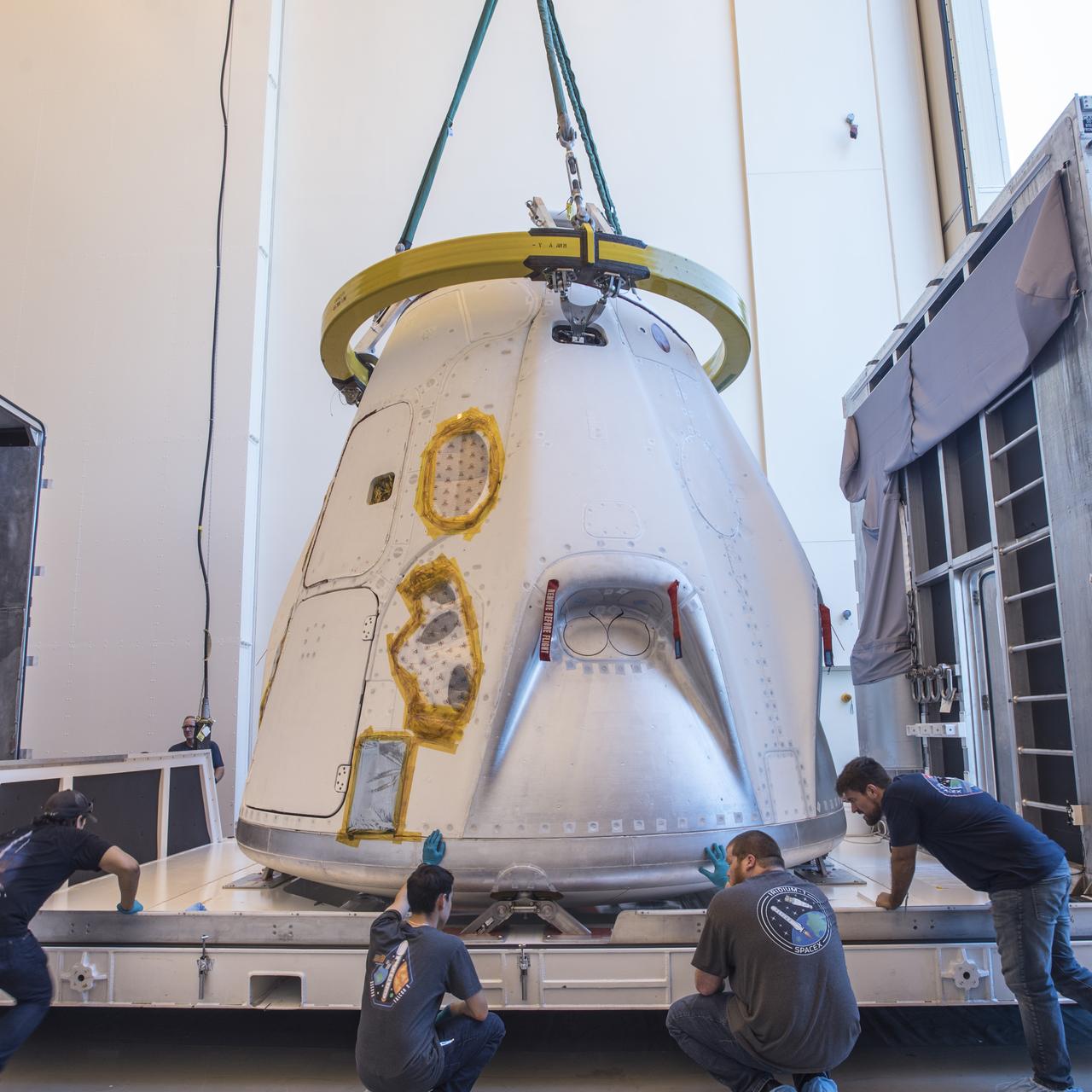
The SpaceX Crew Dragon spacecraft that will be used for the company’s uncrewed flight test, known as Demonstration Mission 1, arrived to Cape Canaveral Air Force Station in Florida on Tuesday, July 10, 2018. The spacecraft recently underwent thermal vacuum and acoustic testing at NASA’s Plum Brook Station in Ohio. The Demonstration Mission 1 flight test is part of NASA’s Commercial Crew Transportation Capability contract with the goal of returning human spaceflight launch capabilities to the United States.
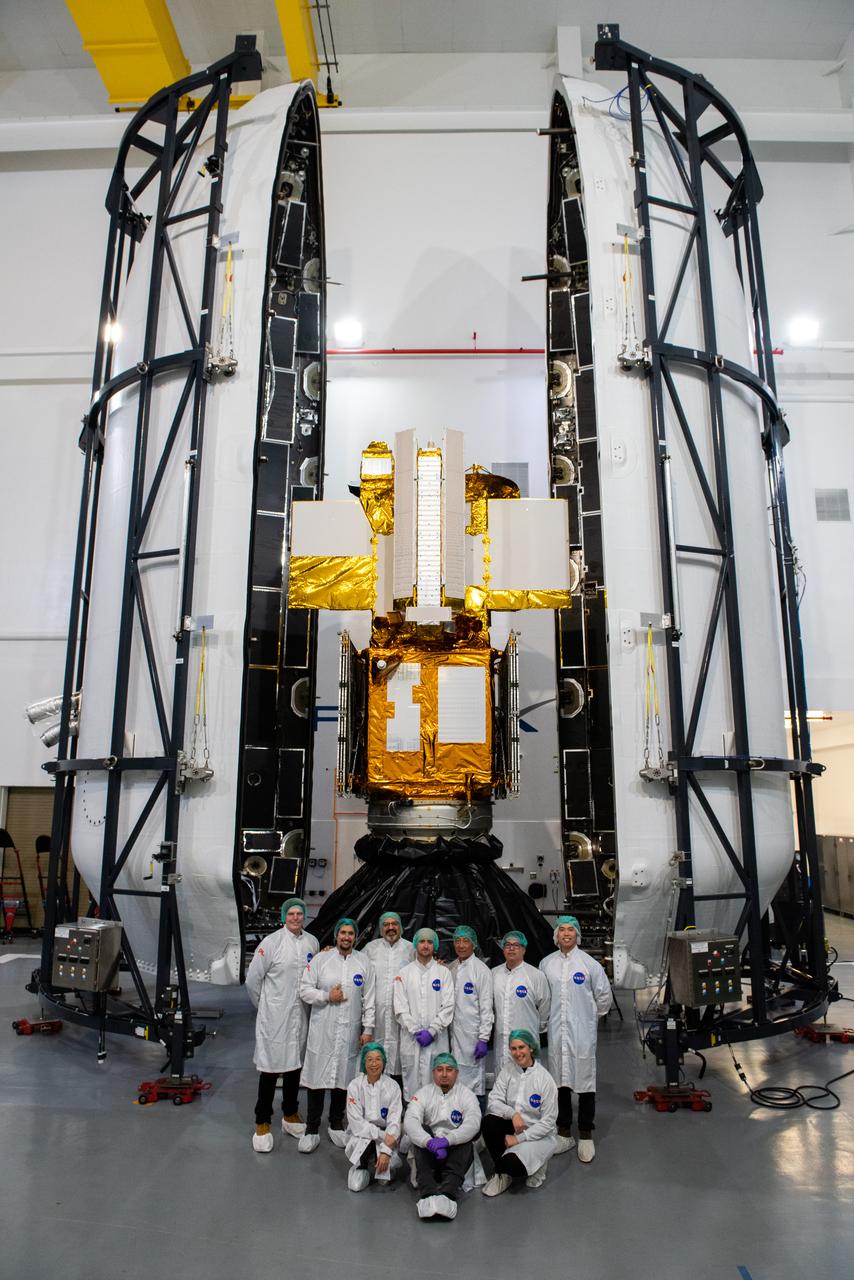
Inside the SpaceX facility at Vandenberg Space Force Base in California, both halves of the SpaceX Falcon 9 payload fairing are moved to enclose the Surface Water and Ocean Topography (SWOT) satellite on Dec. 8, 2022. To mark the milestone, members of the processing team gather in front of the SWOT satellite. A collaboration between NASA and the French space agency Centre National d’Études Spatiales (CNES), with contributions from the Canadian Space Agency and the UK Space Agency, SWOT will be the first satellite to survey nearly all water on Earth’s surface. SWOT is scheduled to lift off aboard the SpaceX Falcon 9 rocket from Vandenberg on Dec. 15, 2022, at 3:46 a.m. PST.
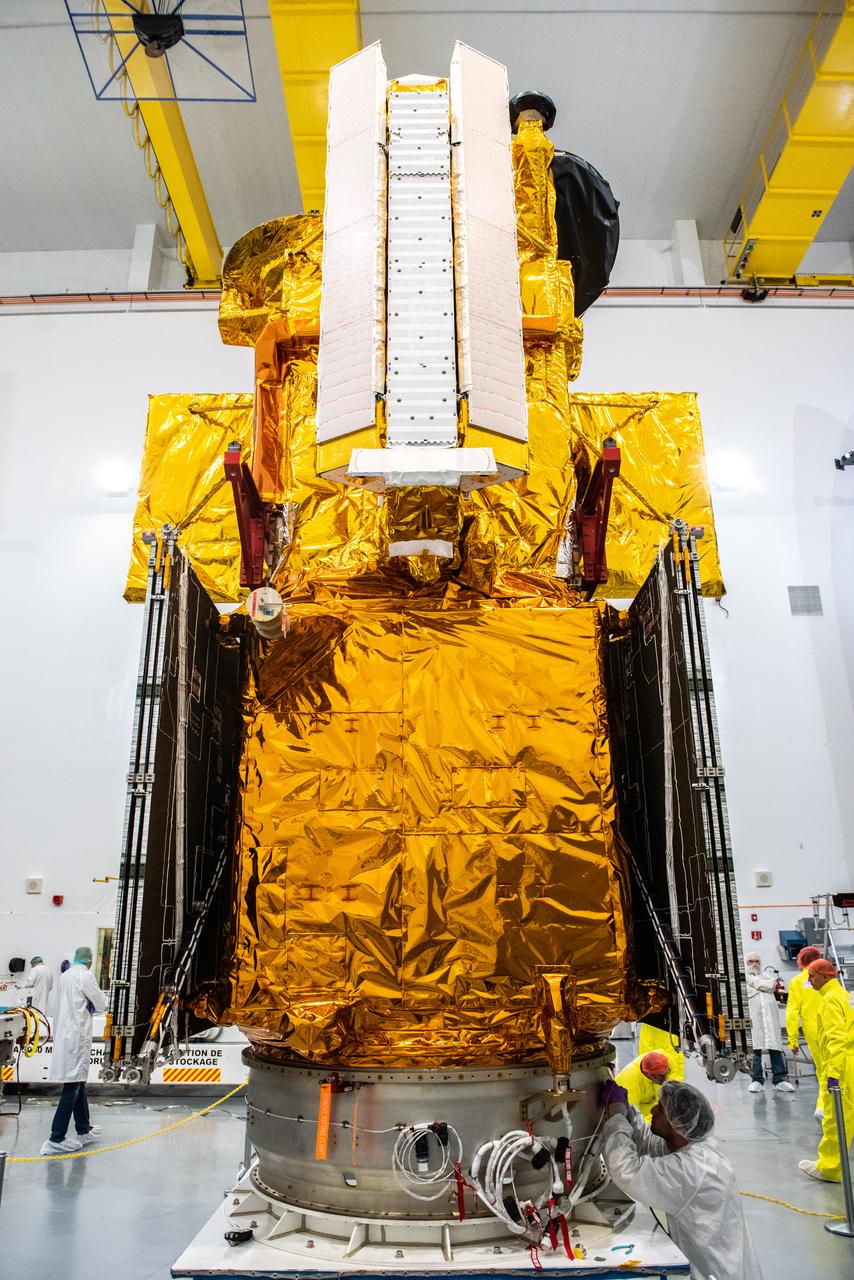
Inside the SpaceX facility at Vandenberg Space Force Base in California, a crane lifts the Surface Water and Ocean Topography (SWOT) satellite onto the payload adapter on Dec. 5, 2022. A collaboration between NASA and the French space agency Centre National d’Études Spatiales (CNES), with contributions from the Canadian Space Agency and the UK Space Agency, SWOT will be the first satellite to survey nearly all water on Earth’s surface. SWOT is scheduled to lift off aboard the SpaceX Falcon 9 rocket from Vandenberg on Dec. 15, 2022, at 3:46 a.m. PST.
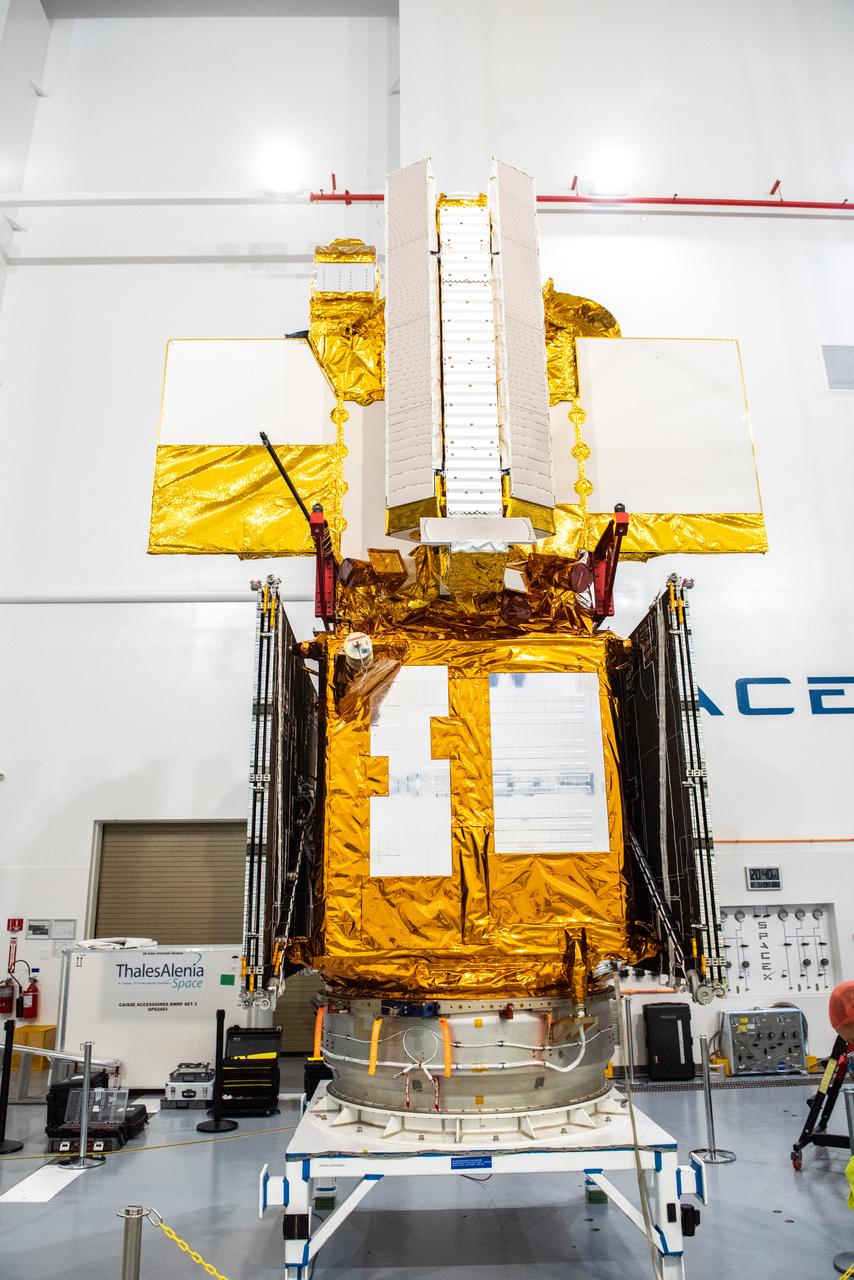
Inside the SpaceX facility at Vandenberg Space Force Base in California, a crane is used to lower the Surface Water and Ocean Topography (SWOT) satellite for mating to the payload adapter on Dec. 5, 2022. A collaboration between NASA and the French space agency Centre National d’Études Spatiales (CNES), with contributions from the Canadian Space Agency and the UK Space Agency, SWOT will be the first satellite to survey nearly all water on Earth’s surface. SWOT is scheduled to lift off aboard the SpaceX Falcon 9 rocket from Vandenberg on Dec. 15, 2022, at 3:46 a.m. PST.
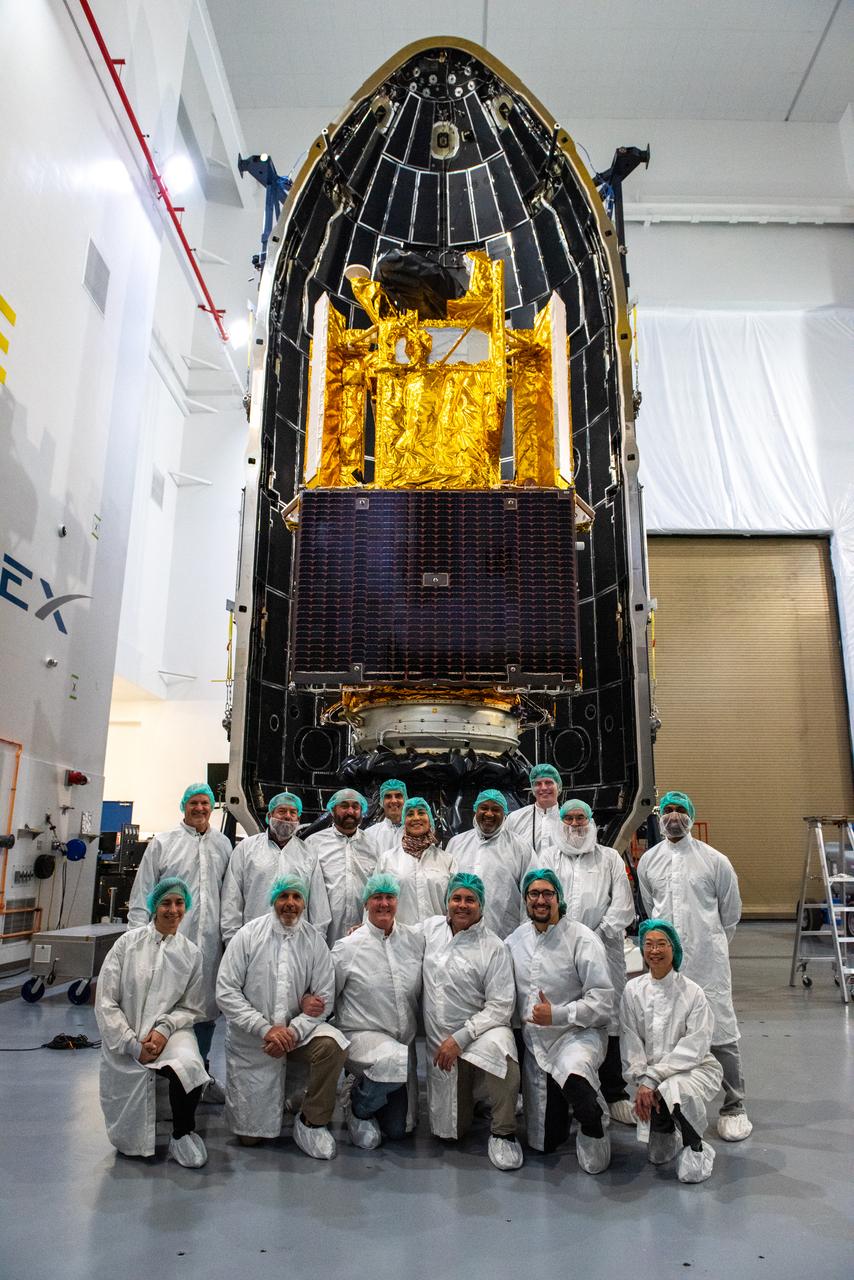
Inside the SpaceX facility at Vandenberg Space Force Base in California, the first half of the SpaceX Falcon 9 payload fairing is moved around the Surface Water and Ocean Topography (SWOT) satellite on Dec. 8, 2022. To mark the milestone, the processing team gathers in front of the SWOT satellite. A collaboration between NASA and the French space agency Centre National d’Études Spatiales (CNES), with contributions from the Canadian Space Agency and the UK Space Agency, SWOT will be the first satellite to survey nearly all water on Earth’s surface. SWOT is scheduled to lift off aboard the SpaceX Falcon 9 rocket from Vandenberg on Dec. 15, 2022, at 3:46 a.m. PST.
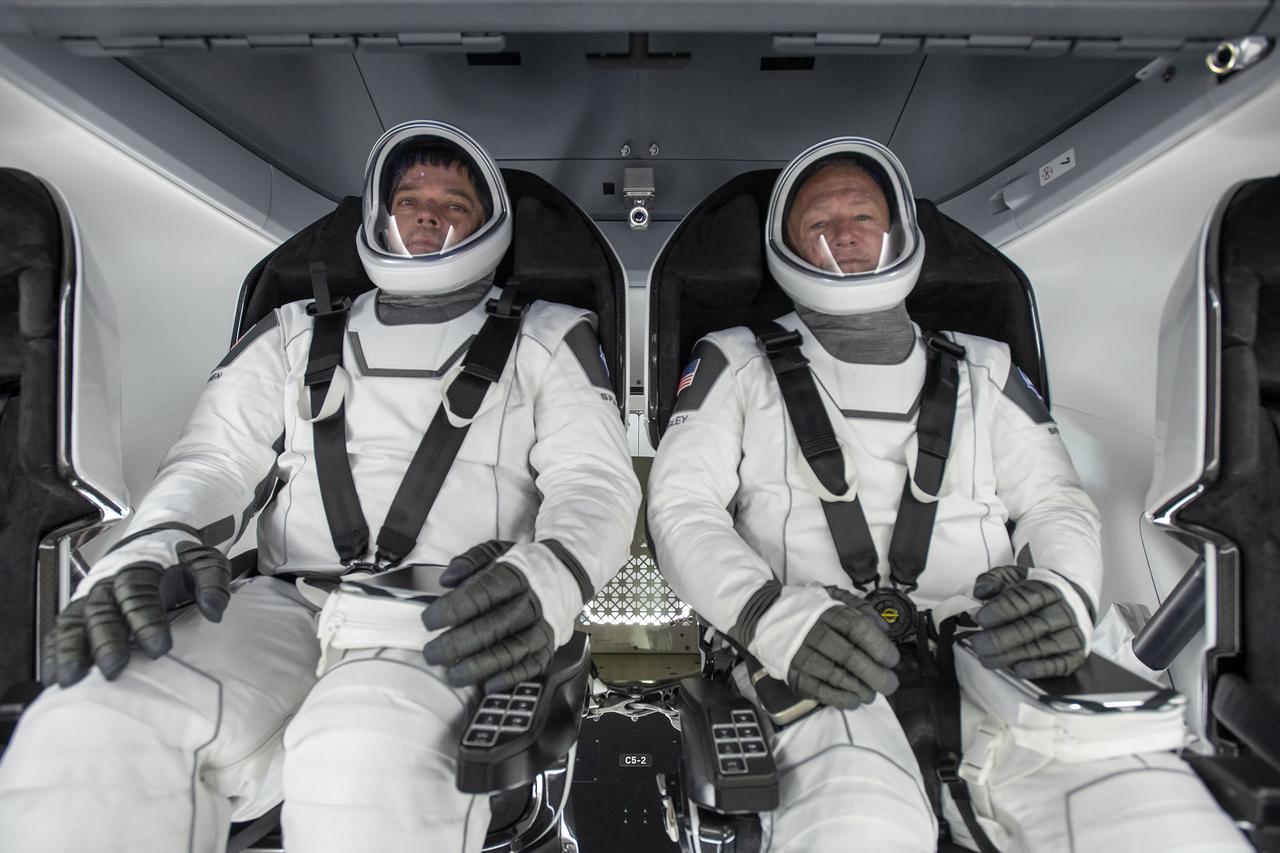
On Monday, March 30, 2020 at a SpaceX processing facility on Cape Canaveral Air Force Station in Florida, SpaceX successfully completed a fully integrated test of critical crew flight hardware ahead of Crew Dragon’s second demonstration mission to the International Space Station for NASA's Commercial Crew Program; the first flight test with astronauts onboard the spacecraft. NASA astronauts Bob Behnken and Doug Hurley participated in the test, which included flight suit leak checks, spacecraft sound verification, display panel and cargo bin inspections, seat hardware rotations, and more.
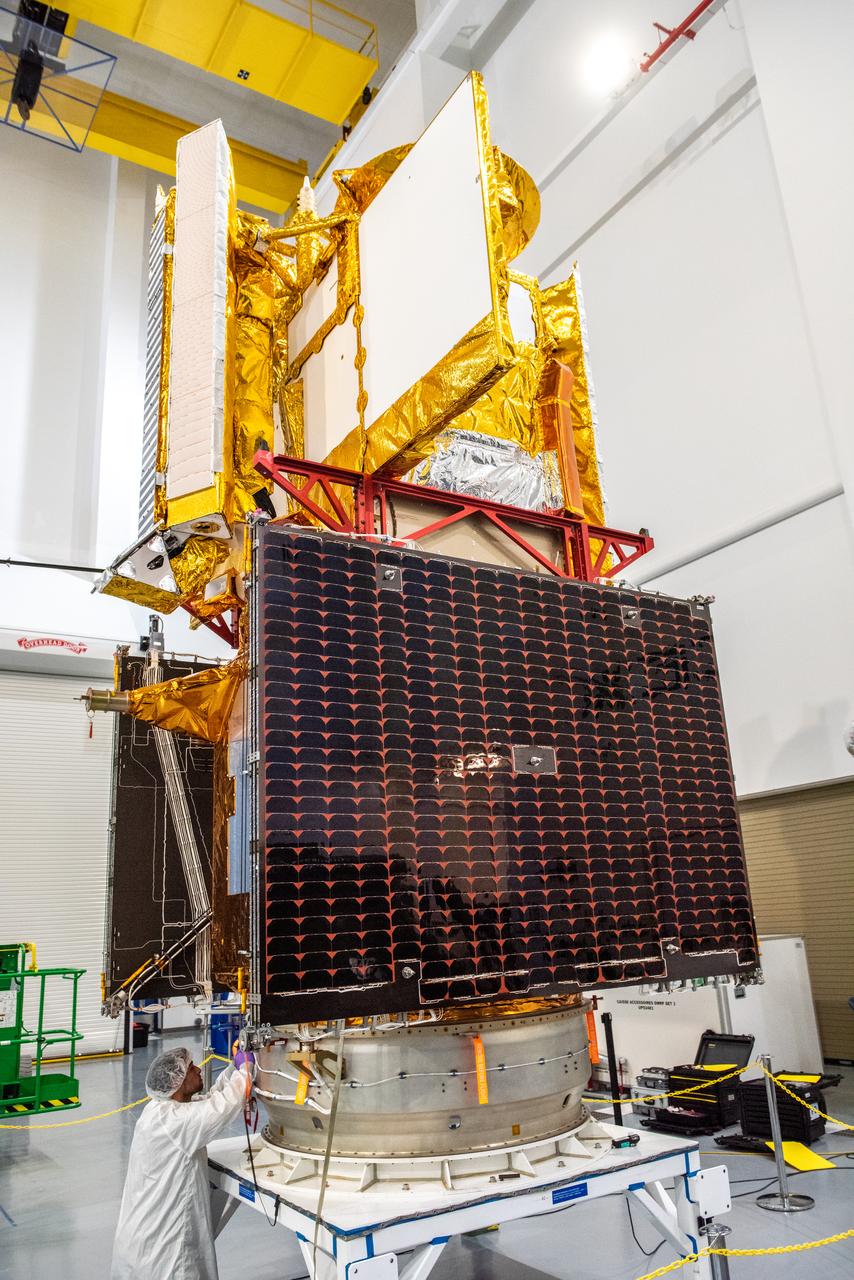
Inside the SpaceX facility at Vandenberg Space Force Base in California, a technician helps secure the Surface Water and Ocean Topography (SWOT) satellite onto the payload adapter on Dec. 5, 2022. A collaboration between NASA and the French space agency Centre National d’Études Spatiales (CNES), with contributions from the Canadian Space Agency and the UK Space Agency, SWOT will be the first satellite to survey nearly all water on Earth’s surface. SWOT is scheduled to lift off aboard the SpaceX Falcon 9 rocket from Vandenberg on Dec. 15, 2022, at 3:46 a.m. PST.
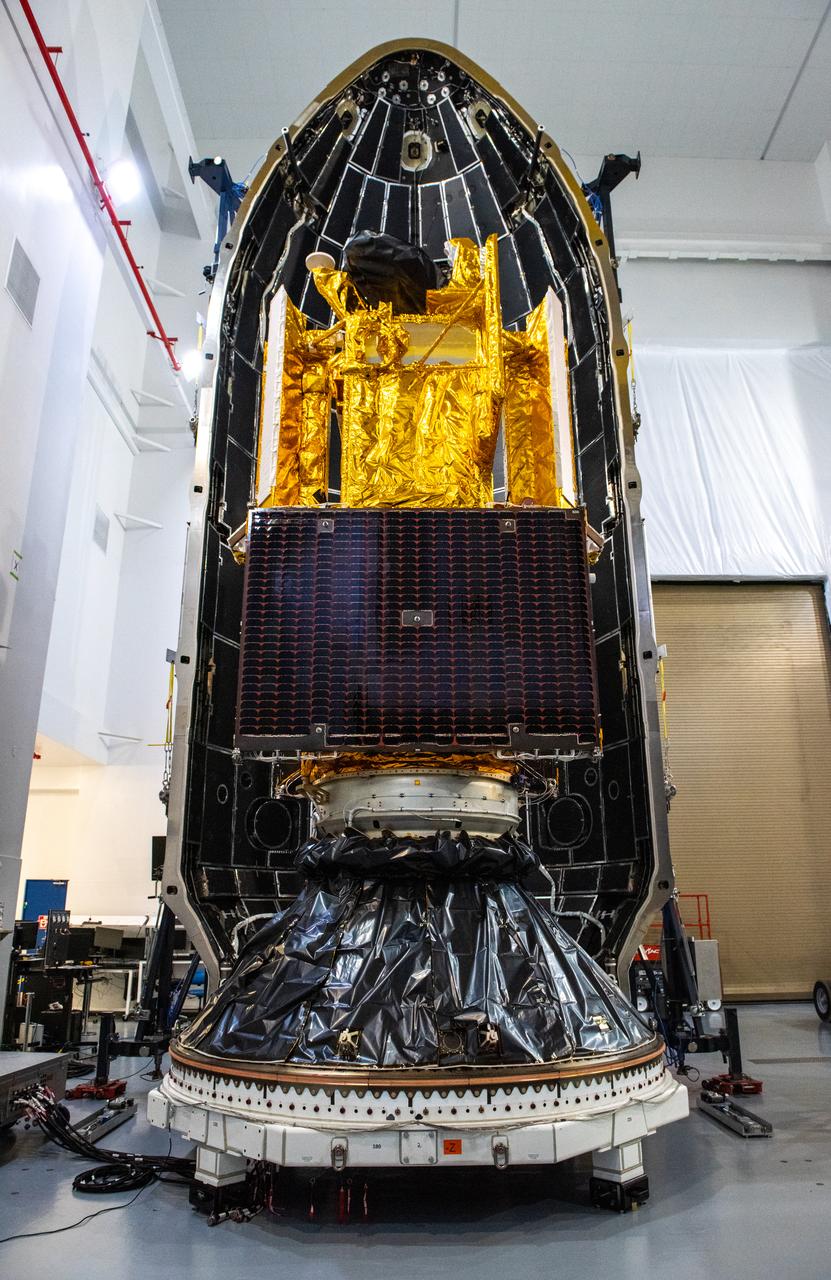
Inside the SpaceX facility at Vandenberg Space Force Base in California, the first half of the SpaceX Falcon 9 payload fairing is moved around the Surface Water and Ocean Topography (SWOT) satellite on Dec. 8, 2022. A collaboration between NASA and the French space agency Centre National d’Études Spatiales (CNES), with contributions from the Canadian Space Agency and the UK Space Agency, SWOT will be the first satellite to survey nearly all water on Earth’s surface. SWOT is scheduled to lift off aboard the SpaceX Falcon 9 rocket from Vandenberg on Dec. 15, 2022, at 3:46 a.m. PST.
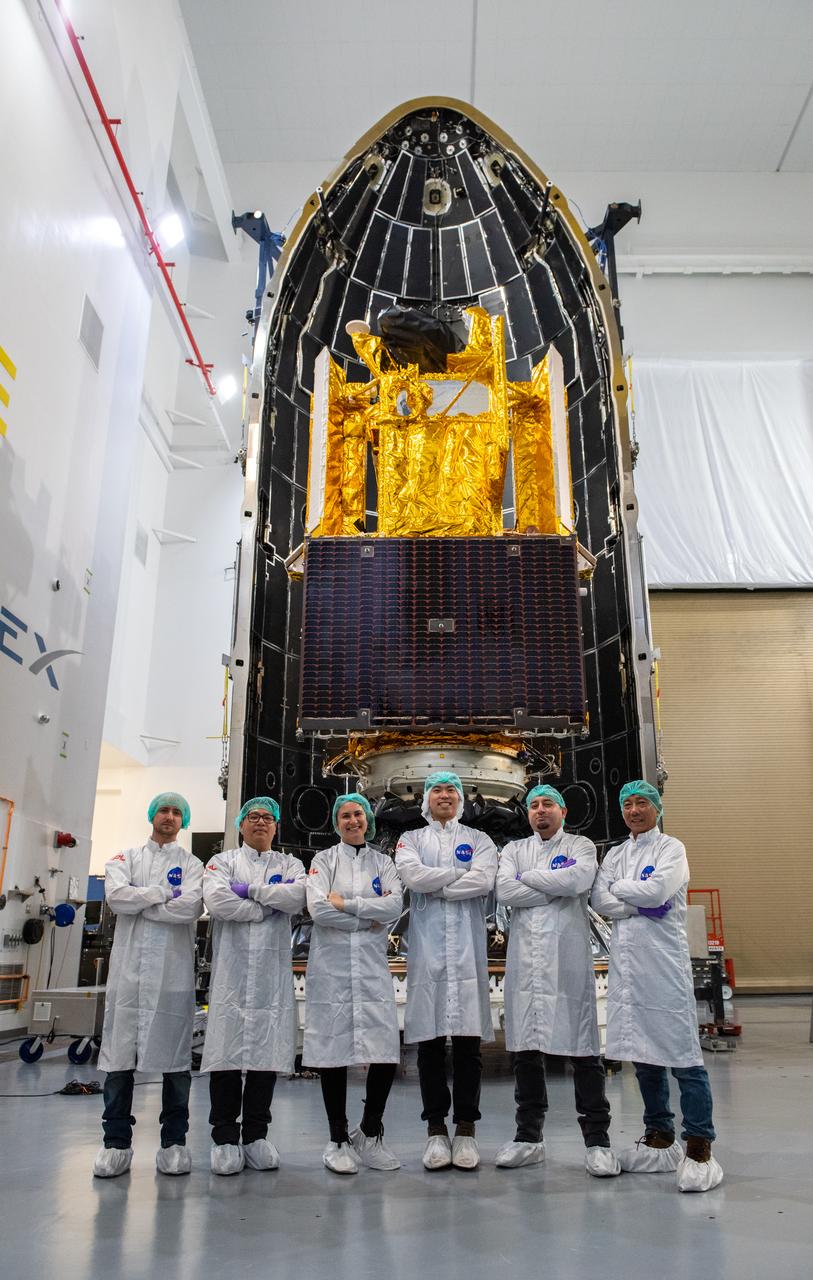
Inside the SpaceX facility at Vandenberg Space Force Base in California, the first half of the SpaceX Falcon 9 payload fairing is moved around the Surface Water and Ocean Topography (SWOT) satellite on Dec. 8, 2022. To mark the milestone, members of the processing team gather in front of the SWOT satellite. A collaboration between NASA and the French space agency Centre National d’Études Spatiales (CNES), with contributions from the Canadian Space Agency and the UK Space Agency, SWOT will be the first satellite to survey nearly all water on Earth’s surface. SWOT is scheduled to lift off aboard the SpaceX Falcon 9 rocket from Vandenberg on Dec. 15, 2022, at 3:46 a.m. PST.
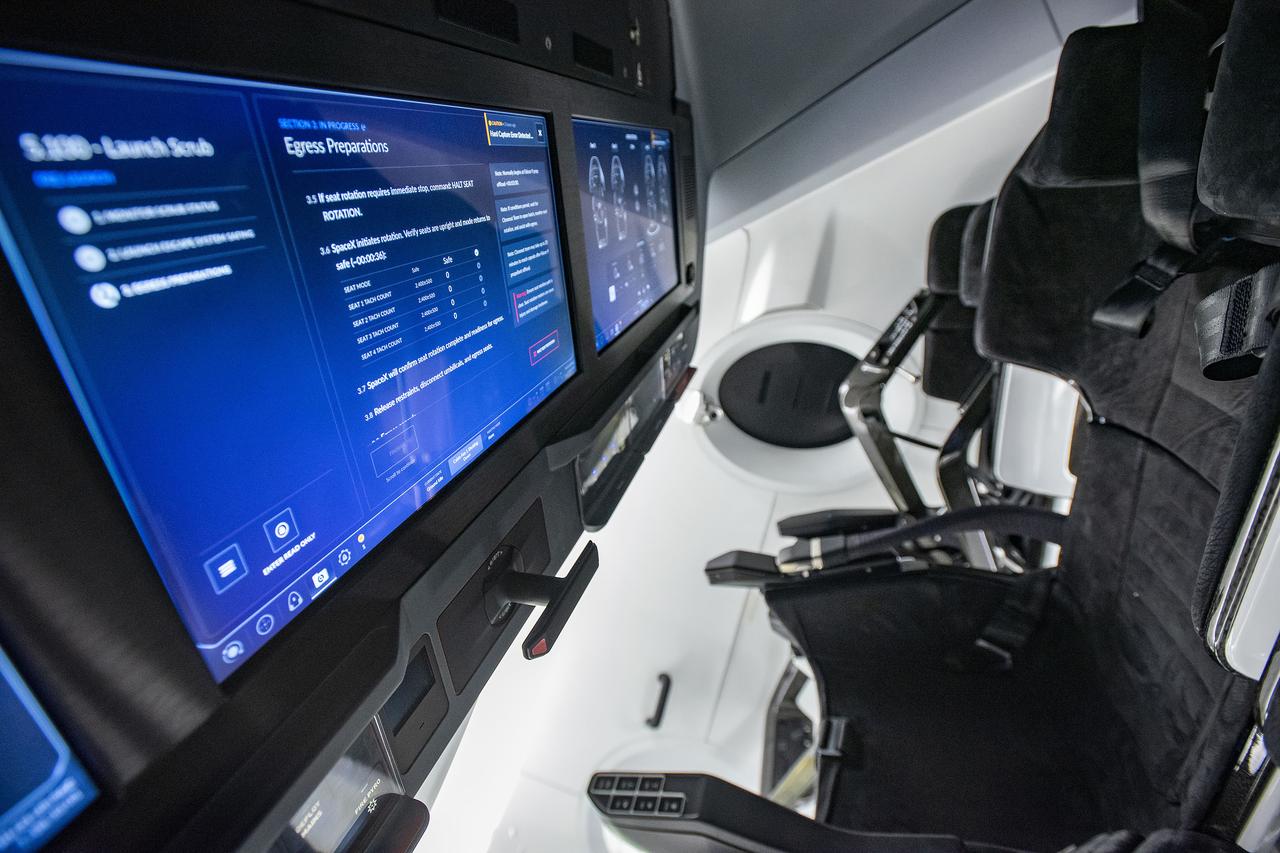
On Monday, March 30, 2020 at a SpaceX processing facility on Cape Canaveral Air Force Station in Florida, SpaceX successfully completed a fully integrated test of critical crew flight hardware ahead of Crew Dragon’s second demonstration mission to the International Space Station for NASA's Commercial Crew Program; the first flight test with astronauts onboard the spacecraft. NASA astronauts Bob Behnken and Doug Hurley participated in the test, which included flight suit leak checks, spacecraft sound verification, display panel and cargo bin inspections, seat hardware rotations, and more.
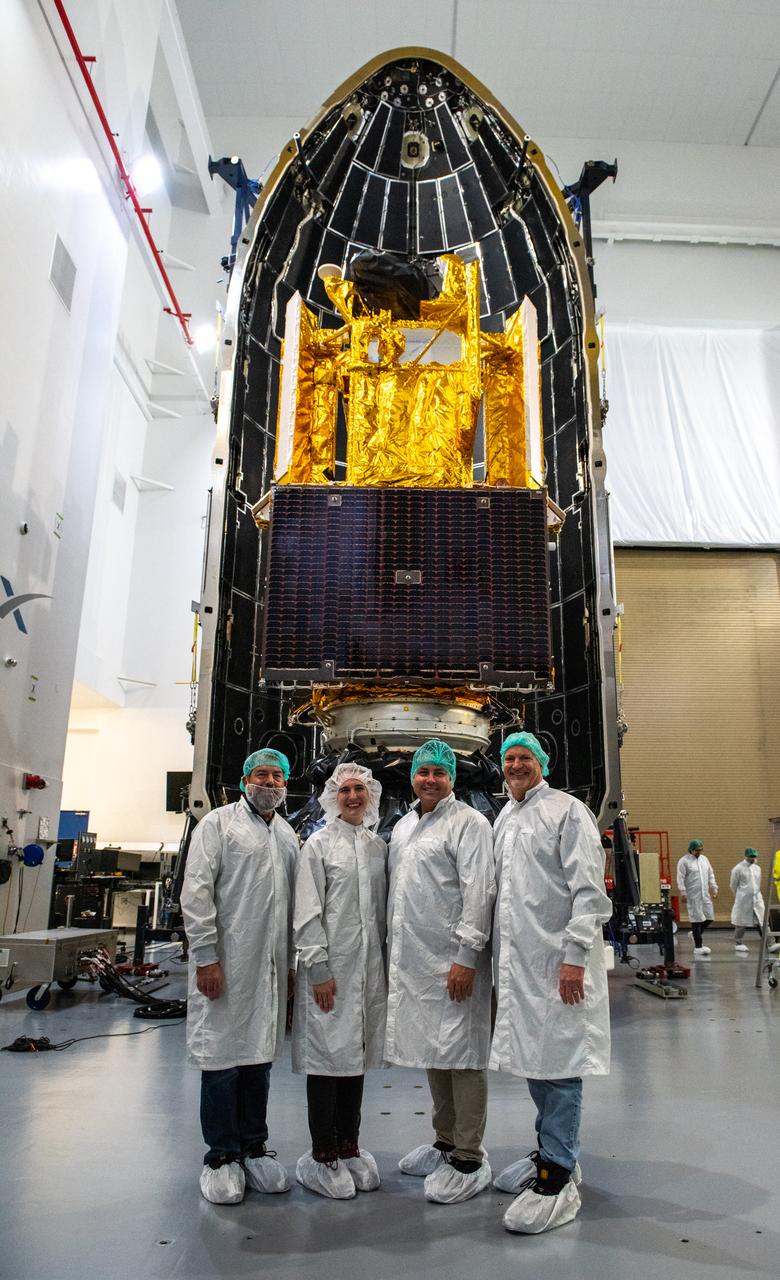
Inside the SpaceX facility at Vandenberg Space Force Base in California, the first half of the SpaceX Falcon 9 payload fairing is moved around the Surface Water and Ocean Topography (SWOT) satellite on Dec. 8, 2022. To mark the milestone, members of the processing team gather in front of the SWOT satellite. A collaboration between NASA and the French space agency Centre National d’Études Spatiales (CNES), with contributions from the Canadian Space Agency and the UK Space Agency, SWOT will be the first satellite to survey nearly all water on Earth’s surface. SWOT is scheduled to lift off aboard the SpaceX Falcon 9 rocket from Vandenberg on Dec. 15, 2022, at 3:46 a.m. PST.
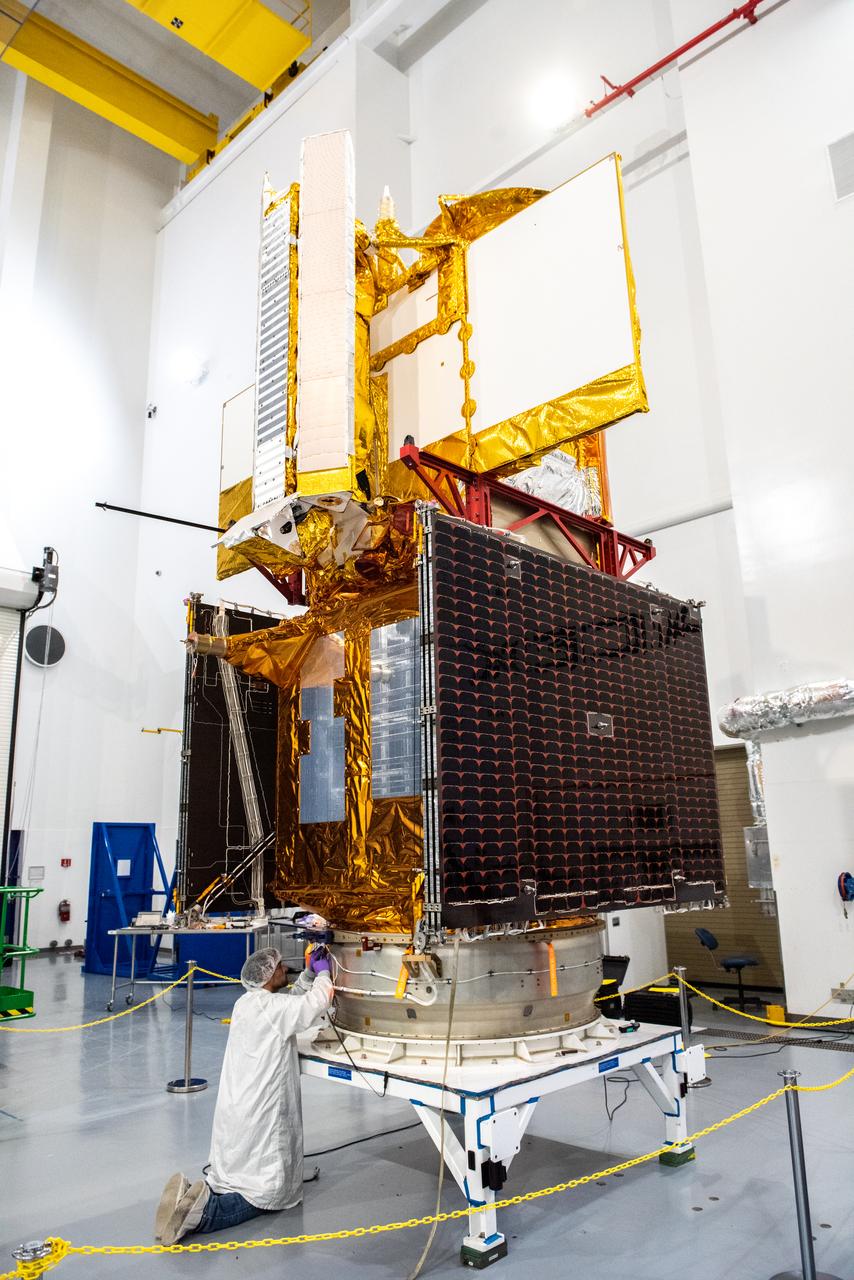
Inside the SpaceX facility at Vandenberg Space Force Base in California, a technician assists as a crane lowers the Surface Water and Ocean Topography (SWOT) satellite onto the payload adapter on Dec. 5, 2022. A collaboration between NASA and the French space agency Centre National d’Études Spatiales (CNES), with contributions from the Canadian Space Agency and the UK Space Agency, SWOT will be the first satellite to survey nearly all water on Earth’s surface. SWOT is scheduled to lift off aboard the SpaceX Falcon 9 rocket from Vandenberg on Dec. 15, 2022, at 3:46 a.m. PST.
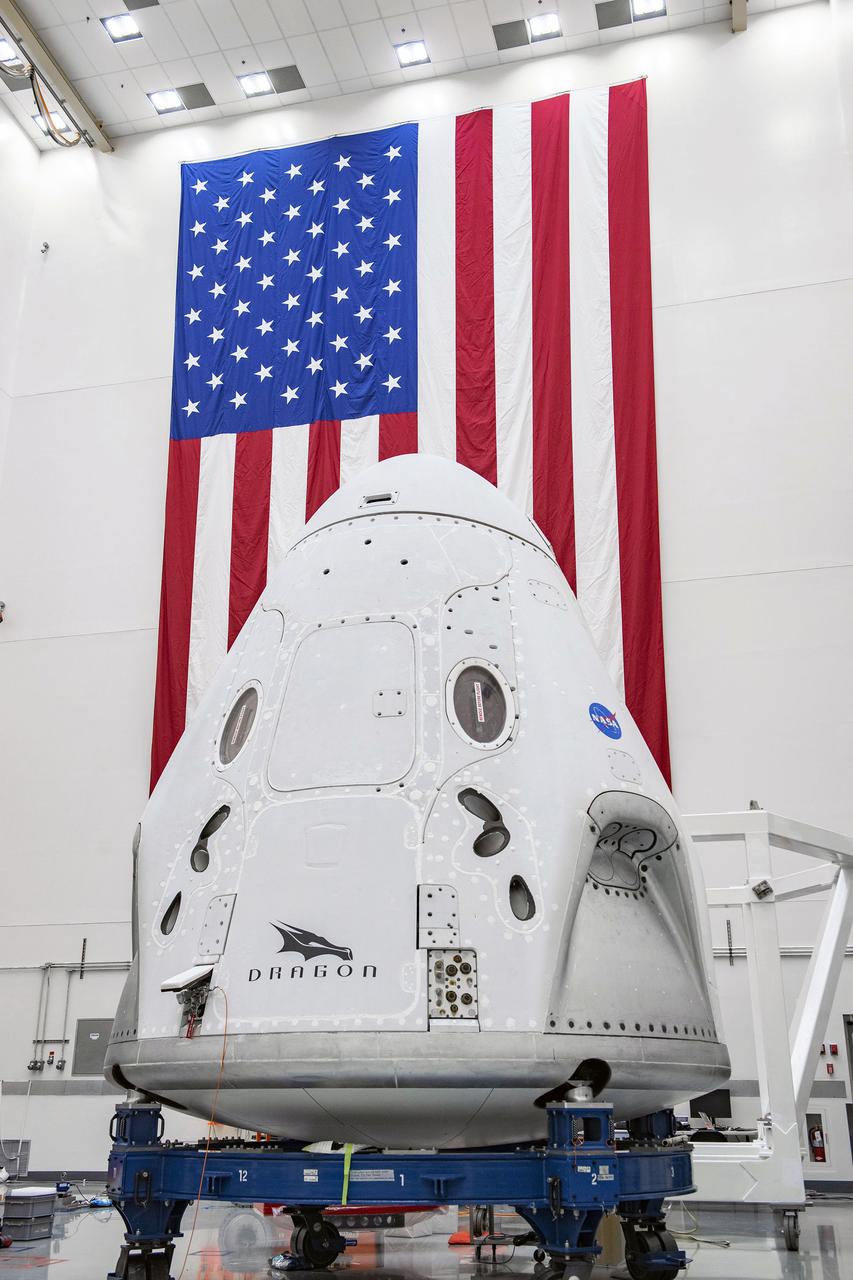
The SpaceX Crew Dragon spacecraft undergoes final processing at Cape Canaveral Air Force Station, Florida, in preparation for the Demo-2 launch with NASA astronauts Bob Behnken and Doug Hurley to the International Space Station for NASA’s Commercial Crew Program. Crew Dragon will carry Behnken and Hurley atop a Falcon 9 rocket, returning crew launches to the space station from U.S. soil for the first time since the Space Shuttle Program ended in 2011. Photo credit: SpaceX
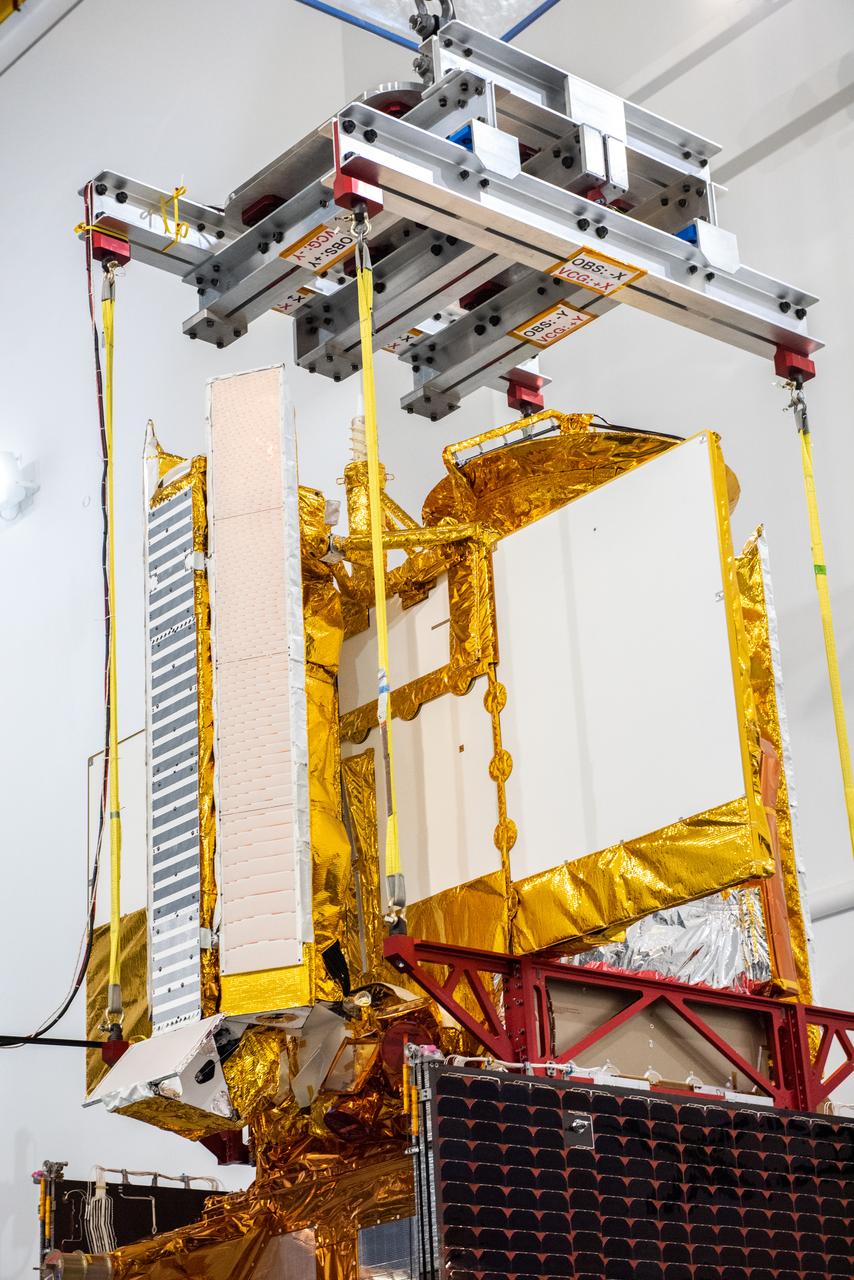
Inside the SpaceX facility at Vandenberg Space Force Base in California, a crane is used to lift the Surface Water and Ocean Topography (SWOT) satellite for mating to the payload adapter on Dec. 5, 2022. A collaboration between NASA and the French space agency Centre National d’Études Spatiales (CNES), with contributions from the Canadian Space Agency and the UK Space Agency, SWOT will be the first satellite to survey nearly all water on Earth’s surface. SWOT is scheduled to lift off aboard the SpaceX Falcon 9 rocket from Vandenberg on Dec. 15, 2022, at 3:46 a.m. PST.
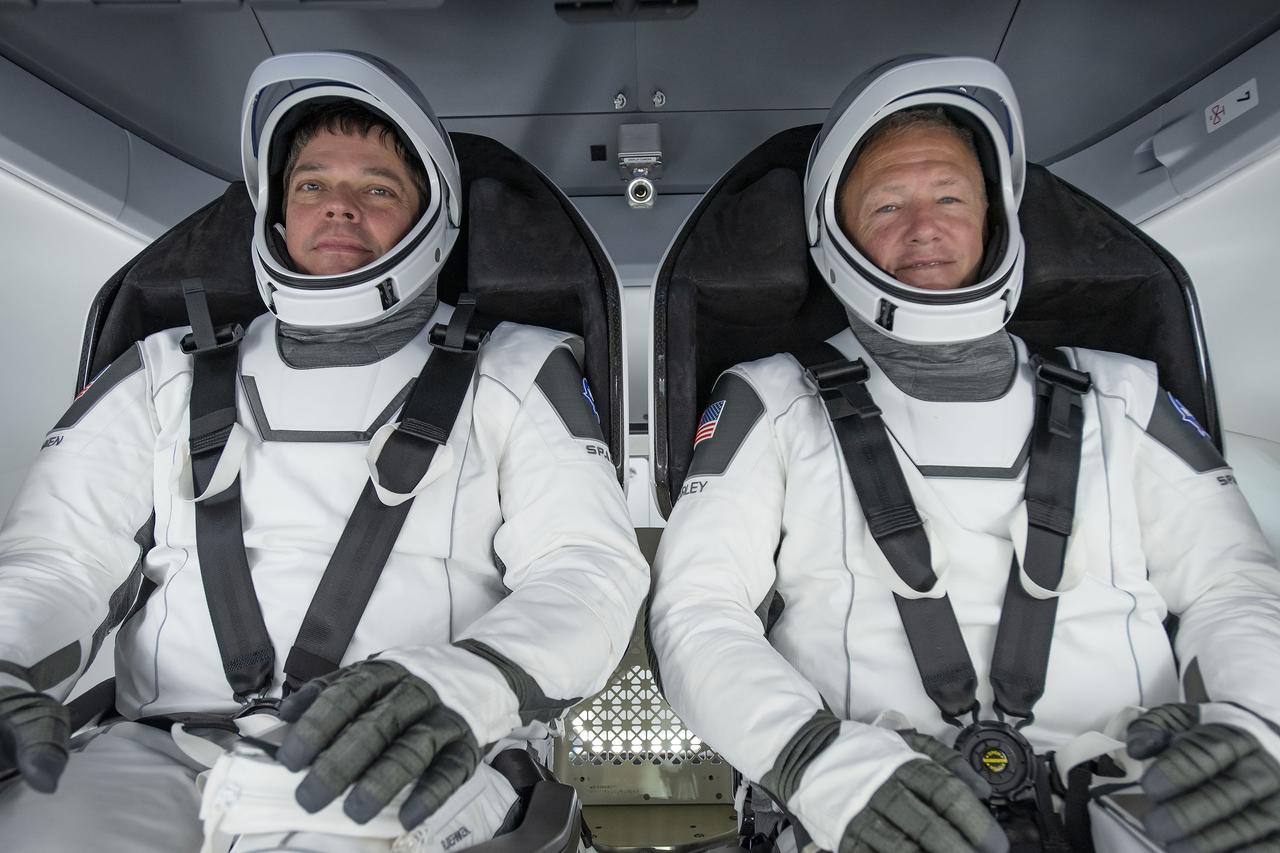
On Monday, March 30, 2020 at a SpaceX processing facility on Cape Canaveral Air Force Station in Florida, SpaceX successfully completed a fully integrated test of critical crew flight hardware ahead of Crew Dragon’s second demonstration mission to the International Space Station for NASA's Commercial Crew Program; the first flight test with astronauts onboard the spacecraft. NASA astronauts Bob Behnken and Doug Hurley participated in the test, which included flight suit leak checks, spacecraft sound verification, display panel and cargo bin inspections, seat hardware rotations, and more.

The Nanoracks Bishop Airlock is packed in the Dragon spacecraft’s trunk on Oct. 12, 2020, inside SpaceX’s processing facility at NASA’s Kennedy Space Center in Florida for its ride to the International Space Station aboard the company’s 21st Commercial Resupply Services (CRS-21) mission. The first commercially funded airlock for the orbiting laboratory, it will provide payload hosting, robotics testing, satellite deployment, serve as an outside toolbox for station crew spacewalks, and more. CRS-21 is scheduled to launch on a SpaceX Falcon 9 from Kennedy’s Launch Complex 39A.
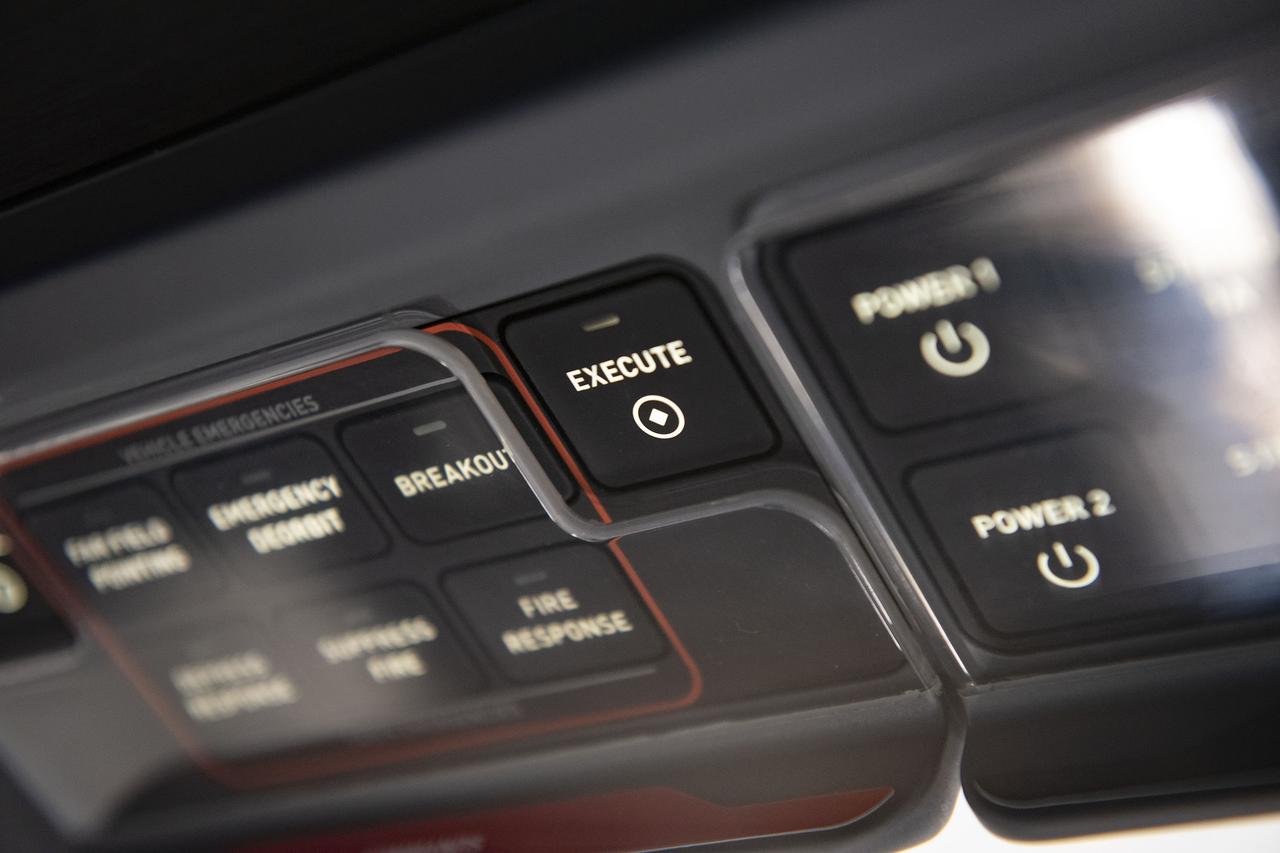
On Monday, March 30, 2020 at a SpaceX processing facility on Cape Canaveral Air Force Station in Florida, SpaceX successfully completed a fully integrated test of critical crew flight hardware ahead of Crew Dragon’s second demonstration mission to the International Space Station for NASA's Commercial Crew Program; the first flight test with astronauts onboard the spacecraft. NASA astronauts Bob Behnken and Doug Hurley participated in the test, which included flight suit leak checks, spacecraft sound verification, display panel and cargo bin inspections, seat hardware rotations, and more.
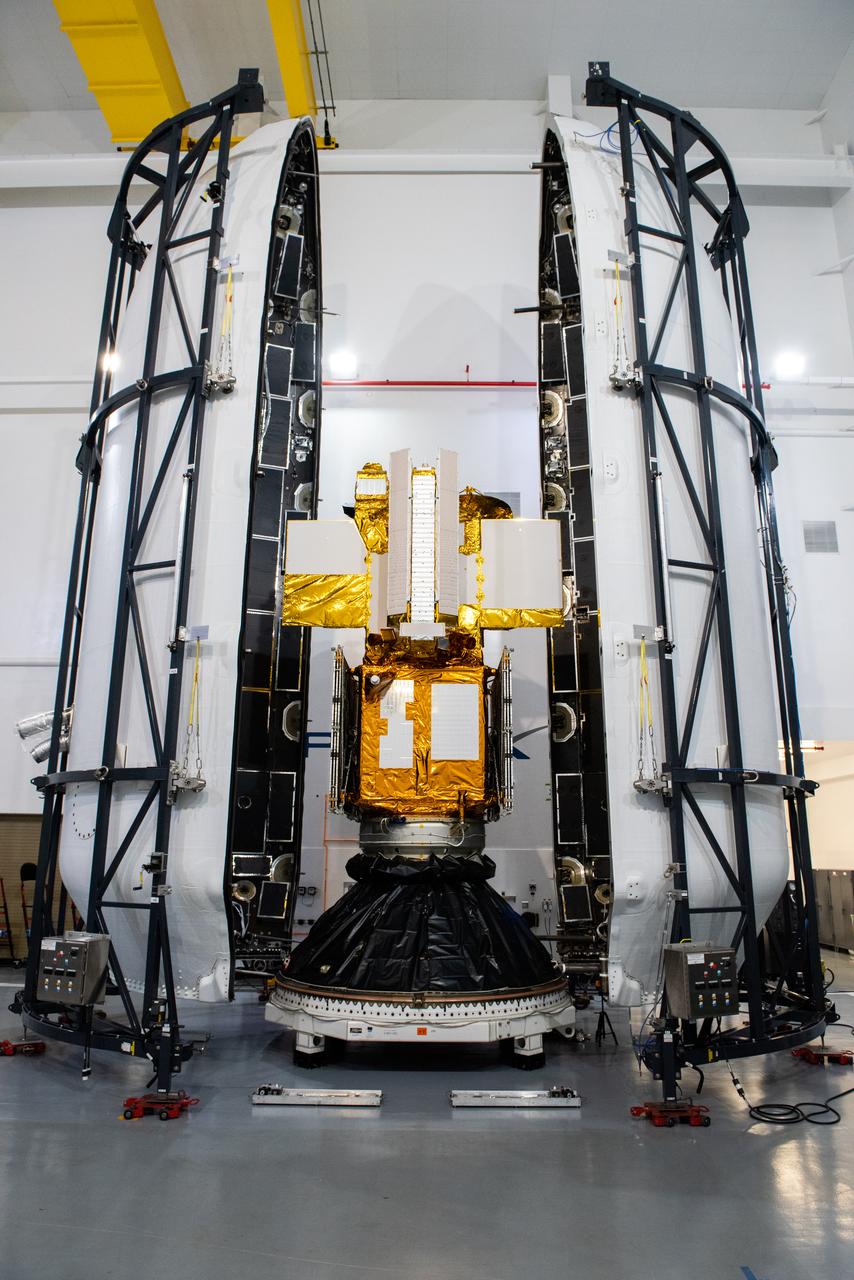
Inside the SpaceX facility at Vandenberg Space Force Base in California, both halves of the SpaceX Falcon 9 payload fairing are moved to enclose the Surface Water and Ocean Topography (SWOT) satellite on Dec. 8, 2022. A collaboration between NASA and the French space agency Centre National d’Études Spatiales (CNES), with contributions from the Canadian Space Agency and the UK Space Agency, SWOT will be the first satellite to survey nearly all water on Earth’s surface. SWOT is scheduled to lift off aboard the SpaceX Falcon 9 rocket from Vandenberg on Dec. 15, 2022, at 3:46 a.m. PST.