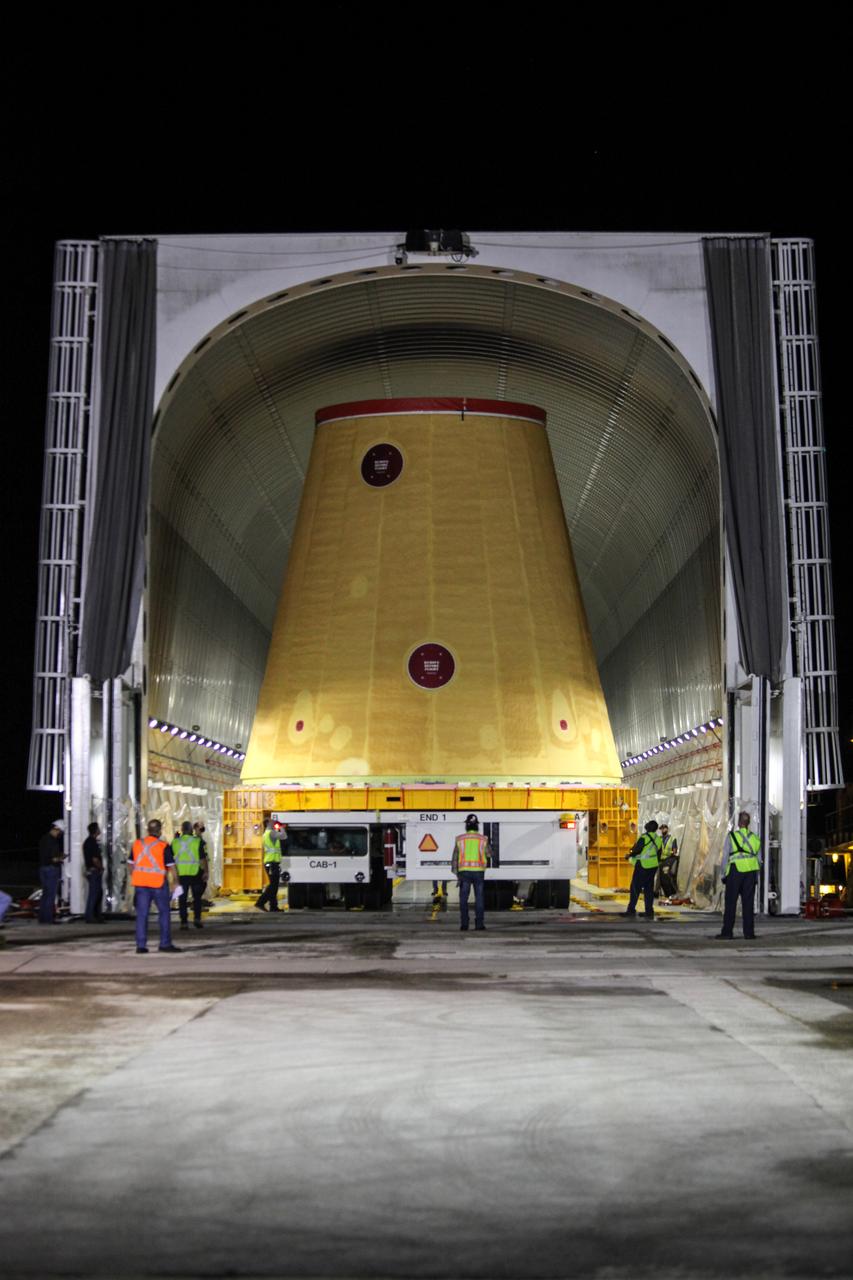
Technicians with NASA’s Exploration Ground Systems prepare to offload the launch vehicle stage adapter (LVSA) for the agency’s Space Launch System (SLS) rocket and move it to the Vehicle Assembly Building (VAB) at NASA’s Kennedy Space Center in Florida on July 30, 2020, for processing. Carried by NASA’s Pegasus barge, the LVSA arrived at Kennedy’s Launch Complex 39 turn basin wharf after departing from the agency’s Marshall Space Flight Center in Huntsville, Alabama. The LVSA will connect the SLS core stage to the rocket’s upper stage and will remain in the VAB until it’s time for stacking on the mobile launcher ahead of the Artemis I launch. The first in a series of increasingly complex missions, Artemis I will test SLS and the Orion spacecraft as an integrated system prior to crewed flights to the Moon.
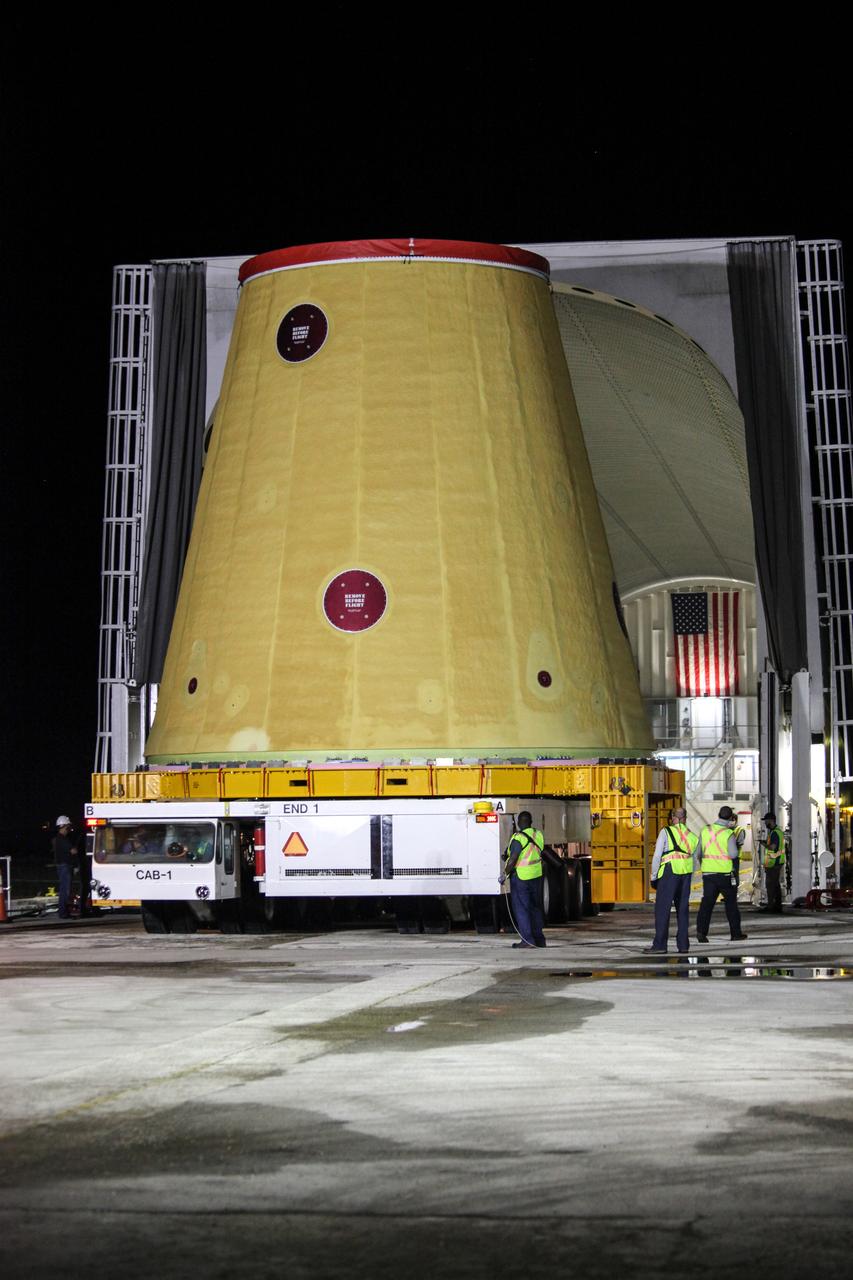
Technicians with NASA’s Exploration Ground Systems move the launch vehicle stage adapter (LVSA) for the agency’s Space Launch System (SLS) rocket off of the Pegasus barge for transportation to the Vehicle Assembly Building (VAB) at NASA’s Kennedy Space Center in Florida on July 30, 2020, for processing. The LVSA arrived at Kennedy’s Launch Complex 39 turn basin wharf after departing from the agency’s Marshall Space Flight Center in Huntsville, Alabama. The LVSA will connect the SLS core stage to the rocket’s upper stage and will remain in the VAB until it’s time for stacking on the mobile launcher ahead of the Artemis I launch. The first in a series of increasingly complex missions, Artemis I will test SLS and the Orion spacecraft as an integrated system prior to crewed flights to the Moon.
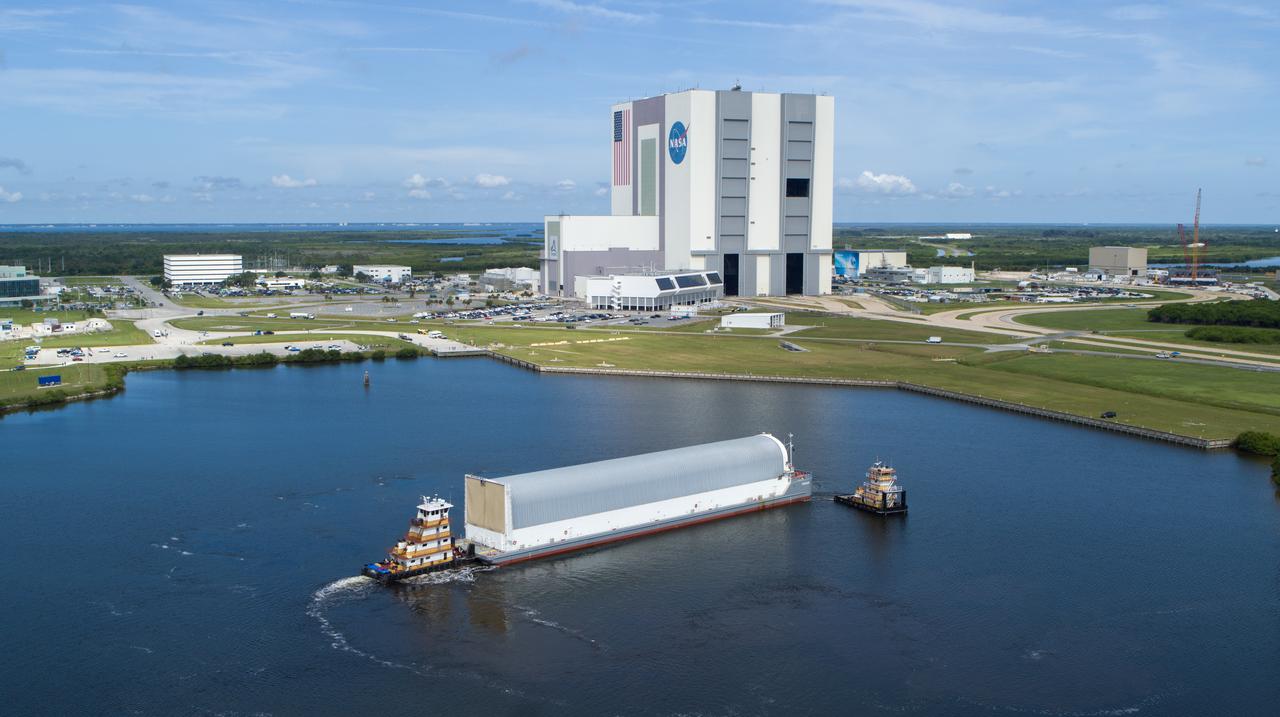
In this aerial view, NASA’s Pegasus barge, carrying the agency’s massive SLS (Space Launch System) core stage, arrives at NASA’s Kennedy Space Center Complex 39 turn basin wharf in Florida on Tuesday, July 23, 2024, after journeying from the agency’s Michoud Assembly Facility in New Orleans. The core stage is the next piece of Artemis hardware to arrive at the spaceport and will be offloaded and moved to NASA Kennedy’s Vehicle Assembly Building, where it will be prepared for integration ahead of the Artemis II launch.
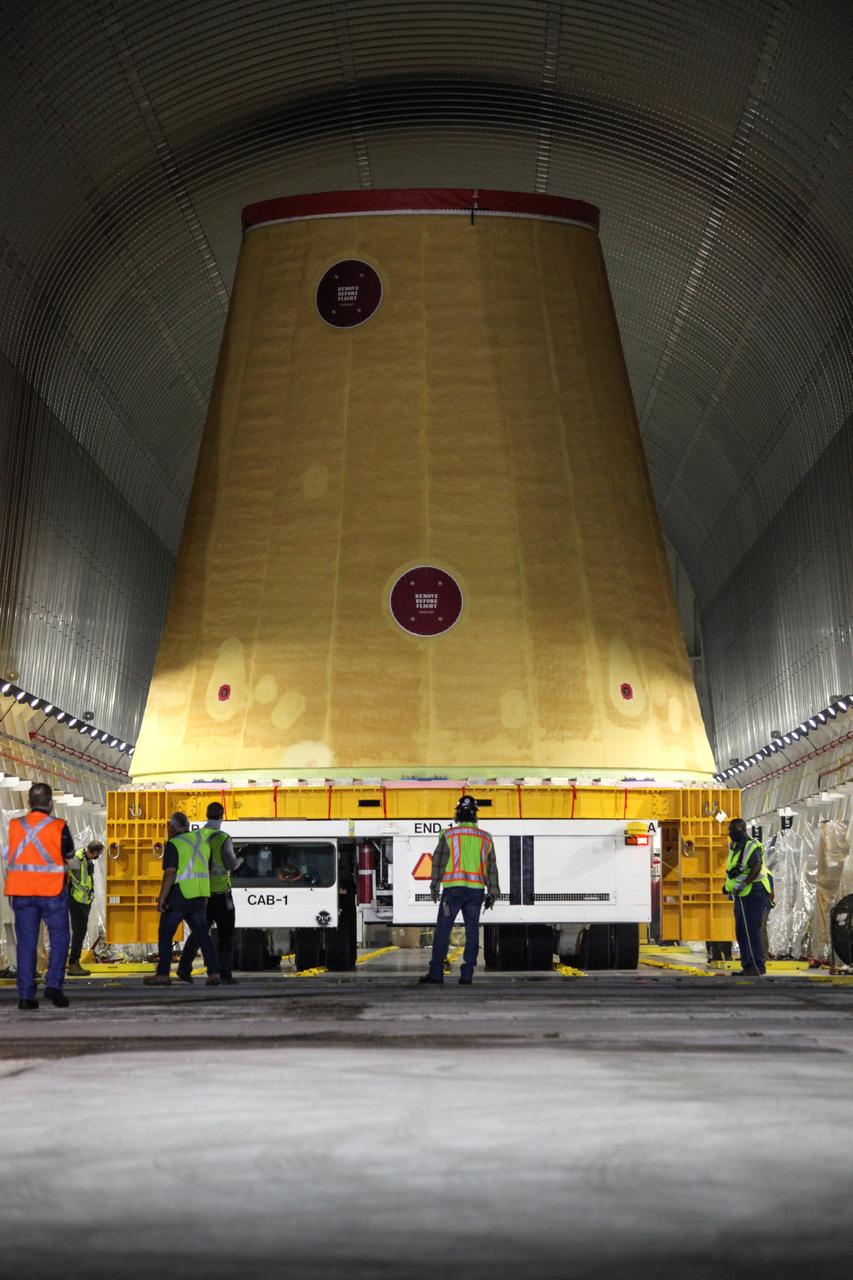
Technicians with NASA’s Exploration Ground Systems prepare to offload the launch vehicle stage adapter (LVSA) for the agency’s Space Launch System (SLS) rocket and move it to the Vehicle Assembly Building (VAB) at NASA’s Kennedy Space Center in Florida on July 30, 2020, for processing. Carried by NASA’s Pegasus barge, the LVSA arrived at Kennedy’s Launch Complex 39 turn basin wharf after departing from the agency’s Marshall Space Flight Center in Huntsville, Alabama. The LVSA will connect the SLS core stage to the rocket’s upper stage and will remain in the VAB until it’s time for stacking on the mobile launcher ahead of the Artemis I launch. The first in a series of increasingly complex missions, Artemis I will test SLS and the Orion spacecraft as an integrated system prior to crewed flights to the Moon.
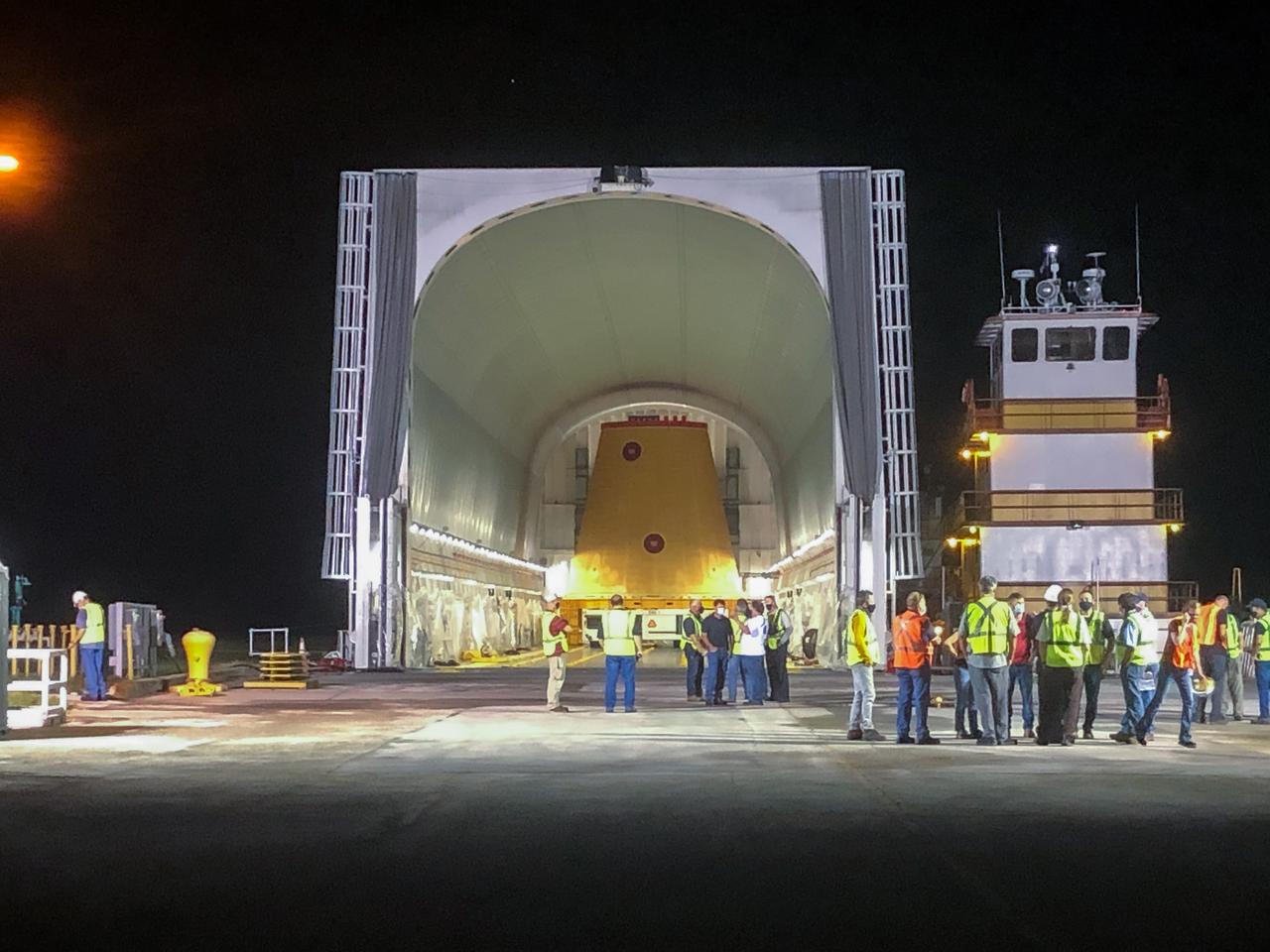
Technicians with NASA’s Exploration Ground Systems prepare to offload the launch vehicle stage adapter (LVSA) for the agency’s Space Launch System (SLS) rocket and move it to the Vehicle Assembly Building (VAB) at NASA’s Kennedy Space Center in Florida on July 30, 2020, for processing. Carried by NASA’s Pegasus barge, the LVSA arrived at Kennedy’s Launch Complex 39 turn basin wharf after departing from the agency’s Marshall Space Flight Center in Huntsville, Alabama. The LVSA will connect the SLS core stage to the rocket’s upper stage and will remain in the VAB until it’s time for stacking on the mobile launcher ahead of the Artemis I launch. The first in a series of increasingly complex missions, Artemis I will test SLS and the Orion spacecraft as an integrated system prior to crewed flights to the Moon.
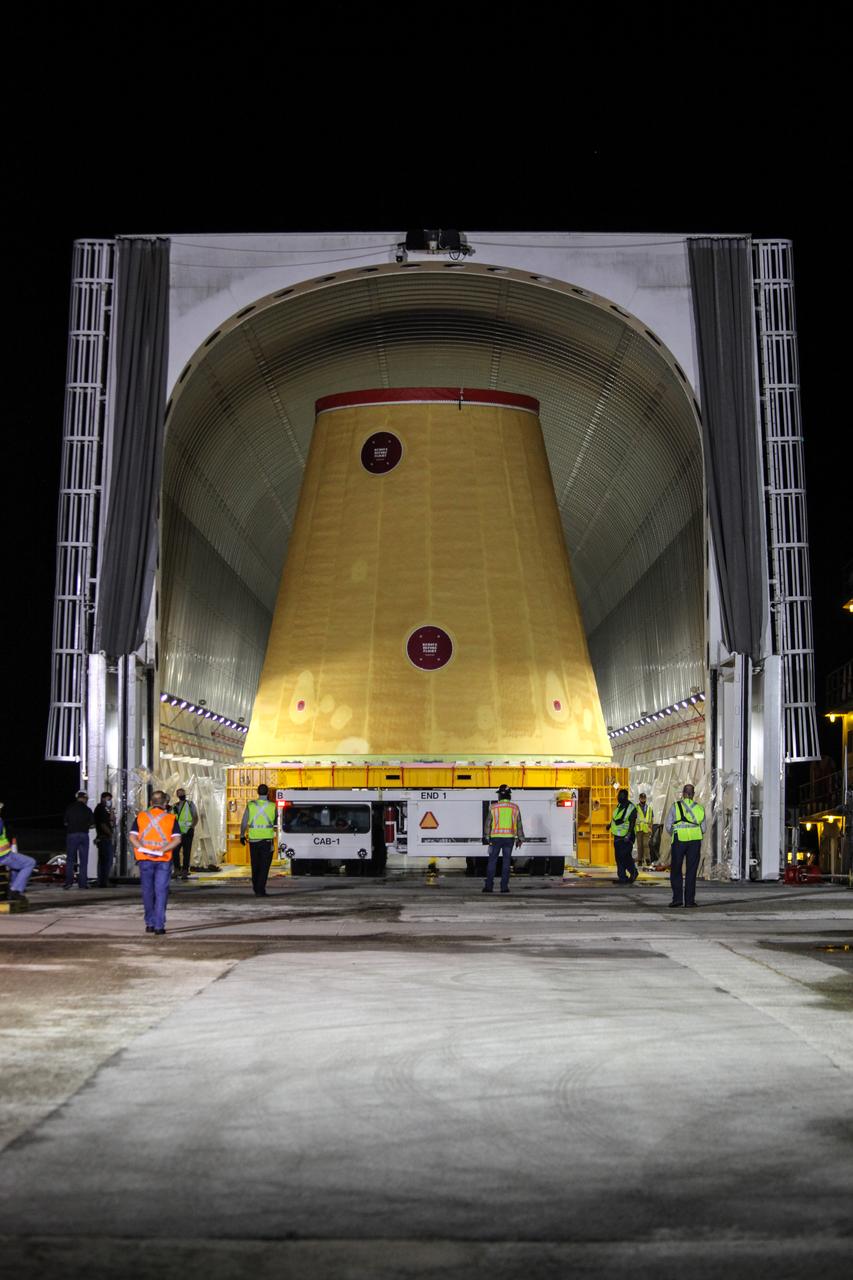
Technicians with NASA’s Exploration Ground Systems begin to offload the launch vehicle stage adapter (LVSA) for the agency’s Space Launch System (SLS) rocket and move it to the Vehicle Assembly Building (VAB) at NASA’s Kennedy Space Center in Florida on July 30, 2020, for processing. Carried by NASA’s Pegasus barge, the LVSA arrived at Kennedy’s Launch Complex 39 turn basin wharf after departing from the agency’s Marshall Space Flight Center in Huntsville, Alabama. The LVSA will connect the SLS core stage to the rocket’s upper stage and will remain in the VAB until it’s time for stacking on the mobile launcher ahead of the Artemis I launch. The first in a series of increasingly complex missions, Artemis I will test SLS and the Orion spacecraft as an integrated system prior to crewed flights to the Moon.
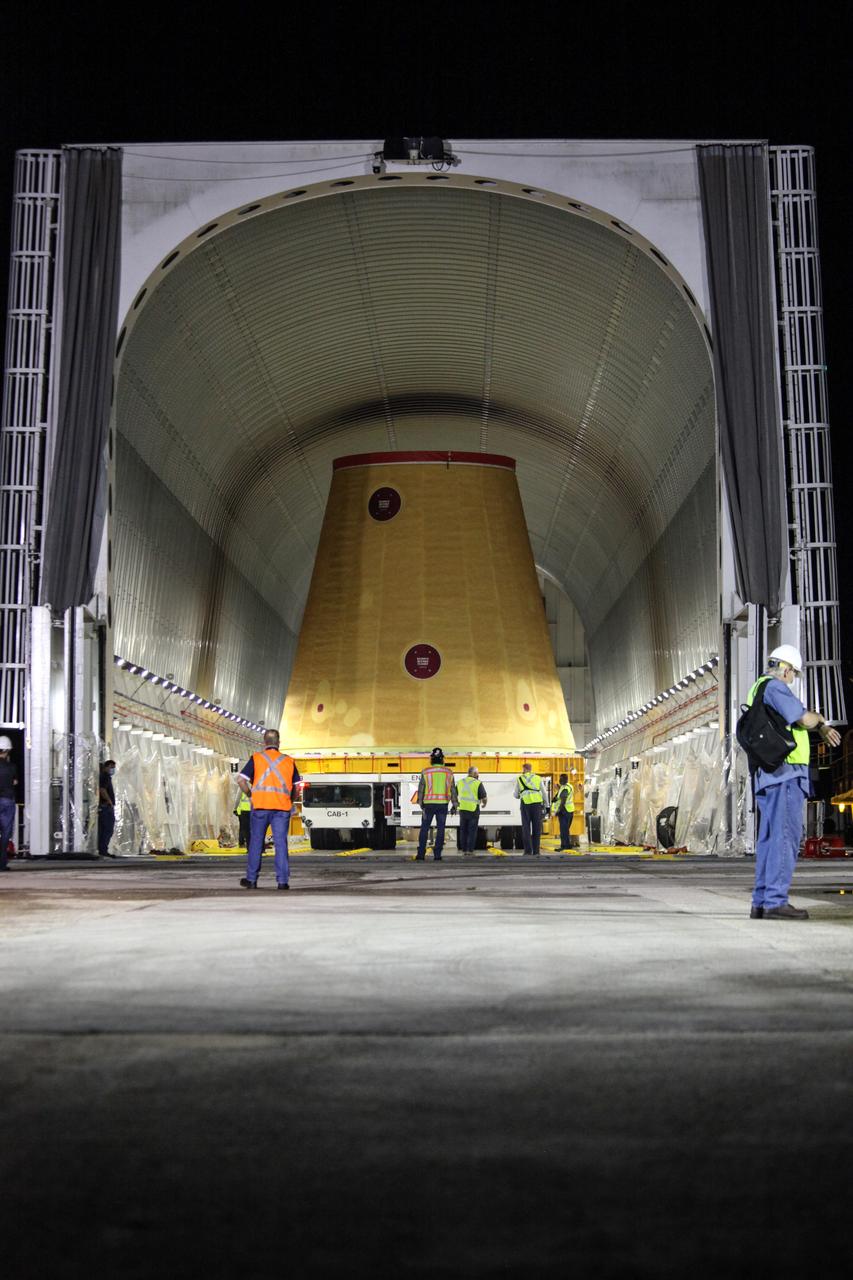
Technicians with NASA’s Exploration Ground Systems prepare to offload the launch vehicle stage adapter (LVSA) for the agency’s Space Launch System (SLS) rocket and move it to the Vehicle Assembly Building (VAB) at NASA’s Kennedy Space Center in Florida on July 30, 2020, for processing. Carried by NASA’s Pegasus barge, the LVSA arrived at Kennedy’s Launch Complex 39 turn basin wharf after departing from the agency’s Marshall Space Flight Center in Huntsville, Alabama. The LVSA will connect the SLS core stage to the rocket’s upper stage and will remain in the VAB until it’s time for stacking on the mobile launcher ahead of the Artemis I launch. The first in a series of increasingly complex missions, Artemis I will test SLS and the Orion spacecraft as an integrated system prior to crewed flights to the Moon.
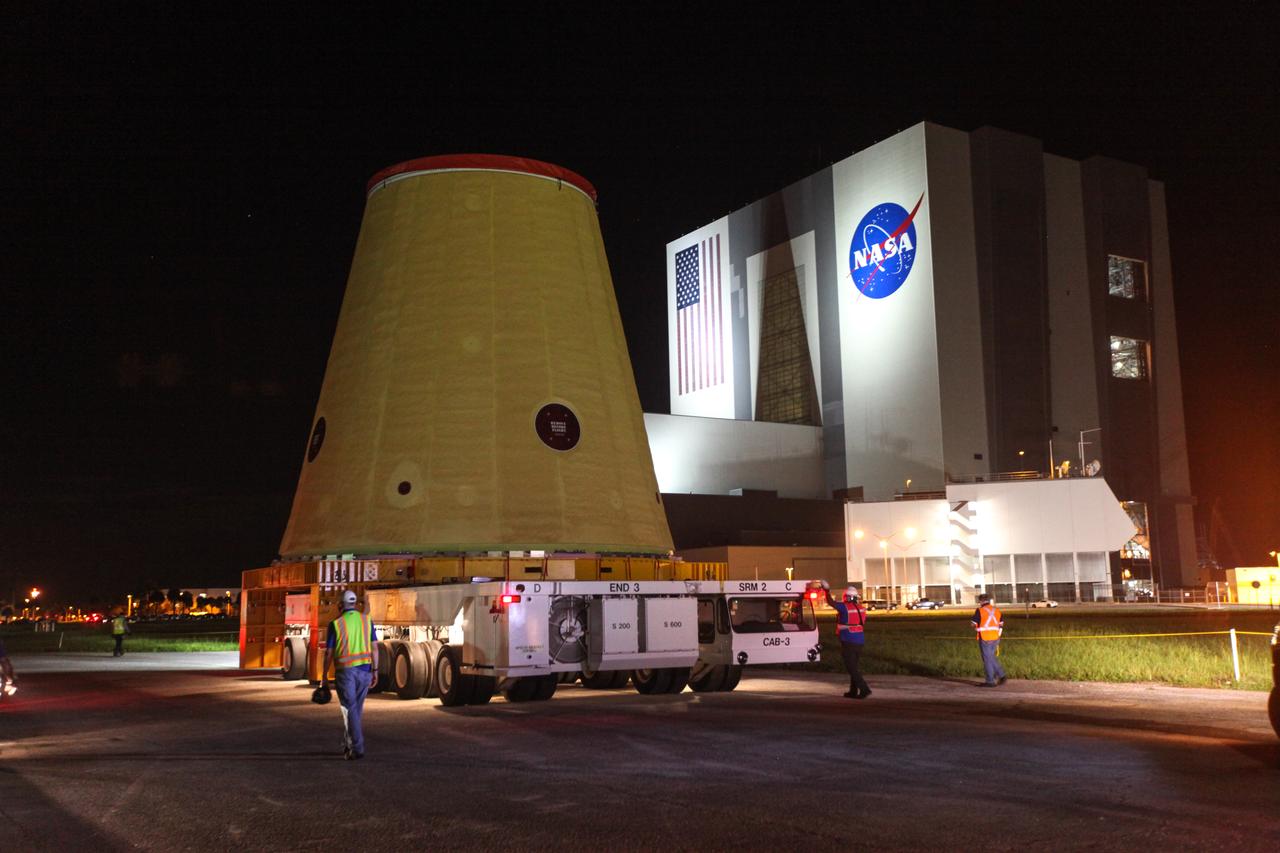
Technicians with NASA’s Exploration Ground Systems move the launch vehicle stage adapter (LVSA) for the agency’s Space Launch System (SLS) rocket to the Vehicle Assembly Building (VAB) at NASA’s Kennedy Space Center in Florida on July 30, 2020, for processing. Carried by NASA’s Pegasus barge, the LVSA arrived at Kennedy’s Launch Complex 39 turn basin wharf after departing from the agency’s Marshall Space Flight Center in Huntsville, Alabama. The LVSA will connect the SLS core stage to the rocket’s upper stage and will remain in the VAB until it’s time for stacking on the mobile launcher ahead of the Artemis I launch. The first in a series of increasingly complex missions, Artemis I will test SLS and the Orion spacecraft as an integrated system prior to crewed flights to the Moon.
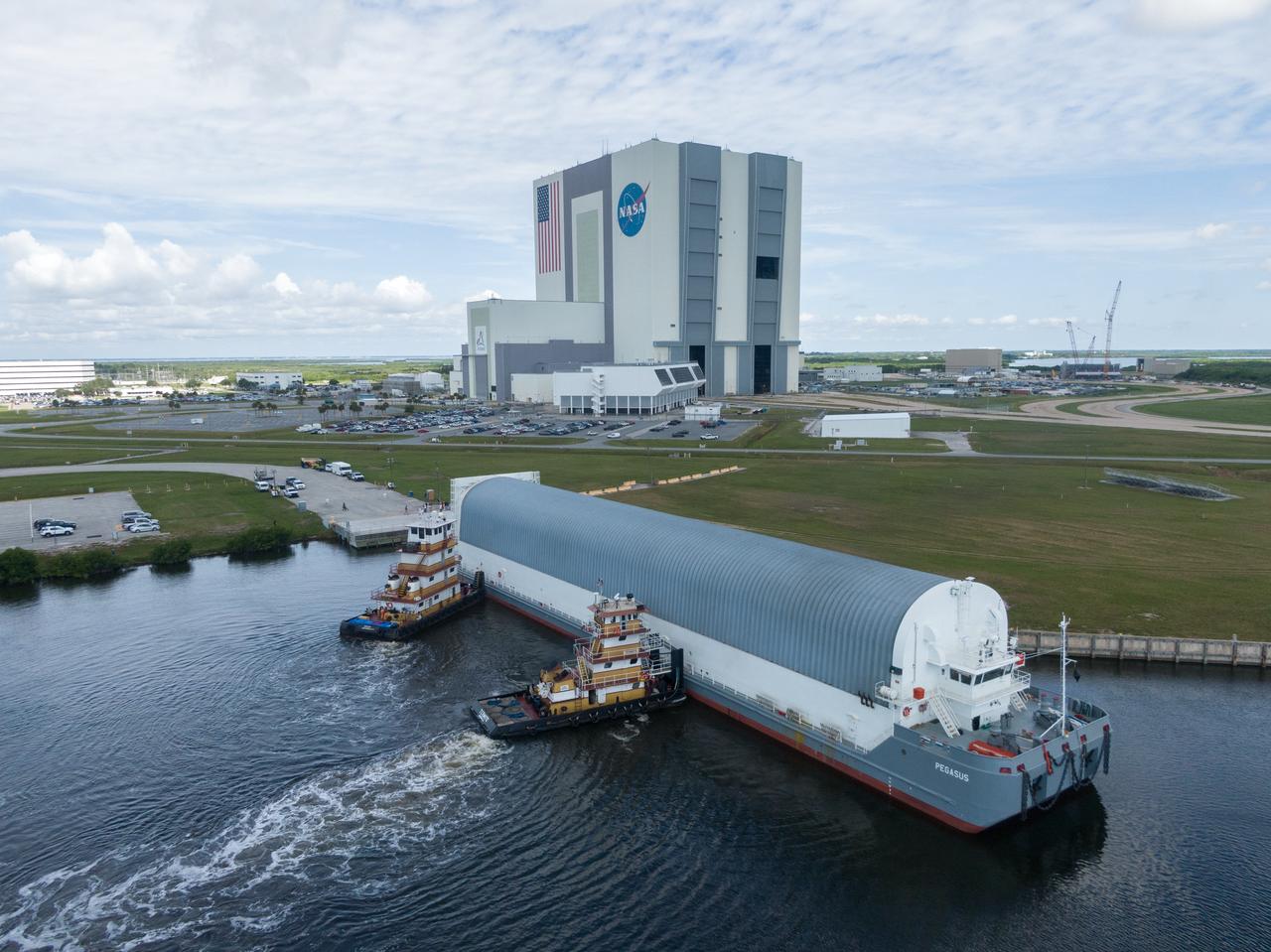
In this aerial view, NASA’s Pegasus barge, carrying the agency’s massive SLS (Space Launch System) core stage, arrives at NASA’s Kennedy Space Center Complex 39 turn basin wharf in Florida on Tuesday, July 23, 2024, after journeying from the agency’s Michoud Assembly Facility in New Orleans. The core stage is the next piece of Artemis hardware to arrive at the spaceport and will be offloaded and moved to NASA Kennedy’s Vehicle Assembly Building, where it will be prepared for integration ahead of the Artemis II launch.
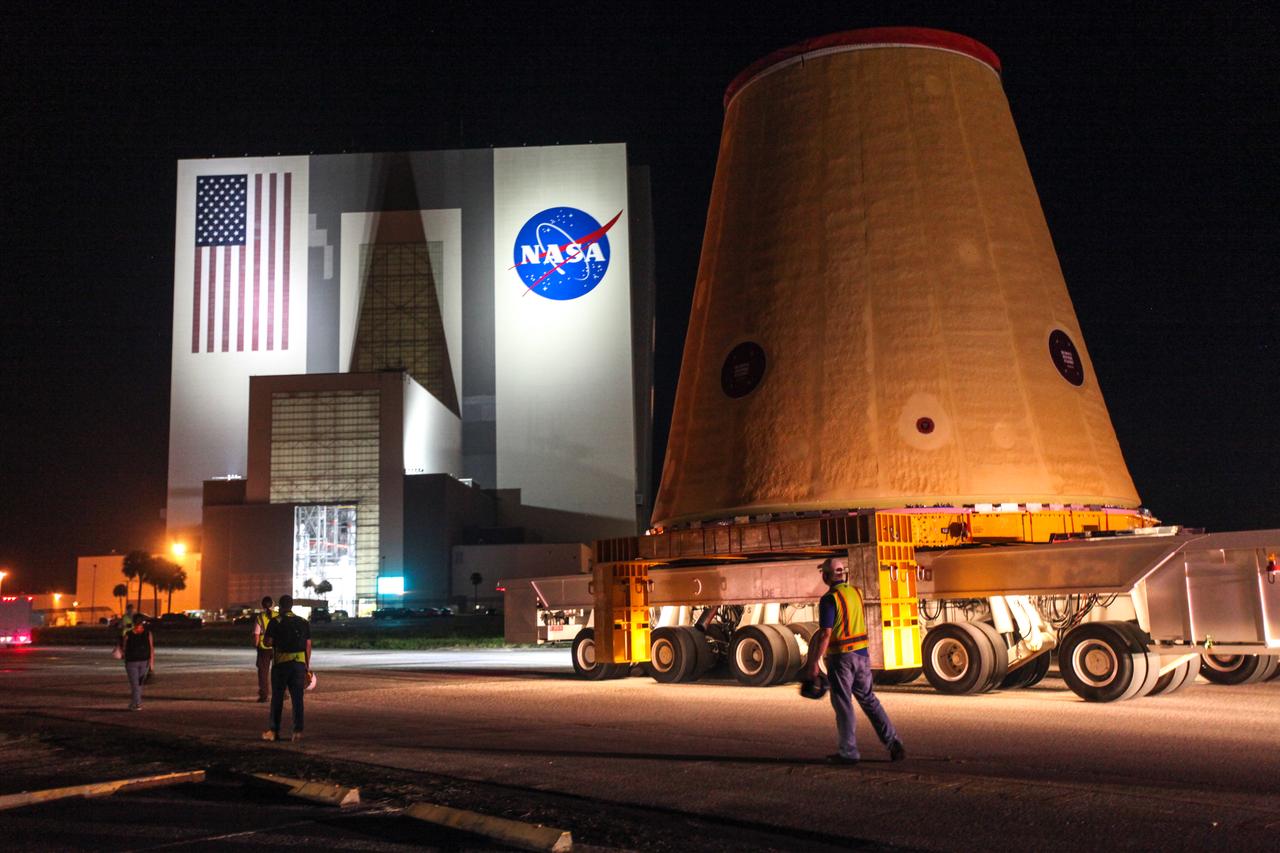
Technicians with NASA’s Exploration Ground Systems move the launch vehicle stage adapter (LVSA) for the agency’s Space Launch System (SLS) rocket to the Vehicle Assembly Building (VAB) on July 30, 2020, for processing. Carried by NASA’s Pegasus barge, the LVSA arrived at Kennedy Space Center’s Launch Complex 39 turn basin wharf after departing from the agency’s Marshall Space Flight Center in Huntsville, Alabama. The LVSA will connect the SLS core stage to the rocket’s upper stage and will remain in the VAB until it’s time for stacking on the mobile launcher ahead of the Artemis I launch. The first in a series of increasingly complex missions, Artemis I will test SLS and the Orion spacecraft as an integrated system prior to crewed flights to the Moon.
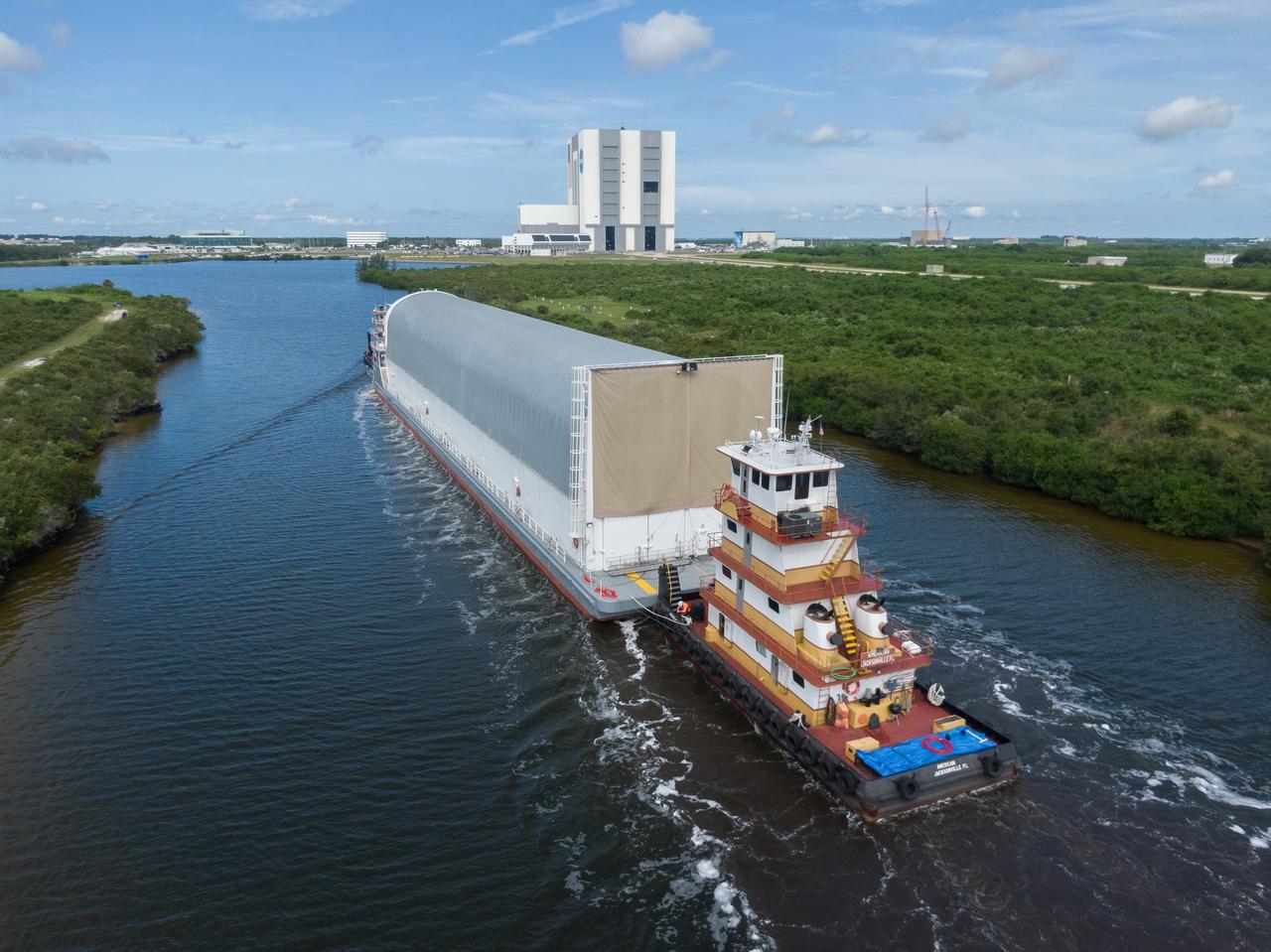
In this aerial view, NASA’s Pegasus barge, carrying the agency’s massive SLS (Space Launch System) core stage, arrives at NASA’s Kennedy Space Center Complex 39 turn basin wharf in Florida on Tuesday, July 23, 2024, after journeying from the agency’s Michoud Assembly Facility in New Orleans. The core stage is the next piece of Artemis hardware to arrive at the spaceport and will be offloaded and moved to NASA Kennedy’s Vehicle Assembly Building, where it will be prepared for integration ahead of the Artemis II launch.
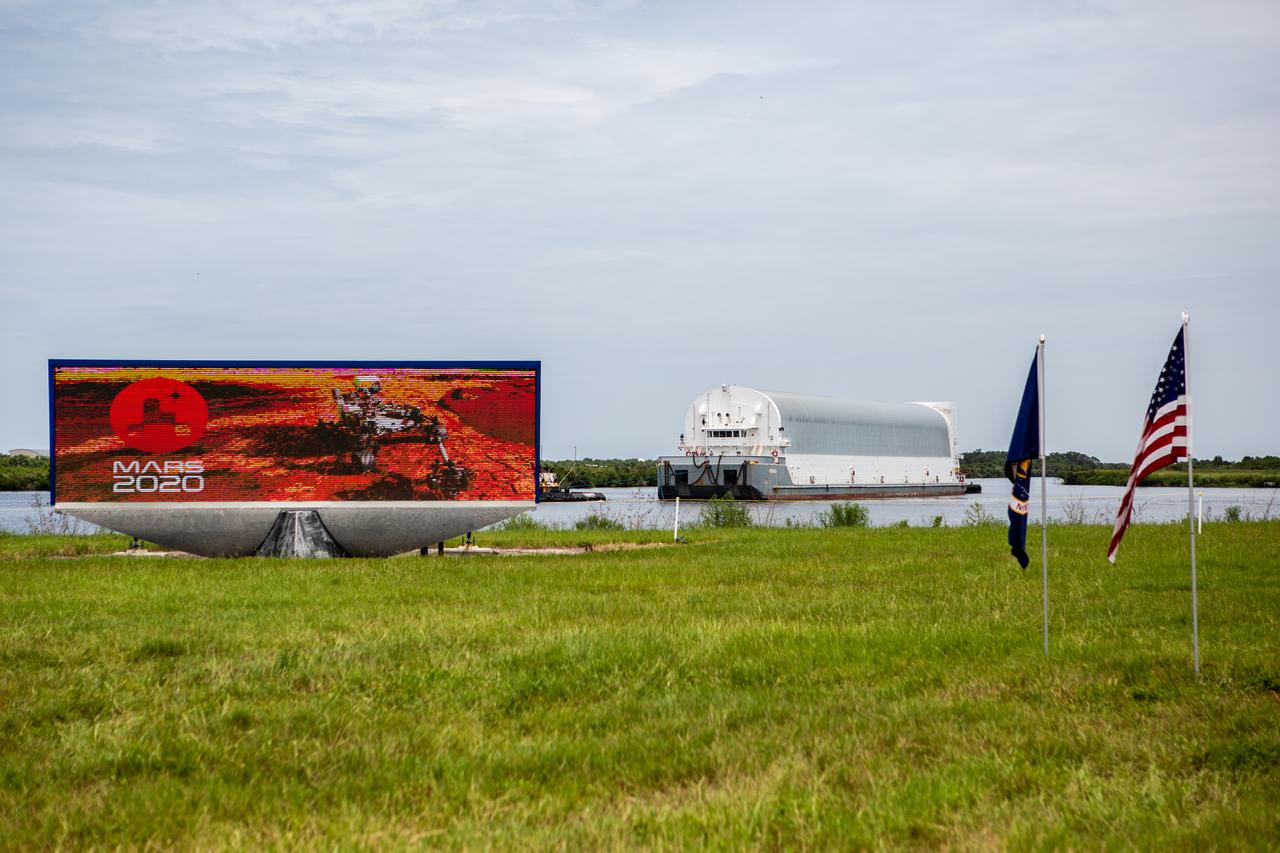
NASA’s Pegasus barge, carrying the launch vehicle stage adapter (LVSA) for the agency’s Space Launch System (SLS) rocket, approaches the Kennedy Space Center Launch Complex 39 turn basin wharf on July 29, 2020. Traveling to Florida from NASA’s Marshall Space Flight Center in Huntsville, Alabama, the LVSA will connect the SLS core stage to the rocket’s upper stage for the Artemis I launch. Once the LVSA is offloaded, it will be moved to High Bay 4 in the Vehicle Assembly Building for processing ahead of launch. The first launch under the agency’s Artemis program, Artemis I will test SLS and the Orion spacecraft as an integrated system prior to crewed flights to the Moon.
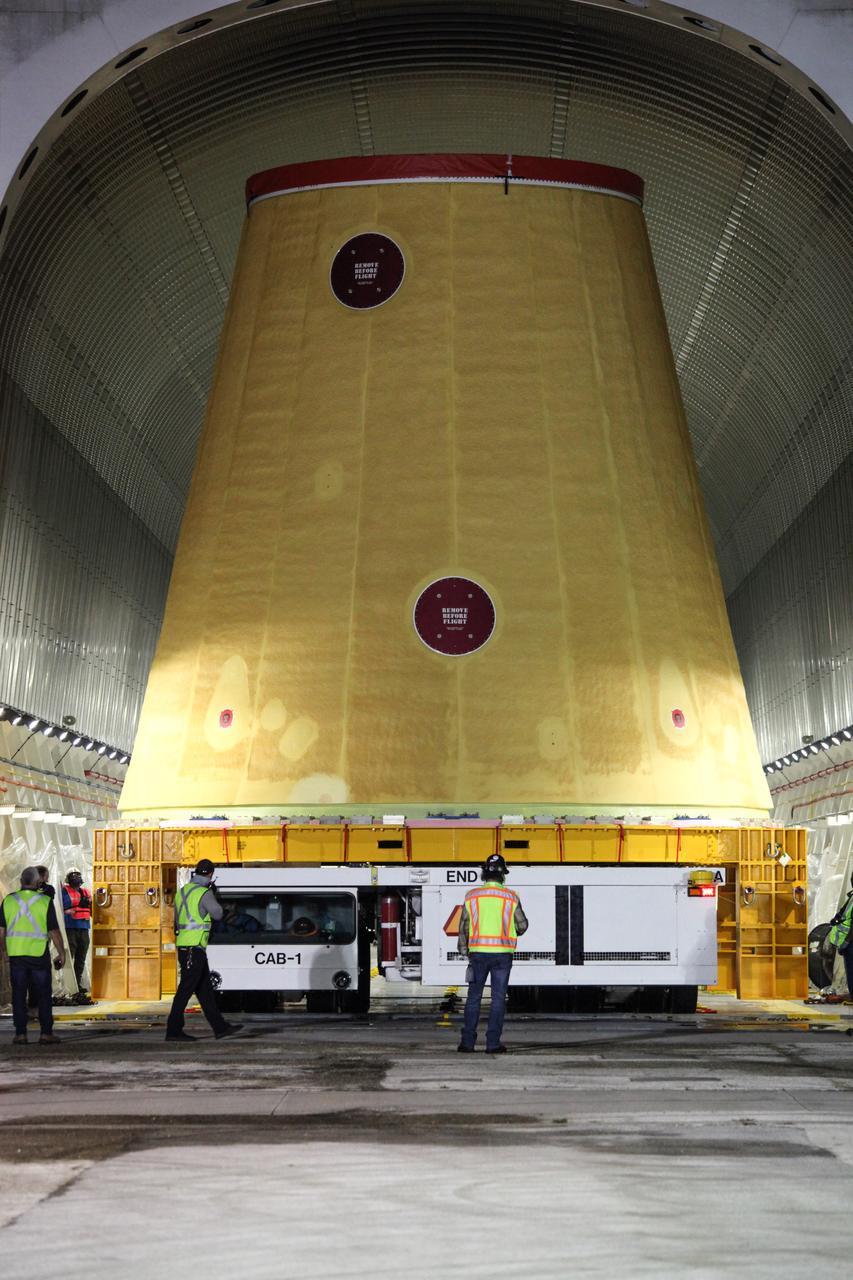
Technicians with NASA’s Exploration Ground Systems begin to offload the launch vehicle stage adapter (LVSA) for the agency’s Space Launch System (SLS) rocket and move it to the Vehicle Assembly Building (VAB) at NASA’s Kennedy Space Center in Florida on July 30, 2020, for processing. Carried by NASA’s Pegasus barge, the LVSA arrived at Kennedy’s Launch Complex 39 turn basin wharf after departing from the agency’s Marshall Space Flight Center in Huntsville, Alabama. The LVSA will connect the SLS core stage to the rocket’s upper stage and will remain in the VAB until it’s time for stacking on the mobile launcher ahead of the Artemis I launch. The first in a series of increasingly complex missions, Artemis I will test SLS and the Orion spacecraft as an integrated system prior to crewed flights to the Moon.
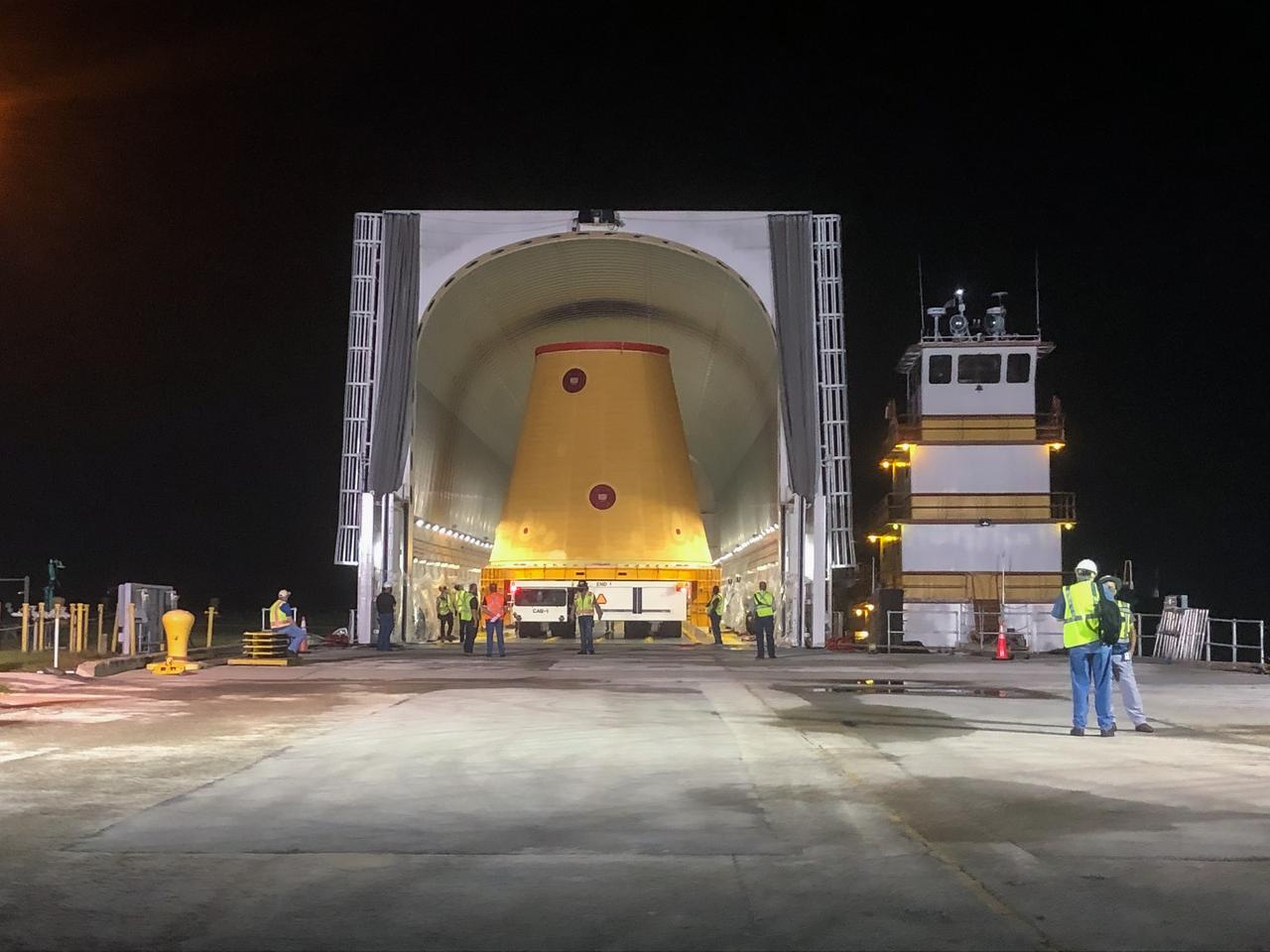
Technicians with NASA’s Exploration Ground Systems prepare to offload the launch vehicle stage adapter (LVSA) for the agency’s Space Launch System (SLS) rocket and move it to the Vehicle Assembly Building (VAB) at NASA’s Kennedy Space Center in Florida on July 30, 2020, for processing. Carried by NASA’s Pegasus barge, the LVSA arrived at Kennedy’s Launch Complex 39 turn basin wharf after departing from the agency’s Marshall Space Flight Center in Huntsville, Alabama. The LVSA will connect the SLS core stage to the rocket’s upper stage and will remain in the VAB until it’s time for stacking on the mobile launcher ahead of the Artemis I launch. The first in a series of increasingly complex missions, Artemis I will test SLS and the Orion spacecraft as an integrated system prior to crewed flights to the Moon.
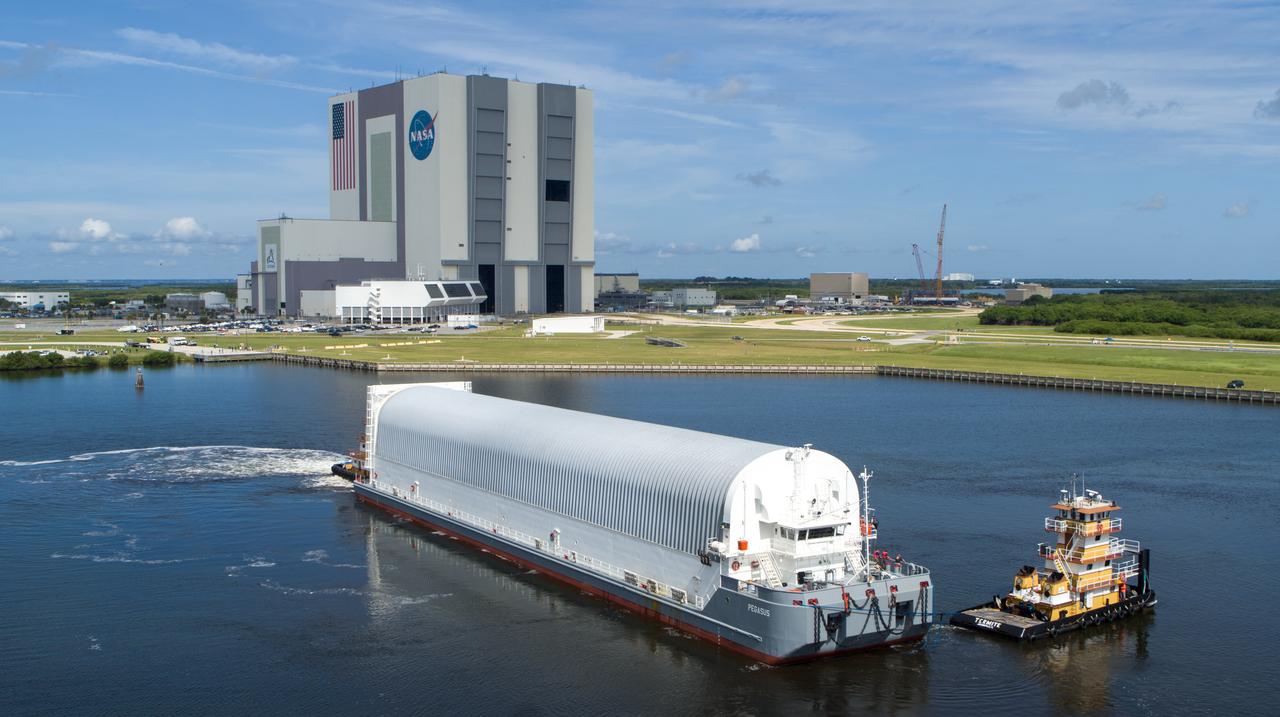
In this aerial view, NASA’s Pegasus barge, carrying the agency’s massive SLS (Space Launch System) core stage, arrives at NASA’s Kennedy Space Center Complex 39 turn basin wharf in Florida on Tuesday, July 23, 2024, after journeying from the agency’s Michoud Assembly Facility in New Orleans. The core stage is the next piece of Artemis hardware to arrive at the spaceport and will be offloaded and moved to NASA Kennedy’s Vehicle Assembly Building, where it will be prepared for integration ahead of the Artemis II launch.
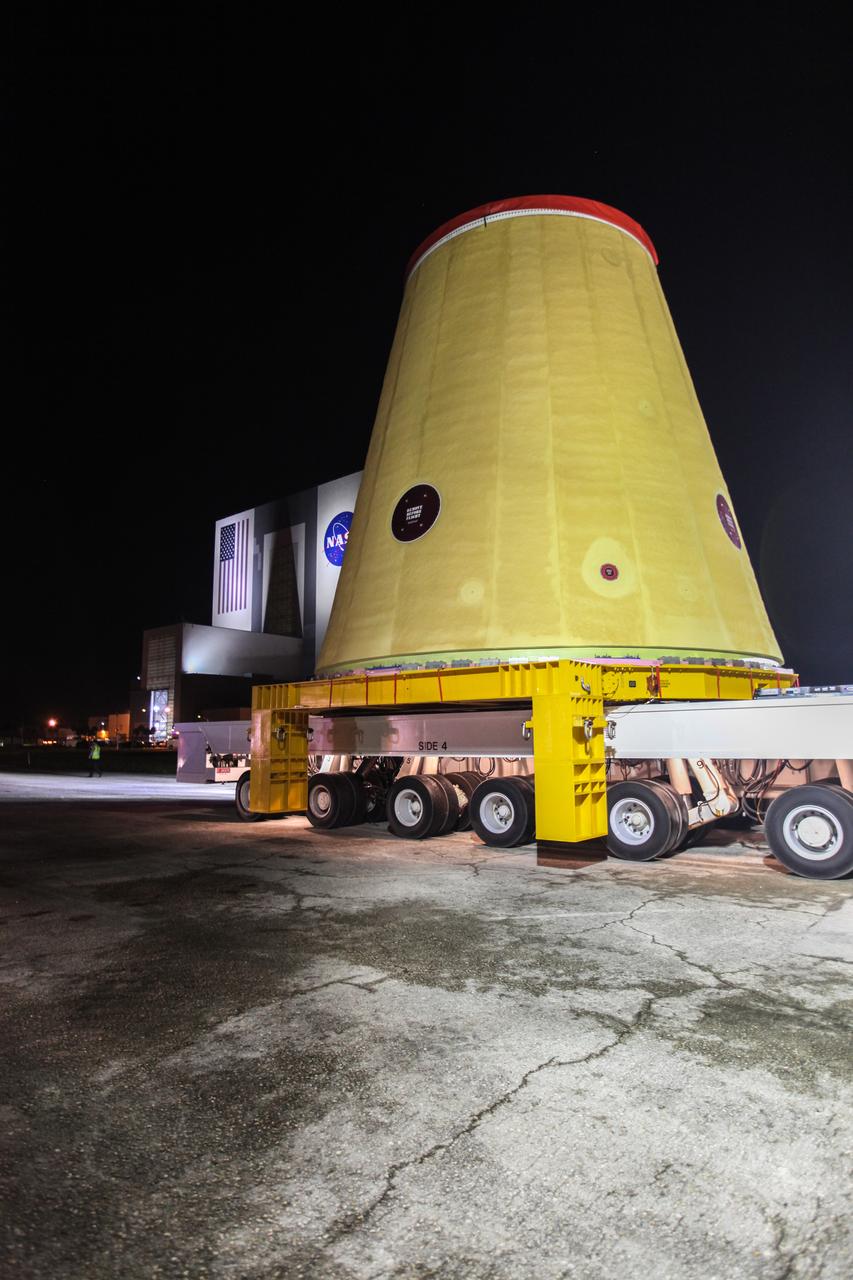
The launch vehicle stage adapter (LVSA) for NASA’s Space Launch System (SLS) rocket is transported to the Vehicle Assembly Building (VAB) for processing at NASA’s Kennedy Space Center in Florida on July 30, 2020. Carried by NASA’s Pegasus barge, the LVSA arrived at Kennedy’s Launch Complex 39 turn basin wharf after departing from the agency’s Marshall Space Flight Center in Huntsville, Alabama. The LVSA will connect the SLS core stage to the rocket’s upper stage and will remain in the VAB until it’s time for stacking on the mobile launcher ahead of the Artemis I launch. The first in a series of increasingly complex missions, Artemis I will test SLS and the Orion spacecraft as an integrated system prior to crewed flights to the Moon.
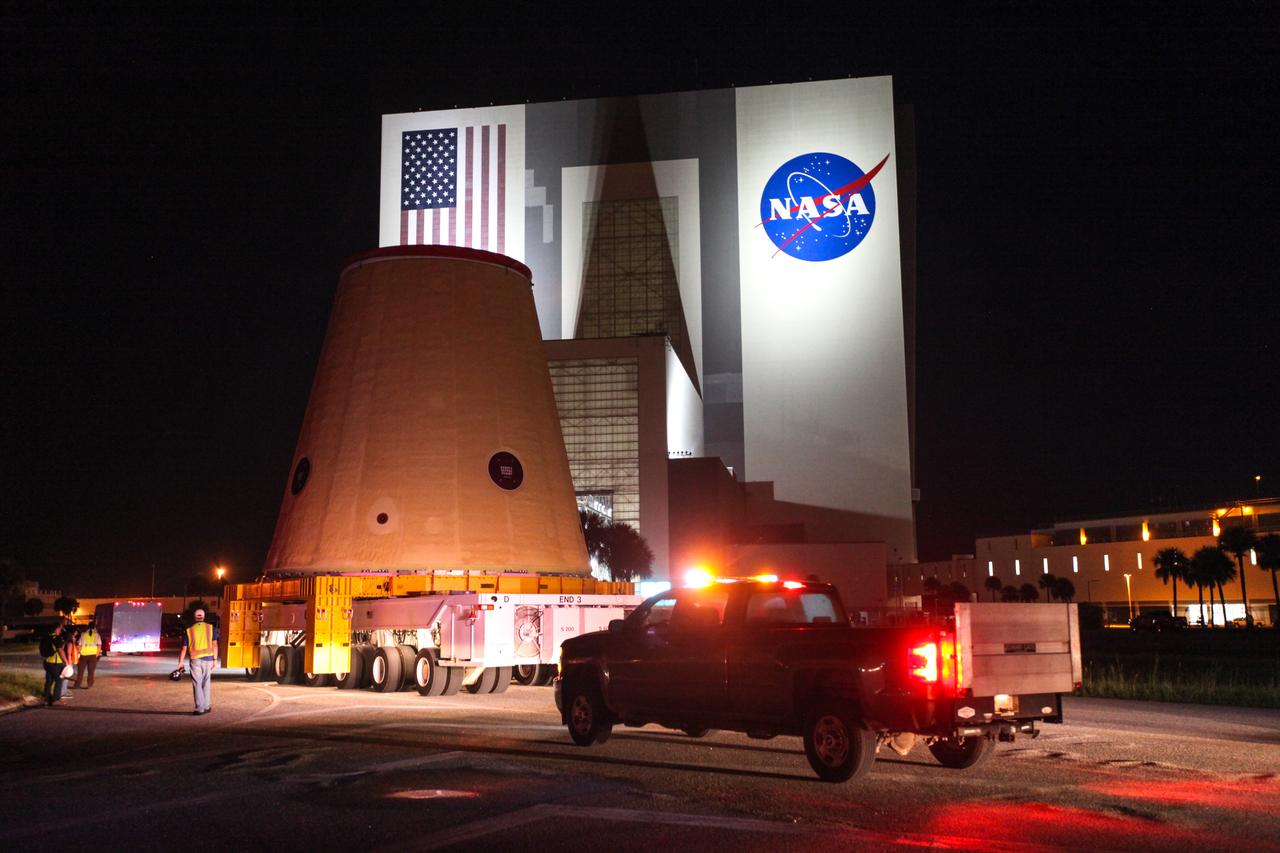
Technicians with NASA’s Exploration Ground Systems move the launch vehicle stage adapter (LVSA) for the agency’s Space Launch System (SLS) rocket to the Vehicle Assembly Building (VAB) on July 30, 2020, for processing. Carried by NASA’s Pegasus barge, the LVSA arrived at Kennedy Space Center’s Launch Complex 39 turn basin wharf after departing from the agency’s Marshall Space Flight Center in Huntsville, Alabama. The LVSA will connect the SLS core stage to the rocket’s upper stage and will remain in the VAB until it’s time for stacking on the mobile launcher ahead of the Artemis I launch. The first in a series of increasingly complex missions, Artemis I will test SLS and the Orion spacecraft as an integrated system prior to crewed flights to the Moon.
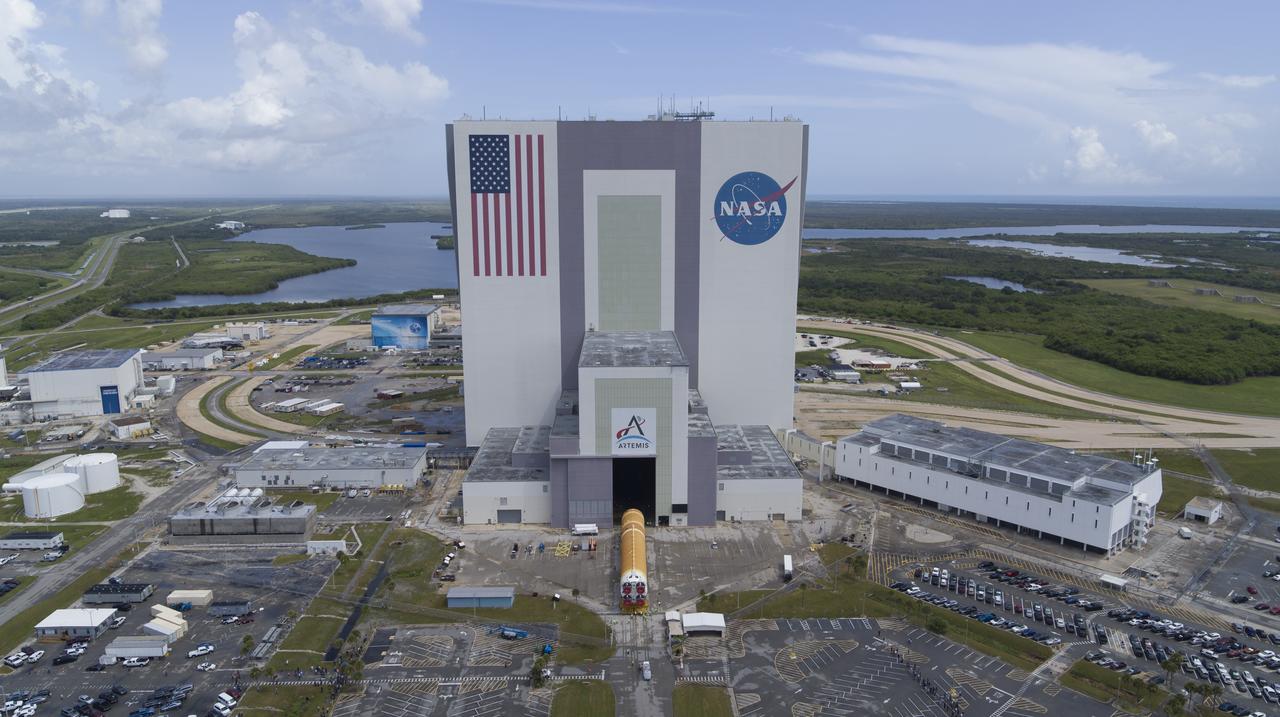
In this aerial view, teams with Exploration Ground Systems (EGS) transport the agency’s powerful SLS (Space Launch System) core stage to the Vehicle Assembly Building at NASA’s Kennedy Space Center in Florida on Wednesday, July 24, 2024, after it completed the journey from NASA’s Michoud Assembly Facility in New Orleans aboard the Pegasus barge. In the coming months, SLS will be prepared for integration atop the mobile launcher ahead of the Artemis II launch.
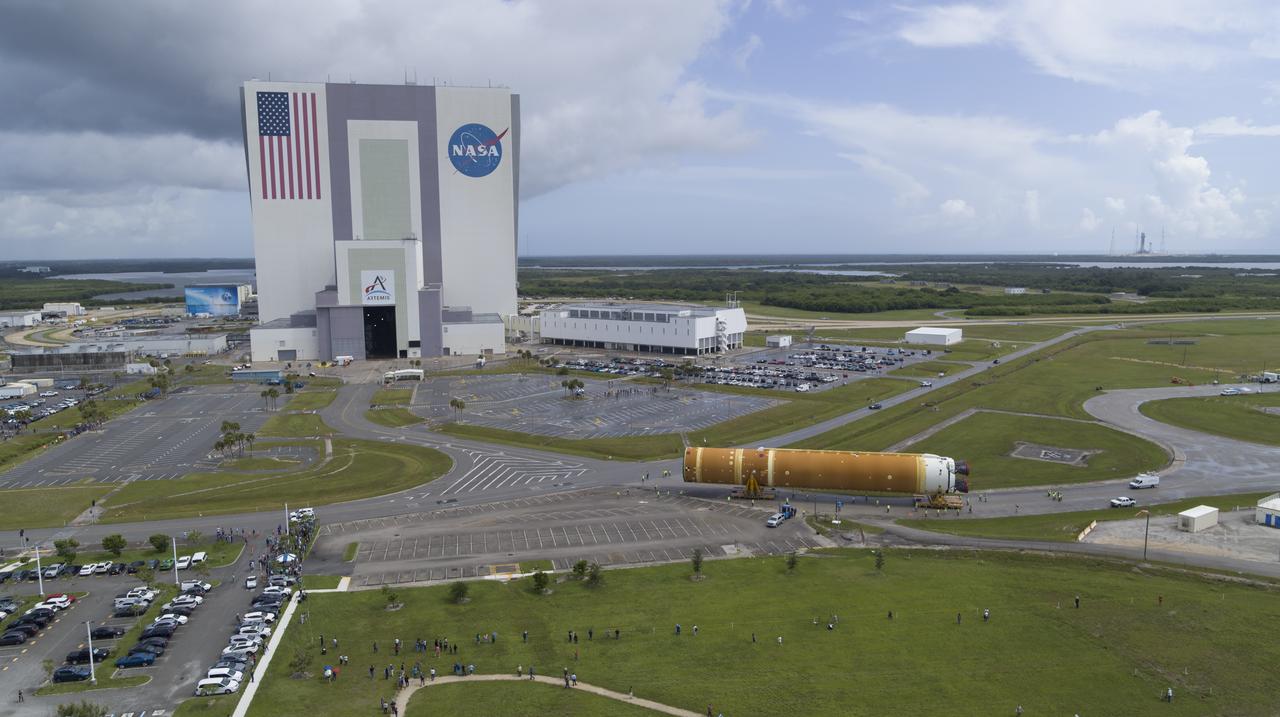
In this aerial view, teams with Exploration Ground Systems (EGS) transport the agency’s powerful SLS (Space Launch System) core stage to the Vehicle Assembly Building at NASA’s Kennedy Space Center in Florida on Wednesday, July 24, 2024, after it completed the journey from NASA’s Michoud Assembly Facility in New Orleans aboard the Pegasus barge. In the coming months, SLS will be prepared for integration atop the mobile launcher ahead of the Artemis II launch.
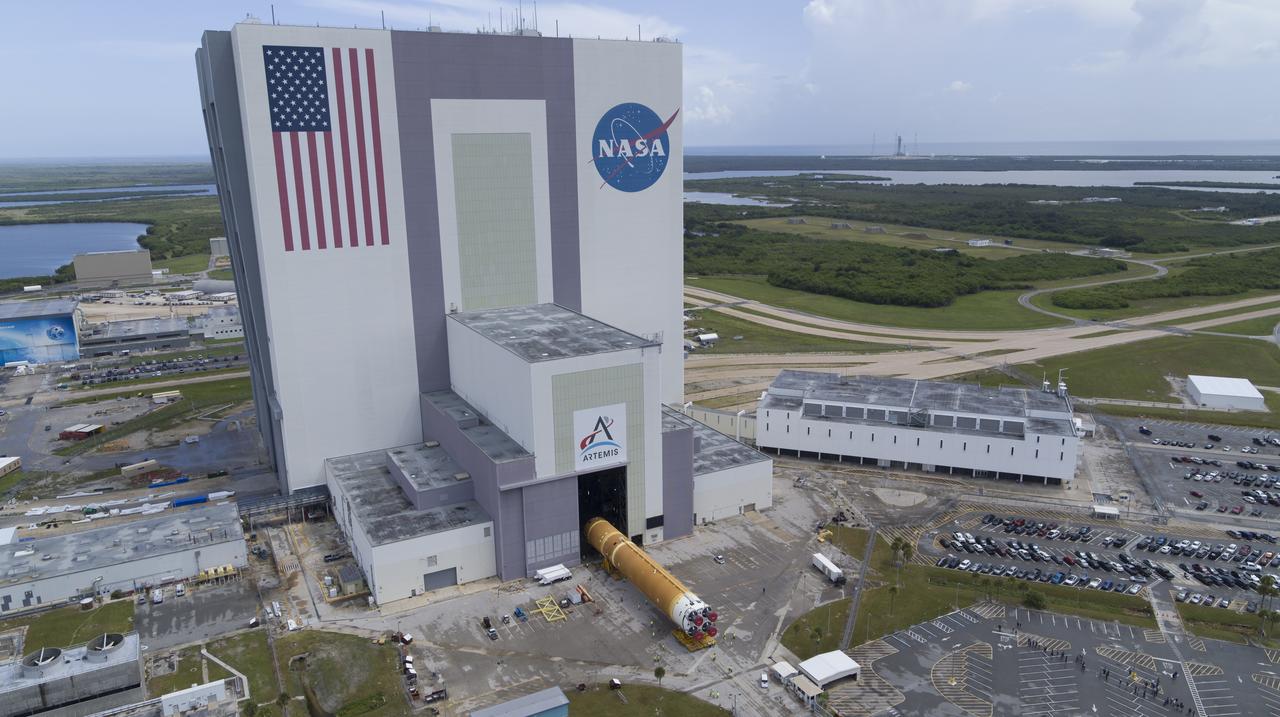
In this aerial view, teams with Exploration Ground Systems (EGS) transport the agency’s powerful SLS (Space Launch System) core stage to the Vehicle Assembly Building at NASA’s Kennedy Space Center in Florida on Wednesday, July 24, 2024, after it completed the journey from NASA’s Michoud Assembly Facility in New Orleans aboard the Pegasus barge. In the coming months, SLS will be prepared for integration atop the mobile launcher ahead of the Artemis II launch.
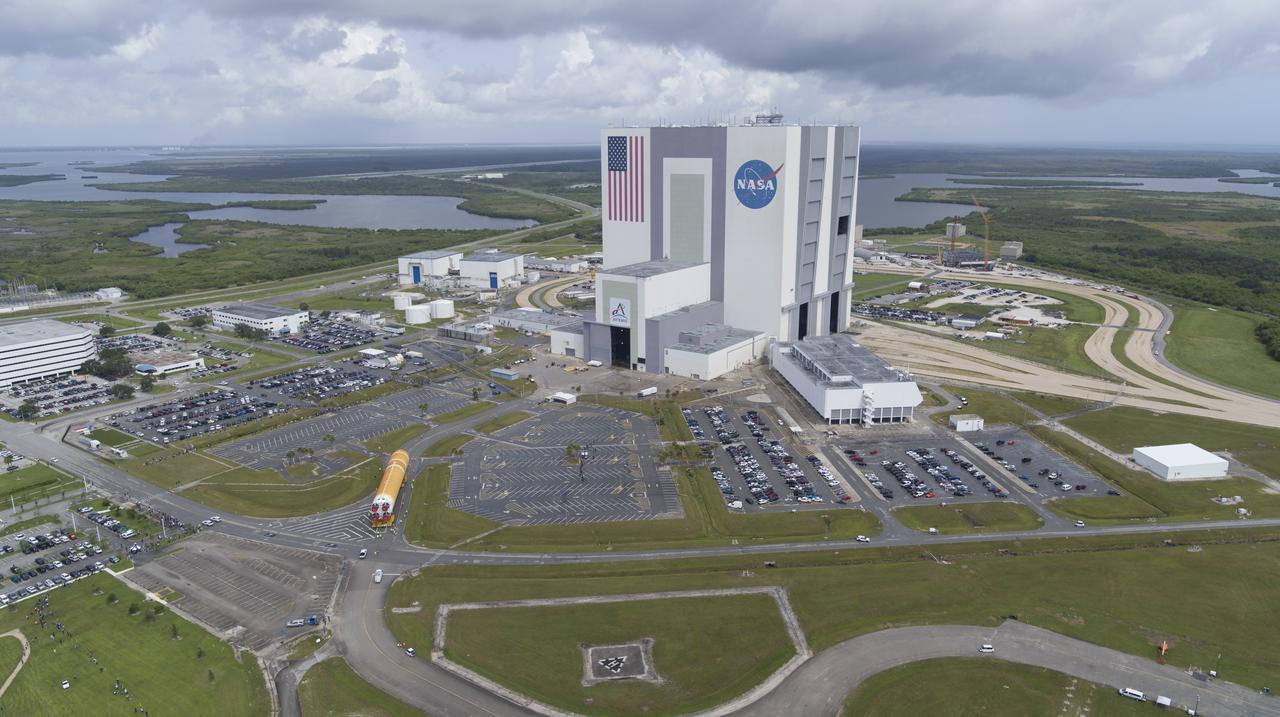
In this aerial view, teams with Exploration Ground Systems (EGS) transport the agency’s powerful SLS (Space Launch System) core stage to the Vehicle Assembly Building at NASA’s Kennedy Space Center in Florida on Wednesday, July 24, 2024, after it completed the journey from NASA’s Michoud Assembly Facility in New Orleans aboard the Pegasus barge. In the coming months, SLS will be prepared for integration atop the mobile launcher ahead of the Artemis II launch.
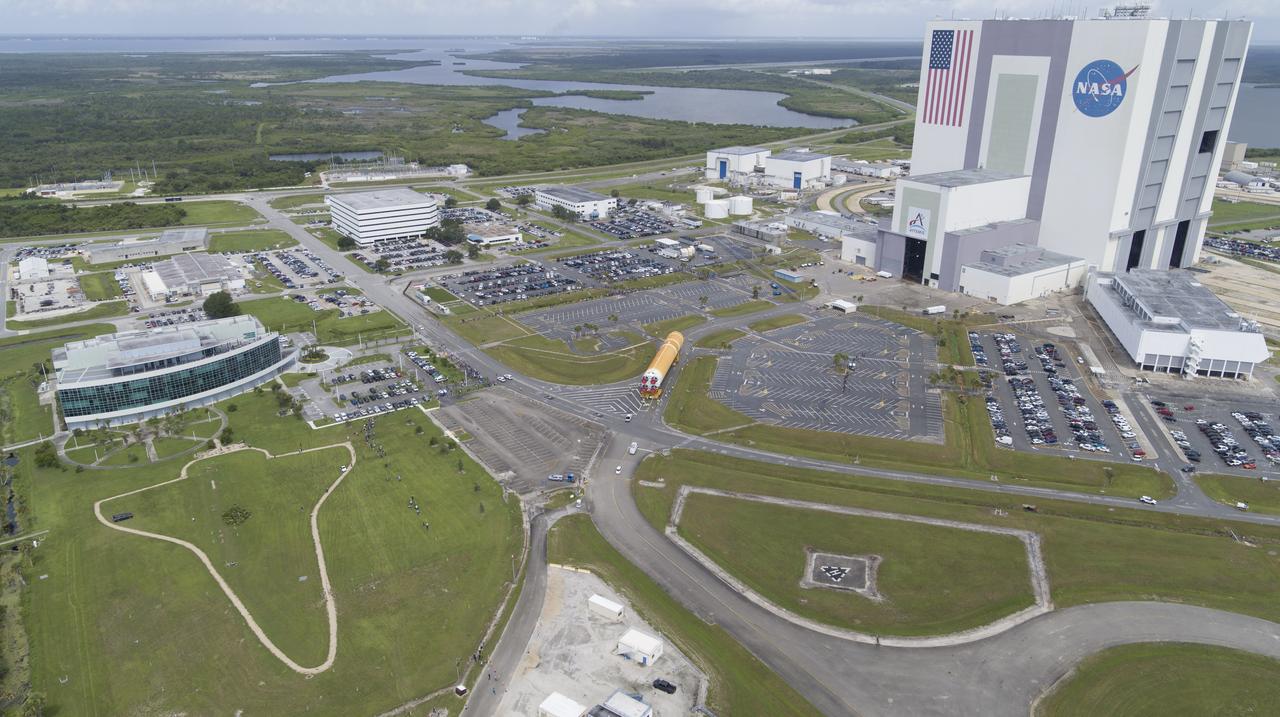
In this aerial view, teams with Exploration Ground Systems (EGS) transport the agency’s powerful SLS (Space Launch System) core stage to the Vehicle Assembly Building at NASA’s Kennedy Space Center in Florida on Wednesday, July 24, 2024, after it completed the journey from NASA’s Michoud Assembly Facility in New Orleans aboard the Pegasus barge. In the coming months, SLS will be prepared for integration atop the mobile launcher ahead of the Artemis II launch.
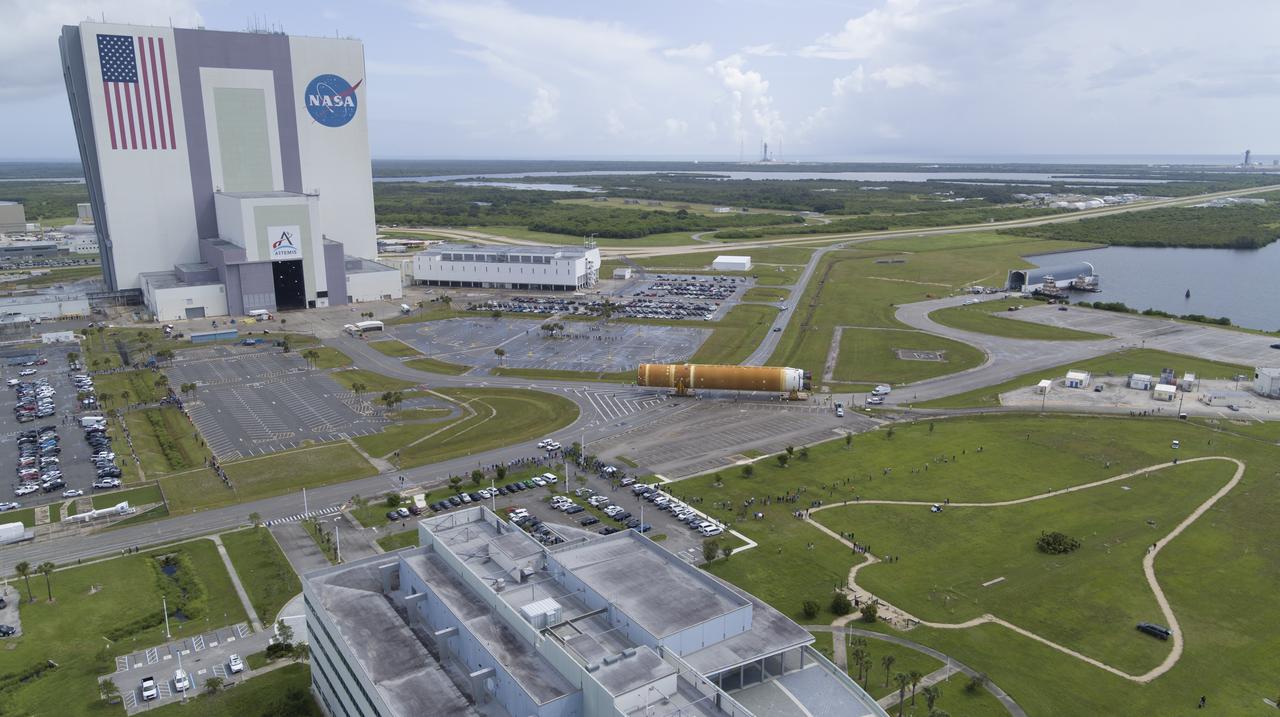
In this aerial view, teams with Exploration Ground Systems (EGS) transport the agency’s powerful SLS (Space Launch System) core stage to the Vehicle Assembly Building at NASA’s Kennedy Space Center in Florida on Wednesday, July 24, 2024, after it completed the journey from NASA’s Michoud Assembly Facility in New Orleans aboard the Pegasus barge. In the coming months, SLS will be prepared for integration atop the mobile launcher ahead of the Artemis II launch.
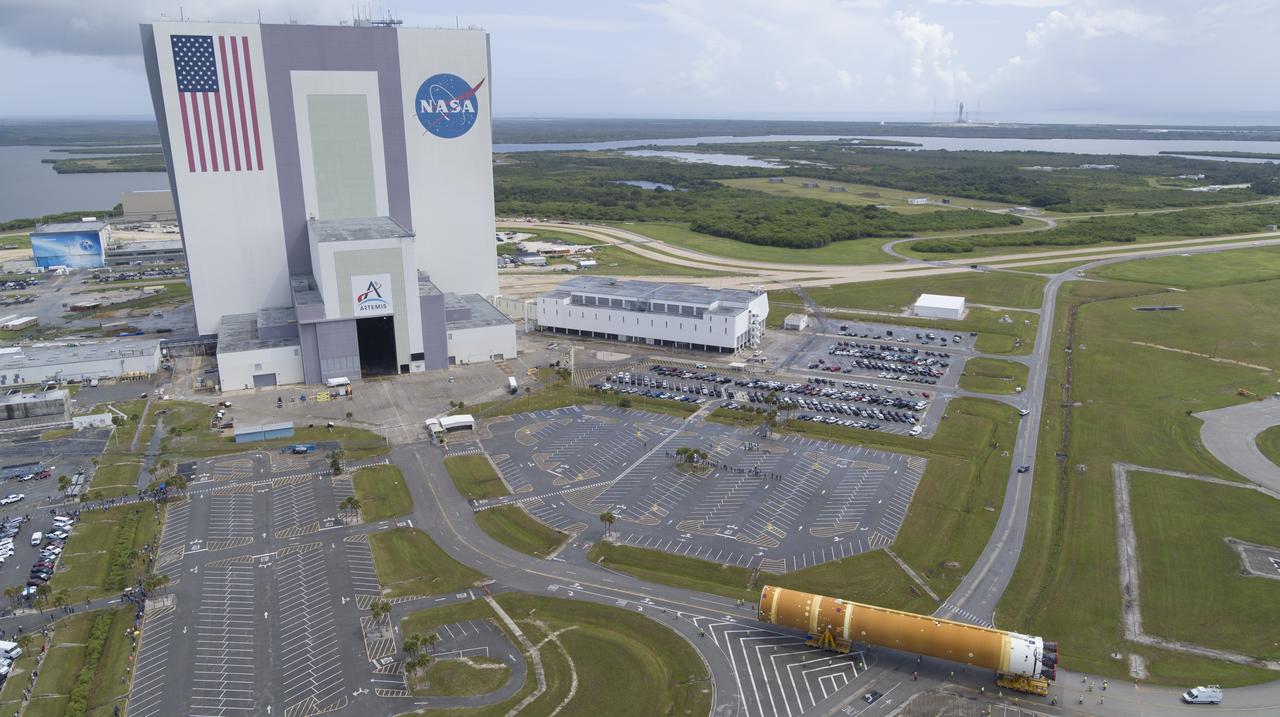
In this aerial view, teams with Exploration Ground Systems (EGS) transport the agency’s powerful SLS (Space Launch System) core stage to the Vehicle Assembly Building at NASA’s Kennedy Space Center in Florida on Wednesday, July 24, 2024, after it completed the journey from NASA’s Michoud Assembly Facility in New Orleans aboard the Pegasus barge. In the coming months, SLS will be prepared for integration atop the mobile launcher ahead of the Artemis II launch.
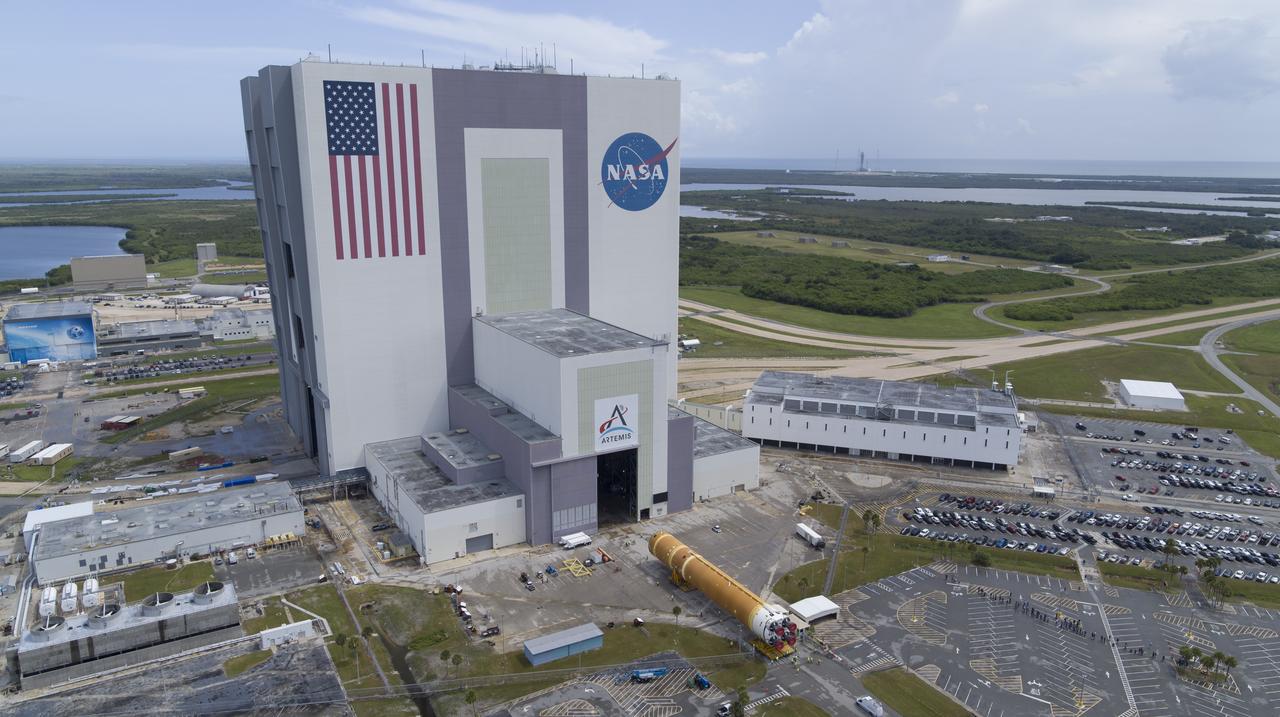
In this aerial view, teams with Exploration Ground Systems (EGS) transport the agency’s powerful SLS (Space Launch System) core stage to the Vehicle Assembly Building at NASA’s Kennedy Space Center in Florida on Wednesday, July 24, 2024, after it completed the journey from NASA’s Michoud Assembly Facility in New Orleans aboard the Pegasus barge. In the coming months, SLS will be prepared for integration atop the mobile launcher ahead of the Artemis II launch.
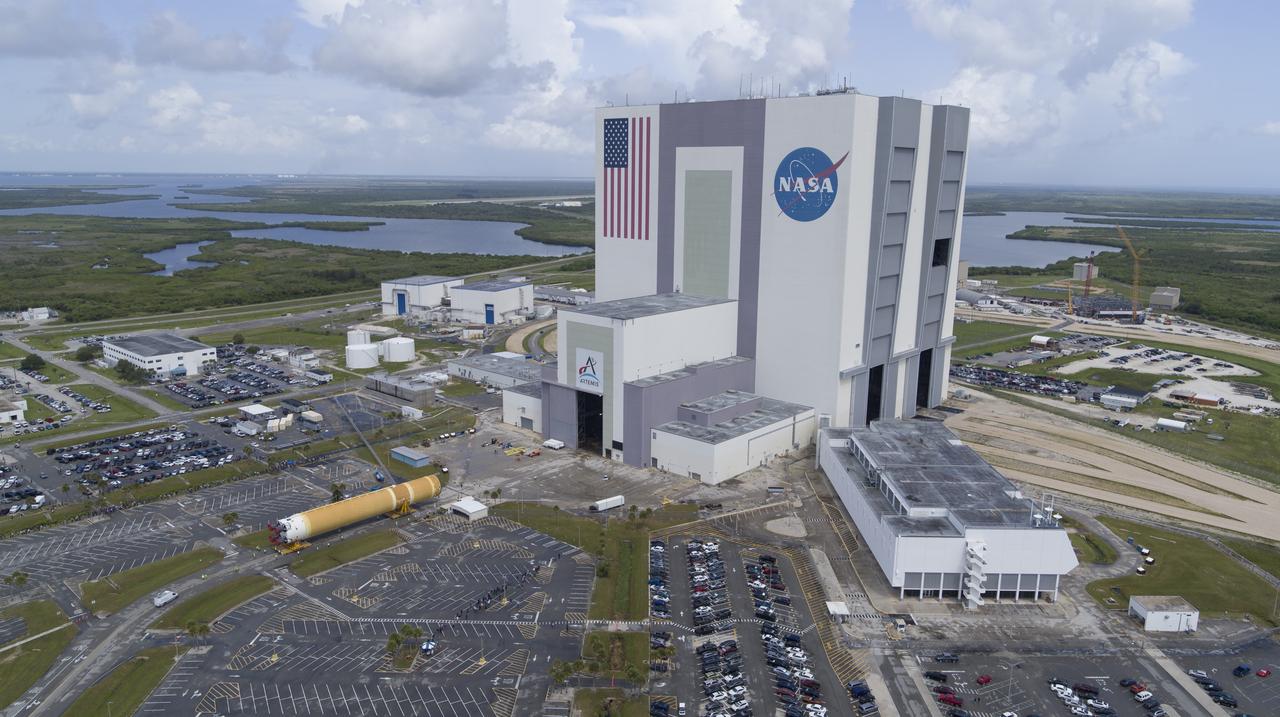
In this aerial view, teams with Exploration Ground Systems (EGS) transport the agency’s powerful SLS (Space Launch System) core stage to the Vehicle Assembly Building at NASA’s Kennedy Space Center in Florida on Wednesday, July 24, 2024, after it completed the journey from NASA’s Michoud Assembly Facility in New Orleans aboard the Pegasus barge. In the coming months, SLS will be prepared for integration atop the mobile launcher ahead of the Artemis II launch.
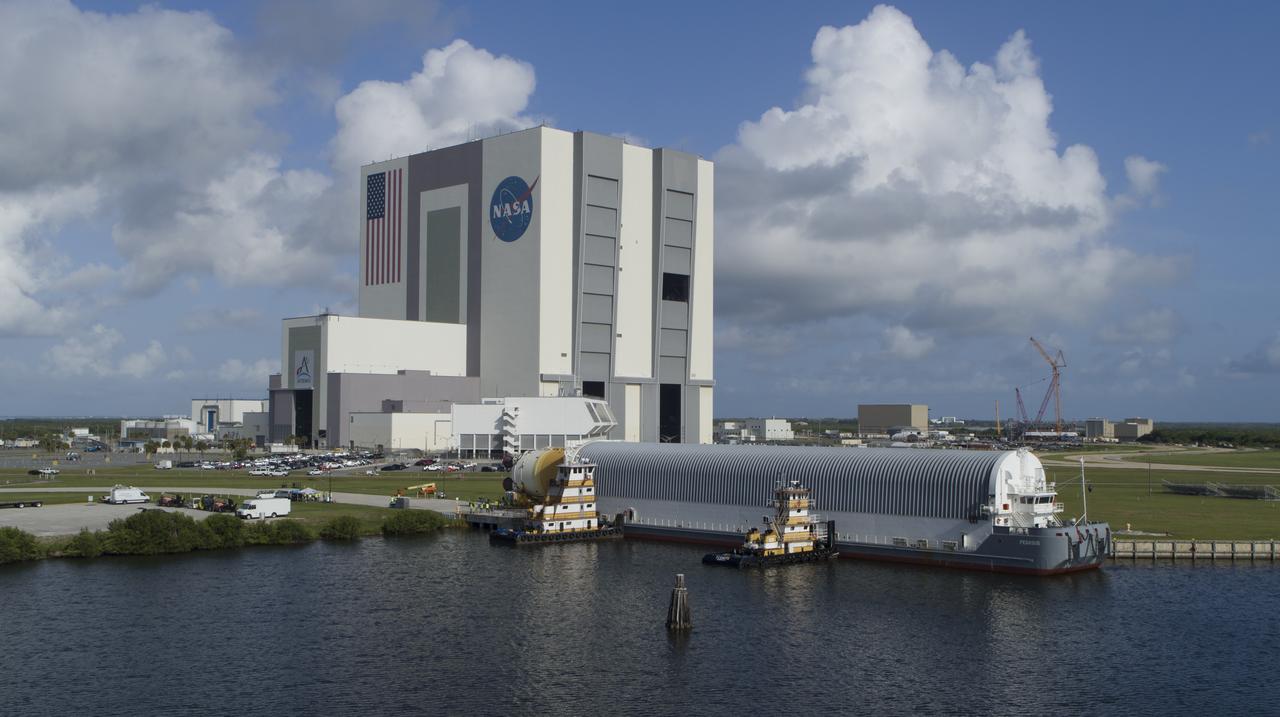
In this aerial view, NASA’s powerful 212-foot long SLS (Space Launch System) core stage is shown being offloaded from the agency’s Pegasus Barge on Wednesday, July 24, 2024, after arriving at NASA’s Kennedy Space Center in Florida. Teams with Exploration Ground Systems (EGS) will transfer the rocket stage to the spaceport’s Vehicle Assembly Building to prepare it for integration atop the mobile launcher ahead of the Artemis II launch.
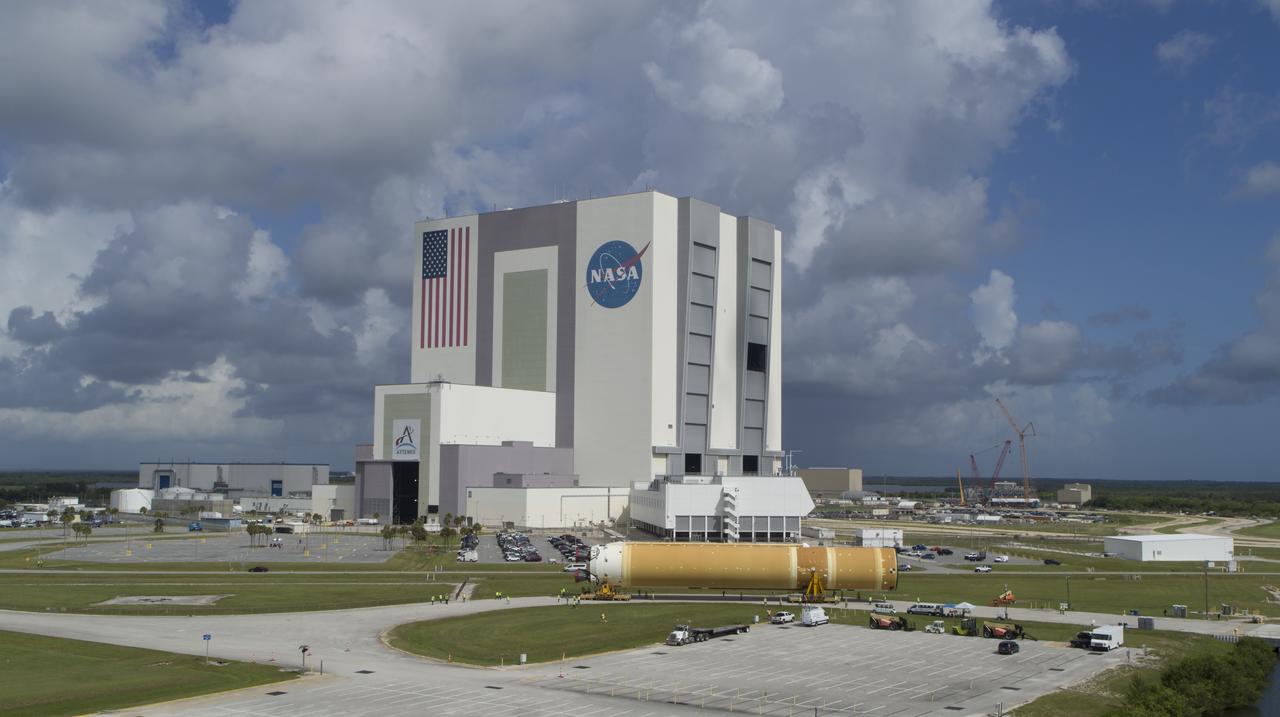
In this aerial view, teams with Exploration Ground Systems (EGS) transport the agency’s powerful SLS (Space Launch System) core stage to the Vehicle Assembly Building at NASA’s Kennedy Space Center in Florida on Wednesday, July 24, 2024, after it completed the journey from NASA’s Michoud Assembly Facility in New Orleans aboard the Pegasus barge. In the coming months, SLS will be prepared for integration atop the mobile launcher ahead of the Artemis II launch.
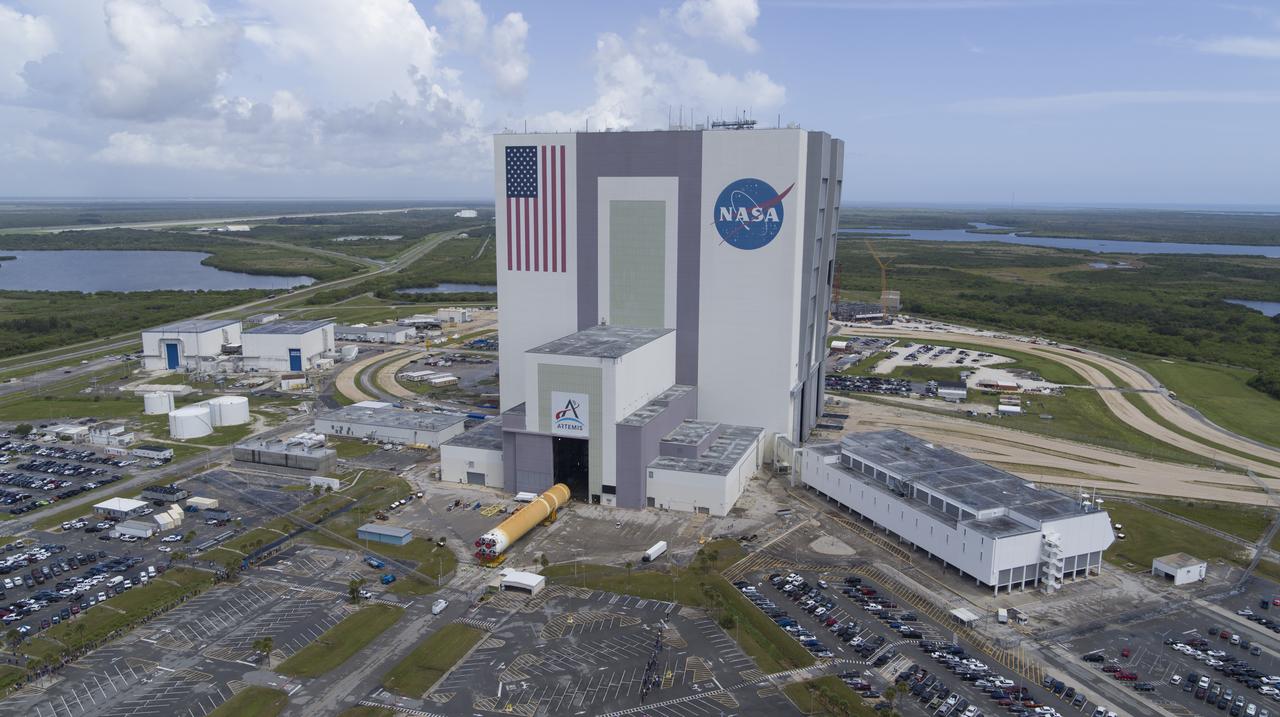
In this aerial view, teams with Exploration Ground Systems (EGS) transport the agency’s powerful SLS (Space Launch System) core stage to the Vehicle Assembly Building at NASA’s Kennedy Space Center in Florida on Wednesday, July 24, 2024, after it completed the journey from NASA’s Michoud Assembly Facility in New Orleans aboard the Pegasus barge. In the coming months, SLS will be prepared for integration atop the mobile launcher ahead of the Artemis II launch.
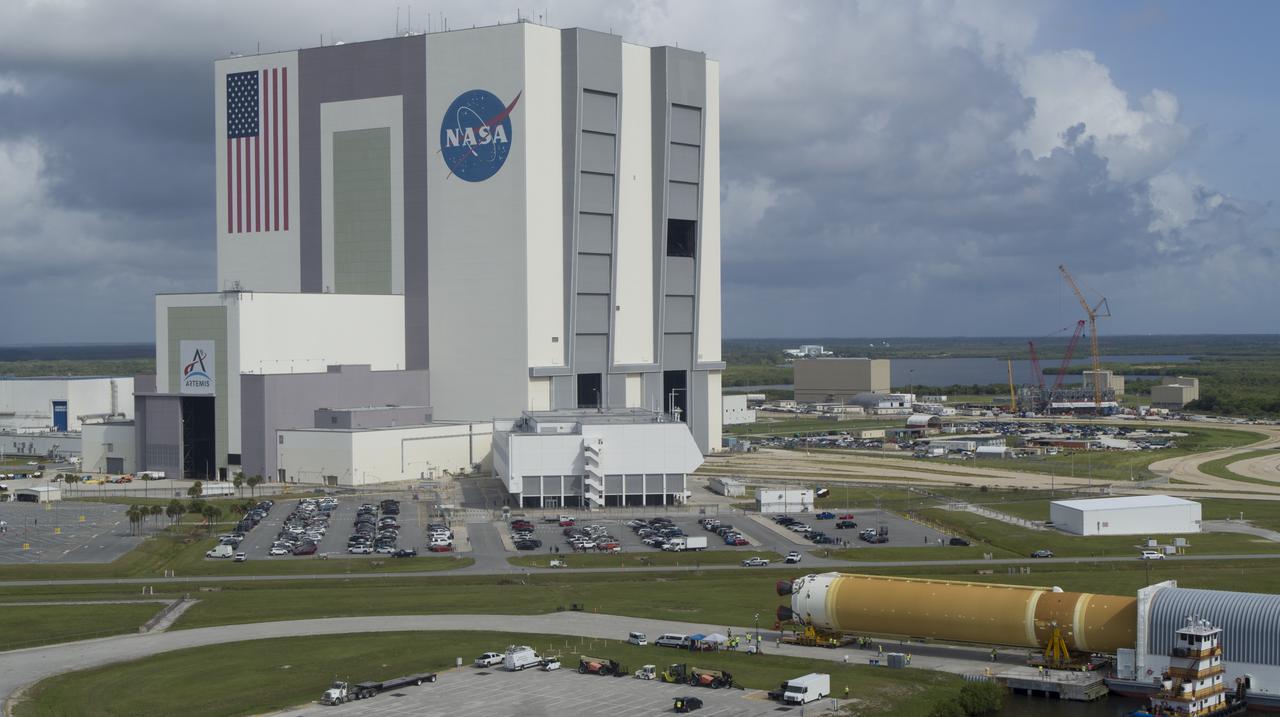
In this aerial view, NASA’s powerful 212-foot long SLS (Space Launch System) core stage is shown being offloaded from the agency’s Pegasus Barge on Wednesday, July 24, 2024, after arriving at NASA’s Kennedy Space Center in Florida. Teams with Exploration Ground Systems (EGS) will transfer the rocket stage to the spaceport’s Vehicle Assembly Building to prepare it for integration atop the mobile launcher ahead of the Artemis II launch.
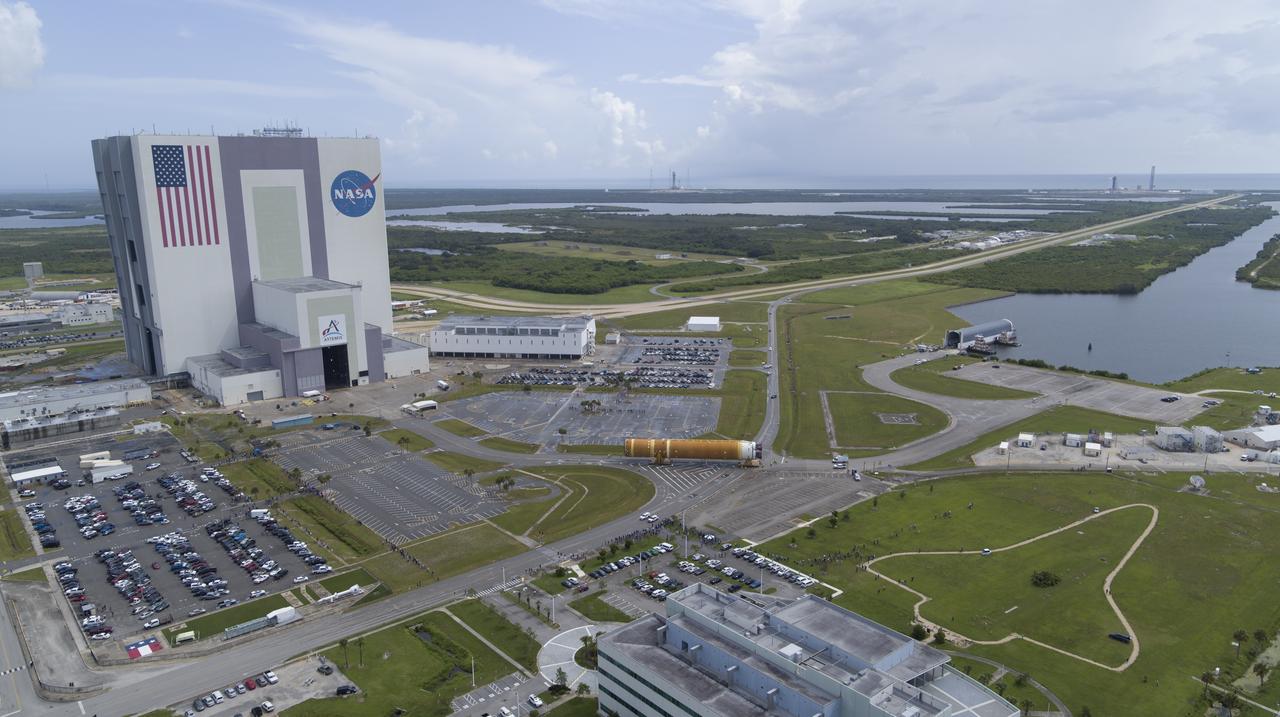
In this aerial view, teams with Exploration Ground Systems (EGS) transport the agency’s powerful SLS (Space Launch System) core stage to the Vehicle Assembly Building at NASA’s Kennedy Space Center in Florida on Wednesday, July 24, 2024, after it completed the journey from NASA’s Michoud Assembly Facility in New Orleans aboard the Pegasus barge. In the coming months, SLS will be prepared for integration atop the mobile launcher ahead of the Artemis II launch.
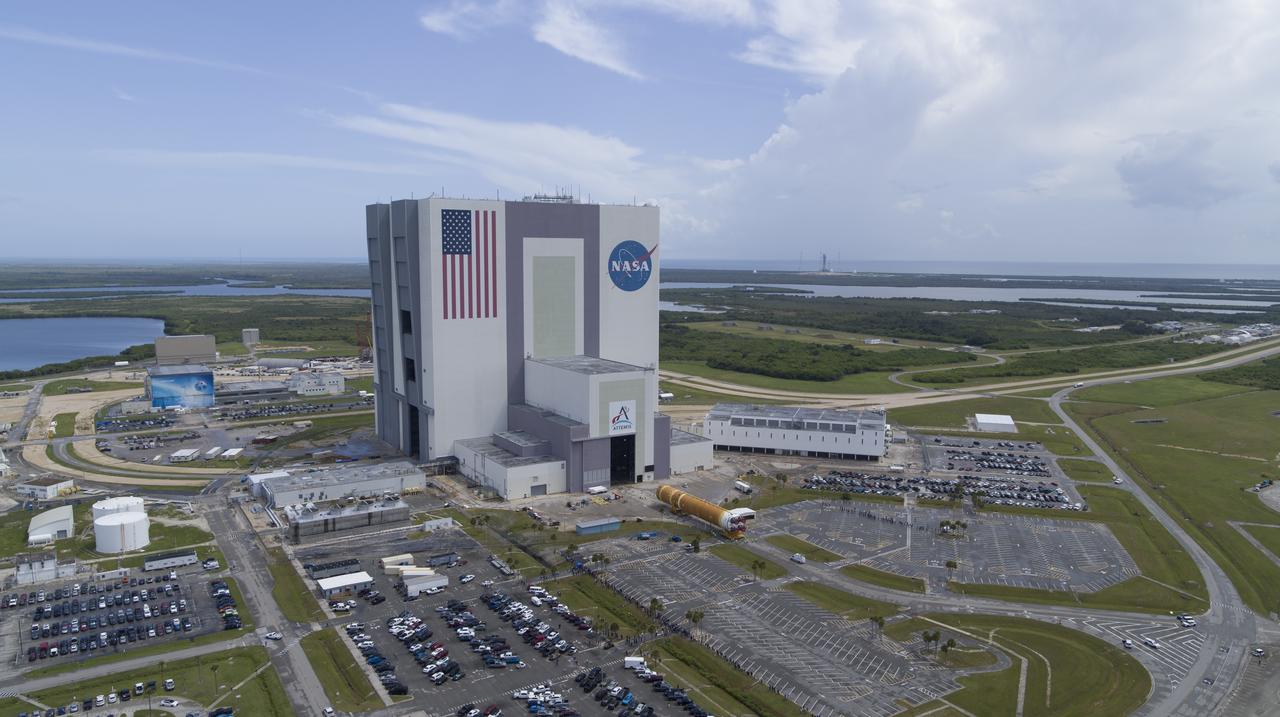
In this aerial view, teams with Exploration Ground Systems (EGS) transport the agency’s powerful SLS (Space Launch System) core stage to the Vehicle Assembly Building at NASA’s Kennedy Space Center in Florida on Wednesday, July 24, 2024, after it completed the journey from NASA’s Michoud Assembly Facility in New Orleans aboard the Pegasus barge. In the coming months, SLS will be prepared for integration atop the mobile launcher ahead of the Artemis II launch.