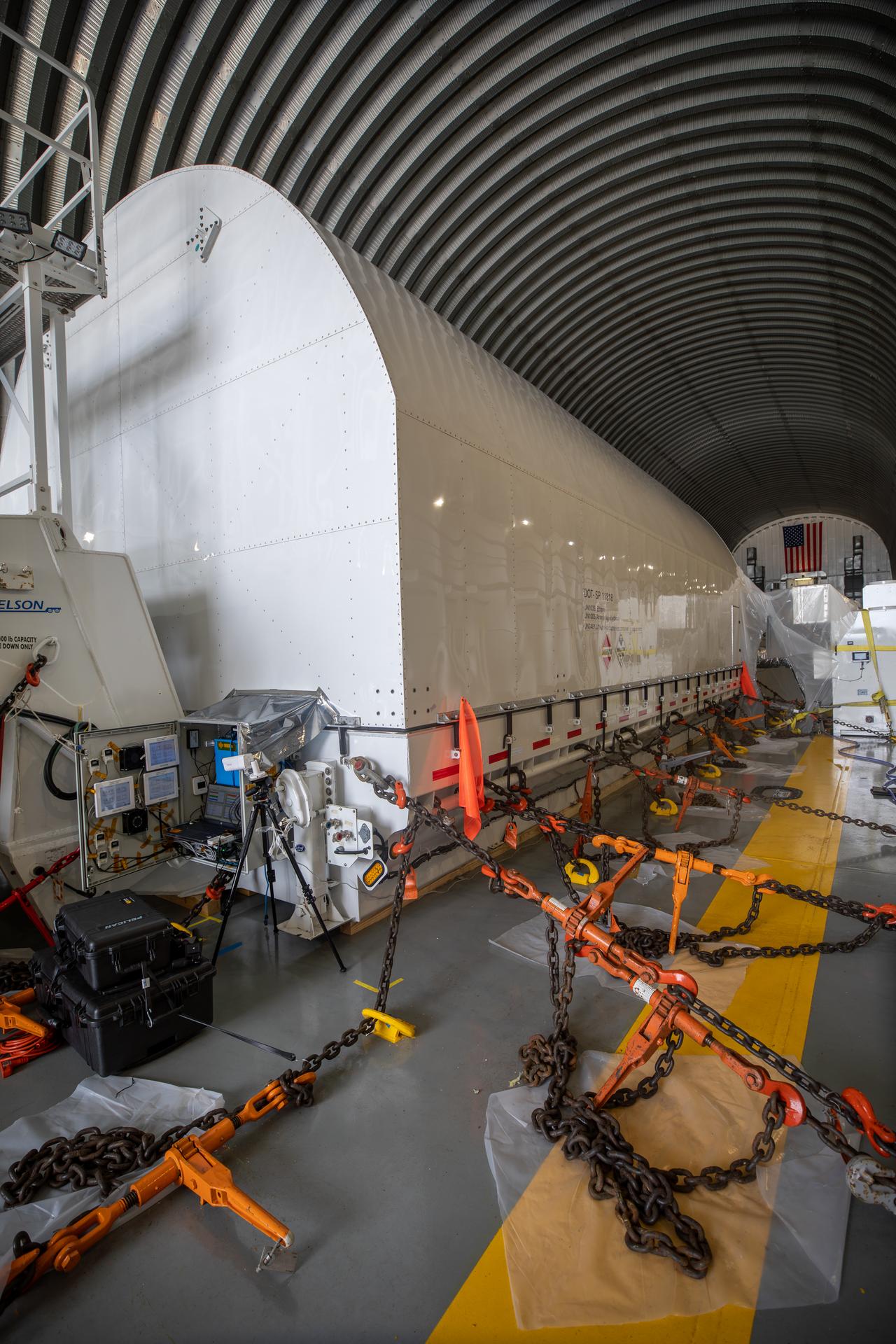
Housed inside a protective and environmentally controlled transportation container, NASA’s Nancy Grace Roman Space Telescope is secured in the usable cargo deck of the agency’s Pegasus barge as it arrives at the Launch Complex 39 turn basin at NASA’s Kennedy Space Center in Florida on Sunday, June 21, 2026. Teams will offload and transport the observatory to the spaceport’s Payload Hazardous Servicing Facility where it will undergo processing ahead of launch, targeted no earlier than Sunday, Aug. 30, 2026. Named for NASA’s first chief astronomer and “mother of the Hubble Space Telescope,” Roman will offer a field of view over 100 times larger than Hubble’s to study up to a billion galaxies, directly image exoplanets and planet forming disks, and address fundamental questions about dark energy, exoplanets, and infrared astrophysics.
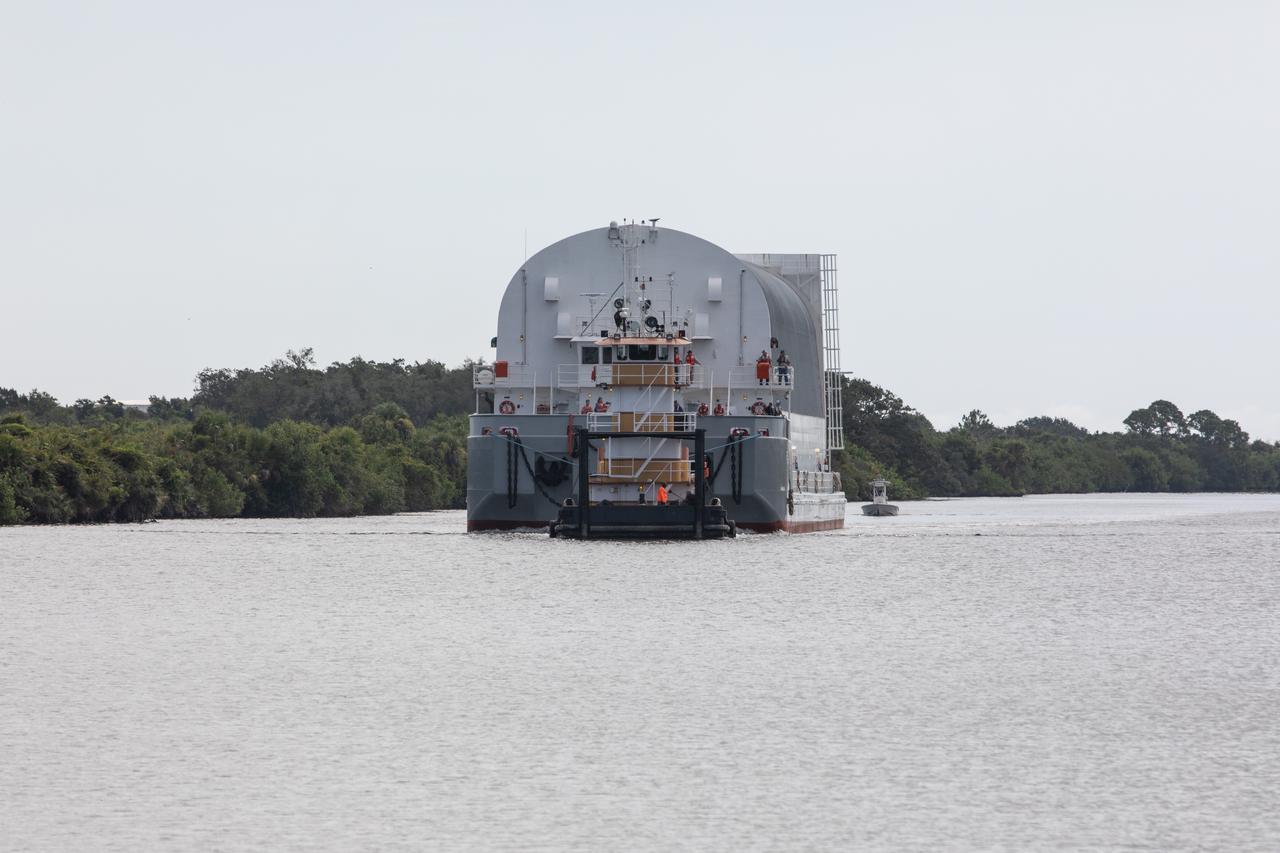
Behind the iconic countdown clock at NASA’s Kennedy Space Center in Florida, the agency’s Pegasus barge completes its 900-mile journey from NASA’s Michoud Assembly Facility in New Orleans carrying the powerful SLS (Space Launch System) core stage on Tuesday, July 23, 2024. Teams with NASA's Exploration Ground Systems (EGS) will offload the rocket stage and transfer it to the spaceport’s Vehicle Assembly Building to prepare it for integration atop the mobile launcher ahead of the Artemis II launch.
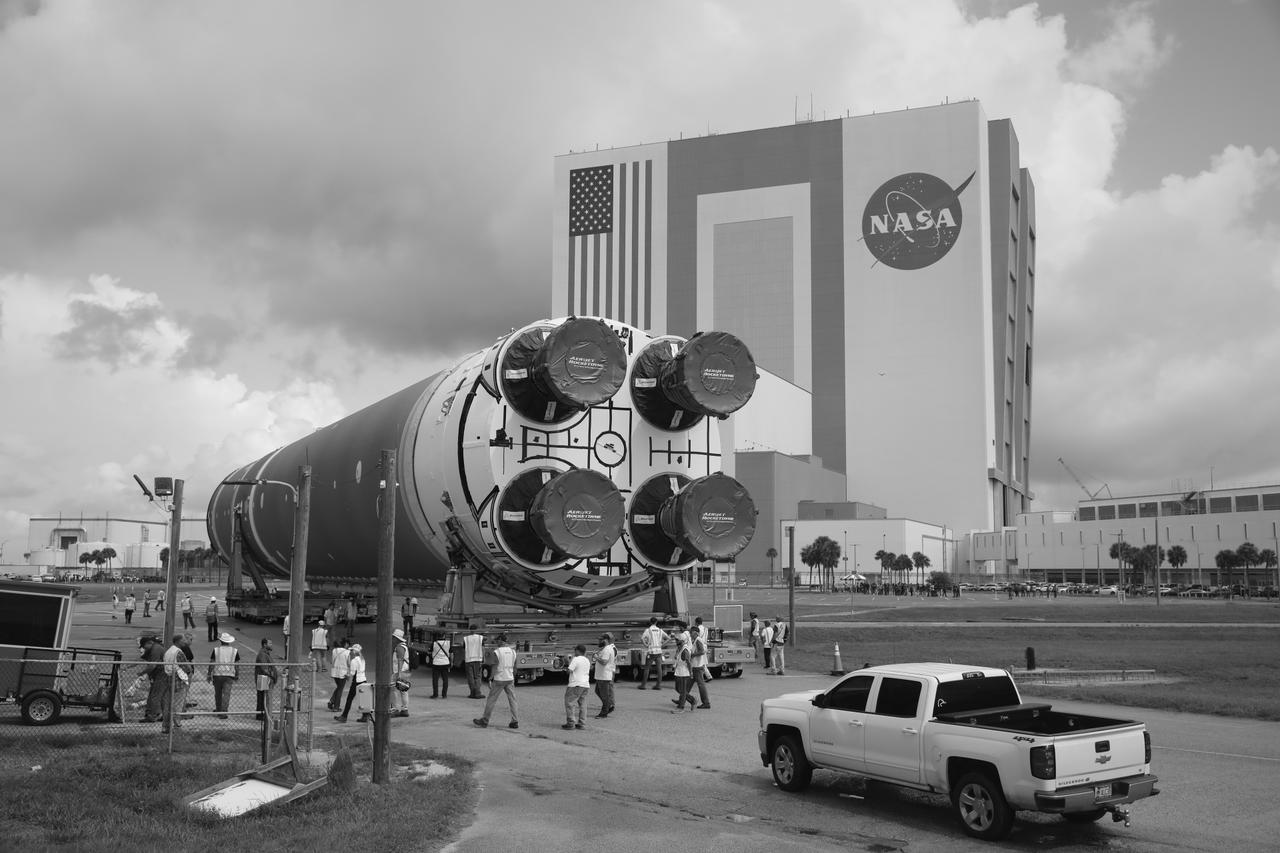
After completing its journey from NASA’s Michoud Assembly Facility in New Orleans aboard the Pegasus barge, teams with Exploration Ground Systems (EGS) transport the agency’s powerful SLS (Space Launch System) core stage to Kennedy Space Center’s Vehicle Assembly Building in Florida on Wednesday, July 24, 2024. Once inside, SLS will be prepared for integration atop the mobile launcher ahead of the Artemis II launch.
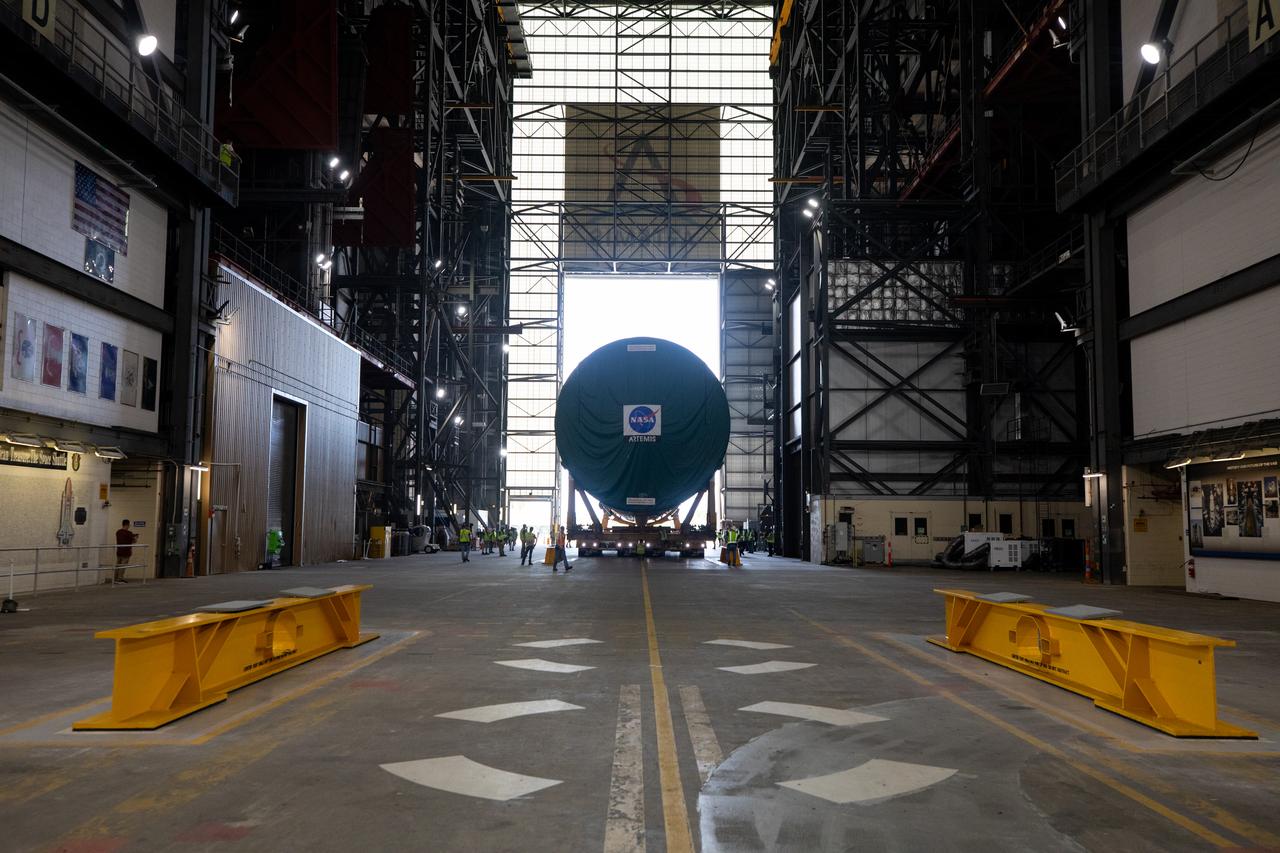
After completing its journey from NASA’s Michoud Assembly Facility in New Orleans aboard the Pegasus barge, teams with Exploration Ground Systems (EGS) transport the agency’s powerful SLS (Space Launch System) core stage into the transfer aisle inside the Vehicle Assembly Building at NASA’s Kennedy Space Center in Florida on Wednesday, July 24, 2024. In the coming months, SLS will be prepared for integration atop the mobile launcher ahead of the Artemis II launch.
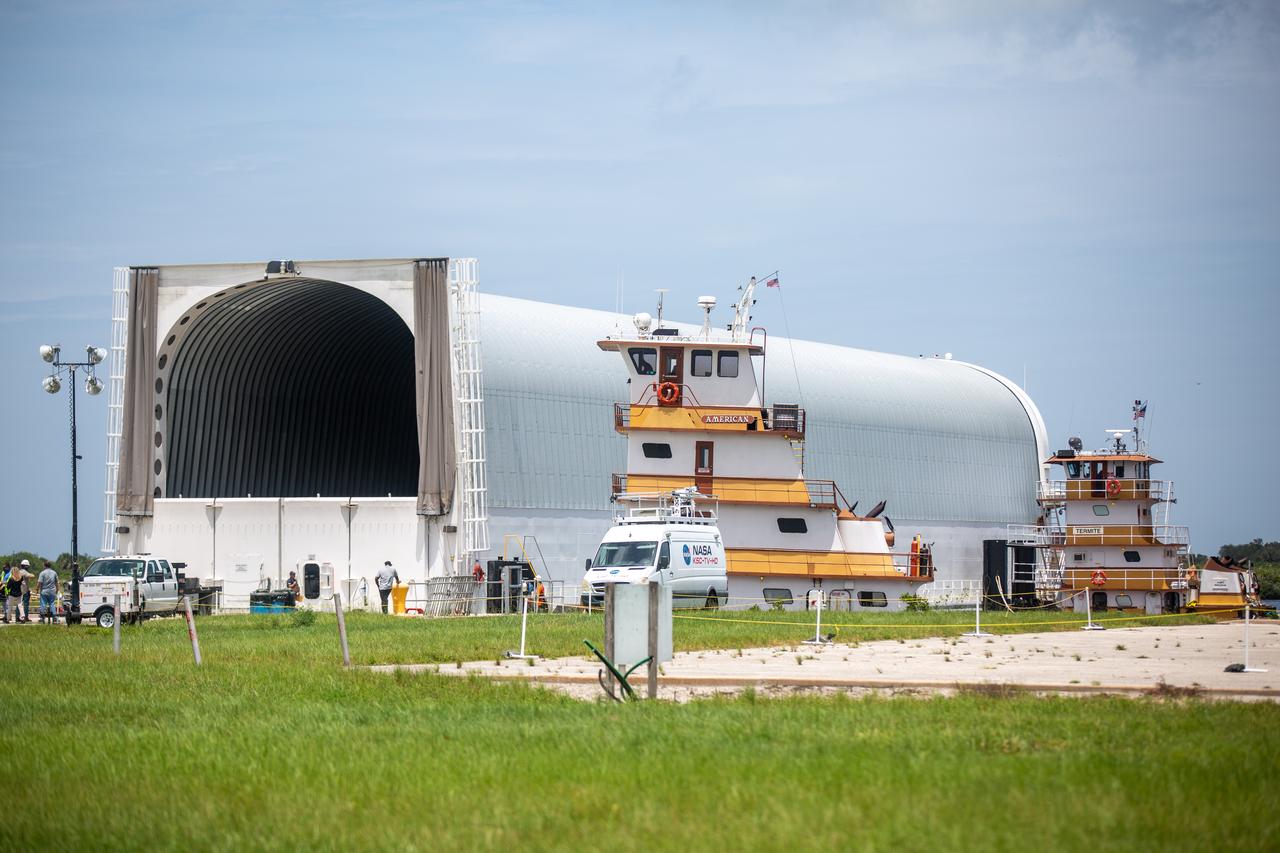
NASA’s Pegasus barge, carrying the launch vehicle stage adapter (LVSA) for the agency’s Space Launch System (SLS) rocket, arrives at the Kennedy Space Center Launch Complex 39 turn basin wharf on July 29, 2020. Traveling to Florida from NASA’s Marshall Space Flight Center in Huntsville, Alabama, the LVSA will connect the SLS core stage to the rocket’s upper stage for the Artemis I launch. Once the LVSA is offloaded, it will be moved to High Bay 4 in the Vehicle Assembly Building for processing ahead of launch. The first launch under the agency’s Artemis program, Artemis I will test SLS and the Orion spacecraft as an integrated system prior to crewed flights to the Moon.
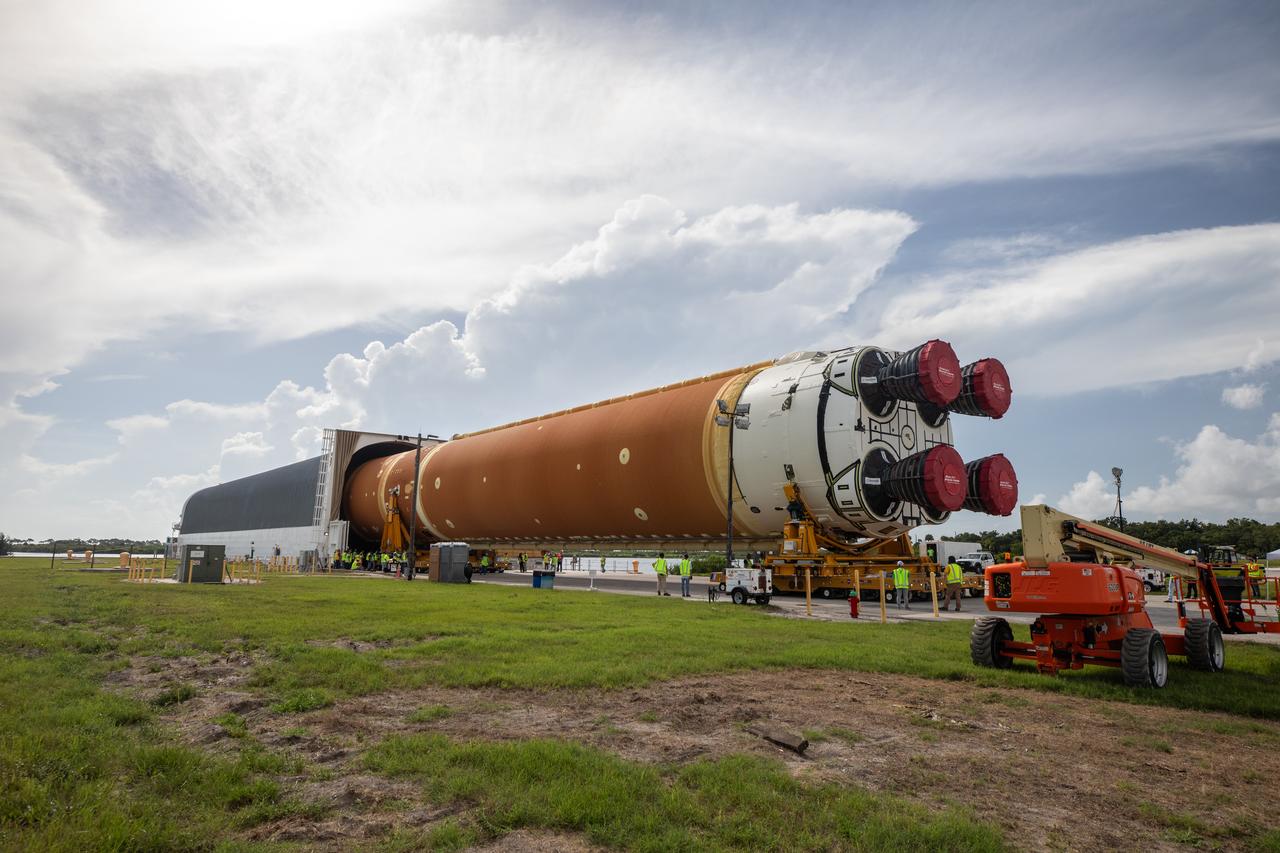
NASA’s massive 212-foot long SLS (Space Launch System) core stage is offloaded from the agency’s Pegasus Barge on Wednesday, July 24 2024, after arriving at NASA’s Kennedy Space Center in Florida. Teams with Exploration Ground Systems (EGS) will transfer the rocket stage to the spaceport’s Vehicle Assembly Building to prepare it for integration atop the mobile launcher ahead of the Artemis II launch.
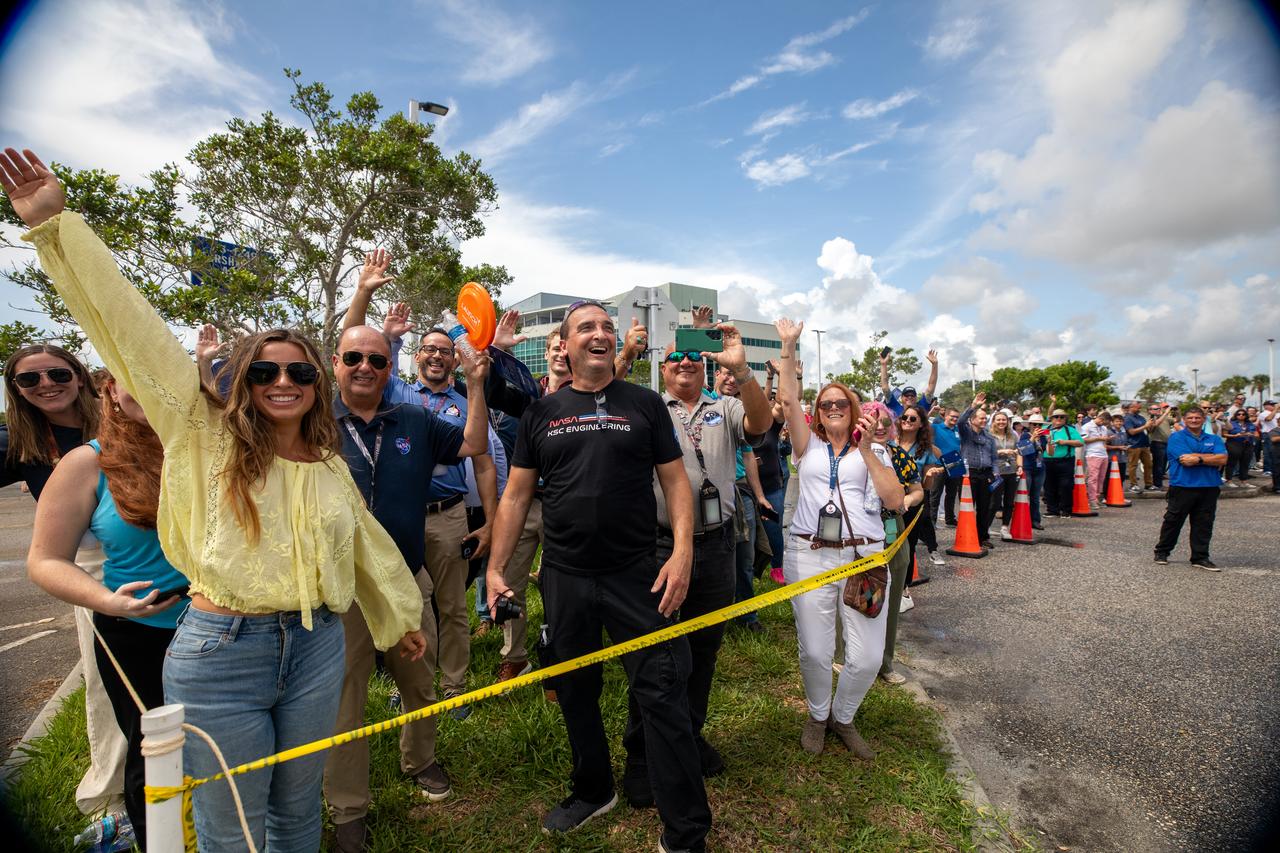
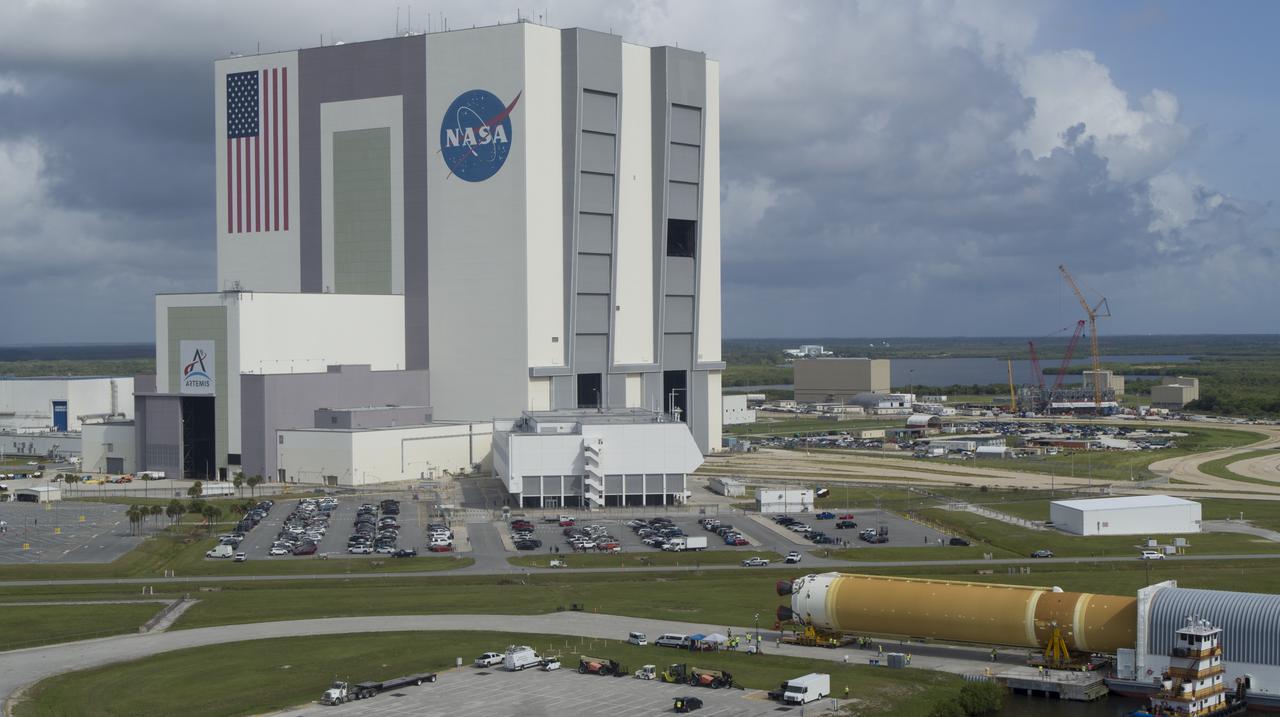
Employees from NASA’s Kennedy Space Center in Florida watch as teams with Exploration Ground Systems (EGS) transport the agency’s powerful SLS (Space Launch System) core stage to the spaceport’s Vehicle Assembly Building on Wednesday, July 24, 2024. The 212-foot-long rocket stage completed its journey from NASA’s Michoud Assembly Facility in New Orleans aboard the Pegasus barge the previous day. Once inside, SLS will be prepared for integration atop the mobile launcher ahead of the Artemis II launch.
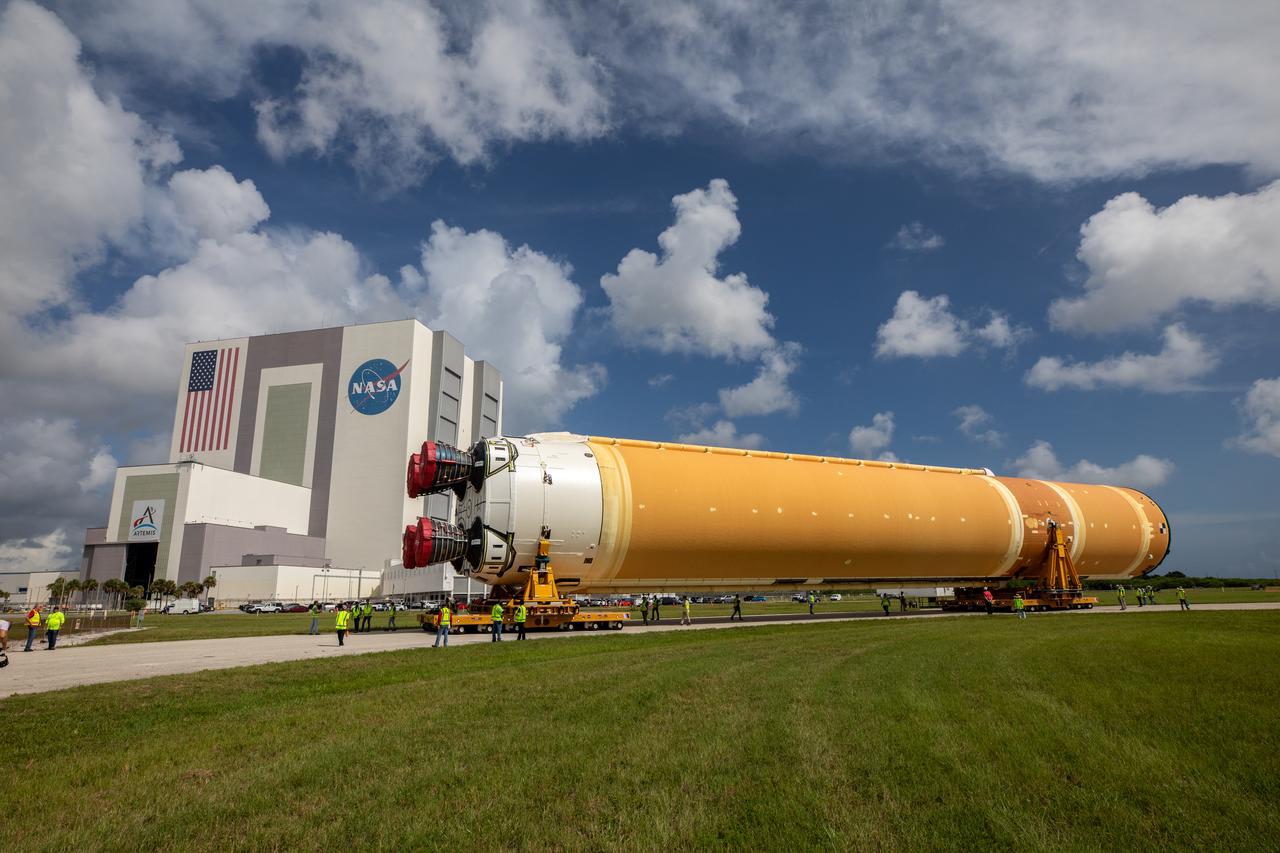
After completing its journey from NASA’s Michoud Assembly Facility in New Orleans aboard the Pegasus barge, teams with Exploration Ground Systems (EGS) transport the agency’s powerful SLS (Space Launch System) core stage to NASA’s Kennedy Space Center’s Vehicle Assembly Building in Florida on Wednesday, July 24, 2024. Once inside, SLS will be prepared for integration atop the mobile launcher ahead of the Artemis II launch.
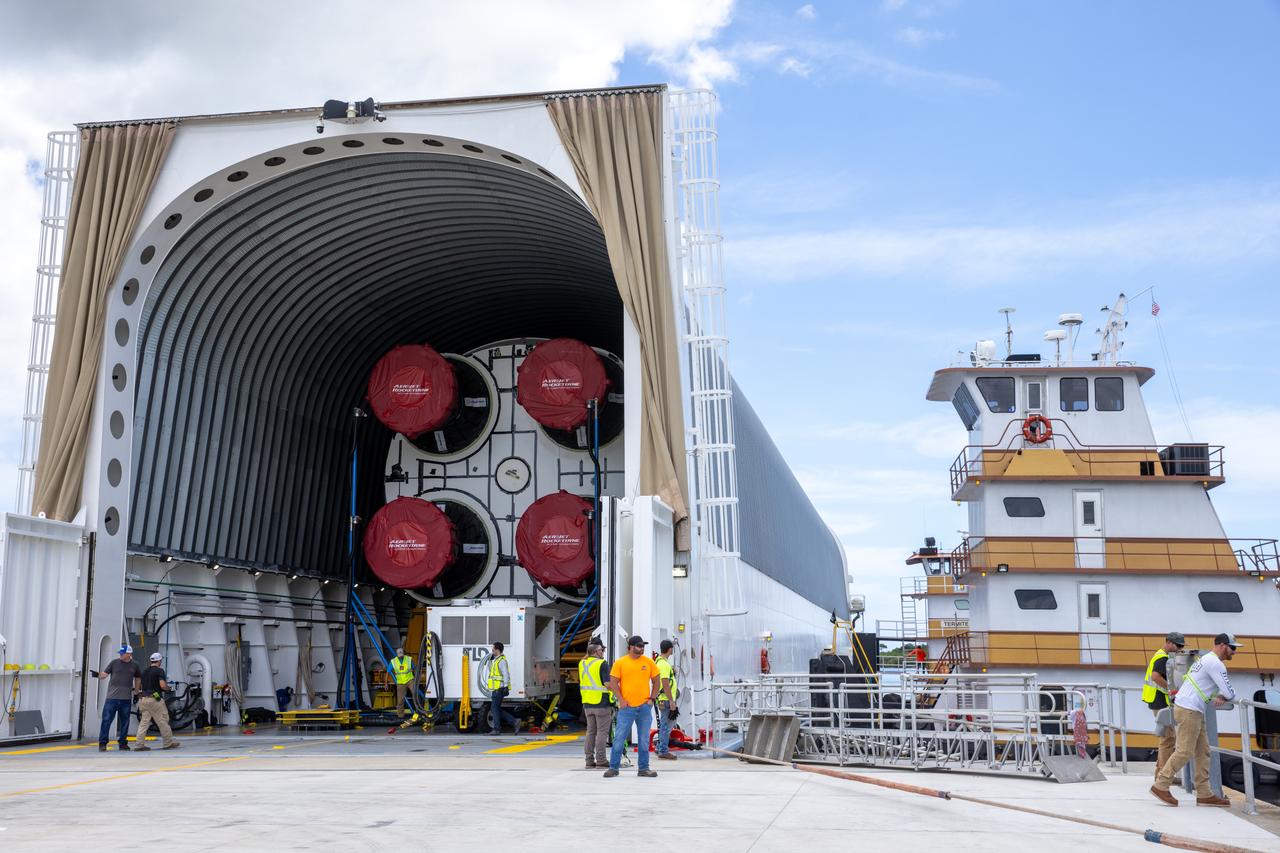
NASA’s Pegasus barge, carrying the agency’s massive SLS (Space Launch System) core stage, arrives at NASA’s Kennedy Space Center Complex 39 turn basin wharf in Florida on Tuesday, July 23, 2024, after journeying from the agency’s Michoud Assembly Facility in New Orleans. The core stage is the next piece of Artemis hardware to arrive at the spaceport and will be offloaded and moved to NASA Kennedy’s Vehicle Assembly Building, where it will be prepared for integration ahead of the Artemis II launch.
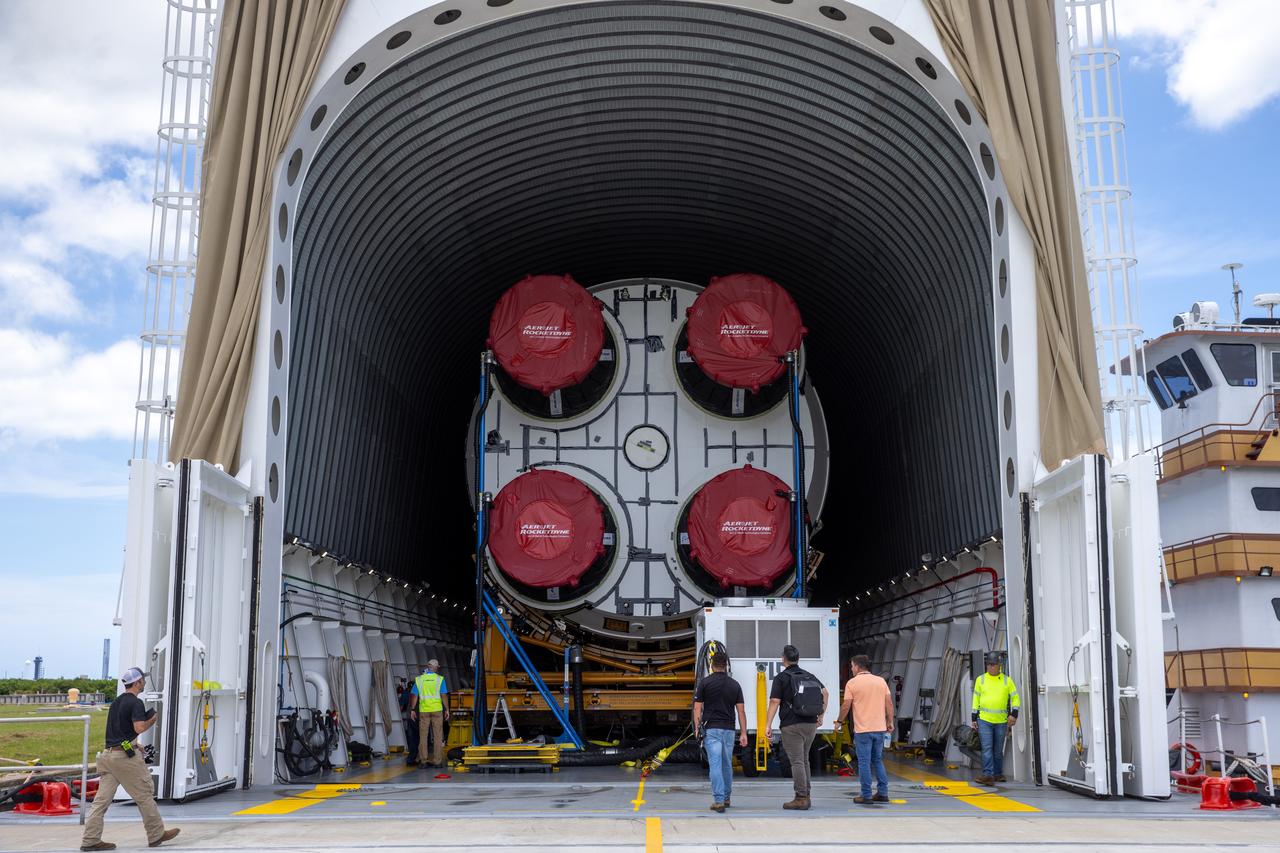
NASA’s Pegasus barge, carrying the agency’s massive SLS (Space Launch System) core stage, arrives at NASA’s Kennedy Space Center Complex 39 turn basin wharf in Florida on Tuesday, July 23, 2024, after journeying from the agency’s Michoud Assembly Facility in New Orleans. The core stage is the next piece of Artemis hardware to arrive at the spaceport and will be offloaded and moved to NASA Kennedy’s Vehicle Assembly Building, where it will be prepared for integration ahead of the Artemis II launch.
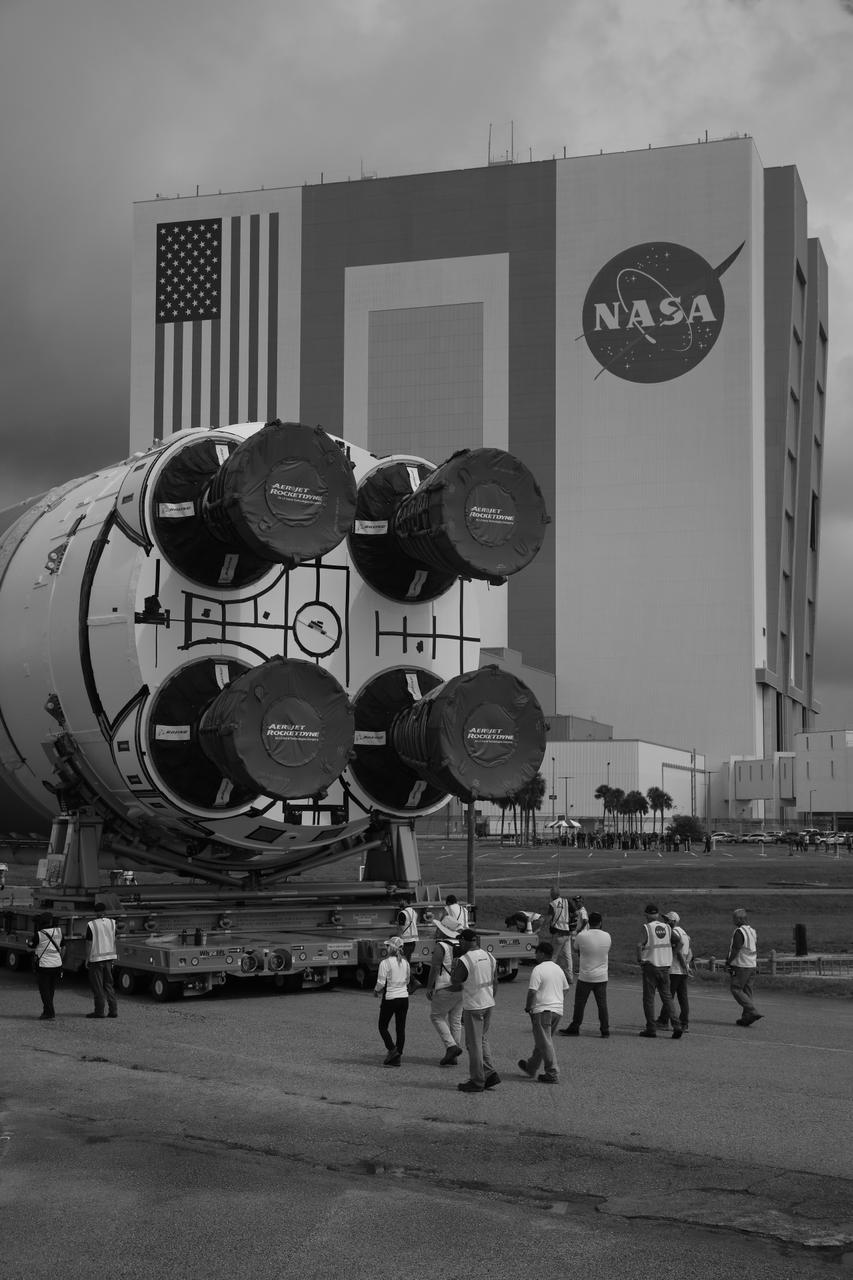
After completing its journey from NASA’s Michoud Assembly Facility in New Orleans aboard the Pegasus barge, teams with Exploration Ground Systems (EGS) transport the agency’s powerful SLS (Space Launch System) core stage to Kennedy Space Center’s Vehicle Assembly Building in Florida on Wednesday, July 24, 2024. Once inside, SLS will be prepared for integration atop the mobile launcher ahead of the Artemis II launch.
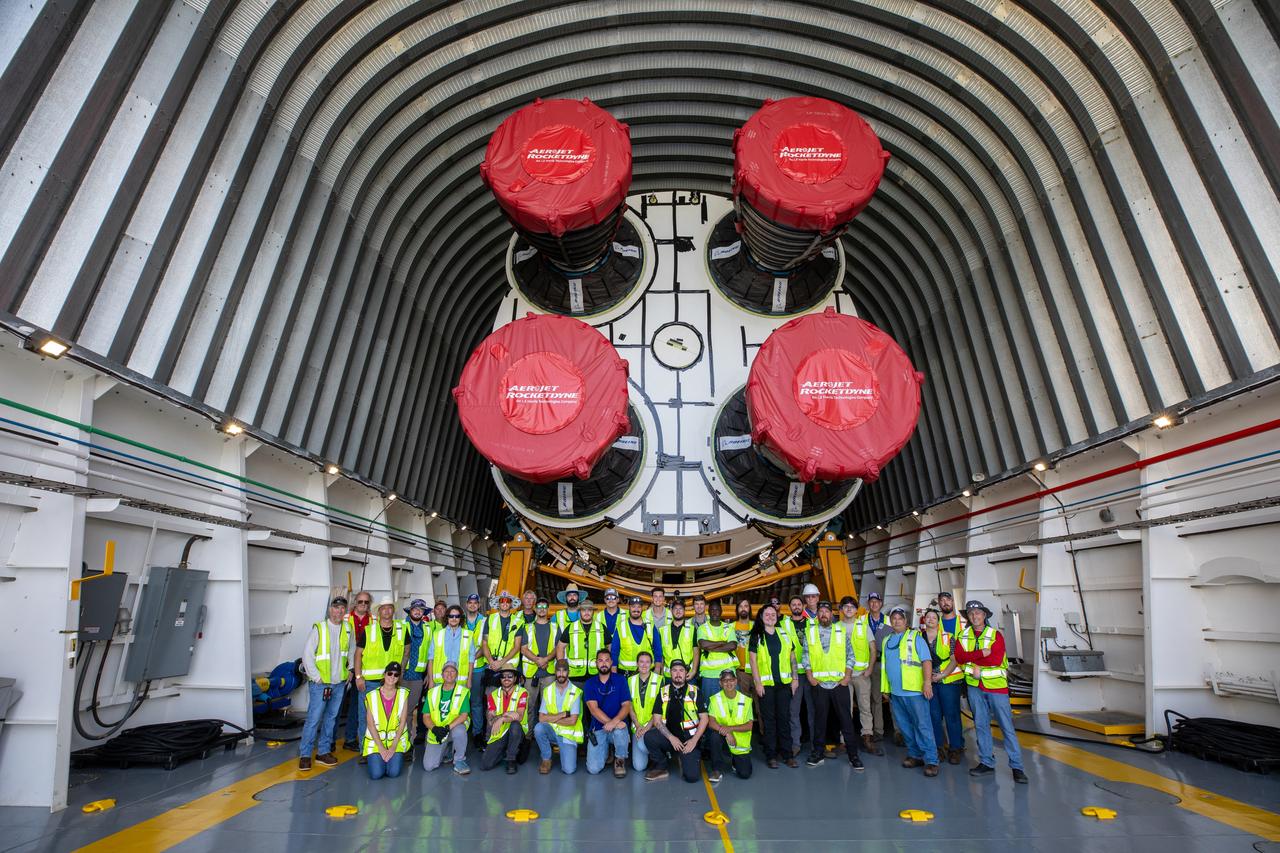
NASA’s massive 212-foot long SLS (Space Launch System) core stage is offloaded from the agency’s Pegasus Barge on Wednesday, July 24 2024, after arriving at NASA’s Kennedy Space Center in Florida. Teams with Exploration Ground Systems (EGS) will transfer the rocket stage to the spaceport’s Vehicle Assembly Building to prepare it for integration atop the mobile launcher ahead of the Artemis II launch.
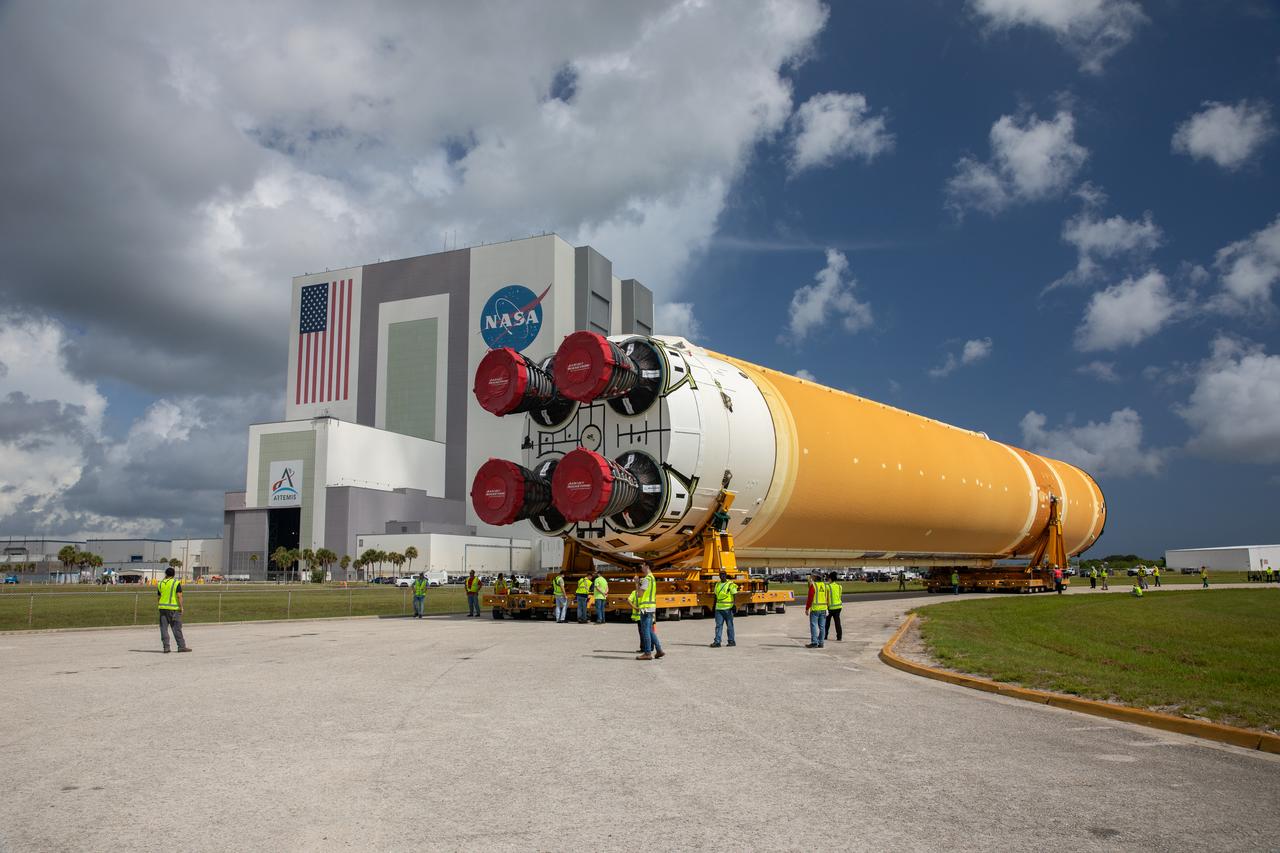
After completing its journey from NASA’s Michoud Assembly Facility in New Orleans aboard the Pegasus barge, teams with Exploration Ground Systems (EGS) transport the agency’s powerful SLS (Space Launch System) core stage to Kennedy Space Center’s Vehicle Assembly Building in Florida on Wednesday, July 24, 2024. Once inside, SLS will be prepared for integration atop the mobile launcher ahead of the Artemis II launch.
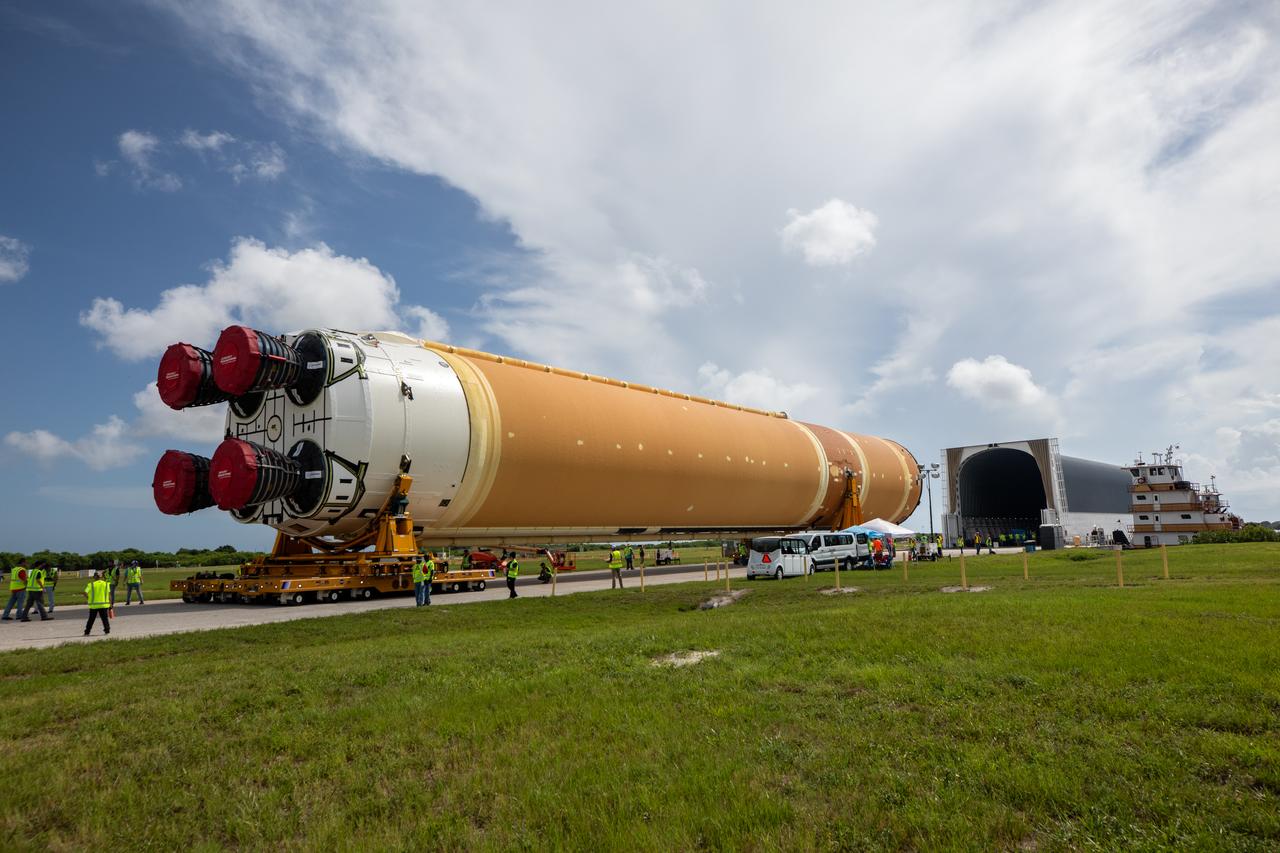
After completing its journey from NASA’s Michoud Assembly Facility in New Orleans aboard the Pegasus barge, teams with Exploration Ground Systems (EGS) transport the agency’s powerful SLS (Space Launch System) core stage to NASA’s Kennedy Space Center’s Vehicle Assembly Building in Florida on Wednesday, July 24, 2024. Once inside, SLS will be prepared for integration atop the mobile launcher ahead of the Artemis II launch.
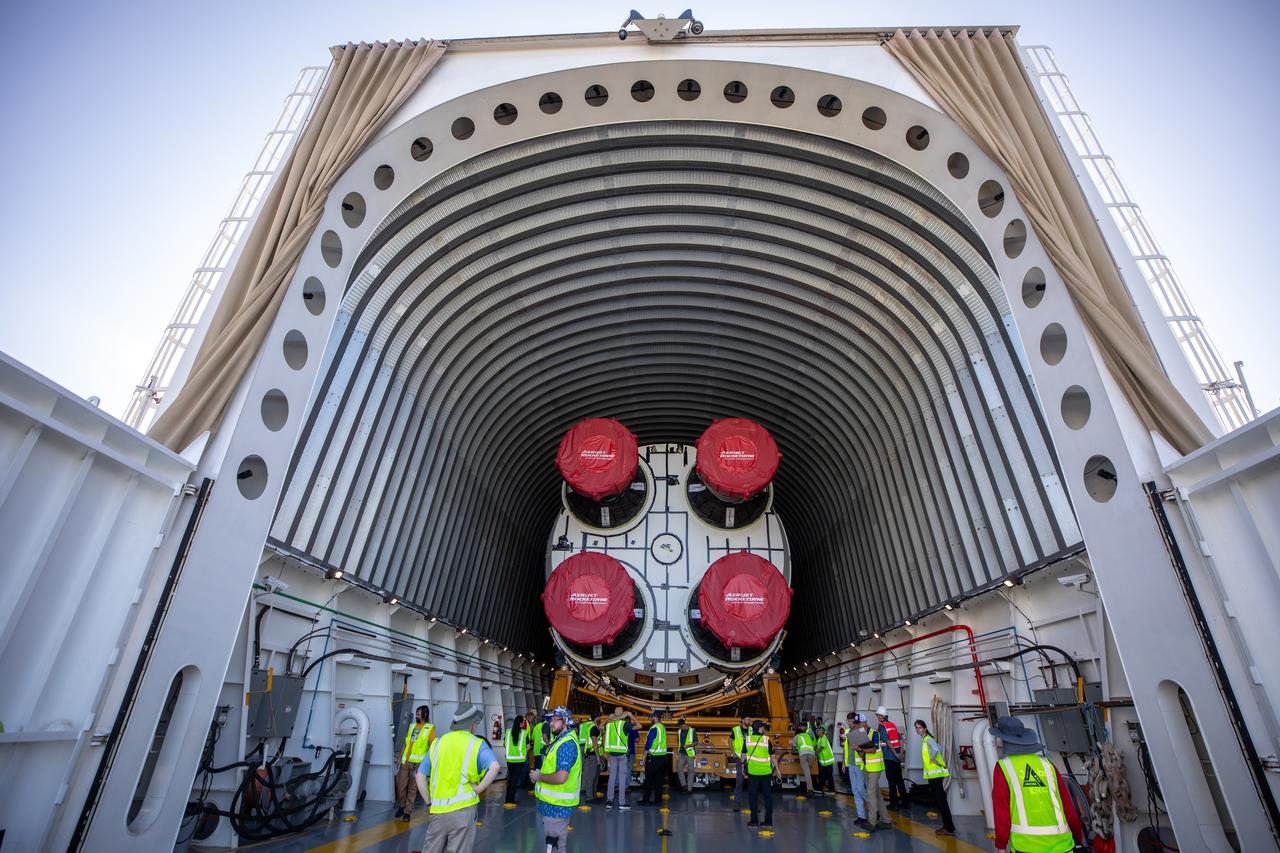
NASA’s massive 212-foot long SLS (Space Launch System) core stage is offloaded from the agency’s Pegasus Barge on Wednesday, July 24 2024, after arriving at NASA’s Kennedy Space Center in Florida. Teams with Exploration Ground Systems (EGS) will transfer the rocket stage to the spaceport’s Vehicle Assembly Building to prepare it for integration atop the mobile launcher ahead of the Artemis II launch.
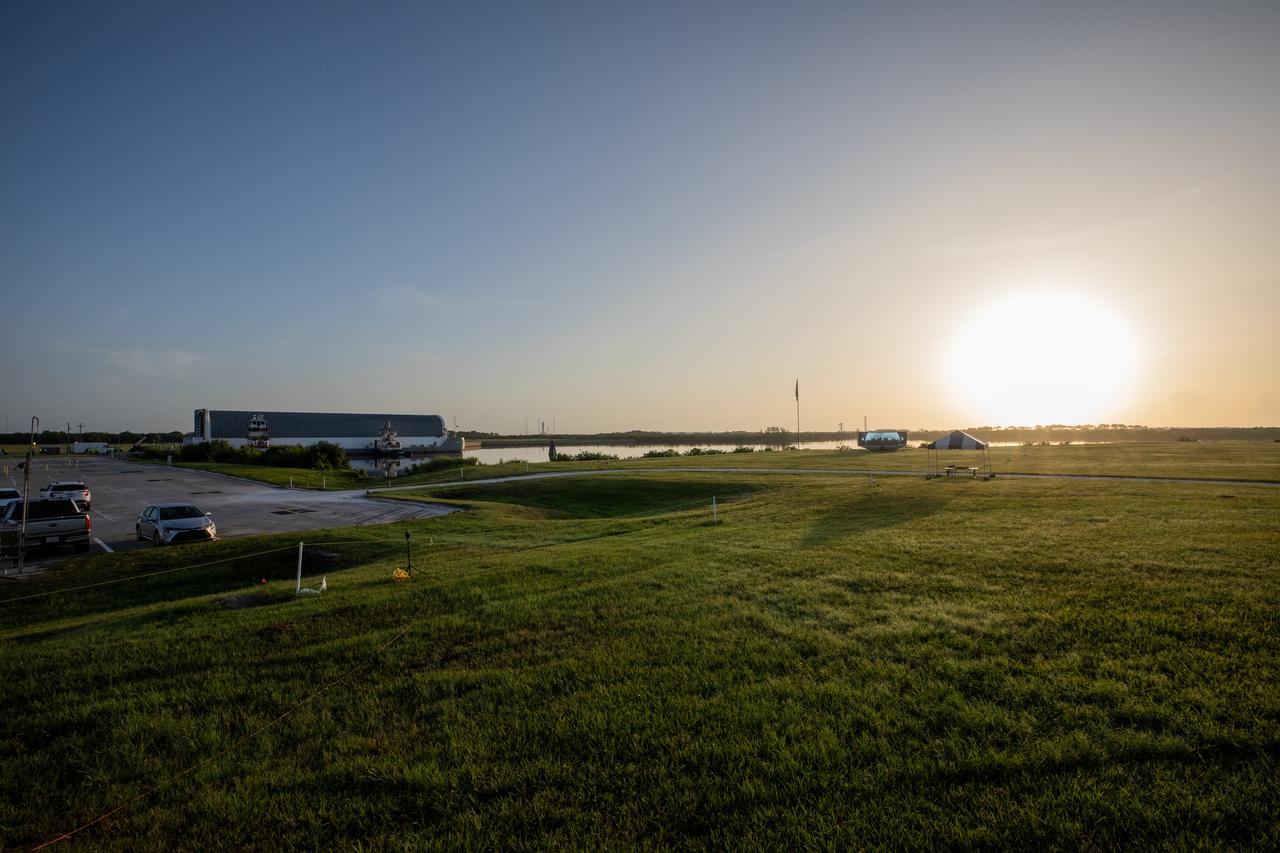
The sun rises over NASA’s Pegasus barge, carrying the agency’s massive SLS (Space Launch System) core stage, at NASA’s Kennedy Space Center Complex 39 turn basin wharf in Florida on Wednesday, July 24, 2024, after journeying from the agency’s Michoud Assembly Facility in New Orleans. The core stage is the next piece of Artemis hardware to arrive at the spaceport and will be offloaded and moved to NASA Kennedy’s Vehicle Assembly Building, where it will be prepared for integration ahead of the Artemis II launch.
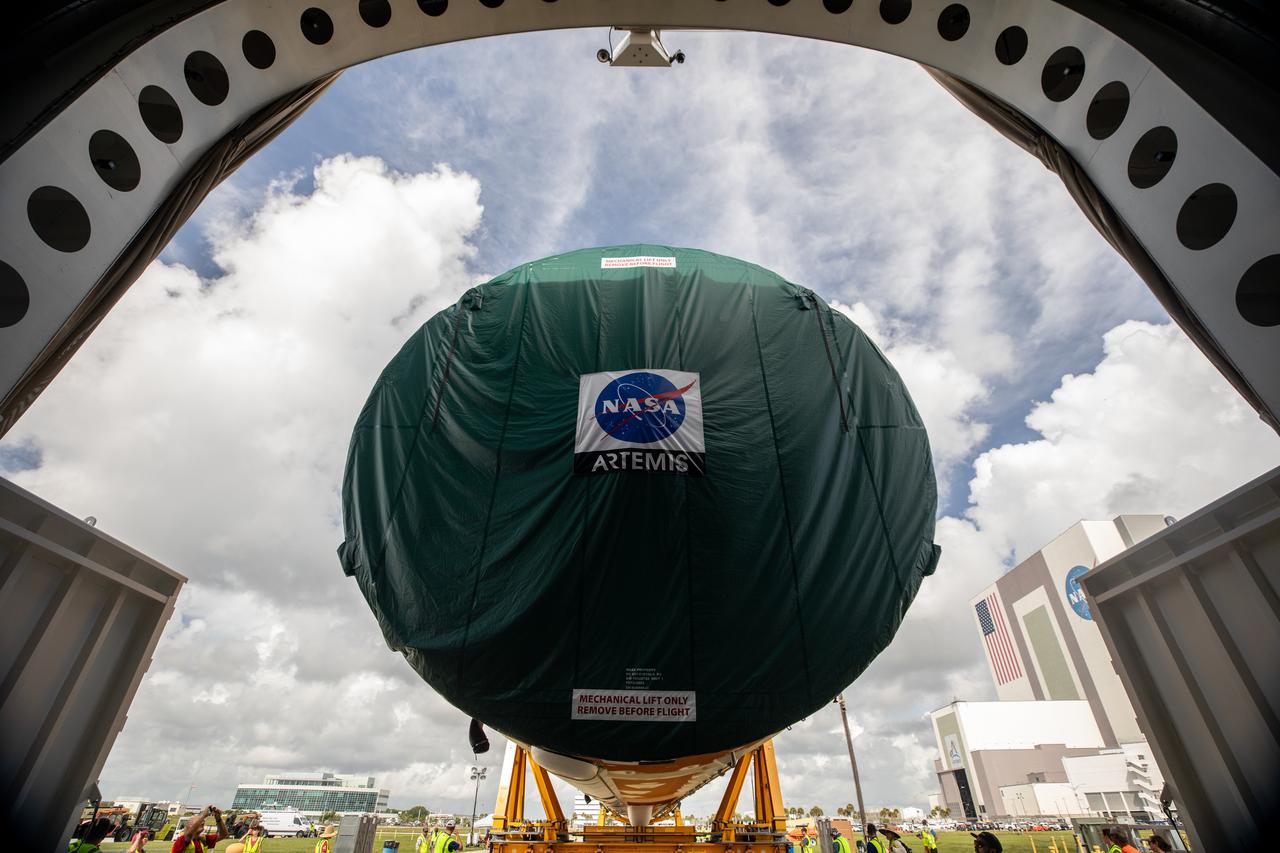
NASA’s massive 212-foot long SLS (Space Launch System) core stage is offloaded from the agency’s Pegasus Barge on Wednesday, July 24, 2024, after arriving at NASA’s Kennedy Space Center in Florida. Teams with Exploration Ground Systems (EGS) will transfer the rocket stage to the spaceport’s Vehicle Assembly Building to prepare it for integration atop the mobile launcher ahead of the Artemis II launch.
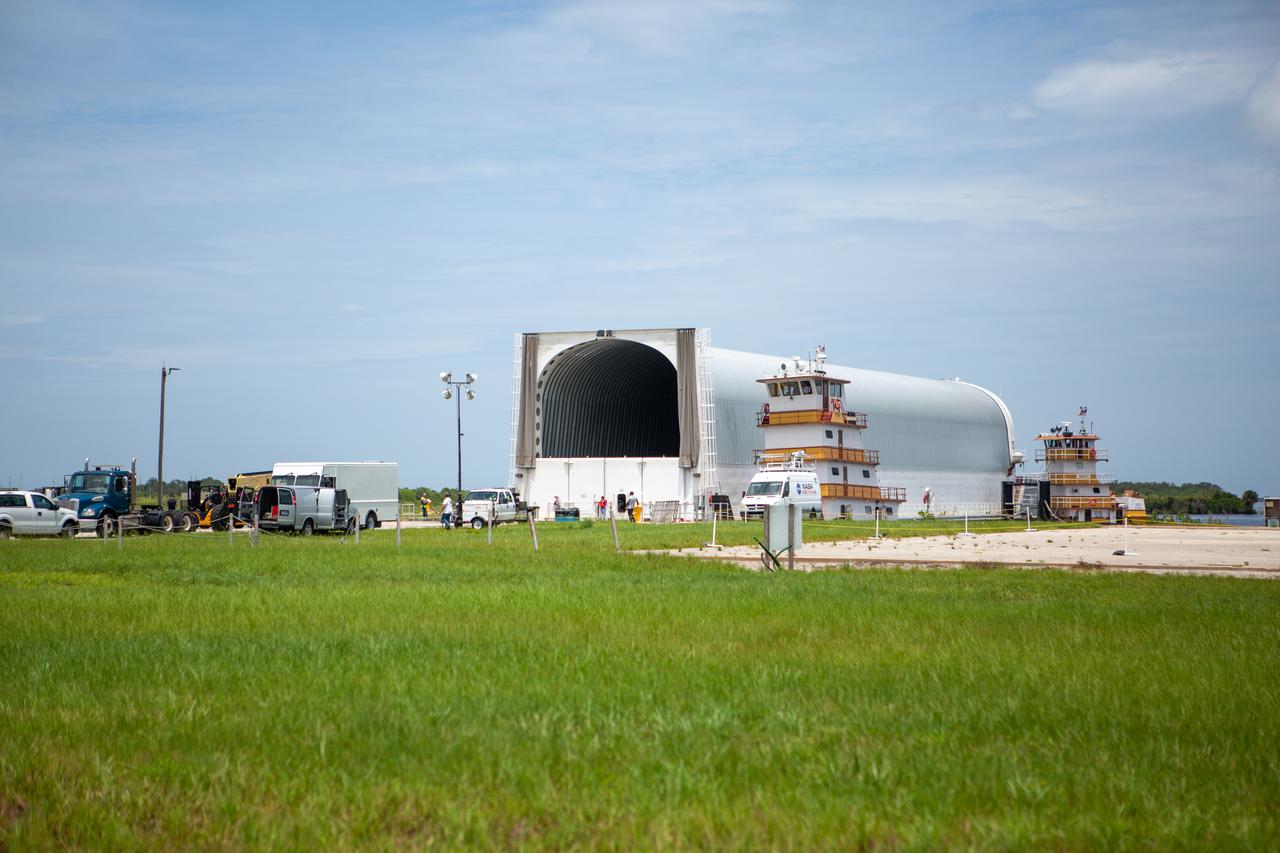
NASA’s Pegasus barge, carrying the launch vehicle stage adapter (LVSA) for the agency’s Space Launch System (SLS) rocket, arrives at the Kennedy Space Center Launch Complex 39 turn basin wharf on July 29, 2020. Traveling to Florida from NASA’s Marshall Space Flight Center in Huntsville, Alabama, the LVSA will connect the SLS core stage to the rocket’s upper stage for the Artemis I launch. Once the LVSA is offloaded, it will be moved to High Bay 4 in the Vehicle Assembly Building for processing ahead of launch. The first launch under the agency’s Artemis program, Artemis I will test SLS and the Orion spacecraft as an integrated system prior to crewed flights to the Moon.
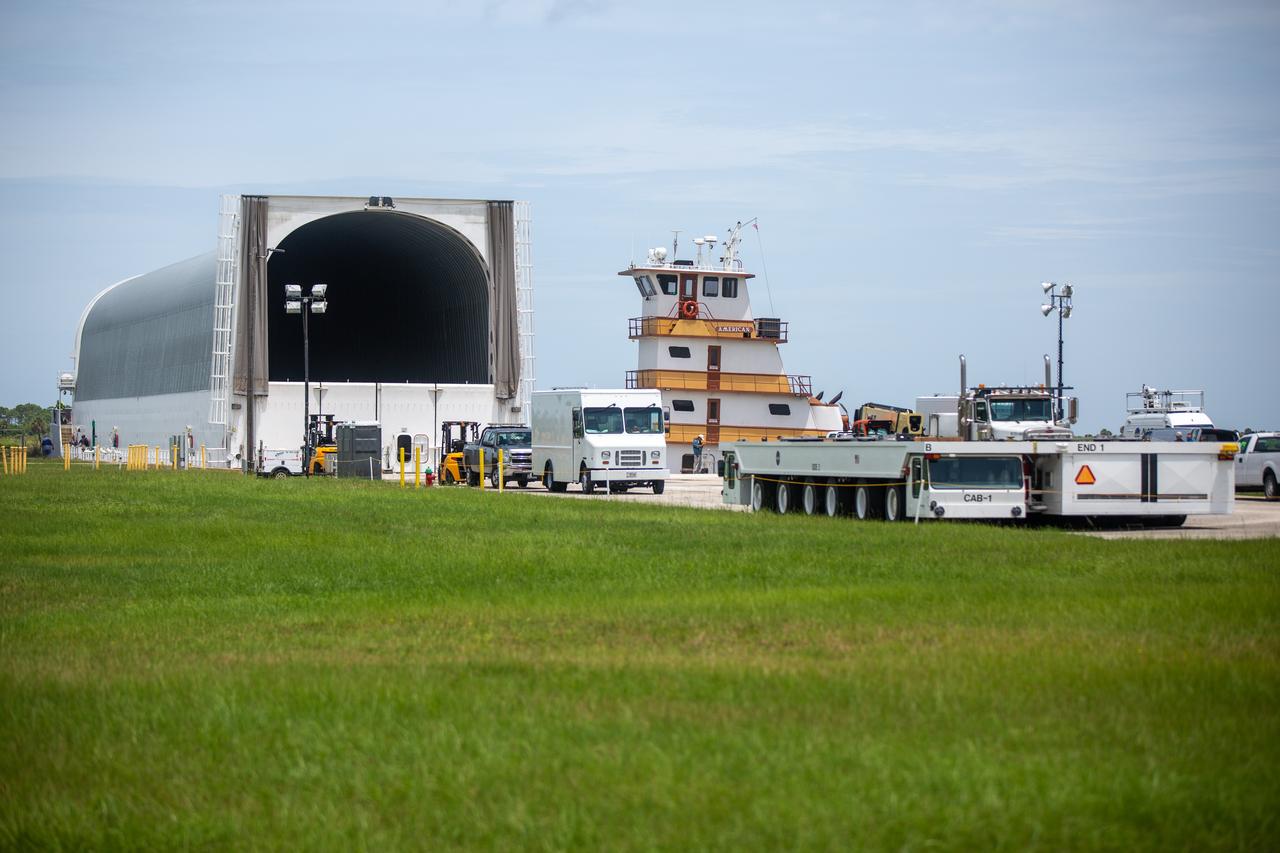
NASA’s Pegasus barge, carrying the launch vehicle stage adapter (LVSA) for the agency’s Space Launch System (SLS) rocket, arrives at the Kennedy Space Center Launch Complex 39 turn basin wharf on July 29, 2020. Traveling to Florida from NASA’s Marshall Space Flight Center in Huntsville, Alabama, the LVSA will connect the SLS core stage to the rocket’s upper stage for the Artemis I launch. Once the LVSA is offloaded, it will be moved to High Bay 4 in the Vehicle Assembly Building for processing ahead of launch. The first launch under the agency’s Artemis program, Artemis I will test SLS and the Orion spacecraft as an integrated system prior to crewed flights to the Moon.
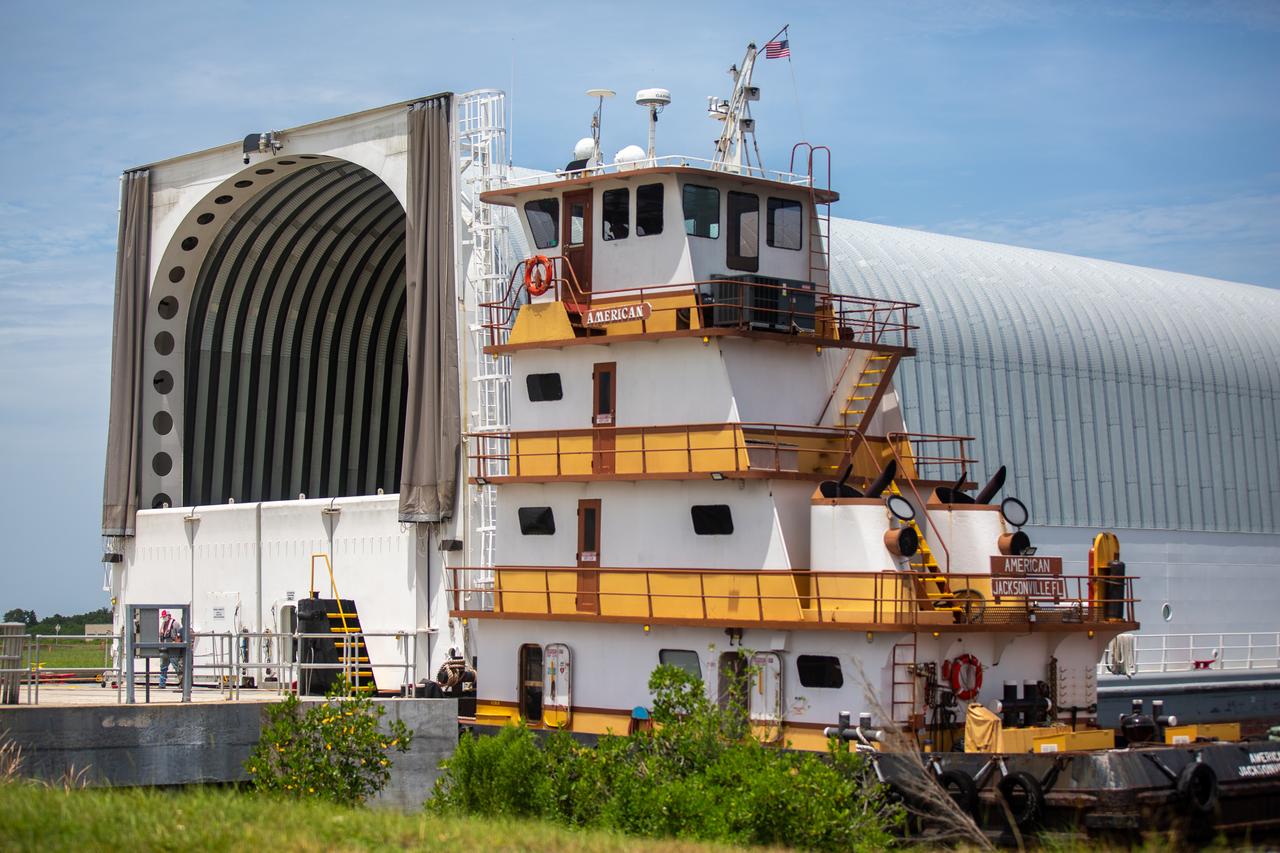
NASA’s Pegasus barge, carrying the launch vehicle stage adapter (LVSA) for the agency’s Space Launch System (SLS) rocket, arrives at the Kennedy Space Center Launch Complex 39 turn basin wharf on July 29, 2020. Traveling to Florida from NASA’s Marshall Space Flight Center in Huntsville, Alabama, the LVSA will connect the SLS core stage to the rocket’s upper stage for the Artemis I launch. Once the LVSA is offloaded, it will be moved to High Bay 4 in the Vehicle Assembly Building for processing ahead of launch. The first launch under the agency’s Artemis program, Artemis I will test SLS and the Orion spacecraft as an integrated system prior to crewed flights to the Moon.
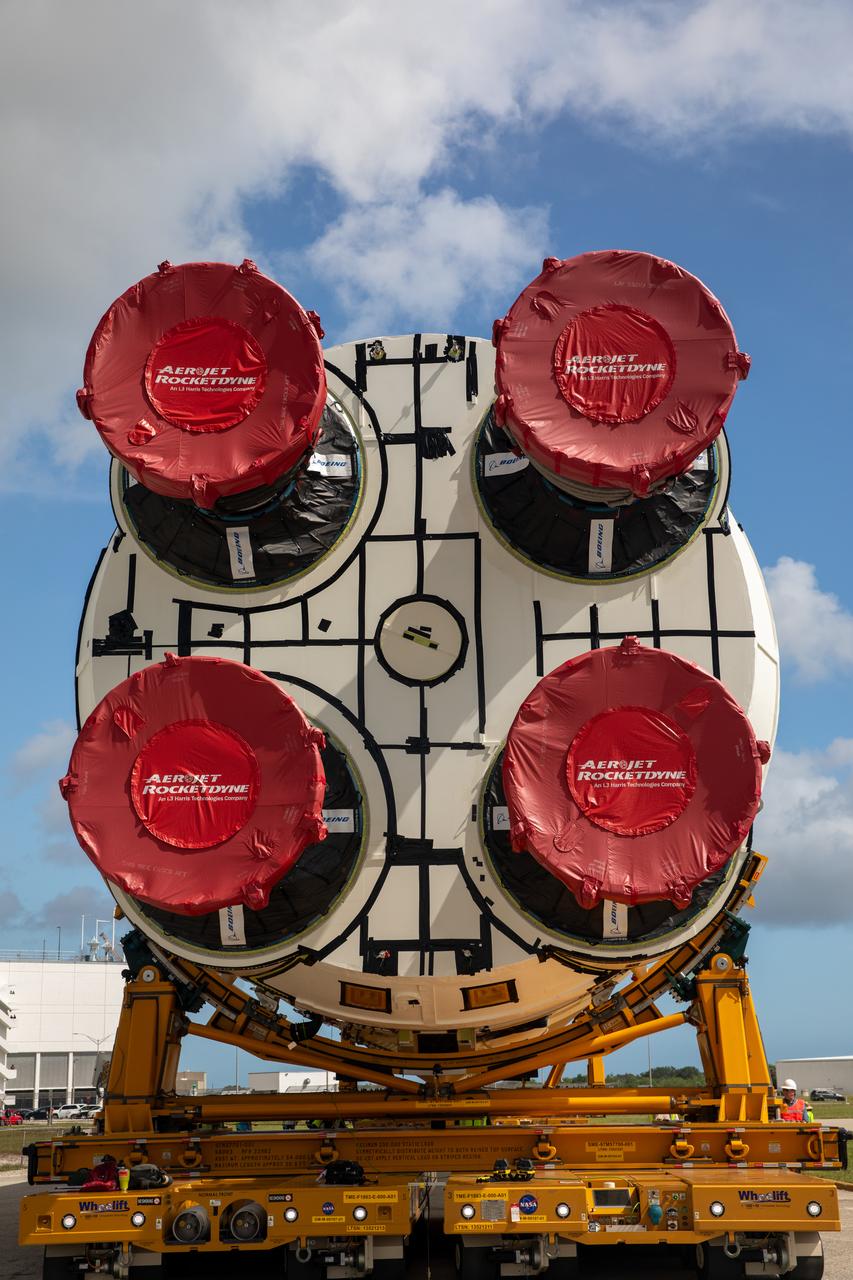
After completing its journey from NASA’s Michoud Assembly Facility in New Orleans aboard the Pegasus barge, teams with Exploration Ground Systems (EGS) transport the agency’s powerful SLS (Space Launch System) core stage to Kennedy Space Center’s Vehicle Assembly Building in Florida on Wednesday, July 24, 2024. Once inside, SLS will be prepared for integration atop the mobile launcher ahead of the Artemis II launch.
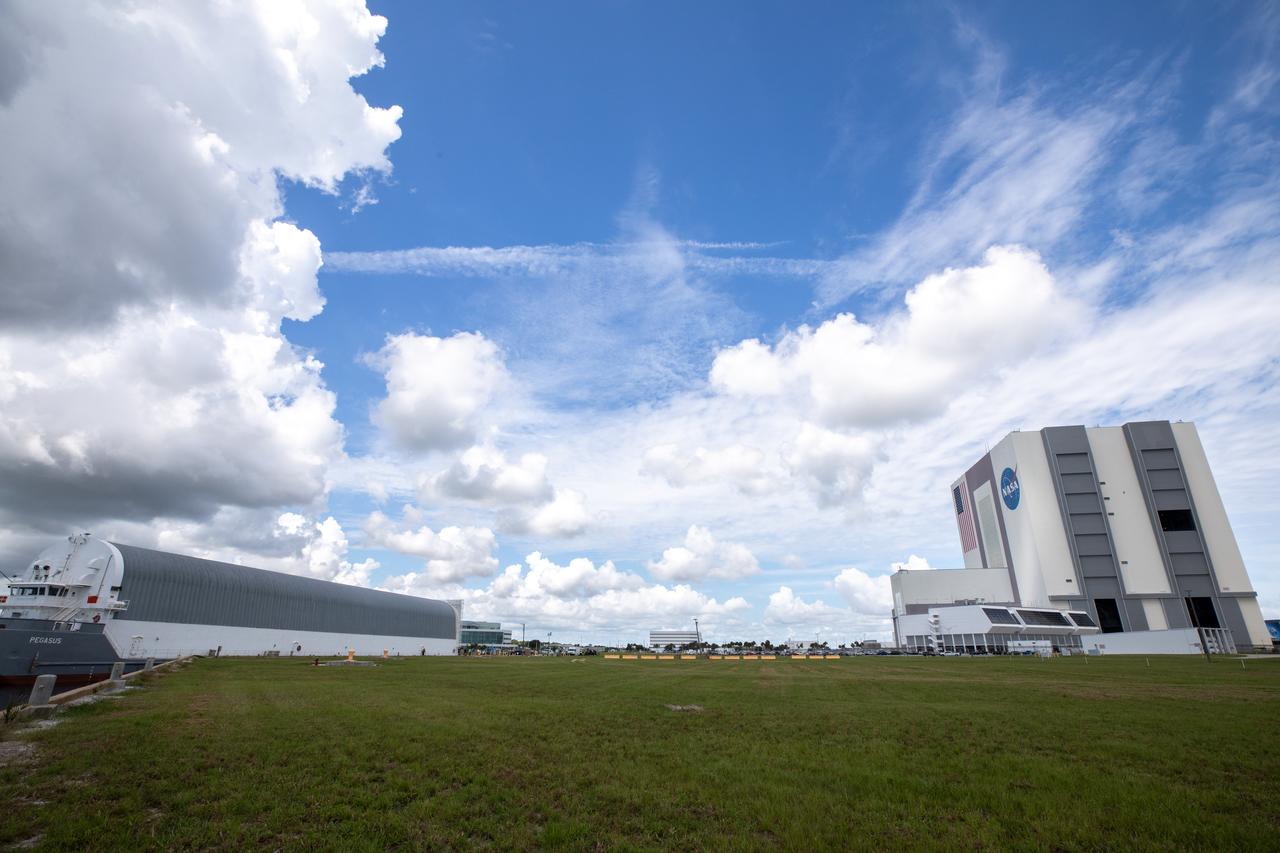
NASA’s Pegasus barge, carrying the agency’s massive SLS (Space Launch System) core stage, arrives at NASA’s Kennedy Space Center Complex 39 turn basin wharf in Florida on Tuesday, July 23, 2024, after journeying from the agency’s Michoud Assembly Facility in New Orleans. The core stage is the next piece of Artemis hardware to arrive at the spaceport and will be offloaded and moved to NASA Kennedy’s Vehicle Assembly Building, where it will be prepared for integration ahead of the Artemis II launch.
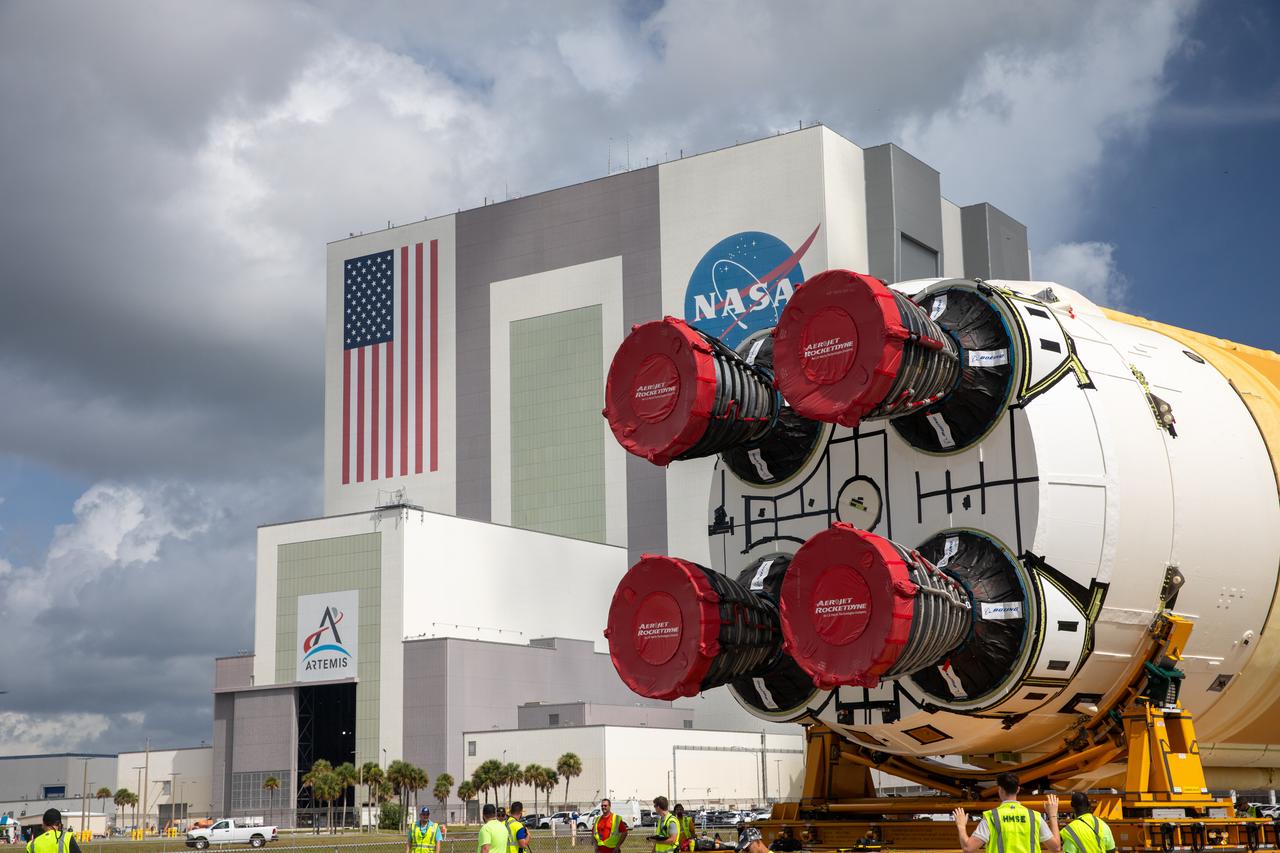
After completing its journey from NASA’s Michoud Assembly Facility in New Orleans aboard the Pegasus barge, teams with Exploration Ground Systems (EGS) transport the agency’s powerful SLS (Space Launch System) core stage to Kennedy Space Center’s Vehicle Assembly Building in Florida on Wednesday, July 24, 2024. Once inside, SLS will be prepared for integration atop the mobile launcher ahead of the Artemis II launch.
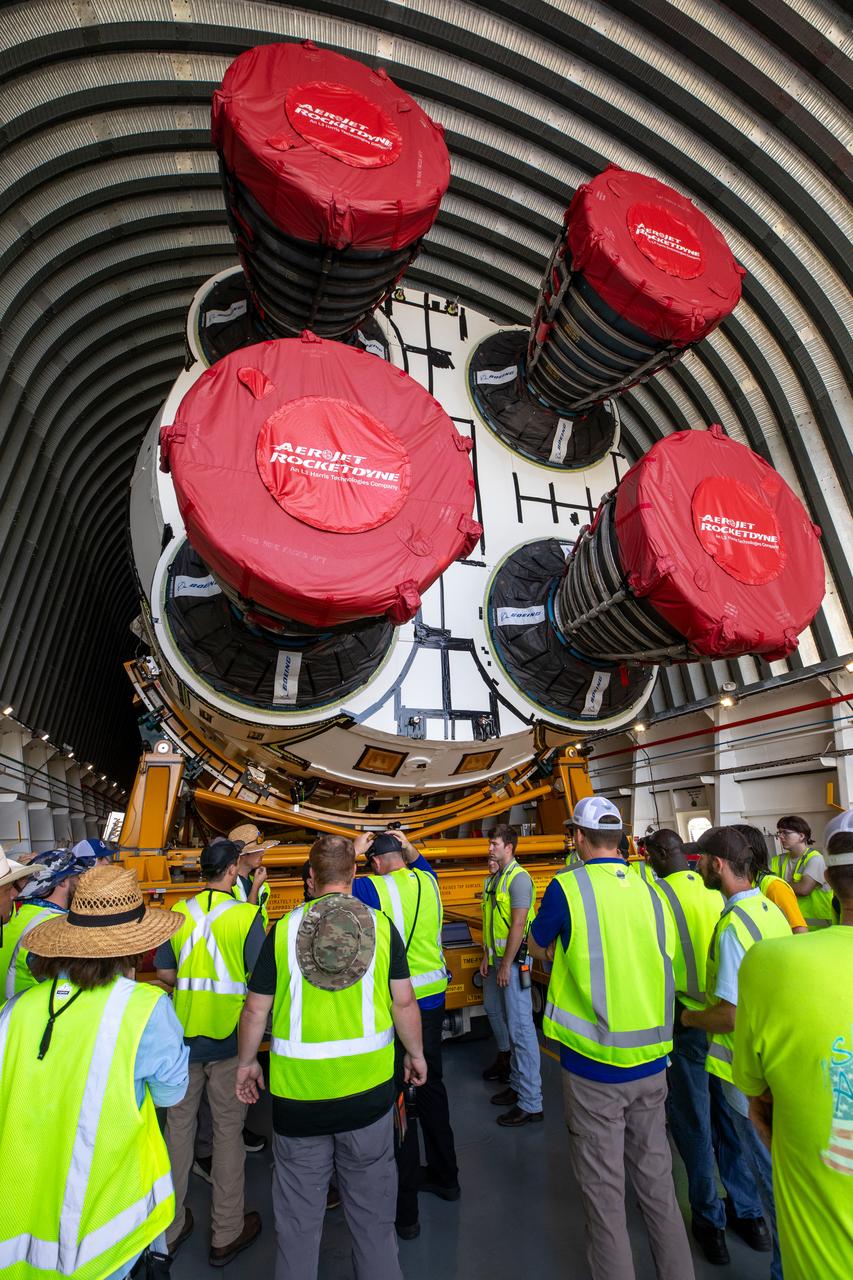
NASA’s massive 212-foot long SLS (Space Launch System) core stage is offloaded from the agency’s Pegasus Barge on Wednesday, July 24 2024, after arriving at NASA’s Kennedy Space Center in Florida. Teams with Exploration Ground Systems (EGS) will transfer the rocket stage to the spaceport’s Vehicle Assembly Building to prepare it for integration atop the mobile launcher ahead of the Artemis II launch.
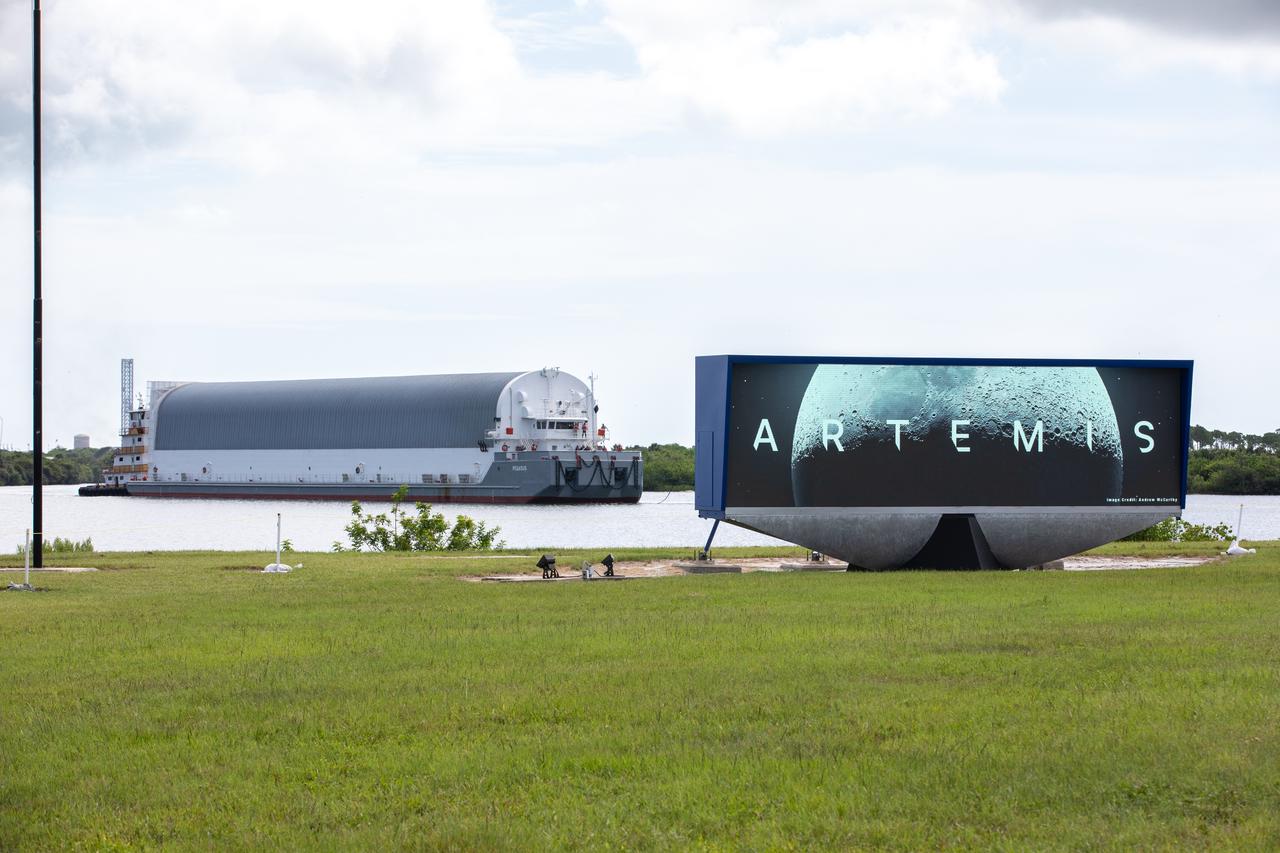
Behind the iconic countdown clock at NASA’s Kennedy Space Center in Florida, the agency’s Pegasus barge completes its 900-mile journey from NASA’s Michoud Assembly Facility in New Orleans carrying the powerful SLS (Space Launch System) core stage on Tuesday, July 23, 2024. Teams with Exploration Ground Systems (EGS) will offload the rocket stage and transfer it to the spaceport’s Vehicle Assembly Building to prepare it for integration atop the mobile launcher ahead of the Artemis II launch.
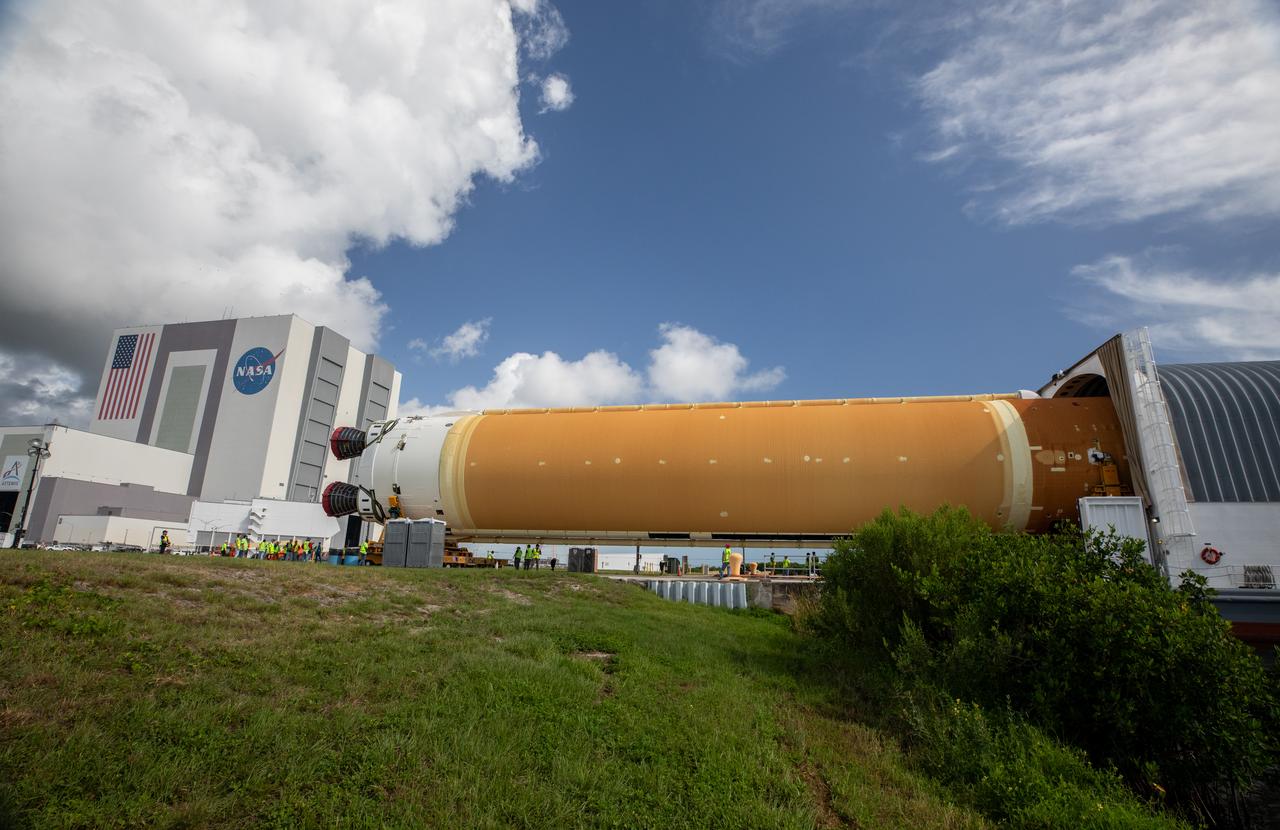
NASA’s massive 212-foot long SLS (Space Launch System) core stage is offloaded from the agency’s Pegasus Barge on Wednesday, July 24, 2024, after arriving at NASA’s Kennedy Space Center in Florida. Teams with Exploration Ground Systems (EGS) will transfer the rocket stage to the spaceport’s Vehicle Assembly Building to prepare it for integration atop the mobile launcher ahead of the Artemis II launch.
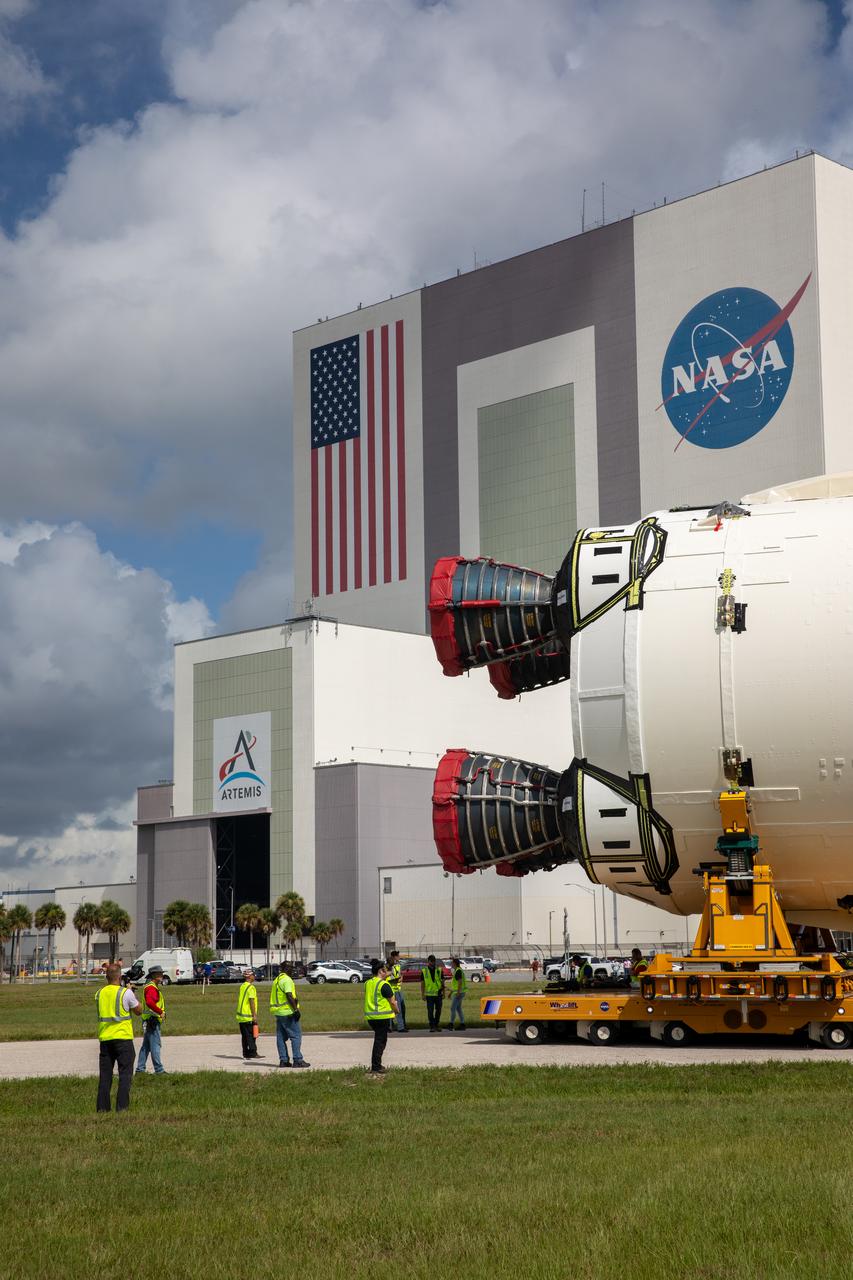
After completing its journey from NASA’s Michoud Assembly Facility in New Orleans aboard the Pegasus barge, teams with Exploration Ground Systems (EGS) transport the agency’s powerful SLS (Space Launch System) core stage to Kennedy Space Center’s Vehicle Assembly Building in Florida on Wednesday, July 24, 2024. Once inside, SLS will be prepared for integration atop the mobile launcher ahead of the Artemis II launch.

After completing its journey from NASA’s Stennis Space Center in Mississippi aboard the Pegasus barge, teams with Exploration Ground Systems (EGS) and lead contractor Jacobs transport the massive Space Launch System (SLS) core stage to Kennedy Space Center’s Vehicle Assembly Building in Florida on April 29, 2021. Once inside the VAB, it will be prepared for integration with the completed stack of solid rocket boosters atop the mobile launcher ahead of the Artemis I launch. The first in a series of increasingly complex missions, Artemis I will test SLS and Orion as an integrated system prior to crewed flights to the Moon.
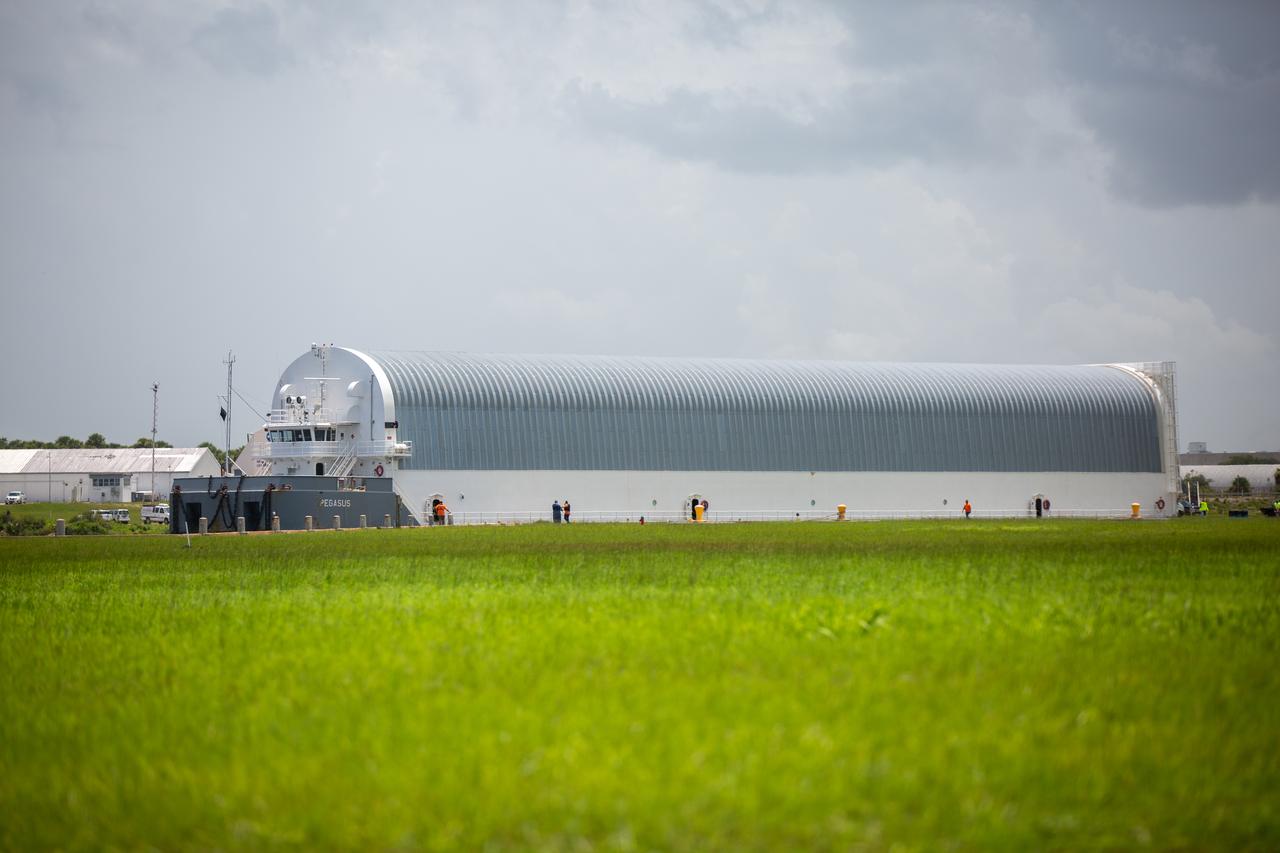
NASA’s Pegasus barge, carrying the launch vehicle stage adapter (LVSA) for the agency’s Space Launch System (SLS) rocket, arrives at the Kennedy Space Center Launch Complex 39 turn basin wharf on July 29, 2020. Traveling to Florida from NASA’s Marshall Space Flight Center in Huntsville, Alabama, the LVSA will connect the SLS core stage to the rocket’s upper stage for the Artemis I launch. Once the LVSA is offloaded, it will be moved to High Bay 4 in the Vehicle Assembly Building for processing ahead of launch. The first launch under the agency’s Artemis program, Artemis I will test SLS and the Orion spacecraft as an integrated system prior to crewed flights to the Moon.

NASA’s Pegasus barge, carrying the launch vehicle stage adapter (LVSA) for the agency’s Space Launch System (SLS) rocket, arrives at the Kennedy Space Center Launch Complex 39 turn basin wharf on July 29, 2020. Traveling to Florida from NASA’s Marshall Space Flight Center in Huntsville, Alabama, the LVSA will connect the SLS core stage to the rocket’s upper stage for the Artemis I launch. Once the LVSA is offloaded, it will be moved to High Bay 4 in the Vehicle Assembly Building for processing ahead of launch. The first launch under the agency’s Artemis program, Artemis I will test SLS and the Orion spacecraft as an integrated system prior to crewed flights to the Moon.

After completing its journey from NASA’s Michoud Assembly Facility in New Orleans aboard the Pegasus barge, teams with Exploration Ground Systems (EGS) transport the agency’s powerful SLS (Space Launch System) core stage to Kennedy Space Center’s Vehicle Assembly Building in Florida on Wednesday, July 24, 2024. Once inside, SLS will be prepared for integration atop the mobile launcher ahead of the Artemis II launch.
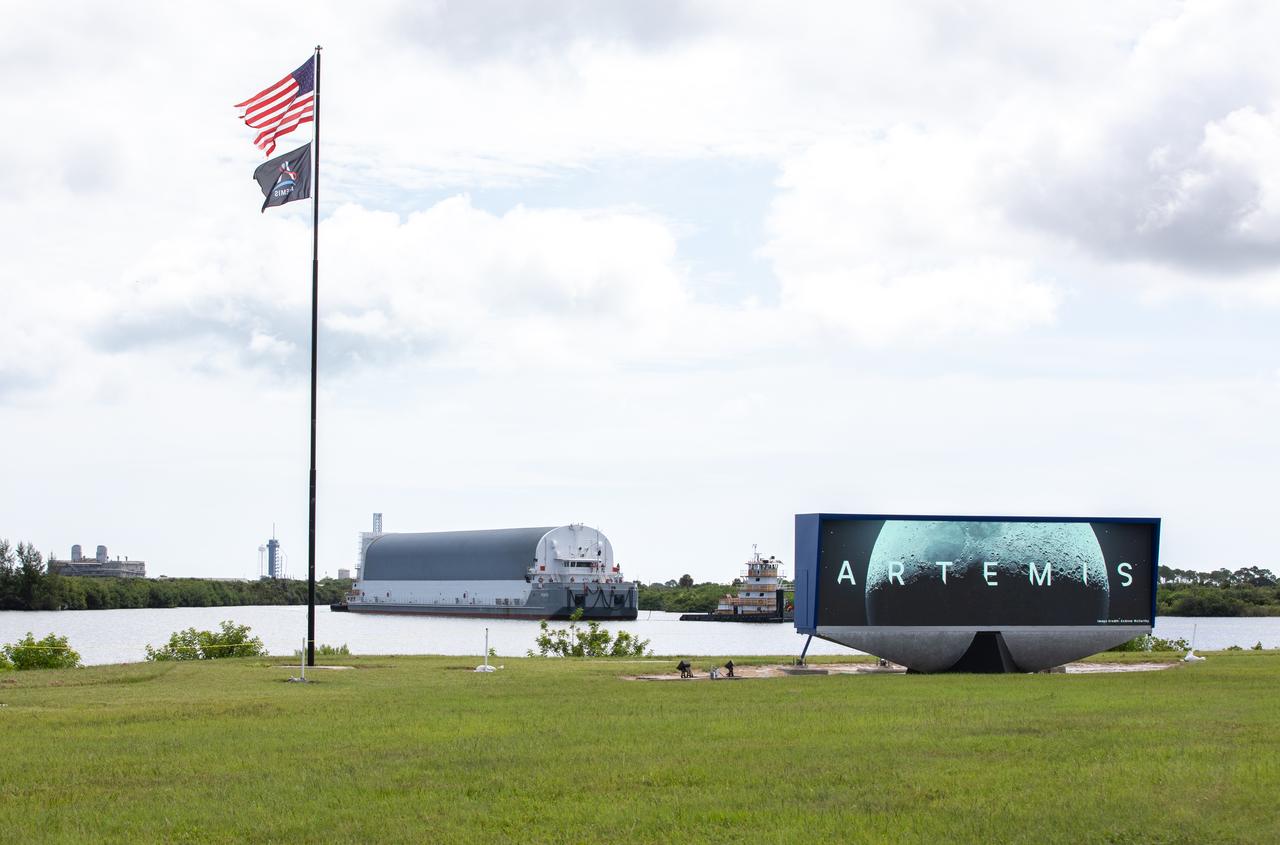
Behind the iconic countdown clock at NASA’s Kennedy Space Center in Florida, the agency’s Pegasus barge completes its 900-mile journey from NASA’s Michoud Assembly Facility in New Orleans carrying the powerful SLS (Space Launch System) core stage on Tuesday, July 23, 2024. Teams with NASA's Exploration Ground Systems (EGS) will offload the rocket stage and transfer it to the spaceport’s Vehicle Assembly Building to prepare it for integration atop the mobile launcher ahead of the Artemis II launch.
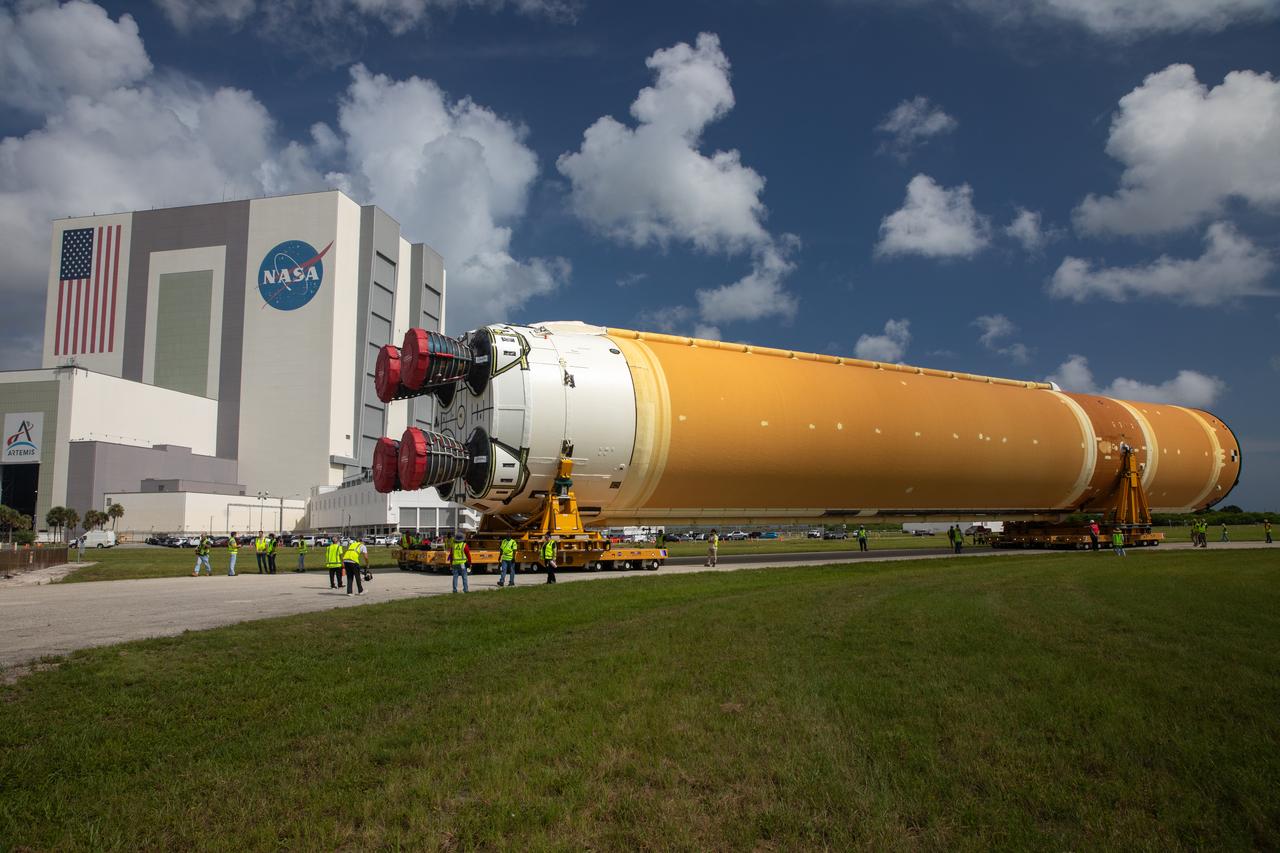
After completing its journey from NASA’s Michoud Assembly Facility in New Orleans aboard the Pegasus barge, teams with Exploration Ground Systems (EGS) transport the agency’s powerful SLS (Space Launch System) core stage to Kennedy Space Center’s Vehicle Assembly Building in Florida on Wednesday, July 24, 2024. Once inside, SLS will be prepared for integration atop the mobile launcher ahead of the Artemis II launch.
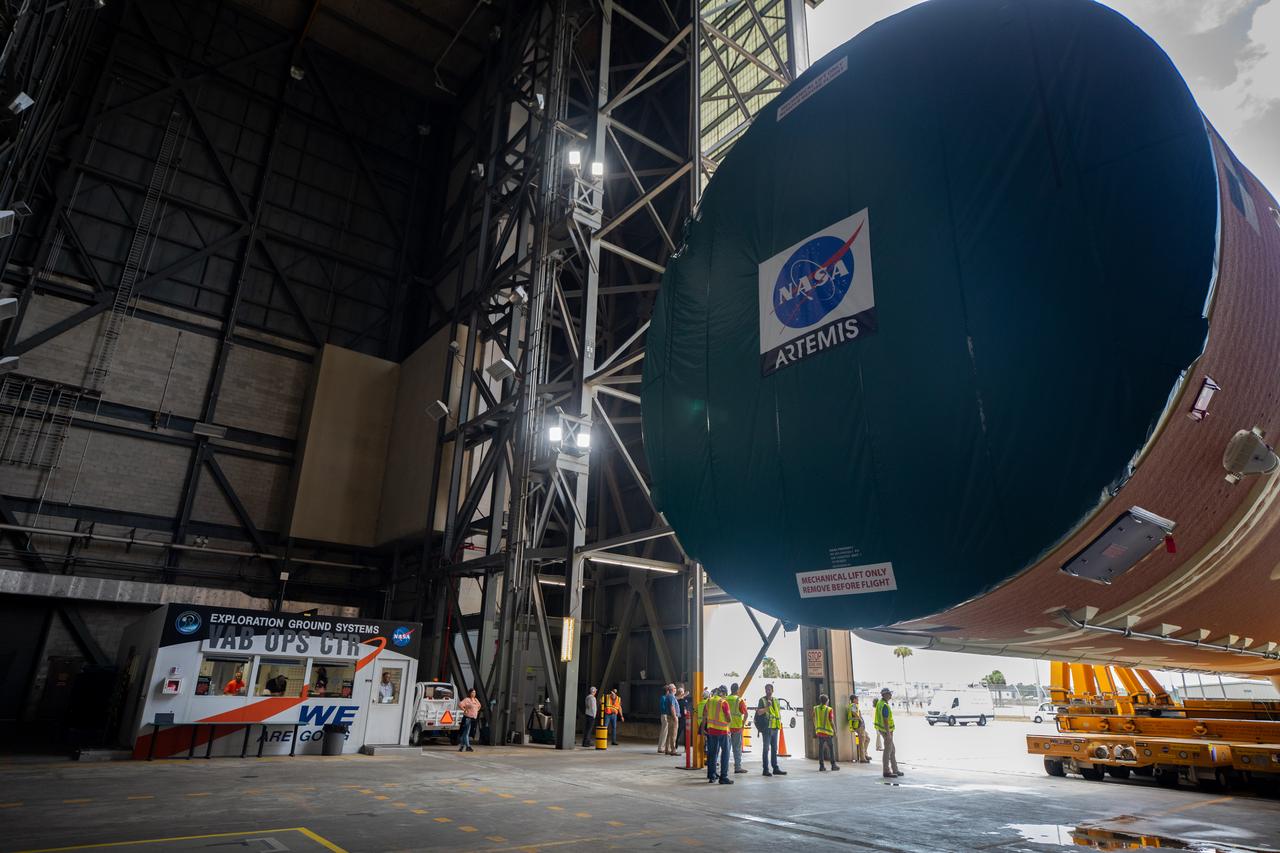
After completing its journey from NASA’s Michoud Assembly Facility in New Orleans aboard the Pegasus barge, teams with Exploration Ground Systems (EGS) transport the agency’s powerful SLS (Space Launch System) core stage into the transfer aisle inside the Vehicle Assembly Building at NASA’s Kennedy Space Center in Florida on Wednesday, July 24, 2024. In the coming months, SLS will be prepared for integration atop the mobile launcher ahead of the Artemis II launch.
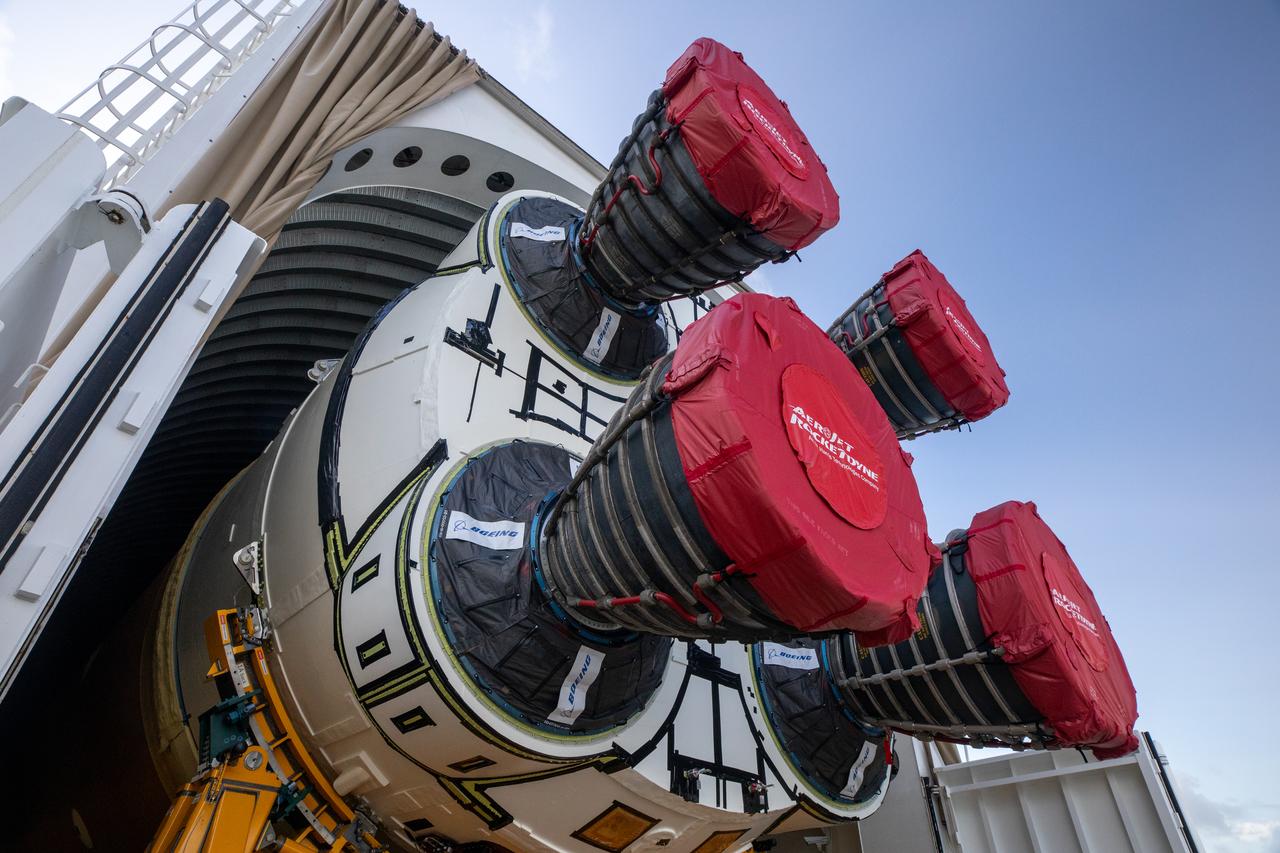
NASA’s massive 212-foot long SLS (Space Launch System) core stage is offloaded from the agency’s Pegasus Barge on Wednesday, July 24, 2024, after arriving at NASA’s Kennedy Space Center in Florida. Teams with Exploration Ground Systems (EGS) will transfer the rocket stage to the spaceport’s Vehicle Assembly Building to prepare it for integration atop the mobile launcher ahead of the Artemis II launch.
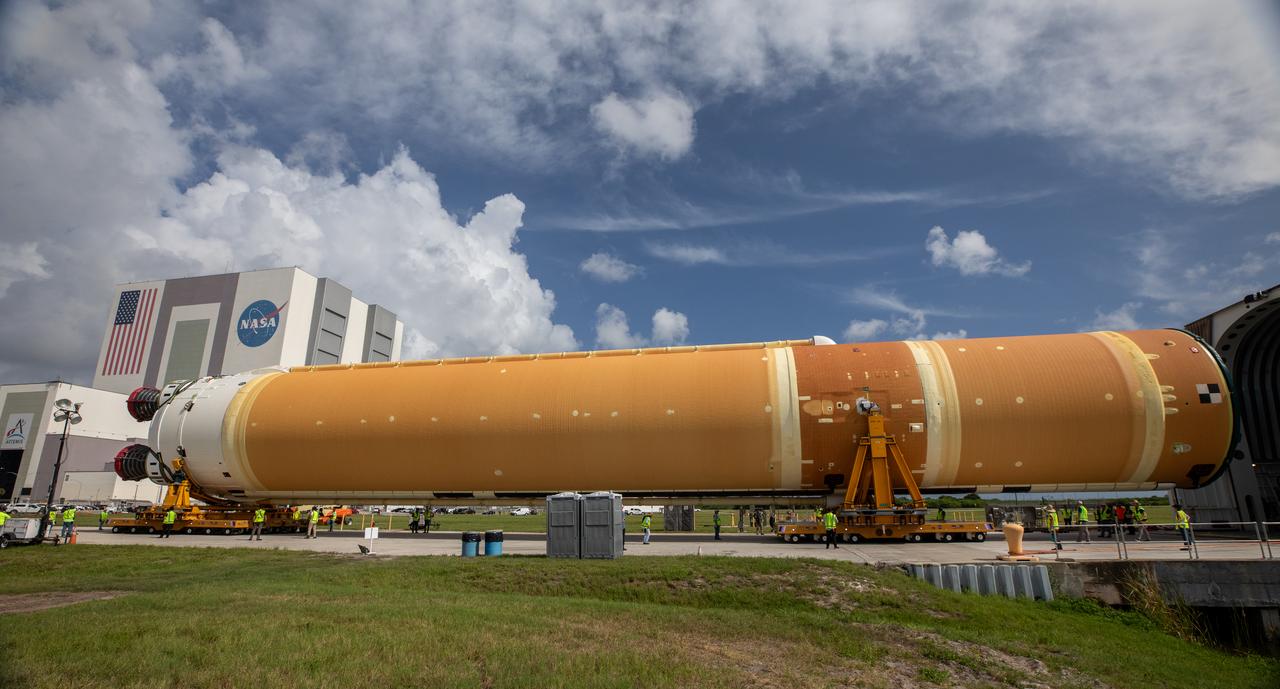
After completing its journey from NASA’s Michoud Assembly Facility in New Orleans aboard the Pegasus barge, teams with Exploration Ground Systems (EGS) transport the agency’s powerful SLS (Space Launch System) core stage to NASA’s Kennedy Space Center’s Vehicle Assembly Building in Florida on Wednesday, July 24, 2024. Once inside, SLS will be prepared for integration atop the mobile launcher ahead of the Artemis II launch.
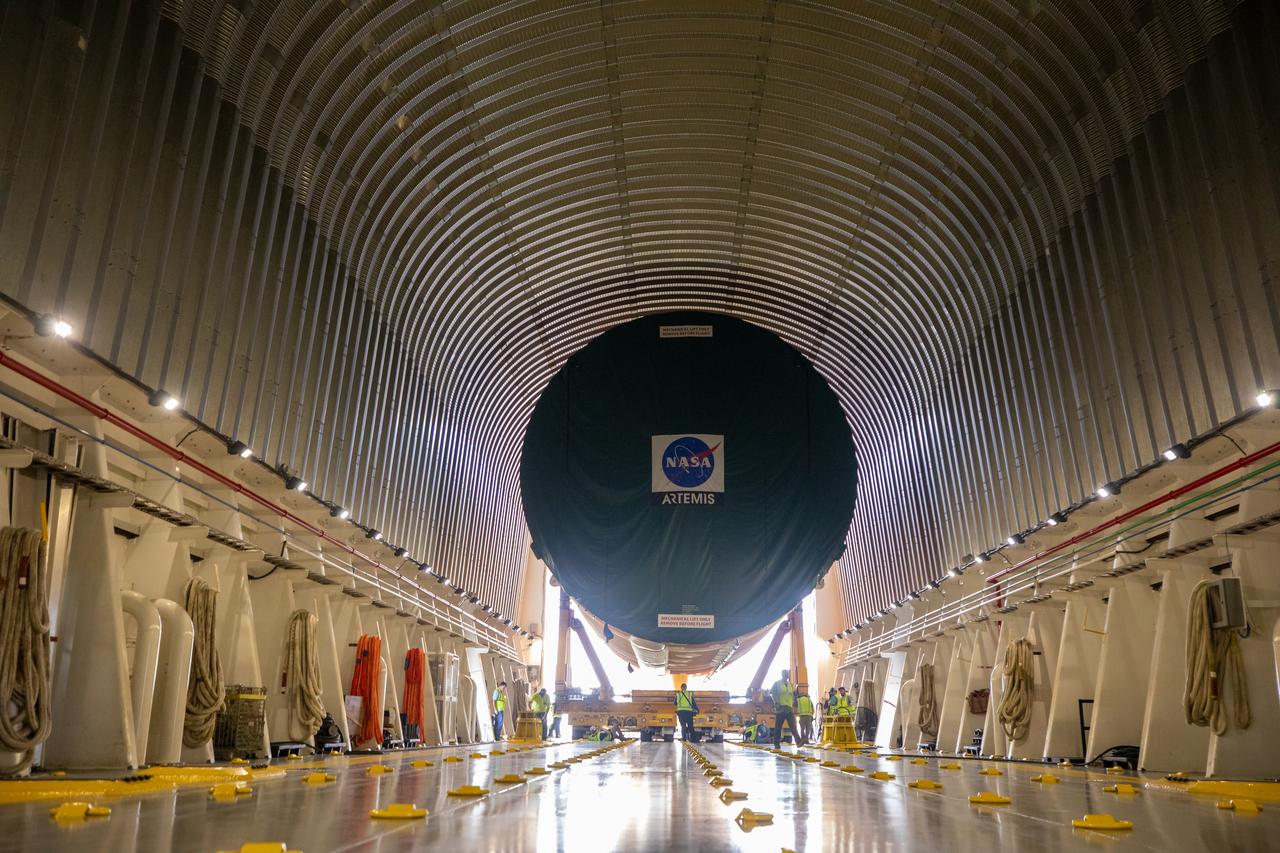
NASA’s massive 212-foot long SLS (Space Launch System) core stage is offloaded from the agency’s Pegasus Barge on Wednesday, July 24, 2024, after arriving at NASA’s Kennedy Space Center in Florida. Teams with Exploration Ground Systems (EGS) will transfer the rocket stage to the spaceport’s Vehicle Assembly Building to prepare it for integration atop the mobile launcher ahead of the Artemis II launch.

After completing its journey from NASA’s Michoud Assembly Facility in New Orleans aboard the Pegasus barge, teams with Exploration Ground Systems (EGS) transport the agency’s powerful SLS (Space Launch System) core stage to Kennedy Space Center’s Vehicle Assembly Building in Florida on Wednesday, July 24, 2024. Once inside, SLS will be prepared for integration atop the mobile launcher ahead of the Artemis II launch.
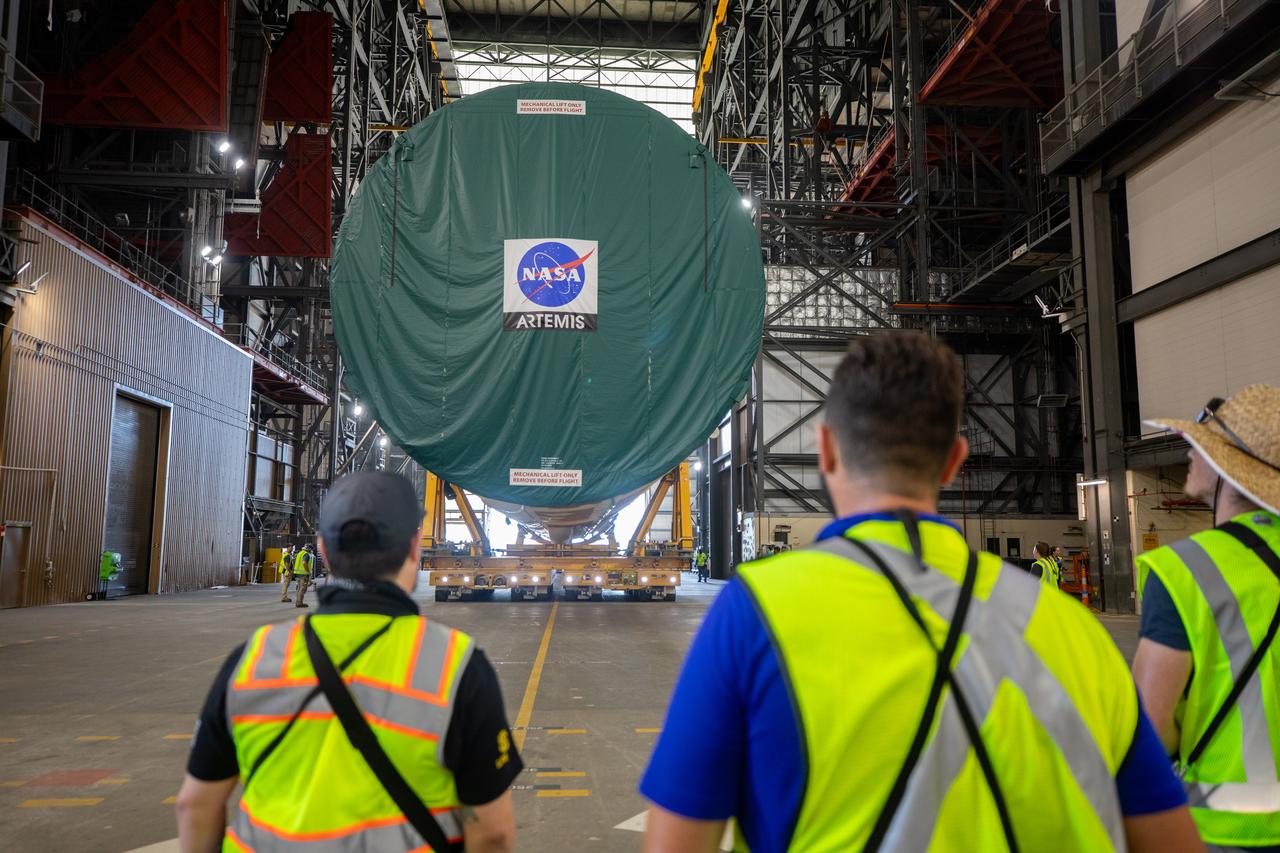
After completing its journey from NASA’s Michoud Assembly Facility in New Orleans aboard the Pegasus barge, teams with Exploration Ground Systems (EGS) transport the agency’s powerful SLS (Space Launch System) core stage into the transfer aisle inside the Vehicle Assembly Building at NASA’s Kennedy Space Center in Florida on Wednesday, July 24, 2024. In the coming months, SLS will be prepared for integration atop the mobile launcher ahead of the Artemis II launch.
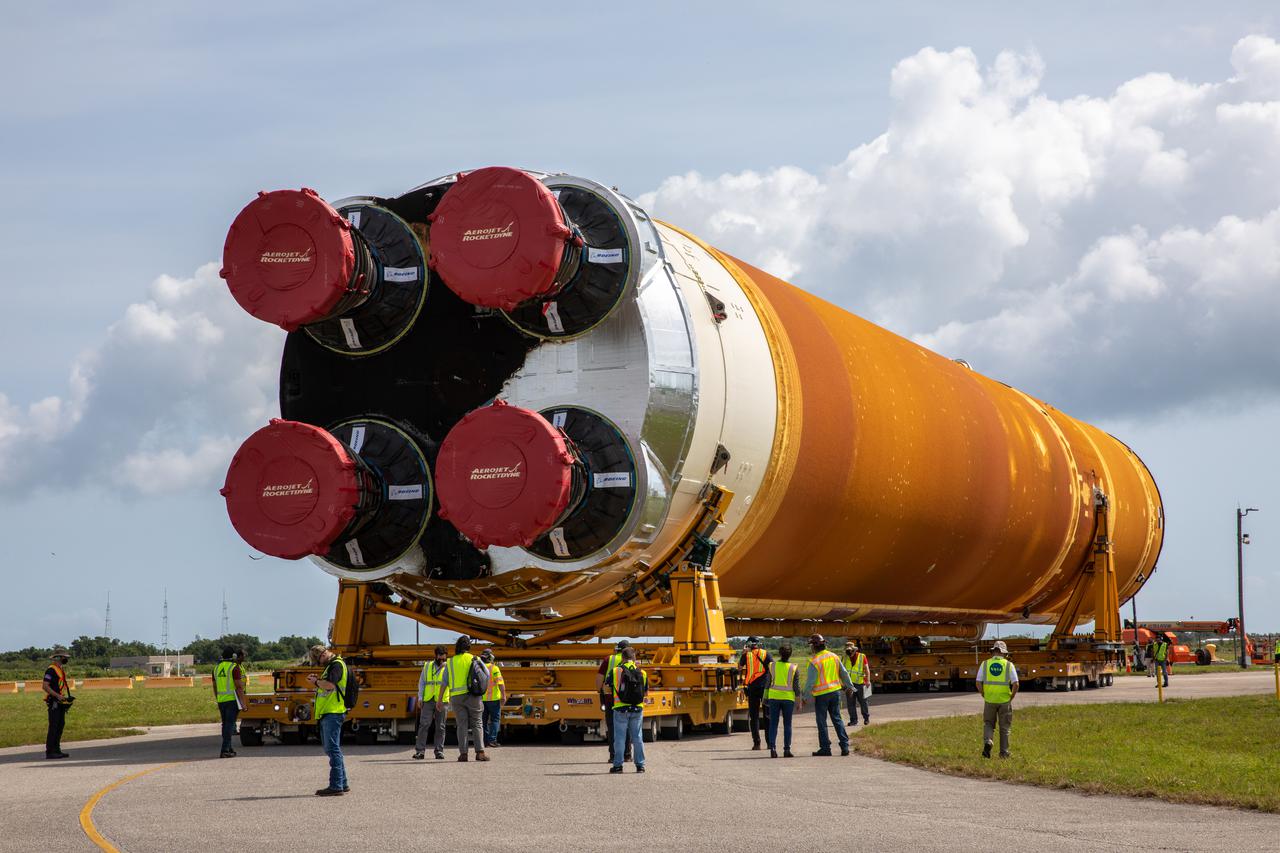
After completing its journey from NASA’s Stennis Space Center in Mississippi aboard the Pegasus barge, teams with Exploration Ground Systems (EGS) and lead contractor Jacobs transport the massive Space Launch System (SLS) core stage to Kennedy Space Center’s Vehicle Assembly Building in Florida on April 29, 2021. Once inside the VAB, it will be prepared for integration with the completed stack of solid rocket boosters atop the mobile launcher ahead of the Artemis I launch. The first in a series of increasingly complex missions, Artemis I will test SLS and Orion as an integrated system prior to crewed flights to the Moon.
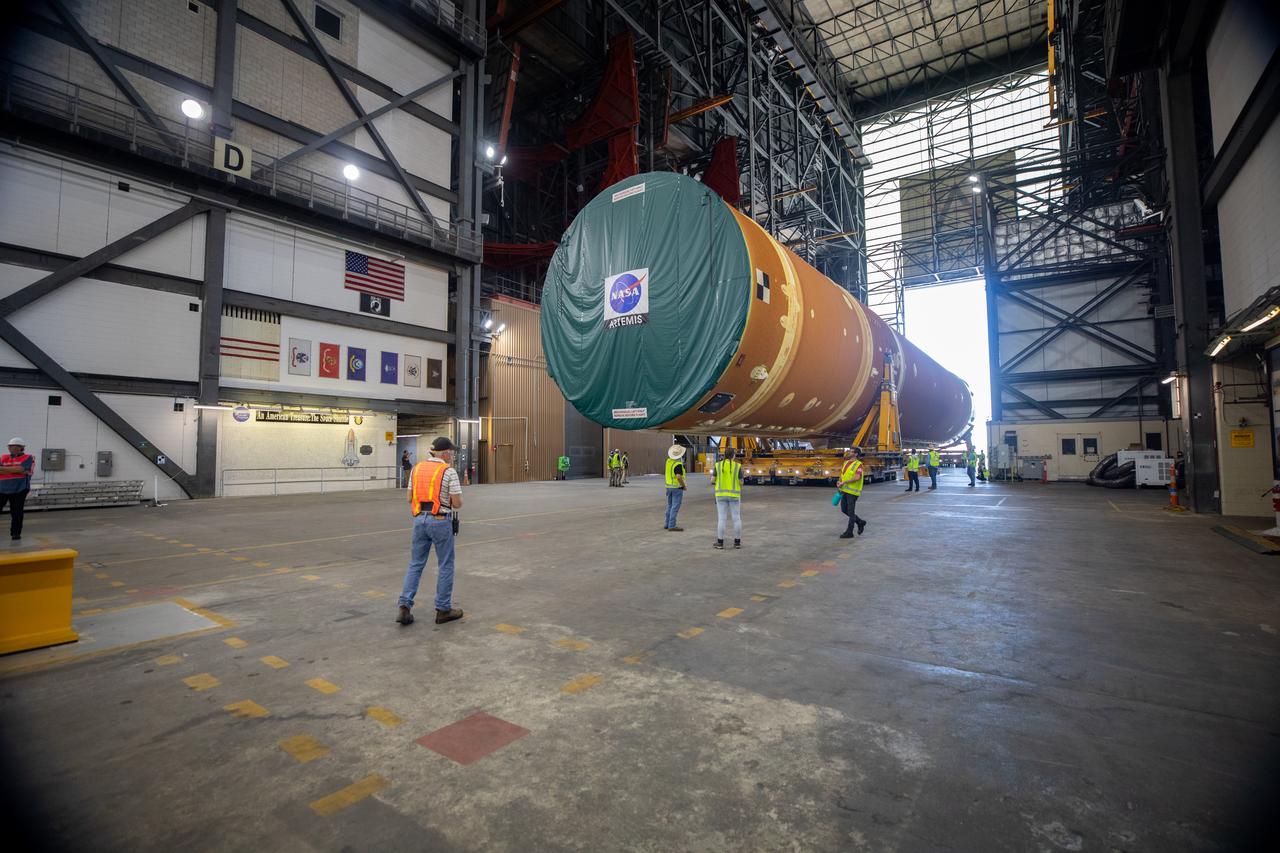
After completing its journey from NASA’s Michoud Assembly Facility in New Orleans aboard the Pegasus barge, teams with Exploration Ground Systems (EGS) transport the agency’s powerful SLS (Space Launch System) core stage into the transfer aisle inside the Vehicle Assembly Building at NASA’s Kennedy Space Center in Florida on Wednesday, July 24, 2024. In the coming months, SLS will be prepared for integration atop the mobile launcher ahead of the Artemis II launch.
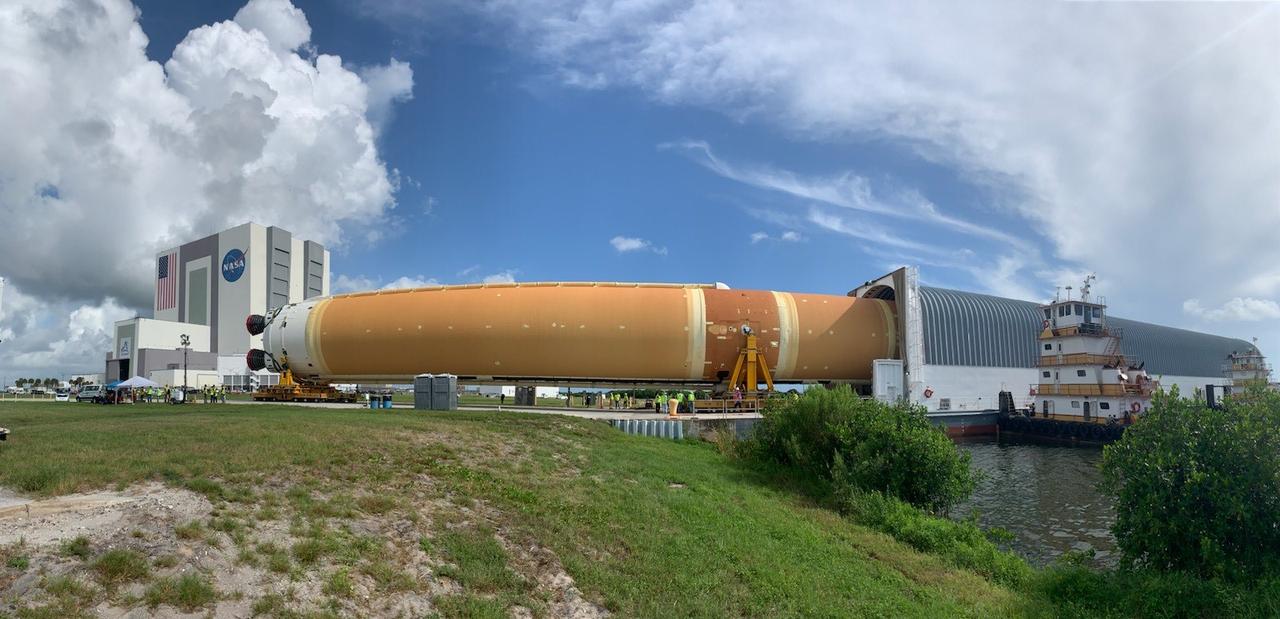
NASA’s massive 212-foot long SLS (Space Launch System) core stage is offloaded from the agency’s Pegasus Barge on Wednesday, July 24, 2024, after arriving at NASA’s Kennedy Space Center in Florida. Teams with Exploration Ground Systems (EGS) will transfer the rocket stage to the spaceport’s Vehicle Assembly Building to prepare it for integration atop the mobile launcher ahead of the Artemis II launch.

NASA’s Pegasus barge, carrying the agency’s massive SLS (Space Launch System) core stage, arrives at NASA’s Kennedy Space Center Complex 39 turn basin wharf in Florida on Tuesday, July 23, 2024, after journeying from the agency’s Michoud Assembly Facility in New Orleans. The core stage is the next piece of Artemis hardware to arrive at the spaceport and will be offloaded and moved to NASA Kennedy’s Vehicle Assembly Building, where it will be prepared for integration ahead of the Artemis II launch.
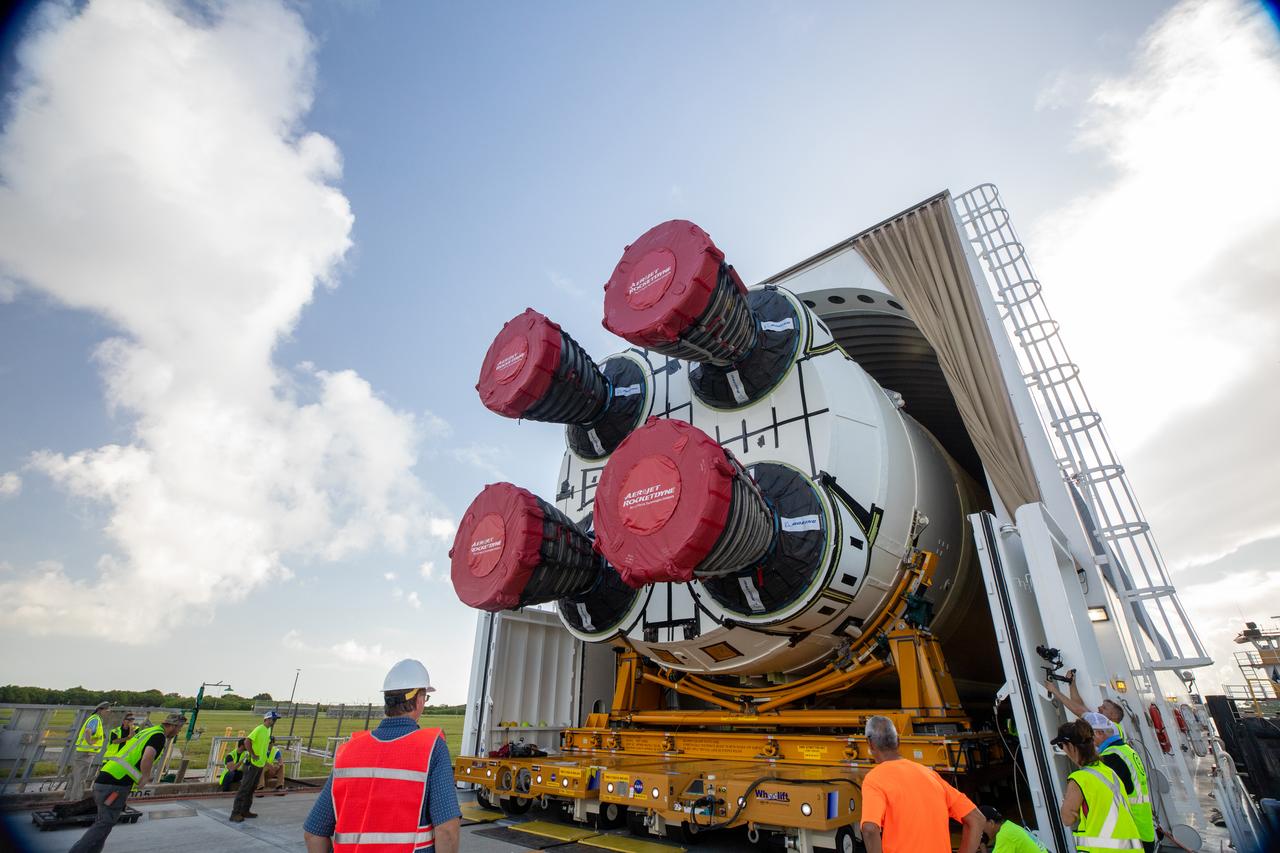
NASA’s massive 212-foot long SLS (Space Launch System) core stage is offloaded from the agency’s Pegasus Barge on Wednesday, July 24, 2024, after arriving at NASA’s Kennedy Space Center in Florida. Teams with Exploration Ground Systems (EGS) will transfer the rocket stage to the spaceport’s Vehicle Assembly Building to prepare it for integration atop the mobile launcher ahead of the Artemis II launch.
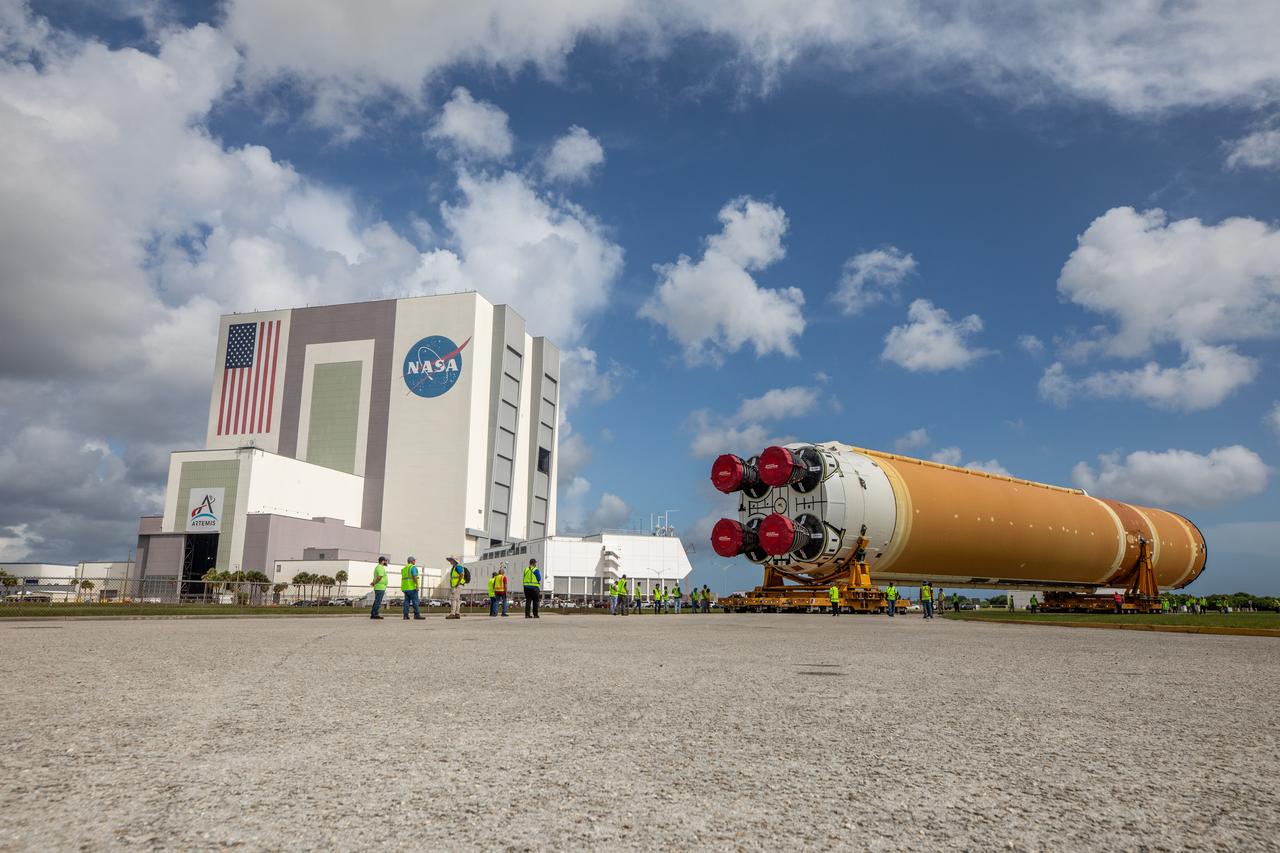
After completing its journey from NASA’s Michoud Assembly Facility in New Orleans aboard the Pegasus barge, teams with Exploration Ground Systems (EGS) transport the agency’s powerful SLS (Space Launch System) core stage to NASA’s Kennedy Space Center’s Vehicle Assembly Building in Florida on Wednesday, July 24, 2024. Once inside, SLS will be prepared for integration atop the mobile launcher ahead of the Artemis II launch.

NASA’s Pegasus barge carrying a weather cover for the Artemis III SLS (Space Launch System) rocket core stage, arrives Sunday, June 21, 2026, at the Launch Complex 39 turn basin at the agency’s Kennedy Space Center in Florida. The cover will protect the stage’s thermal systems while SLS sits atop the mobile launcher at Launch Pad 39B in its short stack configuration. NASA will send four Artemis astronauts on increasingly difficult missions to explore more of the Moon for scientific discovery, economic benefits, establish an enduring human presence on the lunar surface, and to build on our foundation for the first crewed missions to Mars.

Teams load a weather cover for the Artemis III SLS (Space Launch System) rocket core stage on Monday, June 22, 2026, from NASA’s Pegasus barge at the Launch Complex 39 turn basin to transport the hardware to the spaceport’s Vehicle Assembly Building at the agency’s Kennedy Space Center in Florida. The cover will protect the stage’s thermal systems while SLS sits atop the mobile launcher at Launch Pad 39B in its short stack configuration. NASA will send four Artemis astronauts on increasingly difficult missions to explore more of the Moon for scientific discovery, economic benefits, establish an enduring human presence on the lunar surface, and to build on our foundation for the first crewed missions to Mars.

NASA’s Pegasus barge carrying a weather cover for the Artemis III SLS (Space Launch System) rocket core stage, arrives Sunday, June 21, 2026, at the Launch Complex 39 turn basin at the agency’s Kennedy Space Center in Florida. The cover will protect the stage’s thermal systems while SLS sits atop the mobile launcher at Launch Pad 39B in its short stack configuration. NASA will send four Artemis astronauts on increasingly difficult missions to explore more of the Moon for scientific discovery, economic benefits, establish an enduring human presence on the lunar surface, and to build on our foundation for the first crewed missions to Mars.

NASA’s Pegasus barge carrying a weather cover for the Artemis III SLS (Space Launch System) rocket core stage, arrives Sunday, June 21, 2026, at the Launch Complex 39 turn basin at the agency’s Kennedy Space Center in Florida. The cover will protect the stage’s thermal systems while SLS sits atop the mobile launcher at Launch Pad 39B in its short stack configuration. NASA will send four Artemis astronauts on increasingly difficult missions to explore more of the Moon for scientific discovery, economic benefits, establish an enduring human presence on the lunar surface, and to build on our foundation for the first crewed missions to Mars.

NASA’s Pegasus barge carrying a weather cover for the Artemis III SLS (Space Launch System) rocket core stage, arrives Sunday, June 21, 2026, at the Launch Complex 39 turn basin at the agency’s Kennedy Space Center in Florida. The cover will protect the stage’s thermal systems while SLS sits atop the mobile launcher at Launch Pad 39B in its short stack configuration. NASA will send four Artemis astronauts on increasingly difficult missions to explore more of the Moon for scientific discovery, economic benefits, establish an enduring human presence on the lunar surface, and to build on our foundation for the first crewed missions to Mars.

NASA’s Pegasus barge carrying a weather cover for the Artemis III SLS (Space Launch System) rocket core stage, arrives Sunday, June 21, 2026, at the Launch Complex 39 turn basin at the agency’s Kennedy Space Center in Florida. The cover will protect the stage’s thermal systems while SLS sits atop the mobile launcher at Launch Pad 39B in its short stack configuration. NASA will send four Artemis astronauts on increasingly difficult missions to explore more of the Moon for scientific discovery, economic benefits, establish an enduring human presence on the lunar surface, and to build on our foundation for the first crewed missions to Mars.

NASA’s Pegasus barge carrying a weather cover for the Artemis III SLS (Space Launch System) rocket core stage, arrives Sunday, June 21, 2026, at the Launch Complex 39 turn basin at the agency’s Kennedy Space Center in Florida. The cover will protect the stage’s thermal systems while SLS sits atop the mobile launcher at Launch Pad 39B in its short stack configuration. NASA will send four Artemis astronauts on increasingly difficult missions to explore more of the Moon for scientific discovery, economic benefits, establish an enduring human presence on the lunar surface, and to build on our foundation for the first crewed missions to Mars.

NASA’s Pegasus barge carrying a weather cover for the Artemis III SLS (Space Launch System) rocket core stage, arrives Sunday, June 21, 2026, at the Launch Complex 39 turn basin at the agency’s Kennedy Space Center in Florida. The cover will protect the stage’s thermal systems while SLS sits atop the mobile launcher at Launch Pad 39B in its short stack configuration. NASA will send four Artemis astronauts on increasingly difficult missions to explore more of the Moon for scientific discovery, economic benefits, establish an enduring human presence on the lunar surface, and to build on our foundation for the first crewed missions to Mars.

NASA’s Pegasus barge arrives at the Launch Complex 39 turn basin at the agency’s Kennedy Space Center in Florida carrying NASA’s Nancy Grace Roman Space Telescope on Sunday, June 21, 2026. Teams will offload and transport the observatory to the spaceport’s Payload Hazardous Servicing Facility where it will undergo processing ahead of launch, targeted no earlier than Sunday, Aug. 30, 2026. Named for NASA’s first chief astronomer and “mother of the Hubble Space Telescope,” Roman will offer a field of view over 100 times larger than Hubble’s to study up to a billion galaxies, directly image exoplanets and planet‑forming disks, and address fundamental questions about dark energy, exoplanets, and infrared astrophysics.

NASA’s Pegasus barge arrives at the Launch Complex 39 turn basin at the agency’s Kennedy Space Center in Florida carrying NASA’s Nancy Grace Roman Space Telescope on Sunday, June 21, 2026. Teams will offload and transport the observatory to the spaceport’s Payload Hazardous Servicing Facility where it will undergo processing ahead of launch, targeted no earlier than Sunday, Aug. 30, 2026. Named for NASA’s first chief astronomer and “mother of the Hubble Space Telescope,” Roman will offer a field of view over 100 times larger than Hubble’s to study up to a billion galaxies, directly image exoplanets and planet‑forming disks, and address fundamental questions about dark energy, exoplanets, and infrared astrophysics.

NASA’s Pegasus barge arrives at the Launch Complex 39 turn basin at the agency’s Kennedy Space Center in Florida carrying NASA’s Nancy Grace Roman Space Telescope on Sunday, June 21, 2026. Teams will offload and transport the observatory to the spaceport’s Payload Hazardous Servicing Facility where it will undergo processing ahead of launch, targeted no earlier than Sunday, Aug. 30, 2026. Named for NASA’s first chief astronomer and “mother of the Hubble Space Telescope,” Roman will offer a field of view over 100 times larger than Hubble’s to study up to a billion galaxies, directly image exoplanets and planet‑forming disks, and address fundamental questions about dark energy, exoplanets, and infrared astrophysics.

NASA’s Pegasus barge arrives at the Launch Complex 39 turn basin at the agency’s Kennedy Space Center in Florida carrying NASA’s Nancy Grace Roman Space Telescope on Sunday, June 21, 2026. Teams will offload and transport the observatory to the spaceport’s Payload Hazardous Servicing Facility where it will undergo processing ahead of launch, targeted no earlier than Sunday, Aug. 30, 2026. Named for NASA’s first chief astronomer and “mother of the Hubble Space Telescope,” Roman will offer a field of view over 100 times larger than Hubble’s to study up to a billion galaxies, directly image exoplanets and planet‑forming disks, and address fundamental questions about dark energy, exoplanets, and infrared astrophysics.

NASA’s Pegasus barge arrives at the Launch Complex 39 turn basin at the agency’s Kennedy Space Center in Florida carrying NASA’s Nancy Grace Roman Space Telescope on Sunday, June 21, 2026. Teams will offload and transport the observatory to the spaceport’s Payload Hazardous Servicing Facility where it will undergo processing ahead of launch, targeted no earlier than Sunday, Aug. 30, 2026. Named for NASA’s first chief astronomer and “mother of the Hubble Space Telescope,” Roman will offer a field of view over 100 times larger than Hubble’s to study up to a billion galaxies, directly image exoplanets and planet‑forming disks, and address fundamental questions about dark energy, exoplanets, and infrared astrophysics.

NASA’s Pegasus barge carrying a weather cover for the Artemis III SLS (Space Launch System) rocket core stage arrives Sunday, June 21, 2026, at the Launch Complex 39 turn basin at the agency’s Kennedy Space Center in Florida. The cover will protect the stage’s thermal systems while SLS sits atop the mobile launcher at Launch Pad 39B in its short stack configuration. NASA will send four Artemis astronauts on increasingly difficult missions to explore more of the Moon for scientific discovery, economic benefits, establish an enduring human presence on the lunar surface, and to build on our foundation for the first crewed missions to Mars.

NASA’s Pegasus barge carrying a weather cover for the Artemis III SLS (Space Launch System) rocket core stage arrives Sunday, June 21, 2026, at the Launch Complex 39 turn basin at the agency’s Kennedy Space Center in Florida. The cover will protect the stage’s thermal systems while SLS sits atop the mobile launcher at Launch Pad 39B in its short stack configuration. NASA will send four Artemis astronauts on increasingly difficult missions to explore more of the Moon for scientific discovery, economic benefits, establish an enduring human presence on the lunar surface, and to build on our foundation for the first crewed missions to Mars.

NASA’s Pegasus barge carrying the agency’s Nancy Grace Roman Space Telescope seen in the background of this photograph, and a weather cover for the Artemis III SLS (Space Launch System) rocket core stage in the foreground, arrives Sunday, June 21, 2026, at the Launch Complex 39 turn basin wharf at the agency’s Kennedy Space Center in Florida. The cover will protect the stage’s thermal systems while SLS sits atop the mobile launcher at Launch Pad 39B in its short stack configuration. Named for NASA’s first chief astronomer and “mother of the Hubble Space Telescope,” Roman will offer a field of view over 100 times larger than Hubble’s to study up to a billion galaxies, directly image exoplanets and planet forming disks, and address fundamental questions about dark energy, exoplanets, and infrared astrophysics. NASA will send four Artemis astronauts on increasingly difficult missions to explore more of the Moon for scientific discovery, economic benefits, establish an enduring human presence on the lunar surface, and to build on our foundation for the first crewed missions to Mars.

NASA’s Pegasus barge carrying the agency’s Nancy Grace Roman Space Telescope seen in the background of this photograph, and a weather cover for the Artemis III SLS (Space Launch System) rocket core stage in the foreground, arrives Sunday, June 21, 2026, at the Launch Complex 39 turn basin wharf at the agency’s Kennedy Space Center in Florida. The cover will protect the stage’s thermal systems while SLS sits atop the mobile launcher at Launch Pad 39B in its short stack configuration. Named for NASA’s first chief astronomer and “mother of the Hubble Space Telescope,” Roman will offer a field of view over 100 times larger than Hubble’s to study up to a billion galaxies, directly image exoplanets and planet forming disks, and address fundamental questions about dark energy, exoplanets, and infrared astrophysics. NASA will send four Artemis astronauts on increasingly difficult missions to explore more of the Moon for scientific discovery, economic benefits, establish an enduring human presence on the lunar surface, and to build on our foundation for the first crewed missions to Mars.

NASA’s Pegasus barge carrying the agency’s Nancy Grace Roman Space Telescope seen in the background of this photograph, and a weather cover for the Artemis III SLS (Space Launch System) rocket core stage in the foreground, arrives Sunday, June 21, 2026, at the Launch Complex 39 turn basin wharf at the agency’s Kennedy Space Center in Florida. The cover will protect the stage’s thermal systems while SLS sits atop the mobile launcher at Launch Pad 39B in its short stack configuration. Named for NASA’s first chief astronomer and “mother of the Hubble Space Telescope,” Roman will offer a field of view over 100 times larger than Hubble’s to study up to a billion galaxies, directly image exoplanets and planet forming disks, and address fundamental questions about dark energy, exoplanets, and infrared astrophysics. NASA will send four Artemis astronauts on increasingly difficult missions to explore more of the Moon for scientific discovery, economic benefits, establish an enduring human presence on the lunar surface, and to build on our foundation for the first crewed missions to Mars.
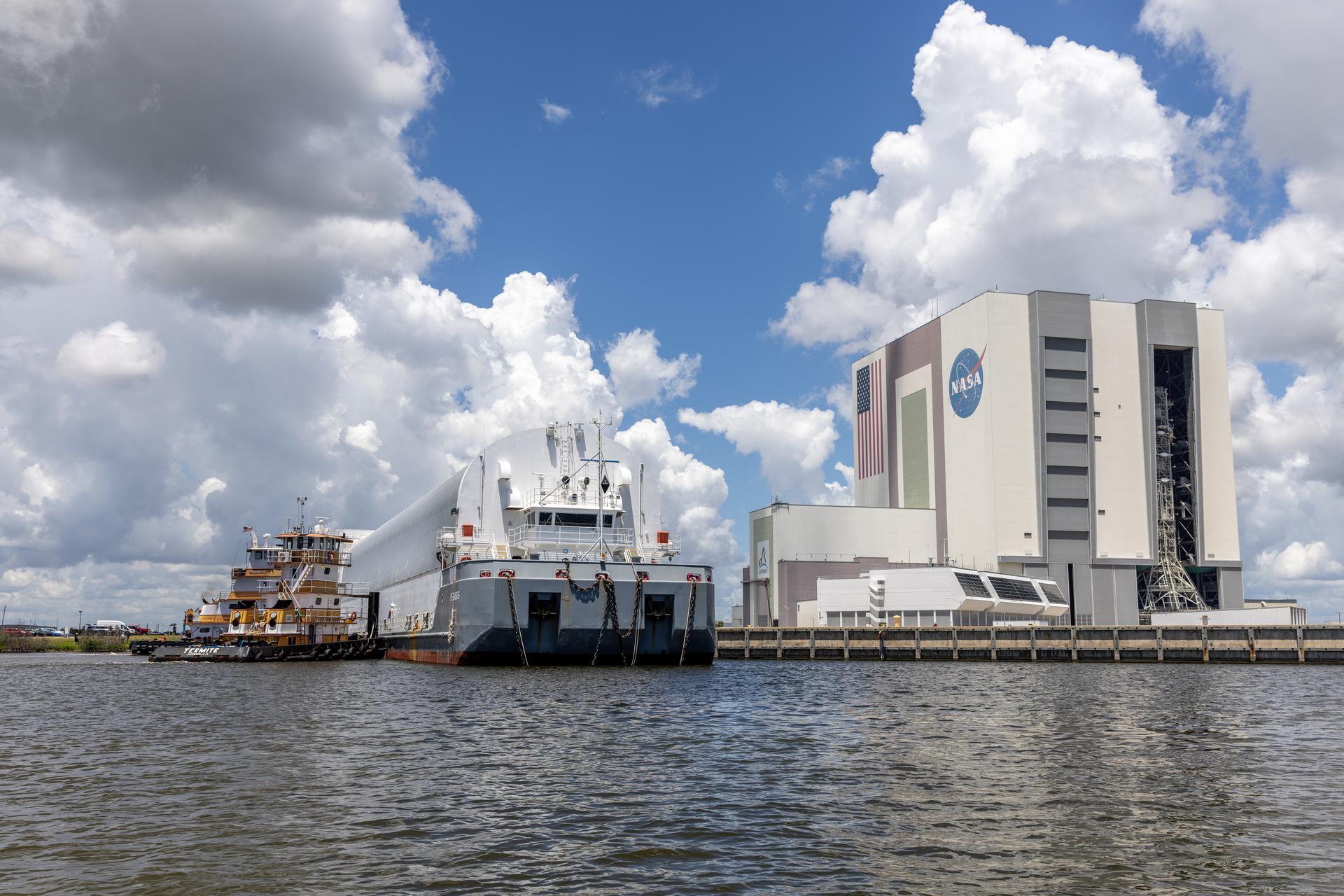
NASA’s Pegasus barge arrives at the Launch Complex 39 turn basin at the agency’s Kennedy Space Center in Florida carrying NASA’s Nancy Grace Roman Space Telescope on Sunday, June 21, 2026. Teams will offload and transport the observatory to the spaceport’s Payload Hazardous Servicing Facility where it will undergo processing ahead of launch, targeted no earlier than Sunday, Aug. 30, 2026. Named for NASA’s first chief astronomer and “mother of the Hubble Space Telescope,” Roman will offer a field of view over 100 times larger than Hubble’s to study up to a billion galaxies, directly image exoplanets and planet forming disks, and address fundamental questions about dark energy, exoplanets, and infrared astrophysics.
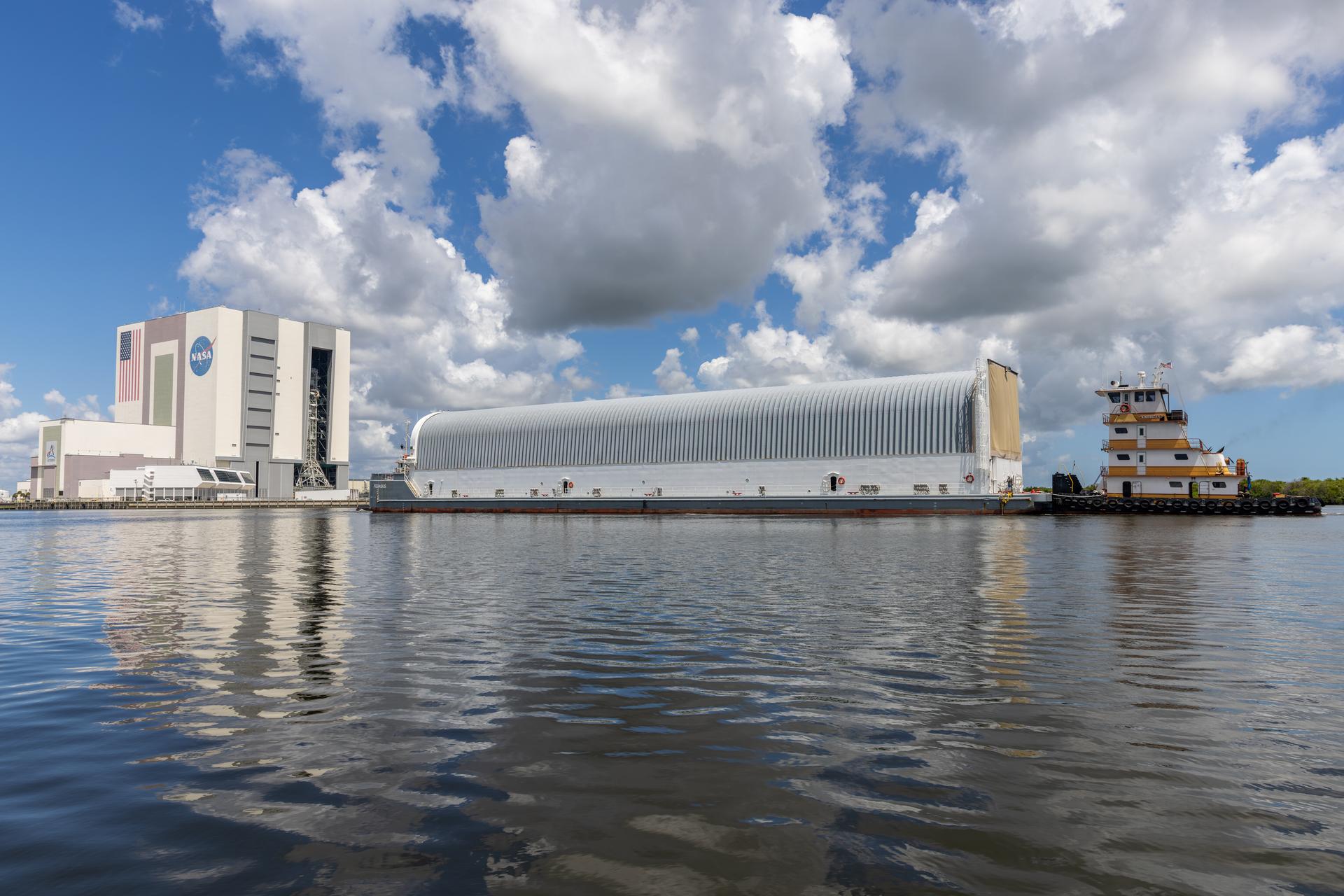
NASA’s Pegasus barge arrives at the Launch Complex 39 turn basin at the agency’s Kennedy Space Center in Florida carrying NASA’s Nancy Grace Roman Space Telescope on Sunday, June 21, 2026. Teams will offload and transport the observatory to the spaceport’s Payload Hazardous Servicing Facility where it will undergo processing ahead of launch, targeted no earlier than Sunday, Aug. 30, 2026. Named for NASA’s first chief astronomer and “mother of the Hubble Space Telescope,” Roman will offer a field of view over 100 times larger than Hubble’s to study up to a billion galaxies, directly image exoplanets and planet forming disks, and address fundamental questions about dark energy, exoplanets, and infrared astrophysics.
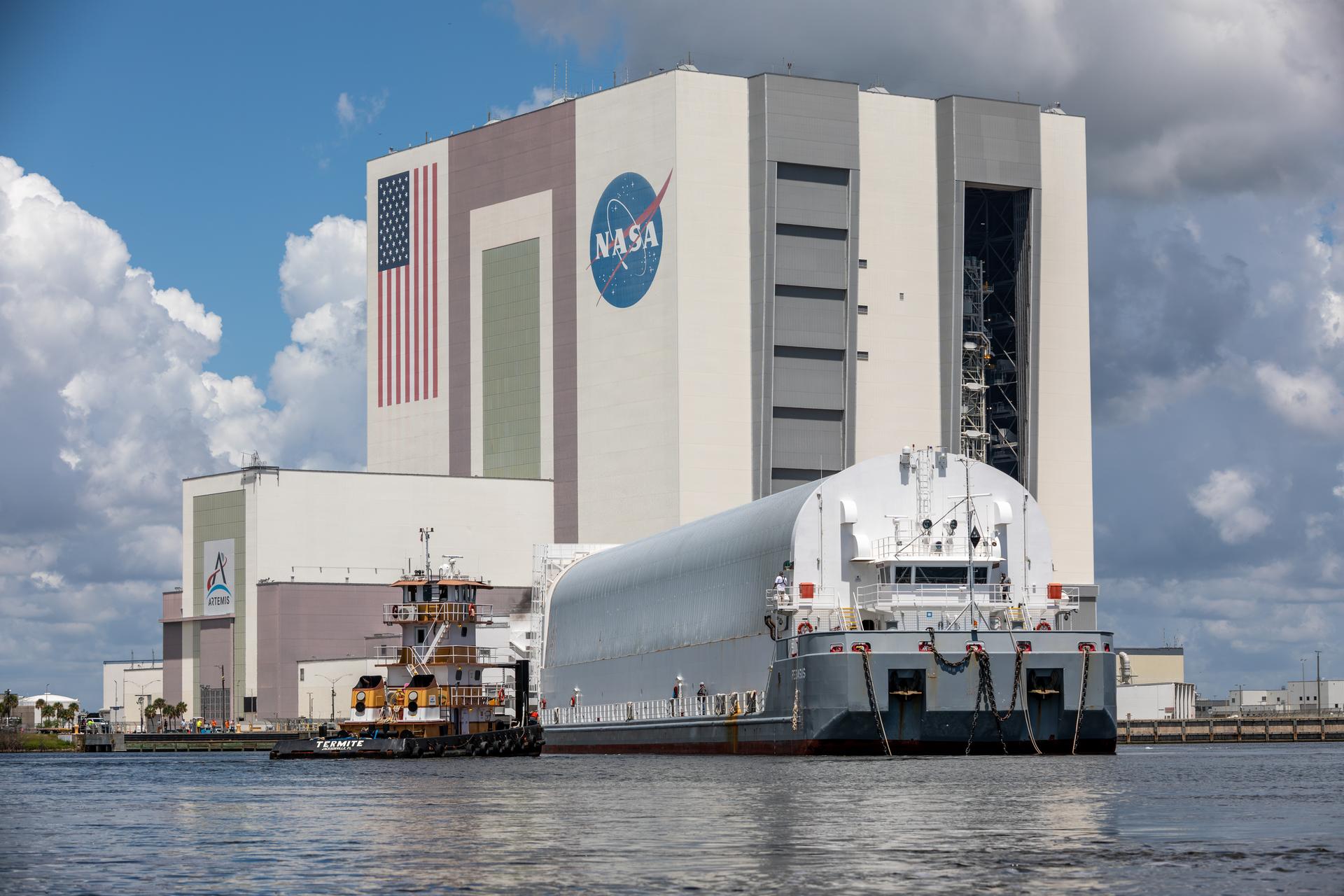
NASA’s Pegasus barge arrives at the Launch Complex 39 turn basin at the agency’s Kennedy Space Center in Florida carrying NASA’s Nancy Grace Roman Space Telescope on Sunday, June 21, 2026. Teams will offload and transport the observatory to the spaceport’s Payload Hazardous Servicing Facility where it will undergo processing ahead of launch, targeted no earlier than Sunday, Aug. 30, 2026. Named for NASA’s first chief astronomer and “mother of the Hubble Space Telescope,” Roman will offer a field of view over 100 times larger than Hubble’s to study up to a billion galaxies, directly image exoplanets and planet forming disks, and address fundamental questions about dark energy, exoplanets, and infrared astrophysics.
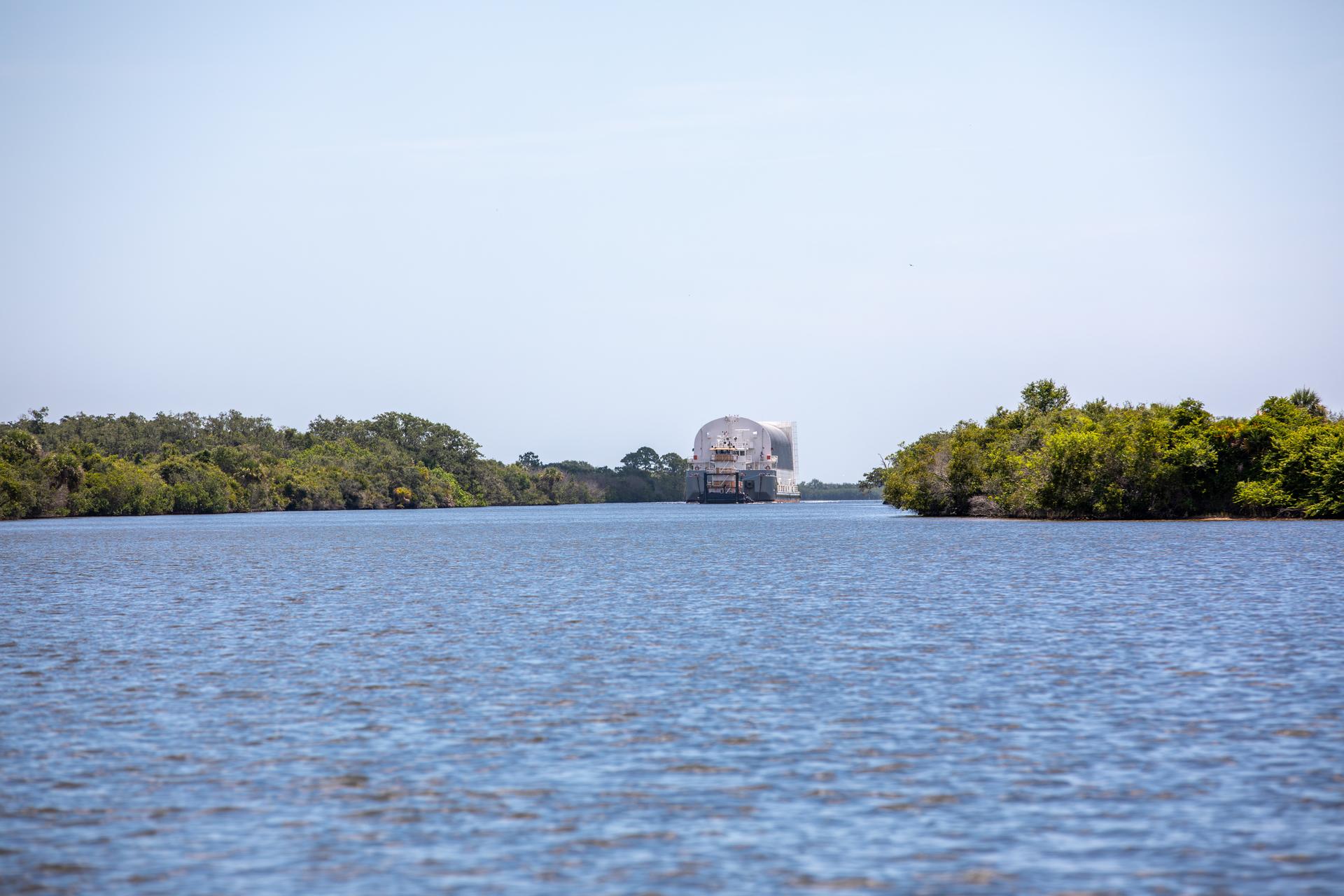
NASA’s Pegasus barge arrives at the Launch Complex 39 turn basin at the agency’s Kennedy Space Center in Florida carrying NASA’s Nancy Grace Roman Space Telescope on Sunday, June 21, 2026. Teams will offload and transport the observatory to the spaceport’s Payload Hazardous Servicing Facility where it will undergo processing ahead of launch, targeted no earlier than Sunday, Aug. 30, 2026. Named for NASA’s first chief astronomer and “mother of the Hubble Space Telescope,” Roman will offer a field of view over 100 times larger than Hubble’s to study up to a billion galaxies, directly image exoplanets and planet forming disks, and address fundamental questions about dark energy, exoplanets, and infrared astrophysics.
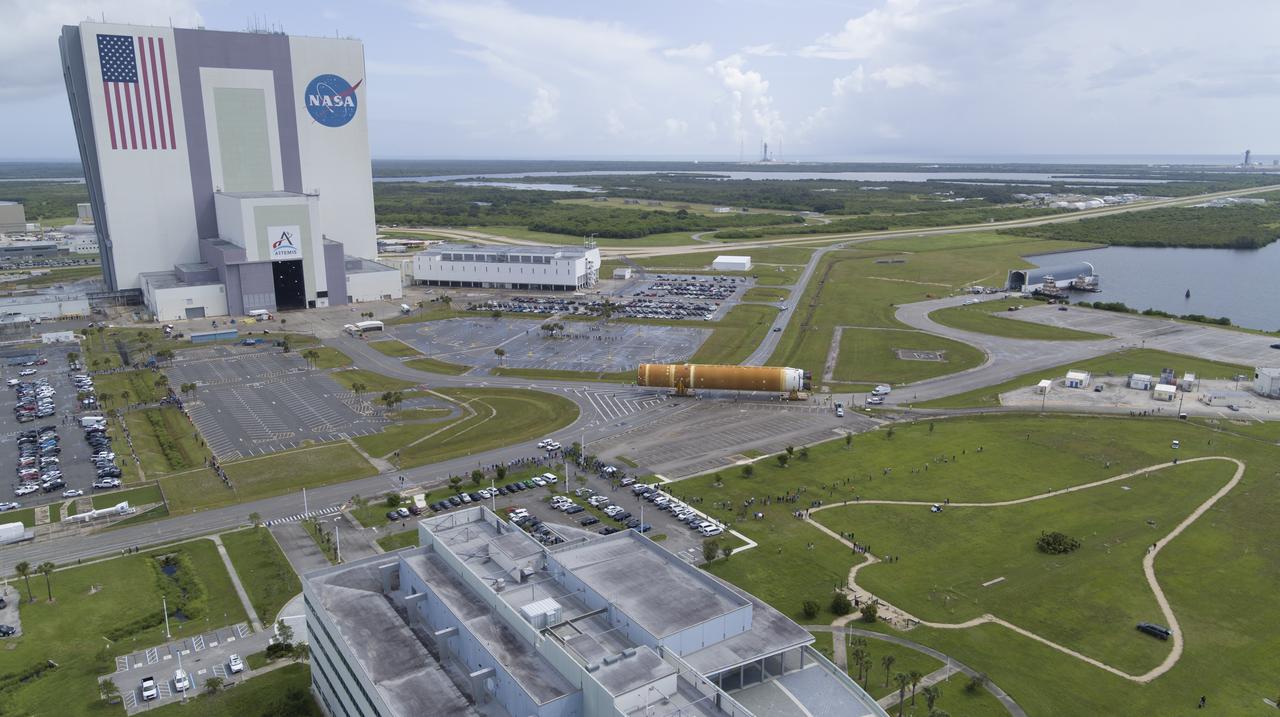
In this aerial view, teams with Exploration Ground Systems (EGS) transport the agency’s powerful SLS (Space Launch System) core stage to the Vehicle Assembly Building at NASA’s Kennedy Space Center in Florida on Wednesday, July 24, 2024, after it completed the journey from NASA’s Michoud Assembly Facility in New Orleans aboard the Pegasus barge. In the coming months, SLS will be prepared for integration atop the mobile launcher ahead of the Artemis II launch.
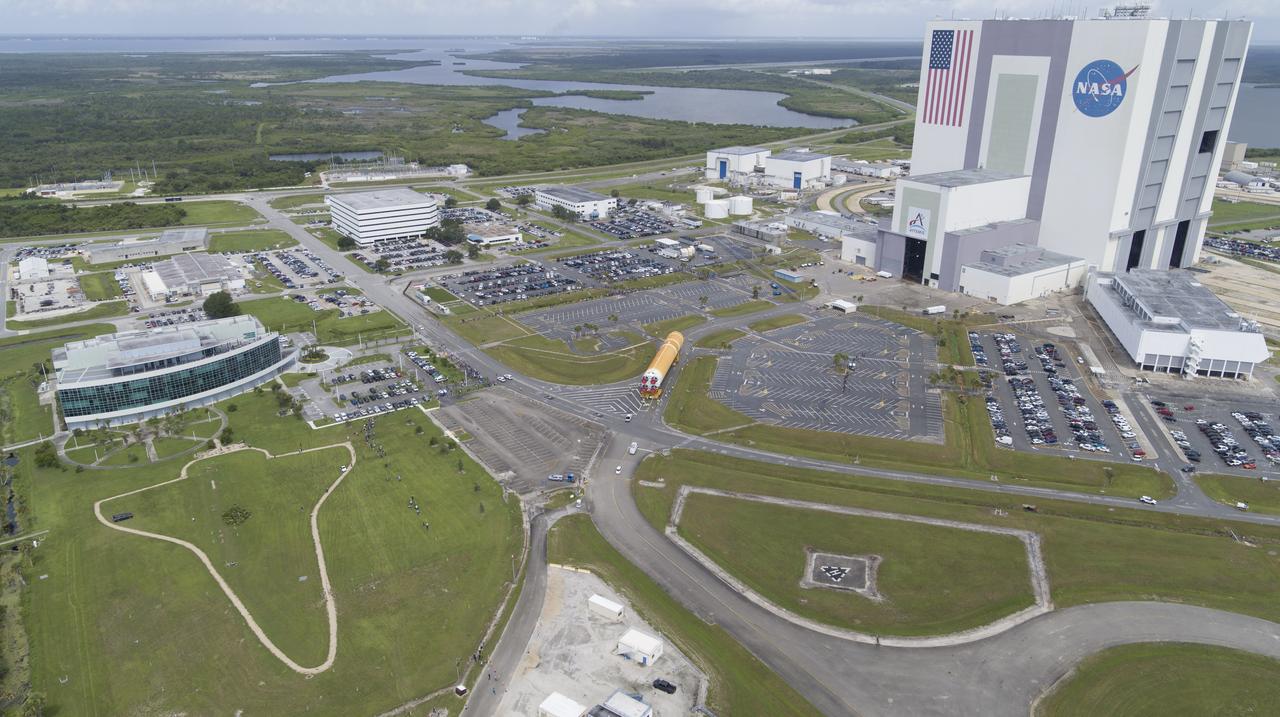
In this aerial view, teams with Exploration Ground Systems (EGS) transport the agency’s powerful SLS (Space Launch System) core stage to the Vehicle Assembly Building at NASA’s Kennedy Space Center in Florida on Wednesday, July 24, 2024, after it completed the journey from NASA’s Michoud Assembly Facility in New Orleans aboard the Pegasus barge. In the coming months, SLS will be prepared for integration atop the mobile launcher ahead of the Artemis II launch.
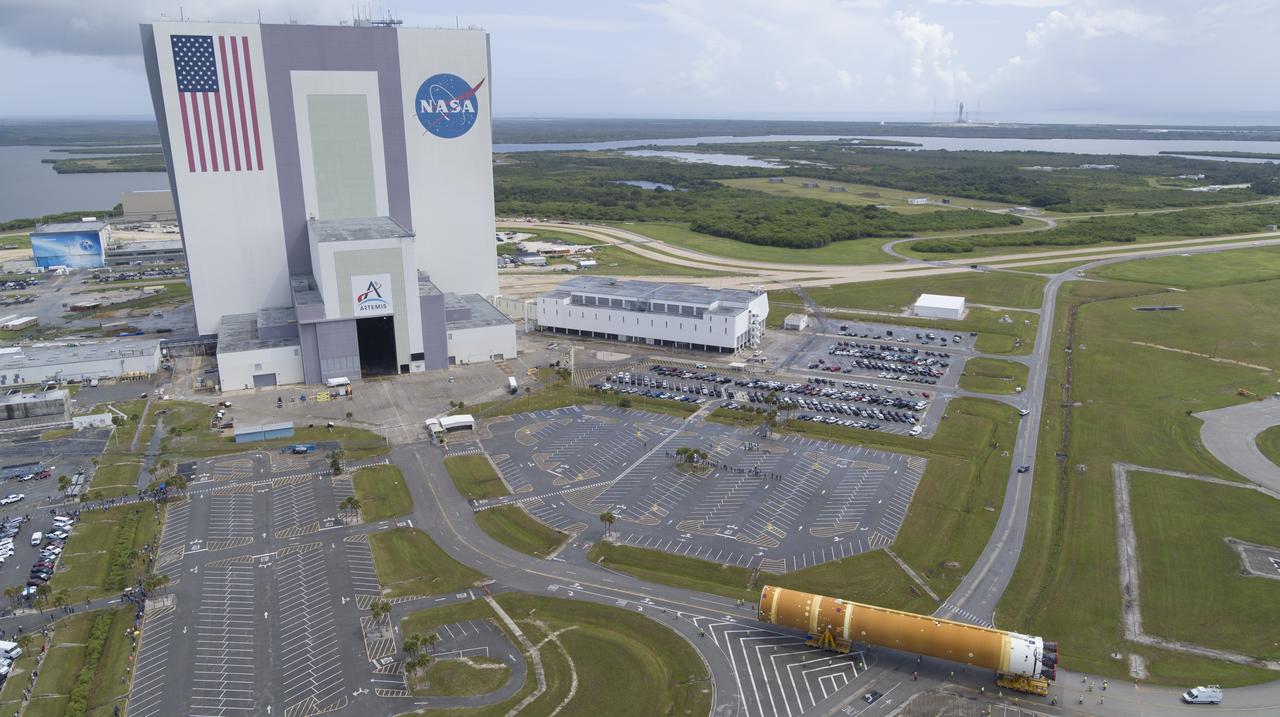
In this aerial view, teams with Exploration Ground Systems (EGS) transport the agency’s powerful SLS (Space Launch System) core stage to the Vehicle Assembly Building at NASA’s Kennedy Space Center in Florida on Wednesday, July 24, 2024, after it completed the journey from NASA’s Michoud Assembly Facility in New Orleans aboard the Pegasus barge. In the coming months, SLS will be prepared for integration atop the mobile launcher ahead of the Artemis II launch.
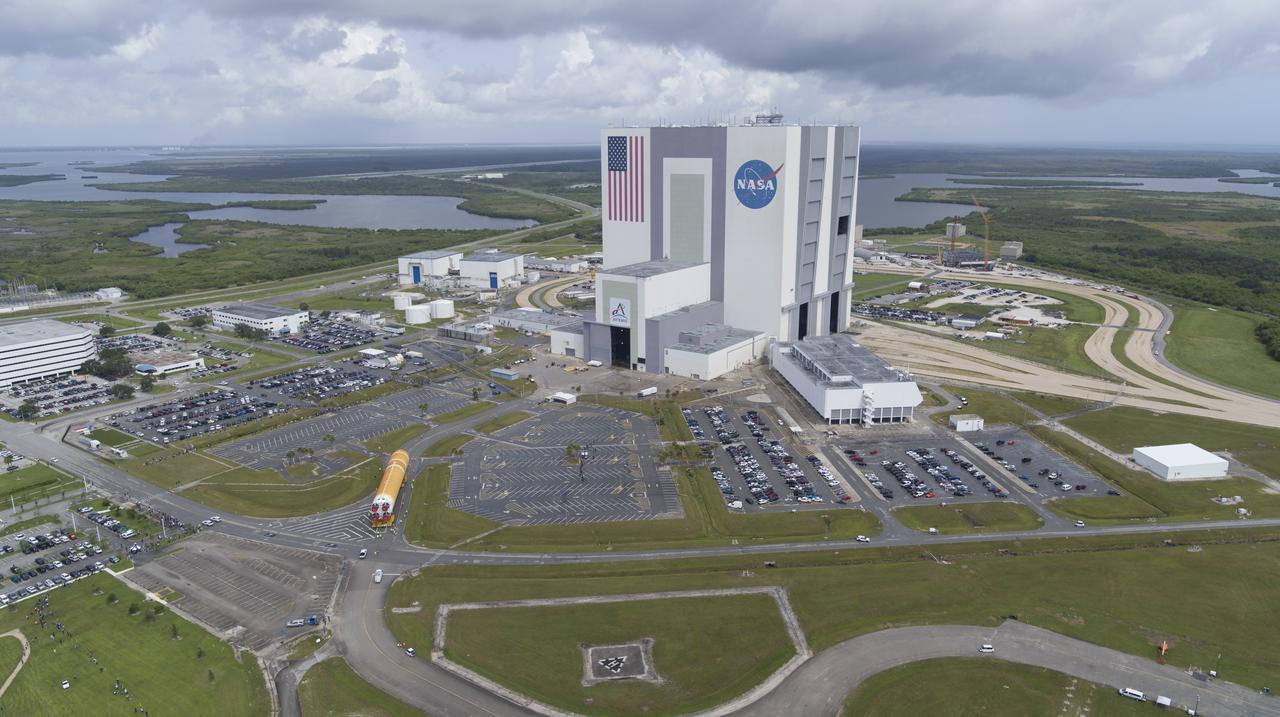
In this aerial view, teams with Exploration Ground Systems (EGS) transport the agency’s powerful SLS (Space Launch System) core stage to the Vehicle Assembly Building at NASA’s Kennedy Space Center in Florida on Wednesday, July 24, 2024, after it completed the journey from NASA’s Michoud Assembly Facility in New Orleans aboard the Pegasus barge. In the coming months, SLS will be prepared for integration atop the mobile launcher ahead of the Artemis II launch.
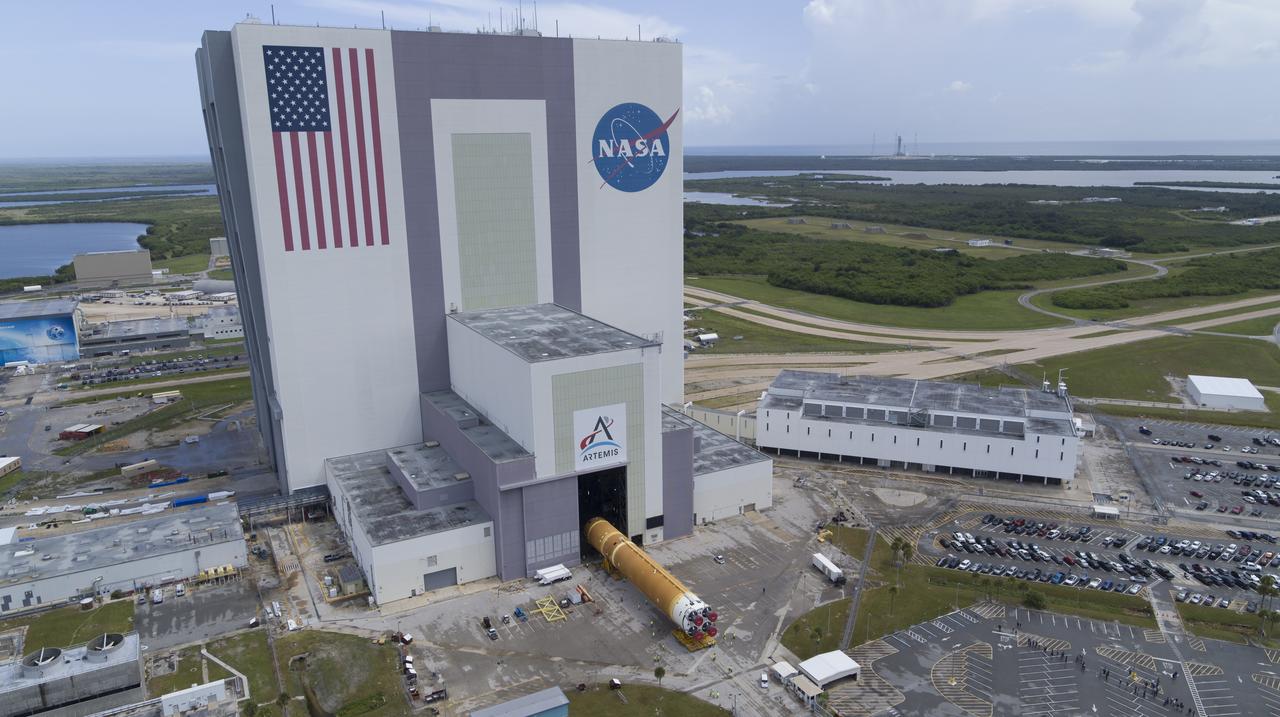
In this aerial view, teams with Exploration Ground Systems (EGS) transport the agency’s powerful SLS (Space Launch System) core stage to the Vehicle Assembly Building at NASA’s Kennedy Space Center in Florida on Wednesday, July 24, 2024, after it completed the journey from NASA’s Michoud Assembly Facility in New Orleans aboard the Pegasus barge. In the coming months, SLS will be prepared for integration atop the mobile launcher ahead of the Artemis II launch.
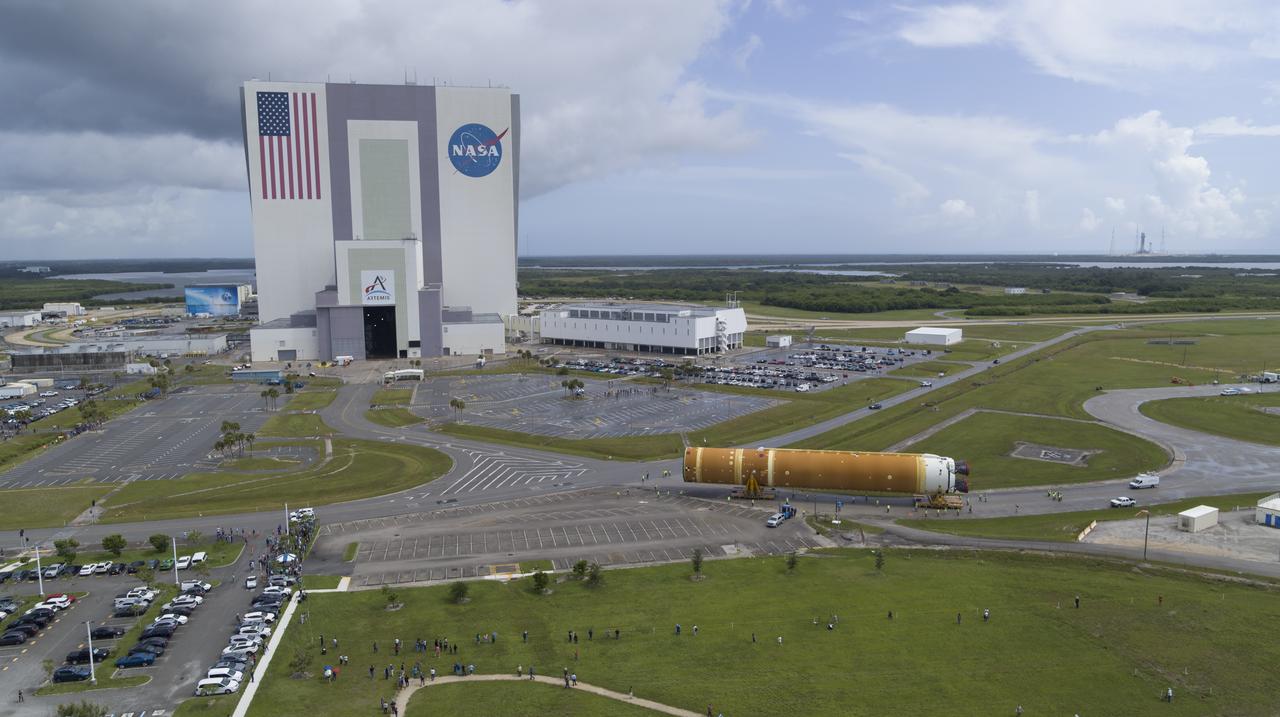
In this aerial view, teams with Exploration Ground Systems (EGS) transport the agency’s powerful SLS (Space Launch System) core stage to the Vehicle Assembly Building at NASA’s Kennedy Space Center in Florida on Wednesday, July 24, 2024, after it completed the journey from NASA’s Michoud Assembly Facility in New Orleans aboard the Pegasus barge. In the coming months, SLS will be prepared for integration atop the mobile launcher ahead of the Artemis II launch.
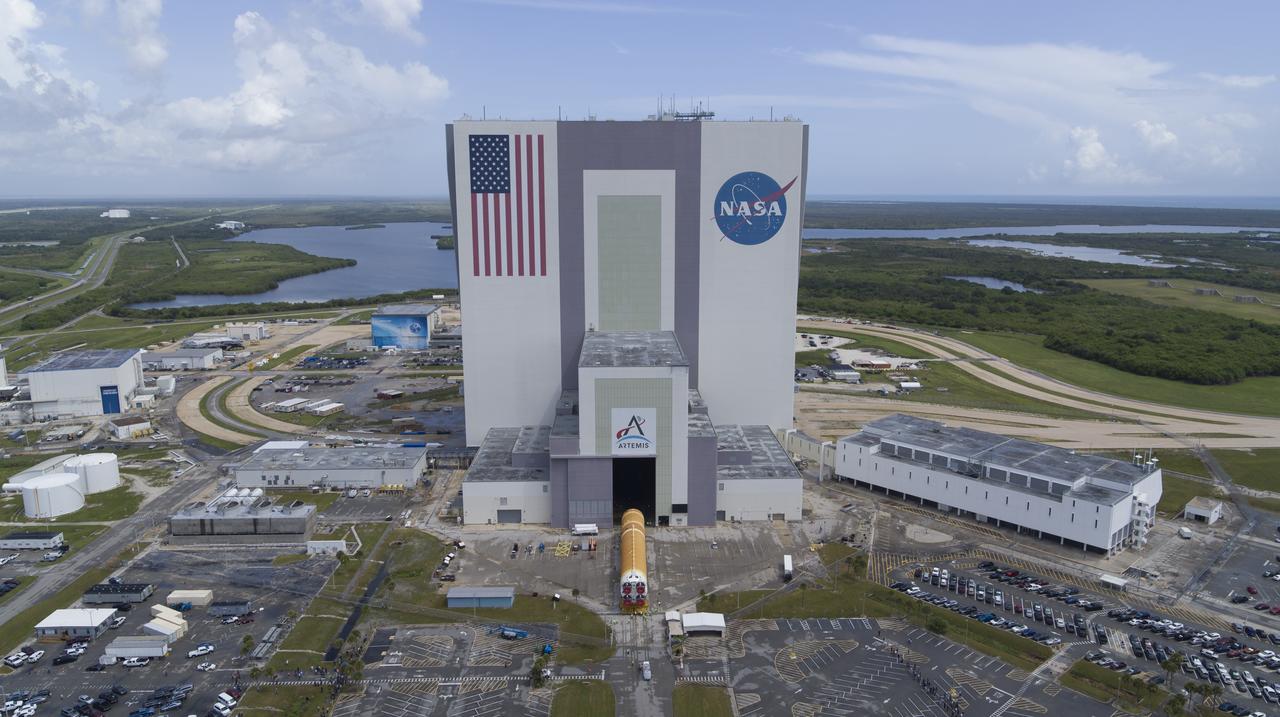
In this aerial view, teams with Exploration Ground Systems (EGS) transport the agency’s powerful SLS (Space Launch System) core stage to the Vehicle Assembly Building at NASA’s Kennedy Space Center in Florida on Wednesday, July 24, 2024, after it completed the journey from NASA’s Michoud Assembly Facility in New Orleans aboard the Pegasus barge. In the coming months, SLS will be prepared for integration atop the mobile launcher ahead of the Artemis II launch.
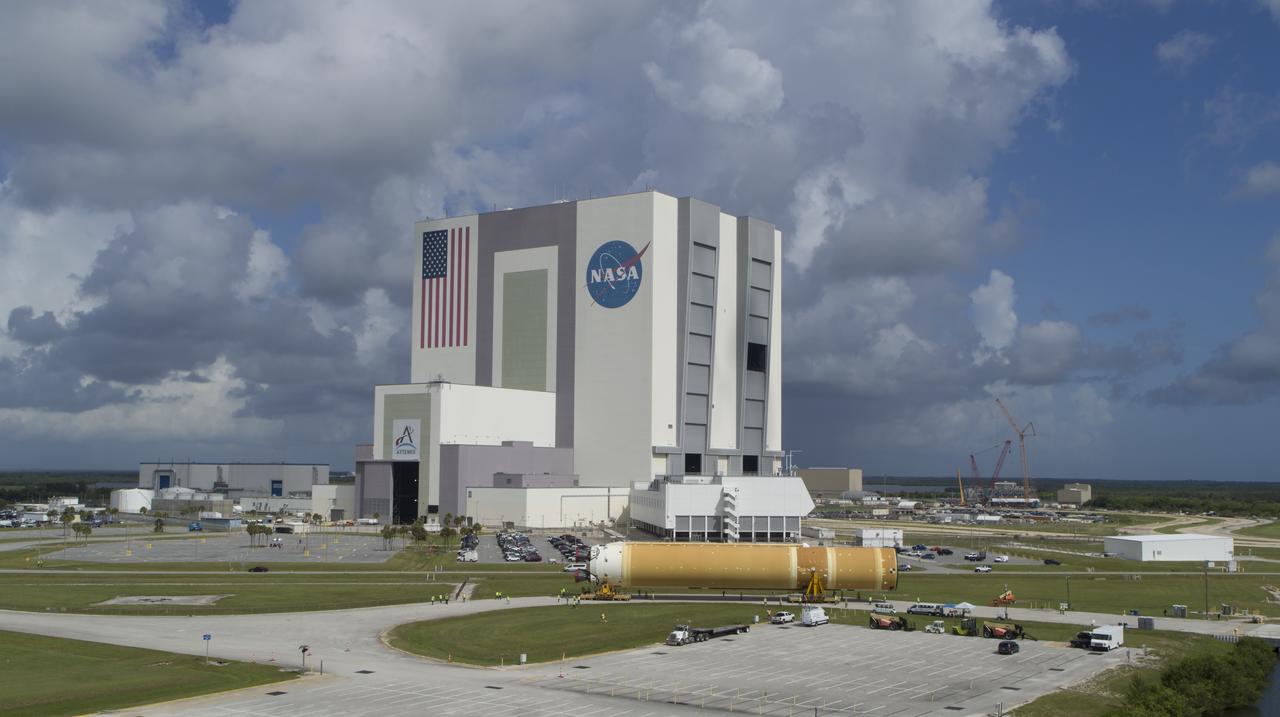
In this aerial view, teams with Exploration Ground Systems (EGS) transport the agency’s powerful SLS (Space Launch System) core stage to the Vehicle Assembly Building at NASA’s Kennedy Space Center in Florida on Wednesday, July 24, 2024, after it completed the journey from NASA’s Michoud Assembly Facility in New Orleans aboard the Pegasus barge. In the coming months, SLS will be prepared for integration atop the mobile launcher ahead of the Artemis II launch.
In this aerial view, NASA’s powerful 212-foot long SLS (Space Launch System) core stage is shown being offloaded from the agency’s Pegasus Barge on Wednesday, July 24, 2024, after arriving at NASA’s Kennedy Space Center in Florida. Teams with Exploration Ground Systems (EGS) will transfer the rocket stage to the spaceport’s Vehicle Assembly Building to prepare it for integration atop the mobile launcher ahead of the Artemis II launch.
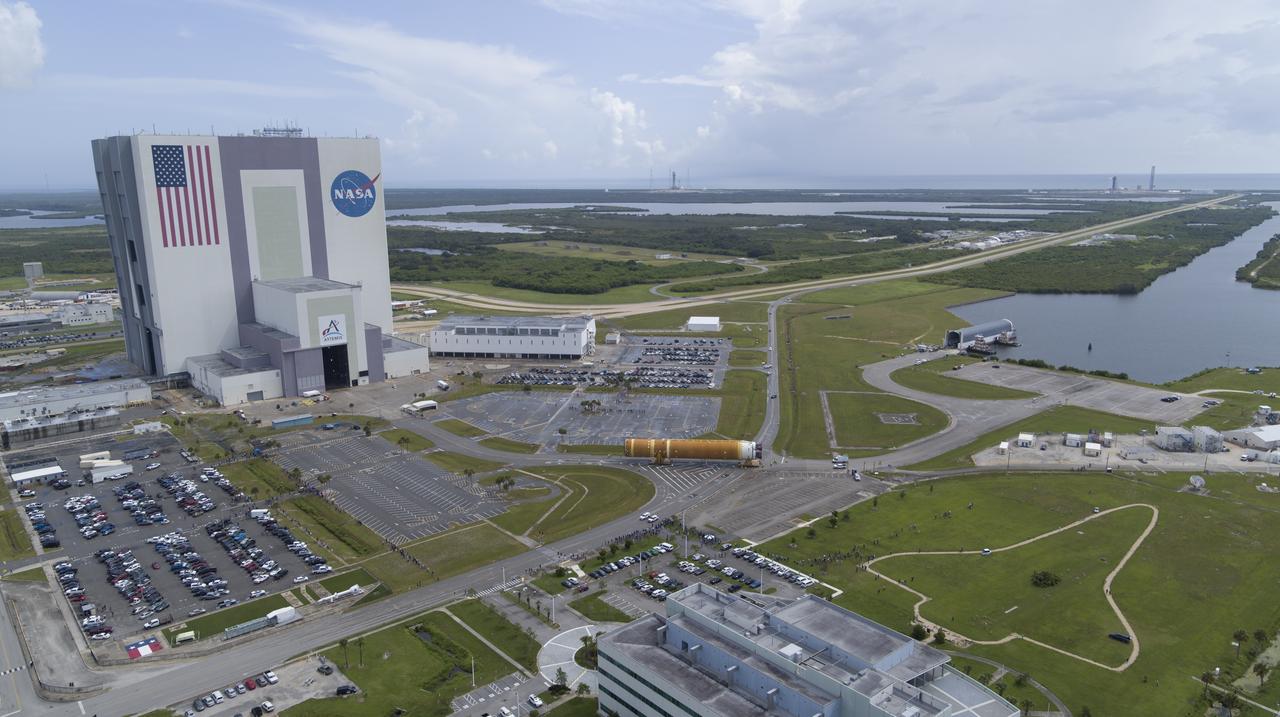
In this aerial view, teams with Exploration Ground Systems (EGS) transport the agency’s powerful SLS (Space Launch System) core stage to the Vehicle Assembly Building at NASA’s Kennedy Space Center in Florida on Wednesday, July 24, 2024, after it completed the journey from NASA’s Michoud Assembly Facility in New Orleans aboard the Pegasus barge. In the coming months, SLS will be prepared for integration atop the mobile launcher ahead of the Artemis II launch.
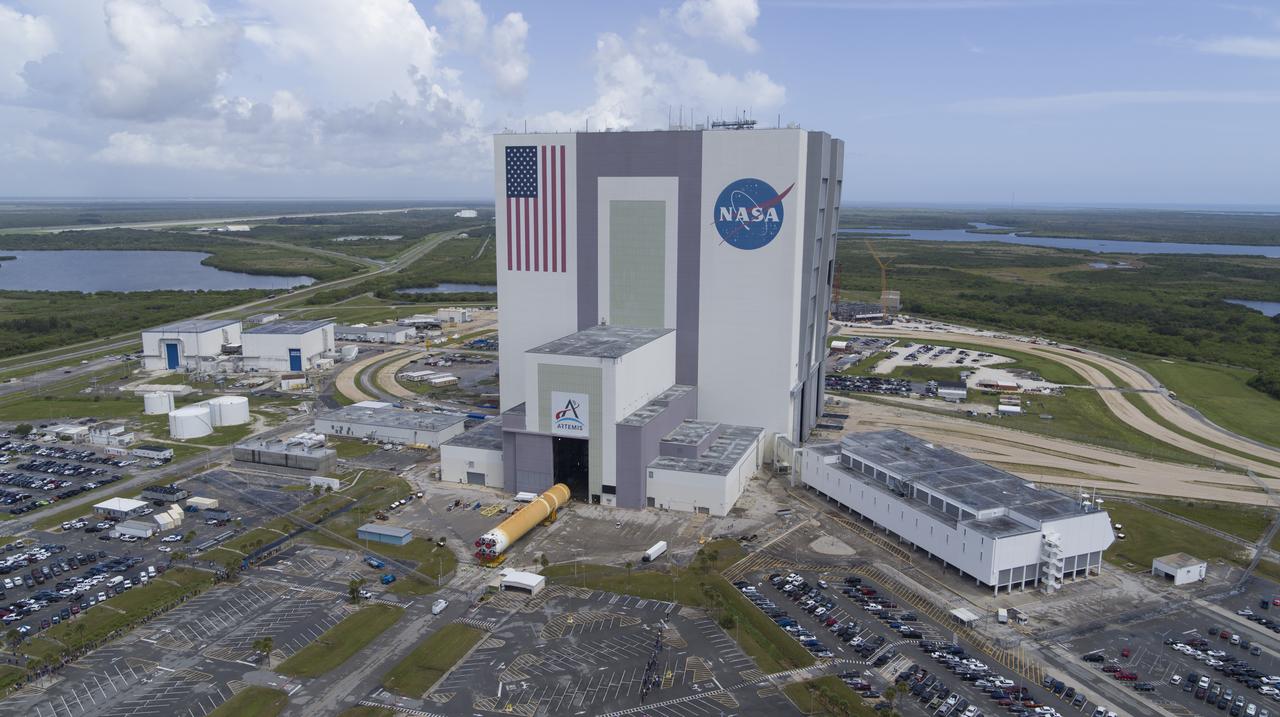
In this aerial view, teams with Exploration Ground Systems (EGS) transport the agency’s powerful SLS (Space Launch System) core stage to the Vehicle Assembly Building at NASA’s Kennedy Space Center in Florida on Wednesday, July 24, 2024, after it completed the journey from NASA’s Michoud Assembly Facility in New Orleans aboard the Pegasus barge. In the coming months, SLS will be prepared for integration atop the mobile launcher ahead of the Artemis II launch.
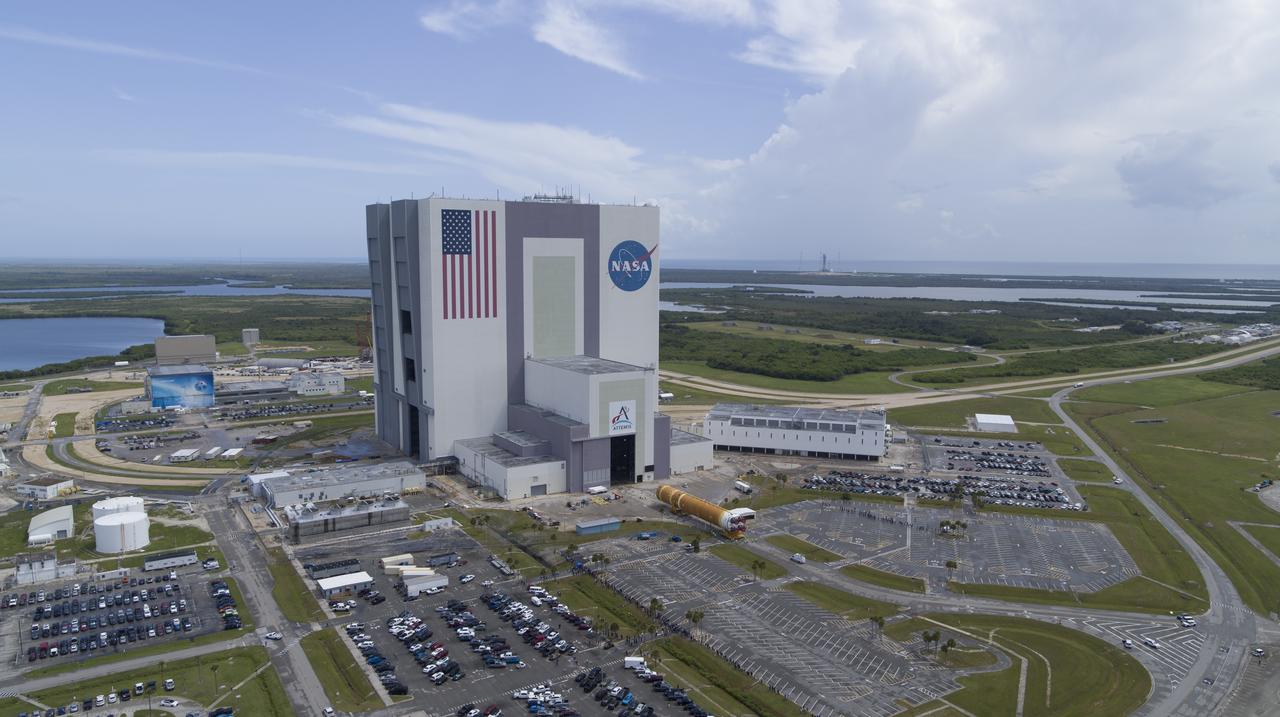
In this aerial view, teams with Exploration Ground Systems (EGS) transport the agency’s powerful SLS (Space Launch System) core stage to the Vehicle Assembly Building at NASA’s Kennedy Space Center in Florida on Wednesday, July 24, 2024, after it completed the journey from NASA’s Michoud Assembly Facility in New Orleans aboard the Pegasus barge. In the coming months, SLS will be prepared for integration atop the mobile launcher ahead of the Artemis II launch.
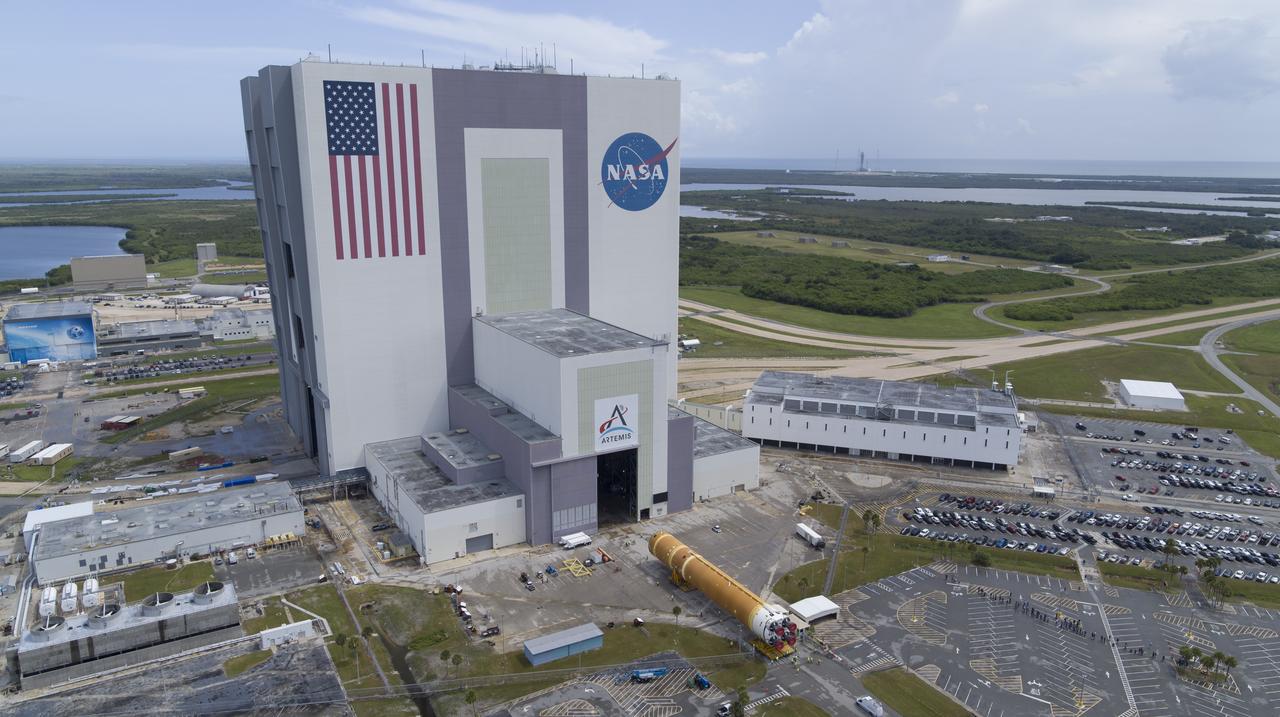
In this aerial view, teams with Exploration Ground Systems (EGS) transport the agency’s powerful SLS (Space Launch System) core stage to the Vehicle Assembly Building at NASA’s Kennedy Space Center in Florida on Wednesday, July 24, 2024, after it completed the journey from NASA’s Michoud Assembly Facility in New Orleans aboard the Pegasus barge. In the coming months, SLS will be prepared for integration atop the mobile launcher ahead of the Artemis II launch.
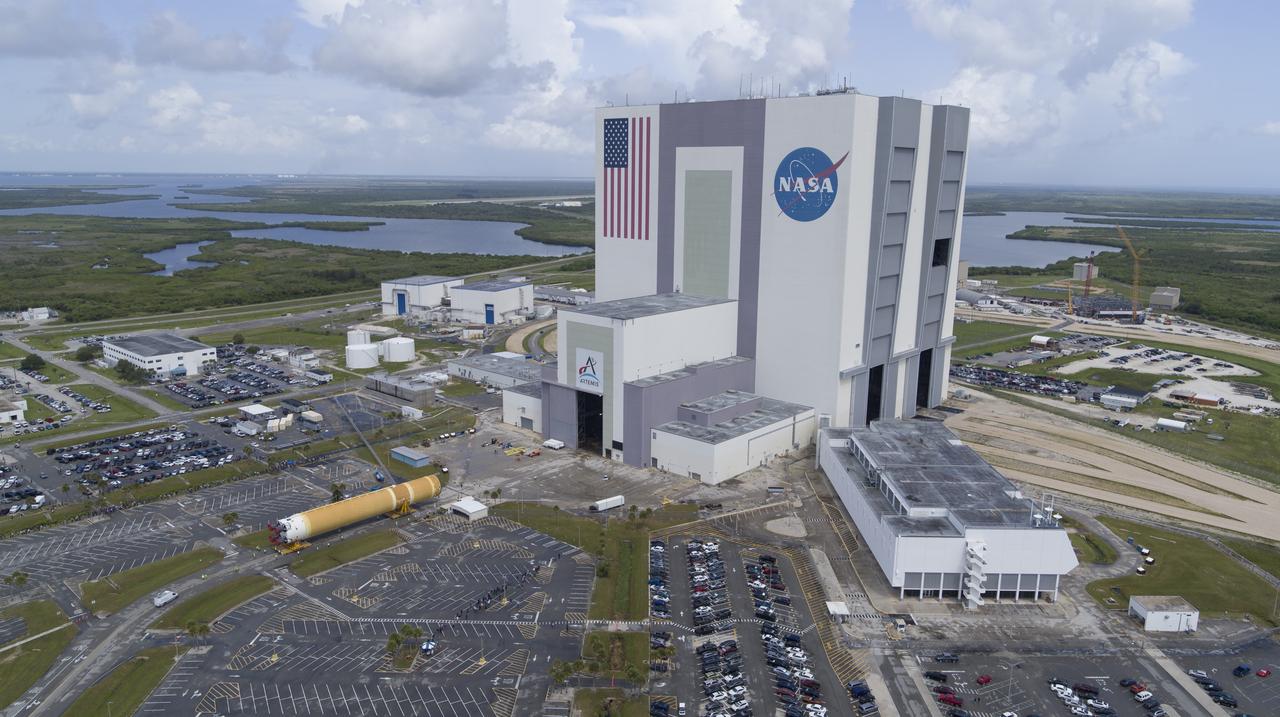
In this aerial view, teams with Exploration Ground Systems (EGS) transport the agency’s powerful SLS (Space Launch System) core stage to the Vehicle Assembly Building at NASA’s Kennedy Space Center in Florida on Wednesday, July 24, 2024, after it completed the journey from NASA’s Michoud Assembly Facility in New Orleans aboard the Pegasus barge. In the coming months, SLS will be prepared for integration atop the mobile launcher ahead of the Artemis II launch.
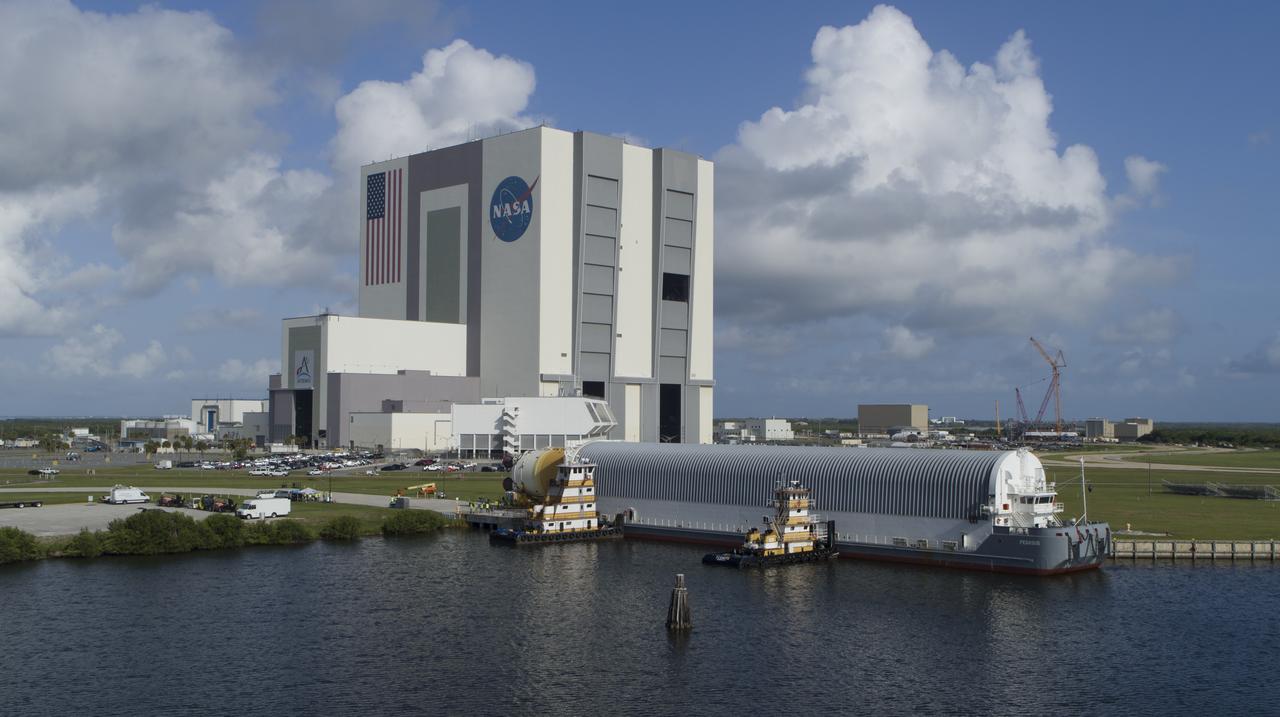
In this aerial view, NASA’s powerful 212-foot long SLS (Space Launch System) core stage is shown being offloaded from the agency’s Pegasus Barge on Wednesday, July 24, 2024, after arriving at NASA’s Kennedy Space Center in Florida. Teams with Exploration Ground Systems (EGS) will transfer the rocket stage to the spaceport’s Vehicle Assembly Building to prepare it for integration atop the mobile launcher ahead of the Artemis II launch.