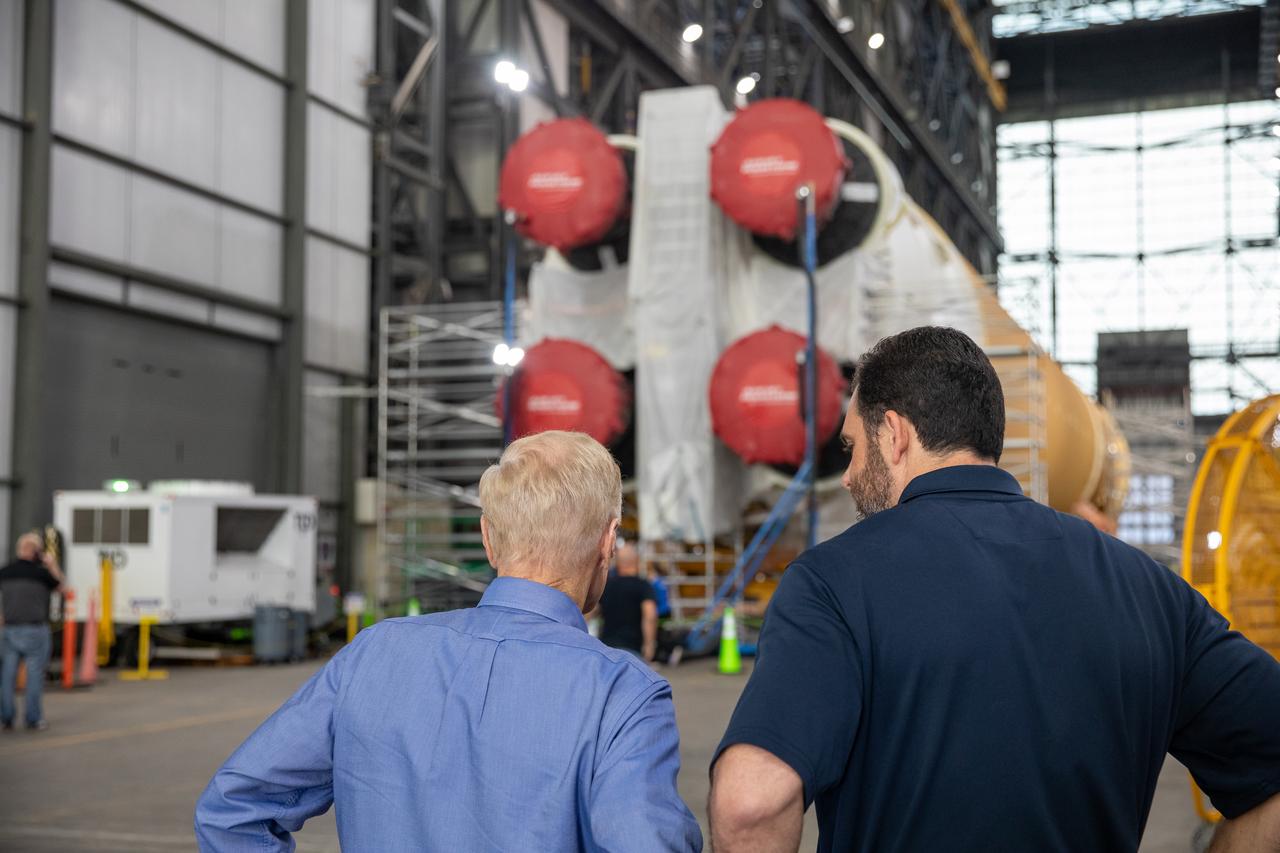
NASA Administrator Bill Nelson and NASA Exploration Ground Systems Program Deputy Manager Jeremy Parsons visit the agency’s SLS (Space Launch System) rocket core stage for the Artemis II mission inside NASA’s Kennedy Space Center in Florida on Thursday, Aug. 29, 2024. In the coming months, teams will integrate the rocket core stage atop the mobile launcher with the additional Artemis II flight hardware, including the twin solid rocket boosters, launch vehicle stage adapter, and the Orion spacecraft.
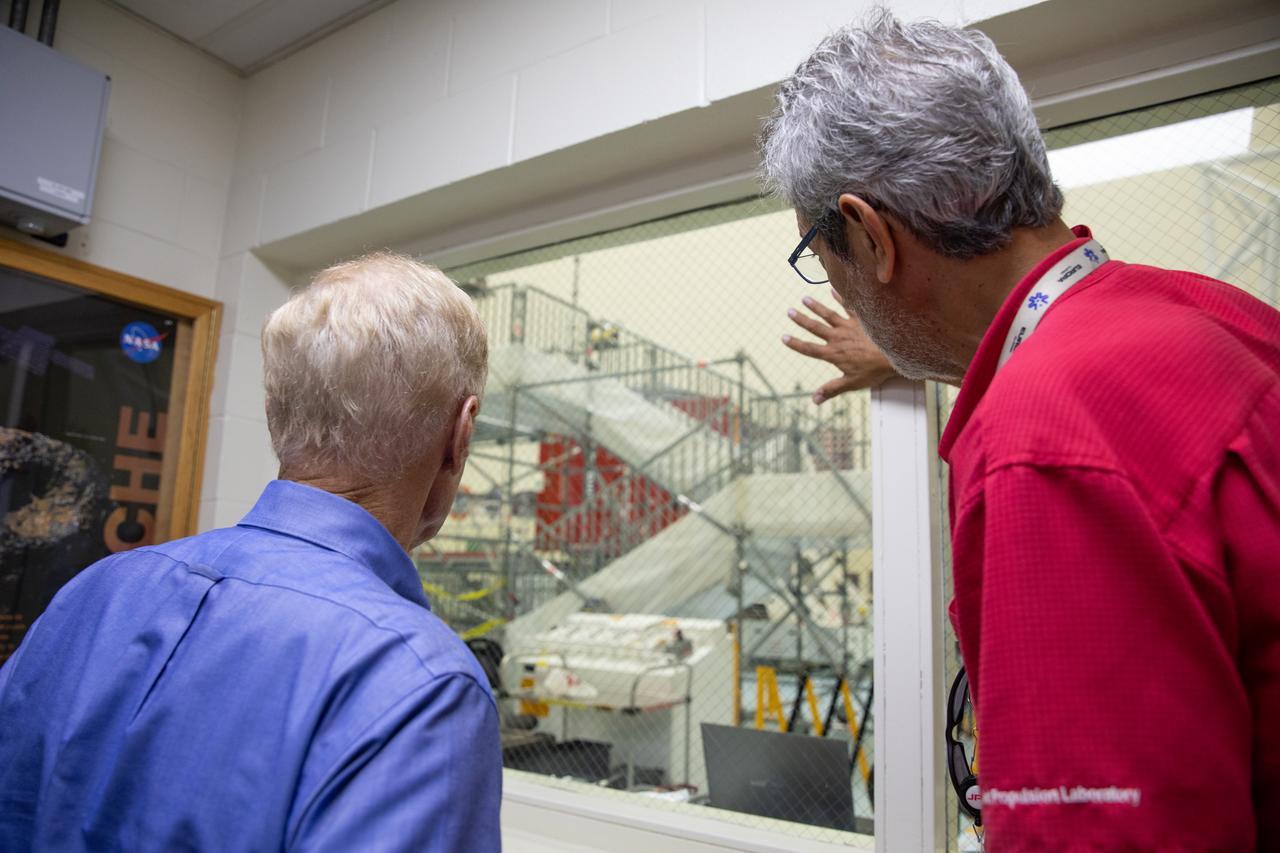
NASA Administrator Bill Nelson visits the agency’s Europa Clipper spacecraft inside the Payload Hazardous Servicing Facility at NASA’s Kennedy Space Center in Florida on Thursday, Aug. 29, 2024. Scheduled to launch later this year, Europa Clipper will embark on a 1.8-billion-mile (2.6-billion-kilometer) journey to Jupiter. It is the largest spacecraft NASA has developed for a planetary mission. Set to arrive in April 2030, it will study the gas giant’s icy moon, Europa, to determine its potential to support life.
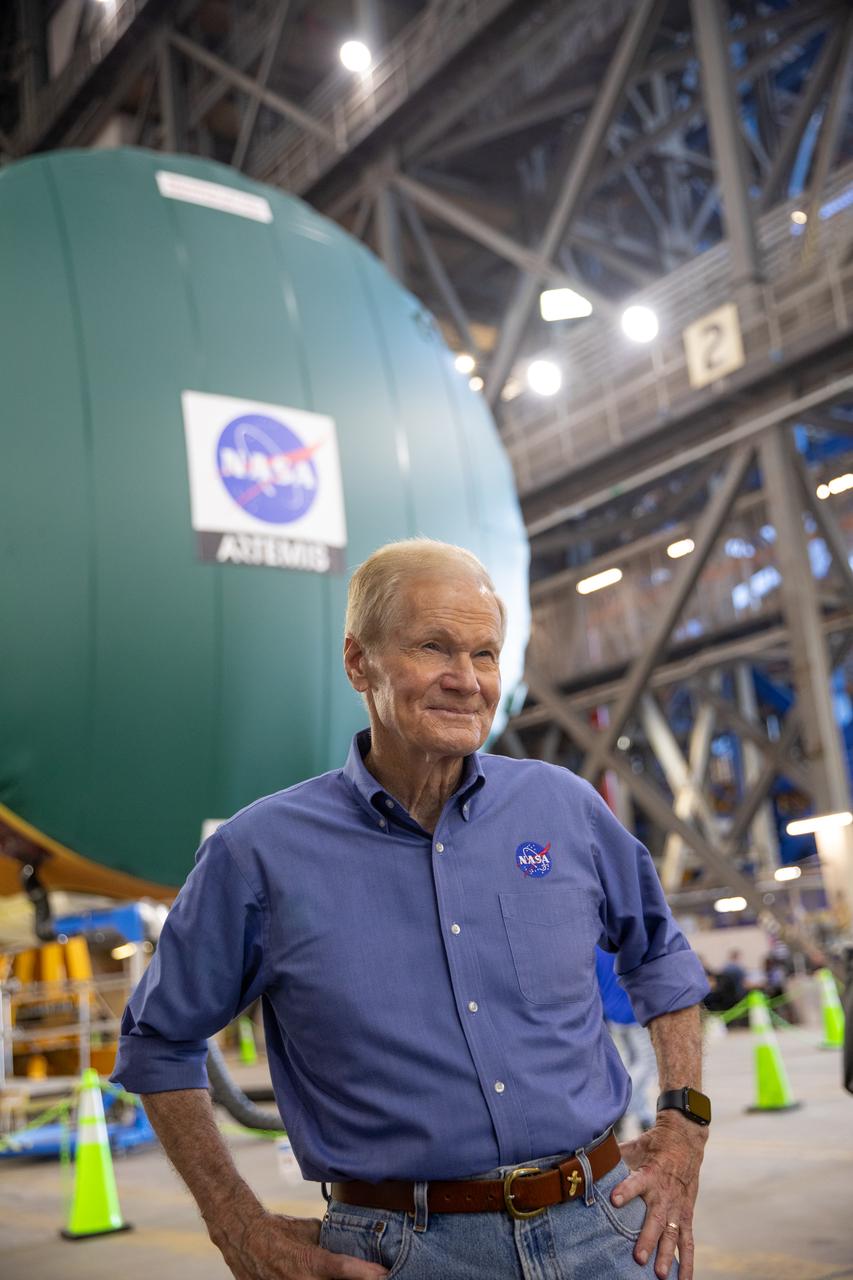
NASA Administrator Bill Nelson visits the agency’s SLS (Space Launch System) rocket core stage for the Artemis II mission inside NASA’s Kennedy Space Center in Florida on Thursday, Aug. 29, 2024. In the coming months, teams will integrate the rocket core stage atop the mobile launcher with the additional Artemis II flight hardware, including the twin solid rocket boosters, launch vehicle stage adapter, and the Orion spacecraft.
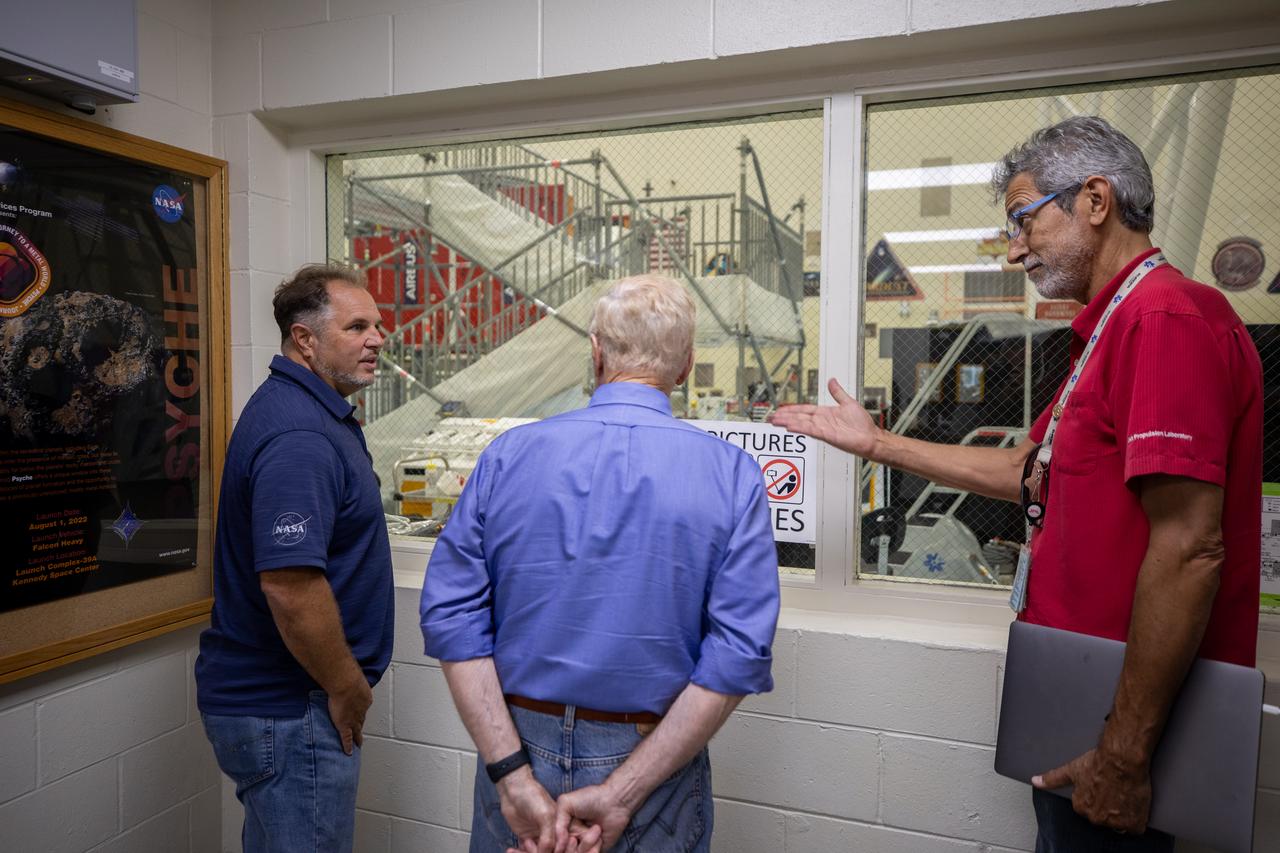
NASA Administrator Bill Nelson visits the agency’s Europa Clipper spacecraft inside the Payload Hazardous Servicing Facility at NASA’s Kennedy Space Center in Florida on Thursday, Aug. 29, 2024. Scheduled to launch later this year, Europa Clipper will embark on a 1.8-billion-mile (2.6-billion-kilometer) journey to Jupiter. It is the largest spacecraft NASA has developed for a planetary mission. Set to arrive in April 2030, it will study the gas giant’s icy moon, Europa, to determine its potential to support life.
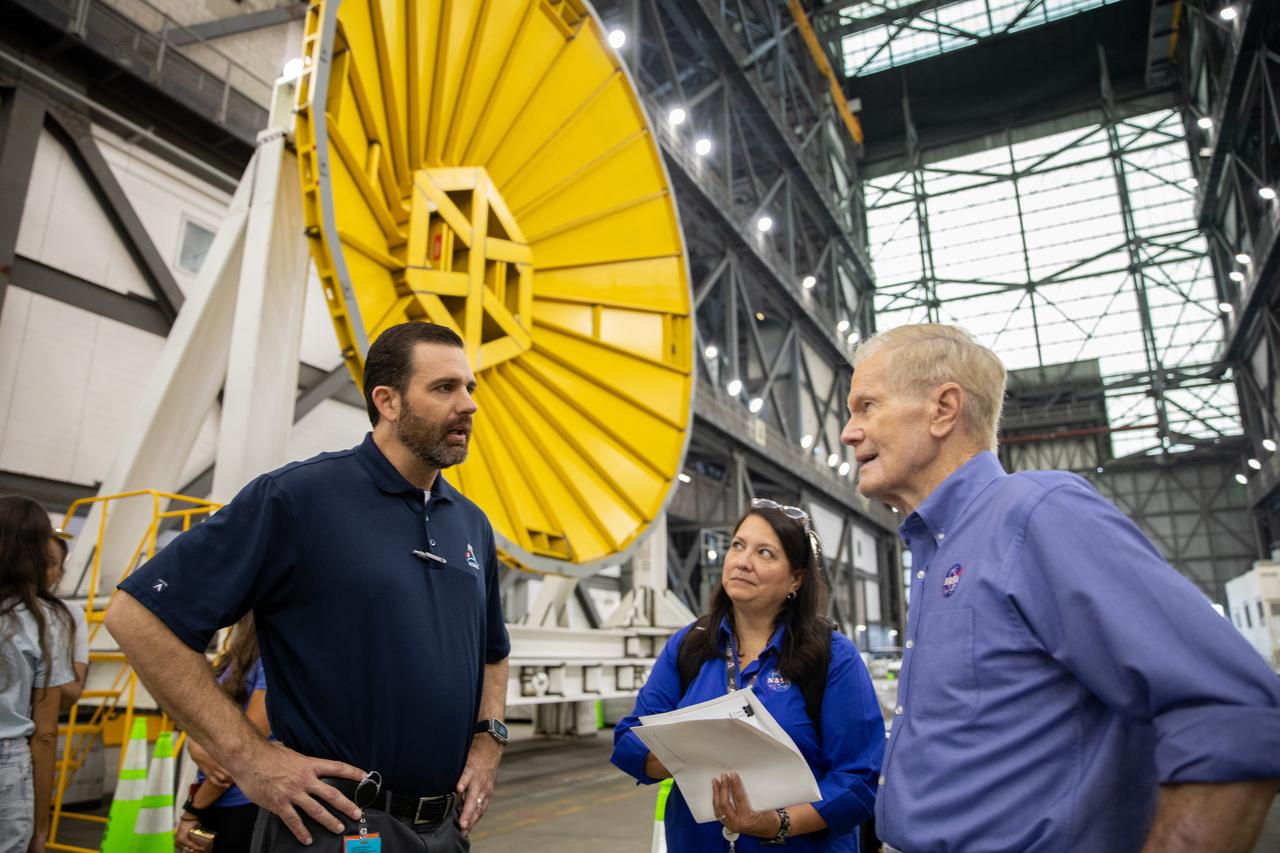
NASA Administrator Bill Nelson and NASA Exploration Ground Systems Program Deputy Manager Jeremy Parsons visit the agency’s SLS (Space Launch System) rocket core stage for the Artemis II mission inside NASA’s Kennedy Space Center in Florida on Thursday, Aug. 29, 2024. In the coming months, teams will integrate the rocket core stage atop the mobile launcher with the additional Artemis II flight hardware, including the twin solid rocket boosters, launch vehicle stage adapter, and the Orion spacecraft.
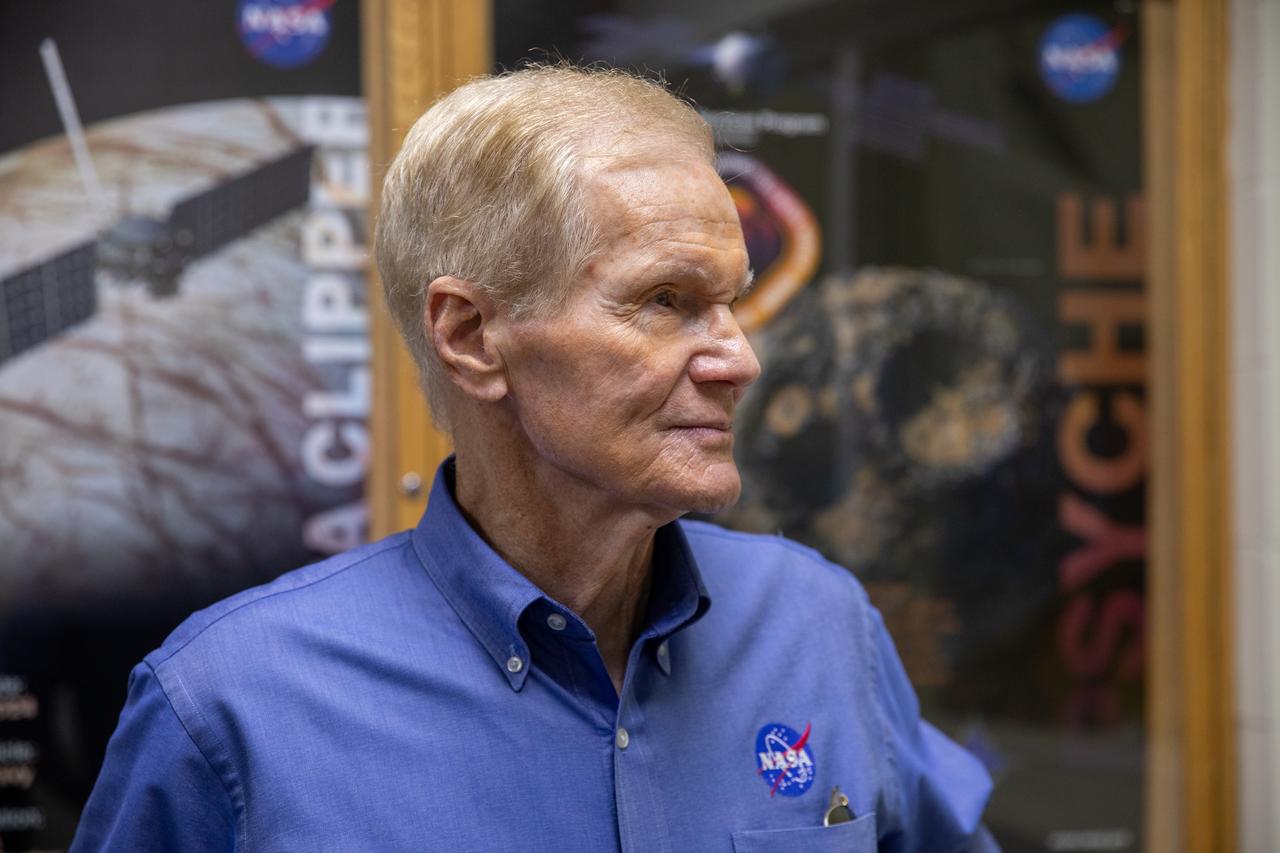
NASA Administrator Bill Nelson visits the agency’s Europa Clipper spacecraft inside the Payload Hazardous Servicing Facility at NASA’s Kennedy Space Center in Florida on Thursday, Aug. 29, 2024. Scheduled to launch later this year, Europa Clipper will embark on a 1.8-billion-mile (2.6-billion-kilometer) journey to Jupiter. It is the largest spacecraft NASA has developed for a planetary mission. Set to arrive in April 2030, it will study the gas giant’s icy moon, Europa, to determine its potential to support life.
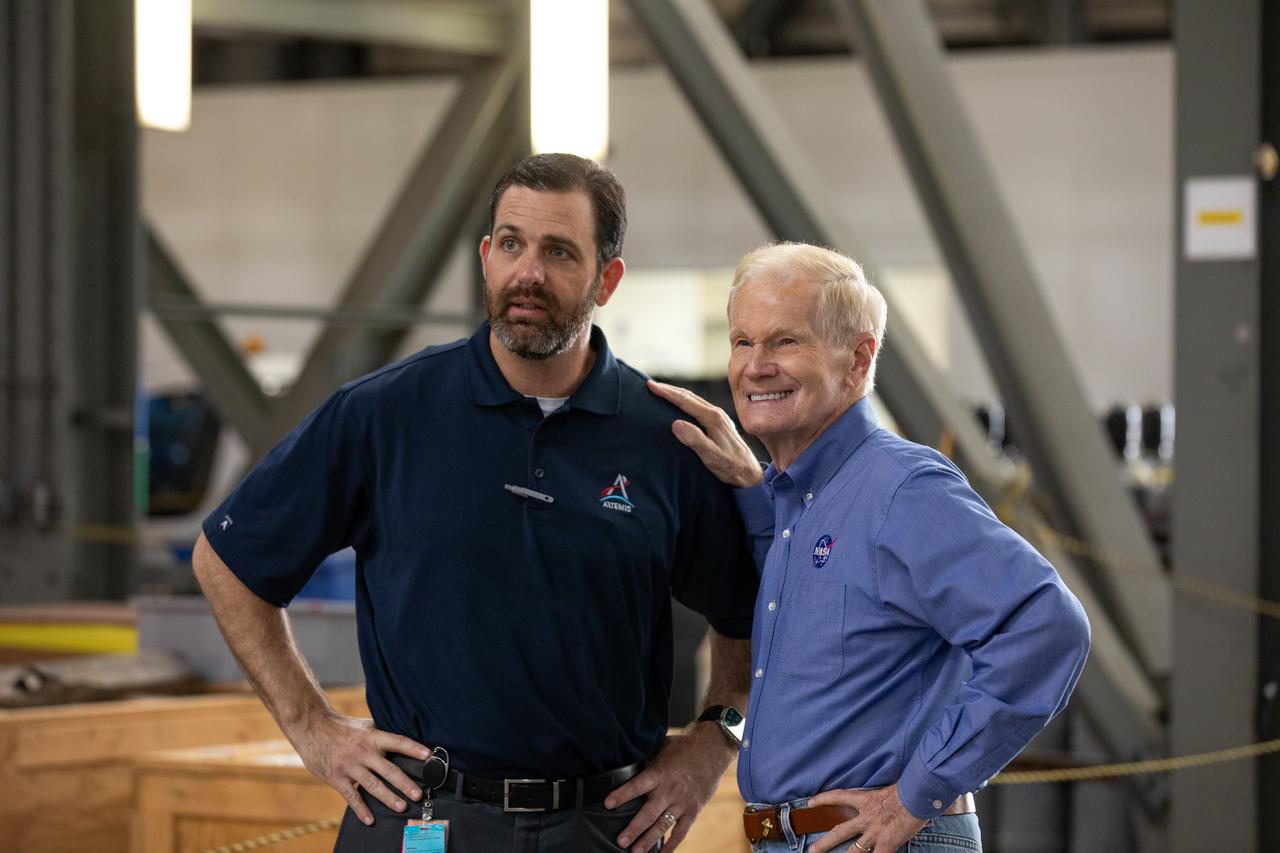
NASA Administrator Bill Nelson and NASA Exploration Ground Systems Program Deputy Manager Jeremy Parsons visit the agency’s SLS (Space Launch System) rocket core stage for the Artemis II mission inside NASA’s Kennedy Space Center in Florida on Thursday, Aug. 29, 2024. In the coming months, teams will integrate the rocket core stage atop the mobile launcher with the additional Artemis II flight hardware, including the twin solid rocket boosters, launch vehicle stage adapter, and the Orion spacecraft.
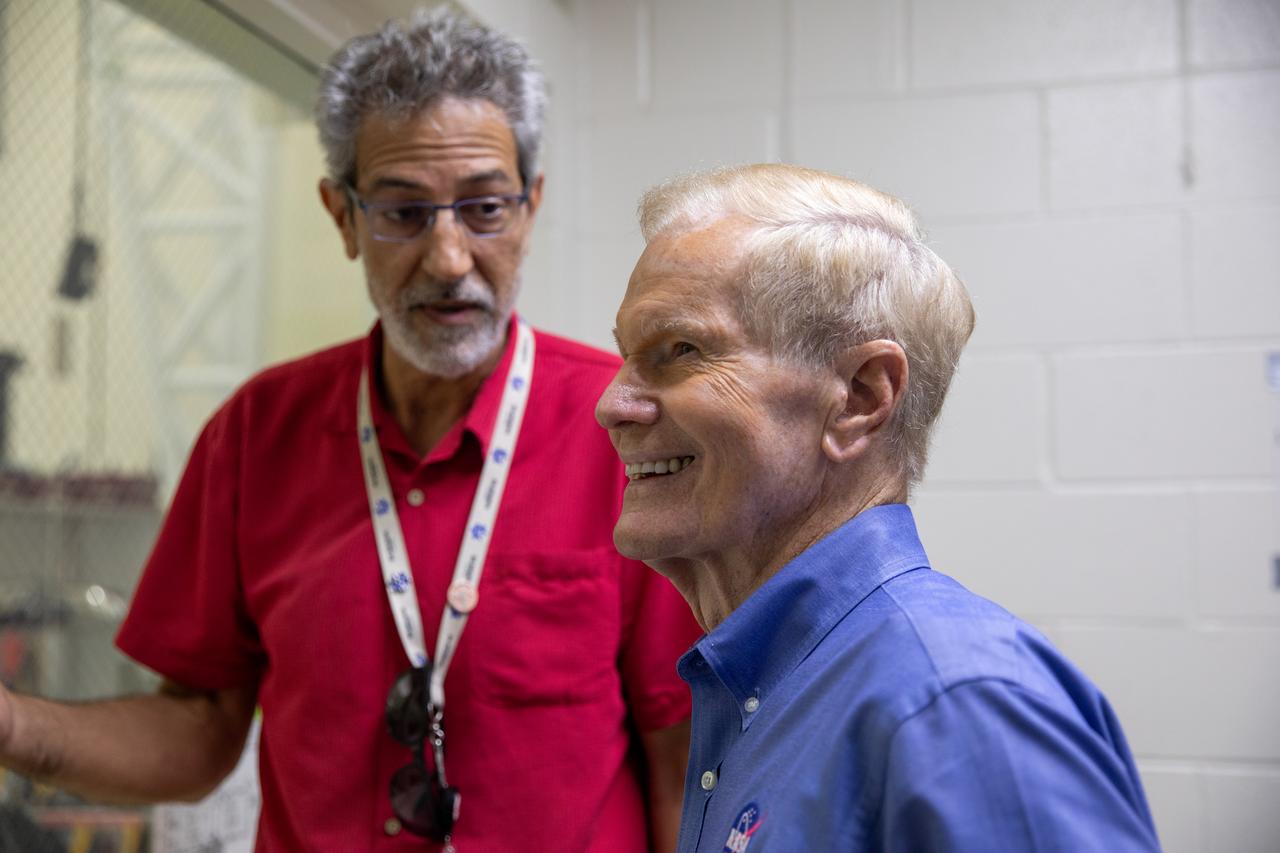
NASA Administrator Bill Nelson visits the agency’s Europa Clipper spacecraft inside the Payload Hazardous Servicing Facility at NASA’s Kennedy Space Center in Florida on Thursday, Aug. 29, 2024. Scheduled to launch later this year, Europa Clipper will embark on a 1.8-billion-mile (2.6-billion-kilometer) journey to Jupiter. It is the largest spacecraft NASA has developed for a planetary mission. Set to arrive in April 2030, it will study the gas giant’s icy moon, Europa, to determine its potential to support life.
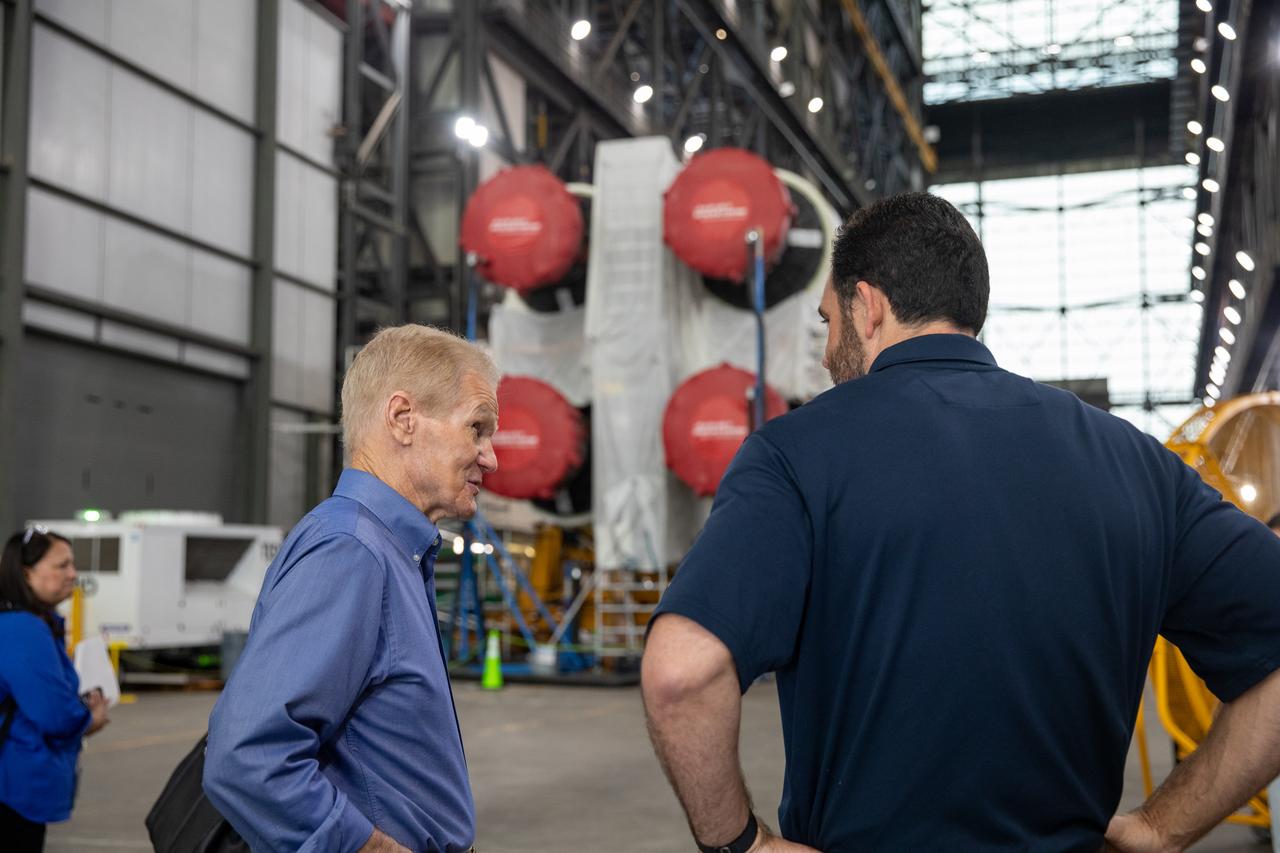
NASA Administrator Bill Nelson and NASA Exploration Ground Systems Program Deputy Manager Jeremy Parsons visit the agency’s SLS (Space Launch System) rocket core stage for the Artemis II mission inside NASA’s Kennedy Space Center in Florida on Thursday, Aug. 29, 2024. In the coming months, teams will integrate the rocket core stage atop the mobile launcher with the additional Artemis II flight hardware, including the twin solid rocket boosters, launch vehicle stage adapter, and the Orion spacecraft.
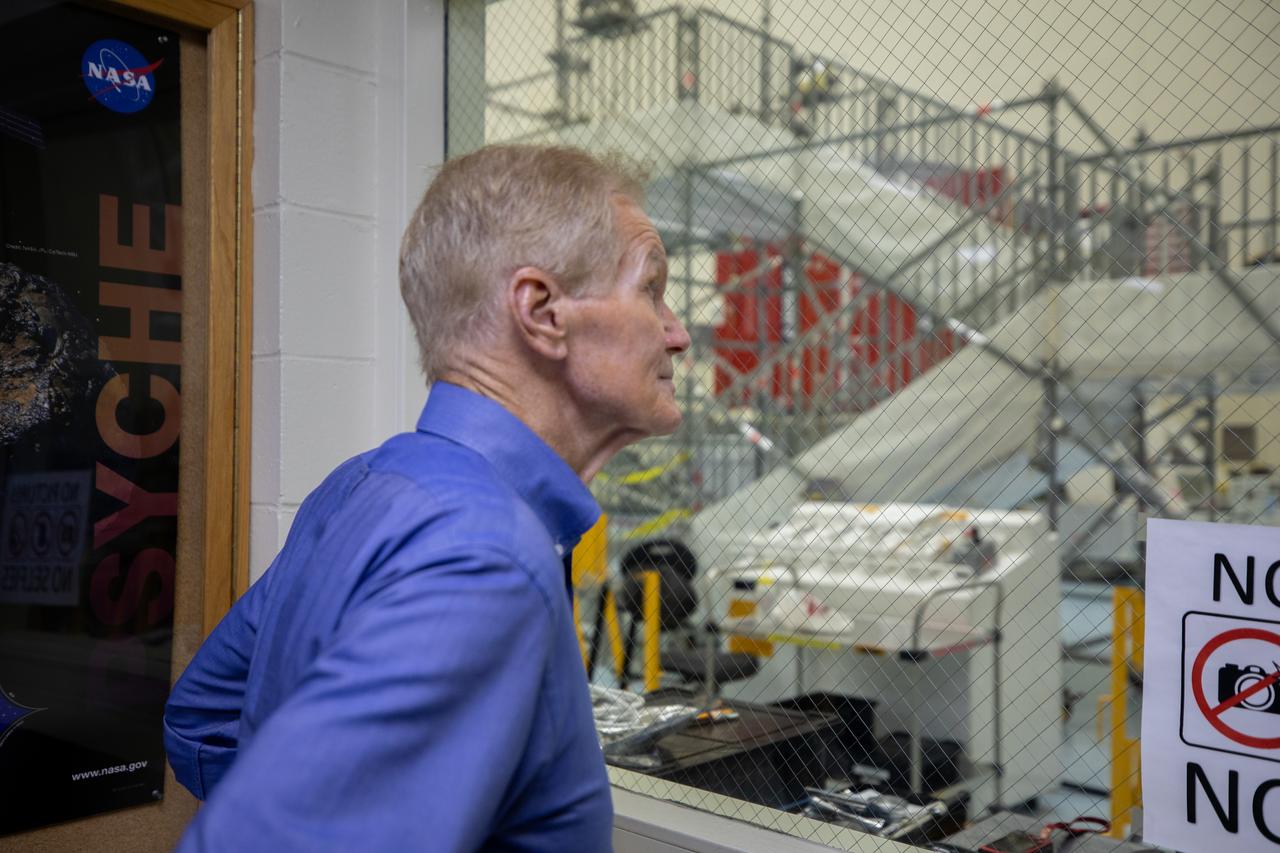
NASA Administrator Bill Nelson visits the agency’s Europa Clipper spacecraft inside the Payload Hazardous Servicing Facility at NASA’s Kennedy Space Center in Florida on Thursday, Aug. 29, 2024. Scheduled to launch later this year, Europa Clipper will embark on a 1.8-billion-mile (2.6-billion-kilometer) journey to Jupiter. It is the largest spacecraft NASA has developed for a planetary mission. Set to arrive in April 2030, it will study the gas giant’s icy moon, Europa, to determine its potential to support life.
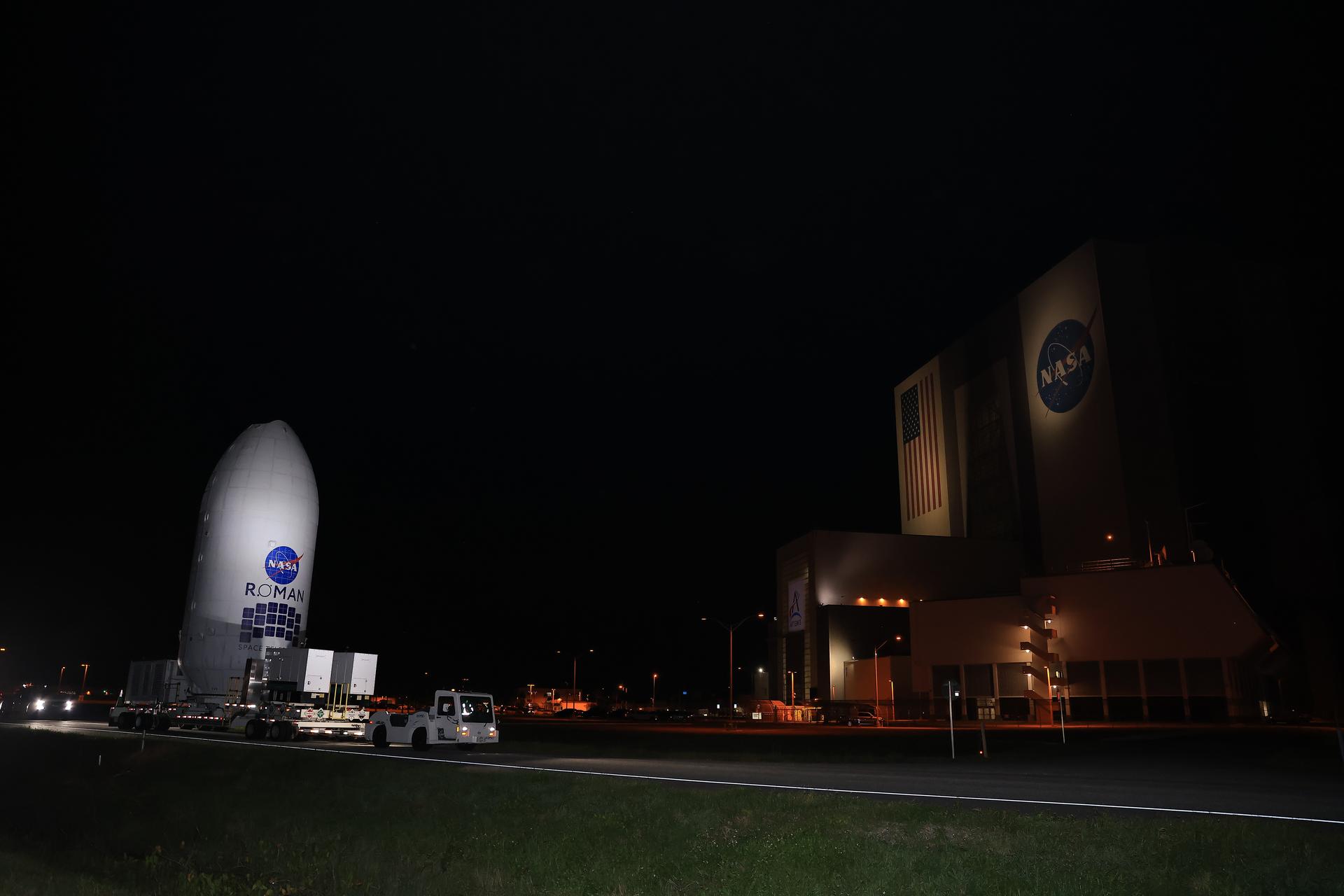
NASA’s Nancy Grace Roman Space Telescope, encapsulated in its payload fairing, travels from the Payload Hazardous Servicing Facility to the SpaceX hangar at Launch Complex 39A at NASA’s Kennedy Space Center on Tuesday, Aug. 25, 2026, ahead of mating to a SpaceX Falcon Heavy rocket. Roman’s science instruments are designed to help researchers understand dark energy, the mysterious force accelerating the universe’s expansion. The observatory also will map how galaxies form, cluster, and evolve by tracing the influence of dark matter. Liftoff from NASA Kennedy is targeted no earlier than Sunday, Aug. 30, 2026.
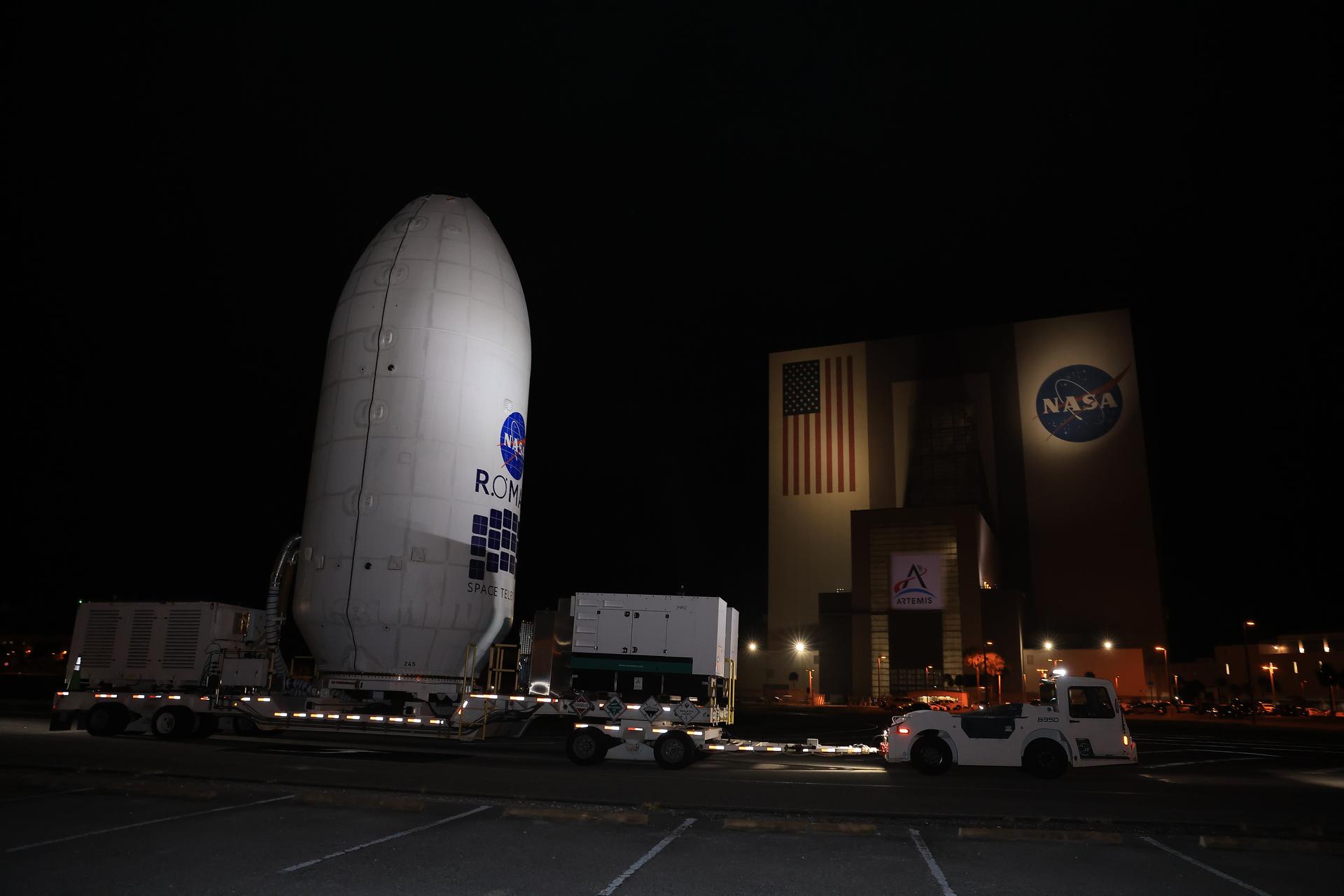
NASA’s Nancy Grace Roman Space Telescope, encapsulated in its payload fairing, travels from the Payload Hazardous Servicing Facility to the SpaceX hangar at Launch Complex 39A at NASA’s Kennedy Space Center on Tuesday, Aug. 25, 2026, ahead of mating to a SpaceX Falcon Heavy rocket. Roman’s science instruments are designed to help researchers understand dark energy, the mysterious force accelerating the universe’s expansion. The observatory also will map how galaxies form, cluster, and evolve by tracing the influence of dark matter. Liftoff from NASA Kennedy is targeted no earlier than Sunday, Aug. 30, 2026.
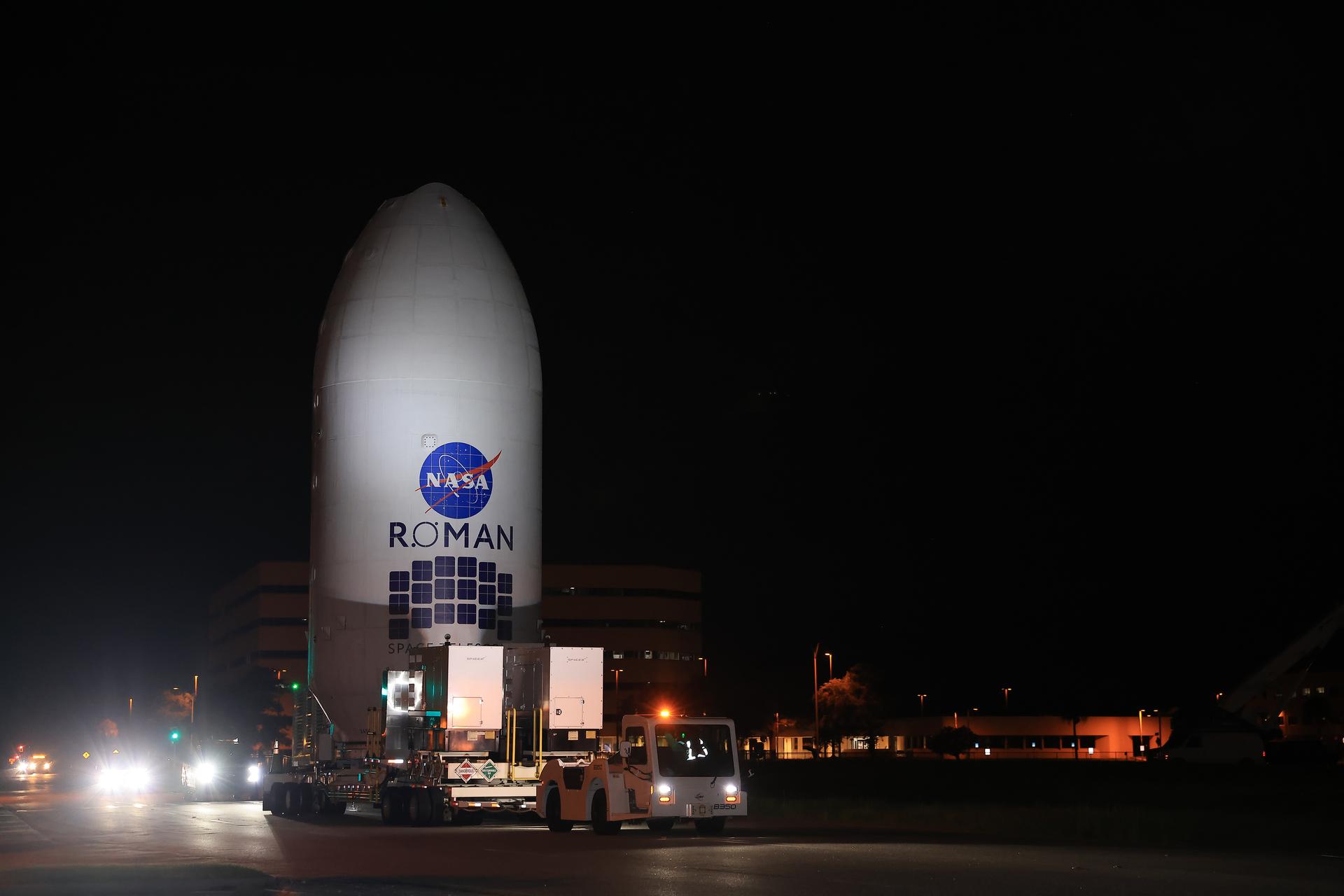
NASA’s Nancy Grace Roman Space Telescope, encapsulated in its payload fairing, travels from the Payload Hazardous Servicing Facility to the SpaceX hangar at Launch Complex 39A at NASA’s Kennedy Space Center on Tuesday, Aug. 25, 2026, ahead of mating to a SpaceX Falcon Heavy rocket. Roman’s science instruments are designed to help researchers understand dark energy, the mysterious force accelerating the universe’s expansion. The observatory also will map how galaxies form, cluster, and evolve by tracing the influence of dark matter. Liftoff from NASA Kennedy is targeted no earlier than Sunday, Aug. 30, 2026.