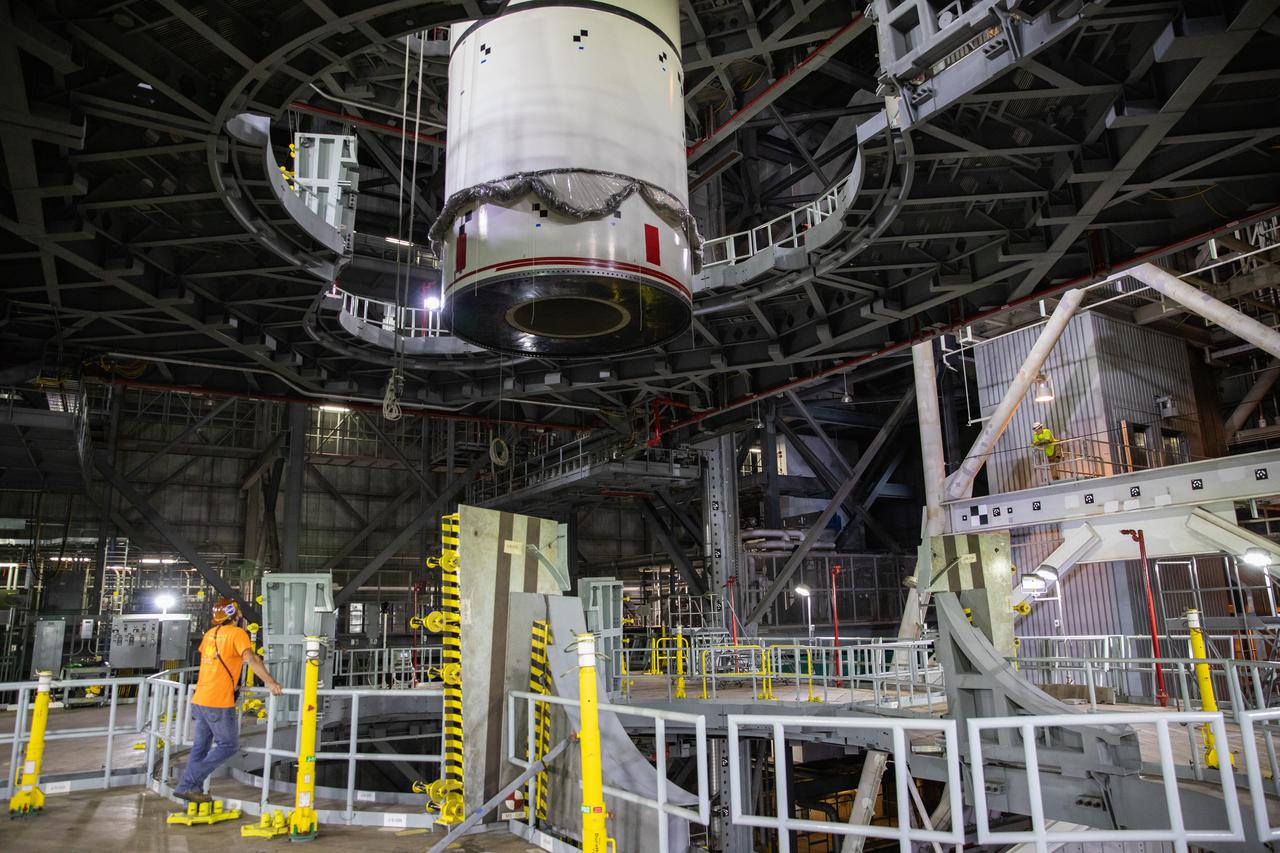
Technicians with NASA’s Exploration Ground Systems lower a mock-up, or pathfinder, of the Space Launch System’s (SLS) center booster segment onto an aft pathfinder segment inside the Vehicle Assembly Building (VAB) at the agency’s Kennedy Space Center in Florida on Sept. 14, 2020. Teams rehearsed stacking both pathfinder segments on top of the mobile launcher in High Bay 3 of the VAB in preparation for the Artemis I launch. Stacking of the actual SLS booster segments will occur later this year, when the rocket’s core stage arrives at Kennedy. Artemis I is the first in a series of increasingly complex missions that will test SLS and the Orion spacecraft as an integrated system prior to crewed flights to the Moon.
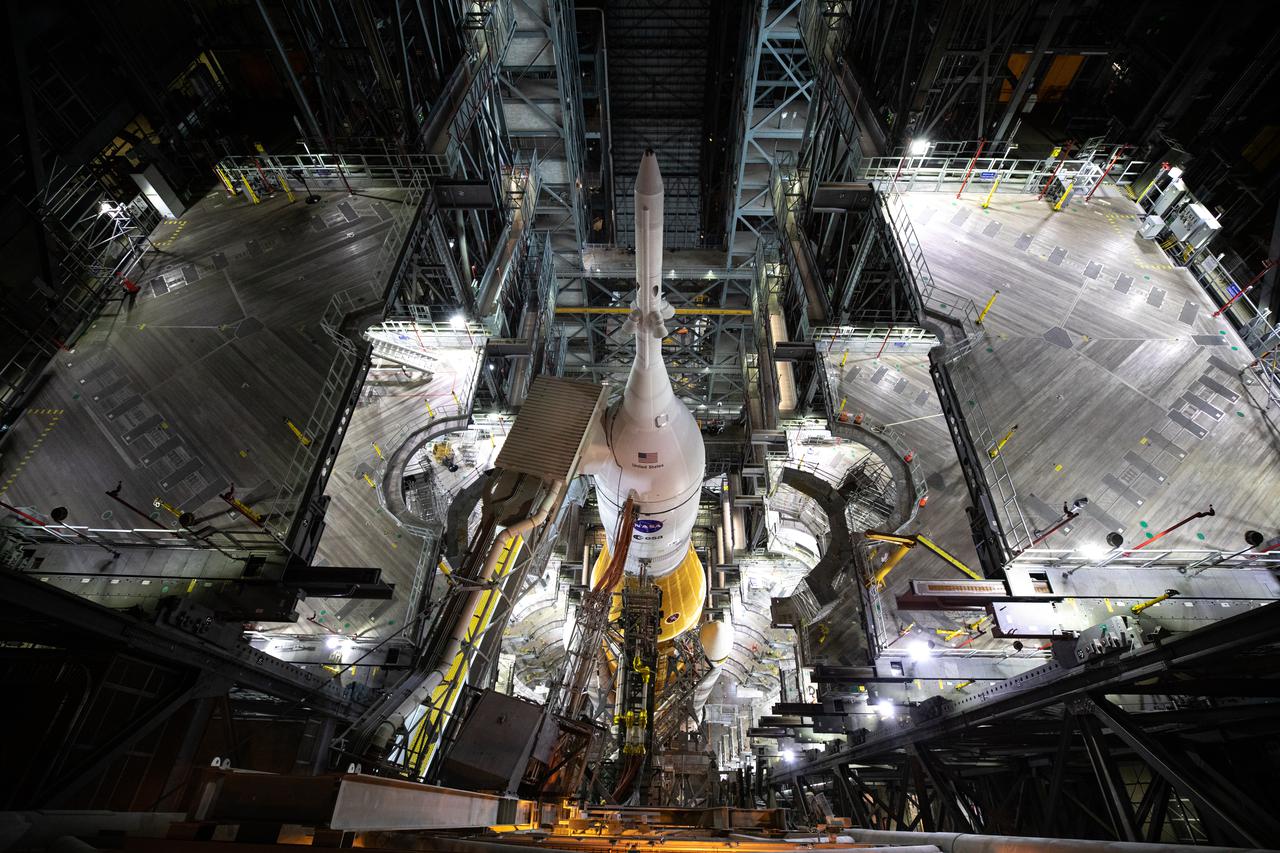
In this view looking down in High Bay 3 of the Vehicle Assembly Building at NASA’s Kennedy Space Center in Florida, the Artemis I Space Launch System (SLS) and Orion spacecraft can be seen without any work platforms surrounding them on March 17, 2022. The Artemis I stack atop the mobile launcher will roll out to Launch Complex 39B atop the crawler-transporter 2 for a wet dress rehearsal ahead of launch. Artemis I will be the first integrated test of the SLS and Orion spacecraft. In later missions, NASA will land the first woman the first person of color on the surface of the Moon, paving the way for a long-term lunar presence and serving as a steppingstone on the way to Mars.
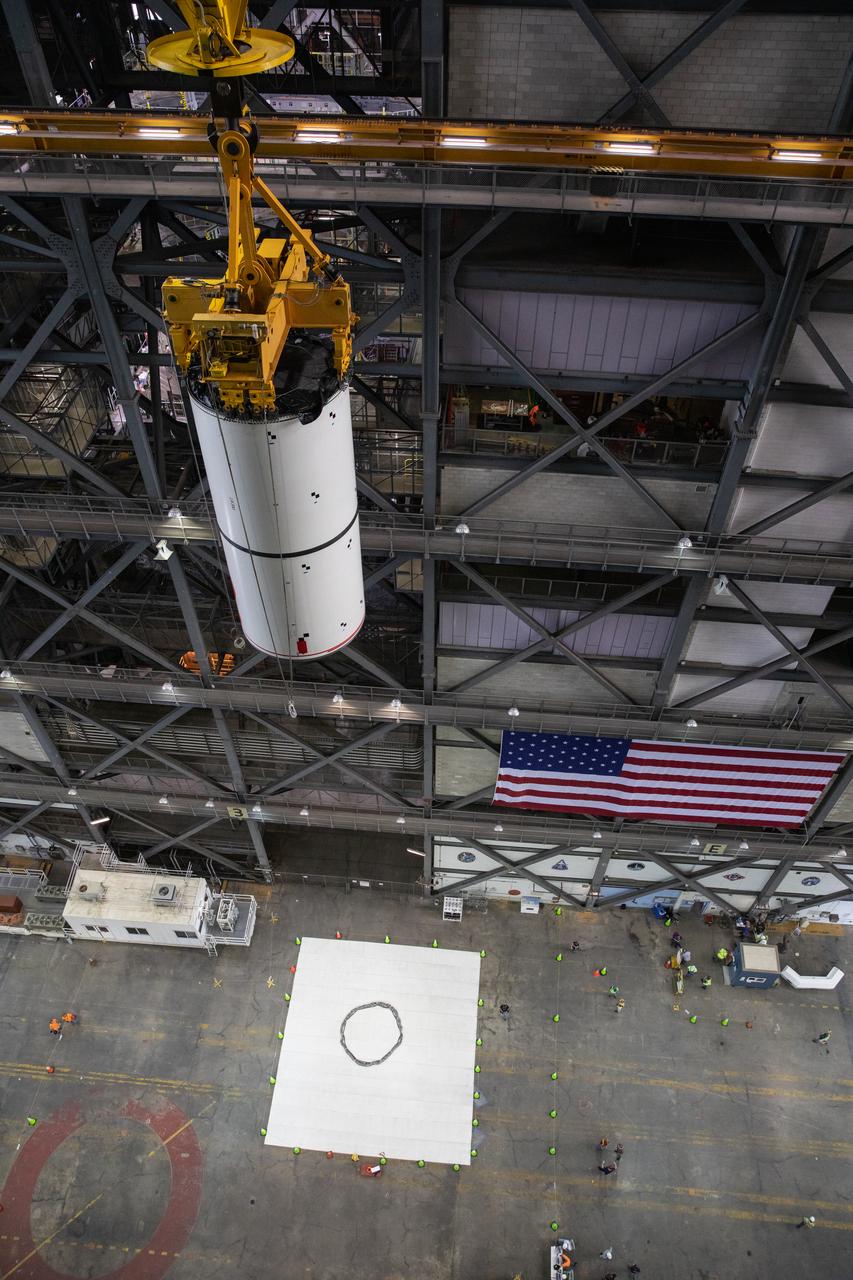
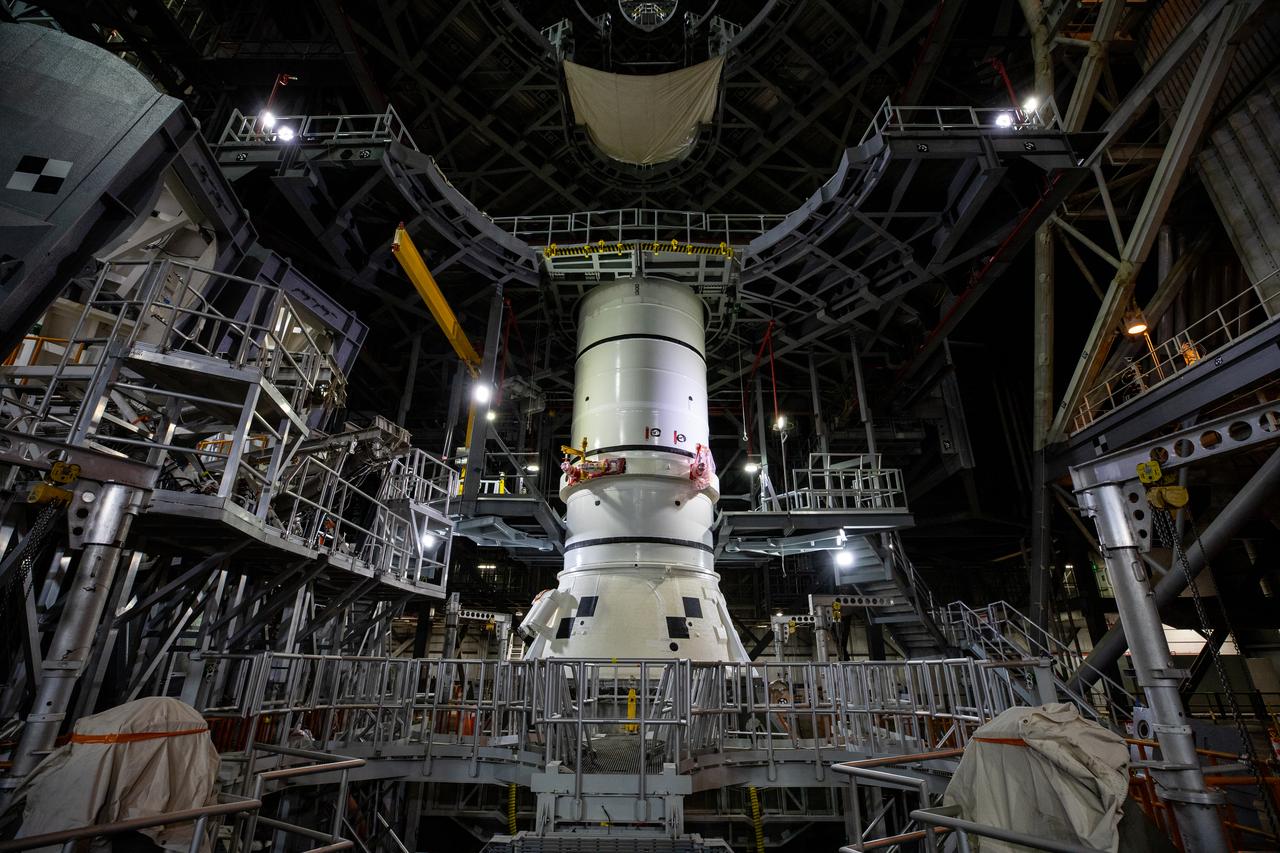
Technicians with NASA’s Exploration Ground Systems rehearse booster stacking operations inside the Vehicle Assembly Building (VAB) at the agency’s Kennedy Space Center in Florida on Sept. 14, 2020, in preparation for Artemis I. The exercise involved using booster segment mock-ups, referred to as pathfinders. During the rehearsal, an aft pathfinder segment was prepared in High Bay 4 of the VAB, after which a team of crane operators moved it over to High Bay 3, where it was placed on the mobile launcher. Careful measurements were then taken before the team added a center pathfinder to the stack. Stacking of the actual Space Launch System (SLS) booster segments will occur later this year, when the rocket’s core stage arrives at Kennedy. Artemis I is the first in a series of increasingly complex missions that will test SLS and the Orion spacecraft as an integrated system prior to crewed flights to the Moon.

Inside High Bay 3 of the Vehicle Assembly Building at NASA’s Kennedy Space Center in Florida, technicians with the agency’s Exploration Ground Systems integrate the left forward center booster segment for the NASA’s SLS (Space Launch System) rocket onto the left center center segment atop the mobile launcher on Thursday, Jan. 30, 2025. The NASA “worm” insignia can be seen on both the center center booster segments. The boosters will help support the remaining rocket components and the Orion spacecraft during final assembly of the Artemis II Moon rocket and provide more than 75 percent of the total SLS thrust during liftoff from NASA Kennedy’s Launch Pad 39B.
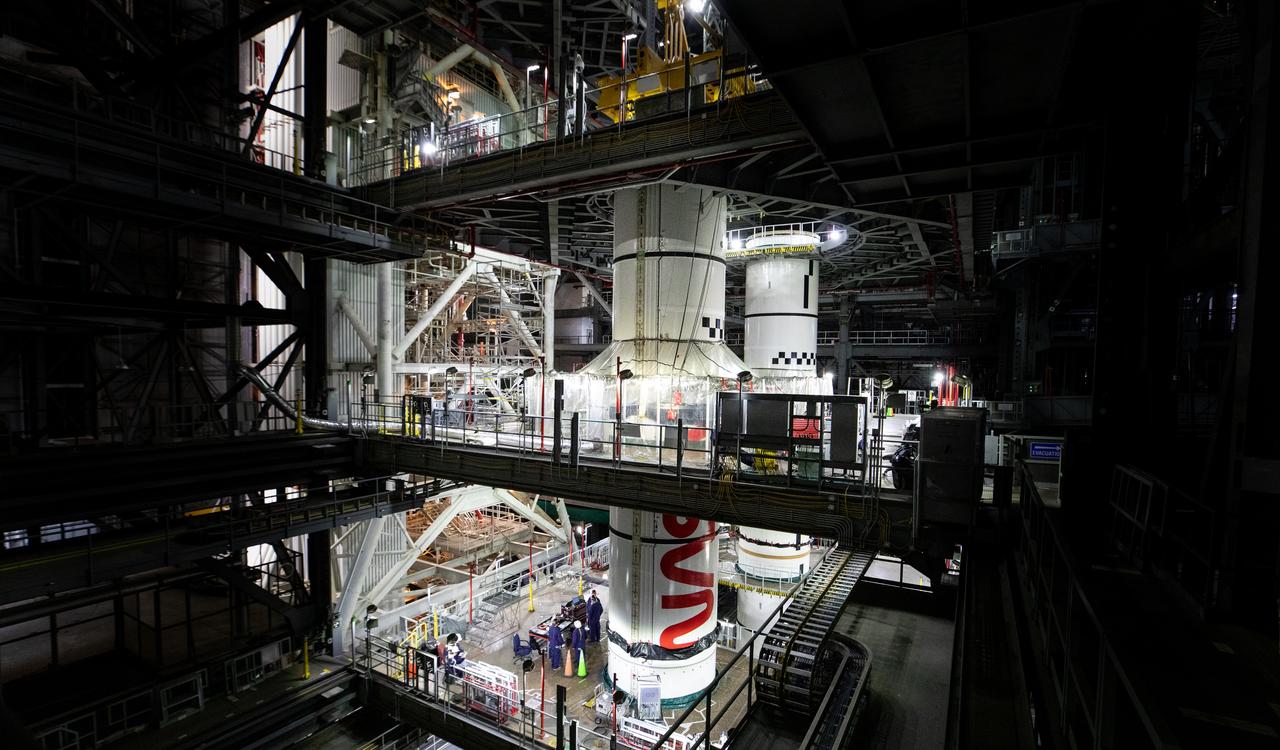
Inside High Bay 3 of the Vehicle Assembly Building at NASA’s Kennedy Space Center in Florida, technicians with the agency’s Exploration Ground Systems integrate the left forward center booster segment for the NASA’s SLS (Space Launch System) rocket onto the left center center segment atop the mobile launcher on Thursday, Jan. 30, 2025. The NASA “worm” insignia can be seen on both the center center booster segments. The boosters will help support the remaining rocket components and the Orion spacecraft during final assembly of the Artemis II Moon rocket and provide more than 75 percent of the total SLS thrust during liftoff from NASA Kennedy’s Launch Pad 39B.
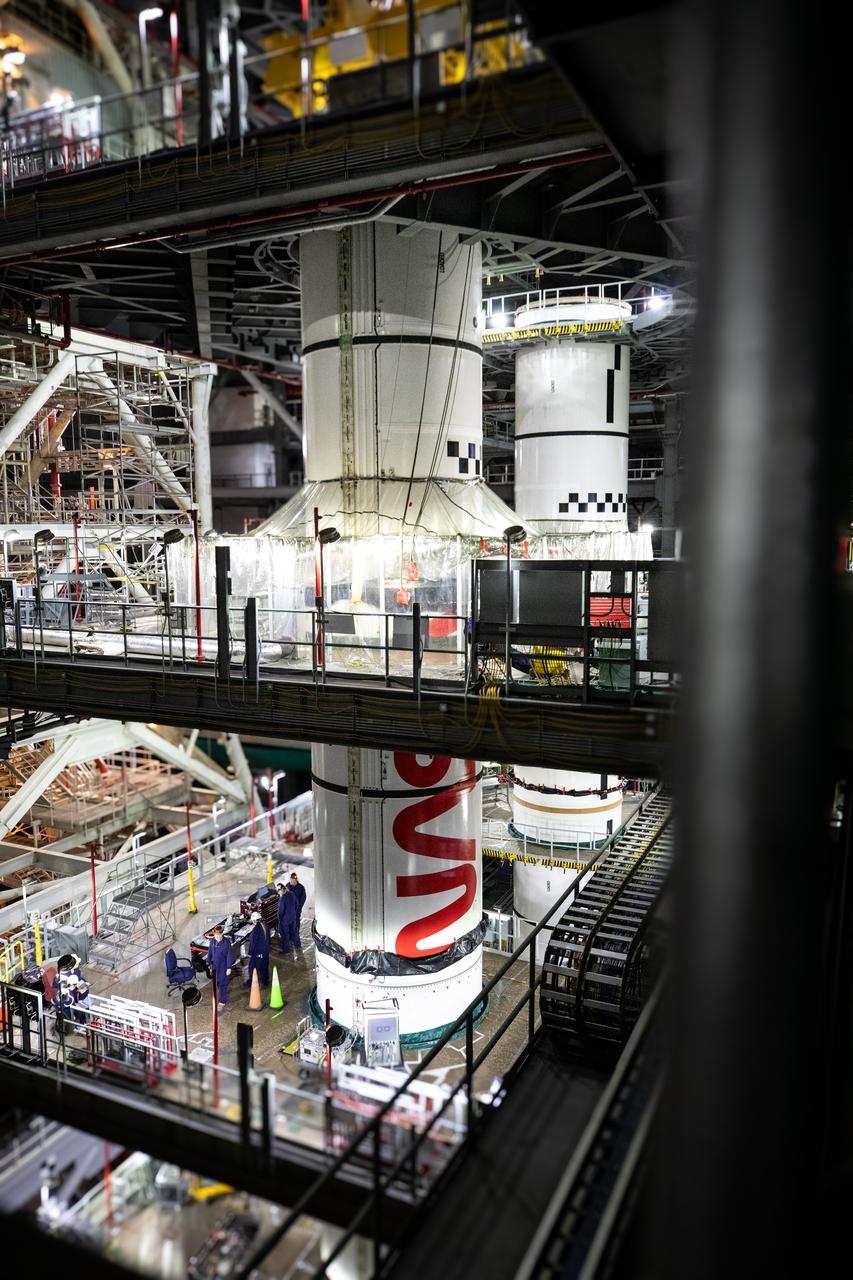
Inside High Bay 3 of the Vehicle Assembly Building at NASA’s Kennedy Space Center in Florida, technicians with the agency’s Exploration Ground Systems integrate the left forward center booster segment for the NASA’s SLS (Space Launch System) rocket onto the left center center segment atop the mobile launcher on Thursday, Jan. 30, 2025. The NASA “worm” insignia can be seen on both the center center booster segments. The boosters will help support the remaining rocket components and the Orion spacecraft during final assembly of the Artemis II Moon rocket and provide more than 75 percent of the total SLS thrust during liftoff from NASA Kennedy’s Launch Pad 39B.
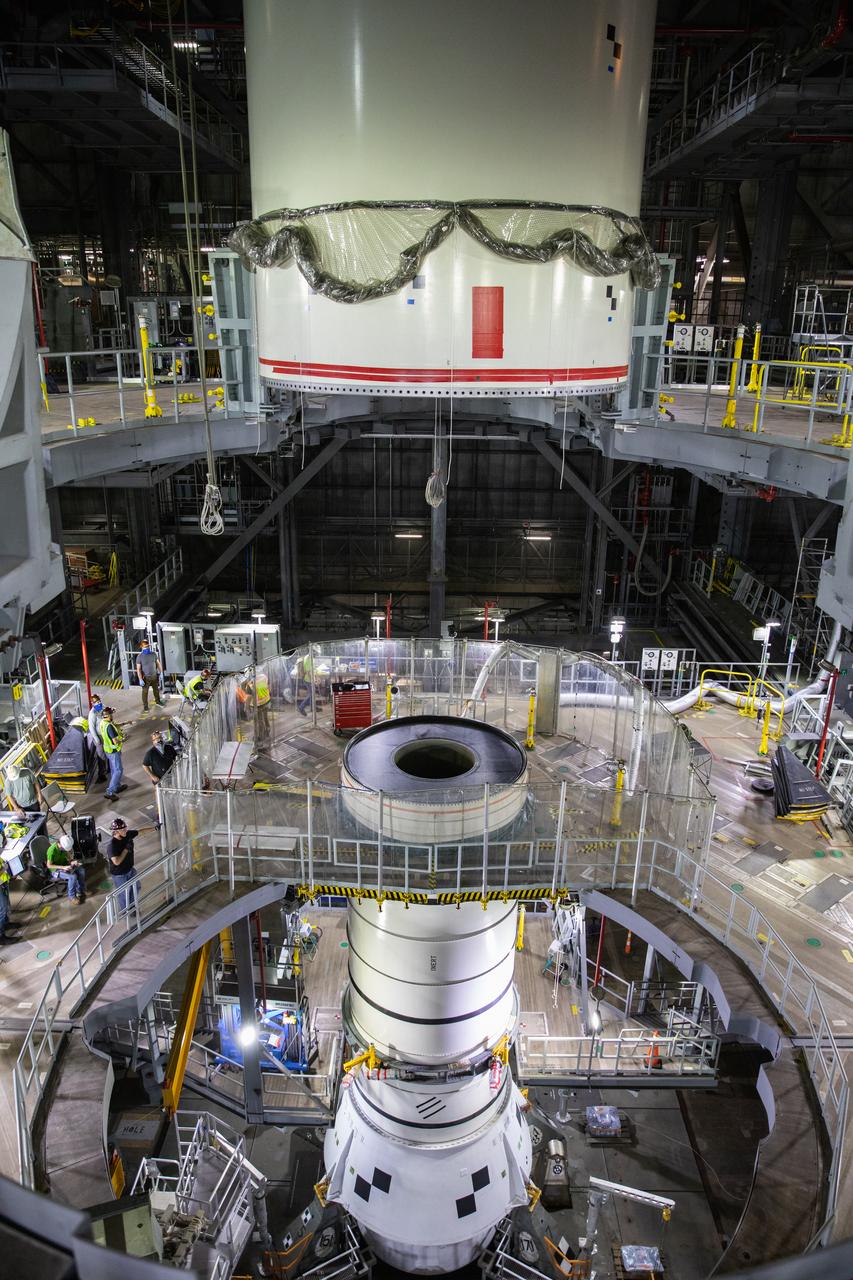
Technicians with NASA’s Exploration Ground Systems lower a mock-up, or pathfinder, of the Space Launch System’s (SLS) center booster segment onto an aft pathfinder segment inside the Vehicle Assembly Building (VAB) at the agency’s Kennedy Space Center in Florida on Sept. 14, 2020. Teams rehearsed stacking both pathfinder segments on top of the mobile launcher in High Bay 3 of the VAB in preparation for the Artemis I launch. Stacking of the actual SLS booster segments will occur later this year, when the rocket’s core stage arrives at Kennedy. Artemis I is the first in a series of increasingly complex missions that will test SLS and the Orion spacecraft as an integrated system prior to crewed flights to the Moon.

Technicians with NASA’s Exploration Ground Systems lower a mock-up, or pathfinder, of the Space Launch System’s (SLS) center booster segment onto an aft pathfinder segment inside the Vehicle Assembly Building (VAB) at the agency’s Kennedy Space Center in Florida on Sept. 14, 2020. Teams rehearsed stacking both pathfinder segments on top of the mobile launcher in High Bay 3 of the VAB in preparation for the Artemis I launch. Stacking of the actual SLS booster segments will occur later this year, when the rocket’s core stage arrives at Kennedy. Artemis I is the first in a series of increasingly complex missions that will test SLS and the Orion spacecraft as an integrated system prior to crewed flights to the Moon.
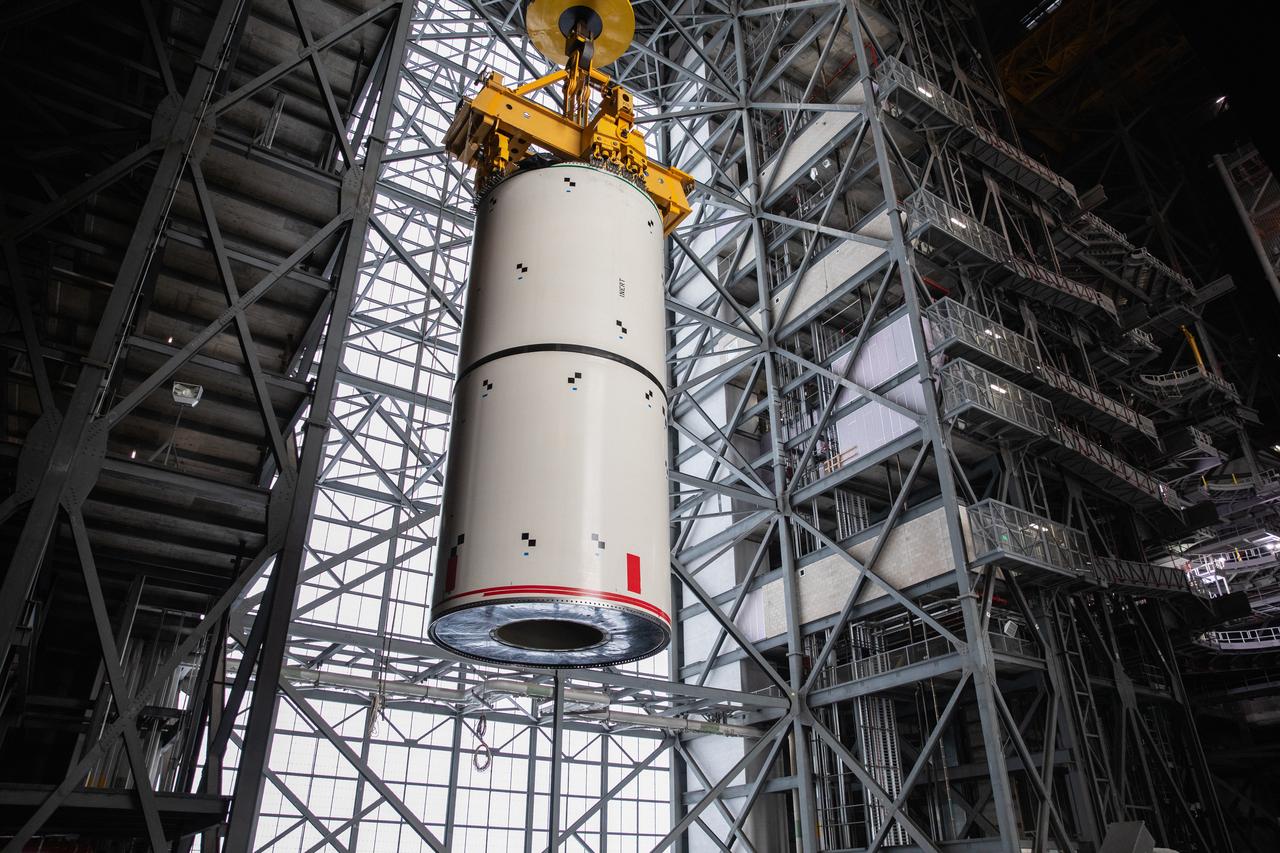
Technicians with NASA’s Exploration Ground Systems rehearse booster stacking operations inside the Vehicle Assembly Building (VAB) at the agency’s Kennedy Space Center in Florida on Sept. 14, 2020, in preparation for Artemis I. The exercise involved using booster segment mock-ups, referred to as pathfinders. During the rehearsal, an aft pathfinder segment was prepared in High Bay 4 of the VAB, after which a team of crane operators moved it over to High Bay 3, where it was placed on the mobile launcher. Careful measurements were then taken before the team added a center pathfinder to the stack. Stacking of the actual Space Launch System (SLS) booster segments will occur later this year, when the rocket’s core stage arrives at Kennedy. Artemis I is the first in a series of increasingly complex missions that will test SLS and the Orion spacecraft as an integrated system prior to crewed flights to the Moon.
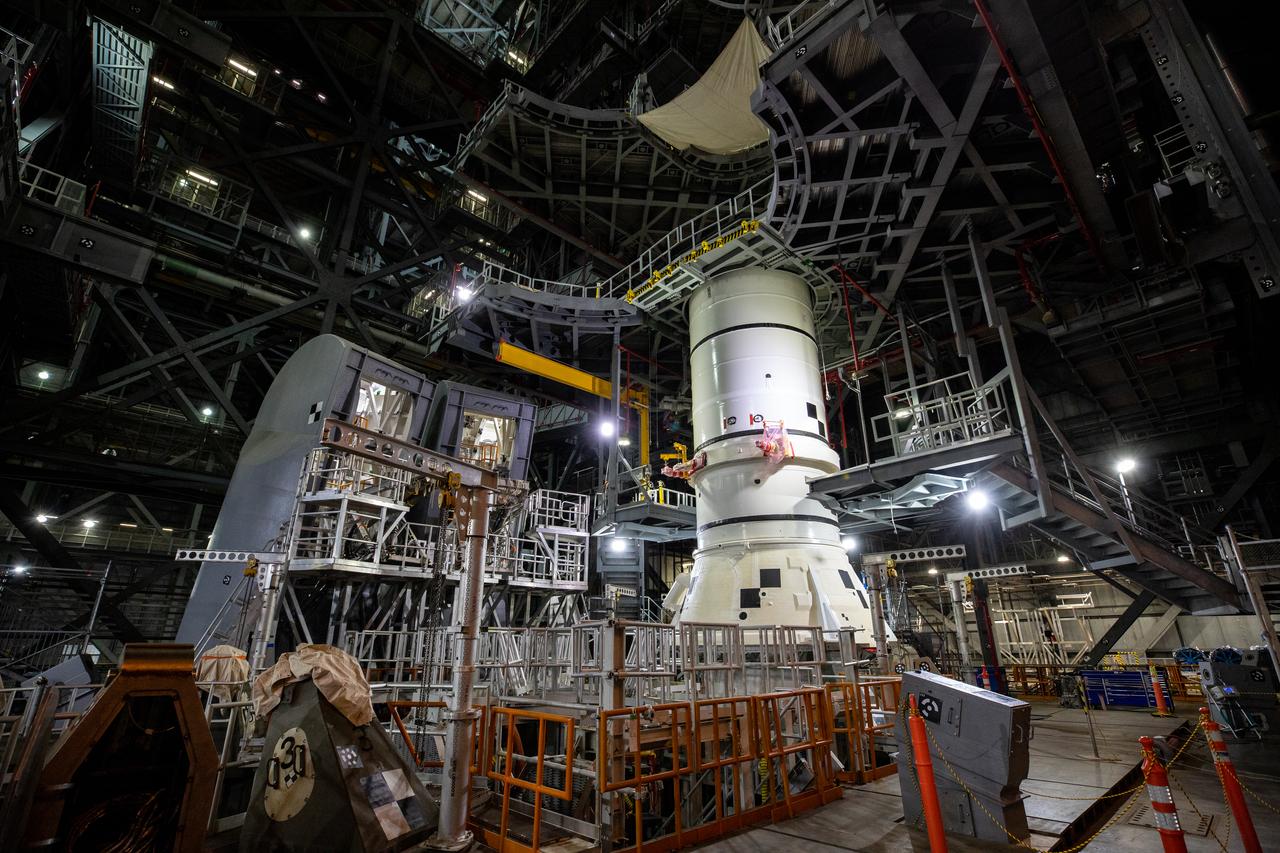
The first of two Artemis I aft booster segments for the Space Launch System is lowered onto the mobile launcher in High Bay 3 of the Vehicle Assembly Building (VAB) at NASA’s Kennedy Space Center in Florida on Nov. 23, 2020. Workers with Exploration Ground Systems and contractor Jacobs teams will stack the twin five-segment boosters on the mobile launcher in High Bay 3 over a number of weeks. When the core stage arrives, it will join the boosters on the mobile launcher, followed by the interim cryogenic propulsion stage and Orion spacecraft. Manufactured by Northrop Grumman in Utah, the twin boosters provide more than 75 percent of the total SLS thrust at launch. The SLS is managed by Marshall Space Flight Center in Huntsville, Alabama. Under the Artemis program, NASA will land the first woman and the next man on the Moon by 2024. The first in a series of increasingly complex missions, Artemis I will test the Orion spacecraft and SLS as an integrated system ahead of crewed flights to the Moon.
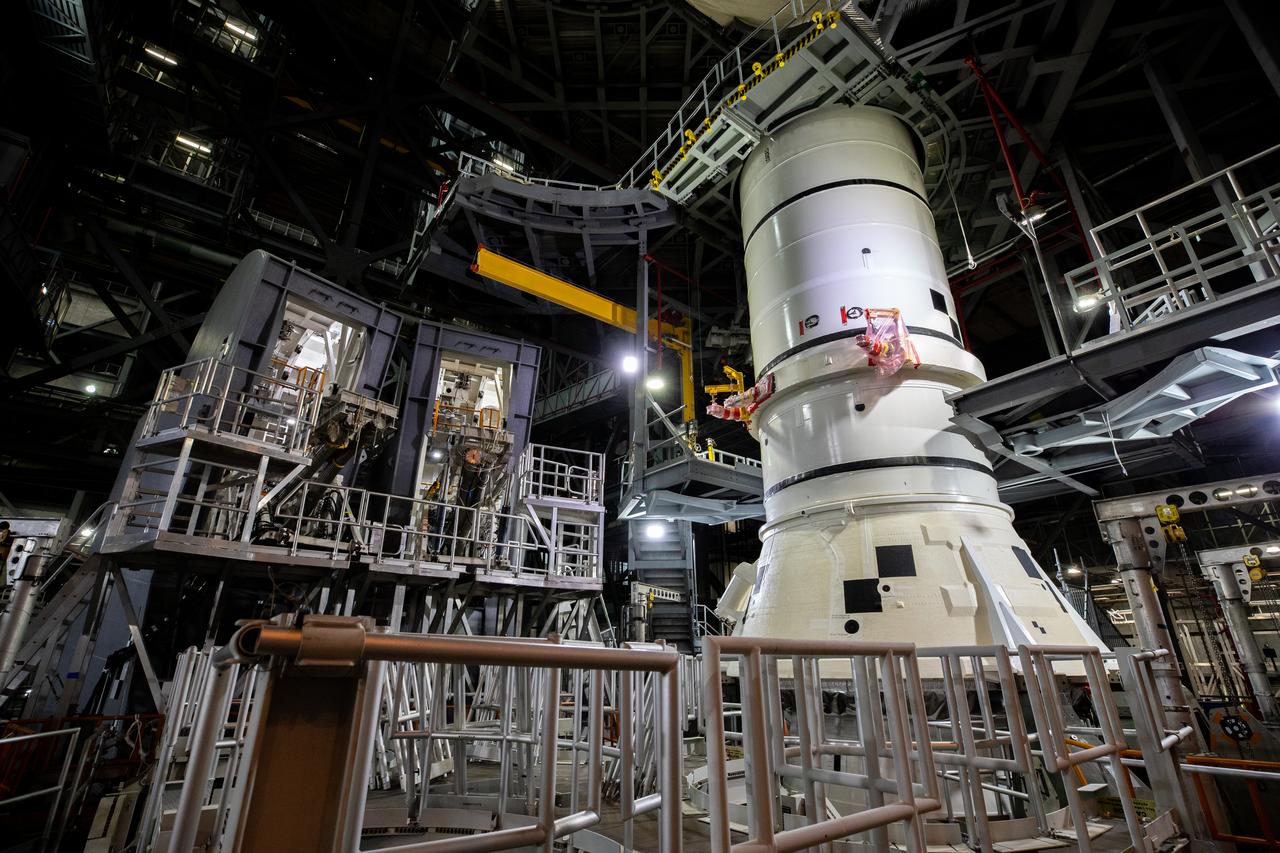
The first of two Artemis I aft booster segments for the Space Launch System is lowered onto the mobile launcher in High Bay 3 of the Vehicle Assembly Building (VAB) at NASA’s Kennedy Space Center in Florida on Nov. 23, 2020. Workers with Exploration Ground Systems and contractor Jacobs teams will stack the twin five-segment boosters on the mobile launcher in High Bay 3 over a number of weeks. When the core stage arrives, it will join the boosters on the mobile launcher, followed by the interim cryogenic propulsion stage and Orion spacecraft. Manufactured by Northrop Grumman in Utah, the twin boosters provide more than 75 percent of the total SLS thrust at launch. The SLS is managed by Marshall Space Flight Center in Huntsville, Alabama. Under the Artemis program, NASA will land the first woman and the next man on the Moon by 2024. The first in a series of increasingly complex missions, Artemis I will test the Orion spacecraft and SLS as an integrated system ahead of crewed flights to the Moon.
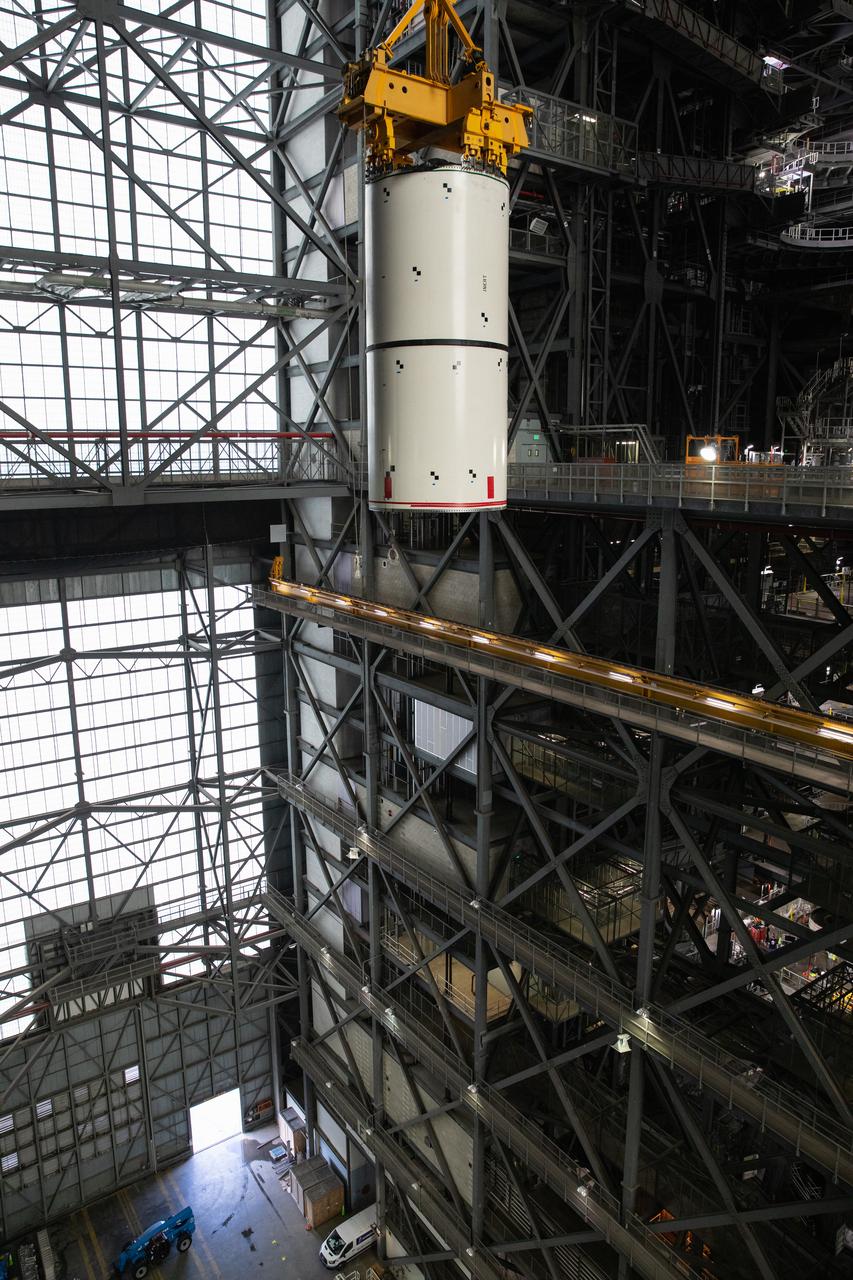
Technicians with NASA’s Exploration Ground Systems rehearse booster stacking operations inside the Vehicle Assembly Building (VAB) at the agency’s Kennedy Space Center in Florida on Sept. 14, 2020, in preparation for Artemis I. The exercise involved using booster segment mock-ups, referred to as pathfinders. During the rehearsal, an aft pathfinder segment was prepared in High Bay 4 of the VAB, after which a team of crane operators moved it over to High Bay 3, where it was placed on the mobile launcher. Careful measurements were then taken before the team added a center pathfinder to the stack. Stacking of the actual Space Launch System (SLS) booster segments will occur later this year, when the rocket’s core stage arrives at Kennedy. Artemis I is the first in a series of increasingly complex missions that will test SLS and the Orion spacecraft as an integrated system prior to crewed flights to the Moon.
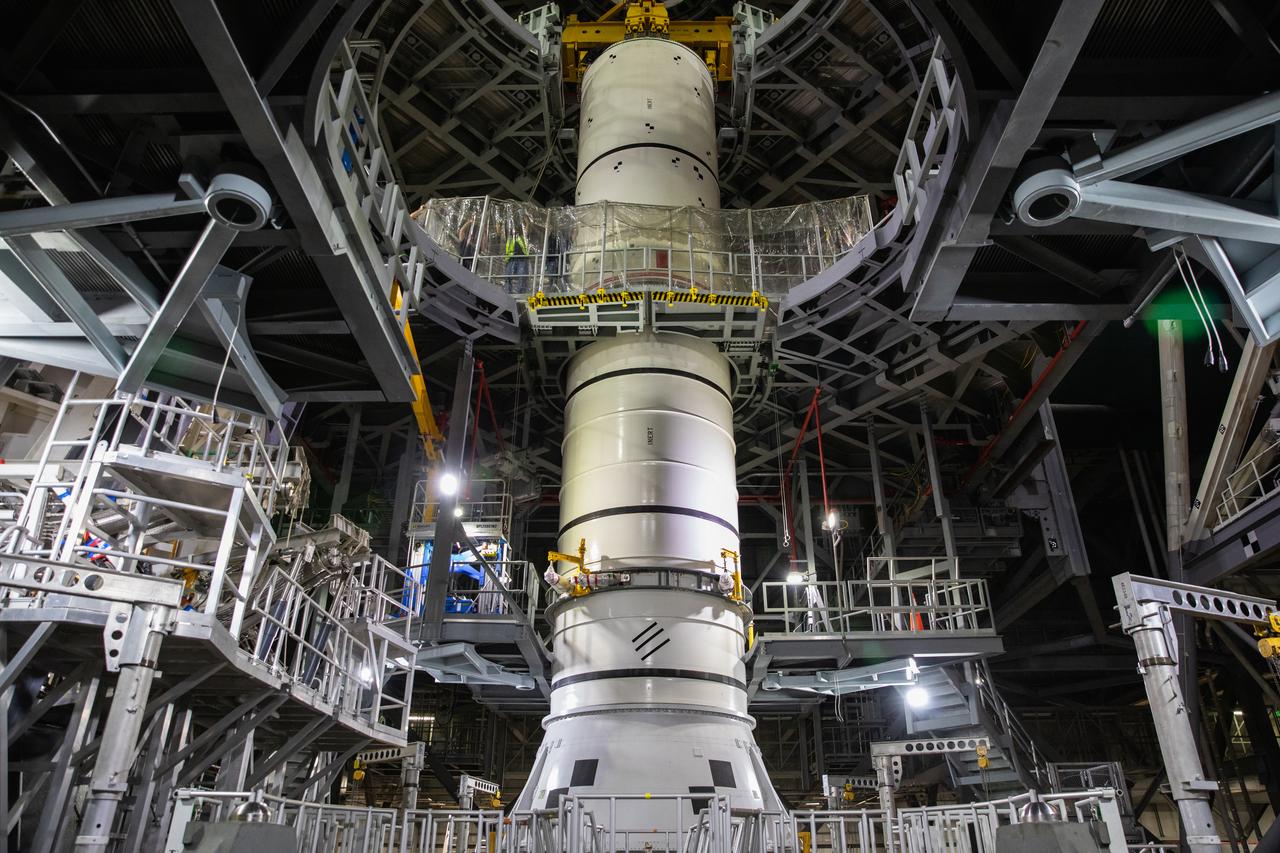
Technicians with NASA’s Exploration Ground Systems lower a mock-up, or pathfinder, of the Space Launch System’s (SLS) center booster segment onto an aft pathfinder segment inside the Vehicle Assembly Building (VAB) at the agency’s Kennedy Space Center in Florida on Sept. 14, 2020. Teams rehearsed stacking both pathfinder segments on top of the mobile launcher in High Bay 3 of the VAB in preparation for the Artemis I launch. Stacking of the actual SLS booster segments will occur later this year, when the rocket’s core stage arrives at Kennedy. Artemis I is the first in a series of increasingly complex missions that will test SLS and the Orion spacecraft as an integrated system prior to crewed flights to the Moon.
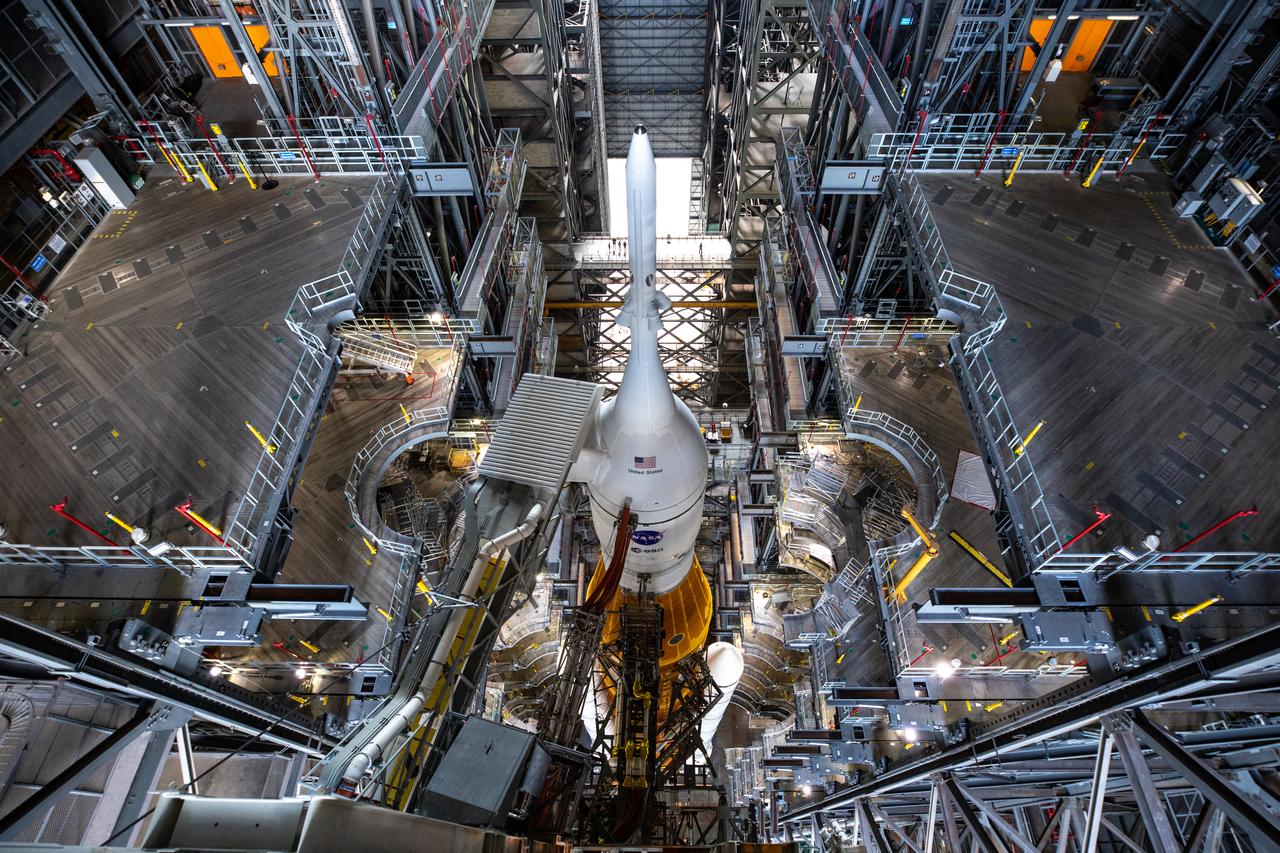
NASA’s Space Launch System and Orion spacecraft atop the mobile launcher are in view in High Bay 3 of the Vehicle Assembly Building (VAB) at the agency’s Kennedy Space Center in Florida on Tuesday, Aug. 16, 2022. All of the work platforms have been retracted in preparation for rollout to Launch Complex 39B ahead of launch of Artemis I. The crawler-transporter, driven by engineers, is under the Artemis I stack atop the mobile launcher and will carry it 4.2 miles via the crawlerway that connects the VAB to the launch pad. The agency’s Artemis I flight test is scheduled to liftoff on Monday, Aug. 29. The first in a series of increasingly complex missions, Artemis I will provide a foundation for human deep space exploration and demonstrate our commitment and capability to extend human presence to the Moon and beyond. The primary goal of Artemis I is to thoroughly test the integrated systems before crewed missions by launching Orion atop the SLS rocket, operating the spacecraft in a deep space environment, testing Orion’s heat shield, and recovering the crew module after reentry, descent, and splashdown.
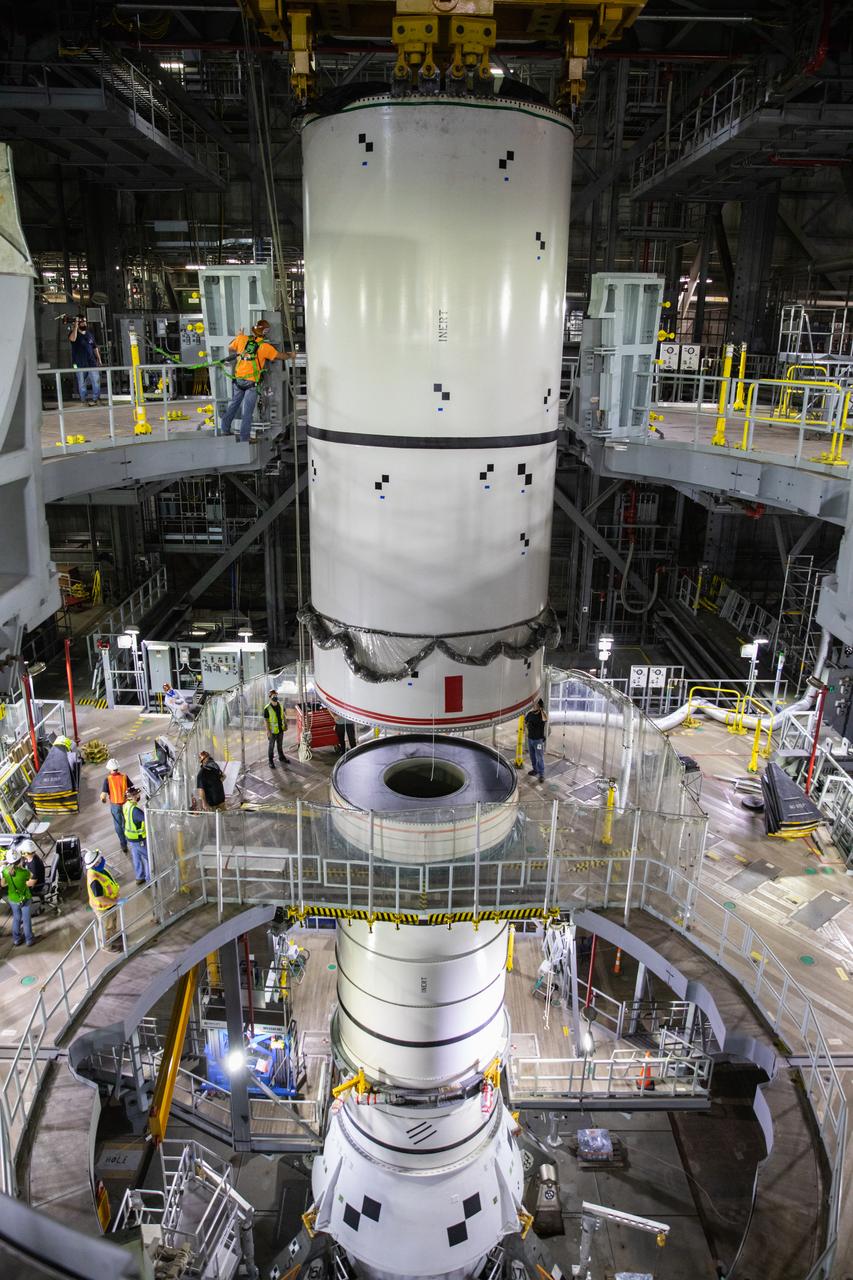
Technicians with NASA’s Exploration Ground Systems lower a mock-up, or pathfinder, of the Space Launch System’s (SLS) center booster segment onto an aft pathfinder segment inside the Vehicle Assembly Building (VAB) at the agency’s Kennedy Space Center in Florida on Sept. 14, 2020. Teams rehearsed stacking both pathfinder segments on top of the mobile launcher in High Bay 3 of the VAB in preparation for the Artemis I launch. Stacking of the actual SLS booster segments will occur later this year, when the rocket’s core stage arrives at Kennedy. Artemis I is the first in a series of increasingly complex missions that will test SLS and the Orion spacecraft as an integrated system prior to crewed flights to the Moon.
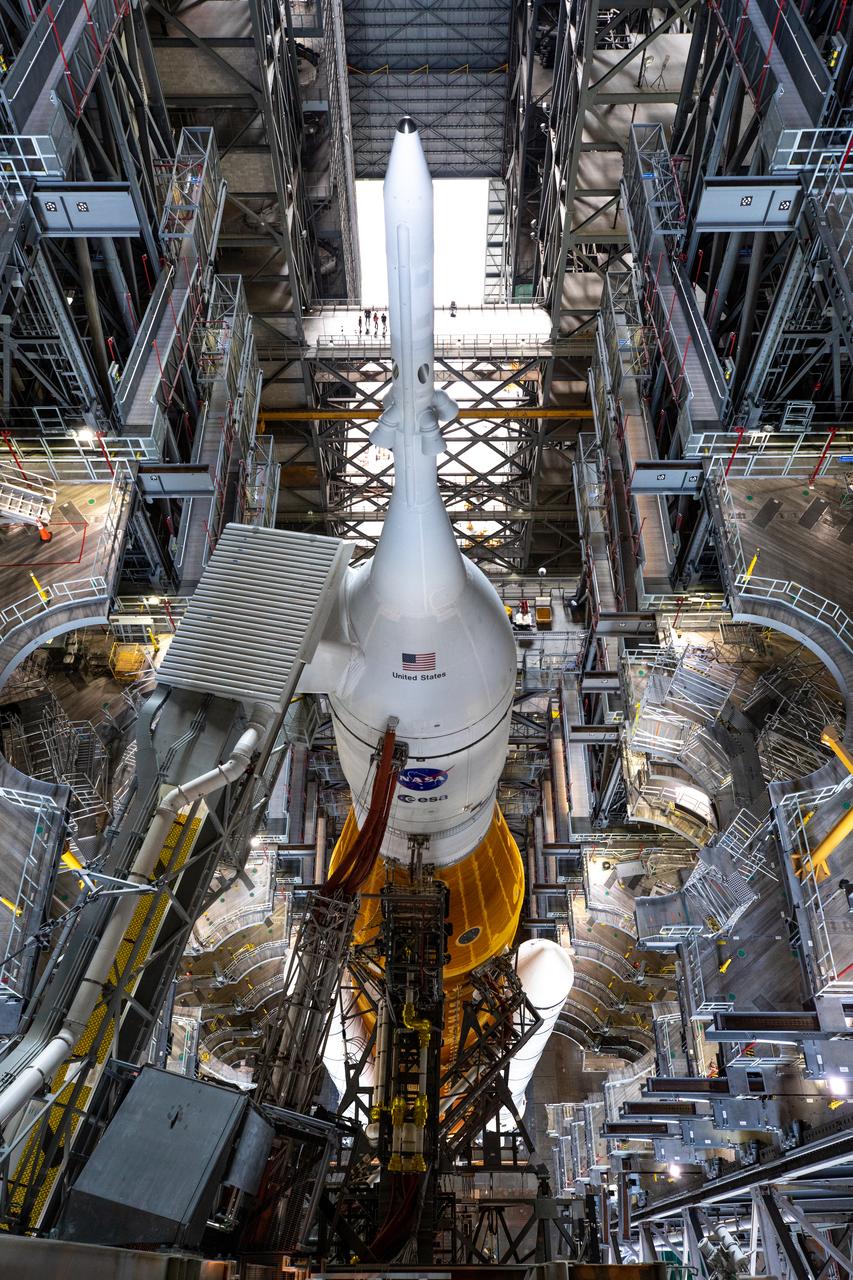
NASA’s Space Launch System and Orion spacecraft atop the mobile launcher are in view in High Bay 3 of the Vehicle Assembly Building (VAB) at the agency’s Kennedy Space Center in Florida on Tuesday, Aug. 16, 2022. All of the work platforms have been retracted in preparation for rollout to Launch Complex 39B ahead of launch of Artemis I. The crawler-transporter, driven by engineers, is under the Artemis I stack atop the mobile launcher and will carry it 4.2 miles via the crawlerway that connects the VAB to the launch pad. The agency’s Artemis I flight test is scheduled to liftoff on Monday, Aug. 29. The first in a series of increasingly complex missions, Artemis I will provide a foundation for human deep space exploration and demonstrate our commitment and capability to extend human presence to the Moon and beyond. The primary goal of Artemis I is to thoroughly test the integrated systems before crewed missions by launching Orion atop the SLS rocket, operating the spacecraft in a deep space environment, testing Orion’s heat shield, and recovering the crew module after reentry, descent, and splashdown.
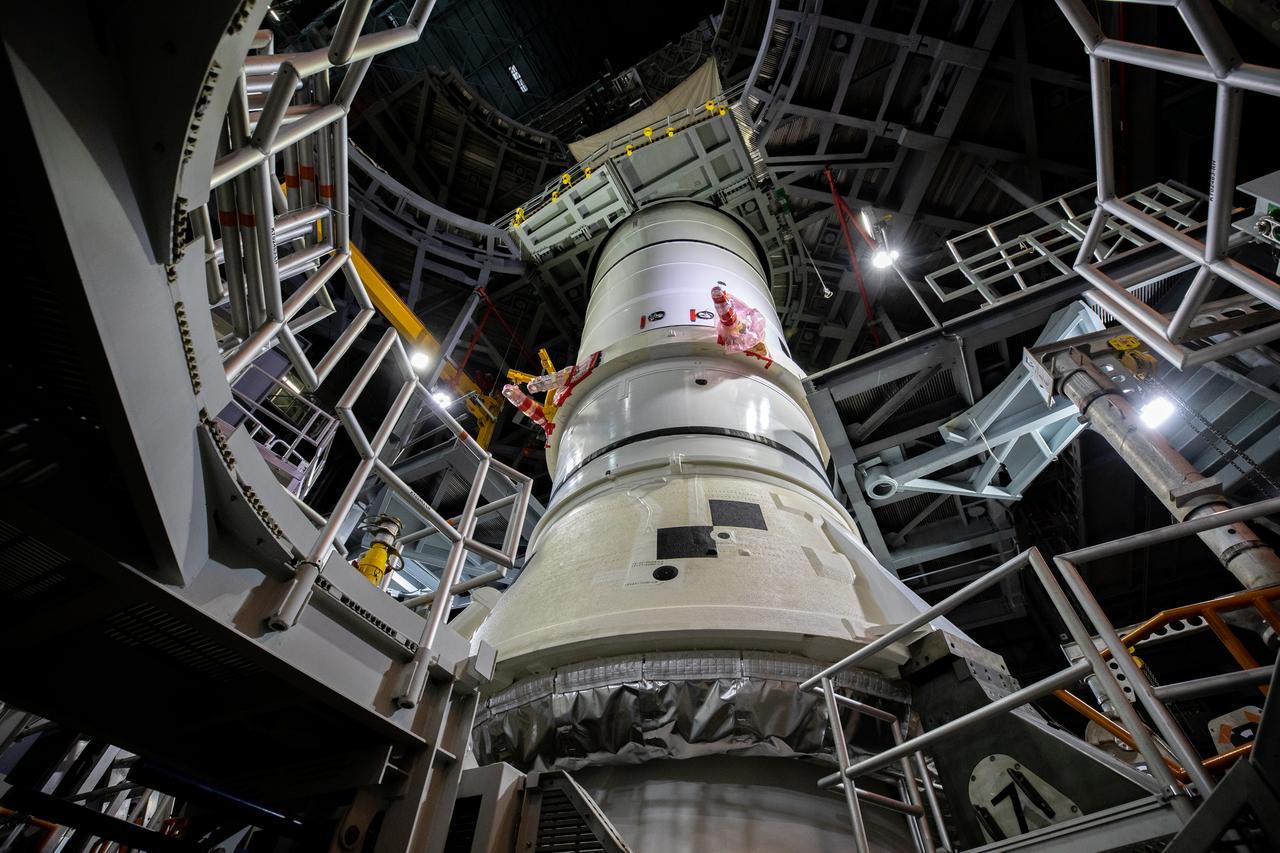
The first of two Artemis I aft booster segments for the Space Launch System is lowered onto the mobile launcher in High Bay 3 of the Vehicle Assembly Building (VAB) at NASA’s Kennedy Space Center in Florida on Nov. 23, 2020. Workers with Exploration Ground Systems and contractor Jacobs teams will stack the twin five-segment boosters on the mobile launcher in High Bay 3 over a number of weeks. When the core stage arrives, it will join the boosters on the mobile launcher, followed by the interim cryogenic propulsion stage and Orion spacecraft. Manufactured by Northrop Grumman in Utah, the twin boosters provide more than 75 percent of the total SLS thrust at launch. The SLS is managed by Marshall Space Flight Center in Huntsville, Alabama. Under the Artemis program, NASA will land the first woman and the next man on the Moon by 2024. The first in a series of increasingly complex missions, Artemis I will test the Orion spacecraft and SLS as an integrated system ahead of crewed flights to the Moon.
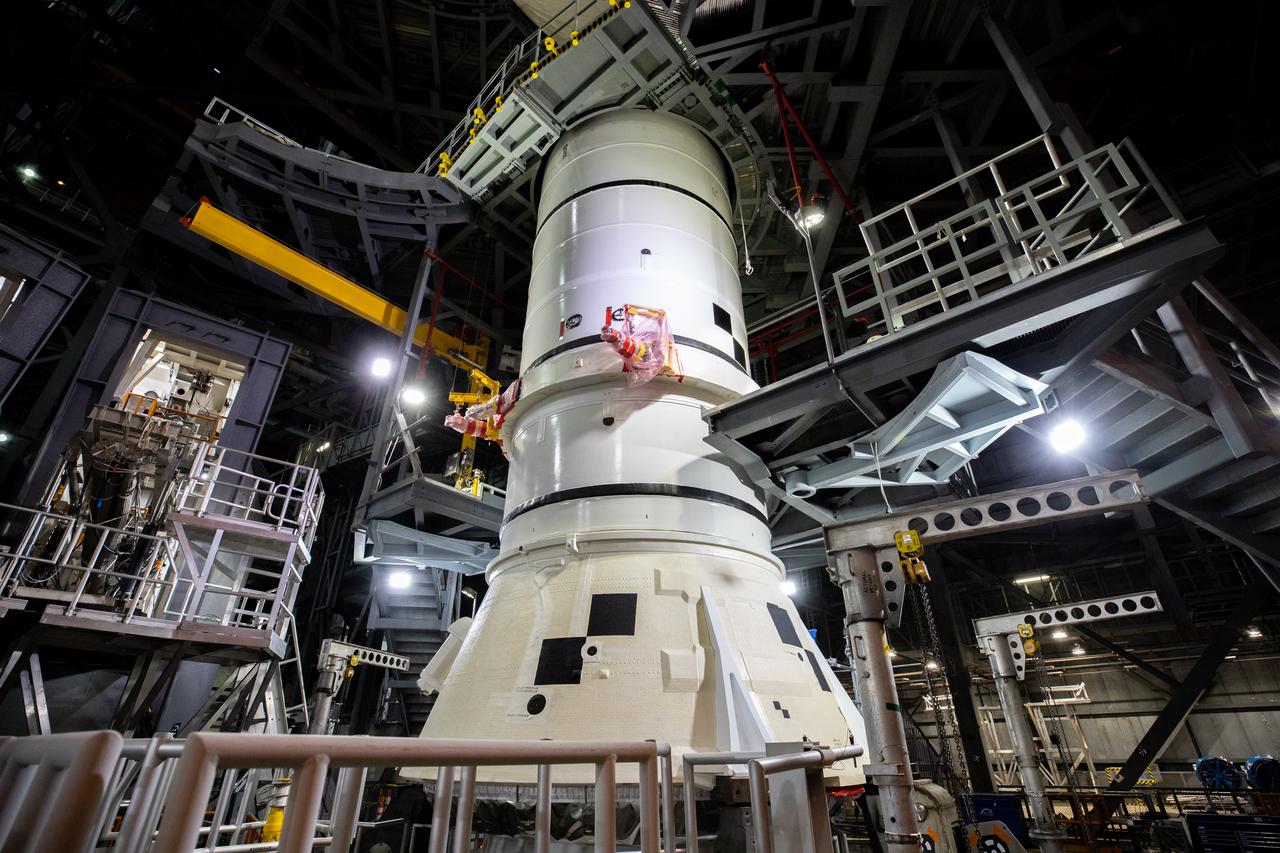
The first of two Artemis I aft booster segments for the Space Launch System is secured onto the mobile launcher in High Bay 3 of the Vehicle Assembly Building (VAB) at NASA’s Kennedy Space Center in Florida on Nov. 23, 2020. Workers with Exploration Ground Systems and contractor Jacobs teams will stack the twin five-segment boosters on the mobile launcher in High Bay 3 over a number of weeks. When the core stage arrives, it will join the boosters on the mobile launcher, followed by the interim cryogenic propulsion stage and Orion spacecraft. Manufactured by Northrop Grumman in Utah, the twin boosters provide more than 75 percent of the total SLS thrust at launch. The SLS is managed by Marshall Space Flight Center in Huntsville, Alabama. Under the Artemis program, NASA will land the first woman and the next man on the Moon by 2024. The first in a series of increasingly complex missions, Artemis I will test the Orion spacecraft and SLS as an integrated system ahead of crewed flights to the Moon.
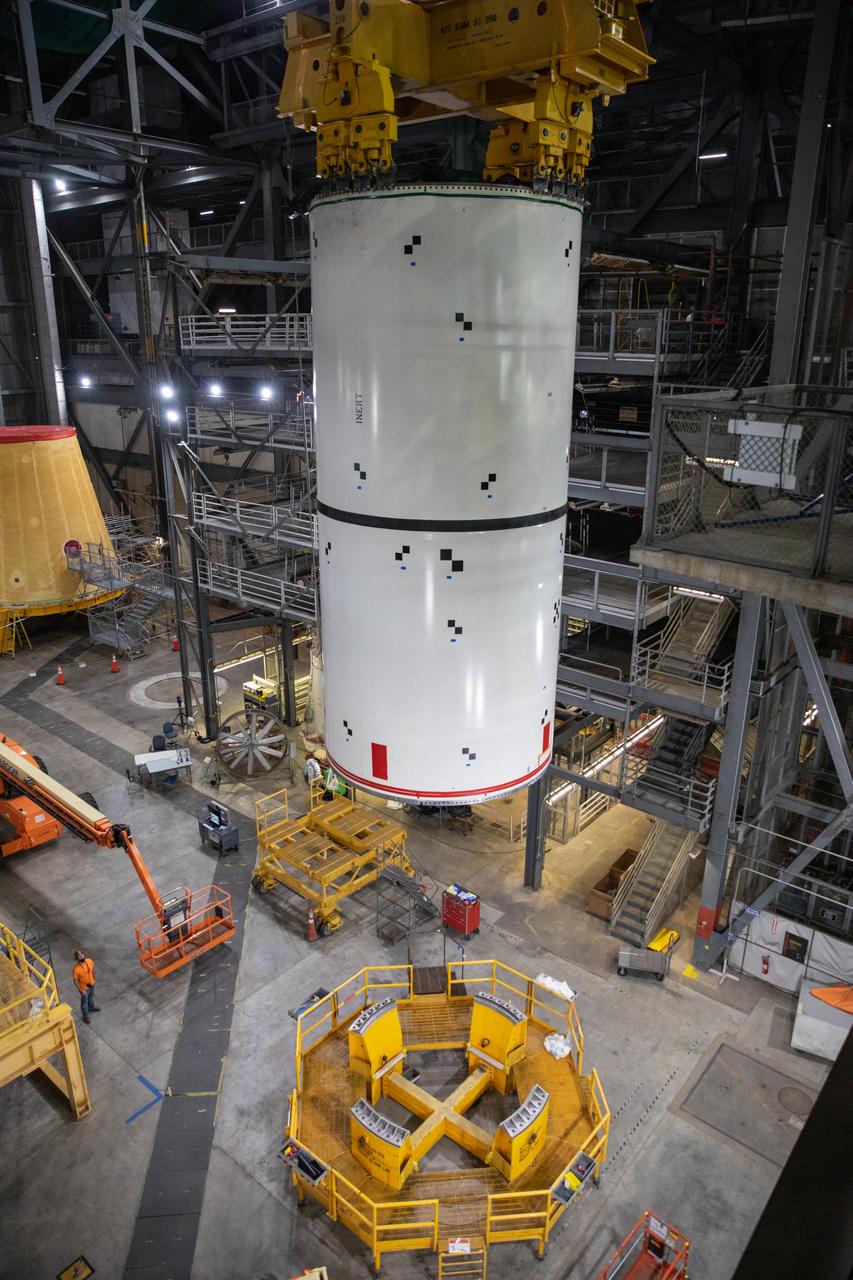
Technicians with NASA’s Exploration Ground Systems rehearse booster stacking operations inside the Vehicle Assembly Building (VAB) at the agency’s Kennedy Space Center in Florida on Sept. 14, 2020, in preparation for Artemis I. The exercise involved using booster segment mock-ups, referred to as pathfinders. During the rehearsal, an aft pathfinder segment was prepared in High Bay 4 of the VAB, after which a team of crane operators moved it over to High Bay 3, where it was placed on the mobile launcher. Careful measurements were then taken before the team added a center pathfinder to the stack. Stacking of the actual Space Launch System (SLS) booster segments will occur later this year, when the rocket’s core stage arrives at Kennedy. Artemis I is the first in a series of increasingly complex missions that will test SLS and the Orion spacecraft as an integrated system prior to crewed flights to the Moon.
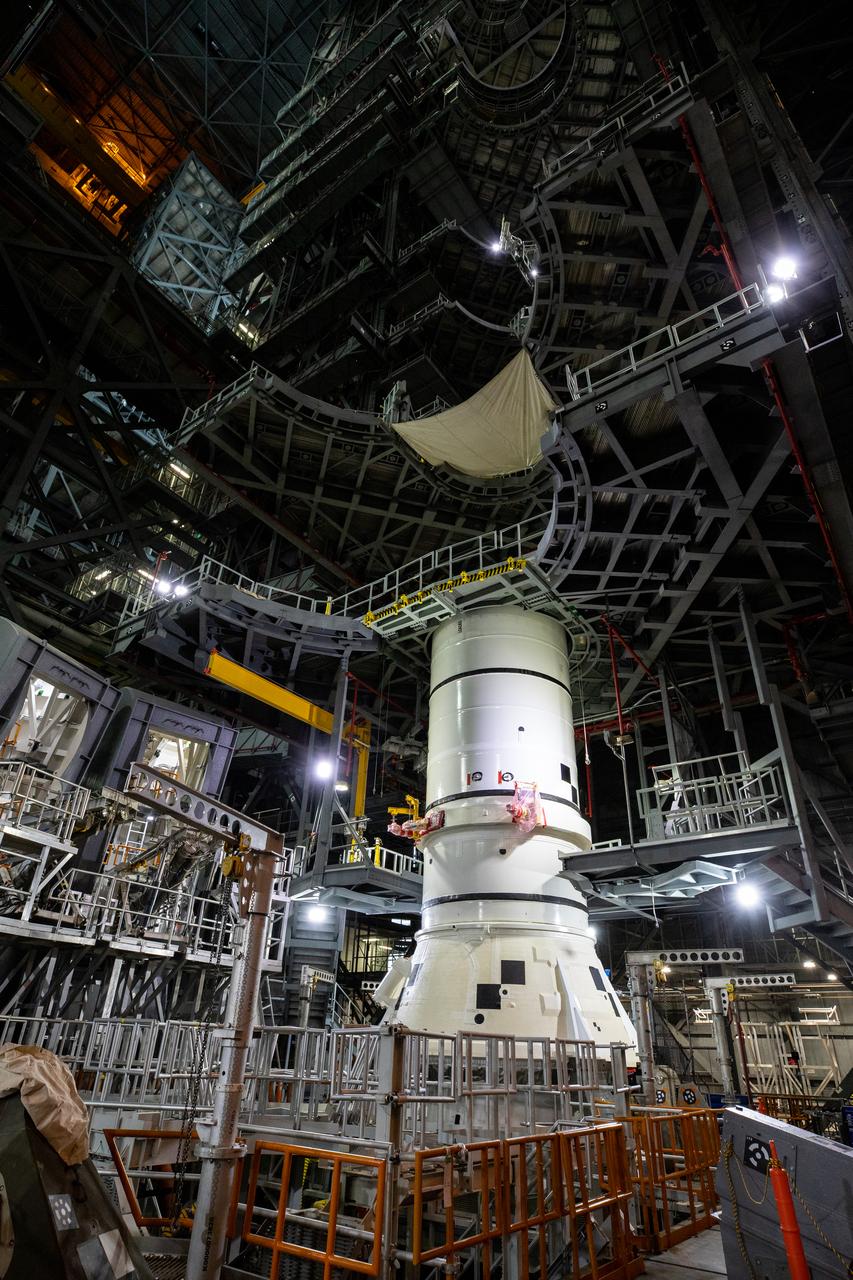
The first of two Artemis I aft booster segments for the Space Launch System is secured onto the mobile launcher in High Bay 3 of the Vehicle Assembly Building (VAB) at NASA’s Kennedy Space Center in Florida on Nov. 23, 2020. Workers with Exploration Ground Systems and contractor Jacobs teams will stack the twin five-segment boosters on the mobile launcher in High Bay 3 over a number of weeks. When the core stage arrives, it will join the boosters on the mobile launcher, followed by the interim cryogenic propulsion stage and Orion spacecraft. Manufactured by Northrop Grumman in Utah, the twin boosters provide more than 75 percent of the total SLS thrust at launch. The SLS is managed by Marshall Space Flight Center in Huntsville, Alabama. Under the Artemis program, NASA will land the first woman and the next man on the Moon by 2024. The first in a series of increasingly complex missions, Artemis I will test the Orion spacecraft and SLS as an integrated system ahead of crewed flights to the Moon.
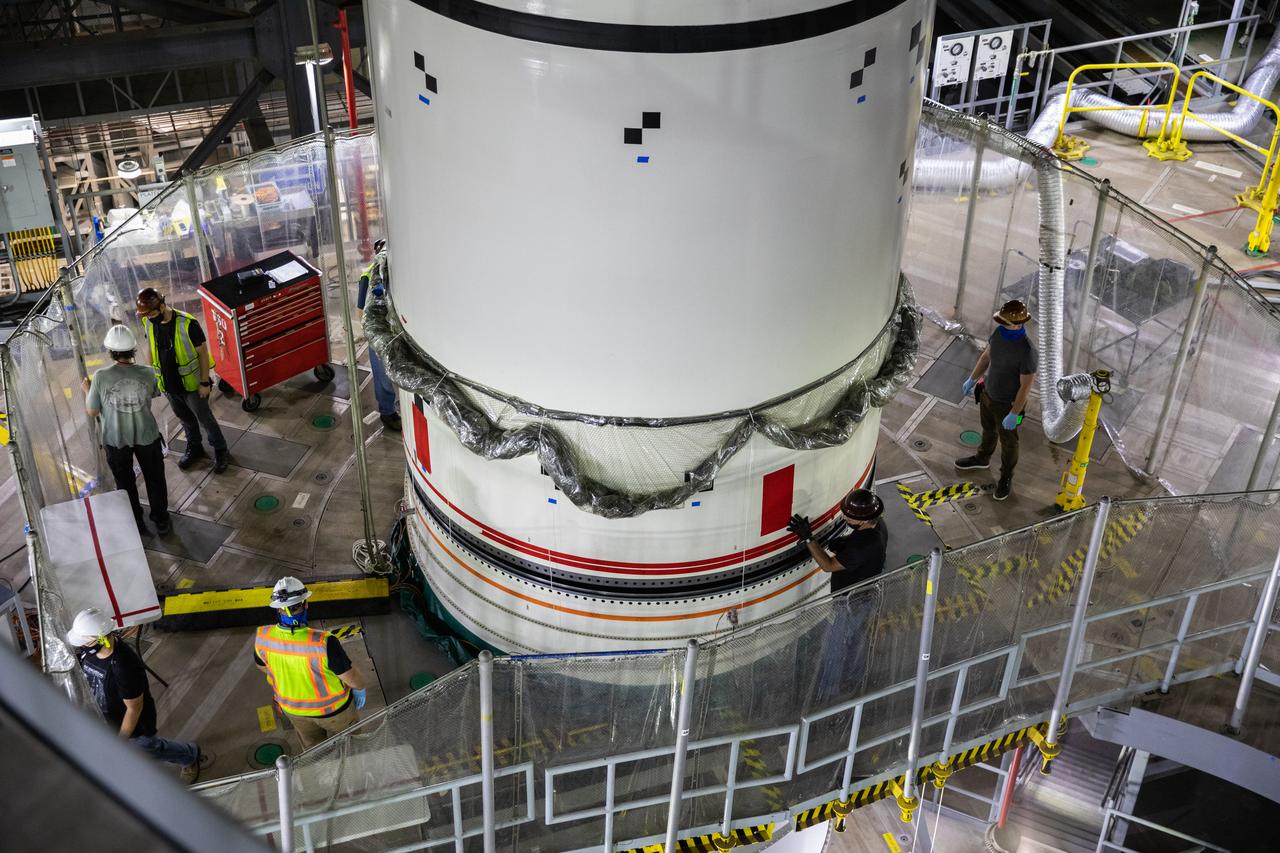
Technicians with NASA’s Exploration Ground Systems lower a mock-up, or pathfinder, of the Space Launch System’s (SLS) center booster segment onto an aft pathfinder segment inside the Vehicle Assembly Building (VAB) at the agency’s Kennedy Space Center in Florida on Sept. 14, 2020. Teams rehearsed stacking both pathfinder segments on top of the mobile launcher in High Bay 3 of the VAB in preparation for the Artemis I launch. Stacking of the actual SLS booster segments will occur later this year, when the rocket’s core stage arrives at Kennedy. Artemis I is the first in a series of increasingly complex missions that will test SLS and the Orion spacecraft as an integrated system prior to crewed flights to the Moon.

Inside High Bay 3 of the Vehicle Assembly Building at NASA’s Kennedy Space Center in Florida, technicians with the agency’s Exploration Ground Systems integrate the left forward center booster segment for the NASA’s SLS (Space Launch System) rocket onto the left center center segment atop the mobile launcher on Thursday, Jan. 30, 2025. The NASA “worm” insignia can be seen on both the center center booster segments. The boosters will help support the remaining rocket components and the Orion spacecraft during final assembly of the Artemis II Moon rocket and provide more than 75 percent of the total SLS thrust during liftoff from NASA Kennedy’s Launch Pad 39B.
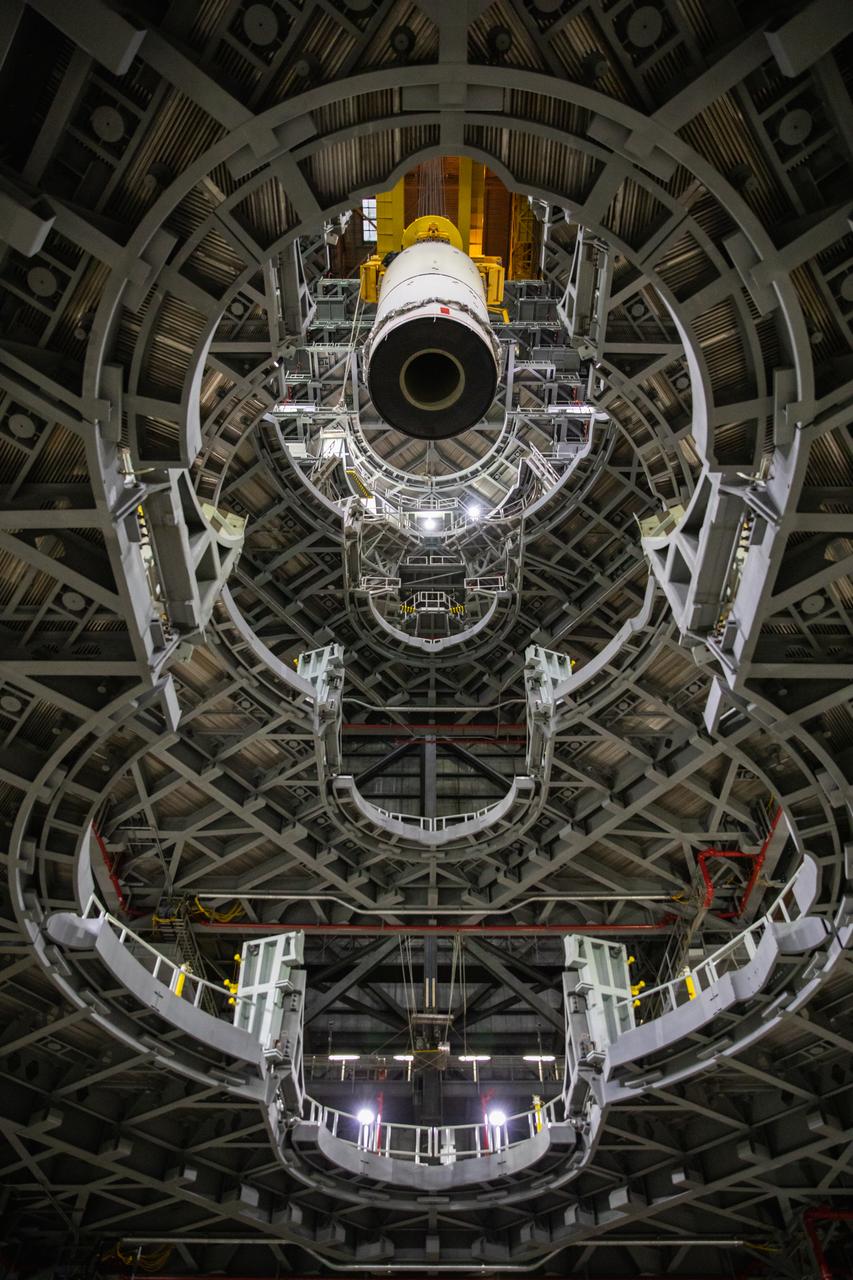
Technicians with NASA’s Exploration Ground Systems prepare to lower a mock-up, or pathfinder, of the Space Launch System’s (SLS) center booster segment onto an aft pathfinder segment inside the Vehicle Assembly Building (VAB) at the agency’s Kennedy Space Center in Florida on Sept. 14, 2020. Teams rehearsed stacking both pathfinder segments on top of the mobile launcher in High Bay 3 of the VAB in preparation for the Artemis I launch. Stacking of the actual SLS booster segments will occur later this year, when the rocket’s core stage arrives at Kennedy. Artemis I is the first in a series of increasingly complex missions that will test SLS and the Orion spacecraft as an integrated system prior to crewed flights to the Moon.
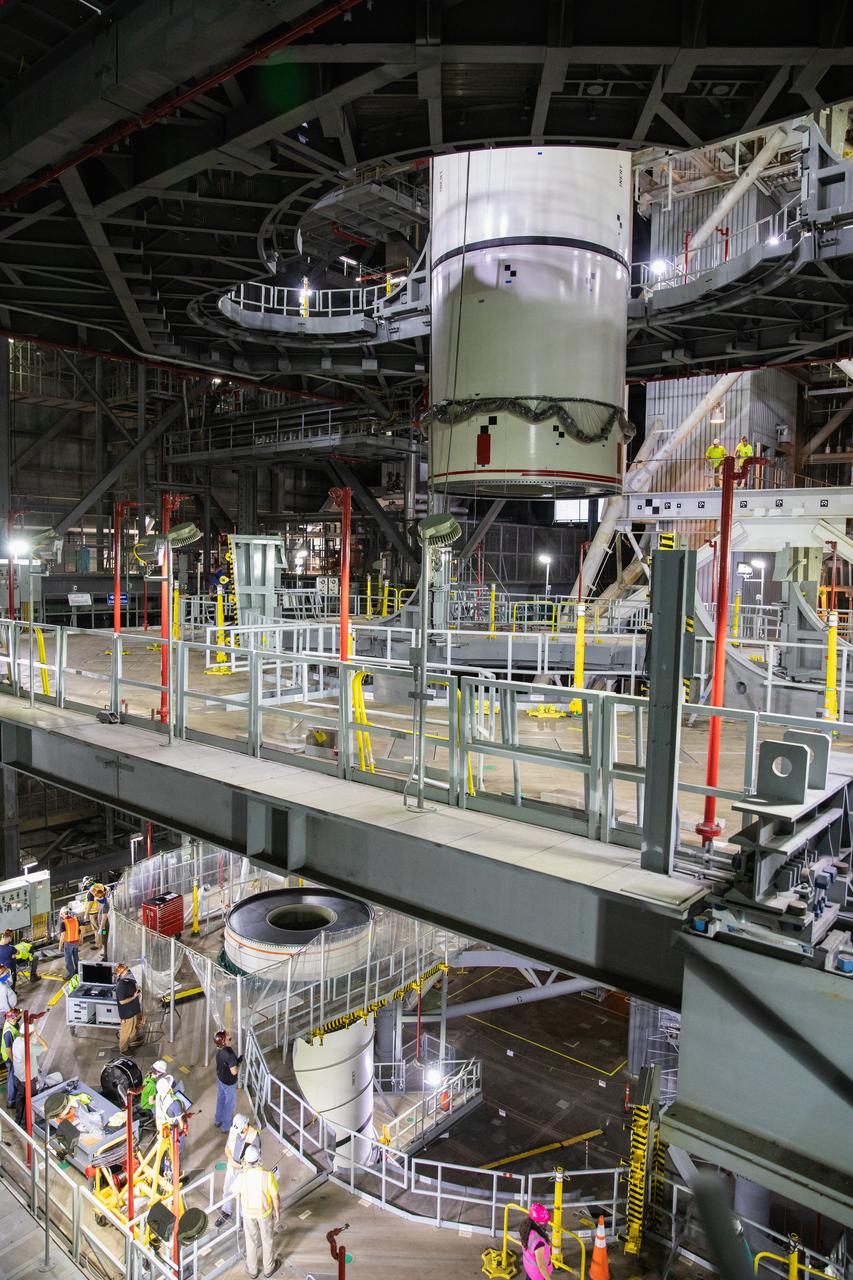
Technicians with NASA’s Exploration Ground Systems lower a mock-up, or pathfinder, of the Space Launch System’s (SLS) center booster segment onto an aft pathfinder segment inside the Vehicle Assembly Building (VAB) at the agency’s Kennedy Space Center in Florida on Sept. 14, 2020. Teams rehearsed stacking both pathfinder segments on top of the mobile launcher in High Bay 3 of the VAB in preparation for the Artemis I launch. Stacking of the actual SLS booster segments will occur later this year, when the rocket’s core stage arrives at Kennedy. Artemis I is the first in a series of increasingly complex missions that will test SLS and the Orion spacecraft as an integrated system prior to crewed flights to the Moon.
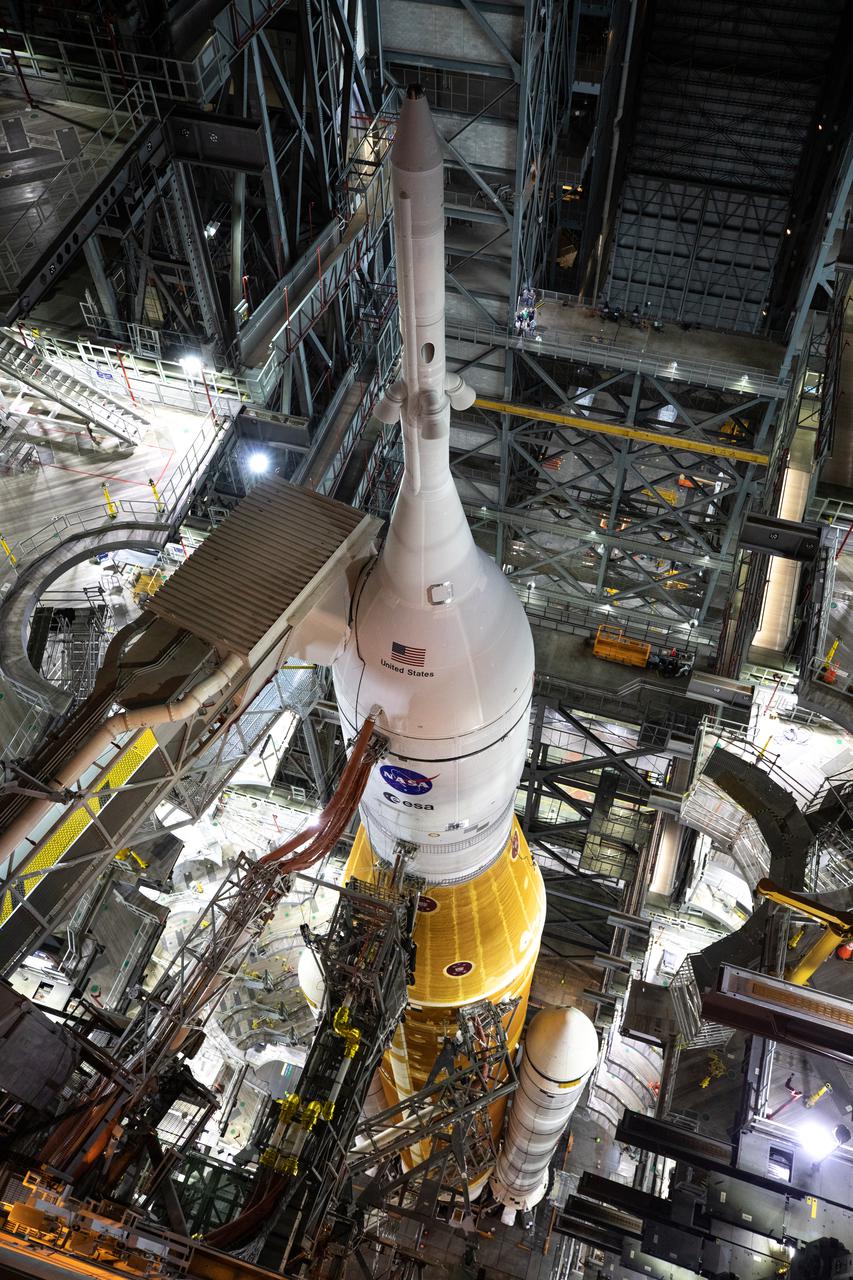
In this view looking down in High Bay 3 of the Vehicle Assembly Building at NASA’s Kennedy Space Center in Florida, the Artemis I Space Launch System (SLS) and Orion spacecraft can be seen without any work platforms surrounding them on March 17, 2022. The Artemis I stack atop the mobile launcher will roll out to Launch Complex 39B atop the crawler-transporter 2 for a wet dress rehearsal ahead of launch. Artemis I will be the first integrated test of the SLS and Orion spacecraft. In later missions, NASA will land the first woman the first person of color on the surface of the Moon, paving the way for a long-term lunar presence and serving as a steppingstone on the way to Mars.
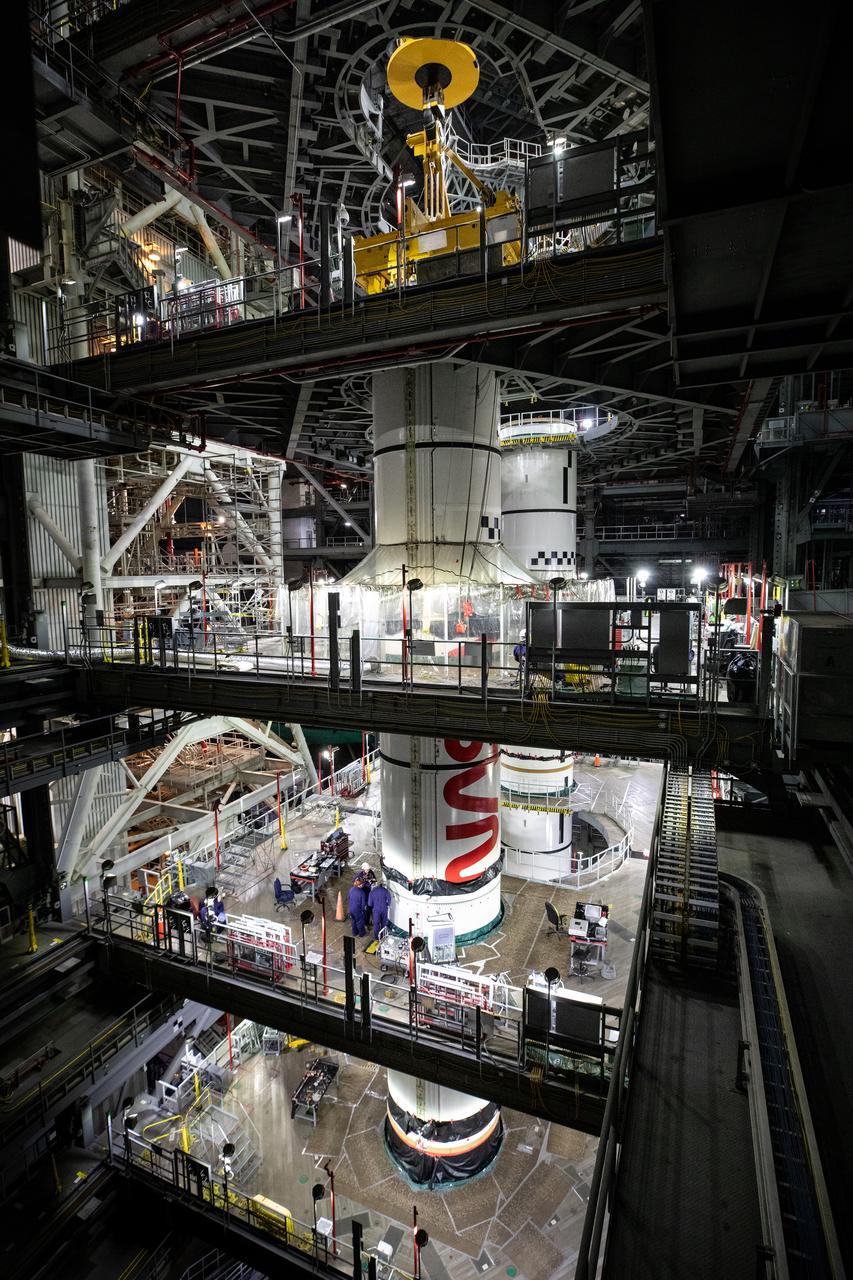
Inside High Bay 3 of the Vehicle Assembly Building at NASA’s Kennedy Space Center in Florida, technicians with the agency’s Exploration Ground Systems use a crane to lower the left forward center booster segment for the NASA’s SLS (Space Launch System) rocket onto the left center center segment atop the mobile launcher on Thursday, Jan. 30, 2025. The NASA “worm” insignia can be seen on both the center center booster segments. The boosters will help support the remaining rocket components and the Orion spacecraft during final assembly of the Artemis II Moon rocket and provide more than 75 percent of the total SLS thrust during liftoff from NASA Kennedy’s Launch Pad 39B.
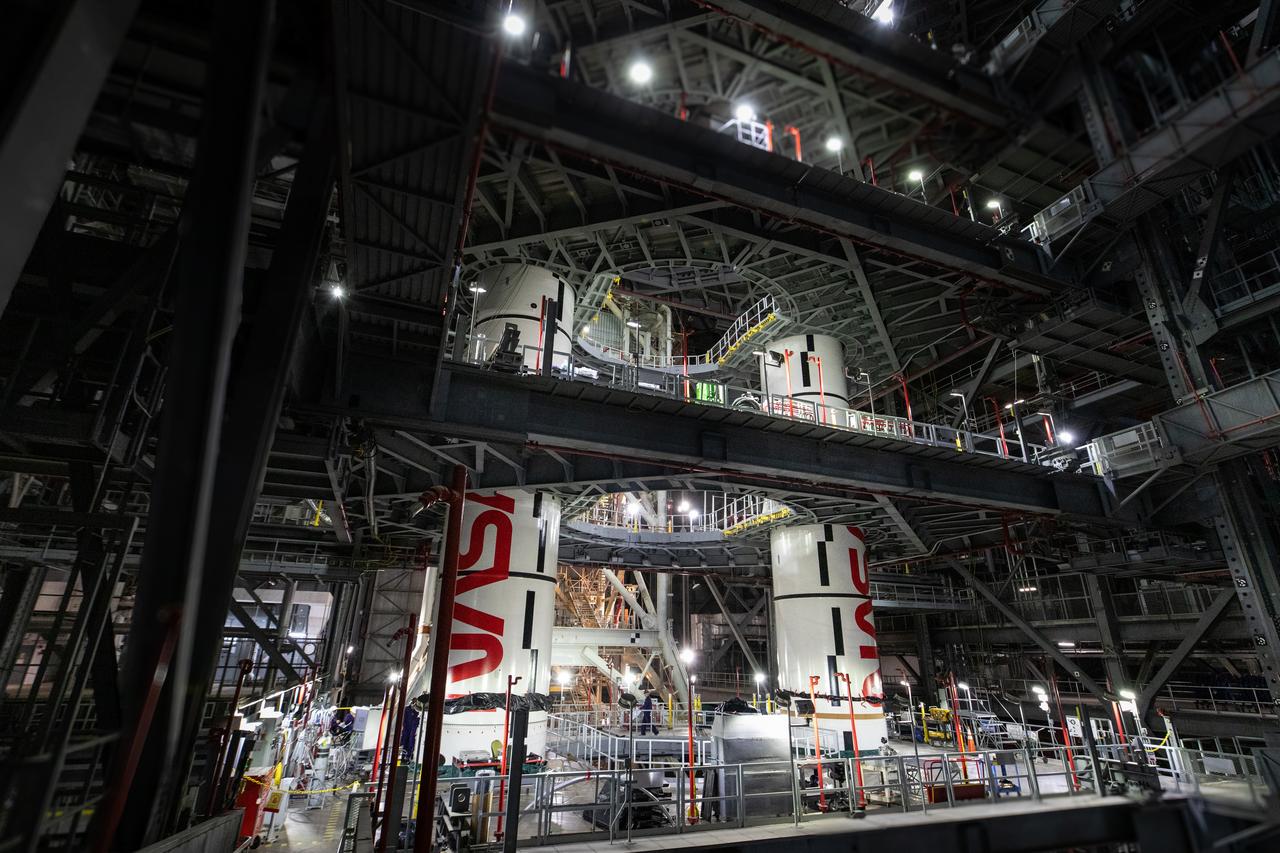
Inside High Bay 3 of the Vehicle Assembly Building at NASA’s Kennedy Space Center in Florida, technicians with the agency’s Exploration Ground Systems integrate the left forward center booster segment for the NASA’s SLS (Space Launch System) rocket onto the left center center segment atop the mobile launcher on Thursday, Jan. 30, 2025. The NASA “worm” insignia can be seen on both the center center booster segments. The boosters will help support the remaining rocket components and the Orion spacecraft during final assembly of the Artemis II Moon rocket and provide more than 75 percent of the total SLS thrust during liftoff from NASA Kennedy’s Launch Pad 39B.
The first of two Artemis I aft booster segments for the Space Launch System is lowered onto the mobile launcher in High Bay 3 of the Vehicle Assembly Building (VAB) at NASA’s Kennedy Space Center in Florida on Nov. 23, 2020. Workers with Exploration Ground Systems and contractor Jacobs teams will stack the twin five-segment boosters on the mobile launcher in High Bay 3 over a number of weeks. When the core stage arrives, it will join the boosters on the mobile launcher, followed by the interim cryogenic propulsion stage and Orion spacecraft. Manufactured by Northrop Grumman in Utah, the twin boosters provide more than 75 percent of the total SLS thrust at launch. The SLS is managed by Marshall Space Flight Center in Huntsville, Alabama. Under the Artemis program, NASA will land the first woman and the next man on the Moon by 2024. The first in a series of increasingly complex missions, Artemis I will test the Orion spacecraft and SLS as an integrated system ahead of crewed flights to the Moon.