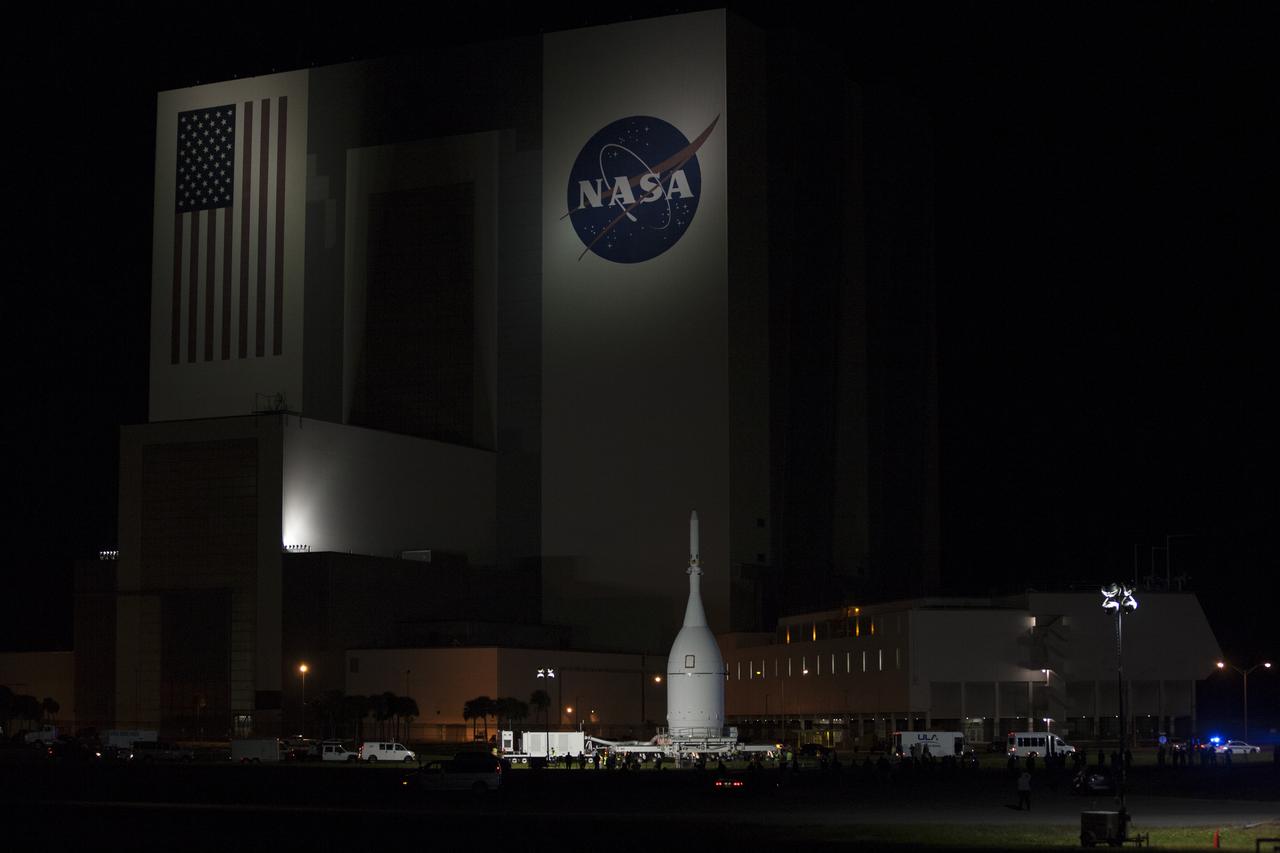
At NASA's Kennedy Space Center in Florida, the agency's Orion spacecraft passes the spaceport's iconic Vehicle Assembly Building as it is transported to Launch Complex 37 at Cape Canaveral Air Force Station. After arrival at the launch pad, United Launch Alliance engineers and technicians will lift Orion and mount it atop its Delta IV Heavy rocket. Orion is the exploration spacecraft designed to carry astronauts to destinations not yet explored by humans, including an asteroid and Mars. It will have emergency abort capability, sustain the crew during space travel and provide safe re-entry from deep space return velocities. The first unpiloted flight test of Orion is scheduled to launch Dec. 4, 2014 atop a United Launch Alliance Delta IV Heavy rocket, and in 2018 on NASA’s Space Launch System rocket.
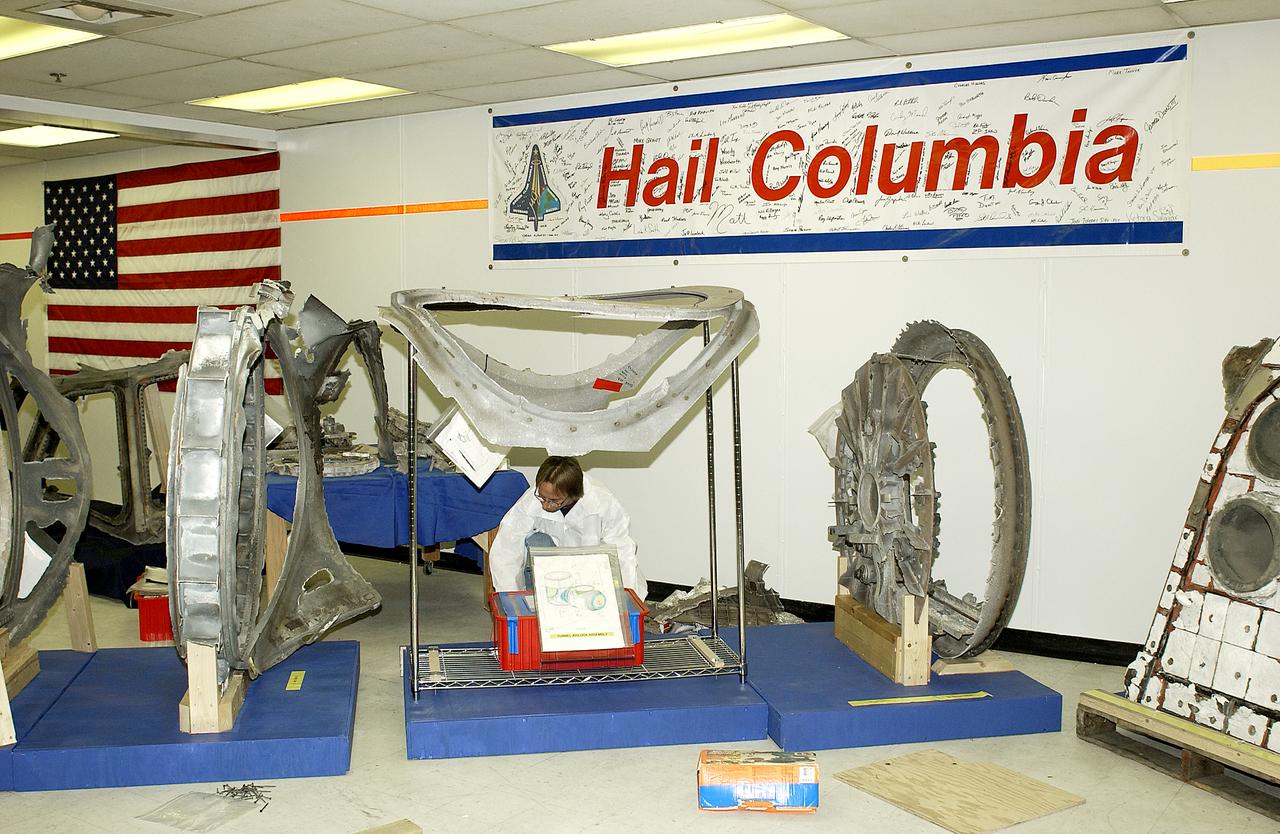
Richard Risley, with United Space Alliance, places a box of Columbia debris in its final resting place in the Vehicle Assembly Building (VAB). All of the pieces received and collected in the Columbia Reconstruction Hangar have been catalogued and moved to a permanent site in the VAB.
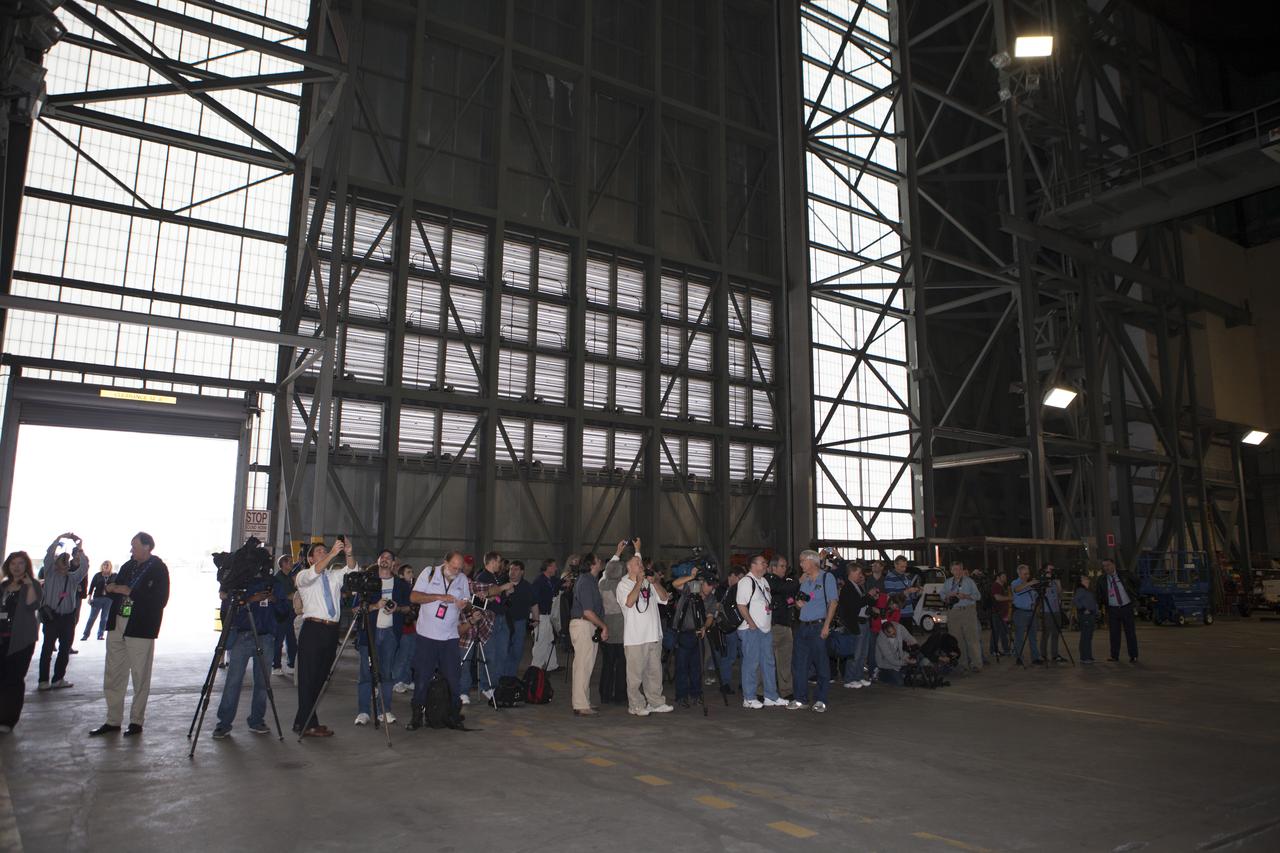
At NASA's Kennedy Space Center in Florida, members of the news media tour the spaceport's Vehicle Assembly Building VAB. Like the Apollo Saturn V and space shuttles of the past, the Space Launch System rocket will be stacked and checked out in the VAB prion to being rolled to the launch pad. Orion is the exploration spacecraft designed to carry astronauts to destinations not yet explored by humans, including an asteroid and Mars. It will have emergency abort capability, sustain the crew during space travel and provide safe re-entry from deep space return velocities. The first unpiloted flight test of Orion is scheduled to launch Dec. 4, 2014 atop a United Launch Alliance Delta IV Heavy rocket, and in 2018 on NASA’s Space Launch System rocket.
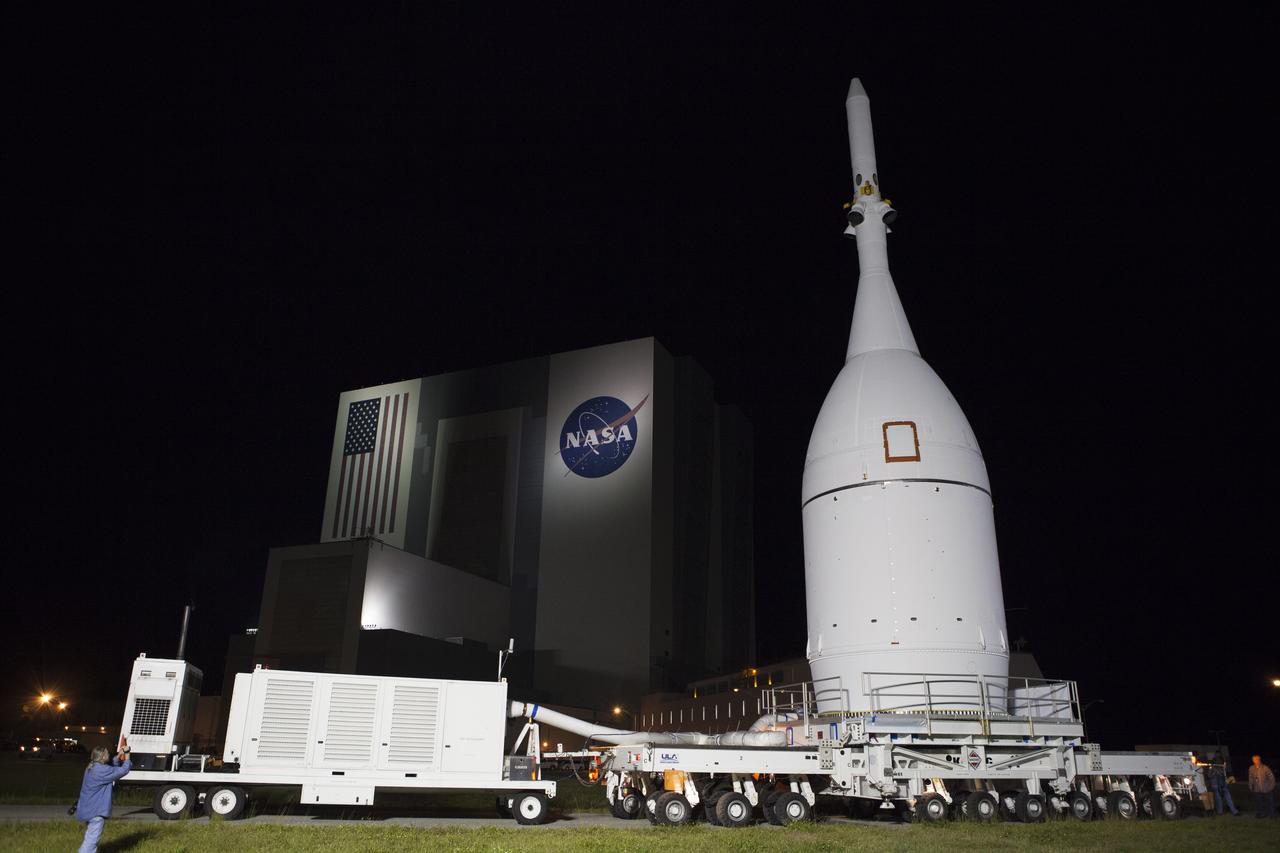
At NASA's Kennedy Space Center in Florida, the agency's Orion spacecraft passes the spaceport's iconic Vehicle Assembly Building as it is transported to Launch Complex 37 at Cape Canaveral Air Force Station. After arrival at the launch pad, United Launch Alliance engineers and technicians will lift Orion and mount it atop its Delta IV Heavy rocket. Orion is the exploration spacecraft designed to carry astronauts to destinations not yet explored by humans, including an asteroid and Mars. It will have emergency abort capability, sustain the crew during space travel and provide safe re-entry from deep space return velocities. The first unpiloted flight test of Orion is scheduled to launch Dec. 4, 2014 atop a United Launch Alliance Delta IV Heavy rocket, and in 2018 on NASA’s Space Launch System rocket.
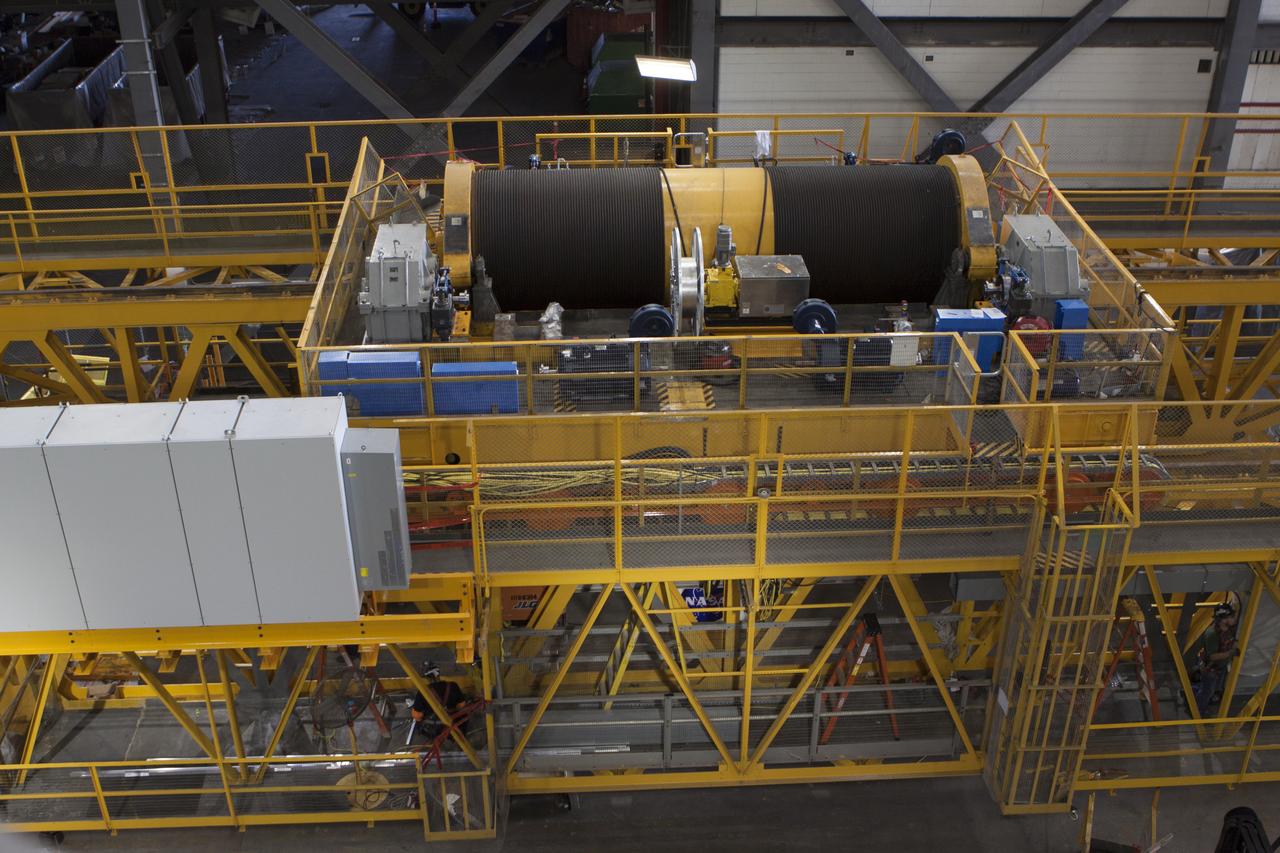
A view from above inside the Vehicle Assembly Building at NASA's Kennedy Space Center in Florida, shows the 175-ton crane on the ground floor of the transfer aisle. The crane's 45-year-old controls are being upgraded to improve reliability, precision and safety. The Ground Systems Development and Operations Program is overseeing upgrades and modifications to the crane so that it can support lifting needs for NASA and other exploration vehicles, including the agency's Space Launch System and Orion spacecraft.
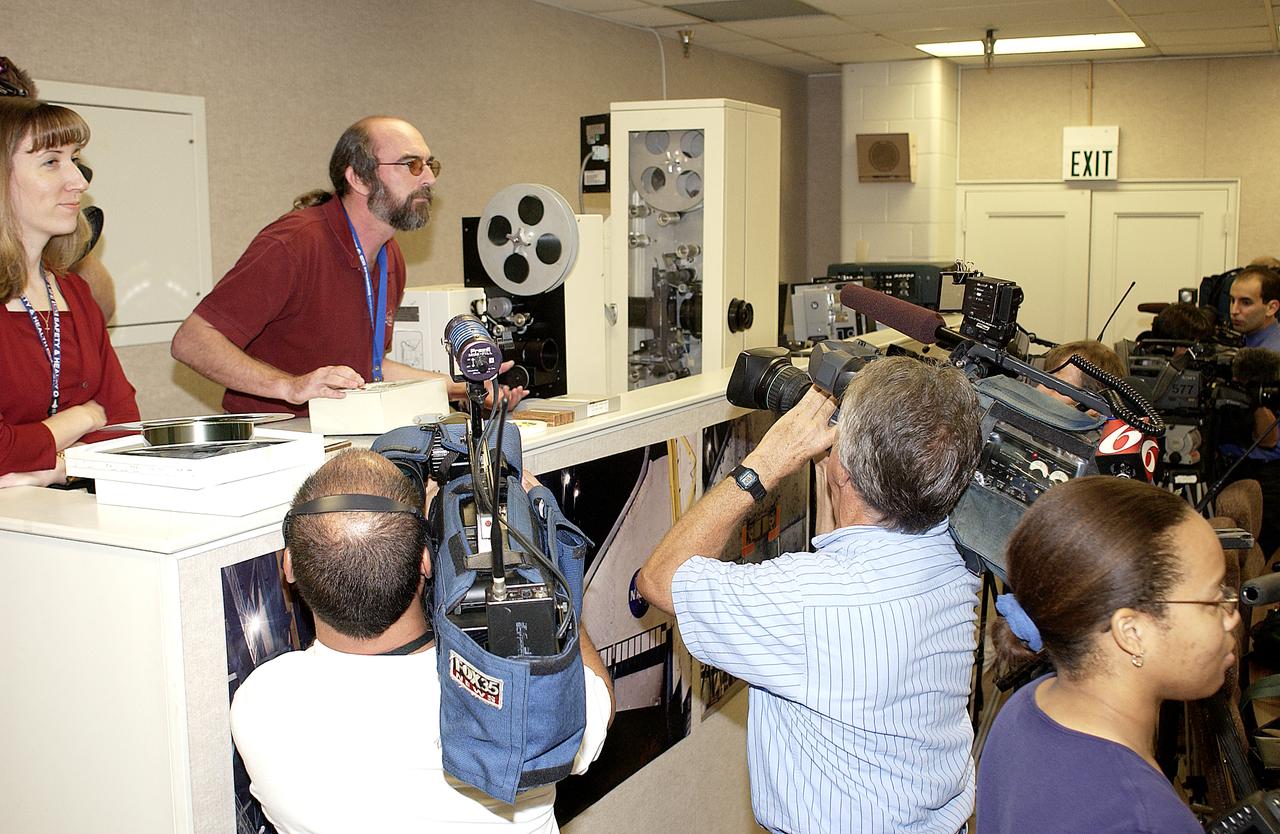
In the Image Analysis Facility in the Vehicle Assembly Building, Brad Lawrence (second from left, standing) participates in a presentation to news media representatives on the improved tracking cameras and long-range optical tracking systems that will be used to capture ascent imagery during the return to flight of the Space Shuttle. The press opportunity also includes tours of the launch pad perimeter camera site at Launch Complex 39B and two Playalinda Beach optical tracking sites at the Cape Canaveral National Seashore and the Merritt Island National Refuge.
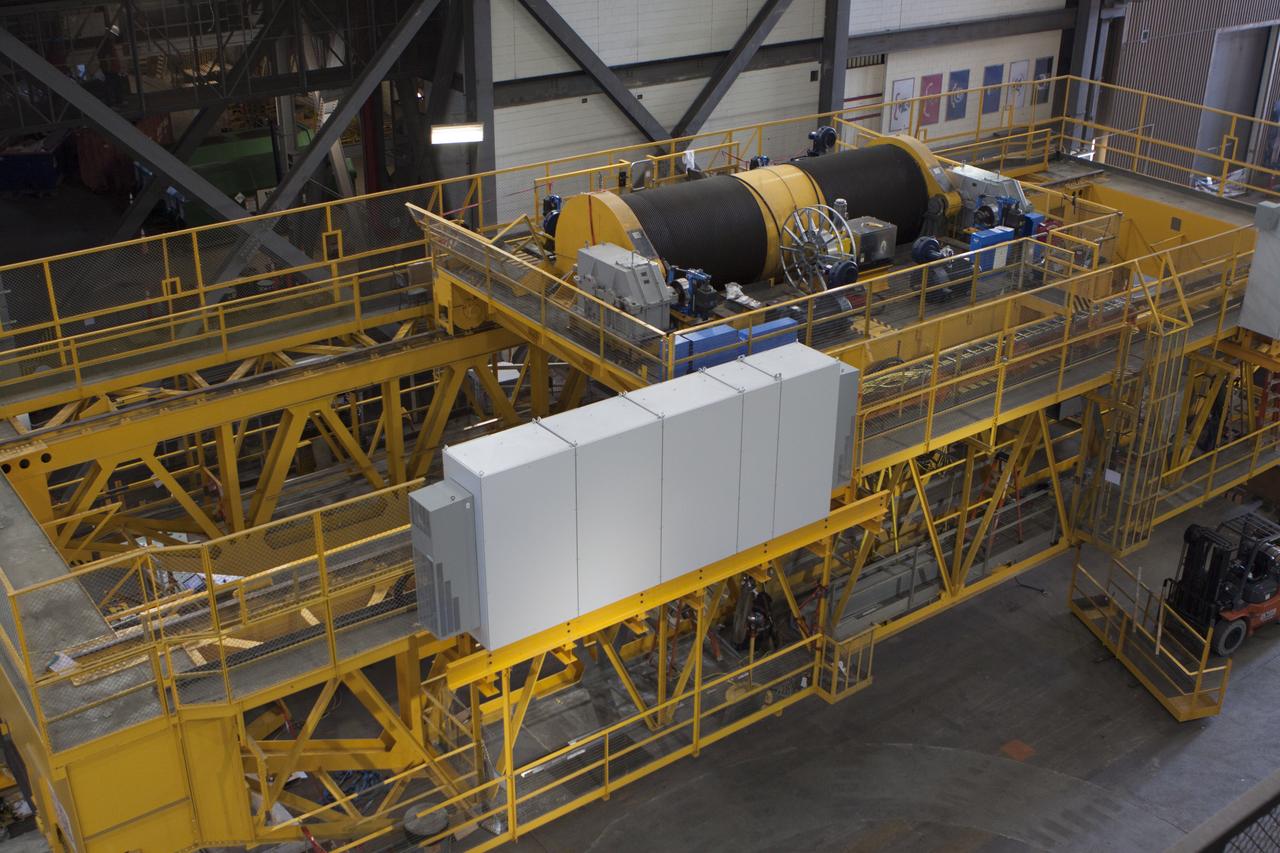
A view from above inside the Vehicle Assembly Building at NASA's Kennedy Space Center in Florida, shows the 175-ton crane on the ground floor of the transfer aisle. The crane's 45-year-old controls are being upgraded to improve reliability, precision and safety. The Ground Systems Development and Operations Program is overseeing upgrades and modifications to the crane so that it can support lifting needs for NASA and other exploration vehicles, including the agency's Space Launch System and Orion spacecraft.
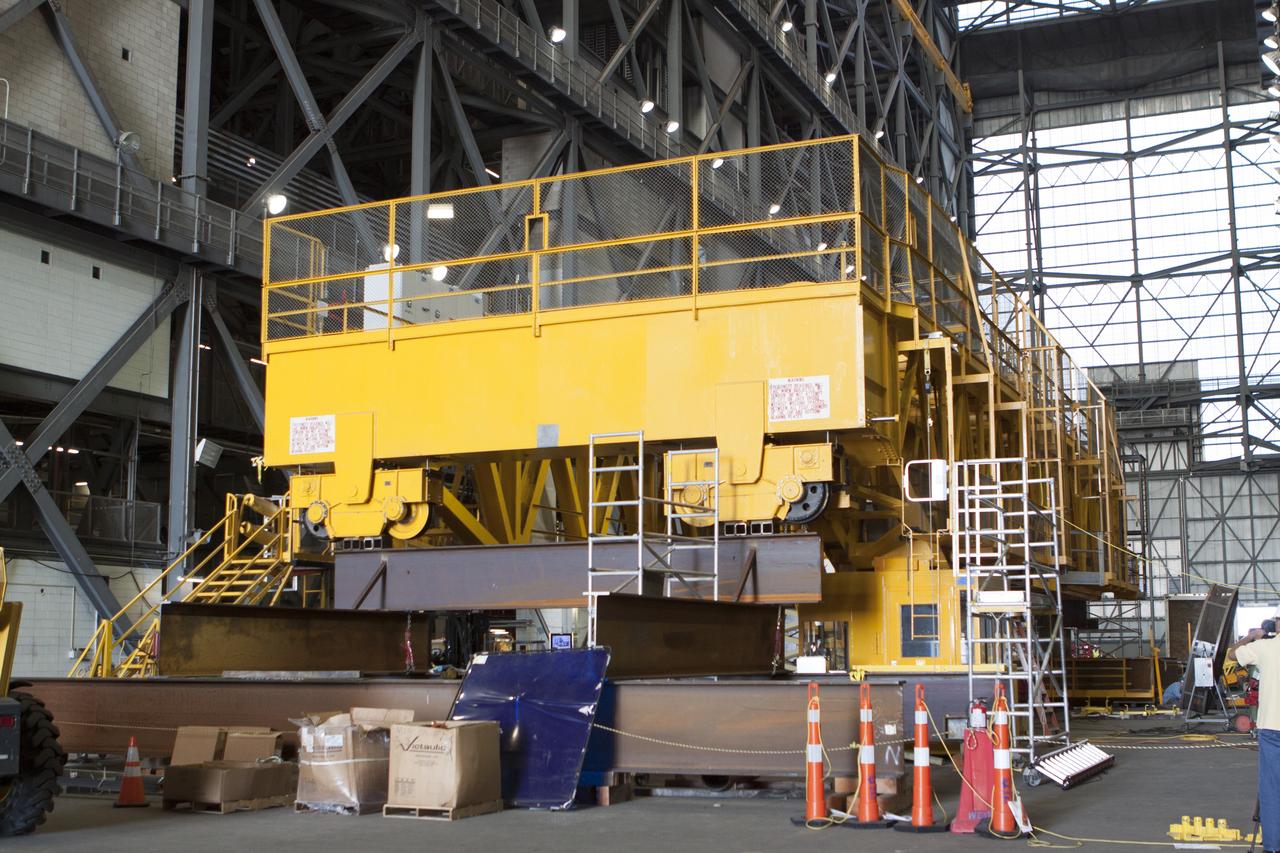
Upgrades and modifications continue on the 175-ton crane on the ground floor of the transfer aisle inside the Vehicle Assembly Building at NASA's Kennedy Space Center in Florida. The crane's 45-year-old controls are being upgraded to improve reliability, precision and safety. The Ground Systems Development and Operations Program is overseeing upgrades and modifications to the crane so that it can support lifting needs for NASA and other exploration vehicles, including the agency's Space Launch System and Orion spacecraft.
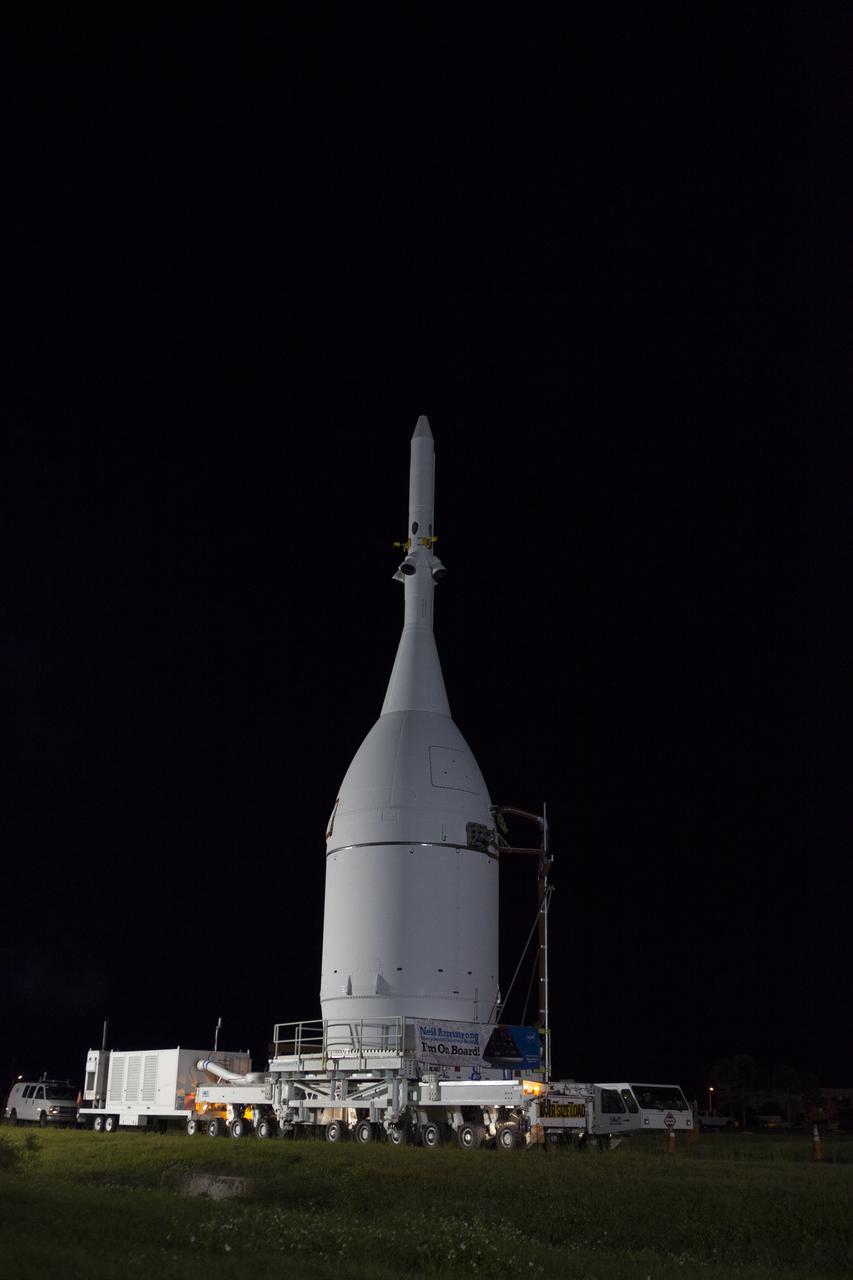
At NASA's Kennedy Space Center in Florida, the agency's Orion is transported to Launch Complex 37 at Cape Canaveral Air Force Station. After arrival at the launch pad, United Launch Alliance engineers and technicians will lift Orion and mount it atop its Delta IV Heavy rocket. Orion is the exploration spacecraft designed to carry astronauts to destinations not yet explored by humans, including an asteroid and Mars. It will have emergency abort capability, sustain the crew during space travel and provide safe re-entry from deep space return velocities. The first unpiloted flight test of Orion is scheduled to launch Dec. 4, 2014 atop a United Launch Alliance Delta IV Heavy rocket, and in 2018 on NASA’s Space Launch System rocket.
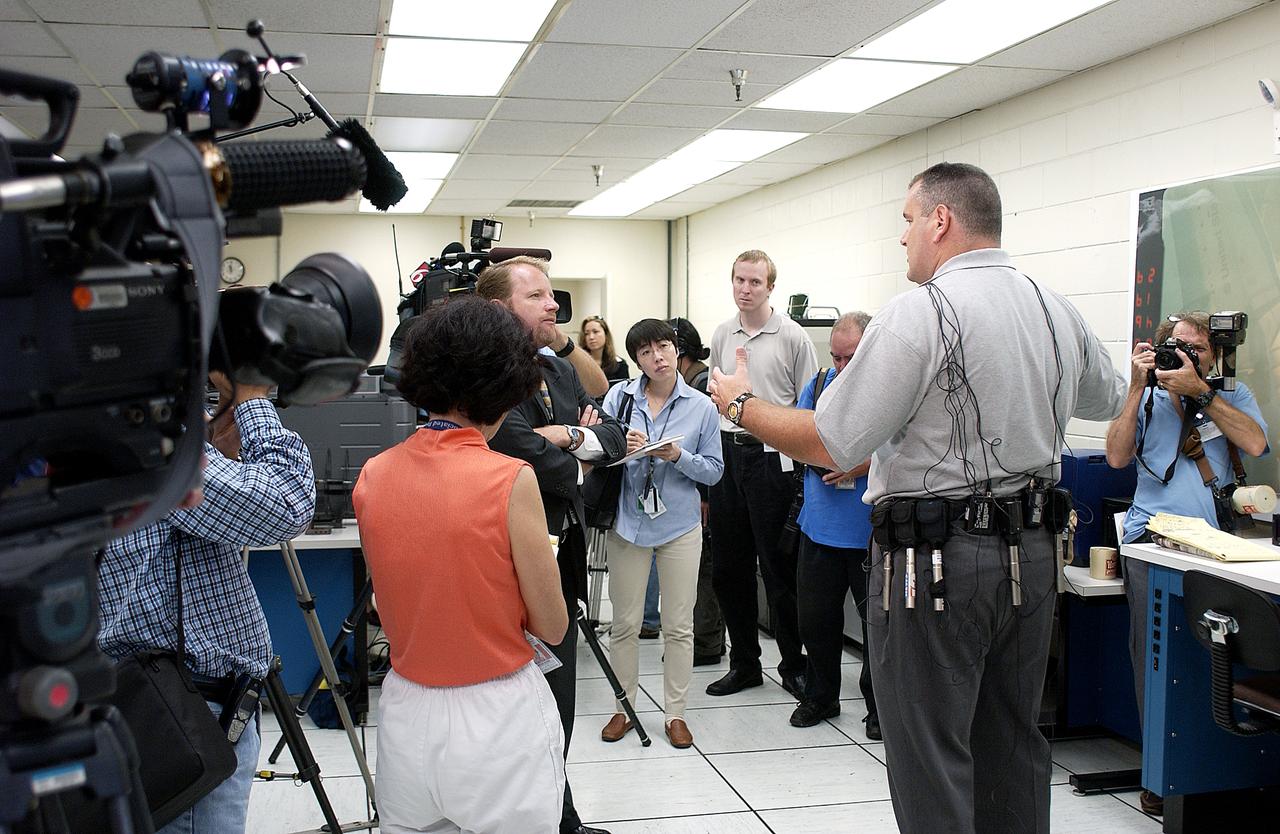
In the Image Analysis Facility in the Vehicle Assembly Building, Armando Oliu (second from right), lead of the KSC Ice and Debris Team, answers questions from news media representatives on the improved tracking cameras and long-range optical tracking systems that will be used to capture ascent imagery during the return to flight of the Space Shuttle. The press opportunity also includes tours of the launch pad perimeter camera site at Launch Complex 39B and two Playalinda Beach optical tracking sites at the Cape Canaveral National Seashore and the Merritt Island National Refuge.
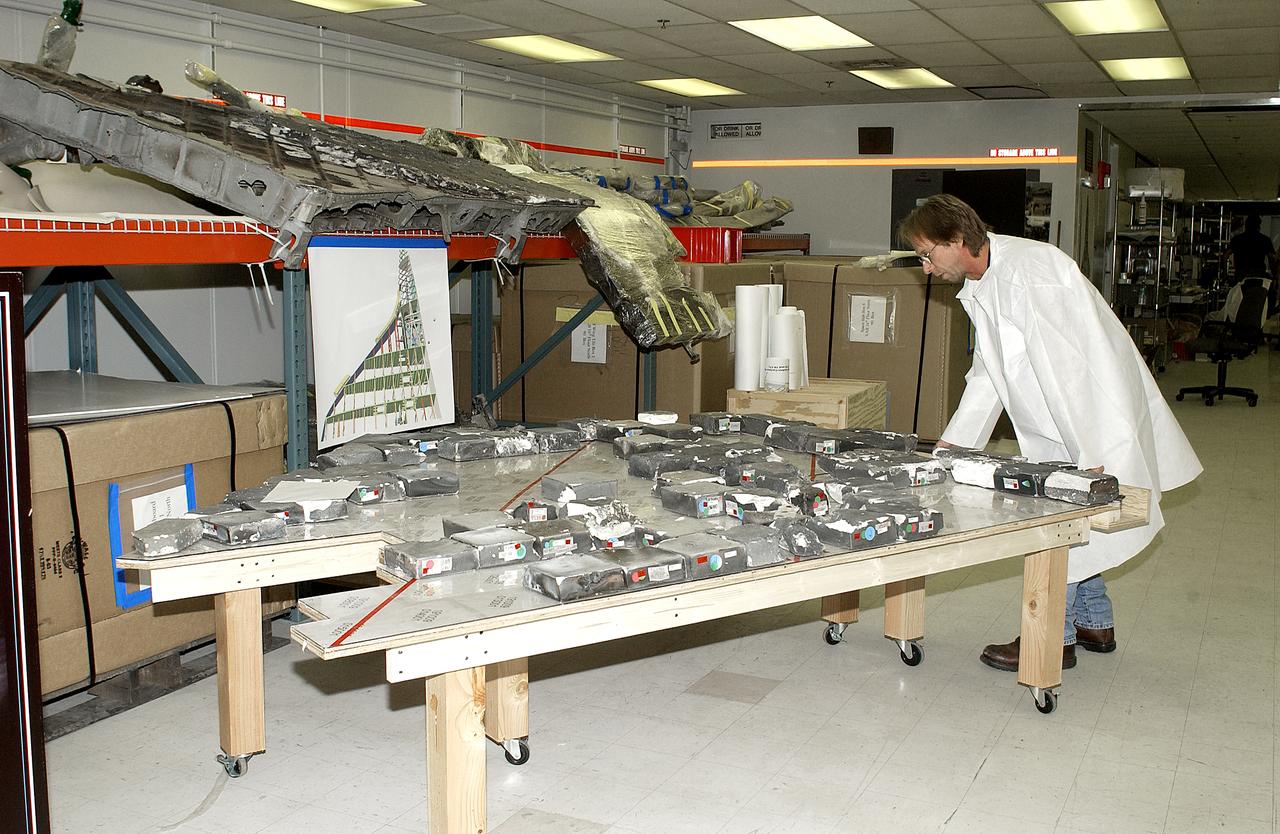
In the Vehicle Assembly Building, Richard Risley, with United Space Alliance, moves a table holding pieces of tile from Columbia’s wing. All of the pieces received and collected in the Columbia Reconstruction Hangar have been catalogued and moved to a permanent site in the VAB.
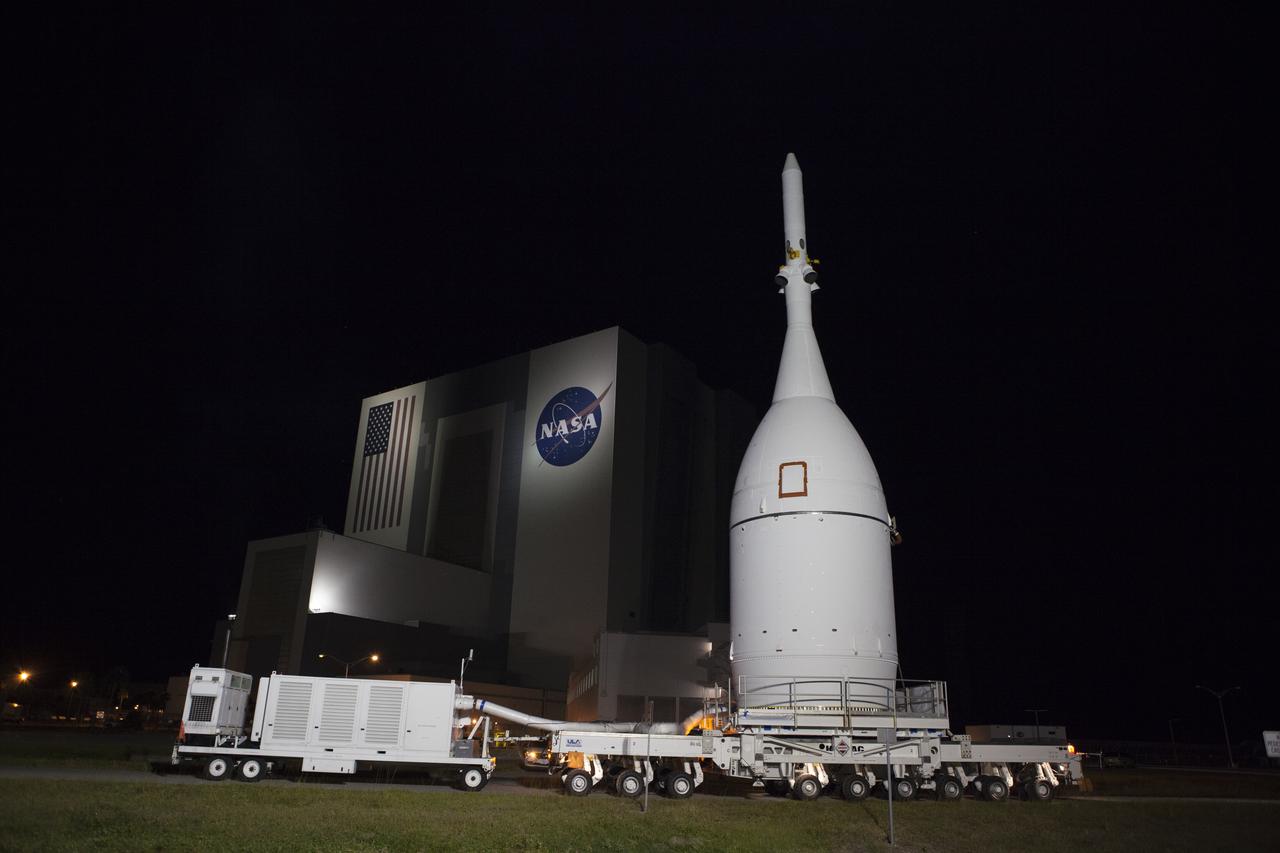
At NASA's Kennedy Space Center in Florida, the agency's Orion spacecraft passes the spaceport's iconic Vehicle Assembly Building as it is transported to Launch Complex 37 at Cape Canaveral Air Force Station. After arrival at the launch pad, United Launch Alliance engineers and technicians will lift Orion and mount it atop its Delta IV Heavy rocket. Orion is the exploration spacecraft designed to carry astronauts to destinations not yet explored by humans, including an asteroid and Mars. It will have emergency abort capability, sustain the crew during space travel and provide safe re-entry from deep space return velocities. The first unpiloted flight test of Orion is scheduled to launch Dec. 4, 2014 atop a United Launch Alliance Delta IV Heavy rocket, and in 2018 on NASA’s Space Launch System rocket.
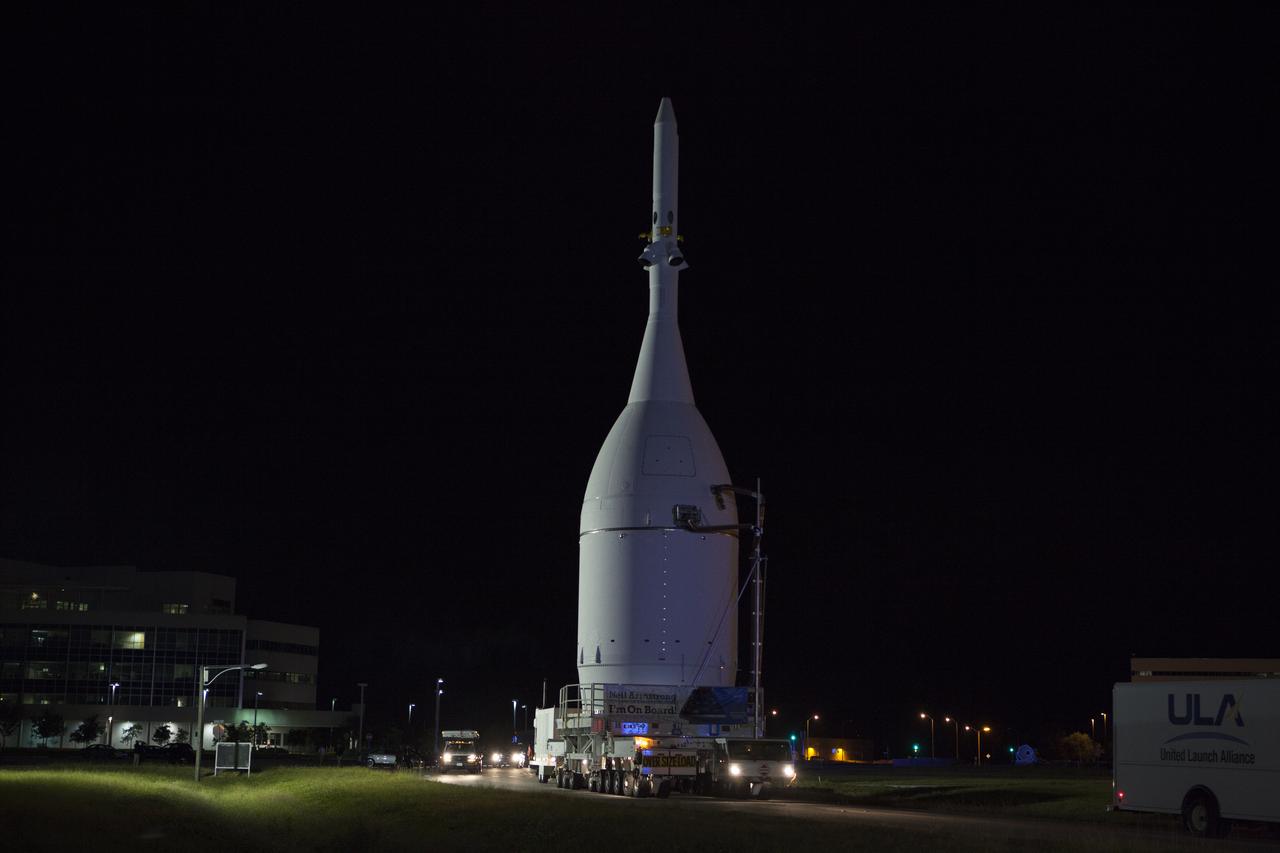
At NASA's Kennedy Space Center in Florida, the agency's Orion is transported to Launch Complex 37 at Cape Canaveral Air Force Station. After arrival at the launch pad, United Launch Alliance engineers and technicians will lift Orion and mount it atop its Delta IV Heavy rocket. Orion is the exploration spacecraft designed to carry astronauts to destinations not yet explored by humans, including an asteroid and Mars. It will have emergency abort capability, sustain the crew during space travel and provide safe re-entry from deep space return velocities. The first unpiloted flight test of Orion is scheduled to launch Dec. 4, 2014 atop a United Launch Alliance Delta IV Heavy rocket, and in 2018 on NASA’s Space Launch System rocket.
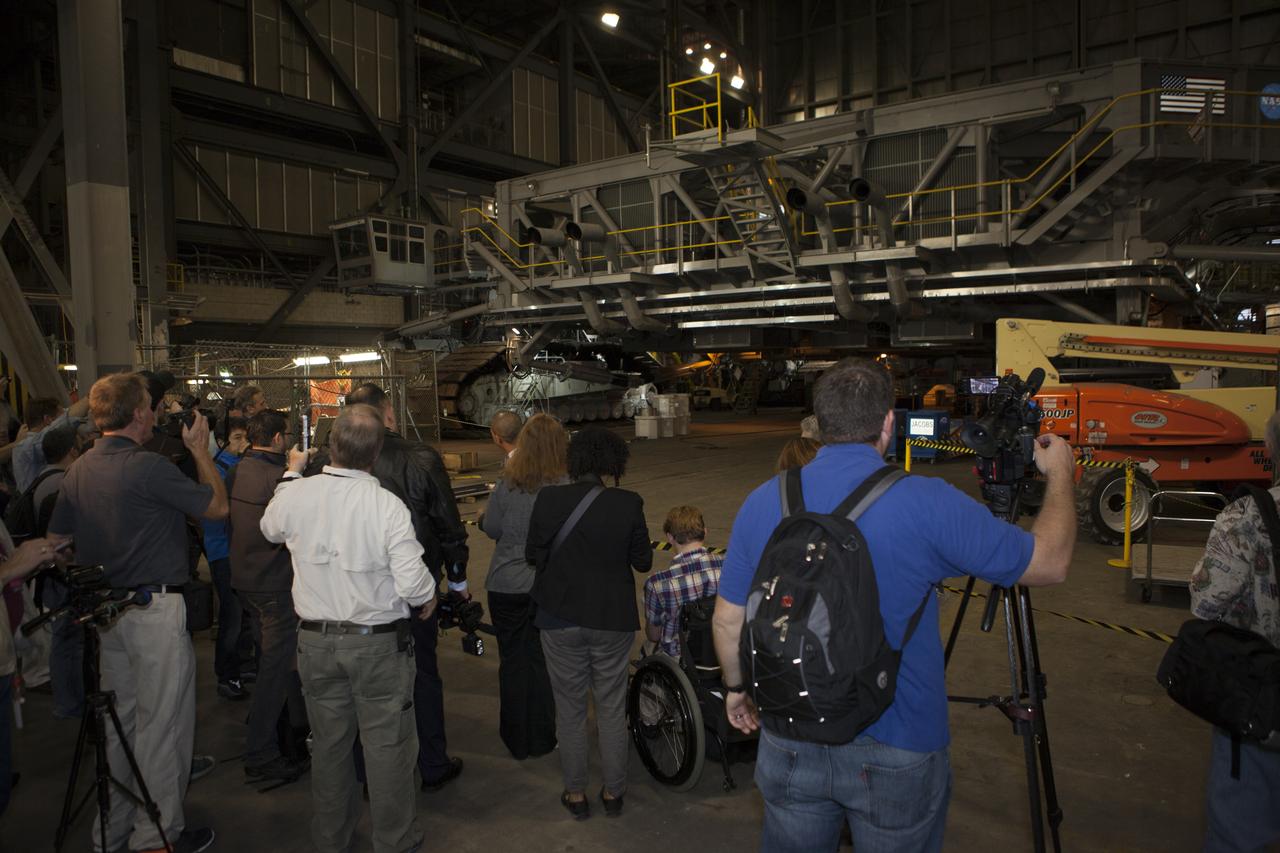
At NASA's Kennedy Space Center in Florida, members of the news media tour the spaceport's Vehicle Assembly Building. They were briefed on progress to upgrade and modify crawler-transporter CT 2 to support the Space Launch System. Orion is the exploration spacecraft designed to carry astronauts to destinations not yet explored by humans, including an asteroid and Mars. It will have emergency abort capability, sustain the crew during space travel and provide safe re-entry from deep space return velocities. The first unpiloted flight test of Orion is scheduled to launch Dec. 4, 2014 atop a United Launch Alliance Delta IV Heavy rocket, and in 2018 on NASA’s Space Launch System rocket.
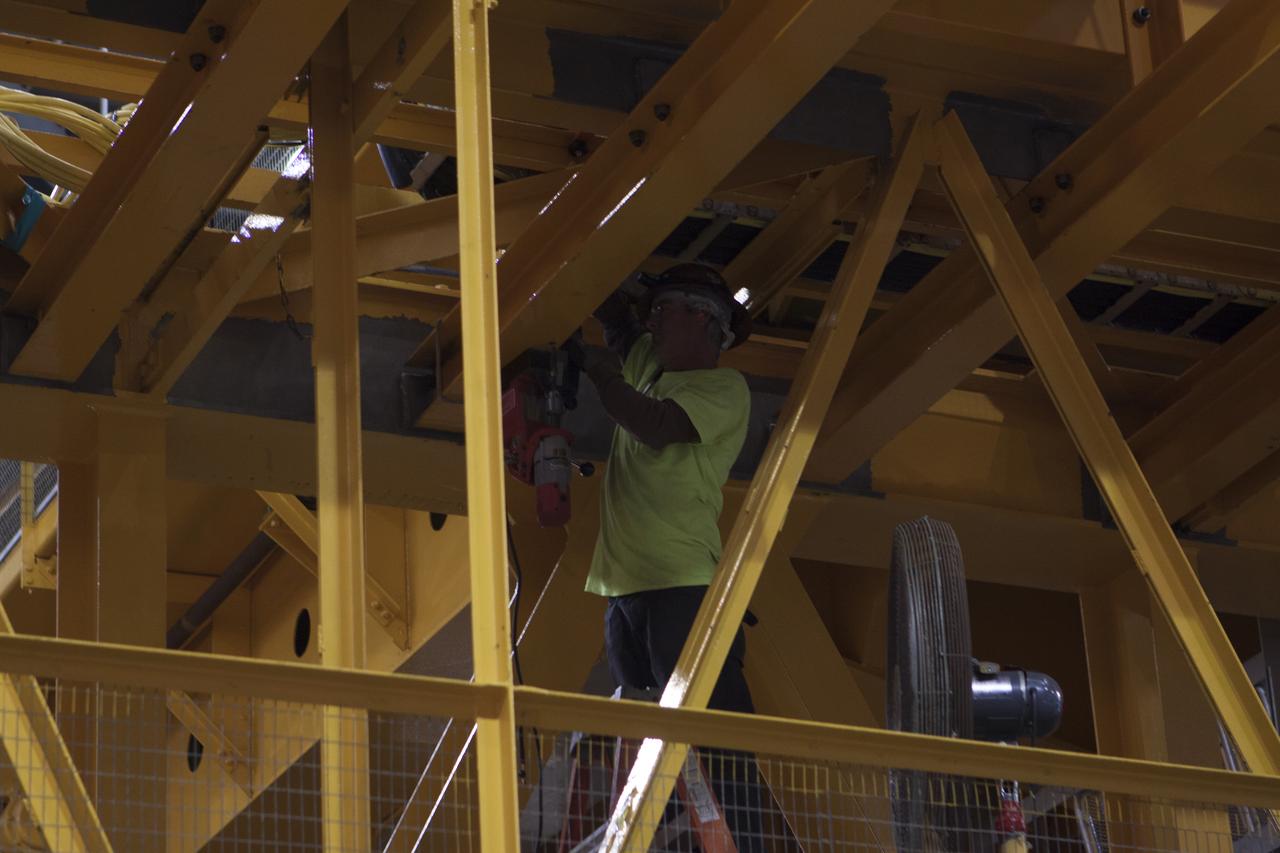
Inside the Vehicle Assembly Building at NASA's Kennedy Space Center in Florida, a construction worker continues with refurbishment and upgrades to the 175-ton crane on the ground floor of the transfer aisle. The crane's 45-year-old controls are being upgraded to improve reliability, precision and safety. The Ground Systems Development and Operations Program is overseeing upgrades and modifications to the crane so that it can support lifting needs for NASA and other exploration vehicles, including the agency's Space Launch System and Orion spacecraft.
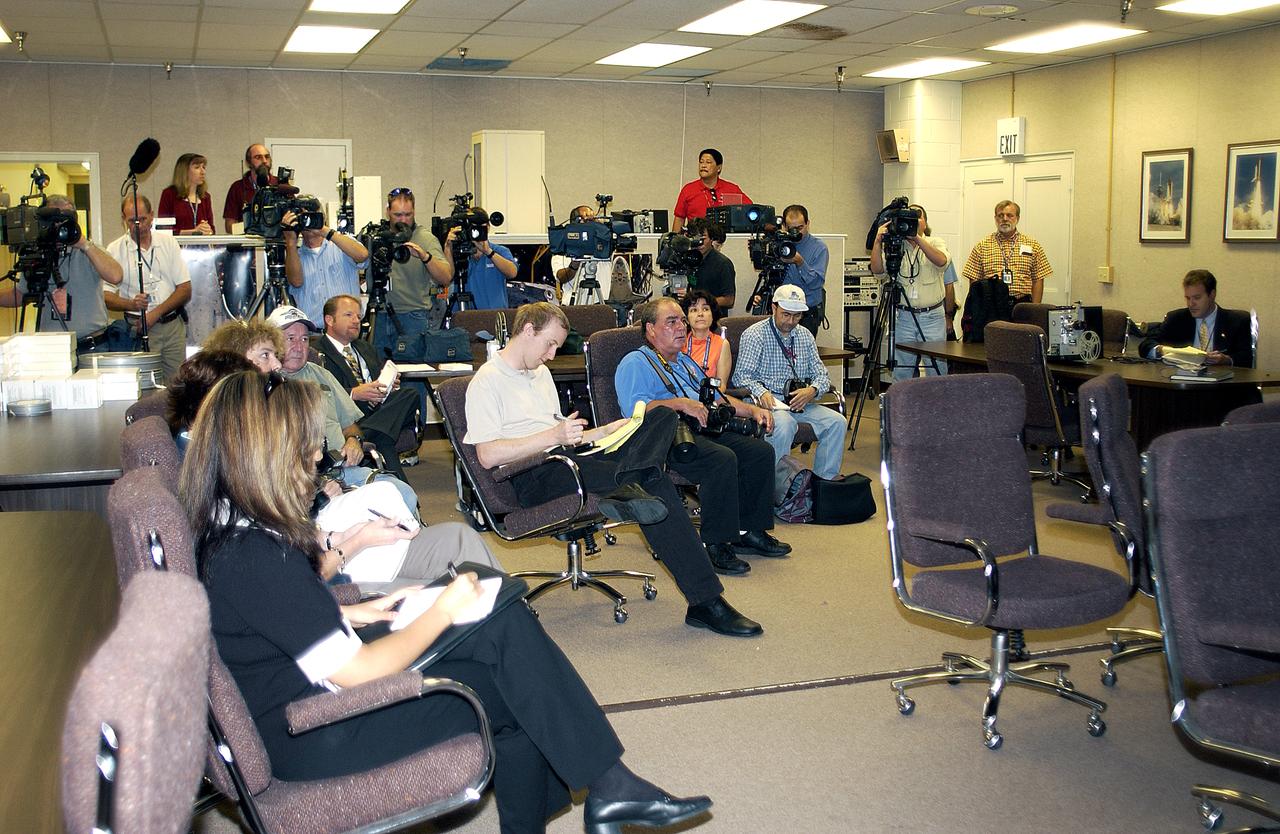
In the Image Analysis Facility in the Vehicle Assembly Building, news media representatives are briefed on the improved tracking cameras and long-range optical tracking systems that will be used to capture ascent imagery during the return to flight of the Space Shuttle. The press opportunity also includes tours of the launch pad perimeter camera site at Launch Complex 39B and two Playalinda Beach optical tracking sites at the Cape Canaveral National Seashore and the Merritt Island National Refuge.
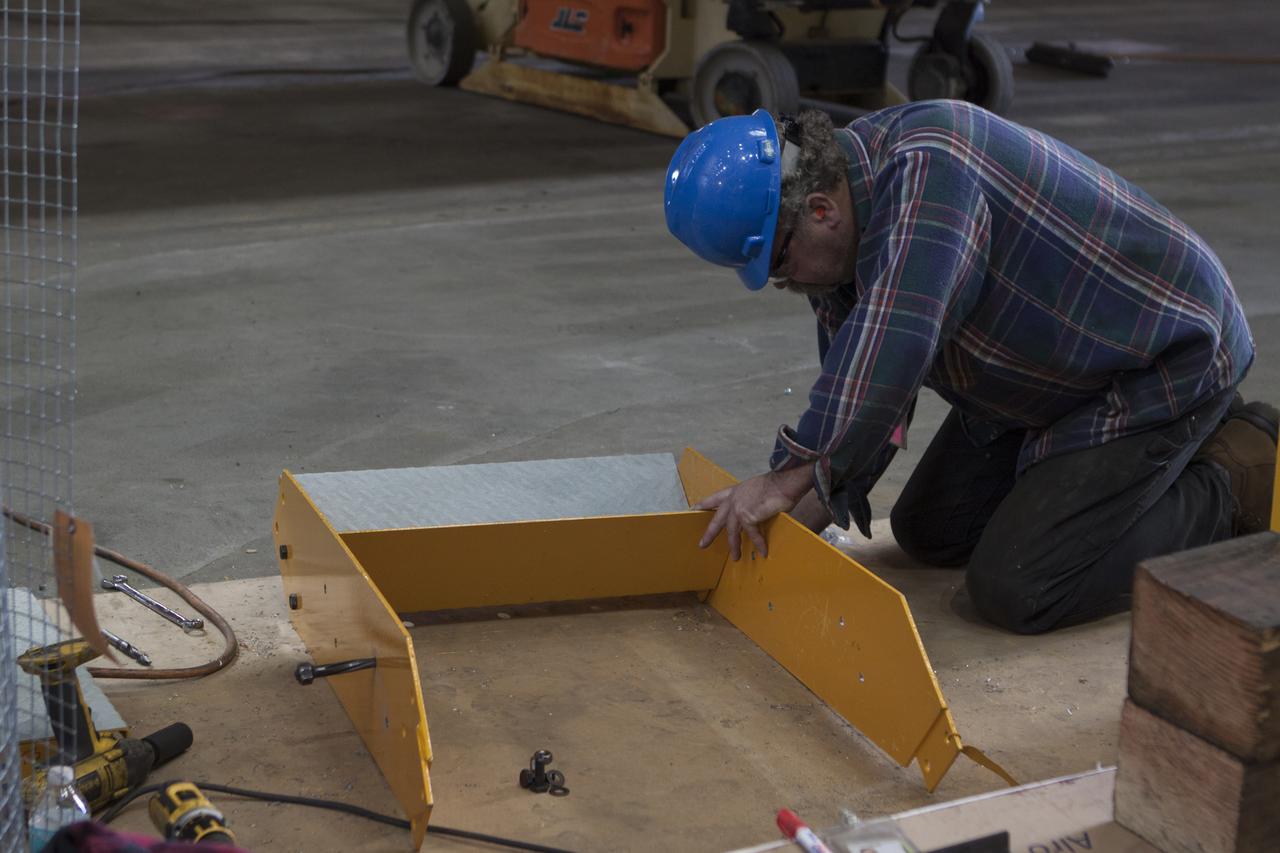
Inside the Vehicle Assembly Building at NASA's Kennedy Space Center in Florida, a construction worker continues with refurbishment and upgrades to parts of the 175-ton crane on the ground floor of the transfer aisle. The crane's 45-year-old controls are being upgraded to improve reliability, precision and safety. The Ground Systems Development and Operations Program is overseeing upgrades and modifications to the crane so that it can support lifting needs for NASA and other exploration vehicles, including the agency's Space Launch System and Orion spacecraft.
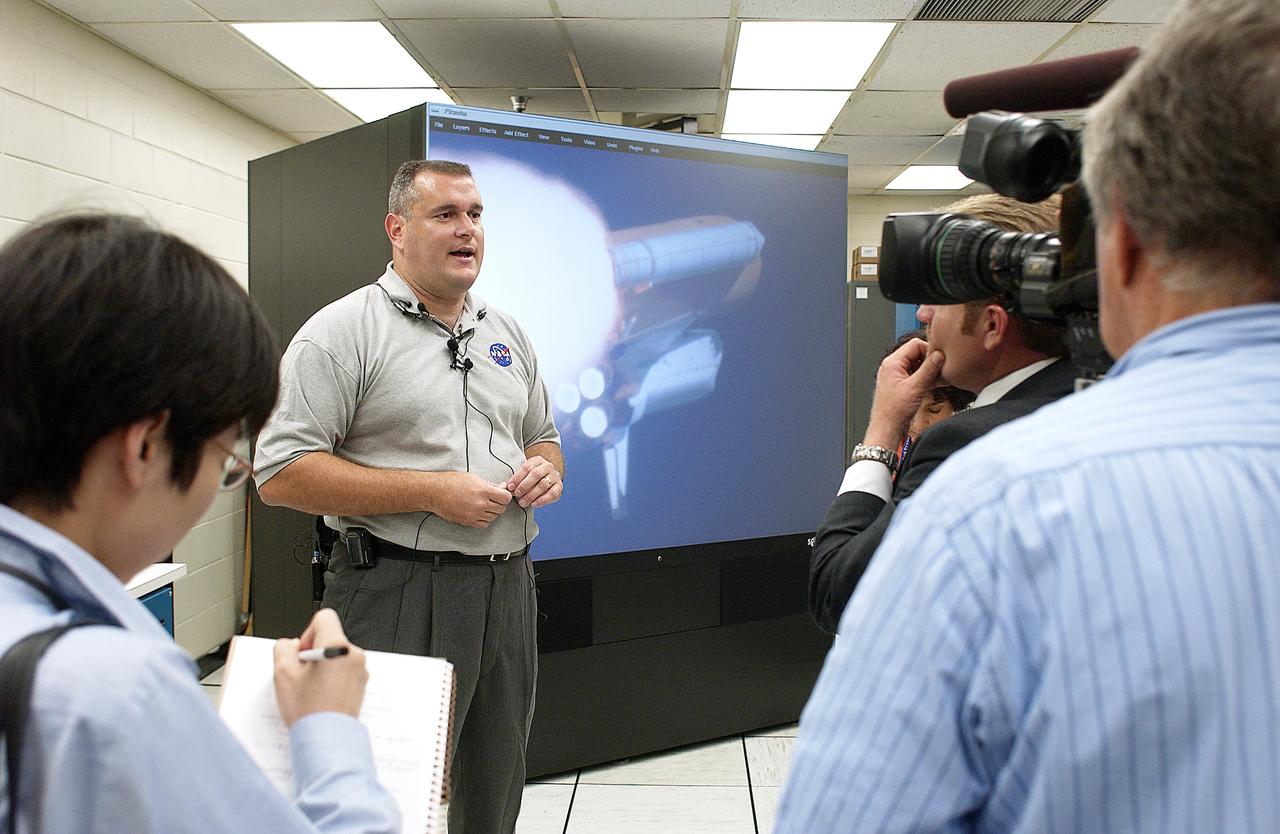
In the Image Analysis Facility in the Vehicle Assembly Building, Armando Oliu (second from left), lead of the KSC Ice and Debris Team, answers questions from news media representatives on the improved tracking cameras and long-range optical tracking systems that will be used to capture ascent imagery during the return to flight of the Space Shuttle. The press opportunity also includes tours of the launch pad perimeter camera site at Launch Complex 39B and two Playalinda Beach optical tracking sites at the Cape Canaveral National Seashore and the Merritt Island National Refuge.
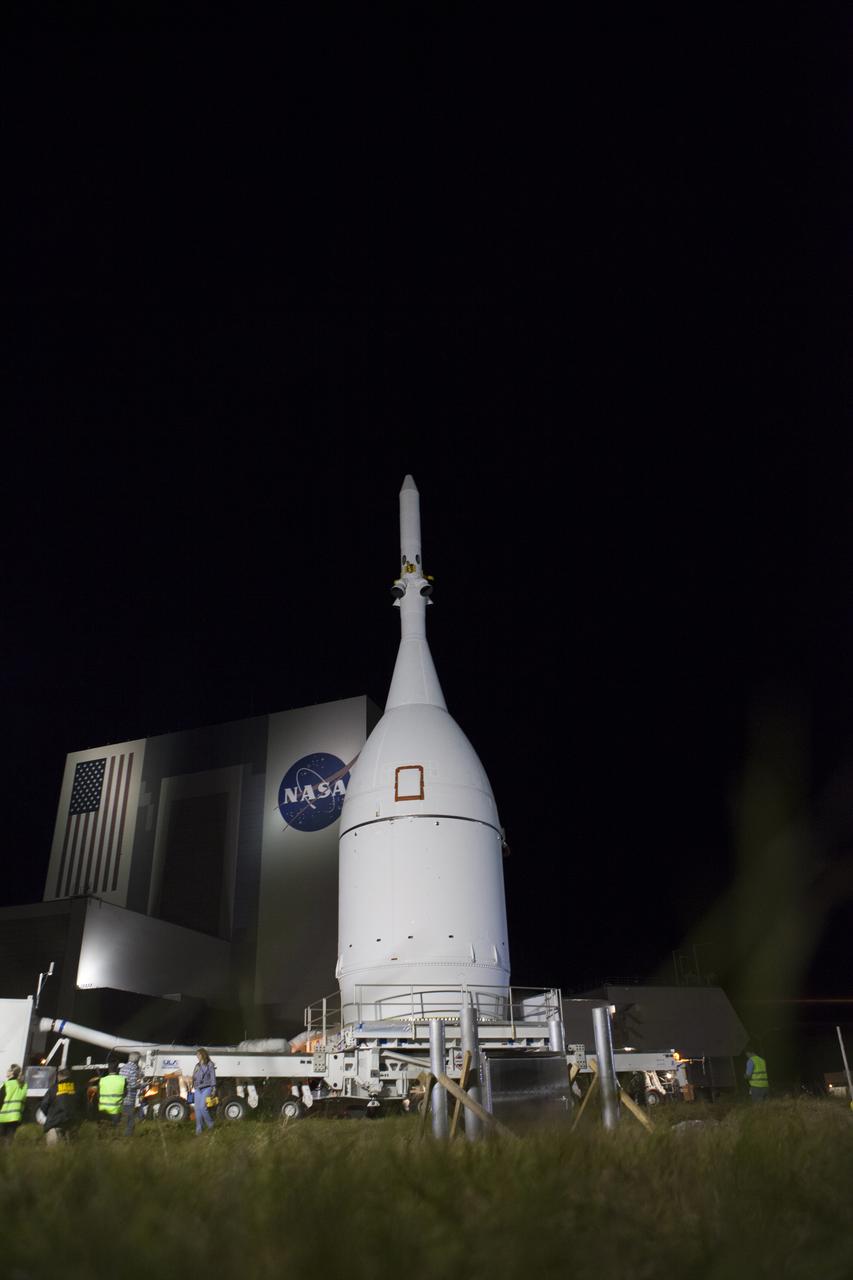
At NASA's Kennedy Space Center in Florida, the agency's Orion spacecraft passes the spaceport's iconic Vehicle Assembly Building as it is transported to Launch Complex 37 at Cape Canaveral Air Force Station. After arrival at the launch pad, United Launch Alliance engineers and technicians will lift Orion and mount it atop its Delta IV Heavy rocket. Orion is the exploration spacecraft designed to carry astronauts to destinations not yet explored by humans, including an asteroid and Mars. It will have emergency abort capability, sustain the crew during space travel and provide safe re-entry from deep space return velocities. The first unpiloted flight test of Orion is scheduled to launch Dec. 4, 2014 atop a United Launch Alliance Delta IV Heavy rocket, and in 2018 on NASA’s Space Launch System rocket.
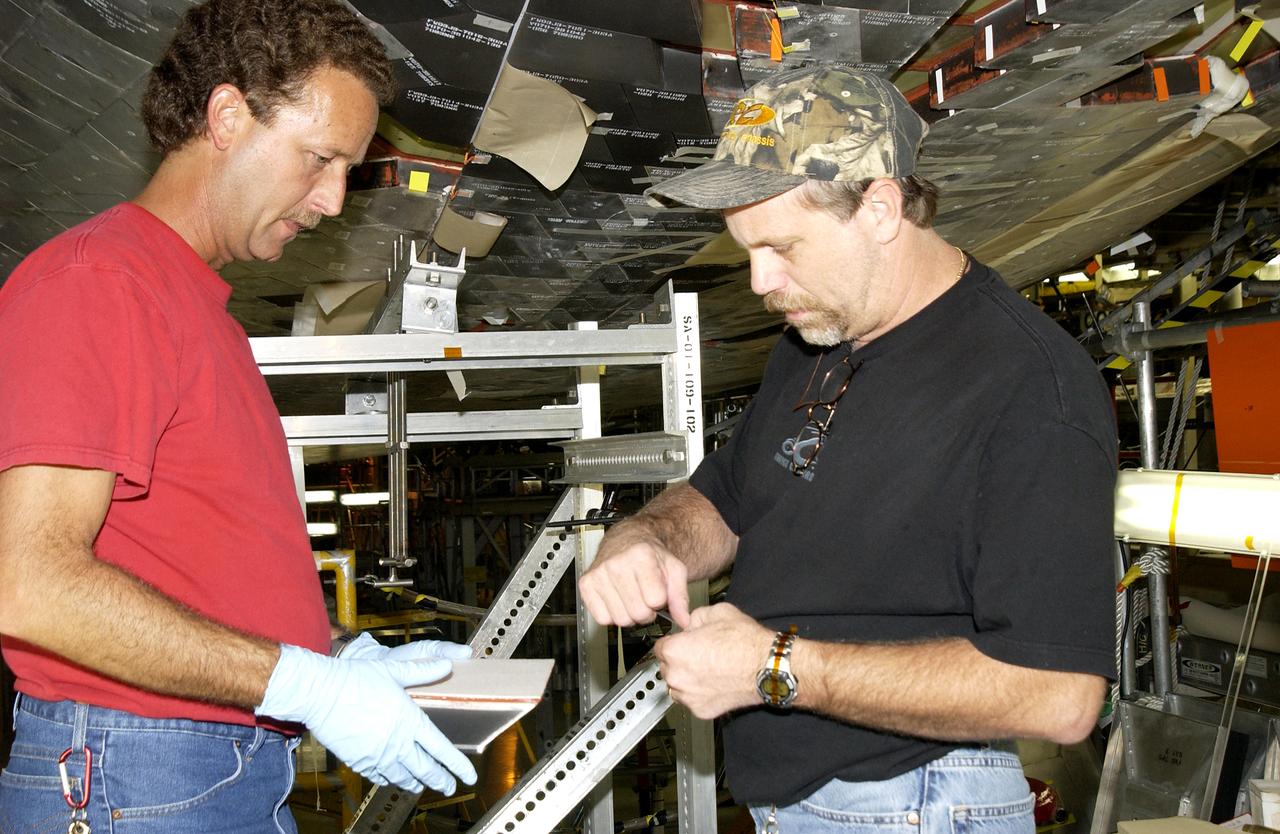
In the Vehicle Assembly Building, Jim Landy, NDE specialist, sets up a flight crew lockers for flash thermography. He is screening the lockers for hidden damage underneath dings and dents that might occur during handling.
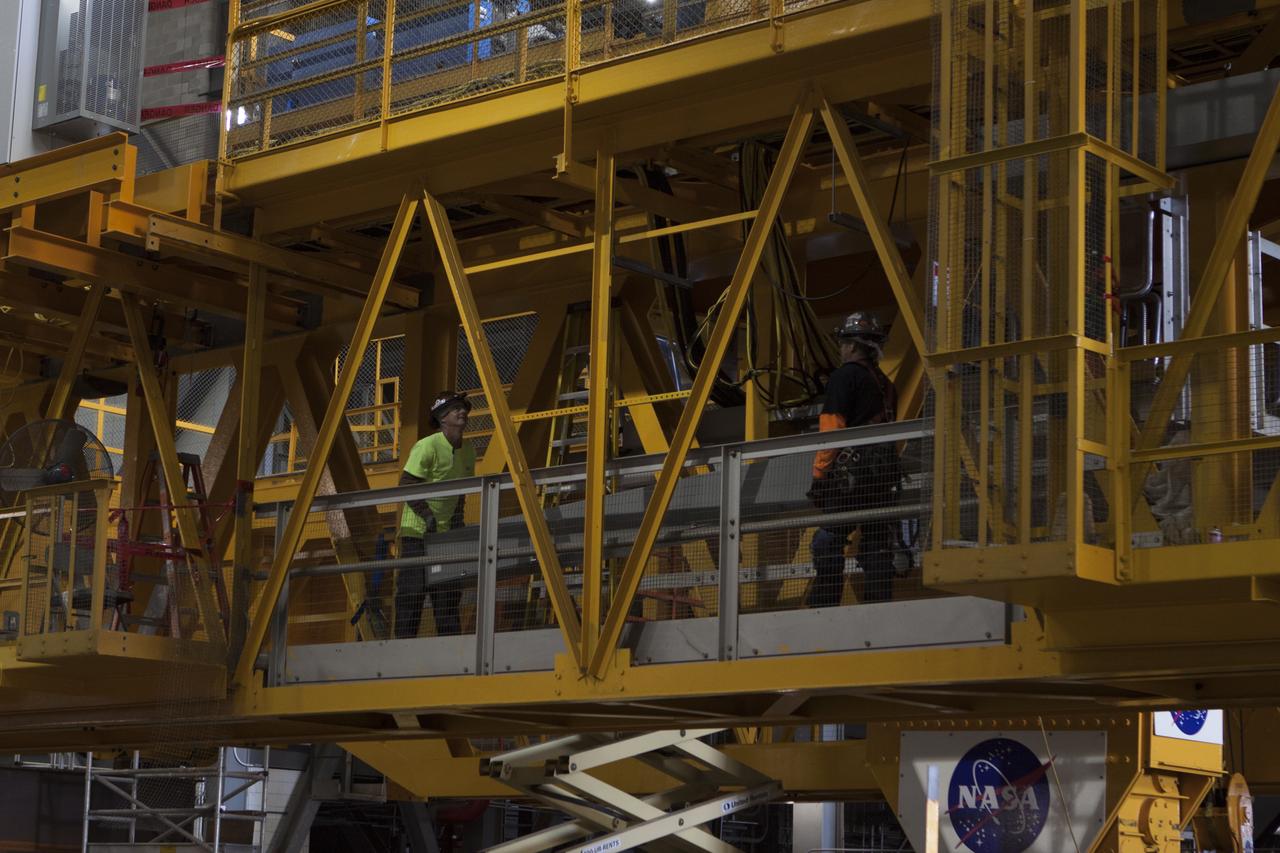
Inside the Vehicle Assembly Building at NASA's Kennedy Space Center in Florida, construction workers continue with refurbishment and upgrades to the 175-ton crane on the ground floor of the transfer aisle. The crane's 45-year-old controls are being upgraded to improve reliability, precision and safety. The Ground Systems Development and Operations Program is overseeing upgrades and modifications to the crane so that it can support lifting needs for NASA and other exploration vehicles, including the agency's Space Launch System and Orion spacecraft.
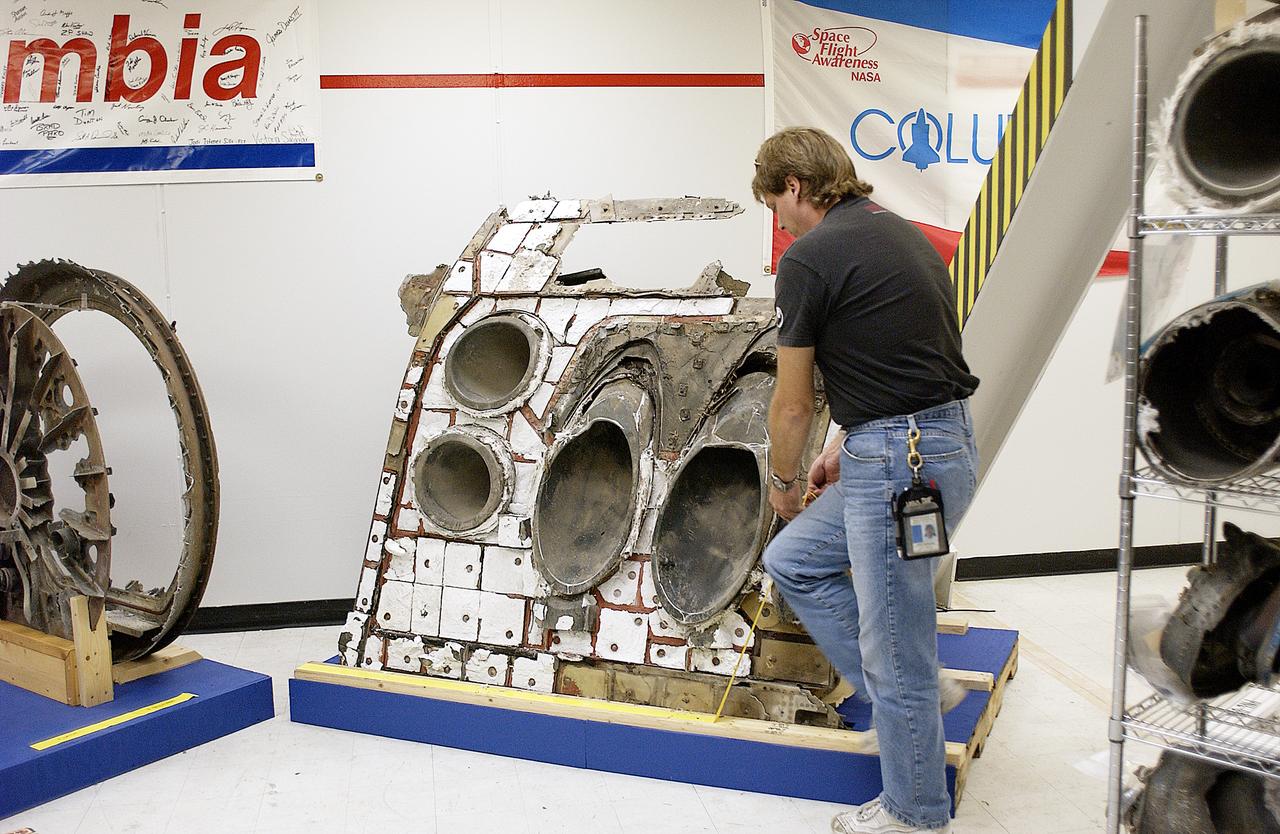
In the Vehicle Assembly Building, Jack Nowling, with United Space Alliance, moves a final piece of Columbia debris into place in the Vehicle Assembly Building (VAB). All of the pieces received and collected in the Columbia Reconstruction Hangar have been catalogued and moved to a permanent site in the VAB.
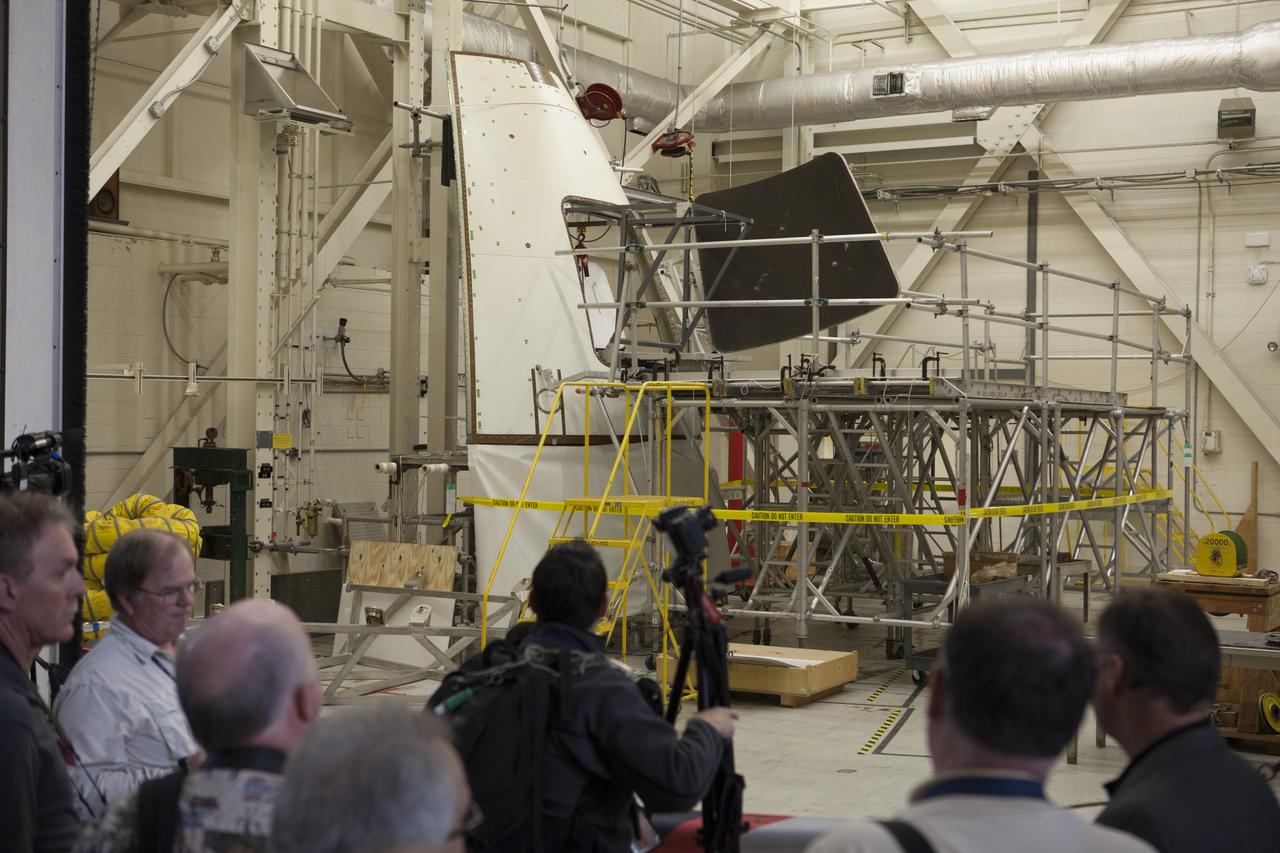
At NASA's Kennedy Space Center in Florida, members of the news media tour the spaceport's Vehicle Assembly Building. They were shown an ogive panel which, together with others, cover the Orion spacecraft during launch. Orion is the exploration spacecraft designed to carry astronauts to destinations not yet explored by humans, including an asteroid and Mars. It will have emergency abort capability, sustain the crew during space travel and provide safe re-entry from deep space return velocities. The first unpiloted flight test of Orion is scheduled to launch Dec. 4, 2014 atop a United Launch Alliance Delta IV Heavy rocket, and in 2018 on NASA’s Space Launch System rocket.
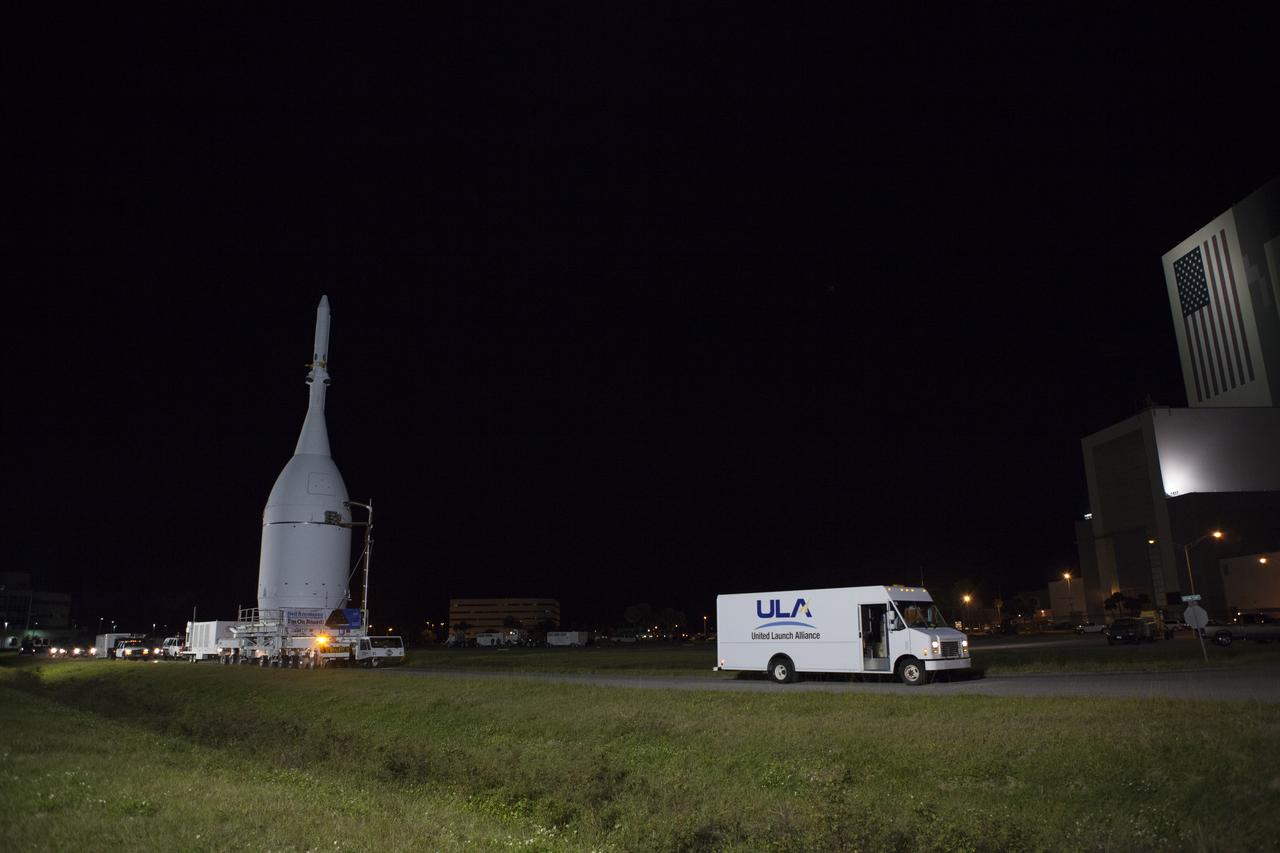
At NASA's Kennedy Space Center in Florida, the agency's Orion is transported to Launch Complex 37 at Cape Canaveral Air Force Station. After arrival at the launch pad, United Launch Alliance engineers and technicians will lift Orion and mount it atop its Delta IV Heavy rocket. Orion is the exploration spacecraft designed to carry astronauts to destinations not yet explored by humans, including an asteroid and Mars. It will have emergency abort capability, sustain the crew during space travel and provide safe re-entry from deep space return velocities. The first unpiloted flight test of Orion is scheduled to launch Dec. 4, 2014 atop a United Launch Alliance Delta IV Heavy rocket, and in 2018 on NASA’s Space Launch System rocket.
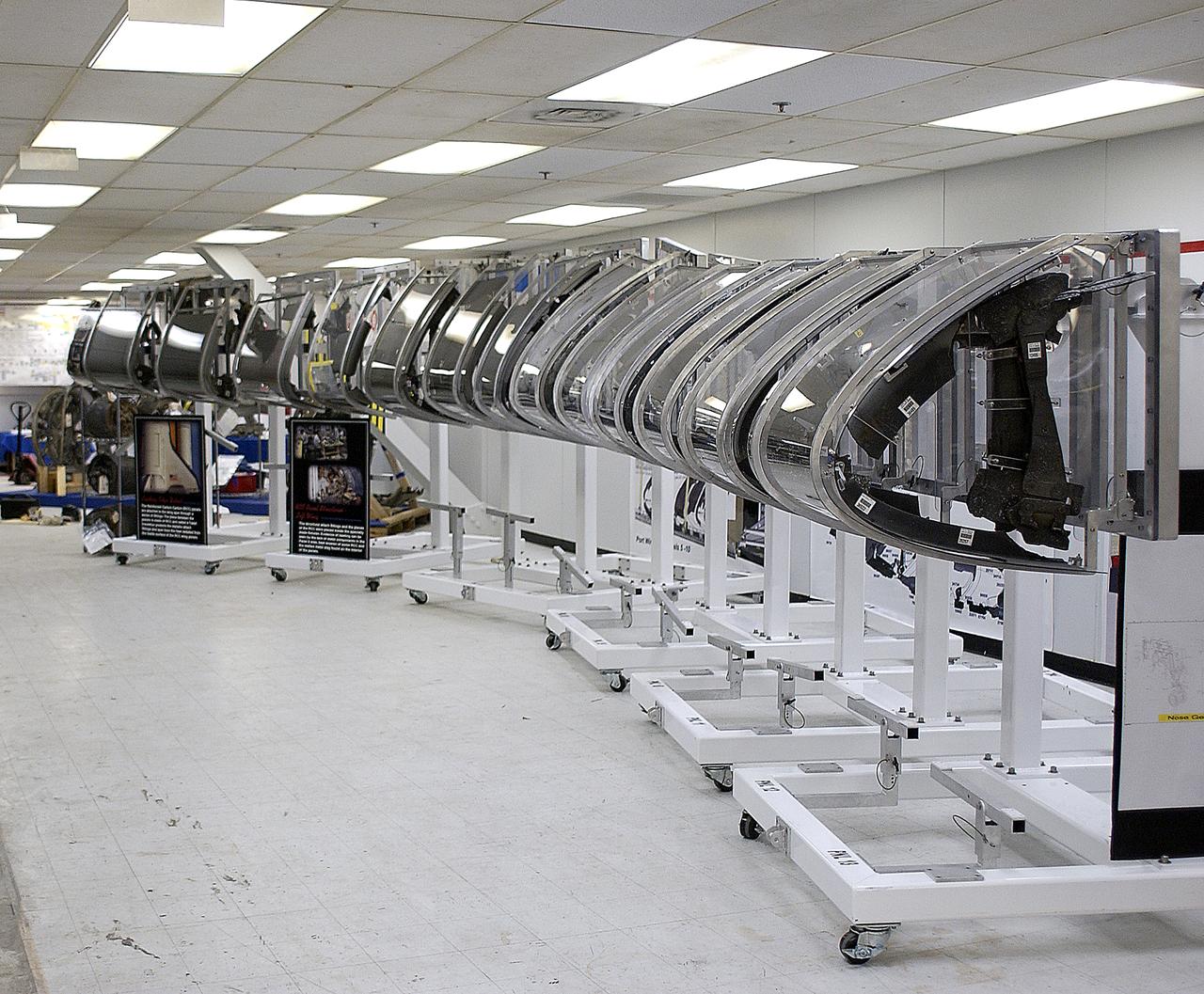
In the Vehicle Assembly Building, the mockup of the leading edge of Columbia’s left wing takes its place among the rest of the debris. All of the pieces received and collected in the Columbia Reconstruction Hangar have been catalogued and moved to a permanent site in the VAB.
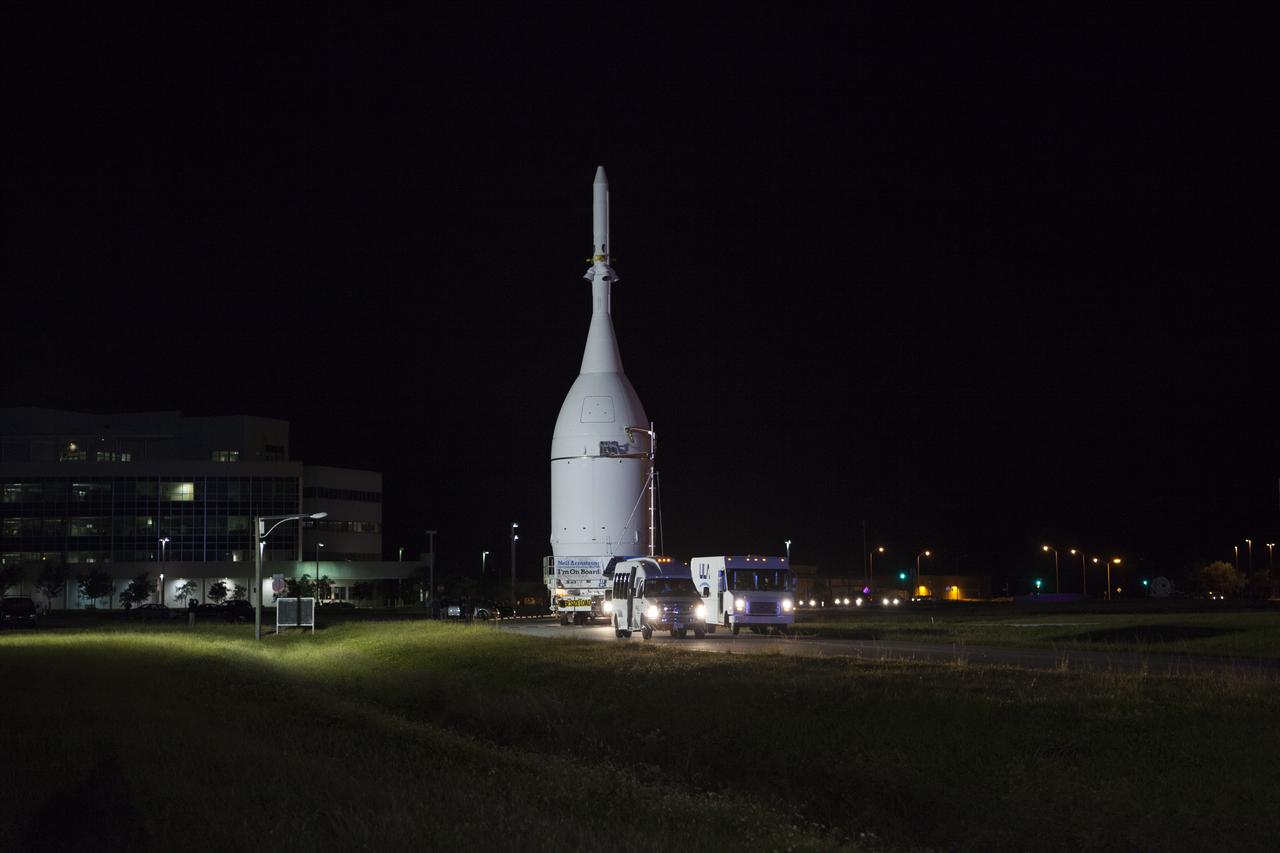
At NASA's Kennedy Space Center in Florida, the agency's Orion is transported to Launch Complex 37 at Cape Canaveral Air Force Station. After arrival at the launch pad, United Launch Alliance engineers and technicians will lift Orion and mount it atop its Delta IV Heavy rocket. Orion is the exploration spacecraft designed to carry astronauts to destinations not yet explored by humans, including an asteroid and Mars. It will have emergency abort capability, sustain the crew during space travel and provide safe re-entry from deep space return velocities. The first unpiloted flight test of Orion is scheduled to launch Dec. 4, 2014 atop a United Launch Alliance Delta IV Heavy rocket, and in 2018 on NASA’s Space Launch System rocket.
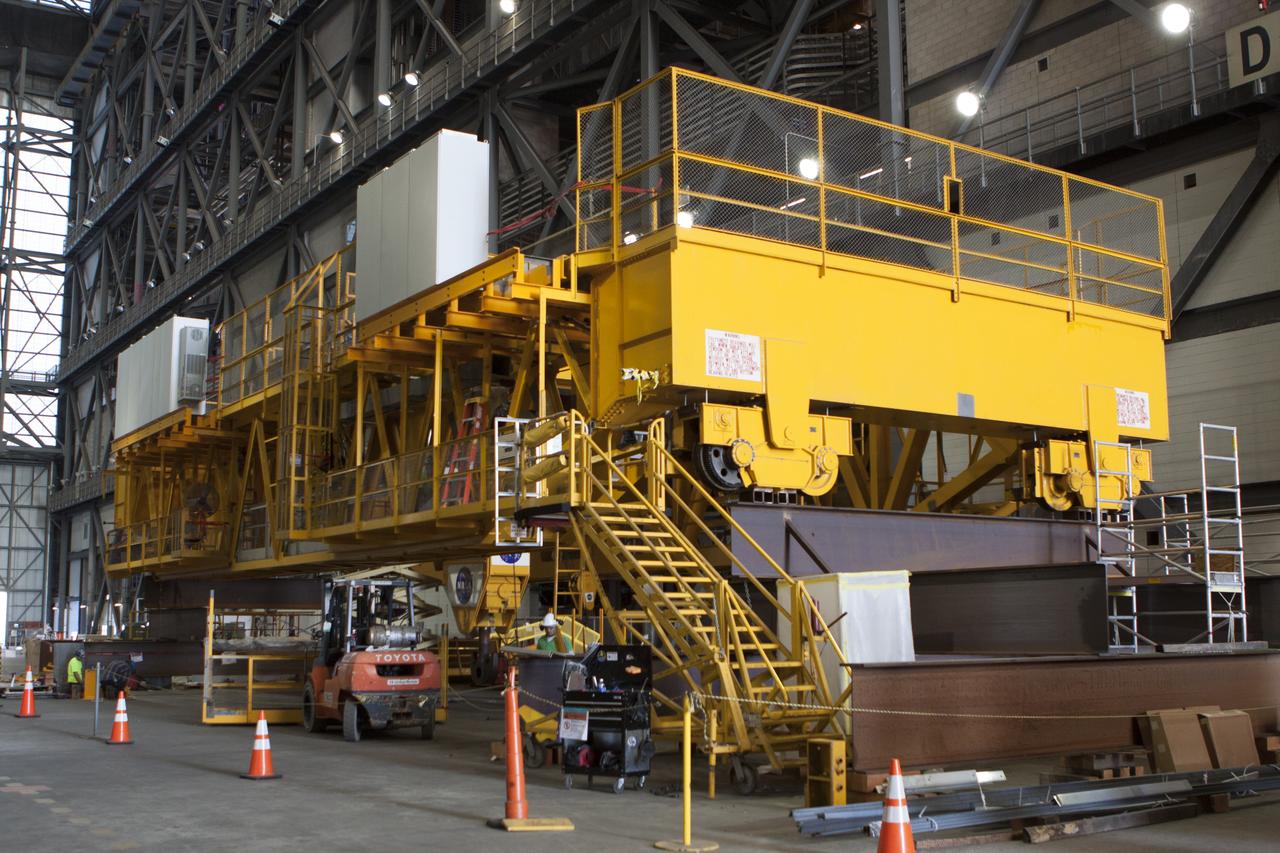
Inside the Vehicle Assembly Building at NASA's Kennedy Space Center in Florida, refurbishment and upgrades to the 175-ton crane are under way on the ground floor of the transfer aisle. The crane's 45-year-old controls are being upgraded to improve reliability, precision and safety. The Ground Systems Development and Operations Program is overseeing upgrades and modifications to the crane so that it can support lifting needs for NASA and other exploration vehicles, including the agency's Space Launch System and Orion spacecraft.
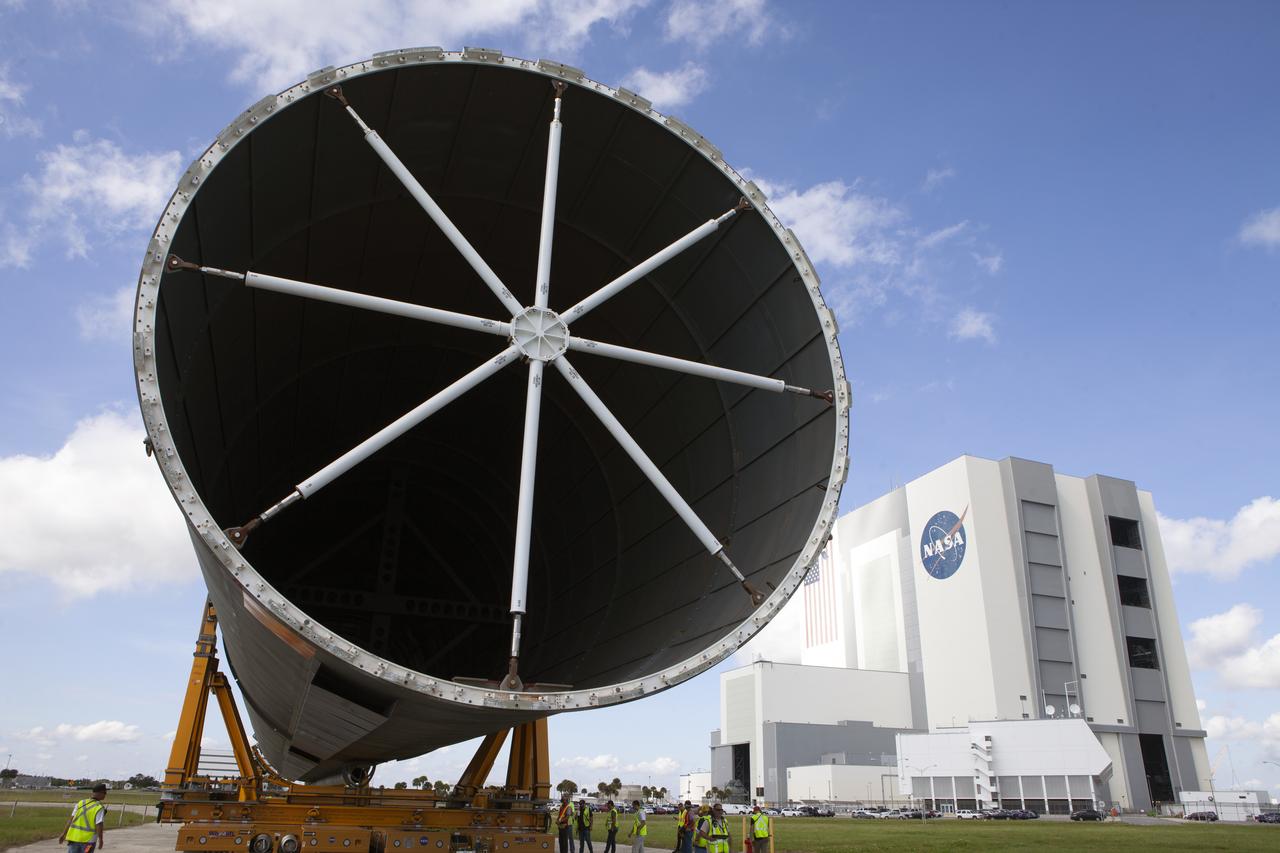
A close-up view of the top of the 212-foot-long Space Launch System (SLS) rocket core stage pathfinder as it is being moved back to the Pegasus barge at the Launch Complex 39 turn basin wharf at NASA’s Kennedy Space Center in Florida on Oct. 28, 2019. The core stage pathfinder is a full-scale mock-up of the rocket's core stage. It was used by the Exploration Ground Systems Program and their contractor, Jacobs, to practice offloading, moving and stacking maneuvers inside the Vehicle Assembly Building, using important ground support equipment to train employees and certify all the equipment works properly. The pathfinder was at Kennedy for about a month. It will make the trek back to NASA's Michoud Assembly Facility in Louisiana.
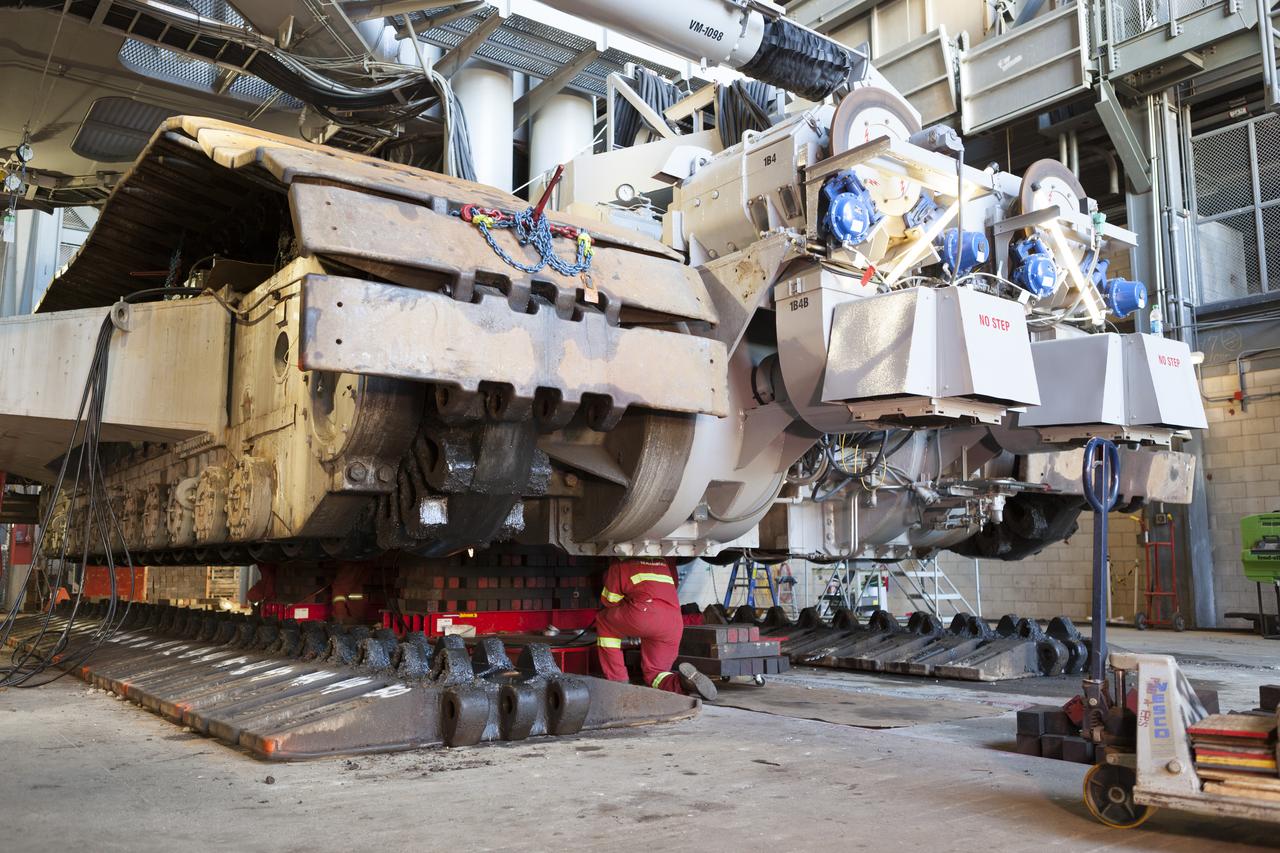
CAPE CANAVERAL, Fla. – Inside the Vehicle Assembly Building at NASA’s Kennedy Space Center in Florida, a technician monitors the progress as the B and D truck sections of crawler-transporter 2, or CT-2, are raised up to prepare for installation of new roller bearing assemblies. Sections of the crawler’s large metal tracks have been removed. Work continues in high bay 2 to upgrade CT-2. The modifications are designed to ensure CT-2’s ability to transport launch vehicles currently in development, such as the agency’s Space Launch System, to the launch pad. The Ground Systems Development and Operations Program office at Kennedy is overseeing the upgrades. For more than 45 years the crawler-transporters were used to transport the mobile launcher platform and the Apollo-Saturn V rockets and, later, space shuttles to Launch Pads 39A and B. For more information, visit: http://www.nasa.gov/exploration/systems/ground/crawler-transporter. Photo credit: NASA/Dimitri Gerondidakis
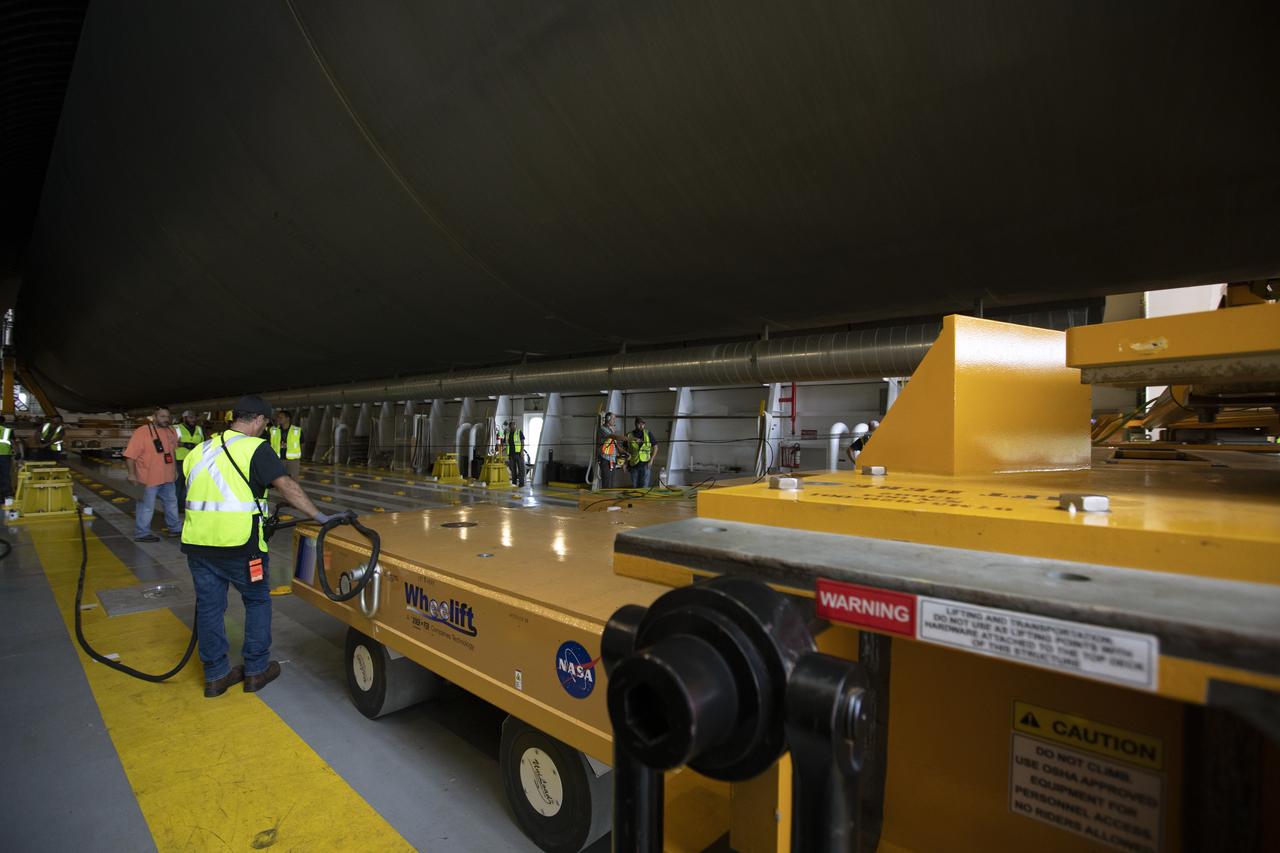
Inside the Pegasus barge at the Launch Complex 39 turn basin wharf, NASA and Jacobs workers assist as the 212-foot-long Space Launch System (SLS) rocket core stage pathfinder is moved inside the barge on Oct. 28, 2019 at NASA’s Kennedy Space Center in Florida. The core stage pathfinder is a full-scale mock-up of the rocket's core stage. It was used by the Exploration Ground Systems Program and their contractor, Jacobs, to practice offloading, moving and stacking maneuvers inside the Vehicle Assembly Building, using important ground support equipment to train employees and certify all the equipment works properly. The pathfinder was at Kennedy for about a month. It will make the trek back to NASA's Michoud Assembly Facility in Louisiana.
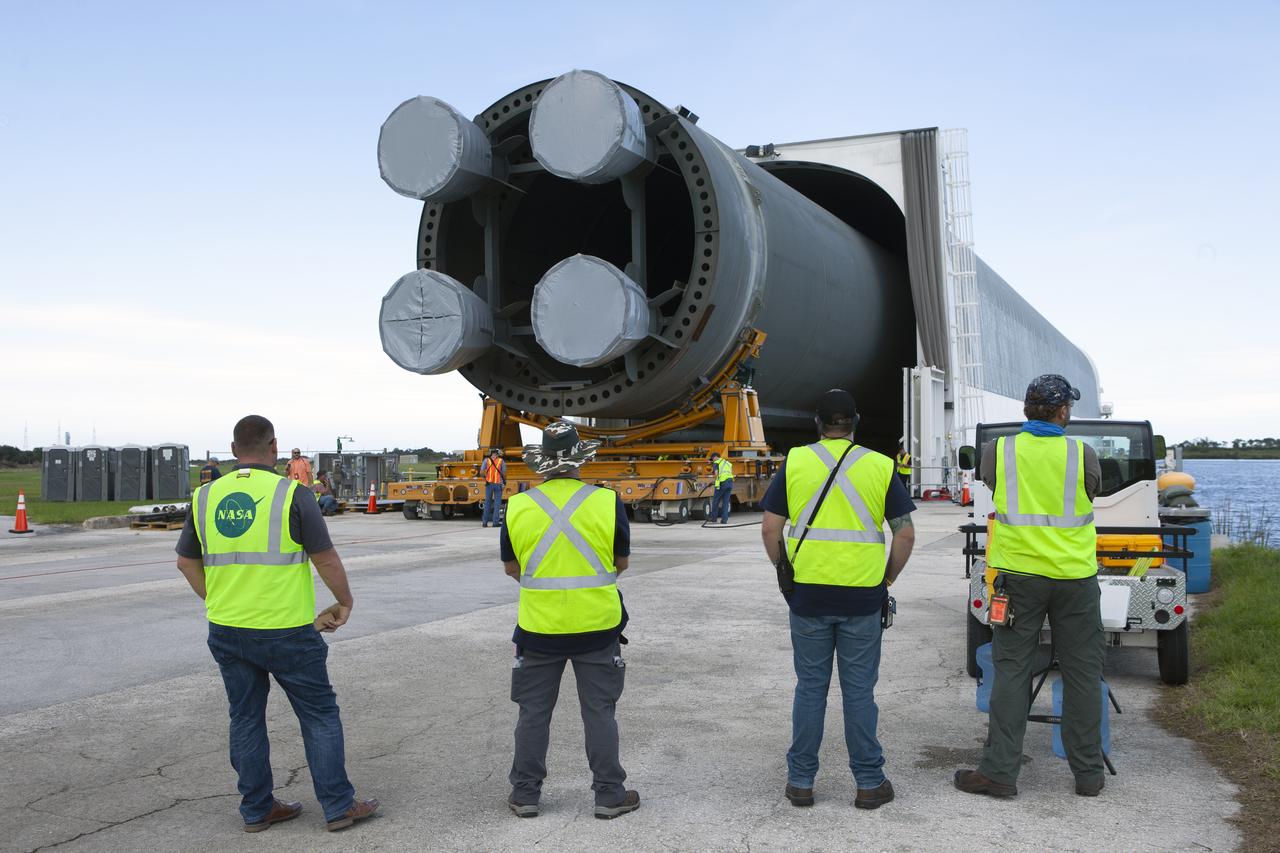
NASA and Jacobs workers watch as the 212-foot-long Space Launch System (SLS) rocket core stage pathfinder is moved inside the Pegasus barge at the Launch Complex 39 turn basin wharf at NASA’s Kennedy Space Center in Florida on Oct. 28, 2019. The core stage pathfinder is a full-scale mock-up of the rocket's core stage. It was used by the Exploration Ground Systems Program and their contractor, Jacobs, to practice offloading, moving and stacking maneuvers inside the Vehicle Assembly Building, using important ground support equipment to train employees and certify all the equipment works properly. The pathfinder was at Kennedy for about a month. It will make the trek back to NASA's Michoud Assembly Facility in Louisiana.
The 212-foot-long Space Launch System (SLS) rocket core stage pathfinder nears the entrance ramp to the Pegasus barge at the Launch Complex 39 turn basin wharf at NASA’s Kennedy Space Center in Florida on Oct. 28, 2019. The core stage pathfinder is a full-scale mock-up of the rocket's core stage. It was used by the Exploration Ground Systems Program and their contractor, Jacobs, to practice offloading, moving and stacking maneuvers inside the Vehicle Assembly Building, using important ground support equipment to train employees and certify all the equipment works properly. The pathfinder was at Kennedy for about a month. It will make the trek back to NASA's Michoud Assembly Facility in Louisiana.
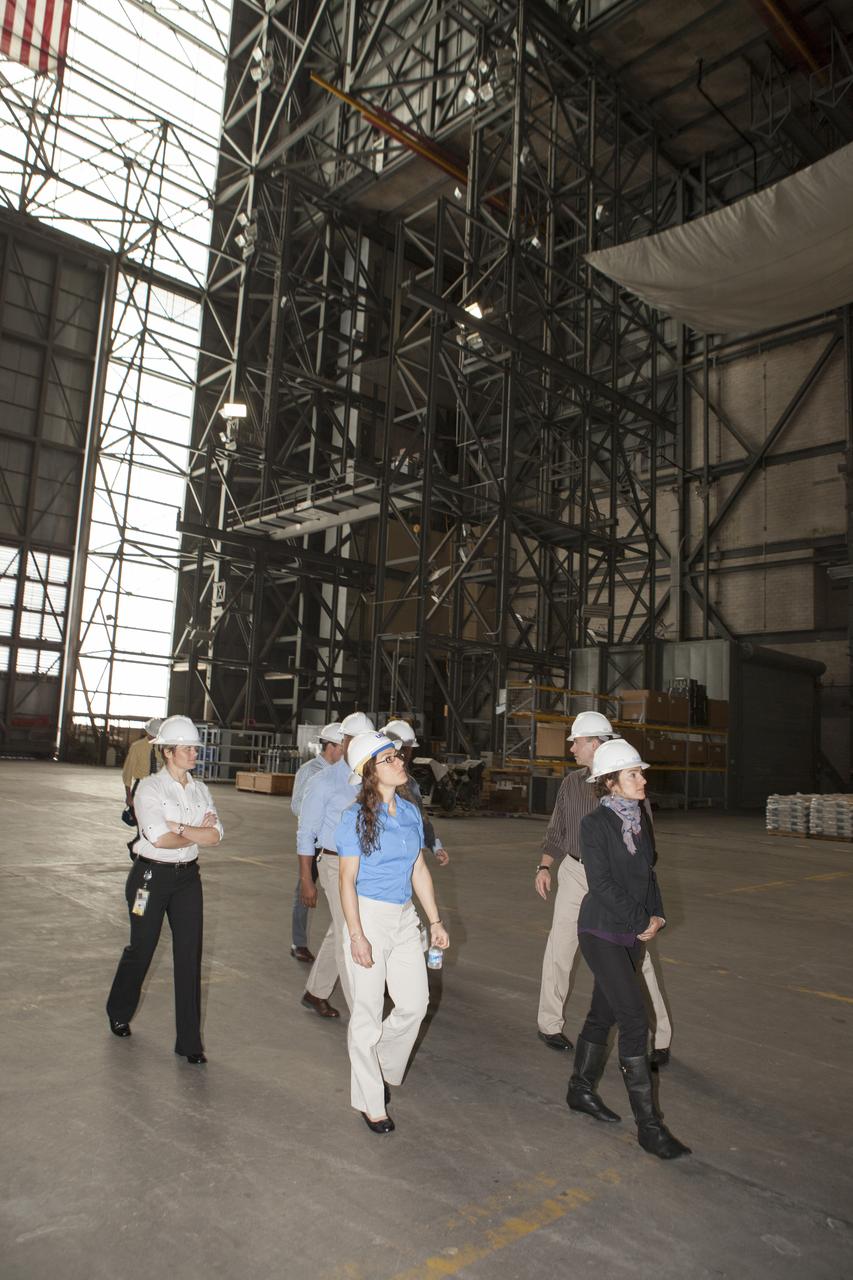
CAPE CANAVERAL, Fla. - NASA astronaut candidates Anne McClain, from left, Christina Hammock, Tyler "Nick" Hague and Jessica Meir walk through the transfer aisle of the Vehicle Assembly Building at NASA's Kennedy Space Center during a daylong set of briefings and tours of different facilities at NASA's primary launch center. The astronaut class of 2013 was selected by NASA after an extensive year-and-a-half search. The new group will help the agency push the boundaries of exploration and travel to new destinations in the solar system. To learn more about the astronaut class of 2013, visit: http://www.nasa.gov/astronauts/2013astroclass.html Photo credit: NASA/Kim Shiflett
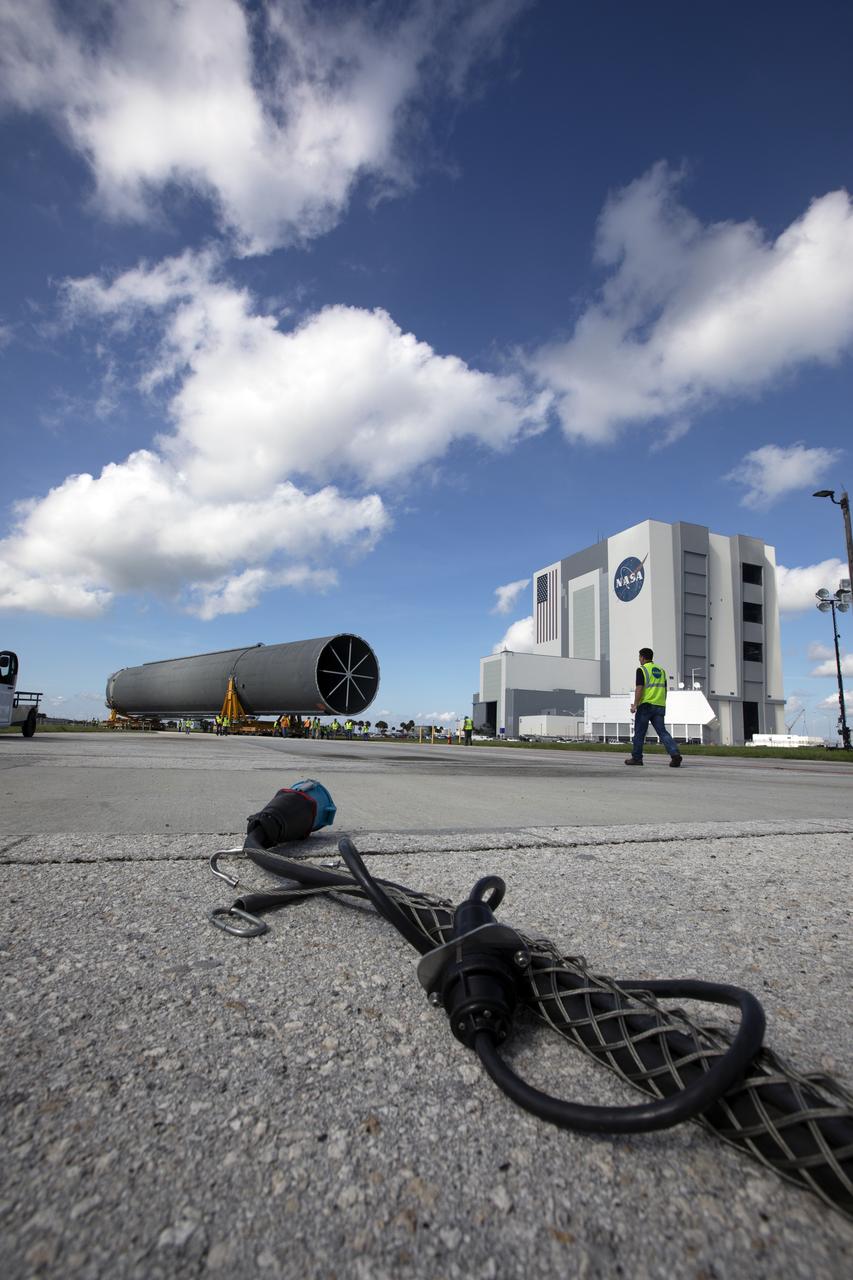
The 212-foot-long Space Launch System (SLS) rocket core stage pathfinder nears the entrance ramp to the Pegasus barge at the Launch Complex 39 turn basin wharf at NASA’s Kennedy Space Center in Florida on Oct. 28, 2019. The core stage pathfinder is a full-scale mock-up of the rocket's core stage. It was used by the Exploration Ground Systems Program and their contractor, Jacobs, to practice offloading, moving and stacking maneuvers inside the Vehicle Assembly Building, using important ground support equipment to train employees and certify all the equipment works properly. The pathfinder was at Kennedy for about a month. It will make the trek back to NASA's Michoud Assembly Facility in Louisiana.
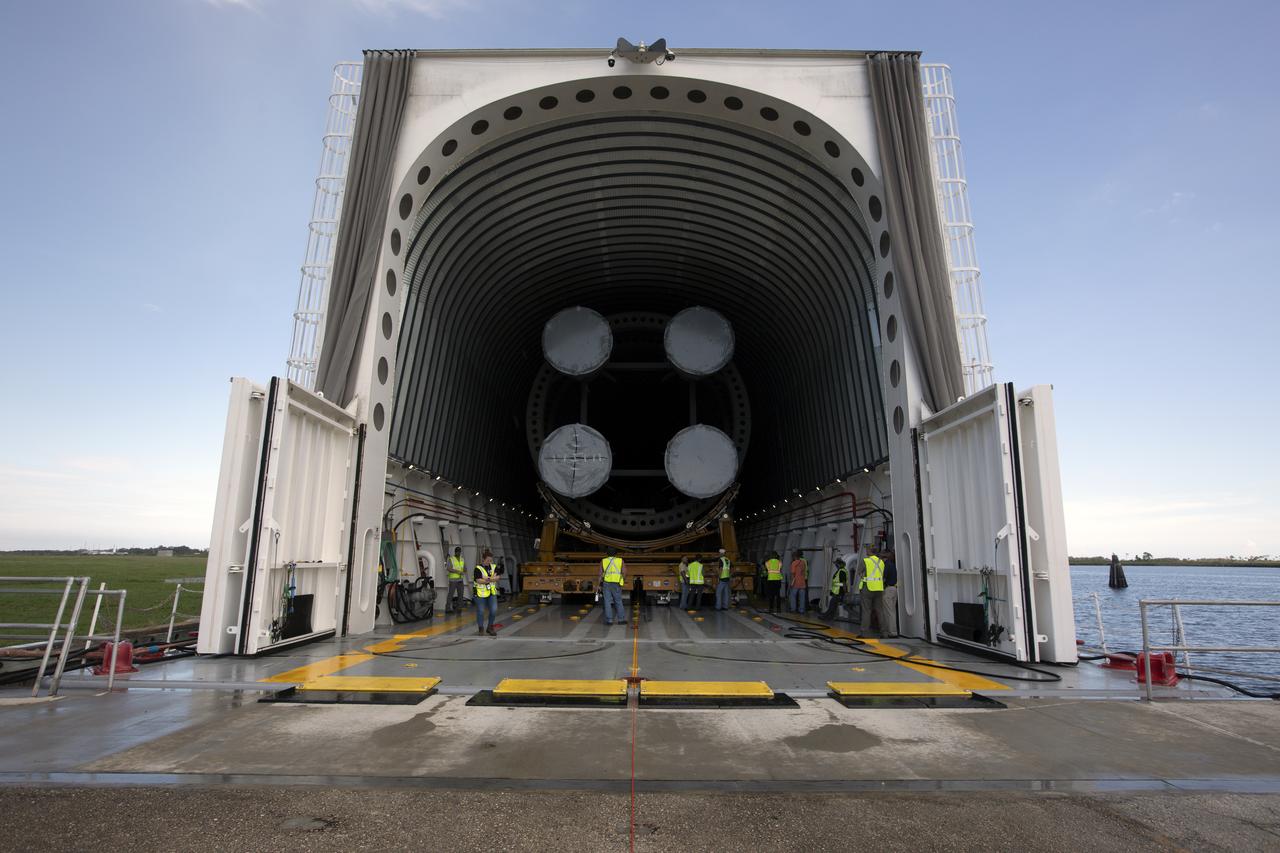
NASA and Jacobs workers assist as the 212-foot-long Space Launch System (SLS) rocket core stage pathfinder is moved inside the Pegasus barge at the Launch Complex 39 turn basin wharf at NASA’s Kennedy Space Center in Florida on Oct. 28, 2019. The core stage pathfinder is a full-scale mock-up of the rocket's core stage. It was used by the Exploration Ground Systems Program and their contractor, Jacobs, to practice offloading, moving and stacking maneuvers inside the Vehicle Assembly Building, using important ground support equipment to train employees and certify all the equipment works properly. The pathfinder was at Kennedy for about a month. It will make the trek back to NASA's Michoud Assembly Facility in Louisiana.
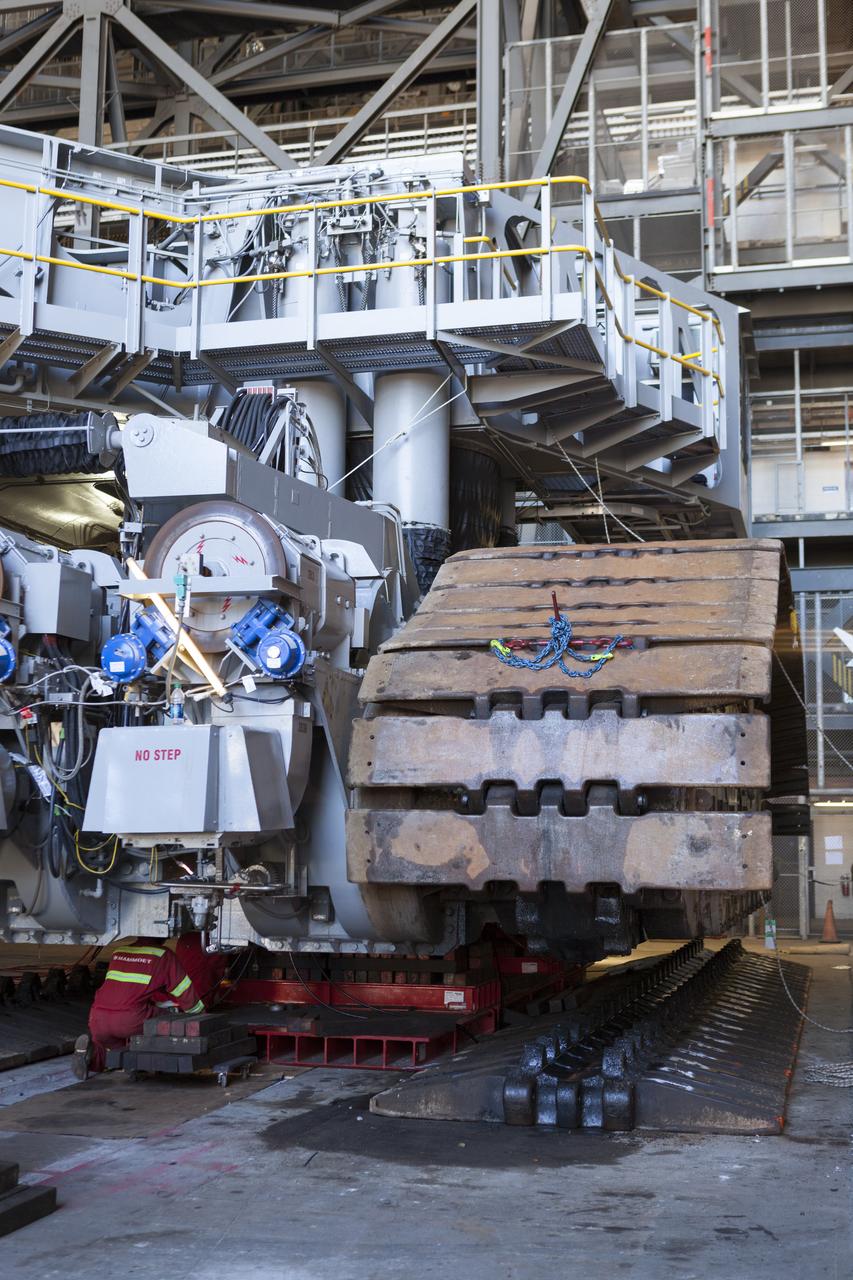
CAPE CANAVERAL, Fla. – Inside the Vehicle Assembly Building at NASA’s Kennedy Space Center in Florida, the B and D truck sections of crawler-transporter 2, or CT-2, are being raised up to prepare for installation of new roller bearing assemblies. Sections of the crawler’s large metal tracks have been removed. Work continues in high bay 2 to upgrade CT-2. The modifications are designed to ensure CT-2’s ability to transport launch vehicles currently in development, such as the agency’s Space Launch System, to the launch pad. The Ground Systems Development and Operations Program office at Kennedy is overseeing the upgrades. For more than 45 years the crawler-transporters were used to transport the mobile launcher platform and the Apollo-Saturn V rockets and, later, space shuttles to Launch Pads 39A and B. For more information, visit: http://www.nasa.gov/exploration/systems/ground/crawler-transporter. Photo credit: NASA/Dimitri Gerondidakis
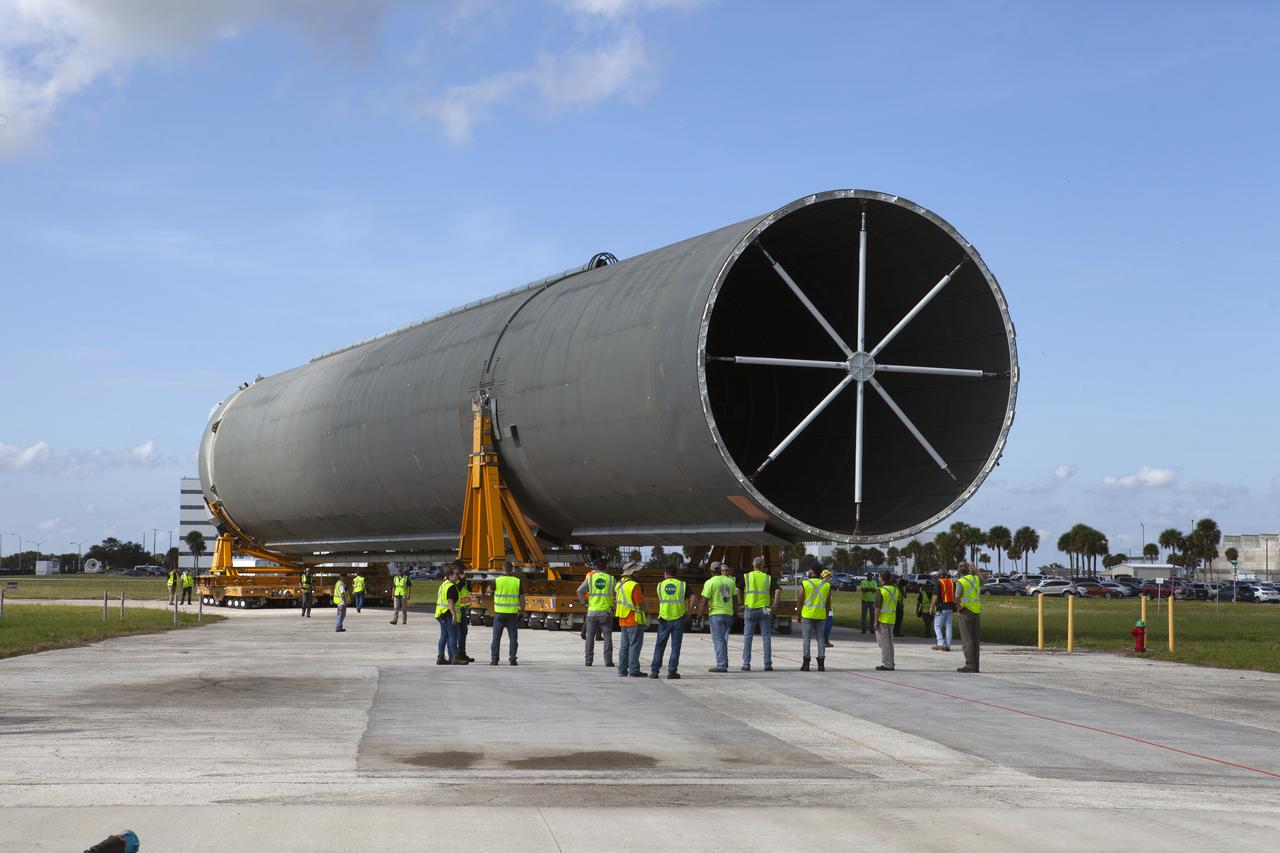
The top portion of the 212-foot-long Space Launch System (SLS) rocket core stage pathfinder is in view as the transporter it is secured on moves in reverse to position the pathfinder for the move to the Pegasus barge at the Launch Complex 39 turn basin wharf at NASA’s Kennedy Space Center in Florida on Oct. 28, 2019. The core stage pathfinder is a full-scale mock-up of the rocket's core stage. It was used by the Exploration Ground Systems Program and their contractor, Jacobs, to practice offloading, moving and stacking maneuvers inside the Vehicle Assembly Building, using important ground support equipment to train employees and certify all the equipment works properly. The pathfinder was at Kennedy for about a month. It will make the trek back to NASA's Michoud Assembly Facility in Louisiana.
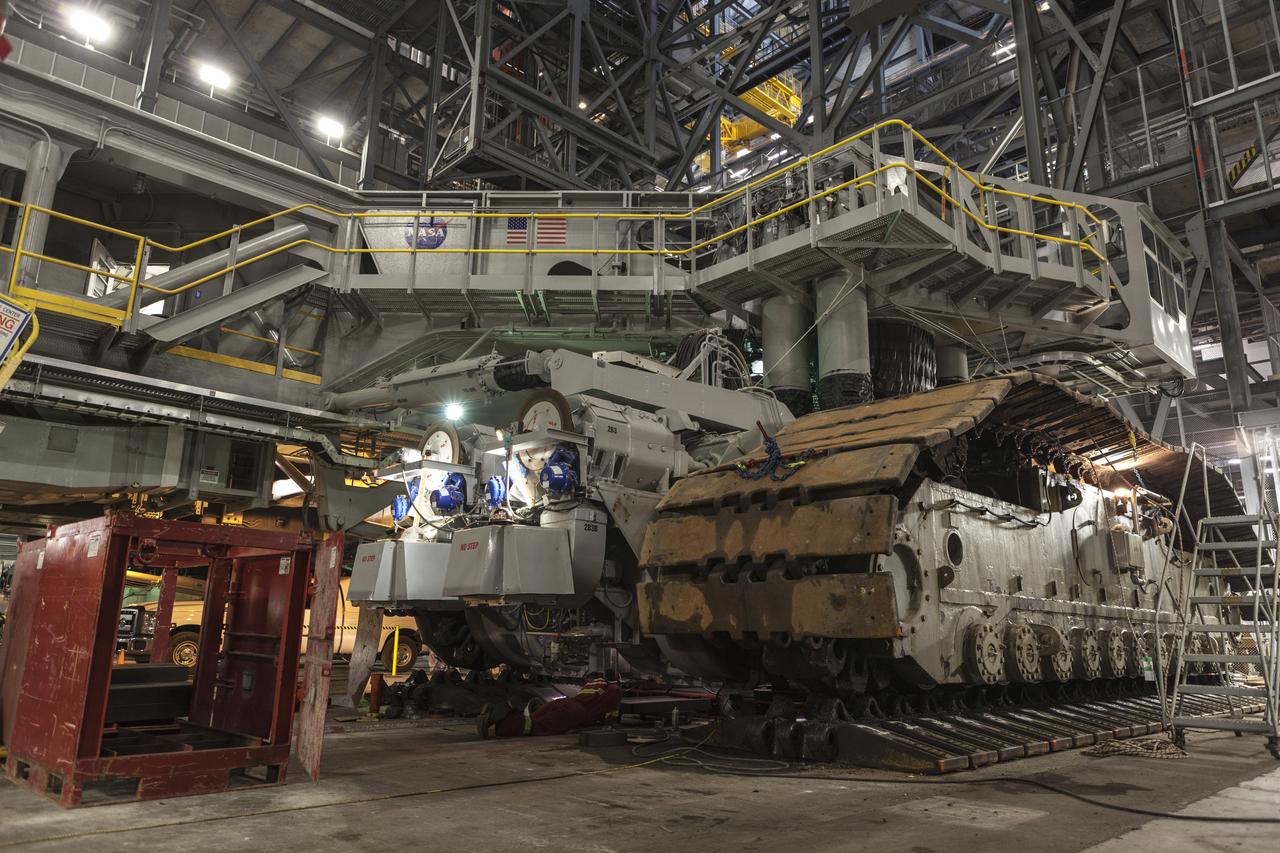
CAPE CANAVERAL, Fla. – Inside the Vehicle Assembly Building at NASA’s Kennedy Space Center in Florida, the B and D truck sections of crawler-transporter 2, or CT-2, are being raised up to prepare for installation of new roller bearing assemblies. Work continues in high bay 2 to upgrade CT-2. The modifications are designed to ensure CT-2’s ability to transport launch vehicles currently in development, such as the agency’s Space Launch System, to the launch pad. The Ground Systems Development and Operations Program office at Kennedy is overseeing the upgrades. For more than 45 years the crawler-transporters were used to transport the mobile launcher platform and the Apollo-Saturn V rockets and, later, space shuttles to Launch Pads 39A and B. For more information, visit: http://www.nasa.gov/exploration/systems/ground/crawler-transporter. Photo credit: NASA/Dimitri Gerondidakis
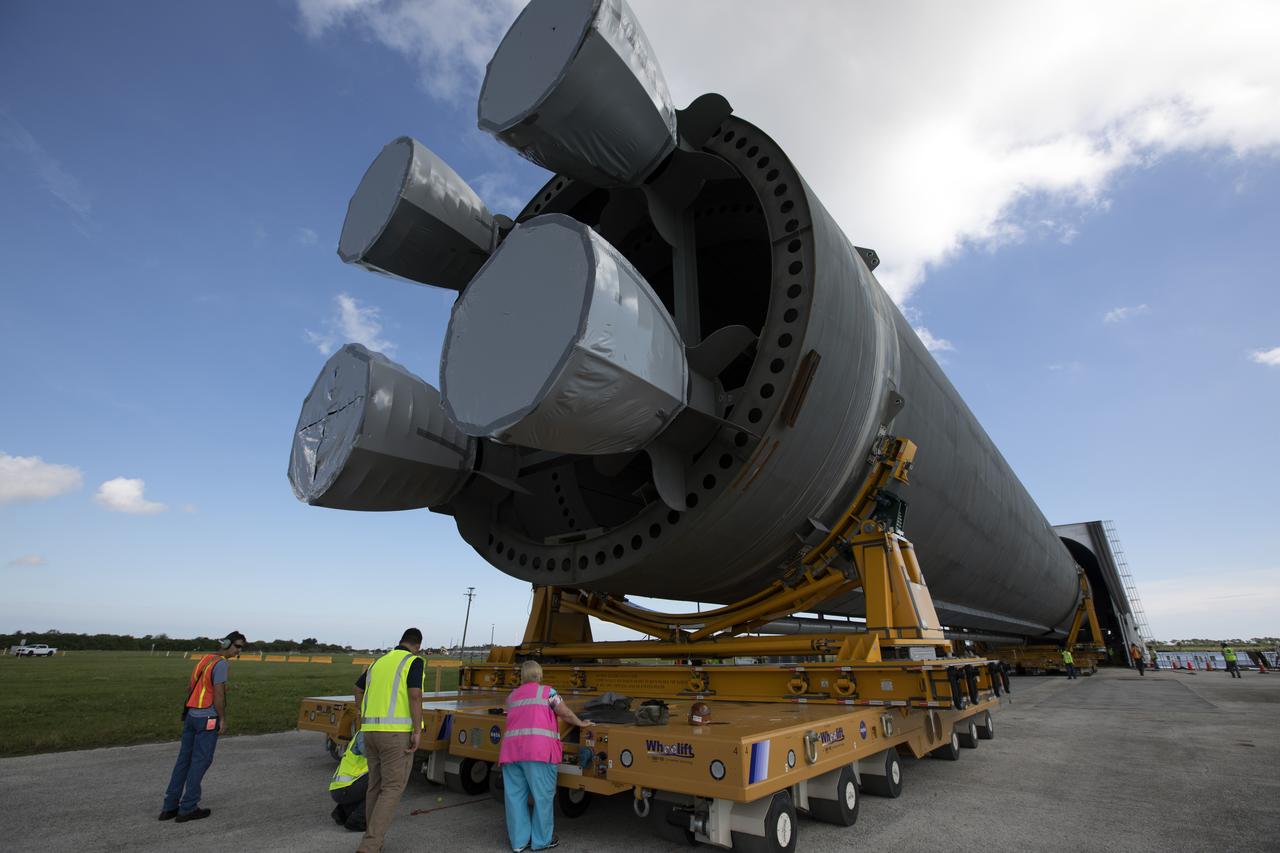
The 212-foot-long Space Launch System (SLS) rocket core stage pathfinder nears the entrance ramp to the Pegasus barge at the Launch Complex 39 turn basin wharf at NASA’s Kennedy Space Center in Florida on Oct. 28, 2019. The core stage pathfinder is a full-scale mock-up of the rocket's core stage. It was used by the Exploration Ground Systems Program and their contractor, Jacobs, to practice offloading, moving and stacking maneuvers inside the Vehicle Assembly Building, using important ground support equipment to train employees and certify all the equipment works properly. The pathfinder was at Kennedy for about a month. It will make the trek back to NASA's Michoud Assembly Facility in Louisiana.
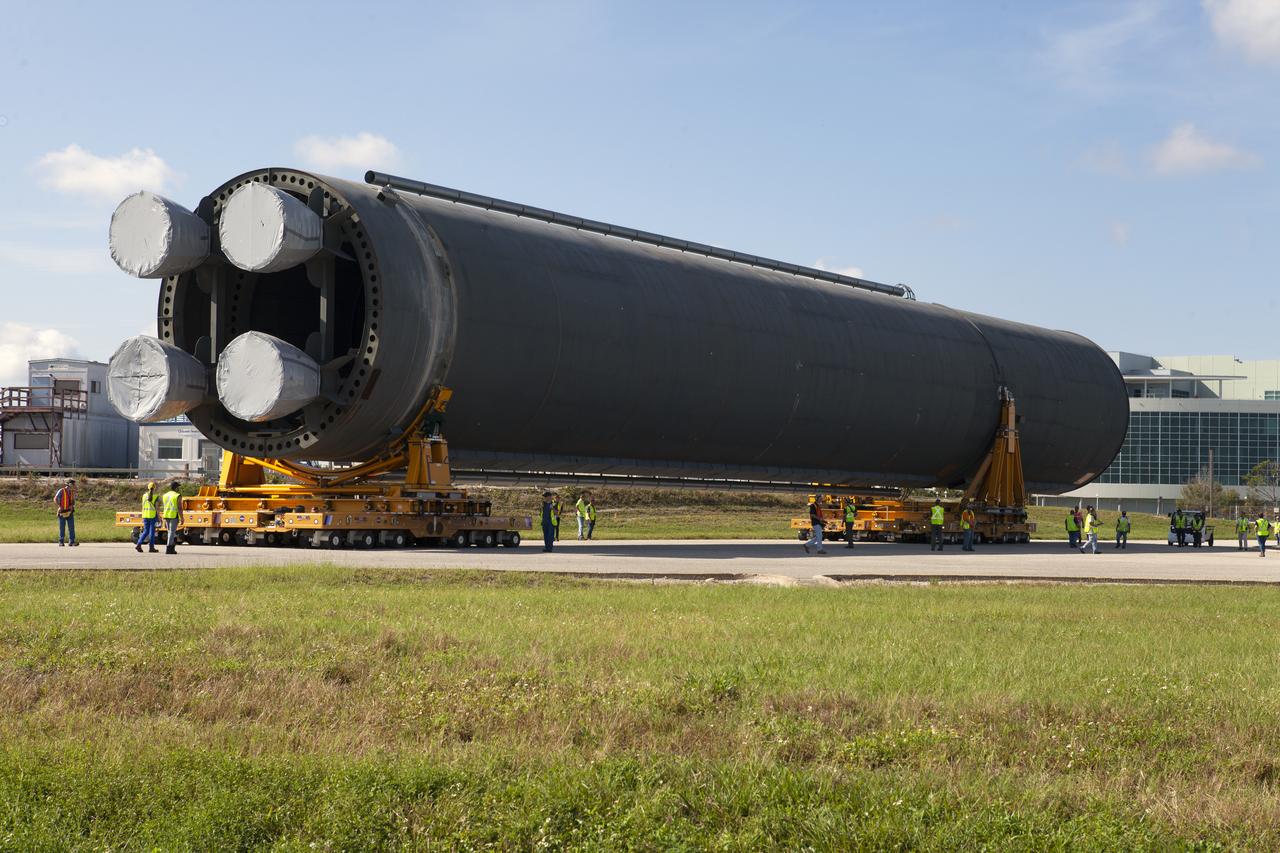
The 212-foot-long Space Launch System (SLS) rocket core stage pathfinder is being transported back to the Pegasus barge at the Launch Complex 39 turn basin wharf at NASA’s Kennedy Space Center in Florida on Oct. 28, 2019. The core stage pathfinder is a full-scale mock-up of the rocket's core stage. It was used by the Exploration Ground Systems Program and their contractor, Jacobs, to practice offloading, moving and stacking maneuvers inside the Vehicle Assembly Building, using important ground support equipment to train employees and certify all the equipment works properly. The pathfinder was at Kennedy for about a month. It will make the trek back to NASA's Michoud Assembly Facility in Louisiana.
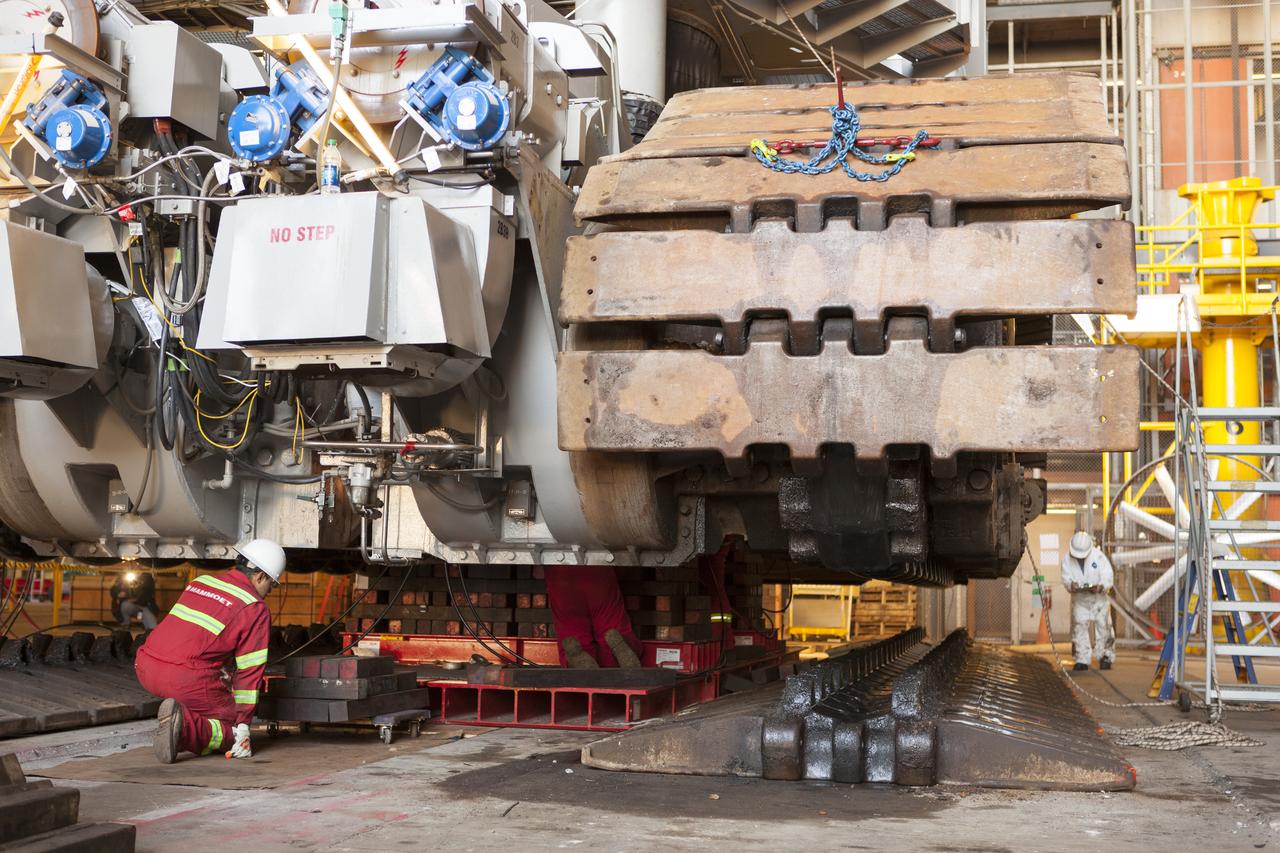
CAPE CANAVERAL, Fla. – Inside the Vehicle Assembly Building at NASA’s Kennedy Space Center in Florida, ground support technicians monitor the progress as the B and D truck sections of crawler-transporter 2, or CT-2, are being raised up to prepare for installation of new roller bearing assemblies. Sections of the crawler’s large metal tracks have been removed. Work continues in high bay 2 to upgrade CT-2. The modifications are designed to ensure CT-2’s ability to transport launch vehicles currently in development, such as the agency’s Space Launch System, to the launch pad. The Ground Systems Development and Operations Program office at Kennedy is overseeing the upgrades. For more than 45 years the crawler-transporters were used to transport the mobile launcher platform and the Apollo-Saturn V rockets and, later, space shuttles to Launch Pads 39A and B. For more information, visit: http://www.nasa.gov/exploration/systems/ground/crawler-transporter. Photo credit: NASA/Dimitri Gerondidakis
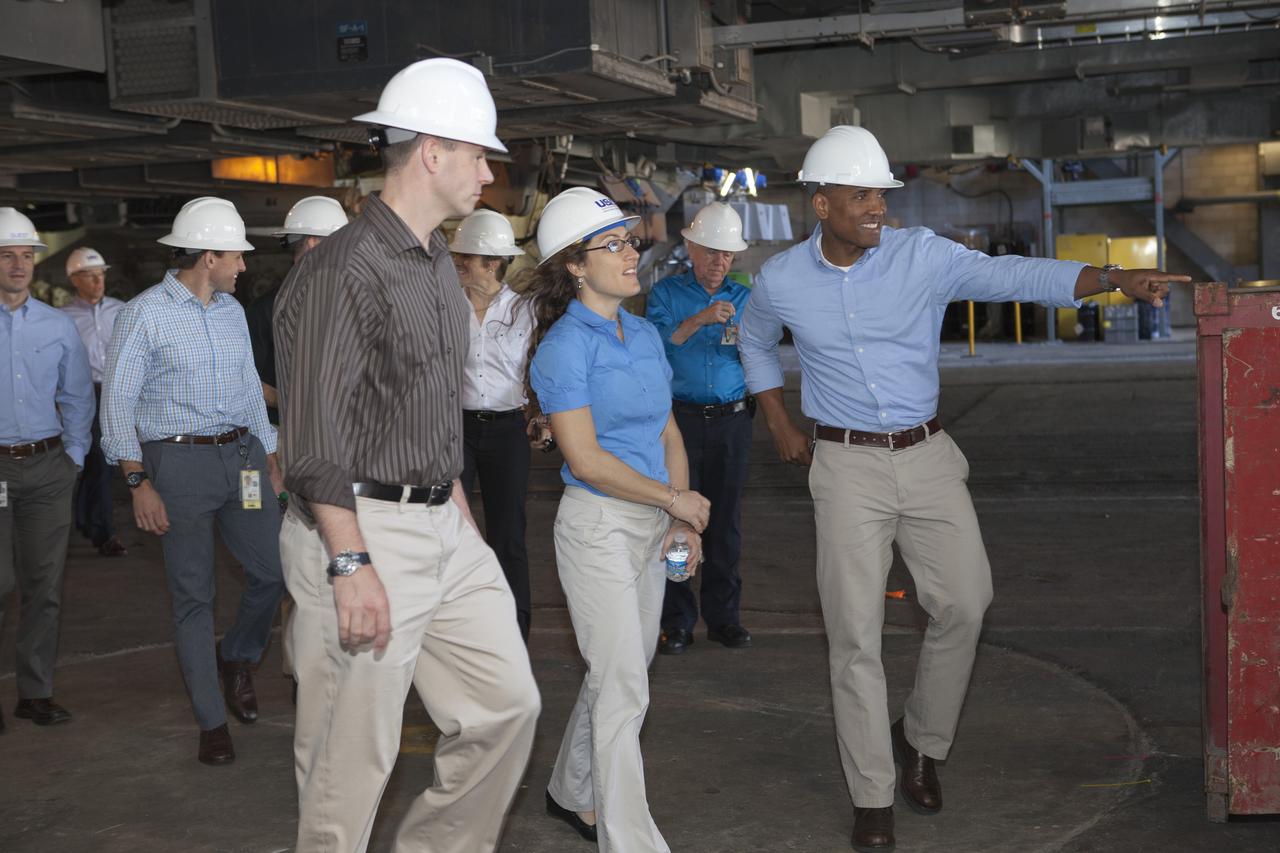
CAPE CANAVERAL, Fla. - NASA astronaut candidates Andrew Morgan, from left Josh Cassada, Tyler "Nick" Hague, Christina Hammock and Victor Glover tour one of the high bays of the Vehicle Assembly Building at NASA's Kennedy Space Center during a daylong set of briefings and tours of different facilities at NASA's primary launch center. The astronaut class of 2013 was selected by NASA after an extensive year-and-a-half search. The new group will help the agency push the boundaries of exploration and travel to new destinations in the solar system. To learn more about the astronaut class of 2013, visit: http://www.nasa.gov/astronauts/2013astroclass.html Photo credit: NASA/Kim Shiflett
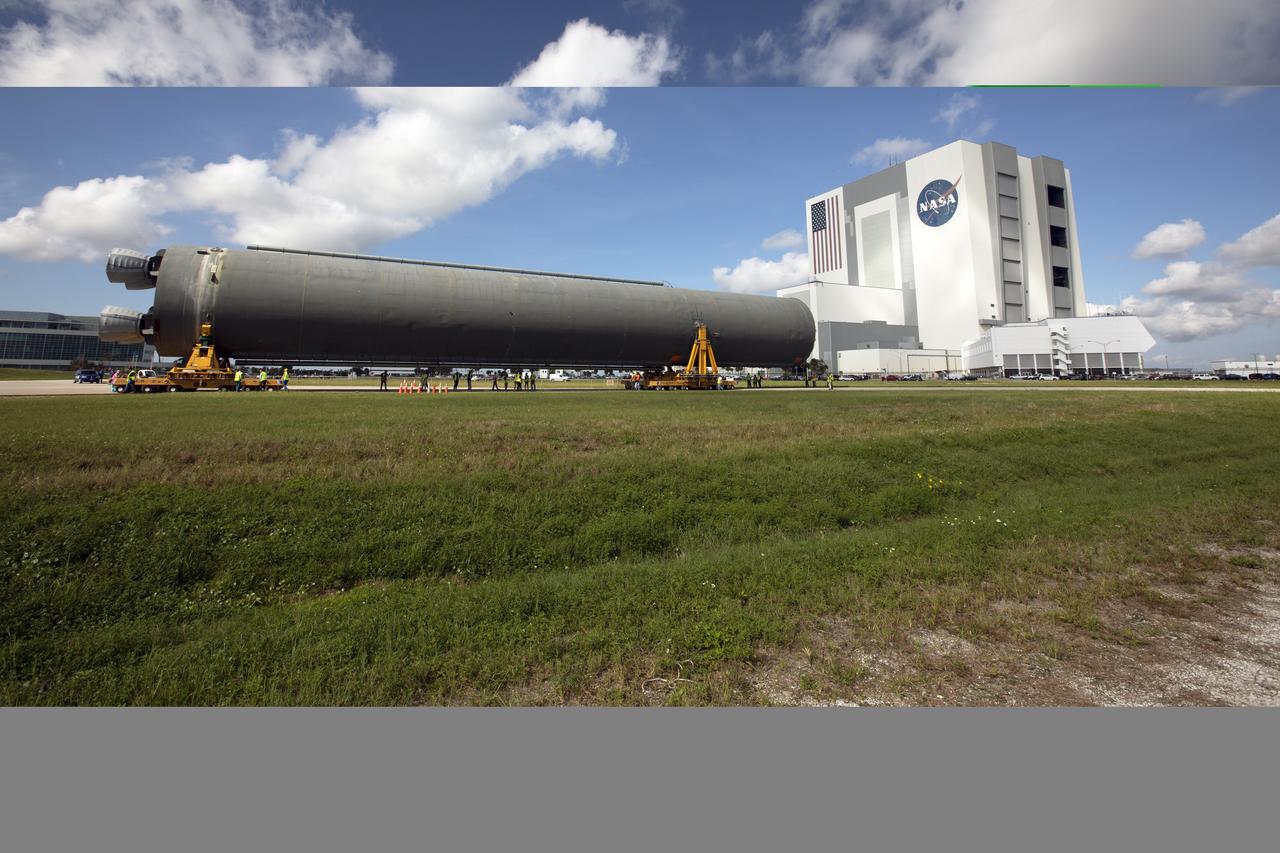
The 212-foot-long Space Launch System (SLS) rocket core stage pathfinder is being transported back to the Pegasus barge at the Launch Complex 39 turn basin wharf at NASA’s Kennedy Space Center in Florida on Oct. 28, 2019. The core stage pathfinder is a full-scale mock-up of the rocket's core stage. It was used by the Exploration Ground Systems Program and their contractor, Jacobs, to practice offloading, moving and stacking maneuvers inside the Vehicle Assembly Building, using important ground support equipment to train employees and certify all the equipment works properly. The pathfinder was at Kennedy for about a month. It will make the trek back to NASA's Michoud Assembly Facility in Louisiana.
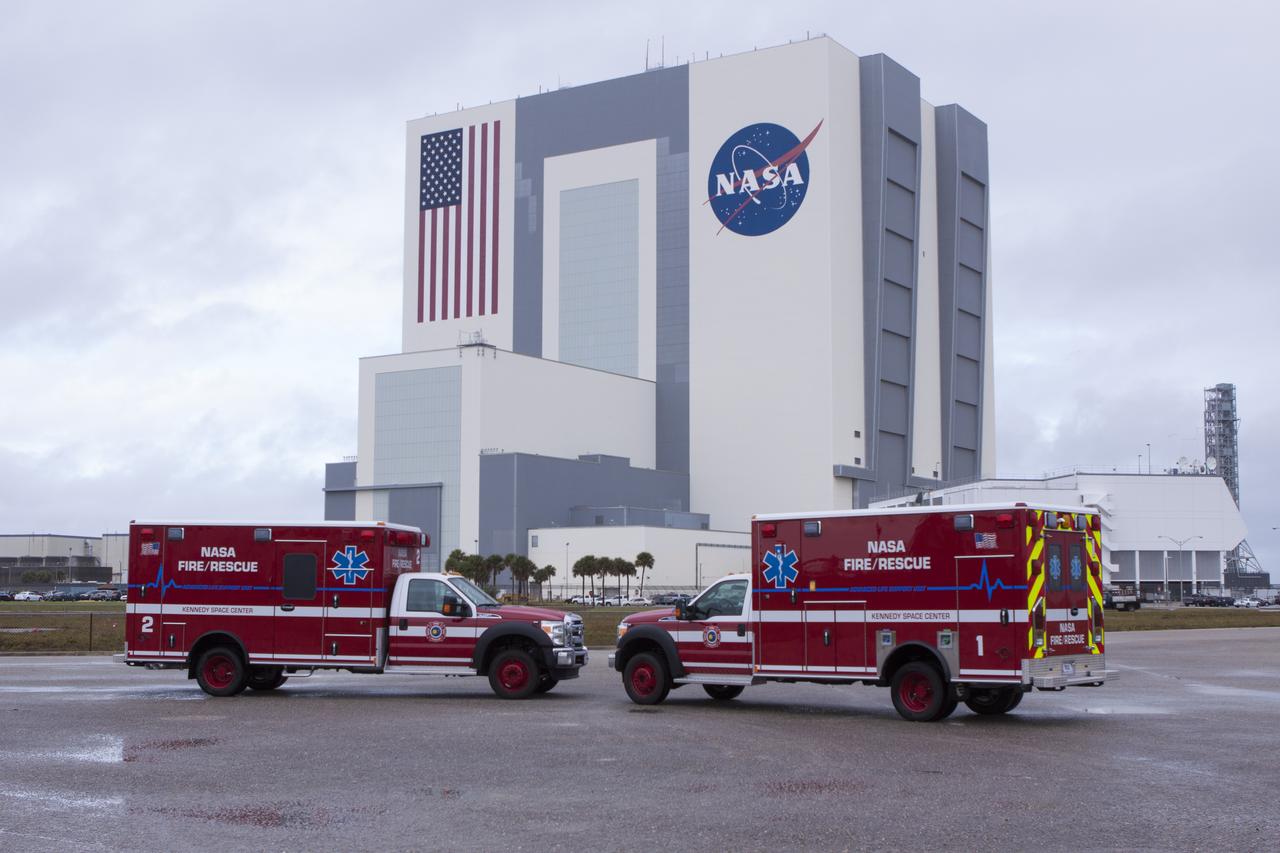
New Fire Department's Emergency Response Trucks in front of VAB. (Not on web)
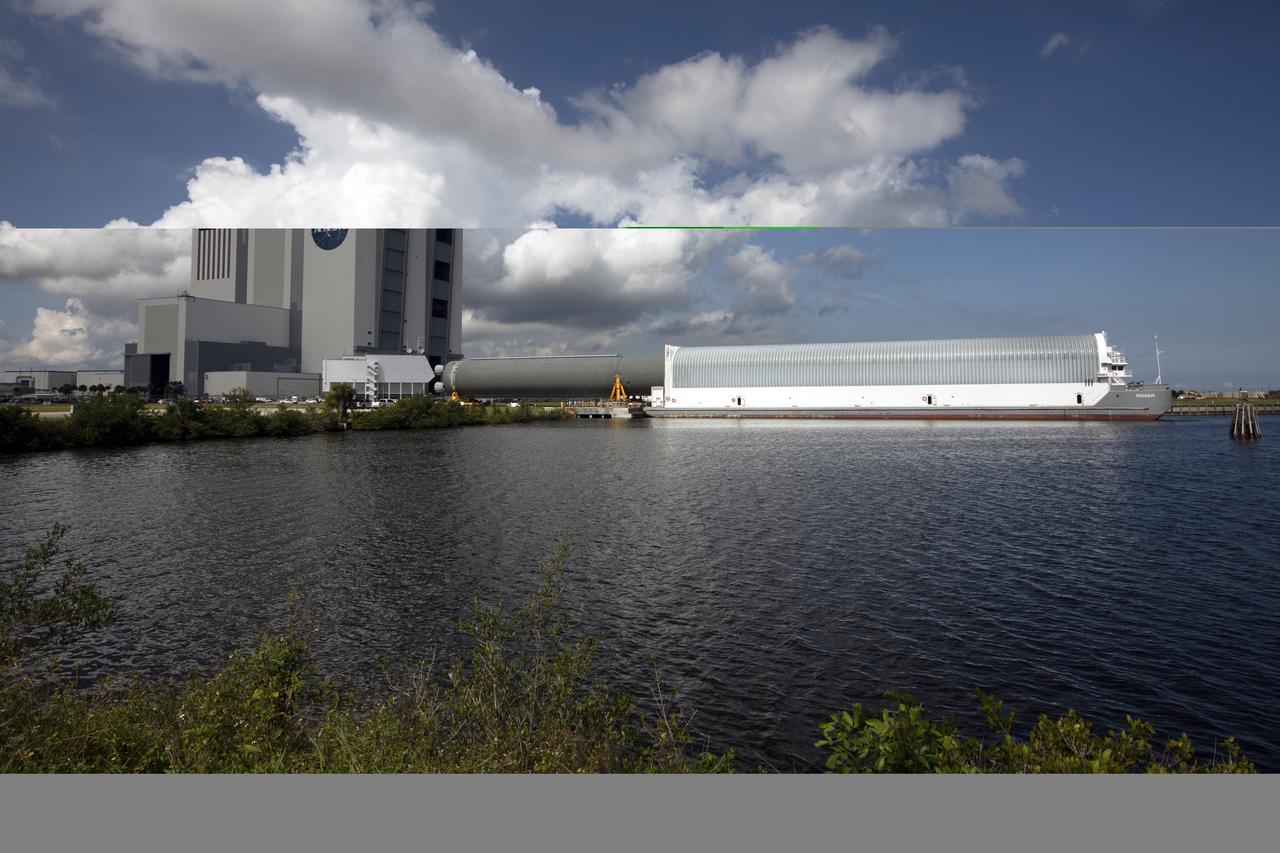
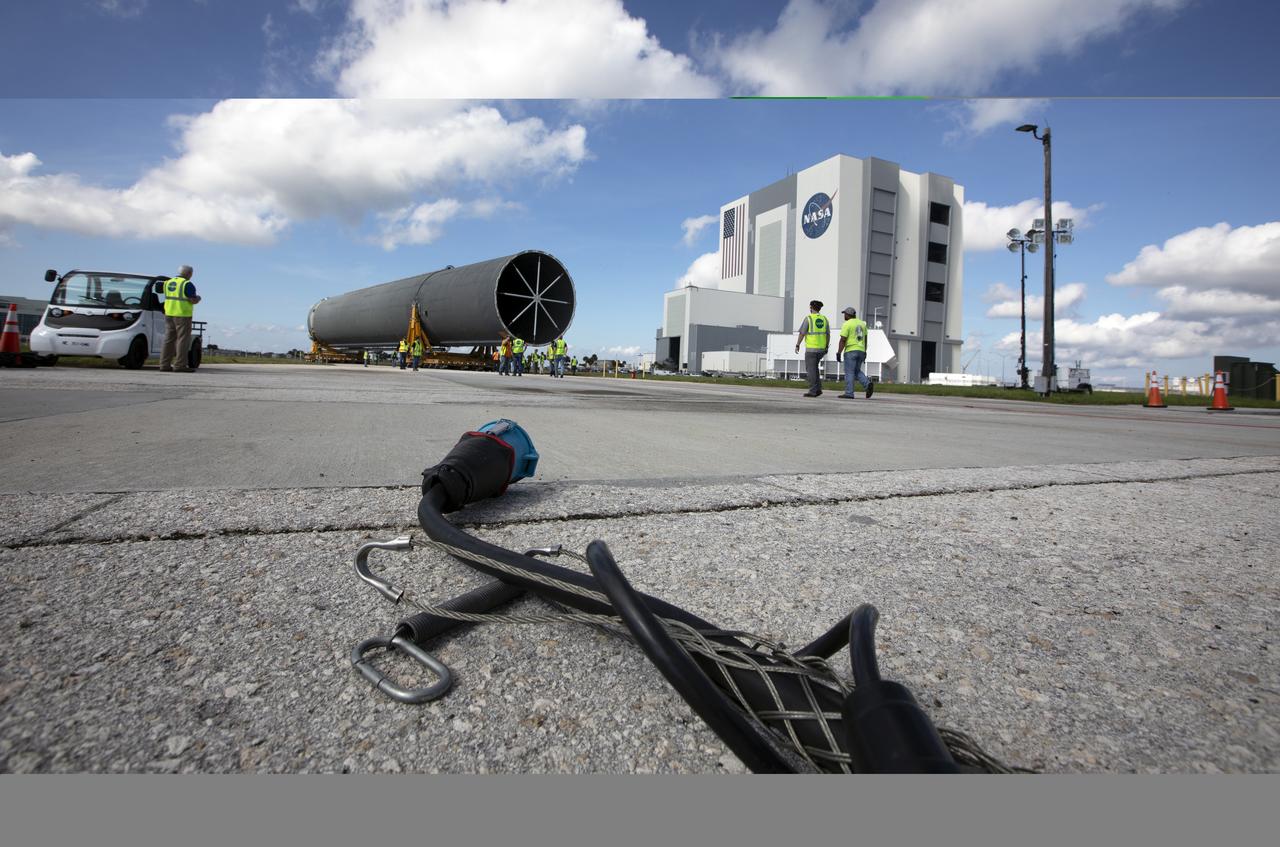
Fluffy clouds serve as a backdrop for the Vehicle Assembly Building (VAB), as the 212-foot-long Space Launch System (SLS) rocket core stage pathfinder is moved inside the Pegasus barge at the Launch Complex 39 turn basin wharf at NASA’s Kennedy Space Center in Florida on Oct. 28, 2019. The core stage pathfinder is a full-scale mock-up of the rocket's core stage. It was used by the Exploration Ground Systems Program and their contractor, Jacobs, to practice offloading, moving and stacking maneuvers inside the VAB, using important ground support equipment to train employees and certify all the equipment works properly. The pathfinder was at Kennedy for about a month. It will make the trek back to NASA's Michoud Assembly Facility in Louisiana.
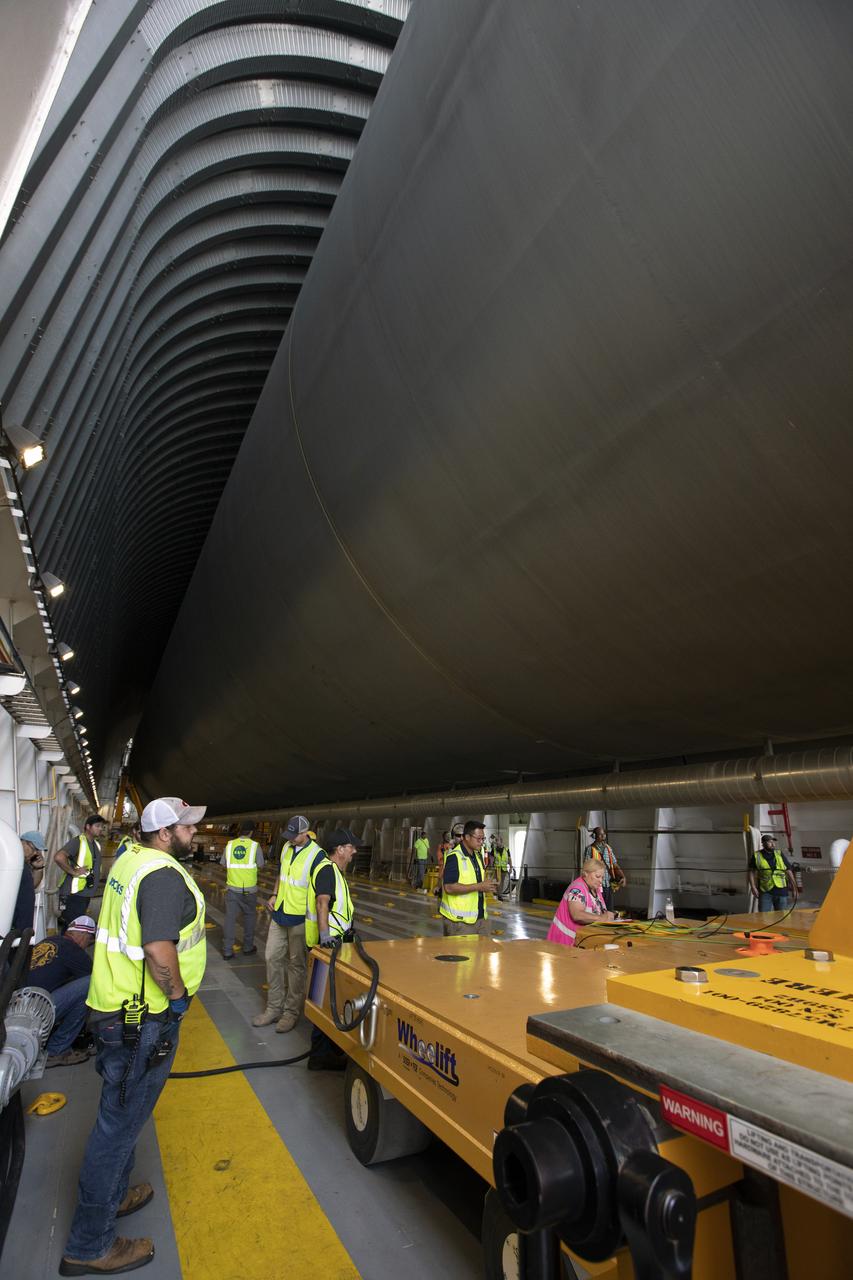
Inside the Pegasus barge at the Launch Complex 39 turn basin wharf, NASA and Jacobs workers assist as the 212-foot-long Space Launch System (SLS) rocket core stage pathfinder is moved inside the barge on Oct. 28, 2019 at NASA’s Kennedy Space Center in Florida. The core stage pathfinder is a full-scale mock-up of the rocket's core stage. It was used by the Exploration Ground Systems Program and their contractor, Jacobs, to practice offloading, moving and stacking maneuvers inside the Vehicle Assembly Building, using important ground support equipment to train employees and certify all the equipment works properly. The pathfinder was at Kennedy for about a month. It will make the trek back to NASA's Michoud Assembly Facility in Louisiana.
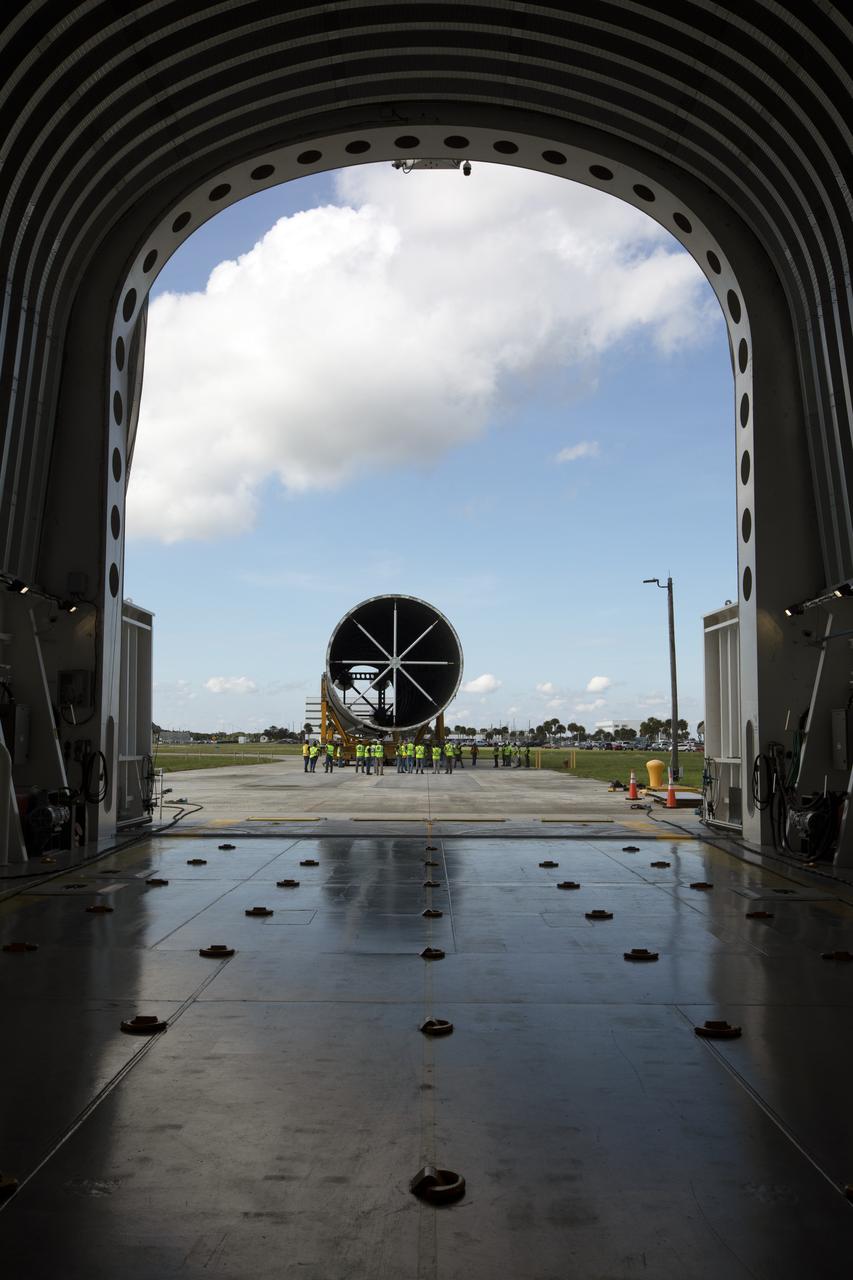
The 212-foot-long Space Launch System (SLS) rocket core stage pathfinder nears the entrance ramp to the Pegasus barge at the Launch Complex 39 turn basin wharf at NASA’s Kennedy Space Center in Florida on Oct. 28, 2019. The core stage pathfinder is a full-scale mock-up of the rocket's core stage. It was used by the Exploration Ground Systems Program and their contractor, Jacobs, to practice offloading, moving and stacking maneuvers inside the Vehicle Assembly Building, using important ground support equipment to train employees and certify all the equipment works properly. The pathfinder was at Kennedy for about a month. It will make the trek back to NASA's Michoud Assembly Facility in Louisiana.
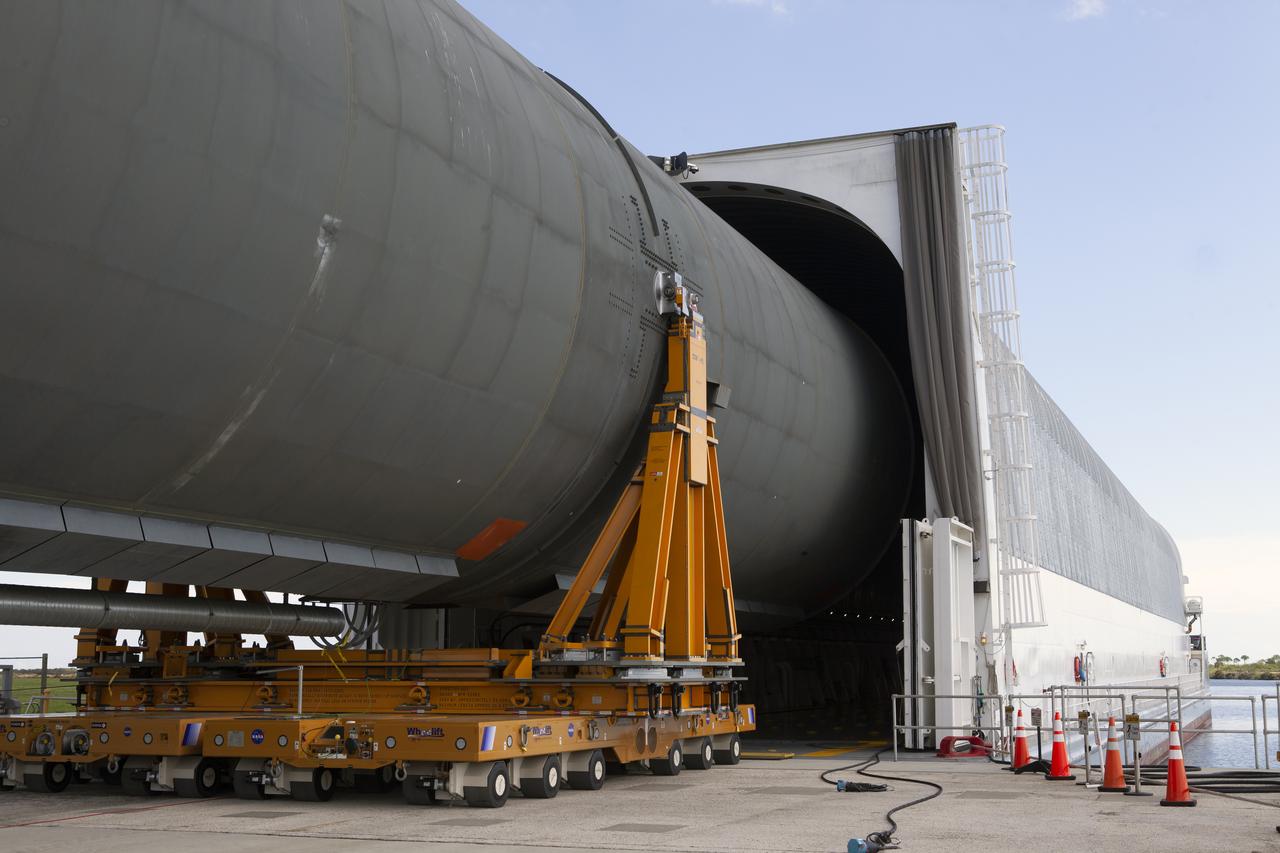
The 212-foot-long Space Launch System (SLS) rocket core stage pathfinder is moved inside the Pegasus barge at the Launch Complex 39 turn basin wharf at NASA’s Kennedy Space Center in Florida on Oct. 28, 2019. The core stage pathfinder is a full-scale mock-up of the rocket's core stage. It was used by the Exploration Ground Systems Program and their contractor, Jacobs, to practice offloading, moving and stacking maneuvers inside the Vehicle Assembly Building, using important ground support equipment to train employees and certify all the equipment works properly. The pathfinder was at Kennedy for about a month. It will make the trek back to NASA's Michoud Assembly Facility in Louisiana.
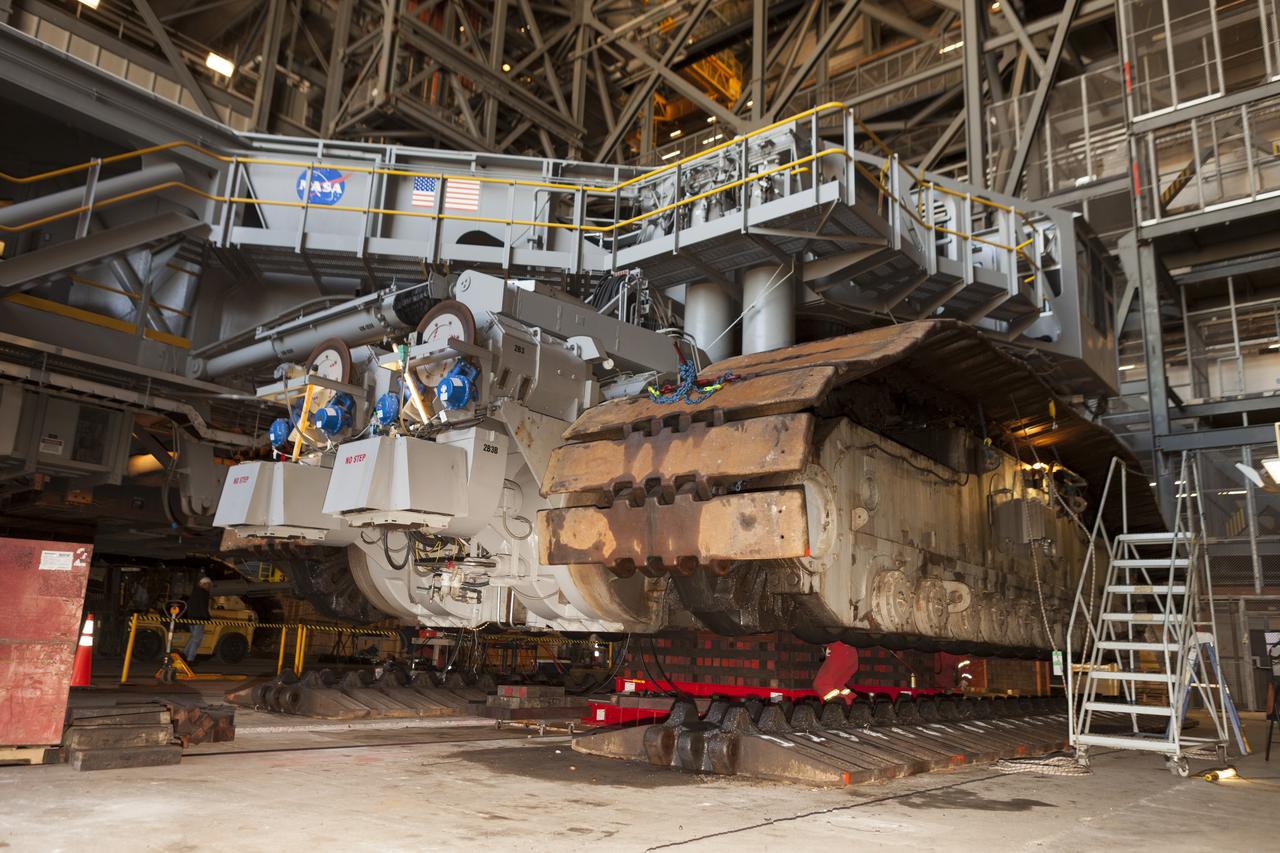
CAPE CANAVERAL, Fla. – Inside the Vehicle Assembly Building at NASA’s Kennedy Space Center in Florida, the B and D truck sections of crawler-transporter 2, or CT-2, have been raised up to prepare for installation of new roller bearing assemblies. Sections of the crawler’s large metal tracks have been removed. Work continues in high bay 2 to upgrade CT-2. The modifications are designed to ensure CT-2’s ability to transport launch vehicles currently in development, such as the agency’s Space Launch System, to the launch pad. The Ground Systems Development and Operations Program office at Kennedy is overseeing the upgrades. For more than 45 years the crawler-transporters were used to transport the mobile launcher platform and the Apollo-Saturn V rockets and, later, space shuttles to Launch Pads 39A and B. For more information, visit: http://www.nasa.gov/exploration/systems/ground/crawler-transporter. Photo credit: NASA/Dimitri Gerondidakis
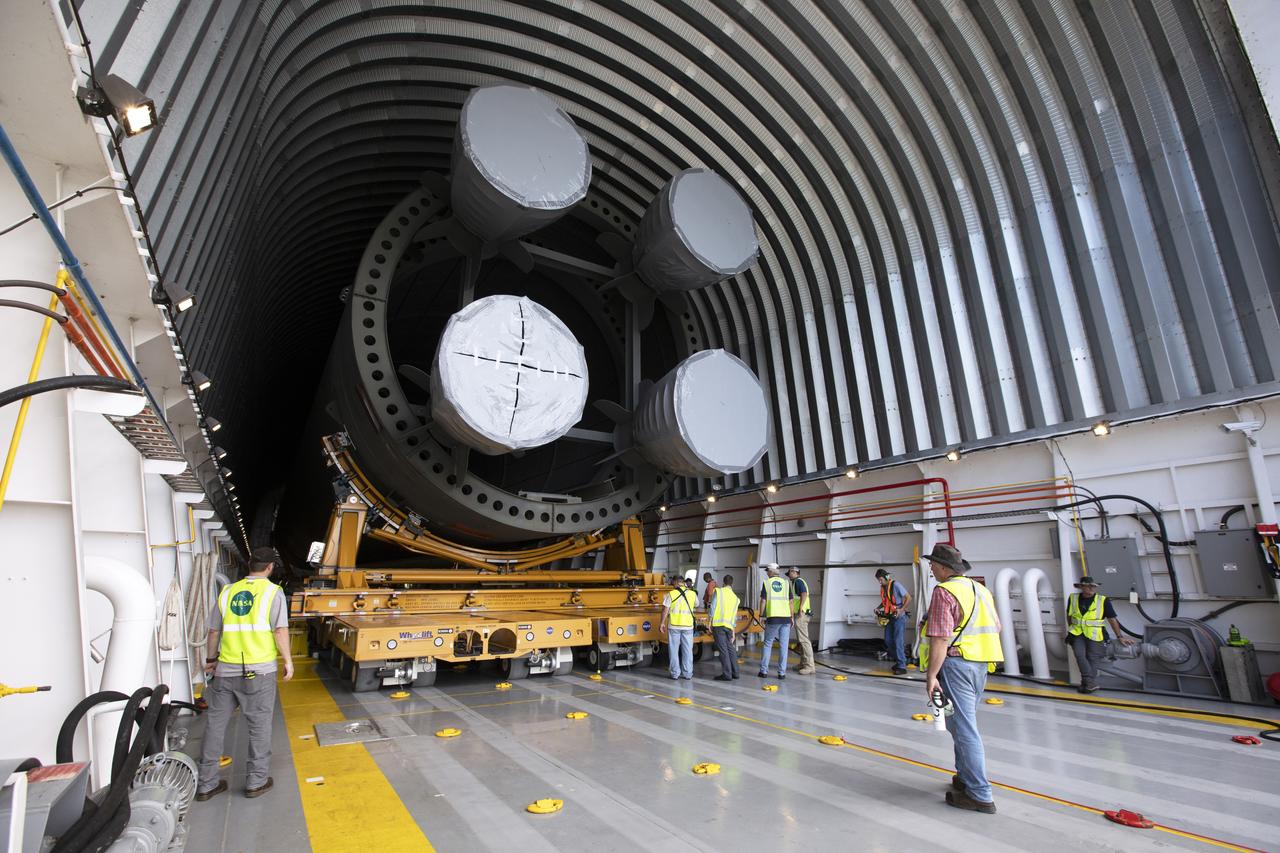
Inside the Pegasus barge at the Launch Complex 39 turn basin wharf, NASA and Jacobs workers assist as the 212-foot-long Space Launch System (SLS) rocket core stage pathfinder is moved inside the barge on Oct. 28, 2019 at NASA’s Kennedy Space Center in Florida. The core stage pathfinder is a full-scale mock-up of the rocket's core stage. It was used by the Exploration Ground Systems Program and their contractor, Jacobs, to practice offloading, moving and stacking maneuvers inside the Vehicle Assembly Building, using important ground support equipment to train employees and certify all the equipment works properly. The pathfinder was at Kennedy for about a month. It will make the trek back to NASA's Michoud Assembly Facility in Louisiana.
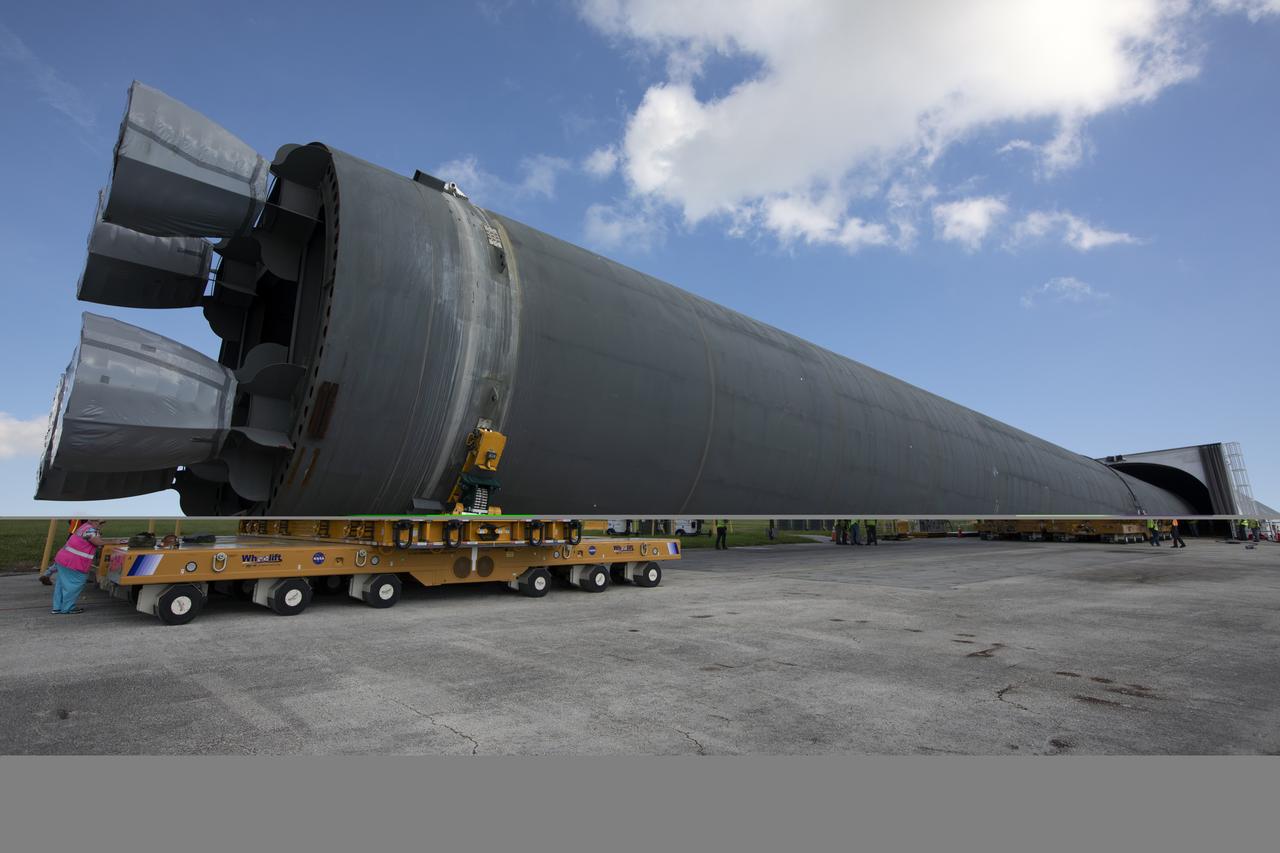
The 212-foot-long Space Launch System (SLS) rocket core stage pathfinder is moved inside the Pegasus barge at the Launch Complex 39 turn basin wharf at NASA’s Kennedy Space Center in Florida on Oct. 28, 2019. The core stage pathfinder is a full-scale mock-up of the rocket's core stage. It was used by the Exploration Ground Systems Program and their contractor, Jacobs, to practice offloading, moving and stacking maneuvers inside the Vehicle Assembly Building, using important ground support equipment to train employees and certify all the equipment works properly. The pathfinder was at Kennedy for about a month. It will make the trek back to NASA's Michoud Assembly Facility in Louisiana.
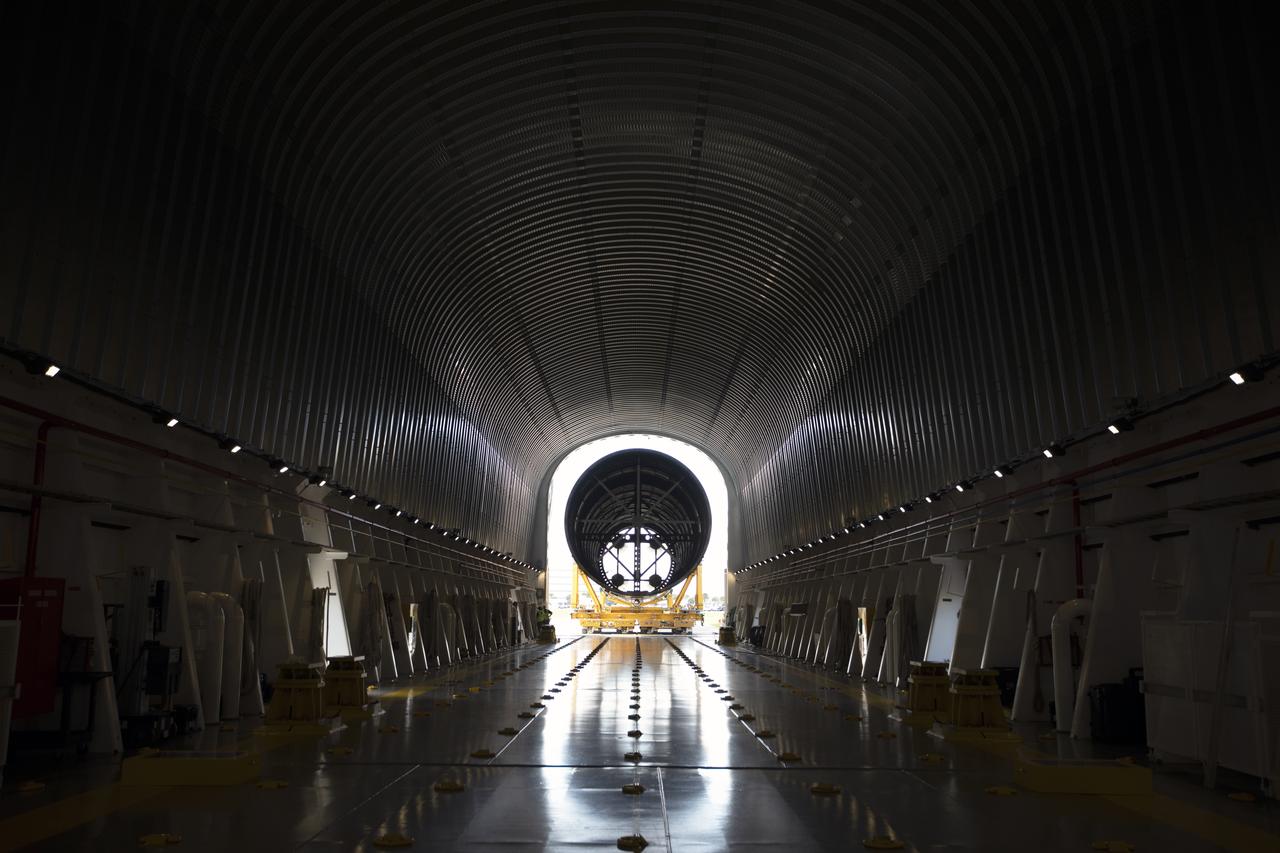
A view of the inside of the Pegasus barge at the Launch Complex 39 turn basin at NASA’s Kennedy Space Center in Florida, as the 212-foot-long Space Launch System (SLS) rocket core stage pathfinder is moved inside the barge on Oct. 28, 2019. The core stage pathfinder is a full-scale mock-up of the rocket's core stage. It was used by the Exploration Ground Systems Program and their contractor, Jacobs, to practice offloading, moving and stacking maneuvers inside the Vehicle Assembly Building, using important ground support equipment to train employees and certify all the equipment works properly. The pathfinder was at Kennedy for about a month. It will make the trek back to NASA's Michoud Assembly Facility in Louisiana.
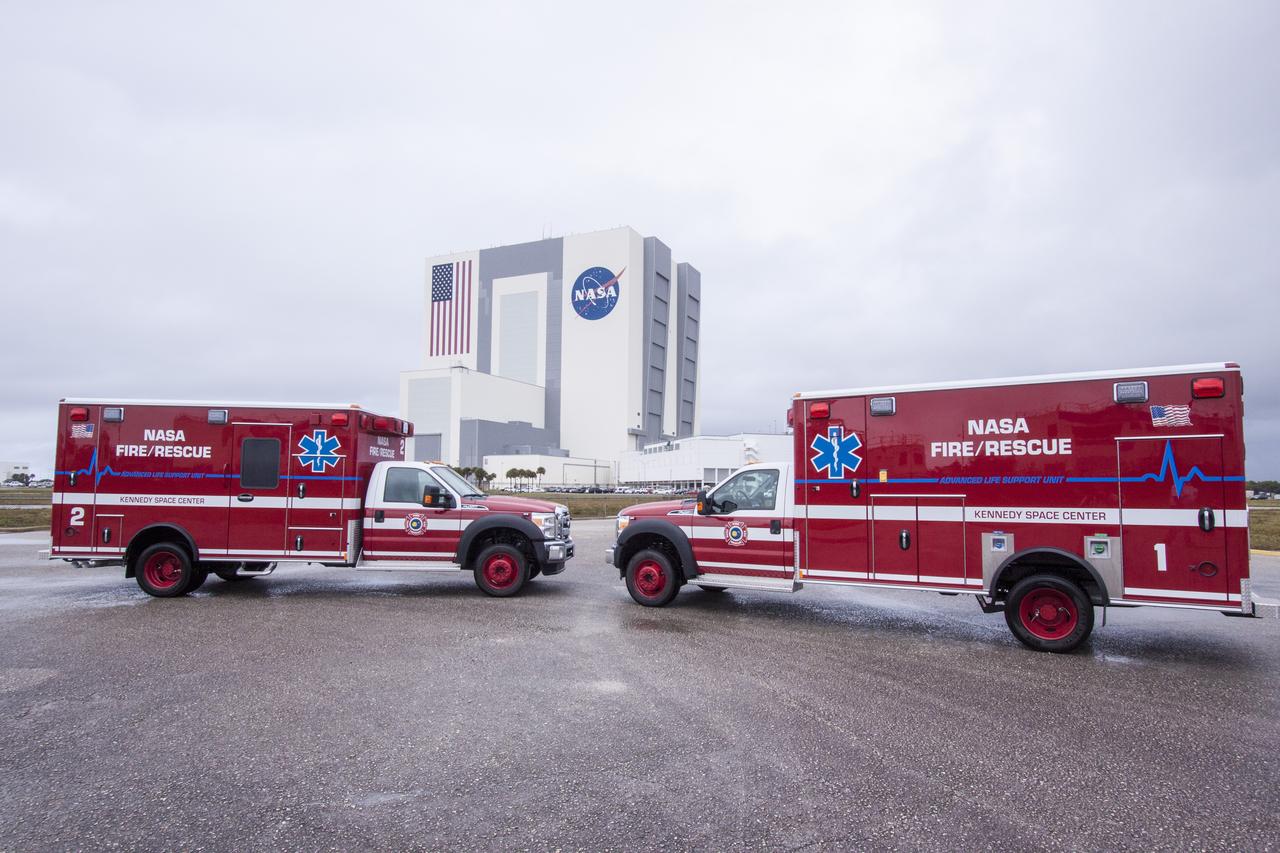
New Fire Department's Emergency Response Trucks in front of VAB. (Not on web)
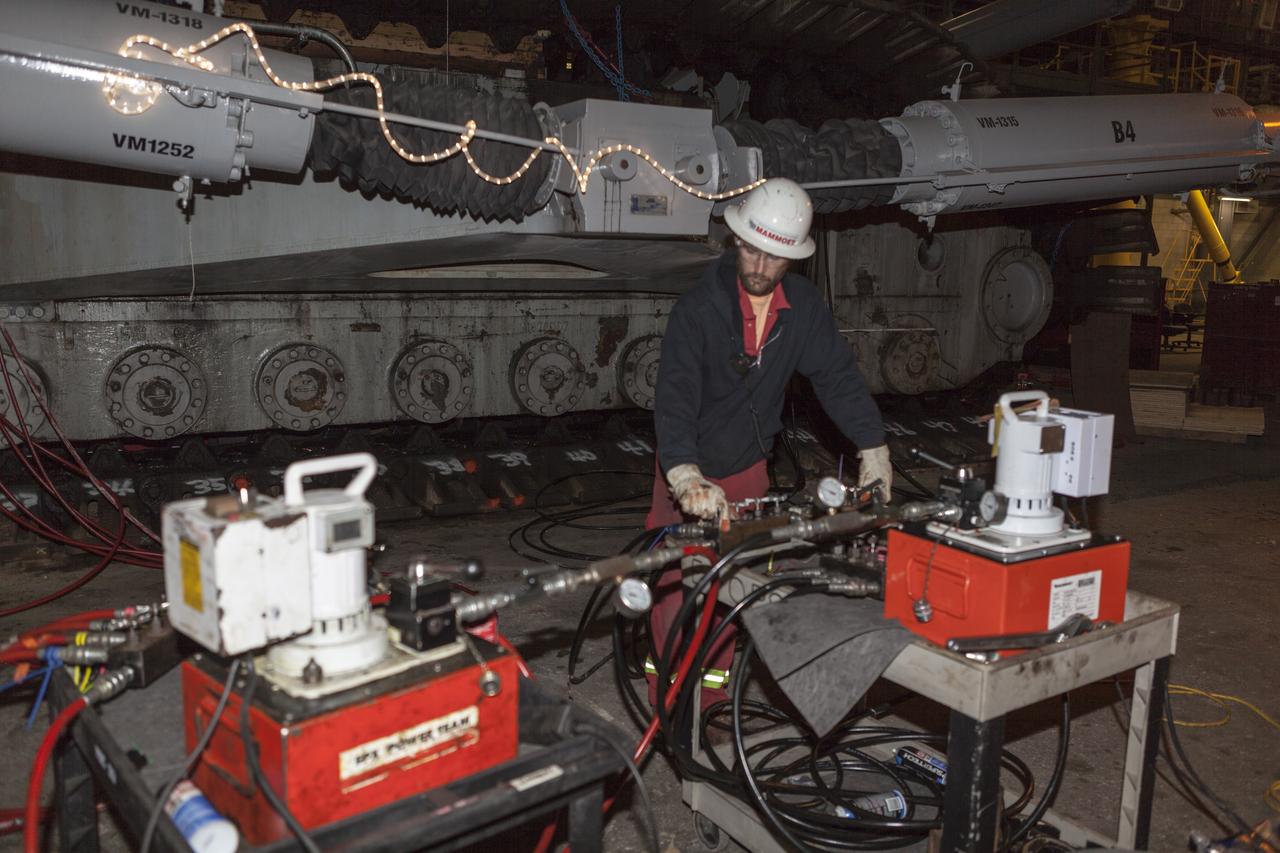
CAPE CANAVERAL, Fla. – Inside the Vehicle Assembly Building at NASA’s Kennedy Space Center in Florida, the B and D truck sections of crawler-transporter 2, or CT-2, are being raised up to prepare for installation of new roller bearing assemblies. Work continues in high bay 2 to upgrade CT-2. The modifications are designed to ensure CT-2’s ability to transport launch vehicles currently in development, such as the agency’s Space Launch System, to the launch pad. The Ground Systems Development and Operations Program office at Kennedy is overseeing the upgrades. For more than 45 years the crawler-transporters were used to transport the mobile launcher platform and the Apollo-Saturn V rockets and, later, space shuttles to Launch Pads 39A and B. For more information, visit: http://www.nasa.gov/exploration/systems/ground/crawler-transporter. Photo credit: NASA/Dimitri Gerondidakis
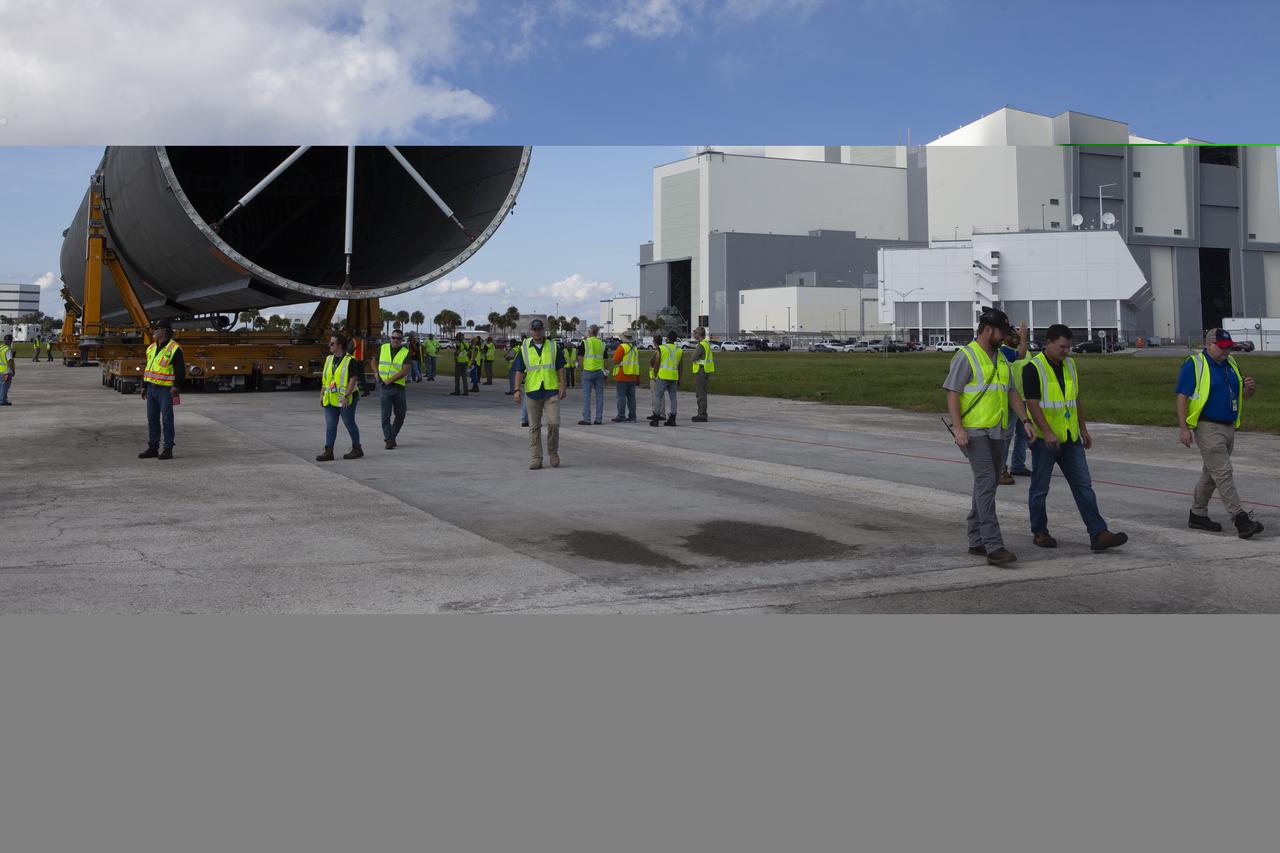
The 212-foot-long Space Launch System (SLS) rocket core stage pathfinder is being transported back to the Pegasus barge at the Launch Complex 39 turn basin wharf at NASA’s Kennedy Space Center in Florida on Oct. 28, 2019. The core stage pathfinder is a full-scale mock-up of the rocket's core stage. It was used by the Exploration Ground Systems Program and their contractor, Jacobs, to practice offloading, moving and stacking maneuvers inside the Vehicle Assembly Building, using important ground support equipment to train employees and certify all the equipment works properly. The pathfinder was at Kennedy for about a month. It will make the trek back to NASA's Michoud Assembly Facility in Louisiana.
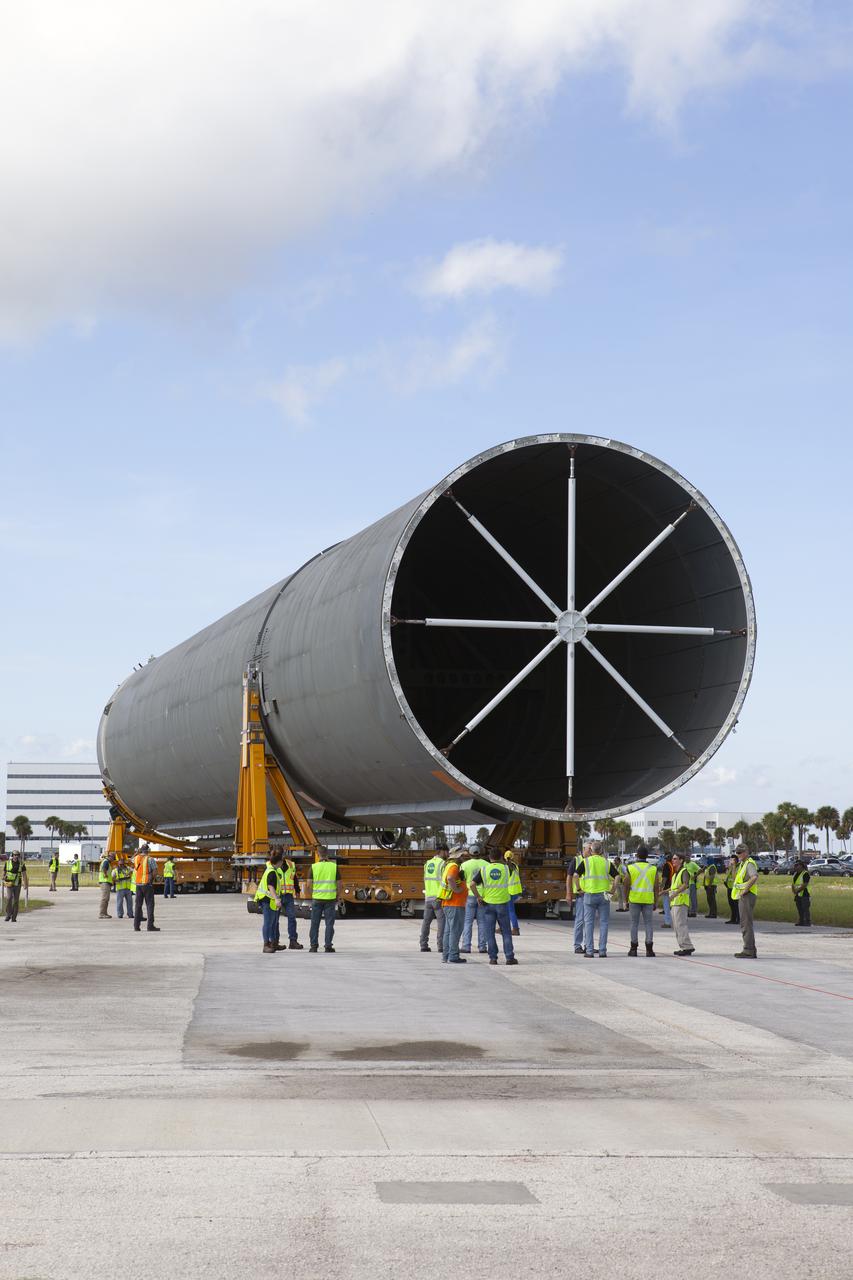
The top portion of the 212-foot-long Space Launch System (SLS) rocket core stage pathfinder is in view as the transporter it is secured on moves in reverse to position the pathfinder for the move to the Pegasus barge at the Launch Complex 39 turn basin wharf at NASA’s Kennedy Space Center in Florida on Oct. 28, 2019. The core stage pathfinder is a full-scale mock-up of the rocket's core stage. It was used by the Exploration Ground Systems Program and their contractor, Jacobs, to practice offloading, moving and stacking maneuvers inside the Vehicle Assembly Building, using important ground support equipment to train employees and certify all the equipment works properly. The pathfinder was at Kennedy for about a month. It will make the trek back to NASA's Michoud Assembly Facility in Louisiana.
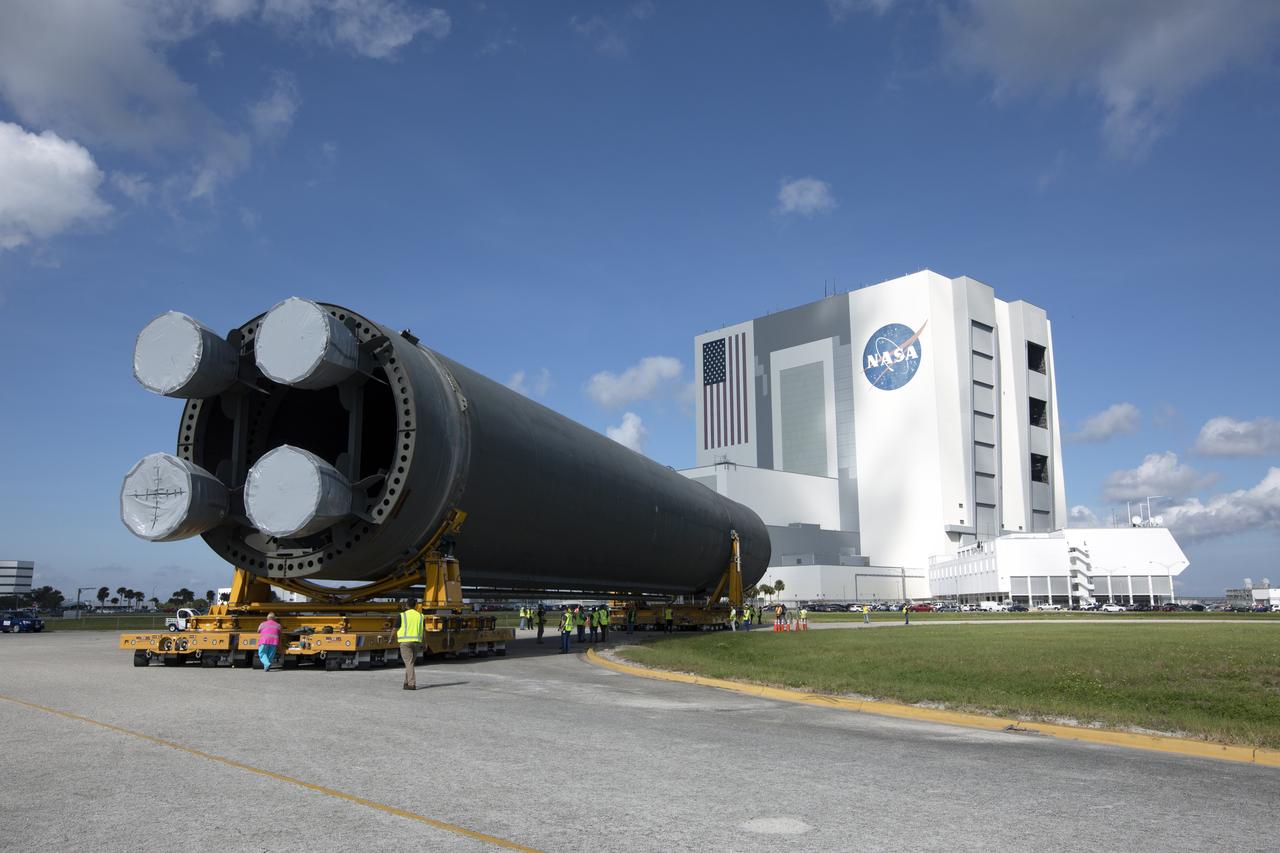
The 212-foot-long Space Launch System (SLS) rocket core stage pathfinder is being transported back to the Pegasus barge at the Launch Complex 39 turn basin wharf at NASA’s Kennedy Space Center in Florida on Oct. 28, 2019. The core stage pathfinder is a full-scale mock-up of the rocket's core stage. It was used by the Exploration Ground Systems Program and their contractor, Jacobs, to practice offloading, moving and stacking maneuvers inside the Vehicle Assembly Building, using important ground support equipment to train employees and certify all the equipment works properly. The pathfinder was at Kennedy for about a month. It will make the trek back to NASA's Michoud Assembly Facility in Louisiana.
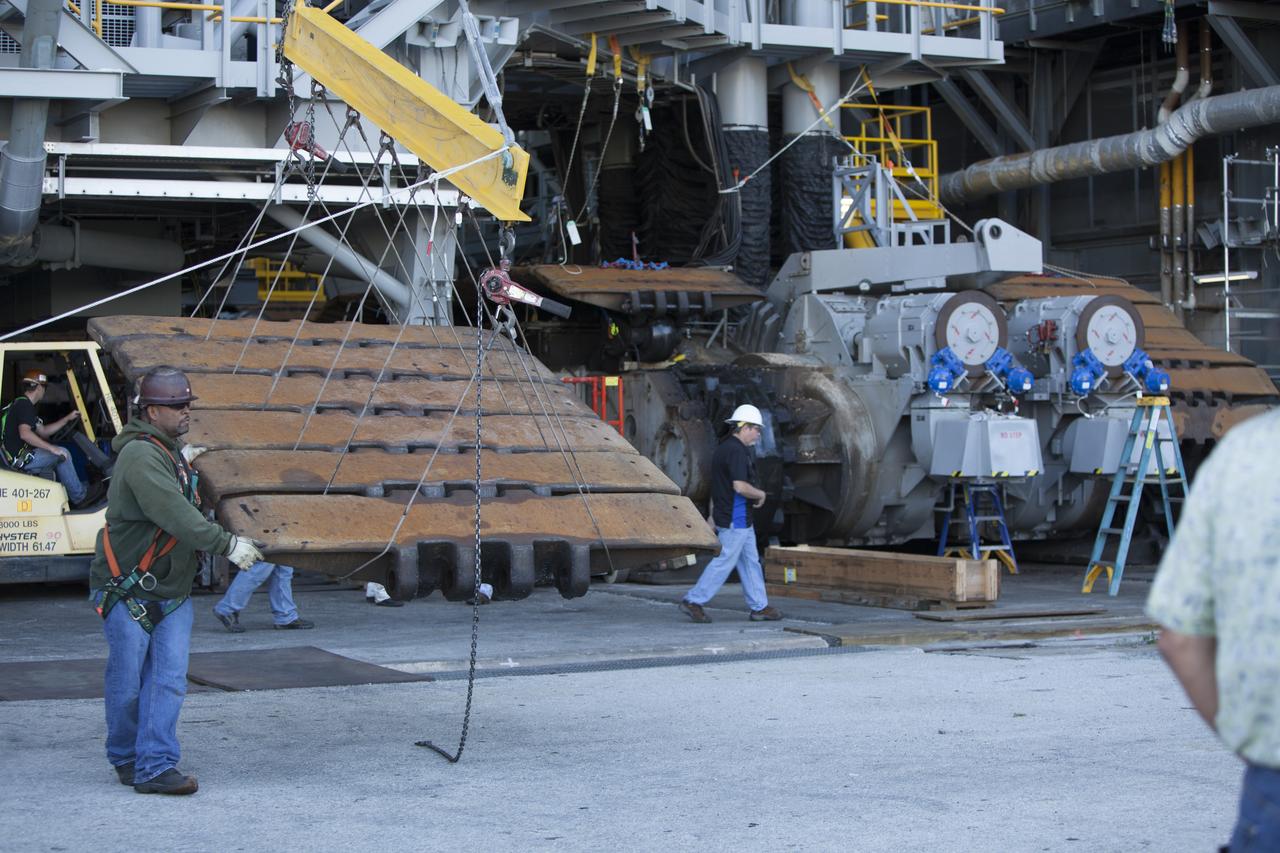
CAPE CANAVERAL, Fla. – Inside the Vehicle Assembly Building at NASA’s Kennedy Space Center in Florida, ground support technicians assist as a crane lifts a portion of the treads on the C truck of crawler-transporter 2, or CT-2, away from the vehicle. The treads are being removed in order to gain access to remove the gear boxes. Work continues in high bay 2 to upgrade CT-2. The modifications are designed to ensure CT-2’s ability to transport launch vehicles currently in development, such as the agency’s Space Launch System, to the launch pad. The Ground Systems Development and Operations Program office at Kennedy is overseeing the upgrades. For more than 45 years the crawler-transporters were used to transport the mobile launcher platform and the Apollo-Saturn V rockets and, later, space shuttles to Launch Pads 39A and B. For more information, visit: http://www.nasa.gov/exploration/systems/ground/crawler-transporter. Photo credit: NASA/Dimitri Gerondidakis
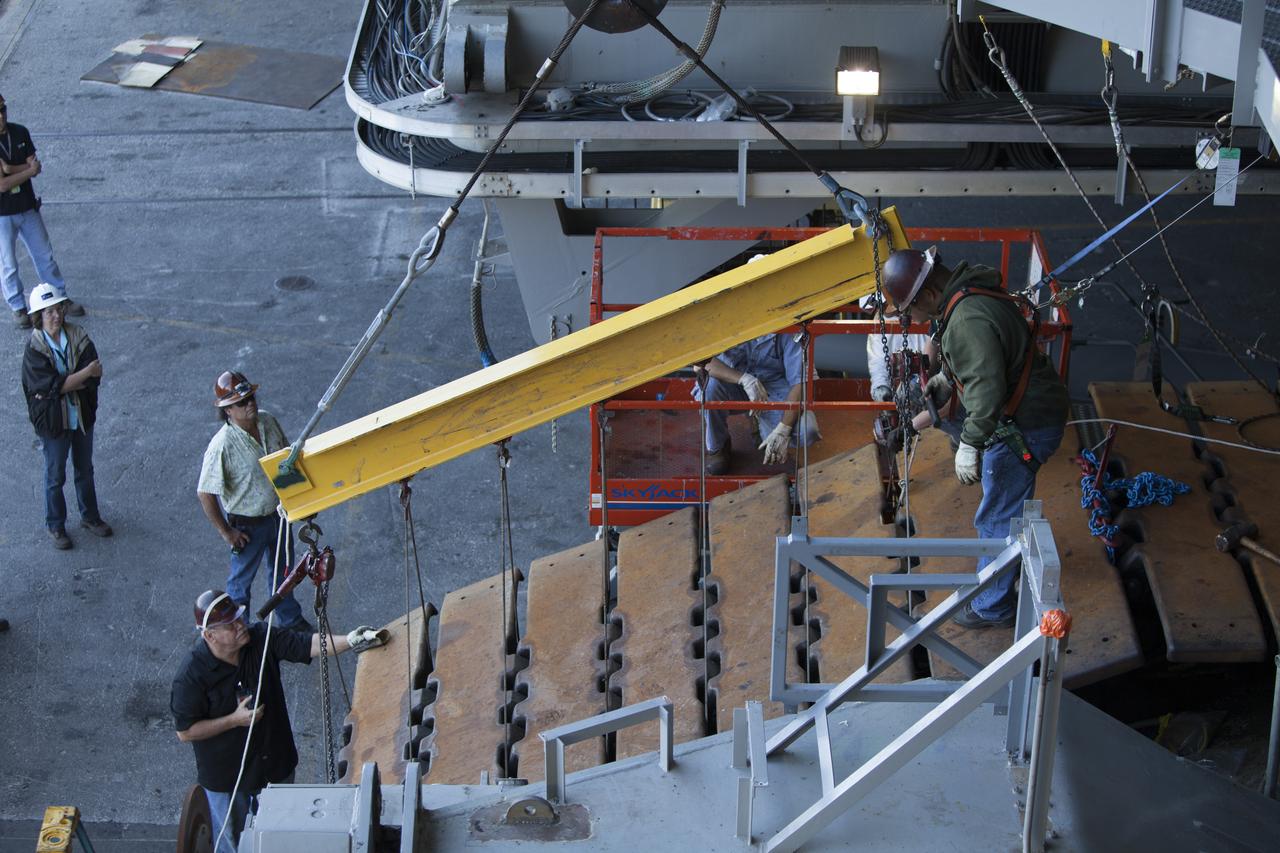
CAPE CANAVERAL, Fla. – Inside the Vehicle Assembly Building at NASA’s Kennedy Space Center in Florida, ground support technicians have attached crane lines to a portion of the treads on the C truck of crawler-transporter 2, or CT-2, so they can be lifted up and away. The treads are being removed in order to gain access to remove the gear boxes. Work continues in high bay 2 to upgrade CT-2. The modifications are designed to ensure CT-2’s ability to transport launch vehicles currently in development, such as the agency’s Space Launch System, to the launch pad. The Ground Systems Development and Operations Program office at Kennedy is overseeing the upgrades. For more than 45 years the crawler-transporters were used to transport the mobile launcher platform and the Apollo-Saturn V rockets and, later, space shuttles to Launch Pads 39A and B. For more information, visit: http://www.nasa.gov/exploration/systems/ground/crawler-transporter. Photo credit: NASA/Dimitri Gerondidakis
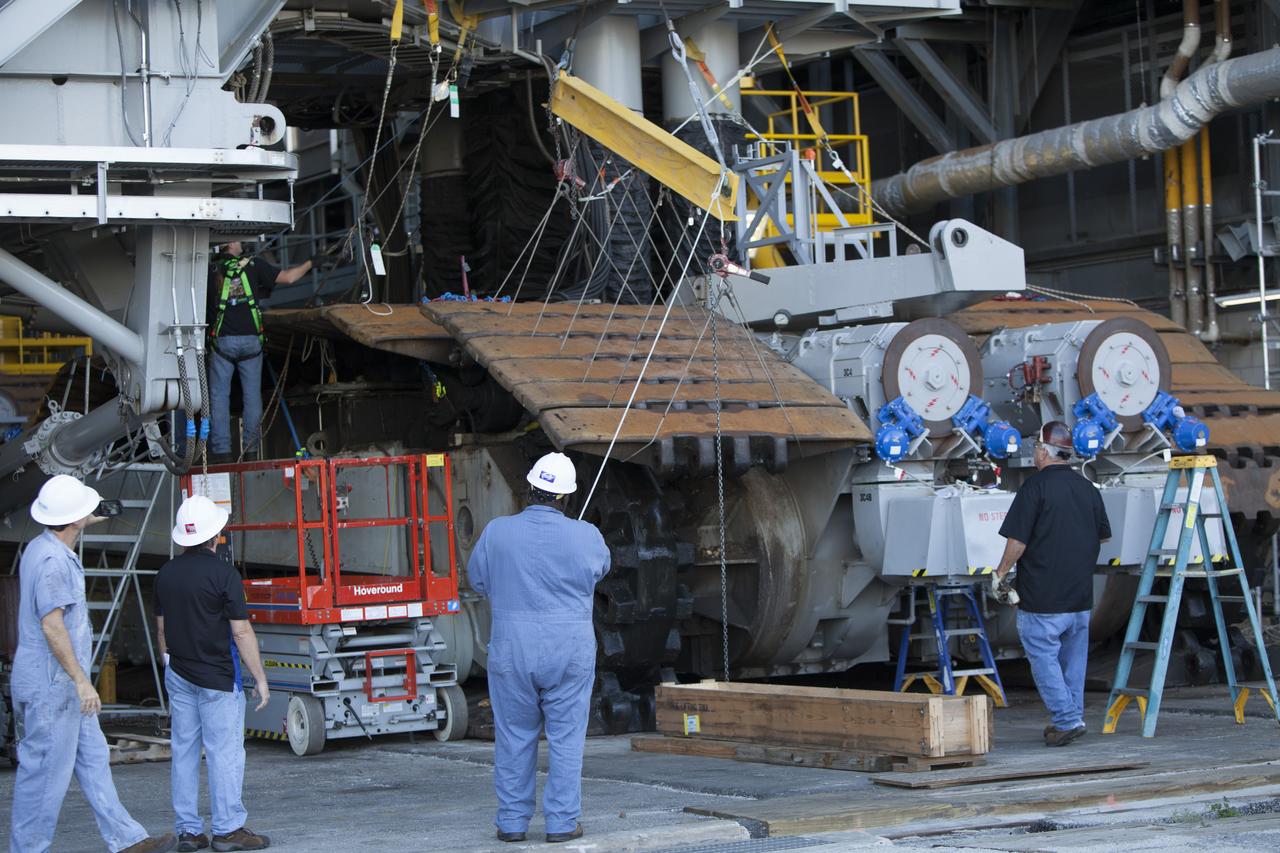
CAPE CANAVERAL, Fla. – Inside the Vehicle Assembly Building at NASA’s Kennedy Space Center in Florida, ground support technicians have attached crane lines to a portion of the treads on the C truck of crawler-transporter 2, or CT-2, so they can be lifted up and away. The treads are being removed in order to gain access to remove the gear boxes. Work continues in high bay 2 to upgrade CT-2. The modifications are designed to ensure CT-2’s ability to transport launch vehicles currently in development, such as the agency’s Space Launch System, to the launch pad. The Ground Systems Development and Operations Program office at Kennedy is overseeing the upgrades. For more than 45 years the crawler-transporters were used to transport the mobile launcher platform and the Apollo-Saturn V rockets and, later, space shuttles to Launch Pads 39A and B. For more information, visit: http://www.nasa.gov/exploration/systems/ground/crawler-transporter. Photo credit: NASA/Dimitri Gerondidakis
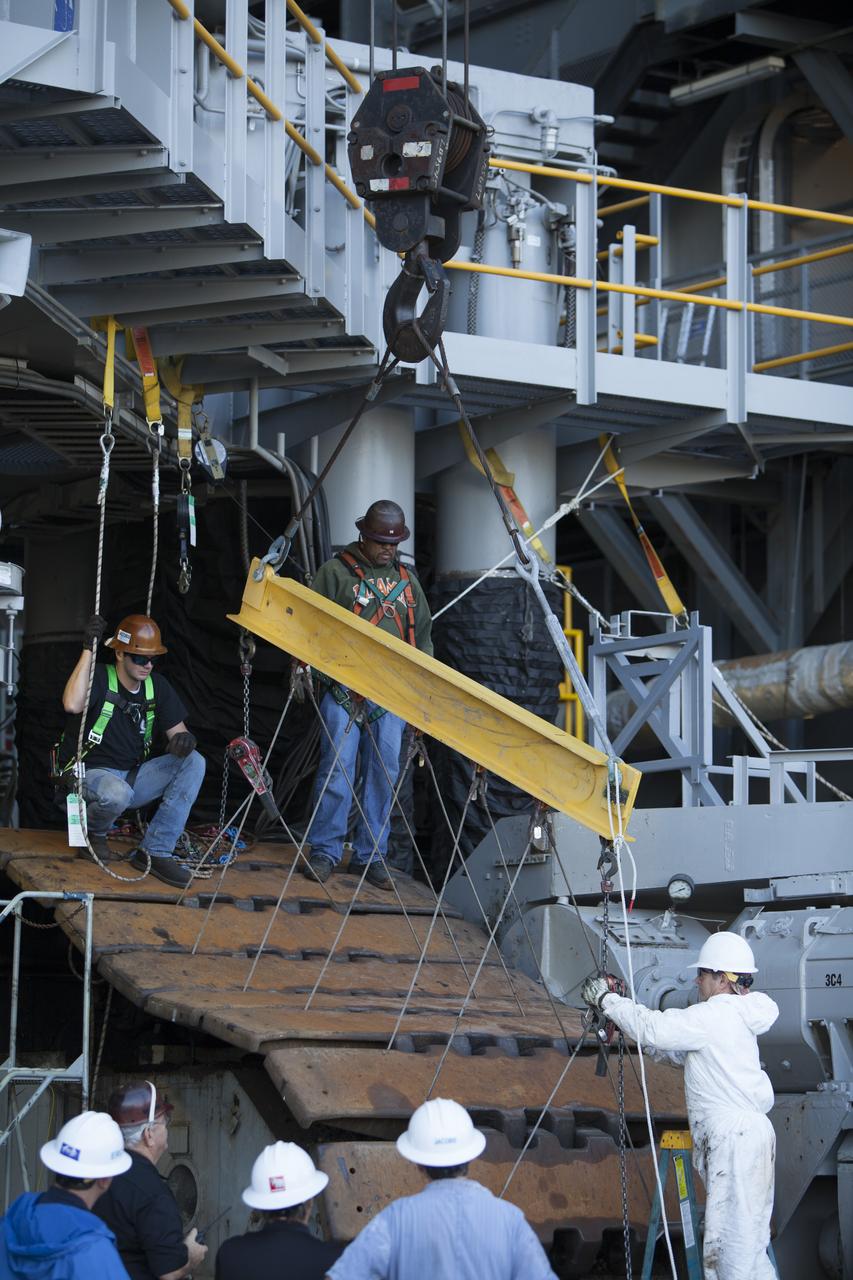
CAPE CANAVERAL, Fla. – Inside the Vehicle Assembly Building at NASA’s Kennedy Space Center in Florida, ground support technicians attach crane lines to the treads on the C truck of crawler-transporter 2, or CT-2, so they can be lifted up and away. The treads are being removed in order to gain access to remove the gear boxes. Work continues in high bay 2 to upgrade CT-2. The modifications are designed to ensure CT-2’s ability to transport launch vehicles currently in development, such as the agency’s Space Launch System, to the launch pad. The Ground Systems Development and Operations Program office at Kennedy is overseeing the upgrades. For more than 45 years the crawler-transporters were used to transport the mobile launcher platform and the Apollo-Saturn V rockets and, later, space shuttles to Launch Pads 39A and B. For more information, visit: http://www.nasa.gov/exploration/systems/ground/crawler-transporter. Photo credit: NASA/Dimitri Gerondidakis
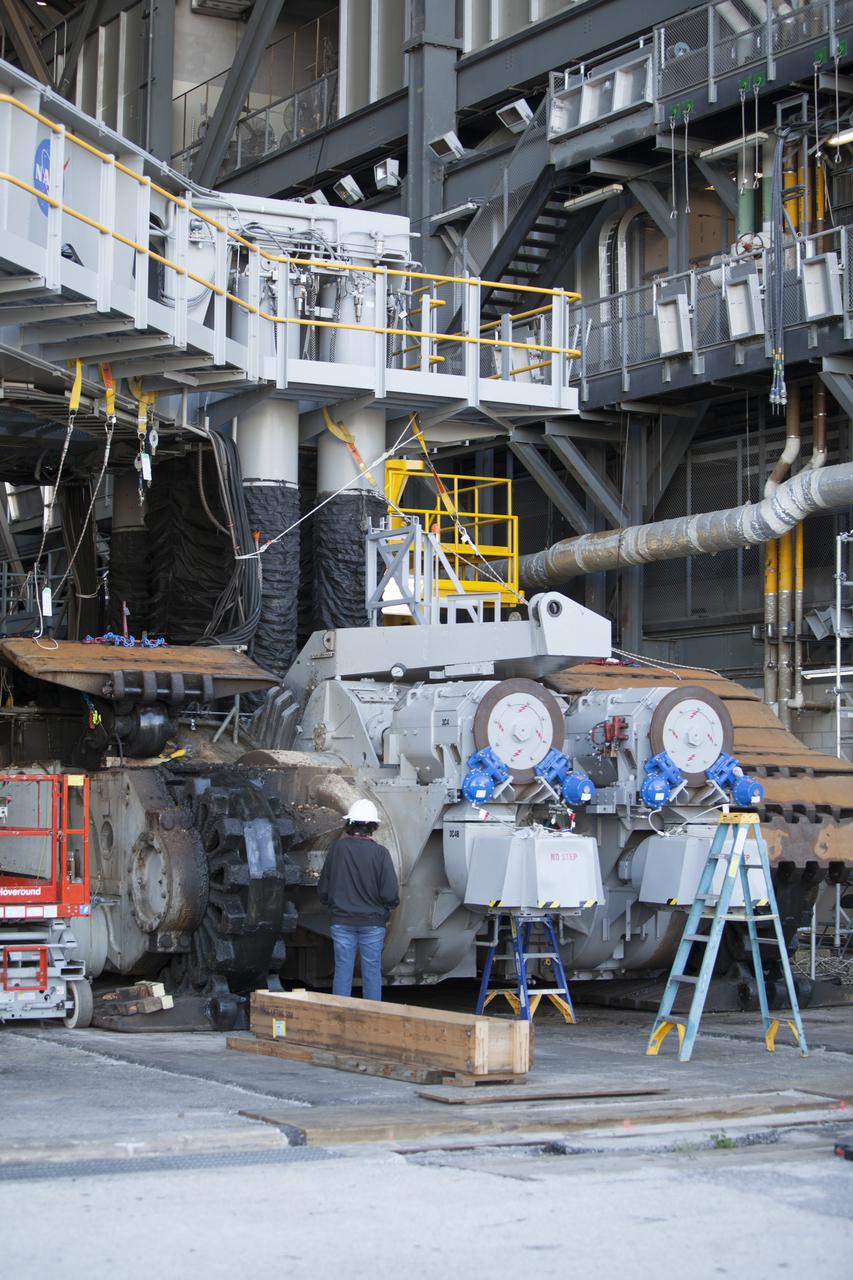
CAPE CANAVERAL, Fla. – Inside the Vehicle Assembly Building at NASA’s Kennedy Space Center in Florida, a portion of the treads on the C truck of crawler-transporter 2, or CT-2, have been removed from the vehicle. The treads are being removed in order to gain access to remove the gear boxes. Work continues in high bay 2 to upgrade CT-2. The modifications are designed to ensure CT-2’s ability to transport launch vehicles currently in development, such as the agency’s Space Launch System, to the launch pad. The Ground Systems Development and Operations Program office at Kennedy is overseeing the upgrades. For more than 45 years the crawler-transporters were used to transport the mobile launcher platform and the Apollo-Saturn V rockets and, later, space shuttles to Launch Pads 39A and B. For more information, visit: http://www.nasa.gov/exploration/systems/ground/crawler-transporter. Photo credit: NASA/Dimitri Gerondidakis
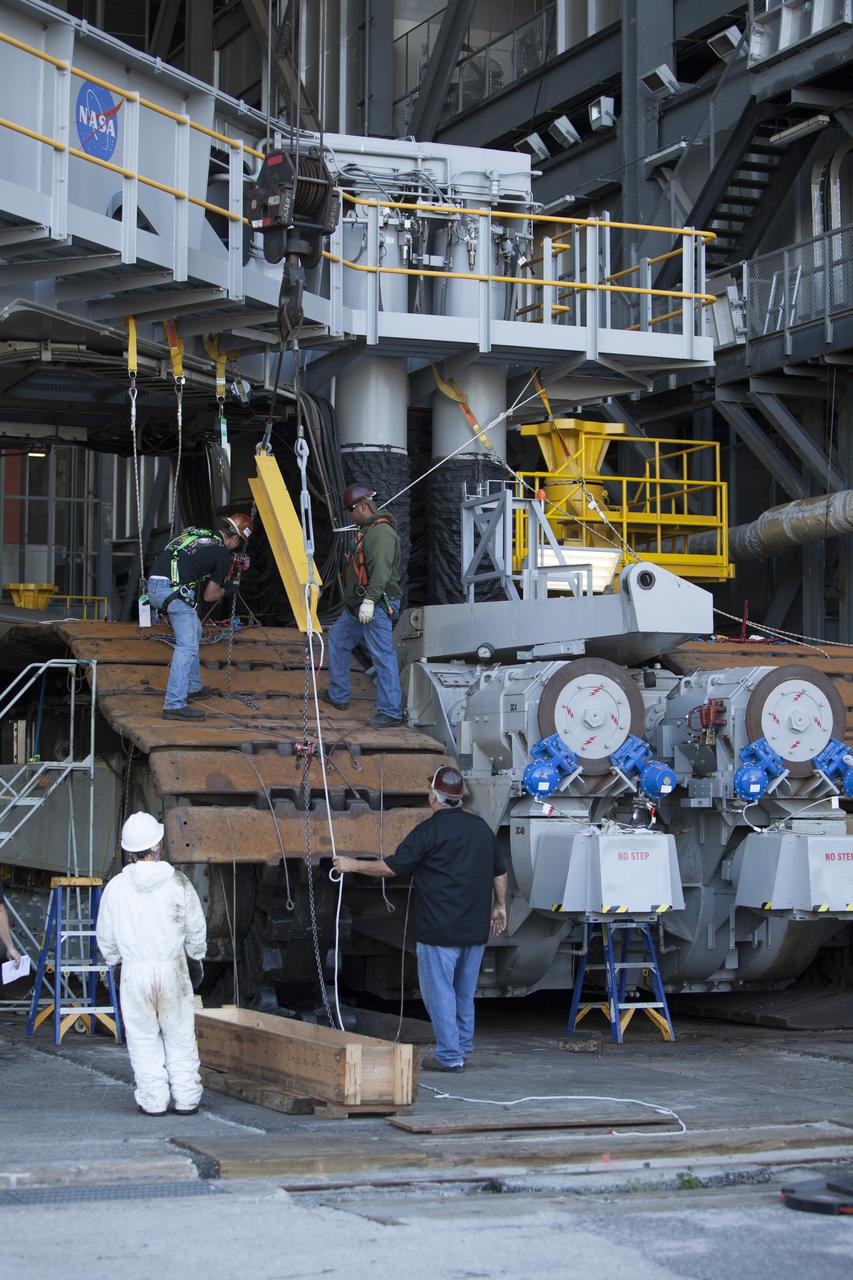
CAPE CANAVERAL, Fla. – Inside the Vehicle Assembly Building at NASA’s Kennedy Space Center in Florida, ground support technicians attach crane lines to the treads on the C truck of crawler-transporter 2, or CT-2, so they can be lifted up and away. The treads are being removed in order to gain access to remove the gear boxes. Work continues in high bay 2 to upgrade CT-2. The modifications are designed to ensure CT-2’s ability to transport launch vehicles currently in development, such as the agency’s Space Launch System, to the launch pad. The Ground Systems Development and Operations Program office at Kennedy is overseeing the upgrades. For more than 45 years the crawler-transporters were used to transport the mobile launcher platform and the Apollo-Saturn V rockets and, later, space shuttles to Launch Pads 39A and B. For more information, visit: http://www.nasa.gov/exploration/systems/ground/crawler-transporter. Photo credit: NASA/Dimitri Gerondidakis
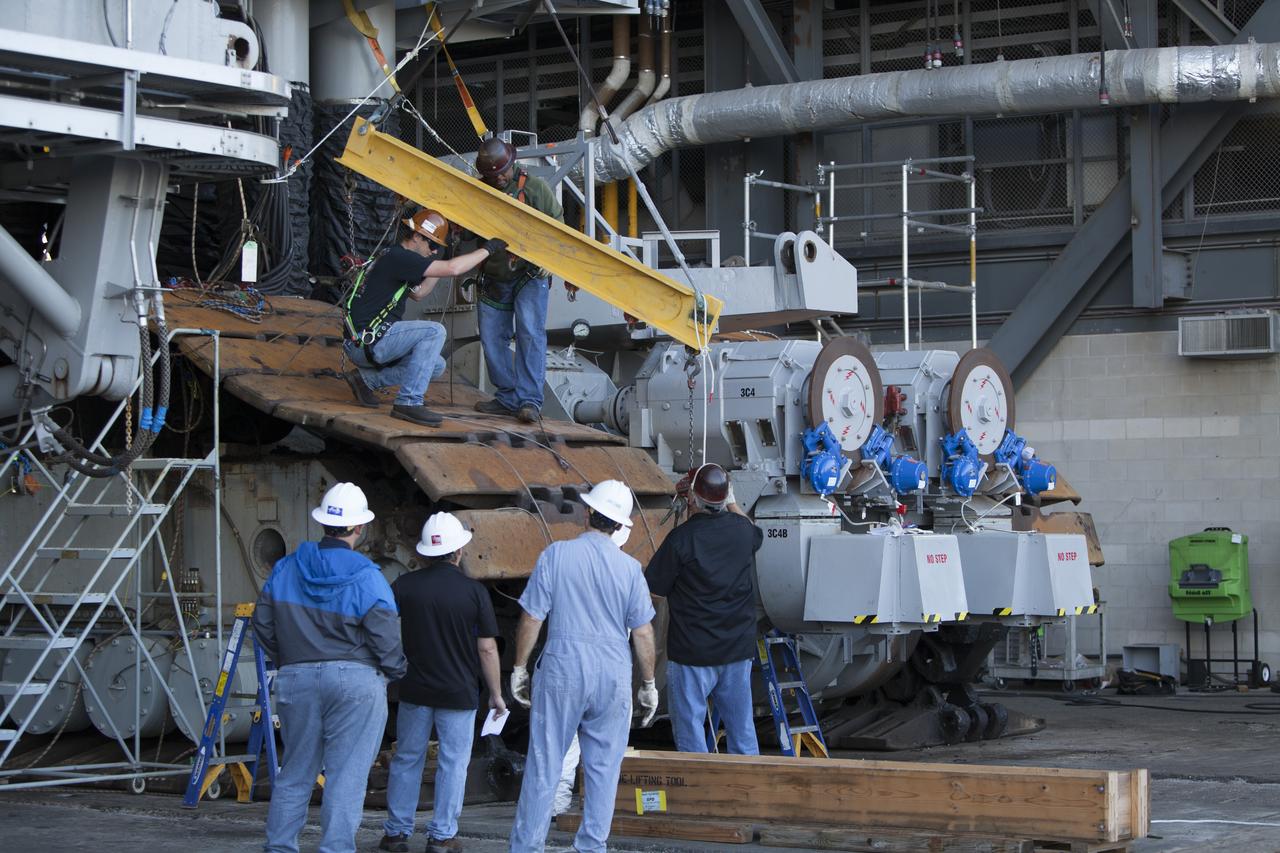
CAPE CANAVERAL, Fla. – Inside the Vehicle Assembly Building at NASA’s Kennedy Space Center in Florida, ground support technicians attach crane lines to the treads on the C truck of crawler-transporter 2, or CT-2, so they can be lifted up and away. The treads are being removed in order to gain access to remove the gear boxes. Work continues in high bay 2 to upgrade CT-2. The modifications are designed to ensure CT-2’s ability to transport launch vehicles currently in development, such as the agency’s Space Launch System, to the launch pad. The Ground Systems Development and Operations Program office at Kennedy is overseeing the upgrades. For more than 45 years the crawler-transporters were used to transport the mobile launcher platform and the Apollo-Saturn V rockets and, later, space shuttles to Launch Pads 39A and B. For more information, visit: http://www.nasa.gov/exploration/systems/ground/crawler-transporter. Photo credit: NASA/Dimitri Gerondidakis
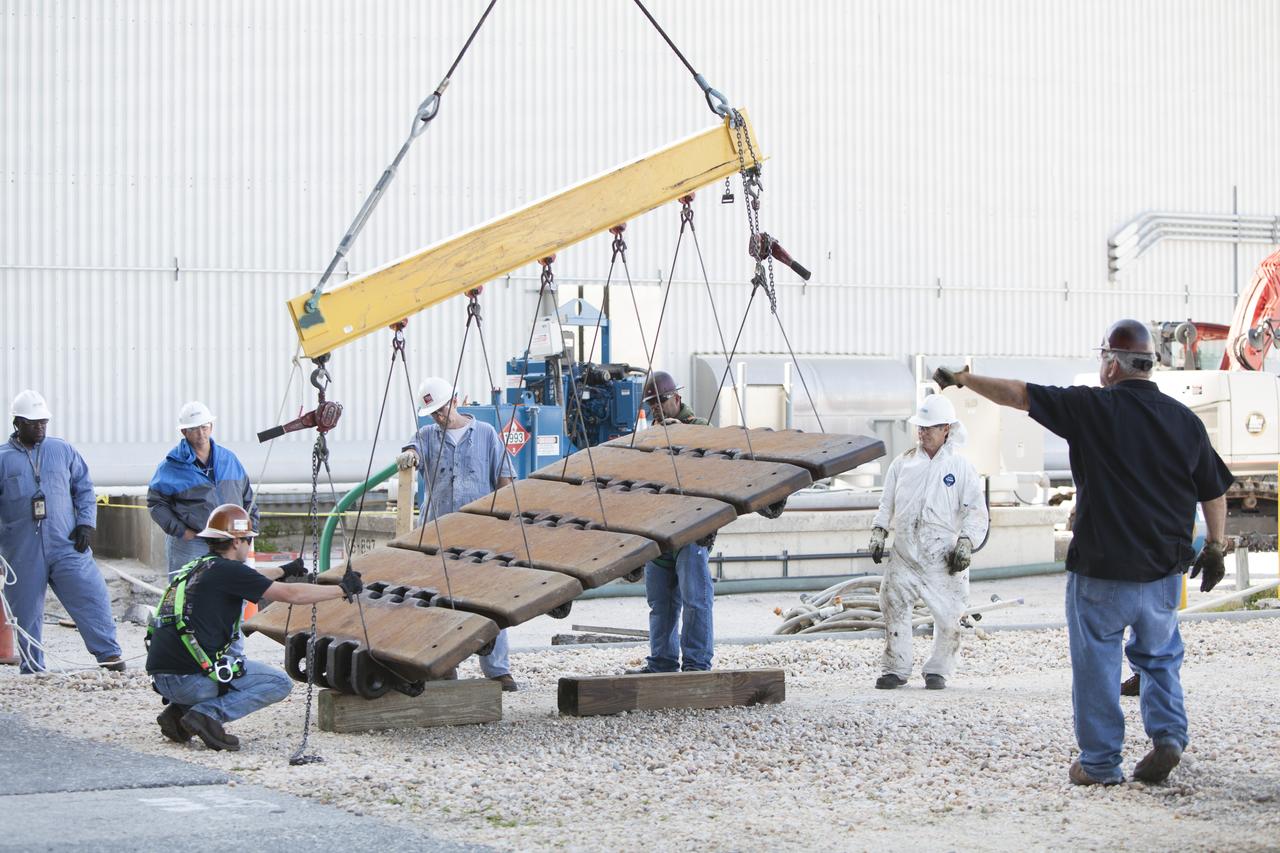
CAPE CANAVERAL, Fla. – A section of the treads on the C truck of crawler-transporter 2, or CT-2, have been removed and are being stored near the Vehicle Assembly Building at NASA’s Kennedy Space Center in Florida. The treads are being removed from the crawler in order to gain access to remove the gear boxes. Work continues in high bay 2 to upgrade CT-2. The modifications are designed to ensure CT-2’s ability to transport launch vehicles currently in development, such as the agency’s Space Launch System, to the launch pad. The Ground Systems Development and Operations Program office at Kennedy is overseeing the upgrades. For more than 45 years the crawler-transporters were used to transport the mobile launcher platform and the Apollo-Saturn V rockets and, later, space shuttles to Launch Pads 39A and B. For more information, visit: http://www.nasa.gov/exploration/systems/ground/crawler-transporter. Photo credit: NASA/Dimitri Gerondidakis