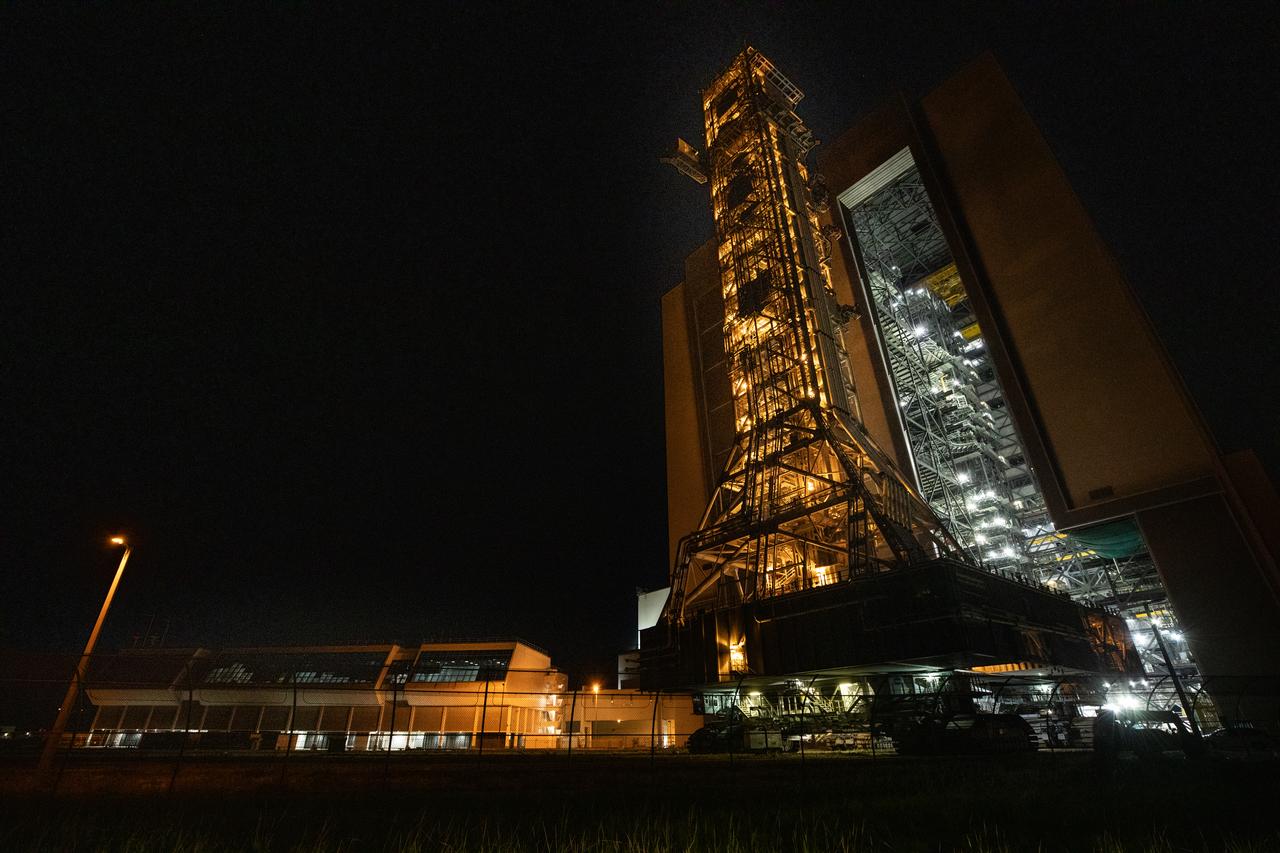
NASA’s mobile launcher 1 atop the spaceport’s crawler is transported inside the agency’s Vehicle Assembly Building at Kennedy Space Center in Florida ahead of integration of the Artemis II Moon rocket on Friday, Oct. 4, 2024. The mobile launcher has been at Launch Complex 39B since August 2023 undergoing upgrades and tests in preparation for NASA’s Artemis II mission. The mobile launcher will be used to assemble, process, and launch NASA’s SLS (Space Launch Systems) and Orion spacecraft to the Moon and beyond.
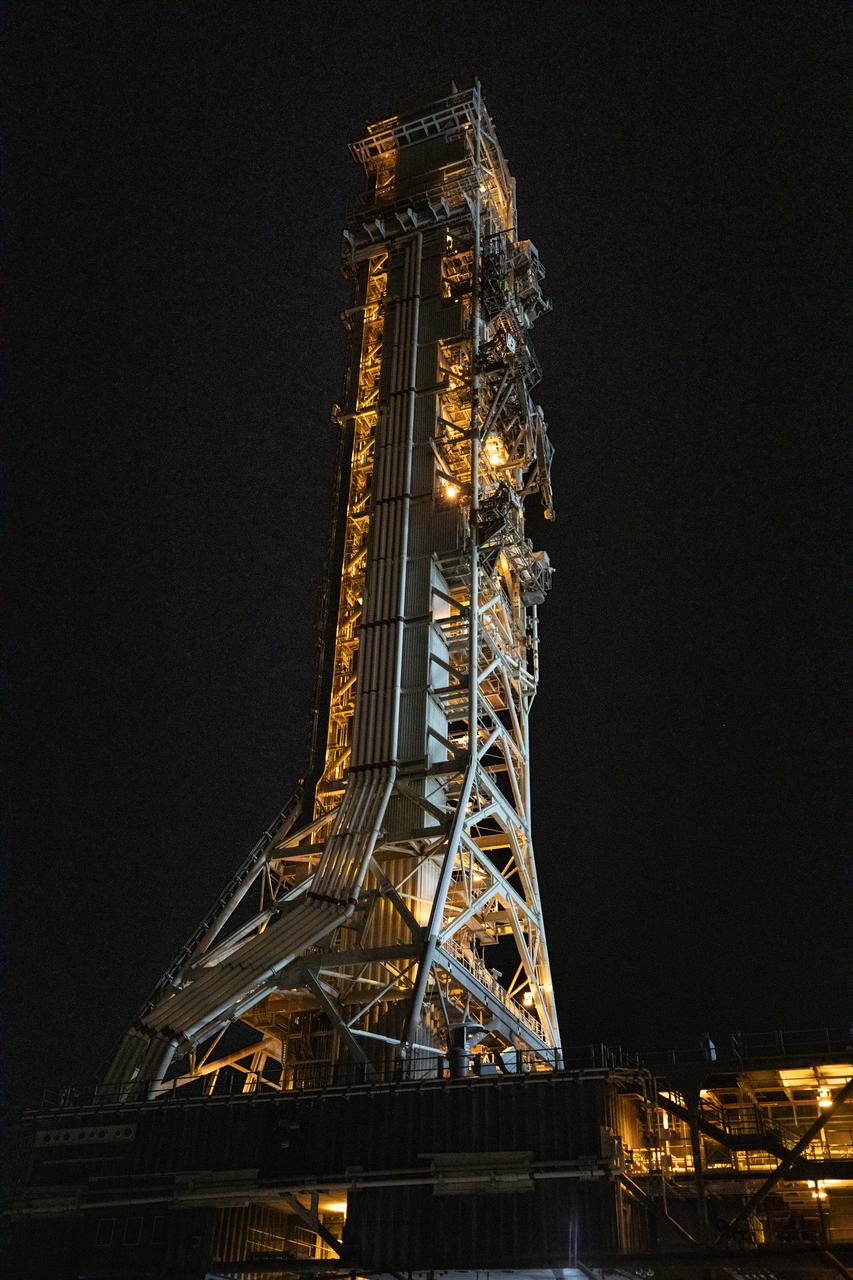
NASA’s mobile launcher 1 atop the spaceport’s crawler is transported inside the agency’s Vehicle Assembly Building at Kennedy Space Center in Florida ahead of integration of the Artemis II Moon rocket on Friday, Oct. 4, 2024. The mobile launcher has been at Launch Complex 39B since August 2023 undergoing upgrades and tests in preparation for NASA’s Artemis II mission. The mobile launcher will be used to assemble, process, and launch NASA’s SLS (Space Launch Systems) and Orion spacecraft to the Moon and beyond.
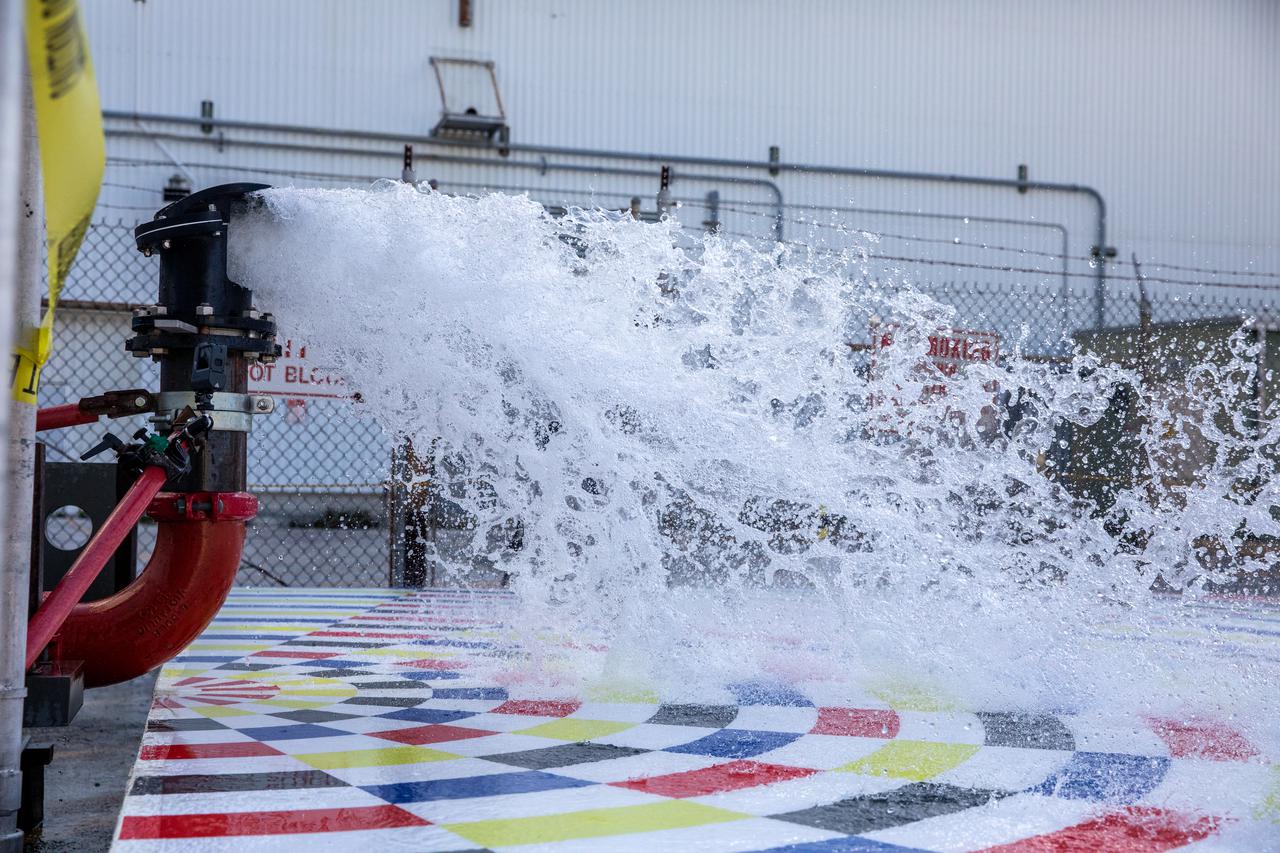
Water flows through a small-scale, 3D-printed nozzle during prototype testing of a new rainbird system on March 24, 2021, at NASA’s Kennedy Space Center in Florida. Rainbirds are large water nozzles located on the mobile launcher (ML) that release a high volume of water when the Space Launch System (SLS) rocket lifts off, protecting the vehicle, launch pad, and ML by absorbing some of the heat and energy generated during launch. The test involved running various water pressures through smaller nozzles to capture data that can be used to develop full-scale replacement nozzles for future missions under the Artemis program.

Alongside the iconic Vehicle Assembly Building at NASA’s Kennedy Space Center in Florida, teams with the agency’s Exploration Ground Systems and supporting contractors conduct prototype testing of a new rainbird system on March 24, 2021. Rainbirds are large water nozzles located on the mobile launcher (ML) that release a high volume of water when the Space Launch System (SLS) rocket lifts off, protecting the vehicle, launch pad, and ML by absorbing some of the heat and energy generated during launch. The test involved running various water pressures through small-scale, 3D-printed nozzles to capture data that can be used to develop full-scale replacement nozzles for future missions under the Artemis program.
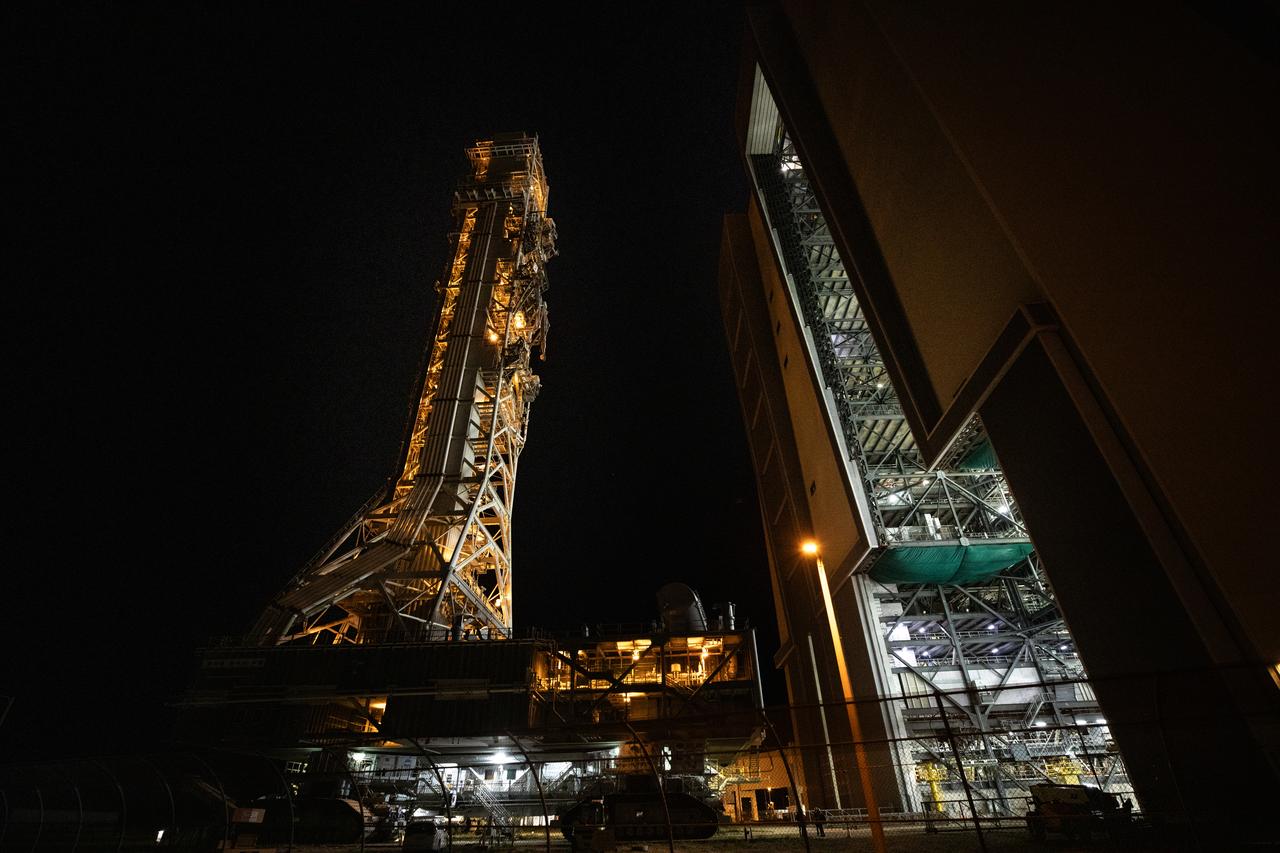
NASA’s mobile launcher 1 atop the spaceport’s crawler is transported inside the agency’s Vehicle Assembly Building at Kennedy Space Center in Florida ahead of integration of the Artemis II Moon rocket on Friday, Oct. 4, 2024. The mobile launcher has been at Launch Complex 39B since August 2023 undergoing upgrades and tests in preparation for NASA’s Artemis II mission. The mobile launcher will be used to assemble, process, and launch NASA’s SLS (Space Launch Systems) and Orion spacecraft to the Moon and beyond.
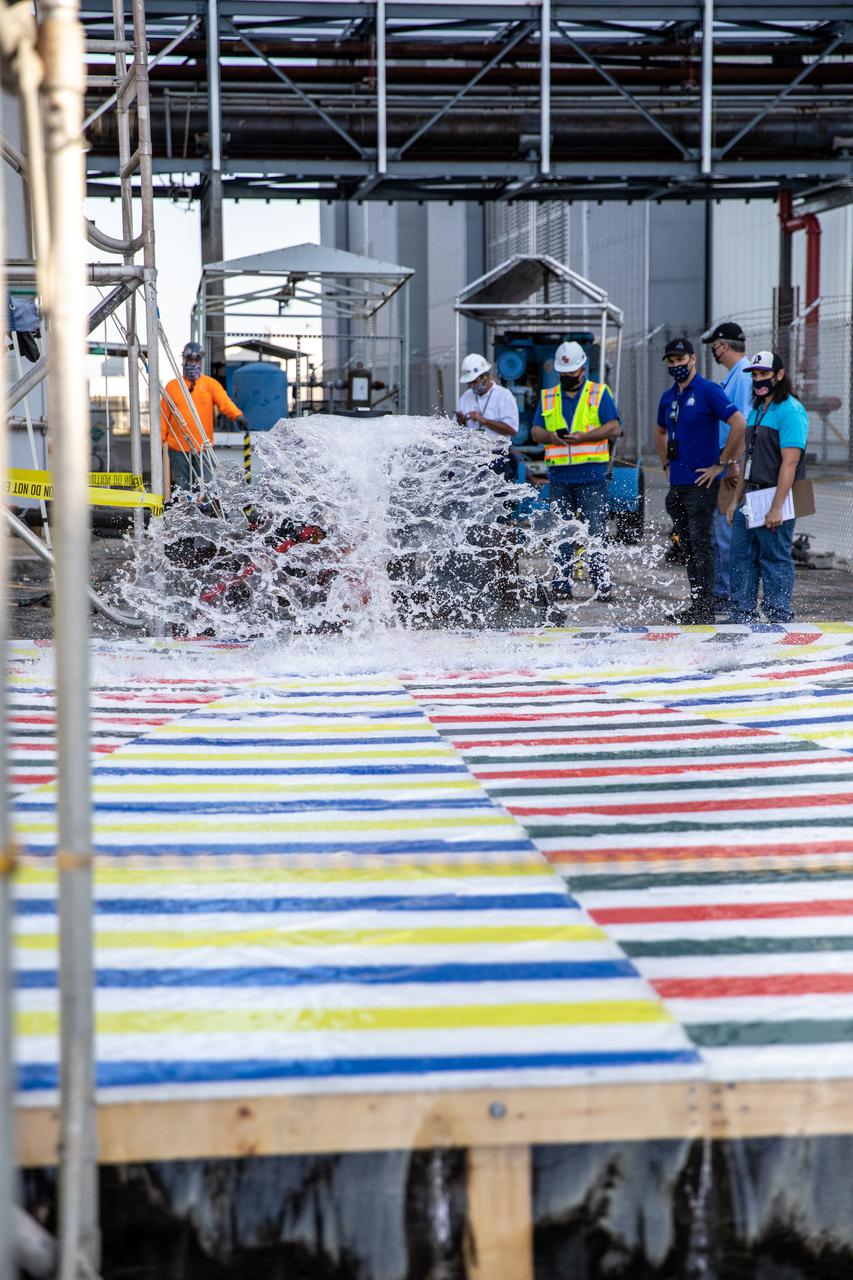
Teams with NASA’s Exploration Ground Systems and supporting contractors conduct prototype testing of a new rainbird system at the agency’s Kennedy Space Center in Florida on March 24, 2021, that can be used for the crewed Artemis II mission to the Moon. Rainbirds are large water nozzles located on the mobile launcher (ML) that release a high volume of water when the Space Launch System (SLS) rocket lifts off, protecting the vehicle, launch pad, and ML by absorbing some of the heat and energy generated during launch. The test involved running various water pressures through small-scale, 3D-printed nozzles to capture data that can be used to develop full-scale replacement nozzles for future missions under the Artemis program.
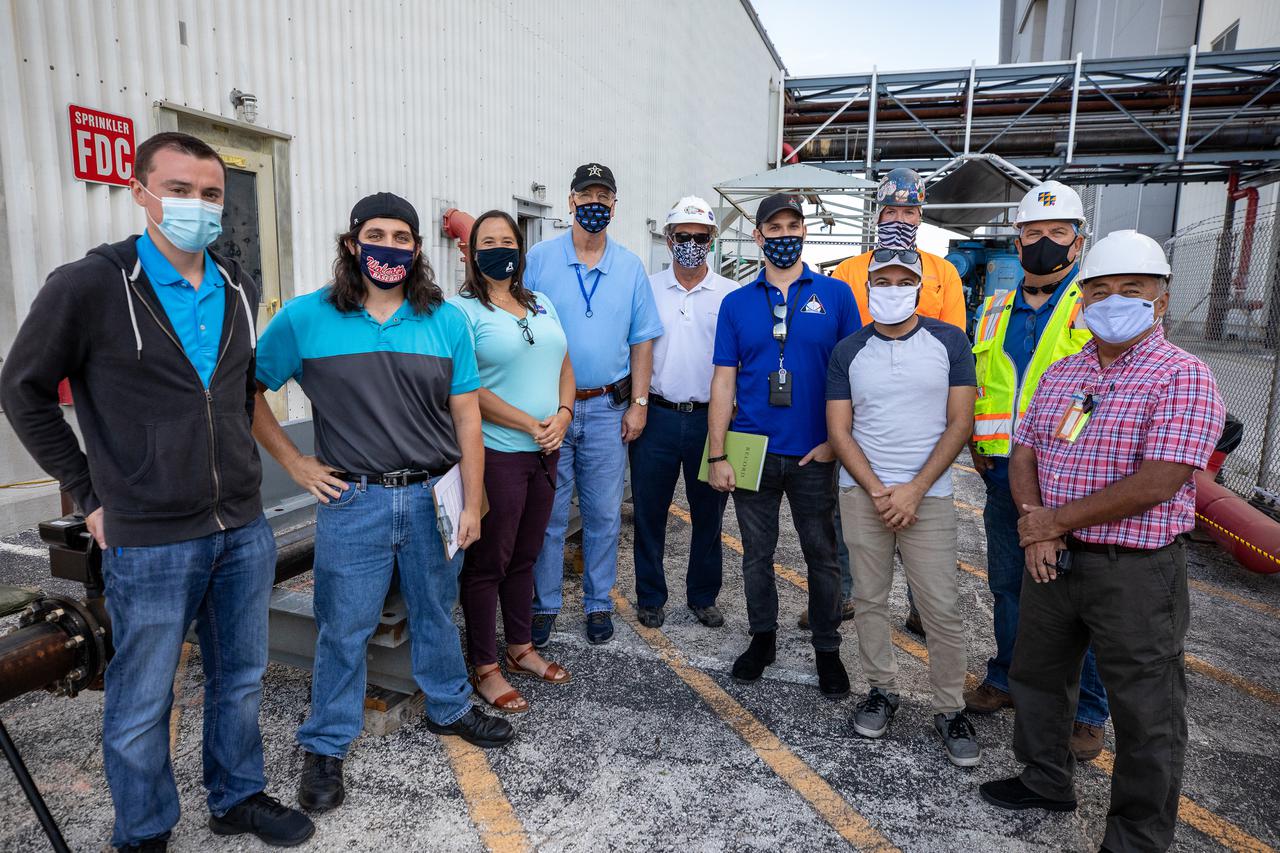
IOP/SS Prototype Testing outside the VAB for Artemis II.