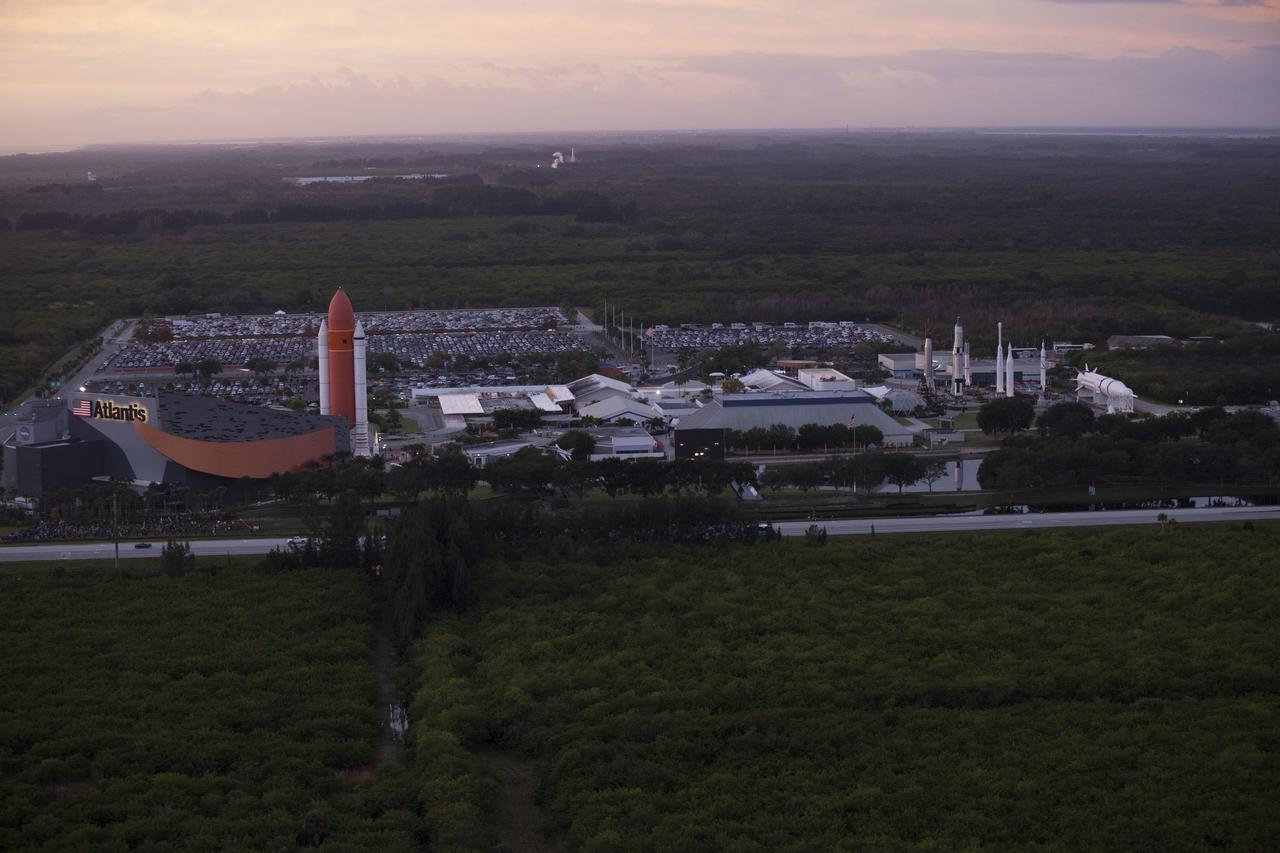
This helicopter view of the Kennedy Space Center Visitor Complex shows the thousands of vehicles parked where guests gather to see the launch of the Orion Flight Test. The liftoff was postponed because of an issue related to fill and drain valves on the Delta IV Heavy rocket that teams could not troubleshoot by the time the launch window expired.
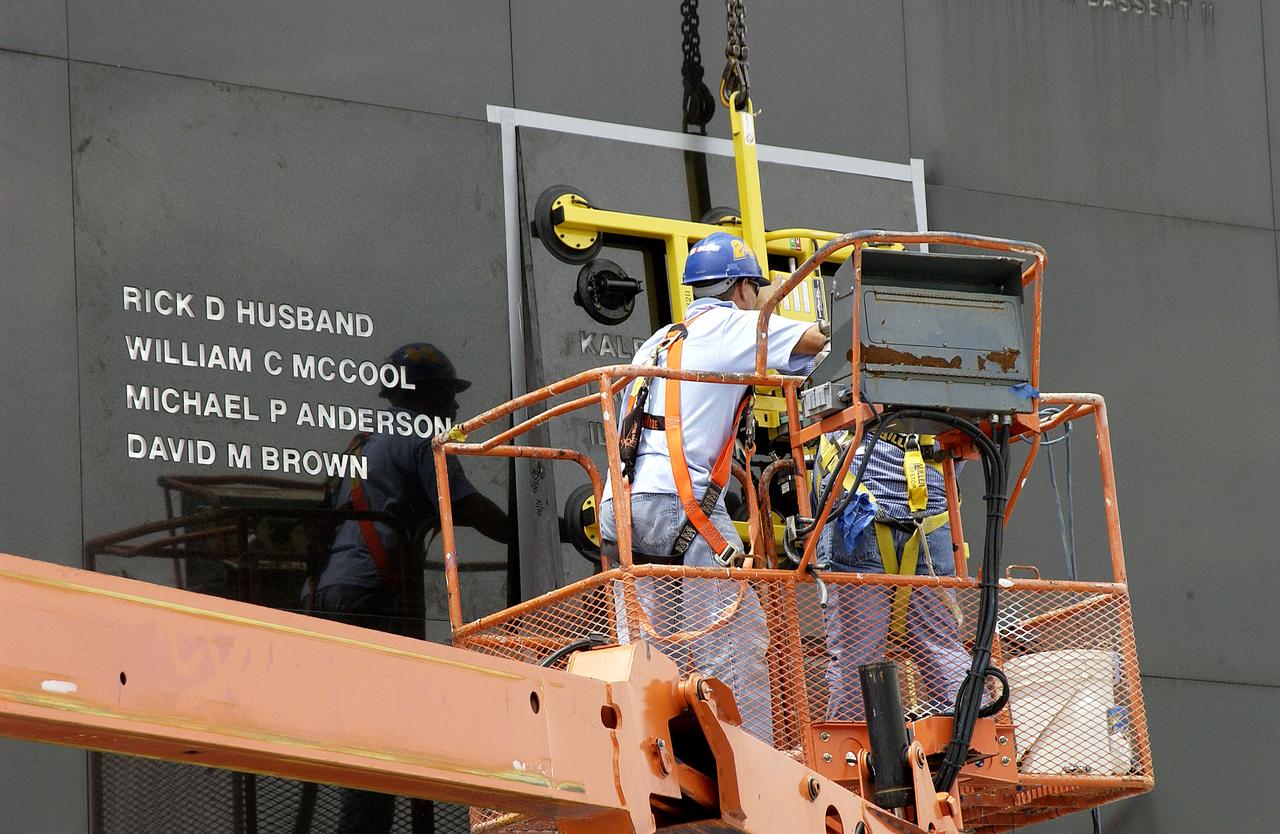
Workers add to the Astronaut Memorial Mirror the names of the Columbia crew who died in the STS-107 accident. Dedicated May 9, 1991, the Astronaut Memorial honors U.S. astronauts who gave their lives for space exploration. The "Space Mirror," 42 1/2 feet high by 50 feet wide, illuminates the names of the fallen astronauts cut through the monument's black granite surface. The Memorial Mirror is accessible through the KSC Visitor Complex.
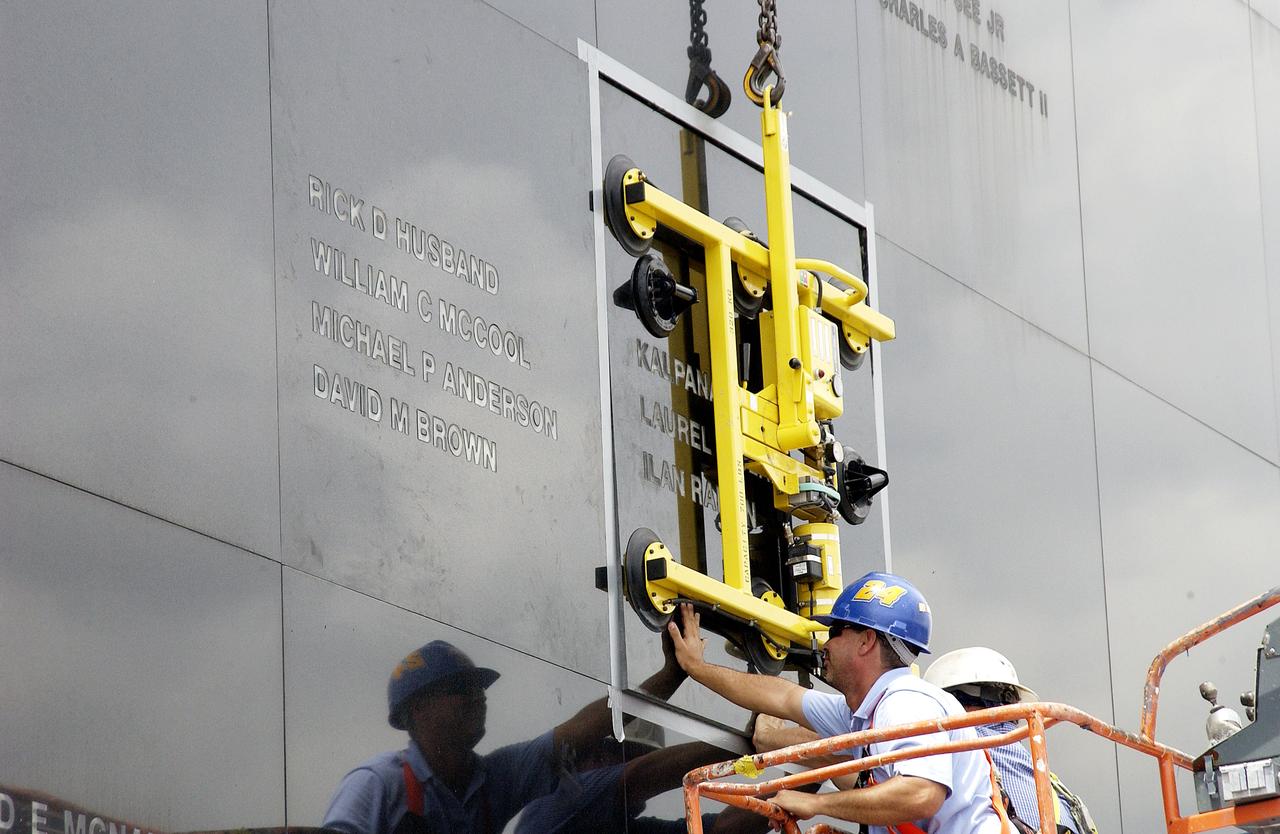
Workers add to the Astronaut Memorial Mirror the names of the Columbia crew who died in the STS-107 accident. Dedicated May 9, 1991, the Astronaut Memorial honors U.S. astronauts who gave their lives for space exploration. The "Space Mirror," 42 1/2 feet high by 50 feet wide, illuminates the names of the fallen astronauts cut through the monument's black granite surface. The Memorial Mirror is accessible through the KSC Visitor Complex.
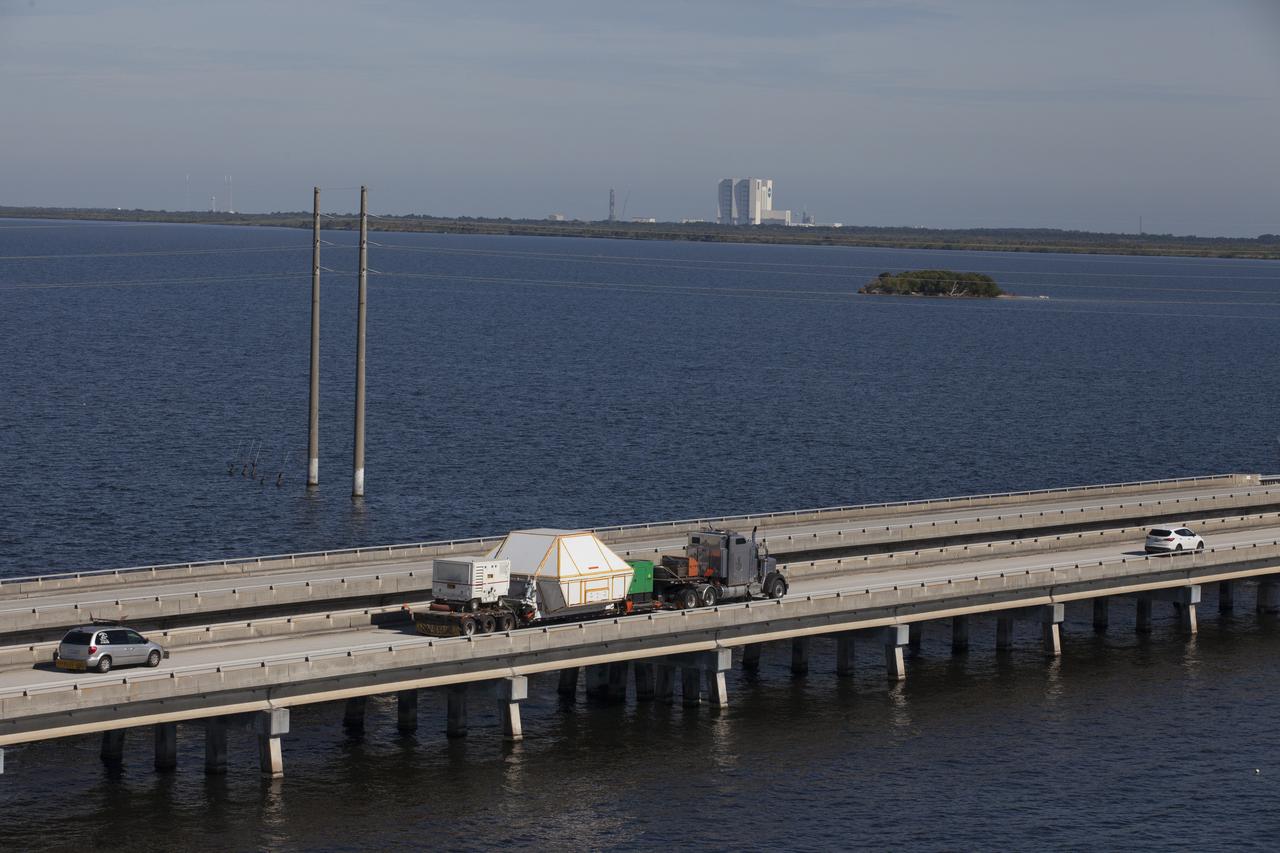
An aerial view near NASA's Kennedy Space Center Visitor Complex reveals the Orion crew module, enclosed in its crew module transportation fixture and secured on a flatbed truck that is proceeding along the NASA Causeway to the entrance gate to Kennedy Space Center in Florida. Across the inland waterway is the iconic Vehicle Assembly Building. Orion made the 2,700 mile overland trip from Naval Base San Diego in California. The spacecraft was recovered from the Pacific Ocean after completing a two-orbit, four-and-a-half hour mission Dec. 5 to test systems critical to crew safety, including the launch abort system, the heat shield and the parachute system. The Ground Systems Development and Operations Program led the recovery, offload and transportation efforts.
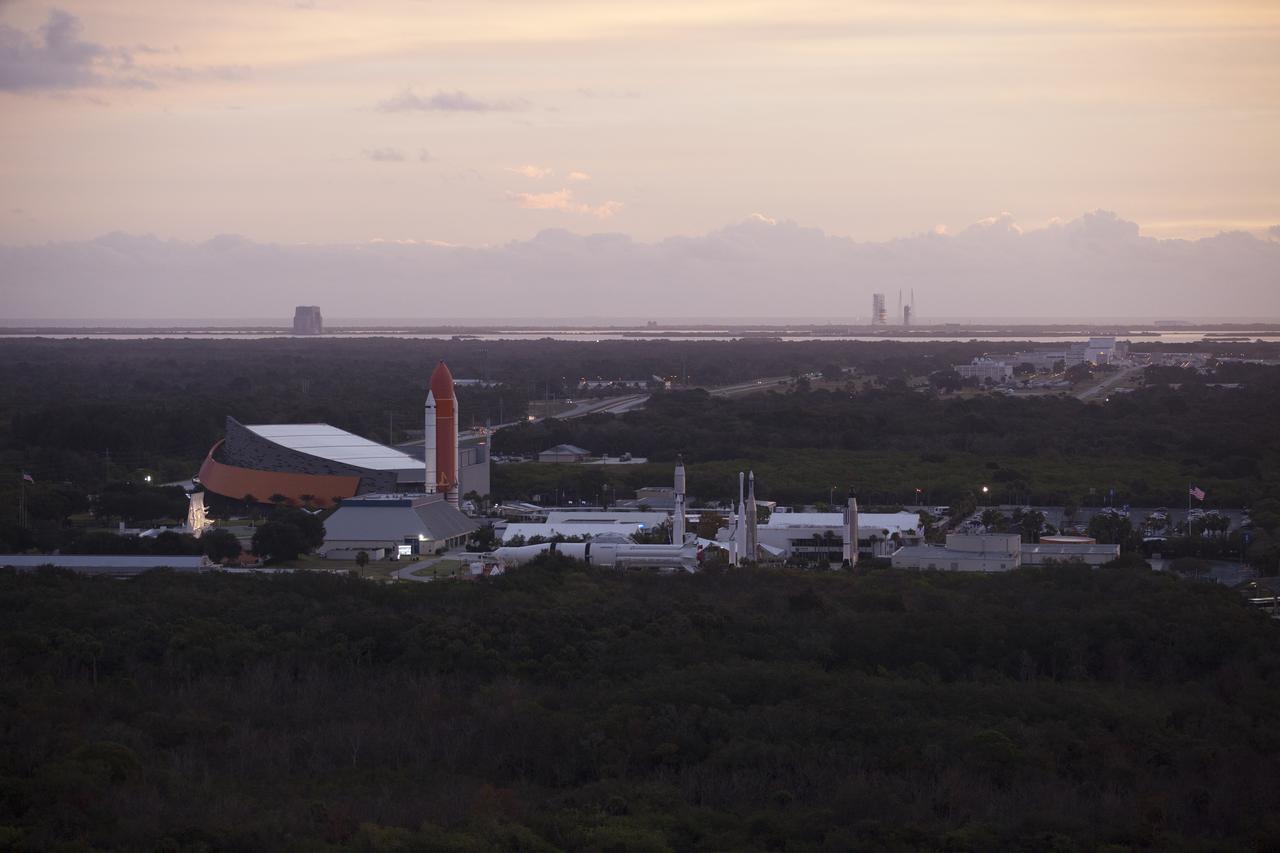
This helicopter view of the Kennedy Space Center Visitor Complex shows the thousands of vehicles parked where guests gather to see the launch of the Orion Flight Test. The liftoff was postponed because of an issue related to fill and drain valves on the Delta IV Heavy rocket that teams could not troubleshoot by the time the launch window expired.
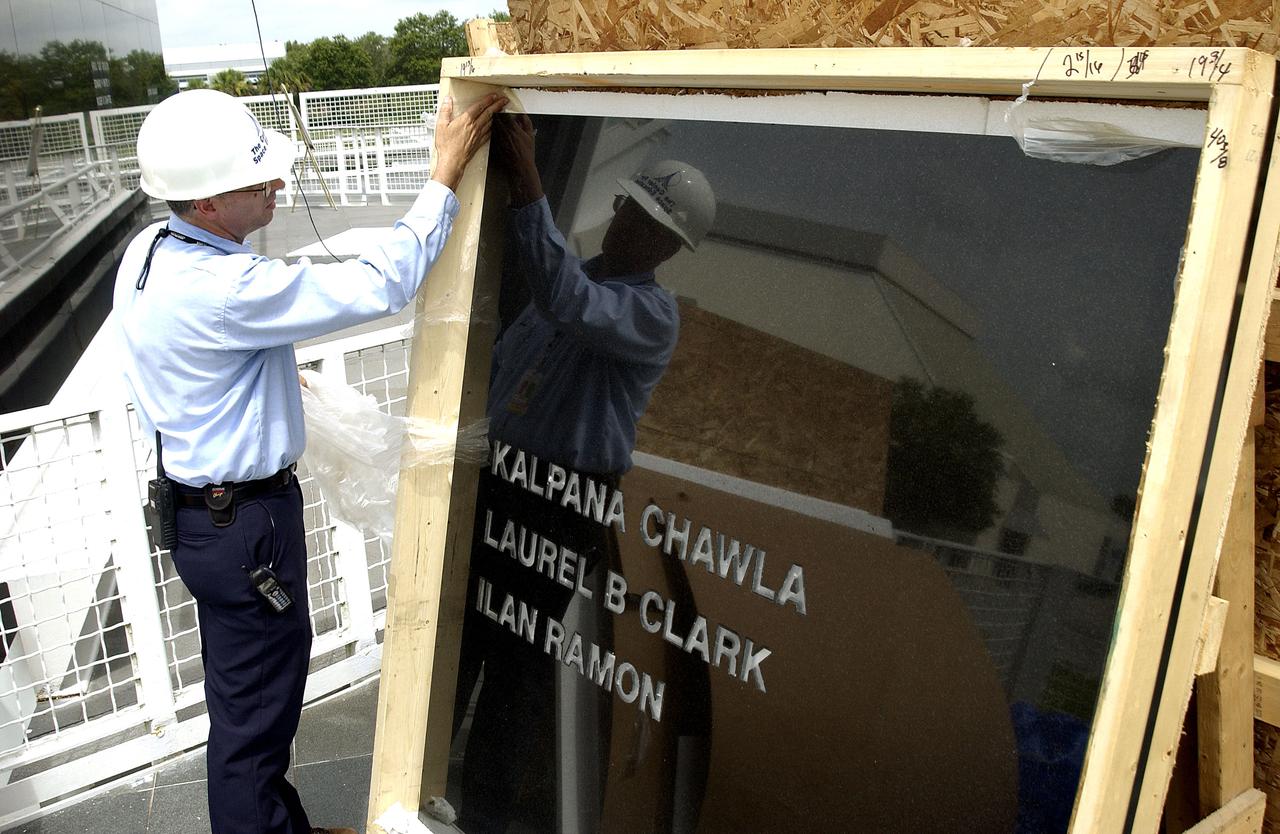
Workers add to the Astronaut Memorial Mirror the names of the Columbia crew who died in the STS-107 accident. Dedicated May 9, 1991, the Astronaut Memorial honors U.S. astronauts who gave their lives for space exploration. The "Space Mirror," 42 1/2 feet high by 50 feet wide, illuminates the names of the fallen astronauts cut through the monument's black granite surface. The Memorial Mirror is accessible through the KSC Visitor Complex.
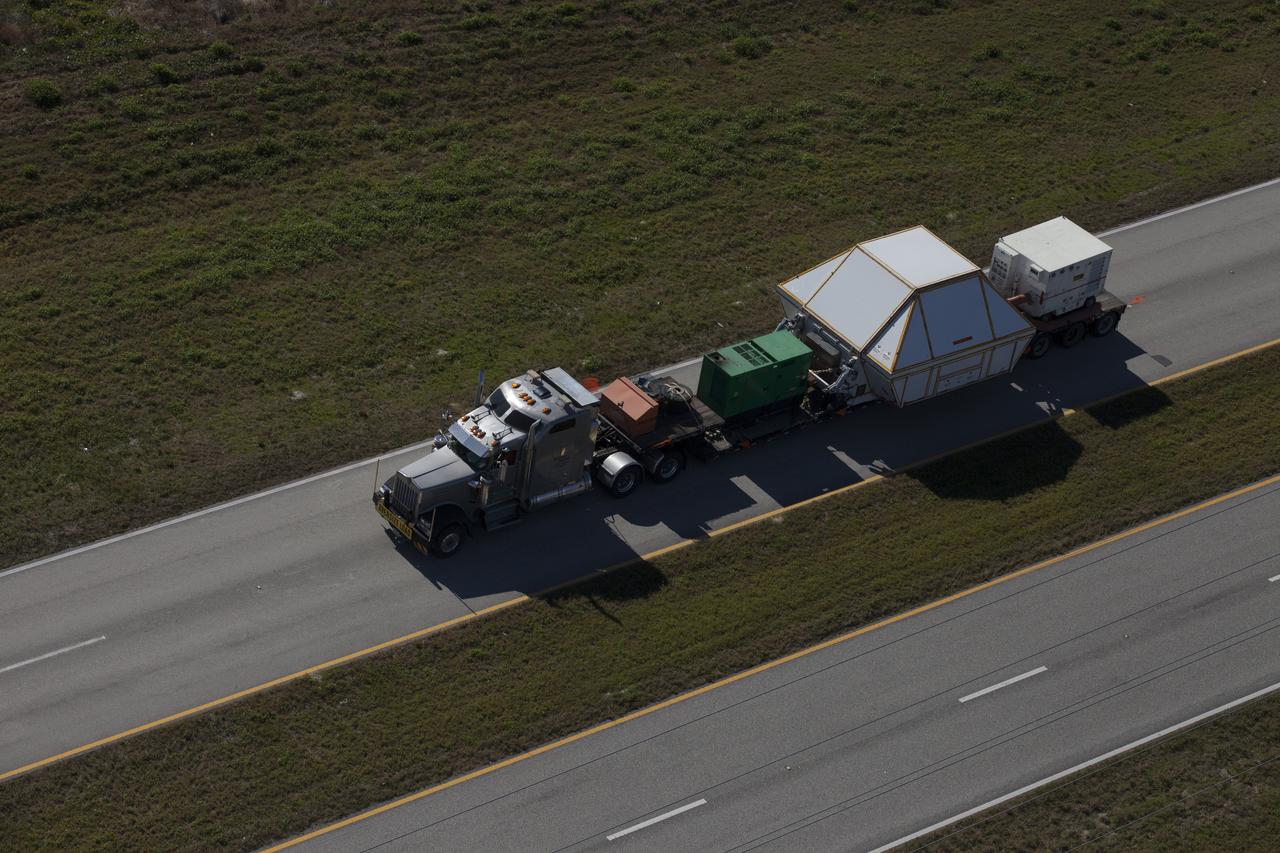
An aerial view near NASA's Kennedy Space Center Visitor Complex reveals the Orion crew module, enclosed in its crew module transportation fixture and secured on a flatbed truck that is proceeding along the NASA Causeway to the entrance gate to Kennedy Space Center in Florida. Orion made the 2,700 mile overland trip from Naval Base San Diego in California. The spacecraft was recovered from the Pacific Ocean after completing a two-orbit, four-and-a-half hour mission Dec. 5 to test systems critical to crew safety, including the launch abort system, the heat shield and the parachute system. The Ground Systems Development and Operations Program led the recovery, offload and transportation efforts.
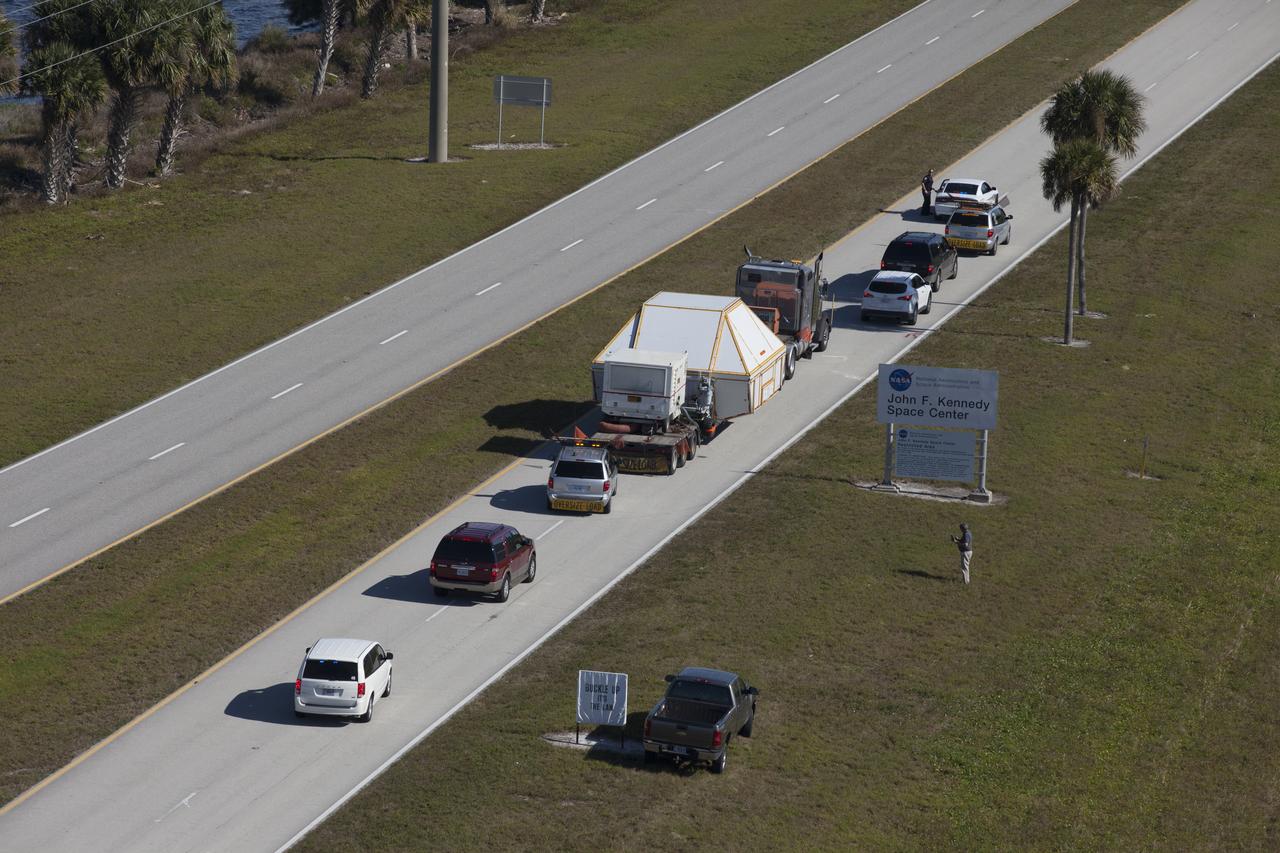
An aerial view near NASA's Kennedy Space Center Visitor Complex reveals the Orion crew module, enclosed in its crew module transportation fixture and secured on a flatbed truck on the NASA Causeway that leads to the entrance gate to Kennedy Space Center in Florida. Orion made the 2,700 mile overland trip from Naval Base San Diego in California. The spacecraft was recovered from the Pacific Ocean after completing a two-orbit, four-and-a-half hour mission Dec. 5 to test systems critical to crew safety, including the launch abort system, the heat shield and the parachute system. The Ground Systems Development and Operations Program led the recovery, offload and transportation efforts.
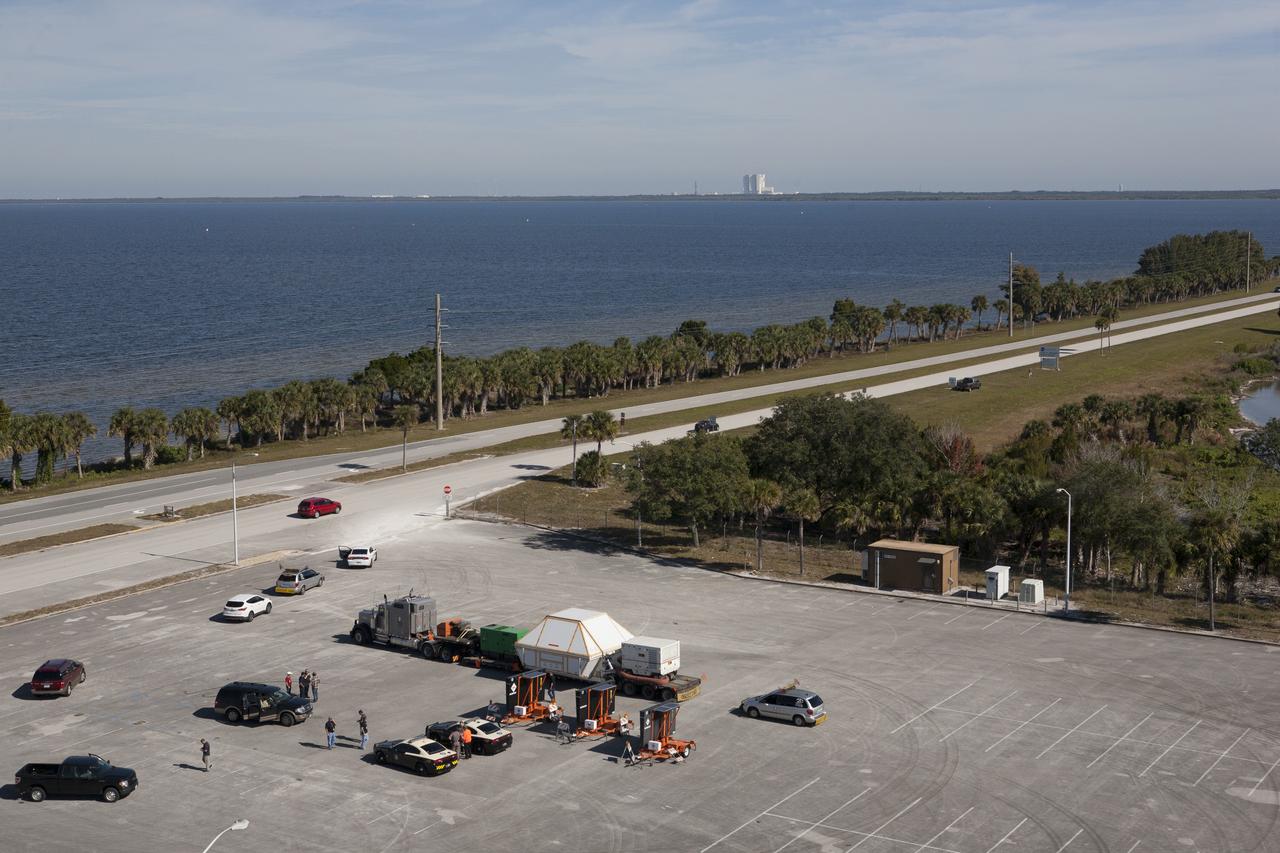
An aerial view near NASA's Kennedy Space Center Visitor Complex reveals the Orion crew module, enclosed in its crew module transportation fixture and secured on a flatbed truck that is preparing to pull onto the NASA Causeway that leads to the entrance gate to Kennedy Space Center in Florida. Orion made the 2,700 mile overland trip from Naval Base San Diego in California. The spacecraft was recovered from the Pacific Ocean after completing a two-orbit, four-and-a-half hour mission Dec. 5 to test systems critical to crew safety, including the launch abort system, the heat shield and the parachute system. The Ground Systems Development and Operations Program led the recovery, offload and transportation efforts.
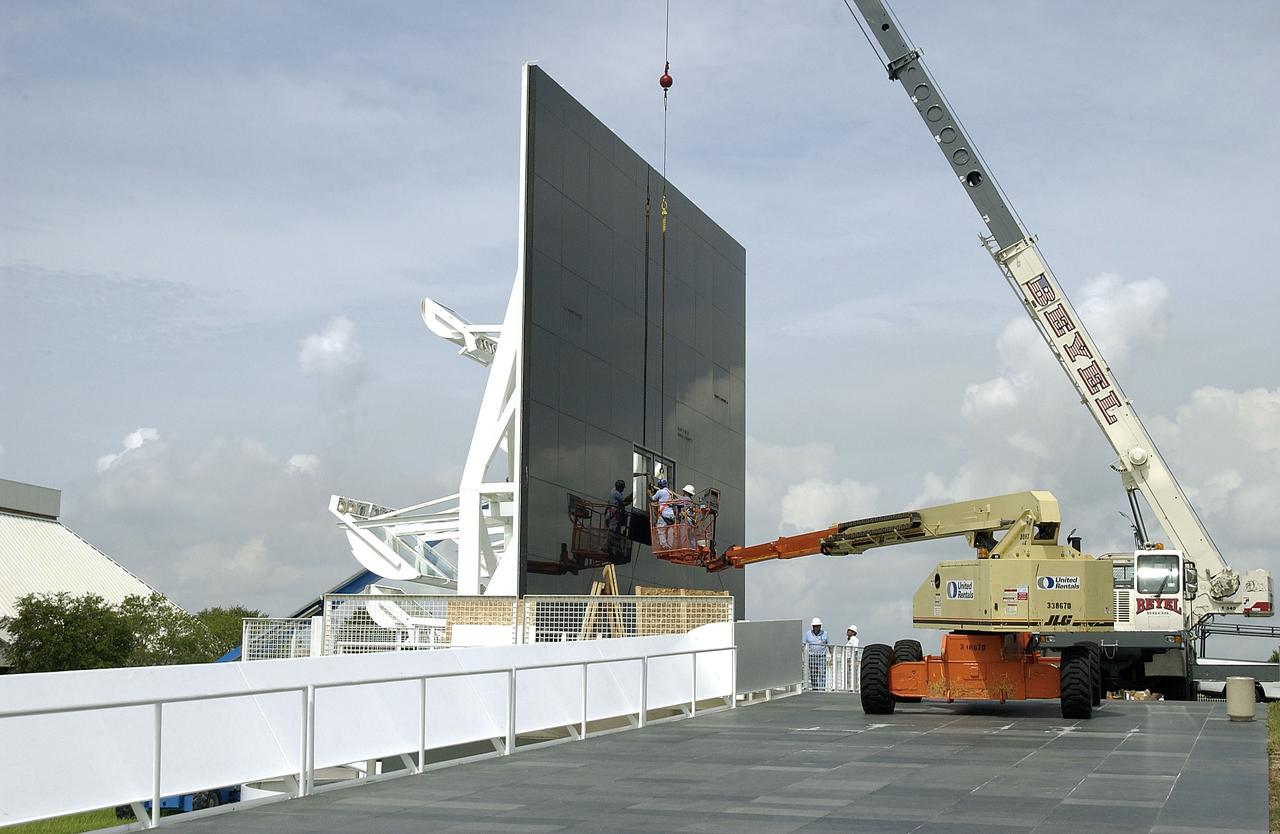
Workers add to the Astronaut Memorial Mirror the names of the Columbia crew who died in the STS-107 accident. Dedicated May 9, 1991, the Astronaut Memorial honors U.S. astronauts who gave their lives for space exploration. The "Space Mirror," 42 1/2 feet high by 50 feet wide, illuminates the names of the fallen astronauts cut through the monument's black granite surface. The Memorial Mirror is accessible through the KSC Visitor Complex.
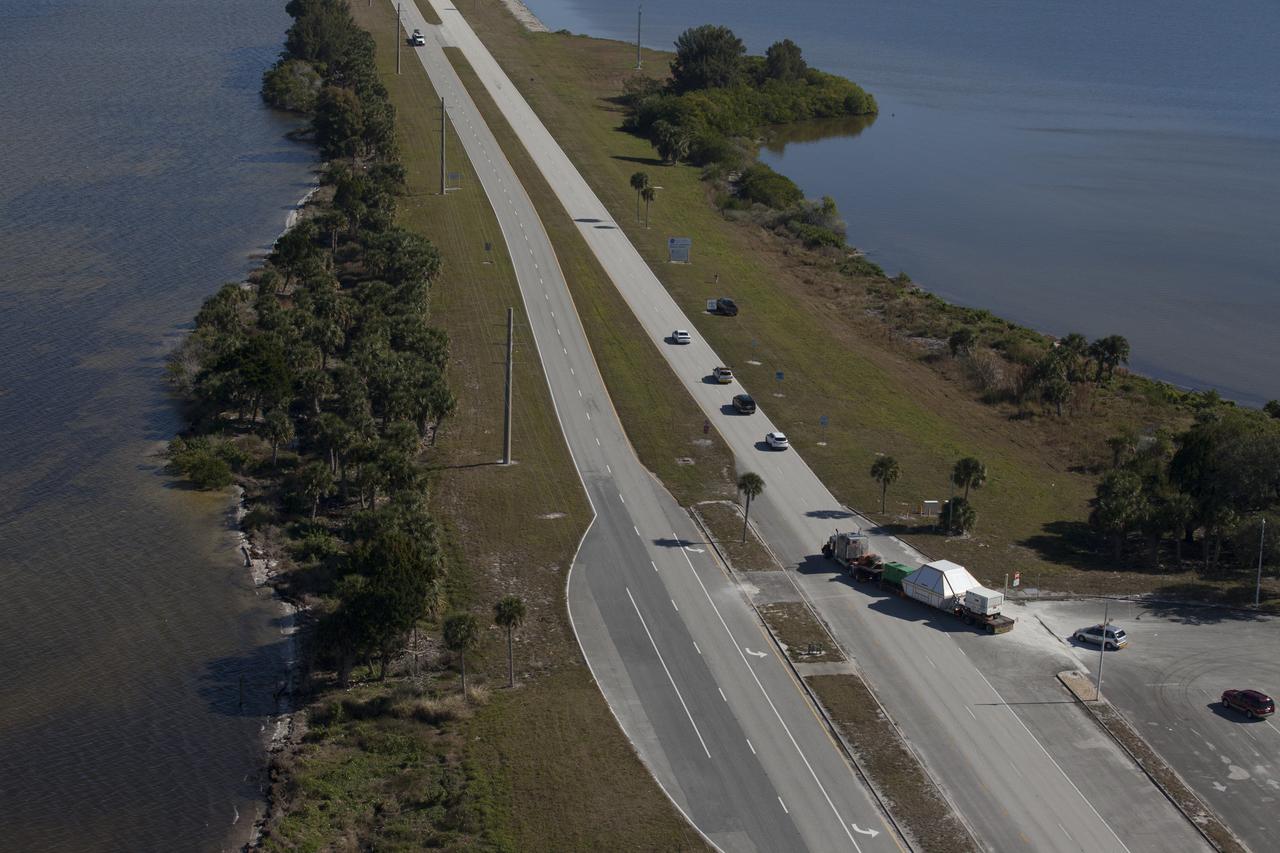
An aerial view near NASA's Kennedy Space Center Visitor Complex reveals the Orion crew module, enclosed in its crew module transportation fixture and secured on a flatbed truck that is proceeding onto the NASA Causeway that leads to the entrance gate to Kennedy Space Center in Florida. Orion made the 2,700 mile overland trip from Naval Base San Diego in California. The spacecraft was recovered from the Pacific Ocean after completing a two-orbit, four-and-a-half hour mission Dec. 5 to test systems critical to crew safety, including the launch abort system, the heat shield and the parachute system. The Ground Systems Development and Operations Program led the recovery, offload and transportation efforts.
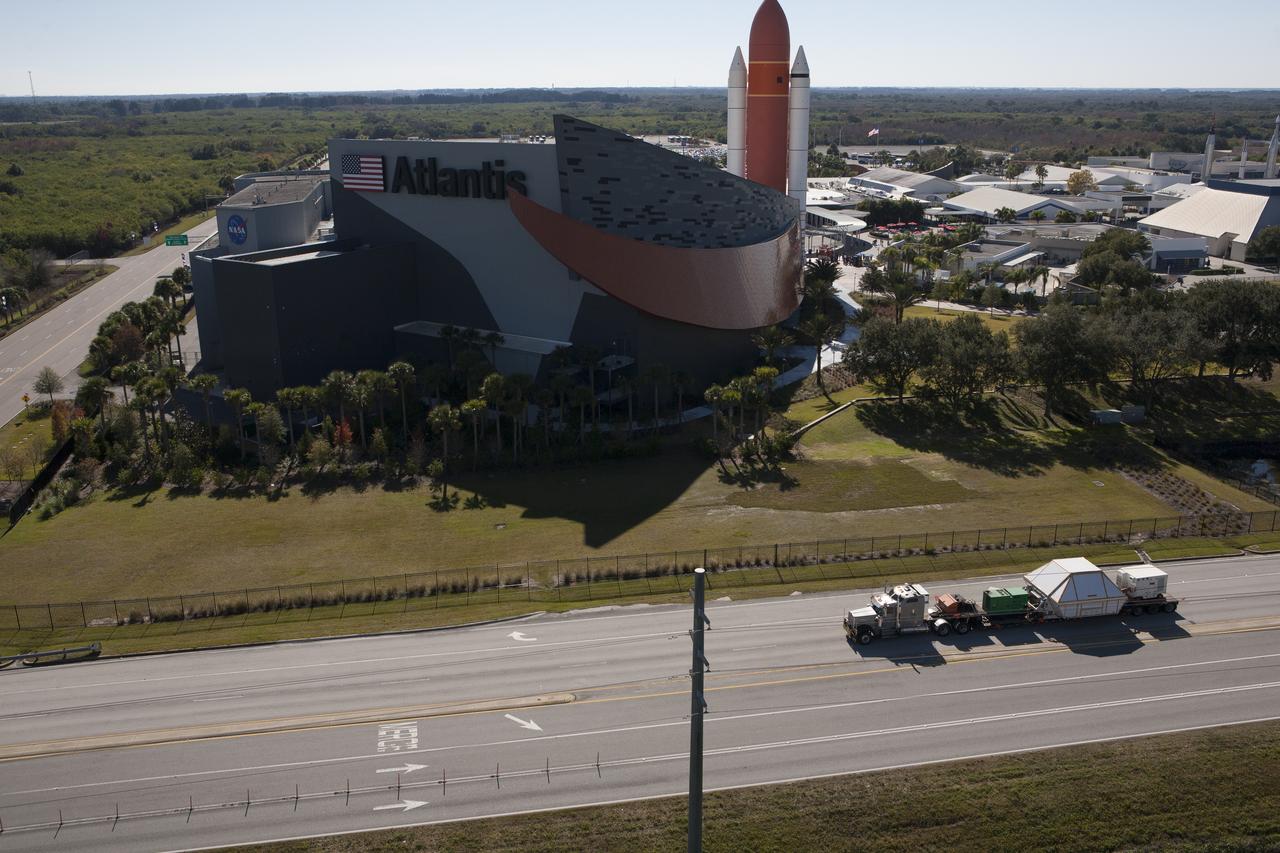
In this aerial view, NASA's Orion crew module, enclosed in its crew module transportation fixture and secured on a flatbed truck is passing the Kennedy Space Center Visitor Complex on its way to the entrance gate to Kennedy Space Center in Florida. In view is the Space Shuttle Atlantis facility. Orion made the 2,700 mile overland trip from Naval Base San Diego in California. Orion was recovered from the Pacific Ocean after completing a two-orbit, four-and-a-half hour mission Dec. 5 to test systems critical to crew safety, including the launch abort system, the heat shield and the parachute system. The Ground Systems Development and Operations Program led the recovery, offload and transportation efforts.
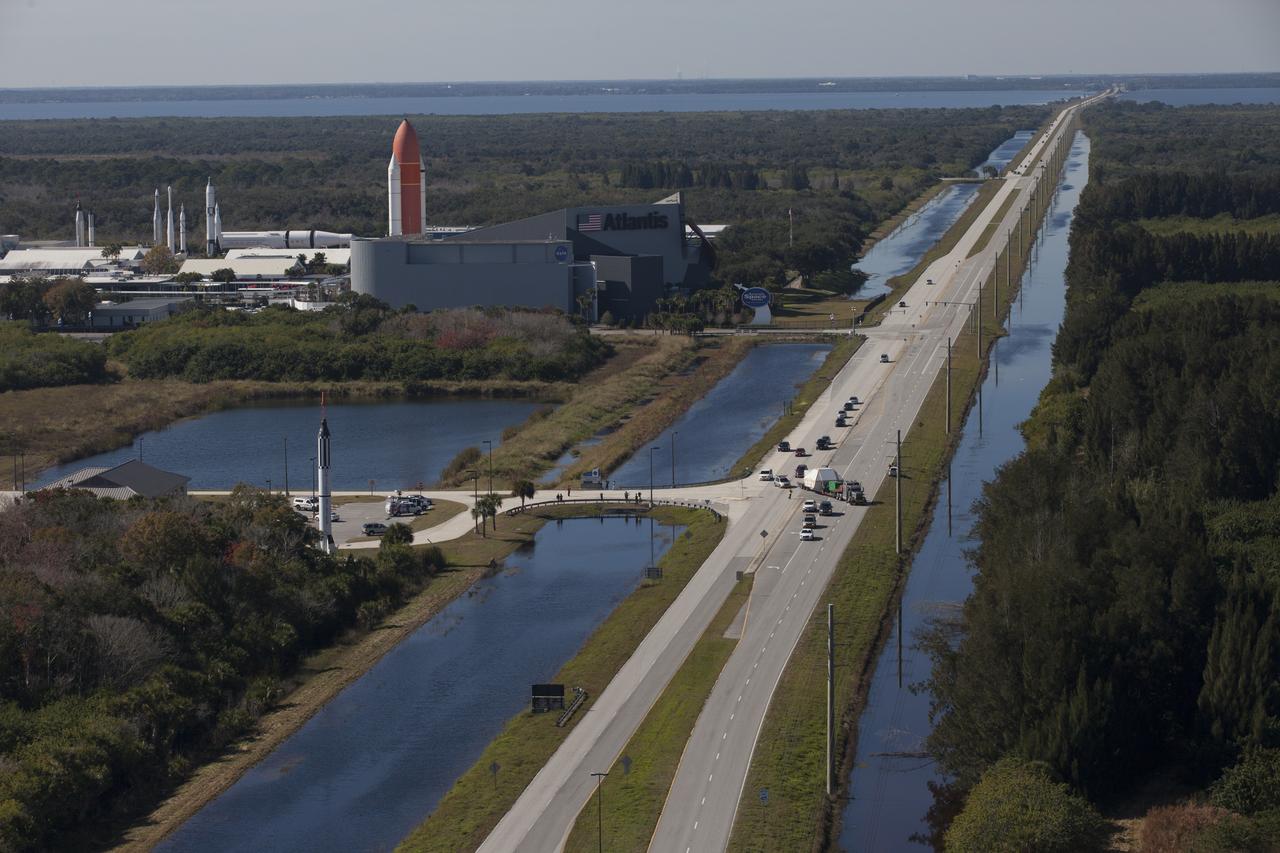
In this aerial view, NASA's Orion crew module, enclosed in its crew module transportation fixture and secured on a flatbed truck is passing the Kennedy Space Center Visitor Complex on its way to the entrance gate to Kennedy Space Center in Florida. In view is the Space Shuttle Atlantis facility. Orion made the 2,700 mile overland trip from Naval Base San Diego in California. Orion was recovered from the Pacific Ocean after completing a two-orbit, four-and-a-half hour mission Dec. 5 to test systems critical to crew safety, including the launch abort system, the heat shield and the parachute system. The Ground Systems Development and Operations Program led the recovery, offload and transportation efforts.
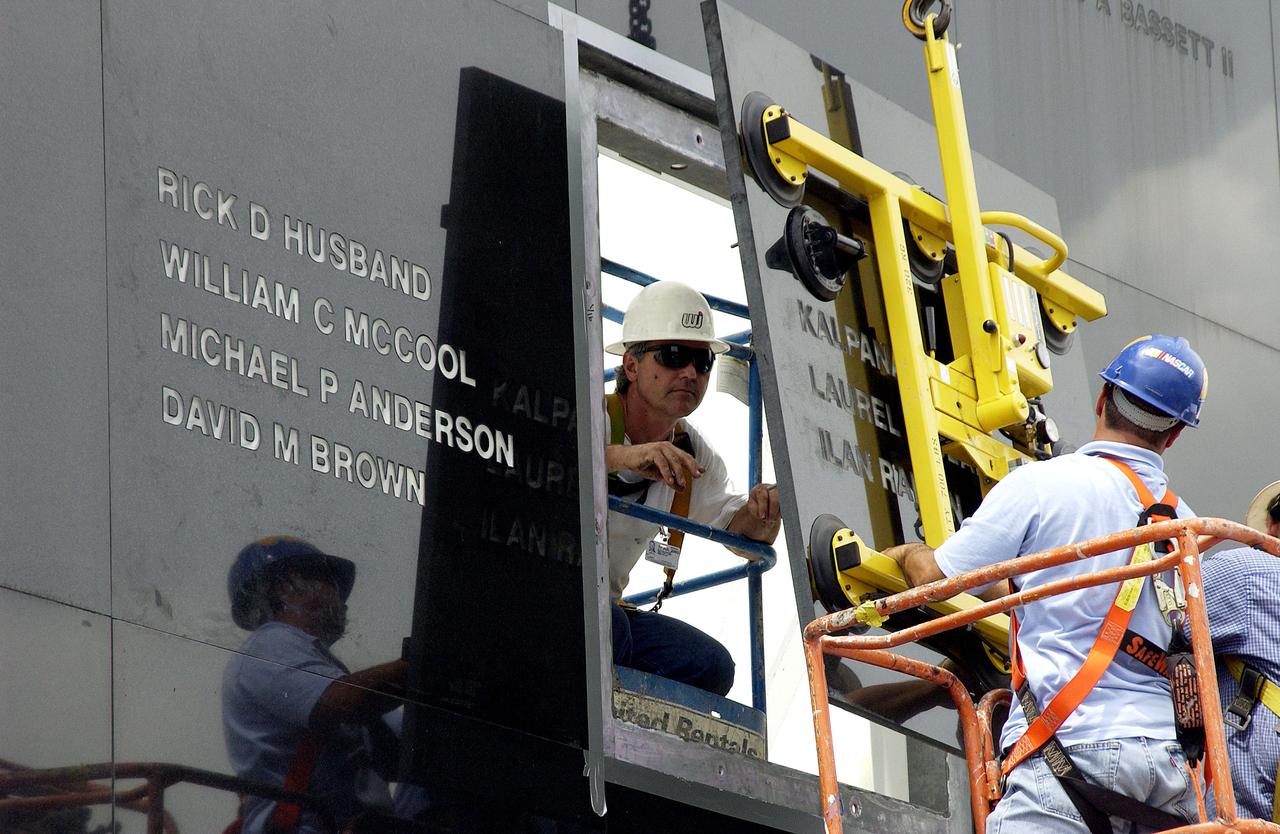
Workers add to the Astronaut Memorial Mirror the names of the Columbia crew who died in the STS-107 accident. Dedicated May 9, 1991, the Astronaut Memorial honors U.S. astronauts who gave their lives for space exploration. The "Space Mirror," 42 1/2 feet high by 50 feet wide, illuminates the names of the fallen astronauts cut through the monument's black granite surface. The Memorial Mirror is accessible through the KSC Visitor Complex.
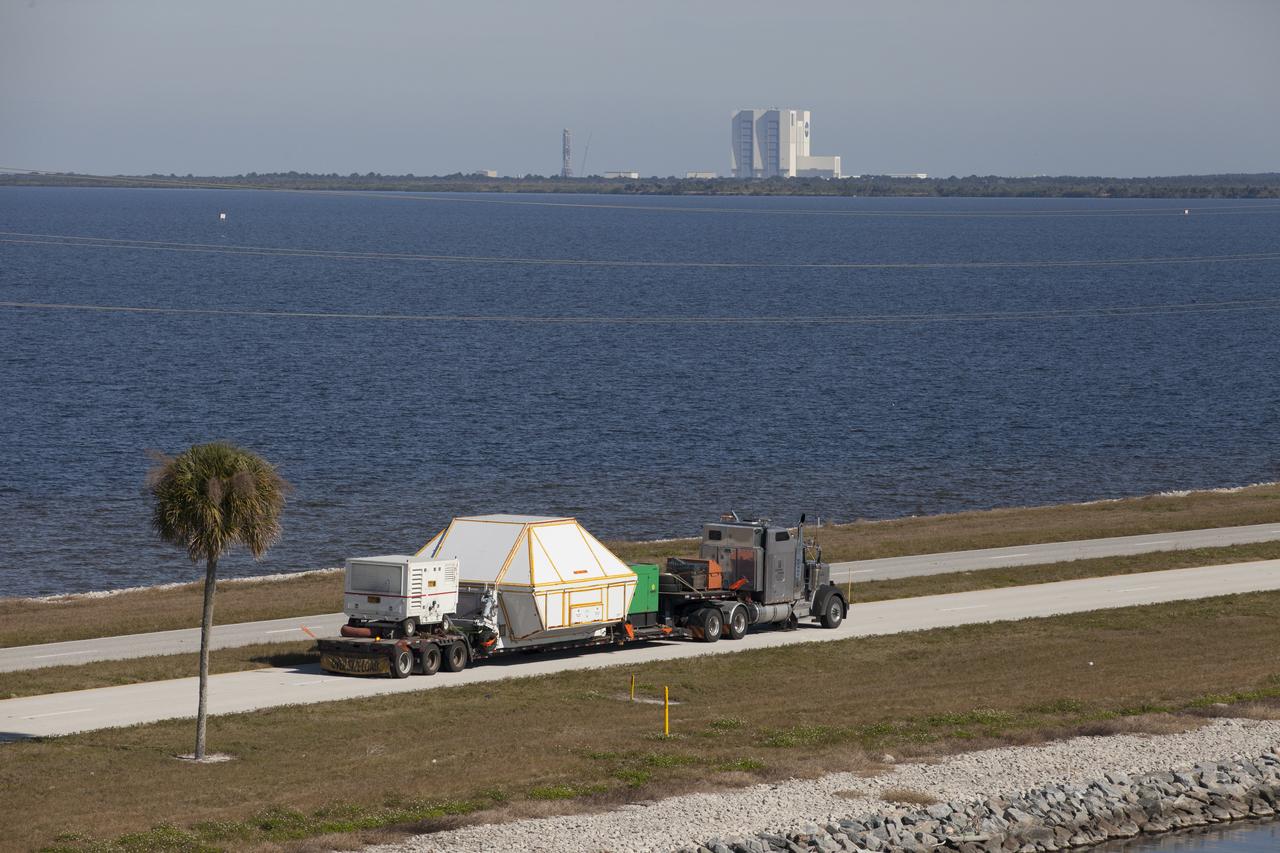
An aerial view near NASA's Kennedy Space Center Visitor Complex reveals the Orion crew module, enclosed in its crew module transportation fixture and secured on a flatbed truck that is proceeding along the NASA Causeway to the entrance gate to Kennedy Space Center in Florida. Across the inland waterway is the iconic Vehicle Assembly Building. Orion made the 2,700 mile overland trip from Naval Base San Diego in California. The spacecraft was recovered from the Pacific Ocean after completing a two-orbit, four-and-a-half hour mission Dec. 5 to test systems critical to crew safety, including the launch abort system, the heat shield and the parachute system. The Ground Systems Development and Operations Program led the recovery, offload and transportation efforts.