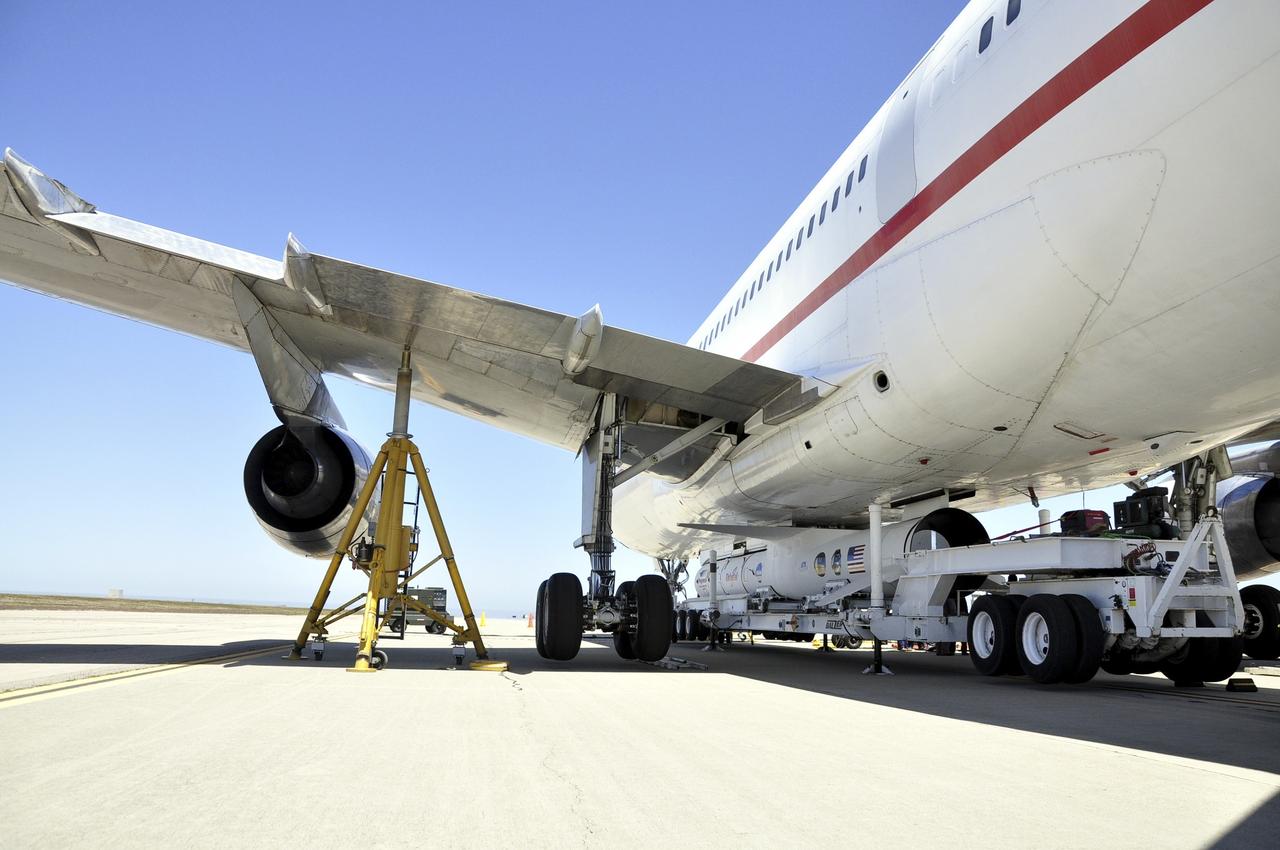
VANDENBERG AIR FORCE BASE, Calif. – Technicians and engineers at Vandenberg Air Force Base in California mate the Pegasus XL rocket with the Interface Region Imaging Spectrograph, or IRIS, solar observatory to the Orbital Sciences L-1011 carrier aircraft. Scheduled for launch from Vandenberg on June 26, 2013, IRIS will open a new window of discovery by tracing the flow of energy and plasma through the chromospheres and transition region into the sun’s corona using spectrometry and imaging. The IRIS mission will observe how solar material moves, gathers energy and heats up as it travels through a largely unexplored region of the solar atmosphere. The interface region, located between the sun's visible surface and upper atmosphere, is where most of the sun's ultraviolet emission is generated. These emissions impact the near-Earth space environment and Earth's climate. For more information, visit http://www.nasa.gov/iris Photo credit: NASA/Randy Beaudoin
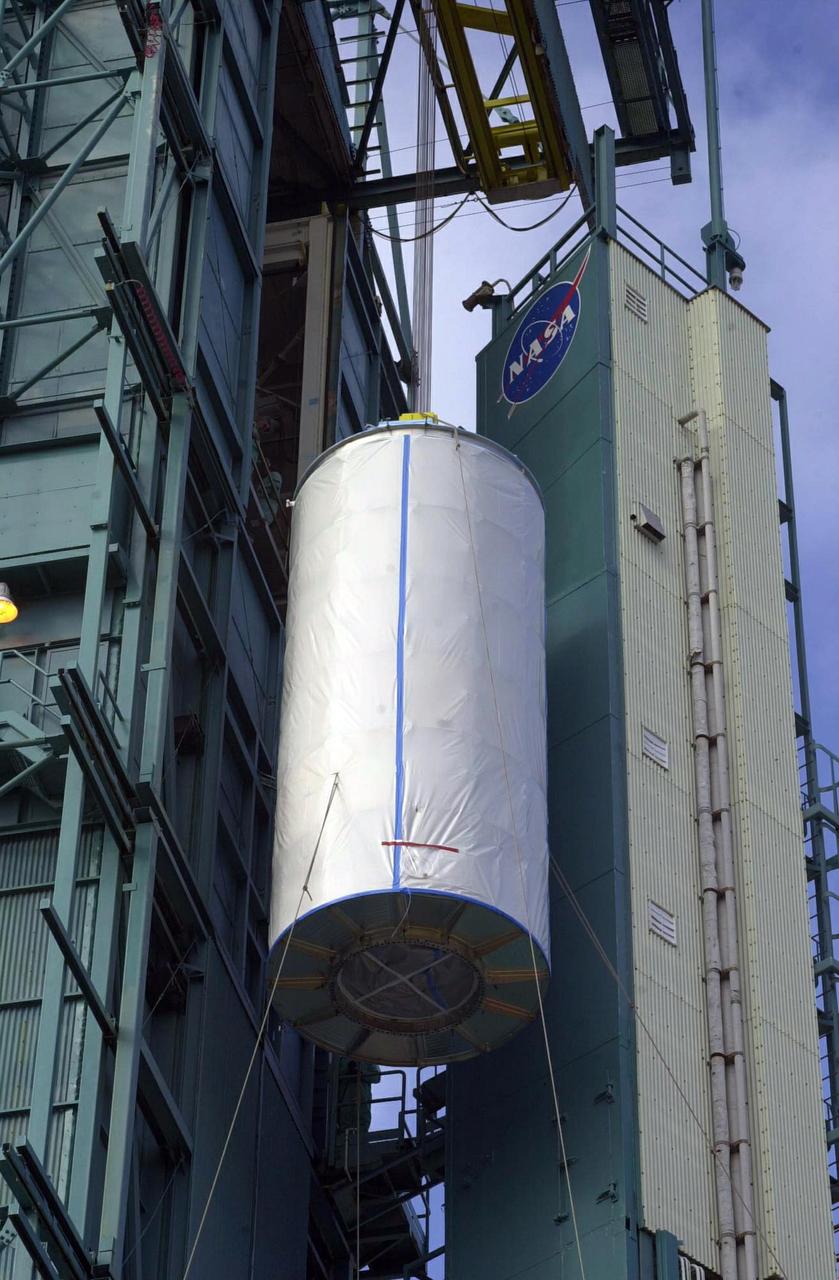
VANDENBERG AIR FORCE BASE, CALIF. - NASA's CALIPSO/CloudSat spacecraft are lifted at Space Launch Complex 2 at Vandenberg Air Force Base in preparation for integration with the Boeing Delta II launch vehicle. Launch of the dual spacecraft is scheduled for April 21. CALIPSO stands for Cloud-Aerosol Lidar and Infrared Pathfinder Satellite Observation. It will fly in combination with the CloudSat satellite to provide never-before-seen 3-D perspectives of how clouds and aerosols form, evolve, and affect weather and climate. CALIPSO and CloudSat will join three other satellites in orbit to enhance understanding of climate systems.
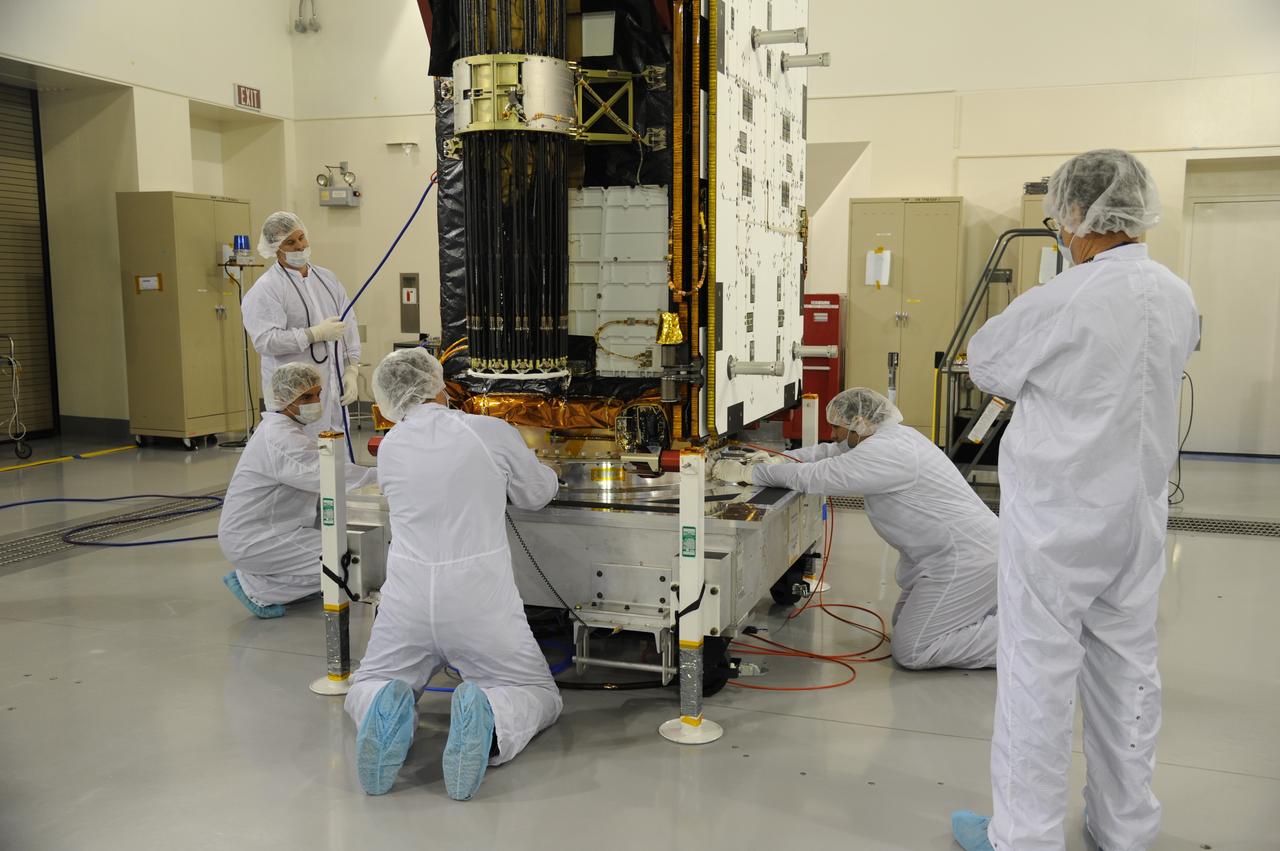
VANDENBERG AIR FORCE BASE, Calif. – Operations are underway to weigh NASA's Soil Moisture Active Passive, or SMAP, spacecraft in the clean room of the Astrotech payload processing facility on Vandenberg Air Force Base in California. The weighing of a spacecraft is standard procedure during prelaunch processing. SMAP will launch on a Delta II 7320 configuration vehicle featuring a United Launch Alliance first stage booster powered by an Aerojet Rocketdyne RS-27A main engine and three Alliant Techsystems, or ATK, strap-on solid rocket motors. Once on station in Earth orbit, SMAP will provide global measurements of soil moisture and its freeze/thaw state. NASA's Jet Propulsion Laboratory that built the observatory and its radar instrument also is responsible for SMAP project management and mission operations. Launch from Space Launch Complex 2 is targeted for Jan. 29, 2015. To learn more about SMAP, visit http://smap.jpl.nasa.gov. Photo credit: NASA/Randy Beaudoin
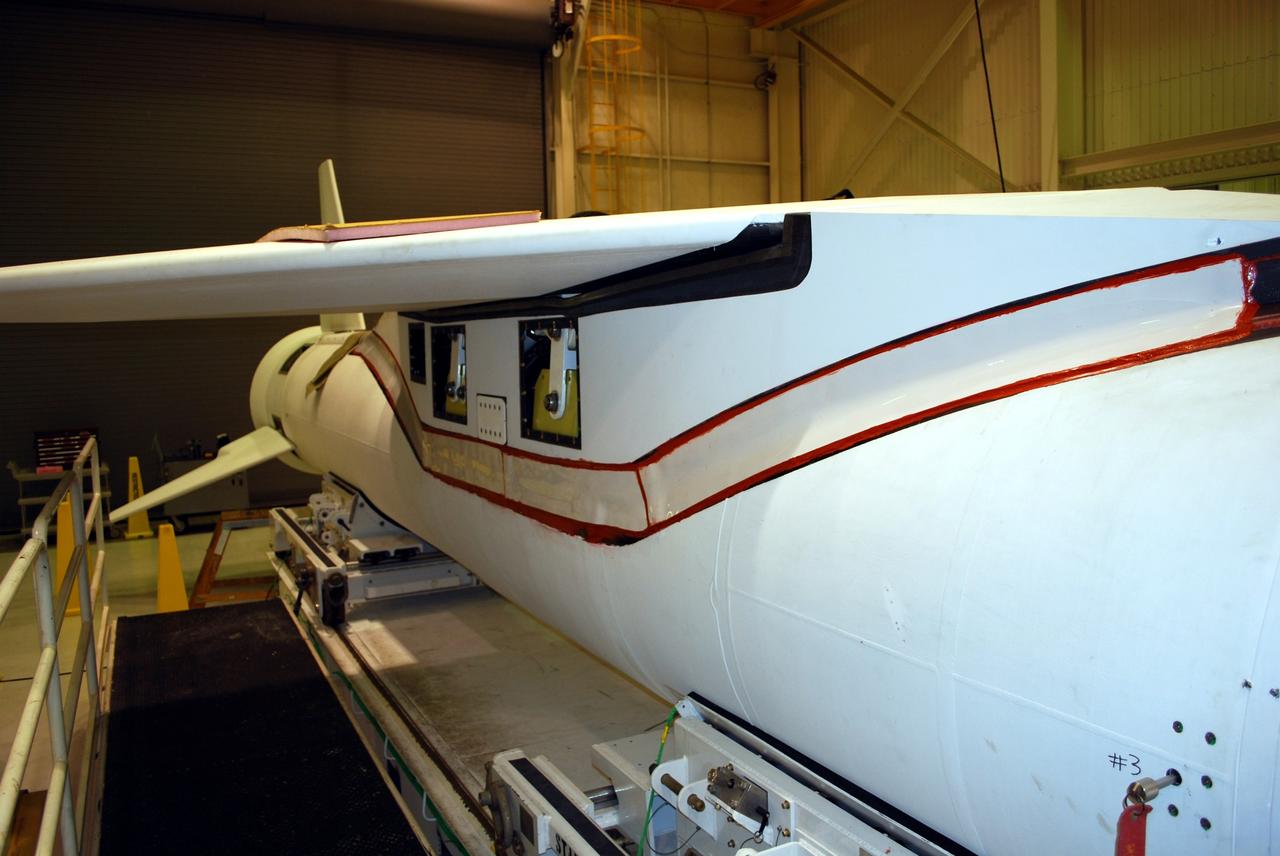
VANDENBERG AIR FORCE BASE, Calif. -- Avionics shelf flatness and fillet gap measurements are conducted on the wing of a Pegasus rocket in Building 1555 at Vandenberg AFB. The testing was performed by workers from Advanced Digital Measuring Works using an API laser tracker. The Pegasus will launch NASA's Interstellar Boundary Explorer Mission, or IBEX, satellite from Kwajalein Island in the Marshall Islands, South Pacific. IBEX will make the first map of the boundary between the solar system and interstellar space. IBEX is the first mission designed to detect the edge of the solar system. As the solar wind from the sun flows out beyond Pluto, it collides with the material between the stars, forming a shock front. IBEX contains two neutral atom imagers designed to detect particles from the termination shock at the boundary between the solar system and interstellar space. IBEX also will study galactic cosmic rays, energetic particles from beyond the solar system that pose a health and safety hazard for humans exploring beyond Earth orbit. IBEX will make these observations from a highly elliptical orbit that takes it beyond the interference of the Earth's magnetosphere. IBEX is targeted for launch in October 2008. Photo credit: NASA/Randy Beaudoin
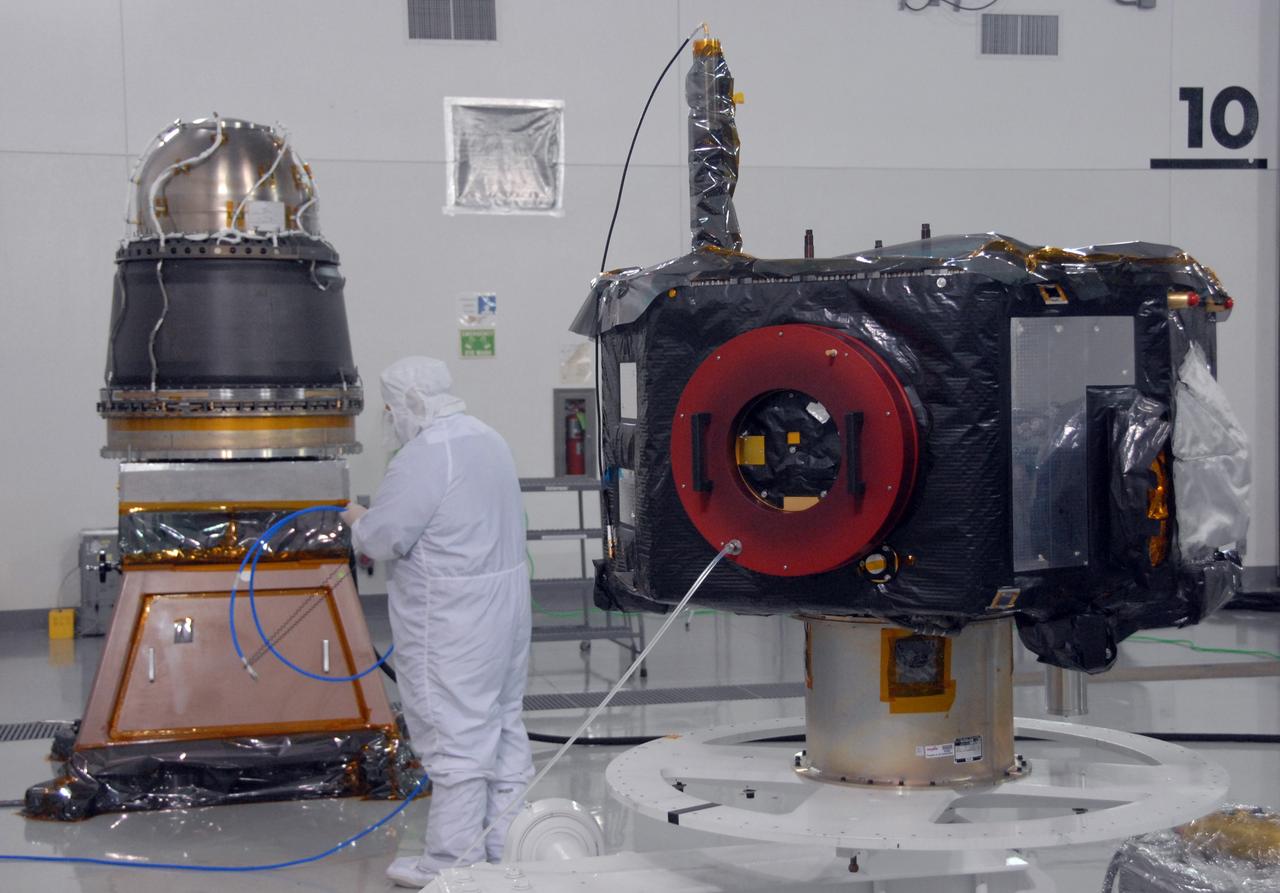
VANDENBERG AIR FORCE BASE, Calif. – At Vandenberg Air Force Base in California, at right is the NASA's Interstellar Boundary Explorer, or IBEX, spacecraft. At left are the Star-27 kick motor and nozzle for IBEX “on top” and the adapter cone, part of the IBEX flight system, underneath. The IBEX is being prepared for a spin balance test. The IBEX satellite will make the first map of the boundary between the Solar System and interstellar space. IBEX is the first mission designed to detect the edge of the Solar System. As the solar wind from the sun flows out beyond Pluto, it collides with the material between the stars, forming a shock front. IBEX contains two neutral atom imagers designed to detect particles from the termination shock at the boundary between the Solar System and interstellar space. IBEX also will study galactic cosmic rays, energetic particles from beyond the Solar System that pose a health and safety hazard for humans exploring beyond Earth orbit. IBEX will make these observations from a highly elliptical orbit that takes it beyond the interference of the Earth's magnetosphere. IBEX is targeted for launch from a Pegasus XL rocket on Oct. 5. Photo credit: NASA/VAFB
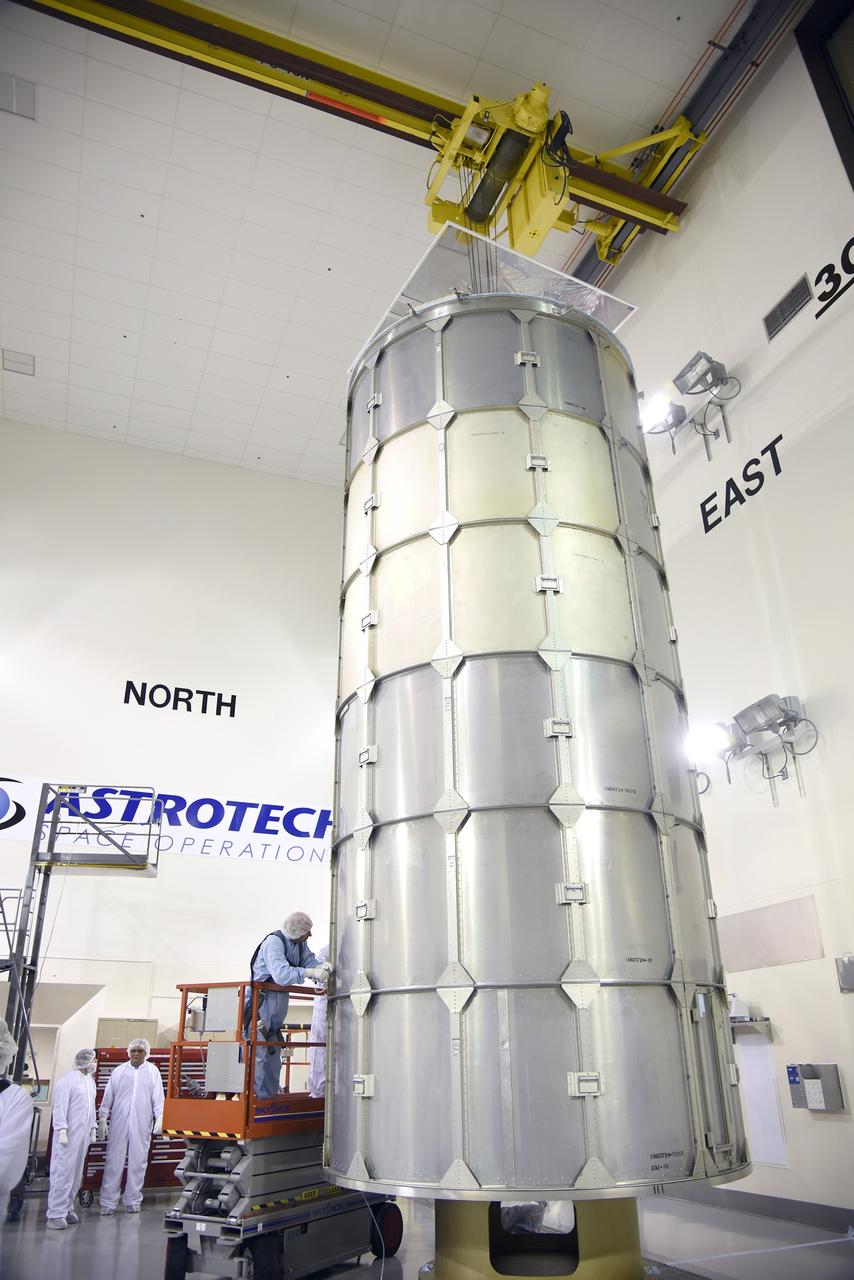
VANDENBERG AIR FORCE BASE, Calif. – In the Astrotech payload processing facility on Vandenberg Air Force Base in California, technicians secure a transportation canister around NASA's Soil Moisture Active Passive, or SMAP, spacecraft for its move to the launch pad. SMAP will launch on a United Launch Alliance Delta II 7320 configuration vehicle featuring a United Launch Alliance first stage booster powered by an Aerojet Rocketdyne RS-27A main engine and three Alliant Techsystems, or ATK, strap-on solid rocket motors. Once on station in Earth orbit, SMAP will provide global measurements of soil moisture and its freeze/thaw state. These measurements will be used to enhance understanding of processes that link the water, energy and carbon cycles, and to extend the capabilities of weather and climate prediction models. SMAP data also will be used to quantify net carbon flux in boreal landscapes and to develop improved flood prediction and drought monitoring capabilities. Launch from Space Launch Complex 2 is targeted for Jan. 29. To learn more about SMAP, visit http://www.nasa.gov/smap. Photo credit: NASA/U.S. Air Force Photo Squadron
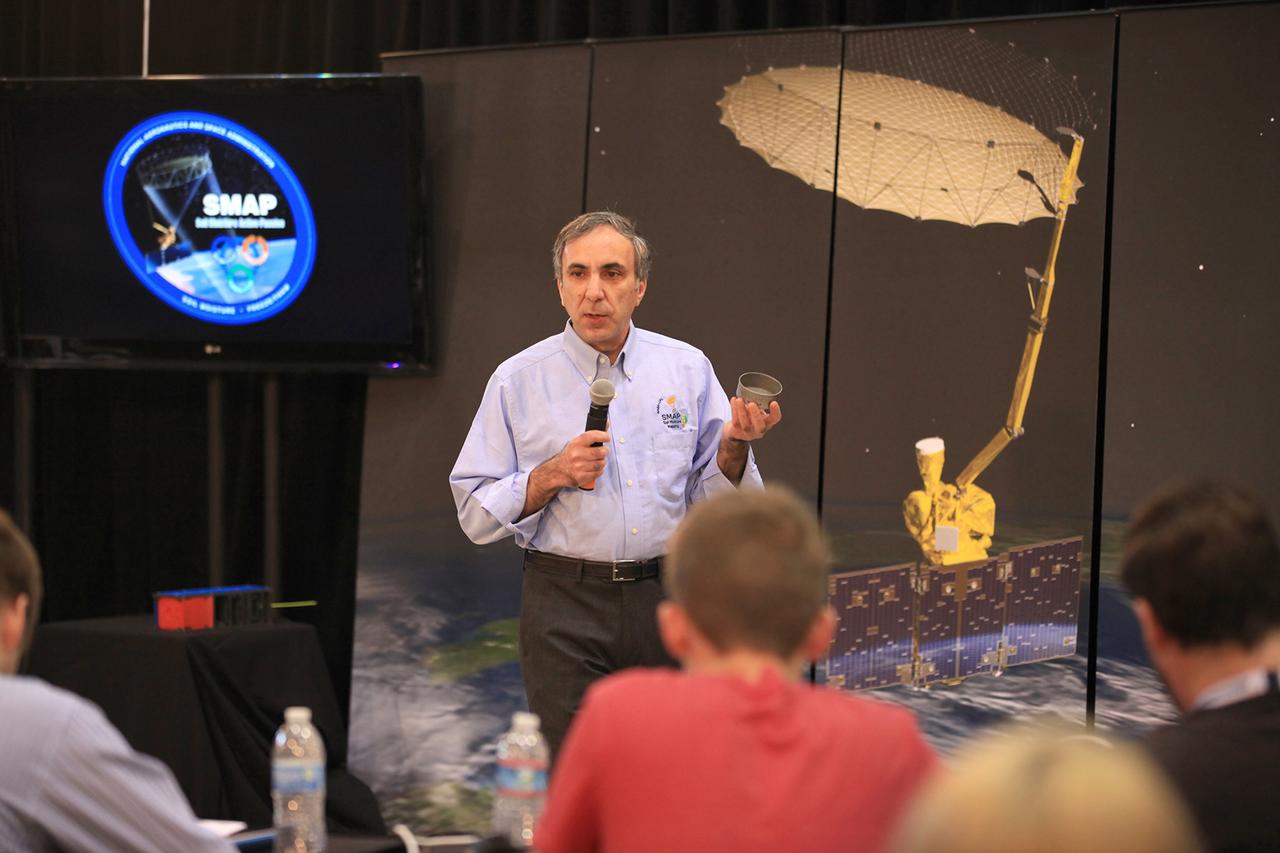
VANDENBERG AIR FORCE BASE, Calif. – Dara Entekhabi, science team leader at the Massachusetts Institute of Technology in Cambridge, Massachusetts, discusses the science and engineering of NASA's Soil Moisture Active Passive mission, or SMAP, with the audience of a NASA Social held at Vandenberg Air Force Base in California. This NASA Social brought together mission scientists and engineers with an audience of 70 students, educators, social media managers, bloggers, photographers and videographers who were selected from a pool of 325 applicants from 45 countries to participate in launch activities and communicate their experience with social media followers. The SMAP mission is scheduled to launch from Vandenberg on Jan. 29. To learn more about SMAP, visit http://www.nasa.gov/smap. Photo credit: NASA/Kim Shiflett
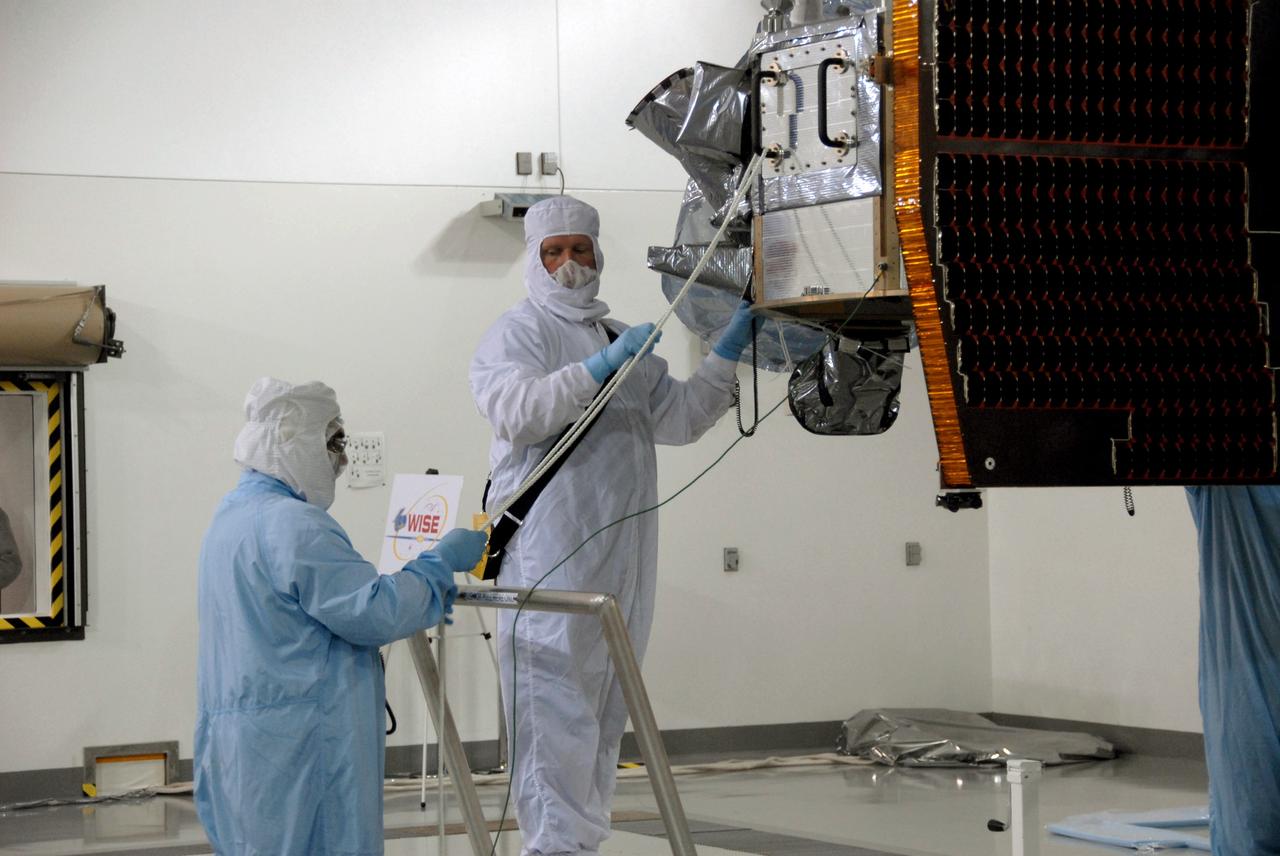
VANDENBERG AIR FORCE BASE, Calif. -- At Vandenberg Air Force Base's Astrotech processing facility in California, technicians help guide NASA's Wide-field Infrared Survey Explorer, or WISE, spacecraft to the flight conical adapter and test stand. The satellite will survey the entire sky at infrared wavelengths, creating a cosmic clearinghouse of hundreds of millions of objects, which will be catalogued, providing a vast storehouse of knowledge about the solar system, the Milky Way, and the universe. Launch is scheduled no earlier than Dec. 7. Photo credit: NASA/Doug Kolkow

Vandenberg Air Force Base, Calif. – In the Astrotech Payload Processing Facility at Vandenberg Air Force Base in California, a technician monitors data during fueling of NASA's Orbiting Carbon Observatory, or OCO, with hydrazine thruster control propellant. The OCO is a new Earth-orbiting mission sponsored by NASA's Earth System Science Pathfinder Program. The OCO mission will collect precise global measurements of carbon dioxide (CO2) in the Earth's atmosphere. Scientists will analyze OCO data to improve our understanding of the natural processes and human activities that regulate the abundance and distribution of this important greenhouse gas. This improved understanding will enable more reliable forecasts of future changes in the abundance and distribution of CO2 in the atmosphere and the effect that these changes may have on the Earth's climate. The launch of OCO is scheduled for Feb. 23 from Vandenberg. Photo credit: Robert Hargreaves Jr., VAFB
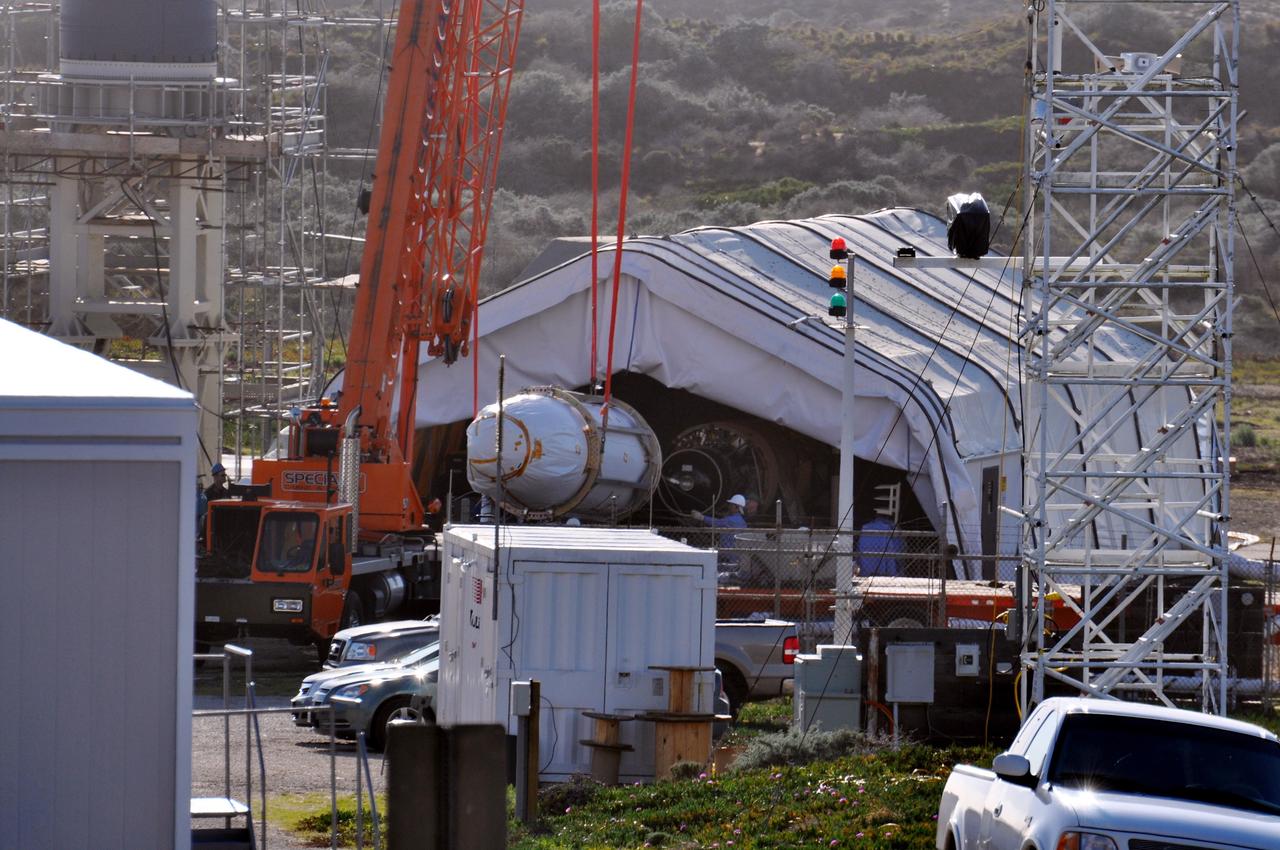
VANDENBERG AIR FORCE BASE, Calif. -- The Encapsulated Cargo Element (ECE) containing NASA's Orbiting Carbon Observatory, or OCO, is lowered to a horizontal position after arrival at Space Launch Complex 576-E at Vandenberg Air Force Base in California. The spacecraft is scheduled for launch aboard Orbital Sciences' Taurus XL rocket on Feb. 23 from Vandenberg. The spacecraft will collect precise global measurements of carbon dioxide (CO2) in the Earth's atmosphere. Scientists will analyze OCO data to improve our understanding of the natural processes and human activities that regulate the abundance and distribution of this important greenhouse gas. This improved understanding will enable more reliable forecasts of future changes in the abundance and distribution of CO2 in the atmosphere and the effect that these changes may have on the Earth's climate. Photo credit: NASA/Randy Beaudoin, VAFB
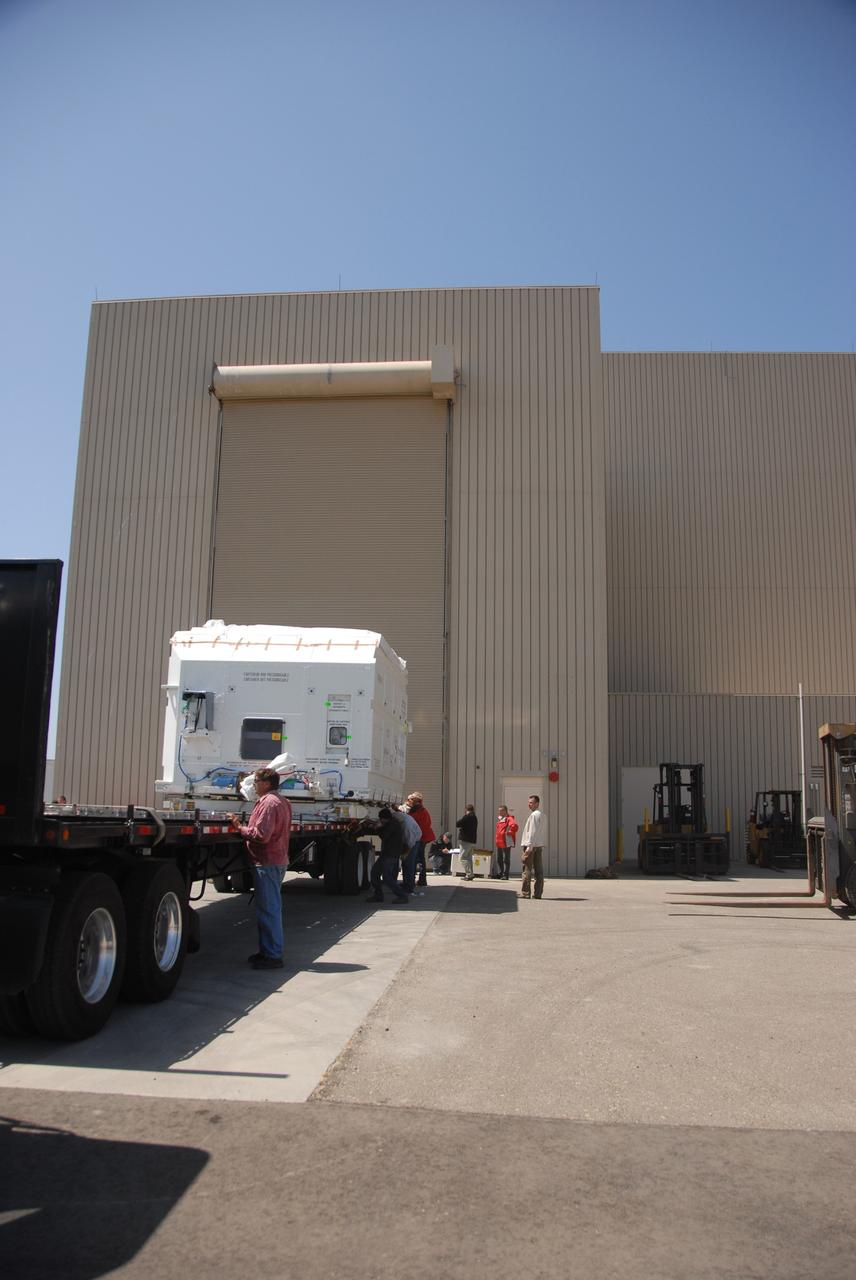
VANDENBERG AIR FORCE BASE, Calif. -- At Vandenberg Air Force Base, the truck carrying the OSTM/Jason-2 satellite arrives at the Astrotech processing facility. The OSTM, or Ocean Topography Mission, on the Jason-2 satellite is a follow-on to Jason-1. It will take oceanographic studies of sea surface height into an operational mode for continued climate forecasting research and science and industrial applications. This satellite altimetry data will help determine ocean circulation, climate change and sea-level rise. OSTM is a joint effort by the National Oceanic and Atmospheric Administration, NASA, France’s Centre National d’Etudes Spatiales and the European Meteorological Satellite Organisation. OSTM/Jason-2 will be launched aboard a United Launch Alliance Delta II 7320 from Vandenberg on June 15. Photo credit: NASA/Dan Liberotti
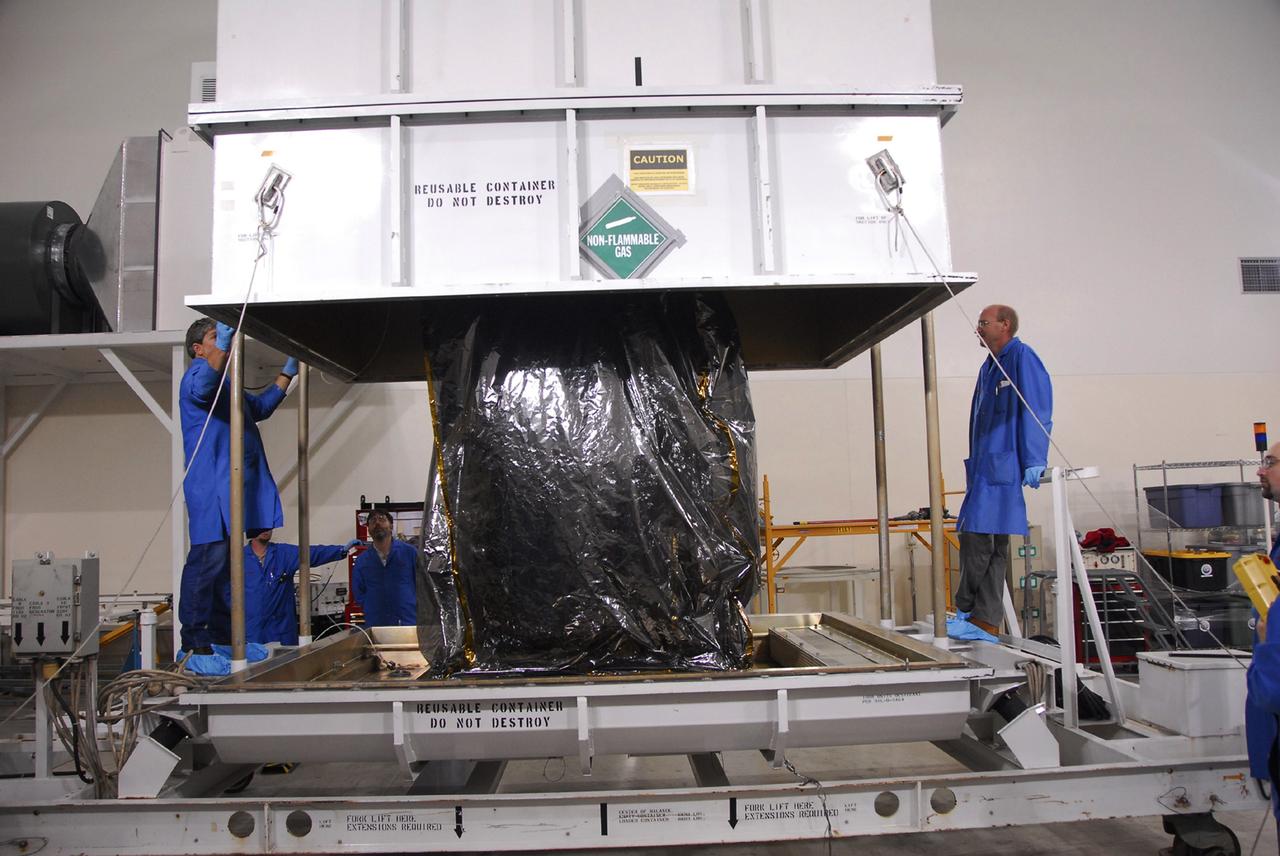
VANDENBERG AIR FORCE BASE, Calif. -- Inside the Astrotech payload processing facility, building 1032, at Vandenberg Air Force Base in California, workers remove the shipping container cover over the Orbiting Carbon Observatory, or OCO, spacecraft, delivered from spacecraft facilities in Dulles, Va., by Orbital Sciences. After the protective coverings over the spacecraft are removed, blanket preparations and edge taping will be done, followed by mechanical preparations and work on the electronic ground support equipment. The OCO is a new Earth-orbiting mission sponsored by NASA's Earth System Science Pathfinder Program. The observatory is targeted to launch Jan. 15 from Space Launch Complex 576-E at Vandenberg. Photo credit: NASA/Robert Hargreaves Jr., VAFB
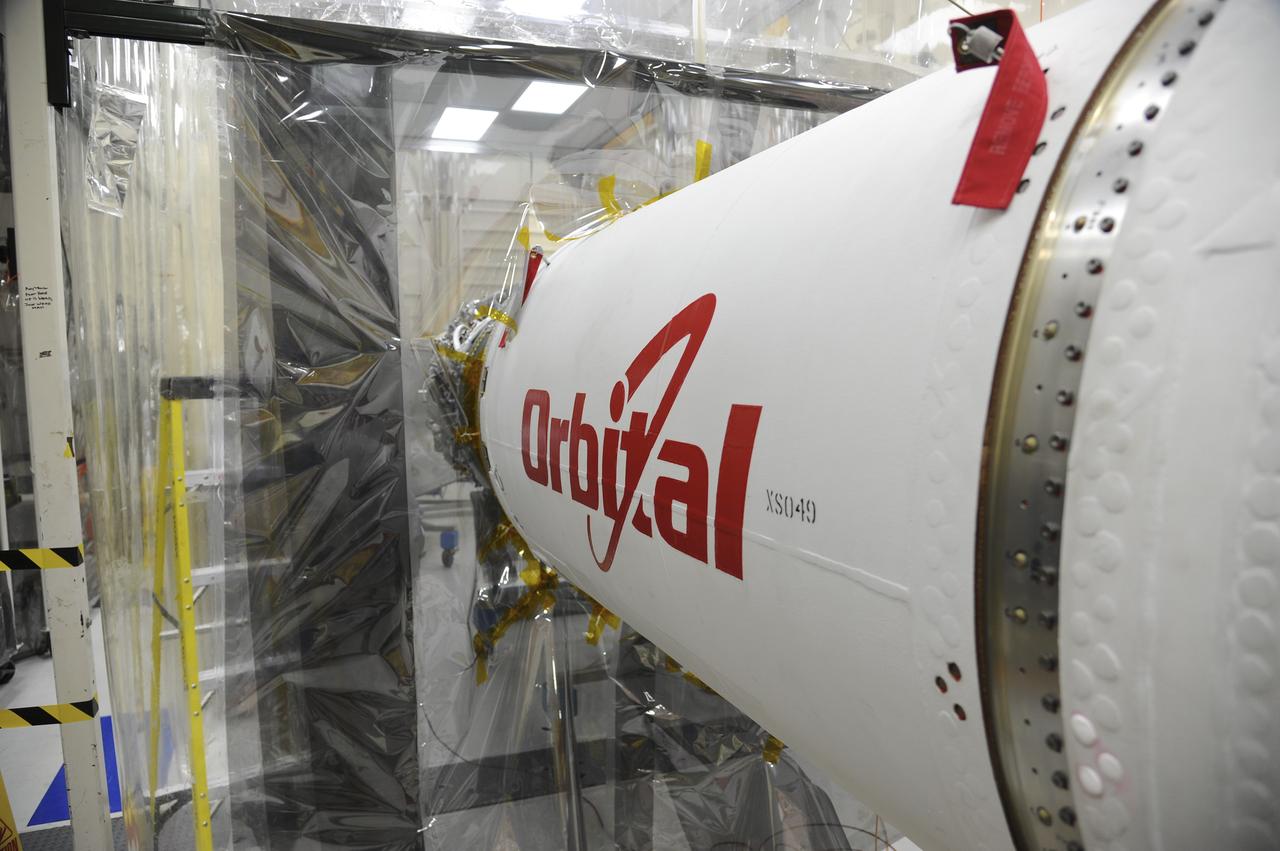
VANDENBERG AFB – Detail of the Orbital Sciences Pegasus XL rocket that will lift NASA's IRIS solar observatory into orbit in June. The work is taking place in a hangar at Vandenberg Air Force Base where IRIS, short for Interface Region Imaging Spectrograph, is being prepared for launch from Vandenberg June 26. IRIS will open a new window of discovery by tracing the flow of energy and plasma through the chromospheres and transition region into the sun’s corona using spectrometry and imaging. IRIS fills a crucial gap in our ability to advance studies of the sun-to-Earth connection by tracing the flow of energy and plasma through the foundation of the corona and the region around the sun known as the heliosphere. Photo credit: NASA/Tony Vauclin
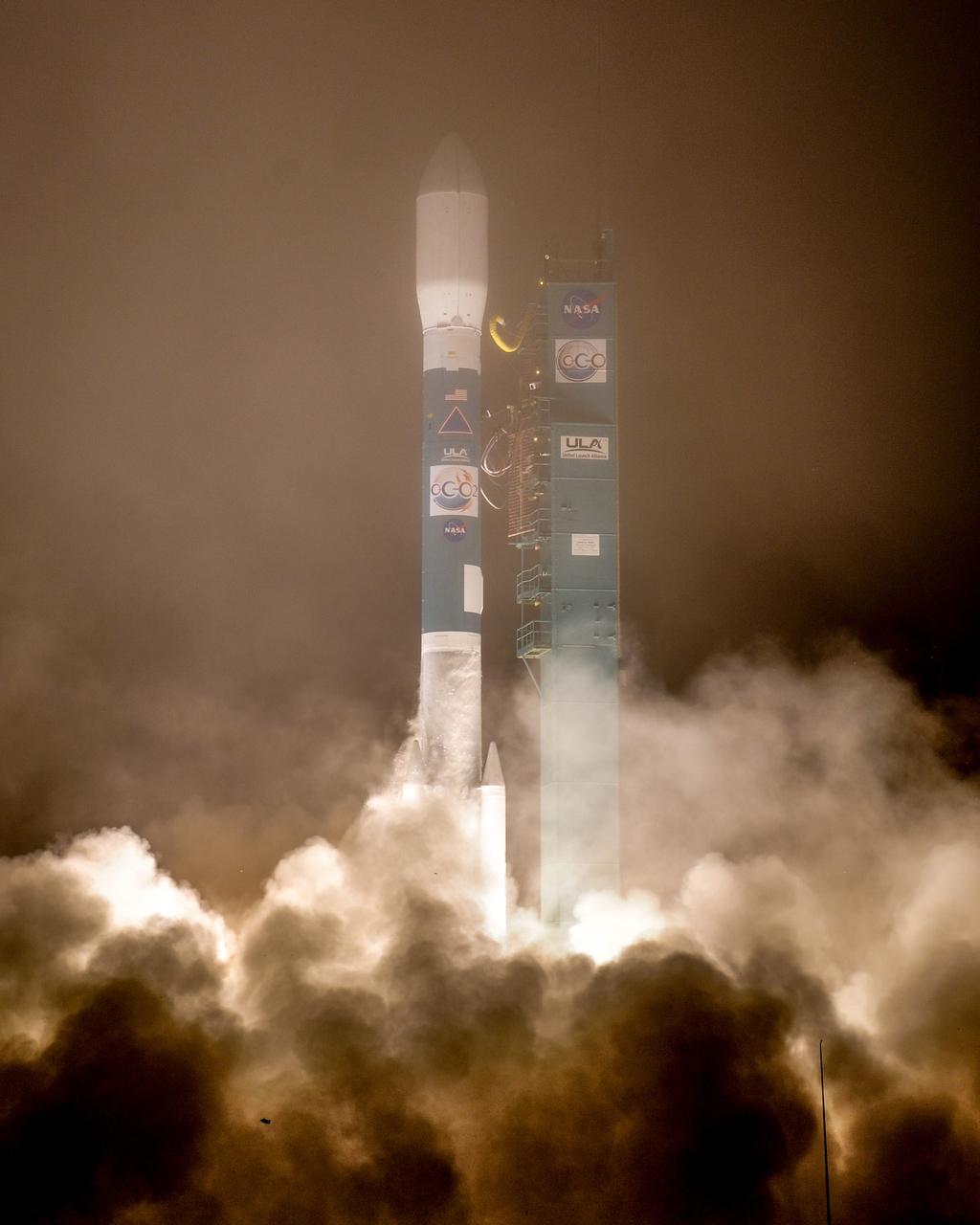
VANDENBERG AIR FORCE BASE, Calif. – At Space Launch Complex 2 on Vandenberg Air Force Base in California, an exhaust cloud builds around the United Launch Alliance Delta II rocket carrying NASA's Orbiting Carbon Observatory-2, or OCO-2, into space. Launch was on schedule at 5:56 a.m. EDT on July 2 following the repair of the pad's water suppression system, which failed on the first launch attempt July 1. OCO-2 is NASA’s first mission dedicated to studying atmospheric carbon dioxide, the leading human-produced greenhouse gas driving changes in Earth’s climate. OCO-2 will provide a new tool for understanding the human and natural sources of carbon dioxide emissions and the natural "sinks" that absorb carbon dioxide and help control its buildup. The observatory will measure the global geographic distribution of these sources and sinks and study their changes over time. To learn more about OCO-2, visit http://www.nasa.gov/oco2. Photo credit: NASA/30th Space Communication Squadron
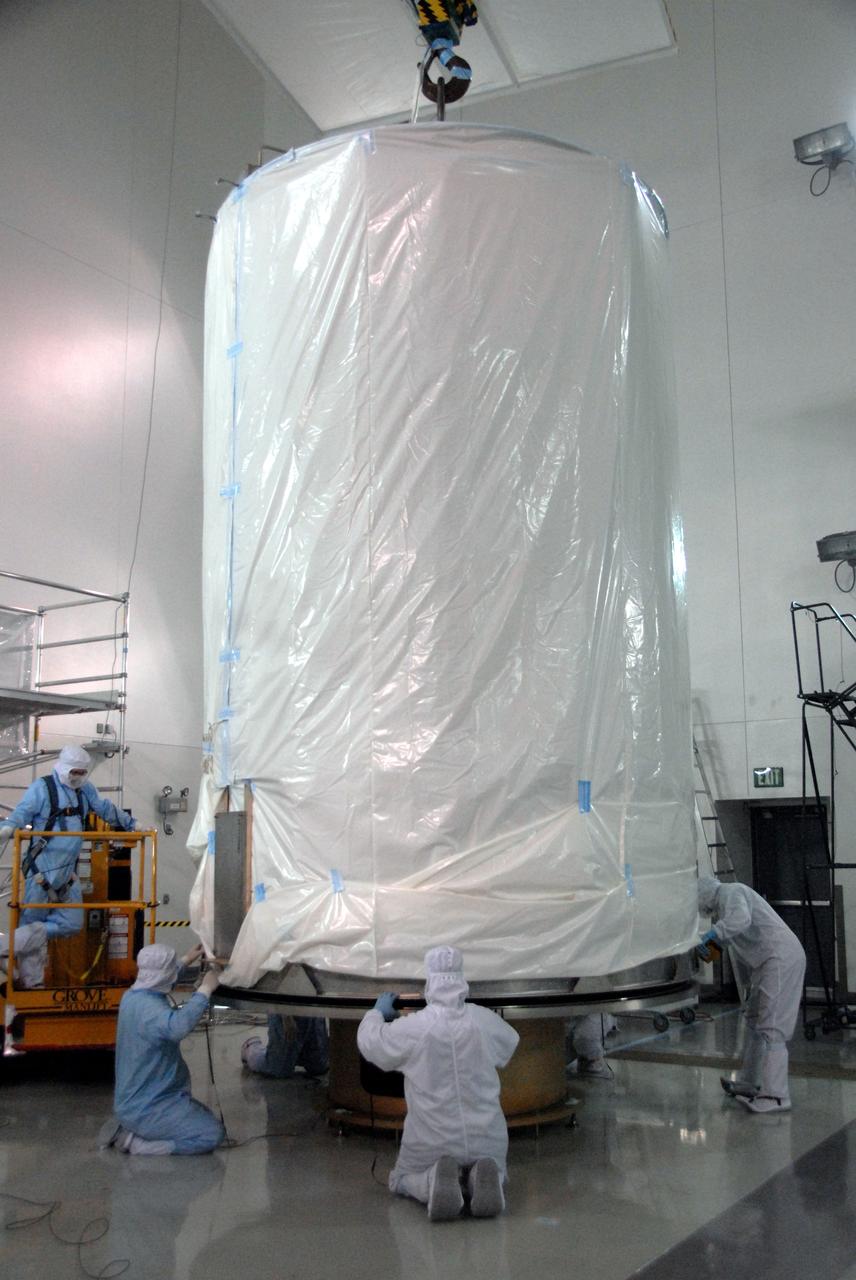
VANDENBERG AIR FORCE BASE, Calif. - At the Astrotech payload processing facility at Vandenberg Air Force Base in California, spacecraft technicians secure the transportation canister, in which NASA's Wide-field Infrared Survey Explorer, or WISE, is enclosed, to the direct mate adapter, a transport fixture, for the spacecraft's move to Space Launch Complex 2. WISE will survey the entire sky at infrared wavelengths, creating a cosmic clearinghouse of hundreds of millions of objects which will be catalogued and provide a vast storehouse of knowledge about the solar system, the Milky Way, and the universe. Launch aboard a United Launch Alliance Delta II rocket is scheduled for Dec. 9. For additional information, visit http://www.nasa.gov/wise. Photo credit: NASA/Daniel Liberotti, VAFB
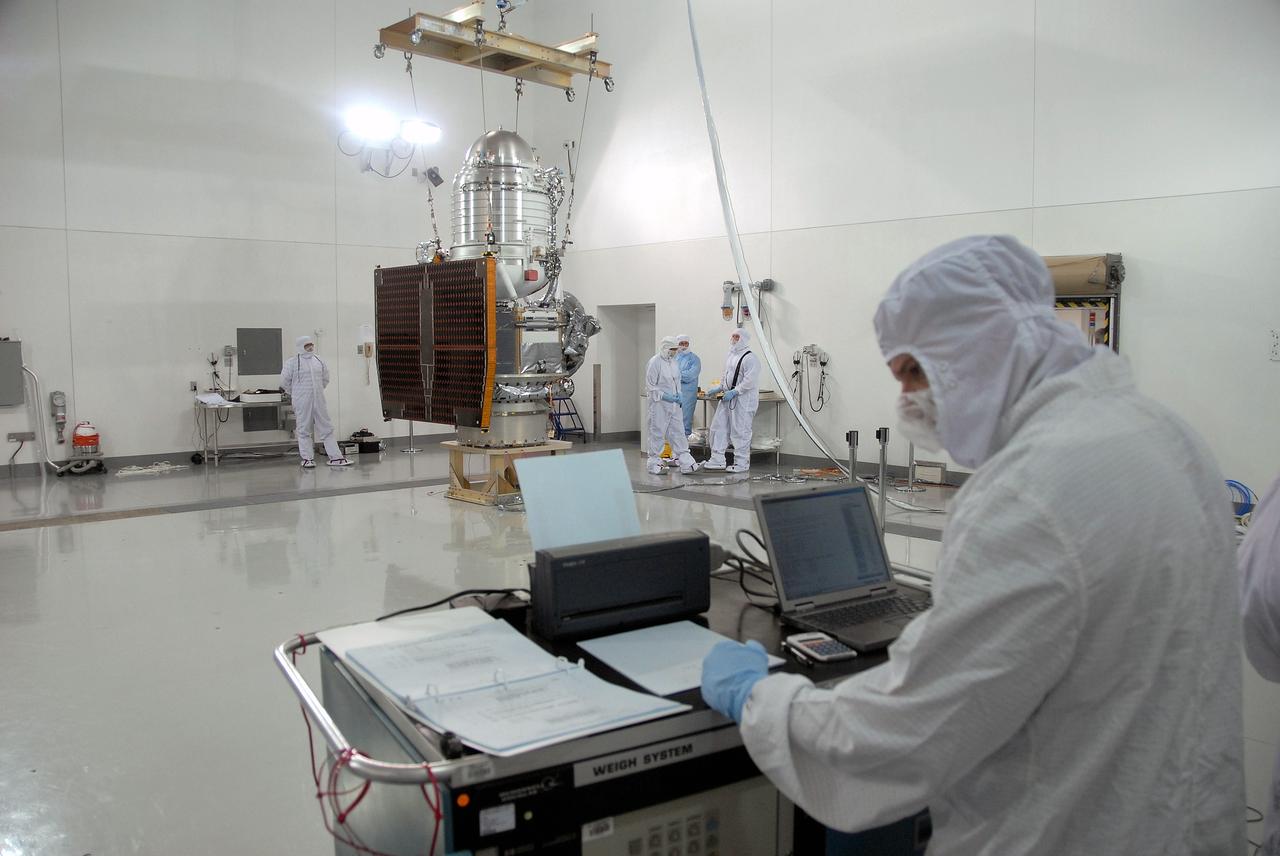
VANDENBERG AIR FORCE BASE, Calif. -- At the Astrotech processing facility on Vandenberg Air Force Base in California, a worker monitors the data received during the lift of NASA's Wide-field Infrared Survey Explorer, or WISE, to determine its exact weight. The satellite will survey the entire sky at infrared wavelengths, creating a cosmic clearinghouse of hundreds of millions of objects which will be catalogued and provide a vast storehouse of knowledge about the solar system, the Milky Way, and the universe. Launch is scheduled for Dec. 7. Photo credit: NASA/Doug Kolkow
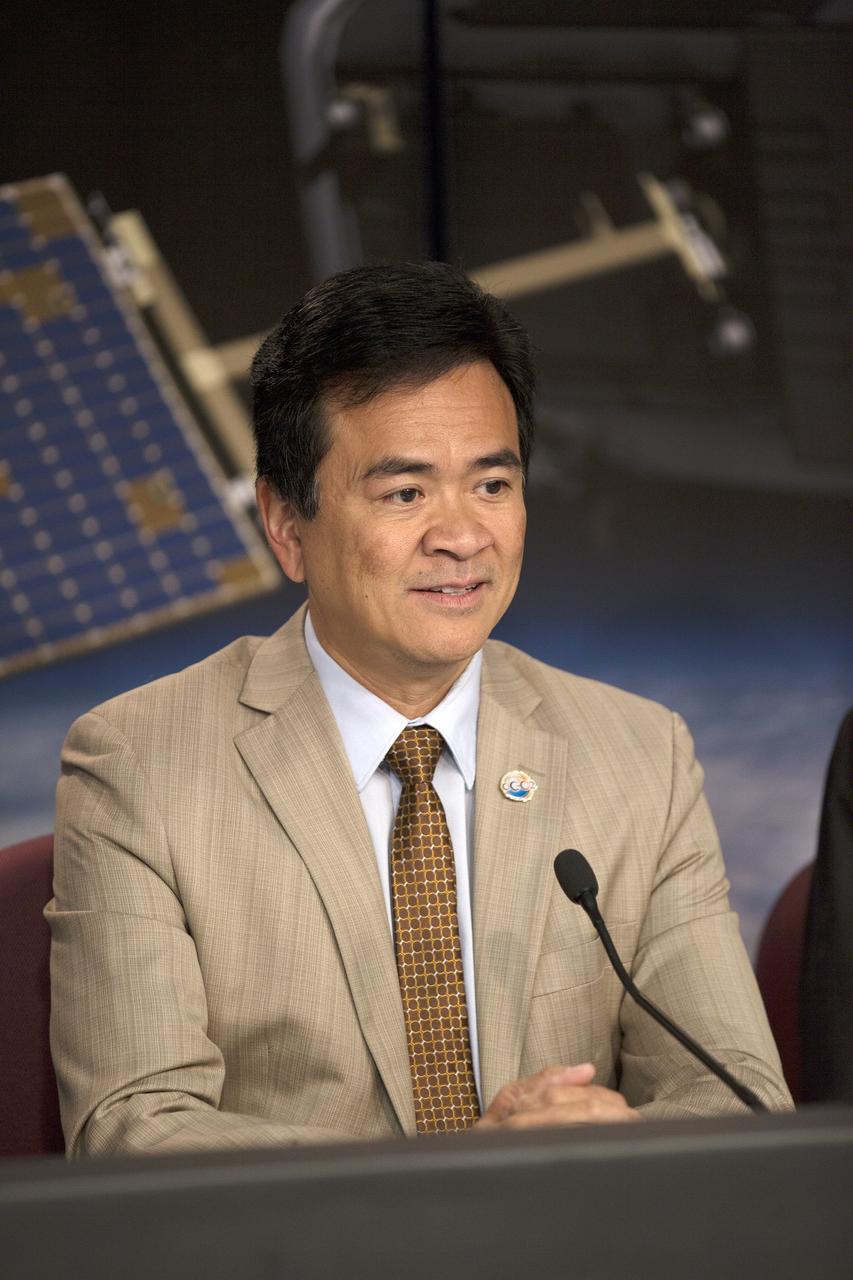
VANDENBERG AIR FORCE BASE, Calif. – Ralph Basilio, project manager for NASA's Orbiting Carbon Observatory-2, or OCO-2, from NASA's Jet Propulsion Laboratory participates in a post-launch news conference at Vandenberg Air Force Base in California following the successful launch of the satellite. Liftoff of OCO-2 from Space Launch Complex 2 aboard a United Launch Alliance Delta II rocket was on schedule at 5:56 a.m. EDT on July 2 following the repair of the pad's water suppression system, which failed on the first launch attempt July 1. OCO-2 is NASA’s first mission dedicated to studying atmospheric carbon dioxide, the leading human-produced greenhouse gas driving changes in Earth’s climate. OCO-2 will provide a new tool for understanding the human and natural sources of carbon dioxide emissions and the natural "sinks" that absorb carbon dioxide and help control its buildup. The observatory will measure the global geographic distribution of these sources and sinks and study their changes over time. To learn more about OCO-2, visit http://www.nasa.gov/oco2. Photo credit: NASA/Kim Shiflett
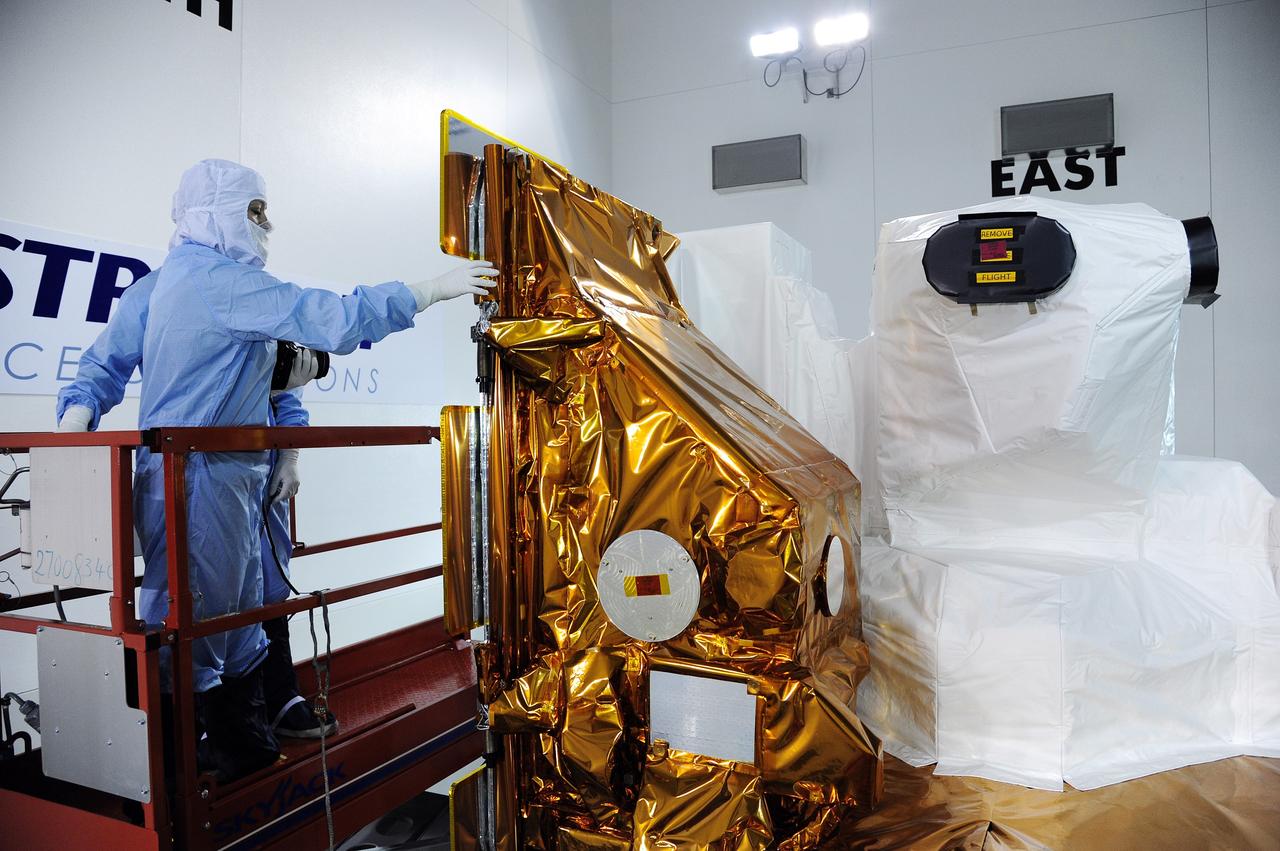
VANDENBERG AFB, Calif. -- Technicians inspect NASA's Landsat Data Continuity Mission, or LDCM, satellite at the Astrotech processing facility at Vandenberg Air Force Base, Calif. The Landsat Data Continuity Mission LDCM is the future of Landsat satellites. It will continue to obtain valuable data and imagery to be used in agriculture, education, business, science, and government. The Landsat Program provides repetitive acquisition of high resolution multispectral data of the Earth's surface on a global basis. The data from the Landsat spacecraft constitute the longest record of the Earth's continental surfaces as seen from space. It is a record unmatched in quality, detail, coverage, and value. Launch is planned for Feb. 11, 2013. For more information, visit: http://www.nasa.gov/mission_pages/landsat/main/index.html Photo credit: NASA
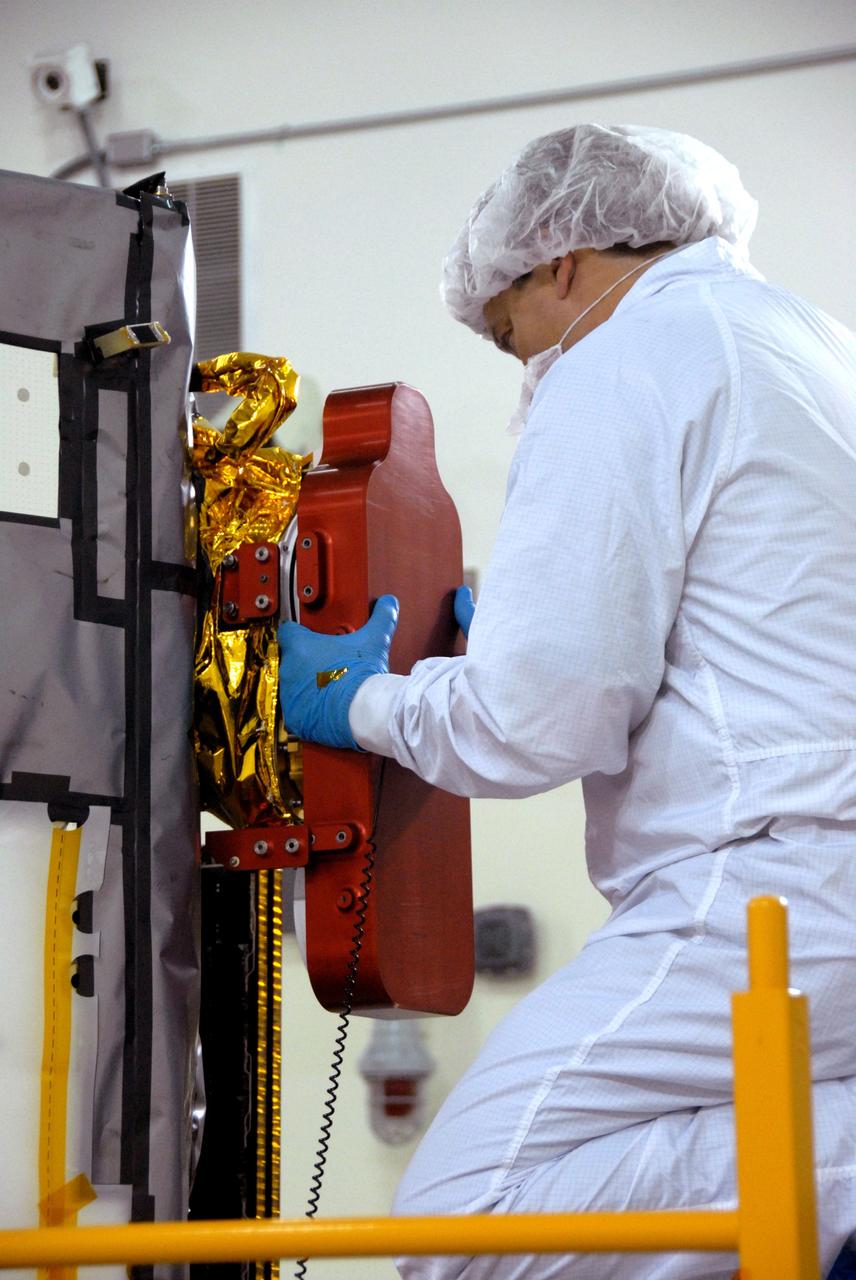
VANDENBERG AIR FORCE BASE, Calif. -- Inside the Astrotech payload processing facility, building 1032, at Vandenberg Air Force Base in California, workers check the Orbiting Carbon Observatory, or OCO. After the protective coverings over the spacecraft are removed, blanket preparations and edge taping will be done, followed by mechanical preparations and work on the electronic ground support equipment. The OCO is a new Earth-orbiting mission sponsored by NASA's Earth System Science Pathfinder Program. The observatory is targeted to launch Jan. 15 from Space Launch Complex 576-E at Vandenberg. Photo credit: NASA/Robert Hargreaves Jr., VAFB
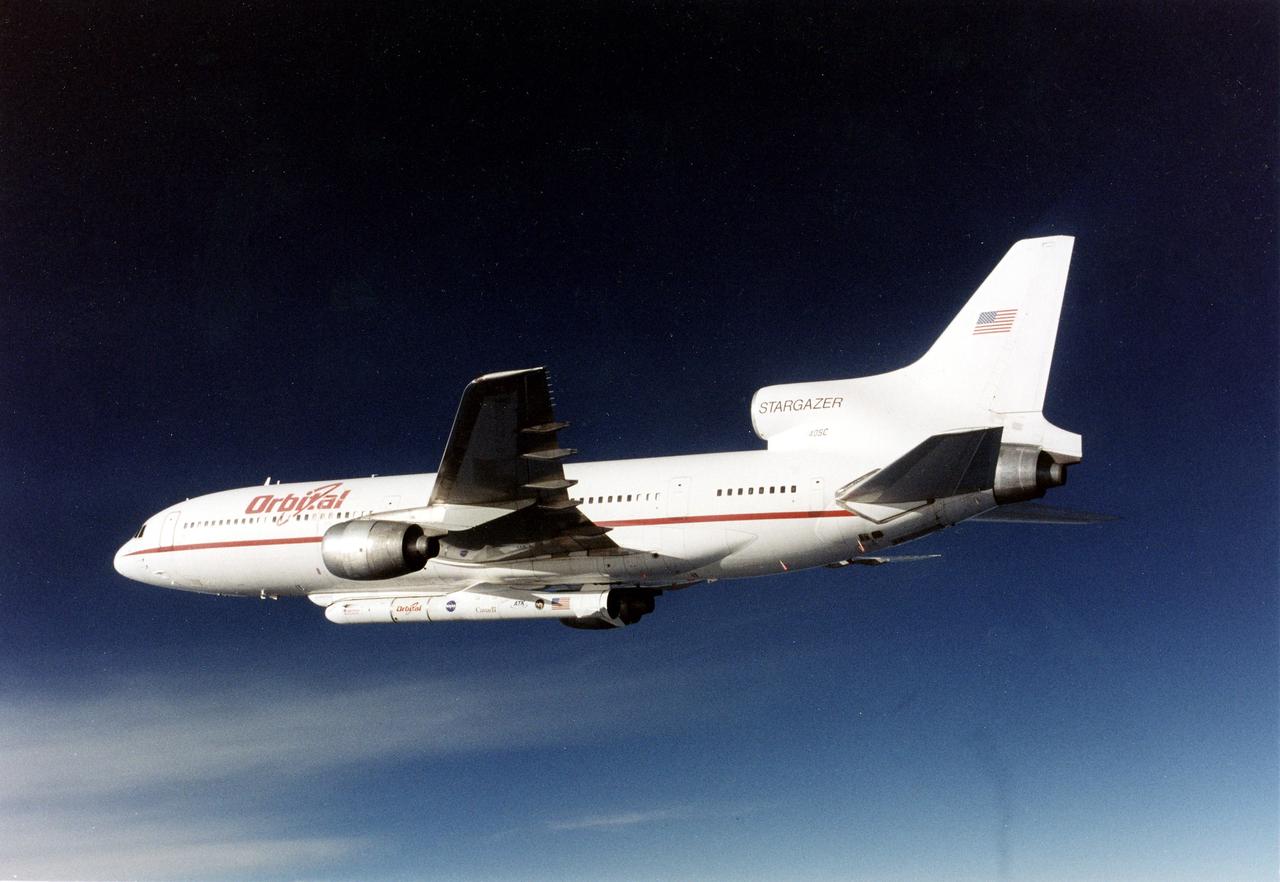
VANDENBERG AIR FORCE BASE, CALIF. - The L-1011 carrier aircraft is in flight with its cargo of the Pegasus launch vehicle and SciSat-1 spacecraft underneath. The SciSat-1 weighs approximately 330 pounds and after launch will be placed in a 400-mile-high polar orbit to investigate processes that control the distribution of ozone in the upper atmosphere. The data from the satellite will provide Canadian and international scientists with improved measurements relating to global ozone processes and help policymakers assess existing environmental policy and develop protective measures for improving the health of our atmosphere, preventing further ozone depletion. The mission is designed to last two years.
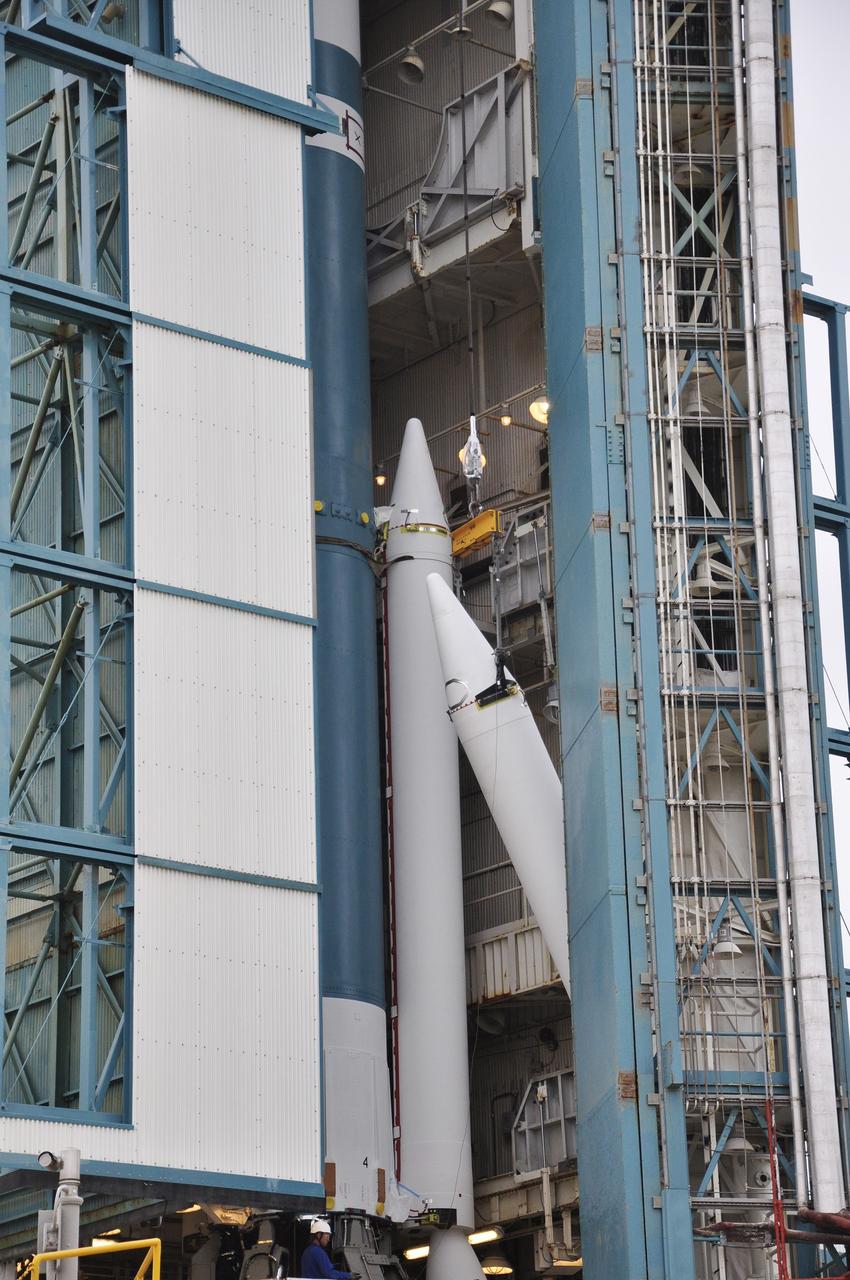
VANDENBERG AIR FORCE BASE, Calif. – The third solid rocket motor, or SRM, for NASA's Orbiting Carbon Observatory-2 mission, or OCO-2, is lifted into place beside the Delta II first stage, with two SRMs already attached, in the mobile service tower at Space Launch Complex 2 on Vandenberg Air Force Base in California. Operations are underway to attach the rocket's three SRMs, known as graphite epoxy motors, to its first stage. OCO-2 is scheduled to launch into a polar Earth orbit aboard a United Launch Alliance Delta II 7320-10C rocket in July. Once in orbit, OCO-2 will collect precise global measurements of carbon dioxide in the Earth's atmosphere and provide scientists with a better idea of the chemical compound's impacts on climate change. Scientists will analyze this data to improve our understanding of the natural processes and human activities that regulate the abundance and distribution of this important atmospheric gas. To learn more about OCO-2, visit http://oco.jpl.nasa.gov. Photo credit: NASA/Randy Beaudoin
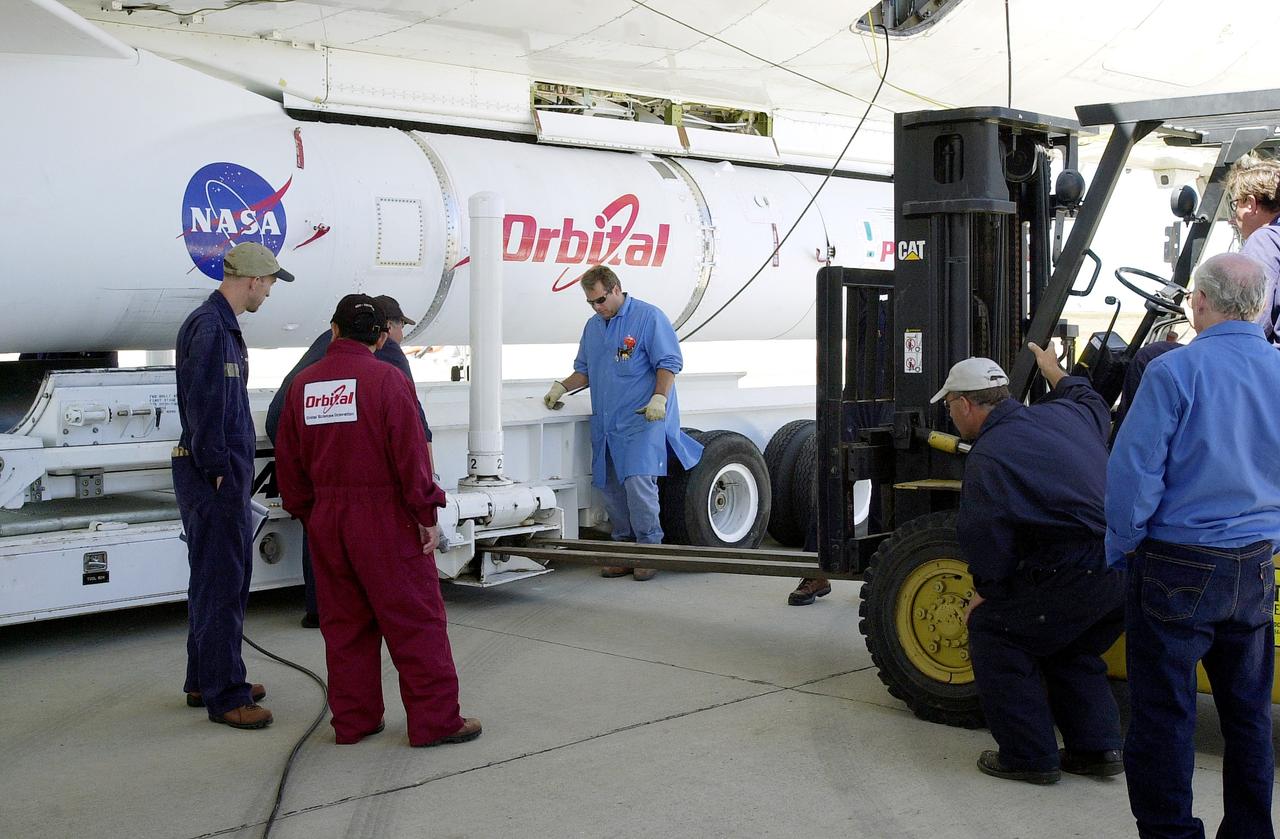
VANDENBERG AIR FORCE BASE, CALIF. - The SciSat-1 payload and Pegasus launch vehicle are lifted and mated to the L-1011 carrier aircraft. The SciSat-1 weighs approximately 330 pounds and after launch will be placed in a 400-mile-high polar orbit to investigate processes that control the distribution of ozone in the upper atmosphere. The data from the satellite will provide Canadian and international scientists with improved measurements relating to global ozone processes and help policymakers assess existing environmental policy and develop protective measures for improving the health of our atmosphere, preventing further ozone depletion. The mission is designed to last two years.
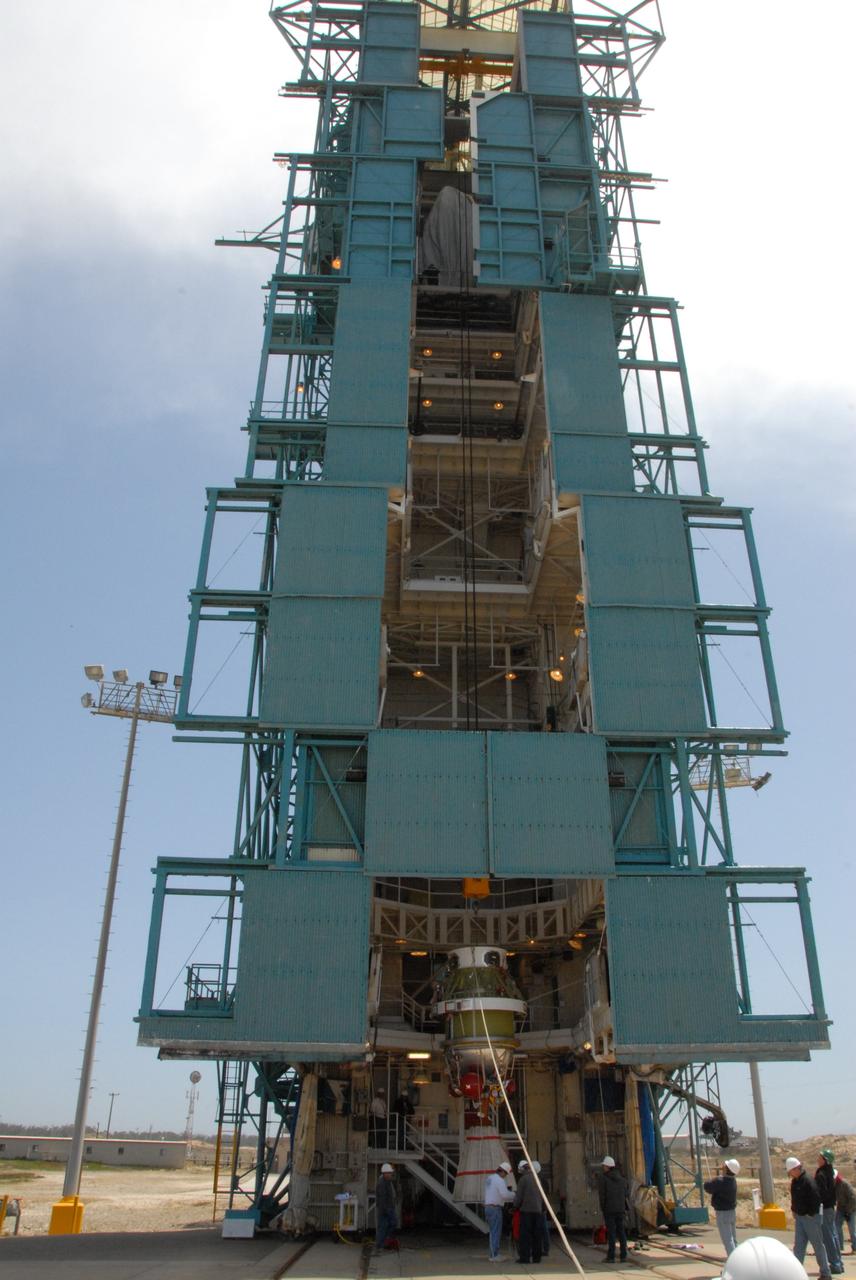
VANDENBERG AIR FORCE BASE, Calif. -- On Space Launch Complex 2 at Vandenberg Air Force Base in California, the Delta II second stage is ready to be lifted into the mobile service tower for installation on the first stage for launch of the OSTM/Jason-2 spacecraft. The OSTM, or Ocean Topography Mission, on the Jason-2 satellite is a follow-on to Jason-1. It will take oceanographic studies of sea surface height into an operational mode for continued climate forecasting research and science and industrial applications. This satellite altimetry data will help determine ocean circulation, climate change and sea-level rise. OSTM is a joint effort by the National Oceanic and Atmospheric Administration, NASA, France’s Centre National d’Etudes Spatiales and the European Meteorological Satellite Organisation. OSTM/Jason-2 will be launched on June 20. Photo credit: NASA

VANDENBERG AIR FORCE BASE, Calif. – Inside an environmental enclosure at Vandenberg Air Force Base's processing facility in California, technicians monitor NASA's Nuclear Spectroscopic Telescope Array, or NuSTAR, secured inside a turnover rotation fixture, as it is mated to its Orbital Sciences Pegasus XL rocket. The technicians are dressed in clean room attire, known as bunny suits. The conjoining of the spacecraft with the rocket is a major milestone in prelaunch preparations. After processing of the rocket and spacecraft are complete, they will be flown on Orbital's L-1011 carrier aircraft from Vandenberg to the Ronald Reagan Ballistic Missile Defense Test Site on the Pacific Ocean’s Kwajalein Atoll for launch. The high-energy x-ray telescope will conduct a census of black holes, map radioactive material in young supernovae remnants, and study the origins of cosmic rays and the extreme physics around collapsed stars. For more information, visit http://www.nasa.gov/nustar. Photo credit: NASA/Randy Beaudoin, VAFB
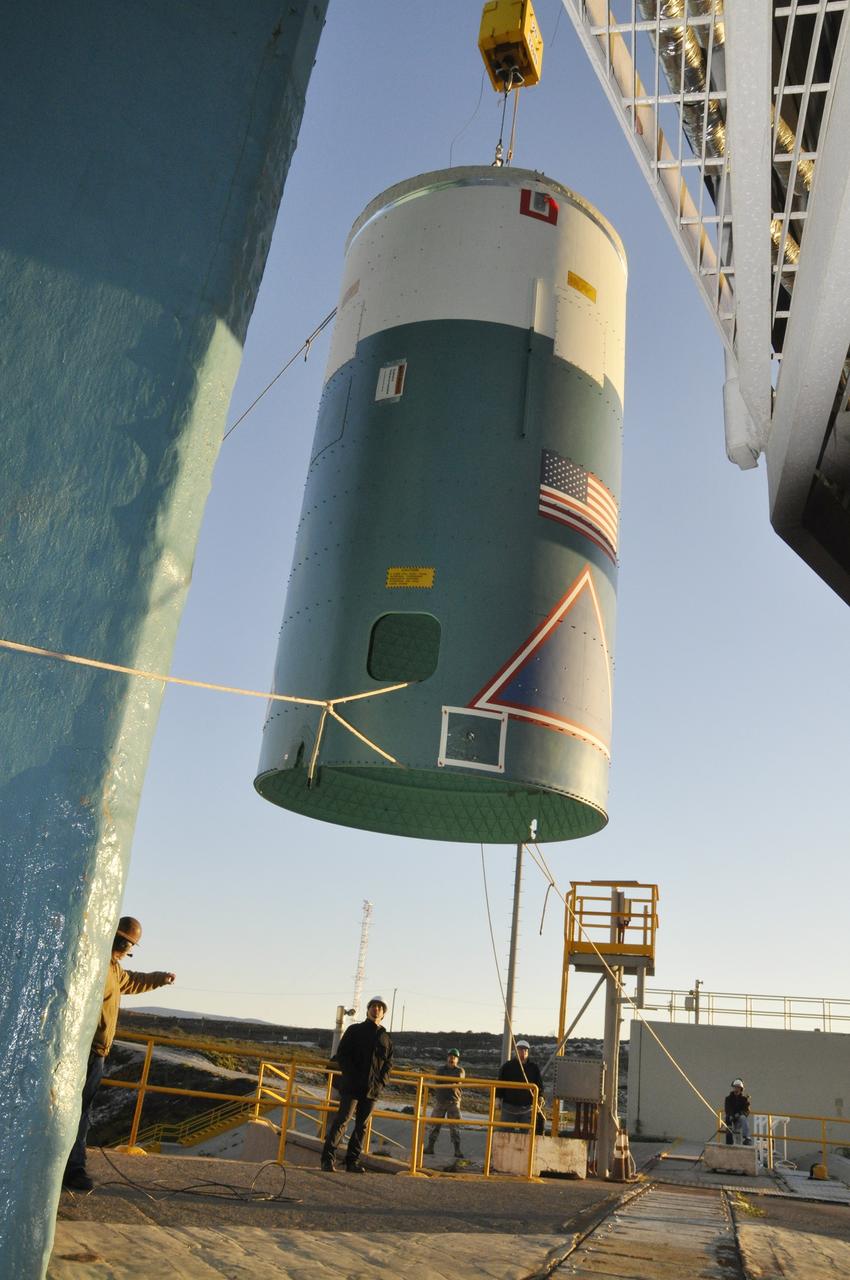
VANDENBERG AIR FORCE BASE, Calif. – A crane lifts the interstage adapter, or ISA, for NASA's Orbiting Carbon Observatory-2 mission, or OCO-2, up the side of the mobile service tower at Space Launch Complex 2 on Vandenberg Air Force Base in California. OCO-2 is scheduled to launch into a polar Earth orbit aboard a United Launch Alliance Delta II 7320-10C rocket in July. The ISA is the interface between the Delta II first and second stages. The second stage engine fits within the ISA. Once in orbit, OCO-2 will collect precise global measurements of carbon dioxide in the Earth's atmosphere and provide scientists with a better idea of the chemical compound's impacts on climate change. Scientists will analyze this data to improve our understanding of the natural processes and human activities that regulate the abundance and distribution of this important atmospheric gas. To learn more about OCO-2, visit http://oco.jpl.nasa.gov. Photo credit: NASA/Randy Beaudoin

VANDENBERG ABF, Calif. - The Orbital Sciences launch team monitors the Pegasus XL rocket that will lift NASA's IRIS solar observatory into orbit as the rocket and payload are moved from a hangar onto a transporter at Vandenberg Air Force Base. IRIS, short for Interface Region Imaging Spectrograph, is being prepared for launch from Vandenberg June 26. IRIS will open a new window of discovery by tracing the flow of energy and plasma through the chromospheres and transition region into the sun’s corona using spectrometry and imaging. IRIS fills a crucial gap in our ability to advance studies of the sun-to-Earth connection by tracing the flow of energy and plasma through the foundation of the corona and the region around the sun known as the heliosphere. Photo credit: VAFB/Randy Beaudoin
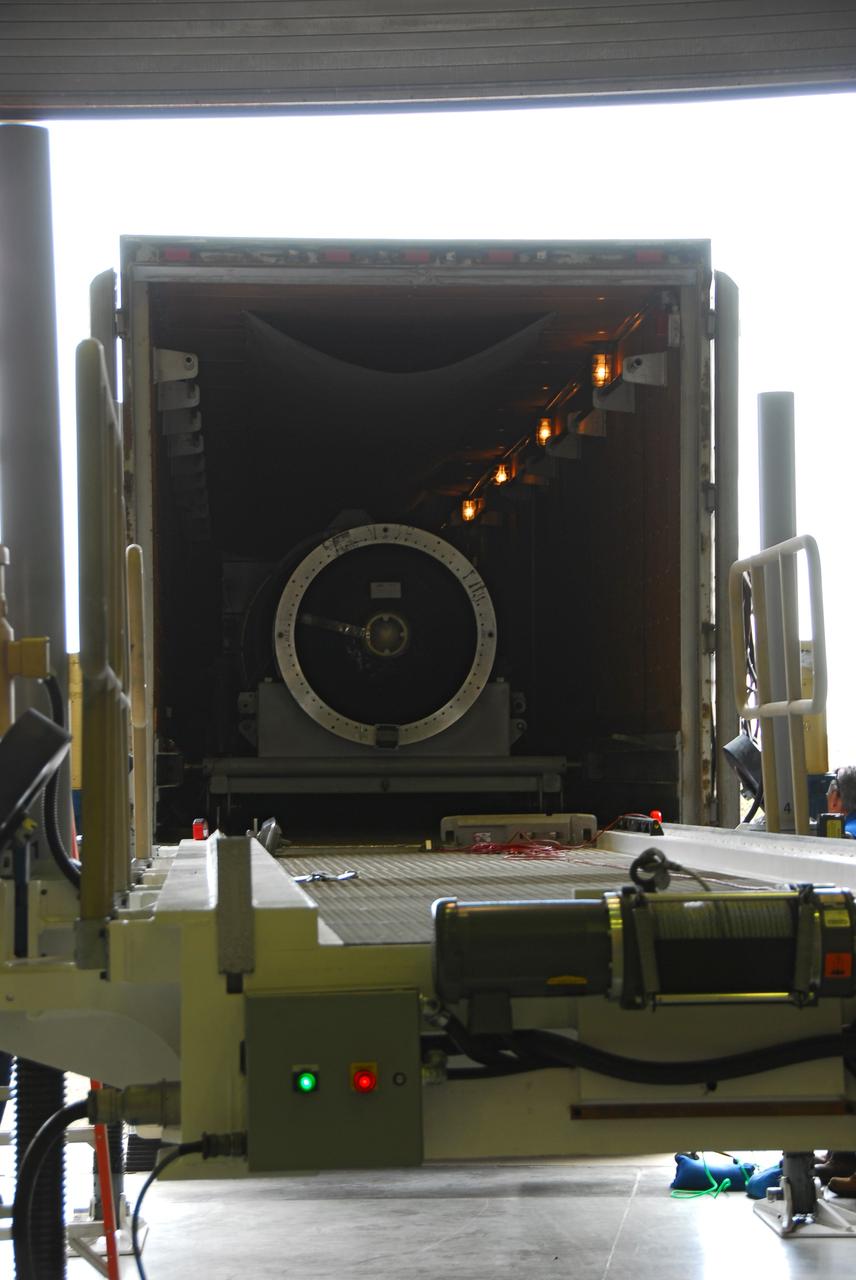
VANDENBERG AIR FORCE BASE, Calif. -- At Vandenberg Air Force Base in California, the third stage of the Pegasus XL rocket that will launch the Nuclear Spectroscopic Telescope Array (NuSTAR) to orbit arrives at Building 1555 for processing. After the rocket and spacecraft are processed at Vandenberg, they will be shipped to the Ronald Reagan Ballistic Missile Defense Test Site located at the Pacific Ocean’s Kwajalein Atoll for launch. The high-energy X-ray telescope will conduct a census for black holes, map radioactive material in young supernovae remnants, and study the origins of cosmic rays and the extreme physics around collapsed stars. Photo credit: NASA/Dan Liberotti, VAFB
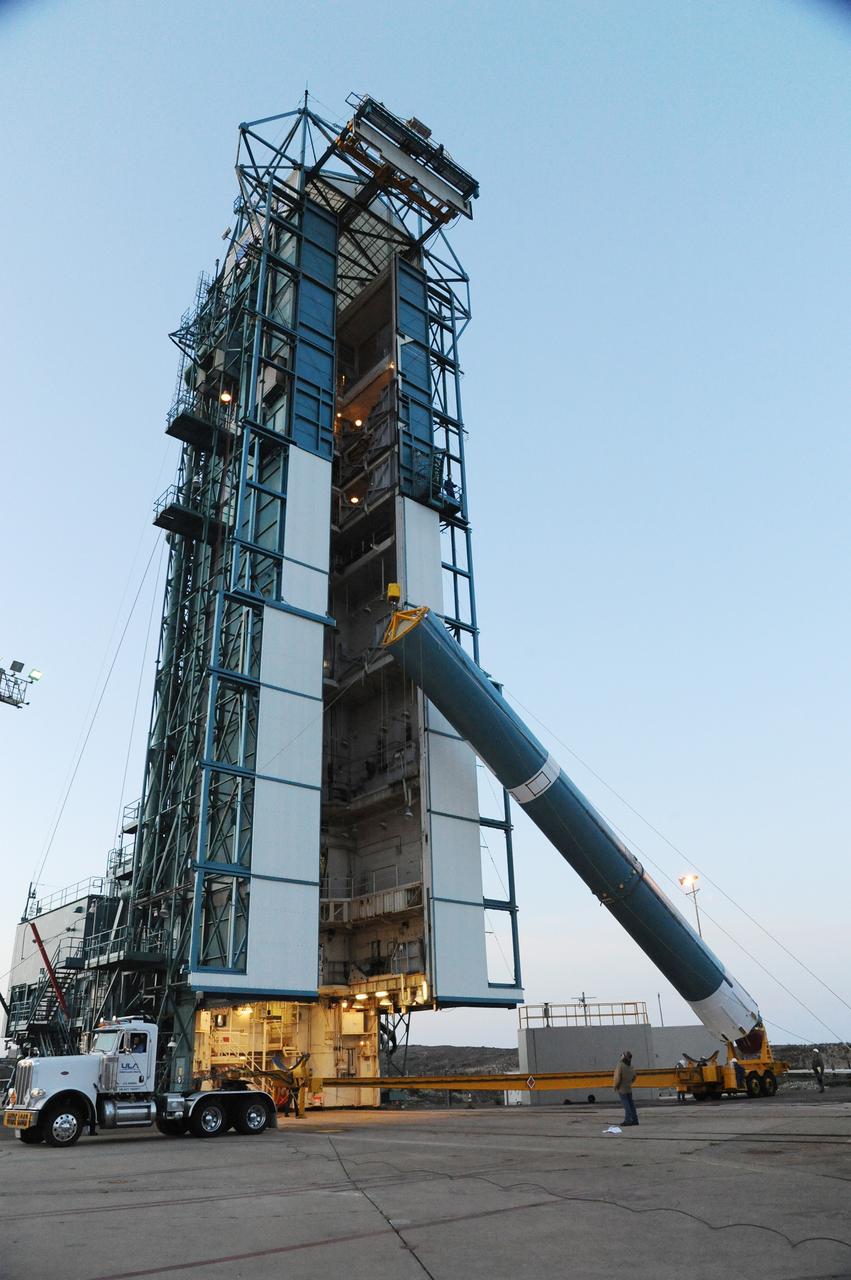
VANDENBERG AIR FORCE BASE, Calif. – The United Launch Alliance Delta II rocket for NASA's Orbiting Carbon Observatory-2 mission, or OCO-2, is lifted into a vertical position beside the mobile service tower at Space Launch Complex 2 on Vandenberg Air Force Base in California. Launch is scheduled for July 1, 2014. The observatory will collect precise global measurements of carbon dioxide in the Earth's atmosphere and provide scientists with a better idea of the chemical compound's impacts on climate change. Scientists will analyze this data to improve our understanding of the natural processes and human activities that regulate the abundance and distribution of this important atmospheric gas. To learn more about OCO-2, visit http://oco.jpl.nasa.gov. Photo credit: NASA/Mark Mackley, 30th Space Wing
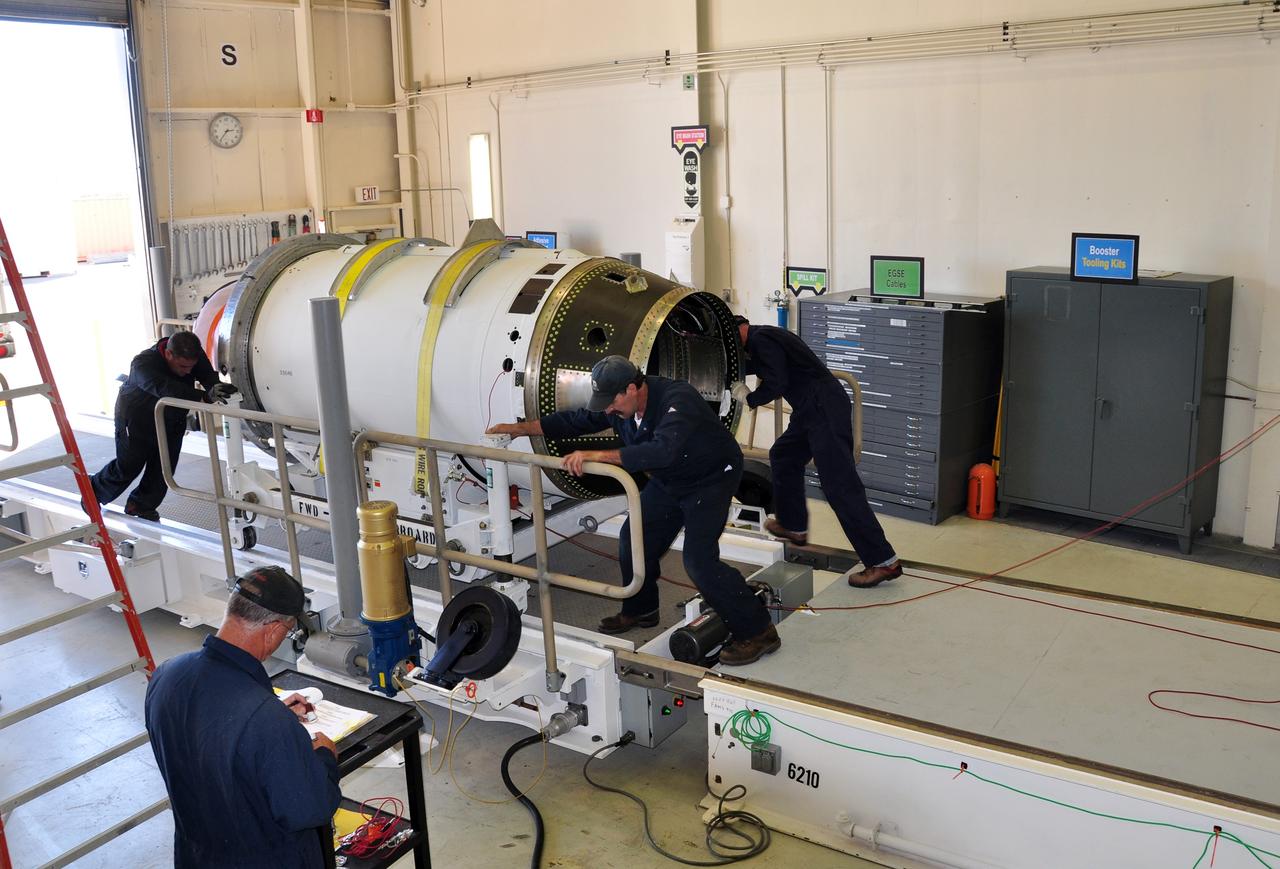
VANDENBERG AIR FORCE BASE, Calif. -- At Vandenberg Air Force Base in California, the second stage of the Pegasus XL rocket that will launch the Nuclear Spectroscopic Telescope Array (NuSTAR) to orbit is moved to a stationary rail in Building 1555 for processing. After the rocket and spacecraft are processed at Vandenberg, they will be shipped to the Ronald Reagan Ballistic Missile Defense Test Site located at the Pacific Ocean’s Kwajalein Atoll for launch. The high-energy X-ray telescope will conduct a census for black holes, map radioactive material in young supernovae remnants, and study the origins of cosmic rays and the extreme physics around collapsed stars. Photo credit: NASA/Randy Beaudoin, VAFB

VANDENBERG AIR FORCE BASE, Calif. – Technicians connect NASA's Soil Moisture Active Passive, or SMAP, spacecraft to the Delta II payload attach structure in the Astrotech payload processing facility on Vandenberg Air Force Base in California. The structure will secure the spacecraft to the rocket's second stage. SMAP will launch on a Delta II 7320 configuration vehicle featuring a United Launch Alliance first stage booster powered by an Aerojet Rocketdyne RS-27A main engine and three Alliant Techsystems, or ATK, strap-on solid rocket motors. Once on station in Earth orbit, SMAP will provide global measurements of soil moisture and its freeze/thaw state. These measurements will be used to enhance understanding of processes that link the water, energy and carbon cycles, and to extend the capabilities of weather and climate prediction models. SMAP data also will be used to quantify net carbon flux in boreal landscapes and to develop improved flood prediction and drought monitoring capabilities. Launch from Space Launch Complex 2 is targeted for Jan. 29, 2015. To learn more about SMAP, visit http://www.nasa.gov/smap. Photo credit: NASA/Chris Wiant, U.S. Air Force Photo Squadron
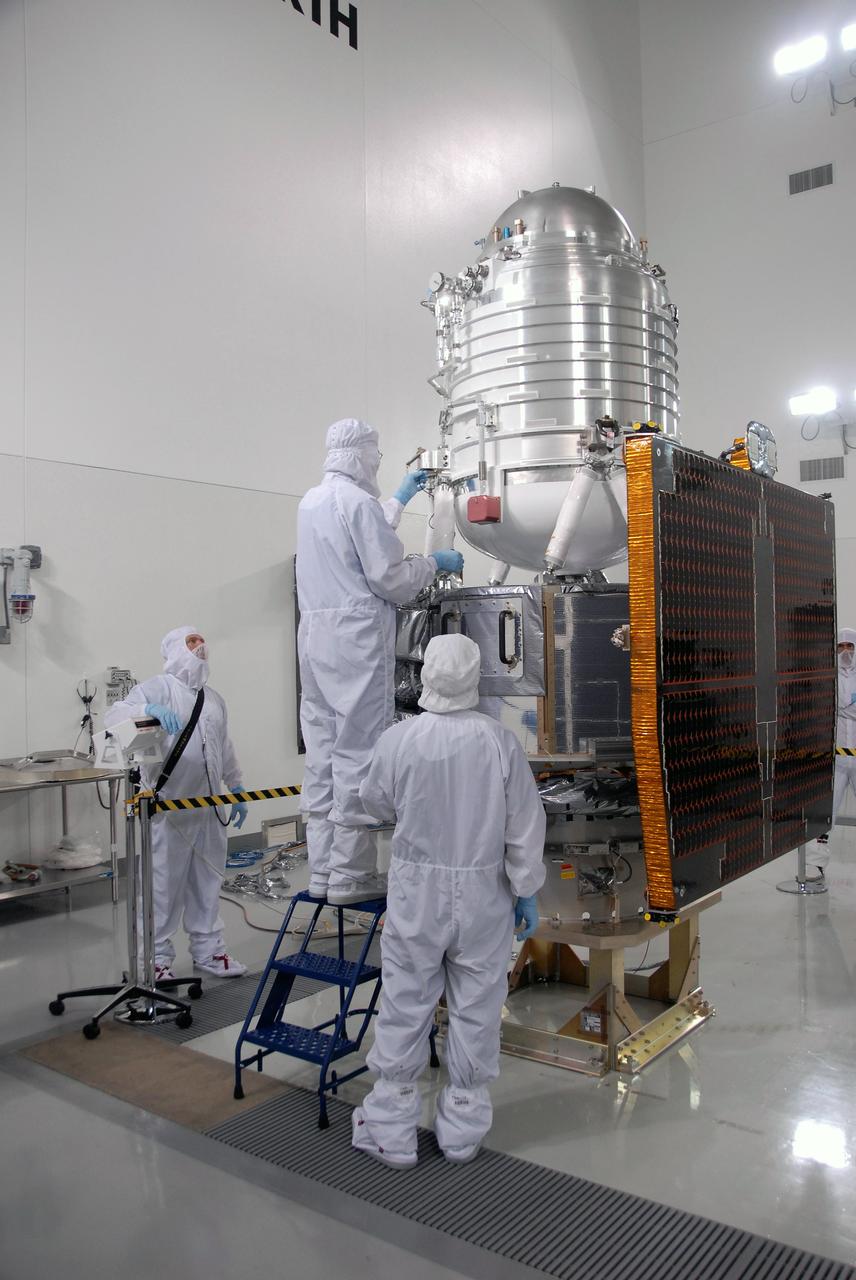
VANDENBERG AIR FORCE BASE, Calif. -- At the Astrotech processing facility on Vandenberg Air Force Base in California, workers prepare NASA's Wide-field Infrared Survey Explorer, or WISE, to be lifted from its test stand to determine its exact weight. The satellite will survey the entire sky at infrared wavelengths, creating a cosmic clearinghouse of hundreds of millions of objects which will be catalogued and provide a vast storehouse of knowledge about the solar system, the Milky Way, and the universe. Launch is scheduled for Dec. 7. Photo credit: NASA/Doug Kolkow
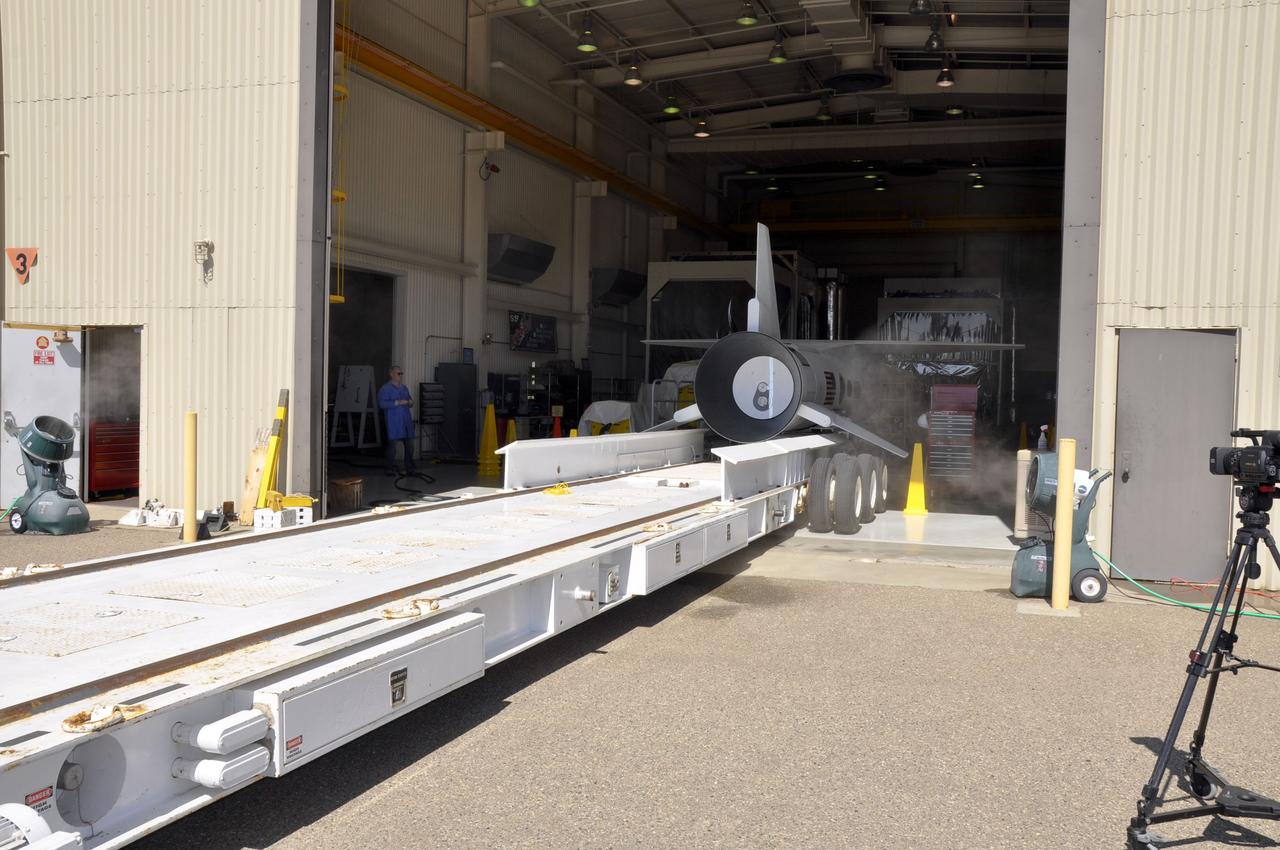
VANDENBERG AIR FORCE BASE, Calif. – Preparations are under way to transfer an Orbital Sciences Pegasus XL rocket onto the transporter in Orbital’s hangar at Vandenberg Air Force Base in California. The rocket has been mated to NASA's Nuclear Spectroscopic Telescope Array, or NuSTAR, encapsulated in the Pegasus payload fairing. The transporter will move them to the runway ramp where they will be attached to the underside of Orbital’s L-1011 carrier aircraft. The aircraft will fly the pair from Vandenberg to the Ronald Reagan Ballistic Missile Defense Test Site on the Pacific Ocean’s Kwajalein Atoll for launch. A revised launch date will be set at the Flight Readiness Review, planned for later this week. The high-energy X-ray telescope will conduct a census of black holes, map radioactive material in young supernovae remnants, and study the origins of cosmic rays and the extreme physics around collapsed stars. For more information, visit http://www.nasa.gov/nustar. Photo credit: NASA/Randy Beaudoin, VAFB
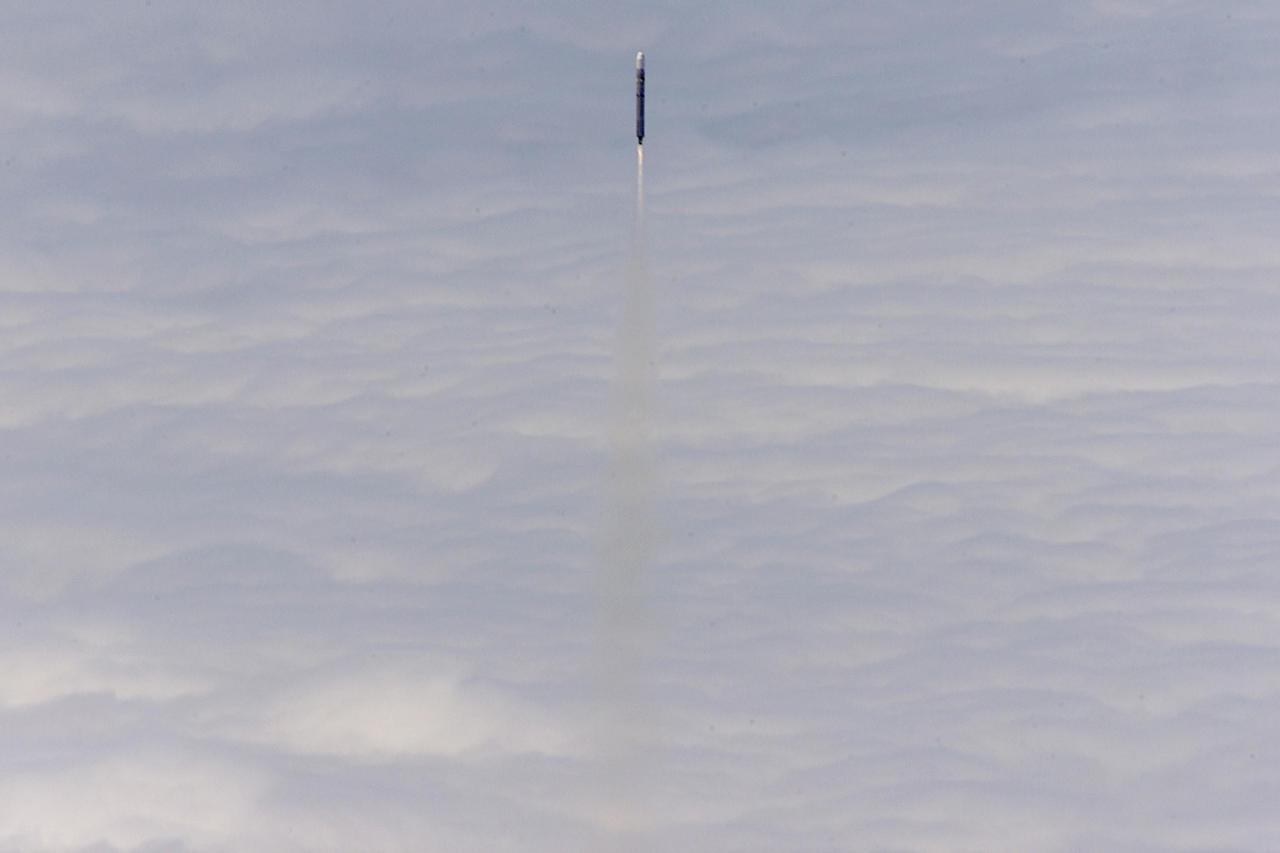
VANDENBERG AIR FORCE BASE, CALIF. -- The National Oceanic and Atmospheric Administration (NOAA) spacecraft (NOAA-M) streaks above a cloud layer after a successful launch at 2:23 p.m. EDT aboard a Titan II rocket from Vandenberg Air Force Base, Calif. NOAA-M is another in a series of polar-orbiting Earth environmental observation satellites that provide global data to NOAA's short- and long-range weather forecasting systems

VANDENBERG AIR FORCE BASE, Calif. – NASA's Orbiting Carbon Observatory-2, or OCO-2, stands ready for launch aboard a United Launch Alliance Delta II rocket following rollback of the mobile service tower on Space Launch Complex 2 on Vandenberg Air Force Base in California. Launch of OCO-2 is scheduled for 5:56 a.m. EDT on July 2 following the repair of the pad's water suppression system, which failed on the first launch attempt July 1. OCO-2 is NASA’s first mission dedicated to studying atmospheric carbon dioxide, the leading human-produced greenhouse gas driving changes in Earth’s climate. OCO-2 will provide a new tool for understanding the human and natural sources of carbon dioxide emissions and the natural "sinks" that absorb carbon dioxide and help control its buildup. The observatory will measure the global geographic distribution of these sources and sinks and study their changes over time. To learn more about OCO-2, visit http://www.nasa.gov/oco2. Photo credit: NASA/Kim Shiflett
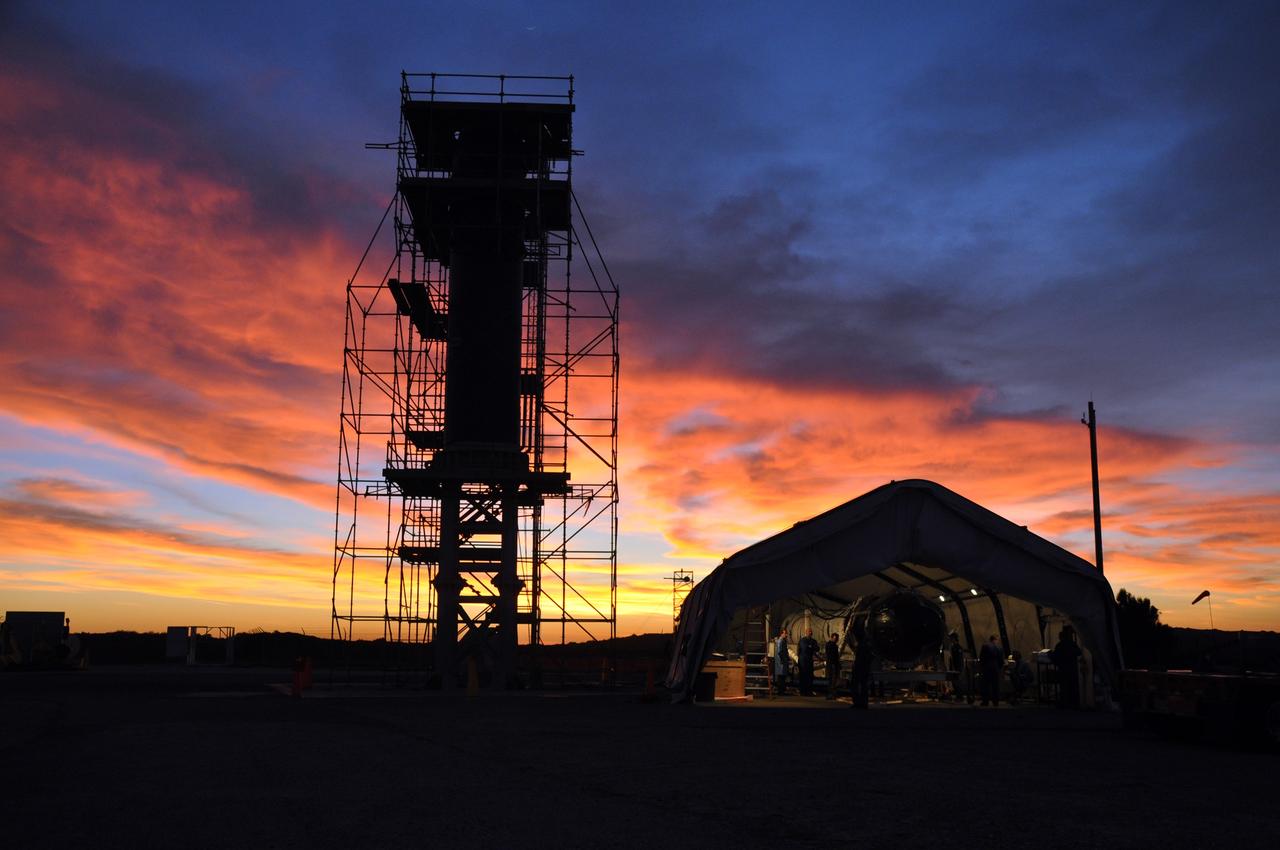
VANDENBERG AIR FORCE BASE, Calif. -- At Vandenberg Air Force Base in California, the sun sets over Space Launch Complex 576-E where technicians continue the process of joining NASA's Glory spacecraft with the Taurus XL rocket's third stage, housed inside a temporary processing tent near the pad. The Orbital Sciences Corp. Taurus XL rocket will carry Glory into low Earth orbit. Once Glory reaches orbit, it will collect data on the properties of aerosols and black carbon. It also will help scientists understand how the sun's irradiance affects Earth's climate. Launch is scheduled for 5:09 a.m. EST Feb. 23. For information, visit www.nasa.gov/glory. Photo credit: NASA/Randy Beaudoin, VAFB
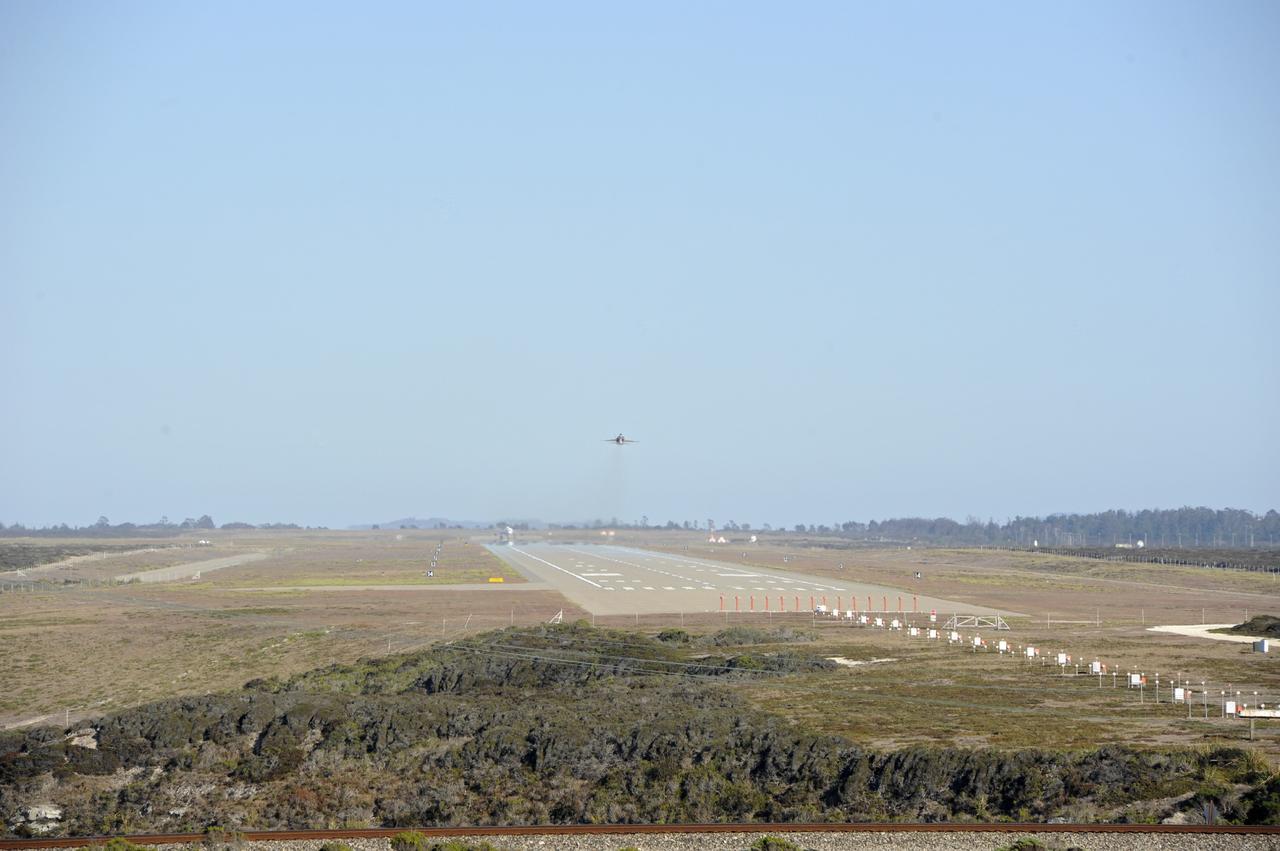
VANDENBERG AIR FORCE BASE, Calif. – A NASA F-18 takes off from Vandenberg Air Force Base, Calif., on a mission to record the launch of NASA's IRIS spacecraft into low-Earth orbit. IRIS, short for Interface Region Imaging Spectrograph, was launched aboard an Orbital Sciences Pegasus XL rocket released from an L-1011 carrier aircraft. Photo credit: VAFB/Chris Wiant
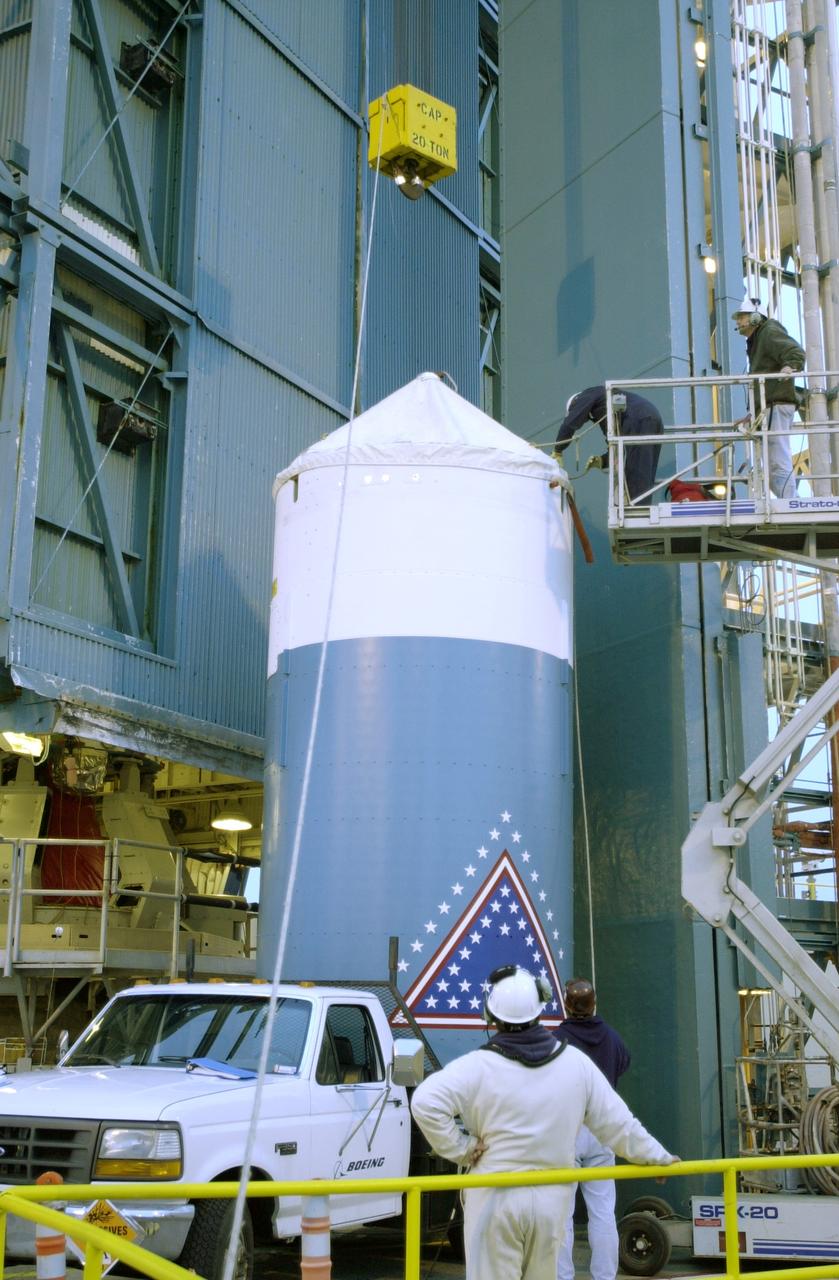
VANDENBERG AFB, CALIF. - The interstage of the Delta II launch vehicle for the Gravity Probe B experiment is prepared for lifting up the mobile service tower on Space Launch Complex 2, Vandenberg Air Force Base, Calif. It will enclose the second stage. The Gravity Probe B will launch a payload of four gyroscopes into low-Earth polar orbit to test two extraordinary predictions of Albert Einstein’s general theory of relativity: the geodetic effect (how space and time are warped by the presence of the Earth) and frame dragging (how Earth’s rotation drags space and time around with it). Once in orbit, for 18 months each gyroscope’s spin axis will be monitored as it travels through local spacetime, observing and measuring these effects. The experiment was developed by Stanford University, Lockheed Martin and NASA’s Marshall Space Flight Center. The targeted launch date is Dec. 6, 2003.
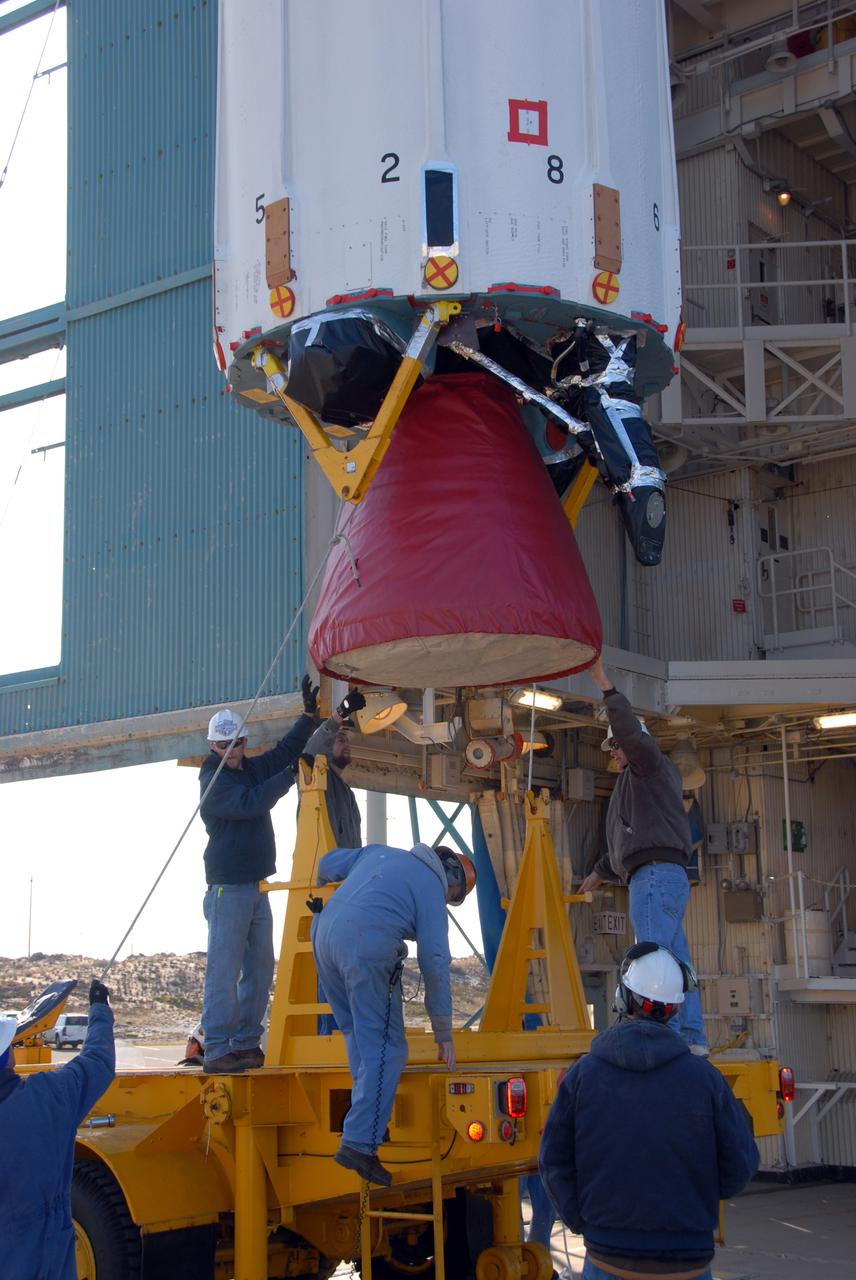
VANDENBERG AIR FORCE BASE, Calif. -- At Vandenberg Air Force Base in California, workers prepare to move the transporter from beneath the Delta II first stage, suspended above, on Space Launch Complex 2. The first stage will be lifted into the mobile service tower. The Delta II is the launch vehicle for the OSTM/Jason-2 spacecraft. The OSTM, or Ocean Topography Mission, on the Jason-2 satellite is a follow-on to Jason-1. It will take oceanographic studies of sea surface height into an operational mode for continued climate forecasting research and science and industrial applications. This satellite altimetry data will help determine ocean circulation, climate change and sea-level rise. OSTM is a joint effort by the National Oceanic and Atmospheric Administration, NASA, France’s Centre National d’Etudes Spatiales and the European Meteorological Satellite Organisation. OSTM/Jason-2 will be launched aboard a United Launch Alliance Delta II 7320 from Vandenberg on June 15. Photo credit: NASA/Dan Liberotti
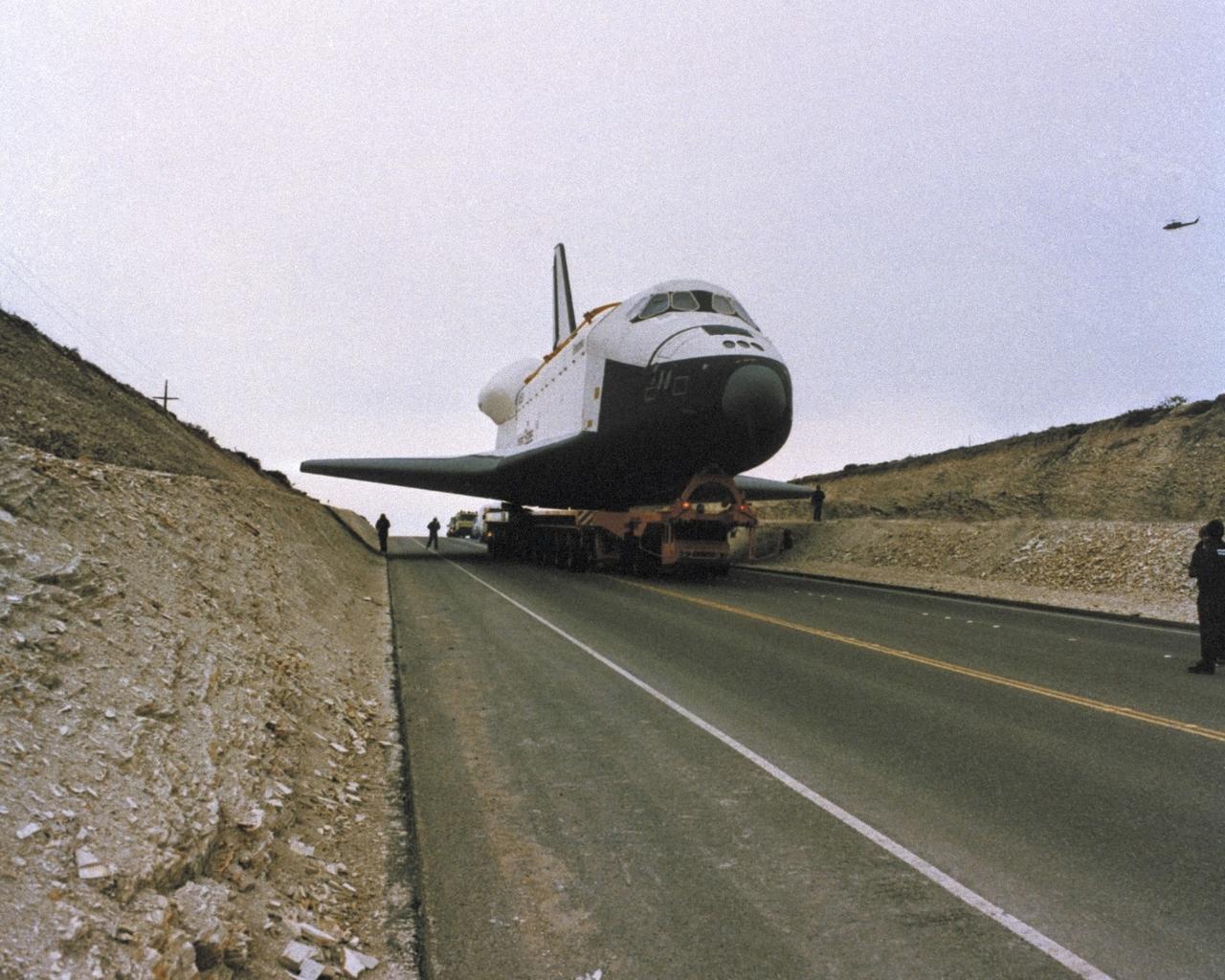
VANDENBERG AIR FORCE BASE, Calif. -- Enterprise in California at VAFB. Photo Credit: NASA
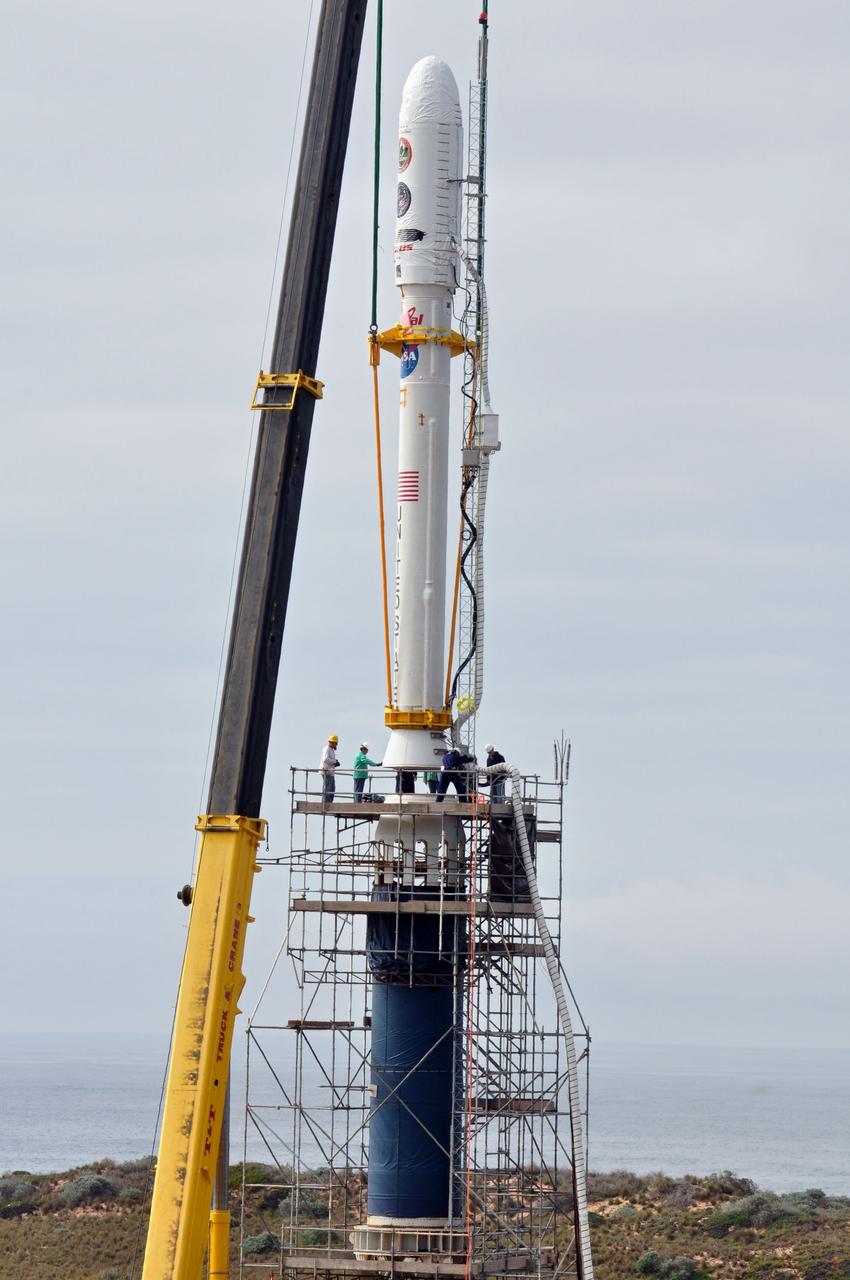
VANDENBERG AIR FORCE BASE, Calif. -- On Space Launch Complex 576-E at Vandenberg Air Force Base in California, workers guide NASA's Glory upper stack as a crane lowers it toward the Taurus XL rocket's Stage 0. The upper stack consists of Stages 1, 2 and 3 of the Taurus as well as the encapsulated Glory spacecraft. The Orbital Sciences Taurus XL rocket will launch Glory into low Earth orbit. Once Glory reaches orbit, it will collect data on the properties of aerosols and black carbon. It also will help scientists understand how the sun's irradiance affects Earth's climate. Launch is scheduled for 5:09 a.m. EST Feb. 23. For information, visit www.nasa.gov/glory. Photo credit: NASA/Randy Beaudoin, VAFB
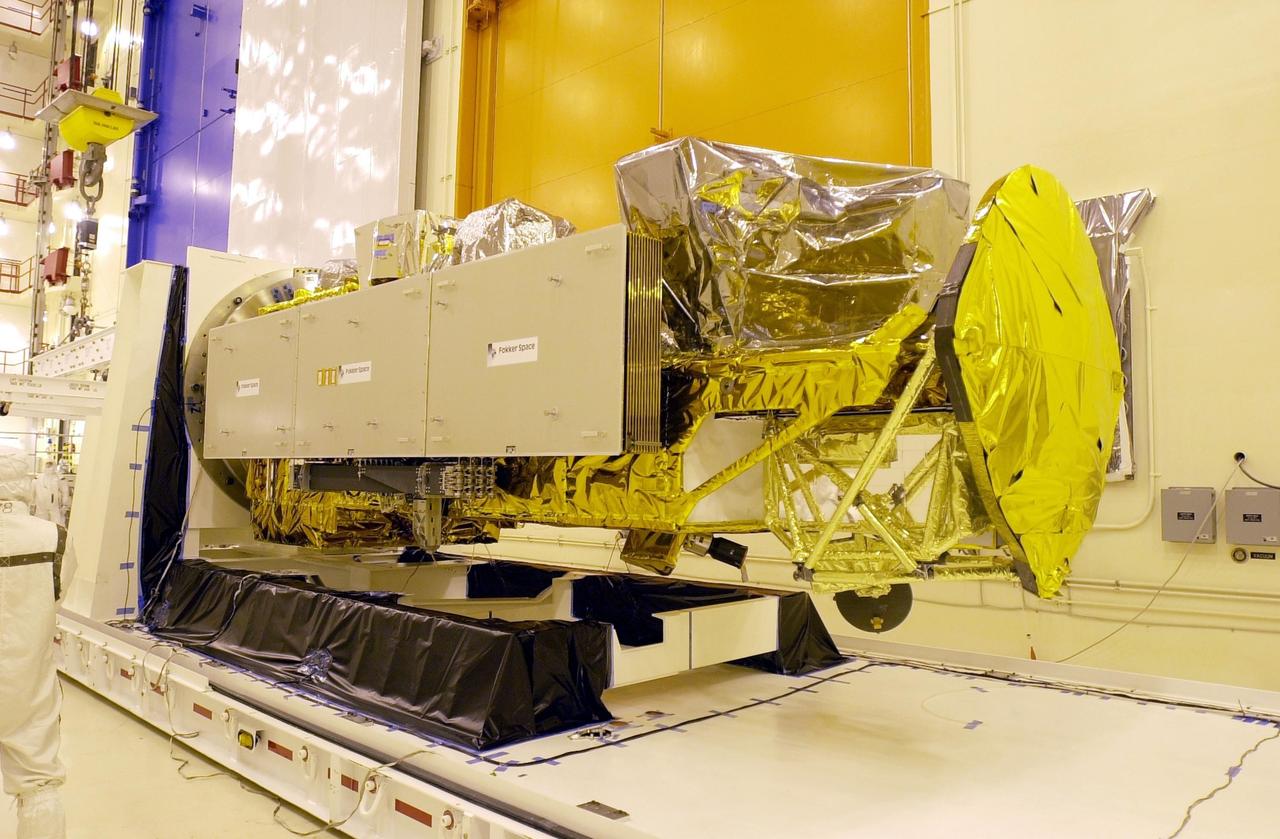
VANDENBERG AFB, CALIF. -- The Aqua-EOS satellite rests on a stand in the Spaceport Systems International (SSI) payload processing facility on South Vandenberg AFB. Aqua will provide a six year chronology of the planet and its processes. Comprehensive measurements taken by its onboard instruments will allow scientists to assess long-term change, identify its human and natural causes and advance the development of models for long-term forecasting. The Focus for the Aqua Project is the multi-disciplinary study of the Earth's Interrelated Processes (atmosphere, oceans, and land surface) and their relationship to earth system changes. The global change research emphasized with the Aqua instrument data sets include: atmospheric temperature and humidity profiles, clouds, precipitation and radiative balance; terrestrial snow and sea ice; sea surface temperature and ocean productivity; soil moisture; and the improvement of numerical weather prediction. Aqua-EOS is scheduled for launch aboard a Delta II 7920-10L vehicle on April 18, 2002
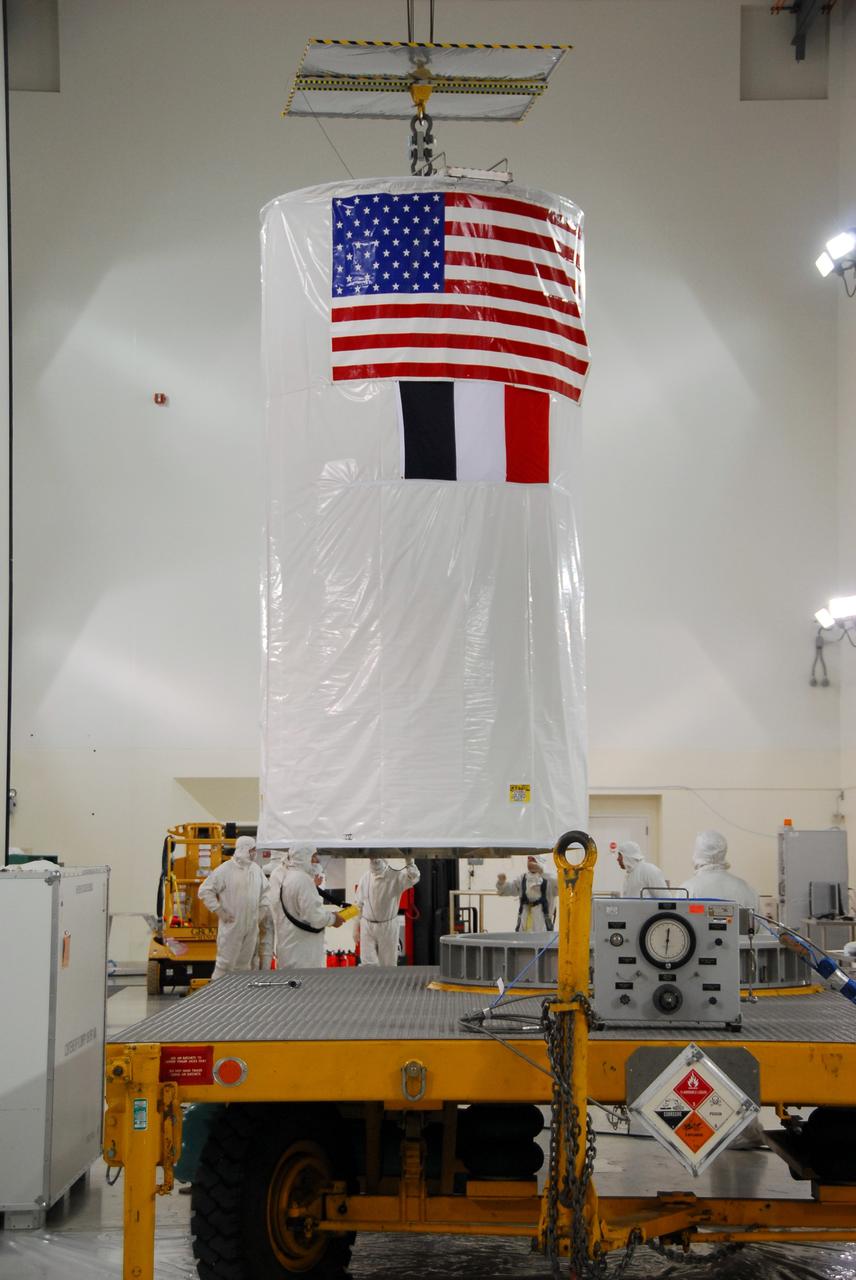
VANDENBERG AIR FORCE BASE, Calif. – An overhead crane is used to move the covered Ocean Surface Topography Mission, or OSTM/Jason 2, spacecraft onto a transporter for the trip to the launch pad. The launch of the OSTM/Jason 2 aboard a Delta II rocket is scheduled for Friday, June 20, from Vandenberg Air Force Base in California. The launch window extends from 12:46 a.m. to 12:55 a.m. PDT. The satellite will be placed in an 830-mile-high orbit at an inclination of 66 degrees after separating from the Delta II 55 minutes after liftoff. The five primary science instruments of the Ocean Surface Topography Mission aboard the Jason 2 spacecraft are dedicated to measuring ocean surface height. These measurements will be used to evaluate and forecast climate changes and improve weather forecasting. The results also are expected to help forecasters better predict hurricane intensity. Photo credit: NASA/Dan Liberotti
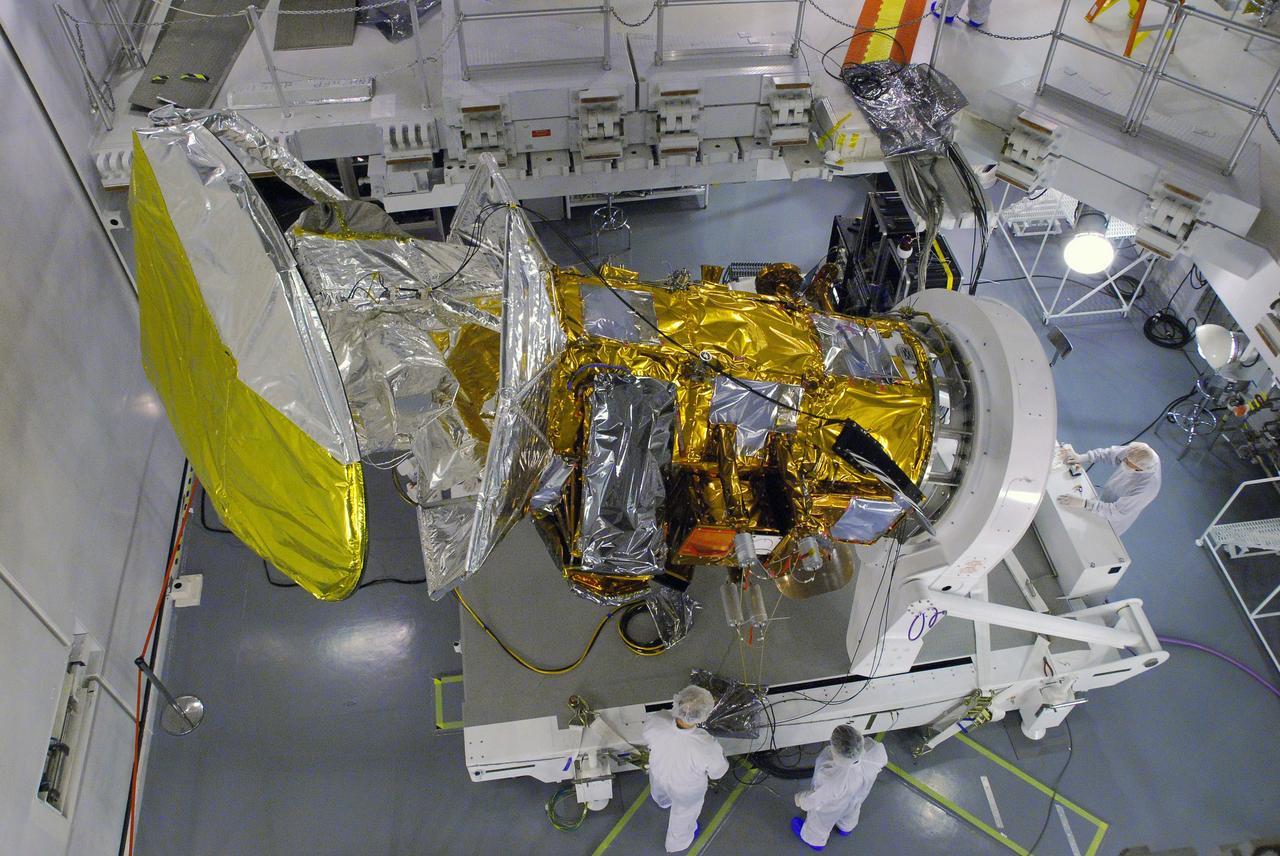
VANDENBERG AIR FORCE BASE, Calif. -- In Space Systems International's Payload Processing Facility at Vandenberg Air Force Base in California, technicians begin to rotate the Aquarius/SAC-D spacecraft into a vertical position for testing. Following final tests, the spacecraft will be integrated to a United Launch Alliance Delta II rocket in preparation for the targeted June launch. Aquarius, the NASA-built primary instrument on the SAC-D spacecraft, will provide new insights into how variations in ocean surface salinity relate to fundamental climate processes on its three-year mission. Photo credit: NASA/Dan Liberotti, VAFB

VANDENBERG AIR FORCE BASE, Calif. -- In pre-dawn hours at Vandenberg Air Force Base in California, preparing for the arrival of the Delta II first stage for the OSTM/Jason-2 spacecraft, the mobile service tower (left) on Space Launch Complex 2 has been moved away from the umbilical tower and launcher (right). The OSTM, or Ocean Topography Mission, on the Jason-2 satellite is a follow-on to Jason-1. It will take oceanographic studies of sea surface height into an operational mode for continued climate forecasting research and science and industrial applications. This satellite altimetry data will help determine ocean circulation, climate change and sea-level rise. OSTM is a joint effort by the National Oceanic and Atmospheric Administration, NASA, France’s Centre National d’Etudes Spatiales and the European Meteorological Satellite Organisation. OSTM/Jason-2 will be launched aboard a United Launch Alliance Delta II 7320 from Vandenberg on June 15. Photo credit: NASA/Dan Liberotti
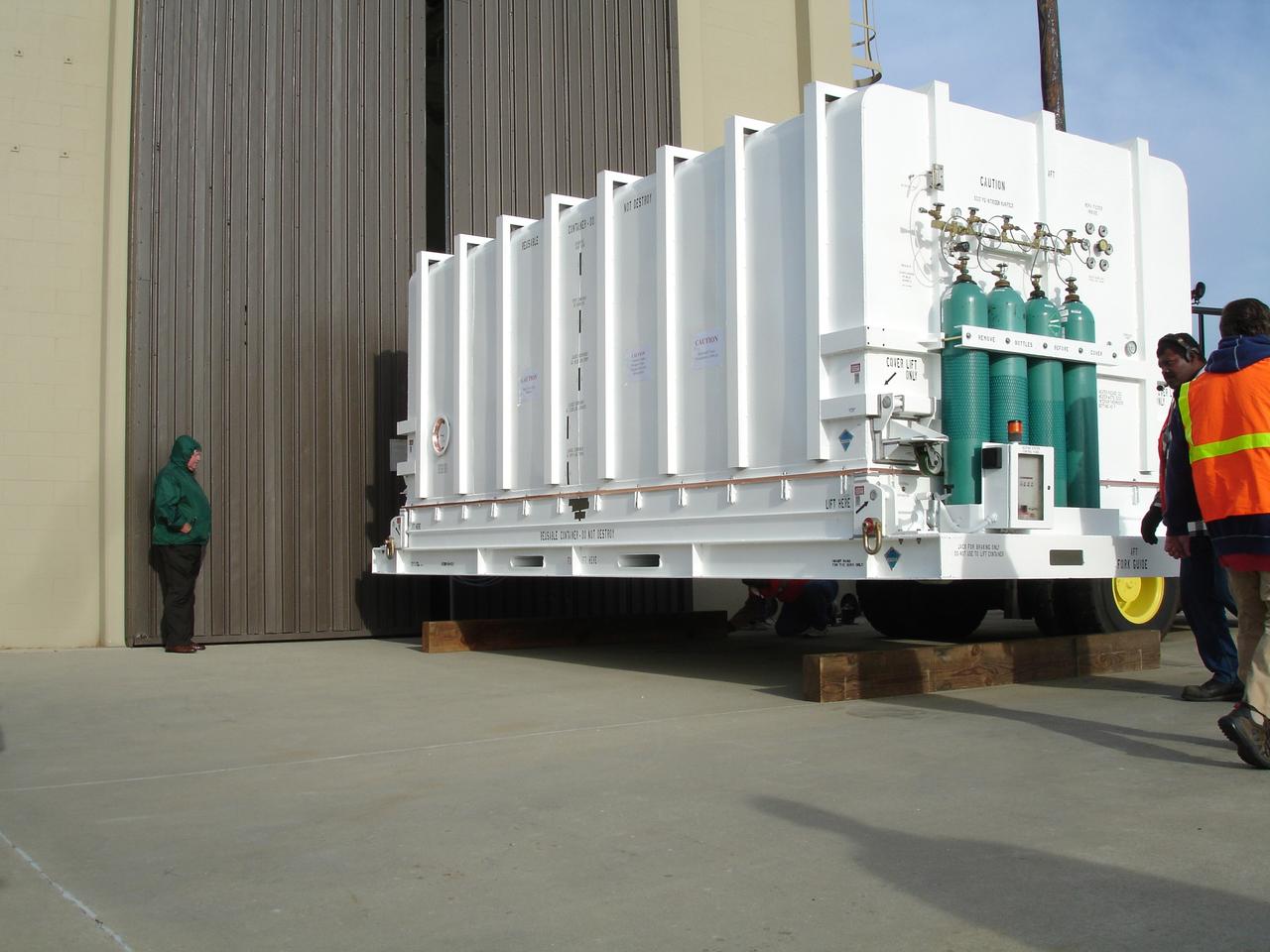
VANDENBERG AIR FORCE BASE, Calif. – The NOAA-N Prime spacecraft is positioned for movement into NASA's Hazardous Processing Facility on Vandenberg Air Force Base in California. NOAA-N Prime was built by Lockheed Martin Space Systems Company for its Advanced Television Infrared Observational Satellites -N series. It is the latest polar-orbiting operational environmental weather satellite developed by NASA for the National Oceanic and Atmospheric Administration. The satellite will provide a platform to support environmental monitoring instruments for imaging and measuring the Earth's atmosphere, its surface and cloud cover, including Earth radiation, atmospheric ozone, aerosol distribution, sea surface temperature and vertical temperature and water profiles in the troposphere and stratosphere. The satellite will assist in measuring proton and electron fluxes at orbit altitude, collecting data from remote platforms to assist the Search and Rescue Satellite-Aided Tracking system. The satellite will be launched from the Western Range at Vandenberg AFB by a United Launch Alliance two-stage Delta II rocket managed by NASA's Launch Service Program at Kennedy. Photo credit: NASA/Jerry Nagy, VAFB
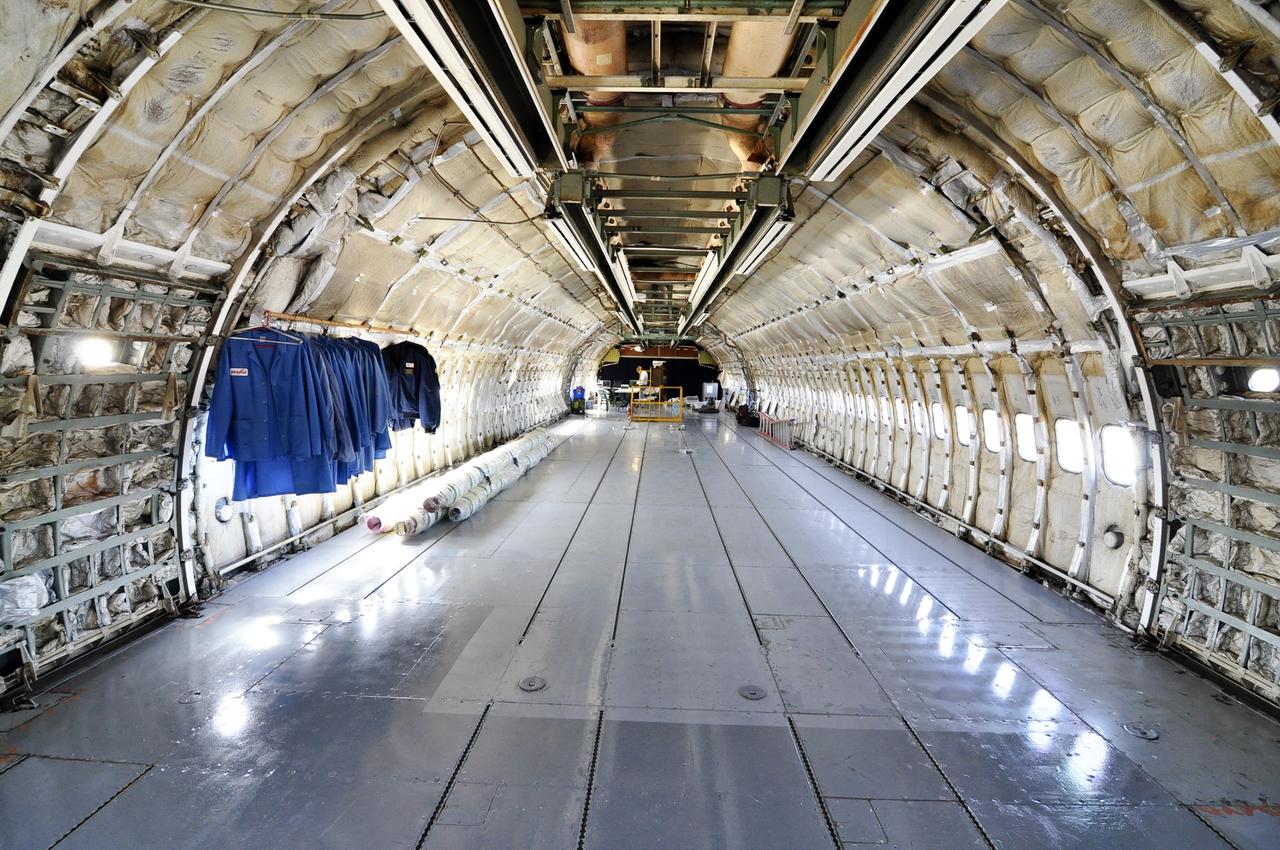
VANDENBERG ABF, Calif. – A look through the inside of the fuselage of the Orbital Sciences L-1011 aircraft called "Stargazer" after arrival at Vandenberg Air Force Base for the upcoming launch of the company's Pegasus XL rocket lifting NASA's IRIS solar observatory into orbit. The aircraft will carry the winged rocket to an altitude of 39,000 feet before releasing the Pegasus so its own motors can ignite to send the IRIS into space. The L-1011 is a modified airliner equipped to hold the Pegasus under its body safely. IRIS, short for Interface Region Imaging Spectrograph, is being prepared for launch from Vandenberg June 26. IRIS will open a new window of discovery by tracing the flow of energy and plasma through the chromospheres and transition region into the sun’s corona using spectrometry and imaging. IRIS fills a crucial gap in our ability to advance studies of the sun-to-Earth connection by tracing the flow of energy and plasma through the foundation of the corona and the region around the sun known as the heliosphere. Photo credit: VAFB/Randy Beaudoin
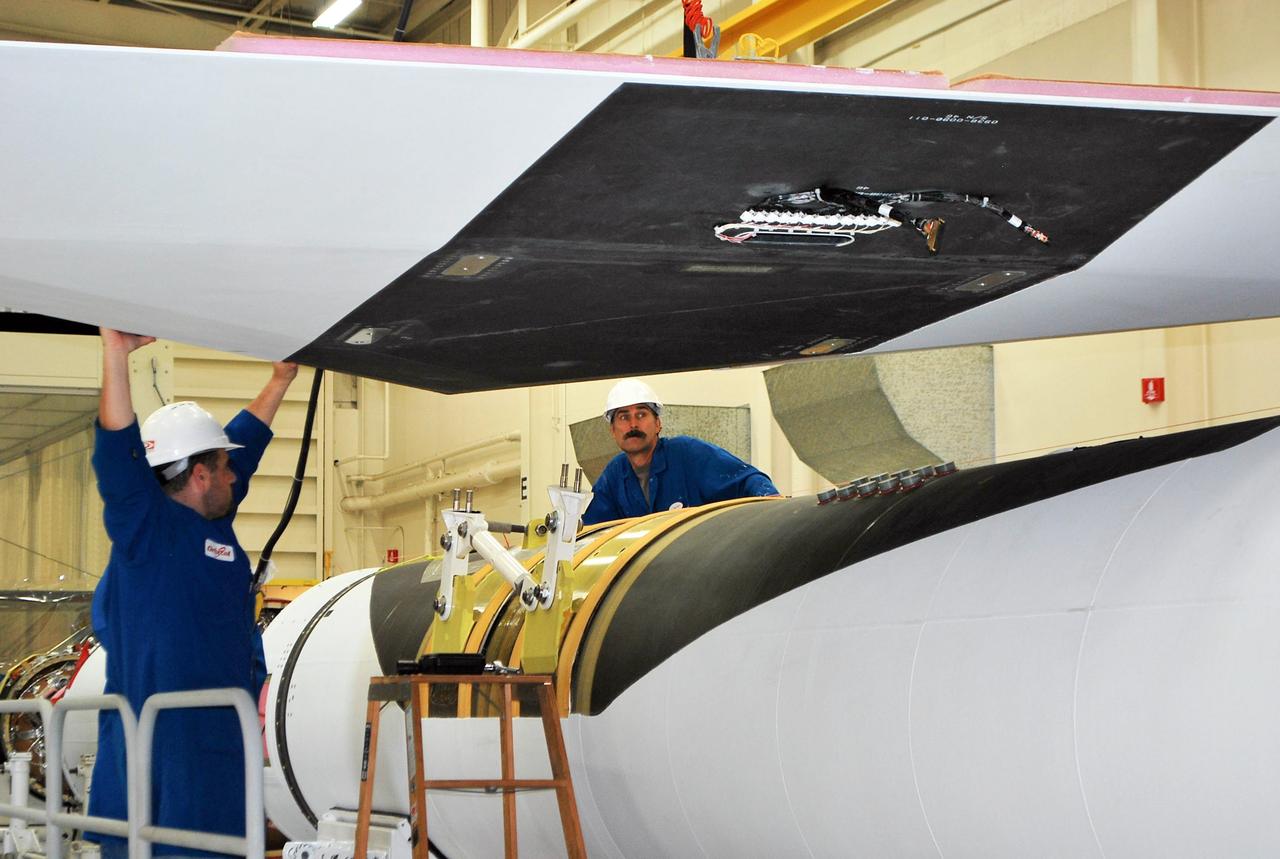
Vandenberg Air Force Base, Calif. – Inside a processing facility at Vandenberg Air Force Base in California, technicians assist as a crane lowers the wing closer for a fit check with the Orbital Sciences Pegasus XL launch vehicle. NASA’s Interface Region Imaging Spectrograph, or IRIS, spacecraft will launch aboard the Pegasus XL in late 2012. IRIS will open a new window of discovery by tracing the flow of energy and plasma through the chromospheres and transition region into the sun’s corona using spectrometry and imaging. IRIS fills a crucial gap in our ability to advance studies of the sun-to-Earth connection by tracing the flow of energy and plasma through the foundation of the corona and heliosphere, or region around the sun. Photo credit: NASA/Randy Beaudoin
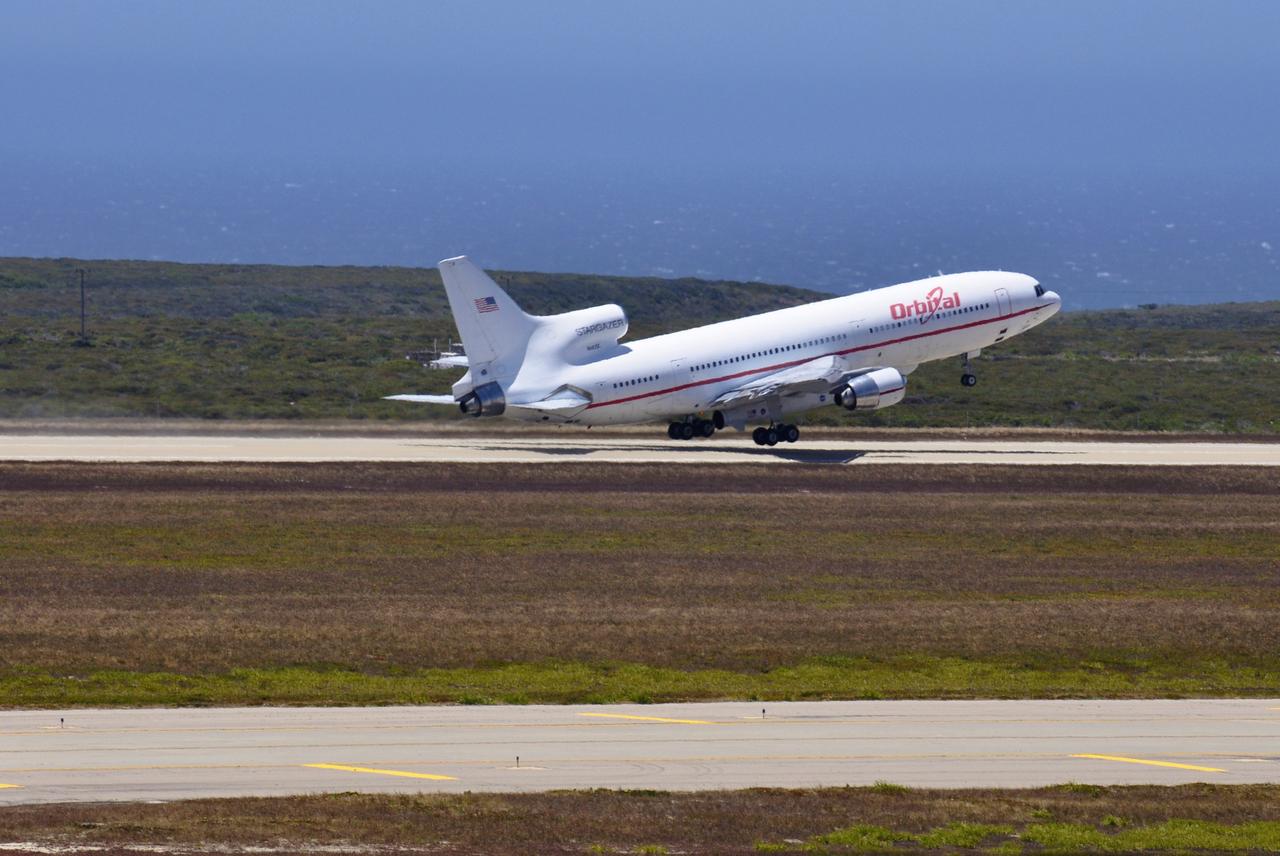
VANDENBERG AIR FORCE BASE, Calif. – Orbital Sciences’ L-1011 carrier aircraft appears to hover above the runway as it departs from Vandenberg Air Force Base in California. The aircraft is transporting Orbital’s Pegasus rocket and NASA’s Nuclear Spectroscopic Telescope Array, or NuSTAR, to the U.S. Army's Ronald Reagan Ballistic Missile Defense Test Site on Kwajalein Atoll, part of the Marshall Islands in the Pacific Ocean. The Pegasus, mated to its NuSTAR payload, will be launched from the carrier aircraft 117 nautical miles south of Kwajalein at latitude 6.75 degrees north of the equator. The high-energy X-ray telescope will conduct a census of black holes, map radioactive material in young supernovae remnants, and study the origins of cosmic rays and the extreme physics around collapsed stars. Launch is scheduled for June 13. For more information, visit http://www.nasa.gov/nustar. Photo credit: NASA/Randy Beaudoin, VAFB
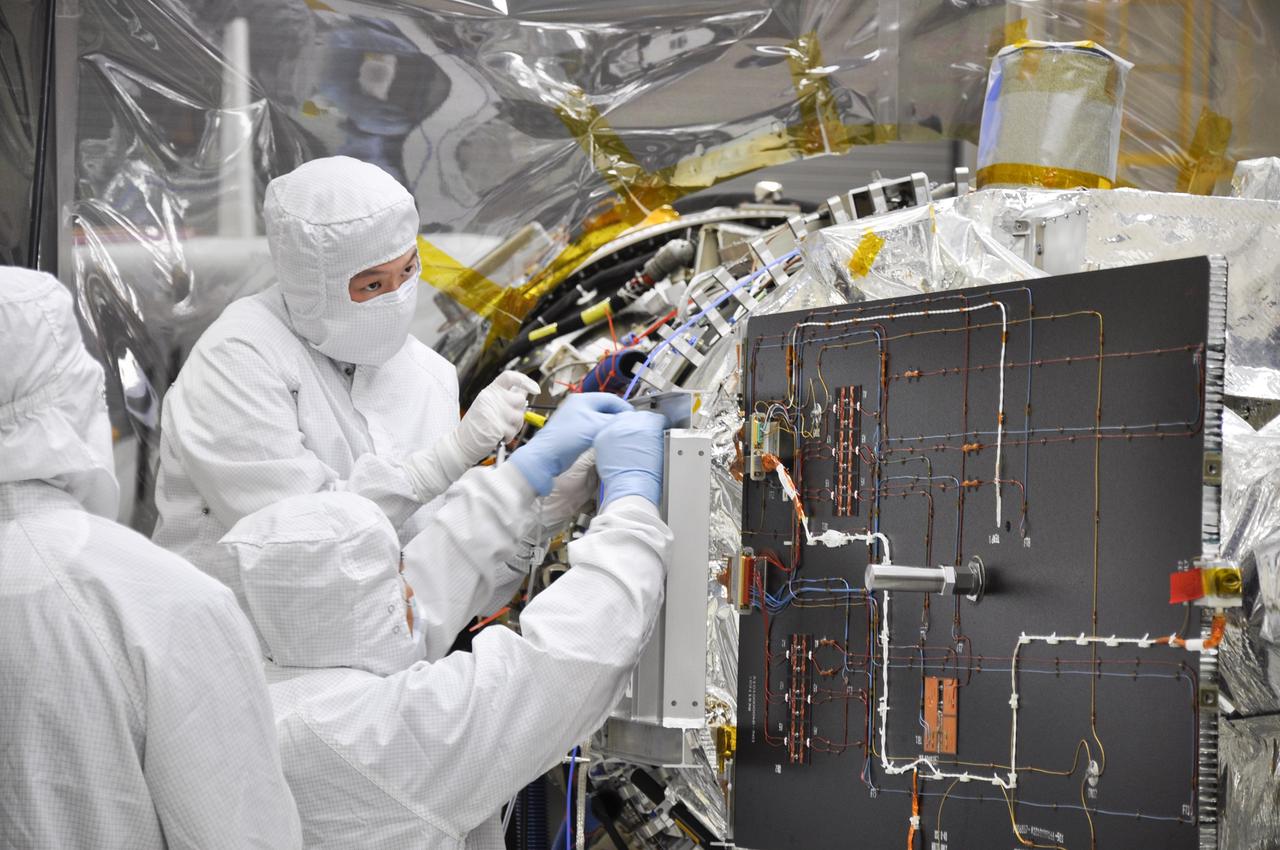
VANDENBERG AFB, Calif. – Engineers unwrap NASA's IRIS spacecraft after its connection to the nose of an Orbital Sciences Pegasus XL rocket that will lift the solar observatory into orbit in June. The work is taking place in a hangar at Vandenberg Air Force Base where IRIS, short for Interface Region Imaging Spectrograph, is being prepared for launch on a Pegasus XL rocket. Scheduled for launch from Vandenberg no earlier than June 26, 2013, IRIS will open a new window of discovery by tracing the flow of energy and plasma through the chromospheres and transition region into the sun’s corona using spectrometry and imaging. IRIS fills a crucial gap in our ability to advance studies of the sun-to-Earth connection by tracing the flow of energy and plasma through the foundation of the corona and the region around the sun known as the heliosphere. Photo credit: NASA/Randy Beaudoin
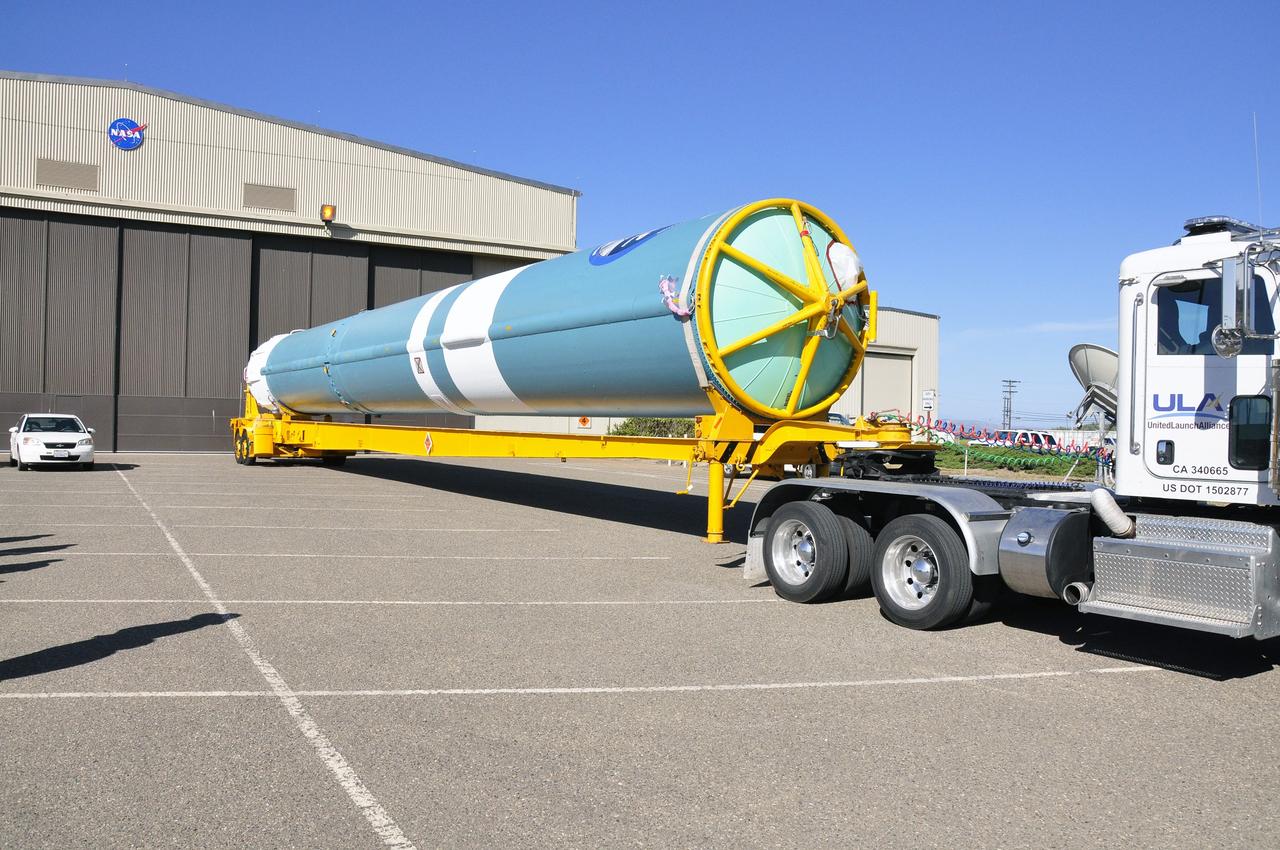
VANDENBERG AIR FORCE BASE, Calif. – The first stage of the United Launch Alliance Delta II rocket for NASA's Soil Moisture Active Passive mission, or SMAP, begins its journey from the Building 836 hangar to the Horizontal Processing Facility at Space Launch Complex 2 on Vandenberg Air Force Base in California. SMAP will provide global measurements of soil moisture and its freeze/thaw state. These measurements will be used to enhance understanding of processes that link the water, energy and carbon cycles, and to extend the capabilities of weather and climate prediction models. SMAP data also will be used to quantify net carbon flux in boreal landscapes and to develop improved flood prediction and drought monitoring capabilities. Launch is scheduled for November 2014. To learn more about SMAP, visit http://smap.jpl.nasa.gov. Photo credit: NASA/Randy Beaudoin

VANDENBERG AIR FORCE BASE, Calif. – The United Launch Alliance Delta II rocket lifts off through the fog at Space Launch Complex 2 on Vandenberg Air Force Base in California, engines blazing, carrying NASA's Orbiting Carbon Observatory-2, or OCO-2, to orbit. Launch was on schedule at 5:56 a.m. EDT on July 2 following the repair of the pad's water suppression system, which failed on the first launch attempt July 1. OCO-2 is NASA’s first mission dedicated to studying atmospheric carbon dioxide, the leading human-produced greenhouse gas driving changes in Earth’s climate. OCO-2 will provide a new tool for understanding the human and natural sources of carbon dioxide emissions and the natural "sinks" that absorb carbon dioxide and help control its buildup. The observatory will measure the global geographic distribution of these sources and sinks and study their changes over time. To learn more about OCO-2, visit http://www.nasa.gov/oco2. Photo credit: NASA/30th Space Communication Squadron
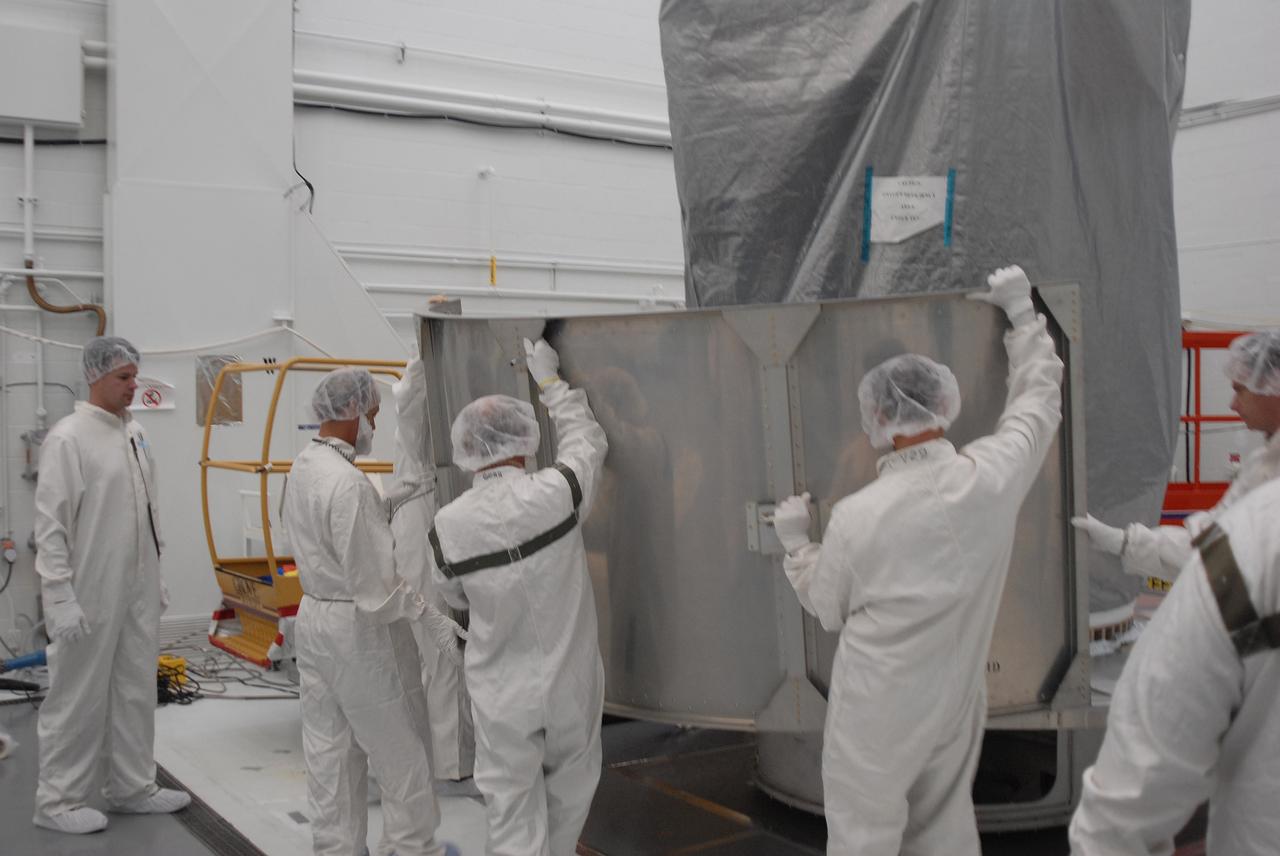
VANDENBERG AIR FORCE BASE, Calif. -- In Bldg. 1610 at Vandenberg Air Force Base in California, workers place the first of the lower segments of a transportation canister around the NOAA-N Prime spacecraft. NOAA-N Prime is the latest polar-orbiting operational environmental weather satellite developed by NASA for the National Oceanic and Atmospheric Administration. The satellite is scheduled to launch Feb. 4 aboard a Delta II rocket from Vandenberg Air Force Base. Photo credit: NASA/ Daniel Liberotti, VAFB
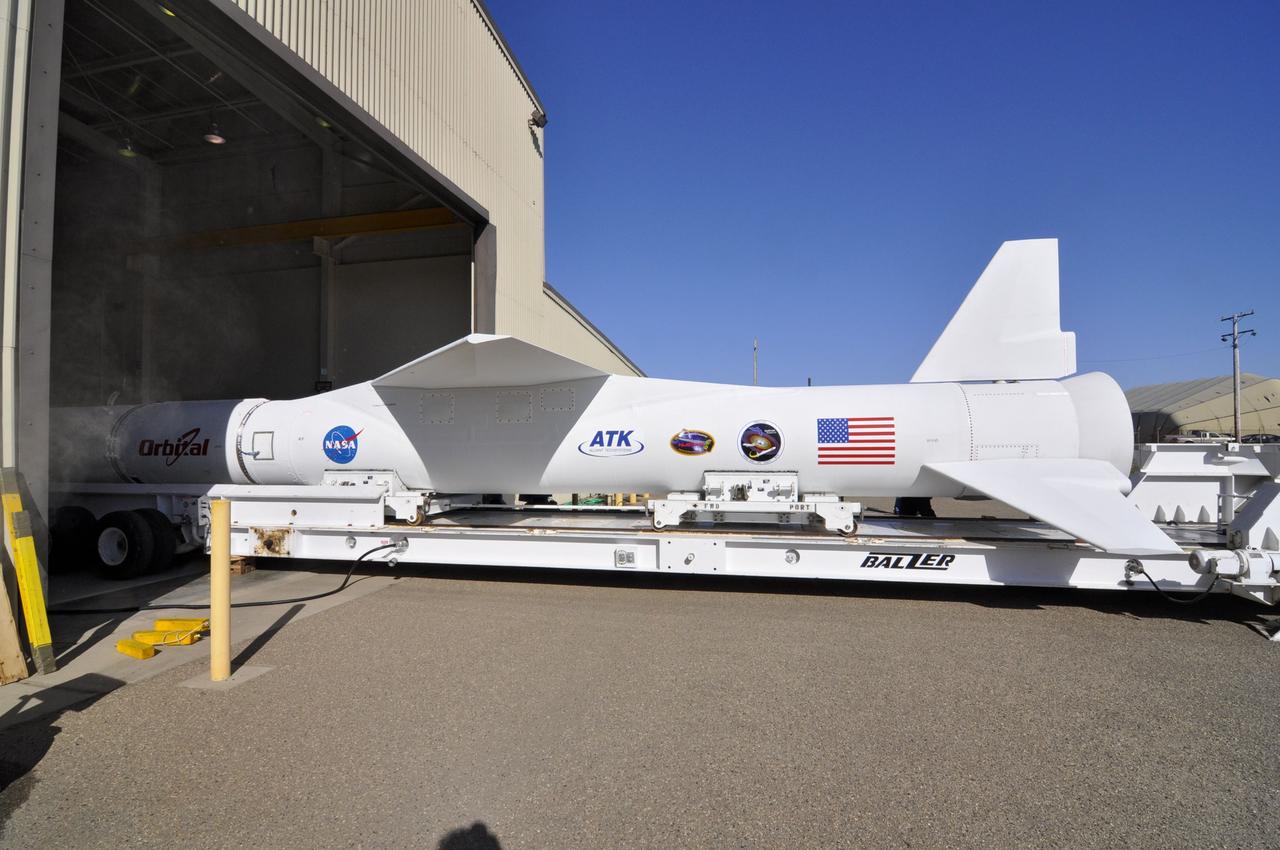
VANDENBERG AIR FORCE BASE, Calif. – An Orbital Sciences’ Pegasus XL rocket rests atop the transporter outside Orbital’s hangar at Vandenberg Air Force Base in California. The rocket is mated to NASA's encapsulated Nuclear Spectroscopic Telescope Array, or NuSTAR, out of sight inside the hangar. The transporter will move them to the runway ramp where they will be attached to the underside of Orbital’s L-1011 carrier aircraft. The aircraft will fly the pair from Vandenberg to the Ronald Reagan Ballistic Missile Defense Test Site on the Pacific Ocean’s Kwajalein Atoll for launch. A revised launch date will be set at the Flight Readiness Review, planned for later this week. The high-energy X-ray telescope will conduct a census of black holes, map radioactive material in young supernovae remnants, and study the origins of cosmic rays and the extreme physics around collapsed stars. For more information, visit http://www.nasa.gov/nustar. Photo credit: NASA/Randy Beaudoin, VAFB
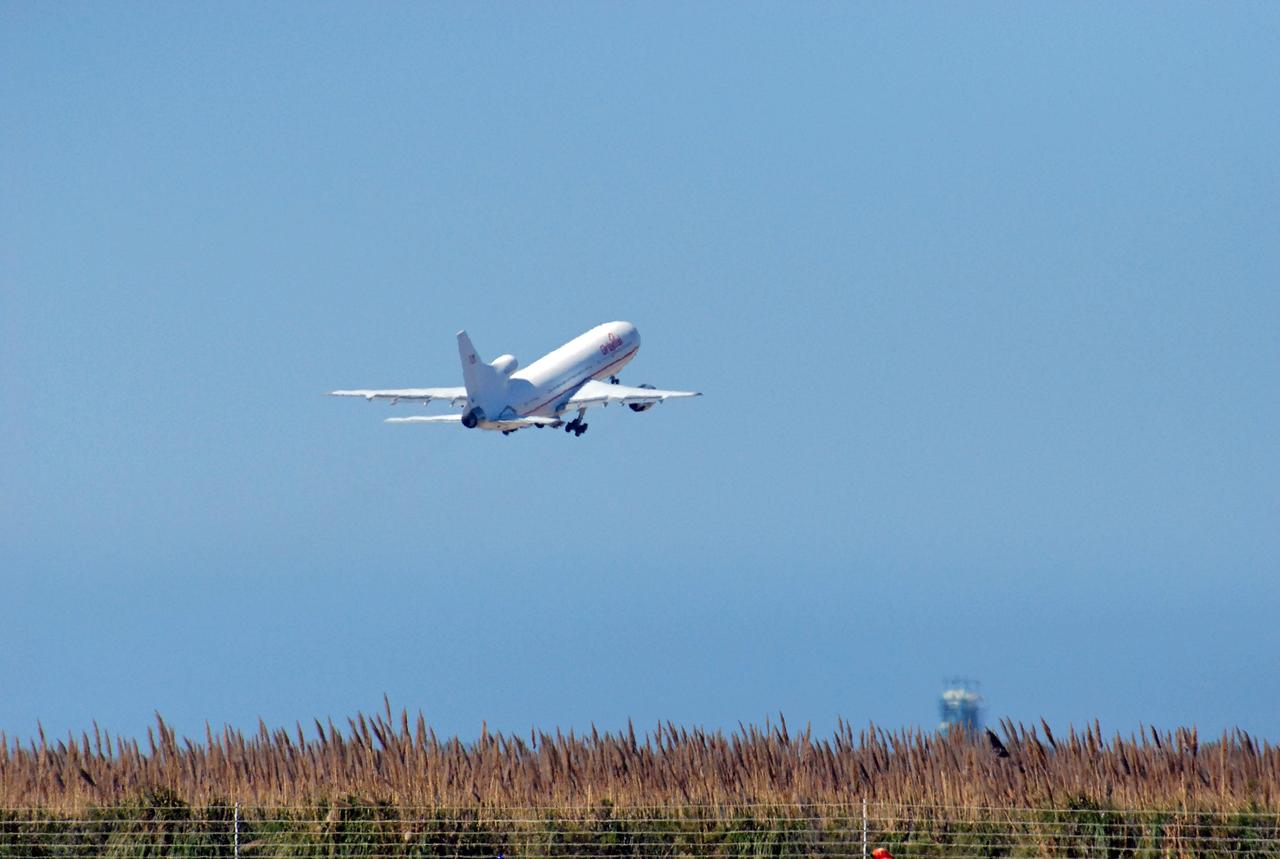
VANDENBERG AIR FORCE BASE, Calif. – Orbital Sciences’ L-1011 aircraft takes off from Vandenberg Air Force Base in California for the Kwajalein Atoll, a part of the Marshall Islands in the Pacific Ocean. Under its wing is NASA’s Interstellar Boundary Explorer, or IBEX, spacecraft and Pegasus XL rocket. Departing from Kwajalein, the Pegasus rocket will be dropped from under the wing of the L-1011 over the Pacific Ocean to carry the spacecraft approximately 130 miles above Earth and place it in orbit. Then, the spacecraft’s own engine will boost it to its final high-altitude orbit (about 200,000 miles high) — most of the way to the Moon. The IBEX satellite will make the first map of the boundary between the Solar System and interstellar space. IBEX science will be led by the Southwest Research Institute of San Antonio, Texas. IBEX is targeted for launch over the Pacific Oct. 19. Photo credit: NASA/Randy Beaudoin, VAFB
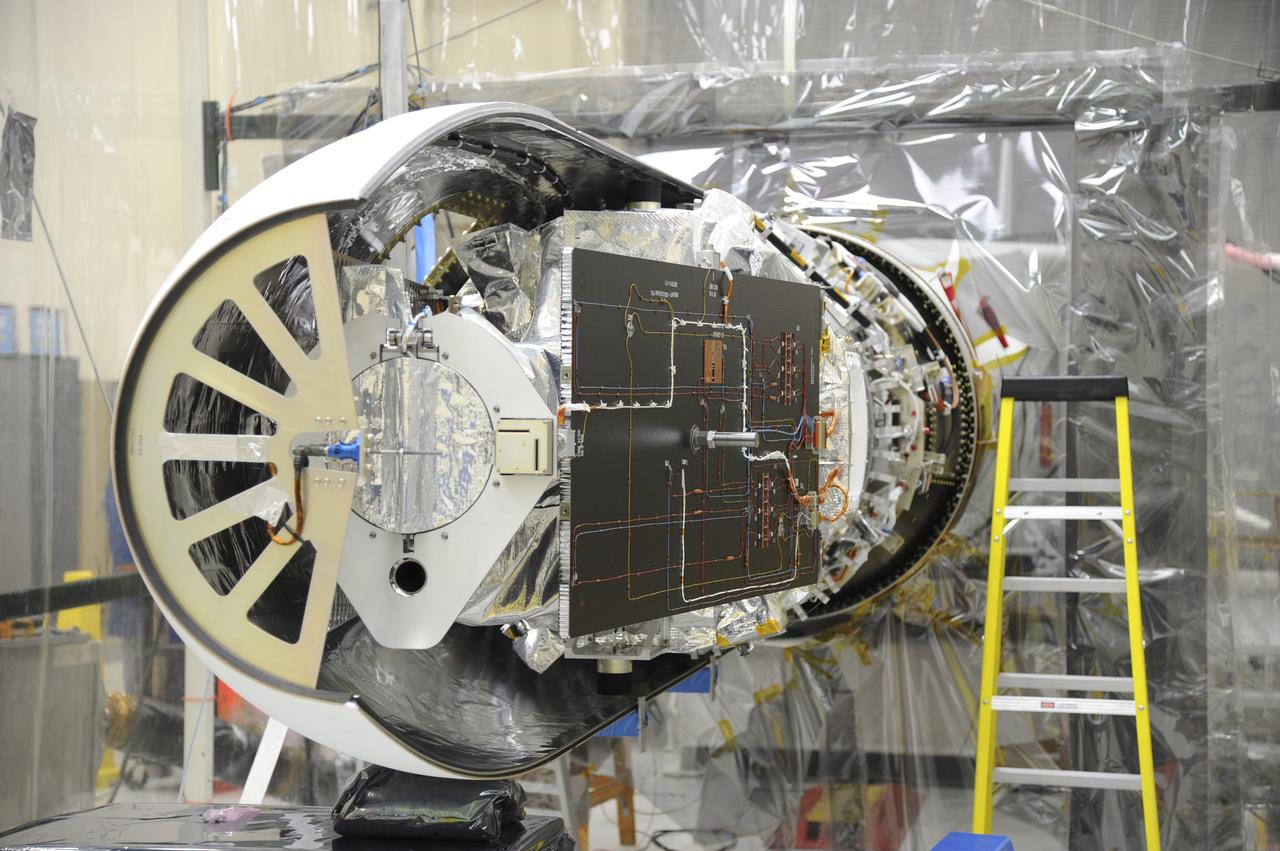
VANDENBERG AFB – NASA's IRIS spacecraft before the second half of the payload fairing is installed over it. The fairing connects to the nose of the Orbital Sciences Pegasus XL rocket that will lift the solar observatory into orbit in June. The work is taking place in a hangar at Vandenberg Air Force Base where IRIS, short for Interface Region Imaging Spectrograph, is being prepared for launch on a Pegasus XL rocket. Scheduled for launch from Vandenberg June 26, IRIS will open a new window of discovery by tracing the flow of energy and plasma through the chromospheres and transition region into the sun’s corona using spectrometry and imaging. IRIS fills a crucial gap in our ability to advance studies of the sun-to-Earth connection by tracing the flow of energy and plasma through the foundation of the corona and the region around the sun known as the heliosphere. Photo credit: NASA/Tony Vauclin
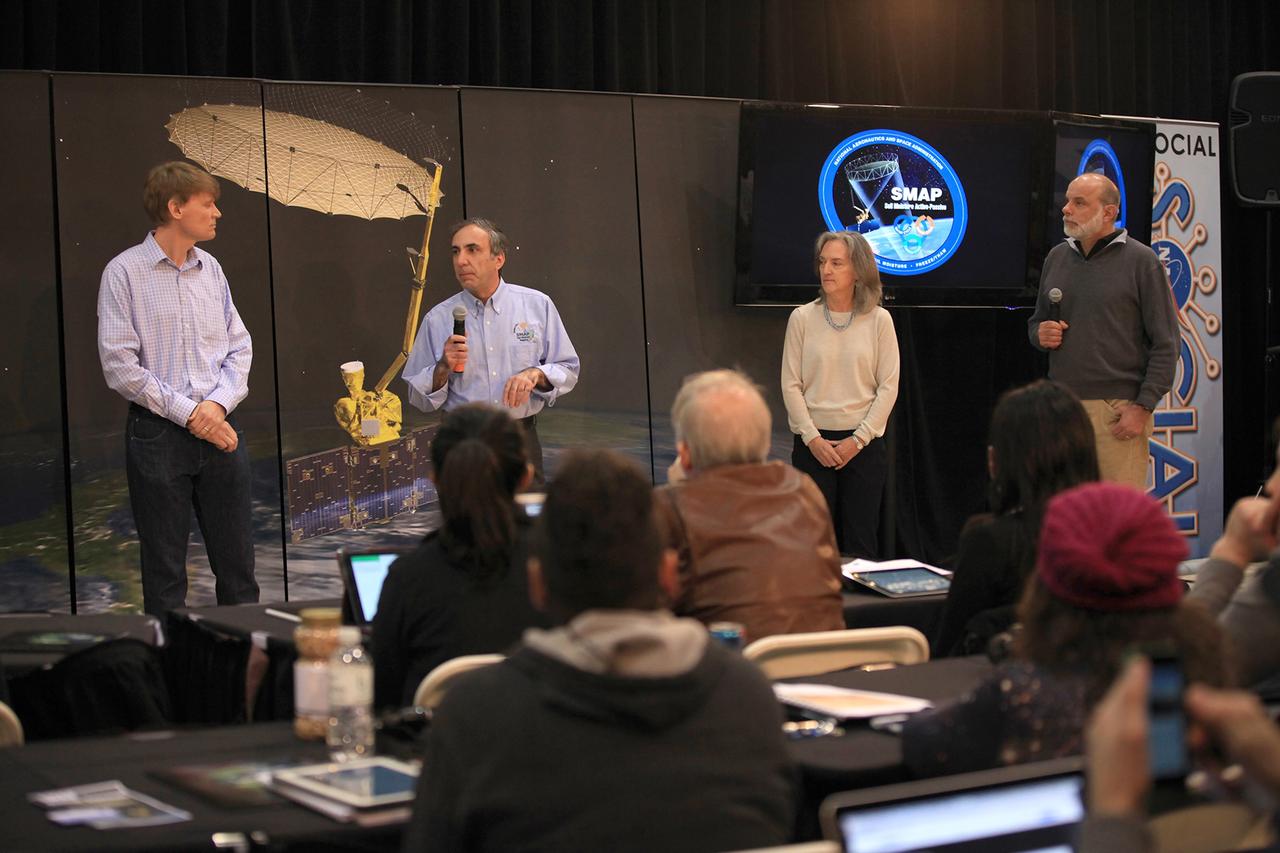
VANDENBERG AIR FORCE BASE, Calif. – Dara Entekhabi, science team leader at the Massachusetts Institute of Technology in Cambridge, Massachusetts, and other experts discuss the science and engineering of NASA's Soil Moisture Active Passive mission, or SMAP, with the audience of a NASA Social held at Vandenberg Air Force Base in California. This NASA Social brought together mission scientists and engineers with an audience of 70 students, educators, social media managers, bloggers, photographers and videographers who were selected from a pool of 325 applicants from 45 countries to participate in launch activities and communicate their experience with social media followers. The SMAP mission is scheduled to launch from Vandenberg on Jan. 29. To learn more about SMAP, visit http://www.nasa.gov/smap. Photo credit: NASA/Kim Shiflett
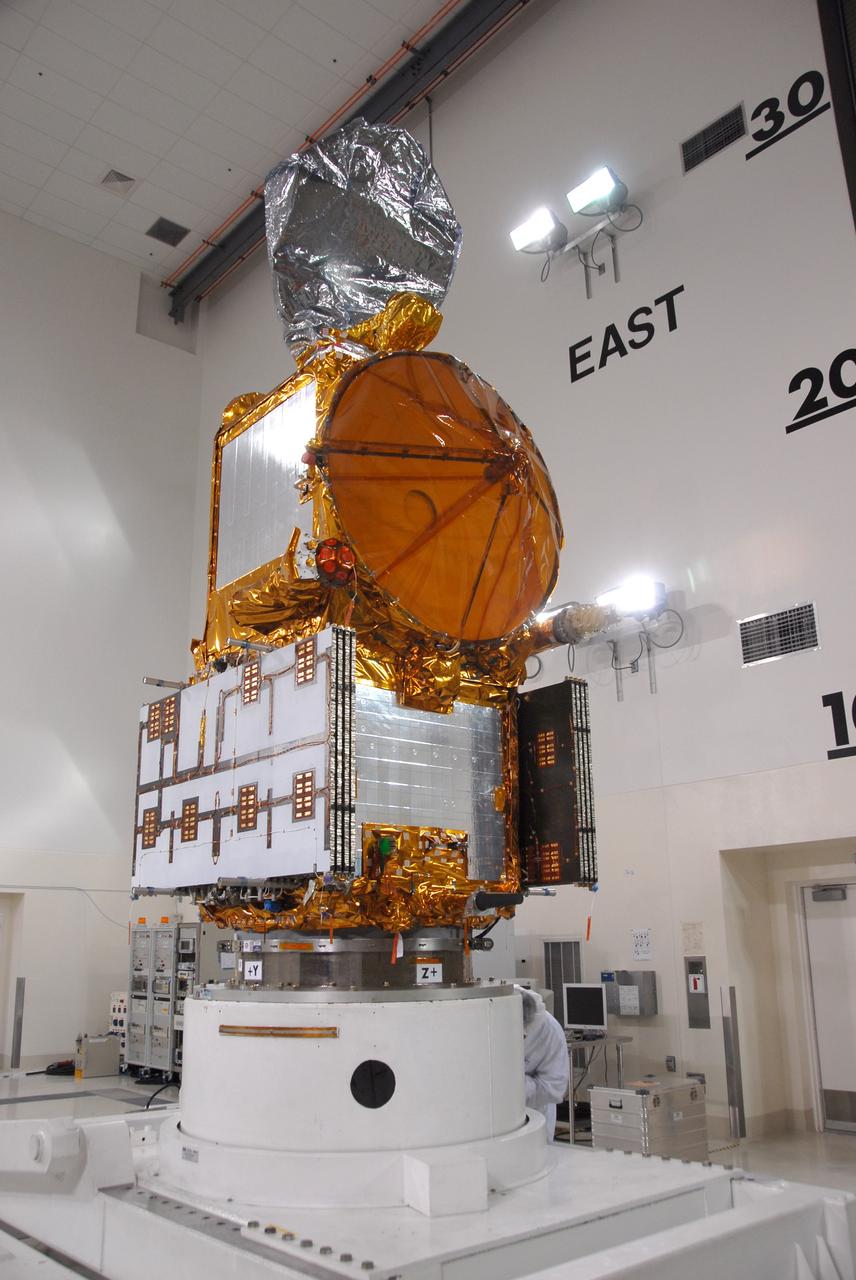
VANDENBERG AIR FORCE BASE, Calif. -- Inside the Astrotech processing facility at Vandenberg Air Force Base, the OSTM/Jason-2 spacecraft has been lifted to a vertical position on the tilt dolly. The OSTM, or Ocean Topography Mission, on the Jason-2 satellite is a follow-on to Jason-1. It will take oceanographic studies of sea surface height into an operational mode for continued climate forecasting research and science and industrial applications. This satellite altimetry data will help determine ocean circulation, climate change and sea-level rise. OSTM is a joint effort by the National Oceanic and Atmospheric Administration, NASA, France’s Centre National d’Etudes Spatiales and the European Meteorological Satellite Organisation. OSTM/Jason-2 will be launched aboard a United Launch Alliance Delta II 7320 from Vandenberg on June 15. Photo credit: NASA/Mark Mackley
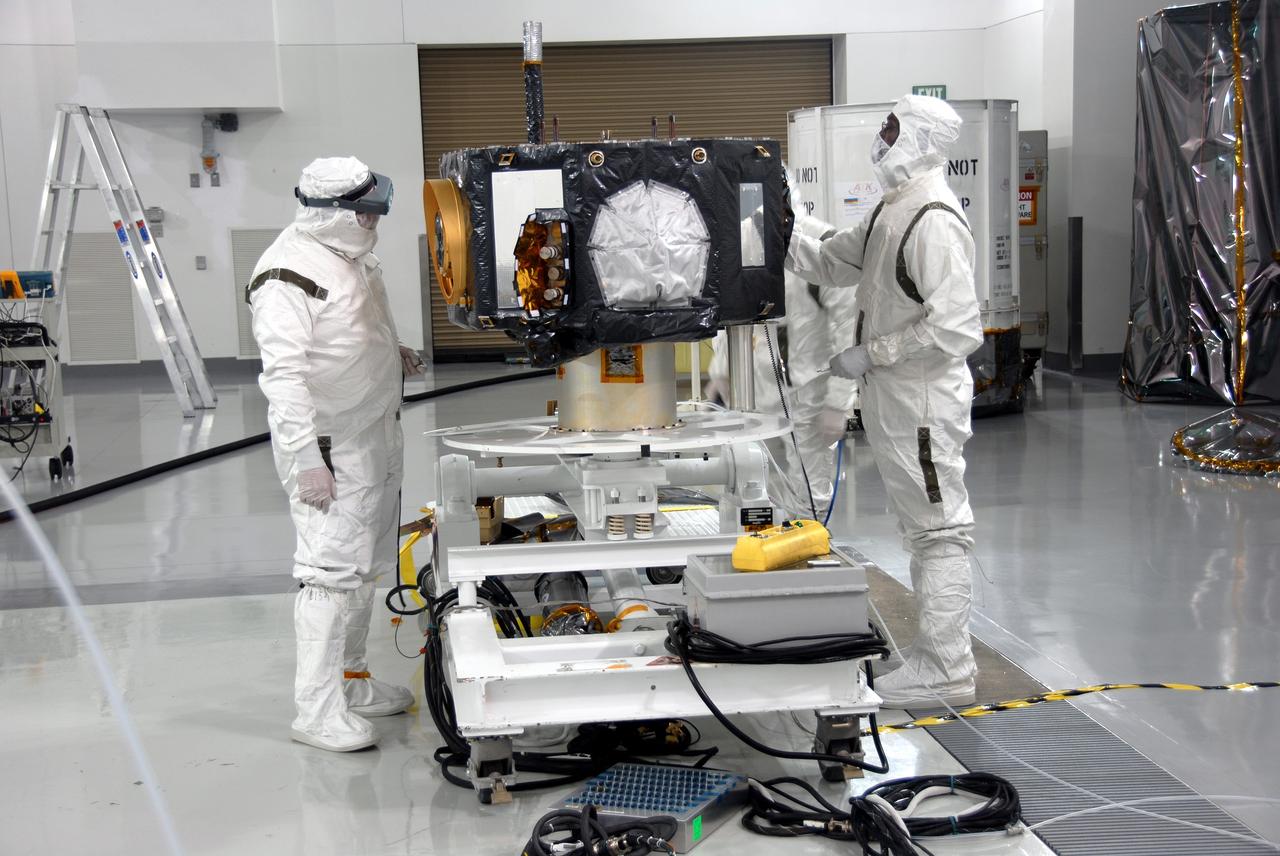
VANDENBERG AIR FORCE BASE, Calif. - At Vandenberg Air Force Base in California, NASA's Interstellar Boundary Explorer, or IBEX, spacecraft is ready for spin balance testing. The IBEX satellite will make the first map of the boundary between the Solar System and interstellar space. IBEX is the first mission designed to detect the edge of the Solar System. As the solar wind from the sun flows out beyond Pluto, it collides with the material between the stars, forming a shock front. IBEX contains two neutral atom imagers designed to detect particles from the termination shock at the boundary between the Solar System and interstellar space. IBEX also will study galactic cosmic rays, energetic particles from beyond the Solar System that pose a health and safety hazard for humans exploring beyond Earth orbit. IBEX will make these observations from a highly elliptical orbit that takes it beyond the interference of the Earth's magnetosphere. IBEX is targeted for launch from a Pegasus XL rocket on Oct. 5. Photo credit: NASA/VAFB
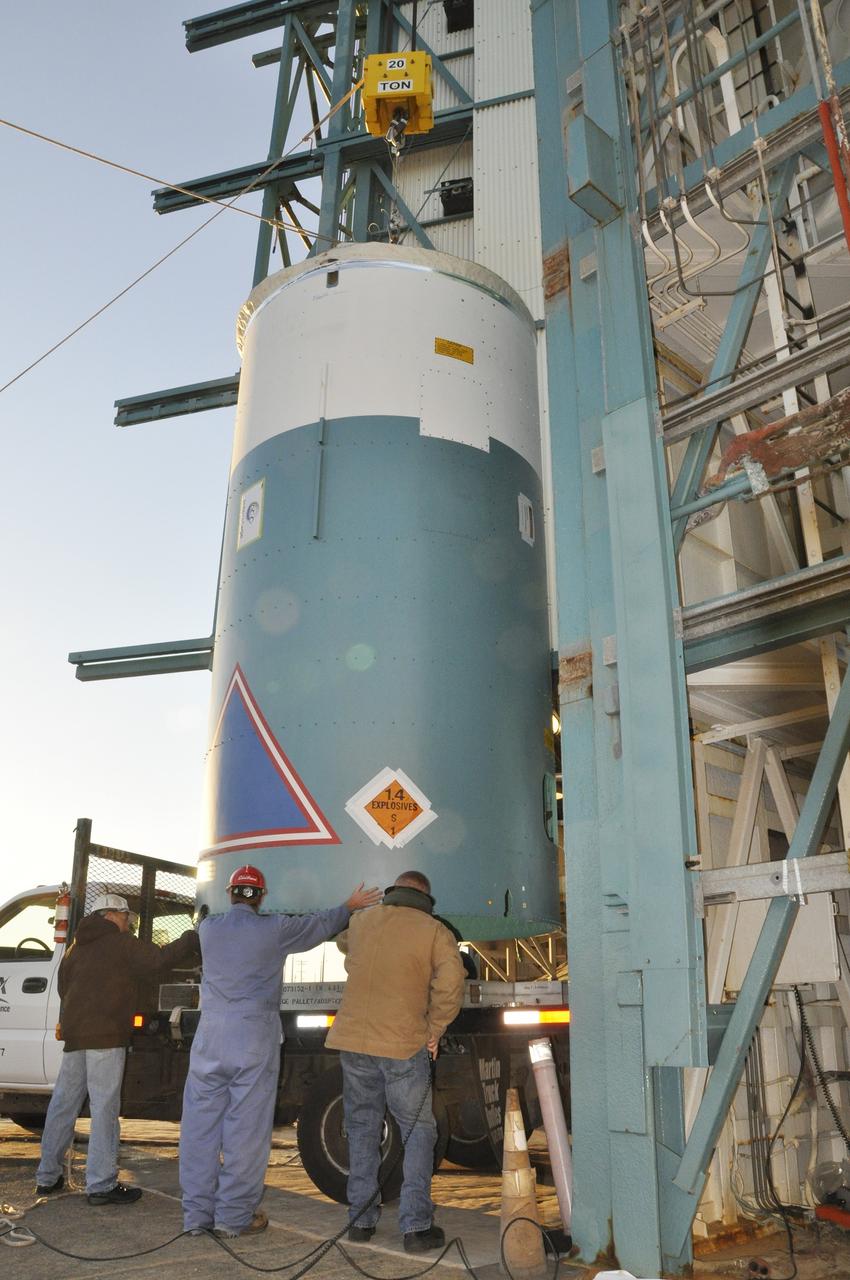
VANDENBERG AIR FORCE BASE, Calif. – Workers steady the interstage adapter, or ISA, for NASA's Orbiting Carbon Observatory-2 mission, or OCO-2, as a crane lifts it from its transporter next to the mobile service tower at Space Launch Complex 2 on Vandenberg Air Force Base in California. OCO-2 is scheduled to launch into a polar Earth orbit aboard a United Launch Alliance Delta II 7320-10C rocket in July. The ISA is the interface between the Delta II first and second stages. The second stage engine fits within the ISA. Once in orbit, OCO-2 will collect precise global measurements of carbon dioxide in the Earth's atmosphere and provide scientists with a better idea of the chemical compound's impacts on climate change. Scientists will analyze this data to improve our understanding of the natural processes and human activities that regulate the abundance and distribution of this important atmospheric gas. To learn more about OCO-2, visit http://oco.jpl.nasa.gov. Photo credit: NASA/Randy Beaudoin
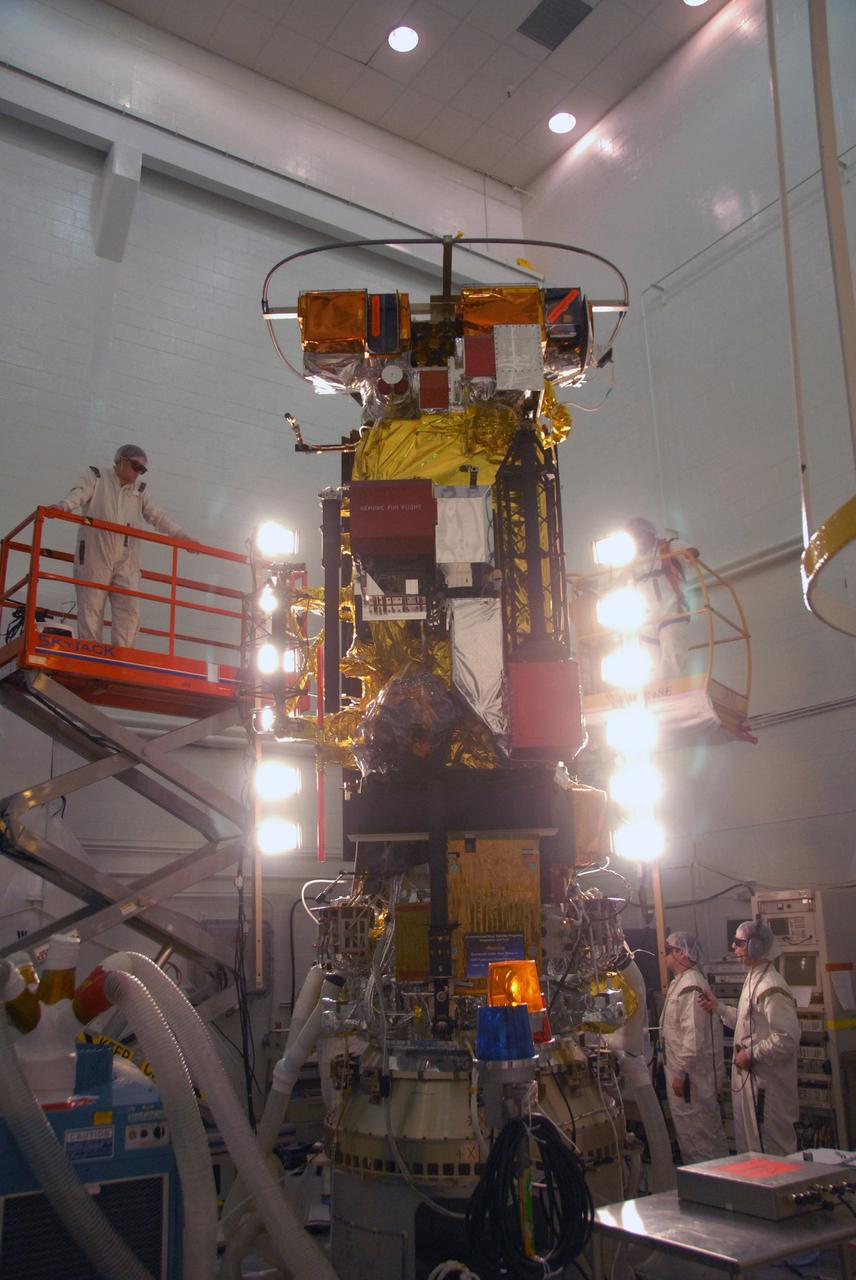
VANDENBERG AIR FORCE BASE, Calif. -- In the NASA payload processing facility at Vandenberg Air Force Base in California, workers conduct solar array illumination on the NOAA-N Prime satellite. NOAA-N Prime is the latest polar-orbiting operational environmental weather satellite developed by NASA for the National Oceanic and Atmospheric Administration. The satellite is scheduled to launch Feb. 4 aboard a Delta II rocket from Vandenberg Air Force Base. Photo credit: NASA/Robert Hargreaves Jr., VAFB
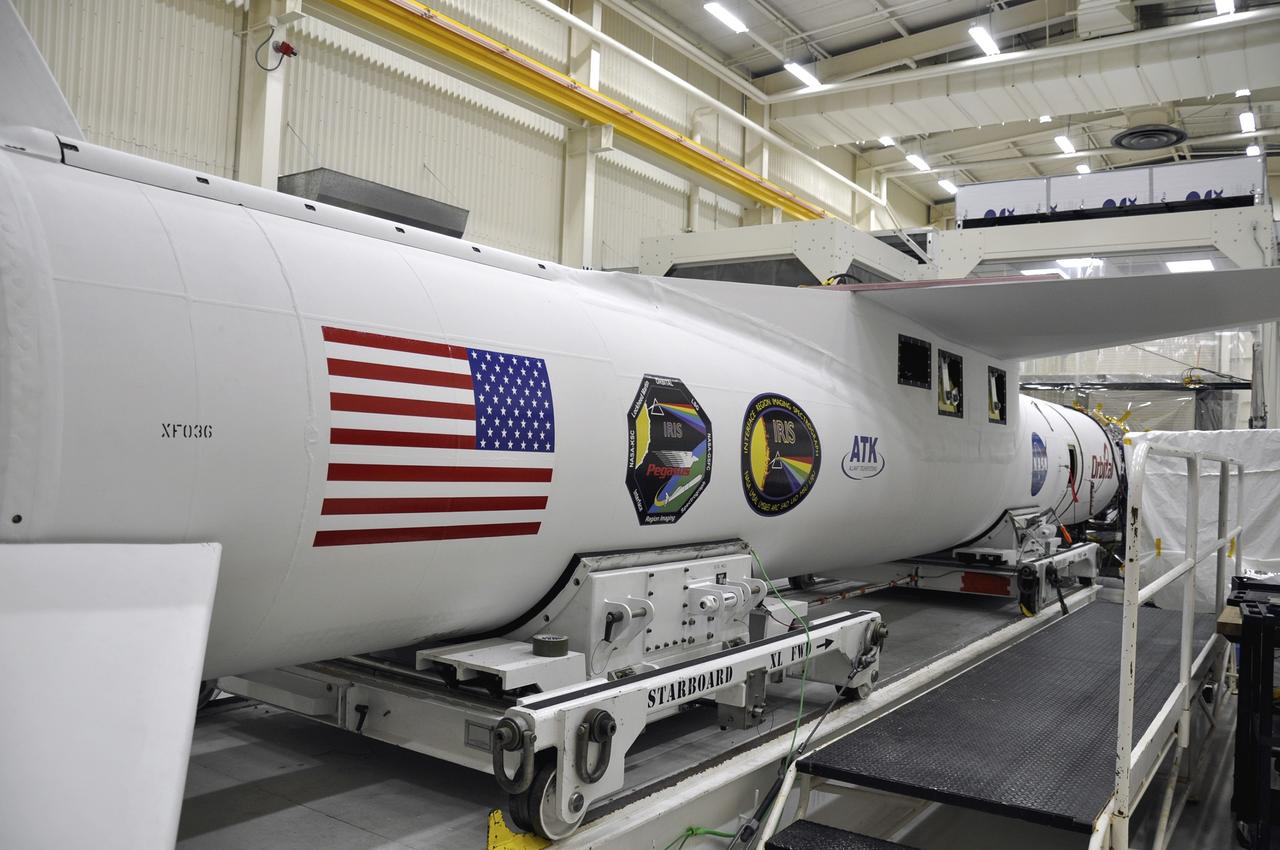
VANDENBERG AFB, Calif. - An Orbital Sciences Pegasus XL rocket undergoes launch preparations inside a hangar at Vandenberg Air Force Base for NASA's IRIS mission, short for Interface Region Imaging Spectrograph. Scheduled for launch from Vandenberg June 26, IRIS will open a new window of discovery by tracing the flow of energy and plasma through the chromospheres and transition region into the sun’s corona using spectrometry and imaging. IRIS fills a crucial gap in our ability to advance studies of the sun-to-Earth connection by tracing the flow of energy and plasma through the foundation of the corona and the region around the sun known as the heliosphere. Photo credit: NASA/Randy Beaudoin
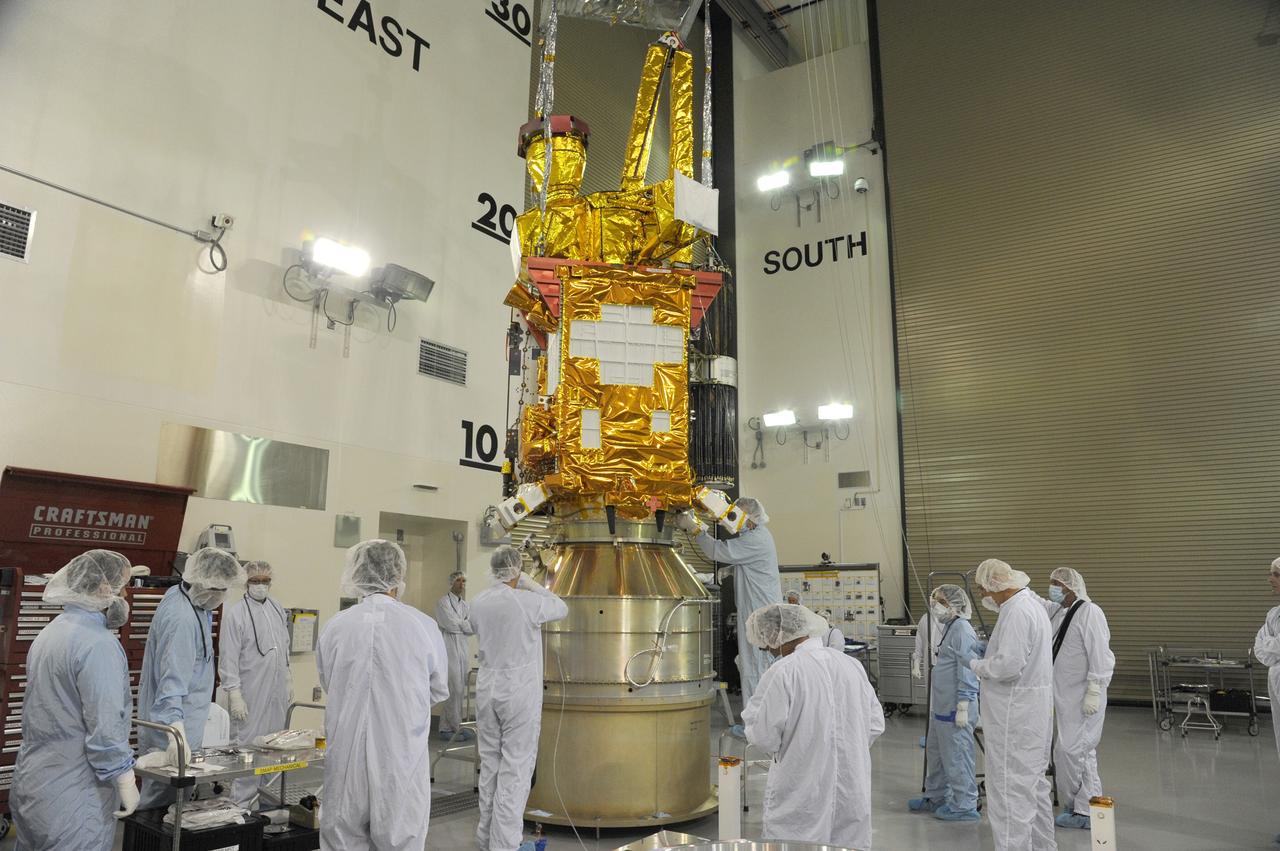
VANDENBERG AIR FORCE BASE, Calif. – Technicians connect NASA's Soil Moisture Active Passive, or SMAP, spacecraft to the Delta II payload attach structure in the Astrotech payload processing facility on Vandenberg Air Force Base in California. The structure will secure the spacecraft to the rocket's second stage. SMAP will launch on a Delta II 7320 configuration vehicle featuring a United Launch Alliance first stage booster powered by an Aerojet Rocketdyne RS-27A main engine and three Alliant Techsystems, or ATK, strap-on solid rocket motors. Once on station in Earth orbit, SMAP will provide global measurements of soil moisture and its freeze/thaw state. These measurements will be used to enhance understanding of processes that link the water, energy and carbon cycles, and to extend the capabilities of weather and climate prediction models. SMAP data also will be used to quantify net carbon flux in boreal landscapes and to develop improved flood prediction and drought monitoring capabilities. Launch from Space Launch Complex 2 is targeted for Jan. 29, 2015. To learn more about SMAP, visit http://www.nasa.gov/smap. Photo credit: NASA/Chris Wiant, U.S. Air Force Photo Squadron
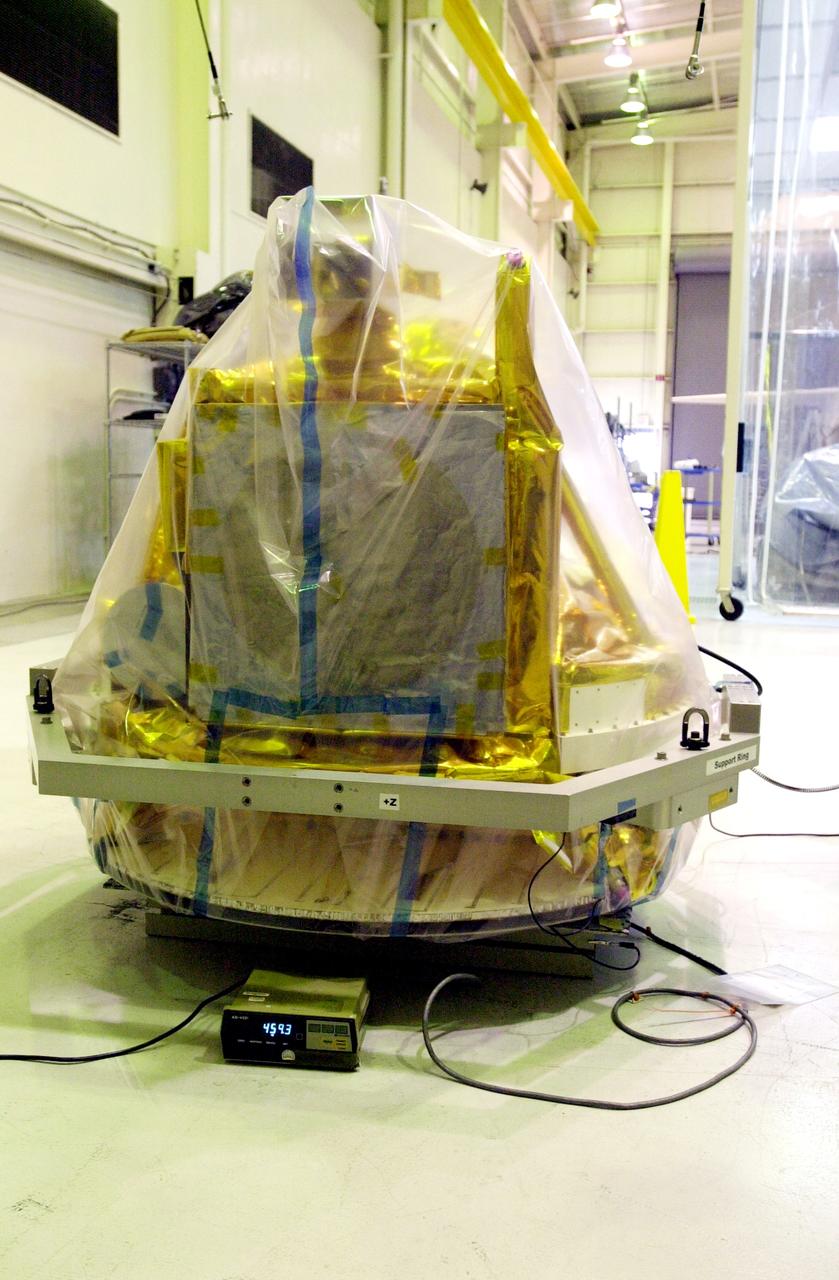
VANDENBERG AIR FORCE BASE, CALIF.- A covered SciSat-1 spacecraft sits on a test stand at Vandenberg Air Force Base, Calif. The solar arrays will be attached and the communications systems checked out. The SciSat-1 weighs approximately 330 pounds and after launch will be placed in a 400-mile-high polar orbit to investigate processes that control the distribution of ozone in the upper atmosphere. The data from the satellite will provide Canadian and international scientists with improved measurements relating to global ozone processes and help policymakers assess existing environmental policy and develop protective measures for improving the health of our atmosphere, preventing further ozone depletion. The mission is designed to last two years.
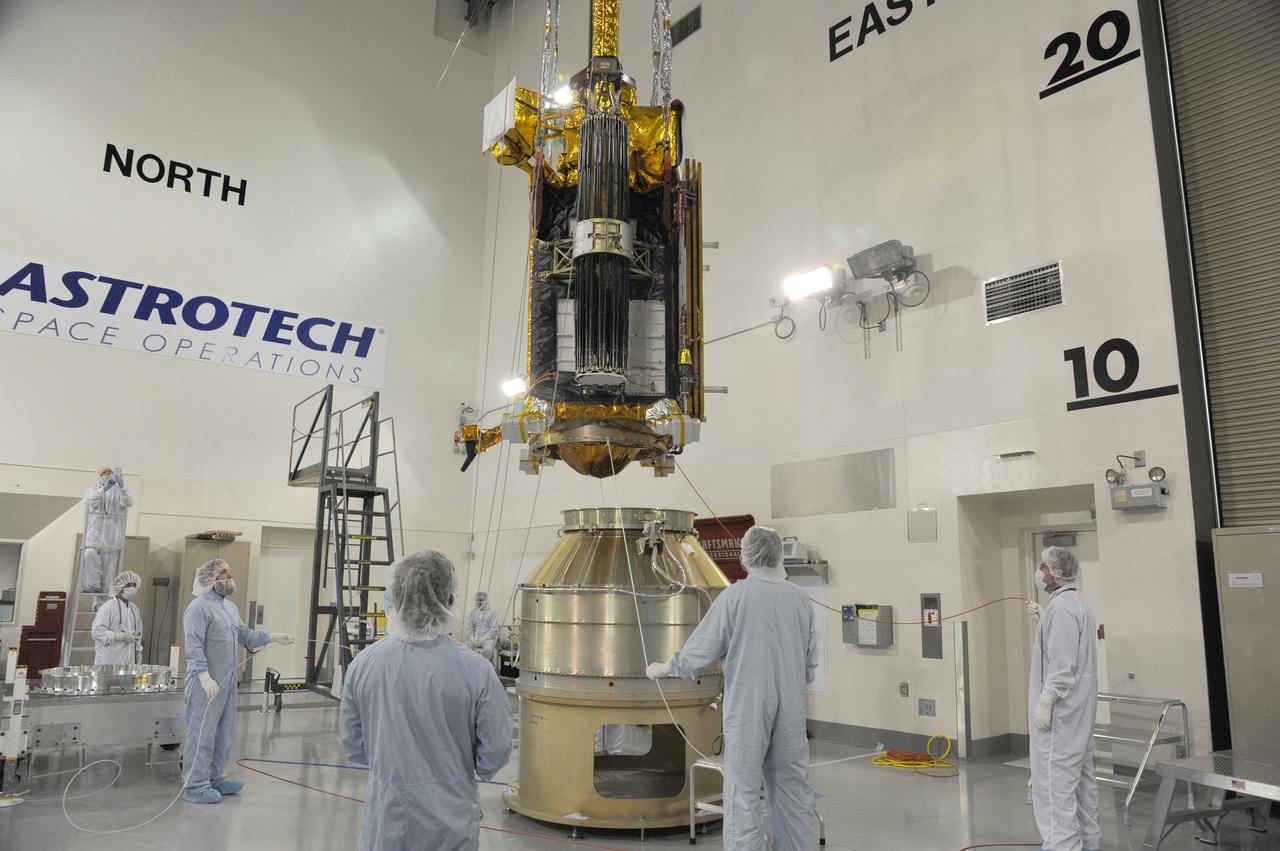
VANDENBERG AIR FORCE BASE, Calif. – NASA's Soil Moisture Active Passive, or SMAP, spacecraft is lowered onto the Delta II payload attach structure in the Astrotech payload processing facility on Vandenberg Air Force Base in California. The structure will secure the spacecraft to the rocket's second stage. SMAP will launch on a Delta II 7320 configuration vehicle featuring a United Launch Alliance first stage booster powered by an Aerojet Rocketdyne RS-27A main engine and three Alliant Techsystems, or ATK, strap-on solid rocket motors. Once on station in Earth orbit, SMAP will provide global measurements of soil moisture and its freeze/thaw state. These measurements will be used to enhance understanding of processes that link the water, energy and carbon cycles, and to extend the capabilities of weather and climate prediction models. SMAP data also will be used to quantify net carbon flux in boreal landscapes and to develop improved flood prediction and drought monitoring capabilities. Launch from Space Launch Complex 2 is targeted for Jan. 29, 2015. To learn more about SMAP, visit http://www.nasa.gov/smap. Photo credit: NASA/Chris Wiant, U.S. Air Force Photo Squadron
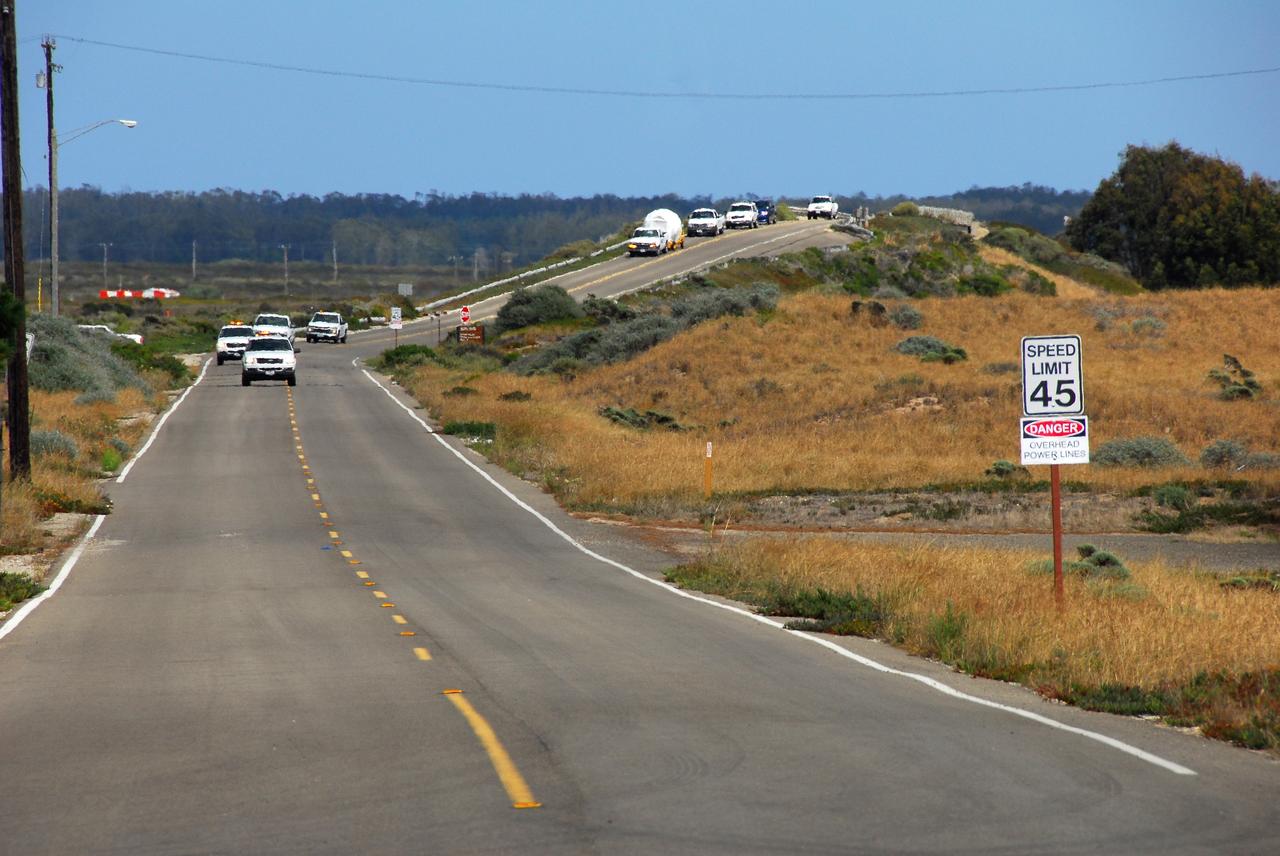
VANDENBERG AIR FORCE BASE, Calif. -- The second stage of a United Launch Alliance Delta II that will carry NASA's National Polar-orbiting Operational Environmental Satellite System Preparatory Project (NPP) satellite into space is on its way from NASA Hangar 836 to Space Launch Complex-2 at Vandenberg Air Force Base in California. NPP will be positioned 512 miles above the Earth's surface and will orbit about 16 times each day to observe nearly the entire globe. The NPP mission for NASA and the National Oceanic and Atmospheric Administration (NOAA) is to measure Earth's atmospheric and sea surface temperatures, humidity sounding, land and ocean biological activity, and cloud and aerosol properties. For more information, visit www.nasa.gov/NPP. Photo credit: NASA/VAFB
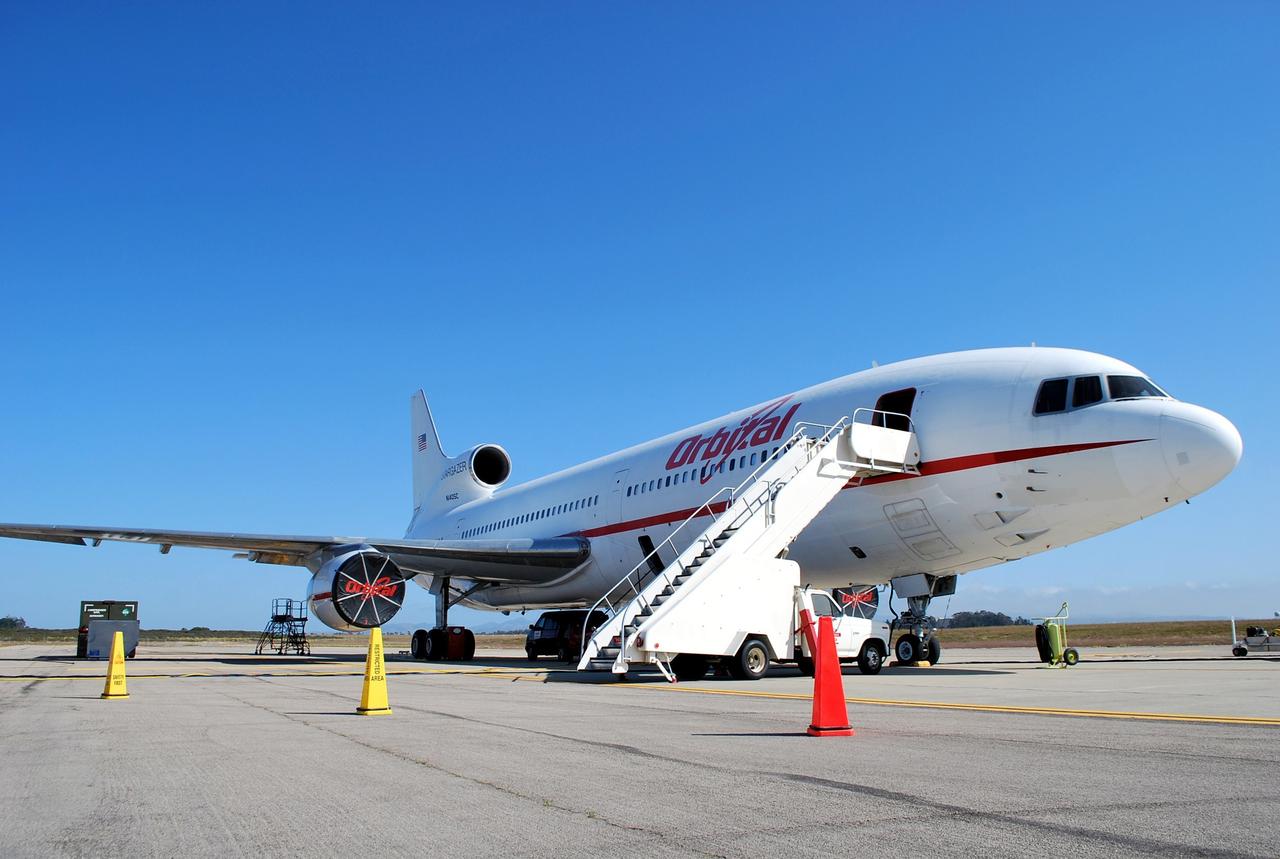
VANDENBERG AIR FORCE BASE, Calif. -- On the runway at Vandenberg Air Force Base in California, the Orbital Sciences L-1011 carrier aircraft is readied for flight. Once the Pegasus XL rocket with NASA's Nuclear Spectroscopic Telescope Array NuSTAR spacecraft is attached, the L-1011 will fly to the Ronald Reagan Ballistic Missile Defense Test Site at the Pacific Ocean’s Kwajalein Atoll. The Pegasus will launch NuSTAR into space where the high-energy x-ray telescope will conduct a census for black holes, map radioactive material in young supernovae remnants, and study the origins of cosmic rays and the extreme physics around collapsed stars. For more information, visit science.nasa.gov/missions/nustar/. Photo credit: NASA/Randy Beaudoin, VAFB
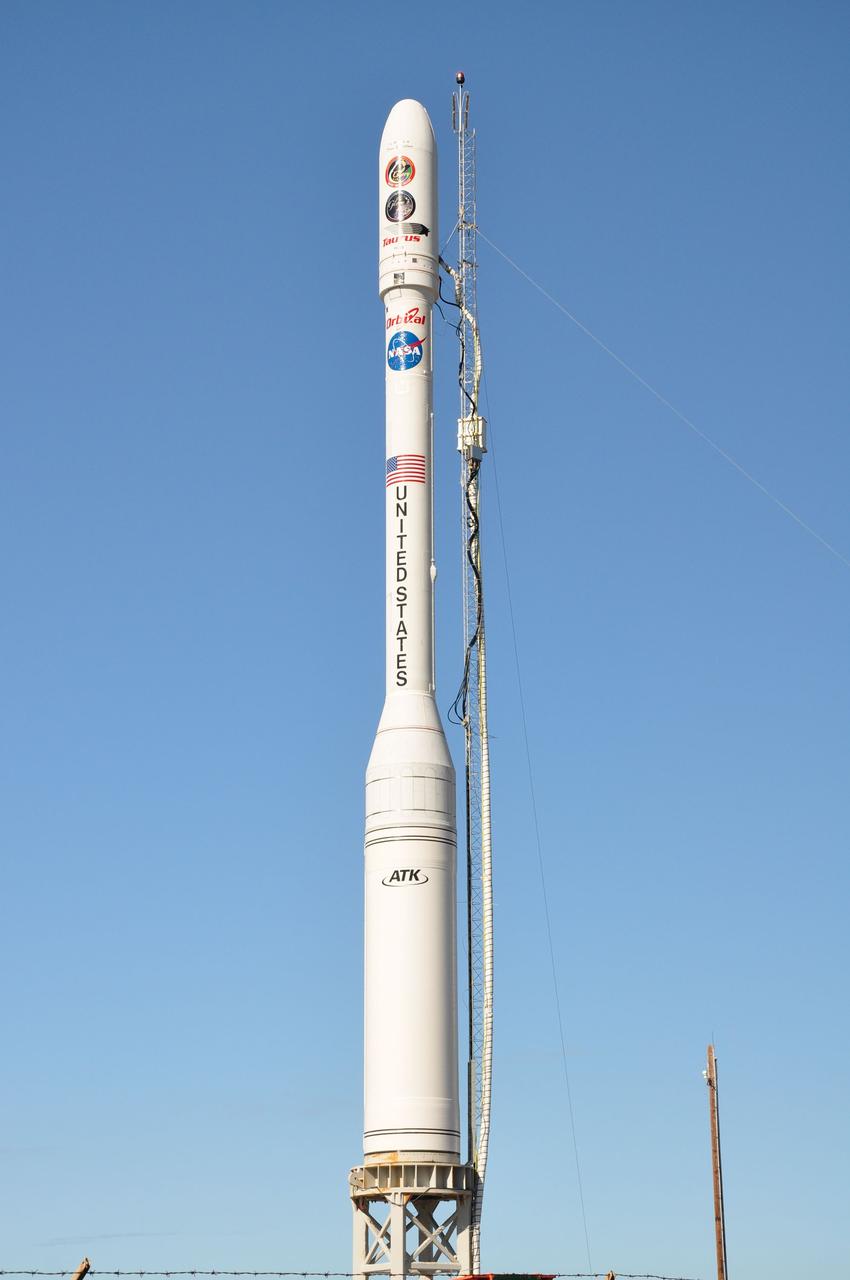
VANDENBERG AIR FORCE BASE, Calif. -- The Orbital Sciences Taurus XL rocket and NASA's encapsulated Glory spacecraft await launch on the pad at Vandenberg Air Force Base's Space Launch Complex 576-E in California. Liftoff originally was scheduled for 5:09 a.m. EST Feb. 23, but was scrubbed for at least 24 hours due to a technical issue that engineers are evaluating. Once Glory reaches orbit, it will collect data on the properties of aerosols and black carbon. It also will help scientists understand how the sun's irradiance affects Earth's climate. For information, visit www.nasa.gov/glory. Photo credit: NASA/Randy Beaudoin, VAFB
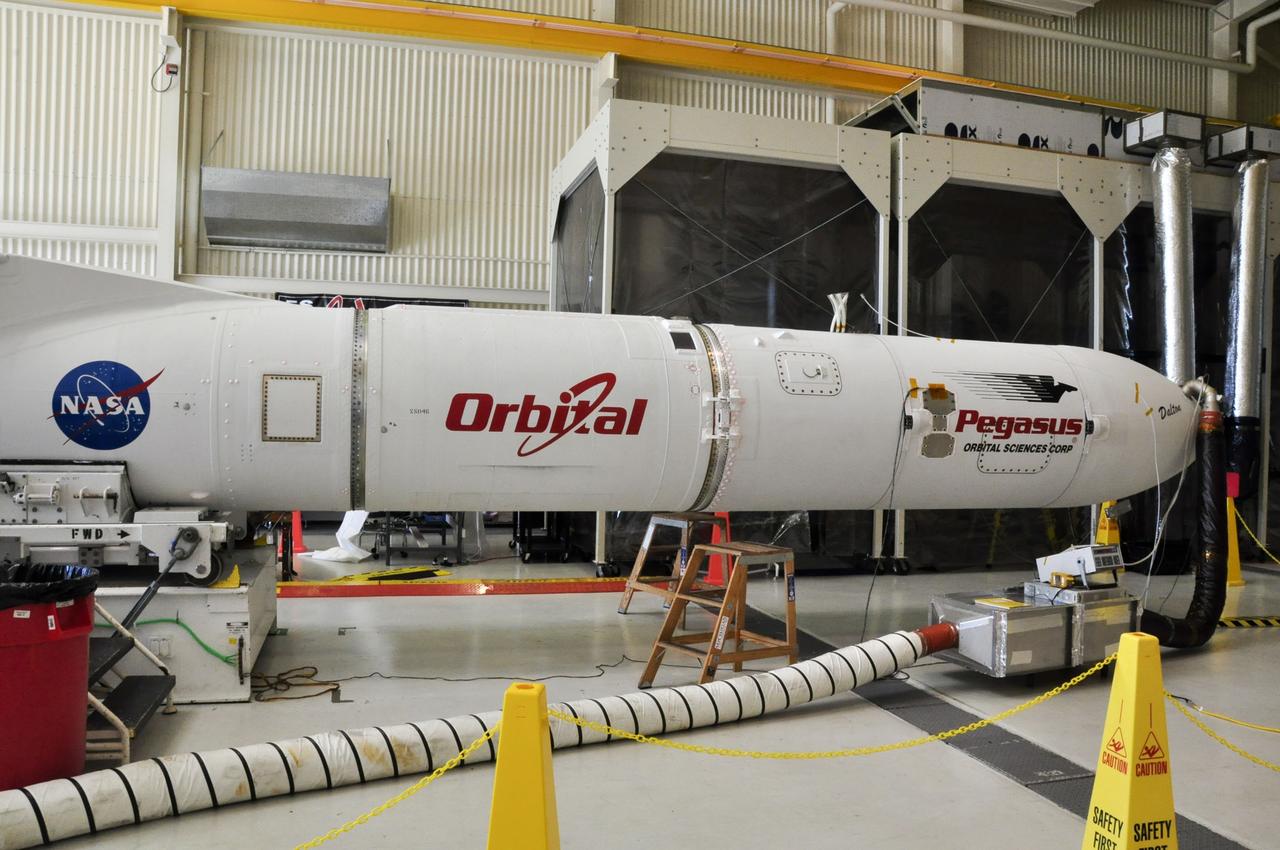
VANDENBERG AIR FORCE BASE, Calif. – Operations begin to transfer an Orbital Sciences Pegasus XL rocket onto the transporter in Orbital’s hangar at Vandenberg Air Force Base in California. The rocket has been mated to NASA's Nuclear Spectroscopic Telescope Array, or NuSTAR, encapsulated in the Pegasus payload fairing. Cool, dry air is being pumped into the fairing through a purge line to maintain the proper environment for the spacecraft in the confined space. The transporter will move them to the runway ramp where they will be attached to the underside of Orbital’s L-1011 carrier aircraft. The aircraft will fly the pair from Vandenberg to the Ronald Reagan Ballistic Missile Defense Test Site on the Pacific Ocean’s Kwajalein Atoll for launch. A revised launch date will be set at the Flight Readiness Review, planned for later this week. The high-energy X-ray telescope will conduct a census of black holes, map radioactive material in young supernovae remnants, and study the origins of cosmic rays and the extreme physics around collapsed stars. For more information, visit http://www.nasa.gov/nustar. Photo credit: NASA/Randy Beaudoin, VAFB
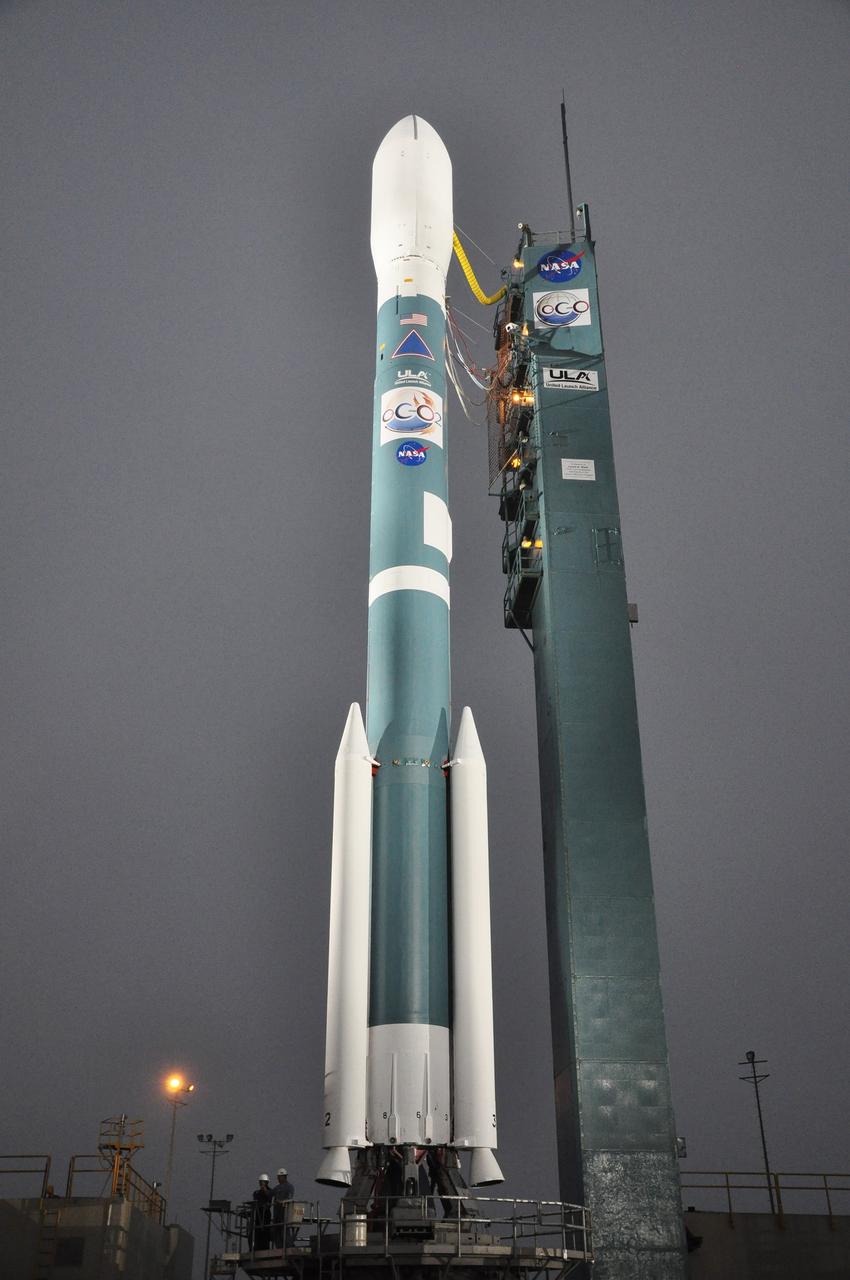
VANDENBERG AIR FORCE BASE, Calif. – At Vandenberg Air Force Base in California, the United Launch Alliance Delta II rocket carrying NASA's Orbiting Carbon Observatory-2, or OCO-2, awaits loading of its cryogenic propellants following rollback of the mobile service tower on Space Launch Complex 2. Launch is scheduled for 5:56 a.m. EDT on July 1. OCO-2 is NASA’s first mission dedicated to studying atmospheric carbon dioxide, the leading human-produced greenhouse gas driving changes in Earth’s climate. OCO-2 will provide a new tool for understanding the human and natural sources of carbon dioxide emissions and the natural "sinks" that absorb carbon dioxide and help control its buildup. The observatory will measure the global geographic distribution of these sources and sinks and study their changes over time. To learn more about OCO-2, visit http://www.nasa.gov/oco2. Photo credit: NASA/Randy Beaudoin
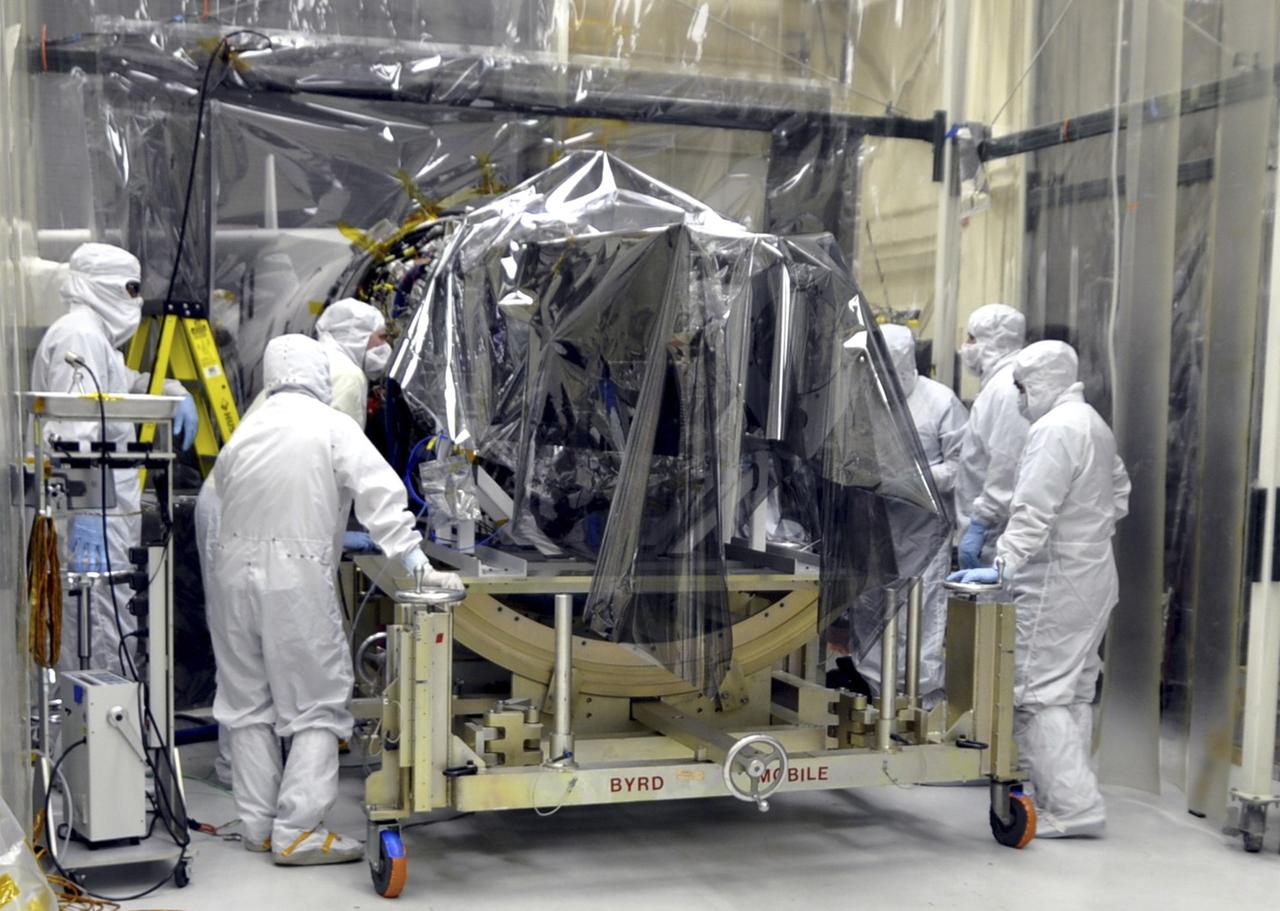
VANDENBERG AFB, Calif. – Engineers prepare to connect NASA's IRIS spacecraft to the nose of an Orbital Sciences Pegasus XL rocket that will lift the solar observatory into orbit in June. The work is taking place in a hangar at Vandenberg Air Force Base where IRIS, short for Interface Region Imaging Spectrograph, is being prepared for launch on a Pegasus XL rocket. Scheduled for launch from Vandenberg no earlier than June 26, 2013, IRIS will open a new window of discovery by tracing the flow of energy and plasma through the chromospheres and transition region into the sun’s corona using spectrometry and imaging. IRIS fills a crucial gap in our ability to advance studies of the sun-to-Earth connection by tracing the flow of energy and plasma through the foundation of the corona and the region around the sun known as the heliosphere. Photo credit: NASA/Randy Beaudoin
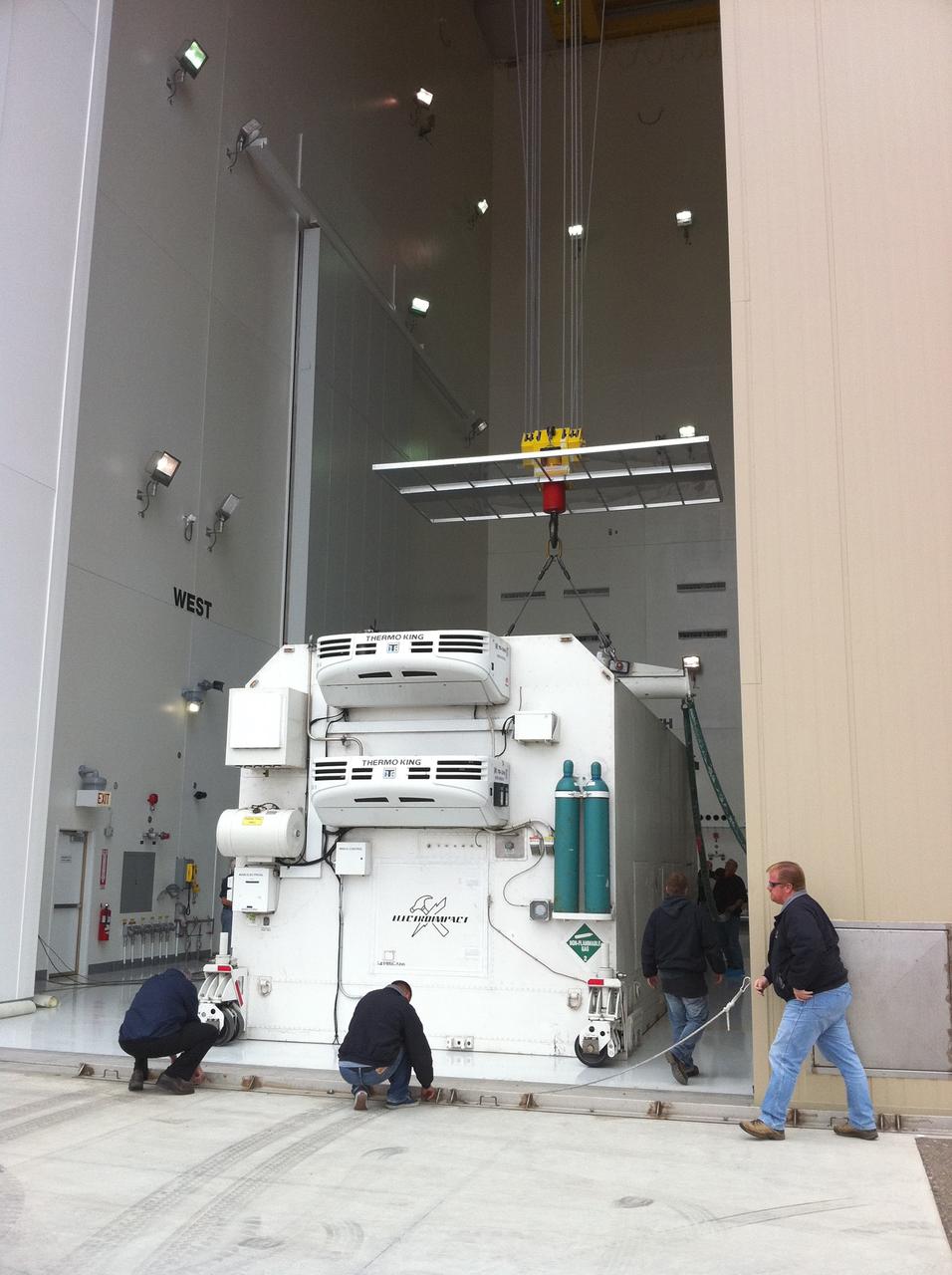
VANDENBERG AIR FORCE BASE, Calif. -- The environmentally controlled transportation container holding NASA's National Polar-orbiting Operational Environmental Satellite System Preparatory Project (NPP) satellite comes to rest on the floor of the Astrotech payload processing facility on Vandenberg Air Force Base in California. NPP represents a critical first step in building the next-generation of Earth-observing satellites. NPP will carry the first of the new sensors developed for this satellite fleet, now known as the Joint Polar Satellite System (JPSS), to be launched in 2016. NPP is the bridge between NASA's Earth Observing System (EOS) satellites and the forthcoming series of JPSS satellites. The mission will test key technologies and instruments for the JPSS missions. NPP is targeted to launch Oct. 25 from Space Launch Complex-2 aboard a United Launch Alliance Delta II rocket. For more information, visit http://www.nasa.gov/NPP. Photo credit: NASA/Jerry Nagy, VAFB
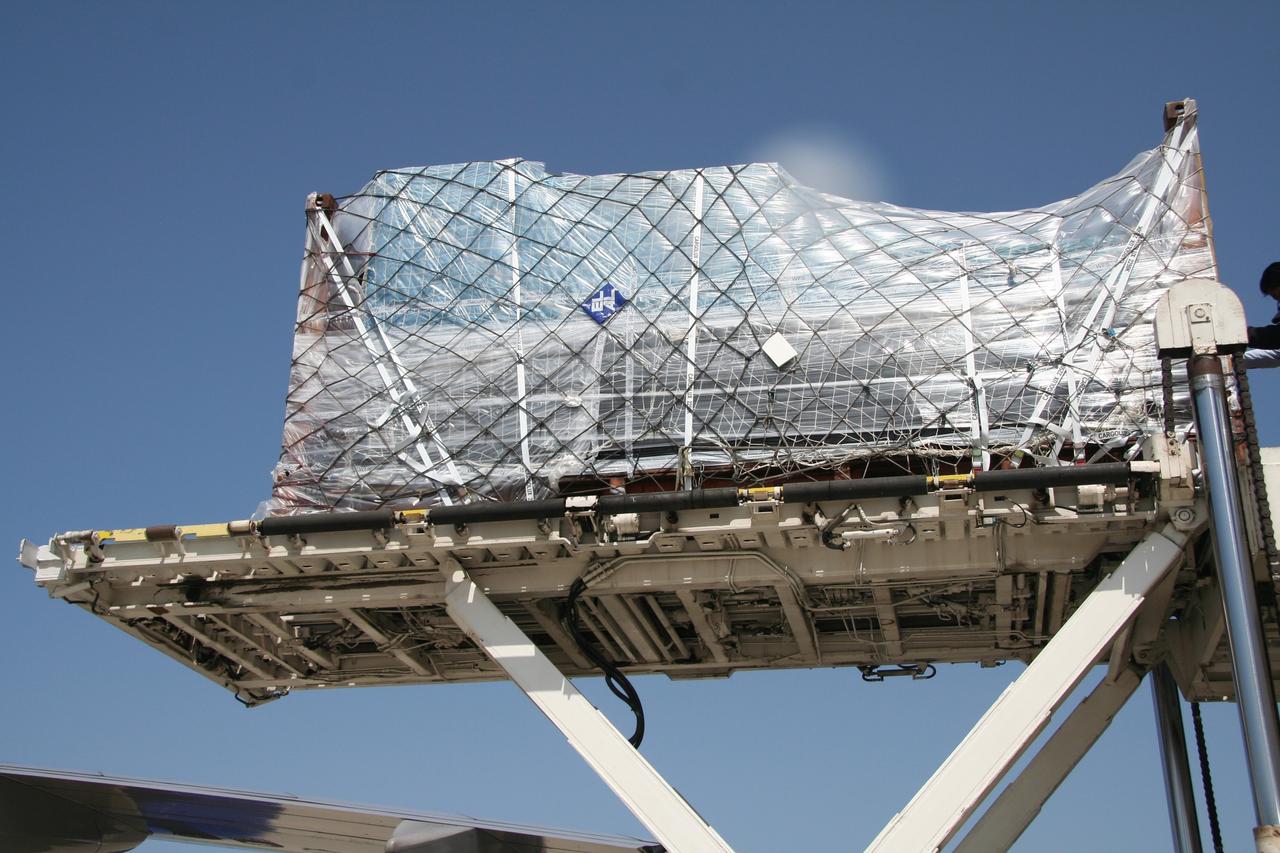
VANDENBERG AIR FORCE BASE, Calif. – Ground support equipment associated with the OSTM/Jason-2 satellite is offloaded from the cargo plane at Vandenberg Air Force Base. The equipment will accompany the satellite to the Astrotech processing facility. The OSTM, or Ocean Topography Mission, on the Jason-2 satellite is a follow-on to Jason-1. It will take oceanographic studies of sea surface height into an operational mode for continued climate forecasting research and science and industrial applications. This satellite altimetry data will help determine ocean circulation, climate change and sea-level rise. OSTM is a joint effort by the National Oceanic and Atmospheric Administration, NASA, France’s Centre National d’Etudes Spatiales and the European Meteorological Satellite Organisation. OSTM/Jason-2 will be launched aboard a United Launch Alliance Delta II 7320 from Vandenberg on June 15. Photo credit: NASA/Steve Greenberg, JPL
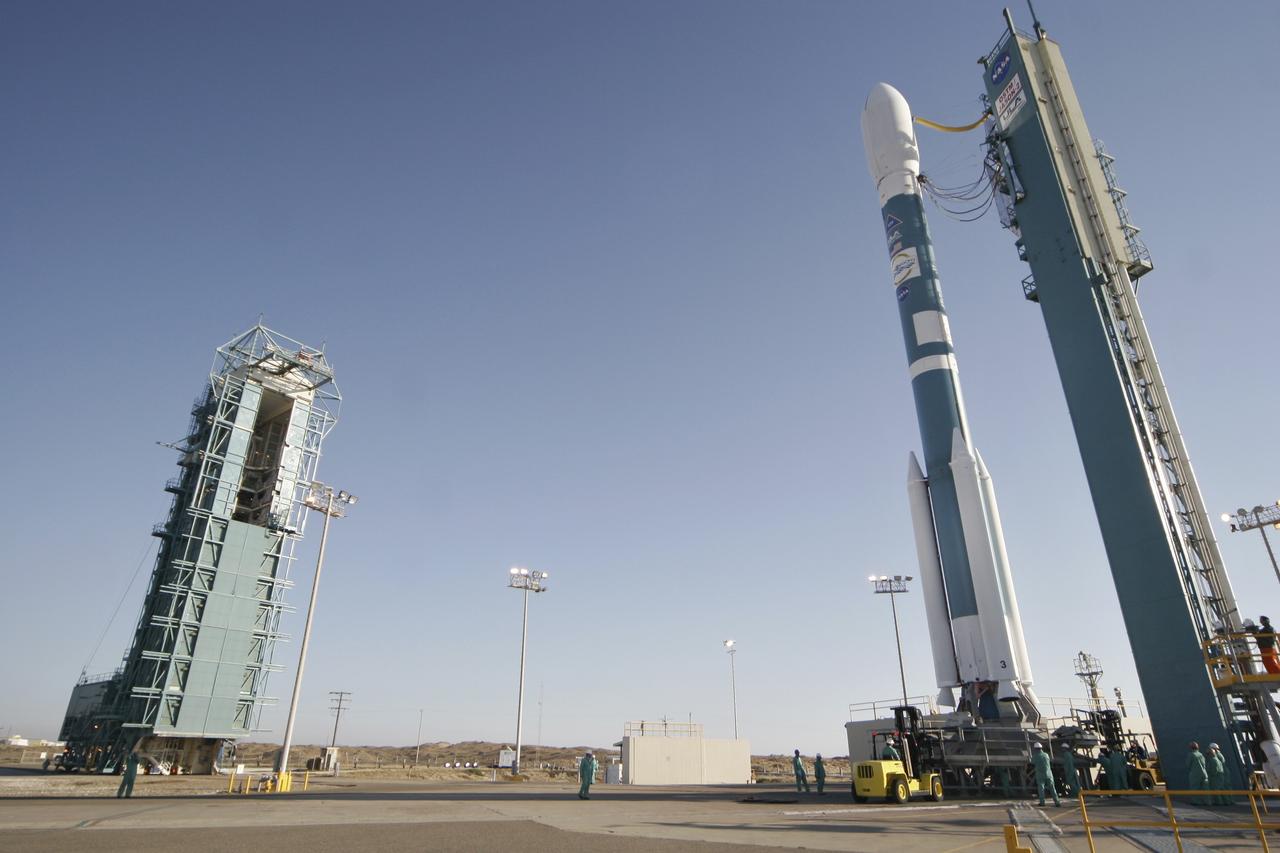
VANDENBERG AIR FORCE BASE, Calif. – The Delta II rocket with the Ocean Surface Topography Mission, or OSTM/Jason 2, aboard is poised for launch on Space Launch Complex 2 after rollback of the mobile service tower (at left). The OSTM/Jason 2 satellite will embark on a globe-circling voyage to continue charting sea level, a vital indicator of global climate change. The mission will return a vast amount of new data that will improve weather, climate and ocean forecasts. OSTM/Jason 2's expected lifetime of at least three years will extend into the next decade the continuous record of these data started in 1992 by NASA and the French space agency Centre National d'Etudes Spatiales, or CNES, with the TOPEX/Poseidon mission. The data collection was continued by the two agencies on Jason-1 in 2001. The launch window extends from 12:46 a.m. to 12:55 a.m. PDT. The satellite will be placed in an 830-mile-high orbit at an inclination of 66 degrees after separating from the Delta II 55 minutes after liftoff. Photo credit: Photograph by Carleton Bailie for United Launch Alliance
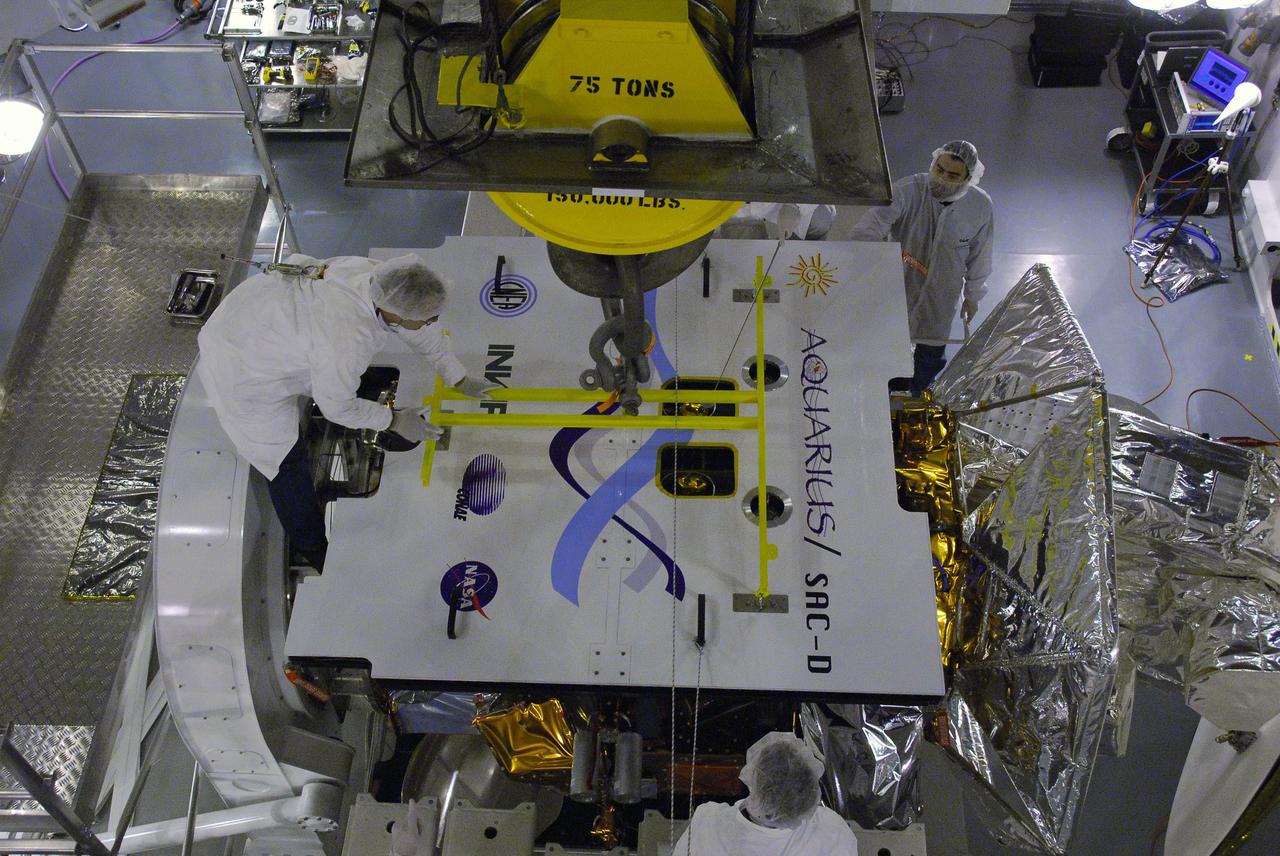
VANDENBERG AIR FORCE BASE, Calif. -- In Space Systems International's Payload Processing Facility at Vandenberg Air Force Base in California, technicians detach the overhead crane that moved the second solar array for integration and testing to the Aquarius/SAC-D spacecraft. Following final tests, the spacecraft will be integrated to a United Launch Alliance Delta II rocket in preparation for the targeted June launch. Aquarius, the NASA-built primary instrument on the SAC-D spacecraft, will provide new insights into how variations in ocean surface salinity relate to fundamental climate processes on its three-year mission. Photo credit: NASA/VAFB
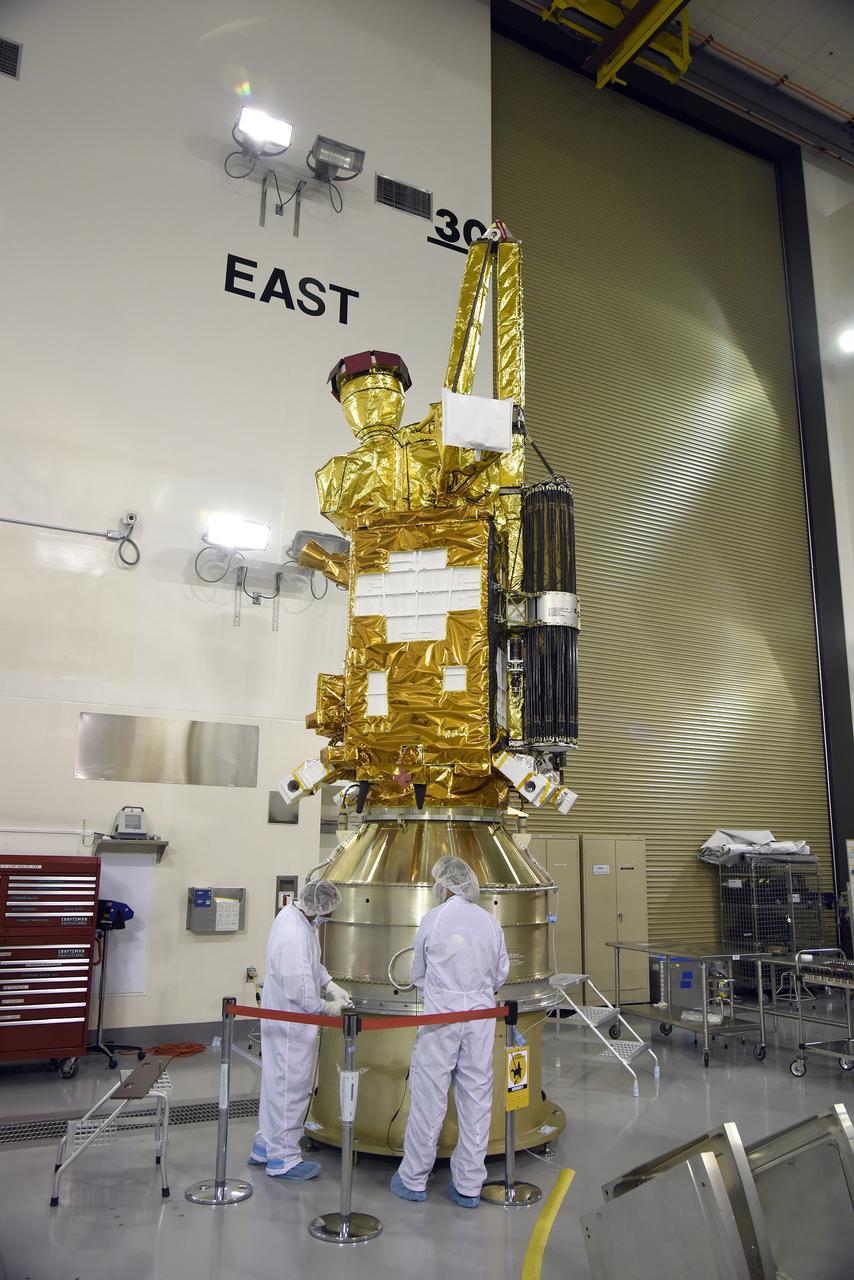
VANDENBERG AIR FORCE BASE, Calif. – Inside the Astrotech payload processing facility at Vandenberg Air Force Base in California, engineers and technicians inspect NASA's Soil Moisture Active Passive mission, or SMAP, satellite. SMAP will provide global measurements of soil moisture and its freeze/thaw state. These measurements will be used to enhance understanding of processes that link the water, energy and carbon cycles, and to extend the capabilities of weather and climate prediction models. SMAP data also will be used to quantify net carbon flux in boreal landscapes and to develop improved flood prediction and drought monitoring capabilities. Launch is scheduled for Jan. 29, 2015. To learn more about SMAP, visit http://smap.jpl.nasa.gov Photo credit: Jeremy Moore, USAF Photo Squadron

VANDENBERG AIR FORCE BASE, Calif. -- At Vandenberg Air Force Base in California, a solid rocket motor for the United Launch Alliance Delta II that will carry NASA's National Polar-orbiting Operational Environmental Satellite System Preparatory Project (NPP) satellite into space arrives at NASA's Space Launch Complex-2. NPP represents a critical first step in building the next-generation of Earth-observing satellites. NPP will carry the first of the new sensors developed for this satellite fleet, now known as the Joint Polar Satellite System (JPSS) to be launched in 2016. NPP is the bridge between NASA's Earth Observing System (EOS) satellites and the forthcoming series of JPSS satellites. The mission will test key technologies and instruments for the JPSS missions. NPP is targeted to launch Oct. 25. For more information, visit http://www.nasa.gov/NPP. Photo credit: NASA/VAFB, Dan Liberotti
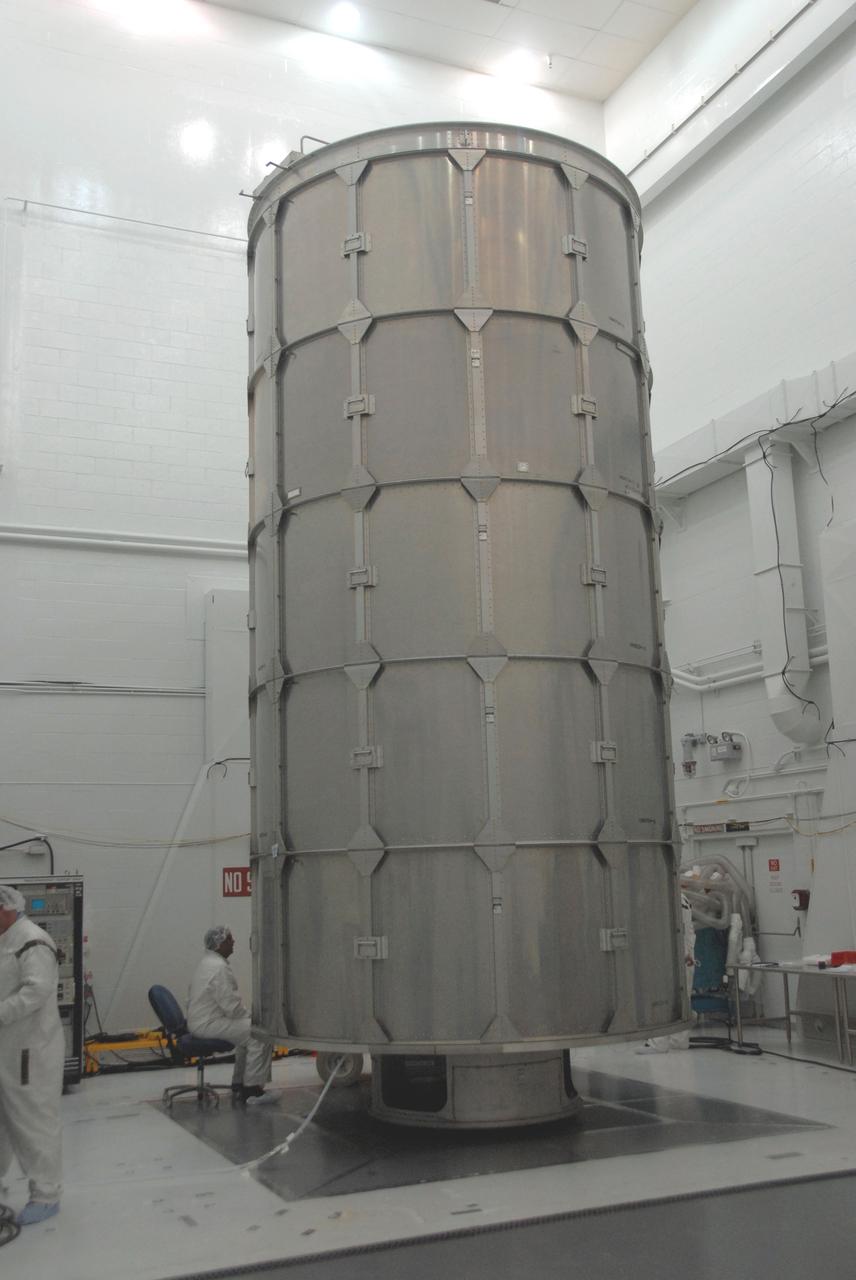
VANDENBERG AIR FORCE BASE, Calif. -- A transportation canister surrounds the NOAA-N Prime spacecraft in Bldg. 1610 at Vandenberg Air Force Base in California. The spacecraft will be moved to a transporter. NOAA-N Prime is the latest polar-orbiting operational environmental weather satellite developed by NASA for the National Oceanic and Atmospheric Administration. The satellite is scheduled to launch Feb. 4 aboard a Delta II rocket from Vandenberg Air Force Base. Photo credit: NASA/ Daniel Liberotti, VAFB
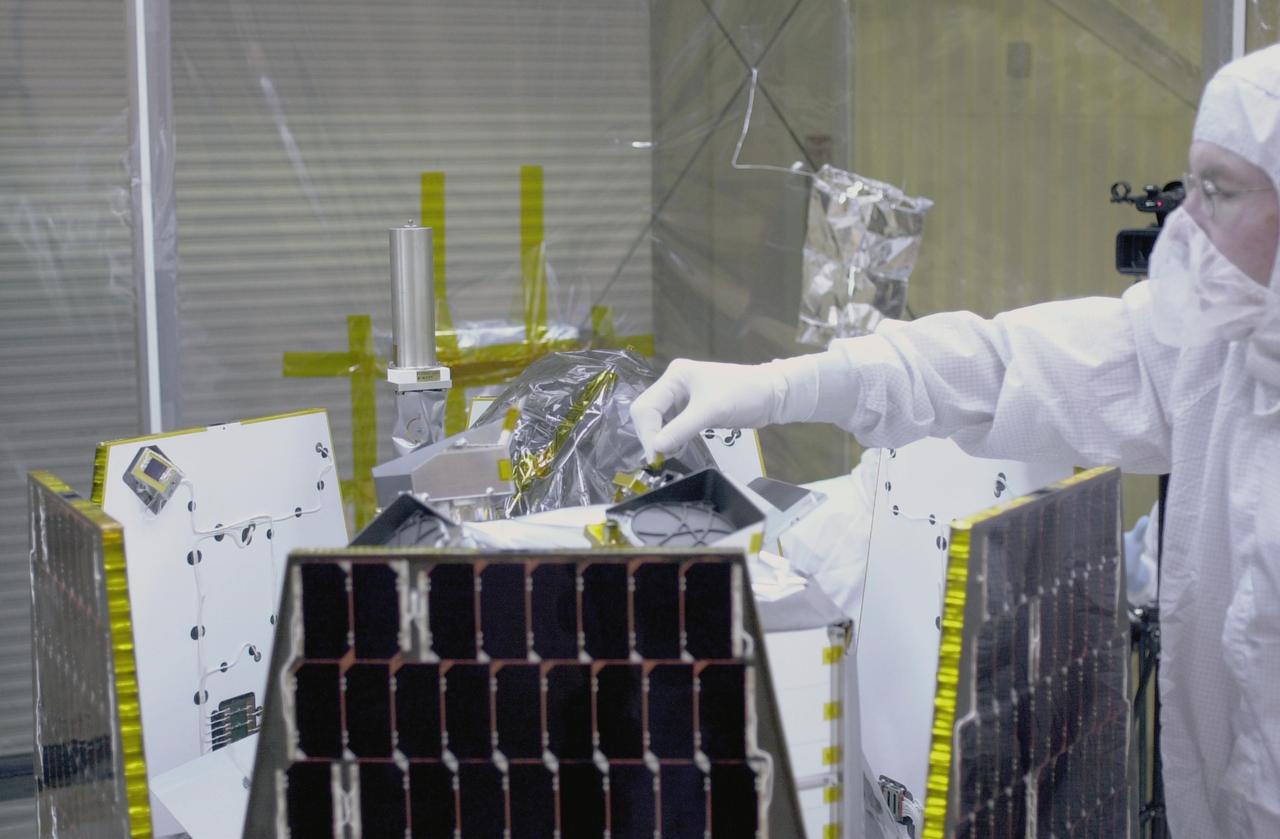
VANDENBERG AIR FORCE BASE, CALIF. -- In a clean-room environment at North Vandenberg Air Force Base, technicians remove covers from instruments in the AIM spacecraft while solar panels are partially deployed. The AIM spacecraft will fly three instruments designed to study polar mesospheric clouds located at the edge of space, 50 miles above the Earth's surface in the coldest part of the planet's atmosphere. The mission's primary goal is to explain why these clouds form and what has caused them to become brighter and more numerous and appear at lower latitudes in recent years. AIM's results will provide the basis for the study of long-term variability in the mesospheric climate and its relationship to global climate change. AIM is scheduled to be mated to the Pegasus XL during the second week of April, after which final inspections will be conducted. Launch is scheduled for April 25.

VANDENBERG AIR FORCE BASE, Calif. -- On Space Launch Complex 2 at Vandenberg Air Force Base in California, the Delta II second stage is lowered inside the mobile service tower toward the first stage. The second stage will be mated to the first stage for launch of the OSTM/Jason-2 spacecraft. The OSTM, or Ocean Topography Mission, on the Jason-2 satellite is a follow-on to Jason-1. It will take oceanographic studies of sea surface height into an operational mode for continued climate forecasting research and science and industrial applications. This satellite altimetry data will help determine ocean circulation, climate change and sea-level rise. OSTM is a joint effort by the National Oceanic and Atmospheric Administration, NASA, France’s Centre National d’Etudes Spatiales and the European Meteorological Satellite Organisation. OSTM/Jason-2 will be launched on June 20. Photo credit: NASA
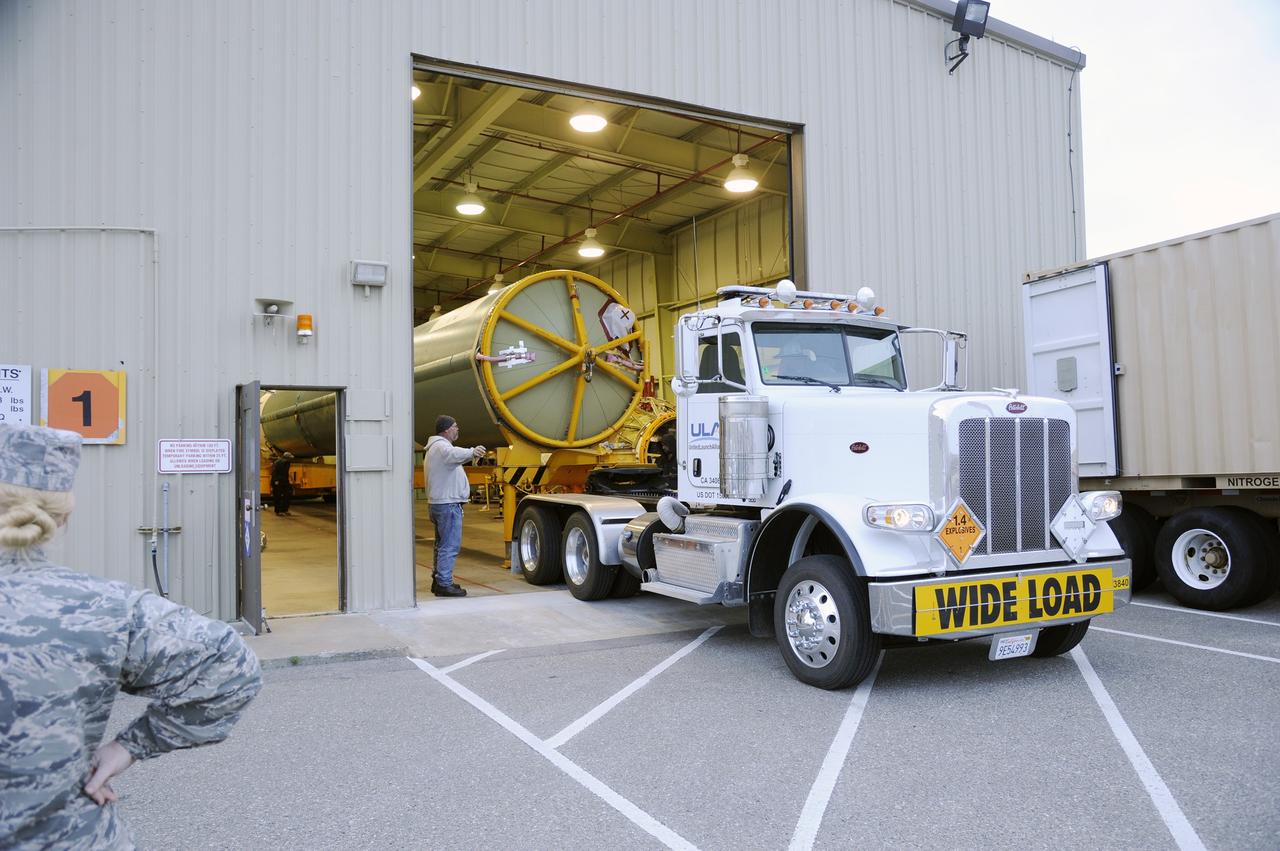
VANDENBERG AIR FORCE BASE, Calif. – The Delta first-stage booster for NASA's Orbiting Carbon Observatory-2 mission, or OCO-2, rolls into position through the open door of the Horizontal Processing Facility at Space Launch Complex 2 on Vandenberg Air Force Base in California. OCO-2 is scheduled to launch aboard a United Launch Alliance Delta II rocket on July 1, 2014. The observatory will collect precise global measurements of carbon dioxide in the Earth's atmosphere and provide scientists with a better idea of the chemical compound's impacts on climate change. Scientists will analyze this data to improve our understanding of the natural processes and human activities that regulate the abundance and distribution of this important atmospheric gas. To learn more about OCO-2, visit http://oco.jpl.nasa.gov. Photo credit: NASA/D. Liberotti, 30th Space Wing, VAFB
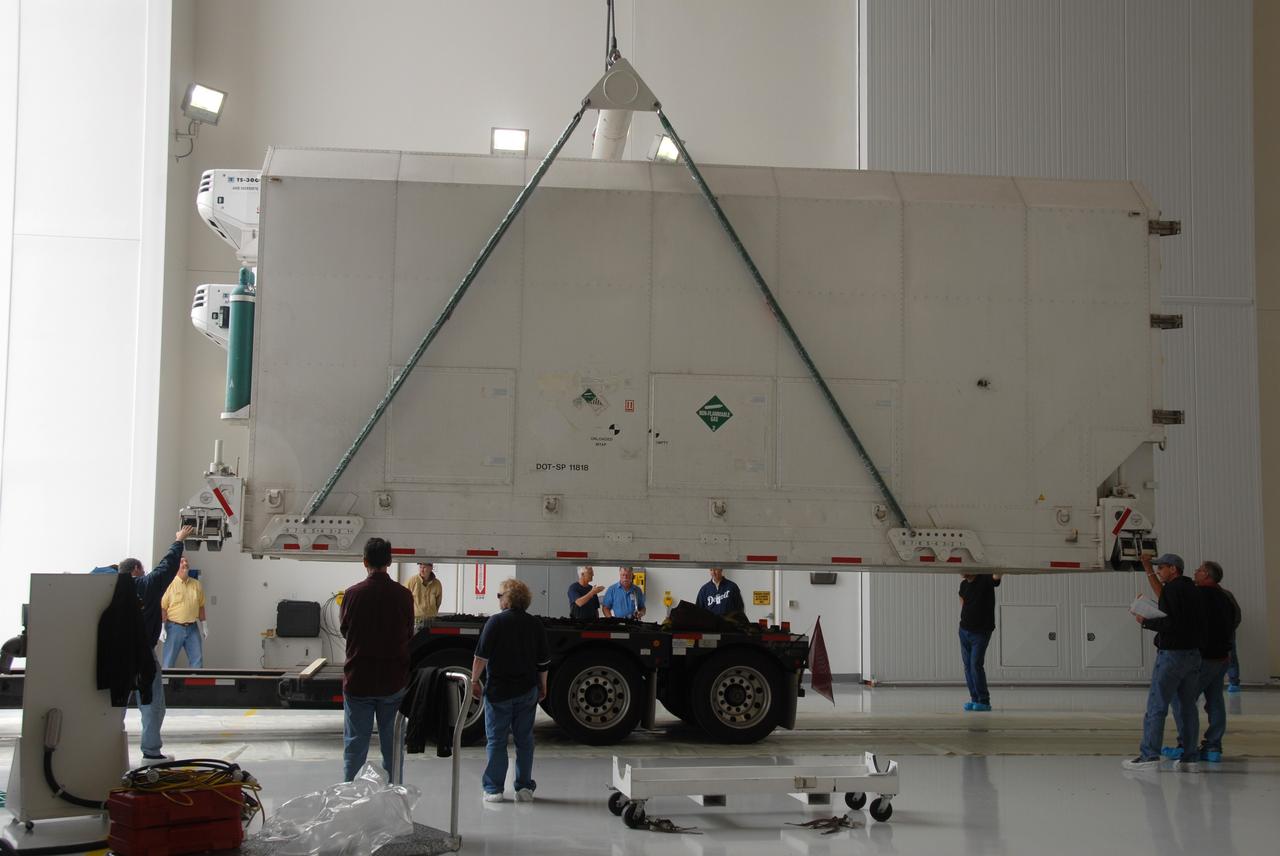
VANDENBERG AIR FORCE BASE, Calif. – In the Astrotech Payload Processing Facility at Vandenberg Air Force Base in California, technicians monitor the progress as a crane begins to lift the container holding NASA’s National Polar-orbiting Operational Environmental Satellite System Preparatory Project (NPP). NPP represents a critical first step in building the next-generation of Earth-observing satellites. NPP will carry the first of the new sensors developed for this satellite fleet, now known as the Joint Polar Satellite System (JPSS), to be launched in 2016. NPP is the bridge between NASA’s Earth Observing System (EOS) satellites and the forthcoming series of JPSS satellites. The mission will test key technologies and instruments for the JPSS missions. NPP is targeted to launch Oct. 25 from Space Launch Complex-2 aboard a United Launch Alliance Delta II rocket. For more information, visit http://www.nasa.gov/NPP. Photo credit: NASA/30th Communications Squadron, VAFB

VANDENBERG AIR FORCE BASE, Calif. -- At Space Launch Complex 576-E at Vandenberg Air Force Base in California, NASA's Glory spacecraft, integrated with the upper stack of the Taurus rocket, displays mission decals including one in remembrance of Dave Breedlove who was a mission manager and long-time member of the Launch Services Program team. The vehicle is dedicated to his memory. The Orbital Sciences Corp. Taurus XL rocket will launch Glory into low Earth orbit. Once Glory reaches orbit, it will collect data on the properties of aerosols and black carbon. It also will help scientists understand how the sun's irradiance affects Earth's climate. Launch is scheduled for 5:09 a.m. EST Feb. 23. For information, visit www.nasa.gov/glory. Photo credit: NASA/Randy Beaudoin, VAFB
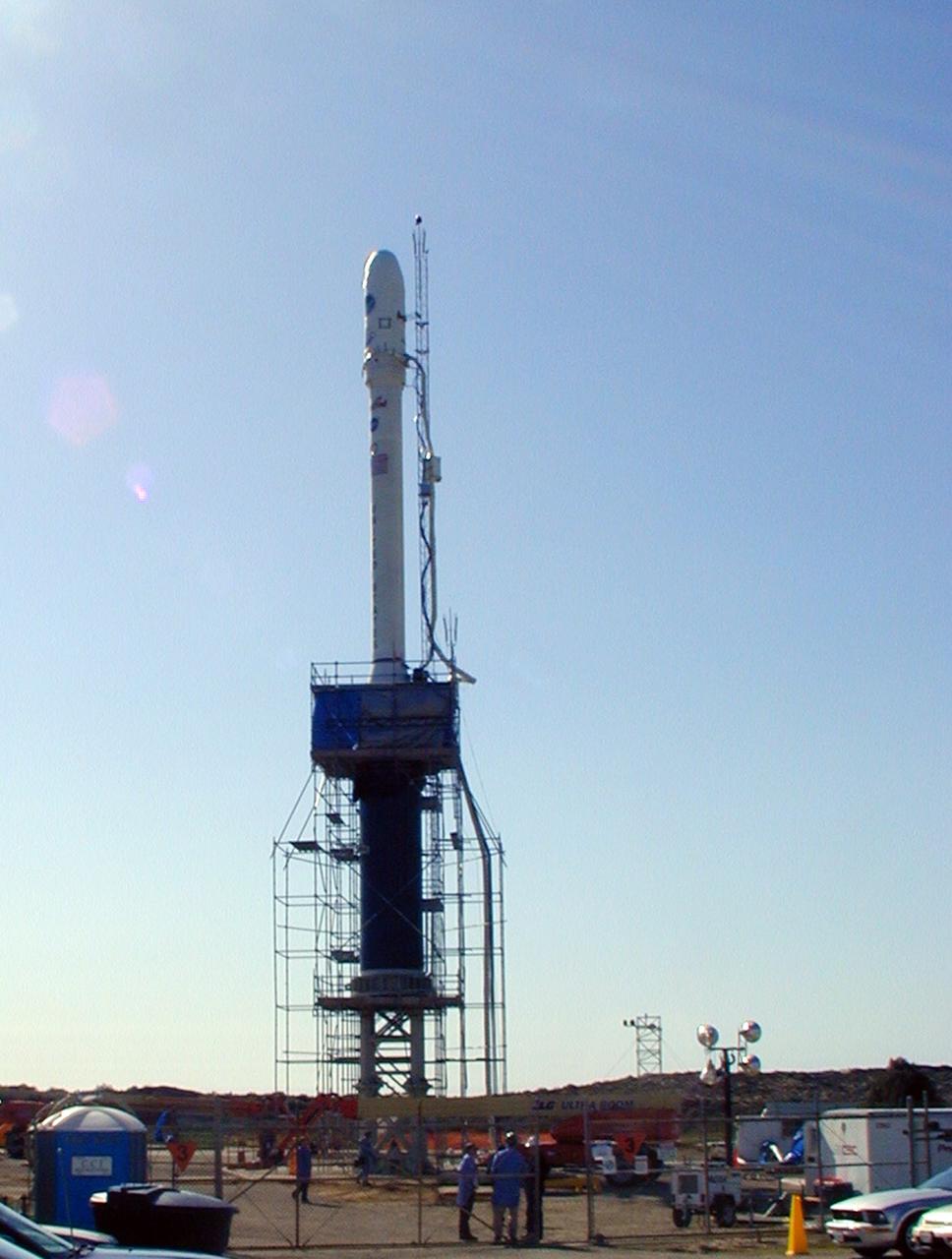
VANDENBERG AIR FORCE BASE, Calif. -- On Launch Complex 576-E at Vandenberg Air Force Base in California, NASA's Orbiting Carbon Observatory, or OCO, spacecraft waits atop Orbital Sciences' Taurus XL rocket to launch Feb. 24. The spacecraft will collect precise global measurements of carbon dioxide (CO2) in the Earth's atmosphere. Scientists will analyze OCO data to improve our understanding of the natural processes and human activities that regulate the abundance and distribution of this important greenhouse gas. Photo courtesy of Glenn Weigle, Orbital Sciences
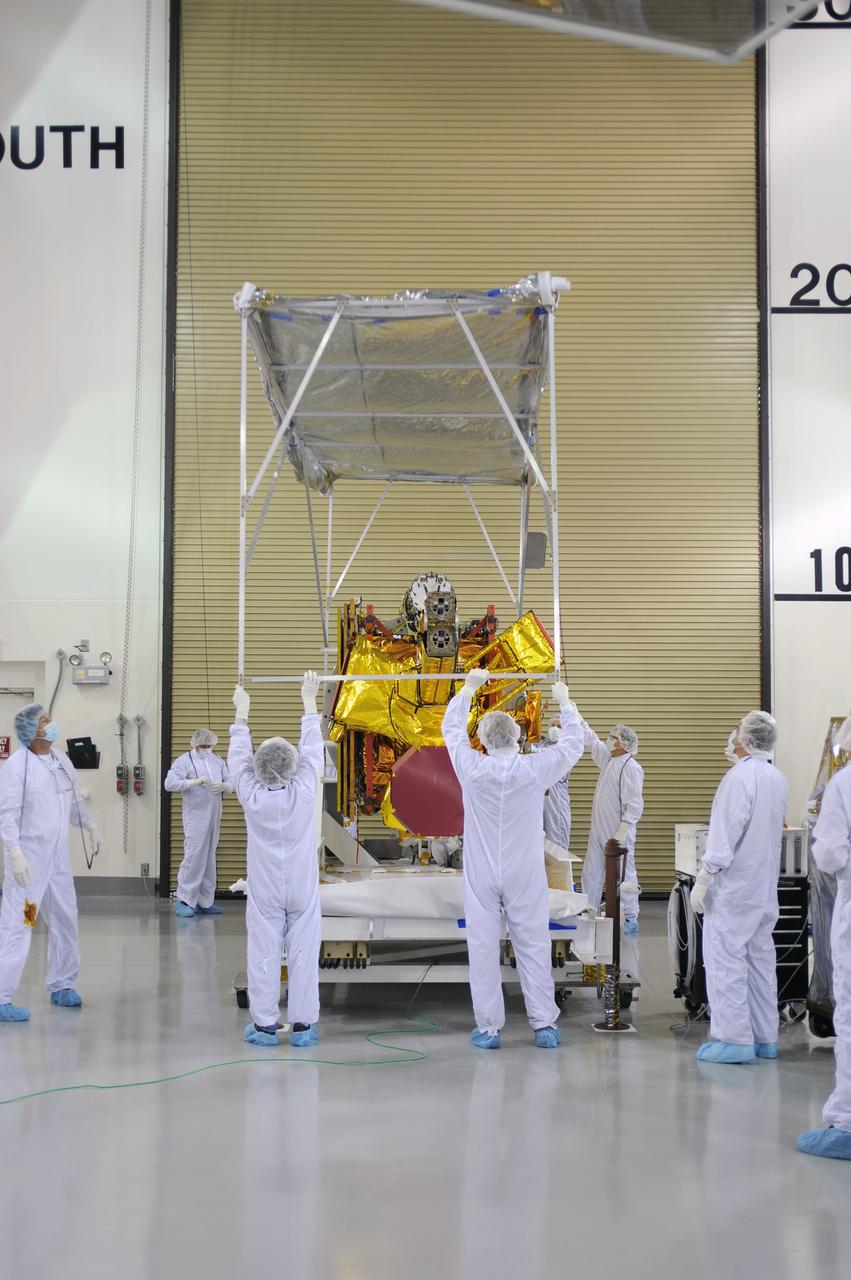
VANDENBERG AIR FORCE BASE, Calif. – Inside the Astrotech payload processing facility on Vandenberg Air Force Base in California, engineers and technicians remove a protective covering from NASA's Soil Moisture Active Passive, or SMAP, spacecraft. SMAP will launch on a Delta II 7320 configuration vehicle featuring a United Launch Alliance first stage booster powered by an Aerojet Rocketdyne RS-27A main engine and three Alliant Techsystems, or ATK, strap-on solid rocket motors. Once on station in Earth orbit, SMAP will provide global measurements of soil moisture and its freeze/thaw state. These measurements will be used to enhance understanding of processes that link the water, energy and carbon cycles, and to extend the capabilities of weather and climate prediction models. SMAP data also will be used to quantify net carbon flux in boreal landscapes and to develop improved flood prediction and drought monitoring capabilities. Launch from Space Launch Complex 2 is targeted for Jan. 29, 2015. To learn more about SMAP, visit http://smap.jpl.nasa.gov Photo credit: NASA/ Robert Rasmison
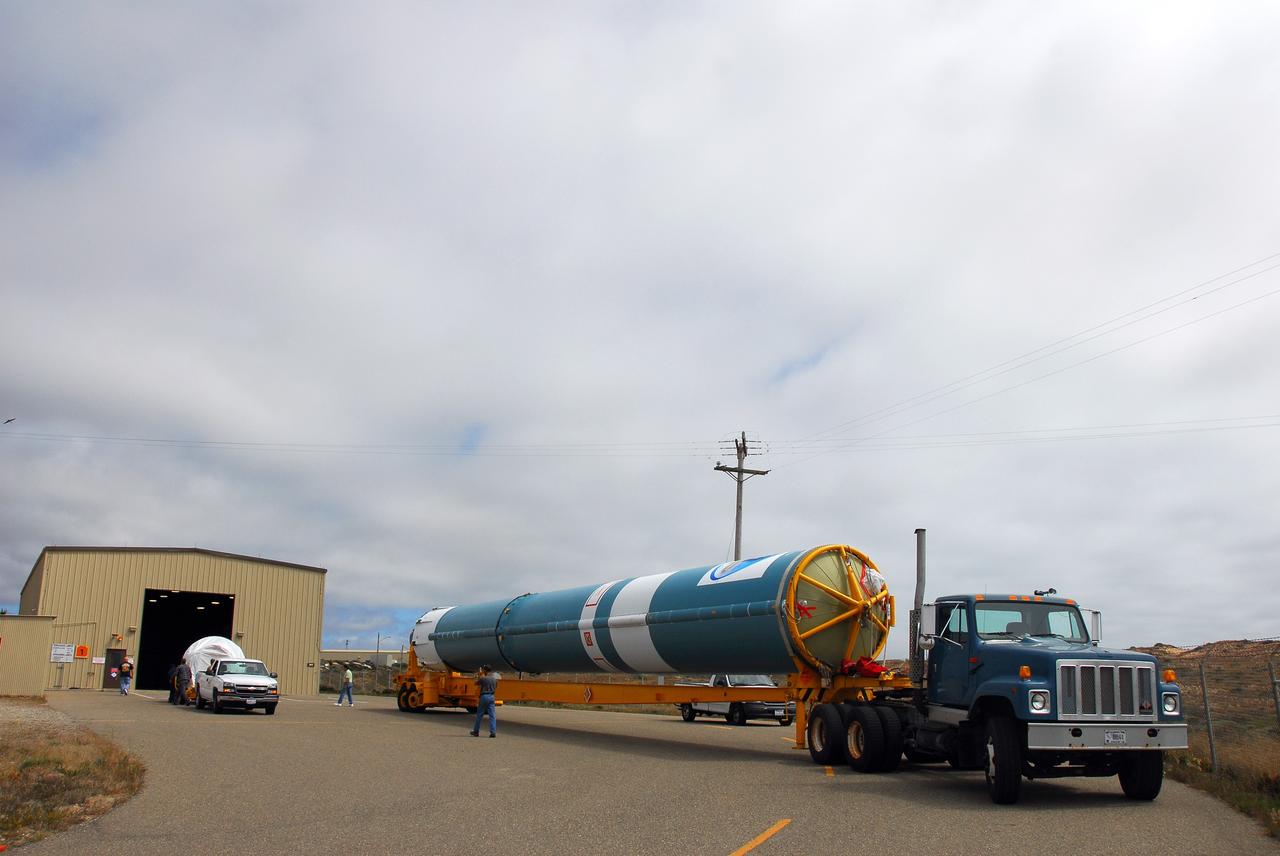
VANDENBERG AIR FORCE BASE, Calif. -- The second stage of a United Launch Alliance Delta II that will carry NASA's National Polar-orbiting Operational Environmental Satellite System Preparatory Project (NPP) satellite into space arrives at the United Launch Alliance Delta Mission Checkout Facility at Space Launch Complex-2 on Vandenberg Air Force Base in California. NPP will be positioned 512 miles above the Earth's surface and will orbit about 16 times each day to observe nearly the entire globe. The NPP mission for NASA and the National Oceanic and Atmospheric Administration (NOAA) is to measure Earth's atmospheric and sea surface temperatures, humidity sounding, land and ocean biological activity, and cloud and aerosol properties. For more information, visit www.nasa.gov/NPP. Photo credit: NASA/VAFB
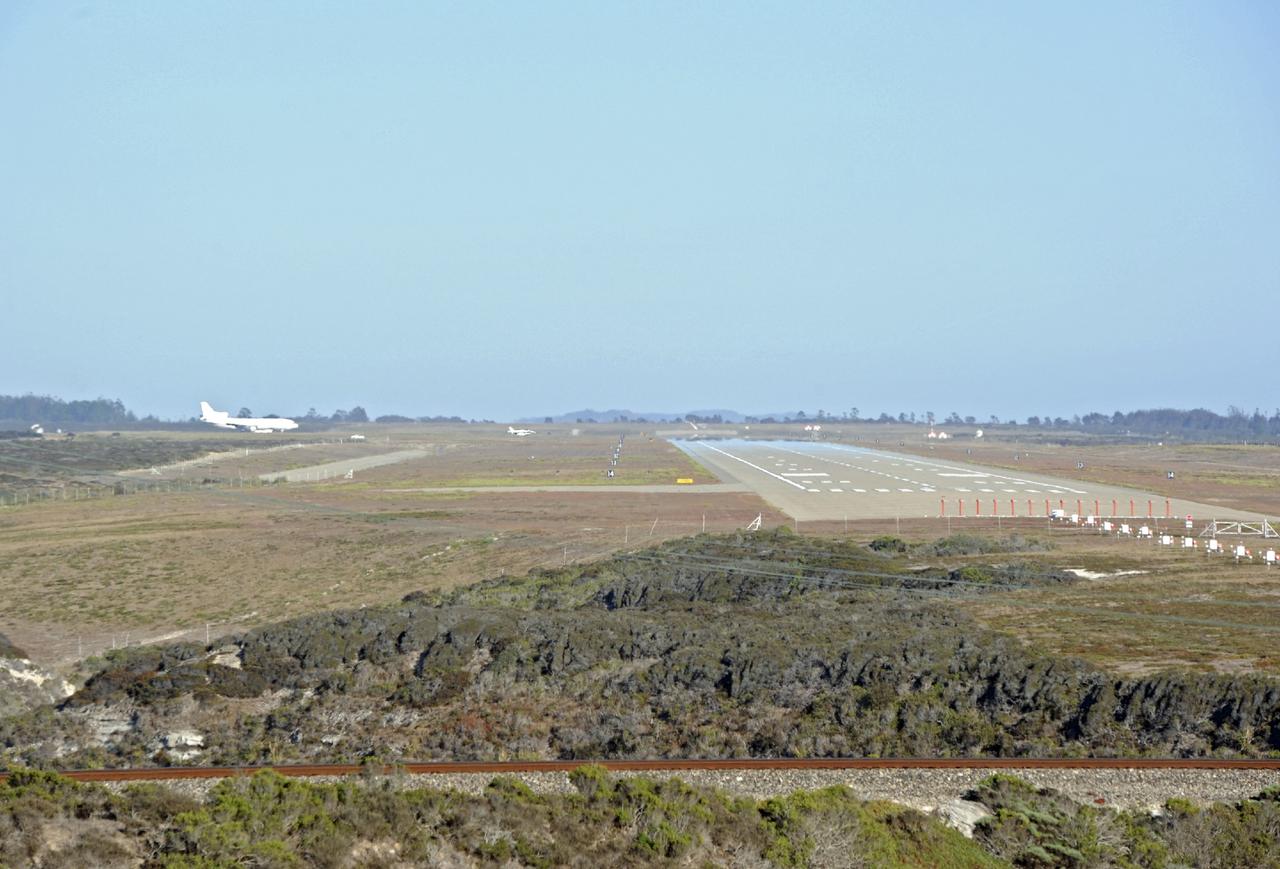
VANDENBERG AIR FORCE BASE, Calif. – A NASA F-18 and an Orbital Sciences L-1011 carrier aircraft taxi to the runway at Vandenberg Air Force Base, Calif., before taking off on a mission to launch NASA's IRIS spacecraft into low-Earth orbit. IRIS, short for Interface Region Imaging Spectrograph, was launched aboard an Orbital Sciences Pegasus XL rocket released from the L-1011. Photo credit: VAFB/ Chris Wiant
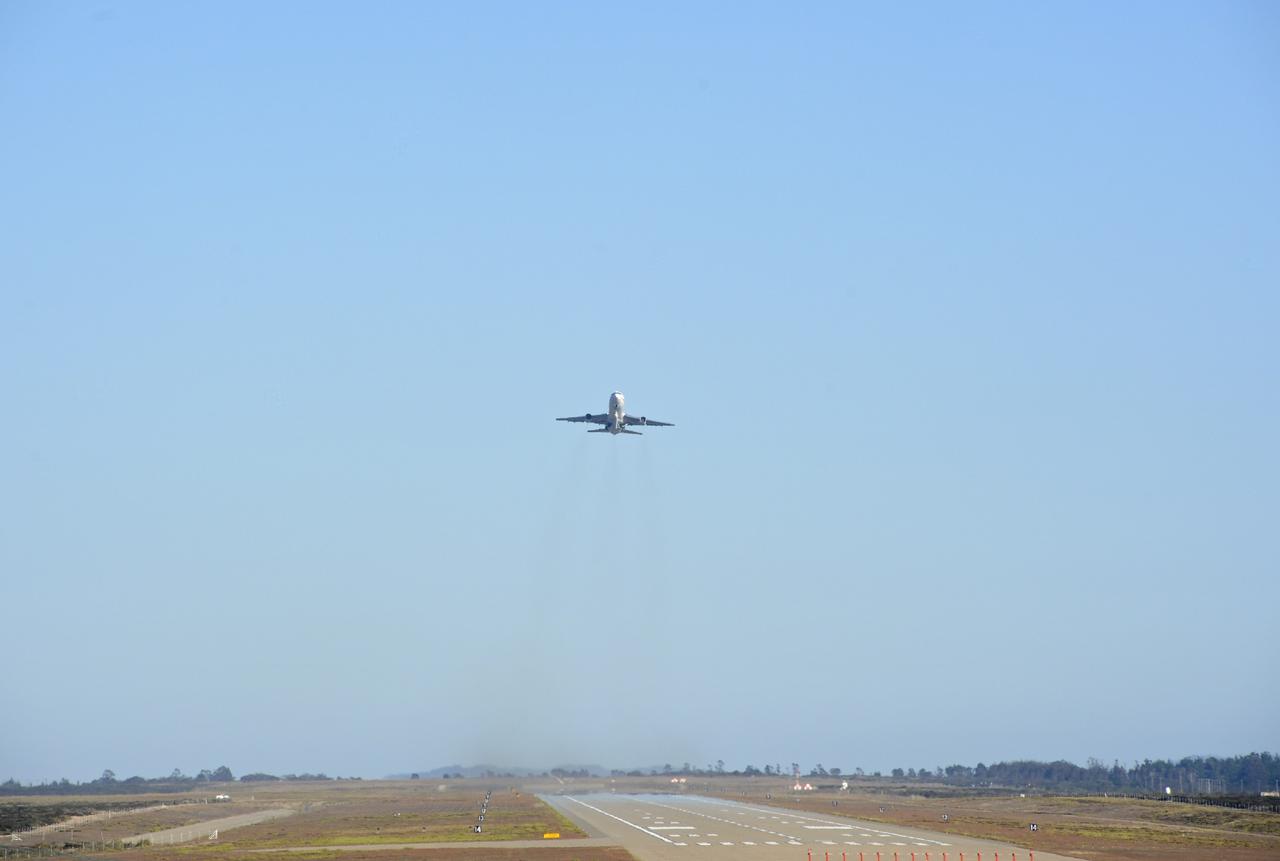
VANDENBERG AIR FORCE BASE, Calif. – An Orbital Sciences L-1011 carrier aircraft takes off from Vandenberg Air Force Base, Calif., on a mission to launch NASA's IRIS spacecraft into low-Earth orbit. IRIS, short for Interface Region Imaging Spectrograph, was launched aboard an Orbital Sciences Pegasus XL rocket released from the L-1011.Photo credit: VAFB/Chris Wiant
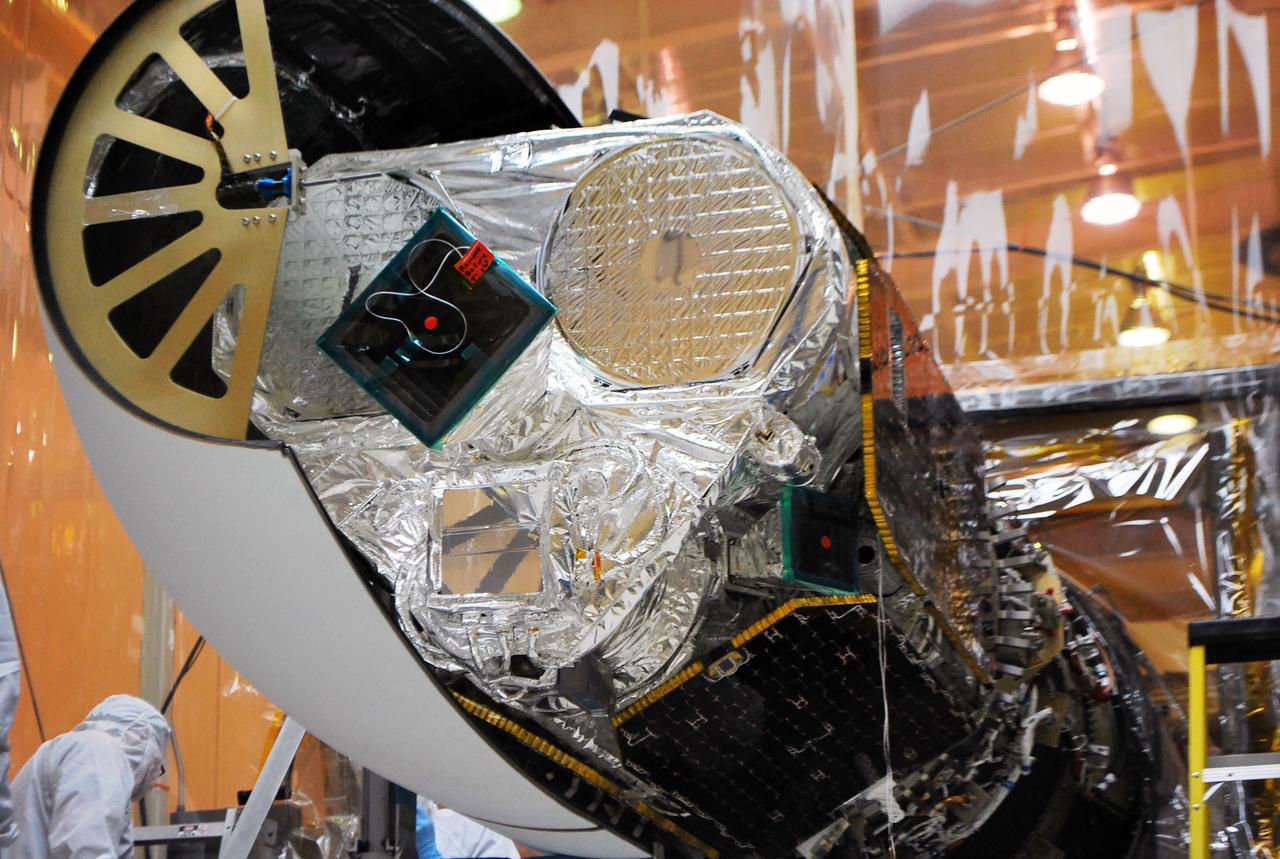
VANDENBERG AFB, Calif. – Technicians install one half of the payload fairing over the NuSTAR spacecraft as they continue to process the spacecraft and its Pegasus rocket for launch. NuSTAR stands for Nuclear Spectroscopic Telescope Array. Photo credit: NASA/Randy Beaudoin
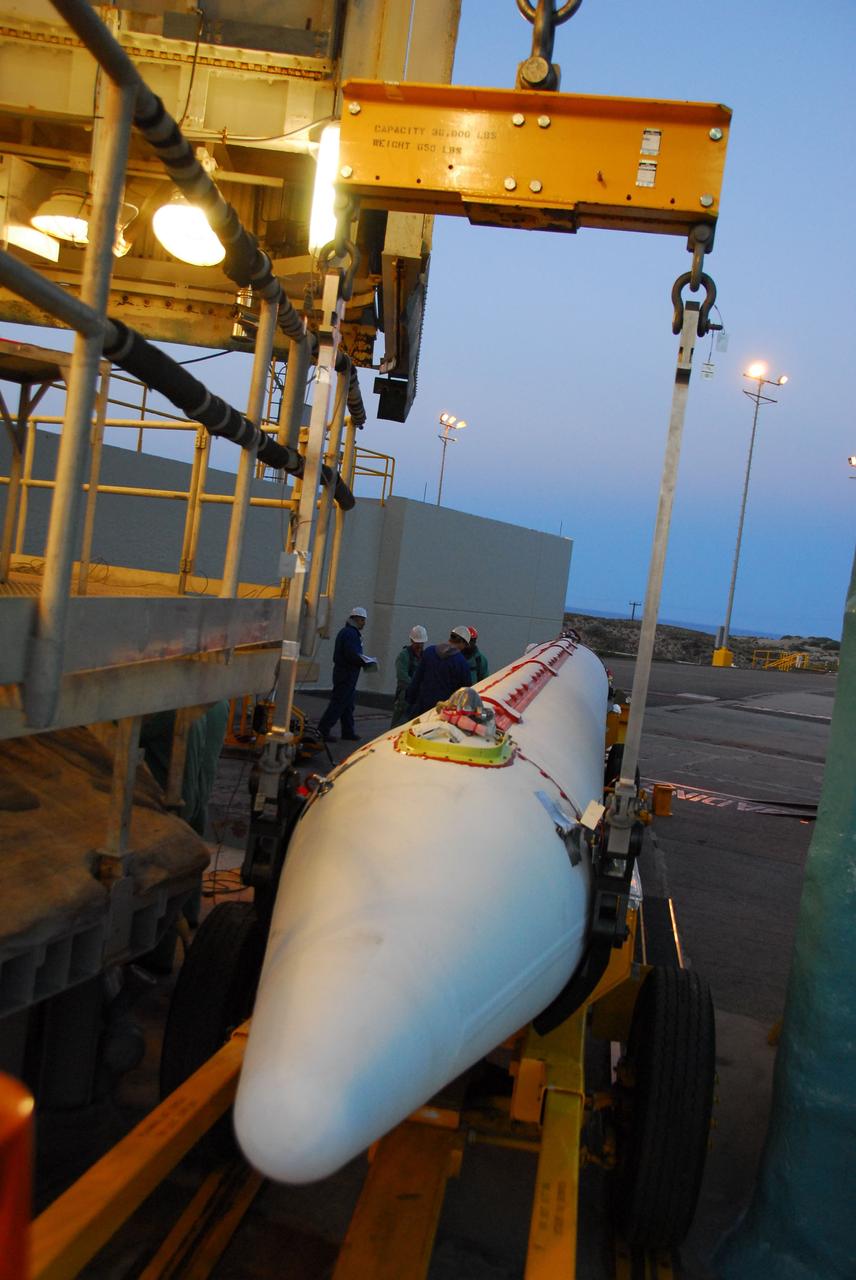
VANDENBERG AIR FORCE BASE, Calif. --As the sun rises over Vandenberg Air Force Base in California, United Launch Alliance technicians prepare to raise one of three Delta II solid rocket motors on the pad at Space Launch Complex-2 West (SLC-2W). Scheduled to launch in June, the Delta II rocket will carry NASA's Aquarius satellite into low Earth orbit. Aquarius' mission will be to provide monthly maps of global changes in sea surface salinity. By measuring ocean salinity from space, Aquarius will provide new insights into how the massive natural exchange of freshwater between the ocean, atmosphere and sea ice influences ocean circulation, weather and climate. Also going up with the satellite are optical and thermal cameras, a microwave radiometer and the SAC-D spacecraft, which were developed with the help of institutions in Italy, France, Canada and Argentina. Photo credit: VAFB/30th Space Wing
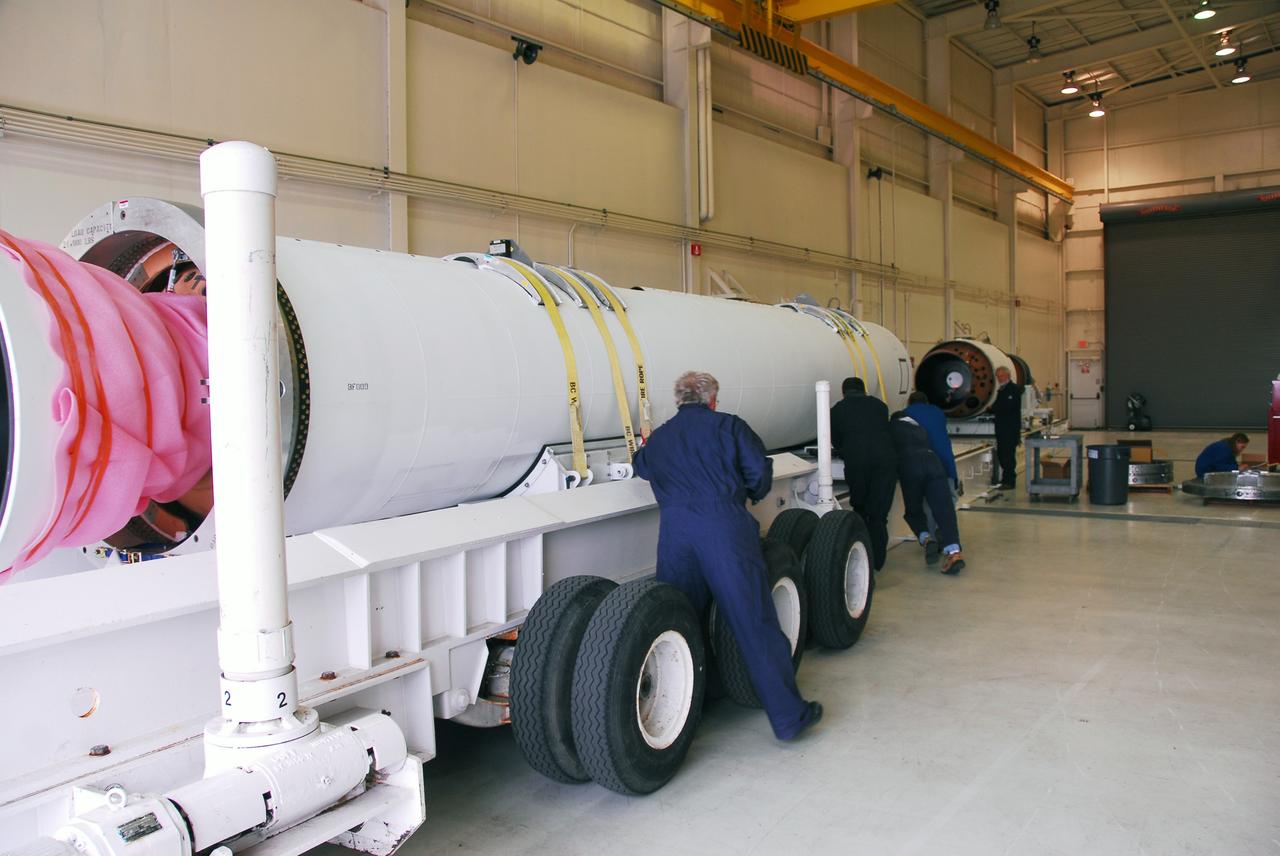
VANDENBERG AIR FORCE BASE, Calif. -- At Vandenberg AFB, the first stage of the Taurus rocket is being moved onto the stationary rails in Building 1555's west bay. The Taurus will launch the Orbiting Carbon Observatory, or OCO, in 2009. The OCO is a new Earth-orbiting mission sponsored by NASA's Earth System Science Pathfinder Program. Photo credit: NASA/Randy Beaudoin
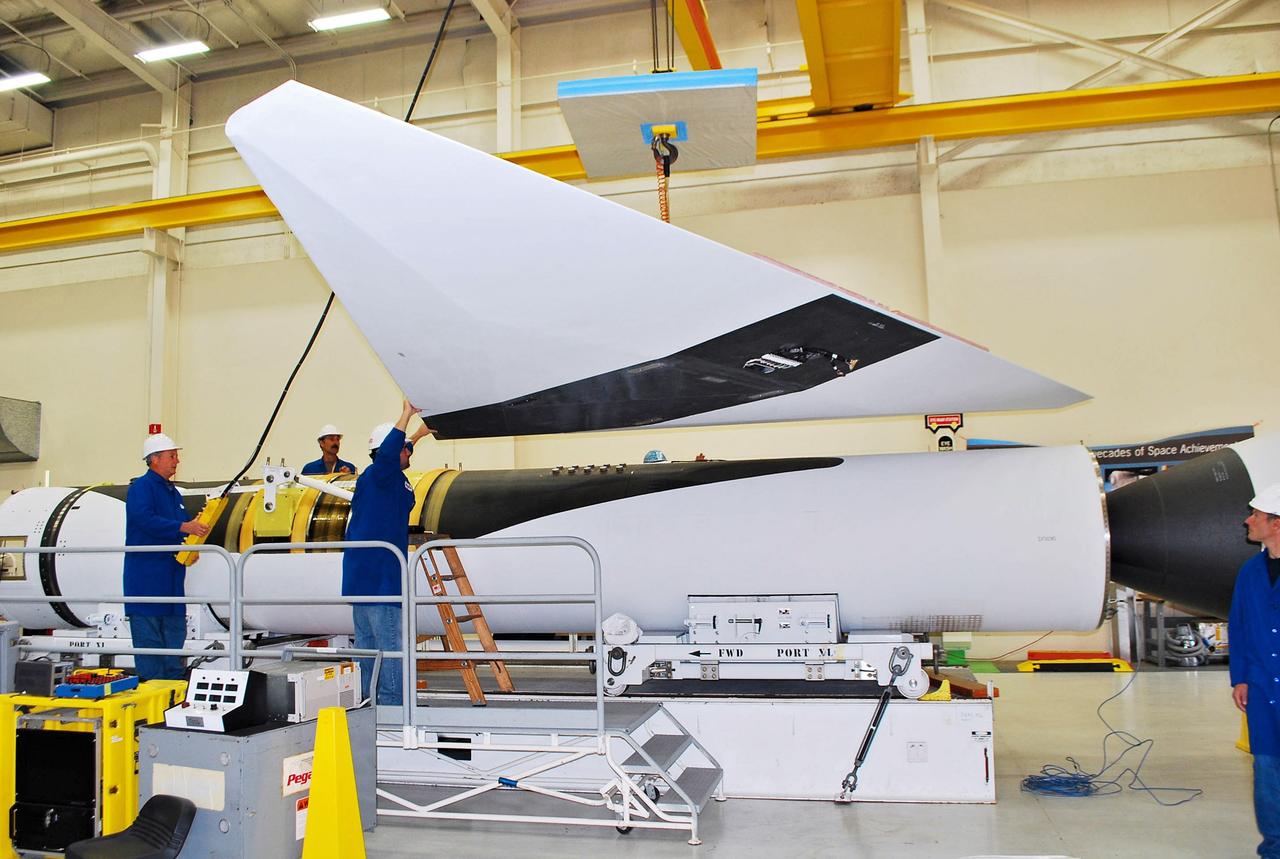
Vandenberg Air Force Base, Calif. – Inside a processing facility at Vandenberg Air Force Base in California, technicians assist as a crane lowers the wing closer for a fit check with the Orbital Sciences Pegasus XL launch vehicle. NASA’s Interface Region Imaging Spectrograph, or IRIS, spacecraft will launch aboard the Pegasus XL in late 2012. IRIS will open a new window of discovery by tracing the flow of energy and plasma through the chromospheres and transition region into the sun’s corona using spectrometry and imaging. IRIS fills a crucial gap in our ability to advance studies of the sun-to-Earth connection by tracing the flow of energy and plasma through the foundation of the corona and heliosphere, or region around the sun. Photo credit: NASA/Randy Beaudoin

VANDENBERG AIR FORCE BASE, Calif. -- The Stage 1, 2 and 3 motors of the Taurus XL rocket are being prepared for transfer to Space Launch Complex 576-E at Vandenberg Air Force Base in California. The Taurus is the launch vehicle for NASA's Orbiting Carbon Observatory, or OCO, which is a new Earth-orbiting mission sponsored by NASA's Earth System Science Pathfinder Program. The observatory is scheduled to launch Feb. 23 from Vandenberg. The spacecraft will collect precise global measurements of carbon dioxide (CO2) in the Earth's atmosphere. Scientists will analyze OCO data to improve our understanding of the natural processes and human activities that regulate the abundance and distribution of this important greenhouse gas. This improved understanding will enable more reliable forecasts of future changes in the abundance and distribution of CO2 in the atmosphere and the effect that these changes may have on the Earth's climate. Photo credit: NASA/Randy Beaudoin, VAFB
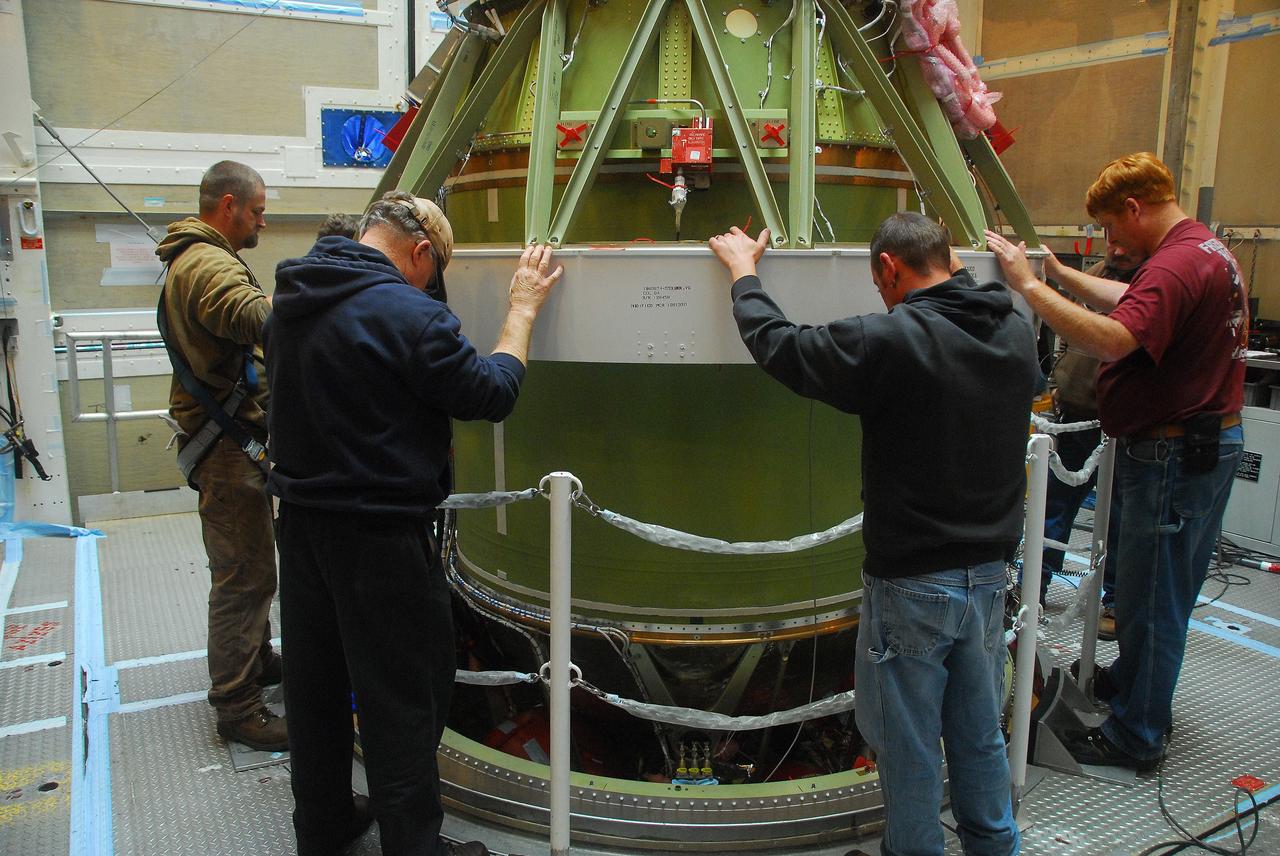
VANDENBERG AIR FORCE BASE, Calif. -- Technicians secure the AJ10 engine for the second stage of the United Launch Alliance Delta II rocket on a work stand at NASA’s Space Launch Complex-2 service tower. The Delta II will carry NASA's National Polar-orbiting Operational Environmental Satellite System Preparatory Project (NPP) satellite into space. NPP represents a critical first step in building the next-generation of Earth-observing satellites. NPP will carry the first of the new sensors developed for this satellite fleet, now known as the Joint Polar Satellite System (JPSS) to be launched in 2016. NPP is the bridge between NASA's Earth Observing System (EOS) satellites and the forthcoming series of JPSS satellites. The mission will test key technologies and instruments for the JPSS missions. NPP is targeted to launch Oct. 25. For more information, visit http://www.nasa.gov/NPP. Photo credit: NASA/VAFB
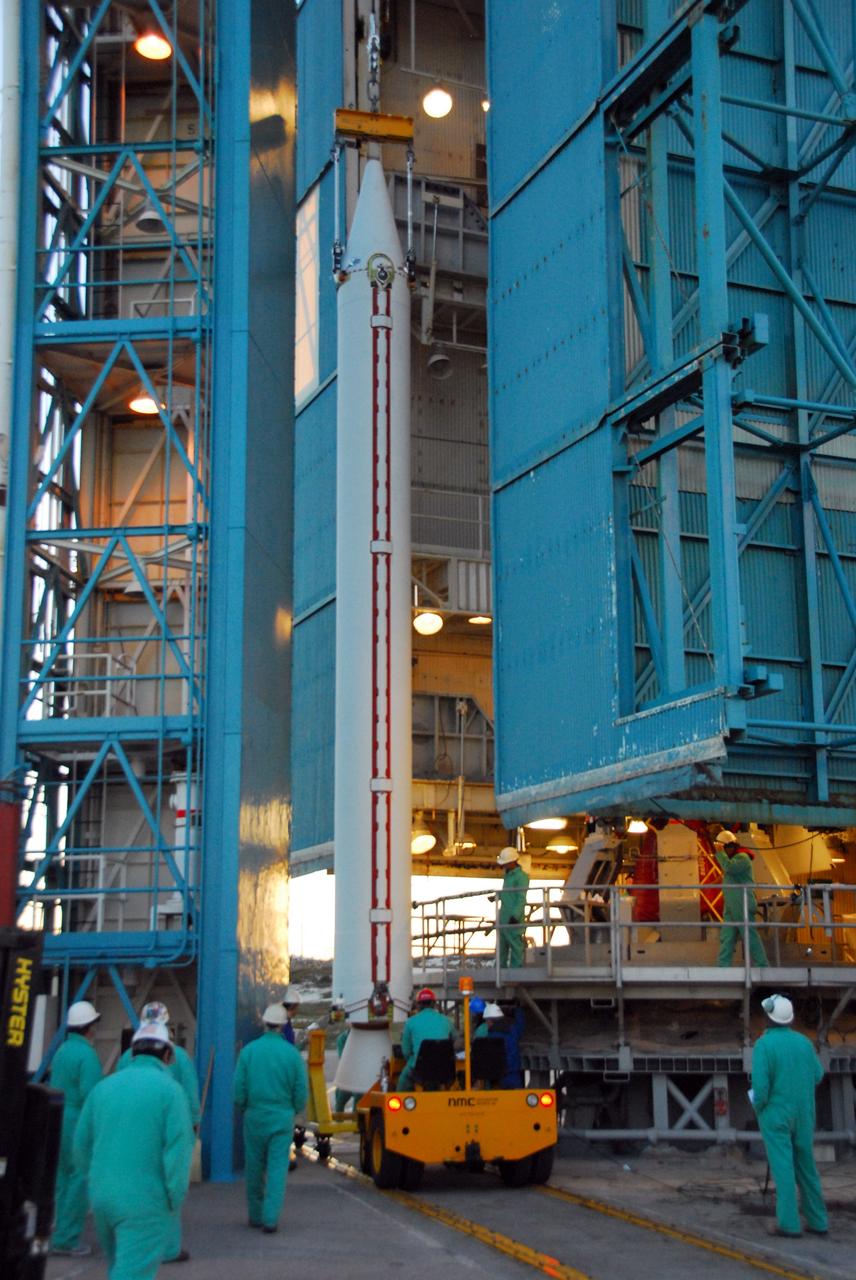
VANDENBERG AIR FORCE BASE, Calif. --As the sun rises over Vandenberg Air Force Base in California, a crane raises one of three United Launch Alliance Delta II solid rocket motors on the pad at Space Launch Complex-2 West (SLC-2W). Scheduled to launch in June, the Delta II rocket will carry NASA's Aquarius satellite into low Earth orbit. Aquarius' mission will be to provide monthly maps of global changes in sea surface salinity. By measuring ocean salinity from space, Aquarius will provide new insights into how the massive natural exchange of freshwater between the ocean, atmosphere and sea ice influences ocean circulation, weather and climate. Also going up with the satellite are optical and thermal cameras, a microwave radiometer and the SAC-D spacecraft, which were developed with the help of institutions in Italy, France, Canada and Argentina. Photo credit: VAFB/30th Space Wing

VANDENBERG AIR FORCE BASE, CALIF. - The L-1011 carrier aircraft is ready for flight after undergoing a Combined Systems Test, an integrated test involving the Pegasus launch vehicle, SciSat-1 spacecraft and L-1011 aircraft. The SciSat-1 weighs approximately 330 pounds and after launch will be placed in a 400-mile-high polar orbit to investigate processes that control the distribution of ozone in the upper atmosphere. The data from the satellite will provide Canadian and international scientists with improved measurements relating to global ozone processes and help policymakers assess existing environmental policy and develop protective measures for improving the health of our atmosphere, preventing further ozone depletion. The mission is designed to last two years.
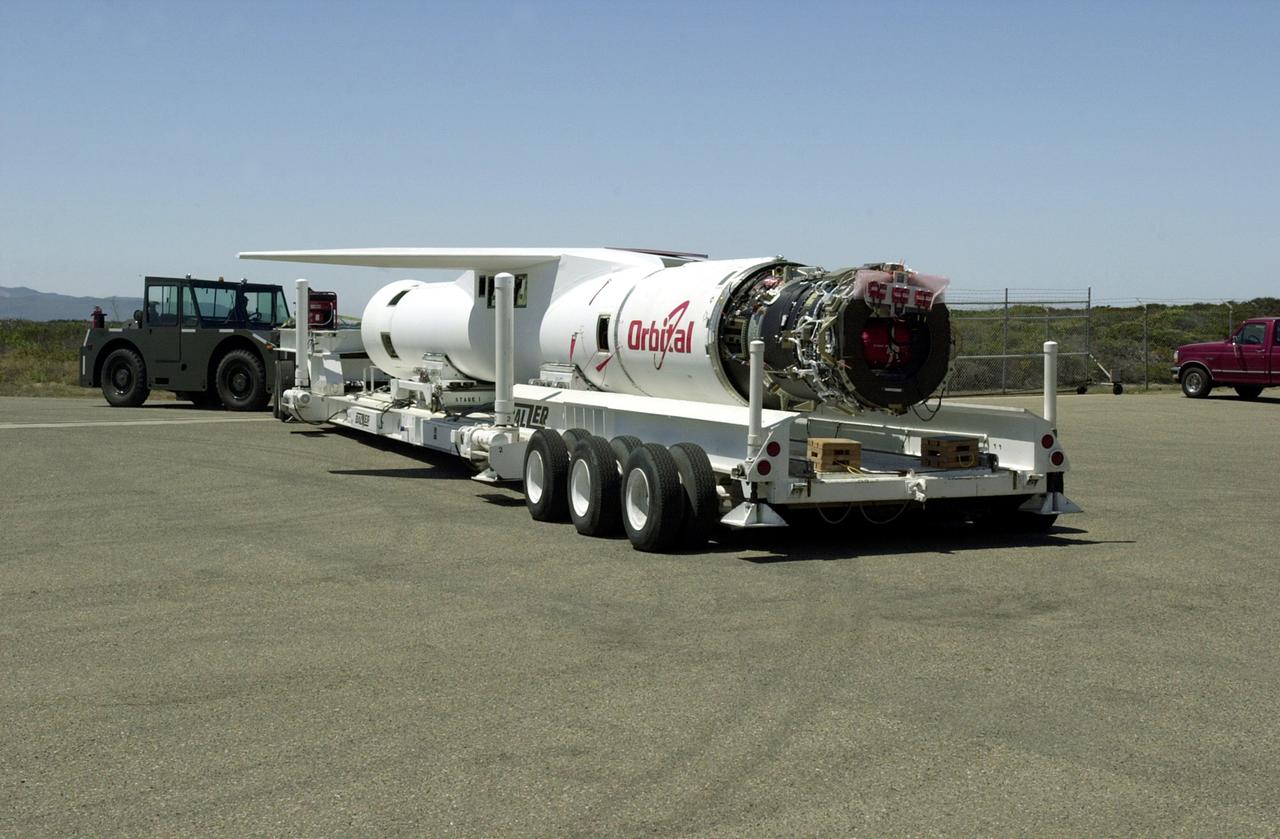
VANDENBERG AIR FORCE BASE, CALIF. - At Vandenberg Air Force Base, Calif., the Pegasus launch vehicle is moved toward its hangar. The Pegasus will carry the SciSat-1 spacecraft in a 400-mile-high polar orbit to investigate processes that control the distribution of ozone in the upper atmosphere. The data from the satellite will provide Canadian and international scientists with improved measurements relating to global ozone processes and help policymakers assess existing environmental policy and develop protective measures for improving the health of our atmosphere, preventing further ozone depletion. The mission is designed to last two years.
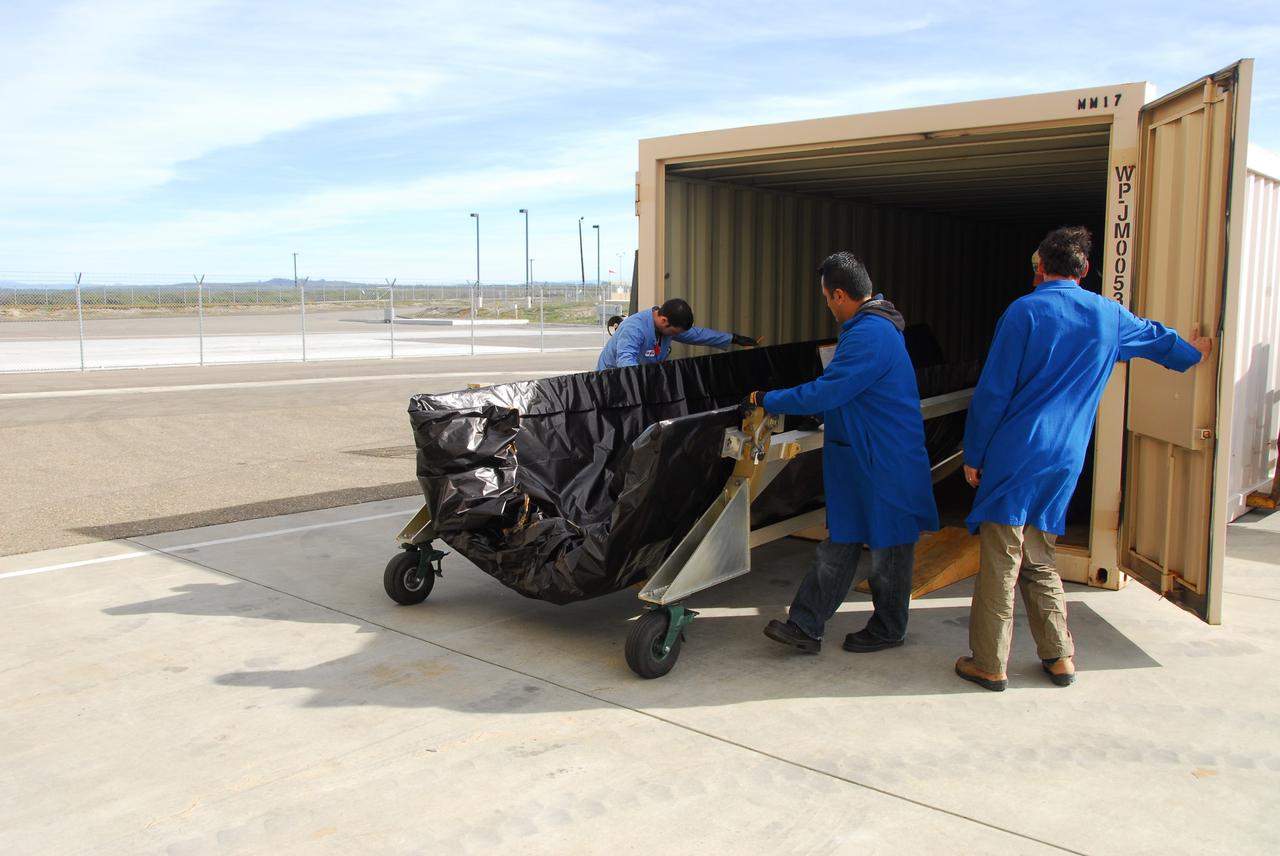
VANDENBERG AIR FORCE BASE, Calif. -- At Vandenberg Air Force Base in California, the protective payload fairing that will surround NASA's Glory spacecraft arrives at the Astrotech payload processing facility. Once encapsulated, the spacecraft will be transported to Space Launch Complex 576-E and joined with the Taurus XL rocket's third stage. Once Glory reaches orbit, it will collect data on the properties of aerosols and black carbon. It also will help scientists understand how the sun's irradiance affects Earth's climate. Launch is scheduled for 5:09 a.m. EST Feb. 23. For information, visit www.nasa.gov/glory. Photo credit: NASA/Ed Henry, VAFB
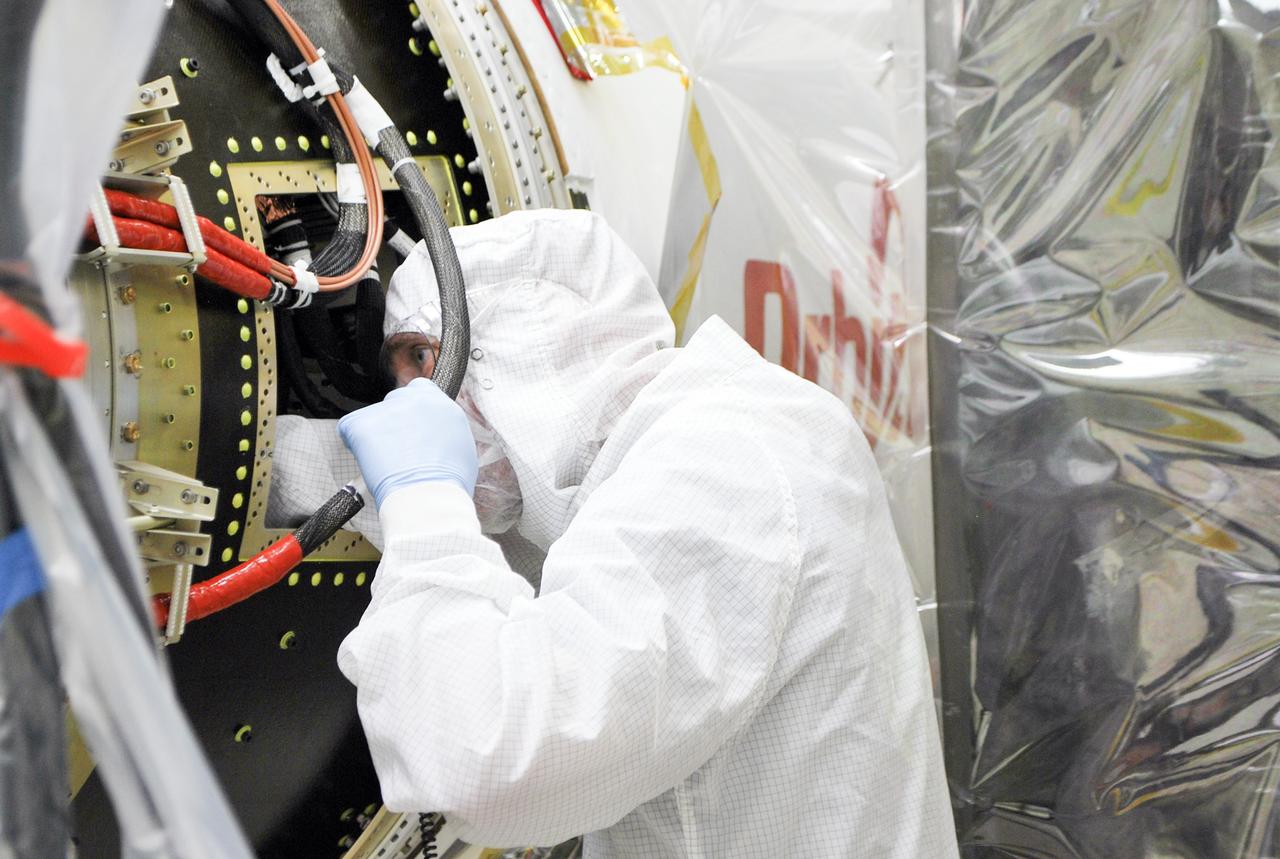
- VANDENBERG AFB – An engineer makes preparations on the starboard side of the payload fairing before it is connected into place for NASA's IRIS spacecraft. The fairing connects to the nose of the Orbital Sciences Pegasus XL rocket that will lift the solar observatory into orbit in June. The work is taking place in a hangar at Vandenberg Air Force Base where IRIS, short for Interface Region Imaging Spectrograph, is being prepared for launch on a Pegasus XL rocket. Scheduled for launch from Vandenberg June 26, IRIS will open a new window of discovery by tracing the flow of energy and plasma through the chromospheres and transition region into the sun’s corona using spectrometry and imaging. IRIS fills a crucial gap in our ability to advance studies of the sun-to-Earth connection by tracing the flow of energy and plasma through the foundation of the corona and the region around the sun known as the heliosphere. Photo credit: NASA/Randy Beaudoin
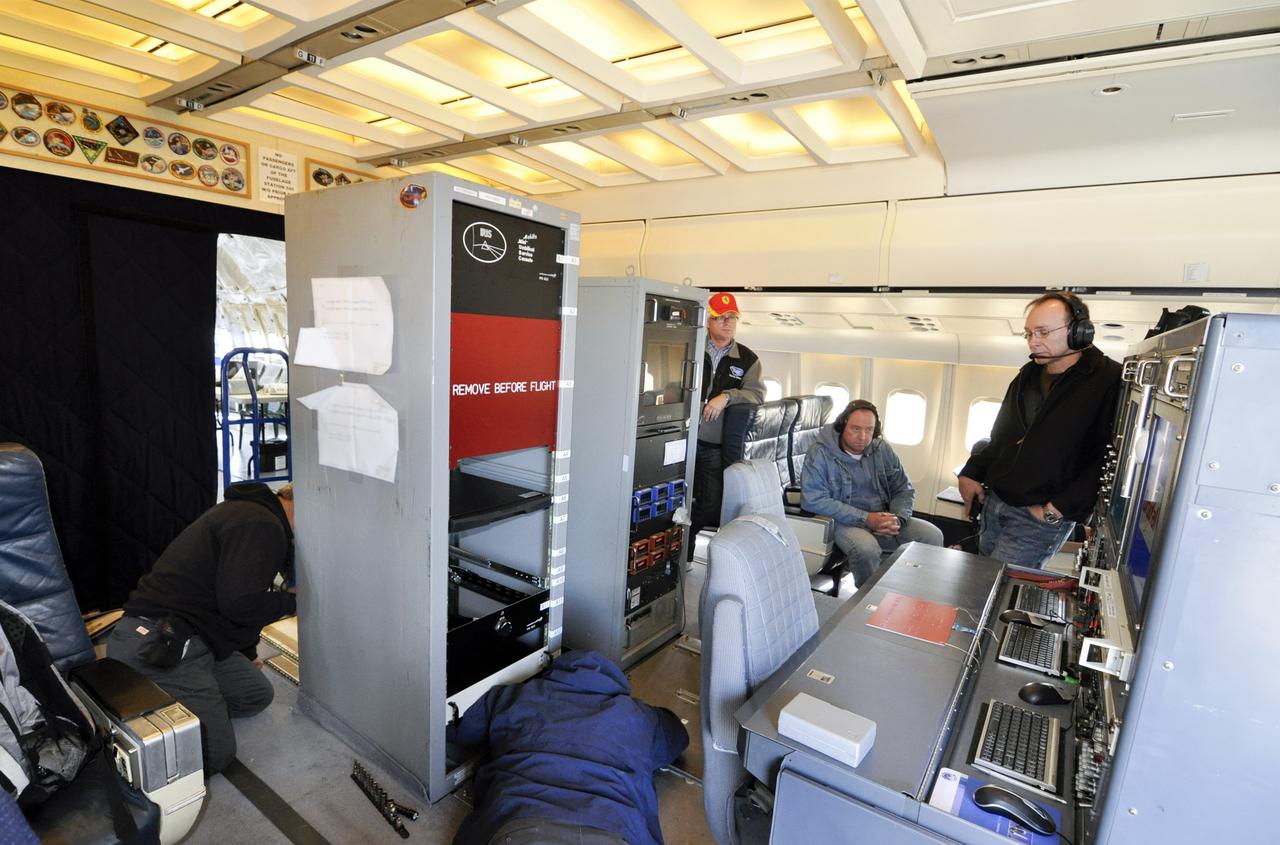
VANDENBERG ABF, Calif. - The launch crew of the Orbital Sciences L-1011 aircraft called "Stargazer" after arrival at Vandenberg Air Force Base for the upcoming launch of the company's Pegasus XL rocket lifting NASA's IRIS solar observatory into orbit. The aircraft will carry the winged rocket to an altitude of 39,000 feet before releasing the Pegasus so its own motors can ignite to send the IRIS into space. The L-1011 is a modified airliner equipped to hold the Pegasus under its body safely. IRIS, short for Interface Region Imaging Spectrograph, is being prepared for launch from Vandenberg June 26. IRIS will open a new window of discovery by tracing the flow of energy and plasma through the chromospheres and transition region into the sun’s corona using spectrometry and imaging. IRIS fills a crucial gap in our ability to advance studies of the sun-to-Earth connection by tracing the flow of energy and plasma through the foundation of the corona and the region around the sun known as the heliosphere. Photo credit: VAFB/Randy Beaudoin
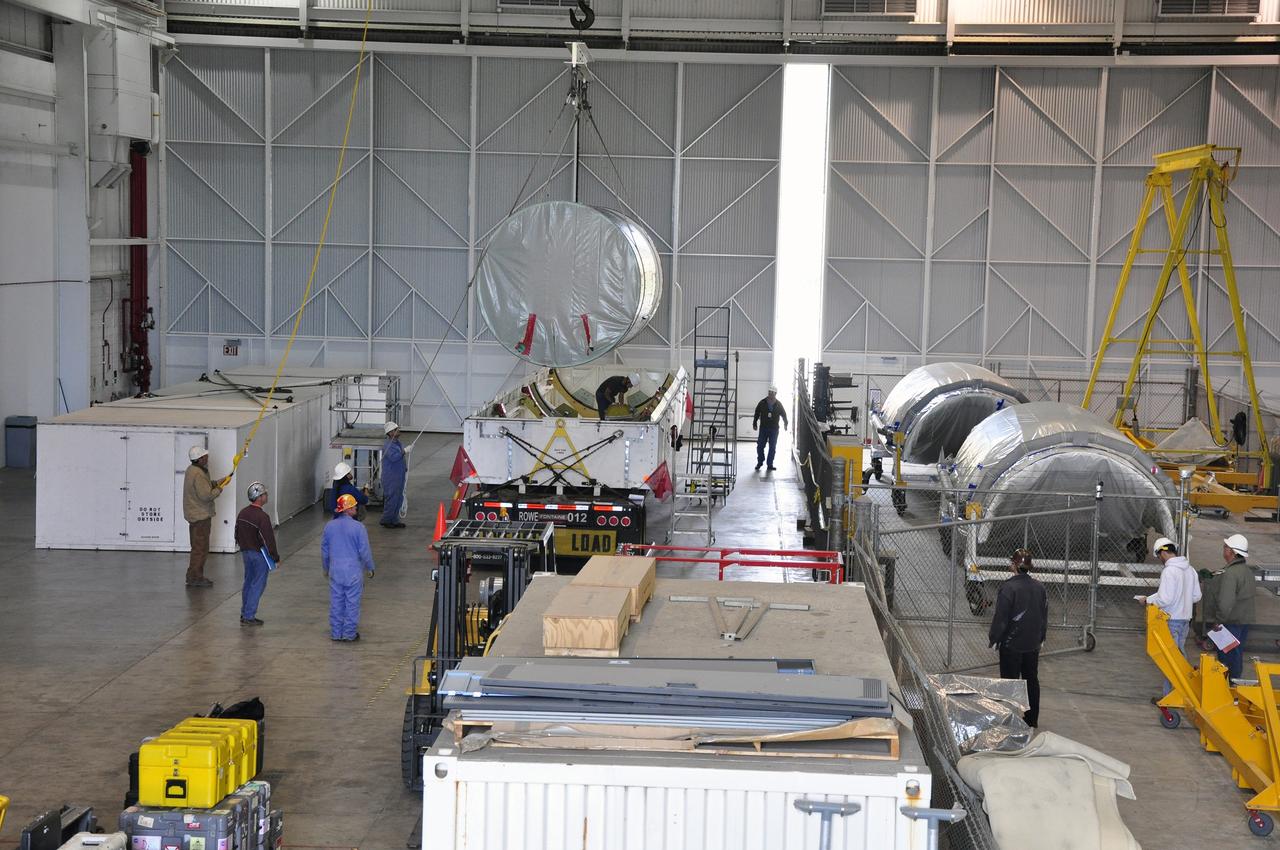
VANDENBERG AIR FORCE BASE, Calif. – The canister containing the interstage adapter, or ISA, for NASA's Soil Moisture Active Passive mission, or SMAP, is lifted out of its transportation trailer in the high bay of the Building 836 hangar on south Vandenberg Air Force Base in California. A United Launch Alliance Delta II rocket will loft SMAP into orbit from Vandenberg's Space Launch Complex 2. The ISA connects the Delta II first and second stages and encloses the second stage engine and thrust section. The spacecraft will provide global measurements of soil moisture and its freeze/thaw state. These measurements will be used to enhance understanding of processes that link the water, energy and carbon cycles, and to extend the capabilities of weather and climate prediction models. The data returned also will be used to quantify net carbon flux in boreal landscapes and to develop improved flood prediction and drought monitoring capabilities. Launch is scheduled for November 2014. To learn more about SMAP, visit http://smap.jpl.nasa.gov. Photo credit: NASA/Randy Beaudoin