
NASA and Caltech participate in a science briefing on Tuesday, Feb. 25, 2025, to discuss the upcoming launch of NASA’s SPHEREx (Spectro-Photometer for the History of the Universe, Epoch of Reionization and Ices Explorer) observatory and PUNCH (Polarimeter to Unify the Corona and Heliosphere) satellites at Vandenberg Space Force Base in California. SPHEREx will use its telescope to provide an all-sky spectral survey, creating a 3D map of the entire sky to help scientists investigate the origins of our universe. PUNCH will study origins of the Sun’s outflow of material, or the solar wind, capturing continuous 3D images of the Sun’s corona and the solar wind’s journey into the solar system.
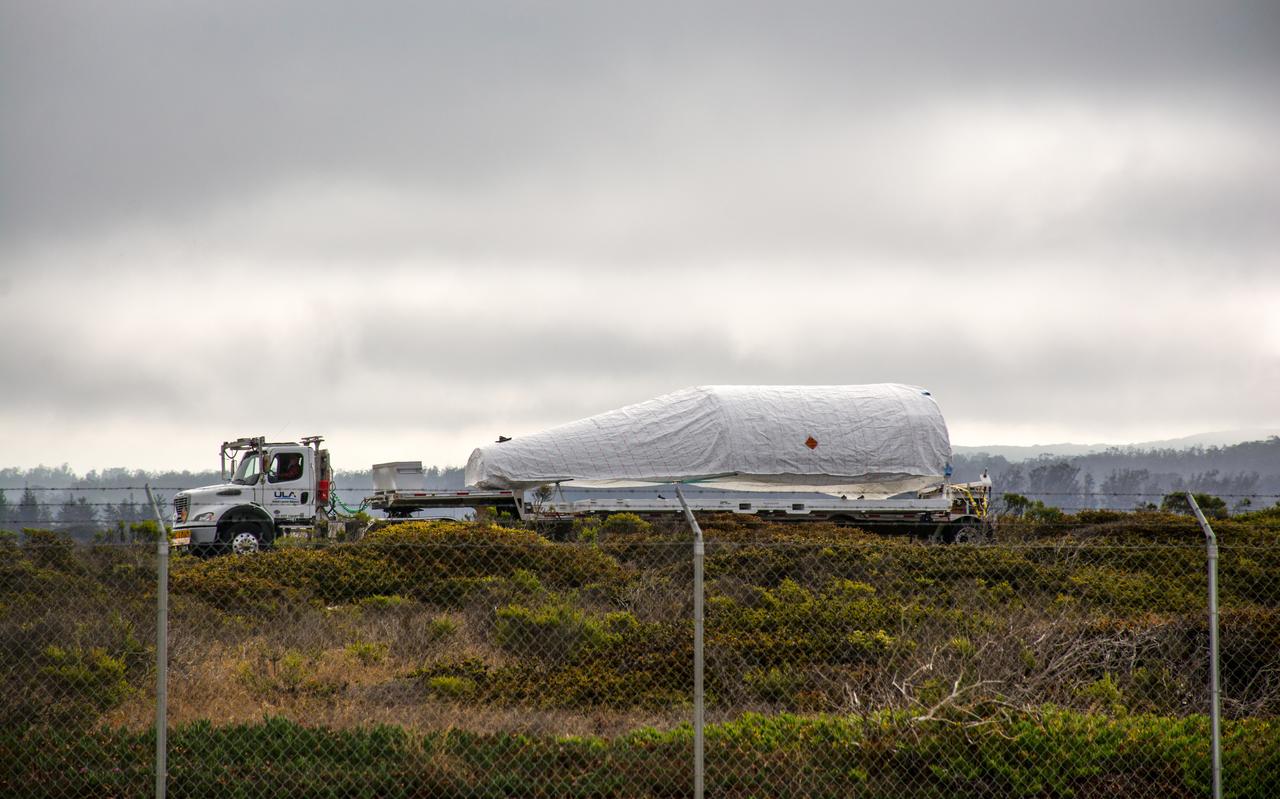
The United Launch Alliance (ULA) Atlas V payload fairing transits from Building 7525 to the Astrotech Processing Facility at Vandenberg Space Force Base (VSFB) in California on Aug. 10, 2022, for NASA and the National Oceanic and Atmospheric Administration’s (NOAA) Joint Polar Satellite System-2 (JPSS-2) satellite mission. JPSS-2 is the third satellite in the Joint Polar Satellite System series. It is scheduled to lift off from VSFB on Nov. 1 from Space Launch Complex-3. JPSS-2, which will be renamed NOAA-21 after reaching orbit, will join a constellation of JPSS satellites that orbit from the North to the South pole, circling Earth 14 times a day and providing a full view of the entire globe twice daily. The NOAA/NASA Suomi National Polar-orbiting Partnership (Suomi NPP) satellite, and NOAA-20, previously known as JPSS-1, are both already in orbit. Each satellite carries at least four advanced instruments to measure weather and climate conditions on Earth. Launching as a secondary payload to JPSS-2 is NASA’s Low-Earth Orbit Flight Test of an Inflatable Decelerator (LOFTID), dedicated to the memory of Bernard Kutter. LOFTID will demonstrate inflatable heat shield technology that could enable a variety of proposed NASA missions to destinations such as Mars, Venus, and Titan, as well as returning heavier payloads from low-Earth orbit.

Alise Fischer, communications, NASA Headquarters participates in a science briefing on Tuesday, Feb. 25, 2025, to discuss the upcoming launch of NASA’s SPHEREx (Spectro-Photometer for the History of the Universe, Epoch of Reionization and Ices Explorer) observatory and PUNCH (Polarimeter to Unify the Corona and Heliosphere) satellites at Vandenberg Space Force Base in California. SPHEREx will use its telescope to provide an all-sky spectral survey, creating a 3D map of the entire sky to help scientists investigate the origins of our universe. PUNCH will study origins of the Sun’s outflow of material, or the solar wind, capturing continuous 3D images of the Sun’s corona and the solar wind’s journey into the solar system.

The United Launch Alliance (ULA) Atlas V payload fairing is transported from Building 7525 to the Astrotech Processing Facility at Vandenberg Space Force Base (VSFB) in California on Aug. 10, 2022, for NASA and the National Oceanic and Atmospheric Administration’s (NOAA) Joint Polar Satellite System-2 (JPSS-2) satellite mission. JPSS-2 is the third satellite in the Joint Polar Satellite System series. It is scheduled to lift off from VSFB on Nov. 1 from Space Launch Complex-3. JPSS-2, which will be renamed NOAA-21 after reaching orbit, will join a constellation of JPSS satellites that orbit from the North to the South pole, circling Earth 14 times a day and providing a full view of the entire globe twice daily. The NOAA/NASA Suomi National Polar-orbiting Partnership (Suomi NPP) satellite, and NOAA-20, previously known as JPSS-1, are both already in orbit. Each satellite carries at least four advanced instruments to measure weather and climate conditions on Earth. Launching as a secondary payload to JPSS-2 is NASA’s Low-Earth Orbit Flight Test of an Inflatable Decelerator (LOFTID), dedicated to the memory of Bernard Kutter. LOFTID will demonstrate inflatable heat shield technology that could enable a variety of proposed NASA missions to destinations such as Mars, Venus, and Titan, as well as returning heavier payloads from low-Earth orbit.

Phil Korngut, SPHEREx instrument scientist, Caltech, participates in a science briefing on Tuesday, Feb. 25, 2025, to discuss the upcoming launch of NASA’s SPHEREx (Spectro-Photometer for the History of the Universe, Epoch of Reionization and Ices Explorer) observatory and PUNCH (Polarimeter to Unify the Corona and Heliosphere) satellites at Vandenberg Space Force Base in California. SPHEREx will use its telescope to provide an all-sky spectral survey, creating a 3D map of the entire sky to help scientists investigate the origins of our universe. PUNCH will study origins of the Sun’s outflow of material, or the solar wind, capturing continuous 3D images of the Sun’s corona and the solar wind’s journey into the solar system.

Rachel Akeson, SPHEREx science data center lead, Caltech/IPAC, participates in a science briefing on Tuesday, Feb. 25, 2025, to discuss the upcoming launch of NASA’s SPHEREx (Spectro-Photometer for the History of the Universe, Epoch of Reionization and Ices Explorer) observatory and PUNCH (Polarimeter to Unify the Corona and Heliosphere) satellites at Vandenberg Space Force Base in California. SPHEREx will use its telescope to provide an all-sky spectral survey, creating a 3D map of the entire sky to help scientists investigate the origins of our universe. PUNCH will study origins of the Sun’s outflow of material, or the solar wind, capturing continuous 3D images of the Sun’s corona and the solar wind’s journey into the solar system.
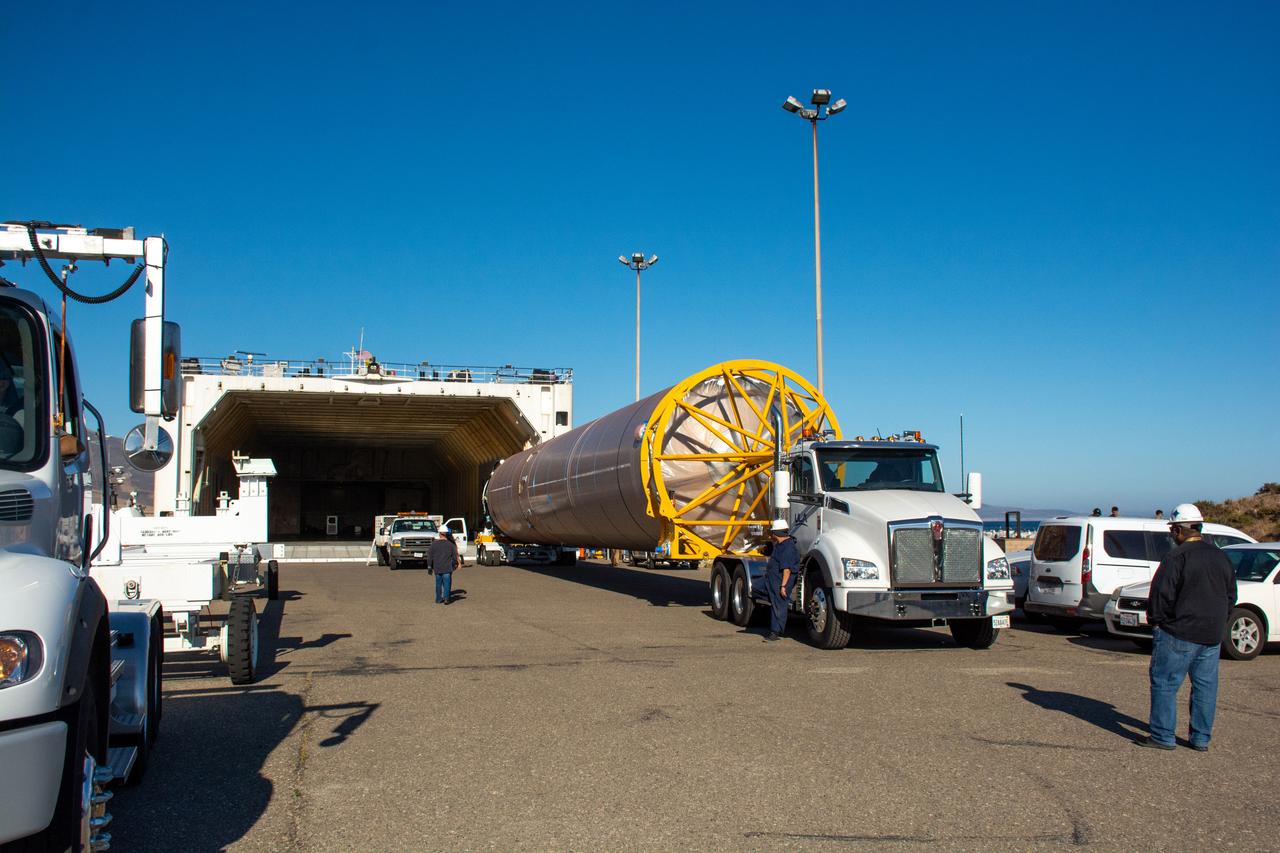
The United Launch Alliance (ULA) Atlas V booster is offloaded from its water transport at Vandenberg Space Force Base (VSFB) in California on July 11, 2022, for NASA and NOAA’s Joint Polar Satellite System-2 (JPSS-2) satellite mission. JPSS-2 is the third satellite in the Joint Polar Satellite System series. It is scheduled to lift off from VSFB on the final ULA Atlas V rocket to launch from Vandenberg. JPSS-2 will scan the globe as it orbits from the North to the South Pole, crossing the equator 14 times a day. From 512 miles above Earth, it will capture data that inform weather forecasts, extreme weather events, and climate change. The Visible Infrared Radiometer Suite instrument will collect imagery for global observations of the land, atmosphere, cryosphere, and oceans. Launching as a secondary payload to JPSS-2 is NASA’s Low-Earth Orbit Flight Test of an Inflatable Decelerator (LOFTID), dedicated to the memory of Bernard Kutter. LOFTID is a demonstration of a hypersonic inflatable aerodynamic decelerator, or aeroshell, technology that could one day help land humans on Mars.

The Surface Water and Ocean Topography (SWOT) spacecraft is transported from Astrotech to the SpaceX facility at Vandenberg Space Force Base in California on Nov. 21, 2022. SWOT is the first mission that will observe nearly all water on Earth’s surface, measuring the height of water in the planet’s lakes, rivers, reservoirs, and the ocean. The satellite is set to launch aboard a SpaceX Falcon 9 rocket in December from Vandenberg’s Space Launch Center-4 East. NASA’s Launch Services Program, based at the agency’s Kennedy Space Center in Florida, is managing the launch service.
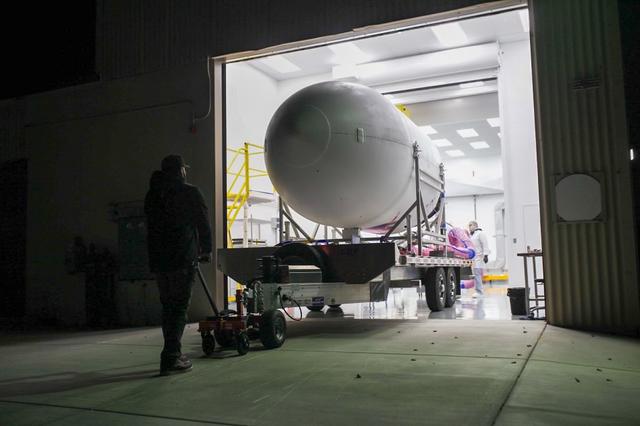
Firefly Aerospace’s Alpha rocket carrying eight CubeSats as part of NASA’s CubeSat Launch Initiative’s (CSLI) ELaNa (Educational Launch of Nanosatellites) 43 mission rolls out of the company’s Payload Processing Facility to Space Launch Complex 2 at Vandenberg Space Force Base, California, on Sunday, June 30, 2024. Firefly Aerospace is one of three companies selected to fly small satellites to space under NASA’s Launch Services Program Venture-Class Launch Services Demonstration 2 (VCLS Demo 2) contract awarded in December 2020.
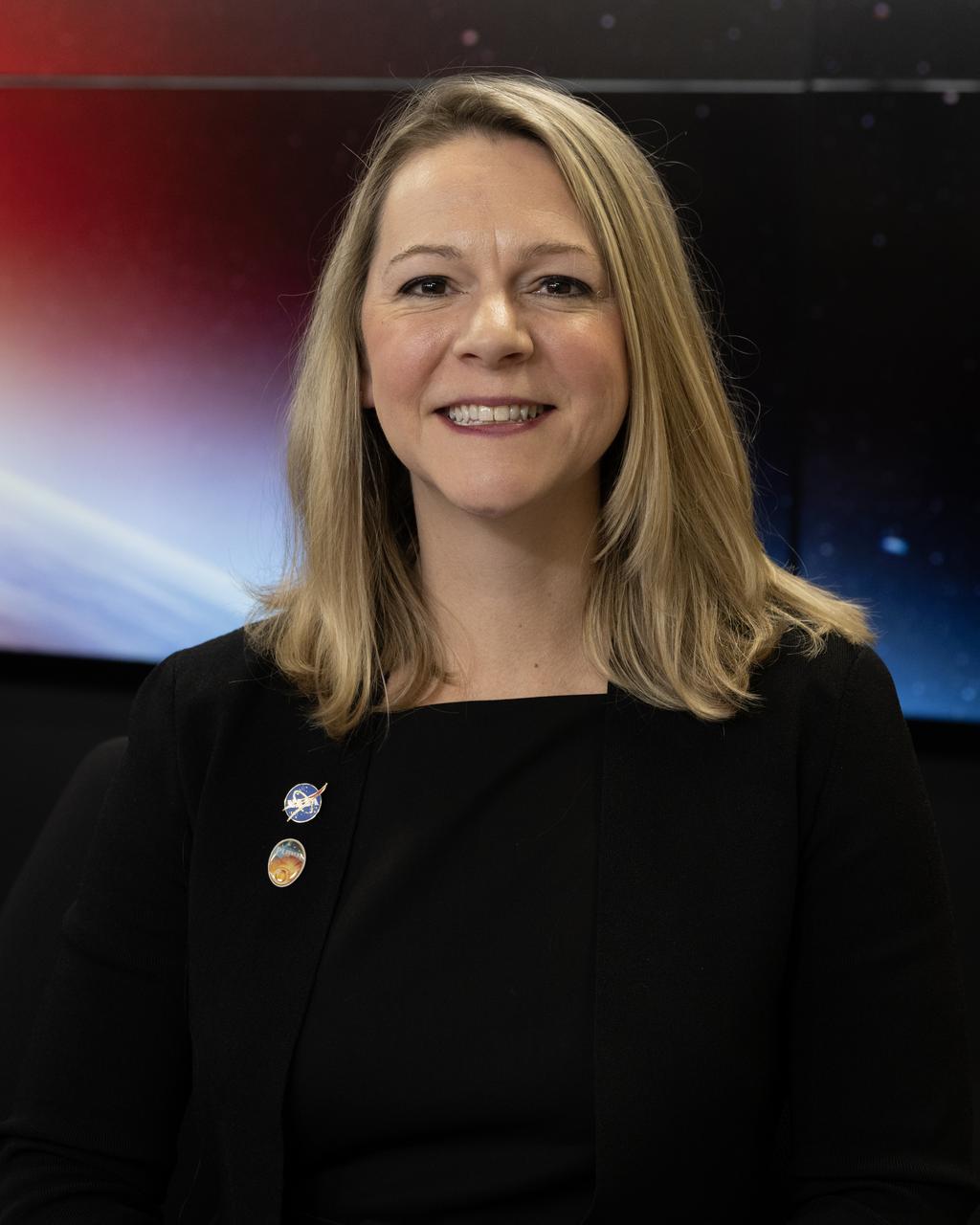
Nicholeen Viall, PUNCH Mission Scientist, NASA’s Goddard Flight Center, participates in a science briefing on Tuesday, Feb. 25, 2025, to discuss the upcoming launch of NASA’s SPHEREx (Spectro-Photometer for the History of the Universe, Epoch of Reionization and Ices Explorer) observatory and PUNCH (Polarimeter to Unify the Corona and Heliosphere) satellites at Vandenberg Space Force Base in California. SPHEREx will use its telescope to provide an all-sky spectral survey, creating a 3D map of the entire sky to help scientists investigate the origins of our universe. PUNCH will study origins of the Sun’s outflow of material, or the solar wind, capturing continuous 3D images of the Sun’s corona and the solar wind’s journey into the solar system.

Technicians remove the United Launch Alliance (ULA) Atlas V boattail from its shipping container following its arrival at the Horizontal Integration Facility at Vandenberg Space Force Base in California on July 28, 2022, for NASA and the National Oceanic and Atmospheric Administration’s Joint Polar Satellite System-2 (JPSS-2) mission. The boattail is the connecting piece of flight hardware that joins the rocket’s upper Centaur stage with the payload fairing, which will house the JPSS-2 satellite. JPSS-2 is the third satellite in the Joint Polar Satellite System series and will scan the Earth as it orbits from the North to the South Pole, crossing the equator 14 times a day. Operating from 512 miles above Earth, JPSS-2 will capture data to improve weather forecasts, in turn helping scientists predict and prepare for extreme weather events and climate change. Launching as a secondary payload aboard the Atlas V is NASA’s Low-Earth Orbit Flight Test of an Inflatable Decelerator (LOFTID) – a demonstration of a cross-cutting aeroshell, or heat shield, for atmospheric re-entry. Dedicated to the memory of Bernard Kutter, LOFTID could be used for crewed and large robotic missions to Mars. Liftoff of the ULA Atlas V rocket is scheduled for Nov. 1, 2022, from Vandenberg’s Space Launch Complex-3E.
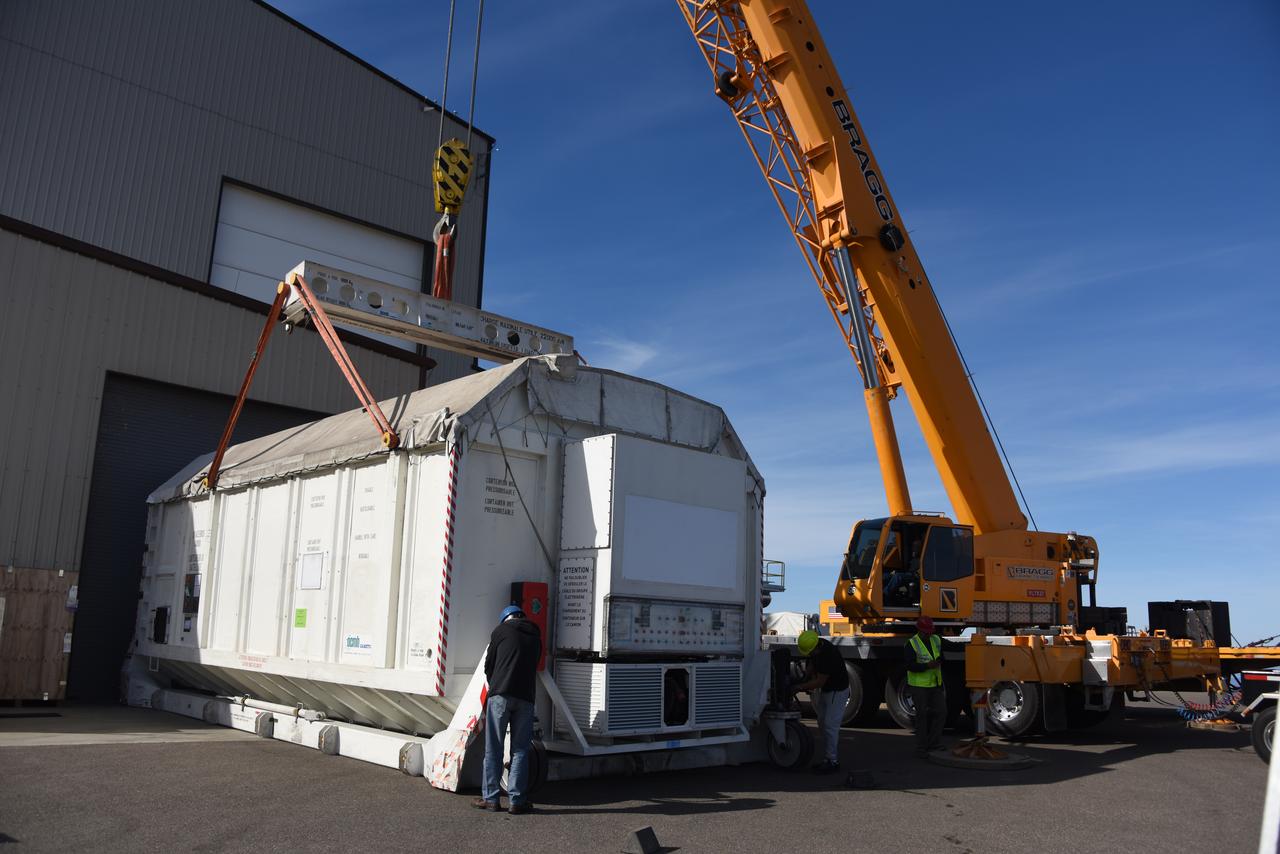
The Surface Water and Ocean Topography (SWOT) spacecraft is transported from Astrotech to the SpaceX facility at Vandenberg Space Force Base in California on Nov. 21, 2022. SWOT is the first mission that will observe nearly all water on Earth’s surface, measuring the height of water in the planet’s lakes, rivers, reservoirs, and the ocean. The satellite is set to launch aboard a SpaceX Falcon 9 rocket in December from Vandenberg’s Space Launch Center-4 East. NASA’s Launch Services Program, based at the agency’s Kennedy Space Center in Florida, is managing the launch service.
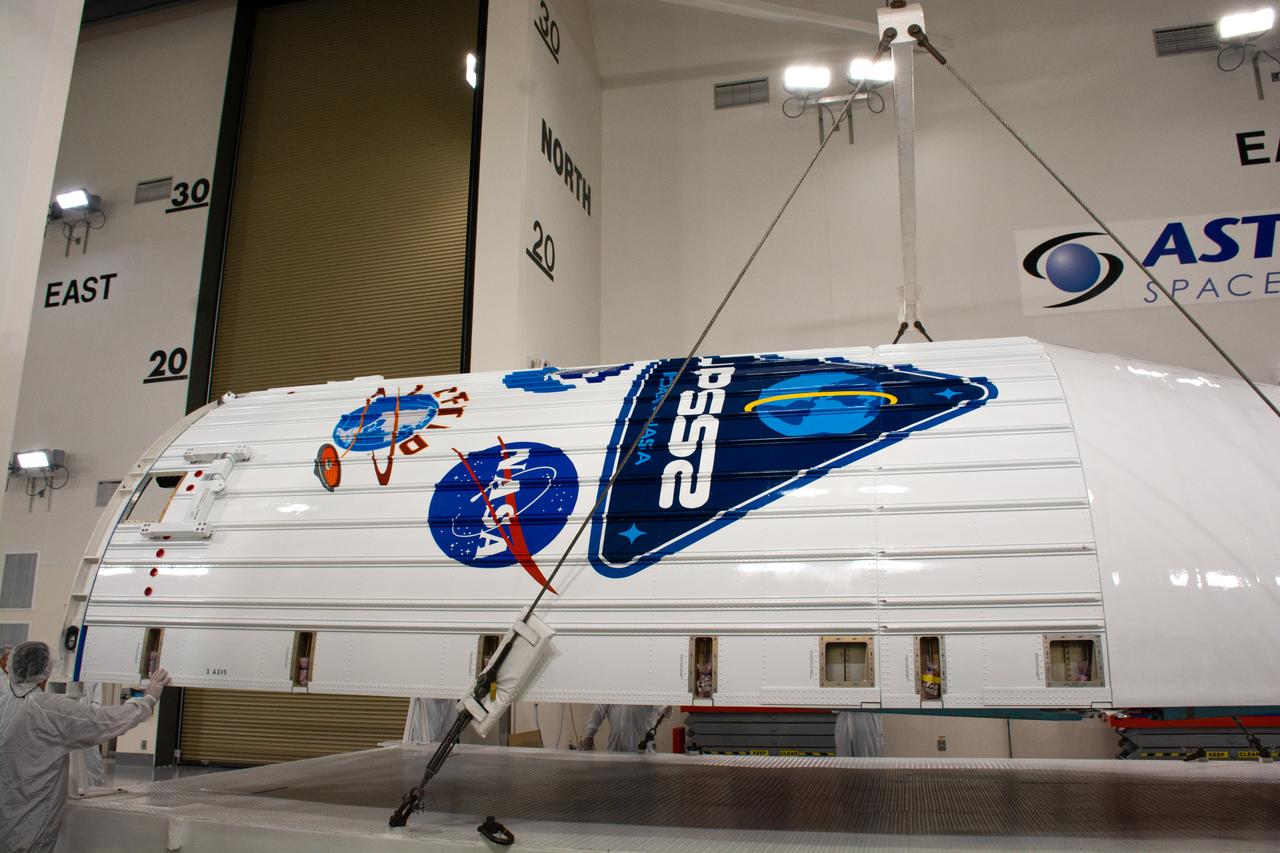
The United Launch Alliance (ULA) Atlas V payload fairing is moved inside the Astrotech Processing Facility at Vandenberg Space Force Base (VSFB) in California on Aug. 10, 2022, for NASA and the National Oceanic and Atmospheric Administration’s (NOAA) Joint Polar Satellite System-2 (JPSS-2) satellite mission. JPSS-2 is the third satellite in the Joint Polar Satellite System series. It is scheduled to lift off from VSFB on Nov. 1 from Space Launch Complex-3. JPSS-2, which will be renamed NOAA-21 after reaching orbit, will join a constellation of JPSS satellites that orbit from the North to the South pole, circling Earth 14 times a day and providing a full view of the entire globe twice daily. The NOAA/NASA Suomi National Polar-orbiting Partnership (Suomi NPP) satellite, and NOAA-20, previously known as JPSS-1, are both already in orbit. Each satellite carries at least four advanced instruments to measure weather and climate conditions on Earth. Launching as a secondary payload to JPSS-2 is NASA’s Low-Earth Orbit Flight Test of an Inflatable Decelerator (LOFTID), dedicated to the memory of Bernard Kutter. LOFTID will demonstrate inflatable heat shield technology that could enable a variety of proposed NASA missions to destinations such as Mars, Venus, and Titan, as well as returning heavier payloads from low-Earth orbit.
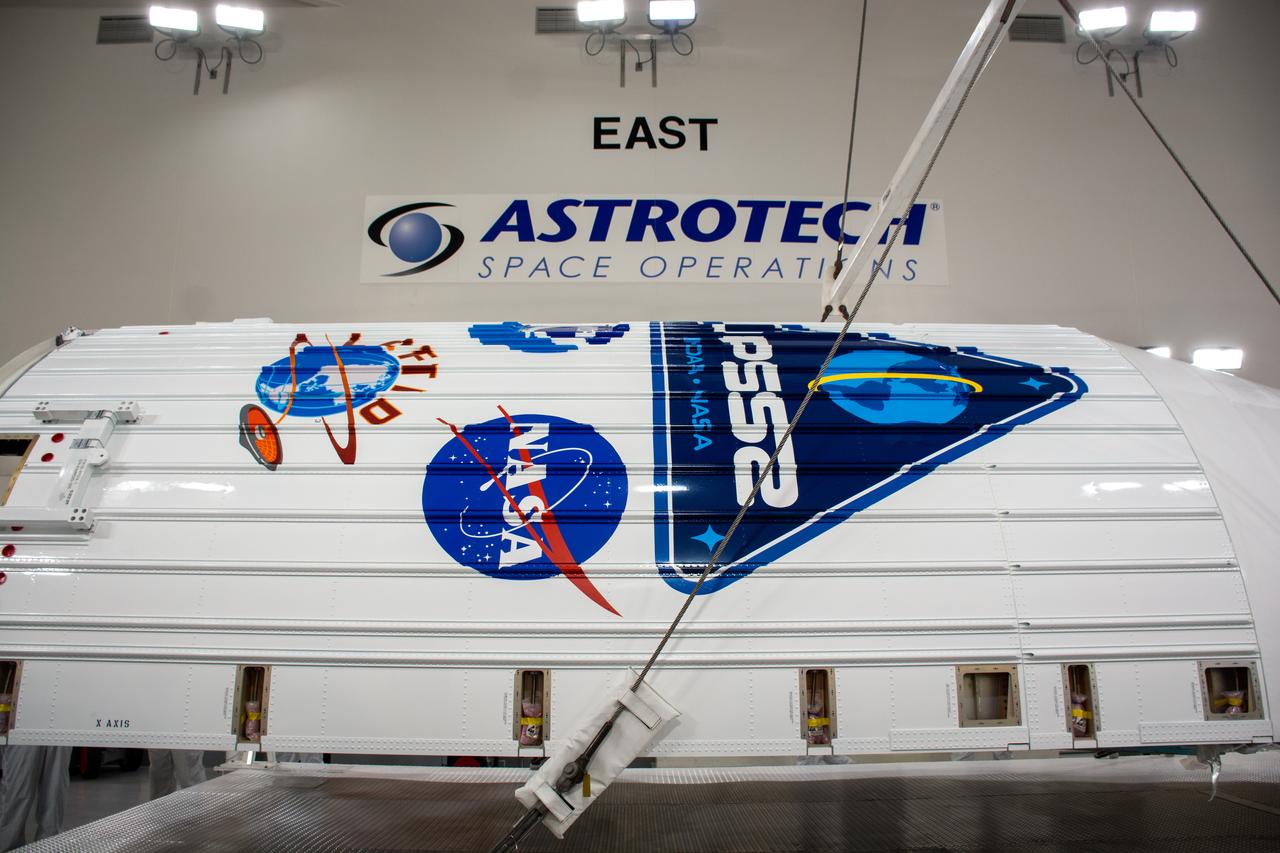
The United Launch Alliance (ULA) Atlas V payload fairing is moved inside the Astrotech Processing Facility at Vandenberg Space Force Base (VSFB) in California on Aug. 10, 2022, for NASA and the National Oceanic and Atmospheric Administration’s (NOAA) Joint Polar Satellite System-2 (JPSS-2) satellite mission. JPSS-2 is the third satellite in the Joint Polar Satellite System series. It is scheduled to lift off from VSFB on Nov. 1 from Space Launch Complex-3. JPSS-2, which will be renamed NOAA-21 after reaching orbit, will join a constellation of JPSS satellites that orbit from the North to the South pole, circling Earth 14 times a day and providing a full view of the entire globe twice daily. The NOAA/NASA Suomi National Polar-orbiting Partnership (Suomi NPP) satellite, and NOAA-20, previously known as JPSS-1, are both already in orbit. Each satellite carries at least four advanced instruments to measure weather and climate conditions on Earth. Launching as a secondary payload to JPSS-2 is NASA’s Low-Earth Orbit Flight Test of an Inflatable Decelerator (LOFTID), dedicated to the memory of Bernard Kutter. LOFTID will demonstrate inflatable heat shield technology that could enable a variety of proposed NASA missions to destinations such as Mars, Venus, and Titan, as well as returning heavier payloads from low-Earth orbit.
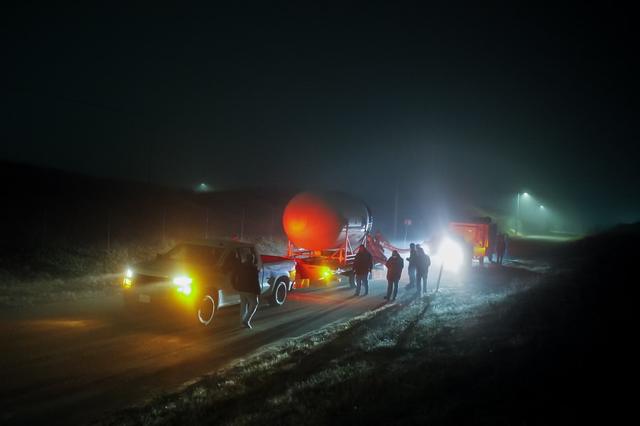
Firefly Aerospace’s Alpha rocket carrying eight CubeSats as part of NASA’s CubeSat Launch Initiative’s (CSLI) ELaNa (Educational Launch of Nanosatellites) 43 mission rolls out of the company’s Payload Processing Facility to Space Launch Complex 2 at Vandenberg Space Force Base, California, on Sunday, June 30, 2024. Firefly Aerospace is one of three companies selected to fly small satellites to space under NASA’s Launch Services Program Venture-Class Launch Services Demonstration 2 (VCLS Demo 2) contract awarded in December 2020.
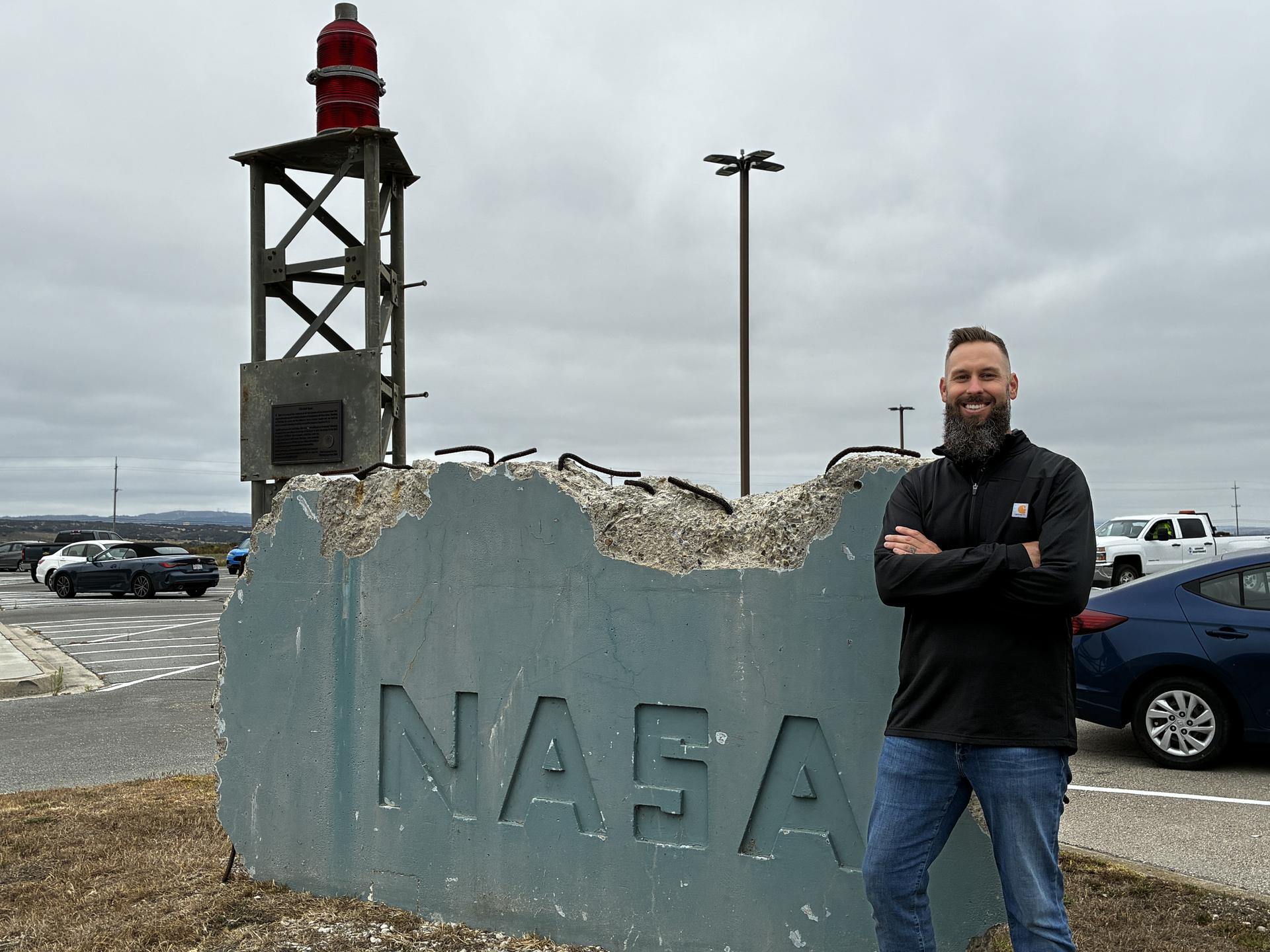
At Vandenberg Space Force Base in California, NASA employee Eric Fernandez stands by a preserved concrete section from the Space Launch Complex2 Mobile Service Tower counterweight, saved during demolition to retain the NASA insignia. The artifact was part of Delta and Delta II launches for decades before demolition, with its last launch for the agency being NASA’s ICESat2 on Sept. 15, 2018.
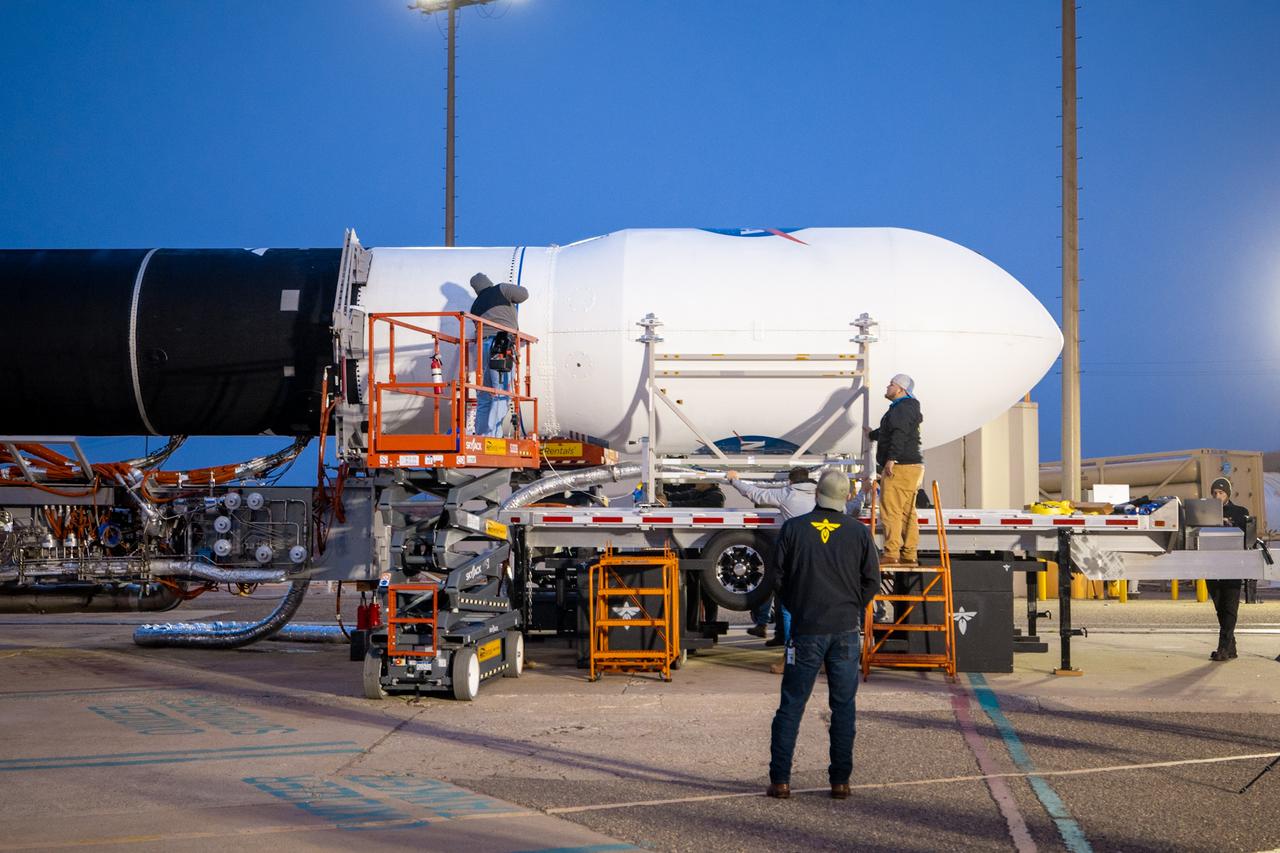
Firefly Aerospace’s Alpha rocket carrying eight CubeSats as part of NASA’s CubeSat Launch Initiative’s (CSLI) ELaNa (Educational Launch of Nanosatellites) 43 mission rolls out of the company’s Payload Processing Facility to Space Launch Complex 2 at Vandenberg Space Force Base, California, on Sunday, June 30, 2024. Firefly Aerospace is one of three companies selected to fly small satellites to space under NASA’s Launch Services Program Venture-Class Launch Services Demonstration 2 (VCLS Demo 2) contract awarded in December 2020.

Technicians remove the United Launch Alliance (ULA) Atlas V boattail from its shipping container following its arrival at the Horizontal Integration Facility at Vandenberg Space Force Base in California on July 28, 2022, for NASA and the National Oceanic and Atmospheric Administration’s Joint Polar Satellite System-2 (JPSS-2) mission. The boattail is the connecting piece of flight hardware that joins the rocket’s upper Centaur stage with the payload fairing, which will house the JPSS-2 satellite. JPSS-2 is the third satellite in the Joint Polar Satellite System series and will scan the Earth as it orbits from the North to the South Pole, crossing the equator 14 times a day. Operating from 512 miles above Earth, JPSS-2 will capture data to improve weather forecasts, in turn helping scientists predict and prepare for extreme weather events and climate change. Launching as a secondary payload aboard the Atlas V is NASA’s Low-Earth Orbit Flight Test of an Inflatable Decelerator (LOFTID) – a demonstration of a cross-cutting aeroshell, or heat shield, for atmospheric re-entry. Dedicated to the memory of Bernard Kutter, LOFTID could be used for crewed and large robotic missions to Mars. Liftoff of the ULA Atlas V rocket is scheduled for Nov. 1, 2022, from Vandenberg’s Space Launch Complex-3E.
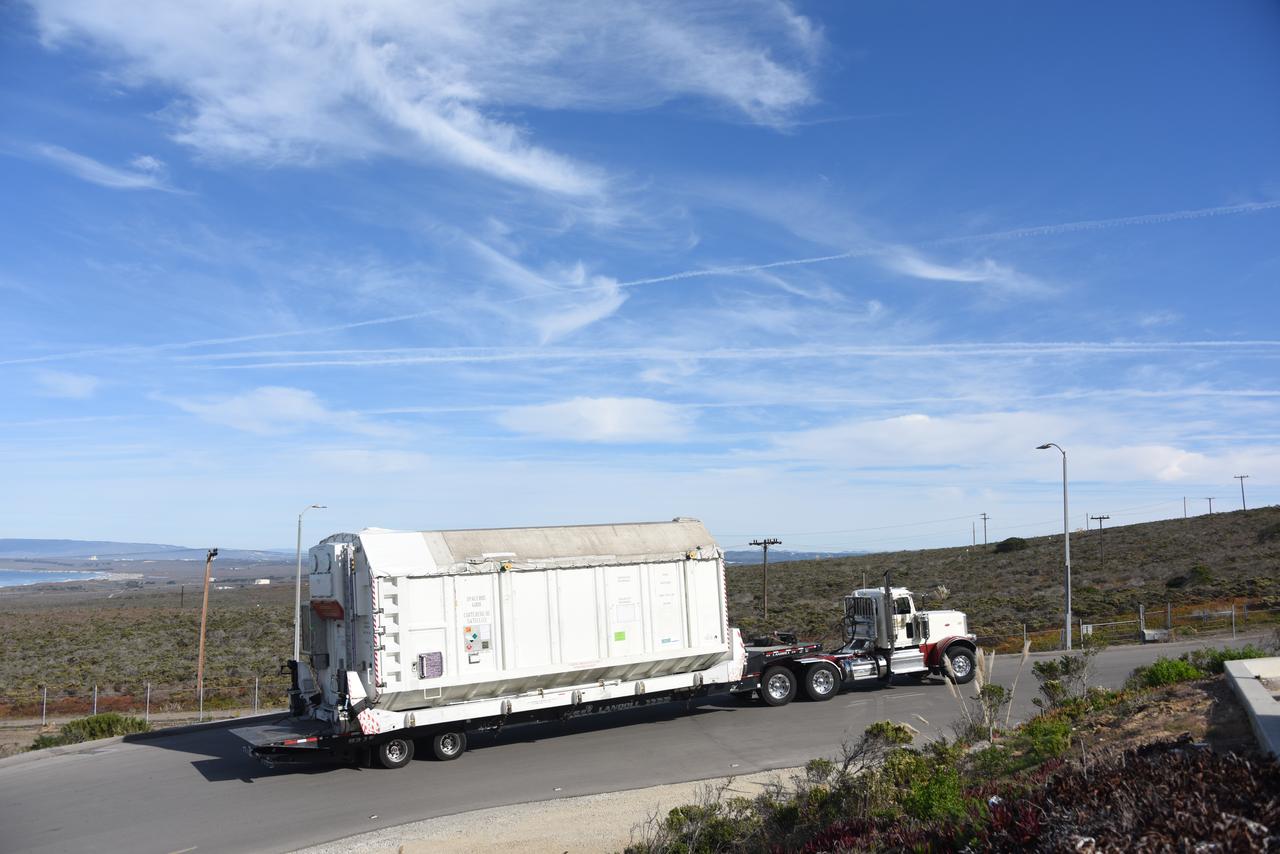
The Surface Water and Ocean Topography (SWOT) spacecraft is transported from Astrotech to the SpaceX facility at Vandenberg Space Force Base in California on Nov. 21, 2022. SWOT is the first mission that will observe nearly all water on Earth’s surface, measuring the height of water in the planet’s lakes, rivers, reservoirs, and the ocean. The satellite is set to launch aboard a SpaceX Falcon 9 rocket in December from Vandenberg’s Space Launch Center-4 East. NASA’s Launch Services Program, based at the agency’s Kennedy Space Center in Florida, is managing the launch service.

Joe Westlake, director, Heliophysics Division, NASA Headquarters, participates in a science briefing on Tuesday, Feb. 25, 2025, to discuss the upcoming launch of NASA’s SPHEREx (Spectro-Photometer for the History of the Universe, Epoch of Reionization and Ices Explorer) observatory and PUNCH (Polarimeter to Unify the Corona and Heliosphere) satellites at Vandenberg Space Force Base in California. SPHEREx will use its telescope to provide an all-sky spectral survey, creating a 3D map of the entire sky to help scientists investigate the origins of our universe. PUNCH will study origins of the Sun’s outflow of material, or the solar wind, capturing continuous 3D images of the Sun’s corona and the solar wind’s journey into the solar system.
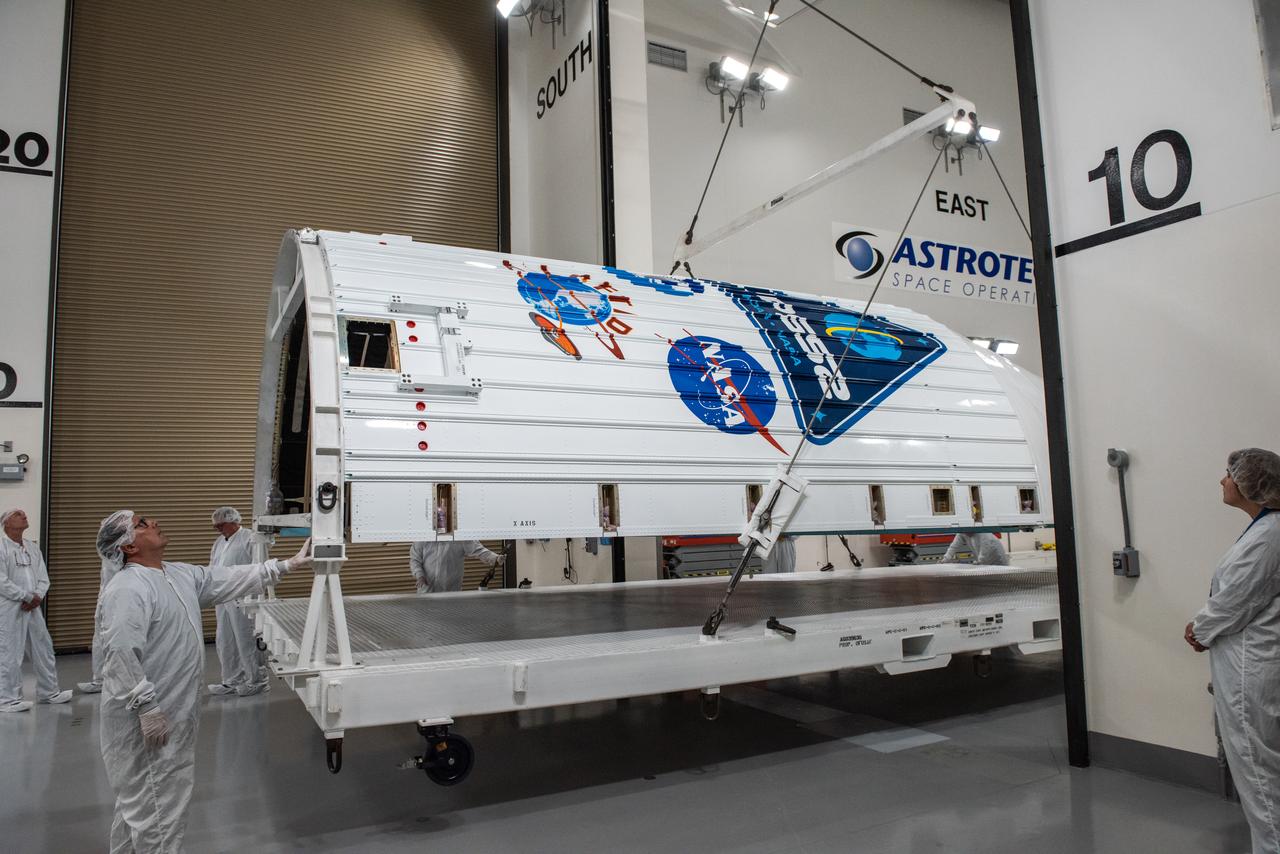
The United Launch Alliance (ULA) Atlas V payload fairing is transported from Building 7525 to the Astrotech Processing Facility at Vandenberg Space Force Base (VSFB) in California on Aug. 10, 2022, for NASA and the National Oceanic and Atmospheric Administration’s (NOAA) Joint Polar Satellite System-2 (JPSS-2) satellite mission. JPSS-2 is the third satellite in the Joint Polar Satellite System series. It is scheduled to lift off from VSFB on Nov. 1 from Space Launch Complex-3. JPSS-2, which will be renamed NOAA-21 after reaching orbit, will join a constellation of JPSS satellites that orbit from the North to the South pole, circling Earth 14 times a day and providing a full view of the entire globe twice daily. The NOAA/NASA Suomi National Polar-orbiting Partnership (Suomi NPP) satellite, and NOAA-20, previously known as JPSS-1, are both already in orbit. Each satellite carries at least four advanced instruments to measure weather and climate conditions on Earth. Launching as a secondary payload to JPSS-2 is NASA’s Low-Earth Orbit Flight Test of an Inflatable Decelerator (LOFTID), dedicated to the memory of Bernard Kutter. LOFTID will demonstrate inflatable heat shield technology that could enable a variety of proposed NASA missions to destinations such as Mars, Venus, and Titan, as well as returning heavier payloads from low-Earth orbit.

Shawn Domagal-Goldman, acting director, Astrophysics Division, NASA Headquarters, participates in a science briefing on Tuesday, Feb. 25, 2025, to discuss the upcoming launch of NASA’s SPHEREx (Spectro-Photometer for the History of the Universe, Epoch of Reionization and Ices Explorer) observatory and PUNCH (Polarimeter to Unify the Corona and Heliosphere) satellites at Vandenberg Space Force Base in California. SPHEREx will use its telescope to provide an all-sky spectral survey, creating a 3D map of the entire sky to help scientists investigate the origins of our universe. PUNCH will study origins of the Sun’s outflow of material, or the solar wind, capturing continuous 3D images of the Sun’s corona and the solar wind’s journey into the solar system.
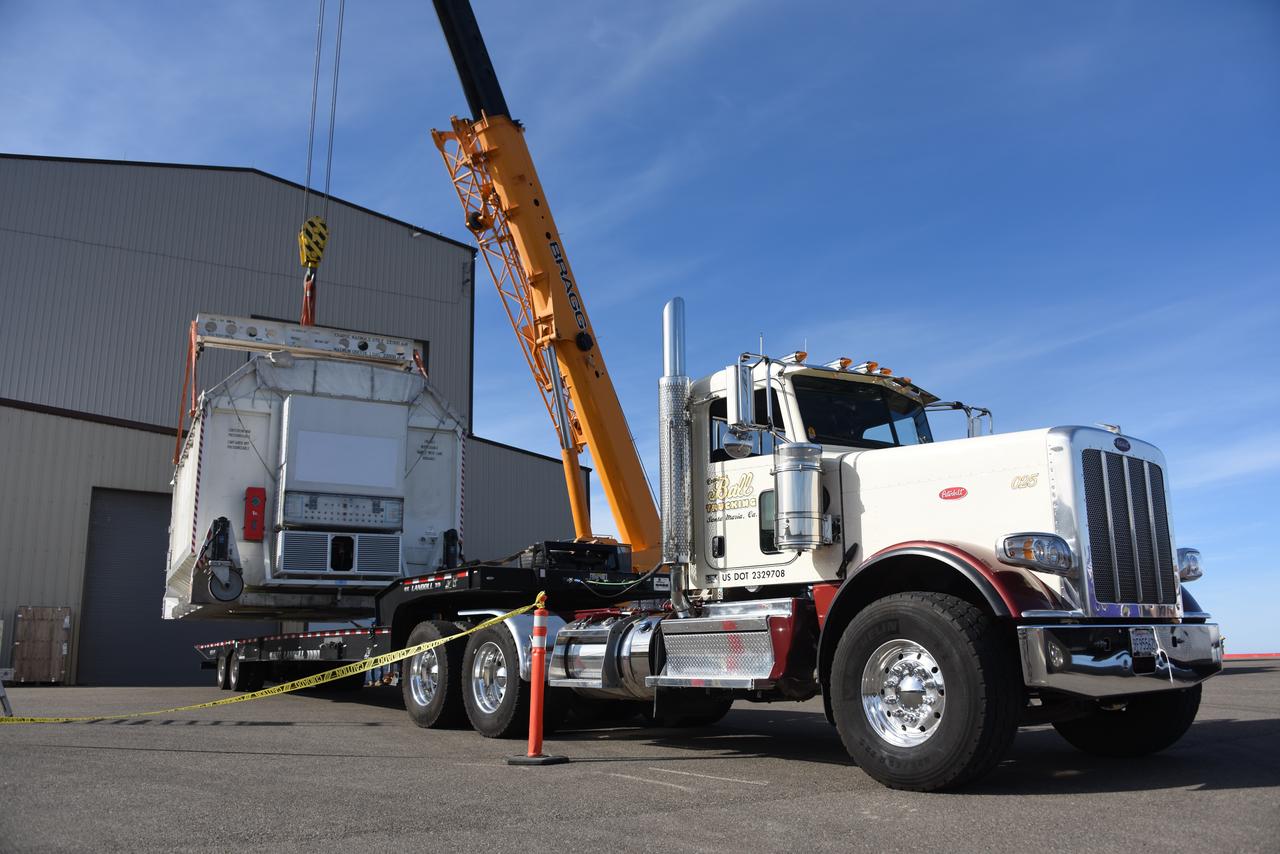
The Surface Water and Ocean Topography (SWOT) spacecraft is transported from Astrotech to the SpaceX facility at Vandenberg Space Force Base in California on Nov. 21, 2022. SWOT is the first mission that will observe nearly all water on Earth’s surface, measuring the height of water in the planet’s lakes, rivers, reservoirs, and the ocean. The satellite is set to launch aboard a SpaceX Falcon 9 rocket in December from Vandenberg’s Space Launch Center-4 East. NASA’s Launch Services Program, based at the agency’s Kennedy Space Center in Florida, is managing the launch service.
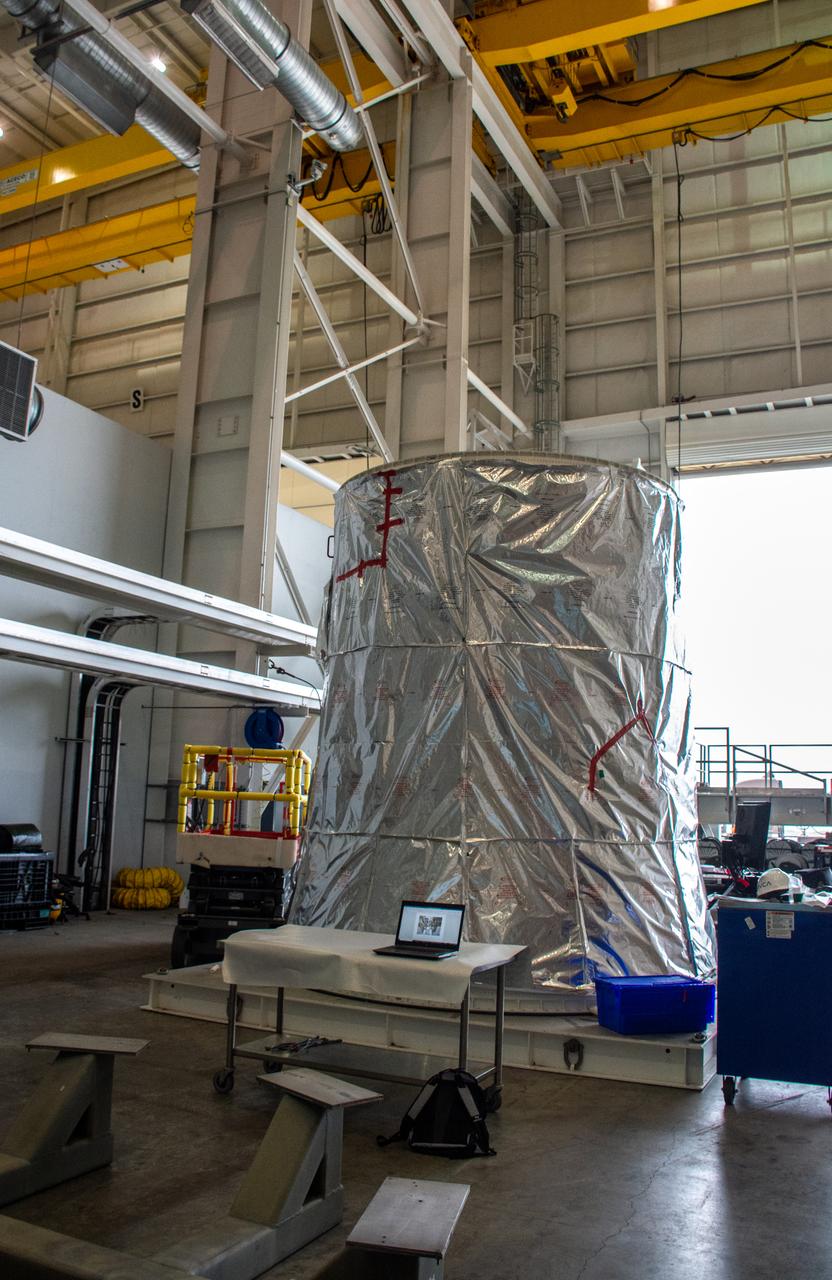
The interstage adapter (ISA) for the United Launch Alliance (ULA) Atlas V rocket that will launch NASA and the National Oceanic and Atmospheric Administration’s Joint Polar Satellite System-2 (JPSS-2) mission arrives at the Horizontal Integration Facility at Vandenberg Space Force Base in California on July 28, 2022. The ISA is the connecting piece of hardware between the Atlas V booster and the rocket’s Centaur upper stage. JPSS-2 is the third satellite in the Joint Polar Satellite System series and will scan the Earth as it orbits from the North to the South Pole, crossing the equator 14 times a day. Operating from 512 miles above Earth, JPSS-2 will capture data to improve weather forecasts, in turn helping scientists predict and prepare for extreme weather events and climate change. Launching as a secondary payload aboard the Atlas V is NASA’s Low-Earth Orbit Flight Test of an Inflatable Decelerator (LOFTID) – a demonstration of a cross-cutting aeroshell, or heat shield, for atmospheric re-entry. Dedicated to the memory of Bernard Kutter, LOFTID could be used for crewed and large robotic missions to Mars. Liftoff of the ULA Atlas V rocket is scheduled for Nov. 1, 2022, from Vandenberg’s Space Launch Complex-3E.
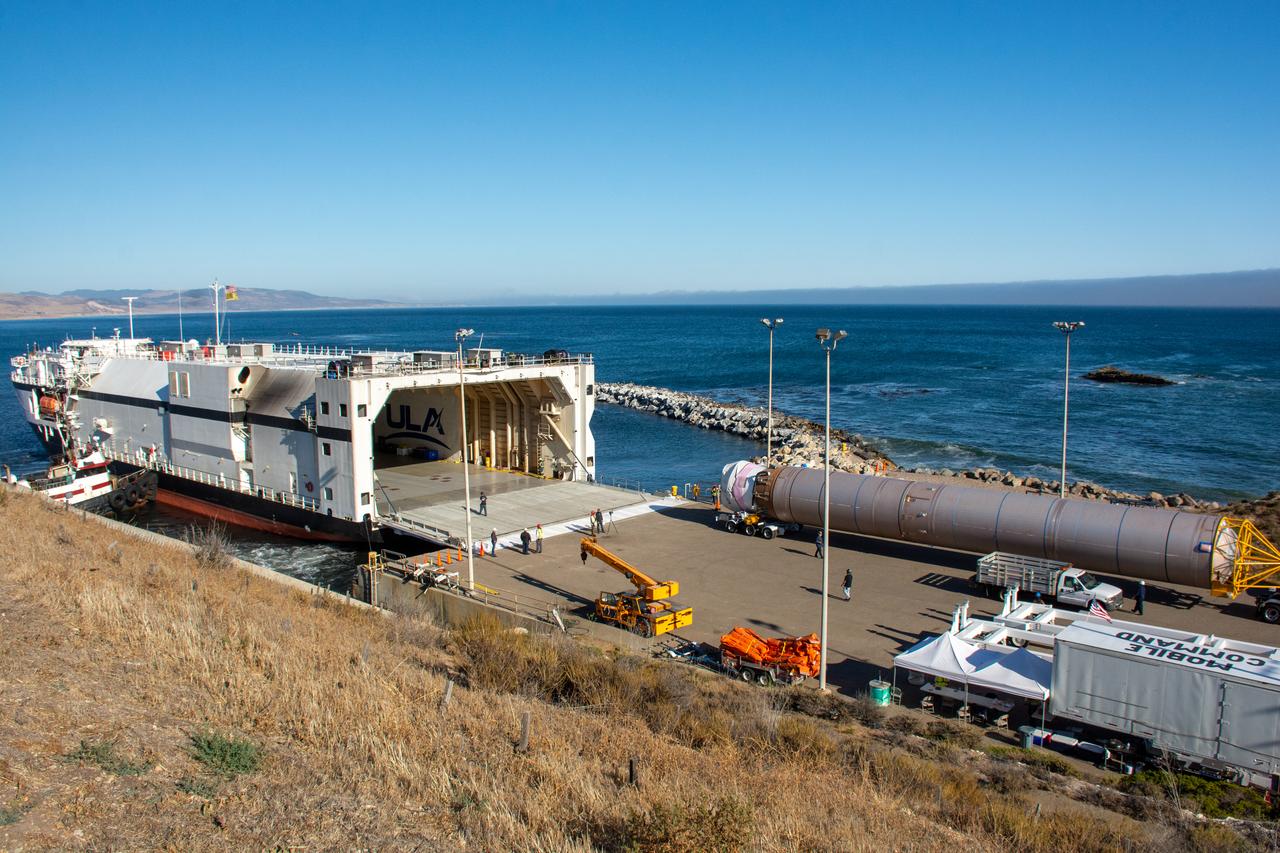
The United Launch Alliance (ULA) Atlas V booster is offloaded from its water transport at Vandenberg Space Force Base (VSFB) in California on July 11, 2022, for NASA and NOAA’s Joint Polar Satellite System-2 (JPSS-2) satellite mission. JPSS-2 is the third satellite in the Joint Polar Satellite System series. It is scheduled to lift off from VSFB on the final ULA Atlas V rocket to launch from Vandenberg. JPSS-2 will scan the globe as it orbits from the North to the South Pole, crossing the equator 14 times a day. From 512 miles above Earth, it will capture data that inform weather forecasts, extreme weather events, and climate change. The Visible Infrared Radiometer Suite instrument will collect imagery for global observations of the land, atmosphere, cryosphere, and oceans. Launching as a secondary payload to JPSS-2 is NASA’s Low-Earth Orbit Flight Test of an Inflatable Decelerator (LOFTID), dedicated to the memory of Bernard Kutter. LOFTID is a demonstration of a hypersonic inflatable aerodynamic decelerator, or aeroshell, technology that could one day help land humans on Mars.
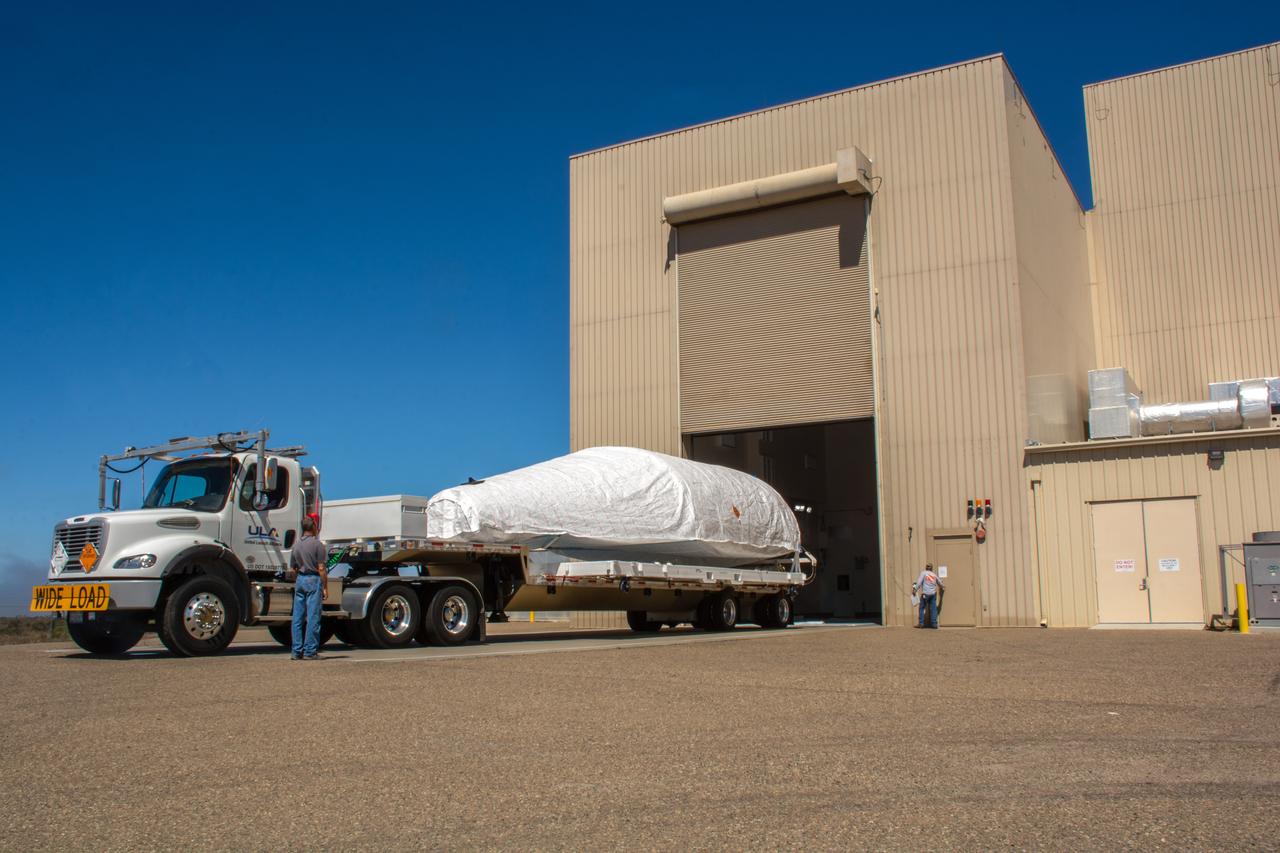
The United Launch Alliance (ULA) Atlas V payload fairing arrives at the Astrotech Processing Facility at Vandenberg Space Force Base (VSFB) in California on Aug. 10, 2022, for NASA and the National Oceanic and Atmospheric Administration’s (NOAA) Joint Polar Satellite System-2 (JPSS-2) satellite mission. JPSS-2 is the third satellite in the Joint Polar Satellite System series. It is scheduled to lift off from VSFB on Nov. 1 from Space Launch Complex-3. JPSS-2, which will be renamed NOAA-21 after reaching orbit, will join a constellation of JPSS satellites that orbit from the North to the South pole, circling Earth 14 times a day and providing a full view of the entire globe twice daily. The NOAA/NASA Suomi National Polar-orbiting Partnership (Suomi NPP) satellite, and NOAA-20, previously known as JPSS-1, are both already in orbit. Each satellite carries at least four advanced instruments to measure weather and climate conditions on Earth. Launching as a secondary payload to JPSS-2 is NASA’s Low-Earth Orbit Flight Test of an Inflatable Decelerator (LOFTID), dedicated to the memory of Bernard Kutter. LOFTID will demonstrate inflatable heat shield technology that could enable a variety of proposed NASA missions to destinations such as Mars, Venus, and Titan, as well as returning heavier payloads from low-Earth orbit.
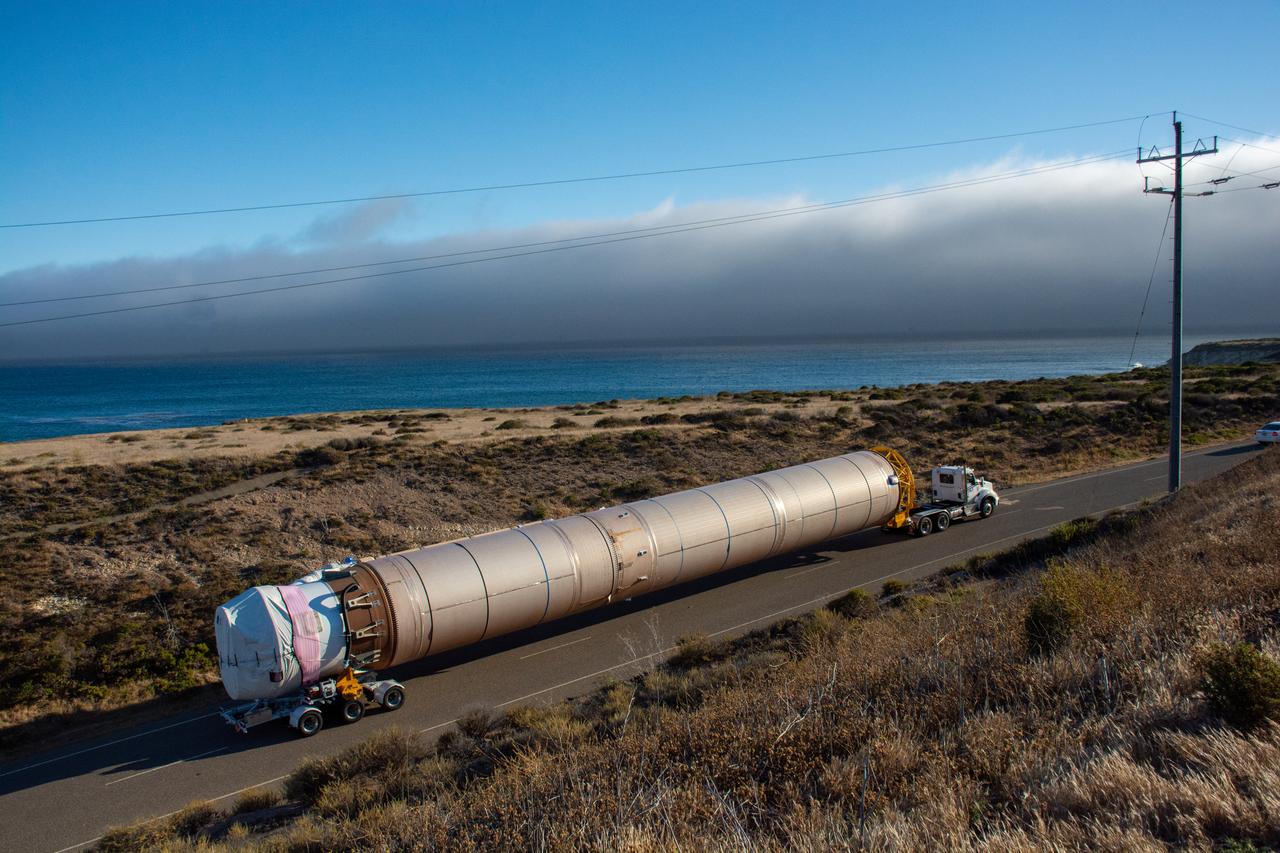
The United Launch Alliance (ULA) Atlas V booster is transported to the Horizontal Integration Facility at Vandenberg Space Force Base (VSFB) in California on July 11, 2022, for NASA and NOAA’s Joint Polar Satellite System-2 (JPSS-2) satellite mission. JPSS-2 is the third satellite in the Joint Polar Satellite System series. It is scheduled to lift off from VSFB on the final ULA Atlas V rocket to launch from Vandenberg. JPSS-2 will scan the globe as it orbits from the North to the South Pole, crossing the equator 14 times a day. From 512 miles above Earth, it will capture data that inform weather forecasts, extreme weather events, and climate change. The Visible Infrared Radiometer Suite instrument will collect imagery for global observations of the land, atmosphere, cryosphere, and oceans. Launching as a secondary payload to JPSS-2 is NASA’s Low-Earth Orbit Flight Test of an Inflatable Decelerator (LOFTID), dedicated to the memory of Bernard Kutter. LOFTID is a demonstration of a hypersonic inflatable aerodynamic decelerator, or aeroshell, technology that could one day help land humans on Mars.
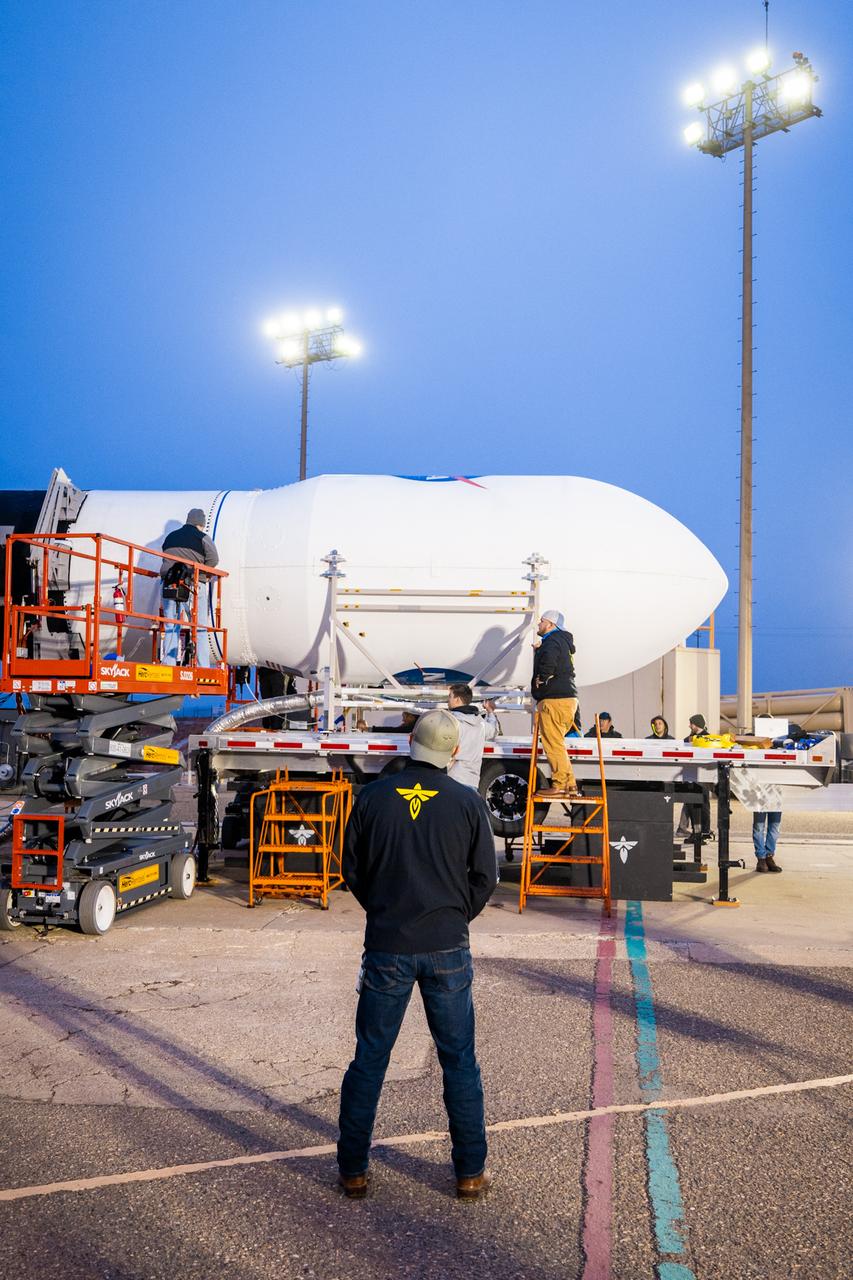
Firefly Aerospace’s Alpha rocket carrying eight CubeSats as part of NASA’s CubeSat Launch Initiative’s (CSLI) ELaNa (Educational Launch of Nanosatellites) 43 mission rolls out of the company’s Payload Processing Facility to Space Launch Complex 2 at Vandenberg Space Force Base, California, on Sunday, June 30, 2024. Firefly Aerospace is one of three companies selected to fly small satellites to space under NASA’s Launch Services Program Venture-Class Launch Services Demonstration 2 (VCLS Demo 2) contract awarded in December 2020.
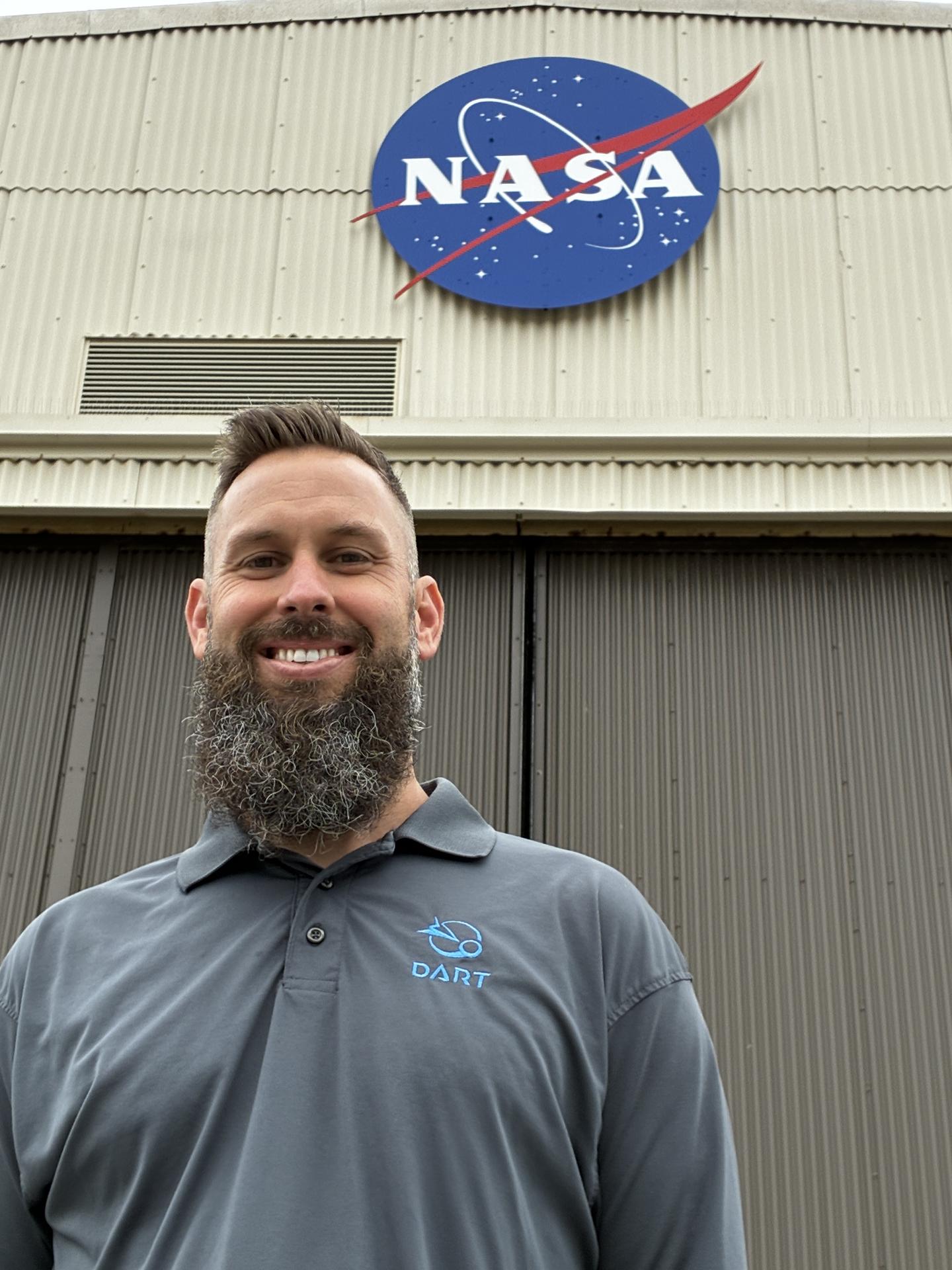
At Vandenberg Space Force Base in California, Eric Fernandez stands in front of Building 836, where he performs work as a telemetry engineer for NASA.

The United Launch Alliance (ULA) Atlas V booster is offloaded from its water transport at Vandenberg Space Force Base (VSFB) in California on July 11, 2022, for NASA and NOAA’s Joint Polar Satellite System-2 (JPSS-2) satellite mission. JPSS-2 is the third satellite in the Joint Polar Satellite System series. It is scheduled to lift off from VSFB on the final ULA Atlas V rocket to launch from Vandenberg. JPSS-2 will scan the globe as it orbits from the North to the South Pole, crossing the equator 14 times a day. From 512 miles above Earth, it will capture data that inform weather forecasts, extreme weather events, and climate change. The Visible Infrared Radiometer Suite instrument will collect imagery for global observations of the land, atmosphere, cryosphere, and oceans. Launching as a secondary payload to JPSS-2 is NASA’s Low-Earth Orbit Flight Test of an Inflatable Decelerator (LOFTID), dedicated to the memory of Bernard Kutter. LOFTID is a demonstration of a hypersonic inflatable aerodynamic decelerator, or aeroshell, technology that could one day help land humans on Mars.
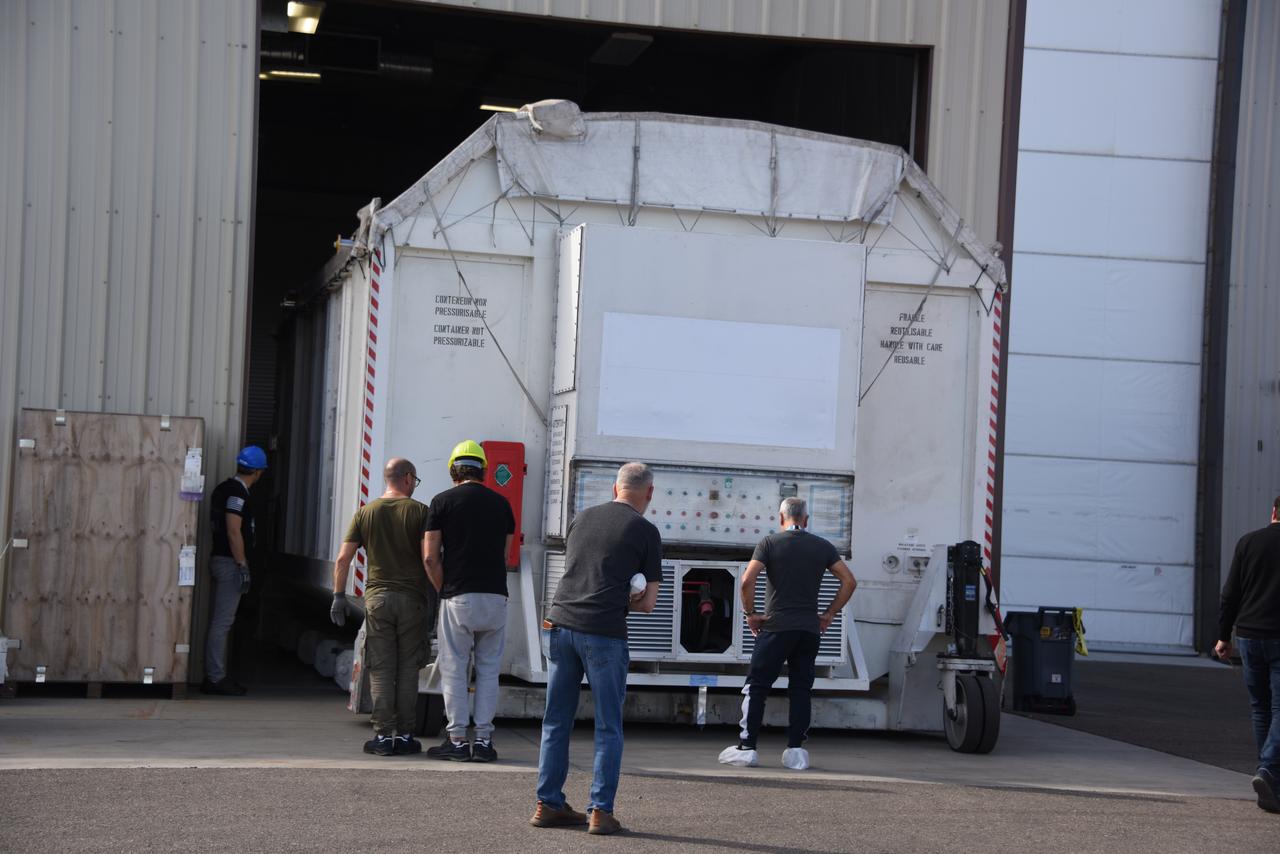
The Surface Water and Ocean Topography (SWOT) spacecraft is transported from Astrotech to the SpaceX facility at Vandenberg Space Force Base in California on Nov. 21, 2022. SWOT is the first mission that will observe nearly all water on Earth’s surface, measuring the height of water in the planet’s lakes, rivers, reservoirs, and the ocean. The satellite is set to launch aboard a SpaceX Falcon 9 rocket in December from Vandenberg’s Space Launch Center-4 East. NASA’s Launch Services Program, based at the agency’s Kennedy Space Center in Florida, is managing the launch service.