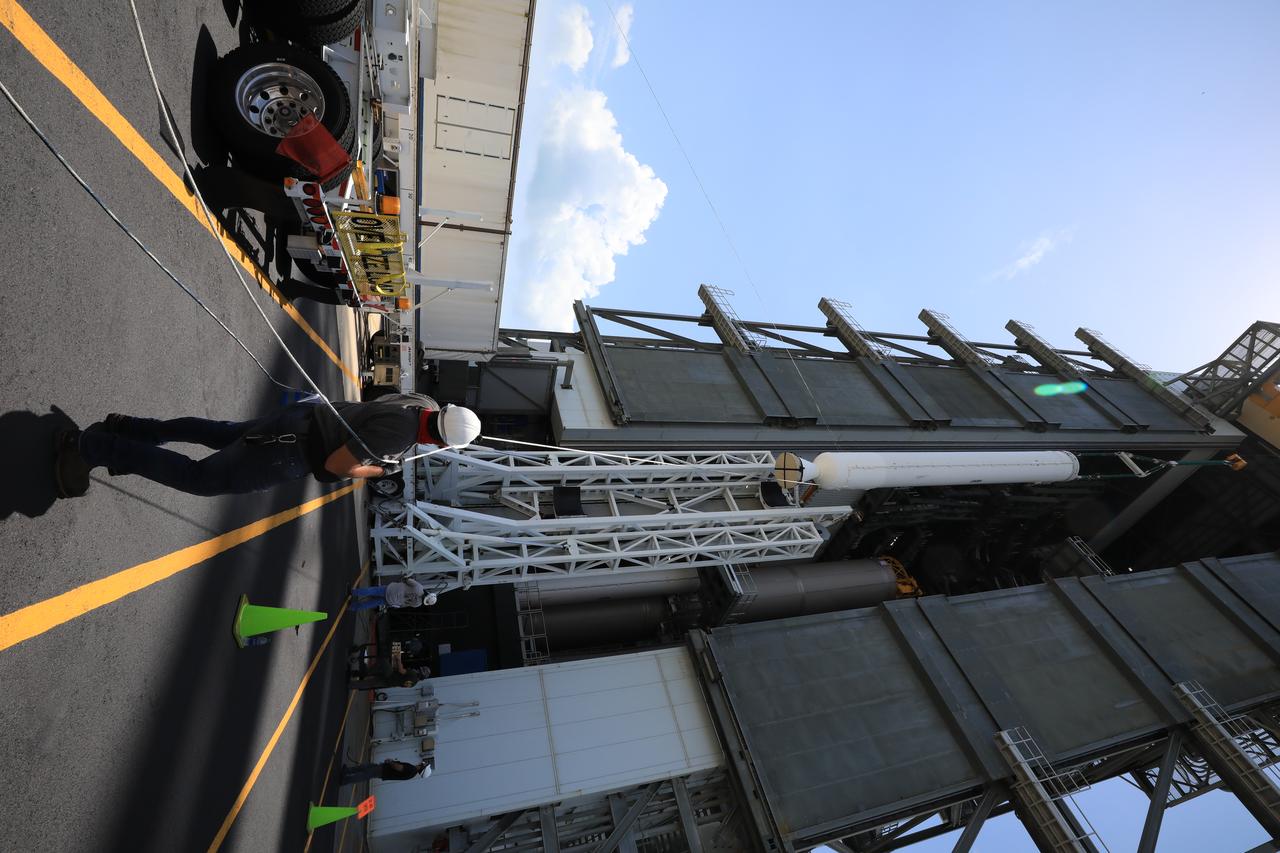
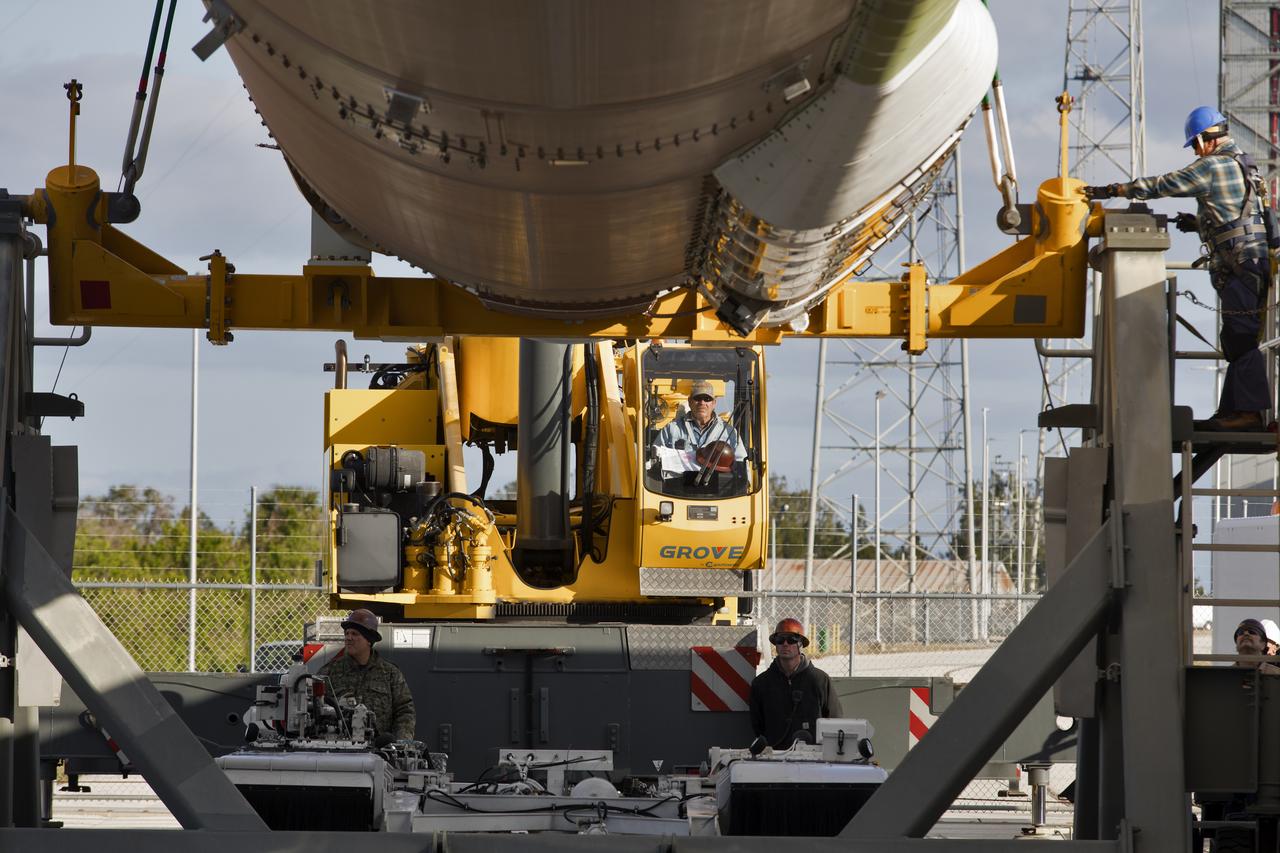
A crane is used to lift the third of four solid rocket boosters (SRB) for the United Launch Alliance Atlas V 541 rocket into the Vertical Integration Facility (VIF) at Space Launch Complex 41 at Cape Canaveral Air Force Station (CCAFS) in Florida on June 8, 2020. The SRB will be lifted up and mated to the Atlas V booster in the VIF. NASA’s Mars 2020 mission with the Perseverance rover is scheduled to launch on July 20, 2020, atop the Atlas V rocket from Pad 41. The rover is part of NASA’s Mars Exploration Program, a long-term effort of robotic exploration of the Red Planet. The rover’s seven instruments will search for habitable conditions in the ancient past and signs of past microbial life on Mars. The Launch Services Program at Kennedy is responsible for launch management.
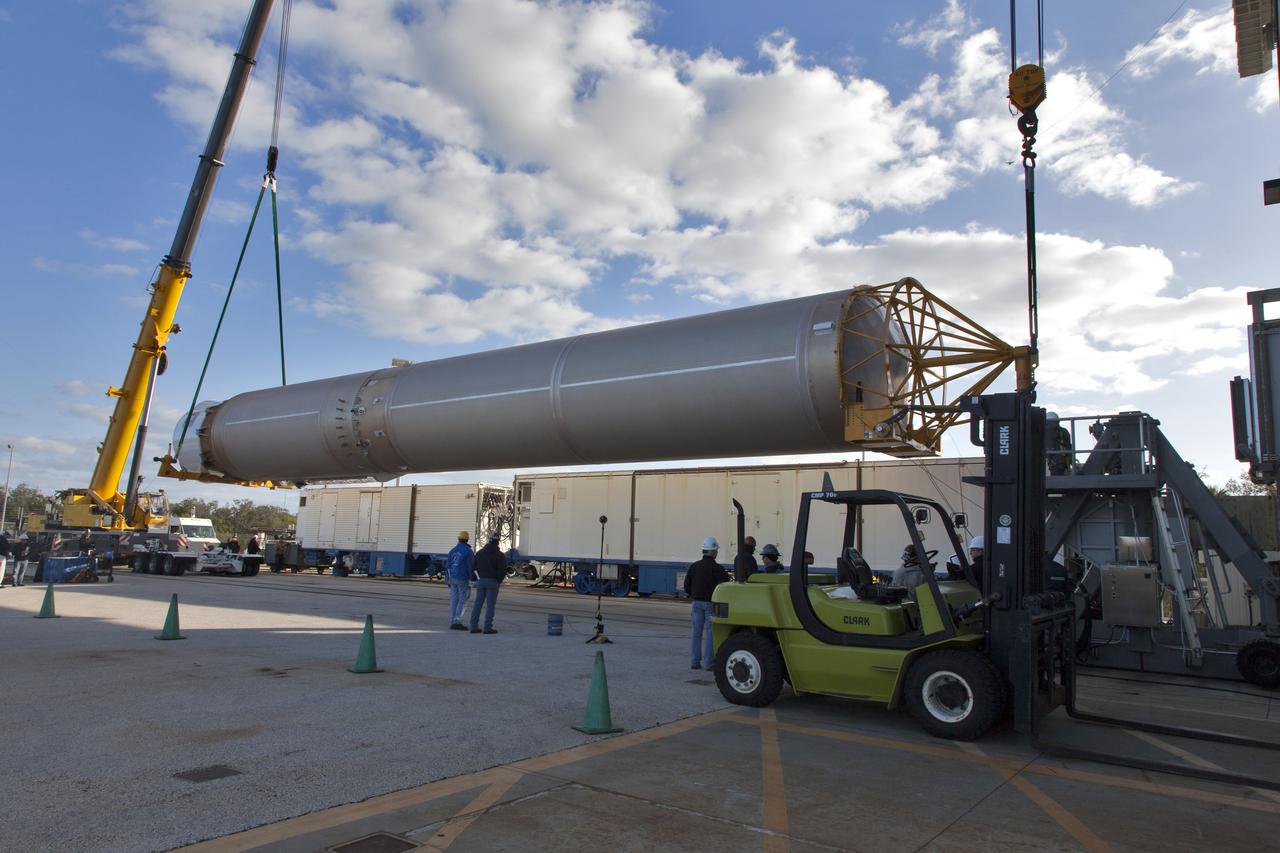
A crane lifts a United Launch Alliance Atlas V first stage at the Vertical Integration Facility at Space Launch Complex 41 at Cape Canaveral Air Force Station in Florida. The rocket will be positioned on its launcher to boost the Geostationary Operational Environmental Satellite, or GOES-S. It will be the second in a series of four advanced geostationary weather satellites and will significantly improve the detection and observation of environmental phenomena that directly affect public safety. GOES-S is slated to launch March 1, 2018.
Preparations are underway to lift the fourth and final solid rocket booster (SRB) for the United Launch Alliance Atlas V 541 rocket into the Vertical Integration Facility (VIF) at Space Launch Complex 41 at Cape Canaveral Air Force Station (CCAFS) in Florida on June 9, 2020. The SRB will be lifted and mated to the Atlas V booster in the VIF. The Mars Perseverance rover is scheduled to launch in July 2020, atop the Atlas V rocket from Pad 41. The rover is part of NASA’s Mars Exploration Program, a long-term effort of robotic exploration of the Red Planet. The rover’s seven instruments will search for habitable conditions in the ancient past and signs of past microbial life on Mars. The Launch Services Program at Kennedy is responsible for launch management.
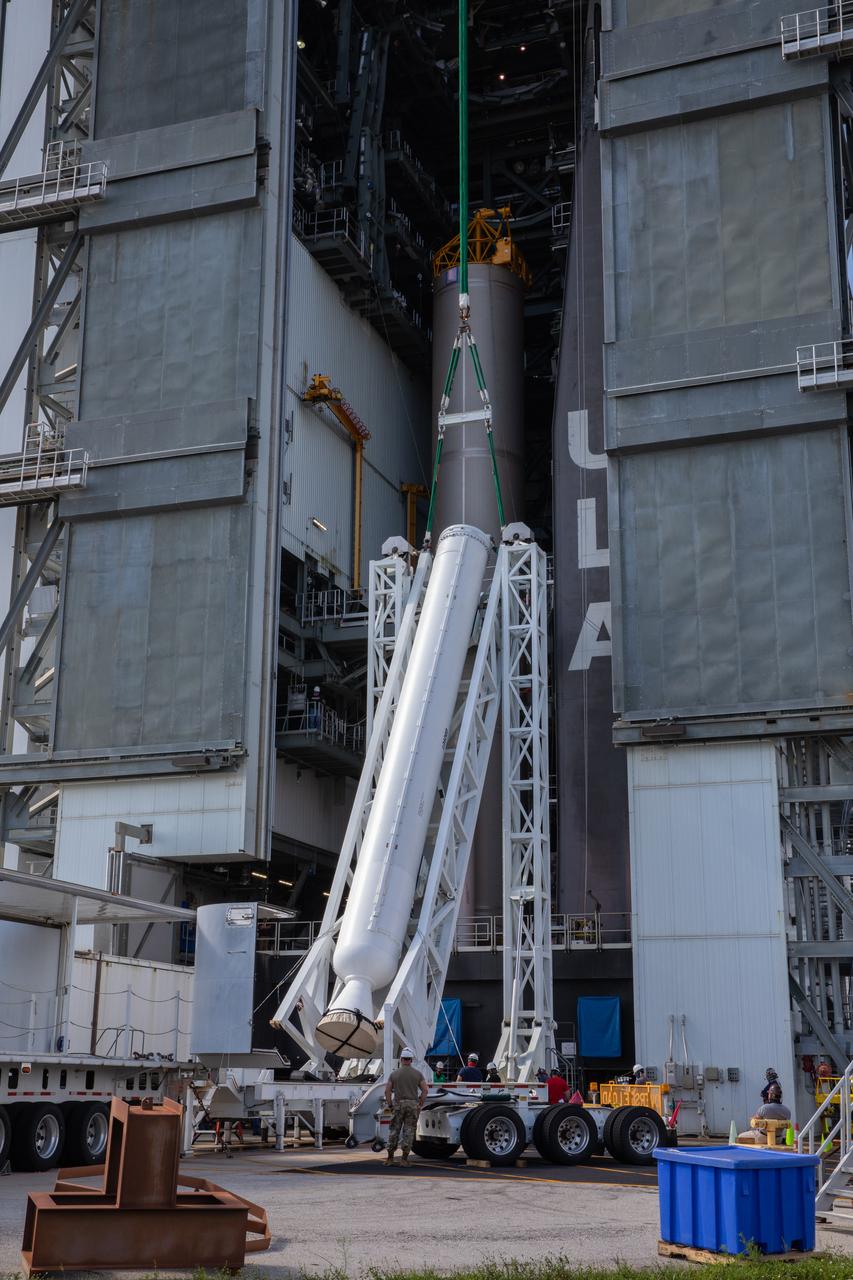
A lifting device raises the fourth and final solid rocket booster (SRB) for the United Launch Alliance Atlas V 541 rocket into the vertical position at the Vertical Integration Facility (VIF) at Space Launch Complex 41 at Cape Canaveral Air Force Station (CCAFS) in Florida on June 9, 2020. The SRB will be lifted up and mated to the Atlas V booster in the VIF. NASA’s Mars 2020 mission with the Perseverance rover is scheduled to launch in July 2020, atop the Atlas V rocket from Pad 41. The rover is part of NASA’s Mars Exploration Program, a long-term effort of robotic exploration of the Red Planet. The rover’s seven instruments will search for habitable conditions in the ancient past and signs of past microbial life on Mars. The Launch Services Program at Kennedy is responsible for launch management.
A crane lifts a United Launch Alliance Atlas V first stage at the Vertical Integration Facility at Space Launch Complex 41 at Cape Canaveral Air Force Station in Florida. The rocket will be positioned on its launcher to boost the Geostationary Operational Environmental Satellite, or GOES-S. It will be the second in a series of four advanced geostationary weather satellites and will significantly improve the detection and observation of environmental phenomena that directly affect public safety. GOES-S is slated to launch March 1, 2018.
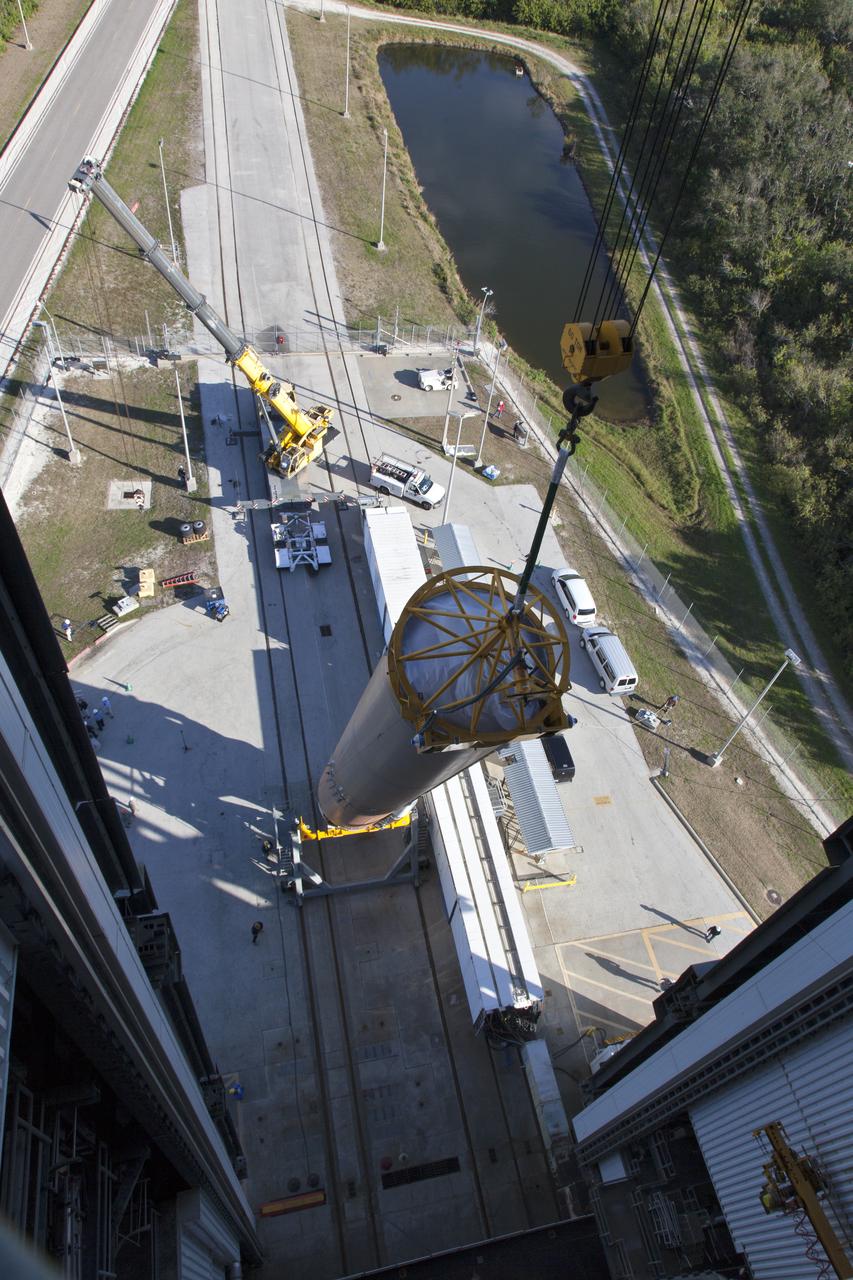
A crane lifts a United Launch Alliance Atlas V first stage at the Vertical Integration Facility at Space Launch Complex 41 at Cape Canaveral Air Force Station in Florida. The rocket will be positioned on its launcher to boost the Geostationary Operational Environmental Satellite, or GOES-S. It will be the second in a series of four advanced geostationary weather satellites and will significantly improve the detection and observation of environmental phenomena that directly affect public safety. GOES-S is slated to launch March 1, 2018.
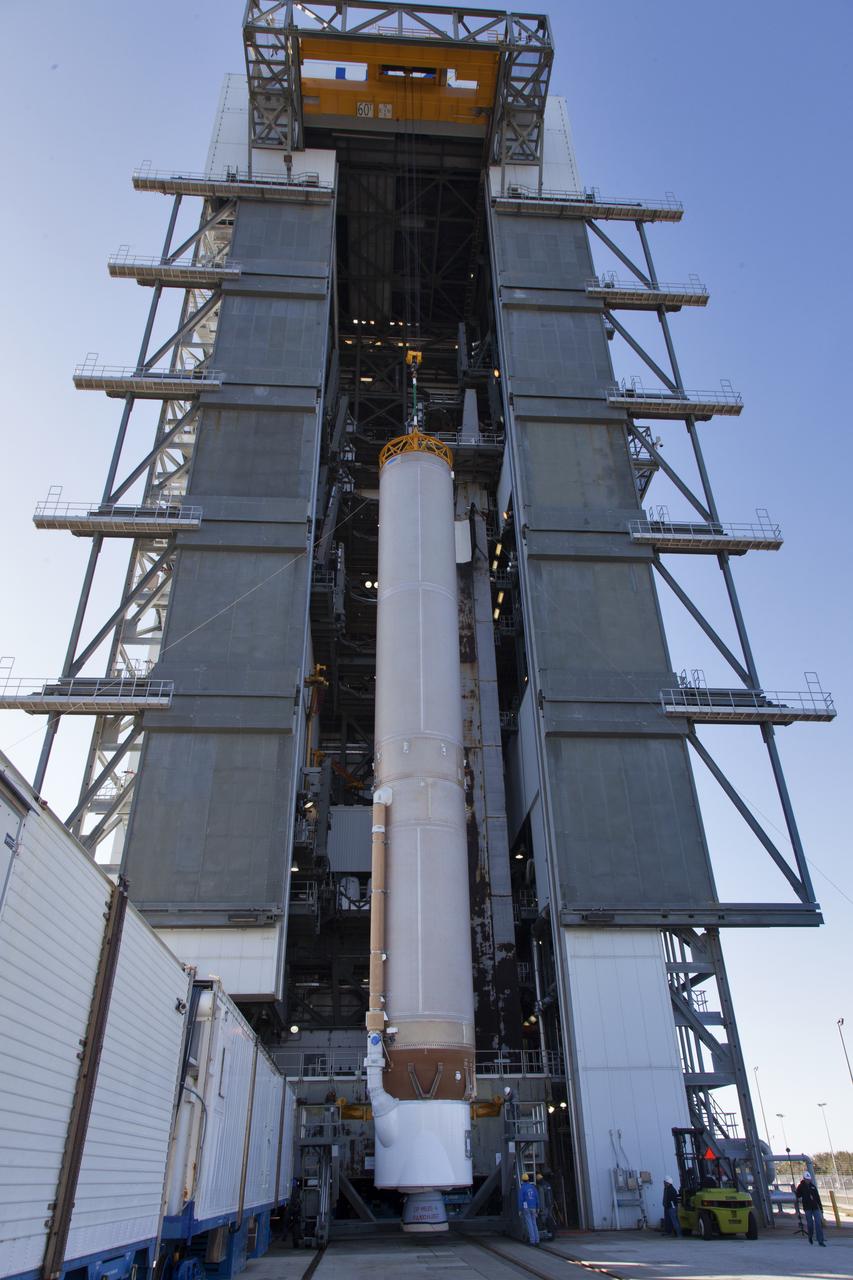
A crane lifts a United Launch Alliance Atlas V first stage into the Vertical Integration Facility at Space Launch Complex 41 at Cape Canaveral Air Force Station in Florida. The rocket will be positioned on its launcher to boost the Geostationary Operational Environmental Satellite, or GOES-S. It will be the second in a series of four advanced geostationary weather satellites and will significantly improve the detection and observation of environmental phenomena that directly affect public safety. GOES-S is slated to launch March 1, 2018.
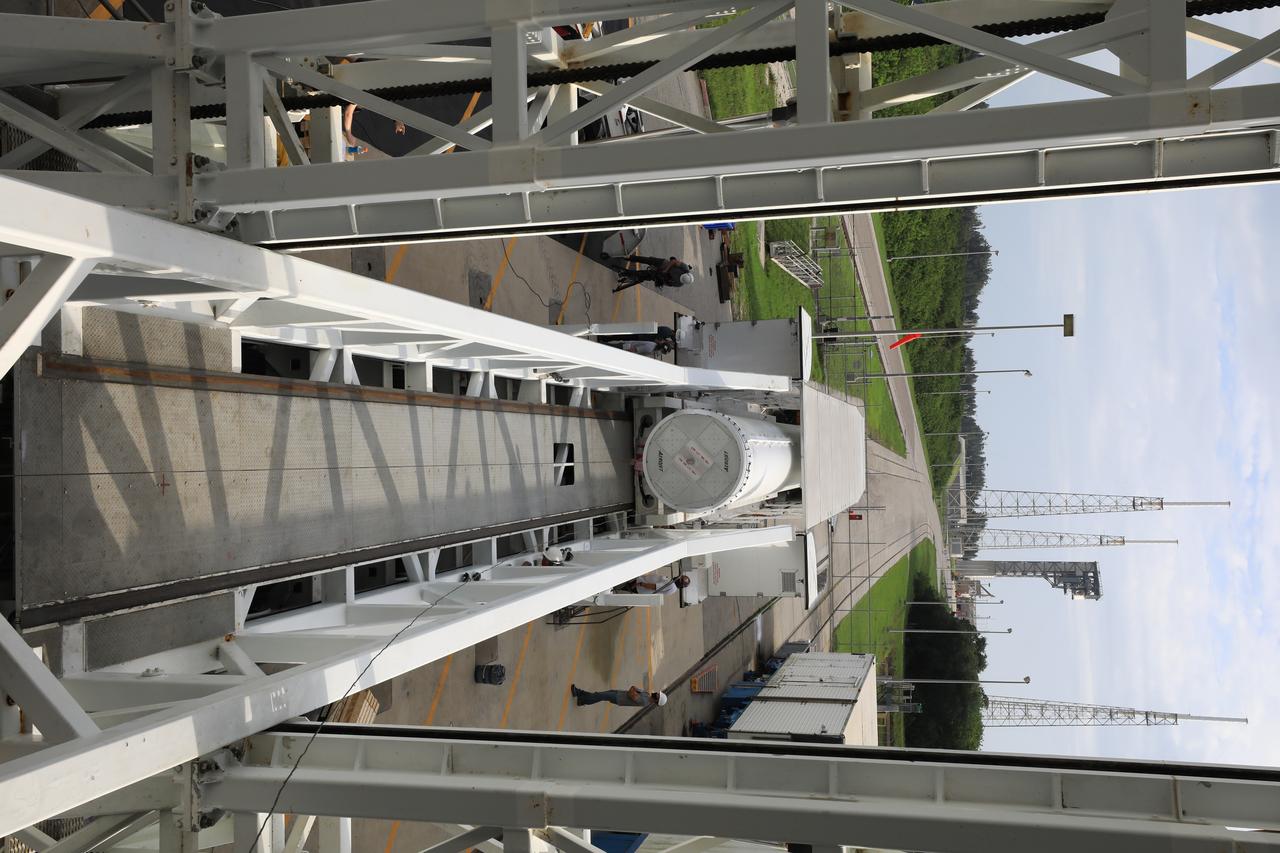
Preparations are underway to lift the third of four solid rocket boosters (SRB) for the United Launch Alliance Atlas V 541 rocket into the Vertical Integration Facility (VIF) at Space Launch Complex 41 at Cape Canaveral Air Force Station (CCAFS) in Florida on June 8, 2020. The SRB will be lifted and mated to the Atlas V booster in the VIF. The Mars Perseverance rover is scheduled to launch on July 20, 2020, atop the Atlas V rocket from Pad 41. The rover is part of NASA’s Mars Exploration Program, a long-term effort of robotic exploration of the Red Planet. The rover’s seven instruments will search for habitable conditions in the ancient past and signs of past microbial life on Mars. The Launch Services Program at Kennedy is responsible for launch management.
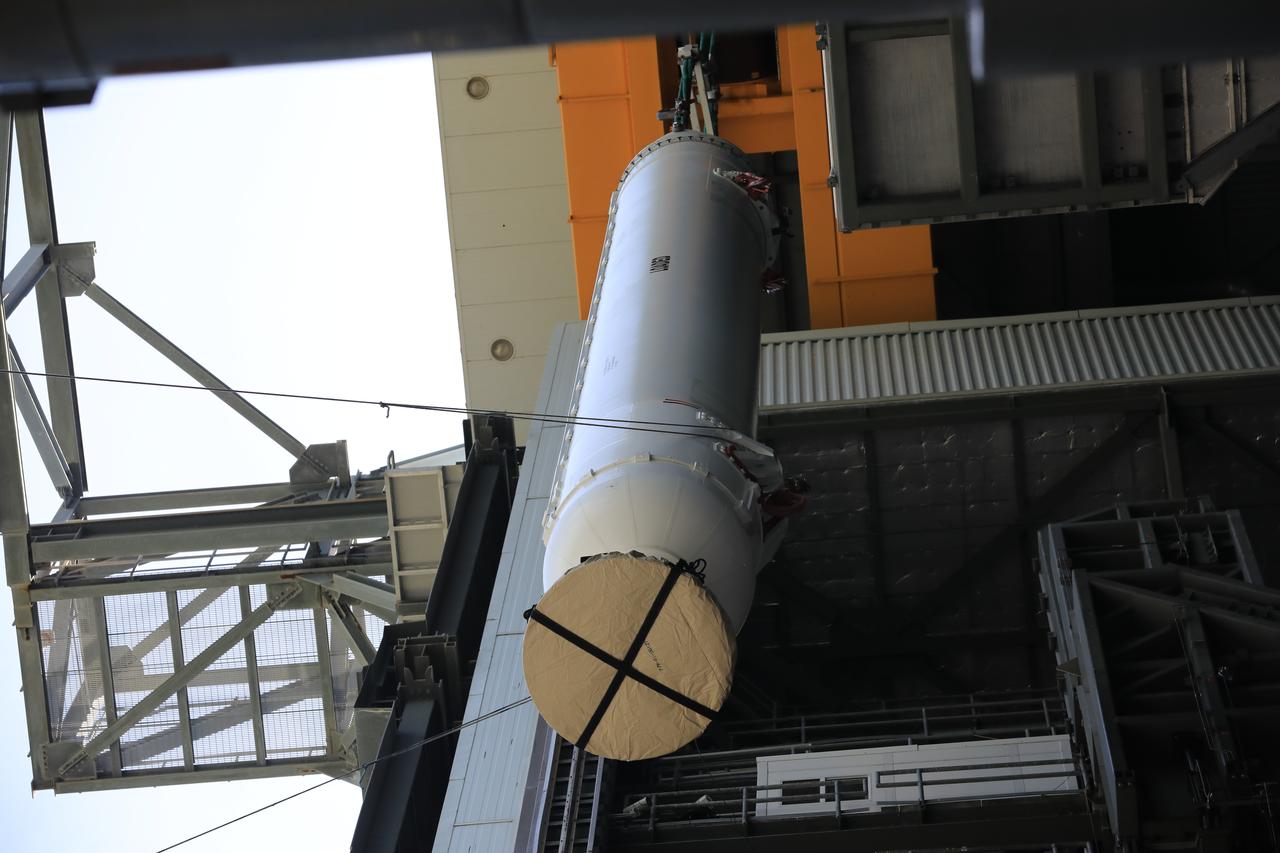
A view from inside the Vertical Integration Facility (VIF) at Space Launch Complex 41 at Cape Canaveral Air Force Station in Florida, as the third of four solid rocket boosters (SRB) for the United Launch Alliance Atlas V 541 rocket is lifted up by crane on June 8, 2020. The SRB will be mated to the Atlas V booster inside the VIF. NASA’s Mars 2020 mission with the Perseverance rover is scheduled to launch on July 20, 2020, atop the Atlas V rocket from Pad 41. The rover is part of NASA’s Mars Exploration Program, a long-term effort of robotic exploration of the Red Planet. The rover’s seven instruments will search for habitable conditions in the ancient past and signs of past microbial life on Mars. The Launch Services Program at Kennedy is responsible for launch management.
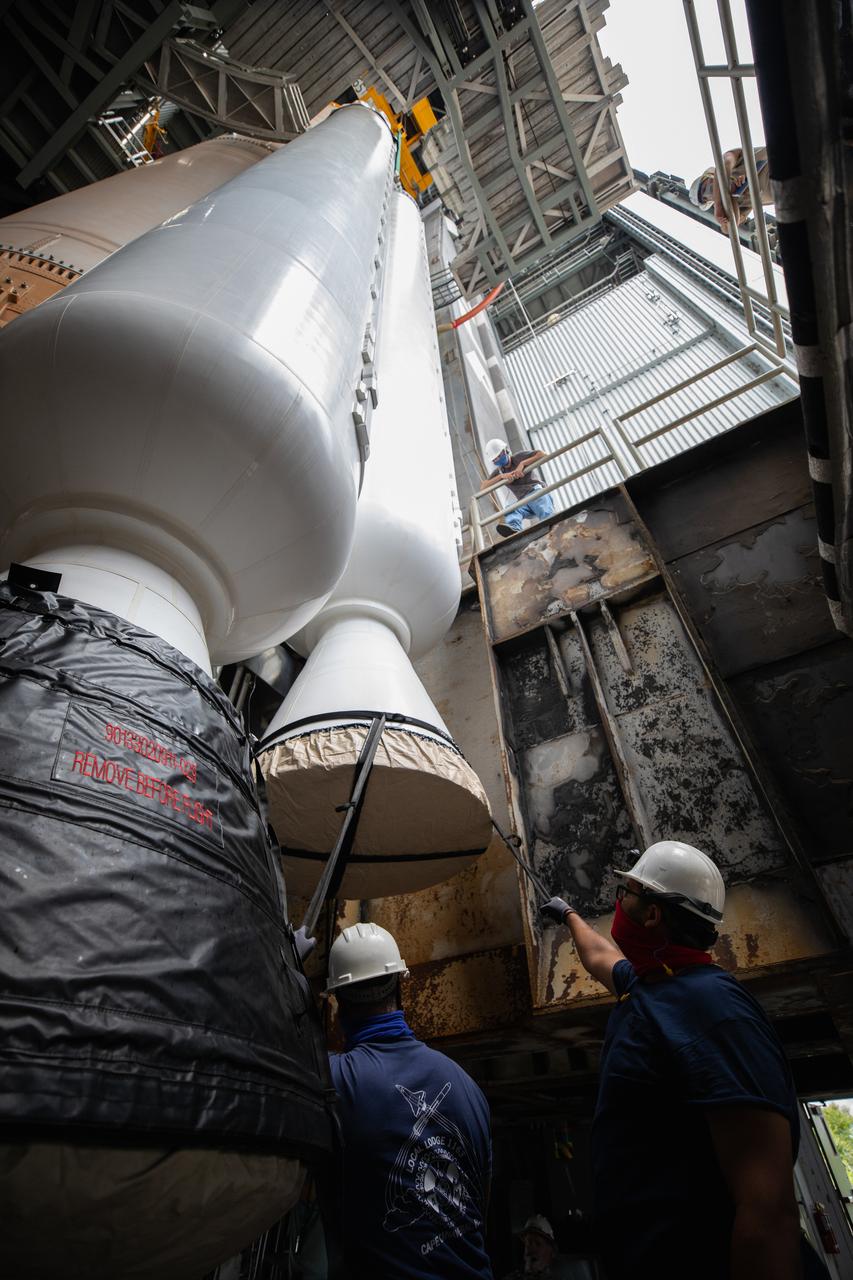
Inside the Vertical Integration Facility (VIF) at Space Launch Complex 41 at Cape Canaveral Air Force Station (CCAFS) in Florida, United Launch Alliance (ULA) workers watch as the fourth and final solid rocket booster (SRB) for the United Launch Alliance Atlas V 541 rocket is lowered by crane on June 9, 2020. The SRB will be mated to the Atlas V booster. NASA’s Mars 2020 mission with the Perseverance rover is scheduled to launch in July 2020, atop the Atlas V rocket from Pad 41. The rover is part of NASA’s Mars Exploration Program, a long-term effort of robotic exploration of the Red Planet. The rover’s seven instruments will search for habitable conditions in the ancient past and signs of past microbial life on Mars. The Launch Services Program at Kennedy is responsible for launch management.
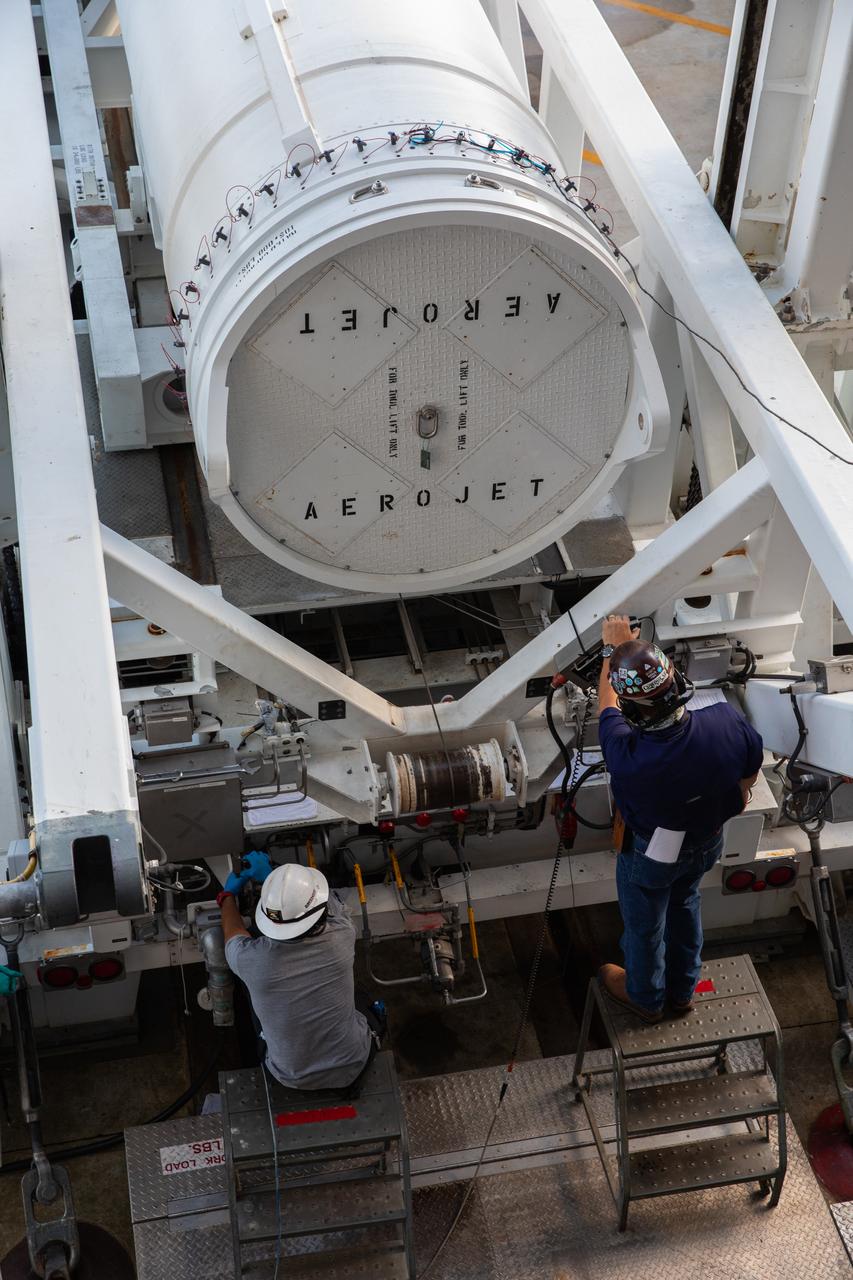
United Launch Alliance workers assist as a lifting device begins to raise the fourth and final solid rocket booster (SRB) for the United Launch Alliance Atlas V 541 rocket into the vertical position at the Vertical Integration Facility (VIF) at Space Launch Complex 41 at Cape Canaveral Air Force Station (CCAFS) in Florida on June 9, 2020. The SRB will be lifted up and mated to the Atlas V booster in the VIF. NASA’s Mars 2020 mission with the Perseverance rover is scheduled to launch in July 2020, atop the Atlas V rocket from Pad 41. The rover is part of NASA’s Mars Exploration Program, a long-term effort of robotic exploration of the Red Planet. The rover’s seven instruments will search for habitable conditions in the ancient past and signs of past microbial life on Mars. The Launch Services Program at Kennedy is responsible for launch management.
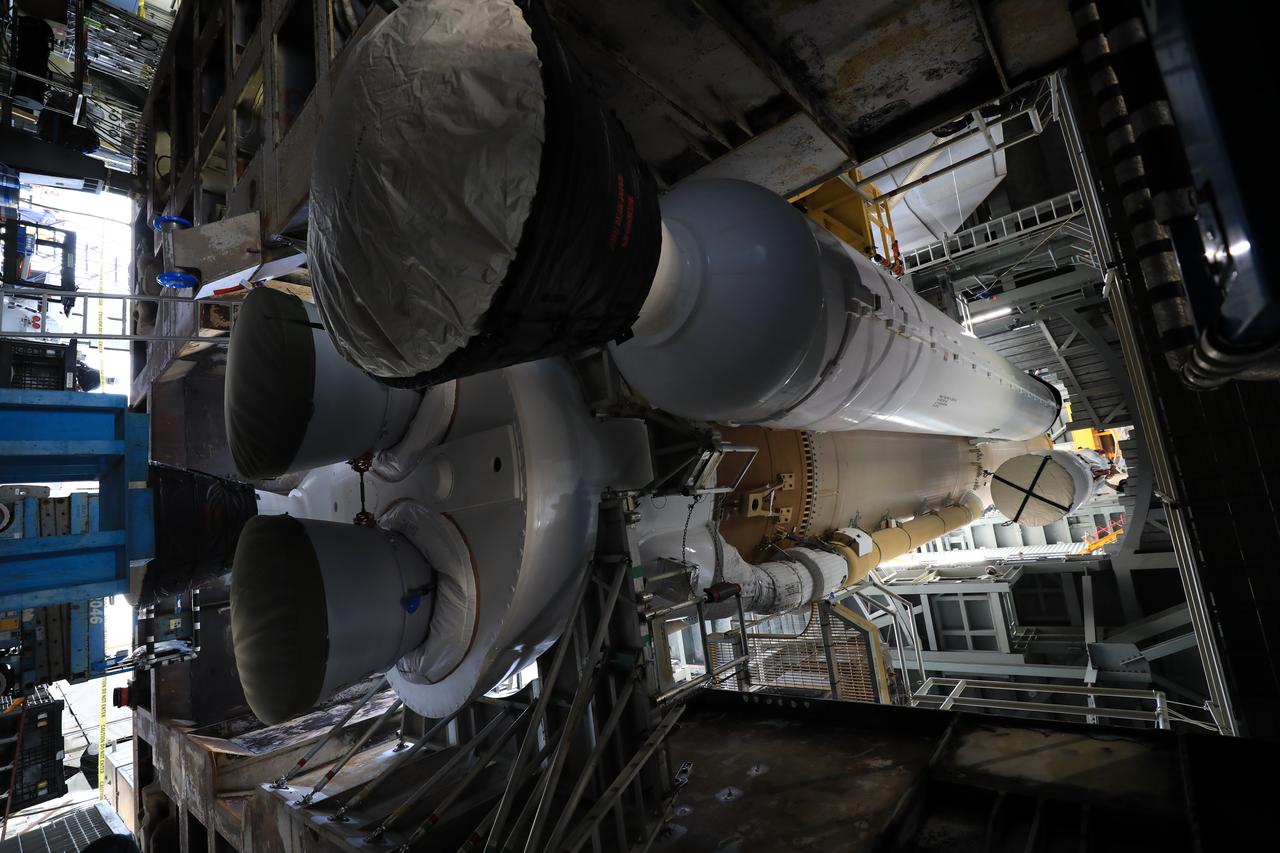
In this view looking up inside the Vertical Integration Facility at Space Launch Complex 41 at Cape Canaveral Air Force Station in Florida, the third of four solid rocket boosters (SRB) for the United Launch Alliance Atlas V 541 rocket is lowered by crane into position on June 8, 2020. The SRB will be mated to the Atlas V booster. NASA’s Mars 2020 mission with the Perseverance rover is scheduled to launch on July 20, 2020, atop the Atlas V rocket from Pad 41. The rover is part of NASA’s Mars Exploration Program, a long-term effort of robotic exploration of the Red Planet. The rover’s seven instruments will search for habitable conditions in the ancient past and signs of past microbial life on Mars. The Launch Services Program at Kennedy is responsible for launch management.
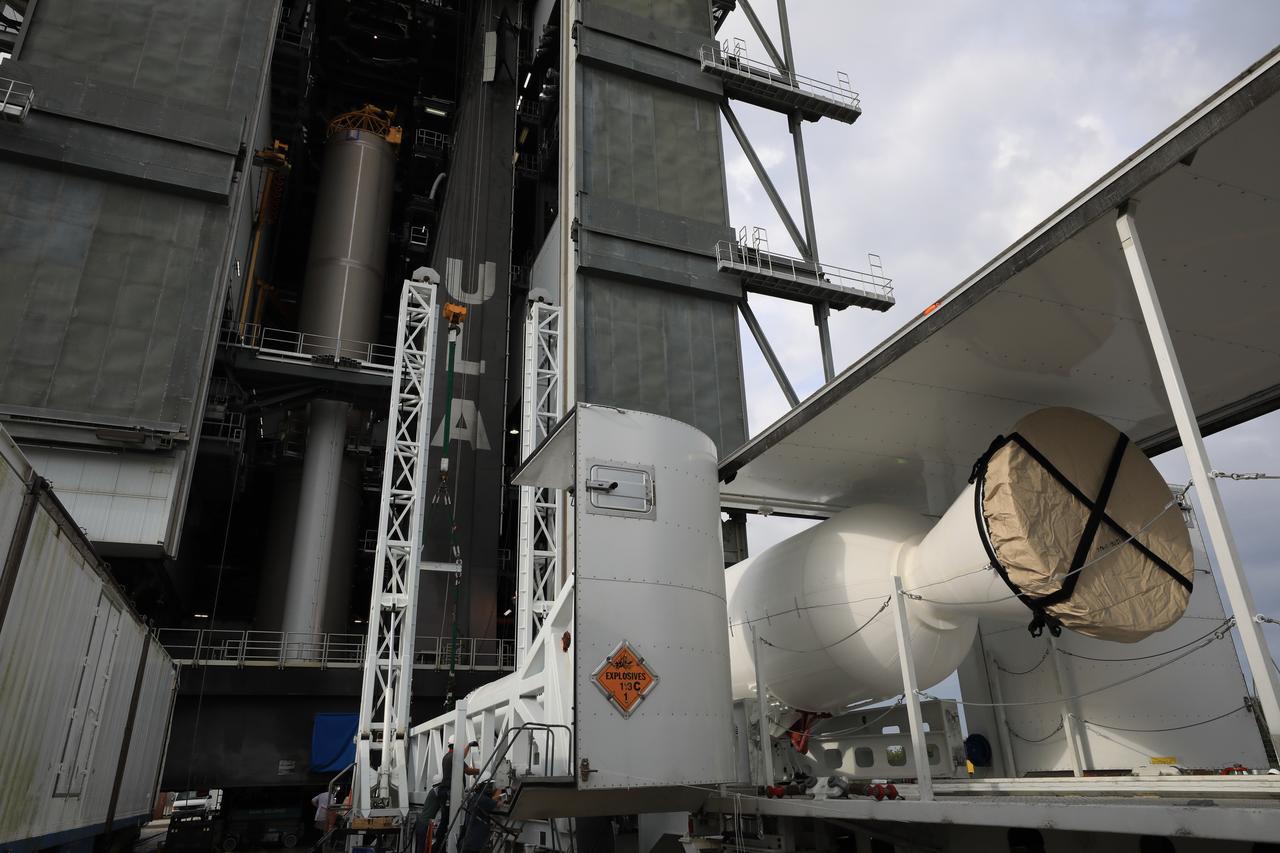
Preparations are underway to lift the third of four solid rocket boosters (SRB) for the United Launch Alliance Atlas V 541 rocket into the Vertical Integration Facility (VIF) at Space Launch Complex 41 at Cape Canaveral Air Force Station (CCAFS) in Florida on June 8, 2020. The SRB will be lifted and mated to the Atlas V booster in the VIF. The Mars Perseverance rover is scheduled to launch on July 20, 2020, atop the Atlas V rocket from Pad 41. The rover is part of NASA’s Mars Exploration Program, a long-term effort of robotic exploration of the Red Planet. The rover’s seven instruments will search for habitable conditions in the ancient past and signs of past microbial life on Mars. The Launch Services Program at Kennedy is responsible for launch management.
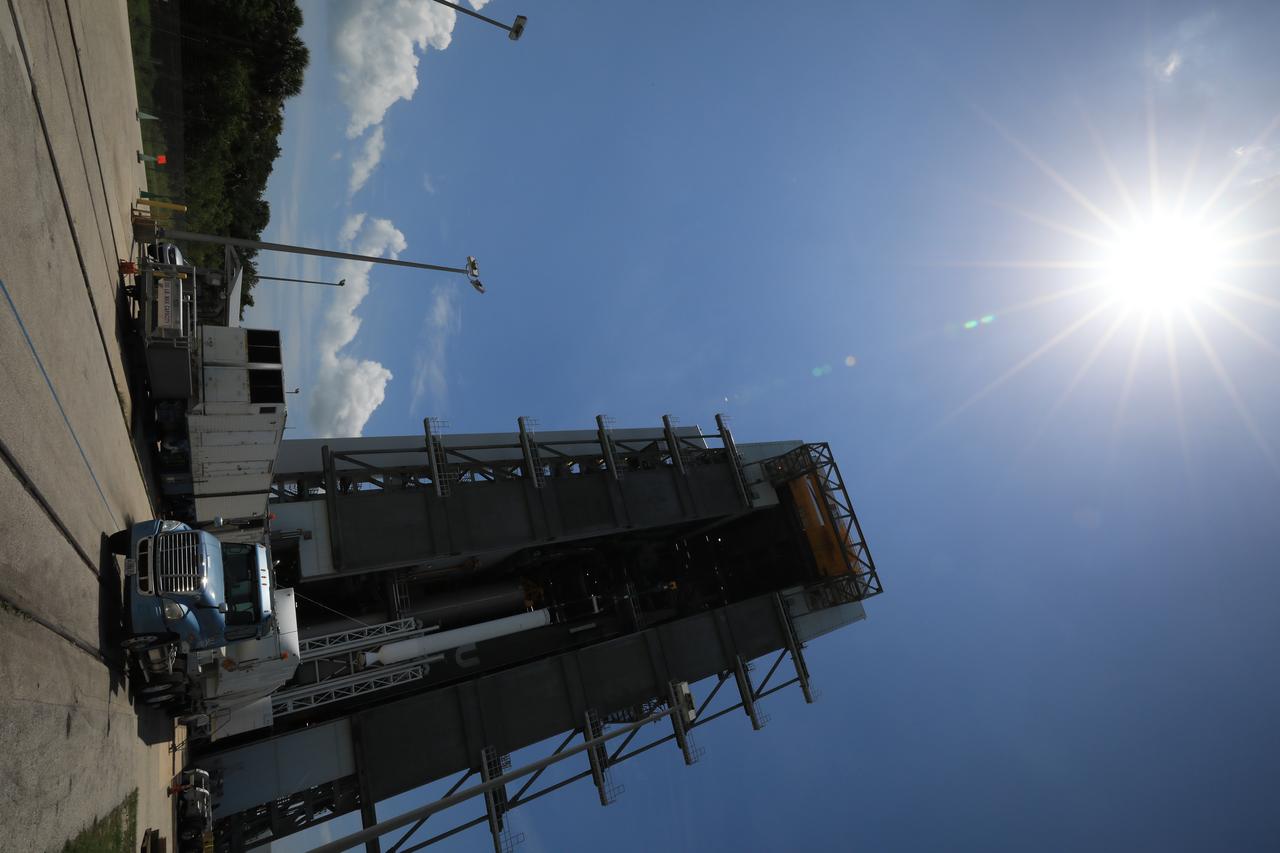
A crane is used to lift the third of four solid rocket boosters (SRB) for the United Launch Alliance Atlas V 541 rocket into the Vertical Integration Facility (VIF) at Space Launch Complex 41 at Cape Canaveral Air Force Station (CCAFS) in Florida on June 8, 2020. The SRB will be lifted up and mated to the Atlas V booster in the VIF. NASA’s Mars 2020 mission with the Perseverance rover is scheduled to launch on July 20, 2020, atop the Atlas V rocket from Pad 41. The rover is part of NASA’s Mars Exploration Program, a long-term effort of robotic exploration of the Red Planet. The rover’s seven instruments will search for habitable conditions in the ancient past and signs of past microbial life on Mars. The Launch Services Program at Kennedy is responsible for launch management.

A crane lifts a United Launch Alliance Atlas V first stage at the Vertical Integration Facility at Space Launch Complex 41 at Cape Canaveral Air Force Station in Florida. The rocket will be positioned on its launcher to boost the Geostationary Operational Environmental Satellite, or GOES-S. It will be the second in a series of four advanced geostationary weather satellites and will significantly improve the detection and observation of environmental phenomena that directly affect public safety. GOES-S is slated to launch March 1, 2018.
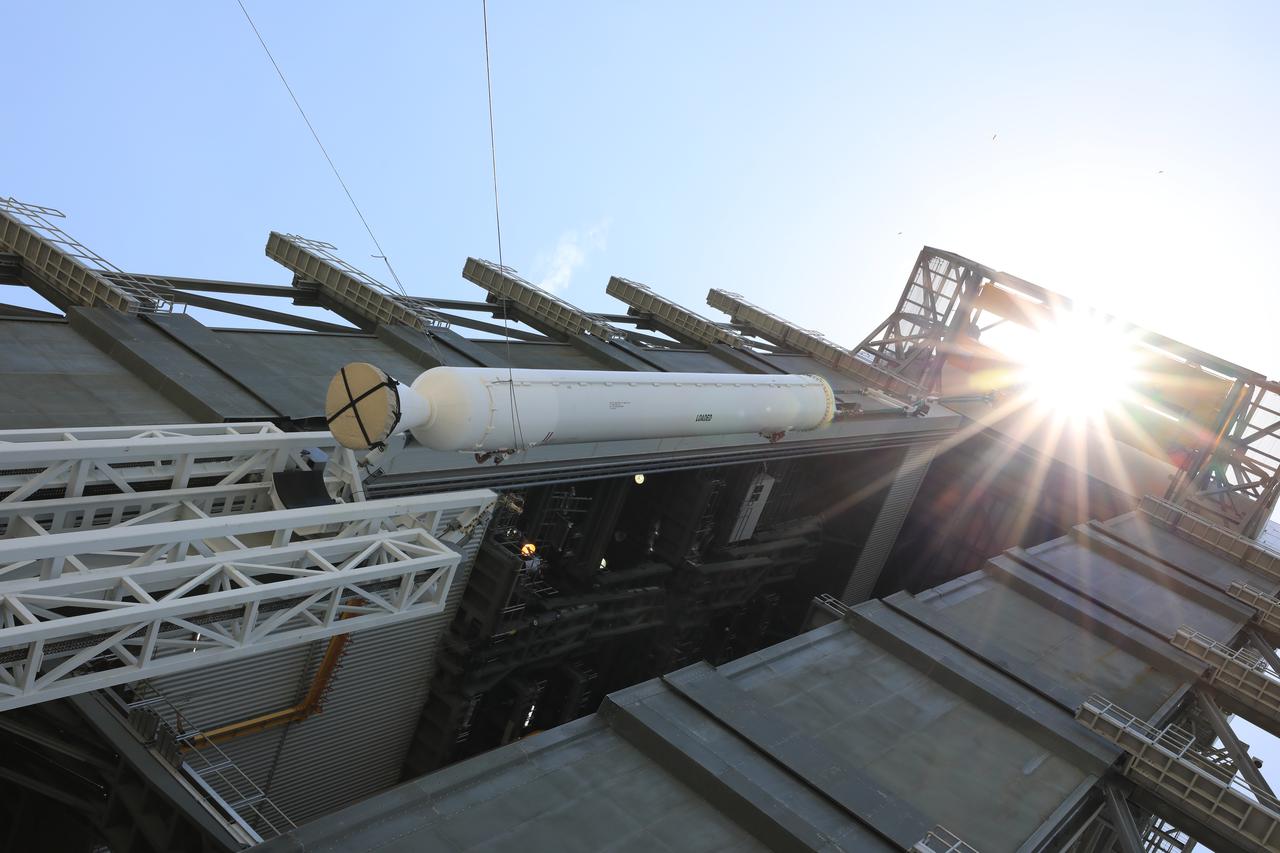
A crane is used to lift the third of four solid rocket boosters (SRB) for the United Launch Alliance Atlas V 541 rocket into the Vertical Integration Facility (VIF) at Space Launch Complex 41 at Cape Canaveral Air Force Station (CCAFS) in Florida on June 8, 2020. The SRB will be lifted up and mated to the Atlas V booster in the VIF. NASA’s Mars 2020 mission with the Perseverance rover is scheduled to launch on July 20, 2020, atop the Atlas V rocket from Pad 41. The rover is part of NASA’s Mars Exploration Program, a long-term effort of robotic exploration of the Red Planet. The rover’s seven instruments will search for habitable conditions in the ancient past and signs of past microbial life on Mars. The Launch Services Program at Kennedy is responsible for launch management.
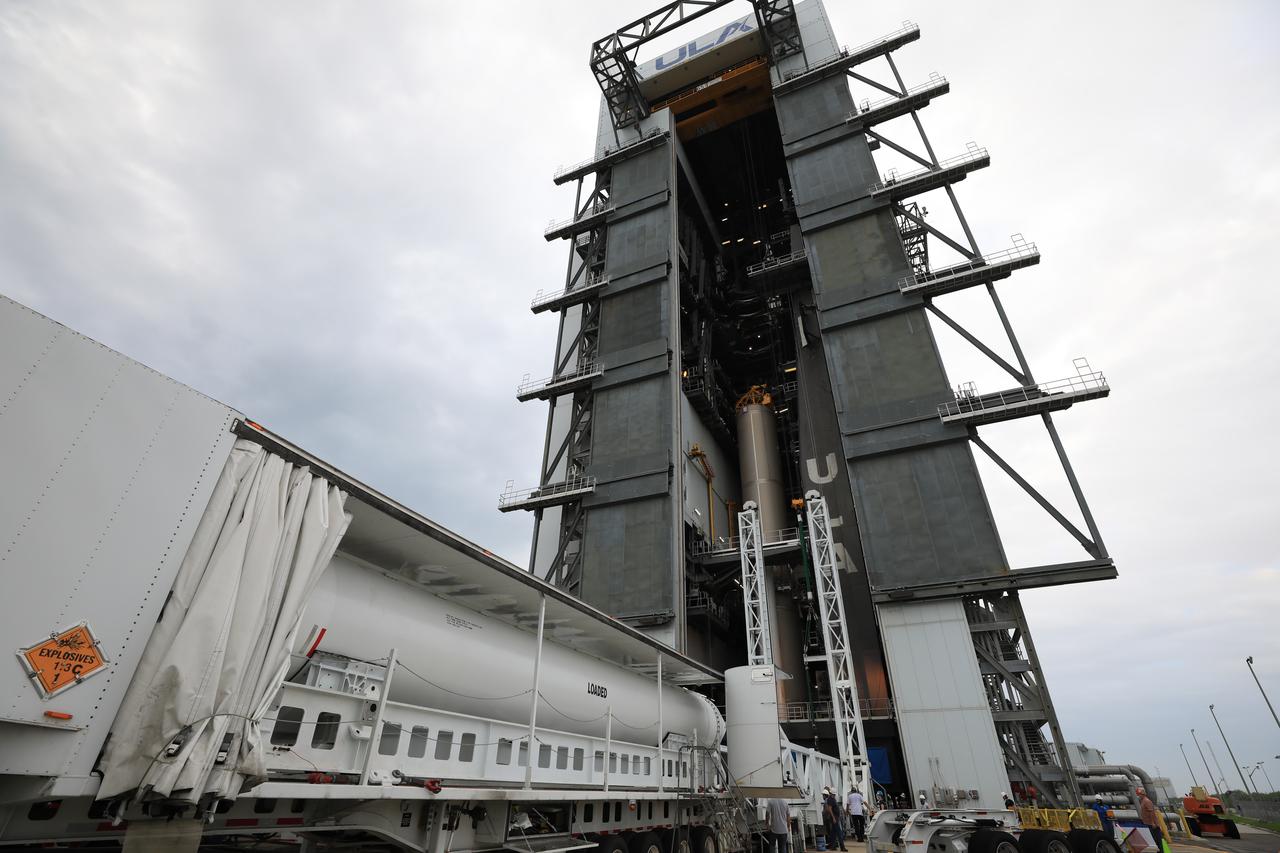
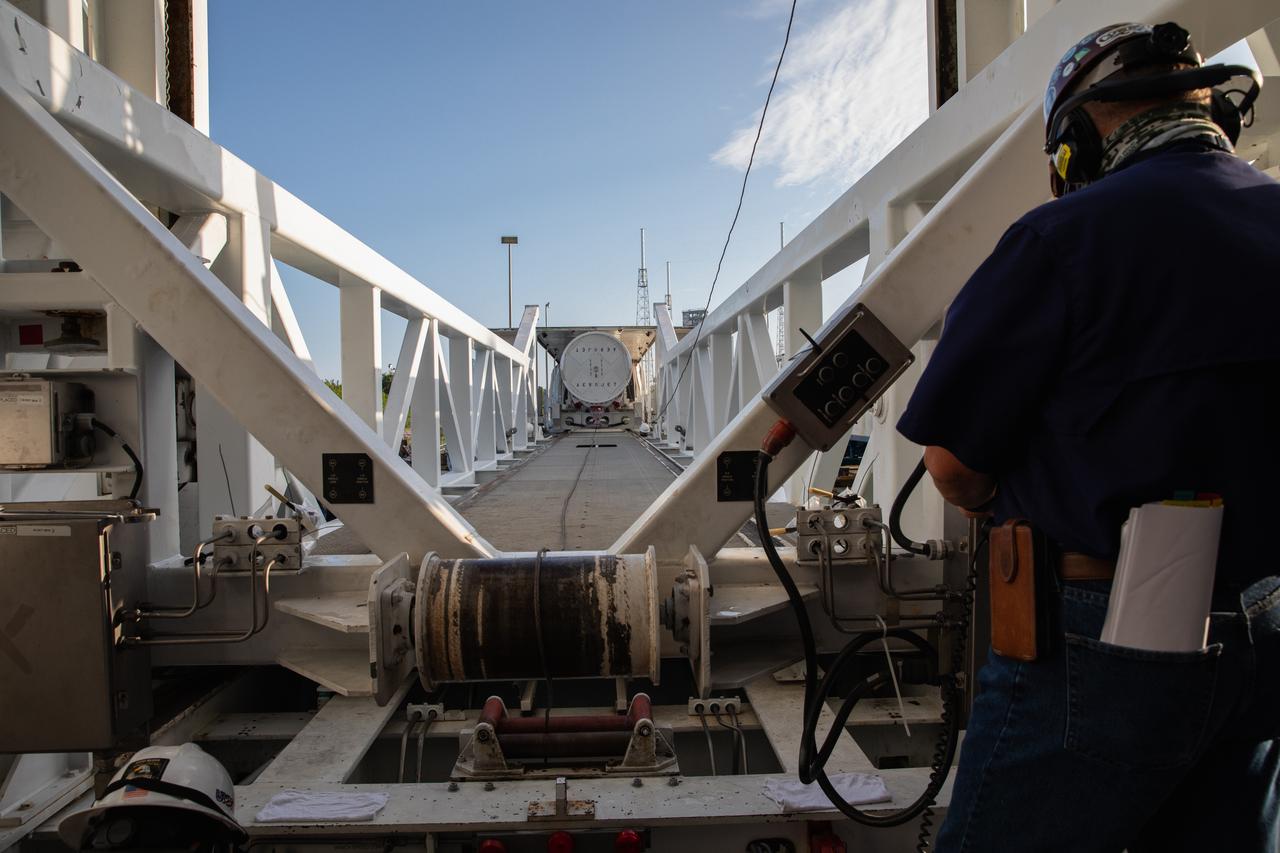
The third of four solid rocket boosters (SRB) for the United Launch Alliance Atlas V 541 rocket arrives at the Vertical Integration Facility (VIF) at Space Launch Complex 41 at Cape Canaveral Air Force Station (CCAFS) in Florida on June 8, 2020. The SRB will be prepared for lift and mating to the Atlas V booster in the VIF. The Mars 2020 mission with the Perseverance rover is scheduled to launch on July 20, 2020, atop the Atlas V rocket from Pad 41. The rover is part of NASA’s Mars Exploration Program, a long-term effort of robotic exploration of the Red Planet. The rover’s seven instruments will search for habitable conditions in the ancient past and signs of past microbial life on Mars. The Launch Services Program at Kennedy is responsible for launch management.
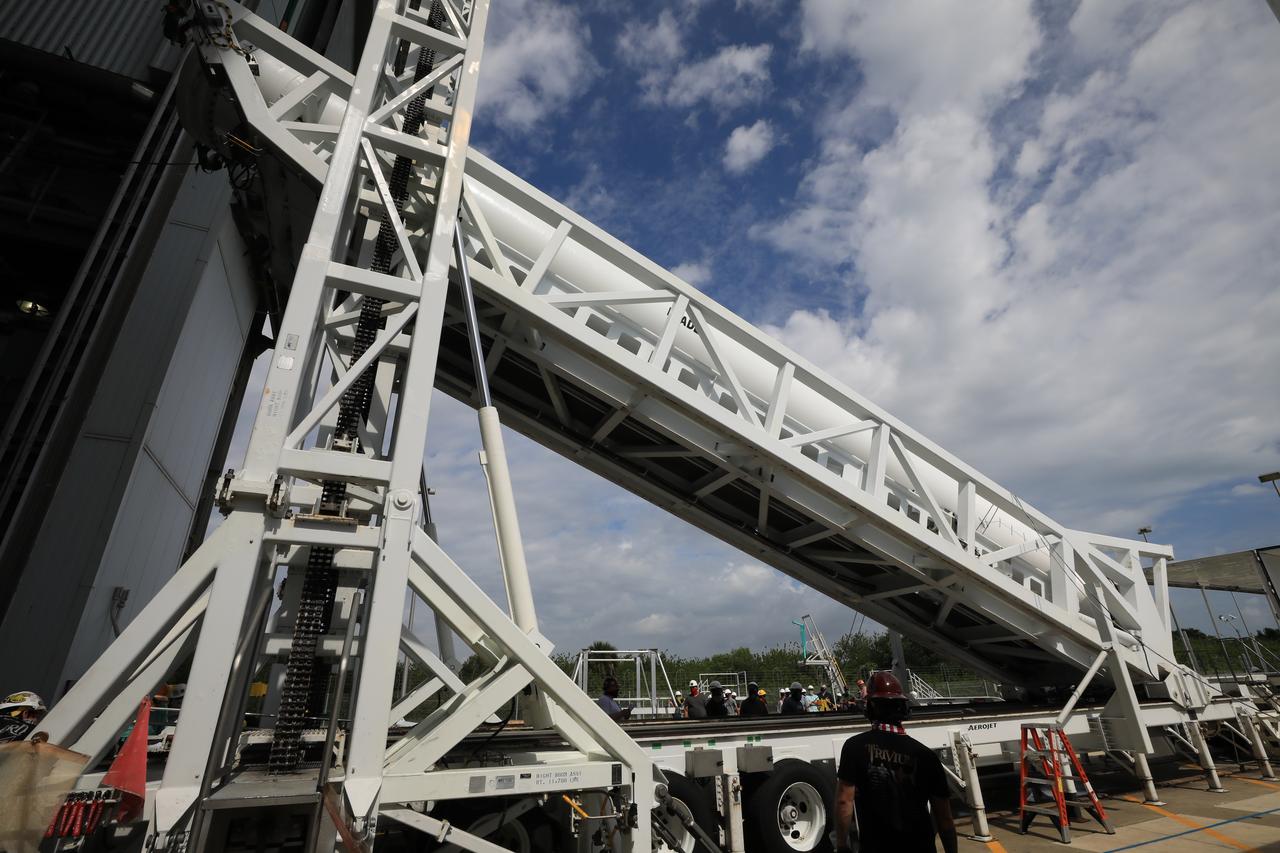
A lifting device raises the third of four solid rocket boosters (SRB) for the United Launch Alliance Atlas V 541 rocket into the vertical position at the Vertical Integration Facility (VIF) at Space Launch Complex 41 at Cape Canaveral Air Force Station (CCAFS) in Florida on June 8, 2020. The SRB will be lifted up and mated to the Atlas V booster in the VIF. NASA’s Mars 2020 mission with the Perseverance rover is scheduled to launch on July 20, 2020, atop the Atlas V rocket from Pad 41. The rover is part of NASA’s Mars Exploration Program, a long-term effort of robotic exploration of the Red Planet. The rover’s seven instruments will search for habitable conditions in the ancient past and signs of past microbial life on Mars. The Launch Services Program at Kennedy is responsible for launch management.
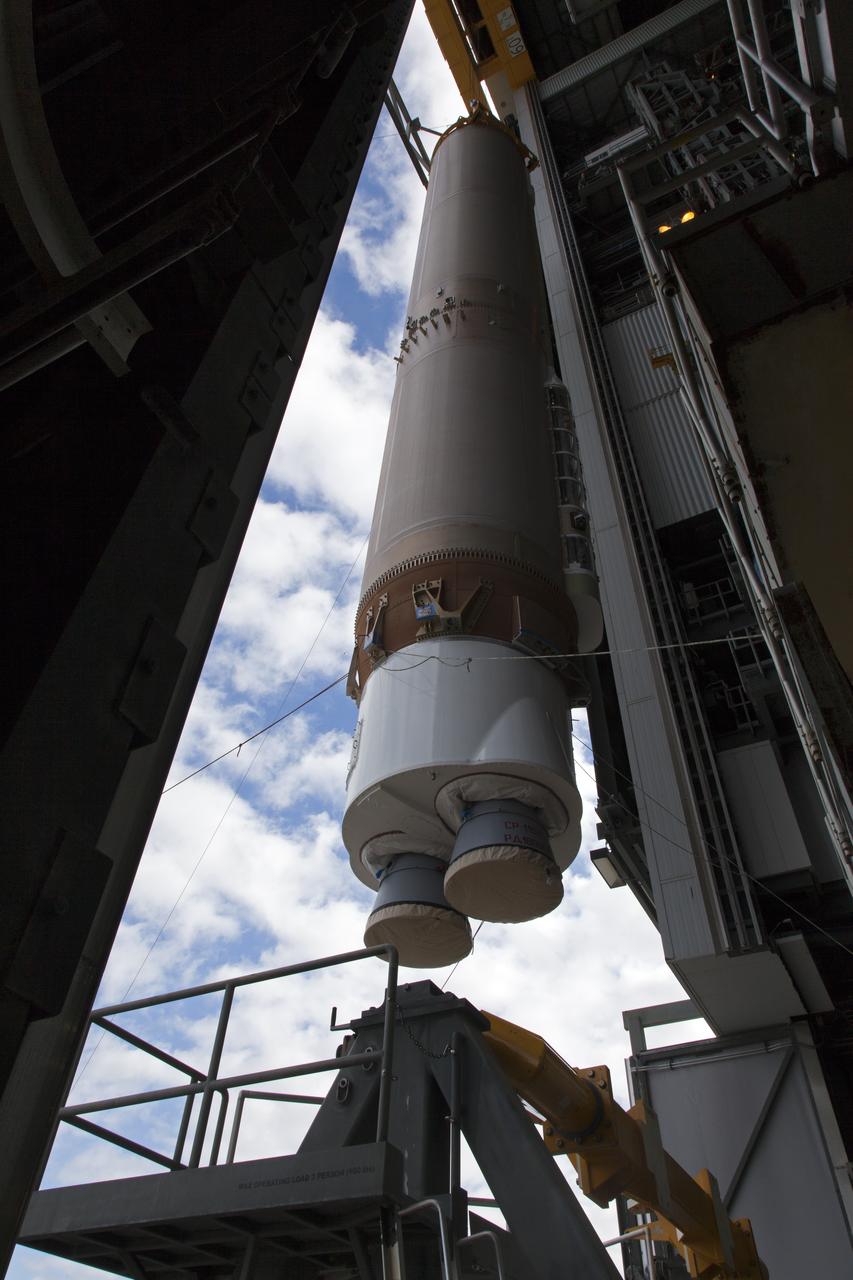
A crane lifts a United Launch Alliance Atlas V first stage into the Vertical Integration Facility at Space Launch Complex 41 at Cape Canaveral Air Force Station in Florida. The rocket will be positioned on its launcher to boost the Geostationary Operational Environmental Satellite, or GOES-S. It will be the second in a series of four advanced geostationary weather satellites and will significantly improve the detection and observation of environmental phenomena that directly affect public safety. GOES-S is slated to launch March 1, 2018.
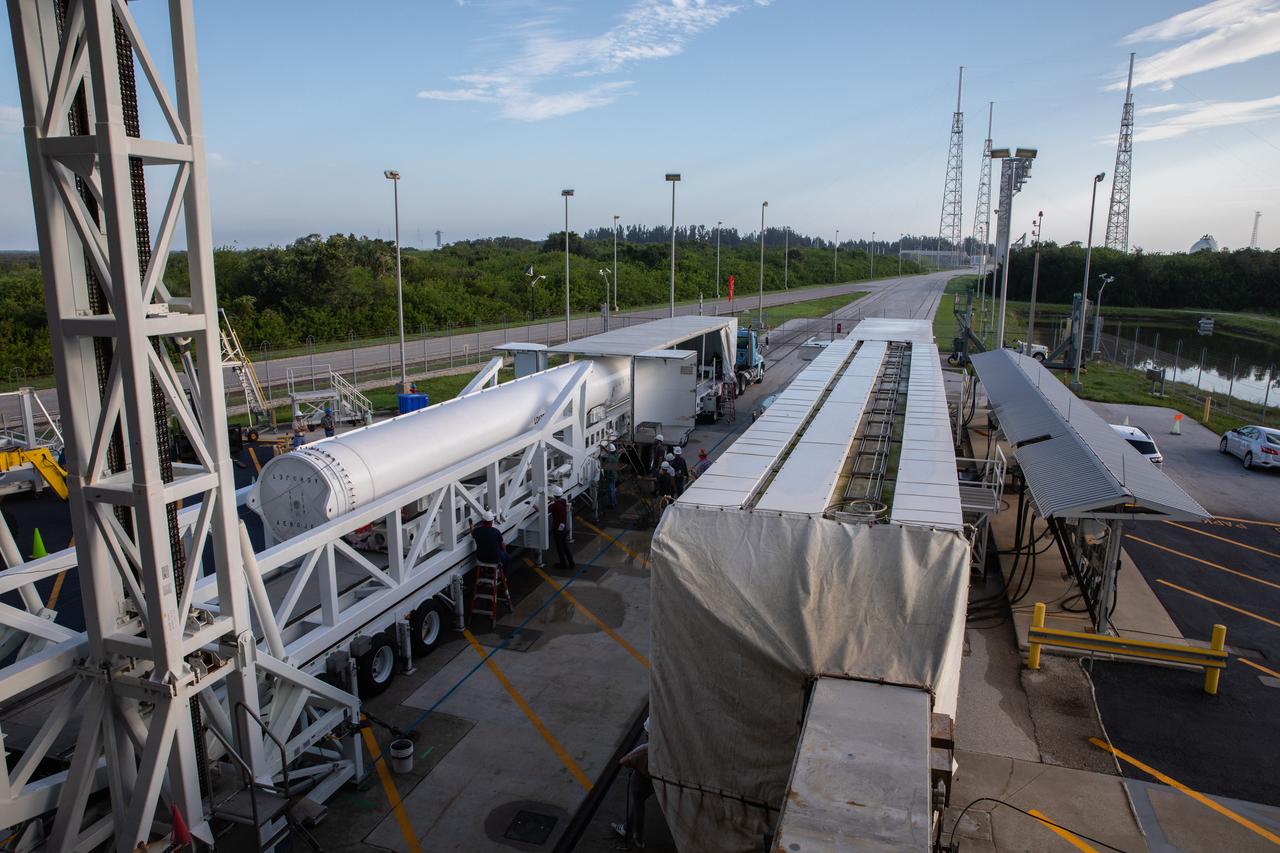
Preparations are underway to lift the fourth and final solid rocket booster (SRB) for the United Launch Alliance Atlas V 541 rocket into the Vertical Integration Facility (VIF) at Space Launch Complex 41 at Cape Canaveral Air Force Station (CCAFS) in Florida on June 9, 2020. The SRB will be lifted and mated to the Atlas V booster in the VIF. The Mars Perseverance rover is scheduled to launch in July 2020, atop the Atlas V rocket from Pad 41. The rover is part of NASA’s Mars Exploration Program, a long-term effort of robotic exploration of the Red Planet. The rover’s seven instruments will search for habitable conditions in the ancient past and signs of past microbial life on Mars. The Launch Services Program at Kennedy is responsible for launch management.
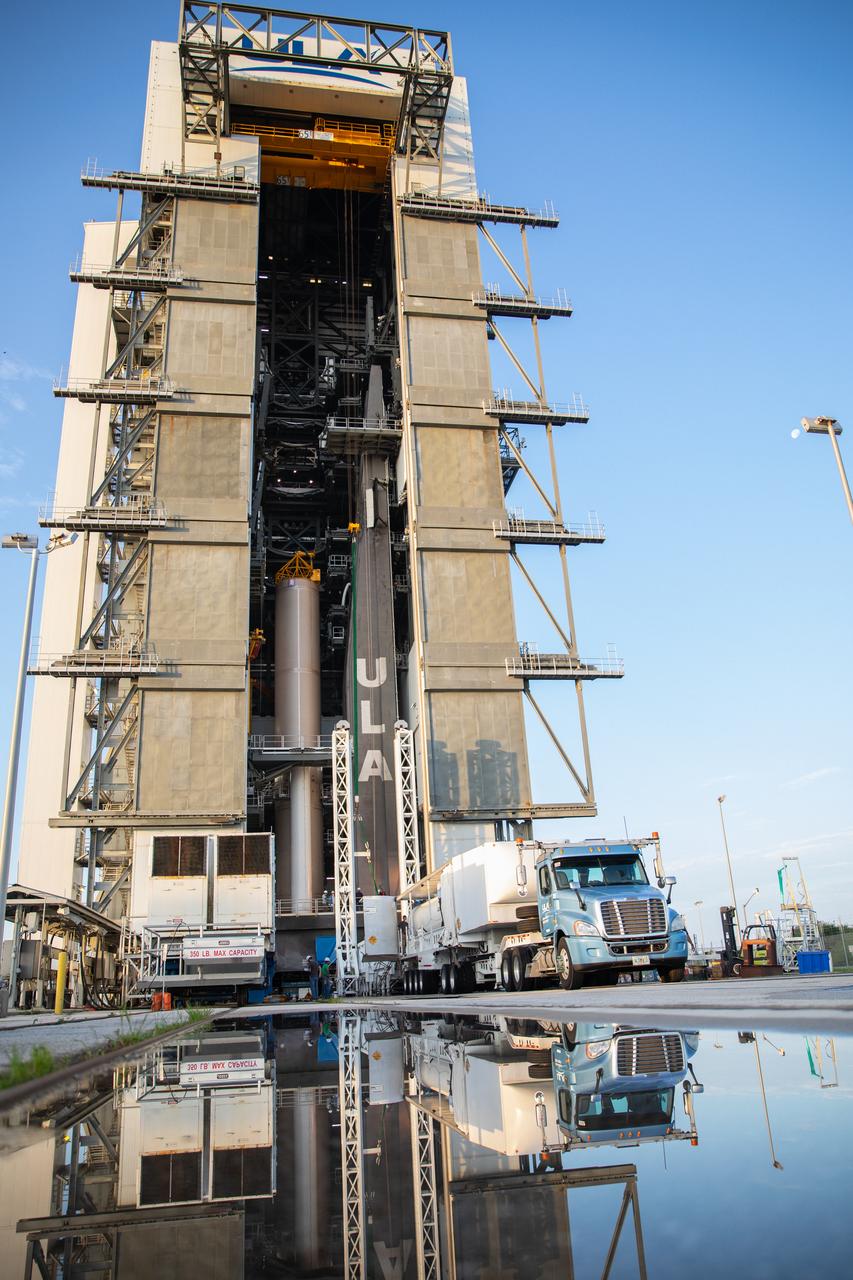
The fourth and final solid rocket booster (SRB) for the United Launch Alliance Atlas V 541 rocket arrives at the Vertical Integration Facility (VIF) at Space Launch Complex 41 at Cape Canaveral Air Force Station (CCAFS) in Florida on June 9, 2020. The SRB will be prepared for lift and mating to the Atlas V booster in the VIF. The Mars 2020 mission with the Perseverance rover is scheduled to launch in July 2020, atop the Atlas V rocket from Pad 41. The rover is part of NASA’s Mars Exploration Program, a long-term effort of robotic exploration of the Red Planet. The rover’s seven instruments will search for habitable conditions in the ancient past and signs of past microbial life on Mars. The Launch Services Program at Kennedy is responsible for launch management.
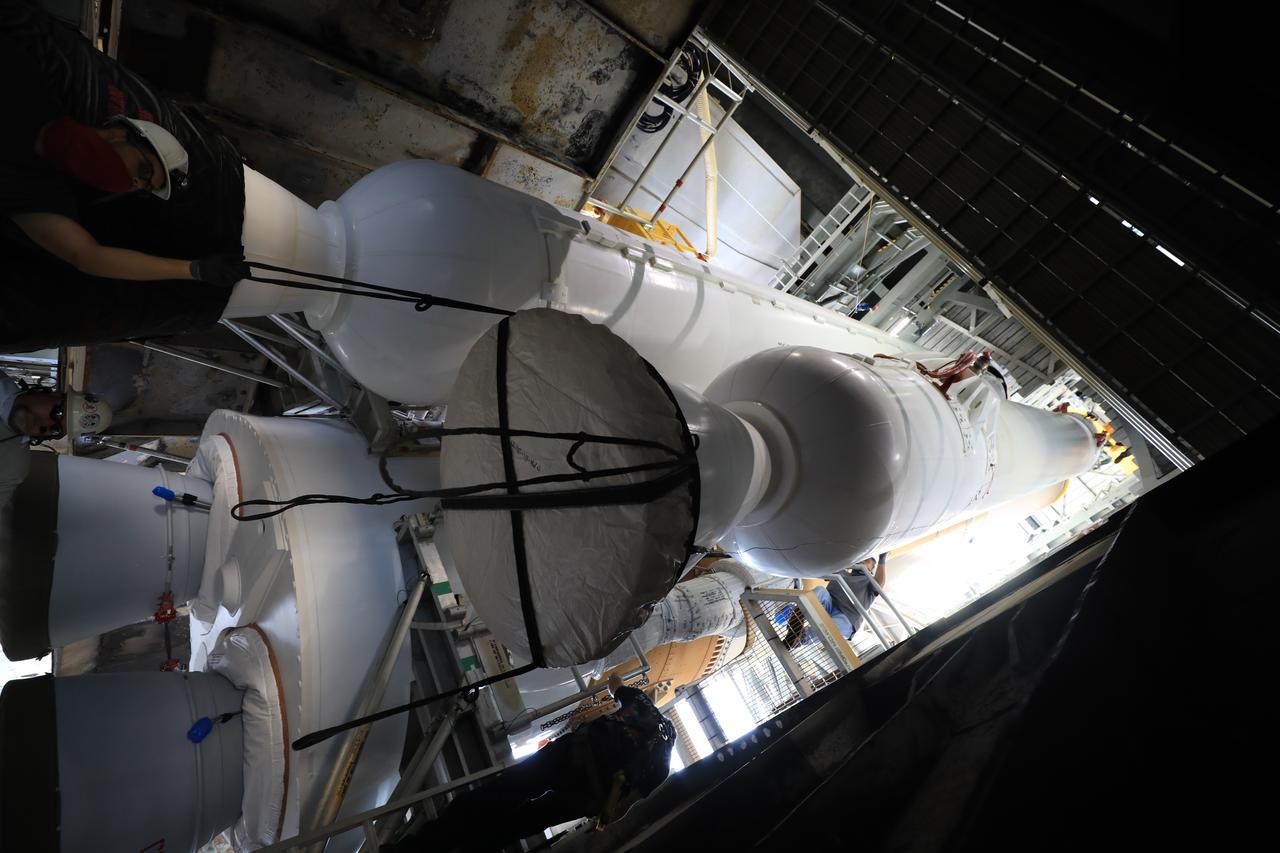
In this view looking up inside the Vertical Integration Facility at Space Launch Complex 41 at Cape Canaveral Air Force Station in Florida, the third of four solid rocket boosters (SRB) for the United Launch Alliance Atlas V 541 rocket is lowered by crane into position on June 8, 2020. The SRB will be mated to the Atlas V booster. NASA’s Mars 2020 mission with the Perseverance rover is scheduled to launch on July 20, 2020, atop the Atlas V rocket from Pad 41. The rover is part of NASA’s Mars Exploration Program, a long-term effort of robotic exploration of the Red Planet. The rover’s seven instruments will search for habitable conditions in the ancient past and signs of past microbial life on Mars. The Launch Services Program at Kennedy is responsible for launch management.
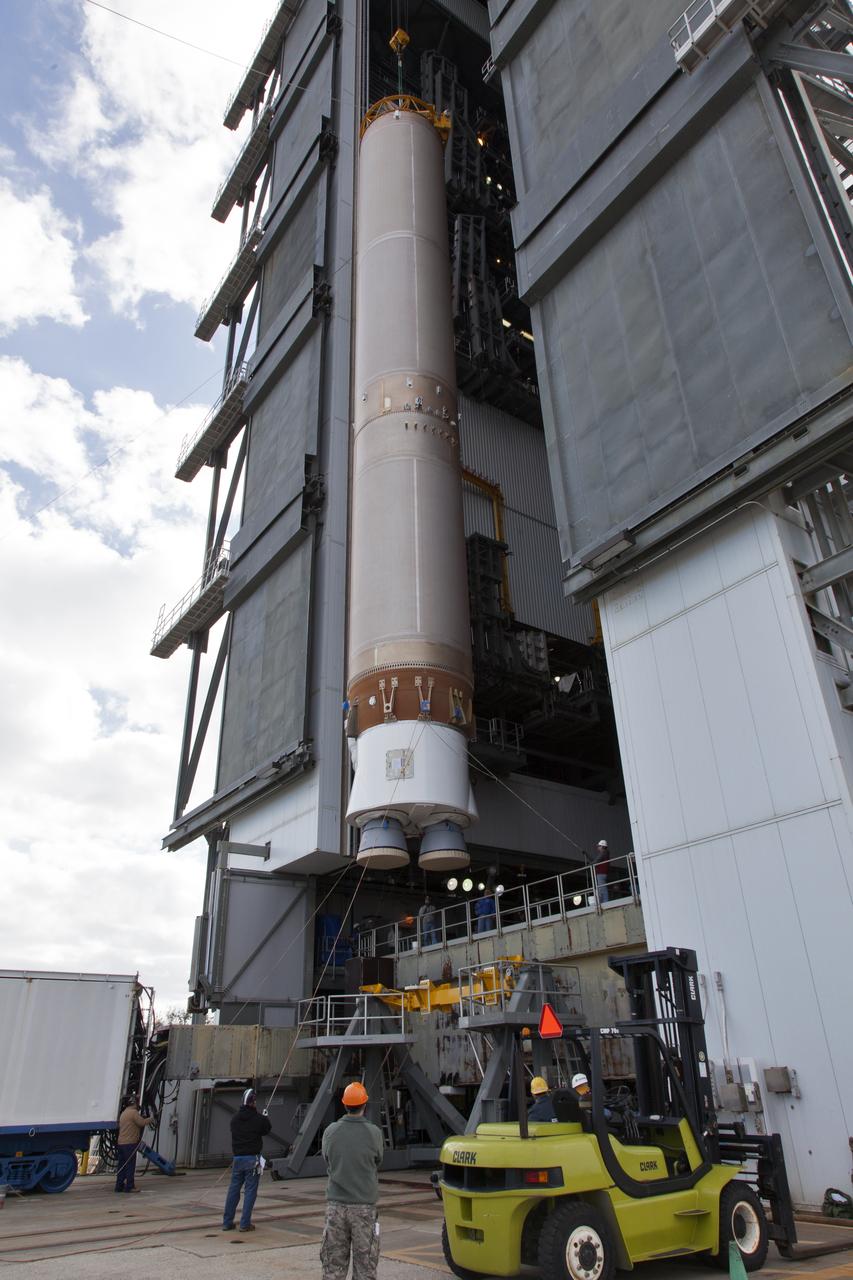
A crane lifts a United Launch Alliance Atlas V first stage into the Vertical Integration Facility at Space Launch Complex 41 at Cape Canaveral Air Force Station in Florida. The rocket will be positioned on its launcher to boost the Geostationary Operational Environmental Satellite, or GOES-S. It will be the second in a series of four advanced geostationary weather satellites and will significantly improve the detection and observation of environmental phenomena that directly affect public safety. GOES-S is slated to launch March 1, 2018.
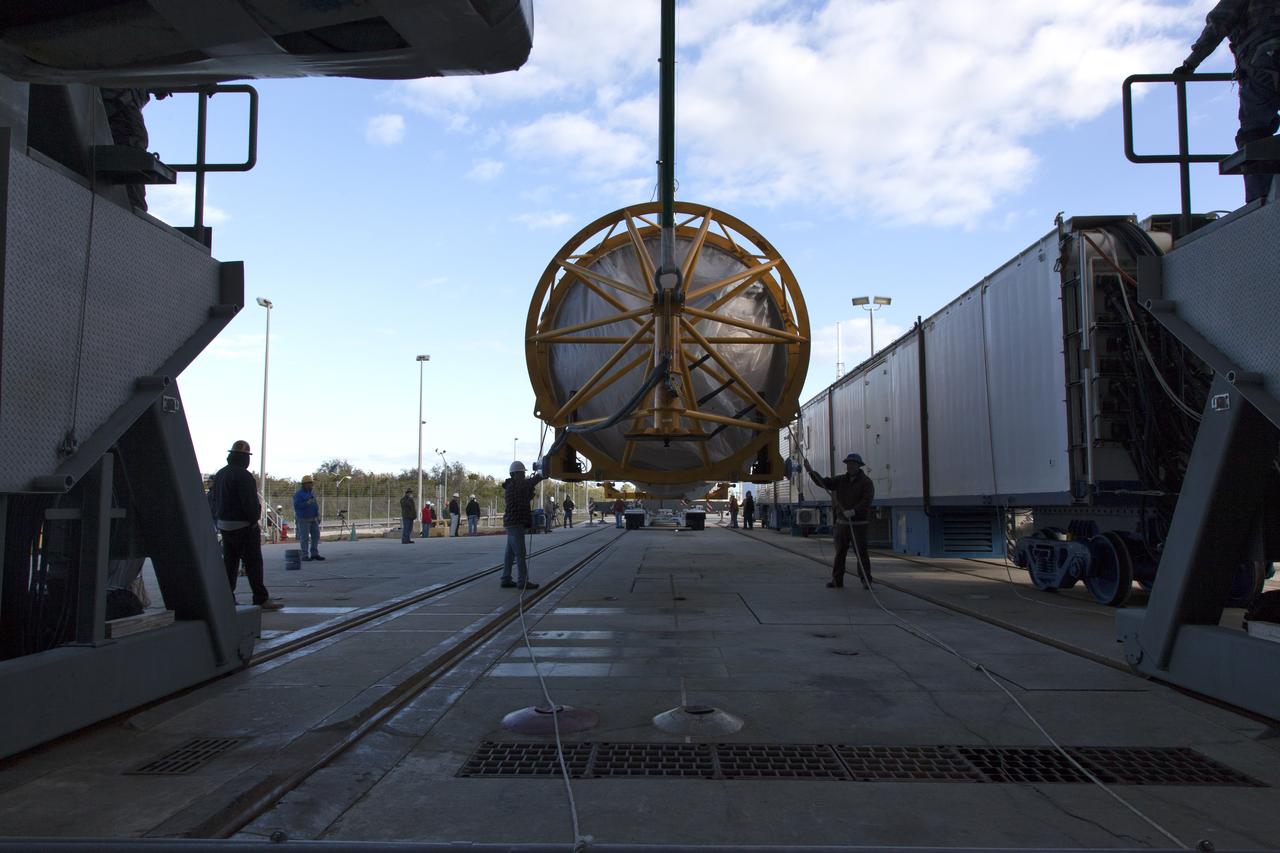
A crane lifts a United Launch Alliance Atlas V first stage at the Vertical Integration Facility at Space Launch Complex 41 at Cape Canaveral Air Force Station in Florida. The rocket will be positioned on its launcher to boost the Geostationary Operational Environmental Satellite, or GOES-S. It will be the second in a series of four advanced geostationary weather satellites and will significantly improve the detection and observation of environmental phenomena that directly affect public safety. GOES-S is slated to launch March 1, 2018.
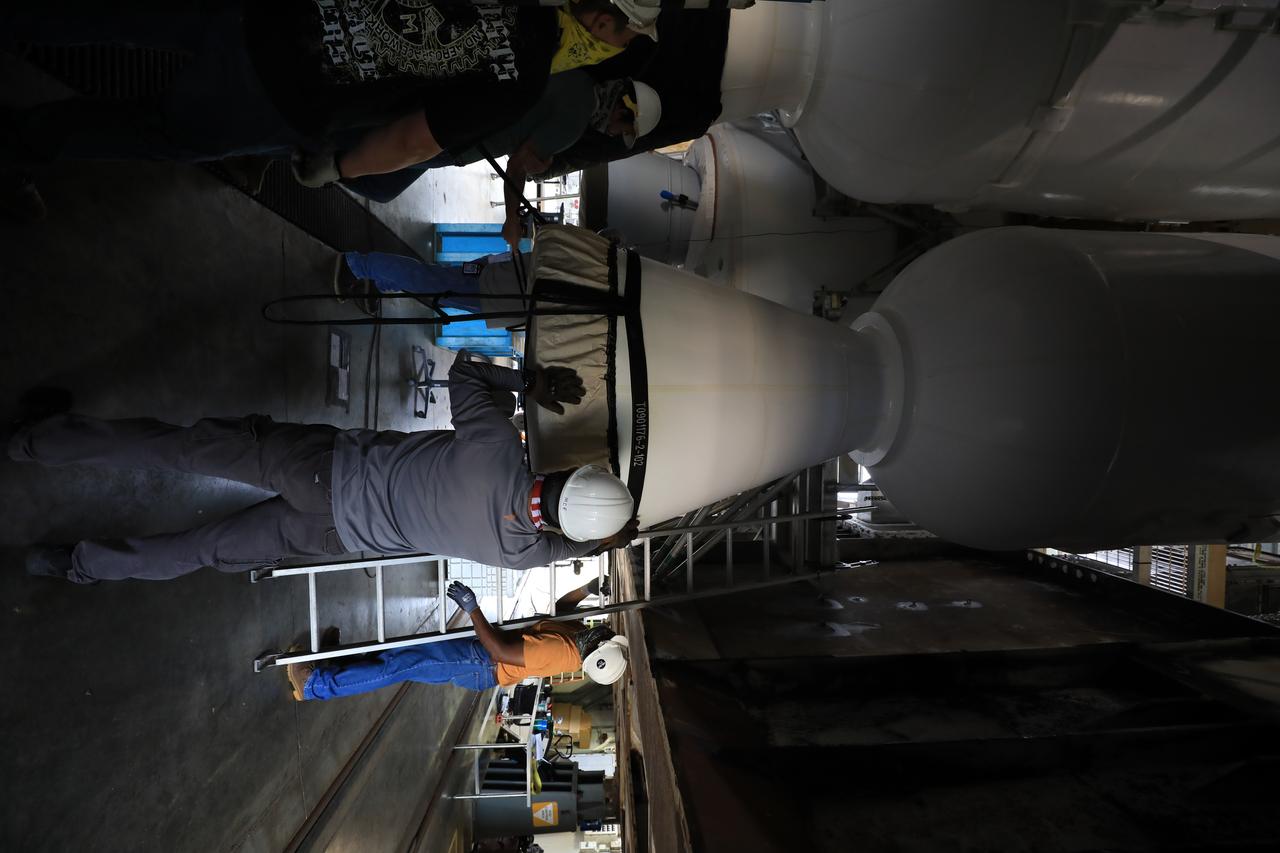
United Launch Alliance (ULA) workers assist as the third of four solid rocket boosters (SRB) for the ULA Atlas V 541 rocket is lowered by crane into position inside the Vertical Integration Facility at Space Launch Complex 41 at Cape Canaveral Air Force Station in Florida on June 8, 2020. The SRB will be mated to the Atlas V booster. NASA’s Mars 2020 mission with the Perseverance rover is scheduled to launch on July 20, 2020, atop the Atlas V rocket from Pad 41. The rover is part of NASA’s Mars Exploration Program, a long-term effort of robotic exploration of the Red Planet. The rover’s seven instruments will search for habitable conditions in the ancient past and signs of past microbial life on Mars. The Launch Services Program at Kennedy is responsible for launch management.
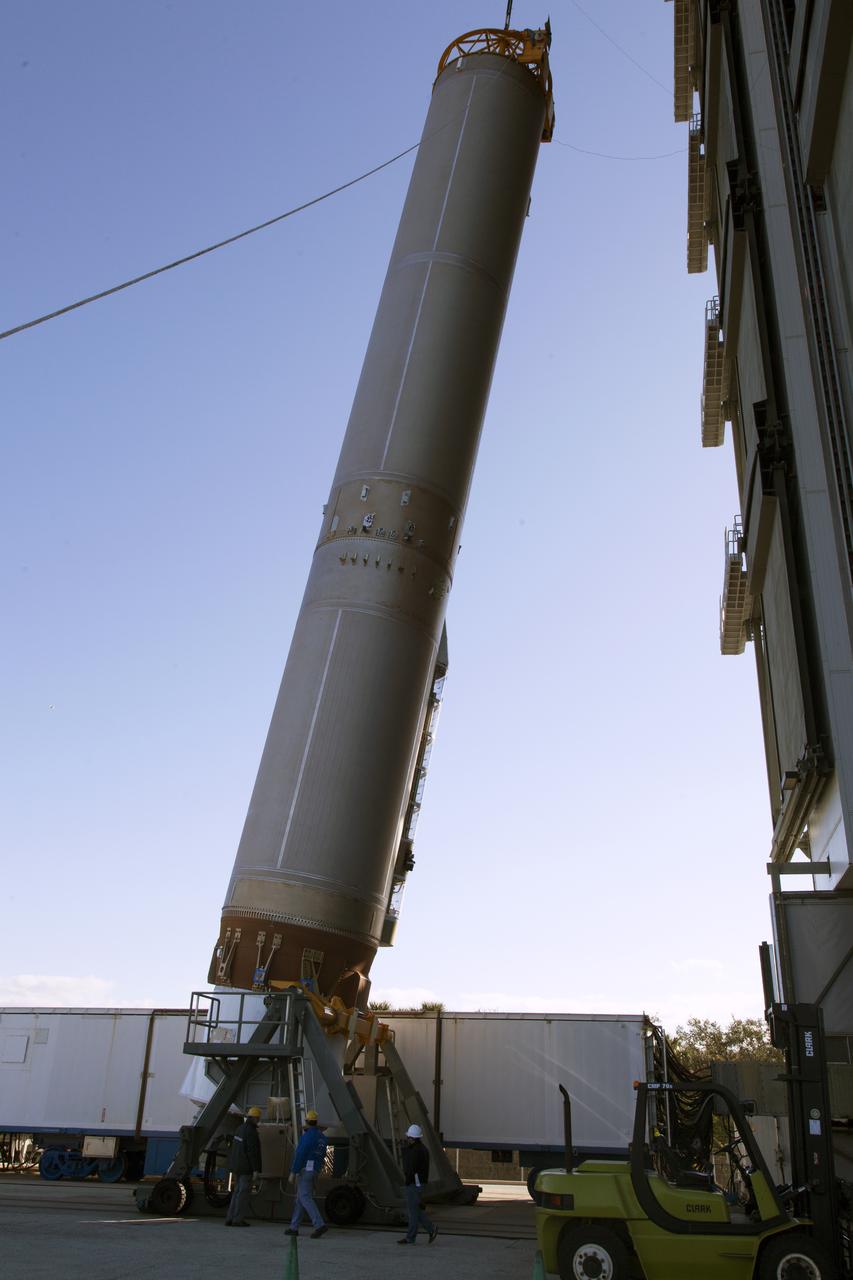
A crane lifts a United Launch Alliance Atlas V first stage at the Vertical Integration Facility at Space Launch Complex 41 at Cape Canaveral Air Force Station in Florida. The rocket will be positioned on its launcher to boost the Geostationary Operational Environmental Satellite, or GOES-S. It will be the second in a series of four advanced geostationary weather satellites and will significantly improve the detection and observation of environmental phenomena that directly affect public safety. GOES-S is slated to launch March 1, 2018.
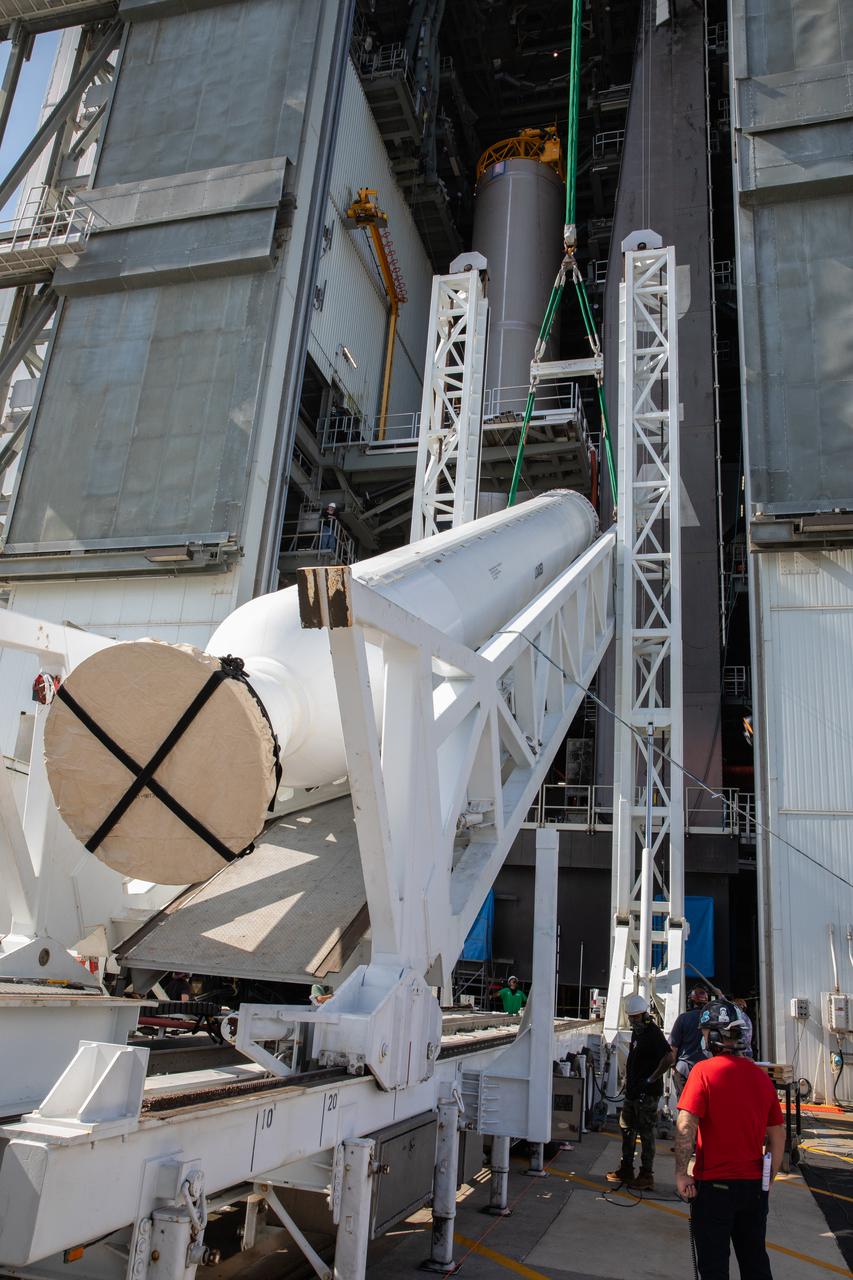
A lifting device raises the fourth and final solid rocket booster (SRB) for the United Launch Alliance Atlas V 541 rocket into the vertical position at the Vertical Integration Facility (VIF) at Space Launch Complex 41 at Cape Canaveral Air Force Station (CCAFS) in Florida on June 9, 2020. The SRB will be lifted up and mated to the Atlas V booster in the VIF. NASA’s Mars 2020 mission with the Perseverance rover is scheduled to launch in July 2020, atop the Atlas V rocket from Pad 41. The rover is part of NASA’s Mars Exploration Program, a long-term effort of robotic exploration of the Red Planet. The rover’s seven instruments will search for habitable conditions in the ancient past and signs of past microbial life on Mars. The Launch Services Program at Kennedy is responsible for launch management.

A technician adjusts a crane that will lift a United Launch Alliance Atlas V first stage at the Vertical Integration Facility at Space Launch Complex 41 at Cape Canaveral Air Force Station in Florida. The rocket will be positioned on its launcher to boost the Geostationary Operational Environmental Satellite, or GOES-S. It will be the second in a series of four advanced geostationary weather satellites and will significantly improve the detection and observation of environmental phenomena that directly affect public safety. GOES-S is slated to launch March 1, 2018.
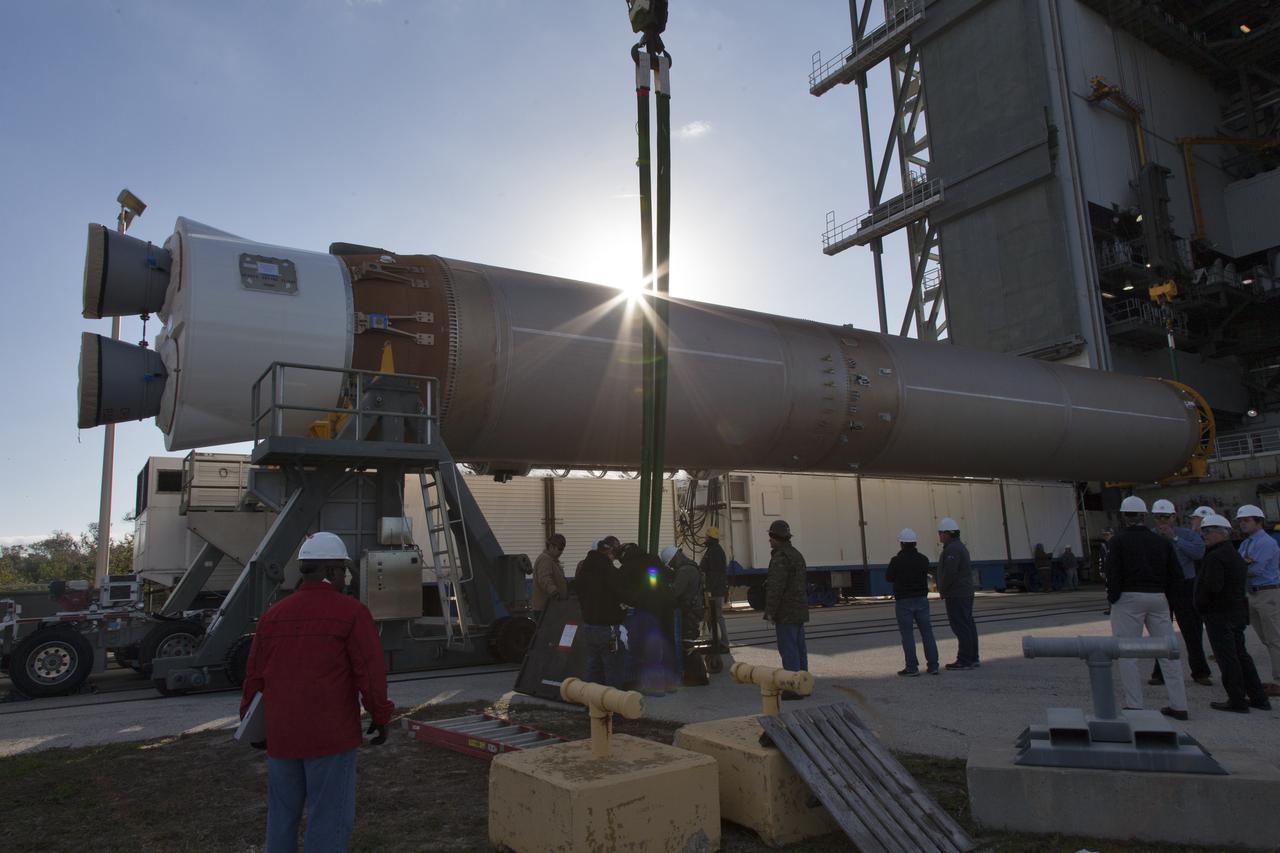
A crane lifts a United Launch Alliance Atlas V first stage at the Vertical Integration Facility at Space Launch Complex 41 at Cape Canaveral Air Force Station in Florida. The rocket will be positioned on its launcher to boost the Geostationary Operational Environmental Satellite, or GOES-S. It will be the second in a series of four advanced geostationary weather satellites and will significantly improve the detection and observation of environmental phenomena that directly affect public safety. GOES-S is slated to launch March 1, 2018.
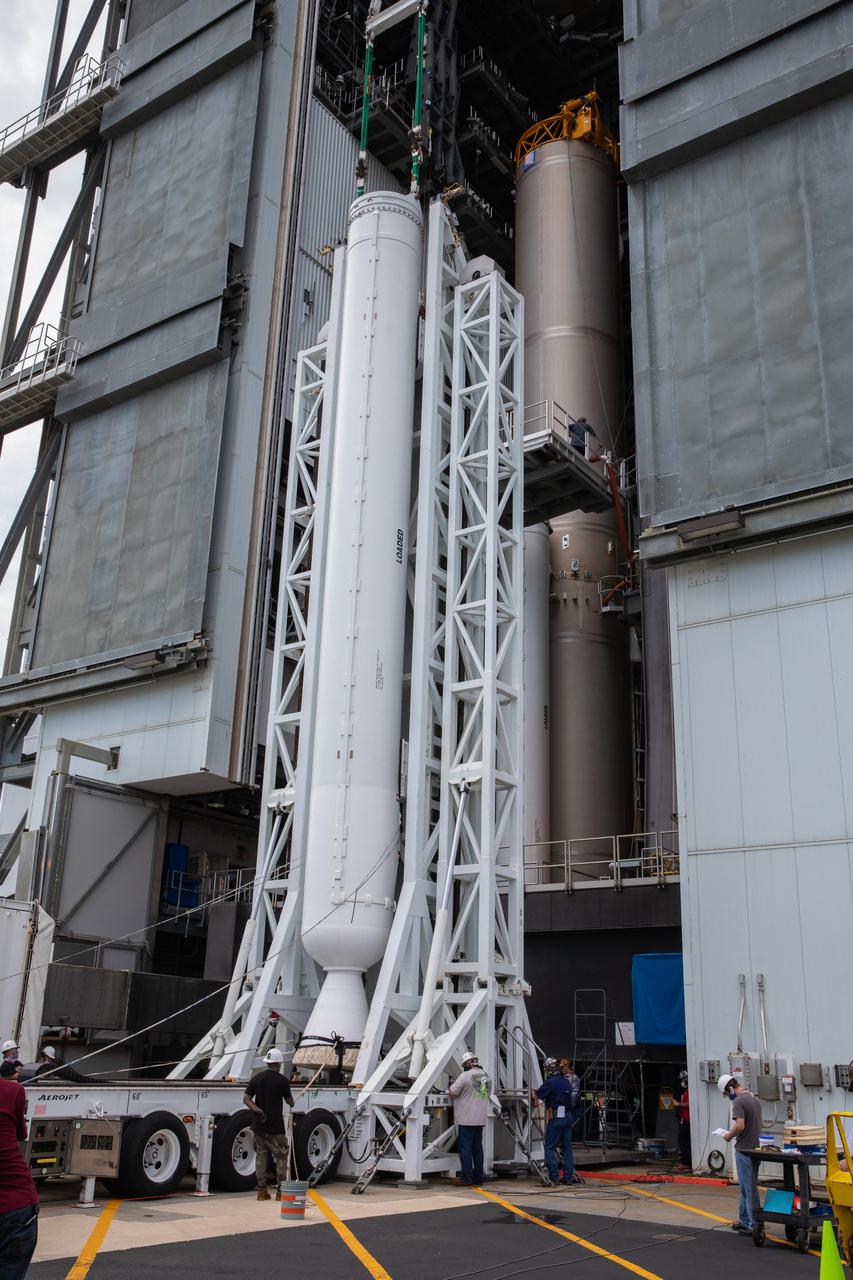
A lifting device raises the fourth and final solid rocket booster (SRB) for the United Launch Alliance Atlas V 541 rocket into the vertical position at the Vertical Integration Facility (VIF) at Space Launch Complex 41 at Cape Canaveral Air Force Station (CCAFS) in Florida on June 9, 2020. A crane is attached to the SRB to lift it up for mating to the Atlas V booster in the VIF. NASA’s Mars 2020 mission with the Perseverance rover is scheduled to launch in July 2020, atop the Atlas V rocket from Pad 41. The rover is part of NASA’s Mars Exploration Program, a long-term effort of robotic exploration of the Red Planet. The rover’s seven instruments will search for habitable conditions in the ancient past and signs of past microbial life on Mars. The Launch Services Program at Kennedy is responsible for launch management.
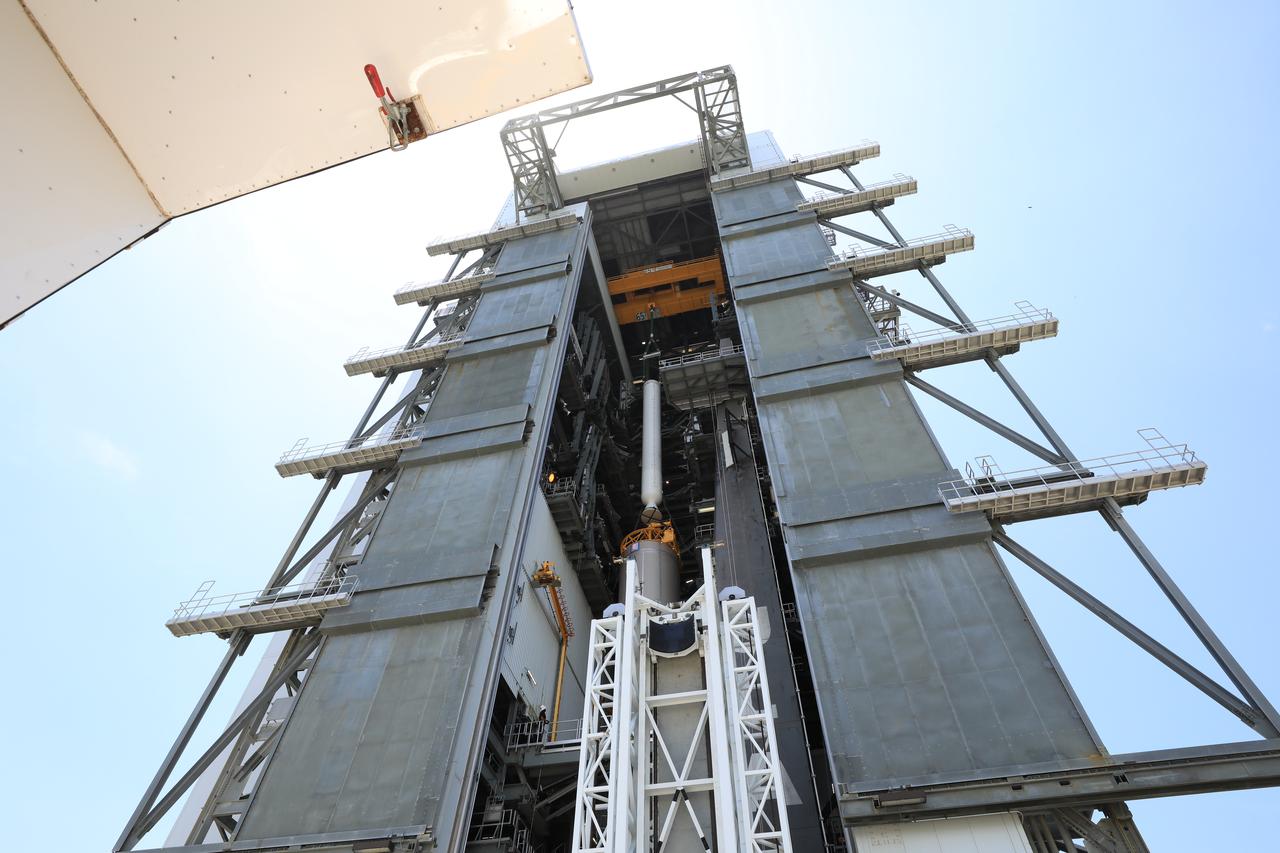
A crane is used to lift the third of four solid rocket boosters (SRB) for the United Launch Alliance Atlas V 541 rocket into the Vertical Integration Facility (VIF) at Space Launch Complex 41 at Cape Canaveral Air Force Station (CCAFS) in Florida on June 8, 2020. The SRB will be lifted up and mated to the Atlas V booster in the VIF. NASA’s Mars 2020 mission with the Perseverance rover is scheduled to launch on July 20, 2020, atop the Atlas V rocket from Pad 41. The rover is part of NASA’s Mars Exploration Program, a long-term effort of robotic exploration of the Red Planet. The rover’s seven instruments will search for habitable conditions in the ancient past and signs of past microbial life on Mars. The Launch Services Program at Kennedy is responsible for launch management.
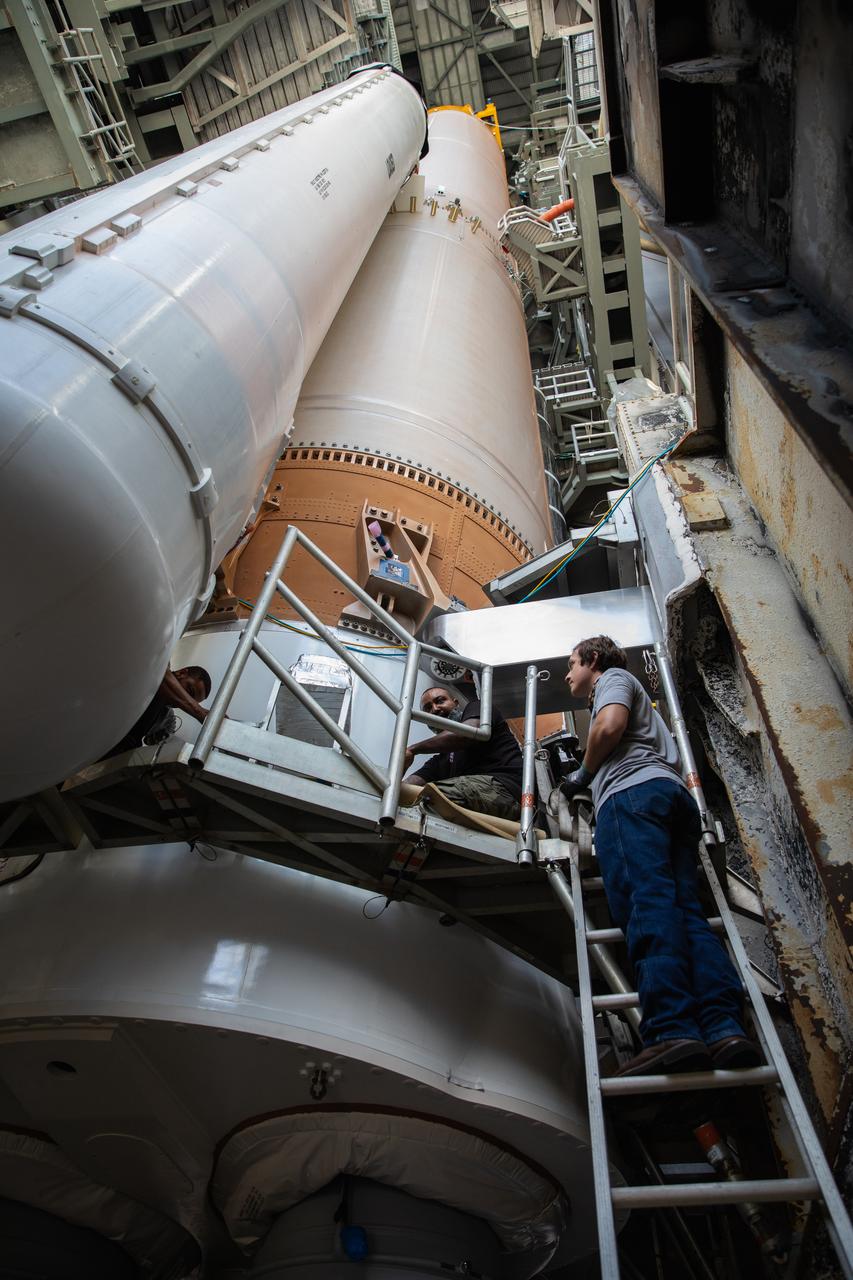
A United Launch Alliance worker is inside the Vertical Integration Facility (VIF) at Space Launch Complex 41 at Cape Canaveral Air Force Station (CCAFS) in Florida on June 9, 2020. A lifting device is used to raise the fourth and final solid rocket booster (SRB) for the United Launch Alliance Atlas V 541 rocket into the (VIF) where it will be mated to the booster. NASA’s Mars 2020 mission with the Perseverance rover is scheduled to launch in July 2020, atop the Atlas V rocket from Pad 41. The rover is part of NASA’s Mars Exploration Program, a long-term effort of robotic exploration of the Red Planet. The rover’s seven instruments will search for habitable conditions in the ancient past and signs of past microbial life on Mars. The Launch Services Program at Kennedy is responsible for launch management.
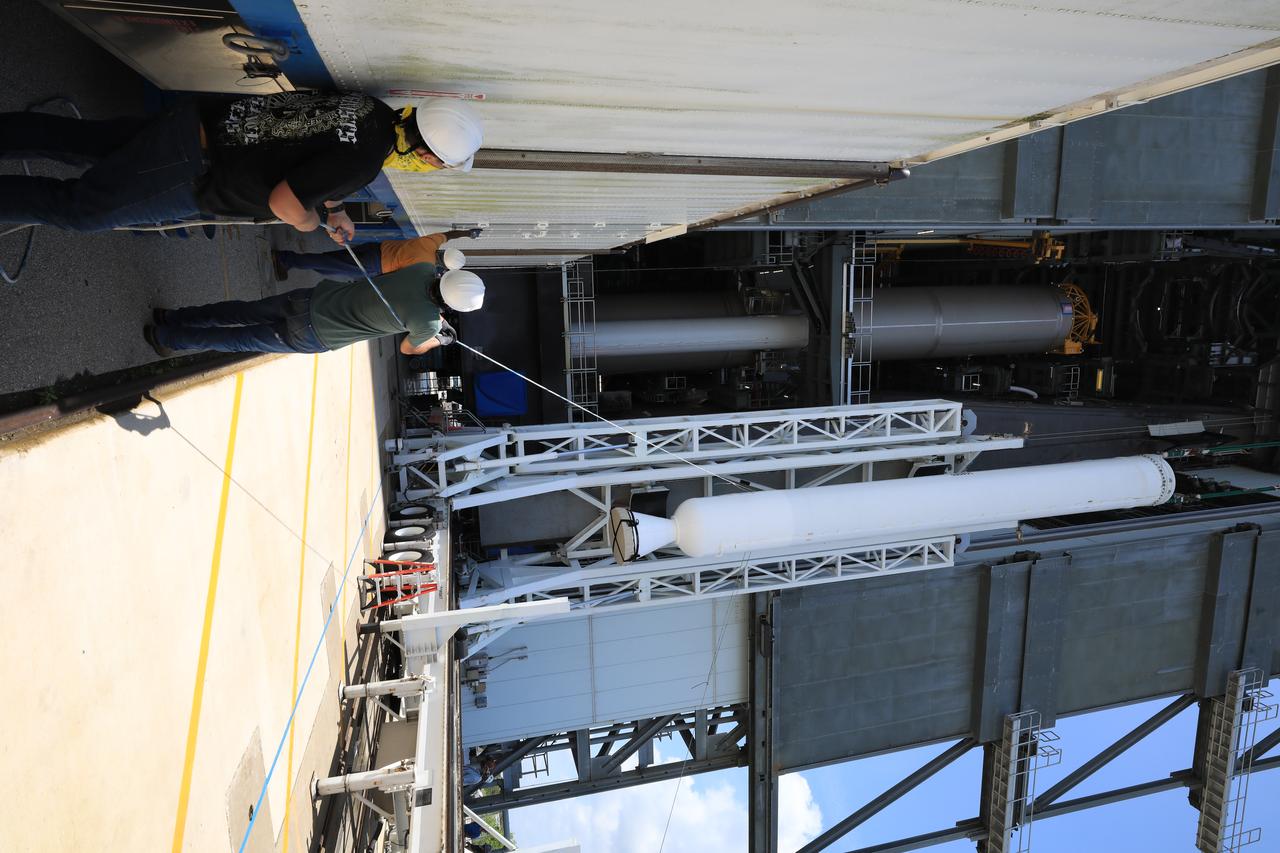
A crane is attached to the third of four solid rocket boosters (SRB) for the United Launch Alliance Atlas V 541 rocket to lift it into the Vertical Integration Facility (VIF) at Space Launch Complex 41 at Cape Canaveral Air Force Station (CCAFS) in Florida on June 8, 2020. The SRB will be lifted up and mated to the Atlas V booster in the VIF. NASA’s Mars 2020 mission with the Perseverance rover is scheduled to launch on July 20, 2020, atop the Atlas V rocket from Pad 41. The rover is part of NASA’s Mars Exploration Program, a long-term effort of robotic exploration of the Red Planet. The rover’s seven instruments will search for habitable conditions in the ancient past and signs of past microbial life on Mars. The Launch Services Program at Kennedy is responsible for launch management.

A crane is used to lift the fourth and final solid rocket booster (SRB) for the United Launch Alliance Atlas V 541 rocket into the Vertical Integration Facility (VIF) at Space Launch Complex 41 at Cape Canaveral Air Force Station (CCAFS) in Florida on June 9, 2020. The SRB will be lifted up and mated to the Atlas V booster in the VIF. NASA’s Mars 2020 mission with the Perseverance rover is scheduled to launch in July 2020, atop the Atlas V rocket from Pad 41. The rover is part of NASA’s Mars Exploration Program, a long-term effort of robotic exploration of the Red Planet. The rover’s seven instruments will search for habitable conditions in the ancient past and signs of past microbial life on Mars. The Launch Services Program at Kennedy is responsible for launch management.
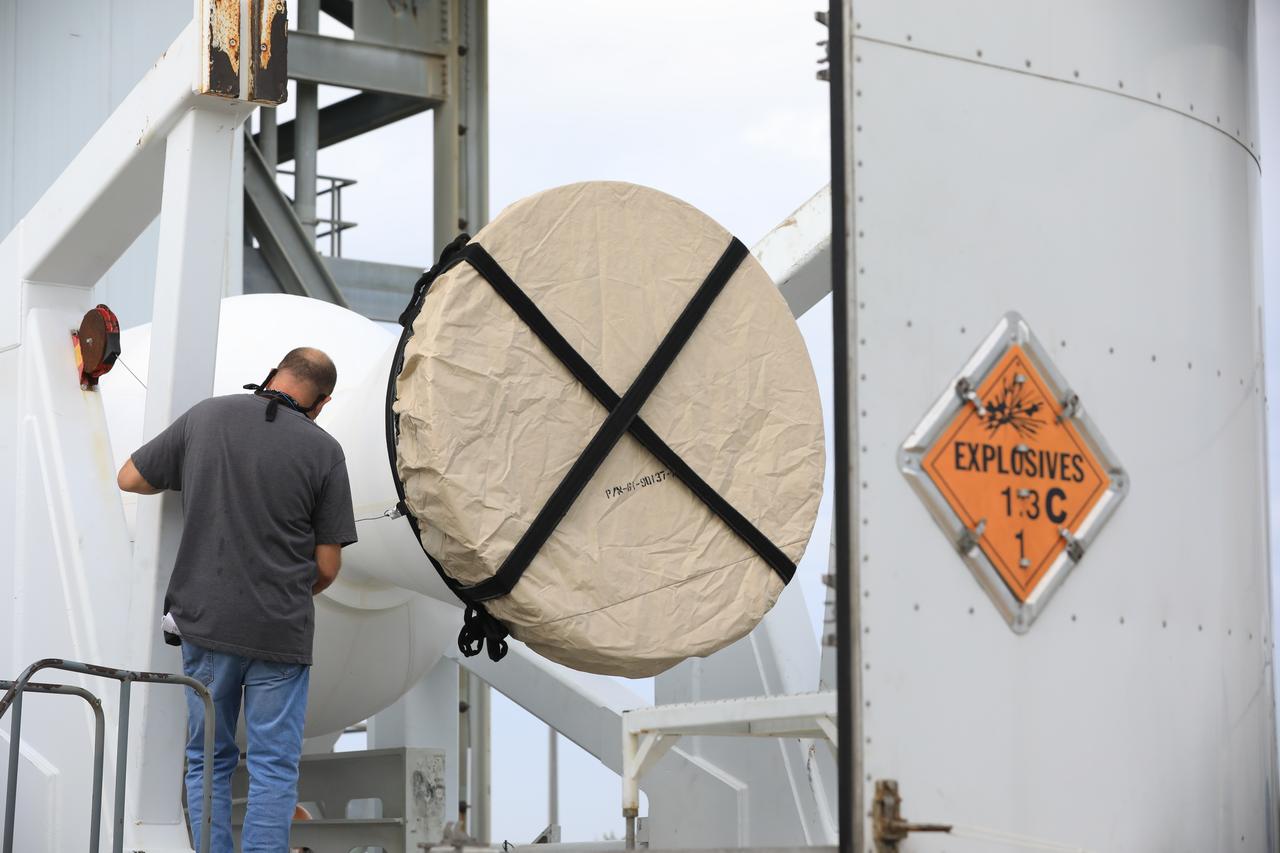
A United Launch Alliance (ULA) worker makes an adjustment to the lifting device that will raise the third of four solid rocket boosters (SRB) for the United Launch Alliance Atlas V 541 rocket into the Vertical Integration Facility (VIF) at Space Launch Complex 41 at Cape Canaveral Air Force Station (CCAFS) in Florida on June 8, 2020. The SRB will be lifted up and mated to the Atlas V booster in the VIF. NASA’s Mars 2020 mission with the Perseverance rover is scheduled to launch on July 20, 2020, atop the Atlas V rocket from Pad 41. The rover is part of NASA’s Mars Exploration Program, a long-term effort of robotic exploration of the Red Planet. The rover’s seven instruments will search for habitable conditions in the ancient past and signs of past microbial life on Mars. The Launch Services Program at Kennedy is responsible for launch management.
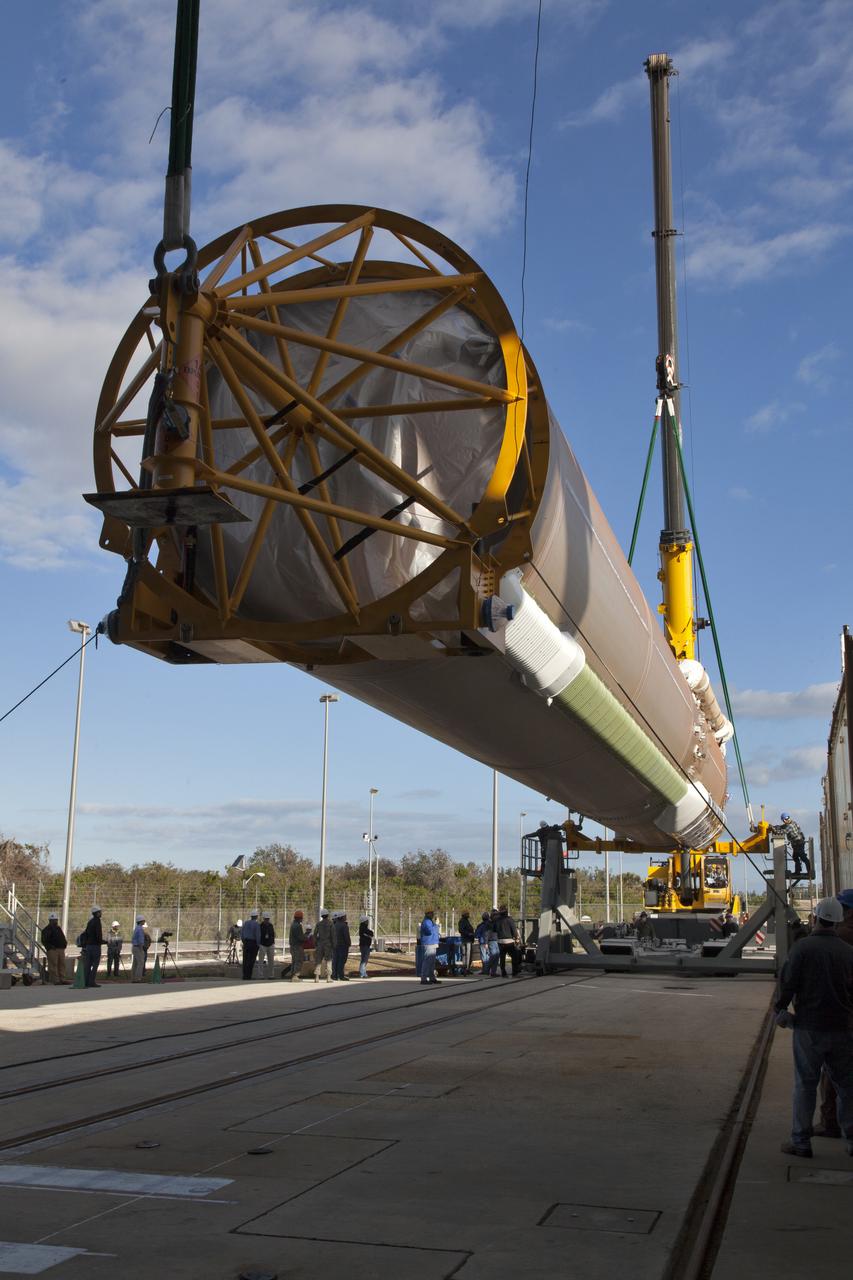
A crane lifts a United Launch Alliance Atlas V first stage at the Vertical Integration Facility at Space Launch Complex 41 at Cape Canaveral Air Force Station in Florida. The rocket will be positioned on its launcher to boost the Geostationary Operational Environmental Satellite, or GOES-S. It will be the second in a series of four advanced geostationary weather satellites and will significantly improve the detection and observation of environmental phenomena that directly affect public safety. GOES-S is slated to launch March 1, 2018.
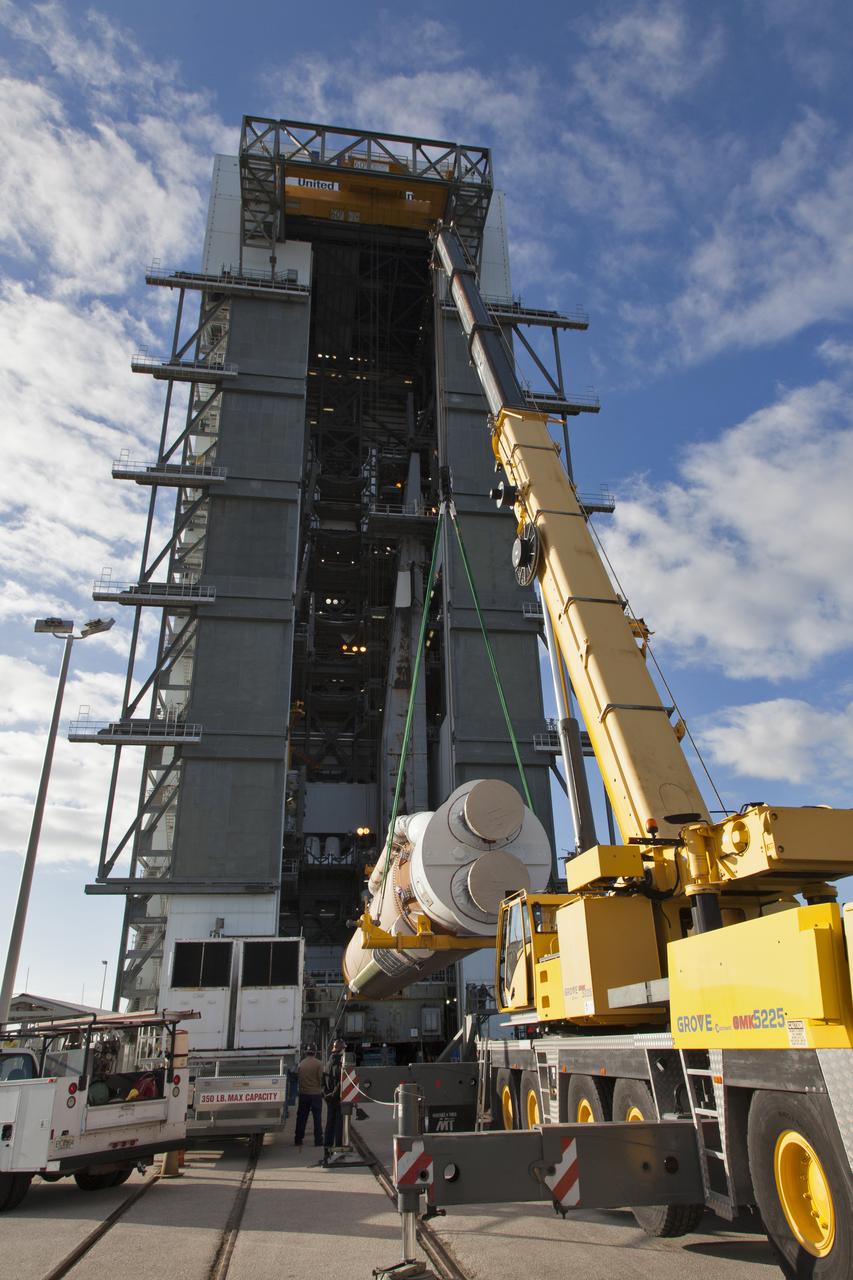
A crane lifts a United Launch Alliance Atlas V first stage at the Vertical Integration Facility at Space Launch Complex 41 at Cape Canaveral Air Force Station in Florida. The rocket will be positioned on its launcher to boost the Geostationary Operational Environmental Satellite, or GOES-S. It will be the second in a series of four advanced geostationary weather satellites and will significantly improve the detection and observation of environmental phenomena that directly affect public safety. GOES-S is slated to launch March 1, 2018.
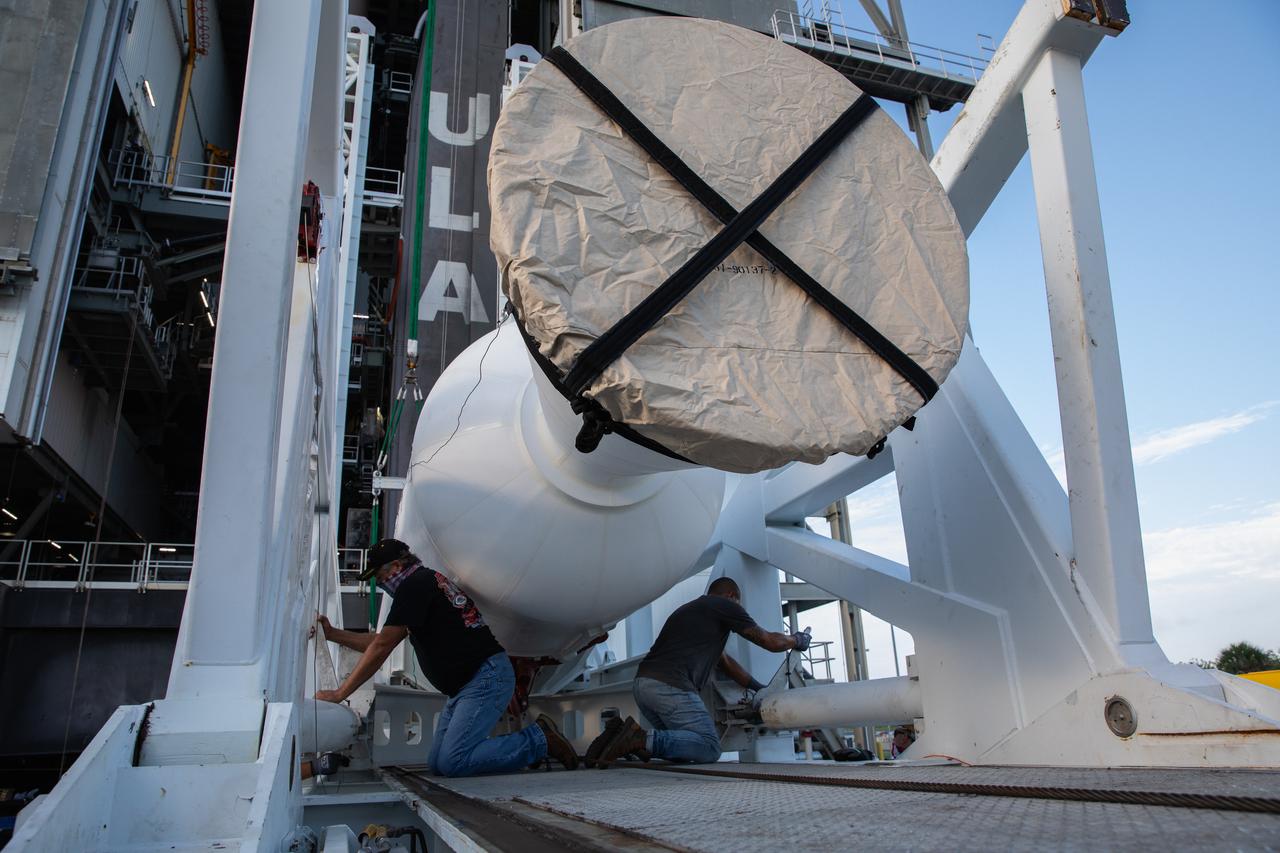
A lifting device raises the fourth and final solid rocket booster (SRB) for the United Launch Alliance Atlas V 541 rocket into the vertical position at the Vertical Integration Facility (VIF) at Space Launch Complex 41 at Cape Canaveral Air Force Station (CCAFS) in Florida on June 9, 2020. The SRB will be lifted up and mated to the Atlas V booster in the VIF. NASA’s Mars 2020 mission with the Perseverance rover is scheduled to launch in July 2020, atop the Atlas V rocket from Pad 41. The rover is part of NASA’s Mars Exploration Program, a long-term effort of robotic exploration of the Red Planet. The rover’s seven instruments will search for habitable conditions in the ancient past and signs of past microbial life on Mars. The Launch Services Program at Kennedy is responsible for launch management.
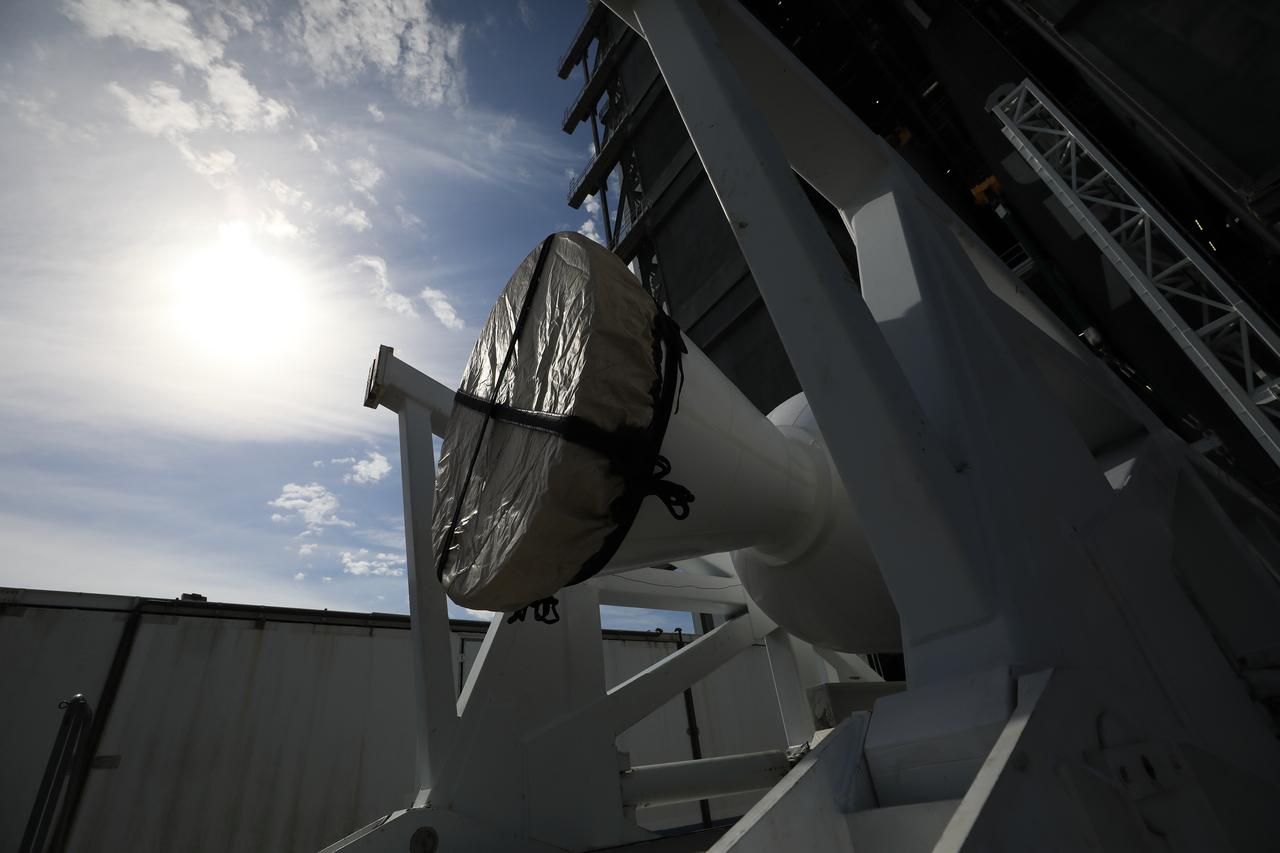
A lifting device begins to raise the third of four solid rocket boosters (SRB) for the United Launch Alliance Atlas V 541 rocket into the vertical position at Vertical Integration Facility (VIF) at Space Launch Complex 41 at Cape Canaveral Air Force Station (CCAFS) in Florida on June 8, 2020. The SRB will be lifted up and mated to the Atlas V booster in the VIF. NASA’s Mars 2020 mission with the Perseverance rover is scheduled to launch on July 20, 2020, atop the Atlas V rocket from Pad 41. The rover is part of NASA’s Mars Exploration Program, a long-term effort of robotic exploration of the Red Planet. The rover’s seven instruments will search for habitable conditions in the ancient past and signs of past microbial life on Mars. The Launch Services Program at Kennedy is responsible for launch management.
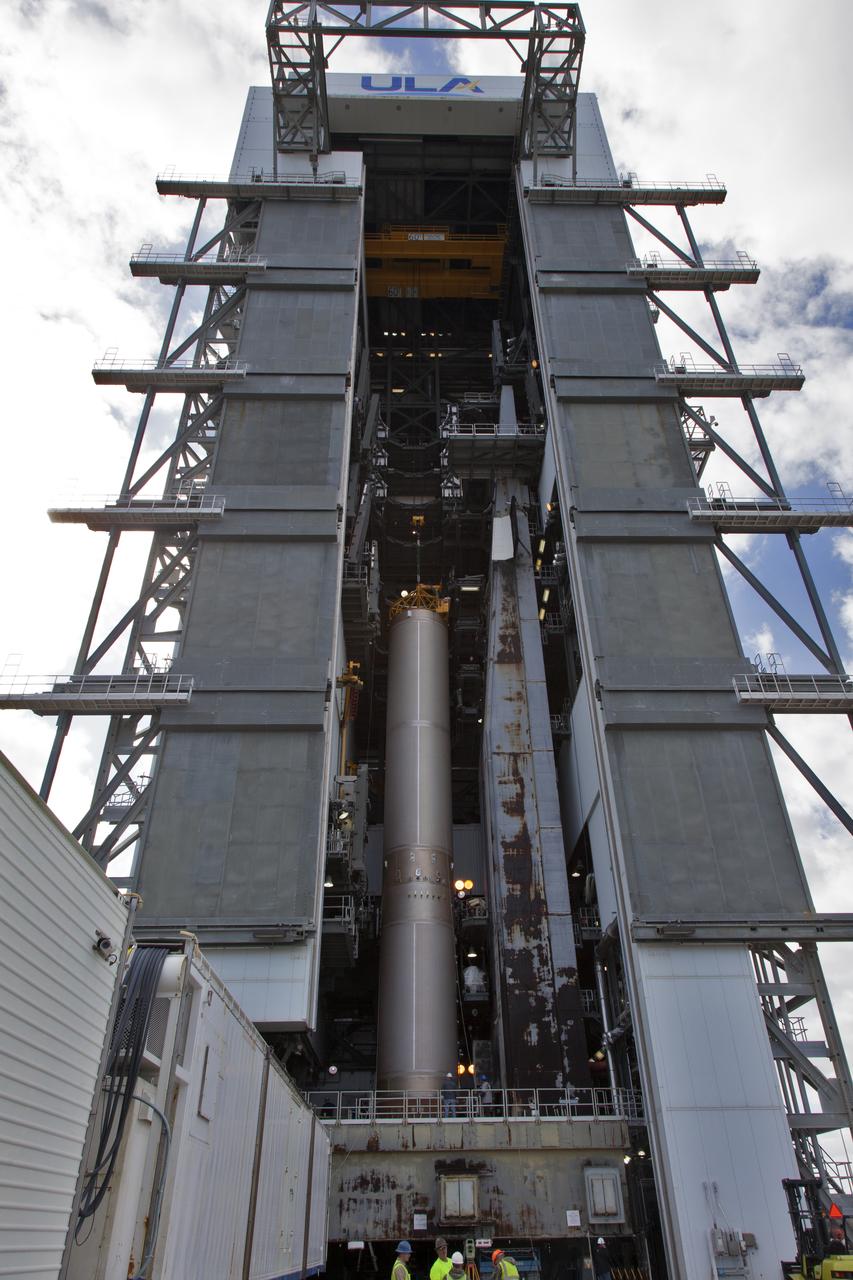
A crane lifts a United Launch Alliance Atlas V first stage into the Vertical Integration Facility at Space Launch Complex 41 at Cape Canaveral Air Force Station in Florida. The rocket will be positioned on its launcher to boost the Geostationary Operational Environmental Satellite, or GOES-S. It will be the second in a series of four advanced geostationary weather satellites and will significantly improve the detection and observation of environmental phenomena that directly affect public safety. GOES-S is slated to launch March 1, 2018.
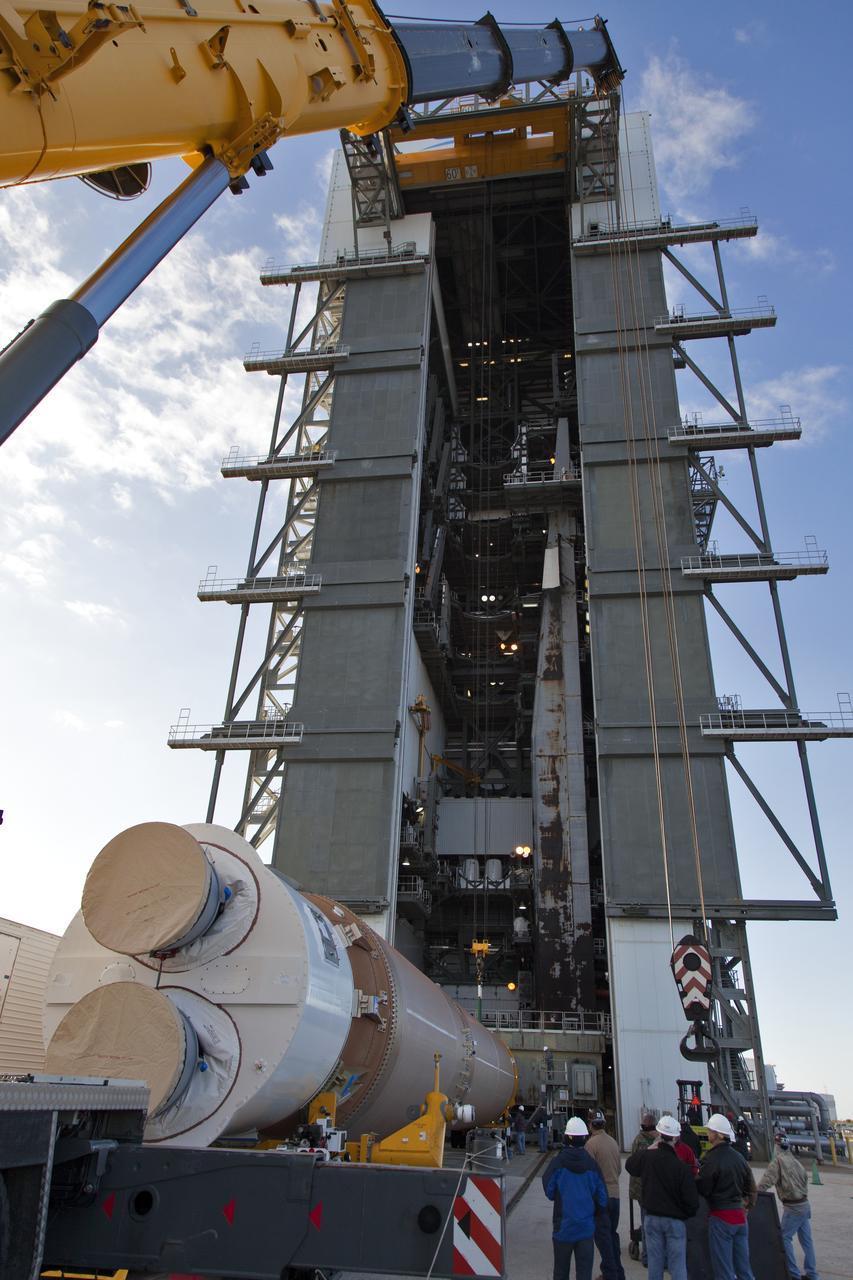
A crane lifts a United Launch Alliance Atlas V first stage at the Vertical Integration Facility at Space Launch Complex 41 at Cape Canaveral Air Force Station in Florida. The rocket will be positioned on its launcher to boost the Geostationary Operational Environmental Satellite, or GOES-S. It will be the second in a series of four advanced geostationary weather satellites and will significantly improve the detection and observation of environmental phenomena that directly affect public safety. GOES-S is slated to launch March 1, 2018.

A United Launch Alliance (ULA) worker watches from inside the Vertical Integration Facility (VIF) as the fourth and final solid rocket booster (SRB) for the United Launch Alliance Atlas V 541 rocket is prepared for a lift into the vertical position at Space Launch Complex 41 at Cape Canaveral Air Force Station (CCAFS) in Florida on June 9, 2020. The SRB will be lifted up and mated to the Atlas V booster in the VIF. NASA’s Mars 2020 mission with the Perseverance rover is scheduled to launch in July 2020, atop the Atlas V rocket from Pad 41. The rover is part of NASA’s Mars Exploration Program, a long-term effort of robotic exploration of the Red Planet. The rover’s seven instruments will search for habitable conditions in the ancient past and signs of past microbial life on Mars. The Launch Services Program at Kennedy is responsible for launch management.
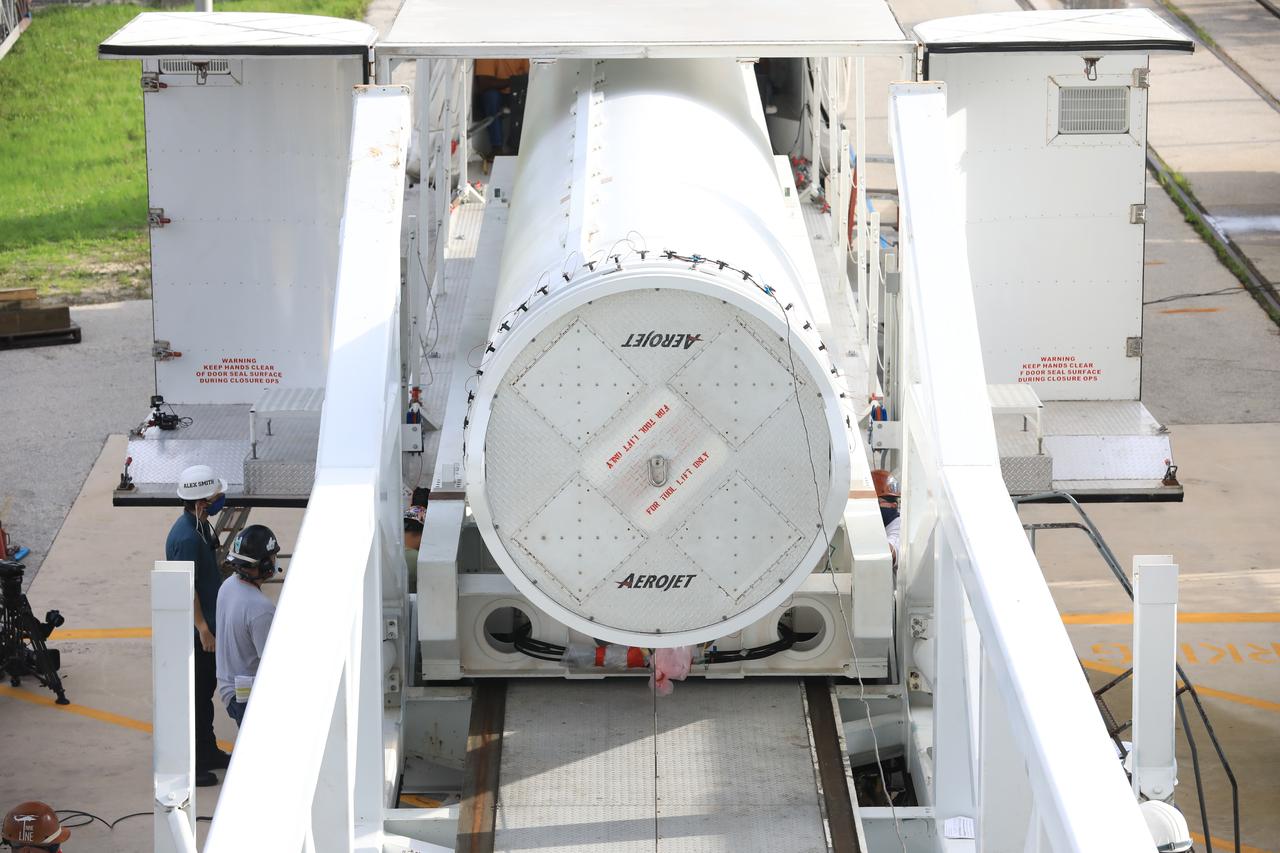
Preparations are underway to lift the third of four solid rocket boosters (SRB) for the United Launch Alliance Atlas V 541 rocket into the Vertical Integration Facility (VIF) at Space Launch Complex 41 at Cape Canaveral Air Force Station (CCAFS) in Florida on June 8, 2020. The SRB will be lifted and mated to the Atlas V booster in the VIF. The Mars Perseverance rover is scheduled to launch on July 20, 2020, atop the Atlas V rocket from Pad 41. The rover is part of NASA’s Mars Exploration Program, a long-term effort of robotic exploration of the Red Planet. The rover’s seven instruments will search for habitable conditions in the ancient past and signs of past microbial life on Mars. The Launch Services Program at Kennedy is responsible for launch management.
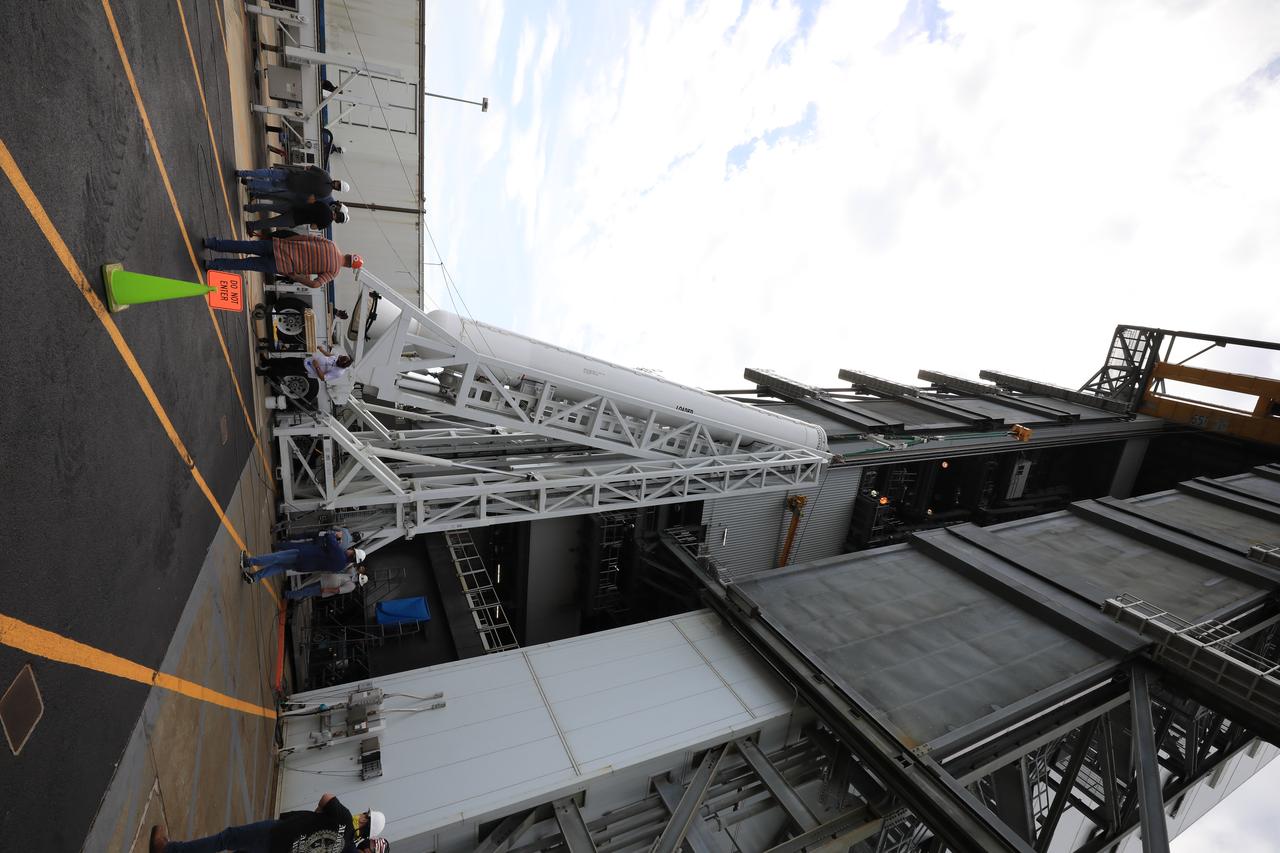
A lifting device is used to raise the third of four solid rocket boosters (SRB) for the United Launch Alliance Atlas V 541 rocket into the vertical position at the Vertical Integration Facility (VIF) at Space Launch Complex 41 at Cape Canaveral Air Force Station (CCAFS) in Florida on June 8, 2020. The SRB will be lifted up and mated to the Atlas V booster in the VIF. NASA’s Mars 2020 mission with the Perseverance rover is scheduled to launch on July 20, 2020, atop the Atlas V rocket from Pad 41. The rover is part of NASA’s Mars Exploration Program, a long-term effort of robotic exploration of the Red Planet. The rover’s seven instruments will search for habitable conditions in the ancient past and signs of past microbial life on Mars. The Launch Services Program at Kennedy is responsible for launch management.
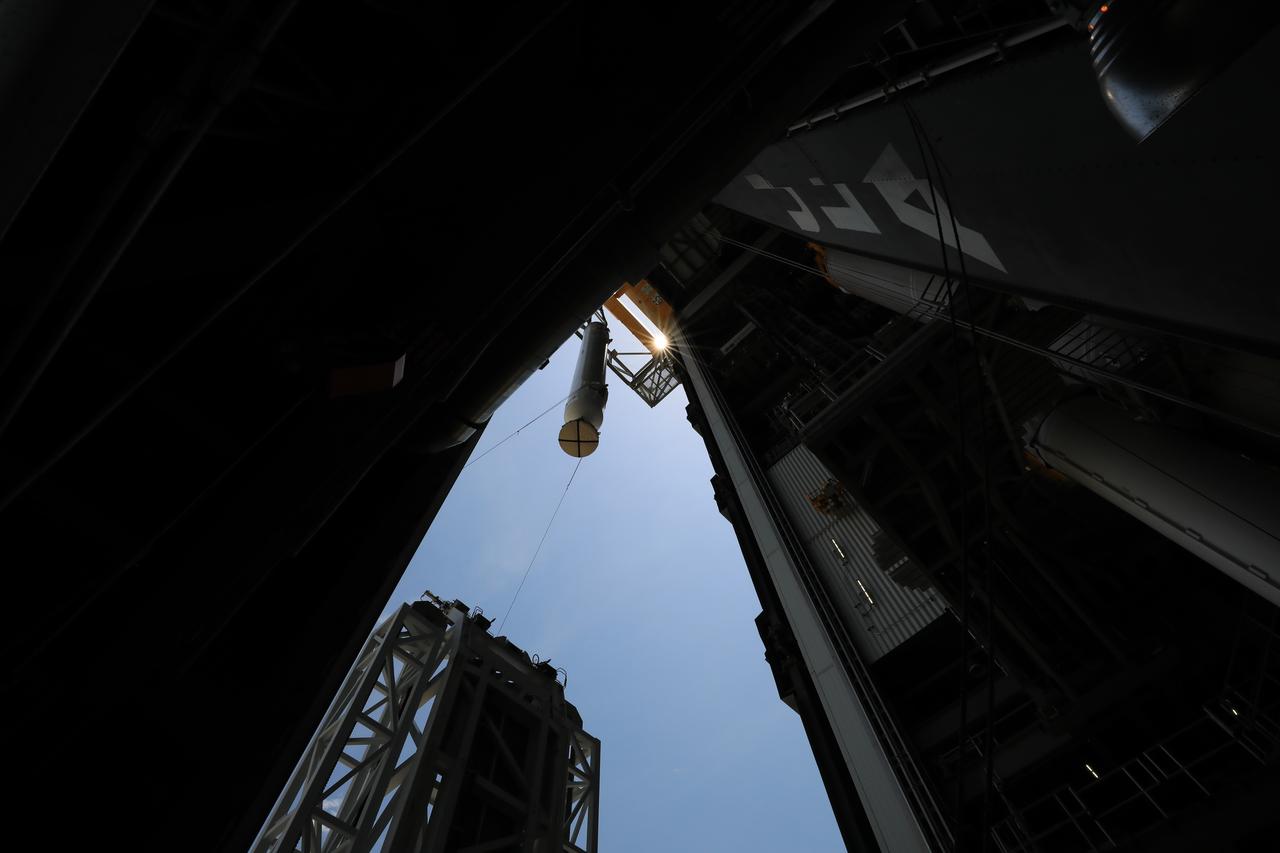
A view from inside the Vertical Integration Facility (VIF) at Space Launch Complex 41 at Cape Canaveral Air Force Station in Florida, as the third of four solid rocket boosters (SRB) for the United Launch Alliance Atlas V 541 rocket is lifted up by crane on June 8, 2020. The SRB will be mated to the Atlas V booster inside the VIF. NASA’s Mars 2020 mission with the Perseverance rover is scheduled to launch on July 20, 2020, atop the Atlas V rocket from Pad 41. The rover is part of NASA’s Mars Exploration Program, a long-term effort of robotic exploration of the Red Planet. The rover’s seven instruments will search for habitable conditions in the ancient past and signs of past microbial life on Mars. The Launch Services Program at Kennedy is responsible for launch management.
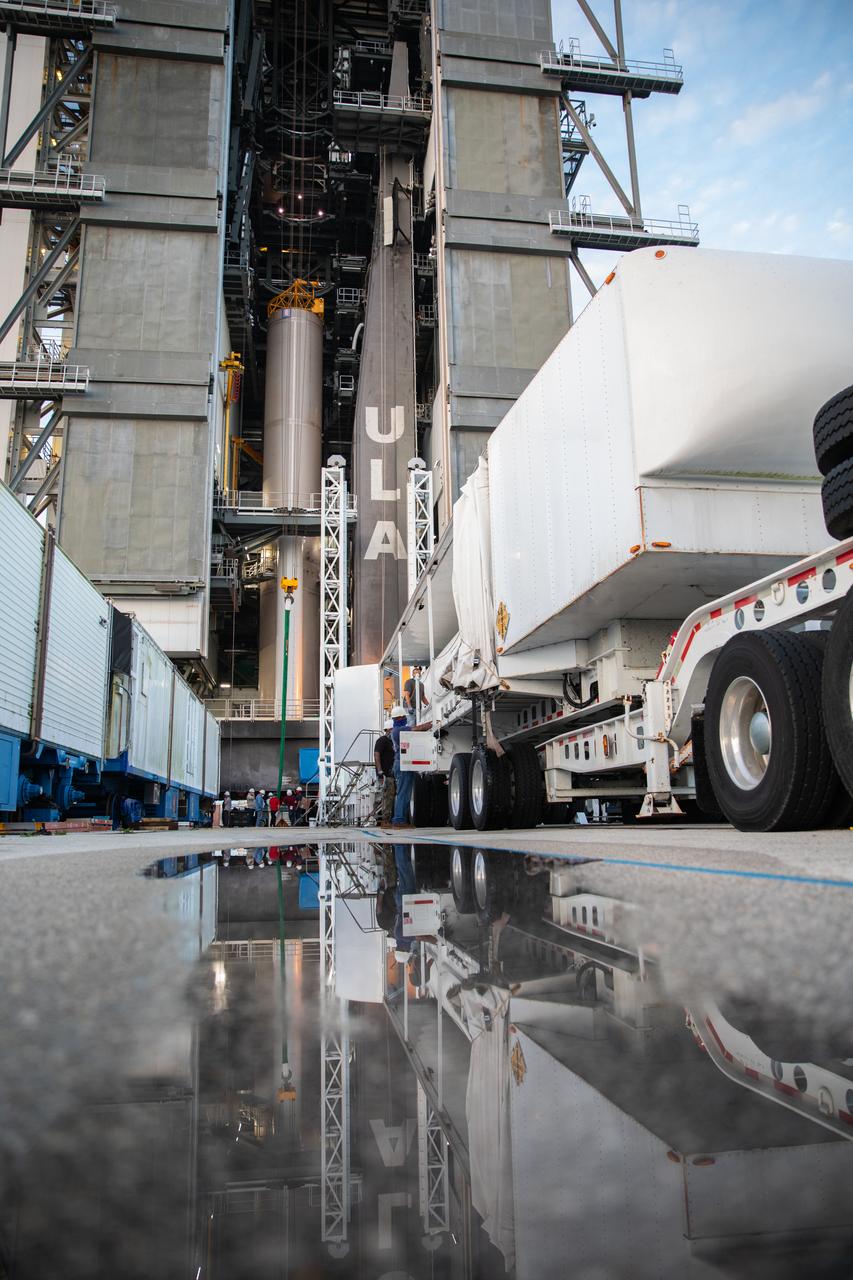
The fourth and final solid rocket booster (SRB) for the United Launch Alliance Atlas V 541 rocket arrives at the Vertical Integration Facility (VIF) at Space Launch Complex 41 at Cape Canaveral Air Force Station (CCAFS) in Florida on June 9, 2020. The SRB will be prepared for lift and mating to the Atlas V booster in the VIF. The Mars 2020 mission with the Perseverance rover is scheduled to launch in July 2020, atop the Atlas V rocket from Pad 41. The rover is part of NASA’s Mars Exploration Program, a long-term effort of robotic exploration of the Red Planet. The rover’s seven instruments will search for habitable conditions in the ancient past and signs of past microbial life on Mars. The Launch Services Program at Kennedy is responsible for launch management.