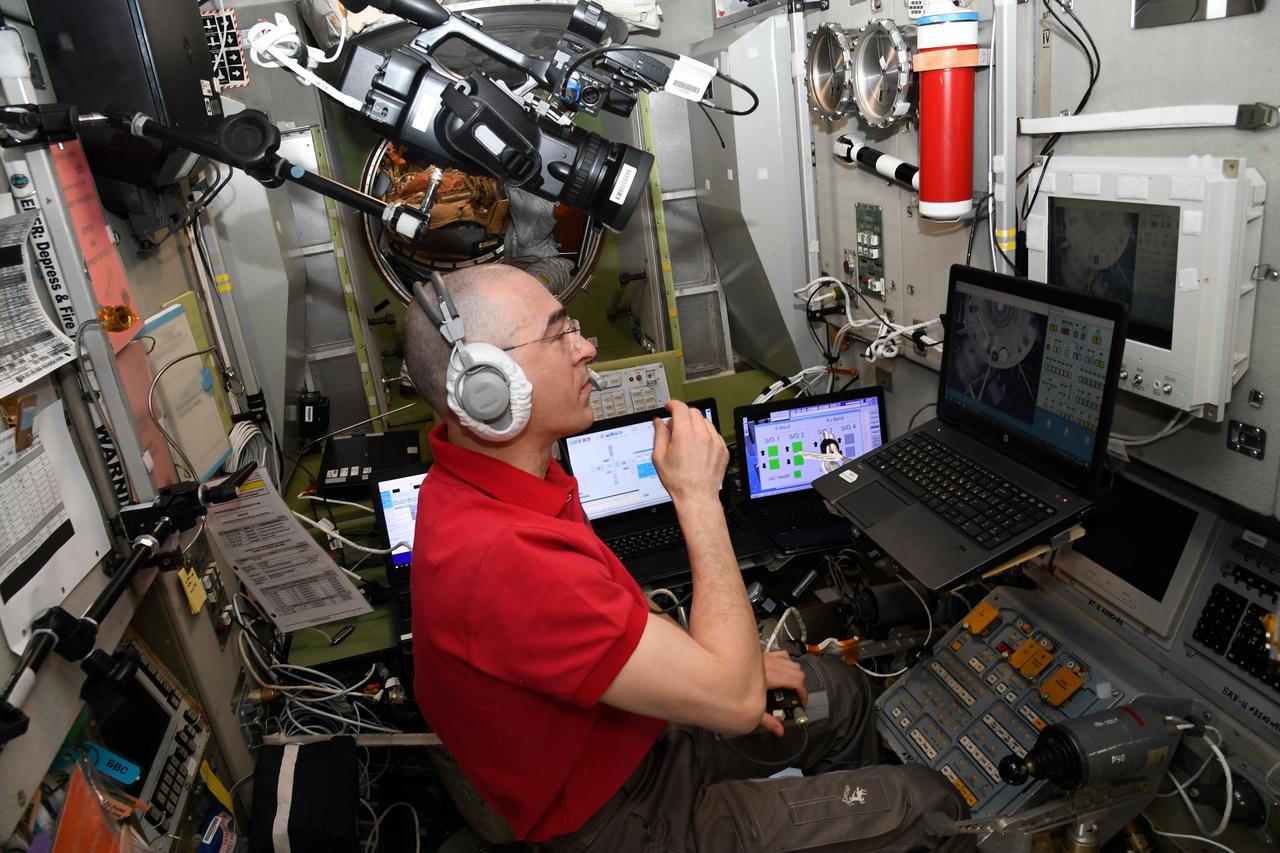
iss063e001466 (April 22, 2020) --- Roscosmos cosmonaut and Expedition 63 Flight Engineer Anatoly Ivanishin practices remote spacecraft maneuvering techniques on the Tele-Operated Robotics Unit (TORU) in the Zvezda service module. The TORU would be used in the unlikely event a Russian spacecraft would be unable to automatically rendezvous and dock to the International Space Station.
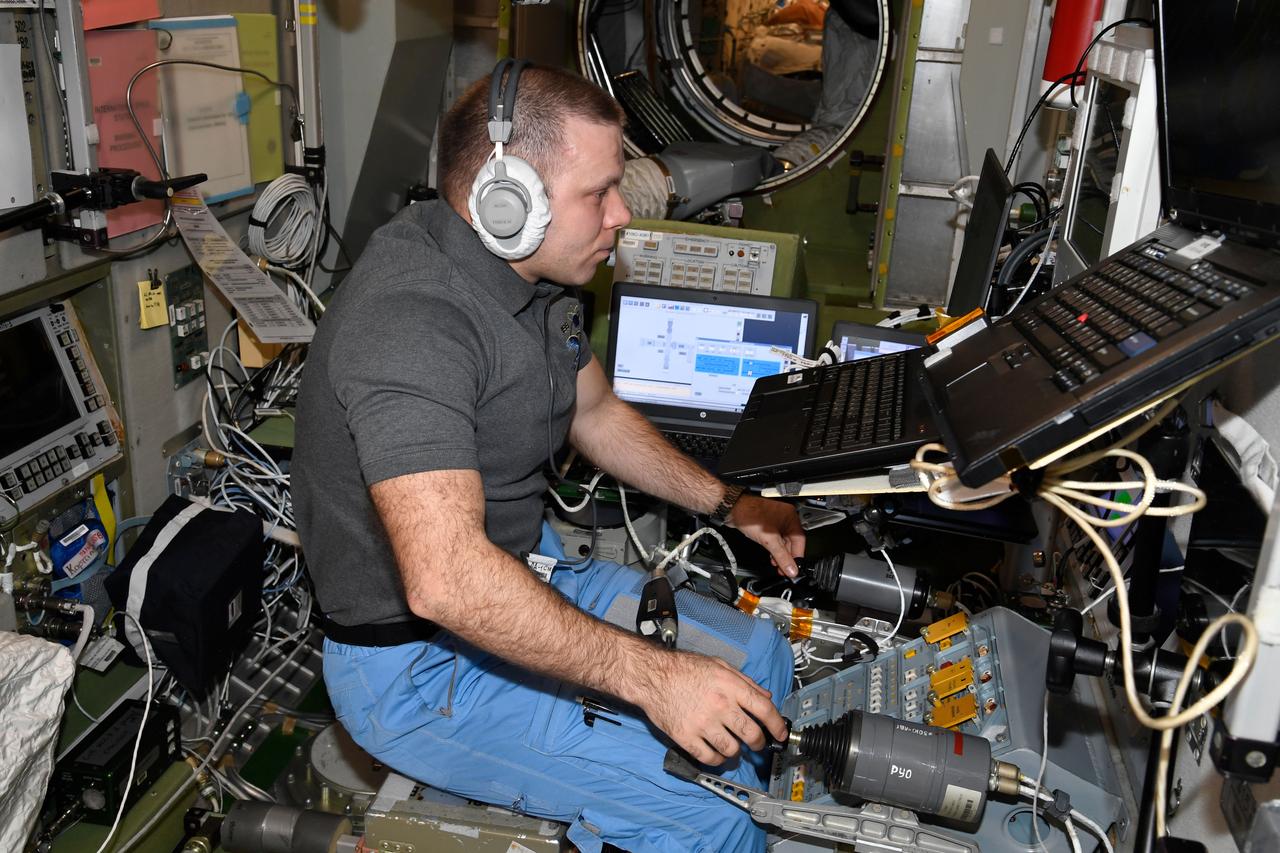
iss063e001469 (April 22, 2020) --- Roscosmos cosmonaut and Expedition 63 Flight Engineer Ivan Vagner practices remote spacecraft maneuvering techniques on the Tele-Operated Robotics Unit (TORU) in the Zvezda service module. The TORU would be used in the unlikely event a Russian spacecraft would be unable to automatically rendezvous and dock to the International Space Station.
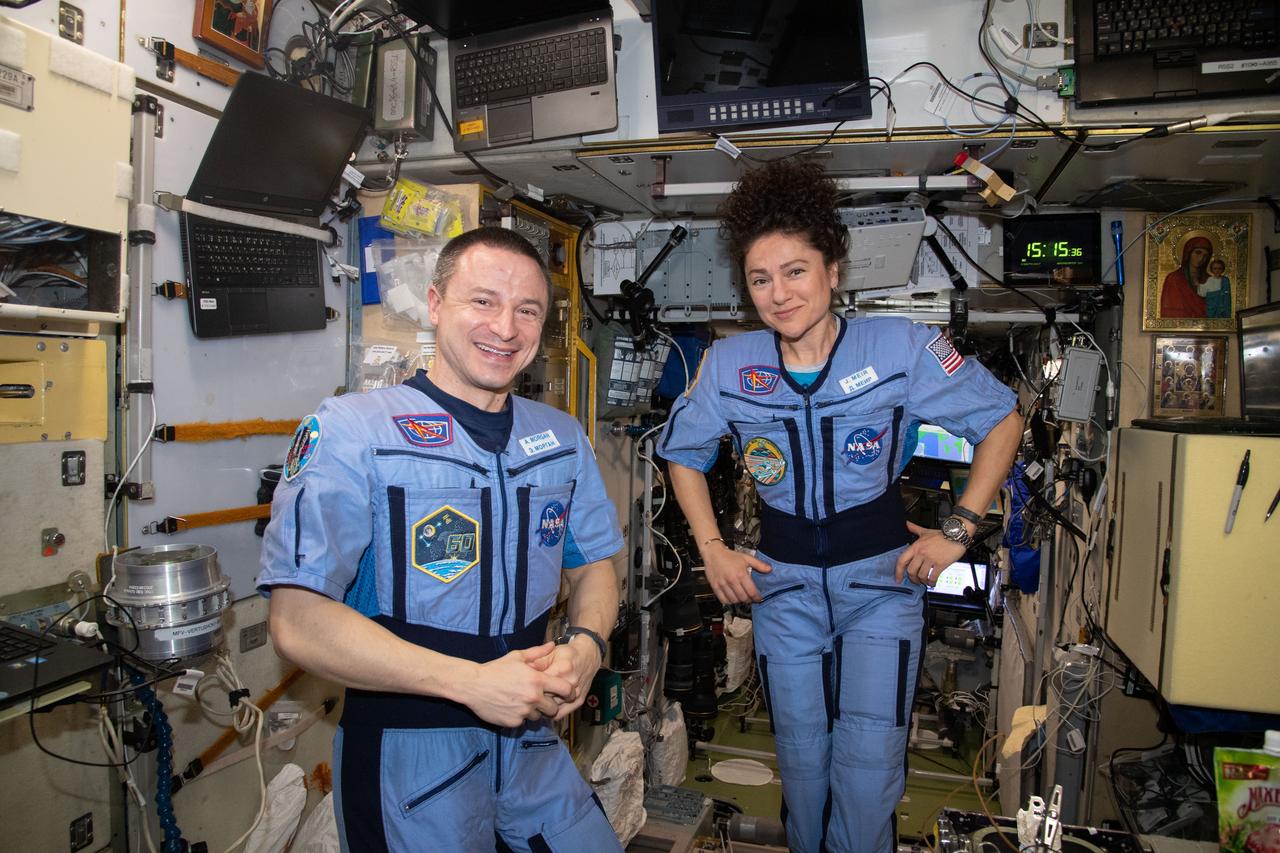
iss062e133028 (March 29, 2020) --- NASA astronauts and Expedition 62 Flight Engineers Andrew Morgan and Jessica Meir pose for a portrait inside the International Space Station's Zvezda service module.
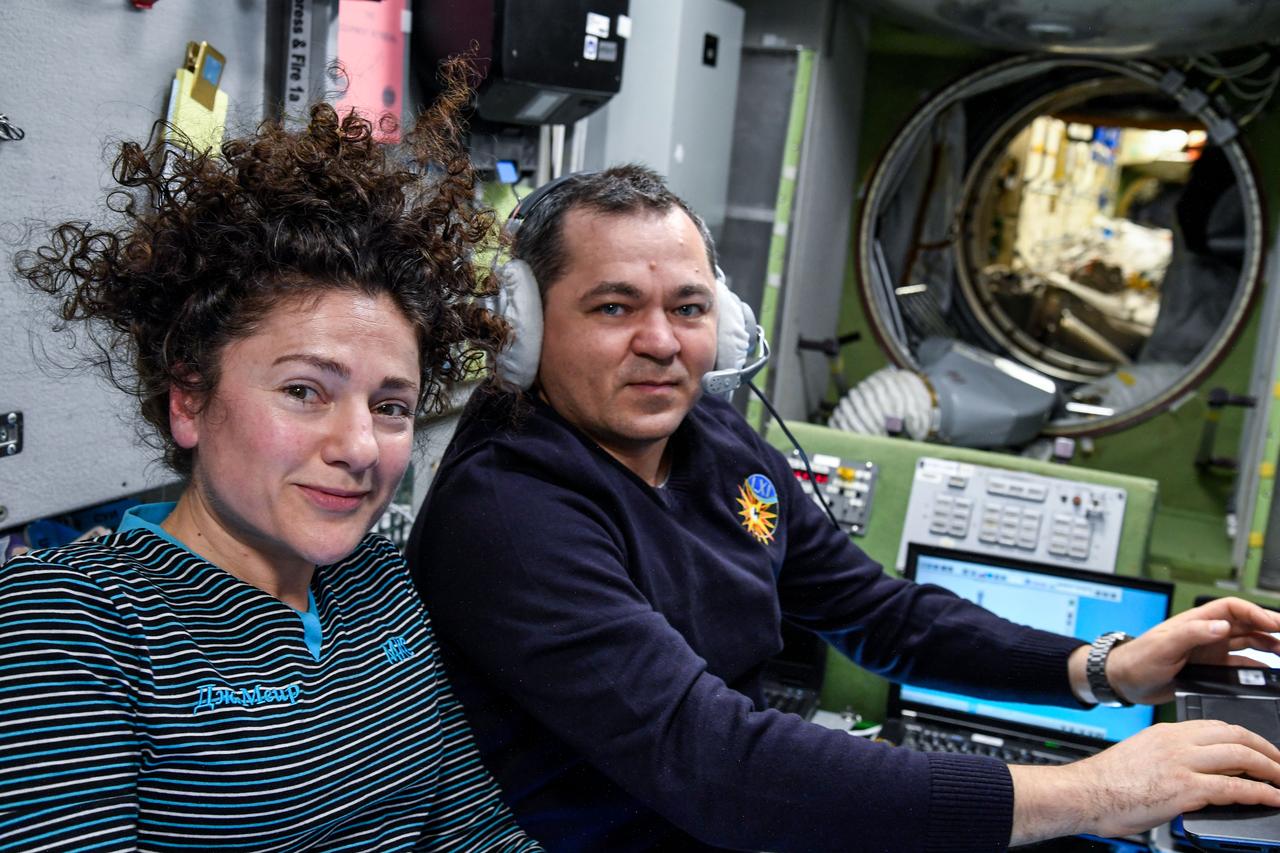
iss061e093210 (Dec. 19, 2019) --- NASA astronaut Jessica Meir and Roscosmos cosmonaut Oleg Skripochka, both Expedition 61 Flight Engineers, pose for a portrait inside the International Space Station's Zvezda service module.
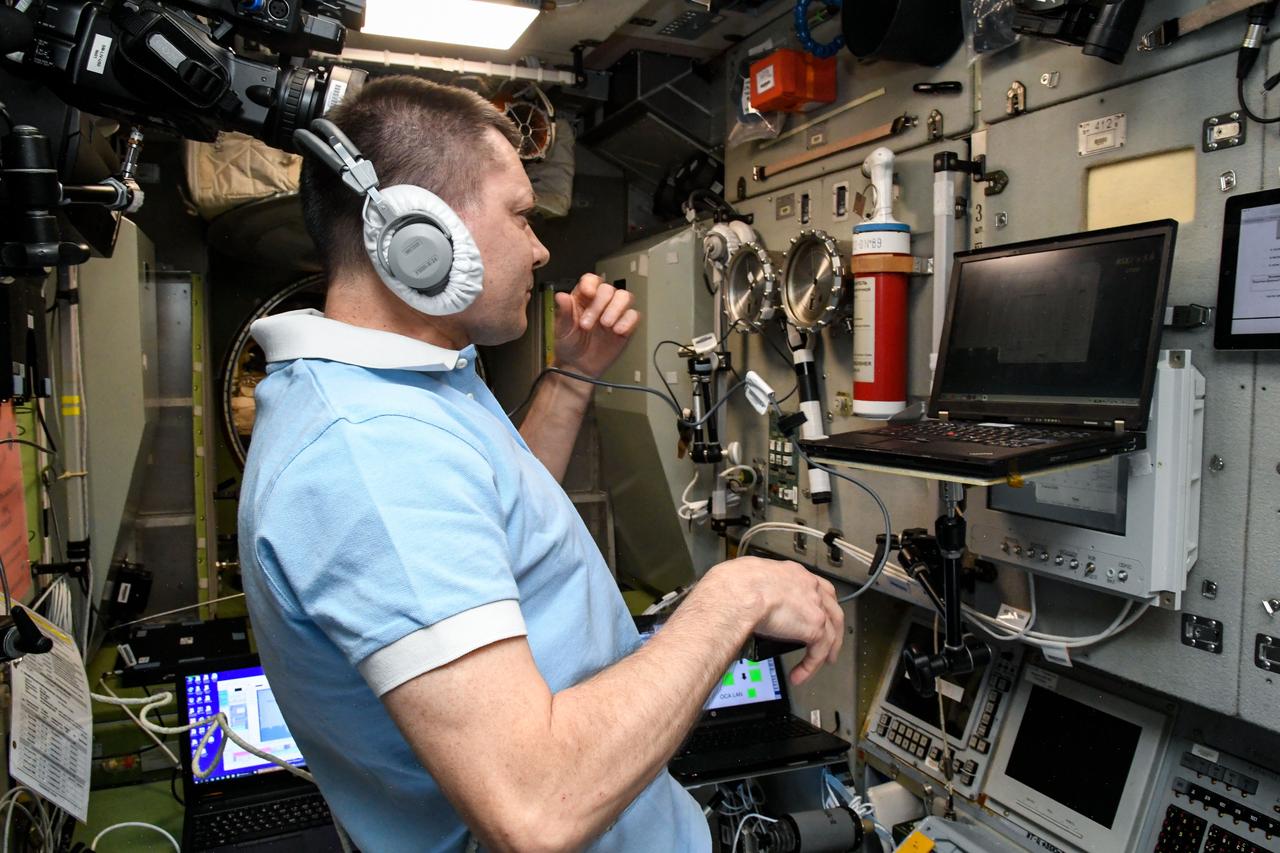
iss059e111655 (June 17, 2019) --- Expedition 59 Commander Oleg Kononenko of Roscosmos practices descent maneuvers on a computer that he will use to return to Earth aboard the Soyuz MS-11 spacecraft on June 24. He will lead Flight Engineers Anne McClain and David Saint-Jacques to a parachute-assisted landing in Kazakhstan after a 204-day mission in space.
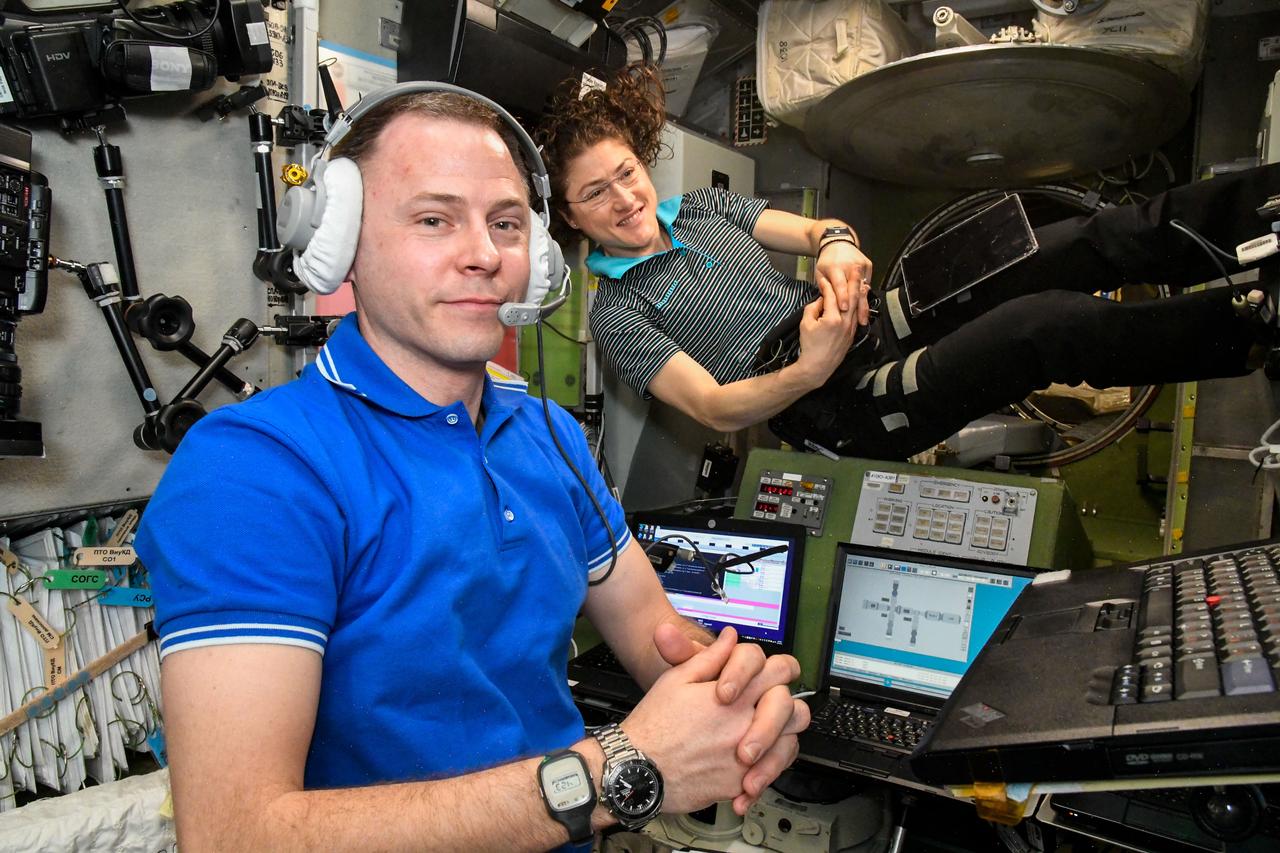
iss059e103111 (June 13, 2019) --- NASA astronauts Nick Hague and Christina Koch practice an emergency simulation inside the International Space Station's Zvezda service module. The duo along with cosmonaut Alexey Ovchinin (out of frame) practiced emergency procedures for quickly entering their Soyuz lifeboat, undocking from the station and descending to Earth. Credit: Roscosmos
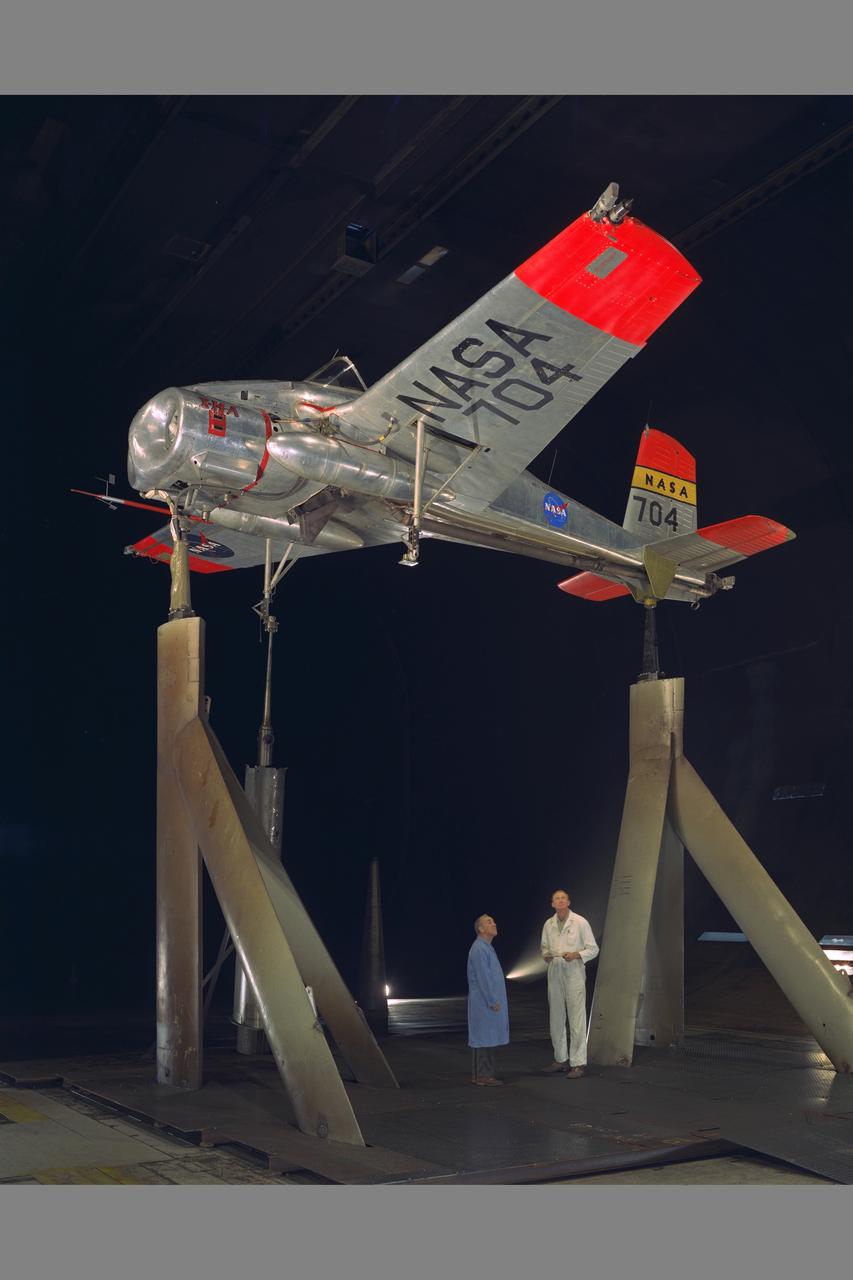
X-14 NASA 704 Full Scale Airplane tests in 40x80ft. Subsonic Wind Tunnel (NORMAL MOUNTING) with Sy Sewell, NASA (left) and Ed Varette, Army (right)

2-Prop. R.C.F. (Rotating Cylinder Flap) in 40 x 80ft. wind tunnel. 3/4 front view with Jim Weiberg Chuck Greco.
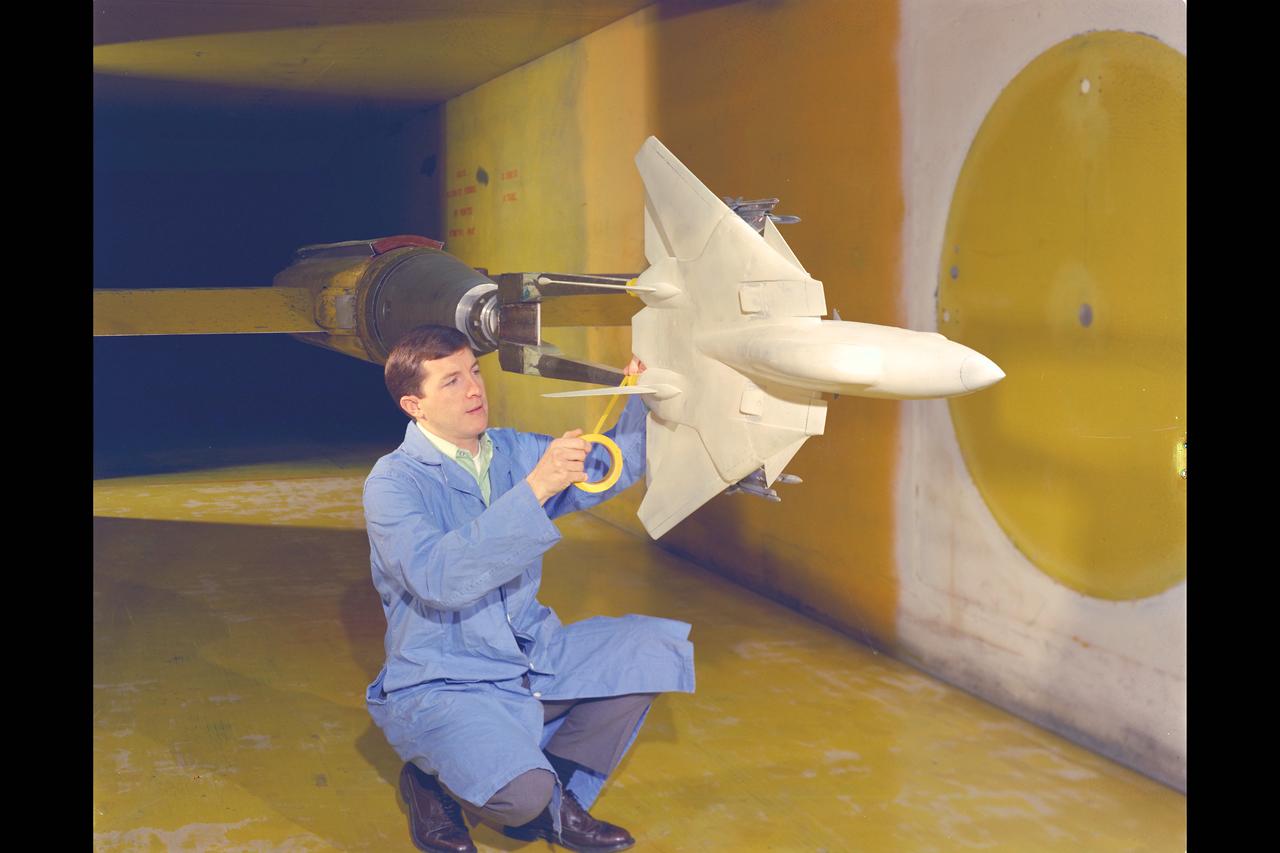
Grumman F-14A model: 9x7ft w.t. Test-97-446
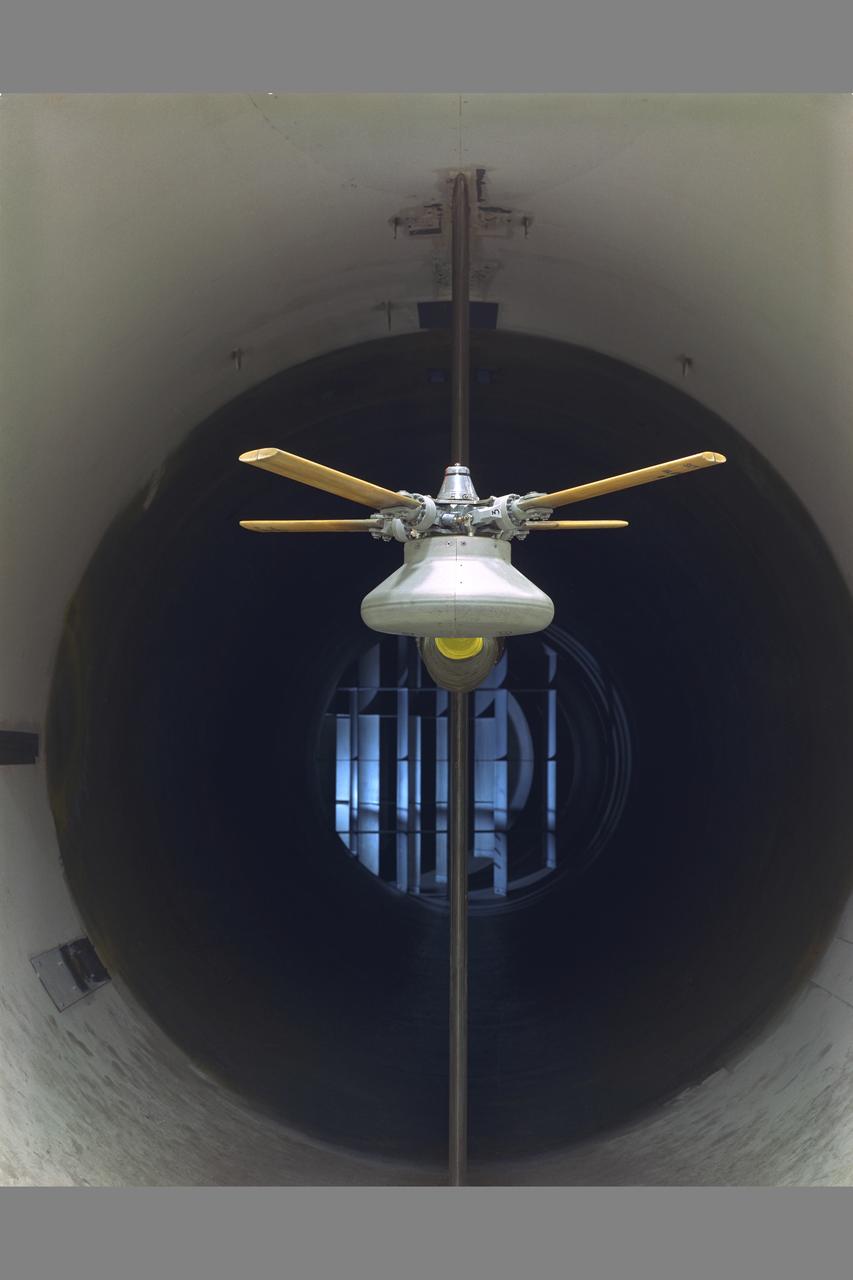
Rotary Entry Vehicle model in NASA Ames Reseach Center 12ft Pressure Wind Tunnel
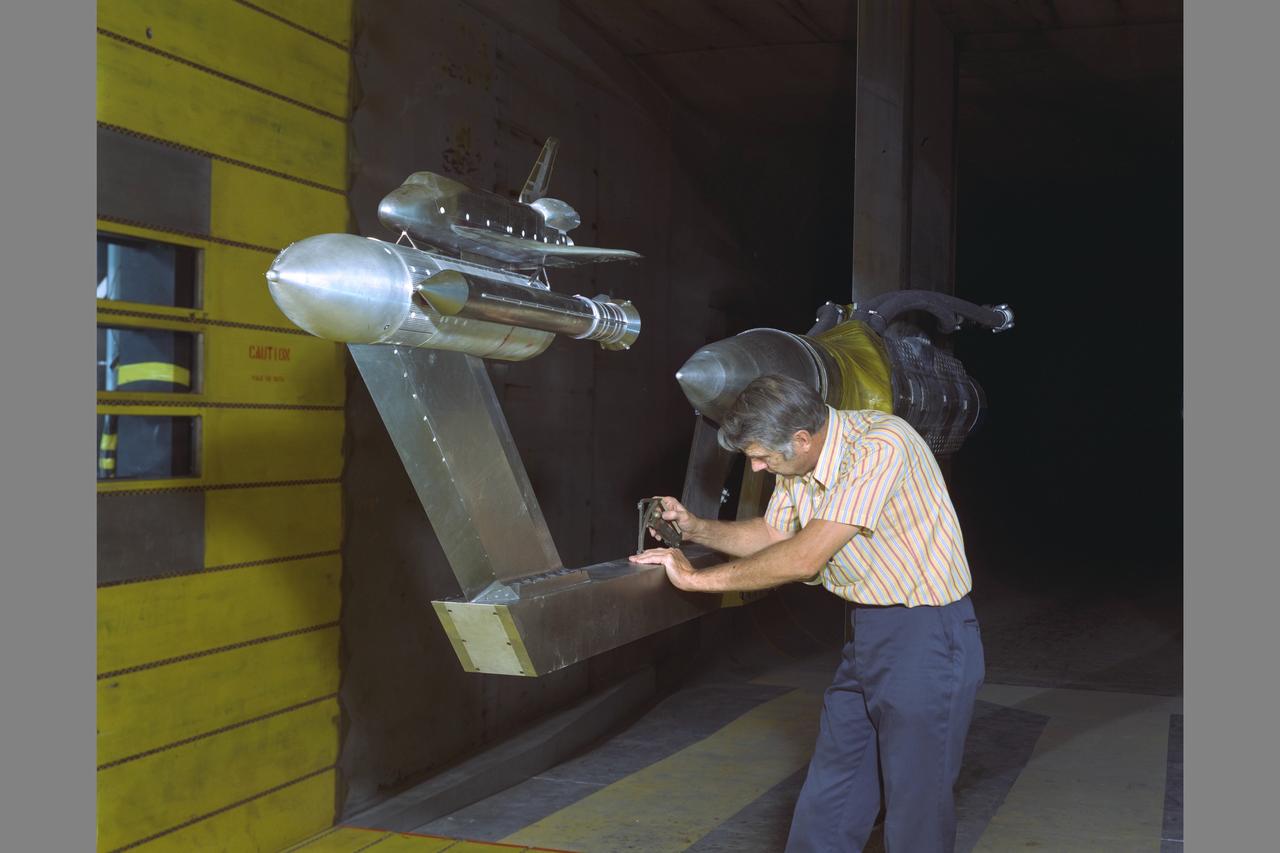
Space Shuttle Two Percent Plumes Model in the 11ft W.T. (Test-01)

2-Prop. R.C.F. (Rotating Cylinder Flap) in 40 x 80ft. wind tunnel. front view detail of flap
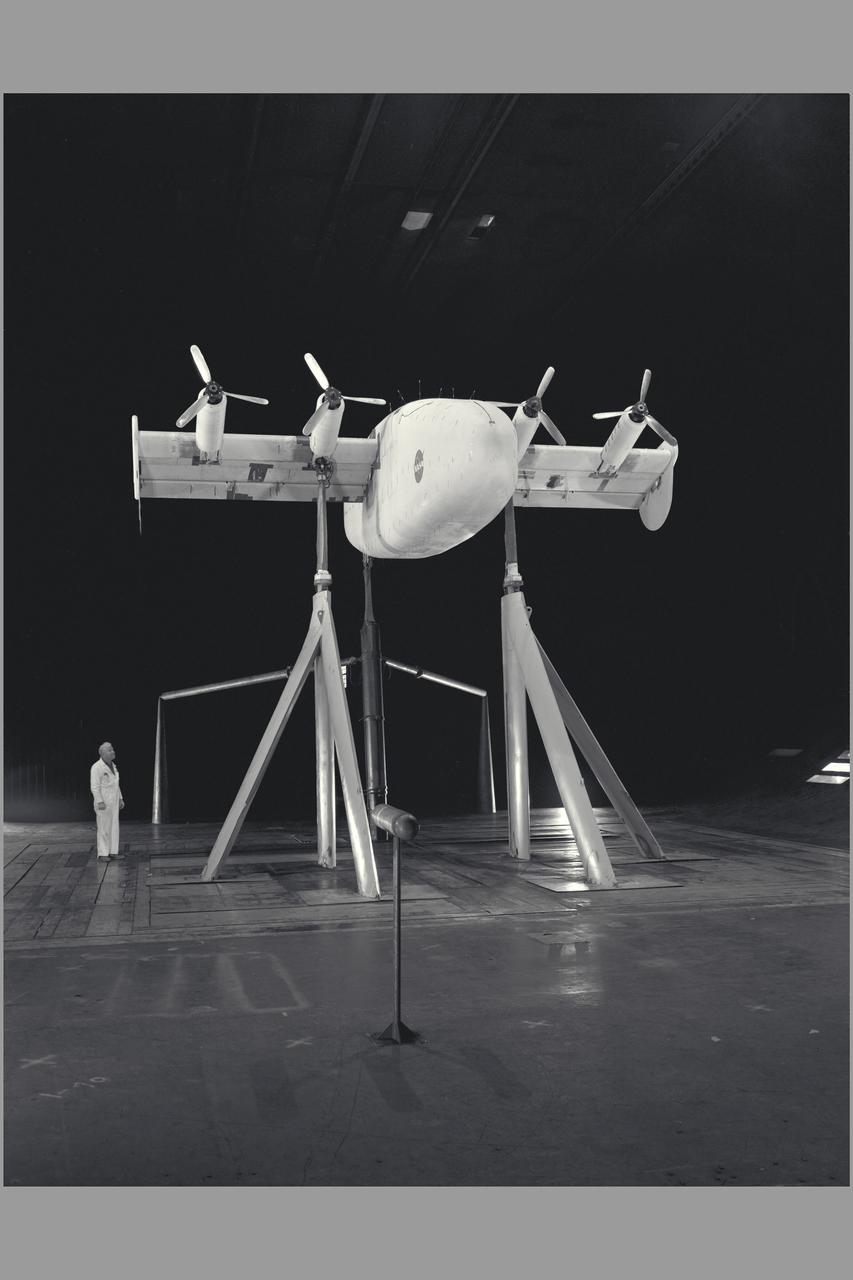
3/4 front view with wing tilted and flaps 0 degrees. Coin Airplane: Rotating cylinder flap applied.
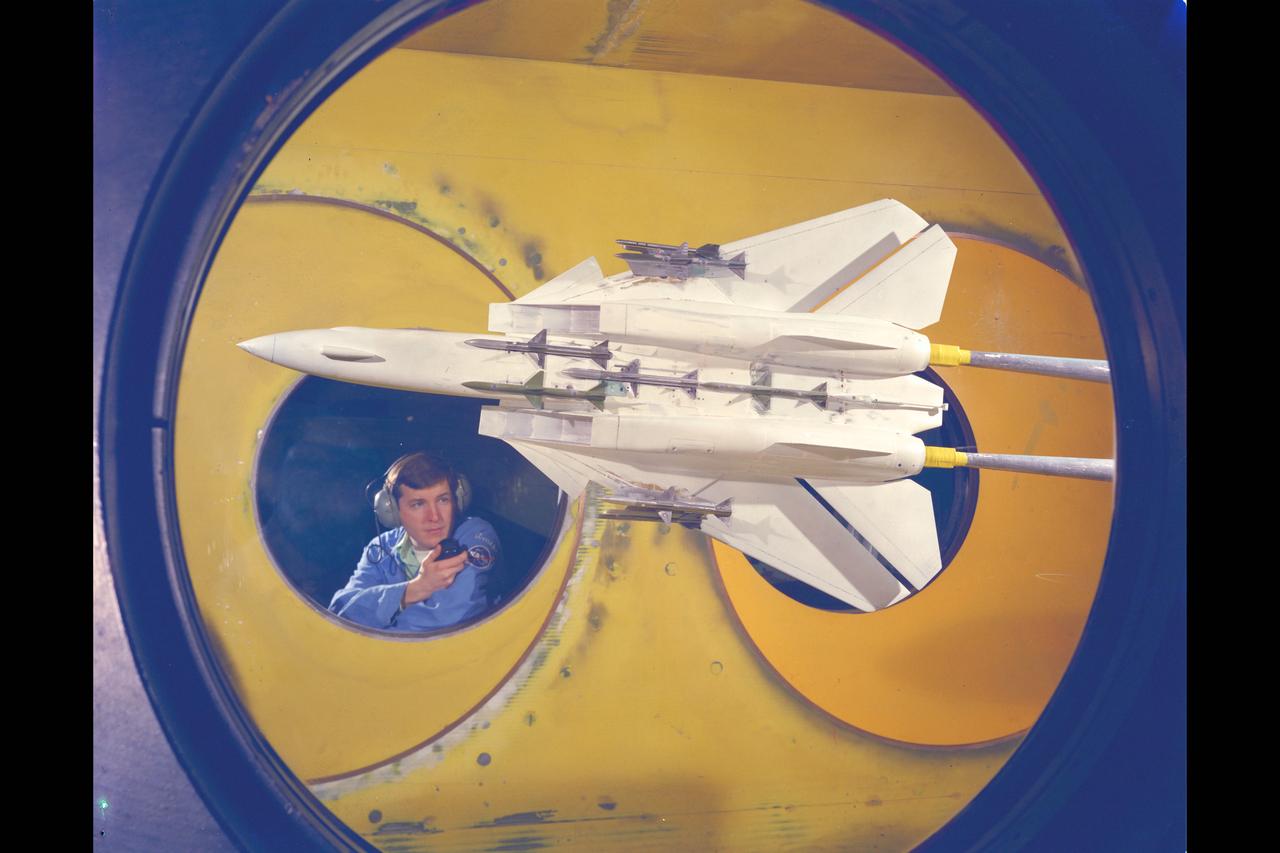
Grumman F-14A model: 9x7ft w.t. Test-97-446
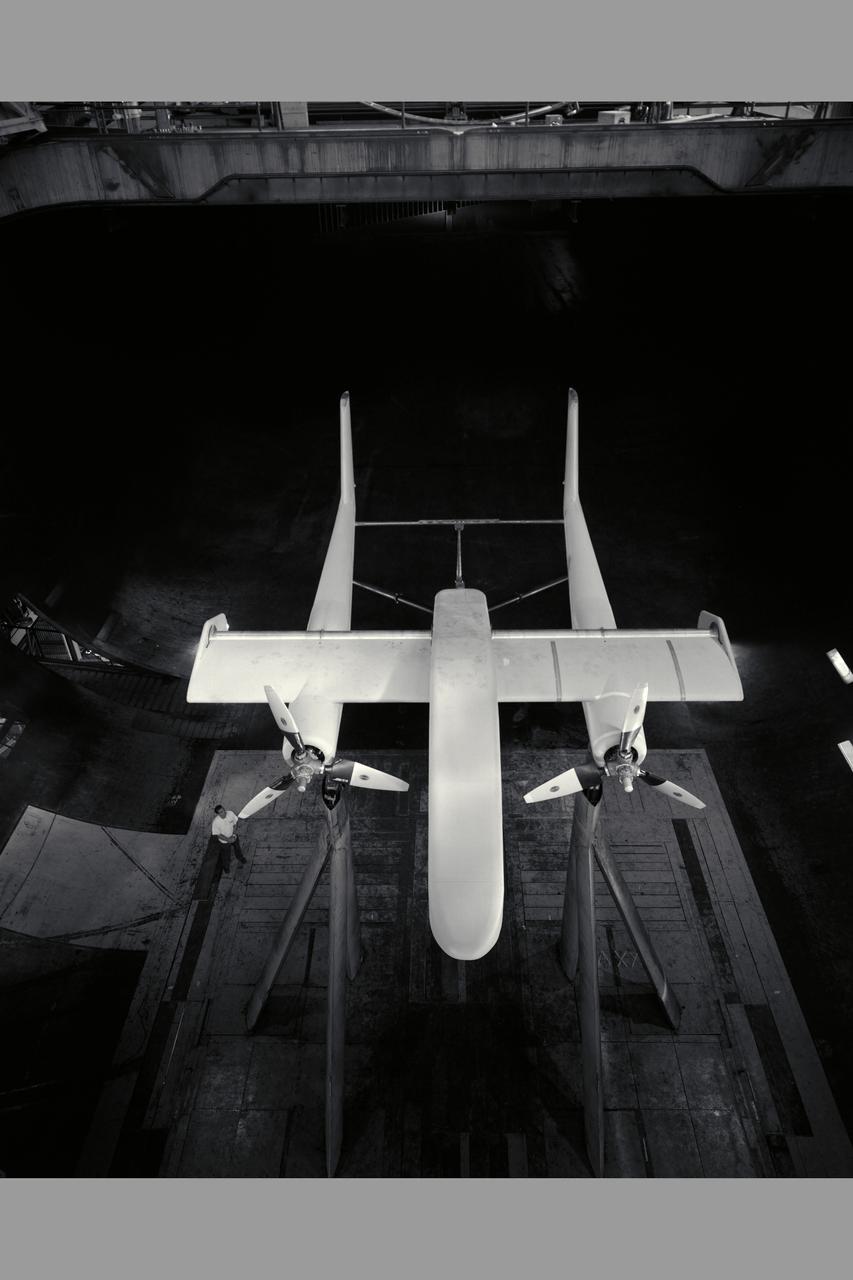
2-Prop. R.C.F. (Rotating Cylinder Flap) in 40 x 80ft. wind tunnel - overhead view propeller spinning with Chuck Greco.
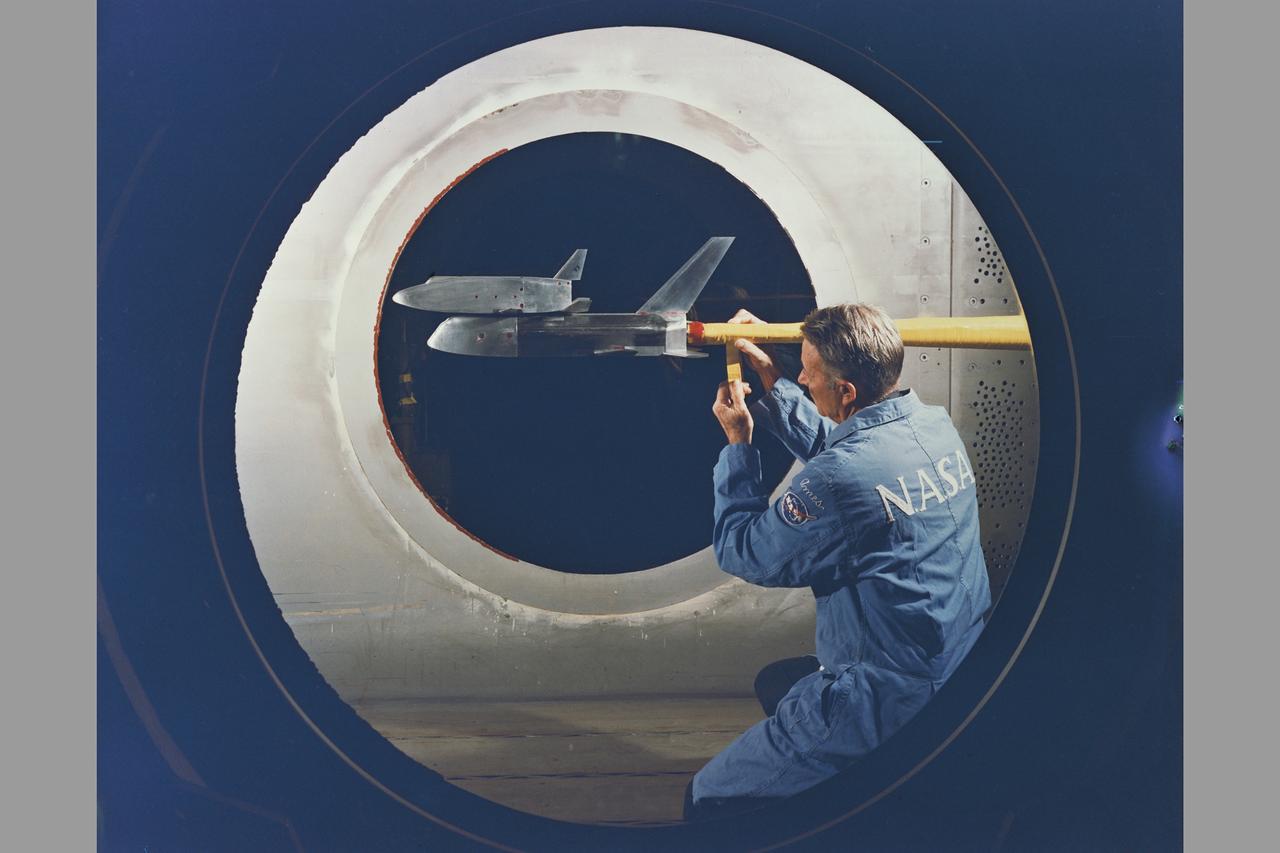
MSC Space Shuttle Model stability and control characteristics test in 9x7ft w.t. (test number not available)
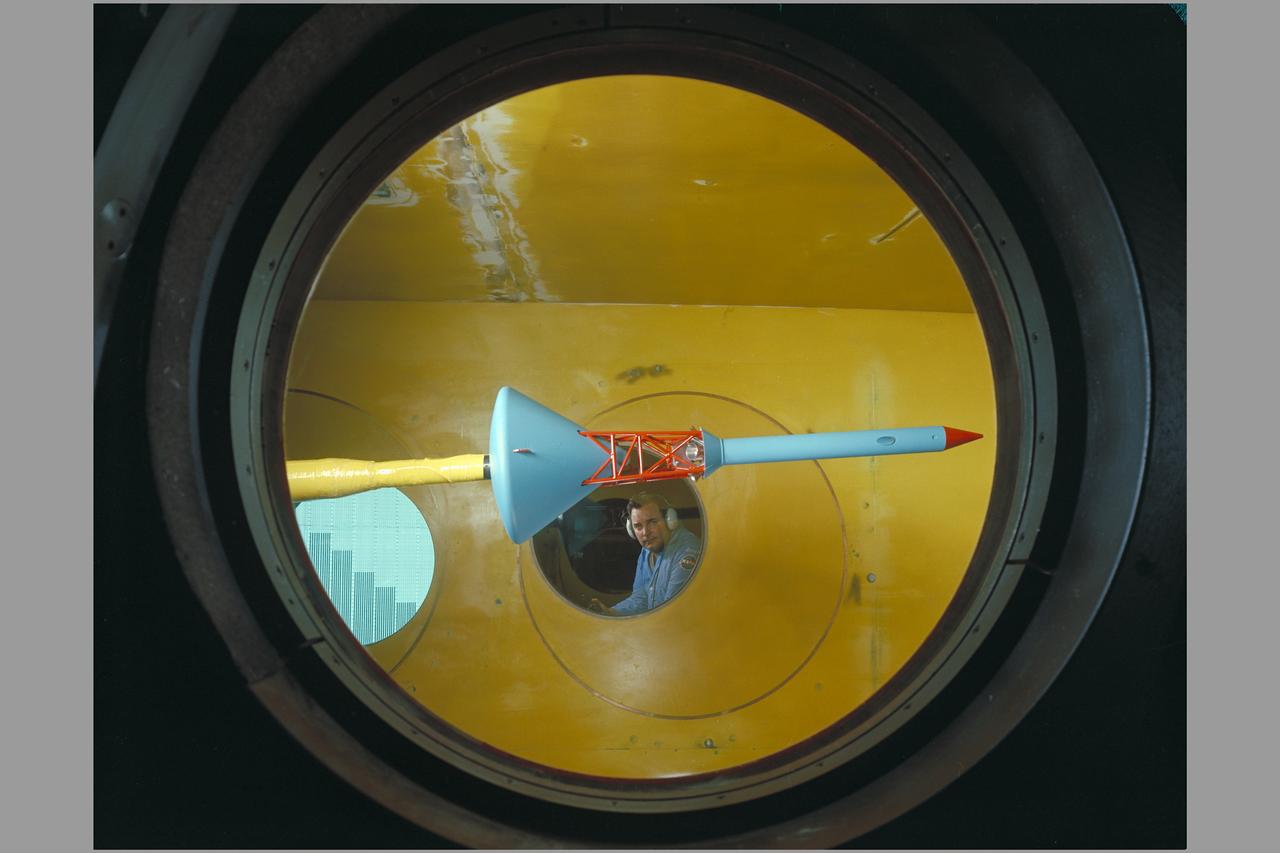
Side view of assembled command module, tower with flap & launch-escape rocket. Apollo FS-2 in 9 x 7 ft. SupersonicWind Tunnel.
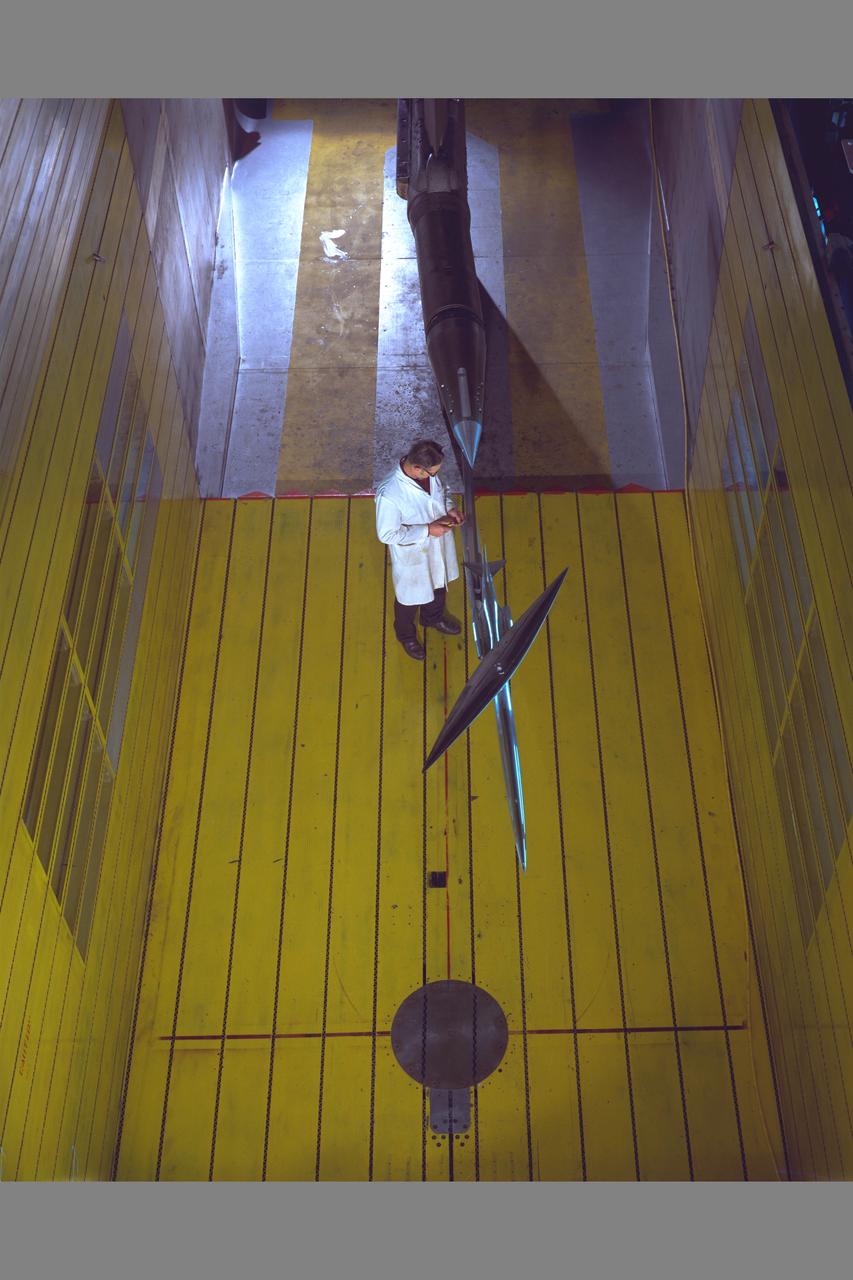
Practical Oblique Wing Test-026) in 11ft w.t. overhead view with technician
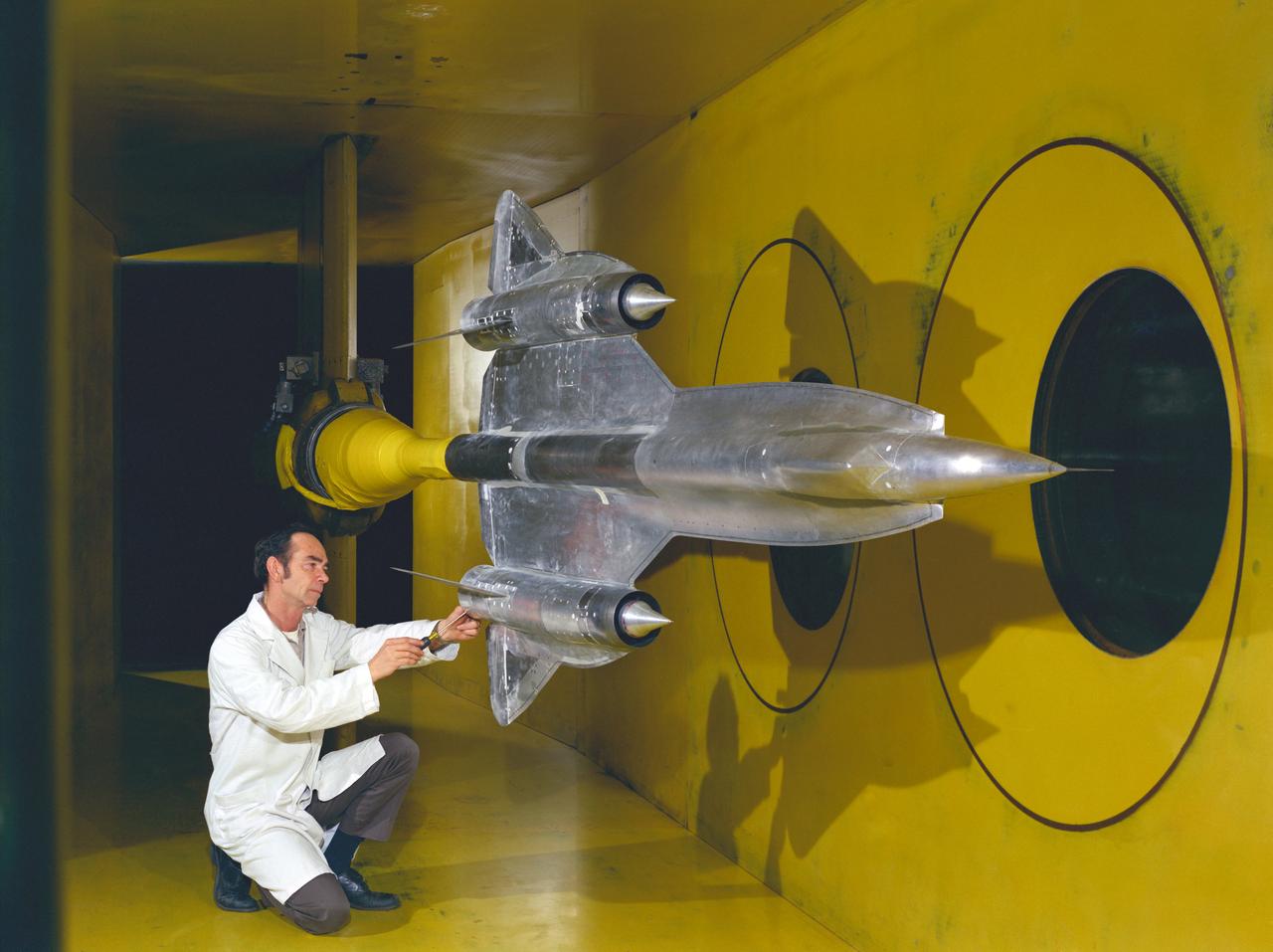
YF-12 inlet airframe interaction test in Ames 8X7ft supersonic wind tunnel
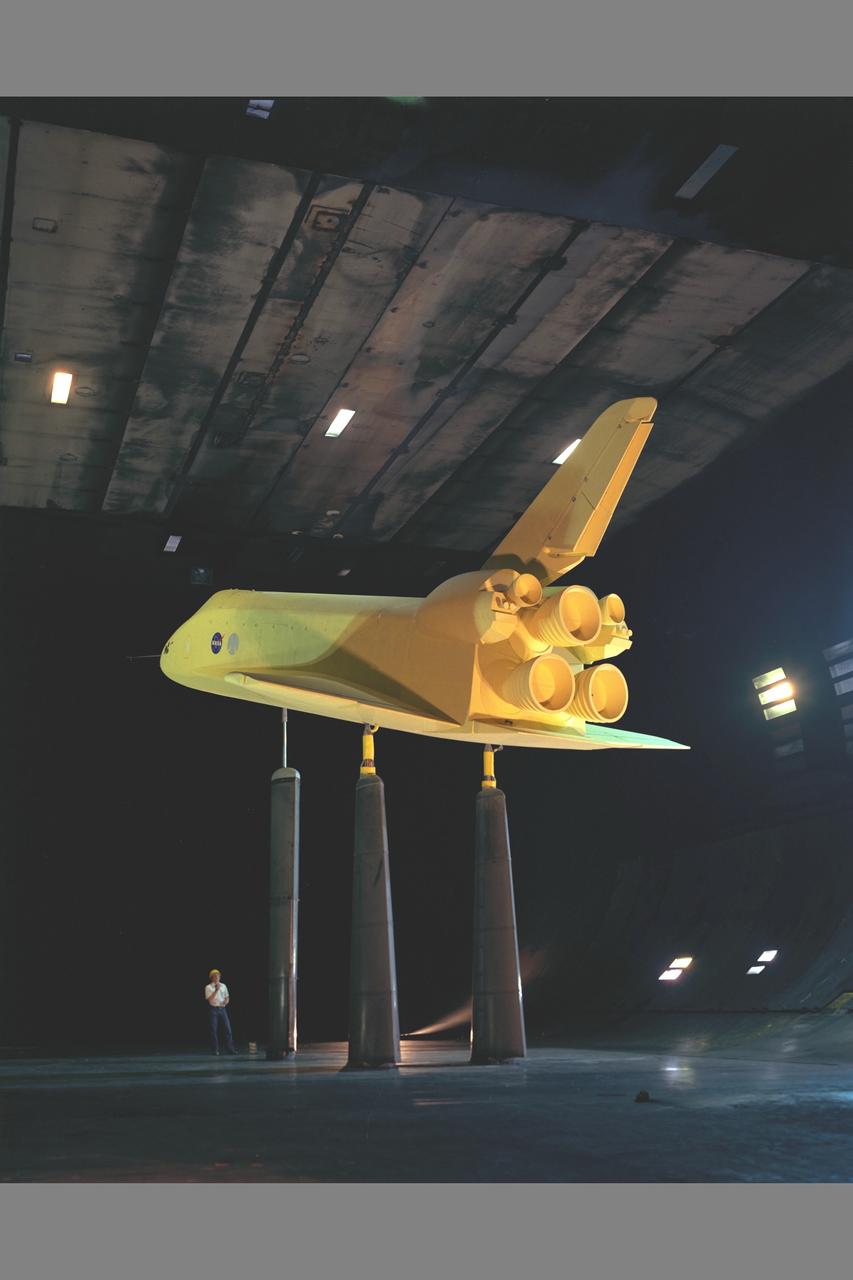
Space Shuttle Orbitor Model (A-100) in the 40x80ft W.T.
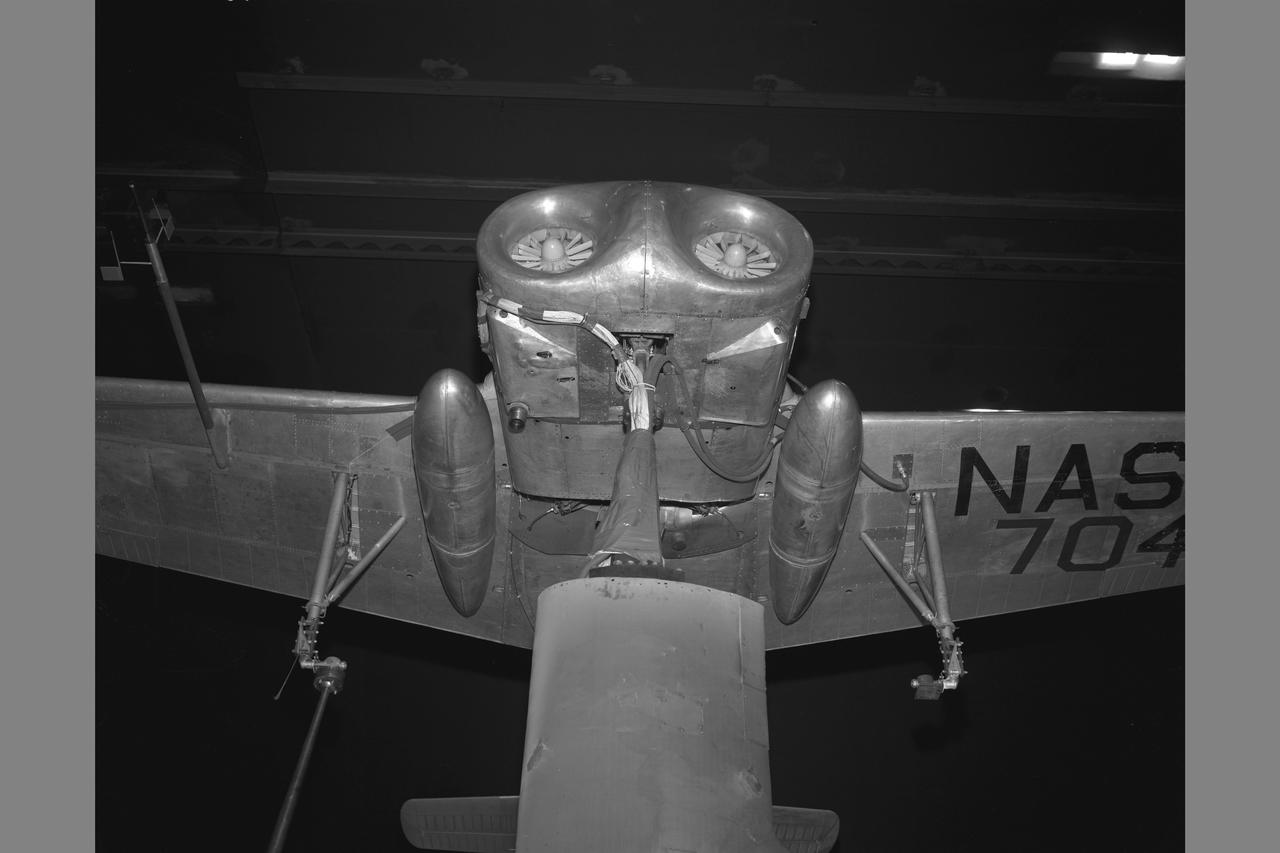
X-14 NASA 704 Full Scale Airplane tests in 40x80ft. Wind Tunnel (NORMAL MOUNTING) jet inlets
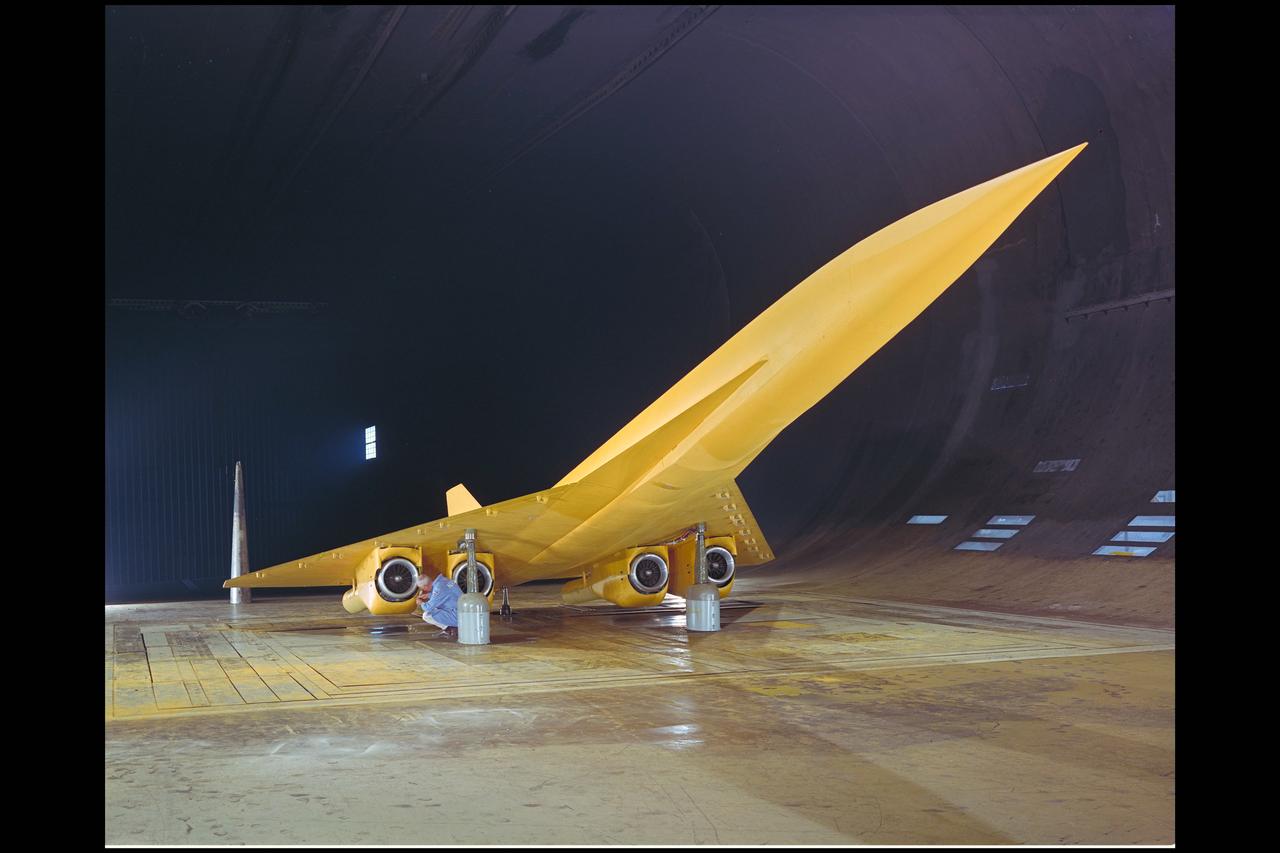
Double delta planform on a supersonic transport model mounted in the 40x80ft. w.t.
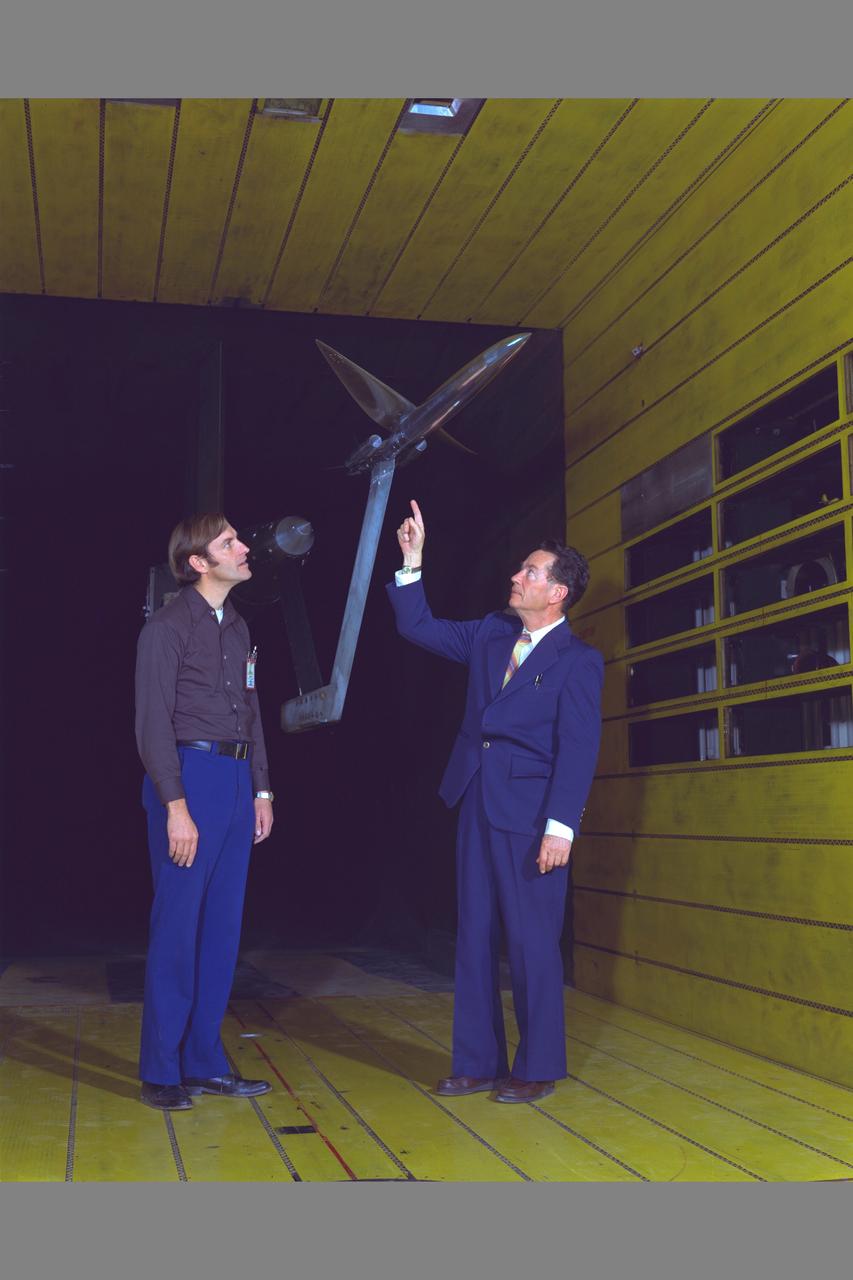
Practical Oblique Wing Test-026) in 11ft w.t. with R. T. Jones and test engineer

IBM 2250 computer station with Paul Kutler
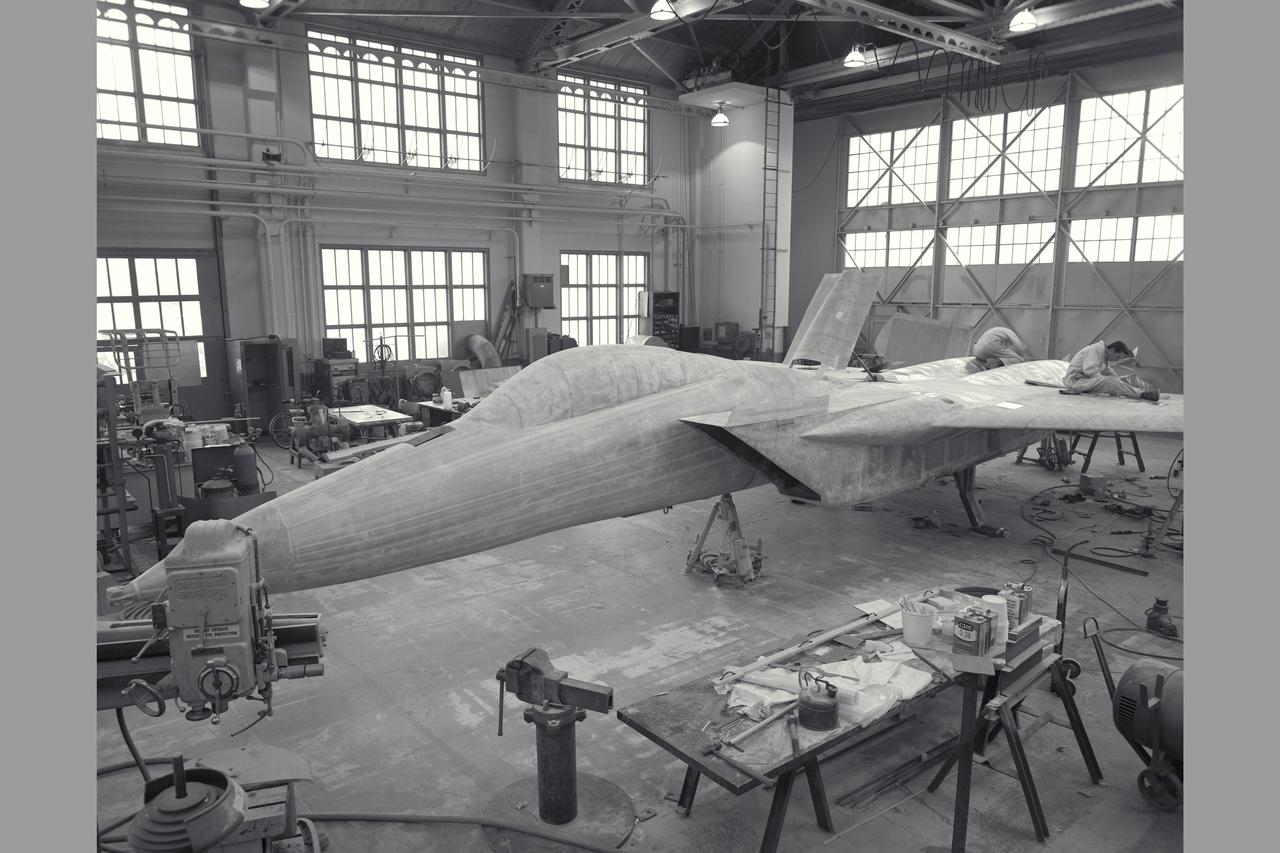
Advanced Fighter Model - Model shop
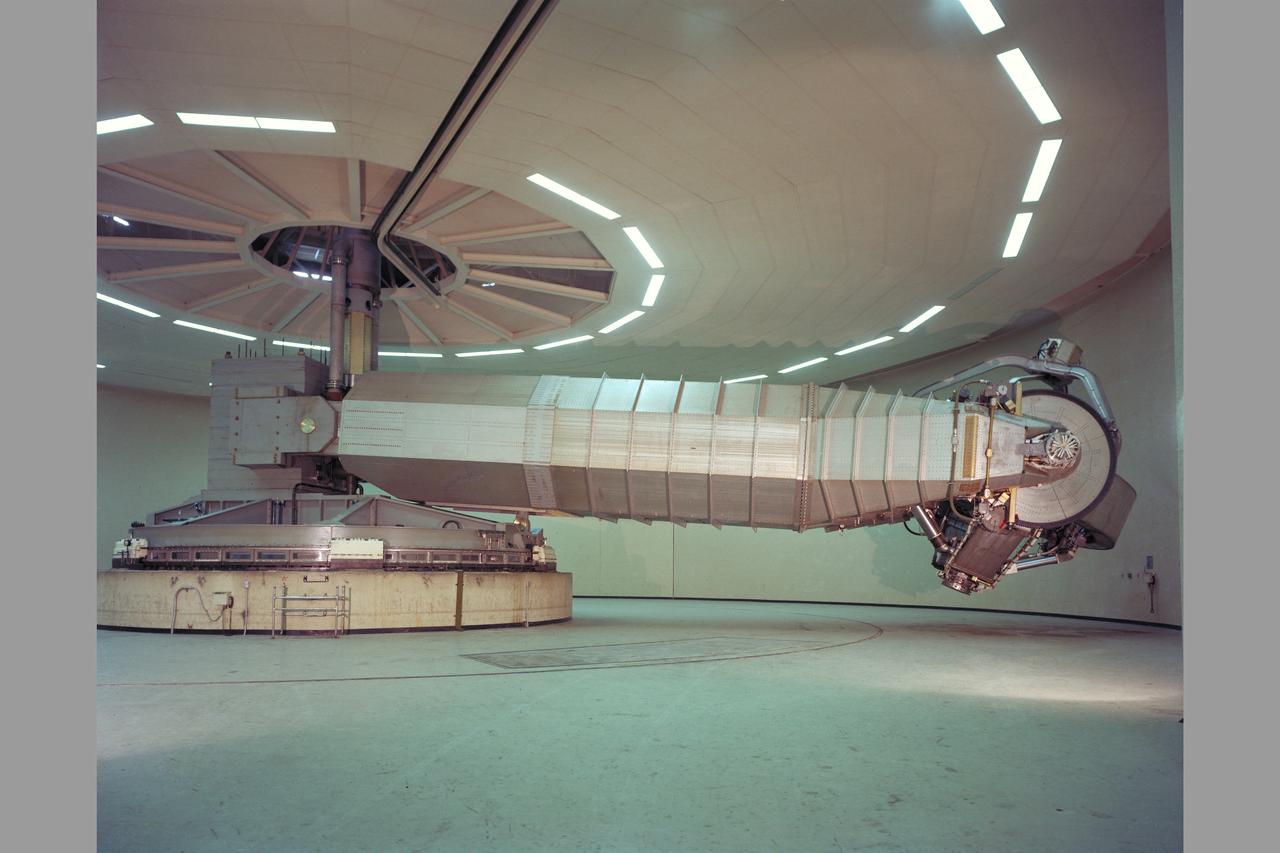
N-243 Flight and Guidance Centrifuge: Is used for spacecraft mission simulations and is adaptable to two configurations. Configuration 1: The cab will accommodate a three-man crew for space mission research. The accelerations and rates are intended to be smoothly applicable at very low value so the navigation and guidance procedures using a high-accuracy, out-the window display may be simulated. Configuration 2: The simulator can use a one-man cab for human tolerance studies and performance testing. Atmosphere and tempertaure can be varied as stress inducements. This simlator is operated closed-loop with digital or analog computation. It is currently man-rated for 3.5g maximum.
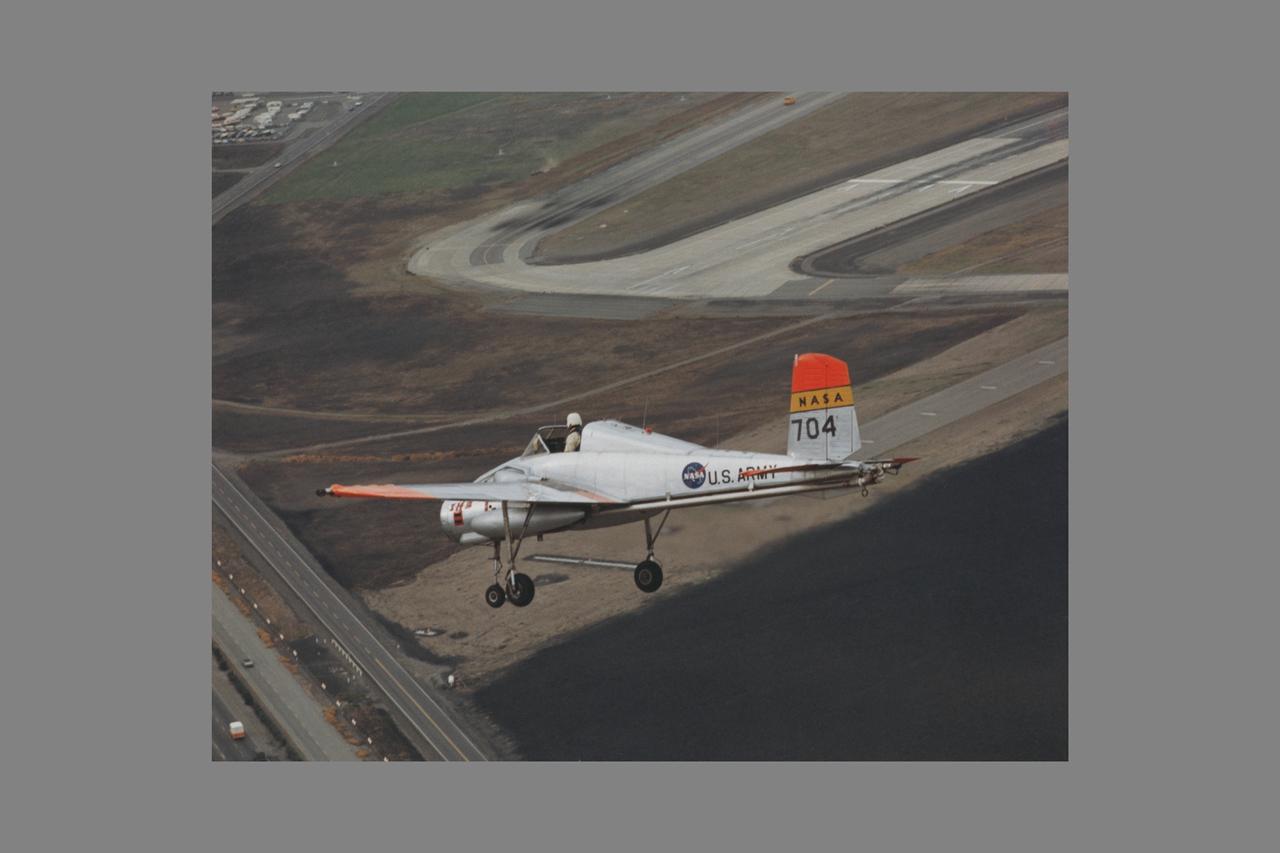
X-14B NASA-704: A Bell single-place, open cockpit, twin-engine, jet-lift VTOL aircraft over Highway 101 in approach to Moffett Field, California. The X-14 was used by NASA Ames Research Center to advance state-of-the-art jet-powered VTOL aircraft.
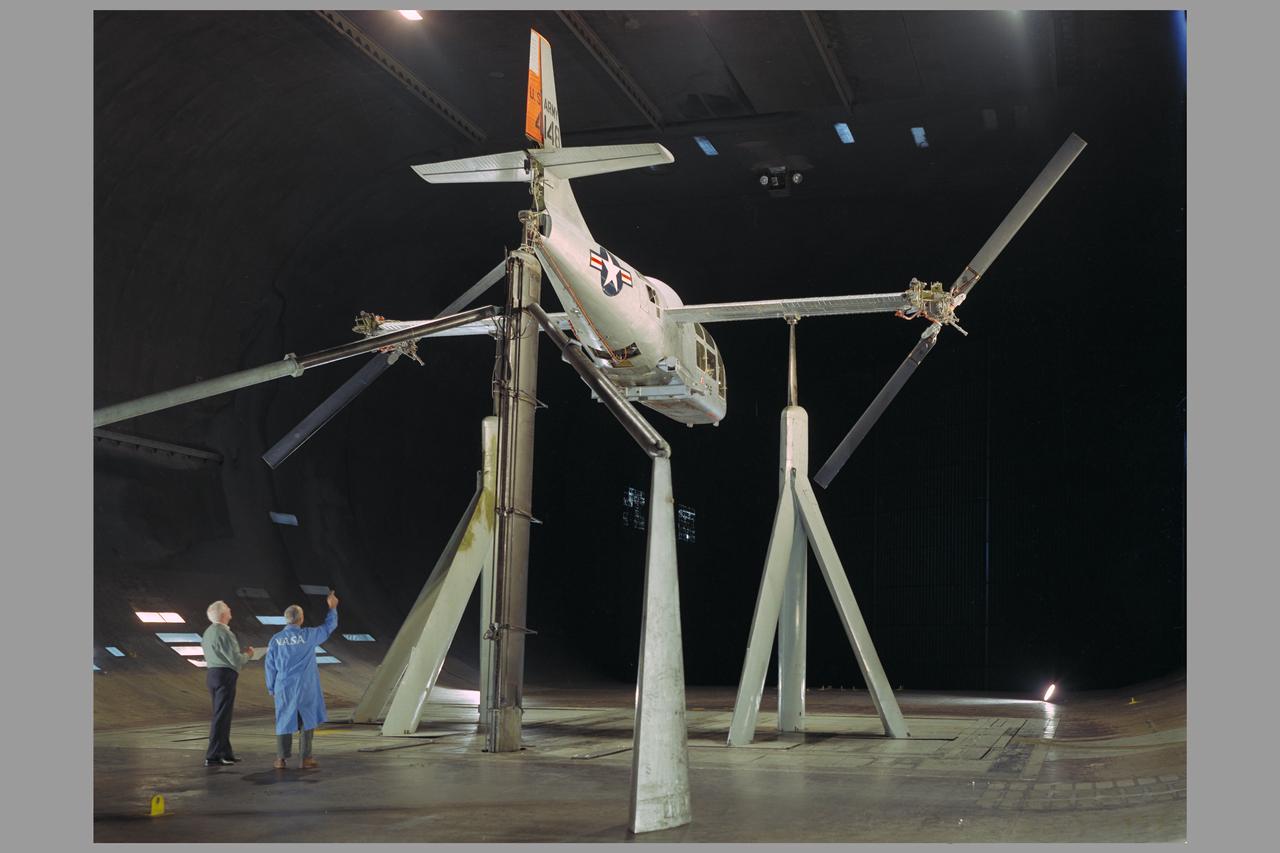
XV-3 in Ames Reseach Center 40x80ft wind tunnel; Rotor dynamic stability tests
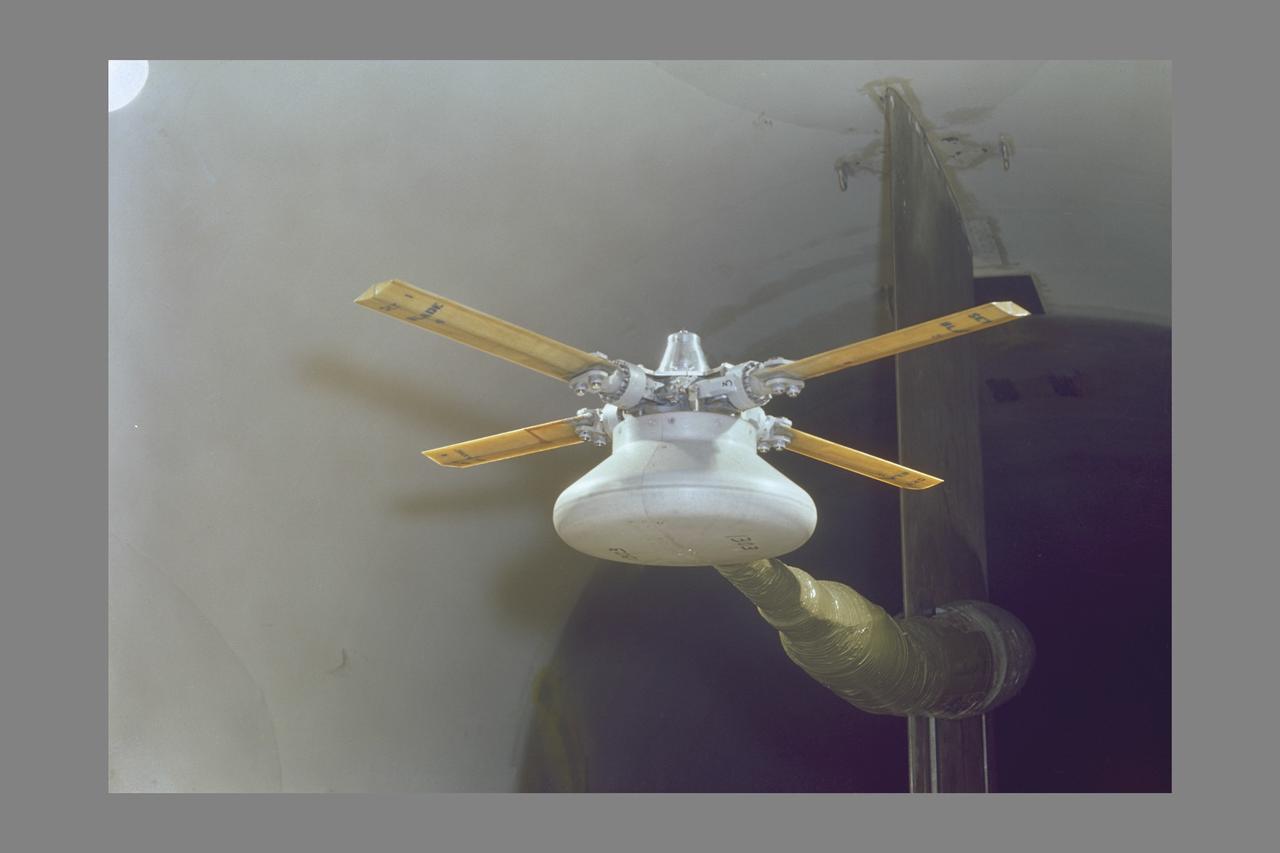
Ames Rotary Entry Vehicle #1 model in REV-1 testing in the Ames Research Center 12ft. Pressure Wind Tunnel
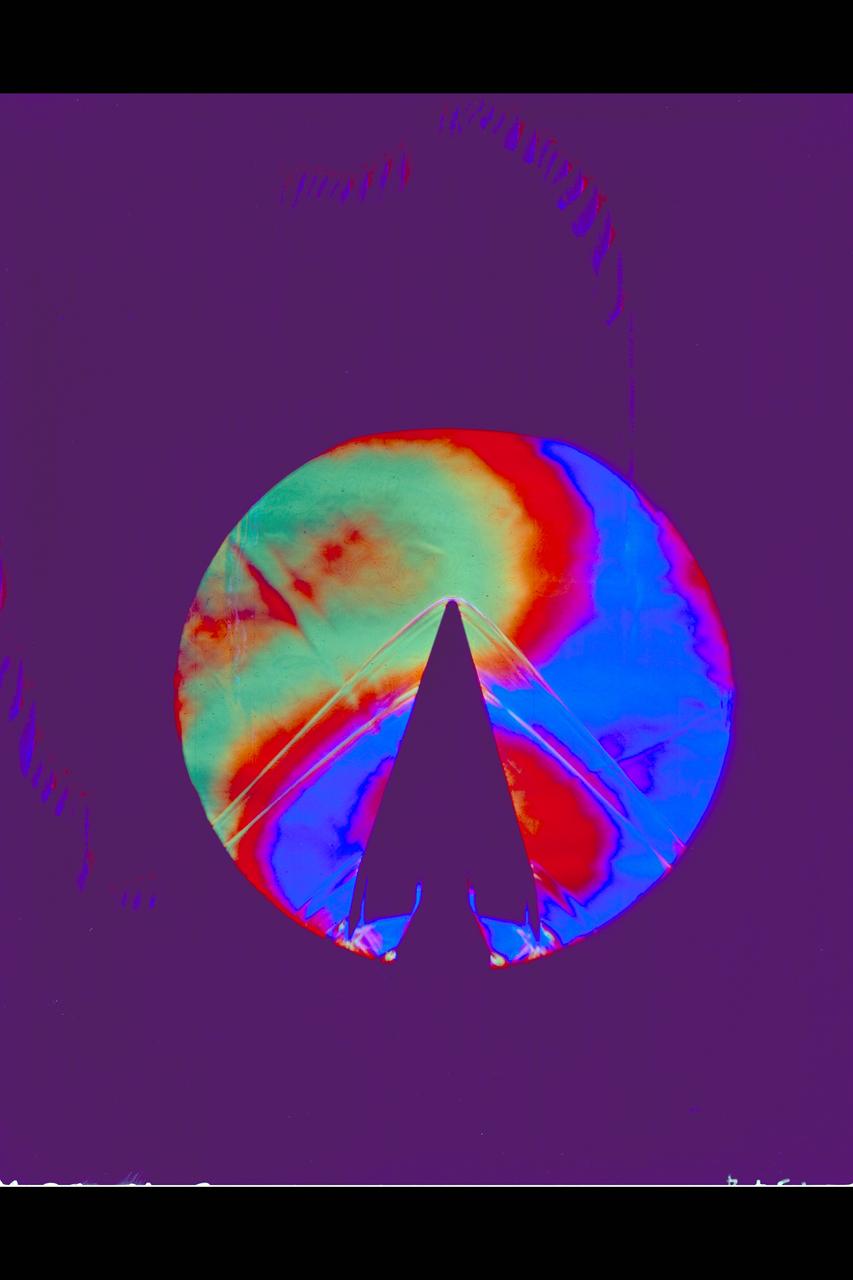
Schlieren of X-20 Dyna Soar mounted on 624-A Titan III Booster
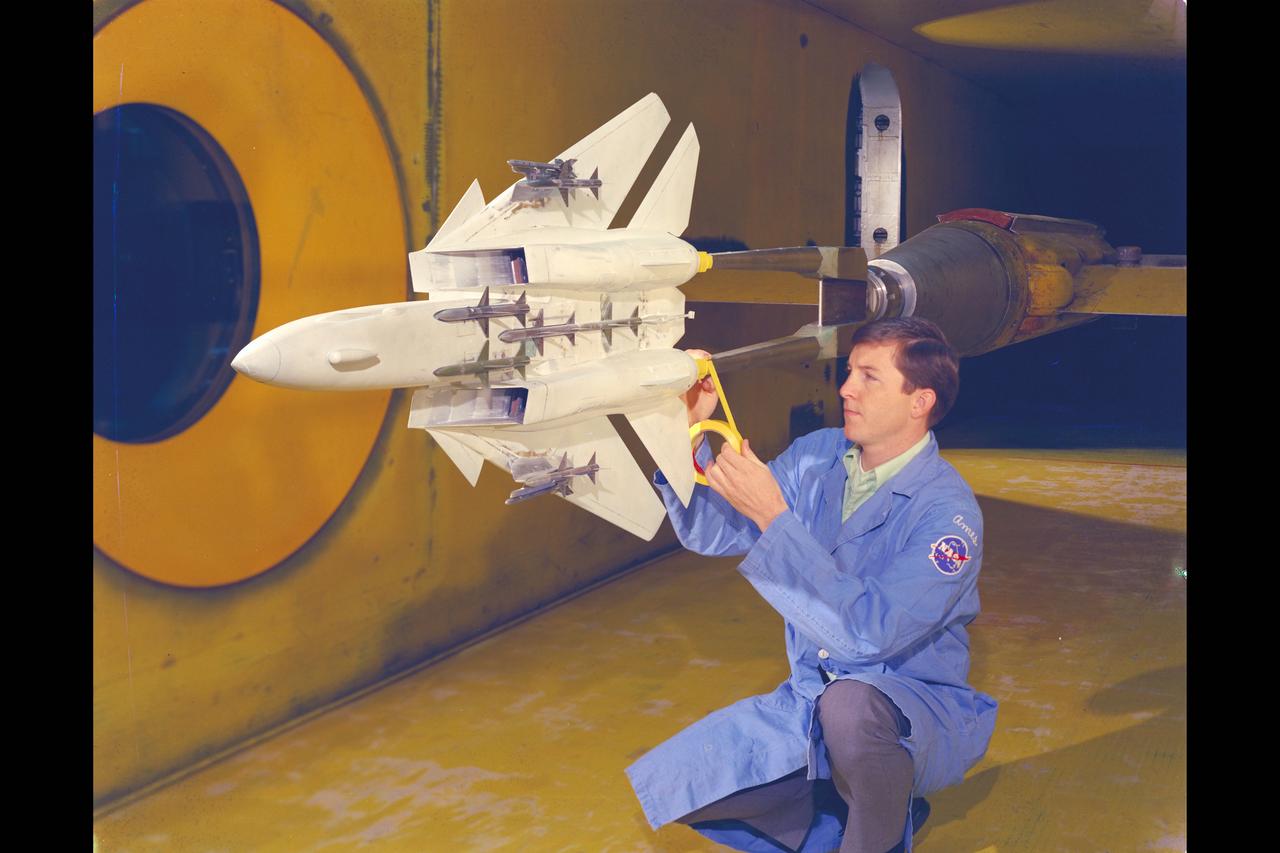
Grumman F-14A model: 9x7ft w.t. Test-97-446
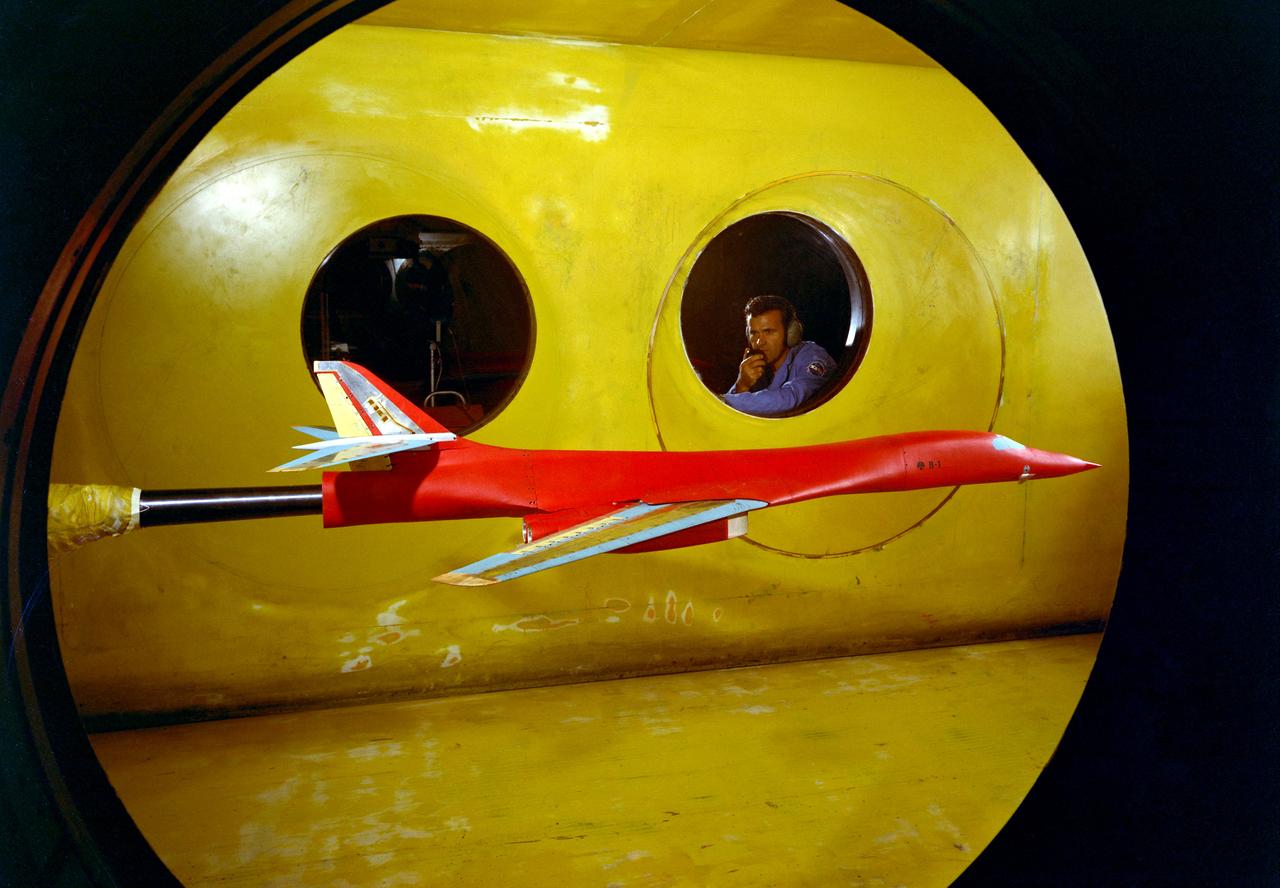
North American B-1. 9 x 7ft Wind Tunnel (Test 97-619). test-619
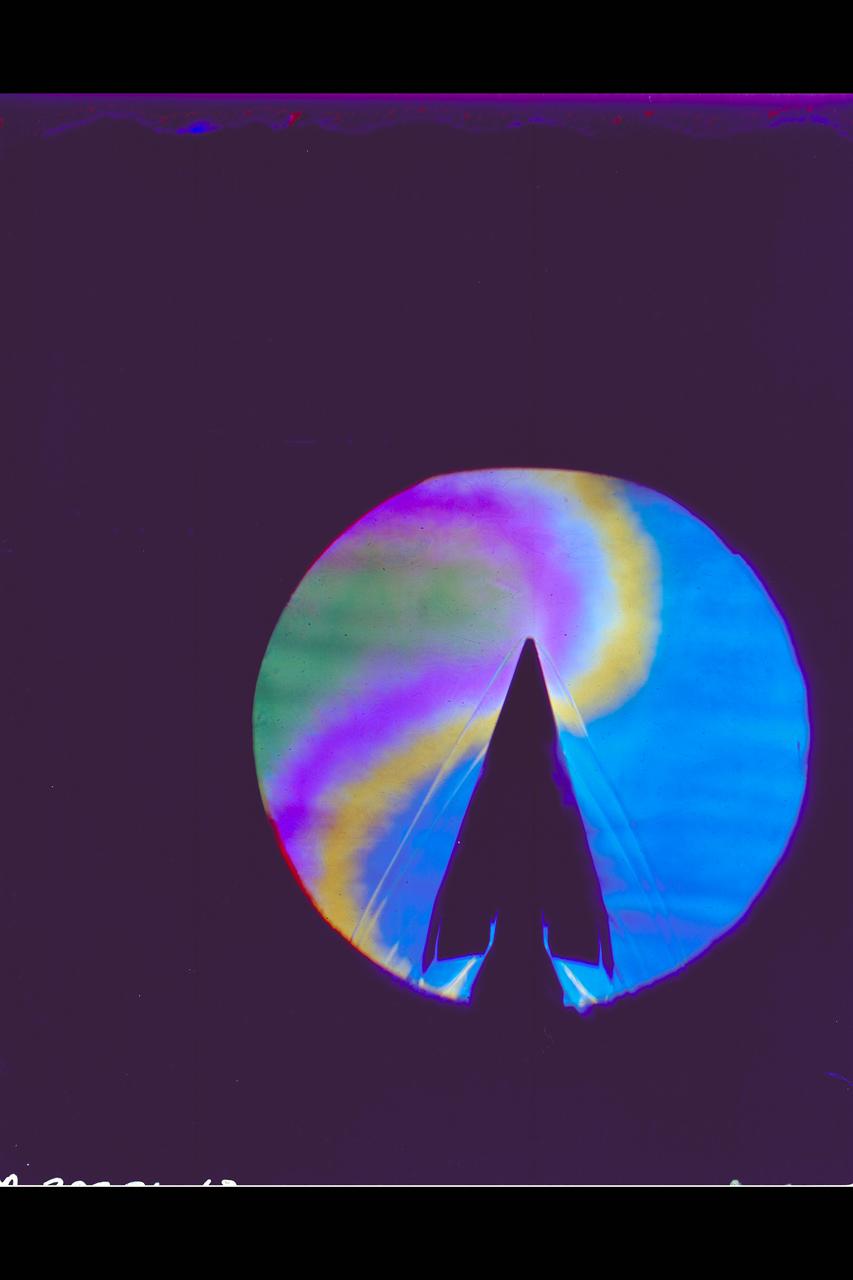
X-20 Dyna Soar on 624-A Titan III Booster: Schlieren
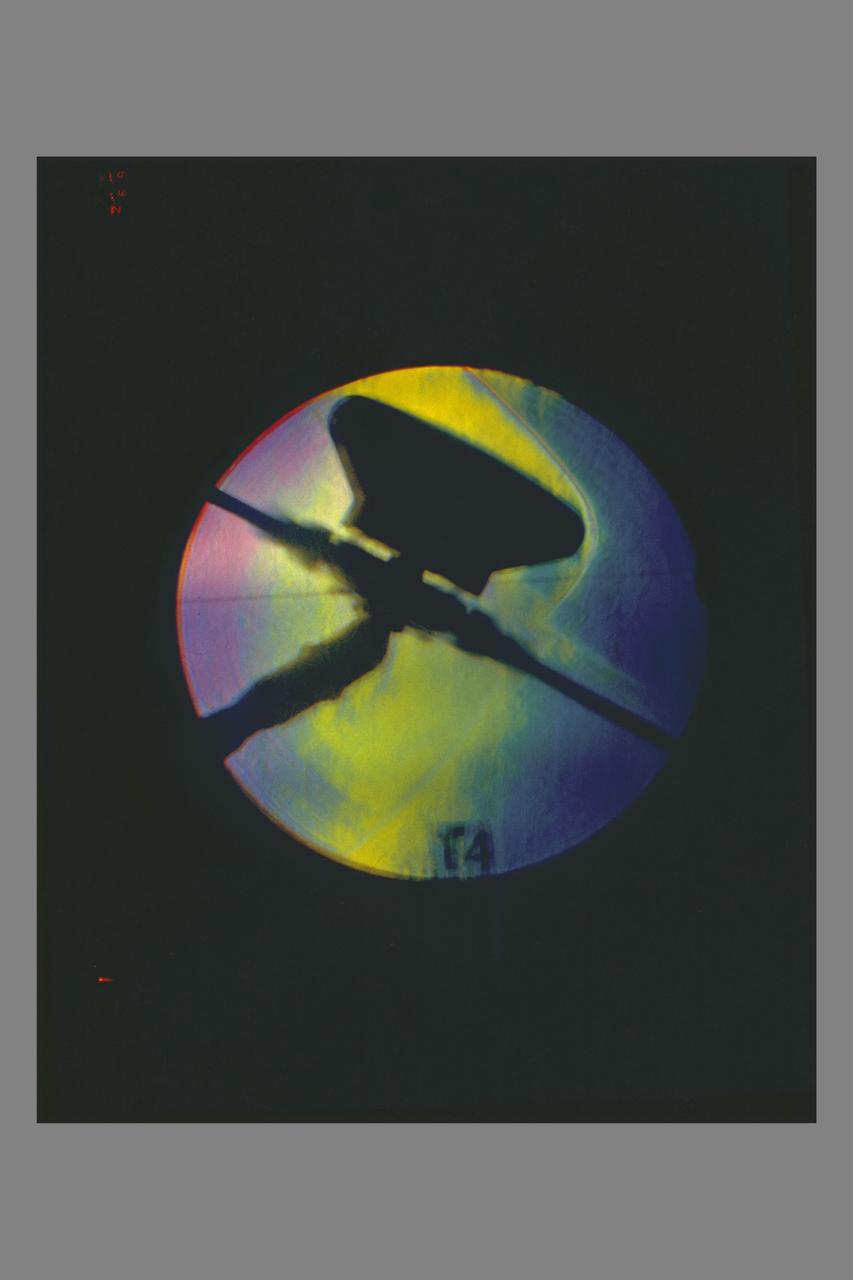
Aerodynamic Characteristics of Rotary Entry Vehicle configuration REV-1 model schlieren Testing being done at the NASA Ames Research Center, California
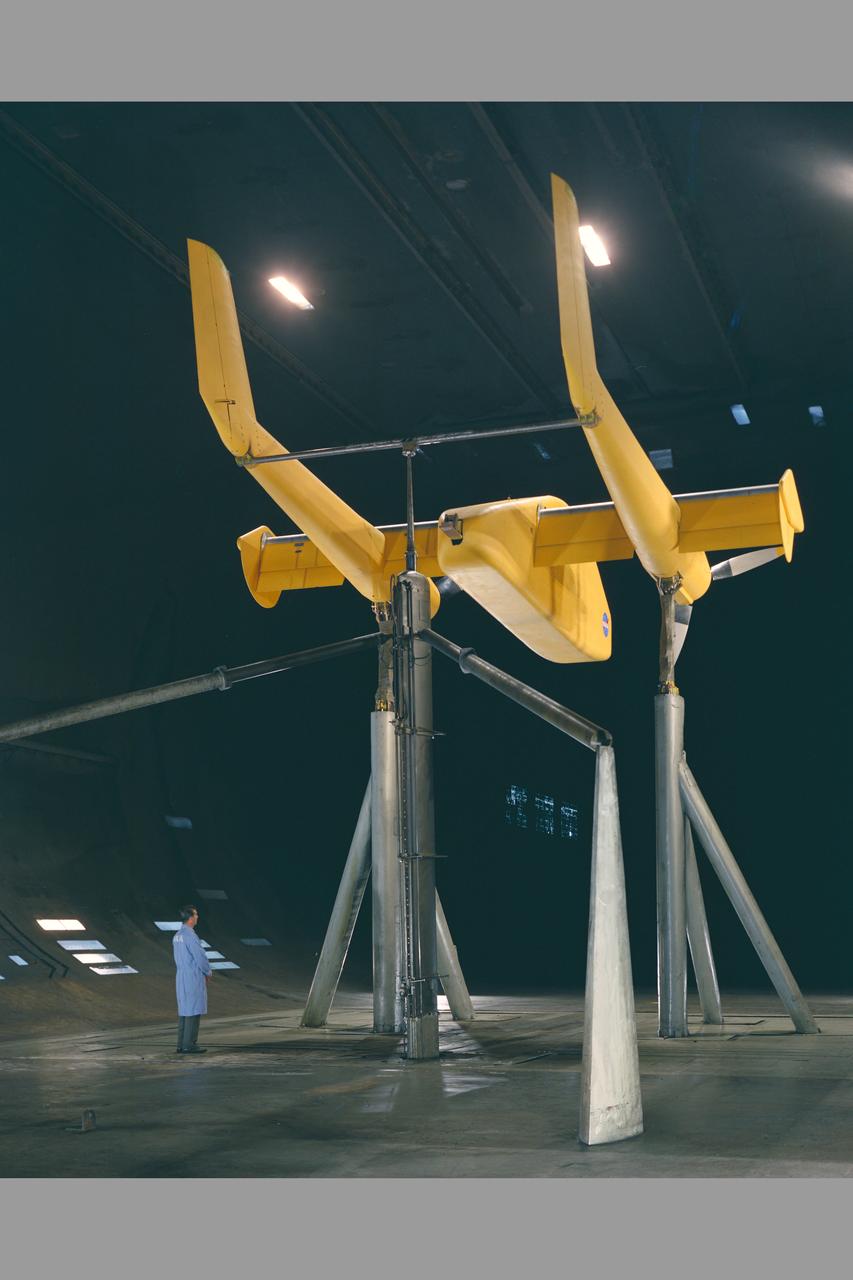
2-Prop. R.C.F. (Rotating Cylinder Flap) in 40 x 80ft. wind tunnel. - rear view with Chuck Greco.
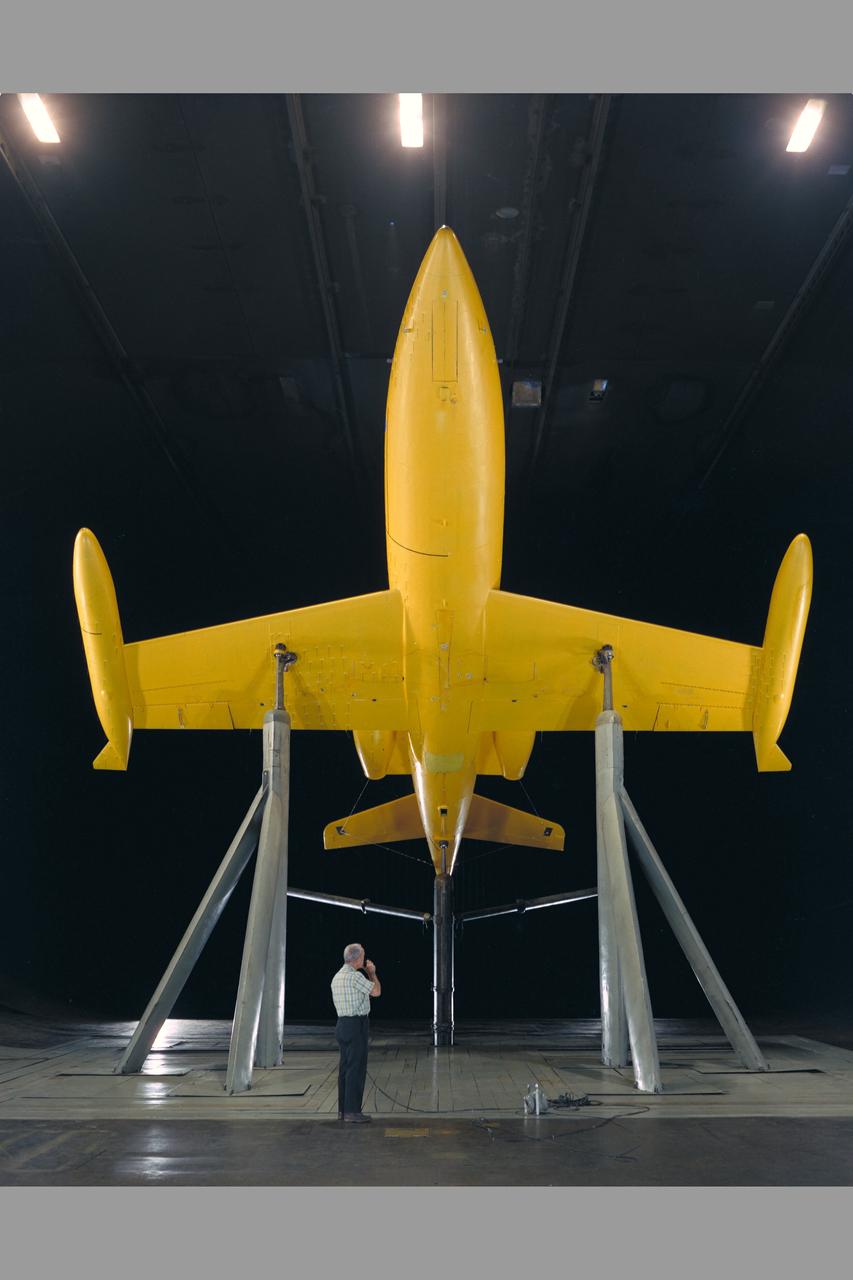
Lear Jet in 40 x 80 ft. Wind Tunnel with Ed Varrette. Angle of Attack=40 degrees.
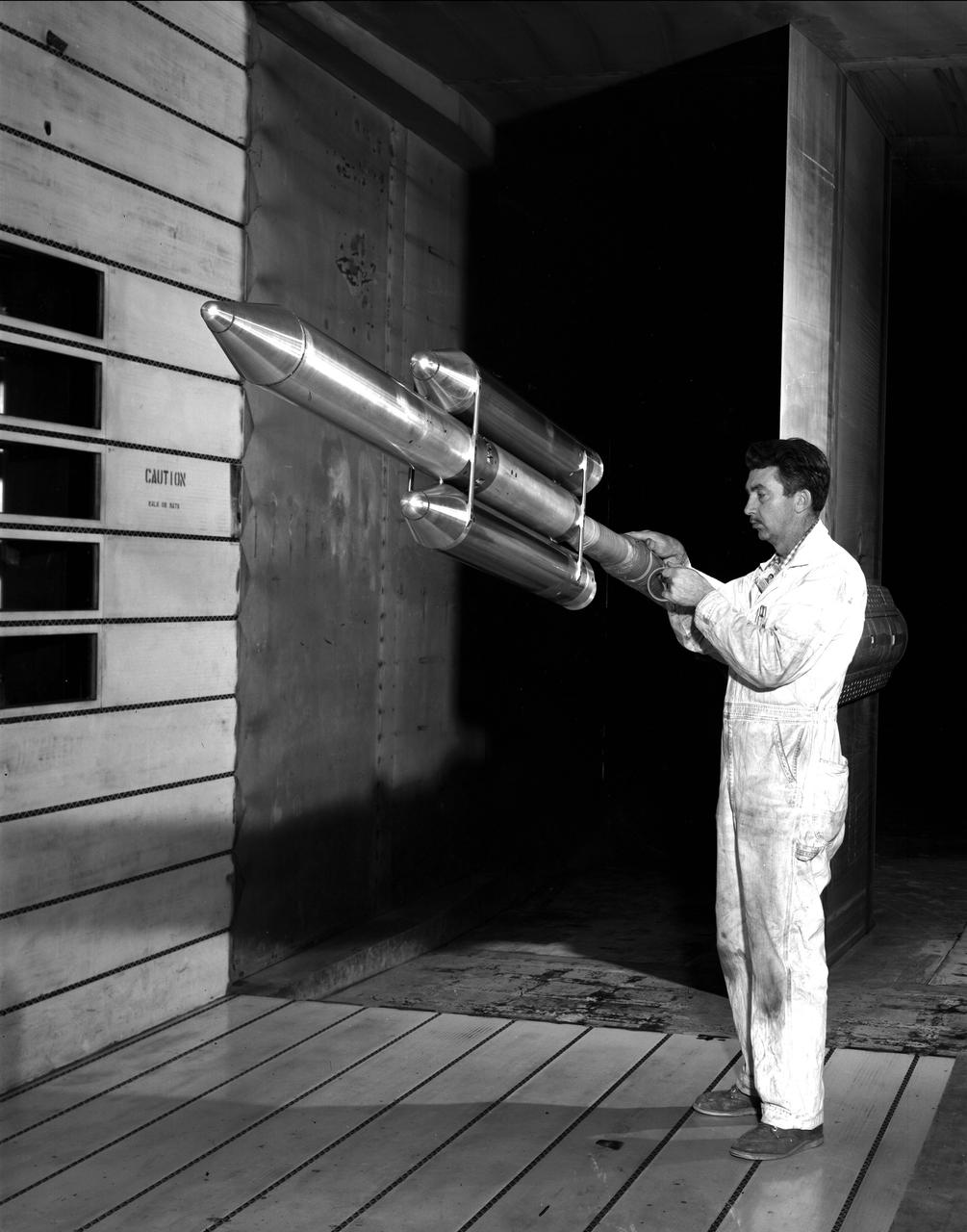
TITAN III in 14ft wind tunnel
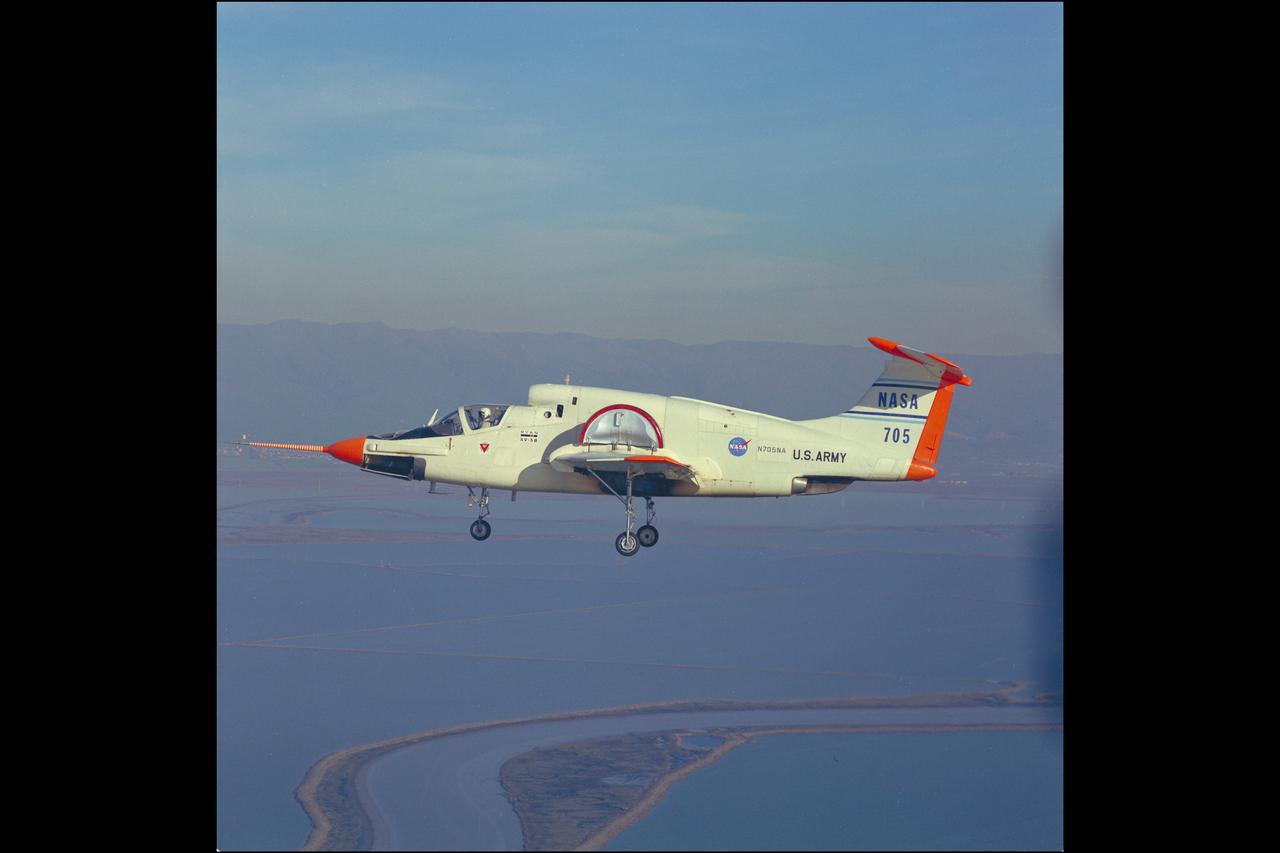
XV-5B (NASA 705) fan in wing airplane in flight
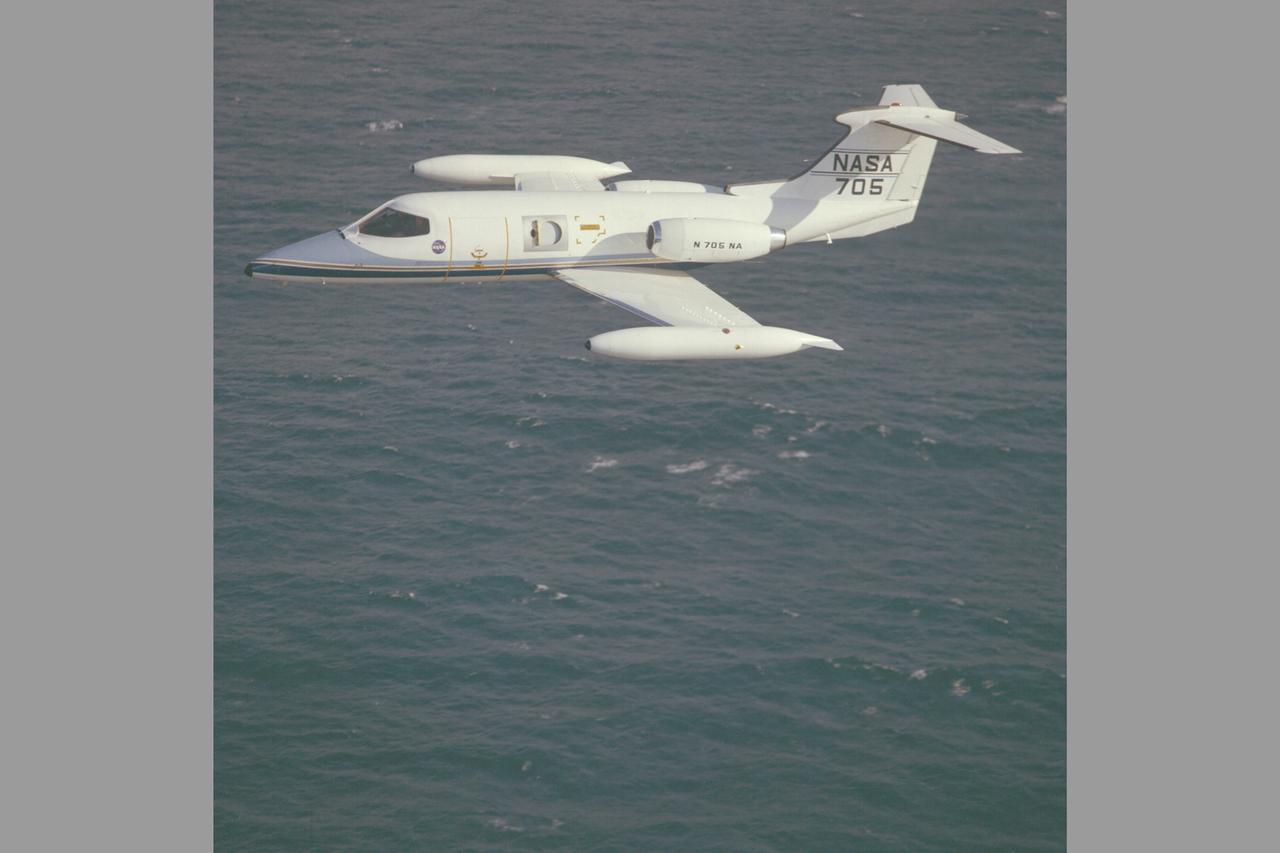
Lear Jet 24B (NASA-705) in flight along California coast is used primarily as a high altitude observation platform carrying a 12' telescope with a special hatch on the starboard side for upward viewing. The hatch has a maximum circular clear aperture of 37.6 cm and can contain a 30 cm aperture open-port gyro-stabilized telescope designed especially for infrared astronomical research.
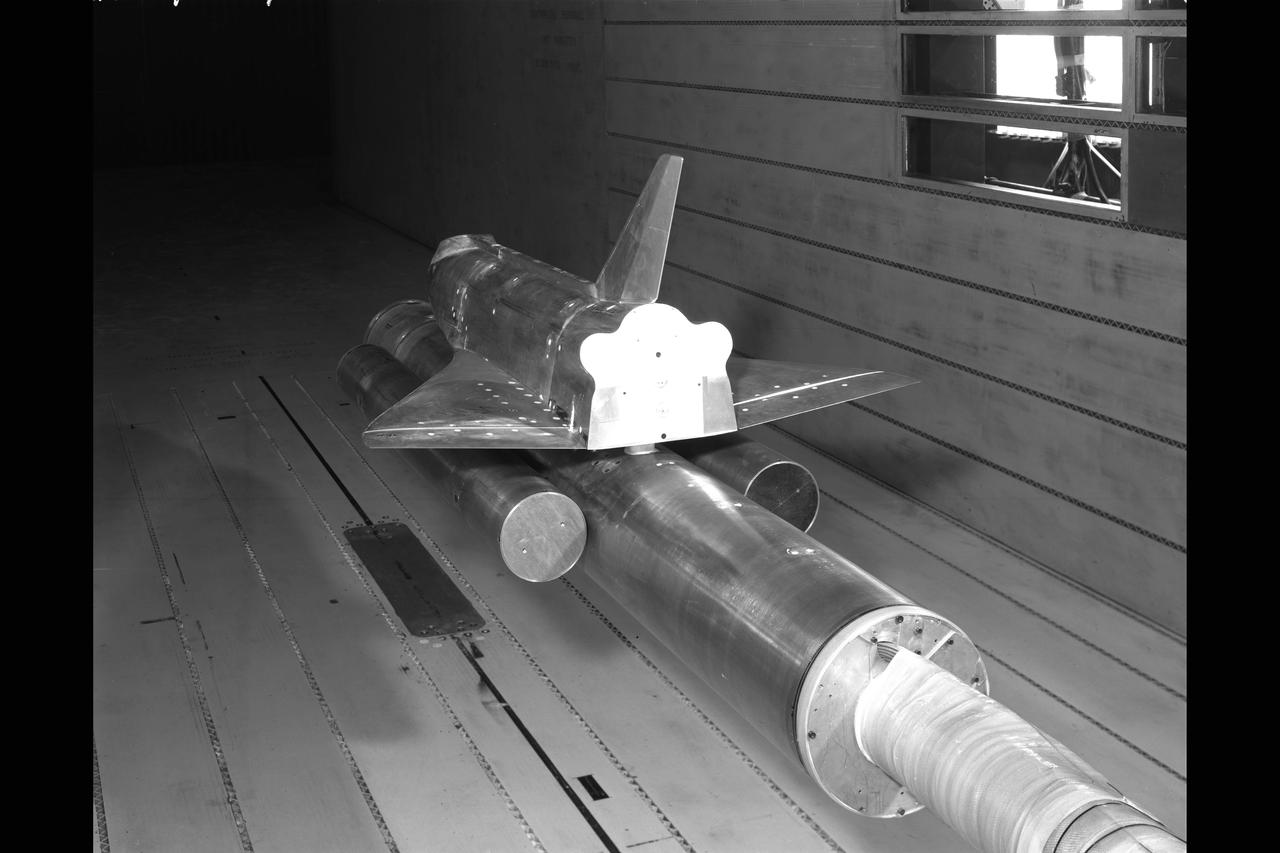
MSC 040A Space Shuttle: 11ft. W.T. Test of Acoustic Environment (Configuration #5)
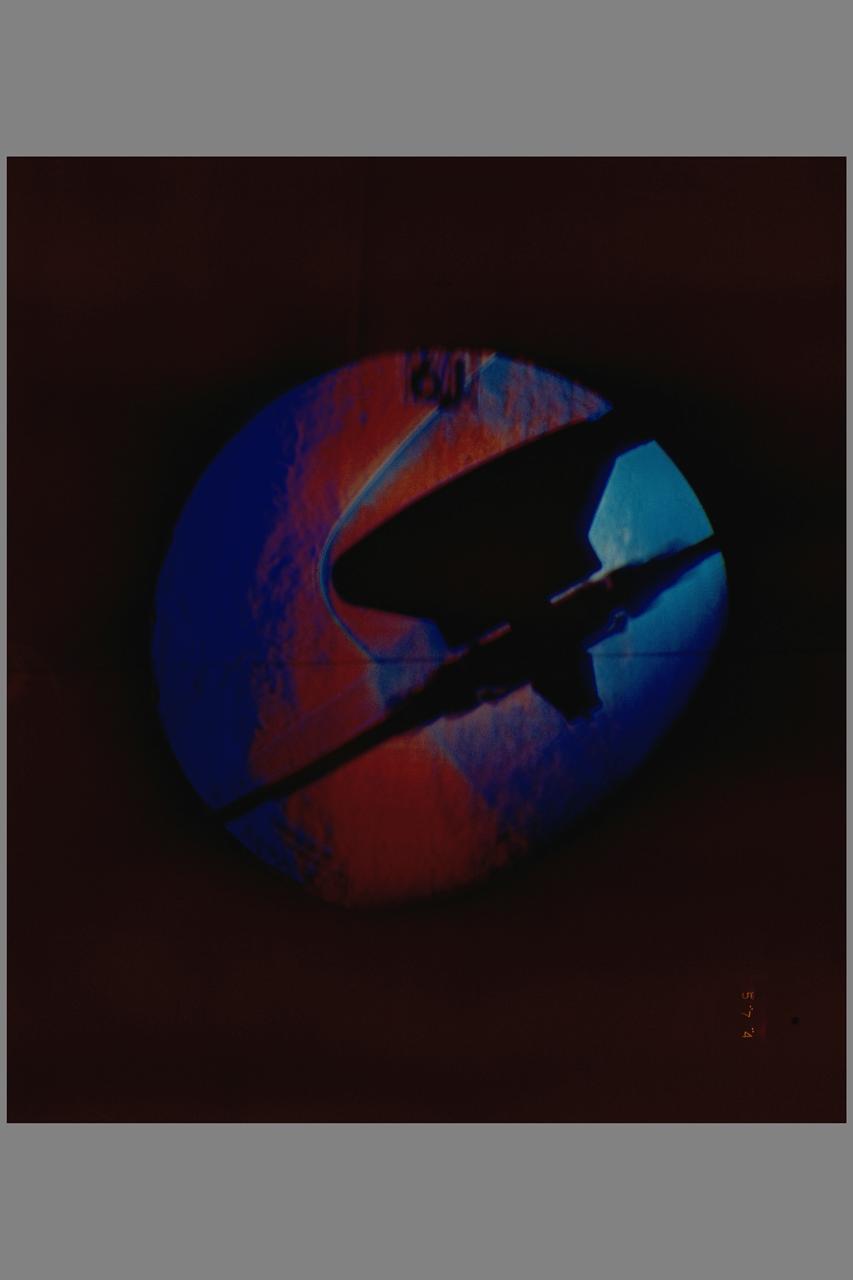
Aerodynamic Characteristics of Rotary Entry Vehicle configuration REV-1 model schlieren. Testing being done at the NASA Ames Research Center, California
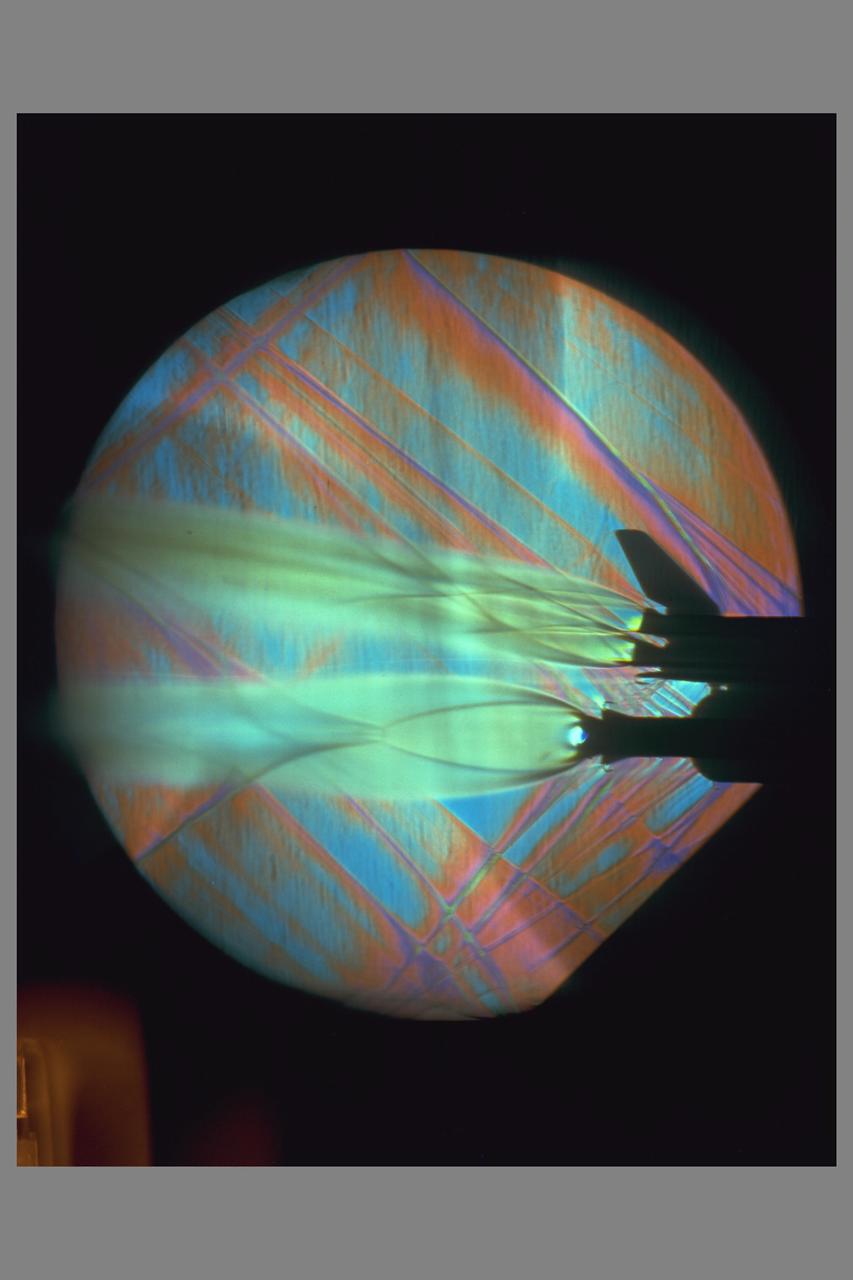
Schlieren: Space Shuttle Plume Test-97-044-1 in 9x7ft w.t.
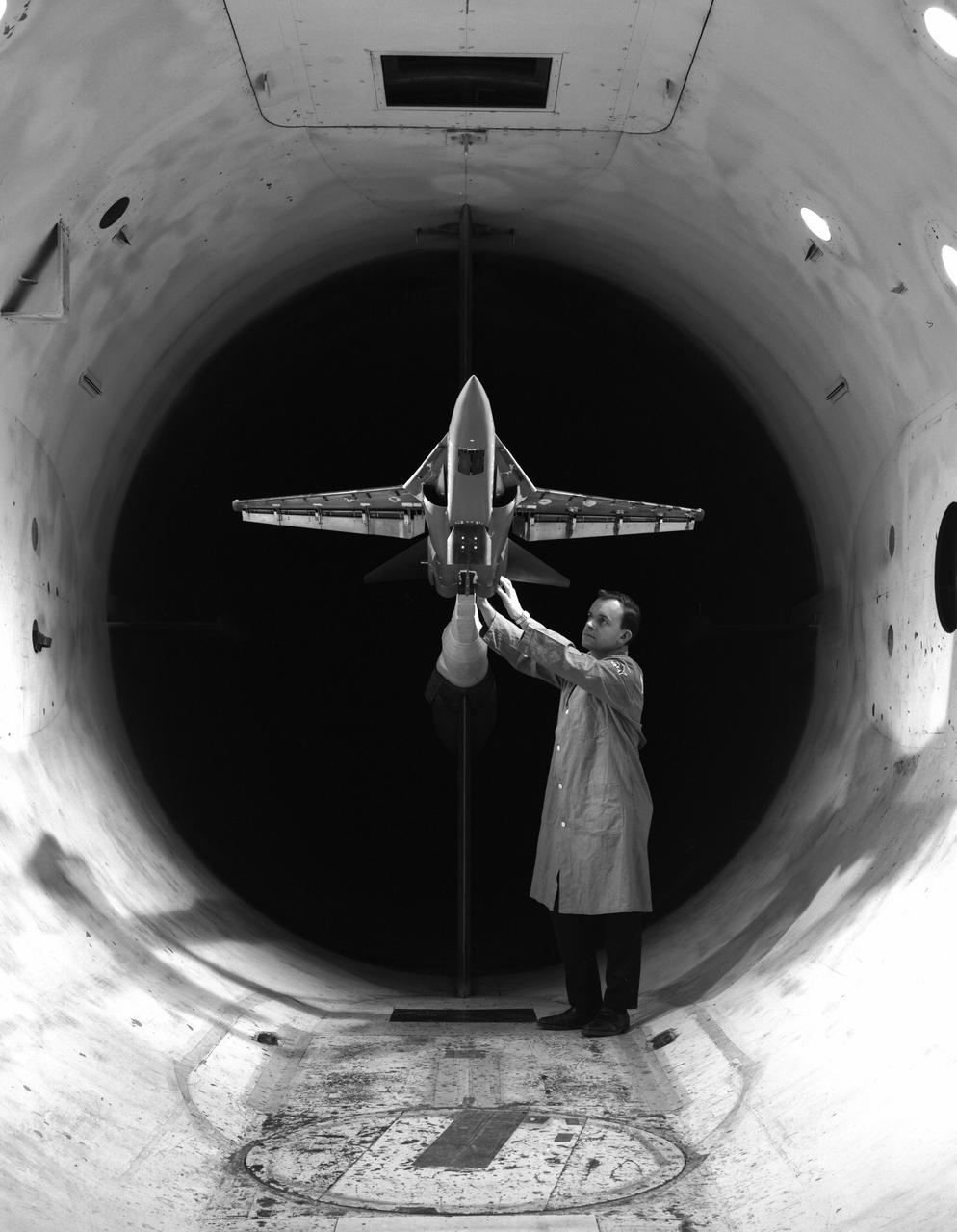
F-111 LOADS model in 12ft w.t. at Ames Research Center, Moffett Field, CA with Robert Ziesser
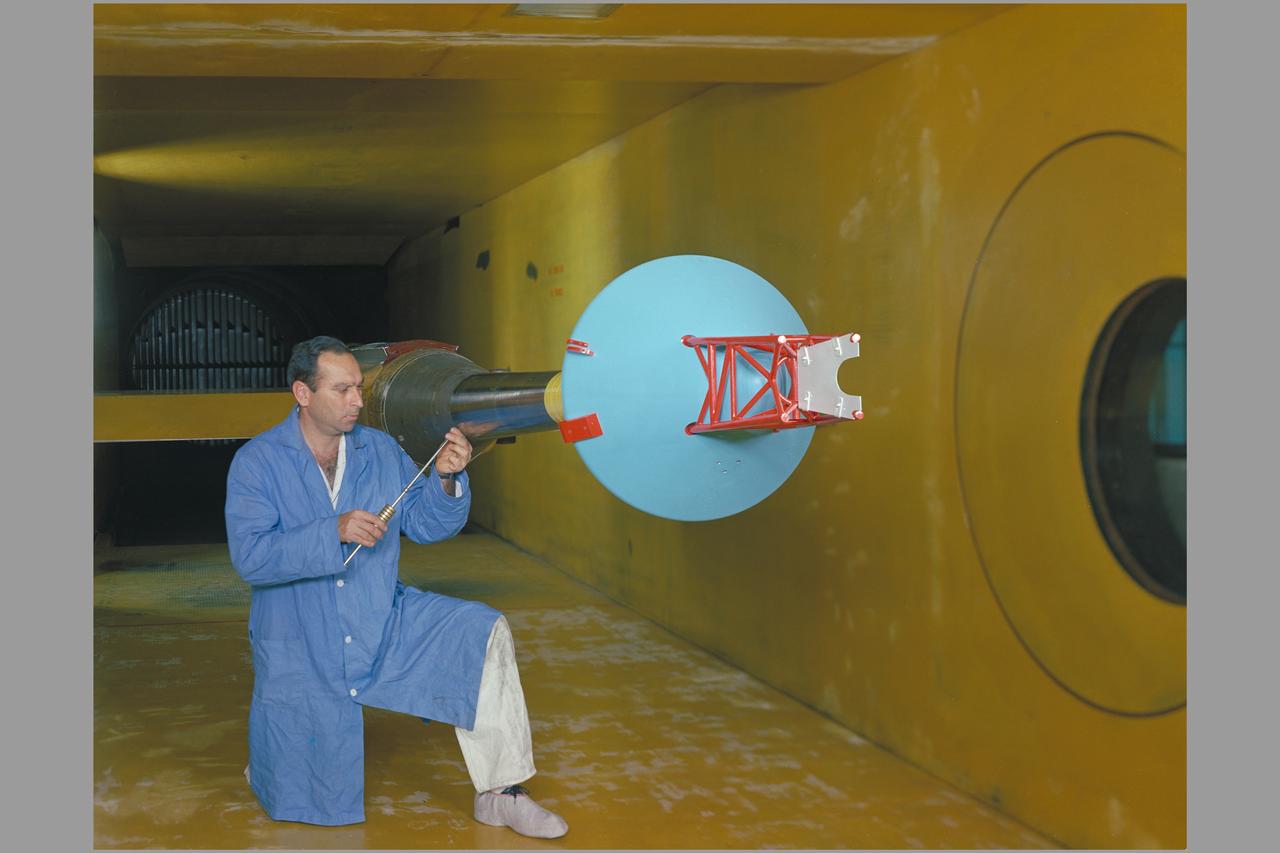
Side view of assembled command module, tower with flap & launch-escape rocket. Apollo FS-2 in 9 x 7 ft. SupersonicWind Tunnel.

This artist's concept show how it is possible for a single collection of particles, which share a common family of orbits around the Sun, to produce the appearance of identical bands on either side of the zodical or ecliptic plane. The bands were discovered in data from the Infrared Astronomical Satellite. Also illustrated is the concept of a comet/asteroid collision which could have created a cloud of debris. The dust cloud, as depicted here, has the orbital parameters needed to produce the band structure observed by IRAS.
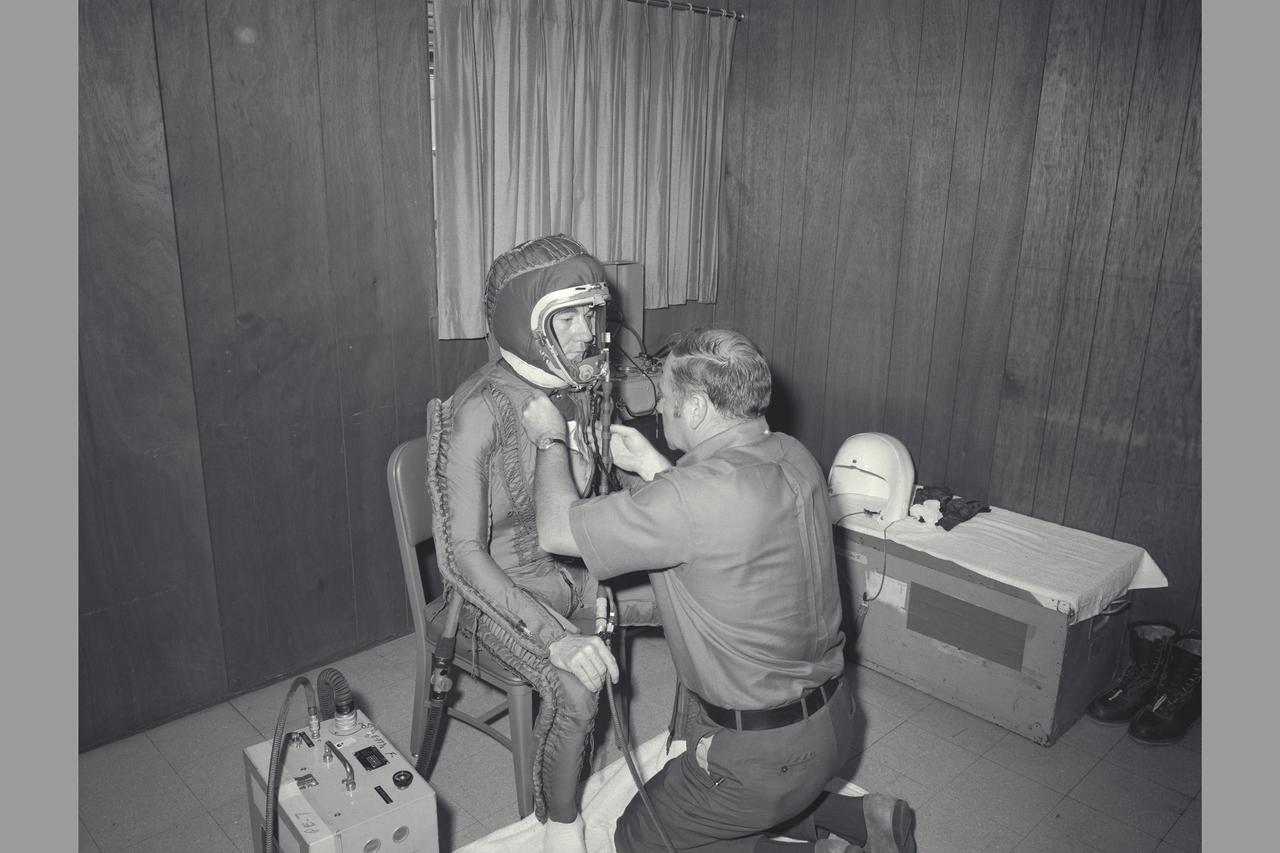
U-2 Pilot suit: flight readiness (flight support trailer, TR-1)
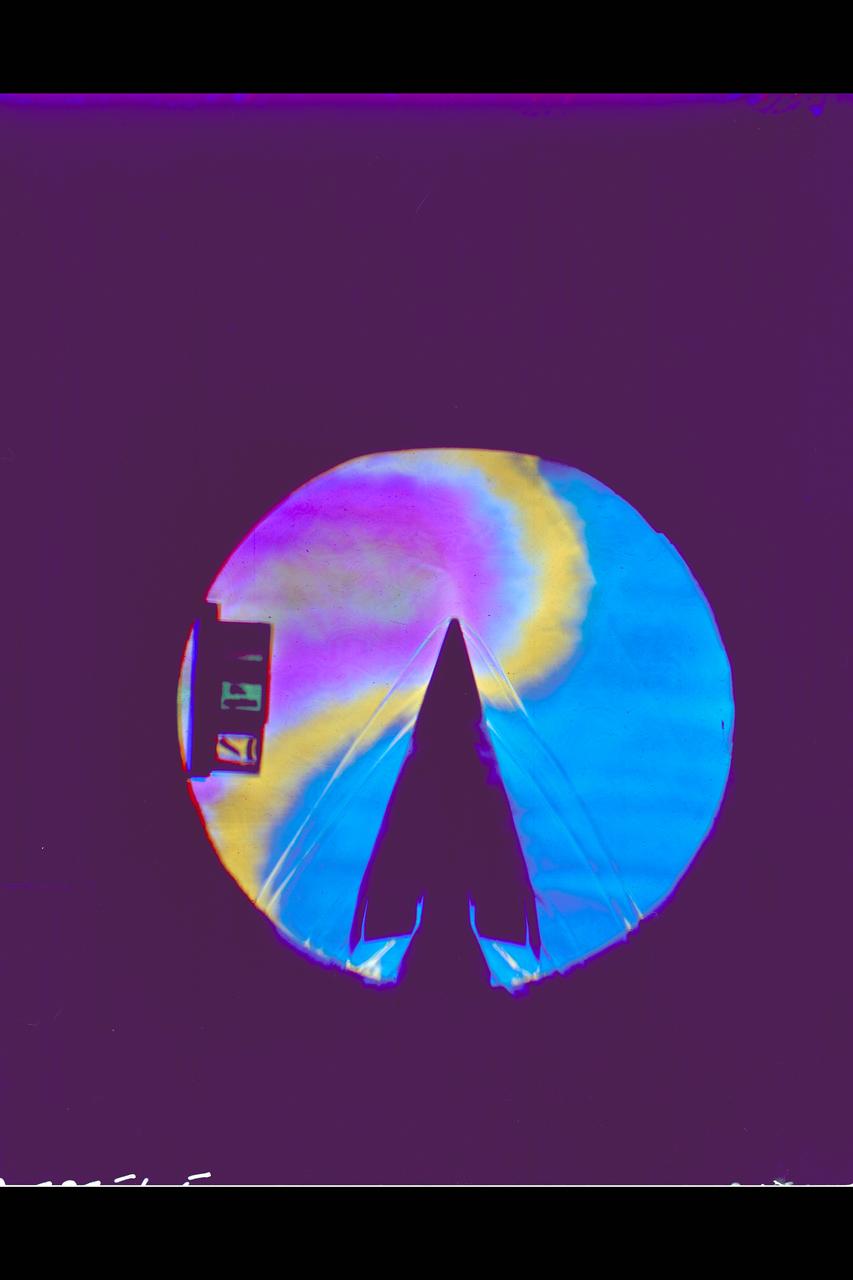
X-20 Dyna Soar on 624-A Titan III Booster: Schlieren
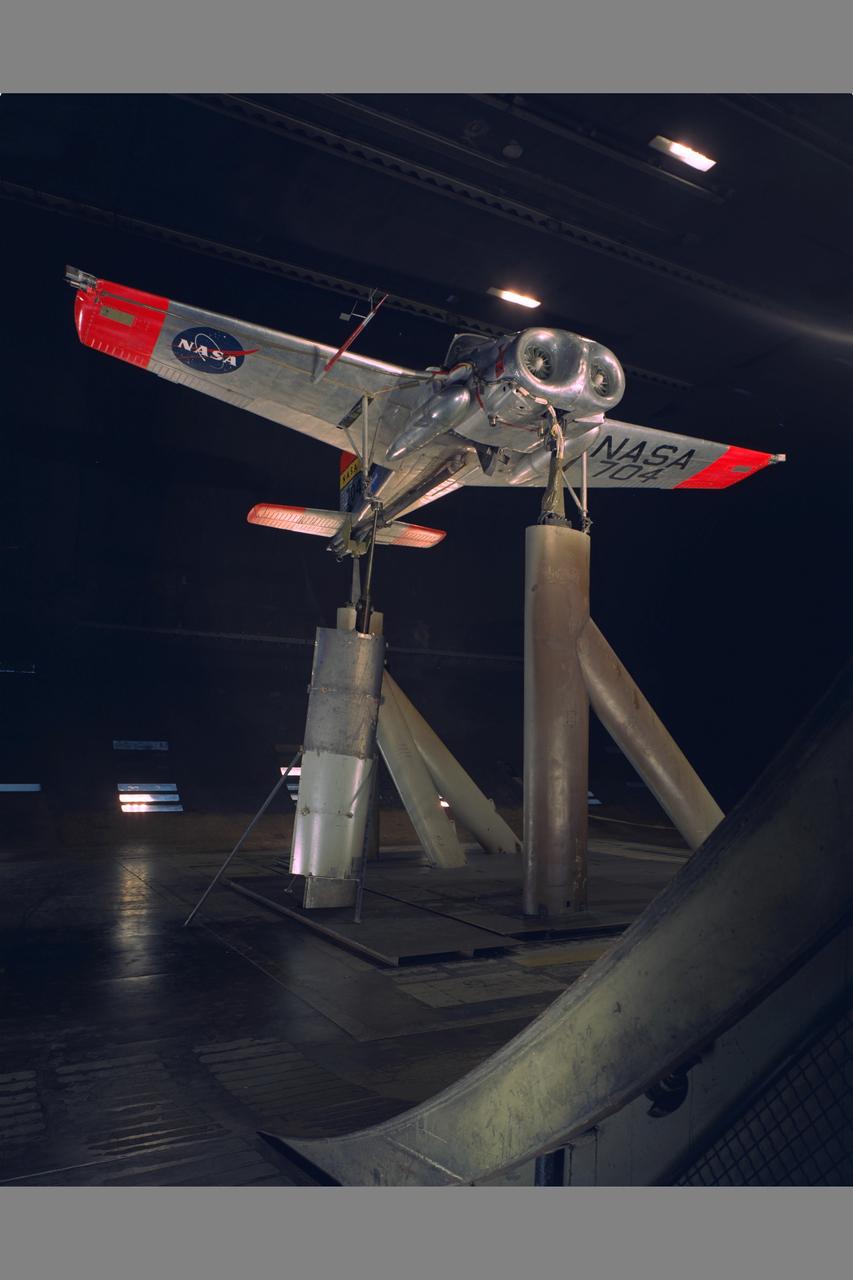
X-14 NASA 704 Full Scale Airplane tests in 40x80ft. Wind Tunnel (NORMAL MOUNTING) with Sy Sewell, NASA (left) and Ed Varette, Army (right)
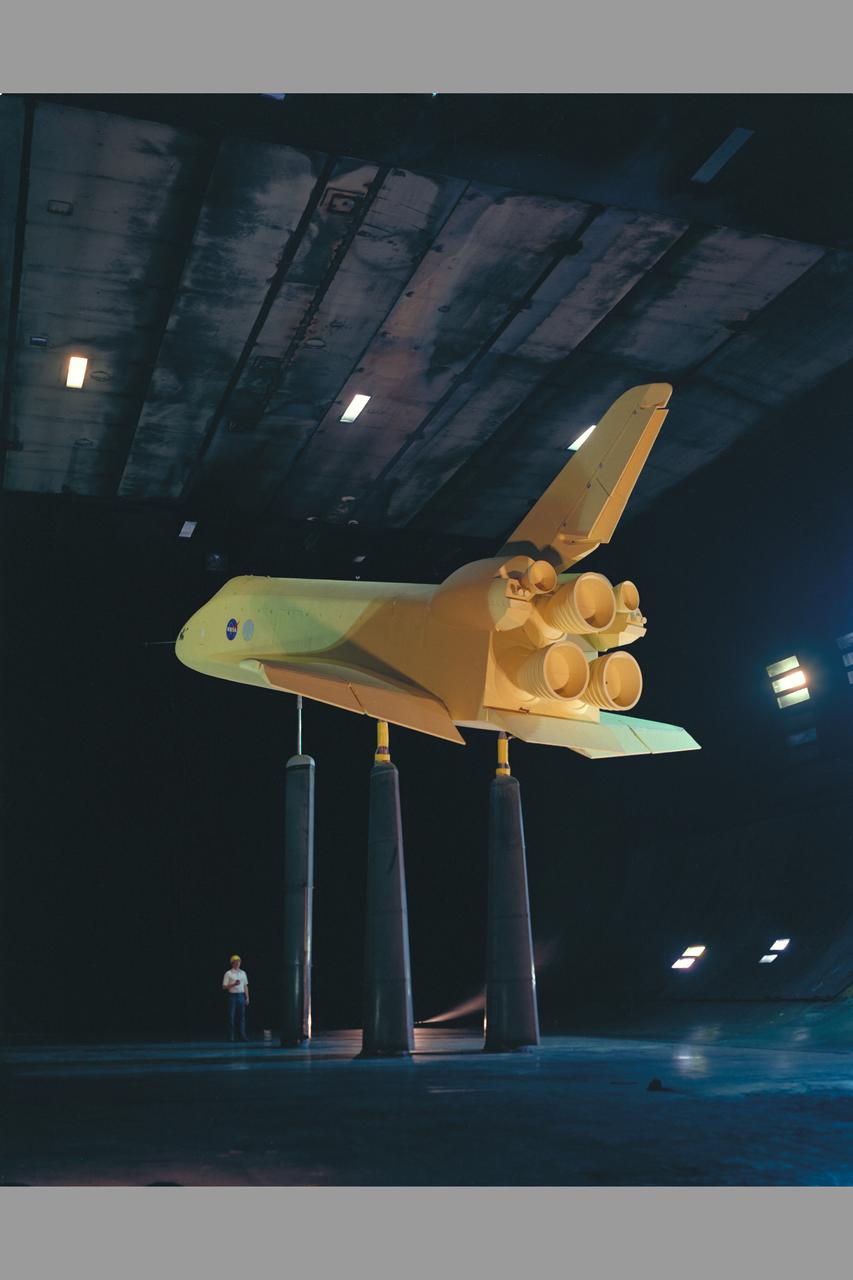
Space Shuttle SSV orbiter model OA100 (0.36 scale): 40x80ft w.t.
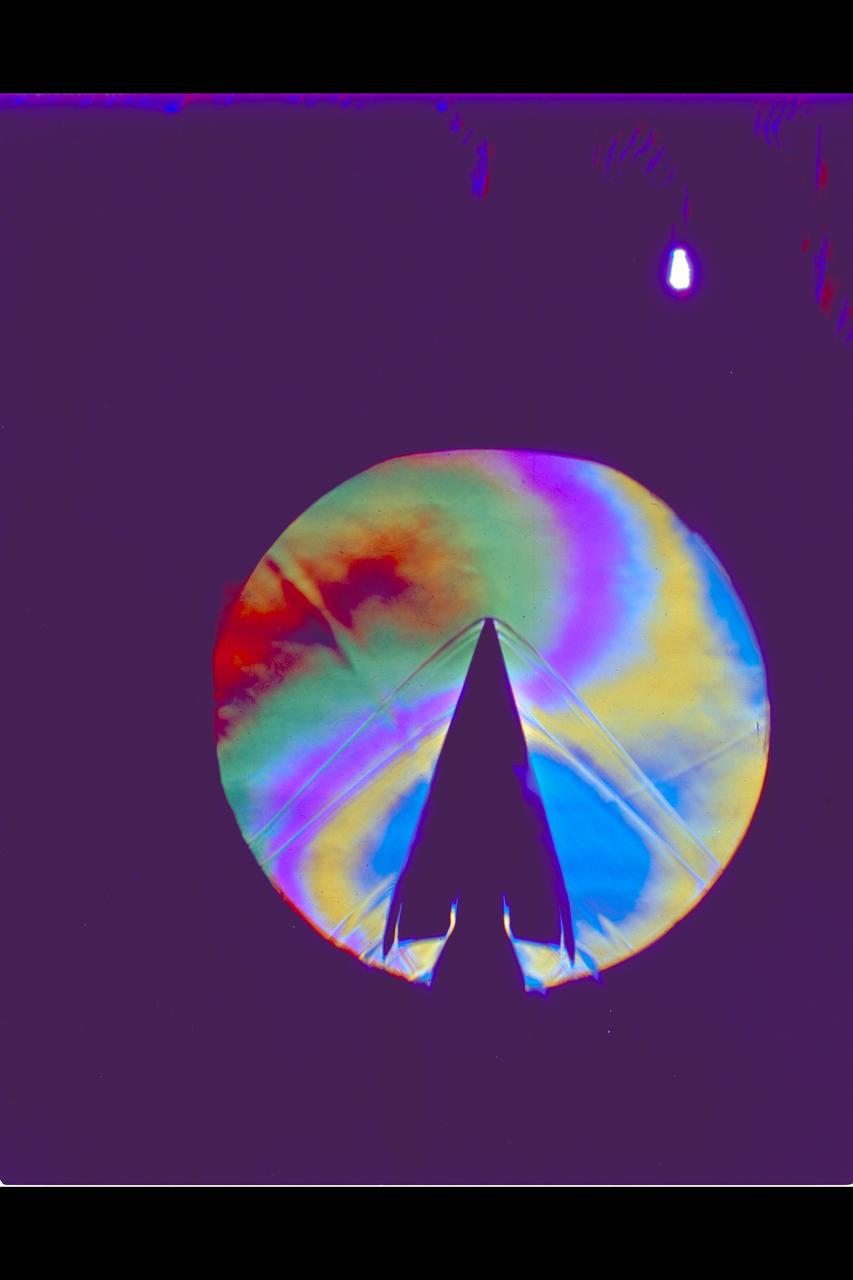
X-20 Dyna Soar on 624-A Titan III Booster: Schlieren
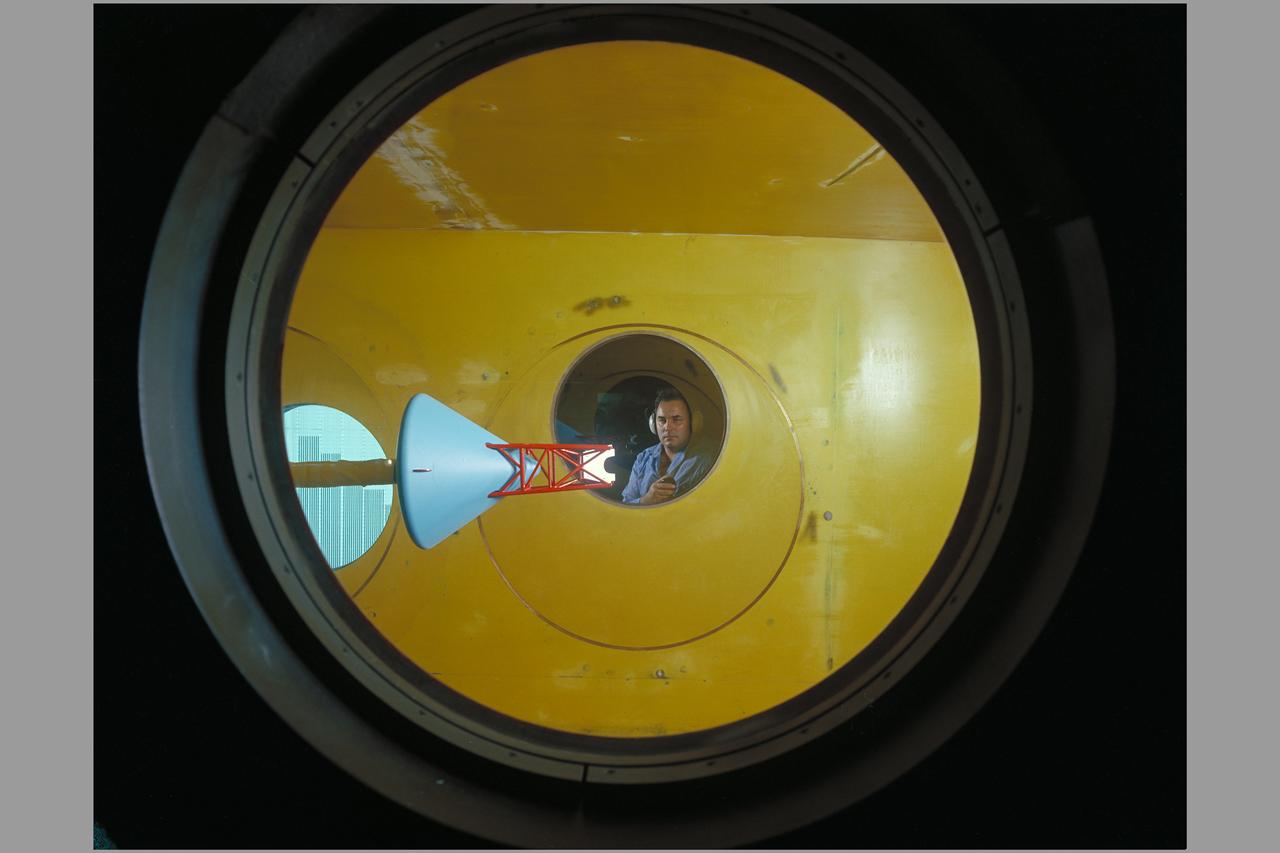
Side view of assembled command module, tower with flap & launch-escape rocket. Apollo FS-2 in 9 x 7 ft. SupersonicWind Tunnel.
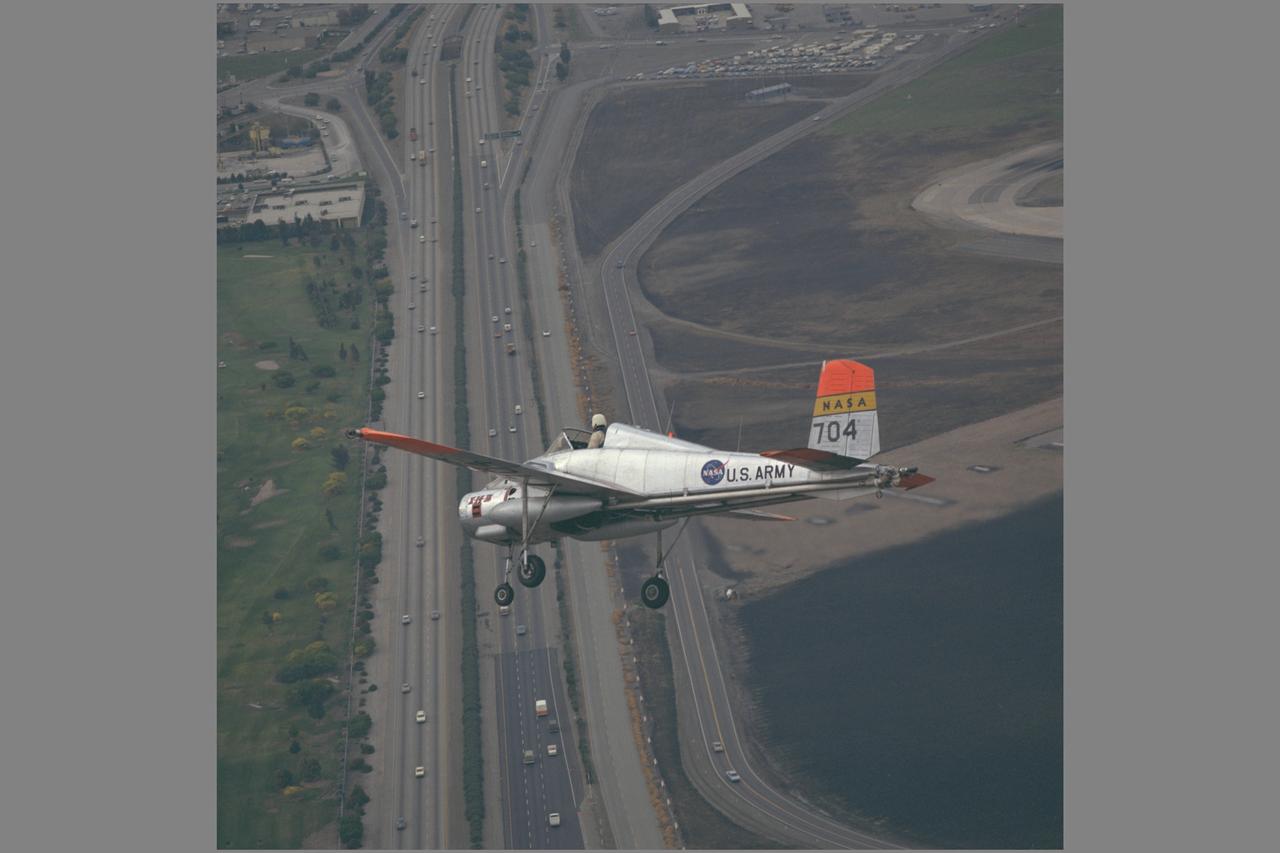
X-14B NASA-704: A Bell single-place, open cockpit, twin-engine, jet-lift VTOL aircraft over Highway 101 in approach to Moffett Field, California. The X-14 was used by NASA Ames Research Center to advance state-of-the-art jet-powered VTOL aircraft.
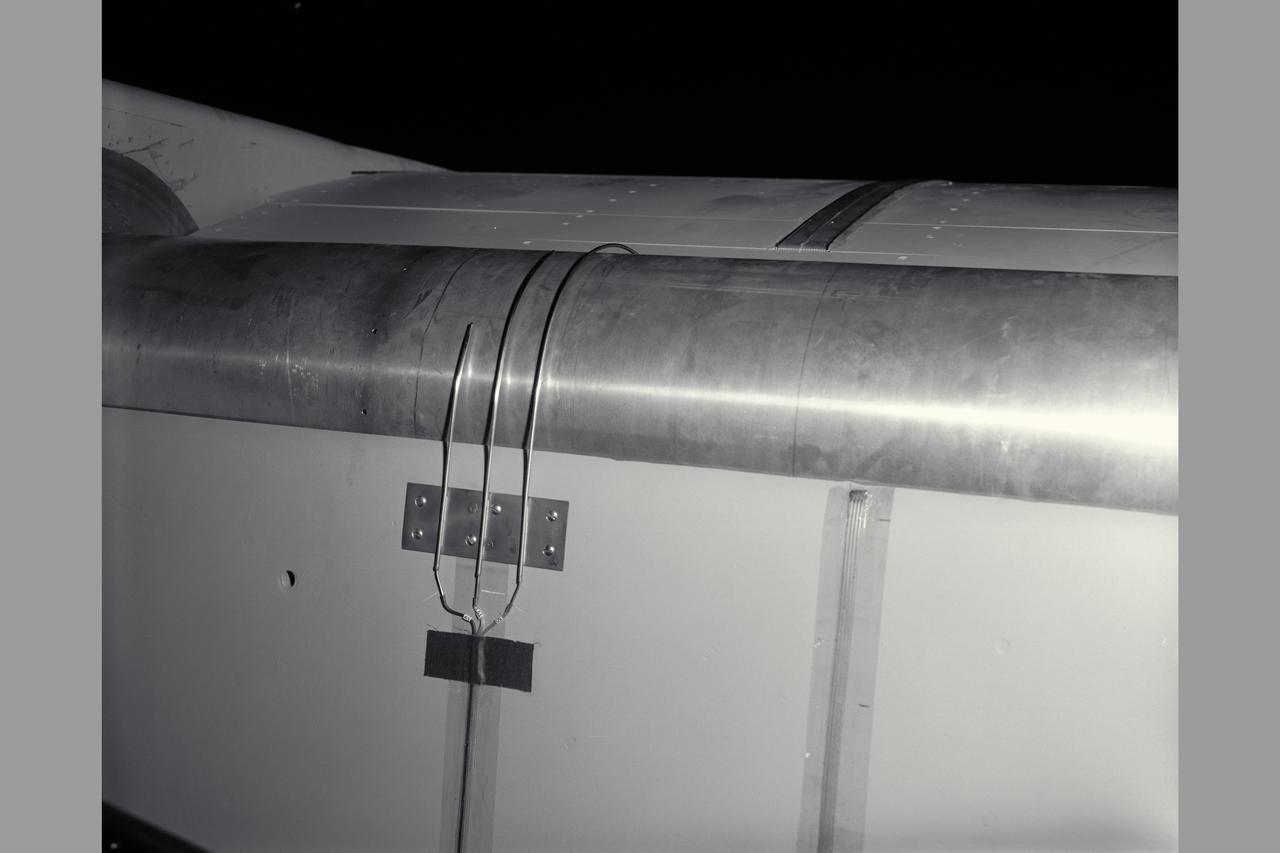
2-Prop. R.C.F. (Rotating Cylinder Flap) in 40 x 80ft. wind tunnel. rear view detail of flap
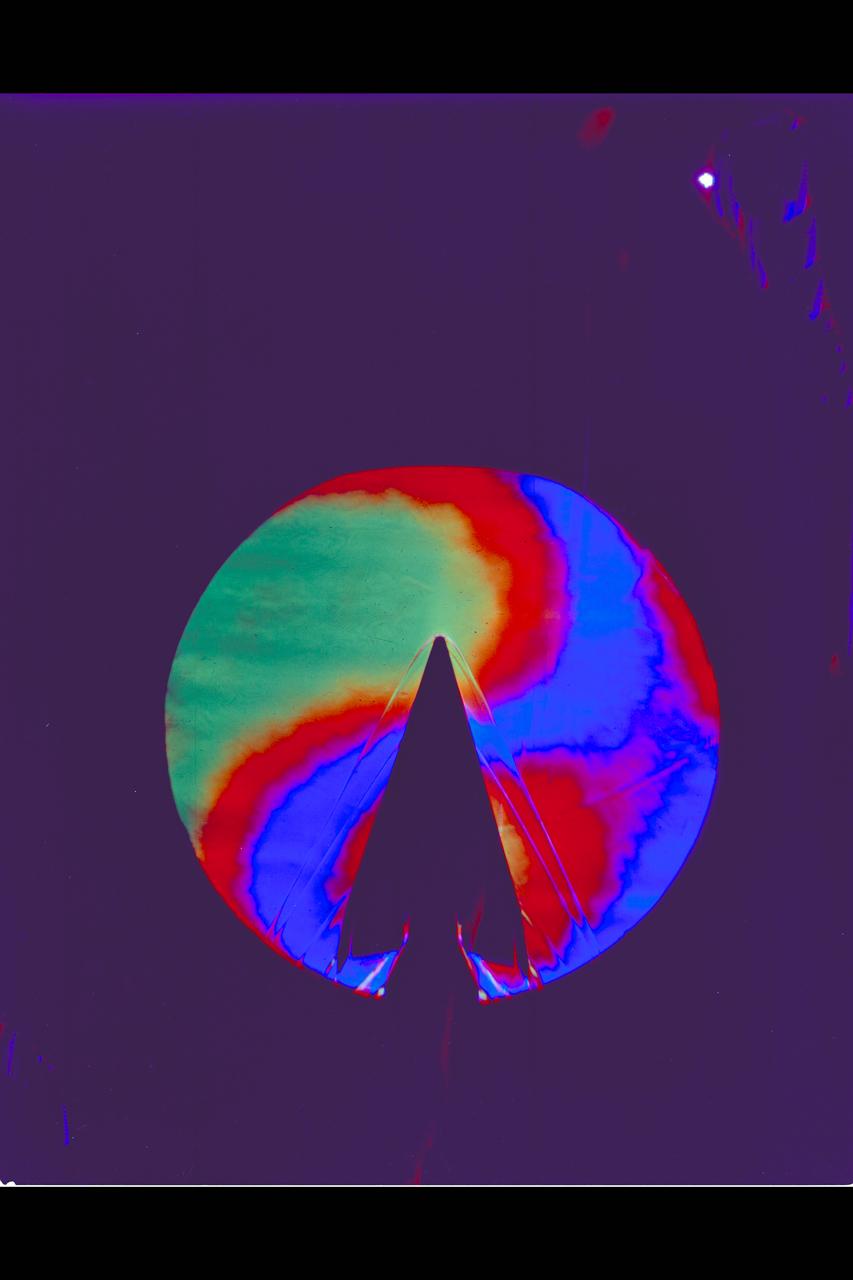
X-20 Dyna Soar on 624-A Titan III Booster: Schlieren

X-20 Dyna Soar on 624-A Titan III Booster: Schlieren
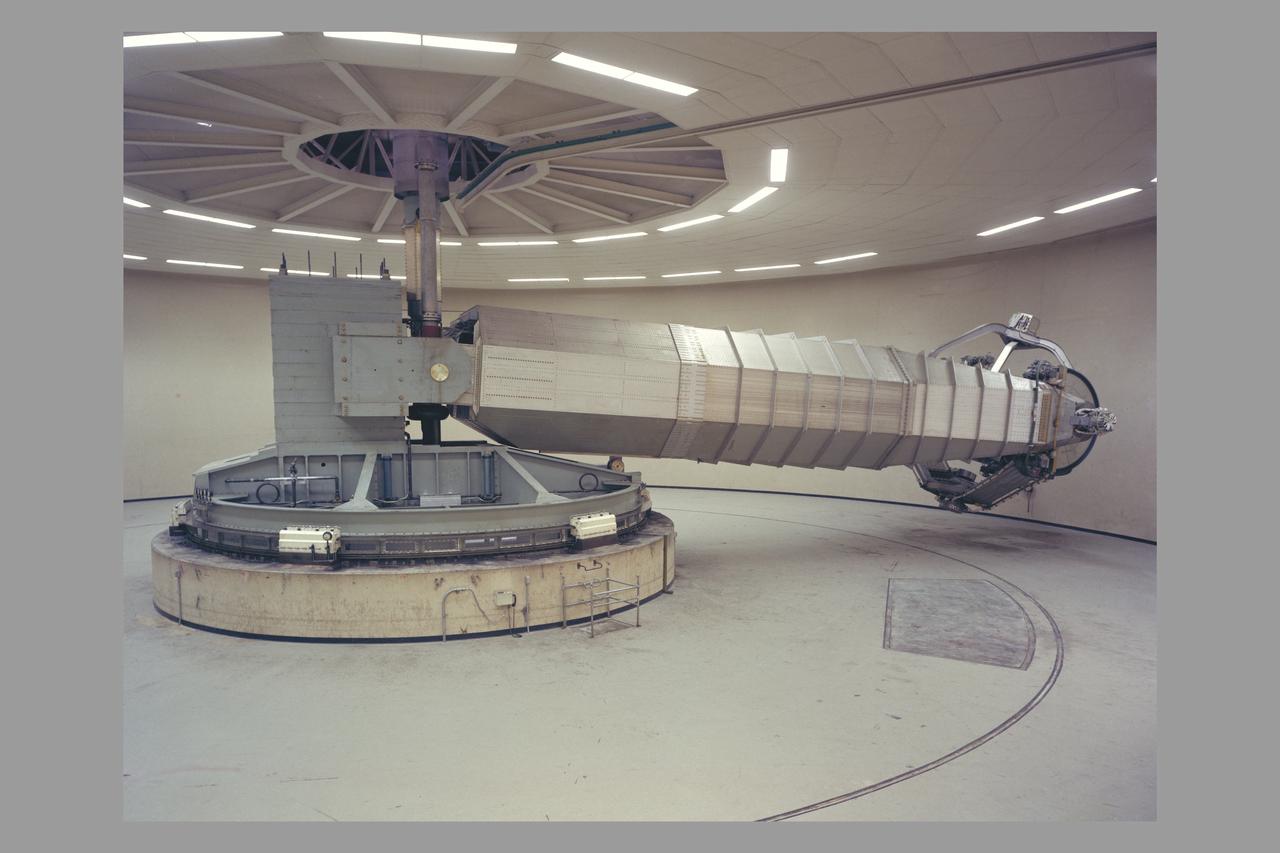
N-243 Flight and Guidance Centrifuge: Is used for spacecraft mission simulations and is adaptable to two configurations. Configuration 1: The cab will accommodate a three-man crew for space mission research. The accelerations and rates are intended to be smoothly applicable at very low value so the navigation and guidance procedures using a high-accuracy, out-the window display may be simulated. Configuration 2: The simulator can use a one-man cab for human tolerance studies and performance testing. Atmosphere and tempertaure can be varied as stress inducements. This simlator is operated closed-loop with digital or analog computation. It is currently man-rated for 3.5g maximum.
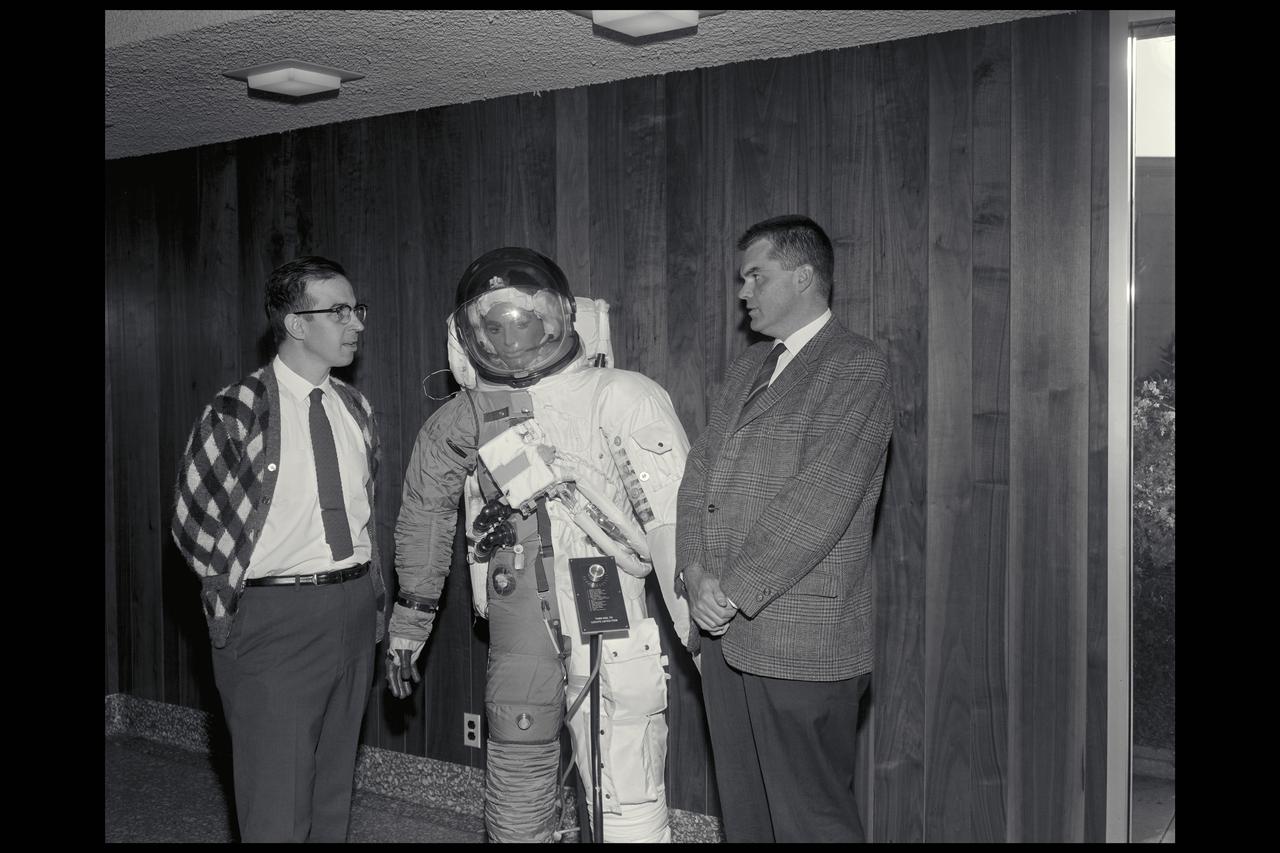
Dane Cone, Los Altos High School with Dr Hans Mark attending the Lunar Sample Exhibit (space suit exhibit)
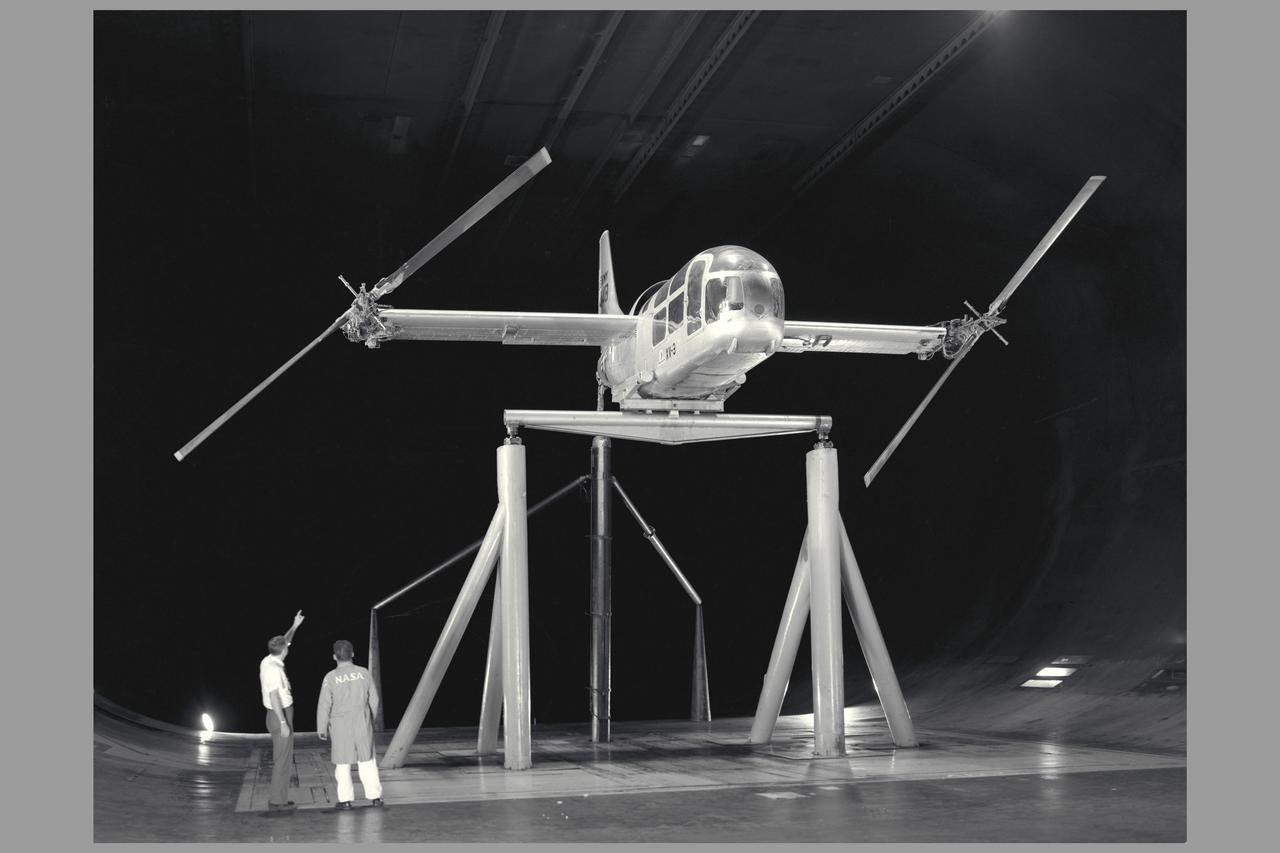
XV-3 in Ames Reseach Center 40x80ft wind tunnel with K. Edenborough and B. Ramsey, engineers Published in The History of the XV-15 Tilt Rotor Research Aircraft (from Concept to Flight NASA SP-2000-4517)
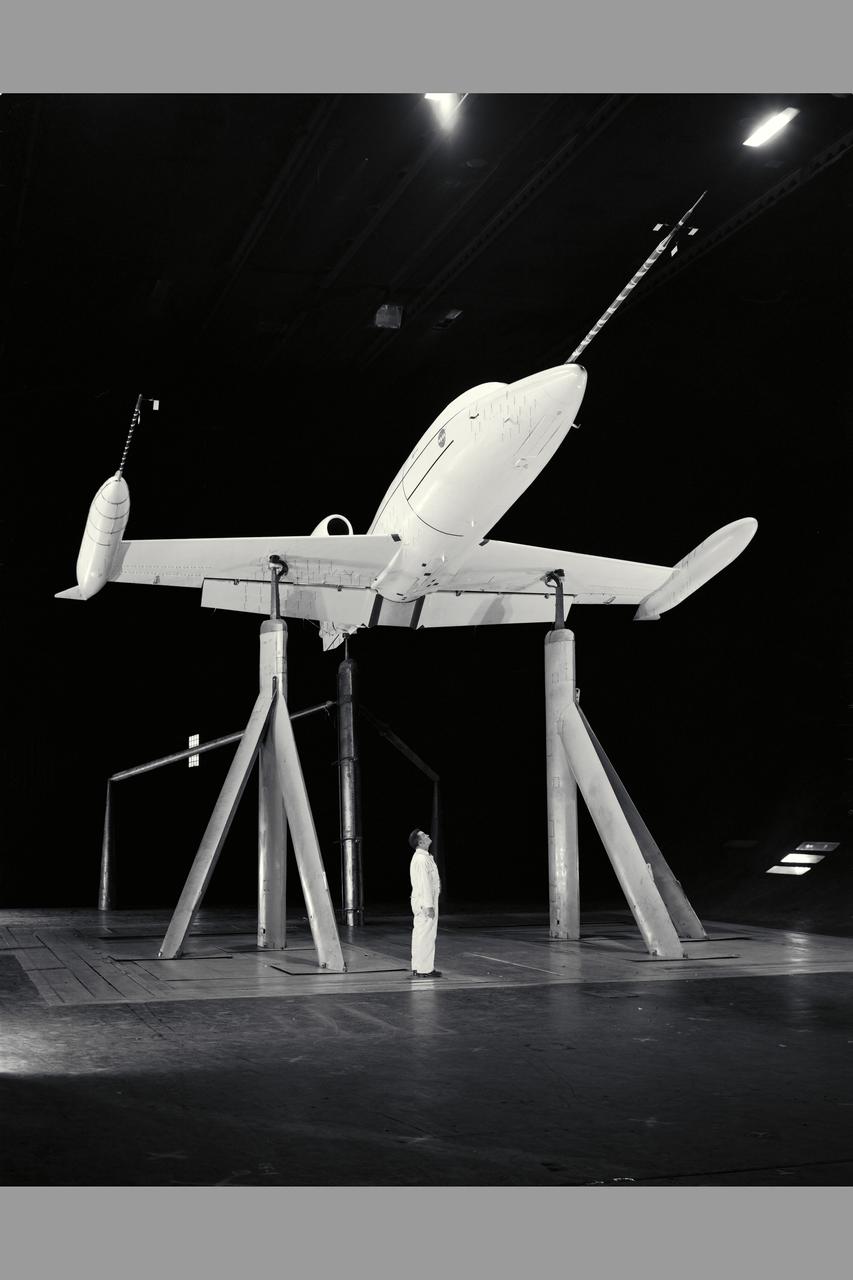
Lear Jet in 40 x 80 ft. Wind Tunnel with Ed Varrette. Tunnel Doors Closed.
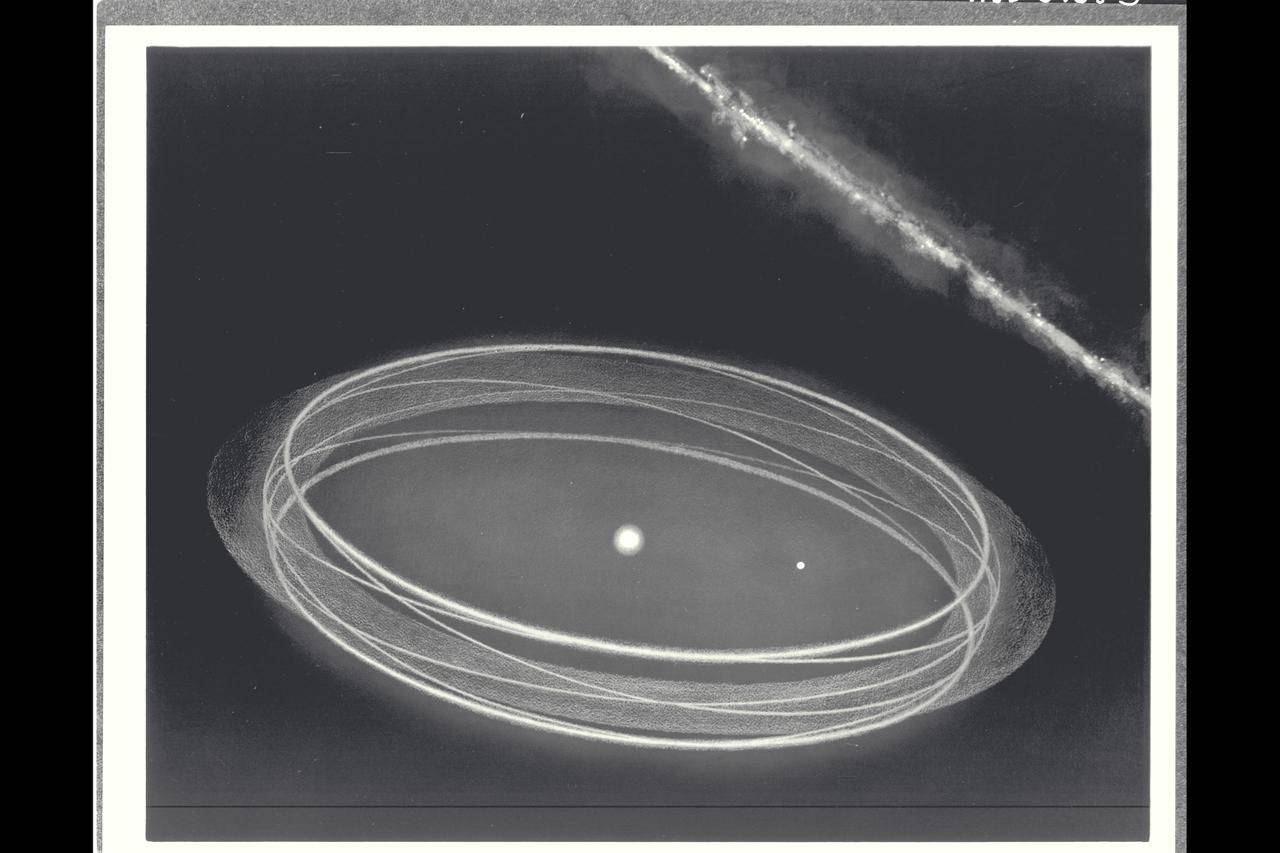
This artist's concept show how it is possible for a single collection of particles, which share a common family of orbits around the Sun, to produce the appearance of identical bands on either side of the zodical or ecliptic plane. The bands were discovered in data from the Infrared Astronomical Satellite. Also illustrated is the concept of a comet/asteroid collision which could have created a cloud of debris. The dust cloud, as depicted here, has the orbital parameters needed to produce the band structure observed by IRAS.
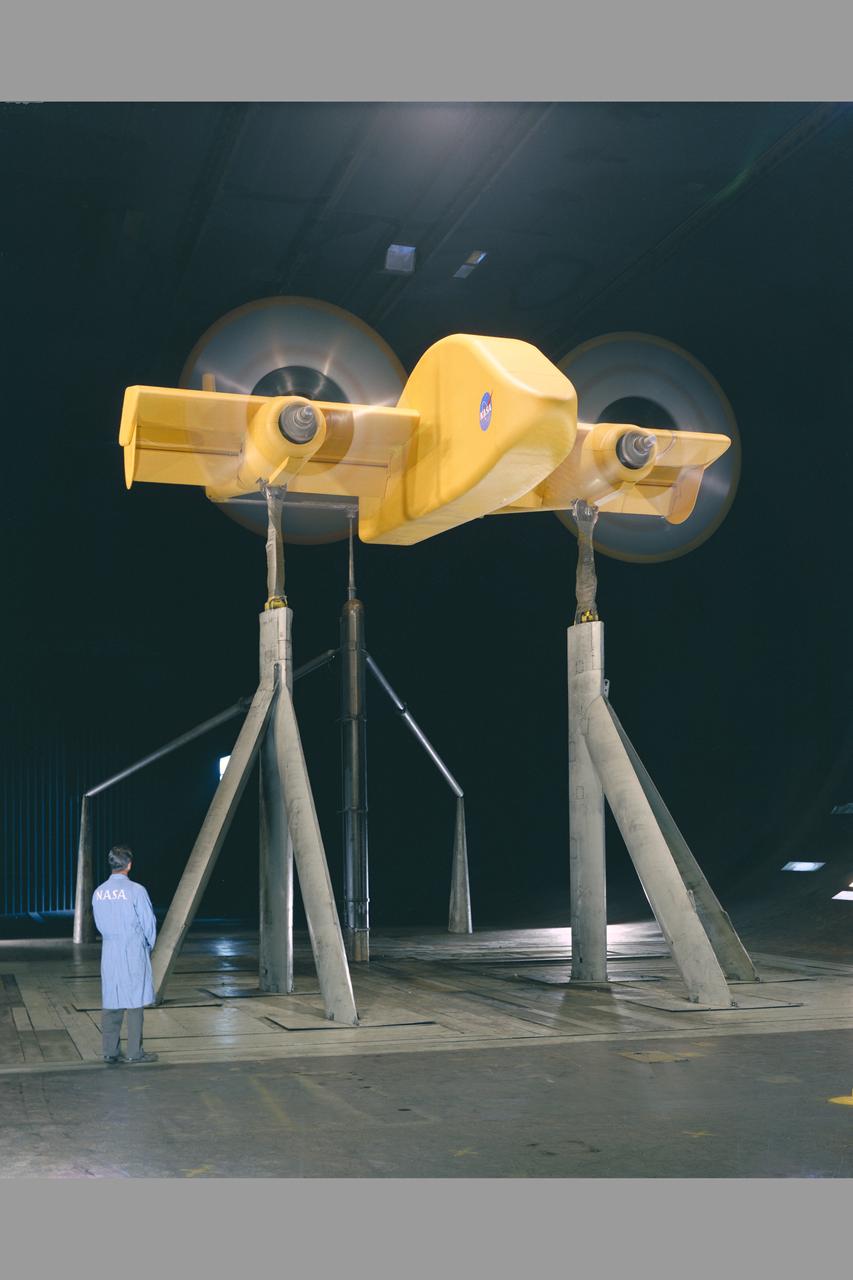
2-Prop. R.C.F. (Rotating Cylinder Flap) in 40 x 80ft. wind tunnel. 3/4 front view propeller spinning with Chuck Greco.

Large Scale Lift Fan Transport Model test-459 in the 40x80ft w.t.
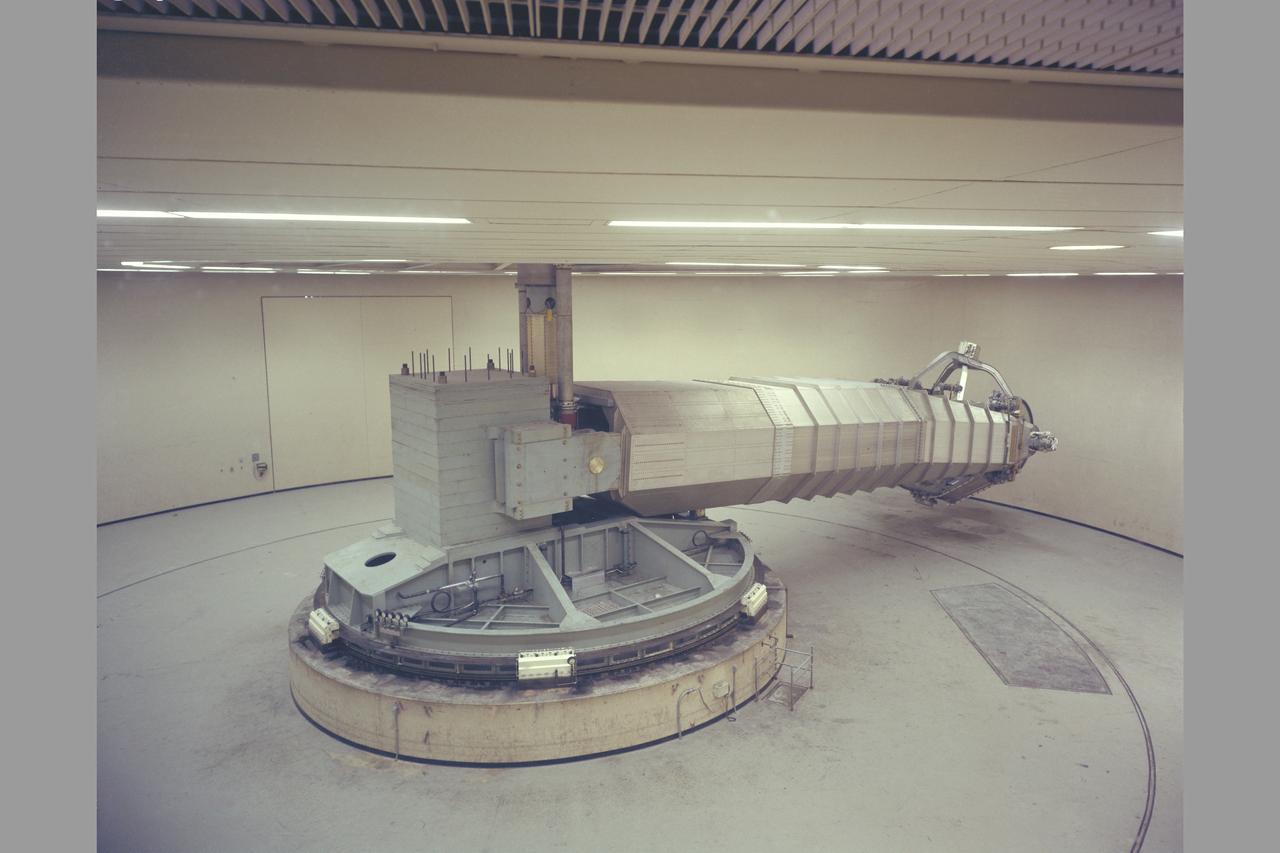
N-243 Flight and Guidance Centrifuge: Is used for spacecraft mission simulations and is adaptable to two configurations. Configuration 1: The cab will accommodate a three-man crew for space mission research. The accelerations and rates are intended to be smoothly applicable at very low value so the navigation and guidance procedures using a high-accuracy, out-the window display may be simulated. Configuration 2: The simulator can use a one-man cab for human tolerance studies and performance testing. Atmosphere and tempertaure can be varied as stress inducements. This simlator is operated closed-loop with digital or analog computation. It is currently man-rated for 3.5g maximum.
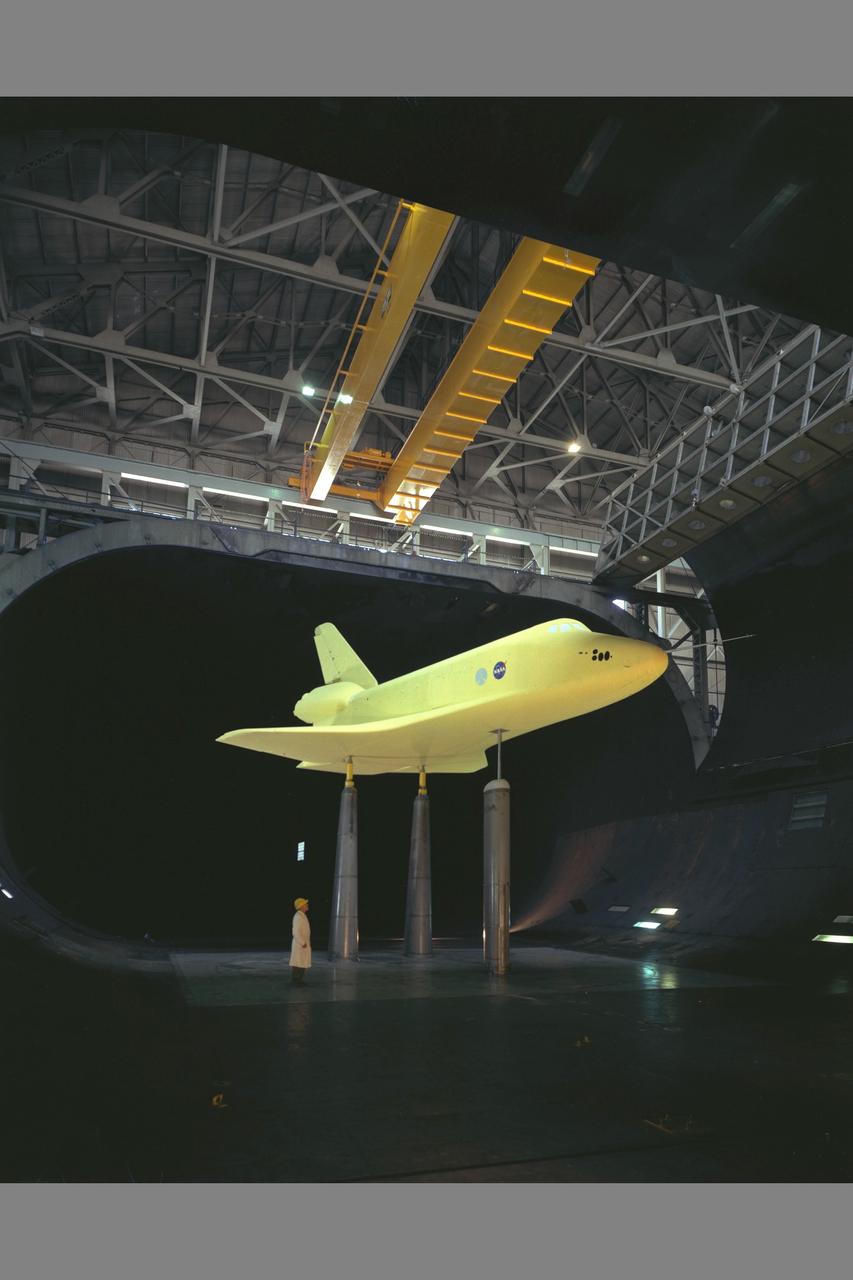
Space Shuttle Orbitor Model (A-100) testing in the NASA Ames Research Center 40x80ft Subsonic Wind Tunnel
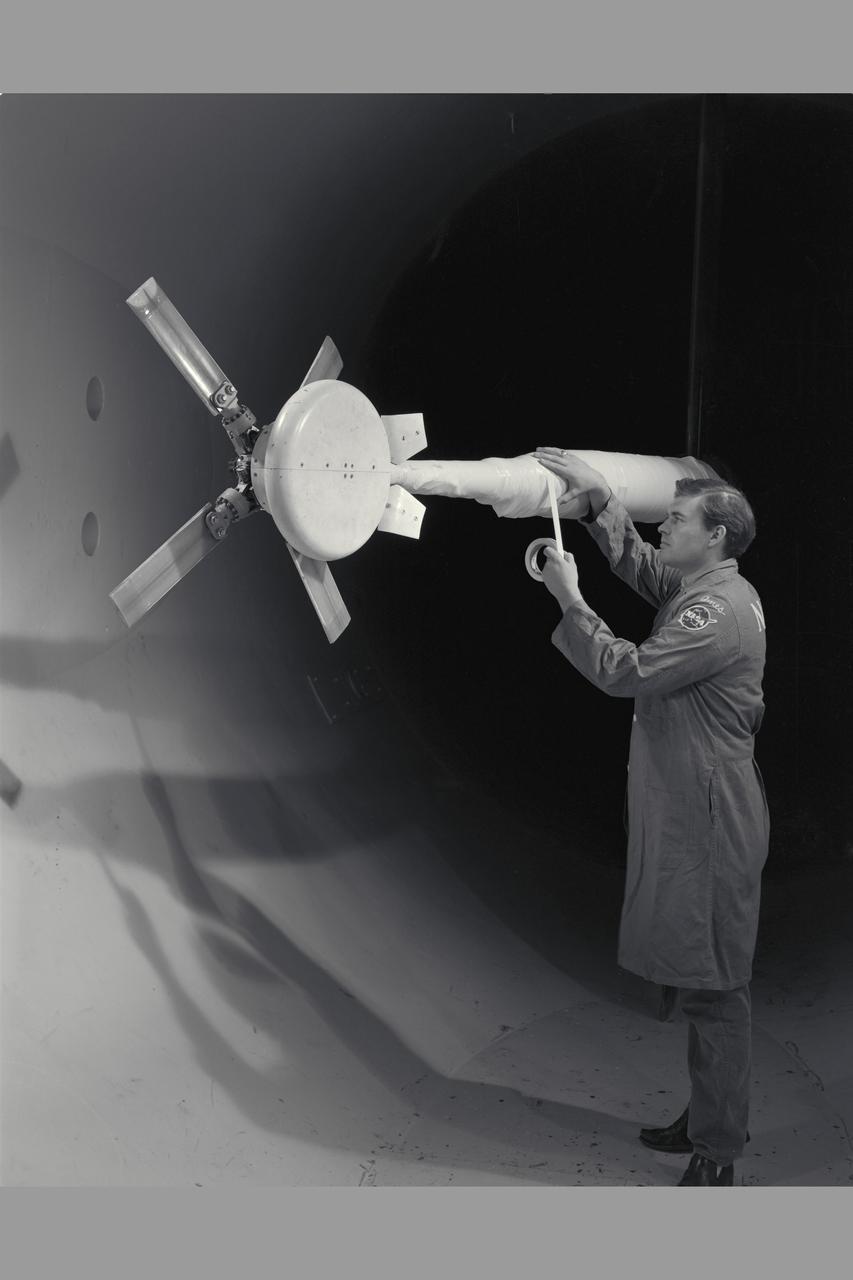
Rotor Entry Vehicle - force test in 12ft w.t. at Ames Research Center, Moffett Field, CA test-12-328 with J.J. Garber (ARO contractor)
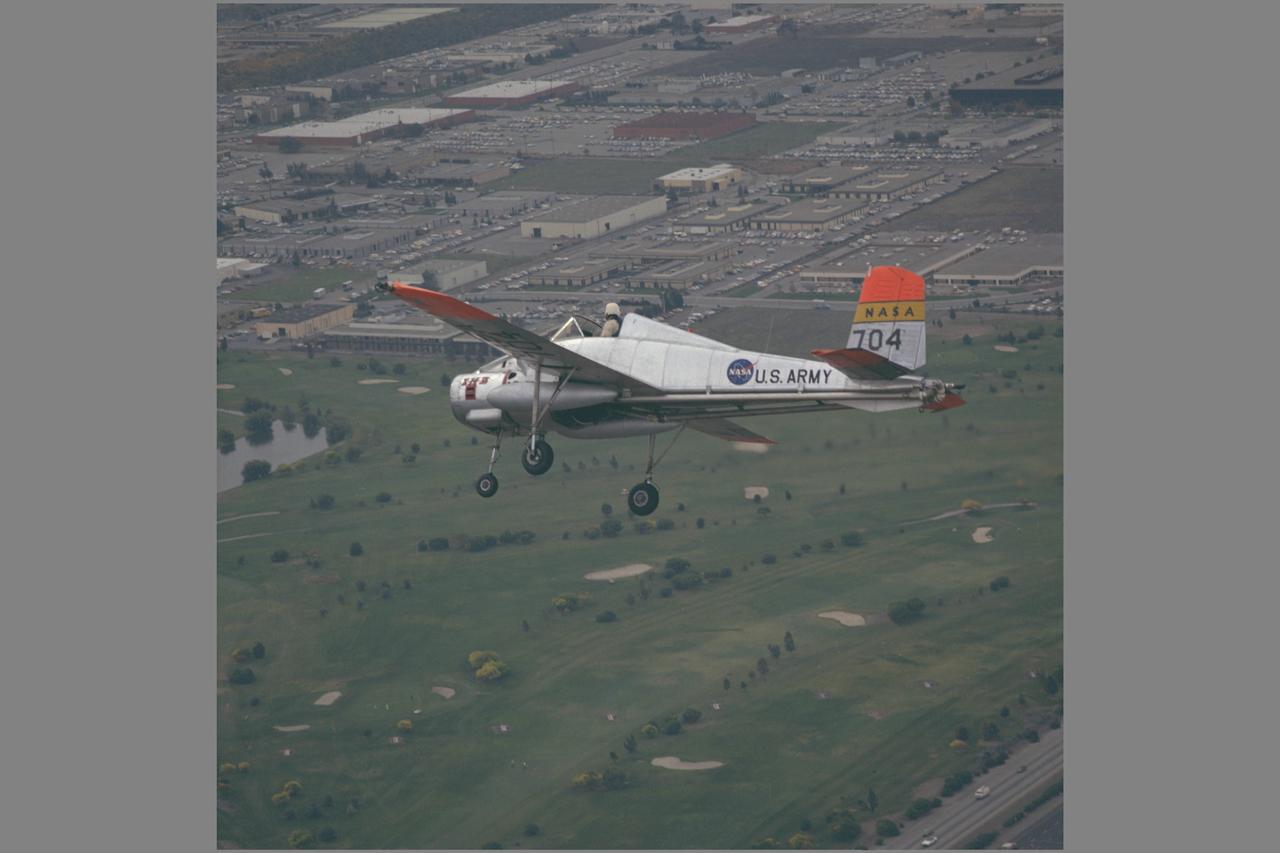
X-14B NASA-704: A Bell single-place, open cockpit, twin-engine, jet-lift VTOL aircraft in flight over Sunnyvale golf course. The X-14 was used by NASA Ames Research Center to advance state-of-the-art jet-powered VTOL aircraft.
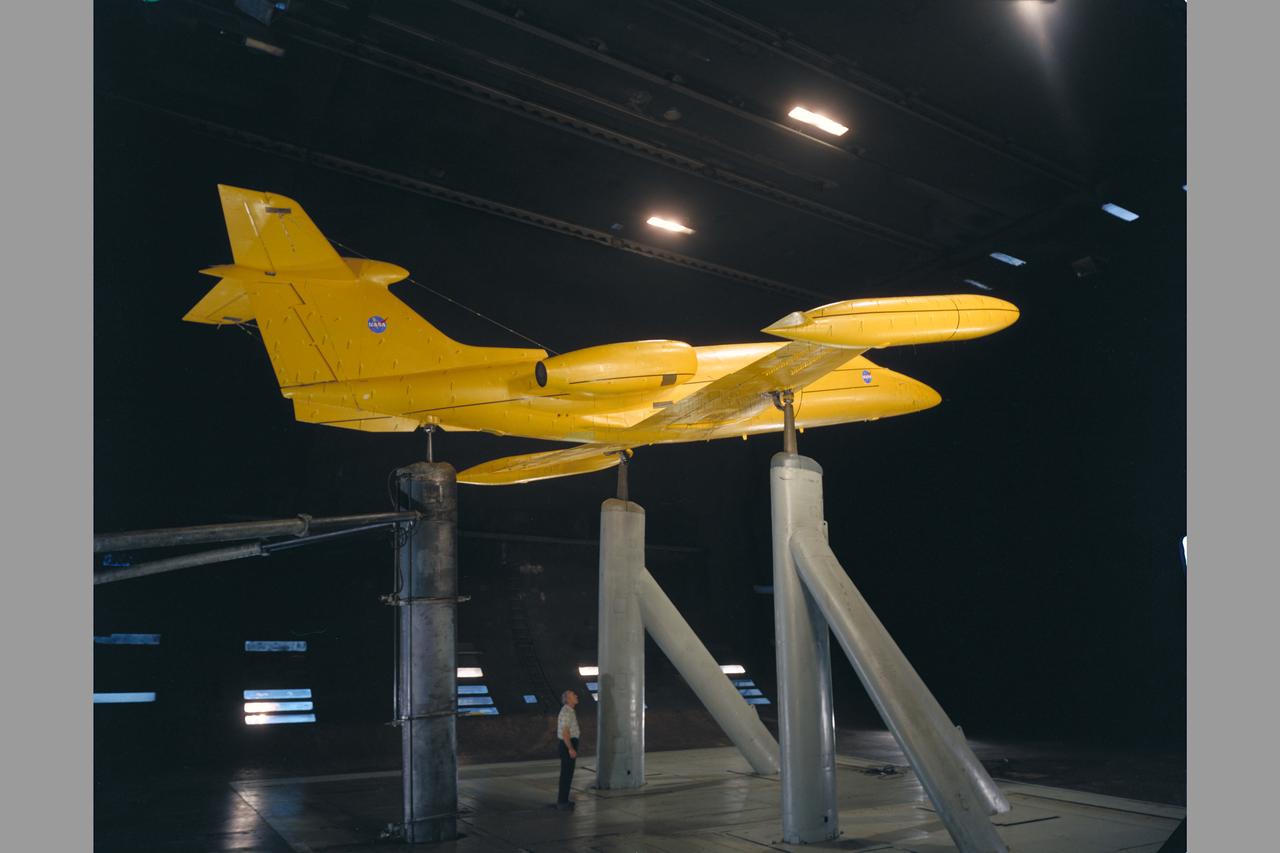
Lear Jet in 40 x 80 ft. Wind Tunnel with Ed Varrette. Angle of Attack=0 degrees.
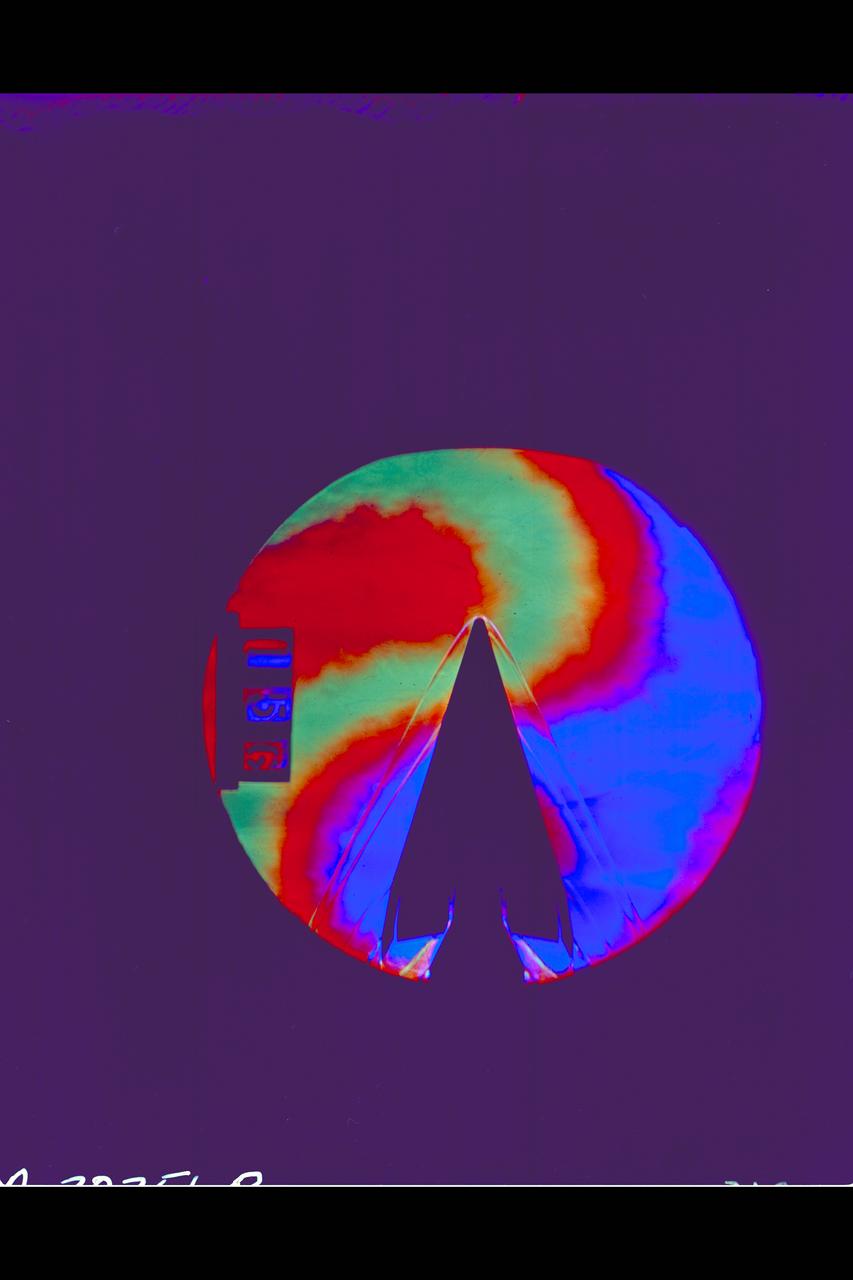
X-20 Dyna Soar on 624-A Titan III Booster: Schlieren
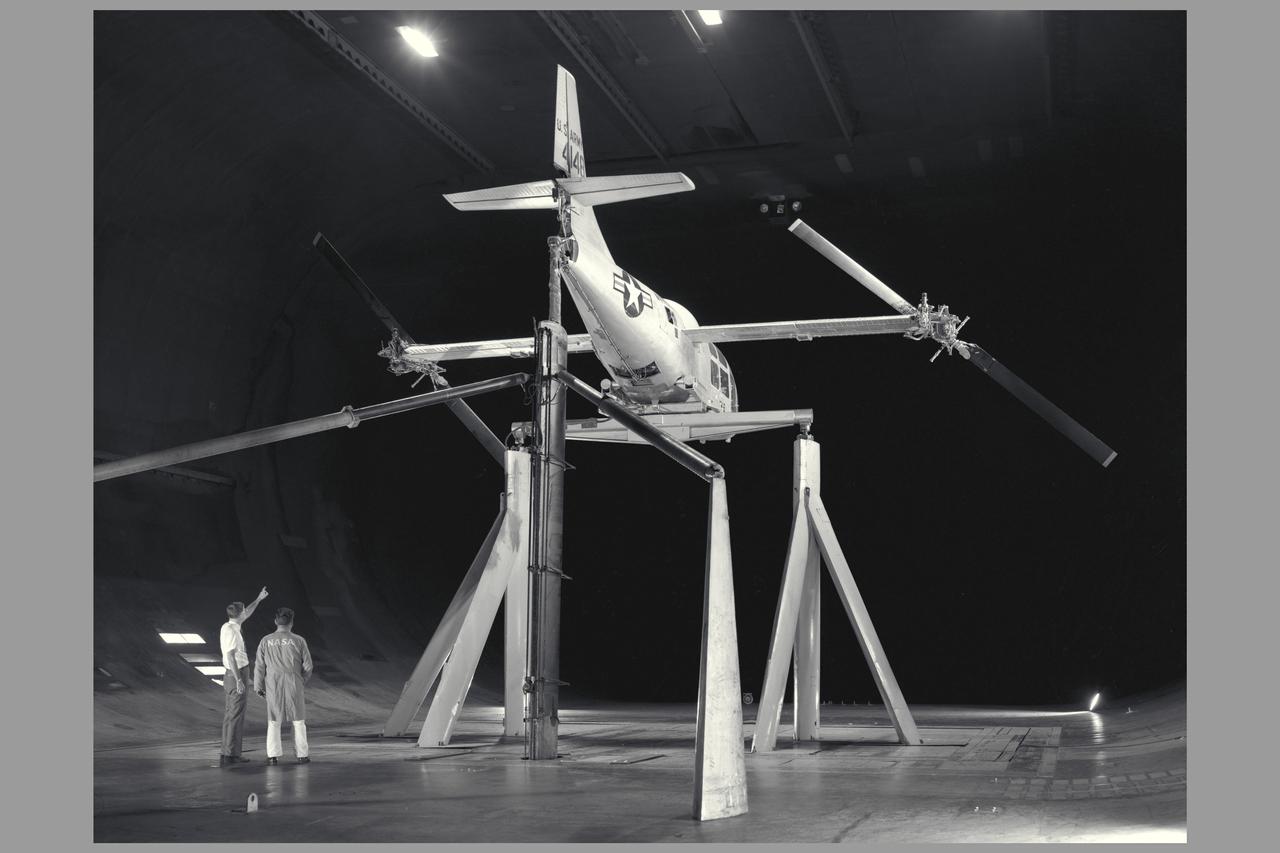
XV-3 from rear in Ames Reseach Center 40x80ft wind tunnel with K Edenborough and B. Ramsey
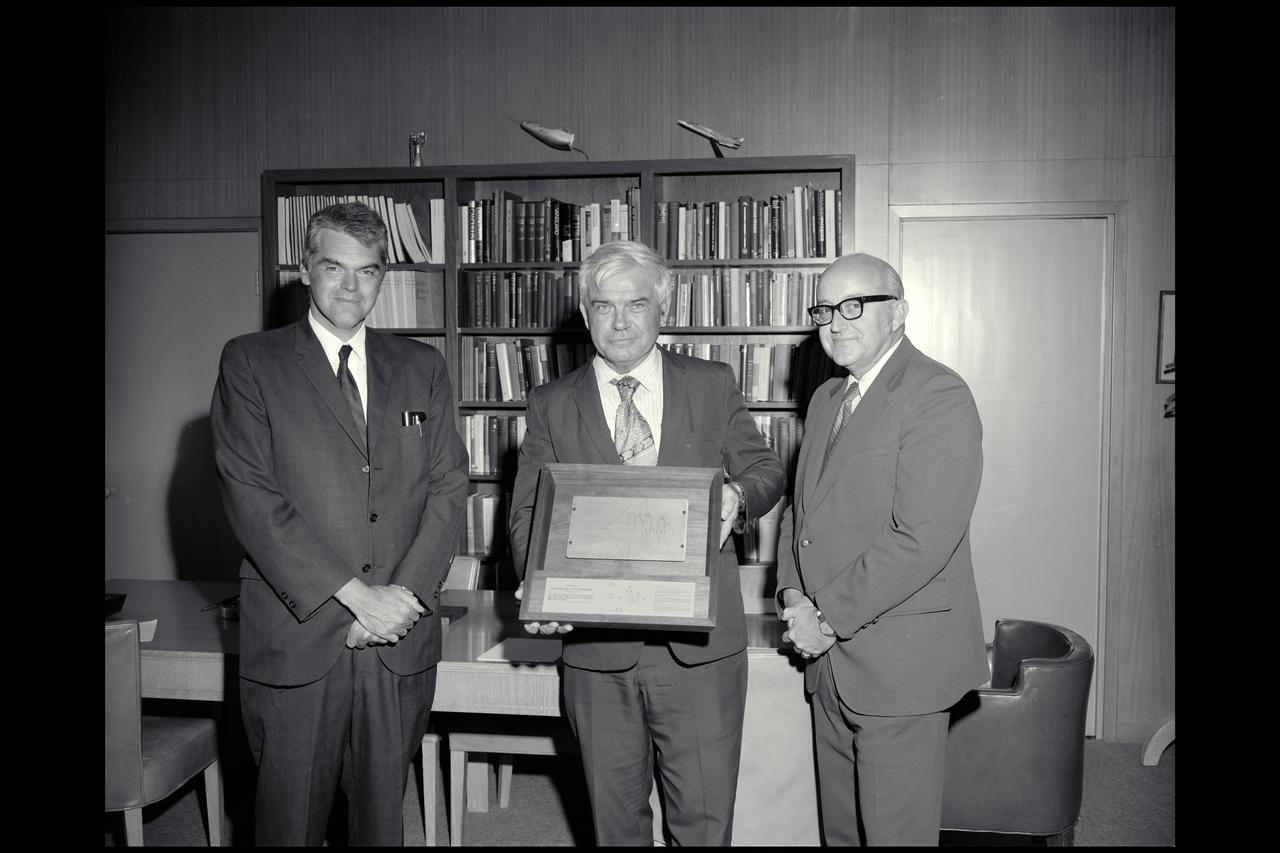
Charles 'Charlile' Hall, Hans Mark and Clarence 'Sy' Syvertson holding Pioneer 10 Plaque
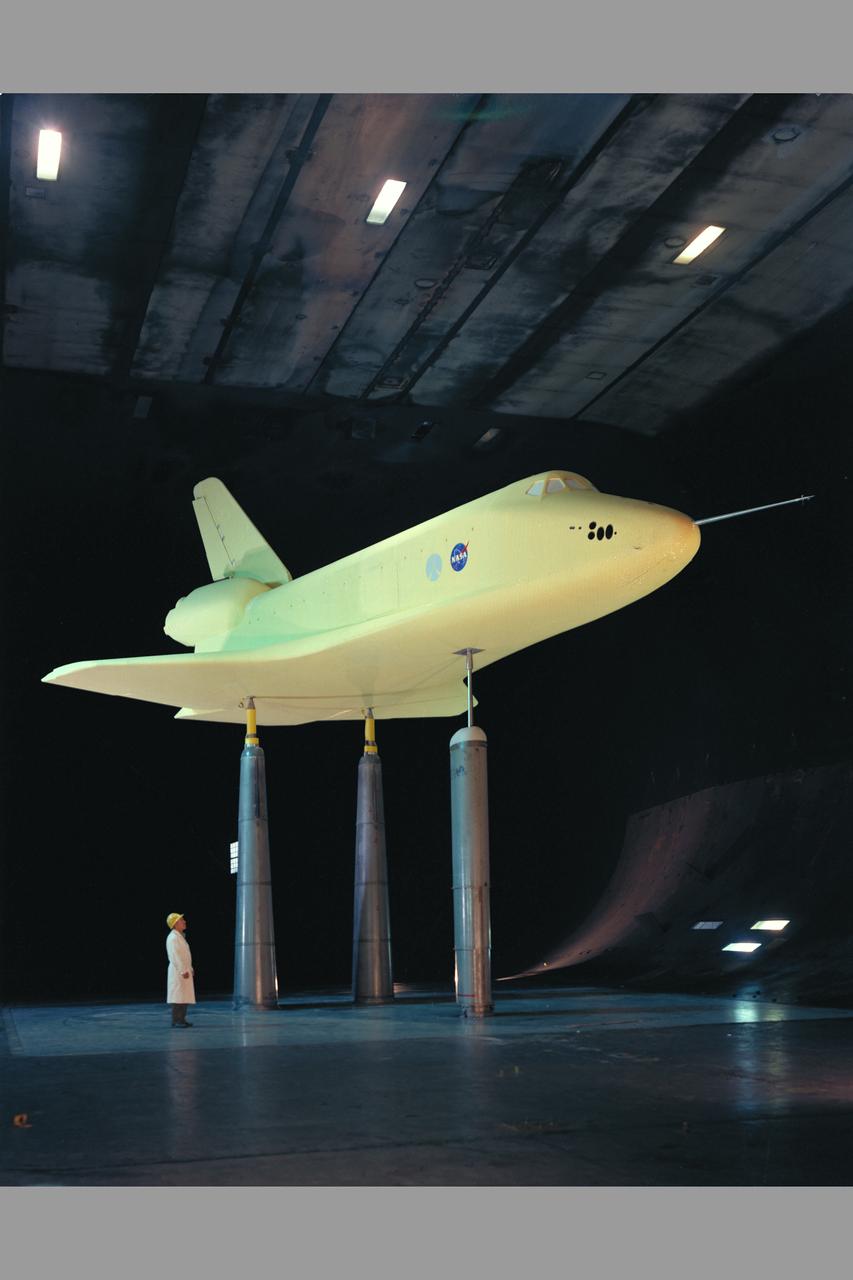
Space Shuttle SSV orbiter model OA100 (0.36 scale): 40x80ft w.t.
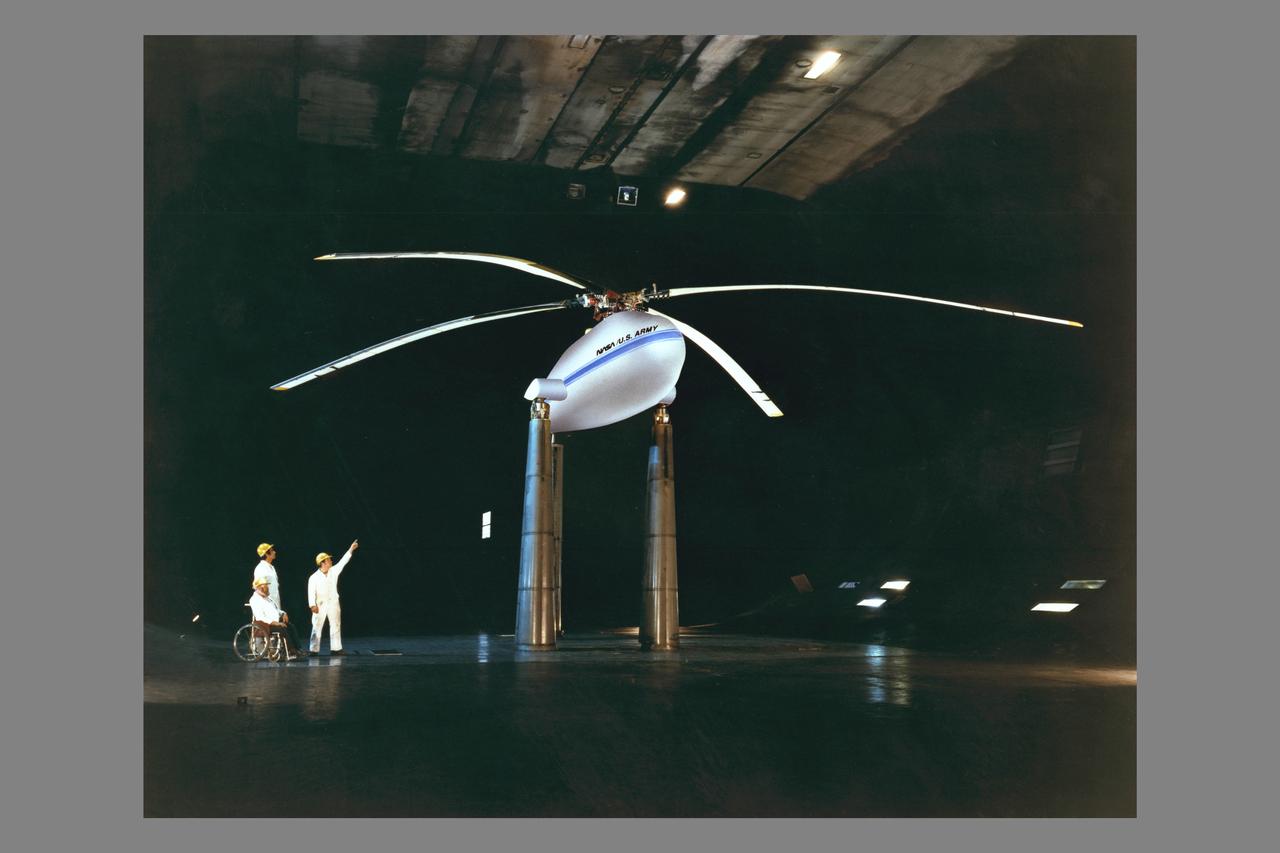
Controllable Twist Rotor test installed in 40x80ft w.t. W/B Mandwyler, A Lemnios, J McCloud, in wheelchair (airburshed image)
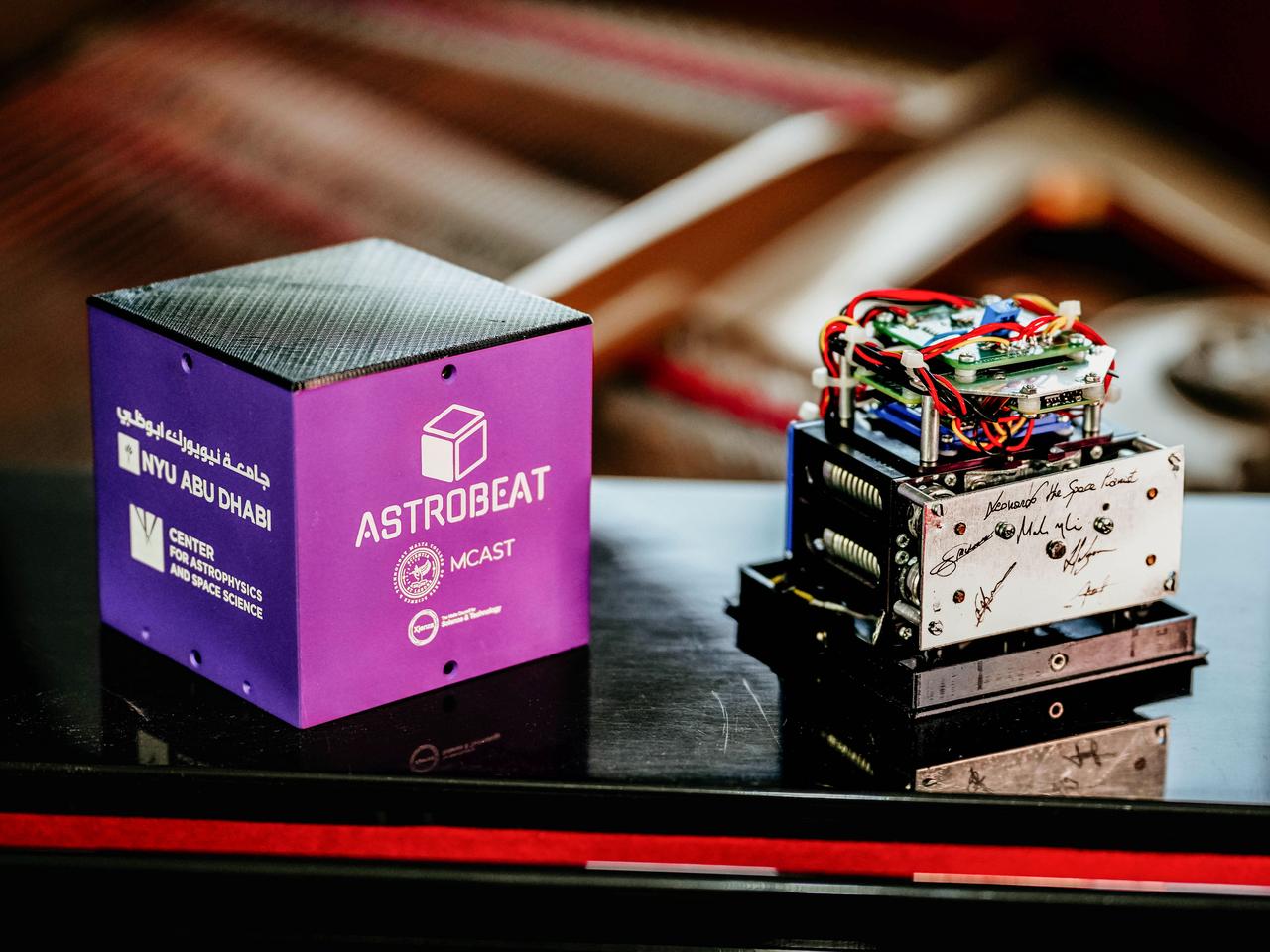
jsc2024e065168 (10/3/2024) --- Nanolab Astrobeat module hull and core side by side. This investigation tests cold welding in a space environment. Cold welding is a method in which metallic materials fuse or weld at ambient temperature provided that there is sufficient high contact force. This technology has applications for repairing spacecraft hulls that may be perforated as a result of micrometeoroids. Image courtesy of Dr. Leonardo Barilaro, The Malta College of Arts, Science & Technology..

jsc2024e065170 (10/3/2024) --- The Nanolab Astrobeat Principal Investigator Dr. Leonardo Barilaro poses with the Nanoracks team in Houston, Texas. Image courtesy of Dr. Leonardo Barilaro, The Malta College of Arts, Science & Technology..
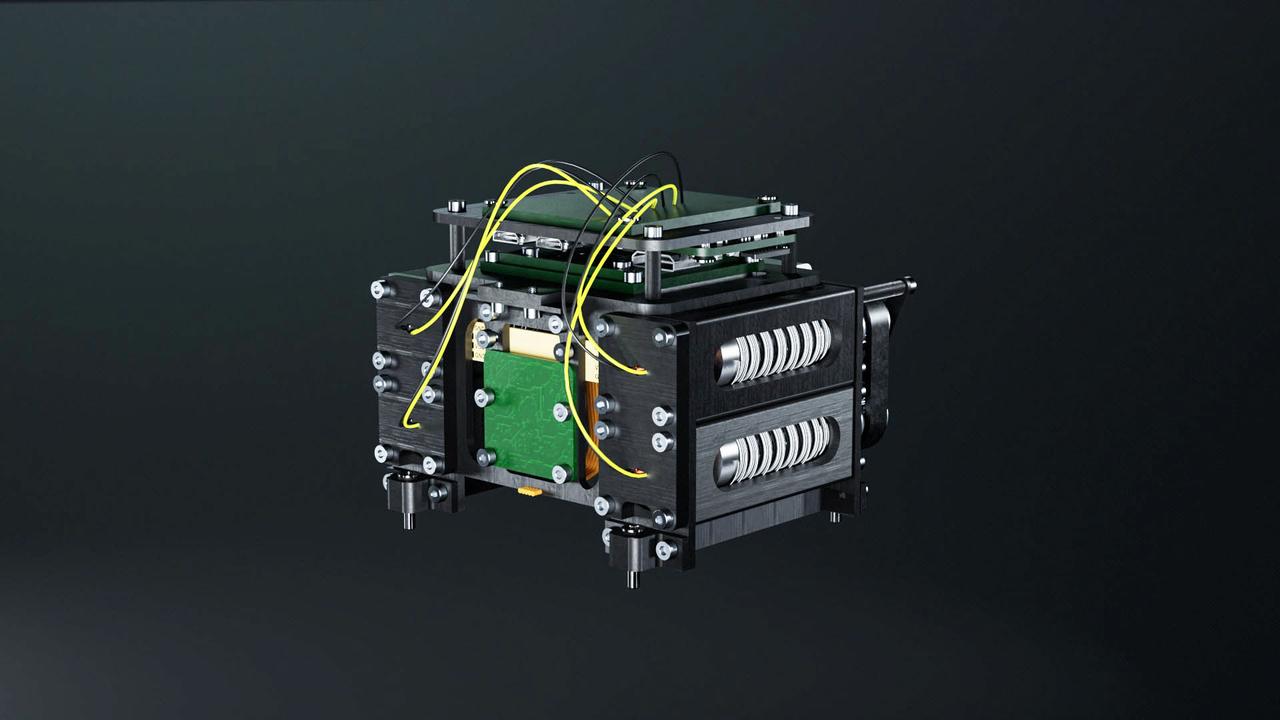
jsc2024e065167 (10/3/2024) --- Render of the Nanolab Astrobeat module core. This investigation tests cold welding in a space environment. Cold welding is a method in which metallic materials fuse or weld at ambient temperature provided that there is sufficient high contact force. Testing consists of releasing tension in springs so two pieces of metal collide to perform cold welding. Image courtesy of Dr. Leonardo Barilaro, The Malta College of Arts, Science & Technology.
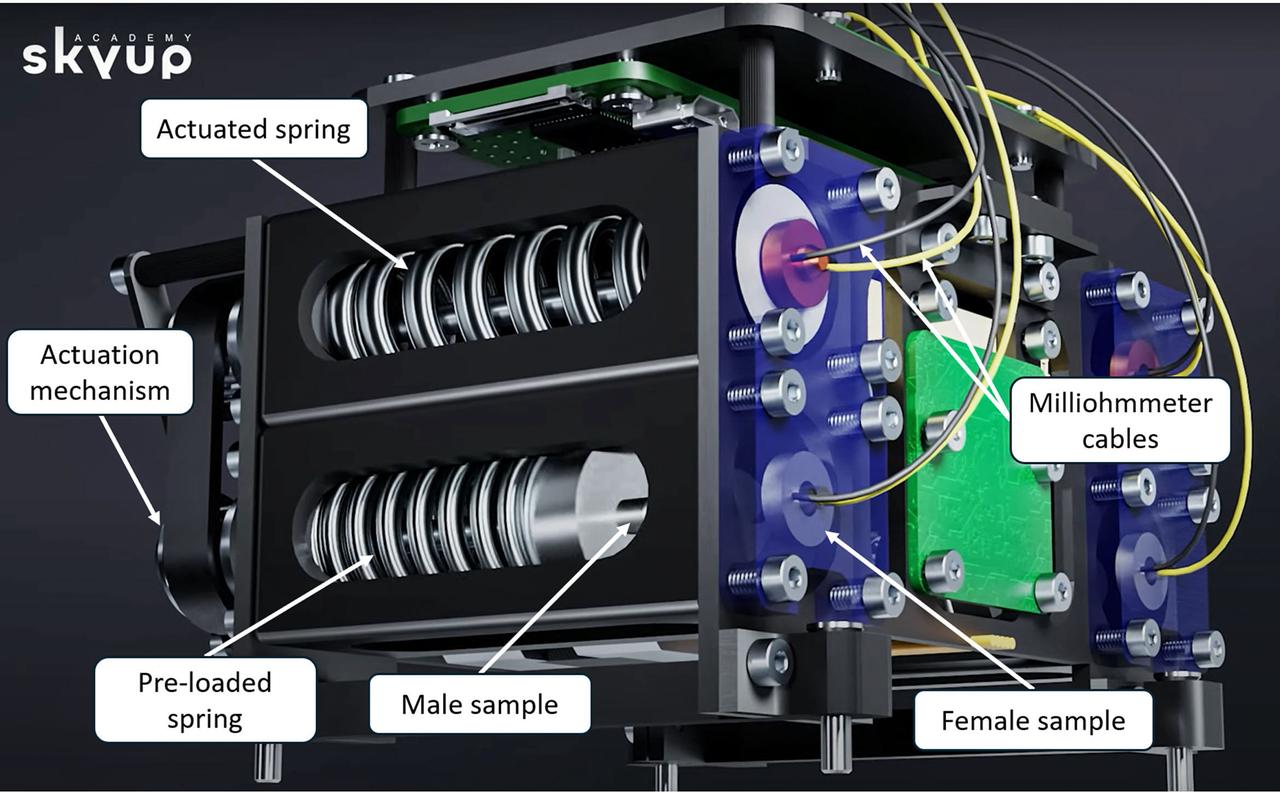
jsc2024e065165 (10/3/2024) --- Render of the Nanolab Astrobeat module core with labels. This investigation tests cold welding in a space environment. Cold welding is a method in which metallic materials fuse or weld at ambient temperature provided that there is sufficient high contact force. This technology has applications for repairing spacecraft hulls that may be perforated as a result of micrometeoroids. Image courtesy of Dr. Leonardo Barilaro, The Malta College of Arts, Science & Technology..
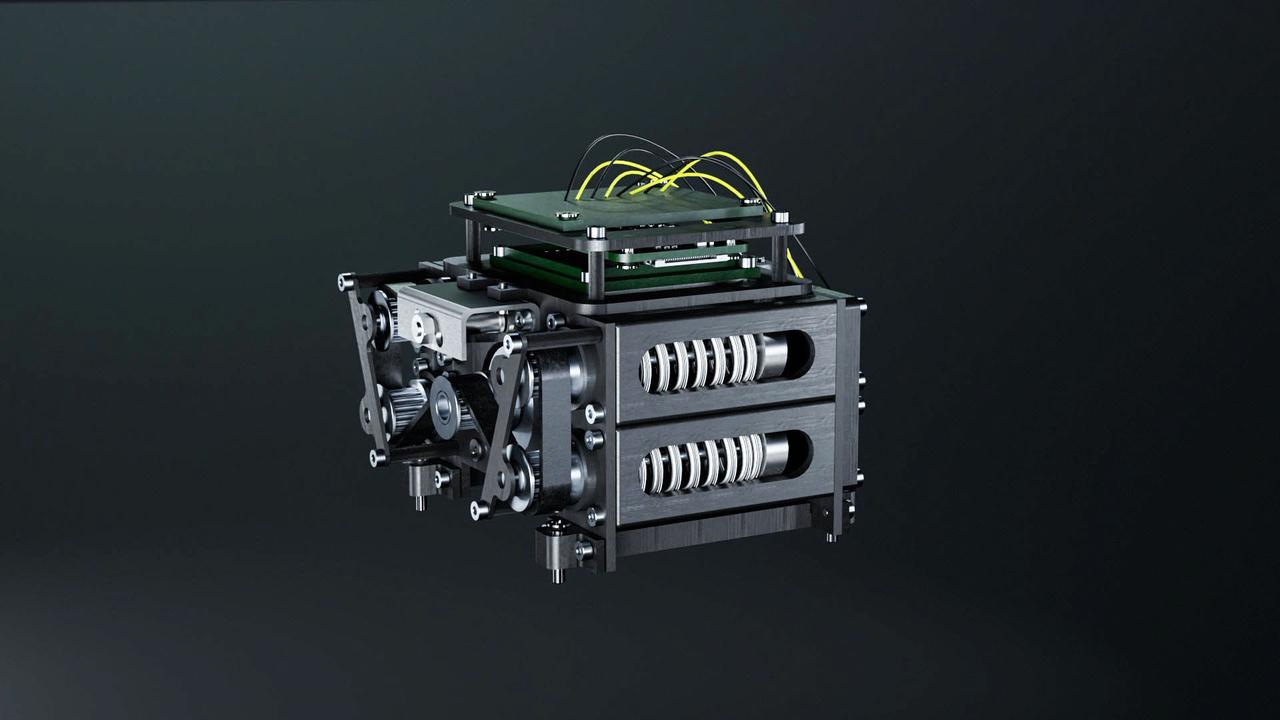
jsc2024e065166 (10/3/2024) --- Render of the Nanolab Astrobeat module core. This investigation tests cold welding in a space environment. Cold welding is a method in which metallic materials fuse or weld at ambient temperature provided that there is sufficient high contact force. Testing consists of releasing tension in springs so two pieces of metal collide to perform cold welding. Image courtesy of Dr. Leonardo Barilaro, The Malta College of Arts, Science & Technology.

jsc2024e065171 (10/3/2024) --- Nanolab Astrobeat logo. Image courtesy of Dr. Leonardo Barilaro, The Malta College of Arts, Science & Technology.
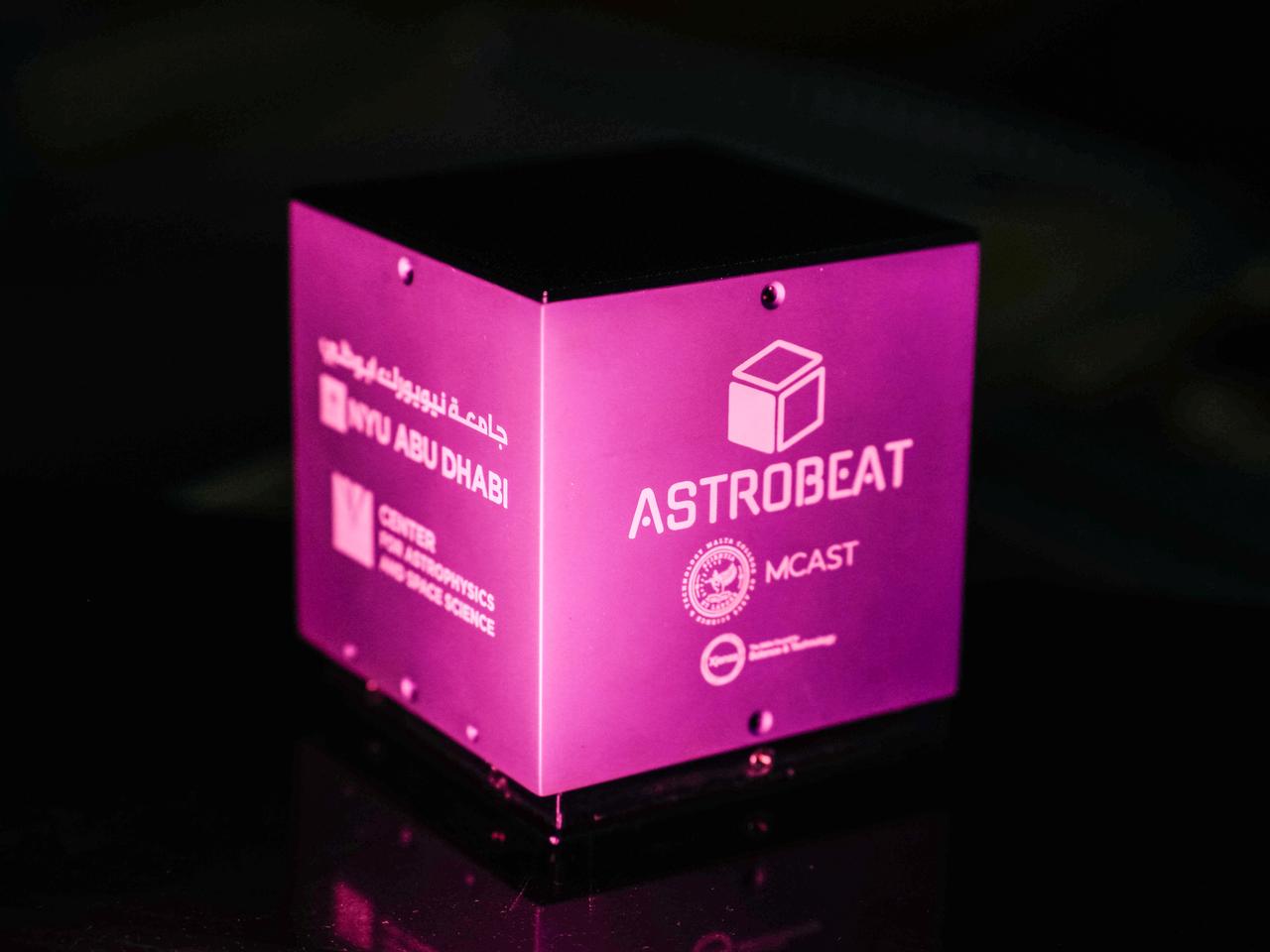
jsc2024e065169 (5/29/2024) --- Outside view of the Nanolab Astrobeat module. This investigation tests cold welding in a space environment. Cold welding is a method in which metallic materials fuse or weld at ambient temperature provided that there is sufficient high contact force. This technology has applications for repairing spacecraft hulls that may be perforated as a result of micrometeoroids. Image courtesy of Dr. Leonardo Barilaro, The Malta College of Arts, Science & Technology..