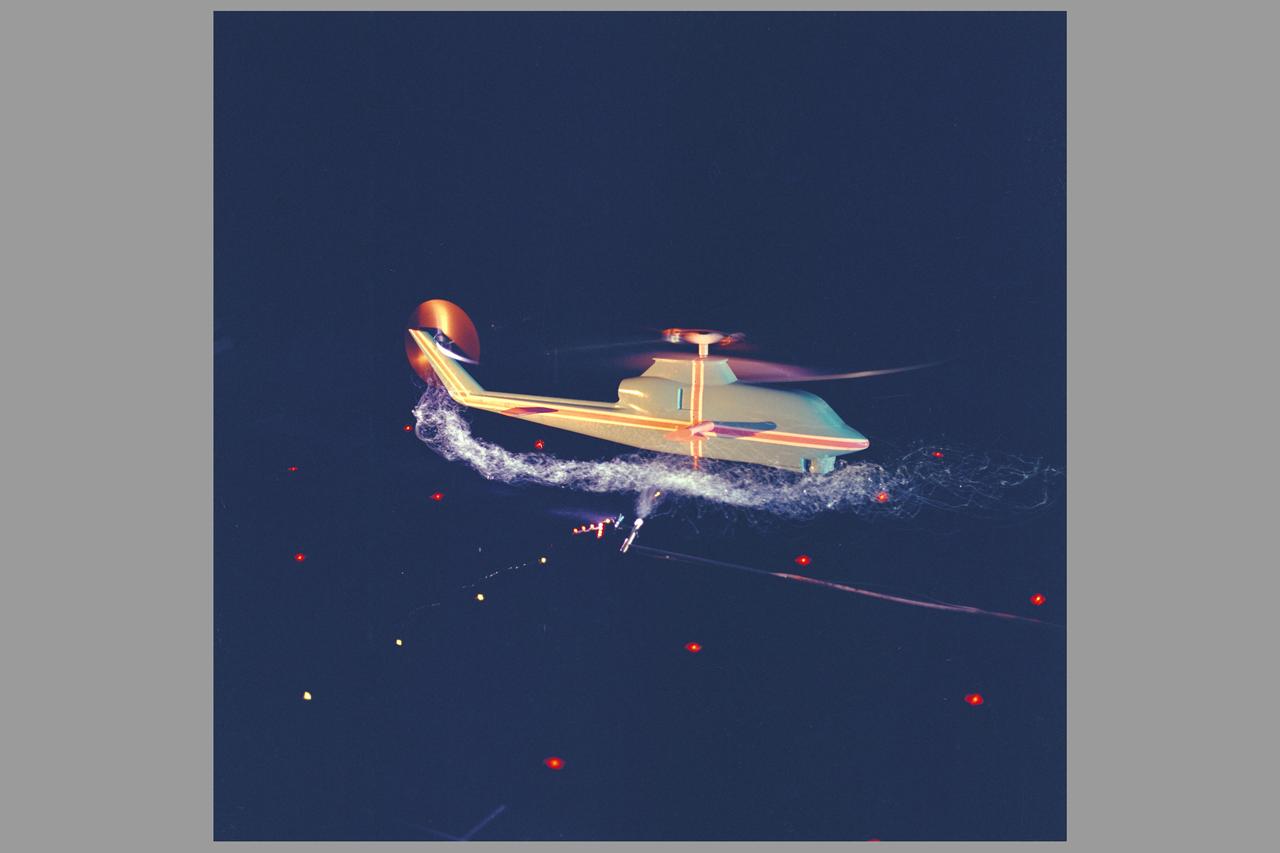
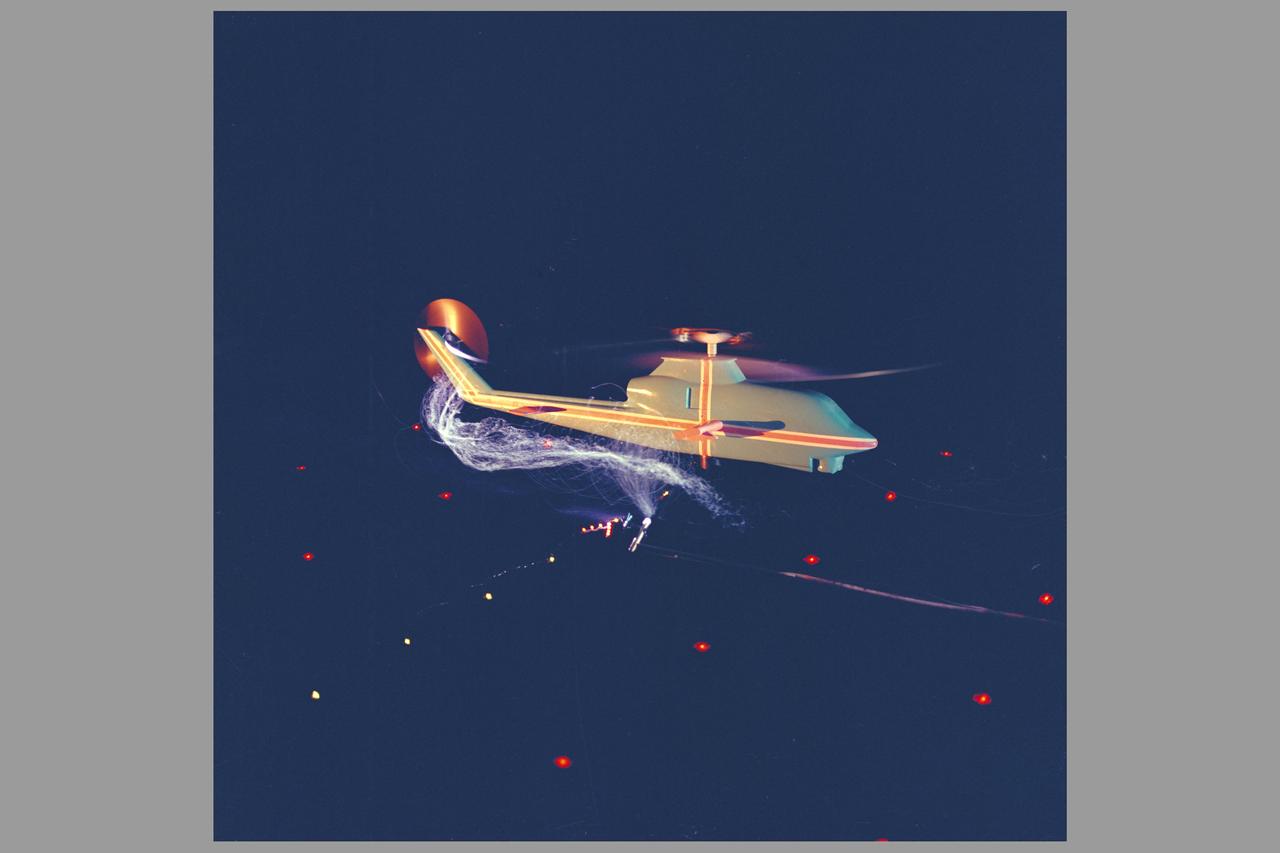
AH-1G Cobra helicopter model tail rotor flow visualization testing in 7X10ft#2 W.T. (Army tunnel - no test number)
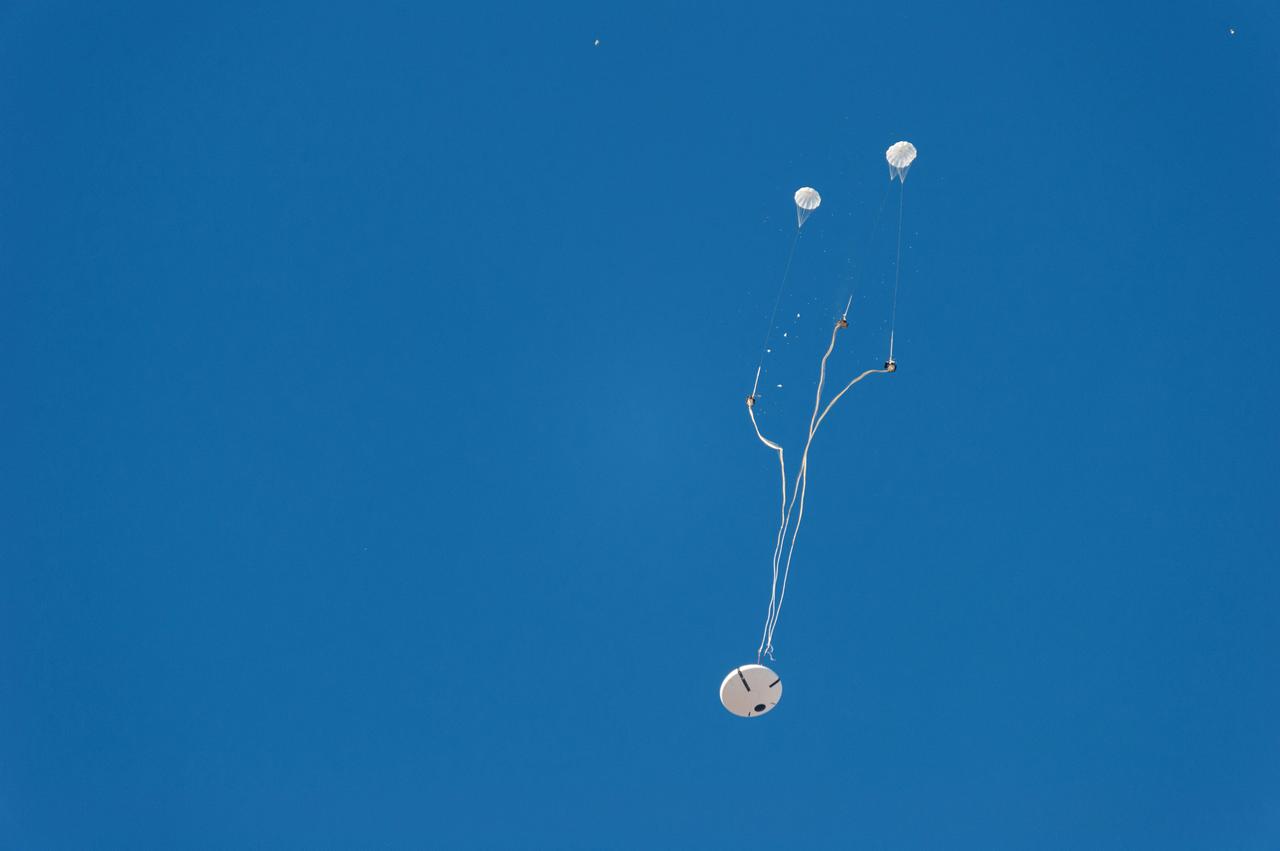
NASA has completes the final test to qualify Orion’s parachute system for flights with astronauts, checking off an important milestone on the path to send humans on missions to the Moon and beyond on Sept. 12, 2018...Over the course of eight tests at the U.S. Army’s Yuma Proving Ground in Arizona, engineers have evaluated the performance of Orion’s parachute system during normal landing sequences as well as several failure scenarios and a variety of potential aerodynamic conditions to ensure astronauts can return safely from deep space missions.
Boeing’s CST-100 Starliner’s parachute system is tested above the U.S. Army’s Yuma Proving Ground in Arizona on June 26, 2019. This “high Q” test involved dropping a dart-shaped device – functioning as a Starliner weight simulant – from a C-17 aircraft and intentionally inflating the parachutes at higher pressures than expected during missions. The data gathered from this parachute test will help validate the system is safe to carry astronauts to and from the International Space Station as part of NASA’s Commercial Crew Program. Boeing is targeting an uncrewed Orbital Flight Test to the space station this summer, followed by its Crew Flight Test. Starliner will launch atop a United Launch Alliance Atlas V rocket from Space Launch Complex 41 at Cape Canaveral Air Force Station in Florida.
NASA has completes the final test to qualify Orion’s parachute system for flights with astronauts, checking off an important milestone on the path to send humans on missions to the Moon and beyond on Sept. 12, 2018...Over the course of eight tests at the U.S. Army’s Yuma Proving Ground in Arizona, engineers have evaluated the performance of Orion’s parachute system during normal landing sequences as well as several failure scenarios and a variety of potential aerodynamic conditions to ensure astronauts can return safely from deep space missions.
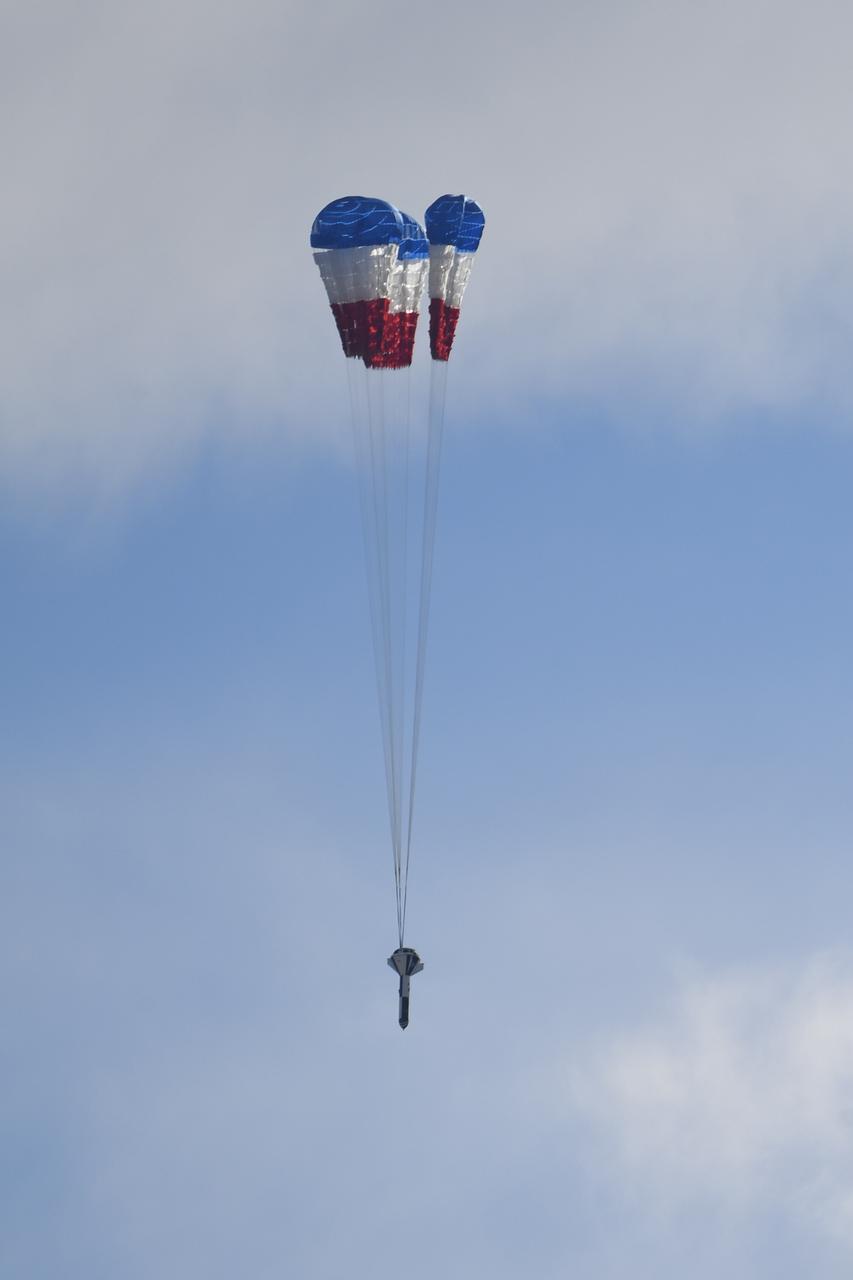
A dart-shaped device, functioning as a Boeing CST-100 Starliner weight simulant, drops from a C-17 aircraft during parachute system testing at the U.S. Army’s Yuma Proving Ground in Arizona on June 26, 2019. This “high Q” test involved intentionally inflating the parachutes at higher pressures than expected during missions, to validate the system is safe to carry astronauts to and from the International Space Station. As part of NASA’s Commercial Crew Program, Boeing is targeting an uncrewed Orbital Flight Test to the space station this summer, followed by its Crew Flight Test. Starliner will launch atop a United Launch Alliance Atlas V rocket from Space Launch Complex 41 at Cape Canaveral Air Force Station in Florida.
NASA has completes the final test to qualify Orion’s parachute system for flights with astronauts, checking off an important milestone on the path to send humans on missions to the Moon and beyond on Sept. 12, 2018...Over the course of eight tests at the U.S. Army’s Yuma Proving Ground in Arizona, engineers have evaluated the performance of Orion’s parachute system during normal landing sequences as well as several failure scenarios and a variety of potential aerodynamic conditions to ensure astronauts can return safely from deep space missions.
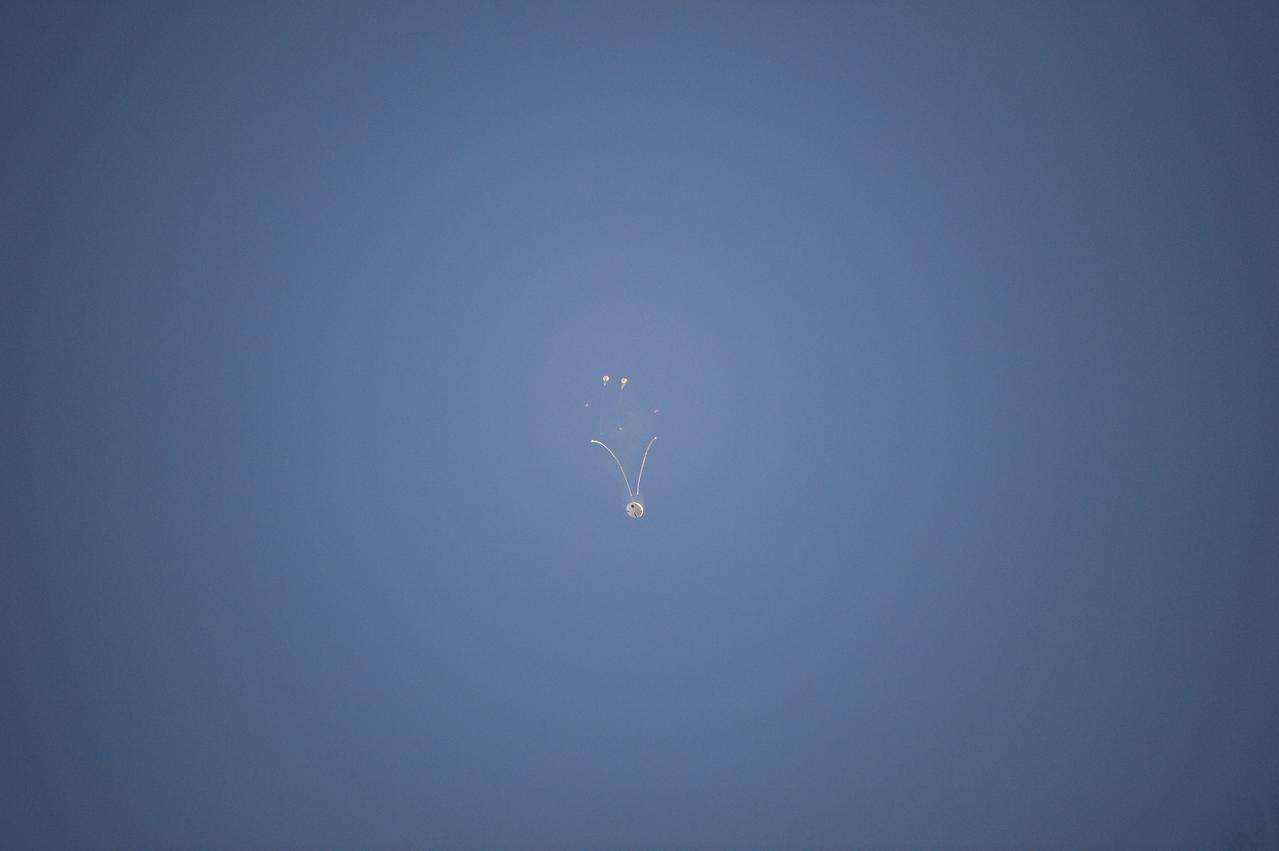
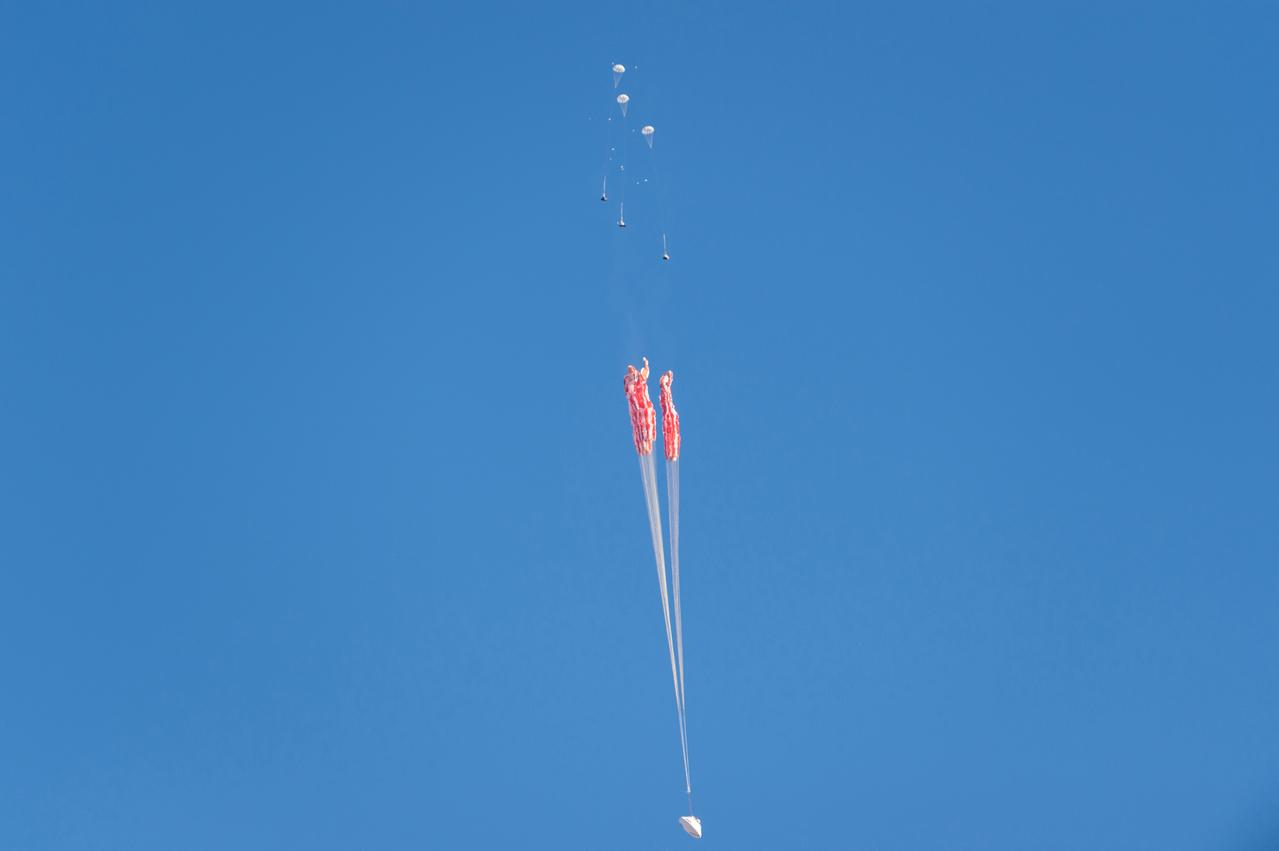
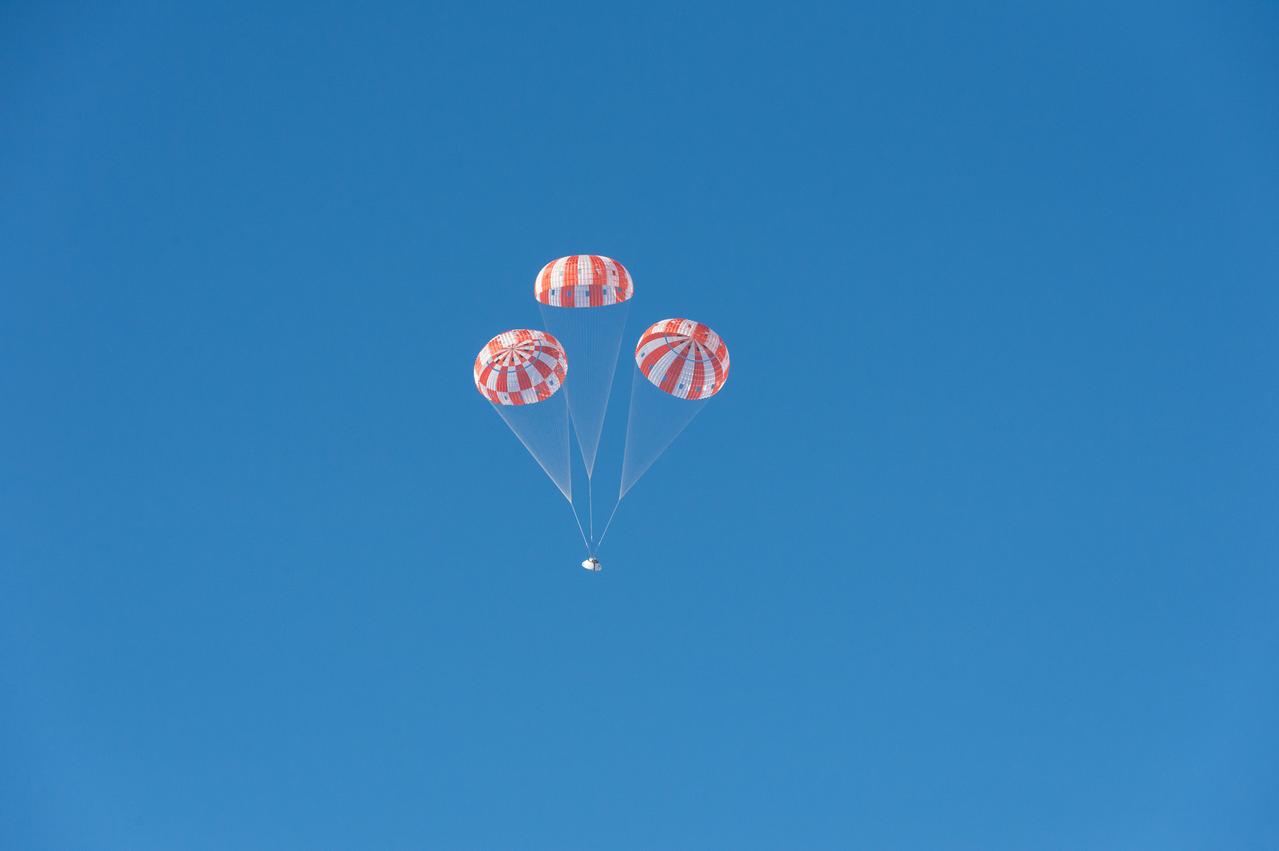
Engineers successfully evaluated a failure scenario of Orion’s parachute system in which only two of the system’s three orange and white main parachutes deploy after several other parachutes in the system used to slow and stabilize Orion endure high aerodynamic stresses ahead of a safe landing. The test occurred Dec. 15, 2017 at the U.S. Army Proving Ground in Yuma, Arizona. A mock capsule was dropped from a C-17 aircraft at 35,000 feet in altitude to enable the right conditions for the test. It was the fifth of eight tests to qualify Orion’s parachute system for flights with astronauts beginning with Artemis II.
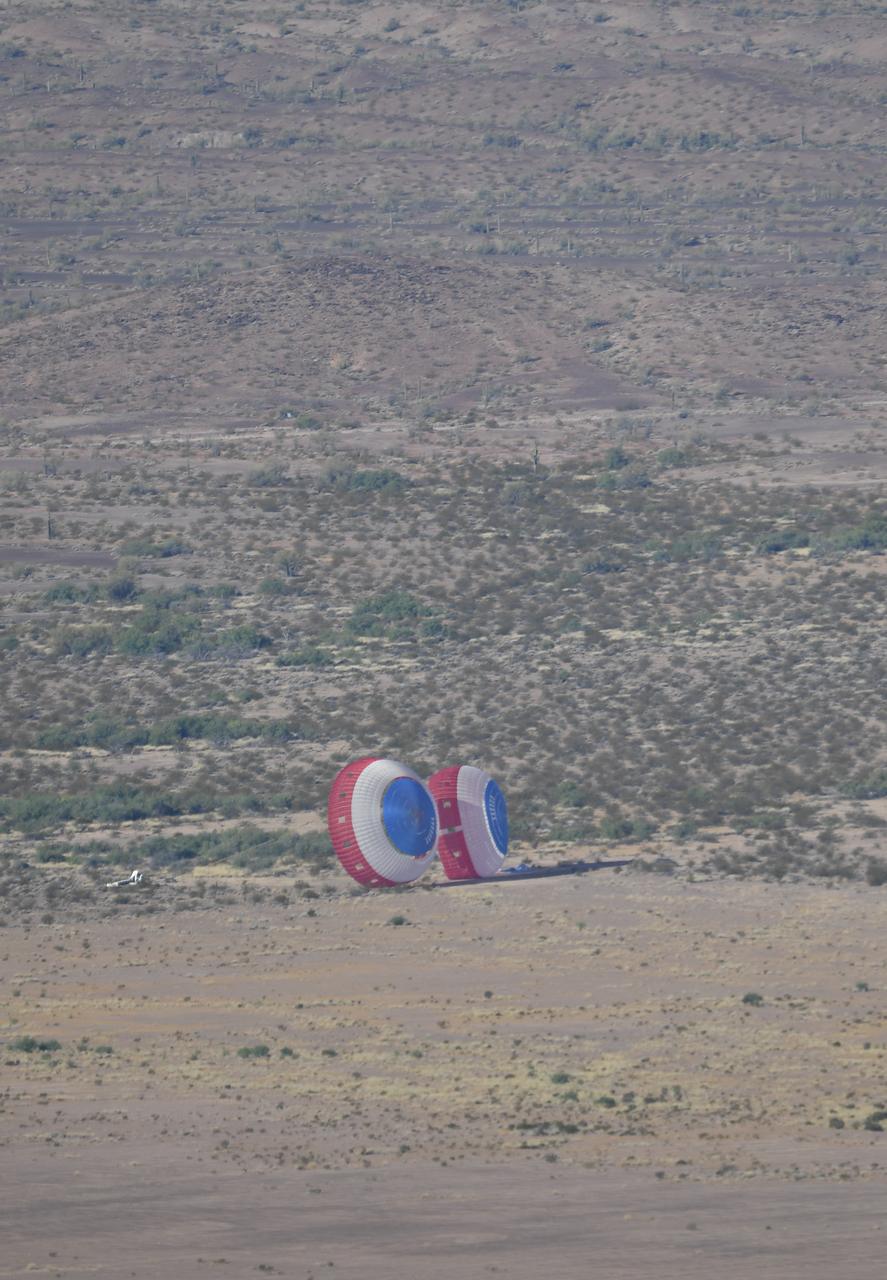
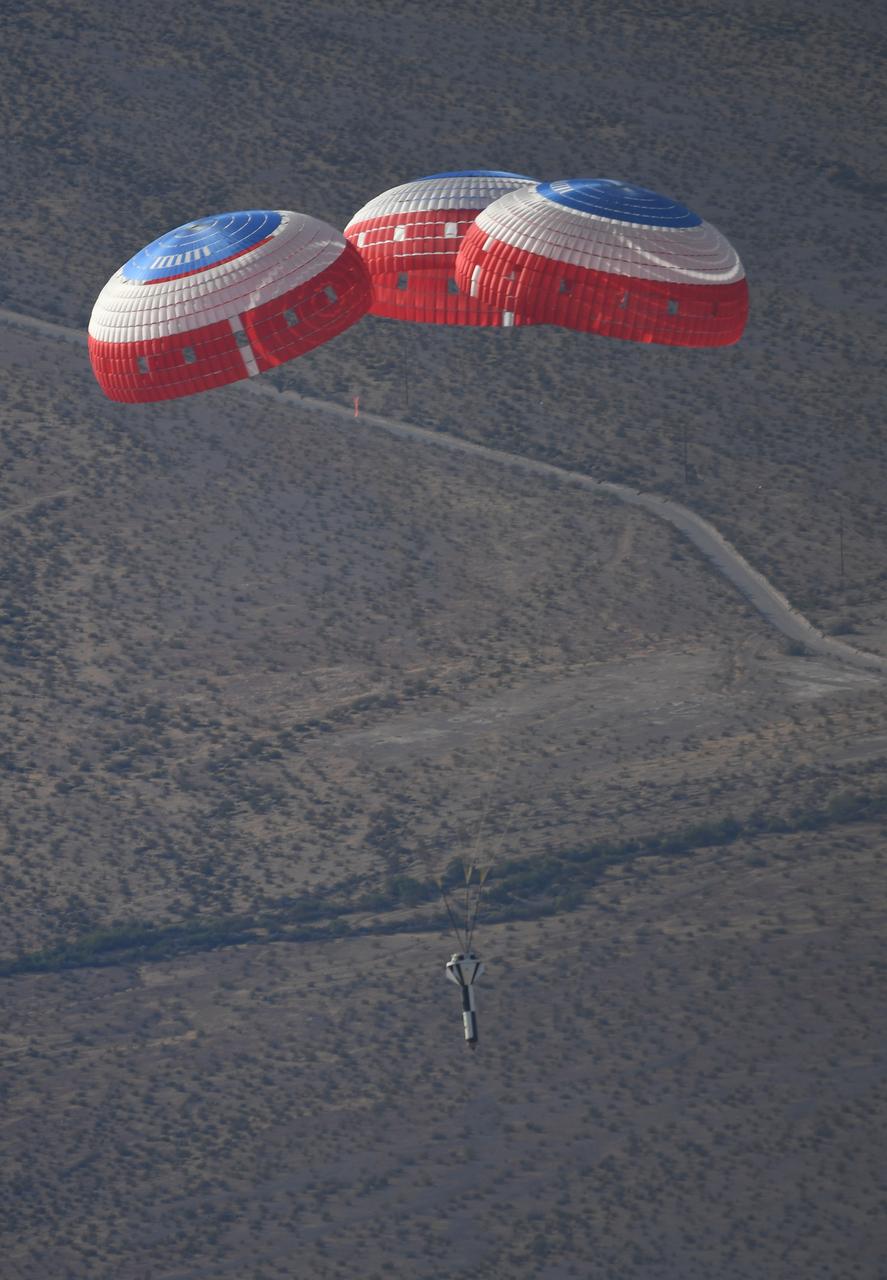
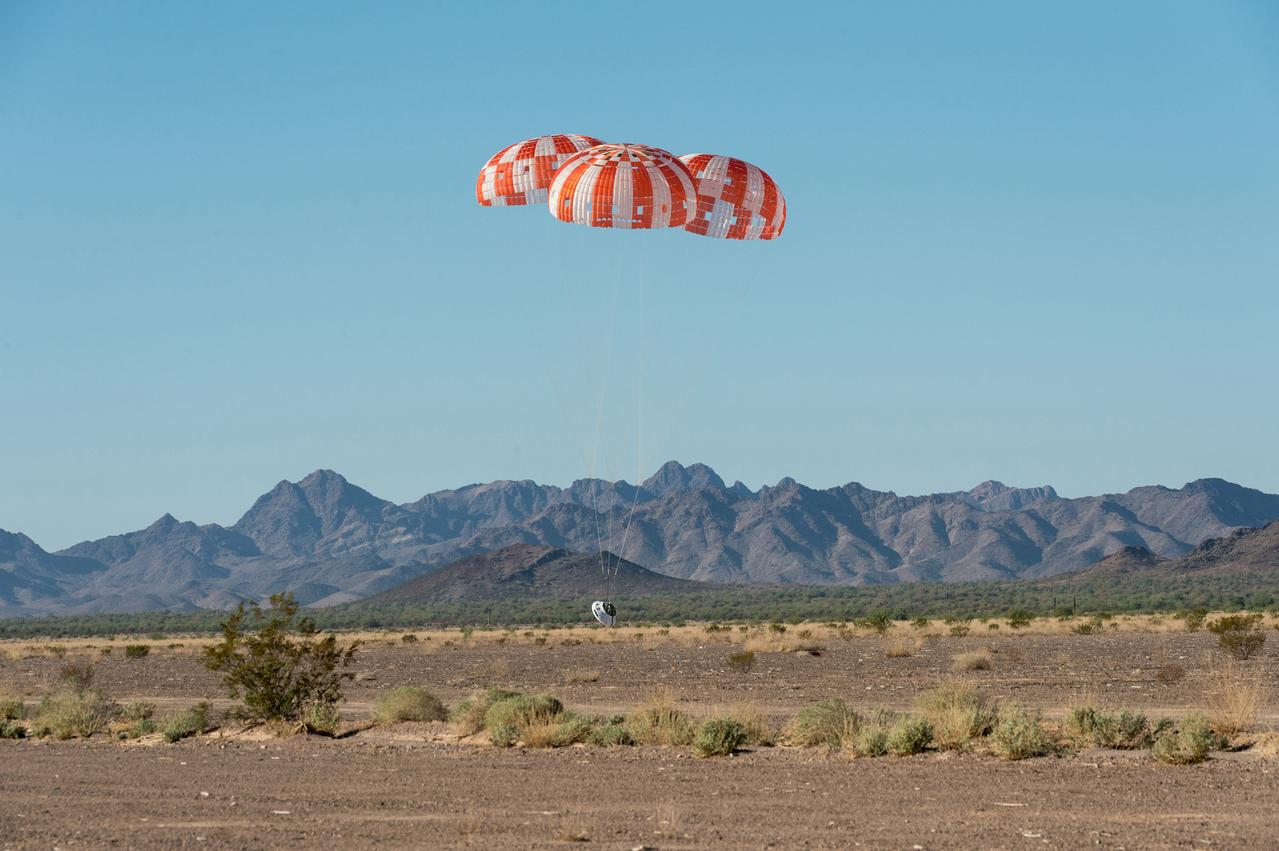
Boeing’s CST-100 Starliner’s parachute system, carrying a dart-shaped device functioning as a Starliner weight simulant, complete a successful landing at the U.S. Army’s Yuma Proving Ground in Arizona on June 26, 2019. This “high Q” test involved dropping the device from a C-17 aircraft and intentionally inflating the parachutes at higher pressures than expected during missions. The data gathered from this parachute test will help validate the system is safe to carry astronauts to and from the International Space Station as part of NASA’s Commercial Crew Program. Boeing is targeting an uncrewed Orbital Flight Test to the space station this summer, followed by its Crew Flight Test. Starliner will launch atop a United Launch Alliance Atlas V rocket from Space Launch Complex 41 at Cape Canaveral Air Force Station in Florida.
NASA has completes the final test to qualify Orion’s parachute system for flights with astronauts, checking off an important milestone on the path to send humans on missions to the Moon and beyond on Sept. 12, 2018...Over the course of eight tests at the U.S. Army’s Yuma Proving Ground in Arizona, engineers have evaluated the performance of Orion’s parachute system during normal landing sequences as well as several failure scenarios and a variety of potential aerodynamic conditions to ensure astronauts can return safely from deep space missions.
AH-1G Cobra helicopter model tail rotor flow visualization testing in 7X10ft#2 W.T. (Army tunnel - no test number)
NASA has completes the final test to qualify Orion’s parachute system for flights with astronauts, checking off an important milestone on the path to send humans on missions to the Moon and beyond on Sept. 12, 2018...Over the course of eight tests at the U.S. Army’s Yuma Proving Ground in Arizona, engineers have evaluated the performance of Orion’s parachute system during normal landing sequences as well as several failure scenarios and a variety of potential aerodynamic conditions to ensure astronauts can return safely from deep space missions.
NASA has completes the final test to qualify Orion’s parachute system for flights with astronauts, checking off an important milestone on the path to send humans on missions to the Moon and beyond on Sept. 12, 2018...Over the course of eight tests at the U.S. Army’s Yuma Proving Ground in Arizona, engineers have evaluated the performance of Orion’s parachute system during normal landing sequences as well as several failure scenarios and a variety of potential aerodynamic conditions to ensure astronauts can return safely from deep space missions.
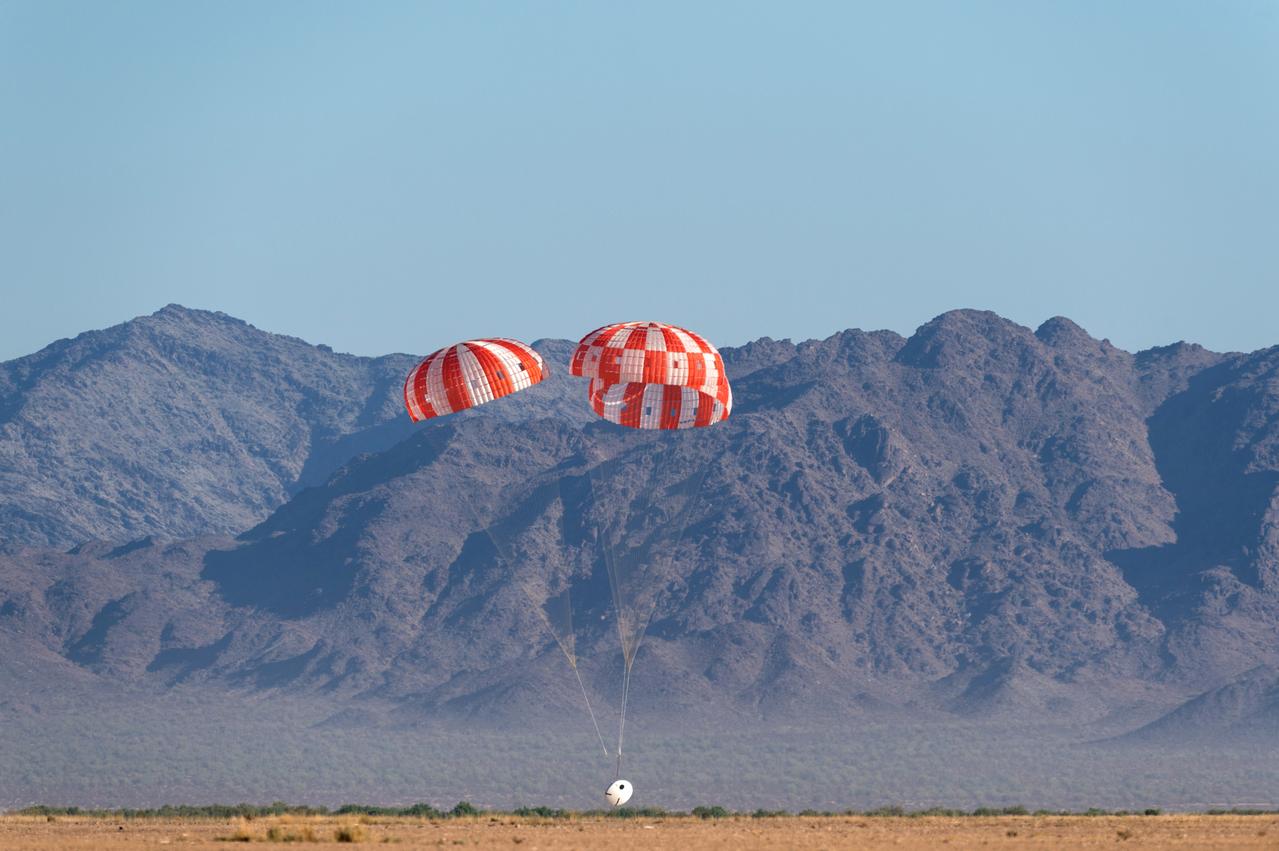
NASA has completes the final test to qualify Orion’s parachute system for flights with astronauts, checking off an important milestone on the path to send humans on missions to the Moon and beyond on Sept. 12, 2018...Over the course of eight tests at the U.S. Army’s Yuma Proving Ground in Arizona, engineers have evaluated the performance of Orion’s parachute system during normal landing sequences as well as several failure scenarios and a variety of potential aerodynamic conditions to ensure astronauts can return safely from deep space missions.
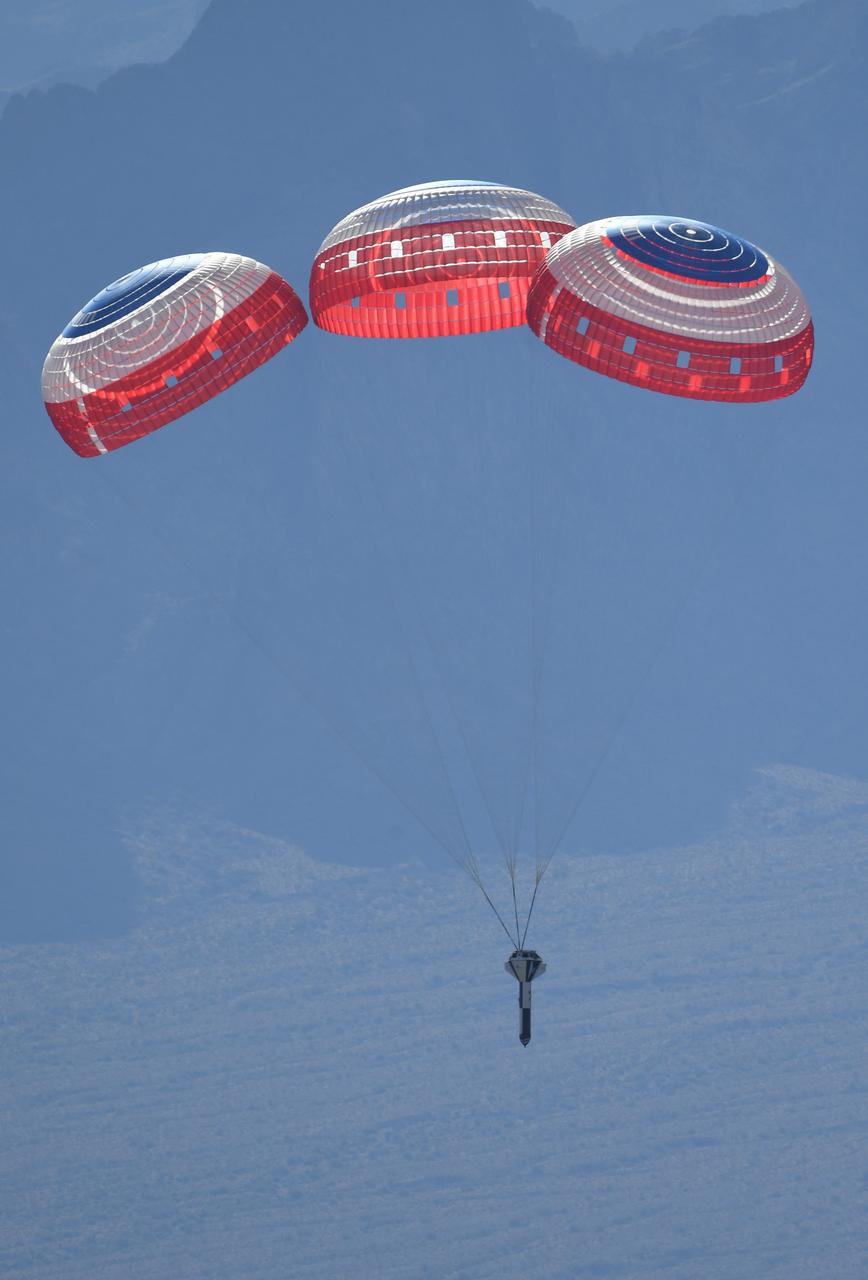
Boeing’s CST-100 Starliner’s parachute system is tested above the U.S. Army’s Yuma Proving Ground in Arizona on June 26, 2019. This “high Q” test involved dropping a dart-shaped device – functioning as a Starliner weight simulant – from a C-17 aircraft and intentionally inflating the parachutes at higher pressures than expected during missions. The data gathered from this parachute test will help validate the system is safe to carry astronauts to and from the International Space Station as part of NASA’s Commercial Crew Program. Boeing is targeting an uncrewed Orbital Flight Test to the space station this summer, followed by its Crew Flight Test. Starliner will launch atop a United Launch Alliance Atlas V rocket from Space Launch Complex 41 at Cape Canaveral Air Force Station in Florida.
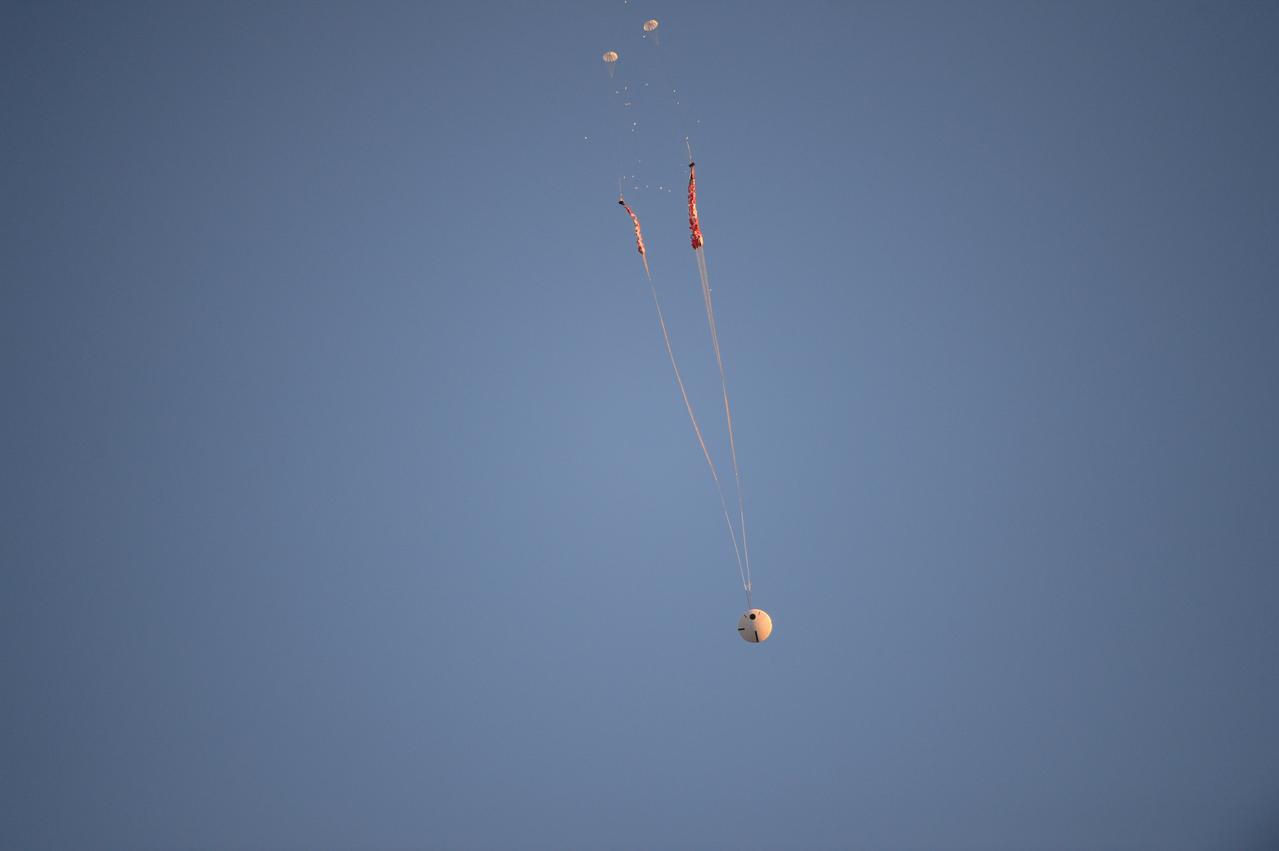
Engineers successfully evaluated a failure scenario of Orion’s parachute system in which only two of the system’s three orange and white main parachutes deploy after several other parachutes in the system used to slow and stabilize Orion endure high aerodynamic stresses ahead of a safe landing. The test occurred Dec. 15, 2017 at the U.S. Army Proving Ground in Yuma, Arizona. A mock capsule was dropped from a C-17 aircraft at 35,000 feet in altitude to enable the right conditions for the test. It was the fifth of eight tests to qualify Orion’s parachute system for flights with astronauts beginning with Artemis II.
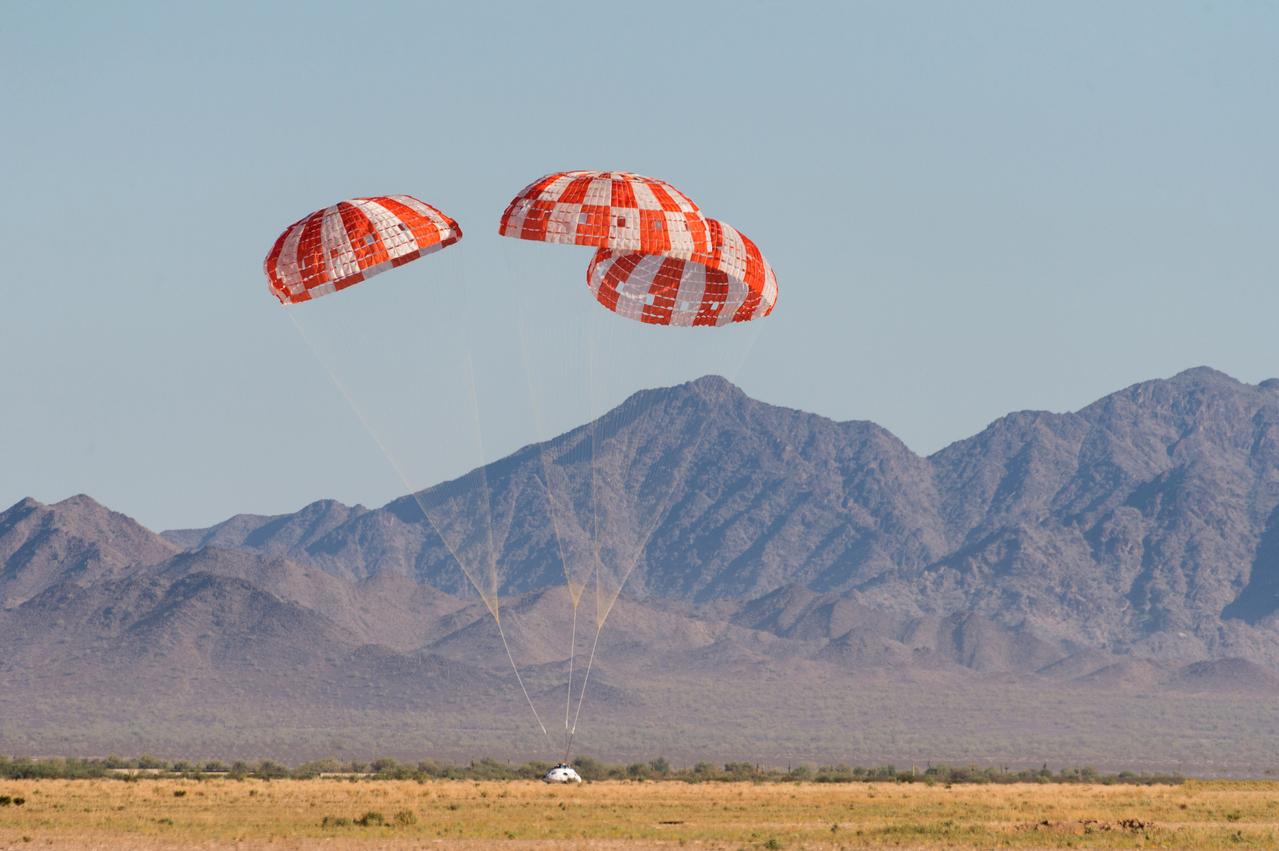
NASA has completes the final test to qualify Orion’s parachute system for flights with astronauts, checking off an important milestone on the path to send humans on missions to the Moon and beyond on Sept. 12, 2018...Over the course of eight tests at the U.S. Army’s Yuma Proving Ground in Arizona, engineers have evaluated the performance of Orion’s parachute system during normal landing sequences as well as several failure scenarios and a variety of potential aerodynamic conditions to ensure astronauts can return safely from deep space missions.
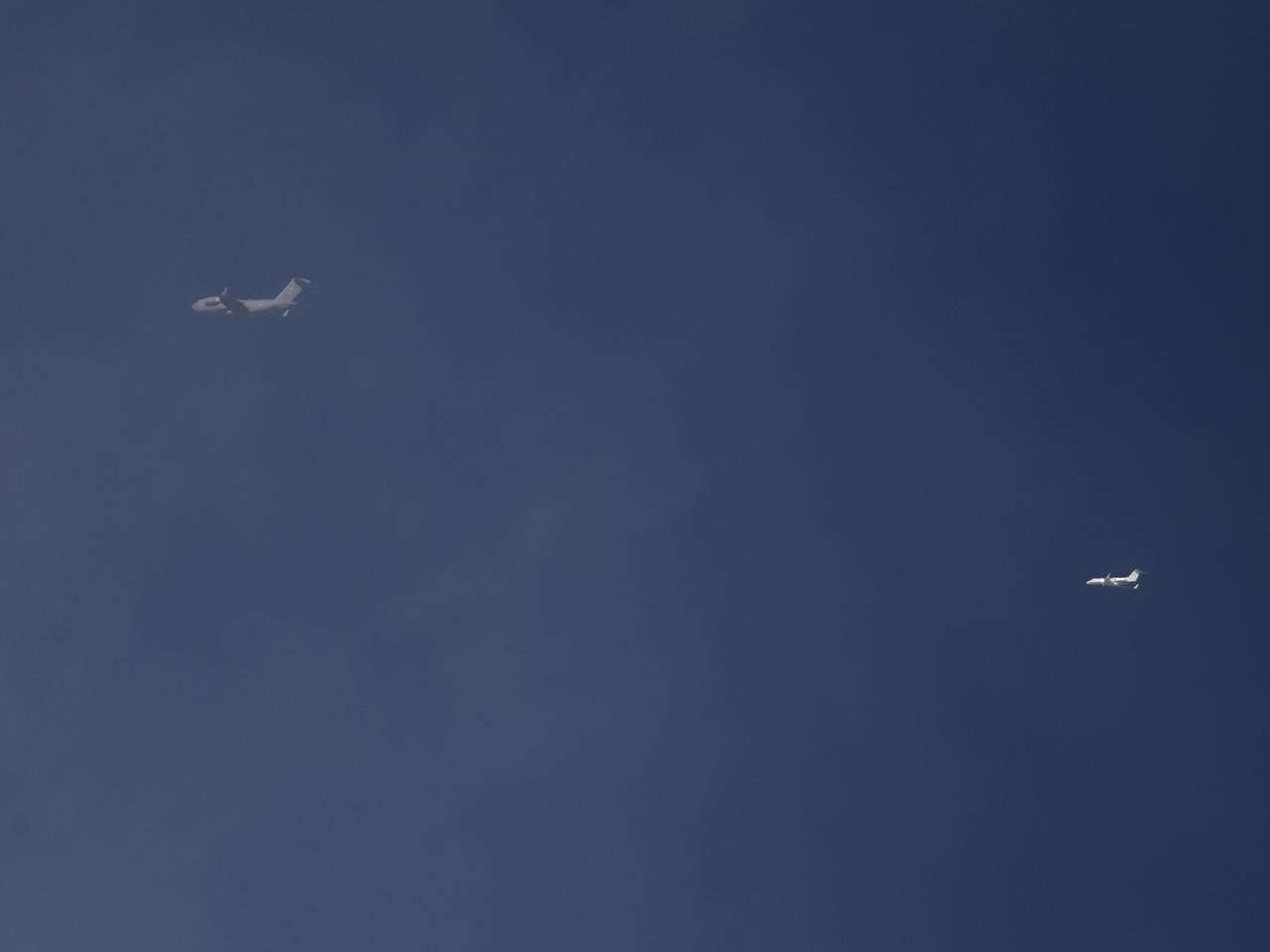
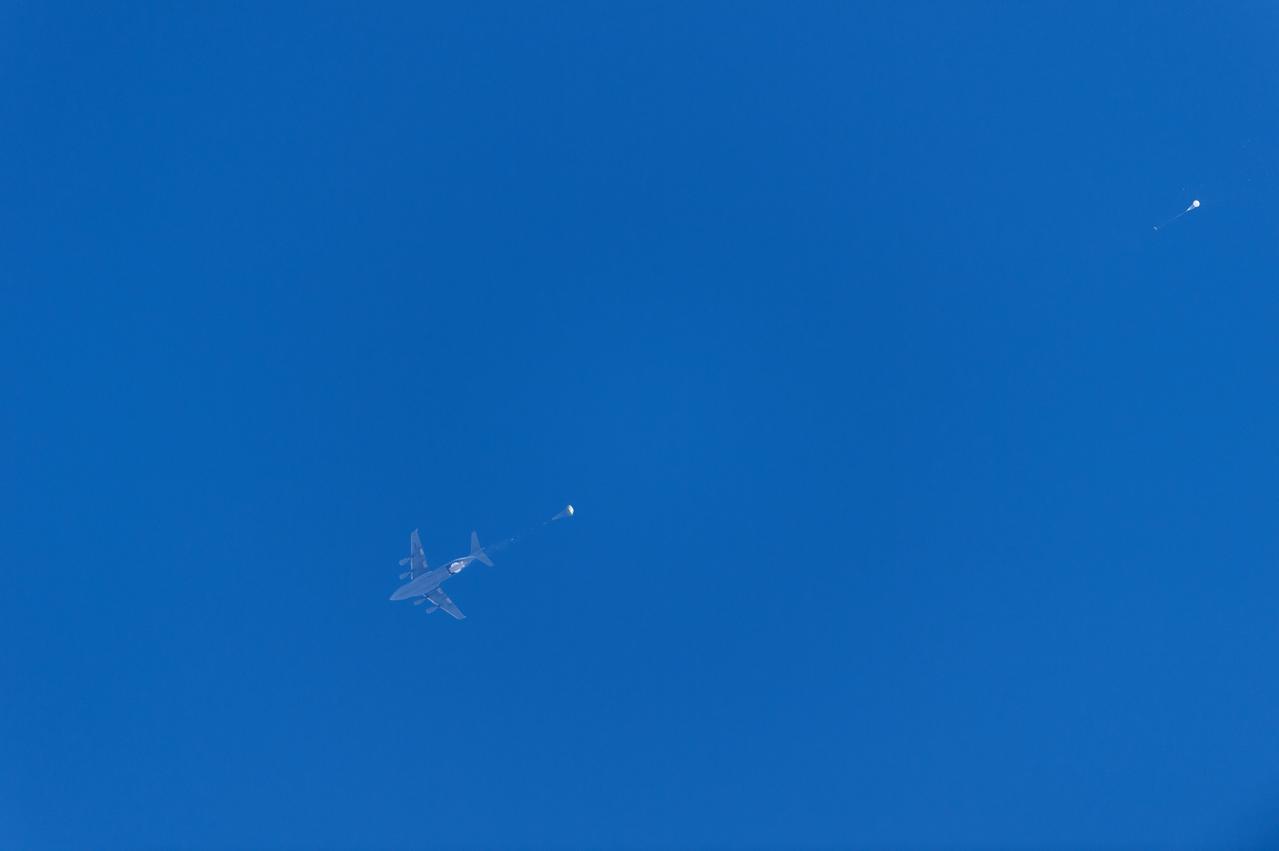
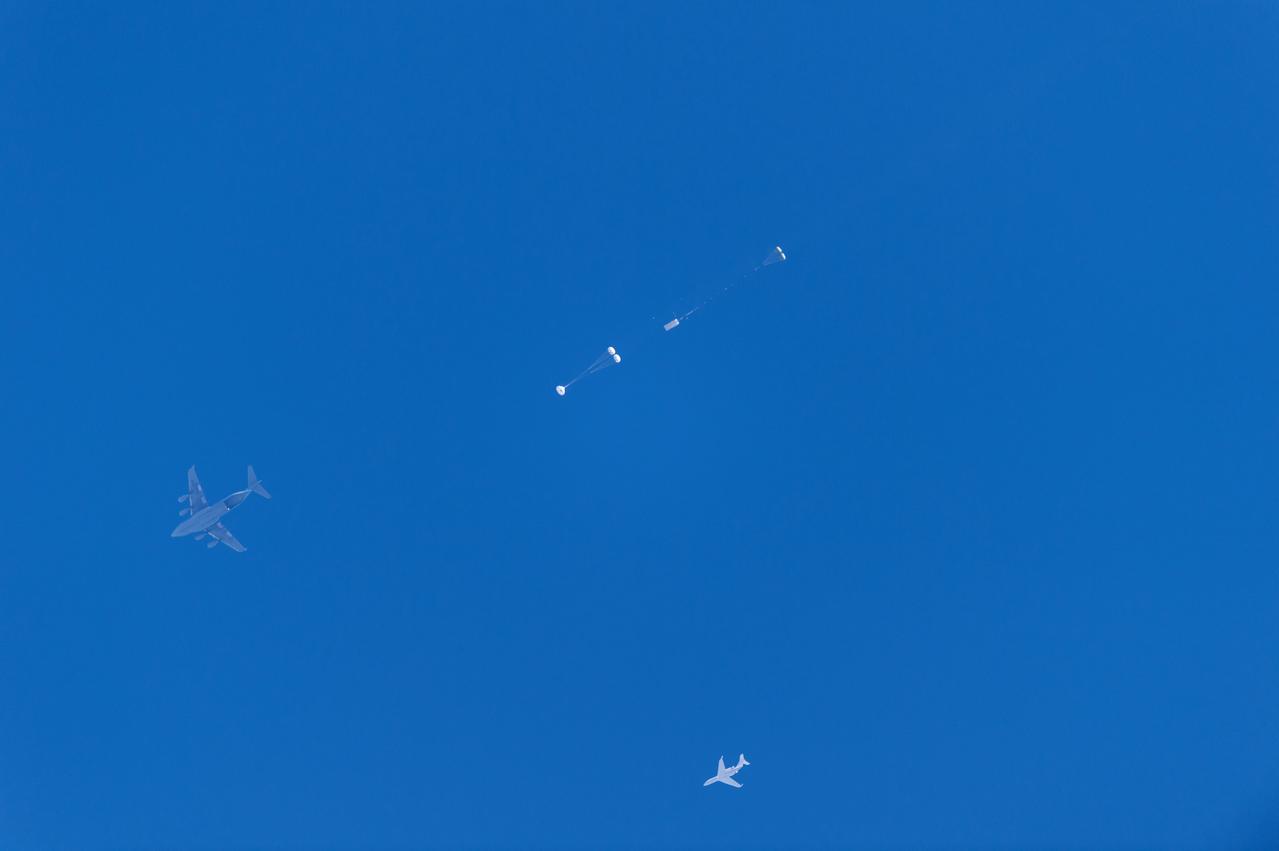
A C-17 aircraft flies above the U.S. Army’s Yuma Proving Ground in Arizona during testing of the Boeing CST-100 Starliner’s parachute system on June 26, 2019. This test, known as a “high Q” test, involved releasing a dart-shaped device – functioning as a Starliner weight simulant – from the aircraft and intentionally inflating the parachutes at higher pressures than expected during missions. The data gathered from this parachute test will help validate the system is safe to carry astronauts to and from the International Space Station as part of NASA’s Commercial Crew Program. Boeing is targeting an uncrewed Orbital Flight Test to the space station this summer, followed by its Crew Flight Test. Starliner will launch atop a United Launch Alliance Atlas V rocket from Space Launch Complex 41 at Cape Canaveral Air Force Station in Florida.
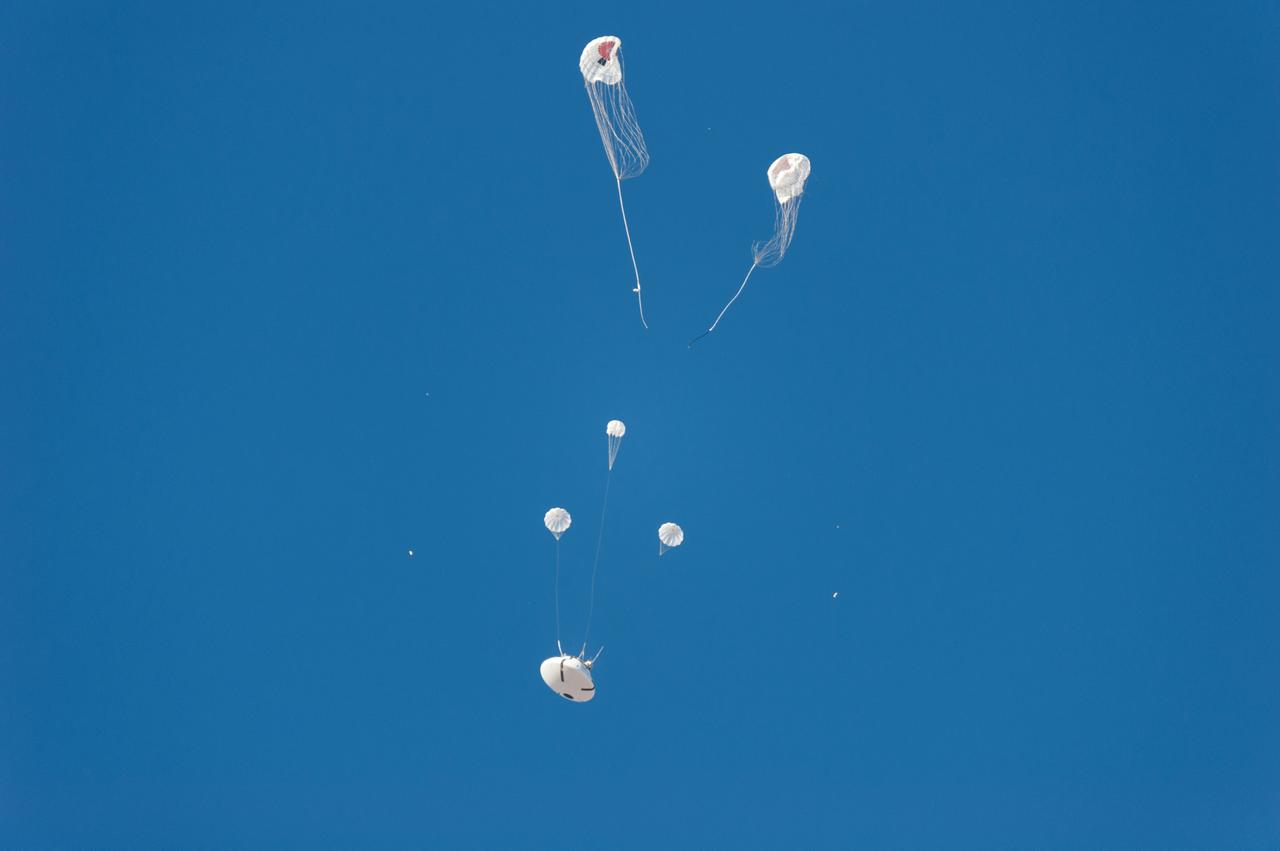
NASA has completes the final test to qualify Orion’s parachute system for flights with astronauts, checking off an important milestone on the path to send humans on missions to the Moon and beyond on Sept. 12, 2018...Over the course of eight tests at the U.S. Army’s Yuma Proving Ground in Arizona, engineers have evaluated the performance of Orion’s parachute system during normal landing sequences as well as several failure scenarios and a variety of potential aerodynamic conditions to ensure astronauts can return safely from deep space missions.
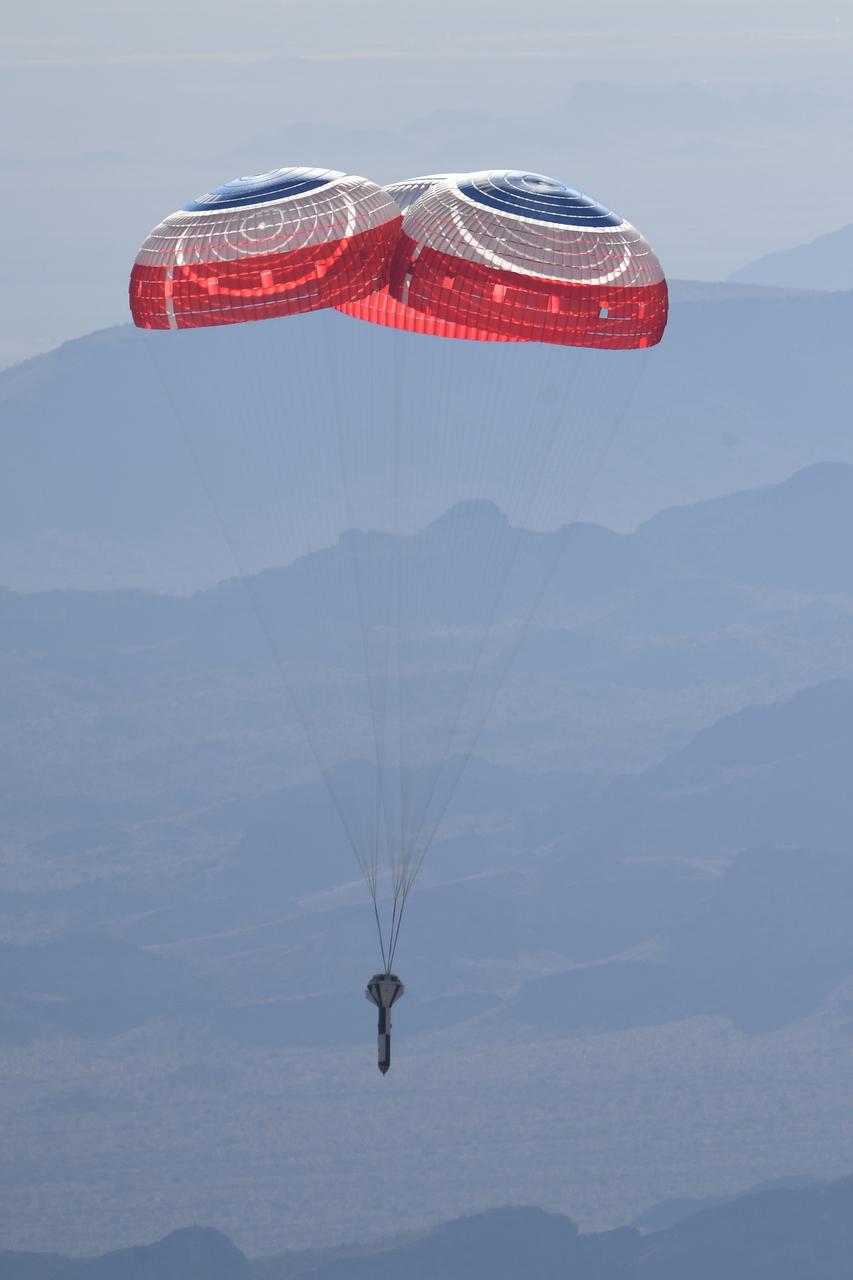
Boeing’s CST-100 Starliner’s parachute system is tested above the U.S. Army’s Yuma Proving Ground in Arizona on June 26, 2019. This “high Q” test involved dropping a dart-shaped device – functioning as a Starliner weight simulant – from a C-17 aircraft and intentionally inflating the parachutes at higher pressures than expected during missions. The data gathered from this parachute test will help validate the system is safe to carry astronauts to and from the International Space Station as part of NASA’s Commercial Crew Program. Boeing is targeting an uncrewed Orbital Flight Test to the space station this summer, followed by its Crew Flight Test. Starliner will launch atop a United Launch Alliance Atlas V rocket from Space Launch Complex 41 at Cape Canaveral Air Force Station in Florida.
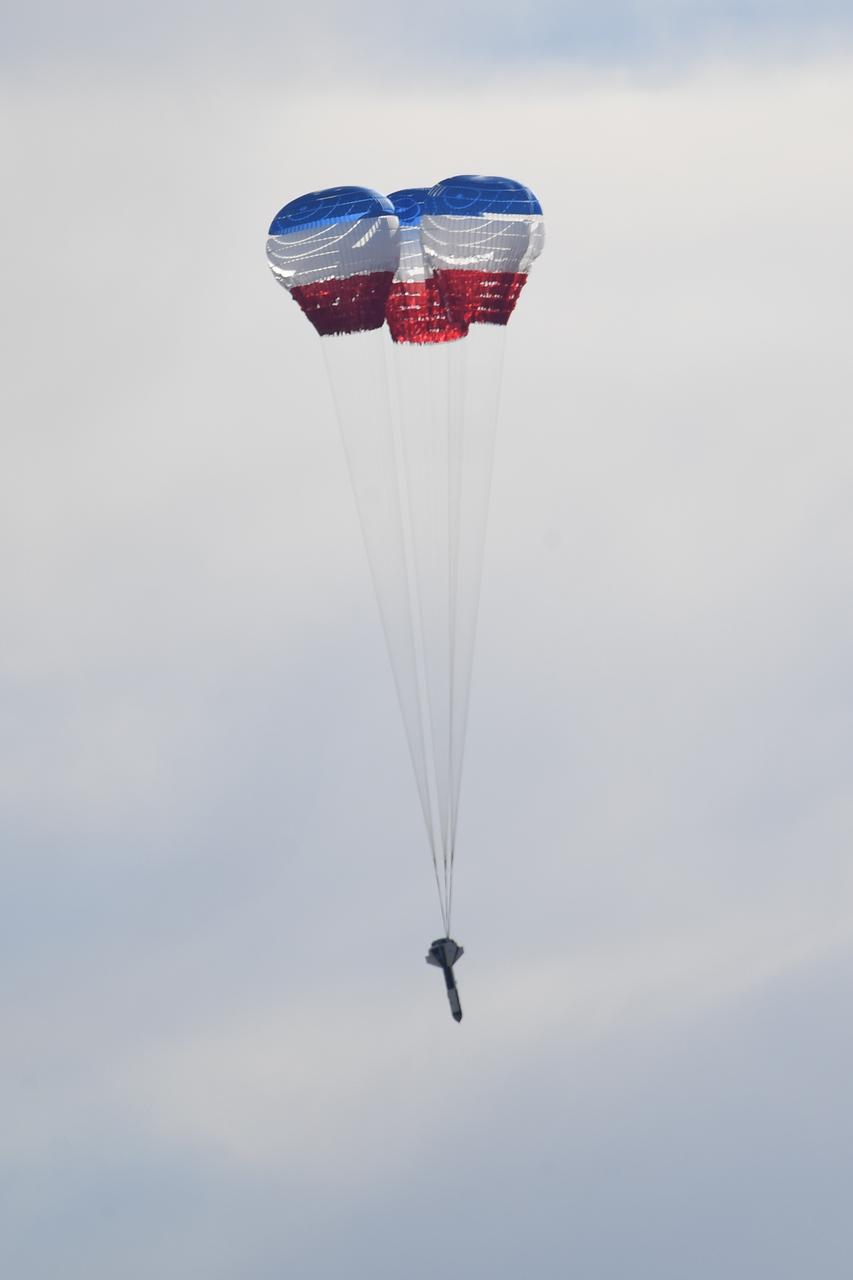
A dart-shaped device, functioning as a Boeing CST-100 Starliner weight simulant, drops from a C-17 aircraft during parachute system testing at the U.S. Army’s Yuma Proving Ground in Arizona on June 26, 2019. This “high Q” test involved intentionally inflating the parachutes at higher pressures than expected during missions, to validate the system is safe to carry astronauts to and from the International Space Station. As part of NASA’s Commercial Crew Program, Boeing is targeting an uncrewed Orbital Flight Test to the space station this summer, followed by its Crew Flight Test. Starliner will launch atop a United Launch Alliance Atlas V rocket from Space Launch Complex 41 at Cape Canaveral Air Force Station in Florida.
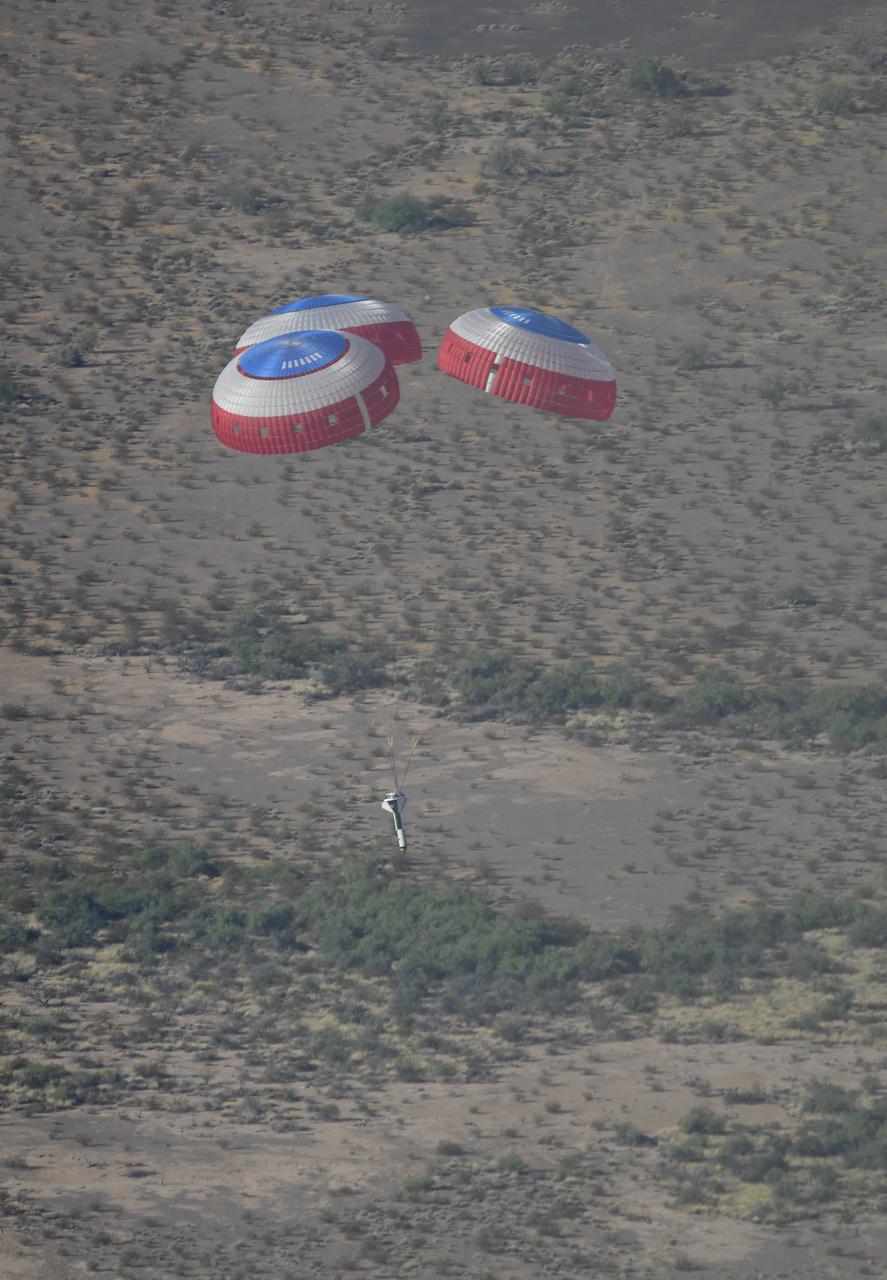
Boeing’s CST-100 Starliner’s parachute system is tested above the U.S. Army’s Yuma Proving Ground in Arizona on June 26, 2019. This “high Q” test involved dropping a dart-shaped device – functioning as a Starliner weight simulant – from a C-17 aircraft and intentionally inflating the parachutes at higher pressures than expected during missions. The data gathered from this parachute test will help validate the system is safe to carry astronauts to and from the International Space Station as part of NASA’s Commercial Crew Program. Boeing is targeting an uncrewed Orbital Flight Test to the space station this summer, followed by its Crew Flight Test. Starliner will launch atop a United Launch Alliance Atlas V rocket from Space Launch Complex 41 at Cape Canaveral Air Force Station in Florida.
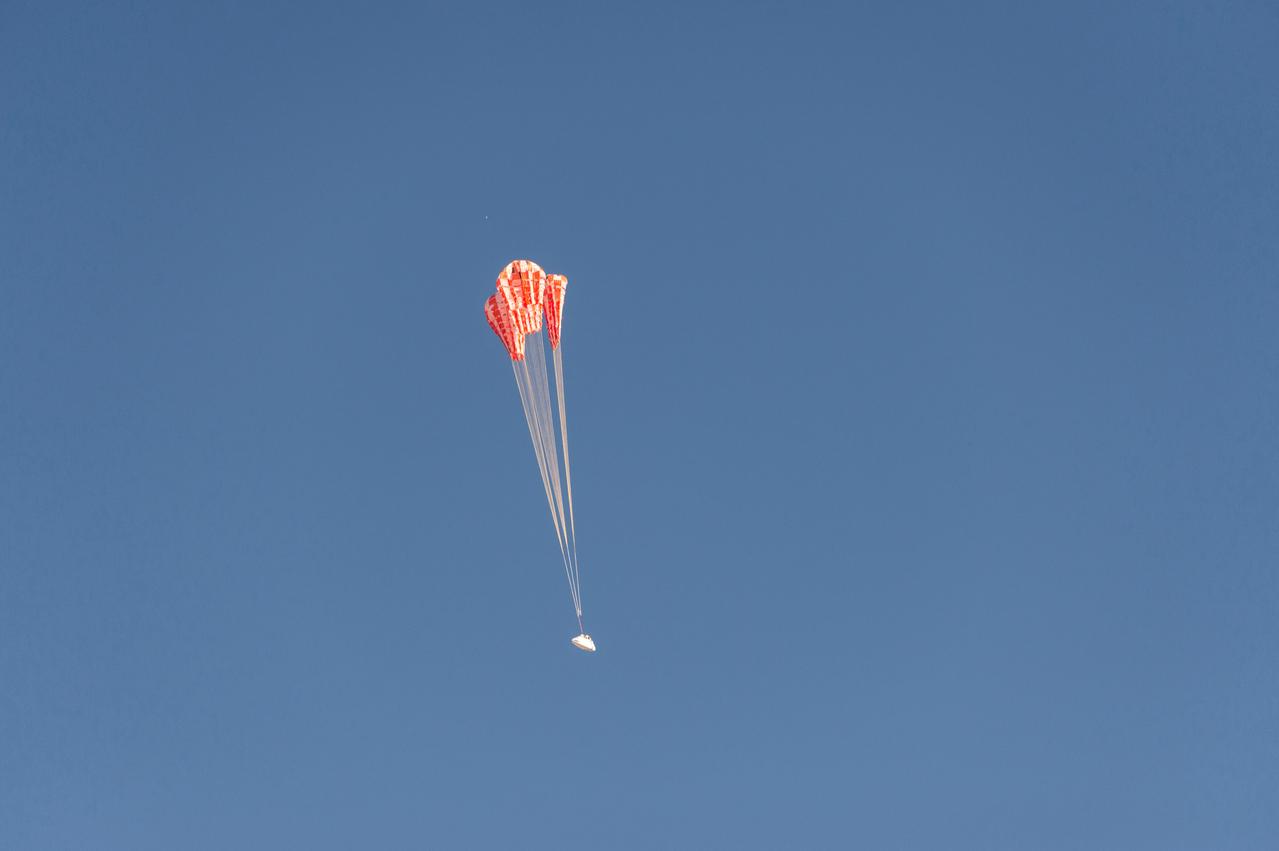
NASA has completes the final test to qualify Orion’s parachute system for flights with astronauts, checking off an important milestone on the path to send humans on missions to the Moon and beyond on Sept. 12, 2018...Over the course of eight tests at the U.S. Army’s Yuma Proving Ground in Arizona, engineers have evaluated the performance of Orion’s parachute system during normal landing sequences as well as several failure scenarios and a variety of potential aerodynamic conditions to ensure astronauts can return safely from deep space missions.
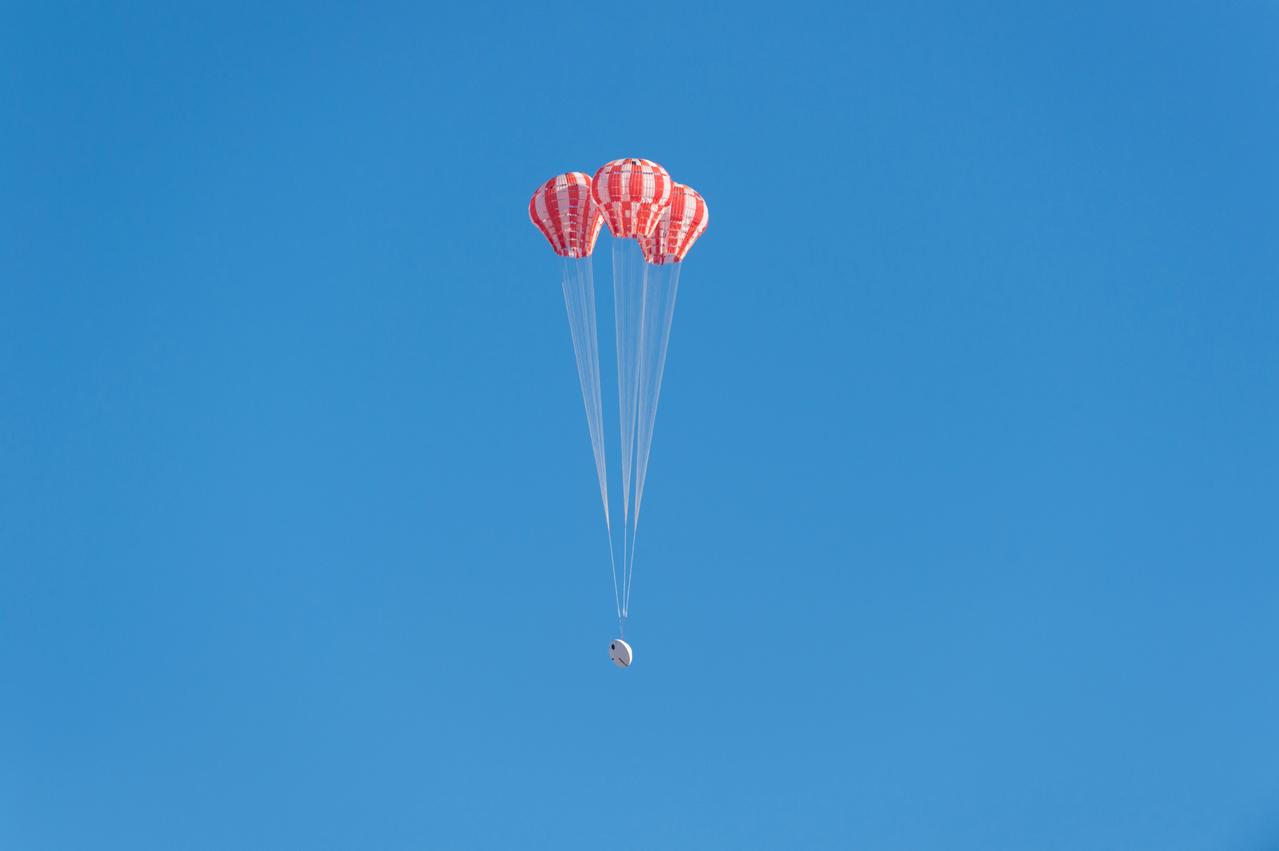
NASA has completes the final test to qualify Orion’s parachute system for flights with astronauts, checking off an important milestone on the path to send humans on missions to the Moon and beyond on Sept. 12, 2018...Over the course of eight tests at the U.S. Army’s Yuma Proving Ground in Arizona, engineers have evaluated the performance of Orion’s parachute system during normal landing sequences as well as several failure scenarios and a variety of potential aerodynamic conditions to ensure astronauts can return safely from deep space missions.

Engineers successfully evaluated a failure scenario of Orion’s parachute system in which only two of the system’s three orange and white main parachutes deploy after several other parachutes in the system used to slow and stabilize Orion endure high aerodynamic stresses ahead of a safe landing. The test occurred Dec. 15, 2017 at the U.S. Army Proving Ground in Yuma, Arizona. A mock capsule was dropped from a C-17 aircraft at 35,000 feet in altitude to enable the right conditions for the test. It was the fifth of eight tests to qualify Orion’s parachute system for flights with astronauts beginning with Artemis II.

Engineers successfully evaluated a failure scenario of Orion’s parachute system in which only two of the system’s three orange and white main parachutes deploy after several other parachutes in the system used to slow and stabilize Orion endure high aerodynamic stresses ahead of a safe landing. The test occurred Dec. 15, 2017 at the U.S. Army Proving Ground in Yuma, Arizona. A mock capsule was dropped from a C-17 aircraft at 35,000 feet in altitude to enable the right conditions for the test. It was the fifth of eight tests to qualify Orion’s parachute system for flights with astronauts beginning with Artemis II.

Engineers successfully evaluated a failure scenario of Orion’s parachute system in which only two of the system’s three orange and white main parachutes deploy after several other parachutes in the system used to slow and stabilize Orion endure high aerodynamic stresses ahead of a safe landing. The test occurred Dec. 15, 2017 at the U.S. Army Proving Ground in Yuma, Arizona. A mock capsule was dropped from a C-17 aircraft at 35,000 feet in altitude to enable the right conditions for the test. It was the fifth of eight tests to qualify Orion’s parachute system for flights with astronauts beginning with Artemis II.
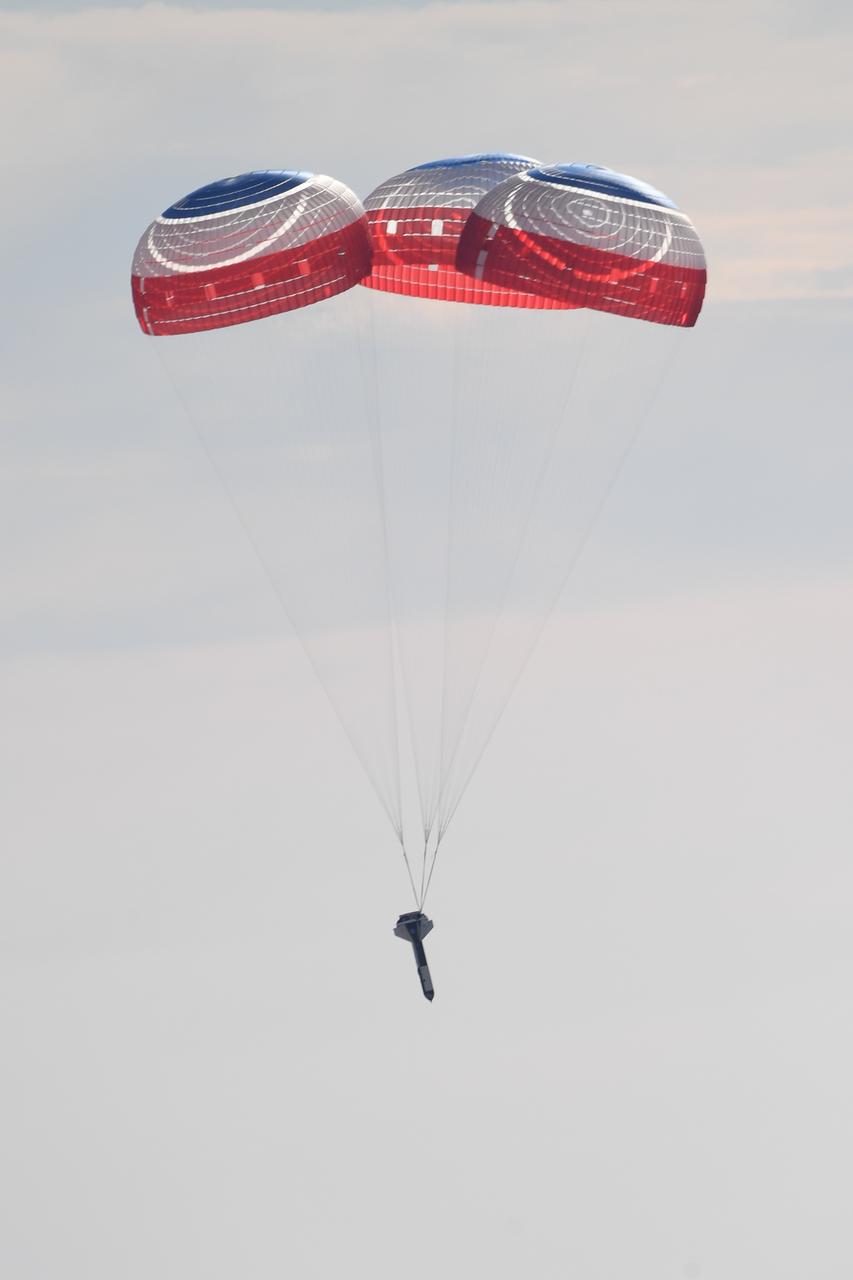
Boeing’s CST-100 Starliner’s parachute system is tested above the U.S. Army’s Yuma Proving Ground in Arizona on June 26, 2019. This “high Q” test involved dropping a dart-shaped device – functioning as a Starliner weight simulant – from a C-17 aircraft and intentionally inflating the parachutes at higher pressures than expected during missions. The data gathered from this parachute test will help validate the system is safe to carry astronauts to and from the International Space Station as part of NASA’s Commercial Crew Program. Boeing is targeting an uncrewed Orbital Flight Test to the space station this summer, followed by its Crew Flight Test. Starliner will launch atop a United Launch Alliance Atlas V rocket from Space Launch Complex 41 at Cape Canaveral Air Force Station in Florida.