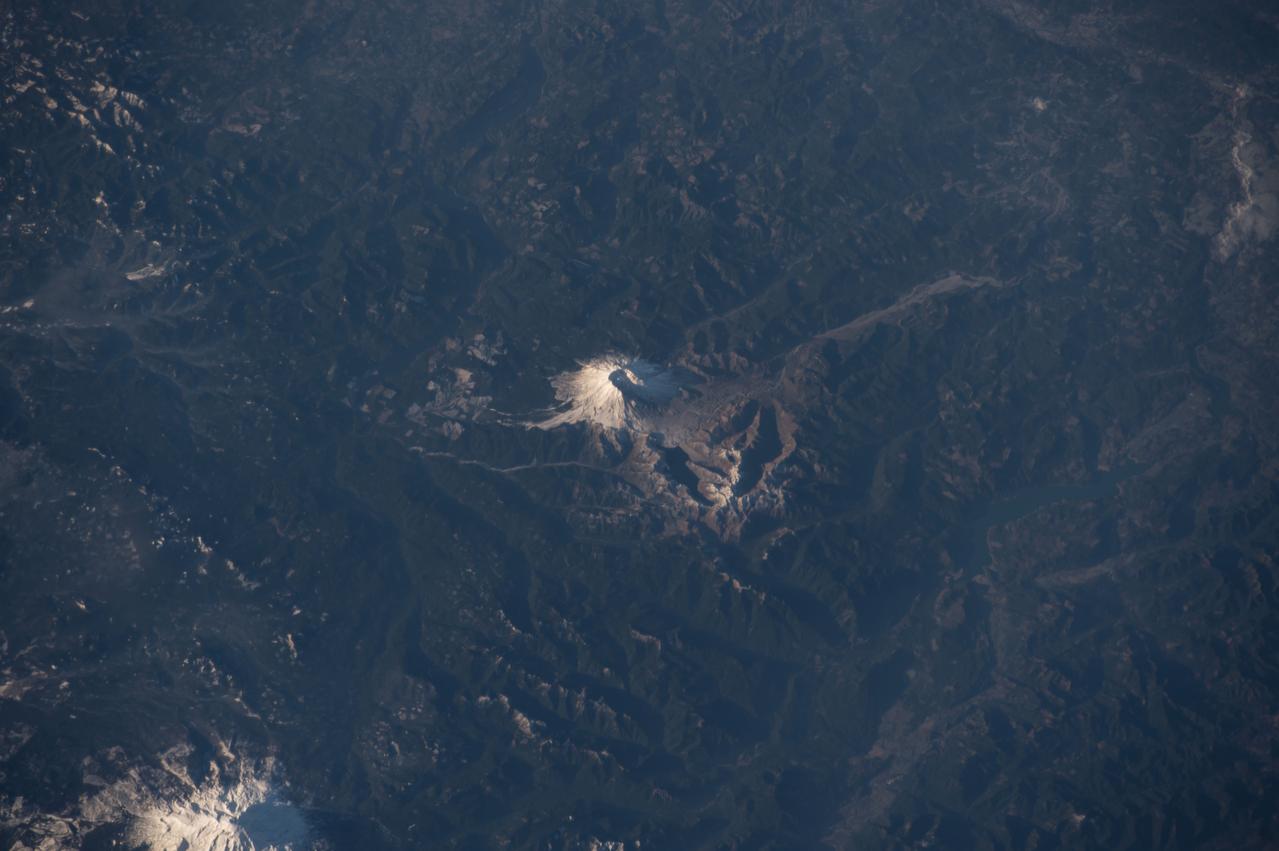
Earth observation taken by the Expedition 42 crew aboard the ISS. Mt. St. Helens (center) and Mt. Rainier, Washington. Image was released by astronaut on Instagram.
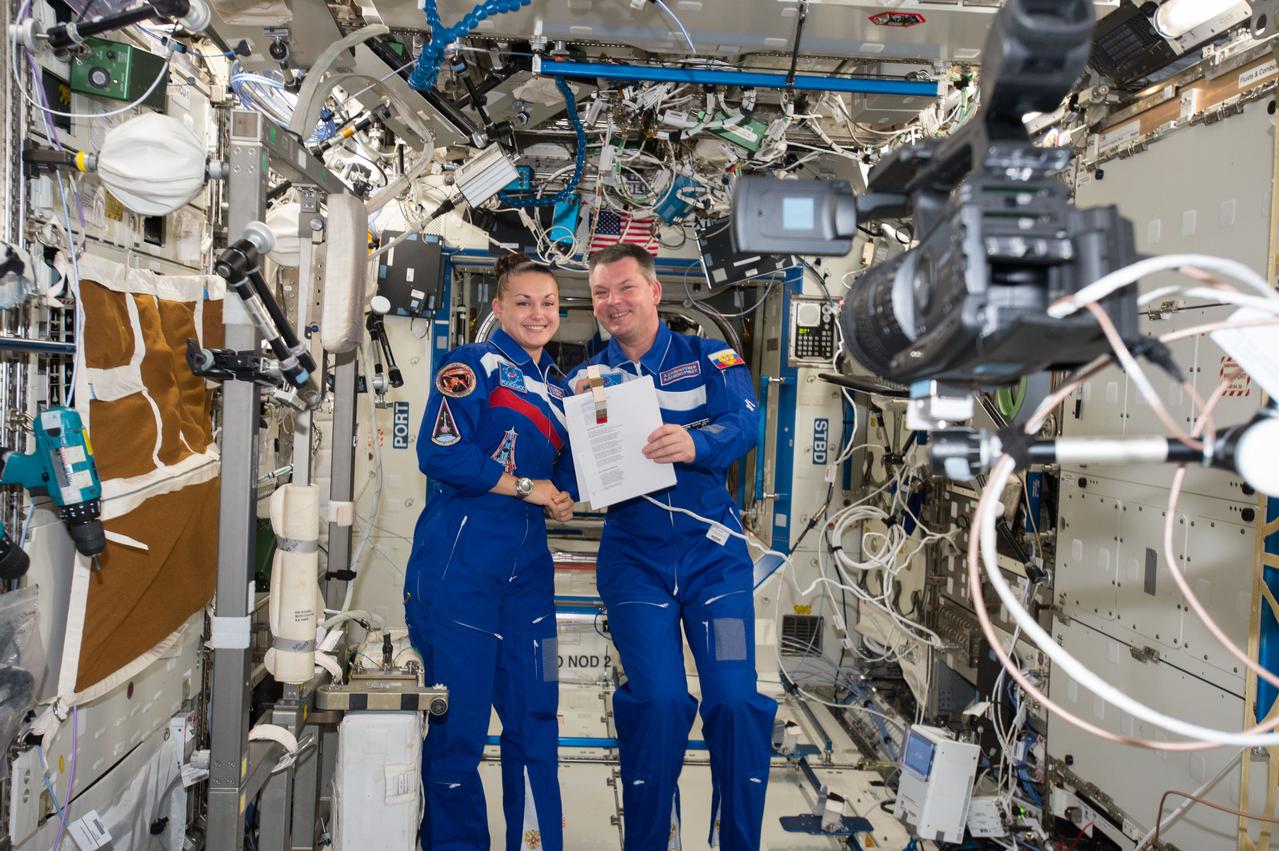
iss042e000043 (11/12/2014) --- Russian cosmonauts Elena Serova and Alexander Samoukutyaev during a broadcast interview abosrd the International Space Station.
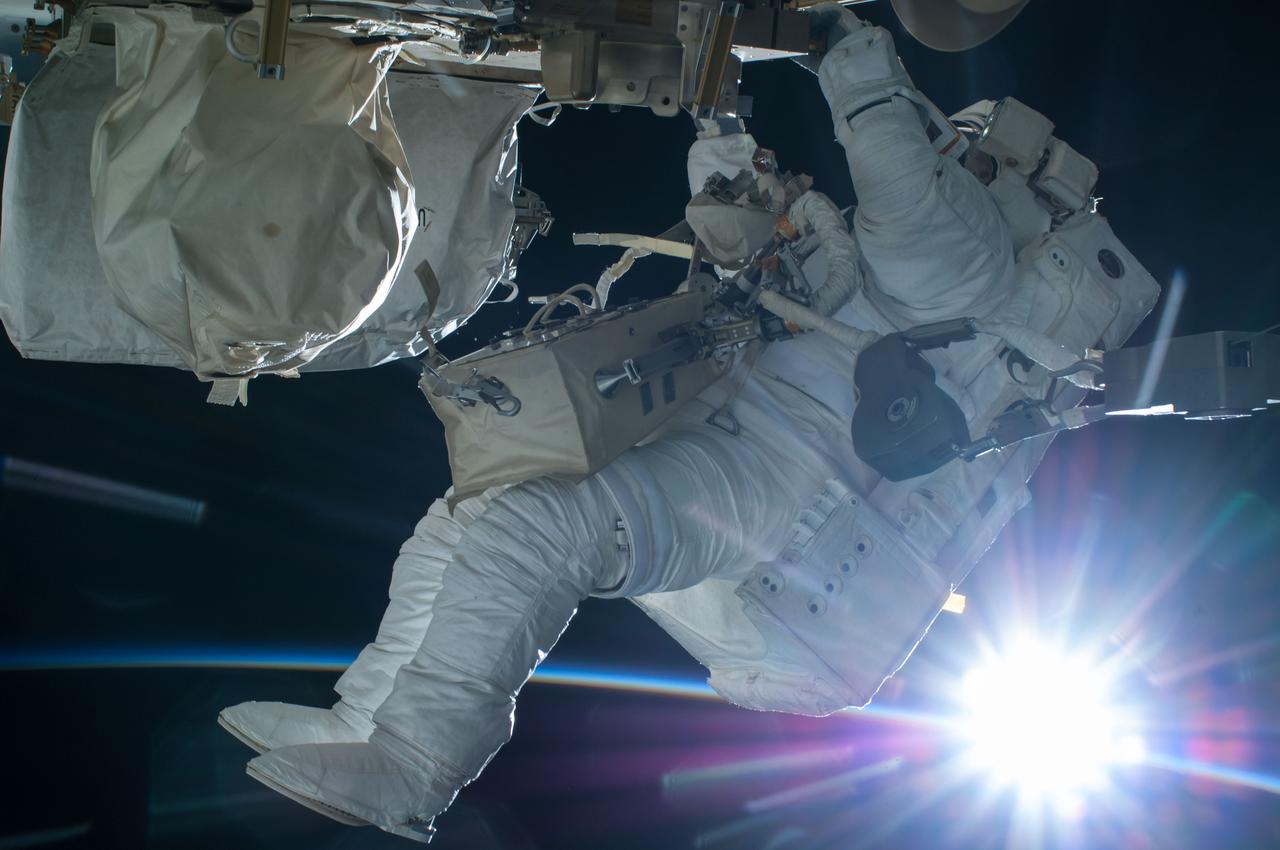
Flight engineer Terry Virts, Extravehicular crewmember 2 (EV2), translates External Stowage Platform 2 (ESP2) at the close of Extravehicular Activity 29 (EVA 29). An orbital sunrise provides the backdrop for this image, which was released by Virts on Twitter.
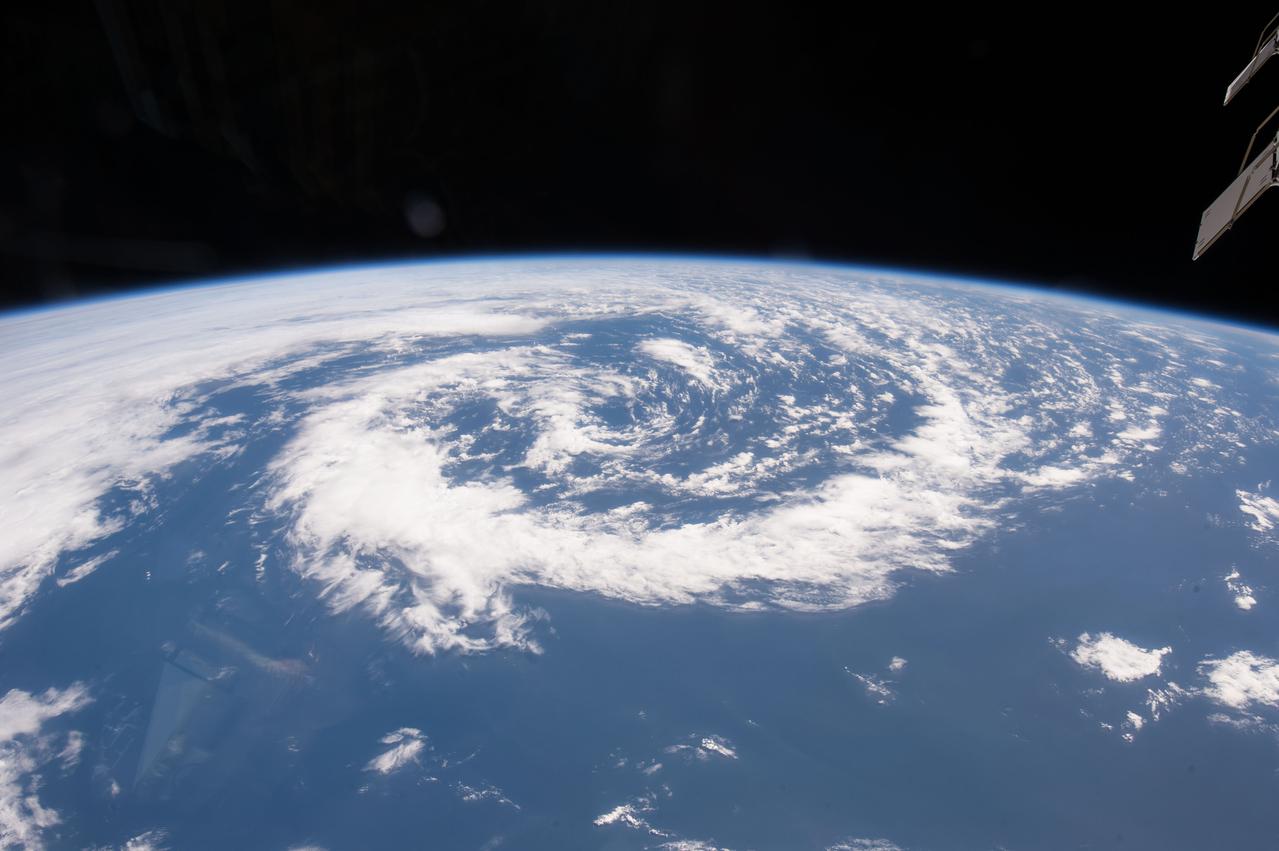
iss042e033298 (12/09/2014) --- US Astronaut Barry (Butch) Wilmore captured this ominous but interesting cloud formation aboard the International Space Station on 9 December 2014.
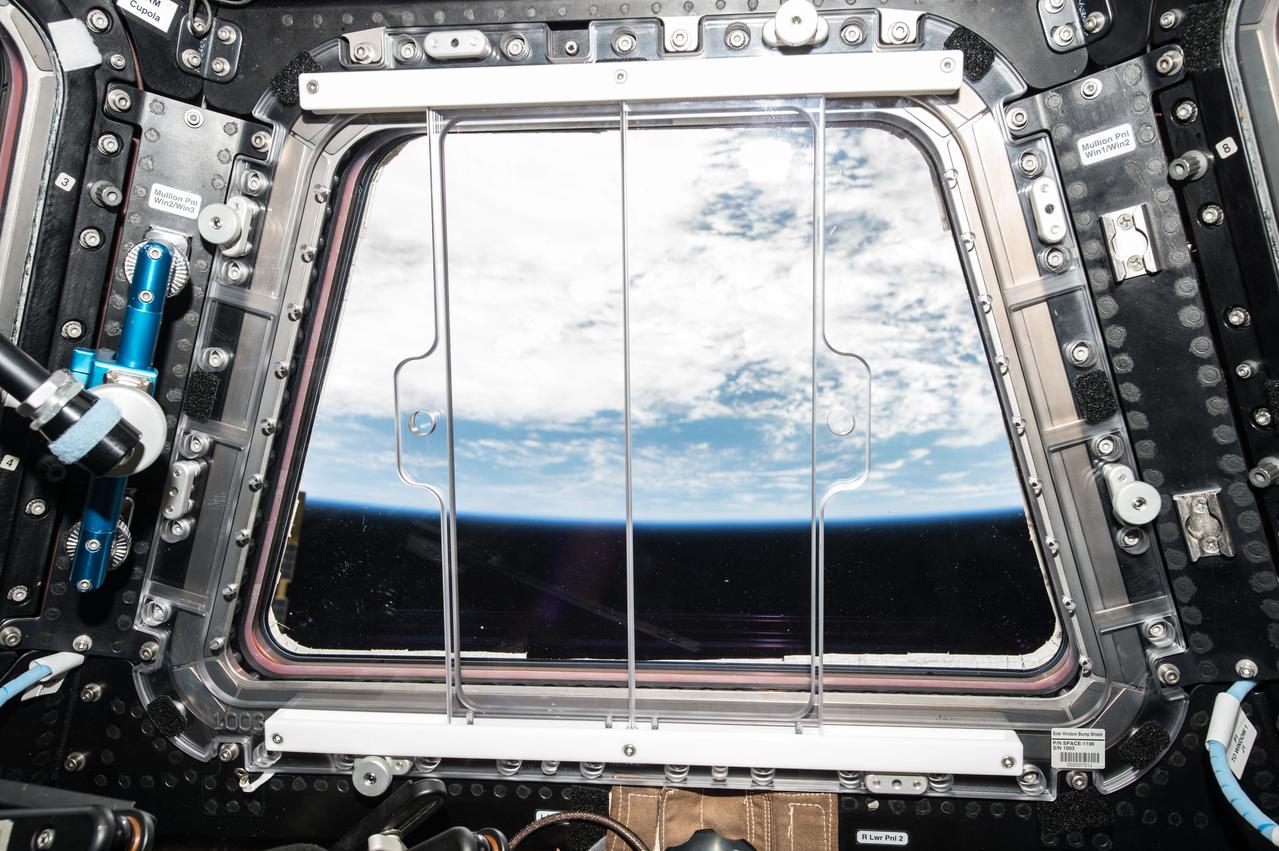
ISS042E227564 (02/08/2015) --- A view of the Earth from the International Space Station's Cupola widow on Feb. 8, 2015. The Cupola, a small, dome-shaped module has seven windows -- six around the sides and one on top -- that can be shuttered when not in use to protect the ISS from micrometeoroids and the harsh space environment. The windows are made of fused silica and borosilicate glass panes, with temperature-sensing elements and window heaters. It is attached to the Tranquility Node 3 module, Cupola provides a vastly improved view of the station's exterior. Just under ten feet in diameter, the module accommodates two crew members and portable workstations that can control station and robotic Canada arm activities. The multi-directional view allows the crew to monitor spacewalks and docking operations, as well as provide a spectacular view of Earth and other celestial objects.
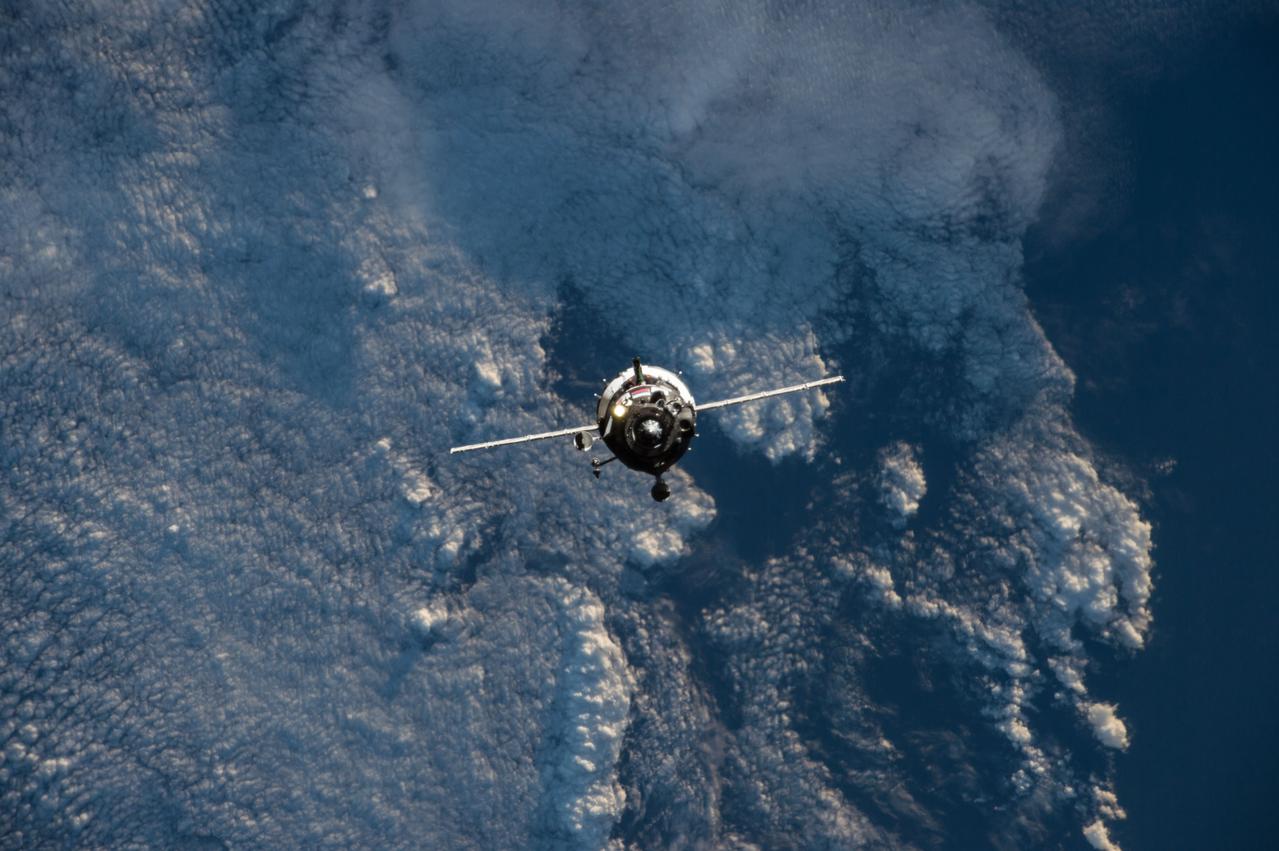
View of the Soyuz TMA-15M spacecraft as it approaches the ISS for rendezvous and docking. Image was released by astronaut on Instagram.
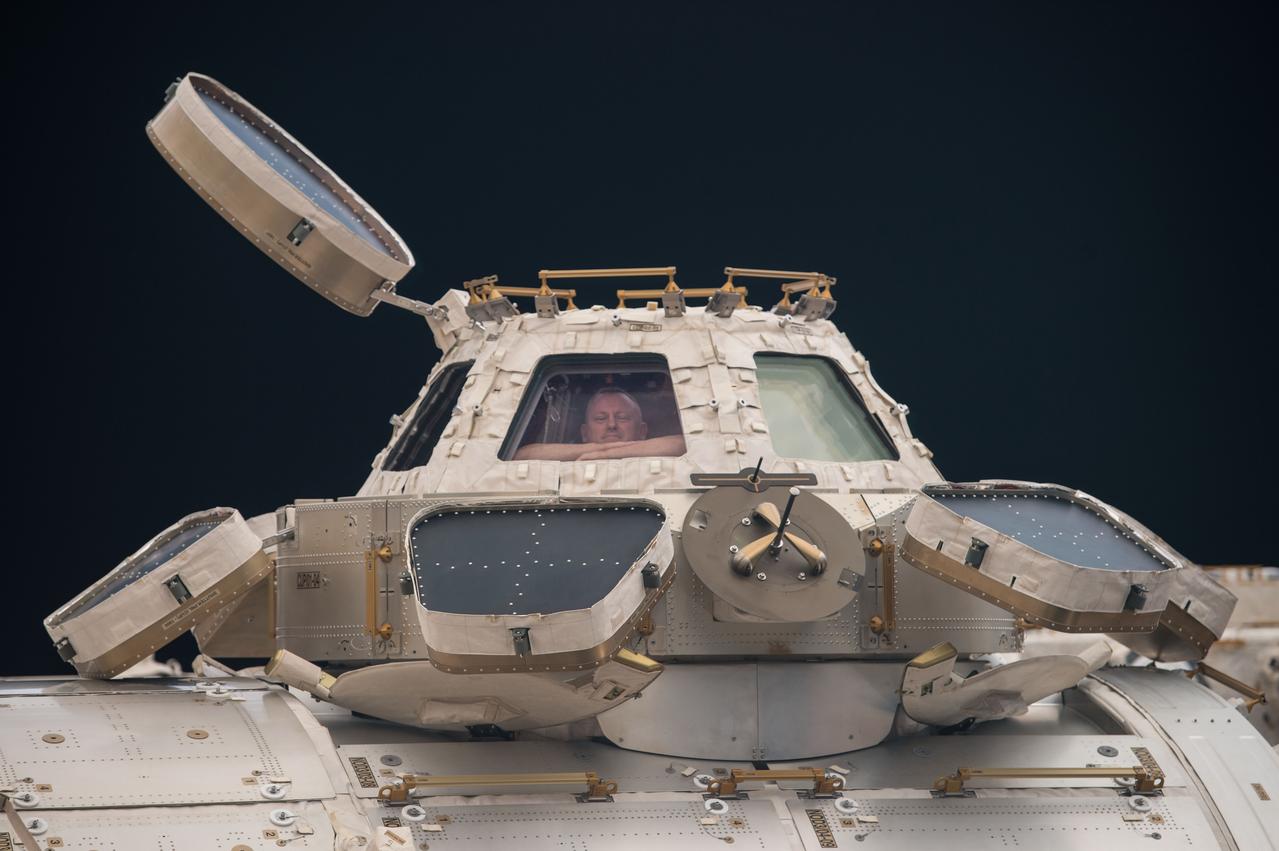
iss042e078481 (12/28/2014) --- US Astronaut Barry Wilmore, Commander of Expedition 42 aboard the International Space Station (ISS) looks out of the Cupola viewing station taking in the sights of the blue orb of Earth while on a break from science and maintenance duties. The Cupola is a panoramic control tower for the ISS with windows through which operations on the outside of the station can be observed and guided. Through the robotics workstation, astronauts are able to control the space station’s robotic arm, which helps with the attachment and assembly of various station elements, very much like the operator of a building crane. Spacewalking activities can also be observed from the Cupola along with visiting spacecraft and external areas of the station.
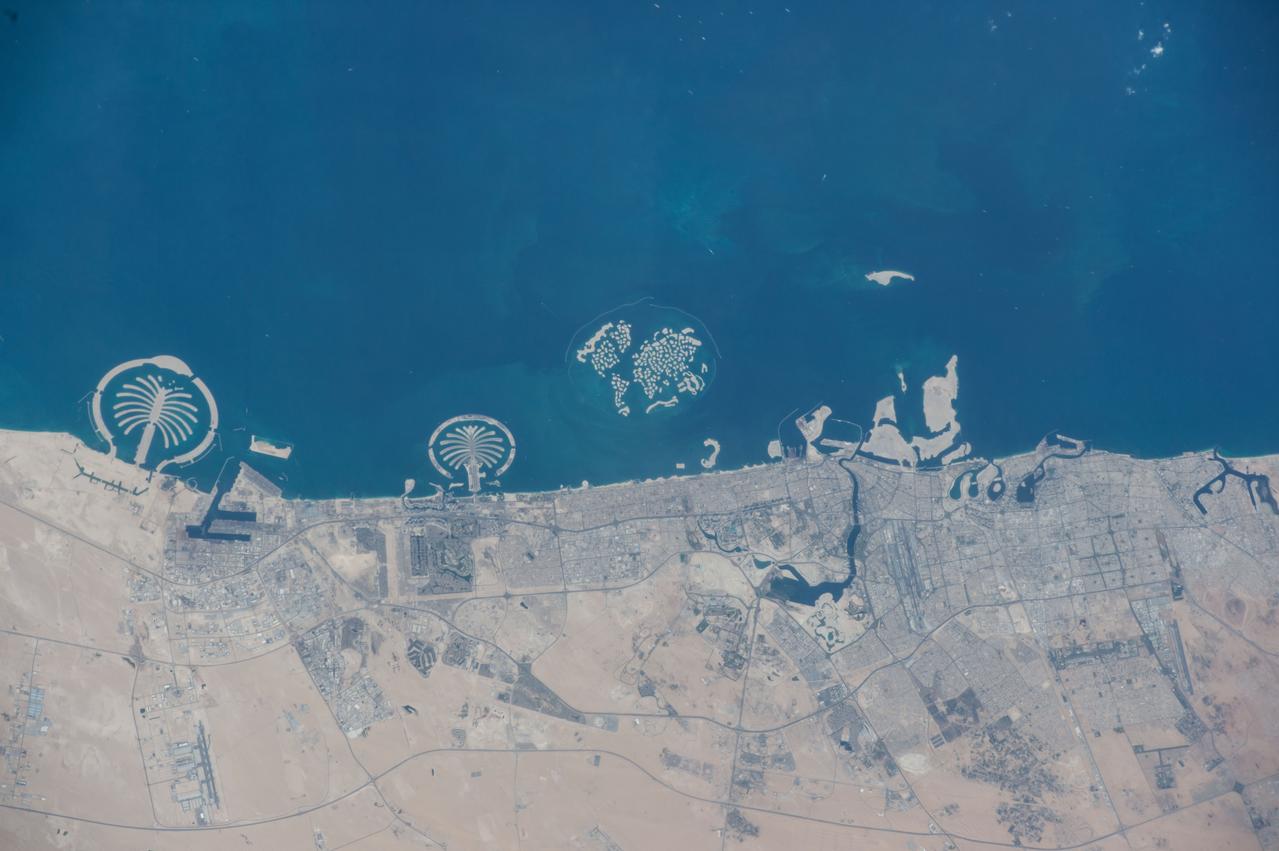
Earth observation taken by the Expedition 42 crew aboard the ISS. Palm and World Islands, United Arab Emirates. Image was released by astronaut on Instagram.
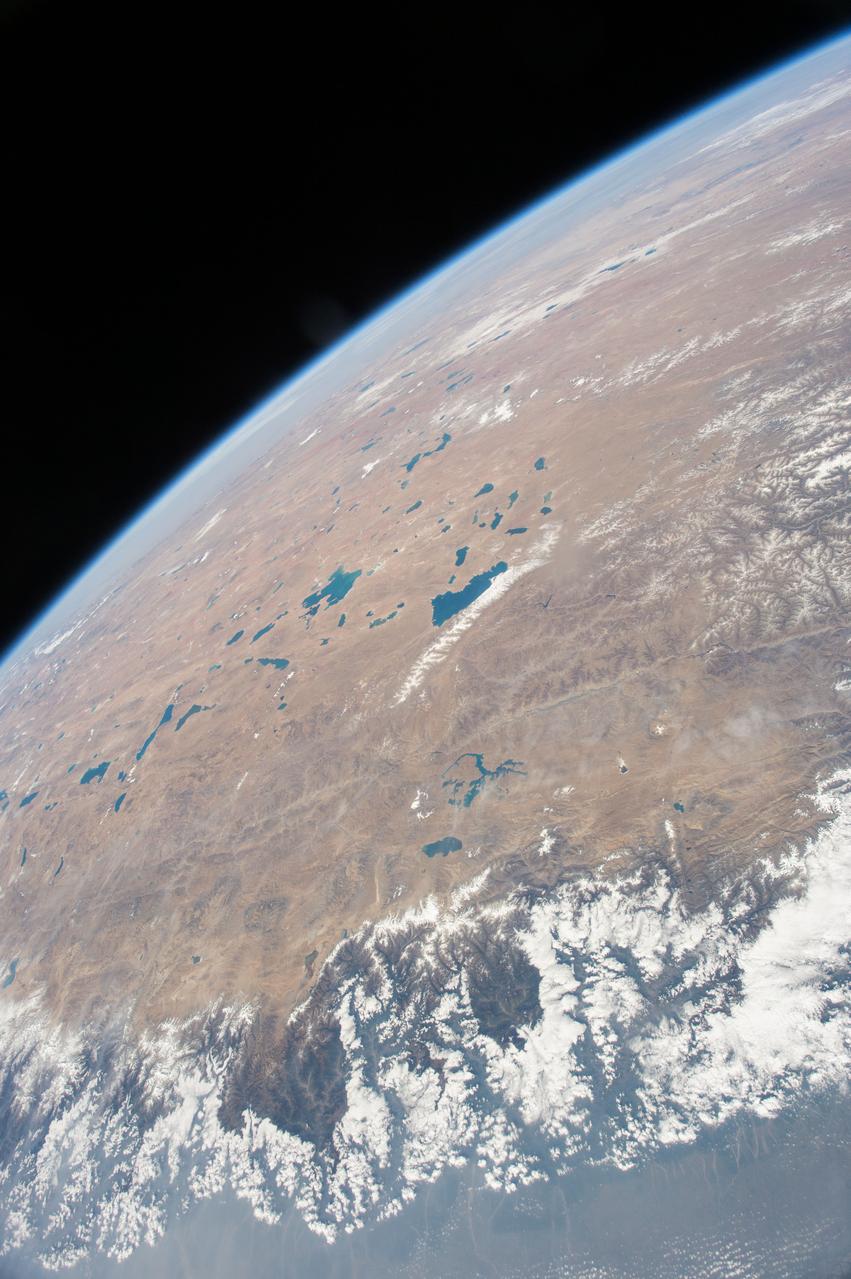
Earth observation taken by the Expedition 42 crew aboard the ISS. Image was released by astronaut on Instagram.
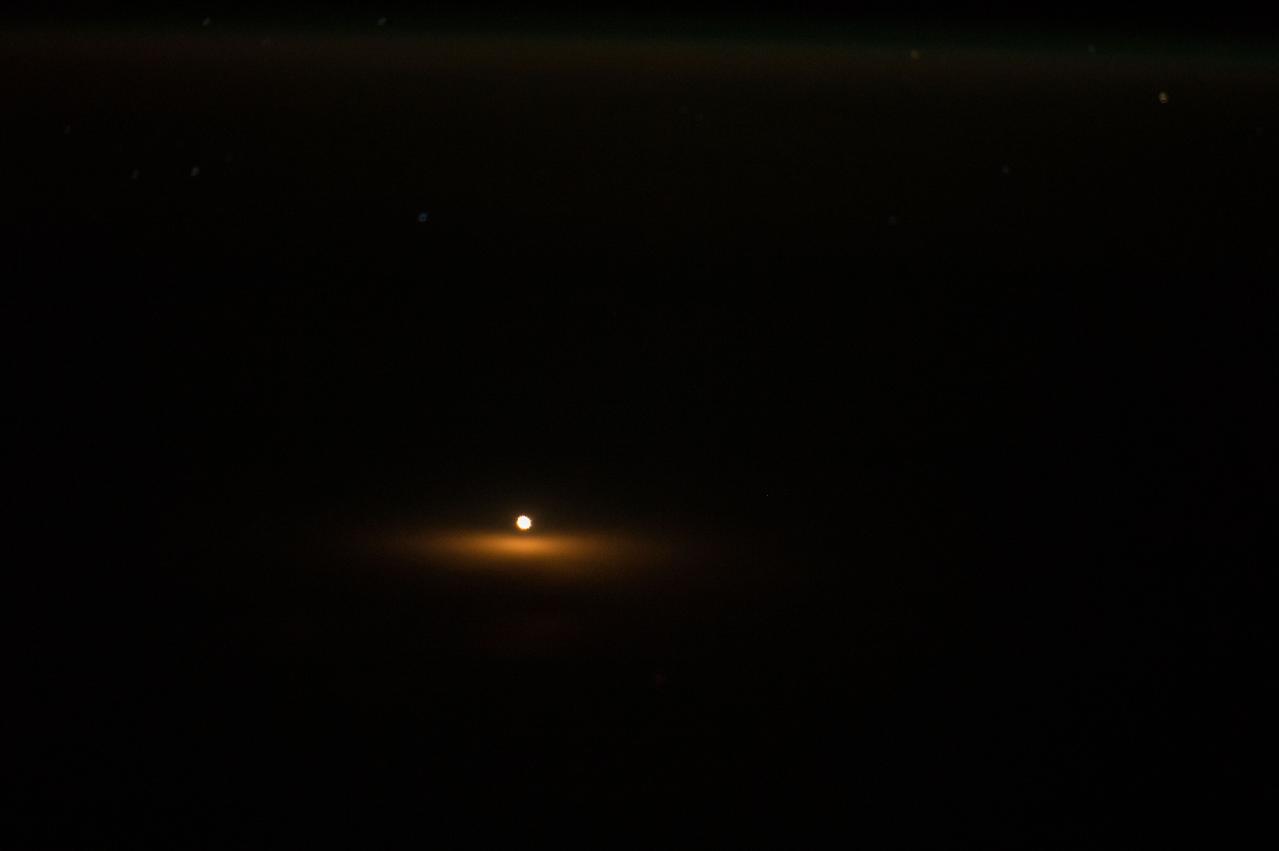
Nighttime view of the launch of the Soyuz TMA-15M spacecraft as seen by Expedition 42 crewmembers aboard the ISS. Image was released by astronaut on Instagram.
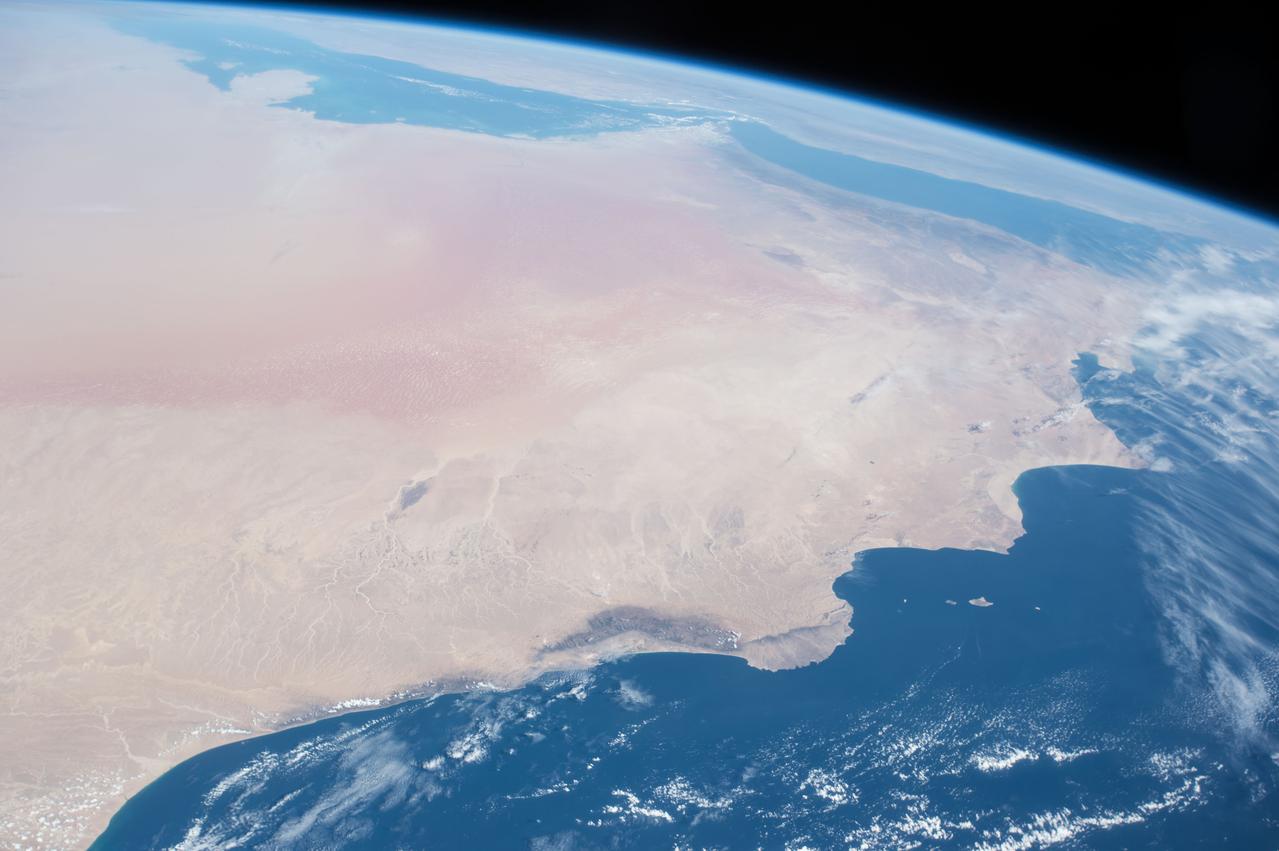
Earth observation taken by the Expedition 42 crew aboard the ISS. Image was released by astronaut on Instagram.
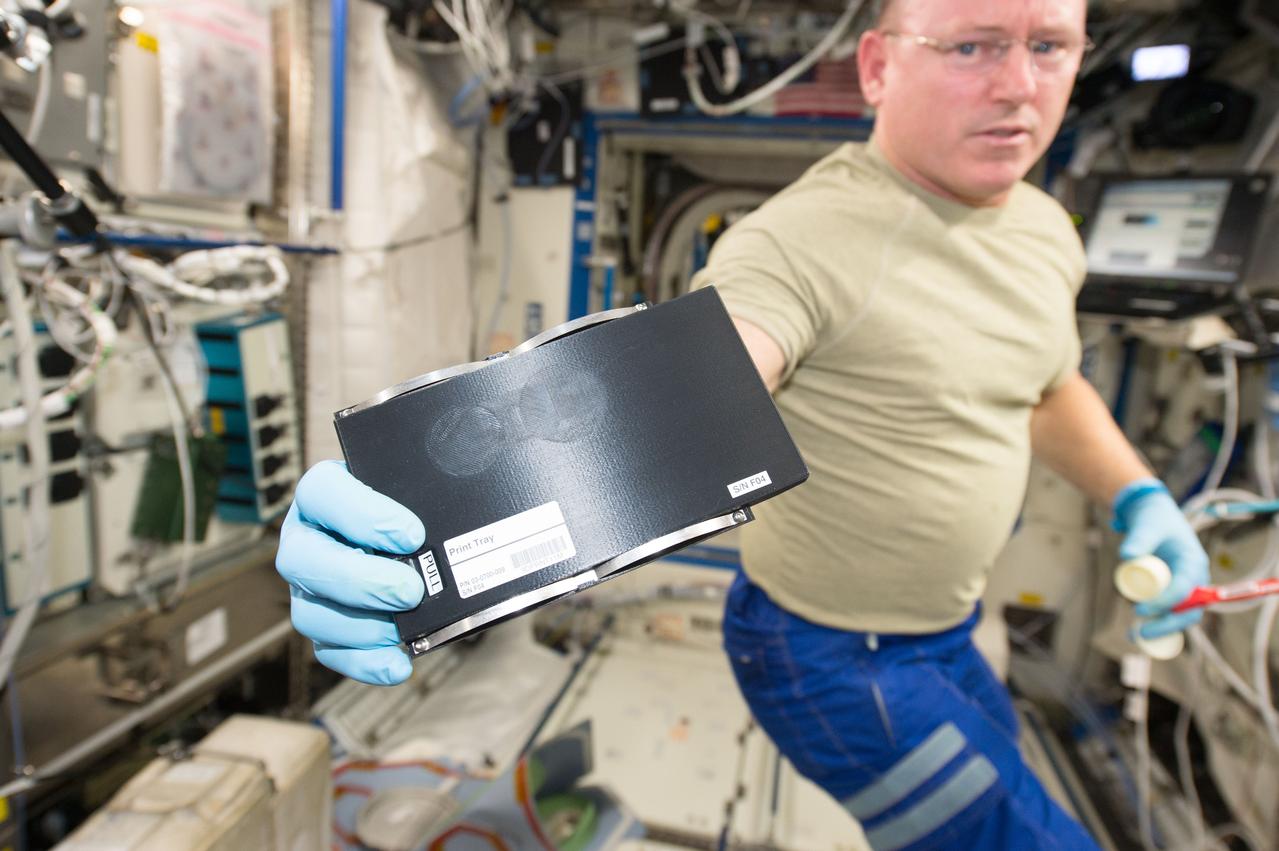
iss042e031282 (12/09/2014) ---US Astronaut Barry (Butch) Wilmore holding a 3D coupon works with the new 3D printer aboard the International Space Station. The 3D Printing experiment in zero gravity demonstrates that a 3D printer works normally in space. In general, a 3D printer extrudes streams of heated plastic, metal or other material, building layer on top of layer to create 3 dimensional objects. Testing a 3D printer using relatively low-temperature plastic feedstock on the International Space Station is the first step towards establishing an on-demand machine shop in space, a critical enabling component for deep-space crewed missions and in-space manufacturing.
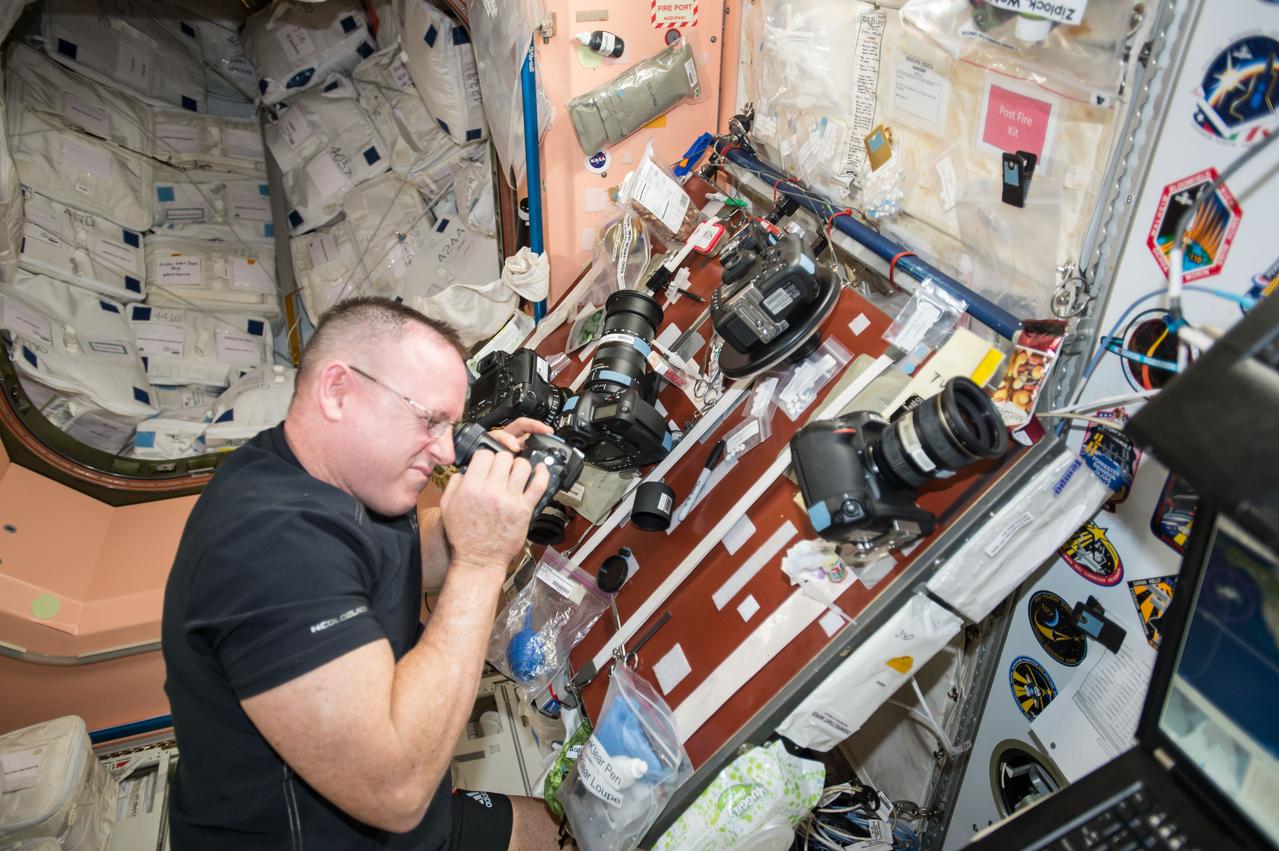
ISS042E182382 (01/25/2015) ---US astronaut Barry "Butch" Wilmore inspects one the cameras aboard the International Space Station Jan. 25, 2015, in preparation for another photo session of station experiments. Barry is the Commander of Expedition 42.

Earth observation taken by the Expedition 42 crew aboard the ISS. Image Image was released by astronaut on Instagram.
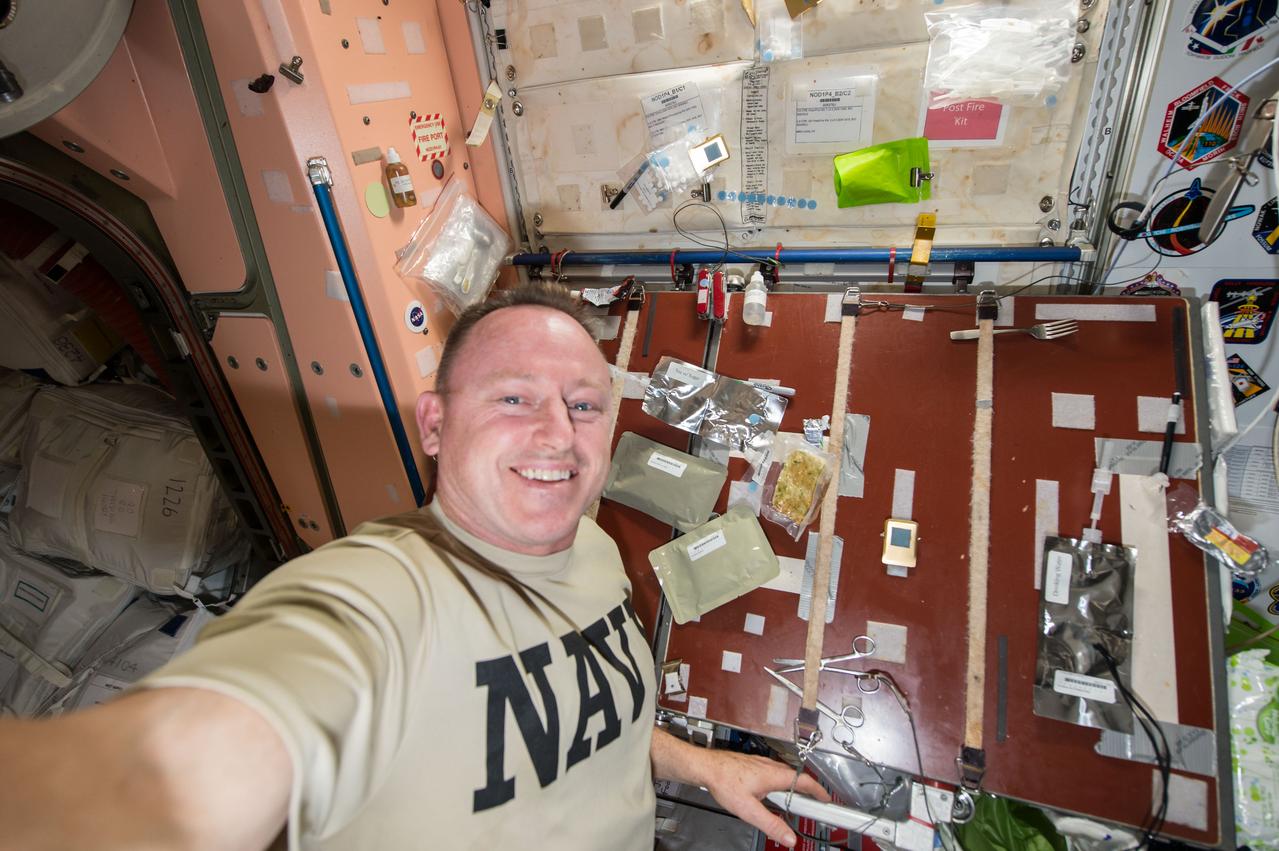
Commander Barry Wilmore takes a self-portrait with food packages (smoked turkey, cranapple dessert, cornbread dressing, and tea with sugar) planned for his Thanksgiving meal. Image was taken near the galley table in the Unity Node 1, and released by Wilmore on Instagram.
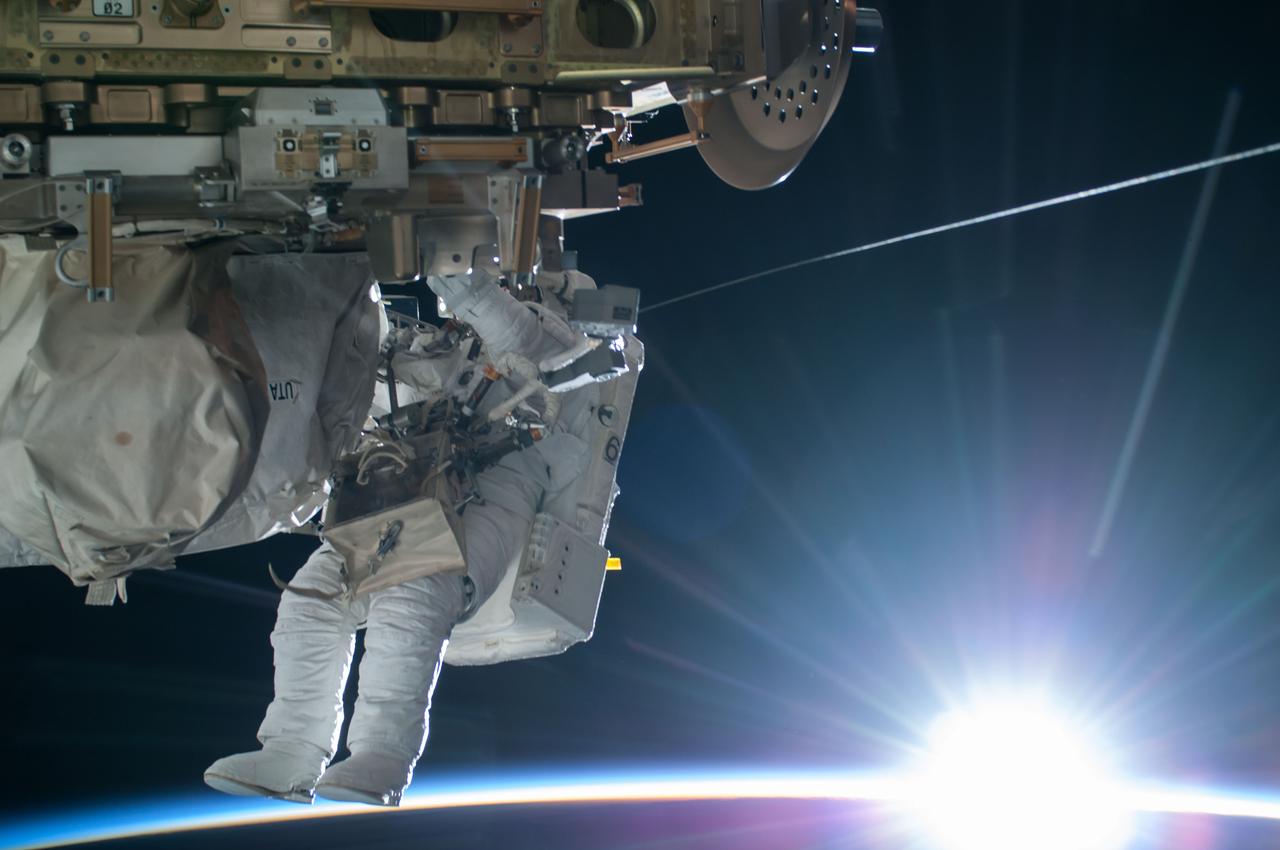
ISS042E283203 (02/21/2015) – NASA astronaut Terry Virts Flight Engineer of Expedition 42 on the International Space Station is seen working to complete a cable routing task while the sun begins to peak over the Earth’s horizon on Feb. 21 2015. Virts and fellow astronaut Barry “Butch” Wilmore completed a 6-hour, 41-minute spacewalk routing more than 300 feet of cable as part of a reconfiguration of the station to enable U.S. commercial crew vehicles under development to dock to the space station in the coming years.
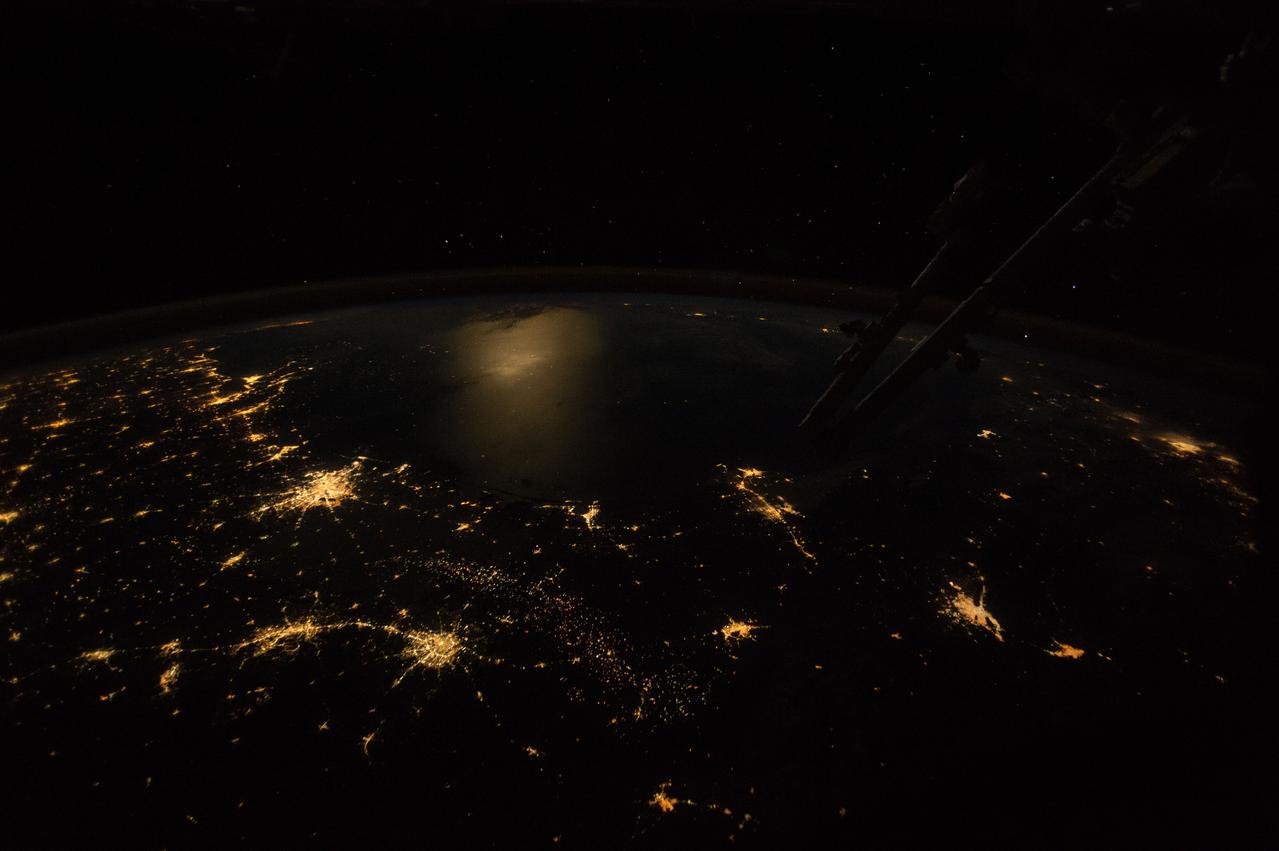
ISS042E241898 (02/11/2015) --- Texas and the Gulf Coast at night as seen by the International Space Stations Earth observation cameras. This wide-angle, nighttime image was taken by astronauts looking out southeastward over the Gulf of Mexico. Lower center left shows the twin lights of San Antonio Texas with a short string of lights to Austin (further left). Houston, the home of the Johnson Space Center is the brightest directly above (Center left). Moonlight reflects diffusely off the waters of the gulf (image center left) making the largest but diffused illuminated area in the image. The sharp edge of light patterns of coastal cities trace out the long curve of the gulf shoreline—from New Orleans at the mouth of the Mississippi River, to Houston (both image left), to Brownsville (image center) in the westernmost gulf. City lights at great distances in Florida (image top left) and on Mexico’s Yucatán peninsula (image center right) suggest the full extent of the gulf basin, more than 930 miles, from Brownsville to Florida.
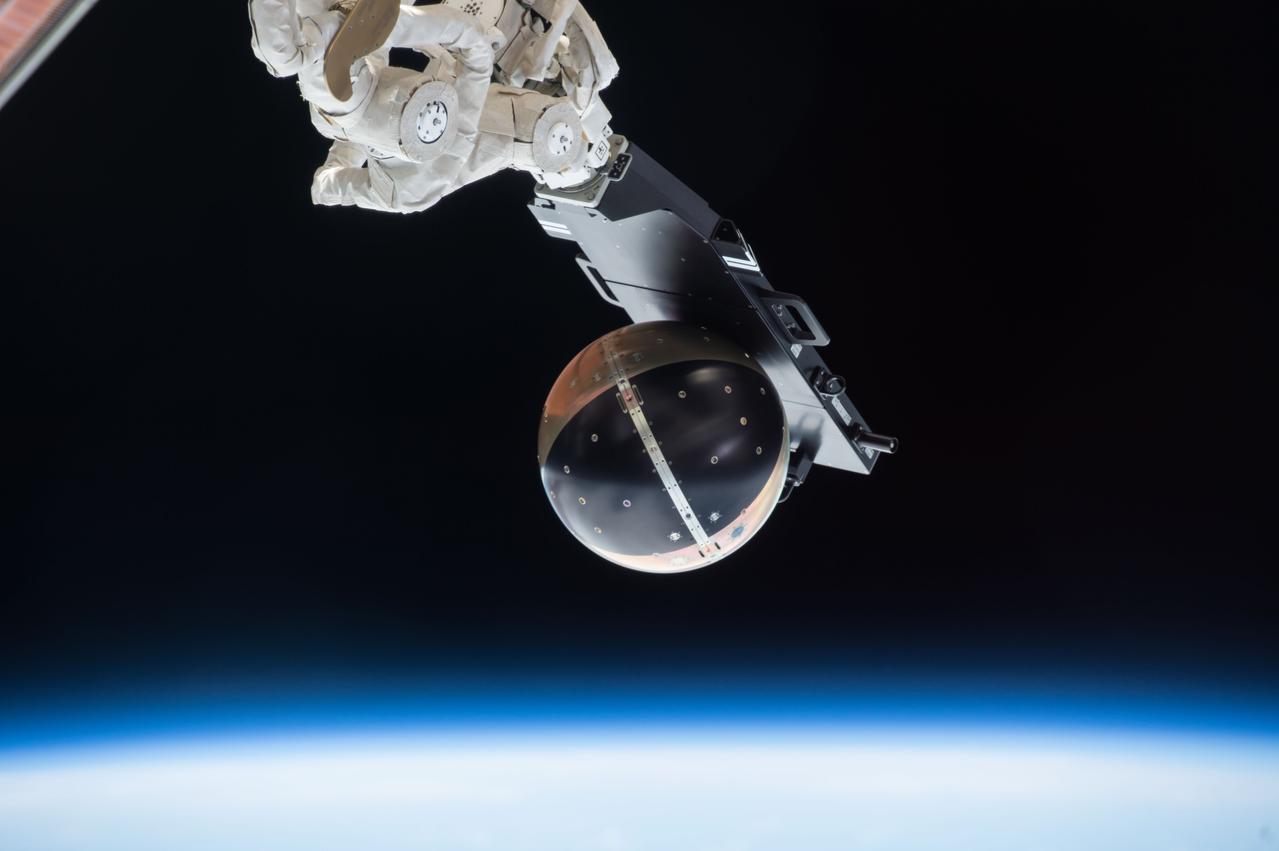
iss042e016906 (11/28/2014) --- The Space Station Integrated Kinetic Launcher for Orbital Payload Systems (SSIKLOPS), or Cyclops, launch platform with Special Purpose Inexpensive Satellite (SpinSat) attached is grappled by the Japanese Experiment Module Remote Manipulator System (JEMRMS) small fine Arm (SFA) in preparation for the release of SpinSat.

ISS041-E-045298 (29 Sept. 2014) --- NASA astronaut Barry Wilmore, Expedition 41 flight engineer, conducts a scrub and cleansing of the water loops in his U.S. Extravehicular Mobility Unit (EMU) spacesuit in the Quest airlock of the International Space Station.
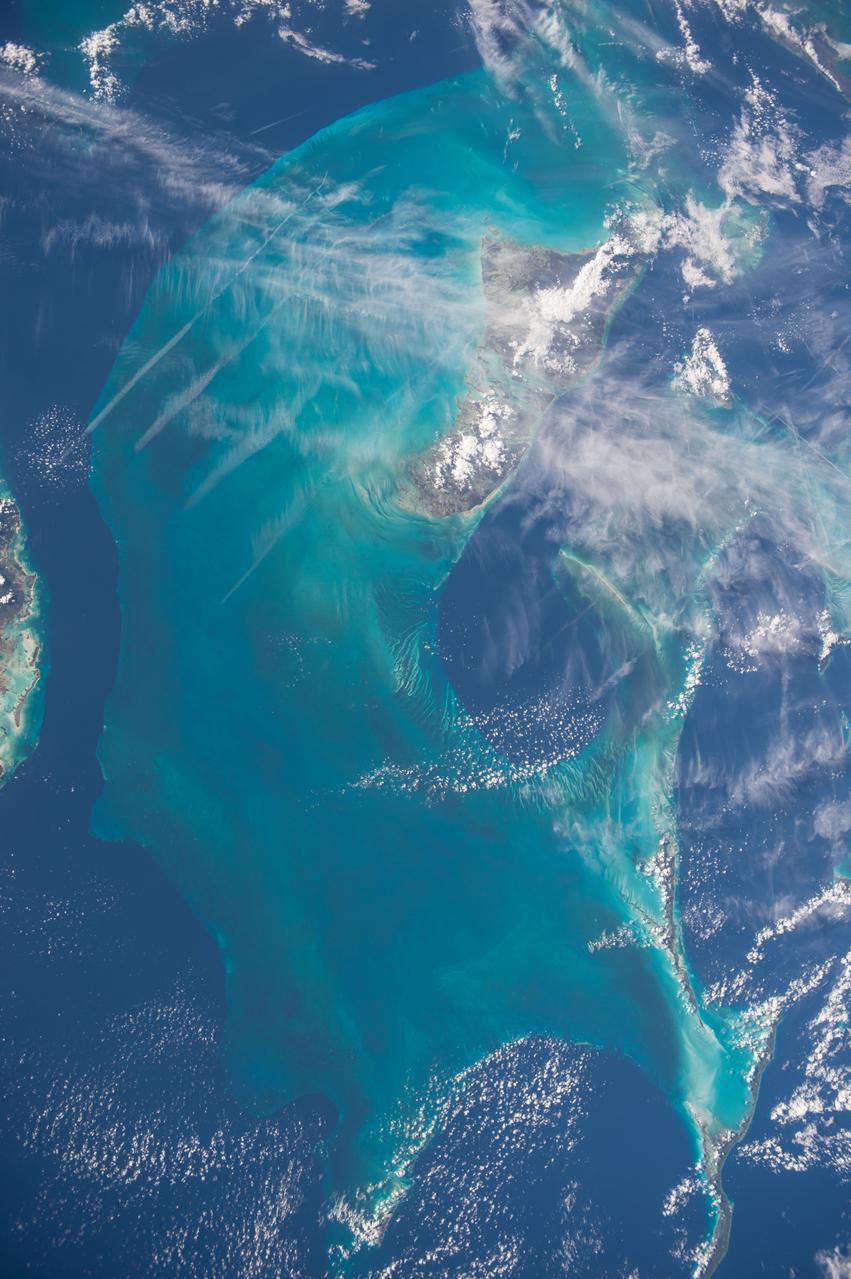
Earth Observations taken by Expedition 41 crewmember.
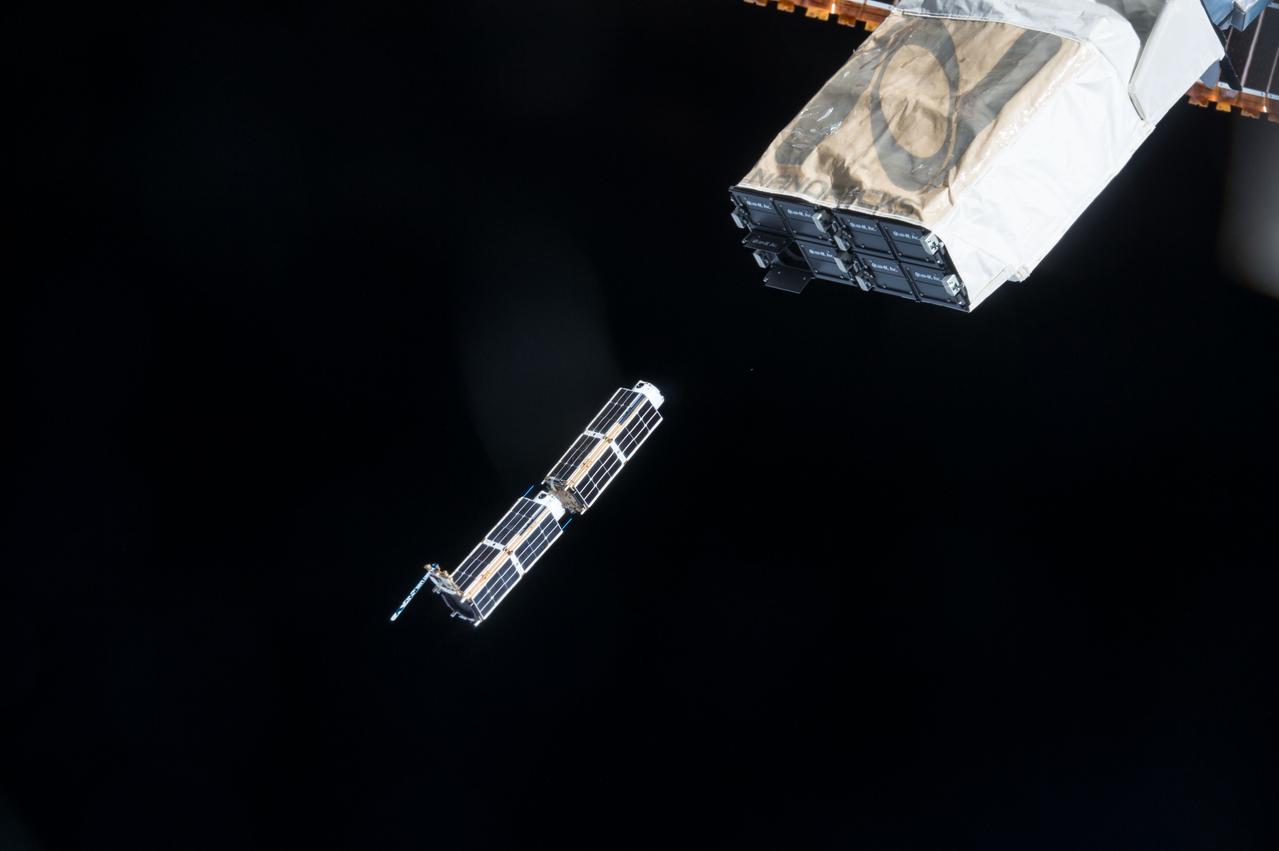
ISS042E290579 (02/27/2015) --- On Feb. 27 2015, a series of CubeSats, small experimental satellites, were deployed via a special device mounted on the Japanese Experiment Module (JEM) Remote Manipulator System (JEMRMS). Deployed satellites included twelve Dove sats, one TechEdSat-4, one GEARRSat, one LambdaSat, one MicroMas. These satellites perform a variety of functions from capturing new Earth imagery, to using microwave scanners to create 3D images of hurricanes, to even developing new methods for returning science samples back to Earth from space. The small satellites were deployed through the first week in March.
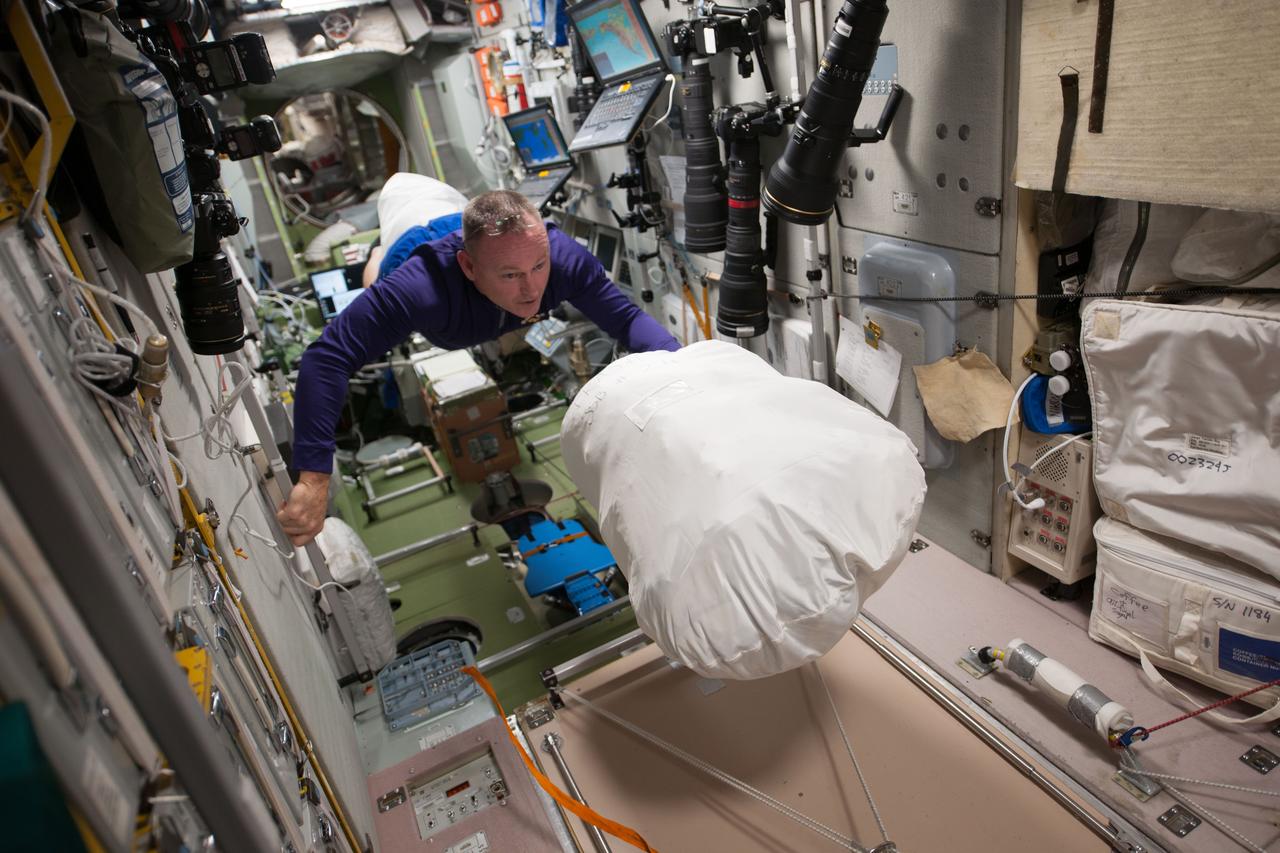
Commander Barry Wilmore floats through the Zvezda Service Module (SM) with a full Jettison Stowage Bag. Image was released by astronaut on Instagram.