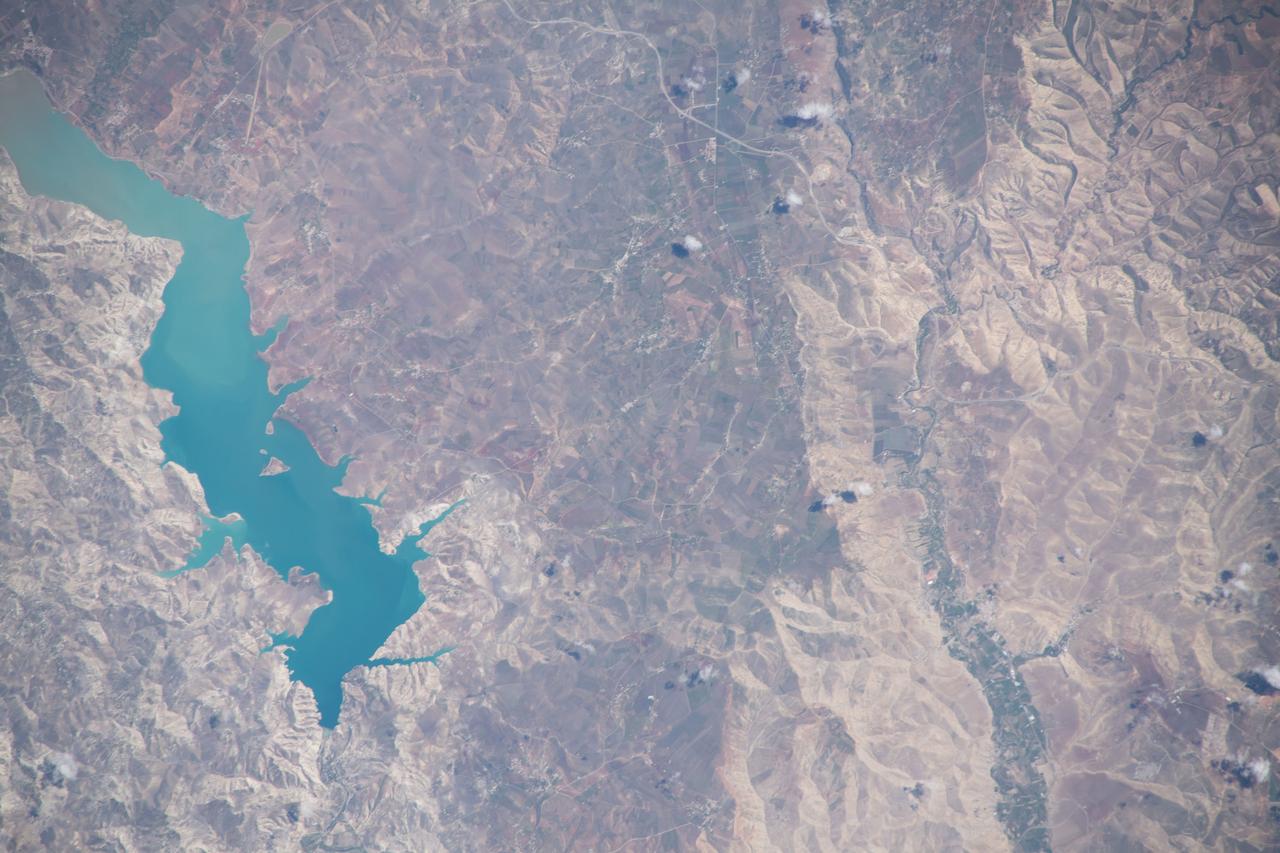
iss063e002302 (April 22, 2020) --- The Idriss I Dam in Morocco is pictured from the International Space Station as it orbited off the Atlantic coast of the North African nation.
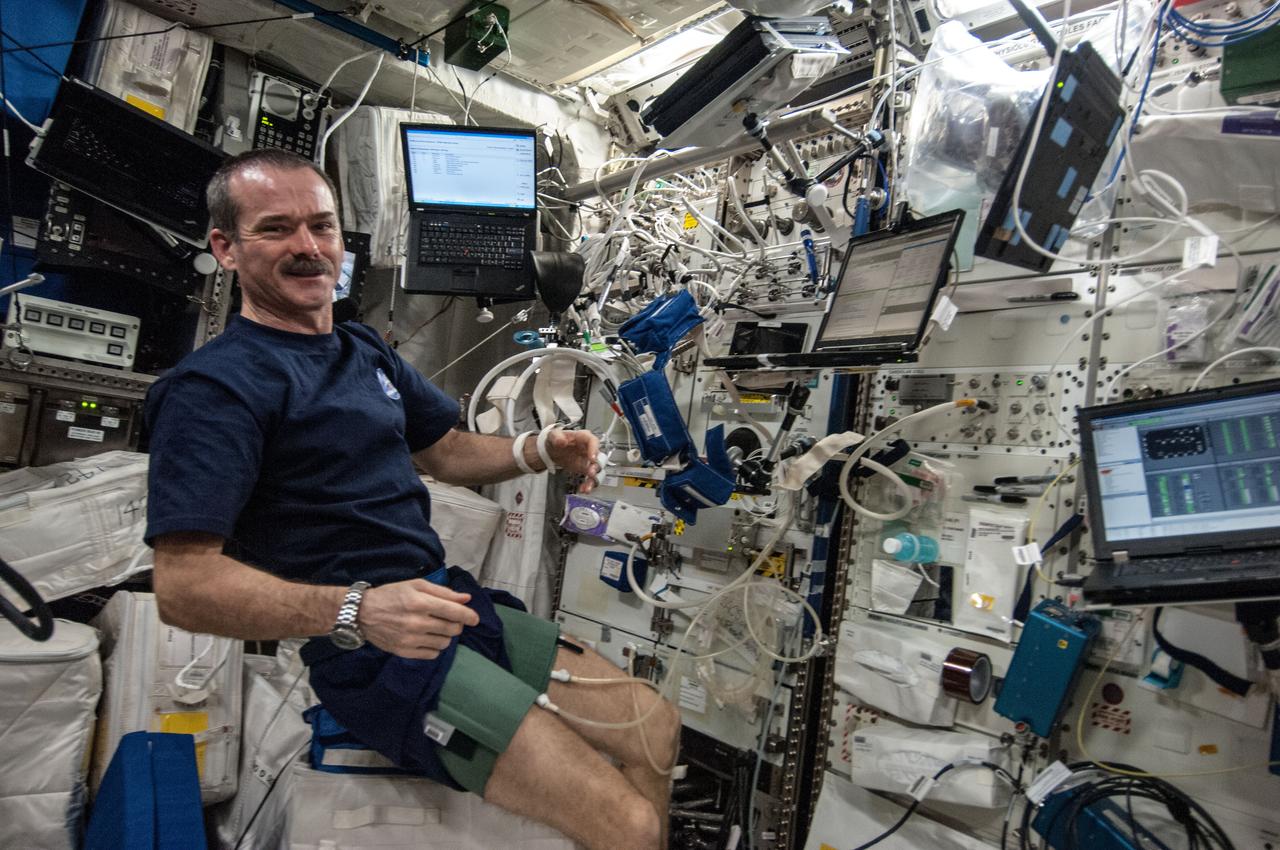
ISS035-E-022357 (17 April 2013) --- In support of the Blood Pressure Regulation Experiment (BP Reg), Expedition 35 Commander Chris Hadfield of the Canadian Space Agency is pictured after having set up the Human Research Facility (HRF) PFS (Pulmonary Function System) and the European Physiology Module (EPM) Cardiolab (CDL) Leg/Arm Cuff System (LACS) and conducting the first ever session of this experiment. The test, which will be repeated using other crew members as well, will help to identify the astronauts who could benefit from countermeasures before returning to Earth. Thus, this method has great potential for astronaut health monitoring during future long-term space flights and it also has important implications for testing of individuals on Earth, especially the elderly, who are at risk for fainting. The research will also allow demonstrating the feasibility of obtaining a set of indicators of overall cardiovascular regulation from the non-invasive measurement of continuous blood pressure.
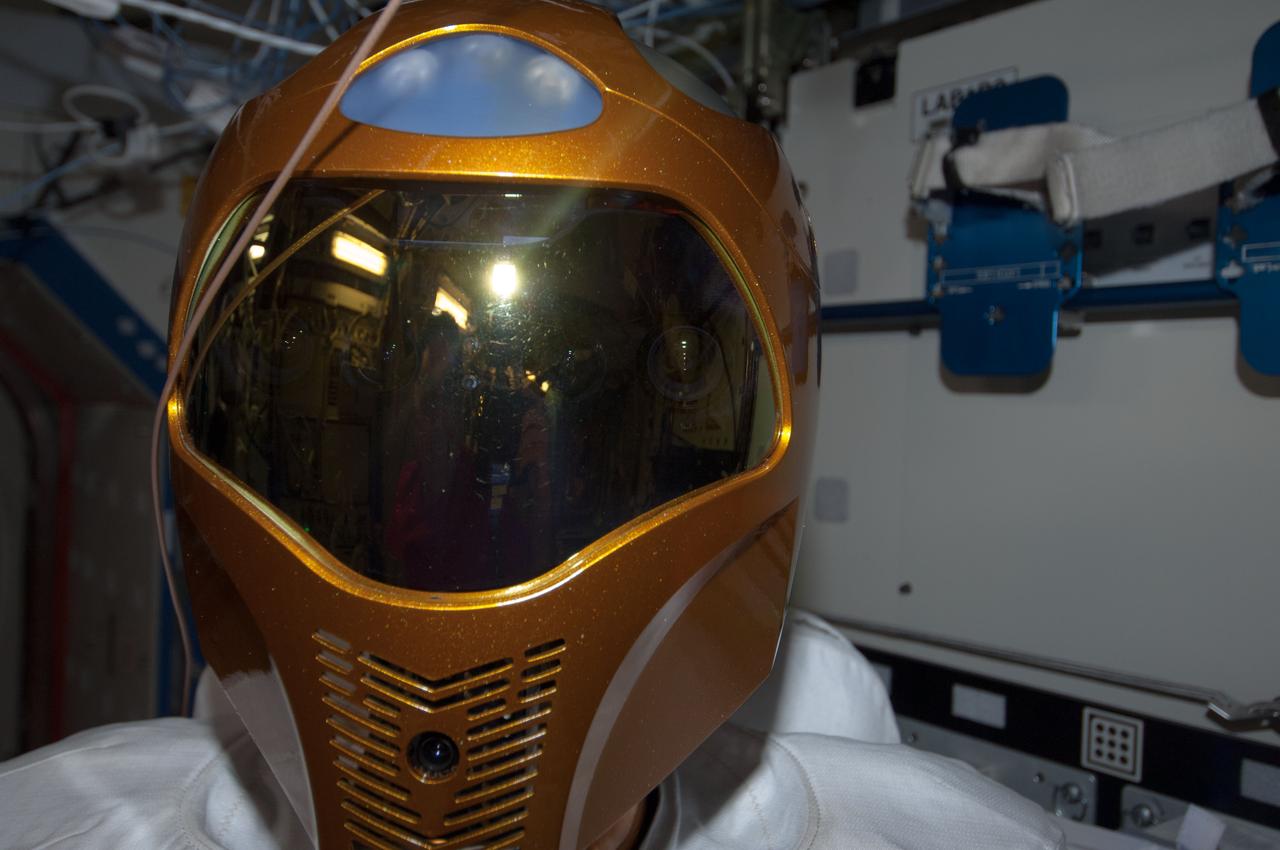
ISS035-E-016453 (9 April 2013) --- R-2 is busy in U.S. lab Destiny aboard the Earth-orbiting International Space Station during tele-operation (by ground controllers) to mimic movement of a crew member.
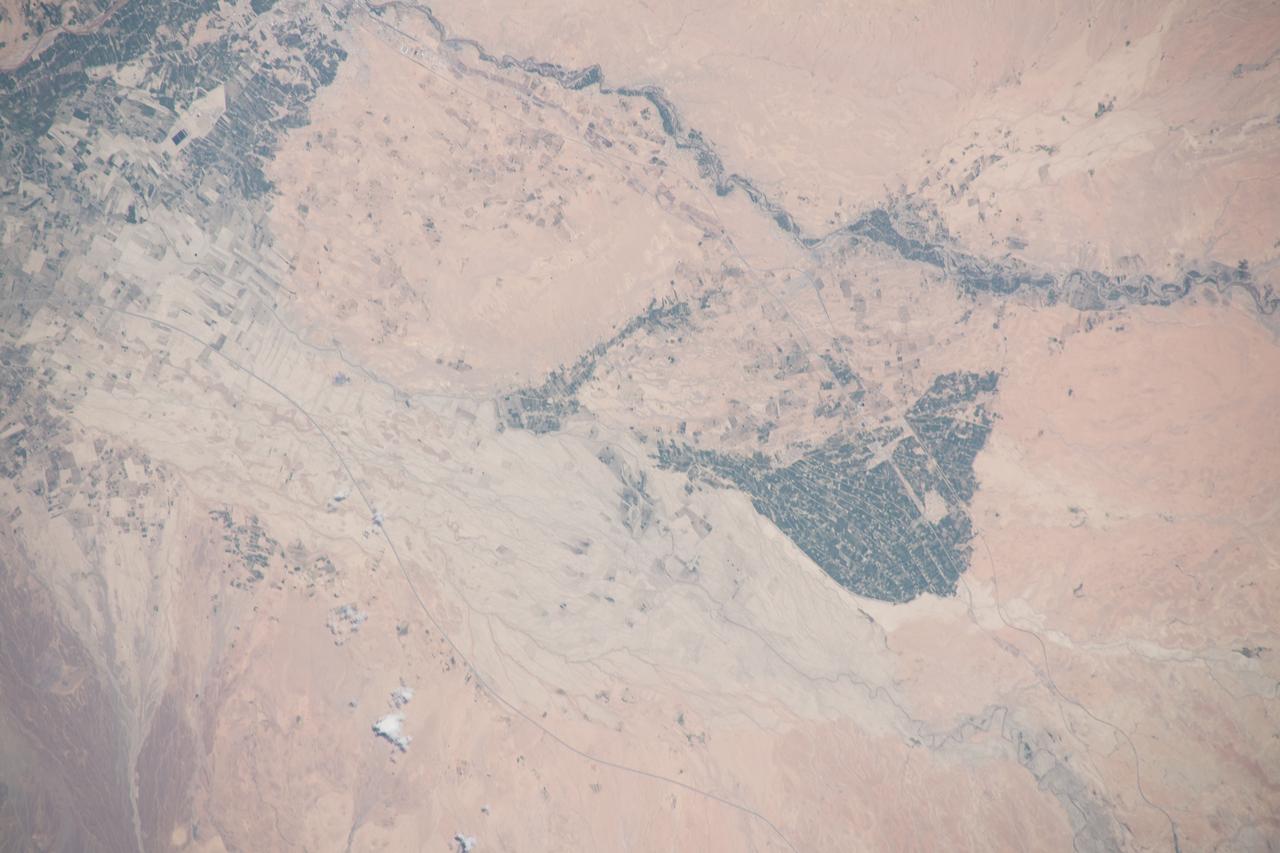
iss063e002345 (April 22, 2020) --- Oued Melloulou is a stream that runs through the Moroccan Province of Guercif which also hosts its capital town of Guercif (upper left) and the rural commune of Taddart (center right).
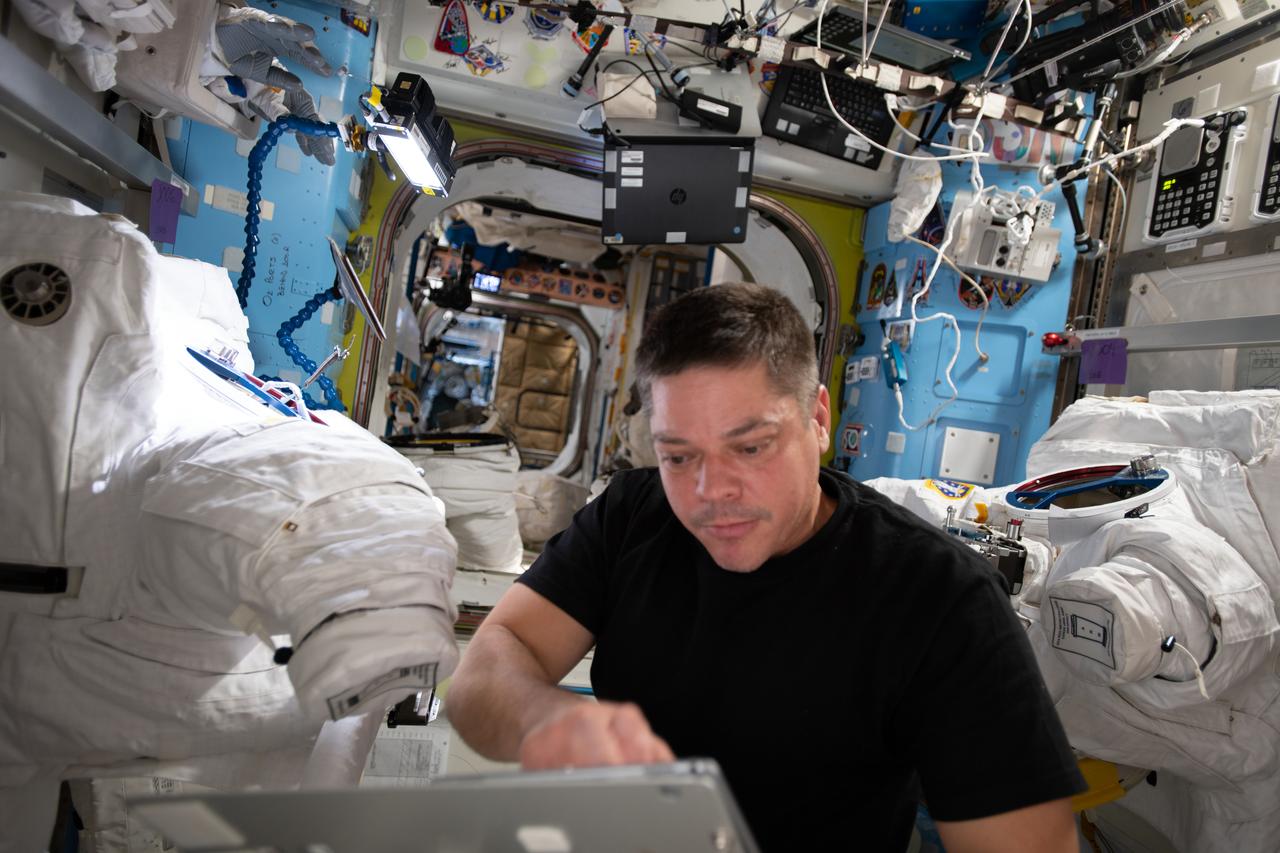
iss063e030591 (June 18, 2020) --- NASA astronaut and Expedition 63 Flight Engineer Bob Behnken reviews maintenance procedures on a computer while working on U.S. spacesuits inside the International Space Station's Quest airlock.
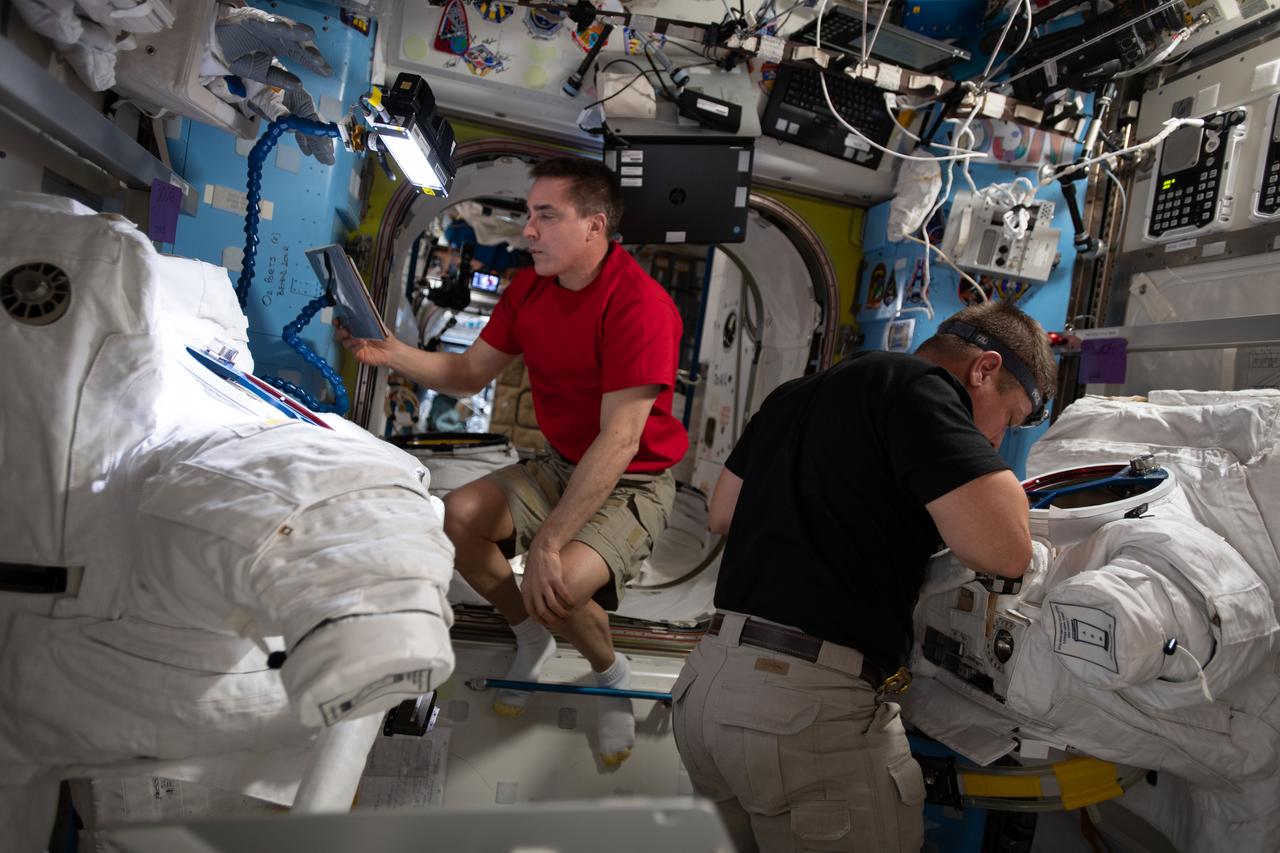
iss063e030599 (June 18, 2020) --- (From left) Expedition 63 Commander Chris Cassidy and Flight Engineer Bob Behnken work on U.S. spacesuit maintenance inside the International Space Station's Quest airlock.
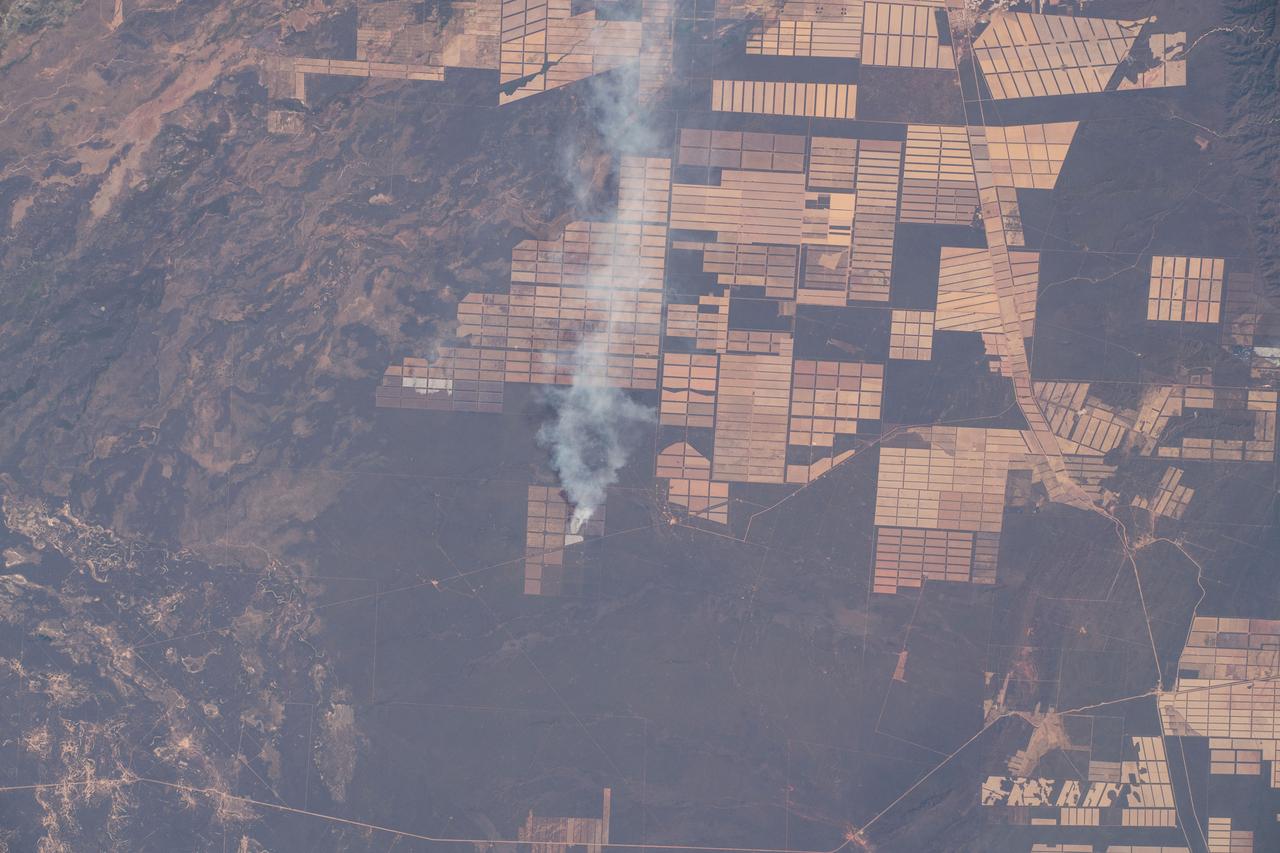
iss063e093344 (Sept. 22, 2020) --- A wildfire is pictured in northern Argentina as the International Space Station was orbiting across the South American continent.
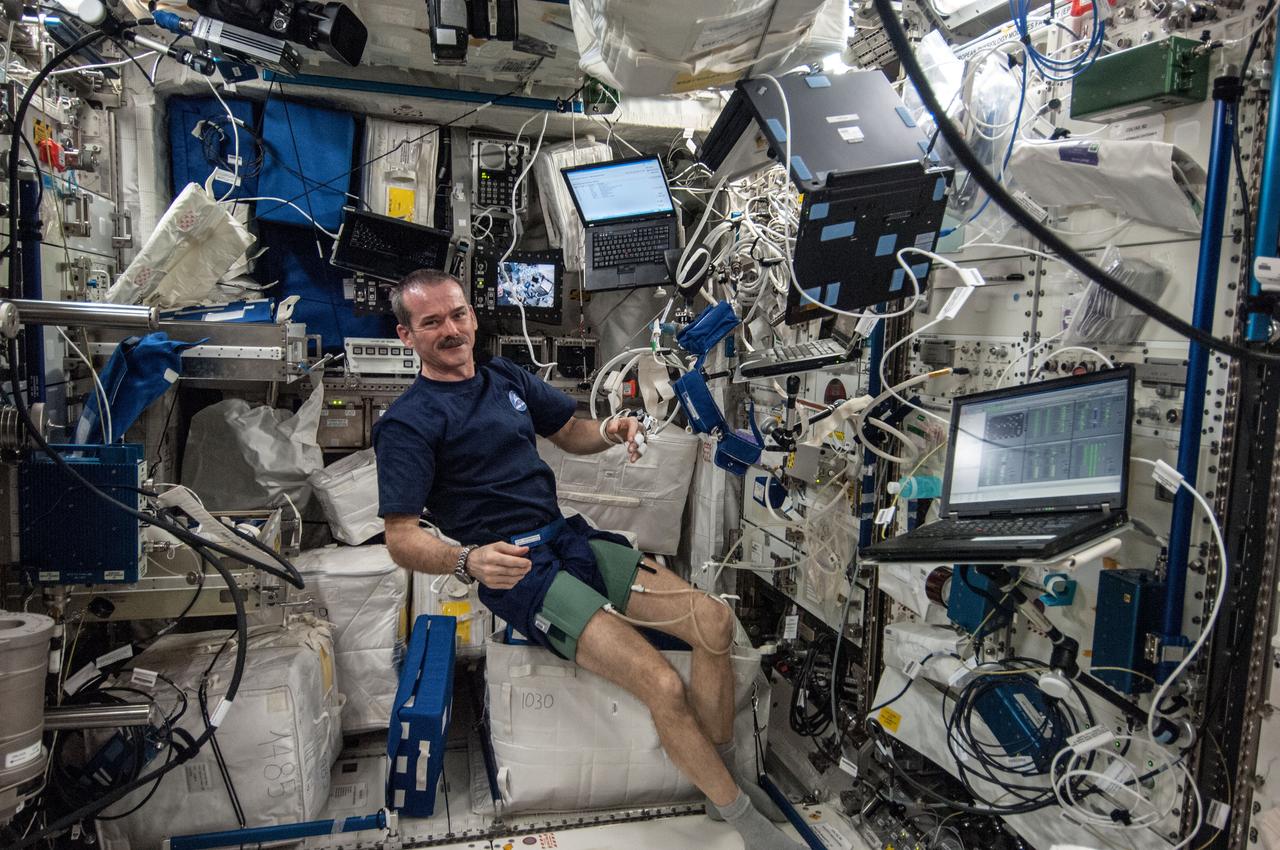
ISS035-E-022356 (17 April 2013) --- In support of the Blood Pressure Regulation Experiment (BP Reg), Expedition 35 Commander Chris Hadfield of the Canadian Space Agency is pictured after having set up the Human Research Facility (HRF) PFS (Pulmonary Function System) and the European Physiology Module (EPM) Cardiolab (CDL) Leg/Arm Cuff System (LACS) and conducting the first ever session of this experiment. The test, which will be repeated using other crew members as well, will help to identify the astronauts who could benefit from countermeasures before returning to Earth. Thus, this method has great potential for astronaut health monitoring during future long-term space flights and it also has important implications for testing of individuals on Earth, especially the elderly, who are at risk for fainting. The research will also allow demonstrating the feasibility of obtaining a set of indicators of overall cardiovascular regulation from the non-invasive measurement of continuous blood pressure.
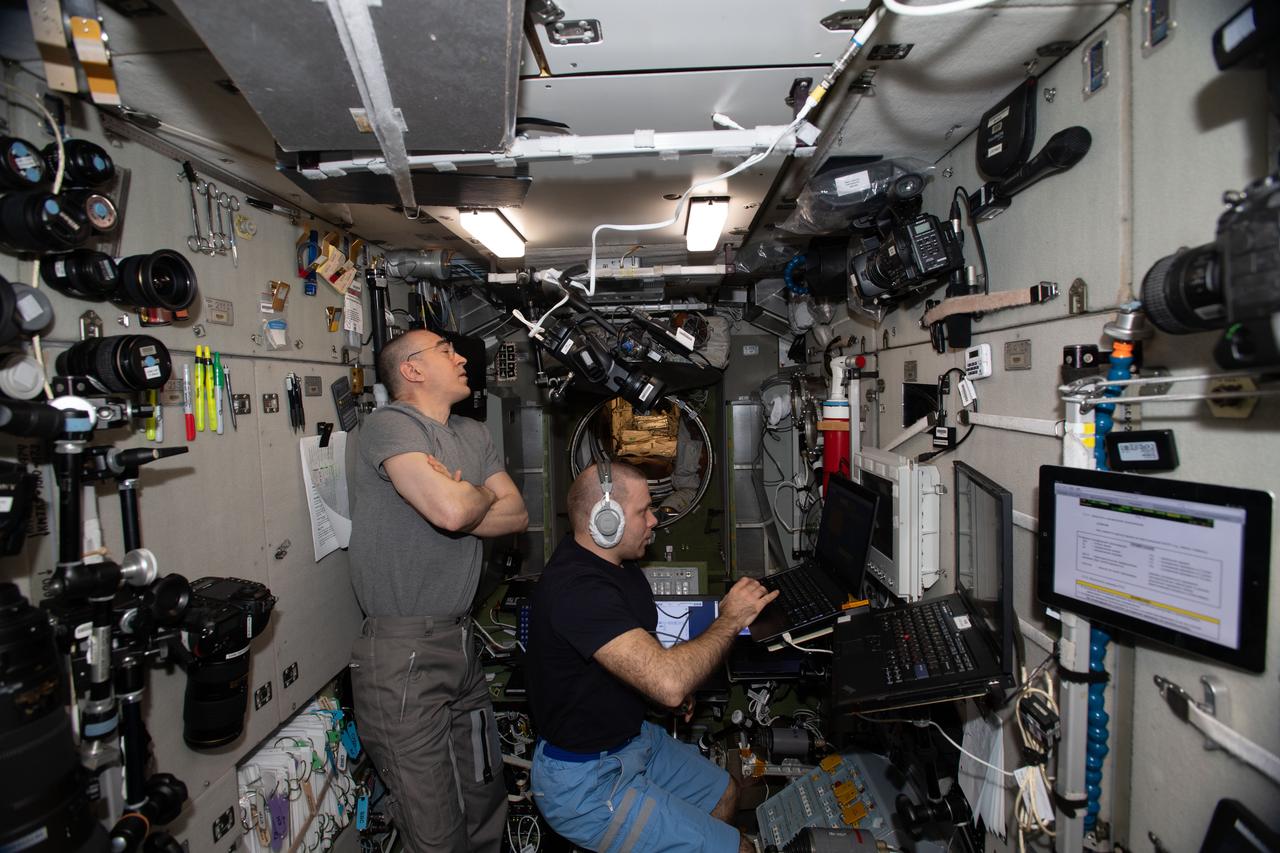
iss063e041665 (July 9, 2020) --- Roscosmos Flight Engineers (from left) Anatoly Ivanishin and Ivan Vagner practice a simulated emergency evacuation of the International Space Station on a computer inside the Zvezda service module. The duo with Expedition 63 Commander Chris Cassidy (out of frame) spent the afternoon reviewing procedures for quickly entering their Soyuz MS-16 crew ship for a rapid undocking and Earth re-entry.
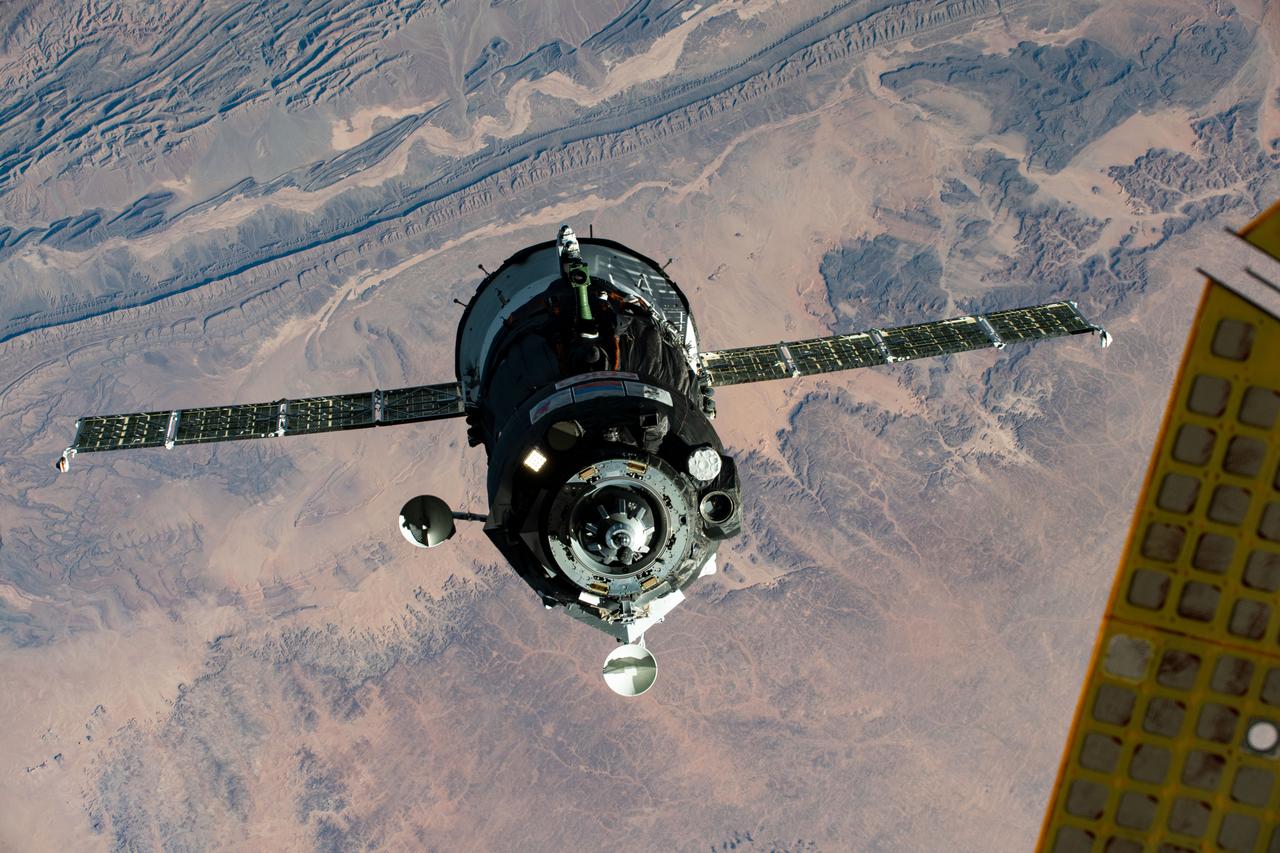
iss063e107170 (Oct. 14, 2020) --- The Soyuz MS-17 spacecraft, with Expedition 64 crew members Kate Rubins of NASA and Roscosmos cosmonauts Sergey Ryzhikov and Sergey Kud-Sverchkov, approaches the International Space Station for a docking to the Rassvet module. This photograph was taken as both spacecraft were orbiting above Morocco.
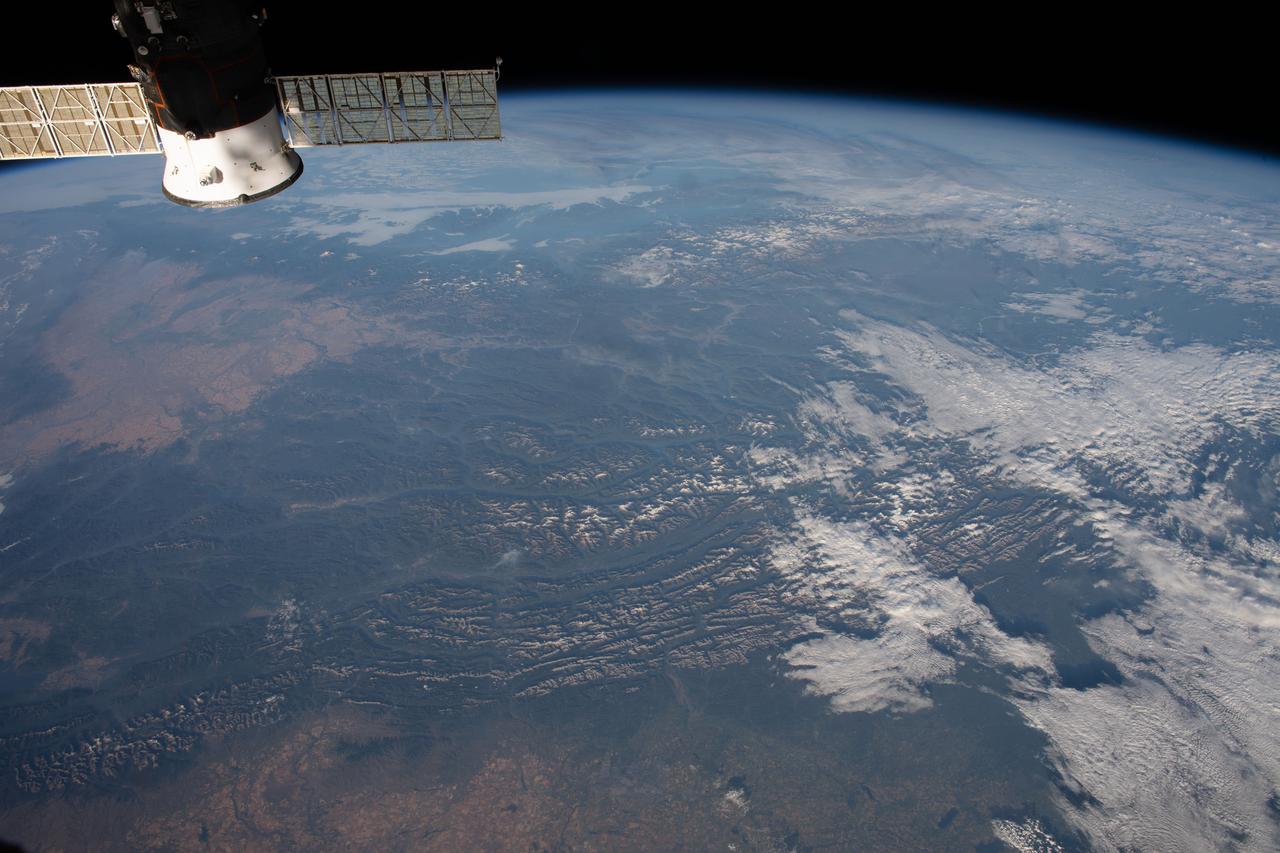
iss063e080437 (Aug. 26, 2020) --- The International Space Station was orbiting above North America when an Expedition 63 crew member, looking from northeast to southwest, photographed the Rocky Mountains running from Canada and into the United States.
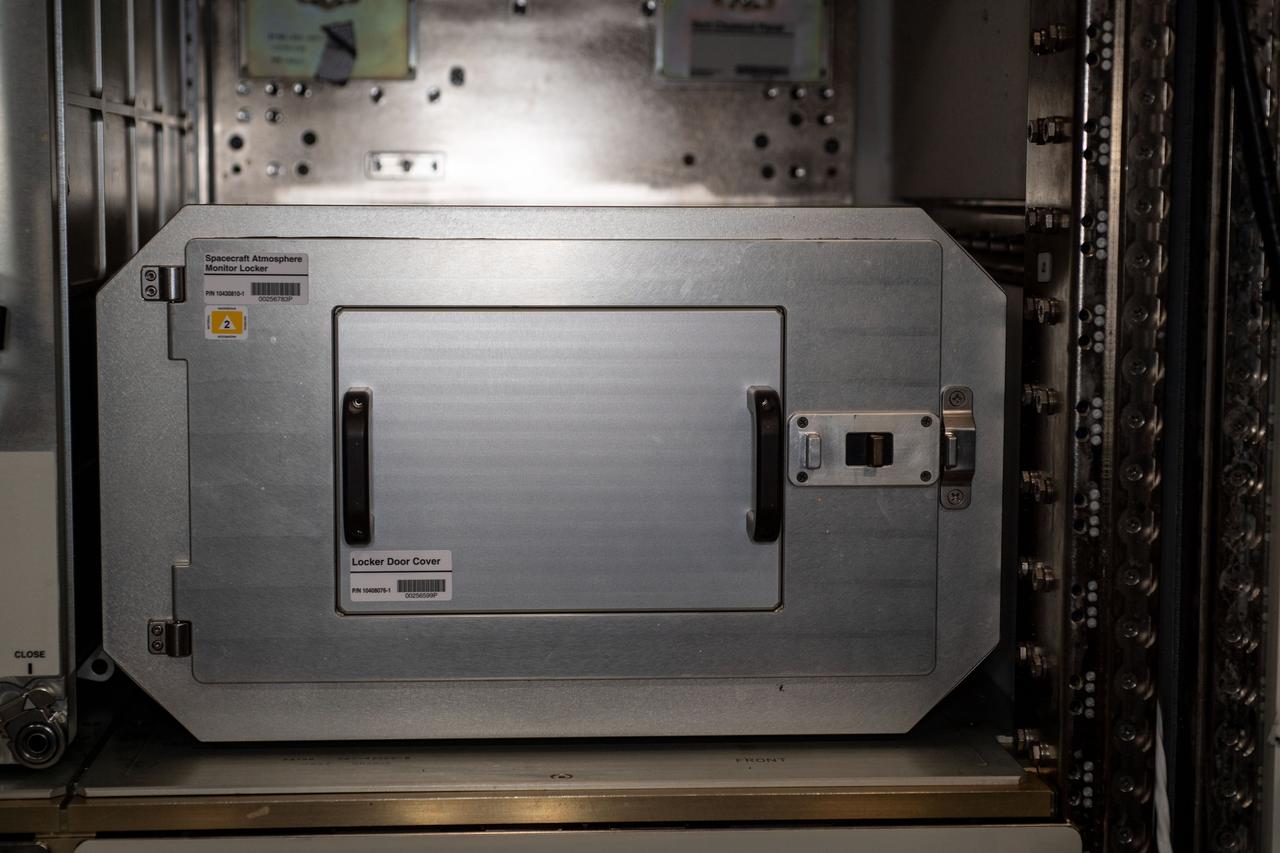
iss063e012814 (5/14/2020) --- A view of Spacecraft Atmosphere Monitor empty locker at Expedite the Processing of Experiments to the Space Station (EXPRESS) Rack 8 shown with protective locker door cover installed in the U.S. Laboratory aboard the International Space Station (ISS). The Spacecraft Atmosphere Monitor investigation demonstrates the capabilities of a small, reliable, portable gas chromatograph mass spectrometer instrument aboard the ISS to conduct major and minor elements of air measurement. The instrument transmits data back to the ground research team every two seconds, providing a continuous analysis to the ground research team.
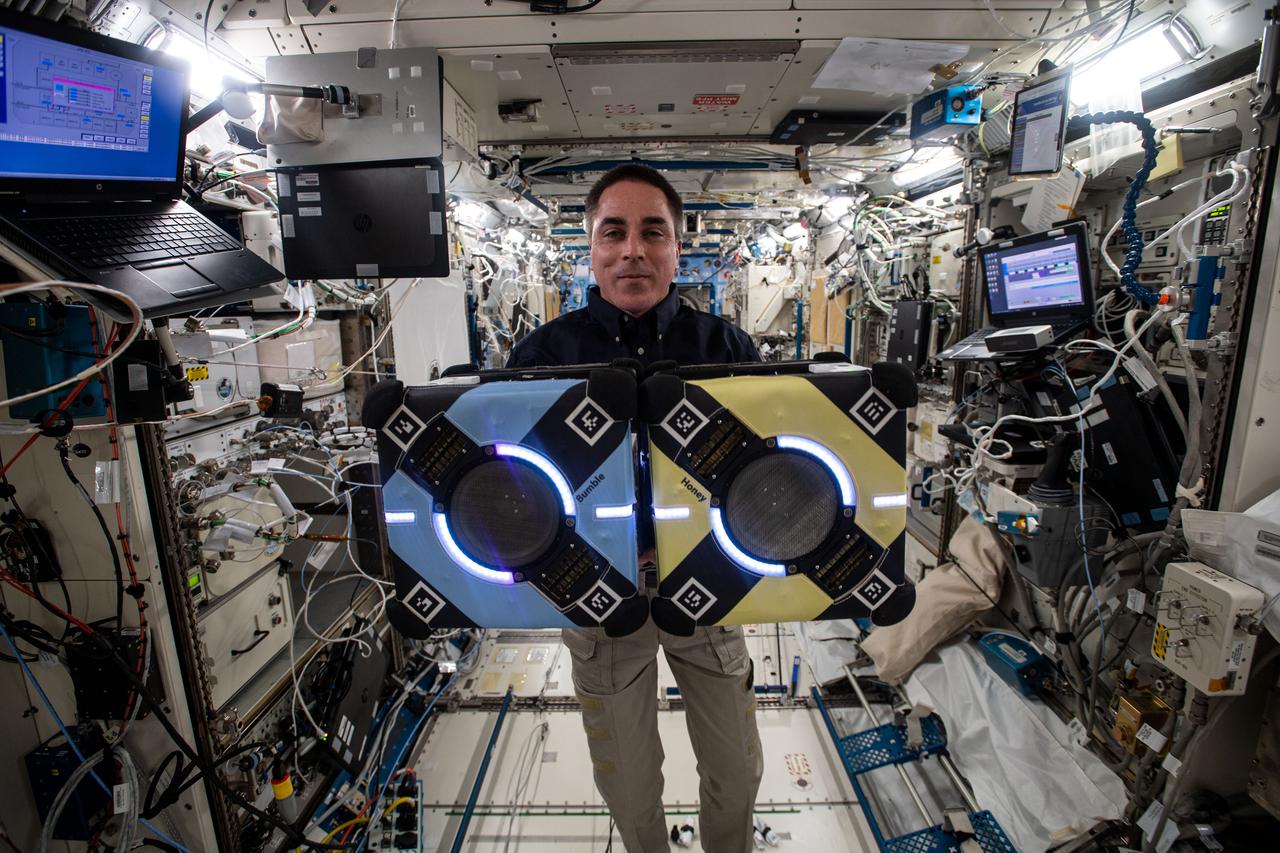
iss063e084529 (Sept. 4, 2020) --- NASA astronaut and Expedition 63 Commander Chris Cassidy poses with two Astrobee robotic assistants during visual and navigation tests inside the Kibo laboratory module from JAXA (Japan Aerospace Exploration Agency).
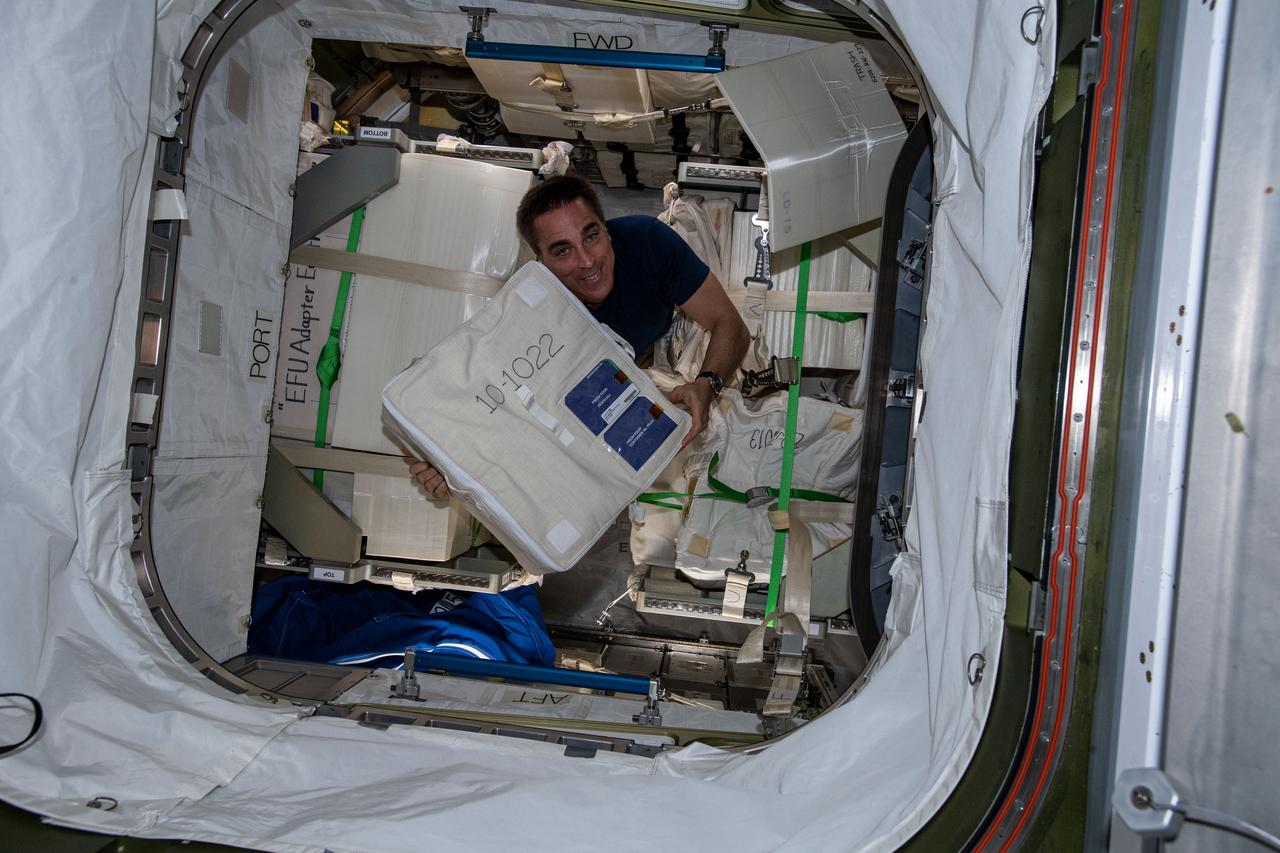
iss063e017199 (May 26, 2020) --- NASA astronaut and Expedition 63 Commander Chris Cassidy unloads a bag packed with fresh food from Japan's resupply ship, the H-II Transfer Vehicle-9 (HTV-9), that had arrived at the International Space Station the day before.
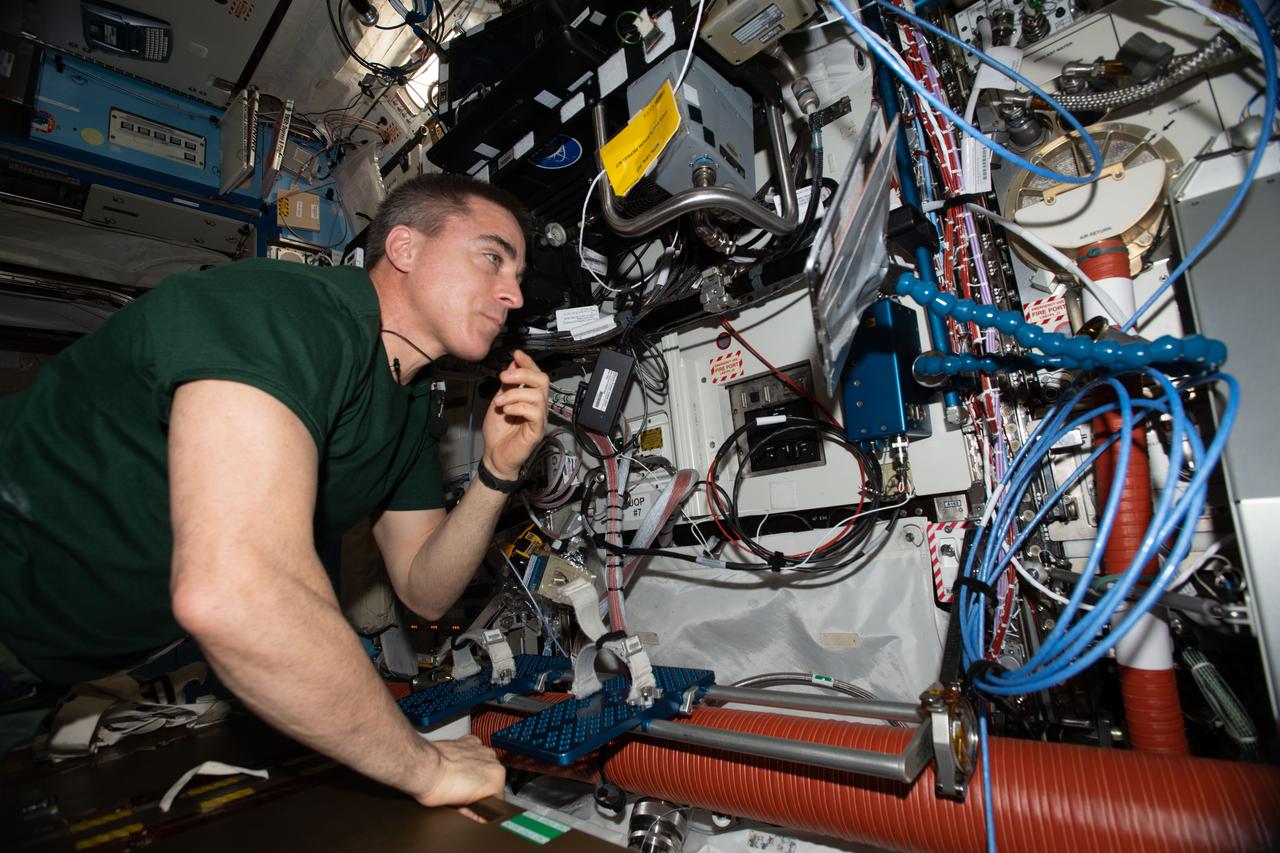
iss063e044599 (July 13, 2020) --- NASA astronaut and Expedition 63 Commander Chris Cassidy swaps a hard disk drive during computer maintenance on the robotics work station which controls and commands the Canadarm2 robotic arm.
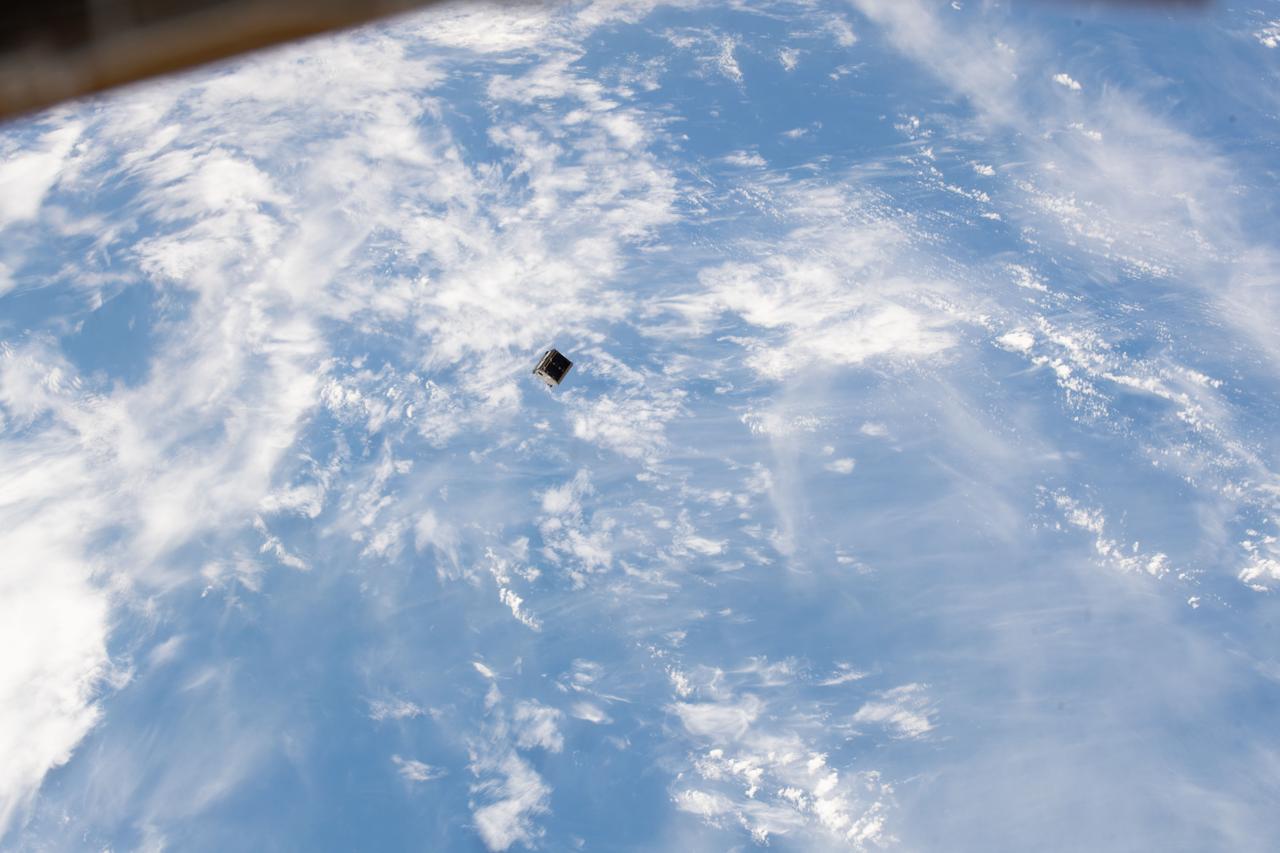
iss063e003547 (4/28/2020) --- The Quetzal-1 CubeSat is seen as it deploys from the JEM Small Satellite Orbital Deployer aboard the International Space Station. Quetzal-1 is Guatemala’s first satellite. It was developed in-house at Universidad del Valle de Guatemala (UVG) and tests a multispectral remote sensor prototype composed of a camera, a piezoelectric motor, and a filter carousel designed to acquire images at different wavelengths.
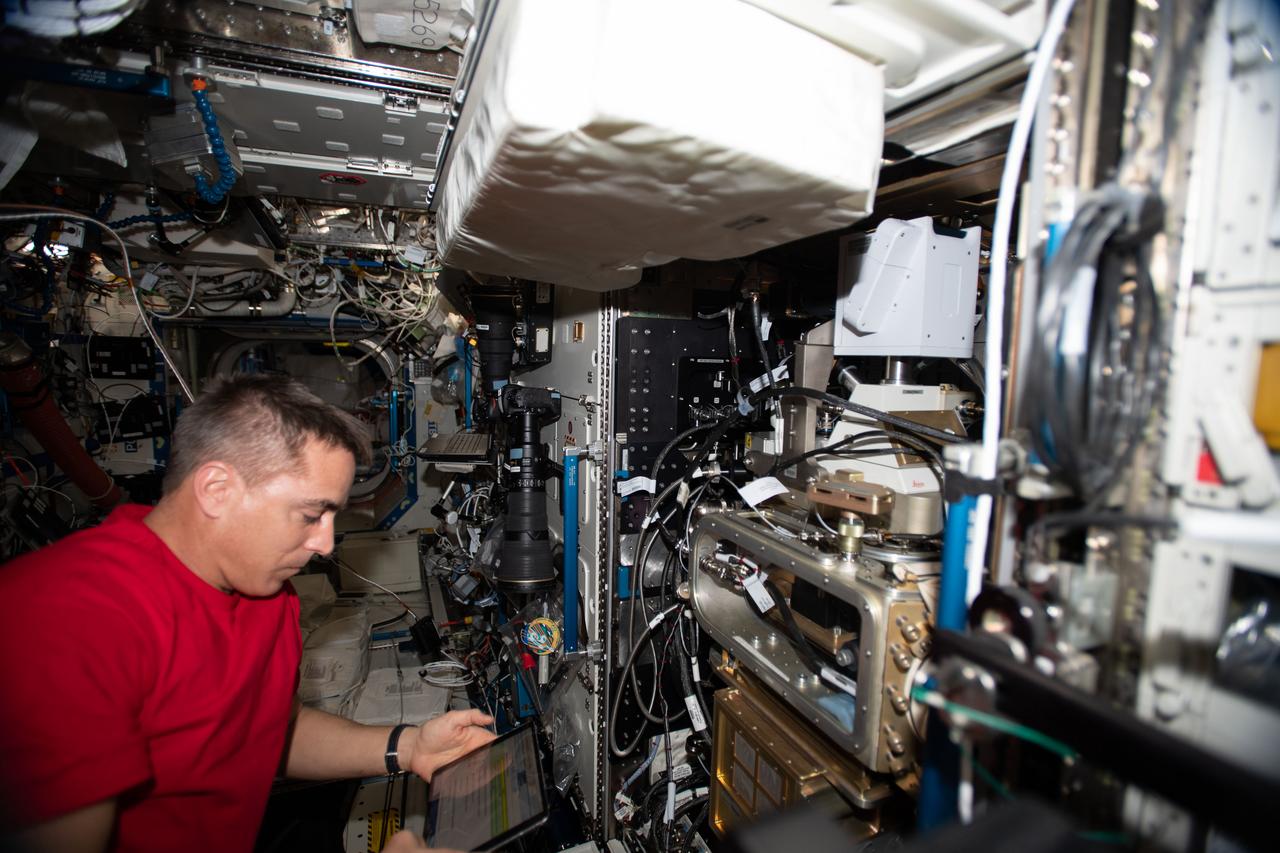
iss063e001782 (April 21, 2020) --- NASA astronaut and Expedition 63 Commander Chris Cassidy works on the Fluids Integrated Rack (FIR) replacing components in the research device that studies the behavior of fluids in microgravity. The FIR will help promote the design of advanced space-based fuel tanks and other complex fluid transfer systems.
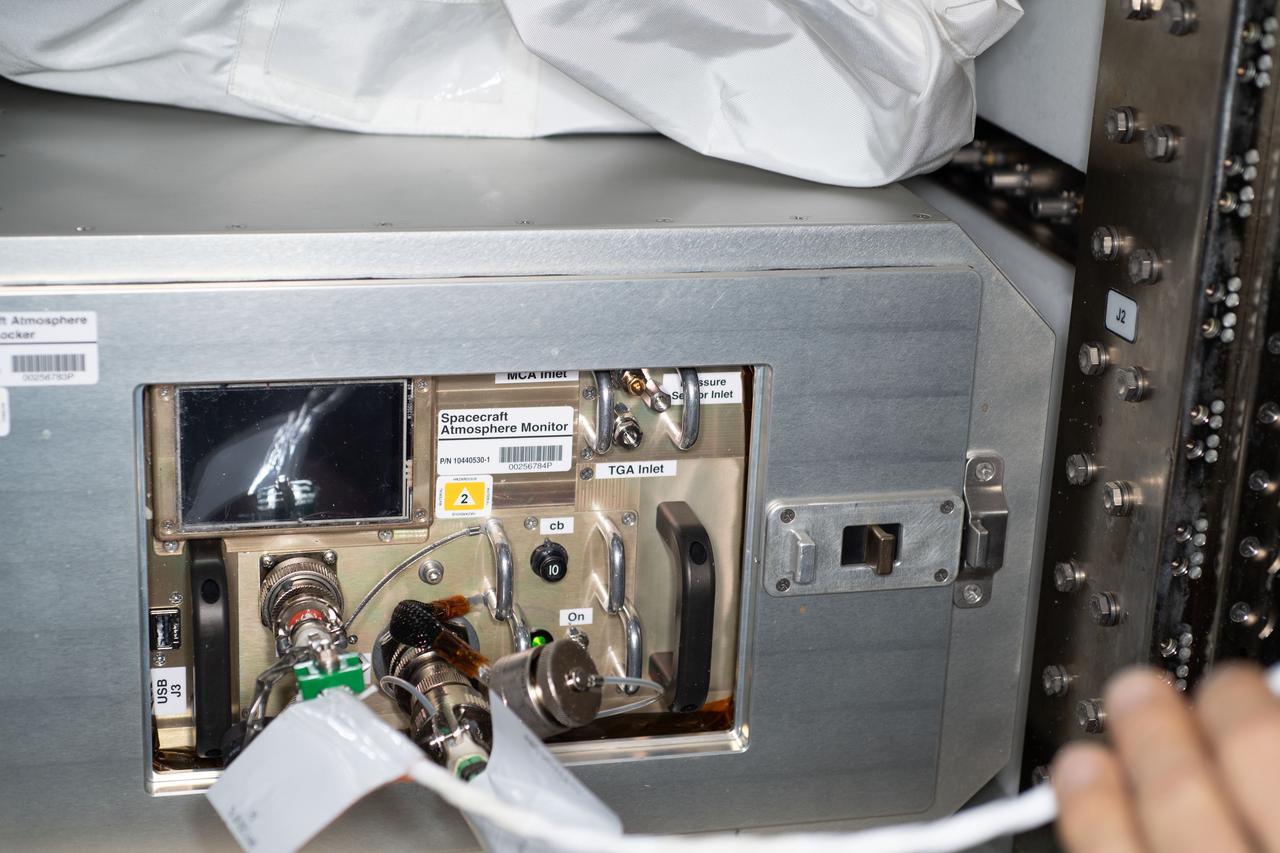
iss063e012706 (5/14/2020) --- A view of the Spacecraft Atmosphere Monitor inside Spacecraft Atmosphere Monitor Locker in the U.S. Laboratory Expedite the Processing of Experiments to the Space Station (EXPRESS) Rack 8 aboard the International space Station (ISS). The Spacecraft Atmosphere Monitor investigation demonstrates the capabilities of a small, reliable, portable gas chromatograph mass spectrometer instrument aboard the ISS to conduct major and minor elements of air measurement. The instrument transmits data back to the ground research team every two seconds, providing a continuous analysis to the ground research team.
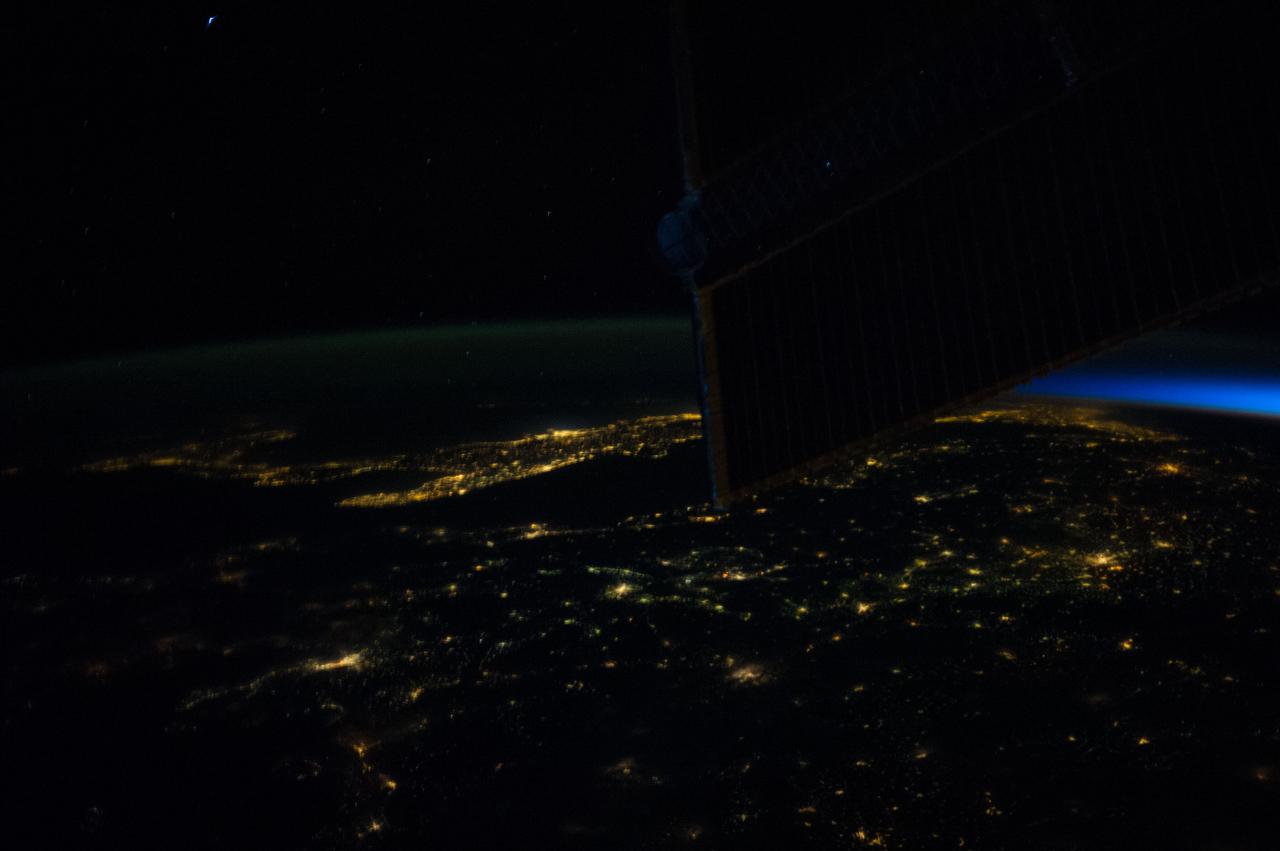
ISS036-E-027014 (31 July 2013) --- One of the Expedition 36 crew members aboard the Earth-orbiting International Space Station, as it was passing over Eastern Europe on July 31, 2013, took this night picture looking toward the Mediterranean Sea, which almost blends into the horizon. Also visible are the Aegean Sea, Adriatic Sea and Mediterranean Sea. Parts of the following countries are among those visible as well: Greece, Italy, Sicily, Bulgaria, Serbia, Croatia and Albania. The high oblique 50mm lens shot includes a number of stars in the late July sky. A solar array panel is visible in the darkness on the right side of the frame.
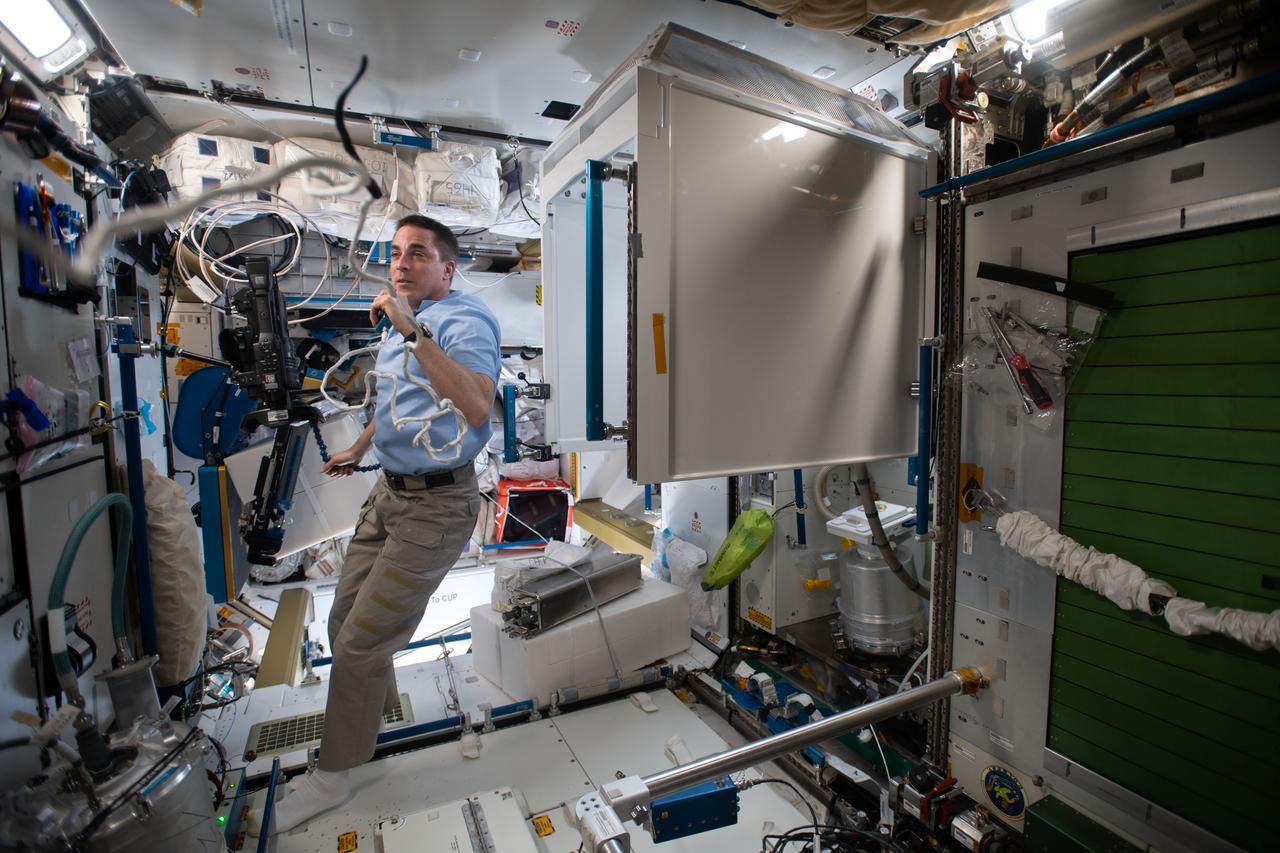
iss063e087493 (Sept. 10, 2020) --- NASA astronaut and Expedition 63 Commander Chris Cassidy calls down to Mission Control and gets ready for high-flying, orbital plumbing work inside the Waste and Hygiene Compartment, the International Space Station's bathroom located inside the Tranquility module.
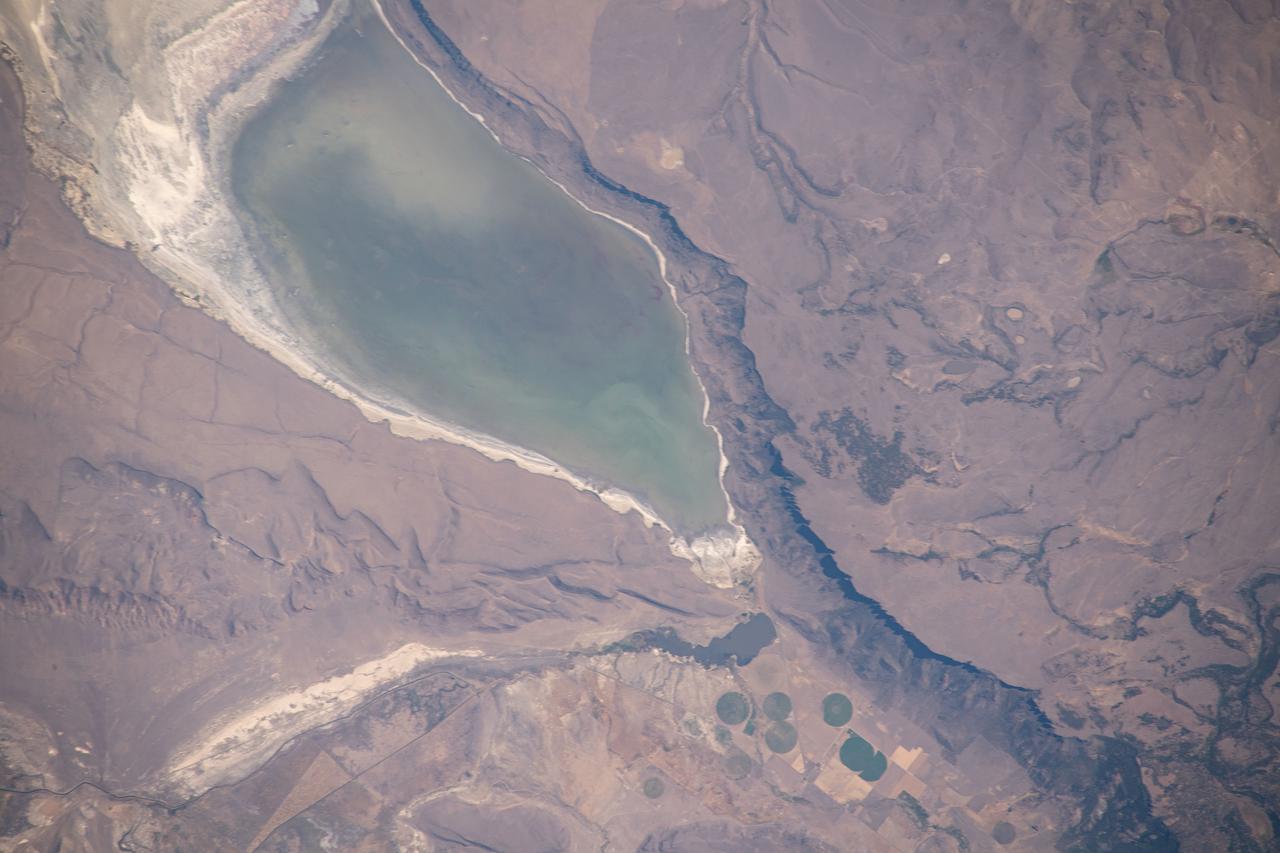
iss063e070781 (Aug. 14, 2020) --- The high-saline Lake Abert, surrounded by arid land in Oregon, is pictured from the International Space Station as it orbited above the western United States.
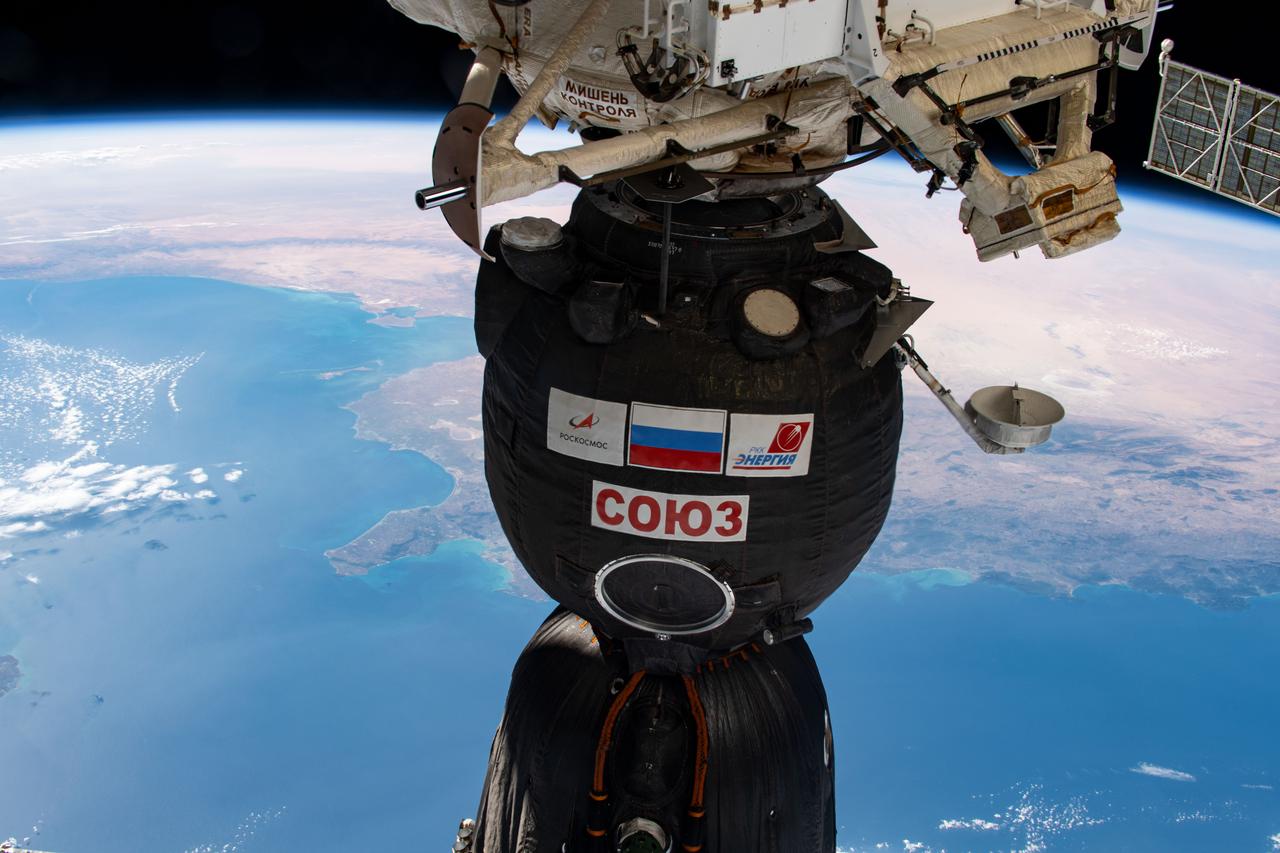
iss063e107419 (Oct. 14, 2020) --- The Soyuz MS-17 spacecraft, with Expedition 64 crew members Kate Rubins of NASA and Roscosmos cosmonauts Sergey Ryzhikov and Sergey Kud-Sverchkov, docked to the Rassvet module as the International Space Station was orbiting above the Mediterranean Sea.
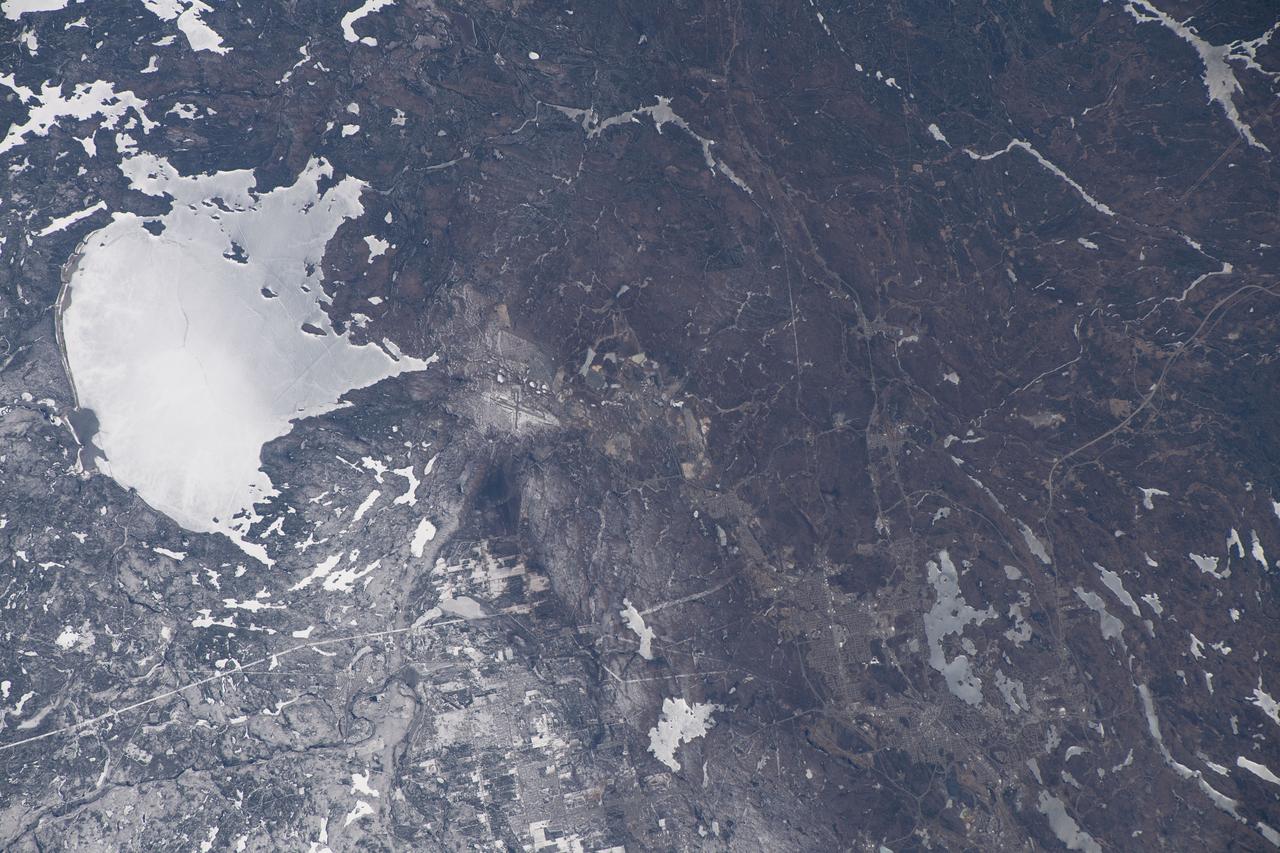
iss063e002471 (April 22, 2020) --- Canada's Wanapitei Lake is pictured from the International Space Station as it was orbiting over the province of Ontario.
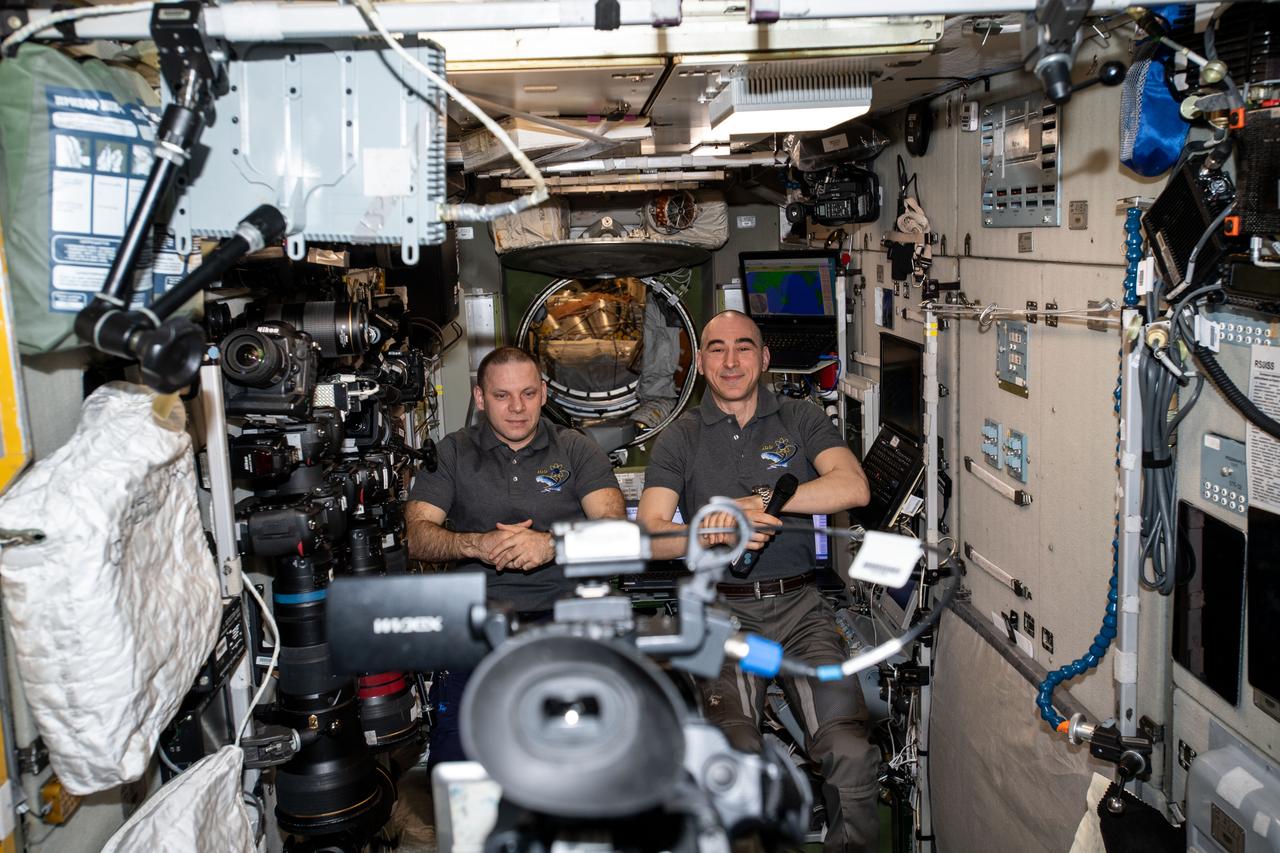
iss063e020091 (May 14, 2020) --- Roscosmos cosmonauts and Expedition 63 Flight Engineers (from left) Ivan Vagner and Anatoly Ivanishin record a public affairs event for Russian media from the International Space Station's Zvezda service module.
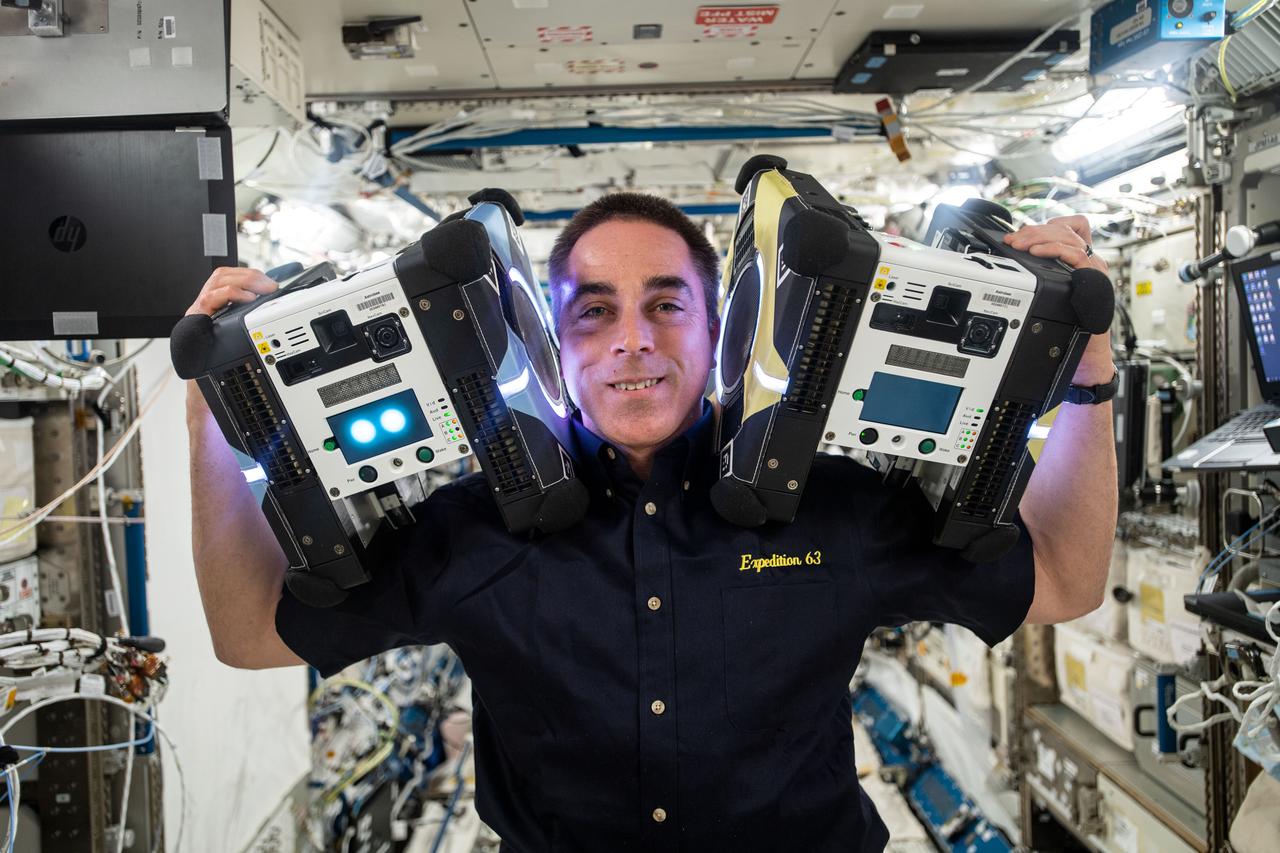
iss063e084515 (Sept. 4, 2020) --- NASA astronaut and Expedition 63 Commander Chris Cassidy poses with two Astrobee robotic assistants during visual and navigation tests inside the Kibo laboratory module from JAXA (Japan Aerospace Exploration Agency).
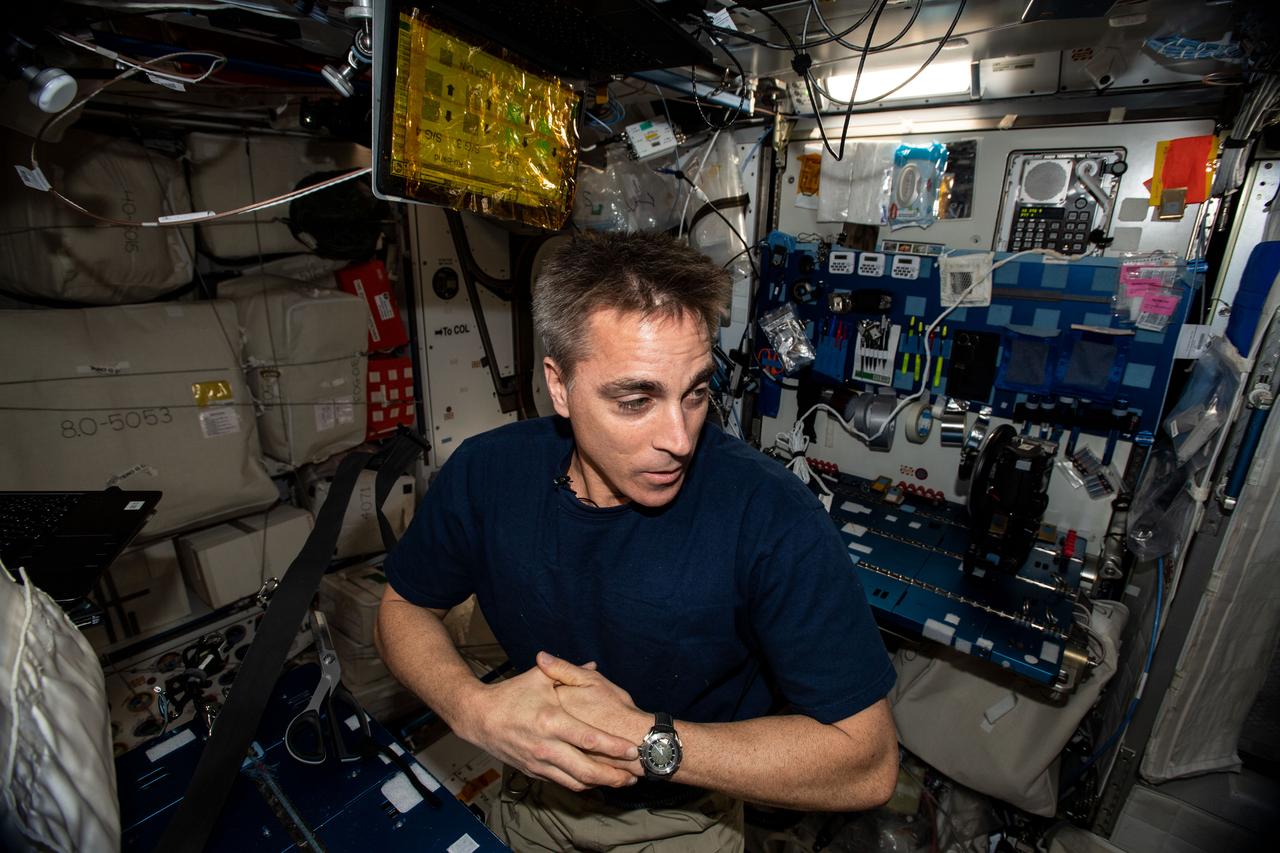
iss063e010080 (May 8, 2020) --- NASA astronaut and Expedition 63 Commander Chris Cassidy is pictured in the International Space Station's Harmony module working on maintenance tasks.
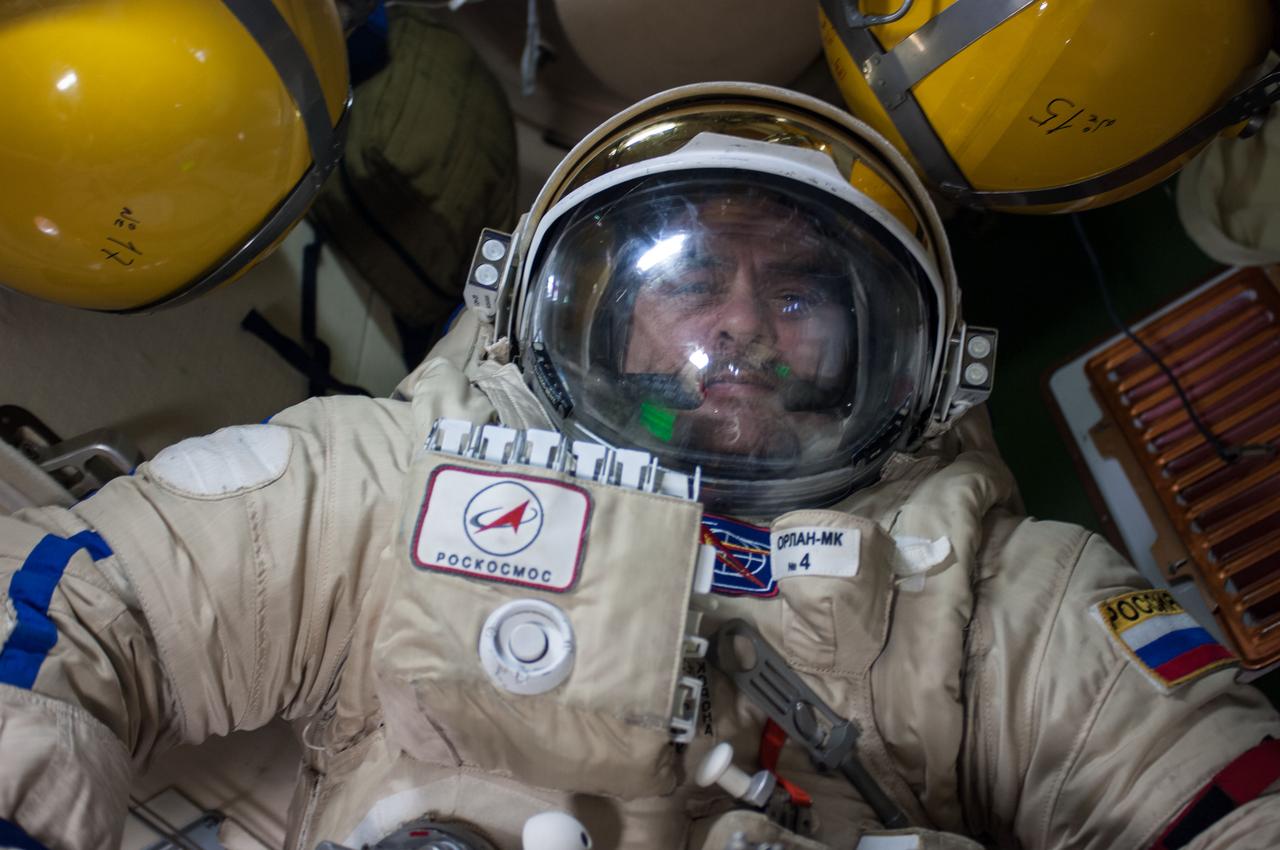
ISS035-E-023811 (17 April 2013) --- Expedition 35 Russian cosmonaut Pavel Vinogradov, fully equipped with an Orlan EVA suit, participates in a "dry run" of the first spacewalk of the Expedition 35 mission, scheduled for April 19. Vinogradov and fellow cosmonaut Roman Romanenko (out of frame) have been assigned to devote about six hours upgrading the station?s exterior hardware.
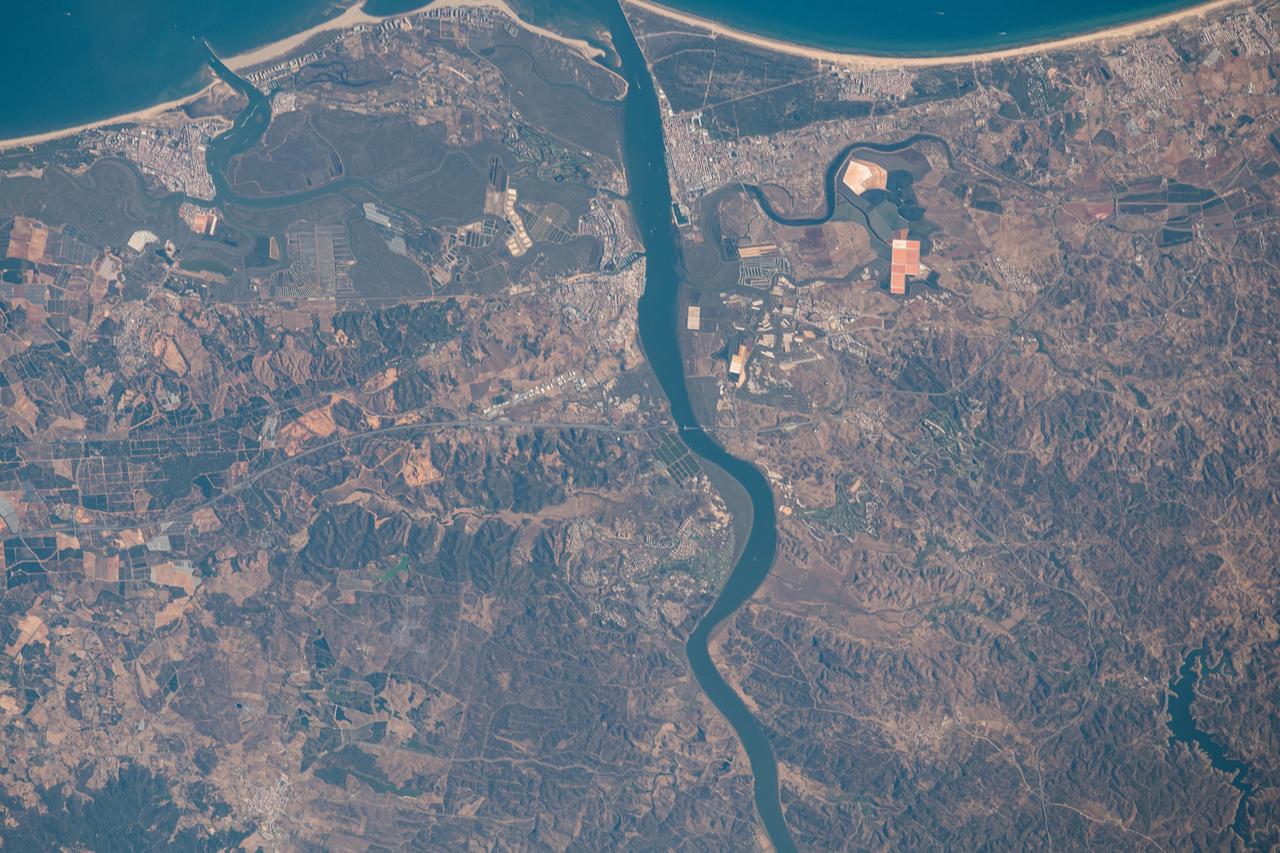
iss063e070330 (Aug. 13, 2020) --- The Guadiana River flows into the Gulf of Cádiz in the Atlantic Ocean and is the border for the southern coastal portions of Portugal (right) and Spain (left)
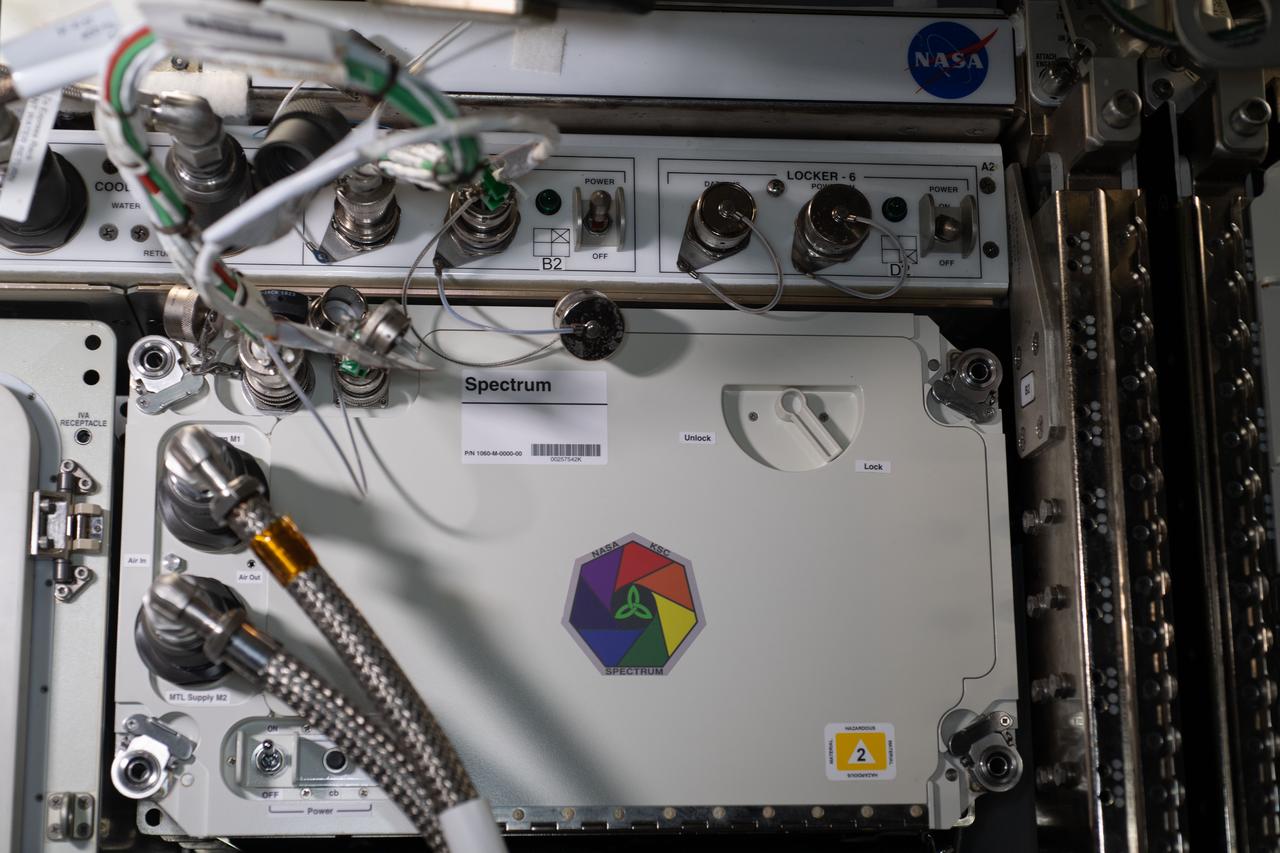
iss063e026090 (6/11/2020) --- A view during the Spectrum Facility installation into Expedite the Processing of Experiments to the Space Station (EXPRESS) Rack aboard the International space Station (ISS). Spectrum takes fluorescent images of biological specimens contained within a controlled environment. A high resolution, monochrome camera captures images of fluoresced proteins of plants within Petri plates.
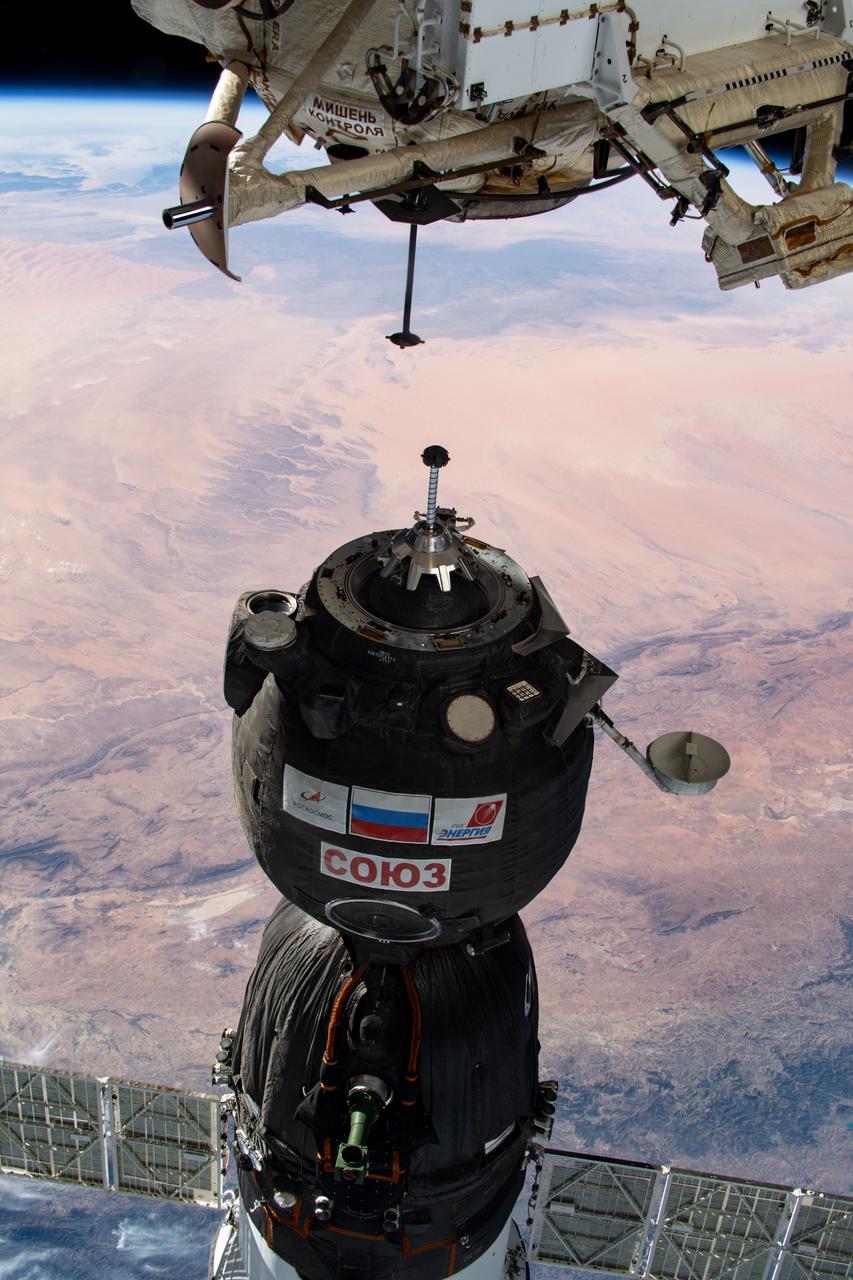
iss063e107308 (Oct. 14, 2020) --- The Soyuz MS-17 spacecraft, with Expedition 64 crew members Kate Rubins of NASA and Roscosmos cosmonauts Sergey Ryzhikov and Sergey Kud-Sverchkov, is just a few meters from docking to the Rassvet module. This photograph was taken as the International Space Station was orbiting above the Mediterranean Sea.
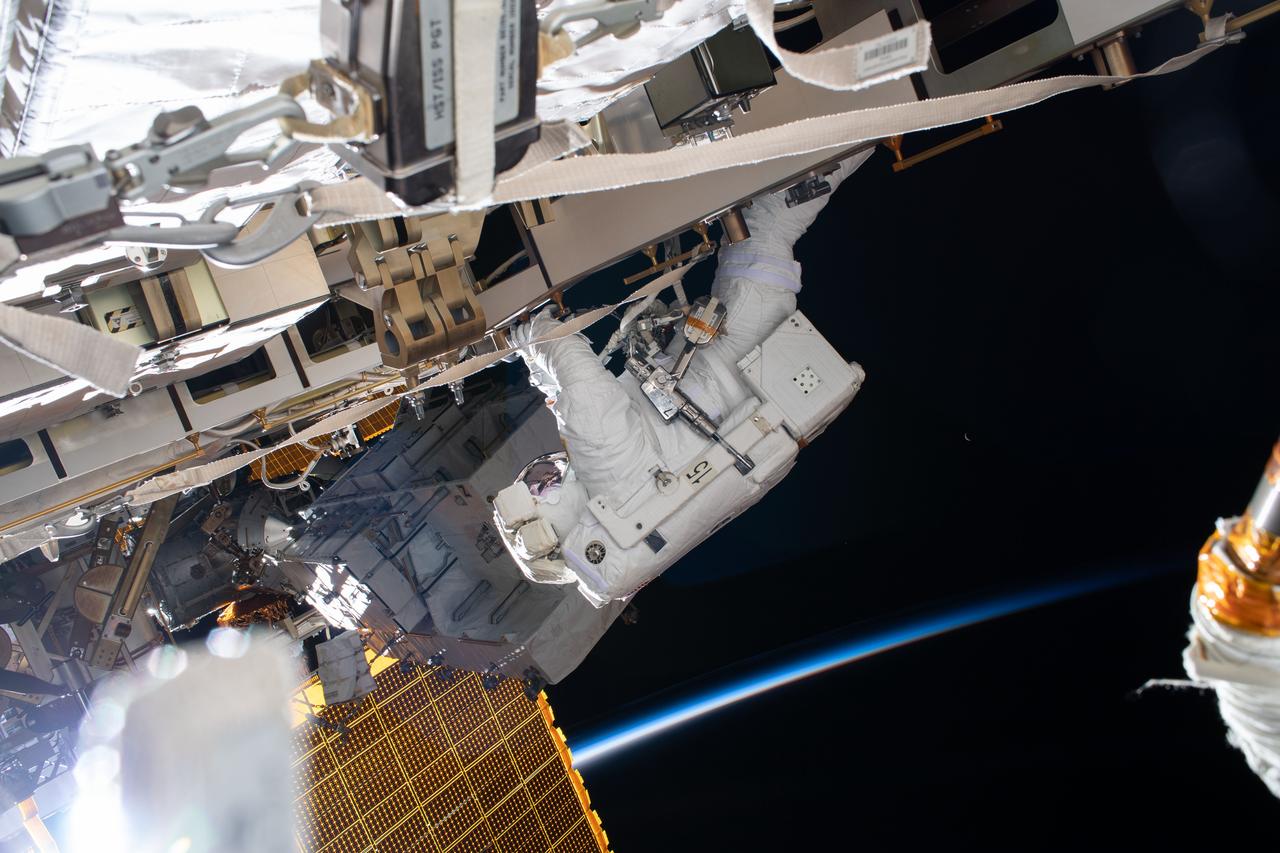
iss063e049933 (July 16, 2020) --- NASA astronaut Chris Cassidy works during a six-hour spacewalk to install lithium-ion batteries on the International Space Station's truss structure. The orbiting lab was above the north Pacific Ocean flying into a sunrise with a tiny waning crescent Moon in the background at the time this photograph was taken.
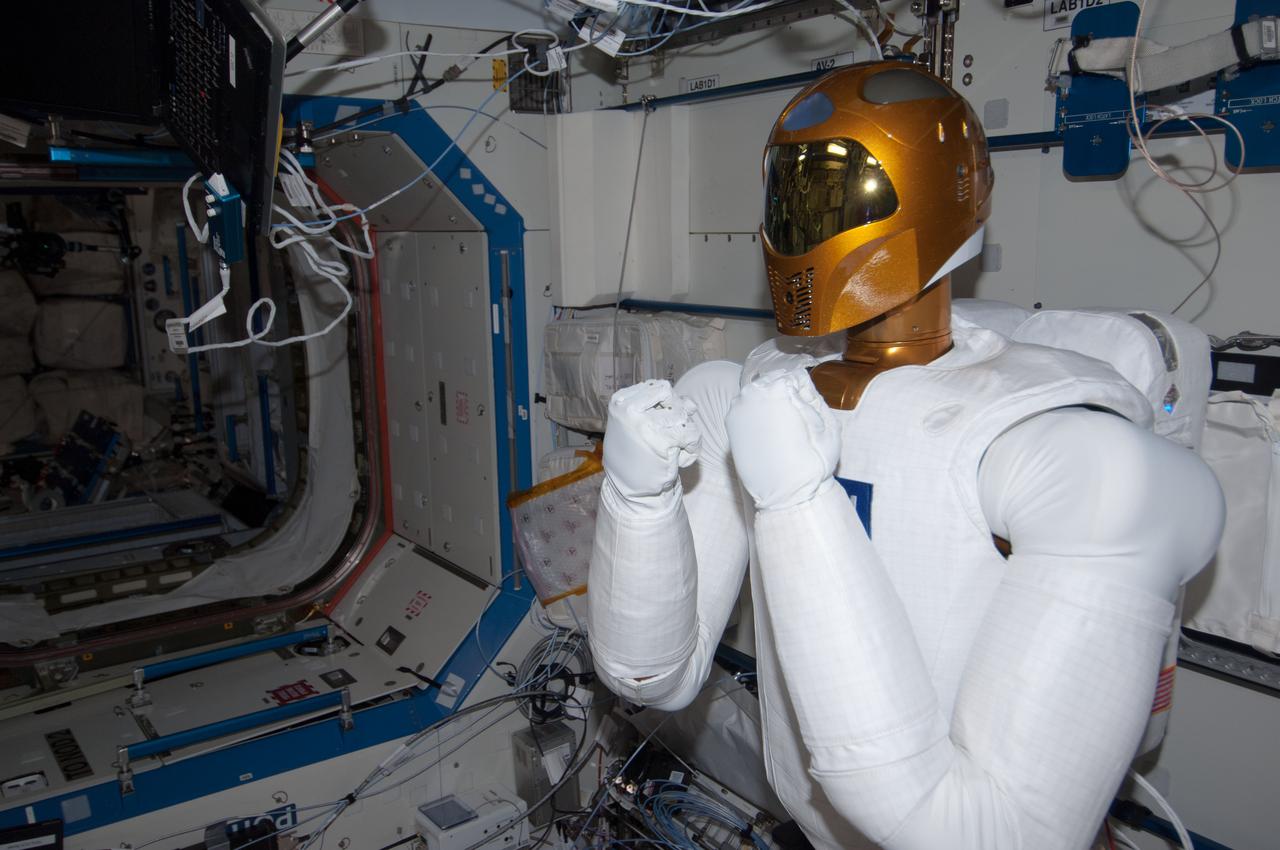
ISS035-E-016453 (9 April 2013) --- R-2 is busy in U.S. lab Destiny aboard the Earth-orbiting International Space Station during tele-operation (by ground controllers) to mimic movement of a crew member.
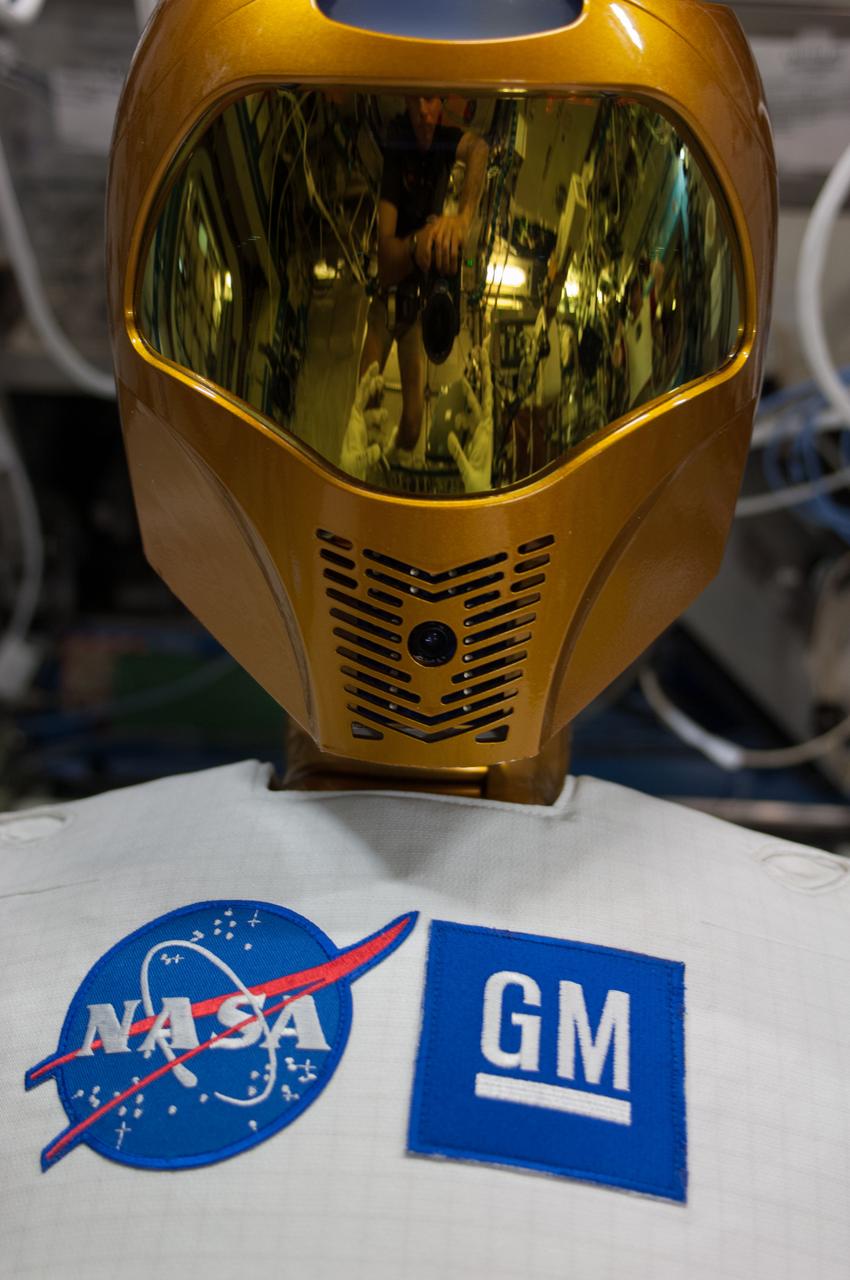
ISS035-E-030779 (25 April 2013) --- R 2, the dexterous humanoid robot that was carried up to the station by one of NASA's final shuttle flights in 2011, awaits a direction from NASA astronaut Tom Marshburn (seen in the robot's visor), Expedition 35 Flight Engineer, who was performing the second of a two-day session of Taskboard and Tele-operations with R 2 onboard the International Space Station. The goals for these activities were orientation and depth familiarization, individual hand grasp and hand-to-hand object transfer; and all were completed nominally. The Robonaut Tele-operation System is used to demonstrate the ability to effectively control Robonaut from the station. The research objective is to evaluate this control method in terms of its ability to perform tasks as well as measure the time necessary to complete the defined tasks. This capability will need to be developed to support future operations of Robonaut in the space environment as well as certain intravehicular activity situations.
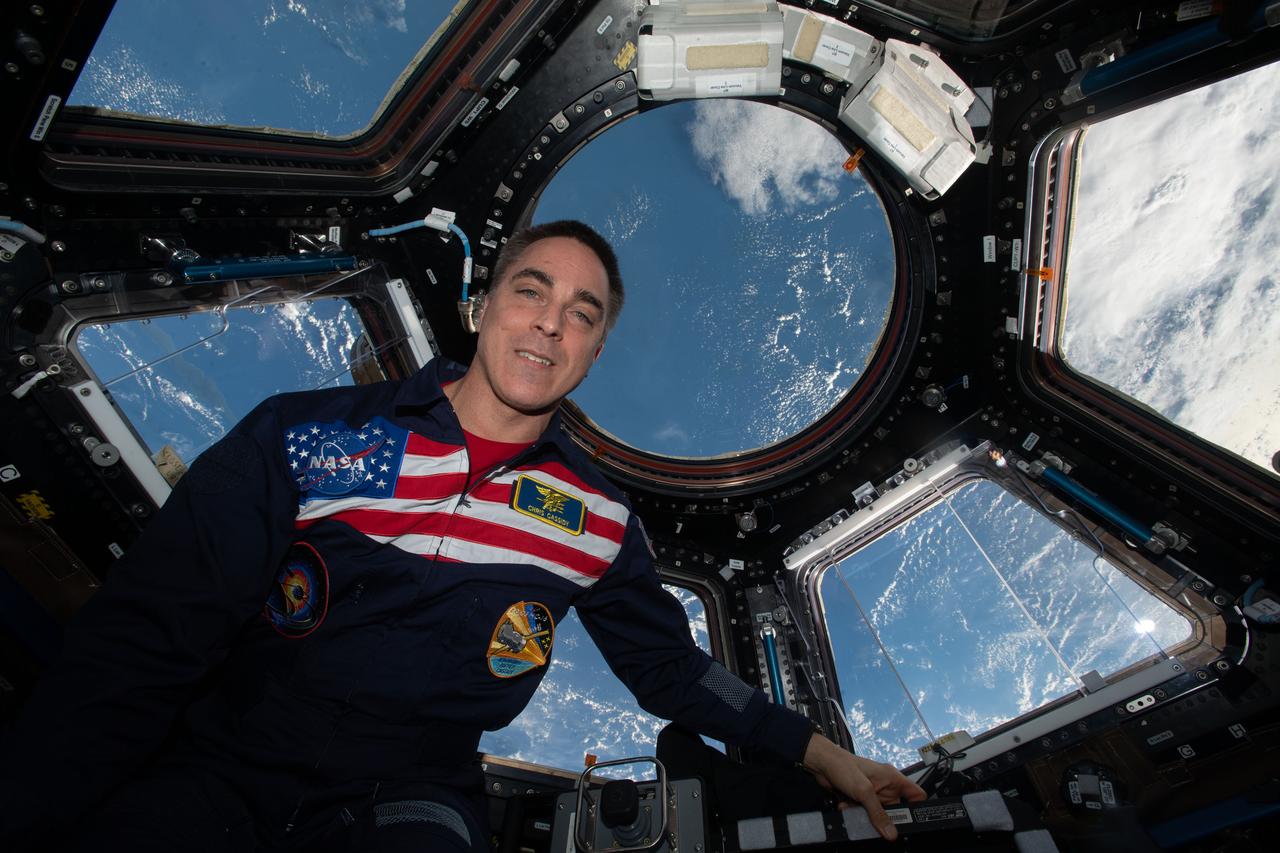
iss063e087971 (Sept. 11, 2020) --- NASA astronaut and Expedition 63 Commander Chris Cassidy poses for a portrait wearing his flight suit inside the cupola, the International Space Station's window to the world. The orbiting lab was flying above the Pacific Ocean northeast of Papua New Guinea when this photograph was taken.
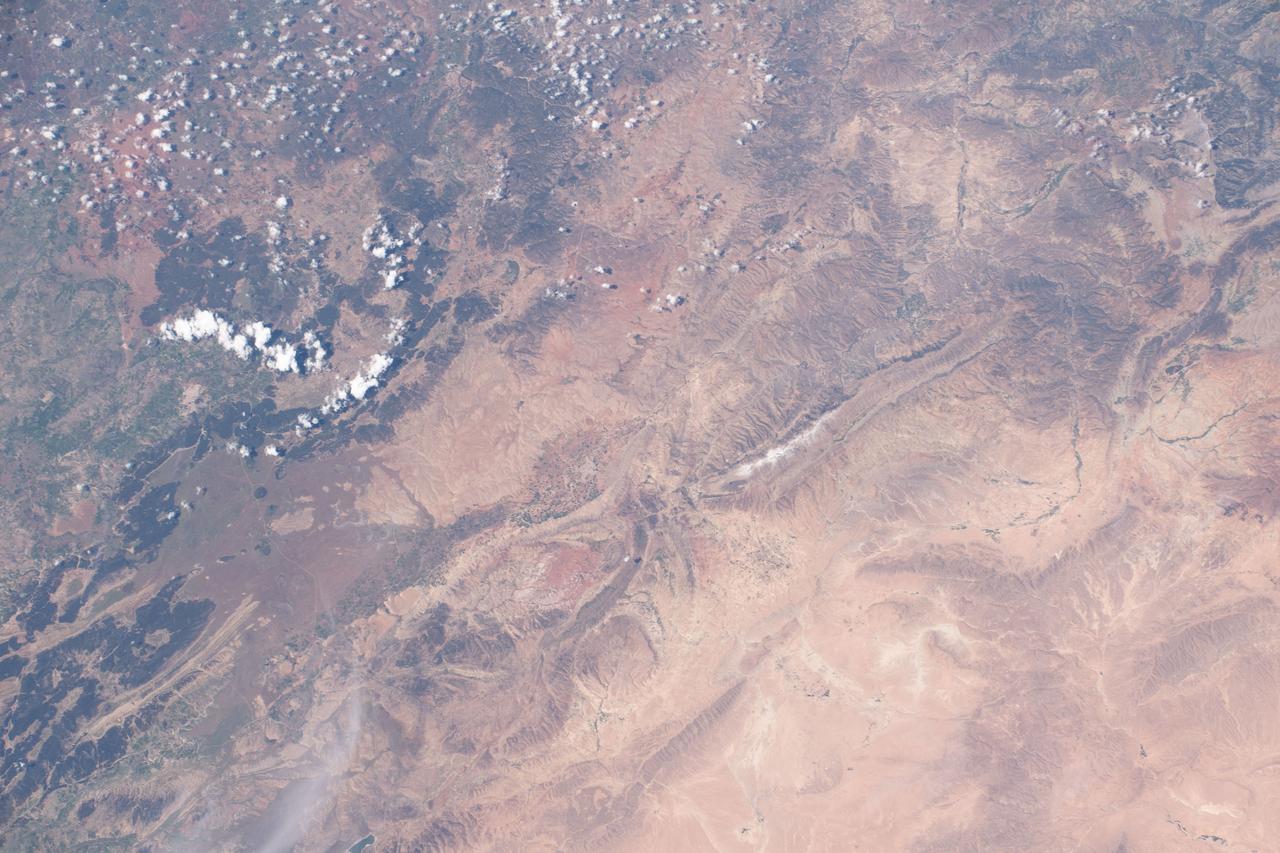
iss063e002389 (April 22, 2020) --- The northern central portion of Morocco, pictured from the International Space Station, is a mountainous region that borders the Sahara Desert in northwest Africa.
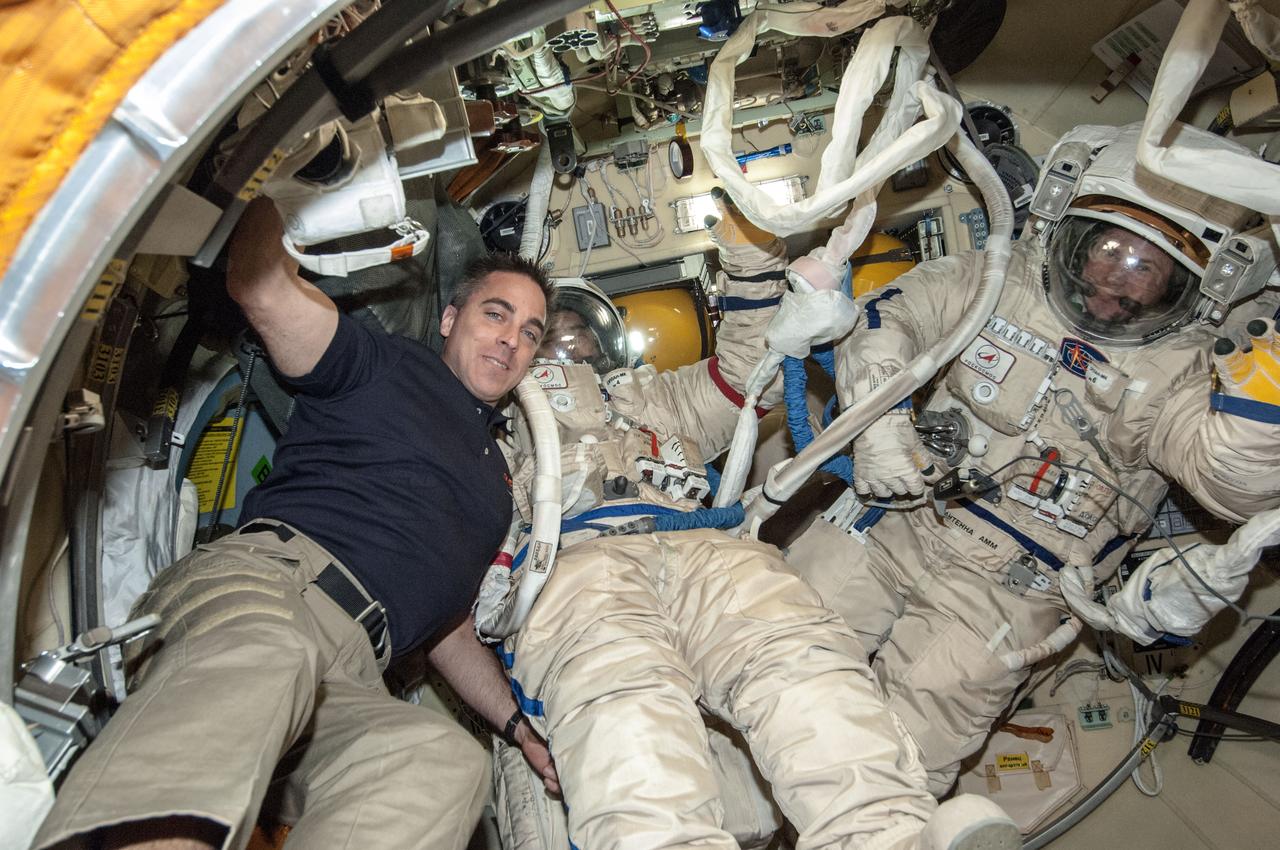
ISS035-E-022379 (17 April 2013) --- Russian cosmonauts Pavel Vinogradov (center) and Roman Romanenko (right) donned their Orlan spacesuits once again on the International Space Station on April 17. The two are seen with NASA astronaut Chris Cassidy outside the Pirs Docking Compartment airlock during a suited ?dry run? dress rehearsal of the procedures they will conduct during a scheduled April 19 spacewalk. Cassidy will remain inside the orbiting complex throughout the spacewalk.
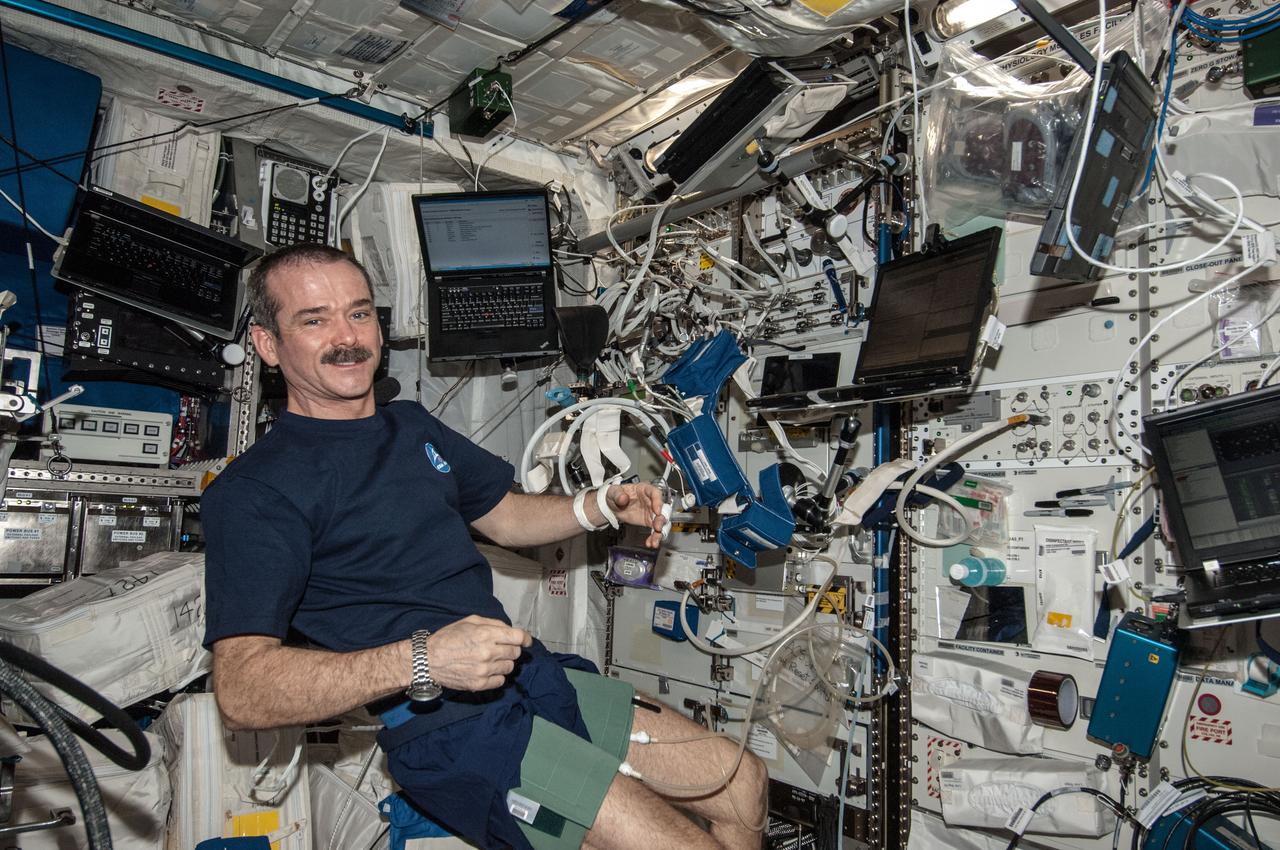
ISS035-E-022360 (17 April 2013) --- In support of the Blood Pressure Regulation Experiment (BP Reg), Expedition 35 Commander Chris Hadfield of the Canadian Space Agency is pictured after having set up the Human Research Facility (HRF) PFS (Pulmonary Function System) and the European Physiology Module (EPM) Cardiolab (CDL) Leg/Arm Cuff System (LACS) and conducting the first ever session of this experiment. The test, which will be repeated using other crew members as well, will help to identify the astronauts who could benefit from countermeasures before returning to Earth. Thus, this method has great potential for astronaut health monitoring during future long-term space flights and it also has important implications for testing of individuals on Earth, especially the elderly, who are at risk for fainting. The research will also allow demonstrating the feasibility of obtaining a set of indicators of overall cardiovascular regulation from the non-invasive measurement of continuous blood pressure.
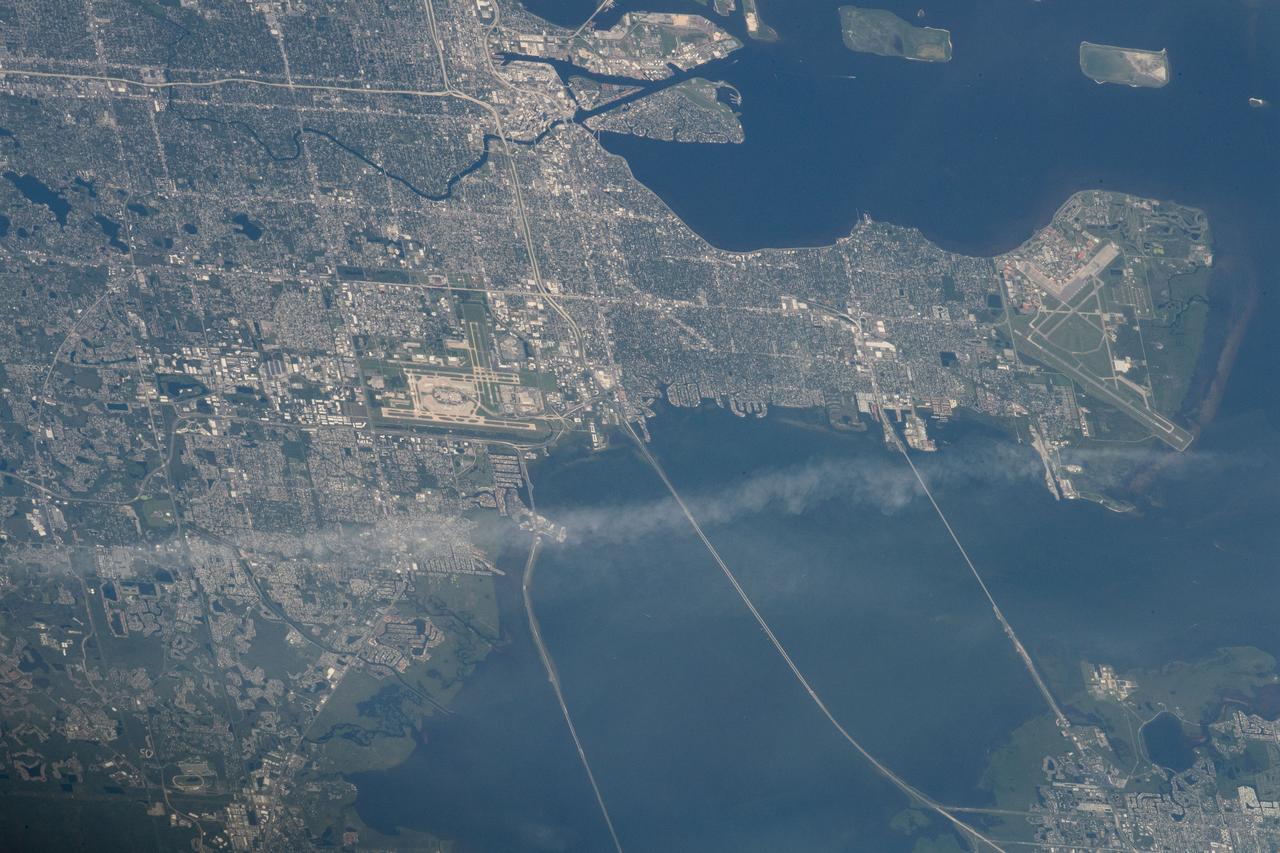
iss063e084779 (Sept. 4, 2020) --- Tampa, Florida on Tampa Bay is pictured from the International Space Station as it orbited on a southeastern trek above the Sunshine State and into the Atlantic Ocean.

ISS036-E-027035 (31 July 2013) --- As the International Space Station was flying approximately 223 miles above eastern Europe on July 31, one of the Expedition 36 crew members exposed this image featuring part of the Canadian-built Space Station Remote Manipulator System or Canadarm2 in the foreground. Tiny lights of communities can be seen throughout the image, as well as a few stars in the upper right quadrant. The faint line of Earth's horizon is also visible in upper right.
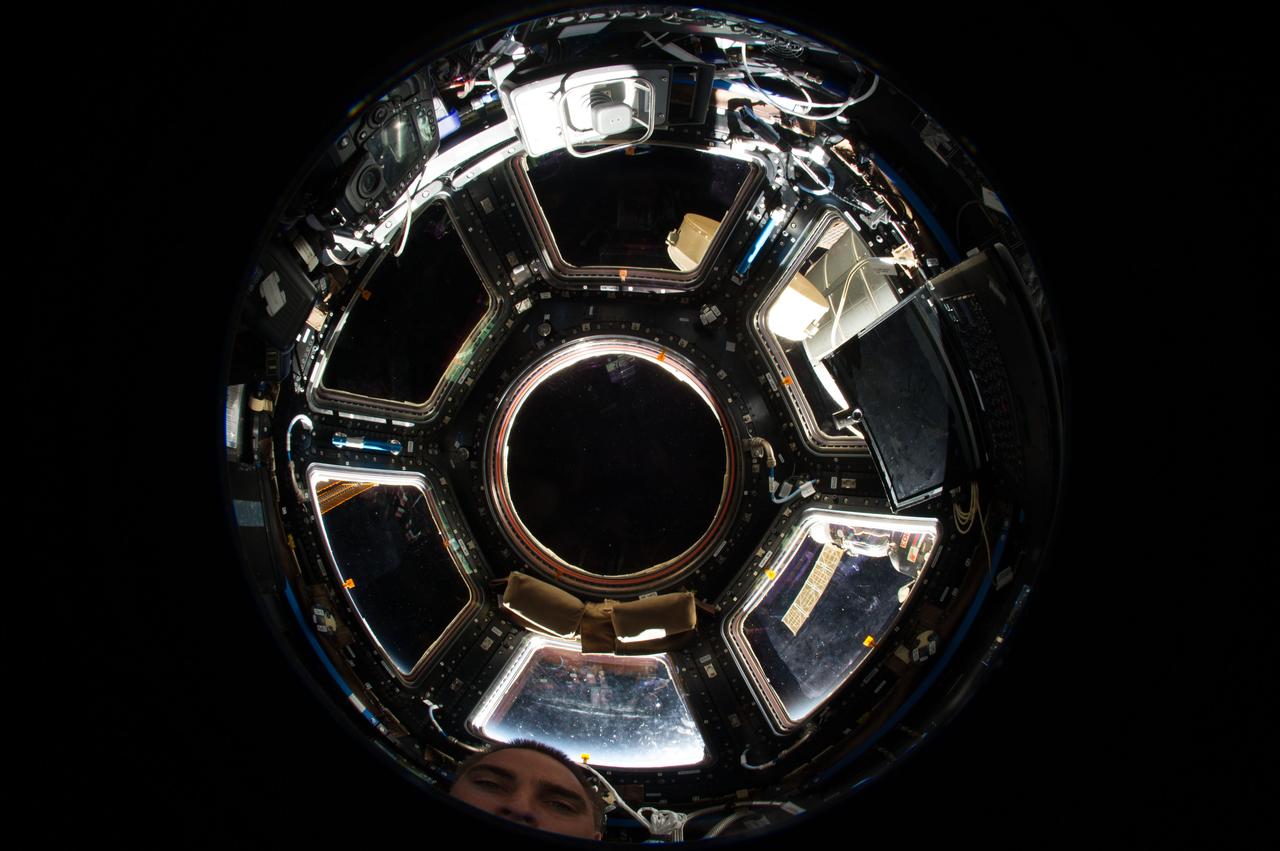
ISS036-E-022157 (20 July 2013) --- A fisheye lens attached to an electronic still camera was used to capture this image of the International Space Station’s Cupola and NASA astronaut Chris Cassidy (mostly out of frame at bottom), Expedition 36 flight engineer.
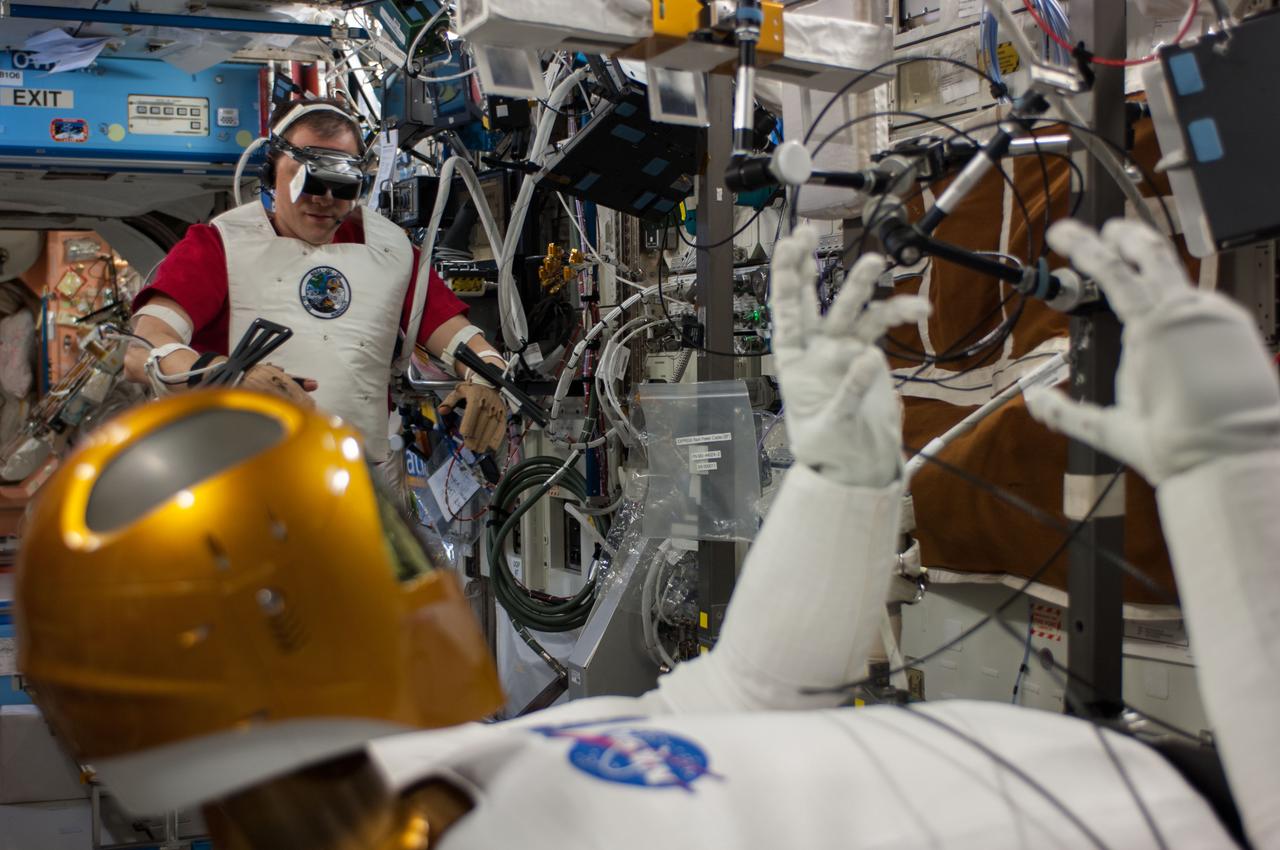
ISS035-E-030791 (25 April 2013) --- NASA astronaut Tom Marshburn (pictured in background), Expedition 35 Flight Engineer, performs the second of a two-day session of Taskboard and Tele-operations with R 2 onboard the International Space Station. R 2 is the dexterous humanoid robot that was carried up to the station by one of NASA's final shuttle flights in 2011. The goals for these activities were orientation and depth familiarization, individual hand grasp and hand-to-hand object transfer; and all were completed nominally. The Robonaut Tele-operation System is used to demonstrate the ability to effectively control Robonaut from the station. The research objective is to evaluate this control method in terms of its ability to perform tasks as well as measure the time necessary to complete the defined tasks. This capability will need to be developed to support future operations of Robonaut in the space environment as well as certain intravehicular activity situations.
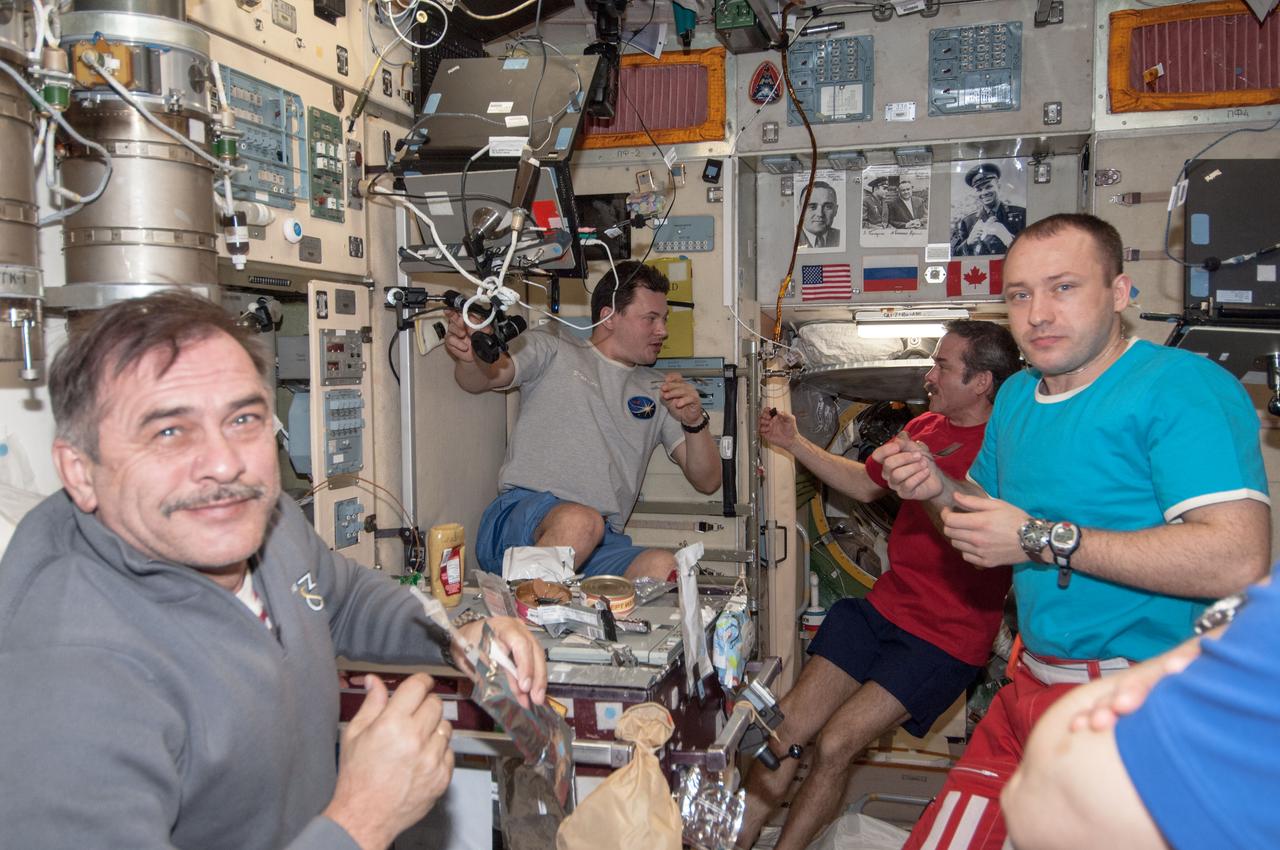
ISS035-E-013815 (2 April 2013) --- Expedition 35 crew members enjoy a meal in the Zvezda service module aboard the Earth-orbiting International Space Station on April 2. From the left are Russian cosmonauts Pavel Vinogradov and Roman Romanenko, Canadian astronaut and Expedition 35 Commander Chris Hadfield and Russian cosmonaut Alexander Misurkin. Not pictured are NASA astronauts Tom Marshburn and Chris Cassidy.
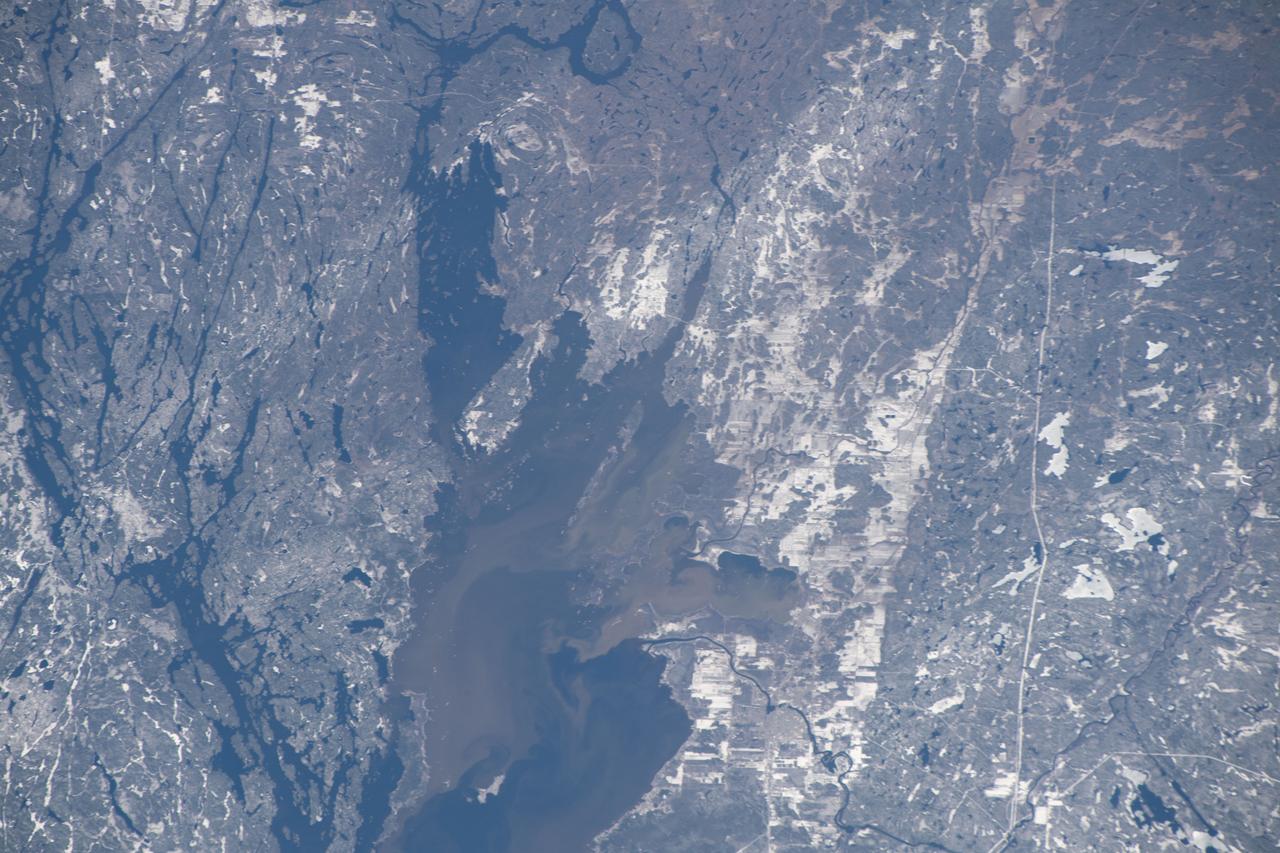
iss063e002575 (April 22, 2020) --- Canada's Lake Nipissing is pictured from the International Space Station as it was orbiting over the province of Ontario.
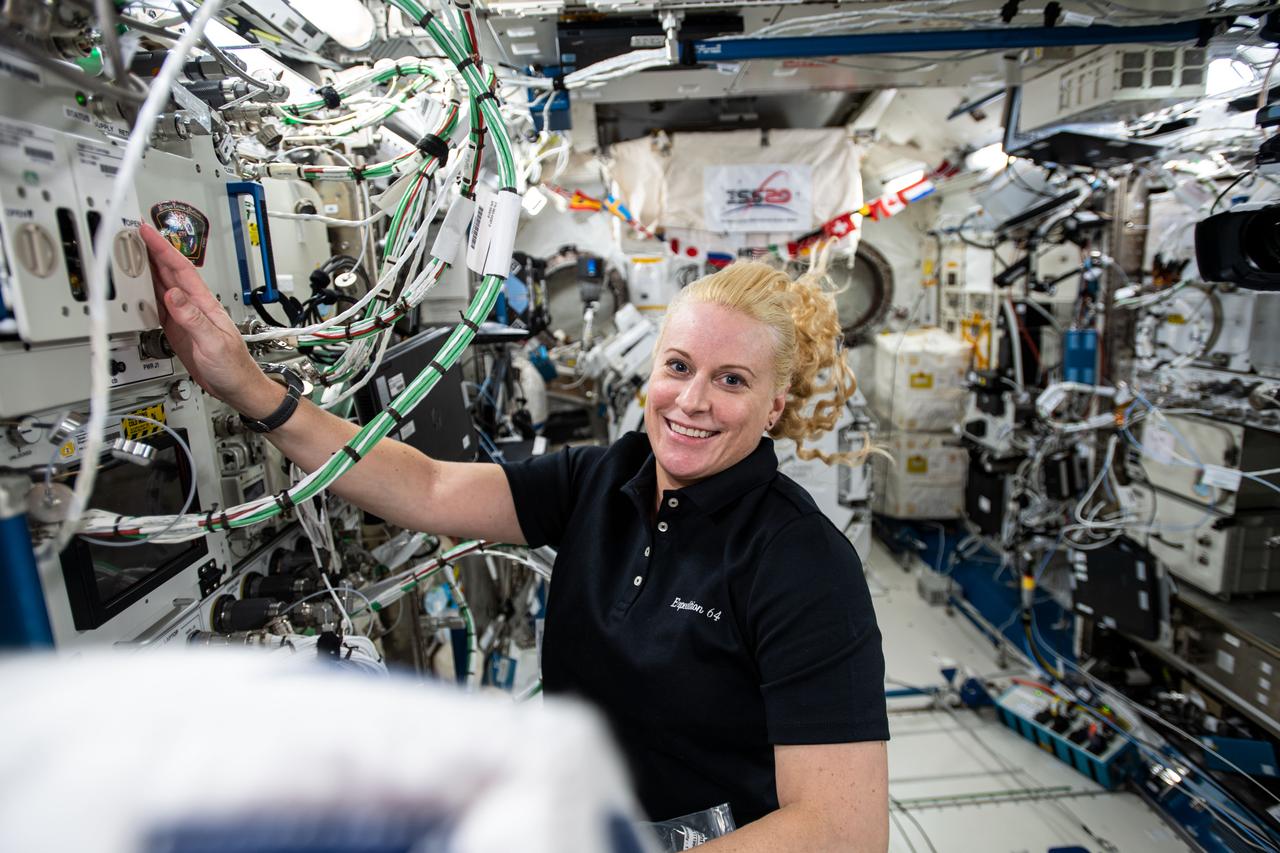
iss063e110543 (Oct. 19, 2020) --- NASA astronaut and Expedition 64 Flight Engineer Kate Rubins works on research hardware inside the JAXA (Japan Aerospace Exploration Agency) Kibo laboratory module.
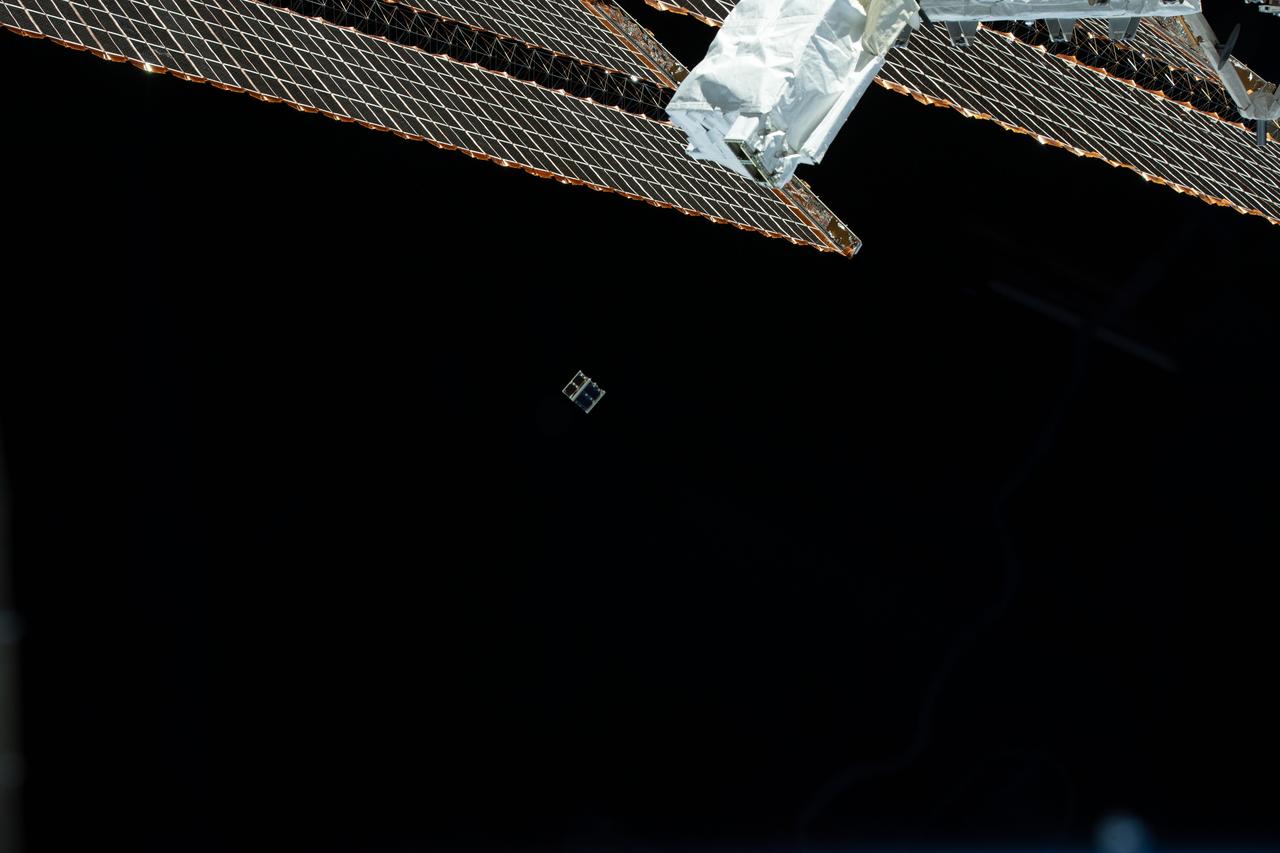
iss063e003541 (4/28/2020) --- The Quetzal-1 CubeSat is seen as it deploys from the JEM Small Satellite Orbital Deployer aboard the International Space Station. Quetzal-1 is Guatemala’s first satellite. It was developed in-house at Universidad del Valle de Guatemala (UVG) and tests a multispectral remote sensor prototype composed of a camera, a piezoelectric motor, and a filter carousel designed to acquire images at different wavelengths.
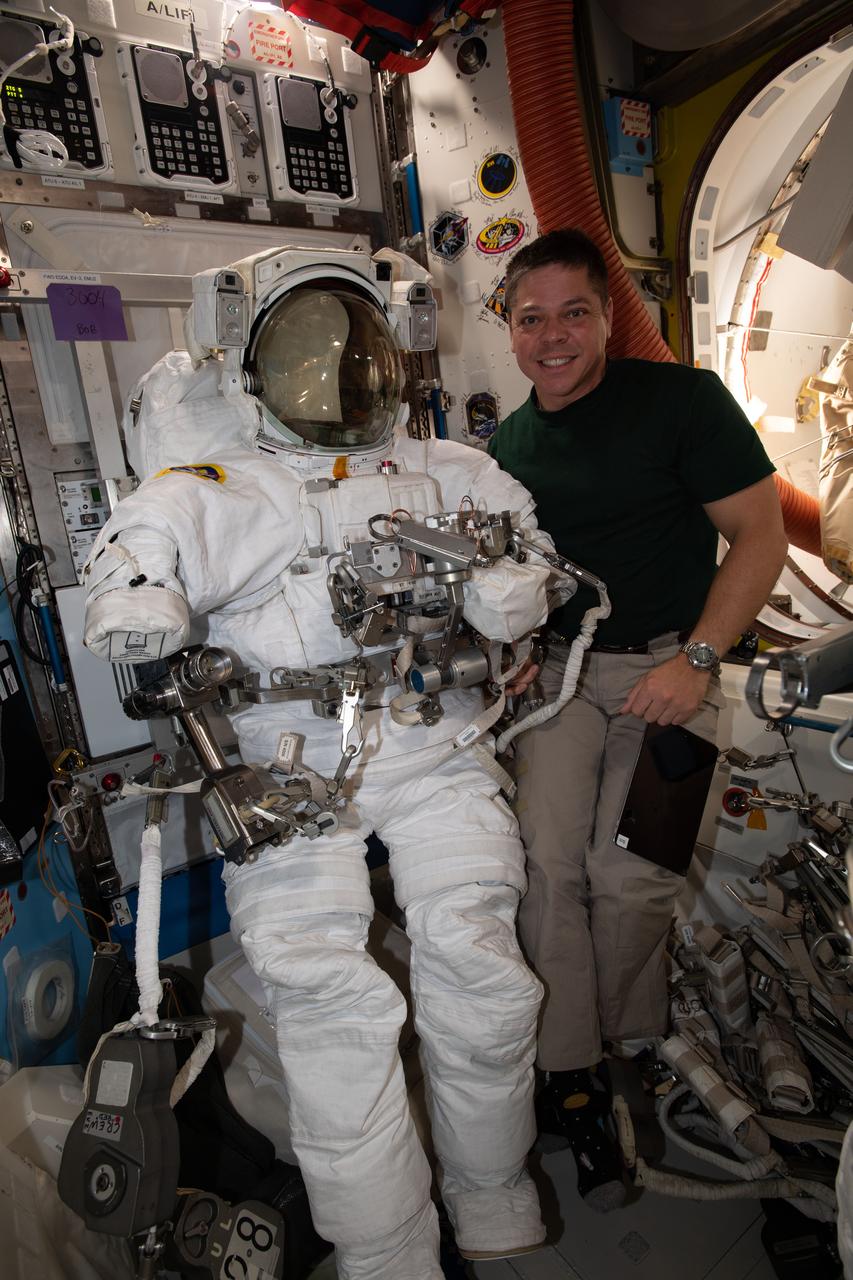
iss063e028016 (June 13, 2020) --- NASA astronaut and Expedition 63 Flight Engineer Bob Behnken poses with a U.S. spacesuit he is preparing for two spacewalks planned for June 26 and July 1 to upgrade power systems on the International Space Station.
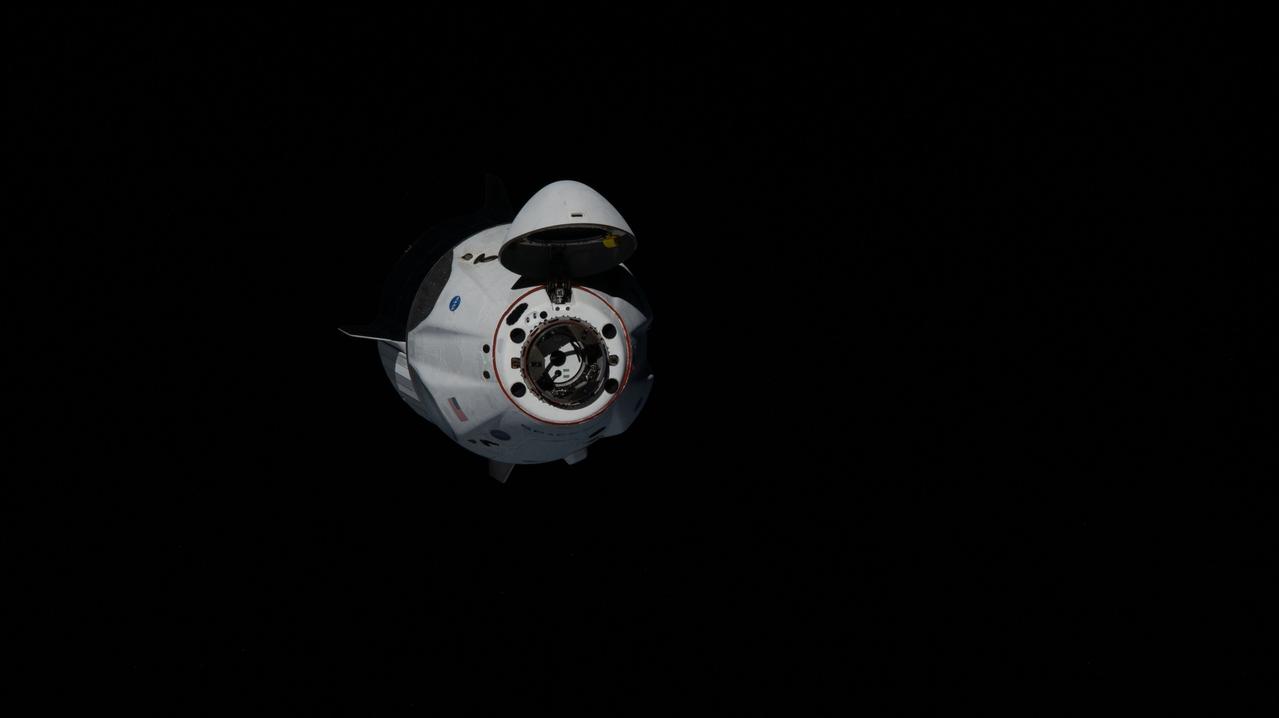
iss063e021460 (May 31, 2020) --- Astronauts Doug Hurley and Bob Behnken of NASA's Commercial Crew Program were aboard the SpaceX Crew Dragon as it approached the International Space Station. The Crew Dragon's nose cone is open revealing the spacecraft's docking mechanism that would connect to the Harmony module's forward International Docking Adapter.
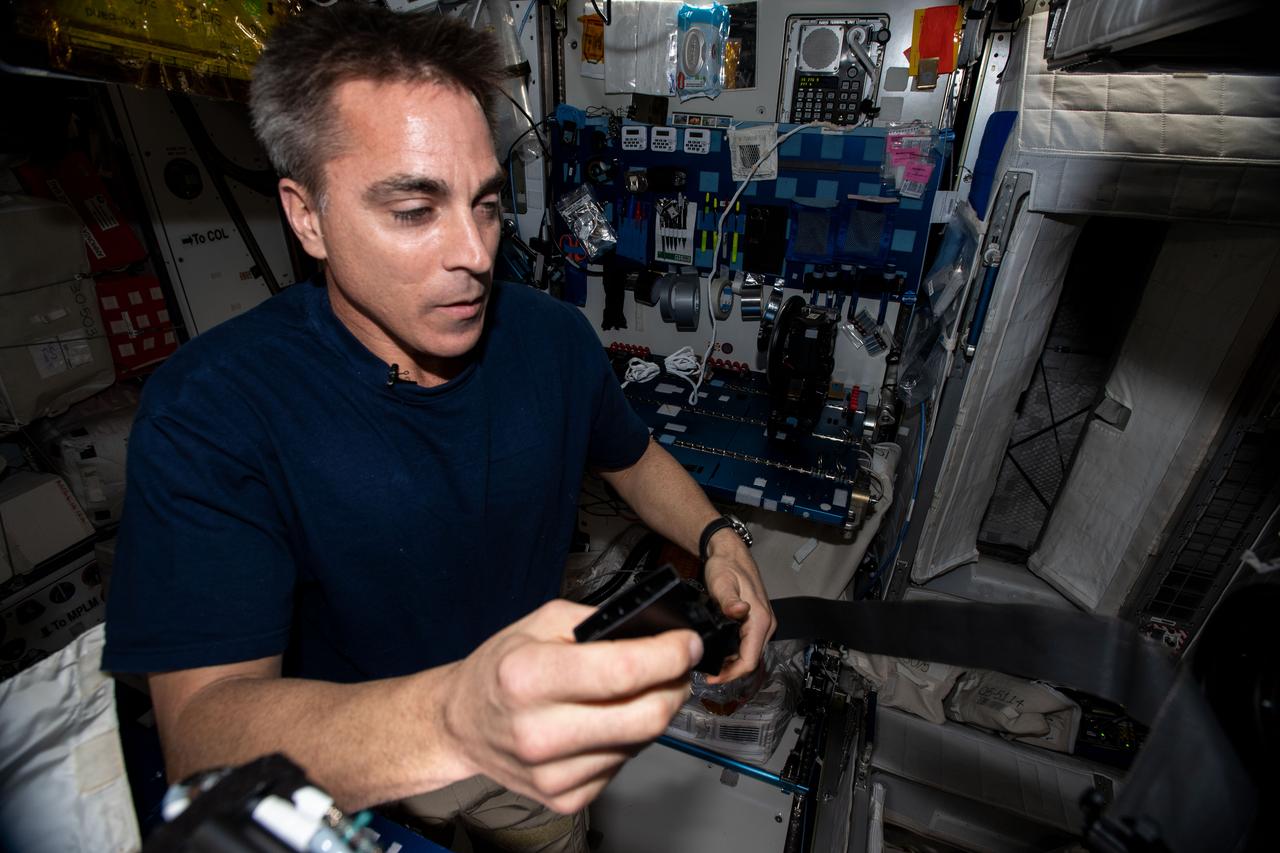
iss063e010102 (May 8, 2020) --- NASA astronaut and Expedition 63 Commander Chris Cassidy is pictured in the International Space Station's Harmony module working on maintenance tasks.
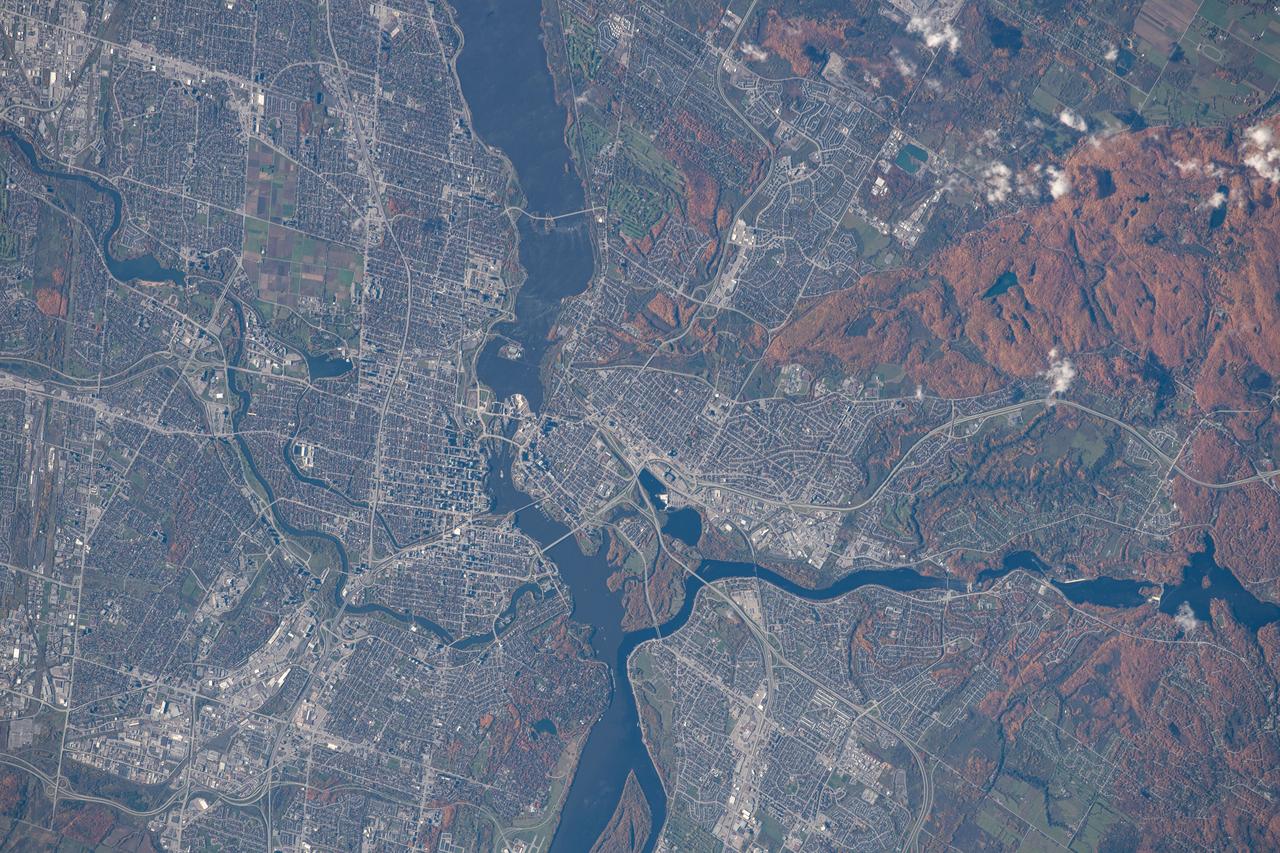
iss063e107781 (Oct. 14, 2020) --- The International Space Station was orbiting above the Ottawa River which separates the Canadian provinces of Ontario and Quebec. On the Ontario side of the river, which is also connected to the Rideau and Gatineau Rivers, is Canada's capital city of Ottawa.
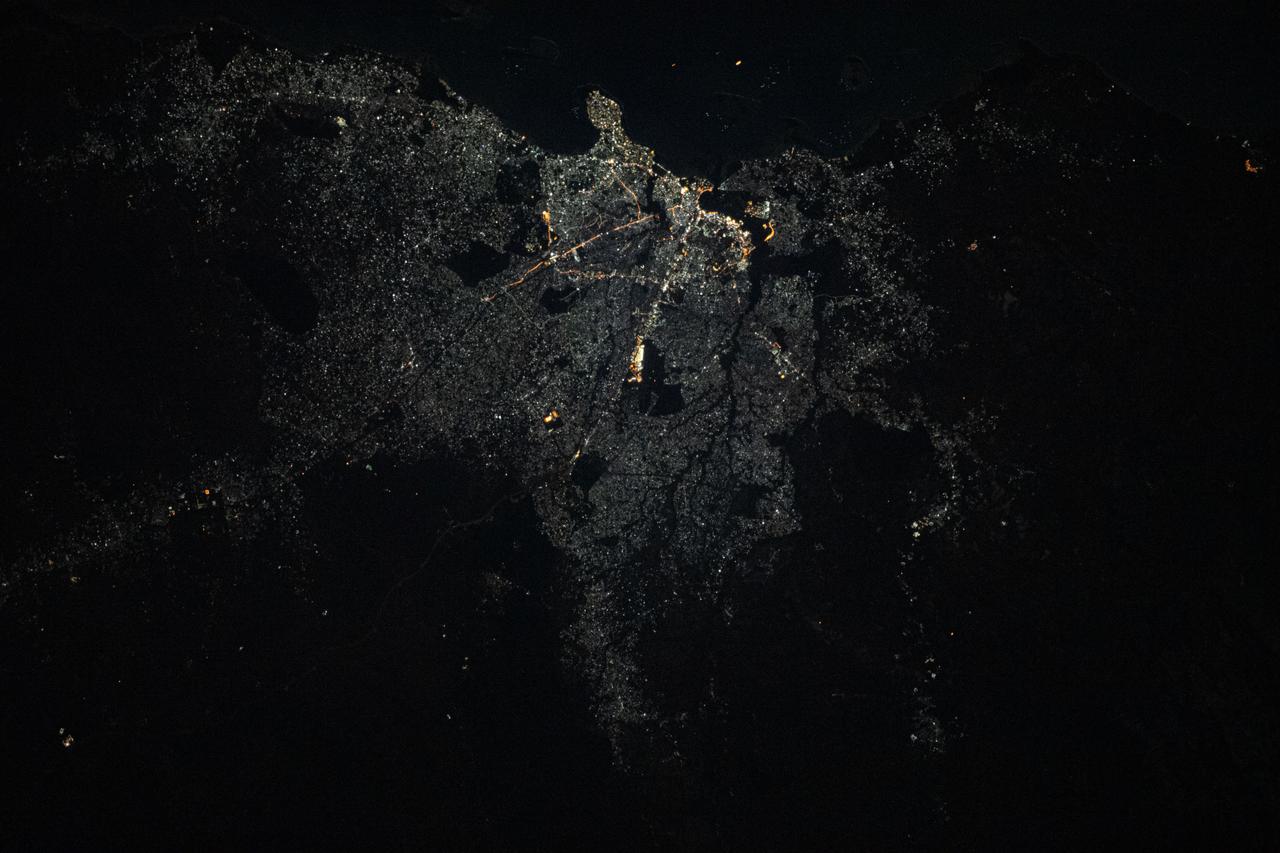
iss063e082691 (Sept. 1, 2020) --- The city of Dar Es Salaam, a major commercial port on the Indian Ocean coast of Tanzania, is pictured during an orbital night period as the International Space Station soared above the eastern coast of Africa.
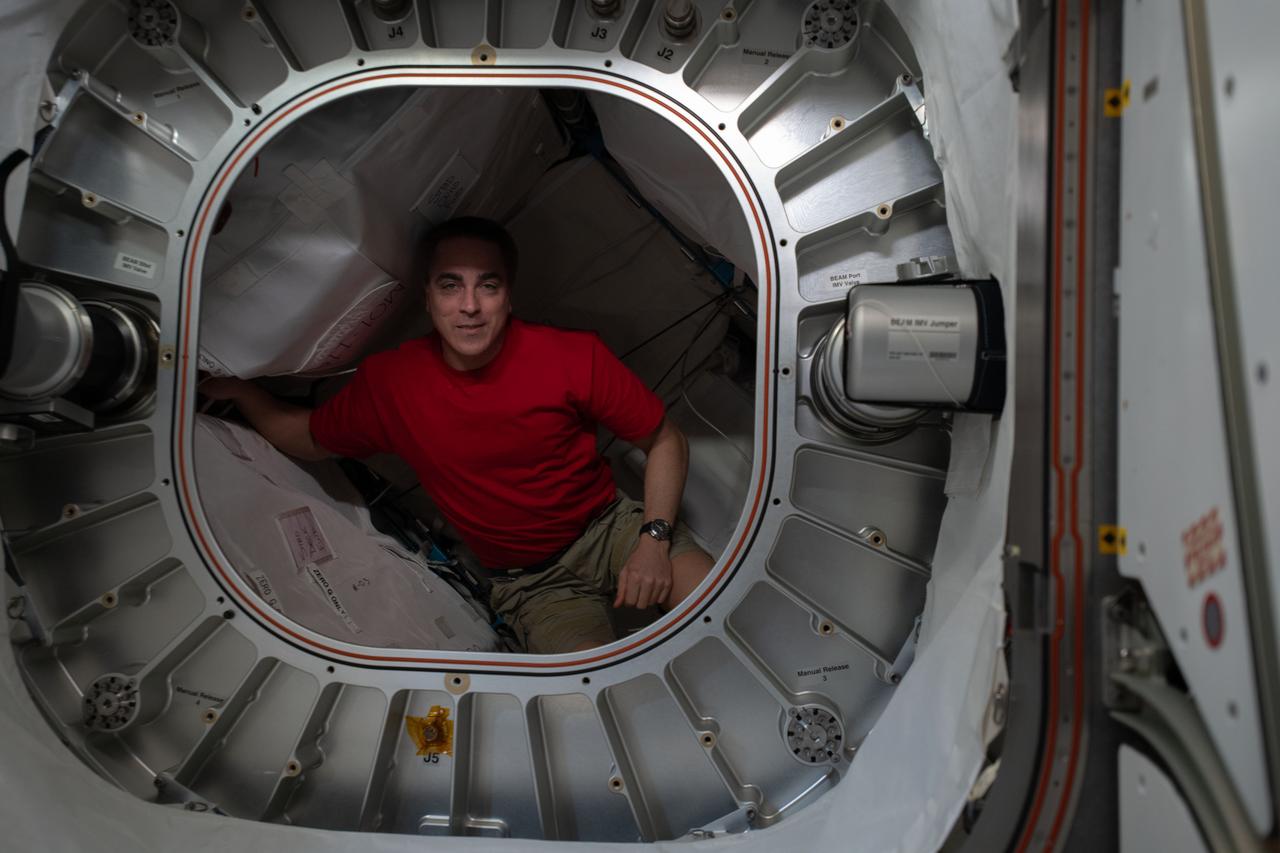
iss063e028479 (July 1, 2020) --- NASA astronaut and Expedition 63 Commander Chris Cassidy is pictured inside the Bigelow Expandable Activity Module (BEAM) during operations to retrieve charcoal filters.
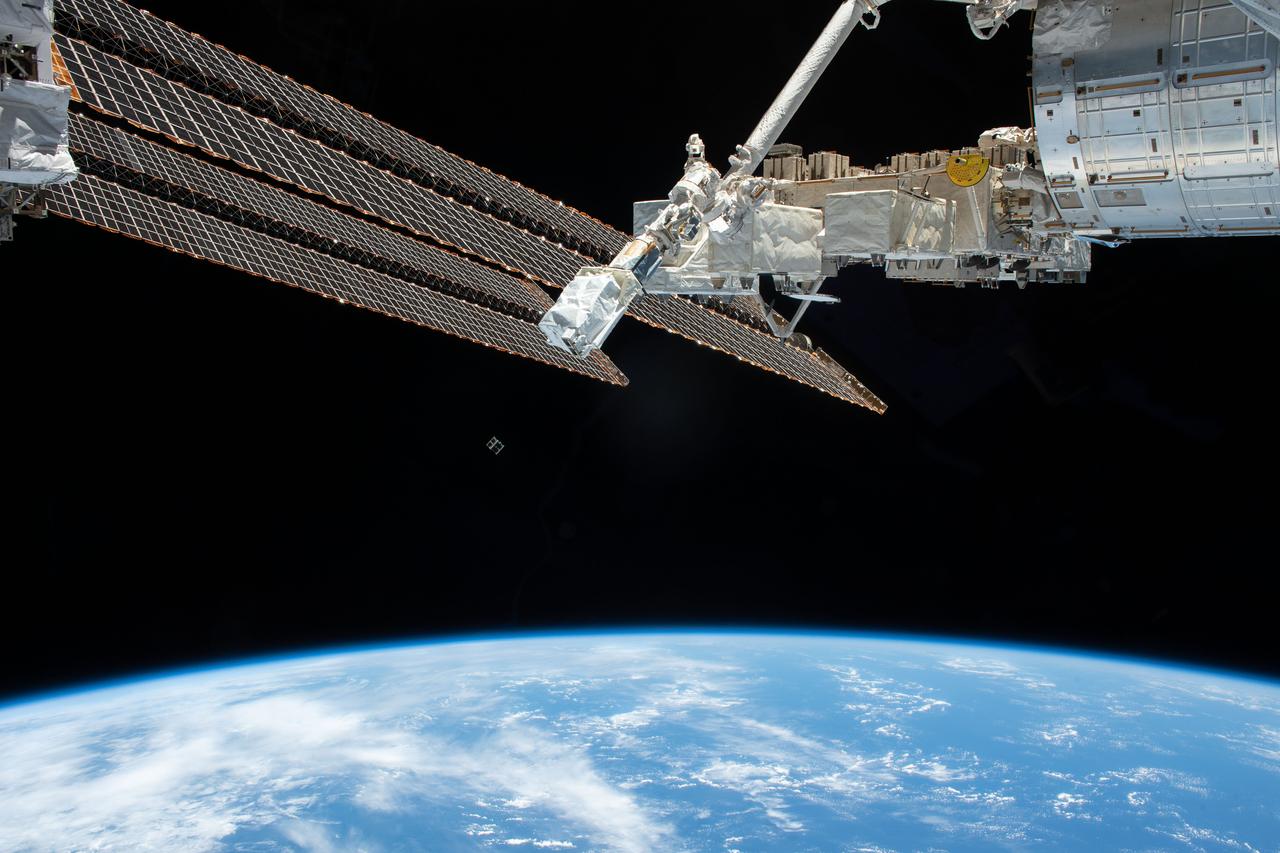
iss063e003542 (4/28/2020) --- The Quetzal-1 CubeSat is seen as it deploys from the JEM Small Satellite Orbital Deployer aboard the International Space Station. Quetzal-1 is Guatemala’s first satellite. It was developed in-house at Universidad del Valle de Guatemala (UVG) and tests a multispectral remote sensor prototype composed of a camera, a piezoelectric motor, and a filter carousel designed to acquire images at different wavelengths.
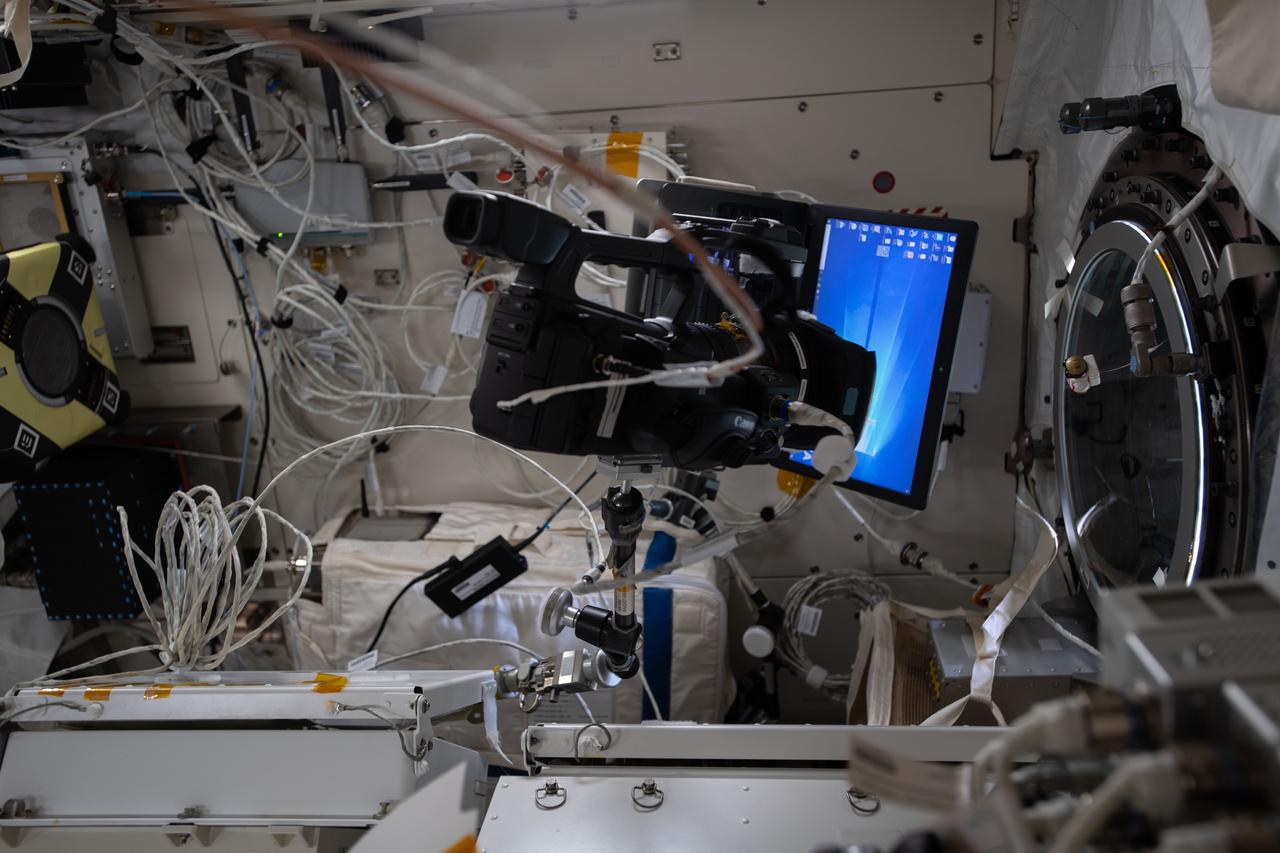
iss063e068100 (8/12/2020) --- Photo documentation of the Space Studio KIBO setup in the Japanese Experiment Module (JEM) aboard the International Space Station (ISS). The Space Frontier Studio KIBO is a broadcasting studio that is constructed and operated in the Japanese Experiment Module (JEM), also known as Kibo. The studio can livestream activities, interactive entertainment, and communication from space.
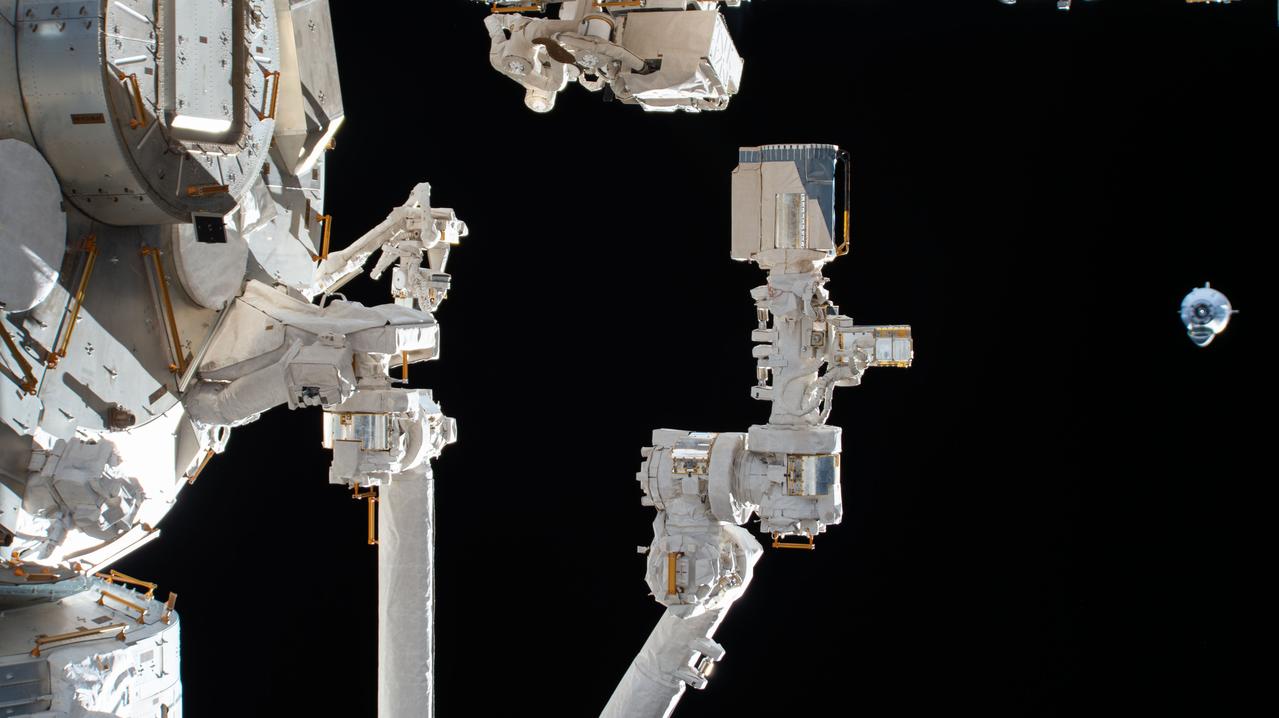
iss063e021464 (May 31, 2020) --- In the foreground, as the SpaceX Crew Dragon (right center) approaches the International Space Station, is JAXA's (Japan Aerospace Exploration Agency) robotic arm attached to Japan's Kibo laboratory module. Astronauts Doug Hurley and Bob Behnken of NASA's Commercial Crew Program were aboard the Crew Dragon before it docked to the Harmony module's forward International Docking Adapter.
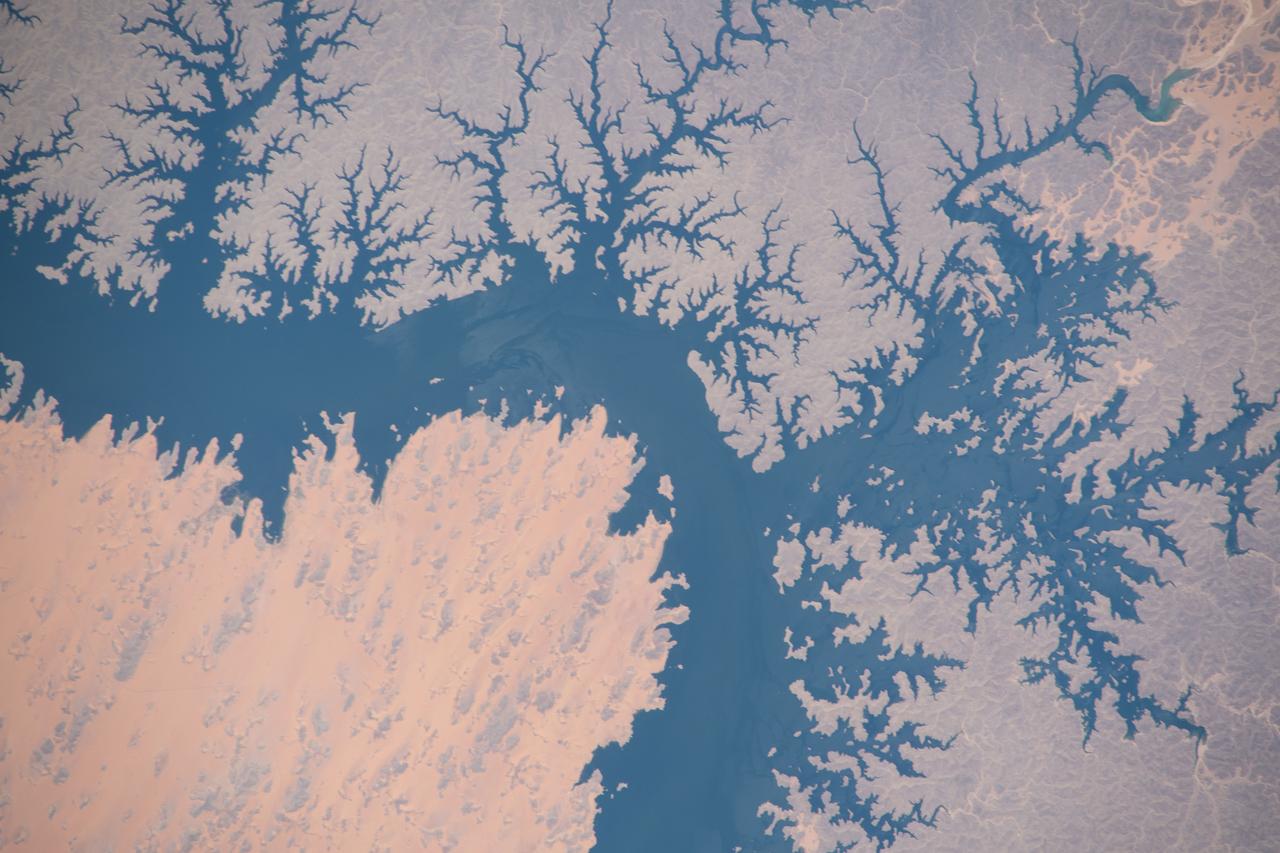
iss063e079157 (Aug. 28, 2020) --- The International Space Station was orbiting above Egypt when an Expedition 63 crew member photographed a portion of Lake Nasser, one of the largest man-made lakes in the world.
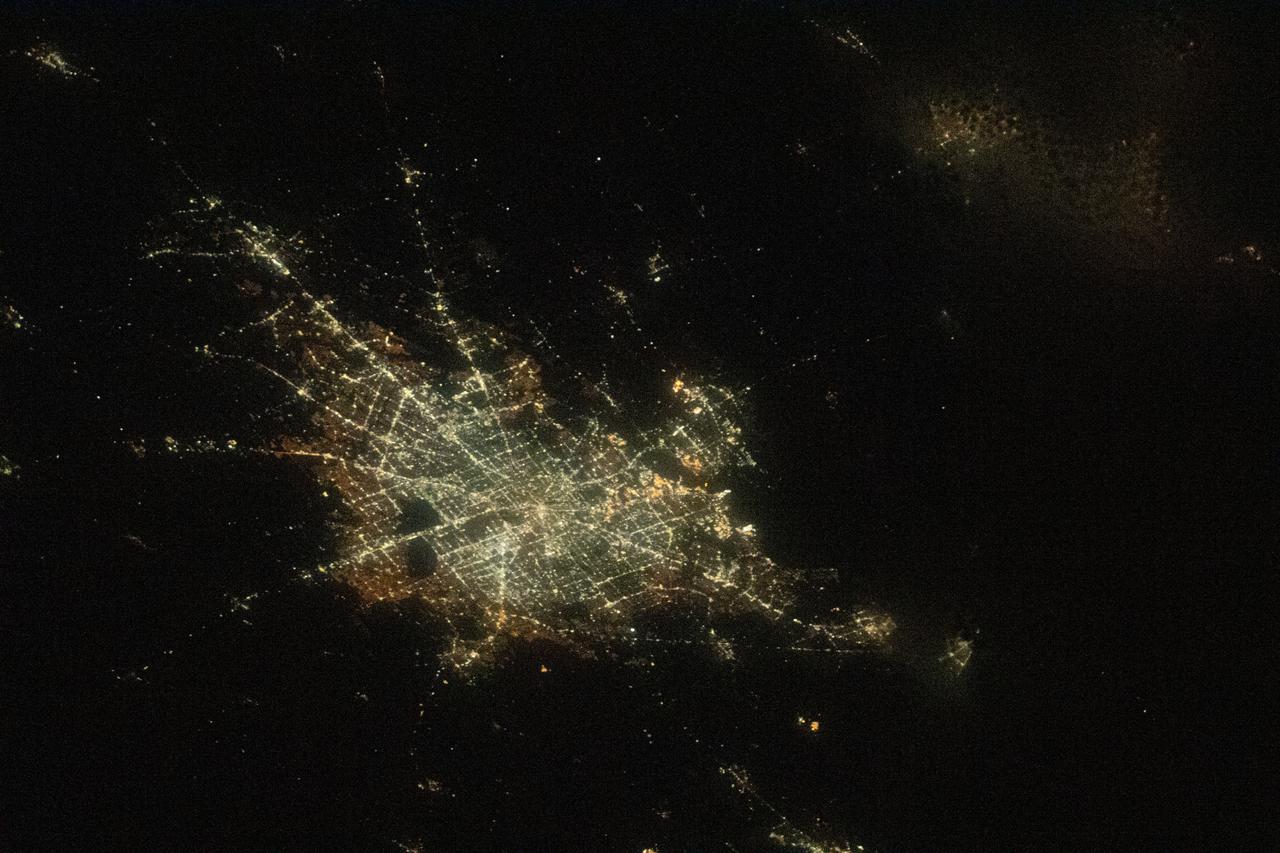
iss063e093260 (Sept. 19, 2020) --- This oblique view of Houston, Texas, was taken from the International Space Station as it orbited above northern Louisiana.
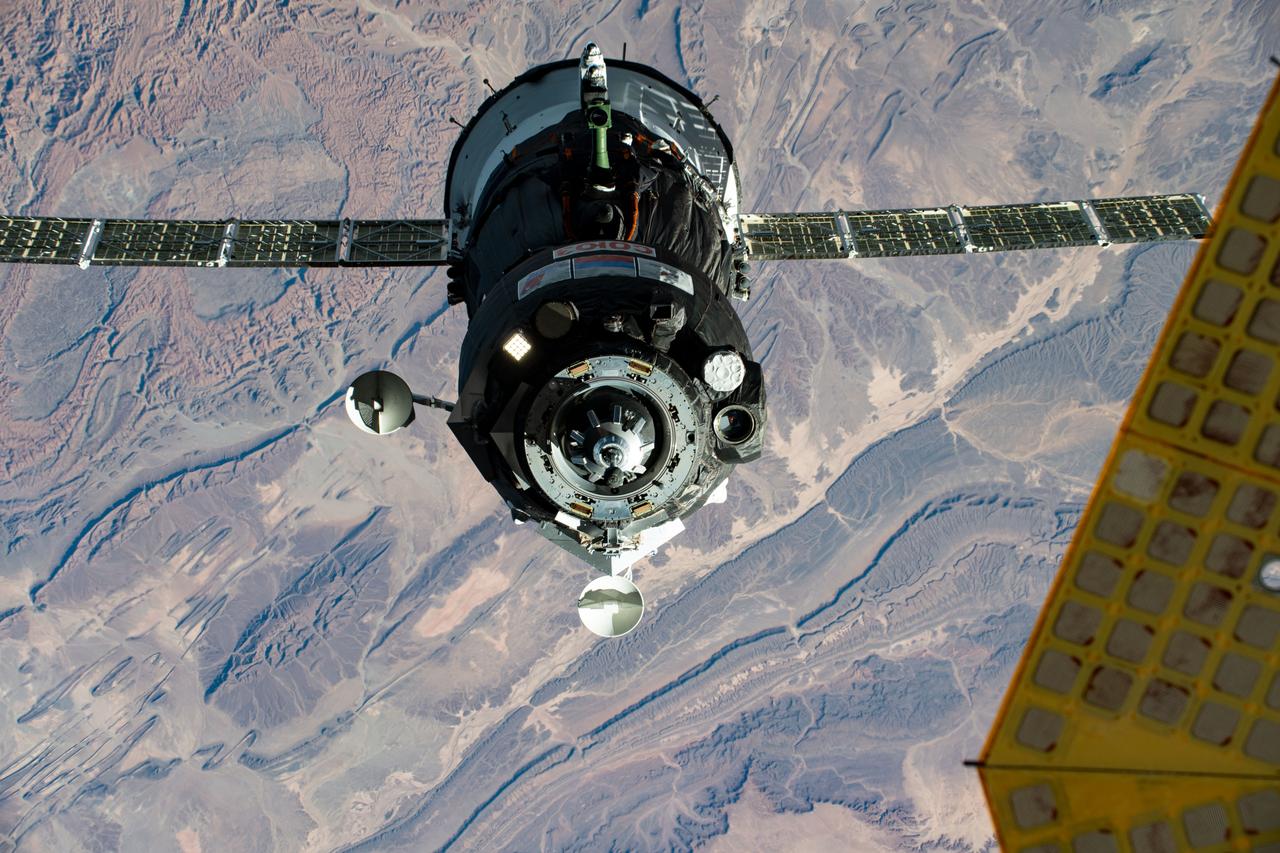
iss063e107241 (Oct. 14, 2020) --- The Soyuz MS-17 spacecraft, with Expedition 64 crew members Kate Rubins of NASA and Roscosmos cosmonauts Sergey Ryzhikov and Sergey Kud-Sverchkov, approaches the International Space Station for a docking to the Rassvet module. This photograph was taken as both spacecraft were orbiting above Morocco.
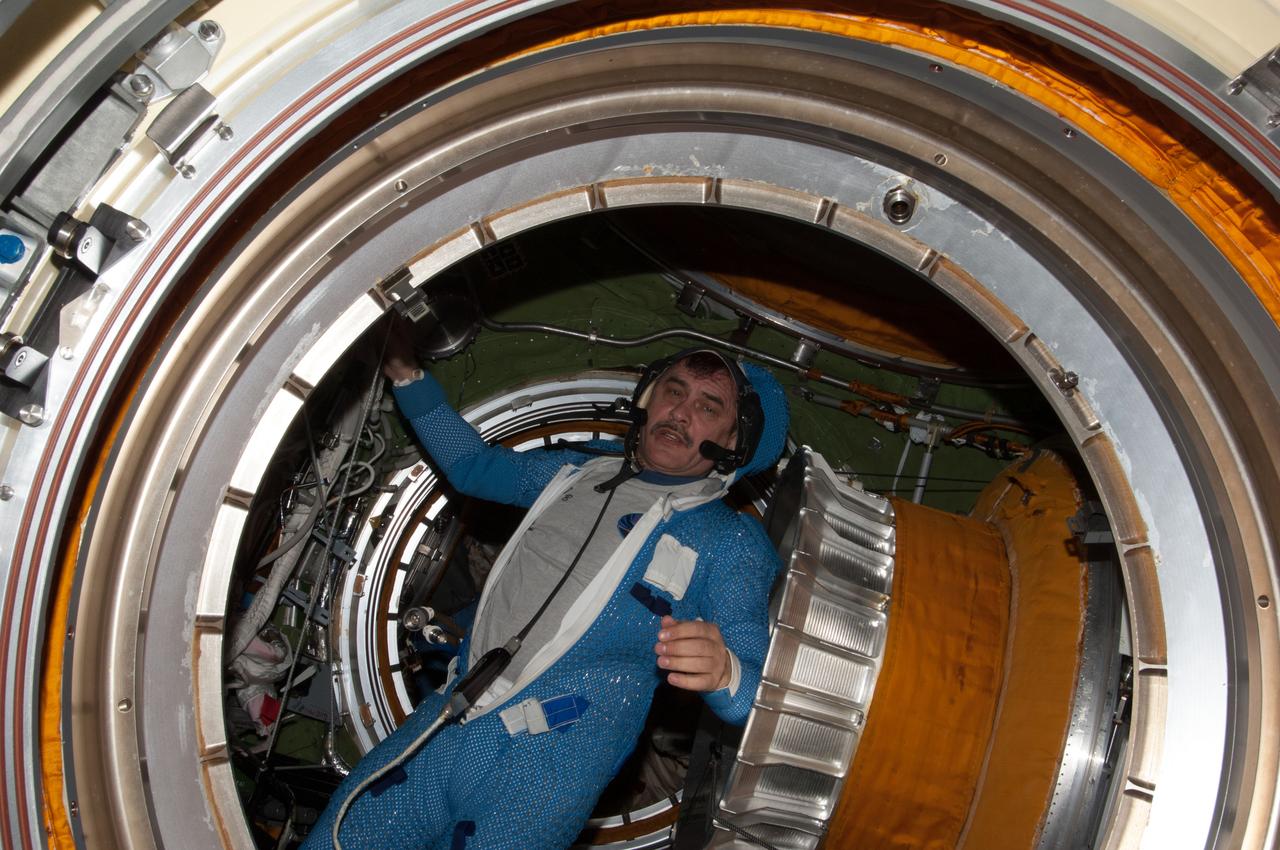
ISS035-E-023770 (19 April 2013) --- Prior to the first extravehicular activity of Expedition 35, Russian cosmonaut Pavel Vinogradov, flight engineer, is seen in the International Space Station's Zvezda service module transfer compartment, as photographed from Poisk, looking through the transfer compartment and toward Pirs. Vinogradov is attired in the thermal undergarment for the Orlan spacesuit, which he has yet to don. Vinogradov and fellow cosmonaut Roman Romanenko went on to spend about six hours performing upgrade work on exterior hardware.
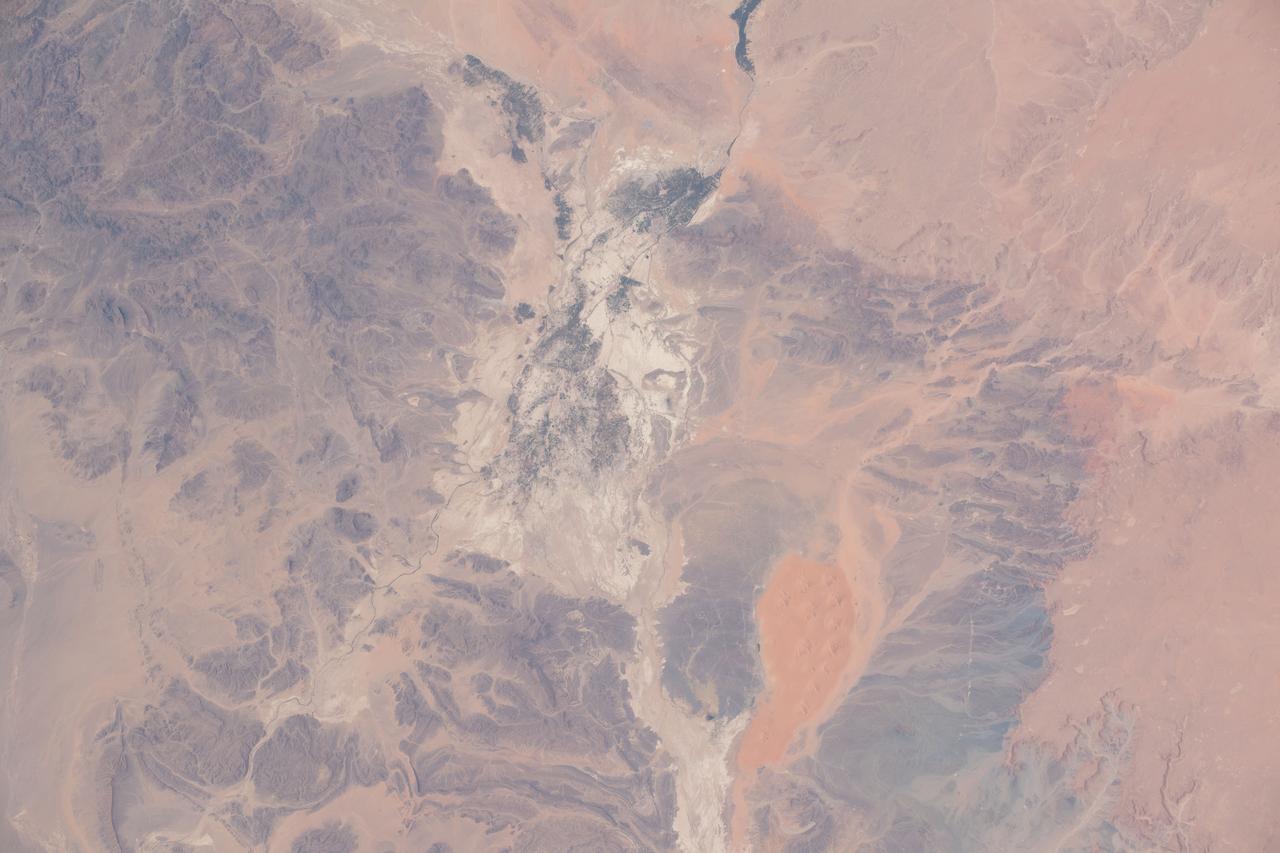
iss063e002398 (April 22, 2020) --- The Errachidia Province of Morocco is pictured from the International Space Station as it orbited above the North African nation.
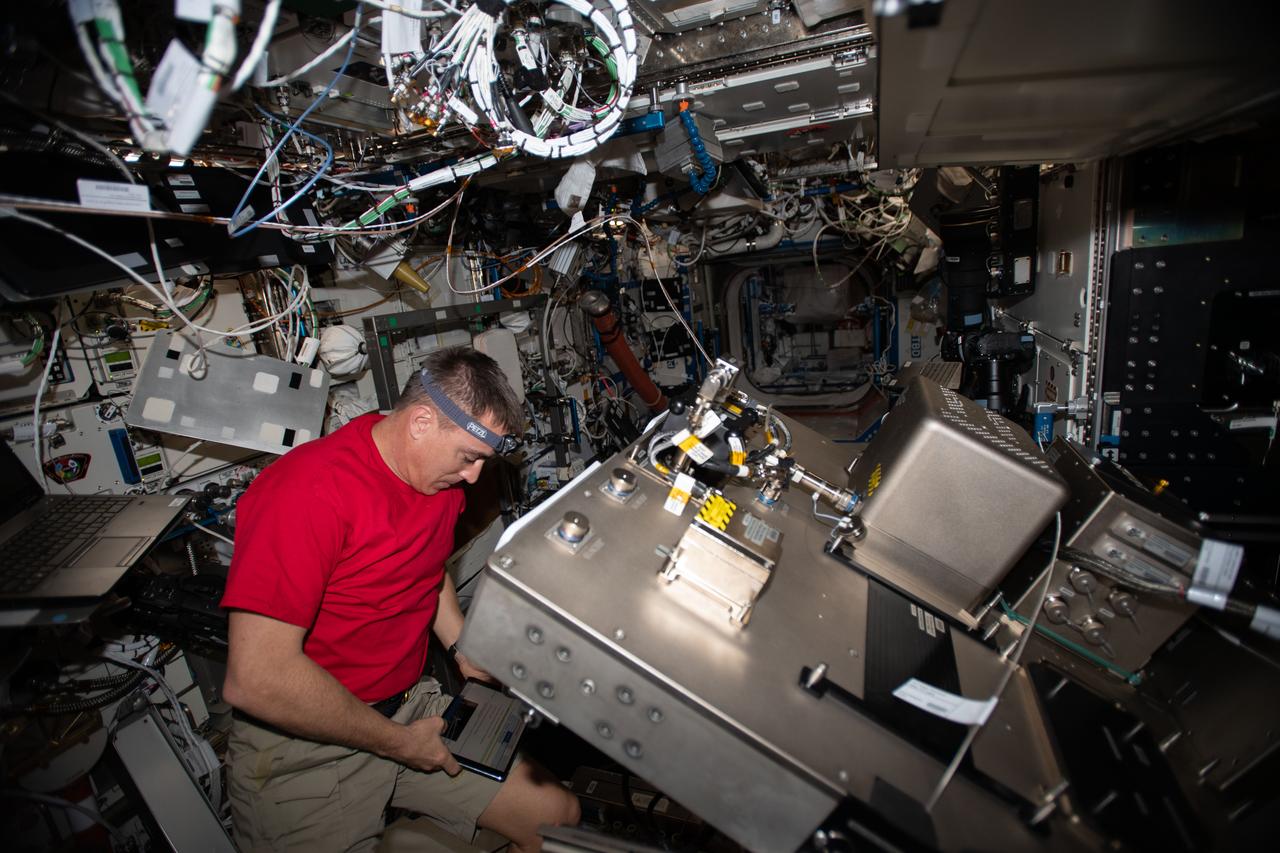
iss063e001804 (April 21, 2020) --- NASA astronaut and Expedition 63 Commander Chris Cassidy works on the Fluids Integrated Rack (FIR) replacing components in the research device that studies the behavior of fluids in microgravity. The FIR will help promote the design of advanced space-based fuel tanks and other complex fluid transfer systems.
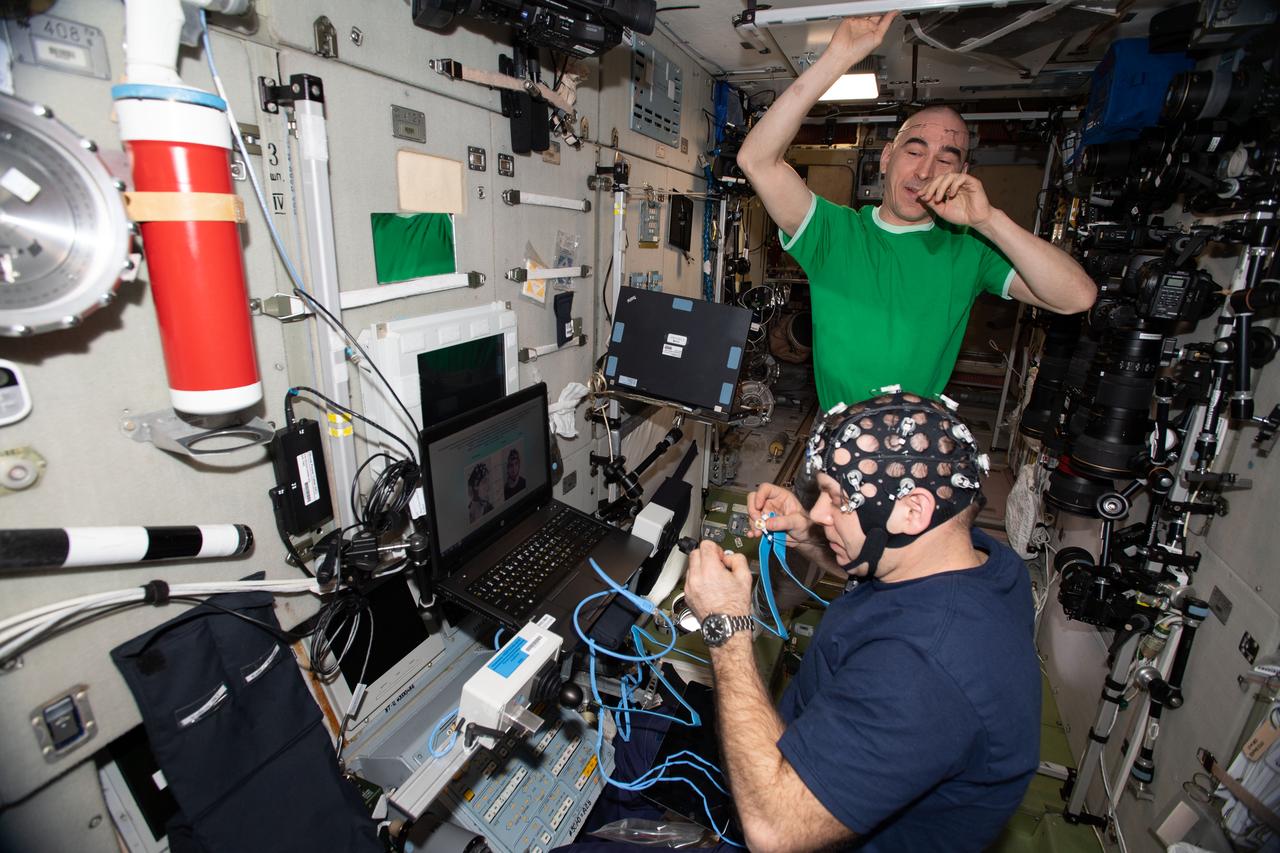
iss063e013834 (May 20, 2020) --- Roscosmos cosmonauts and Expedition 63 Flight Engineers Ivan Vagner (foreground) and Anatoly Ivanishin are pictured inside the International Space Station's Zvezda service module. Vagner is wearing Neurolab hardware for the Russian Pilot-T experiment that explores how space travelers may pilot future spacecraft on planetary missions.
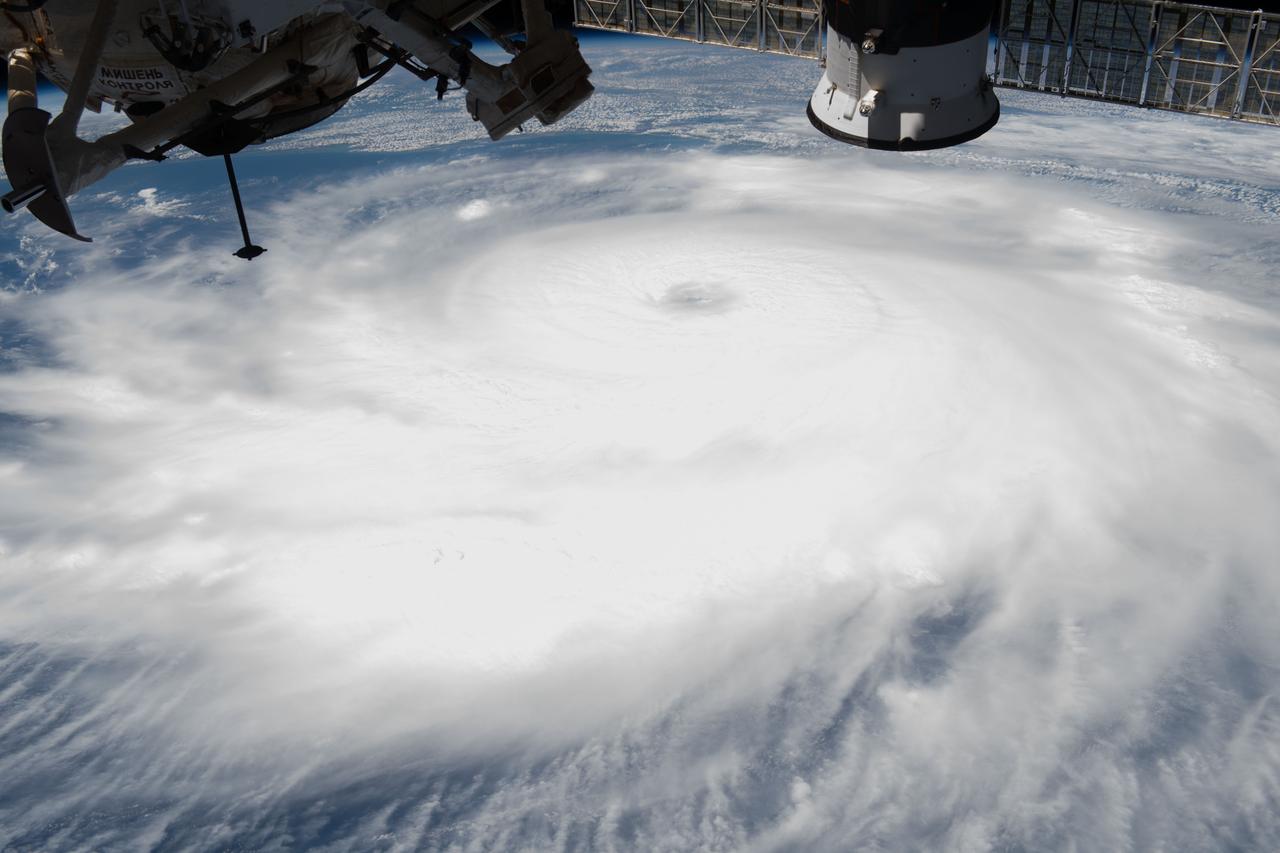
iss063e078403 (Aug. 26, 2020) --- Hurricane Laura is pictured Wednesday afternoon off the coast of the Texas-Louisiana border as the International Space Station orbited above the Gulf of Mexico.

iss063e110774 (Oct. 18, 2020) --- The Soyuz MS-17 crew ship that carried the Expedition 64 crew to the International Space Station on Oct. 14 is pictured docked to the Rassvet module. The orbital complex was above the Atlantic Ocean in between the island nation of Cape Verde and the African nation of Mauritania.
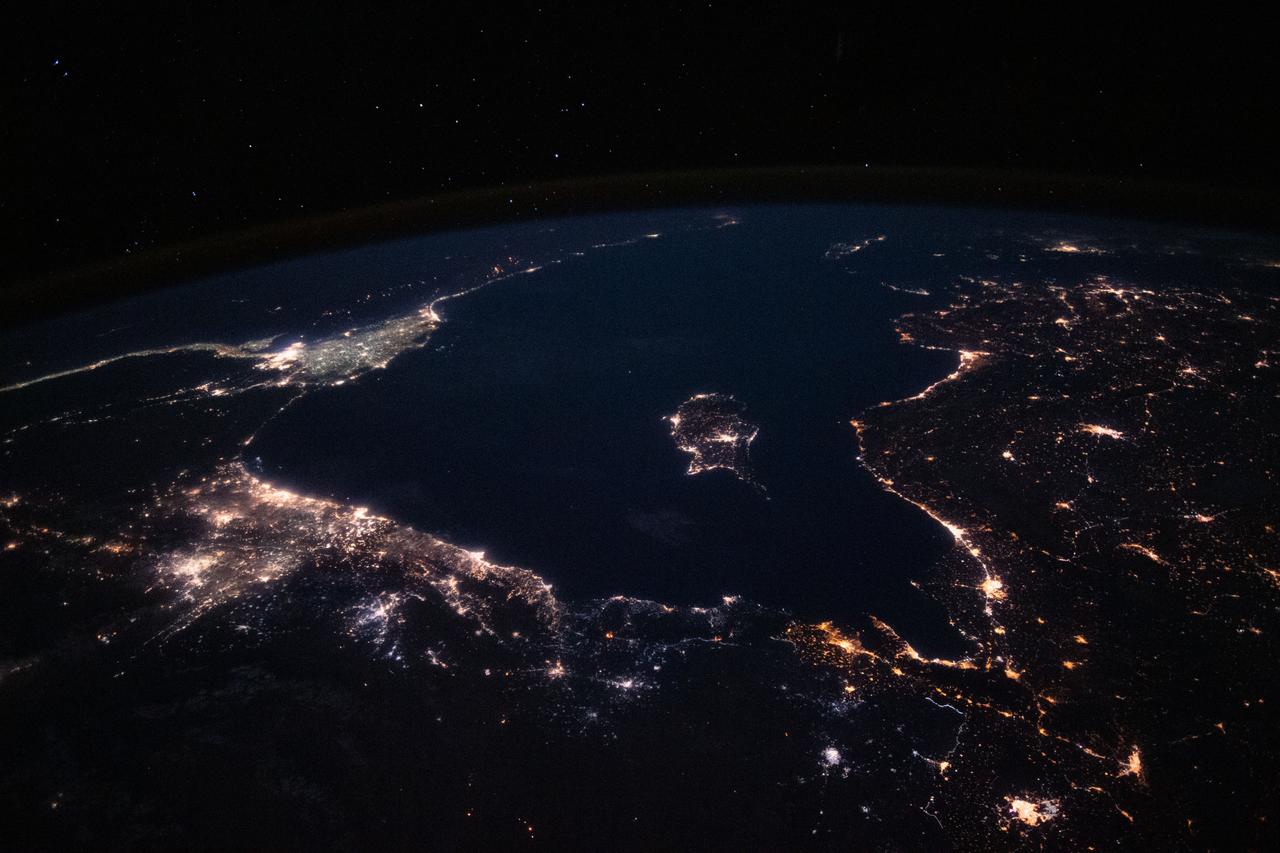
Night Earth Observations taken by Expedition 63 crew. Folder indicates: Nile River delta taken with 24mm lens.
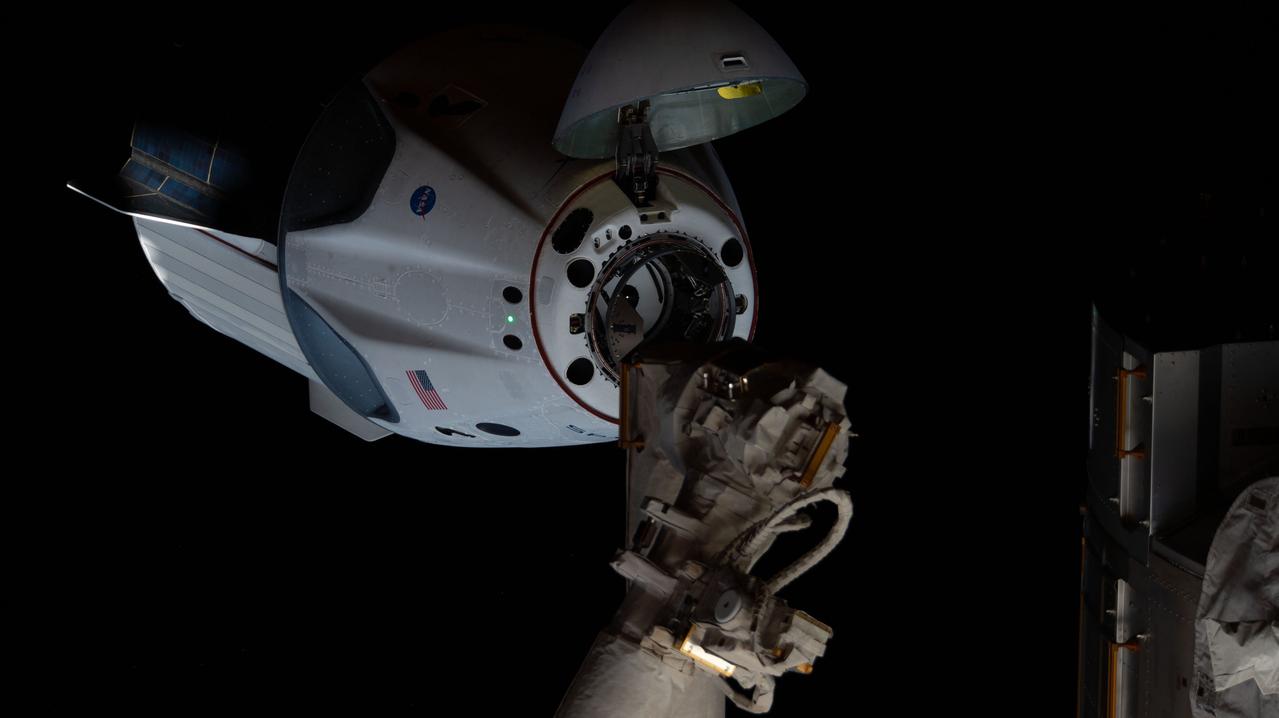
iss063e021463 (May 31, 2020) --- Astronauts Doug Hurley and Bob Behnken of NASA's Commercial Crew Program were aboard the SpaceX Crew Dragon as it approached the International Space Station. The Crew Dragon's nose cone is open revealing the spacecraft's docking mechanism that would connect to the Harmony module's forward International Docking Adapter.
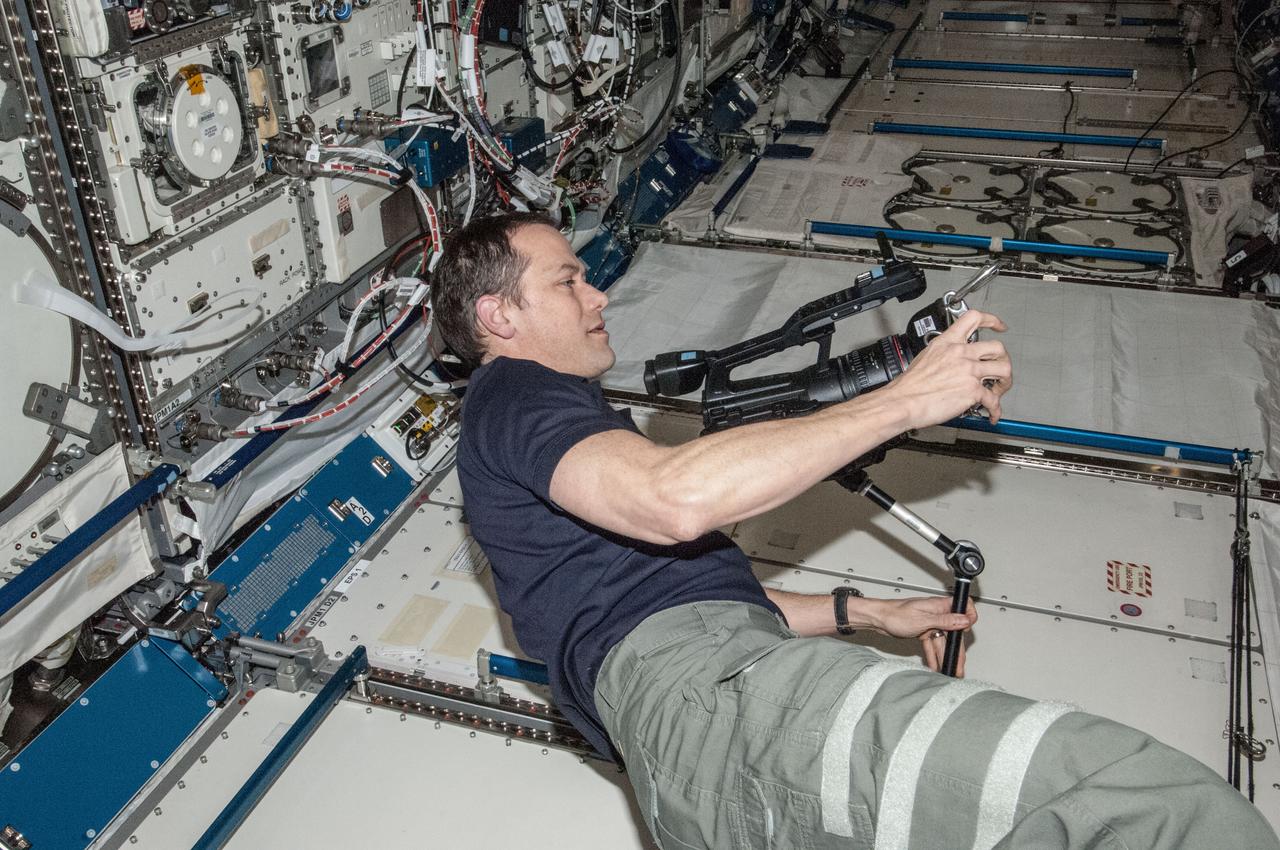
ISS035-E-022390 (17 April 2013) --- NASA astronaut Tom Marshburn, Expedition 35 flight engineer, sets up a video camera to record activity in the Kibo lab aboard the International Space Station on April 17, 2013.
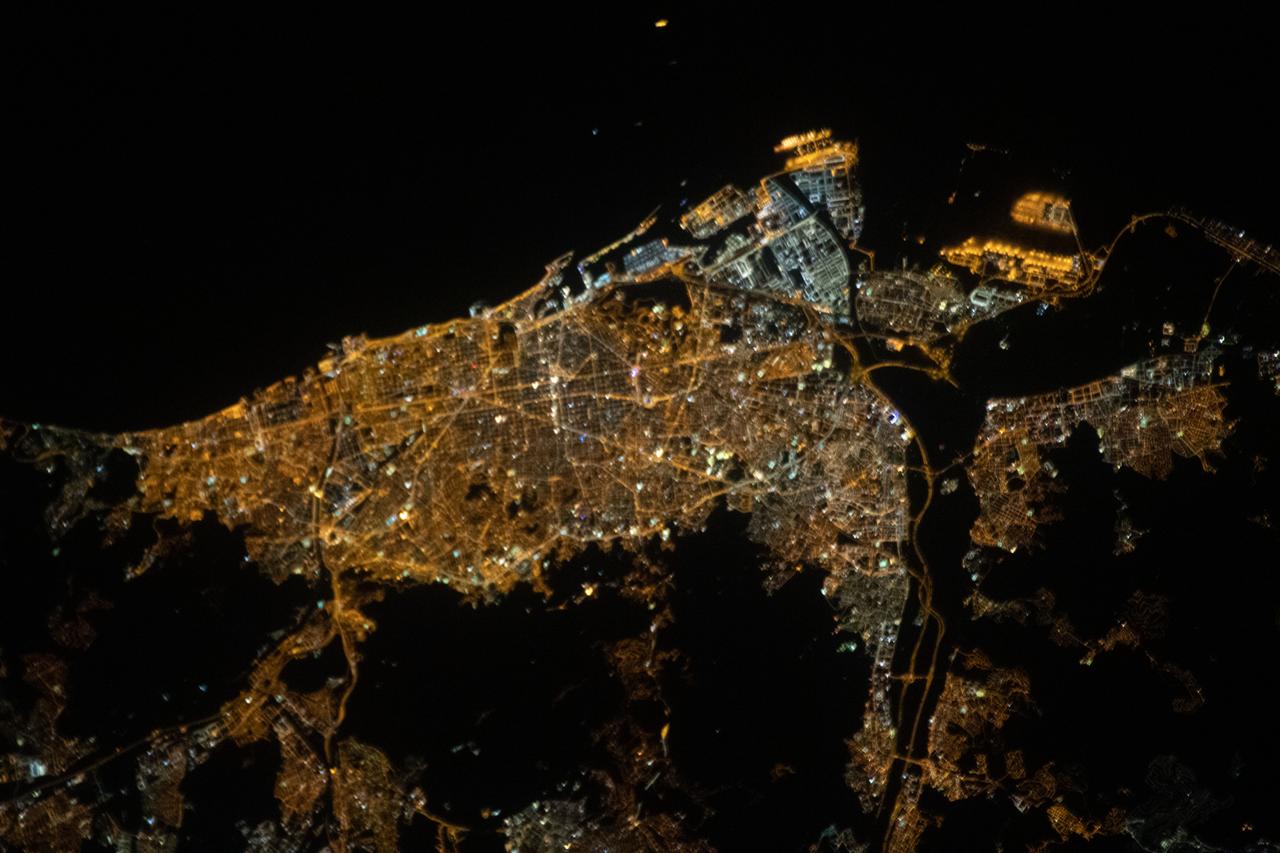
iss063e088813 (Sept. 15, 2020) --- This nighttime view of Barcelona, Spain, on the coast of the Balearic Sea, was taken from the International Space Station as it orbited above the east coast of the Spanish nation.
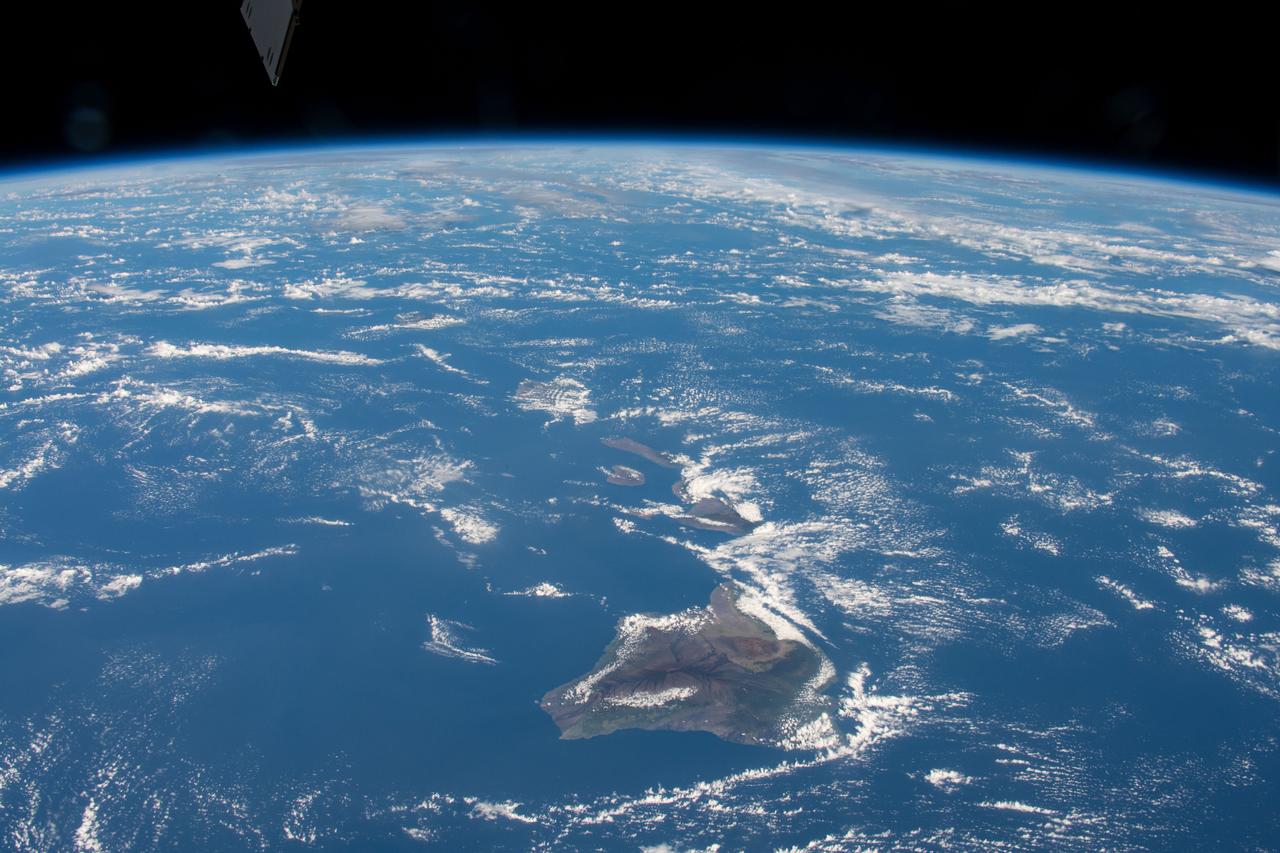
iss063e105773 (Oct. 8, 2020) --- The Hawaiian island chain was pictured as the International Space Station orbited above the Pacific Ocean.
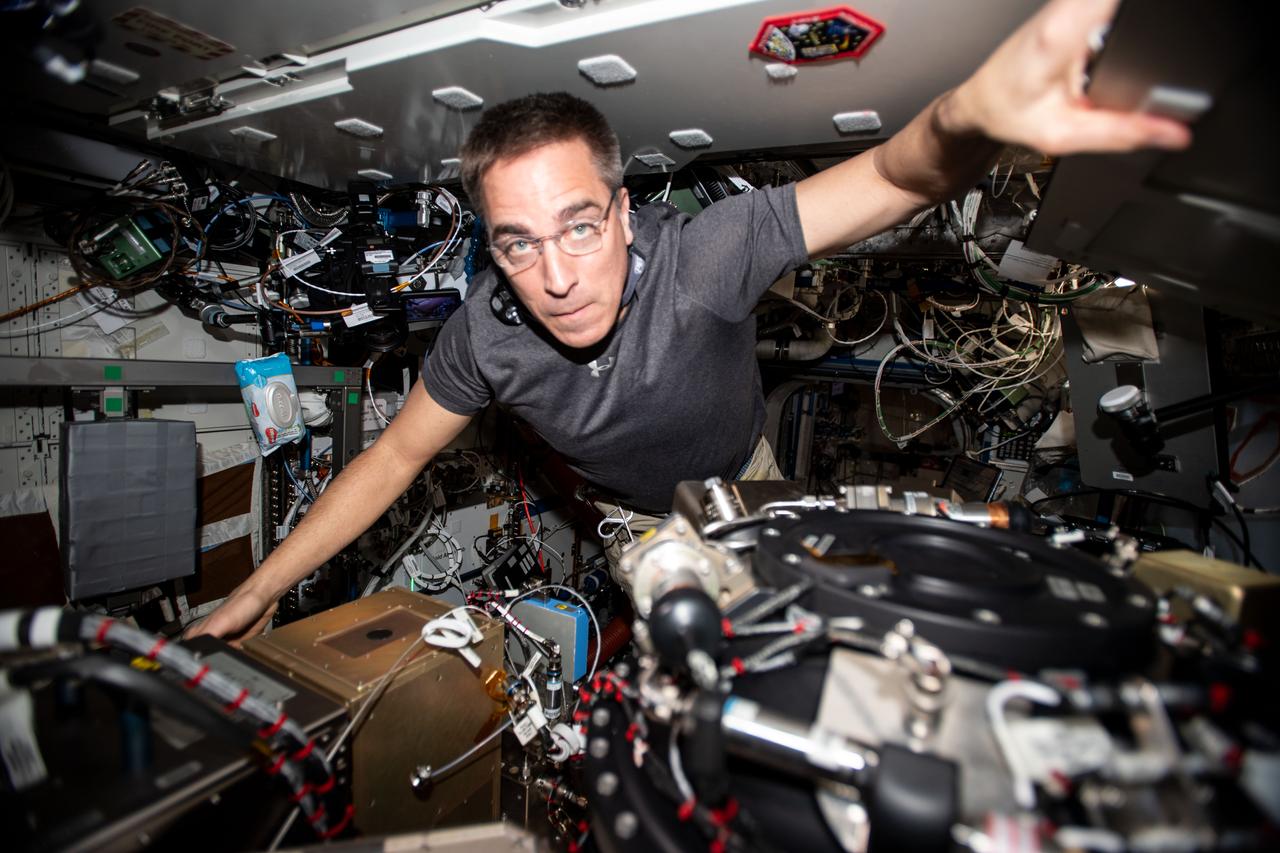
iss063e002821 (April 23, 2020) --- NASA astronaut and Expedition 63 Commander Chris Cassidy performs maintenance on the Combustion Integrated Rack, a research device that enables safe fuel, flame and soot studies in microgravity.
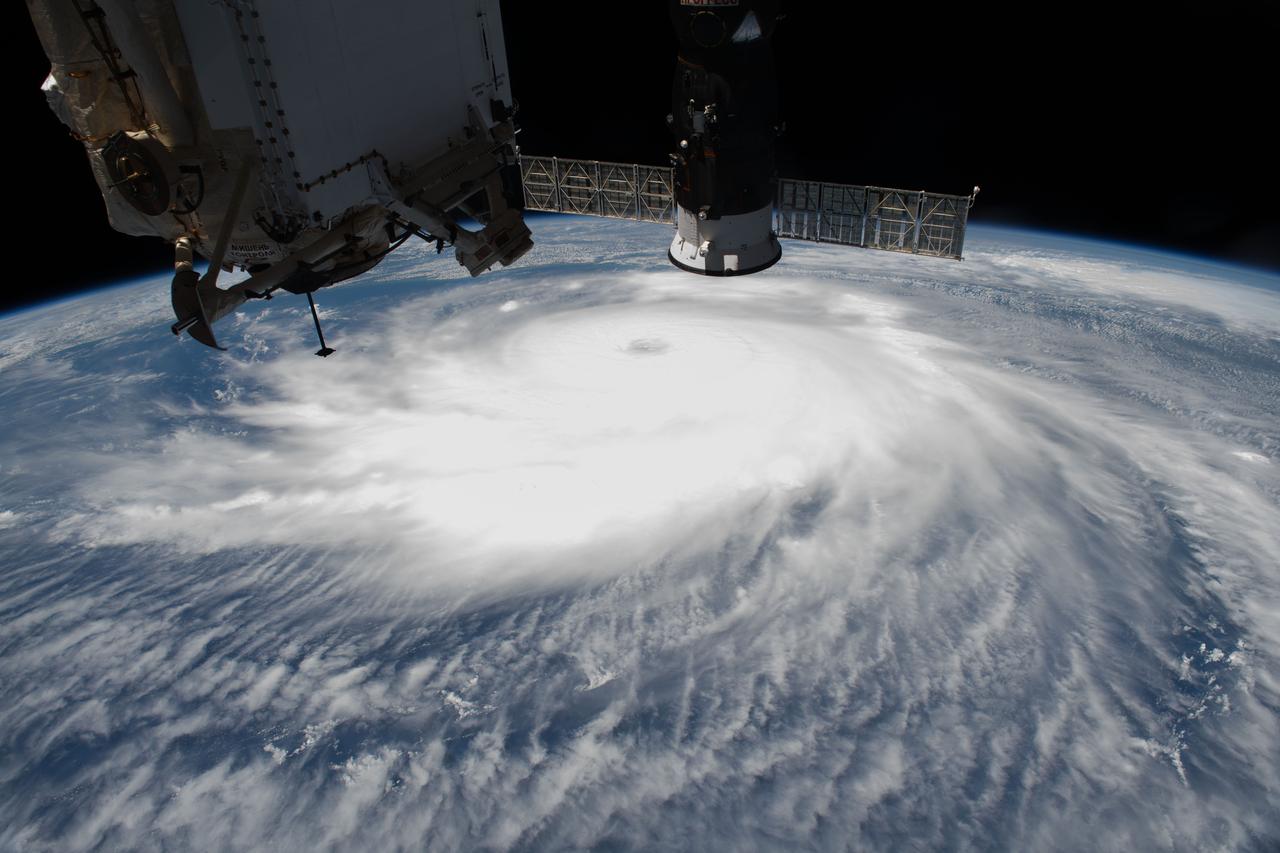
iss063e078406 (Aug. 26, 2020) --- Hurricane Laura is pictured Wednesday afternoon off the coast of the Texas-Louisiana border as the International Space Station orbited above the Gulf of Mexico.
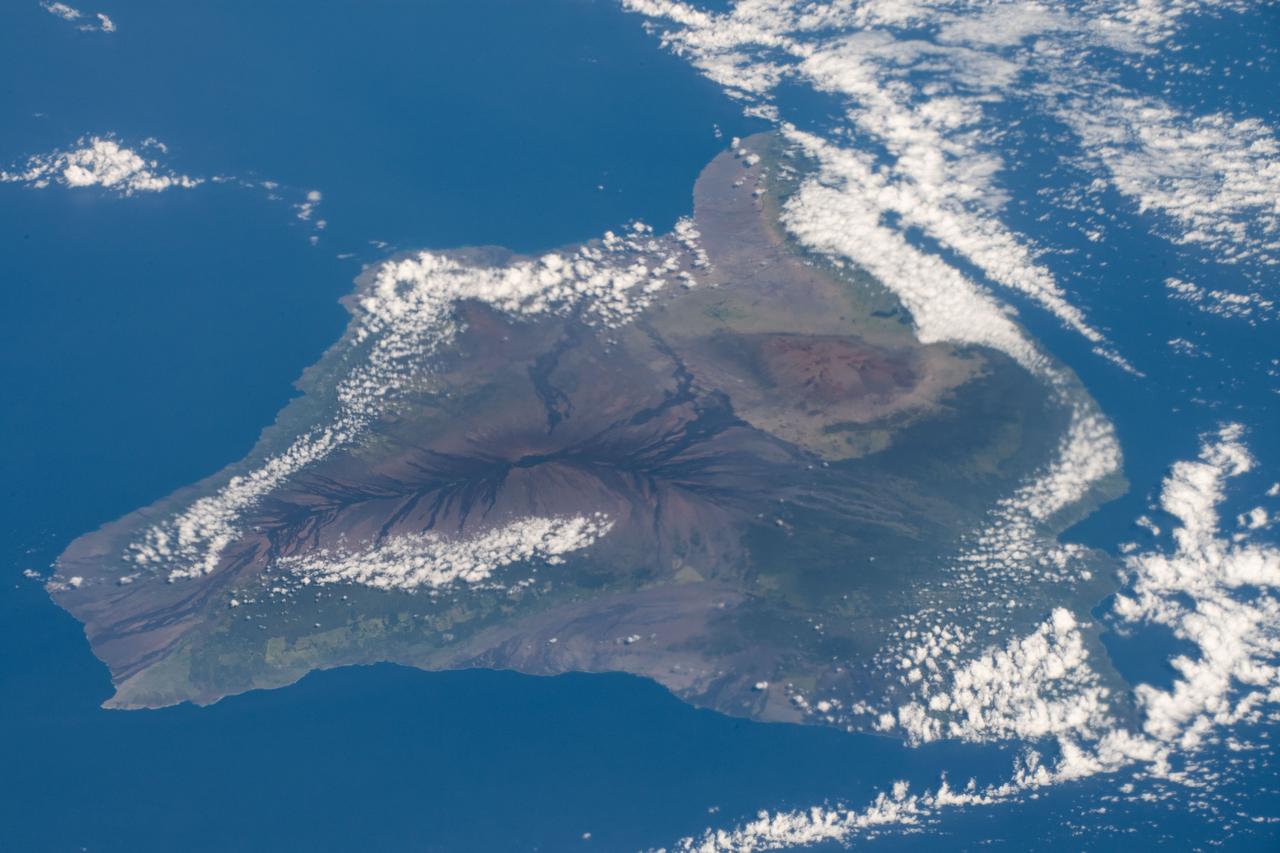
iss063e105782 (Oct. 8, 2020) --- The big island of Hawaii and its two prominent mountains Mauna Loa, an active volcano, and Mauna Kea, a dormant volcano, were pictured as the International Space Station orbited about 315 miles southeast above the Pacific Ocean.
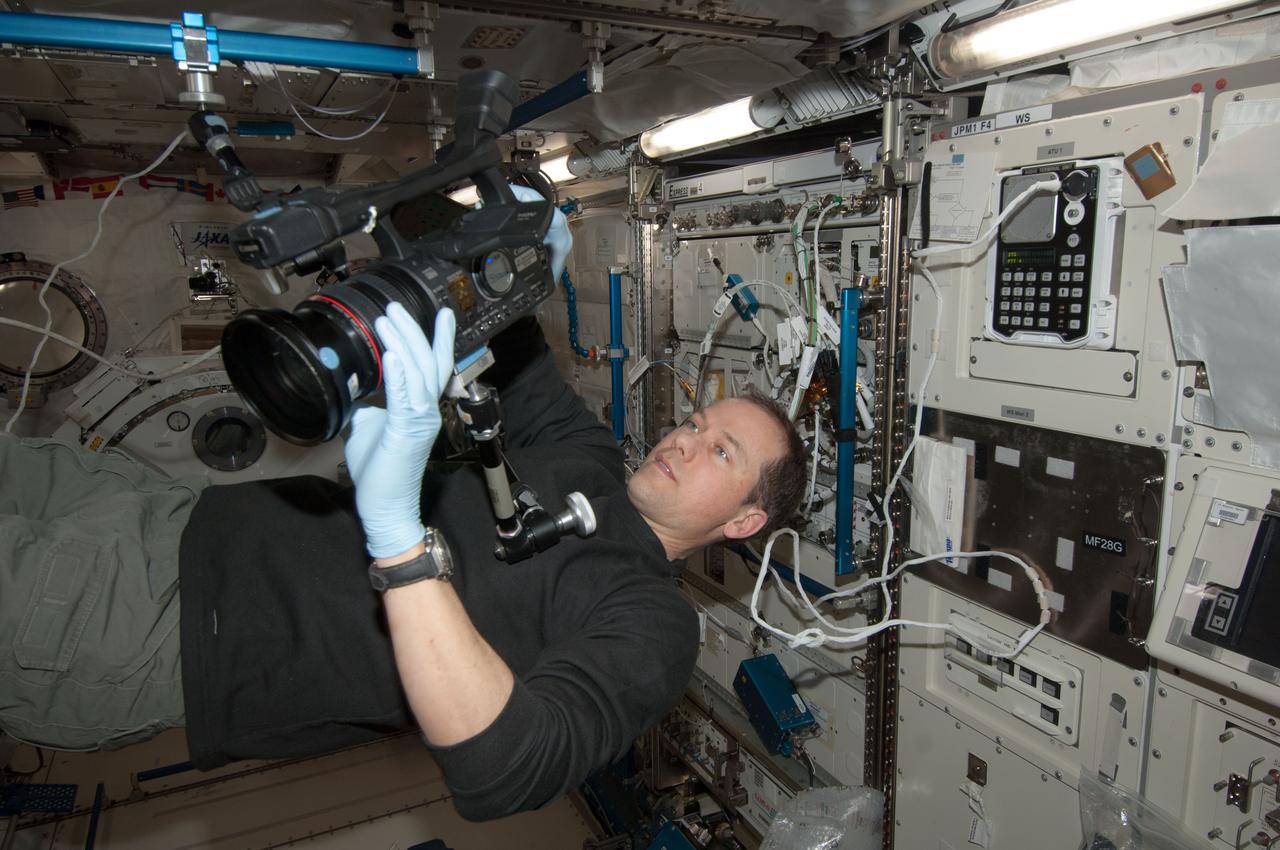
ISS035-E-016038 (4 April 2013) --- NASA astronaut Tom Marshburn records video with a camcorder in the Kibo module aboard the International Space Station.
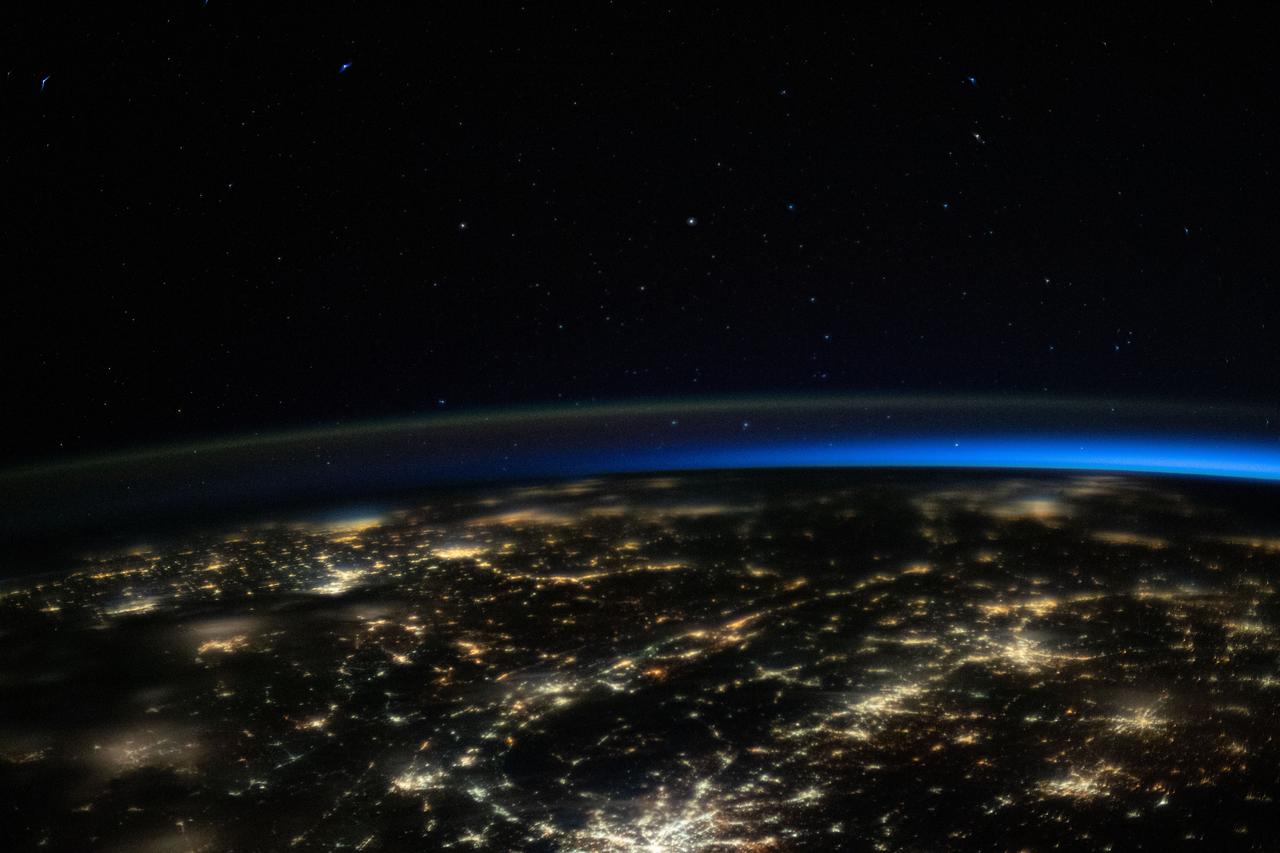
iss063e078584 (Aug. 27, 2020) --- The night lights of the southeastern U.S. are pictured as the International Space Station orbited over the Gulf of Mexico.
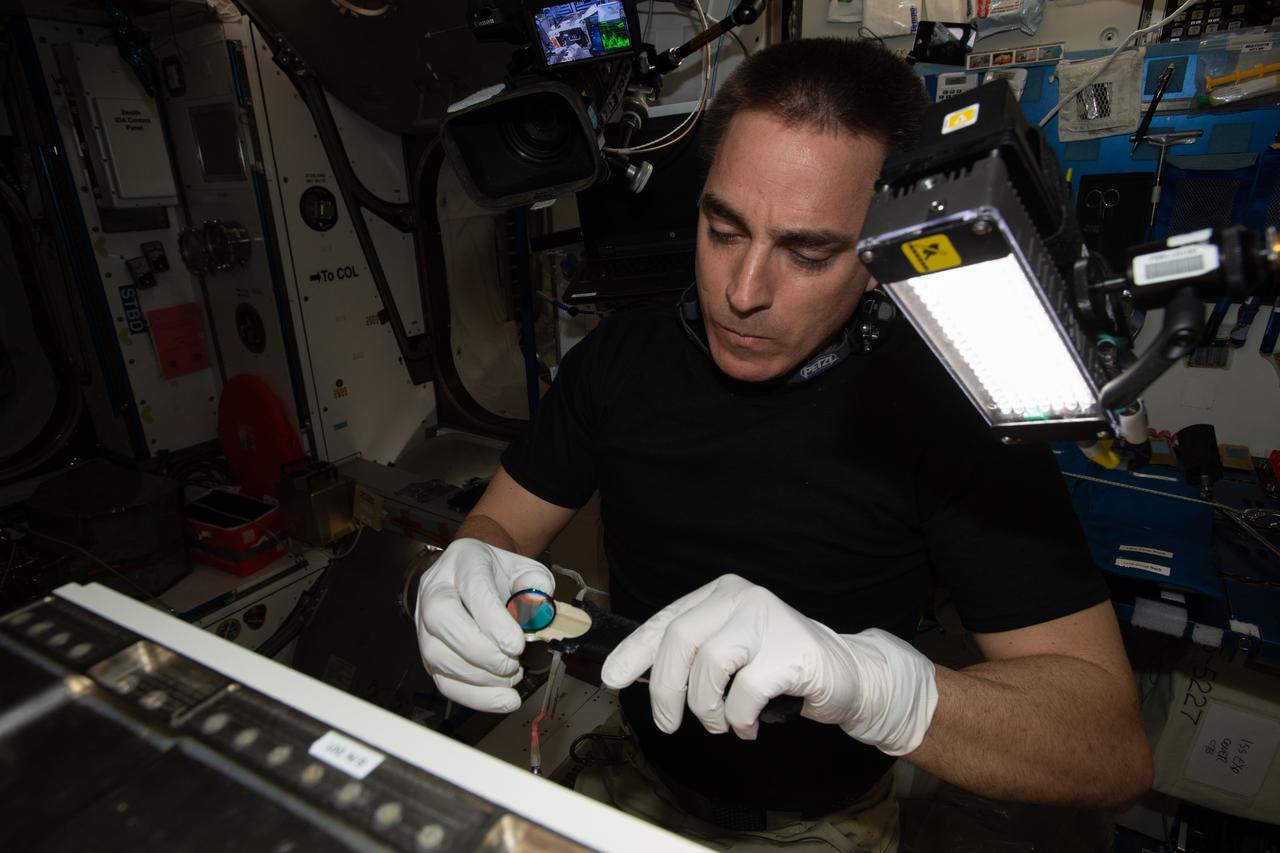
iss063e026156 (6/11/2020) --- A view of NASA Astronaut Chris Cassidy during the Spectrum Experiment hardware setup aboard the International Space Station (ISS). Spectrum takes fluorescent images of biological specimens contained within a controlled environment. A high resolution, monochrome camera captures images of fluoresced proteins of plants within Petri plates.
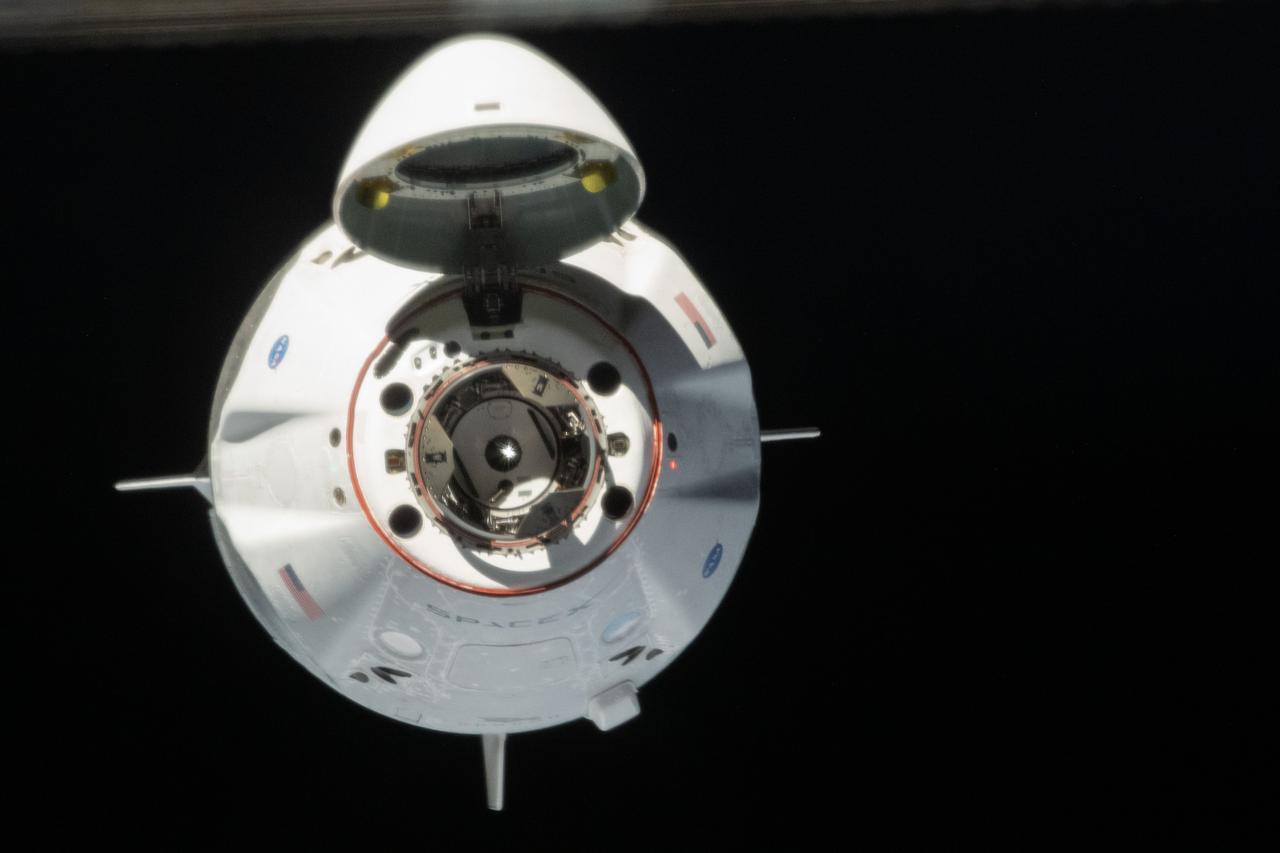
iss063e021563 (May 31, 2020) --- Astronauts Doug Hurley and Bob Behnken of NASA's Commercial Crew Program were aboard the SpaceX Crew Dragon as it approached the International Space Station. The Crew Dragon's nose cone is open revealing the spacecraft's docking mechanism that would connect to the Harmony module's forward International Docking Adapter.
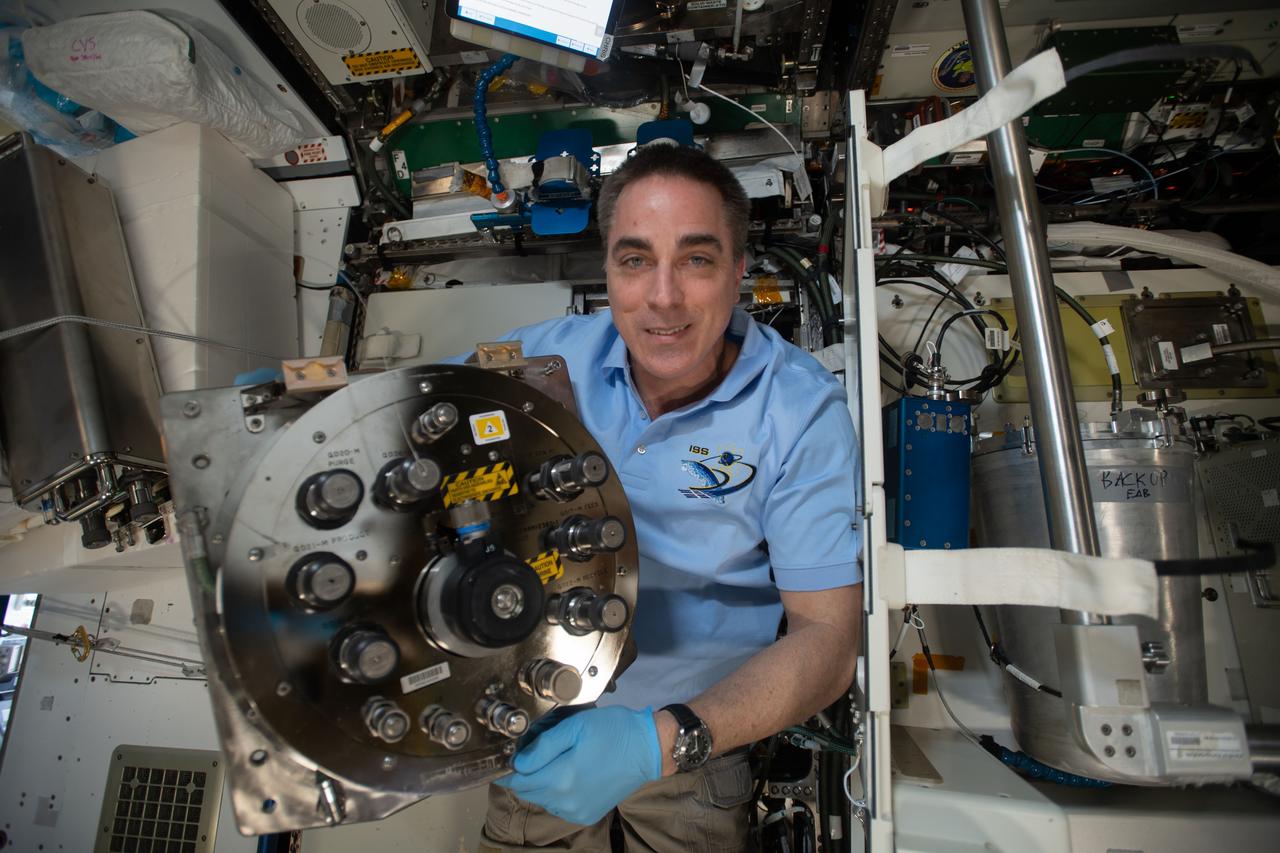
iss063e087568 (Sept. 10, 2020) --- NASA astronaut and Expedition 63 Commander Chris Cassidy replaces components inside the Waste and Hygiene Compartment, the International Space Station's bathroom located inside the Tranquility module.
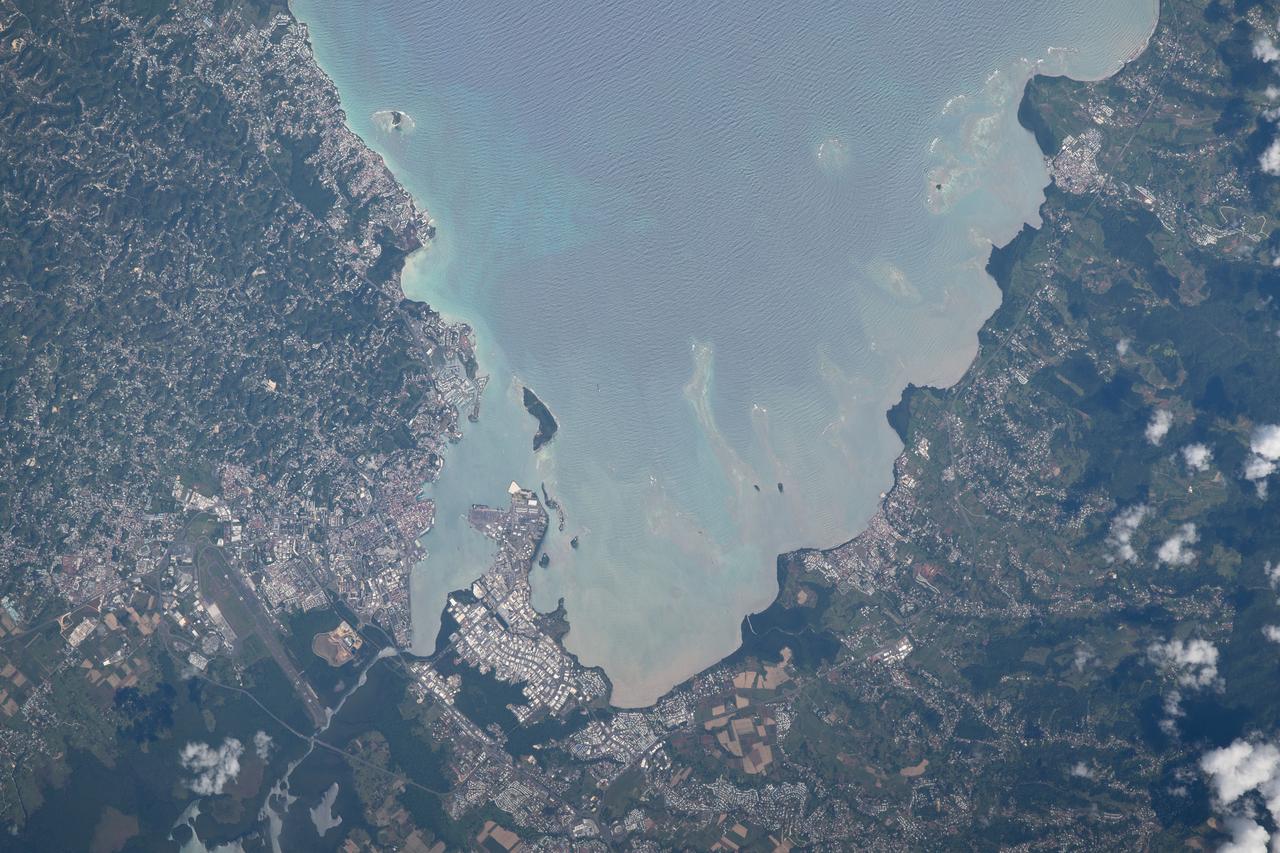
iss063e002083 (April 22, 2020) --- Baie-Mahault (bottom center) is a city in the French overseas region of Guadeloupe, an island group in the southern Caribbean Sea.
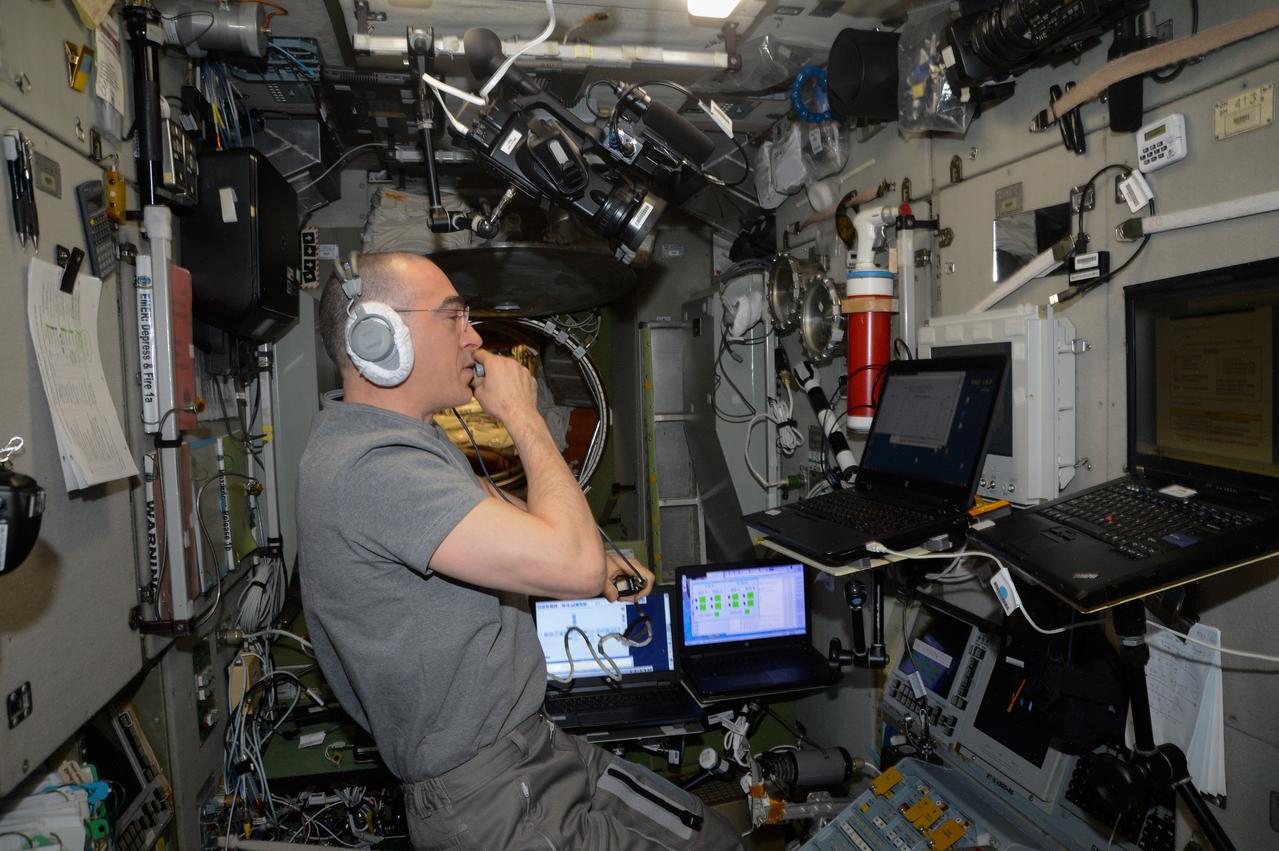
iss063e041647 (July 9, 2020) --- Roscosmos Flight Engineer Anatoly Ivanishin practices a simulated emergency evacuation of the International Space Station on a computer inside the Zvezda service module. Ivanishin spent the afternoon reviewing procedures for quickly entering the Soyuz MS-16 crew ship for a rapid undocking and Earth re-entry with crewmates Ivan Vagner of Roscosmos and Chris Cassidy of NASA (both out of frame).
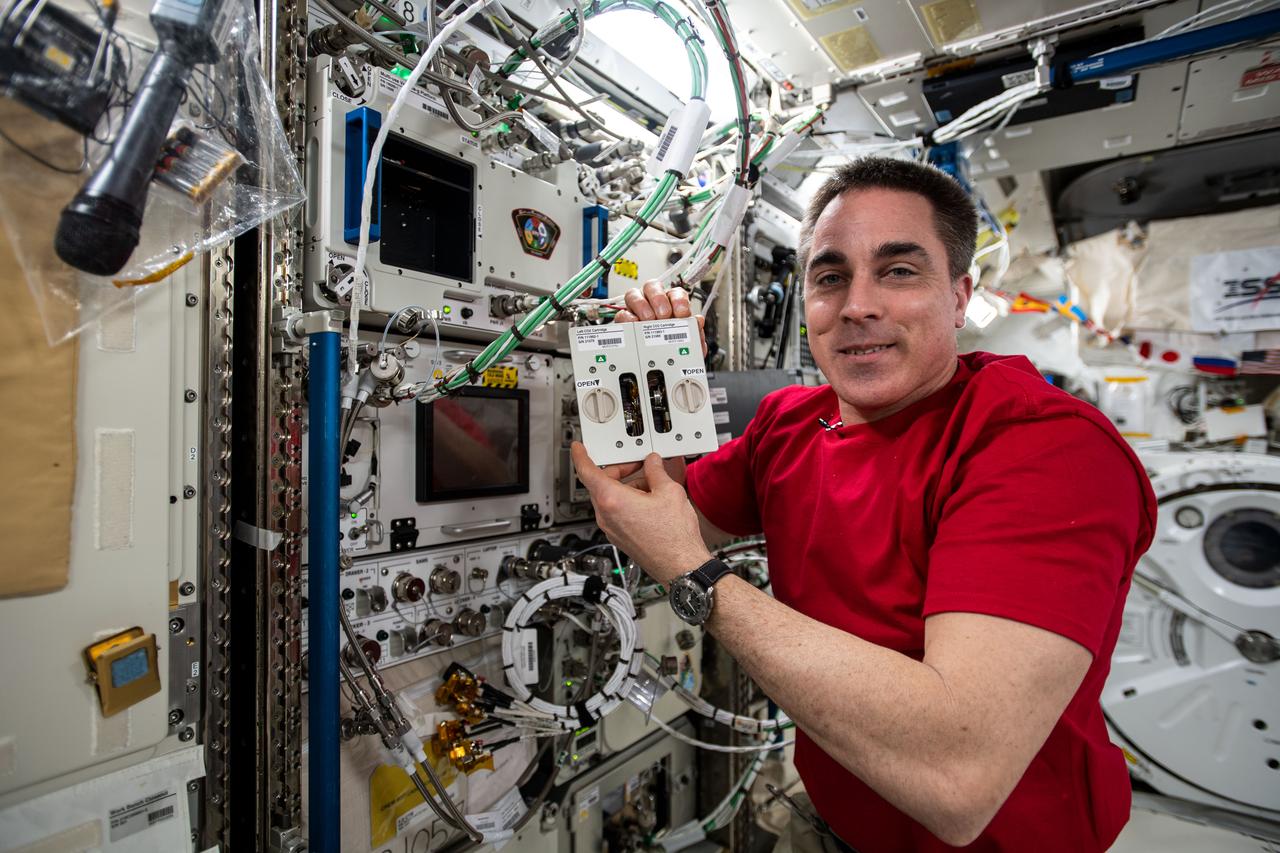
iss063e110548 (Oct. 19, 2020) --- NASA astronaut and Expedition 63 Commander Chris Cassidy works on research hardware inside the JAXA (Japan Aerospace Exploration Agency) Kibo laboratory module.
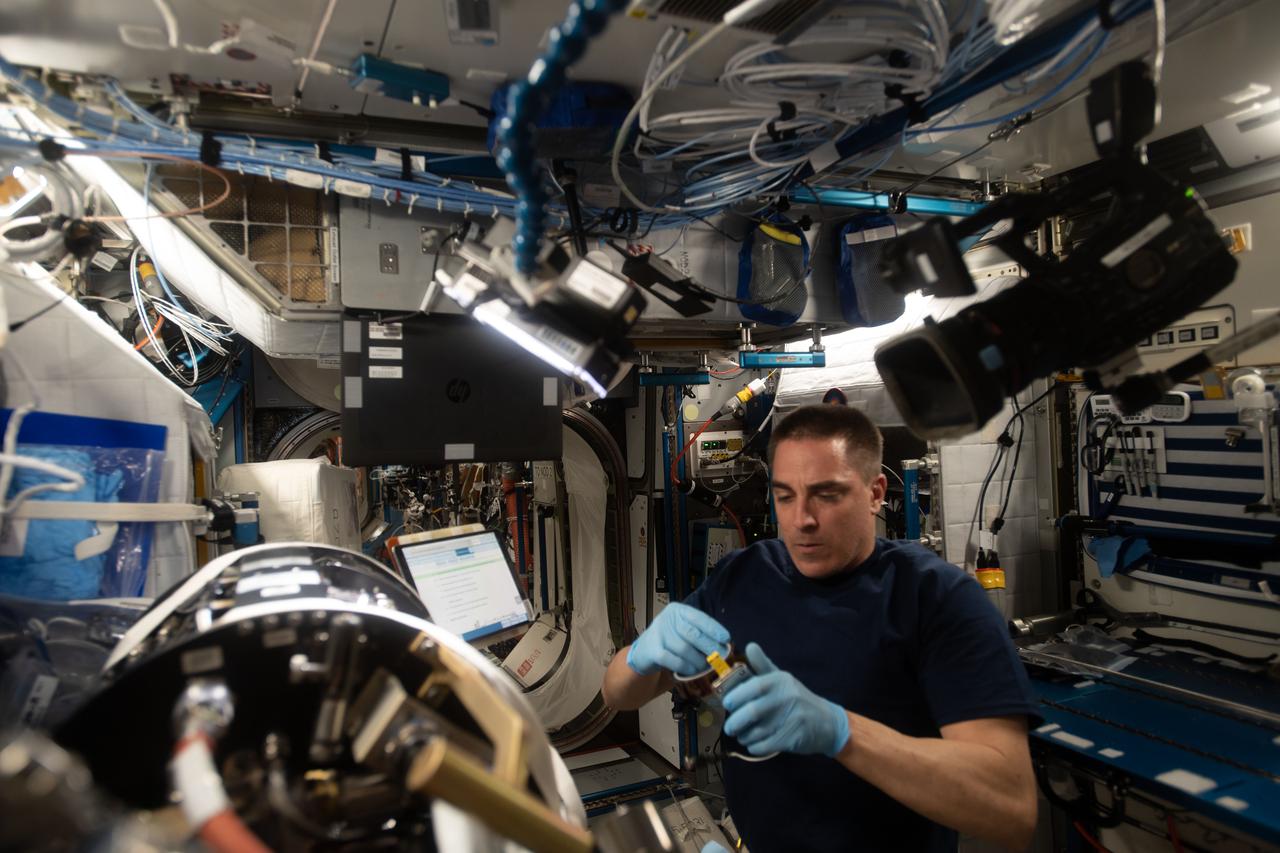
iss063e078755 (Aug. 27, 2020) --- NASA astronaut and Expedition 63 Commander Chris Cassidy replaces components inside the Combustion Integrated Rack to support a series of ongoing flame and fuel studies known as Advanced Combustion via Microgravity Experiments (ACME).
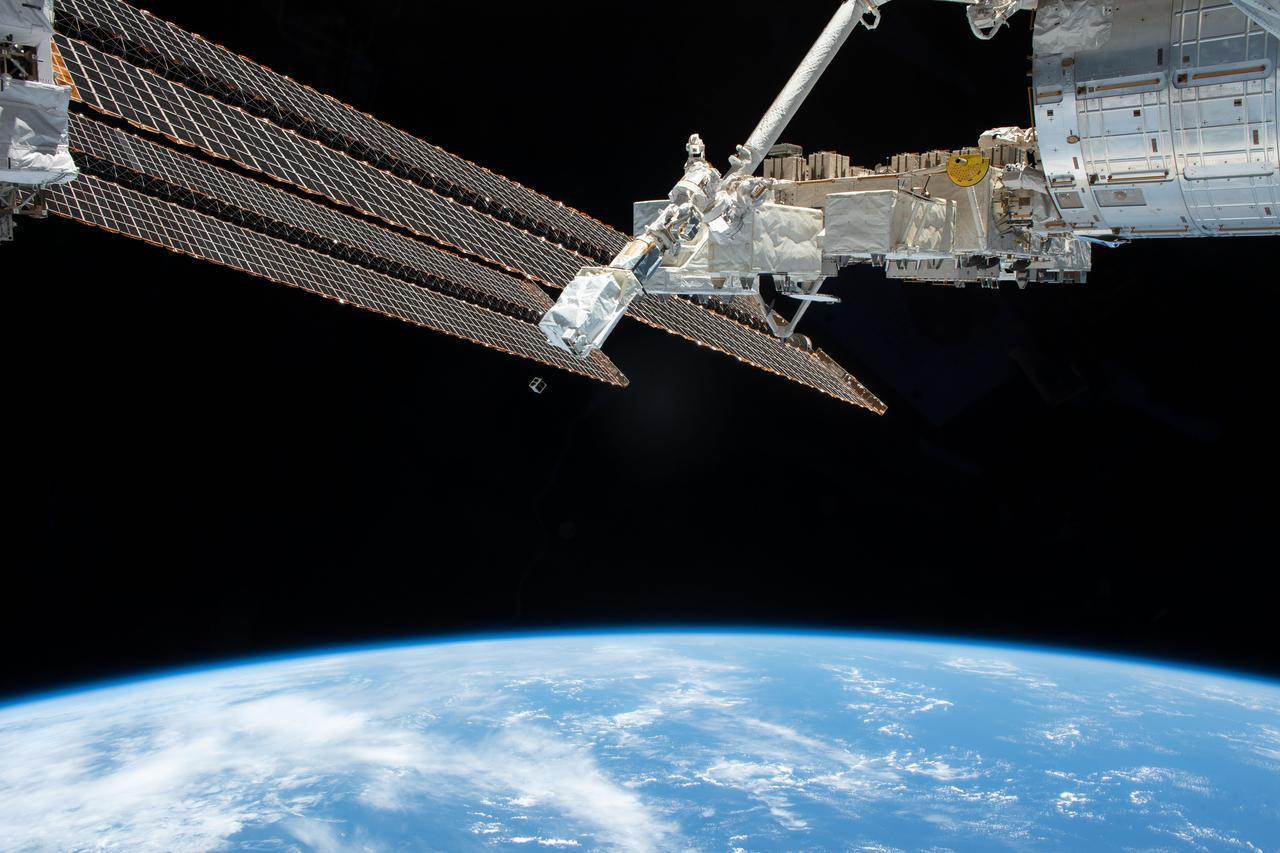
iss063e003633 (4/28/2020) --- The Quetzal-1 CubeSat is seen as it deploys from the JEM Small Satellite Orbital Deployer aboard the International Space Station. Quetzal-1 is Guatemala’s first satellite. It was developed in-house at Universidad del Valle de Guatemala (UVG) and tests a multispectral remote sensor prototype composed of a camera, a piezoelectric motor, and a filter carousel designed to acquire images at different wavelengths.
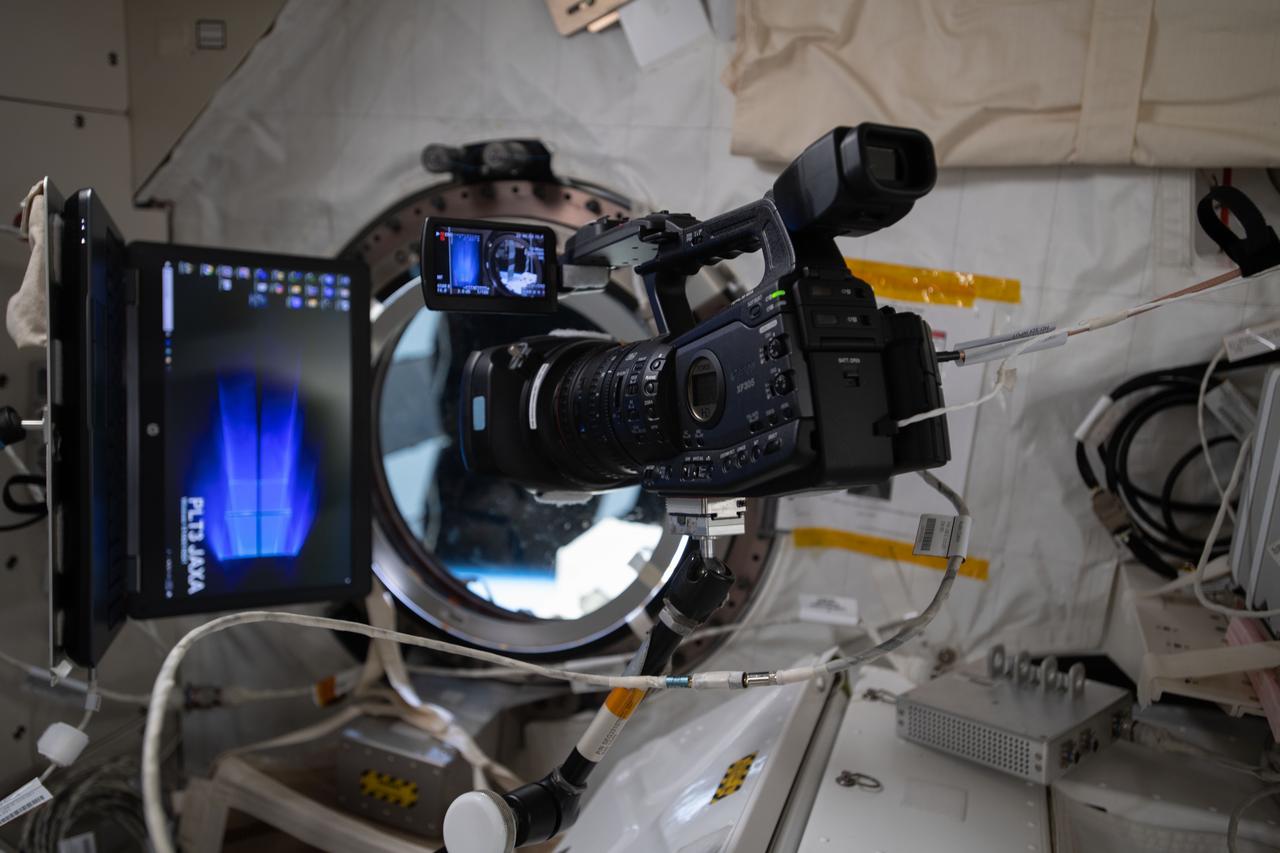
iss063e068091 (8/12/2020) --- Photo documentation of the Space Studio KIBO setup in the Japanese Experiment Module (JEM) aboard the International Space Station (ISS). The Space Frontier Studio KIBO is a broadcasting studio that is constructed and operated in the Japanese Experiment Module (JEM), also known as Kibo. The studio can livestream activities, interactive entertainment, and communication from space.
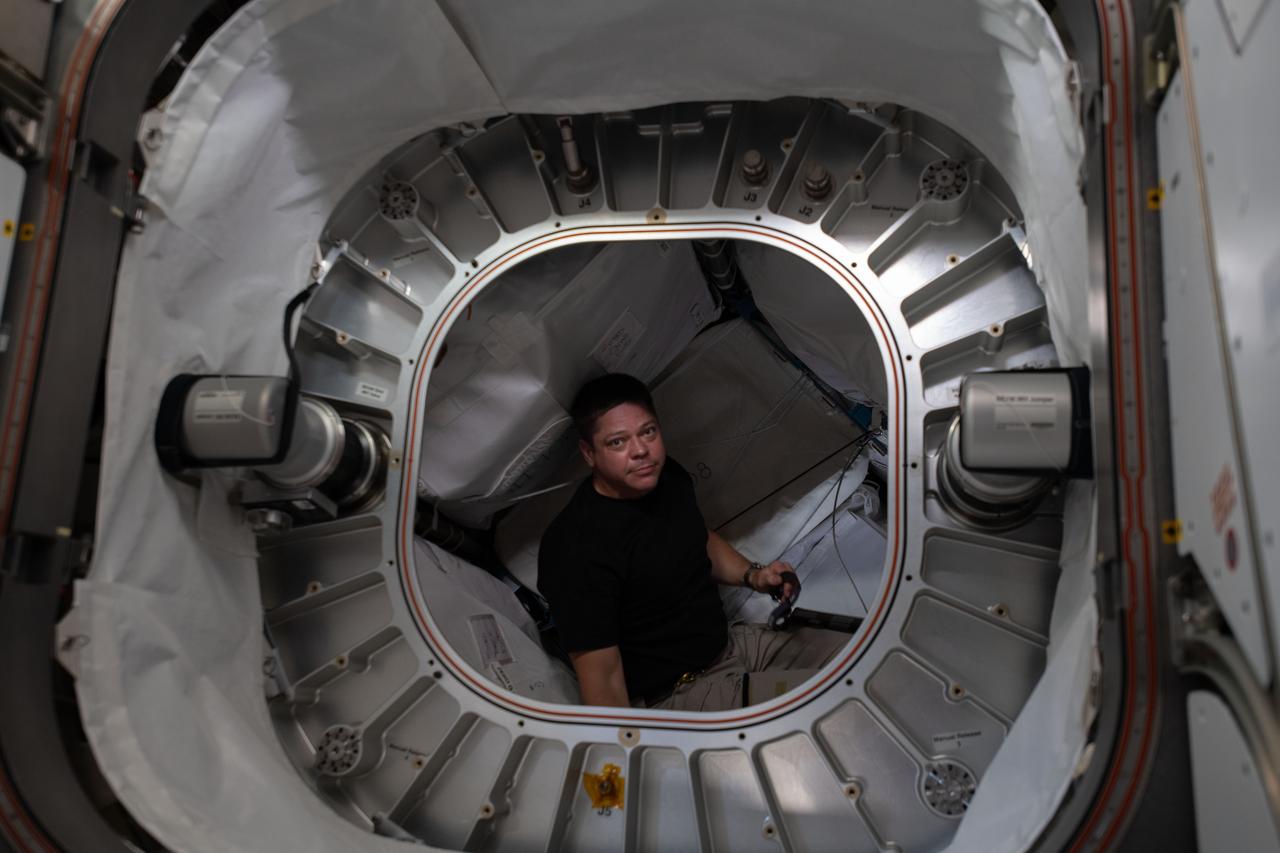
iss063e028476 (July 1, 2020) --- NASA astronaut and Expedition 63 Flight Engineer Bob Behnken is pictured inside the Bigelow Expandable Activity Module (BEAM) during operations to retrieve charcoal filters.
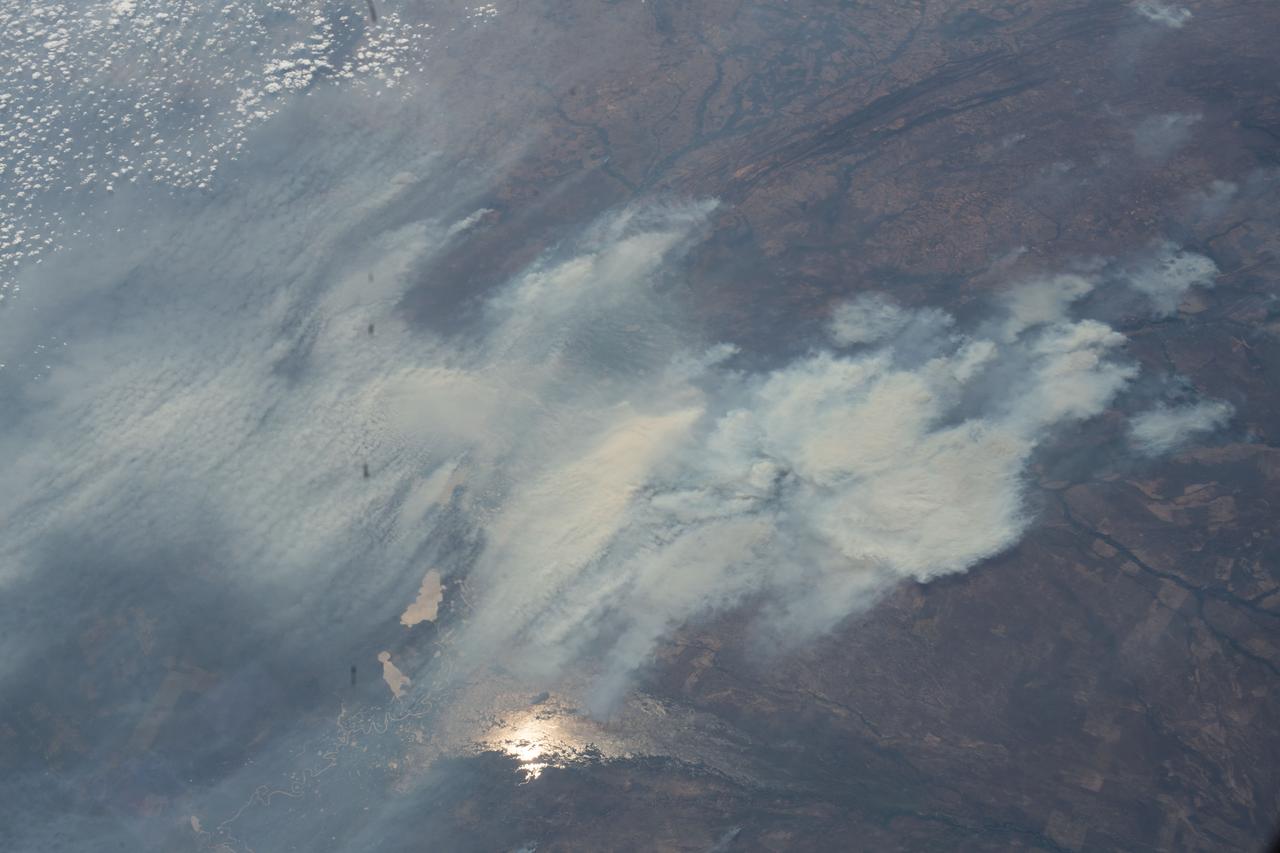
iss063e080404 (Aug. 29, 2020) --- Wildfires are pictured in the Amazon rainforest as the International Space Station orbited above the border between Bolivia and Brazil.
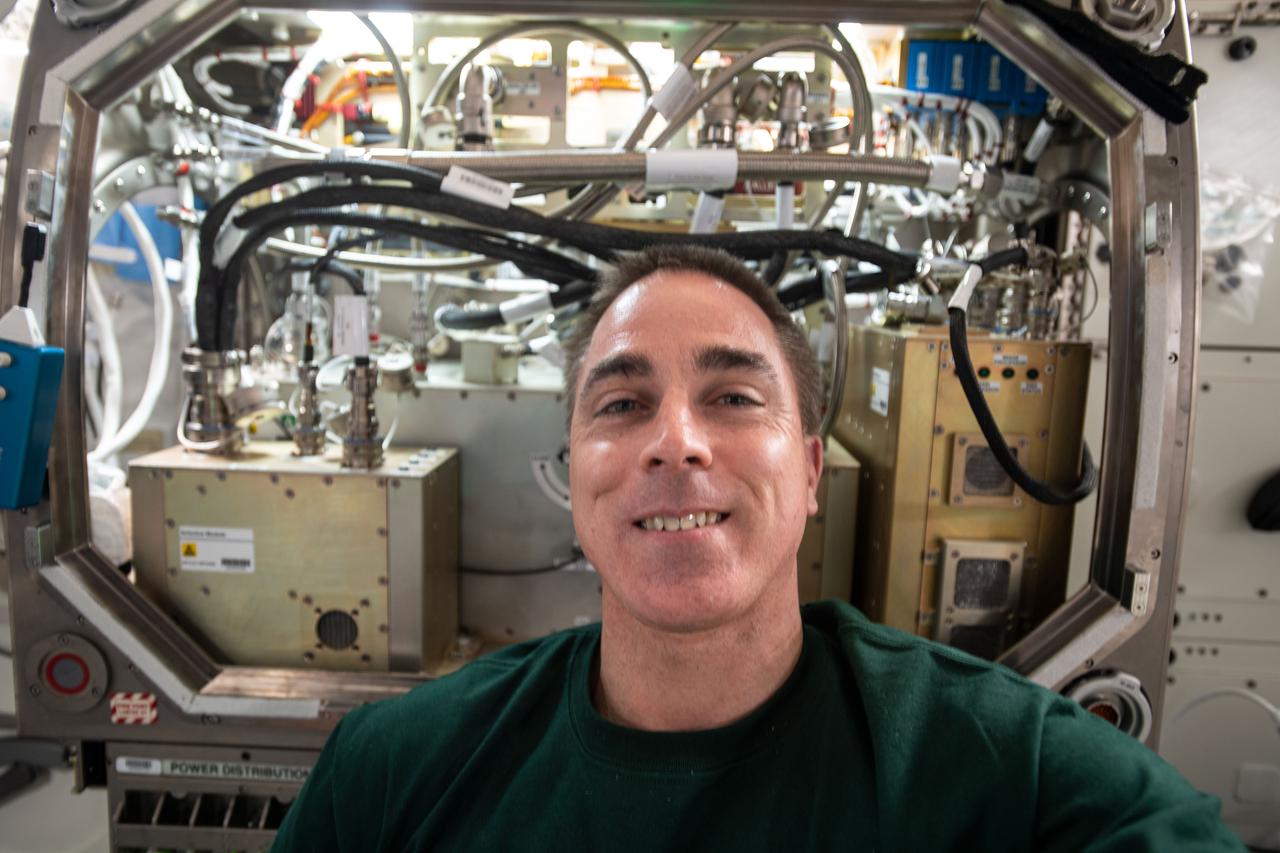
iss063e068516 (Aug. 12, 2020) --- NASA astronaut and Expedition 63 Commander Chris Cassidy poses for a portrait in front of the Microgravity Science Glovebox as he was setting up the Packed Bed Reactor Experiment inside the research device. The new science hardware is exploring technology to support water recovery, planetary surface processing and oxygen production.
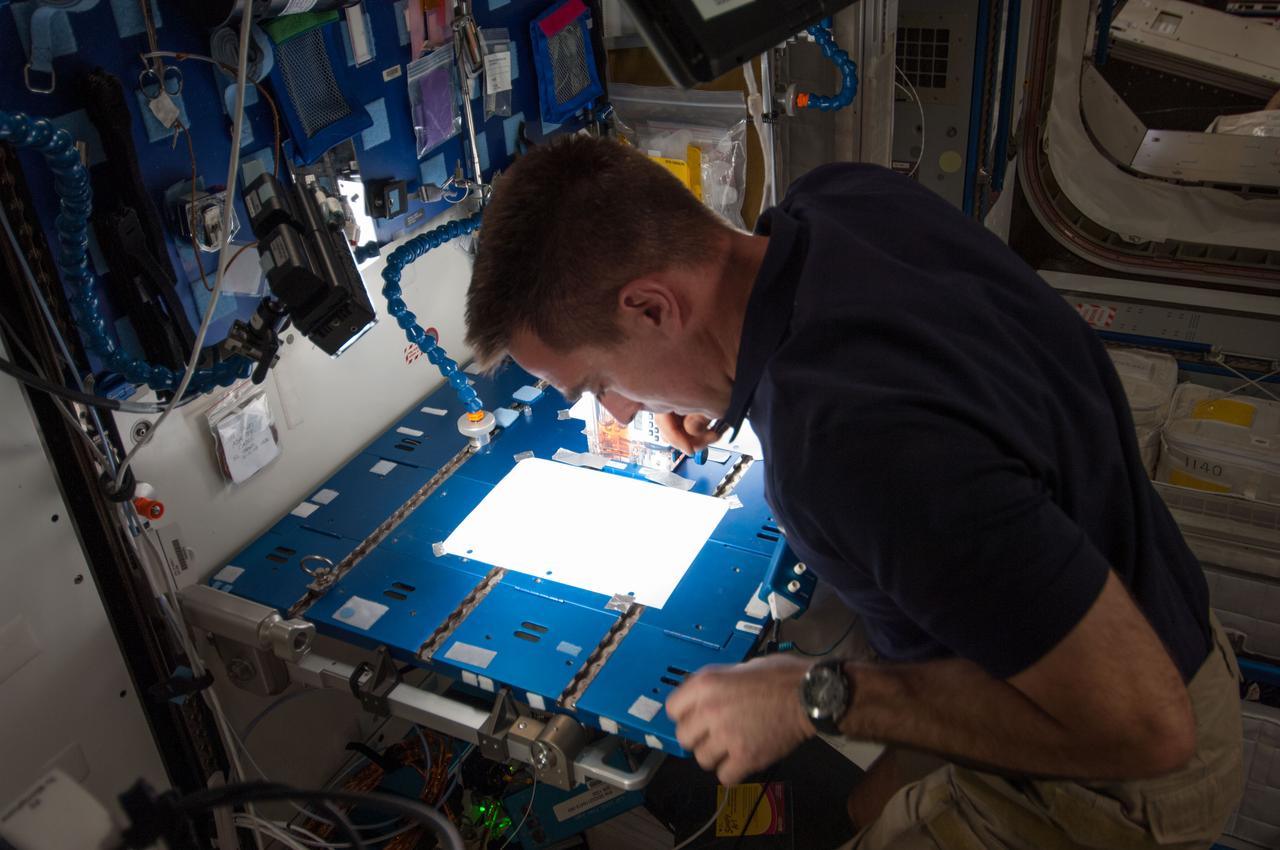
ISS035-E-022906 (18 April 2013) --- In the Harmony node aboard the International Space Station, NASA astronaut Chris Cassidy works with the Capillary Flow Experiment (CFE).
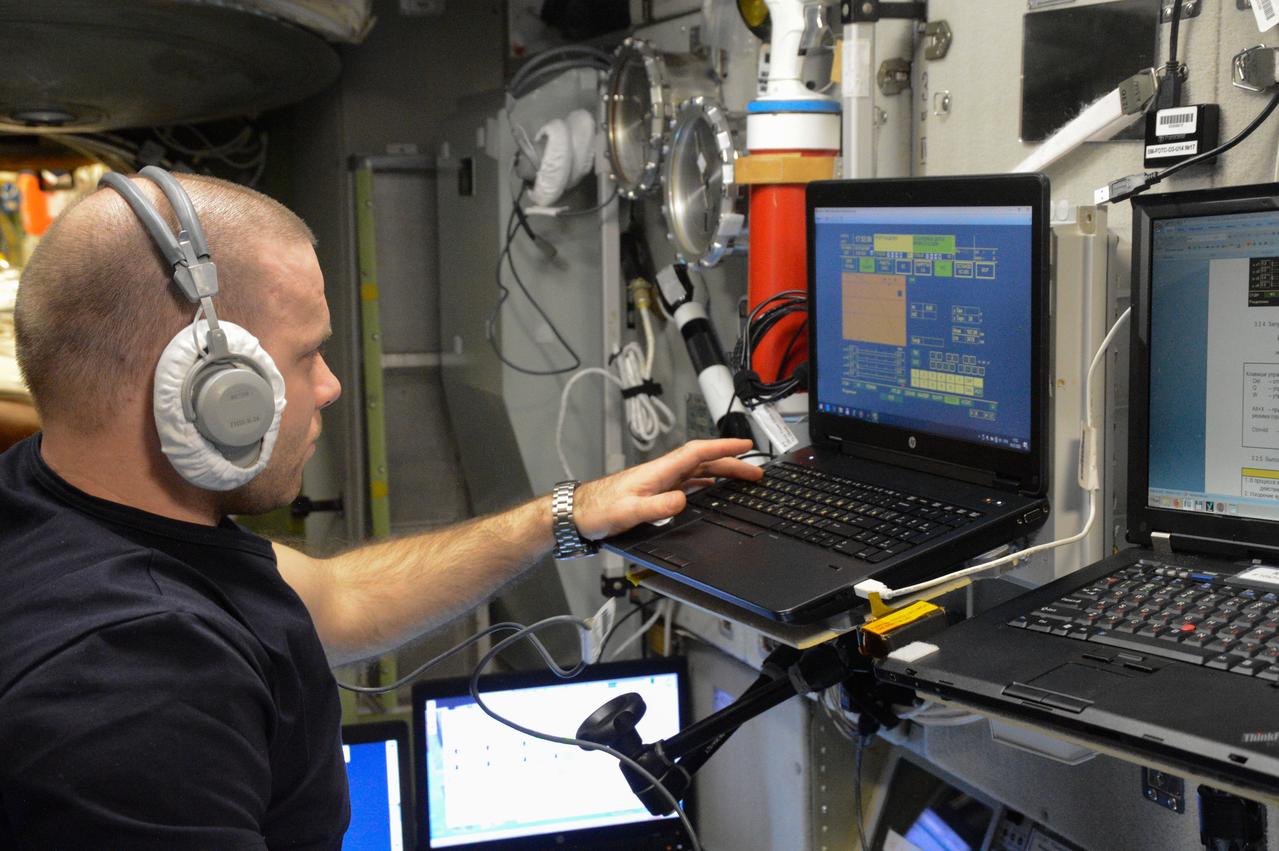
iss063e041648 (July 9, 2020) --- Roscosmos Flight Engineer Ivan Vagner practices a simulated emergency evacuation of the International Space Station on a computer inside the Zvezda service module. Vagner spent the afternoon reviewing procedures for quickly entering the Soyuz MS-16 crew ship for a rapid undocking and Earth re-entry with crewmates Anatoly Ivanishin of Roscosmos and Chris Cassidy of NASA (both out of frame).
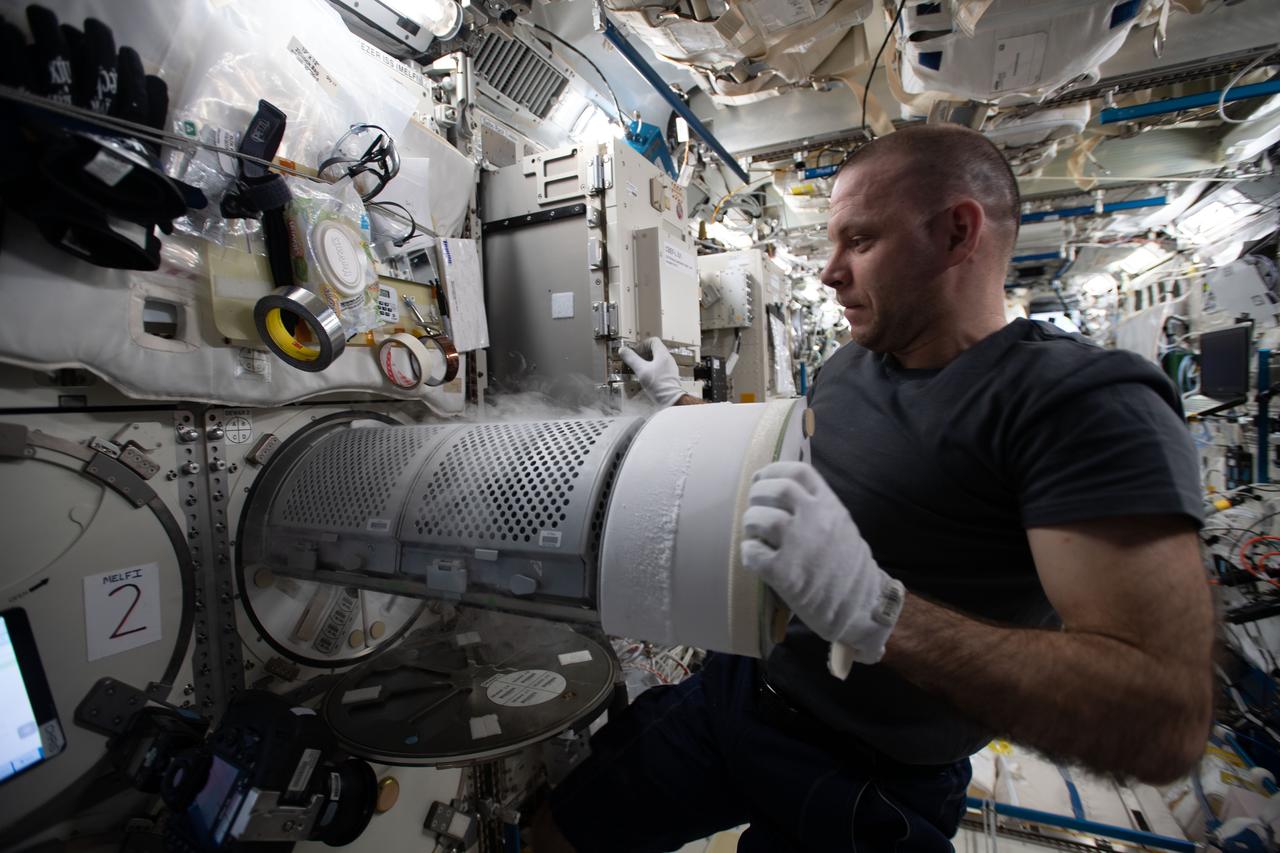
iss063e104373 (Oct. 7, 2020) --- Roscosmos cosmonaut and Expedition 63 Flight Engineer Ivan Vagner transfers biological samples into a science freezer for stowage and later analysis aboard the International Space Station.
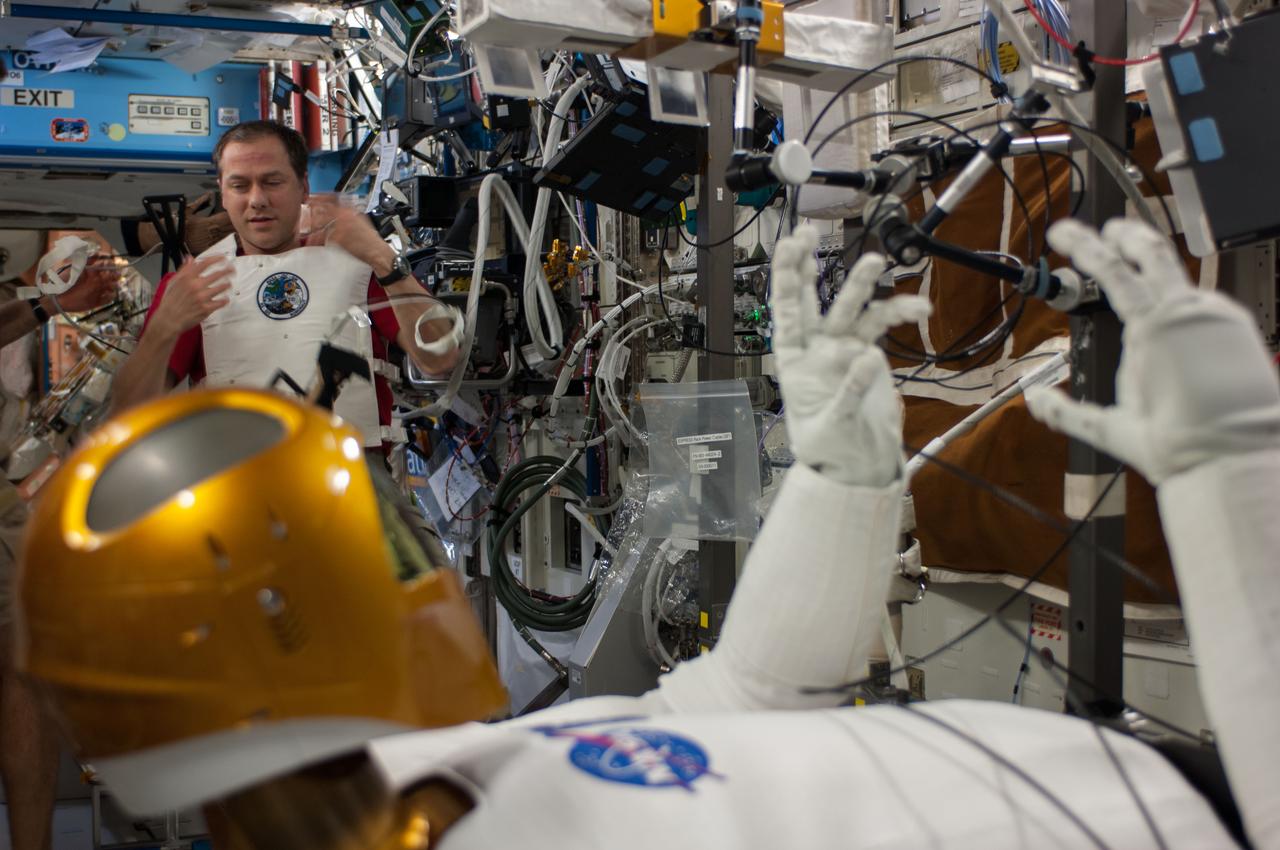
ISS035-E-030794 (25 April 2013) --- NASA astronaut Tom Marshburn (pictured in background), Expedition 35 Flight Engineer, performs the second of a two-day session of Taskboard and Tele-operations with R 2 onboard the International Space Station. R 2 is the dexterous humanoid robot that was carried up to the station by one of NASA's final shuttle flights in 2011. The goals for these activities were orientation and depth familiarization, individual hand grasp and hand-to-hand object transfer; and all were completed nominally. The Robonaut Tele-operation System is used to demonstrate the ability to effectively control Robonaut from the station. The research objective is to evaluate this control method in terms of its ability to perform tasks as well as measure the time necessary to complete the defined tasks. This capability will need to be developed to support future operations of Robonaut in the space environment as well as certain intravehicular activity situations.
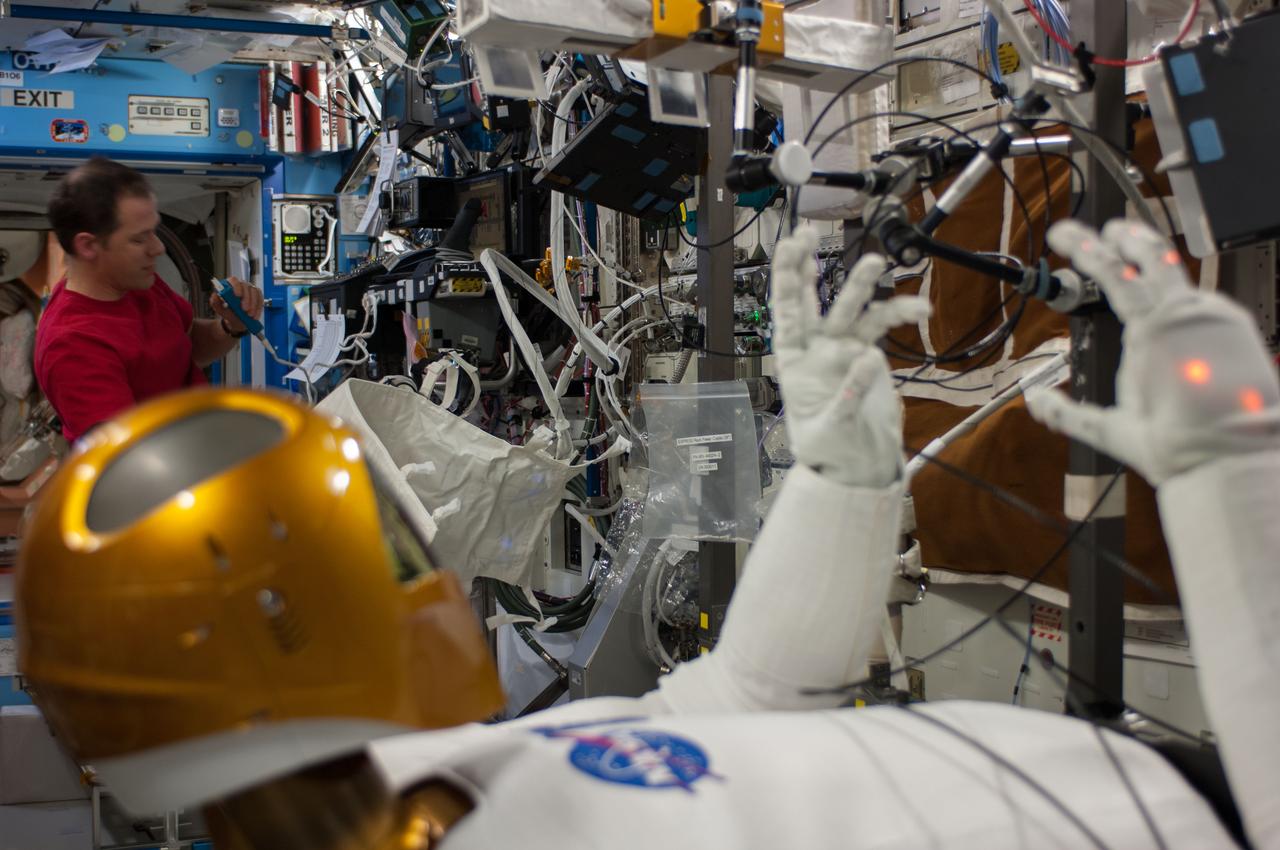
ISS035-E-030794 (25 April 2013) --- NASA astronaut Tom Marshburn (pictured in background), Expedition 35 Flight Engineer, performs the second of a two-day session of Taskboard and Tele-operations with R 2 onboard the International Space Station. R 2 is the dexterous humanoid robot that was carried up to the station by one of NASA's final shuttle flights in 2011. The goals for these activities were orientation and depth familiarization, individual hand grasp and hand-to-hand object transfer; and all were completed nominally. The Robonaut Tele-operation System is used to demonstrate the ability to effectively control Robonaut from the station. The research objective is to evaluate this control method in terms of its ability to perform tasks as well as measure the time necessary to complete the defined tasks. This capability will need to be developed to support future operations of Robonaut in the space environment as well as certain intravehicular activity situations.
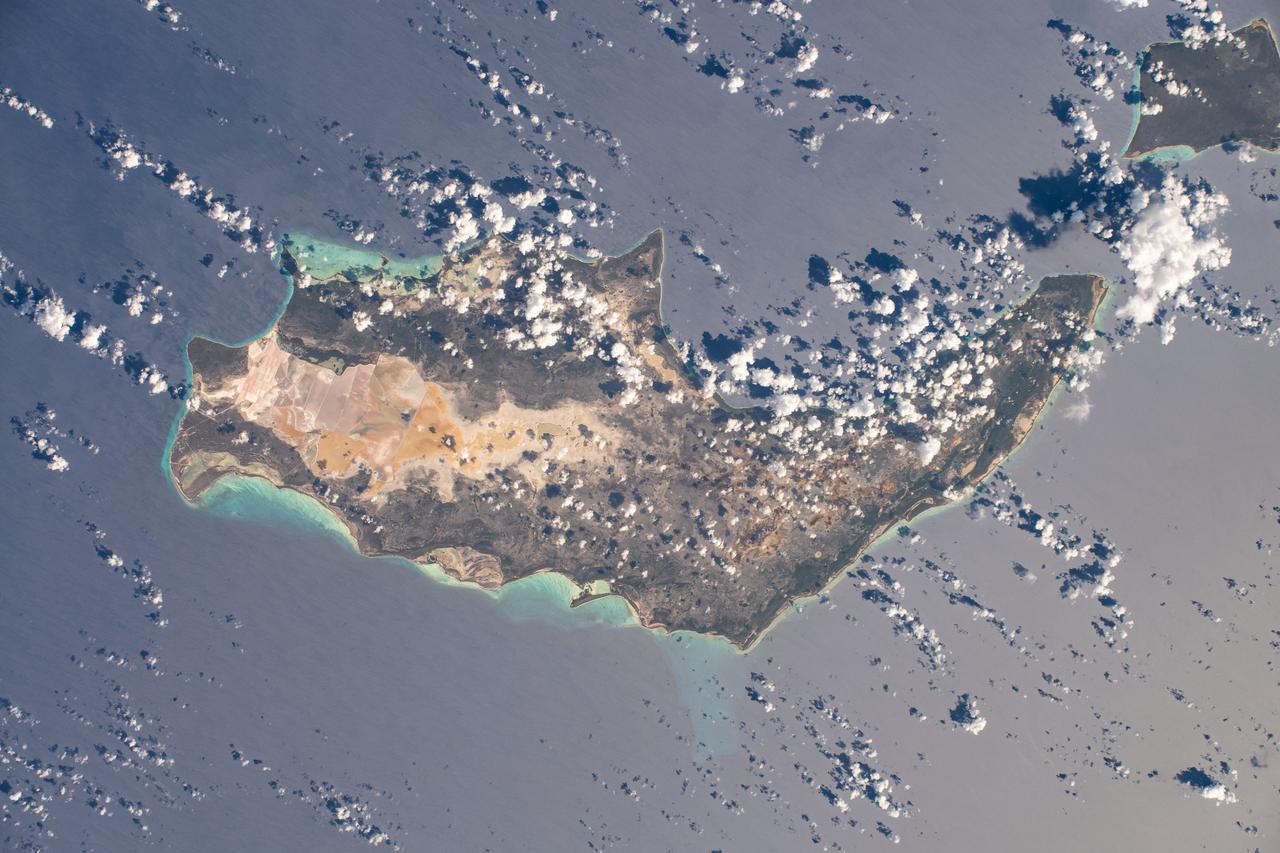
iss063e084654 (Sept. 4, 2020) --- Inagua National Park, part of The Bahamas island nation, is pictured from the International Space Station as it was orbiting above the Atlantic Ocean.
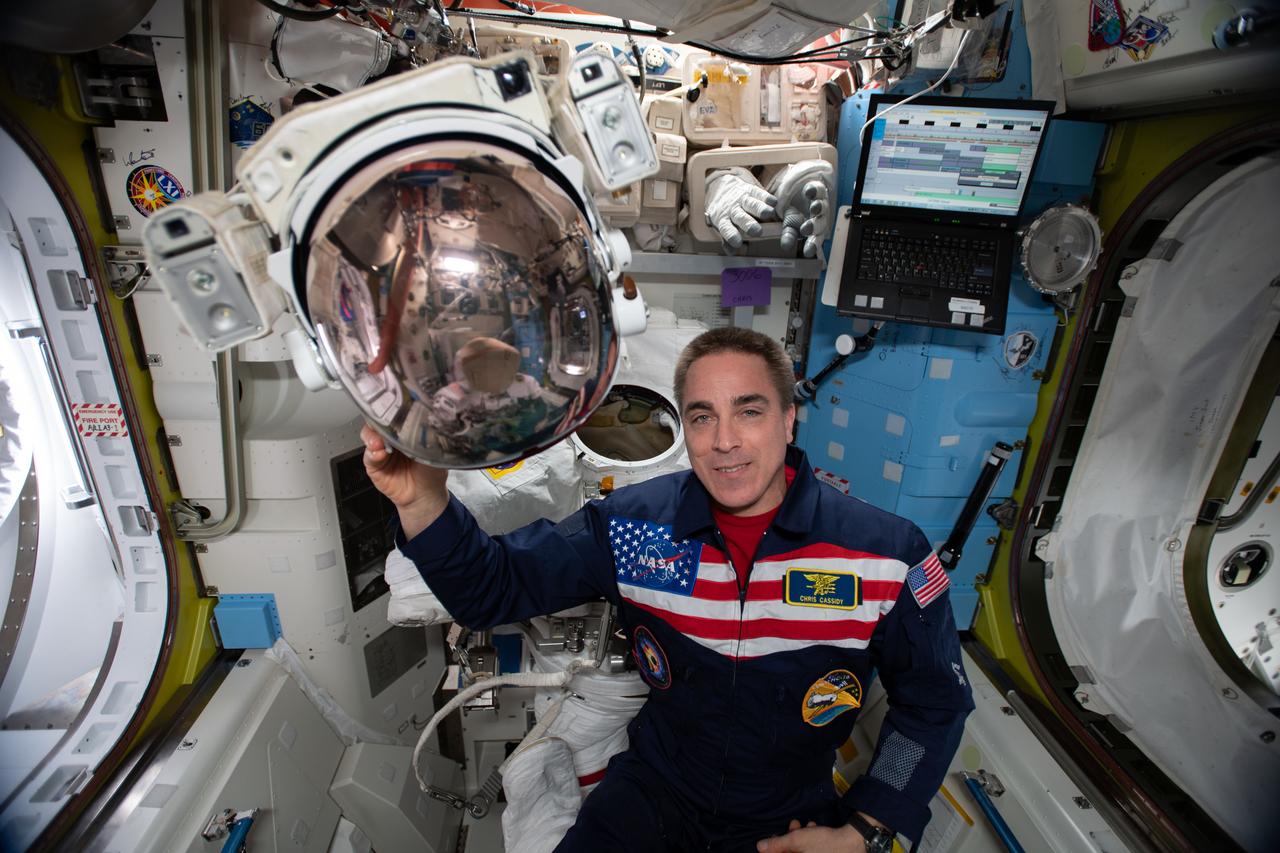
iss063e033672 (June 28, 2020) --- NASA astronaut and Expedition 63 Commander Chris Cassidy shows off the helmet of a U.S. spacesuit during maintenance inside the Quest airlock.
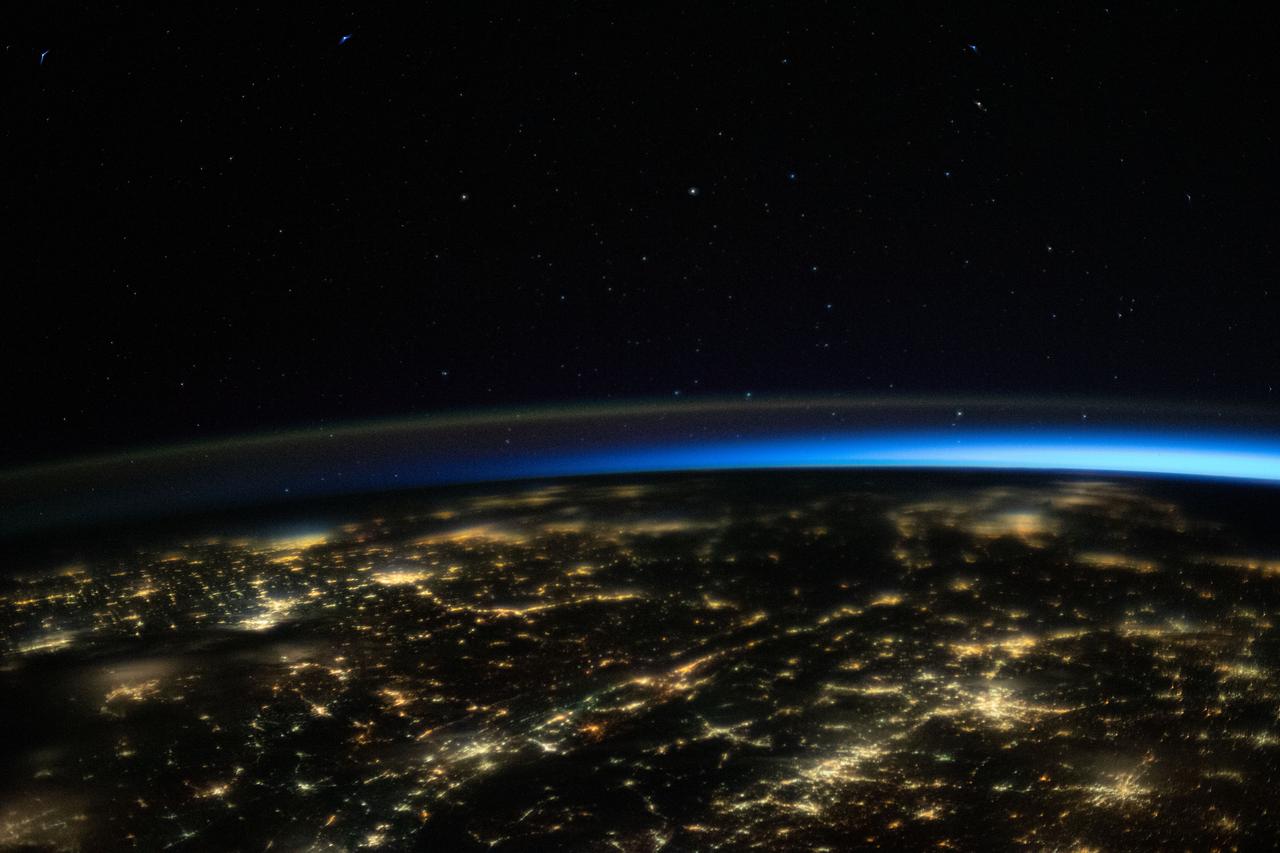
iss063e078595 (Aug. 27, 2020) --- The night lights of the southeastern U.S. are pictured as the International Space Station orbited over the Gulf of Mexico.
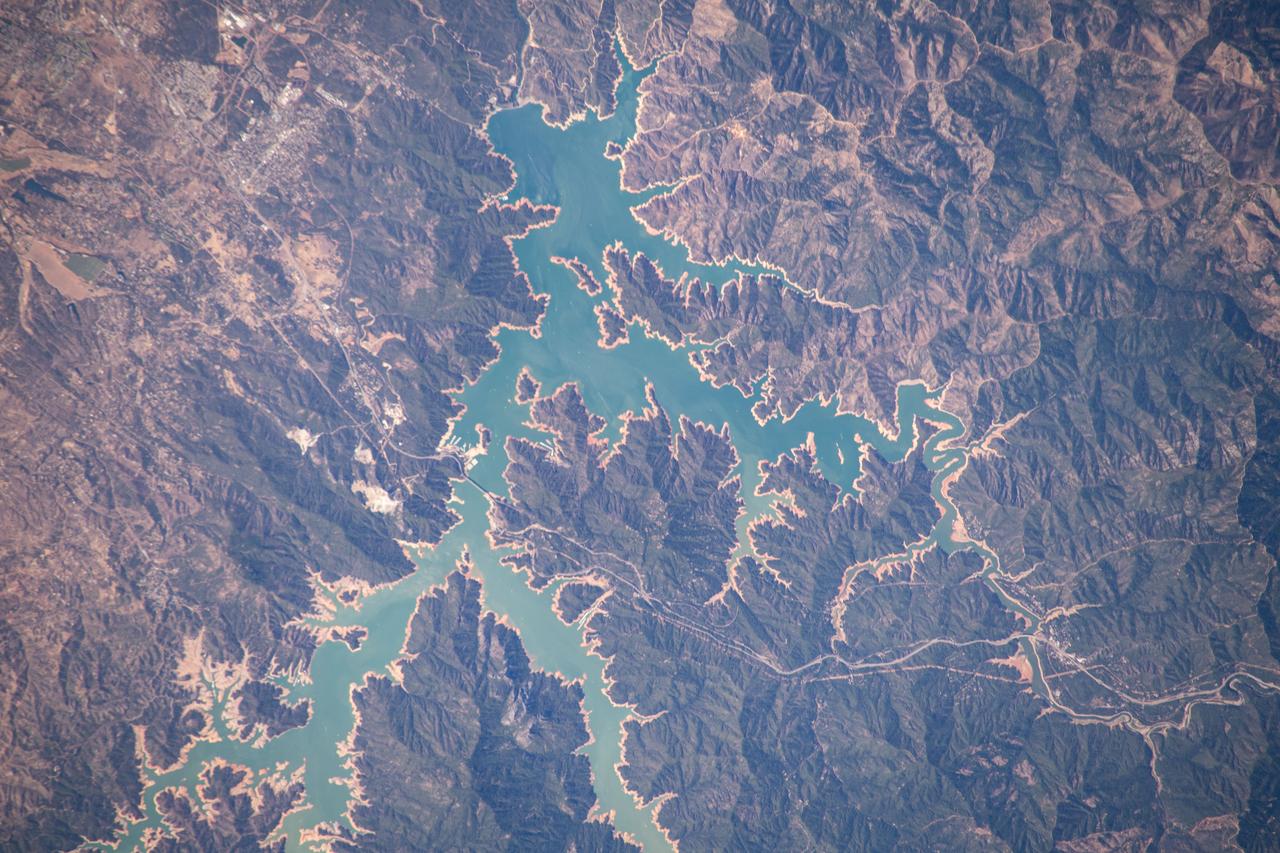
iss063e070632(Aug. 14, 2020) --- Shasta Lake, a reservoir in northern California, is pictured from the International Space Station as it orbited above the western United States.
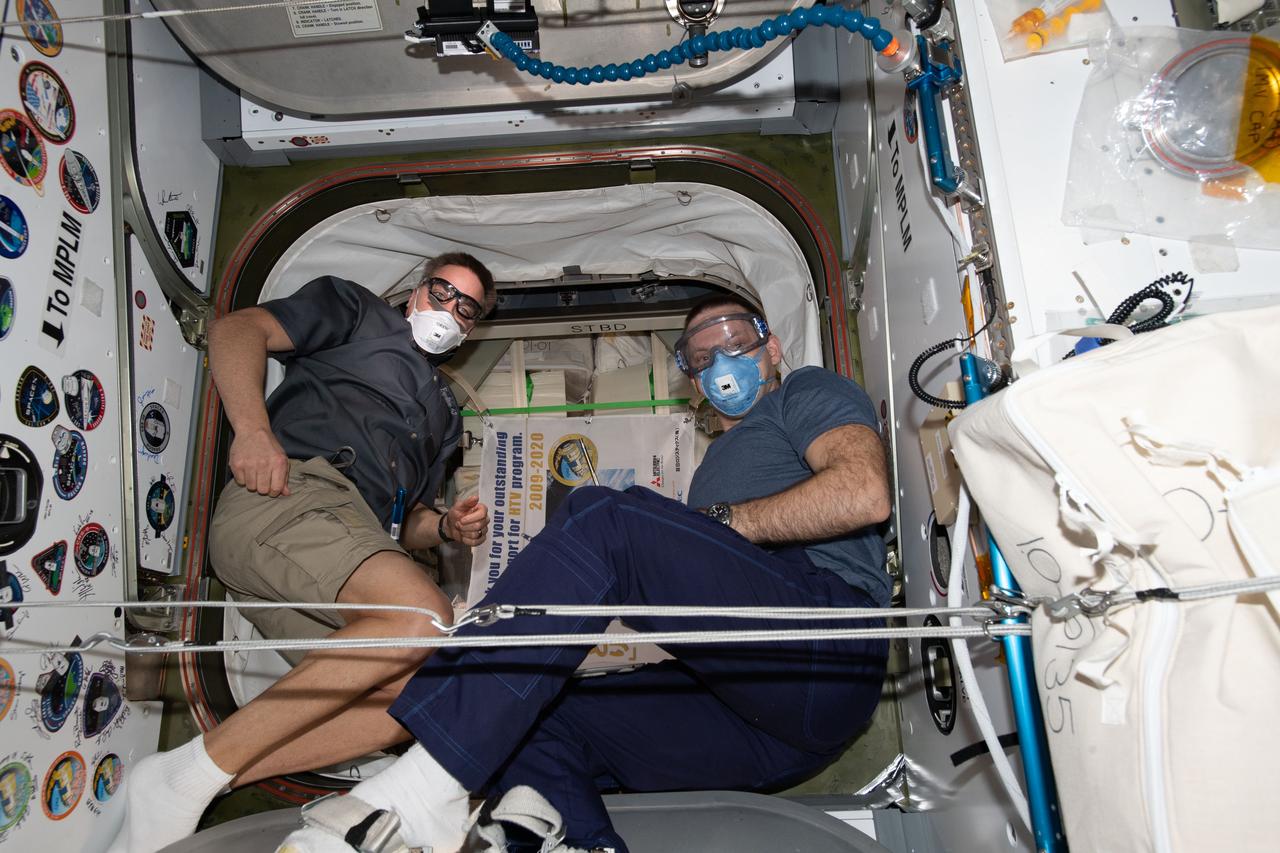
iss063e015430 (May 25, 2020) --- Expedition 63 crew members (from left) Chris Cassidy and Ivan Vagner wear personal protective equipment (PPE) before opening the hatch and entering Japan's resupply ship, the H-II Transfer Vehicle-9 (HTV-9). The PPE is necessary before entering a newly-arrived cargo craft to prevent dust and other irritants that may have become dislodged during the spacecraft's launch from entering the airways and the eyes.
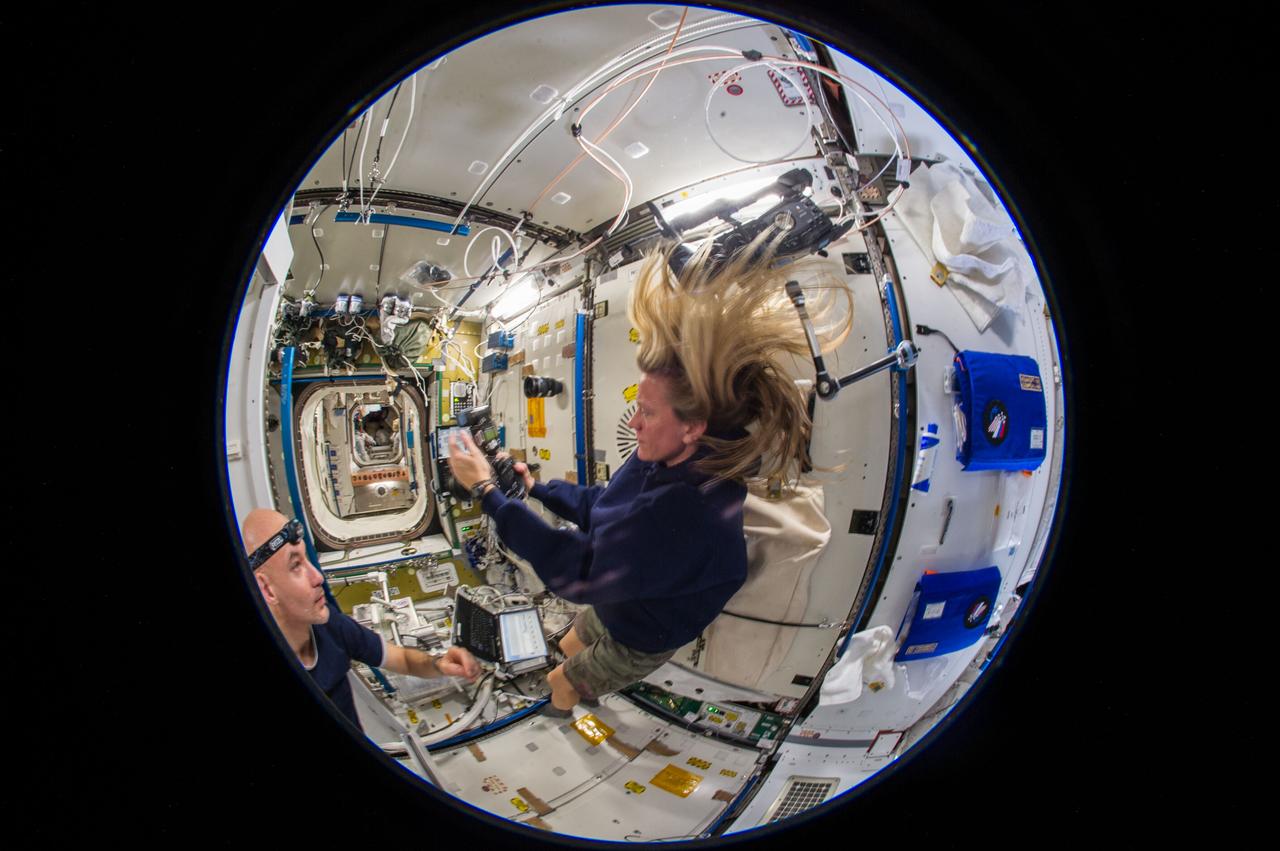
ISS036-E-022134 (20 July 2013) --- A fisheye lens attached to an electronic still camera was used to capture this image of NASA astronaut Karen Nyberg, Expedition 36 flight engineer, holding a digital still camera in the Tranquility node of the International Space Station. European Space Agency astronaut Luca Parmitano, flight engineer, is at lower left.