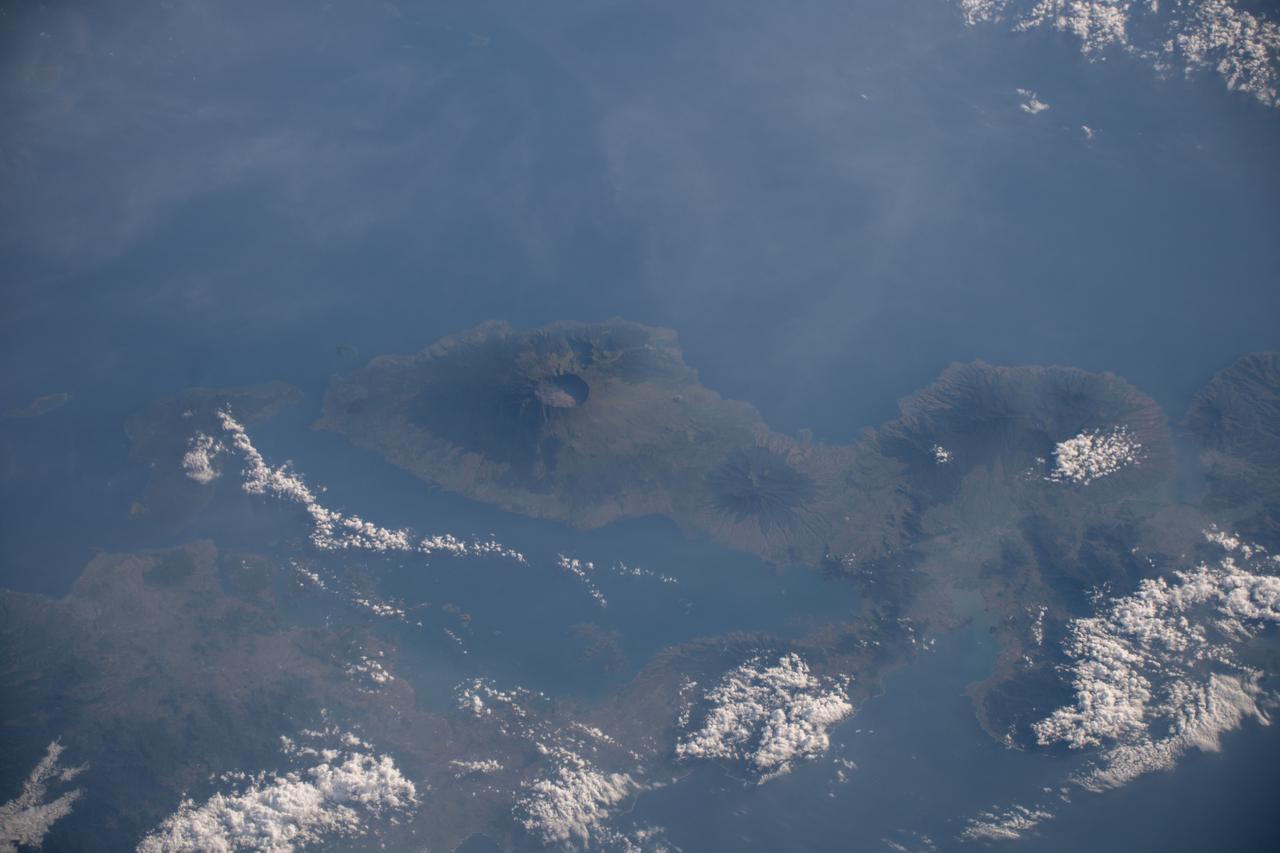
iss059e061823 (May 15, 2019) --- The active volcano of Mount Tambora on the Indonesian province island of West Nusa Tenggara is pictured as the International Space Station orbited 256 miles above the southeast Asian nation.
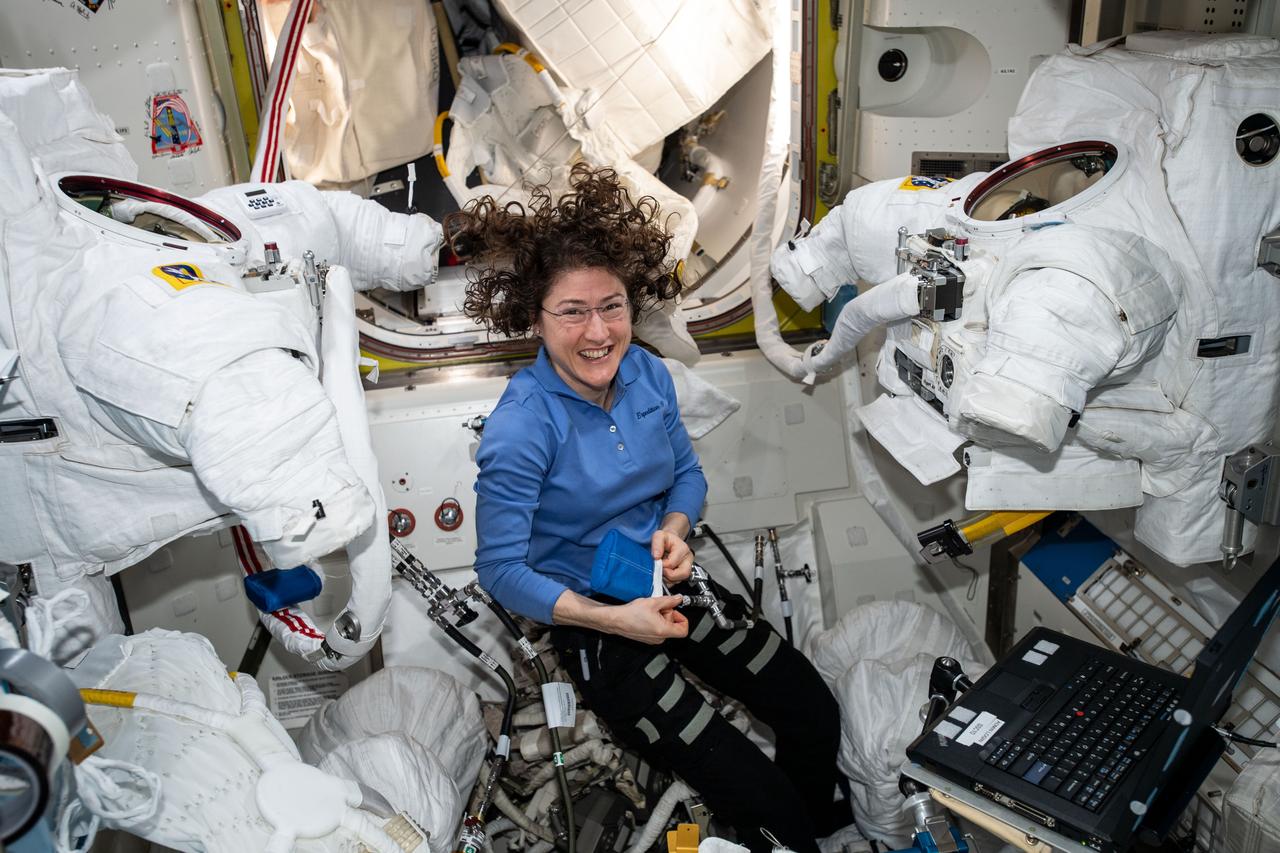
iss060e006063 (July 8, 2019) --- Expedition 60 Flight Engineer Christina Koch of NASA works inside the Quest joint airlock cleaning U.S. spacesuit cooling loops and replacing spacesuit components.
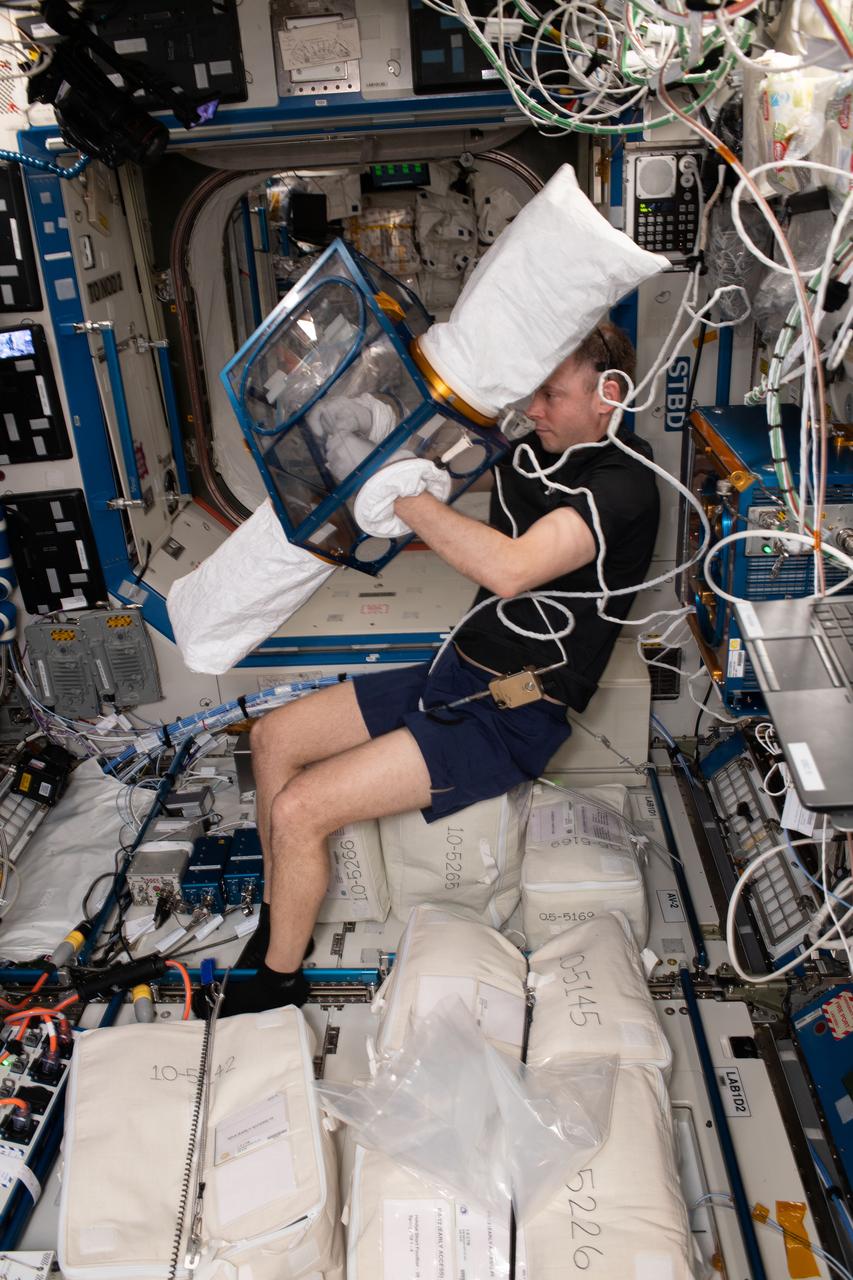
iss059e027387 (4/22/2019) --- NASA astronaut Nick Hague is photographed with the Rodent Research Facility during transfer of mice from the Cygnus spacecraft into the ( International Space Station ISS) Rodent Habitats. RR-12, Tetanus Antibody Response by B cells in Space (TARBIS), examines the effects of spaceflight on the function of antibody production and immune memory.
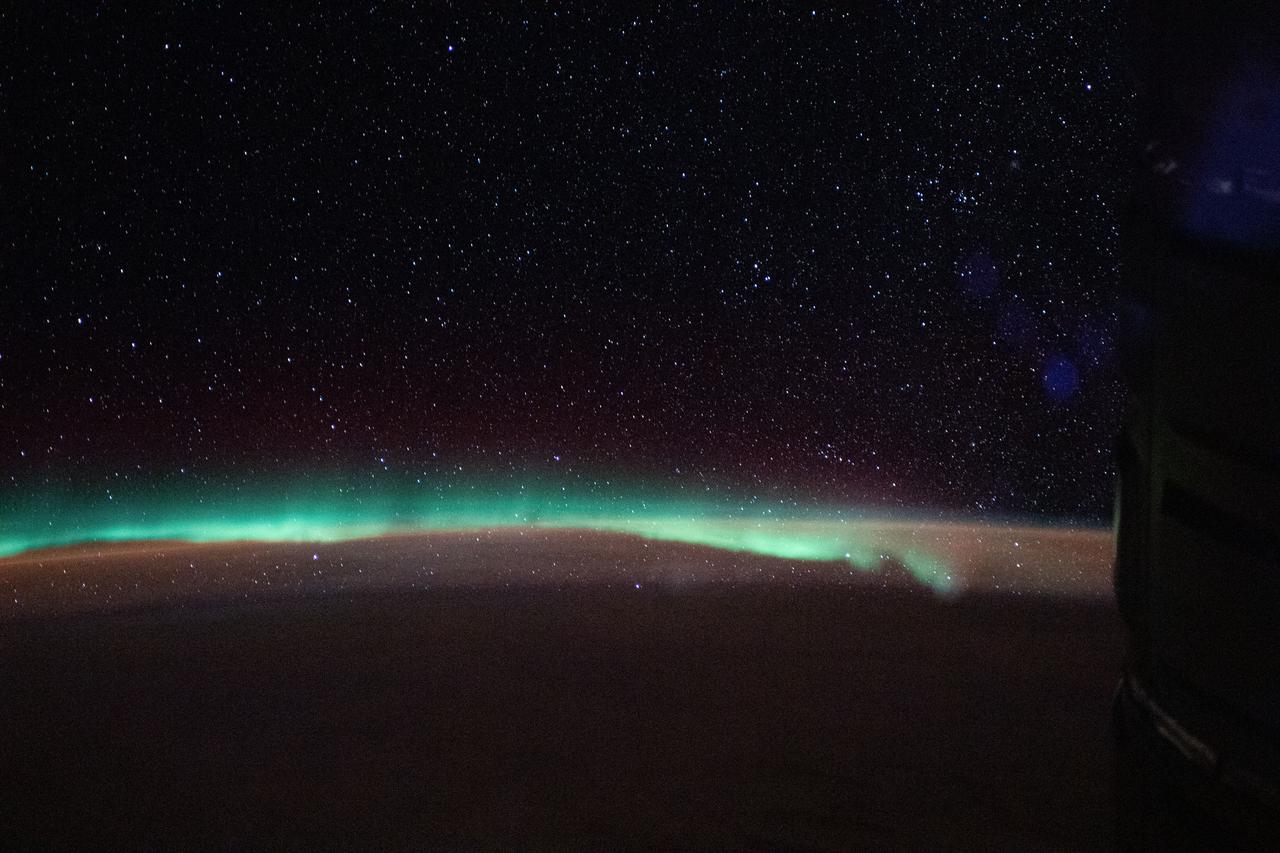
iss059e092459 (June 5, 2019) --- The aurora australis, or "southern lights," highlights a starry nighttime orbital pass as the International Space Station orbited 267 miles above the Indian Ocean southeast of Madagascar.

iss059e072286 (May 23, 2020) --- Expedition 59 Flight Engineer David Saint-Jacques of the Canadian Space Agency prepares the free-flying Astrobee robotic assistant for a mobility test inside the Kibo laboratory module. Astrobee consists of three self-contained, free flying robots and a docking station inside the International Space Station.
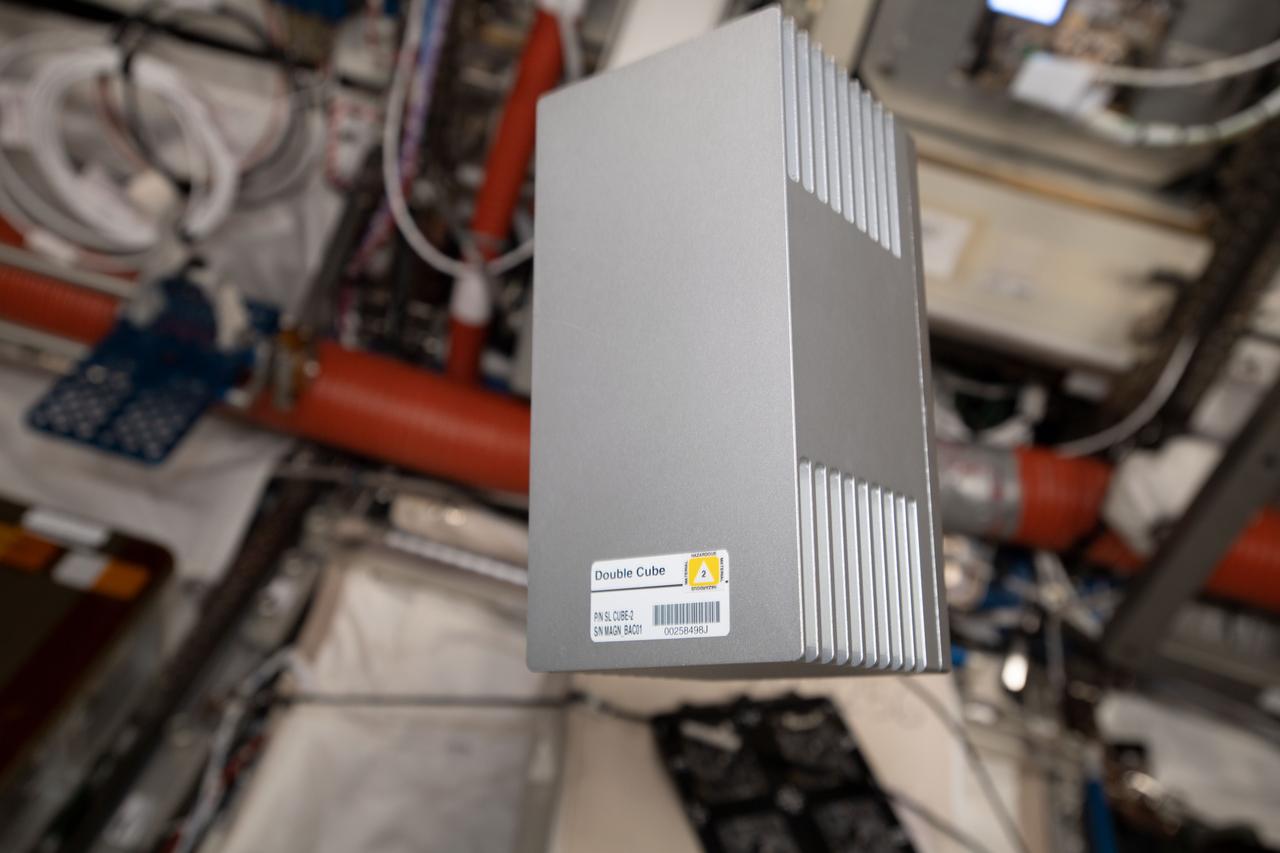
iss060e036686 (8/19/2019) --- A view during removal of card/cube from TangoLab-2 Facility. The Effects of Microgravity on Microbial Nitrogen Fixation (Microbial Nitrogen Fixation) explores the effectiveness of two strains of nitrogen-fixing bacteria. Nitrogen is an essential element in plant growth, but plants use only reduced forms of nitrogen and much of it is produced by these bacteria. Determining whether and how nitrogen fixation occurs in space is key to successfully growing plants on future missions.
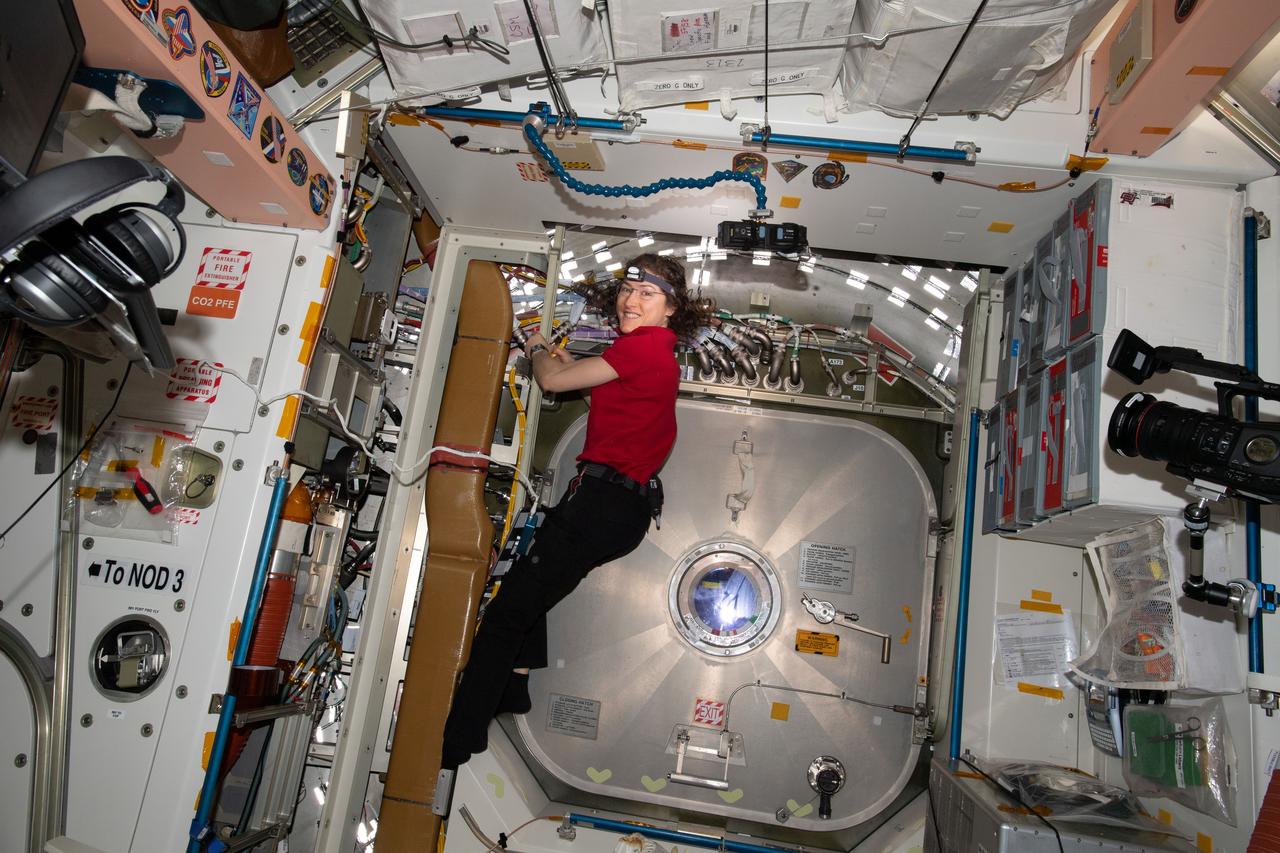
iss060e001460 (June 28, 2019) --- Expedition 60 Flight Engineer Christina Koch of NASA partially installs cables inside the Unity module to support Canadarm2 robotic arm operations aboard the International Space Station.
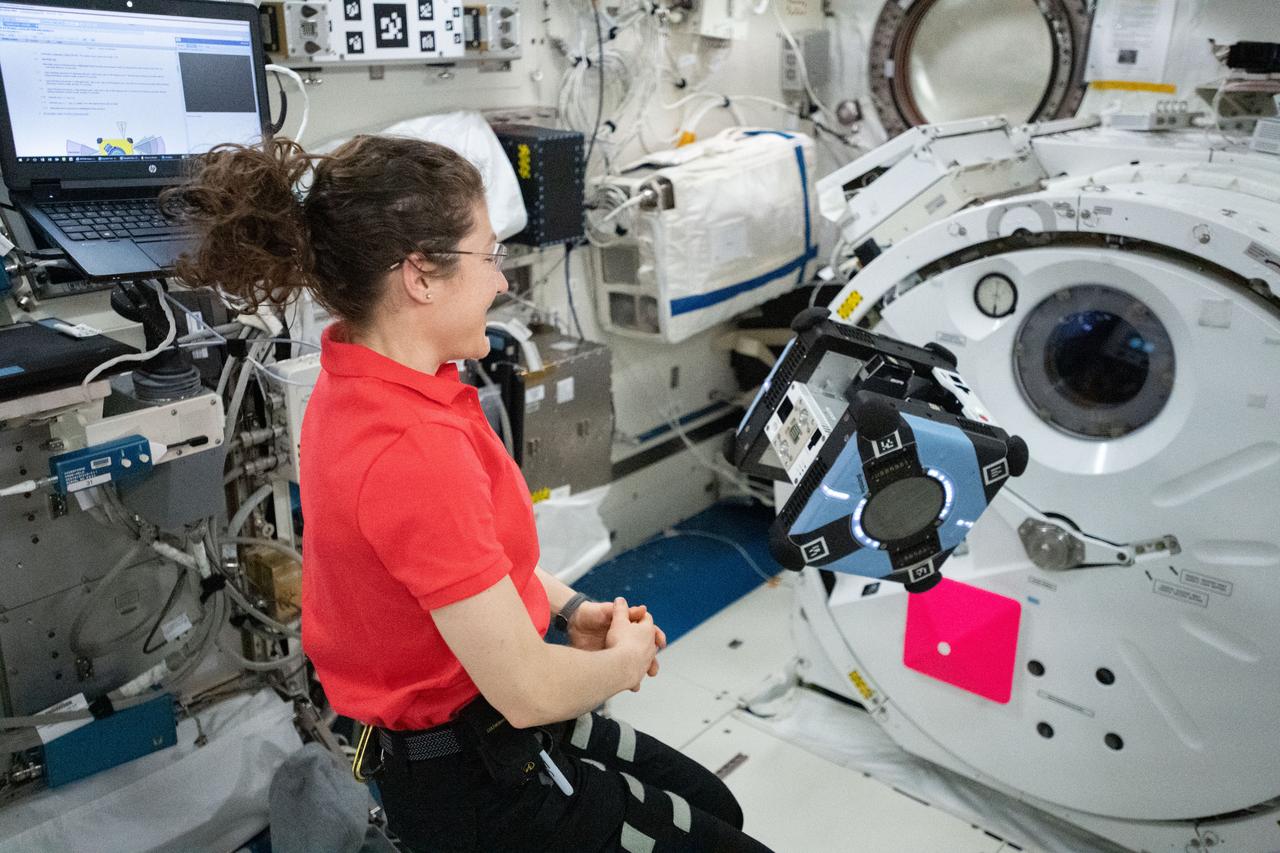
iss060e007162 (July 12, 2020) --- NASA astronaut and Expedition 60 Flight Engineer Christina Koch tests the mobility of the free-flying Astrobee robotic assistant inside the Kibo laboratory module. Astrobee consists of three self-contained, free flying robots and a docking station inside the International Space Station.
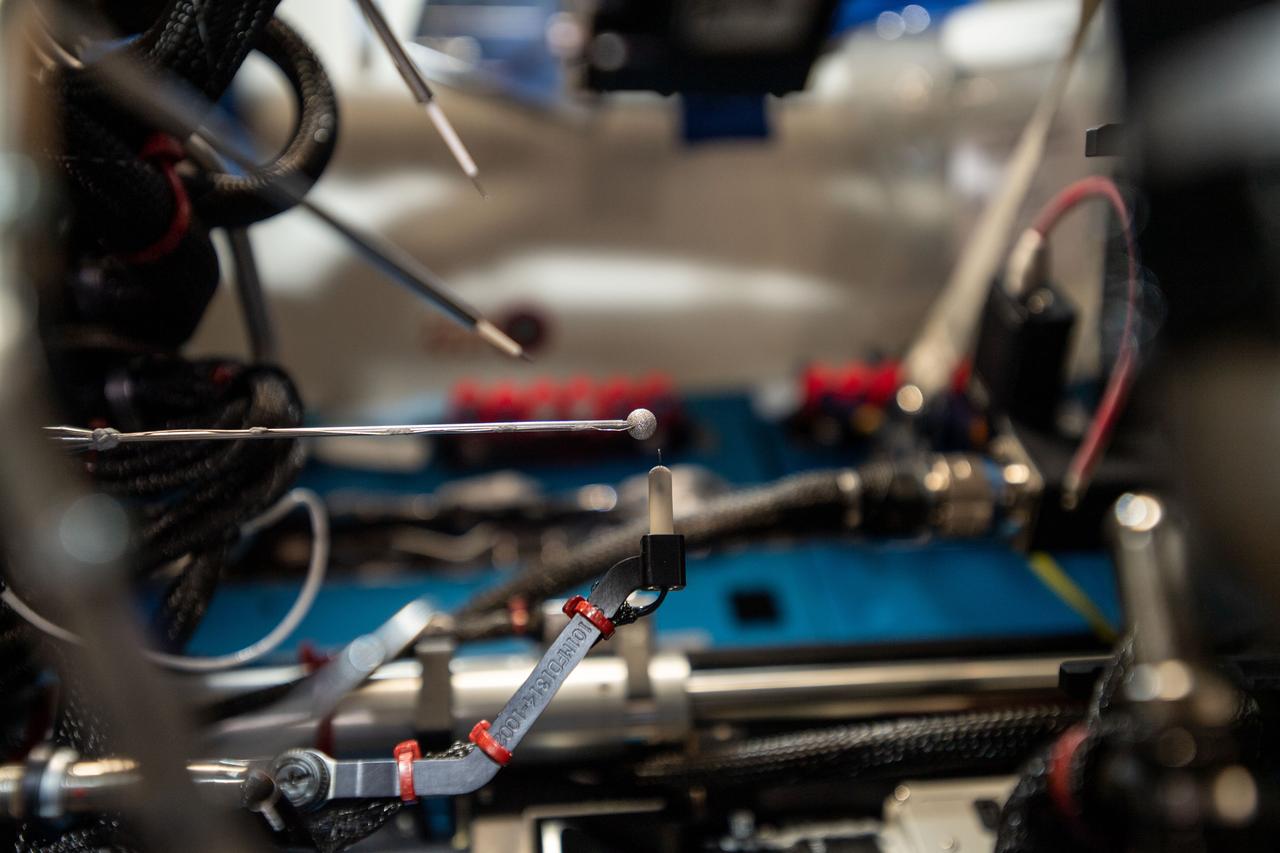
iss059e103188 (6/14/2019) --- Photo documentation taken aboard the International Space Station (ISS) during the Fluids and Combustion Facility (FCF) Combustion Integration Rack (CIR) / Advanced Combustion via Microgravity Experiments (ACME) / Flame Design hardware replacement.
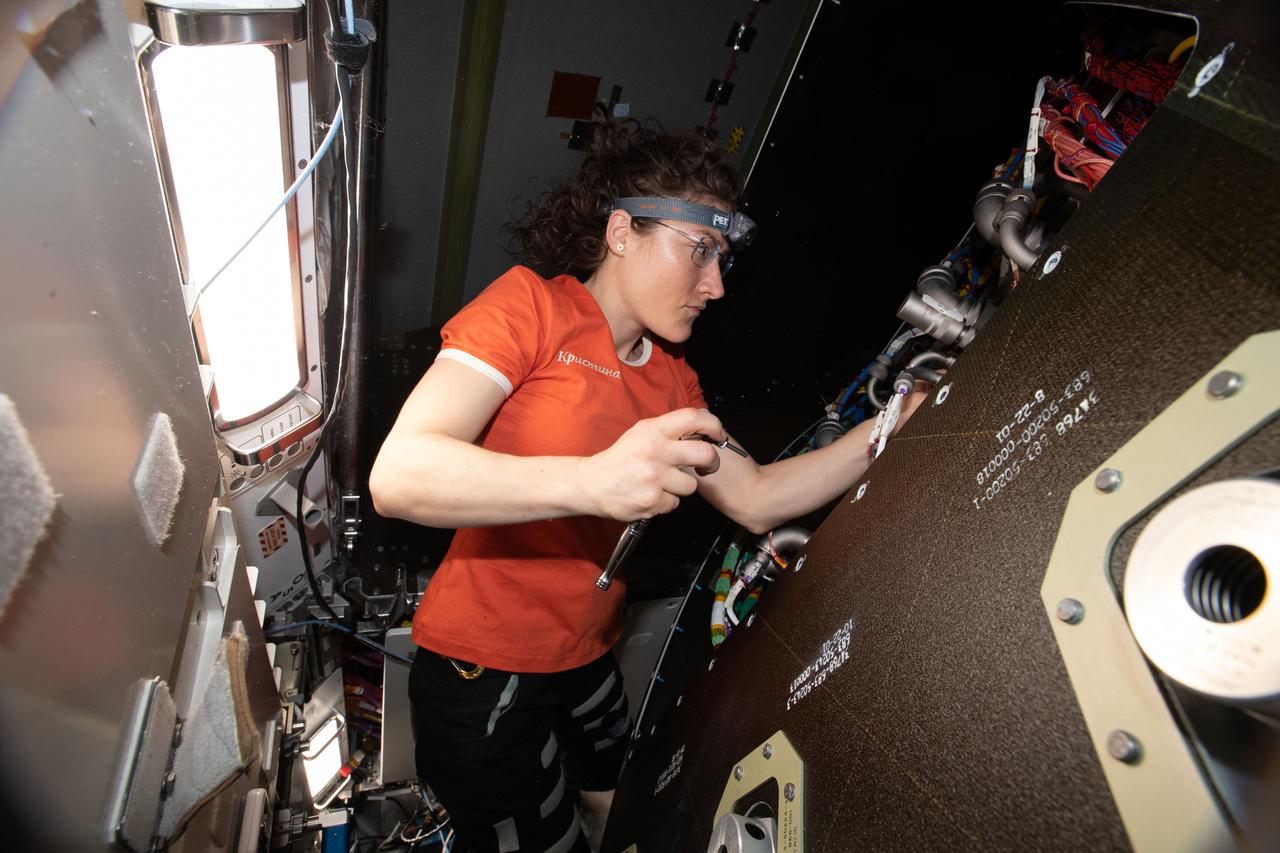
iss059e009964 (April 4, 2018) --- NASA astronaut and Expedition 59 Flight Engineer Christina Koch removes audio hardware from an avionics rack inside the Tranquility module.
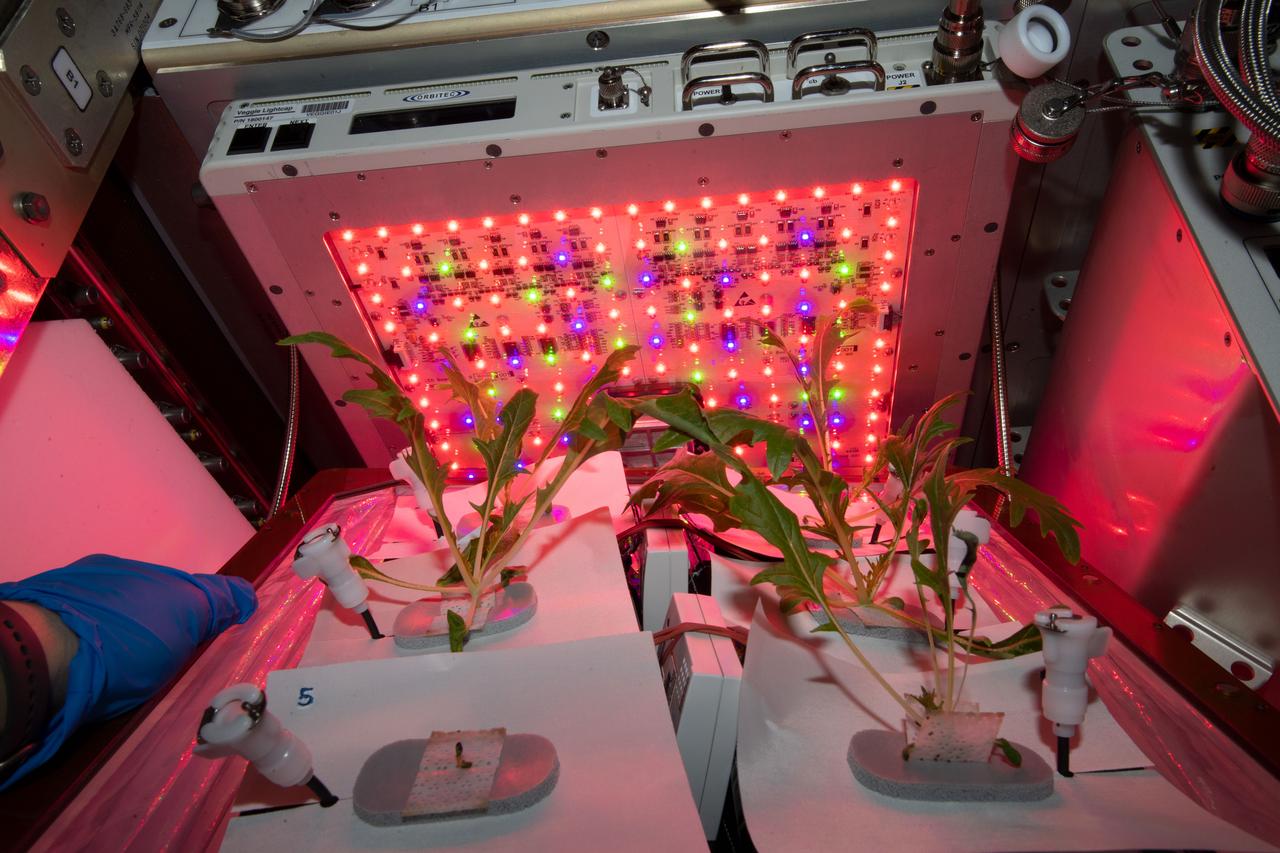
iss059e117376 (6/22/2019) --- Photo documentation taken during VEG-04 Water Check and Mass Measurement Device Operations aboard the International Space Station (ISS). The crew checks plants for water and waters if needed then if there are any leafs that have been broken off. The research of Veg-04A focuses on the impact of light quality and fertilizer on leafy crop growth for a 28-day grow-out.
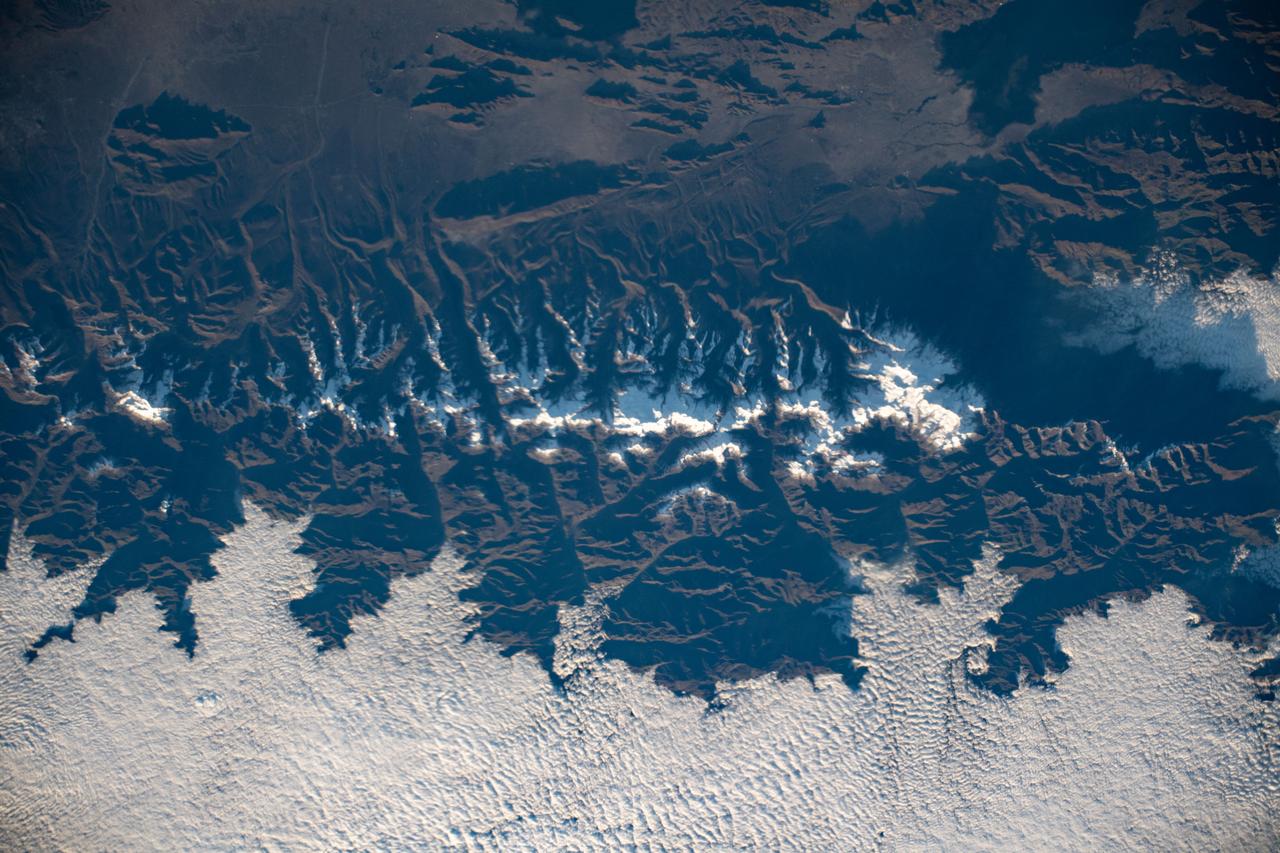
iss059e067738 (May 19, 2018) --- Snow-capped mountain tops are pictured as the International Space Station orbited 257 miles above the Andes mountain range along the western coast of South America.
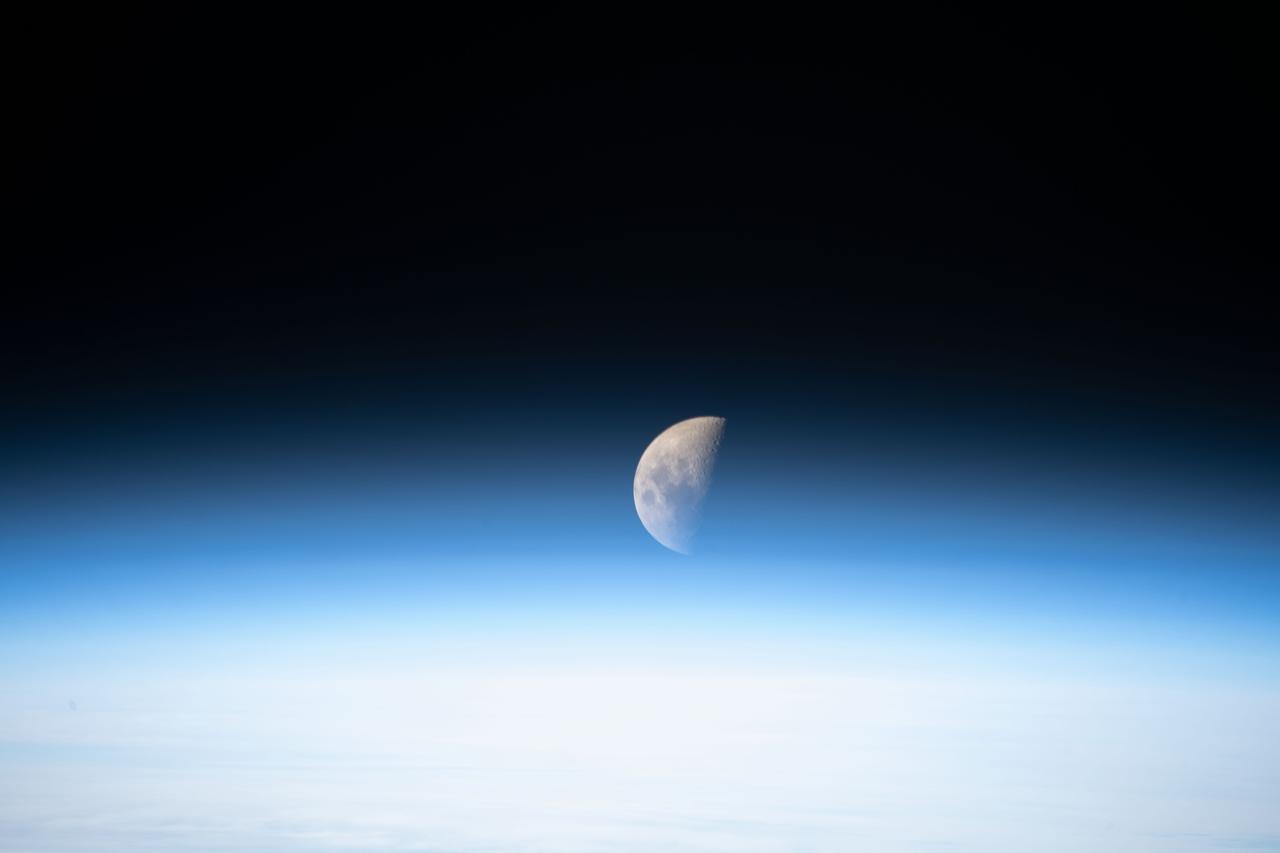
iss061e003881 (Oct. 5, 2019) --- A first quarter Moon is pictured from the International Space Station just above the Earth's limb.
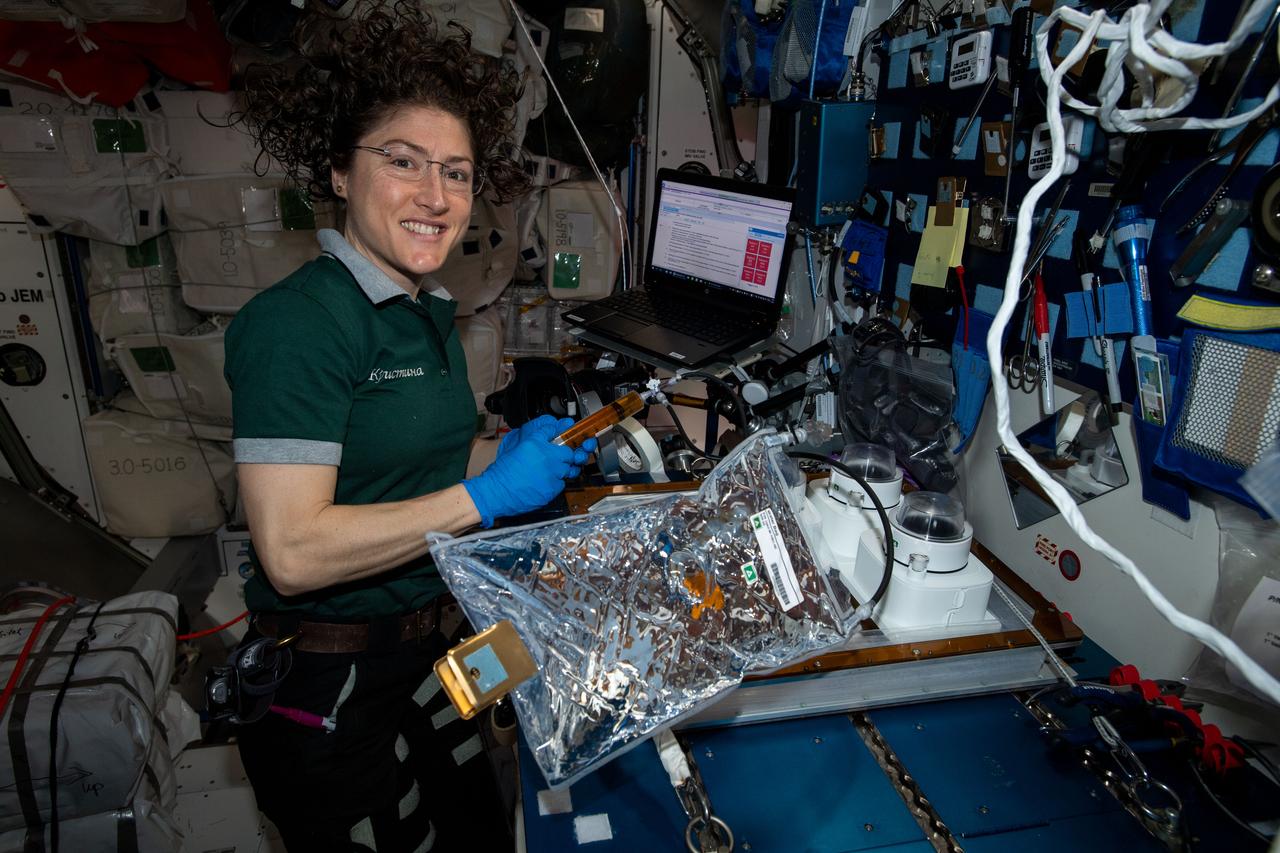
iss059e035465 (April 25, 2019) --- NASA astronaut Christina Koch works on space botany using the Veggie PONDS research gear to cultivate and harvest lettuce and mizuna greens for consumption on the International Space Station and analysis on Earth.
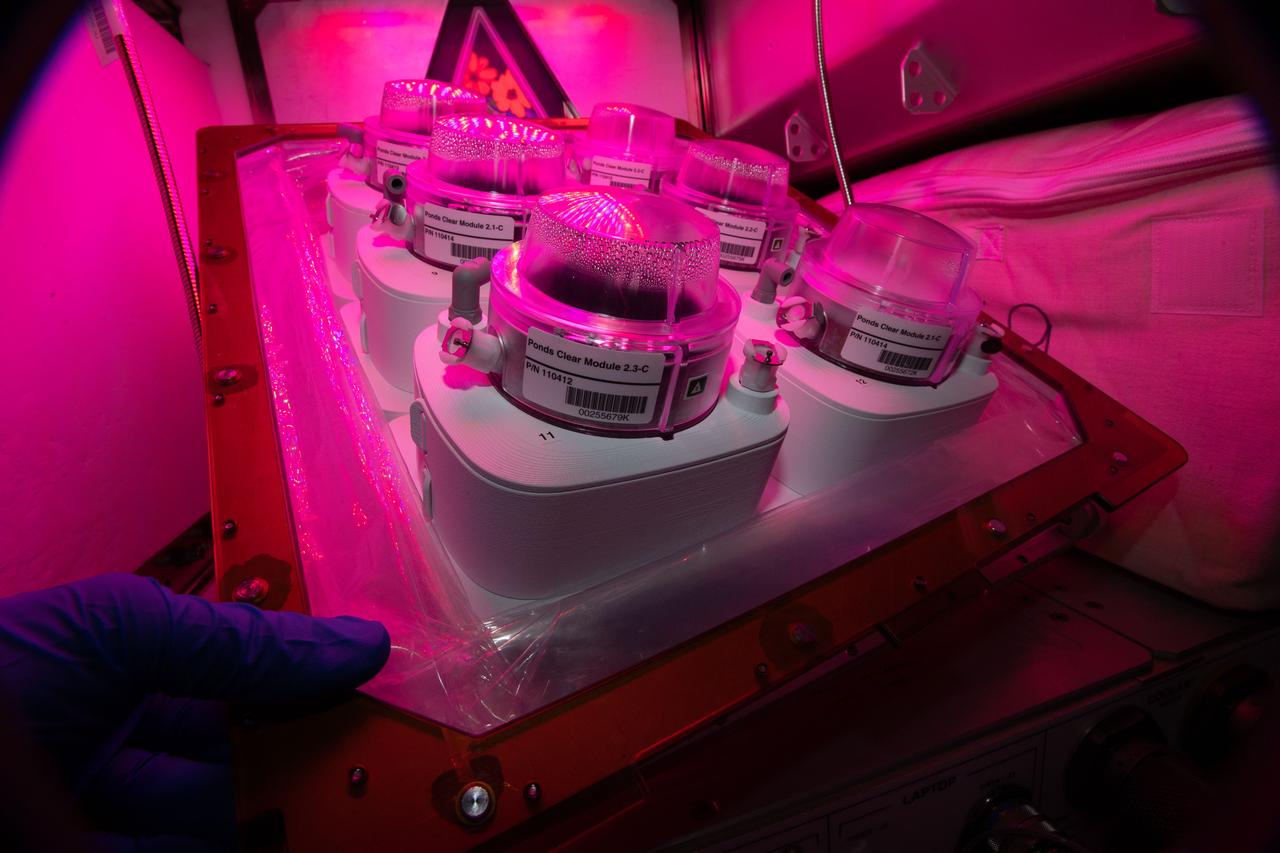
iss059e035838 (4/28/2019) --- Documentation taken during removal of Germination Cap from each Veggie Ponds Module while module is in Veggie Bellows. Veggie PONDS uses a newly developed passive nutrient delivery system and the Veggie plant growth facility aboard the International Space Station (ISS) to cultivate lettuce and mizuna greens which are to be harvested on-orbit, and consumed, with samples returned to Earth for analysis.
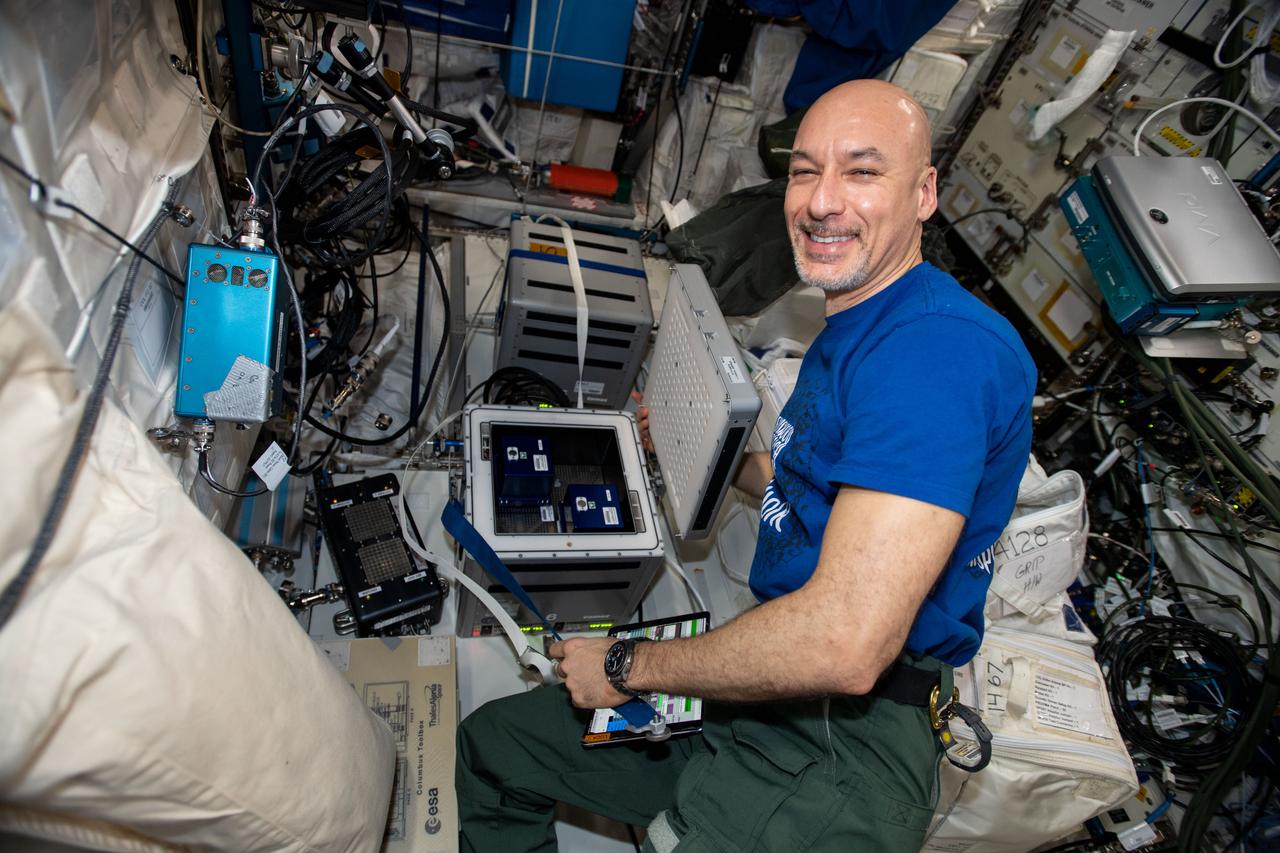
iss061e075342 (12/10/2019) --- European Space Agency (ESA) astronaut Luca Parmitano works with the Kubik 6 Incubator in the Columbus European Laboratory during Experiment Container installation for the Rotifer-B1 experiment. The Rotifer-B1 investigation deals with the possible effects of spaceflight on gene expression.
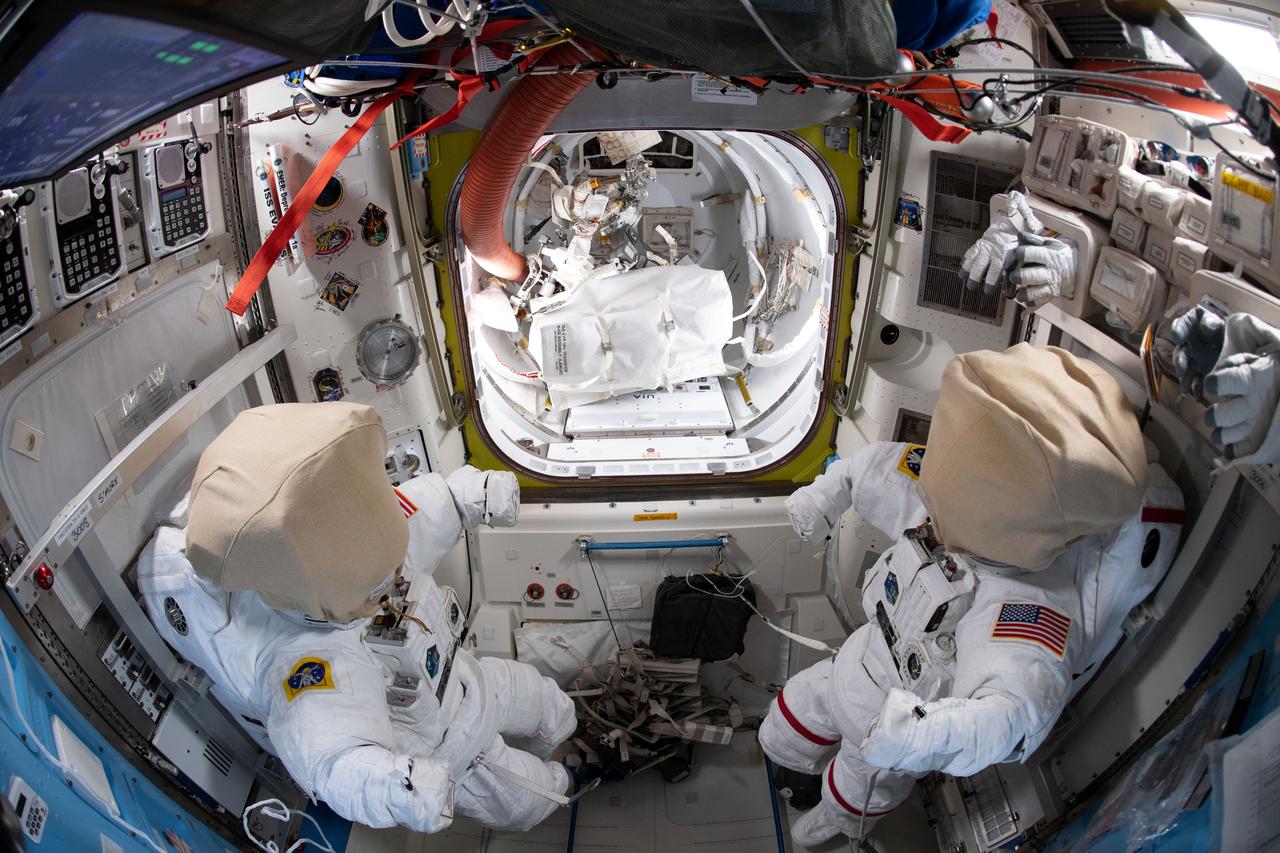
iss060e038558 (8/21/2019) --- A view of Extravehicular Mobility Units (EMUs) in the Quest Airlock (A/L) aboard the International Space Station (ISS). The Quest Airlock is a pressurized space station module consisting of two compartments attached end-to-end by a connecting bulkhead and hatch. The two compartments are the Equipment Lock which provides the systems for suit maintenance and refurbishment and the Crew Lock which provides the actual exit for performing spacewalks. The airlock is the primary path for spacewalk entry and departure for astronauts wearing U.S. spacesuits. Quest can also support the Russian Orlan spacesuit for spacewalks.
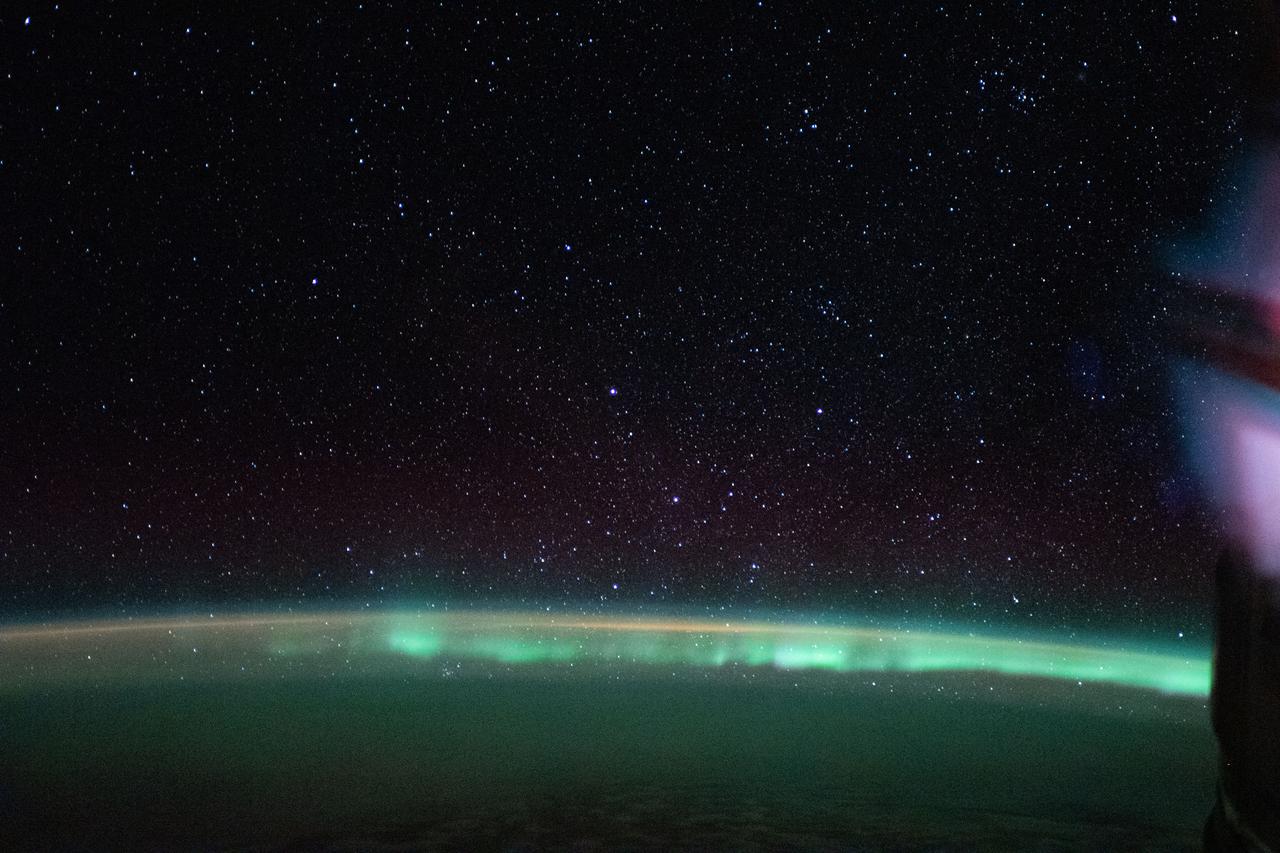
iss059e092462 (June 5, 2019) --- The aurora australis, or "southern lights," highlights a starry nighttime orbital pass as the International Space Station orbited 269 miles above the Indian Ocean southwest of Australia.
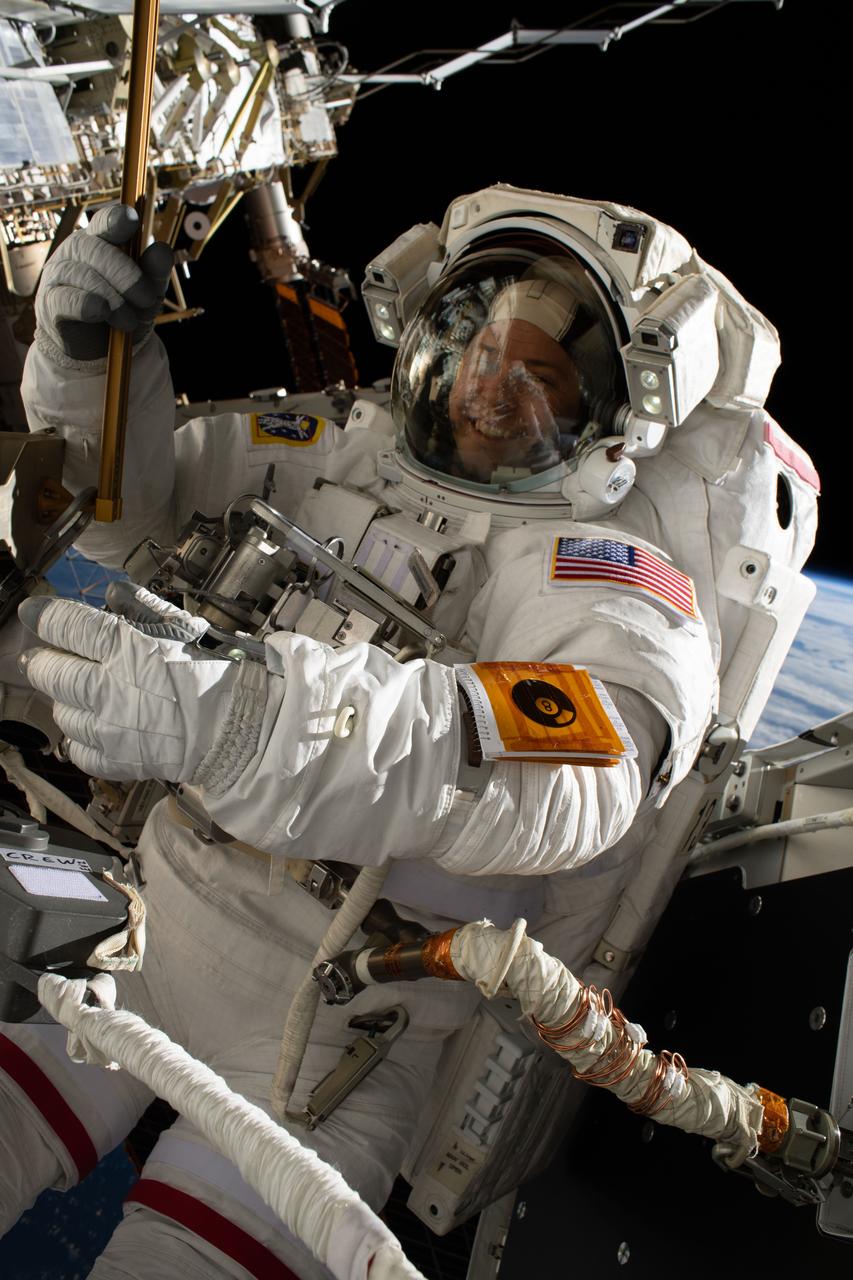
iss059e005677 (March 29, 2019) --- NASA astronaut Nick Hague participates in his second spacewalk to upgrade the International Space Station's power storage capacity. He and fellow spacewalker Christina Koch (out of frame) of NASA worked outside in the vacuum of space for six hours and 45 minutes to continue swapping batteries and install adapter plates on the station's Port-4 truss structure.
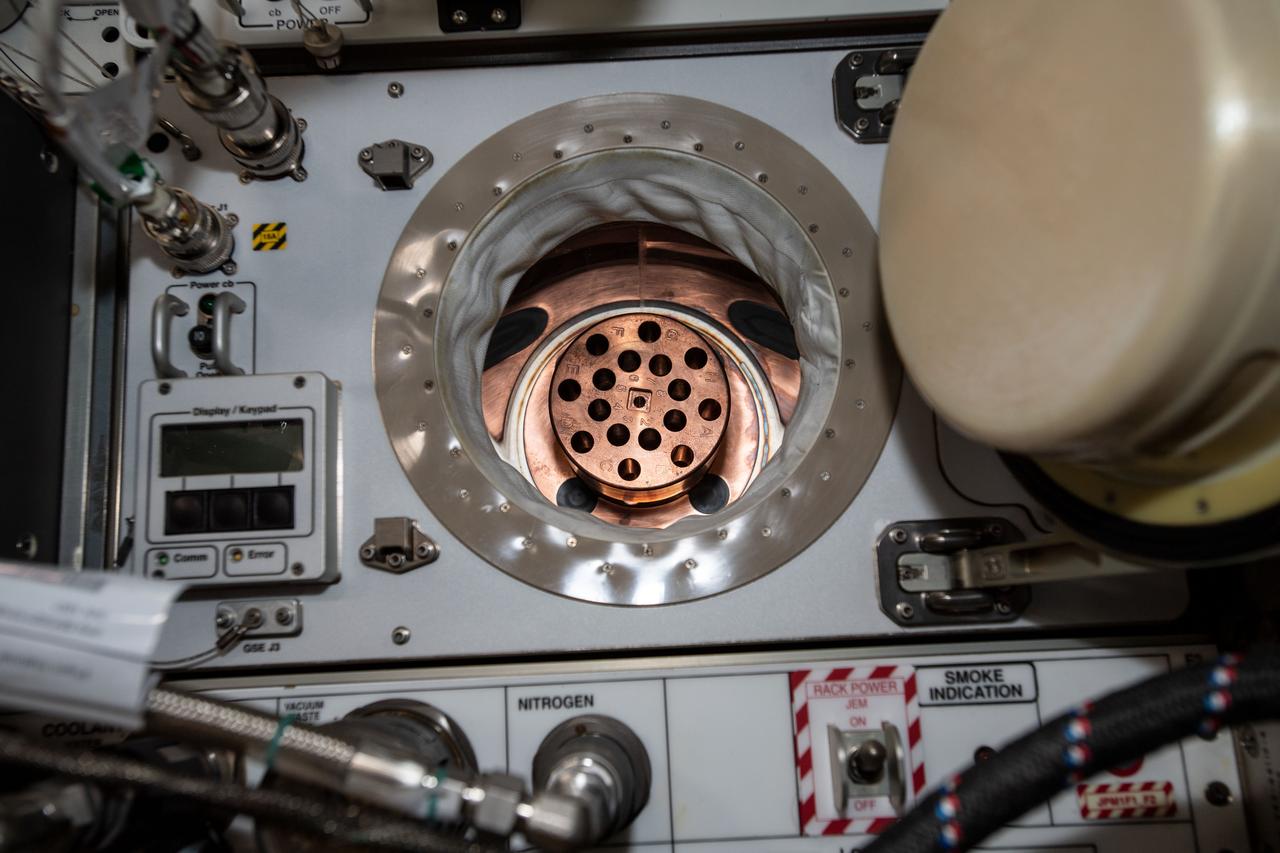
iss060e060522 (9/13/2019) --- A view during the Cryo Chiller Sample Cartridge Installation aboard the International Space Station (ISS). Cryo Chiller is a single Expedite the Processing of Experiments to Space Station (EXPRESS) locker replacement unit which provides rapid freezing capability in support of biological sciences, as well as temperature-controlled transfer to/from the International Space Station (ISS) on visiting vehicles.
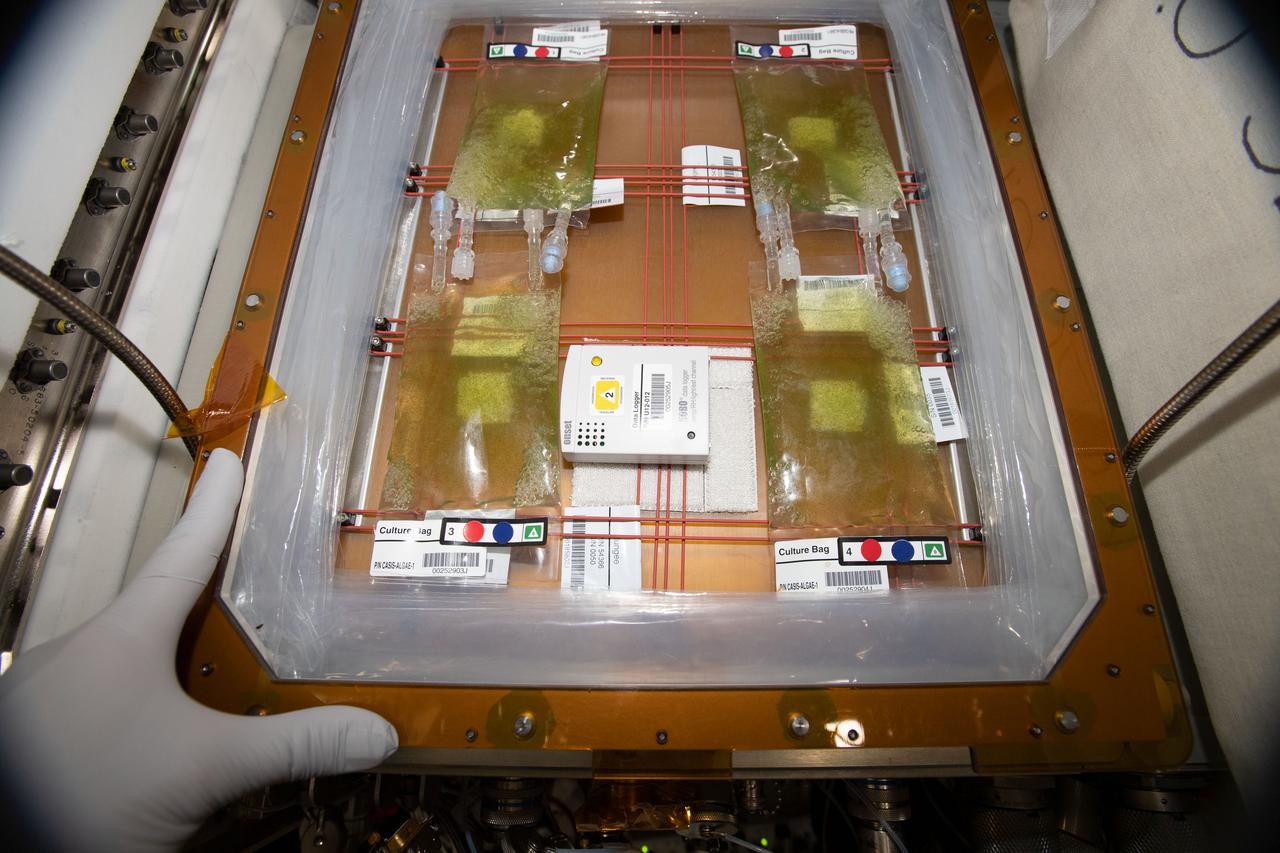
iss059e072992 (5/27/2019) --- Photo documentation of the Micro Alagae Culture bags in Node 2 aboard the International Space Station (ISS). Microalgae Biosynthesis in Microgravity (MicroAlgae) studies the effects of microgravity on Haematococcus pluvialis, an algae capable of producing a powerful antioxidant, astaxanthin. It could provide a readily available dietary supplement to promote astronaut health on long-duration space exploration missions.
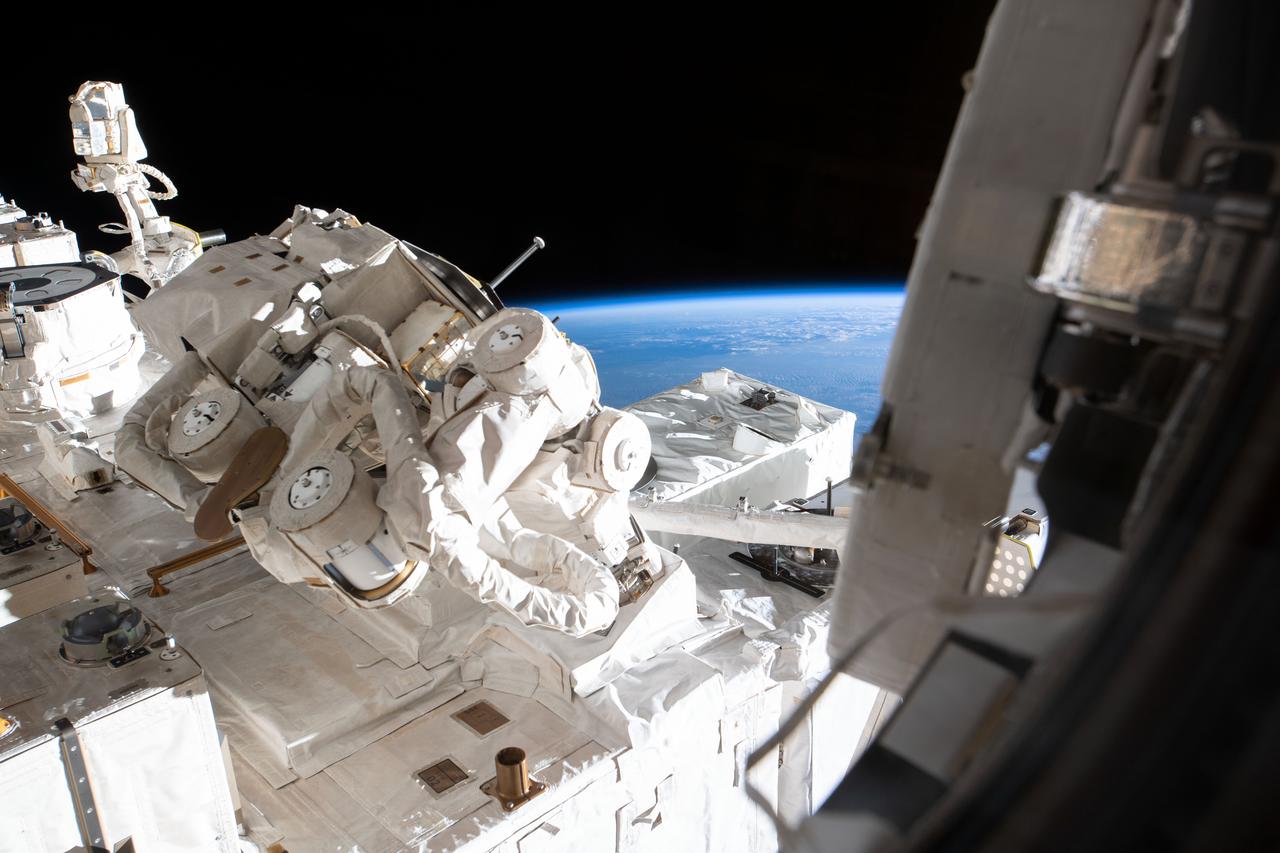
iss059e114054 (6/20/2019) --- View of the Orbiting Carbon Observatory-3 (OCO-3) payload on the Japanese Experiment Module (JEM) Exposed Facility (EF). The OCO-3, to be installed on the Japanese Experiment Module-Exposed Facility (JEM-EF) of the International Space Station (ISS), observes the complex dynamics of the Earth’s atmospheric carbon cycle. The OCO-3 payload is designed to collect the space-based measurements needed to quantify variations in the column-averaged atmospheric carbon dioxide (CO2) dry-air mole fraction, XCO2, with the precision, resolution, and coverage needed to improve the understanding of surface CO2 sources and sinks (fluxes) on regional scales (?1000 km), and the processes controlling their variability over the seasonal cycle.
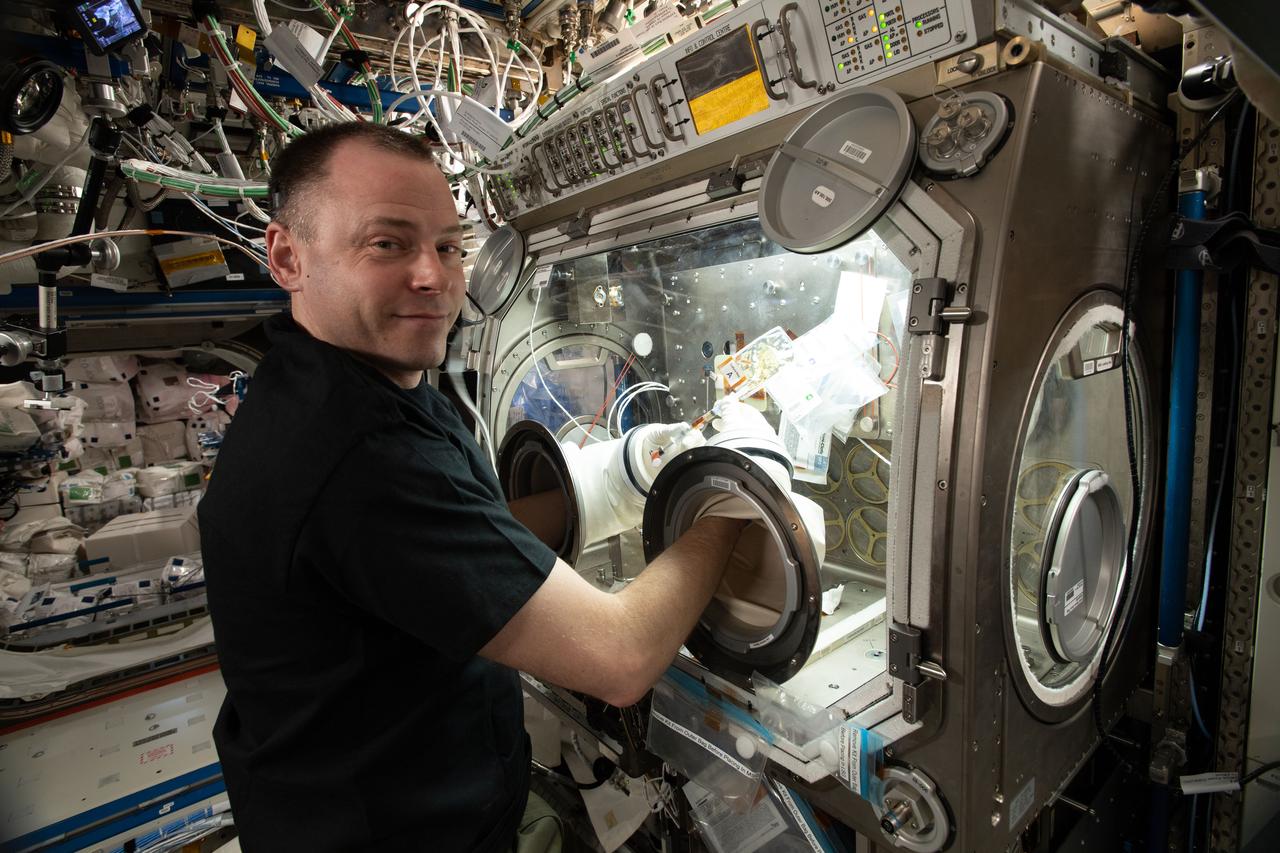
iss059e061135 (May 13, 2019) --- NASA astronaut Nick Hague conducts research operations in the U.S. Destiny laboratory module's Microgravity Sciences Glovebox. Hague is exploring why pathogens become more virulent in the weightless environment of outer space posing a flight risk to astronauts.