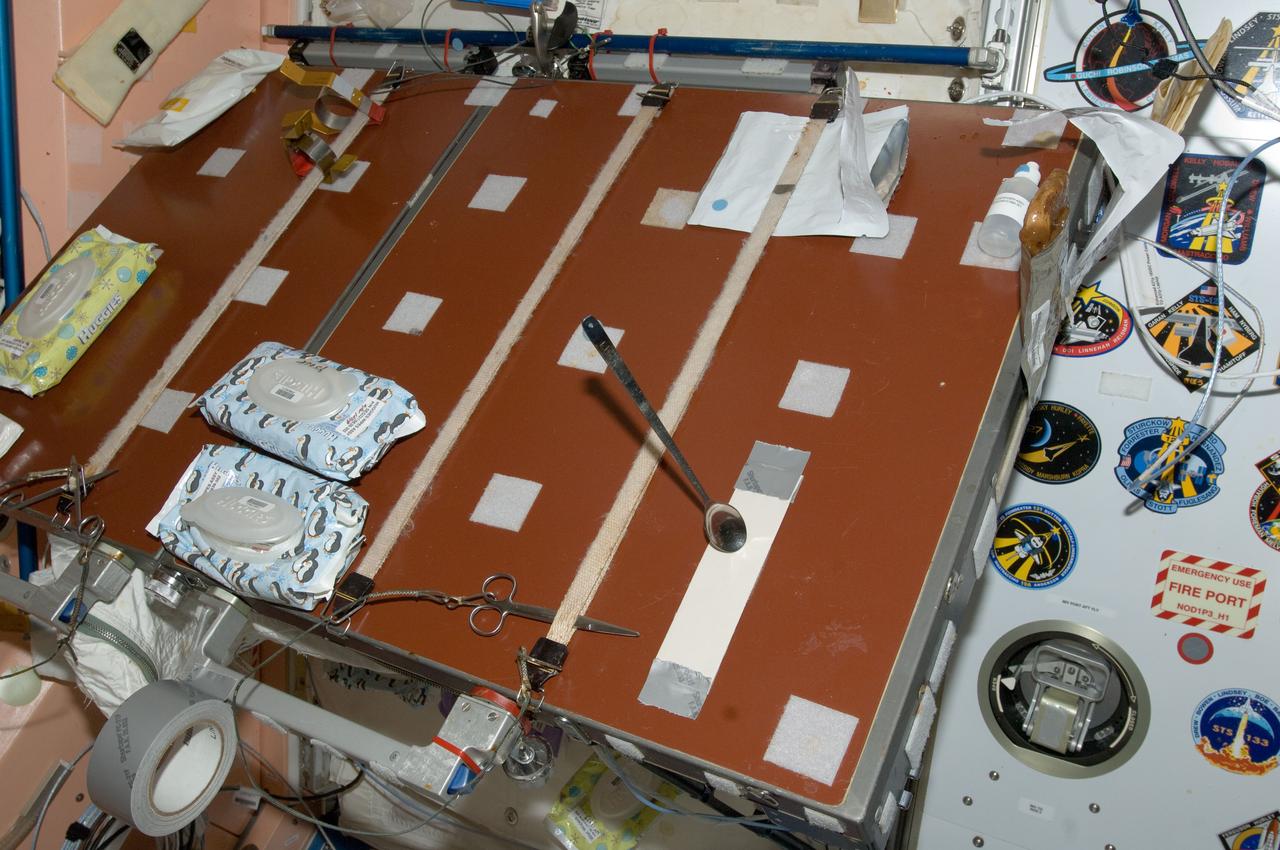
ISS031-E-012220 (5 May 2012) --- A close-up view of the galley in the Unity node photographed by an Expedition 31 crew member on the International Space Station. A long spoon, stuck to double-sided tape is visible in the foreground. This image was used during a Saturday Morning Science session with NASA astronaut Don Pettit, flight engineer.
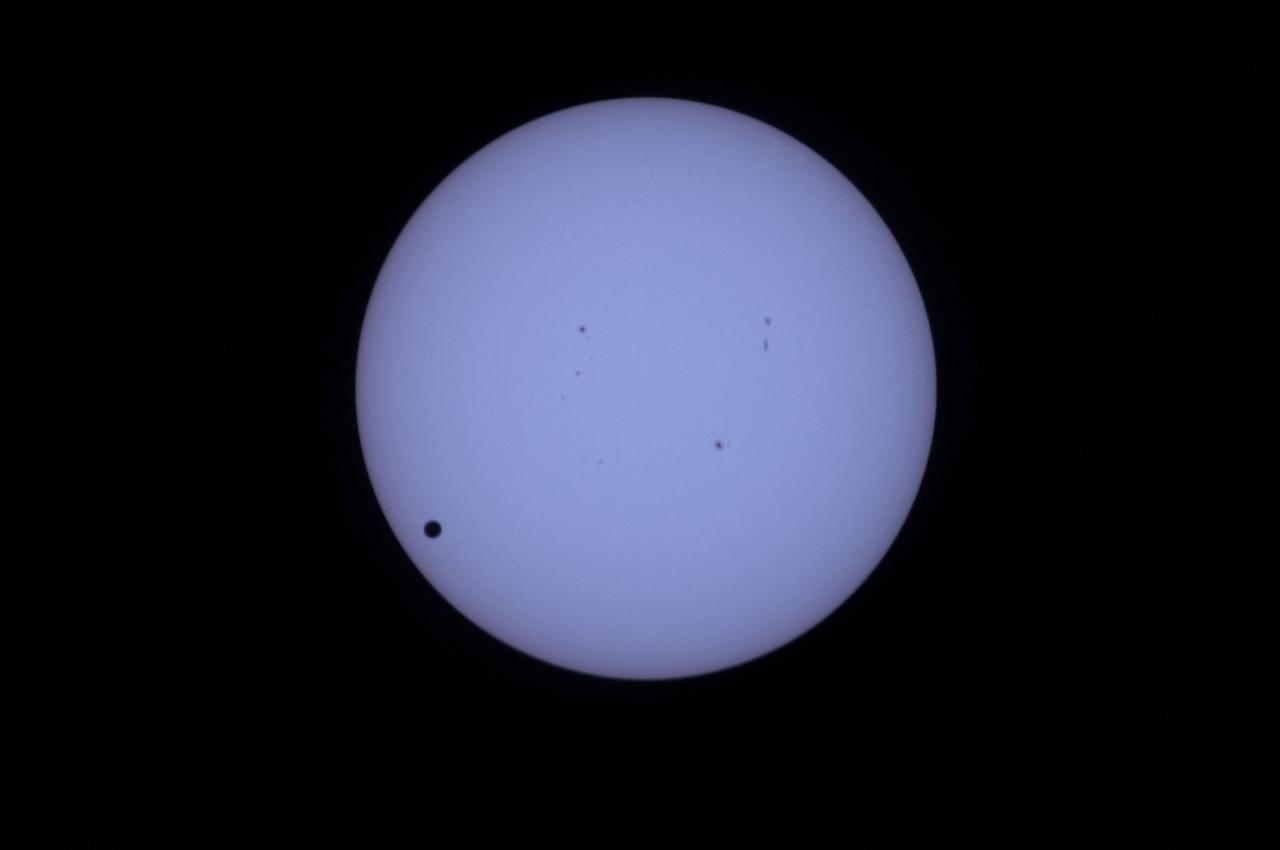
Transit of Venus as seen from the CO and Cupola Modules.
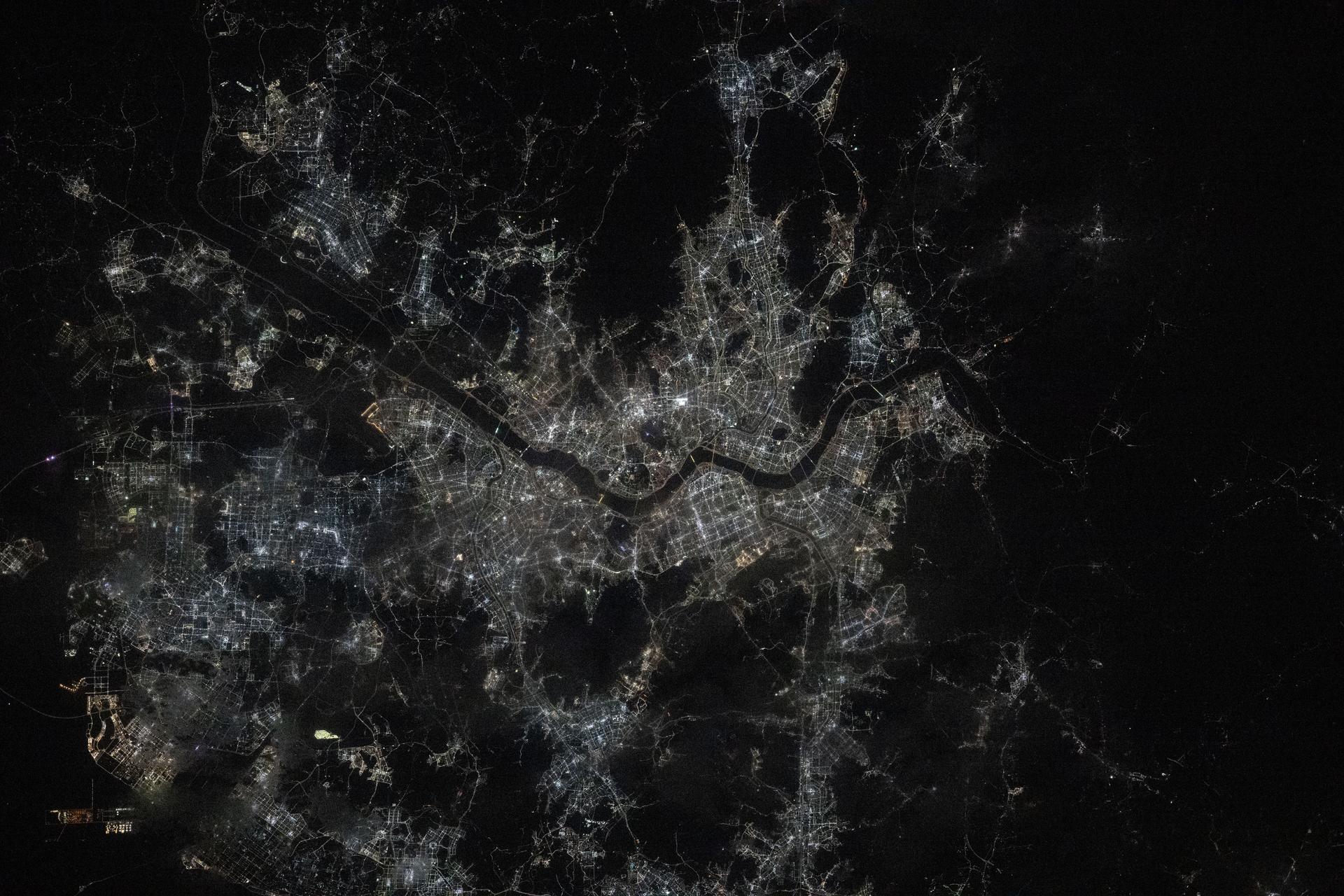
iss072e757318 (March 5, 2025) --- Seoul, South Korea—home to approximately 10 million residents and split by the Han River—is pictured from the International Space Station at approximately 10:56 p.m. local time as it orbited 260 miles above the Korean Peninsula. One of the most densely populated cities in the world, Seoul is also home to four UNESCO World Heritage Sites that reflect the legacy of Korea’s longest continuous dynasty, the Joseon Dynasty. These include a Confucian shrine, royal tombs, a palace complex, and a mountain fortress.
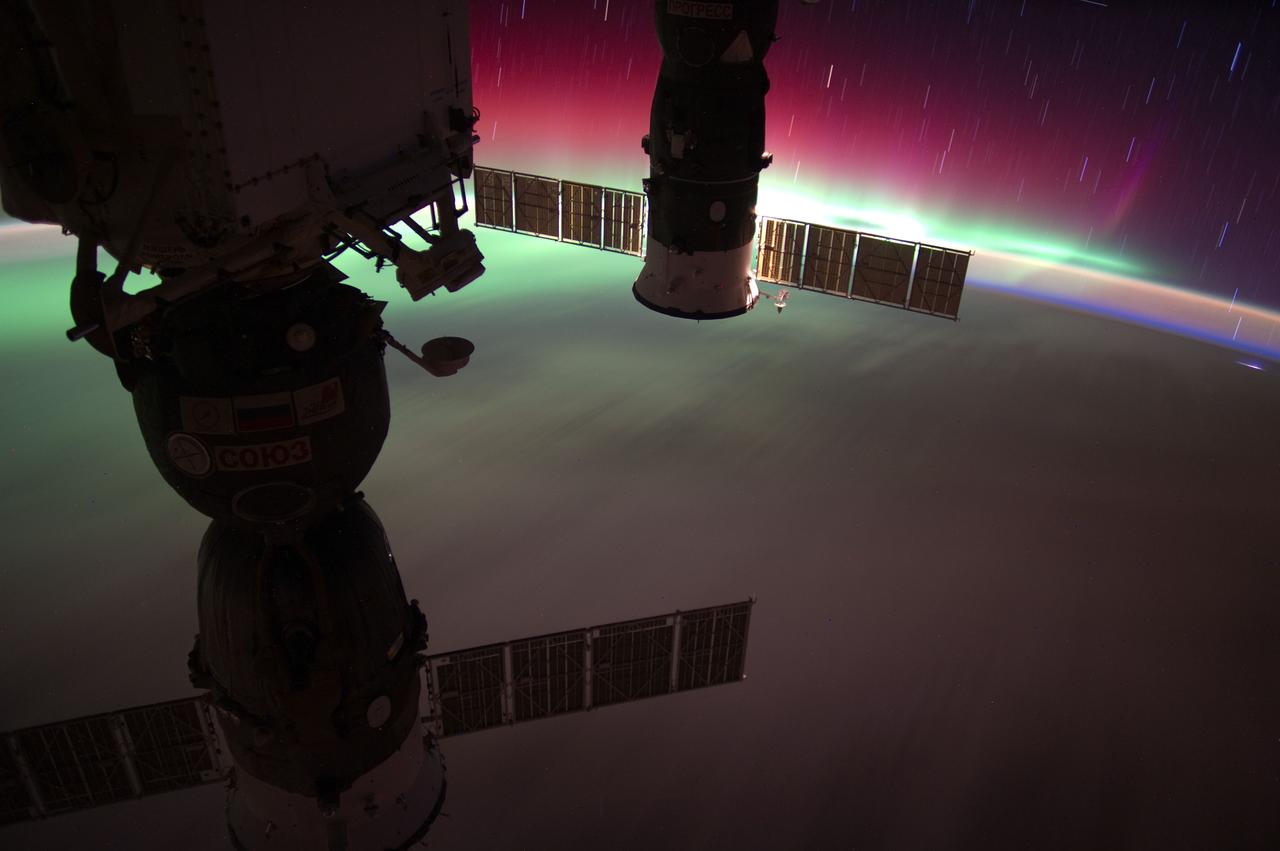
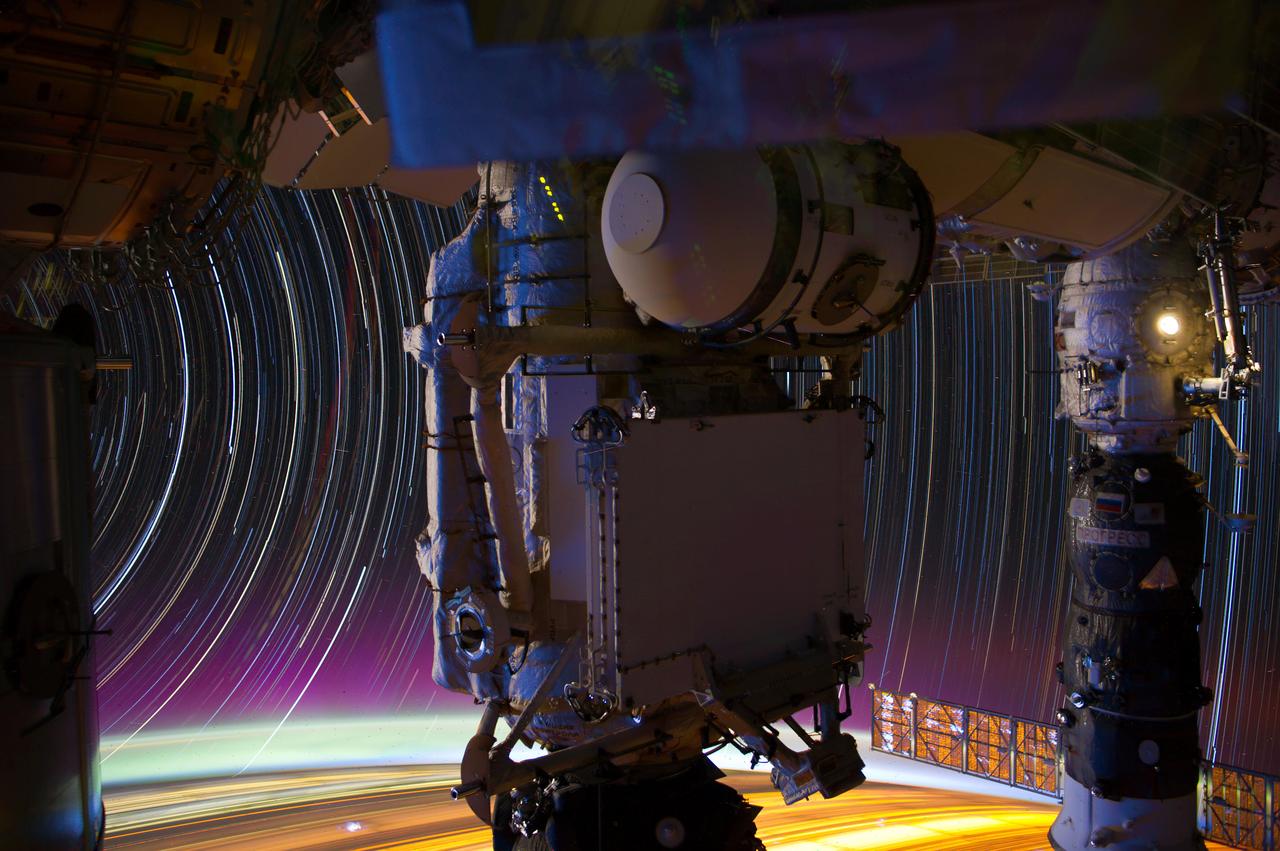
ISS031-E-066037 (22 May 2012) --– Aurora Australis, accompanied by star streaks and air glow, is pictured in this view recorded by one of the Expedition 31 crew members when the orbital outpost was above a point on Earth located at approximately 49.5 degrees south latitude and 173.9 east longitude or about 290 miles southeast of southern New Zealand. Two Russian spacecraft, docked to the station, are seen in the foreground.
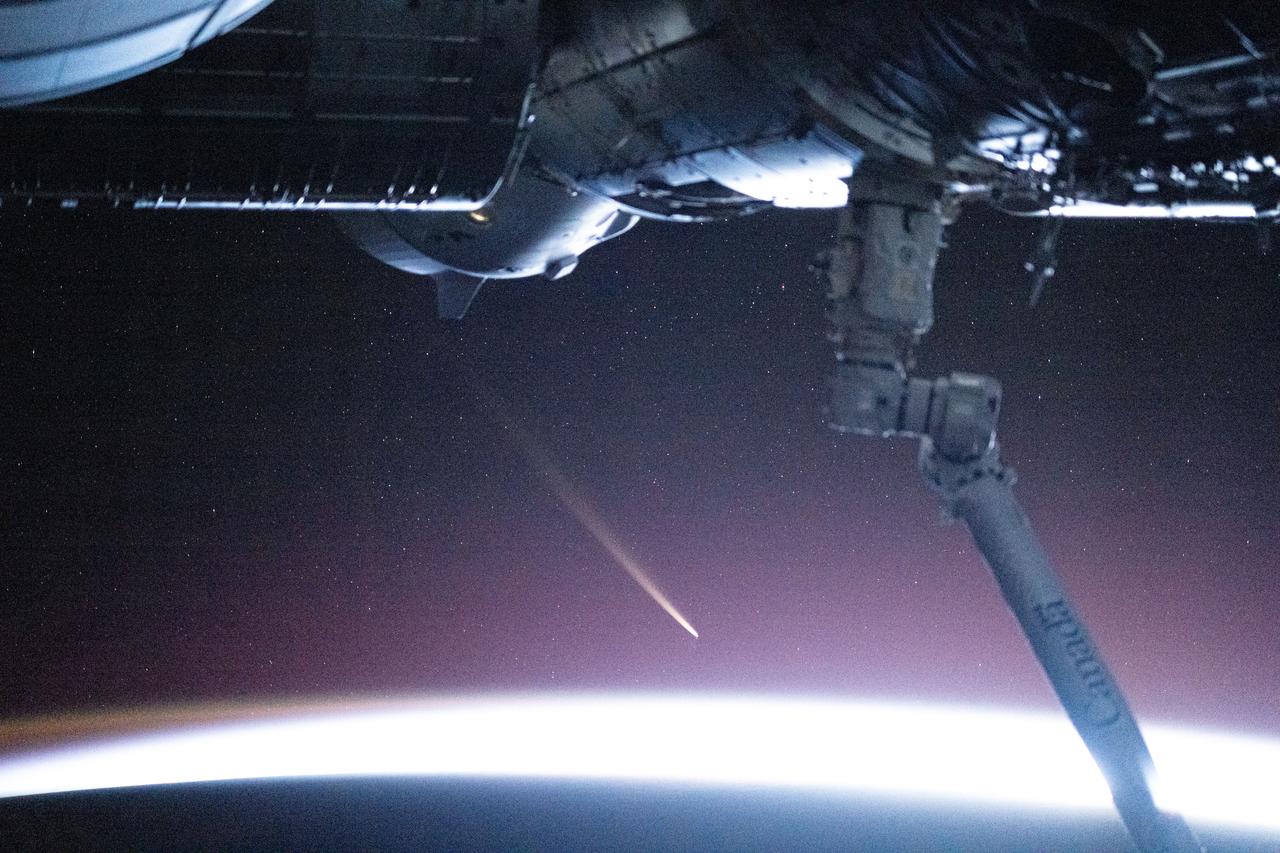
iss072e007238 (Oct. 1, 2024) --- The non-periodic Comet C/2024 G3 (ATLAS) is pictured seemingly above Earth's atmosphere though it was actually about 235 million miles away and heading for a trip around the Sun. The International Space Station was orbiting 272 miles above the southern Atlantic Ocean in between the Falkland Islands (Islas Malvinas) and South Georgia and the South Sandwich Islands at the time of this photograph. Credit: NASA/Don Pettit
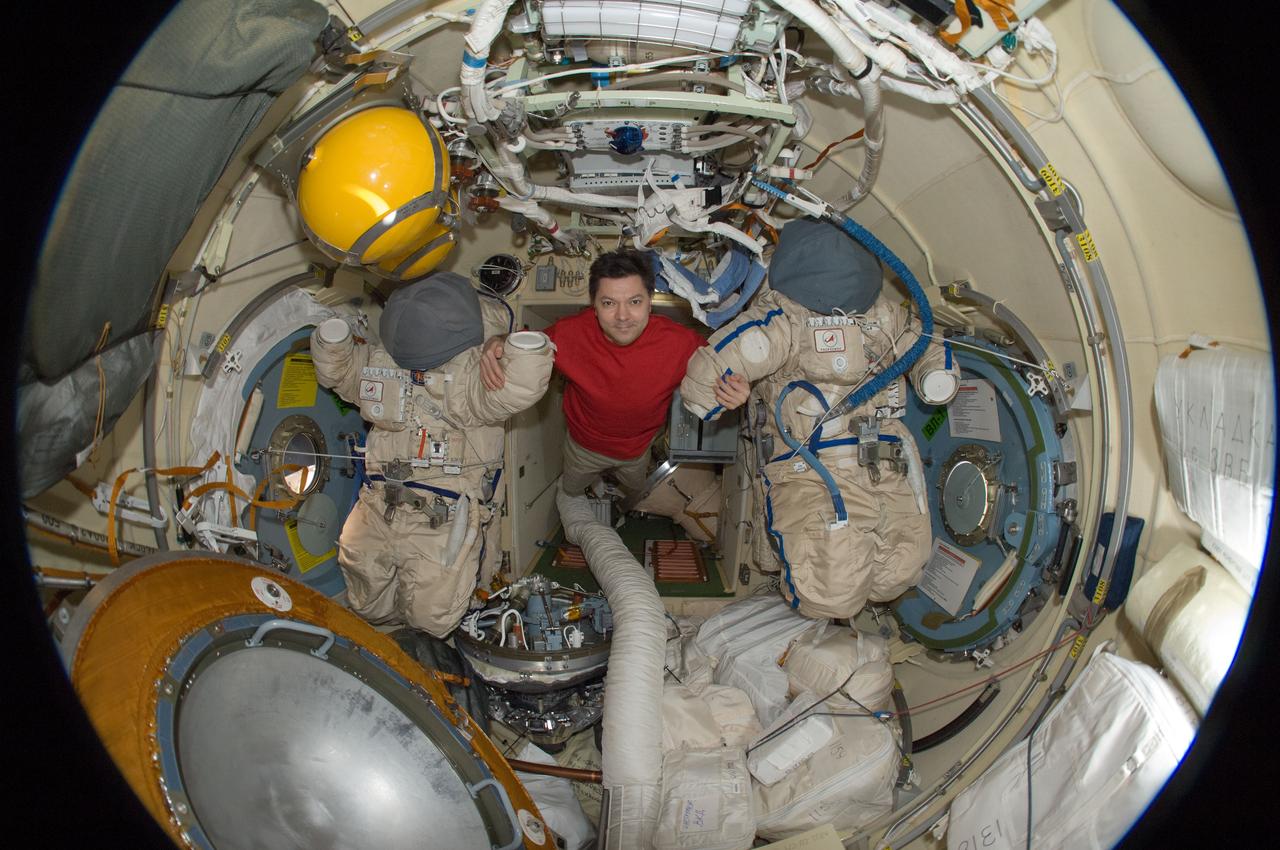
ISS031-E-030470 (12 May 2012) --- A fisheye lens attached to an electronic still camera was used to capture this image of Russian cosmonaut Oleg Kononenko, Expedition 31 commander, with two Russian Orlan spacesuits in the Pirs Docking Compartment of the International Space Station.
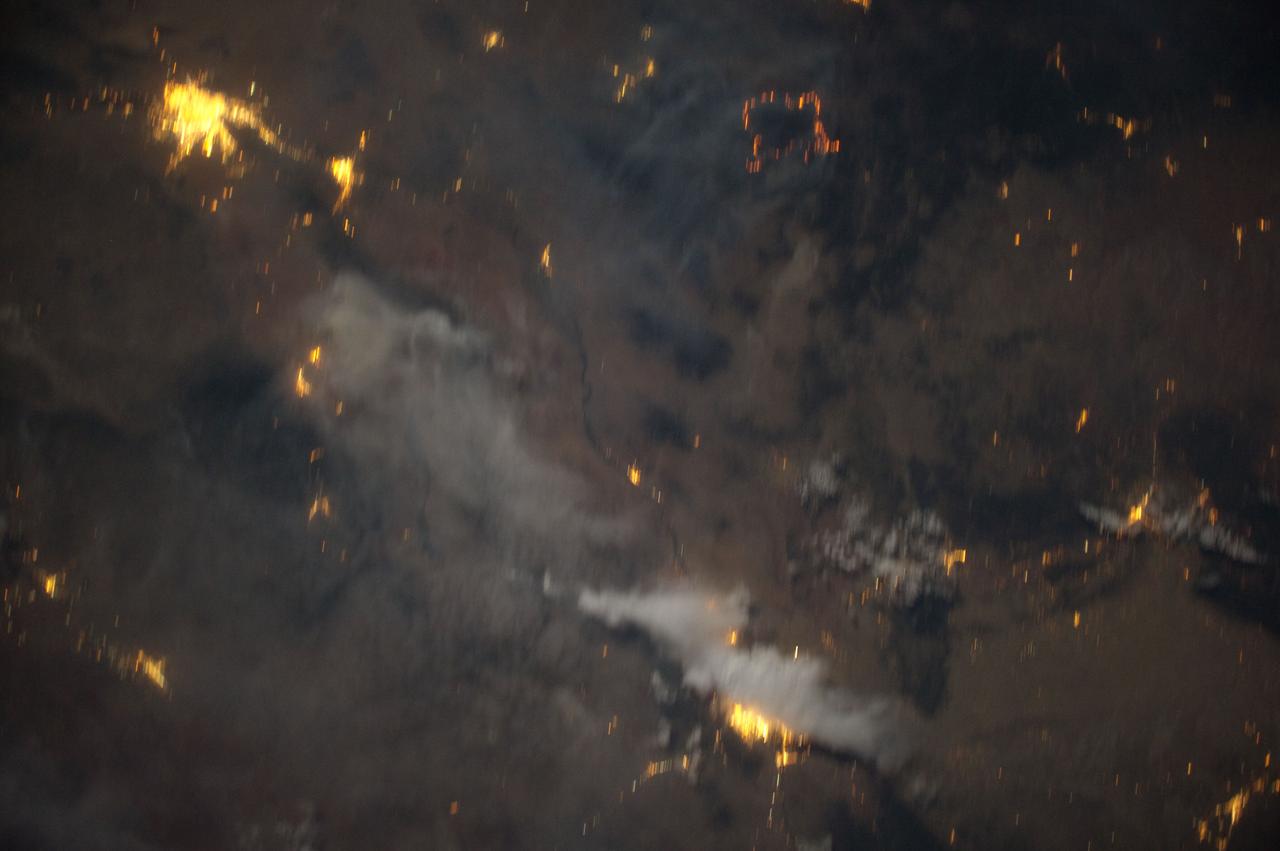
ISS031-E-83789 (2 June 2012) --- Downlinked from the International Space Station this still image – part of a series from a mounted, automated, twilight session -- when viewed in sequence shows the flame ring associated with wild fires in the Southwest move from bottom to top-center framed at a distance by the bright urban areas of Tucson, Phoenix, El Paso-Las Cruces, and finally Albuquerque (mostly under cloud).
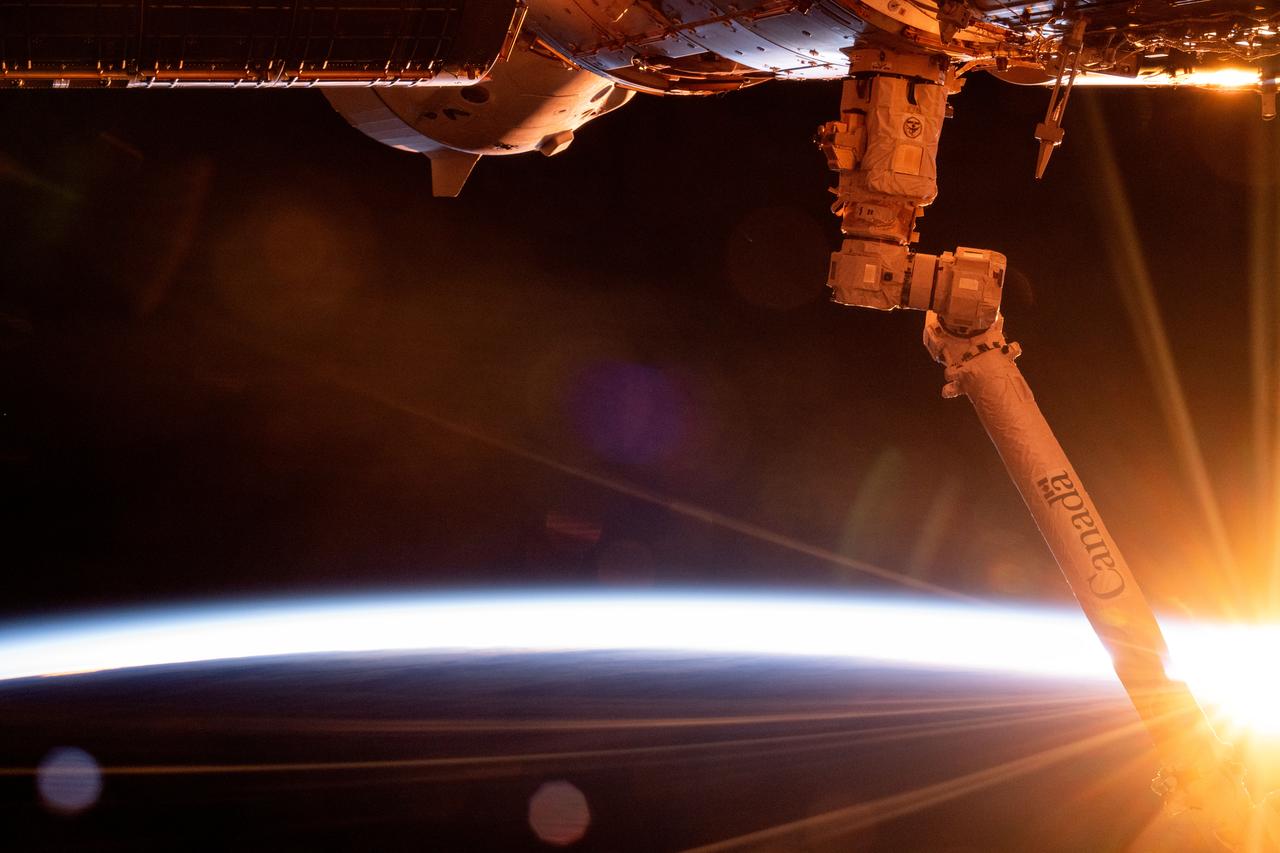
iss072e010164 (Oct. 1, 2024) --- The first rays of an orbital sunrise breakthrough illuminating Earth's atmosphere in this photograph from the International Space Station as it orbited 272 miles above the South Pacifc Ocean off the southern coast of New Zealand. In the foreground, at right, is the Canadarm2 robotic arm and partially obscured at top, is the SpaceX Dragon Freedom spacecract docked to the Harmony module's forward port.
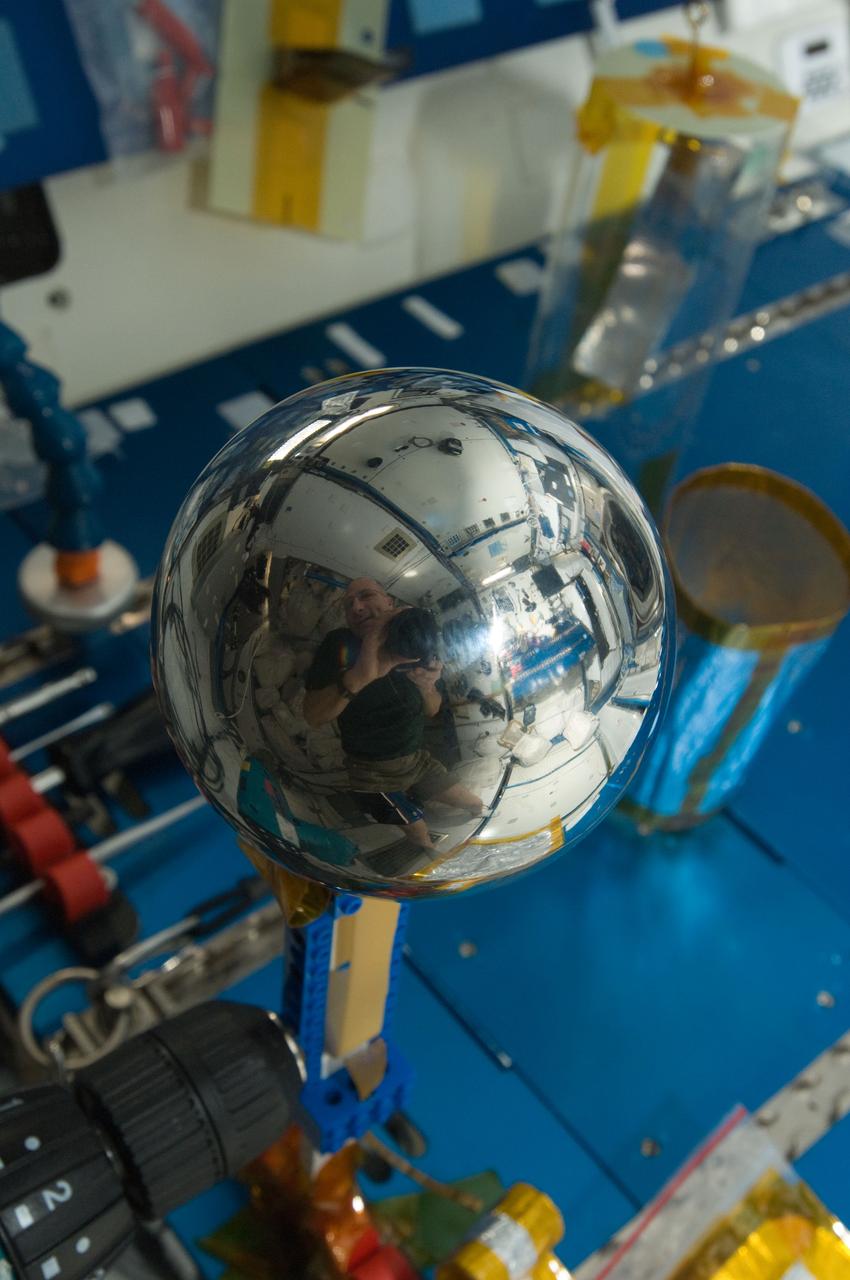
ISS031-E-035391 (12 May 2012) --- NASA astronaut Don Pettit, Expedition 31 flight engineer, took this picture of a four-inch polished metal sphere in the International Space Station’s Destiny laboratory on May 12, 2012 using a 28mm lens. A close look of the sphere reveals a mirrored Pettit.
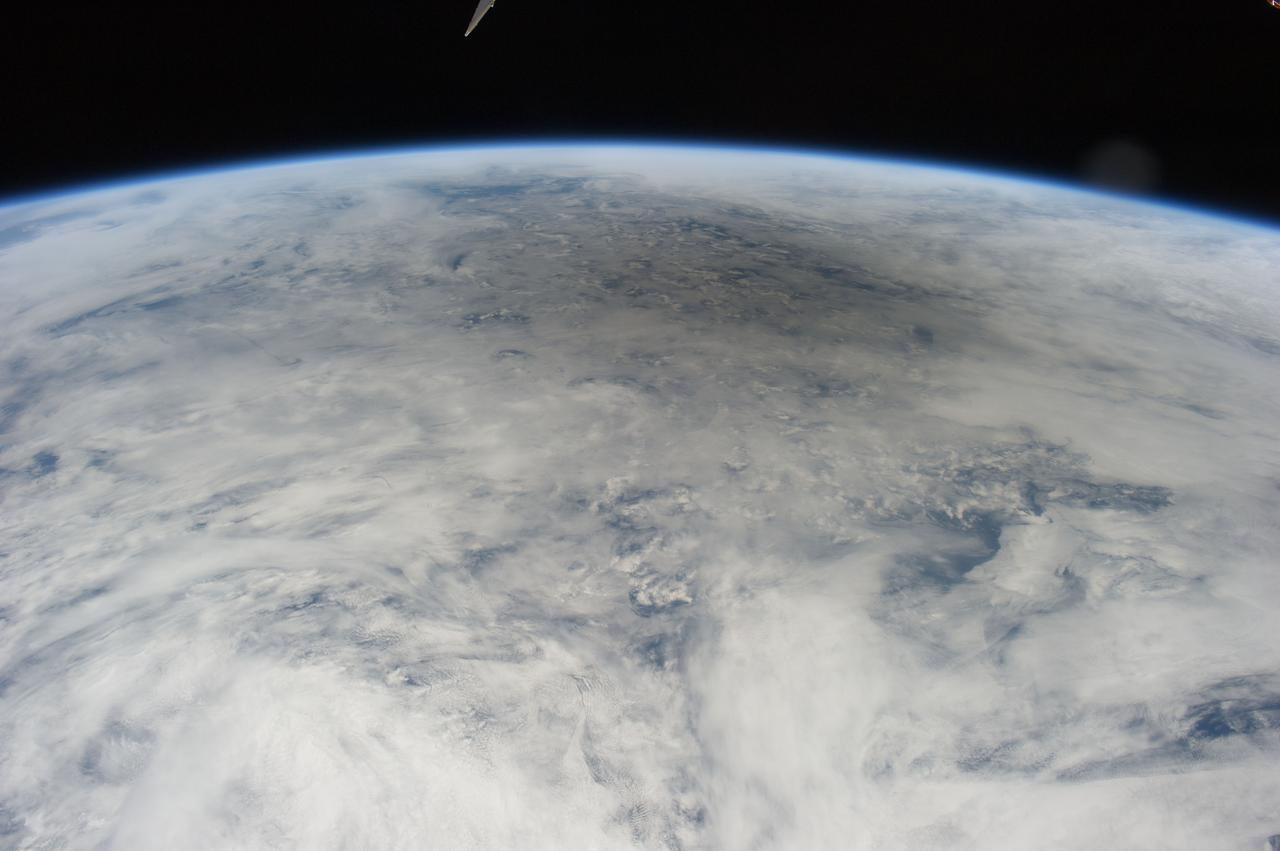
ISS031-E-041635 (20 May 2012) --- Photographed by the Expedition 31 crew aboard the International Space Station and easily spotted at top center in this image is the gray shadow of the moon, cast on bright clouds of the northern Pacific Ocean, as the May 20 solar eclipse point tracked towards the Aleutian Islands and then on to northern California. The eclipse is seen obliquely so it appears as a flattened circle. The eclipse was visible for about 3.5 hours, and since the ISS orbits Earth every 90 minutes there was a chance that the ISS crew would see (if not the total eclipse by looking directly overhead), some evidence at least in the form of a partial eclipse. Only since the start of human spaceflight could such an image have been shot, looking back at the moon’s shadow projected against Earth. As it happened, say NASA scientists, the timing was almost as good as if it had been planned. The space station passed “behind” the eclipse on May 20, that is, the shadow of the eclipse passed the point in the Northwest Pacific Ocean only three minutes before the station crossed the same point. But the crew was still able to see the densest part of the shadow a little more than 600 kilometers to the northeast of their position when they shot this photograph. The edge of the shadow looks diffused because of the partial eclipse zone—the wide area where more or less of the sun can be seen around the edge of the moon. The zone of partial eclipse covers a far wider area than the area covered by the total eclipse. Twenty-six minutes later, as they approached Antarctica in the other hemisphere, the six-member crew saw the sun set as they passed onto the dark side of the planet.
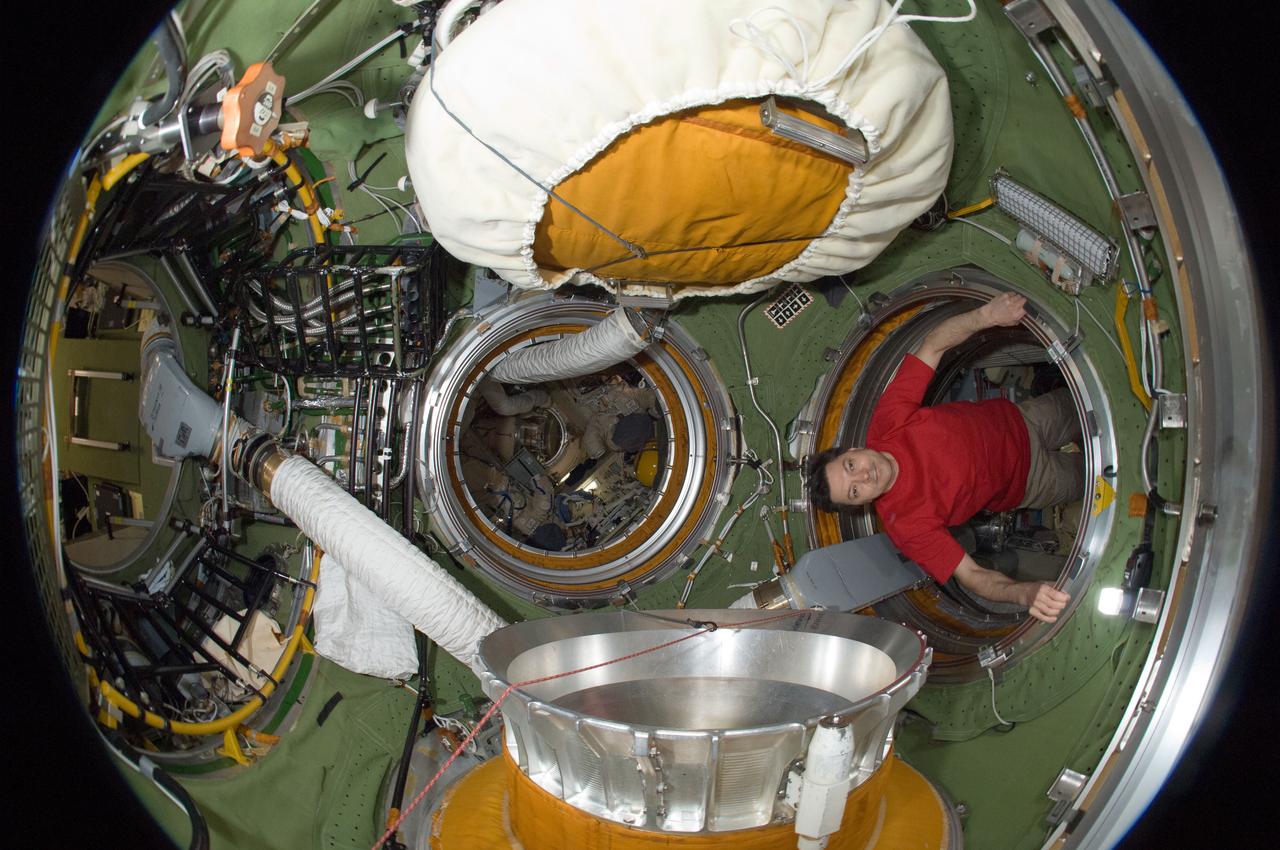
ISS031-E-030462 (12 May 2012) --- A fisheye lens attached to an electronic still camera was used to capture this image of Russian cosmonaut Oleg Kononenko, Expedition 31 commander, in the transfer compartment between the Zarya Functional Cargo Block (FGB) and the Zvezda Service Module of the International Space Station.
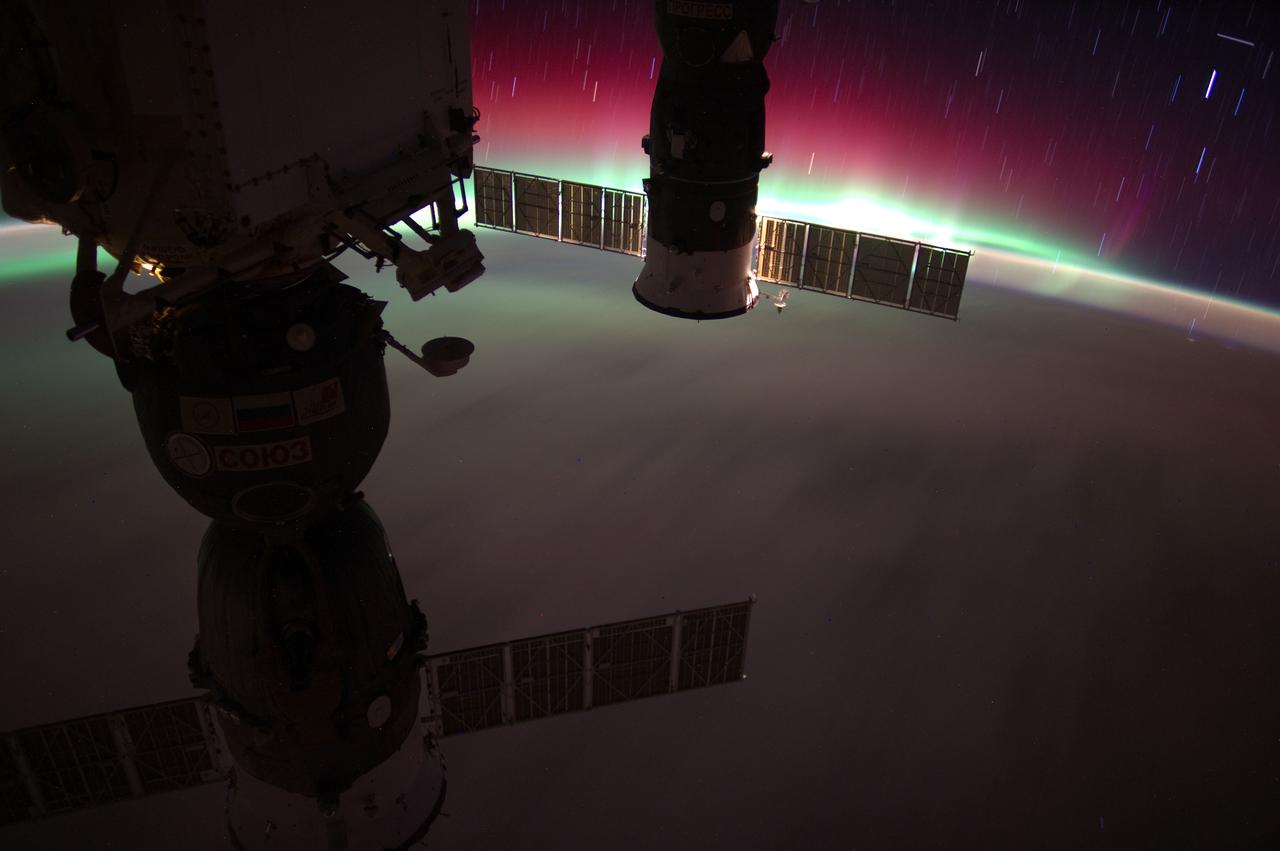
ISS031-E-066041 (22 May 2012) --- This picture, recorded by one of the Expedition 31 crew members aboard the International Space Station, features Aurora Australis with star streaks while the vehicle was over the South Pacific Ocean. The picture was taken when the orbital outpost was above 47.8 degrees south latitude and 179.6 degrees west longitude, about 10 degrees east of southern New Zealand. Two Russian spacecraft are seen in the foreground docked to the station.
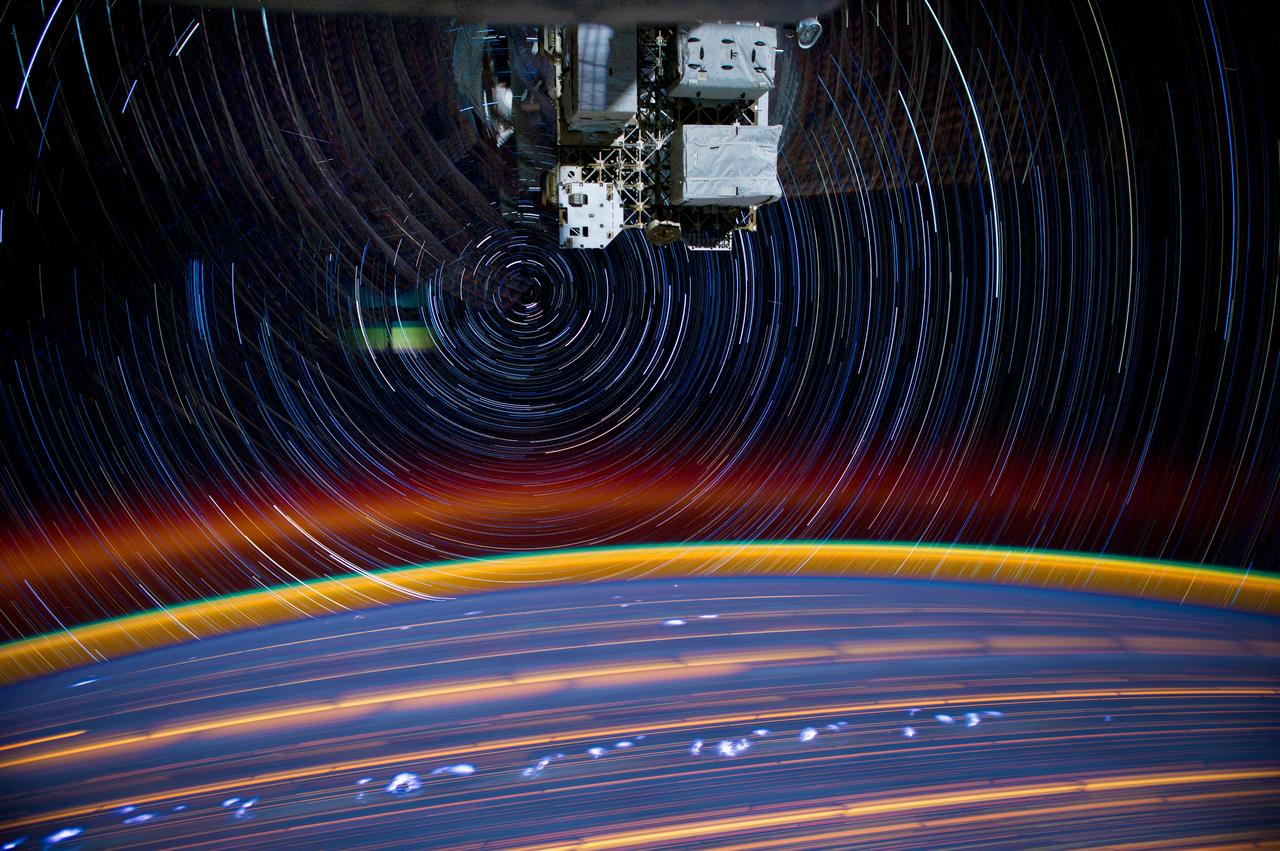
ISS030 star trail composite using iss030e158927 thru iss030e158944
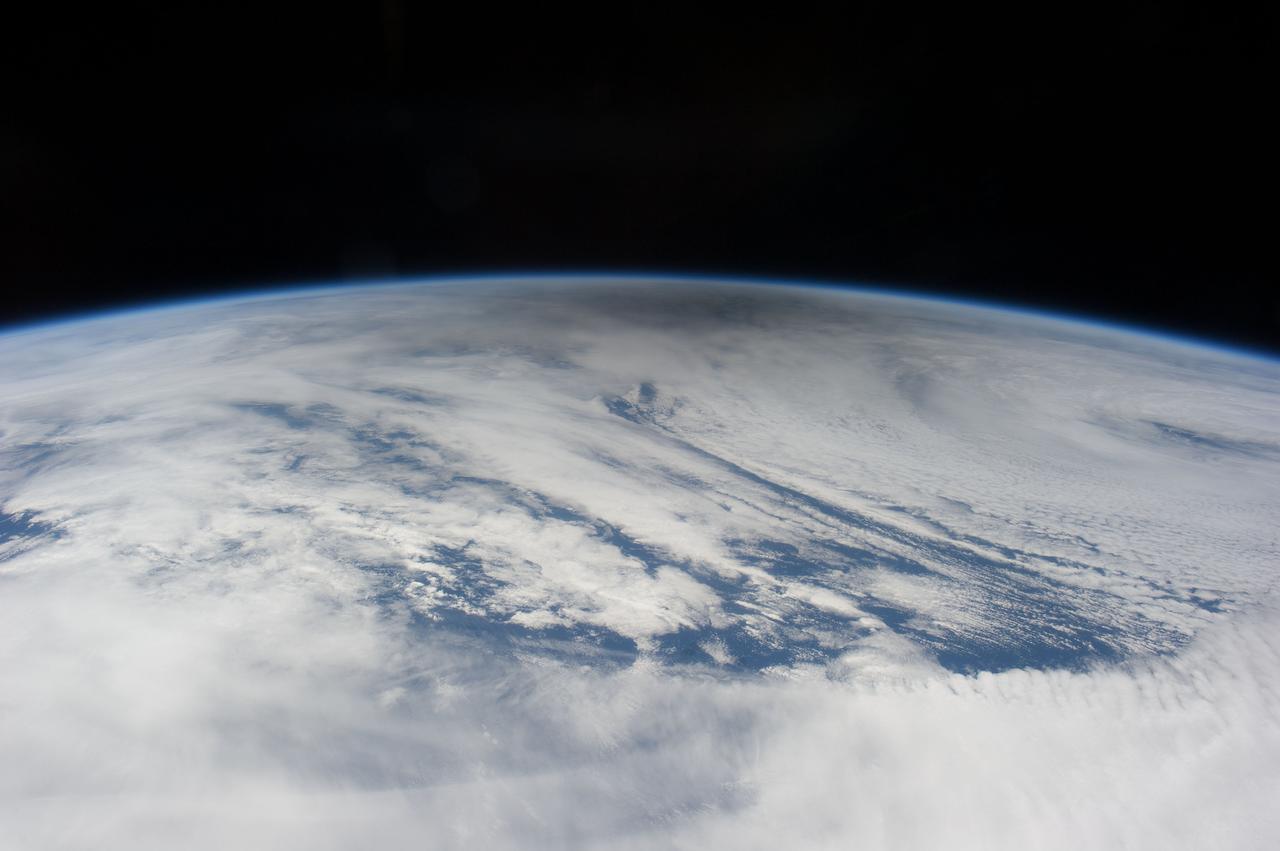
ISS031-E-041657 (20 May 2012) --- Photographed by the Expedition 31 crew aboard the International Space Station and easily spotted at top center in this image is the smoky gray shadow of the moon, cast on bright clouds of the northern Pacific Ocean. The eclipse is seen obliquely, with its center more than 1600 kilometers away, so it appears as a flattened circle. Images taken three minutes earlier near the point of closest approach (slightly more than 600 kilometers) to the track of the eclipse, show the shadow as a rounder shape. The crew onboard the station looked due north towards the Aleutian Islands, where the solar eclipse was near total. Twenty-three minutes later, as they approached Antarctica in the other hemisphere, the crew members saw the sun set as they passed onto the dark side of the planet. The edge of the shadow looks diffused because of the partial eclipse zone—the wide area where more or less of the sun can be seen around the edge of the moon. The zone of partial eclipse covers a far wider area than the area covered by the total eclipse.
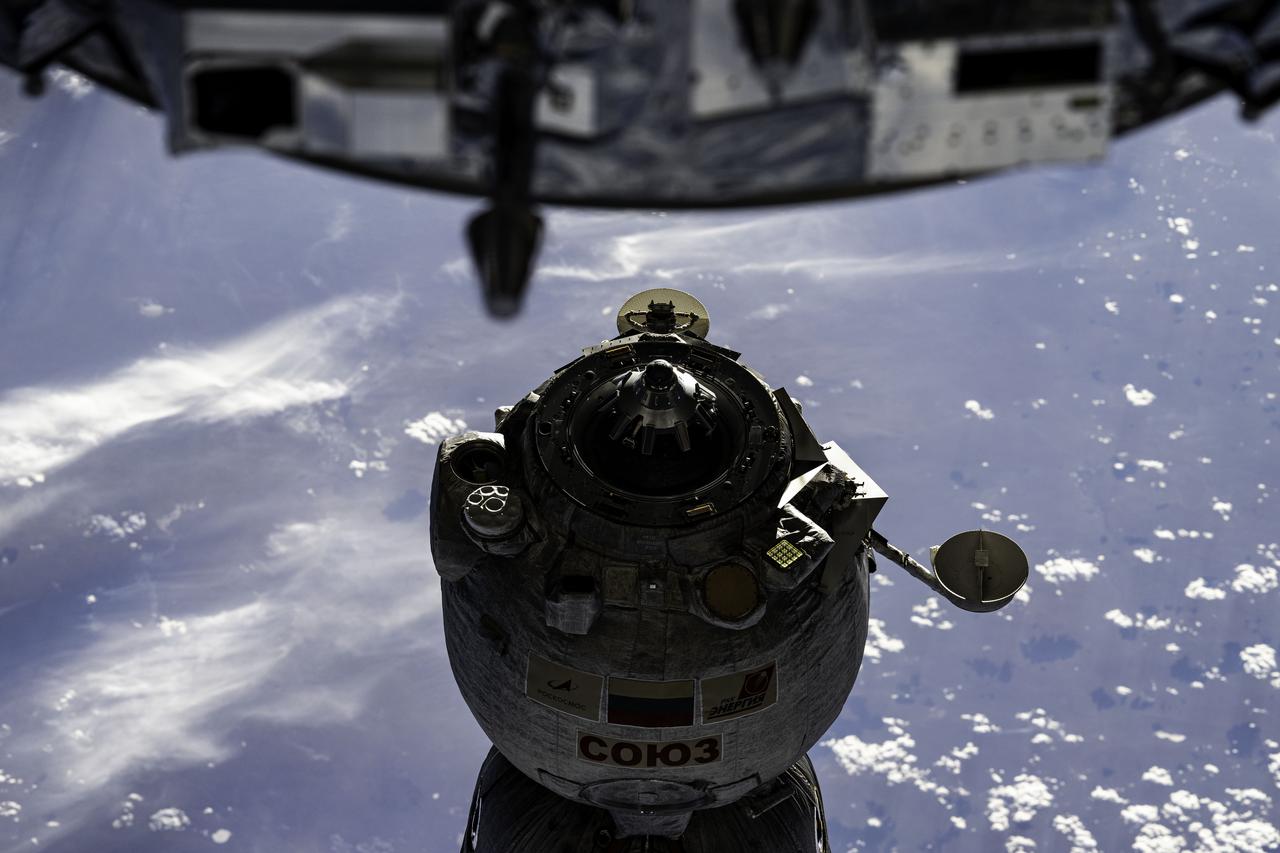
iss072e000028 (Sept. 23, 2024) --- The Soyuz MS-25 spacecraft, with NASA astronaut Tracy C. Dyson and Roscosmos cosmonauts Nikolai Chub and Oleg Kononenko aboard, is pictured shortly after undocking from the International Space Station's Prichal module.
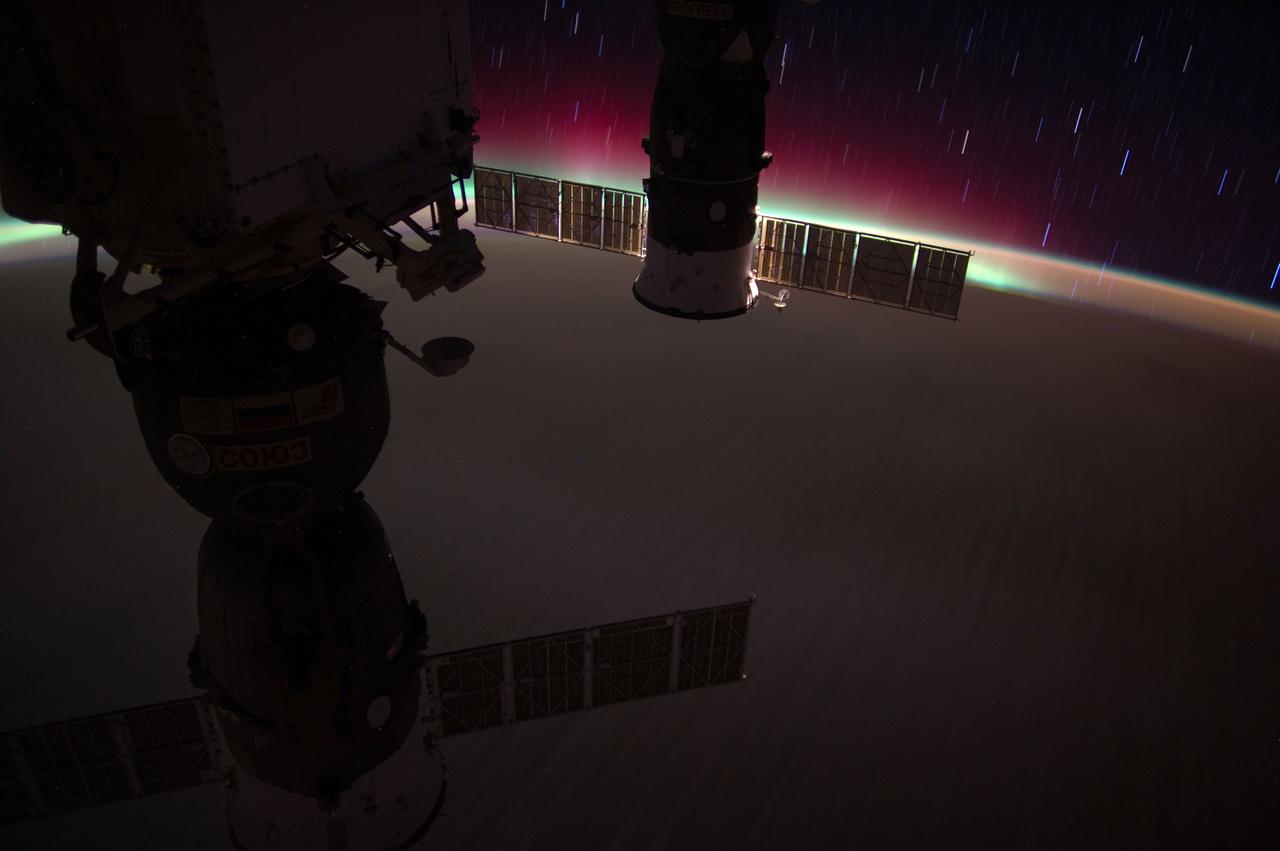
ISS031-E-066053 (22 May 2012) --- Aurora Australis and star streaks over the South Pacific Ocean are featured in this photograph taken by one of the Expedition 31 crew members when the International Space Station was above a point on Earth located at approximately 40.7 degrees south latitude and 162.9 degrees west longitude. Two Russian spacecraft, docked to the station, are seen in the foreground.
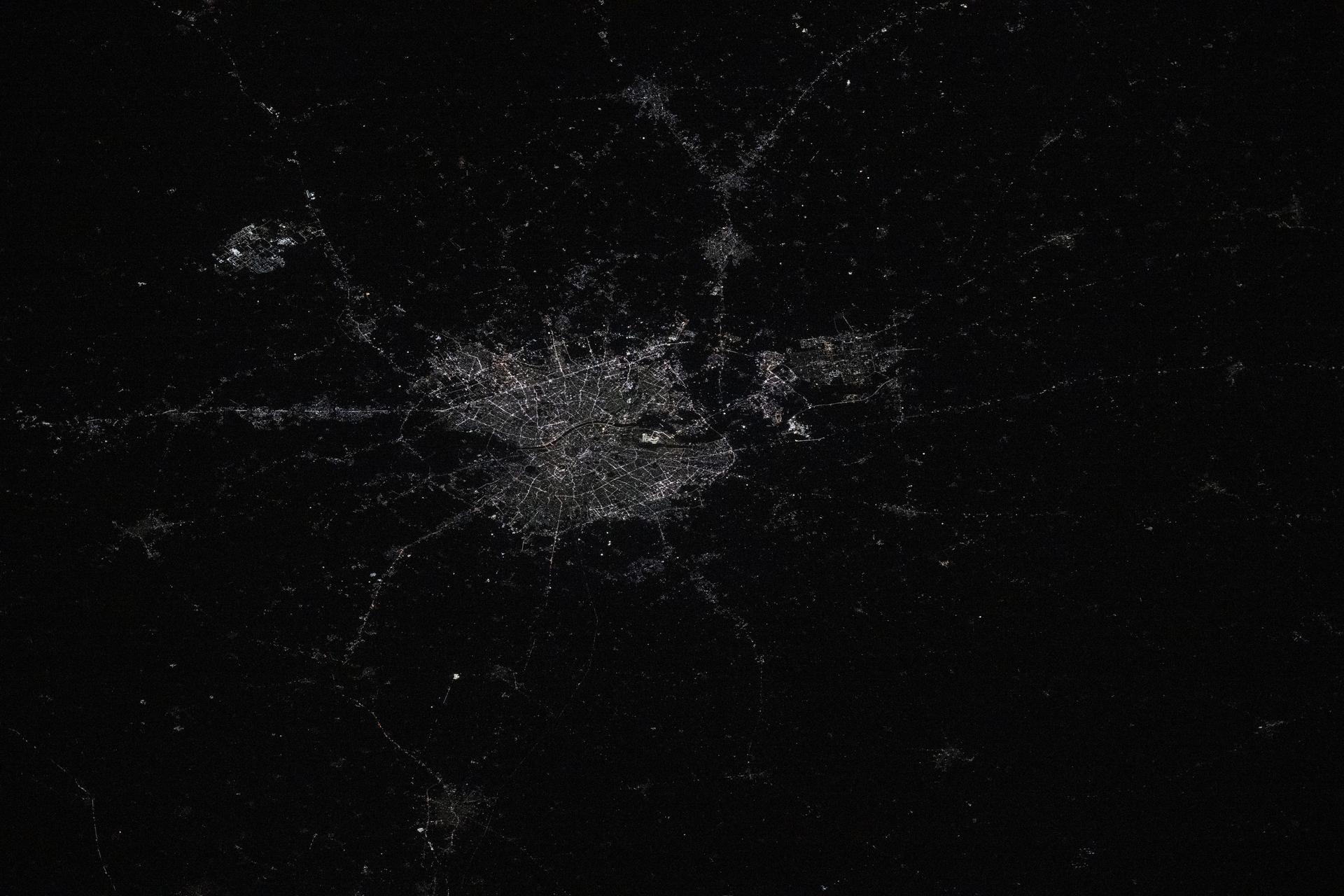
iss072e757408 (March 6, 2025) --- Ahmadebad, India—with a metropolitan population of about 9.3 million residents and split by the Sabarmati River—is pictured from the International Space Station at approximately 9:40 p.m. local time as it orbited 258 miles above the South Asian nation. Founded over 600 years ago, India’s first UNESCO World Heritage City is renowned for its thriving textile industry and vibrant street food culture.
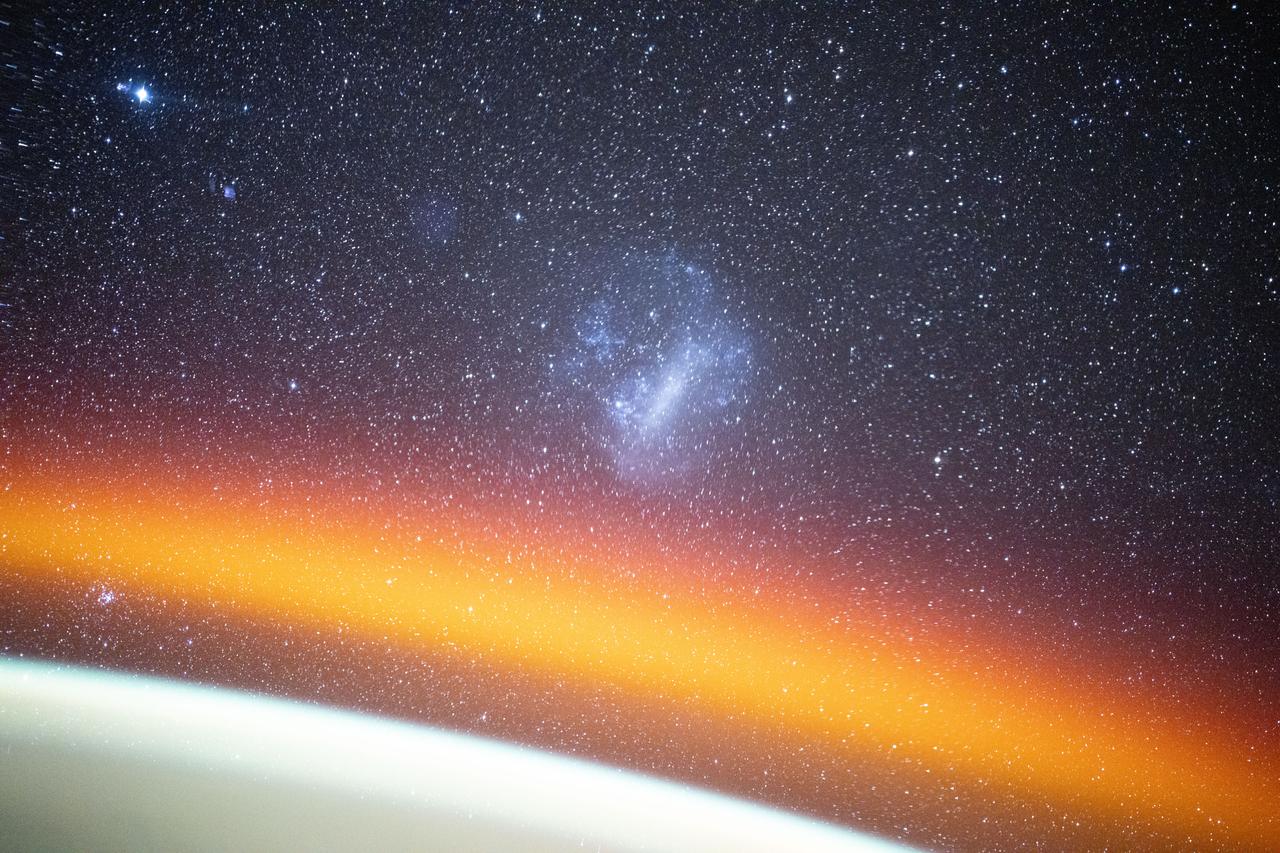
iss072e278609 (Nov. 26, 2024) --- The Large Magellanic Cloud among a starry backdrop above Earth's atmospheric glow highlights this long duration photograph from the International Space Station as it orbited 260 miles above the Pacific Ocean off the coast of Mexico. Credit: NASA/Don Pettit

ISS031-E-112645 (6 June 2012) --- The sun "peeking" through a solar array panel on the International Space Station caught the attention of one of the Expedition 31 crew members aboard the International Space Station. The thin blue line of Earth's atmosphere is visible in the background.
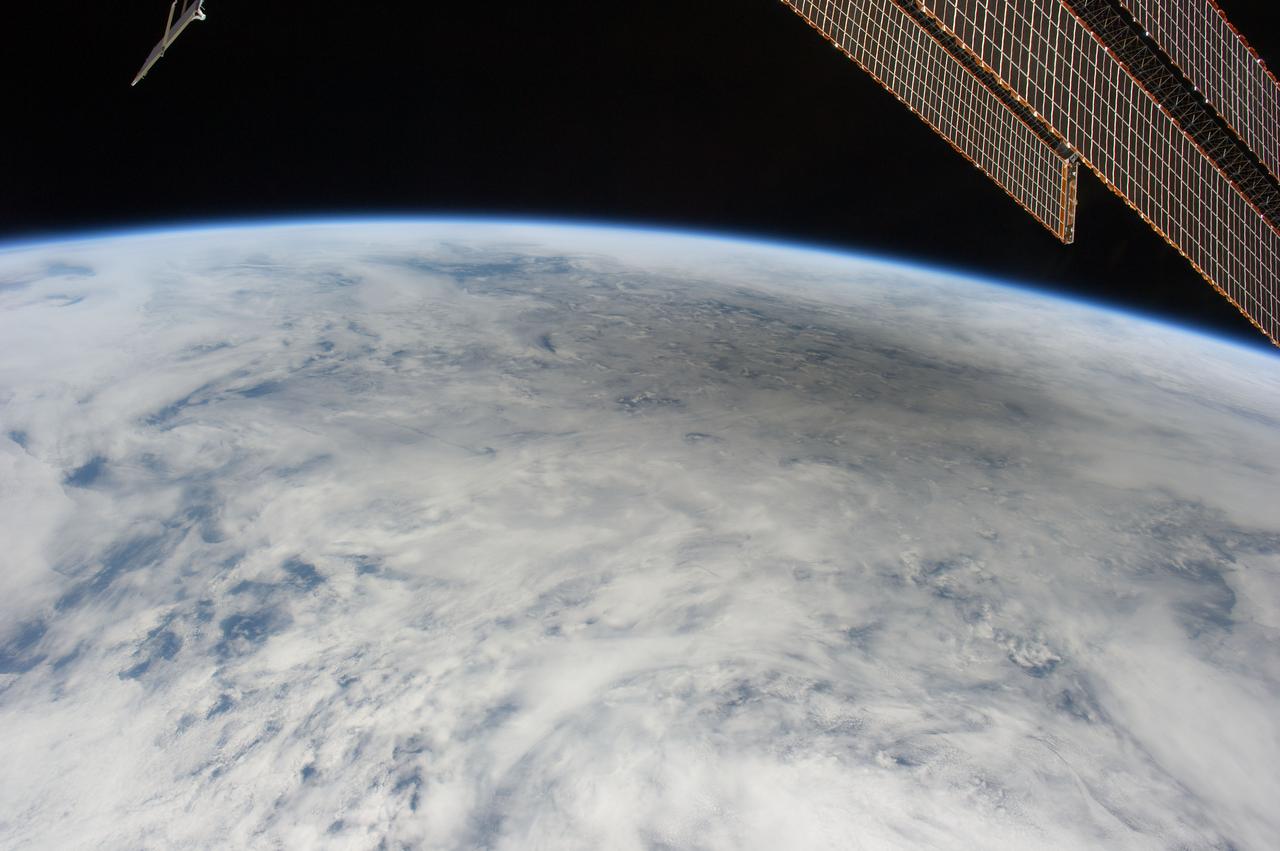
ISS031-E-41622 (20 May 2012) --- This is one of a series of photos taken by Expedition 31 Flight Engineer Don Pettit aboard the International Space Station, at the time located over the Western Pacific, showing a shadow of the moon created by the May 20 solar eclipse, as the shadow spreads across cloud cover on Earth. Pettit used a 28-mm lens on a digital still camera to record the image at 23:36:45 GMT. One of the space station’s solar array panels appears at the top of the frame.
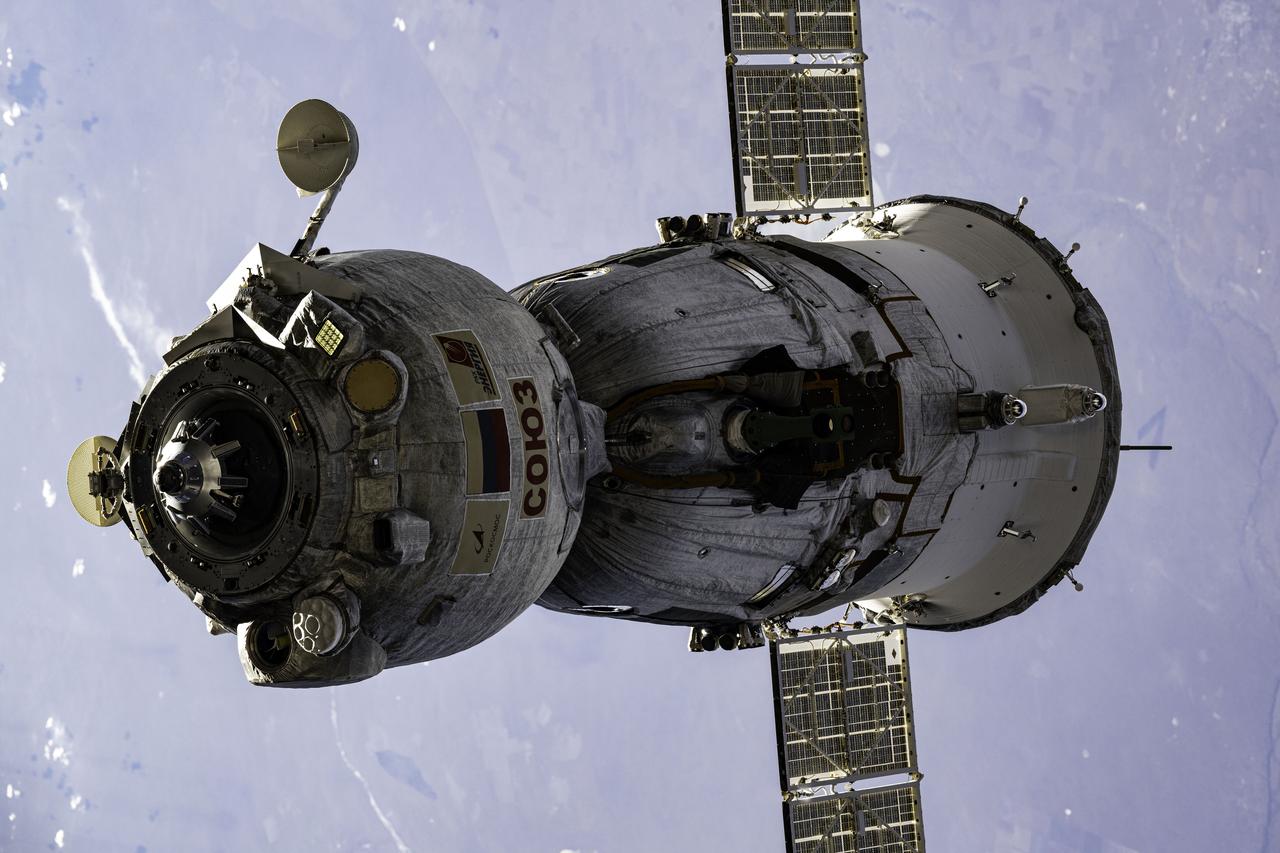
iss072e000032 (Sept. 23, 2024) --- The Soyuz MS-25 spacecraft, with NASA astronaut Tracy C. Dyson and Roscosmos cosmonauts Nikolai Chub and Oleg Kononenko aboard, is pictured shortly after undocking from the International Space Station's Prichal module.
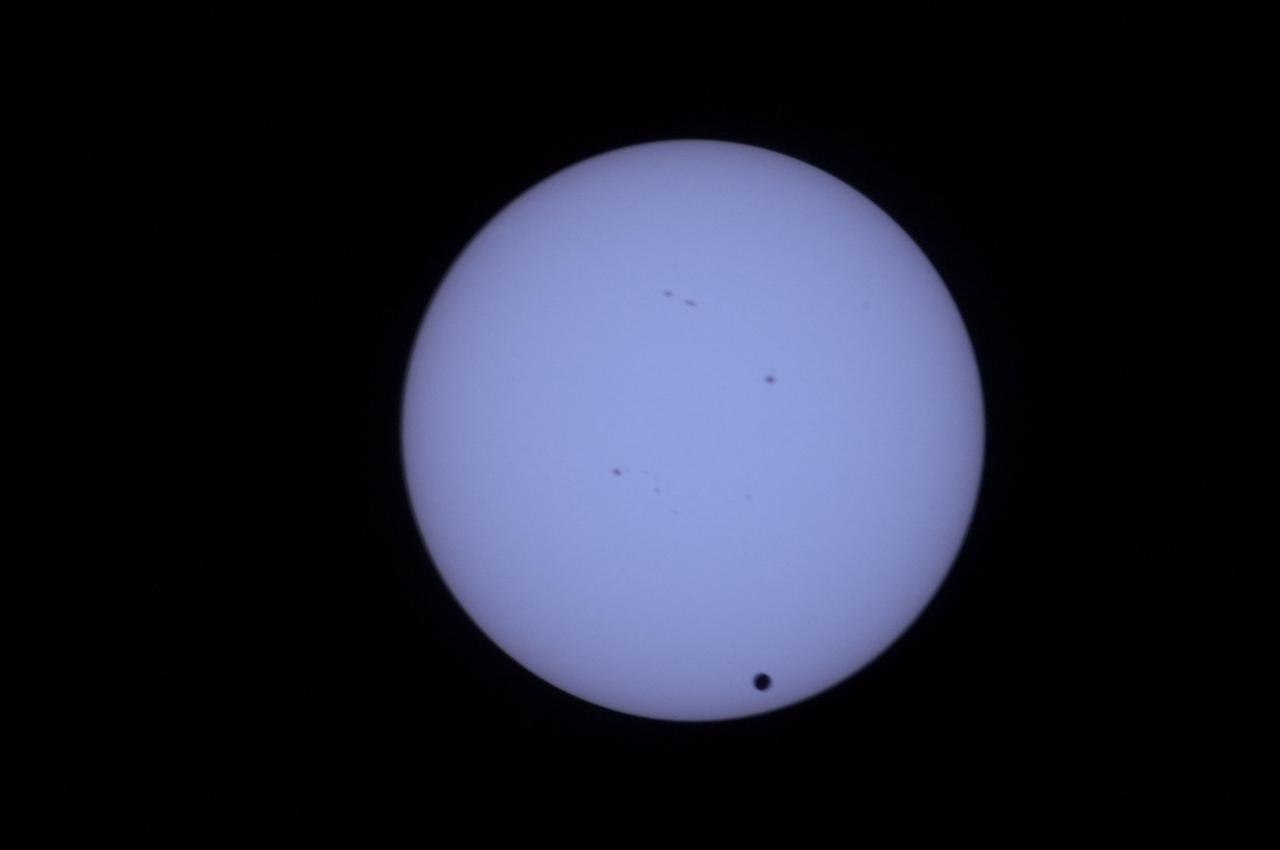
Transit of Venus as seen from the CO and Cupola Modules.
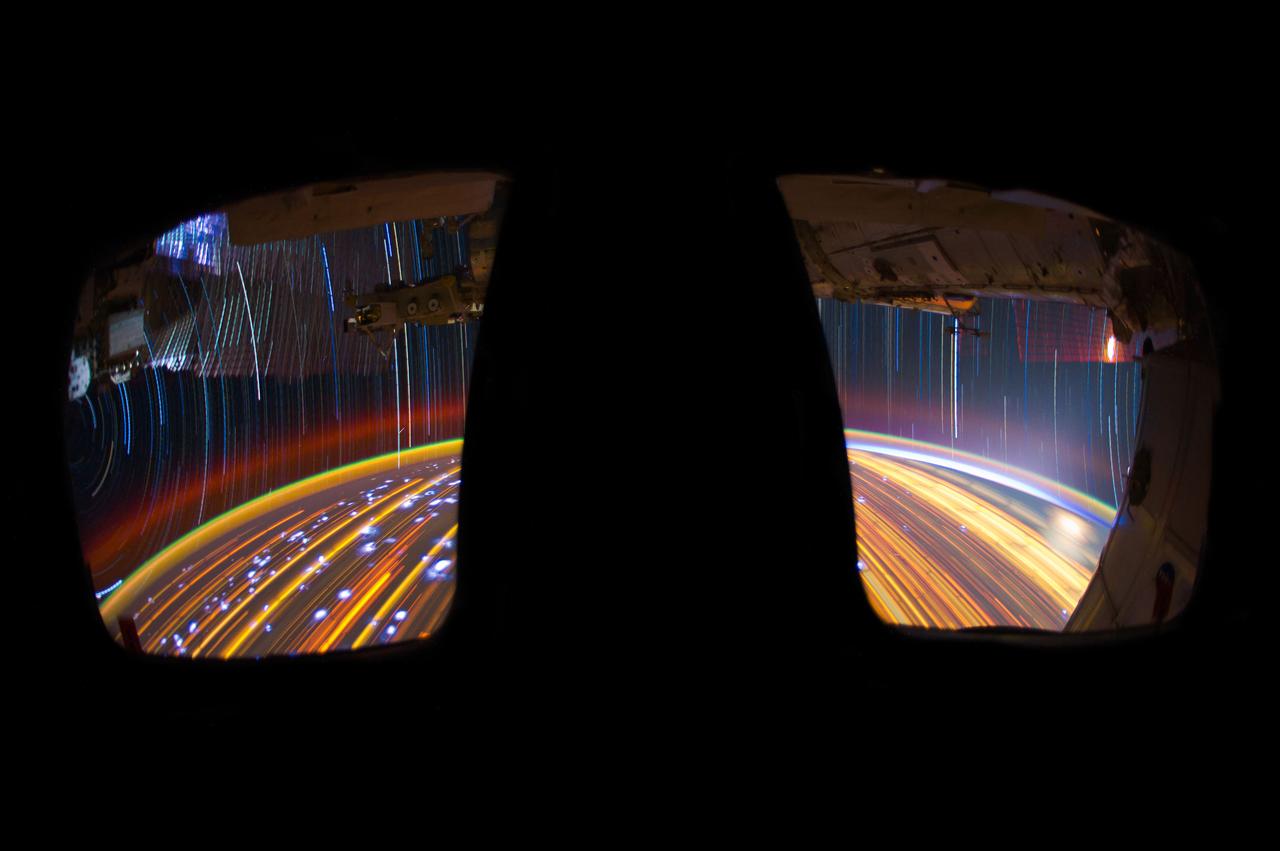
ISS030 star trail composite using iss030e158947 thru iss030e158992
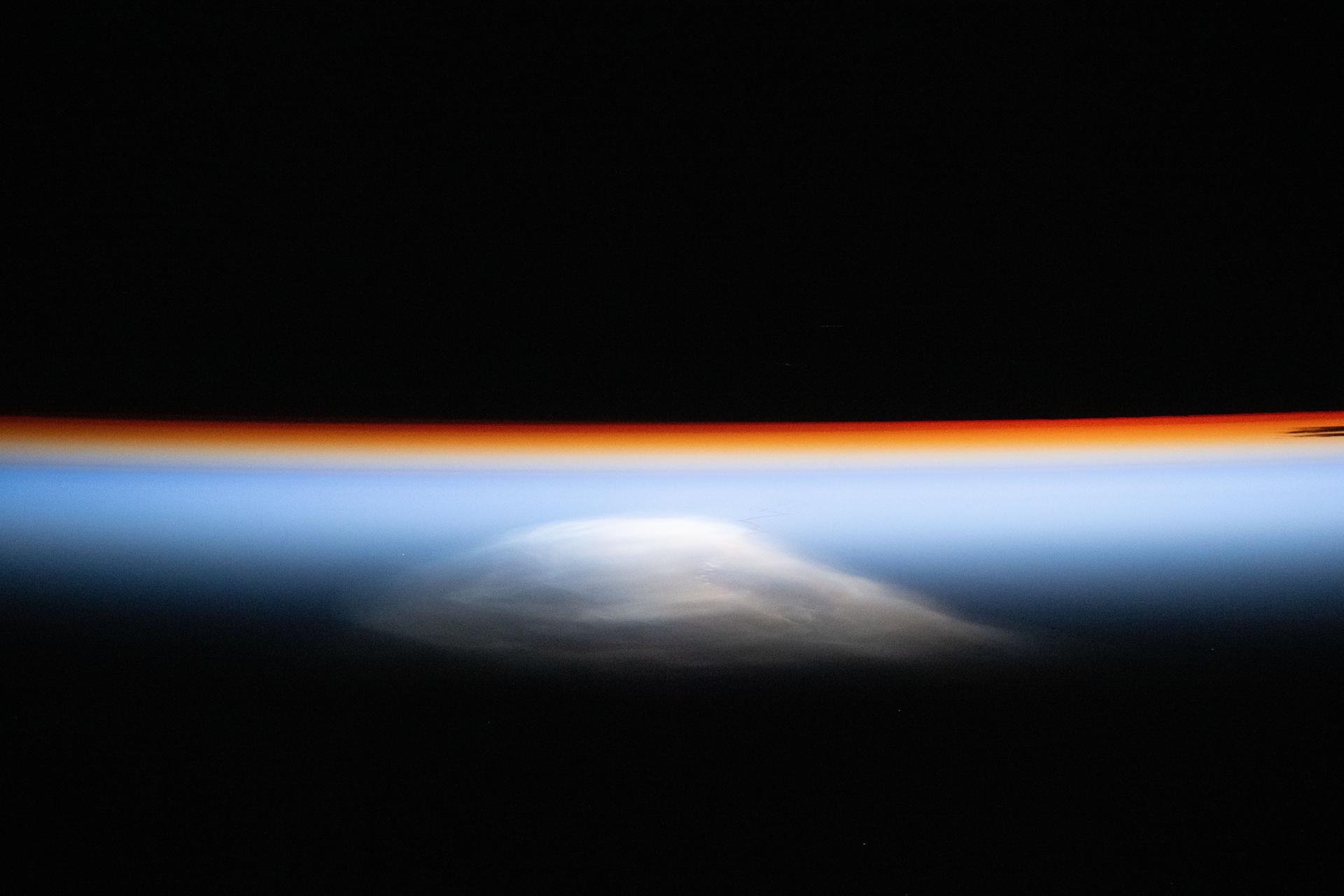
iss072e757530 (March 6, 2025) --- The last rays of an orbital sunset outline Earth’s horizon as a thin orange layer fades into blue, illuminating the atmosphere before nightfall. The wispy white feature above the atmosphere is the engine plume from the Ariane 6 rocket, launched earlier on its first operational mission from Kourou, French Guiana. This unique photograph was captured from the International Space Station at approximately 8:51 p.m. local time as it orbited 257 miles above the Atlantic Ocean, east of the British Virgin Islands.
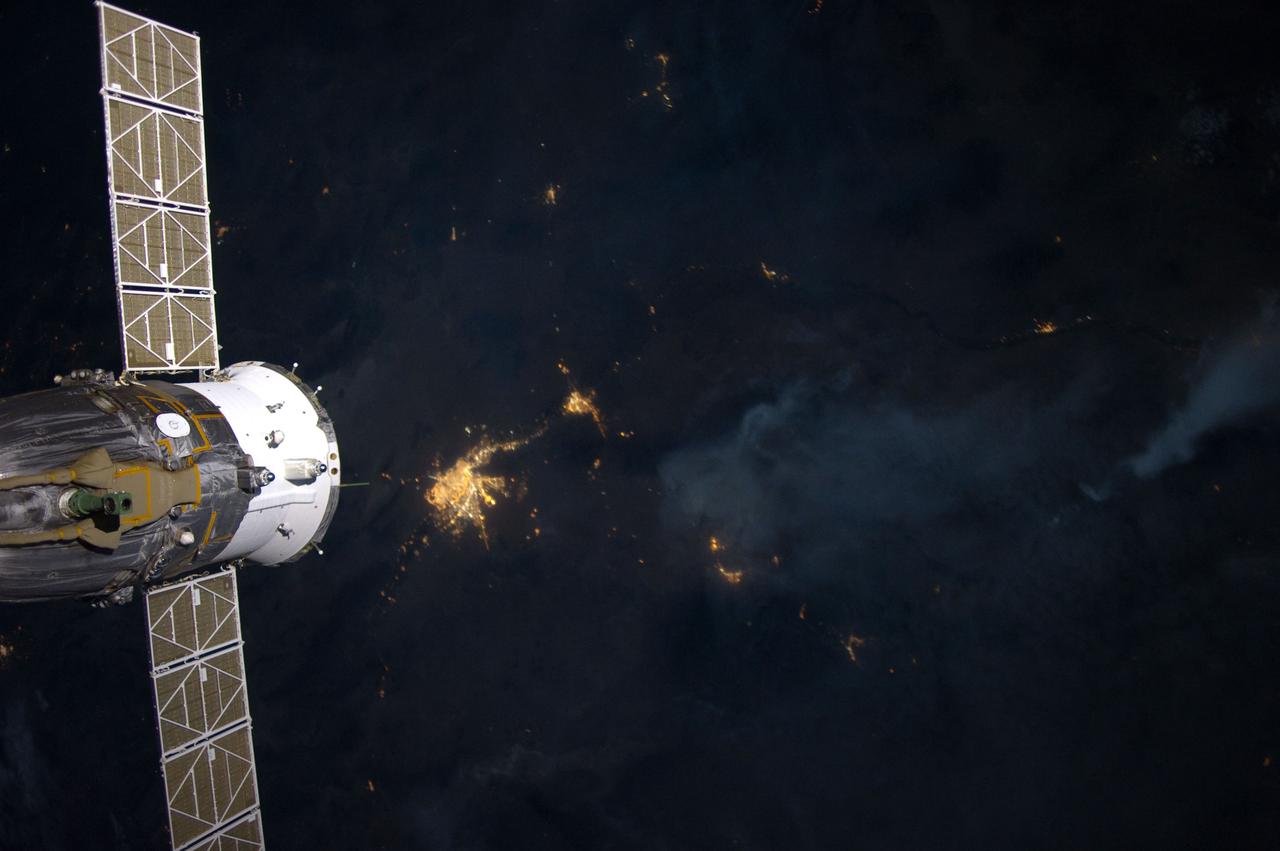
ISS031-E-84006 (2 June 2012) --- This digital image from the Expedition 31 crew aboard the International Space Station is one of a series from a mounted, automated, and nighttime session of a still camera when viewed in sequence shows the flame-ring associated with wild fires in the Southwest slip by in the upper right while the lights of the El Paso-Las Cruces rise from bottom center. A Russian spacecraft is docked to the station
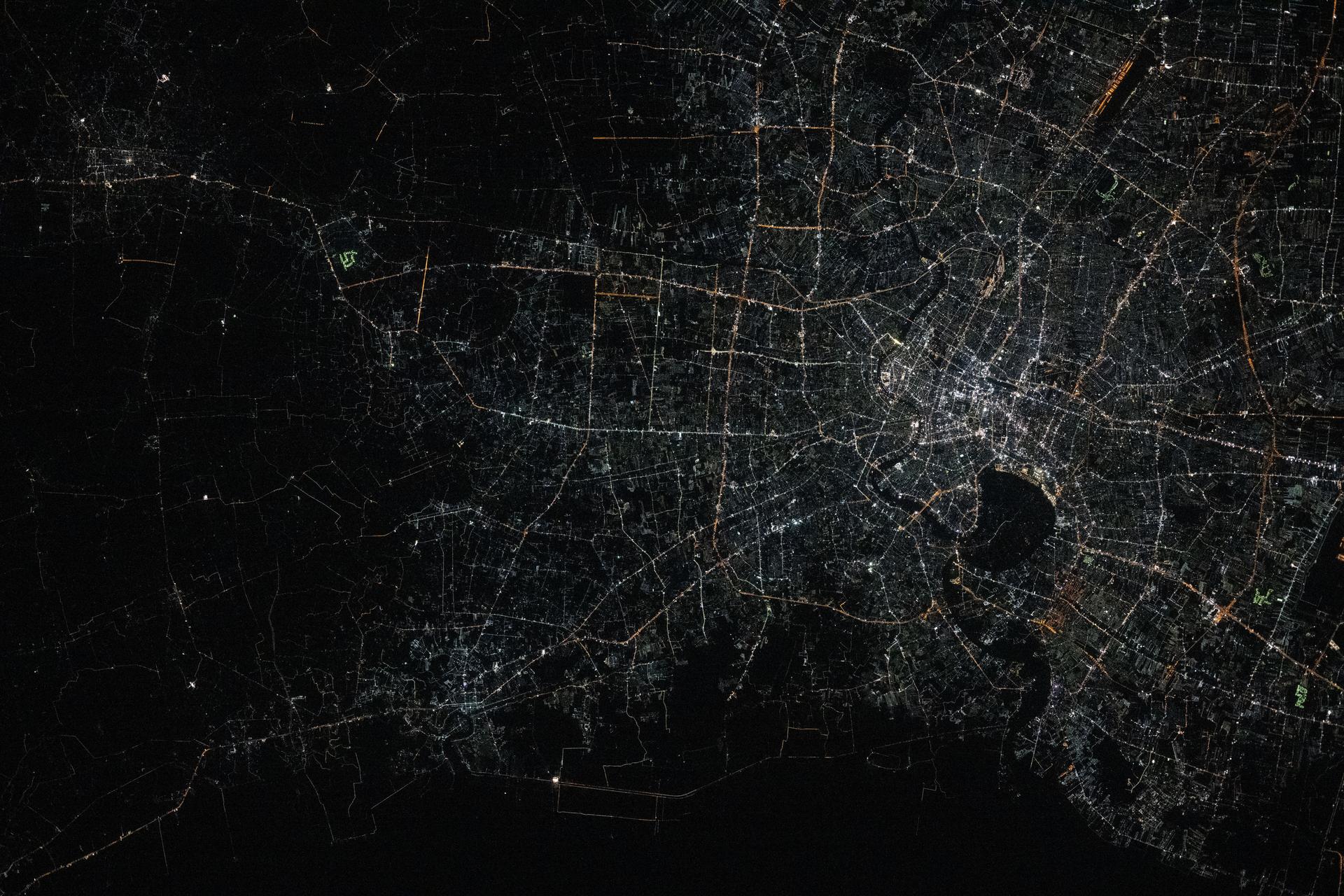
iss072e757257 (March 5, 2025) --- Bangkok, Thailand—with a metropolitan population of about 11.4 million and split by the Chao Phraya river—is pictured from the International Space Station at approximately 1:48 a.m. local time as it orbited 257 miles above the Southeast Asian nation. The dark area toward the center-right is part of the Phra Pradaeng District, a lush, green peninsula known as Bang Krachao. Preserved as an urban green space, it helps mitigate Bangkok’s pollution and urban density.
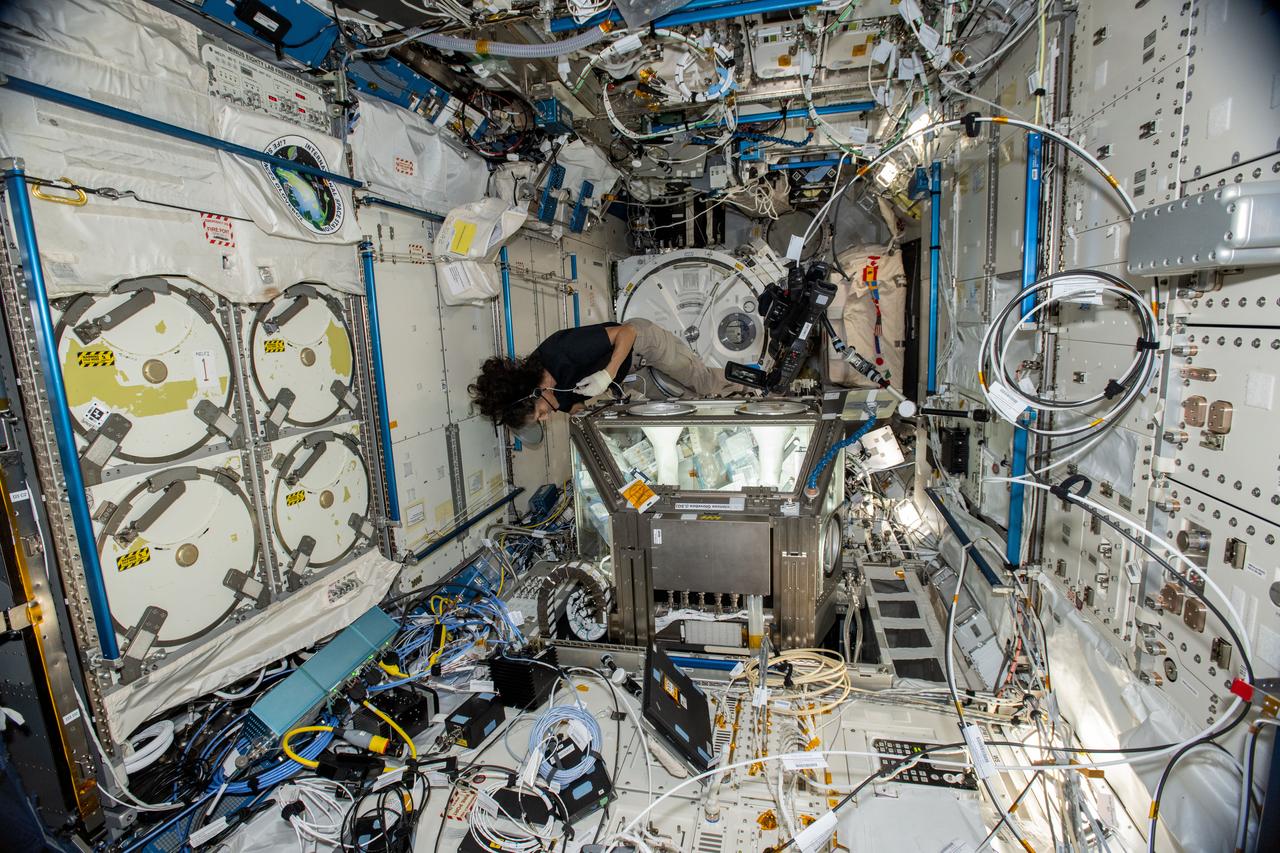
iss072e011142 (12/2/2024) --- NASA astronaut Suni Williams works on StemCellEX-H1, a technology for in-space production of human stem cells that are used as therapies for certain blood diseases and cancers. It may be possible to produce the cells in greater numbers and at higher quality in microgravity than currently is possible on the ground.
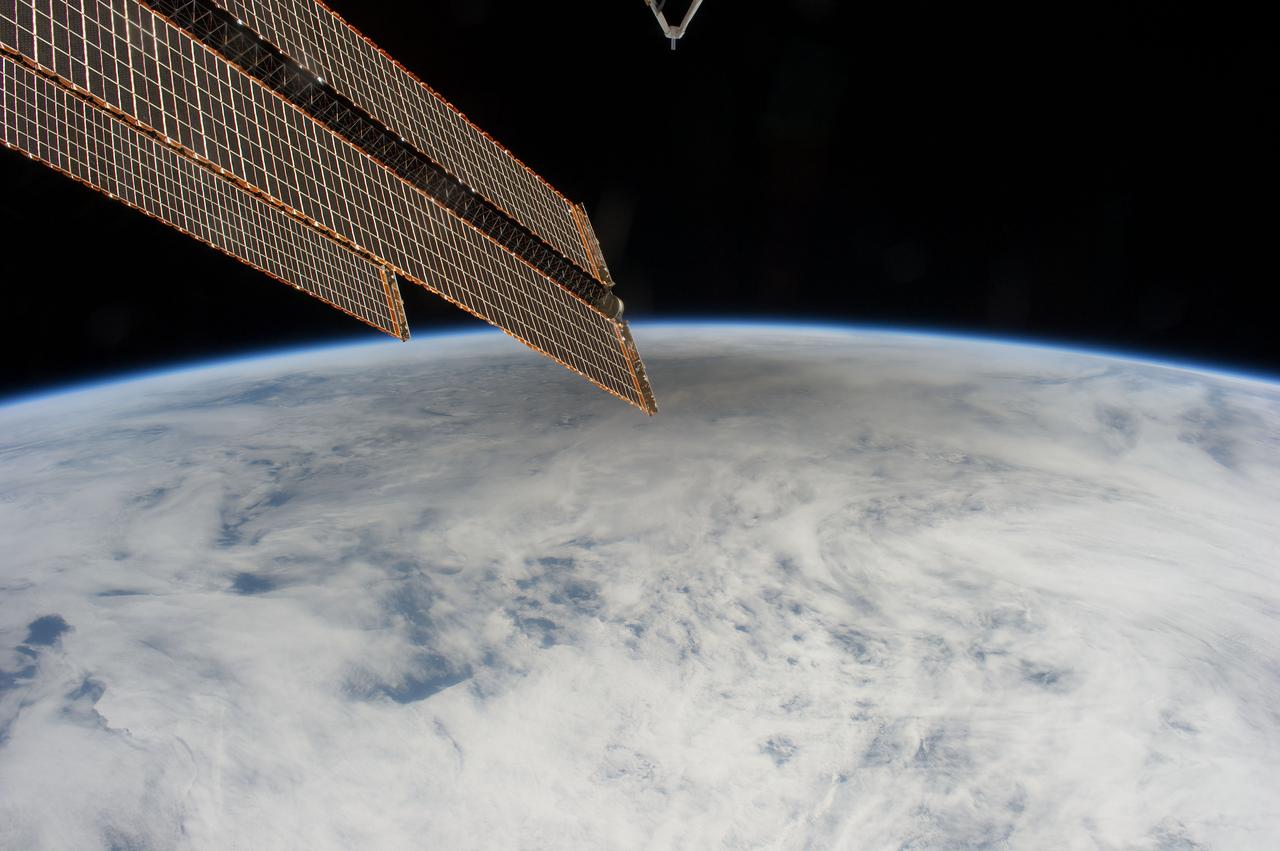
ISS031-E-41595 (20 May 2012) --- This is one of a series of photos taken by Expedition 31 Flight Engineer Don Pettit aboard the International Space Station, at the time located over the Western Pacific, showing a shadow of the moon created by the May 20 solar eclipse, as the shadow spreads across cloud cover on Earth. Pettit used a 28-mm lens on a digital still camera to record the image at 23:35:36 GMT. One of the space station’s solar array panels appears at the top of the frame.
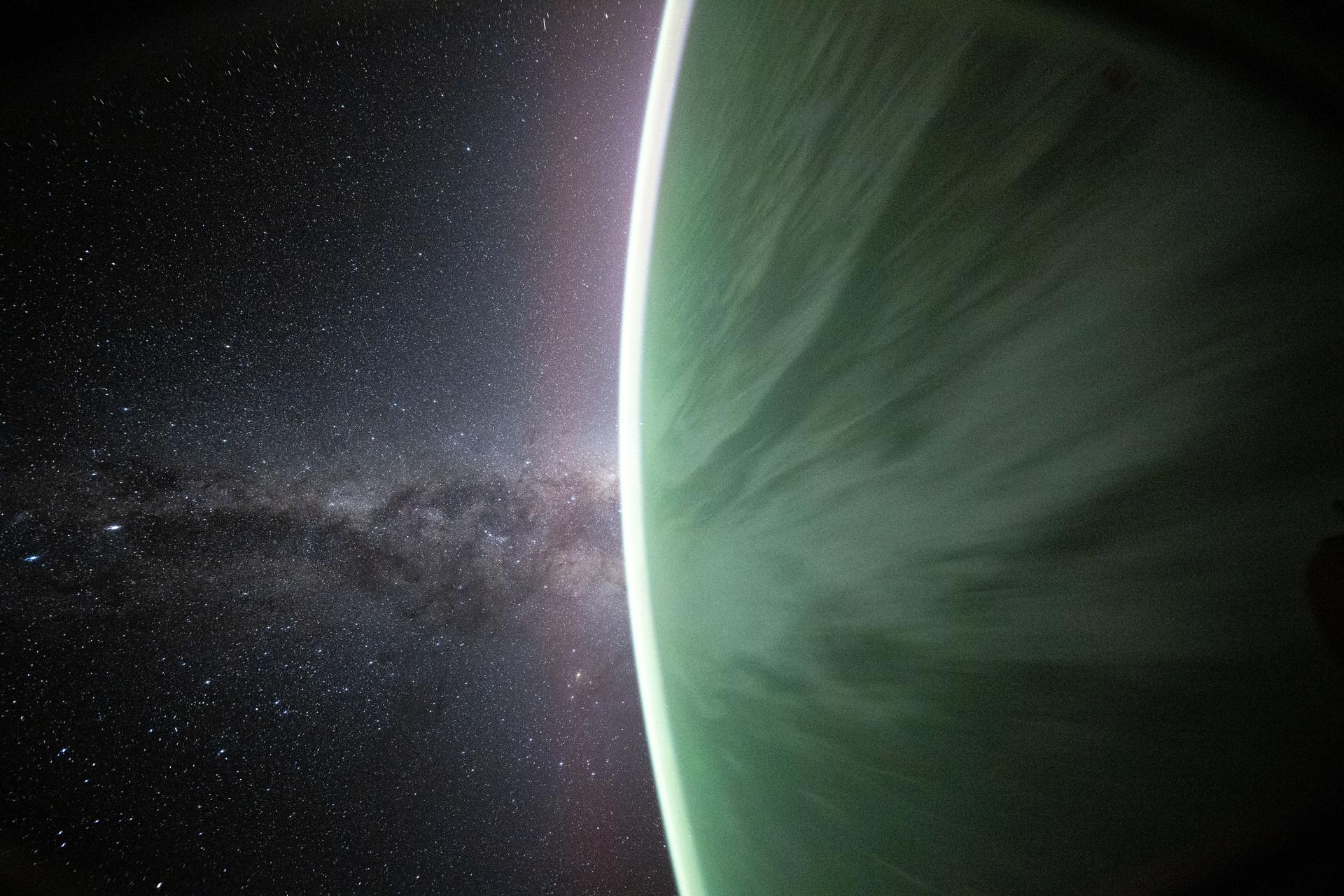
iss072e574663 (January 29, 2025) --- The Earth appears green due to the Aurora Australis, while the Milky Way rises over the horizon. This long exposure image was captured while the International Space Station was orbiting over the southern Pacific.
ISS030 star trail composite using iss030e159064 thru iss030e159110
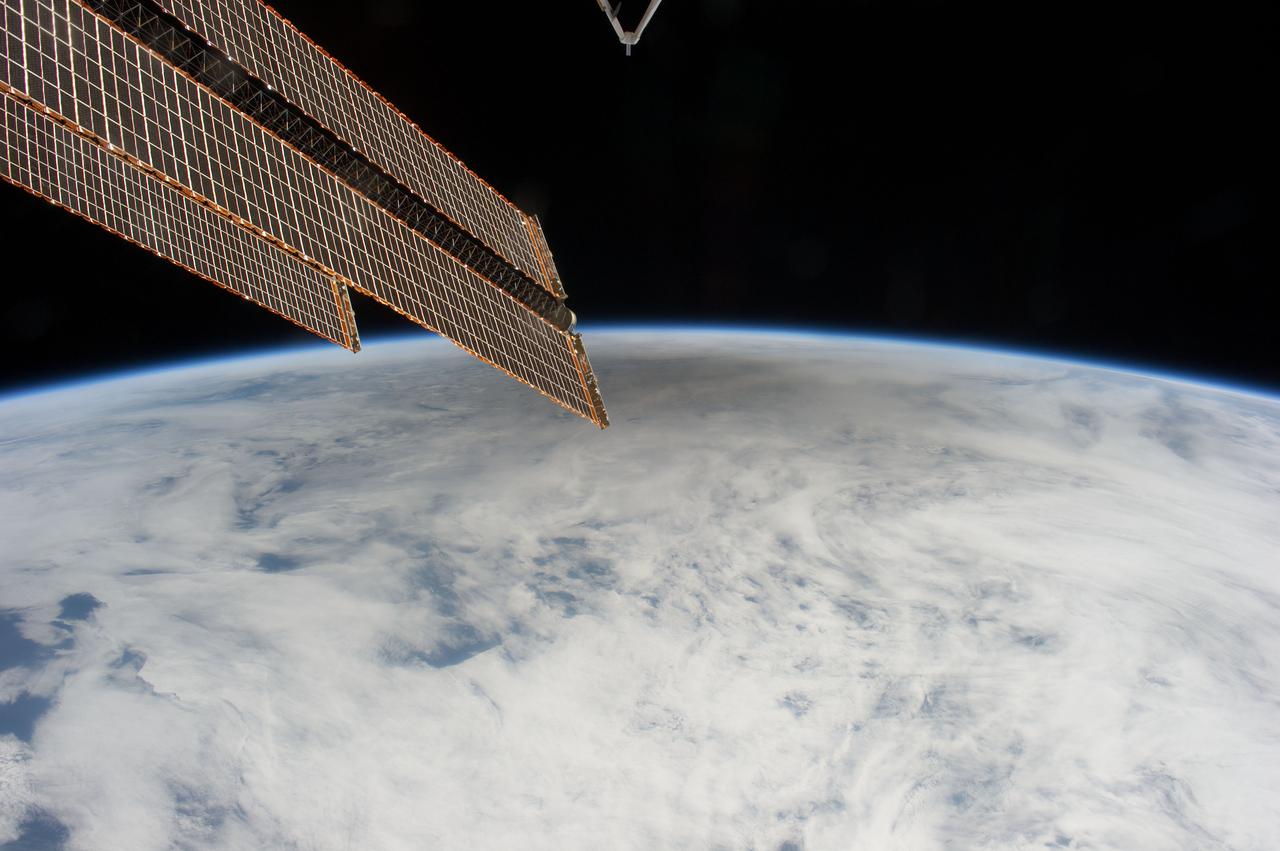
ISS031-E-41594 (20 May 2012) --- This is one of a series of photos taken by Expedition 31 Flight Engineer Don Pettit aboard the International Space Station, showing a shadow of the moon created by the May 20 solar eclipse, as the shadow spreads across cloud cover on Earth. Pettit used a 28-mm lens on a digital still camera to record the image at 23:35:17 GMT. One of the space station’s solar array panels appears at the top of the frame.
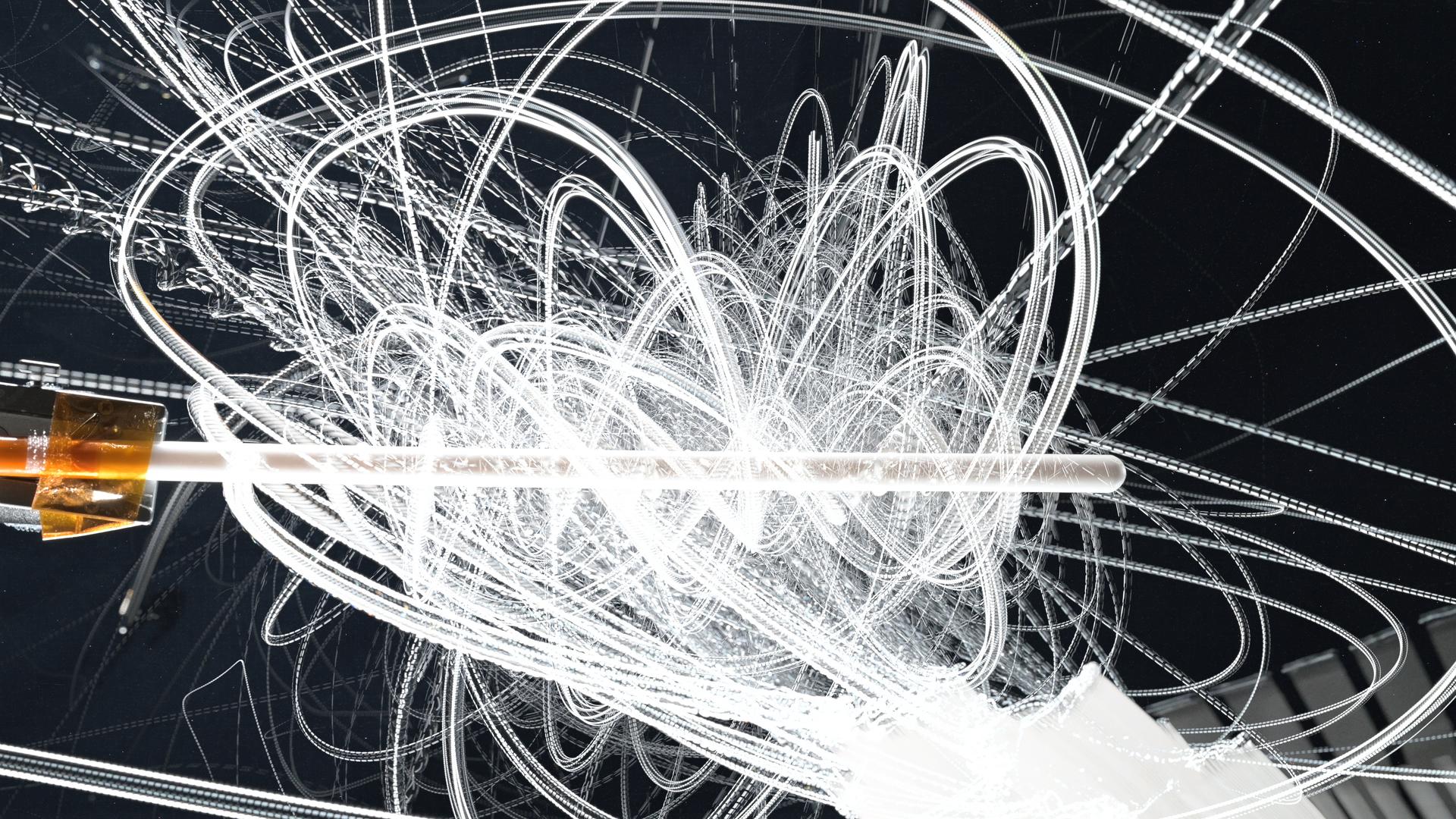
(February 19, 2025) -- NASA astronaut Don Pettit demonstrates electrostatic forces using charged water droplets and a knitting needle made of Teflon. This series of overlapping frames displays the unique attraction-repulsion properties of Teflon and charged droplets, similar to how charged particles from the Sun behave when they come in contact with Earth’s magnetic field. Highly energetic particles from space that collide with atoms and molecules in the atmosphere create the aurora borealis.
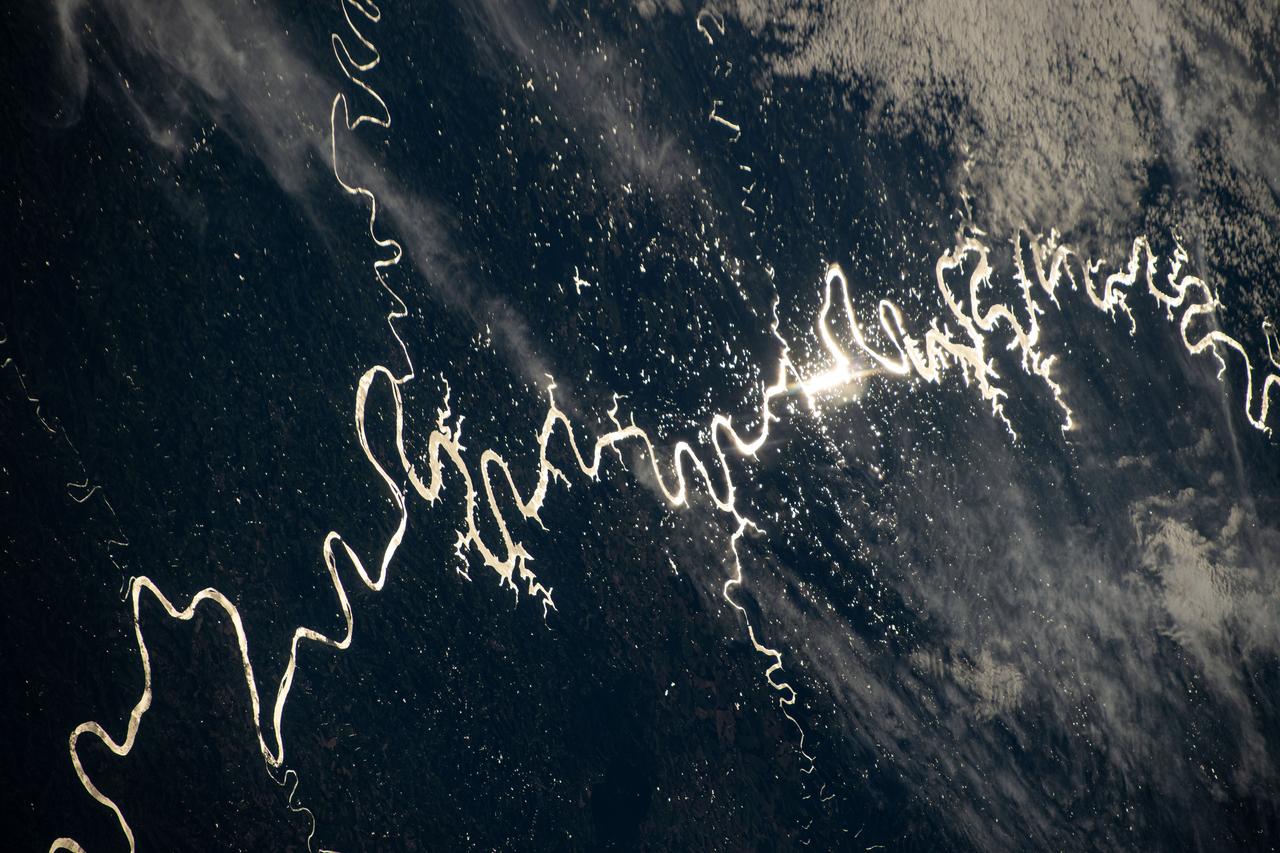
iss072e311451 (Dec. 3, 2024) --- The Sun's glint beams off one of the many rivers that snake throughout South America's fertile, low grasslands region, also known as the Pampas. The International Space Station was orbiting 261 miles above the border of Paraguay and Argentina at the time of this photograph. Credit: NASA/Don Pettit
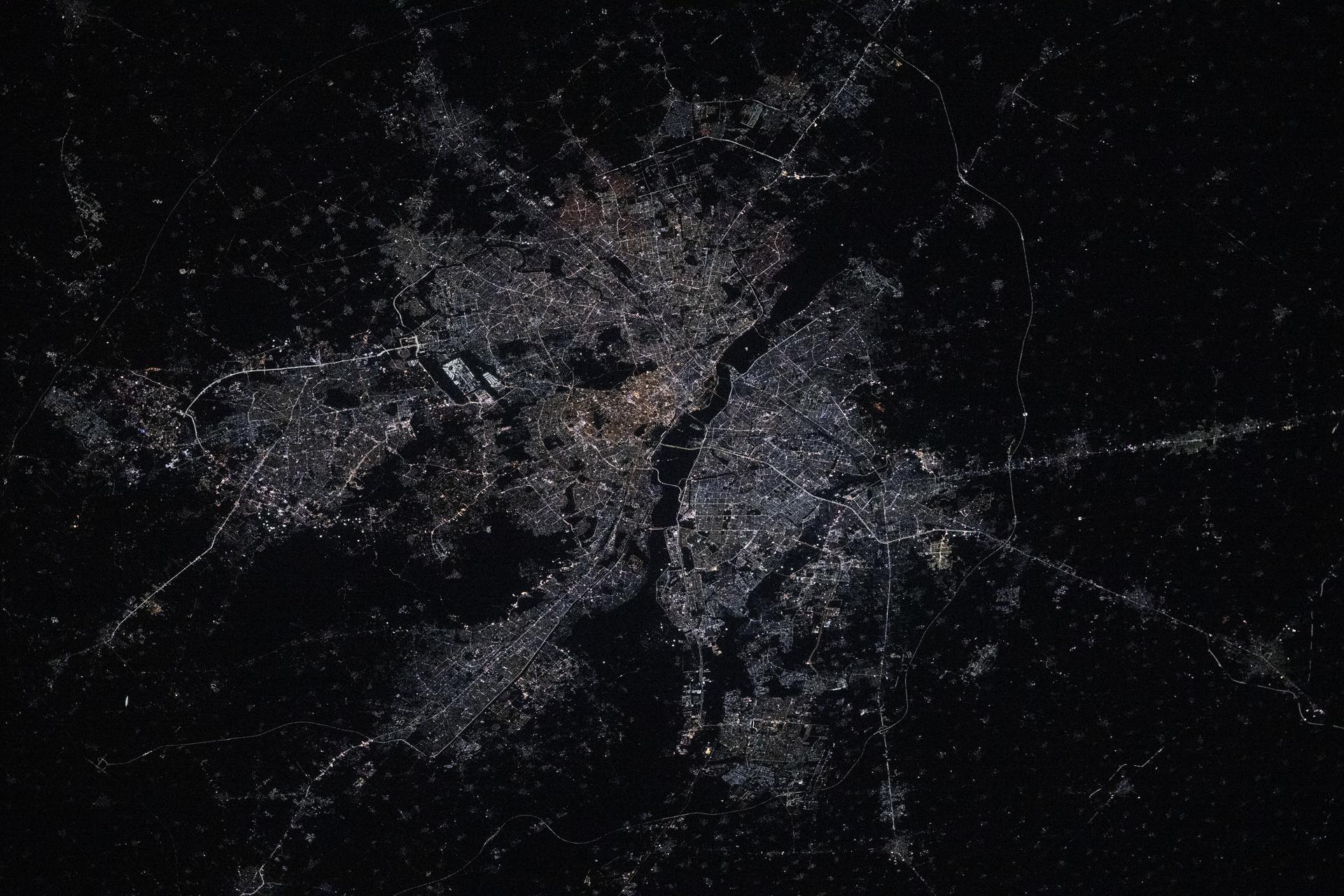
iss072e757452 (March 6, 2025) --- Delhi, India—the second-largest metropolitan area in the world with a population of approximately 34.7 million—is pictured from the International Space Station at around 11:42 p.m. local time as it orbited 259 miles above. Home to the South Asian nation's capital and Asia’s largest spice market, Delhi is actively combating the effects of its urban heat island status through artificial intelligence, cool roof initiatives, increased tree coverage, modernized urban planning, and updated building codes.
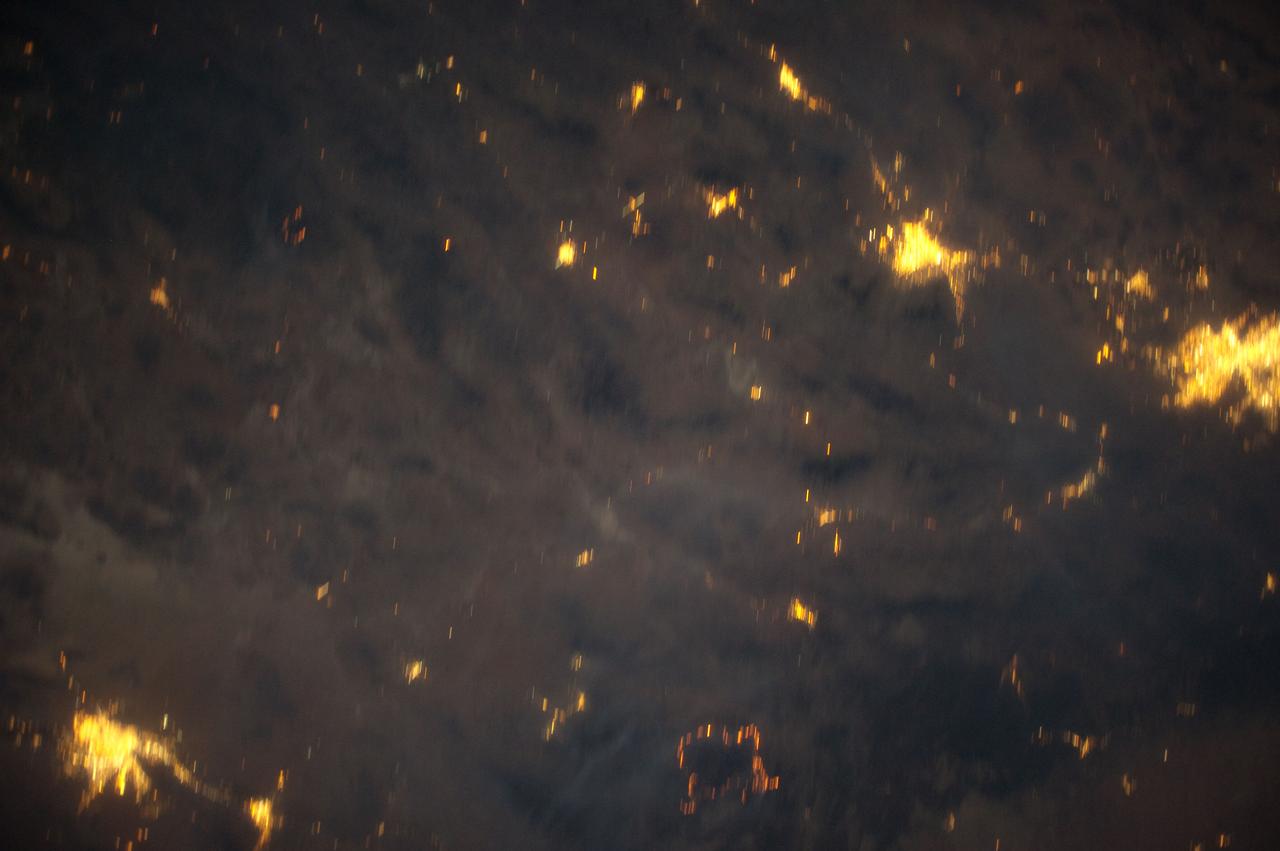
ISS031-E-83747 (2 June 2012) --- Downlinked from the International Space Station this still image -– part of a series from a mounted, automated, twilight session -- when viewed in sequence shows the flame ring associated with wild fires in the Southwest move from bottom to top-center framed at a distance by the bright urban areas of Tucson, Phoenix, El Paso-Las Cruces, and finally Albuquerque (mostly under cloud).
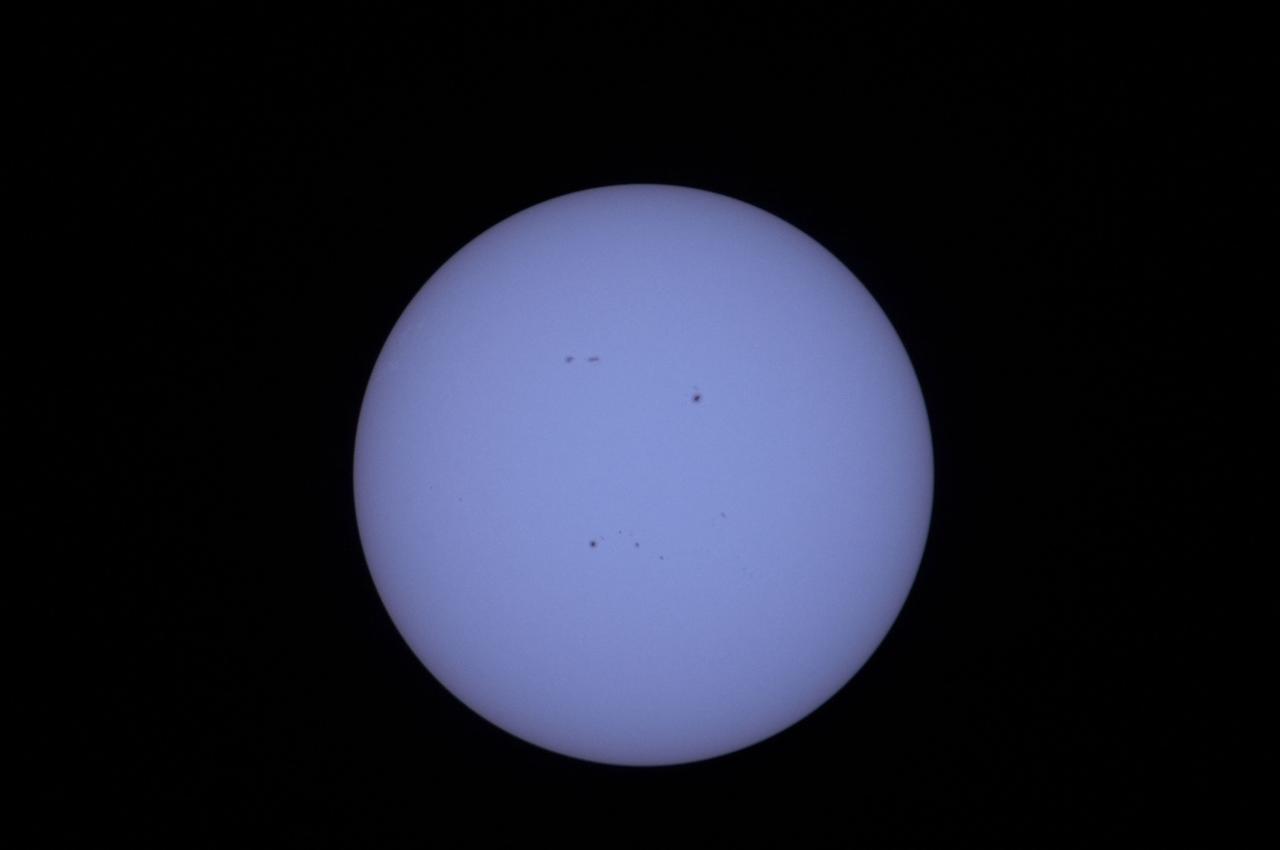
Transit of Venus as seen from the CO and Cupola Modules.
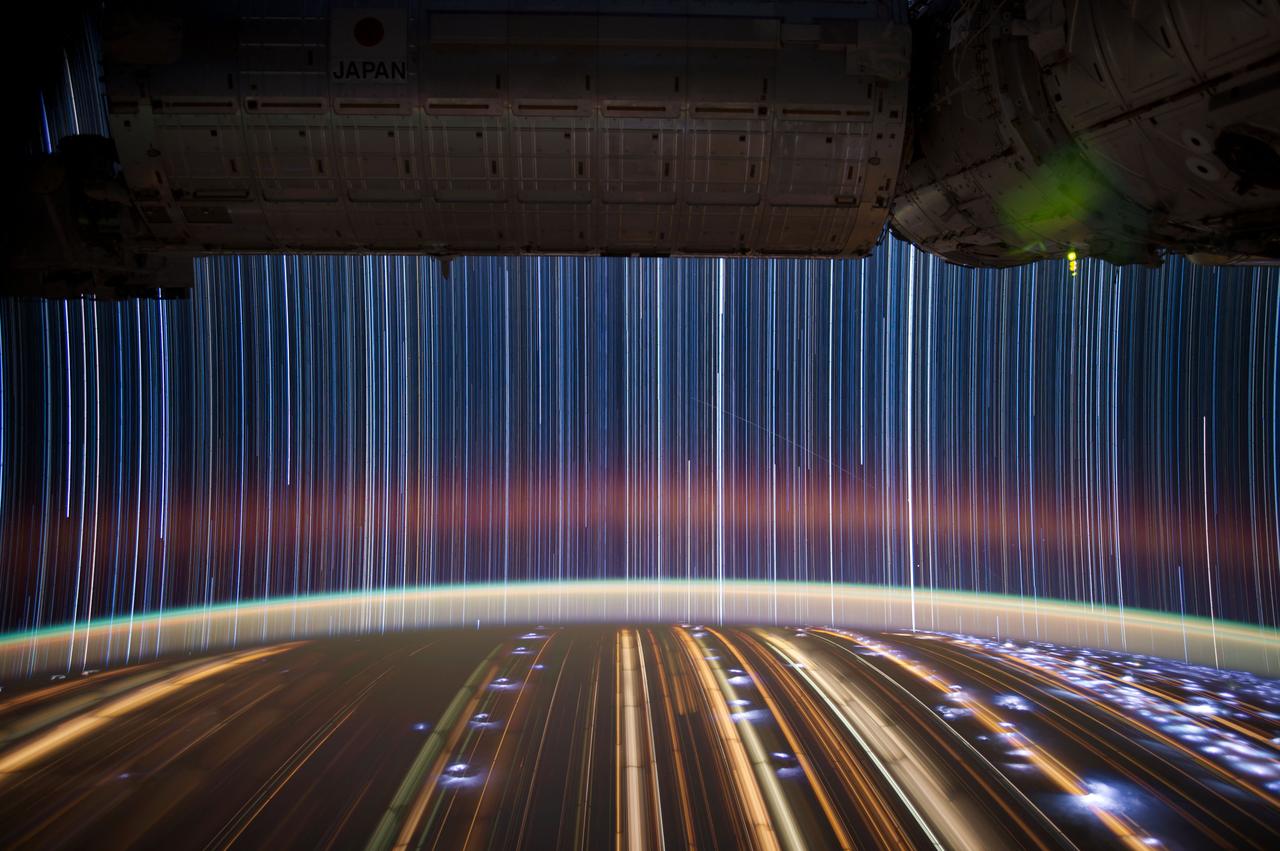
jsc2012e039800_alt (5 March 2012) --- This is a composite of a series of images photographed from a mounted camera on the Earth-orbiting International Space Station, from approximately 240 miles above Earth. Expedition 31 Flight Engineer Don Pettit relayed some information about photographic techniques used to achieve the images: "My star trail images are made by taking a time exposure of about 10 to 15 minutes. However, with modern digital cameras, 30 seconds is about the longest exposure possible, due to electronic detector noise effectively snowing out the image. To achieve the longer exposures I do what many amateur astronomers do. I take multiple 30-second exposures, then
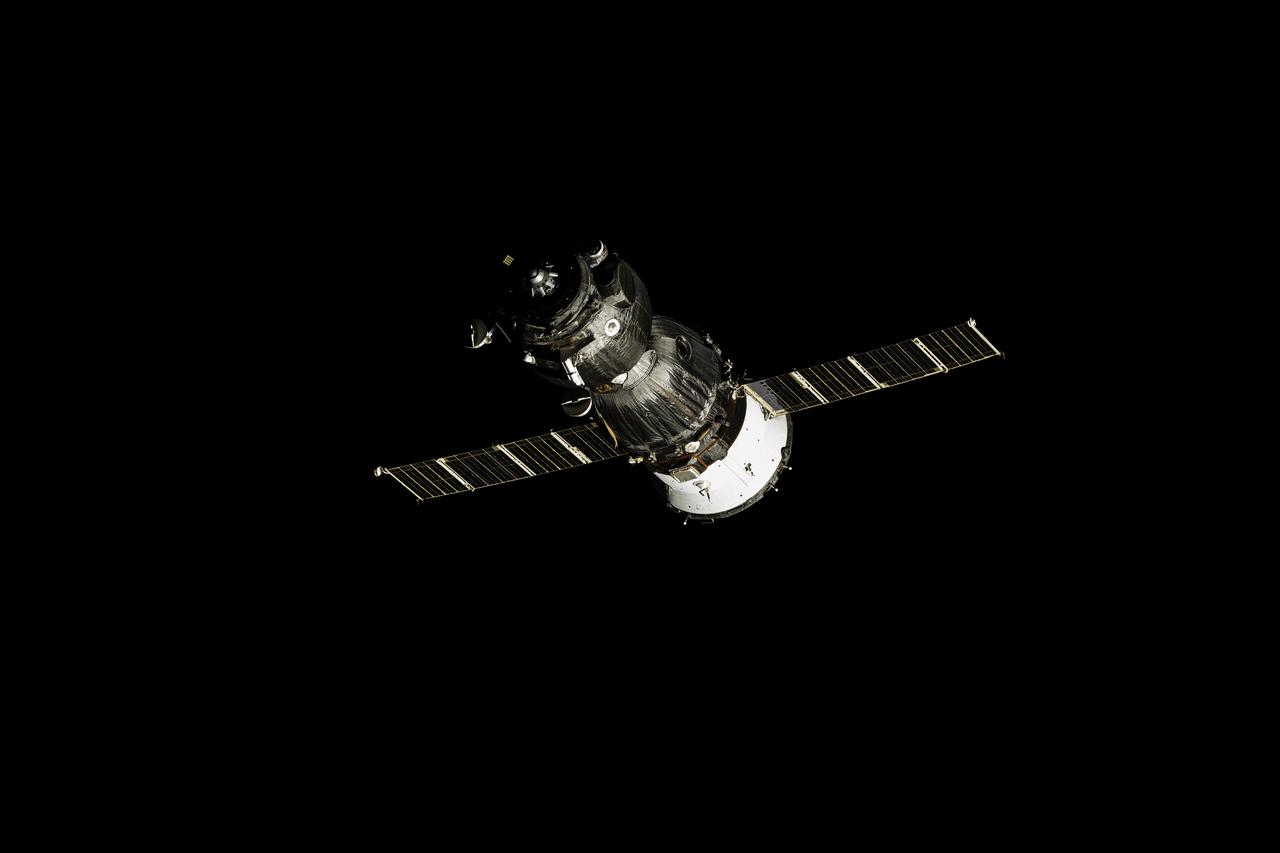
iss072e000057 (Sept. 23, 2024) --- The Soyuz MS-25 spacecraft, with NASA astronaut Tracy C. Dyson and Roscosmos cosmonauts Nikolai Chub and Oleg Kononenko aboard, is pictured departing the International Space Station after undocking from the Prichal module.
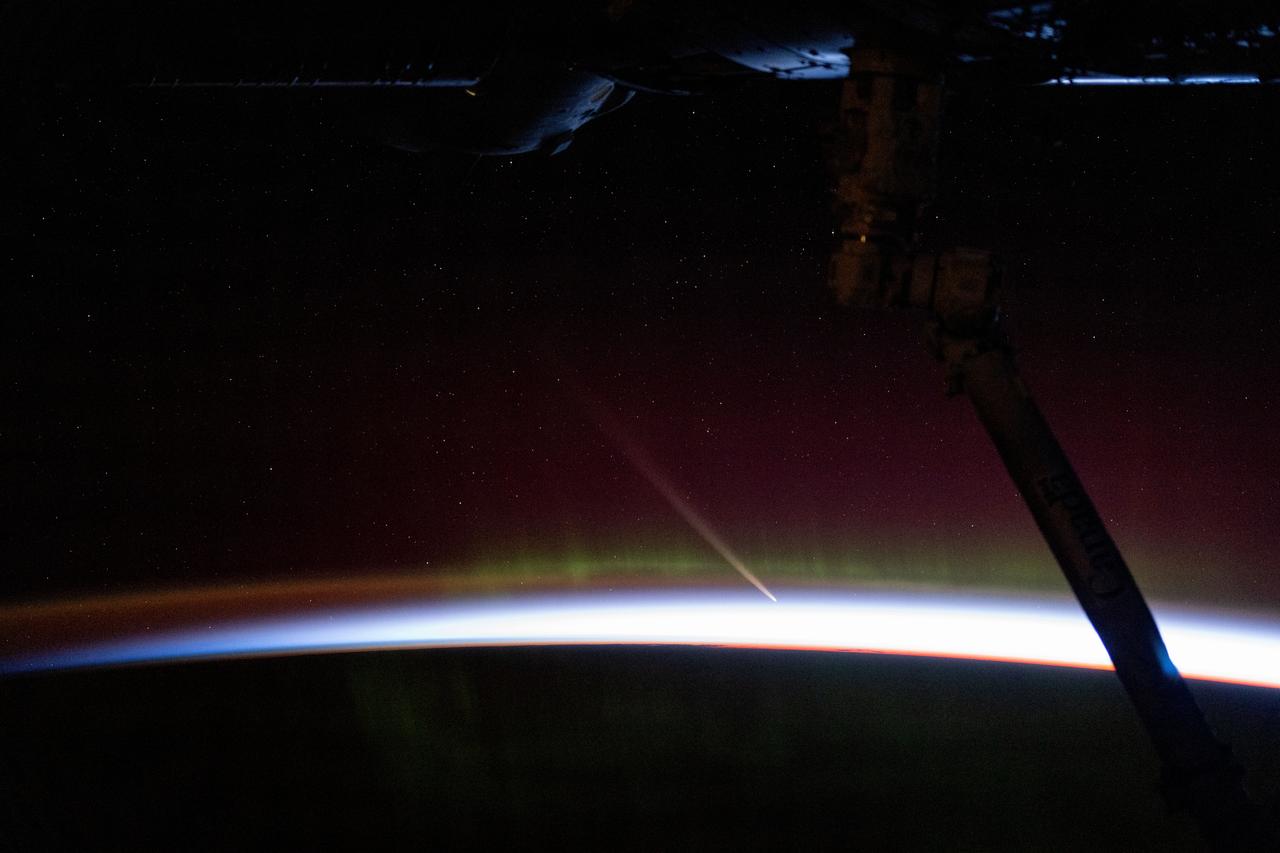
iss072e010127 (Oct. 1, 2024) --- Comet C/2023 A3 Tsuchinshan-ATLAS was about 44 million miles away from Earth in this photograph from the International Space Station as it orbited into a sunrise 272 miles above the Indian Ocean south of Australia's island state of Tasmania. The aurora australis seemingly fades into the atmospheric glow above Earth's horizon.
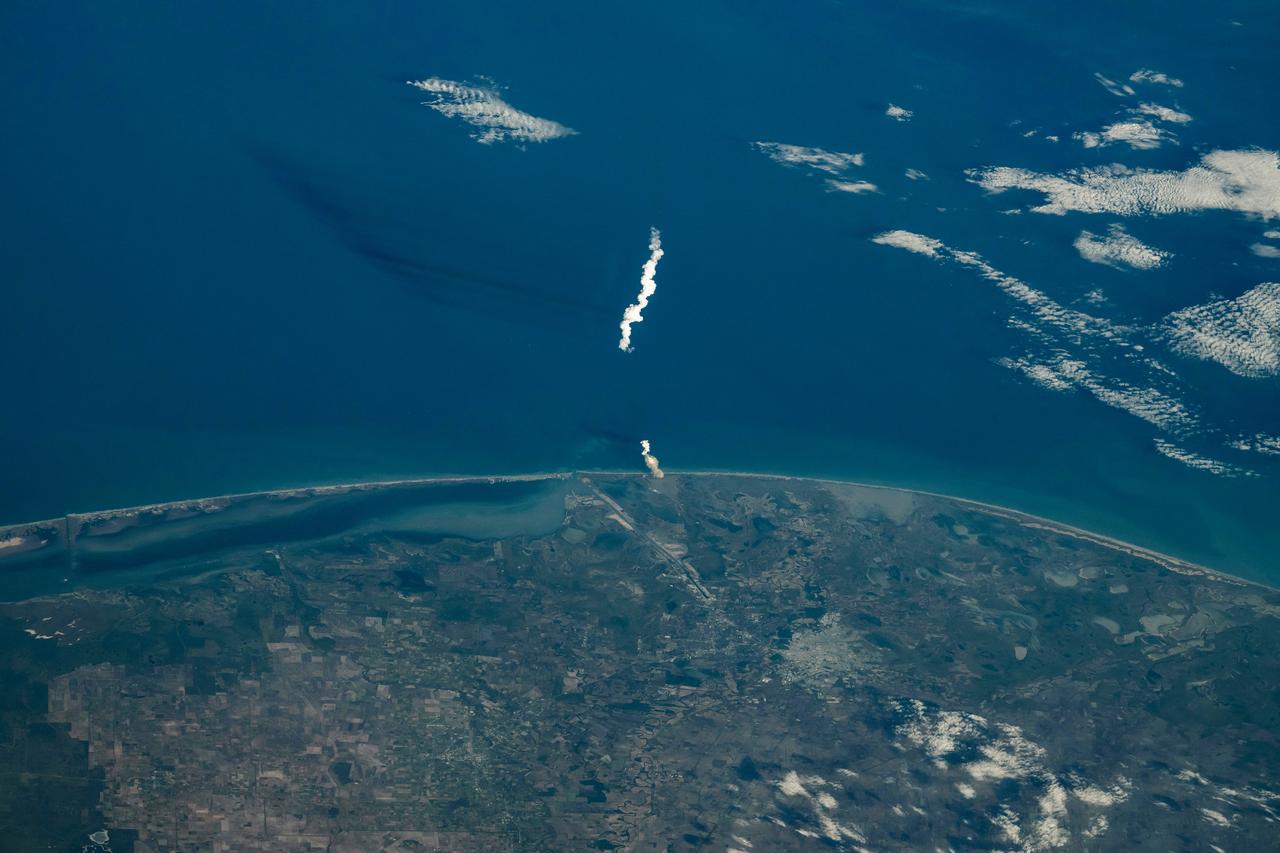
iss072e220043 (Nov. 19, 2024) --- The plume from the SpaceX Starship 6 rocket can be seen after launching on its sixth flight test from the company's Starbase site in Boca Chica, Texas. Credit: Don Pettit/NASA